CN102290350A - Trench MOS barrier Schottky rectifier with planar surface using CMP technique - Google Patents
Trench MOS barrier Schottky rectifier with planar surface using CMP technique Download PDFInfo
- Publication number
- CN102290350A CN102290350A CN2011101669298A CN201110166929A CN102290350A CN 102290350 A CN102290350 A CN 102290350A CN 2011101669298 A CN2011101669298 A CN 2011101669298A CN 201110166929 A CN201110166929 A CN 201110166929A CN 102290350 A CN102290350 A CN 102290350A
- Authority
- CN
- China
- Prior art keywords
- layer
- polysilicon
- field oxide
- basically
- cmp
- Prior art date
- Legal status (The legal status is an assumption and is not a legal conclusion. Google has not performed a legal analysis and makes no representation as to the accuracy of the status listed.)
- Granted
Links
Images


Classifications
-
- H—ELECTRICITY
- H10—SEMICONDUCTOR DEVICES; ELECTRIC SOLID-STATE DEVICES NOT OTHERWISE PROVIDED FOR
- H10D—INORGANIC ELECTRIC SEMICONDUCTOR DEVICES
- H10D8/00—Diodes
- H10D8/60—Schottky-barrier diodes
- H10D8/605—Schottky-barrier diodes of the trench conductor-insulator-semiconductor barrier type, e.g. trench MOS barrier Schottky rectifiers [TMBS]
-
- H—ELECTRICITY
- H10—SEMICONDUCTOR DEVICES; ELECTRIC SOLID-STATE DEVICES NOT OTHERWISE PROVIDED FOR
- H10D—INORGANIC ELECTRIC SEMICONDUCTOR DEVICES
- H10D8/00—Diodes
- H10D8/01—Manufacture or treatment
- H10D8/051—Manufacture or treatment of Schottky diodes
-
- H—ELECTRICITY
- H10—SEMICONDUCTOR DEVICES; ELECTRIC SOLID-STATE DEVICES NOT OTHERWISE PROVIDED FOR
- H10D—INORGANIC ELECTRIC SEMICONDUCTOR DEVICES
- H10D62/00—Semiconductor bodies, or regions thereof, of devices having potential barriers
- H10D62/10—Shapes, relative sizes or dispositions of the regions of the semiconductor bodies; Shapes of the semiconductor bodies
- H10D62/102—Constructional design considerations for preventing surface leakage or controlling electric field concentration
- H10D62/103—Constructional design considerations for preventing surface leakage or controlling electric field concentration for increasing or controlling the breakdown voltage of reverse-biased devices
- H10D62/105—Constructional design considerations for preventing surface leakage or controlling electric field concentration for increasing or controlling the breakdown voltage of reverse-biased devices by having particular doping profiles, shapes or arrangements of PN junctions; by having supplementary regions, e.g. junction termination extension [JTE]
- H10D62/106—Constructional design considerations for preventing surface leakage or controlling electric field concentration for increasing or controlling the breakdown voltage of reverse-biased devices by having particular doping profiles, shapes or arrangements of PN junctions; by having supplementary regions, e.g. junction termination extension [JTE] having supplementary regions doped oppositely to or in rectifying contact with regions of the semiconductor bodies, e.g. guard rings with PN or Schottky junctions
Landscapes
- Electrodes Of Semiconductors (AREA)
Abstract
本发明提供了一种形成半导体器件的方法,还提供一种半导体器件。本发明还提供一种利用CMP技术的具有平坦表面的沟槽MOS势垒肖特基整流器。通过使在制造的各个阶段的形貌变化最小化来制造具有包括减小的反向漏电电流、可靠的可焊性特性,以及更高的制造产率的改善的性能的高效率二极管(HED)整流器。通过在形成场氧化物、多晶硅和/或可焊接的顶部金属之后利用CMP处理使HED整流器平坦化,使形貌的变化最小化。

The invention provides a method for forming a semiconductor device, and also provides a semiconductor device. The invention also provides a trench MOS barrier Schottky rectifier with a flat surface using CMP technology. Fabricate High Efficiency Diodes (HEDs) with improved performance including reduced reverse leakage current, reliable solderability characteristics, and higher fabrication yields by minimizing topographical changes at various stages of fabrication rectifier. Changes in topography are minimized by planarizing the HED rectifier with a CMP process after forming the field oxide, polysilicon, and/or solderable top metal.
Description
技术领域 technical field
本发明涉及半导体功率器件(半导体功率装置)技术,更具体地,涉及具有平坦表面的改善的沟槽MOS(金属氧化物半导体)势垒肖特基整流器以及用于形成其的制造方法。The present invention relates to semiconductor power device (semiconductor power device) technology, and more particularly, to an improved trench MOS (metal oxide semiconductor) barrier Schottky rectifier having a planar surface and a fabrication method for forming the same.
背景技术 Background technique
沟槽MOS势垒肖特基(TMBS)整流器是已经集成有沟槽栅极屏蔽结构的肖特基二极管(例如,TMBS整流器或单片集成的沟槽栅极FET和肖特基二极管器件)。集成的TMBS(其典型地包括已经散布在MOS沟槽之间的肖特基二极管阵列)通常包括形成在半导体基板的半导体外延层中的平台结构(台式结构,mesa structure)。通过一个或多个设置在外延层中的沟槽之间的区域来限定平台(台面,mesa)。在TMBS器件中,设置在外延/漂移区域中的沟槽与沟槽侧壁上的导体之间的平台中的大多数电荷载体之间的电荷耦合,在减小反向漏电电流并改善击穿特性的肖特基接触下,改变了电场分布。A Trench MOS Barrier Schottky (TMBS) rectifier is a Schottky diode that has been integrated with a trench gate shielding structure (eg, a TMBS rectifier or a monolithically integrated trench gate FET and Schottky diode device). An integrated TMBS, which typically includes an array of Schottky diodes that have been interspersed between MOS trenches, usually includes a mesa structure (mesa structure) formed in the semiconductor epitaxial layer of the semiconductor substrate. A platform (mesa, mesa) is defined by one or more regions arranged between the trenches in the epitaxial layer. In TMBS devices, the charge coupling between the majority of charge carriers in the mesa disposed between the trench in the epitaxial/drift region and the conductors on the sidewalls of the trench plays an important role in reducing reverse leakage current and improving breakdown The characteristic of the Schottky contact changes the electric field distribution.
用来制造TMBS整流器的现有技术在器件结构之间产生形貌(topographies)。例如,在有源阵列中,多晶硅栅极的顶部、硅平台(硅台面,silicon mesa)和场电介质是不规则的并且基本上不是平的。这种不规则的形貌可以包括陡峭的变化,这通过增加反向漏电电流可以显著地影响器件性能。此外,在多晶硅栅极与平台区域或场电介质至有源阵列之间产生的形貌传播至随后形成在多晶硅栅极的顶部和平台区域或场电介质和有源阵列上的层。这些形貌传播至以具有类似形貌结束的TMBS整流器的顶面。TMBS整流器的顶面可以包括多个层,例如,氮化物层和可焊接的顶部金属(STM)层,当它们具有基本上非平面的形貌时,其趋向于产生裂纹。在TMBS整流器的顶部上的氮化物和STM层中产生的裂缝,可传播至氮化物和STM层的底部,并到达金属焊接层。然后,这些裂缝可增加TMBS整流器中的反向漏电电流,其使得TMBS整流器不能操作或降低其性能。Existing techniques used to fabricate TMBS rectifiers create topographies between device structures. For example, in active arrays, the tops of polysilicon gates, silicon mesa (silicon mesa) and field dielectrics are irregular and not substantially flat. Such irregular topography can include abrupt changes, which can significantly affect device performance by increasing reverse leakage current. Furthermore, topography created between the polysilicon gate and mesa region or field dielectric to active array propagates to layers subsequently formed on top of the polysilicon gate and mesa region or field dielectric and active array. These topography propagated to the top surface of the TMBS rectifier ending with similar topography. The top surface of a TMBS rectifier may include multiple layers, for example, a nitride layer and a solderable top metal (STM) layer, which tend to crack when they have a substantially non-planar topography. Cracks created in the nitride and STM layers on top of the TMBS rectifier can propagate to the bottom of the nitride and STM layers and reach the metal solder layer. These cracks can then increase the reverse leakage current in the TMBS rectifier, which renders the TMBS rectifier inoperable or degrades its performance.
这些形貌还可以减小STM与封装形成的焊料连接的有效性。该形貌可以减小焊料连接的完整性,因为TMBS整流器的顶部上的STM层上的非共面表面并不有助于可焊接为平坦表面。由于这些形貌减小了焊料连接的完整性,所以,该形貌也降低了TMBS整流器的可靠性,因为具有非共面形貌的STM表面上的焊料连接是不可靠的。These topography can also reduce the effectiveness of the solder connection formed by the STM to the package. This topography can reduce the integrity of the solder connection because the non-coplanar surface on the STM layer on top of the TMBS rectifier does not contribute to solderability as a flat surface. Since these topography reduces the integrity of the solder connection, the topography also reduces the reliability of the TMBS rectifier, since solder connections on STM surfaces with non-coplanar topography are not reliable.
此外,在多晶硅栅极和平台之间产生的形貌变化可以增加导致结构(屏蔽电介质)产生等离子体损坏的机率。蚀刻多晶硅栅极的等离子体会导致损坏,其在多晶硅和平台区域之间具有非平坦表面。该等离子体导致的损坏在制造TMBS整流器的同时,会进一步损坏该TMBS整流器。不均匀的形貌可以增加在诸如等离子体蚀刻的过程中出现损坏的机率。不均匀的轮廓会导致在诸如蚀刻的过程中累积的电荷,这会导致电弧放电和在制造TMBS整流器的同时损坏该TMBS整流器。在制造过程中出现的损坏可以降低可增加制造TMBS整流器的成本的产率。形貌变化也会使得难以均匀地沉积在表面上或从表面蚀刻材料。例如,形貌变化使得难以使基板的整个表面在光刻系统的场的深度中,或基于位置选择性地去除材料。在制造过程中出现的这些变化会导致TMBS整流器的电性能变化。In addition, topographical changes that occur between the polysilicon gate and the mesa can increase the chances of causing plasma damage to the structure (shielding dielectric). Plasma etching polysilicon gates can cause damage with non-planar surfaces between the polysilicon and mesa regions. The damage caused by the plasma will further damage the TMBS rectifier while manufacturing the TMBS rectifier. Non-uniform topography can increase the chance of damage during processes such as plasma etching. The non-uniform profile can lead to charge accumulation during processes such as etching, which can lead to arcing and damage to the TMBS rectifier while it is being fabricated. Damage that occurs during the manufacturing process can reduce yields which can increase the cost of manufacturing TMBS rectifiers. Variations in topography can also make it difficult to deposit material uniformly on or etch a surface. For example, topography variations make it difficult to bring the entire surface of a substrate within the depth of field of a lithography system, or to selectively remove material based on location. These variations that occur during the manufacturing process lead to variations in the electrical properties of the TMBS rectifier.
因此,需要节省成本的制造方法,以及减少终端和有源单元之间的形貌表面的变化并帮助减小反向漏电电流和改善可焊性特性的基板结构。Accordingly, there is a need for cost-effective manufacturing methods, and substrate structures that reduce topographical surface variation between terminals and active cells and help reduce reverse leakage current and improve solderability characteristics.
发明内容 Contents of the invention
本发明的实施方式提供了用于制造高效二极管(HED)整流器的技术,该整流器减少终端和有源单元之间的形貌表面的变化并帮助减小反向漏电电流和改善可焊性特性。本发明的实施方式还提供了使用这些技术制造的HED整流器结构的实施方式。Embodiments of the present invention provide techniques for fabricating high efficiency diode (HED) rectifiers that reduce topographical surface variations between terminals and active cells and help reduce reverse leakage current and improve solderability characteristics. Embodiments of the present invention also provide embodiments of HED rectifier structures fabricated using these techniques.
在一个实施方式中,形成半导体器件(半导体装置)的方法包括:在外延层中形成场氧化物区域(field oxide region);在由平台隔开的外延层中形成多个具有侧壁和底部的沟槽;形成为沟槽的侧壁和底部加衬并基本上覆盖平台和场氧化物区域的屏蔽电介质;沉积多晶硅以基本上填充所述多个沟槽并基本上覆盖屏蔽电介质;以及利用化学机械平坦化(chemicalmechanical planarization)(CMP)使多晶硅平坦化,以产生包括多晶硅、屏蔽电介质和平台区域的基本上平坦区域的基本上平坦的表面。场氧化物区域延伸到外延层中和外延层之上。可以通过平坦化来形成多晶硅、屏蔽电介质和平台区域的区域,以形成基本上平的邻接表面(连续表面)。In one embodiment, a method of forming a semiconductor device (semiconductor device) includes: forming a field oxide region (field oxide region) in an epitaxial layer; trenches; forming a shielding dielectric lining the sidewalls and bottoms of the trenches and substantially covering the mesa and field oxide regions; depositing polysilicon to substantially fill the plurality of trenches and substantially covering the shielding dielectric; and utilizing chemical Chemical mechanical planarization (CMP) planarizes the polysilicon to produce a substantially planar surface including substantially planar regions of the polysilicon, shield dielectric, and mesa regions. Field oxide regions extend into and above the epitaxial layer. Regions of polysilicon, shielding dielectric and mesa regions may be formed by planarization to form a substantially planar adjoining surface (continuous surface).
在另一实施方式中,该方法进一步包括:形成顶部金属层、电介质层(介电层,dielectric layer),以及在顶部金属上的可焊接顶部金属(STM)层。电介质层和STM层的顶部基本上是共面的。顶部金属可以包括肖特基接触。可以在NiSi层的一部分上以及在沉积在场氧化物层上的屏蔽电介质层的一部分上形成顶部金属。电介质层可以包括聚酰亚胺。电介质层还可以选自由聚酰亚胺和沉积的氮化硅、聚酰亚胺和沉积的二氧化硅、聚酰亚胺和沉积的氧氮化硅、氮化硅、氧氮化硅,以及二氧化硅组成的组。电介质层的一部分可以是用来将在单个晶片上制造的半导体器件分开的芯片间隔(street)。In another embodiment, the method further includes forming a top metal layer, a dielectric layer (dielectric layer), and a solderable top metal (STM) layer on the top metal. The tops of the dielectric layer and the STM layer are substantially coplanar. The top metal may include a Schottky contact. A top metal may be formed on a portion of the NiSi layer and on a portion of the shielding dielectric layer deposited on the field oxide layer. The dielectric layer may include polyimide. The dielectric layer may also be selected from polyimide and deposited silicon nitride, polyimide and deposited silicon dioxide, polyimide and deposited silicon oxynitride, silicon nitride, silicon oxynitride, and Group consisting of silica. A portion of the dielectric layer may be a chip street used to separate semiconductor devices fabricated on a single wafer.
在本方法的另一实施方式中,形成STM金属包括在顶部金属上沉积Ti/NiV/Ag或Ta/Cu。In another embodiment of the method, forming the STM metal includes depositing Ti/NiV/Ag or Ta/Cu on the top metal.
在另一实施方式中,形成半导体器件的第二方法包括:在外延层中形成场氧化物(field oxide);利用化学机械平坦化(CMP)使场氧化物平坦化(平面化),以产生包括场氧化物和外延层的基本上平坦区域的基本上平坦的表面;在由平台隔开的外延层中形成具有侧壁和底部的多个沟槽;形成为沟槽的侧壁和底部加衬并基本上覆盖平台和场氧化物区域的屏蔽电介质;以及沉积多晶硅以基本上填充所述多个沟槽并基本上覆盖屏蔽电介质。场氧化物延伸到外延层中并位于外延层之上。可以利用化学机械平坦化(CMP)使多晶硅平坦化,以产生包括多晶硅、屏蔽电介质和平台的基本上平坦的区域的基本上平坦的表面。In another embodiment, a second method of forming a semiconductor device includes: forming a field oxide in an epitaxial layer; planarizing (planarizing) the field oxide using chemical mechanical planarization (CMP) to produce A substantially planar surface comprising a field oxide and a substantially planar region of an epitaxial layer; a plurality of trenches having sidewalls and bottoms formed in the epitaxial layer separated by mesas; formed as the sidewalls and bottoms of the trenches plus a shielding dielectric lining and substantially covering the mesa and field oxide regions; and depositing polysilicon to substantially fill the plurality of trenches and substantially covering the shielding dielectric. The field oxide extends into and over the epitaxial layer. The polysilicon may be planarized using chemical mechanical planarization (CMP) to produce a substantially planar surface including substantially planar regions of the polysilicon, shielding dielectric, and mesa.
在第二方法的又一实施方式中,形成场氧化物包括:在基板上形成焊盘氧化物层;在焊盘氧化物层上形成氮化物层;根据图案蚀刻焊盘氧化物层和氮化物层;在图案中生长场氧化物并使其凹进到基板中;以及从有源区域去除焊盘氧化物层和氮化物层。In yet another embodiment of the second method, forming the field oxide includes: forming a pad oxide layer on the substrate; forming a nitride layer on the pad oxide layer; etching the pad oxide layer and the nitride layer according to a pattern layer; growing field oxide in a pattern and recessing it into the substrate; and removing the pad oxide layer and nitride layer from the active area.
在另一实施方式中,形成半导体器件的第三方法包括:在外延层中形成场氧化物;在由平台隔开的外延层中形成多个具有侧壁和底部的沟槽;形成为沟槽的侧壁和底部加衬并基本上覆盖平台和场氧化物区域的屏蔽电介质;沉积多晶硅以基本上填充所述多个沟槽并基本上覆盖屏蔽电介质;在多晶硅上并在屏蔽电介质层的一部分上形成顶部金属;在顶部金属的第一部分上形成电介质层;在顶部金属的第二部分上形成可焊接的顶部金属(STM)层;以及利用化学机械平坦化(CMP)使STM层平坦化,以产生包括STM材料和电介质材料的基本上平坦的区域的基本上平坦的表面。场氧化物延伸到外延层中并在外延层之上。电介质层可以包括聚酰亚胺。In another embodiment, a third method of forming a semiconductor device includes: forming a field oxide in an epitaxial layer; forming a plurality of trenches having sidewalls and bottoms in the epitaxial layer separated by mesas; forming as trenches A shielding dielectric lining the sidewalls and bottom of and substantially covering the mesa and field oxide regions; depositing polysilicon to substantially fill the plurality of trenches and substantially covering the shielding dielectric; over the polysilicon and over a portion of the shielding dielectric layer forming a top metal on the top metal; forming a dielectric layer on the first portion of the top metal; forming a solderable top metal (STM) layer on the second portion of the top metal; and planarizing the STM layer using chemical mechanical planarization (CMP), to produce a substantially planar surface comprising substantially planar regions of STM material and dielectric material. The field oxide extends into and over the epitaxial layer. The dielectric layer may include polyimide.
在又一实施方式中,第三方法进一步包括:利用化学机械平坦化(CMP)使场氧化物平坦化,以产生包括场氧化物和外延层的基本上平坦的区域的基本上平坦的表面。In yet another embodiment, the third method further includes planarizing the field oxide using chemical mechanical planarization (CMP) to produce a substantially planar surface including substantially planar regions of the field oxide and the epitaxial layer.
在又一实施方式中,第三方法进一步包括:利用化学机械平坦化(CMP)使多晶硅平坦化,以产生包括多晶硅、屏蔽电介质和平台的基本上平坦的区域的基本上平坦的表面。In yet another embodiment, the third method further includes planarizing the polysilicon using chemical mechanical planarization (CMP) to produce a substantially planar surface including substantially planar regions of the polysilicon, the shielding dielectric, and the mesa.
在又一实施方式中,第三方法进一步包括:利用化学机械平坦化(CMP)使场氧化物平坦化,以产生包括场氧化物和外延层的基本上平坦的区域的基本上平坦的表面,并利用化学机械平坦化(CMP)使多晶硅平坦化,以产生包括多晶硅、屏蔽电介质和平台的基本上平坦的区域的基本上平坦的表面。In yet another embodiment, the third method further comprises: planarizing the field oxide using chemical mechanical planarization (CMP) to produce a substantially planar surface comprising substantially planar regions of the field oxide and the epitaxial layer, The polysilicon is planarized using chemical mechanical planarization (CMP) to produce a substantially planar surface including substantially planar regions of the polysilicon, shielding dielectric, and mesa.
在又一实施方式中,第三方法进一步包括:在多个沟槽上形成硅化镍(NiSi)层。可以在NiSi层的一部分上并在沉积在场氧化层上的屏蔽电介质层的一部分上形成顶部金属。In yet another embodiment, the third method further includes: forming a nickel silicide (NiSi) layer on the plurality of trenches. A top metal may be formed on a portion of the NiSi layer and on a portion of the shield dielectric layer deposited on the field oxide layer.
在另一实施方式中,半导体器件包括:外延层;设置在外延层中的场氧化物区域;包括设置在外延层中的侧壁和底部的多个沟槽,所述多个沟槽由多个平台隔开;为沟槽侧壁和沟槽的底部加衬并覆盖场氧化物区域的屏蔽电介质;基本上填充所述多个沟槽的多晶硅;以及包括多晶硅、屏蔽电介质和平台的基本上平坦的区域的基本上平坦的表面。可以利用化学机械平坦化(CMP)来形成基本上平坦的表面。场氧化物延伸到外延层中。基本上平坦的表面可以与多晶硅、屏蔽电介质和平台邻接。In another embodiment, a semiconductor device includes: an epitaxial layer; a field oxide region disposed in the epitaxial layer; a plurality of trenches comprising sidewalls and bottoms disposed in the epitaxial layer, the plurality of trenches being composed of multiple a shield dielectric lining the trench sidewalls and the bottom of the trench and covering a field oxide region; polysilicon substantially filling the plurality of trenches; and substantially comprising the polysilicon, the shield dielectric, and the mesa A substantially flat surface of a flat area. Chemical mechanical planarization (CMP) can be utilized to form a substantially planar surface. The field oxide extends into the epitaxial layer. The substantially planar surface may adjoin the polysilicon, the shielding dielectric, and the mesa.
在又一实施方式中,半导体器件进一步包括:顶部金属、电介质层和设置在顶部金属上的可焊接的顶部金属(STM)层。电介质层和STM层的顶部基本上是共面的。In yet another embodiment, the semiconductor device further includes: a top metal, a dielectric layer, and a solderable top metal (STM) layer disposed on the top metal. The tops of the dielectric layer and the STM layer are substantially coplanar.
在另一实施方式中,第二半导体器件包括:外延层和设置在外延层中的场氧化物区域。场氧化物延伸到外延层中,并形成基本上平坦的第一表面,其包括:场氧化物和外延层的基本上平坦的区域;包括设置在外延层中的侧壁和底部的多个沟槽,所述多个沟槽由多个平台隔开;为沟槽侧壁和沟槽的底部加衬并覆盖场氧化物区域的屏蔽电介质;以及基本上填充所述多个沟槽的多晶硅。可以利用化学机械平坦化(CMP)形成第一表面。场氧化物的顶面和外延层的顶面可形成邻接的表面。In another embodiment, the second semiconductor device includes: an epitaxial layer and a field oxide region disposed in the epitaxial layer. The field oxide extends into the epitaxial layer and forms a substantially planar first surface comprising: a substantially planar region of the field oxide and the epitaxial layer; a plurality of trenches including sidewalls and bottoms disposed in the epitaxial layer trenches separated by a plurality of mesas; a shield dielectric lining trench sidewalls and bottoms of the trenches and covering field oxide regions; and polysilicon substantially filling the plurality of trenches. The first surface may be formed using chemical mechanical planarization (CMP). The top surface of the field oxide and the top surface of the epitaxial layer may form a contiguous surface.
在又一实施方式中,第二半导体器件进一步包括基本上平坦的第二表面,其包括多晶硅、屏蔽电介质和平台的基本上平坦的区域,使用CMP形成第二表面。In yet another embodiment, the second semiconductor device further includes a substantially planar second surface comprising polysilicon, the shielding dielectric, and substantially planar regions of the mesa, the second surface being formed using CMP.
在另一实施方式中,第三半导体器件包括:外延层;设置在外延层中的场氧化物区域;包括设置在外延层中的侧壁和底部的多个沟槽;为沟槽侧壁和沟槽的底部加衬并覆盖场氧化物区域的屏蔽电介质;基本上填充所述多个沟槽的多晶硅;覆盖屏蔽电介质层的一部分的顶部金属;覆盖顶部金属的第一部分的电介质层;设置在电介质层附近并覆盖顶部金属的第二部分的可焊接的顶部金属(STM)层;以及包括STM材料和电介质材料的基本上平坦的区域的基本上平坦的第一表面。可以利用化学机械平坦化(CMP)形成基本上平坦的第一表面。场氧化物延伸到外延层中。所述多个沟槽由多个平台隔开。电介质层可以是任何电介质材料,例如,聚酰亚胺、聚合物电介质、已知的半导体电介质,或它们的组合。例如,电介质层可以选自由聚酰亚胺和沉积的氮化硅、聚酰亚胺和沉积的二氧化硅、聚酰亚胺和沉积的氧氮化硅、氮化硅、氧氮化硅,以及二氧化硅组成的组。STM金属可以包括Ti/NiV/Ag或Ta/Cu。In another embodiment, the third semiconductor device includes: an epitaxial layer; a field oxide region disposed in the epitaxial layer; a plurality of trenches including sidewalls and bottoms disposed in the epitaxial layer; A shielding dielectric lining the bottom of the trenches and covering the field oxide region; polysilicon substantially filling the plurality of trenches; a top metal covering a portion of the shielding dielectric layer; a dielectric layer covering a first portion of the top metal; a solderable top metal (STM) layer adjacent to the dielectric layer and overlying the second portion of the top metal; and a substantially planar first surface including a substantially planar region of STM material and dielectric material. The substantially planar first surface may be formed using chemical mechanical planarization (CMP). The field oxide extends into the epitaxial layer. The plurality of grooves are separated by a plurality of lands. The dielectric layer can be any dielectric material, for example, polyimide, polymer dielectrics, known semiconducting dielectrics, or combinations thereof. For example, the dielectric layer may be selected from polyimide and deposited silicon nitride, polyimide and deposited silicon dioxide, polyimide and deposited silicon oxynitride, silicon nitride, silicon oxynitride, and the group consisting of silica. STM metals may include Ti/NiV/Ag or Ta/Cu.
在又一实施方式中,第三半导体器件进一步包括基本上平坦的第二表面,其包括场氧化物和外延层的基本上平坦的区域,利用化学机械平坦化(CMP)形成基本上平坦的第二表面。In yet another embodiment, the third semiconductor device further comprises a substantially planar second surface comprising a substantially planar region of the field oxide and the epitaxial layer, the substantially planar first surface being formed using chemical mechanical planarization (CMP). Two surfaces.
在又一实施方式中,第三半导体器件进一步包括基本上平坦的第三表面,其包括多晶硅、屏蔽电介质和平台的基本上平坦的区域,利用化学机械平坦化(CMP)形成基本上平坦的第三表面。In yet another embodiment, the third semiconductor device further includes a substantially planar third surface comprising polysilicon, a shielding dielectric, and a substantially planar region of the mesa, the substantially planar first surface being formed using chemical mechanical planarization (CMP). three surfaces.
在又一实施方式中,第三半导体器件进一步包括基本上平坦的第二表面(其包括场氧化物和外延层的基本上平坦的区域)和基本上平坦的第三表面(其包括多晶硅、屏蔽电介质和平台的基本上平坦的区域)。利用化学机械平坦化(CMP)形成基本上平坦的第二表面。利用化学机械平坦化(CMP)形成基本上平坦的第三表面。In yet another embodiment, the third semiconductor device further includes a substantially planar second surface comprising substantially planar regions of the field oxide and epitaxial layer and a substantially planar third surface comprising polysilicon, shielding substantially flat areas of the dielectric and platform). A substantially planar second surface is formed using chemical mechanical planarization (CMP). A substantially planar third surface is formed using chemical mechanical planarization (CMP).
上面和这里描述的实施方式不是本发明的唯一实施方式。可将在这里描述的特定实施方式中发现的特征与在这里描述的其它实施方式组合。从在下文中提供的详细描述中,本申请公开内容的其它适用性范围将变得显而易见。应该理解,在表示各种实施方式的同时,该详细描述和特定实例旨在仅为了说明的目的,并非旨在必须限制本申请公开的范围。The embodiments described above and here are not the only embodiments of the present invention. Features found in certain embodiments described herein may be combined with other embodiments described herein. Other scopes of applicability of the present disclosure will become apparent from the detailed description provided hereinafter. It should be understood that the detailed description and specific examples, while indicating various embodiments, are intended for purposes of illustration only and are not intended to necessarily limit the scope of the present disclosure.
附图说明 Description of drawings
通过参考下面提供的说明书的剩余部分和附图,可以进一步理解本发明的本质和优点。这些图包含在本发明的详细描述部分中。A further understanding of the nature and advantages of the present invention may be realized by reference to the remaining portions of the specification and drawings provided below. These figures are included in the detailed description of the invention.
图1示出了在表面具有明显的形貌变化的HED整流器的横截面。Figure 1 shows a cross-section of a HED rectifier with pronounced topographical changes on the surface.
图2A是被制造为在边缘终端和沟槽之间以及在沟槽和平台区域之间具有平面结构的HED整流器的顶视图的示图。2A is an illustration of a top view of a HED rectifier fabricated to have a planar structure between edge terminations and trenches, and between trenches and land regions.
图2B-2C是示出了由芯片间隔隔开的有源器件的HED整流器拐角中的一个的分解图。2B-2C are exploded views of one of the HED rectifier corners showing active devices separated by chip spaces.
图3A-3K是根据本发明的一个实施方式的在用于形成HED整流器的过程的各种阶段的简化横截面图。3A-3K are simplified cross-sectional views at various stages of a process for forming a HED rectifier according to one embodiment of the present invention.
图4是示出了利用CMP使沉积在沟槽中并位于基板的外延层上的多晶硅平坦化来形成半导体器件的方法的流程图。4 is a flowchart illustrating a method of forming a semiconductor device by planarizing polysilicon deposited in a trench and on an epitaxial layer of a substrate using CMP.
图5是示出了利用CMP以使氧化物层平坦化以及利用CMP以使沉积在沟槽中和设置在基板上的外延层上的多晶硅平坦化来形成半导体器件的方法的流程图。5 is a flowchart illustrating a method of forming a semiconductor device using CMP to planarize an oxide layer and using CMP to planarize polysilicon deposited in trenches and on an epitaxial layer disposed on a substrate.
图6是示出了利用CMP以使氧化物层平坦化来形成半导体器件的方法的流程图。6 is a flowchart illustrating a method of forming a semiconductor device using CMP to planarize an oxide layer.
图7是示出了利用CMP以使氧化物层平坦化,利用CMP使沉积在沟槽中和设置在基板上的外延层上的多晶硅平坦化,以及利用CMP以使STM层平坦化来形成半导体器件的方法的流程图。7 is a diagram illustrating the use of CMP to planarize the oxide layer, CMP to planarize the polysilicon deposited in the trenches and on the epitaxial layer disposed on the substrate, and CMP to planarize the STM layer to form a semiconductor Flowchart of the device method.
图8是示出了利用CMP以使沉积在沟槽中和设置在基板上的外延层上的多晶硅平坦化,以及利用CMP以使STM层平坦化来形成半导体器件的方法的流程图。8 is a flowchart illustrating a method of forming a semiconductor device using CMP to planarize polysilicon deposited in trenches and on an epitaxial layer disposed on a substrate, and using CMP to planarize an STM layer.
图9是示出了利用CMP以使氧化物层平坦化,并利用CMP使STM层平坦化来形成半导体器件的方法的流程图。9 is a flowchart illustrating a method of forming a semiconductor device by planarizing an oxide layer using CMP and planarizing an STM layer using CMP.
图10是示出了利用CMP使STM层平坦化来形成半导体器件的方法的流程图。10 is a flowchart illustrating a method of forming a semiconductor device by planarizing an STM layer using CMP.
图11示出了根据以上参考图3-10描述的方法制造的半导体器件的横截面图。FIG. 11 shows a cross-sectional view of a semiconductor device fabricated according to the method described above with reference to FIGS. 3-10 .
具体实施方式 Detailed ways
在以下描述中,为了说明的目的,阐述了特定的细节,以便提供本发明的充分理解。然而,将显而易见的是,在没有这些特定细节的情况下,可以实现本发明。In the following description, for purposes of explanation, specific details are set forth in order to provide a thorough understanding of the present invention. It will be apparent, however, that the present invention may be practiced without these specific details.
本发明的实施方式对HED整流器提供了改进的性能,包括减小的反向漏电电流、可靠的可焊性特性,以及更高的制造产率。改进的HED整流器在终端和有源单元之间的表面上具有减少的形貌变化,这帮助减小反向漏电电流并根据封装方法而明显地改进可焊性。通过在肖特基金属化之前在屏蔽电介质、多晶硅和平台之间产生平坦表面,可减小反向漏电电流。减少的形貌变化在器件上产生更均匀的表面,这消除了由传统的接触蚀刻方法导致的等离子体蚀刻损坏,并改进了器件内的层的均匀性。也可用CMP方法保持屏蔽电极和电介质完整无损,以减小单元结构的顶部拐角处的电场。用与屏蔽电极和电介质共面的平台形成低应力金属肖特基接触区域。利用硅的局部氧化(LOCOS)处理来制造凹进式场氧化物。可用化学机械平坦化处理来形成提供从芯片间隔到有源区域的平坦表面的终端电介质。利用CMP加工屏蔽多晶硅电极,以在有源单元结构(屏蔽多晶硅、屏蔽电介质和有源硅平台区域)上制造平坦化的表面。也可利用CMP加工可焊接的金属表面,以帮助使可焊接的表面平坦化。Embodiments of the present invention provide improved performance for HED rectifiers, including reduced reverse leakage current, reliable solderability characteristics, and higher manufacturing yields. The improved HED rectifier has reduced topographical variation on the surface between the terminals and active cells, which helps reduce reverse leakage current and significantly improves solderability depending on the packaging method. Reverse leakage current is reduced by creating a flat surface between the shielding dielectric, polysilicon, and mesa prior to Schottky metallization. The reduced topography variation produces a more uniform surface on the device, which eliminates plasma etch damage caused by conventional contact etch methods, and improves uniformity of layers within the device. CMP methods can also be used to keep the shield electrode and dielectric intact to reduce the electric field at the top corners of the cell structure. Form a low-stress metal Schottky contact region with a mesa coplanar with the shield electrode and dielectric. The recessed field oxide is fabricated using a local oxidation of silicon (LOCOS) process. A chemical mechanical planarization process can be used to form a termination dielectric that provides a flat surface from the chip spacer to the active area. The shield polysilicon electrodes are processed using CMP to create planarized surfaces on the active cell structures (shield polysilicon, shield dielectric and active silicon mesa regions). Solderable metal surfaces can also be machined using CMP to help planarize the solderable surface.
图1示出了在表面具有明显的形貌变化的HED整流器的横截面,该变化由屏蔽电介质层、多晶硅栅极和场氧化物层之间的高度变化引起。HED整流器包括基板100、外延层102、场氧化物区域120、注入区域125、沟槽135、屏蔽电介质层140、多晶硅145、硅化镍层(NiSi)160、顶部金属165、氮化物层175、可焊接的顶部金属(STM)层185,以及区域190A-190E。区域190A是显示出硅化镍层(NiSi)160中的不规则的区域,这会导致反向漏电电流。区域190A中所示的不规则由沟槽135和沟槽135之间的平台之间的高度变化引起。区域190B-190E是这样的区域,其中,氮化物层175由于这些区域中的氮化物层175的形貌而容易破裂。由于场氧化物层120、屏蔽电介质层140和多晶硅145栅极之间的高度变化而引起HED整流器的表面处的氮化物层175上的形貌变化,其在区域190A-190E中示出。当在这些层的顶部上沉积一层之后,传播场氧化物层120、屏蔽电介质层140和多晶硅145栅极之间的这些高度变化,直到在HED整流器的表面上出现变化为止。Figure 1 shows a cross-section of a HED rectifier with pronounced topographical variations at the surface caused by height variations between the shielding dielectric layer, polysilicon gate, and field oxide layers. The HED rectifier includes
由于其形貌,区域190A可在HED整流器中引起明显的反向漏电电流,这可以降低其性能或使得其不能操作。在一个实施方式中,利用CMP处理使场氧化物区域120平坦化,以产生在带有场氧化物和外延层的沟槽的顶部具有基本上平坦的区域的基本上平坦的表面,这会明显地减小反向漏电电流。下面参考图3至图10讨论该CMP处理的其它细节。Due to its topography,
而且,由于其形貌,其它区域190B至190E会形成初始裂纹,其会传播至氮化物175的底部,这会增加HED整流器中的反向漏电电流,削弱其性能或使得其不能操作。通过减少区域190A中的形貌变化,可明显地减小该初始裂纹形成的机率。也可通过减少区域190B至190E中的形貌变化来明显地减小该初始裂纹形成的机率。在一个实施方式中,通过使用CMP以使场氧化物层120、屏蔽电介质层140和多晶硅145栅极平坦化,来减少区域190B至190E中的形貌变化。一旦使这些层平坦化,将明显地减小其高度变化,因此,该变化将不传播,并且,其本身出现在HED整流器的表面上。下面参考图3至图10讨论此CMP处理的其它细节。在另一实施方式中,通过在层175中使用聚酰亚胺而不是氮化物,来减少形貌变化,如也在下面参考图3至图10进一步详细讨论的。作为使用聚酰亚胺的替代方式,还可使用以下化合物:聚酰亚胺和沉积的氮化硅、聚酰亚胺和沉积的二氧化硅、聚酰亚胺和沉积的氧氮化硅、氮化硅、氧氮化硅,以及二氧化硅。Also, due to their topography,
图2A是模具(冲模)200的顶视图的示图,模具200具有被制造为在边缘终端和沟槽之间以及在沟槽和平台区域之间具有平面结构的HED整流器。模具200中的HED整流器具有由非平面性所导致的减小的反向漏电电流。模具200包括具有相同布局的对角线相对的拐角210A至210D、可包括有源器件的区域215A至215E,以及芯片间隔220。在其它实施方式中,对角线相对的拐角210A至210D中仅有一部分具有相同的布局。FIG. 2A is an illustration of a top view of a die (die) 200 with a HED rectifier fabricated with a planar structure between the edge terminations and the trenches, and between the trenches and the land areas. The HED rectifier in die 200 has reduced reverse leakage current caused by the non-planarity. Die 200 includes diagonally opposite corners 210A- 210D , regions 215A- 215E that may include active devices, and die spacers 220 having the same layout. In other embodiments, only some of the diagonally opposite corners 210A-210D have the same layout.
图2B和图2C是示出了具有芯片间隔分隔220的有源器件215A至215E的拐角210A至210D中的一个的分解图。模具200的顶部的分解图包括可焊接的顶部金属(STM)230、电介质开口240、STM 245的端部、接触开口250,以及介电区域255下的铝。STM层可以是具有接触(触点))的形貌线和铝层的(Ti-NiV-Ag)焊盘。在一些实施方式中,可从NiV层稍微深腐蚀Ag层,产生两条形貌线。图2C示出了一个代表性位置,其中可获得如图3A至图3K所示的沿着线A-A’的横截面。2B and 2C are exploded views showing one of the corners 210A- 210D of the active devices 215A- 215E having the die-space separation 220 . The exploded view of the top of die 200 includes solderable top metal (STM) 230,
图3A至图3K是根据本发明的一个实施方式的在用于形成HED整流器的过程的各种阶段的简化横截面图。图3A至图3K示出了形成在如图2C所示的区域A-A’中识别的HED整流器的区域的过程。然而,图3A至图3K中示出的技术可应用于形成位于模具200的其它区域中的HED整流器。在图3A至图3K中,在设置于基板300上的外延层302上执行各种操作,以形成在边缘终端和沟槽之间以及在沟槽和平台区域之间具有平面结构的HED整流器,这可减小由非平面性所导致的反向漏电电流。典型地,将许多类似于图3A至图3K所示的HED整流器以预定频率散布在模具200的整个有源区域中。3A-3K are simplified cross-sectional views at various stages of a process for forming a HED rectifier according to one embodiment of the present invention. Figures 3A to 3K illustrate the process of forming the region of the HED rectifier identified in region A-A' as shown in Figure 2C. However, the techniques shown in FIGS. 3A-3K can be applied to form HED rectifiers located in other regions of the mold 200 . In FIGS. 3A to 3K , various operations are performed on the
图3A(其示出了沿着图例A-A’的部分制造的HED整流器)包括基板300、外延层302、焊盘氧化物层305、氮化物层310、暴露的光致抗蚀剂涂层315A,以及场氧化物区域320。基板300可以是N-型晶片,其先前已用激光划线,以包括诸如器件类型、批号和晶片号的信息。基板300还可以是高度掺杂的N+基板。形成在基板300上的外延层302可制造为与基板300具有相同的导电率或不同导电率。当基板300和外延层302是相同导电率类型时形成MOSFET,并且,当基板300具有与外延层302相反的导电率类型时形成IGBT。在一些实施方式中,用轻掺杂的n-型材料制造外延层302。半导体区域是形成在高度掺杂的基板300上的轻掺杂的n-型外延层302。利用氧化处理在外延层302上生长范围从


图3B(其示出了沿着图例A-A’的另一部分制造的HED整流器)包括基板300、外延层302、暴露的光致抗蚀剂涂层315B、场氧化物区域320,以及注入区域325。暴露的光致抗蚀剂涂层315B用于场光刻和限定后续的注入区域。将暴露的光致抗蚀剂315B示出为是暴露的和发展的。在一个实施方式中,在图3A所示的HED整流器上执行化学机械平坦化(CMP)处理,以使场氧化物对硅平台平坦化。通过在未由暴露的光致抗蚀剂315B覆盖的区域中注入硼来制造注入区域325。在一个实施方式中,利用范围从1e13至1e14离子/cm2的剂量和范围从40至200KeV的能量注入硼。在一些实施方式中,增加注入能量,以便在场氧化物层320下制造P-iso。在注入硼之后,利用氧等离子体抗蚀剂剥除来去除暴露的光致抗蚀剂315B。在氧等离子体剥除之后,利用H2SO4/H2O2、兆声波、NH4OH、H2O2和去离子水的组合来清理HED整流器。在一些实施方式中,省略了注入区域325。在省略注入区域325的实施方式中,以下图3C至图3K也将省略注入区域325。Figure 3B (which shows a HED rectifier fabricated along another portion of Fig. AA') includes
在图3C(其示出了沿着图例A-A’的另一部分制造的HED整流器)包括基板300、外延层302、场氧化物区域320、注入区域325和硬掩模层330。在一个实施方式中,执行P-Iso驱入。还在基板300、外延层302、场氧化物区域320和注入区域325上生长硬掩模层330。之后,用硬掩模330限定沟槽蚀刻区域。硬掩模层330的厚度取决于光致抗蚀剂类型和用来限定沟槽临界尺寸(CD)与深度的厚度。在一个实施方式中,用热的方法生长硬掩模氧化物。在另一实施方式中,沉积(即,溅射、CVD、PVD、ALD,或沉积和热生长的组合)硬掩模氧化物。用氧化处理制造该硬掩模330,氧化处理可能导致场和有源区域之间的薄膜厚度变化,导致沟槽终端的区域中的不均匀的沟槽尺寸(即,5%的CD变化)。In FIG. 3C , which shows another part of the fabricated HED rectifier along legend A-A' , includes
图3D示出了一种在部分制造的HED整流器中形成沟槽的方法。图3D(如沿着图例A-A’看到的,其示出了该形成)包括基板300、外延层302、场氧化物区域320、注入区域325、硬掩模层330、暴露的光致抗蚀剂315C,以及沟槽335。暴露的光致抗蚀剂涂层315C用于场光刻和限定后续形成的沟槽335。将暴露的光致抗蚀剂315C示出为是暴露的和发展的。等离子体蚀刻用来打开硬掩模层330,其中将在之后蚀刻沟槽。在硬掩模层330中形成沟槽335开口之后,在一个实施方式中,在蚀刻沟槽335之前,利用氧等离子体抗蚀剂剥除来去除暴露的光致抗蚀剂315C。通过蚀刻来形成沟槽335。蚀刻工艺(蚀刻处理)可以包括使用气态蚀刻剂,例如,SF6/He/O2化学品。沟槽的深度的范围可以是从0.5至10μm。在一些实施方式中,将沟槽蚀刻至大约1.20μm的深度。选择蚀刻工艺,使得蚀刻对硅具有选择性,而不是硬掩模层330材料。Figure 3D shows a method of forming trenches in a partially fabricated HED rectifier. Figure 3D (which shows the formation as seen along Diagram AA') includes
图3E示出了图3C至图3D所示的用于P-iso驱入和沟槽形成的方法的替代方式。图3E(如沿着图例A-A’看到的,其示出了该形成)包括基板300、外延层302、场氧化物区域320、注入区域325、暴露的光致抗蚀剂315D,以及沟槽335。图3E与图3C至图3D的比较表明,图3E所示的方法并不使用导致更少的处理步骤且在最终HED整流器装置的场区域和有源区域之间导致可能更平坦的表面的硬掩模层330。在环境压力下,在氮气中执行P-iso驱入。由于使用暴露的光致抗蚀剂315D图案作为蚀刻掩模并且不形成硬掩模层330,所以,该过程减小或消除了场氧化物区域320和氧化物硬掩模层330之间的氧化物厚度变化。选择蚀刻工艺,使得蚀刻对硅具有选择性,而不是暴露的光致抗蚀剂315D材料。Figure 3E shows an alternative to the method for P-iso drive-in and trench formation shown in Figures 3C-3D. 3E (which shows the formation as seen along Diagram AA') includes
图3F示出了具有已经形成的沟槽的部分制造的HED整流器中的屏蔽电介质层和多晶硅的形成。图3F(如沿着图例A-A’看到的,其示出了屏蔽电介质层和多晶硅的形成)包括基板300、外延层302、场氧化物区域320、注入区域325、沟槽335、屏蔽电介质层340,以及多晶硅345。在沉积屏蔽电介质层340之前,清理部分制造的HED整流器。清理过程可以包括氟化氢(HF)蚀刻和第二软蚀刻,第二软蚀刻可清理沟槽335并去除残余的聚合物。一旦清理了HED整流器,便形成屏蔽电介质层340(也称作栅极氧化物)。在一些实施方式中,可用热的方法生长屏蔽电介质层340,利用原子层沉积、物理气相沉积、化学气相沉积,或它们的组合,来沉积屏蔽电介质层340。在一个实施方式中,屏蔽电介质层340可具有大约
在沉积屏蔽电介质层340之后,将多晶硅345材料沉积在沟槽335的内部和屏蔽电介质层340的顶部上。沉积在沟槽335中和屏蔽电介质层340上的多晶硅材料是无定形的未掺杂的多晶硅,并具有大约
图3G示出了使多晶硅退火、去除过量的多晶硅,并在图3F所示的部分制造的HED整流器中蚀刻凹槽的过程。图3G(如沿着图例A-A’看到的,其示出了使多晶硅退火、去除过量的多晶硅以及蚀刻凹槽)包括基板300、外延层302、场氧化物区域320、注入区域325、沟槽335、屏蔽电介质层340,以及多晶硅345。一旦清理了HED整流器,便通过加热部分HED整流器来使多晶硅345材料退火。然后,利用CMP去除过量的多晶硅345材料。CMP处理利用化学浆料和为了去除多晶硅薄膜而专门设计的耐磨研磨垫,去除了沉积在沟槽335外部的屏蔽电介质层340的顶部上的过量的多晶硅345材料。CMP工具在晶片的顶面上分配化学浆料混合物。然后,降低研磨头(其具有附接至头部的研磨垫),以与上多晶硅表面和浆料接触。由与研磨垫的力(由所述头部提供)结合的浆料提供的轻微的化学蚀刻使多晶硅对屏蔽电介质表面平坦化。也可用CMP处理来去除设置在沟槽335外部的屏蔽电介质层340的一部分,在沟槽335外部留下比沟槽335内部更薄的屏蔽电介质层340。在已经用CMP处理部分HED整流器之后,所得的部分HED整流器具有部分地在外延层302上延伸的屏蔽电介质层340,以及用多晶硅345材料填充沟槽335直到屏蔽电介质层340并与屏蔽电介质层340的顶部平齐的沟槽335。Figure 3G shows the process of annealing polysilicon, removing excess polysilicon, and etching grooves in the partially fabricated HED rectifier shown in Figure 3F. 3G (as seen along Diagram AA', which shows annealing polysilicon, removing excess polysilicon, and etching recesses) includes
在其它实施方式中,使用CMP处理来进一步去除平台的顶部上的剩余的屏蔽电介质。在该实施方式中,可用终点检测器来确定何时已去除多晶硅。在去除多晶硅之后,可将该CMP处理改变成不同的CMP处理,以去除屏蔽电介质层。改变成不同的CMP处理可以包括,将浆料组成和焊盘磨损性改变成被设计为蚀刻氧化物的浆料组成和焊盘磨损性。一旦改变了CMP设置和处理,便使用这种新的CMP处理从平台表面去除屏蔽电介质。当使硅暴露时,停止这种新的CMP处理。In other embodiments, a CMP process is used to further remove the remaining shielding dielectric on top of the mesa. In this embodiment, an endpoint detector can be used to determine when the polysilicon has been removed. After polysilicon removal, this CMP process can be changed to a different CMP process to remove the shielding dielectric layer. Changing to a different CMP process may include changing the slurry composition and pad abrasiveness to one designed to etch oxide. Once the CMP setup and process were changed, this new CMP process was used to remove the shielding dielectric from the platform surface. This new CMP process is stopped when the silicon is exposed.
图3H(如沿着图例A-A’看到的,其示出了在已经沉积了几个金属层之后部分制造的HED整流器)包括基板300、外延层302、场氧化物区域320、注入区域325、沟槽335、屏蔽电介质层340、和多晶硅345、硅化镍层(NiSi)360、顶部金属365以及开口370。通过在平坦化的区域上沉积镍来形成NiSi层360,所述区域在沟槽335中具有暴露的多晶硅345,并具有在沟槽335之间形成平台的暴露的硅。当将镍从基板300暴露于硅时,形成了硅化镍(NiSi),并且,施加一些后续的范围从250℃至550℃的热处理。从氧化物区域去除未反应的镍。在一些情况中,可留下未反应的镍。在一些实施方式中,可溅射沉积NiSi层,并且,厚度可以是大约


图3I(如沿着图例A-A’看到的,其示出了在形成具有开口370的顶层365之后部分制造的HED整流器)包括基板300、外延层302、场氧化物区域320、注入区域325、沟槽335、屏蔽电介质层340、和多晶硅345、NiSi层360、顶部金属365、电介质层375以及掩模层380。通过在图3H所示的整个结构上沉积电介质材料来形成电介质层375。电介质材料可以是聚酰亚胺、BCB、氮化物、用作电介质材料的氧氮化物膜、聚酰亚胺和沉积的氮化硅、聚酰亚胺和沉积的二氧化硅、聚酰亚胺和沉积的氧氮化硅、氮化硅、氧氮化硅、或二氧化硅。在沉积电介质材料之后,在电介质层上施加掩模层380,并且,蚀刻电介质层的一部分,在场氧化物区域320的大部分上并在顶部金属的一部分上,但是不在沟槽335上,留下电介质材料。然后,在合成气体或包含允许任何可能存在于金属和Si之间或金属和待消耗的金属之间的中间层(界面层)的气体的氢气存在的情况下,通过使器件经受范围在350℃-500℃之间的温度,使该器件合金化。这种合金化通过硅基板300、NiSi层360和顶层365之间的相互扩散来形成改善的接触。该合金步骤还可用来使任何表面状态(即,在氧化物处捕获至硅界面的界面)退火。3I (as seen along Fig. AA', which shows a partially fabricated HED rectifier after formation of
图3J示出了在形成图案化的电介质层375之后图3I所示的部分制造的HED整流器。图3J(如沿着图例A-A’看到的,其示出了在形成图案化的电介质层375之后的部分制造的HED整流器)包括基板300、外延层302、场氧化物区域320、注入区域325、沟槽335、屏蔽电介质层340、和多晶硅345、NiSi层360、顶部金属365、电介质层375以及可焊接的顶部金属(STM)层385。在形成STM层385之前,清理图3I所示的HED整流器,以去除可能已经形成的AlO3薄膜。通过沉积可焊接的材料(例如,Ti/NiV/Ag,Ta/Cu,锡或其它可焊接的金属)来形成STM层385。可以使用各种沉积方法(例如,化学沉积)来形成STM层385。在沉积STM层385之后,可在顶部上形成图案用于后面的结合。在一些实施方式中,可使用CMP进一步蚀刻或处理STM层385。在一些实施方式中,电介质层375和STM层385的顶部基本上是共面的。FIG. 3J shows the partially fabricated HED rectifier shown in FIG. 3I after forming a patterned
图3K示出了在形成STM层385之后图3J所示的部分制造的HED整流器,如沿着图例A-A’看到的,并且包括基板300、外延层302、场氧化物区域320、注入区域325、沟槽335、屏蔽电介质层340、多晶硅345、NiSi层360、顶部金属365、电介质层375、STM层385,以及背部金属390。在形成背部层390之前,基板300的底部经历了磨掉一部分基板300的机械背部研磨处理。在研磨处理之后,形成背部金属390。背部金属390可包括Ti、NiV和Ag以及其它金属的层,并且,不限于这些特定的金属膜。3K shows the partially fabricated HED rectifier shown in FIG. 3J after formation of
图4是示出了利用CMP使沉积在沟槽中和沉积在基板上的外延层上的多晶硅平坦化来形成半导体器件的方法的流程图。利用CMP使多晶硅平坦化而制造的半导体器件在边缘终端和沟槽之间以及在沟槽和平台区域之间具有平面结构,以减小由非平面性所导致的反向漏电电流。当提供基板时,该方法在操作405中开始。该基板可以是具有沉积于顶部上的外延层的N-型晶片。接下来,在操作440中,生长硬掩模氧化物。将在后续的操作中使用硬掩模,以形成各种包括沟槽335的特征。在操作445中,使硬掩模图案化。在操作450中,使用蚀刻工艺来形成沟槽335。在一个实施方式中,沟槽335具有范围从0.8至1.0μm的间距,范围从0.4至0.6μm的临界尺寸,以及范围从0.5至5.0μm的深度。然而,在其它实施方式中,对于间距、临界尺寸和深度,沟槽可具有在这些范围之外的值。在操作455中,去除硬掩模。可使用各种技术或技术的组合来去除硬掩模,例如,蚀刻、只去除剩余的硬掩模氧化物的湿法BOE、或使场对有源区域平坦化的CMP。在一些实施方式中,操作455是可选的,并且,可留下硬掩模以用于未来去除后多晶硅蚀刻。4 is a flowchart illustrating a method of forming a semiconductor device using CMP to planarize polysilicon deposited in trenches and on an epitaxial layer deposited on a substrate. Semiconductor devices fabricated using CMP to planarize polysilicon have a planar structure between edge terminations and trenches and between trenches and mesa regions to reduce reverse leakage current caused by non-planarity. The method begins in
在操作460中,形成屏蔽电介质层340,使得其遵循沟槽和基板的轮廓。可通过以下方式来形成屏蔽电介质层340:生长氧化物层、沉积氧化物层或生长并沉积氧化物的组合。沿着沟槽335的底部和侧壁,并沿着外延层302的顶部和注入区域325,形成屏蔽电介质层340。根据器件的击穿电压,屏蔽电介质层340可具有范围从
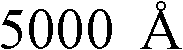


接下来,在操作472中,在外延层302中形成场介电区域320(其可以是氧化物区域),并且使其凹入到外延层302中,其中一些场介电区域320位于外延层302平面的上方。在一个实施方式中,沉积场介电区域320。在操作475中,沉积肖特基金属化层。接下来,在操作480中,形成肖特基势垒硅化物。在一些实施方式中,省略了肖特基金属化层,并且不使用操作475和480。在操作485中,形成包含铝的顶部金属365。在肖特基金属化层上并在栅极氧化物层的一部分上形成顶部金属365。在操作490中,形成电介质层375和STM层385。电介质可以是聚酰亚胺、PECVD氧氮化物、PECVD氮化物、BCB、用作电介质材料的氧氮化物膜、聚酰亚胺和沉积的氮化硅、聚酰亚胺和沉积的二氧化硅、聚酰亚胺和沉积的氧氮化硅、氮化硅、氧氮化硅、二氧化硅、或一些其它电介质。根据一个图案形成电介质层375,并在顶部金属365上形成STM层385。最后,在操作498中,完成HED整流器。Next, in
图5是示出了使用CMP使场氧化物层平坦化,并且使用CMP使沉积在沟槽中和外延层上的多晶硅平坦化来形成半导体器件的方法的流程图。使用CMP使场氧化物层和多晶硅平坦化而制造的半导体器件,在边缘终端和沟槽之间,并在沟槽和平台区域之间,具有平面结构,以减小由非平面性所导致的反向漏电电流。当提供基板时,该方法在操作505中开始。该基板可以是具有沉积在顶部上的外延层的N-型晶片。接下来,在操作510中,使用LOCOS氧化方法来产生场终端区域。接下来,在操作515中,利用氧化处理在基板上形成焊盘氧化物层305。焊盘氧化物层305的厚度的范围可以从


在操作540中,沉积或生长硬掩模氧化物。在后续操作中,将使用硬掩模来形成各种包括沟槽335的特征。在操作545中,使硬掩模图案化。在操作550中,利用蚀刻工艺来形成沟槽335。在一个实施方式中,沟槽335具有范围从0.8至1.0μm的间距,范围从0.4至0.6μm的临界尺寸,以及范围从0.5至5.0μm的深度。然而,在其它实施方式中,对于间距、临界尺寸和深度,沟槽可具有在这些范围之外的值。在操作555中,去除硬掩模。可以使用各种技术或技术的组合来去除硬掩模,例如,蚀刻、只用对场氧化物最小的冲击(腐蚀)来去除剩余的硬掩模氧化物的湿法BOE,或使场对有源区域平坦化的CMP。在一些实施方式中,操作555是可选的,并且可留下硬掩模以用于未来去除后多晶硅蚀刻。In
在操作560中,形成屏蔽电介质层340,使得其遵循沟槽和基板的轮廓。可通过以下方式来形成屏蔽电介质层340:生长氧化物层、沉积氧化物层,或生长并沉积氧化物的组合。沿着沟槽335的底部和侧壁,并沿着外延层302的顶部、场氧化物区域320和注入区域325,形成屏蔽电介质层340。屏蔽电介质层340可具有大约
在操作575中,沉积肖特基金属化层。接下来,在操作580中,形成肖特基势垒硅化物。在操作585中,形成包含铝的顶部金属365。在肖特基金属化层上并在栅极氧化物层的一部分上形成顶部金属365。在操作590中,形成电介质层375和STM层385。根据图案来形成电介质层375,并在顶部金属365上形成STM层385。在一些实施方式中,电介质层375是聚酰亚胺。可替换地,电介质层375可以是PECVD氧氮化物、PECVD氮化物、BCB、用作电介质材料的氧氮化物膜、聚酰亚胺和沉积的氮化硅、聚酰亚胺和沉积的二氧化硅、聚酰亚胺和沉积的氧氮化硅、氮化硅、氧氮化硅、二氧化硅,或一些其它电介质。最后,在操作598中,完成HED整流器。In
图6是示出了利用CMP使氧化物层平坦化来形成半导体器件的方法的流程图。利用CMP使氧化物层平坦化而制造的半导体器件,在边缘终端和沟槽之间,并在沟槽和平台区域之间,具有平面结构,以减小由非平面性所导致的反向漏电电流。当提供基板时,该方法在操作605中开始。该基板可以是具有沉积于顶部上的外延层的N-型晶片。接下来,在操作610中,利用LOCOS氧化方法来产生场终端区域。接下来,在操作615中,利用氧化处理在基板上形成焊盘氧化物层305。焊盘氧化物层305的厚度的范围可以从


在操作640中,生长硬掩模氧化物。在后续操作中,将使用硬掩模来形成各种包括沟槽335的特征。在操作645中,使硬掩模图案化。在操作650中,利用蚀刻工艺来形成沟槽335。在一个实施方式中,沟槽335具有范围从0.8至1.0μm的间距,范围从0.4至0.6μm的临界尺寸,以及范围从0.5至5.0μm的深度。然而,在其它实施方式中,对于间距、临界尺寸和深度,沟槽可具有在这些范围之外的值。在操作655中,去除硬掩模。可利用各种技术或技术的组合来去除硬掩模,例如,蚀刻、只用对场氧化物最小的冲击来去除剩余的硬掩模氧化物的湿法BOE,或使场对有源区域平坦化的CMP。在一些实施方式中,操作655是可选的,并且,可留下硬掩模以用于未来去除后多晶硅蚀刻。In operation 640, a hard mask oxide is grown. In subsequent operations, a hard mask will be used to form various
在操作660中,形成屏蔽电介质层340,使得其遵循沟槽和基板的轮廓。可通过以下方式来形成屏蔽电介质层340:生长氧化物层、沉积氧化物层,或生长并沉积氧化物的组合。沿着沟槽335的底部和侧壁,并沿着外延层302的顶部、场氧化物区域320和注入区域325,形成屏蔽电介质层340。屏蔽电介质层340可具有大约的厚度。在一些实施方式中,屏蔽电介质层340可沿着沟槽335的底部和侧壁,并沿着外延层302的顶部、场氧化物区域320和注入区域325,形成连续薄膜。可通过将HED整流器在高温下暴露于在惰性气体(例如,氩气、氦气或氙气)中稀释的氧气,来形成屏蔽电介质层340。在操作665中,将多晶硅345材料沉积在沟槽335内和屏蔽电介质层340的顶部上。多晶硅材料是无定形的未掺杂的多晶硅,并具有大约
在操作675中,沉积肖特基金属化层。接下来,在操作680中,形成肖特基势垒硅化物。在操作685中,形成包含铝的顶部金属365。在肖特基金属化层上,并在栅极氧化物层的一部分上,形成顶部金属365。在操作690中,形成电介质层375和STM层385。电介质层375可以是聚酰亚胺、PECVD氧氮化物、PECVD氮化物、BCB、用作电介质材料的氧氮化物膜、聚酰亚胺和沉积的氮化硅、聚酰亚胺和沉积的二氧化硅、聚酰亚胺和沉积的氧氮化硅、氮化硅、氧氮化硅、二氧化硅,或一些其它电介质。根据图案来形成电介质层375,并在顶部金属365上形成STM层385。最后,在操作698中,完成HED整流器。In operation 675, a Schottky metallization layer is deposited. Next, in operation 680, a Schottky barrier suicide is formed. In an operation 685, a
图7是示出了利用CMP使场氧化物层平坦化,利用CMP使沉积于沟槽中和外延层上的多晶硅平坦化,并且利用CMP使STM层平坦化来形成半导体器件的方法的流程图。利用CMP使场氧化物层、多晶硅和STM层平坦化而制造的半导体器件,在边缘终端和沟槽之间,并在沟槽和平台区域之间,具有平面结构,以减小由非平面性所导致的反向漏电电流。当提供基板时,该方法在操作705中开始。该基板可以是具有沉积于顶部上的外延层的N-型晶片。接下来,在操作710中,利用LOCOS氧化方法来产生场终端区域。接下来,在操作715中,利用氧化处理在基板上形成焊盘氧化物层305。焊盘氧化物层305的厚度的范围可以从
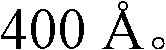


在操作740中,生长硬掩模氧化物。在后续操作中,将使用硬掩模来形成各种包括沟槽335的特征。在操作745中,使硬掩模图案化。在操作750中,利用蚀刻工艺来形成沟槽335。在一个实施方式中,沟槽335具有范围从0.8至1.0μm的间距,范围从0.4至0.6μm的临界尺寸,以及范围从0.5至5.0μm的深度。然而,在其它实施方式中,对于间距、临界尺寸和深度,沟槽可具有在这些范围之外的值。在操作755中,去除硬掩模。可以使用各种技术或技术的组合来去除硬掩模,例如,蚀刻、只用对场氧化物最小的冲击来去除剩余的硬掩模氧化物的湿法BOE,或使场对有源区域平坦化的CMP。在一些实施方式中,操作755是可选的,并且,可留下硬掩模以用于未来去除后多晶硅蚀刻。In
在操作760中,形成屏蔽电介质层340,使得其遵循沟槽和基板的轮廓。可通过以下方式来形成屏蔽电介质层340:生长氧化物层、沉积氧化物层,或生长并沉积氧化物的组合。沿着沟槽335的底部和侧壁,并沿着外延层302的顶部、场氧化物区域320和注入区域325,形成屏蔽电介质层340。屏蔽电介质层340可具有大约

在操作775中,沉积肖特基金属化层。接下来,在操作780中,形成肖特基势垒硅化物。在操作785中,形成包含铝的顶部金属365。在肖特基金属化层上,并在栅极氧化物层的一部分上,形成顶部金属365。在操作790中,形成电介质层375和STM层385。根据图案来形成电介质层375,并在顶部金属365上形成STM层385。在一些实施方式中,电介质层375是聚酰亚胺。可替换地,电介质层375可以是PECVD氧氮化物、PECVD氮化物、BCB、用作电介质材料的氧氮化物膜、聚酰亚胺和沉积的氮化硅、聚酰亚胺和沉积的二氧化硅、聚酰亚胺和沉积的氧氮化硅、氮化硅、氧氮化硅、二氧化硅,或一些其它电介质。在操作795中,利用CMP来去除STM层385材料。CMP处理去除了设置于顶部金属365的顶部上并靠近电介质层375的过量的STM层385材料。在已经用CMP处理了部分HED整流器之后,所得的部分HED整流器具有基本上共面的电介质层375和STM层385,使得,二者形成齐平的顶面。利用CMP平坦化STM层385会产生具有电介质层375材料和STM层385材料的基本上平坦的区域的基本上平坦的表面。通过平坦化形成的电介质层375材料和STM层385材料的区域形成基本上平的邻接表面。最后,在操作798中,完成HED整流器。In
图8是示出了利用CMP以使沉积于沟槽中和外延层上的多晶硅平坦化,并且利用CMP以使STM层平坦化来形成半导体器件的方法的流程图。利用CMP以使多晶硅和STM层平坦化而制造的半导体器件,在边缘终端和沟槽之间,并在沟槽和平台区域之间,具有平面结构,以减小由非平面性所导致的反向漏电电流。当提供基板时,该方法在操作805中开始。该基板可以是具有沉积于顶部上的外延层的N-型晶片。接下来,在操作840中,生长硬掩模氧化物。在后续操作中,将使用硬掩模来形成各种包括沟槽335的特征。在操作845中,使硬掩模图案化。在操作850中,利用蚀刻工艺来形成沟槽335。在一个实施方式中,沟槽335具有范围从0.8至1.0μm的间距,范围从0.4至0.6μm的临界尺寸,以及范围从0.5至5.0μm的深度。然而,在其它实施方式中,对于间距、临界尺寸和深度,沟槽可具有在这些范围之外的值。在操作855中,去除硬掩模。可利用各种技术或技术的组合来去除硬掩模,例如,蚀刻、只去除剩余的硬掩模氧化物的湿法BOE,或使场对有源区域平坦化的CMP。在一些实施方式中,操作855是可选的,并且,可留下硬掩模以用于未来去除后多晶硅蚀刻。8 is a flowchart illustrating a method of forming a semiconductor device using CMP to planarize polysilicon deposited in trenches and on epitaxial layers, and using CMP to planarize an STM layer. Semiconductor devices fabricated using CMP to planarize polysilicon and STM layers have planar structures between edge terminations and trenches, and between trenches and mesa regions to reduce reflections caused by non-planarity. to the leakage current. The method begins in
在操作860中,形成屏蔽电介质层340,使得其遵循沟槽和基板的轮廓。可通过以下方式来形成屏蔽电介质层340:生长氧化物层、沉积氧化物层,或生长并沉积氧化物的组合。沿着沟槽335的底部和侧壁,并沿着外延层302的顶部和注入区域325,形成屏蔽电介质层340。屏蔽电介质层340可具有大约

接下来,在操作872中,在外延层302中形成场介电区域320(其可以是氧化物区域),并且使其凹入到外延层302中,其中一些场介电区域320位于外延层302平面的上方。在操作875中,沉积肖特基金属化层。接下来,在操作880中,形成肖特基势垒硅化物。在操作885中,形成包含铝的顶部金属365。在肖特基金属化层上,并在栅极氧化物层的一部分上,形成顶部金属365。在操作890中,形成电介质层375和STM层385。在一些实施方式中,电介质层375是聚酰亚胺。可替换地,电介质层375可以是PECVD氧氮化物、PECVD氮化物、BCB、用作电介质材料的氧氮化物膜、聚酰亚胺和沉积的氮化硅、聚酰亚胺和沉积的二氧化硅、聚酰亚胺和沉积的氧氮化硅、氮化硅、氧氮化硅、二氧化硅,或一些其它电介质。根据图案来形成电介质层375,并在顶部金属365上形成STM层385。在操作895中,利用CMP去除STM层385材料。CMP处理去除了设置于顶部金属365的顶部上并靠近电介质层375的过量的STM层385材料。在已经用CMP处理了部分HED整流器之后,所得的部分HED整流器具有基本上共面的电介质层375和STM层385,使得二者形成平齐的顶面。利用CMP平坦化STM层385会产生具有电介质层375材料和STM层385材料的基本上平坦的区域的基本上平坦的表面。通过平坦化形成的电介质层375材料和STM层385材料的区域形成基本上平的邻接表面。最后,在操作898中,完成HED整流器。Next, in
图9是示出了利用CMP以使氧化物层平坦化并利用CMP以使STM层平坦化来形成半导体器件的方法的流程图。利用CMP使氧化物层和STM层平坦化而制造的半导体器件,在边缘终端和沟槽之间,并在沟槽和平台区域之间,具有平面结构,以减小由非平面性所导致的反向漏电电流。当提供基板时,该方法在操作905中开始。该基板可以是具有沉积于顶部上的外延层的N-型晶片。接下来,在操作910中,利用LOCOS氧化方法来产生场终端区域。接下来,在操作915中,利用氧化处理在基板上形成焊盘氧化物层305。焊盘氧化物层305的厚度的范围可以从


在操作940中,生长硬掩模氧化物。在后续操作中,将使用硬掩模来形成各种包括沟槽335的特征。在操作945中,使硬掩模图案化。在操作950中,利用蚀刻工艺来形成沟槽335。在一个实施方式中,沟槽335具有范围从0.8至1.0μm的间距,范围从0.4至0.6μm的临界尺寸,以及范围从0.5至5.0μm的深度。然而,在其它实施方式中,对于间距、临界尺寸和深度,沟槽可具有在这些范围之外的值。在操作955中,去除硬掩模。可以使用各种技术或技术的组合来去除硬掩模,例如,蚀刻、只用对场氧化物最小的冲击来去除剩余的硬掩模氧化物的湿法BOE,或使场对有源区域平坦化的CMP。在一些实施方式中,操作955是可选的,并且可留下硬掩模以用于未来去除后多晶硅蚀刻。In
在操作960中,形成屏蔽电介质层340,使得其遵循沟槽和基板的轮廓。可通过以下方式来形成屏蔽电介质层340:生长氧化物层、沉积氧化物层,或生长并沉积氧化物的组合。沿着沟槽335的底部和侧壁,并沿着外延层302的顶部、场氧化物区域320和注入区域325,形成屏蔽电介质层340。屏蔽电介质层340可具有大约

在操作975中,沉积肖特基金属化层。接下来,在操作980中,形成肖特基势垒硅化物。在操作985中,形成包含铝的顶部金属365。在肖特基金属化层上,并在栅极氧化物层的一部分上,形成顶部金属365。在操作990中,形成电介质层375和STM层385。根据图案来形成电介质层375,并在顶部金属365上形成STM层385。在操作995中,利用CMP来去除STM层385材料。CMP处理去除了设置于顶部金属365的顶部上并靠近电介质层375的过量的STM层385材料。在已经用CMP处理了部分HED整流器之后,所得的部分HED整流器具有基本上共面的电介质层375和STM层385,使得二者形成平齐的顶面。利用CMP平坦化STM层385会产生具有电介质层375材料和STM层385材料的基本上平坦的区域的基本上平坦的表面。通过平坦化形成的电介质层375材料和STM层385材料的区域形成基本上平直的连续表面。在一些实施方式中,电介质层375是聚酰亚胺。可替换地,电介质层375可以是PECVD氧氮化物、PECVD氮化物、BCB、用作电介质材料的氧氮化物膜、聚酰亚胺和沉积的氮化硅、聚酰亚胺和沉积的二氧化硅、聚酰亚胺和沉积的氧氮化硅、氮化硅、氧氮化硅、二氧化硅,或一些其它电介质。最后,在操作998中,完成HED整流器。In an
图10是示出了利用CMP使STM层平坦化来形成半导体器件的方法的流程图。利用CMP使STM层平坦化而制造的半导体器件,在边缘终端和沟槽之间,并在沟槽和平台区域之间,具有平面结构,以减小由非平面性所导致的反向漏电电流。当提供基板时,该方法在操作1005中开始。该基板可以是具有沉积于顶部上的外延层的N-型晶片。接下来,在操作1040中,生长硬掩模氧化物。在后续操作中,将用硬掩模来形成各种包括沟槽335的特征。在操作1045中,使硬掩模图案化。在操作1050中,利用蚀刻工艺来形成沟槽335。在一个实施方式中,沟槽335具有范围从0.8至1.0μm的间距,范围从0.4至0.6μm的临界尺寸,以及范围从0.5至5.0μm的深度。然而,在其它实施方式中,对于间距、临界尺寸和深度,沟槽可具有在这些范围之外的值。在操作1055中,去除硬掩模。可以利用各种技术或技术的组合来去除硬掩模,例如,蚀刻、只去除剩余的硬掩模氧化物的湿法BOE,或使场对有源区域平坦化的CMP。在一些实施方式中,操作1055是可选的,并且可留下硬掩模以用于未来去除后多晶硅蚀刻。10 is a flowchart illustrating a method of forming a semiconductor device by planarizing an STM layer using CMP. Semiconductor devices fabricated using CMP to planarize the STM layer have planar structures between edge terminations and trenches, and between trenches and mesa regions, to reduce reverse leakage current caused by non-planarity . The method begins in
在操作1060中,形成屏蔽电介质层340,使得其遵循沟槽和基板的轮廓。可通过以下方式来形成屏蔽电介质层340:生长氧化物层、沉积氧化物层,或生长并沉积氧化物的组合。沿着沟槽335的底部和侧壁,并沿着外延层302的顶部和注入区域325,形成屏蔽电介质层340。屏蔽电介质层340可具有大约的厚度。在一些实施方式中,屏蔽电介质层340可沿着沟槽335的底部和侧壁,并沿着外延层302的顶部和注入区域325,形成连续薄膜。可通过将HED整流器在高温下暴露于在惰性气体(例如,氩气、氦气或氙气)中稀释的氧气,来形成屏蔽电介质层340。在操作1065中,将多晶硅345材料沉积在沟槽335内和屏蔽电介质层340的顶部上。多晶硅材料是无定形的未掺杂的多晶硅,并具有大约

接下来,在操作1072中,在外延层302中形成场介电区域320(其可以是氧化物区域),并且使其凹入到外延层302中,其中一些场介电区域320位于外延层302平面的上方。在操作1075中,沉积肖特基金属化层。接下来,在操作1080中,形成肖特基势垒硅化物。在操作1085中,形成包含铝的顶部金属365。在肖特基金属化层上,并在栅极氧化物层的一部分上,形成顶部金属365。在操作1090中,形成电介质层375和STM层385。在一些实施方式中,电介质层375是聚酰亚胺。可替换地,电介质层375可以是PECVD氧氮化物、PECVD氮化物、BCB、用作电介质材料的氧氮化物膜、聚酰亚胺和沉积的氮化硅、聚酰亚胺和沉积的二氧化硅、聚酰亚胺和沉积的氧氮化硅、氮化硅、氧氮化硅、二氧化硅,或一些其它电介质。根据图案来形成电介质层375,并在顶部金属365上形成STM层385。在操作1095中,利用CMP来去除STM层385材料。CMP处理去除了设置于顶部金属365的顶部上并靠近电介质层375的过量的STM层385材料。在已经用CMP处理了部分HED整流器之后,所得的部分HED整流器具有基本上共面的电介质层375和STM层385,使得二者形成平齐的顶面。利用CMP平坦化STM层385会产生具有电介质层375材料和STM层385材料的基本上平坦的区域的基本上平坦的表面。通过平坦化形成的电介质层375材料和STM层385材料的区域形成基本上平的邻接表面。最后,在操作1098中,完成HED整流器。Next, in
图11示出了根据以上参考图3-10描述的方法,沿着图2C所示的图例A-A’制造的半导体器件的横截面图。图11所示的半导体器件是利用CMP以使场氧化物层、多晶硅和/或STM层平坦化而制造的HED整流器。半导体器件在边缘终端和沟槽之间,并在沟槽和平台区域之间,具有平面结构,以减小由非平面性所导致的反向漏电电流。半导体器件包括基板1100、外延层1102、场氧化物区域1120、注入区域1125、沟槽1135、屏蔽电介质层1140、多晶硅1145、NiSi层1160、顶部金属1165、电介质层1175、STM层1185,以及背部金属1190。基板1100可以是N-型晶片,其先前已用激光划线,以包括诸如器件类型、批号和晶片号的信息。基板1100还可以是高度掺杂的N+基板。形成于基板1100上的外延层1102,可制造为与基板1100具有相同导电率或不同导电率。当基板1100和外延层1102是相同导电率的类型时,形成MOSFET,并且,当基板1100具有与外延层1102相反的导电率类型时,形成IGBT。在一些实施方式中,外延层1102由轻掺杂的n-型材料制成。场氧化物区域1120延伸到外延层1102中,并具有与外延层1102的顶面共面的顶面。在一些实施方式中,利用CMP制造该共面表面。Figure 11 shows a cross-sectional view of a semiconductor device fabricated along the legend A-A' shown in Figure 2C according to the method described above with reference to Figures 3-10. The semiconductor device shown in FIG. 11 is a HED rectifier fabricated using CMP to planarize the field oxide layer, polysilicon and/or STM layer. The semiconductor device has a planar structure between the edge termination and the trench, and between the trench and the mesa region, to reduce reverse leakage current caused by the non-planarity. The semiconductor device includes
通过在外延层1102中注入硼来制造注入区域1125。在一些实施方式中,增加注入能量,以便在场氧化物层1120下制造P-iso。通过蚀刻来形成沟槽1135,并且其具有范围从约
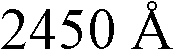


通过以下方式来形成NiSi层1160:首先在平坦化区域(其具有在沟槽1135中暴露的多晶硅1145和在沟槽1135之间形成平台的暴露的硅)上沉积镍,然后使镍经受由以下源产生的外部热量,例如,快速加温退火(RTA)、加热吸盘,以及炉子来源(可以使用其它热源,并且热源不限于这些)。当将镍从基板1100暴露于硅并受到由以下源产生的外部热量时,NiSi形成,例如,快速加温退火(RTA)、加热吸盘,以及炉子来源(可以使用其它热源,并且热源不限于这些)。在一些实施方式中,存在未反应的残余的镍。在一些实施方式中,可溅射沉积该镍层,并且厚度可以是大约
虽然已经描述了本发明的具体实施方式,但是,各种修改、替代、替代结构和等价物也包含在本发明的范围内。所述发明不限于某些具体实施方式内的操作,而是可在其它实施方式结构内自由操作,因为,对于本领域的技术人员来说应当显而易见的是,本发明的范围不限于所述系列的处理和步骤。While specific embodiments of the present invention have been described, various modifications, substitutions, alternate constructions, and equivalents are also encompassed within the scope of the present invention. The described invention is not limited to operation within certain specific embodiments, but is freely operable within other embodiment structures since, as should be apparent to a person skilled in the art, the scope of the present invention is not limited to the described series processing and steps.
因此,将说明书和附图认为是示意性的,而不是限制性的。然而,将显而易见的是,在不背离如在权利要求书中阐述的本发明的更宽泛的精神和范围的前提下,可以对其进行添加、减少、删除,以及其它修改和变化。Accordingly, the specification and drawings are to be regarded as illustrative rather than restrictive. It will be evident, however, that additions, subtractions, deletions, and other modifications and changes may be made thereto without departing from the broader spirit and scope of the invention as set forth in the claims.
Claims (20)
Applications Claiming Priority (2)
| Application Number | Priority Date | Filing Date | Title |
|---|---|---|---|
| US12/819,023 US8432000B2 (en) | 2010-06-18 | 2010-06-18 | Trench MOS barrier schottky rectifier with a planar surface using CMP techniques |
| US12/819,023 | 2010-06-18 |
Publications (2)
| Publication Number | Publication Date |
|---|---|
| CN102290350A true CN102290350A (en) | 2011-12-21 |
| CN102290350B CN102290350B (en) | 2015-10-28 |
Family
ID=45327921
Family Applications (1)
| Application Number | Title | Priority Date | Filing Date |
|---|---|---|---|
| CN201110166929.8A Active CN102290350B (en) | 2010-06-18 | 2011-06-20 | Utilize the trench MOS barrier Schottky rectifier with flat surfaces of CMP technology |
Country Status (2)
| Country | Link |
|---|---|
| US (2) | US8319290B2 (en) |
| CN (1) | CN102290350B (en) |
Cited By (6)
| Publication number | Priority date | Publication date | Assignee | Title |
|---|---|---|---|---|
| CN104282564A (en) * | 2013-07-03 | 2015-01-14 | 中芯国际集成电路制造(上海)有限公司 | Method for forming semiconductor device and method for forming fin field effect transistor |
| CN105336794A (en) * | 2014-08-14 | 2016-02-17 | 强茂股份有限公司 | Trench Schottky diode |
| CN106953155A (en) * | 2016-12-20 | 2017-07-14 | 西安科锐盛创新科技有限公司 | A kind of preparation method of solid-state plasmonic reconfigurable dipole antenna |
| CN107026310A (en) * | 2016-12-20 | 2017-08-08 | 西安科锐盛创新科技有限公司 | There is SiO for sleeve antenna2The preparation method of the solid plasma pin diode strings of protective layer |
| CN107046163A (en) * | 2016-12-20 | 2017-08-15 | 西安科锐盛创新科技有限公司 | Mesa-shaped active area solid plasma diode fabricating method for preparing holographic antenna |
| CN113851528A (en) * | 2021-09-26 | 2021-12-28 | 上海恒灼科技有限公司 | A silicon carbide Schottky diode and method of making the same |
Families Citing this family (15)
| Publication number | Priority date | Publication date | Assignee | Title |
|---|---|---|---|---|
| US7638841B2 (en) | 2003-05-20 | 2009-12-29 | Fairchild Semiconductor Corporation | Power semiconductor devices and methods of manufacture |
| US9246019B2 (en) * | 2010-12-17 | 2016-01-26 | Diodes Incorporated | High efficiency rectifier |
| US8912621B1 (en) * | 2011-07-11 | 2014-12-16 | Diodes Incorporated | Trench schottky devices |
| CN103378171B (en) * | 2012-04-28 | 2017-11-14 | 朱江 | A kind of groove Schottky semiconductor device and preparation method thereof |
| EP4044213A3 (en) | 2012-06-06 | 2022-11-02 | Rohm Co., Ltd. | Semiconductor device and method for manufacturing same |
| JP2014045138A (en) * | 2012-08-28 | 2014-03-13 | Toshiba Corp | Trench formation method and semiconductor device manufacturing method |
| US8853084B2 (en) | 2013-01-31 | 2014-10-07 | International Business Machines Corporation | Self-adjusting gate hard mask |
| TWI546970B (en) * | 2014-05-13 | 2016-08-21 | 帥群微電子股份有限公司 | Terminal structure of semiconductor element and manufacturing method thereof |
| US9508596B2 (en) * | 2014-06-20 | 2016-11-29 | Vishay-Siliconix | Processes used in fabricating a metal-insulator-semiconductor field effect transistor |
| CN106057913A (en) * | 2016-06-30 | 2016-10-26 | 南通康比电子有限公司 | Novel trench type barrier schottky diode and production process thereof |
| US11476340B2 (en) * | 2019-10-25 | 2022-10-18 | Ohio State Innovation Foundation | Dielectric heterojunction device |
| US11848389B2 (en) | 2020-03-19 | 2023-12-19 | Ohio State Innovation Foundation | Low turn on and high breakdown voltage lateral diode |
| CN113206146B (en) * | 2021-05-26 | 2023-03-24 | 吉林华微电子股份有限公司 | Semiconductor device terminal structure, manufacturing method and semiconductor device |
| US12439621B2 (en) | 2021-06-07 | 2025-10-07 | Stmicroelectronics Pte Ltd | Method of making a charge coupled field effect rectifier diode |
| TWI806414B (en) | 2022-02-09 | 2023-06-21 | 鴻海精密工業股份有限公司 | Power semiconductor device |
Citations (5)
| Publication number | Priority date | Publication date | Assignee | Title |
|---|---|---|---|---|
| US20050009277A1 (en) * | 2003-03-11 | 2005-01-13 | Mosel Vitelic, Inc. | Termination structure of DMOS device and method of forming the same |
| US7005347B1 (en) * | 2002-03-22 | 2006-02-28 | Vishay-Siliconix | Structures of and methods of fabricating trench-gated MIS devices |
| US20080169505A1 (en) * | 2007-01-16 | 2008-07-17 | Fu-Yuan Hsieh | Structure of Trench MOSFET and Method for Manufacturing the same |
| CN101236985A (en) * | 2007-02-02 | 2008-08-06 | 旺宏电子股份有限公司 | Memory cell device with coplanar electrode surfaces and method of making same |
| US20090111227A1 (en) * | 2005-04-06 | 2009-04-30 | Christopher Boguslaw Kocon | Method for Forming Trench Gate Field Effect Transistor with Recessed Mesas Using Spacers |
Family Cites Families (356)
| Publication number | Priority date | Publication date | Assignee | Title |
|---|---|---|---|---|
| US3404295A (en) | 1964-11-30 | 1968-10-01 | Motorola Inc | High frequency and voltage transistor with added region for punch-through protection |
| US3412297A (en) | 1965-12-16 | 1968-11-19 | United Aircraft Corp | Mos field-effect transistor with a onemicron vertical channel |
| US3497777A (en) | 1967-06-13 | 1970-02-24 | Stanislas Teszner | Multichannel field-effect semi-conductor device |
| US3564356A (en) | 1968-10-24 | 1971-02-16 | Tektronix Inc | High voltage integrated circuit transistor |
| US3660697A (en) | 1970-02-16 | 1972-05-02 | Bell Telephone Labor Inc | Monolithic semiconductor apparatus adapted for sequential charge transfer |
| US4003072A (en) | 1972-04-20 | 1977-01-11 | Sony Corporation | Semiconductor device with high voltage breakdown resistance |
| US3855009A (en) | 1973-09-20 | 1974-12-17 | Texas Instruments Inc | Ion-implantation and conventional epitaxy to produce dielectrically isolated silicon layers |
| US4011105A (en) | 1975-09-15 | 1977-03-08 | Mos Technology, Inc. | Field inversion control for n-channel device integrated circuits |
| US4062747A (en) | 1976-06-15 | 1977-12-13 | Bell Telephone Laboratories, Incorporated | Native growth of semiconductor oxide layers |
| US4337474A (en) | 1978-08-31 | 1982-06-29 | Mitsubishi Denki Kabushiki Kaisha | Semiconductor device |
| US4698653A (en) | 1979-10-09 | 1987-10-06 | Cardwell Jr Walter T | Semiconductor devices controlled by depletion regions |
| US4638344A (en) | 1979-10-09 | 1987-01-20 | Cardwell Jr Walter T | Junction field-effect transistor controlled by merged depletion regions |
| US4345265A (en) | 1980-04-14 | 1982-08-17 | Supertex, Inc. | MOS Power transistor with improved high-voltage capability |
| US4868624A (en) | 1980-05-09 | 1989-09-19 | Regents Of The University Of Minnesota | Channel collector transistor |
| US4300150A (en) | 1980-06-16 | 1981-11-10 | North American Philips Corporation | Lateral double-diffused MOS transistor device |
| US4326332A (en) | 1980-07-28 | 1982-04-27 | International Business Machines Corp. | Method of making a high density V-MOS memory array |
| EP0051693B1 (en) | 1980-11-12 | 1985-06-19 | Ibm Deutschland Gmbh | Electrically switchable read-only memory |
| US4324038A (en) | 1980-11-24 | 1982-04-13 | Bell Telephone Laboratories, Incorporated | Method of fabricating MOS field effect transistors |
| US4969028A (en) | 1980-12-02 | 1990-11-06 | General Electric Company | Gate enhanced rectifier |
| GB2089119A (en) | 1980-12-10 | 1982-06-16 | Philips Electronic Associated | High voltage semiconductor devices |
| US4541001A (en) | 1982-09-23 | 1985-09-10 | Eaton Corporation | Bidirectional power FET with substrate-referenced shield |
| US4974059A (en) | 1982-12-21 | 1990-11-27 | International Rectifier Corporation | Semiconductor high-power mosfet device |
| JPS6016420A (en) | 1983-07-08 | 1985-01-28 | Mitsubishi Electric Corp | Selective epitaxial growth method |
| US4641174A (en) | 1983-08-08 | 1987-02-03 | General Electric Company | Pinch rectifier |
| US4639761A (en) | 1983-12-16 | 1987-01-27 | North American Philips Corporation | Combined bipolar-field effect transistor resurf devices |
| US4568958A (en) | 1984-01-03 | 1986-02-04 | General Electric Company | Inversion-mode insulated-gate gallium arsenide field-effect transistors |
| FR2566179B1 (en) | 1984-06-14 | 1986-08-22 | Commissariat Energie Atomique | METHOD FOR SELF-POSITIONING OF A LOCALIZED FIELD OXIDE WITH RESPECT TO AN ISOLATION TRENCH |
| US5208657A (en) | 1984-08-31 | 1993-05-04 | Texas Instruments Incorporated | DRAM Cell with trench capacitor and vertical channel in substrate |
| US4824793A (en) | 1984-09-27 | 1989-04-25 | Texas Instruments Incorporated | Method of making DRAM cell with trench capacitor |
| US4621414A (en) | 1985-03-04 | 1986-11-11 | Advanced Micro Devices, Inc. | Method of making an isolation slot for integrated circuit structure |
| US4774556A (en) | 1985-07-25 | 1988-09-27 | Nippondenso Co., Ltd. | Non-volatile semiconductor memory device |
| US5262336A (en) | 1986-03-21 | 1993-11-16 | Advanced Power Technology, Inc. | IGBT process to produce platinum lifetime control |
| US5034785A (en) | 1986-03-24 | 1991-07-23 | Siliconix Incorporated | Planar vertical channel DMOS structure |
| US4767722A (en) | 1986-03-24 | 1988-08-30 | Siliconix Incorporated | Method for making planar vertical channel DMOS structures |
| US4666556A (en) | 1986-05-12 | 1987-05-19 | International Business Machines Corporation | Trench sidewall isolation by polysilicon oxidation |
| US4716126A (en) | 1986-06-05 | 1987-12-29 | Siliconix Incorporated | Fabrication of double diffused metal oxide semiconductor transistor |
| US5607511A (en) | 1992-02-21 | 1997-03-04 | International Business Machines Corporation | Method and apparatus for low temperature, low pressure chemical vapor deposition of epitaxial silicon layers |
| US4746630A (en) | 1986-09-17 | 1988-05-24 | Hewlett-Packard Company | Method for producing recessed field oxide with improved sidewall characteristics |
| US4941026A (en) | 1986-12-05 | 1990-07-10 | General Electric Company | Semiconductor devices exhibiting minimum on-resistance |
| JP2577330B2 (en) | 1986-12-11 | 1997-01-29 | 新技術事業団 | Method of manufacturing double-sided gate static induction thyristor |
| US5105243A (en) | 1987-02-26 | 1992-04-14 | Kabushiki Kaisha Toshiba | Conductivity-modulation metal oxide field effect transistor with single gate structure |
| US4821095A (en) | 1987-03-12 | 1989-04-11 | General Electric Company | Insulated gate semiconductor device with extra short grid and method of fabrication |
| US4745079A (en) | 1987-03-30 | 1988-05-17 | Motorola, Inc. | Method for fabricating MOS transistors having gates with different work functions |
| US4823176A (en) | 1987-04-03 | 1989-04-18 | General Electric Company | Vertical double diffused metal oxide semiconductor (VDMOS) device including high voltage junction exhibiting increased safe operating area |
| US4801986A (en) | 1987-04-03 | 1989-01-31 | General Electric Company | Vertical double diffused metal oxide semiconductor VDMOS device with increased safe operating area and method |
| US4833516A (en) | 1987-08-03 | 1989-05-23 | International Business Machines Corporation | High density memory cell structure having a vertical trench transistor self-aligned with a vertical trench capacitor and fabrication methods therefor |
| US5164325A (en) | 1987-10-08 | 1992-11-17 | Siliconix Incorporated | Method of making a vertical current flow field effect transistor |
| US4893160A (en) | 1987-11-13 | 1990-01-09 | Siliconix Incorporated | Method for increasing the performance of trenched devices and the resulting structure |
| US4914058A (en) | 1987-12-29 | 1990-04-03 | Siliconix Incorporated | Grooved DMOS process with varying gate dielectric thickness |
| US4979004A (en) | 1988-01-29 | 1990-12-18 | Texas Instruments Incorporated | Floating gate memory cell and device |
| EP0332822A1 (en) | 1988-02-22 | 1989-09-20 | Asea Brown Boveri Ag | Field-effect-controlled bipolar power semiconductor device, and method of making the same |
| US4967245A (en) | 1988-03-14 | 1990-10-30 | Siliconix Incorporated | Trench power MOSFET device |
| EP0333426B1 (en) | 1988-03-15 | 1996-07-10 | Kabushiki Kaisha Toshiba | Dynamic RAM |
| US5283201A (en) | 1988-05-17 | 1994-02-01 | Advanced Power Technology, Inc. | High density power device fabrication process |
| KR0173111B1 (en) | 1988-06-02 | 1999-02-01 | 야마무라 가쯔미 | Trench Gate MOS FET |
| US4961100A (en) | 1988-06-20 | 1990-10-02 | General Electric Company | Bidirectional field effect semiconductor device and circuit |
| JPH0216763A (en) | 1988-07-05 | 1990-01-19 | Toshiba Corp | Manufacture of semiconductor device |
| US4853345A (en) | 1988-08-22 | 1989-08-01 | Delco Electronics Corporation | Process for manufacture of a vertical DMOS transistor |
| US5268311A (en) | 1988-09-01 | 1993-12-07 | International Business Machines Corporation | Method for forming a thin dielectric layer on a substrate |
| US5156989A (en) | 1988-11-08 | 1992-10-20 | Siliconix, Incorporated | Complementary, isolated DMOS IC technology |
| US5346834A (en) | 1988-11-21 | 1994-09-13 | Hitachi, Ltd. | Method for manufacturing a semiconductor device and a semiconductor memory device |
| US5072266A (en) | 1988-12-27 | 1991-12-10 | Siliconix Incorporated | Trench DMOS power transistor with field-shaping body profile and three-dimensional geometry |
| US5111253A (en) | 1989-05-09 | 1992-05-05 | General Electric Company | Multicellular FET having a Schottky diode merged therewith |
| US4992390A (en) | 1989-07-06 | 1991-02-12 | General Electric Company | Trench gate structure with thick bottom oxide |
| JP2623850B2 (en) | 1989-08-25 | 1997-06-25 | 富士電機株式会社 | Conductivity modulation type MOSFET |
| WO1991003842A1 (en) | 1989-08-31 | 1991-03-21 | Nippondenso Co., Ltd. | Insulated gate bipolar transistor |
| US5248894A (en) | 1989-10-03 | 1993-09-28 | Harris Corporation | Self-aligned channel stop for trench-isolated island |
| US5134448A (en) | 1990-01-29 | 1992-07-28 | Motorola, Inc. | MOSFET with substrate source contact |
| US5242845A (en) | 1990-06-13 | 1993-09-07 | Kabushiki Kaisha Toshiba | Method of production of vertical MOS transistor |
| US5071782A (en) | 1990-06-28 | 1991-12-10 | Texas Instruments Incorporated | Vertical memory cell array and method of fabrication |
| US5079608A (en) | 1990-11-06 | 1992-01-07 | Harris Corporation | Power MOSFET transistor circuit with active clamp |
| EP0487022B1 (en) | 1990-11-23 | 1997-04-23 | Texas Instruments Incorporated | A method of simultaneously fabricating an insulated gate-field-effect transistor and a bipolar transistor |
| US5065273A (en) | 1990-12-04 | 1991-11-12 | International Business Machines Corporation | High capacity DRAM trench capacitor and methods of fabricating same |
| US5684320A (en) | 1991-01-09 | 1997-11-04 | Fujitsu Limited | Semiconductor device having transistor pair |
| US5168331A (en) | 1991-01-31 | 1992-12-01 | Siliconix Incorporated | Power metal-oxide-semiconductor field effect transistor |
| JP2825004B2 (en) | 1991-02-08 | 1998-11-18 | インターナショナル・ビジネス・マシーンズ・コーポレーション | Sidewall charge-coupled imaging device and method of manufacturing the same |
| CN1019720B (en) | 1991-03-19 | 1992-12-30 | 电子科技大学 | Power semiconductor device |
| US5164802A (en) | 1991-03-20 | 1992-11-17 | Harris Corporation | Power vdmosfet with schottky on lightly doped drain of lateral driver fet |
| US5250450A (en) | 1991-04-08 | 1993-10-05 | Micron Technology, Inc. | Insulated-gate vertical field-effect transistor with high current drive and minimum overlap capacitance |
| JP2603886B2 (en) | 1991-05-09 | 1997-04-23 | 日本電信電話株式会社 | Method for manufacturing thin SOI insulated gate field effect transistor |
| US5219793A (en) | 1991-06-03 | 1993-06-15 | Motorola Inc. | Method for forming pitch independent contacts and a semiconductor device having the same |
| KR940006702B1 (en) | 1991-06-14 | 1994-07-25 | 금성일렉트론 주식회사 | Manufacturing method of mosfet |
| JP2570022B2 (en) | 1991-09-20 | 1997-01-08 | 株式会社日立製作所 | Constant voltage diode, power conversion device using the same, and method of manufacturing constant voltage diode |
| JPH0613627A (en) | 1991-10-08 | 1994-01-21 | Semiconductor Energy Lab Co Ltd | Semiconductor device and manufacturing method thereof |
| US5300452A (en) | 1991-12-18 | 1994-04-05 | U.S. Philips Corporation | Method of manufacturing an optoelectronic semiconductor device |
| JPH05304297A (en) | 1992-01-29 | 1993-11-16 | Nec Corp | Power semiconductor device and manufacturing method thereof |
| US5315142A (en) | 1992-03-23 | 1994-05-24 | International Business Machines Corporation | High performance trench EEPROM cell |
| JP2904635B2 (en) | 1992-03-30 | 1999-06-14 | 株式会社東芝 | Semiconductor device and manufacturing method thereof |
| US5554862A (en) | 1992-03-31 | 1996-09-10 | Kabushiki Kaisha Toshiba | Power semiconductor device |
| JPH06196723A (en) | 1992-04-28 | 1994-07-15 | Mitsubishi Electric Corp | Semiconductor device and manufacture thereof |
| US5640034A (en) | 1992-05-18 | 1997-06-17 | Texas Instruments Incorporated | Top-drain trench based resurf DMOS transistor structure |
| US5233215A (en) | 1992-06-08 | 1993-08-03 | North Carolina State University At Raleigh | Silicon carbide power MOSFET with floating field ring and floating field plate |
| US5430324A (en) | 1992-07-23 | 1995-07-04 | Siliconix, Incorporated | High voltage transistor having edge termination utilizing trench technology |
| US5910669A (en) | 1992-07-24 | 1999-06-08 | Siliconix Incorporated | Field effect Trench transistor having lightly doped epitaxial region on the surface portion thereof |
| US5558313A (en) | 1992-07-24 | 1996-09-24 | Siliconix Inorporated | Trench field effect transistor with reduced punch-through susceptibility and low RDSon |
| US5281548A (en) | 1992-07-28 | 1994-01-25 | Micron Technology, Inc. | Plug-based floating gate memory |
| US5294824A (en) | 1992-07-31 | 1994-03-15 | Motorola, Inc. | High voltage transistor having reduced on-resistance |
| GB9216599D0 (en) | 1992-08-05 | 1992-09-16 | Philips Electronics Uk Ltd | A semiconductor device comprising a vertical insulated gate field effect device and a method of manufacturing such a device |
| US5241195A (en) | 1992-08-13 | 1993-08-31 | North Carolina State University At Raleigh | Merged P-I-N/Schottky power rectifier having extended P-I-N junction |
| US5300447A (en) | 1992-09-29 | 1994-04-05 | Texas Instruments Incorporated | Method of manufacturing a minimum scaled transistor |
| JPH06163907A (en) | 1992-11-20 | 1994-06-10 | Hitachi Ltd | Voltage-driven semiconductor device |
| US5275965A (en) | 1992-11-25 | 1994-01-04 | Micron Semiconductor, Inc. | Trench isolation using gated sidewalls |
| US5326711A (en) | 1993-01-04 | 1994-07-05 | Texas Instruments Incorporated | High performance high voltage vertical transistor and method of fabrication |
| DE4300806C1 (en) | 1993-01-14 | 1993-12-23 | Siemens Ag | Vertical MOS transistor prodn. - with reduced trench spacing, without parasitic bipolar effects |
| US5363327A (en) | 1993-01-19 | 1994-11-08 | International Business Machines Corporation | Buried-sidewall-strap two transistor one capacitor trench cell |
| US5418376A (en) | 1993-03-02 | 1995-05-23 | Toyo Denki Seizo Kabushiki Kaisha | Static induction semiconductor device with a distributed main electrode structure and static induction semiconductor device with a static induction main electrode shorted structure |
| US5341011A (en) | 1993-03-15 | 1994-08-23 | Siliconix Incorporated | Short channel trenched DMOS transistor |
| DE4309764C2 (en) | 1993-03-25 | 1997-01-30 | Siemens Ag | Power MOSFET |
| US5364803A (en) | 1993-06-24 | 1994-11-15 | United Microelectronics Corporation | Method of preventing fluorine-induced gate oxide degradation in WSix polycide structure |
| KR960012585B1 (en) | 1993-06-25 | 1996-09-23 | Samsung Electronics Co Ltd | Transistor structure and the method for manufacturing the same |
| US5371396A (en) | 1993-07-02 | 1994-12-06 | Thunderbird Technologies, Inc. | Field effect transistor having polycrystalline silicon gate junction |
| US5365102A (en) | 1993-07-06 | 1994-11-15 | North Carolina State University | Schottky barrier rectifier with MOS trench |
| BE1007283A3 (en) | 1993-07-12 | 1995-05-09 | Philips Electronics Nv | Semiconductor device with most with an extended drain area high voltage. |
| JPH07122749A (en) | 1993-09-01 | 1995-05-12 | Toshiba Corp | Semiconductor device and manufacturing method thereof |
| JP3400846B2 (en) | 1994-01-20 | 2003-04-28 | 三菱電機株式会社 | Semiconductor device having trench structure and method of manufacturing the same |
| US5429977A (en) | 1994-03-11 | 1995-07-04 | Industrial Technology Research Institute | Method for forming a vertical transistor with a stacked capacitor DRAM cell |
| US5434435A (en) | 1994-05-04 | 1995-07-18 | North Carolina State University | Trench gate lateral MOSFET |
| DE4417150C2 (en) | 1994-05-17 | 1996-03-14 | Siemens Ag | Method for producing an arrangement with self-reinforcing dynamic MOS transistor memory cells |
| US5405794A (en) | 1994-06-14 | 1995-04-11 | Philips Electronics North America Corporation | Method of producing VDMOS device of increased power density |
| US5424231A (en) | 1994-08-09 | 1995-06-13 | United Microelectronics Corp. | Method for manufacturing a VDMOS transistor |
| US5583368A (en) | 1994-08-11 | 1996-12-10 | International Business Machines Corporation | Stacked devices |
| EP0698919B1 (en) | 1994-08-15 | 2002-01-16 | Siliconix Incorporated | Trenched DMOS transistor fabrication using seven masks |
| US5581100A (en) | 1994-08-30 | 1996-12-03 | International Rectifier Corporation | Trench depletion MOSFET |
| JP3111827B2 (en) | 1994-09-20 | 2000-11-27 | 株式会社日立製作所 | Semiconductor device and power conversion device using the same |
| US5583065A (en) | 1994-11-23 | 1996-12-10 | Sony Corporation | Method of making a MOS semiconductor device |
| EP0717435A1 (en) | 1994-12-01 | 1996-06-19 | AT&T Corp. | Process for controlling dopant diffusion in a semiconductor layer and semiconductor layer formed thereby |
| US6153920A (en) | 1994-12-01 | 2000-11-28 | Lucent Technologies Inc. | Process for controlling dopant diffusion in a semiconductor layer and semiconductor device formed thereby |
| US5674766A (en) | 1994-12-30 | 1997-10-07 | Siliconix Incorporated | Method of making a trench MOSFET with multi-resistivity drain to provide low on-resistance by varying dopant concentration in epitaxial layer |
| US5597765A (en) | 1995-01-10 | 1997-01-28 | Siliconix Incorporated | Method for making termination structure for power MOSFET |
| JPH08204179A (en) | 1995-01-26 | 1996-08-09 | Fuji Electric Co Ltd | Silicon Carbide Trench MOSFET |
| US5670803A (en) | 1995-02-08 | 1997-09-23 | International Business Machines Corporation | Three-dimensional SRAM trench structure and fabrication method therefor |
| JP3325736B2 (en) | 1995-02-09 | 2002-09-17 | 三菱電機株式会社 | Insulated gate semiconductor device |
| EP0726603B1 (en) | 1995-02-10 | 1999-04-21 | SILICONIX Incorporated | Trenched field effect transistor with PN depletion barrier |
| JP3291957B2 (en) | 1995-02-17 | 2002-06-17 | 富士電機株式会社 | Vertical trench MISFET and method of manufacturing the same |
| US5595927A (en) | 1995-03-17 | 1997-01-21 | Taiwan Semiconductor Manufacturing Company Ltd. | Method for making self-aligned source/drain mask ROM memory cell using trench etched channel |
| US5592005A (en) | 1995-03-31 | 1997-01-07 | Siliconix Incorporated | Punch-through field effect transistor |
| US5554552A (en) | 1995-04-03 | 1996-09-10 | Taiwan Semiconductor Manufacturing Company | PN junction floating gate EEPROM, flash EPROM device and method of manufacture thereof |
| US5744372A (en) | 1995-04-12 | 1998-04-28 | National Semiconductor Corporation | Fabrication of complementary field-effect transistors each having multi-part channel |
| JPH08306914A (en) | 1995-04-27 | 1996-11-22 | Nippondenso Co Ltd | Semiconductor device and manufacturing method thereof |
| US5567634A (en) | 1995-05-01 | 1996-10-22 | National Semiconductor Corporation | Method of fabricating self-aligned contact trench DMOS transistors |
| US6049108A (en) | 1995-06-02 | 2000-04-11 | Siliconix Incorporated | Trench-gated MOSFET with bidirectional voltage clamping |
| US6078090A (en) | 1997-04-02 | 2000-06-20 | Siliconix Incorporated | Trench-gated Schottky diode with integral clamping diode |
| US5856692A (en) | 1995-06-02 | 1999-01-05 | Siliconix Incorporated | Voltage-clamped power accumulation-mode MOSFET |
| US5648670A (en) | 1995-06-07 | 1997-07-15 | Sgs-Thomson Microelectronics, Inc. | Trench MOS-gated device with a minimum number of masks |
| US5629543A (en) | 1995-08-21 | 1997-05-13 | Siliconix Incorporated | Trenched DMOS transistor with buried layer for reduced on-resistance and ruggedness |
| FR2738394B1 (en) | 1995-09-06 | 1998-06-26 | Nippon Denso Co | SILICON CARBIDE SEMICONDUCTOR DEVICE, AND MANUFACTURING METHOD THEREOF |
| US5705409A (en) | 1995-09-28 | 1998-01-06 | Motorola Inc. | Method for forming trench transistor structure |
| US5879971A (en) | 1995-09-28 | 1999-03-09 | Motorola Inc. | Trench random access memory cell and method of formation |
| US5679966A (en) | 1995-10-05 | 1997-10-21 | North Carolina State University | Depleted base transistor with high forward voltage blocking capability |
| US5973367A (en) | 1995-10-13 | 1999-10-26 | Siliconix Incorporated | Multiple gated MOSFET for use in DC-DC converter |
| US5616945A (en) | 1995-10-13 | 1997-04-01 | Siliconix Incorporated | Multiple gated MOSFET for use in DC-DC converter |
| US5949124A (en) | 1995-10-31 | 1999-09-07 | Motorola, Inc. | Edge termination structure |
| US6037632A (en) | 1995-11-06 | 2000-03-14 | Kabushiki Kaisha Toshiba | Semiconductor device |
| KR0159075B1 (en) | 1995-11-11 | 1998-12-01 | 김광호 | Trench DMOS device and its manufacturing method |
| US5780343A (en) | 1995-12-20 | 1998-07-14 | National Semiconductor Corporation | Method of producing high quality silicon surface for selective epitaxial growth of silicon |
| US5637898A (en) | 1995-12-22 | 1997-06-10 | North Carolina State University | Vertical field effect transistors having improved breakdown voltage capability and low on-state resistance |
| US6097063A (en) | 1996-01-22 | 2000-08-01 | Fuji Electric Co., Ltd. | Semiconductor device having a plurality of parallel drift regions |
| DE59707158D1 (en) | 1996-02-05 | 2002-06-06 | Infineon Technologies Ag | CONTROLLABLE SEMICONDUCTOR COMPONENT THROUGH FIELD EFFECT |
| US6084268A (en) | 1996-03-05 | 2000-07-04 | Semiconductor Components Industries, Llc | Power MOSFET device having low on-resistance and method |
| US5821583A (en) | 1996-03-06 | 1998-10-13 | Siliconix Incorporated | Trenched DMOS transistor with lightly doped tub |
| US5814858A (en) | 1996-03-15 | 1998-09-29 | Siliconix Incorporated | Vertical power MOSFET having reduced sensitivity to variations in thickness of epitaxial layer |
| DE19611045C1 (en) | 1996-03-20 | 1997-05-22 | Siemens Ag | Field effect transistor e.g. vertical MOS type |
| US5895951A (en) | 1996-04-05 | 1999-04-20 | Megamos Corporation | MOSFET structure and fabrication process implemented by forming deep and narrow doping regions through doping trenches |
| US5770878A (en) | 1996-04-10 | 1998-06-23 | Harris Corporation | Trench MOS gate device |
| US6236099B1 (en) | 1996-04-22 | 2001-05-22 | International Rectifier Corp. | Trench MOS device and process for radhard device |
| US5767004A (en) | 1996-04-22 | 1998-06-16 | Chartered Semiconductor Manufacturing, Ltd. | Method for forming a low impurity diffusion polysilicon layer |
| US5719409A (en) | 1996-06-06 | 1998-02-17 | Cree Research, Inc. | Silicon carbide metal-insulator semiconductor field effect transistor |
| JPH09331062A (en) | 1996-06-11 | 1997-12-22 | Mitsubishi Electric Corp | Semiconductor device and manufacturing method thereof |
| AU3724197A (en) | 1996-07-19 | 1998-02-10 | Siliconix Incorporated | High density trench dmos transistor with trench bottom implant |
| US5808340A (en) | 1996-09-18 | 1998-09-15 | Advanced Micro Devices, Inc. | Short channel self aligned VMOS field effect transistor |
| JP2891205B2 (en) | 1996-10-21 | 1999-05-17 | 日本電気株式会社 | Manufacturing method of semiconductor integrated circuit |
| US5972741A (en) | 1996-10-31 | 1999-10-26 | Sanyo Electric Co., Ltd. | Method of manufacturing semiconductor device |
| US6207994B1 (en) | 1996-11-05 | 2001-03-27 | Power Integrations, Inc. | High-voltage transistor with multi-layer conduction region |
| US6168983B1 (en) | 1996-11-05 | 2001-01-02 | Power Integrations, Inc. | Method of making a high-voltage transistor with multiple lateral conduction layers |
| KR100233832B1 (en) | 1996-12-14 | 1999-12-01 | 정선종 | Transistor of semiconductor device and method for manufacturing the same |
| US6011298A (en) | 1996-12-31 | 2000-01-04 | Stmicroelectronics, Inc. | High voltage termination with buried field-shaping region |
| JPH10256550A (en) | 1997-01-09 | 1998-09-25 | Toshiba Corp | Semiconductor device |
| KR100218260B1 (en) | 1997-01-14 | 1999-09-01 | 김덕중 | Manufacturing method of trench gate type MOS transistor |
| JP3938964B2 (en) | 1997-02-10 | 2007-06-27 | 三菱電機株式会社 | High voltage semiconductor device and manufacturing method thereof |
| US5877528A (en) | 1997-03-03 | 1999-03-02 | Megamos Corporation | Structure to provide effective channel-stop in termination areas for trenched power transistors |
| US6057558A (en) | 1997-03-05 | 2000-05-02 | Denson Corporation | Silicon carbide semiconductor device and manufacturing method thereof |
| KR100225409B1 (en) | 1997-03-27 | 1999-10-15 | 김덕중 | Trench di-Moose and preparation method thereof |
| US6163052A (en) | 1997-04-04 | 2000-12-19 | Advanced Micro Devices, Inc. | Trench-gated vertical combination JFET and MOSFET devices |
| US5879994A (en) | 1997-04-15 | 1999-03-09 | National Semiconductor Corporation | Self-aligned method of fabricating terrace gate DMOS transistor |
| US6281547B1 (en) | 1997-05-08 | 2001-08-28 | Megamos Corporation | Power transistor cells provided with reliable trenched source contacts connected to narrower source manufactured without a source mask |
| JPH113936A (en) | 1997-06-13 | 1999-01-06 | Nec Corp | Method for manufacturing semiconductor device |
| JP3618517B2 (en) | 1997-06-18 | 2005-02-09 | 三菱電機株式会社 | Semiconductor device and manufacturing method thereof |
| US6096608A (en) | 1997-06-30 | 2000-08-01 | Siliconix Incorporated | Bidirectional trench gated power mosfet with submerged body bus extending underneath gate trench |
| US6037628A (en) | 1997-06-30 | 2000-03-14 | Intersil Corporation | Semiconductor structures with trench contacts |
| US6110799A (en) | 1997-06-30 | 2000-08-29 | Intersil Corporation | Trench contact process |
| US5907776A (en) | 1997-07-11 | 1999-05-25 | Magepower Semiconductor Corp. | Method of forming a semiconductor structure having reduced threshold voltage and high punch-through tolerance |
| DE19731495C2 (en) | 1997-07-22 | 1999-05-20 | Siemens Ag | Bipolar transistor controllable by field effect and method for its production |
| US6239463B1 (en) | 1997-08-28 | 2001-05-29 | Siliconix Incorporated | Low resistance power MOSFET or other device containing silicon-germanium layer |
| JP3502531B2 (en) | 1997-08-28 | 2004-03-02 | 株式会社ルネサステクノロジ | Method for manufacturing semiconductor device |
| DE19740195C2 (en) | 1997-09-12 | 1999-12-02 | Siemens Ag | Semiconductor device with metal-semiconductor junction with low reverse current |
| DE19743342C2 (en) | 1997-09-30 | 2002-02-28 | Infineon Technologies Ag | Field packing transistor with high packing density and method for its production |
| US5776813A (en) | 1997-10-06 | 1998-07-07 | Industrial Technology Research Institute | Process to manufacture a vertical gate-enhanced bipolar transistor |
| KR100249505B1 (en) | 1997-10-28 | 2000-03-15 | 정선종 | Fabrication method of laterally double diffused mosfets |
| US6337499B1 (en) | 1997-11-03 | 2002-01-08 | Infineon Technologies Ag | Semiconductor component |
| US5943581A (en) | 1997-11-05 | 1999-08-24 | Vanguard International Semiconductor Corporation | Method of fabricating a buried reservoir capacitor structure for high-density dynamic random access memory (DRAM) circuits |
| US6005271A (en) | 1997-11-05 | 1999-12-21 | Magepower Semiconductor Corp. | Semiconductor cell array with high packing density |
| GB9723468D0 (en) | 1997-11-07 | 1998-01-07 | Zetex Plc | Method of semiconductor device fabrication |
| US6081009A (en) | 1997-11-10 | 2000-06-27 | Intersil Corporation | High voltage mosfet structure |
| US6429481B1 (en) | 1997-11-14 | 2002-08-06 | Fairchild Semiconductor Corporation | Field effect transistor and method of its manufacture |
| JPH11204782A (en) | 1998-01-08 | 1999-07-30 | Toshiba Corp | Semiconductor device and manufacturing method thereof |
| WO1999038214A1 (en) | 1998-01-22 | 1999-07-29 | Mitsubishi Denki Kabushiki Kaisha | Insulating gate type bipolar semiconductor device |
| US5949104A (en) | 1998-02-07 | 1999-09-07 | Xemod, Inc. | Source connection structure for lateral RF MOS devices |
| US5900663A (en) | 1998-02-07 | 1999-05-04 | Xemod, Inc. | Quasi-mesh gate structure for lateral RF MOS devices |
| GB9826291D0 (en) | 1998-12-02 | 1999-01-20 | Koninkl Philips Electronics Nv | Field-effect semi-conductor devices |
| DE19808348C1 (en) | 1998-02-27 | 1999-06-24 | Siemens Ag | Semiconductor component, such as field-effect power semiconductor device |
| US5897343A (en) | 1998-03-30 | 1999-04-27 | Motorola, Inc. | Method of making a power switching trench MOSFET having aligned source regions |
| WO1999053550A1 (en) | 1998-04-08 | 1999-10-21 | Siemens Aktiengesellschaft | High-voltage edge termination for planar structures |
| US5945724A (en) | 1998-04-09 | 1999-08-31 | Micron Technology, Inc. | Trench isolation region for semiconductor device |
| US6137152A (en) | 1998-04-22 | 2000-10-24 | Texas Instruments - Acer Incorporated | Planarized deep-shallow trench isolation for CMOS/bipolar devices |
| US6150697A (en) | 1998-04-30 | 2000-11-21 | Denso Corporation | Semiconductor apparatus having high withstand voltage |
| US6303969B1 (en) | 1998-05-01 | 2001-10-16 | Allen Tan | Schottky diode with dielectric trench |
| US6063678A (en) | 1998-05-04 | 2000-05-16 | Xemod, Inc. | Fabrication of lateral RF MOS devices with enhanced RF properties |
| US6048772A (en) | 1998-05-04 | 2000-04-11 | Xemod, Inc. | Method for fabricating a lateral RF MOS device with an non-diffusion source-backside connection |
| DE19820223C1 (en) | 1998-05-06 | 1999-11-04 | Siemens Ag | Variable doping epitaxial layer manufacturing method |
| US6104054A (en) | 1998-05-13 | 2000-08-15 | Texas Instruments Incorporated | Space-efficient layout method to reduce the effect of substrate capacitance in dielectrically isolated process technologies |
| US6015727A (en) | 1998-06-08 | 2000-01-18 | Wanlass; Frank M. | Damascene formation of borderless contact MOS transistors |
| US6064088A (en) | 1998-06-15 | 2000-05-16 | Xemod, Inc. | RF power MOSFET device with extended linear region of transconductance characteristic at low drain current |
| JP4061711B2 (en) | 1998-06-18 | 2008-03-19 | 株式会社デンソー | MOS transistor and manufacturing method thereof |
| DE19828191C1 (en) | 1998-06-24 | 1999-07-29 | Siemens Ag | Lateral high voltage transistor |
| KR100372103B1 (en) | 1998-06-30 | 2003-03-31 | 주식회사 하이닉스반도체 | Device Separation Method of Semiconductor Devices |
| US6156611A (en) | 1998-07-20 | 2000-12-05 | Motorola, Inc. | Method of fabricating vertical FET with sidewall gate electrode |
| KR100363530B1 (en) | 1998-07-23 | 2002-12-05 | 미쓰비시덴키 가부시키가이샤 | Semiconductor device and method of manufacturing the same |
| JP3988262B2 (en) | 1998-07-24 | 2007-10-10 | 富士電機デバイステクノロジー株式会社 | Vertical superjunction semiconductor device and manufacturing method thereof |
| JP4253374B2 (en) | 1998-07-24 | 2009-04-08 | 千住金属工業株式会社 | Method for soldering printed circuit board and jet solder bath |
| DE19839970C2 (en) | 1998-09-02 | 2000-11-02 | Siemens Ag | Edge structure and drift area for a semiconductor component and method for their production |
| DE19841754A1 (en) | 1998-09-11 | 2000-03-30 | Siemens Ag | Switching transistor with reduced switching losses |
| JP3382163B2 (en) | 1998-10-07 | 2003-03-04 | 株式会社東芝 | Power semiconductor device |
| US7462910B1 (en) | 1998-10-14 | 2008-12-09 | International Rectifier Corporation | P-channel trench MOSFET structure |
| DE19848828C2 (en) | 1998-10-22 | 2001-09-13 | Infineon Technologies Ag | Semiconductor device with low forward voltage and high blocking capability |
| US6545316B1 (en) | 2000-06-23 | 2003-04-08 | Silicon Wireless Corporation | MOSFET devices having linear transfer characteristics when operating in velocity saturation mode and methods of forming and operating same |
| US5998833A (en) | 1998-10-26 | 1999-12-07 | North Carolina State University | Power semiconductor devices having improved high frequency switching and breakdown characteristics |
| US6621121B2 (en) | 1998-10-26 | 2003-09-16 | Silicon Semiconductor Corporation | Vertical MOSFETs having trench-based gate electrodes within deeper trench-based source electrodes |
| US6194741B1 (en) | 1998-11-03 | 2001-02-27 | International Rectifier Corp. | MOSgated trench type power semiconductor with silicon carbide substrate and increased gate breakdown voltage and reduced on-resistance |
| JP3951522B2 (en) | 1998-11-11 | 2007-08-01 | 富士電機デバイステクノロジー株式会社 | Super junction semiconductor device |
| US6291856B1 (en) | 1998-11-12 | 2001-09-18 | Fuji Electric Co., Ltd. | Semiconductor device with alternating conductivity type layer and method of manufacturing the same |
| JP3799888B2 (en) | 1998-11-12 | 2006-07-19 | 富士電機デバイステクノロジー株式会社 | Superjunction semiconductor device and method for manufacturing the same |
| US6156606A (en) | 1998-11-17 | 2000-12-05 | Siemens Aktiengesellschaft | Method of forming a trench capacitor using a rutile dielectric material |
| JP2000156978A (en) | 1998-11-17 | 2000-06-06 | Fuji Electric Co Ltd | Soft switching circuit |
| US6084264A (en) | 1998-11-25 | 2000-07-04 | Siliconix Incorporated | Trench MOSFET having improved breakdown and on-resistance characteristics |
| DE19854915C2 (en) | 1998-11-27 | 2002-09-05 | Infineon Technologies Ag | MOS field effect transistor with auxiliary electrode |
| GB9826041D0 (en) | 1998-11-28 | 1999-01-20 | Koninkl Philips Electronics Nv | Trench-gate semiconductor devices and their manufacture |
| US6144054A (en) | 1998-12-04 | 2000-11-07 | International Business Machines Corporation | DRAM cell having an annular signal transfer region |
| US6452230B1 (en) | 1998-12-23 | 2002-09-17 | International Rectifier Corporation | High voltage mosgated device with trenches to reduce on-resistance |
| US6037268A (en) | 1998-12-29 | 2000-03-14 | Lucent Technologies Inc. | Method for etching tantalum oxide |
| DE59902506D1 (en) | 1999-01-11 | 2002-10-02 | Fraunhofer Ges Forschung | MOS POWER COMPONENT AND METHOD FOR PRODUCING THE SAME |
| US6222229B1 (en) | 1999-02-18 | 2001-04-24 | Cree, Inc. | Self-aligned shield structure for realizing high frequency power MOSFET devices with improved reliability |
| US6351018B1 (en) | 1999-02-26 | 2002-02-26 | Fairchild Semiconductor Corporation | Monolithically integrated trench MOSFET and Schottky diode |
| US6204097B1 (en) | 1999-03-01 | 2001-03-20 | Semiconductor Components Industries, Llc | Semiconductor device and method of manufacture |
| JP3751463B2 (en) | 1999-03-23 | 2006-03-01 | 株式会社東芝 | High voltage semiconductor element |
| DE19913375B4 (en) | 1999-03-24 | 2009-03-26 | Infineon Technologies Ag | Method for producing a MOS transistor structure |
| JP3417336B2 (en) | 1999-03-25 | 2003-06-16 | 関西日本電気株式会社 | Insulated gate semiconductor device and method of manufacturing the same |
| US6316806B1 (en) | 1999-03-31 | 2001-11-13 | Fairfield Semiconductor Corporation | Trench transistor with a self-aligned source |
| US6188105B1 (en) | 1999-04-01 | 2001-02-13 | Intersil Corporation | High density MOS-gated power device and process for forming same |
| TW425701B (en) | 1999-04-27 | 2001-03-11 | Taiwan Semiconductor Mfg | Manufacturing method of stack-type capacitor |
| AU4702600A (en) | 1999-05-06 | 2000-11-21 | Cp Clare Corporation | High voltage mosfet structures |
| WO2000068997A1 (en) | 1999-05-06 | 2000-11-16 | C.P. Clare Corporation | Mosfet with field reducing trenches in body region |
| US6313482B1 (en) | 1999-05-17 | 2001-11-06 | North Carolina State University | Silicon carbide power devices having trench-based silicon carbide charge coupling regions therein |
| US6198127B1 (en) | 1999-05-19 | 2001-03-06 | Intersil Corporation | MOS-gated power device having extended trench and doping zone and process for forming same |
| US6433385B1 (en) | 1999-05-19 | 2002-08-13 | Fairchild Semiconductor Corporation | MOS-gated power device having segmented trench and extended doping zone and process for forming same |
| US6291298B1 (en) | 1999-05-25 | 2001-09-18 | Advanced Analogic Technologies, Inc. | Process of manufacturing Trench gate semiconductor device having gate oxide layer with multiple thicknesses |
| US6191447B1 (en) | 1999-05-28 | 2001-02-20 | Micro-Ohm Corporation | Power semiconductor devices that utilize tapered trench-based insulating regions to improve electric field profiles in highly doped drift region mesas and methods of forming same |
| DE69938541D1 (en) | 1999-06-03 | 2008-05-29 | St Microelectronics Srl | Power semiconductor device having an edge termination structure with a voltage divider |
| AU5458400A (en) | 1999-06-03 | 2000-12-28 | General Semiconductor, Inc. | High voltage power mosfet having low on-resistance |
| WO2001001484A2 (en) | 1999-06-25 | 2001-01-04 | Infineon Technologies Ag | Trench mos-transistor |
| JP3851744B2 (en) | 1999-06-28 | 2006-11-29 | 株式会社東芝 | Manufacturing method of semiconductor device |
| US6274905B1 (en) | 1999-06-30 | 2001-08-14 | Fairchild Semiconductor Corporation | Trench structure substantially filled with high-conductivity material |
| GB9916370D0 (en) | 1999-07-14 | 1999-09-15 | Koninkl Philips Electronics Nv | Manufacture of semiconductor devices and material |
| GB9916520D0 (en) | 1999-07-15 | 1999-09-15 | Koninkl Philips Electronics Nv | Manufacture of semiconductor devices and material |
| GB9917099D0 (en) | 1999-07-22 | 1999-09-22 | Koninkl Philips Electronics Nv | Cellular trench-gate field-effect transistors |
| JP3971062B2 (en) | 1999-07-29 | 2007-09-05 | 株式会社東芝 | High voltage semiconductor device |
| TW411553B (en) | 1999-08-04 | 2000-11-11 | Mosel Vitelic Inc | Method for forming curved oxide on bottom of trench |
| JP4774580B2 (en) | 1999-08-23 | 2011-09-14 | 富士電機株式会社 | Super junction semiconductor device |
| US6077733A (en) | 1999-09-03 | 2000-06-20 | Taiwan Semiconductor Manufacturing Company | Method of manufacturing self-aligned T-shaped gate through dual damascene |
| US6566804B1 (en) | 1999-09-07 | 2003-05-20 | Motorola, Inc. | Field emission device and method of operation |
| US20030060013A1 (en) | 1999-09-24 | 2003-03-27 | Bruce D. Marchant | Method of manufacturing trench field effect transistors with trenched heavy body |
| US6228727B1 (en) | 1999-09-27 | 2001-05-08 | Chartered Semiconductor Manufacturing, Ltd. | Method to form shallow trench isolations with rounded corners and reduced trench oxide recess |
| GB9922764D0 (en) | 1999-09-28 | 1999-11-24 | Koninkl Philips Electronics Nv | Manufacture of trench-gate semiconductor devices |
| JP3507732B2 (en) | 1999-09-30 | 2004-03-15 | 株式会社東芝 | Semiconductor device |
| US6222233B1 (en) | 1999-10-04 | 2001-04-24 | Xemod, Inc. | Lateral RF MOS device with improved drain structure |
| US6271552B1 (en) | 1999-10-04 | 2001-08-07 | Xemod, Inc | Lateral RF MOS device with improved breakdown voltage |
| US6103619A (en) | 1999-10-08 | 2000-08-15 | United Microelectronics Corp. | Method of forming a dual damascene structure on a semiconductor wafer |
| JP4450122B2 (en) | 1999-11-17 | 2010-04-14 | 株式会社デンソー | Silicon carbide semiconductor device |
| GB9929613D0 (en) | 1999-12-15 | 2000-02-09 | Koninkl Philips Electronics Nv | Manufacture of semiconductor material and devices using that material |
| US6461918B1 (en) | 1999-12-20 | 2002-10-08 | Fairchild Semiconductor Corporation | Power MOS device with improved gate charge performance |
| US6285060B1 (en) | 1999-12-30 | 2001-09-04 | Siliconix Incorporated | Barrier accumulation-mode MOSFET |
| US6346469B1 (en) | 2000-01-03 | 2002-02-12 | Motorola, Inc. | Semiconductor device and a process for forming the semiconductor device |
| GB0002235D0 (en) | 2000-02-02 | 2000-03-22 | Koninkl Philips Electronics Nv | Trenched schottky rectifiers |
| JP4765012B2 (en) | 2000-02-09 | 2011-09-07 | 富士電機株式会社 | Semiconductor device and manufacturing method thereof |
| US6376878B1 (en) | 2000-02-11 | 2002-04-23 | Fairchild Semiconductor Corporation | MOS-gated devices with alternating zones of conductivity |
| GB0003184D0 (en) | 2000-02-12 | 2000-04-05 | Koninkl Philips Electronics Nv | A semiconductor device and a method of fabricating material for a semiconductor device |
| GB0003185D0 (en) | 2000-02-12 | 2000-04-05 | Koninkl Philips Electronics Nv | An insulated gate field effect device |
| US6271100B1 (en) | 2000-02-24 | 2001-08-07 | International Business Machines Corporation | Chemically enhanced anneal for removing trench stress resulting in improved bipolar yield |
| JP2001244461A (en) | 2000-02-28 | 2001-09-07 | Toyota Central Res & Dev Lab Inc | Vertical semiconductor device |
| TW439176B (en) | 2000-03-17 | 2001-06-07 | United Microelectronics Corp | Manufacturing method of capacitors |
| JP3636345B2 (en) | 2000-03-17 | 2005-04-06 | 富士電機デバイステクノロジー株式会社 | Semiconductor device and method for manufacturing semiconductor device |
| DE60140350D1 (en) | 2000-03-17 | 2009-12-17 | Gen Semiconductor Inc | DMOS transistor cell with a trench gate electrode, and corresponding DMOS transistor and method for its production |
| GB0006957D0 (en) | 2000-03-23 | 2000-05-10 | Koninkl Philips Electronics Nv | A semiconductor device |
| JP2001284584A (en) | 2000-03-30 | 2001-10-12 | Toshiba Corp | Semiconductor device and manufacturing method thereof |
| US6376315B1 (en) | 2000-03-31 | 2002-04-23 | General Semiconductor, Inc. | Method of forming a trench DMOS having reduced threshold voltage |
| US6580123B2 (en) | 2000-04-04 | 2003-06-17 | International Rectifier Corporation | Low voltage power MOSFET device and process for its manufacture |
| JP4534303B2 (en) | 2000-04-27 | 2010-09-01 | 富士電機システムズ株式会社 | Horizontal super junction semiconductor device |
| JP4240752B2 (en) | 2000-05-01 | 2009-03-18 | 富士電機デバイステクノロジー株式会社 | Semiconductor device |
| US6509240B2 (en) | 2000-05-15 | 2003-01-21 | International Rectifier Corporation | Angle implant process for cellular deep trench sidewall doping |
| DE10026924A1 (en) | 2000-05-30 | 2001-12-20 | Infineon Technologies Ag | Compensation component |
| US6479352B2 (en) | 2000-06-02 | 2002-11-12 | General Semiconductor, Inc. | Method of fabricating high voltage power MOSFET having low on-resistance |
| US6627949B2 (en) | 2000-06-02 | 2003-09-30 | General Semiconductor, Inc. | High voltage power MOSFET having low on-resistance |
| US6635534B2 (en) | 2000-06-05 | 2003-10-21 | Fairchild Semiconductor Corporation | Method of manufacturing a trench MOSFET using selective growth epitaxy |
| US6472678B1 (en) | 2000-06-16 | 2002-10-29 | General Semiconductor, Inc. | Trench MOSFET with double-diffused body profile |
| JP4984345B2 (en) | 2000-06-21 | 2012-07-25 | 富士電機株式会社 | Semiconductor device |
| JP4528460B2 (en) | 2000-06-30 | 2010-08-18 | 株式会社東芝 | Semiconductor element |
| US6555895B1 (en) | 2000-07-17 | 2003-04-29 | General Semiconductor, Inc. | Devices and methods for addressing optical edge effects in connection with etched trenches |
| US6921939B2 (en) | 2000-07-20 | 2005-07-26 | Fairchild Semiconductor Corporation | Power MOSFET and method for forming same using a self-aligned body implant |
| US6472708B1 (en) | 2000-08-31 | 2002-10-29 | General Semiconductor, Inc. | Trench MOSFET with structure having low gate charge |
| US6593620B1 (en) | 2000-10-06 | 2003-07-15 | General Semiconductor, Inc. | Trench DMOS transistor with embedded trench schottky rectifier |
| EP1205980A1 (en) | 2000-11-07 | 2002-05-15 | Infineon Technologies AG | A method for forming a field effect transistor in a semiconductor substrate |
| US6362112B1 (en) | 2000-11-08 | 2002-03-26 | Fabtech, Inc. | Single step etched moat |
| US6498061B2 (en) | 2000-12-06 | 2002-12-24 | International Business Machines Corporation | Negative ion implant mask formation for self-aligned, sublithographic resolution patterning for single-sided vertical device formation |
| US6608350B2 (en) | 2000-12-07 | 2003-08-19 | International Rectifier Corporation | High voltage vertical conduction superjunction semiconductor device |
| JP4357753B2 (en) | 2001-01-26 | 2009-11-04 | 株式会社東芝 | High voltage semiconductor device |
| US6916745B2 (en) | 2003-05-20 | 2005-07-12 | Fairchild Semiconductor Corporation | Structure and method for forming a trench MOSFET having self-aligned features |
| US6677641B2 (en) | 2001-10-17 | 2004-01-13 | Fairchild Semiconductor Corporation | Semiconductor structure with improved smaller forward voltage loss and higher blocking capability |
| US6713813B2 (en) | 2001-01-30 | 2004-03-30 | Fairchild Semiconductor Corporation | Field effect transistor having a lateral depletion structure |
| US7345342B2 (en) | 2001-01-30 | 2008-03-18 | Fairchild Semiconductor Corporation | Power semiconductor devices and methods of manufacture |
| US6870220B2 (en) | 2002-08-23 | 2005-03-22 | Fairchild Semiconductor Corporation | Method and apparatus for improved MOS gating to reduce miller capacitance and switching losses |
| US6710403B2 (en) | 2002-07-30 | 2004-03-23 | Fairchild Semiconductor Corporation | Dual trench power MOSFET |
| JP4785335B2 (en) | 2001-02-21 | 2011-10-05 | 三菱電機株式会社 | Semiconductor device and manufacturing method thereof |
| US6683346B2 (en) | 2001-03-09 | 2004-01-27 | Fairchild Semiconductor Corporation | Ultra dense trench-gated power-device with the reduced drain-source feedback capacitance and Miller charge |
| KR100393201B1 (en) | 2001-04-16 | 2003-07-31 | 페어차일드코리아반도체 주식회사 | High voltage lateral DMOS transistor having low on-resistance and high breakdown voltage |
| JP3534084B2 (en) | 2001-04-18 | 2004-06-07 | 株式会社デンソー | Semiconductor device and manufacturing method thereof |
| DE10127885B4 (en) | 2001-06-08 | 2009-09-24 | Infineon Technologies Ag | Trench power semiconductor device |
| US6683363B2 (en) | 2001-07-03 | 2004-01-27 | Fairchild Semiconductor Corporation | Trench structure for semiconductor devices |
| US7033876B2 (en) | 2001-07-03 | 2006-04-25 | Siliconix Incorporated | Trench MIS device having implanted drain-drift region and thick bottom oxide and process for manufacturing the same |
| US6762127B2 (en) | 2001-08-23 | 2004-07-13 | Yves Pierre Boiteux | Etch process for dielectric materials comprising oxidized organo silane materials |
| WO2003021684A1 (en) | 2001-09-04 | 2003-03-13 | Koninklijke Philips Electronics N.V. | Method for producing a semiconductor device having an edge structure |
| US6444574B1 (en) | 2001-09-06 | 2002-09-03 | Powerchip Semiconductor Corp. | Method for forming stepped contact hole for semiconductor devices |
| US6573558B2 (en) | 2001-09-07 | 2003-06-03 | Power Integrations, Inc. | High-voltage vertical transistor with a multi-layered extended drain structure |
| GB0122120D0 (en) | 2001-09-13 | 2001-10-31 | Koninkl Philips Electronics Nv | Edge termination in MOS transistors |
| US6465304B1 (en) | 2001-10-04 | 2002-10-15 | General Semiconductor, Inc. | Method for fabricating a power semiconductor device having a floating island voltage sustaining layer |
| US6657254B2 (en) | 2001-11-21 | 2003-12-02 | General Semiconductor, Inc. | Trench MOSFET device with improved on-resistance |
| DE10212149B4 (en) | 2002-03-19 | 2007-10-04 | Infineon Technologies Ag | Transistor arrangement with shield electrode outside of an active cell array and reduced gate-drain capacitance |
| TWI248136B (en) | 2002-03-19 | 2006-01-21 | Infineon Technologies Ag | Method for fabricating a transistor arrangement having trench transistor cells having a field electrode |
| US7091573B2 (en) | 2002-03-19 | 2006-08-15 | Infineon Technologies Ag | Power transistor |
| US6780686B2 (en) | 2002-03-21 | 2004-08-24 | Advanced Micro Devices, Inc. | Doping methods for fully-depleted SOI structures, and device comprising the resulting doped regions |
| DE10214151B4 (en) | 2002-03-28 | 2007-04-05 | Infineon Technologies Ag | Semiconductor device with increased breakdown voltage in the edge region |
| TW573344B (en) | 2002-05-24 | 2004-01-21 | Nanya Technology Corp | Separated gate flash memory and its manufacturing method |
| US6841825B2 (en) | 2002-06-05 | 2005-01-11 | Shindengen Electric Manufacturing Co., Ltd. | Semiconductor device |
| US7638841B2 (en) | 2003-05-20 | 2009-12-29 | Fairchild Semiconductor Corporation | Power semiconductor devices and methods of manufacture |
| DE10324754B4 (en) | 2003-05-30 | 2018-11-08 | Infineon Technologies Ag | Semiconductor device |
| US7416948B2 (en) | 2003-12-30 | 2008-08-26 | Fairchild Semiconductor Corporation | Trench FET with improved body to gate alignment |
| US7180152B2 (en) | 2004-07-08 | 2007-02-20 | International Rectifier Corporation | Process for resurf diffusion for high voltage MOSFET |
| US7732842B2 (en) | 2006-12-06 | 2010-06-08 | Fairchild Semiconductor Corporation | Structure and method for forming a planar schottky contact |
-
2010
- 2010-06-18 US US12/819,109 patent/US8319290B2/en active Active
- 2010-06-18 US US12/819,023 patent/US8432000B2/en active Active
-
2011
- 2011-06-20 CN CN201110166929.8A patent/CN102290350B/en active Active
Patent Citations (5)
| Publication number | Priority date | Publication date | Assignee | Title |
|---|---|---|---|---|
| US7005347B1 (en) * | 2002-03-22 | 2006-02-28 | Vishay-Siliconix | Structures of and methods of fabricating trench-gated MIS devices |
| US20050009277A1 (en) * | 2003-03-11 | 2005-01-13 | Mosel Vitelic, Inc. | Termination structure of DMOS device and method of forming the same |
| US20090111227A1 (en) * | 2005-04-06 | 2009-04-30 | Christopher Boguslaw Kocon | Method for Forming Trench Gate Field Effect Transistor with Recessed Mesas Using Spacers |
| US20080169505A1 (en) * | 2007-01-16 | 2008-07-17 | Fu-Yuan Hsieh | Structure of Trench MOSFET and Method for Manufacturing the same |
| CN101236985A (en) * | 2007-02-02 | 2008-08-06 | 旺宏电子股份有限公司 | Memory cell device with coplanar electrode surfaces and method of making same |
Cited By (8)
| Publication number | Priority date | Publication date | Assignee | Title |
|---|---|---|---|---|
| CN104282564A (en) * | 2013-07-03 | 2015-01-14 | 中芯国际集成电路制造(上海)有限公司 | Method for forming semiconductor device and method for forming fin field effect transistor |
| CN104282564B (en) * | 2013-07-03 | 2018-12-21 | 中芯国际集成电路制造(上海)有限公司 | The forming method of semiconductor devices and fin formula field effect transistor |
| CN105336794A (en) * | 2014-08-14 | 2016-02-17 | 强茂股份有限公司 | Trench Schottky diode |
| CN105336794B (en) * | 2014-08-14 | 2018-10-19 | 强茂股份有限公司 | Trench schottky diode |
| CN106953155A (en) * | 2016-12-20 | 2017-07-14 | 西安科锐盛创新科技有限公司 | A kind of preparation method of solid-state plasmonic reconfigurable dipole antenna |
| CN107026310A (en) * | 2016-12-20 | 2017-08-08 | 西安科锐盛创新科技有限公司 | There is SiO for sleeve antenna2The preparation method of the solid plasma pin diode strings of protective layer |
| CN107046163A (en) * | 2016-12-20 | 2017-08-15 | 西安科锐盛创新科技有限公司 | Mesa-shaped active area solid plasma diode fabricating method for preparing holographic antenna |
| CN113851528A (en) * | 2021-09-26 | 2021-12-28 | 上海恒灼科技有限公司 | A silicon carbide Schottky diode and method of making the same |
Also Published As
| Publication number | Publication date |
|---|---|
| US20110309469A1 (en) | 2011-12-22 |
| US8432000B2 (en) | 2013-04-30 |
| US8319290B2 (en) | 2012-11-27 |
| CN102290350B (en) | 2015-10-28 |
| US20110309470A1 (en) | 2011-12-22 |
Similar Documents
| Publication | Publication Date | Title |
|---|---|---|
| CN102290350B (en) | Utilize the trench MOS barrier Schottky rectifier with flat surfaces of CMP technology | |
| CN113270473A (en) | Semiconductor device and method of forming the same | |
| CN110957259A (en) | Method of forming semiconductor device | |
| CN109427678B (en) | Semiconductor structure and method of forming the same | |
| KR102370299B1 (en) | Dummy fins and methods of forming thereof | |
| US6838326B2 (en) | Semiconductor device, and method for manufacturing the same | |
| US11201225B2 (en) | Structure and formation method of semiconductor device with stressor | |
| US11164957B2 (en) | Semiconductor device with adhesion layer and method of making | |
| US20240030059A1 (en) | Single diffusion cut for gate structures | |
| US20240258114A1 (en) | Semiconductor device and manufacturing method thereof | |
| CN110660738B (en) | Method for forming semiconductor device | |
| CN113594093A (en) | Method for forming semiconductor device | |
| CN103594368B (en) | Semiconductor device and manufacturing method thereof | |
| US11049972B2 (en) | Formation method of semiconductor device with low resistance contact | |
| US20240363408A1 (en) | Semiconductor devices and methods of manufacture | |
| TWI889014B (en) | Semiconductor device and method for manufacturing the same | |
| US20230268223A1 (en) | Semiconductor devices and methods of manufacture | |
| TWI789761B (en) | Semiconductor device and manufacturing method thereof | |
| CN221057428U (en) | Semiconductor devices | |
| TWI872995B (en) | Semiconductor device and manufacturing method thereof | |
| US20250031436A1 (en) | Structure and formation method of semiconductor device with semiconductor nanostructures | |
| US20250374630A1 (en) | Semiconductor structures and methods of making same | |
| US20250149324A1 (en) | Structure and Formation Method of Semiconductor Device with Backside Conductive Contact | |
| US20220359763A1 (en) | Structure and formation method of semiconductor device with embedded epitaxial structure | |
| CN121194504A (en) | Semiconductor device and method for forming the same |
Legal Events
| Date | Code | Title | Description |
|---|---|---|---|
| C06 | Publication | ||
| PB01 | Publication | ||
| C10 | Entry into substantive examination | ||
| SE01 | Entry into force of request for substantive examination | ||
| C14 | Grant of patent or utility model | ||
| GR01 | Patent grant |