CN101257048A - Thin film transistor and its manufacturing method - Google Patents
Thin film transistor and its manufacturing method Download PDFInfo
- Publication number
- CN101257048A CN101257048A CNA2008100806597A CN200810080659A CN101257048A CN 101257048 A CN101257048 A CN 101257048A CN A2008100806597 A CNA2008100806597 A CN A2008100806597A CN 200810080659 A CN200810080659 A CN 200810080659A CN 101257048 A CN101257048 A CN 101257048A
- Authority
- CN
- China
- Prior art keywords
- layer
- metal
- metal oxide
- gate
- drain
- Prior art date
- Legal status (The legal status is an assumption and is not a legal conclusion. Google has not performed a legal analysis and makes no representation as to the accuracy of the status listed.)
- Granted
Links
Images


Classifications
-
- H—ELECTRICITY
- H10—SEMICONDUCTOR DEVICES; ELECTRIC SOLID-STATE DEVICES NOT OTHERWISE PROVIDED FOR
- H10D—INORGANIC ELECTRIC SEMICONDUCTOR DEVICES
- H10D30/00—Field-effect transistors [FET]
- H10D30/60—Insulated-gate field-effect transistors [IGFET]
- H10D30/67—Thin-film transistors [TFT]
- H10D30/674—Thin-film transistors [TFT] characterised by the active materials
- H10D30/6755—Oxide semiconductors, e.g. zinc oxide, copper aluminium oxide or cadmium stannate
-
- H—ELECTRICITY
- H10—SEMICONDUCTOR DEVICES; ELECTRIC SOLID-STATE DEVICES NOT OTHERWISE PROVIDED FOR
- H10D—INORGANIC ELECTRIC SEMICONDUCTOR DEVICES
- H10D30/00—Field-effect transistors [FET]
- H10D30/60—Insulated-gate field-effect transistors [IGFET]
- H10D30/67—Thin-film transistors [TFT]
- H10D30/6729—Thin-film transistors [TFT] characterised by the electrodes
- H10D30/6737—Thin-film transistors [TFT] characterised by the electrodes characterised by the electrode materials
Landscapes
- Thin Film Transistor (AREA)
Abstract
Description
技术领域 technical field
本发明涉及开关器件及其制造方法,且更具体地,涉及薄膜晶体管及其制造方法。The present invention relates to switching devices and methods of manufacturing the same, and more particularly, to thin film transistors and methods of manufacturing the same.
背景技术 Background technique
薄膜晶体管可以用作用于平板显示装置例如液晶显示器装置或有机发光显示器装置的开关器件。Thin film transistors may be used as switching devices for flat panel display devices such as liquid crystal display devices or organic light emitting display devices.
薄膜晶体管的迁移率或泄漏电流可以根据薄膜晶体管沟道层的材料和状态而明显变化。The mobility or leakage current of a thin film transistor may vary significantly depending on the material and state of a channel layer of the thin film transistor.
在常规液晶显示器装置中,大多数薄膜晶体管的沟道层是非晶硅层。如果薄膜晶体管的沟道层是非晶硅层,则电荷迁移率可以是约0.5cm2/Vs,这是很低的,并且因此,难于增加常规液晶显示器装置的运行速度。In conventional liquid crystal display devices, the channel layer of most thin film transistors is an amorphous silicon layer. If the channel layer of the thin film transistor is an amorphous silicon layer, the charge mobility may be about 0.5 cm 2 /Vs, which is very low, and thus, it is difficult to increase the operating speed of a conventional liquid crystal display device.
因此,进行研究以找到使用ZnO基材料层例如Ga-In-Zn-O层作为薄膜晶体管的沟道层的方法,该ZnO基材料层具有比非晶硅层更大的电荷迁移率。Ga-In-Zn-O层的迁移率可以比非晶硅层的迁移率大几十倍,因此,其可以明显增加液晶显示器装置的运行速度。Therefore, studies have been conducted to find a method of using a ZnO-based material layer, such as a Ga-In-Zn-O layer, which has greater charge mobility than an amorphous silicon layer, as a channel layer of a thin film transistor. The mobility of the Ga-In-Zn-O layer can be tens of times greater than that of the amorphous silicon layer, so it can significantly increase the operating speed of the liquid crystal display device.
发明内容 Contents of the invention
示例实施例可以提供一种薄膜晶体管,该薄膜晶体管由于薄膜晶体管的源极和漏极之间改善的接触而具有改善的特性。Example embodiments may provide a thin film transistor having improved characteristics due to improved contact between a source and a drain of the thin film transistor.
示例实施例还可以提供制造该薄膜晶体管的方法。Example embodiments may also provide methods of manufacturing the thin film transistor.
示例实施例可以提供一种薄膜晶体管(TFT),其可以包括:栅极;沟道层;源极和漏极,源极和漏极由金属形成;以及金属氧化物层,该金属氧化物层形成在沟道层与源极和漏极之间。Example embodiments may provide a thin film transistor (TFT), which may include: a gate; a channel layer; a source and a drain, the source and the drain are formed of metal; and a metal oxide layer, the metal oxide layer formed between the channel layer and the source and drain electrodes.
金属氧化物层在沟道层与源极和漏极之间可以具有逐渐变化的金属含量。The metal oxide layer may have a gradually changing metal content between the channel layer and the source and drain electrodes.
金属氧化物层中的金属含量可以在朝向沟道层的方向上逐渐增加或减少。The metal content in the metal oxide layer may gradually increase or decrease in a direction toward the channel layer.
金属氧化物层可以是化学计量的层或非化学计量的层。The metal oxide layer can be a stoichiometric layer or a non-stoichiometric layer.
金属氧化物层可以包括过渡金属,该过渡金属具有高于或类似于ZnO的氧化特性的氧化特性。The metal oxide layer may include a transition metal having oxidation properties higher than or similar to those of ZnO.
源极和漏极可以是由金属形成的双层。The source and drain may be double layers formed of metal.
沟道层可以是氧化物半导体层。The channel layer may be an oxide semiconductor layer.
包含在金属氧化物层中的金属可以与源极和漏极的金属相同。The metal contained in the metal oxide layer may be the same as that of the source and drain electrodes.
栅极可以形成在沟道层的上方或下方,或者掩埋在沟道层中。The gate may be formed above or below the channel layer, or buried in the channel layer.
过渡金属可以是选自由Al、Ti、Mo、Cr或W构成的组中的一种。The transition metal may be one selected from the group consisting of Al, Ti, Mo, Cr, or W.
源极和漏极可以由Ti、Mo、Cr、W、Zr、Hf、Nb、Ta、Ag、Au、Al、Cu、Co、Sb、V、Ru、Pt、Pd、Zn和Mg组成的组中所选取的至少一种形成。The source and drain can be made from the group consisting of Ti, Mo, Cr, W, Zr, Hf, Nb, Ta, Ag, Au, Al, Cu, Co, Sb, V, Ru, Pt, Pd, Zn and Mg At least one of the selected forms.
氧化物半导体层可以是a(In2O3)·b(Ga2O3)·c(ZnO)或a(In2O3)·b(ZnO)·c(SnO)(这里a、b和c分别是满足a≥0,b≥0和c>0的整数)。The oxide semiconductor layer may be a(In 2 O 3 )·b(Ga 2 O 3 )·c(ZnO) or a(In 2 O 3 )·b(ZnO)·c(SnO) (where a, b and c are integers satisfying a≥0, b≥0 and c>0, respectively).
示例实施例可以提供一种制造薄膜晶体管(TFT)的方法,该方法可以包括:在衬底上形成栅极,在衬底上形成覆盖栅极的栅极绝缘层,在栅极绝缘层上形成沟道层,并通过在沟道层和栅极绝缘层上依次堆叠金属氧化物层和金属层来形成源极和漏极。Example embodiments may provide a method of manufacturing a thin film transistor (TFT), which may include forming a gate on a substrate, forming a gate insulating layer covering the gate on the substrate, forming a gate insulating layer on the gate insulating layer. A channel layer is formed, and a source and a drain are formed by sequentially stacking a metal oxide layer and a metal layer on the channel layer and the gate insulating layer.
在形成金属氧化物层和金属层之后,可以对得到的结构进行退火。After forming the metal oxide and metal layers, the resulting structure can be annealed.
退火可以使用炉管、快速热退火(RTA)或激光在氮气氛中在250℃~450℃之间进行。Annealing can be performed between 250°C and 450°C in a nitrogen atmosphere using a furnace, rapid thermal annealing (RTA), or laser.
根据至少一个示例实施例,沟道层可以首先形成在衬底上,且源极和漏极可以通过在沟道层和衬底上依次堆叠金属氧化物层和金属层来形成,以及栅极和栅极绝缘层可以在形成源极和漏极之后通过形成栅极绝缘层以覆盖沟道层、金属氧化物层和金属层并在栅极绝缘层上形成栅极而形成。According to at least one example embodiment, a channel layer may first be formed on a substrate, and a source and a drain may be formed by sequentially stacking a metal oxide layer and a metal layer on the channel layer and the substrate, and the gate and The gate insulating layer may be formed by forming a gate insulating layer to cover the channel layer, the metal oxide layer, and the metal layer and forming a gate on the gate insulating layer after forming the source and drain electrodes.
示例实施例可以提供一种制造薄膜晶体管(TFT)的方法,其可以包括在衬底上形成栅极,在衬底上形成覆盖栅极的栅极绝缘层,在栅极绝缘层上形成沟道层,在沟道层和栅极绝缘层上堆叠金属层,并在金属层和沟道层之间形成金属氧化物层。Example embodiments may provide a method of manufacturing a thin film transistor (TFT), which may include forming a gate on a substrate, forming a gate insulating layer covering the gate on the substrate, forming a channel on the gate insulating layer layer, stacking a metal layer on the channel layer and the gate insulating layer, and forming a metal oxide layer between the metal layer and the channel layer.
金属氧化物层可以通过对包括金属层的得到的结构退火来形成。The metal oxide layer can be formed by annealing the resulting structure including the metal layer.
退火可以使用炉管、快速热退火(RTA)或激光来进行。Annealing can be performed using furnace tubes, rapid thermal annealing (RTA), or lasers.
退火可以在包含氮或氧的气氛中在250℃~450℃之间进行。Annealing may be performed between 250°C and 450°C in an atmosphere containing nitrogen or oxygen.
退火可以在氧气氛中在250℃~450℃之间进行。The annealing may be performed at 250° C. to 450° C. in an oxygen atmosphere.
根据至少一个示例实施例,沟道层可以首先形成在衬底上,且金属层可以形成在沟道层和衬底上,且栅极绝缘层可以形成为覆盖金属层和沟道层,以及金属氧化物层可以在在栅极绝缘层上形成栅极之后形成。According to at least one example embodiment, a channel layer may be formed on a substrate first, a metal layer may be formed on the channel layer and the substrate, and a gate insulating layer may be formed to cover the metal layer and the channel layer, and the metal layer. The oxide layer may be formed after forming a gate on the gate insulating layer.
另外,沟道层可以是首先形成在衬底上,且金属层可以形成在沟道层和衬底上,然后可以形成金属氧化物层,以及栅极绝缘层可以形成以覆盖金属层、金属氧化物层和沟道层,并且栅极可以形成在栅极绝缘层上。In addition, the channel layer may be formed on the substrate first, and the metal layer may be formed on the channel layer and the substrate, and then a metal oxide layer may be formed, and a gate insulating layer may be formed to cover the metal layer, metal oxide The material layer and the channel layer, and the gate electrode may be formed on the gate insulating layer.
附图说明 Description of drawings
示例实施例的上述和其它特征及优点将通过参照附图详细描述示例实施例而变得更加清晰。附图意在描绘示例实施例并且不应解释为限制权利要求所意欲保护的范围。附图不应被认为按比例画出,除非清楚地说明。The above and other features and advantages of example embodiments will become more apparent by describing in detail example embodiments with reference to the accompanying drawings. The drawings are intended to depict example embodiments and should not be interpreted to limit the intended scope of the claims. The drawings should not be considered to be drawn to scale unless clearly stated.
图1是根据至少一个示例实施例的薄膜晶体管(TFT)的平面图。FIG. 1 is a plan view of a thin film transistor (TFT) according to at least one example embodiment.
图2是沿图1的线2-2’切取的截面图。Fig. 2 is a cross-sectional view taken along line 2-2' of Fig. 1 .
图3至图8是展示根据示例实施例的第一、第二和第三TFT的电学特性的曲线图。3 to 8 are graphs showing electrical characteristics of first, second and third TFTs according to example embodiments.
图9是展示根据至少一个示例实施例的第一TFT的漏极电流(Id)-漏极电压(Vd)的曲线图。FIG. 9 is a graph showing drain current (I d )-drain voltage (V d ) of a first TFT according to at least one example embodiment.
图10是展示用在实验中的根据至少一个示例实施例的TFT的栅极电压-源极和漏极电流特性的曲线图。FIG. 10 is a graph showing gate voltage-source and drain current characteristics of TFTs according to at least one example embodiment used in experiments.
图11是展示用在实验中的TFT的漏极电流-漏极电压特性的曲线图。FIG. 11 is a graph showing drain current-drain voltage characteristics of TFTs used in experiments.
图12至15是根据至少一个示例实施例的制造TFT的方法的截面图。12 to 15 are cross-sectional views of a method of manufacturing a TFT according to at least one example embodiment.
图16是展示根据至少一个示例实施例,基于制造TFT的方法的源极-漏极电流(Ids)对金属氧化物层的厚度的曲线图。FIG. 16 is a graph showing a source-drain current (I ds ) versus a thickness of a metal oxide layer based on a method of fabricating a TFT, according to at least one example embodiment.
图17至19是根据至少一个示例实施例制造TFT的方法的截面图。17 to 19 are cross-sectional views of a method of manufacturing a TFT according to at least one example embodiment.
图20和21是展示根据至少一个示例实施例,在制造TFT的方法中基于退火温度的TFT的电学特性的曲线图。20 and 21 are graphs showing electrical characteristics of a TFT based on annealing temperature in a method of manufacturing a TFT according to at least one example embodiment.
图22和23分别是当不退火和当在350℃退火时依次堆叠的氧化硅层、沟道层和金属层的照片图像。22 and 23 are photographic images of a silicon oxide layer, a channel layer, and a metal layer stacked in sequence when not annealed and when annealed at 350° C., respectively.
图24和25是展示沿图22和23的线1-1’的材料成分的曲线图。Figures 24 and 25 are graphs showing material composition along line 1-1' of Figures 22 and 23.
图26是可以应用示例实施例的顶部栅极TFT的截面图。FIG. 26 is a cross-sectional view of a top gate TFT to which example embodiments can be applied.
具体实施方式 Detailed ways
这里公开详细的示例实施例。然而,这里公开的特定结构和功能细节仅代表描述示例实施例的目的。但是,示例实施例可以以许多不同的形式体现并不应该认为仅限于这里阐述的实施例。Detailed example embodiments are disclosed herein. However, specific structural and functional details disclosed herein are merely representative for purposes of describing example embodiments. Example embodiments may, however, be embodied in many different forms and should not be considered limited to only those set forth herein.
因此,尽管示例实施例能够有各种变体和不同形式,其实施例以在附图中的示例的方式展示并在这里详细描述。然而,应该理解的是没有意在将示例实施例限制于公开的具体形式,相反,示例实施例将覆盖落在示例实施例的范围内的全部变体、等同物和更改。相同的附图标记在对附图的描述中都指代相同的元件。Therefore, while the example embodiments are capable of various modifications and different forms, embodiments thereof are shown by way of example in the drawings and described in detail herein. It should be understood, however, that there is no intention to limit example embodiments to the particular forms disclosed, but on the contrary example embodiments are to cover all modifications, equivalents, and alterations falling within the scope of example embodiments. Like reference numerals refer to like elements throughout the description of the figures.
应该理解的是,尽管术语第一、第二等可以用在这里以描述各种元件,但这些元件不应该由这些术语限制。这些术语仅用于将一个元件区别于另一个元件。例如,第一元件可以称为第二元件,且类似地,第二元件可以称为第一元件,而不偏离示例实施例的范围。如在这里使用的,术语“和/或”包括一个或多个相关所列项目的任何和全部组合。It will be understood that, although the terms first, second etc. may be used herein to describe various elements, these elements should not be limited by these terms. These terms are only used to distinguish one element from another. For example, a first element could be termed a second element, and, similarly, a second element could be termed a first element, without departing from the scope of example embodiments. As used herein, the term "and/or" includes any and all combinations of one or more of the associated listed items.
应该理解的是,当元件被称为“连接”或“耦接”到另一元件时,其可以是直接连接或耦接到另一元件或者可以存在中间元件。相反,当元件被称为“直接连接”或“直接耦接”到另一元件时,则不存在中间元件。用于描述元件之间的关系的其它词语应以类似的方式解释(例如,“之间”相对于“直接之间”,“相邻”相对于“直接相邻”等)。It will be understood that when an element is referred to as being "connected" or "coupled" to another element, it can be directly connected or coupled to the other element or intervening elements may be present. In contrast, when an element is referred to as being "directly connected" or "directly coupled" to another element, there are no intervening elements present. Other words used to describe the relationship between elements should be interpreted in a like fashion (eg, "between" versus "directly between," "adjacent" versus "directly adjacent," etc.).
这里使用的术语仅为描述具体实施例的目的并不意在对示例实施例进行限制。如这里使用的,单数形式“一(a)”、“一(an)”和“该(the)”也意在包括复数形式,除非上下文另外清楚地指出。还应该理解的是术语“包括(comprises)”、“包括(comprising)”、“包含(includes)”和/或“包含(including)”当在这里使用时,指定了所述的特征、整体、步骤、操作、元件和/或部件的存在,但不排除一个或多个其它特征、整体、步骤、操作、元件、部件和/或其组合的存在或添加。The terminology used herein is for the purpose of describing particular embodiments only and is not intended to be limiting of example embodiments. As used herein, the singular forms "a", "an" and "the" are intended to include the plural forms as well, unless the context clearly dictates otherwise. It should also be understood that the terms "comprises", "comprising", "includes" and/or "including" when used herein designate stated features, integers, The presence of steps, operations, elements and/or components does not preclude the presence or addition of one or more other features, integers, steps, operations, elements, components and/or combinations thereof.
还应注意的是在一些替换实施方式中,所示的功能/作用可以在附图所示的次序之外发生。例如,接续展示的两个图实际上可以基本同时执行或有时也可以以相反的次序执行,依赖于所涉及的功能/作用。It should also be noted that in some alternative implementations, the functions/acts noted may occur out of the order noted in the figures. For example, two figures shown in succession may, in fact, be executed substantially concurrently or sometimes in the reverse order, depending upon the functions/acts involved.
现在将参考附图详细描述示例实施例。图中所示的层或区域的厚度可以为了清晰起见而被夸大。Example embodiments will now be described in detail with reference to the accompanying drawings. The thickness of layers or regions shown in the figures may be exaggerated for clarity.
首先,将描述根据至少一个示例实施例的薄膜晶体管(TFT)。First, a thin film transistor (TFT) according to at least one example embodiment will be described.
图1是根据至少一个示例实施例的TFT的平面图。附图标记42指示可以覆盖衬底的绝缘层。绝缘层42可以是具有100nm厚度的氧化硅层。附图标记44、50和52分别指示栅极、源极和漏极。TFT的源极50和漏极52的位置可以彼此交换。源极50和漏极52的每个的一部分可以彼此相向突出并可以形成突出部(protrusion)50P和52P。可以具有预定或期望的宽度W的源极50的突出部50P与可以具有相同宽度W的漏极52的突出部52P之间的空间是可以具有预定或期望的长度L的沟道区域。源极50和漏极52可以是金属层。例如,源极50和漏极52可以是由Ti、Mo、Cr、W、Pt、Zr、Hf、Nb、Ta、Ag、Au、Al、Cu、Co、Sb、V、Ru、Pt、Pd、Zn和Mg组成的组中选取的至少一种形成的金属层。因此,源极50和漏极52可以是纯金属的层或金属合金的层。FIG. 1 is a plan view of a TFT according to at least one example embodiment.
另外,源极50和漏极52可以是任何导电金属层。源极50和漏极52也可以是由两层依次堆叠的金属层形成的双层。源极50和漏极52可以由Ti、Mo、Cr、W、Pt、Zr、Hf、Nb、Ta、Ag、Au、Al、Cu、Co、Sb、V、Ru、Pt、Pd、Zn和Mg组成的组中选取的两层依次堆叠的金属层形成,例如,依次堆叠的钛层和铂层。Additionally,
图2是根据至少一个示例实施例的沿图1的2-2’剖取的截面图。参照图2,绝缘层42可以形成在衬底40上,衬底40可以是半导体衬底,例如,硅衬底。栅极44可以形成在绝缘层42的预定或期望的区域上。TFT的栅极44可以由钼或其它导电材料形成。栅极绝缘层46可以形成在绝缘层42上并可以覆盖栅极44,且栅极绝缘层46可以是氧化硅层。沟道层48可以形成在栅极绝缘层46上并可以覆盖栅极44,且沟道层48可以是氧化物半导体层,例如,G-I-Z-O层,即,[a(In2O3)·b(Ga2O3)·c(ZnO)]层或[a(In2O3)·b(ZnO)·c(SnO)](这里,a、b和c分别是满足a≥0,b≥0和c>0的整数)。第一金属氧化物层54和第二金属氧化物层56可以彼此分离地形成在沟道层48的表面上,且第一和第二金属氧化物层54和56可以彼此面对。第一金属氧化物层54可以形成在源极50和沟道层48之间。第二金属氧化物层56可以形成在漏极52和沟道层48之间。第一金属氧化物层54可以形成在沟道层48的一例上并可以在沟道层48的上表面之上延伸。第二金属氧化物层56可以形成在沟道层48的另一侧上并可以在沟道层48的上表面之上延伸。源极50可以与第一金属氧化物层54的上表面接触,而漏极52可以和第二金属氧化物层56的上表面接触。第一和第二氧化物层54和56可以是化学计量的或非化学计量的层。另外,第一和第二氧化物层54和56可以是具有渐变金属含量的金属氧化物层。例如,第一和第二金属氧化物层54和56可以是钛氧化物层,其中钛的含量在从源极50和漏极52到沟道层48的方向上可以是增加的或降低的。另外,第一和第二金属氧化物层54和56可以包括可具有比ZnO更高的氧化特性的过渡金属,且该过渡金属可以是Al、Ti、Mo、Cr或W。第一和第二金属氧化物层54和56可以分别与源极50和漏极52形成欧姆接触,并可以与沟道层48形成异质结;并且第一和第二金属氧化物层54和56的厚度可以是
图3至8是展示根据示例实施例的第一、第二和第三TFT的电学特性的曲线图。3 to 8 are graphs showing electrical characteristics of first, second and third TFTs according to example embodiments.
在第一TFT中,源极50和漏极52分别是依次堆叠的Ti/Pt层;第一和第二金属氧化物层54和56是钛氧化物层;沟道层48是G-I-Z-O层,例如,GIZO221层;源极50和漏极52的突出部50P和52P的宽度W相对于沟道层48的长度L的比率(W/L)是50/20;且第一TFT在350℃退火预定或期望的时间,例如1小时。图3是展示根据至少一个示例实施例的第一TFT的电流-电压特性的曲线图。图4是展示根据至少一个示例实施例,在第一TFT中当没有电压施加到栅极44时源极50和漏极52之间的电流随施加到漏极52的电压而变化的曲线图。In the first TFT, the
在图3中,第一至第三曲线G1至G3展示当施加到漏极52的电压为0.1V、5V和10V时栅极电压Vg和源极-漏极电流Ids之间的特性。In FIG. 3, first to third graphs G1 to G3 show characteristics between the gate voltage Vg and the source-drain current Ids when the voltage applied to the
参照图3,当栅极电压Vg是0V而不考虑施加到漏极52的电压时,TFT的源极-漏极电流Ids基本上是0,且当施加的栅极电压Vg增加到大于0V时,在阈值电压或更高的电压测量到明显的源极-漏极电流Ids。另外,参照图4,当没有电压施加到栅极44和从0V到+4V或-4V的电压施加到漏极52时,没有电流流过源极50和漏极52之间,这表明第一TFT以增强模式(enhancedmode)工作。Referring to FIG. 3, when the gate voltage Vg is 0V regardless of the voltage applied to the
图5和6展示根据至少一个示例实施例的第二TFT的电学特性。第二TFT与用于获得图3和4的结果的第一TFT相同,除了第二TFT包括分别由依次堆叠的铬层和铂层形成的源极50和漏极52,且第一和第二金属氧化物层54和56由铬氧化物层形成。在图5中,第一至第三曲线G1至G3展示当0.1V、5V和10V的电压施加到漏极52时栅极电压Vg和源极-漏极电流Ids之间的特性。5 and 6 illustrate electrical characteristics of a second TFT according to at least one example embodiment. The second TFT is the same as the first TFT used to obtain the results of FIGS. Metal oxide layers 54 and 56 are formed of chromium oxide layers. In FIG. 5 , first to third graphs G1 to G3 show characteristics between the gate voltage V g and the source-drain current I ds when voltages of 0.1 V, 5 V, and 10 V are applied to the
参照图5,第二TFT可以展示与图3所示的第一TFT的电流-电压特性类似的电学特性。另外,参照图6,由于没有电压施加到栅极44,当施加到漏极52的电压为从0V到+2V或-2V时,没有电流流过第二TFT的源极50和漏极52之间,因此第二TFT以增强模式工作。Referring to FIG. 5 , the second TFT may exhibit electrical characteristics similar to the current-voltage characteristics of the first TFT shown in FIG. 3 . In addition, referring to FIG. 6, since no voltage is applied to the
图7和8展示根据至少一个示例实施例的第三TFT的电学特性。除了源极50和漏极52的配置以及第一和第二金属氧化物层54和56,第三TFT与第一TFT相同。因此,第三TFT包括分别由依次形成的钨层和铂层形成的源极50和漏极52。第一和第二金属氧化物层54和56是钨氧化物层。在图7中,第一至第三曲线G1至G3展示当施加到漏极52的电压是0.1V、5V和10V时,栅极电压Vg和源极-漏极电流Ids之间的特性。7 and 8 show electrical characteristics of a third TFT according to at least one example embodiment. The third TFT is the same as the first TFT except for the configuration of the
参照图7,第三TFT的电流-电压特性可以类似于第一和第二TFT的电学特性。参照图8,由于没有电压施加到栅极44,当施加到漏极52的电压是从0V到+4V或-2V时,没有电流流过第三TFT的源极50和漏极52之间,因此,第三TFT也以增强模式工作。Referring to FIG. 7, the current-voltage characteristics of the third TFT may be similar to the electrical characteristics of the first and second TFTs. 8, since no voltage is applied to the
因为根据示例实施例的TFT可以以增强模式工作,根据示例实施例的TFT中没有泄漏电流(leakage current),而以耗尽模式工作的常规TFT中可能产生泄漏电流。Since the TFT according to example embodiments may operate in an enhancement mode, there is no leakage current in the TFT according to example embodiments, which may be generated in a conventional TFT operating in a depletion mode.
图9展示根据至少一个示例实施例的第一TFT的漏极电流(Id)相对漏极电压(Vd)的特性。第一和第二曲线G11和G22展示在小于10V(例如0.1V或小于5V)的电压施加到栅极44时测量的Id-Vd特性。第三至第五曲线G33至G55展示当10V、15V、20V的电压施加到栅极44时的Id-Vd特性。参照第一至第五曲线G11至G55,当施加到栅极44的电压是10V或更大时,漏极电流Id可以随漏极电压Vd的增加而增加。另外,漏极电流Id可以随施加到栅极44的电压的增加而增加。FIG. 9 shows drain current (I d ) versus drain voltage (V d ) characteristics of a first TFT according to at least one example embodiment. The first and second curves G11 and G22 show Id - Vd characteristics measured when a voltage of less than 10V (eg, 0.1V or less than 5V) is applied to the
参照图9,根据示例实施例的TFT与当大于0V的电压施加到栅极时观察到漏极电流Id的常规TFT相比,可以显示出改善的泄漏电流,而与施加到栅极的大于0V的电压的量无关。Referring to FIG. 9 , TFTs according to example embodiments may exhibit improved leakage current compared to conventional TFTs that observe a drain current I d when a voltage greater than 0 V is applied to the gate, while compared to a voltage greater than 0 V applied to the gate. The amount of voltage at 0V is irrelevant.
进行实验以确定当TFT不包括第一和第二金属氧化物层54和56时TFT的特性如何变化。Experiments were conducted to determine how the characteristics of the TFT changed when the TFT did not include the first and second metal oxide layers 54 and 56 .
为了进行实验,第一和第二金属氧化物层54和56从TFT去除且源极50和漏极52由铂层形成。其余条件设置得与第一TFT相同。For the experiments, the first and second metal oxide layers 54 and 56 were removed from the TFT and the
图10展示根据至少一个示例实施例,用在实验中的TFT的栅极电压Vg-源极/漏极电流Ids特性。图11展示根据至少一个示例实施例,用在实验中的TFT的漏极电流-漏极电压特性。FIG. 10 shows gate voltage V g -source/drain current I ds characteristics of TFTs used in experiments according to at least one example embodiment. FIG. 11 shows drain current-drain voltage characteristics of TFTs used in experiments, according to at least one example embodiment.
参照图10,直到栅极电压Vg达到10V或更高,仍没有测量到源极/漏极电流Ids。当栅极电压是10V或更大时,测量到源极/漏极电流Ids,然而,源极/漏极电流Ids的量约为10-11(A),这是很低的,并可以视为没有源极/漏极电流Ids。如图11所示的测量的源极/漏极电流Ids约为10-11(A),这是很低的并可以视为没有流动的漏极电流Id。Referring to FIG. 10, until the gate voltage Vg reaches 10V or higher, no source/drain current Ids is measured. When the gate voltage is 10 V or more, the source/drain current I ds is measured, however, the amount of the source/drain current I ds is about 10 −11 (A), which is very low, and It can be considered that there is no source/drain current I ds . The measured source/drain current I ds shown in FIG. 11 is about 10 -11 (A), which is very low and can be regarded as no drain current I d flowing.
从图10和11的结果可以看到,当源极50和漏极52与沟道层48之间没有第一和第二金属氧化物层54和56时,阻挡载流子输运的势垒可以在源极50和漏极52与沟道层48之间形成。因此,第一和第二金属氧化物层54和56的存在可以降低势垒。From the results of Figures 10 and 11, it can be seen that when there is no first and second metal oxide layers 54 and 56 between the
在下文,将描述根据至少一个示例实施例的制造TFT的方法。Hereinafter, a method of manufacturing a TFT according to at least one example embodiment will be described.
参照图12,绝缘层42可以形成在衬底40上。衬底40可以是硅衬底。绝缘层42可以由氧化硅层形成至约100nm的厚度。栅极44可以形成在绝缘层42的预定或期望的区域上。栅极44可以由导电材料形成,例如由钼(Mo)形成。Referring to FIG. 12 , an insulating
参照图13,栅极绝缘层46可以形成在绝缘层42上以覆盖栅极44。栅极绝缘层46可以由氧化硅层形成。沟道层48可以形成在可以覆盖栅极44的栅极绝缘层46的预定或期望的区域上。沟道层48可以形成为跨过栅极44。沟道层48可以由氧化物半导体层形成,例如由G-I-Z-O层形成。Referring to FIG. 13 , a
参照图14,感光图案P1可以形成在衬底40上以暴露沟道层48的一部分和栅极绝缘层46的一部分。感光图案P1可以覆盖沟道层48的上表面的一部分。围绕沟道层48的覆盖栅极绝缘层46的感光图案P1的部分可以与沟道层48分离。因此,在形成感光图案P1之后,除了可以覆盖栅极44的部分之外的其余的沟道层48可以被暴露。另外,在沟道层48和感光图案P1之间的栅极绝缘层46的部分可以被暴露。在形成感光图案P1后,源极和漏极可以形成在暴露的区域中。在形成感光图案P1之后暴露部分的平坦表面可以与图1的源极50和漏极52覆盖的表面相同。Referring to FIG. 14 , a photosensitive pattern P1 may be formed on the
参照图15,金属氧化物层70和金属层72可以形成在沟道层48以及栅极绝缘层46的暴露部分上。金属氧化物层70和金属层72也可以依次堆叠在感光图案P1上。金属氧化物层70可以由与根据至少一个示例实施例的TFT的第一和第二金属氧化物层54和56相同的材料形成。金属层72可以由与根据示例实施例的TFT的源极50和漏极52相同的材料形成。金属氧化物层70可以形成为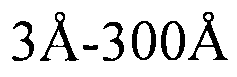
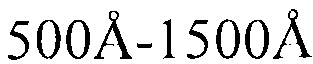

如果金属氧化物层70使用溅射方法形成,则预定或期望的量的溅射气体和氧可以提供至反应室。溅射气体可以是氩(Ar)气。如果金属氧化物层70是氧化钛(TiO2)层,则金属氧化物层70可以这样来形成:提供Ar气体和氧至反应室使得Ar气体的含量是35%且氧含量约为15%,并施加1kW的功率至溅射靶。反应室的压力可以保持恒定为约3mtorr。If the
在可堆叠在沟道层48和栅极绝缘层46的暴露区域上的金属氧化物层70中,于栅极44左边的层可以对应于图2中的第一金属氧化物层54,而于栅极44的右边的层可以对应于图2中的第二金属氧化物层56。且在可以形成在金属氧化物层70上的金属层72中,于栅极44的左边的层可以对应于图2中的源极50而于栅极44的右边的层可以对应于图2中的漏极52。In the
此外,感光图案P1可与堆叠在感光图案P1上的金属氧化物层70和金属层72一起从图15所示的所得结构剥离。在感光图案P1被剥离之后,可以形成如图2所示的TFT。In addition, the photosensitive pattern P1 may be peeled from the resulting structure shown in FIG. 15 together with the
然而,金属氧化物层70对应于图2的第一和第二金属氧化物层54和56的部分(在下文称“第一部分”)和金属层72对应于源极50和漏极52的部分(在下文称“第二部分”)优选可以使用剥离方法来形成,其中第一部分和第二部分可以通过形成感光图案P1来限定。然而,第一和第二部分也可以使用常规光刻蚀刻工艺(photographic etching process)来形成。例如,第一和第二部分可以这样来形成:依次堆叠金属氧化物层70和金属层72;在金属层72上形成覆盖要形成为第一和第二部分的区域的掩模;然后依次蚀刻金属层72和金属氧化物层70。However, the
形成TFT之后,TFT可以在炉管内以氮气气氛在200℃~450℃之间退火约1小时。然而,退火时间可以短于或长于1小时。另外,退火可以使用快速热退火(RTA)方法或使用激光方法进行。After the TFT is formed, the TFT may be annealed in a furnace tube at a temperature of 200° C. to 450° C. for about 1 hour in a nitrogen atmosphere. However, the annealing time may be shorter or longer than 1 hour. In addition, annealing may be performed using a rapid thermal annealing (RTA) method or using a laser method.
图16是展示根据至少一个示例实施例的TFT中基于金属氧化层70的厚度的源极-漏极电流(Ids)的曲线图。用在图16中的TFT包括由铂层或钛层形成的金属层72,以及由氧化钛(TiO2)层形成的金属氧化物层70。施加到TFT的漏极52的电压Vd保持恒定于10V。FIG. 16 is a graph showing source-drain current (I ds ) based on the thickness of the
在图16中,第一点A1是TFT的结果,该TFT包括金属层72和金属氧化物层70,该金属层72对应于源极50和漏极52并由铂层形成,该金属层70由厚度为
参照第一点A1,当金属层72是铂层且由钛氧化物层形成的金属氧化物层70的厚度是
图17至19是根据至少一个示例实施例的制造TFT的方法的截面图。17 to 19 are cross-sectional views of a method of manufacturing a TFT according to at least one example embodiment.
在根据至少一个示例实施例的制造TFT的方法中,在形成沟道层48之后,金属层72可以形成为与沟道层48接触,金属氧化物层70可以通过将所得的结构退火而形成在沟道层48和金属层之间。与前面的实施例一样的附图标记可以指示参照前面的实施例描述的相同的元件。In the method of manufacturing a TFT according to at least one example embodiment, after forming the
详细地,形成沟道层48和用于剥离工艺的感光图案P1(见图14)之前的工艺可以与参照前面的实施例描述的方法中相同。In detail, the process before forming the
在形成感光图案P1之后,可以在图17所示的沟道层48和栅极绝缘层46的暴露区域上形成可具有预定或期望的厚度的金属层72。金属层也可以形成在感光图案P1上。然后,感光图案P1可以被剥离,因此,形成在感光图案P1上的金属层72也可以被剥离。在剥离感光图案P1后,如图18所示,对应于图2的源极50和漏极52的位置可以是金属层72保留的唯一位置。After the photosensitive pattern P1 is formed, a
然后,图18所示的TFT的所得结构可以根据预定或期望的条件退火。这样,如图19所示,金属氧化物层80可以形成在金属层72和沟道层48之间,且金属氧化物层80可以对应于图2的第一和第二金属氧化物层54和56。包括在金属氧化物层80中的金属可以源于金属层72中的金属。在退火期间,包括在金属氧化物层80中的氧可以源于沟道层48和包含在气氛气体中的氧至少之一。如果沟道层48包含足够的氧以形成金属氧化物层80,例如,如果沟道层48是富氧GIZO层,则退火气氛气体可以不包含氧。退火可以在200℃到450℃进行。另外,退火可以不仅使用炉管进行,也可以使用RTA或激光。退火可以进行预定或期望的时间,例如,1小时。退火的气氛气体根据退火方法可以包含氮(N2)或氧(O2),或仅包含氧。通过控制退火条件,金属氧化物层80可以形成为具有与前面的实施例的金属氧化物层70相同的性质。Then, the resulting structure of the TFT shown in FIG. 18 can be annealed according to predetermined or desired conditions. Thus, as shown in FIG. 19, a
当完成退火时,也可以完成根据至少一个示例实施例的TFT的制造工艺。When the annealing is completed, the manufacturing process of the TFT according to at least one example embodiment may also be completed.
图20和21是展示根据至少一个示例实施例的已退火TFT的电学特性的曲线图。20 and 21 are graphs showing electrical characteristics of annealed TFTs according to at least one example embodiment.
其电学特性示于图20和21中的TFT可以由通过依次堆叠钛层和铂层形成的金属层72形成。金属层72可以形成为满足图2的源极50和漏极52的几何条件,且退火可以在包含氮和氧的气氛中使用炉管进行。在图20和21中,第一至第三曲线G1至G3展示当施加到漏极52的电压为0.1V、5V和10V时,栅极电压Vg和源极-漏极电流Ids之间的特性。A TFT whose electrical characteristics are shown in FIGS. 20 and 21 can be formed of a
图20是展示没有退火的结果的曲线图,而图21是展示当退火在350℃进行时的结果的曲线图。FIG. 20 is a graph showing the results without annealing, and FIG. 21 is a graph showing the results when annealing was performed at 350°C.
参照图20,当栅极电压Vg增加到大于10V,可以测量到源极-漏极电流,然而,源极-漏极电流Ids的量可以明显地低,并可以视为没有测量到源极-漏极电流Ids。Referring to Fig. 20, when the gate voltage Vg is increased to more than 10V, the source-drain current can be measured, however, the magnitude of the source-drain current Ids can be significantly lower, and can be regarded as no source-drain measurement. The electrode-drain current I ds .
另一方面,参照图21,当栅极电压增加到大于0V时,可以测量到大量的源极-漏极电流Ids。On the other hand, referring to FIG. 21 , when the gate voltage is increased above 0V, a large source-drain current I ds can be measured.
如从图20和21的结果所见,根据上述示例实施例在制造TFT的方法中没有进行退火时,如图19所示的金属氧化物层80可能不形成在金属层72和沟道层48之间。然而,当退火在上述温度进行时,金属氧化物层80可以形成在金属层72和沟道层48之间。As can be seen from the results of FIGS. 20 and 21, when annealing is not performed in the method of manufacturing a TFT according to the above-described exemplary embodiments, the
图22是展示其中氧化硅层90、沟道层94和金属层96依次堆叠且没有对其进行退火的所得结构的图像,而图23是展示当在350℃进行退火的图22的结构的图像。氧化硅层90是SiO2层,其可以对应于根据至少一个示例实施例的TFT的栅极绝缘层46;沟道层94是G-I-Z-O层,其可以对应于沟道层48;而金属层96是Ti/Pt层,其可以对应于金属层72。附图标记99稍后描述。FIG. 22 is an image showing the resulting structure in which a
图24和25展示沿图22和23的线1-1’的材料成分分布。Figures 24 and 25 show the material composition distribution along line 1-1' of Figures 22 and 23.
参照图24,在依次堆叠氧化硅层90、沟道层94和金属层96后且所得的结构没有退火,在对应于沟道层94和金属层96之间的界面的位置中,测量到约100计数(counts)的钛(▲)和60计数的氧(□)。Referring to FIG. 24, after sequentially stacking the
参照图25,在依次堆叠氧化硅层90、沟道层94和金属层96且所得的结构在350℃进行退火后,在对应于沟道层94和金属层96之间的界面的位置中,测量到约150计数或更多的钛和100计数或更多的氧。Referring to FIG. 25, after the
如从图24和25的结果可见,在参照图17至19描述的TFT的制造方法中,当图18的所得的结构在200~450℃退火时,对应于金属氧化物层80的新的层99可以在金属层72和沟道层48之间形成。As can be seen from the results of FIGS. 24 and 25, in the TFT manufacturing method described with reference to FIGS. 17 to 19, when the resulting structure of FIG. 99 may be formed between
上述TFT是底部栅极型TFT,然而,如图26所示,示例实施例也可以应用于顶部栅极型TFT,其中栅极44可以设置在沟道层48之上。另外,栅极可以掩埋在沟道层中。The TFT described above is a bottom gate type TFT, however, as shown in FIG. 26 , the exemplary embodiment may also be applied to a top gate type TFT in which a
尽管示例实施例已被具体展示和说明,但示例实施例应该仅视为描述性的意义而不为限定的目的。例如,应该被本领域的技术人员理解的是,退火可以在剥离感光图案P1之前进行。另外,可以进行对TFT的每个元件的形式和细节上的各种改变或仅仅一个新的元件插入元件之间。因此,示例实施例的范围不被示例实施例的详细描述限定,而是被所附的权利要求限定。While example embodiments have been shown and described in detail, example embodiments should be considered in a descriptive sense only and not for purposes of limitation. For example, it should be understood by those skilled in the art that annealing may be performed before stripping the photosensitive pattern P1. In addition, various changes in the form and details of each element of the TFT or just a new element inserted between elements may be made. Therefore, the scope of example embodiments is not defined by the detailed description of example embodiments but by the appended claims.
如上所述,根据示例实施例的TFT可以包括可以由金属形成的源极和漏极之间的金属氧化物层,以及可以由氧化物半导体形成的沟道层。因此,TFT可以以增强模式工作,并因此,可以减少其泄漏电流并增加其载流子迁移率。由于TFT的源极和漏极可以由普通的金属形成,所以与使用铟来形成源极和漏极的常规TFT相比,可以降低制造成本。另外,在根据至少一个示例实施例的TFT中,到TFT的接触或连接到TFT的布线可以由与源极和漏极相同的材料形成,因此,可以降低由异质结引起的电阻。另外,根据栅极电压Vg的阈值电压和源极-漏极电流Ids可以通过控制金属氧化物层的形成条件来控制,例如通过控制金属氧化物层的厚度。As described above, a TFT according to example embodiments may include a metal oxide layer between a source and a drain, which may be formed of a metal, and a channel layer, which may be formed of an oxide semiconductor. Therefore, the TFT can operate in an enhancement mode, and thus, its leakage current can be reduced and its carrier mobility can be increased. Since the source and the drain of the TFT can be formed of common metal, the manufacturing cost can be reduced compared to a conventional TFT using indium to form the source and the drain. In addition, in the TFT according to at least one example embodiment, a contact to the TFT or a wire connected to the TFT may be formed of the same material as a source and a drain, and thus, resistance caused by a heterojunction may be reduced. In addition, the threshold voltage according to the gate voltage Vg and the source-drain current Ids can be controlled by controlling the formation conditions of the metal oxide layer, for example, by controlling the thickness of the metal oxide layer.
如此已经描述了示例实施例,很明显其可以以各种方式变化。这些变化不视为偏离示例实施例意欲的精神和范围,且对于本领域的技术人员是显而易见的所有这些修改意在包括在权利要求的范围内。Having thus described example embodiments, it will be obvious that this may be varied in various ways. Such changes are not to be regarded as a departure from the intended spirit and scope of example embodiments, and all such modifications apparent to those skilled in the art are intended to be included within the scope of the claims.
Claims (38)
Applications Claiming Priority (2)
| Application Number | Priority Date | Filing Date | Title |
|---|---|---|---|
| KR20528/07 | 2007-02-28 | ||
| KR1020070020528A KR100858088B1 (en) | 2007-02-28 | 2007-02-28 | Thin film transistor and method of manufacturing the same |
Publications (2)
| Publication Number | Publication Date |
|---|---|
| CN101257048A true CN101257048A (en) | 2008-09-03 |
| CN101257048B CN101257048B (en) | 2012-11-14 |
Family
ID=39714857
Family Applications (1)
| Application Number | Title | Priority Date | Filing Date |
|---|---|---|---|
| CN2008100806597A Active CN101257048B (en) | 2007-02-28 | 2008-02-28 | Thin film transistor and method of manufacturing the same |
Country Status (4)
| Country | Link |
|---|---|
| US (1) | US8063421B2 (en) |
| JP (1) | JP5698431B2 (en) |
| KR (1) | KR100858088B1 (en) |
| CN (1) | CN101257048B (en) |
Cited By (15)
| Publication number | Priority date | Publication date | Assignee | Title |
|---|---|---|---|---|
| CN101826558A (en) * | 2009-03-06 | 2010-09-08 | 株式会社半导体能源研究所 | Semiconductor device and method for manufacturing semiconductor device |
| CN102157386A (en) * | 2011-03-19 | 2011-08-17 | 福州华映视讯有限公司 | Manufacturing method of TFT (Thin Film Transistor) |
| CN102484137A (en) * | 2009-08-26 | 2012-05-30 | 株式会社爱发科 | Semiconductor device, liquid crystal display device equipped with semiconductor device, and process for production of semiconductor device |
| CN101794821B (en) * | 2009-02-04 | 2012-10-03 | 索尼公司 | Thin-film transistor and display device |
| CN103035734A (en) * | 2011-10-07 | 2013-04-10 | 元太科技工业股份有限公司 | Metal oxide thin film transistor |
| CN103400857A (en) * | 2009-11-27 | 2013-11-20 | 株式会社半导体能源研究所 | Semiconductor device and method for manufacturing same |
| CN103531638A (en) * | 2012-06-29 | 2014-01-22 | 三星康宁精密素材株式会社 | Thin-film transistor and zinc oxide-based sputtering target for the same |
| CN104779299A (en) * | 2015-04-16 | 2015-07-15 | 京东方科技集团股份有限公司 | Metal oxide thin film transistor, preparation method of transistor, display substrate and display device |
| CN106374044A (en) * | 2016-11-02 | 2017-02-01 | 杭州潮盛科技有限公司 | Semiconductor structure and its preparation method |
| CN107577097A (en) * | 2016-07-05 | 2018-01-12 | 三星显示有限公司 | Liquid crystal display |
| CN108447775A (en) * | 2009-02-20 | 2018-08-24 | 株式会社半导体能源研究所 | Thin film transistor (TFT) and its manufacturing method and semiconductor device |
| CN110310991A (en) * | 2018-03-27 | 2019-10-08 | 华为技术有限公司 | A kind of field effect transistor and preparation method thereof and transistor array devices |
| CN112259611A (en) * | 2020-10-12 | 2021-01-22 | 昆山龙腾光电股份有限公司 | Oxide semiconductor thin film transistor and manufacturing method thereof |
| CN114284363A (en) * | 2021-12-28 | 2022-04-05 | 广州华星光电半导体显示技术有限公司 | Thin film transistor and display panel |
| WO2023168768A1 (en) * | 2022-03-10 | 2023-09-14 | 广州华星光电半导体显示技术有限公司 | Array substrate, manufacturing method for array substrate, and display device |
Families Citing this family (163)
| Publication number | Priority date | Publication date | Assignee | Title |
|---|---|---|---|---|
| JP5213458B2 (en) | 2008-01-08 | 2013-06-19 | キヤノン株式会社 | Amorphous oxide and field effect transistor |
| JP5343853B2 (en) * | 2008-03-13 | 2013-11-13 | 株式会社村田製作所 | Glass ceramic composition, glass ceramic sintered body and multilayer ceramic electronic component |
| JP5345349B2 (en) * | 2008-07-24 | 2013-11-20 | 富士フイルム株式会社 | Thin film field effect transistor |
| US8945981B2 (en) * | 2008-07-31 | 2015-02-03 | Semiconductor Energy Laboratory Co., Ltd. | Semiconductor device and manufacturing method thereof |
| TWI413260B (en) * | 2008-07-31 | 2013-10-21 | 半導體能源研究所股份有限公司 | Semiconductor device and method of manufacturing same |
| US9666719B2 (en) | 2008-07-31 | 2017-05-30 | Semiconductor Energy Laboratory Co., Ltd. | Semiconductor device and manufacturing method thereof |
| TWI500159B (en) | 2008-07-31 | 2015-09-11 | Semiconductor Energy Lab | Semiconductor device and method of manufacturing same |
| TWI495108B (en) | 2008-07-31 | 2015-08-01 | 半導體能源研究所股份有限公司 | Semiconductor device manufacturing method |
| JP5480554B2 (en) | 2008-08-08 | 2014-04-23 | 株式会社半導体エネルギー研究所 | Semiconductor device |
| JP5525778B2 (en) | 2008-08-08 | 2014-06-18 | 株式会社半導体エネルギー研究所 | Semiconductor device |
| TWI637444B (en) * | 2008-08-08 | 2018-10-01 | 半導體能源研究所股份有限公司 | Method for manufacturing semiconductor device |
| TWI500160B (en) * | 2008-08-08 | 2015-09-11 | Semiconductor Energy Lab | Semiconductor device and method of manufacturing same |
| JP5627071B2 (en) | 2008-09-01 | 2014-11-19 | 株式会社半導体エネルギー研究所 | Method for manufacturing semiconductor device |
| US9082857B2 (en) | 2008-09-01 | 2015-07-14 | Semiconductor Energy Laboratory Co., Ltd. | Semiconductor device comprising an oxide semiconductor layer |
| TWI606592B (en) * | 2008-09-01 | 2017-11-21 | 半導體能源研究所股份有限公司 | Semiconductor device manufacturing method |
| WO2010029866A1 (en) | 2008-09-12 | 2010-03-18 | Semiconductor Energy Laboratory Co., Ltd. | Display device |
| KR101767864B1 (en) * | 2008-09-12 | 2017-08-11 | 가부시키가이샤 한도오따이 에네루기 켄큐쇼 | Semiconductor device and manufacturing method thereof |
| KR101772377B1 (en) | 2008-09-12 | 2017-08-29 | 가부시키가이샤 한도오따이 에네루기 켄큐쇼 | Display device |
| KR101911386B1 (en) * | 2008-09-19 | 2018-12-19 | 가부시키가이샤 한도오따이 에네루기 켄큐쇼 | Display device |
| KR102246123B1 (en) * | 2008-09-19 | 2021-04-30 | 가부시키가이샤 한도오따이 에네루기 켄큐쇼 | Display device |
| WO2010032619A1 (en) | 2008-09-19 | 2010-03-25 | Semiconductor Energy Laboratory Co., Ltd. | Display device |
| WO2010032629A1 (en) | 2008-09-19 | 2010-03-25 | Semiconductor Energy Laboratory Co., Ltd. | Semiconductor device |
| WO2010032638A1 (en) | 2008-09-19 | 2010-03-25 | Semiconductor Energy Laboratory Co., Ltd. | Display device |
| CN101714546B (en) | 2008-10-03 | 2014-05-14 | 株式会社半导体能源研究所 | Display device and manufacturing method thereof |
| EP2172977A1 (en) * | 2008-10-03 | 2010-04-07 | Semiconductor Energy Laboratory Co., Ltd. | Display device |
| EP2172804B1 (en) | 2008-10-03 | 2016-05-11 | Semiconductor Energy Laboratory Co, Ltd. | Display device |
| KR102133478B1 (en) | 2008-10-03 | 2020-07-13 | 가부시키가이샤 한도오따이 에네루기 켄큐쇼 | Display device |
| KR101803720B1 (en) | 2008-10-03 | 2017-12-01 | 가부시키가이샤 한도오따이 에네루기 켄큐쇼 | Display device |
| CN101719493B (en) | 2008-10-08 | 2014-05-14 | 株式会社半导体能源研究所 | Display device |
| JP5484853B2 (en) | 2008-10-10 | 2014-05-07 | 株式会社半導体エネルギー研究所 | Method for manufacturing semiconductor device |
| WO2010044478A1 (en) * | 2008-10-16 | 2010-04-22 | Semiconductor Energy Laboratory Co., Ltd. | Light-emitting display device |
| JP5361651B2 (en) * | 2008-10-22 | 2013-12-04 | 株式会社半導体エネルギー研究所 | Method for manufacturing semiconductor device |
| JP5442234B2 (en) | 2008-10-24 | 2014-03-12 | 株式会社半導体エネルギー研究所 | Semiconductor device and display device |
| US8106400B2 (en) | 2008-10-24 | 2012-01-31 | Semiconductor Energy Laboratory Co., Ltd. | Semiconductor device and method for manufacturing the same |
| WO2010047288A1 (en) | 2008-10-24 | 2010-04-29 | Semiconductor Energy Laboratory Co., Ltd. | Method for manufacturing semiconductordevice |
| US8741702B2 (en) * | 2008-10-24 | 2014-06-03 | Semiconductor Energy Laboratory Co., Ltd. | Method for manufacturing semiconductor device |
| JP5616012B2 (en) * | 2008-10-24 | 2014-10-29 | 株式会社半導体エネルギー研究所 | Method for manufacturing semiconductor device |
| KR20180137606A (en) | 2008-10-24 | 2018-12-27 | 가부시키가이샤 한도오따이 에네루기 켄큐쇼 | Semiconductor device and method for manufacturing the same |
| EP2180518B1 (en) | 2008-10-24 | 2018-04-25 | Semiconductor Energy Laboratory Co, Ltd. | Method for manufacturing semiconductor device |
| KR101667909B1 (en) | 2008-10-24 | 2016-10-28 | 가부시키가이샤 한도오따이 에네루기 켄큐쇼 | Method for manufacturing semiconductor device |
| KR101631454B1 (en) | 2008-10-31 | 2016-06-17 | 가부시키가이샤 한도오따이 에네루기 켄큐쇼 | Logic circuit |
| KR101634411B1 (en) * | 2008-10-31 | 2016-06-28 | 가부시키가이샤 한도오따이 에네루기 켄큐쇼 | Driver circuit, display device and electronic device |
| TWI501401B (en) * | 2008-10-31 | 2015-09-21 | Semiconductor Energy Lab | Semiconductor device and method of manufacturing same |
| JP2010135771A (en) * | 2008-11-07 | 2010-06-17 | Semiconductor Energy Lab Co Ltd | Semiconductor device and method for manufacturing the same |
| TW202404099A (en) | 2008-11-07 | 2024-01-16 | 日商半導體能源研究所股份有限公司 | Semiconductor device and manufacturing method thereof |
| CN101740631B (en) * | 2008-11-07 | 2014-07-16 | 株式会社半导体能源研究所 | Semiconductor device and method for manufacturing the semiconductor device |
| EP2184783B1 (en) | 2008-11-07 | 2012-10-03 | Semiconductor Energy Laboratory Co, Ltd. | Semiconductor device and method for manufacturing the same |
| TWI487104B (en) | 2008-11-07 | 2015-06-01 | 半導體能源研究所股份有限公司 | Semiconductor device and method of manufacturing same |
| TWI502739B (en) | 2008-11-13 | 2015-10-01 | Semiconductor Energy Lab | Semiconductor device and method of manufacturing same |
| KR101432764B1 (en) | 2008-11-13 | 2014-08-21 | 가부시키가이샤 한도오따이 에네루기 켄큐쇼 | Method for manufacturing semiconductor device |
| JP2010153802A (en) | 2008-11-20 | 2010-07-08 | Semiconductor Energy Lab Co Ltd | Semiconductor device and method of manufacturing the same |
| KR102025505B1 (en) | 2008-11-21 | 2019-09-25 | 가부시키가이샤 한도오따이 에네루기 켄큐쇼 | Semiconductor device |
| JP2012033516A (en) * | 2008-11-26 | 2012-02-16 | Ulvac Japan Ltd | Transistor and method of manufacturing the same |
| TWI585955B (en) * | 2008-11-28 | 2017-06-01 | 半導體能源研究所股份有限公司 | Light sensor and display device |
| TWI508304B (en) | 2008-11-28 | 2015-11-11 | 半導體能源研究所股份有限公司 | Semiconductor device and method of manufacturing same |
| KR101472771B1 (en) * | 2008-12-01 | 2014-12-15 | 가부시키가이샤 한도오따이 에네루기 켄큐쇼 | Semiconductor device and manufacturing method thereof |
| TWI633371B (en) * | 2008-12-03 | 2018-08-21 | 半導體能源研究所股份有限公司 | Liquid crystal display device |
| CN103456794B (en) * | 2008-12-19 | 2016-08-10 | 株式会社半导体能源研究所 | The manufacture method of transistor |
| WO2010071183A1 (en) * | 2008-12-19 | 2010-06-24 | Semiconductor Energy Laboratory Co., Ltd. | Method for manufacturing semiconductor device |
| EP2515337B1 (en) | 2008-12-24 | 2016-02-24 | Semiconductor Energy Laboratory Co., Ltd. | Driver circuit and semiconductor device |
| US8114720B2 (en) | 2008-12-25 | 2012-02-14 | Semiconductor Energy Laboratory Co., Ltd. | Semiconductor device and manufacturing method thereof |
| TWI476915B (en) | 2008-12-25 | 2015-03-11 | 半導體能源研究所股份有限公司 | Semiconductor device and method of manufacturing same |
| US8441007B2 (en) | 2008-12-25 | 2013-05-14 | Semiconductor Energy Laboratory Co., Ltd. | Display device and manufacturing method thereof |
| TWI549198B (en) | 2008-12-26 | 2016-09-11 | 半導體能源研究所股份有限公司 | Semiconductor device and method of manufacturing same |
| KR101552975B1 (en) | 2009-01-09 | 2015-09-15 | 삼성전자주식회사 | Oxide semiconductor and thin film transistor including the same |
| KR101048996B1 (en) * | 2009-01-12 | 2011-07-12 | 삼성모바일디스플레이주식회사 | Thin film transistor and flat panel display having same |
| KR101648927B1 (en) | 2009-01-16 | 2016-08-17 | 가부시키가이샤 한도오따이 에네루기 켄큐쇼 | Semiconductor device and manufacturing method thereof |
| US9741309B2 (en) | 2009-01-22 | 2017-08-22 | Semiconductor Energy Laboratory Co., Ltd. | Method for driving display device including first to fourth switches |
| US8492756B2 (en) | 2009-01-23 | 2013-07-23 | Semiconductor Energy Laboratory Co., Ltd. | Semiconductor device and method for manufacturing the same |
| US8367486B2 (en) * | 2009-02-05 | 2013-02-05 | Semiconductor Energy Laboratory Co., Ltd. | Transistor and method for manufacturing the transistor |
| US8247812B2 (en) | 2009-02-13 | 2012-08-21 | Semiconductor Energy Laboratory Co., Ltd. | Transistor, semiconductor device including the transistor, and manufacturing method of the transistor and the semiconductor device |
| CN101840936B (en) * | 2009-02-13 | 2014-10-08 | 株式会社半导体能源研究所 | Semiconductor device including a transistor, and manufacturing method of the semiconductor device |
| US8278657B2 (en) | 2009-02-13 | 2012-10-02 | Semiconductor Energy Laboratory Co., Ltd. | Transistor, semiconductor device including the transistor, and manufacturing method of the transistor and the semiconductor device |
| US8841661B2 (en) * | 2009-02-25 | 2014-09-23 | Semiconductor Energy Laboratory Co., Ltd. | Staggered oxide semiconductor TFT semiconductor device and manufacturing method thereof |
| US8461582B2 (en) | 2009-03-05 | 2013-06-11 | Semiconductor Energy Laboratory Co., Ltd. | Semiconductor device and method for manufacturing the same |
| US20100224878A1 (en) | 2009-03-05 | 2010-09-09 | Semiconductor Energy Laboratory Co., Ltd. | Semiconductor device |
| US20100224880A1 (en) * | 2009-03-05 | 2010-09-09 | Semiconductor Energy Laboratory Co., Ltd. | Semiconductor device |
| KR101906751B1 (en) | 2009-03-12 | 2018-10-10 | 가부시키가이샤 한도오따이 에네루기 켄큐쇼 | Method for manufacturing semiconductor device |
| TWI556323B (en) | 2009-03-13 | 2016-11-01 | 半導體能源研究所股份有限公司 | Semiconductor device and method of manufacturing the same |
| US8450144B2 (en) * | 2009-03-26 | 2013-05-28 | Semiconductor Energy Laboratory Co., Ltd. | Semiconductor device and method for manufacturing the same |
| KR101681884B1 (en) | 2009-03-27 | 2016-12-05 | 가부시키가이샤 한도오따이 에네루기 켄큐쇼 | Semiconductor device, display device, and electronic appliance |
| US8927981B2 (en) * | 2009-03-30 | 2015-01-06 | Semiconductor Energy Laboratory Co., Ltd. | Semiconductor device and method for manufacturing the same |
| TWI489628B (en) * | 2009-04-02 | 2015-06-21 | 半導體能源研究所股份有限公司 | Semiconductor device and method of manufacturing same |
| US8338226B2 (en) * | 2009-04-02 | 2012-12-25 | Semiconductor Energy Laboratory Co., Ltd. | Method for manufacturing semiconductor device |
| KR101579453B1 (en) | 2009-04-29 | 2015-12-24 | 삼성디스플레이 주식회사 | Thin film transistor substrate and method of fabricating thereof |
| EP2256795B1 (en) * | 2009-05-29 | 2014-11-19 | Semiconductor Energy Laboratory Co., Ltd. | Manufacturing method for oxide semiconductor device |
| JP5564331B2 (en) | 2009-05-29 | 2014-07-30 | 株式会社半導体エネルギー研究所 | Method for manufacturing semiconductor device |
| EP2256814B1 (en) | 2009-05-29 | 2019-01-16 | Semiconductor Energy Laboratory Co, Ltd. | Oxide semiconductor device and method for manufacturing the same |
| WO2011002046A1 (en) * | 2009-06-30 | 2011-01-06 | Semiconductor Energy Laboratory Co., Ltd. | Method for manufacturing semiconductor device |
| KR101476817B1 (en) | 2009-07-03 | 2014-12-26 | 가부시키가이샤 한도오따이 에네루기 켄큐쇼 | Display device including transistor and manufacturing method thereof |
| JP5478963B2 (en) * | 2009-07-09 | 2014-04-23 | 富士フイルム株式会社 | Electronic device and method for manufacturing electronic device |
| WO2011007682A1 (en) * | 2009-07-17 | 2011-01-20 | Semiconductor Energy Laboratory Co., Ltd. | Method of manufacturing semiconductor device |
| WO2011010544A1 (en) | 2009-07-18 | 2011-01-27 | Semiconductor Energy Laboratory Co., Ltd. | Semiconductor device and method for manufacturing semiconductor device |
| KR101782176B1 (en) | 2009-07-18 | 2017-09-26 | 가부시키가이샤 한도오따이 에네루기 켄큐쇼 | Semiconductor device and method for manufacturing the same |
| KR101139134B1 (en) * | 2009-08-06 | 2012-04-30 | 순천향대학교 산학협력단 | Forming method of oxide semiconductor thin film, oxide semiconductor transister, and forming method of the same |
| KR101139185B1 (en) * | 2009-08-06 | 2012-04-26 | 순천향대학교 산학협력단 | Forming method of oxide semiconductor thin film, oxide semiconductor transister, and forming method of the same |
| US8115883B2 (en) * | 2009-08-27 | 2012-02-14 | Semiconductor Energy Laboratory Co., Ltd. | Display device and method for manufacturing the same |
| WO2011027649A1 (en) | 2009-09-02 | 2011-03-10 | Semiconductor Energy Laboratory Co., Ltd. | Semiconductor device including a transistor, and manufacturing method of semiconductor device |
| CN105449119B (en) | 2009-09-04 | 2018-03-23 | 株式会社半导体能源研究所 | Light-emitting device and its manufacture method |
| WO2011034012A1 (en) * | 2009-09-16 | 2011-03-24 | Semiconductor Energy Laboratory Co., Ltd. | Logic circuit, light emitting device, semiconductor device, and electronic device |
| KR101730347B1 (en) * | 2009-09-16 | 2017-04-27 | 가부시키가이샤 한도오따이 에네루기 켄큐쇼 | Semiconductor device and manufacturing method thereof |
| CN105609565B (en) * | 2009-09-16 | 2019-02-22 | 株式会社半导体能源研究所 | Semiconductor device and method of manufacturing the same |
| KR101713356B1 (en) | 2009-09-24 | 2017-03-07 | 가부시키가이샤 한도오따이 에네루기 켄큐쇼 | Driver circuit, display device including the driver circuit, and electronic appliance including the display device |
| KR101877149B1 (en) * | 2009-10-08 | 2018-07-10 | 가부시키가이샤 한도오따이 에네루기 켄큐쇼 | Oxide semiconductor layer, semiconductor device and manufacturing method thereof |
| WO2011043194A1 (en) | 2009-10-09 | 2011-04-14 | Semiconductor Energy Laboratory Co., Ltd. | Semiconductor device and method for manufacturing the same |
| KR102295450B1 (en) | 2009-10-09 | 2021-08-27 | 가부시키가이샤 한도오따이 에네루기 켄큐쇼 | Display device |
| WO2011043218A1 (en) * | 2009-10-09 | 2011-04-14 | Semiconductor Energy Laboratory Co., Ltd. | Semiconductor device and method for manufacturing the same |
| WO2011043206A1 (en) | 2009-10-09 | 2011-04-14 | Semiconductor Energy Laboratory Co., Ltd. | Semiconductor device |
| EP2489075A4 (en) | 2009-10-16 | 2014-06-11 | Semiconductor Energy Lab | LOGIC CIRCUIT AND SEMICONDUCTOR DEVICE |
| WO2011048925A1 (en) | 2009-10-21 | 2011-04-28 | Semiconductor Energy Laboratory Co., Ltd. | Method for manufacturing semiconductor device |
| EP2494601A4 (en) | 2009-10-30 | 2016-09-07 | Semiconductor Energy Lab | SEMICONDUCTOR DEVICE AND METHOD FOR MANUFACTURING THE SAME |
| WO2011055668A1 (en) * | 2009-11-06 | 2011-05-12 | Semiconductor Energy Laboratory Co., Ltd. | Semiconductor device |
| KR102066532B1 (en) * | 2009-11-06 | 2020-01-15 | 가부시키가이샤 한도오따이 에네루기 켄큐쇼 | Semiconductor device |
| KR102286284B1 (en) * | 2009-11-06 | 2021-08-06 | 가부시키가이샤 한도오따이 에네루기 켄큐쇼 | Semiconductor device and manufacturing method thereof |
| KR101931206B1 (en) | 2009-11-13 | 2018-12-21 | 가부시키가이샤 한도오따이 에네루기 켄큐쇼 | Semiconductor device and manufacturing method thereof |
| JP5612299B2 (en) * | 2009-11-20 | 2014-10-22 | 株式会社半導体エネルギー研究所 | Method for manufacturing transistor |
| KR101945660B1 (en) * | 2009-11-20 | 2019-02-07 | 가부시키가이샤 한도오따이 에네루기 켄큐쇼 | Transistor |
| WO2011074407A1 (en) | 2009-12-18 | 2011-06-23 | Semiconductor Energy Laboratory Co., Ltd. | Semiconductor device and method for manufacturing the same |
| KR102111309B1 (en) * | 2009-12-25 | 2020-05-15 | 가부시키가이샤 한도오따이 에네루기 켄큐쇼 | Method for manufacturing semiconductor device |
| KR101993584B1 (en) * | 2010-01-22 | 2019-06-26 | 가부시키가이샤 한도오따이 에네루기 켄큐쇼 | Semiconductor device |
| WO2011111522A1 (en) * | 2010-03-08 | 2011-09-15 | Semiconductor Energy Laboratory Co., Ltd. | Semiconductor device |
| WO2011118510A1 (en) | 2010-03-26 | 2011-09-29 | Semiconductor Energy Laboratory Co., Ltd. | Method for manufacturing semiconductor device |
| JP5579848B2 (en) * | 2010-06-21 | 2014-08-27 | 株式会社アルバック | Semiconductor device, liquid crystal display device having semiconductor device, and method of manufacturing semiconductor device |
| WO2012002471A1 (en) * | 2010-07-02 | 2012-01-05 | Semiconductor Energy Laboratory Co., Ltd. | Semiconductor device and manufacturing method thereof |
| EP2426720A1 (en) * | 2010-09-03 | 2012-03-07 | Applied Materials, Inc. | Staggered thin film transistor and method of forming the same |
| JP2012094853A (en) * | 2010-09-30 | 2012-05-17 | Kobe Steel Ltd | Wiring structure |
| WO2012090794A1 (en) | 2010-12-27 | 2012-07-05 | シャープ株式会社 | Semiconductor device and method for manufacturing same |
| JP5429718B2 (en) | 2011-03-08 | 2014-02-26 | 合同会社先端配線材料研究所 | Oxide semiconductor electrode and method for forming the same |
| US8797303B2 (en) | 2011-03-21 | 2014-08-05 | Qualcomm Mems Technologies, Inc. | Amorphous oxide semiconductor thin film transistor fabrication method |
| JP2012222171A (en) * | 2011-04-11 | 2012-11-12 | Hitachi Ltd | Display device and method for manufacturing the same |
| KR101597886B1 (en) | 2011-04-18 | 2016-02-26 | 샤프 가부시키가이샤 | Thin-film transistor, display panel, and method for producing thin-film transistor |
| JP6005401B2 (en) * | 2011-06-10 | 2016-10-12 | 株式会社半導体エネルギー研究所 | Method for manufacturing semiconductor device |
| US8952377B2 (en) | 2011-07-08 | 2015-02-10 | Semiconductor Energy Laboratory Co., Ltd. | Semiconductor device and manufacturing method thereof |
| US8716073B2 (en) * | 2011-07-22 | 2014-05-06 | Semiconductor Energy Laboratory Co., Ltd. | Method for processing oxide semiconductor film and method for manufacturing semiconductor device |
| JP6004308B2 (en) * | 2011-08-12 | 2016-10-05 | Nltテクノロジー株式会社 | Thin film device |
| US9660092B2 (en) | 2011-08-31 | 2017-05-23 | Semiconductor Energy Laboratory Co., Ltd. | Oxide semiconductor thin film transistor including oxygen release layer |
| JP2013084333A (en) | 2011-09-28 | 2013-05-09 | Semiconductor Energy Lab Co Ltd | Shift register circuit |
| US9379254B2 (en) | 2011-11-18 | 2016-06-28 | Qualcomm Mems Technologies, Inc. | Amorphous oxide semiconductor thin film transistor fabrication method |
| US9653614B2 (en) * | 2012-01-23 | 2017-05-16 | Semiconductor Energy Laboratory Co., Ltd. | Semiconductor device and method for manufacturing the same |
| KR101980195B1 (en) * | 2012-05-16 | 2019-05-21 | 삼성전자주식회사 | Transistor having sulfur doped zinc oxynitride and method of manufacturing the same |
| JP2014007311A (en) * | 2012-06-26 | 2014-01-16 | Mitsubishi Electric Corp | Thin film transistor and manufacturing method of the same |
| US9246011B2 (en) | 2012-11-30 | 2016-01-26 | Semiconductor Energy Laboratory Co., Ltd. | Semiconductor device |
| US8981374B2 (en) | 2013-01-30 | 2015-03-17 | Semiconductor Energy Laboratory Co., Ltd. | Semiconductor device |
| US9915848B2 (en) | 2013-04-19 | 2018-03-13 | Semiconductor Energy Laboratory Co., Ltd. | Display device and electronic device |
| JP6475424B2 (en) | 2013-06-05 | 2019-02-27 | 株式会社半導体エネルギー研究所 | Semiconductor device |
| TWI687748B (en) | 2013-06-05 | 2020-03-11 | 日商半導體能源研究所股份有限公司 | Display device and electronic device |
| DE102013111501B4 (en) | 2013-10-18 | 2024-02-08 | Universität Stuttgart | Thin film transistor and process for its production |
| JP6327548B2 (en) * | 2013-11-26 | 2018-05-23 | 国立研究開発法人物質・材料研究機構 | Thin film transistor and manufacturing method thereof |
| KR101649102B1 (en) * | 2014-08-05 | 2016-08-30 | 경희대학교 산학협력단 | Semiconductor device including transparent electrodes and method of fabricating thereof |
| JP5940124B2 (en) * | 2014-09-04 | 2016-06-29 | 株式会社半導体エネルギー研究所 | Method for manufacturing transistor |
| CN104409362A (en) * | 2014-11-13 | 2015-03-11 | 京东方科技集团股份有限公司 | Manufacturing method and device for thin film transistor and array substrate |
| JP6698549B2 (en) * | 2014-12-18 | 2020-05-27 | 株式会社半導体エネルギー研究所 | Method for manufacturing semiconductor device |
| US9761732B2 (en) | 2015-02-25 | 2017-09-12 | Snaptrack Inc. | Tunnel thin film transistor with hetero-junction structure |
| CN105261636B (en) * | 2015-11-05 | 2018-04-27 | 京东方科技集团股份有限公司 | A kind of thin film transistor (TFT), its preparation method, array base palte and display device |
| JP6268248B2 (en) * | 2016-09-22 | 2018-01-24 | 株式会社半導体エネルギー研究所 | Method for manufacturing transistor |
| CN107039284A (en) * | 2017-04-17 | 2017-08-11 | 武汉华星光电技术有限公司 | A kind of method for making low-temperature polysilicon film transistor |
| JP2018206828A (en) * | 2017-05-31 | 2018-12-27 | 株式会社半導体エネルギー研究所 | Semiconductor device, and method of manufacturing the same |
| JP7137979B2 (en) * | 2018-07-09 | 2022-09-15 | キオクシア株式会社 | semiconductor equipment |
| JP7398860B2 (en) * | 2018-08-08 | 2023-12-15 | 株式会社ジャパンディスプレイ | Manufacturing method of thin film transistor |
| CN113692650A (en) * | 2020-03-19 | 2021-11-23 | 京东方科技集团股份有限公司 | Thin film transistor, preparation method thereof, display substrate and display panel |
| US20210376156A1 (en) * | 2020-05-29 | 2021-12-02 | Taiwan Semiconductor Manufacturing Company Limited | Raised source/drain oxide semiconducting thin film transistor and methods of making the same |
| KR102766120B1 (en) | 2020-06-05 | 2025-02-13 | 삼성디스플레이 주식회사 | Display device |
| JP2022143580A (en) | 2021-03-17 | 2022-10-03 | キオクシア株式会社 | Semiconductor device and semiconductor storage device |
Family Cites Families (13)
| Publication number | Priority date | Publication date | Assignee | Title |
|---|---|---|---|---|
| JP3617800B2 (en) * | 1999-12-28 | 2005-02-09 | 松下電器産業株式会社 | TFT array substrate and its manufacturing method Liquid crystal display device using the same |
| WO2002016679A1 (en) * | 2000-08-18 | 2002-02-28 | Tohoku Techno Arch Co., Ltd. | Polycrystalline semiconductor material and method of manufacture thereof |
| US7135734B2 (en) * | 2001-08-30 | 2006-11-14 | Micron Technology, Inc. | Graded composition metal oxide tunnel barrier interpoly insulators |
| JP2004311702A (en) * | 2003-04-07 | 2004-11-04 | Sumitomo Heavy Ind Ltd | Thin film transistor and manufacturing method thereof |
| CN102867855B (en) * | 2004-03-12 | 2015-07-15 | 独立行政法人科学技术振兴机构 | Amorphous oxide and thin film transistor |
| JP4461873B2 (en) * | 2004-03-29 | 2010-05-12 | カシオ計算機株式会社 | Zinc oxide processing method and thin film transistor manufacturing method |
| KR100615237B1 (en) * | 2004-08-07 | 2006-08-25 | 삼성에스디아이 주식회사 | Thin film transistor and method of manufacturing same |
| CA2585190A1 (en) * | 2004-11-10 | 2006-05-18 | Canon Kabushiki Kaisha | Amorphous oxide and field effect transistor |
| KR100669786B1 (en) * | 2004-11-25 | 2007-01-16 | 삼성에스디아이 주식회사 | Thin film transistor, manufacturing method thereof and flat panel display device having same |
| US8049208B2 (en) * | 2005-04-22 | 2011-11-01 | Semiconductor Energy Laboratory Co., Ltd. | Organic semiconductor device having composite electrode |
| US20060270066A1 (en) * | 2005-04-25 | 2006-11-30 | Semiconductor Energy Laboratory Co., Ltd. | Organic transistor, manufacturing method of semiconductor device and organic transistor |
| JP5127183B2 (en) * | 2006-08-23 | 2013-01-23 | キヤノン株式会社 | Thin film transistor manufacturing method using amorphous oxide semiconductor film |
| JP2008235871A (en) * | 2007-02-20 | 2008-10-02 | Canon Inc | Thin film transistor forming method and display device |
-
2007
- 2007-02-28 KR KR1020070020528A patent/KR100858088B1/en active Active
-
2008
- 2008-01-04 US US12/007,038 patent/US8063421B2/en active Active
- 2008-02-25 JP JP2008042575A patent/JP5698431B2/en active Active
- 2008-02-28 CN CN2008100806597A patent/CN101257048B/en active Active
Cited By (40)
| Publication number | Priority date | Publication date | Assignee | Title |
|---|---|---|---|---|
| CN101794821B (en) * | 2009-02-04 | 2012-10-03 | 索尼公司 | Thin-film transistor and display device |
| CN108447775A (en) * | 2009-02-20 | 2018-08-24 | 株式会社半导体能源研究所 | Thin film transistor (TFT) and its manufacturing method and semiconductor device |
| US12136629B2 (en) | 2009-02-20 | 2024-11-05 | Semiconductor Energy Laboratory Co., Ltd. | Thin film transistor, method for manufacturing the same, and semiconductor device |
| US11824062B2 (en) | 2009-02-20 | 2023-11-21 | Semiconductor Energy Laboratory Co., Ltd. | Thin film transistor, method for manufacturing the same, and semiconductor device |
| CN101826558B (en) * | 2009-03-06 | 2015-08-19 | 株式会社半导体能源研究所 | Semiconductor device and method for manufacturing semiconductor device |
| US9496414B2 (en) | 2009-03-06 | 2016-11-15 | Semiconductor Energy Laboratory Co., Ltd. | Semiconductor device and method for manufacturing the same |
| US10236391B2 (en) | 2009-03-06 | 2019-03-19 | Semiconductor Energy Laboratory Co., Ltd. | Semiconductor device and method for manufacturing the same |
| US8916870B2 (en) | 2009-03-06 | 2014-12-23 | Semiconductor Energy Laboratory Co., Ltd. | Semiconductor device and method for manufacturing the same |
| US11715801B2 (en) | 2009-03-06 | 2023-08-01 | Semiconductor Energy Laboratory Co., Ltd. | Semiconductor device and method for manufacturing the same |
| US11309430B2 (en) | 2009-03-06 | 2022-04-19 | Semiconductor Energy Laboratory Co., Ltd. | Semiconductor device and method for manufacturing the same |
| CN101826558A (en) * | 2009-03-06 | 2010-09-08 | 株式会社半导体能源研究所 | Semiconductor device and method for manufacturing semiconductor device |
| US10700213B2 (en) | 2009-03-06 | 2020-06-30 | Semiconductor Energy Laboratory Co., Ltd. | Semiconductor device and method for manufacturing the same |
| US9324878B2 (en) | 2009-03-06 | 2016-04-26 | Semiconductor Energy Laboratory Co., Ltd. | Semiconductor device and method for manufacturing the same |
| US9991396B2 (en) | 2009-03-06 | 2018-06-05 | Semiconductor Energy Laboratory Co., Ltd. | Semiconductor device and method for manufacturing the same |
| CN102484137A (en) * | 2009-08-26 | 2012-05-30 | 株式会社爱发科 | Semiconductor device, liquid crystal display device equipped with semiconductor device, and process for production of semiconductor device |
| CN102484137B (en) * | 2009-08-26 | 2015-06-17 | 株式会社爱发科 | Semiconductor device, liquid crystal display device equipped with semiconductor device, and process for production of semiconductor device |
| US9748436B2 (en) | 2009-11-27 | 2017-08-29 | Semiconductor Energy Laboratory Co., Ltd. | Semiconductor device and method for manufacturing the same |
| US11894486B2 (en) | 2009-11-27 | 2024-02-06 | Semiconductor Energy Laboratory Co., Ltd. | Method for manufacturing semiconductor device |
| CN103400857A (en) * | 2009-11-27 | 2013-11-20 | 株式会社半导体能源研究所 | Semiconductor device and method for manufacturing same |
| US12396292B2 (en) | 2009-11-27 | 2025-08-19 | Semiconductor Energy Laboratory Co., Ltd. | Semiconductor device comprising first and second conductive layers |
| US20190109259A1 (en) | 2009-11-27 | 2019-04-11 | Semiconductor Energy Laboratory Co., Ltd. | Semiconductor device and method for manufacturing the same |
| US10396236B2 (en) | 2009-11-27 | 2019-08-27 | Semiconductor Energy Laboratory Co., Ltd. | Semiconductor device and display device |
| CN102157386A (en) * | 2011-03-19 | 2011-08-17 | 福州华映视讯有限公司 | Manufacturing method of TFT (Thin Film Transistor) |
| US9825140B2 (en) | 2011-10-07 | 2017-11-21 | E Ink Holdings Inc. | Metal oxide thin film transistor |
| CN103035734A (en) * | 2011-10-07 | 2013-04-10 | 元太科技工业股份有限公司 | Metal oxide thin film transistor |
| US9142628B2 (en) | 2011-10-07 | 2015-09-22 | E Ink Holdings Inc. | Metal oxide thin film transistor |
| CN103531638A (en) * | 2012-06-29 | 2014-01-22 | 三星康宁精密素材株式会社 | Thin-film transistor and zinc oxide-based sputtering target for the same |
| WO2016165224A1 (en) * | 2015-04-16 | 2016-10-20 | 京东方科技集团股份有限公司 | Metal oxide thin film transistor and preparation method therefor, display substrate and display device |
| US10199395B2 (en) | 2015-04-16 | 2019-02-05 | Boe Technology Group Co., Ltd. | Metal oxide thin film transistor and manufacturing method thereof, display substrate and display device |
| CN104779299A (en) * | 2015-04-16 | 2015-07-15 | 京东方科技集团股份有限公司 | Metal oxide thin film transistor, preparation method of transistor, display substrate and display device |
| CN107577097B (en) * | 2016-07-05 | 2022-01-14 | 三星显示有限公司 | Liquid crystal display device with a light guide plate |
| CN107577097A (en) * | 2016-07-05 | 2018-01-12 | 三星显示有限公司 | Liquid crystal display |
| CN106374044B (en) * | 2016-11-02 | 2019-06-11 | 杭州潮盛科技有限公司 | Semiconductor structure and method of making the same |
| CN106374044A (en) * | 2016-11-02 | 2017-02-01 | 杭州潮盛科技有限公司 | Semiconductor structure and its preparation method |
| CN110310991B (en) * | 2018-03-27 | 2021-05-07 | 华为技术有限公司 | A field-effect transistor and its preparation method and transistor array device |
| CN110310991A (en) * | 2018-03-27 | 2019-10-08 | 华为技术有限公司 | A kind of field effect transistor and preparation method thereof and transistor array devices |
| CN112259611A (en) * | 2020-10-12 | 2021-01-22 | 昆山龙腾光电股份有限公司 | Oxide semiconductor thin film transistor and manufacturing method thereof |
| CN114284363A (en) * | 2021-12-28 | 2022-04-05 | 广州华星光电半导体显示技术有限公司 | Thin film transistor and display panel |
| WO2023168768A1 (en) * | 2022-03-10 | 2023-09-14 | 广州华星光电半导体显示技术有限公司 | Array substrate, manufacturing method for array substrate, and display device |
| US12446313B2 (en) | 2022-03-10 | 2025-10-14 | Guangzhou China Star Optoelectronics Semiconductor Display Technology Co., Ltd. | Array substrate, method for manufacturing array substrate, and display device |
Also Published As
| Publication number | Publication date |
|---|---|
| KR100858088B1 (en) | 2008-09-10 |
| JP5698431B2 (en) | 2015-04-08 |
| KR20080079906A (en) | 2008-09-02 |
| US8063421B2 (en) | 2011-11-22 |
| JP2008219008A (en) | 2008-09-18 |
| CN101257048B (en) | 2012-11-14 |
| US20080203387A1 (en) | 2008-08-28 |
Similar Documents
| Publication | Publication Date | Title |
|---|---|---|
| CN101257048B (en) | Thin film transistor and method of manufacturing the same | |
| US8319217B2 (en) | Oxide semiconductor thin film transistor, method of manufacturing the same, and organic electroluminescent device including the same | |
| US8431927B2 (en) | Thin film transistor, method of manufacturing the same, and organic electroluminescent device including thin film transistor | |
| TWI455320B (en) | Thin film transistor and manufacturing method thereof, and display device | |
| CN101304046B (en) | Thin film transistor and method for forming the same | |
| JP5640478B2 (en) | Method for manufacturing field effect transistor and field effect transistor | |
| JP5250929B2 (en) | Transistor and manufacturing method thereof | |
| JP5213458B2 (en) | Amorphous oxide and field effect transistor | |
| TWI496197B (en) | Wiring structure | |
| US9768322B2 (en) | Metal oxide TFT with improved source/drain contacts and reliability | |
| CN102347368B (en) | Transistor, method of manufacturing transistor, and electronic device including transistor | |
| CN107799570A (en) | Top-gated autoregistration metal-oxide semiconductor (MOS) TFT and preparation method thereof | |
| WO2016061715A1 (en) | Method for fabricating metallic oxide thin film transistor | |
| TW201937744A (en) | Device and method | |
| CN105308753A (en) | Stable high mobility motft and fabrication at low temperature | |
| JP6505804B2 (en) | Thin film transistor | |
| WO2016061714A1 (en) | Method for fabricating metallic oxide thin film transistor | |
| WO2011125940A1 (en) | Thin-film transistor and method for manufacturing the same | |
| WO2020211851A1 (en) | Thin film transistor and preparation method therefor, array substrate, and display device | |
| Jeon et al. | Contact properties of a low-resistance aluminum-based electrode with metal capping layers in vertical oxide thin-film transistors | |
| US20200373431A1 (en) | Thin film transistor, method for manufacturing same, and display apparatus | |
| CN118039702A (en) | Top gate Schottky oxide thin film transistor and preparation method thereof | |
| JP2014072408A (en) | Field effect transistor, semiconductor device equipped with the same and field effect transistor manufacturing method | |
| CN107026208A (en) | The manufacture method of semiconductor device and semiconductor device | |
| TW201631779A (en) | Semiconductor device and method of manufacturing same |
Legal Events
| Date | Code | Title | Description |
|---|---|---|---|
| C06 | Publication | ||
| PB01 | Publication | ||
| C10 | Entry into substantive examination | ||
| SE01 | Entry into force of request for substantive examination | ||
| C14 | Grant of patent or utility model | ||
| GR01 | Patent grant |