WO2000016101A2 - Target analyte sensors utilizing microspheres - Google Patents
Target analyte sensors utilizing microspheres Download PDFInfo
- Publication number
- WO2000016101A2 WO2000016101A2 PCT/US1999/020914 US9920914W WO0016101A2 WO 2000016101 A2 WO2000016101 A2 WO 2000016101A2 US 9920914 W US9920914 W US 9920914W WO 0016101 A2 WO0016101 A2 WO 0016101A2
- Authority
- WO
- WIPO (PCT)
- Prior art keywords
- microspheres
- sites
- substrate
- beads
- array
- Prior art date
- Legal status (The legal status is an assumption and is not a legal conclusion. Google has not performed a legal analysis and makes no representation as to the accuracy of the status listed.)
- Ceased
Links
Classifications
-
- G—PHYSICS
- G01—MEASURING; TESTING
- G01N—INVESTIGATING OR ANALYSING MATERIALS BY DETERMINING THEIR CHEMICAL OR PHYSICAL PROPERTIES
- G01N33/00—Investigating or analysing materials by specific methods not covered by groups G01N1/00 - G01N31/00
- G01N33/48—Biological material, e.g. blood, urine; Haemocytometers
- G01N33/50—Chemical analysis of biological material, e.g. blood, urine; Testing involving biospecific ligand binding methods; Immunological testing
- G01N33/53—Immunoassay; Biospecific binding assay; Materials therefor
- G01N33/543—Immunoassay; Biospecific binding assay; Materials therefor with an insoluble carrier for immobilising immunochemicals
- G01N33/54313—Immunoassay; Biospecific binding assay; Materials therefor with an insoluble carrier for immobilising immunochemicals the carrier being characterised by its particulate form
- G01N33/54346—Nanoparticles
-
- B—PERFORMING OPERATIONS; TRANSPORTING
- B01—PHYSICAL OR CHEMICAL PROCESSES OR APPARATUS IN GENERAL
- B01J—CHEMICAL OR PHYSICAL PROCESSES, e.g. CATALYSIS OR COLLOID CHEMISTRY; THEIR RELEVANT APPARATUS
- B01J19/00—Chemical, physical or physico-chemical processes in general; Their relevant apparatus
- B01J19/0046—Sequential or parallel reactions, e.g. for the synthesis of polypeptides or polynucleotides; Apparatus and devices for combinatorial chemistry or for making molecular arrays
-
- G—PHYSICS
- G01—MEASURING; TESTING
- G01N—INVESTIGATING OR ANALYSING MATERIALS BY DETERMINING THEIR CHEMICAL OR PHYSICAL PROPERTIES
- G01N15/00—Investigating characteristics of particles; Investigating permeability, pore-volume or surface-area of porous materials
- G01N15/10—Investigating individual particles
- G01N15/14—Optical investigation techniques, e.g. flow cytometry
- G01N15/1456—Optical investigation techniques, e.g. flow cytometry without spatial resolution of the texture or inner structure of the particle, e.g. processing of pulse signals
-
- G—PHYSICS
- G01—MEASURING; TESTING
- G01N—INVESTIGATING OR ANALYSING MATERIALS BY DETERMINING THEIR CHEMICAL OR PHYSICAL PROPERTIES
- G01N15/00—Investigating characteristics of particles; Investigating permeability, pore-volume or surface-area of porous materials
- G01N15/10—Investigating individual particles
- G01N15/14—Optical investigation techniques, e.g. flow cytometry
- G01N15/1456—Optical investigation techniques, e.g. flow cytometry without spatial resolution of the texture or inner structure of the particle, e.g. processing of pulse signals
- G01N15/1459—Optical investigation techniques, e.g. flow cytometry without spatial resolution of the texture or inner structure of the particle, e.g. processing of pulse signals the analysis being performed on a sample stream
-
- G—PHYSICS
- G01—MEASURING; TESTING
- G01N—INVESTIGATING OR ANALYSING MATERIALS BY DETERMINING THEIR CHEMICAL OR PHYSICAL PROPERTIES
- G01N21/00—Investigating or analysing materials by the use of optical means, i.e. using sub-millimetre waves, infrared, visible or ultraviolet light
- G01N21/62—Systems in which the material investigated is excited whereby it emits light or causes a change in wavelength of the incident light
- G01N21/63—Systems in which the material investigated is excited whereby it emits light or causes a change in wavelength of the incident light optically excited
- G01N21/64—Fluorescence; Phosphorescence
- G01N21/6428—Measuring fluorescence of fluorescent products of reactions or of fluorochrome labelled reactive substances, e.g. measuring quenching effects, using measuring "optrodes"
-
- G—PHYSICS
- G01—MEASURING; TESTING
- G01N—INVESTIGATING OR ANALYSING MATERIALS BY DETERMINING THEIR CHEMICAL OR PHYSICAL PROPERTIES
- G01N21/00—Investigating or analysing materials by the use of optical means, i.e. using sub-millimetre waves, infrared, visible or ultraviolet light
- G01N21/62—Systems in which the material investigated is excited whereby it emits light or causes a change in wavelength of the incident light
- G01N21/63—Systems in which the material investigated is excited whereby it emits light or causes a change in wavelength of the incident light optically excited
- G01N21/64—Fluorescence; Phosphorescence
- G01N21/645—Specially adapted constructive features of fluorimeters
- G01N21/6452—Individual samples arranged in a regular 2D-array, e.g. multiwell plates
-
- G—PHYSICS
- G01—MEASURING; TESTING
- G01N—INVESTIGATING OR ANALYSING MATERIALS BY DETERMINING THEIR CHEMICAL OR PHYSICAL PROPERTIES
- G01N21/00—Investigating or analysing materials by the use of optical means, i.e. using sub-millimetre waves, infrared, visible or ultraviolet light
- G01N21/75—Systems in which material is subjected to a chemical reaction, the progress or the result of the reaction being investigated
- G01N21/77—Systems in which material is subjected to a chemical reaction, the progress or the result of the reaction being investigated by observing the effect on a chemical indicator
- G01N21/7703—Systems in which material is subjected to a chemical reaction, the progress or the result of the reaction being investigated by observing the effect on a chemical indicator using reagent-clad optical fibres or optical waveguides
-
- G—PHYSICS
- G01—MEASURING; TESTING
- G01N—INVESTIGATING OR ANALYSING MATERIALS BY DETERMINING THEIR CHEMICAL OR PHYSICAL PROPERTIES
- G01N33/00—Investigating or analysing materials by specific methods not covered by groups G01N1/00 - G01N31/00
- G01N33/48—Biological material, e.g. blood, urine; Haemocytometers
- G01N33/50—Chemical analysis of biological material, e.g. blood, urine; Testing involving biospecific ligand binding methods; Immunological testing
- G01N33/53—Immunoassay; Biospecific binding assay; Materials therefor
- G01N33/543—Immunoassay; Biospecific binding assay; Materials therefor with an insoluble carrier for immobilising immunochemicals
-
- B—PERFORMING OPERATIONS; TRANSPORTING
- B01—PHYSICAL OR CHEMICAL PROCESSES OR APPARATUS IN GENERAL
- B01J—CHEMICAL OR PHYSICAL PROCESSES, e.g. CATALYSIS OR COLLOID CHEMISTRY; THEIR RELEVANT APPARATUS
- B01J2219/00—Chemical, physical or physico-chemical processes in general; Their relevant apparatus
- B01J2219/00274—Sequential or parallel reactions; Apparatus and devices for combinatorial chemistry or for making arrays; Chemical library technology
- B01J2219/00277—Apparatus
- B01J2219/00279—Features relating to reactor vessels
- B01J2219/00306—Reactor vessels in a multiple arrangement
- B01J2219/00313—Reactor vessels in a multiple arrangement the reactor vessels being formed by arrays of wells in blocks
- B01J2219/00315—Microtiter plates
- B01J2219/00317—Microwell devices, i.e. having large numbers of wells
-
- B—PERFORMING OPERATIONS; TRANSPORTING
- B01—PHYSICAL OR CHEMICAL PROCESSES OR APPARATUS IN GENERAL
- B01J—CHEMICAL OR PHYSICAL PROCESSES, e.g. CATALYSIS OR COLLOID CHEMISTRY; THEIR RELEVANT APPARATUS
- B01J2219/00—Chemical, physical or physico-chemical processes in general; Their relevant apparatus
- B01J2219/00274—Sequential or parallel reactions; Apparatus and devices for combinatorial chemistry or for making arrays; Chemical library technology
- B01J2219/00583—Features relative to the processes being carried out
- B01J2219/00603—Making arrays on substantially continuous surfaces
- B01J2219/00646—Making arrays on substantially continuous surfaces the compounds being bound to beads immobilised on the solid supports
- B01J2219/00648—Making arrays on substantially continuous surfaces the compounds being bound to beads immobilised on the solid supports by the use of solid beads
-
- B—PERFORMING OPERATIONS; TRANSPORTING
- B01—PHYSICAL OR CHEMICAL PROCESSES OR APPARATUS IN GENERAL
- B01J—CHEMICAL OR PHYSICAL PROCESSES, e.g. CATALYSIS OR COLLOID CHEMISTRY; THEIR RELEVANT APPARATUS
- B01J2219/00—Chemical, physical or physico-chemical processes in general; Their relevant apparatus
- B01J2219/00274—Sequential or parallel reactions; Apparatus and devices for combinatorial chemistry or for making arrays; Chemical library technology
- B01J2219/00583—Features relative to the processes being carried out
- B01J2219/00603—Making arrays on substantially continuous surfaces
- B01J2219/00659—Two-dimensional arrays
-
- B—PERFORMING OPERATIONS; TRANSPORTING
- B01—PHYSICAL OR CHEMICAL PROCESSES OR APPARATUS IN GENERAL
- B01J—CHEMICAL OR PHYSICAL PROCESSES, e.g. CATALYSIS OR COLLOID CHEMISTRY; THEIR RELEVANT APPARATUS
- B01J2219/00—Chemical, physical or physico-chemical processes in general; Their relevant apparatus
- B01J2219/00274—Sequential or parallel reactions; Apparatus and devices for combinatorial chemistry or for making arrays; Chemical library technology
- B01J2219/00718—Type of compounds synthesised
- B01J2219/0072—Organic compounds
- B01J2219/00722—Nucleotides
-
- B—PERFORMING OPERATIONS; TRANSPORTING
- B01—PHYSICAL OR CHEMICAL PROCESSES OR APPARATUS IN GENERAL
- B01J—CHEMICAL OR PHYSICAL PROCESSES, e.g. CATALYSIS OR COLLOID CHEMISTRY; THEIR RELEVANT APPARATUS
- B01J2219/00—Chemical, physical or physico-chemical processes in general; Their relevant apparatus
- B01J2219/00274—Sequential or parallel reactions; Apparatus and devices for combinatorial chemistry or for making arrays; Chemical library technology
- B01J2219/00718—Type of compounds synthesised
- B01J2219/0072—Organic compounds
- B01J2219/00725—Peptides
-
- C—CHEMISTRY; METALLURGY
- C40—COMBINATORIAL TECHNOLOGY
- C40B—COMBINATORIAL CHEMISTRY; LIBRARIES, e.g. CHEMICAL LIBRARIES
- C40B40/00—Libraries per se, e.g. arrays, mixtures
- C40B40/04—Libraries containing only organic compounds
- C40B40/06—Libraries containing nucleotides or polynucleotides, or derivatives thereof
-
- C—CHEMISTRY; METALLURGY
- C40—COMBINATORIAL TECHNOLOGY
- C40B—COMBINATORIAL CHEMISTRY; LIBRARIES, e.g. CHEMICAL LIBRARIES
- C40B40/00—Libraries per se, e.g. arrays, mixtures
- C40B40/04—Libraries containing only organic compounds
- C40B40/10—Libraries containing peptides or polypeptides, or derivatives thereof
-
- C—CHEMISTRY; METALLURGY
- C40—COMBINATORIAL TECHNOLOGY
- C40B—COMBINATORIAL CHEMISTRY; LIBRARIES, e.g. CHEMICAL LIBRARIES
- C40B60/00—Apparatus specially adapted for use in combinatorial chemistry or with libraries
- C40B60/14—Apparatus specially adapted for use in combinatorial chemistry or with libraries for creating libraries
-
- G—PHYSICS
- G01—MEASURING; TESTING
- G01N—INVESTIGATING OR ANALYSING MATERIALS BY DETERMINING THEIR CHEMICAL OR PHYSICAL PROPERTIES
- G01N15/00—Investigating characteristics of particles; Investigating permeability, pore-volume or surface-area of porous materials
- G01N15/10—Investigating individual particles
- G01N15/14—Optical investigation techniques, e.g. flow cytometry
- G01N15/1429—Signal processing
- G01N15/1433—Signal processing using image recognition
-
- G—PHYSICS
- G01—MEASURING; TESTING
- G01N—INVESTIGATING OR ANALYSING MATERIALS BY DETERMINING THEIR CHEMICAL OR PHYSICAL PROPERTIES
- G01N15/00—Investigating characteristics of particles; Investigating permeability, pore-volume or surface-area of porous materials
- G01N15/10—Investigating individual particles
- G01N15/14—Optical investigation techniques, e.g. flow cytometry
- G01N15/1468—Optical investigation techniques, e.g. flow cytometry with spatial resolution of the texture or inner structure of the particle
-
- G—PHYSICS
- G01—MEASURING; TESTING
- G01N—INVESTIGATING OR ANALYSING MATERIALS BY DETERMINING THEIR CHEMICAL OR PHYSICAL PROPERTIES
- G01N15/00—Investigating characteristics of particles; Investigating permeability, pore-volume or surface-area of porous materials
- G01N15/10—Investigating individual particles
- G01N15/14—Optical investigation techniques, e.g. flow cytometry
- G01N15/1434—Optical arrangements
- G01N2015/1438—Using two lasers in succession
-
- G—PHYSICS
- G01—MEASURING; TESTING
- G01N—INVESTIGATING OR ANALYSING MATERIALS BY DETERMINING THEIR CHEMICAL OR PHYSICAL PROPERTIES
- G01N35/00—Automatic analysis not limited to methods or materials provided for in any single one of groups G01N1/00 - G01N33/00; Handling materials therefor
- G01N35/00584—Control arrangements for automatic analysers
- G01N2035/0097—Control arrangements for automatic analysers monitoring reactions as a function of time
-
- Y—GENERAL TAGGING OF NEW TECHNOLOGICAL DEVELOPMENTS; GENERAL TAGGING OF CROSS-SECTIONAL TECHNOLOGIES SPANNING OVER SEVERAL SECTIONS OF THE IPC; TECHNICAL SUBJECTS COVERED BY FORMER USPC CROSS-REFERENCE ART COLLECTIONS [XRACs] AND DIGESTS
- Y10—TECHNICAL SUBJECTS COVERED BY FORMER USPC
- Y10S—TECHNICAL SUBJECTS COVERED BY FORMER USPC CROSS-REFERENCE ART COLLECTIONS [XRACs] AND DIGESTS
- Y10S359/00—Optical: systems and elements
- Y10S359/90—Methods
-
- Y—GENERAL TAGGING OF NEW TECHNOLOGICAL DEVELOPMENTS; GENERAL TAGGING OF CROSS-SECTIONAL TECHNOLOGIES SPANNING OVER SEVERAL SECTIONS OF THE IPC; TECHNICAL SUBJECTS COVERED BY FORMER USPC CROSS-REFERENCE ART COLLECTIONS [XRACs] AND DIGESTS
- Y10—TECHNICAL SUBJECTS COVERED BY FORMER USPC
- Y10S—TECHNICAL SUBJECTS COVERED BY FORMER USPC CROSS-REFERENCE ART COLLECTIONS [XRACs] AND DIGESTS
- Y10S435/00—Chemistry: molecular biology and microbiology
- Y10S435/808—Optical sensing apparatus
Definitions
- optical fibers and optical fiber strands in combination with light absorbing dyes for chemical analytical determinations has undergone rapid development, particularly within the last decade.
- optical fibers for such purposes and techniques is described by Milanovich et al., "Novel Optical Fiber Techniques For Medical Application", Proceedings of the SPIE 28th Annual International
- one or more light absorbing dyes are located near its distal end.
- light from an appropriate source is used to illuminate the dyes through the fiber's proximal end.
- the light propagates along the length of the optical fiber; and a portion of this propagated light exits the distal end and is absorbed by the dyes.
- the light absorbing dye may or may not be immobilized; may or may not be directly attached to the optical fiber itself; may or may not be suspended in a fluid sample containing one or more analytes of interest; and may or may not be retainable for subsequent use in a second optical determination.
- fluorophores those more common compositions that emit light after absorption termed "fluorophores” and those which absorb light and internally convert the absorbed light to heat, rather than emit it as light, termed "chromophores.”
- Fluorescence is a physical phenomenon based upon the ability of some molecules to absorb light (photons) at specified wavelengths and then emit light of a longer wavelength and at a lower energy. Substances able to fluoresce share a number of common characteristics: the ability to absorb light energy at one wavelength ⁇ ab ; reach an excited energy state; and subsequently emit light at another light wavelength, ⁇ em .
- the absorption and fluorescence emission spectra are individual for each fluorophore and are often graphically represented as two separate curves that are slightly overlapping.
- the same fluorescence emission spectrum is generally observed irrespective of the wavelength of the exciting light and, accordingly, the wavelength and energy of the exciting light may be varied within limits; but the light emitted by the fluorophore will always provide the same emission spectrum.
- the strength of the fluorescence signal may be measured as the quantum yield of light emitted.
- the fluorescence quantum yield is the ratio of the number of photons emitted in comparison to the number of photons initially absorbed by the fluorophore.
- Dyes which absorb light energy as chromophores do so at individual wavelengths of energy and are characterized by a distinctive molar absorption coefficient at that wavelength.
- Chemical analysis employing fiber optic strands and absorption spectroscopy using visible and ultraviolet light wavelengths in combination with the absorption coefficient allow for the determination of concentration for specific analyses of interest by spectral measurement.
- absorbance measurement via optical fibers is to determine concentration which is calculated in accordance with Beers' law; accordingly, at a single absorbance wavelength, the greater the quantity of the composition which absorbs light energy at a given wavelength, the greater the optical density for the sample In this way, the total quantity of light absorbed directly correlates with the quantity of the composition in the sample
- compositions and methods are desirable that allow the generation of large fiber optic arrays including microspheres that can be either encoded or decoded to allow the detection of target analytes
- compositions comprising a substrate with a surface comprising discrete sites, and a population of microspheres distributed on the sites
- the sites may be wells or chemically functionalized sites
- the invention provides methods of determining the presence of a target analyte in a sample
- the methods comprise contacting the sample with a composition comprising a substrate with a surface comprising discrete sites, and a population of microspheres comprising at least a first and a second subpopulation Each subpopulation comprises a bioactive agent and an optical signature capable of identifying the bioactive agent
- the microspheres are distributed on the surface such that the discrete sites contain microspheres The presence or absence of the target analyte is then determined
- the invention provides methods of making a composition
- a composition comprising forming a surface comprising individual sites on a substrate, distributing microspheres on the surface such that the individual sites contain microspheres
- the microspheres comprise at least a first and a second subpopulation, each comprising a bioactive agent, and an optical signature capable of identifying said bioactive agent
- Fig 1 is a schematic diagram illustrating the optical signature encoding and chemical functionalizing of the microspheres according to the present invention
- Fig 2 is a process diagram describing the preparation, encoding, and functionalizing of the microspheres of the present invention
- Fig 3 is a schematic diagram illustrating a microsphere system including microspheres with different chemical functionalities and encoded descriptions of the functionalities
- Fig 4 is a schematic diagram of the inventive fiber optic sensor and associated instrumentation and control system
- Fig 5A and 5B are micrographs illustrating the preferred technique for attaching or affixing the microspheres to the distal end of the optical fiber bundle
- Fig 6 is a process diagram describing well formation in the optical fiber bundle and affixation of the microspheres in the wells
- Figs 7A and 7B are micrographs showing the array of microspheres in their corresponding wells prior and subsequent to physical agitation, tapping and air pulsing, demonstrating the electrostatic binding of the microspheres in the wells,
- Figs 8A, 8B, and 8C are micrographs from alkaline phosphatase microspheres when exposed to fluorescein diphosphate, at the fluorescein emission wavelength, at an encoding wavelength for DilC, and at an encoding wavelength for TRC, respectively,
- Figs 9A and 9B are micrographs showing the optical signal from ⁇ -galactosidase microspheres when exposed to fluorescein ⁇ -galactopyranoside at the fluorescein emission wavelength and at an encoding wavelength for DilC, respectively, and
- Fig 10A and 10B are micrographs showing the optical response from rabbit antibody microspheres prior to and post, respectively, exposure to fluorescein labeled antigens
- Fig 11 A and 11 B are micrographs depicting the optical response from beads synthesized with DNA on the bead surface, following a 10 mm hybridization with a Cy3-labeled probe complementary to the sequence of the DNA immobilized on the bead Beads were randomly distributed on A) an etched optical imaging fiber or B) a patterned polymer (polyurethane) substrate (a chip) Following hybridization with 5 nM Cy3-labeled probe, the substrates were placed in buffer for optical readout on an imaging system A) was imaged through the proximal end, with the distal (beaded) end in buffer solution B) was imaged directly from the top, through a covers p
- Fig 12A, 12B and 12C are micrographs depicting the optical responses between different substrates
- the substrate in A) and B) is an etched optical imaging fiber, and the substrate in C) is a chip Data were obtained as described in Fig 11 , and quantified to determine mean intensity and variability
- the present invention is based on two synergistic inventions 1) the development of a bead-based analytic chemistry system in which beads, also termed microspheres, carrying different chemical functionalities may be mixed together while the ability is retained to identify the functionality of each bead using an optically interrogatable encoding scheme (an "optical signature"), and 2) the use of a substrate comprising a patterned surface containing individual sites that can bind or associate individual beads
- an optical signature optically interrogatable encoding scheme
- the present invention provides array compositions comprising at least a first substrate with a surface comprising individual sites
- array herein is meant a plurality of bioactive agents in an array format, the size of the array will depend on the composition and end use of the array Arrays containing from about 2 different bioactive agents (i e different beads) to many millions can be made, with very large fiber optic arrays being possible
- the array will comprise from two to as many as a billion or more, depending on the size of the beads and the substrate, as well as the end use of the array, thus very high density, high density, moderate density, low density and very low density arrays may be made
- Preferred ranges for very high density arrays are from about 10,000,000 to about 2,000,000,000, with from about 100,000,000 to about 1 ,000,000,000 being preferred
- High density arrays range about 100,000 to about 10,000,000, with from about 1,000,000 to about 5,000,000 being particularly preferred
- Moderate density arrays range from about 10,000 to about 50,000 being particularly preferred, and from about 20,000 to about 30,000 being especially preferred
- Low density arrays are generally less than 10,000, with from about 1 ,000 to about 5,000 being preferred Very low density arrays are less than 1,000, with from about 10 to about 1000 being preferred, and from about 100 to about 500 being particularly preferred
- the compositions of the invention may not be in array format, that is, for some embodiments, compositions comprising a single bioactive agent may be made as well
- multiple substrates may be used, either of different or identical compositions
- large arrays may comprise a plurality of smaller substrates
- one advantage of the present compositions is that particularly through the use of fiber optic technology, extremely high density arrays can be made.
- beads of 200 nm can be used, and very small fibers are known, it is possible to have as many as 250,000 different fibers and beads in a 1 mm 2 fiber optic bundle, with densities of greater than 15,000,000 individual beads and fibers per 0 5 cm 2 obtainable
- compositions comprise a substrate
- substrate or “solid support” or other grammatical equivalents herein is meant any material that can be modified to contain discrete individual sites appropriate for the attachment or association of beads and is amenable to at least one detection method
- substrates include, but are not limited to, glass and modified or functionalized glass, plastics (including acrylics, polystyrene and copolymers of styrene and other materials, polypropylene, polyethylene, polybutylene, polyurethanes, TeflonJ, etc ), polysaccha ⁇ des, nylon or nitrocellulose, resins, silica or silica-based materials including silicon and modified silicon, carbon, metals, inorganic glasses, plastics, optical fiber bundles, and a variety of other polymers
- the substrates allow optical detection and do not appreciably fluorescese
- the substrate does not comprise an optical fiber bundle or array
- the substrate is planar, although as will be appreciated by those in the art, other configurations of substrates may be used as well, for example, three dimensional configurations can be used, for example by embedding the beads in a porous block of plastic that allows sample access to the beads and using a confocal microscope for detection Similarly, the beads may be placed on the inside surface of a tube, for flow-through sample analysis to minimize sample volume
- Preferred substrates include optical fiber bundles as discussed below, and flat planar substrates such as glass, polystyrene and other plastics and acrylics
- At least one surface of the substrate is modified to contain discrete, individual sites for later association of microspheres
- These sites may comprise physically altered sites, i e physical configurations such as wells or small depressions in the substrate that can retain the beads, such that a microsphere can rest in the well, or the use of other forces (magnetic or compressive), or chemically altered or active sites, such as chemically functionalized sites, electrostatically altered sites, hydrophobically/ hydrophilically functionalized sites, spots of adhesive, etc
- the sites may be a pattern, i e a regular design or configuration, or randomly distributed
- a preferred embodiment utilizes a regular pattern of sites such that the sites may be addressed in the X-Y coordinate plane "Pattern" in this sense includes a repeating unit cell, preferably one that allows a high density of beads on the substrate
- these sites may not be discrete sites That is, it is possible to use a uniform surface of adhesive or chemical functionalities, for example, that allows the attachment of beads at any position That is, the surface of the substrate is modified to allow attachment of the microspheres at individual sites, whether or not those sites are contiguous or non-contiguous with other sites
- the surface of the substrate may be modified such that discrete sites are formed that can only have a single associated bead, or alternatively, the surface of the substrate is modified and beads may go down anywhere, but they end up at discrete sites
- the surface of the substrate is modified to contain wells, i e depressions in the surface of the substrate. This may be done as is generally known in the art using a variety of techniques, including, but not limited to, photolithography, stamping techniques, molding techniques and microetching techniques As will be appreciated by those in the art, the technique used will depend on the composition and shape of the substrate
- the substrate is a fiber optic bundle and the surface of the substrate is a terminal end of the fiber bundle
- wells are made in a terminal or distal end of a fiber optic bundle comprising individual fibers
- the cores of the individual fibers are etched, with respect to the cladding, such that small wells or depressions are formed at one end of the fibers The required depth of the wells will depend on the size of the beads to be added to the wells
- the microspheres are non-covalently associated in the wells, although the wells may additionally be chemically functionalized as is generally described below, cross-linking agents may be used, or a physical barrier may be used, i e a film or membrane over the beads
- the surface of the substrate is modified to contain chemically modified sites, that can be used to attach, either covalently or non-covalently, the microspheres of the invention to the discrete sites or locations on the substrate "Chemically modified sites" in this context includes, but is not limited to, the addition of a pattern of chemical functional groups including ammo groups, carboxy groups, oxo groups and thiol groups, that can be used to covalently attach microspheres, which generally also contain corresponding reactive functional groups, the addition of a pattern of adhesive that can be used to bind the microspheres (either by prior chemical functionalization for the addition of the adhesive or direct addition of the adhesive), the addition of a pattern of charged groups (similar to the chemical functionalities) for the electrostatic attachment of the microspheres, i e when the microspheres comprise charged groups opposite to the sites, the addition of a pattern of chemical functional groups that renders the sites differentially hydrophobic or hydrophilic, such that the addition of similarly hydrophobic or hydrophilic microspheres under
- compositions of the invention further comprise a population of microspheres
- population herein is meant a plurality of beads as outlined above for arrays Within the population are separate subpopulations, which can be a single microsphere or multiple identical microspheres That is, in some embodiments, as is more fully outlined below, the array may contain only a single bead for each bioactive agent, preferred embodiments utilize a plurality of beads of each type
- microspheres or “beads” or “particles” or grammatical equivalents herein is meant small discrete particles
- the composition of the beads will vary, depending on the class of bioactive agent and the method of synthesis Suitable bead compositions include those used in peptide, nucleic acid and organic moiety synthesis, including, but not limited to, plastics, ceramics, glass, polystyrene, methylstyrene, acrylic polymers, paramagnetic materials, tho ⁇ a sol, carbon graphited, titanium dioxide, latex or cross-linked dextrans such as Sepharose, cellulose, nylon, cross-linked micelles and teflon may all be used "Microsphere Detection Guide” from Bangs Laboratories, Fishers IN is a helpful guide
- the beads need not be spherical, irregular particles may be used
- the beads may be porous, thus increasing the surface area of the bead available for either bioactive agent attachment or tag attachment
- the bead sizes range from nanometers, i e 100 nm, to millimeters, i e 1 mm, with beads from about 0 2 micron to about 200 microns being preferred, and from about 0 5 to about 5 micron being particularly preferred, although in some embodiments smaller beads may be used
- Fig 1 illustrates the construction of a bead or microsphere 10 according to the principles of the present invention
- the microsphere 10 is given a bioactive agent 12, which is typically applied to the microsphere's surface
- the bioactive agent is designed so that in the presence of the analyte(s) to which it is targeted, an optical signature of the microsphere, possibly including region surrounding it, is changed
- a key component of the invention is the use of a substrate/bead pairing that allows the association or attachment of the beads at discrete sites on the surface of the substrate, such that the beads do not move during the course of the assay
- Each microsphere comprises two components a bioactive agent and an optical signature
- compositions of the invention have two primary uses
- the compositions are used to detect the presence of a particular target analyte, for example, the presence or absence of a particular nucleotide sequence or a particular protein, such as an enzyme, an antibody or an antigen
- the compositions are used to screen bioactive agents, i e drug candidates, for binding to a particular target analyte
- Bioactive agents encompass numerous chemical classes, though typically they are organic molecules, preferably small organic compounds having a molecular weight of more than 100 and less than about 2,500 daltons
- Bioactive agents comprise functional groups necessary for structural interaction with proteins, particularly hydrogen bonding, and typically include at least an amine, carbonyl, hydroxyl or carboxyl group, preferably at least two of the functional chemical groups
- the bioactive agents often comprise cyclical carbon or heterocyclic structures and/or aromatic or polyaromatic structures substituted with one or more of the above functional groups
- Bioactive agents are also found among biomolecules including peptides, nucleic acids, sacchandes, fatty acids, steroids, punnes, pynmidines, derivatives, structural analogs or combinations thereof Particularly preferred are nucleic acids and proteins
- Bioactive agents can be obtained from a wide variety of sources including libraries of synthetic or natural compounds For example, numerous means are available for random and directed synthesis of a wide variety of organic compounds and biomolecules, including expression of randomized oligonucleotides Alternatively, libraries of natural compounds in the form of bacterial, fungal, plant and animal extracts are available or readily produced Additionally, natural or synthetically produced libraries and compounds are readily modified through conventional chemical, physical and biochemical means Known pharmacological agents may be subjected to directed or random chemical modifications, such as acylation, alkylation, este ⁇ fication and/or amidification to produce structural analogs
- the bioactive agents are proteins
- protein herein is meant at least two covalently attached ammo acids, which includes proteins, polypeptides, o gopeptides and peptides
- the protein may be made up of naturally occurring ammo acids and peptide bonds, or synthetic peptidomimetic structures
- “ammo acid”, or “peptide residue”, as used herein means both naturally occurring and synthetic ammo acids
- homo-phenylalanine, citrulline and norleucme are considered ammo acids for the purposes of the invention
- the side chains may be in either the (R) or the (S) configuration
- the ammo acids are in the (S) or L-configuration If non-naturally occurring side chains are used, non-ammo acid substituents may be used, for example to prevent or retard in vivo degradations
- the bioactive agents are naturally occurring proteins or fragments of naturally occunng proteins
- cellular extracts containing proteins, or random or directed digests of protemaceous cellular extracts may be used
- libraries of procaryotic and eukaryotic proteins may be made for screening in the systems described herein
- Particularly preferred in this embodiment are libraries of bacterial, fungal, viral, and mammalian proteins, with the latter being preferred, and human proteins being especially preferred
- the bioactive agents are peptides of from about 5 to about 30 ammo acids, with from about 5 to about 20 ammo acids being preferred, and from about 7 to about 15 being particularly preferred
- the peptides may be digests of naturally occurring proteins as is outlined above, random peptides, or "biased” random peptides
- randomized or grammatical equivalents herein is meant that each nucleic acid and peptide consists of essentially random nucleotides and ammo acids, respectively Since generally these random peptides (or nucleic acids, discussed below) are chemically synthesized, they may incorporate any nucleotide or ammo acid at any position
- the synthetic process can be designed to generate randomized proteins or nucleic acids, to allow the formation of all or most of the possible combinations over the length of the sequence, thus forming a library of randomized bioactive protemaceous agents
- a library of bioactive agents are used The library should provide a sufficiently structurally diverse population of bioactive agents to effect a probabilistically sufficient range of binding to target analytes Accordingly, an interaction library must be large enough so that at least one of its members will have a structure that gives it affinity for the target analyte Although it is difficult to gauge the required absolute size of an interaction library, nature provides a hint with the immune response a diversity of 10 7 -10 8 different antibodies provides at least one combination with sufficient affinity to interact with most potential antigens faced by an organism Published in vitro selection techniques have also shown that a library size of 10 7 to 10 ⁇ is sufficient to find structures with affinity for the target Thus, in a preferred embodiment, at least 10 6 , preferably at least 10 7 , more preferably at least 10 8 and most preferably at least 10 9 different bioactive agents are simultaneously analyzed in the subject methods Preferred methods maximize library size and diversity In one embodiment, the library is fully randomized, with no sequence preferences or constants at any position.
- the library is biased. That is, some positions within the sequence are either held constant, or are selected from a limited number of possibilities.
- the nucleotides or amino acid residues are randomized within a defined class, for example, of hydrophobic amino acids, hydrophilic residues, sterically biased (either small or large) residues, towards the creation of cysteines, for cross-linking, pralines for SH-3 domains, serines, threonines, tyrosines or histidines for phosphorylation sites, etc., or to purines, etc.
- the bioactive agents are nucleic acids (generally called “probe nucleic acids” or “candidate probes” herein).
- nucleic acid or “oligonucleotide” or grammatical equivalents herein means at least two nucleotides covalently linked together.
- a nucleic acid of the present invention will generally contain phosphodiester bonds, although in some cases, as outlined below, nucleic acid analogs are included that may have alternate backbones, comprising, for example, phosphoramide (Beaucage, et al., Tetrahedron, 49(10):1925 (1993) and references therein; Letsinger, J. Or ⁇ . Chem..
- nucleic acids include those with positive backbones (Denpcy, et al., Proc Natl. Acad. Sci. USA. 92:6097 (1995)); non-ionic backbones (U.S. Patent Nos. 5,386,023; 5,637,684; 5,602,240; 5,216,141; and 4,469,863; Kiedrowshi, et al., Angew. Chem. Intl. Ed. English. 30:423 ( 1991 ) ; Letsinger, ef al. , J. Am. Chem. Soc. 110:4470 ( 1988) ;
- nucleic acids containing one or more carbocyclic sugars are also included within the definition of nucleic acids (see Jenkins, et al., Chem. Soc. Rev.. (1995) pp. 169-176).
- nucleic acid analogs are described in Rawls, C & E News, June 2, 1997, page 35. All of these references are hereby expressly incorporated by reference.
- nucleic acids may be single stranded or double stranded, as specified, or contain portions of both double stranded or single stranded sequence
- the nucleic acid may be DNA, both genomic and cDNA, RNA or a hybrid, where the nucleic acid contains any combination of deoxy ⁇ bo- and ⁇ bo-nucleotides, and any combination of bases, including uracil, adenme, thymme, cytosme, guanme, inosme, xanthan e, hypoxanthanine, isocytosme, isoguanme, and basepair analogs such as
- nucleic acid bioactive agents may be naturally occunng nucleic acids, random nucleic acids, or "biased" random nucleic acids
- digests of procaryotic or eukaryotic genomes may be used as is outlined above for proteins
- probes of the present invention are designed to be complementary to a target sequence (either the target analyte sequence of the sample or to other probe sequences, as is described herein), such that hybridization of the target and the probes of the present invention occurs
- a target sequence either the target analyte sequence of the sample or to other probe sequences, as is described herein
- This complementarity need not be perfect, there may be any number of base pair mismatches that will interfere with hybridization between the target sequence and the single stranded nucleic acids of the present invention
- the sequence is not a complementary target sequence
- substantially complementary herein is meant that the probes are sufficiently complementary to the target sequences to hybridize under the selected reaction conditions
- High stringency conditions are known in the art, see for example Maniatis et al , Molecular Cloning A Laboratory Manual, 2d Edition, 1989, and Short Protocols in Molecular Biology, ed Ausubel, et al , both of which are hereby incorporated by reference
- Stringent conditions are
- target sequence' or grammatical equivalents herein means a nucleic acid sequence on a single strand of nucleic acid
- the target sequence may be a portion of a gene, a regulatory sequence, genomic DNA, cDNA, RNA including mRNA and rRNA, or others It may be any length, with the understanding that longer sequences are more specific
- the complementary target sequence may take many forms For example, it may be contained within a larger nucleic acid sequence, i e all or part of a gene or mRNA, a restriction fragment of a plasmid or genomic DNA, among others
- probes are made to hybridize to target sequences to determine the presence or absence of the target sequence in a sample Generally speaking, this term will be understood by those skilled in the art
- the bioactive agents are organic chemical moieties, a wide variety of which are available in the literature
- each bead comprises a single type of bioactive agent, although a plurality of individual bioactive agents are preferably attached to each bead
- preferred embodiments utilize more than one microsphere containing a unique bioactive agent, that is, there is redundancy built into the system by the use of subpopulations of microspheres, each microsphere in the subpopulation containing the same bioactive agent
- the bioactive agents may either be synthesized directly on the beads, or they may be made and then attached after synthesis
- linkers are used to attach the bioactive agents to the beads, to allow both good attachment, sufficient flexibility to allow good interaction with the target molecule, and to avoid undesirable binding reactions
- the bioactive agents are synthesized directly on the beads
- many classes of chemical compounds are currently synthesized on solid supports, such as peptides, organic moieties, and nucleic acids It is a relatively straightforward matter to adjust the current synthetic techniques to use beads
- the bioactive agents are synthesized first, and then covalently attached to the beads.
- this will be done depending on the composition of the bioactive agents and the beads
- the functionalization of solid support surfaces such as certain polymers with chemically reactive groups such as thiols, amines, carboxyls, etc is generally known in the art Accordingly, "blank" microspheres may be used that have surface chemistries that facilitate the attachment of the desired functionality by the user Some examples of these surface chemistries for blank microspheres are listed in Table I
- bioactive agents containing carbohydrates may be attached to an ammo-functionalized support, the aldehyde of the carbohydrate is made using standard techniques, and then the aldehyde is reacted with an ammo group on the surface
- a sulfhydryl linker may be used
- sulfhydryl reactive linkers such as SPDP, maleimides, ⁇ -haloacetyls, and pyndyl disulfides (see for example the 1994 Pierce Chemical Company catalog, technical section on cross-linkers, pages 155-200, incorporated herein by reference) which can be used to attach cysteme containing protemaceous agents to the support
- an ammo group on the bioactive agent may be used for attachment to an ammo group on the surface
- a large number of stable bifunctional groups are well known in the art, including homo
- bioactive agents may be attached in a variety of ways, including those listed above What is important is that manner of attachment does not significantly alter the functionality of the bioactive agent, that is, the bioactive agent should be attached in such a flexible manner as to allow its interaction with a target
- NH 2 surface chemistry microspheres are used Surface activation is achieved with a 2 5% glutaraldehyde in phosphate buffered saline (10 mM) providing a pH of 6 9 (138 mM NaCI, 2 7 mM,
- the microspheres comprise an optical signature that can be used to identify the attached bioactive agent That is, each subpopulation of microspheres comprise a unique optical signature or optical tag that can be used to identify the unique bioactive agent of that subpopulation of microspheres, a bead comprising the unique optical signature may be distinguished from beads at other locations with different optical signatures As is outlined herein, each bioactive agent will have an associated unique optical signature such that any microspheres comprising that bioactive agent will be identifiable on the basis of the signature As is more fully outlined below, it is possible to reuse or duplicate optical signatures within an array, for example, when another level of identification is used, for example when beads of different sizes are used, or when the array is loaded sequentially with different batches of beads
- the optical signature is generally a mixture of reporter dyes, preferably fluoroscent
- matrices of unique tags may be generated This may be done by covalently attaching the dyes to the surface of the beads, or alternatively, by entrapping the dye within the bead
- the dyes may be chromophores or phosphors but are preferably fluorescent dyes, which due to their strong signals provide a good signal-to-noise ratio for decoding
- Suitable dyes for use in the invention include, but are not limited to, fluorescent lanthanide complexes, including those of Europium and Terbium, fluorescein, rhodamme, tetramethylrhodamine, eosm, erythrosin, coumarm, methyl-coumarins, pyrene, Malacite green, stilbene, Lucifer Yellow, Cas
- the encoding can be accomplished in a ratio of at least two dyes, although more encoding dimensions may be added in the size of the beads, for example
- the labels are distinguishable from one another, thus two different labels may comprise different molecules (i e two different fluors) or, alternatively, one label at two different concentrations or intensity
- the dyes are covalently attached to the surface of the beads This may be done as is generally outlined for the attachment of the bioactive agents, using functional groups on the surface of the beads As will be appreciated by those in the art, these attachments are done to minimize the effect on the dye
- the dyes are non-covalently associated with the beads, generally by entrapping the dyes in the bead matrix or pores of the beads
- reporter dyes 14 are added to the microsphere 10 with the encoding occurring in the ratio of two or more dyes
- the reporter dyes 14 may be chromophore-type Fluorescent dyes, however, are preferred because the strength of the fluorescent signal provides a better signal-to-noise ratio when decoding Additionally, encoding in the ratios of the two or more dyes, rather than single dye concentrations, is preferred since it provides msensitivity to the intensity of light used to interrogate the reporter dye's signature and detector sensitivity
- the dyes are added to the bioactive agent, rather than the beads, although this is generally not preferred
- Fig 2 is a process diagram illustrating the preparation of the microspheres
- step 50 an aliquot of stock microspheres are vacuum filtered to produce a dry cake
- microsphere copolymers of methylstyrene (87%) and divmylbenzene (13%) are used that have a 3 1 micrometer ( ⁇ m) diameter
- Dyes may be covalently bonded to the microspheres' surface, but this consumes surface binding sites desirably reserved for the chemical functionalities
- the microspheres are placed in a dye solution comprising a ratio of two or more fluorescent reporter dyes dissolved in an organic solvent that will swell the microspheres, e g , dimethylformamide (DMF)
- DMF dimethylformamide
- Examples of other dyes that can be used are Oxazin (662/705), IR-144 (745/825), IR-140 (776/882), IR-125 (786/800) from Exciton, and Bodipy 665/676 from Molecular Probes, and Naphthofluorescem (605/675) also from Molecular Probes Lathanide complexes may also be used Fluorescent dyes emitting in other than the near infrared may also be used Chromophore dyes are still another alternative that produce an optically interrogatable signature, as are more exotic formulations using Raman scattering-based dyes or polarizing dyes, for example The ability of a particular dye pair to encode for different chemical functionalities depends on the resolution of the ratiometnc measurement Conservatively, any dye pair should provide the ability to discriminate at least twenty different ratios The number of unique combinations of two dyes made with a particular dye set is shown in the following Table II
- step 54 the microspheres are vacuum filtered to remove excess dye The microspheres are then washed in water or other liquid that does not swell the microspheres, but in which the dyes are still soluble This allows the residual dye to be rinsed off without rinsing the dye out of the microspheres
- step 56 the bioactive agent is attached to the microsphere surface if not already present It should be understood that surface chemistries may be present throughout the microsphere's volume, and not limited to the physical circumferential surface
- the microspheres are added to discrete sites on the surface of the substrate
- the association of the beads on the surface may comprise a covalent bonding of the bead to the surface, for example when chemical attachment sites are added to both the substrate and the bead, an electrostatic or hydroaffinity, when charge, hydrophobicity or hydrophilicity is used as the basis of the binding, a physical yet non-covalent attachment such as the use of an adhesive, or a spatial attachment, for example the localization of a bead within a well
- it may be preferable to effect a more permanent attachment after the initial localization for example through the use of cross-linking agents, a film or membrane over the array
- Fig 3 schematically illustrates a microsphere system, or array of microspheres, 100 formed from microsphere populations that have different bioactive agents While a large number of microspheres and bioactive agents may be employed, in this example only three microsphere populations are shown
- the individual populations, or subpopulations, of microspheres are represented as IOa,IOb,IOc carrying respective bioactive agents or probe sequences 60a,60b,60c, as exemplary functionalities
- the subpopulations may be combined in either a random or ordered fashion on a substrate, with a corresponding distribution of their respective bioactive agents
- each microsphere in each subpopulation is encoded with a common optical signature
- the subpopulation represented by microsphere 10a has a two reporter dye ratio of 10 1
- the subpopulation of microspheres 10b has a ratio of 1 1 of the same reporter dyes
- subpopulation of microspheres 10c has a ratio of 1 10 of the reporter dyes
- the randomly mixed subpopulations of microspheres are useful as an analytic chemistry system based on each of the carried bioactive agents 60a-60c separately
- the microsphere array or system 100 is exposed to an analyte of interest to which some of the bioactive agents may interact Any interaction changes the optical response of the corresponding microspheres by, for example, binding a fluorescent dye 64 to the microspheres
- identifying the chemical functionalities of the microsphere in which the optical signature has changed using the encoded dye combinations, information regarding the chemical identity and concentration of an analyte may be gained based upon the interaction or noninteraction of each bioactive agent contained in the microsphere system 100
- microspheres exhibiting activity or changes in their optical signature may be identified by a conventional optical tram and optical detection system Decoding can also be performed either manually or automatically with the aid of a computer Depending on the particular encoding or reporter dyes used and their operative wavelengths, optical filters designed for a particular wavelengths may be employed for optical interrogation of the microspheres of bioactive agents In a preferred embodiment, the analytic chemistry microsphere system is used in conjunction with an optical fiber bundle or fiber optic array as a substrate
- Fig 4 is a schematic block diagram showing a microsphere-based analytic chemistry system employing a fiber optic assembly 200 with an optical detection system
- the fiber optic assembly 200 comprises a fiber optic bundle or array 202, that is constructed from clad fibers so that light does not mix between fibers
- a microsphere array or system, 100 is attached to the bundle's distal end 212, with the proximal end 214 being received by a z-translation stage 216 and x-y m ⁇ cropos ⁇ t ⁇ oner 218
- These two components act in concert to properly position the proximal end 214 of the bundle 202 for a microscope objective lens 220
- Light collected by the objective lens 220 is passed to a reflected light fluorescence attachment with three pointer cube slider 222
- the attachment 222 allows insertion of light from a 75 Watt Xe lamp 224 through the objective lens 220 to be coupled into the fiber bundle 202
- the light from the source 224 is condensed by condensing lens 226,
- the microsphere array or system 100 may be attached to the distal end of the optical fiber bundle using a variety of compatible processes It is important that the microspheres are located close to the end of the bundle This ensures that the light returning in each optical fiber predominantly comes from only a single microsphere This feature is necessary to enable the interrogation of the optical signature of individual microspheres to identify reactions involving the microsphere's functionality and also to decode the dye ratios contained in those microspheres
- the adhesion or affixing technique must not chemically insulate the microspheres from the analyte
- Figs 5A and 5B are micrographs of the distal end 212 of the bundle 202 illustrating the preferred technique for attaching the microspheres 10 to the bundle 202.
- Wells 250 are formed at the center of each optical fiber 252 of the bundle 202.
- the size of the wells 250 are coordinated with the size of the microspheres 10 so that the microspheres 10 can be placed within the wells 250.
- each optical fiber 252 of the bundle 202 conveys light from the single microsphere 10 contained in 5 its well Consequently, by imaging the end of the bundle 202 onto the CCD array 236, the optical signatures of the microspheres 10 are individually interrogatable
- Fig 6 illustrates how the microwells 250 are formed and microspheres 10 placed in the wells
- a 1 mm hexagonally-packed imaging fiber contains approximately 20,600 individual optical fibers that have cores approximately 3 7 ⁇ m across (Part No ET26 from Galileo Fibers)
- the cores of each fiber are hexagonally shaped as a result the starting preform, that is, during drawing the fiber does not usually change shape In some cases, the shape can be circular, however
- both the proximal and distal ends 212,214 of the fiber bundle 202 are successively polished on 12 ⁇ m, 9 ⁇ m, 3 ⁇ m, 1 ⁇ m, and 0 3 ⁇ m lapping films Subsequently, the ends can be inspected for scratches on an atomic force microscope
- a representative etching is performed on the distal end 212 of the bundle 202.
- a solution of 0 2 grams NH 4 F (ammonium fluoride) with 600 ⁇ l distilled H 2 0 and 100 ⁇ 1 of HF (hydrofluoric acid), 50% stock solution, may be used The distal end 212 is etched in this solution for a specified time, preferably approximately 30 to 600 seconds, with about 80 seconds being preferred
- the bundle end Upon removal from this solution, the bundle end is immediately placed in deionized water to stop any further etching in step 274.
- the fiber is then rinsed in running tap water At this stage, sonication is preferably performed for several minutes to remove any salt products from the reaction The fiber is then allowed to air dry
- the foregoing procedure produces wells by the anisotr opic etching of the fiber cores 254 favorably with respect to the cladding 256 for each fiber of the bundle 202.
- the wells have approximately the diameter of the cores 254, 3 7 ⁇ m This diameter is selected to be slightly larger than the diameters of the microspheres used, 3 1 ⁇ m, in the example
- the preferential etching occurs because the pure silica of the cores 254 etches faster in the presence of hydrofluoric acid than the germanium-doped silica claddings 256.
- microspheres are then placed in the wells 250 in step 276 according to a number of different techniques
- the placement of the microspheres may be accomplished by dripping a solution containing the desired randomly mixed subpopulations of the microspheres over the distal end 212, sonicating the bundle to settle the microspheres in the wells, and allowing the microsphere solvent to evaporate
- the subpopulations could be added serially to the bundle end
- Microspheres 10 may then be fixed into the wells 250 by using a dilute solution of sulfonated Nation that is dripped over the end Upon solvent evaporation, a thin film of Nafion was formed over the microspheres which holds them in place
- This approach is compatible for fixing microspheres for pH indication that carry FITC functionality
- the resulting array of fixed microspheres retains its pH sensitivity due to the permeability of the sulfonated Nafion to hydrogen ions This approach, however, can not be employed genencally as Nafion is imper
- microsphere swelling to entrap each microsphere 10 in its corresponding microwell 250
- the microspheres are first distributed into the microwells 250 by sonicating the microspheres suspended in a non-swelling solvent in the presence of the microwell array on the distal end 212. After placement into the microwells, the microspheres are subsequently exposed to an aqueous buffer in which they swell, thereby physically entrapping them, analogous to muffins rising in a muffin tin
- compositions of the invention may be made in a variety of ways
- the arrays are made by adding a solution or slurry comprising the beads to a surface containing the sites for attachment of the beads This may be done in a variety of buffers, including aqueous and organic solvents, and mixtures The solvent can evaporate, and excess beads removed
- a novel method of loading the beads onto the array comprises exposing the array to a solution of particles (including microspheres and cells) and then applying energy, e g agitating or vibrating the mixture This results in an array comprising more tightly associated particles, as the agitation is done with sufficient energy to cause weakly-associated beads to fall off (or out, in the case of wells) These sites are then available to bind a different bead In this way, beads that exhibit a high affinity for the sites are selected Arrays made in this way have two mam advantages as compared to a more static loading first of all, a higher percentage of the sites can be filled easily, and secondly, the arrays thus loaded show a substantial decrease in bead loss during assays
- these methods are used to generate arrays that have at least about 50% of the sites filled, with at least about 75% being preferred, and at least about 90% being particularly preferred Similarly, arrays
- the substrate comprising the surface with the discrete sites is immersed into a solution comprising the particles (beads, cells, etc )
- the surface may comprise wells, as is described herein, or other types of sites on a patterned surface such that there is a differential affinity for the sites This diffemetial affinity results in a competitive process, such that particles that will associate more tightly are selected
- the entire surface to be "loaded” with beads is in fluid contact with the solution
- This solution is generally a slurry ranging from about 10,000 1 beads solution (vol vol) to 1 1 1
- the solution can comprise any number of reagents, including aqueous buffers, organic solvents, salts, other reagent components, etc
- the solution preferably comprises an excess of beads, that is, there are more beads than sites on the array Preferred embodiments utilize two-fold to billion-fold excess of beads
- the immersion can mimic the assay conditions, for example, if the array is to be "dipped" from above into a microtiter plate comprising samples, this configuration can be repeated for the loading, thus minimizing the beads that are likely to fall out due to gravity
- the substrate, the solution, or both are subjected to a competitive process, whereby the particles with lower affinity can be disassociated from the substrate and replaced by particles exhibiting a higher affinity to the site
- This competitive process is done by the introduction of energy, in the form of heat, sonication, stirring or mixing, vibrating or agitating the solution or substrate, or both
- a preferred embodiment utilizes agitation or vibration
- the amount of manipulation of the substrate is minimized to prevent damage to the array
- preferred embodiments utilize the agitation of the solution rather than the array, although either will work
- this agitation can take on any number of forms, with a preferred embodiment utilizing microtiter plates comprising bead solutions being agitated using microtiter plate shakers
- the agitation proceeds for a period of time sufficient to load the array to a desired fill Depending on the size and concentration of the beads and the size of the array, this time may range from about 1 second to days, with from about 1 minute to about 24 hours being preferred
- sites of an array may comprise a bead, that is, there may be some sites on the substrate surface which are empty.
- microspheres One of the most common microsphere formations is tentagel, a styrene-polyethylene glycol co-polymer These microspheres are unswollen in nonpolar solvents such as hexane and swell approximately 20-40% in volume upon exposure to a more polar or aqueous media This approach is extremely desirable since it does not significantly compromise the diffusional or permeability properties of the microspheres themselves
- Figs 7A and 7B show polymer coated microspheres 12 in wells 250 after their initial placement and then after tapping and exposure to air pulses
- Figs 7A and 7B illustrate that there is no appreciable loss of microspheres from the wells due to mechanical agitation even without a specific fixing technique This effect is probably due to electrostatic forces between the microspheres and the optical fibers These forces tend to bind the microspheres within the wells Thus, in most environments, it may be unnecessary to use any chemical or mechanical fixation for the microspheres
- a sonication step may be used to place beads in the wells
- sites of an array may comprise a bead, that is, there may be some sites on the substrate surface which are empty In addition, there may be some sites that contain more than one bead, although this is not preferred In some embodiments, for example when chemical attachment is done, it is possible to attach the beads in a non-random or ordered way For example, using photoactivatible attachment linkers or photoactivatible adhesives or masks, selected sites on the array may be sequentially rendered suitable for attachment, such that defined populations of beads are laid down
- the size of the array will be set by the number of unique optical signatures, it is possible to "reuse" a set of unique optical signatures to allow for a greater number of test sites This may be done in several ways, for example, by using a positional coding scheme within an array, different sub-bundles may reuse the set of optical signatures Similarly, one embodiment utilizes bead size as a coding modality, thus allowing the reuse of the set of unique optical signatures for each bead size Alternatively, sequential partial loading of arrays with beads can also allow the reuse of optical signatures
- a spatial or positional coding system is done
- each subarray is an "area code", that can have the same tags (i e telephone numbers) of other subarrays, that are separated by virtue of the location of the subarray
- tags i e telephone numbers
- the same unique tags can be reused from bundle to bundle
- the use of 50 unique tags in combination with 100 different subarrays can form an array of 5000 different bioactive agents
- additional encoding parameters can be added, such as microsphere size
- the use of different size beads may also allow the reuse of sets of optical signatures, that is, it is possible to use microspheres of different sizes to expand the encoding dimensions of the microspheres
- Optical fiber arrays can be fabricated containing pixels with different fiber diameters or cross-sections, alternatively, two or more fiber optic bundles, each with different cross-sections of the individual fibers, can be added together to form a larger bundle, or, fiber optic bundles with fiber of the same size cross-sections can be used, but just with different sized beads With different diameters, the largest wells can be filled with the largest microspheres and then moving onto progressively smaller microspheres in the smaller wells until all size wells are then filled In this manner, the same dye ratio could be used to encode microspheres of different sizes thereby expanding the number of different oligonucleotide sequences or chemical functionalities present in the array
- fiber optic substrates this as well as the other methods outlined
- arrays are made of a large spectrum of chemical functionalities utilizing the compositions of invention comprising microspheres and substrates with discrete sites on a surface
- prior art sensors which can be adapted for use in the present invention include four broad classifications of microsphere sensors 1) basic indicator chemistry sensors, 2) enzyme-based sensors, 3) immuno-based sensors (both of which are part of a broader general class of protein sensors), and 4) geno-sensors
- bioactive agents are used to detect chemical compounds
- a large number of basic indicator sensors have been previously demonstrated Examples include
- Enzyme-based microsphere sensors have also been demonstrated and could be manifest on microspheres Examples include
- the induced change in the optical signal due to the presence of the enzyme-sensitive chemical analyte occurs indirectly in this class of chemical functionalities
- the microsphere-bound enzyme e g , glucose oxidase
- decomposes the target analyte, e g , glucose consume a co-substrate, e g , oxygen, or produce some by-product, e g , hydrogen peroxide
- An oxygen sensitive dye is then used to trigger the signal change
- Immuno-based microsphere sensors have been demonstrated for the detection for environmental pollutants such as pesticides, herbicides, PCB's and PAH's Additionally, these sensors have also been used for diagnostics, such as bacterial (e g , leprosy, cholera, lyme disease, and tuberculosis), viral (e , HIV, herpes simplex, cytomegalovirus), fungal (e g , aspergillosis, candidiasis, cryptococcoses
- Microsphere genosensors may also be made (see the Examples) These are typically constructed by attaching a probe sequence to the microsphere surface chemistry, typically via an NH 2 group A fluorescent dye molecule, e , fluorescein, is attached to the target sequence, which is in solution The optically interrogatable signal change occurs with the binding of the target sequences to the microsphere This produces a higher concentration of dye surrounding the microsphere than in the solution generally
- a few demonstrated probe and target sequences see Ferguson, J A et al Nature Biotechnology, Vol 14, Dec 1996, are listed below in Table V
- Hybridization indicators preferentially associate with double stranded nucleic acid
- Hybridization indicators include mtercalators and minor and/or major groove binding moieties
- mtercalators may be used, since intercalation generally only occurs in the presence of double stranded nucleic acid, only in the presence of target hybridization will the label light up
- sensors may be made to detect nucleic acids, proteins (including enzyme sensors and immunosensors), lipids, carbohydrates, etc, similarly, these sensors may include bioactive agents that are nucleic acids, proteins, lipids, carbohydrates, etc
- a single array sensor may contain different binding ligands for multiple types of analytes, for example, an array sensor for HIV may contain multiple nucleic acid probes for direct detection of the viral genome, protein binding ligands for direct detection of the viral particle, immuno-components for the detection of anti-HIV antibodies, etc
- compositions of the invention may include other components, such as light sources, optical components such as lenses and filters, detectors, computer components for data analysis, etc.
- the arrays of the present invention are constructed such that information about the identity of the bioactive agent is built into the array, such that the random deposition of the beads on the surface of the substrate can be "decoded” to allow identification of the bioactive agent at all positions This may be done in a variety of ways
- the beads are loaded onto the substrate and then the array is decoded, prior to running the assay This is done by detecting the optical signature associated with the bead at each site on the array This may be done all at once, if unique optical signatures are used, or sequentially, as is generally outlined above for the "reuse" of sets of optical signatures Alternatively, decoding may occur after the assay is run
- compositions find use in a number of applications
- a sample containing a target analyte (whether for detection of the target analyte or screening for binding partners of the target analyte) is added to the array, under conditions suitable for binding of the target analyte to at least one of the bioactive agents, i e generally physiological conditions
- the presence or absence of the target analyte is then detected
- this may be done in a variety of ways, generally through the use of a change in an optical signal
- This change can occur via many different mechanisms
- a few examples include the binding of a dye-tagged analyte to the bead, the production of a dye species on or near the beads, the destruction of an existing dye species, a change in the optical signature upon analyte interaction with dye on bead, or any other optical interrogatable event
- the change in optical signal occurs as a result of the binding of a target analyte that is labeled, either directly or indirectly, with a detectable label, preferably an optical label such as a fluorochrome
- a detectable label preferably an optical label such as a fluorochrome
- a protemaceous target analyte when used, it may be either directly labeled with a fluor, or indirectly, for example through the use of a labeled antibody
- nucleic acids are easily labeled with fluorochromes, for example during PCR amplification as is known in the art
- an intercalating dye e , ethidium bromide
- the target analyte such as an enzyme generates a species (for example, a fluorescent product) that is either directly or indirectly detectable optically
- a change in the optical signature may be the basis of the optical signal
- the interaction of some chemical target analytes with some fluorescent dyes on the beads may alter the optical signature, thus generating a different optical signal
- fluorophore denvatized receptors may be used in which the binding of the ligand alters the signal
- sensor redundancy is used
- a plurality of sensor elements, e g beads, comprising identical bioactive agents are used That is, each subpopulation comprises a plurality of beads comprising identical bioactive agents (e g binding ligands)
- each subpopulation comprises a plurality of beads comprising identical bioactive agents (e g binding ligands)
- bioactive agents e g binding ligands
- a plurality of identical sensor elements are used as will be appreciated by those in the art, the number of identical sensor elements will vary with the application and use of the sensor array In general, anywhere from 2 to thousands may be used, with from 2 to 100 being preferred, 2 to 50 being particularly preferred and from 5 to 20 being especially preferred In general, preliminary results indicate that roughly 10 beads gives a sufficient advantage, although for some applications, more identical sensor elements can be used
- the optical response signals from a plurality of sensor beads within each bead subpopulation can be manipulated and analyzed in a wide variety of ways, including baseline adjustment, averaging, standard deviation analysis, distribution and cluster analysis, confidence interval analysis, mean testing, etc
- the first manipulation of the optical response signals is an optional baseline adjustment
- the standardized optical responses are adjusted to start at a value of 0 0 by subtracting the integer 1 0 from all data points Doing this allows the baseline-loop data to remain at zero even when summed together and the random response signal noise is canceled out
- the vapor pulse-loop temporal region frequently exhibits a characteristic change in response, either positive, negative or neutral, prior to the vapor pulse and often requires a baseline adjustment to overcome noise associated with drift in the first few data points due to charge buildup in the CCD camera If no drift is present, typically the baseline from the first data point for each bead sensor is subtracted from all the response data for the same bead If drift is observed, the average baseline from the first ten data points for each bead sensor is substracted from the all the response data for the same bead By applying this baseline adjustment, when multiple bead responses are added together they can be amplified while the baseline remains
- signal summing is done by simply adding the intensity values of all responses at each time point, generating a new temporal response comprised of the sum of all bead responses These values can be baseline-adjusted or raw As for all the analyses described herein, signal summing can be performed in real time or during post-data acquisition data reduction and analysis In one embodiment, signal summing is performed with a commercial spreadsheet program (Excel, Microsoft, Redmond, WA) after optical response data is collected
- cummulative response data is generated by simply adding all data points in successive time intervals This final column, comprised of the sum of all data points at a particular time interval, may then be compared or plotted with the individual bead responses to determine the extent of signal enhancement or improved signal-to-noise ratios as shown in Figs 14 and 15
- the mean of the subpopulation (i e the plurality of identical beads) is determined, using the well known Equation 1
- the subpopulation may be redefined to exclude some beads if necessary (for example for obvious outliers, as discussed below)
- the standard deviation of the subpopulation can be determined, generally using Equation 2 (for the entire subpopulation) and Equation 3 (for less than the entire subpopulation) Equation 2
- the subpopulation may be redefined to exclude some beads if necessary (for example for obvious outliers, as discussed below)
- statistical analyses are done to evaluate whether a particular data point has statistical validty within a subpopulation by using techniques including, but not limited to, t distribution and cluster analysis This may be done to statistically discard outliers that may otherwise skew the result and increase the signal-to-noise ratio of any particular experiment This may be done using Equation 4 Equation 4
- the quality of the data is evaluated using confidence intervals, as is known in the art Confidence intervals can be used to facilitate more comprehensive data processing to measure the statistical validity of a result
- statistical parameters of a subpopulation of beads are used to do hypothesis testing
- tests concerning means also called mean testing
- statistical evaluation is done to determine whether two subpopulations are different For example, one sample could be compared with another sample for each subpopulation within an array to determine if the variation is statistically significant
- mean testing can also be used to differentiate two different assays that share the same code If the two assays give results that are statistically distinct from each other, then the subpopulations that share a common code can be distinguished from each other on the basis of the assay and the mean test, shown below in Equation 5
- analyzing the distribution of individual members of a subpopulation of sensor elements may be done For example, a subpopulation distribution can be evaluated to determine whether the distribution is binomial, Poisson, hypergeometnc, etc
- a preferred embodiment utilizes a plurality of sensor elements that are directed to a single target analyte but yet are not identical
- a single target nucleic acid analyte may have two or more sensor elements each comprising a different probe This adds a level of confidence as non-specific binding interactions can be statistically minimized
- the redundant nucleic acid probes may be overlapping, adjacent, or spatially separated However, it is preferred that two probes do not compete for a single binding site, so adjacent or separated probes are preferred
- preferred embodiments utilize bioactive agent binding agents that bind to different parts of the target For example, when antibodies (or antibody fragments) are used as bioactive agents for the binding of target proteins, preferred embodiments utilize antibodies to different epitopes
- a plurality of different sensor elements may be used, with from about 2 to about 20 being preferred, and from about 2 to about 10 being especially preferred, and from 2 to about 5 being particularly preferred, including 2, 3, 4 or 5 However, as above, more may also be used, depending on the application
- Bead summing when beads are used, is the increase in sensitivity that can occur Detection limits in the zeptomole range can be observed
- the presence or absence of the target analyte may be done using changes in other optical or non-optical signals, including, but not limited to, surface enhanced Raman spectroscopy, surface plasmon resonance, radioactivity, etc
- the assays may be run under a variety of experimental conditions, as will be appreciated by those in the art
- a variety of other reagents may be included in the screening assays
- These include reagents like salts, neutral proteins, e g albumin, detergents, etc which may be used to facilitate optimal protein-protein binding and/or reduce non-specific or background interactions
- reagents that otherwise improve the efficiency of the assay such as protease inhibitors, nuclease inhibitors, anti-microbial agents, etc , may be used
- the mixture of components may be added in any order that provides for the requisite binding
- Various blocking and washing steps may be utilized as is known in the art
- the compositions are used to probe a sample solution for the presence or absence of a target analyte
- target analyte or “analyte” or grammatical equivalents herein is meant any atom, molecule, ion, molecular ion, compound or particle to be either detected or evaluated for binding partners
- a large number of analytes may be used in the present invention, basically, any target analyte can be used which binds a bioactive agent or for which a binding partner (i e drug candidate) is sought
- Suitable analytes include organic and inorganic molecules, including biomolecules
- suitable target analytes include, but are not limited to, an environmental pollutant (including pesticides, insecticides, toxins, etc ), a chemical (including solvents, polymers, organic materials, etc ), therapeutic molecules (including therapeutic and abused drugs, antibiotics, etc ), biomolecule
- the target analyte is a protein
- Suitable protein target analytes include, but are not limited to, (1 ) immunoglobulms, (2) enzymes (and other proteins), (3) hormones and cytokmes (many of which serve as ligands for cellular receptors), and (4) other proteins
- the target analyte is a nucleic acid
- the probes are used in genetic diagnosis
- probes can be made using the techniques disclosed herein to detect target sequences such as the gene for nonpolyposis colon cancer, the BRCA1 breast cancer gene, P53, which is a gene associated with a variety of cancers, the Apo E4 gene that indicates a greater risk of Alzheimer's disease, allowing for easy presymptomatic screening of patients, mutations in the cystic fibrosis gene, or any of the others well known in the art
- viral and bacterial detection is done using the complexes of the invention
- probes are designed to detect target sequences from a variety of bacteria and viruses
- current blood-screening techniques rely on the detection of anti-
- HIV antibodies The methods disclosed herein allow for direct screening of clinical samples to detect HIV nucleic acid sequences, particularly highly conserved HIV sequences In addition, this allows direct monitoring of circulating virus within a patient as an improved method of assessing the efficacy of anti-viral therapies Similarly, viruses associated with leukemia, HTLV-I and HTLV-II, may be detected in this way Bacterial infections such as tuberculosis, clymidia and other sexually transmitted diseases, may also be detected.
- the nucleic acids of the invention find use as probes for toxic bacteria in the screening of water and food samples For example, samples may be treated to lyse the bacteria to release its nucleic acid, and then probes designed to recognize bacterial strains, including, but not limited to, such pathogenic strains as, Salmonella, Campylobader, Vibrio cholerae, Leishmama, enterotoxic strains of E coli, and Legionnaire's disease bacteria Similarly, bioremediation strategies may be evaluated using the compositions
- the probes are used for forensic "DNA fingerprinting" to match crime-scene DNA against samples taken from victims and suspects
- the probes in an array are used for sequencing by hybridization
- the present invention also finds use as a methodology for the detection of mutations or mismatches in target nucleic acid sequences
- STRs short tandem repeats
- SNPs single nucleotide polymorphisms
- compositions of the invention are used to screen bioactive agents to find an agent that will bind, and preferably modify the function of, a target molecule
- an agent that will bind, and preferably modify the function of, a target molecule As above, a wide variety of different assay formats may be run, as will be appreciated by those in the art Generally, the target analyte for which a binding partner is desired is labeled, binding of the target analyte by the bioactive agent results in the recruitment of the label to the bead, with subsequent detection
- the binding of the bioactive agent and the target analyte is specific, that is, the bioactive agent specifically binds to the target analyte
- specifically bind herein is meant that the agent binds the analyte, with specificity sufficient to differentiate between the analyte and other components or contaminants of the test sample
- binding which is not highly specific, for example, the systems may use different binding ligands, for example an array of different ligands, and detection of any particular analyte is via its "signature" of binding to a panel of binding ligands, similar to the manner in which "electronic noses" work This finds particular utility in the detection of chemical analytes
- the binding should be sufficient to remain bound under the conditions of the assay, including wash steps to remove non-specific binding, although in some embodiments, wash steps are not desired, i e for detecting low affinity binding partners
- wash steps are not desired, i e for detecting low affinity binding partners
- a range of ratios of light intensities are selected that are representative of the optical signature for the dye ratio of the subpopulation based on the quantum yield of the two dyes
- Bioactive agent B-Galactosidase, Target substrate fluorescein di-B-galactopyranoside (FDG)
- Target substrate fluorescein di-B-D-glucuronide (FDGicu)
- Reporter dye ratio 1 10 ratio of DilC TRC, which translates to an optical signature of DilC A mtensitv-ave DilC background 0 2136 + 0 03
- the respective enzymes on the microspheres catalyze the breakdown of the substrates producing fluorescein which is fluorescent, emitting light at 530 nanometers when excited at 490 nm
- the production of fluorescein localized to particular beads is then monitored
- the localization of fluorescein around the microspheres is increased by using a substrate solution of 90% glycerol and 10% substrate The glycerol inhibits the generated fluorescein from diffusing away from the microsphere reaction sites
- the substrate solution is then introduced and CCD images acquired every 30 seconds to a minute for 30 minutes While illuminating the microspheres with 490 nm light and collecting emissions in the 530 nm range Fiber is then placed back in the buffer solution and another background image captured Those beads that generate a signal indicative of fluorescein production are decoded Depending in the ratio of the intensity of light from the two reporter dyes, DilC TRC, the bioactive agent of the optically active beads may be decoded according to the following table
- Figs 8A-8C are images generated by the CCD 236 when the bead populations are exposed to fluorescein diphosphate
- Fig 8A illustrates the signals from the alkaline phosphatase microspheres when excited at 490 nm and recording emissions at 530 nm, emissions at this wavelength being indicative of fluorescein production
- Fig 8B shows the image captured by the CCD when the microspheres are excited at 577 nm and emissions at 670 nm are recorded This wavelength is an encoding wavelength indicative of the concentration of DilC on the microspheres
- Fig 8C shows the image when the microspheres are excited with 577 nm light and emissions in the 610 nm range are recorded being indicative of the concentration of TRC in the microspheres
- Figs 9A and 9B are images when the microspheres are exposed to fluorescein ⁇ -d- gatactosidase Fig 9A shows emissions at 530 nm indicative of the fluorescein production, and Fig 9B shows light emitted at the 670 nm range indicative of the presence of DilC
- micrographs Fig 8A-8C and 9A-9B illustrate that fluorescein production around the microspheres may be detected as an optical signature change indicative of reactions involving the bioactive agent of the microspheres
- the micrographs also illustrate that the optical signatures may be decoded to determine the chemical functionalities on each microsphere
- subpopulation A Three separate subpopulations of beads were used In subpopulation A, xrabbit antibodies (Ab) were affixed to the surface of the microspheres, in subpopulation B, xgoat antibodies were affixed to the microspheres, and in subpopulation C, xmouse antibodies were affixed to the microspheres These three separate subpopulations were identified using a DilC TRC encoding ratio similar to that in the previously described experiment
Landscapes
- Health & Medical Sciences (AREA)
- Chemical & Material Sciences (AREA)
- Immunology (AREA)
- Life Sciences & Earth Sciences (AREA)
- Physics & Mathematics (AREA)
- Engineering & Computer Science (AREA)
- Pathology (AREA)
- Analytical Chemistry (AREA)
- Biochemistry (AREA)
- General Health & Medical Sciences (AREA)
- General Physics & Mathematics (AREA)
- Biomedical Technology (AREA)
- Urology & Nephrology (AREA)
- Molecular Biology (AREA)
- Hematology (AREA)
- Chemical Kinetics & Catalysis (AREA)
- Biotechnology (AREA)
- Organic Chemistry (AREA)
- Cell Biology (AREA)
- Dispersion Chemistry (AREA)
- Microbiology (AREA)
- Nuclear Medicine, Radiotherapy & Molecular Imaging (AREA)
- Medicinal Chemistry (AREA)
- Food Science & Technology (AREA)
- Optics & Photonics (AREA)
- Plasma & Fusion (AREA)
- Nanotechnology (AREA)
- Measuring Or Testing Involving Enzymes Or Micro-Organisms (AREA)
- Investigating, Analyzing Materials By Fluorescence Or Luminescence (AREA)
- Apparatus Associated With Microorganisms And Enzymes (AREA)
- Investigating Or Analysing Biological Materials (AREA)
- Sampling And Sample Adjustment (AREA)
- Investigating Or Analysing Materials By Optical Means (AREA)
Abstract
Description


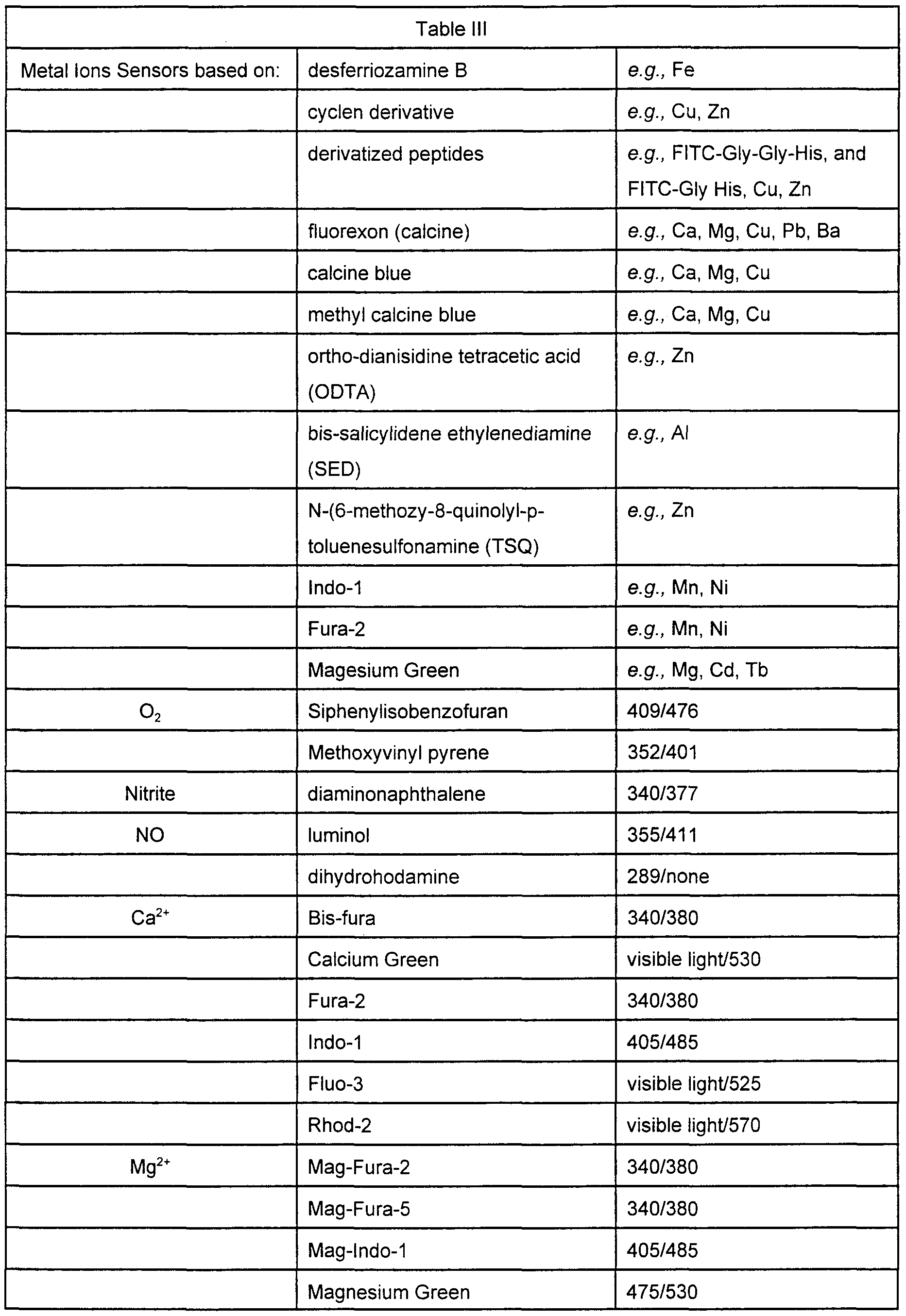
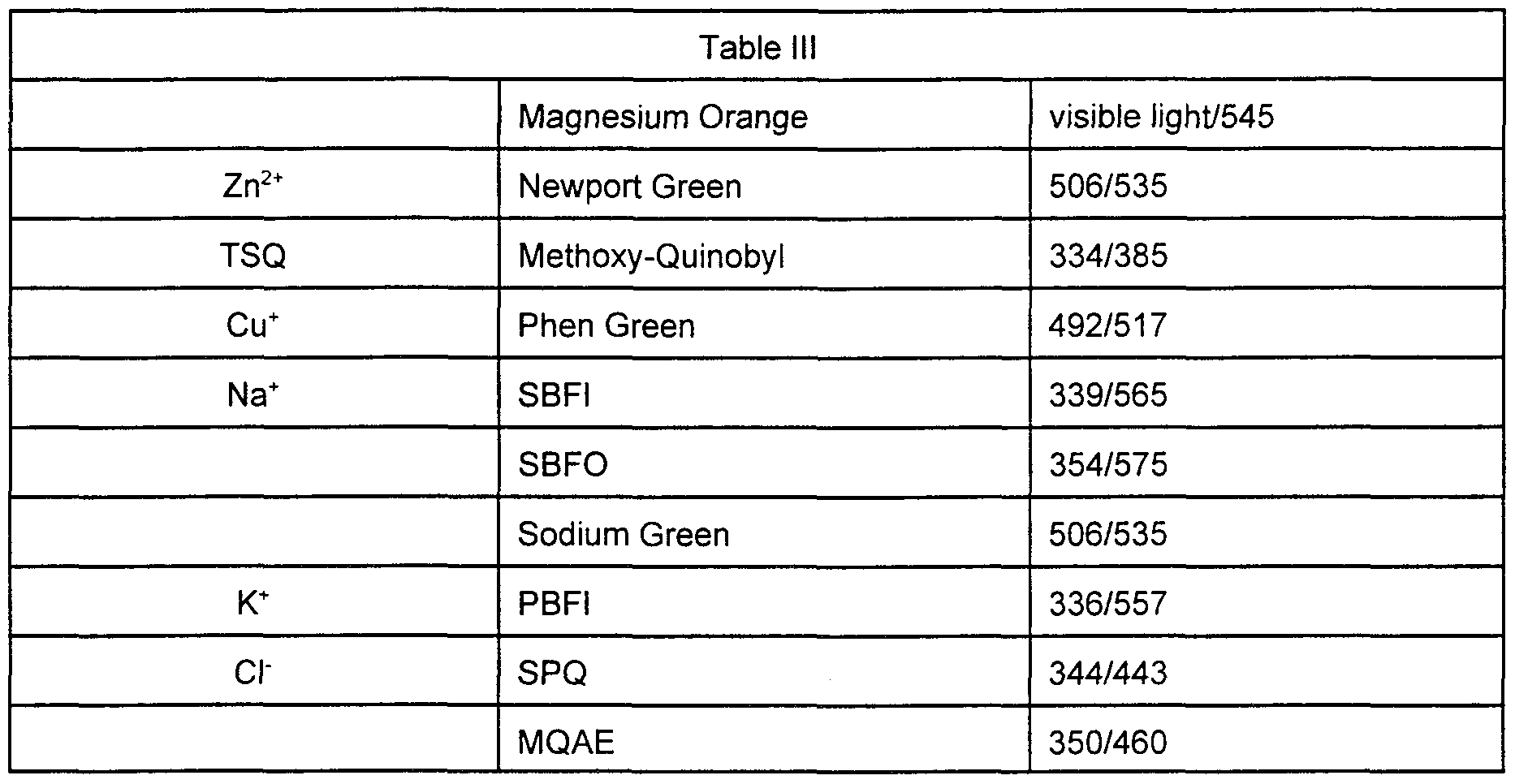
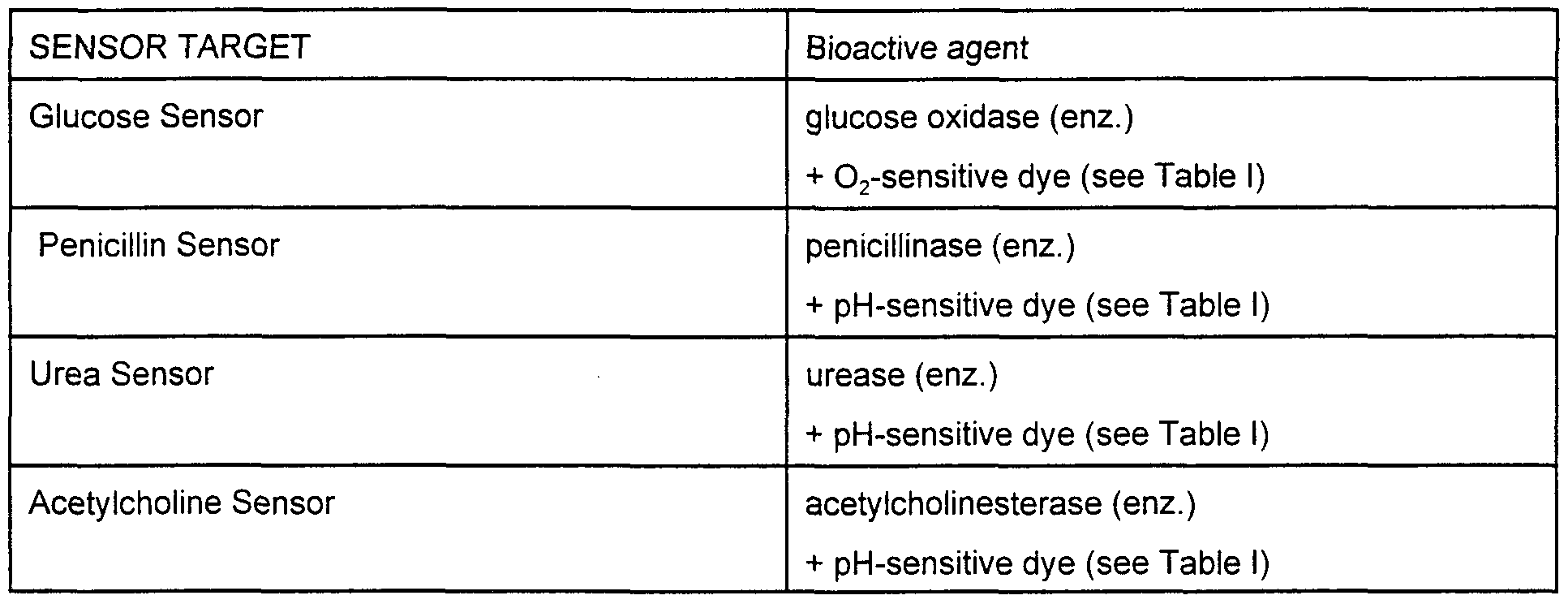


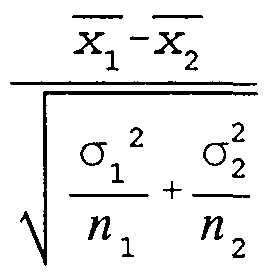

Claims
Priority Applications (12)
| Application Number | Priority Date | Filing Date | Title |
|---|---|---|---|
| AU58215/99A AU773211B2 (en) | 1998-09-11 | 1999-09-10 | Target analyte sensors utilizing microspheres |
| EP99945651A EP1125127A2 (en) | 1998-09-11 | 1999-09-10 | Target analyte sensors utilizing microspheres |
| JP2000570587A JP3836323B2 (en) | 1998-09-11 | 1999-09-10 | Target analyte sensor using microspheres |
| CA2343377A CA2343377C (en) | 1998-09-11 | 1999-09-10 | Target analyte sensors utilizing microspheres |
| AU2004201360A AU2004201360A1 (en) | 1998-09-11 | 2004-03-31 | Target analyte sensors utilizing microspheres |
| US10/920,637 US7622294B2 (en) | 1997-03-14 | 2004-08-17 | Methods for detecting target analytes and enzymatic reactions |
| US12/265,697 US20090149341A1 (en) | 1997-03-14 | 2008-11-05 | Methods for detecting target analytes and enzymatic reactions |
| US12/371,449 US20090156425A1 (en) | 1997-03-14 | 2009-02-13 | Methods for detecting target analytes and enzymatic reactions |
| US12/371,470 US20090170728A1 (en) | 1997-03-14 | 2009-02-13 | Methods for detecting target analytes and enzymatic reactions |
| US13/108,713 US9377388B2 (en) | 1997-03-14 | 2011-05-16 | Methods for detecting target analytes and enzymatic reactions |
| US15/457,728 US20170184578A1 (en) | 1997-03-14 | 2017-03-13 | Methods for detecting target analytes and enzymatic reactions |
| US15/457,672 US20170184484A1 (en) | 1997-03-14 | 2017-03-13 | Target analyte sensors utilizing microspheres |
Applications Claiming Priority (2)
| Application Number | Priority Date | Filing Date | Title |
|---|---|---|---|
| US09/151,877 | 1998-09-11 | ||
| US09/151,877 US6327410B1 (en) | 1997-03-14 | 1998-09-11 | Target analyte sensors utilizing Microspheres |
Related Parent Applications (1)
| Application Number | Title | Priority Date | Filing Date |
|---|---|---|---|
| US09/151,877 Continuation US6327410B1 (en) | 1997-03-14 | 1998-09-11 | Target analyte sensors utilizing Microspheres |
Related Child Applications (2)
| Application Number | Title | Priority Date | Filing Date |
|---|---|---|---|
| US09786896 A-371-Of-International | 1999-09-10 | ||
| US10/920,637 Continuation-In-Part US7622294B2 (en) | 1997-03-14 | 2004-08-17 | Methods for detecting target analytes and enzymatic reactions |
Publications (3)
| Publication Number | Publication Date |
|---|---|
| WO2000016101A2 true WO2000016101A2 (en) | 2000-03-23 |
| WO2000016101A9 WO2000016101A9 (en) | 2000-06-08 |
| WO2000016101A3 WO2000016101A3 (en) | 2001-05-31 |
Family
ID=22540620
Family Applications (1)
| Application Number | Title | Priority Date | Filing Date |
|---|---|---|---|
| PCT/US1999/020914 Ceased WO2000016101A2 (en) | 1997-03-14 | 1999-09-10 | Target analyte sensors utilizing microspheres |
Country Status (6)
| Country | Link |
|---|---|
| US (2) | US6327410B1 (en) |
| EP (1) | EP1125127A2 (en) |
| JP (1) | JP3836323B2 (en) |
| AU (2) | AU773211B2 (en) |
| CA (1) | CA2343377C (en) |
| WO (1) | WO2000016101A2 (en) |
Cited By (42)
| Publication number | Priority date | Publication date | Assignee | Title |
|---|---|---|---|---|
| WO2000060332A3 (en) * | 1999-04-06 | 2001-05-31 | Tufts College | Self-encoding sensor with microspheres |
| US6266459B1 (en) | 1997-03-14 | 2001-07-24 | Trustees Of Tufts College | Fiber optic sensor with encoded microspheres |
| US6327410B1 (en) | 1997-03-14 | 2001-12-04 | The Trustees Of Tufts College | Target analyte sensors utilizing Microspheres |
| US6355431B1 (en) | 1999-04-20 | 2002-03-12 | Illumina, Inc. | Detection of nucleic acid amplification reactions using bead arrays |
| US6573089B1 (en) | 1999-01-08 | 2003-06-03 | Applera Corporation | Method for using and making a fiber array |
| US6620584B1 (en) | 1999-05-20 | 2003-09-16 | Illumina | Combinatorial decoding of random nucleic acid arrays |
| WO2002012897A3 (en) * | 2000-08-09 | 2003-11-20 | Illumina Inc | Automated information processing in randomly ordered arrays |
| EP1371412A1 (en) * | 2002-06-13 | 2003-12-17 | Eastman Kodak Company | Microarray system utilizing microtiter plates |
| JP2004502138A (en) * | 2000-06-28 | 2004-01-22 | イルミナ インコーポレイテッド | Composite array using hybridization chamber and microspheres |
| US6770441B2 (en) | 2000-02-10 | 2004-08-03 | Illumina, Inc. | Array compositions and methods of making same |
| US6858394B1 (en) | 1998-12-28 | 2005-02-22 | Illumina, Inc. | Composite arrays utilizing microspheres |
| US6890741B2 (en) | 2000-02-07 | 2005-05-10 | Illumina, Inc. | Multiplexed detection of analytes |
| US6890764B2 (en) | 1999-05-20 | 2005-05-10 | Illumina, Inc. | Encoding and decoding of array sensors utilizing nanocrystals |
| US6913884B2 (en) | 2001-08-16 | 2005-07-05 | Illumina, Inc. | Compositions and methods for repetitive use of genomic DNA |
| US6916620B2 (en) * | 2002-03-15 | 2005-07-12 | Eastman Kodak Company | Random array of micro-spheres for the analysis of nucleic acid using enzyme digestion |
| US6942968B1 (en) | 1999-08-30 | 2005-09-13 | Illumina, Inc. | Array compositions for improved signal detection |
| US7011945B2 (en) * | 2001-12-21 | 2006-03-14 | Eastman Kodak Company | Random array of micro-spheres for the analysis of nucleic acids |
| US7033754B2 (en) | 1998-06-24 | 2006-04-25 | Illumina, Inc. | Decoding of array sensors with microspheres |
| US7049151B2 (en) | 2001-03-07 | 2006-05-23 | Bio-Rad Laboratories, Inc. | Assay system for simultaneous detection and measurement of multiple modified cellular proteins |
| US7115884B1 (en) | 1997-10-06 | 2006-10-03 | Trustees Of Tufts College | Self-encoding fiber optic sensor |
| WO2008016335A1 (en) | 2006-08-03 | 2008-02-07 | National University Of Singapore | A microarray system and a process for producing microarrays |
| CN100399025C (en) * | 2001-09-27 | 2008-07-02 | 北京源德生物医学工程有限公司 | Multi-marker Continuous Injection Immunization and Gene Analysis System |
| EP1967595A2 (en) | 2000-02-16 | 2008-09-10 | Illumina, Inc. | Parallel genotyping of multiple patient samples |
| WO2008152145A1 (en) * | 2007-06-13 | 2008-12-18 | Attomol Gmbh Molekulare Diagnostika | Method for carrying out and evaluating mix & measure assays for the measurement of reaction kinetics, concentrations and affinities of analytes in multiplex format |
| US7595189B2 (en) | 1999-01-08 | 2009-09-29 | Applied Biosystems, Llc | Integrated optics fiber array |
| US7622294B2 (en) | 1997-03-14 | 2009-11-24 | Trustees Of Tufts College | Methods for detecting target analytes and enzymatic reactions |
| EP2211174A3 (en) * | 2005-07-11 | 2010-09-15 | Rikshospitalet HF | Multicolored particles |
| WO2010128203A1 (en) * | 2009-05-04 | 2010-11-11 | Aqsens Oy | Method for characterizing and/or determining samples |
| US7939270B2 (en) * | 2005-03-23 | 2011-05-10 | Isis Innovation Limited | Delivery of molecules to a lipid bilayer |
| US8080380B2 (en) | 1999-05-21 | 2011-12-20 | Illumina, Inc. | Use of microfluidic systems in the detection of target analytes using microsphere arrays |
| US8481268B2 (en) | 1999-05-21 | 2013-07-09 | Illumina, Inc. | Use of microfluidic systems in the detection of target analytes using microsphere arrays |
| US8709788B2 (en) | 2002-09-16 | 2014-04-29 | The Board Of Trustees Of The Leland Stanford Junior University | Biological analysis arrangement and approach therefor |
| US8785886B2 (en) | 2010-09-10 | 2014-07-22 | Olympus Corporation | Optical analysis method using the light intensity of a single light-emitting particle |
| US9745573B2 (en) | 1999-08-18 | 2017-08-29 | Illumina, Inc. | Compositions and methods for preparing oligonucleotide solutions |
| US9850536B2 (en) | 2000-02-07 | 2017-12-26 | Illumina, Inc. | Multiplex nucleic acid reactions |
| US10107804B2 (en) | 2001-03-23 | 2018-10-23 | Trustees Of Tufts College | Methods for detecting target analytes and enzymatic reactions |
| EP3522713A4 (en) * | 2016-10-03 | 2020-04-29 | Illumina, Inc. | FLUORESCENT DETECTION OF AMINES AND HYDRAZINES AND ASSAY METHODS |
| CN116482084A (en) * | 2023-02-13 | 2023-07-25 | 上海索昕生物科技有限公司 | Photosensitive microspheres for photochemiluminescence detection |
| US11874279B2 (en) | 2006-02-21 | 2024-01-16 | Trustees Of Tufts College | Methods and arrays for target analyte detection and determination of target analyte concentration in solution |
| US11977087B2 (en) | 2011-01-28 | 2024-05-07 | Quanterix Corporation | Systems, devices, and methods for ultra-sensitive detection of molecules or particles |
| US12019072B2 (en) | 2010-03-01 | 2024-06-25 | Quanterix Corporation | Methods and systems for extending dynamic range in assays for the detection of molecules or particles |
| US12235267B2 (en) | 2010-03-01 | 2025-02-25 | Quanterix Corporation | Ultra-sensitive detection of molecules or particles using beads or other capture objects |
Families Citing this family (510)
| Publication number | Priority date | Publication date | Assignee | Title |
|---|---|---|---|---|
| USRE43097E1 (en) | 1994-10-13 | 2012-01-10 | Illumina, Inc. | Massively parallel signature sequencing by ligation of encoded adaptors |
| US7144119B2 (en) * | 1996-04-25 | 2006-12-05 | Bioarray Solutions Ltd. | System and method for programmable illumination pattern generation |
| US6387707B1 (en) * | 1996-04-25 | 2002-05-14 | Bioarray Solutions | Array Cytometry |
| US6958245B2 (en) | 1996-04-25 | 2005-10-25 | Bioarray Solutions Ltd. | Array cytometry |
| ES2288760T3 (en) | 1996-04-25 | 2008-01-16 | Bioarray Solutions Ltd. | ELECTROCINETIC ASSEMBLY CONTROLLED BY LIGHT OF PARTICLES NEXT TO SURFACES. |
| US7041510B2 (en) | 1996-04-25 | 2006-05-09 | Bioarray Solutions Ltd. | System and method for programmable illumination pattern generation |
| EP0985142A4 (en) | 1997-05-23 | 2006-09-13 | Lynx Therapeutics Inc | System and apparaus for sequential processing of analytes |
| US6749811B2 (en) | 1998-04-28 | 2004-06-15 | The Johns Hopkins University | Molecularly imprinted polymer solution anion sensor |
| US7612020B2 (en) | 1998-12-28 | 2009-11-03 | Illumina, Inc. | Composite arrays utilizing microspheres with a hybridization chamber |
| JP2000262460A (en) * | 1999-03-18 | 2000-09-26 | Inst Of Physical & Chemical Res | Biological sample specific site detection method, biological sample physiological measurement method, biological sample specific site detection device, optical fiber holding device |
| US20050100943A1 (en) * | 2000-04-11 | 2005-05-12 | Hideki Kambara | Method of producing probe arrays for biological materials using fine particles |
| US20050244870A1 (en) * | 1999-04-20 | 2005-11-03 | Illumina, Inc. | Nucleic acid sequencing using microsphere arrays |
| EP1923471B1 (en) | 1999-04-20 | 2012-12-19 | Illumina, Inc. | Detection of nucleic acid reactions on bead arrays |
| US20060275782A1 (en) | 1999-04-20 | 2006-12-07 | Illumina, Inc. | Detection of nucleic acid reactions on bead arrays |
| US7211390B2 (en) | 1999-09-16 | 2007-05-01 | 454 Life Sciences Corporation | Method of sequencing a nucleic acid |
| US7244559B2 (en) | 1999-09-16 | 2007-07-17 | 454 Life Sciences Corporation | Method of sequencing a nucleic acid |
| EP1122535A3 (en) * | 2000-01-31 | 2004-09-22 | The Penn State Research Foundation | Interrogation of changes in the contents of a sealed container |
| US7611869B2 (en) | 2000-02-07 | 2009-11-03 | Illumina, Inc. | Multiplexed methylation detection methods |
| US7955794B2 (en) | 2000-09-21 | 2011-06-07 | Illumina, Inc. | Multiplex nucleic acid reactions |
| US7361488B2 (en) | 2000-02-07 | 2008-04-22 | Illumina, Inc. | Nucleic acid detection methods using universal priming |
| US8076063B2 (en) | 2000-02-07 | 2011-12-13 | Illumina, Inc. | Multiplexed methylation detection methods |
| WO2001059432A2 (en) * | 2000-02-10 | 2001-08-16 | Illumina, Inc. | Array of individual arrays as substrate for bead-based simultaneous processing of samples and manufacturing method therefor |
| US20010026920A1 (en) * | 2000-02-25 | 2001-10-04 | Mark Chandler | Internal standards and controls for multiplexed assay |
| AU2001247660A1 (en) * | 2000-03-21 | 2001-10-03 | The Board Of Trustees Of The University Of Illinois | Colorimetric artificial nose having an array of dyes and method for artificial olfaction |
| US6844154B2 (en) * | 2000-04-04 | 2005-01-18 | Polygenyx, Inc. | High throughput methods for haplotyping |
| US9709559B2 (en) | 2000-06-21 | 2017-07-18 | Bioarray Solutions, Ltd. | Multianalyte molecular analysis using application-specific random particle arrays |
| CA2635452A1 (en) * | 2000-06-21 | 2001-12-27 | Bioarray Solutions, Ltd. | Looped probe design to control hybridization stringency |
| US6934408B2 (en) * | 2000-08-25 | 2005-08-23 | Amnis Corporation | Method and apparatus for reading reporter labeled beads |
| US7057704B2 (en) * | 2000-09-17 | 2006-06-06 | Bioarray Solutions Ltd. | System and method for programmable illumination pattern generation |
| US20030045005A1 (en) * | 2000-10-17 | 2003-03-06 | Michael Seul | Light-controlled electrokinetic assembly of particles near surfaces |
| CN1231758C (en) * | 2000-10-19 | 2005-12-14 | 泰博特克公司 | Method of manipulating microcarriers for identification purposes |
| US20040018491A1 (en) * | 2000-10-26 | 2004-01-29 | Kevin Gunderson | Detection of nucleic acid reactions on bead arrays |
| DE60127821D1 (en) * | 2001-05-25 | 2007-05-24 | Corning Inc | Method for the determination of the reactions and the metabolic activity with fluorescence temperature-sensitive material |
| US7262063B2 (en) | 2001-06-21 | 2007-08-28 | Bio Array Solutions, Ltd. | Directed assembly of functional heterostructures |
| JP4754746B2 (en) * | 2001-09-28 | 2011-08-24 | オリンパス株式会社 | Rod-shaped carrier and cylinder reaction vessel equipped with the same |
| IL161391A0 (en) | 2001-10-15 | 2004-09-27 | Bioarray Solutions Ltd | Multiplexed analysis of polymorphic loci by concurrent interrogation and enzyme-mediated detection |
| US6551788B1 (en) * | 2001-11-28 | 2003-04-22 | Beckman Coulter, Inc. | Particle-based ligand assay with extended dynamic range |
| US7335153B2 (en) | 2001-12-28 | 2008-02-26 | Bio Array Solutions Ltd. | Arrays of microparticles and methods of preparation thereof |
| US7499806B2 (en) * | 2002-02-14 | 2009-03-03 | Illumina, Inc. | Image processing in microsphere arrays |
| US20030162178A1 (en) * | 2002-02-25 | 2003-08-28 | O'hagan David | Variable microarray and methods of detecting one or more anlaytes in a sample |
| US20030162179A1 (en) * | 2002-02-27 | 2003-08-28 | General Electric Company | Fabrication, performance testing, and screening of three dimensional arrays of materials |
| US7491491B2 (en) * | 2002-03-12 | 2009-02-17 | Polytechnic Institute Of New York University | Detecting and/or measuring a substance based on a resonance shift of photons orbiting within a microsphere |
| CN100414296C (en) * | 2002-06-14 | 2008-08-27 | 赵翀 | Mosaic high-throughput three-dimensional biological detection method and kit |
| CA2494073A1 (en) * | 2002-08-02 | 2004-02-12 | Applera Corporation | Fluorescence polarization assay |
| WO2004020456A2 (en) * | 2002-08-28 | 2004-03-11 | Bionexus Ventures L.L.C. | Selecting therapeutic human monoclonal antibodies from disease-specific libraries |
| US7122384B2 (en) * | 2002-11-06 | 2006-10-17 | E. I. Du Pont De Nemours And Company | Resonant light scattering microparticle methods |
| WO2004046100A2 (en) * | 2002-11-15 | 2004-06-03 | University Of Maryland, Baltimore | Release of the self-quenching of fluorescence near silver metallic surfaces |
| US7526114B2 (en) | 2002-11-15 | 2009-04-28 | Bioarray Solutions Ltd. | Analysis, secure access to, and transmission of array images |
| CA2513985C (en) | 2003-01-21 | 2012-05-29 | Illumina Inc. | Chemical reaction monitor |
| US6943768B2 (en) | 2003-02-21 | 2005-09-13 | Xtellus Inc. | Thermal control system for liquid crystal cell |
| US20040175843A1 (en) * | 2003-03-04 | 2004-09-09 | Roitman Daniel B. | Near-field and far-field encoding and shaping of microbeads for bioassays |
| US20040175842A1 (en) * | 2003-03-04 | 2004-09-09 | Roitman Daniel B. | Near-field and far-field encoding of microbeads for bioassays |
| US20050064452A1 (en) * | 2003-04-25 | 2005-03-24 | Schmid Matthew J. | System and method for the detection of analytes |
| US8150627B2 (en) | 2003-05-15 | 2012-04-03 | Illumina, Inc. | Methods and compositions for diagnosing lung cancer with specific DNA methylation patterns |
| US8150626B2 (en) * | 2003-05-15 | 2012-04-03 | Illumina, Inc. | Methods and compositions for diagnosing lung cancer with specific DNA methylation patterns |
| WO2004104922A2 (en) | 2003-05-16 | 2004-12-02 | Board Of Regents, The University Of Texas System | Image and part recognition technology |
| US9317922B2 (en) | 2003-05-16 | 2016-04-19 | Board Of Regents The University Of Texas System | Image and part recognition technology |
| CA2528577C (en) | 2003-06-20 | 2012-08-07 | Illumina, Inc. | Methods and compositions for whole genome amplification and genotyping |
| US20040259100A1 (en) * | 2003-06-20 | 2004-12-23 | Illumina, Inc. | Methods and compositions for whole genome amplification and genotyping |
| US20050181394A1 (en) * | 2003-06-20 | 2005-08-18 | Illumina, Inc. | Methods and compositions for whole genome amplification and genotyping |
| WO2005029705A2 (en) | 2003-09-18 | 2005-03-31 | Bioarray Solutions, Ltd. | Number coding for identification of subtypes of coded types of solid phase carriers |
| ES2375962T3 (en) | 2003-09-22 | 2012-03-07 | Bioarray Solutions Ltd | IMMOBILIZED SURFACE POLYELECTROLYTE WITH MULTIPLE FUNCTIONAL GROUPS ABLE TO JOIN COVALENTLY TO BIOMOLECULES. |
| JP2005098877A (en) * | 2003-09-25 | 2005-04-14 | Hitachi Software Eng Co Ltd | Antibody detector, its manufacturing method, and antibody detecting method |
| JP2007521017A (en) | 2003-10-28 | 2007-08-02 | バイオアレイ ソリューションズ リミテッド | Optimization of gene expression analysis using immobilized capture probes |
| EP1694859B1 (en) | 2003-10-29 | 2015-01-07 | Bioarray Solutions Ltd | Multiplexed nucleic acid analysis by fragmentation of double-stranded dna |
| WO2005064338A1 (en) * | 2003-12-23 | 2005-07-14 | University Of Florida Research Foundation, Inc. | Microparticles for use in diagnostic methods |
| US20050136414A1 (en) * | 2003-12-23 | 2005-06-23 | Kevin Gunderson | Methods and compositions for making locus-specific arrays |
| WO2005083423A2 (en) * | 2004-02-27 | 2005-09-09 | Board Of Regents, The University Of Texas System | System and method for integrating fluids and reagents in self-contained cartridges containing particle and membrane sensor elements |
| US20050191687A1 (en) * | 2004-02-27 | 2005-09-01 | Tianxin Wang | Method for multiplexed analyte detection |
| US7781226B2 (en) * | 2004-02-27 | 2010-08-24 | The Board Of Regents Of The University Of Texas System | Particle on membrane assay system |
| US8105849B2 (en) | 2004-02-27 | 2012-01-31 | Board Of Regents, The University Of Texas System | Integration of fluids and reagents into self-contained cartridges containing sensor elements |
| US20060257854A1 (en) * | 2004-02-27 | 2006-11-16 | Mcdevitt John T | Membrane assay system including preloaded particles |
| US8101431B2 (en) | 2004-02-27 | 2012-01-24 | Board Of Regents, The University Of Texas System | Integration of fluids and reagents into self-contained cartridges containing sensor elements and reagent delivery systems |
| US20050208504A1 (en) * | 2004-03-17 | 2005-09-22 | Srinka Ghosh | Method and system for testing feature-extractability of high-density microarrays using an embedded pattern block |
| US7776531B1 (en) | 2004-03-25 | 2010-08-17 | Illumina, Inc. | Compositions and methods for stabilizing surface bound probes |
| WO2005093416A1 (en) * | 2004-03-26 | 2005-10-06 | Japan Science And Technology Agency | Substrate for disposing beads and bead disposing method using the same |
| JP2005306171A (en) * | 2004-04-20 | 2005-11-04 | Yamaha Motor Co Ltd | Saddle riding |
| US7622281B2 (en) * | 2004-05-20 | 2009-11-24 | The Board Of Trustees Of The Leland Stanford Junior University | Methods and compositions for clonal amplification of nucleic acid |
| EP1602928A1 (en) * | 2004-06-01 | 2005-12-07 | Universiteit Maastricht | Process and kit for determining binding parameters of bioaffinity binding reactions |
| FR2871358B1 (en) * | 2004-06-14 | 2007-02-09 | Mauna Kea Technologies Soc Par | METHOD AND SYSTEM FOR MICROSCOPIC MULTI-MARKING FIBER FLUORESCENCE IMAGING |
| US7692219B1 (en) | 2004-06-25 | 2010-04-06 | University Of Hawaii | Ultrasensitive biosensors |
| US7702466B1 (en) | 2004-06-29 | 2010-04-20 | Illumina, Inc. | Systems and methods for selection of nucleic acid sequence probes |
| US7697808B2 (en) * | 2004-07-27 | 2010-04-13 | Ut-Battelle, Llc | Multi-tipped optical component |
| US7697807B2 (en) * | 2006-06-01 | 2010-04-13 | Ut-Battelle, Llc | Multi-tipped optical component |
| US7848889B2 (en) | 2004-08-02 | 2010-12-07 | Bioarray Solutions, Ltd. | Automated analysis of multiplexed probe-target interaction patterns: pattern matching and allele identification |
| US8183052B2 (en) * | 2004-08-19 | 2012-05-22 | Blood Cell Storage, Inc. | Methods and apparatus for sterility testing |
| US8497134B2 (en) | 2004-08-19 | 2013-07-30 | Blood Cell Storage, Inc. | Fluorescent detector systems for the detection of chemical perturbations in sterile storage devices |
| JP5017113B2 (en) * | 2004-08-19 | 2012-09-05 | ブラッド セル ストレージ, インコーポレイテッド | Fluorescent pH detection system and related methods |
| WO2006047038A1 (en) * | 2004-09-28 | 2006-05-04 | Trustees Of Tufts College | Apparatus and method for cell migration assays |
| WO2007008246A2 (en) | 2004-11-12 | 2007-01-18 | The Board Of Trustees Of The Leland Stanford Junior University | Charge perturbation detection system for dna and other molecules |
| WO2006058334A2 (en) * | 2004-11-29 | 2006-06-01 | Perkinelmer Life And Analytical Sciences | Prticle-based multiplex assay for identifying glycosylation |
| US7647186B2 (en) * | 2004-12-07 | 2010-01-12 | Illumina, Inc. | Oligonucleotide ordering system |
| US20060246576A1 (en) | 2005-04-06 | 2006-11-02 | Affymetrix, Inc. | Fluidic system and method for processing biological microarrays in personal instrumentation |
| US8377398B2 (en) | 2005-05-31 | 2013-02-19 | The Board Of Regents Of The University Of Texas System | Methods and compositions related to determination and use of white blood cell counts |
| US8486629B2 (en) | 2005-06-01 | 2013-07-16 | Bioarray Solutions, Ltd. | Creation of functionalized microparticle libraries by oligonucleotide ligation or elongation |
| EP1922419A4 (en) * | 2005-06-10 | 2010-11-17 | Life Technologies Corp | Method and system for multiplex genetic analysis |
| CN101466847B (en) * | 2005-06-15 | 2014-02-19 | 考利达基因组股份有限公司 | Single-molecule arrays for genetic and chemical analysis |
| US7781224B2 (en) * | 2005-08-10 | 2010-08-24 | Lawrence Livermore National Security, Llc | Safe biodegradable fluorescent particles |
| US7595473B2 (en) * | 2005-08-22 | 2009-09-29 | Tufts University | Method and system of array imaging |
| US7996188B2 (en) | 2005-08-22 | 2011-08-09 | Accuri Cytometers, Inc. | User interface for a flow cytometer system |
| US8017402B2 (en) | 2006-03-08 | 2011-09-13 | Accuri Cytometers, Inc. | Fluidic system for a flow cytometer |
| US8303894B2 (en) | 2005-10-13 | 2012-11-06 | Accuri Cytometers, Inc. | Detection and fluidic system of a flow cytometer |
| US8117902B2 (en) * | 2005-11-03 | 2012-02-21 | University Of Massachusetts | Nanopatterned surfaces and related methods for selective adhesion, sensing and separation |
| US7329860B2 (en) | 2005-11-23 | 2008-02-12 | Illumina, Inc. | Confocal imaging methods and apparatus |
| US20070127863A1 (en) * | 2005-12-07 | 2007-06-07 | Accuri Instruments Inc. | System and method for guiding light from an interrogation zone to a detector system |
| US11237171B2 (en) | 2006-02-21 | 2022-02-01 | Trustees Of Tufts College | Methods and arrays for target analyte detection and determination of target analyte concentration in solution |
| US8149402B2 (en) * | 2006-02-22 | 2012-04-03 | Accuri Cytometers, Inc. | Optical system for a flow cytometer |
| US8031340B2 (en) * | 2006-02-22 | 2011-10-04 | Accuri Cytometers, Inc. | Optical system for a flow cytometer |
| US8283177B2 (en) | 2006-03-08 | 2012-10-09 | Accuri Cytometers, Inc. | Fluidic system with washing capabilities for a flow cytometer |
| US7780916B2 (en) | 2006-03-08 | 2010-08-24 | Accuri Cytometers, Inc. | Flow cytometer system with unclogging feature |
| US20070224684A1 (en) * | 2006-03-22 | 2007-09-27 | Olson David C | Transportable flow cytometer |
| US7914988B1 (en) * | 2006-03-31 | 2011-03-29 | Illumina, Inc. | Gene expression profiles to predict relapse of prostate cancer |
| US20070238140A1 (en) * | 2006-04-07 | 2007-10-11 | Pentoney Stephen L Jr | Method For Multiplex Bead-Based Assays Using Chemiluminescence and Fluorescence |
| US11001881B2 (en) | 2006-08-24 | 2021-05-11 | California Institute Of Technology | Methods for detecting analytes |
| US8048626B2 (en) | 2006-07-28 | 2011-11-01 | California Institute Of Technology | Multiplex Q-PCR arrays |
| US11525156B2 (en) | 2006-07-28 | 2022-12-13 | California Institute Of Technology | Multiplex Q-PCR arrays |
| US11560588B2 (en) | 2006-08-24 | 2023-01-24 | California Institute Of Technology | Multiplex Q-PCR arrays |
| GB0618514D0 (en) * | 2006-09-20 | 2006-11-01 | Univ Nottingham Trent | Method of detecting interactions on a microarray using nuclear magnetic resonance |
| US8715573B2 (en) | 2006-10-13 | 2014-05-06 | Accuri Cytometers, Inc. | Fluidic system for a flow cytometer with temporal processing |
| WO2008058217A2 (en) * | 2006-11-07 | 2008-05-15 | Accuri Instruments Inc. | Flow cell for a flow cytometer system |
| US7813013B2 (en) * | 2006-11-21 | 2010-10-12 | Illumina, Inc. | Hexagonal site line scanning method and system |
| EP3285067B1 (en) | 2006-12-14 | 2022-06-22 | Life Technologies Corporation | Apparatus for measuring analytes using fet arrays |
| US8262900B2 (en) | 2006-12-14 | 2012-09-11 | Life Technologies Corporation | Methods and apparatus for measuring analytes using large scale FET arrays |
| US8349167B2 (en) | 2006-12-14 | 2013-01-08 | Life Technologies Corporation | Methods and apparatus for detecting molecular interactions using FET arrays |
| US11339430B2 (en) | 2007-07-10 | 2022-05-24 | Life Technologies Corporation | Methods and apparatus for measuring analytes using large scale FET arrays |
| FR2910632B1 (en) * | 2006-12-22 | 2010-08-27 | Commissariat Energie Atomique | OPTICAL PLASMON ENCODING DEVICE AND AUTHENTICATION METHOD EMPLOYING THE SAME |
| US7739060B2 (en) * | 2006-12-22 | 2010-06-15 | Accuri Cytometers, Inc. | Detection system and user interface for a flow cytometer system |
| US20080243865A1 (en) * | 2007-03-28 | 2008-10-02 | Oracle International Corporation | Maintaining global state of distributed transaction managed by an external transaction manager for clustered database systems |
| US20080274458A1 (en) * | 2007-05-01 | 2008-11-06 | Latham Gary J | Nucleic acid quantitation methods |
| CN101720359A (en) * | 2007-06-01 | 2010-06-02 | 454生命科学公司 | System and method for identifying individual samples from a multiplex mixture |
| US20110105366A1 (en) * | 2007-06-18 | 2011-05-05 | Illumina, Inc. | Microfabrication methods for the optimal patterning of substrates |
| US20090029347A1 (en) * | 2007-07-27 | 2009-01-29 | Thornthwaite Jerry T | Method for Identifying Multiple Analytes Using Flow Cytometry |
| US20110195852A1 (en) * | 2007-08-30 | 2011-08-11 | Trustees Of Tufts College | Methods for determining the concentration of an analyte in solution |
| US9274056B2 (en) * | 2007-12-03 | 2016-03-01 | Robert Hudak | Use of non-chelated fluorochromes in rapid test systems |
| US7843561B2 (en) * | 2007-12-17 | 2010-11-30 | Accuri Cytometers, Inc. | Optical system for a flow cytometer with an interrogation zone |
| US8432541B2 (en) | 2007-12-17 | 2013-04-30 | Accuri Cytometers, Inc. | Optical system for a flow cytometer with an interrogation zone |
| US20130020507A1 (en) * | 2010-06-17 | 2013-01-24 | Life Technologies Corporation | Methods for Detecting Defects in Inorganic-Coated Polymer Surfaces |
| US8202691B2 (en) | 2008-01-25 | 2012-06-19 | Illumina, Inc. | Uniform fragmentation of DNA using binding proteins |
| US20090203086A1 (en) * | 2008-02-06 | 2009-08-13 | 454 Life Sciences Corporation | System and method for improved signal detection in nucleic acid sequencing |
| US8039817B2 (en) | 2008-05-05 | 2011-10-18 | Illumina, Inc. | Compensator for multiple surface imaging |
| WO2009137521A2 (en) * | 2008-05-07 | 2009-11-12 | Illumina, Inc. | Compositions and methods for providing substances to and from an array |
| JP5667049B2 (en) | 2008-06-25 | 2015-02-12 | ライフ テクノロジーズ コーポレーション | Method and apparatus for measuring analytes using large-scale FET arrays |
| WO2010003132A1 (en) | 2008-07-02 | 2010-01-07 | Illumina Cambridge Ltd. | Using populations of beads for the fabrication of arrays on surfaces |
| US20100075862A1 (en) * | 2008-09-23 | 2010-03-25 | Quanterix Corporation | High sensitivity determination of the concentration of analyte molecules or particles in a fluid sample |
| US8222047B2 (en) | 2008-09-23 | 2012-07-17 | Quanterix Corporation | Ultra-sensitive detection of molecules on single molecule arrays |
| US20100075439A1 (en) * | 2008-09-23 | 2010-03-25 | Quanterix Corporation | Ultra-sensitive detection of molecules by capture-and-release using reducing agents followed by quantification |
| US20100087325A1 (en) * | 2008-10-07 | 2010-04-08 | Illumina, Inc. | Biological sample temperature control system and method |
| US20100137143A1 (en) | 2008-10-22 | 2010-06-03 | Ion Torrent Systems Incorporated | Methods and apparatus for measuring analytes |
| US20100301398A1 (en) | 2009-05-29 | 2010-12-02 | Ion Torrent Systems Incorporated | Methods and apparatus for measuring analytes |
| US20100151473A1 (en) * | 2008-12-10 | 2010-06-17 | Yeakley Joanne M | Methods and compositions for hybridizing nucleic acids |
| US8574835B2 (en) | 2009-05-29 | 2013-11-05 | Life Technologies Corporation | Scaffolded nucleic acid polymer particles and methods of making and using |
| US8776573B2 (en) | 2009-05-29 | 2014-07-15 | Life Technologies Corporation | Methods and apparatus for measuring analytes |
| US8673627B2 (en) | 2009-05-29 | 2014-03-18 | Life Technologies Corporation | Apparatus and methods for performing electrochemical reactions |
| US20120261274A1 (en) | 2009-05-29 | 2012-10-18 | Life Technologies Corporation | Methods and apparatus for measuring analytes |
| US8507279B2 (en) | 2009-06-02 | 2013-08-13 | Accuri Cytometers, Inc. | System and method of verification of a prepared sample for a flow cytometer |
| US20100330686A1 (en) * | 2009-06-29 | 2010-12-30 | Seung Bum Park | Nanosensor for sugar detection |
| GB0913258D0 (en) * | 2009-07-29 | 2009-09-02 | Dynex Technologies Inc | Reagent dispenser |
| US9523701B2 (en) | 2009-07-29 | 2016-12-20 | Dynex Technologies, Inc. | Sample plate systems and methods |
| EP2503337B1 (en) | 2009-11-17 | 2016-08-24 | Asahi Kasei Kabushiki Kaisha | Organic colored microparticles and diagnostic reagent kit containing the same |
| US9073033B2 (en) | 2010-01-19 | 2015-07-07 | Illumina, Inc. | Methods and compositions for processing chemical reactions |
| ES2596655T3 (en) | 2010-02-01 | 2017-01-11 | Illumina Inc. | Focusing procedures and optical systems and assemblies that use them |
| US8779387B2 (en) | 2010-02-23 | 2014-07-15 | Accuri Cytometers, Inc. | Method and system for detecting fluorochromes in a flow cytometer |
| US8415171B2 (en) | 2010-03-01 | 2013-04-09 | Quanterix Corporation | Methods and systems for extending dynamic range in assays for the detection of molecules or particles |
| US9678068B2 (en) | 2010-03-01 | 2017-06-13 | Quanterix Corporation | Ultra-sensitive detection of molecules using dual detection methods |
| WO2011112465A1 (en) | 2010-03-06 | 2011-09-15 | Illumina, Inc. | Systems, methods, and apparatuses for detecting optical signals from a sample |
| US20190300945A1 (en) | 2010-04-05 | 2019-10-03 | Prognosys Biosciences, Inc. | Spatially Encoded Biological Assays |
| US10787701B2 (en) | 2010-04-05 | 2020-09-29 | Prognosys Biosciences, Inc. | Spatially encoded biological assays |
| SI2556171T1 (en) | 2010-04-05 | 2016-03-31 | Prognosys Biosciences, Inc. | Spatially encoded biological assays |
| US9551600B2 (en) | 2010-06-14 | 2017-01-24 | Accuri Cytometers, Inc. | System and method for creating a flow cytometer network |
| US9353412B2 (en) | 2010-06-18 | 2016-05-31 | Illumina, Inc. | Conformational probes and methods for sequencing nucleic acids |
| TWI580955B (en) | 2010-06-30 | 2017-05-01 | 生命技術公司 | Ion-sensing charge-accumulation circuits and methods |
| TWI569025B (en) | 2010-06-30 | 2017-02-01 | 生命技術公司 | Apparatus and method for testing an ion sensing field effect transistor (ISFET) array |
| CN103189986A (en) | 2010-06-30 | 2013-07-03 | 生命科技公司 | Transistor circuits for detecting and measuring chemical reactions and compounds |
| US11307166B2 (en) | 2010-07-01 | 2022-04-19 | Life Technologies Corporation | Column ADC |
| US8653567B2 (en) | 2010-07-03 | 2014-02-18 | Life Technologies Corporation | Chemically sensitive sensor with lightly doped drains |
| WO2012032955A1 (en) | 2010-09-10 | 2012-03-15 | オリンパス株式会社 | Optical analysis method using optical measurement in multiple wavelength bands |
| US9618475B2 (en) | 2010-09-15 | 2017-04-11 | Life Technologies Corporation | Methods and apparatus for measuring analytes |
| US8685324B2 (en) | 2010-09-24 | 2014-04-01 | Life Technologies Corporation | Matched pair transistor circuits |
| WO2012050920A1 (en) | 2010-09-29 | 2012-04-19 | Illumina, Inc. | Compositions and methods for sequencing nucleic acids |
| US9187783B2 (en) | 2010-10-04 | 2015-11-17 | Genapsys, Inc. | Systems and methods for automated reusable parallel biological reactions |
| US9184099B2 (en) | 2010-10-04 | 2015-11-10 | The Board Of Trustees Of The Leland Stanford Junior University | Biosensor devices, systems and methods therefor |
| US9399217B2 (en) | 2010-10-04 | 2016-07-26 | Genapsys, Inc. | Chamber free nanoreactor system |
| ES2897531T3 (en) | 2010-10-25 | 2022-03-01 | Accuri Cytometers Inc | Systems and user interface for collecting a data set in a flow cytometer |
| EP2633069B1 (en) | 2010-10-26 | 2015-07-01 | Illumina, Inc. | Sequencing methods |
| CN103229042B (en) | 2010-11-25 | 2016-06-29 | 奥林巴斯株式会社 | The light analytical equipment and the light that utilize the wavelength characteristic of the light of single incandescnet particle analyze method |
| US8951781B2 (en) | 2011-01-10 | 2015-02-10 | Illumina, Inc. | Systems, methods, and apparatuses to image a sample for biological or chemical analysis |
| US9252175B2 (en) | 2011-03-23 | 2016-02-02 | Nanohmics, Inc. | Method for assembly of spectroscopic filter arrays using biomolecules |
| US9828696B2 (en) | 2011-03-23 | 2017-11-28 | Nanohmics, Inc. | Method for assembly of analyte filter arrays using biomolecules |
| WO2012142301A2 (en) | 2011-04-12 | 2012-10-18 | Quanterix Corporation | Methods of determining a treatment protocol for and/or a prognosis of a patients recovery from a brain injury |
| GB201106254D0 (en) | 2011-04-13 | 2011-05-25 | Frisen Jonas | Method and product |
| US9926596B2 (en) | 2011-05-27 | 2018-03-27 | Genapsys, Inc. | Systems and methods for genetic and biological analysis |
| US8585973B2 (en) | 2011-05-27 | 2013-11-19 | The Board Of Trustees Of The Leland Stanford Junior University | Nano-sensor array |
| US9040307B2 (en) | 2011-05-27 | 2015-05-26 | Blood Cell Storage, Inc. | Fluorescent pH detector system and related methods |
| US8778848B2 (en) | 2011-06-09 | 2014-07-15 | Illumina, Inc. | Patterned flow-cells useful for nucleic acid analysis |
| EP2735618B1 (en) | 2011-07-19 | 2017-12-06 | Hitachi High-Technologies Corporation | Nucleic acid analysis method |
| EP3305400A3 (en) | 2011-10-28 | 2018-06-06 | Illumina, Inc. | Microarray fabrication system and method |
| US10093975B2 (en) | 2011-12-01 | 2018-10-09 | Genapsys, Inc. | Systems and methods for high efficiency electronic sequencing and detection |
| US9970984B2 (en) | 2011-12-01 | 2018-05-15 | Life Technologies Corporation | Method and apparatus for identifying defects in a chemical sensor array |
| WO2013096661A1 (en) | 2011-12-22 | 2013-06-27 | Illumina, Inc. | Methylation biomarkers for ovarian cancer |
| US8821798B2 (en) | 2012-01-19 | 2014-09-02 | Life Technologies Corporation | Titanium nitride as sensing layer for microwell structure |
| US8747748B2 (en) | 2012-01-19 | 2014-06-10 | Life Technologies Corporation | Chemical sensor with conductive cup-shaped sensor surface |
| US9829486B2 (en) * | 2012-03-05 | 2017-11-28 | Panasonic Intellectual Property Management Co., Ltd. | Sensor device |
| KR102118211B1 (en) | 2012-04-03 | 2020-06-02 | 일루미나, 인코포레이티드 | Integrated optoelectronic read head and fluidic cartridge useful for nucleic acid sequencing |
| US8906320B1 (en) | 2012-04-16 | 2014-12-09 | Illumina, Inc. | Biosensors for biological or chemical analysis and systems and methods for same |
| US8786331B2 (en) | 2012-05-29 | 2014-07-22 | Life Technologies Corporation | System for reducing noise in a chemical sensor array |
| US8895249B2 (en) | 2012-06-15 | 2014-11-25 | Illumina, Inc. | Kinetic exclusion amplification of nucleic acid libraries |
| JP6037701B2 (en) | 2012-08-03 | 2016-12-07 | 株式会社日立ハイテクノロジーズ | Immune analyzer |
| US10752949B2 (en) | 2012-08-14 | 2020-08-25 | 10X Genomics, Inc. | Methods and systems for processing polynucleotides |
| US10323279B2 (en) | 2012-08-14 | 2019-06-18 | 10X Genomics, Inc. | Methods and systems for processing polynucleotides |
| US10273541B2 (en) | 2012-08-14 | 2019-04-30 | 10X Genomics, Inc. | Methods and systems for processing polynucleotides |
| US9951386B2 (en) | 2014-06-26 | 2018-04-24 | 10X Genomics, Inc. | Methods and systems for processing polynucleotides |
| US11591637B2 (en) | 2012-08-14 | 2023-02-28 | 10X Genomics, Inc. | Compositions and methods for sample processing |
| CA2881685C (en) | 2012-08-14 | 2023-12-05 | 10X Genomics, Inc. | Microcapsule compositions and methods |
| US10221442B2 (en) | 2012-08-14 | 2019-03-05 | 10X Genomics, Inc. | Compositions and methods for sample processing |
| US10400280B2 (en) | 2012-08-14 | 2019-09-03 | 10X Genomics, Inc. | Methods and systems for processing polynucleotides |
| US9701998B2 (en) | 2012-12-14 | 2017-07-11 | 10X Genomics, Inc. | Methods and systems for processing polynucleotides |
| EP3901280B1 (en) | 2012-10-17 | 2025-03-12 | 10x Genomics Sweden AB | Methods and product for optimising localised or spatial detection of gene expression in a tissue sample |
| GB201219487D0 (en) | 2012-10-30 | 2012-12-12 | Cancer Rec Tech Ltd | Anti-S100A4 antibody molecules and their uses |
| GB201220924D0 (en) | 2012-11-21 | 2013-01-02 | Cancer Res Inst Royal | Materials and methods for determining susceptibility or predisposition to cancer |
| US10533221B2 (en) | 2012-12-14 | 2020-01-14 | 10X Genomics, Inc. | Methods and systems for processing polynucleotides |
| EP2931919B1 (en) | 2012-12-14 | 2019-02-20 | 10X Genomics, Inc. | Methods and systems for processing polynucleotides |
| US9080968B2 (en) | 2013-01-04 | 2015-07-14 | Life Technologies Corporation | Methods and systems for point of use removal of sacrificial material |
| US9841398B2 (en) | 2013-01-08 | 2017-12-12 | Life Technologies Corporation | Methods for manufacturing well structures for low-noise chemical sensors |
| WO2014113502A1 (en) | 2013-01-15 | 2014-07-24 | Quanterix Corporation | Detection of dna or rna using single molecule arrays and other techniques |
| US8962366B2 (en) | 2013-01-28 | 2015-02-24 | Life Technologies Corporation | Self-aligned well structures for low-noise chemical sensors |
| EP2954104B1 (en) | 2013-02-08 | 2020-09-16 | 10X Genomics, Inc. | Polynucleotide barcode generation |
| EP2969479B1 (en) | 2013-03-13 | 2021-05-05 | Illumina, Inc. | Multilayer fluidic devices and methods for their fabrication |
| US8963216B2 (en) | 2013-03-13 | 2015-02-24 | Life Technologies Corporation | Chemical sensor with sidewall spacer sensor surface |
| US8841217B1 (en) | 2013-03-13 | 2014-09-23 | Life Technologies Corporation | Chemical sensor with protruded sensor surface |
| US9835585B2 (en) | 2013-03-15 | 2017-12-05 | Life Technologies Corporation | Chemical sensor with protruded sensor surface |
| US20140264472A1 (en) | 2013-03-15 | 2014-09-18 | Life Technologies Corporation | Chemical sensor with consistent sensor surface areas |
| EP2972279B1 (en) | 2013-03-15 | 2021-10-06 | Life Technologies Corporation | Chemical sensors with consistent sensor surface areas |
| CA2896879C (en) | 2013-03-15 | 2020-09-22 | Genapsys, Inc. | Systems and methods for biological analysis |
| US9116117B2 (en) | 2013-03-15 | 2015-08-25 | Life Technologies Corporation | Chemical sensor with sidewall sensor surface |
| WO2014149779A1 (en) | 2013-03-15 | 2014-09-25 | Life Technologies Corporation | Chemical device with thin conductive element |
| EP2978860B8 (en) | 2013-03-27 | 2019-12-11 | BlueGnome Ltd | Assessment of risk of aneuploidy |
| US20140336063A1 (en) | 2013-05-09 | 2014-11-13 | Life Technologies Corporation | Windowed Sequencing |
| US10458942B2 (en) | 2013-06-10 | 2019-10-29 | Life Technologies Corporation | Chemical sensor array having multiple sensors per well |
| CN105849275B (en) | 2013-06-25 | 2020-03-17 | 普罗格诺西斯生物科学公司 | Method and system for detecting spatial distribution of biological targets in a sample |
| EP3241913B1 (en) | 2013-07-03 | 2019-02-20 | Illumina, Inc. | System for sequencing by orthogonal synthesis |
| US10395758B2 (en) | 2013-08-30 | 2019-08-27 | 10X Genomics, Inc. | Sequencing methods |
| US9352315B2 (en) | 2013-09-27 | 2016-05-31 | Taiwan Semiconductor Manufacturing Company, Ltd. | Method to produce chemical pattern in micro-fluidic structure |
| US10540783B2 (en) * | 2013-11-01 | 2020-01-21 | Illumina, Inc. | Image analysis useful for patterned objects |
| CA2930832A1 (en) | 2013-11-17 | 2015-05-21 | Quantum-Si Incorporated | Optical system and assay chip for probing, detecting and analyzing molecules |
| JP6201856B2 (en) * | 2013-11-29 | 2017-09-27 | 株式会社Jvcケンウッド | Analysis substrate and method for manufacturing analysis substrate |
| EP3792921A1 (en) | 2013-12-11 | 2021-03-17 | Genapsys, Inc. | Systems and methods for biological analysis and computation |
| US9824068B2 (en) | 2013-12-16 | 2017-11-21 | 10X Genomics, Inc. | Methods and apparatus for sorting data |
| EP3094747B1 (en) | 2014-01-16 | 2018-11-07 | Illumina, Inc. | Gene expression panel for prognosis of prostate cancer recurrence |
| US9828284B2 (en) | 2014-03-28 | 2017-11-28 | Ut-Battelle, Llc | Thermal history-based etching |
| DE202015009609U1 (en) | 2014-04-10 | 2018-08-06 | 10X Genomics, Inc. | Microfluidic system for the production of emulsions |
| EP3556864B1 (en) | 2014-04-18 | 2020-12-09 | Genapsys, Inc. | Methods and systems for nucleic acid amplification |
| US12312640B2 (en) | 2014-06-26 | 2025-05-27 | 10X Genomics, Inc. | Analysis of nucleic acid sequences |
| JP2017522866A (en) | 2014-06-26 | 2017-08-17 | 10エックス ジェノミクス, インコーポレイテッド | Nucleic acid sequence analysis |
| EP4574974A3 (en) | 2014-06-26 | 2025-10-08 | 10x Genomics, Inc. | Methods of analyzing nucleic acids from individual cells or cell populations |
| JP2017526046A (en) | 2014-06-26 | 2017-09-07 | 10エックス ゲノミクス,インコーポレイテッド | Nucleic acid sequence assembly process and system |
| US10174363B2 (en) | 2015-05-20 | 2019-01-08 | Quantum-Si Incorporated | Methods for nucleic acid sequencing |
| CN112903638B (en) | 2014-08-08 | 2025-05-16 | 宽腾矽公司 | Integrated device with external light source for molecular detection, detection and analysis |
| CA2957543A1 (en) | 2014-08-08 | 2016-02-11 | Quantum-Si Incorporated | Optical system and assay chip for probing, detecting and analyzing molecules |
| CA2957540A1 (en) | 2014-08-08 | 2016-02-11 | Quantum-Si Incorporated | Integrated device for temporal binning of received photons |
| CN114807307A (en) | 2014-10-29 | 2022-07-29 | 10X 基因组学有限公司 | Methods and compositions for sequencing target nucleic acids |
| US9975122B2 (en) | 2014-11-05 | 2018-05-22 | 10X Genomics, Inc. | Instrument systems for integrated sample processing |
| US10350570B2 (en) | 2014-12-15 | 2019-07-16 | Illumina, Inc. | Compositions and methods for single molecular placement on a substrate |
| WO2016100521A1 (en) | 2014-12-18 | 2016-06-23 | Life Technologies Corporation | Methods and apparatus for measuring analytes using large scale fet arrays |
| US10077472B2 (en) | 2014-12-18 | 2018-09-18 | Life Technologies Corporation | High data rate integrated circuit with power management |
| TWI794007B (en) | 2014-12-18 | 2023-02-21 | 美商生命技術公司 | Integrated circuit device, sensor device and integrated circuit |
| BR112017014902A2 (en) | 2015-01-12 | 2018-03-13 | 10X Genomics Inc | processes and systems for the preparation of nucleic acid sequencing libraries and libraries prepared using them |
| SG11201705425SA (en) | 2015-01-13 | 2017-08-30 | 10X Genomics Inc | Systems and methods for visualizing structural variation and phasing information |
| MX2017010142A (en) | 2015-02-09 | 2017-12-11 | 10X Genomics Inc | Systems and methods for determining structural variation and phasing using variant call data. |
| JP2018505688A (en) | 2015-02-24 | 2018-03-01 | 10エックス ゲノミクス,インコーポレイテッド | Method for targeted nucleic acid sequence coverage (COVERAGE) |
| EP4286516A3 (en) | 2015-02-24 | 2024-03-06 | 10X Genomics, Inc. | Partition processing methods and systems |
| CA3077811C (en) | 2015-03-24 | 2024-02-27 | Illumina, Inc. | Methods, carrier assemblies, and systems for imaging samples for biological or chemical analysis |
| CA2982146A1 (en) | 2015-04-10 | 2016-10-13 | Spatial Transcriptomics Ab | Spatially distinguished, multiplex nucleic acid analysis of biological specimens |
| ES2826880T3 (en) | 2015-05-11 | 2021-05-19 | Illumina Inc | Platform for the discovery and analysis of therapeutic agents |
| BR112017025587B1 (en) | 2015-05-29 | 2022-09-27 | Illumina, Inc | SAMPLE CARRIER AND ASSAY SYSTEM TO CONDUCT DESIGNATED REACTIONS |
| ES2864677T3 (en) | 2015-07-30 | 2021-10-14 | Illumina Inc | Orthogonal nucleotide unlocking |
| CN108474805A (en) | 2015-08-24 | 2018-08-31 | 亿明达股份有限公司 | In-line accumulators and flow control systems for biological and chemical assays |
| US11016084B2 (en) * | 2015-10-05 | 2021-05-25 | The University Of North Carolina At Chapel Hill | Decoding methods for multiplexing assays and associated fluidic devices, kits, and solid supports |
| US11371094B2 (en) | 2015-11-19 | 2022-06-28 | 10X Genomics, Inc. | Systems and methods for nucleic acid processing using degenerate nucleotides |
| KR20240161696A (en) | 2015-12-04 | 2024-11-12 | 10엑스 제노믹스, 인크. | Methods and compositions for nucleic acid analysis |
| US10386351B2 (en) | 2015-12-07 | 2019-08-20 | Nanohmics, Inc. | Methods for detecting and quantifying analytes using gas species diffusion |
| US11988662B2 (en) | 2015-12-07 | 2024-05-21 | Nanohmics, Inc. | Methods for detecting and quantifying gas species analytes using differential gas species diffusion |
| US10386365B2 (en) | 2015-12-07 | 2019-08-20 | Nanohmics, Inc. | Methods for detecting and quantifying analytes using ionic species diffusion |
| CN109072300B (en) | 2015-12-17 | 2023-01-31 | 伊路敏纳公司 | Differentiating methylation levels in complex biological samples |
| TW201730563A (en) | 2016-01-11 | 2017-09-01 | 伊路米納有限公司 | Detection apparatus having a microfluorometer, a fluidic system, and a flow cell latch clamp module |
| EP3414341A4 (en) | 2016-02-11 | 2019-10-09 | 10X Genomics, Inc. | SYSTEMS, METHODS, AND MEDIA FOR ASSEMBLING NOVO OF GENOME SEQUENCE DATA OVERALL |
| KR20180111999A (en) | 2016-02-17 | 2018-10-11 | 테서렉트 헬스, 인코포레이티드 | Sensors and devices for life-time imaging and detection applications |
| WO2017155858A1 (en) | 2016-03-07 | 2017-09-14 | Insilixa, Inc. | Nucleic acid sequence identification using solid-phase cyclic single base extension |
| US20170274374A1 (en) | 2016-03-28 | 2017-09-28 | Ilumina, Inc. | Multi-plane microarrays |
| WO2017197343A2 (en) | 2016-05-12 | 2017-11-16 | 10X Genomics, Inc. | Microfluidic on-chip filters |
| WO2017197338A1 (en) | 2016-05-13 | 2017-11-16 | 10X Genomics, Inc. | Microfluidic systems and methods of use |
| CN116397014A (en) | 2016-07-20 | 2023-07-07 | 测序健康公司 | Systems and methods for nucleic acid sequencing |
| WO2018064116A1 (en) | 2016-09-28 | 2018-04-05 | Illumina, Inc. | Methods and systems for data compression |
| GB201619458D0 (en) | 2016-11-17 | 2017-01-04 | Spatial Transcriptomics Ab | Method for spatial tagging and analysing nucleic acids in a biological specimen |
| US20210072255A1 (en) | 2016-12-16 | 2021-03-11 | The Brigham And Women's Hospital, Inc. | System and method for protein corona sensor array for early detection of diseases |
| US10011872B1 (en) | 2016-12-22 | 2018-07-03 | 10X Genomics, Inc. | Methods and systems for processing polynucleotides |
| US10845308B2 (en) | 2016-12-22 | 2020-11-24 | Quantum-Si Incorporated | Integrated photodetector with direct binning pixel |
| US10550429B2 (en) | 2016-12-22 | 2020-02-04 | 10X Genomics, Inc. | Methods and systems for processing polynucleotides |
| US10815525B2 (en) | 2016-12-22 | 2020-10-27 | 10X Genomics, Inc. | Methods and systems for processing polynucleotides |
| GB201704754D0 (en) | 2017-01-05 | 2017-05-10 | Illumina Inc | Kinetic exclusion amplification of nucleic acid libraries |
| AU2017394644B2 (en) | 2017-01-20 | 2020-02-06 | Pacific Biosciences Of California, Inc. | Allele-specific capture of nucleic acids |
| CN110177884B (en) | 2017-01-20 | 2021-08-06 | 欧姆尼欧美公司 | Genotyping by polymerase binding |
| US12264411B2 (en) | 2017-01-30 | 2025-04-01 | 10X Genomics, Inc. | Methods and systems for analysis |
| CN110214186B (en) | 2017-01-30 | 2023-11-24 | 10X基因组学有限公司 | Methods and systems for droplet-based single cell barcoding |
| GB201701686D0 (en) | 2017-02-01 | 2017-03-15 | Illunina Inc | System & method with fiducials having offset layouts |
| GB201701688D0 (en) | 2017-02-01 | 2017-03-15 | Illumia Inc | System and method with fiducials in non-recliner layouts |
| EP3576868A4 (en) | 2017-02-01 | 2021-03-17 | Illumina, Inc. | SYSTEM AND METHOD WITH MARKS RESPONDING TO MULTIPLE EXCITATION FREQUENCIES |
| GB201701689D0 (en) | 2017-02-01 | 2017-03-15 | Illumia Inc | System and method with fiducials of non-closed shapes |
| US10995333B2 (en) | 2017-02-06 | 2021-05-04 | 10X Genomics, Inc. | Systems and methods for nucleic acid preparation |
| WO2018152162A1 (en) | 2017-02-15 | 2018-08-23 | Omniome, Inc. | Distinguishing sequences by detecting polymerase dissociation |
| JP2018146308A (en) * | 2017-03-02 | 2018-09-20 | 株式会社日立製作所 | Detection device |
| US10241022B2 (en) * | 2017-03-30 | 2019-03-26 | Intel Corporation | Characterizing a fluid sample based on response of a non-planar structure |
| US10161003B2 (en) | 2017-04-25 | 2018-12-25 | Omniome, Inc. | Methods and apparatus that increase sequencing-by-binding efficiency |
| WO2018213774A1 (en) | 2017-05-19 | 2018-11-22 | 10X Genomics, Inc. | Systems and methods for analyzing datasets |
| US20180340169A1 (en) | 2017-05-26 | 2018-11-29 | 10X Genomics, Inc. | Single cell analysis of transposase accessible chromatin |
| EP4230746A3 (en) | 2017-05-26 | 2023-11-01 | 10X Genomics, Inc. | Single cell analysis of transposase accessible chromatin |
| JP7391828B2 (en) | 2017-07-24 | 2023-12-05 | クアンタム-エスアイ インコーポレイテッド | Portable large-scale parallel bio-optoelectronic device |
| KR20200075814A (en) | 2017-08-15 | 2020-06-26 | 옴니옴 인코포레이티드 | Scanning devices and methods useful for the detection of chemical and biological analytes |
| CA3076378A1 (en) | 2017-09-21 | 2019-03-28 | Genapsys, Inc. | Systems and methods for nucleic acid sequencing |
| US10837047B2 (en) | 2017-10-04 | 2020-11-17 | 10X Genomics, Inc. | Compositions, methods, and systems for bead formation using improved polymers |
| WO2019084043A1 (en) | 2017-10-26 | 2019-05-02 | 10X Genomics, Inc. | Methods and systems for nuclecic acid preparation and chromatin analysis |
| EP3700672B1 (en) | 2017-10-27 | 2022-12-28 | 10X Genomics, Inc. | Methods for sample preparation and analysis |
| WO2019099751A1 (en) | 2017-11-15 | 2019-05-23 | 10X Genomics, Inc. | Functionalized gel beads |
| US10829815B2 (en) | 2017-11-17 | 2020-11-10 | 10X Genomics, Inc. | Methods and systems for associating physical and genetic properties of biological particles |
| WO2019108851A1 (en) | 2017-11-30 | 2019-06-06 | 10X Genomics, Inc. | Systems and methods for nucleic acid preparation and analysis |
| CN118818037A (en) | 2017-12-12 | 2024-10-22 | 10X基因组学有限公司 | Systems and methods for single cell processing |
| WO2019126789A1 (en) | 2017-12-22 | 2019-06-27 | 10X Genomics, Inc. | Systems and methods for processing nucleic acid molecules from one or more cells |
| JP6849829B2 (en) | 2017-12-26 | 2021-03-31 | イラミーナ インコーポレーテッド | Sensor system |
| EP3752832A1 (en) | 2018-02-12 | 2020-12-23 | 10X Genomics, Inc. | Methods characterizing multiple analytes from individual cells or cell populations |
| US11639928B2 (en) | 2018-02-22 | 2023-05-02 | 10X Genomics, Inc. | Methods and systems for characterizing analytes from individual cells or cell populations |
| WO2019169028A1 (en) | 2018-02-28 | 2019-09-06 | 10X Genomics, Inc. | Transcriptome sequencing through random ligation |
| CN112262218B (en) | 2018-04-06 | 2024-11-08 | 10X基因组学有限公司 | Systems and methods for quality control in single cell processing |
| CA3097583A1 (en) | 2018-04-19 | 2019-10-24 | Omniome, Inc. | Improving accuracy of base calls in nucleic acid sequencing methods |
| CN112567047B (en) | 2018-04-26 | 2025-03-14 | 加利福尼亚太平洋生物科学股份有限公司 | Methods and compositions for stabilizing nucleic acid-nucleotide-polymerase complexes |
| WO2019217758A1 (en) | 2018-05-10 | 2019-11-14 | 10X Genomics, Inc. | Methods and systems for molecular library generation |
| AU2019276719B2 (en) | 2018-05-31 | 2025-11-13 | Pacific Biosciences Of California, Inc. | Increased signal to noise in nucleic acid sequencing |
| US11932899B2 (en) | 2018-06-07 | 2024-03-19 | 10X Genomics, Inc. | Methods and systems for characterizing nucleic acid molecules |
| CN119364214A (en) | 2018-06-22 | 2025-01-24 | 宽腾矽公司 | Integrated photodetector with charge storage bins of different detection times |
| US11703427B2 (en) | 2018-06-25 | 2023-07-18 | 10X Genomics, Inc. | Methods and systems for cell and bead processing |
| US20210055259A1 (en) * | 2018-06-29 | 2021-02-25 | Beijing Savant Biotechnology Co., Ltd. | Electrochemical Detection Method Based on Tracers Labeling |
| NL2021377B1 (en) | 2018-07-03 | 2020-01-08 | Illumina Inc | Interposer with first and second adhesive layers |
| WO2020023362A1 (en) | 2018-07-24 | 2020-01-30 | Omniome, Inc. | Serial formation of ternary complex species |
| US12188014B1 (en) | 2018-07-25 | 2025-01-07 | 10X Genomics, Inc. | Compositions and methods for nucleic acid processing using blocking agents |
| US20200032335A1 (en) | 2018-07-27 | 2020-01-30 | 10X Genomics, Inc. | Systems and methods for metabolome analysis |
| CN112703252B (en) | 2018-08-03 | 2024-09-10 | 10X基因组学有限公司 | Method and system for minimizing barcode exchange |
| WO2020041148A1 (en) | 2018-08-20 | 2020-02-27 | 10X Genomics, Inc. | Methods and systems for detection of protein-dna interactions using proximity ligation |
| US12065688B2 (en) | 2018-08-20 | 2024-08-20 | 10X Genomics, Inc. | Compositions and methods for cellular processing |
| US11519033B2 (en) | 2018-08-28 | 2022-12-06 | 10X Genomics, Inc. | Method for transposase-mediated spatial tagging and analyzing genomic DNA in a biological sample |
| US20210317524A1 (en) | 2018-08-28 | 2021-10-14 | 10X Genomics, Inc. | Resolving spatial arrays |
| WO2020047010A2 (en) | 2018-08-28 | 2020-03-05 | 10X Genomics, Inc. | Increasing spatial array resolution |
| WO2020060811A1 (en) | 2018-09-17 | 2020-03-26 | Omniome, Inc. | Engineered polymerases for improved sequencing |
| MX2021005353A (en) | 2018-11-07 | 2021-09-23 | Seer Inc | Compositions, methods and systems for protein corona analysis and uses thereof. |
| EP3891304A1 (en) | 2018-12-04 | 2021-10-13 | Omniome, Inc. | Mixed-phase fluids for nucleic acid sequencing and other analytical assays |
| SG11202012762WA (en) | 2018-12-05 | 2021-01-28 | Illumina Cambridge Ltd | Methods and compositions for cluster generation by bridge amplification |
| US12529094B2 (en) | 2018-12-10 | 2026-01-20 | 10X Genomics, Inc. | Imaging system hardware |
| WO2020123309A1 (en) | 2018-12-10 | 2020-06-18 | 10X Genomics, Inc. | Resolving spatial arrays by proximity-based deconvolution |
| US11459607B1 (en) | 2018-12-10 | 2022-10-04 | 10X Genomics, Inc. | Systems and methods for processing-nucleic acid molecules from a single cell using sequential co-partitioning and composite barcodes |
| GB201820341D0 (en) | 2018-12-13 | 2019-01-30 | 10X Genomics Inc | Method for transposase-mediated spatial tagging and analysing genomic DNA in a biological specimen |
| GB201820300D0 (en) | 2018-12-13 | 2019-01-30 | 10X Genomics Inc | Method for spatial tagging and analysing genomic DNA in a biological specimen |
| CN112739830A (en) | 2018-12-18 | 2021-04-30 | 伊卢米纳剑桥有限公司 | Methods and compositions for paired-end sequencing using single surface primers |
| CN112654715B (en) | 2018-12-19 | 2024-12-31 | 亿明达股份有限公司 | Method for improving clonality priority of polynucleotide clusters |
| EP3899032A2 (en) | 2018-12-20 | 2021-10-27 | Omniome, Inc. | Temperature control for analysis of nucleic acids and other analytes |
| US11926867B2 (en) | 2019-01-06 | 2024-03-12 | 10X Genomics, Inc. | Generating capture probes for spatial analysis |
| US11649485B2 (en) | 2019-01-06 | 2023-05-16 | 10X Genomics, Inc. | Generating capture probes for spatial analysis |
| US12169198B2 (en) | 2019-01-08 | 2024-12-17 | 10X Genomics, Inc. | Systems and methods for sample analysis |
| US11845983B1 (en) | 2019-01-09 | 2023-12-19 | 10X Genomics, Inc. | Methods and systems for multiplexing of droplet based assays |
| WO2020167862A1 (en) | 2019-02-12 | 2020-08-20 | 10X Genomics, Inc. | Systems and methods for transfer of reagents between droplets |
| US12275993B2 (en) | 2019-02-12 | 2025-04-15 | 10X Genomics, Inc. | Analysis of nucleic acid sequences |
| US12305239B2 (en) | 2019-02-12 | 2025-05-20 | 10X Genomics, Inc. | Analysis of nucleic acid sequences |
| US11584953B2 (en) | 2019-02-12 | 2023-02-21 | 10X Genomics, Inc. | Methods for processing nucleic acid molecules |
| WO2020167866A1 (en) | 2019-02-12 | 2020-08-20 | 10X Genomics, Inc. | Systems and methods for transposon loading |
| US11851683B1 (en) | 2019-02-12 | 2023-12-26 | 10X Genomics, Inc. | Methods and systems for selective analysis of cellular samples |
| US11467153B2 (en) | 2019-02-12 | 2022-10-11 | 10X Genomics, Inc. | Methods for processing nucleic acid molecules |
| US11499189B2 (en) | 2019-02-14 | 2022-11-15 | Pacific Biosciences Of California, Inc. | Mitigating adverse impacts of detection systems on nucleic acids and other biological analytes |
| CN113613787B (en) | 2019-02-20 | 2023-06-13 | 加利福尼亚太平洋生物科学股份有限公司 | Scanning device and method for detecting chemical and biological analytes |
| US11655499B1 (en) | 2019-02-25 | 2023-05-23 | 10X Genomics, Inc. | Detection of sequence elements in nucleic acid molecules |
| CN114174531A (en) | 2019-02-28 | 2022-03-11 | 10X基因组学有限公司 | Profiling of biological analytes with spatially barcoded oligonucleotide arrays |
| SG11202111242PA (en) | 2019-03-11 | 2021-11-29 | 10X Genomics Inc | Systems and methods for processing optically tagged beads |
| CN119510370A (en) | 2019-03-14 | 2025-02-25 | 因斯利克萨公司 | Method and system for fluorescence detection based on time gating |
| CN114127309A (en) | 2019-03-15 | 2022-03-01 | 10X基因组学有限公司 | Method for single cell sequencing using spatial arrays |
| NL2023314B1 (en) | 2019-03-21 | 2020-09-28 | Illumina Inc | Artificial intelligence-based quality scoring |
| US11210554B2 (en) | 2019-03-21 | 2021-12-28 | Illumina, Inc. | Artificial intelligence-based generation of sequencing metadata |
| NL2023316B1 (en) | 2019-03-21 | 2020-09-28 | Illumina Inc | Artificial intelligence-based sequencing |
| NL2023311B9 (en) | 2019-03-21 | 2021-03-12 | Illumina Inc | Artificial intelligence-based generation of sequencing metadata |
| WO2020205296A1 (en) | 2019-03-21 | 2020-10-08 | Illumina, Inc. | Artificial intelligence-based generation of sequencing metadata |
| NL2023312B1 (en) | 2019-03-21 | 2020-09-28 | Illumina Inc | Artificial intelligence-based base calling |
| NL2023310B1 (en) | 2019-03-21 | 2020-09-28 | Illumina Inc | Training data generation for artificial intelligence-based sequencing |
| WO2020198071A1 (en) | 2019-03-22 | 2020-10-01 | 10X Genomics, Inc. | Three-dimensional spatial analysis |
| GB2599796A (en) | 2019-03-26 | 2022-04-13 | Seer Inc | Compositions, methods and systems for protein corona analysis from biofluids and uses thereof |
| US11593649B2 (en) | 2019-05-16 | 2023-02-28 | Illumina, Inc. | Base calling using convolutions |
| EP3976820A1 (en) | 2019-05-30 | 2022-04-06 | 10X Genomics, Inc. | Methods of detecting spatial heterogeneity of a biological sample |
| WO2020252186A1 (en) | 2019-06-11 | 2020-12-17 | Omniome, Inc. | Calibrated focus sensing |
| WO2021011803A1 (en) | 2019-07-16 | 2021-01-21 | Omniome, Inc. | Synthetic nucleic acids having non-natural structures |
| US10656368B1 (en) | 2019-07-24 | 2020-05-19 | Omniome, Inc. | Method and system for biological imaging using a wide field objective lens |
| KR20240137114A (en) | 2019-08-05 | 2024-09-19 | 시어 인코퍼레이티드 | Systems and methods for sample preparation, data generation, and protein corona analysis |
| US12235262B1 (en) | 2019-09-09 | 2025-02-25 | 10X Genomics, Inc. | Methods and systems for single cell protein analysis |
| TW202124406A (en) | 2019-09-10 | 2021-07-01 | 美商歐姆尼歐美公司 | Reversible modification of nucleotides |
| JP7479051B2 (en) * | 2019-09-27 | 2024-05-08 | 国立大学法人広島大学 | Method for detecting plastic particles and kit for detecting plastic particles |
| CN117036248A (en) | 2019-10-01 | 2023-11-10 | 10X基因组学有限公司 | Systems and methods for identifying morphological patterns in tissue samples |
| EP4045683B1 (en) | 2019-10-18 | 2025-02-19 | Pacific Biosciences of California, Inc. | Methods for capping nucleic acids |
| WO2021092433A2 (en) | 2019-11-08 | 2021-05-14 | 10X Genomics, Inc. | Enhancing specificity of analyte binding |
| US20210139867A1 (en) | 2019-11-08 | 2021-05-13 | Omniome, Inc. | Engineered polymerases for improved sequencing by binding |
| WO2021091611A1 (en) | 2019-11-08 | 2021-05-14 | 10X Genomics, Inc. | Spatially-tagged analyte capture agents for analyte multiplexing |
| US12154266B2 (en) | 2019-11-18 | 2024-11-26 | 10X Genomics, Inc. | Systems and methods for binary tissue classification |
| CA3158888A1 (en) | 2019-11-21 | 2021-05-27 | Yifeng YIN | Spatial analysis of analytes |
| EP4062372B1 (en) | 2019-11-22 | 2024-05-08 | 10X Genomics, Inc. | Systems and methods for spatial analysis of analytes using fiducial alignment |
| EP3891300B1 (en) | 2019-12-23 | 2023-03-29 | 10X Genomics, Inc. | Methods for spatial analysis using rna-templated ligation |
| WO2021133842A1 (en) | 2019-12-23 | 2021-07-01 | 10X Genomics, Inc. | Compositions and methods for using fixed biological samples in partition-based assays |
| US12365942B2 (en) | 2020-01-13 | 2025-07-22 | 10X Genomics, Inc. | Methods of decreasing background on a spatial array |
| US12405264B2 (en) | 2020-01-17 | 2025-09-02 | 10X Genomics, Inc. | Electrophoretic system and method for analyte capture |
| US11732299B2 (en) | 2020-01-21 | 2023-08-22 | 10X Genomics, Inc. | Spatial assays with perturbed cells |
| US11702693B2 (en) | 2020-01-21 | 2023-07-18 | 10X Genomics, Inc. | Methods for printing cells and generating arrays of barcoded cells |
| US20210230681A1 (en) | 2020-01-24 | 2021-07-29 | 10X Genomics, Inc. | Methods for spatial analysis using proximity ligation |
| US11821035B1 (en) | 2020-01-29 | 2023-11-21 | 10X Genomics, Inc. | Compositions and methods of making gene expression libraries |
| US12076701B2 (en) | 2020-01-31 | 2024-09-03 | 10X Genomics, Inc. | Capturing oligonucleotides in spatial transcriptomics |
| US12110548B2 (en) | 2020-02-03 | 2024-10-08 | 10X Genomics, Inc. | Bi-directional in situ analysis |
| US12110541B2 (en) | 2020-02-03 | 2024-10-08 | 10X Genomics, Inc. | Methods for preparing high-resolution spatial arrays |
| US11898205B2 (en) | 2020-02-03 | 2024-02-13 | 10X Genomics, Inc. | Increasing capture efficiency of spatial assays |
| US12112833B2 (en) | 2020-02-04 | 2024-10-08 | 10X Genomics, Inc. | Systems and methods for index hopping filtering |
| CN115243792A (en) | 2020-02-04 | 2022-10-25 | 加利福尼亚太平洋生物科学股份有限公司 | Flow cell and methods of making and using the same |
| US11732300B2 (en) | 2020-02-05 | 2023-08-22 | 10X Genomics, Inc. | Increasing efficiency of spatial analysis in a biological sample |
| US12129516B2 (en) | 2020-02-07 | 2024-10-29 | 10X Genomics, Inc. | Quantitative and automated permeabilization performance evaluation for spatial transcriptomics |
| US11835462B2 (en) | 2020-02-11 | 2023-12-05 | 10X Genomics, Inc. | Methods and compositions for partitioning a biological sample |
| US12449419B1 (en) | 2020-02-12 | 2025-10-21 | 10X Genomics, Inc. | Methods for detecting binding of peptide-MHC monomers to T cells |
| EP4104179B1 (en) | 2020-02-13 | 2026-01-28 | 10X Genomics, Inc. | Systems and methods for joint interactive visualization of gene expression and dna chromatin accessibility |
| US12281357B1 (en) | 2020-02-14 | 2025-04-22 | 10X Genomics, Inc. | In situ spatial barcoding |
| US12399123B1 (en) | 2020-02-14 | 2025-08-26 | 10X Genomics, Inc. | Spatial targeting of analytes |
| US12354008B2 (en) | 2020-02-20 | 2025-07-08 | Illumina, Inc. | Knowledge distillation and gradient pruning-based compression of artificial intelligence-based base caller |
| US12173360B2 (en) | 2020-02-21 | 2024-12-24 | 10X Genomics, Inc. | Methods and compositions for integrated in situ spatial assay |
| US11891654B2 (en) | 2020-02-24 | 2024-02-06 | 10X Genomics, Inc. | Methods of making gene expression libraries |
| US11926863B1 (en) | 2020-02-27 | 2024-03-12 | 10X Genomics, Inc. | Solid state single cell method for analyzing fixed biological cells |
| CN115516104A (en) | 2020-03-03 | 2022-12-23 | 加利福尼亚太平洋生物科学股份有限公司 | Methods and compositions for sequencing double-stranded nucleic acids |
| US11768175B1 (en) | 2020-03-04 | 2023-09-26 | 10X Genomics, Inc. | Electrophoretic methods for spatial analysis |
| WO2021216708A1 (en) | 2020-04-22 | 2021-10-28 | 10X Genomics, Inc. | Methods for spatial analysis using targeted rna depletion |
| US11188778B1 (en) | 2020-05-05 | 2021-11-30 | Illumina, Inc. | Equalization-based image processing and spatial crosstalk attenuator |
| CN115836135A (en) | 2020-05-05 | 2023-03-21 | 加利福尼亚太平洋生物科学股份有限公司 | Compositions and methods for modifying polymerase-nucleic acid complexes |
| US11851700B1 (en) | 2020-05-13 | 2023-12-26 | 10X Genomics, Inc. | Methods, kits, and compositions for processing extracellular molecules |
| US12416603B2 (en) | 2020-05-19 | 2025-09-16 | 10X Genomics, Inc. | Electrophoresis cassettes and instrumentation |
| WO2021237087A1 (en) | 2020-05-22 | 2021-11-25 | 10X Genomics, Inc. | Spatial analysis to detect sequence variants |
| WO2021236929A1 (en) | 2020-05-22 | 2021-11-25 | 10X Genomics, Inc. | Simultaneous spatio-temporal measurement of gene expression and cellular activity |
| WO2021242834A1 (en) | 2020-05-26 | 2021-12-02 | 10X Genomics, Inc. | Method for resetting an array |
| EP4025692A2 (en) | 2020-06-02 | 2022-07-13 | 10X Genomics, Inc. | Nucleic acid library methods |
| CN116249785A (en) | 2020-06-02 | 2023-06-09 | 10X基因组学有限公司 | Spatial Transcriptomics for Antigen-Receptors |
| US12265079B1 (en) | 2020-06-02 | 2025-04-01 | 10X Genomics, Inc. | Systems and methods for detecting analytes from captured single biological particles |
| US12031177B1 (en) | 2020-06-04 | 2024-07-09 | 10X Genomics, Inc. | Methods of enhancing spatial resolution of transcripts |
| ES2981265T3 (en) | 2020-06-08 | 2024-10-08 | 10X Genomics Inc | Methods for determining a surgical margin and methods of using it |
| EP4446430A3 (en) | 2020-06-10 | 2024-12-18 | 10X Genomics, Inc. | Methods for determining a location of an analyte in a biological sample |
| AU2021288090A1 (en) | 2020-06-10 | 2023-01-19 | 10X Genomics, Inc. | Fluid delivery methods |
| US12435363B1 (en) | 2020-06-10 | 2025-10-07 | 10X Genomics, Inc. | Materials and methods for spatial transcriptomics |
| EP4450639B1 (en) | 2020-06-25 | 2025-10-15 | 10X Genomics, Inc. | Spatial analysis of dna methylation |
| US12168801B1 (en) | 2020-07-02 | 2024-12-17 | 10X Genomics, Inc. | Hybrid/capture probe designs for full-length cDNA |
| US11981960B1 (en) | 2020-07-06 | 2024-05-14 | 10X Genomics, Inc. | Spatial analysis utilizing degradable hydrogels |
| US11761038B1 (en) | 2020-07-06 | 2023-09-19 | 10X Genomics, Inc. | Methods for identifying a location of an RNA in a biological sample |
| US12209280B1 (en) | 2020-07-06 | 2025-01-28 | 10X Genomics, Inc. | Methods of identifying abundance and location of an analyte in a biological sample using second strand synthesis |
| US11981958B1 (en) | 2020-08-20 | 2024-05-14 | 10X Genomics, Inc. | Methods for spatial analysis using DNA capture |
| CA3190719A1 (en) | 2020-08-25 | 2022-03-03 | Daniel Hornburg | Compositions and methods for assaying proteins and nucleic acids |
| AU2021345283B2 (en) | 2020-09-18 | 2024-12-19 | 10X Genomics, Inc. | Sample handling apparatus and image registration methods |
| US11926822B1 (en) | 2020-09-23 | 2024-03-12 | 10X Genomics, Inc. | Three-dimensional spatial analysis |
| US12480158B1 (en) | 2020-11-05 | 2025-11-25 | 10X Genomics, Inc. | Methods and systems for processing polynucleotides |
| US12084715B1 (en) | 2020-11-05 | 2024-09-10 | 10X Genomics, Inc. | Methods and systems for reducing artifactual antisense products |
| US11827935B1 (en) | 2020-11-19 | 2023-11-28 | 10X Genomics, Inc. | Methods for spatial analysis using rolling circle amplification and detection probes |
| AU2021409136A1 (en) | 2020-12-21 | 2023-06-29 | 10X Genomics, Inc. | Methods, compositions, and systems for capturing probes and/or barcodes |
| US12398262B1 (en) | 2021-01-22 | 2025-08-26 | 10X Genomics, Inc. | Triblock copolymer-based cell stabilization and fixation system and methods of use thereof |
| EP4294571B8 (en) | 2021-02-19 | 2024-07-10 | 10X Genomics, Inc. | Method of using a modular assay support device |
| CN117015617B (en) | 2021-02-23 | 2025-04-04 | 10X基因组学有限公司 | Probe-based nucleic acid and protein analysis |
| WO2022198068A1 (en) | 2021-03-18 | 2022-09-22 | 10X Genomics, Inc. | Multiplex capture of gene and protein expression from a biological sample |
| AU2022245985A1 (en) | 2021-03-22 | 2023-09-21 | Illumina Cambridge Limited | Methods for improving nucleic acid cluster clonality |
| EP4428246B1 (en) | 2021-04-14 | 2025-12-24 | 10X Genomics, Inc. | Methods of measuring mislocalization of an analyte |
| US12070744B2 (en) | 2021-04-22 | 2024-08-27 | Illumina, Inc. | Valve assemblies and related systems |
| EP4320271B1 (en) | 2021-05-06 | 2025-03-19 | 10X Genomics, Inc. | Methods for increasing resolution of spatial analysis |
| EP4582555A3 (en) | 2021-06-03 | 2025-10-22 | 10X Genomics, Inc. | Methods, compositions, kits, and systems for enhancing analyte capture for spatial analysis |
| US11455487B1 (en) | 2021-10-26 | 2022-09-27 | Illumina Software, Inc. | Intensity extraction and crosstalk attenuation using interpolation and adaptation for base calling |
| KR20240031968A (en) | 2021-07-19 | 2024-03-08 | 일루미나, 인코포레이티드 | Intensity extraction with interpolation and adaptation to base calling |
| WO2023034076A1 (en) | 2021-08-31 | 2023-03-09 | Illumina, Inc. | Flow cell with enhanced well imaging resolution |
| WO2023034489A1 (en) | 2021-09-01 | 2023-03-09 | 10X Genomics, Inc. | Methods, compositions, and kits for blocking a capture probe on a spatial array |
| US12529049B2 (en) | 2021-09-09 | 2026-01-20 | Nautilus Subsidiary, Inc. | Characterization and localization of protein modifications |
| WO2023049215A1 (en) | 2021-09-22 | 2023-03-30 | Illumina, Inc. | Compressed state-based base calling |
| EP4419707A1 (en) | 2021-11-10 | 2024-08-28 | 10X Genomics, Inc. | Methods, compositions, and kits for determining the location of an analyte in a biological sample |
| EP4305195A2 (en) | 2021-12-01 | 2024-01-17 | 10X Genomics, Inc. | Methods, compositions, and systems for improved in situ detection of analytes and spatial analysis |
| WO2023122033A1 (en) | 2021-12-20 | 2023-06-29 | 10X Genomics, Inc. | Self-test for pathology/histology slide imaging device |
| US12403467B2 (en) | 2021-12-23 | 2025-09-02 | Illumina, Inc. | Systems and related temperature calibration methods |
| US20230215515A1 (en) | 2021-12-23 | 2023-07-06 | Illumina Software, Inc. | Facilitating secure execution of external workflows for genomic sequencing diagnostics |
| WO2023122363A1 (en) | 2021-12-23 | 2023-06-29 | Illumina Software, Inc. | Dynamic graphical status summaries for nucelotide sequencing |
| KR20240131386A (en) | 2021-12-29 | 2024-08-30 | 일루미나, 인코포레이티드 | Automatic switching of variant analysis model versions for genomic analysis applications |
| EP4500536A1 (en) | 2022-03-25 | 2025-02-05 | Illumina, Inc. | Sequence-to-sequence base calling |
| AU2023248405A1 (en) | 2022-04-07 | 2024-01-04 | Illumina, Inc. | Altered cytidine deaminases and methods of use |
| EP4537344A1 (en) | 2022-06-09 | 2025-04-16 | Illumina, Inc. | Dependence of base calling on flow cell tilt |
| AR130276A1 (en) | 2022-09-01 | 2024-11-20 | Evonik Operations Gmbh | MULTISPECIES CHIP FOR DETECTING DNA METHYLATION |
| EP4581162A1 (en) | 2022-09-01 | 2025-07-09 | Evonik Operations GmbH | Dna-methylation detection in animal-derived products |
| JP2025535223A (en) | 2022-09-01 | 2025-10-24 | エボニック オペレーションズ ゲーエムベーハー | Methods for assessing protein production in CHO cells |
| US20250388894A1 (en) | 2022-09-30 | 2025-12-25 | Illumina, Inc. | Methods of using cpg binding proteins in mapping modified cytosine nucleotides |
| EP4594482A1 (en) | 2022-09-30 | 2025-08-06 | Illumina, Inc. | Cytidine deaminases and methods of use in mapping modified cytosine nucleotides |
| WO2024069581A1 (en) | 2022-09-30 | 2024-04-04 | Illumina Singapore Pte. Ltd. | Helicase-cytidine deaminase complexes and methods of use |
| EP4634400A1 (en) | 2022-12-14 | 2025-10-22 | Illumina, Inc. | Systems and methods for capture and enrichment of clustered beads on flow cell substrates |
| CN120936726A (en) | 2023-02-07 | 2025-11-11 | 赢创运营有限公司 | Animal feed evaluation based on DNA methylation |
| CN121039296A (en) | 2023-03-02 | 2025-11-28 | 赢创运营有限公司 | Detection of the presence of viruses in cells |
| WO2024180052A1 (en) | 2023-03-02 | 2024-09-06 | Evonik Operations Gmbh | Development of cell medium and feed on mammalian cells |
| WO2024249200A1 (en) | 2023-05-26 | 2024-12-05 | Illumina, Inc. | Methods for preserving methylation status during clustering |
| WO2025010160A1 (en) | 2023-07-06 | 2025-01-09 | Pacific Biosciences Of California, Inc. | Methods and compositions for stabilizing concatemers |
| WO2025072783A1 (en) | 2023-09-28 | 2025-04-03 | Illumina, Inc. | Altered cytidine deaminases and methods of use |
| WO2025081064A2 (en) | 2023-10-11 | 2025-04-17 | Illumina, Inc. | Thermophilic deaminase and methods for identifying modified cytosine |
| WO2025087779A1 (en) | 2023-10-27 | 2025-05-01 | Evonik Operations Gmbh | A measure of ageing based on epigenetics |
| WO2025108794A1 (en) | 2023-11-24 | 2025-05-30 | Evonik Operations Gmbh | Predicting the fitness of a cho cell |
| WO2025108795A1 (en) | 2023-11-24 | 2025-05-30 | Evonik Operations Gmbh | A method of classifying cho cells |
| WO2025137222A1 (en) | 2023-12-19 | 2025-06-26 | Illumina, Inc. | Methylation detection assay |
| WO2025240905A1 (en) | 2024-05-17 | 2025-11-20 | The Broad Institute, Inc. | Imaging-free high-resolution spatial macromolecule abundance reconstruction |
| WO2025264831A1 (en) | 2024-06-18 | 2025-12-26 | Illumina, Inc. | Methods for increasing sequencing quality of gc-rich regions |
| WO2025264836A1 (en) | 2024-06-18 | 2025-12-26 | Illumina, Inc. | Methods for increasing sequencing quality of gc-rich regions |
| WO2026006314A1 (en) | 2024-06-28 | 2026-01-02 | Illumina, Inc. | Tagging target regions prior to nucleotide sequencing |
| WO2026006774A1 (en) | 2024-06-28 | 2026-01-02 | Illumina, Inc. | Altered cytidine deaminases and methods of use |
| WO2026017441A1 (en) | 2024-07-15 | 2026-01-22 | Evonik Operations Gmbh | Prediction of quality of recombinant protein from cho cells |
Family Cites Families (97)
| Publication number | Priority date | Publication date | Assignee | Title |
|---|---|---|---|---|
| US4200110A (en) | 1977-11-28 | 1980-04-29 | United States Of America | Fiber optic pH probe |
| US4499052A (en) | 1982-08-30 | 1985-02-12 | Becton, Dickinson And Company | Apparatus for distinguishing multiple subpopulations of cells |
| US4682895A (en) | 1985-08-06 | 1987-07-28 | Texas A&M University | Fiber optic probe for quantification of colorimetric reactions |
| US4824789B1 (en) * | 1986-10-10 | 1996-08-13 | Minnesota Mining & Mfg | Gas sensor |
| US4798738A (en) * | 1986-10-10 | 1989-01-17 | Cardiovascular Devices, Inc. | Micro sensor |
| US5252494A (en) | 1986-06-25 | 1993-10-12 | Trustees Of Tufts College | Fiber optic sensors, apparatus, and detection methods using controlled release polymers and reagent formulations held within a polymeric reaction matrix |
| US4822746A (en) | 1986-06-25 | 1989-04-18 | Trustees Of Tufts College | Radiative and non-radiative energy transfer and absorbance modulated fluorescence detection methods and sensors |
| US5254477A (en) | 1986-06-25 | 1993-10-19 | Trustees Of Tufts College | Flourescence intramolecular energy transfer conjugate compositions and detection methods |
| US5114864A (en) | 1986-06-25 | 1992-05-19 | Trustees Of Tufts College | Fiber optic sensors, apparatus, and detection methods using fluid erodible controlled release polymers for delivery of reagent formulations |
| US5143853A (en) | 1986-06-25 | 1992-09-01 | Trustees Of Tufts College | Absorbance modulated fluorescence detection methods and sensors |
| ES2025556T3 (en) | 1986-12-01 | 1992-04-01 | Molecular Biosystems, Inc. | METHOD OF THE HYBRIDIZATION TEST TO DETECT A SPECIFIC DIANE POLYNUCLEOTIDIC SEQUENCE. |
| SE458968B (en) | 1987-06-16 | 1989-05-22 | Wallac Oy | BIOSPECIFIC ANALYTICAL PROCEDURE FOR MULTIPLE ANALYTICS WHICH DO NOT INCLUDE PARTICULAR COATING AND LABELING WITH FLUORESCING LABEL SUBSTANCES |
| US5194300A (en) | 1987-07-15 | 1993-03-16 | Cheung Sau W | Methods of making fluorescent microspheres |
| US5132242A (en) | 1987-07-15 | 1992-07-21 | Cheung Sau W | Fluorescent microspheres and methods of using them |
| US4785814A (en) | 1987-08-11 | 1988-11-22 | Cordis Corporation | Optical probe for measuring pH and oxygen in blood and employing a composite membrane |
| FR2621393B1 (en) * | 1987-10-05 | 1991-12-13 | Toledano Jacques | DEVICE FOR IMMUNOENZYMATIC DETECTION OF SUBSTANCES FROM A DROP OF BLOOD OR LIQUID FROM ANY BIOLOGICAL MEDIUM |
| US5002867A (en) | 1988-04-25 | 1991-03-26 | Macevicz Stephen C | Nucleic acid sequence determination by multiple mixed oligonucleotide probes |
| NO164622C (en) | 1988-05-11 | 1990-10-24 | Tore Lindmo | BINAER IMMUNOMETRIC PARTICLE-BASED METHOD FOR MEASURING SPECIFIC SERUM ANTIGENS USING LIQUID FLOW MICROPHOTOMETRY AND A PREPARED TARGET SET UP THEREOF. |
| US5575849A (en) * | 1988-11-25 | 1996-11-19 | Canon Kabushiki Kaisha | Apparatus for producing a substrate having a surface with a plurality of spherical dimples for photoconductive members |
| EP0392546A3 (en) | 1989-04-14 | 1991-09-11 | Ro Institut Za Molekularnu Genetiku I Geneticko Inzenjerstvo | Process for determination of a complete or a partial contents of very short sequences in the samples of nucleic acids connected to the discrete particles of microscopic size by hybridization with oligonucleotide probes |
| US5424186A (en) * | 1989-06-07 | 1995-06-13 | Affymax Technologies N.V. | Very large scale immobilized polymer synthesis |
| US5302509A (en) | 1989-08-14 | 1994-04-12 | Beckman Instruments, Inc. | Method for sequencing polynucleotides |
| US5326692B1 (en) | 1992-05-13 | 1996-04-30 | Molecular Probes Inc | Fluorescent microparticles with controllable enhanced stokes shift |
| US5494810A (en) | 1990-05-03 | 1996-02-27 | Cornell Research Foundation, Inc. | Thermostable ligase-mediated DNA amplifications system for the detection of genetic disease |
| DE69125441T2 (en) | 1990-09-28 | 1997-11-06 | Toshiba Kawasaki Kk | Gene detection method |
| US5474895A (en) | 1990-11-14 | 1995-12-12 | Siska Diagnostics Inc. | Non-isotopic detection of nucleic acids using a polystyrene support-based sandwich hybridization assay and compositions useful therefor |
| US5105305A (en) | 1991-01-10 | 1992-04-14 | At&T Bell Laboratories | Near-field scanning optical microscope using a fluorescent probe |
| US5320814A (en) | 1991-01-25 | 1994-06-14 | Trustees Of Tufts College | Fiber optic array sensors, apparatus, and methods for concurrently visualizing and chemically detecting multiple analytes of interest in a fluid sample |
| US5244636A (en) | 1991-01-25 | 1993-09-14 | Trustees Of Tufts College | Imaging fiber optic array sensors, apparatus, and methods for concurrently detecting multiple analytes of interest in a fluid sample |
| US5244813A (en) | 1991-01-25 | 1993-09-14 | Trustees Of Tufts College | Fiber optic sensor, apparatus, and methods for detecting an organic analyte in a fluid or vapor sample |
| US5250264A (en) | 1991-01-25 | 1993-10-05 | Trustees Of Tufts College | Method of making imaging fiber optic sensors to concurrently detect multiple analytes of interest in a fluid sample |
| US5380489A (en) | 1992-02-18 | 1995-01-10 | Eastman Kodak Company | Element and method for nucleic acid amplification and detection using adhered probes |
| AU2348092A (en) | 1991-07-16 | 1993-02-23 | Transmed Biotech Incorporated | Methods and compositions for simultaneous analysis of multiple analytes |
| US5639603A (en) | 1991-09-18 | 1997-06-17 | Affymax Technologies N.V. | Synthesizing and screening molecular diversity |
| DE69223980T2 (en) | 1991-10-15 | 1998-05-28 | Multilyte Ltd | BINDING TEST USING A MARKED REAGENT |
| US6051380A (en) | 1993-11-01 | 2000-04-18 | Nanogen, Inc. | Methods and procedures for molecular biological analysis and diagnostics |
| US5888723A (en) | 1992-02-18 | 1999-03-30 | Johnson & Johnson Clinical Diagnostics, Inc. | Method for nucleic acid amplification and detection using adhered probes |
| EP0565999A2 (en) * | 1992-04-16 | 1993-10-20 | Siemens Aktiengesellschaft | Optical coupling device for two groups of waveguides |
| JPH06509946A (en) | 1992-06-17 | 1994-11-10 | シティ・オブ・ホープ | How to detect and identify nucleic acids |
| JP3311752B2 (en) | 1992-07-02 | 2002-08-05 | ソイニ,エルッキ | Biospecific multivariable test method |
| DE69333502T2 (en) | 1992-09-14 | 2005-04-14 | Sri International, Menlo Park | Up-converting reporter molecule for biological and other testing using laser excitation techniques |
| US5565324A (en) | 1992-10-01 | 1996-10-15 | The Trustees Of Columbia University In The City Of New York | Complex combinatorial chemical libraries encoded with tags |
| US5298741A (en) | 1993-01-13 | 1994-03-29 | Trustees Of Tufts College | Thin film fiber optic sensor array and apparatus for concurrent viewing and chemical sensing of a sample |
| CA2102884A1 (en) | 1993-03-04 | 1994-09-05 | James J. Wynne | Dental procedures and apparatus using ultraviolet radiation |
| US20020197456A1 (en) * | 1993-06-30 | 2002-12-26 | Pope Edward J. A. | Integrated electro-luminescent biochip |
| JP3302458B2 (en) * | 1993-08-31 | 2002-07-15 | 富士通株式会社 | Integrated optical device and manufacturing method |
| AU8102694A (en) | 1993-11-17 | 1995-06-06 | Id Biomedical Corporation | Cycling probe cleavage detection of nucleic acid sequences |
| US5494798A (en) | 1993-12-09 | 1996-02-27 | Gerdt; David W. | Fiber optic evanscent wave sensor for immunoassay |
| US5496997A (en) | 1994-01-03 | 1996-03-05 | Pope; Edward J. A. | Sensor incorporating an optical fiber and a solid porous inorganic microsphere |
| WO1995021271A1 (en) | 1994-02-07 | 1995-08-10 | Molecular Tool, Inc. | Ligase/polymerase-mediated genetic bit analysistm of single nucleotide polymorphisms and its use in genetic analysis |
| US5856083A (en) | 1994-05-06 | 1999-01-05 | Pharmacopeia, Inc. | Lawn assay for compounds that affect enzyme activity or bind to target molecules |
| WO1996003212A1 (en) | 1994-07-26 | 1996-02-08 | Sydney Brenner | Multidimensional conduit combinatorial library synthesis device |
| US5512490A (en) | 1994-08-11 | 1996-04-30 | Trustees Of Tufts College | Optical sensor, optical sensing apparatus, and methods for detecting an analyte of interest using spectral recognition patterns |
| US5846719A (en) | 1994-10-13 | 1998-12-08 | Lynx Therapeutics, Inc. | Oligonucleotide tags for sorting and identification |
| US5585069A (en) | 1994-11-10 | 1996-12-17 | David Sarnoff Research Center, Inc. | Partitioned microelectronic and fluidic device array for clinical diagnostics and chemical synthesis |
| CA2221454A1 (en) | 1995-05-19 | 1996-11-21 | Abbott Laboratories | Wide dynamic range nucleic acid detection using an aggregate primer series |
| US5690894A (en) | 1995-05-23 | 1997-11-25 | The Regents Of The University Of California | High density array fabrication and readout method for a fiber optic biosensor |
| US5656241A (en) * | 1995-09-07 | 1997-08-12 | Optical Sensors Incorporated | Method for manufacturing fiber optic sensors |
| WO1997014028A2 (en) | 1995-10-11 | 1997-04-17 | Luminex Corporation | Multiplexed analysis of clinical specimens apparatus and method |
| GB9521159D0 (en) | 1995-10-16 | 1995-12-20 | Brint Norman T | A weapon |
| US5633972A (en) | 1995-11-29 | 1997-05-27 | Trustees Of Tufts College | Superresolution imaging fiber for subwavelength light energy generation and near-field optical microscopy |
| US5814524A (en) | 1995-12-14 | 1998-09-29 | Trustees Of Tufts College | Optical sensor apparatus for far-field viewing and making optical analytical measurements at remote locations |
| EP2574617B1 (en) | 1996-02-09 | 2016-04-20 | Cornell Research Foundation, Inc. | Detection of nucleic acid sequence differences using the ligase detection reaction with addressable arrays |
| US5840256A (en) | 1996-04-09 | 1998-11-24 | David Sarnoff Research Center Inc. | Plate for reaction system |
| ES2288760T3 (en) | 1996-04-25 | 2008-01-16 | Bioarray Solutions Ltd. | ELECTROCINETIC ASSEMBLY CONTROLLED BY LIGHT OF PARTICLES NEXT TO SURFACES. |
| AU730633B2 (en) | 1996-05-29 | 2001-03-08 | Phillip Belgrader | Detection of nucleic acid sequence differences using coupled ligase detection and polymerase chain reactions |
| US5854684A (en) | 1996-09-26 | 1998-12-29 | Sarnoff Corporation | Massively parallel detection |
| GB9620209D0 (en) | 1996-09-27 | 1996-11-13 | Cemu Bioteknik Ab | Method of sequencing DNA |
| US5900481A (en) | 1996-11-06 | 1999-05-04 | Sequenom, Inc. | Bead linkers for immobilizing nucleic acids to solid supports |
| DE19647038B4 (en) * | 1996-11-14 | 2007-02-22 | Ferro Gmbh | Spherical pigments, process for their preparation and their use |
| US5928819A (en) * | 1996-12-19 | 1999-07-27 | Xerox Corporation | Methods to fabricate optical equivalents of fiber optic face plates using reactive liquid crystals and polymers |
| CA2389358C (en) | 1996-12-31 | 2008-07-15 | Genometrix Incorporated | Multiplexed molecular analysis apparatus and method |
| TR199902440T2 (en) * | 1997-02-28 | 2000-02-21 | Burstein Laboratories, Inc. | Laboratory on disk. |
| US6023540A (en) | 1997-03-14 | 2000-02-08 | Trustees Of Tufts College | Fiber optic sensor with encoded microspheres |
| US6327410B1 (en) | 1997-03-14 | 2001-12-04 | The Trustees Of Tufts College | Target analyte sensors utilizing Microspheres |
| KR20010012175A (en) | 1997-05-02 | 2001-02-15 | 다니엘 엘. 캐시앙, 헨리 엘. 노르호프, 피터 알. 쉬어리 | Two-step hybridization and capture of a polynucleotide |
| US6406845B1 (en) | 1997-05-05 | 2002-06-18 | Trustees Of Tuft College | Fiber optic biosensor for selectively detecting oligonucleotide species in a mixed fluid sample |
| AU756945B2 (en) | 1997-05-23 | 2003-01-30 | Bioarray Solutions Ltd | Color-encoding and in-situ interrogation of matrix-coupled chemical compounds |
| EP0985142A4 (en) | 1997-05-23 | 2006-09-13 | Lynx Therapeutics Inc | System and apparaus for sequential processing of analytes |
| US7115884B1 (en) | 1997-10-06 | 2006-10-03 | Trustees Of Tufts College | Self-encoding fiber optic sensor |
| WO1999060170A1 (en) | 1998-05-21 | 1999-11-25 | Hyseq, Inc. | Linear arrays of immobilized compounds and methods of using same |
| WO1999067414A1 (en) | 1998-06-24 | 1999-12-29 | Glaxo Group Limited | Nucleotide detection method |
| EP2045334A1 (en) | 1998-06-24 | 2009-04-08 | Illumina, Inc. | Decoding of array sensors with microspheres |
| US6908770B1 (en) | 1998-07-16 | 2005-06-21 | Board Of Regents, The University Of Texas System | Fluid based analysis of multiple analytes by a sensor array |
| US5998175A (en) | 1998-07-24 | 1999-12-07 | Lumigen, Inc. | Methods of synthesizing and amplifying polynucleotides by ligation of multiple oligomers |
| AU6131299A (en) | 1998-08-26 | 2000-03-21 | Trustees Of Tufts College | Combinatorial polymer synthesis of sensors for polymer-based sensor arrays |
| US6429027B1 (en) | 1998-12-28 | 2002-08-06 | Illumina, Inc. | Composite arrays utilizing microspheres |
| AU771458B2 (en) | 1999-02-09 | 2004-03-25 | Illumina, Inc. | Automated information processing in randomly ordered arrays |
| EP1151302B1 (en) | 1999-02-09 | 2010-03-31 | Illumina, Inc. | Intrabead screening methods and compositions |
| CA2366459A1 (en) | 1999-03-26 | 2000-10-05 | Affymetrix, Inc. | Universal arrays |
| EP1923471B1 (en) | 1999-04-20 | 2012-12-19 | Illumina, Inc. | Detection of nucleic acid reactions on bead arrays |
| DE60030436T2 (en) | 1999-05-20 | 2007-03-29 | Illumina, Inc., San Diego | DEVICE FOR MOUNTING AND PRESENTING AT LEAST ONE MICROBALL MIXTURE FOR SOLUTIONS AND / OR OPTICAL PICTURE SYSTEMS |
| EP1190100B1 (en) | 1999-05-20 | 2012-07-25 | Illumina, Inc. | Combinatorial decoding of random nucleic acid arrays |
| US6544732B1 (en) | 1999-05-20 | 2003-04-08 | Illumina, Inc. | Encoding and decoding of array sensors utilizing nanocrystals |
| US20020051971A1 (en) | 1999-05-21 | 2002-05-02 | John R. Stuelpnagel | Use of microfluidic systems in the detection of target analytes using microsphere arrays |
| AU6488999A (en) | 1999-07-12 | 2001-01-30 | Evgeny Vasilievich Kuznetsov | Heat-resistant high-temperature steel |
| AU783873B2 (en) | 1999-09-13 | 2005-12-15 | Nugen Technologies, Inc. | Methods and compositions for linear isothermal amplification of polynucleotide sequences |
-
1998
- 1998-09-11 US US09/151,877 patent/US6327410B1/en not_active Expired - Lifetime
-
1999
- 1999-09-10 WO PCT/US1999/020914 patent/WO2000016101A2/en not_active Ceased
- 1999-09-10 CA CA2343377A patent/CA2343377C/en not_active Expired - Lifetime
- 1999-09-10 AU AU58215/99A patent/AU773211B2/en not_active Expired
- 1999-09-10 JP JP2000570587A patent/JP3836323B2/en not_active Expired - Lifetime
- 1999-09-10 EP EP99945651A patent/EP1125127A2/en not_active Withdrawn
-
2001
- 2001-08-08 US US09/925,292 patent/US6859570B2/en not_active Expired - Lifetime
-
2004
- 2004-03-31 AU AU2004201360A patent/AU2004201360A1/en not_active Abandoned
Cited By (71)
| Publication number | Priority date | Publication date | Assignee | Title |
|---|---|---|---|---|
| US10241026B2 (en) | 1997-03-14 | 2019-03-26 | Trustees Of Tufts College | Target analyte sensors utilizing microspheres |
| US6266459B1 (en) | 1997-03-14 | 2001-07-24 | Trustees Of Tufts College | Fiber optic sensor with encoded microspheres |
| US6327410B1 (en) | 1997-03-14 | 2001-12-04 | The Trustees Of Tufts College | Target analyte sensors utilizing Microspheres |
| US7622294B2 (en) | 1997-03-14 | 2009-11-24 | Trustees Of Tufts College | Methods for detecting target analytes and enzymatic reactions |
| US6859570B2 (en) | 1997-03-14 | 2005-02-22 | Trustees Of Tufts College, Tufts University | Target analyte sensors utilizing microspheres |
| US9377388B2 (en) | 1997-03-14 | 2016-06-28 | Trustees Of Tufts College | Methods for detecting target analytes and enzymatic reactions |
| US7348181B2 (en) | 1997-10-06 | 2008-03-25 | Trustees Of Tufts College | Self-encoding sensor with microspheres |
| US8691591B2 (en) | 1997-10-06 | 2014-04-08 | Trustees Of Tufts College | Self-encoding sensor with microspheres |
| EP2230512A1 (en) * | 1997-10-06 | 2010-09-22 | Trustees Of Tufts College | Self-encoding fiber optic sensor |
| US7115884B1 (en) | 1997-10-06 | 2006-10-03 | Trustees Of Tufts College | Self-encoding fiber optic sensor |
| US9157113B2 (en) | 1997-10-06 | 2015-10-13 | Trustees Of Tufts College, Tufts University | Self-encoding sensor with microspheres |
| US7754498B2 (en) | 1997-10-06 | 2010-07-13 | Trustees Of Tufts College | Self-encoding sensor with microspheres |
| US8030094B2 (en) | 1997-10-06 | 2011-10-04 | Trustees Of Tufts College | Self-encoding sensor with microspheres |
| US8426217B2 (en) | 1997-10-06 | 2013-04-23 | Trustees Of Tufts College | Self-encoding sensor with microspheres |
| US7033754B2 (en) | 1998-06-24 | 2006-04-25 | Illumina, Inc. | Decoding of array sensors with microspheres |
| US6998274B2 (en) | 1998-12-28 | 2006-02-14 | Illumina, Inc. | Composite arrays utilizing microspheres |
| US6858394B1 (en) | 1998-12-28 | 2005-02-22 | Illumina, Inc. | Composite arrays utilizing microspheres |
| US6649404B1 (en) | 1999-01-08 | 2003-11-18 | Applera Corporation | Method for using and making a fiber array |
| US6982149B2 (en) | 1999-01-08 | 2006-01-03 | Applera Corporation | Fiber array and methods for using and making same |
| US6573089B1 (en) | 1999-01-08 | 2003-06-03 | Applera Corporation | Method for using and making a fiber array |
| US7595189B2 (en) | 1999-01-08 | 2009-09-29 | Applied Biosystems, Llc | Integrated optics fiber array |
| WO2000060332A3 (en) * | 1999-04-06 | 2001-05-31 | Tufts College | Self-encoding sensor with microspheres |
| US6355431B1 (en) | 1999-04-20 | 2002-03-12 | Illumina, Inc. | Detection of nucleic acid amplification reactions using bead arrays |
| US9163283B2 (en) | 1999-05-20 | 2015-10-20 | Illumina, Inc. | Combinatorial decoding of random nucleic acid arrays |
| US7166431B2 (en) | 1999-05-20 | 2007-01-23 | Illumina, Inc. | Combinatorial decoding of random nucleic acid arrays |
| US7960119B2 (en) | 1999-05-20 | 2011-06-14 | Illumina, Inc. | Combinatorial decoding of random nucleic acid arrays |
| US6890764B2 (en) | 1999-05-20 | 2005-05-10 | Illumina, Inc. | Encoding and decoding of array sensors utilizing nanocrystals |
| US6620584B1 (en) | 1999-05-20 | 2003-09-16 | Illumina | Combinatorial decoding of random nucleic acid arrays |
| US8206917B2 (en) | 1999-05-20 | 2012-06-26 | Illumina, Inc. | Combinatorial decoding of random nucleic acid arrays |
| US8563246B2 (en) | 1999-05-20 | 2013-10-22 | Illumina, Inc. | Combinatorial decoding of random nucleic acid arrays |
| US7563576B2 (en) | 1999-05-20 | 2009-07-21 | Illumina, Inc. | Combinatorial decoding of random nucleic acid arrays |
| US8883424B2 (en) | 1999-05-21 | 2014-11-11 | Illumina, Inc. | Use of microfluidic systems in the detection of target analytes using microsphere arrays |
| US8481268B2 (en) | 1999-05-21 | 2013-07-09 | Illumina, Inc. | Use of microfluidic systems in the detection of target analytes using microsphere arrays |
| US8080380B2 (en) | 1999-05-21 | 2011-12-20 | Illumina, Inc. | Use of microfluidic systems in the detection of target analytes using microsphere arrays |
| US9289766B2 (en) | 1999-05-21 | 2016-03-22 | Illumina, Inc. | Use of microfluidic systems in the detection of target analytes using microsphere arrays |
| US9745573B2 (en) | 1999-08-18 | 2017-08-29 | Illumina, Inc. | Compositions and methods for preparing oligonucleotide solutions |
| US6942968B1 (en) | 1999-08-30 | 2005-09-13 | Illumina, Inc. | Array compositions for improved signal detection |
| US10837059B2 (en) | 2000-02-07 | 2020-11-17 | Illumina, Inc. | Multiplex nucleic acid reactions |
| US6890741B2 (en) | 2000-02-07 | 2005-05-10 | Illumina, Inc. | Multiplexed detection of analytes |
| US9850536B2 (en) | 2000-02-07 | 2017-12-26 | Illumina, Inc. | Multiplex nucleic acid reactions |
| US6770441B2 (en) | 2000-02-10 | 2004-08-03 | Illumina, Inc. | Array compositions and methods of making same |
| US7803537B2 (en) | 2000-02-16 | 2010-09-28 | Illumina, Inc. | Parallel genotyping of multiple patient samples |
| EP1967595A2 (en) | 2000-02-16 | 2008-09-10 | Illumina, Inc. | Parallel genotyping of multiple patient samples |
| JP2004502138A (en) * | 2000-06-28 | 2004-01-22 | イルミナ インコーポレイテッド | Composite array using hybridization chamber and microspheres |
| WO2002012897A3 (en) * | 2000-08-09 | 2003-11-20 | Illumina Inc | Automated information processing in randomly ordered arrays |
| US7049151B2 (en) | 2001-03-07 | 2006-05-23 | Bio-Rad Laboratories, Inc. | Assay system for simultaneous detection and measurement of multiple modified cellular proteins |
| US10107804B2 (en) | 2001-03-23 | 2018-10-23 | Trustees Of Tufts College | Methods for detecting target analytes and enzymatic reactions |
| US6913884B2 (en) | 2001-08-16 | 2005-07-05 | Illumina, Inc. | Compositions and methods for repetitive use of genomic DNA |
| CN100399025C (en) * | 2001-09-27 | 2008-07-02 | 北京源德生物医学工程有限公司 | Multi-marker Continuous Injection Immunization and Gene Analysis System |
| US7011945B2 (en) * | 2001-12-21 | 2006-03-14 | Eastman Kodak Company | Random array of micro-spheres for the analysis of nucleic acids |
| US6916620B2 (en) * | 2002-03-15 | 2005-07-12 | Eastman Kodak Company | Random array of micro-spheres for the analysis of nucleic acid using enzyme digestion |
| EP1371412A1 (en) * | 2002-06-13 | 2003-12-17 | Eastman Kodak Company | Microarray system utilizing microtiter plates |
| US8709788B2 (en) | 2002-09-16 | 2014-04-29 | The Board Of Trustees Of The Leland Stanford Junior University | Biological analysis arrangement and approach therefor |
| US7939270B2 (en) * | 2005-03-23 | 2011-05-10 | Isis Innovation Limited | Delivery of molecules to a lipid bilayer |
| US7897407B2 (en) | 2005-07-11 | 2011-03-01 | Rikshospitalet Hf | Multicolored particles |
| EP2211174A3 (en) * | 2005-07-11 | 2010-09-15 | Rikshospitalet HF | Multicolored particles |
| US11874279B2 (en) | 2006-02-21 | 2024-01-16 | Trustees Of Tufts College | Methods and arrays for target analyte detection and determination of target analyte concentration in solution |
| US8927465B2 (en) | 2006-08-03 | 2015-01-06 | National University University of Singapore | Microarray system and a process for producing microarrays |
| WO2008016335A1 (en) | 2006-08-03 | 2008-02-07 | National University Of Singapore | A microarray system and a process for producing microarrays |
| US9395360B2 (en) | 2006-08-03 | 2016-07-19 | National University Of Singapore | Microarray system and a process for producing microarrays |
| US10927406B2 (en) | 2006-08-03 | 2021-02-23 | National University Of Singapore | Microarray system and a process for detecting target analytes using the system |
| WO2008152145A1 (en) * | 2007-06-13 | 2008-12-18 | Attomol Gmbh Molekulare Diagnostika | Method for carrying out and evaluating mix & measure assays for the measurement of reaction kinetics, concentrations and affinities of analytes in multiplex format |
| WO2010128203A1 (en) * | 2009-05-04 | 2010-11-11 | Aqsens Oy | Method for characterizing and/or determining samples |
| US12019072B2 (en) | 2010-03-01 | 2024-06-25 | Quanterix Corporation | Methods and systems for extending dynamic range in assays for the detection of molecules or particles |
| US12235267B2 (en) | 2010-03-01 | 2025-02-25 | Quanterix Corporation | Ultra-sensitive detection of molecules or particles using beads or other capture objects |
| US8785886B2 (en) | 2010-09-10 | 2014-07-22 | Olympus Corporation | Optical analysis method using the light intensity of a single light-emitting particle |
| US11977087B2 (en) | 2011-01-28 | 2024-05-07 | Quanterix Corporation | Systems, devices, and methods for ultra-sensitive detection of molecules or particles |
| EP3522713A4 (en) * | 2016-10-03 | 2020-04-29 | Illumina, Inc. | FLUORESCENT DETECTION OF AMINES AND HYDRAZINES AND ASSAY METHODS |
| US11530352B2 (en) | 2016-10-03 | 2022-12-20 | Illumina, Inc. | Fluorescent detection of amines and hydrazines and assaying methods thereof |
| US12060508B2 (en) | 2016-10-03 | 2024-08-13 | Illumina, Inc. | Fluorescent detection of amines and hydrazines and assaying methods thereof |
| CN116482084A (en) * | 2023-02-13 | 2023-07-25 | 上海索昕生物科技有限公司 | Photosensitive microspheres for photochemiluminescence detection |
Also Published As
| Publication number | Publication date |
|---|---|
| US20030016897A1 (en) | 2003-01-23 |
| AU2004201360A1 (en) | 2004-05-13 |
| US6859570B2 (en) | 2005-02-22 |
| JP2002525579A (en) | 2002-08-13 |
| AU773211B2 (en) | 2004-05-20 |
| CA2343377A1 (en) | 2000-03-23 |
| JP3836323B2 (en) | 2006-10-25 |
| EP1125127A2 (en) | 2001-08-22 |
| AU5821599A (en) | 2000-04-03 |
| US6327410B1 (en) | 2001-12-04 |
| WO2000016101A9 (en) | 2000-06-08 |
| WO2000016101A3 (en) | 2001-05-31 |
| CA2343377C (en) | 2011-11-22 |
Similar Documents
| Publication | Publication Date | Title |
|---|---|---|
| US10241026B2 (en) | Target analyte sensors utilizing microspheres | |
| CA2343377C (en) | Target analyte sensors utilizing microspheres | |
| US10107804B2 (en) | Methods for detecting target analytes and enzymatic reactions | |
| CA2359352C (en) | Arrays comprising a fiducial and automated information processing in randomly ordered arrays | |
| US6429027B1 (en) | Composite arrays utilizing microspheres | |
| US20020150909A1 (en) | Automated information processing in randomly ordered arrays | |
| EP1895289A2 (en) | Self-encoding sensor with microspheres | |
| EP2230512A1 (en) | Self-encoding fiber optic sensor | |
| WO2003069333A1 (en) | Automated information processing in randomly ordered arrays | |
| EP1379995A2 (en) | Automated information processing in randomly ordered arrays | |
| WO2002099982A2 (en) | Methods for improving signal detection from an array |
Legal Events
| Date | Code | Title | Description |
|---|---|---|---|
| AK | Designated states |
Kind code of ref document: A2 Designated state(s): AE AL AM AT AU AZ BA BB BG BR BY CA CH CN CU CZ DE DK EE ES FI GB GD GE GH GM HR HU ID IL IN IS JP KE KG KP KR KZ LC LK LR LS LT LU LV MD MG MK MN MW MX NO NZ PL PT RO RU SD SE SG SI SK SL TJ TM TR TT UA UG US UZ VN YU ZA ZW |
|
| AL | Designated countries for regional patents |
Kind code of ref document: A2 Designated state(s): GH GM KE LS MW SD SL SZ UG ZW AM AZ BY KG KZ MD RU TJ TM AT BE CH CY DE DK ES FI FR GB GR IE IT LU MC NL PT SE BF BJ CF CG CI CM GA GN GW ML MR NE SN TD TG |
|
| 121 | Ep: the epo has been informed by wipo that ep was designated in this application | ||
| AK | Designated states |
Kind code of ref document: C2 Designated state(s): AE AL AM AT AU AZ BA BB BG BR BY CA CH CN CU CZ DE DK EE ES FI GB GD GE GH GM HR HU ID IL IN IS JP KE KG KP KR KZ LC LK LR LS LT LU LV MD MG MK MN MW MX NO NZ PL PT RO RU SD SE SG SI SK SL TJ TM TR TT UA UG US UZ VN YU ZA ZW |
|
| AL | Designated countries for regional patents |
Kind code of ref document: C2 Designated state(s): GH GM KE LS MW SD SL SZ UG ZW AM AZ BY KG KZ MD RU TJ TM AT BE CH CY DE DK ES FI FR GB GR IE IT LU MC NL PT SE BF BJ CF CG CI CM GA GN GW ML MR NE SN TD TG |
|
| COP | Corrected version of pamphlet |
Free format text: PAGES 1/13-13/13, DRAWINGS, REPLACED BY NEW PAGES 1/9-9/9; DUE TO LATE TRANSMITTAL BY THE RECEIVINGOFFICE |
|
| DFPE | Request for preliminary examination filed prior to expiration of 19th month from priority date (pct application filed before 20040101) | ||
| ENP | Entry into the national phase |
Ref document number: 2343377 Country of ref document: CA Ref country code: CA Ref document number: 2343377 Kind code of ref document: A Format of ref document f/p: F |
|
| ENP | Entry into the national phase |
Ref country code: JP Ref document number: 2000 570587 Kind code of ref document: A Format of ref document f/p: F |
|
| WWE | Wipo information: entry into national phase |
Ref document number: 1999945651 Country of ref document: EP |
|
| WWE | Wipo information: entry into national phase |
Ref document number: 58215/99 Country of ref document: AU |
|
| AK | Designated states |
Kind code of ref document: A3 Designated state(s): AE AL AM AT AU AZ BA BB BG BR BY CA CH CN CU CZ DE DK EE ES FI GB GD GE GH GM HR HU ID IL IN IS JP KE KG KP KR KZ LC LK LR LS LT LU LV MD MG MK MN MW MX NO NZ PL PT RO RU SD SE SG SI SK SL TJ TM TR TT UA UG US UZ VN YU ZA ZW |
|
| AL | Designated countries for regional patents |
Kind code of ref document: A3 Designated state(s): GH GM KE LS MW SD SL SZ UG ZW AM AZ BY KG KZ MD RU TJ TM AT BE CH CY DE DK ES FI FR GB GR IE IT LU MC NL PT SE BF BJ CF CG CI CM GA GN GW ML MR NE SN TD TG |
|
| REG | Reference to national code |
Ref country code: DE Ref legal event code: 8642 |
|
| WWP | Wipo information: published in national office |
Ref document number: 1999945651 Country of ref document: EP |
|
| WWE | Wipo information: entry into national phase |
Ref document number: 09786896 Country of ref document: US |
|
| AK | Designated states |
Kind code of ref document: B8 Designated state(s): CN |
|
| CFP | Corrected version of a pamphlet front page |
Free format text: ADD "(74) AGENT: EGOROVA, GALINA BORISOVNA; OOO "JURIDICHESKAYA FIRMA "GORODISSKY I PARTNERY", UL. BOLSHAYA SPASSKAYA, 25-3, MOSCOW, 129010 (RU)." |
|
| WWG | Wipo information: grant in national office |
Ref document number: 58215/99 Country of ref document: AU |
|
| WWW | Wipo information: withdrawn in national office |
Ref document number: 1999945651 Country of ref document: EP |