JP2009526751A - Boron-containing small molecule - Google Patents
Boron-containing small molecule Download PDFInfo
- Publication number
- JP2009526751A JP2009526751A JP2008548499A JP2008548499A JP2009526751A JP 2009526751 A JP2009526751 A JP 2009526751A JP 2008548499 A JP2008548499 A JP 2008548499A JP 2008548499 A JP2008548499 A JP 2008548499A JP 2009526751 A JP2009526751 A JP 2009526751A
- Authority
- JP
- Japan
- Prior art keywords
- substituted
- unsubstituted
- compound
- member selected
- alkyl
- Prior art date
- Legal status (The legal status is an assumption and is not a legal conclusion. Google has not performed a legal analysis and makes no representation as to the accuracy of the status listed.)
- Pending
Links
- 229910052796 boron Inorganic materials 0.000 title claims description 36
- ZOXJGFHDIHLPTG-UHFFFAOYSA-N Boron Chemical compound [B] ZOXJGFHDIHLPTG-UHFFFAOYSA-N 0.000 title claims description 32
- 150000003384 small molecules Chemical class 0.000 title description 2
- 150000001875 compounds Chemical class 0.000 claims abstract description 483
- 210000000282 nail Anatomy 0.000 claims abstract description 134
- 241000233866 Fungi Species 0.000 claims abstract description 40
- 210000004209 hair Anatomy 0.000 claims abstract description 29
- 210000000003 hoof Anatomy 0.000 claims abstract description 29
- 208000010195 Onychomycosis Diseases 0.000 claims abstract description 23
- 201000005882 tinea unguium Diseases 0.000 claims abstract description 22
- 206010017533 Fungal infection Diseases 0.000 claims abstract description 12
- -1 methoxymethoxy Chemical group 0.000 claims description 878
- 125000000217 alkyl group Chemical group 0.000 claims description 192
- 238000000034 method Methods 0.000 claims description 178
- 108700028939 Amino Acyl-tRNA Synthetases Proteins 0.000 claims description 149
- 102000052866 Amino Acyl-tRNA Synthetases Human genes 0.000 claims description 148
- 125000001072 heteroaryl group Chemical group 0.000 claims description 111
- 125000003118 aryl group Chemical group 0.000 claims description 106
- 125000004404 heteroalkyl group Chemical group 0.000 claims description 102
- 125000000753 cycloalkyl group Chemical group 0.000 claims description 100
- 125000004429 atom Chemical group 0.000 claims description 97
- 125000000592 heterocycloalkyl group Chemical group 0.000 claims description 97
- 238000012937 correction Methods 0.000 claims description 95
- 125000002496 methyl group Chemical group [H]C([H])([H])* 0.000 claims description 88
- 125000000956 methoxy group Chemical group [H]C([H])([H])O* 0.000 claims description 82
- 244000005700 microbiome Species 0.000 claims description 79
- 108020004566 Transfer RNA Proteins 0.000 claims description 73
- 239000000203 mixture Substances 0.000 claims description 72
- 125000004093 cyano group Chemical group *C#N 0.000 claims description 69
- 229910052736 halogen Inorganic materials 0.000 claims description 67
- 150000002367 halogens Chemical class 0.000 claims description 65
- 125000001997 phenyl group Chemical group [H]C1=C([H])C([H])=C(*)C([H])=C1[H] 0.000 claims description 63
- 239000002904 solvent Substances 0.000 claims description 62
- 125000001495 ethyl group Chemical group [H]C([H])([H])C([H])([H])* 0.000 claims description 55
- 238000009472 formulation Methods 0.000 claims description 55
- 125000001797 benzyl group Chemical group [H]C1=C([H])C([H])=C(C([H])=C1[H])C([H])([H])* 0.000 claims description 50
- 150000001413 amino acids Chemical class 0.000 claims description 49
- 238000006243 chemical reaction Methods 0.000 claims description 48
- 229940024606 amino acid Drugs 0.000 claims description 47
- 241000282414 Homo sapiens Species 0.000 claims description 45
- 150000002148 esters Chemical class 0.000 claims description 45
- IJGRMHOSHXDMSA-UHFFFAOYSA-N Atomic nitrogen Chemical compound N#N IJGRMHOSHXDMSA-UHFFFAOYSA-N 0.000 claims description 44
- YXFVVABEGXRONW-UHFFFAOYSA-N Toluene Chemical compound CC1=CC=CC=C1 YXFVVABEGXRONW-UHFFFAOYSA-N 0.000 claims description 42
- 208000015181 infectious disease Diseases 0.000 claims description 36
- 125000002023 trifluoromethyl group Chemical group FC(F)(F)* 0.000 claims description 36
- 125000003710 aryl alkyl group Chemical group 0.000 claims description 33
- 125000000449 nitro group Chemical group [O-][N+](*)=O 0.000 claims description 33
- 241001465754 Metazoa Species 0.000 claims description 32
- 150000003839 salts Chemical class 0.000 claims description 32
- DLFVBJFMPXGRIB-UHFFFAOYSA-N Acetamide Chemical compound CC(N)=O DLFVBJFMPXGRIB-UHFFFAOYSA-N 0.000 claims description 30
- WEVYAHXRMPXWCK-UHFFFAOYSA-N Acetonitrile Chemical compound CC#N WEVYAHXRMPXWCK-UHFFFAOYSA-N 0.000 claims description 30
- 230000015572 biosynthetic process Effects 0.000 claims description 30
- 229910052757 nitrogen Inorganic materials 0.000 claims description 30
- 238000003786 synthesis reaction Methods 0.000 claims description 30
- 229910052760 oxygen Inorganic materials 0.000 claims description 29
- 241000894007 species Species 0.000 claims description 29
- 208000037265 diseases, disorders, signs and symptoms Diseases 0.000 claims description 28
- 229910052739 hydrogen Inorganic materials 0.000 claims description 28
- 240000004808 Saccharomyces cerevisiae Species 0.000 claims description 26
- 235000014680 Saccharomyces cerevisiae Nutrition 0.000 claims description 26
- 201000010099 disease Diseases 0.000 claims description 26
- 125000004122 cyclic group Chemical group 0.000 claims description 24
- 241000894006 Bacteria Species 0.000 claims description 23
- 125000000484 butyl group Chemical group [H]C([*])([H])C([H])([H])C([H])([H])C([H])([H])[H] 0.000 claims description 22
- 125000002915 carbonyl group Chemical group [*:2]C([*:1])=O 0.000 claims description 22
- 125000001449 isopropyl group Chemical group [H]C([H])([H])C([H])(*)C([H])([H])[H] 0.000 claims description 22
- 125000001436 propyl group Chemical group [H]C([*])([H])C([H])([H])C([H])([H])[H] 0.000 claims description 22
- 229910052717 sulfur Inorganic materials 0.000 claims description 22
- 108010076876 Keratins Proteins 0.000 claims description 21
- 102000011782 Keratins Human genes 0.000 claims description 21
- 230000000694 effects Effects 0.000 claims description 21
- 125000003356 phenylsulfanyl group Chemical group [*]SC1=C([H])C([H])=C([H])C([H])=C1[H] 0.000 claims description 21
- 125000000999 tert-butyl group Chemical group [H]C([H])([H])C(*)(C([H])([H])[H])C([H])([H])[H] 0.000 claims description 21
- 125000004202 aminomethyl group Chemical group [H]N([H])C([H])([H])* 0.000 claims description 20
- 125000002768 hydroxyalkyl group Chemical group 0.000 claims description 20
- 125000004029 hydroxymethyl group Chemical group [H]OC([H])([H])* 0.000 claims description 20
- 125000001041 indolyl group Chemical group 0.000 claims description 20
- 230000002401 inhibitory effect Effects 0.000 claims description 20
- 125000005358 mercaptoalkyl group Chemical group 0.000 claims description 20
- QTBSBXVTEAMEQO-UHFFFAOYSA-N Acetic acid Chemical compound CC(O)=O QTBSBXVTEAMEQO-UHFFFAOYSA-N 0.000 claims description 19
- 108010071170 Leucine-tRNA ligase Proteins 0.000 claims description 19
- 102100023342 Leucine-tRNA ligase, mitochondrial Human genes 0.000 claims description 19
- 125000001153 fluoro group Chemical group F* 0.000 claims description 19
- 239000008194 pharmaceutical composition Substances 0.000 claims description 19
- 125000004105 2-pyridyl group Chemical group N1=C([*])C([H])=C([H])C([H])=C1[H] 0.000 claims description 18
- 239000002253 acid Substances 0.000 claims description 18
- 238000003556 assay Methods 0.000 claims description 18
- 125000002924 primary amino group Chemical group [H]N([H])* 0.000 claims description 18
- 241001480043 Arthrodermataceae Species 0.000 claims description 17
- QVGXLLKOCUKJST-UHFFFAOYSA-N atomic oxygen Chemical compound [O] QVGXLLKOCUKJST-UHFFFAOYSA-N 0.000 claims description 17
- 230000027455 binding Effects 0.000 claims description 17
- 230000037304 dermatophytes Effects 0.000 claims description 17
- 230000035772 mutation Effects 0.000 claims description 17
- 239000001301 oxygen Substances 0.000 claims description 17
- 244000045947 parasite Species 0.000 claims description 17
- 125000003386 piperidinyl group Chemical group 0.000 claims description 17
- 238000001953 recrystallisation Methods 0.000 claims description 17
- XLYOFNOQVPJJNP-UHFFFAOYSA-N water Substances O XLYOFNOQVPJJNP-UHFFFAOYSA-N 0.000 claims description 17
- 125000000175 2-thienyl group Chemical group S1C([*])=C([H])C([H])=C1[H] 0.000 claims description 16
- 125000003349 3-pyridyl group Chemical group N1=C([H])C([*])=C([H])C([H])=C1[H] 0.000 claims description 16
- 125000001541 3-thienyl group Chemical group S1C([H])=C([*])C([H])=C1[H] 0.000 claims description 16
- 125000000339 4-pyridyl group Chemical group N1=C([H])C([H])=C([*])C([H])=C1[H] 0.000 claims description 16
- 241000223238 Trichophyton Species 0.000 claims description 16
- 125000003178 carboxy group Chemical group [H]OC(*)=O 0.000 claims description 15
- 125000001301 ethoxy group Chemical group [H]C([H])([H])C([H])([H])O* 0.000 claims description 15
- 230000012010 growth Effects 0.000 claims description 15
- RAXXELZNTBOGNW-UHFFFAOYSA-N imidazole Natural products C1=CNC=N1 RAXXELZNTBOGNW-UHFFFAOYSA-N 0.000 claims description 15
- 125000000593 indol-1-yl group Chemical group [H]C1=C([H])C([H])=C2N([*])C([H])=C([H])C2=C1[H] 0.000 claims description 15
- 125000006518 morpholino carbonyl group Chemical group [H]C1([H])OC([H])([H])C([H])([H])N(C(*)=O)C1([H])[H] 0.000 claims description 15
- 125000002757 morpholinyl group Chemical group 0.000 claims description 15
- 125000000714 pyrimidinyl group Chemical group 0.000 claims description 15
- 206010061304 Nail infection Diseases 0.000 claims description 14
- 125000004573 morpholin-4-yl group Chemical group N1(CCOCC1)* 0.000 claims description 14
- 125000003282 alkyl amino group Chemical group 0.000 claims description 13
- 125000000440 benzylamino group Chemical group [H]N(*)C([H])([H])C1=C([H])C([H])=C([H])C([H])=C1[H] 0.000 claims description 13
- 229910002091 carbon monoxide Inorganic materials 0.000 claims description 13
- 239000001257 hydrogen Substances 0.000 claims description 13
- 230000000813 microbial effect Effects 0.000 claims description 13
- 239000002773 nucleotide Substances 0.000 claims description 13
- MLRBNIXMTWSDJU-UHFFFAOYSA-N 2-benzylfuran Chemical class C=1C=CC=CC=1CC1=CC=CO1 MLRBNIXMTWSDJU-UHFFFAOYSA-N 0.000 claims description 12
- 101000787278 Arabidopsis thaliana Valine-tRNA ligase, chloroplastic/mitochondrial 2 Proteins 0.000 claims description 12
- 101000787296 Arabidopsis thaliana Valine-tRNA ligase, mitochondrial 1 Proteins 0.000 claims description 12
- 101000787280 Dictyostelium discoideum Probable valine-tRNA ligase, mitochondrial Proteins 0.000 claims description 12
- 102000013625 Valine-tRNA Ligase Human genes 0.000 claims description 12
- 125000002490 anilino group Chemical group [H]N(*)C1=C([H])C([H])=C([H])C([H])=C1[H] 0.000 claims description 12
- 125000003917 carbamoyl group Chemical group [H]N([H])C(*)=O 0.000 claims description 12
- 125000001951 carbamoylamino group Chemical group C(N)(=O)N* 0.000 claims description 12
- 125000004663 dialkyl amino group Chemical group 0.000 claims description 12
- 210000004904 fingernail bed Anatomy 0.000 claims description 12
- 230000005764 inhibitory process Effects 0.000 claims description 12
- 125000002816 methylsulfanyl group Chemical group [H]C([H])([H])S[*] 0.000 claims description 12
- 150000007523 nucleic acids Chemical group 0.000 claims description 12
- 125000003729 nucleotide group Chemical group 0.000 claims description 12
- 125000003170 phenylsulfonyl group Chemical group C1(=CC=CC=C1)S(=O)(=O)* 0.000 claims description 12
- 238000002360 preparation method Methods 0.000 claims description 12
- 239000000126 substance Substances 0.000 claims description 12
- 125000005864 sulfonamidyl group Chemical group 0.000 claims description 12
- AGPKZVBTJJNPAG-WHFBIAKZSA-N L-isoleucine Chemical compound CC[C@H](C)[C@H](N)C(O)=O AGPKZVBTJJNPAG-WHFBIAKZSA-N 0.000 claims description 11
- 108010092041 Lysine-tRNA Ligase Proteins 0.000 claims description 11
- 125000003545 alkoxy group Chemical group 0.000 claims description 11
- 229960000310 isoleucine Drugs 0.000 claims description 11
- AGPKZVBTJJNPAG-UHFFFAOYSA-N isoleucine Natural products CCC(C)C(N)C(O)=O AGPKZVBTJJNPAG-UHFFFAOYSA-N 0.000 claims description 11
- 108010058060 Alanine-tRNA ligase Proteins 0.000 claims description 10
- 102000006268 Alanine-tRNA ligase Human genes 0.000 claims description 10
- 241001480035 Epidermophyton Species 0.000 claims description 10
- 108091028043 Nucleic acid sequence Proteins 0.000 claims description 10
- 108010029287 Threonine-tRNA ligase Proteins 0.000 claims description 10
- 241000223229 Trichophyton rubrum Species 0.000 claims description 10
- 230000004071 biological effect Effects 0.000 claims description 10
- 150000002500 ions Chemical class 0.000 claims description 10
- 230000002147 killing effect Effects 0.000 claims description 10
- 150000003212 purines Chemical class 0.000 claims description 10
- 150000003222 pyridines Chemical class 0.000 claims description 10
- 150000003230 pyrimidines Chemical class 0.000 claims description 10
- 238000012360 testing method Methods 0.000 claims description 10
- 102000004190 Enzymes Human genes 0.000 claims description 9
- 108090000790 Enzymes Proteins 0.000 claims description 9
- 102000029793 Isoleucine-tRNA ligase Human genes 0.000 claims description 9
- 101710176147 Isoleucine-tRNA ligase, cytoplasmic Proteins 0.000 claims description 9
- 108010003060 Methionine-tRNA ligase Proteins 0.000 claims description 9
- 102000004587 Methionine-tRNA ligase Human genes 0.000 claims description 9
- 101710149031 Probable isoleucine-tRNA ligase, cytoplasmic Proteins 0.000 claims description 9
- 102100026126 Proline-tRNA ligase Human genes 0.000 claims description 9
- NINIDFKCEFEMDL-UHFFFAOYSA-N Sulfur Chemical compound [S] NINIDFKCEFEMDL-UHFFFAOYSA-N 0.000 claims description 9
- 125000001246 bromo group Chemical group Br* 0.000 claims description 9
- 150000002460 imidazoles Chemical class 0.000 claims description 9
- 125000004288 oxazolidin-2-yl group Chemical group [H]N1C([H])([H])C([H])([H])OC1([H])* 0.000 claims description 9
- 125000004194 piperazin-1-yl group Chemical group [H]N1C([H])([H])C([H])([H])N(*)C([H])([H])C1([H])[H] 0.000 claims description 9
- 108010042589 prolyl T RNA synthetase Proteins 0.000 claims description 9
- 239000011593 sulfur Substances 0.000 claims description 9
- 230000009885 systemic effect Effects 0.000 claims description 9
- 241000222122 Candida albicans Species 0.000 claims description 8
- 241001480037 Microsporum Species 0.000 claims description 8
- 108010004478 Phenylalanine-tRNA Ligase Proteins 0.000 claims description 8
- 208000002474 Tinea Diseases 0.000 claims description 8
- ISAKRJDGNUQOIC-UHFFFAOYSA-N Uracil Chemical class O=C1C=CNC(=O)N1 ISAKRJDGNUQOIC-UHFFFAOYSA-N 0.000 claims description 8
- 150000007513 acids Chemical class 0.000 claims description 8
- OIRDTQYFTABQOQ-KQYNXXCUSA-N adenosine group Chemical group [C@@H]1([C@H](O)[C@H](O)[C@@H](CO)O1)N1C=NC=2C(N)=NC=NC12 OIRDTQYFTABQOQ-KQYNXXCUSA-N 0.000 claims description 8
- 125000004104 aryloxy group Chemical group 0.000 claims description 8
- UYTPUPDQBNUYGX-UHFFFAOYSA-N guanine Chemical class O=C1NC(N)=NC2=C1N=CN2 UYTPUPDQBNUYGX-UHFFFAOYSA-N 0.000 claims description 8
- 125000001188 haloalkyl group Chemical group 0.000 claims description 8
- 238000004519 manufacturing process Methods 0.000 claims description 8
- 125000003107 substituted aryl group Chemical group 0.000 claims description 8
- RWQNBRDOKXIBIV-UHFFFAOYSA-N thymine Chemical class CC1=CNC(=O)NC1=O RWQNBRDOKXIBIV-UHFFFAOYSA-N 0.000 claims description 8
- 241000893966 Trichophyton verrucosum Species 0.000 claims description 7
- 125000006297 carbonyl amino group Chemical group [H]N([*:2])C([*:1])=O 0.000 claims description 7
- 230000001086 cytosolic effect Effects 0.000 claims description 7
- 239000000546 pharmaceutical excipient Substances 0.000 claims description 7
- 229930024421 Adenine Natural products 0.000 claims description 6
- GFFGJBXGBJISGV-UHFFFAOYSA-N Adenine Chemical class NC1=NC=NC2=C1N=CN2 GFFGJBXGBJISGV-UHFFFAOYSA-N 0.000 claims description 6
- 241000427940 Fusarium solani Species 0.000 claims description 6
- IMNFDUFMRHMDMM-UHFFFAOYSA-N N-Heptane Chemical compound CCCCCCC IMNFDUFMRHMDMM-UHFFFAOYSA-N 0.000 claims description 6
- DHXVGJBLRPWPCS-UHFFFAOYSA-N Tetrahydropyran Chemical compound C1CCOCC1 DHXVGJBLRPWPCS-UHFFFAOYSA-N 0.000 claims description 6
- 229960000643 adenine Drugs 0.000 claims description 6
- 229940095731 candida albicans Drugs 0.000 claims description 6
- 125000002346 iodo group Chemical group I* 0.000 claims description 6
- 230000002438 mitochondrial effect Effects 0.000 claims description 6
- 150000007524 organic acids Chemical class 0.000 claims description 6
- 125000001979 organolithium group Chemical group 0.000 claims description 6
- BUDOHXRLVIXTME-UHFFFAOYSA-N 3,4-dimethyldioxaborinane Chemical compound CB1OOCCC1C BUDOHXRLVIXTME-UHFFFAOYSA-N 0.000 claims description 5
- 241000228245 Aspergillus niger Species 0.000 claims description 5
- 206010015150 Erythema Diseases 0.000 claims description 5
- UDMBCSSLTHHNCD-KQYNXXCUSA-N adenosine 5'-monophosphate Chemical compound C1=NC=2C(N)=NC=NC=2N1[C@@H]1O[C@H](COP(O)(O)=O)[C@@H](O)[C@H]1O UDMBCSSLTHHNCD-KQYNXXCUSA-N 0.000 claims description 5
- 230000001580 bacterial effect Effects 0.000 claims description 5
- SIPUZPBQZHNSDW-UHFFFAOYSA-N bis(2-methylpropyl)aluminum Chemical compound CC(C)C[Al]CC(C)C SIPUZPBQZHNSDW-UHFFFAOYSA-N 0.000 claims description 5
- 231100000321 erythema Toxicity 0.000 claims description 5
- 208000024386 fungal infectious disease Diseases 0.000 claims description 5
- 125000004435 hydrogen atom Chemical class [H]* 0.000 claims description 5
- JUJWROOIHBZHMG-UHFFFAOYSA-N pyridine Substances C1=CC=NC=C1 JUJWROOIHBZHMG-UHFFFAOYSA-N 0.000 claims description 5
- 241000223602 Alternaria alternata Species 0.000 claims description 4
- 239000002126 C01EB10 - Adenosine Substances 0.000 claims description 4
- FRDOMQZQFJXSJN-UHFFFAOYSA-N CC1(C)BOOC1(C)C Chemical class CC1(C)BOOC1(C)C FRDOMQZQFJXSJN-UHFFFAOYSA-N 0.000 claims description 4
- 201000004624 Dermatitis Diseases 0.000 claims description 4
- 241000588724 Escherichia coli Species 0.000 claims description 4
- 241000223218 Fusarium Species 0.000 claims description 4
- 238000003747 Grignard reaction Methods 0.000 claims description 4
- 241000589517 Pseudomonas aeruginosa Species 0.000 claims description 4
- 241000825258 Scopulariopsis brevicaulis Species 0.000 claims description 4
- 241000371621 Stemphylium Species 0.000 claims description 4
- 241000606507 Talaromyces pinophilus Species 0.000 claims description 4
- 229960005305 adenosine Drugs 0.000 claims description 4
- 230000001684 chronic effect Effects 0.000 claims description 4
- 125000000664 diazo group Chemical group [N-]=[N+]=[*] 0.000 claims description 4
- 230000007062 hydrolysis Effects 0.000 claims description 4
- 238000006460 hydrolysis reaction Methods 0.000 claims description 4
- 125000001909 leucine group Chemical group [H]N(*)C(C(*)=O)C([H])([H])C(C([H])([H])[H])C([H])([H])[H] 0.000 claims description 4
- 208000026721 nail disease Diseases 0.000 claims description 4
- UMJSCPRVCHMLSP-UHFFFAOYSA-N pyridine Natural products COC1=CC=CN=C1 UMJSCPRVCHMLSP-UHFFFAOYSA-N 0.000 claims description 4
- 238000010791 quenching Methods 0.000 claims description 4
- 230000002285 radioactive effect Effects 0.000 claims description 4
- 229940113082 thymine Drugs 0.000 claims description 4
- 229940035893 uracil Drugs 0.000 claims description 4
- UHDGCWIWMRVCDJ-UHFFFAOYSA-N 1-beta-D-Xylofuranosyl-NH-Cytosine Natural products O=C1N=C(N)C=CN1C1C(O)C(O)C(CO)O1 UHDGCWIWMRVCDJ-UHFFFAOYSA-N 0.000 claims description 3
- DHANQIJKGVELAS-UHFFFAOYSA-N 3-phenyldioxaborolane Chemical class O1OCCB1C1=CC=CC=C1 DHANQIJKGVELAS-UHFFFAOYSA-N 0.000 claims description 3
- 201000004384 Alopecia Diseases 0.000 claims description 3
- 241000223678 Aureobasidium pullulans Species 0.000 claims description 3
- 241000222120 Candida <Saccharomycetales> Species 0.000 claims description 3
- 241001149956 Cladosporium herbarum Species 0.000 claims description 3
- 241001149472 Clonostachys rosea Species 0.000 claims description 3
- 241001337994 Cryptococcus <scale insect> Species 0.000 claims description 3
- UHDGCWIWMRVCDJ-PSQAKQOGSA-N Cytidine Natural products O=C1N=C(N)C=CN1[C@@H]1[C@@H](O)[C@@H](O)[C@H](CO)O1 UHDGCWIWMRVCDJ-PSQAKQOGSA-N 0.000 claims description 3
- 208000007514 Herpes zoster Diseases 0.000 claims description 3
- 241000282412 Homo Species 0.000 claims description 3
- 241000228143 Penicillium Species 0.000 claims description 3
- 241001193612 Phoma violacea Species 0.000 claims description 3
- KDCGOANMDULRCW-UHFFFAOYSA-N Purine Natural products N1=CNC2=NC=NC2=C1 KDCGOANMDULRCW-UHFFFAOYSA-N 0.000 claims description 3
- 206010041736 Sporotrichosis Diseases 0.000 claims description 3
- 241000191967 Staphylococcus aureus Species 0.000 claims description 3
- UHDGCWIWMRVCDJ-ZAKLUEHWSA-N cytidine Chemical class O=C1N=C(N)C=CN1[C@H]1[C@H](O)[C@@H](O)[C@H](CO)O1 UHDGCWIWMRVCDJ-ZAKLUEHWSA-N 0.000 claims description 3
- 230000002458 infectious effect Effects 0.000 claims description 3
- 230000002757 inflammatory effect Effects 0.000 claims description 3
- 239000003550 marker Substances 0.000 claims description 3
- QJGQUHMNIGDVPM-UHFFFAOYSA-N nitrogen group Chemical group [N] QJGQUHMNIGDVPM-UHFFFAOYSA-N 0.000 claims description 3
- 230000008569 process Effects 0.000 claims description 3
- 230000000171 quenching effect Effects 0.000 claims description 3
- 230000002829 reductive effect Effects 0.000 claims description 3
- 208000011580 syndromic disease Diseases 0.000 claims description 3
- 238000012546 transfer Methods 0.000 claims description 3
- 206010063409 Acarodermatitis Diseases 0.000 claims description 2
- 206010056508 Acquired epidermolysis bullosa Diseases 0.000 claims description 2
- 241000223600 Alternaria Species 0.000 claims description 2
- 241000228212 Aspergillus Species 0.000 claims description 2
- 206010003694 Atrophy Diseases 0.000 claims description 2
- 241000335423 Blastomyces Species 0.000 claims description 2
- 206010011684 Cutaneous tuberculosis Diseases 0.000 claims description 2
- 201000000297 Erysipelas Diseases 0.000 claims description 2
- 208000014260 Fungal keratitis Diseases 0.000 claims description 2
- 241000237858 Gastropoda Species 0.000 claims description 2
- 206010018612 Gonorrhoea Diseases 0.000 claims description 2
- 206010018691 Granuloma Diseases 0.000 claims description 2
- 241000228402 Histoplasma Species 0.000 claims description 2
- 208000030148 Inflammatory linear verrucous epidermal nevus Diseases 0.000 claims description 2
- 208000004204 Larva Migrans Diseases 0.000 claims description 2
- 206010024229 Leprosy Diseases 0.000 claims description 2
- 241000555676 Malassezia Species 0.000 claims description 2
- 208000003351 Melanosis Diseases 0.000 claims description 2
- 206010028698 Nail dystrophy Diseases 0.000 claims description 2
- 206010034277 Pemphigoid Diseases 0.000 claims description 2
- 241000721454 Pemphigus Species 0.000 claims description 2
- 241000222831 Phialophora <Chaetothyriales> Species 0.000 claims description 2
- 201000004681 Psoriasis Diseases 0.000 claims description 2
- 206010037575 Pustular psoriasis Diseases 0.000 claims description 2
- 241000235527 Rhizopus Species 0.000 claims description 2
- 241000447727 Scabies Species 0.000 claims description 2
- 241000122799 Scopulariopsis Species 0.000 claims description 2
- 241000223255 Scytalidium Species 0.000 claims description 2
- 201000009594 Systemic Scleroderma Diseases 0.000 claims description 2
- 206010042953 Systemic sclerosis Diseases 0.000 claims description 2
- 238000011481 absorbance measurement Methods 0.000 claims description 2
- 230000001154 acute effect Effects 0.000 claims description 2
- 208000010668 atopic eczema Diseases 0.000 claims description 2
- 230000037444 atrophy Effects 0.000 claims description 2
- 208000000594 bullous pemphigoid Diseases 0.000 claims description 2
- 201000001981 dermatomyositis Diseases 0.000 claims description 2
- 239000001177 diphosphate Substances 0.000 claims description 2
- XPPKVPWEQAFLFU-UHFFFAOYSA-J diphosphate(4-) Chemical class [O-]P([O-])(=O)OP([O-])([O-])=O XPPKVPWEQAFLFU-UHFFFAOYSA-J 0.000 claims description 2
- 235000011180 diphosphates Nutrition 0.000 claims description 2
- 208000035475 disorder Diseases 0.000 claims description 2
- 201000011114 epidermolysis bullosa acquisita Diseases 0.000 claims description 2
- 208000001786 gonorrhea Diseases 0.000 claims description 2
- 210000003284 horn Anatomy 0.000 claims description 2
- 201000011486 lichen planus Diseases 0.000 claims description 2
- 238000004020 luminiscence type Methods 0.000 claims description 2
- 206010025135 lupus erythematosus Diseases 0.000 claims description 2
- 208000020298 milker nodule Diseases 0.000 claims description 2
- 150000004712 monophosphates Chemical class 0.000 claims description 2
- 201000009838 otomycosis Diseases 0.000 claims description 2
- 230000036961 partial effect Effects 0.000 claims description 2
- 208000005687 scabies Diseases 0.000 claims description 2
- 208000017520 skin disease Diseases 0.000 claims description 2
- 206010040872 skin infection Diseases 0.000 claims description 2
- 238000004611 spectroscopical analysis Methods 0.000 claims description 2
- 208000006379 syphilis Diseases 0.000 claims description 2
- 201000000596 systemic lupus erythematosus Diseases 0.000 claims description 2
- 235000011178 triphosphate Nutrition 0.000 claims description 2
- 239000001226 triphosphate Substances 0.000 claims description 2
- UNXRWKVEANCORM-UHFFFAOYSA-N triphosphoric acid Chemical class OP(O)(=O)OP(O)(=O)OP(O)(O)=O UNXRWKVEANCORM-UHFFFAOYSA-N 0.000 claims description 2
- 102000017737 Lysine-tRNA Ligase Human genes 0.000 claims 5
- 102000002798 Phenylalanine-tRNA Ligase Human genes 0.000 claims 5
- NQRYJNQNLNOLGT-UHFFFAOYSA-N Piperidine Chemical compound C1CCNCC1 NQRYJNQNLNOLGT-UHFFFAOYSA-N 0.000 claims 5
- 102100028196 Threonine-tRNA ligase 2, cytoplasmic Human genes 0.000 claims 5
- HNYOPLTXPVRDBG-UHFFFAOYSA-N barbituric acid Chemical compound O=C1CC(=O)NC(=O)N1 HNYOPLTXPVRDBG-UHFFFAOYSA-N 0.000 claims 5
- 239000000825 pharmaceutical preparation Substances 0.000 claims 5
- 125000001589 carboacyl group Chemical group 0.000 claims 4
- 230000001717 pathogenic effect Effects 0.000 claims 3
- CZPWVGJYEJSRLH-UHFFFAOYSA-N Pyrimidine Chemical compound C1=CN=CN=C1 CZPWVGJYEJSRLH-UHFFFAOYSA-N 0.000 claims 2
- 241000009298 Trigla lyra Species 0.000 claims 2
- HBXRPXYBMZDIQL-UHFFFAOYSA-N 1$l^{2}-borolane Chemical compound [B]1CCCC1 HBXRPXYBMZDIQL-UHFFFAOYSA-N 0.000 claims 1
- 208000002874 Acne Vulgaris Diseases 0.000 claims 1
- 208000032541 Epidermal naevus Diseases 0.000 claims 1
- OUHGTOMCWYHIPN-UHFFFAOYSA-N FC(F)(F)S(=O)(=O)[IH]Br Chemical compound FC(F)(F)S(=O)(=O)[IH]Br OUHGTOMCWYHIPN-UHFFFAOYSA-N 0.000 claims 1
- 206010016717 Fistula Diseases 0.000 claims 1
- 208000001126 Keratosis Diseases 0.000 claims 1
- 241000282373 Panthera pardus Species 0.000 claims 1
- 206010000496 acne Diseases 0.000 claims 1
- 208000004631 alopecia areata Diseases 0.000 claims 1
- 210000003414 extremity Anatomy 0.000 claims 1
- 230000003890 fistula Effects 0.000 claims 1
- 210000002683 foot Anatomy 0.000 claims 1
- 208000024963 hair loss Diseases 0.000 claims 1
- 230000003676 hair loss Effects 0.000 claims 1
- 238000012986 modification Methods 0.000 claims 1
- 230000004048 modification Effects 0.000 claims 1
- 206010034674 peritonitis Diseases 0.000 claims 1
- 230000001185 psoriatic effect Effects 0.000 claims 1
- 201000004647 tinea pedis Diseases 0.000 claims 1
- 210000000689 upper leg Anatomy 0.000 claims 1
- 210000003491 skin Anatomy 0.000 abstract description 36
- 210000000078 claw Anatomy 0.000 abstract description 22
- 238000011282 treatment Methods 0.000 abstract description 17
- 230000000699 topical effect Effects 0.000 abstract description 14
- 230000035515 penetration Effects 0.000 abstract description 8
- 208000031888 Mycoses Diseases 0.000 abstract description 7
- LFQSCWFLJHTTHZ-UHFFFAOYSA-N Ethanol Chemical compound CCO LFQSCWFLJHTTHZ-UHFFFAOYSA-N 0.000 description 37
- 235000001014 amino acid Nutrition 0.000 description 37
- WYURNTSHIVDZCO-UHFFFAOYSA-N Tetrahydrofuran Chemical compound C1CCOC1 WYURNTSHIVDZCO-UHFFFAOYSA-N 0.000 description 34
- 125000001424 substituent group Chemical group 0.000 description 34
- OKKJLVBELUTLKV-UHFFFAOYSA-N Methanol Chemical compound OC OKKJLVBELUTLKV-UHFFFAOYSA-N 0.000 description 30
- 239000003814 drug Substances 0.000 description 24
- 210000004027 cell Anatomy 0.000 description 23
- 229940079593 drug Drugs 0.000 description 23
- XTHFKEDIFFGKHM-UHFFFAOYSA-N Dimethoxyethane Chemical compound COCCOC XTHFKEDIFFGKHM-UHFFFAOYSA-N 0.000 description 22
- ZADPBFCGQRWHPN-UHFFFAOYSA-N boronic acid Chemical compound OBO ZADPBFCGQRWHPN-UHFFFAOYSA-N 0.000 description 21
- 235000019441 ethanol Nutrition 0.000 description 20
- 241000700605 Viruses Species 0.000 description 18
- YLQBMQCUIZJEEH-UHFFFAOYSA-N tetrahydrofuran Natural products C=1C=COC=1 YLQBMQCUIZJEEH-UHFFFAOYSA-N 0.000 description 17
- 125000002015 acyclic group Chemical group 0.000 description 16
- 229940121375 antifungal agent Drugs 0.000 description 16
- 238000009835 boiling Methods 0.000 description 16
- RYHBNJHYFVUHQT-UHFFFAOYSA-N 1,4-Dioxane Chemical compound C1COCCO1 RYHBNJHYFVUHQT-UHFFFAOYSA-N 0.000 description 15
- RTZKZFJDLAIYFH-UHFFFAOYSA-N Diethyl ether Chemical compound CCOCC RTZKZFJDLAIYFH-UHFFFAOYSA-N 0.000 description 15
- 125000005842 heteroatom Chemical group 0.000 description 14
- 239000013638 trimer Substances 0.000 description 14
- 229940126214 compound 3 Drugs 0.000 description 13
- 239000000539 dimer Substances 0.000 description 13
- ZMXDDKWLCZADIW-UHFFFAOYSA-N N,N-Dimethylformamide Chemical compound CN(C)C=O ZMXDDKWLCZADIW-UHFFFAOYSA-N 0.000 description 12
- 239000003638 chemical reducing agent Substances 0.000 description 12
- 229940125782 compound 2 Drugs 0.000 description 12
- VLKZOEOYAKHREP-UHFFFAOYSA-N n-Hexane Chemical compound CCCCCC VLKZOEOYAKHREP-UHFFFAOYSA-N 0.000 description 12
- 125000006239 protecting group Chemical group 0.000 description 12
- 125000004179 3-chlorophenyl group Chemical group [H]C1=C([H])C(*)=C([H])C(Cl)=C1[H] 0.000 description 11
- 241000222722 Leishmania <genus> Species 0.000 description 11
- QAOWNCQODCNURD-UHFFFAOYSA-N Sulfuric acid Chemical compound OS(O)(=O)=O QAOWNCQODCNURD-UHFFFAOYSA-N 0.000 description 11
- 108090000623 proteins and genes Proteins 0.000 description 11
- MZRVEZGGRBJDDB-UHFFFAOYSA-N N-Butyllithium Chemical compound [Li]CCCC MZRVEZGGRBJDDB-UHFFFAOYSA-N 0.000 description 10
- 150000008064 anhydrides Chemical class 0.000 description 10
- 239000003112 inhibitor Substances 0.000 description 10
- 239000000543 intermediate Substances 0.000 description 10
- 150000003254 radicals Chemical class 0.000 description 10
- VEXZGXHMUGYJMC-UHFFFAOYSA-N Hydrochloric acid Chemical compound Cl VEXZGXHMUGYJMC-UHFFFAOYSA-N 0.000 description 9
- ZMANZCXQSJIPKH-UHFFFAOYSA-N Triethylamine Chemical compound CCN(CC)CC ZMANZCXQSJIPKH-UHFFFAOYSA-N 0.000 description 9
- 125000002252 acyl group Chemical group 0.000 description 9
- 239000003429 antifungal agent Substances 0.000 description 9
- 125000004432 carbon atom Chemical group C* 0.000 description 9
- 229910052751 metal Inorganic materials 0.000 description 9
- 239000002184 metal Substances 0.000 description 9
- 239000013543 active substance Substances 0.000 description 8
- 229950006790 adenosine phosphate Drugs 0.000 description 8
- 150000001408 amides Chemical class 0.000 description 8
- 239000003153 chemical reaction reagent Substances 0.000 description 8
- 108090000765 processed proteins & peptides Proteins 0.000 description 8
- BTBUEUYNUDRHOZ-UHFFFAOYSA-N Borate Chemical compound [O-]B([O-])[O-] BTBUEUYNUDRHOZ-UHFFFAOYSA-N 0.000 description 7
- 239000004215 Carbon black (E152) Substances 0.000 description 7
- 230000010261 cell growth Effects 0.000 description 7
- 239000003795 chemical substances by application Substances 0.000 description 7
- 229930195733 hydrocarbon Natural products 0.000 description 7
- 150000002430 hydrocarbons Chemical group 0.000 description 7
- 102000004196 processed proteins & peptides Human genes 0.000 description 7
- 210000000434 stratum corneum Anatomy 0.000 description 7
- JOXIMZWYDAKGHI-UHFFFAOYSA-N toluene-4-sulfonic acid Chemical compound CC1=CC=C(S(O)(=O)=O)C=C1 JOXIMZWYDAKGHI-UHFFFAOYSA-N 0.000 description 7
- MINDHVHHQZYEEK-UHFFFAOYSA-N (E)-(2S,3R,4R,5S)-5-[(2S,3S,4S,5S)-2,3-epoxy-5-hydroxy-4-methylhexyl]tetrahydro-3,4-dihydroxy-(beta)-methyl-2H-pyran-2-crotonic acid ester with 9-hydroxynonanoic acid Natural products CC(O)C(C)C1OC1CC1C(O)C(O)C(CC(C)=CC(=O)OCCCCCCCCC(O)=O)OC1 MINDHVHHQZYEEK-UHFFFAOYSA-N 0.000 description 6
- CSCPPACGZOOCGX-UHFFFAOYSA-N Acetone Chemical compound CC(C)=O CSCPPACGZOOCGX-UHFFFAOYSA-N 0.000 description 6
- 241000283690 Bos taurus Species 0.000 description 6
- HMFHBZSHGGEWLO-SOOFDHNKSA-N D-ribofuranose Chemical group OC[C@H]1OC(O)[C@H](O)[C@@H]1O HMFHBZSHGGEWLO-SOOFDHNKSA-N 0.000 description 6
- 102100035529 Lysine-tRNA ligase Human genes 0.000 description 6
- AFVFQIVMOAPDHO-UHFFFAOYSA-N Methanesulfonic acid Chemical compound CS(O)(=O)=O AFVFQIVMOAPDHO-UHFFFAOYSA-N 0.000 description 6
- KWYUFKZDYYNOTN-UHFFFAOYSA-M Potassium hydroxide Chemical compound [OH-].[K+] KWYUFKZDYYNOTN-UHFFFAOYSA-M 0.000 description 6
- 125000002947 alkylene group Chemical group 0.000 description 6
- 238000009792 diffusion process Methods 0.000 description 6
- 239000003623 enhancer Substances 0.000 description 6
- 125000002887 hydroxy group Chemical group [H]O* 0.000 description 6
- 150000002540 isothiocyanates Chemical class 0.000 description 6
- OHENQANLQNOMAO-UHFFFAOYSA-N oxaborole Chemical compound O1B=CC=C1 OHENQANLQNOMAO-UHFFFAOYSA-N 0.000 description 6
- 229920001184 polypeptide Polymers 0.000 description 6
- BDERNNFJNOPAEC-UHFFFAOYSA-N propan-1-ol Chemical compound CCCO BDERNNFJNOPAEC-UHFFFAOYSA-N 0.000 description 6
- 210000001519 tissue Anatomy 0.000 description 6
- 108020004414 DNA Proteins 0.000 description 5
- YMWUJEATGCHHMB-UHFFFAOYSA-N Dichloromethane Chemical compound ClCCl YMWUJEATGCHHMB-UHFFFAOYSA-N 0.000 description 5
- UFHFLCQGNIYNRP-UHFFFAOYSA-N Hydrogen Chemical compound [H][H] UFHFLCQGNIYNRP-UHFFFAOYSA-N 0.000 description 5
- 102000001618 Threonine-tRNA Ligase Human genes 0.000 description 5
- 150000001298 alcohols Chemical group 0.000 description 5
- 150000001412 amines Chemical class 0.000 description 5
- 230000000843 anti-fungal effect Effects 0.000 description 5
- 239000002537 cosmetic Substances 0.000 description 5
- 125000004474 heteroalkylene group Chemical group 0.000 description 5
- 238000001727 in vivo Methods 0.000 description 5
- 150000002632 lipids Chemical class 0.000 description 5
- 239000000463 material Substances 0.000 description 5
- 230000007246 mechanism Effects 0.000 description 5
- 229960003128 mupirocin Drugs 0.000 description 5
- DDHVILIIHBIMQU-YJGQQKNPSA-L mupirocin calcium hydrate Chemical group O.O.[Ca+2].C[C@H](O)[C@H](C)[C@@H]1O[C@H]1C[C@@H]1[C@@H](O)[C@@H](O)[C@H](C\C(C)=C\C(=O)OCCCCCCCCC([O-])=O)OC1.C[C@H](O)[C@H](C)[C@@H]1O[C@H]1C[C@@H]1[C@@H](O)[C@@H](O)[C@H](C\C(C)=C\C(=O)OCCCCCCCCC([O-])=O)OC1 DDHVILIIHBIMQU-YJGQQKNPSA-L 0.000 description 5
- 231100000252 nontoxic Toxicity 0.000 description 5
- 230000003000 nontoxic effect Effects 0.000 description 5
- 230000035699 permeability Effects 0.000 description 5
- 235000018102 proteins Nutrition 0.000 description 5
- 102000004169 proteins and genes Human genes 0.000 description 5
- 238000011200 topical administration Methods 0.000 description 5
- HZAXFHJVJLSVMW-UHFFFAOYSA-N 2-Aminoethan-1-ol Chemical compound NCCO HZAXFHJVJLSVMW-UHFFFAOYSA-N 0.000 description 4
- BMYNFMYTOJXKLE-UHFFFAOYSA-N 3-azaniumyl-2-hydroxypropanoate Chemical compound NCC(O)C(O)=O BMYNFMYTOJXKLE-UHFFFAOYSA-N 0.000 description 4
- OIVLITBTBDPEFK-UHFFFAOYSA-N 5,6-dihydrouracil Chemical class O=C1CCNC(=O)N1 OIVLITBTBDPEFK-UHFFFAOYSA-N 0.000 description 4
- QGZKDVFQNNGYKY-UHFFFAOYSA-N Ammonia Chemical compound N QGZKDVFQNNGYKY-UHFFFAOYSA-N 0.000 description 4
- UDMBCSSLTHHNCD-UHFFFAOYSA-N Coenzym Q(11) Natural products C1=NC=2C(N)=NC=NC=2N1C1OC(COP(O)(O)=O)C(O)C1O UDMBCSSLTHHNCD-UHFFFAOYSA-N 0.000 description 4
- 241000186216 Corynebacterium Species 0.000 description 4
- IAZDPXIOMUYVGZ-UHFFFAOYSA-N Dimethylsulphoxide Chemical compound CS(C)=O IAZDPXIOMUYVGZ-UHFFFAOYSA-N 0.000 description 4
- QUSNBJAOOMFDIB-UHFFFAOYSA-N Ethylamine Chemical compound CCN QUSNBJAOOMFDIB-UHFFFAOYSA-N 0.000 description 4
- AYFVYJQAPQTCCC-GBXIJSLDSA-N L-threonine Chemical compound C[C@@H](O)[C@H](N)C(O)=O AYFVYJQAPQTCCC-GBXIJSLDSA-N 0.000 description 4
- KZSNJWFQEVHDMF-BYPYZUCNSA-N L-valine Chemical compound CC(C)[C@H](N)C(O)=O KZSNJWFQEVHDMF-BYPYZUCNSA-N 0.000 description 4
- 241000555688 Malassezia furfur Species 0.000 description 4
- BAVYZALUXZFZLV-UHFFFAOYSA-N Methylamine Chemical compound NC BAVYZALUXZFZLV-UHFFFAOYSA-N 0.000 description 4
- JGFZNNIVVJXRND-UHFFFAOYSA-N N,N-Diisopropylethylamine (DIPEA) Chemical compound CCN(C(C)C)C(C)C JGFZNNIVVJXRND-UHFFFAOYSA-N 0.000 description 4
- PCLIMKBDDGJMGD-UHFFFAOYSA-N N-bromosuccinimide Chemical compound BrN1C(=O)CCC1=O PCLIMKBDDGJMGD-UHFFFAOYSA-N 0.000 description 4
- PVNIIMVLHYAWGP-UHFFFAOYSA-N Niacin Chemical class OC(=O)C1=CC=CN=C1 PVNIIMVLHYAWGP-UHFFFAOYSA-N 0.000 description 4
- DFPAKSUCGFBDDF-UHFFFAOYSA-N Nicotinamide Chemical class NC(=O)C1=CC=CN=C1 DFPAKSUCGFBDDF-UHFFFAOYSA-N 0.000 description 4
- 108010039918 Polylysine Proteins 0.000 description 4
- SMWDFEZZVXVKRB-UHFFFAOYSA-N Quinoline Chemical compound N1=CC=CC2=CC=CC=C21 SMWDFEZZVXVKRB-UHFFFAOYSA-N 0.000 description 4
- CDBYLPFSWZWCQE-UHFFFAOYSA-L Sodium Carbonate Chemical compound [Na+].[Na+].[O-]C([O-])=O CDBYLPFSWZWCQE-UHFFFAOYSA-L 0.000 description 4
- KZSNJWFQEVHDMF-UHFFFAOYSA-N Valine Natural products CC(C)C(N)C(O)=O KZSNJWFQEVHDMF-UHFFFAOYSA-N 0.000 description 4
- 238000010521 absorption reaction Methods 0.000 description 4
- 230000002378 acidificating effect Effects 0.000 description 4
- 125000004423 acyloxy group Chemical group 0.000 description 4
- WGQKYBSKWIADBV-UHFFFAOYSA-N benzylamine Chemical compound NCC1=CC=CC=C1 WGQKYBSKWIADBV-UHFFFAOYSA-N 0.000 description 4
- 125000000051 benzyloxy group Chemical group [H]C1=C([H])C([H])=C(C([H])=C1[H])C([H])([H])O* 0.000 description 4
- 244000309464 bull Species 0.000 description 4
- 239000011575 calcium Substances 0.000 description 4
- 125000001309 chloro group Chemical group Cl* 0.000 description 4
- 239000006071 cream Substances 0.000 description 4
- OPTASPLRGRRNAP-UHFFFAOYSA-N cytosine Chemical class NC=1C=CNC(=O)N=1 OPTASPLRGRRNAP-UHFFFAOYSA-N 0.000 description 4
- 210000002615 epidermis Anatomy 0.000 description 4
- 230000006870 function Effects 0.000 description 4
- 125000000524 functional group Chemical group 0.000 description 4
- 150000002431 hydrogen Chemical class 0.000 description 4
- 238000000338 in vitro Methods 0.000 description 4
- 229960003136 leucine Drugs 0.000 description 4
- 230000007774 longterm Effects 0.000 description 4
- 239000011777 magnesium Substances 0.000 description 4
- IUYHWZFSGMZEOG-UHFFFAOYSA-M magnesium;propane;chloride Chemical compound [Mg+2].[Cl-].C[CH-]C IUYHWZFSGMZEOG-UHFFFAOYSA-M 0.000 description 4
- BDAGIHXWWSANSR-UHFFFAOYSA-N methanoic acid Natural products OC=O BDAGIHXWWSANSR-UHFFFAOYSA-N 0.000 description 4
- 125000004184 methoxymethyl group Chemical group [H]C([H])([H])OC([H])([H])* 0.000 description 4
- 229930187697 mupirocin Natural products 0.000 description 4
- 230000007935 neutral effect Effects 0.000 description 4
- 108020004707 nucleic acids Proteins 0.000 description 4
- 102000039446 nucleic acids Human genes 0.000 description 4
- 239000002777 nucleoside Substances 0.000 description 4
- 229920000656 polylysine Polymers 0.000 description 4
- BWHMMNNQKKPAPP-UHFFFAOYSA-L potassium carbonate Chemical compound [K+].[K+].[O-]C([O-])=O BWHMMNNQKKPAPP-UHFFFAOYSA-L 0.000 description 4
- 239000000651 prodrug Substances 0.000 description 4
- 229940002612 prodrug Drugs 0.000 description 4
- 230000001915 proofreading effect Effects 0.000 description 4
- JQWHASGSAFIOCM-UHFFFAOYSA-M sodium periodate Chemical compound [Na+].[O-]I(=O)(=O)=O JQWHASGSAFIOCM-UHFFFAOYSA-M 0.000 description 4
- 239000007858 starting material Substances 0.000 description 4
- DOMXUEMWDBAQBQ-WEVVVXLNSA-N terbinafine Chemical compound C1=CC=C2C(CN(C\C=C\C#CC(C)(C)C)C)=CC=CC2=C1 DOMXUEMWDBAQBQ-WEVVVXLNSA-N 0.000 description 4
- 229960002722 terbinafine Drugs 0.000 description 4
- 125000001981 tert-butyldimethylsilyl group Chemical group [H]C([H])([H])[Si]([H])(C([H])([H])[H])[*]C(C([H])([H])[H])(C([H])([H])[H])C([H])([H])[H] 0.000 description 4
- 230000001225 therapeutic effect Effects 0.000 description 4
- 230000037317 transdermal delivery Effects 0.000 description 4
- 239000004474 valine Substances 0.000 description 4
- 229960004295 valine Drugs 0.000 description 4
- 239000003981 vehicle Substances 0.000 description 4
- JOXJSNMBKNEDTQ-UHFFFAOYSA-N 2-(3-chlorophenyl)-1,3,2-dioxaborolane Chemical compound ClC1=CC=CC(B2OCCO2)=C1 JOXJSNMBKNEDTQ-UHFFFAOYSA-N 0.000 description 3
- GDUXKUYAOLDWIU-UHFFFAOYSA-N 3-(1,3,2-dioxaborolan-2-yl)benzonitrile Chemical compound N#CC1=CC=CC(B2OCCO2)=C1 GDUXKUYAOLDWIU-UHFFFAOYSA-N 0.000 description 3
- QGZKDVFQNNGYKY-UHFFFAOYSA-O Ammonium Chemical compound [NH4+] QGZKDVFQNNGYKY-UHFFFAOYSA-O 0.000 description 3
- 241000272517 Anseriformes Species 0.000 description 3
- UHOVQNZJYSORNB-UHFFFAOYSA-N Benzene Chemical compound C1=CC=CC=C1 UHOVQNZJYSORNB-UHFFFAOYSA-N 0.000 description 3
- WVDDGKGOMKODPV-UHFFFAOYSA-N Benzyl alcohol Chemical compound OCC1=CC=CC=C1 WVDDGKGOMKODPV-UHFFFAOYSA-N 0.000 description 3
- OYPRJOBELJOOCE-UHFFFAOYSA-N Calcium Chemical compound [Ca] OYPRJOBELJOOCE-UHFFFAOYSA-N 0.000 description 3
- 241000283707 Capra Species 0.000 description 3
- SRBFZHDQGSBBOR-IOVATXLUSA-N D-xylopyranose Chemical group O[C@@H]1COC(O)[C@H](O)[C@H]1O SRBFZHDQGSBBOR-IOVATXLUSA-N 0.000 description 3
- 241000283073 Equus caballus Species 0.000 description 3
- 241000282326 Felis catus Species 0.000 description 3
- 241000287828 Gallus gallus Species 0.000 description 3
- 241000699694 Gerbillinae Species 0.000 description 3
- DGAQECJNVWCQMB-PUAWFVPOSA-M Ilexoside XXIX Chemical compound C[C@@H]1CC[C@@]2(CC[C@@]3(C(=CC[C@H]4[C@]3(CC[C@@H]5[C@@]4(CC[C@@H](C5(C)C)OS(=O)(=O)[O-])C)C)[C@@H]2[C@]1(C)O)C)C(=O)O[C@H]6[C@@H]([C@H]([C@@H]([C@H](O6)CO)O)O)O.[Na+] DGAQECJNVWCQMB-PUAWFVPOSA-M 0.000 description 3
- ONIBWKKTOPOVIA-BYPYZUCNSA-N L-Proline Chemical compound OC(=O)[C@@H]1CCCN1 ONIBWKKTOPOVIA-BYPYZUCNSA-N 0.000 description 3
- QNAYBMKLOCPYGJ-REOHCLBHSA-N L-alanine Chemical compound C[C@H](N)C(O)=O QNAYBMKLOCPYGJ-REOHCLBHSA-N 0.000 description 3
- ROHFNLRQFUQHCH-YFKPBYRVSA-N L-leucine Chemical compound CC(C)C[C@H](N)C(O)=O ROHFNLRQFUQHCH-YFKPBYRVSA-N 0.000 description 3
- KDXKERNSBIXSRK-YFKPBYRVSA-N L-lysine Chemical compound NCCCC[C@H](N)C(O)=O KDXKERNSBIXSRK-YFKPBYRVSA-N 0.000 description 3
- FFEARJCKVFRZRR-BYPYZUCNSA-N L-methionine Chemical compound CSCC[C@H](N)C(O)=O FFEARJCKVFRZRR-BYPYZUCNSA-N 0.000 description 3
- ROHFNLRQFUQHCH-UHFFFAOYSA-N Leucine Natural products CC(C)CC(N)C(O)=O ROHFNLRQFUQHCH-UHFFFAOYSA-N 0.000 description 3
- 102000003960 Ligases Human genes 0.000 description 3
- 108090000364 Ligases Proteins 0.000 description 3
- WMFOQBRAJBCJND-UHFFFAOYSA-M Lithium hydroxide Chemical compound [Li+].[OH-] WMFOQBRAJBCJND-UHFFFAOYSA-M 0.000 description 3
- KDXKERNSBIXSRK-UHFFFAOYSA-N Lysine Natural products NCCCCC(N)C(O)=O KDXKERNSBIXSRK-UHFFFAOYSA-N 0.000 description 3
- 239000004472 Lysine Substances 0.000 description 3
- 241000893976 Nannizzia gypsea Species 0.000 description 3
- 241000283973 Oryctolagus cuniculus Species 0.000 description 3
- 241001494479 Pecora Species 0.000 description 3
- 102100029354 Phenylalanine-tRNA ligase, mitochondrial Human genes 0.000 description 3
- ZLMJMSJWJFRBEC-UHFFFAOYSA-N Potassium Chemical compound [K] ZLMJMSJWJFRBEC-UHFFFAOYSA-N 0.000 description 3
- ONIBWKKTOPOVIA-UHFFFAOYSA-N Proline Natural products OC(=O)C1CCCN1 ONIBWKKTOPOVIA-UHFFFAOYSA-N 0.000 description 3
- OFOBLEOULBTSOW-UHFFFAOYSA-N Propanedioic acid Natural products OC(=O)CC(O)=O OFOBLEOULBTSOW-UHFFFAOYSA-N 0.000 description 3
- 101100205184 Saccharomyces cerevisiae (strain ATCC 204508 / S288c) CDC60 gene Proteins 0.000 description 3
- HEMHJVSKTPXQMS-UHFFFAOYSA-M Sodium hydroxide Chemical compound [OH-].[Na+] HEMHJVSKTPXQMS-UHFFFAOYSA-M 0.000 description 3
- 241000187747 Streptomyces Species 0.000 description 3
- AYFVYJQAPQTCCC-UHFFFAOYSA-N Threonine Natural products CC(O)C(N)C(O)=O AYFVYJQAPQTCCC-UHFFFAOYSA-N 0.000 description 3
- 239000004473 Threonine Substances 0.000 description 3
- 241001045770 Trichophyton mentagrophytes Species 0.000 description 3
- 229960003767 alanine Drugs 0.000 description 3
- 235000004279 alanine Nutrition 0.000 description 3
- PYMYPHUHKUWMLA-UHFFFAOYSA-N arabinose Natural products OCC(O)C(O)C(O)C=O PYMYPHUHKUWMLA-UHFFFAOYSA-N 0.000 description 3
- 125000005605 benzo group Chemical group 0.000 description 3
- JFDZBHWFFUWGJE-UHFFFAOYSA-N benzonitrile Chemical compound N#CC1=CC=CC=C1 JFDZBHWFFUWGJE-UHFFFAOYSA-N 0.000 description 3
- SRBFZHDQGSBBOR-UHFFFAOYSA-N beta-D-Pyranose-Lyxose Natural products OC1COC(O)C(O)C1O SRBFZHDQGSBBOR-UHFFFAOYSA-N 0.000 description 3
- UORVGPXVDQYIDP-BJUDXGSMSA-N borane Chemical class [10BH3] UORVGPXVDQYIDP-BJUDXGSMSA-N 0.000 description 3
- MCQRPQCQMGVWIQ-UHFFFAOYSA-N boron;methylsulfanylmethane Chemical compound [B].CSC MCQRPQCQMGVWIQ-UHFFFAOYSA-N 0.000 description 3
- UWTDFICHZKXYAC-UHFFFAOYSA-N boron;oxolane Chemical compound [B].C1CCOC1 UWTDFICHZKXYAC-UHFFFAOYSA-N 0.000 description 3
- 229910052791 calcium Inorganic materials 0.000 description 3
- 239000003054 catalyst Substances 0.000 description 3
- 235000013330 chicken meat Nutrition 0.000 description 3
- KRKNYBCHXYNGOX-UHFFFAOYSA-N citric acid Chemical compound OC(=O)CC(O)(C(O)=O)CC(O)=O KRKNYBCHXYNGOX-UHFFFAOYSA-N 0.000 description 3
- 229940125904 compound 1 Drugs 0.000 description 3
- 229940125898 compound 5 Drugs 0.000 description 3
- 238000010586 diagram Methods 0.000 description 3
- 238000002474 experimental method Methods 0.000 description 3
- RFHAOTPXVQNOHP-UHFFFAOYSA-N fluconazole Chemical compound C1=NC=NN1CC(C=1C(=CC(F)=CC=1)F)(O)CN1C=NC=N1 RFHAOTPXVQNOHP-UHFFFAOYSA-N 0.000 description 3
- 229960004884 fluconazole Drugs 0.000 description 3
- 230000002068 genetic effect Effects 0.000 description 3
- 239000010410 layer Substances 0.000 description 3
- 239000003446 ligand Substances 0.000 description 3
- 239000012280 lithium aluminium hydride Substances 0.000 description 3
- 239000006210 lotion Substances 0.000 description 3
- 229960003646 lysine Drugs 0.000 description 3
- 108020004999 messenger RNA Proteins 0.000 description 3
- 229930182817 methionine Natural products 0.000 description 3
- 125000004433 nitrogen atom Chemical group N* 0.000 description 3
- 239000003961 penetration enhancing agent Substances 0.000 description 3
- 125000000951 phenoxy group Chemical group [H]C1=C([H])C([H])=C(O*)C([H])=C1[H] 0.000 description 3
- 239000011591 potassium Substances 0.000 description 3
- 229910052700 potassium Inorganic materials 0.000 description 3
- 239000000047 product Substances 0.000 description 3
- 229960002429 proline Drugs 0.000 description 3
- 239000011734 sodium Substances 0.000 description 3
- 235000015424 sodium Nutrition 0.000 description 3
- 229910052708 sodium Inorganic materials 0.000 description 3
- 239000012279 sodium borohydride Substances 0.000 description 3
- 229910000033 sodium borohydride Inorganic materials 0.000 description 3
- 125000004434 sulfur atom Chemical group 0.000 description 3
- 238000002560 therapeutic procedure Methods 0.000 description 3
- 229960002898 threonine Drugs 0.000 description 3
- 229910052723 transition metal Inorganic materials 0.000 description 3
- 150000003624 transition metals Chemical class 0.000 description 3
- LGQXXHMEBUOXRP-UHFFFAOYSA-N tributyl borate Chemical compound CCCCOB(OCCCC)OCCCC LGQXXHMEBUOXRP-UHFFFAOYSA-N 0.000 description 3
- 125000003088 (fluoren-9-ylmethoxy)carbonyl group Chemical group 0.000 description 2
- UZKBSZSTDQSMDR-UHFFFAOYSA-N 1-[(4-chlorophenyl)-phenylmethyl]piperazine Chemical compound C1=CC(Cl)=CC=C1C(C=1C=CC=CC=1)N1CCNCC1 UZKBSZSTDQSMDR-UHFFFAOYSA-N 0.000 description 2
- KJUGUADJHNHALS-UHFFFAOYSA-N 1H-tetrazole Chemical compound C=1N=NNN=1 KJUGUADJHNHALS-UHFFFAOYSA-N 0.000 description 2
- GQHTUMJGOHRCHB-UHFFFAOYSA-N 2,3,4,6,7,8,9,10-octahydropyrimido[1,2-a]azepine Chemical compound C1CCCCN2CCCN=C21 GQHTUMJGOHRCHB-UHFFFAOYSA-N 0.000 description 2
- ZZTKQFUKXNRAKR-UHFFFAOYSA-N 2-[3-(3h-2,1-benzoxaborol-1-yl)phenoxy]-5-chlorophenol Chemical compound OC1=CC(Cl)=CC=C1OC1=CC=CC(B2C3=CC=CC=C3CO2)=C1 ZZTKQFUKXNRAKR-UHFFFAOYSA-N 0.000 description 2
- XMSMHKMPBNTBOD-UHFFFAOYSA-N 2-dimethylamino-6-hydroxypurine Chemical class N1C(N(C)C)=NC(=O)C2=C1N=CN2 XMSMHKMPBNTBOD-UHFFFAOYSA-N 0.000 description 2
- BMIBJCFFZPYJHF-UHFFFAOYSA-N 2-methoxy-5-methyl-3-(4,4,5,5-tetramethyl-1,3,2-dioxaborolan-2-yl)pyridine Chemical compound COC1=NC=C(C)C=C1B1OC(C)(C)C(C)(C)O1 BMIBJCFFZPYJHF-UHFFFAOYSA-N 0.000 description 2
- VHDDPRSTDANHBU-UHFFFAOYSA-N 4-(1,3,2-dioxaborolan-2-yl)benzonitrile Chemical compound C1=CC(C#N)=CC=C1B1OCCO1 VHDDPRSTDANHBU-UHFFFAOYSA-N 0.000 description 2
- OSWFIVFLDKOXQC-UHFFFAOYSA-N 4-(3-methoxyphenyl)aniline Chemical compound COC1=CC=CC(C=2C=CC(N)=CC=2)=C1 OSWFIVFLDKOXQC-UHFFFAOYSA-N 0.000 description 2
- ZLOIGESWDJYCTF-UHFFFAOYSA-N 4-Thiouridine Natural products OC1C(O)C(CO)OC1N1C(=O)NC(=S)C=C1 ZLOIGESWDJYCTF-UHFFFAOYSA-N 0.000 description 2
- PXACTUVBBMDKRW-UHFFFAOYSA-M 4-bromobenzenesulfonate Chemical group [O-]S(=O)(=O)C1=CC=C(Br)C=C1 PXACTUVBBMDKRW-UHFFFAOYSA-M 0.000 description 2
- SPXOTSHWBDUUMT-UHFFFAOYSA-M 4-nitrobenzenesulfonate Chemical group [O-][N+](=O)C1=CC=C(S([O-])(=O)=O)C=C1 SPXOTSHWBDUUMT-UHFFFAOYSA-M 0.000 description 2
- ZLOIGESWDJYCTF-XVFCMESISA-N 4-thiouridine Chemical class O[C@@H]1[C@H](O)[C@@H](CO)O[C@H]1N1C(=O)NC(=S)C=C1 ZLOIGESWDJYCTF-XVFCMESISA-N 0.000 description 2
- UHPMCKVQTMMPCG-UHFFFAOYSA-N 5,8-dihydroxy-2-methoxy-6-methyl-7-(2-oxopropyl)naphthalene-1,4-dione Chemical compound CC1=C(CC(C)=O)C(O)=C2C(=O)C(OC)=CC(=O)C2=C1O UHPMCKVQTMMPCG-UHFFFAOYSA-N 0.000 description 2
- 241000186046 Actinomyces Species 0.000 description 2
- 241000589158 Agrobacterium Species 0.000 description 2
- 206010001935 American trypanosomiasis Diseases 0.000 description 2
- 241000203069 Archaea Species 0.000 description 2
- KZKNWJNMPADDRY-UHFFFAOYSA-N B1CCCO1 Chemical compound B1CCCO1 KZKNWJNMPADDRY-UHFFFAOYSA-N 0.000 description 2
- YCEGGNNGACCHFZ-UHFFFAOYSA-N B1OC=CC=C1 Chemical compound B1OC=CC=C1 YCEGGNNGACCHFZ-UHFFFAOYSA-N 0.000 description 2
- 241000193830 Bacillus <bacterium> Species 0.000 description 2
- 208000035143 Bacterial infection Diseases 0.000 description 2
- 241000588807 Bordetella Species 0.000 description 2
- 241000589562 Brucella Species 0.000 description 2
- 241000589876 Campylobacter Species 0.000 description 2
- 241000589874 Campylobacter fetus Species 0.000 description 2
- 241000222173 Candida parapsilosis Species 0.000 description 2
- 241000222178 Candida tropicalis Species 0.000 description 2
- OKTJSMMVPCPJKN-UHFFFAOYSA-N Carbon Chemical compound [C] OKTJSMMVPCPJKN-UHFFFAOYSA-N 0.000 description 2
- 241000700199 Cavia porcellus Species 0.000 description 2
- 241000282994 Cervidae Species 0.000 description 2
- HEDRZPFGACZZDS-UHFFFAOYSA-N Chloroform Chemical compound ClC(Cl)Cl HEDRZPFGACZZDS-UHFFFAOYSA-N 0.000 description 2
- 241000193403 Clostridium Species 0.000 description 2
- 241000272201 Columbiformes Species 0.000 description 2
- 241000711573 Coronaviridae Species 0.000 description 2
- 241000221204 Cryptococcus neoformans Species 0.000 description 2
- 241000223936 Cryptosporidium parvum Species 0.000 description 2
- 241000588914 Enterobacter Species 0.000 description 2
- 241001480036 Epidermophyton floccosum Species 0.000 description 2
- 241000283086 Equidae Species 0.000 description 2
- 241000588722 Escherichia Species 0.000 description 2
- 241000192125 Firmicutes Species 0.000 description 2
- VZCYOOQTPOCHFL-OWOJBTEDSA-N Fumaric acid Chemical compound OC(=O)\C=C\C(O)=O VZCYOOQTPOCHFL-OWOJBTEDSA-N 0.000 description 2
- 208000002584 Fungal Eye Infections Diseases 0.000 description 2
- IAJILQKETJEXLJ-UHFFFAOYSA-N Galacturonsaeure Natural products O=CC(O)C(O)C(O)C(O)C(O)=O IAJILQKETJEXLJ-UHFFFAOYSA-N 0.000 description 2
- DHMQDGOQFOQNFH-UHFFFAOYSA-N Glycine Chemical compound NCC(O)=O DHMQDGOQFOQNFH-UHFFFAOYSA-N 0.000 description 2
- 208000031886 HIV Infections Diseases 0.000 description 2
- 241000606790 Haemophilus Species 0.000 description 2
- 241000589989 Helicobacter Species 0.000 description 2
- 241000700588 Human alphaherpesvirus 1 Species 0.000 description 2
- 241000701024 Human betaherpesvirus 5 Species 0.000 description 2
- 241000713772 Human immunodeficiency virus 1 Species 0.000 description 2
- 241000713340 Human immunodeficiency virus 2 Species 0.000 description 2
- AVXURJPOCDRRFD-UHFFFAOYSA-N Hydroxylamine Chemical group ON AVXURJPOCDRRFD-UHFFFAOYSA-N 0.000 description 2
- 229930010555 Inosine Natural products 0.000 description 2
- UGQMRVRMYYASKQ-KQYNXXCUSA-N Inosine Chemical class O[C@@H]1[C@H](O)[C@@H](CO)O[C@H]1N1C2=NC=NC(O)=C2N=C1 UGQMRVRMYYASKQ-KQYNXXCUSA-N 0.000 description 2
- 241000588748 Klebsiella Species 0.000 description 2
- XUJNEKJLAYXESH-REOHCLBHSA-N L-Cysteine Chemical compound SC[C@H](N)C(O)=O XUJNEKJLAYXESH-REOHCLBHSA-N 0.000 description 2
- COLNVLDHVKWLRT-QMMMGPOBSA-N L-phenylalanine Chemical compound OC(=O)[C@@H](N)CC1=CC=CC=C1 COLNVLDHVKWLRT-QMMMGPOBSA-N 0.000 description 2
- 241001299738 Malassezia pachydermatis Species 0.000 description 2
- 241001291478 Malassezia sympodialis Species 0.000 description 2
- 241001480000 Microsporum audouinii Species 0.000 description 2
- 241000893980 Microsporum canis Species 0.000 description 2
- YNAVUWVOSKDBBP-UHFFFAOYSA-N Morpholine Chemical compound C1COCCN1 YNAVUWVOSKDBBP-UHFFFAOYSA-N 0.000 description 2
- 241000186359 Mycobacterium Species 0.000 description 2
- 241000588652 Neisseria gonorrhoeae Species 0.000 description 2
- 241000272458 Numididae Species 0.000 description 2
- 108091034117 Oligonucleotide Proteins 0.000 description 2
- 241000712464 Orthomyxoviridae Species 0.000 description 2
- 241000606860 Pasteurella Species 0.000 description 2
- OFBQJSOFQDEBGM-UHFFFAOYSA-N Pentane Chemical compound CCCCC OFBQJSOFQDEBGM-UHFFFAOYSA-N 0.000 description 2
- ISWSIDIOOBJBQZ-UHFFFAOYSA-N Phenol Chemical compound OC1=CC=CC=C1 ISWSIDIOOBJBQZ-UHFFFAOYSA-N 0.000 description 2
- NBIIXXVUZAFLBC-UHFFFAOYSA-N Phosphoric acid Chemical compound OP(O)(O)=O NBIIXXVUZAFLBC-UHFFFAOYSA-N 0.000 description 2
- 241000235645 Pichia kudriavzevii Species 0.000 description 2
- 241000223960 Plasmodium falciparum Species 0.000 description 2
- 206010035502 Plasmodium ovale infection Diseases 0.000 description 2
- 241000233872 Pneumocystis carinii Species 0.000 description 2
- 241000186429 Propionibacterium Species 0.000 description 2
- 241000589516 Pseudomonas Species 0.000 description 2
- 241000283011 Rangifer Species 0.000 description 2
- 241000606697 Rickettsia prowazekii Species 0.000 description 2
- 241000282849 Ruminantia Species 0.000 description 2
- 241000315672 SARS coronavirus Species 0.000 description 2
- 241000607142 Salmonella Species 0.000 description 2
- KEAYESYHFKHZAL-UHFFFAOYSA-N Sodium Chemical compound [Na] KEAYESYHFKHZAL-UHFFFAOYSA-N 0.000 description 2
- 229930182558 Sterol Natural products 0.000 description 2
- 241001478878 Streptobacillus Species 0.000 description 2
- MUMGGOZAMZWBJJ-DYKIIFRCSA-N Testostosterone Chemical compound O=C1CC[C@]2(C)[C@H]3CC[C@](C)([C@H](CC4)O)[C@@H]4[C@@H]3CCC2=C1 MUMGGOZAMZWBJJ-DYKIIFRCSA-N 0.000 description 2
- 241001480048 Trichophyton tonsurans Species 0.000 description 2
- DTQVDTLACAAQTR-UHFFFAOYSA-N Trifluoroacetic acid Chemical compound OC(=O)C(F)(F)F DTQVDTLACAAQTR-UHFFFAOYSA-N 0.000 description 2
- 241000223104 Trypanosoma Species 0.000 description 2
- 241000223109 Trypanosoma cruzi Species 0.000 description 2
- 241000607598 Vibrio Species 0.000 description 2
- HMAKMGIOLLFHOF-UHFFFAOYSA-N [2-(3h-2,1-benzoxaborol-1-yl)-5-chlorophenyl]methanol Chemical compound OCC1=CC(Cl)=CC=C1B1C2=CC=CC=C2CO1 HMAKMGIOLLFHOF-UHFFFAOYSA-N 0.000 description 2
- RJOAWYWGRKWCPB-UHFFFAOYSA-N [2-(3h-2,1-benzoxaborol-1-yl)phenyl]methanol Chemical compound OCC1=CC=CC=C1B1C2=CC=CC=C2CO1 RJOAWYWGRKWCPB-UHFFFAOYSA-N 0.000 description 2
- JLCPHMBAVCMARE-UHFFFAOYSA-N [3-[[3-[[3-[[3-[[3-[[3-[[3-[[3-[[3-[[3-[[3-[[5-(2-amino-6-oxo-1H-purin-9-yl)-3-[[3-[[3-[[3-[[3-[[3-[[5-(2-amino-6-oxo-1H-purin-9-yl)-3-[[5-(2-amino-6-oxo-1H-purin-9-yl)-3-hydroxyoxolan-2-yl]methoxy-hydroxyphosphoryl]oxyoxolan-2-yl]methoxy-hydroxyphosphoryl]oxy-5-(5-methyl-2,4-dioxopyrimidin-1-yl)oxolan-2-yl]methoxy-hydroxyphosphoryl]oxy-5-(6-aminopurin-9-yl)oxolan-2-yl]methoxy-hydroxyphosphoryl]oxy-5-(6-aminopurin-9-yl)oxolan-2-yl]methoxy-hydroxyphosphoryl]oxy-5-(6-aminopurin-9-yl)oxolan-2-yl]methoxy-hydroxyphosphoryl]oxy-5-(6-aminopurin-9-yl)oxolan-2-yl]methoxy-hydroxyphosphoryl]oxyoxolan-2-yl]methoxy-hydroxyphosphoryl]oxy-5-(5-methyl-2,4-dioxopyrimidin-1-yl)oxolan-2-yl]methoxy-hydroxyphosphoryl]oxy-5-(4-amino-2-oxopyrimidin-1-yl)oxolan-2-yl]methoxy-hydroxyphosphoryl]oxy-5-(5-methyl-2,4-dioxopyrimidin-1-yl)oxolan-2-yl]methoxy-hydroxyphosphoryl]oxy-5-(5-methyl-2,4-dioxopyrimidin-1-yl)oxolan-2-yl]methoxy-hydroxyphosphoryl]oxy-5-(6-aminopurin-9-yl)oxolan-2-yl]methoxy-hydroxyphosphoryl]oxy-5-(6-aminopurin-9-yl)oxolan-2-yl]methoxy-hydroxyphosphoryl]oxy-5-(4-amino-2-oxopyrimidin-1-yl)oxolan-2-yl]methoxy-hydroxyphosphoryl]oxy-5-(4-amino-2-oxopyrimidin-1-yl)oxolan-2-yl]methoxy-hydroxyphosphoryl]oxy-5-(4-amino-2-oxopyrimidin-1-yl)oxolan-2-yl]methoxy-hydroxyphosphoryl]oxy-5-(6-aminopurin-9-yl)oxolan-2-yl]methoxy-hydroxyphosphoryl]oxy-5-(4-amino-2-oxopyrimidin-1-yl)oxolan-2-yl]methyl [5-(6-aminopurin-9-yl)-2-(hydroxymethyl)oxolan-3-yl] hydrogen phosphate Polymers Cc1cn(C2CC(OP(O)(=O)OCC3OC(CC3OP(O)(=O)OCC3OC(CC3O)n3cnc4c3nc(N)[nH]c4=O)n3cnc4c3nc(N)[nH]c4=O)C(COP(O)(=O)OC3CC(OC3COP(O)(=O)OC3CC(OC3COP(O)(=O)OC3CC(OC3COP(O)(=O)OC3CC(OC3COP(O)(=O)OC3CC(OC3COP(O)(=O)OC3CC(OC3COP(O)(=O)OC3CC(OC3COP(O)(=O)OC3CC(OC3COP(O)(=O)OC3CC(OC3COP(O)(=O)OC3CC(OC3COP(O)(=O)OC3CC(OC3COP(O)(=O)OC3CC(OC3COP(O)(=O)OC3CC(OC3COP(O)(=O)OC3CC(OC3COP(O)(=O)OC3CC(OC3COP(O)(=O)OC3CC(OC3COP(O)(=O)OC3CC(OC3CO)n3cnc4c(N)ncnc34)n3ccc(N)nc3=O)n3cnc4c(N)ncnc34)n3ccc(N)nc3=O)n3ccc(N)nc3=O)n3ccc(N)nc3=O)n3cnc4c(N)ncnc34)n3cnc4c(N)ncnc34)n3cc(C)c(=O)[nH]c3=O)n3cc(C)c(=O)[nH]c3=O)n3ccc(N)nc3=O)n3cc(C)c(=O)[nH]c3=O)n3cnc4c3nc(N)[nH]c4=O)n3cnc4c(N)ncnc34)n3cnc4c(N)ncnc34)n3cnc4c(N)ncnc34)n3cnc4c(N)ncnc34)O2)c(=O)[nH]c1=O JLCPHMBAVCMARE-UHFFFAOYSA-N 0.000 description 2
- XJKIIKZHUOSWBZ-UHFFFAOYSA-N [5-chloro-2-(5-chloro-3h-2,1-benzoxaborol-1-yl)phenyl]methanol Chemical compound OCC1=CC(Cl)=CC=C1B1C2=CC=C(Cl)C=C2CO1 XJKIIKZHUOSWBZ-UHFFFAOYSA-N 0.000 description 2
- 125000002777 acetyl group Chemical group [H]C([H])([H])C(*)=O 0.000 description 2
- 125000003668 acetyloxy group Chemical group [H]C([H])([H])C(=O)O[*] 0.000 description 2
- 239000003377 acid catalyst Substances 0.000 description 2
- 230000009471 action Effects 0.000 description 2
- 239000004480 active ingredient Substances 0.000 description 2
- 239000000654 additive Substances 0.000 description 2
- 230000002411 adverse Effects 0.000 description 2
- 125000003342 alkenyl group Chemical group 0.000 description 2
- 125000000304 alkynyl group Chemical group 0.000 description 2
- 231100000360 alopecia Toxicity 0.000 description 2
- 229910021529 ammonia Inorganic materials 0.000 description 2
- 239000003963 antioxidant agent Substances 0.000 description 2
- 235000006708 antioxidants Nutrition 0.000 description 2
- 125000005002 aryl methyl group Chemical group 0.000 description 2
- 208000022362 bacterial infectious disease Diseases 0.000 description 2
- 230000004888 barrier function Effects 0.000 description 2
- WPYMKLBDIGXBTP-UHFFFAOYSA-N benzoic acid Chemical compound OC(=O)C1=CC=CC=C1 WPYMKLBDIGXBTP-UHFFFAOYSA-N 0.000 description 2
- 210000004369 blood Anatomy 0.000 description 2
- 239000008280 blood Substances 0.000 description 2
- 150000001639 boron compounds Chemical class 0.000 description 2
- GDTBXPJZTBHREO-UHFFFAOYSA-N bromine Chemical compound BrBr GDTBXPJZTBHREO-UHFFFAOYSA-N 0.000 description 2
- 229910052799 carbon Inorganic materials 0.000 description 2
- 239000000969 carrier Substances 0.000 description 2
- MVPPADPHJFYWMZ-UHFFFAOYSA-N chlorobenzene Chemical compound ClC1=CC=CC=C1 MVPPADPHJFYWMZ-UHFFFAOYSA-N 0.000 description 2
- 238000004140 cleaning Methods 0.000 description 2
- 125000000113 cyclohexyl group Chemical group [H]C1([H])C([H])([H])C([H])([H])C([H])(*)C([H])([H])C1([H])[H] 0.000 description 2
- XUJNEKJLAYXESH-UHFFFAOYSA-N cysteine Natural products SCC(N)C(O)=O XUJNEKJLAYXESH-UHFFFAOYSA-N 0.000 description 2
- 235000018417 cysteine Nutrition 0.000 description 2
- 229940104302 cytosine Drugs 0.000 description 2
- XBDQKXXYIPTUBI-UHFFFAOYSA-N dimethylselenoniopropionate Natural products CCC(O)=O XBDQKXXYIPTUBI-UHFFFAOYSA-N 0.000 description 2
- 150000002009 diols Chemical class 0.000 description 2
- 239000002552 dosage form Substances 0.000 description 2
- 239000003937 drug carrier Substances 0.000 description 2
- 239000003974 emollient agent Substances 0.000 description 2
- 235000019253 formic acid Nutrition 0.000 description 2
- 125000002485 formyl group Chemical group [H]C(*)=O 0.000 description 2
- 239000012634 fragment Substances 0.000 description 2
- 239000000499 gel Substances 0.000 description 2
- 229940093915 gynecological organic acid Drugs 0.000 description 2
- 125000005843 halogen group Chemical group 0.000 description 2
- 239000000833 heterodimer Substances 0.000 description 2
- 238000013537 high throughput screening Methods 0.000 description 2
- 239000000710 homodimer Substances 0.000 description 2
- 208000029080 human African trypanosomiasis Diseases 0.000 description 2
- 150000004677 hydrates Chemical class 0.000 description 2
- 239000012442 inert solvent Substances 0.000 description 2
- 229960003786 inosine Drugs 0.000 description 2
- 230000003834 intracellular effect Effects 0.000 description 2
- KQNPFQTWMSNSAP-UHFFFAOYSA-N isobutyric acid Chemical compound CC(C)C(O)=O KQNPFQTWMSNSAP-UHFFFAOYSA-N 0.000 description 2
- JVTAAEKCZFNVCJ-UHFFFAOYSA-N lactic acid Chemical compound CC(O)C(O)=O JVTAAEKCZFNVCJ-UHFFFAOYSA-N 0.000 description 2
- ZCSHNCUQKCANBX-UHFFFAOYSA-N lithium diisopropylamide Chemical compound [Li+].CC(C)[N-]C(C)C ZCSHNCUQKCANBX-UHFFFAOYSA-N 0.000 description 2
- UBJFKNSINUCEAL-UHFFFAOYSA-N lithium;2-methylpropane Chemical compound [Li+].C[C-](C)C UBJFKNSINUCEAL-UHFFFAOYSA-N 0.000 description 2
- WGOPGODQLGJZGL-UHFFFAOYSA-N lithium;butane Chemical compound [Li+].CC[CH-]C WGOPGODQLGJZGL-UHFFFAOYSA-N 0.000 description 2
- 238000011068 loading method Methods 0.000 description 2
- 239000002609 medium Substances 0.000 description 2
- 229910021645 metal ion Inorganic materials 0.000 description 2
- 229940098779 methanesulfonic acid Drugs 0.000 description 2
- 125000001570 methylene group Chemical group [H]C([H])([*:1])[*:2] 0.000 description 2
- 235000005152 nicotinamide Nutrition 0.000 description 2
- 239000011570 nicotinamide Substances 0.000 description 2
- 229960003512 nicotinic acid Drugs 0.000 description 2
- 235000001968 nicotinic acid Nutrition 0.000 description 2
- 239000011664 nicotinic acid Substances 0.000 description 2
- 150000003833 nucleoside derivatives Chemical class 0.000 description 2
- 125000003835 nucleoside group Chemical group 0.000 description 2
- 235000005985 organic acids Nutrition 0.000 description 2
- 239000003960 organic solvent Substances 0.000 description 2
- NFHFRUOZVGFOOS-UHFFFAOYSA-N palladium;triphenylphosphane Chemical compound [Pd].C1=CC=CC=C1P(C=1C=CC=CC=1)C1=CC=CC=C1.C1=CC=CC=C1P(C=1C=CC=CC=1)C1=CC=CC=C1.C1=CC=CC=C1P(C=1C=CC=CC=1)C1=CC=CC=C1.C1=CC=CC=C1P(C=1C=CC=CC=1)C1=CC=CC=C1 NFHFRUOZVGFOOS-UHFFFAOYSA-N 0.000 description 2
- COLNVLDHVKWLRT-UHFFFAOYSA-N phenylalanine Natural products OC(=O)C(N)CC1=CC=CC=C1 COLNVLDHVKWLRT-UHFFFAOYSA-N 0.000 description 2
- 229960005190 phenylalanine Drugs 0.000 description 2
- 125000000405 phenylalanyl group Chemical group 0.000 description 2
- 125000004660 phenylalkylthio group Chemical group 0.000 description 2
- XNGIFLGASWRNHJ-UHFFFAOYSA-N phthalic acid Chemical compound OC(=O)C1=CC=CC=C1C(O)=O XNGIFLGASWRNHJ-UHFFFAOYSA-N 0.000 description 2
- 125000000587 piperidin-1-yl group Chemical group [H]C1([H])N(*)C([H])([H])C([H])([H])C([H])([H])C1([H])[H] 0.000 description 2
- 239000013612 plasmid Substances 0.000 description 2
- 229920000642 polymer Polymers 0.000 description 2
- SCVFZCLFOSHCOH-UHFFFAOYSA-M potassium acetate Chemical compound [K+].CC([O-])=O SCVFZCLFOSHCOH-UHFFFAOYSA-M 0.000 description 2
- 229910000027 potassium carbonate Inorganic materials 0.000 description 2
- LPNYRYFBWFDTMA-UHFFFAOYSA-N potassium tert-butoxide Chemical compound [K+].CC(C)(C)[O-] LPNYRYFBWFDTMA-UHFFFAOYSA-N 0.000 description 2
- 239000003755 preservative agent Substances 0.000 description 2
- 125000001500 prolyl group Chemical group [H]N1C([H])(C(=O)[*])C([H])([H])C([H])([H])C1([H])[H] 0.000 description 2
- 238000000746 purification Methods 0.000 description 2
- 125000004076 pyridyl group Chemical group 0.000 description 2
- 239000011541 reaction mixture Substances 0.000 description 2
- 238000011160 research Methods 0.000 description 2
- 230000000241 respiratory effect Effects 0.000 description 2
- 229940046939 rickettsia prowazekii Drugs 0.000 description 2
- 125000005630 sialyl group Chemical group 0.000 description 2
- 125000003808 silyl group Chemical group [H][Si]([H])([H])[*] 0.000 description 2
- 239000000344 soap Substances 0.000 description 2
- 229910000029 sodium carbonate Inorganic materials 0.000 description 2
- 239000012312 sodium hydride Substances 0.000 description 2
- 229910000104 sodium hydride Inorganic materials 0.000 description 2
- 239000000243 solution Substances 0.000 description 2
- 239000012453 solvate Substances 0.000 description 2
- 235000003702 sterols Nutrition 0.000 description 2
- 238000006467 substitution reaction Methods 0.000 description 2
- 238000001356 surgical procedure Methods 0.000 description 2
- ILMRJRBKQSSXGY-UHFFFAOYSA-N tert-butyl(dimethyl)silicon Chemical compound C[Si](C)C(C)(C)C ILMRJRBKQSSXGY-UHFFFAOYSA-N 0.000 description 2
- 150000003512 tertiary amines Chemical class 0.000 description 2
- FPGGTKZVZWFYPV-UHFFFAOYSA-M tetrabutylammonium fluoride Chemical compound [F-].CCCC[N+](CCCC)(CCCC)CCCC FPGGTKZVZWFYPV-UHFFFAOYSA-M 0.000 description 2
- VZGDMQKNWNREIO-UHFFFAOYSA-N tetrachloromethane Chemical compound ClC(Cl)(Cl)Cl VZGDMQKNWNREIO-UHFFFAOYSA-N 0.000 description 2
- 125000004187 tetrahydropyran-2-yl group Chemical group [H]C1([H])OC([H])(*)C([H])([H])C([H])([H])C1([H])[H] 0.000 description 2
- 125000005309 thioalkoxy group Chemical group 0.000 description 2
- 210000004906 toe nail Anatomy 0.000 description 2
- VZCYOOQTPOCHFL-UHFFFAOYSA-N trans-butenedioic acid Natural products OC(=O)C=CC(O)=O VZCYOOQTPOCHFL-UHFFFAOYSA-N 0.000 description 2
- 238000013518 transcription Methods 0.000 description 2
- 230000035897 transcription Effects 0.000 description 2
- 125000004665 trialkylsilyl group Chemical group 0.000 description 2
- 125000002306 tributylsilyl group Chemical group C(CCC)[Si](CCCC)(CCCC)* 0.000 description 2
- 125000002827 triflate group Chemical class FC(S(=O)(=O)O*)(F)F 0.000 description 2
- WRECIMRULFAWHA-UHFFFAOYSA-N trimethyl borate Chemical compound COB(OC)OC WRECIMRULFAWHA-UHFFFAOYSA-N 0.000 description 2
- 125000000026 trimethylsilyl group Chemical group [H]C([H])([H])[Si]([*])(C([H])([H])[H])C([H])([H])[H] 0.000 description 2
- RIOQSEWOXXDEQQ-UHFFFAOYSA-N triphenylphosphine Chemical compound C1=CC=CC=C1P(C=1C=CC=CC=1)C1=CC=CC=C1 RIOQSEWOXXDEQQ-UHFFFAOYSA-N 0.000 description 2
- NHDIQVFFNDKAQU-UHFFFAOYSA-N tripropan-2-yl borate Chemical compound CC(C)OB(OC(C)C)OC(C)C NHDIQVFFNDKAQU-UHFFFAOYSA-N 0.000 description 2
- COIOYMYWGDAQPM-UHFFFAOYSA-N tris(2-methylphenyl)phosphane Chemical compound CC1=CC=CC=C1P(C=1C(=CC=CC=1)C)C1=CC=CC=C1C COIOYMYWGDAQPM-UHFFFAOYSA-N 0.000 description 2
- 238000007514 turning Methods 0.000 description 2
- 125000004417 unsaturated alkyl group Chemical group 0.000 description 2
- 238000005406 washing Methods 0.000 description 2
- QBYIENPQHBMVBV-HFEGYEGKSA-N (2R)-2-hydroxy-2-phenylacetic acid Chemical compound O[C@@H](C(O)=O)c1ccccc1.O[C@@H](C(O)=O)c1ccccc1 QBYIENPQHBMVBV-HFEGYEGKSA-N 0.000 description 1
- XMAYWYJOQHXEEK-OZXSUGGESA-N (2R,4S)-ketoconazole Chemical compound C1CN(C(=O)C)CCN1C(C=C1)=CC=C1OC[C@@H]1O[C@@](CN2C=NC=C2)(C=2C(=CC(Cl)=CC=2)Cl)OC1 XMAYWYJOQHXEEK-OZXSUGGESA-N 0.000 description 1
- MTCFGRXMJLQNBG-REOHCLBHSA-N (2S)-2-Amino-3-hydroxypropansäure Chemical compound OC[C@H](N)C(O)=O MTCFGRXMJLQNBG-REOHCLBHSA-N 0.000 description 1
- ZESGNAJSBDILTB-OXVOKJAASA-N (2e,4s,5s,6e,8e)-10-[(2s,3r,6s,8r,9s)-3-butyl-2-[(1e,3e)-4-carboxy-3-methylbuta-1,3-dienyl]-3-(3-carboxypropanoyloxy)-9-methyl-1,7-dioxaspiro[5.5]undecan-8-yl]-5-hydroxy-4,8-dimethyldeca-2,6,8-trienoic acid Chemical compound O1[C@@H](\C=C\C(\C)=C\C(O)=O)[C@](CCCC)(OC(=O)CCC(O)=O)CC[C@@]11O[C@H](C\C=C(/C)\C=C\[C@H](O)[C@@H](C)\C=C\C(O)=O)[C@@H](C)CC1 ZESGNAJSBDILTB-OXVOKJAASA-N 0.000 description 1
- JSPNNZKWADNWHI-PNANGNLXSA-N (2r)-2-hydroxy-n-[(2s,3r,4e,8e)-3-hydroxy-9-methyl-1-[(2r,3r,4s,5s,6r)-3,4,5-trihydroxy-6-(hydroxymethyl)oxan-2-yl]oxyoctadeca-4,8-dien-2-yl]heptadecanamide Chemical compound CCCCCCCCCCCCCCC[C@@H](O)C(=O)N[C@H]([C@H](O)\C=C\CC\C=C(/C)CCCCCCCCC)CO[C@@H]1O[C@H](CO)[C@@H](O)[C@H](O)[C@H]1O JSPNNZKWADNWHI-PNANGNLXSA-N 0.000 description 1
- YYGNTYWPHWGJRM-UHFFFAOYSA-N (6E,10E,14E,18E)-2,6,10,15,19,23-hexamethyltetracosa-2,6,10,14,18,22-hexaene Chemical compound CC(C)=CCCC(C)=CCCC(C)=CCCC=C(C)CCC=C(C)CCC=C(C)C YYGNTYWPHWGJRM-UHFFFAOYSA-N 0.000 description 1
- 125000004169 (C1-C6) alkyl group Chemical group 0.000 description 1
- MIOPJNTWMNEORI-GMSGAONNSA-N (S)-camphorsulfonic acid Chemical compound C1C[C@@]2(CS(O)(=O)=O)C(=O)C[C@@H]1C2(C)C MIOPJNTWMNEORI-GMSGAONNSA-N 0.000 description 1
- 108091032973 (ribonucleotides)n+m Proteins 0.000 description 1
- KZPYGQFFRCFCPP-UHFFFAOYSA-N 1,1'-bis(diphenylphosphino)ferrocene Chemical compound [Fe+2].C1=CC=C[C-]1P(C=1C=CC=CC=1)C1=CC=CC=C1.C1=CC=C[C-]1P(C=1C=CC=CC=1)C1=CC=CC=C1 KZPYGQFFRCFCPP-UHFFFAOYSA-N 0.000 description 1
- 125000000196 1,4-pentadienyl group Chemical group [H]C([*])=C([H])C([H])([H])C([H])=C([H])[H] 0.000 description 1
- PQQDLWYWXKTLDI-UHFFFAOYSA-N 1-(3-chlorophenyl)-3,4-dihydro-2,1-benzoxaborinine Chemical compound ClC1=CC=CC(B2C3=CC=CC=C3CCO2)=C1 PQQDLWYWXKTLDI-UHFFFAOYSA-N 0.000 description 1
- FNXHOBDXERDGGW-UHFFFAOYSA-N 1-(3-chlorophenyl)-3h-2,1-benzoxaborole Chemical compound ClC1=CC=CC(B2C3=CC=CC=C3CO2)=C1 FNXHOBDXERDGGW-UHFFFAOYSA-N 0.000 description 1
- GMPASXURYDBGPI-UHFFFAOYSA-N 1-(3-chlorophenyl)-4,5-dihydro-3h-2,1-benzoxaborepine Chemical compound ClC1=CC=CC(B2C3=CC=CC=C3CCCO2)=C1 GMPASXURYDBGPI-UHFFFAOYSA-N 0.000 description 1
- UMPNYQHDSSAJBW-UHFFFAOYSA-N 1-(4-chlorophenyl)-3h-2,1-benzoxaborole Chemical compound C1=CC(Cl)=CC=C1B1C2=CC=CC=C2CO1 UMPNYQHDSSAJBW-UHFFFAOYSA-N 0.000 description 1
- AFNXATANNDIXLG-SFHVURJKSA-N 1-[(2r)-2-[(4-chlorophenyl)methylsulfanyl]-2-(2,4-dichlorophenyl)ethyl]imidazole Chemical compound C1=CC(Cl)=CC=C1CS[C@H](C=1C(=CC(Cl)=CC=1)Cl)CN1C=NC=C1 AFNXATANNDIXLG-SFHVURJKSA-N 0.000 description 1
- ZPBBUGVRRBPAGW-UHFFFAOYSA-N 1-[2-(3h-2,1-benzoxaborol-1-yl)-5-chlorophenyl]-n,n-dimethylmethanamine Chemical compound CN(C)CC1=CC(Cl)=CC=C1B1C2=CC=CC=C2CO1 ZPBBUGVRRBPAGW-UHFFFAOYSA-N 0.000 description 1
- 125000001637 1-naphthyl group Chemical group [H]C1=C([H])C([H])=C2C(*)=C([H])C([H])=C([H])C2=C1[H] 0.000 description 1
- 125000004214 1-pyrrolidinyl group Chemical group [H]C1([H])N(*)C([H])([H])C([H])([H])C1([H])[H] 0.000 description 1
- 125000001462 1-pyrrolyl group Chemical group [*]N1C([H])=C([H])C([H])=C1[H] 0.000 description 1
- LEZWWPYKPKIXLL-UHFFFAOYSA-N 1-{2-(4-chlorobenzyloxy)-2-(2,4-dichlorophenyl)ethyl}imidazole Chemical compound C1=CC(Cl)=CC=C1COC(C=1C(=CC(Cl)=CC=1)Cl)CN1C=NC=C1 LEZWWPYKPKIXLL-UHFFFAOYSA-N 0.000 description 1
- LPHIYKWSEYTCLW-UHFFFAOYSA-N 1h-azaborole Chemical compound N1B=CC=C1 LPHIYKWSEYTCLW-UHFFFAOYSA-N 0.000 description 1
- UTQNKKSJPHTPBS-UHFFFAOYSA-N 2,2,2-trichloroethanone Chemical group ClC(Cl)(Cl)[C]=O UTQNKKSJPHTPBS-UHFFFAOYSA-N 0.000 description 1
- 125000004206 2,2,2-trifluoroethyl group Chemical group [H]C([H])(*)C(F)(F)F 0.000 description 1
- AMROMNCFBJPUEB-UHFFFAOYSA-N 2-(3-fluorophenyl)-1,3,2-dioxaborolane Chemical compound FC1=CC=CC(B2OCCO2)=C1 AMROMNCFBJPUEB-UHFFFAOYSA-N 0.000 description 1
- ZDANMRXRFANFKM-UHFFFAOYSA-N 2-(4-chlorophenyl)-1,3,2-dioxaborolane Chemical compound C1=CC(Cl)=CC=C1B1OCCO1 ZDANMRXRFANFKM-UHFFFAOYSA-N 0.000 description 1
- VHVPQPYKVGDNFY-DFMJLFEVSA-N 2-[(2r)-butan-2-yl]-4-[4-[4-[4-[[(2r,4s)-2-(2,4-dichlorophenyl)-2-(1,2,4-triazol-1-ylmethyl)-1,3-dioxolan-4-yl]methoxy]phenyl]piperazin-1-yl]phenyl]-1,2,4-triazol-3-one Chemical compound O=C1N([C@H](C)CC)N=CN1C1=CC=C(N2CCN(CC2)C=2C=CC(OC[C@@H]3O[C@](CN4N=CN=C4)(OC3)C=3C(=CC(Cl)=CC=3)Cl)=CC=2)C=C1 VHVPQPYKVGDNFY-DFMJLFEVSA-N 0.000 description 1
- RTVDRQDLRDTRGP-UHFFFAOYSA-N 2-[2-(methoxymethoxymethyl)phenyl]-1,3,2-dioxaborolane Chemical compound COCOCC1=CC=CC=C1B1OCCO1 RTVDRQDLRDTRGP-UHFFFAOYSA-N 0.000 description 1
- 125000004174 2-benzimidazolyl group Chemical group [H]N1C(*)=NC2=C([H])C([H])=C([H])C([H])=C12 0.000 description 1
- 125000002941 2-furyl group Chemical group O1C([*])=C([H])C([H])=C1[H] 0.000 description 1
- 125000001622 2-naphthyl group Chemical group [H]C1=C([H])C([H])=C2C([H])=C(*)C([H])=C([H])C2=C1[H] 0.000 description 1
- 125000000094 2-phenylethyl group Chemical group [H]C1=C([H])C([H])=C(C([H])=C1[H])C([H])([H])C([H])([H])* 0.000 description 1
- 125000003903 2-propenyl group Chemical group [H]C([*])([H])C([H])=C([H])[H] 0.000 description 1
- 125000000389 2-pyrrolyl group Chemical group [H]N1C([*])=C([H])C([H])=C1[H] 0.000 description 1
- AOGUUUKWDLUJOV-UHFFFAOYSA-N 3-(5-fluoro-3h-2,1-benzoxaborol-1-yl)benzonitrile Chemical compound O1CC2=CC(F)=CC=C2B1C1=CC=CC(C#N)=C1 AOGUUUKWDLUJOV-UHFFFAOYSA-N 0.000 description 1
- HWGKUOWHHXGEBG-UHFFFAOYSA-N 3-(6-fluoro-3h-2,1-benzoxaborol-1-yl)benzonitrile Chemical compound C12=CC(F)=CC=C2COB1C1=CC=CC(C#N)=C1 HWGKUOWHHXGEBG-UHFFFAOYSA-N 0.000 description 1
- 125000000474 3-butynyl group Chemical group [H]C#CC([H])([H])C([H])([H])* 0.000 description 1
- 125000006284 3-fluorobenzyl group Chemical group [H]C1=C([H])C(=C([H])C(F)=C1[H])C([H])([H])* 0.000 description 1
- 125000003682 3-furyl group Chemical group O1C([H])=C([*])C([H])=C1[H] 0.000 description 1
- 125000001397 3-pyrrolyl group Chemical group [H]N1C([H])=C([*])C([H])=C1[H] 0.000 description 1
- QBQDIOGLENEOGU-UHFFFAOYSA-N 4-(3h-2,1-benzoxaborol-1-yl)benzonitrile Chemical compound C1=CC(C#N)=CC=C1B1C2=CC=CC=C2CO1 QBQDIOGLENEOGU-UHFFFAOYSA-N 0.000 description 1
- OGBDTIXWSUFVGO-UHFFFAOYSA-N 4-(5-fluoro-3h-2,1-benzoxaborol-1-yl)benzonitrile Chemical compound O1CC2=CC(F)=CC=C2B1C1=CC=C(C#N)C=C1 OGBDTIXWSUFVGO-UHFFFAOYSA-N 0.000 description 1
- FWMNVWWHGCHHJJ-SKKKGAJSSA-N 4-amino-1-[(2r)-6-amino-2-[[(2r)-2-[[(2r)-2-[[(2r)-2-amino-3-phenylpropanoyl]amino]-3-phenylpropanoyl]amino]-4-methylpentanoyl]amino]hexanoyl]piperidine-4-carboxylic acid Chemical compound C([C@H](C(=O)N[C@H](CC(C)C)C(=O)N[C@H](CCCCN)C(=O)N1CCC(N)(CC1)C(O)=O)NC(=O)[C@H](N)CC=1C=CC=CC=1)C1=CC=CC=C1 FWMNVWWHGCHHJJ-SKKKGAJSSA-N 0.000 description 1
- KDDQRKBRJSGMQE-UHFFFAOYSA-N 4-thiazolyl Chemical group [C]1=CSC=N1 KDDQRKBRJSGMQE-UHFFFAOYSA-N 0.000 description 1
- HHLQTIUKGYQQOD-UHFFFAOYSA-N 5-chloro-1-(3-fluorophenyl)-3h-2,1-benzoxaborole Chemical compound FC1=CC=CC(B2C3=CC=C(Cl)C=C3CO2)=C1 HHLQTIUKGYQQOD-UHFFFAOYSA-N 0.000 description 1
- CWDWFSXUQODZGW-UHFFFAOYSA-N 5-thiazolyl Chemical group [C]1=CN=CS1 CWDWFSXUQODZGW-UHFFFAOYSA-N 0.000 description 1
- FHVDTGUDJYJELY-UHFFFAOYSA-N 6-{[2-carboxy-4,5-dihydroxy-6-(phosphanyloxy)oxan-3-yl]oxy}-4,5-dihydroxy-3-phosphanyloxane-2-carboxylic acid Chemical compound O1C(C(O)=O)C(P)C(O)C(O)C1OC1C(C(O)=O)OC(OP)C(O)C1O FHVDTGUDJYJELY-UHFFFAOYSA-N 0.000 description 1
- ZCYVEMRRCGMTRW-UHFFFAOYSA-N 7553-56-2 Chemical group [I] ZCYVEMRRCGMTRW-UHFFFAOYSA-N 0.000 description 1
- 239000005725 8-Hydroxyquinoline Substances 0.000 description 1
- 208000030507 AIDS Diseases 0.000 description 1
- QTBSBXVTEAMEQO-UHFFFAOYSA-M Acetate Chemical compound CC([O-])=O QTBSBXVTEAMEQO-UHFFFAOYSA-M 0.000 description 1
- 241000589291 Acinetobacter Species 0.000 description 1
- 241000588626 Acinetobacter baumannii Species 0.000 description 1
- 241000186041 Actinomyces israelii Species 0.000 description 1
- 208000000230 African Trypanosomiasis Diseases 0.000 description 1
- 241000589155 Agrobacterium tumefaciens Species 0.000 description 1
- VVJKKWFAADXIJK-UHFFFAOYSA-N Allylamine Chemical class NCC=C VVJKKWFAADXIJK-UHFFFAOYSA-N 0.000 description 1
- 208000004881 Amebiasis Diseases 0.000 description 1
- 206010001980 Amoebiasis Diseases 0.000 description 1
- APKFDSVGJQXUKY-KKGHZKTASA-N Amphotericin-B Natural products O[C@H]1[C@@H](N)[C@H](O)[C@@H](C)O[C@H]1O[C@H]1C=CC=CC=CC=CC=CC=CC=C[C@H](C)[C@@H](O)[C@@H](C)[C@H](C)OC(=O)C[C@H](O)C[C@H](O)CC[C@@H](O)[C@H](O)C[C@H](O)C[C@](O)(C[C@H](O)[C@H]2C(O)=O)O[C@H]2C1 APKFDSVGJQXUKY-KKGHZKTASA-N 0.000 description 1
- 241000272525 Anas platyrhynchos Species 0.000 description 1
- 241000272814 Anser sp. Species 0.000 description 1
- 108020005098 Anticodon Proteins 0.000 description 1
- 240000005528 Arctium lappa Species 0.000 description 1
- 239000004475 Arginine Substances 0.000 description 1
- 101710141722 Arylsulfatase Proteins 0.000 description 1
- DCXYFEDJOCDNAF-UHFFFAOYSA-N Asparagine Natural products OC(=O)C(N)CC(N)=O DCXYFEDJOCDNAF-UHFFFAOYSA-N 0.000 description 1
- 201000002909 Aspergillosis Diseases 0.000 description 1
- 241000228197 Aspergillus flavus Species 0.000 description 1
- 241001225321 Aspergillus fumigatus Species 0.000 description 1
- 208000036641 Aspergillus infections Diseases 0.000 description 1
- 239000005711 Benzoic acid Substances 0.000 description 1
- 241000228405 Blastomyces dermatitidis Species 0.000 description 1
- 241001416153 Bos grunniens Species 0.000 description 1
- 241000589567 Brucella abortus Species 0.000 description 1
- YDNKGFDKKRUKPY-JHOUSYSJSA-N C16 ceramide Natural products CCCCCCCCCCCCCCCC(=O)N[C@@H](CO)[C@H](O)C=CCCCCCCCCCCCCC YDNKGFDKKRUKPY-JHOUSYSJSA-N 0.000 description 1
- 101150102024 CDC60 gene Proteins 0.000 description 1
- DNXFLLVRSKAJSG-UHFFFAOYSA-N COCOC(C)(C)C1=CC=CC=C1BO Chemical compound COCOC(C)(C)C1=CC=CC=C1BO DNXFLLVRSKAJSG-UHFFFAOYSA-N 0.000 description 1
- GTWNYIIFDZBXOG-UHFFFAOYSA-N COCOCC1=C(C=CC=C1)[B] Chemical compound COCOCC1=C(C=CC=C1)[B] GTWNYIIFDZBXOG-UHFFFAOYSA-N 0.000 description 1
- 241000282832 Camelidae Species 0.000 description 1
- 244000197813 Camelina sativa Species 0.000 description 1
- 241000282836 Camelus dromedarius Species 0.000 description 1
- 241000589875 Campylobacter jejuni Species 0.000 description 1
- 206010007134 Candida infections Diseases 0.000 description 1
- OKTJSMMVPCPJKN-NJFSPNSNSA-N Carbon-14 Chemical compound [14C] OKTJSMMVPCPJKN-NJFSPNSNSA-N 0.000 description 1
- 241000700198 Cavia Species 0.000 description 1
- 208000024699 Chagas disease Diseases 0.000 description 1
- 241000606161 Chlamydia Species 0.000 description 1
- 241001647378 Chlamydia psittaci Species 0.000 description 1
- 241000606153 Chlamydia trachomatis Species 0.000 description 1
- KZBUYRJDOAKODT-UHFFFAOYSA-N Chlorine Chemical compound ClCl KZBUYRJDOAKODT-UHFFFAOYSA-N 0.000 description 1
- XJUZRXYOEPSWMB-UHFFFAOYSA-N Chloromethyl methyl ether Chemical compound COCCl XJUZRXYOEPSWMB-UHFFFAOYSA-N 0.000 description 1
- BHYOQNUELFTYRT-UHFFFAOYSA-N Cholesterol sulfate Natural products C1C=C2CC(OS(O)(=O)=O)CCC2(C)C2C1C1CCC(C(C)CCCC(C)C)C1(C)CC2 BHYOQNUELFTYRT-UHFFFAOYSA-N 0.000 description 1
- 241000222290 Cladosporium Species 0.000 description 1
- 241000193163 Clostridioides difficile Species 0.000 description 1
- 241000193155 Clostridium botulinum Species 0.000 description 1
- 241000193449 Clostridium tetani Species 0.000 description 1
- 241000223205 Coccidioides immitis Species 0.000 description 1
- 241000709687 Coxsackievirus Species 0.000 description 1
- 201000007336 Cryptococcosis Diseases 0.000 description 1
- 208000008953 Cryptosporidiosis Diseases 0.000 description 1
- 206010011502 Cryptosporidiosis infection Diseases 0.000 description 1
- 240000001980 Cucurbita pepo Species 0.000 description 1
- 235000009852 Cucurbita pepo Nutrition 0.000 description 1
- 241000186427 Cutibacterium acnes Species 0.000 description 1
- AEMOLEFTQBMNLQ-YMDCURPLSA-N D-galactopyranuronic acid Chemical compound OC1O[C@H](C(O)=O)[C@H](O)[C@H](O)[C@H]1O AEMOLEFTQBMNLQ-YMDCURPLSA-N 0.000 description 1
- AEMOLEFTQBMNLQ-AQKNRBDQSA-N D-glucopyranuronic acid Chemical compound OC1O[C@H](C(O)=O)[C@@H](O)[C@H](O)[C@H]1O AEMOLEFTQBMNLQ-AQKNRBDQSA-N 0.000 description 1
- 102000016928 DNA-directed DNA polymerase Human genes 0.000 description 1
- 108010014303 DNA-directed DNA polymerase Proteins 0.000 description 1
- 208000002506 Darier Disease Diseases 0.000 description 1
- 206010011985 Decubitus ulcer Diseases 0.000 description 1
- 241000725619 Dengue virus Species 0.000 description 1
- 206010048768 Dermatosis Diseases 0.000 description 1
- 229920002307 Dextran Polymers 0.000 description 1
- FEWJPZIEWOKRBE-JCYAYHJZSA-N Dextrotartaric acid Chemical compound OC(=O)[C@H](O)[C@@H](O)C(O)=O FEWJPZIEWOKRBE-JCYAYHJZSA-N 0.000 description 1
- BUDQDWGNQVEFAC-UHFFFAOYSA-N Dihydropyran Chemical compound C1COC=CC1 BUDQDWGNQVEFAC-UHFFFAOYSA-N 0.000 description 1
- 208000010772 Dog disease Diseases 0.000 description 1
- 241001466953 Echovirus Species 0.000 description 1
- 241000224432 Entamoeba histolytica Species 0.000 description 1
- 241000194033 Enterococcus Species 0.000 description 1
- 241000194032 Enterococcus faecalis Species 0.000 description 1
- 241000194031 Enterococcus faecium Species 0.000 description 1
- 241000991587 Enterovirus C Species 0.000 description 1
- 240000001624 Espostoa lanata Species 0.000 description 1
- 235000009161 Espostoa lanata Nutrition 0.000 description 1
- 241000206602 Eukaryota Species 0.000 description 1
- 241000710781 Flaviviridae Species 0.000 description 1
- PXGOKWXKJXAPGV-UHFFFAOYSA-N Fluorine Chemical compound FF PXGOKWXKJXAPGV-UHFFFAOYSA-N 0.000 description 1
- 241000589602 Francisella tularensis Species 0.000 description 1
- 241000224467 Giardia intestinalis Species 0.000 description 1
- 239000004471 Glycine Substances 0.000 description 1
- 241000606768 Haemophilus influenzae Species 0.000 description 1
- 241000590002 Helicobacter pylori Species 0.000 description 1
- 241000700739 Hepadnaviridae Species 0.000 description 1
- 206010019851 Hepatotoxicity Diseases 0.000 description 1
- 208000009889 Herpes Simplex Diseases 0.000 description 1
- 241000700586 Herpesviridae Species 0.000 description 1
- 241000228404 Histoplasma capsulatum Species 0.000 description 1
- 201000002563 Histoplasmosis Diseases 0.000 description 1
- 241000701074 Human alphaherpesvirus 2 Species 0.000 description 1
- 241000701085 Human alphaherpesvirus 3 Species 0.000 description 1
- 241000430519 Human rhinovirus sp. Species 0.000 description 1
- OAKJQQAXSVQMHS-UHFFFAOYSA-N Hydrazine Chemical compound NN OAKJQQAXSVQMHS-UHFFFAOYSA-N 0.000 description 1
- 229920001612 Hydroxyethyl starch Polymers 0.000 description 1
- XQFRJNBWHJMXHO-RRKCRQDMSA-N IDUR Chemical compound C1[C@H](O)[C@@H](CO)O[C@H]1N1C(=O)NC(=O)C(I)=C1 XQFRJNBWHJMXHO-RRKCRQDMSA-N 0.000 description 1
- 206010021531 Impetigo Diseases 0.000 description 1
- 208000002078 Ingrown Nails Diseases 0.000 description 1
- 206010023369 Keratosis follicular Diseases 0.000 description 1
- ODKSFYDXXFIFQN-BYPYZUCNSA-P L-argininium(2+) Chemical compound NC(=[NH2+])NCCC[C@H]([NH3+])C(O)=O ODKSFYDXXFIFQN-BYPYZUCNSA-P 0.000 description 1
- DCXYFEDJOCDNAF-REOHCLBHSA-N L-asparagine Chemical compound OC(=O)[C@@H](N)CC(N)=O DCXYFEDJOCDNAF-REOHCLBHSA-N 0.000 description 1
- CKLJMWTZIZZHCS-REOHCLBHSA-N L-aspartic acid Chemical compound OC(=O)[C@@H](N)CC(O)=O CKLJMWTZIZZHCS-REOHCLBHSA-N 0.000 description 1
- WHUUTDBJXJRKMK-VKHMYHEASA-N L-glutamic acid Chemical compound OC(=O)[C@@H](N)CCC(O)=O WHUUTDBJXJRKMK-VKHMYHEASA-N 0.000 description 1
- ZDXPYRJPNDTMRX-VKHMYHEASA-N L-glutamine Chemical compound OC(=O)[C@@H](N)CCC(N)=O ZDXPYRJPNDTMRX-VKHMYHEASA-N 0.000 description 1
- HNDVDQJCIGZPNO-YFKPBYRVSA-N L-histidine Chemical compound OC(=O)[C@@H](N)CC1=CN=CN1 HNDVDQJCIGZPNO-YFKPBYRVSA-N 0.000 description 1
- QIVBCDIJIAJPQS-VIFPVBQESA-N L-tryptophane Chemical compound C1=CC=C2C(C[C@H](N)C(O)=O)=CNC2=C1 QIVBCDIJIAJPQS-VIFPVBQESA-N 0.000 description 1
- OUYCCCASQSFEME-QMMMGPOBSA-N L-tyrosine Chemical compound OC(=O)[C@@H](N)CC1=CC=C(O)C=C1 OUYCCCASQSFEME-QMMMGPOBSA-N 0.000 description 1
- 241000589242 Legionella pneumophila Species 0.000 description 1
- 241000222738 Leishmania aethiopica Species 0.000 description 1
- 241000222724 Leishmania amazonensis Species 0.000 description 1
- 241000178949 Leishmania chagasi Species 0.000 description 1
- 241000222697 Leishmania infantum Species 0.000 description 1
- 241000012072 Leishmania mexicana venezuelensis Species 0.000 description 1
- 208000004554 Leishmaniasis Diseases 0.000 description 1
- 244000207740 Lemna minor Species 0.000 description 1
- 239000002841 Lewis acid Substances 0.000 description 1
- 241001233242 Lontra Species 0.000 description 1
- 241000406668 Loxodonta cyclotis Species 0.000 description 1
- 241000428198 Lutrinae Species 0.000 description 1
- FYYHWMGAXLPEAU-UHFFFAOYSA-N Magnesium Chemical compound [Mg] FYYHWMGAXLPEAU-UHFFFAOYSA-N 0.000 description 1
- 241001291474 Malassezia globosa Species 0.000 description 1
- 241001291477 Malassezia restricta Species 0.000 description 1
- 241001291475 Malassezia slooffiae Species 0.000 description 1
- 241000124008 Mammalia Species 0.000 description 1
- 241000235048 Meyerozyma guilliermondii Species 0.000 description 1
- BYBLEWFAAKGYCD-UHFFFAOYSA-N Miconazole Chemical compound ClC1=CC(Cl)=CC=C1COC(C=1C(=CC(Cl)=CC=1)Cl)CN1C=NC=C1 BYBLEWFAAKGYCD-UHFFFAOYSA-N 0.000 description 1
- 241001260008 Microsporum equinum Species 0.000 description 1
- 241000545499 Mycobacterium avium-intracellulare Species 0.000 description 1
- 241000187479 Mycobacterium tuberculosis Species 0.000 description 1
- FXHOOIRPVKKKFG-UHFFFAOYSA-N N,N-Dimethylacetamide Chemical compound CN(C)C(C)=O FXHOOIRPVKKKFG-UHFFFAOYSA-N 0.000 description 1
- SECXISVLQFMRJM-UHFFFAOYSA-N N-Methylpyrrolidone Chemical compound CN1CCCC1=O SECXISVLQFMRJM-UHFFFAOYSA-N 0.000 description 1
- CRJGESKKUOMBCT-VQTJNVASSA-N N-acetylsphinganine Chemical compound CCCCCCCCCCCCCCC[C@@H](O)[C@H](CO)NC(C)=O CRJGESKKUOMBCT-VQTJNVASSA-N 0.000 description 1
- 206010061303 Nail bed infection Diseases 0.000 description 1
- 241000588653 Neisseria Species 0.000 description 1
- 241000588650 Neisseria meningitidis Species 0.000 description 1
- 208000007256 Nevus Diseases 0.000 description 1
- GRYLNZFGIOXLOG-UHFFFAOYSA-N Nitric acid Chemical compound O[N+]([O-])=O GRYLNZFGIOXLOG-UHFFFAOYSA-N 0.000 description 1
- 244000020186 Nymphaea lutea Species 0.000 description 1
- 206010033372 Pain and discomfort Diseases 0.000 description 1
- 241000845082 Panama Species 0.000 description 1
- 241000526686 Paracoccidioides brasiliensis Species 0.000 description 1
- 206010033767 Paracoccidioides infections Diseases 0.000 description 1
- 201000000301 Paracoccidioidomycosis Diseases 0.000 description 1
- 208000005775 Parakeratosis Diseases 0.000 description 1
- 241000711504 Paramyxoviridae Species 0.000 description 1
- 208000002606 Paramyxoviridae Infections Diseases 0.000 description 1
- 241000009328 Perro Species 0.000 description 1
- 241000286209 Phasianidae Species 0.000 description 1
- 240000009188 Phyllostachys vivax Species 0.000 description 1
- 241000709664 Picornaviridae Species 0.000 description 1
- 206010035226 Plasma cell myeloma Diseases 0.000 description 1
- 241000224017 Plasmodium berghei Species 0.000 description 1
- 241000223821 Plasmodium malariae Species 0.000 description 1
- 206010035501 Plasmodium malariae infection Diseases 0.000 description 1
- 229920002873 Polyethylenimine Polymers 0.000 description 1
- 208000004210 Pressure Ulcer Diseases 0.000 description 1
- 241000283080 Proboscidea <mammal> Species 0.000 description 1
- IWYDHOAUDWTVEP-UHFFFAOYSA-N R-2-phenyl-2-hydroxyacetic acid Natural products OC(=O)C(O)C1=CC=CC=C1 IWYDHOAUDWTVEP-UHFFFAOYSA-N 0.000 description 1
- 102000014450 RNA Polymerase III Human genes 0.000 description 1
- 108010078067 RNA Polymerase III Proteins 0.000 description 1
- 208000033464 Reiter syndrome Diseases 0.000 description 1
- 241000725643 Respiratory syncytial virus Species 0.000 description 1
- 241000712907 Retroviridae Species 0.000 description 1
- ZESGNAJSBDILTB-UHFFFAOYSA-N Reveromycin A Natural products O1C(C=CC(C)=CC(O)=O)C(CCCC)(OC(=O)CCC(O)=O)CCC11OC(CC=C(C)C=CC(O)C(C)C=CC(O)=O)C(C)CC1 ZESGNAJSBDILTB-UHFFFAOYSA-N 0.000 description 1
- 241000293825 Rhinosporidium Species 0.000 description 1
- 241000606695 Rickettsia rickettsii Species 0.000 description 1
- 241000710799 Rubella virus Species 0.000 description 1
- 241000132889 Scedosporium Species 0.000 description 1
- 238000012300 Sequence Analysis Methods 0.000 description 1
- MTCFGRXMJLQNBG-UHFFFAOYSA-N Serine Natural products OCC(N)C(O)=O MTCFGRXMJLQNBG-UHFFFAOYSA-N 0.000 description 1
- 244000000231 Sesamum indicum Species 0.000 description 1
- XUIMIQQOPSSXEZ-UHFFFAOYSA-N Silicon Chemical compound [Si] XUIMIQQOPSSXEZ-UHFFFAOYSA-N 0.000 description 1
- VMHLLURERBWHNL-UHFFFAOYSA-M Sodium acetate Chemical compound [Na+].CC([O-])=O VMHLLURERBWHNL-UHFFFAOYSA-M 0.000 description 1
- 208000031726 Spotted Fever Group Rickettsiosis Diseases 0.000 description 1
- 241000191940 Staphylococcus Species 0.000 description 1
- 241000191963 Staphylococcus epidermidis Species 0.000 description 1
- 241001147691 Staphylococcus saprophyticus Species 0.000 description 1
- 241000194017 Streptococcus Species 0.000 description 1
- 241000193985 Streptococcus agalactiae Species 0.000 description 1
- 241000193998 Streptococcus pneumoniae Species 0.000 description 1
- 241000193996 Streptococcus pyogenes Species 0.000 description 1
- 241000272534 Struthio camelus Species 0.000 description 1
- 241000271567 Struthioniformes Species 0.000 description 1
- 229930183415 Suberin Natural products 0.000 description 1
- KDYFGRWQOYBRFD-UHFFFAOYSA-N Succinic acid Natural products OC(=O)CCC(O)=O KDYFGRWQOYBRFD-UHFFFAOYSA-N 0.000 description 1
- 241000282898 Sus scrofa Species 0.000 description 1
- FEWJPZIEWOKRBE-UHFFFAOYSA-N Tartaric acid Natural products [H+].[H+].[O-]C(=O)C(O)C(O)C([O-])=O FEWJPZIEWOKRBE-UHFFFAOYSA-N 0.000 description 1
- 229920006362 Teflon® Polymers 0.000 description 1
- BHEOSNUKNHRBNM-UHFFFAOYSA-N Tetramethylsqualene Natural products CC(=C)C(C)CCC(=C)C(C)CCC(C)=CCCC=C(C)CCC(C)C(=C)CCC(C)C(C)=C BHEOSNUKNHRBNM-UHFFFAOYSA-N 0.000 description 1
- 241000130764 Tinea Species 0.000 description 1
- 241000223997 Toxoplasma gondii Species 0.000 description 1
- 201000005485 Toxoplasmosis Diseases 0.000 description 1
- 241000224526 Trichomonas Species 0.000 description 1
- 241000224527 Trichomonas vaginalis Species 0.000 description 1
- 241000893963 Trichophyton concentricum Species 0.000 description 1
- 241001480046 Trichophyton schoenleinii Species 0.000 description 1
- 241000985906 Trichophyton soudanense Species 0.000 description 1
- 241001480050 Trichophyton violaceum Species 0.000 description 1
- 241000219793 Trifolium Species 0.000 description 1
- 239000007983 Tris buffer Substances 0.000 description 1
- YZCKVEUIGOORGS-NJFSPNSNSA-N Tritium Chemical compound [3H] YZCKVEUIGOORGS-NJFSPNSNSA-N 0.000 description 1
- 241001442399 Trypanosoma brucei gambiense Species 0.000 description 1
- 241001442397 Trypanosoma brucei rhodesiense Species 0.000 description 1
- QIVBCDIJIAJPQS-UHFFFAOYSA-N Tryptophan Natural products C1=CC=C2C(CC(N)C(O)=O)=CNC2=C1 QIVBCDIJIAJPQS-UHFFFAOYSA-N 0.000 description 1
- 241000607626 Vibrio cholerae Species 0.000 description 1
- 241000607272 Vibrio parahaemolyticus Species 0.000 description 1
- 206010047505 Visceral leishmaniasis Diseases 0.000 description 1
- 208000000260 Warts Diseases 0.000 description 1
- 239000004164 Wax ester Substances 0.000 description 1
- 241000710886 West Nile virus Species 0.000 description 1
- 206010052428 Wound Diseases 0.000 description 1
- 208000003152 Yellow Fever Diseases 0.000 description 1
- 241000710772 Yellow fever virus Species 0.000 description 1
- 241000607734 Yersinia <bacteria> Species 0.000 description 1
- 241000607479 Yersinia pestis Species 0.000 description 1
- 206010061418 Zygomycosis Diseases 0.000 description 1
- BZXPXRKTDDQTIR-UHFFFAOYSA-N [2-[[bis(methoxymethyl)amino]methyl]phenyl]-(3-chlorophenyl)borinic acid Chemical compound COCN(COC)CC1=CC=CC=C1B(O)C1=CC=CC(Cl)=C1 BZXPXRKTDDQTIR-UHFFFAOYSA-N 0.000 description 1
- 241000222126 [Candida] glabrata Species 0.000 description 1
- QQIRAVWVGBTHMJ-UHFFFAOYSA-N [dimethyl-(trimethylsilylamino)silyl]methane;lithium Chemical compound [Li].C[Si](C)(C)N[Si](C)(C)C QQIRAVWVGBTHMJ-UHFFFAOYSA-N 0.000 description 1
- 238000009825 accumulation Methods 0.000 description 1
- 150000001242 acetic acid derivatives Chemical class 0.000 description 1
- WDJHALXBUFZDSR-UHFFFAOYSA-M acetoacetate Chemical compound CC(=O)CC([O-])=O WDJHALXBUFZDSR-UHFFFAOYSA-M 0.000 description 1
- 238000005903 acid hydrolysis reaction Methods 0.000 description 1
- 125000003295 alanine group Chemical group N[C@@H](C)C(=O)* 0.000 description 1
- 229940072056 alginate Drugs 0.000 description 1
- 235000010443 alginic acid Nutrition 0.000 description 1
- 229920000615 alginic acid Polymers 0.000 description 1
- 150000001335 aliphatic alkanes Chemical class 0.000 description 1
- 125000004453 alkoxycarbonyl group Chemical group 0.000 description 1
- 125000004414 alkyl thio group Chemical group 0.000 description 1
- 125000005237 alkyleneamino group Chemical group 0.000 description 1
- 125000005238 alkylenediamino group Chemical group 0.000 description 1
- 125000005530 alkylenedioxy group Chemical group 0.000 description 1
- 125000005529 alkyleneoxy group Chemical group 0.000 description 1
- 125000003275 alpha amino acid group Chemical group 0.000 description 1
- HSFWRNGVRCDJHI-UHFFFAOYSA-N alpha-acetylene Natural products C#C HSFWRNGVRCDJHI-UHFFFAOYSA-N 0.000 description 1
- 229910052782 aluminium Inorganic materials 0.000 description 1
- XAGFODPZIPBFFR-UHFFFAOYSA-N aluminium Chemical compound [Al] XAGFODPZIPBFFR-UHFFFAOYSA-N 0.000 description 1
- 229910000147 aluminium phosphate Inorganic materials 0.000 description 1
- 150000001414 amino alcohols Chemical class 0.000 description 1
- 125000003277 amino group Chemical group 0.000 description 1
- APKFDSVGJQXUKY-INPOYWNPSA-N amphotericin B Chemical compound O[C@H]1[C@@H](N)[C@H](O)[C@@H](C)O[C@H]1O[C@H]1/C=C/C=C/C=C/C=C/C=C/C=C/C=C/[C@H](C)[C@@H](O)[C@@H](C)[C@H](C)OC(=O)C[C@H](O)C[C@H](O)CC[C@@H](O)[C@H](O)C[C@H](O)C[C@](O)(C[C@H](O)[C@H]2C(O)=O)O[C@H]2C1 APKFDSVGJQXUKY-INPOYWNPSA-N 0.000 description 1
- 229960003942 amphotericin b Drugs 0.000 description 1
- 238000004458 analytical method Methods 0.000 description 1
- 239000003242 anti bacterial agent Substances 0.000 description 1
- 230000000844 anti-bacterial effect Effects 0.000 description 1
- 229940126573 antibacterial therapeutic Drugs 0.000 description 1
- 229940088710 antibiotic agent Drugs 0.000 description 1
- 229960005475 antiinfective agent Drugs 0.000 description 1
- 239000004599 antimicrobial Substances 0.000 description 1
- 230000003078 antioxidant effect Effects 0.000 description 1
- 238000013459 approach Methods 0.000 description 1
- ODKSFYDXXFIFQN-UHFFFAOYSA-N arginine Natural products OC(=O)C(N)CCCNC(N)=N ODKSFYDXXFIFQN-UHFFFAOYSA-N 0.000 description 1
- 150000004982 aromatic amines Chemical class 0.000 description 1
- 125000001769 aryl amino group Chemical group 0.000 description 1
- 125000005165 aryl thioxy group Chemical group 0.000 description 1
- 229960001230 asparagine Drugs 0.000 description 1
- 235000009582 asparagine Nutrition 0.000 description 1
- 229940009098 aspartate Drugs 0.000 description 1
- 229940028420 bactroban Drugs 0.000 description 1
- 230000008901 benefit Effects 0.000 description 1
- SRSXLGNVWSONIS-UHFFFAOYSA-N benzenesulfonic acid Chemical compound OS(=O)(=O)C1=CC=CC=C1 SRSXLGNVWSONIS-UHFFFAOYSA-N 0.000 description 1
- 229940092714 benzenesulfonic acid Drugs 0.000 description 1
- 235000010233 benzoic acid Nutrition 0.000 description 1
- 235000019445 benzyl alcohol Nutrition 0.000 description 1
- 229960004217 benzyl alcohol Drugs 0.000 description 1
- 238000002306 biochemical method Methods 0.000 description 1
- 230000003115 biocidal effect Effects 0.000 description 1
- 125000000319 biphenyl-4-yl group Chemical group [H]C1=C([H])C([H])=C([H])C([H])=C1C1=C([H])C([H])=C([*])C([H])=C1[H] 0.000 description 1
- IPWKHHSGDUIRAH-UHFFFAOYSA-N bis(pinacolato)diboron Chemical compound O1C(C)(C)C(C)(C)OB1B1OC(C)(C)C(C)(C)O1 IPWKHHSGDUIRAH-UHFFFAOYSA-N 0.000 description 1
- YNHIGQDRGKUECZ-UHFFFAOYSA-L bis(triphenylphosphine)palladium(ii) dichloride Chemical compound [Cl-].[Cl-].[Pd+2].C1=CC=CC=C1P(C=1C=CC=CC=1)C1=CC=CC=C1.C1=CC=CC=C1P(C=1C=CC=CC=1)C1=CC=CC=C1 YNHIGQDRGKUECZ-UHFFFAOYSA-L 0.000 description 1
- ROMXKPVZMNOTDK-UHFFFAOYSA-N bis[2-(methoxymethoxymethyl)phenyl]borinic acid Chemical compound COCOCC1=CC=CC=C1B(O)C1=CC=CC=C1COCOC ROMXKPVZMNOTDK-UHFFFAOYSA-N 0.000 description 1
- KSZCMBMXXCPVDN-UHFFFAOYSA-N bis[4-chloro-2-(methoxymethoxymethyl)phenyl]borinic acid Chemical compound COCOCC1=CC(Cl)=CC=C1B(O)C1=CC=C(Cl)C=C1COCOC KSZCMBMXXCPVDN-UHFFFAOYSA-N 0.000 description 1
- 230000000903 blocking effect Effects 0.000 description 1
- 150000001642 boronic acid derivatives Chemical class 0.000 description 1
- 229910052794 bromium Inorganic materials 0.000 description 1
- QJIXIPKLVVDFDO-UHFFFAOYSA-N bromo(iodo)methanesulfonic acid Chemical compound OS(=O)(=O)C(Br)I QJIXIPKLVVDFDO-UHFFFAOYSA-N 0.000 description 1
- GEHJBWKLJVFKPS-UHFFFAOYSA-N bromochloroacetic acid Chemical compound OC(=O)C(Cl)Br GEHJBWKLJVFKPS-UHFFFAOYSA-N 0.000 description 1
- 229940056450 brucella abortus Drugs 0.000 description 1
- 239000006172 buffering agent Substances 0.000 description 1
- KDYFGRWQOYBRFD-NUQCWPJISA-N butanedioic acid Chemical compound O[14C](=O)CC[14C](O)=O KDYFGRWQOYBRFD-NUQCWPJISA-N 0.000 description 1
- 229960002962 butenafine Drugs 0.000 description 1
- ABJKWBDEJIDSJZ-UHFFFAOYSA-N butenafine Chemical compound C=1C=CC2=CC=CC=C2C=1CN(C)CC1=CC=C(C(C)(C)C)C=C1 ABJKWBDEJIDSJZ-UHFFFAOYSA-N 0.000 description 1
- 208000032343 candida glabrata infection Diseases 0.000 description 1
- 229940055022 candida parapsilosis Drugs 0.000 description 1
- 201000003984 candidiasis Diseases 0.000 description 1
- BVKZGUZCCUSVTD-UHFFFAOYSA-N carbonic acid Chemical compound OC(O)=O BVKZGUZCCUSVTD-UHFFFAOYSA-N 0.000 description 1
- 150000001732 carboxylic acid derivatives Chemical class 0.000 description 1
- 239000012876 carrier material Substances 0.000 description 1
- 238000004113 cell culture Methods 0.000 description 1
- 230000030833 cell death Effects 0.000 description 1
- 230000032823 cell division Effects 0.000 description 1
- 230000001413 cellular effect Effects 0.000 description 1
- 230000019522 cellular metabolic process Effects 0.000 description 1
- 229940106189 ceramide Drugs 0.000 description 1
- ZVEQCJWYRWKARO-UHFFFAOYSA-N ceramide Natural products CCCCCCCCCCCCCCC(O)C(=O)NC(CO)C(O)C=CCCC=C(C)CCCCCCCCC ZVEQCJWYRWKARO-UHFFFAOYSA-N 0.000 description 1
- 229930183167 cerebroside Natural products 0.000 description 1
- RIZIAUKTHDLMQX-UHFFFAOYSA-N cerebroside D Natural products CCCCCCCCCCCCCCCCC(O)C(=O)NC(C(O)C=CCCC=C(C)CCCCCCCCC)COC1OC(CO)C(O)C(O)C1O RIZIAUKTHDLMQX-UHFFFAOYSA-N 0.000 description 1
- 230000008859 change Effects 0.000 description 1
- 238000012512 characterization method Methods 0.000 description 1
- 229940038705 chlamydia trachomatis Drugs 0.000 description 1
- 239000000460 chlorine Substances 0.000 description 1
- 229910052801 chlorine Inorganic materials 0.000 description 1
- 229940061627 chloromethyl methyl ether Drugs 0.000 description 1
- BHYOQNUELFTYRT-DPAQBDIFSA-N cholesterol sulfate Chemical compound C1C=C2C[C@@H](OS(O)(=O)=O)CC[C@]2(C)[C@@H]2[C@@H]1[C@@H]1CC[C@H]([C@H](C)CCCC(C)C)[C@@]1(C)CC2 BHYOQNUELFTYRT-DPAQBDIFSA-N 0.000 description 1
- 229960004022 clotrimazole Drugs 0.000 description 1
- VNFPBHJOKIVQEB-UHFFFAOYSA-N clotrimazole Chemical compound ClC1=CC=CC=C1C(N1C=NC=C1)(C=1C=CC=CC=1)C1=CC=CC=C1 VNFPBHJOKIVQEB-UHFFFAOYSA-N 0.000 description 1
- 201000003486 coccidioidomycosis Diseases 0.000 description 1
- 239000003086 colorant Substances 0.000 description 1
- 238000013270 controlled release Methods 0.000 description 1
- 230000001276 controlling effect Effects 0.000 description 1
- 238000006880 cross-coupling reaction Methods 0.000 description 1
- 239000013078 crystal Substances 0.000 description 1
- 238000011461 current therapy Methods 0.000 description 1
- 125000000392 cycloalkenyl group Chemical group 0.000 description 1
- 125000000582 cycloheptyl group Chemical group [H]C1([H])C([H])([H])C([H])([H])C([H])([H])C([H])(*)C([H])([H])C1([H])[H] 0.000 description 1
- 125000001511 cyclopentyl group Chemical group [H]C1([H])C([H])([H])C([H])([H])C([H])(*)C1([H])[H] 0.000 description 1
- 125000004186 cyclopropylmethyl group Chemical group [H]C([H])(*)C1([H])C([H])([H])C1([H])[H] 0.000 description 1
- 210000000805 cytoplasm Anatomy 0.000 description 1
- 230000007423 decrease Effects 0.000 description 1
- 230000007547 defect Effects 0.000 description 1
- 238000002716 delivery method Methods 0.000 description 1
- 210000004207 dermis Anatomy 0.000 description 1
- 238000000502 dialysis Methods 0.000 description 1
- 239000003085 diluting agent Substances 0.000 description 1
- XXBDWLFCJWSEKW-UHFFFAOYSA-N dimethylbenzylamine Chemical compound CN(C)CC1=CC=CC=C1 XXBDWLFCJWSEKW-UHFFFAOYSA-N 0.000 description 1
- ZZVUWRFHKOJYTH-UHFFFAOYSA-N diphenhydramine Chemical group C=1C=CC=CC=1C(OCCN(C)C)C1=CC=CC=C1 ZZVUWRFHKOJYTH-UHFFFAOYSA-N 0.000 description 1
- 125000005982 diphenylmethyl group Chemical group [H]C1=C([H])C([H])=C(C([H])=C1[H])C([H])(*)C1=C([H])C([H])=C([H])C([H])=C1[H] 0.000 description 1
- 206010013023 diphtheria Diseases 0.000 description 1
- 238000002845 discoloration Methods 0.000 description 1
- 238000002224 dissection Methods 0.000 description 1
- PRAKJMSDJKAYCZ-UHFFFAOYSA-N dodecahydrosqualene Natural products CC(C)CCCC(C)CCCC(C)CCCCC(C)CCCC(C)CCCC(C)C PRAKJMSDJKAYCZ-UHFFFAOYSA-N 0.000 description 1
- 238000012377 drug delivery Methods 0.000 description 1
- 238000009509 drug development Methods 0.000 description 1
- 239000000975 dye Substances 0.000 description 1
- 210000005069 ears Anatomy 0.000 description 1
- 229960003913 econazole Drugs 0.000 description 1
- 239000003995 emulsifying agent Substances 0.000 description 1
- 150000002084 enol ethers Chemical class 0.000 description 1
- 229940007078 entamoeba histolytica Drugs 0.000 description 1
- 229940032049 enterococcus faecalis Drugs 0.000 description 1
- 230000009144 enzymatic modification Effects 0.000 description 1
- 210000002919 epithelial cell Anatomy 0.000 description 1
- 125000005448 ethoxyethyl group Chemical group [H]C([H])([H])C([H])([H])OC([H])([H])C([H])([H])* 0.000 description 1
- NLFBCYMMUAKCPC-KQQUZDAGSA-N ethyl (e)-3-[3-amino-2-cyano-1-[(e)-3-ethoxy-3-oxoprop-1-enyl]sulfanyl-3-oxoprop-1-enyl]sulfanylprop-2-enoate Chemical compound CCOC(=O)\C=C\SC(=C(C#N)C(N)=O)S\C=C\C(=O)OCC NLFBCYMMUAKCPC-KQQUZDAGSA-N 0.000 description 1
- 125000002534 ethynyl group Chemical group [H]C#C* 0.000 description 1
- 210000001508 eye Anatomy 0.000 description 1
- RWTNPBWLLIMQHL-UHFFFAOYSA-N fexofenadine Chemical group C1=CC(C(C)(C(O)=O)C)=CC=C1C(O)CCCN1CCC(C(O)(C=2C=CC=CC=2)C=2C=CC=CC=2)CC1 RWTNPBWLLIMQHL-UHFFFAOYSA-N 0.000 description 1
- 239000000945 filler Substances 0.000 description 1
- 210000004905 finger nail Anatomy 0.000 description 1
- 239000000796 flavoring agent Substances 0.000 description 1
- 235000019634 flavors Nutrition 0.000 description 1
- 239000011737 fluorine Substances 0.000 description 1
- 229910052731 fluorine Inorganic materials 0.000 description 1
- 239000003205 fragrance Substances 0.000 description 1
- 229940118764 francisella tularensis Drugs 0.000 description 1
- 235000021588 free fatty acids Nutrition 0.000 description 1
- 239000001530 fumaric acid Substances 0.000 description 1
- 238000007306 functionalization reaction Methods 0.000 description 1
- 230000002538 fungal effect Effects 0.000 description 1
- 239000003349 gelling agent Substances 0.000 description 1
- 229910052732 germanium Inorganic materials 0.000 description 1
- GNPVGFCGXDBREM-UHFFFAOYSA-N germanium atom Chemical compound [Ge] GNPVGFCGXDBREM-UHFFFAOYSA-N 0.000 description 1
- 201000006592 giardiasis Diseases 0.000 description 1
- 229940097043 glucuronic acid Drugs 0.000 description 1
- 229930195712 glutamate Natural products 0.000 description 1
- ZDXPYRJPNDTMRX-UHFFFAOYSA-N glutamine Natural products OC(=O)C(N)CCC(N)=O ZDXPYRJPNDTMRX-UHFFFAOYSA-N 0.000 description 1
- 229960002449 glycine Drugs 0.000 description 1
- 229940047650 haemophilus influenzae Drugs 0.000 description 1
- 125000005059 halophenyl group Chemical group 0.000 description 1
- 229940037467 helicobacter pylori Drugs 0.000 description 1
- 208000006454 hepatitis Diseases 0.000 description 1
- 231100000283 hepatitis Toxicity 0.000 description 1
- 208000005252 hepatitis A Diseases 0.000 description 1
- 231100000334 hepatotoxic Toxicity 0.000 description 1
- 230000003082 hepatotoxic effect Effects 0.000 description 1
- 125000000623 heterocyclic group Chemical group 0.000 description 1
- 125000004366 heterocycloalkenyl group Chemical group 0.000 description 1
- 229960002885 histidine Drugs 0.000 description 1
- HNDVDQJCIGZPNO-UHFFFAOYSA-N histidine Natural products OC(=O)C(N)CC1=CN=CN1 HNDVDQJCIGZPNO-UHFFFAOYSA-N 0.000 description 1
- 229940088597 hormone Drugs 0.000 description 1
- 239000005556 hormone Substances 0.000 description 1
- IXCSERBJSXMMFS-UHFFFAOYSA-N hydrogen chloride Substances Cl.Cl IXCSERBJSXMMFS-UHFFFAOYSA-N 0.000 description 1
- 229910000041 hydrogen chloride Inorganic materials 0.000 description 1
- XMBWDFGMSWQBCA-UHFFFAOYSA-N hydrogen iodide Chemical compound I XMBWDFGMSWQBCA-UHFFFAOYSA-N 0.000 description 1
- 229940071870 hydroiodic acid Drugs 0.000 description 1
- 230000002209 hydrophobic effect Effects 0.000 description 1
- 229940050526 hydroxyethylstarch Drugs 0.000 description 1
- 230000001900 immune effect Effects 0.000 description 1
- 230000028993 immune response Effects 0.000 description 1
- 201000001371 inclusion conjunctivitis Diseases 0.000 description 1
- 239000012678 infectious agent Substances 0.000 description 1
- 206010022000 influenza Diseases 0.000 description 1
- 239000004615 ingredient Substances 0.000 description 1
- 239000003999 initiator Substances 0.000 description 1
- 239000007924 injection Substances 0.000 description 1
- 238000002347 injection Methods 0.000 description 1
- 150000007529 inorganic bases Chemical class 0.000 description 1
- 230000003993 interaction Effects 0.000 description 1
- 238000007912 intraperitoneal administration Methods 0.000 description 1
- 238000001990 intravenous administration Methods 0.000 description 1
- 230000009545 invasion Effects 0.000 description 1
- 229910052740 iodine Inorganic materials 0.000 description 1
- 229940044173 iodine-125 Drugs 0.000 description 1
- ZCYVEMRRCGMTRW-YPZZEJLDSA-N iodine-125 Chemical compound [125I] ZCYVEMRRCGMTRW-YPZZEJLDSA-N 0.000 description 1
- 230000001788 irregular Effects 0.000 description 1
- 239000002085 irritant Substances 0.000 description 1
- 125000000959 isobutyl group Chemical group [H]C([H])([H])C([H])(C([H])([H])[H])C([H])([H])* 0.000 description 1
- 125000000741 isoleucyl group Chemical group [H]N([H])C(C(C([H])([H])[H])C([H])([H])C([H])([H])[H])C(=O)O* 0.000 description 1
- 229950003188 isovaleryl diethylamide Drugs 0.000 description 1
- 229960004130 itraconazole Drugs 0.000 description 1
- 201000004607 keratosis follicularis Diseases 0.000 description 1
- 229960004125 ketoconazole Drugs 0.000 description 1
- 239000004922 lacquer Substances 0.000 description 1
- 235000014655 lactic acid Nutrition 0.000 description 1
- 239000004310 lactic acid Substances 0.000 description 1
- 229940115932 legionella pneumophila Drugs 0.000 description 1
- 150000007517 lewis acids Chemical class 0.000 description 1
- 230000000670 limiting effect Effects 0.000 description 1
- 239000007788 liquid Substances 0.000 description 1
- 238000012153 long-term therapy Methods 0.000 description 1
- 125000001288 lysyl group Chemical group 0.000 description 1
- 229910052749 magnesium Inorganic materials 0.000 description 1
- 159000000003 magnesium salts Chemical class 0.000 description 1
- 201000004792 malaria Diseases 0.000 description 1
- VZCYOOQTPOCHFL-UPHRSURJSA-N maleic acid Chemical compound OC(=O)\C=C/C(O)=O VZCYOOQTPOCHFL-UPHRSURJSA-N 0.000 description 1
- 239000011976 maleic acid Substances 0.000 description 1
- 229960002510 mandelic acid Drugs 0.000 description 1
- 230000010534 mechanism of action Effects 0.000 description 1
- 230000001404 mediated effect Effects 0.000 description 1
- 239000012528 membrane Substances 0.000 description 1
- 229960004452 methionine Drugs 0.000 description 1
- 125000001360 methionine group Chemical group N[C@@H](CCSC)C(=O)* 0.000 description 1
- HRDXJKGNWSUIBT-UHFFFAOYSA-N methoxybenzene Chemical group [CH2]OC1=CC=CC=C1 HRDXJKGNWSUIBT-UHFFFAOYSA-N 0.000 description 1
- SDMCZCALYDCRBH-UHFFFAOYSA-N methoxymethyl(triphenyl)phosphanium Chemical class C=1C=CC=CC=1[P+](C=1C=CC=CC=1)(COC)C1=CC=CC=C1 SDMCZCALYDCRBH-UHFFFAOYSA-N 0.000 description 1
- NOCGROPYCGRERZ-UHFFFAOYSA-M methoxymethyl(triphenyl)phosphanium;bromide Chemical compound [Br-].C=1C=CC=CC=1[P+](C=1C=CC=CC=1)(COC)C1=CC=CC=C1 NOCGROPYCGRERZ-UHFFFAOYSA-M 0.000 description 1
- SJFNDMHZXCUXSA-UHFFFAOYSA-M methoxymethyl(triphenyl)phosphanium;chloride Chemical compound [Cl-].C=1C=CC=CC=1[P+](C=1C=CC=CC=1)(COC)C1=CC=CC=C1 SJFNDMHZXCUXSA-UHFFFAOYSA-M 0.000 description 1
- 229960002509 miconazole Drugs 0.000 description 1
- 230000005012 migration Effects 0.000 description 1
- 238000013508 migration Methods 0.000 description 1
- 239000002480 mineral oil Substances 0.000 description 1
- 235000010446 mineral oil Nutrition 0.000 description 1
- 150000007522 mineralic acids Chemical class 0.000 description 1
- 238000002156 mixing Methods 0.000 description 1
- 230000009149 molecular binding Effects 0.000 description 1
- 238000001823 molecular biology technique Methods 0.000 description 1
- 125000002950 monocyclic group Chemical group 0.000 description 1
- 125000006682 monohaloalkyl group Chemical group 0.000 description 1
- 125000004572 morpholin-3-yl group Chemical group N1C(COCC1)* 0.000 description 1
- 201000000626 mucocutaneous leishmaniasis Diseases 0.000 description 1
- 201000007524 mucormycosis Diseases 0.000 description 1
- 210000004877 mucosa Anatomy 0.000 description 1
- MINDHVHHQZYEEK-HBBNESRFSA-N mupirocin Chemical compound C[C@H](O)[C@H](C)[C@@H]1O[C@H]1C[C@@H]1[C@@H](O)[C@@H](O)[C@H](C\C(C)=C\C(=O)OCCCCCCCCC(O)=O)OC1 MINDHVHHQZYEEK-HBBNESRFSA-N 0.000 description 1
- 201000000050 myeloid neoplasm Diseases 0.000 description 1
- 125000004108 n-butyl group Chemical group [H]C([H])([H])C([H])([H])C([H])([H])C([H])([H])* 0.000 description 1
- 125000003136 n-heptyl group Chemical group [H]C([H])([H])C([H])([H])C([H])([H])C([H])([H])C([H])([H])C([H])([H])C([H])([H])* 0.000 description 1
- 125000001280 n-hexyl group Chemical group C(CCCCC)* 0.000 description 1
- 125000004123 n-propyl group Chemical group [H]C([H])([H])C([H])([H])C([H])([H])* 0.000 description 1
- 238000001728 nano-filtration Methods 0.000 description 1
- VVGIYYKRAMHVLU-UHFFFAOYSA-N newbouldiamide Natural products CCCCCCCCCCCCCCCCCCCC(O)C(O)C(O)C(CO)NC(=O)CCCCCCCCCCCCCCCCC VVGIYYKRAMHVLU-UHFFFAOYSA-N 0.000 description 1
- 229910017604 nitric acid Inorganic materials 0.000 description 1
- ZCYXXKJEDCHMGH-UHFFFAOYSA-N nonane Chemical compound CCCC[CH]CCCC ZCYXXKJEDCHMGH-UHFFFAOYSA-N 0.000 description 1
- BKIMMITUMNQMOS-UHFFFAOYSA-N normal nonane Natural products CCCCCCCCC BKIMMITUMNQMOS-UHFFFAOYSA-N 0.000 description 1
- 238000010534 nucleophilic substitution reaction Methods 0.000 description 1
- 229960000988 nystatin Drugs 0.000 description 1
- VQOXZBDYSJBXMA-NQTDYLQESA-N nystatin A1 Chemical compound O[C@H]1[C@@H](N)[C@H](O)[C@@H](C)O[C@H]1O[C@H]1/C=C/C=C/C=C/C=C/CC/C=C/C=C/[C@H](C)[C@@H](O)[C@@H](C)[C@H](C)OC(=O)C[C@H](O)C[C@H](O)C[C@H](O)CC[C@@H](O)[C@H](O)C[C@](O)(C[C@H](O)[C@H]2C(O)=O)O[C@H]2C1 VQOXZBDYSJBXMA-NQTDYLQESA-N 0.000 description 1
- TVMXDCGIABBOFY-UHFFFAOYSA-N octane Chemical compound CCCCCCCC TVMXDCGIABBOFY-UHFFFAOYSA-N 0.000 description 1
- 239000003921 oil Substances 0.000 description 1
- 235000019198 oils Nutrition 0.000 description 1
- 239000003883 ointment base Substances 0.000 description 1
- 238000005580 one pot reaction Methods 0.000 description 1
- 239000003605 opacifier Substances 0.000 description 1
- 230000003287 optical effect Effects 0.000 description 1
- 210000003463 organelle Anatomy 0.000 description 1
- 150000002894 organic compounds Chemical class 0.000 description 1
- GCGYPHVQHXGABK-UHFFFAOYSA-N oxaborepine Chemical compound O1B=CC=CC=C1 GCGYPHVQHXGABK-UHFFFAOYSA-N 0.000 description 1
- 125000004430 oxygen atom Chemical group O* 0.000 description 1
- 229960003540 oxyquinoline Drugs 0.000 description 1
- MUJIDPITZJWBSW-UHFFFAOYSA-N palladium(2+) Chemical compound [Pd+2] MUJIDPITZJWBSW-UHFFFAOYSA-N 0.000 description 1
- LXNAVEXFUKBNMK-UHFFFAOYSA-N palladium(II) acetate Substances [Pd].CC(O)=O.CC(O)=O LXNAVEXFUKBNMK-UHFFFAOYSA-N 0.000 description 1
- PIBWKRNGBLPSSY-UHFFFAOYSA-L palladium(II) chloride Chemical compound Cl[Pd]Cl PIBWKRNGBLPSSY-UHFFFAOYSA-L 0.000 description 1
- YJVFFLUZDVXJQI-UHFFFAOYSA-L palladium(ii) acetate Chemical compound [Pd+2].CC([O-])=O.CC([O-])=O YJVFFLUZDVXJQI-UHFFFAOYSA-L 0.000 description 1
- 239000012466 permeate Substances 0.000 description 1
- 230000000144 pharmacologic effect Effects 0.000 description 1
- 230000000704 physical effect Effects 0.000 description 1
- 230000004962 physiological condition Effects 0.000 description 1
- 125000004483 piperidin-3-yl group Chemical group N1CC(CCC1)* 0.000 description 1
- 239000002798 polar solvent Substances 0.000 description 1
- 125000003367 polycyclic group Chemical group 0.000 description 1
- 229920000570 polyether Chemical group 0.000 description 1
- 229920001223 polyethylene glycol Polymers 0.000 description 1
- 125000006684 polyhaloalkyl group Polymers 0.000 description 1
- 229920005862 polyol Chemical group 0.000 description 1
- 150000003077 polyols Chemical group 0.000 description 1
- 229920001451 polypropylene glycol Polymers 0.000 description 1
- 239000011148 porous material Substances 0.000 description 1
- 235000011056 potassium acetate Nutrition 0.000 description 1
- ZGJADVGJIVEEGF-UHFFFAOYSA-M potassium;phenoxide Chemical compound [K+].[O-]C1=CC=CC=C1 ZGJADVGJIVEEGF-UHFFFAOYSA-M 0.000 description 1
- 230000003389 potentiating effect Effects 0.000 description 1
- 230000002335 preservative effect Effects 0.000 description 1
- 230000002250 progressing effect Effects 0.000 description 1
- 230000001737 promoting effect Effects 0.000 description 1
- 229940055019 propionibacterium acne Drugs 0.000 description 1
- 235000019260 propionic acid Nutrition 0.000 description 1
- LVTJOONKWUXEFR-FZRMHRINSA-N protoneodioscin Natural products O(C[C@@H](CC[C@]1(O)[C@H](C)[C@@H]2[C@]3(C)[C@H]([C@H]4[C@@H]([C@]5(C)C(=CC4)C[C@@H](O[C@@H]4[C@H](O[C@H]6[C@@H](O)[C@@H](O)[C@@H](O)[C@H](C)O6)[C@@H](O)[C@H](O[C@H]6[C@@H](O)[C@@H](O)[C@@H](O)[C@H](C)O6)[C@H](CO)O4)CC5)CC3)C[C@@H]2O1)C)[C@H]1[C@H](O)[C@H](O)[C@H](O)[C@@H](CO)O1 LVTJOONKWUXEFR-FZRMHRINSA-N 0.000 description 1
- 229930194369 pseudomonic acid Natural products 0.000 description 1
- 125000000561 purinyl group Chemical group N1=C(N=C2N=CNC2=C1)* 0.000 description 1
- 125000003373 pyrazinyl group Chemical group 0.000 description 1
- ZDYVRSLAEXCVBX-UHFFFAOYSA-N pyridinium p-toluenesulfonate Chemical compound C1=CC=[NH+]C=C1.CC1=CC=C(S([O-])(=O)=O)C=C1 ZDYVRSLAEXCVBX-UHFFFAOYSA-N 0.000 description 1
- 125000005344 pyridylmethyl group Chemical group [H]C1=C([H])C([H])=C([H])C(=N1)C([H])([H])* 0.000 description 1
- 125000001453 quaternary ammonium group Chemical group 0.000 description 1
- IUVKMZGDUIUOCP-BTNSXGMBSA-N quinbolone Chemical compound O([C@H]1CC[C@H]2[C@H]3[C@@H]([C@]4(C=CC(=O)C=C4CC3)C)CC[C@@]21C)C1=CCCC1 IUVKMZGDUIUOCP-BTNSXGMBSA-N 0.000 description 1
- MCJGNVYPOGVAJF-UHFFFAOYSA-N quinolin-8-ol Chemical compound C1=CN=C2C(O)=CC=CC2=C1 MCJGNVYPOGVAJF-UHFFFAOYSA-N 0.000 description 1
- 208000002574 reactive arthritis Diseases 0.000 description 1
- 238000010992 reflux Methods 0.000 description 1
- 125000000548 ribosyl group Chemical group C1([C@H](O)[C@H](O)[C@H](O1)CO)* 0.000 description 1
- 229940075118 rickettsia rickettsii Drugs 0.000 description 1
- 229920006395 saturated elastomer Polymers 0.000 description 1
- 229930195734 saturated hydrocarbon Natural products 0.000 description 1
- 238000012216 screening Methods 0.000 description 1
- 125000002914 sec-butyl group Chemical group [H]C([H])([H])C([H])([H])C([H])(*)C([H])([H])[H] 0.000 description 1
- 229960001153 serine Drugs 0.000 description 1
- 229910052710 silicon Inorganic materials 0.000 description 1
- 239000010703 silicon Substances 0.000 description 1
- 238000001542 size-exclusion chromatography Methods 0.000 description 1
- 201000010153 skin papilloma Diseases 0.000 description 1
- 201000002612 sleeping sickness Diseases 0.000 description 1
- 239000001632 sodium acetate Substances 0.000 description 1
- 235000017281 sodium acetate Nutrition 0.000 description 1
- KKCBUQHMOMHUOY-UHFFFAOYSA-N sodium oxide Chemical compound [O-2].[Na+].[Na+] KKCBUQHMOMHUOY-UHFFFAOYSA-N 0.000 description 1
- 229910001948 sodium oxide Inorganic materials 0.000 description 1
- 201000004284 spotted fever Diseases 0.000 description 1
- 229940031439 squalene Drugs 0.000 description 1
- TUHBEKDERLKLEC-UHFFFAOYSA-N squalene Natural products CC(=CCCC(=CCCC(=CCCC=C(/C)CCC=C(/C)CC=C(C)C)C)C)C TUHBEKDERLKLEC-UHFFFAOYSA-N 0.000 description 1
- 239000003381 stabilizer Substances 0.000 description 1
- 238000010561 standard procedure Methods 0.000 description 1
- 150000003432 sterols Chemical class 0.000 description 1
- 229940030998 streptococcus agalactiae Drugs 0.000 description 1
- 229940031000 streptococcus pneumoniae Drugs 0.000 description 1
- 238000007920 subcutaneous administration Methods 0.000 description 1
- 125000005017 substituted alkenyl group Chemical group 0.000 description 1
- 125000004426 substituted alkynyl group Chemical group 0.000 description 1
- 239000000758 substrate Substances 0.000 description 1
- 229960002607 sulconazole Drugs 0.000 description 1
- 125000001273 sulfonato group Chemical group [O-]S(*)(=O)=O 0.000 description 1
- 150000003459 sulfonic acid esters Chemical class 0.000 description 1
- 125000000472 sulfonyl group Chemical group *S(*)(=O)=O 0.000 description 1
- 239000004094 surface-active agent Substances 0.000 description 1
- 230000004083 survival effect Effects 0.000 description 1
- 239000000375 suspending agent Substances 0.000 description 1
- 238000010189 synthetic method Methods 0.000 description 1
- 238000007910 systemic administration Methods 0.000 description 1
- 238000009121 systemic therapy Methods 0.000 description 1
- 239000011975 tartaric acid Substances 0.000 description 1
- 235000002906 tartaric acid Nutrition 0.000 description 1
- ISIJQEHRDSCQIU-UHFFFAOYSA-N tert-butyl 2,7-diazaspiro[4.5]decane-7-carboxylate Chemical compound C1N(C(=O)OC(C)(C)C)CCCC11CNCC1 ISIJQEHRDSCQIU-UHFFFAOYSA-N 0.000 description 1
- 125000005931 tert-butyloxycarbonyl group Chemical group [H]C([H])([H])C(OC(*)=O)(C([H])([H])[H])C([H])([H])[H] 0.000 description 1
- 210000001550 testis Anatomy 0.000 description 1
- 229960003604 testosterone Drugs 0.000 description 1
- 125000004192 tetrahydrofuran-2-yl group Chemical group [H]C1([H])OC([H])(*)C([H])([H])C1([H])[H] 0.000 description 1
- 239000002562 thickening agent Substances 0.000 description 1
- ZWZVWGITAAIFPS-UHFFFAOYSA-N thiophosgene Chemical compound ClC(Cl)=S ZWZVWGITAAIFPS-UHFFFAOYSA-N 0.000 description 1
- 125000000341 threoninyl group Chemical group [H]OC([H])(C([H])([H])[H])C([H])(N([H])[H])C(*)=O 0.000 description 1
- 239000003860 topical agent Substances 0.000 description 1
- 239000006208 topical dosage form Substances 0.000 description 1
- 239000012049 topical pharmaceutical composition Substances 0.000 description 1
- 206010044325 trachoma Diseases 0.000 description 1
- 230000002103 transcriptional effect Effects 0.000 description 1
- 238000005809 transesterification reaction Methods 0.000 description 1
- 230000005945 translocation Effects 0.000 description 1
- WLPUWLXVBWGYMZ-UHFFFAOYSA-N tricyclohexylphosphine Chemical compound C1CCCCC1P(C1CCCCC1)C1CCCCC1 WLPUWLXVBWGYMZ-UHFFFAOYSA-N 0.000 description 1
- ITMCEJHCFYSIIV-UHFFFAOYSA-M triflate Chemical compound [O-]S(=O)(=O)C(F)(F)F ITMCEJHCFYSIIV-UHFFFAOYSA-M 0.000 description 1
- 125000004044 trifluoroacetyl group Chemical group FC(C(=O)*)(F)F 0.000 description 1
- UFTFJSFQGQCHQW-UHFFFAOYSA-N triformin Chemical compound O=COCC(OC=O)COC=O UFTFJSFQGQCHQW-UHFFFAOYSA-N 0.000 description 1
- 229910052722 tritium Inorganic materials 0.000 description 1
- 125000002221 trityl group Chemical group [H]C1=C([H])C([H])=C([H])C([H])=C1C([*])(C1=C(C(=C(C(=C1[H])[H])[H])[H])[H])C1=C([H])C([H])=C([H])C([H])=C1[H] 0.000 description 1
- 229910052721 tungsten Inorganic materials 0.000 description 1
- OUYCCCASQSFEME-UHFFFAOYSA-N tyrosine Natural products OC(=O)C(N)CC1=CC=C(O)C=C1 OUYCCCASQSFEME-UHFFFAOYSA-N 0.000 description 1
- 241000712461 unidentified influenza virus Species 0.000 description 1
- 125000002114 valyl group Chemical group 0.000 description 1
- 235000015112 vegetable and seed oil Nutrition 0.000 description 1
- 239000008158 vegetable oil Substances 0.000 description 1
- 229940118696 vibrio cholerae Drugs 0.000 description 1
- 125000000391 vinyl group Chemical group [H]C([*])=C([H])[H] 0.000 description 1
- 229920002554 vinyl polymer Polymers 0.000 description 1
- 235000019386 wax ester Nutrition 0.000 description 1
- 229940051021 yellow-fever virus Drugs 0.000 description 1
Images


Classifications
-
- C—CHEMISTRY; METALLURGY
- C07—ORGANIC CHEMISTRY
- C07F—ACYCLIC, CARBOCYCLIC OR HETEROCYCLIC COMPOUNDS CONTAINING ELEMENTS OTHER THAN CARBON, HYDROGEN, HALOGEN, OXYGEN, NITROGEN, SULFUR, SELENIUM OR TELLURIUM
- C07F5/00—Compounds containing elements of Groups 3 or 13 of the Periodic Table
- C07F5/02—Boron compounds
- C07F5/025—Boronic and borinic acid compounds
-
- A—HUMAN NECESSITIES
- A61—MEDICAL OR VETERINARY SCIENCE; HYGIENE
- A61K—PREPARATIONS FOR MEDICAL, DENTAL OR TOILETRY PURPOSES
- A61K31/00—Medicinal preparations containing organic active ingredients
- A61K31/69—Boron compounds
-
- A—HUMAN NECESSITIES
- A61—MEDICAL OR VETERINARY SCIENCE; HYGIENE
- A61K—PREPARATIONS FOR MEDICAL, DENTAL OR TOILETRY PURPOSES
- A61K31/00—Medicinal preparations containing organic active ingredients
- A61K31/70—Carbohydrates; Sugars; Derivatives thereof
-
- A—HUMAN NECESSITIES
- A61—MEDICAL OR VETERINARY SCIENCE; HYGIENE
- A61K—PREPARATIONS FOR MEDICAL, DENTAL OR TOILETRY PURPOSES
- A61K31/00—Medicinal preparations containing organic active ingredients
- A61K31/70—Carbohydrates; Sugars; Derivatives thereof
- A61K31/7042—Compounds having saccharide radicals and heterocyclic rings
- A61K31/7052—Compounds having saccharide radicals and heterocyclic rings having nitrogen as a ring hetero atom, e.g. nucleosides, nucleotides
- A61K31/706—Compounds having saccharide radicals and heterocyclic rings having nitrogen as a ring hetero atom, e.g. nucleosides, nucleotides containing six-membered rings with nitrogen as a ring hetero atom
- A61K31/7064—Compounds having saccharide radicals and heterocyclic rings having nitrogen as a ring hetero atom, e.g. nucleosides, nucleotides containing six-membered rings with nitrogen as a ring hetero atom containing condensed or non-condensed pyrimidines
- A61K31/7076—Compounds having saccharide radicals and heterocyclic rings having nitrogen as a ring hetero atom, e.g. nucleosides, nucleotides containing six-membered rings with nitrogen as a ring hetero atom containing condensed or non-condensed pyrimidines containing purines, e.g. adenosine, adenylic acid
-
- A—HUMAN NECESSITIES
- A61—MEDICAL OR VETERINARY SCIENCE; HYGIENE
- A61K—PREPARATIONS FOR MEDICAL, DENTAL OR TOILETRY PURPOSES
- A61K47/00—Medicinal preparations characterised by the non-active ingredients used, e.g. carriers or inert additives; Targeting or modifying agents chemically bound to the active ingredient
- A61K47/06—Organic compounds, e.g. natural or synthetic hydrocarbons, polyolefins, mineral oil, petrolatum or ozokerite
- A61K47/08—Organic compounds, e.g. natural or synthetic hydrocarbons, polyolefins, mineral oil, petrolatum or ozokerite containing oxygen, e.g. ethers, acetals, ketones, quinones, aldehydes, peroxides
- A61K47/10—Alcohols; Phenols; Salts thereof, e.g. glycerol; Polyethylene glycols [PEG]; Poloxamers; PEG/POE alkyl ethers
-
- A—HUMAN NECESSITIES
- A61—MEDICAL OR VETERINARY SCIENCE; HYGIENE
- A61K—PREPARATIONS FOR MEDICAL, DENTAL OR TOILETRY PURPOSES
- A61K9/00—Medicinal preparations characterised by special physical form
- A61K9/0012—Galenical forms characterised by the site of application
-
- A—HUMAN NECESSITIES
- A61—MEDICAL OR VETERINARY SCIENCE; HYGIENE
- A61K—PREPARATIONS FOR MEDICAL, DENTAL OR TOILETRY PURPOSES
- A61K9/00—Medicinal preparations characterised by special physical form
- A61K9/08—Solutions
-
- A—HUMAN NECESSITIES
- A61—MEDICAL OR VETERINARY SCIENCE; HYGIENE
- A61P—SPECIFIC THERAPEUTIC ACTIVITY OF CHEMICAL COMPOUNDS OR MEDICINAL PREPARATIONS
- A61P17/00—Drugs for dermatological disorders
-
- A—HUMAN NECESSITIES
- A61—MEDICAL OR VETERINARY SCIENCE; HYGIENE
- A61P—SPECIFIC THERAPEUTIC ACTIVITY OF CHEMICAL COMPOUNDS OR MEDICINAL PREPARATIONS
- A61P31/00—Antiinfectives, i.e. antibiotics, antiseptics, chemotherapeutics
- A61P31/10—Antimycotics
-
- C—CHEMISTRY; METALLURGY
- C07—ORGANIC CHEMISTRY
- C07F—ACYCLIC, CARBOCYCLIC OR HETEROCYCLIC COMPOUNDS CONTAINING ELEMENTS OTHER THAN CARBON, HYDROGEN, HALOGEN, OXYGEN, NITROGEN, SULFUR, SELENIUM OR TELLURIUM
- C07F5/00—Compounds containing elements of Groups 3 or 13 of the Periodic Table
- C07F5/02—Boron compounds
-
- C—CHEMISTRY; METALLURGY
- C07—ORGANIC CHEMISTRY
- C07F—ACYCLIC, CARBOCYCLIC OR HETEROCYCLIC COMPOUNDS CONTAINING ELEMENTS OTHER THAN CARBON, HYDROGEN, HALOGEN, OXYGEN, NITROGEN, SULFUR, SELENIUM OR TELLURIUM
- C07F5/00—Compounds containing elements of Groups 3 or 13 of the Periodic Table
- C07F5/02—Boron compounds
- C07F5/04—Esters of boric acids
-
- C—CHEMISTRY; METALLURGY
- C07—ORGANIC CHEMISTRY
- C07H—SUGARS; DERIVATIVES THEREOF; NUCLEOSIDES; NUCLEOTIDES; NUCLEIC ACIDS
- C07H19/00—Compounds containing a hetero ring sharing one ring hetero atom with a saccharide radical; Nucleosides; Mononucleotides; Anhydro-derivatives thereof
- C07H19/02—Compounds containing a hetero ring sharing one ring hetero atom with a saccharide radical; Nucleosides; Mononucleotides; Anhydro-derivatives thereof sharing nitrogen
- C07H19/04—Heterocyclic radicals containing only nitrogen atoms as ring hetero atom
- C07H19/06—Pyrimidine radicals
-
- C—CHEMISTRY; METALLURGY
- C07—ORGANIC CHEMISTRY
- C07H—SUGARS; DERIVATIVES THEREOF; NUCLEOSIDES; NUCLEOTIDES; NUCLEIC ACIDS
- C07H19/00—Compounds containing a hetero ring sharing one ring hetero atom with a saccharide radical; Nucleosides; Mononucleotides; Anhydro-derivatives thereof
- C07H19/02—Compounds containing a hetero ring sharing one ring hetero atom with a saccharide radical; Nucleosides; Mononucleotides; Anhydro-derivatives thereof sharing nitrogen
- C07H19/04—Heterocyclic radicals containing only nitrogen atoms as ring hetero atom
- C07H19/16—Purine radicals
-
- C—CHEMISTRY; METALLURGY
- C07—ORGANIC CHEMISTRY
- C07H—SUGARS; DERIVATIVES THEREOF; NUCLEOSIDES; NUCLEOTIDES; NUCLEIC ACIDS
- C07H21/00—Compounds containing two or more mononucleotide units having separate phosphate or polyphosphate groups linked by saccharide radicals of nucleoside groups, e.g. nucleic acids
-
- C—CHEMISTRY; METALLURGY
- C07—ORGANIC CHEMISTRY
- C07H—SUGARS; DERIVATIVES THEREOF; NUCLEOSIDES; NUCLEOTIDES; NUCLEIC ACIDS
- C07H23/00—Compounds containing boron, silicon or a metal, e.g. chelates or vitamin B12
-
- Y—GENERAL TAGGING OF NEW TECHNOLOGICAL DEVELOPMENTS; GENERAL TAGGING OF CROSS-SECTIONAL TECHNOLOGIES SPANNING OVER SEVERAL SECTIONS OF THE IPC; TECHNICAL SUBJECTS COVERED BY FORMER USPC CROSS-REFERENCE ART COLLECTIONS [XRACs] AND DIGESTS
- Y02—TECHNOLOGIES OR APPLICATIONS FOR MITIGATION OR ADAPTATION AGAINST CLIMATE CHANGE
- Y02A—TECHNOLOGIES FOR ADAPTATION TO CLIMATE CHANGE
- Y02A50/00—TECHNOLOGIES FOR ADAPTATION TO CLIMATE CHANGE in human health protection, e.g. against extreme weather
- Y02A50/30—Against vector-borne diseases, e.g. mosquito-borne, fly-borne, tick-borne or waterborne diseases whose impact is exacerbated by climate change
Landscapes
- Chemical & Material Sciences (AREA)
- Health & Medical Sciences (AREA)
- Organic Chemistry (AREA)
- Life Sciences & Earth Sciences (AREA)
- General Health & Medical Sciences (AREA)
- Molecular Biology (AREA)
- Veterinary Medicine (AREA)
- Pharmacology & Pharmacy (AREA)
- Animal Behavior & Ethology (AREA)
- Public Health (AREA)
- Medicinal Chemistry (AREA)
- Epidemiology (AREA)
- Engineering & Computer Science (AREA)
- Biochemistry (AREA)
- Biotechnology (AREA)
- Genetics & Genomics (AREA)
- Chemical Kinetics & Catalysis (AREA)
- General Chemical & Material Sciences (AREA)
- Nuclear Medicine, Radiotherapy & Molecular Imaging (AREA)
- Oil, Petroleum & Natural Gas (AREA)
- Oncology (AREA)
- Communicable Diseases (AREA)
- Bioinformatics & Cheminformatics (AREA)
- Dermatology (AREA)
- Pharmaceuticals Containing Other Organic And Inorganic Compounds (AREA)
- Enzymes And Modification Thereof (AREA)
- Measuring Or Testing Involving Enzymes Or Micro-Organisms (AREA)
- Saccharide Compounds (AREA)
Abstract
本発明は、真菌感染治療するのに有用な化合物に関し、特に、爪真菌症および/または皮膚真菌感染の局所治療に関する。本発明は、真菌に対して活性であり、患者と接触した場合に、真菌に感染した皮膚、爪、毛、鉤爪または蹄の特定の部分に化合物が達することができるようにする特性を有する化合物に関する。特に、本化合物は、爪板への浸透を容易にする物理化学的特性を有する。 The present invention relates to compounds useful for treating fungal infections, and in particular to topical treatment of onychomycosis and / or cutaneous fungal infections. The present invention is active against fungi and has properties that allow the compound to reach specific parts of the skin, nails, hair, claws or hoofs infected with the fungus when in contact with a patient About. In particular, the present compounds have physicochemical properties that facilitate penetration into the nail plate.
Description
関連出願の相互参照
本出願は、2005年2月16日に出願された米国仮特許出願第60/654,060号に関連する、2006年2月16日に出願された米国特許出願第11/357,687号(あらゆる目的でその内容全体を援用する)の一部継続出願である。
CROSS REFERENCE TO RELATED APPLICATIONS This application is related to U.S. Provisional Patent Application No. 60 / 654,060 filed Feb. 16, 2005, which is hereby incorporated by reference. No. 357,687 (incorporated in its entirety for all purposes).
発明の背景
爪感染および/または爪周囲感染として知られる爪および蹄の感染によって、皮膚科学に深刻な問題がもたらされている。これらの爪および/または爪周囲は、真菌、ウイルス、酵母、細菌および寄生生物などの感染源によって発生し得る。こうした厄介な爪感染および/または爪周囲感染の一例に爪真菌症があるが、これは少なくとも1種の真菌によって引き起こされる。爪感染および/または爪周囲感染に対する現行の治療は一般に、3つのカテゴリ:薬物の全身投与;爪または蹄の全部または一部の外科的除去に次いで露出組織の局所治療;あるいは、慣用的なクリーム、ローション、ゲルまたは溶液の局所塗布(これらの剤形を爪または蹄上の場所に保つための被覆材の使用をしばしば含む)に分けられる。これらの手法にはいずれも、大きな欠点がある。以下の議論は、特に、爪および/または爪周囲の抗真菌感染に対する現行の治療に関連した欠点に関する。
BACKGROUND OF THE INVENTION Nail and hoof infections, known as nail and / or periail infections, have posed serious problems in dermatology. These nails and / or surrounding nails can be generated by infectious sources such as fungi, viruses, yeasts, bacteria and parasites. An example of such a troublesome nail and / or peri-nail infection is onychomycosis, which is caused by at least one fungus. Current treatments for nail and / or perialail infections are generally divided into three categories: systemic administration of drugs; local removal of exposed tissue followed by surgical removal of all or part of the nail or hoof; or conventional creams , Topical application of lotions, gels or solutions, often involving the use of dressings to keep these dosage forms in place on the nails or hoofs. Both of these approaches have major drawbacks. The following discussion relates in particular to the drawbacks associated with current therapies for nail and / or peri-nail antifungal infections.
爪真菌症の治療を目的とした長期にわたる抗真菌剤の全身(経口)投与では、爪床に治療効果を生むことが求められることが多い。たとえば、抗真菌化合物であるテルビナフィンを用いた経口治療では一般に、有意な治療的有用性が達成されるまでに200〜400mg/日を12週間投与する必要がある。このような長期の高用量全身療法は、重大な副作用を持つ場合がある。たとえば、テルビナフィンには肝臓毒性作用があることが報告されており、テルビナフィンを用いると睾丸に対する副作用によって血中テストステロン濃度が低下する。このような長期療法、特に深刻な副作用を伴うものでは、患者のコンプライアンスも問題である。さらに、このタイプの長期経口療法は、蹄の真菌感染に苦しむウマや他の反芻動物の治療には適していない。したがって、非経口治療に伴う危険性がその使用に対する意欲を大きく損ない、かなりの患者がコンプライアンスから外れる。 Long-term systemic (oral) administration of antifungal agents for the treatment of onychomycosis often requires a therapeutic effect on the nail bed. For example, oral treatment with the antifungal compound terbinafine generally requires administration of 200-400 mg / day for 12 weeks before significant therapeutic utility is achieved. Such long-term high-dose systemic therapy can have serious side effects. For example, terbinafine has been reported to have a hepatotoxic effect, and when terbinafine is used, blood testosterone concentration decreases due to side effects on the testicles. Patient compliance is also a problem with such long-term therapies, particularly those with serious side effects. Furthermore, this type of long-term oral therapy is not suitable for the treatment of horses and other ruminants suffering from hoof fungal infection. Thus, the risks associated with parenteral treatment greatly impair the willingness to use, and many patients are out of compliance.
爪全体または爪の一部を外科的に除去した後、局所治療を行う方法にも深刻な欠点がある。外科手術に伴う痛みと不快感と、爪または爪床の望ましくない美容上の見た目が、特に容貌に気を遣う患者で大きな問題となる。一般に、このタイプの治療はウマなどの反芻動物では現実的ではない。 There are also serious drawbacks to the method of local treatment after the entire nail or part of the nail has been surgically removed. The pain and discomfort associated with surgery and the undesirable cosmetic appearance of the nail or nail bed are a major problem, especially in patients who care about their appearance. In general, this type of treatment is not practical for ruminants such as horses.
局所療法にも大きな問題がある。クリーム剤、ローション剤、ゲル剤などの局所剤形は、治療上有効な期間にわたって薬剤を感染部位に密着させたままに保つことができない。製剤の吸収を高めることを意図して、薬剤リザーバーを適所に保つために被覆材が用いられている。しかしながら、被覆材は厚い上に扱いにくく、面倒で、一般には患者のコンプライアンス低下を招く。 There are also major problems with local therapy. Topical dosage forms such as creams, lotions and gels cannot keep the drug in intimate contact with the site of infection for a therapeutically effective period. A dressing is used to keep the drug reservoir in place with the intention of increasing the absorption of the formulation. However, the dressing is thick and cumbersome, cumbersome and generally reduces patient compliance.
親水性および疎水性の局所用被膜形成抗真菌溶液も開発されている。これらの剤形では、薬剤と爪との接触性が改善される。真菌感染治療用の局所製剤では主に、爪を通してまたは爪を介して薬剤を拡散させることにより標的部位(感染爪床)に送達させようとしている。 Hydrophilic and hydrophobic topical film-forming antifungal solutions have also been developed. These dosage forms improve the contact between the drug and the nail. In topical preparations for treating fungal infections, the drug is mainly intended to be delivered to the target site (infected nail bed) by diffusing the drug through or through the nail.
爪は、化学組成および浸透性に関しては角質層よりも毛に近い。窒素が爪の主成分であり、このため爪はタンパク質様の性質となる。成熟した爪の脂質総含有量は0.1〜1.0%であるのに対し、角質層の脂質は約10%w/wである。爪は角質層よりも100〜200倍厚く、抗真菌性の薬剤に結合して保持することに極めて高い親和性と能力を持つ。結果として、薬剤が爪を介して標的部位に達することがほとんどなく、あったとしてもごくわずかである。こうした理由から、真菌感染に対する局所療法は、一般に、有効ではない。 The nail is closer to the hair than the stratum corneum in terms of chemical composition and permeability. Nitrogen is the main component of the nail, which makes it a protein-like property. The total lipid content of mature nails is 0.1-1.0%, whereas the stratum corneum lipids are about 10% w / w. The nail is 100-200 times thicker than the stratum corneum and has a very high affinity and ability to bind and retain antifungal drugs. As a result, the drug rarely reaches the target site via the nail and very little if any. For these reasons, local therapy for fungal infection is generally not effective.
浸透(penetration)または透過(permeation)促進物として知られる化合物は、薬理学的活性剤に対する皮膚またはその他の体膜の透過性を高めることが当該技術分野において既知である。透過性が高まると、薬剤が皮膚を通って透過し、血流に入る率が増す。浸透促進物は、製剤の皮膚への不透過性を克服するには功を奏している。しかしながら、皮膚の薄い角質層の層は約10から15細胞厚で、基底層から皮膚表面に移動している細胞によって自然に形成されるものであるため、爪よりも浸透が容易である。さらに、既知の浸透促進物は爪組織を介して薬剤が移動しやすくするのに有用であることは実証されていない。 Compounds known as penetration or permeation enhancers are known in the art to increase the permeability of skin or other body membranes to pharmacologically active agents. As the permeability increases, the rate at which the drug penetrates through the skin and enters the bloodstream increases. Penetration enhancers have been successful in overcoming the impermeability of the formulation to the skin. However, the thin stratum corneum layer of skin is about 10 to 15 cells thick and is naturally formed by cells that have migrated from the basal layer to the skin surface and is therefore easier to penetrate than nails. Furthermore, known penetration enhancers have not proven to be useful in facilitating drug migration through nail tissue.
8−ヒドロキシキノリンとアルキルベンゼンスルホン酸の金属キレートを含む細菌感染および真菌感染を制御するための抗菌組成物は、微小細胞(micro-cell)の類脂質層に浸透する親油性基の能力を高めることから、有効であることが示されている。しかしながら、この化合物では、皮膚の角化層または角質層を介して薬学的に活性な抗真菌薬を運ぶ能力が効果的には高まらない。米国特許第4,602,011号明細書(Westら、1986年7月22日);米国特許第4,766,113号明細書(Westら、1988年8月23日)。 Antibacterial compositions for controlling bacterial and fungal infections containing metal chelates of 8-hydroxyquinoline and alkylbenzene sulfonic acids enhance the ability of lipophilic groups to penetrate the micro-cell lipidoid layer It is shown that it is effective. However, this compound does not effectively increase the ability to carry pharmaceutically active antifungal agents through the keratinized or stratum corneum of the skin. U.S. Pat. No. 4,602,011 (West et al., July 22, 1986); U.S. Pat. No. 4,766,113 (West et al., August 23, 1988).
したがって、当該技術分野においては、爪を効果的に浸透することができる化合物に対する需要がある。また、当該技術分野においては、爪感染および/または爪周囲感染を効果的に治療できる化合物に対しても需要がある。本発明はこれらの需要ならびに他の需要を対処する。 Accordingly, there is a need in the art for compounds that can penetrate the nails effectively. There is also a need in the art for compounds that can effectively treat nail and / or periungual infections. The present invention addresses these as well as other needs.
アミノアシル−tRNA合成酵素(ARS)は、tRNAの3’末端アデノシン末端にアミノ酸を結合する重要な酵素のファミリであり、次いで、装填された(charged)tRNAが翻訳装置によって用いられ、mRNAからタンパク質を合成する。例外はわずかしかないが、たとえばグラム陽性菌および古細菌では、ほとんどの生物体が各アミノ酸に対し少なくとも1種のARSを有する。真核生物の場合、2種類のARSを持ち、一方が細胞質に局在するのに対し、もう一方のARSは細胞小器官に存在する。ARSは、下記に概略的に示すような2つの反応を触媒する。第1の反応では、ATPを用いてアミノ酸をアデニル化した後、これをtRNAの末端アデノシンの2’−または3’−ヒドロキシルにトランスファーさせる。
アミノ酸(AA)+ATP→AA−AMP+PPi;
AA−AMP+tRNA→tRNA−AA+AMP
Aminoacyl-tRNA synthetase (ARS) is a family of important enzymes that bind amino acids to the 3 ′ terminal adenosine terminus of tRNA, and then charged tRNA is used by the translator to convert proteins from mRNA. Synthesize. With few exceptions, for example, in gram-positive bacteria and archaea, most organisms have at least one ARS for each amino acid. In the case of eukaryotes, there are two types of ARS, one is localized in the cytoplasm, while the other ARS is present in the organelle. ARS catalyzes two reactions as outlined below. In the first reaction, an amino acid is adenylated using ATP, which is then transferred to the 2'- or 3'-hydroxyl of the terminal adenosine of the tRNA.
Amino acid (AA) + ATP → AA-AMP + PPi;
AA-AMP + tRNA → tRNA-AA + AMP
20種類のARSのファミリを結晶構造で分類すると、2つの異なる構造クラスに分けられる。ロスマン様フォールド(Rossman like fold)を有するクラスIは、以下のアミノ酸、すなわち、アルギニン、システイン、グルタミン酸塩(glutamate)、グルタミン、イソロイシン、ロイシン、リシン(古細菌およびいくつかの細菌で)、バリン、メチオニン、トリプトファンおよびチロシンに対するARSを含む。クラスIIのARSは、アラニン、アスパラギン、アスパラギン酸塩(aspartate)、グリシン、ヒスチジン、リシン、フェニルアラニン、プロリン、セリンおよびトレオニの各アミノ酸に対する酵素を含む。ARS媒介反応は、正しいアミノ酸がその同種(cognate)tRNAに装填されることを確かなものにする特異性の主なチェックポイントである。たとえばバリンとイソロイシンなど、アミノ酸ではメチレン基が1つ異なるだけのものもあることから、観察されるin vivoでのtRNA装填精度を合成反応の特異性だけでは説明できないと考えられてきた。合成活性部位では同種アミノ酸の近い類似体ではないアミノ酸を排除できなければならないが、類似するアミノ酸はなお一層大きな問題を有する。したがって、特異性を高めるために、校正(proofreading)および修正(editing)が起こる必要がある。現在までのところ、9種類のARSに、誤って装填された(misscharged)tRNAが生じる頻度を有意に低くする修正機構があることが示されている。以下のアミノ酸、すなわち、アラニン、イソロイシン、ロイシン、メチオニン、リシン、フェニルアラニン、プロリン、トレオニンおよびバリンに対する酵素には、修正活性があることが示されている。これらのARSは、不適切にアデニル化されたアミノ酸AA−AMP(トランスファー前の修正)または不適切に装填されたtRNA(トランスファー後の修正)を加水分解することができる。今まで、イソロイシル、ロイシルおよびバリル−tRNA合成酵素が最も良く特徴付けられた修正機構を持っている。合成ドメインに挿入される結合性(connective)ポリペプチドI(CP1)と呼ばれる別の構造ドメインが修正活性部位を含有することも示されている。これは、合成活性部位から25Åを超えて離れて存在しているため、反応を校正するには、アデニル化されたアミノ酸中間体およびtRNAの3’末端に拘束されたアミノ酸がいずれも合成ドメインの活性部位から修正部位まで移動しなければならないことを示唆している。装填されたtRNAの3’末端は、DNAポリメラーゼの校正機構と同じようにしてトランスロケーションすると考えられてきた。アデニル化アミノ酸のトランスロケーションについてはあまり知られていない。似たようなCP1ドメインはメチオニンおよびシステインARS酵素にも存在するが、バリン、イソロイシン、およびロイシン酵素で見られるものよりもかなり小さい。クラスIIのARSにCP1様ドメインの直接相同体(direct homolog)は存在しないのにもかかわらず、プロリンおよびトレオニンに対する酵素に別の修正ドメインが見つかっている。修正は、tRNAの正しい装填を確保する上で重要であるが、生存に不可欠なものではなく、装填されたtRNAの合成にも必要ない。たとえば、大腸菌(Escherichia coli)では、イソロイシル−tRNA合成酵素の修正ドメインにおける10個のアミノ酸がアラニンに変化しており、得られる変異体は依然として生存可能であったが、細胞成長の顕著な欠陥を含む多くの多面効果を有していた。 The 20 ARS families can be divided into two different structural classes when classified by crystal structure. Class I with Rossman like fold includes the following amino acids: arginine, cysteine, glutamate, glutamine, isoleucine, leucine, lysine (in archaea and some bacteria), valine, Includes ARS for methionine, tryptophan and tyrosine. Class II ARS includes enzymes for the amino acids alanine, asparagine, aspartate, glycine, histidine, lysine, phenylalanine, proline, serine and threonine. The ARS-mediated reaction is a major checkpoint for specificity to ensure that the correct amino acid is loaded into its cognate tRNA. Since some amino acids, such as valine and isoleucine, differ only by one methylene group, it has been thought that the observed in vivo tRNA loading accuracy cannot be explained only by the specificity of the synthesis reaction. Although the synthetic active site must be able to exclude amino acids that are not close analogs of the homologous amino acids, similar amino acids have even greater problems. Therefore, proofreading and editing need to occur to increase specificity. To date, nine types of ARS have been shown to have a correction mechanism that significantly reduces the frequency with which misscharged tRNAs occur. The following amino acids, namely alanine, isoleucine, leucine, methionine, lysine, phenylalanine, proline, threonine and valine, have been shown to have corrective activity. These ARSs can hydrolyze the improperly adenylated amino acids AA-AMP (correction before transfer) or improperly loaded tRNA (correction after transfer). To date, isoleucyl, leucyl and valyl-tRNA synthetases have the best characterized correction mechanisms. It has also been shown that another structural domain called connective polypeptide I (CP1) inserted into the synthetic domain contains a modified active site. This is more than 25 cm away from the synthetic active site, so to calibrate the reaction, both the adenylated amino acid intermediate and the amino acid bound to the 3 ′ end of the tRNA are both in the synthetic domain. This suggests that it must move from the active site to the corrected site. It has been thought that the 3 'end of the loaded tRNA is translocated in the same manner as the proofreading mechanism of DNA polymerase. Little is known about the translocation of adenylated amino acids. Similar CP1 domains are also present in methionine and cysteine ARS enzymes, but are much smaller than those found in valine, isoleucine, and leucine enzymes. Despite the absence of a direct homolog of CP1-like domains in Class II ARS, another correction domain has been found for enzymes for proline and threonine. Corrections are important in ensuring correct loading of the tRNA, but are not essential for survival and are not necessary for the synthesis of the loaded tRNA. For example, in Escherichia coli, 10 amino acids in the correction domain of isoleucyl-tRNA synthetase have been changed to alanine, and the resulting mutant was still viable, but has a significant defect in cell growth. It had many multifaceted effects including.
ヒト、細菌および真菌のARS間には有意な相同性があるのにもかかわらず、抗感染症薬として開発された多くの化合物がある。ARSインヒビターの最も注目すべき例に、バクトロバン(Bactroban)という商品名で販売されている市販の抗生物質であるムピロシン(シュードモン酸(pseudomonic acid))がある。ムピロシンは、細菌のイソロイシル−tRNA合成酵素を特異的に阻害する一方で、ヒト相同体に対する活性は、1,000分の1未満の活性である。ムピロシンは合成活性部位に特異的に結合し、この薬剤に耐性のある変異体はロイシル−tRNA合成酵素の合成ドメインに変異を有する。同様に、リベロマイシンAは真核イソロイシル−tRNA合成酵素を阻害する。サッカロミセス・セレビシエ(Saccharomyces cerevisiae)耐性変異体は合成ドメインに変異を有する。現在までのところ、ムピロシン、イソロイシン−アデニレート(isoleucine-adenylate)類似体よりも良いARSインヒビターを開発しようとする試みはいずれも、合成反応を阻害することに拠るものであった。 Despite the significant homology between human, bacterial and fungal ARS, there are many compounds that have been developed as anti-infective agents. The most notable example of an ARS inhibitor is mupirocin (pseudomonic acid), a commercially available antibiotic sold under the trade name Bactroban. Mupirocin specifically inhibits bacterial isoleucyl-tRNA synthetase, while its activity against human homologues is less than 1/1000 activity. Mupirocin binds specifically to the synthetic active site and mutants resistant to this drug have mutations in the synthetic domain of leucyl-tRNA synthetase. Similarly, reveromycin A inhibits eukaryotic isoleucyl-tRNA synthetase. Saccharomyces cerevisiae resistant mutants have mutations in the synthetic domain. To date, all attempts to develop better ARS inhibitors than mupirocin, an isoleucine-adenylate analog, have been based on inhibiting synthetic reactions.
装填されたtRNAの合成には不可欠ではないと以前は考えられてきたゆえに、tRNA合成酵素の修正ドメインは薬剤開発の有望な標的とは考えられていない。ARS修正ドメインの変異解析によって得られるデータからは、修正機構を阻害しても誤って装填されたtRNAが増えるだけで、細胞死には至らないことが示唆される傾向がある。tRNA合成酵素の修正ドメインに対して活性であり、かつこれに特異的な化合物により、新たなクラスの抗菌治療薬の利用が提供され、現在用いられている薬剤の手持ち分を増やすことになろう。極めて驚くべきことに、本発明は、このような化合物と、これらの化合物を使用する方法とを提供する。 Because it was previously thought that it was not essential for the synthesis of loaded tRNA, the tRNA synthetase correction domain is not considered a promising target for drug development. The data obtained by mutation analysis of the ARS correction domain tend to suggest that even if the correction mechanism is inhibited, the tRNA loaded by mistake increases, and cell death does not occur. Compounds active and specific for the tRNA synthetase modifying domain will provide access to a new class of antibacterial therapeutics and will increase the share of currently used drugs. . Very surprisingly, the present invention provides such compounds and methods of using these compounds.
発明の概要
一態様において、本発明は、次式
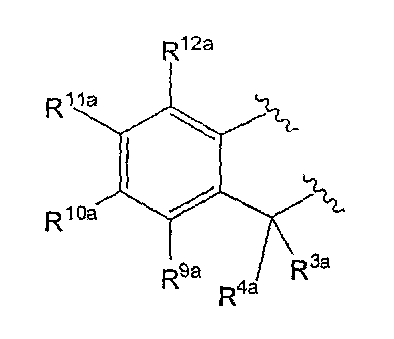
発明の詳細な説明
I.定義と略語
本明細書にて使用する略語は、通常、化学分野および生物学分野での慣用的な意味を持つ。
Detailed Description of the Invention Definitions and Abbreviations The abbreviations used herein have their usual meanings in the chemical and biological fields.
本明細書で用いる「本発明の化合物」は、本明細書にて述べる化合物ならびに、これらの化合物の薬学的に許容される塩およびプロドラッグを示す。 As used herein, “compounds of the invention” refers to the compounds described herein, as well as pharmaceutically acceptable salts and prodrugs of these compounds.
本明細書で用いる「ホウ素含有化合物」は、化学式の一部にホウ素を含有する本発明の化合物を示す。 As used herein, “boron-containing compound” refers to a compound of the present invention that contains boron as part of its chemical formula.
MICまたは最小発育阻止濃度とは、未処置の対照に比して、化合物によって、50%を超える細胞成長、好ましくは60%の細胞成長、好ましくは70%の細胞成長、好ましくは80%の細胞成長、好ましくは90%の細胞成長が停止する点である。 The MIC or minimum inhibitory concentration refers to greater than 50% cell growth, preferably 60% cell growth, preferably 70% cell growth, preferably 80% cell, depending on the compound relative to an untreated control. Growth, preferably 90% cell growth is stopped.
置換基を左から右に書く慣用的な化学式で特定する場合、それには、右から左に構造を書いて得られる化学的に同一の置換基も等しく包含される。たとえば、−CH2O−は−OCH2−も示すことを意図している。 Where a substituent is specified by a conventional chemical formula written from left to right, it equally includes chemically identical substituents obtained by writing the structure from right to left. For example, -CH 2 O-is -OCH 2 - is intended to indicate also.
本明細書で使用する「ポリ(poly)」という用語は、少なくとも2を意味する。たとえば、多価金属イオンとは、価数が少なくとも2の金属イオンのことである。 As used herein, the term “poly” means at least 2. For example, a polyvalent metal ion is a metal ion having a valence of at least 2.
「部分」とは、別の部分に結合した分子のラジカル(radical)を示す。 A “part” refers to a radical of a molecule bonded to another part.
記号
「アルキル」という用語は、単独または別の置換基の一部として、特に明記しないかぎり、直鎖もしくは分岐鎖または環式炭化水素ラジカルまたはこれらの組み合わせを意味し、それらは完全に飽和していてもよいし、一不飽和または多価不飽和であってもよく、二価および多価ラジカルを含んでいてもよく、表記の数の炭素原子を有する(すなわち、C1〜C10は1から10個の炭素を意味する)。飽和炭化水素ラジカルの例には、メチル、エチル、n−プロピル、イソプロピル、n−ブチル、t−ブチル、イソブチル、sec−ブチル、シクロヘキシル、(シクロヘキシル)メチル、シクロプロピルメチル、さらには、たとえば、n−ペンチル、n−ヘキシル、n−ヘプチル、n−オクチルの相同体および異性体などの基が含まれるが、これに限定されるものではない。不飽和アルキル基とは、1つまたは複数の二重結合または三重結合を有するものである。不飽和アルキル基の例には、ビニル、2−プロペニル、クロチル、2−イソペンテニル、2−(ブタジエニル)、2,4−ペンタジエニル、3−(1,4−ペンタジエニル)、エチニル、1−および3−プロピニル、3−ブチニル、およびより高級の相同体および異性体が含まれるが、これに限定されるものではない。「アルキル」という用語には、特に明記しないかぎり、「ヘテロアルキル」など、下記でより詳細に定義するアルキルの誘導体も含むことを意図している。炭化水素基に限定されるアルキル基を「ホモアルキル」と呼ぶ。
The term “alkyl”, alone or as part of another substituent, means a straight or branched chain or cyclic hydrocarbon radical or a combination thereof, unless otherwise specified, which are fully saturated. May be monounsaturated or polyunsaturated, may contain divalent and polyvalent radicals and has the indicated number of carbon atoms (ie C 1 -C 10 is from 1
「アルキレン」という用語は、単独または別の置換基の一部として、アルカン由来の二価ラジカルを意味し、−CH2CH2CH2CH2−が例示として含まれるがこれに限定されるものではなく、下記において「ヘテロアルキレン」として述べる基をさらに含む。一般に、アルキル(またはアルキレン)基は1から24個の炭素原子を有するが、本発明では10個以下の炭素原子を有するものが好ましい。「低級アルキル」または「低級アルキレン」とは、一般に8個以下の炭素原子を有する短鎖のアルキル基またはアルキレン基である。 The term “alkylene” means a divalent radical derived from an alkane, alone or as part of another substituent, including, but not limited to, —CH 2 CH 2 CH 2 CH 2 —. Rather, it further includes groups described below as “heteroalkylene”. Generally, alkyl (or alkylene) groups have 1 to 24 carbon atoms, but those having 10 or fewer carbon atoms are preferred in the present invention. “Lower alkyl” or “lower alkylene” is a short-chain alkyl or alkylene group generally having eight or fewer carbon atoms.
「アルコキシ」「アルキルアミノ」および「アルキルチオ」(またはチオアルコキシ)という用語は、慣用的な意味で用いられ、それぞれ、酸素原子、アミノ基または硫黄原子を介して分子の残部に結合したアルキル基を示す。 The terms “alkoxy”, “alkylamino”, and “alkylthio” (or thioalkoxy) are used in a conventional sense to denote an alkyl group bonded to the rest of the molecule through an oxygen, amino, or sulfur atom, respectively. Show.
「ヘテロアルキル」という用語は、特に明記しないかぎり、単独または他の用語との組み合わせで、規定数の炭素原子と、および少なくとも1種のヘテロ原子とからなる、安定した直鎖もしくは分岐鎖または環式炭化水素ラジカルまたはこれらの組み合わせを意味する。例示としての実施形態では、ヘテロ原子は、B、O、NおよびSからなる群から選択することができ、窒素原子および硫黄原子は任意に酸化されてもよく、窒素ヘテロ原子は任意に四級化されてもよい。ヘテロ原子であるB、O、NおよびSは、ヘテロアルキル基内部のどの位置にあってもよいし、あるいはアルキル基が分子の残部と結合する位置にあってもよい。具体例には、−CH2−CH2−O−CH3、−CH2−CH2−NH−CH3、−CH2−CH2−N(CH3)−CH3、−CH2−S−CH2−CH3、−CH2−CH2、−S(O)−CH3、−CH2−CH2−S(O)2−CH3、−CH=CH−O−CH3、−CH2−CH=N−OCH3、−CH=CH−N(CH3)−CH3が含まれるが、これに限定されるものではない。たとえば、−CH2−NH−OCH3など、最大で2個までのヘテロ原子が連続していてもよい。同様に、「ヘテロアルキレン」という用語は、ヘテロアルキル由来の二価ラジカルを意味し、単独または別の置換基の一部として、−CH2−CH2−S−CH2−CH2−および−CH2−S−CH2−CH2−NH−CH2−の例示があげられるがこれに限定されるものではない。ヘテロアルキレン基の場合、ヘテロ原子は鎖の一方の端または両端を占めることができる(たとえば、アルキレンオキシ、アルキレンジオキシ、アルキレンアミノ、アルキレンジアミノなど)。さらに、アルキレンおよびヘテロアルキレン架橋基では、架橋基の式が書かれる方向が架橋基の向きを示すものではない。たとえば、式−C(O)2R’−は−C(O)2R’−と−R’C(O)2−の両方を表す。
The term “heteroalkyl”, unless otherwise stated, is a stable straight or branched chain or ring consisting of a specified number of carbon atoms and at least one heteroatom, alone or in combination with other terms. Means a hydrocarbon radical or a combination thereof. In an exemplary embodiment, the heteroatom can be selected from the group consisting of B, O, N, and S, the nitrogen and sulfur atoms may be optionally oxidized, and the nitrogen heteroatom is optionally quaternary. May be used. The heteroatoms B, O, N and S may be in any position within the heteroalkyl group, or may be in a position where the alkyl group is attached to the rest of the molecule. Specific examples include —CH 2 —CH 2 —O—CH 3 , —CH 2 —CH 2 —NH—CH 3 , —CH 2 —CH 2 —N (CH 3 ) —CH 3 , —CH 2 —S. -CH 2 -CH 3, -CH 2 -CH 2, -S (O) -
「シクロアルキル」および「ヘテロシクロアルキル」という用語は、単独または他の用語との組み合わせで、特に明記しないかぎり、それぞれ「アルキル」および「ヘテロアルキル」の環状のものを示す。さらに、ヘテロシクロアルキルの場合、ヘテロ原子が、複素環が分子の残部に結合する位置を占めることができる。シクロアルキルの例には、シクロペンチル、シクロヘキシル、1−シクロヘキセニル、3−シクロヘキセニル、シクロヘプチルなどが含まれるが、これに限定されるものではない。ヘテロシクロアルキルの例には、1−(1,2,5,6−テトラヒドロピリジル)、1−ピペリジニル、2−ピペリジニル、3−ピペリジニル、4−モルホリニル、3−モルホリニル、テトラヒドロフラン−2−イル、テトラヒドロフラン−3−イル、テトラヒドロチエン−2−イル、テトラヒドロチエン−3−イル、1−ピペラジニル、2−ピペラジニルなどが含まれるが、これに限定されるものではない。 The terms “cycloalkyl” and “heterocycloalkyl”, alone or in combination with other terms, refer to cyclic “alkyl” and “heteroalkyl”, respectively, unless otherwise specified. Furthermore, in the case of heterocycloalkyl, a heteroatom can occupy the position at which the heterocycle is attached to the remainder of the molecule. Examples of cycloalkyl include, but are not limited to, cyclopentyl, cyclohexyl, 1-cyclohexenyl, 3-cyclohexenyl, cycloheptyl, and the like. Examples of heterocycloalkyl include 1- (1,2,5,6-tetrahydropyridyl), 1-piperidinyl, 2-piperidinyl, 3-piperidinyl, 4-morpholinyl, 3-morpholinyl, tetrahydrofuran-2-yl, tetrahydrofuran Examples include, but are not limited to, -3-yl, tetrahydrothien-2-yl, tetrahydrothien-3-yl, 1-piperazinyl, 2-piperazinyl and the like.
「ハロ」または「ハロゲン」という用語は、単独または別の置換基の一部として、特に明記しないかぎり、フッ素原子、塩素原子、臭素原子またはヨウ素原子を意味する。さらに、「ハロアルキル」などの用語は、モノハロアルキルおよびポリハロアルキルを含むことを意図したものである。たとえば、「ハロ(C1〜C4)アルキル」という用語は、トリフルオロメチル、2,2,2−トリフルオロエチル、4−クロロブチル、3−ブロモプロピルなどを含むことを意図したものであるが、これに限定されるものではない。 The term “halo” or “halogen”, alone or as part of another substituent, means a fluorine, chlorine, bromine or iodine atom unless otherwise specified. Furthermore, terms such as “haloalkyl” are intended to include monohaloalkyl and polyhaloalkyl. For example, the term “halo (C 1 -C 4 ) alkyl” is intended to include trifluoromethyl, 2,2,2-trifluoroethyl, 4-chlorobutyl, 3-bromopropyl, and the like. However, the present invention is not limited to this.
「アリール」という用語は、特に明記しないかぎり、単環であってもよいし、一緒に縮合または共有結合した多環であってもよい(好ましくは1から3環)多価不飽和の芳香族置換基を意味する。「ヘテロアリール」という用語は、1から4個のヘテロ原子を含有するアリール基(または環)を示す。例示としての実施形態では、ヘテロ原子は、B、N、OおよびSから選択され、窒素原子および硫黄原子は任意に酸化されてもよく、窒素原子は任意に四級化されてもよい。ヘテロアリール基は、ヘテロ原子を介して分子の残部に結合することができる。アリールおよびヘテロアリール基の非限定的な例には、フェニル、1−ナフチル、2−ナフチル、4−ビフェニル、1−ピロリル、2−ピロリル、3−ピロリル、3−ピラゾリル、2−イミダゾリル、4−イミダゾリル、ピラジニル、2−オキサゾリル、4−オキサゾリル、2−フェニル−4−オキサゾリル、5−オキサゾリル、3−イソキサゾリル、4−イソキサゾリル、5−イソキサゾリル、2−チアゾリル、4−チアゾリル、5−チアゾリル、2−フリル、3−フリル、2−チエニル、3−チエニル、2−ピリジル、3−ピリジル、4−ピリジル、2−ピリミジル、4−ピリミジル、5−ベンゾチアゾリル、プリニル、2−ベンズイミダゾリル、5−インドリル、1−イソキノリル、5−イソキノリル、2−キノキサリニル、5−キノキサリニル、3−キノリル、6−キノリル、ジオキサボロラン、ジオキサボリナンおよびジオキサボレパンが含まれる。上述したアリールおよびヘテロアリール環系各々の置換基は、後述する許容可能な置換基の群から選択する。 The term “aryl” may be monocyclic, polycyclic fused together or covalently linked together (preferably 1 to 3 rings), unless otherwise specified, polyunsaturated aromatics. Means a substituent. The term “heteroaryl” refers to an aryl group (or ring) containing 1 to 4 heteroatoms. In an exemplary embodiment, the heteroatoms are selected from B, N, O and S, the nitrogen and sulfur atoms may be optionally oxidized, and the nitrogen atoms may optionally be quaternized. A heteroaryl group can be attached to the remainder of the molecule through a heteroatom. Non-limiting examples of aryl and heteroaryl groups include phenyl, 1-naphthyl, 2-naphthyl, 4-biphenyl, 1-pyrrolyl, 2-pyrrolyl, 3-pyrrolyl, 3-pyrazolyl, 2-imidazolyl, 4- Imidazolyl, pyrazinyl, 2-oxazolyl, 4-oxazolyl, 2-phenyl-4-oxazolyl, 5-oxazolyl, 3-isoxazolyl, 4-isoxazolyl, 5-isoxazolyl, 2-thiazolyl, 4-thiazolyl, 5-thiazolyl, 2- Furyl, 3-furyl, 2-thienyl, 3-thienyl, 2-pyridyl, 3-pyridyl, 4-pyridyl, 2-pyrimidyl, 4-pyrimidyl, 5-benzothiazolyl, purinyl, 2-benzimidazolyl, 5-indolyl, 1 -Isoquinolyl, 5-isoquinolyl, 2-quinoxalinyl, 5-quino Sariniru, 3-quinolyl, 6-quinolyl, dioxaborolane, include dioxaborinane and Jiokisaborepan. The substituents for each of the aryl and heteroaryl ring systems described above are selected from the group of acceptable substituents described below.
簡潔にするために、「アリール」という用語は、他の用語(アリールオキシ、アリールチオキシ、アリールアルキルなど)との組み合わせで用いる場合、上記にて定義したアリール環とヘテロアリール環の両方を含む。よって、「アリールアルキル」という用語は、アルキル基(たとえば、ベンジル、フェネチル、ピリジルメチルなど)にアリール基が結合したラジカルを含むことを意図したものであり、該アルキル基には炭素原子(メチレン基など)がたとえば酸素原子によって置換されたアルキル基が含まれる(たとえば、フェノキシメチル、2−ピリジルオキシメチル、3−(1−ナフチルオキシ)プロピルなど)。 For brevity, the term “aryl” when used in combination with other terms (aryloxy, arylthioxy, arylalkyl, etc.) includes both aryl and heteroaryl rings as defined above. . Thus, the term “arylalkyl” is intended to include radicals having an aryl group attached to an alkyl group (eg, benzyl, phenethyl, pyridylmethyl, etc.), wherein the alkyl group contains carbon atoms (methylene groups). Etc.) include, for example, alkyl groups substituted by oxygen atoms (eg, phenoxymethyl, 2-pyridyloxymethyl, 3- (1-naphthyloxy) propyl, etc.).
上述の用語(「アルキル」「ヘテロアルキル」「アリール」および「ヘテロアリール」など)は各々、表記のラジカルの置換された形態と非置換の形態の両方を含むことを意図したものである。各タイプのラジカルに好ましい置換基については後述する。 The above terms (such as “alkyl”, “heteroalkyl”, “aryl” and “heteroaryl”) are each intended to include both substituted and unsubstituted forms of the indicated radical. Preferred substituents for each type of radical are described below.
アルキルおよびヘテロアルキルラジカル(アルキレン、アルケニル、ヘテロアルキレン、ヘテロアルケニル、アルキニル、シクロアルキル、ヘテロシクロアルキル、シクロアルケニル,およびヘテロシクロアルケニルとしばしば称される基を含む)の置換基は、総称的に「アルキル基置換基」といい、0から(2m’+1)個の範囲にある数の、−OR’と、=Oと、=NR’と、=N−OR’と、−NR’R’’と、−SR’と、−ハロゲンと、−OC(O)R’と、−C(O)R’と、−CO2R’と、−CONR’R’’と、−OC(O)NR’R’’と、−NR’’C(O)R’と、−NR’−C(O)NR’’R’’’と、−NR’’C(O)2R’と、−NR−C(NR’R’’R’’’)=NR’’’’と、−NR−C(NR’R’’)=NR’’’と、−S(O)R’と、−S(O)2R’と、−S(O)2NR’R’’と、−NRSO2R’と、−CNと、−NO2と、から選択されるがこれに限定されるものではない種々の基のうちの1つ以上であることができる(ここで、m’は、このようなラジカルの炭素原子の総数である)。R’、R’’、R’’’およびR’’’’は各々、好ましくは独立に、水素、置換または非置換のヘテロアルキル、置換または非置換のアリール、たとえば、1〜3個のハロゲンで置換されたアリール、置換または非置換のアルキル、アルコキシまたはチオアルコキシ基、あるいはアリールアルキル基を示す。たとえば、本発明の化合物が2つ以上のR基を含む場合、R’、R’’、R’’’およびR’’’’基が2つ以上存在する場合のこれらの各々と同様に、R基は各々独立に選択される。R’とR’’が同じ窒素原子に結合する場合、これらを窒素原子と連結させて5員環、6員環または7員環を形成することができる。たとえば、−NR’R’’は、1−ピロリジニルおよび4−モルホリニルを含むことを意図したものであるが、これに限定されるものではない。上述の置換基に関する説明から、当業者であれば、「アルキル」という用語は、ハロアルキル(−CF3および−CH2CF3など)およびアシル(たとえば、−C(O)CH3、−C(O)CF3、−C(O)CH2OCH3など)など、水素基以外の基に結合した炭素原子を含む基を含むことを意図したものであることを理解できよう。 Substituents on alkyl and heteroalkyl radicals (including groups often referred to as alkylene, alkenyl, heteroalkylene, heteroalkenyl, alkynyl, cycloalkyl, heterocycloalkyl, cycloalkenyl, and heterocycloalkenyl) are generically designated as “ -Al ', = O, = NR', = N-OR ', and -NR'R''in the range of 0 to (2m' + 1). If, 'and, - halogen and, -OC (O) R' -SR a, 'and, -CO 2 R' -C (O ) R a, and -CONR'R '', -OC (O) NR and 'R'',' a, -NR'-C (O) NR''R '-NR''C (O) R a'', and -NR''C (O) 2 R', -NR -C (NR'R "R '") = NR "", -NR-C (NR'R ") = NR"', -S (O) R ', -S (O) 2 R Among various groups selected from, but not limited to, ', -S (O) 2 NR'R'', -NRSO 2 R', -CN, and -NO 2 (Where m ′ is the total number of carbon atoms of such radicals). R ′, R ″, R ′ ″ and R ″ ″ each preferably independently represent hydrogen, substituted or unsubstituted heteroalkyl, substituted or unsubstituted aryl, such as 1 to 3 halogens. Represents an aryl, substituted or unsubstituted alkyl, alkoxy or thioalkoxy group, or an arylalkyl group substituted by For example, when a compound of the invention contains two or more R groups, as well as each of these when there are two or more R ′, R ″, R ′ ″ and R ″ ″ groups, Each R group is independently selected. When R ′ and R ″ are bonded to the same nitrogen atom, they can be linked to the nitrogen atom to form a 5-membered ring, 6-membered ring or 7-membered ring. For example, —NR′R ″ is intended to include, but is not limited to, 1-pyrrolidinyl and 4-morpholinyl. From the above discussion of substituents, one of ordinary skill in the art would understand that the term “alkyl” refers to haloalkyl (such as —CF 3 and —CH 2 CF 3 ) and acyl (eg, —C (O) CH 3 , —C ( It will be understood that it is intended to include groups containing carbon atoms bonded to groups other than hydrogen groups, such as O) CF 3 , —C (O) CH 2 OCH 3 and the like.
アルキルラジカルの場合で説明した置換基と同様に、アリール基およびヘテロアリール基の置換基を総称的に「アリール基置換基」という。置換基は、たとえば、ゼロから芳香族環系の空きの原子価(open valence)の総数の範囲にある数の、ハロゲンと、−OR’と、=Oと、=NR’と、=N−OR’と、−NR’R’’と、−SR’と、−ハロゲンと、−OC(O)R’と、−C(O)R’と、−CO2R’と、−CONR’R’’と、−OC(O)NR’R’’と、−NR’’C(O)R’と、−NR’−C(O)NR’’R’’’と、−NR’’C(O)2R’と、−NR−C(NR’R’’R’’’)=NR’’’’と、−NR−C(NR’R’’)=NR’’’と、−S(O)R’と、−S(O)2R’と、−S(O)2NR’R’’と、−NRSO2R’と、−CNおよび−NO2と、−R’と、−N3と、−CH(Ph)2と、フルオロ(C1〜C4)アルコキシと、フルオロ(C1〜C4)アルキルと、から選択される(ここで、R’、R’’、R’’’およびR’’’’は、好ましくは、水素と、置換または非置換のアルキルと、置換または非置換のヘテロアルキルと、置換または非置換のアリールと、置換または非置換のヘテロアリールと、から独立に選択される)。たとえば、本発明の化合物が2つ以上のR基を含む場合、R’、R’’、R’’’およびR’’’’基が2つ以上存在する場合のこれらの各々と同様に、R基は各々独立に選択される。 Similar to the substituents described in the case of the alkyl radical, the substituents of the aryl group and heteroaryl group are generically referred to as “aryl group substituents”. Substituents may be, for example, numbers ranging from zero to the total number of open valences of the aromatic ring system, halogen, -OR ', = O, = NR', = N- OR ′, —NR′R ″, —SR ′, —halogen, —OC (O) R ′, —C (O) R ′, —CO 2 R ′, and —CONR′R ”, —OC (O) NR′R ″, —NR ″ C (O) R ′, —NR′—C (O) NR ″ R ′ ″, and —NR ″ C. (O) 2 R ′, —NR—C (NR′R ″ R ′ ″) = NR ″ ″, —NR—C (NR′R ″) = NR ′ ″, − S (O) R ′, —S (O) 2 R ′, —S (O) 2 NR′R ″, —NRSO 2 R ′, —CN and —NO 2 , and —R ′ , and -N 3, and -CH (Ph) 2, fluoro (C 1 -C 4) and alkoxy, fluoro (C 1 -C 4) alkyl is selected from (this R ′, R ″, R ″ ′ and R ″ ″ are preferably hydrogen, substituted or unsubstituted alkyl, substituted or unsubstituted heteroalkyl, substituted or unsubstituted aryl. And substituted or unsubstituted heteroaryl. For example, when a compound of the invention contains two or more R groups, as well as each of these when there are two or more R ′, R ″, R ′ ″ and R ″ ″ groups, Each R group is independently selected.
アリール環またはヘテロアリール環の隣接する原子の置換基のうちの2つが、任意に、式−T−C(O)−(CRR’)q−U−(式中、TおよびUは独立に、−NR−、−O−、−CRR’−または単結合であり、qは0から3の整数である)で表される置換基で置換されていてもよい。あるいは、アリール環またはヘテロアリール環の隣接する原子の置換基のうちの2つが、任意に、式−A−(CH2)r−B−(式中、AおよびBは独立に、−CRR’−、−O−、−NR−、−S−、−S(O)−、−S(O)2−、−S(O)2NR’−または単結合であり、rは1から4の整数である)で表される置換基で置換されていてもよい。このようにして形成された新たな環の単結合のうちの1つが、任意に、二重結合で置換されていてもよい。あるいは、アリール環またはヘテロアリール環の隣接する原子の置換基のうちの2つが、任意に、式−(CRR’)s−X−(CR’’R’’’)d−(式中、sおよびdは独立に、0から3の整数であり、Xは、−O−、−NR’−、−S−、−S(O)−、−S(O)2−または−S(O)2NR’−である)で表される置換基で置換されていてもよい。置換基R、R’、R’’およびR’’’は、好ましくは、水素または置換または非置換の(C1〜C6)アルキルから独立に選択される。
Two of the substituents on adjacent atoms of the aryl or heteroaryl ring are optionally substituted with the formula -TC (O)-(CRR ') q -U-, wherein T and U are independently -NR-, -O-, -CRR'- or a single bond, and q is an integer of 0 to 3). Alternatively, two of the substituents on adjacent atoms of the aryl or heteroaryl ring are optionally substituted with the formula —A— (CH 2 ) r —B—, wherein A and B are independently —CRR ′ -, - O -, - NR -, - S -, - S (O) -, - S (O) 2-, a -
本明細書で使用する場合、「環」とは、置換または非置換のシクロアルキル、置換または非置換のヘテロシクロアルキル、置換または非置換のアリール,または置換または非置換のヘテロアリールを意味する。環には縮合環部分を含む。環の原子数は、典型的には、環の員数によって決まる。たとえば、「5員環から7員環」とは、5から7個の原子が環状の配置で存在することを意味する。環は任意に、ヘテロ原子を含んでいた。よって、「5員環から7員環」という用語には、たとえばピリジニルおよびピペリジニルを含む。「環」という用語はさらに、各「環」が独立に上記のごとく定義される2つ以上の「環」を含む環系も包含する。 As used herein, “ring” means substituted or unsubstituted cycloalkyl, substituted or unsubstituted heterocycloalkyl, substituted or unsubstituted aryl, or substituted or unsubstituted heteroaryl. The ring includes a fused ring moiety. The number of atoms in the ring is typically determined by the number of members in the ring. For example, “5- to 7-membered ring” means that 5 to 7 atoms are present in a cyclic arrangement. The ring optionally contained heteroatoms. Thus, the term “5- to 7-membered ring” includes, for example, pyridinyl and piperidinyl. The term “ring” further encompasses a ring system comprising two or more “rings” wherein each “ring” is independently defined as above.
本明細書で使用する場合、「ヘテロ原子」という用語は、炭素(C)および水素(H)以外の原子を含む。具体例には、酸素(O)、窒素(N)、硫黄(S)、ケイ素(Si)、ゲルマニウム(Ge)、アルミニウム(Al)、ホウ素(B)が含まれる。 As used herein, the term “heteroatom” includes atoms other than carbon (C) and hydrogen (H). Specific examples include oxygen (O), nitrogen (N), sulfur (S), silicon (Si), germanium (Ge), aluminum (Al), and boron (B).
「R」記号は、置換または非置換のアルキル、置換または非置換のヘテロアルキル、置換または非置換のアリール、置換または非置換のヘテロアリール、置換または非置換のシクロアルキルおよび置換または非置換のヘテロシクロアルキル基と、から選択される置換基を示す一般的な略語である。 The “R” symbol indicates substituted or unsubstituted alkyl, substituted or unsubstituted heteroalkyl, substituted or unsubstituted aryl, substituted or unsubstituted heteroaryl, substituted or unsubstituted cycloalkyl and substituted or unsubstituted hetero A general abbreviation for a cycloalkyl group and a substituent selected from:
「由来の」という用語は、普通の言葉での意味を含み、また、基準分子に対して99%、98%、97%、96%、95%、94%、93%、92%、91%、90%、89%、88%、87%、86%、85%、84%、83%、82%、81%、80%、75%、70%、65%または60%相同な分子を示す。この定義で言及される分子には、任意の長さおよび組成のRNAまたはDNA、オリゴヌクレオチド、ポリペプチドまたはタンパク質の鎖を含む。 The term “derived from” includes the meaning in ordinary language and is 99%, 98%, 97%, 96%, 95%, 94%, 93%, 92%, 91% relative to the reference molecule. , 90%, 89%, 88%, 87%, 86%, 85%, 84%, 83%, 82%, 81%, 80%, 75%, 70%, 65% or 60% . Molecules referred to in this definition include RNA or DNA, oligonucleotides, polypeptides or protein chains of any length and composition.
「免疫学的マーカー」という用語には、オリゴヌクレオチド、タンパク質、抗体、ペプチド、ポリペプチド、酵素、あるいは、適切な動物または細胞で免疫応答を誘導あるいは特定の抗体に結合できる他の任意の分子を含む。 The term “immunological marker” includes oligonucleotides, proteins, antibodies, peptides, polypeptides, enzymes, or any other molecule that can induce an immune response or bind to a specific antibody in an appropriate animal or cell. Including.
「非同種(noncognate)」という用語は、この語の単数形と複数形の両方を包含することを意図したものである。すなわち、「非同種アミノ酸」というフレーズには1種以上のアミノ酸が含まれる。 The term “noncognate” is intended to encompass both the singular and plural form of this term. That is, the phrase “non-homologous amino acid” includes one or more amino acids.
「有効」量の薬剤、製剤または浸透剤(permeant)とは、所望の局所作用または全身作用を得られるだけの十分な量の活性剤を意味する。「局所的に有効な」「化粧上有効な」「薬学上有効な」または「治療上有効な」量とは、所望の治療結果を発揮するのに必要な薬剤の量を示す。 By “effective” amount of drug, formulation or permeant is meant an amount of active agent sufficient to obtain the desired local or systemic effect. “Topically effective”, “cosmetically effective”, “pharmaceutically effective” or “therapeutically effective” amount refers to the amount of drug required to produce a desired therapeutic result.
「局所的に有効な」とは、皮膚、爪、毛、鉤爪または蹄への適用時に、材料の活性成分の適用場所で局所的にあるいは経皮通過の結果として全身に所望の薬理学的結果をもたらす材料を示す。 “Topically effective” refers to the desired pharmacological result systemically when applied to the skin, nails, hair, claws or hoof, locally at the site of application of the active ingredient of the material or as a result of transdermal passage. The material that brings about.
「化粧上有効な」とは、皮膚、爪、毛、鉤爪または蹄への適用時に、材料の活性成分の適用場所で局所的に所望の化粧上の結果をもたらす材料を示す。 “Cosmetically effective” refers to a material that, when applied to the skin, nails, hair, claws or hoofs, locally produces the desired cosmetic result at the site of application of the active ingredient of the material.
「薬学的に許容される塩」という用語は、本明細書に記載の化合物に見られる特定の置換基に応じて比較的無毒の酸または塩基を用いて調製される本発明の化合物の塩を含むことを意図したものである。本発明の化合物が比較的酸性の官能基を含有する場合、中性の形のこのような化合物を、ニートで(neat)あるいは好適な不活性溶媒中で、十分な量の望ましい塩基と接触させることで、塩基付加塩を得ることができる。薬学的に許容される塩基付加塩の例には、ナトリウム、カリウム、カルシウム、アンモニウム、有機アミノまたはマグネシウム塩あるいは同様の塩が含まれる。本発明の化合物が比較的塩基性の官能基を含有する場合、中性の形のこのような化合物を、ニートであるいは好適な不活性溶媒中で、十分な量の望ましい酸と接触させることで、酸付加塩を得ることができる。薬学的に許容される酸付加塩の例には、塩酸、臭化水素酸、硝酸、炭酸、一水素炭酸(monohydrogencarbonic)、リン酸、一水素リン酸(monohydrogenphosphoric)、二水素リン酸(dihydrogenphosphoric)、硫酸、一水素硫酸(monohydrogensulfuric)、ヨウ化水素酸または亜リン酸などの無機酸に由来するもの、ならびに、酢酸、プロピオン酸、イソ酪酸、マレイン酸、マロン酸、安息香酸、コハク酸、スベリン酸、フマル酸、乳酸、マンデル酸、フタル酸、ベンゼンスルホン酸、p−トリルスルホン酸、クエン酸、酒石酸、メタンスルホン酸などの比較的無毒の有機酸に由来する塩が含まれる。また、アルギン酸塩などのアミノ酸の塩、ならびに、グルクロン酸またはガラクツロン酸などのような有機酸の塩(たとえば、Berge et al., "Pharmaceutical Salts", Journal of Pharmaceutical Science 66: 1-19 (1977)を参照のこと)も含まれる。本発明の特定の具体的な化合物は、この化合物を塩基付加塩または酸付加塩に変換できるようにする塩基性官能基と酸性官能基の両方を含有している。 The term “pharmaceutically acceptable salt” refers to a salt of a compound of the invention prepared with a relatively non-toxic acid or base, depending on the particular substituents found on the compounds described herein. It is intended to be included. Where the compound of the invention contains a relatively acidic functional group, the neutral form of such compound is contacted with a sufficient amount of the desired base neat or in a suitable inert solvent. Thus, a base addition salt can be obtained. Examples of pharmaceutically acceptable base addition salts include sodium, potassium, calcium, ammonium, organic amino, or magnesium salt, or a similar salt. Where the compounds of the present invention contain relatively basic functional groups, the neutral form of such compounds can be contacted with a sufficient amount of the desired acid neat or in a suitable inert solvent. An acid addition salt can be obtained. Examples of pharmaceutically acceptable acid addition salts include hydrochloric acid, hydrobromic acid, nitric acid, carbonic acid, monohydrogencarbonic, phosphoric acid, monohydrogenphosphoric, dihydrogenphosphoric Derived from inorganic acids such as sulfuric acid, monohydrogensulfuric acid, hydroiodic acid or phosphorous acid, and acetic acid, propionic acid, isobutyric acid, maleic acid, malonic acid, benzoic acid, succinic acid, suberin Examples include salts derived from relatively non-toxic organic acids such as acid, fumaric acid, lactic acid, mandelic acid, phthalic acid, benzenesulfonic acid, p-tolylsulfonic acid, citric acid, tartaric acid and methanesulfonic acid. Also, salts of amino acids such as alginate, and salts of organic acids such as glucuronic acid or galacturonic acid (eg Berge et al., “Pharmaceutical Salts”, Journal of Pharmaceutical Science 66: 1-19 (1977) For example). Certain specific compounds of the present invention contain both basic and acidic functionalities that allow the compounds to be converted into base or acid addition salts.
中性の形態の化合物は、好ましくは、塩と塩基または酸とを接触させ親化合物を慣用的な方法で単離することにより、再生される。化合物の親の形態は、極性溶媒での溶解性などのいくつかの物性で種々の塩の形態とは異なる。 The neutral form of the compound is preferably regenerated by contacting the salt with a base or acid and isolating the parent compound in the conventional manner. The parent form of the compound differs from the various salt forms in several physical properties, such as solubility in polar solvents.
塩の形態に加えて、本発明は、プロドラッグ形態の化合物を提供する。本明細書に記載の化合物または錯体のプロドラッグは、生理学的条件下で容易に化学変化を起こして本発明の化合物となる。さらに、プロドラッグは、化学的または生化学的な方法で、ex vivo環境にて本発明の化合物に変換可能である。 In addition to salt forms, the present invention provides compounds in prodrug form. Prodrugs of the compounds or complexes described herein readily undergo chemical changes under physiological conditions to provide the compounds of the present invention. In addition, prodrugs can be converted to the compounds of the present invention in an ex vivo environment by chemical or biochemical methods.
本発明の特定の化合物は、水和形態を含む、溶媒和形態ならびに非溶媒和形態で存在することができる。一般に、溶媒和形態は非溶媒和形態と同等であり、本発明の範囲に包含される。本発明のある種の化合物は、多結晶性または非晶質の形態で存在してもよい。一般に、物理的な形態はいずれも、本発明で企図される用途に対して同等なものであり、これらも本発明の範囲に含むことを意図している。 Certain compounds of the present invention can exist in solvated forms as well as unsolvated forms, including hydrated forms. In general, the solvated forms are equivalent to unsolvated forms and are encompassed within the scope of the present invention. Certain compounds of the present invention may exist in multiple crystalline or amorphous forms. In general, all physical forms are equivalent for the uses contemplated by the present invention and are intended to be within the scope of the present invention.
本発明のある種の化合物は、不斉炭素原子(光学中心)または二重結合を有する。ラセミ酸塩、ジアステレオマー、幾何異性体および個々の異性体は本発明の範囲に包含される。 Certain compounds of the present invention have asymmetric carbon atoms (optical centers) or double bonds. Racemates, diastereomers, geometric isomers and individual isomers are encompassed within the scope of the present invention.
本発明の化合物は、このような化合物を構成する1つ以上の原子において、不自然な(unnatural)割合の原子アイソトープを含有するものであってもよい。たとえば、化合物を、たとえばトリチウム(3H)、ヨウ素−125(125I)、または炭素−14(14C)などの放射性アイソトープで放射性標識してもよい。本発明の化合物の種々のアイソトープは、放射性であるか否かを問わず、本発明の範囲に包含されることを意図したものである。 The compounds of the present invention may contain unnatural proportions of atomic isotopes at one or more of the atoms that constitute such compounds. For example, the compound may be radiolabeled with a radioactive isotope such as, for example, tritium ( 3 H), iodine-125 ( 125 I), or carbon-14 ( 14 C). The various isotopes of the compounds of the present invention, whether radioactive or not, are intended to be included within the scope of the present invention.
「薬学的に許容されるキャリア」または「薬学的に許容されるビヒクル」という用語は、本明細書に定義する有効量の活性剤を適切に送達し、活性剤の生物活性の有効性を妨げず、宿主または患者にとって十分に無毒ないずれの製剤またはキャリア媒質も示す。代表的なキャリアには、水、油(植物油および鉱油の両方)、クリーム基剤、ローション基剤、軟膏基剤などが含まれる。これらの基剤には、懸濁化剤、増粘剤、浸透促進剤などが含まれる。その配合については化粧および局所用の製薬分野の当業者で既知である。キャリアに関する別の情報は、本明細書に援用する、Remington: The Science and Practice of Pharmacy, 21st Ed., Lippincott, Williams & Wilkins (2005)に記載において見ることができる。 The term “pharmaceutically acceptable carrier” or “pharmaceutically acceptable vehicle” properly delivers an effective amount of an active agent as defined herein and interferes with the effectiveness of the biological activity of the active agent. Any formulation or carrier medium that is sufficiently non-toxic to the host or patient is indicated. Typical carriers include water, oil (both vegetable and mineral oil), cream bases, lotion bases, ointment bases, and the like. These bases include suspending agents, thickeners, penetration enhancers and the like. Its formulation is known to those skilled in the cosmetic and topical pharmaceutical fields. Additional information regarding carriers can be found in Remington: The Science and Practice of Pharmacy, 21st Ed., Lippincott, Williams & Wilkins (2005), incorporated herein by reference.
「薬学的に許容される局所用キャリア」と、これに相当する用語は、局所適用に適した本明細書にて上述したような薬学的に許容されるキャリアを示す。活性剤を懸濁または溶解させることができ、皮膚、爪、毛、鉤爪または蹄に適用したときに無毒で非炎症性であるという特性を持つ不活性の液体またはクリームビヒクルが、薬学的に許容可能な局所用キャリアの一例である。この用語は特に、局所用化粧品での使用の認められたキャリア材料を包含することを意図したものである。 “Pharmaceutically acceptable topical carrier” and equivalent terms refer to a pharmaceutically acceptable carrier as described hereinabove suitable for topical application. An inert liquid or cream vehicle that can suspend or dissolve the active agent and that is non-toxic and non-inflammatory when applied to the skin, nails, hair, claws or hoofs is pharmaceutically acceptable It is an example of a possible topical carrier. This term is specifically intended to encompass carrier materials approved for use in topical cosmetics.
「薬学的に許容される添加剤」という用語は、薬剤分野で既知または用いられ、活性剤の生物活性の有効性を過度に妨げず、宿主または患者にとって十分に無毒な保存剤、抗酸化剤、香料、乳化剤、染料および賦形剤を示す。局所用製剤の添加剤は、当該技術分野において既知であって、薬学的に許容されて上皮細胞またはその機能に悪影響を及ぼさない限りは局所用組成物に添加できるものである。さらに、これらの添加剤は、組成物の安定性を損なうものであるべきではない。たとえば、不活性フィラー、抗刺激剤、粘着付与剤、賦形剤、香料、乳白剤、抗酸化剤、ゲル化剤、安定剤、界面活性剤、皮膚軟化剤、着色剤、保存剤、緩衝剤、他の透過促進剤ならびに、当該技術分野において既知局所用または経皮送達製剤の他の慣用的な成分など。 The term “pharmaceutically acceptable excipient” is a preservative, antioxidant that is known or used in the pharmaceutical field and that does not unduly interfere with the effectiveness of the biological activity of the active agent and is sufficiently non-toxic to the host or patient. , Flavors, emulsifiers, dyes and excipients. Additives for topical formulations are known in the art and can be added to topical compositions as long as they are pharmaceutically acceptable and do not adversely affect epithelial cells or their function. Furthermore, these additives should not impair the stability of the composition. For example, inert fillers, anti-irritants, tackifiers, excipients, fragrances, opacifiers, antioxidants, gelling agents, stabilizers, surfactants, emollients, coloring agents, preservatives, buffering agents , Other permeation enhancers, as well as other conventional ingredients known in the art for topical or transdermal delivery formulations.
「促進」「浸透促進」または「透過促進」という用語は、薬剤が皮膚、爪、毛、鉤爪または蹄を介して透過する速度を高めるように、薬剤に対する皮膚、爪、毛、鉤爪または蹄の透過性が高まることに関する。たとえば、動物またはヒトの皮膚、爪、毛、鉤爪または蹄を介する薬剤の拡散速度を拡散セル装置で測定することにより、このような促進剤を用いて得られる促進された透過を観察することができる。拡散セルについては、Merritt et al. Diffusion Apparatus for Skin Penetration, J of Controlled Release, 1 (1984) pp. 161-162に記載されている。「透過促進剤」または「浸透促進剤」という用語は、単独または組み合わせで、薬剤に対する皮膚、爪、毛または蹄の透過性を高めるように作用する作用剤または作用剤の混合物を意図する。 The terms “promoting”, “penetration facilitating” or “permeation facilitating” refer to the skin, nails, hair, claws or hoofs to the drug so as to increase the rate at which the drug permeates through the skin, nails, hair, claws or hoofs. It relates to increased permeability. For example, by measuring the diffusion rate of a drug through animal or human skin, nails, hair, claws or hoofs with a diffusion cell device, one can observe the enhanced permeation obtained with such enhancers. it can. The diffusion cell is described in Merritt et al. Diffusion Apparatus for Skin Penetration, J of Controlled Release, 1 (1984) pp. 161-162. The term “permeation enhancer” or “penetration enhancer”, alone or in combination, intends an agent or mixture of agents that acts to increase the permeability of the skin, nails, hair or hoofs to the drug.
「賦形剤」という用語は、所望の用途に有効な薬剤組成物を配合するのに用いられるキャリア、希釈剤および/またはビヒクルを意味することが慣用的に知られている。 The term “excipient” is conventionally known to mean a carrier, diluent and / or vehicle used to formulate a pharmaceutical composition effective for the desired application.
「局所投与」という用語は、皮膚、爪、毛、鉤爪または蹄の外側表面を作用剤が通過して下側にある組織に到達するように、皮膚、爪、毛、鉤爪または蹄の外側表面に製剤を適用することを示す。局所投与には、無傷の皮膚、爪、毛、鉤爪または蹄、あるいは、皮膚、爪、毛、鉤爪または蹄の生傷または開放創に組成物を適用することが含まれる。医薬製剤の局所投与によって、皮膚および周辺組織に作用剤を限定的に分散させることが可能であり、あるいは、血流によって作用剤が治療部分から取り除かれるときにはこの作用剤を全身に分散させることができる。 The term “topical administration” refers to the outer surface of the skin, nail, hair, claw or hoof so that the agent passes through the outer surface of the skin, nail, hair, claw or hoof to reach the underlying tissue. Indicates that the formulation is applied. Topical administration includes applying the composition to intact skin, nails, hair, claws or hoofs, or live or open wounds of skin, nails, hair, claws or hoofs. The topical administration of the pharmaceutical formulation may allow the agent to be dispersed in a limited manner in the skin and surrounding tissues, or it may be dispersed throughout the body when the agent is removed from the treatment area by the bloodstream. it can.
「経皮送達」という用語は、組成物を局所投与または他の形で適用した結果、皮膚、爪、毛、鉤爪または蹄の障壁を通って作用剤が拡散することを示す。角質層が障壁として作用し、無傷の皮膚に浸透できる製剤はほとんどない。これとは対照的に、表皮および真皮は多くの溶質に対して透過性であるため、削ったりそうでなければ角質層を取り除いたりして表皮を露出させた皮膚、爪、毛、鉤爪または蹄を介する薬剤の吸収はより簡単に起こる。経皮送達には、注射、あるいは皮膚、爪、毛、鉤爪または蹄または粘膜の任意の部分を介するその他の送達、および残りの部分を介した吸収または透過が含まれる。薬学的に許容される適当なビヒクル中に活性剤を加えた後に皮膚、爪、毛、鉤爪または蹄へ適用することにより、無傷の皮膚、爪、毛、鉤爪または蹄を介した吸収を促進することも可能である。控えめな(passive)局所投与であれば、皮膚軟化剤または浸透促進剤と組み合わせで活性剤を治療部位に直接に適用することからなるものであってもよい。本明細書で使用する場合、経皮送達には、外皮すなわち皮膚、爪、毛、鉤爪または蹄を介して、あるいは、これを通って透過することによる送達を含むことを意図している。 The term “transdermal delivery” indicates that the agent diffuses through the skin, nail, hair, claw or hoof barrier as a result of topical administration or otherwise applied. There are few formulations in which the stratum corneum acts as a barrier and can penetrate intact skin. In contrast, because the epidermis and dermis are permeable to many solutes, skin, nails, hair, claws or hoofs that have been exposed by shaving or otherwise removing the stratum corneum Absorption of the drug through occurs more easily. Transdermal delivery includes injection or other delivery through the skin, nails, hair, claws or hoofs or any part of the mucosa and absorption or permeation through the rest. Facilitates absorption through intact skin, nails, hair, claws or hoofs by applying the active agent in an appropriate pharmaceutically acceptable vehicle and then applying to the skin, nails, hair, claws or hoofs It is also possible. For passive topical administration, it may consist of applying the active agent directly to the treatment site in combination with an emollient or penetration enhancer. As used herein, transdermal delivery is intended to include delivery by permeation through or through the outer skin, i.e. skin, nails, hair, claws or hoofs.
「微生物感染」という用語は、ウイルス、細菌、マイコバクテリア、真菌および寄生生物を含まれるがこれに限定されるものではない病原菌(infectious agents)による宿主組織のいずれの感染も示す(たとえば、Harrison's Principles of Internal Medicine, pp. 93-98 (Wilson et al., eds., 12th ed. 1991); Williams et al., J. of Medicinal Chem. 42:1481-1485 (1999)(各々その内容全体を本明細書に援用する))などを参照のこと)。 The term “microbial infection” refers to any infection of host tissue by infectious agents, including but not limited to viruses, bacteria, mycobacteria, fungi and parasites (eg, Harrison's Principles of Internal Medicine, pp. 93-98 (Wilson et al., eds., 12th ed. 1991); Williams et al., J. of Medicinal Chem. 42: 1481-1485 (1999) See for example))).
本明細書で使用する「生物学的培地(biological medium)」は、in vitroとin vivoの両方の生物学的環境を示す。例示としてのin vitroの「生物学的培地」には、細胞培養、組織培養、ホモジネート、血漿および血液が含まれるが、これに限定されるものではない。in vivoでの適用は一般に、哺乳動物、好ましくはヒトで行われる。 As used herein, “biological medium” refers to both in vitro and in vivo biological environments. Exemplary in vitro “biological media” include, but are not limited to, cell culture, tissue culture, homogenate, plasma and blood. In vivo applications are generally performed in mammals, preferably humans.
「阻害」および「遮断」は、本明細書ではtRNA合成酵素の修正ドメインの部分的または完全な封鎖を示すものとして互換的に用いられる。 “Inhibition” and “blocking” are used interchangeably herein to indicate partial or complete blockade of the tRNA synthetase correction domain.
本明細書で使用する「腹側/中間中心」は、深さ約0.3〜0.5mmの内側表面(爪床に面する)の中央から表面までドリル穿孔した粉末化爪試料を示す。この部分は、爪場の投薬部位の下にあるが、投薬表面(爪の背側表面)を含まない。 As used herein, “ventral / intermediate center” refers to a powdered nail sample drilled from the center to the surface of the inner surface (facing the nail bed) approximately 0.3 to 0.5 mm deep. This part is below the dosing site of the nail bed but does not include the dosing surface (the dorsal surface of the nail).
本明細書で使用する「腹側/中間中心」は、投薬部位の中間領域を示す。 As used herein, “ventral / middle center” refers to the middle region of the dosing site.
本明細書で使用する「残部の爪」は、爪の投薬されていない残部を示す。 As used herein, “remaining nail” refers to the remaining untreated portion of the nail.
本明細書で使用する「支持床」は、爪板に湿気を与え、さらに爪板を介して浸透する化学物質を受け取るための拡散セルのテフロン(登録商標)チャンバ内に置いてある綿球を示す。 As used herein, a “support floor” is a cotton ball placed in the Teflon® chamber of a diffusion cell to provide moisture to the nail plate and to receive chemicals that penetrate through the nail plate. Show.
本明細書で使用する「表面洗浄」は、投薬部位の表面でのエタノール(または他の有機溶媒)および石鹸/水による洗浄を示す。 “Surface cleaning” as used herein refers to cleaning with ethanol (or other organic solvent) and soap / water on the surface of the dosing site.
本明細書で使用する「細胞洗浄」は、拡散セルの内側のエタノール(または他の有機溶媒)および石鹸/水による洗浄を示す。 “Cell washing” as used herein refers to washing with ethanol (or other organic solvent) and soap / water inside the diffusion cell.
本明細書で定義する「ヒトの爪部分」は、爪板、爪床、基部爪郭(proximal nail fold)、側面爪郭(lateral nail fold)およびこれらの組み合わせであり得る。 As defined herein, a “human nail portion” can be a nail plate, nail bed, proximal nail fold, lateral nail fold, and combinations thereof.
「脱離基」という用語は、求核置換反応などの置換反応で、別の官能基または原子が置き換わることができる官能基または原子を意味する。例示として、代表的な脱離基には、トリフレート、クロロ、ブロモおよびヨード基;メシレート、トシレート、ブロシレート、ノシレートなどのスルホン酸エステル基;アセトキシ、トリフルオロアセトキシなどのアシルオキシ基が含まれる。 The term “leaving group” means a functional group or atom that can replace another functional group or atom in a substitution reaction, such as a nucleophilic substitution reaction. Illustratively, representative leaving groups include triflate, chloro, bromo and iodo groups; sulfonate ester groups such as mesylate, tosylate, brosylate, nosylate; acyloxy groups such as acetoxy, trifluoroacetoxy and the like.
「アミノ保護基」という用語は、アミノ窒素での望ましくない反応を妨げるのに適した保護基を意味する。代表的なアミノ保護基には、ホルミル;アセチル、トリクロロアセチルまたはトリフルオロアセチルなどのたとえばアルカノイル基といったアシル基;tert−ブトキシカルボニル(Boc)などのアルコキシカルボニル基;ベンジルオキシカルボニル(Cbz)および9−フルオレニルメトキシカルボニル(Fmoc)などのアリールメトキシカルボニル基;ベンジル(Bn)、トリチル(Tr)および1,1−ジ−(4’−メトキシフェニル)メチルなどのアリールメチル基;トリメチルシリル(TMS)およびtert−ブチルジメチルシリル(TBS)などのシリル基などが含まれるが、これに限定されるものではない。 The term “amino protecting group” means a protecting group suitable for preventing undesired reactions at an amino nitrogen. Representative amino protecting groups include formyl; acyl groups such as alkanoyl groups such as acetyl, trichloroacetyl or trifluoroacetyl; alkoxycarbonyl groups such as tert-butoxycarbonyl (Boc); benzyloxycarbonyl (Cbz) and 9- Arylmethoxycarbonyl groups such as fluorenylmethoxycarbonyl (Fmoc); arylmethyl groups such as benzyl (Bn), trityl (Tr) and 1,1-di- (4′-methoxyphenyl) methyl; trimethylsilyl (TMS) and A silyl group such as tert-butyldimethylsilyl (TBS) is included, but is not limited thereto.
「ヒドロキシ保護基」という用語は、ヒドロキシ基での望ましくない反応を妨げるのに適した保護基を意味する。代表的なヒドロキシ保護基には、メチル、エチルおよびtert−ブチルなどのアルキル基;たとえば、アセチルなどのアルカノイル基といったアシル基;ベンジル(Bn)、p−メトキシベンジル(PMB)、9−フルオレニルメチル(Fm)およびジフェニルメチル(ベンズヒドリル、DPM)などのアリールメチル基;トリメチルシリル(TMS)およびtert−ブチルジメチルシリル(TBS)などのシリル基が含まれるが、これに限定されるものではない。 The term “hydroxy protecting group” means a protecting group suitable for preventing undesired reactions at a hydroxy group. Exemplary hydroxy protecting groups include alkyl groups such as methyl, ethyl and tert-butyl; acyl groups such as alkanoyl groups such as acetyl; benzyl (Bn), p-methoxybenzyl (PMB), 9-fluorenyl Examples include, but are not limited to, arylmethyl groups such as methyl (Fm) and diphenylmethyl (benzhydryl, DPM); silyl groups such as trimethylsilyl (TMS) and tert-butyldimethylsilyl (TBS).
ホウ素は、本発明のいくつかの状況下で、酸素、硫黄または窒素との間で配位結合を形成することができる。配位結合は通常、共有結合よりも弱い。ホウ素が少なくとも1つの酸素、硫黄または窒素に共有結合し、同時に、それぞれ酸素、硫黄または窒素に配位結合している状況では、ホウ素と2つの等しいヘテロ原子との配位結合および共有結合が相互互換でき、あるいは共鳴混成体の形態をとることができる。これらの状況では、電子共有の正確な性質および程度を取り巻く潜在的な不確定要素がある。提供される構造は、ホウ素とこれが結合する原子との間の一切の結合のシナリオを含むことを意図したものではない。以下、これらの結合の非限定的な例をあげる:
本明細書で使用する「塩の対イオン」には、ホウ素が完全に負にまたは部分的に負に荷電したときに本発明の化合物と会合する正に荷電したイオンを示す。塩の対イオンの例には、H+、H3O+、アンモニウム、カリウム、カルシウム、マグネシウムおよびナトリウムが含まれる。 As used herein, “salt counterion” refers to a positively charged ion that associates with a compound of the invention when the boron is fully negatively or partially negatively charged. Examples of salt counter ions include H + , H 3 O + , ammonium, potassium, calcium, magnesium and sodium.
炭素と3つのヘテロ原子(このセクションで説明する3つの酸素など)に結合されるホウ素を含む化合物は、任意に、ホウ素と酸素の1つと間の配位結合の性質に因り、完全に負に荷電したホウ素または部分的に負に荷電したホウ素を含有することができる。負電荷に因って、正に荷電した対イオンがこの化合物に会合し、塩を形成してもよい。正に荷電した対イオンの例には、H+、H3O+、カルシウム、ナトリウム、アンモニウム、カリウムが含まれる。これらの化合物の塩は、これらの化合物についての説明に暗黙に含まれる。 Compounds containing boron bonded to carbon and three heteroatoms (such as the three oxygens described in this section) can be completely negative depending on the nature of the coordinate bond between the boron and one of the oxygens. It can contain charged boron or partially negatively charged boron. Due to the negative charge, a positively charged counterion may associate with the compound to form a salt. Examples of positively charged counterions include H + , H 3 O + , calcium, sodium, ammonium, potassium. Salts of these compounds are implicitly included in the description of these compounds.
本発明は、たとえば、本発明において用いられる化合物の二量体、三量体、四量体、これより上の相同体などの種またはその反応性類似体を含む多価(polyvalent)または多価(maultivalent)の種である化合物も包含する。たとえば、以下の条件下でC10の二量体が形成することができる。
本発明は、環状ボロン酸エステルの無水物である化合物も包含し、これらの化合物を脱水条件に付すことで合成される。これらの無水物の例を以下にあげる。
本発明の化合物の三量体も生成される。たとえば、非環式ボロン酸エステルの三量体を以下のようにして形成することができる。
強酸中で特定の保護基を除去すると、本発明の化合物のポリマーも生成される。たとえば、非環式ボロン酸エステルの三量体を以下のようにして形成することができる。
たとえば、本発明において用いられる化合物の二量体、三量体、四量体、これより上の相同体などの種またはその反応性類似体をはじめとして、多価(polyvalent)または多価(maultivalent)の種である化合物も、本発明において有用である。多価(polyvalent)または多価(maultivalent)の種を、本発明の単一の種または2つ以上の種から組み立てることが可能である。さらに、二量体の構築物は、「ホモ二量体」であるか「ヘテロ二量体」であり得る。さらに、本発明の化合物またはその反応性類似体がオリゴマーまたはポリマー骨格(たとえば、ポリリシン、デキストラン、ヒドロキシエチルスターチなど)に結合している多価(polyvalent)または多価(maultivalent)の構築物も、本発明の範囲内である。骨格は、好ましくは多官能性である(すなわち、本発明で用いる化合物を結合するための反応部位のアレイを有する)。さらに、本発明の単一の種または本発明の2つ以上の種で骨格を誘導体化することもできる。 For example, species such as dimers, trimers, tetramers, and higher homologues thereof, and reactive analogs thereof, including polyvalent or polyvalent (maultivalent) compounds used in the present invention. ) Are also useful in the present invention. Polyvalent or maultivalent species can be assembled from a single species or more than one species of the invention. Further, a dimeric construct can be a “homodimer” or a “heterodimer”. In addition, polyvalent or multivalent constructs in which a compound of the invention or a reactive analog thereof is attached to an oligomer or polymer backbone (eg, polylysine, dextran, hydroxyethyl starch, etc.) are Within the scope of the invention. The scaffold is preferably polyfunctional (ie, having an array of reactive sites for binding the compounds used in the present invention). Furthermore, the backbone can also be derivatized with a single species of the invention or more than one species of the invention.
さらに、本発明は、同様に官能化されていない類似の化合物に対して高い水溶解性を持つ化合物が得られるよう官能化された、本明細書に記載の式に示されるモチーフ内で化合物を使用することも含む。このように、本明細書に記載の置換基はいずれも、水溶性を高める類似のラジカルで置換可能である。たとえば、ヒドロキシル基をジオールで置換すること、あるいはアミンを第4級アミン、ヒドロキシアミン、またはより水溶性の類似部分で置換することは、本発明の範囲内である。好ましい実施形態では、本明細書に記載の化合物の修正ドメインに対する活性に重要ではない部位において親化合物の水溶解性を高める部分を用いて置換を行うことによって、さらに水溶解性を与える。有機化合物の水溶解性を高める方法は、当該技術分野において既知である。このような方法には、第4級アンモニウムなどの永続的に荷電した部分またはカルボン酸やアミンなどの生理学的に関連するpHで荷電した基で有機核を官能化することが含まれるが、これに限定されるものではない。他の方法には、有機核に加えて、アルコール、ポリオール、ポリエーテルなどのヒドロキシル含有基またはアミン含有基がある。代表例には、ポリリシン、ポリエチレンイミン、ポリ(エチレングリコール)、ポリ(プロピレングリコール)が含まれるが、これに限定されるものではない。これらの化合物に適した官能化化学および戦略は当該技術分野において既知である。たとえば、Dunn, R. L., et al., Eds. POLYMERIC DRUGS AND DRUG DELIVERY SYSTEMS, ACS Symposium Series Vol. 469, American Chemical Society, Washington, D.C. 1991を参照のこと。 In addition, the present invention provides compounds within the motifs shown in the formulas described herein that have been functionalized to yield compounds that are highly water soluble relative to similar unfunctionalized compounds. Including use. Thus, any of the substituents described herein can be substituted with similar radicals that enhance water solubility. For example, it is within the scope of the present invention to replace a hydroxyl group with a diol, or to replace an amine with a quaternary amine, hydroxyamine, or a more water-soluble analog moiety. In preferred embodiments, further water solubility is provided by making substitutions with moieties that enhance the water solubility of the parent compound at sites that are not critical for activity against the correction domains of the compounds described herein. Methods for increasing the water solubility of organic compounds are known in the art. Such methods include functionalizing the organic nucleus with a permanently charged moiety such as quaternary ammonium or a group charged at physiologically relevant pH such as a carboxylic acid or amine. It is not limited to. Other methods include hydroxyl-containing groups or amine-containing groups such as alcohols, polyols, polyethers, in addition to the organic core. Representative examples include, but are not limited to, polylysine, polyethyleneimine, poly (ethylene glycol), poly (propylene glycol). Suitable functionalization chemistry and strategies for these compounds are known in the art. See, for example, Dunn, R. L., et al., Eds. POLYMERIC DRUGS AND DRUG DELIVERY SYSTEMS, ACS Symposium Series Vol. 469, American Chemical Society, Washington, D.C. 1991.
II. 導入
本発明は、新規なホウ素化合物と、これらの分子の調製方法とを提供する。本発明はさらに、薬剤部分などの官能性部分を含む類似体としてホウ素化合物と、前記類似体の使用方法とを提供する。
II. Introduction The present invention provides novel boron compounds and methods for preparing these molecules. The present invention further provides boron compounds as analogs containing functional moieties such as drug moieties and methods of using the analogs.
III. 化合物
III.a) 環状ボロン酸エステル
第1の態様では、本発明は、式Iで表される構造を有する化合物を提供する。
例示としての実施形態では、この化合物は、式(Ia)で表される構造を有する。
例示としての別の実施形態では、R3aおよびR4aは各々、Hと、シアノと、置換または非置換のメチルと、置換または非置換のエチルと、トリフルオロメチルと、置換または非置換のヒドロキシメチルと、置換または非置換のヒドロキシアルキルと、置換または非置換のベンジルと、置換または非置換のフェニルと、置換または非置換のメルカプトメチルと、置換または非置換のメルカプトアルキルと、置換または非置換のアミノメチルと、置換または非置換のアルキルアミノメチルと、置換または非置換のジアルキルアミノメチルと、置換または非置換のアリールアミノメチルと、置換または非置換のインドリルと、置換または非置換のアミドと、から独立に選択されるメンバである。例示としての別の実施形態では、R3aおよびR4aは各々、シアノと、置換または非置換のメチルと、置換または非置換のエチルと、トリフルオロメチルと、置換または非置換のヒドロキシメチルと、置換または非置換のヒドロキシアルキルと、置換または非置換のベンジルと、置換または非置換のフェニルと、置換または非置換のメルカプトメチルと、置換または非置換のメルカプトアルキルと、置換または非置換のアミノメチルと、置換または非置換のアルキルアミノメチルと、置換または非置換のジアルキルアミノメチルと、置換または非置換のアリールアミノメチルと、置換または非置換のインドリルと、置換または非置換のアミドと、から独立に選択されるメンバである。 In another exemplary embodiment, R 3a and R 4a are each H, cyano, substituted or unsubstituted methyl, substituted or unsubstituted ethyl, trifluoromethyl, substituted or unsubstituted hydroxy Methyl, substituted or unsubstituted hydroxyalkyl, substituted or unsubstituted benzyl, substituted or unsubstituted phenyl, substituted or unsubstituted mercaptomethyl, substituted or unsubstituted mercaptoalkyl, substituted or unsubstituted Aminomethyl, substituted or unsubstituted alkylaminomethyl, substituted or unsubstituted dialkylaminomethyl, substituted or unsubstituted arylaminomethyl, substituted or unsubstituted indolyl, substituted or unsubstituted amide , A member selected independently from. In another exemplary embodiment, R 3a and R 4a are each cyano, substituted or unsubstituted methyl, substituted or unsubstituted ethyl, trifluoromethyl, substituted or unsubstituted hydroxymethyl, Substituted or unsubstituted hydroxyalkyl, substituted or unsubstituted benzyl, substituted or unsubstituted phenyl, substituted or unsubstituted mercaptomethyl, substituted or unsubstituted mercaptoalkyl, substituted or unsubstituted aminomethyl Independently of substituted or unsubstituted alkylaminomethyl, substituted or unsubstituted dialkylaminomethyl, substituted or unsubstituted arylaminomethyl, substituted or unsubstituted indolyl, and substituted or unsubstituted amide Is a member selected.
例示としての別の実施形態では、R3aおよびR4aは各々、Hと、置換または非置換のメチルと、置換または非置換のエチルと、置換または非置換のプロピルと、置換または非置換のイソプロピルと、置換または非置換のブチルと、置換または非置換のt−ブチルと、置換または非置換のフェニルと、置換または非置換のベンジルと、から選択されるメンバである。例示としての別の実施形態では、R3aおよびR4aは、メチルと、エチルと、プロピルと、イソプロピルと、ブチルと、t−ブチルと、フェニルと、ベンジルと、から選択されるメンバである。例示としての別の実施形態では、R3aがHであり、R4aは、メチルと、エチルと、プロピルと、イソプロピルと、ブチルと、t−ブチルと、フェニルと、ベンジルと、から選択されるメンバである。例示としての別の実施形態では、R3aがHおよびR4aHである。 In another exemplary embodiment, R 3a and R 4a are each H, substituted or unsubstituted methyl, substituted or unsubstituted ethyl, substituted or unsubstituted propyl, substituted or unsubstituted isopropyl. And a member selected from substituted or unsubstituted butyl, substituted or unsubstituted t-butyl, substituted or unsubstituted phenyl, and substituted or unsubstituted benzyl. In another exemplary embodiment, R 3a and R 4a are members selected from methyl, ethyl, propyl, isopropyl, butyl, t-butyl, phenyl, and benzyl. In another exemplary embodiment, R 3a is H and R 4a is selected from methyl, ethyl, propyl, isopropyl, butyl, t-butyl, phenyl, and benzyl. Is a member. In another exemplary embodiment, R 3a is H and R 4a H.
例示としての別の実施形態では、R9a、R10a、R11aおよびR12aが各々、Hと、OR*と、NR*R**と、SR*と、−S(O)R*と、−S(O)2R*と、−S(O)2NR*R**と、−C(O)R*と、−C(O)OR*と、−C(O)NR*R**と、ハロゲンと、シアノと、ニトロと、置換または非置換のメトキシと、置換または非置換のメチルと、置換または非置換のエトキシと、置換または非置換のエチルと、トリフルオロメチルと、置換または非置換のヒドロキシメチルと、置換または非置換のヒドロキシアルキルと、置換または非置換のベンジルと、置換または非置換のフェニルと、置換または非置換のフェニルオキシと、置換または非置換のフェニルメトキシと、置換または非置換のチオフェニルオキシと、置換または非置換のピリジニルオキシと、置換または非置換のピリミジニルオキシと、置換または非置換のベンジルフランと、置換または非置換のメチルチオと、置換または非置換のメルカプトメチルと、置換または非置換のメルカプトアルキルと、置換または非置換のフェニルチオと、置換または非置換のチオフェニルチオと、置換または非置換のフェニルメチルチオと、置換または非置換のピリジニルチオと、置換または非置換のピリミジニルチオと、置換または非置換のベンジルチオフラニルと、置換または非置換のフェニルスルホニルと、置換または非置換のベンジルスルホニルと、置換または非置換のフェニルメチルスルホニルと、置換または非置換のチオフェニルスルホニルと、置換または非置換のピリジニルスルホニルと、置換または非置換のピリミジニルスルホニルと、置換または非置換のスルホンアミジルと、置換または非置換のフェニルスルフィニルと、置換または非置換のベンジルスルフィニルと、置換または非置換のフェニルメチルスルフィニルと、置換または非置換のチオフェニルスルフィニルと、置換または非置換のピリジニルスルフィニルと、置換または非置換のピリミジニルスルフィニルと、置換または非置換のアミノと、置換または非置換のアルキルアミノと、置換または非置換のジアルキルアミノと、置換または非置換のトリフルオロメチルアミノと、置換または非置換のアミノメチルと、置換または非置換のアルキルアミノメチルと、置換または非置換のジアルキルアミノメチルと、置換または非置換のアリールアミノメチルと、置換または非置換のベンジルアミノと、置換または非置換のフェニルアミノと、置換または非置換のチオフェニルアミノと、置換または非置換のピリジニルアミノと、置換または非置換のピリミジニルアミノと、置換または非置換のインドリルと、置換または非置換のモルホリノと、置換または非置換のアルキルアミドと、置換または非置換のアリールアミドと、置換または非置換のウレイドと、置換または非置換のカルバモイルと、置換または非置換のピペリジニルと、から独立に選択されるメンバである。例示としての実施形態では、R9a、R10a、R11aおよびR12aは、−C(O)R*、−C(O)OR*、−C(O)NR*R**以外、上述した置換基の一覧から選択される。 In another exemplary embodiment, R 9a , R 10a , R 11a and R 12a are each H, OR * , NR * R ** , SR * , and —S (O) R * , -S (O) and 2 R *, -S (O) and 2 NR * R **, and -C (O) R *, and -C (O) OR *, -C (O) NR * R * * , Halogen, cyano, nitro, substituted or unsubstituted methoxy, substituted or unsubstituted methyl, substituted or unsubstituted ethoxy, substituted or unsubstituted ethyl, and trifluoromethyl, substituted Or unsubstituted hydroxymethyl, substituted or unsubstituted hydroxyalkyl, substituted or unsubstituted benzyl, substituted or unsubstituted phenyl, substituted or unsubstituted phenyloxy, substituted or unsubstituted phenylmethoxy Substituted or unsubstituted Thiophenyloxy, substituted or unsubstituted pyridinyloxy, substituted or unsubstituted pyrimidinyloxy, substituted or unsubstituted benzylfuran, substituted or unsubstituted methylthio, substituted or unsubstituted mercaptomethyl, substituted or Unsubstituted mercaptoalkyl, substituted or unsubstituted phenylthio, substituted or unsubstituted thiophenylthio, substituted or unsubstituted phenylmethylthio, substituted or unsubstituted pyridinylthio, substituted or unsubstituted pyrimidinylthio Substituted or unsubstituted benzylthiofuranyl, substituted or unsubstituted phenylsulfonyl, substituted or unsubstituted benzylsulfonyl, substituted or unsubstituted phenylmethylsulfonyl, substituted or unsubstituted thiophenylsulfonyl, Substituted or unsubstituted pyri Nylsulfonyl, substituted or unsubstituted pyrimidinylsulfonyl, substituted or unsubstituted sulfonamidyl, substituted or unsubstituted phenylsulfinyl, substituted or unsubstituted benzylsulfinyl, substituted or unsubstituted phenylmethylsulfinyl Substituted or unsubstituted thiophenylsulfinyl, substituted or unsubstituted pyridinylsulfinyl, substituted or unsubstituted pyrimidinylsulfinyl, substituted or unsubstituted amino, substituted or unsubstituted alkylamino, substituted or Unsubstituted dialkylamino, substituted or unsubstituted trifluoromethylamino, substituted or unsubstituted aminomethyl, substituted or unsubstituted alkylaminomethyl, substituted or unsubstituted dialkylaminomethyl, substituted or unsubstituted Substituted aryla Nomethyl, substituted or unsubstituted benzylamino, substituted or unsubstituted phenylamino, substituted or unsubstituted thiophenylamino, substituted or unsubstituted pyridinylamino, substituted or unsubstituted pyrimidinylamino, substituted or Unsubstituted indolyl, substituted or unsubstituted morpholino, substituted or unsubstituted alkylamide, substituted or unsubstituted arylamide, substituted or unsubstituted ureido, substituted or unsubstituted carbamoyl, substituted or A member independently selected from unsubstituted piperidinyl. In exemplary embodiments, R 9a , R 10a , R 11a, and R 12a are as described above except for —C (O) R * , —C (O) OR * , —C (O) NR * R ** . Selected from the list of substituents.
例示としての別の実施形態では、R9a、R10a、R11aおよびR12aは、フルオロと、クロロと、ブロモと、ニトロと、シアノと、アミノと、メチルと、ヒドロキシルメチルと、トリフルオロメチルと、メトキシと、トリフルオロメチオキシと、エチルと、ジエチルカルバモイルと、ピリジン−2−イルと、ピリジン−3−イルと、ピリジン−4−イルと、ピリミジニルと、ピペリジノと、ピペリジニルと、ピペリジノカルボニルと、ピペリジニルカルボニルと、カルボキシルと、1−テトラゾリルと、1−エトキシカルボニルメトキシと、カルボキシメトキシと、チオフェニルと、3−(ブチルカルボニル)フェニルメトキシと、1H−テトラゾル−5−イルと、1−エトキシカルボニルメチルオキシ−と、1−エトキシカルボニルメチル−と、1−エトキシカルボニル−と、カルボキシメトキシ−と、チオフェン−2−イルと、チオフェン−2−イルチオ−と、チオフェン−3−イルと、チオフェン−3−イルチオと、4−フルオロフェニルチオと、ブチルカルボニルフェニルメトキシと、ブチルカルボニルフェニルメチルと、ブチルカルボニルメチルと、1−(ピペリジン−1−イル)カルボニル)メチルと、1−(ピペリジン−1−イル)カルボニル)メトキシと、1−(ピペリジン−2−イル)カルボニル)メトキシと、1−(ピペリジン−3−イル)カルボニル)メトキシと、1−(4−(ピリミジン−2−イル)ピペラジン−1−イル)カルボニル)メトキシと、1−(4−(ピリミジン−2−イル)ピペラジン−1−イル)カルボニル)メチルと、1−(4−(ピリミジン−2−イル)ピペラジン−1−イル)カルボニルと、1−4−(ピリミジン−2−イル)ピペラジン−1−イルと、1−(4−(ピリジン−2−イル)ピペラジン−1−イル)カルボニル)と、1−(4−(ピリジン−2−イル)ピペラジン−1−イル)カルボニルメチルと、(1−(4−(ピリジン−2−イル)ピペラジン−1−イル)カルボニル)−メトキシ)と、1−(4−(ピリジン−2−イル)ピペラジン−1−イルと、1H−インドル−1−イルと、モルホリノ−と、モルホリニルと、モルホリノカルボニルと、モルホリニルカルボニルと、フェニルウレイドと、フェニルカルバモイルと、アセトアミドと、3−(フェニルチオ)−1H−インドル−1−イルと、3−(2−シアノエチルチオ)−1H−インドル−1−イルと、ベンジルアミノと、5−メトキシ−3−(フェニルチオ)−1H−インドル−1−イルと、5−メトキシ−3−(2−シアノエチルチオ)−1H−インドル−1−イル))と、5−クロロ−1H−インドル−1−イルと、5−クロロ−3−(2−シアノエチルチオ)−1H−インドル−1−イル))と、ジベンジルアミノと、ベンジルアミノと、5−クロロ−3−(フェニルチオ)−1H−インドル−1−イル))と、4−(1H−テトラゾル−5−イル)フェノキシと、4−(1H−テトラゾル−5−イル)フェニルと、4−(1H−テトラゾル−5−イル)フェニルチオと、2−シアノフェノキシと、3−シアノフェノキシと、4−シアノフェノキシと、2−シアノフェニルチオと、3−シアノフェニルチオと、4−シアノフェニルチオと、2−クロロフェノキシと、3−クロロフェノキシと、4−クロロフェノキシと、2−フルオロフェノキシと、3−フルオロフェノキシと、4−フルオロフェノキシと、2−シアノベンジルオキシと、3−シアノベンジルオキシと、4−シアノベンジルオキシと、2−クロロベンジルオキシと、3−クロロベンジルオキシと、4−クロロベンジルオキシと、2−フルオロベンジルオキシと、3−フルオロベンジルオキシと、4−フルオロベンジルオキシと、非置換フェニルと、非置換ベンジルと、から独立に選択されるメンバである。例示としての実施形態では、R9aがHであり、R12aもHである。 In another exemplary embodiment, R 9a , R 10a , R 11a and R 12a are fluoro, chloro, bromo, nitro, cyano, amino, methyl, hydroxylmethyl, and trifluoromethyl. And methoxy, trifluoromethyoxy, ethyl, diethylcarbamoyl, pyridin-2-yl, pyridin-3-yl, pyridin-4-yl, pyrimidinyl, piperidino, piperidinyl and piperidinyl Nocarbonyl, piperidinylcarbonyl, carboxyl, 1-tetrazolyl, 1-ethoxycarbonylmethoxy, carboxymethoxy, thiophenyl, 3- (butylcarbonyl) phenylmethoxy, and 1H-tetrazol-5-yl 1-ethoxycarbonylmethyloxy- and 1-ethoxycarbonyl Nylmethyl-, 1-ethoxycarbonyl-, carboxymethoxy-, thiophen-2-yl, thiophen-2-ylthio-, thiophen-3-yl, thiophen-3-ylthio, 4-fluorophenylthio , Butylcarbonylphenylmethoxy, butylcarbonylphenylmethyl, butylcarbonylmethyl, 1- (piperidin-1-yl) carbonyl) methyl, 1- (piperidin-1-yl) carbonyl) methoxy, 1- ( Piperidin-2-yl) carbonyl) methoxy, 1- (piperidin-3-yl) carbonyl) methoxy, 1- (4- (pyrimidin-2-yl) piperazin-1-yl) carbonyl) methoxy, (4- (pyrimidin-2-yl) piperazin-1-yl) carbonyl) methyl and 1 (4- (pyrimidin-2-yl) piperazin-1-yl) carbonyl, 1-4- (pyrimidin-2-yl) piperazin-1-yl, and 1- (4- (pyridin-2-yl) piperazine -1-yl) carbonyl), 1- (4- (pyridin-2-yl) piperazin-1-yl) carbonylmethyl, and (1- (4- (pyridin-2-yl) piperazin-1-yl) Carbonyl) -methoxy), 1- (4- (pyridin-2-yl) piperazin-1-yl, 1H-indol-1-yl, morpholino-, morpholinyl, morpholinocarbonyl and morpholinylcarbonyl And phenylureido, phenylcarbamoyl, acetamide, 3- (phenylthio) -1H-indol-1-yl, and 3- (2-cyanoethylthio) -1H-in Dol-1-yl, benzylamino, 5-methoxy-3- (phenylthio) -1H-indol-1-yl, and 5-methoxy-3- (2-cyanoethylthio) -1H-indol-1-yl )), 5-chloro-1H-indol-1-yl, 5-chloro-3- (2-cyanoethylthio) -1H-indol-1-yl)), dibenzylamino, benzylamino, 5-chloro-3- (phenylthio) -1H-indol-1-yl)), 4- (1H-tetrazol-5-yl) phenoxy, 4- (1H-tetrazol-5-yl) phenyl, 4 -(1H-tetrazol-5-yl) phenylthio, 2-cyanophenoxy, 3-cyanophenoxy, 4-cyanophenoxy, 2-cyanophenylthio, 3-cyanophenylthio, 4- Anophenylthio, 2-chlorophenoxy, 3-chlorophenoxy, 4-chlorophenoxy, 2-fluorophenoxy, 3-fluorophenoxy, 4-fluorophenoxy, 2-cyanobenzyloxy, 3- Cyanobenzyloxy, 4-cyanobenzyloxy, 2-chlorobenzyloxy, 3-chlorobenzyloxy, 4-chlorobenzyloxy, 2-fluorobenzyloxy, 3-fluorobenzyloxy, 4-fluoro Members independently selected from benzyloxy, unsubstituted phenyl, and unsubstituted benzyl. In an exemplary embodiment, R 9a is H and R 12a is also H.
例示としての実施形態では、式(I)または式(Ia)の化合物が、
例示としての実施形態では、この化合物は、式(Ib)〜(Ie)による式で表される。式中、R1aは、Hと、負電荷と、塩の対イオンと、から選択されるメンバであり、残りのR基(IbではR9a、IcではR10a、IdではR11a、IeではR12a)は、フルオロと、クロロと、ブロモと、ニトロと、シアノと、アミノと、メチルと、ヒドロキシルメチルと、トリフルオロメチルと、メトキシと、トリフルオロメチオキシと、エチルと、ジエチルカルバモイルと、ピリジン−2−イルと、ピリジン−3−イルと、ピリジン−4−イルと、ピリミジニルと、ピペリジノと、ピペリジニルと、ピペリジノカルボニルと、ピペリジニルカルボニルと、カルボキシルと、1−テトラゾリルと、1−エトキシカルボニルメトキシと、カルボキシメトキシと、チオフェニルと、3−(ブチルカルボニル)フェニルメトキシと、1H−テトラゾル−5−イルと、1−エトキシカルボニルメチルオキシ−と、1−エトキシカルボニルメチル−と、1−エトキシカルボニル−と、カルボキシメトキシ−と、チオフェン−2−イルと、チオフェン−2−イルチオ−と、チオフェン−3−イルと、チオフェン−3−イルチオと、4−フルオロフェニルチオと、ブチルカルボニルフェニルメトキシと、ブチルカルボニルフェニルメチルと、ブチルカルボニルメチルと、1−(ピペリジン−1−イル)カルボニル)メチルと、1−(ピペリジン−1−イル)カルボニル)メトキシと、1−(ピペリジン−2−イル)カルボニル)メトキシと、1−(ピペリジン−3−イル)カルボニル)メトキシと、1−(4−(ピリミジン−2−イル)ピペラジン−1−イル)カルボニル)メトキシと、1−(4−(ピリミジン−2−イル)ピペラジン−1−イル)カルボニル)メチルと、1−(4−(ピリミジン−2−イル)ピペラジン−1−イル)カルボニルと、1−4−(ピリミジン−2−イル)ピペラジン−1−イルと、1−(4−(ピリジン−2−イル)ピペラジン−1−イル)カルボニル)と、1−(4−(ピリジン−2−イル)ピペラジン−1−イル)カルボニルメチルと、(1−(4−(ピリジン−2−イル)ピペラジン−1−イル)カルボニル)−メトキシ)と、1−(4−(ピリジン−2−イル)ピペラジン−1−イルと、1H−インドル−1−イルと、モルホリノ−と、モルホリニルと、モルホリノカルボニルと、モルホリニルカルボニルと、フェニルウレイドと、フェニルカルバモイルと、アセトアミドと、3−(フェニルチオ)−1H−インドル−1−イルと、3−(2−シアノエチルチオ)−1H−インドル−1−イルと、ベンジルアミノと、5−メトキシ−3−(フェニルチオ)−1H−インドル−1−イルと、5−メトキシ−3−(2−シアノエチルチオ)−1H−インドル−1−イル))と、5−クロロ−1H−インドル−1−イルと、5−クロロ−3−(2−シアノエチルチオ)−1H−インドル−1−イル))と、ジベンジルアミノと、ベンジルアミノと、5−クロロ−3−(フェニルチオ)−1H−インドル−1−イル))と、4−(1H−テトラゾル−5−イル)フェノキシと、4−(1H−テトラゾル−5−イル)フェニルと、4−(1H−テトラゾル−5−イル)フェニルチオと、2−シアノフェノキシと、3−シアノフェノキシと、4−シアノフェノキシと、2−シアノフェニルチオと、3−シアノフェニルチオと、4−シアノフェニルチオと、2−クロロフェノキシと、3−クロロフェノキシと、4−クロロフェノキシと、2−フルオロフェノキシと、3−フルオロフェノキシと、4−フルオロフェノキシと、2−シアノベンジルオキシと、3−シアノベンジルオキシと、4−シアノベンジルオキシと、2−クロロベンジルオキシと、3−クロロベンジルオキシと、4−クロロベンジルオキシと、2−フルオロベンジルオキシと、3−フルオロベンジルオキシと、4−フルオロベンジルオキシと、から選択されるメンバである。 In an exemplary embodiment, the compound is represented by a formula according to formulas (Ib)-(Ie). In the formula, R 1a is a member selected from H, a negative charge, and a salt counter ion, and the remaining R groups (R 9a for Ib, R 10a for Ic, R 11a for Id, and R 11a for Ie, R 12a ) is fluoro, chloro, bromo, nitro, cyano, amino, methyl, hydroxylmethyl, trifluoromethyl, methoxy, trifluoromethyloxy, ethyl, and diethylcarbamoyl. , Pyridin-2-yl, pyridin-3-yl, pyridin-4-yl, pyrimidinyl, piperidino, piperidinyl, piperidinocarbonyl, piperidinylcarbonyl, carboxyl and 1-tetrazolyl 1-ethoxycarbonylmethoxy, carboxymethoxy, thiophenyl and 3- (butylcarbonyl) phenylmethoxy 1H-tetrazol-5-yl, 1-ethoxycarbonylmethyloxy-, 1-ethoxycarbonylmethyl-, 1-ethoxycarbonyl-, carboxymethoxy-, thiophen-2-yl, thiophen-2- Ylthio-, thiophen-3-yl, thiophen-3-ylthio, 4-fluorophenylthio, butylcarbonylphenylmethoxy, butylcarbonylphenylmethyl, butylcarbonylmethyl, 1- (piperidin-1-yl) ) Carbonyl) methyl, 1- (piperidin-1-yl) carbonyl) methoxy, 1- (piperidin-2-yl) carbonyl) methoxy, 1- (piperidin-3-yl) carbonyl) methoxy, (4- (pyrimidin-2-yl) piperazin-1-yl) carbonyl) Xyl, 1- (4- (pyrimidin-2-yl) piperazin-1-yl) carbonyl) methyl, 1- (4- (pyrimidin-2-yl) piperazin-1-yl) carbonyl and 1-4 -(Pyrimidin-2-yl) piperazin-1-yl, 1- (4- (pyridin-2-yl) piperazin-1-yl) carbonyl) and 1- (4- (pyridin-2-yl) piperazine -1-yl) carbonylmethyl, (1- (4- (pyridin-2-yl) piperazin-1-yl) carbonyl) -methoxy) and 1- (4- (pyridin-2-yl) piperazine-1 -Yl, 1H-indol-1-yl, morpholino-, morpholinyl, morpholinocarbonyl, morpholinylcarbonyl, phenylureido, phenylcarbamoyl, acetamide, 3- (phenylthio) -1H-indol-1-yl, 3- (2-cyanoethylthio) -1H-indol-1-yl, benzylamino, and 5-methoxy-3- (phenylthio) -1H-indol -1-yl, 5-methoxy-3- (2-cyanoethylthio) -1H-indol-1-yl)), 5-chloro-1H-indol-1-yl, and 5-chloro-3- ( 2-cyanoethylthio) -1H-indol-1-yl)), dibenzylamino, benzylamino, 5-chloro-3- (phenylthio) -1H-indol-1-yl)), and 4- ( 1H-tetrazol-5-yl) phenoxy, 4- (1H-tetrazol-5-yl) phenyl, 4- (1H-tetrazol-5-yl) phenylthio, 2-cyanophenoxy, 3-cyanophene Xyl, 4-cyanophenoxy, 2-cyanophenylthio, 3-cyanophenylthio, 4-cyanophenylthio, 2-chlorophenoxy, 3-chlorophenoxy, 4-chlorophenoxy, 2- Fluorophenoxy, 3-fluorophenoxy, 4-fluorophenoxy, 2-cyanobenzyloxy, 3-cyanobenzyloxy, 4-cyanobenzyloxy, 2-chlorobenzyloxy, 3-chlorobenzyloxy and , 4-chlorobenzyloxy, 2-fluorobenzyloxy, 3-fluorobenzyloxy, and 4-fluorobenzyloxy.
例示としての実施形態では、この化合物は、式(If)〜(Ik)による式で表される。式中、R1aは、Hと、負電荷と、塩の対イオンと、から選択されるメンバであり、残りの2つのR基(IfではR9aおよびR10a、IgではR9aおよびR11a、IhではR9aおよびR12a、IiではR10aおよびR11a、IjではR10aおよびR12a、IkではR11aおよびR12a)は各々、フルオロと、クロロと、ブロモと、ニトロと、シアノと、アミノと、メチルと、ヒドロキシルメチルと、トリフルオロメチルと、メトキシと、トリフルオロメチオキシと、エチルと、ジエチルカルバモイルと、ピリジン−2−イルと、ピリジン−3−イルと、ピリジン−4−イルと、ピリミジニルと、ピペリジノと、ピペリジニルと、ピペリジノカルボニルと、ピペリジニルカルボニルと、カルボキシルと、1−テトラゾリルと、1−エトキシカルボニルメトキシと、カルボキシメトキシと、チオフェニルと、3−(ブチルカルボニル)フェニルメトキシと、1H−テトラゾル−5−イルと、1−エトキシカルボニルメチルオキシ−と、1−エトキシカルボニルメチル−と、1−エトキシカルボニル−と、カルボキシメトキシ−と、チオフェン−2−イルと、チオフェン−2−イルチオ−と、チオフェン−3−イルと、チオフェン−3−イルチオと、4−フルオロフェニルチオと、ブチルカルボニルフェニルメトキシと、ブチルカルボニルフェニルメチルと、ブチルカルボニルメチルと、1−(ピペリジン−1−イル)カルボニル)メチルと、1−(ピペリジン−1−イル)カルボニル)メトキシと、1−(ピペリジン−2−イル)カルボニル)メトキシと、1−(ピペリジン−3−イル)カルボニル)メトキシと、1−(4−(ピリミジン−2−イル)ピペラジン−1−イル)カルボニル)メトキシと、1−(4−(ピリミジン−2−イル)ピペラジン−1−イル)カルボニル)メチルと、1−(4−(ピリミジン−2−イル)ピペラジン−1−イル)カルボニルと、1−4−(ピリミジン−2−イル)ピペラジン−1−イルと、1−(4−(ピリジン−2−イル)ピペラジン−1−イル)カルボニル)と、1−(4−(ピリジン−2−イル)ピペラジン−1−イル)カルボニルメチルと、(1−(4−(ピリジン−2−イル)ピペラジン−1−イル)カルボニル)−メトキシ)と、1−(4−(ピリジン−2−イル)ピペラジン−1−イルと、1H−インドル−1−イルと、モルホリノ−と、モルホリニルと、モルホリノカルボニルと、モルホリニルカルボニルと、フェニルウレイドと、フェニルカルバモイルと、アセトアミドと、3−(フェニルチオ)−1H−インドル−1−イルと、3−(2−シアノエチルチオ)−1H−インドル−1−イルと、ベンジルアミノと、5−メトキシ−3−(フェニルチオ)−1H−インドル−1−イルと、5−メトキシ−3−(2−シアノエチルチオ)−1H−インドル−1−イル))と、5−クロロ−1H−インドル−1−イルと、5−クロロ−3−(2−シアノエチルチオ)−1H−インドル−1−イル))と、ジベンジルアミノと、ベンジルアミノと、5−クロロ−3−(フェニルチオ)−1H−インドル−1−イル))と、4−(1H−テトラゾル−5−イル)フェノキシと、4−(1H−テトラゾル−5−イル)フェニルと、4−(1H−テトラゾル−5−イル)フェニルチオと、2−シアノフェノキシと、3−シアノフェノキシと、4−シアノフェノキシと、2−シアノフェニルチオと、3−シアノフェニルチオと、4−シアノフェニルチオと、2−クロロフェノキシと、3−クロロフェノキシと、4−クロロフェノキシと、2−フルオロフェノキシと、3−フルオロフェノキシと、4−フルオロフェノキシと、2−シアノベンジルオキシと、3−シアノベンジルオキシと、4−シアノベンジルオキシと、2−クロロベンジルオキシと、3−クロロベンジルオキシと、4−クロロベンジルオキシと、2−フルオロベンジルオキシと、3−フルオロベンジルオキシと、4−フルオロベンジルオキシと、から独立に選択されるメンバである。 In an exemplary embodiment, the compound is represented by a formula according to formulas (If) to (Ik). Wherein, R 1a is a H, a negative charge, is a member selected from the salt counterion and the remaining two R groups (If the R 9a and R 10a, Ig in R 9a and R 11a , Ih in R 9a and R 12a, Ii in R 10a and R 11a, Ij in R 10a and R 12a, R 11a and R 12a in Ik) each, a fluoro, a chloro, a bromo, a nitro, a cyano , Amino, methyl, hydroxylmethyl, trifluoromethyl, methoxy, trifluoromethyoxy, ethyl, diethylcarbamoyl, pyridin-2-yl, pyridin-3-yl, and pyridin-4- Yl, pyrimidinyl, piperidino, piperidinyl, piperidinocarbonyl, piperidinylcarbonyl, carboxyl, 1-tetrazolyl, 1-ethoxycarbonylmethoxy, carboxymethoxy, thiophenyl, 3- (butylcarbonyl) phenylmethoxy, 1H-tetrazol-5-yl, 1-ethoxycarbonylmethyloxy-, 1-ethoxy Carbonylmethyl-, 1-ethoxycarbonyl-, carboxymethoxy-, thiophen-2-yl, thiophen-2-ylthio-, thiophen-3-yl, thiophen-3-ylthio, 4-fluorophenyl Thio, butylcarbonylphenylmethoxy, butylcarbonylphenylmethyl, butylcarbonylmethyl, 1- (piperidin-1-yl) carbonyl) methyl, 1- (piperidin-1-yl) carbonyl) methoxy, (Piperidin-2-yl) carbonyl) Xyl, 1- (piperidin-3-yl) carbonyl) methoxy, 1- (4- (pyrimidin-2-yl) piperazin-1-yl) carbonyl) methoxy, 1- (4- (pyrimidin-2- Yl) piperazin-1-yl) carbonyl) methyl, 1- (4- (pyrimidin-2-yl) piperazin-1-yl) carbonyl and 1-4- (pyrimidin-2-yl) piperazin-1-yl 1- (4- (pyridin-2-yl) piperazin-1-yl) carbonyl), 1- (4- (pyridin-2-yl) piperazin-1-yl) carbonylmethyl, (1- ( 4- (pyridin-2-yl) piperazin-1-yl) carbonyl) -methoxy), 1- (4- (pyridin-2-yl) piperazin-1-yl, 1H-indol-1-yl, Morpholi -, Morpholinyl, morpholinocarbonyl, morpholinylcarbonyl, phenylureido, phenylcarbamoyl, acetamide, 3- (phenylthio) -1H-indol-1-yl, and 3- (2-cyanoethylthio) -1H-indol-1-yl, benzylamino, 5-methoxy-3- (phenylthio) -1H-indol-1-yl, and 5-methoxy-3- (2-cyanoethylthio) -1H-indol- 1-yl)), 5-chloro-1H-indol-1-yl, 5-chloro-3- (2-cyanoethylthio) -1H-indol-1-yl)), dibenzylamino and benzyl Amino, 5-chloro-3- (phenylthio) -1H-indol-1-yl)), 4- (1H-tetrazol-5-yl) phenoxy, 4 -(1H-tetrazol-5-yl) phenyl, 4- (1H-tetrazol-5-yl) phenylthio, 2-cyanophenoxy, 3-cyanophenoxy, 4-cyanophenoxy, 2-cyanophenylthio 3-cyanophenylthio, 4-cyanophenylthio, 2-chlorophenoxy, 3-chlorophenoxy, 4-chlorophenoxy, 2-fluorophenoxy, 3-fluorophenoxy, 4-fluorophenoxy 2-cyanobenzyloxy, 3-cyanobenzyloxy, 4-cyanobenzyloxy, 2-chlorobenzyloxy, 3-chlorobenzyloxy, 4-chlorobenzyloxy, 2-fluorobenzyloxy, , 3-fluorobenzyloxy and 4-fluorobenzyloxy independently selected Which is a member.
例示としての実施形態では、この化合物は、式(Il)〜(Io)による式で表される。式中、R1aは、Hと、負電荷と、塩の対イオンと、から選択されるメンバであり、残りの3つのR基((Il)ではR9a、R10a、R11a、(Im)ではR9a、R10a、R12a、(In)ではR9a、R11a、R12a、(Io)ではR10a、R11a、R12a)は各々、フルオロと、クロロと、ブロモと、ニトロと、シアノと、アミノと、メチルと、ヒドロキシルメチルと、トリフルオロメチルと、メトキシと、トリフルオロメチオキシと、エチルと、ジエチルカルバモイルと、ピリジン−2−イルと、ピリジン−3−イルと、ピリジン−4−イルと、ピリミジニルと、ピペリジノと、ピペリジニルと、ピペリジノカルボニルと、ピペリジニルカルボニルと、カルボキシルと、1−テトラゾリルと、1−エトキシカルボニルメトキシと、カルボキシメトキシと、チオフェニルと、3−(ブチルカルボニル)フェニルメトキシと、1H−テトラゾル−5−イルと、1−エトキシカルボニルメチルオキシ−と、1−エトキシカルボニルメチル−と、1−エトキシカルボニル−と、カルボキシメトキシ−と、チオフェン−2−イルと、チオフェン−2−イルチオ−と、チオフェン−3−イルと、チオフェン−3−イルチオと、4−フルオロフェニルチオと、ブチルカルボニルフェニルメトキシと、ブチルカルボニルフェニルメチルと、ブチルカルボニルメチルと、1−(ピペリジン−1−イル)カルボニル)メチルと、1−(ピペリジン−1−イル)カルボニル)メトキシと、1−(ピペリジン−2−イル)カルボニル)メトキシと、1−(ピペリジン−3−イル)カルボニル)メトキシと、1−(4−(ピリミジン−2−イル)ピペラジン−1−イル)カルボニル)メトキシと、1−(4−(ピリミジン−2−イル)ピペラジン−1−イル)カルボニル)メチルと、1−(4−(ピリミジン−2−イル)ピペラジン−1−イル)カルボニルと、1−4−(ピリミジン−2−イル)ピペラジン−1−イルと、1−(4−(ピリジン−2−イル)ピペラジン−1−イル)カルボニル)と、1−(4−(ピリジン−2−イル)ピペラジン−1−イル)カルボニルメチルと、(1−(4−(ピリジン−2−イル)ピペラジン−1−イル)カルボニル)−メトキシ)と、1−(4−(ピリジン−2−イル)ピペラジン−1−イルと、1H−インドル−1−イルと、モルホリノ−と、モルホリニルと、モルホリノカルボニルと、モルホリニルカルボニルと、フェニルウレイドと、フェニルカルバモイルと、アセトアミドと、3−(フェニルチオ)−1H−インドル−1−イルと、3−(2−シアノエチルチオ)−1H−インドル−1−イルと、ベンジルアミノと、5−メトキシ−3−(フェニルチオ)−1H−インドル−1−イルと、5−メトキシ−3−(2−シアノエチルチオ)−1H−インドル−1−イル))と、5−クロロ−1H−インドル−1−イルと、5−クロロ−3−(2−シアノエチルチオ)−1H−インドル−1−イル))と、ジベンジルアミノと、ベンジルアミノと、5−クロロ−3−(フェニルチオ)−1H−インドル−1−イル))と、4−(1H−テトラゾル−5−イル)フェノキシと、4−(1H−テトラゾル−5−イル)フェニルと、4−(1H−テトラゾル−5−イル)フェニルチオと、2−シアノフェノキシと、3−シアノフェノキシと、4−シアノフェノキシと、2−シアノフェニルチオと、3−シアノフェニルチオと、4−シアノフェニルチオと、2−クロロフェノキシと、3−クロロフェノキシと、4−クロロフェノキシと、2−フルオロフェノキシと、3−フルオロフェノキシと、4−フルオロフェノキシと、2−シアノベンジルオキシと、3−シアノベンジルオキシと、4−シアノベンジルオキシと、2−クロロベンジルオキシと、3−クロロベンジルオキシと、4−クロロベンジルオキシと、2−フルオロベンジルオキシと、3−フルオロベンジルオキシと、4−フルオロベンジルオキシと、から独立に選択されるメンバである。 In an exemplary embodiment, the compound is represented by a formula according to formulas (Il)-(Io). In the formula, R 1a is a member selected from H, a negative charge, and a salt counter ion, and in the remaining three R groups ((Il), R 9a , R 10a , R 11a , (Im) ) For R 9a , R 10a , R 12a , (In) for R 9a , R 11a , R 12a , (Io) for R 10a , R 11a , R 12a ) for fluoro, chloro, bromo, nitro , Cyano, amino, methyl, hydroxylmethyl, trifluoromethyl, methoxy, trifluoromethyoxy, ethyl, diethylcarbamoyl, pyridin-2-yl, and pyridin-3-yl, Pyridin-4-yl, pyrimidinyl, piperidino, piperidinyl, piperidinocarbonyl, piperidinylcarbonyl, carboxyl, 1-tetrazolyl, 1-ethoxycarbonylmethoxy, carboxymethoxy, thiophenyl, 3- (butylcarbonyl) phenylmethoxy, 1H-tetrazol-5-yl, 1-ethoxycarbonylmethyloxy-, 1-ethoxycarbonylmethyl-, 1-ethoxycarbonyl-, carboxymethoxy-, thiophen-2-yl, thiophen-2-ylthio-, thiophen-3-yl, thiophen-3-ylthio, 4-fluorophenylthio, butylcarbonyl Phenylmethoxy, butylcarbonylphenylmethyl, butylcarbonylmethyl, 1- (piperidin-1-yl) carbonyl) methyl, 1- (piperidin-1-yl) carbonyl) methoxy, and 1- (piperidin-2- Yl) carbonyl) methoxy and 1- (pipe) Gin-3-yl) carbonyl) methoxy, 1- (4- (pyrimidin-2-yl) piperazin-1-yl) carbonyl) methoxy, and 1- (4- (pyrimidin-2-yl) piperazine-1- Yl) carbonyl) methyl, 1- (4- (pyrimidin-2-yl) piperazin-1-yl) carbonyl, 1-4- (pyrimidin-2-yl) piperazin-1-yl, 1- (4 -(Pyridin-2-yl) piperazin-1-yl) carbonyl), 1- (4- (pyridin-2-yl) piperazin-1-yl) carbonylmethyl, and (1- (4- (pyridin-2 -Yl) piperazin-1-yl) carbonyl) -methoxy), 1- (4- (pyridin-2-yl) piperazin-1-yl, 1H-indol-1-yl, morpholino-, and morpholinyl , Morpholinocarbonyl, morpholinylcarbonyl, phenylureido, phenylcarbamoyl, acetamide, 3- (phenylthio) -1H-indol-1-yl, 3- (2-cyanoethylthio) -1H-indole- 1-yl, benzylamino, 5-methoxy-3- (phenylthio) -1H-indol-1-yl and 5-methoxy-3- (2-cyanoethylthio) -1H-indol-1-yl)) And 5-chloro-1H-indol-1-yl, 5-chloro-3- (2-cyanoethylthio) -1H-indol-1-yl)), dibenzylamino, benzylamino, Chloro-3- (phenylthio) -1H-indol-1-yl)), 4- (1H-tetrazol-5-yl) phenoxy, and 4- (1H-tetrazole) -5-yl) phenyl, 4- (1H-tetrazol-5-yl) phenylthio, 2-cyanophenoxy, 3-cyanophenoxy, 4-cyanophenoxy, 2-cyanophenylthio, 3-cyano Phenylthio, 4-cyanophenylthio, 2-chlorophenoxy, 3-chlorophenoxy, 4-chlorophenoxy, 2-fluorophenoxy, 3-fluorophenoxy, 4-fluorophenoxy, 2-cyano Benzyloxy, 3-cyanobenzyloxy, 4-cyanobenzyloxy, 2-chlorobenzyloxy, 3-chlorobenzyloxy, 4-chlorobenzyloxy, 2-fluorobenzyloxy and 3-fluorobenzyl It is a member independently selected from oxy and 4-fluorobenzyloxy.
例示としての実施形態では、化合物が図11から選択されるメンバになることができないという条件がある。例示としての別の実施形態では、化合物がC1〜C40から選択されるメンバになることができないという条件がある。 In the exemplary embodiment, there is a condition that the compound cannot be a member selected from FIG. In another exemplary embodiment, there is a condition that the compound cannot be a member selected from C1-C40.
例示としての別の実施形態では、化合物が、式(Ix)で表される構造を有することができないという条件がある。
例示としての別の実施形態では、化合物が、式(Iy)で表される構造を有することができないという条件がある。
例示としての別の実施形態では、構造が式(I)〜(Io)から選択されるメンバであるものを持たないという条件があり、R3aと、R4aと、R5aと、R6aと、R7aと、R8aと、R9aと、R10aと、R11aと、R12aと、から選択される少なくとも1つのメンバが、ニトロ、シアノまたはハロゲンである。例示としての別の実施形態では、Mが酸素の場合、Wは(CR3aR4a)n1(式中、n1は0である)から選択されるメンバであり、Jは(CR6aR7a)m1(式中、m1は1である)から選択されるメンバであり、AはCR9aであり、DはCR10aであり、EはCR11aであり、GはCR12aであり、R9aは、ハロゲン、メチル、エチルではなく、あるいは任意に、R10aと連結されてフェニル環を形成し、R10aは、非置換のフェノキシ、C(CH3)3、ハロゲン、CF3、メトキシ、エトキシではなく、あるいは任意に、R9aと連結されてフェニル環を形成し、R11aはハロゲンではなく、あるいは任意に、R10aと連結されてフェニル環を形成し、R12aはハロゲンではないという条件がある。例示としての別の実施形態では、Mが酸素の場合、Wは(CR3aR4a)n1(式中、n1は0である)から選択されるメンバであり、Jは(CR6aR7a)m1(式中、m1は1である)から選択されるメンバであり、AはCR9aであり、DはCR10aであり、EはCR11aであり、G1はCR12aであり、R6aとR7aのどちらもハロフェニルではないという条件がある。例示としての別の実施形態では、Mが酸素の場合、Wは(CR3aR4a)n1(式中、n1は0である)から選択されるメンバであり、Jは(CR6aR7a)m1(式中、m1は1である)から選択されるメンバであり、AはCR9aであり、DはCR10aであり、EはCR11a、GはCR12aであり、R9a、R10aおよびR11aはHであり、R6a、R7aおよびR12aはHではないという条件がある。例示としての別の実施形態では、Mが酸素の場合(式中、n1は1である)、Jは(CR6aR7a)m1(式中、m1は0である)から選択されるメンバであり、AはCR9aであり、DはCR10aであり、EはCR11aであり、GはCR12aであり、R9aはHであり、R10aはHであり、R11aはHであり、R6aはHであり、R7aはHであり、R12aがHであり、WはC=O(カルボニル)ではないという条件がある。例示としての別の実施形態では、Mが酸素の場合、WはCR5aであり、JはCR8aであり、AはCR9aであり、DはCR10aであり、EはCR11aであり、GはCR12aであり、R6a、R7a、R9a、R10a、R11aおよびR12aはHであり、R5aおよびR8aは、それらが結合する原子と一緒になって、フェニル環を形成しないという条件がある。 In another exemplary embodiment, there is a condition that the structure does not have a member selected from formulas (I)-(Io), and R 3a , R 4a , R 5a , R 6a, and , R 7a , R 8a , R 9a , R 10a , R 11a , and R 12a , at least one member is nitro, cyano, or halogen. In another exemplary embodiment, when M is oxygen, W is a member selected from (CR 3a R 4a ) n1 where n1 is 0 and J is (CR 6a R 7a ). m1 (where m1 is 1), A is CR 9a , D is CR 10a , E is CR 11a , G is CR 12a , and R 9a is , Halogen, methyl, ethyl, or optionally linked to R 10a to form a phenyl ring, where R 10a is unsubstituted phenoxy, C (CH 3 ) 3 , halogen, CF 3 , methoxy, ethoxy no, or optionally, it is connected with R 9a form a phenyl ring, R 11a is not halogen or optionally, are connected with R 10a form a phenyl ring, R 12a is not halogen There is a condition to say. In another exemplary embodiment, when M is oxygen, W is a member selected from (CR 3a R 4a ) n1 where n1 is 0 and J is (CR 6a R 7a ). m1 (where m1 is 1), A is CR 9a , D is CR 10a , E is CR 11a , G1 is CR 12a , and R 6a There is a condition that neither of R 7a is halophenyl. In another exemplary embodiment, when M is oxygen, W is a member selected from (CR 3a R 4a ) n1 where n1 is 0 and J is (CR 6a R 7a ). m1 (where m1 is 1), A is CR 9a , D is CR 10a , E is CR 11a , G is CR 12a , R 9a , R 10a And R 11a is H and R 6a , R 7a and R 12a are not H. In another exemplary embodiment, when M is oxygen (where n1 is 1), J is a member selected from (CR 6a R 7a ) m1 (where m1 is 0). Yes, A is CR 9a , D is CR 10a , E is CR 11a , G is CR 12a , R 9a is H, R 10a is H, R 11a is H , R 6a is H, R 7a is H, R 12a is H, and W is not C═O (carbonyl). In another exemplary embodiment, when M is oxygen, W is CR 5a , J is CR 8a , A is CR 9a , D is CR 10a , E is CR 11a , G is CR 12a , R 6a , R 7a , R 9a , R 10a , R 11a and R 12a are H, and together with the atoms to which they are attached, R 5a and R 8a form a phenyl ring There is a condition that it does not form.
例示としての実施形態では、本発明の化合物は、
例示としての実施形態では、化合物は、構造を有し、
例示としての実施形態では、Ra、RdおよびReは各々、
例示としての実施形態では、RbおよびRcは、Hと、メチルと、
例示としての別の実施形態では、RbはHであり、Rcは、
Hと、メチルと、
H, methyl,
例示としての実施形態では、Raは、
例示としての実施形態では、Rdは、
例示としての実施形態では、Reは、
例示としての実施形態では、化合物は、
例示としての実施形態では、化合物は、図19に示す構造を有する。例示としての実施形態では、化合物は、図20に示す構造を有する。 In an exemplary embodiment, the compound has the structure shown in FIG. In an exemplary embodiment, the compound has the structure shown in FIG.
例示としての実施形態では、化合物は、式I(b)、I(c)、I(d)、I(e)(式中、前記残りのR基(I(b)ではR9a、I(c)ではR10a、I(d)ではR11a、I(e)ではR12a)はカルボキシメトキシである)から選択されるメンバで表される構造を有する。 In an exemplary embodiment, the compound has the formula I (b), I (c), I (d), I (e) wherein R 9a , I ( c) has a structure represented by a member selected from R 10a , I (d) R 11a , and I (e) R 12a ).
例示としての実施形態では、化合物は、式(If)〜(Ik)(式中、式(If)ではR9aまたはR10aのいずれか、式(Ig)ではR9aまたはR11aのいずれか、式(Ih)ではR9aまたはR12aのいずれか、式(Ii)ではR10aまたはR11aのいずれか、式(Ij)ではR10aまたはR12aのいずれか、式(Ik)ではR11aまたはR12aのいずれかがハロゲンであり、対の他の置換基(たとえば、式(If)のR9aがFの場合、R10aは以下に列挙する置換基から選択される)が、NH2と、N(CH3)Hと、N(CH3)2と、から選択されるメンバである)から選択されるメンバである構造を有する。 In an exemplary embodiment, the compound has the formulas (If) to (Ik) (wherein either R 9a or R 10a in formula (If), either R 9a or R 11a in formula (Ig), In formula (Ih), either R 9a or R 12a , in formula (Ii), either R 10a or R 11a , in formula (Ij), either R 10a or R 12a , in formula (Ik) R 11a or Any of R 12a is halogen and the other substituents in the pair (eg when R 9a in formula (If) is F, R 10a is selected from the substituents listed below) and NH 2 and , N (CH 3 ) H and N (CH 3 ) 2 ).
例示としての別の実施形態では、化合物は、
例示としての別の実施形態では、化合物は、
例示としての別の実施形態では、式(I)〜(Io)で上述した化合物および実施形態は、水との水和物、アルコール(メタノール、エタノール、プロパノールなど)との溶媒和物、アミノ化合物(アンモニア、メチルアミン、エチルアミンなど)との付加体(adduct)、酸(ギ酸、酢酸など)との付加体、エタノールアミン、キノリン、アミノ酸との錯体などを形成することができる。 In another exemplary embodiment, the compounds and embodiments described above for Formulas (I)-(Io) are hydrated with water, solvated with alcohols (methanol, ethanol, propanol, etc.), amino compounds Adducts with ammonia (methylamine, ethylamine, etc.), adducts with acids (formic acid, acetic acid, etc.), complexes with ethanolamine, quinoline, amino acids, etc. can be formed.
例示としての別の実施形態では、化合物は、式(Ip)で表される構造を有する。
例示としての別の実施形態では、化合物は、式(Iq)で表される構造を有する。
例示としての別の実施形態では、化合物は、式
例示としての別の実施形態では、化合物は、
例示としての別の実施形態では、化合物が、
例示としての別の実施形態では、本発明は、本発明の化合物の多価(polyvalent)または多価(maultivalent)の種を提供する。例示としての実施形態では、本発明は、本明細書に記載の化合物の二量体を提供する。例示としての実施形態では、本発明は、本明細書に記載の化合物の二量体を提供する。例示としての実施形態では、本発明は、C1〜C96から選択されるメンバである化合物の二量体を提供する。例示としての実施形態では、二量体は、
例示としての実施形態では、本発明は、本明細書に記載の化合物の無水物を提供する。例示としての実施形態では、本発明は、本明細書に記載の化合物の無水物を提供する。例示としての実施形態では、本発明は、C1〜C96から選択されるメンバである化合物の無水物を提供する。例示としての実施形態では、無水物は、
例示としての実施形態では、本発明は、本明細書に記載の化合物の三量体を提供する。例示としての実施形態では、本発明は、本明細書に記載の化合物の三量体を提供する。例示としての実施形態では、本発明は、C1〜C96から選択されるメンバである化合物の三量体を提供する。例示としての実施形態では、三量体は、
ピリジニルオキサボロール
例示としての実施形態では、化合物は、式(IIa)(IIb)(IIc)および(IId)から選択されるメンバである構造を有する。
オキサボリン(Oxaborine)
例示としての実施形態では、化合物は、式(III)で表される構造を有する。
In an exemplary embodiment, the compound has a structure represented by formula (III):
I.b.)環状ボリン酸エステル
一態様では、本発明は、式VIIで表される構造を有する、この方法に有用な化合物を提供する。
式(VII)の例示としての実施形態では、R1は置換または非置換のアルキル(C1〜C4)である。式(VII)の例示としての実施形態では、R1は置換または非置換のアルキルオキシである。式(VII)の例示としての実施形態では、R1は置換または非置換のシクロアルキル(C3〜C7)である。式(VII)の例示としての実施形態では、R1は置換または非置換のアルケニルである。そのさらに例示としての別の実施形態では、置換アルケニルが、構造
式(VII)の例示としての別の実施形態では、R1は置換または非置換のアルキニルである。そのさらに例示としての別の実施形態では、置換アルキニルが、構造
式(VII)の例示としての実施形態では、R1は置換または非置換のアリールである。その例示としての別の実施形態では、置換アリールが、構造
式(VII)の例示としての実施形態では、R1は置換または非置換のアラルキルである。その例示としての別の実施形態では、置換アラルキルが、構造
式(VII)の例示としての実施形態では、R1は置換または非置換のヘテロアリールである。そのさらに例示としての別の実施形態では、ヘテロアリールが、構造
本発明の構造は、合成操作および治療用使用の間に本発明の化合物が遭遇する溶媒に由来する原子を含む構造(式VIIg)を提供することができる溶媒相互作用も可能にする。構造VIIgは、溶媒とルイス酸としてのホウ素中心との間の配位結合の形成から生成される。よって、このような溶媒錯体は、かなりの生物活性を持つ安定した実体となり得る。このような構造は本発明では明らかに企図される(式中、R***はHまたはアルキルである)。
例示としての実施形態では、化合物は、2−(3−クロロフェニル)−[1,3,2]−ジオキサボロランと、(3−クロロフェニル)(4’−フルオロ−(2’−(メトキシメトキシ)−メチル)−フェニル)−ボリン酸と、1−(3−クロロフェニル)−5−フルオロ−1,3−ジヒドロベンゾ[c][1,2]オキサボロールと、1−(3−クロロフェニル)−6−フルオロ−1,3−ジヒドロベンゾ[c][1,2]オキサボロールと、1−(3−クロロフェニル)−1,3−ジヒドロベンゾ[c][1,2]オキサボロールと、5−クロロ−1−(3−フルオロフェニル)−1,3−ジヒドロベンゾ[c][1,2]オキサボロールと、2−(3−フルオロフェニル)−[1,3,2]−ジオキサボロランと、3−(ベンゾ[c][1,2]オキサボロル−1(3H)−イル)ベンゾニトリルと、2−(3−シアノフェニル)−[1,3,2]−ジオキサボロランと、(3−クロロフェニル)(5’−フルオロ−(2’−(メトキシメトキシ)メチル)−フェニル)−ボリン酸と、1−(3−クロロフェニル)−1,3−ジヒドロ−3,3ジメチルベンゾ[c][1,2]オキサボロールと、(3−クロロフェニル)(2−(2−(メトキシメトキシ)プロパン−2イル)フェニルボリン酸と、1−(3−クロロフェニル)−1,3−ジヒドロ−3,3−ジメチルベンゾ[c][1,2]オキサボロールと、1−(4−クロロフェニル)−1,3−ジヒドロベンゾ[c][1,2]オキサボロールと、2−(4−クロロフェニル)−[1,3,2]−ジオキサボロランと、4−(ベンゾ[c][1,2]オキサボロル−1(3H)−イル)ベンゾニトリルと、2−(4−シアノフェニル)−[1,3,2]−ジオキサボロランと、4−(5−フルオロベンゾ[c][1,2]オキサボロル−1(3H)−イル)ベンゾニトリルと、2−(4−シアノフェニル)−[1,3,2]−ジオキサボロランと、3−(5−フルオロベンゾ[c][1,2]オキサボロル−1(3H)−イル)ベンゾニトリルと、2−(3−シアノフェニル)−[1,3,2]−ジオキサボロランと、3−(6−フルオロベンゾ[c][1,2]オキサボロル−1(3H)−イル)ベンゾニトリルと、2−(3−シアノフェニル)−[1,3,2]−ジオキサボロランと、1−(3−シアノフェニル)−5,6−ジメトキシ−1,3−ジヒドロベンゾ[c][1,2]−オキサボロールと、2−(3−クロロフェニル)−[1,3,2]−ジオキサボロランと、(4−(5−(フルオロベンゾ[c][1,2]オキサボロル−1(3H)−イル)フェニルメタンアミンと、5−フルオロ−2−(メトキシメトキシメチル)フェニル]−[1,3,2]−ジオキサボロランと、4−(5−(フルオロベンゾ[c][1,2]オキサボロル−1(3H)−イル)フェニルメタンアミンと、(3−(5−(フルオロベンゾ[c][1,2]オキサボロル−1(3H)−イル)−フェニルメタンアミンと、(4−(5−(フルオロベンゾ[c][1,2]オキサボロル−1(3H)−イル)フェニル)メタノールと、(3−(5−(フルオロベンゾ[c][1,2]オキサボロル−1(3H)−イル)フェニル)メタノールと、3−(6−フルオロベンゾ[c][1,2]オキサボロル−1(3H)−イル)フェノールと、3−(5−フルオロベンゾ[c][1,2]オキサボロル−1(3H)−イル)ピリジンと、(2−(ベンゾ[c][1,2]オキサボロル−1(3H)−イル)フェニル)メタノールと、2−[(メトキシメトキシ)メチル]フェニルボロン酸と、2−[(メトキシメトキシメチル)フェニル]−[1,3,2]−ジオキサボロランと、ビス[2−(メトキシメトキシメチル)フェニル]ボリン酸と、(2−(ベンゾ[c][1,2]オキサボロル−1(3H)−イル)フェニル)メタノールと、(2−(ベンゾ[c][1,2]オキサボロル−1(3H)−イル)フェニル)−N,N−ジメチルメタンアミンと、(2−(ベンゾ[c][1,2]オキサボロル−1(3H)−イル)−5−クロロフェニル)−N,N−ジメチルメタンアミンと、(2−(ベンゾ[c][1,2]オキサボロル−1(3H)−イル)−5−クロロフェニル)メタノールと、(2−(ベンゾ[c][1,2]オキサボロル−1(3H)−イル)−5−クロロフェニル)メタノールと、(5−クロロ−2−(5−クロロベンゾ[c][1,2]オキサボロル−1(3H)−イル)フェニル)メタノールと、ビス[4−クロロ−2−(メトキシメトキシメチル)フェニル]ボリン酸と、(5−クロロ−2−(5−クロロベンゾ[c][1,2]オキサボロル−1(3H)−イル)フェニル)メタノールと、(5−クロロ−2−(5−クロロベンゾ[c][1,2]オキサボロル−1(3H)−イル)フェニル−N,N−ジメチルメタンアミンと、1−(4−クロロ−2−メトキシフェニル)−1,3−ジヒドロベンゾ[c][1,2]ベンゾキサボロールと、4−クロロ−2−メトキシフェニルボロン酸エチレングリコールエステルと、1−(4−クロロ−2−メトキシフェニル)−1,3−ジヒドロベンゾ[c][1,2]ベンゾキサボロールと、2−(ベンゾ[c][1,2]オキサボラル−1(3H)−イル)−5−クロロフェノールと、2−(3−(ベンゾ[c][1,2]オキサボロル−1(3H)−イル)フェノキシ)−5−クロロフェノールと、2−(3−(ベンゾ[c][1,2]オキサボロル−1(3H)−イル)フェノキシ)−5−クロロフェノール4−((3−(5−フルオロベンゾ[c][1,2]オキサボロル−1(3H)−イル)フェニル)メチル)モルホリンと、3−(5−フルオロベンゾ[c][1,2]オキサボロル−1(3H)−イル]フェニル)−メチル8−ヒドロキシ-キノリン−2−カルボキシレートと、1−(3−クロロフェニル)−2,3−ジヒドロ−2−(メトキシメチル)−1H−ベンゾ[c][1,2]アザボロールと、3−クロロフェニル2−[N,N−ビス(メトキシメチル)アミノメチル]フェニルボリン酸と、1−(3−クロロフェニル)−2,3−ジヒドロ−2−(メトキシメチル)−1H−ベンゾ[c][1,2]アザボロールと、1−(3−クロロフェニル)−1,3,4,5−テトラヒドロベンゾ−[c][1,2]−オキサボレピンと、1−(3−クロロフェニル)−1,3,4,5−テトラヒドロベンゾ[c][1,2]オキサボレピンと、1−(3−クロロフェニル)−3,4−ジヒドロ−1H−ベンゾ[c][1,2]−オキサボリニンと、2−(3−クロロフェニル)−[1,3,2]ジオキサボロランと、(3−クロロフェニル)(2’−(2−(メトキシメトキシ)エチル)フェニル)ボリン酸と、1−(3−クロロフェニル)−3,4−ジヒドロ−1H−ベンゾ[c][1,2]オキサボリニンと、から選択されるメンバである構造を有する。 In an exemplary embodiment, the compound comprises 2- (3-chlorophenyl)-[1,3,2] -dioxaborolane and (3-chlorophenyl) (4′-fluoro- (2 ′-(methoxymethoxy) -methyl). ) -Phenyl) -borinic acid, 1- (3-chlorophenyl) -5-fluoro-1,3-dihydrobenzo [c] [1,2] oxaborole, and 1- (3-chlorophenyl) -6-fluoro- 1,3-dihydrobenzo [c] [1,2] oxaborole, 1- (3-chlorophenyl) -1,3-dihydrobenzo [c] [1,2] oxaborole, and 5-chloro-1- (3 -Fluorophenyl) -1,3-dihydrobenzo [c] [1,2] oxaborole, 2- (3-fluorophenyl)-[1,3,2] -dioxaborolane, 3- (benzo [c] 1,2] oxaborol-1 (3H) -yl) benzonitrile, 2- (3-cyanophenyl)-[1,3,2] -dioxaborolane and (3-chlorophenyl) (5′-fluoro- (2 '-(Methoxymethoxy) methyl) -phenyl) -borinic acid, 1- (3-chlorophenyl) -1,3-dihydro-3,3dimethylbenzo [c] [1,2] oxaborole, and (3-chlorophenyl ) (2- (2- (methoxymethoxy) propan-2-yl) phenylborinic acid and 1- (3-chlorophenyl) -1,3-dihydro-3,3-dimethylbenzo [c] [1,2] oxaborol 1- (4-chlorophenyl) -1,3-dihydrobenzo [c] [1,2] oxaborole, 2- (4-chlorophenyl)-[1,3,2] -dioxaborolane, 4- (benzo [c] [1,2] oxaborol-1 (3H) -yl) benzonitrile, 2- (4-cyanophenyl)-[1,3,2] -dioxaborolane, 4- (5- Fluorobenzo [c] [1,2] oxaborol-1 (3H) -yl) benzonitrile, 2- (4-cyanophenyl)-[1,3,2] -dioxaborolane, 3- (5-fluorobenzo [C] [1,2] oxaborol-1 (3H) -yl) benzonitrile, 2- (3-cyanophenyl)-[1,3,2] -dioxaborolane, 3- (6-fluorobenzo [c ] [1,2] oxaborol-1 (3H) -yl) benzonitrile, 2- (3-cyanophenyl)-[1,3,2] -dioxaborolane, 1- (3-cyanophenyl) -5, 6-Dimethoxy-1,3-dihydride Lobenzo [c] [1,2] -oxaborole, 2- (3-chlorophenyl)-[1,3,2] -dioxaborolane, (4- (5- (fluorobenzo [c] [1,2] oxaborole) -1 (3H) -yl) phenylmethanamine, 5-fluoro-2- (methoxymethoxymethyl) phenyl]-[1,3,2] -dioxaborolane, 4- (5- (fluorobenzo [c] [ 1,2] oxaborol-1 (3H) -yl) phenylmethanamine, (3- (5- (fluorobenzo [c] [1,2] oxaborol-1 (3H) -yl) -phenylmethanamine, (4- (5- (fluorobenzo [c] [1,2] oxaborol-1 (3H) -yl) phenyl) methanol and (3- (5- (fluorobenzo [c] [1,2] oxaborole- 1 (3H -Yl) phenyl) methanol, 3- (6-fluorobenzo [c] [1,2] oxaborol-1 (3H) -yl) phenol, and 3- (5-fluorobenzo [c] [1,2] Oxaborol-1 (3H) -yl) pyridine, (2- (benzo [c] [1,2] oxaborol-1 (3H) -yl) phenyl) methanol, and 2-[(methoxymethoxy) methyl] phenylboron Acid, 2-[(methoxymethoxymethyl) phenyl]-[1,3,2] -dioxaborolane, bis [2- (methoxymethoxymethyl) phenyl] borinic acid, (2- (benzo [c] [1 , 2] oxaborol-1 (3H) -yl) phenyl) methanol and (2- (benzo [c] [1,2] oxaborol-1 (3H) -yl) phenyl) -N, N-dimethylmethane And (2- (benzo [c] [1,2] oxaborol-1 (3H) -yl) -5-chlorophenyl) -N, N-dimethylmethanamine, (2- (benzo [c] [1 , 2] oxaborol-1 (3H) -yl) -5-chlorophenyl) methanol, (2- (benzo [c] [1,2] oxaborol-1 (3H) -yl) -5-chlorophenyl) methanol, (5-Chloro-2- (5-chlorobenzo [c] [1,2] oxaborol-1 (3H) -yl) phenyl) methanol and bis [4-chloro-2- (methoxymethoxymethyl) phenyl] borinic acid And (5-chloro-2- (5-chlorobenzo [c] [1,2] oxaborol-1 (3H) -yl) phenyl) methanol and (5-chloro-2- (5-chlorobenzo [c] [ 1,2] Oxabo Lol-1 (3H) -yl) phenyl-N, N-dimethylmethanamine and 1- (4-chloro-2-methoxyphenyl) -1,3-dihydrobenzo [c] [1,2] benzoxabo Roll, 4-chloro-2-methoxyphenylboronic acid ethylene glycol ester, 1- (4-chloro-2-methoxyphenyl) -1,3-dihydrobenzo [c] [1,2] benzoxabolol 2- (benzo [c] [1,2] oxaboral-1 (3H) -yl) -5-chlorophenol and 2- (3- (benzo [c] [1,2] oxaborol-1 (3H) -Yl) phenoxy) -5-chlorophenol and 2- (3- (benzo [c] [1,2] oxaborol-1 (3H) -yl) phenoxy) -5-chlorophenol 4-((3- ( 5-fluorobenzo [c [1,2] oxaborol-1 (3H) -yl) phenyl) methyl) morpholine and 3- (5-fluorobenzo [c] [1,2] oxaborol-1 (3H) -yl] phenyl) -methyl 8 -Hydroxy-quinoline-2-carboxylate, 1- (3-chlorophenyl) -2,3-dihydro-2- (methoxymethyl) -1H-benzo [c] [1,2] azabolol and 3-chlorophenyl 2 -[N, N-bis (methoxymethyl) aminomethyl] phenylborinic acid and 1- (3-chlorophenyl) -2,3-dihydro-2- (methoxymethyl) -1H-benzo [c] [1,2 Azaborol, 1- (3-chlorophenyl) -1,3,4,5-tetrahydrobenzo- [c] [1,2] -oxaborepin and 1- (3-chlorophenyl) -1,3 , 5-tetrahydrobenzo [c] [1,2] oxaborepin, 1- (3-chlorophenyl) -3,4-dihydro-1H-benzo [c] [1,2] -oxaborinine, 2- (3- Chlorophenyl)-[1,3,2] dioxaborolane, (3-chlorophenyl) (2 ′-(2- (methoxymethoxy) ethyl) phenyl) borinic acid and 1- (3-chlorophenyl) -3,4-dihydro -1H-benzo [c] [1,2] oxaborinine and a structure that is a member selected from
I.c.)2’−アミノリボフラノース
別の態様では、本発明は、2’−アミノリボフラノースである、方法に有用な化合物を提供する。例示としての実施形態では、リボフラノースの1’位が、置換または非置換のアリールおよび置換または非置換のヘテロアリールから選択されるメンバで置換される。例示としての別の実施形態では、リボフラノースの1’位が、置換または非置換のプリンと、置換または非置換のピリミジンと、置換または非置換のピリジンと、置換または非置換のイミダゾールと、から選択されるメンバで置換される。例示としての別の実施形態では、リボフラノースの1’位が、置換または非置換のニコチン酸と、置換または非置換のニコチン酸アミドと、置換または非置換の核酸塩基と、置換または非置換のアデニンと、
例示としての実施形態では、
例示としての別の実施形態では、化合物は、式
I.d.)3’−アミノリボフラノース
別の態様では、本発明は、3’−アミノリボフラノースである、この方法に有用な化合物を提供する。例示としての実施形態では、リボフラノースの1’位が、置換または非置換のアリールおよび置換または非置換のヘテロアリールから選択されるメンバで置換される。例示としての別の実施形態では、リボフラノースの1’位が、置換または非置換のプリンと、置換または非置換のピリミジンと、置換または非置換のピリジンと、置換または非置換のイミダゾールと、から選択されるメンバで置換される。例示としての別の実施形態では、リボフラノースの1’位が、置換または非置換のニコチン酸と、置換または非置換のニコチン酸アミドと、置換または非置換の核酸塩基と、置換または非置換のアデニンと、
例示としての実施形態では、
例示としての別の実施形態では、化合物は、次式
I.e.)非環式ボロン酸およびエステル、I部
このセクションで説明するものなどの非環式ボロン酸およびエステルを本発明で利用することもできる。これらの化合物を用いれば、本明細書に記載の微生物を殺滅またはその成長を阻害するとともに、本明細書に記載の疾患を治療することができる。さらに、これらの化合物を本明細書に記載の化合物の生成における合成中間体として利用することもできる。
I. e. ) Acyclic boronic acids and esters, Part I Acyclic boronic acids and esters such as those described in this section may also be utilized in the present invention. These compounds can be used to kill or inhibit the growth of the microorganisms described herein and to treat the diseases described herein. In addition, these compounds can be utilized as synthetic intermediates in the production of the compounds described herein.
別の態様では、化合物は、次式
例示としての実施形態では、化合物が、
例示としての実施形態では、化合物が、式IXaで表される構造を有する。
例示としての別の実施形態では、R3aおよびR4aは各々、Hと、シアノと、置換または非置換のメチルと、置換または非置換のエチルと、トリフルオロメチルと、置換または非置換のヒドロキシメチルと、置換または非置換のヒドロキシアルキルと、置換または非置換のベンジルと、置換または非置換のフェニルと、置換または非置換のメルカプトメチルと、置換または非置換のメルカプトアルキルと、置換または非置換のアミノメチルと、置換または非置換のアルキルアミノメチルと、置換または非置換のジアルキルアミノメチルと、置換または非置換のアリールアミノメチルと、置換または非置換のインドリルと、置換または非置換のアミドと、から独立に選択されるメンバである。例示としての別の実施形態では、R3aおよびR4aは各々、シアノと、置換または非置換のメチルと、置換または非置換のエチルと、トリフルオロメチルと、置換または非置換のヒドロキシメチルと、置換または非置換のヒドロキシアルキルと、置換または非置換のベンジルと、置換または非置換のフェニルと、置換または非置換のメルカプトメチルと、置換または非置換のメルカプトアルキルと、置換または非置換のアミノメチルと、置換または非置換のアルキルアミノメチルと、置換または非置換のジアルキルアミノメチルと、置換または非置換のアリールアミノメチルと、置換または非置換のインドリルと、置換または非置換のアミドと、から独立に選択されるメンバである。 In another exemplary embodiment, R 3a and R 4a are each H, cyano, substituted or unsubstituted methyl, substituted or unsubstituted ethyl, trifluoromethyl, substituted or unsubstituted hydroxy Methyl, substituted or unsubstituted hydroxyalkyl, substituted or unsubstituted benzyl, substituted or unsubstituted phenyl, substituted or unsubstituted mercaptomethyl, substituted or unsubstituted mercaptoalkyl, substituted or unsubstituted Aminomethyl, substituted or unsubstituted alkylaminomethyl, substituted or unsubstituted dialkylaminomethyl, substituted or unsubstituted arylaminomethyl, substituted or unsubstituted indolyl, substituted or unsubstituted amide , A member selected independently from. In another exemplary embodiment, R 3a and R 4a are each cyano, substituted or unsubstituted methyl, substituted or unsubstituted ethyl, trifluoromethyl, substituted or unsubstituted hydroxymethyl, Substituted or unsubstituted hydroxyalkyl, substituted or unsubstituted benzyl, substituted or unsubstituted phenyl, substituted or unsubstituted mercaptomethyl, substituted or unsubstituted mercaptoalkyl, substituted or unsubstituted aminomethyl Independently of substituted or unsubstituted alkylaminomethyl, substituted or unsubstituted dialkylaminomethyl, substituted or unsubstituted arylaminomethyl, substituted or unsubstituted indolyl, and substituted or unsubstituted amide Is a member selected.
例示としての別の実施形態では、R3aおよびR4aは各々、Hと、置換または非置換のメチルと、置換または非置換のエチルと、置換または非置換のプロピルと、置換または非置換のイソプロピルと、置換または非置換のブチルと、置換または非置換のt−ブチルと、置換または非置換のフェニルと、置換または非置換のベンジルと、から選択されるメンバである。例示としての別の実施形態では、R3aおよびR4aは、メチルと、エチルと、プロピルと、イソプロピルと、ブチルと、t−ブチルと、フェニルと、ベンジルと、から選択されるメンバである。例示としての別の実施形態では、R3aがHであり、R4aは、メチルと、エチルと、プロピルと、イソプロピルと、ブチルと、t−ブチルと、フェニルと、ベンジルと、から選択されるメンバである。例示としての別の実施形態では、R3aがHおよびR4aHである。 In another exemplary embodiment, R 3a and R 4a are each H, substituted or unsubstituted methyl, substituted or unsubstituted ethyl, substituted or unsubstituted propyl, substituted or unsubstituted isopropyl. And a member selected from substituted or unsubstituted butyl, substituted or unsubstituted t-butyl, substituted or unsubstituted phenyl, and substituted or unsubstituted benzyl. In another exemplary embodiment, R 3a and R 4a are members selected from methyl, ethyl, propyl, isopropyl, butyl, t-butyl, phenyl, and benzyl. In another exemplary embodiment, R 3a is H and R 4a is selected from methyl, ethyl, propyl, isopropyl, butyl, t-butyl, phenyl, and benzyl. Is a member. In another exemplary embodiment, R 3a is H and R 4a H.
例示としての別の実施形態では、Z1がCHOである。例示としての別の実施形態では、Z1が、
例示としての実施形態では、R9a、R10a、R11aおよびR12aは、Hと、OR*と、NR*R**と、SR*と、−S(O)R*と、−S(O)2R*と、−S(O)2NR*R**と、−C(O)R*と、−C(O)OR*と、−C(O)NR*R**と、ハロゲンと、シアノと、ニトロと、置換または非置換のメトキシと、置換または非置換のメチルと、置換または非置換のエトキシと、置換または非置換のエチルと、トリフルオロメチルと、置換または非置換のヒドロキシメチルと、置換または非置換のヒドロキシアルキルと、置換または非置換のベンジルと、置換または非置換のフェニルと、置換または非置換のフェニルオキシと、置換または非置換のフェニルメトキシと、置換または非置換のチオフェニルオキシと、置換または非置換のピリジニルオキシと、置換または非置換のピリミジニルオキシと、置換または非置換のベンジルフランと、置換または非置換のメチルチオと、置換または非置換のメルカプトメチルと、置換または非置換のメルカプトアルキルと、置換または非置換のフェニルチオと、置換または非置換のチオフェニルチオと、置換または非置換のフェニルメチルチオと、置換または非置換のピリジニルチオと、置換または非置換のピリミジニルチオと、置換または非置換のベンジルチオフラニルと、置換または非置換のフェニルスルホニルと、置換または非置換のベンジルスルホニルと、置換または非置換のフェニルメチルスルホニルと、置換または非置換のチオフェニルスルホニルと、置換または非置換のピリジニルスルホニルと、置換または非置換のピリミジニルスルホニルと、置換または非置換のスルホンアミジルと、置換または非置換のフェニルスルフィニルと、置換または非置換のベンジルスルフィニルと、置換または非置換のフェニルメチルスルフィニルと、置換または非置換のチオフェニルスルフィニルと、置換または非置換のピリジニルスルフィニルと、置換または非置換のピリミジニルスルフィニルと、置換または非置換のアミノと、置換または非置換のアルキルアミノと、置換または非置換のジアルキルアミノと、置換または非置換のトリフルオロメチルアミノと、置換または非置換のアミノメチルと、置換または非置換のアルキルアミノメチルと、置換または非置換のジアルキルアミノメチルと、置換または非置換のアリールアミノメチルと、置換または非置換のベンジルアミノと、置換または非置換のフェニルアミノと、置換または非置換のチオフェニルアミノと、置換または非置換のピリジニルアミノと、置換または非置換のピリミジニルアミノと、置換または非置換のインドリルと、置換または非置換のモルホリノと、置換または非置換のアルキルアミドと、置換または非置換のアリールアミドと、置換または非置換のウレイドと、置換または非置換のカルバモイルと、置換または非置換のピペリジニルと、から独立に選択されるメンバである。例示としての実施形態では、R9a、R10a、R11aおよびR12aが、−C(O)R*、−C(O)OR*、−C(O)NR*R**を除く上記の置換基の一覧から選択される。 In an exemplary embodiment, R 9a , R 10a , R 11a and R 12a are H, OR * , NR * R ** , SR * , -S (O) R * , and -S ( O) and 2 R *, and -S (O) 2 NR * R **, and -C (O) R *, and -C (O) OR *, and -C (O) NR * R ** , Halogen, cyano, nitro, substituted or unsubstituted methoxy, substituted or unsubstituted methyl, substituted or unsubstituted ethoxy, substituted or unsubstituted ethyl, trifluoromethyl, substituted or unsubstituted Hydroxymethyl, substituted or unsubstituted hydroxyalkyl, substituted or unsubstituted benzyl, substituted or unsubstituted phenyl, substituted or unsubstituted phenyloxy, substituted or unsubstituted phenylmethoxy, substituted or Unsubstituted thiofe Nyloxy, substituted or unsubstituted pyridinyloxy, substituted or unsubstituted pyrimidinyloxy, substituted or unsubstituted benzylfuran, substituted or unsubstituted methylthio, substituted or unsubstituted mercaptomethyl, substituted or unsubstituted Mercaptoalkyl, substituted or unsubstituted phenylthio, substituted or unsubstituted thiophenylthio, substituted or unsubstituted phenylmethylthio, substituted or unsubstituted pyridinylthio, substituted or unsubstituted pyrimidinylthio, substituted Or substituted benzylthiofuranyl, substituted or unsubstituted phenylsulfonyl, substituted or unsubstituted benzylsulfonyl, substituted or unsubstituted phenylmethylsulfonyl, substituted or unsubstituted thiophenylsulfonyl, substituted or Unsubstituted pyridinyls Phonyl, substituted or unsubstituted pyrimidinylsulfonyl, substituted or unsubstituted sulfonamidyl, substituted or unsubstituted phenylsulfinyl, substituted or unsubstituted benzylsulfinyl, substituted or unsubstituted phenylmethylsulfinyl, Substituted or unsubstituted thiophenylsulfinyl, substituted or unsubstituted pyridinylsulfinyl, substituted or unsubstituted pyrimidinylsulfinyl, substituted or unsubstituted amino, substituted or unsubstituted alkylamino, substituted or unsubstituted Substituted dialkylamino, substituted or unsubstituted trifluoromethylamino, substituted or unsubstituted aminomethyl, substituted or unsubstituted alkylaminomethyl, substituted or unsubstituted dialkylaminomethyl, substituted or unsubstituted Arylaminomethy Substituted or unsubstituted benzylamino, substituted or unsubstituted phenylamino, substituted or unsubstituted thiophenylamino, substituted or unsubstituted pyridinylamino, substituted or unsubstituted pyrimidinylamino, substituted or unsubstituted Substituted indolyl, substituted or unsubstituted morpholino, substituted or unsubstituted alkylamide, substituted or unsubstituted arylamide, substituted or unsubstituted ureido, substituted or unsubstituted carbamoyl, substituted or unsubstituted A member independently selected from the substituted piperidinyl. In an exemplary embodiment, R 9a , R 10a , R 11a and R 12a are as defined above except for —C (O) R * , —C (O) OR * , —C (O) NR * R ** Selected from the list of substituents.
例示としての別の実施形態では、R9a、R10a、R11aおよびR12aは、フルオロと、クロロと、ブロモと、ニトロと、シアノと、アミノと、メチルと、ヒドロキシルメチルと、トリフルオロメチルと、メトキシと、トリフルオロメチオキシと、エチルと、ジエチルカルバモイルと、ピリジン−2−イルと、ピリジン−3−イルと、ピリジン−4−イルと、ピリミジニルと、ピペリジノと、ピペリジニルと、ピペリジノカルボニルと、ピペリジニルカルボニルと、カルボキシルと、1−テトラゾリルと、1−エトキシカルボニルメトキシと、カルボキシメトキシと、チオフェニルと、3−(ブチルカルボニル)フェニルメトキシと、1H−テトラゾル−5−イルと、1−エトキシカルボニルメチルオキシ−と、1−エトキシカルボニルメチル−と、1−エトキシカルボニル−と、カルボキシメトキシ−と、チオフェン−2−イルと、チオフェン−2−イルチオ−と、チオフェン−3−イルと、チオフェン−3−イルチオと、4−フルオロフェニルチオと、ブチルカルボニルフェニルメトキシと、ブチルカルボニルフェニルメチルと、ブチルカルボニルメチルと、1−(ピペリジン−1−イル)カルボニル)メチルと、1−(ピペリジン−1−イル)カルボニル)メトキシと、1−(ピペリジン−2−イル)カルボニル)メトキシと、1−(ピペリジン−3−イル)カルボニル)メトキシと、1−(4−(ピリミジン−2−イル)ピペラジン−1−イル)カルボニル)メトキシと、1−(4−(ピリミジン−2−イル)ピペラジン−1−イル)カルボニル)メチルと、1−(4−(ピリミジン−2−イル)ピペラジン−1−イル)カルボニルと、1−4−(ピリミジン−2−イル)ピペラジン−1−イルと、1−(4−(ピリジン−2−イル)ピペラジン−1−イル)カルボニル)と、1−(4−(ピリジン−2−イル)ピペラジン−1−イル)カルボニルメチルと、(1−(4−(ピリジン−2−イル)ピペラジン−1−イル)カルボニル)−メトキシ)と、1−(4−(ピリジン−2−イル)ピペラジン−1−イルと、1H−インドル−1−イルと、モルホリノ−と、モルホリニルと、モルホリノカルボニルと、モルホリニルカルボニルと、フェニルウレイドと、フェニルカルバモイルと、アセトアミドと、3−(フェニルチオ)−1H−インドル−1−イルと、3−(2−シアノエチルチオ)−1H−インドル−1−イルと、ベンジルアミノと、5−メトキシ−3−(フェニルチオ)−1H−インドル−1−イルと、5−メトキシ−3−(2−シアノエチルチオ)−1H−インドル−1−イル))と、5−クロロ−1H−インドル−1−イルと、5−クロロ−3−(2−シアノエチルチオ)−1H−インドル−1−イル))と、ジベンジルアミノと、ベンジルアミノと、5−クロロ−3−(フェニルチオ)−1H−インドル−1−イル))と、4−(1H−テトラゾル−5−イル)フェノキシと、4−(1H−テトラゾル−5−イル)フェニルと、4−(1H−テトラゾル−5−イル)フェニルチオと、2−シアノフェノキシと、3−シアノフェノキシと、4−シアノフェノキシと、2−シアノフェニルチオと、3−シアノフェニルチオと、4−シアノフェニルチオと、2−クロロフェノキシと、3−クロロフェノキシと、4−クロロフェノキシと、2−フルオロフェノキシと、3−フルオロフェノキシと、4−フルオロフェノキシと、2−シアノベンジルオキシと、3−シアノベンジルオキシと、4−シアノベンジルオキシと、2−クロロベンジルオキシと、3−クロロベンジルオキシと、4−クロロベンジルオキシと、2−フルオロベンジルオキシと、3−フルオロベンジルオキシと、4−フルオロベンジルオキシと、非置換のフェニルと、非置換のベンジルと、から独立に選択されるメンバである。例示としての実施形態では、R9aがHであり、R12aがHである。例示としての実施形態では、化合物が、上記の式(I)、(Ia)(Ib)、(Ic)、(Id)、(Ie)、(If)、(Ig)、(Ih)、(Ii)、(Ij)、(Ik)、(Il)、(Im)、(In)、(Io)、(Ip)、(Iq)、(Ir)、(Is)、(It)、(Iu)、(Iv)、(Iw)、(Iz)、(Iaa)、(Iab)、(Iac)、(Iad)、(Iae)、(Iaf)、(Iag)、(Iah)、(Iai)、(Iaj)、(Iak)に記載されているものおよび/または式(I)、(Ia)(Ib)、(Ic)、(Id)、(Ie)、(If)、(Ig)、(Ih)、(Ii)、(Ij)、(Ik)、(Il)、(Im)、(In)、(Io)、(Ip)、(Iq)、(Ir)、(Is)、(It)、(Iu)、(Iv)、(Iw)、(Iz)、(Iaa)、(Iab)、(Iac)、(Iad)、(Iae)、(Iaf)、(Iag)、(Iah)、(Iai)、(Iaj)、(Iak)について説明した後続の段落に記載されているものから選択されるメンバである、R9a、R10a、R11a、およびR12aに対する置換基の組み合わせを有する。 In another exemplary embodiment, R 9a , R 10a , R 11a and R 12a are fluoro, chloro, bromo, nitro, cyano, amino, methyl, hydroxylmethyl, and trifluoromethyl. And methoxy, trifluoromethyoxy, ethyl, diethylcarbamoyl, pyridin-2-yl, pyridin-3-yl, pyridin-4-yl, pyrimidinyl, piperidino, piperidinyl and piperidinyl Nocarbonyl, piperidinylcarbonyl, carboxyl, 1-tetrazolyl, 1-ethoxycarbonylmethoxy, carboxymethoxy, thiophenyl, 3- (butylcarbonyl) phenylmethoxy, and 1H-tetrazol-5-yl 1-ethoxycarbonylmethyloxy- and 1-ethoxycarbonyl Nylmethyl-, 1-ethoxycarbonyl-, carboxymethoxy-, thiophen-2-yl, thiophen-2-ylthio-, thiophen-3-yl, thiophen-3-ylthio, 4-fluorophenylthio , Butylcarbonylphenylmethoxy, butylcarbonylphenylmethyl, butylcarbonylmethyl, 1- (piperidin-1-yl) carbonyl) methyl, 1- (piperidin-1-yl) carbonyl) methoxy, 1- ( Piperidin-2-yl) carbonyl) methoxy, 1- (piperidin-3-yl) carbonyl) methoxy, 1- (4- (pyrimidin-2-yl) piperazin-1-yl) carbonyl) methoxy, (4- (pyrimidin-2-yl) piperazin-1-yl) carbonyl) methyl and 1 (4- (pyrimidin-2-yl) piperazin-1-yl) carbonyl, 1-4- (pyrimidin-2-yl) piperazin-1-yl, and 1- (4- (pyridin-2-yl) piperazine -1-yl) carbonyl), 1- (4- (pyridin-2-yl) piperazin-1-yl) carbonylmethyl, and (1- (4- (pyridin-2-yl) piperazin-1-yl) Carbonyl) -methoxy), 1- (4- (pyridin-2-yl) piperazin-1-yl, 1H-indol-1-yl, morpholino-, morpholinyl, morpholinocarbonyl and morpholinylcarbonyl And phenylureido, phenylcarbamoyl, acetamide, 3- (phenylthio) -1H-indol-1-yl, and 3- (2-cyanoethylthio) -1H-in Dol-1-yl, benzylamino, 5-methoxy-3- (phenylthio) -1H-indol-1-yl, and 5-methoxy-3- (2-cyanoethylthio) -1H-indol-1-yl )), 5-chloro-1H-indol-1-yl, 5-chloro-3- (2-cyanoethylthio) -1H-indol-1-yl)), dibenzylamino, benzylamino, 5-chloro-3- (phenylthio) -1H-indol-1-yl)), 4- (1H-tetrazol-5-yl) phenoxy, 4- (1H-tetrazol-5-yl) phenyl, 4 -(1H-tetrazol-5-yl) phenylthio, 2-cyanophenoxy, 3-cyanophenoxy, 4-cyanophenoxy, 2-cyanophenylthio, 3-cyanophenylthio, 4- Anophenylthio, 2-chlorophenoxy, 3-chlorophenoxy, 4-chlorophenoxy, 2-fluorophenoxy, 3-fluorophenoxy, 4-fluorophenoxy, 2-cyanobenzyloxy, 3- Cyanobenzyloxy, 4-cyanobenzyloxy, 2-chlorobenzyloxy, 3-chlorobenzyloxy, 4-chlorobenzyloxy, 2-fluorobenzyloxy, 3-fluorobenzyloxy, 4-fluoro Members independently selected from benzyloxy, unsubstituted phenyl, and unsubstituted benzyl. In an exemplary embodiment, R 9a is H and R 12a is H. In an exemplary embodiment, the compound has the formula (I), (Ia) (Ib), (Ic), (Id), (Ie), (If), (Ig), (Ih), (Ii) ), (Ij), (Ik), (Il), (Im), (In), (Io), (Ip), (Iq), (Ir), (Is), (It), (Iu), (Iv), (Iw), (Iz), (Iaa), (Iab), (Iac), (Iad), (Iae), (Iaf), (Iag), (Iah), (Iai), (Iaj) ), (Iak) and / or formulas (I), (Ia) (Ib), (Ic), (Id), (Ie), (If), (Ig), (Ih), (Ii), (Ij), (Ik), (Il), (Im), (In), (Io), (Ip), (Iq), (Ir), (Is), (It), (I ), (Iv), (Iw), (Iz), (Iaa), (Iab), (Iac), (Iad), (Iae), (Iaf), (Iag), (Iah), (Iai), It has a combination of substituents for R 9a , R 10a , R 11a , and R 12a , which are members selected from those described in the subsequent paragraphs described for (Iaj), (Iak).
例示としての実施形態では、化合物は、以下の図(IXb)
例示としての実施形態では、R1およびR2は各々、Hと、置換または非置換のメチルと、置換または非置換のエチルと、置換または非置換のプロピルと、置換または非置換のイソプロピルと、置換または非置換のブチルと、置換または非置換のt−ブチルと、置換または非置換のフェニルと、置換または非置換のベンジルと、から独立に選択されるメンバである。R1およびR2は、それらが連結する原子と一緒になって、任意に、置換または非置換のジオキサボロランと、置換または非置換のジオキサボリナンと、置換または非置換のジオキサボレパンと、から選択されるメンバを形成することができる。 In an exemplary embodiment, R 1 and R 2 are each H, substituted or unsubstituted methyl, substituted or unsubstituted ethyl, substituted or unsubstituted propyl, substituted or unsubstituted isopropyl, It is a member independently selected from substituted or unsubstituted butyl, substituted or unsubstituted t-butyl, substituted or unsubstituted phenyl, and substituted or unsubstituted benzyl. R 1 and R 2 together with the atoms to which they are linked are optionally members selected from substituted or unsubstituted dioxaborolane, substituted or unsubstituted dioxaborinane, and substituted or unsubstituted dioxabolepane Can be formed.
例示としての実施形態では、R1およびR2は各々、Hと、メチルと、エチルと、プロピルと、イソプロピルと、ブチルと、t−ブチルと、フェニルと、ベンジルと、から独立に選択されるメンバである。例示としての実施形態では、R1およびR2は各々、Hと、メチルと、イソプロピルと、フェニルと、から独立に選択されるメンバである。例示としての実施形態では、R1およびR2がメチルである。例示としての実施形態では、R1およびR2がイソプロピルである。例示としての実施形態では、R1およびR2がHである。 In an exemplary embodiment, R 1 and R 2 are each independently selected from H, methyl, ethyl, propyl, isopropyl, butyl, t-butyl, phenyl, and benzyl. Is a member. In an exemplary embodiment, R 1 and R 2 are each a member independently selected from H, methyl, isopropyl, and phenyl. In an exemplary embodiment, R 1 and R 2 are methyl. In an exemplary embodiment, R 1 and R 2 are isopropyl. In an exemplary embodiment, R 1 and R 2 are H.
例示としての別の実施形態では、R1およびR2は、それらが連結する原子と一緒になって、置換または非置換のジオキサボロランと、置換または非置換のジオキサボリナンと、置換または非置換のジオキサボレパンと、から選択されるメンバを形成する。例示としての別の実施形態では、R1およびR2は、それらが連結する原子と一緒になって、ジオキサボロランと、置換または非置換のテトラメチルジオキサボロランと、置換または非置換のフェニルジオキサボロランと、ジオキサボリナンと、ジメチルジオキサボリナンと、ジオキサボレパンと、から選択されるメンバを形成する。 In another exemplary embodiment, R 1 and R 2 together with the atoms to which they are linked are substituted or unsubstituted dioxaborolane, substituted or unsubstituted dioxaborinane, substituted or unsubstituted dioxabolepane, , Forming a member selected from In another exemplary embodiment, R 1 and R 2 together with the atoms to which they are linked are dioxaborolane, substituted or unsubstituted tetramethyldioxaborolane, substituted or unsubstituted phenyldi Forming a member selected from oxaborolane, dioxaborinane, dimethyldioxaborinane, and dioxabolepane.
例示としての実施形態では、化合物は、
例示としての実施形態では、化合物は、
例示としての実施形態では、化合物は、
例示としての別の実施形態では、本明細書に記載の化合物および実施形態は、水との水和物、アルコール(メタノール、エタノール、プロパノールなど)との溶媒和物、アミノ化合物(アンモニア、メチルアミン、エチルアミンなど)との付加体、酸(ギ酸、酢酸など)との付加体、エタノールアミン、キノリン、アミノ酸との錯体などを形成できる。 In another exemplary embodiment, the compounds and embodiments described herein include hydrates with water, solvates with alcohols (methanol, ethanol, propanol, etc.), amino compounds (ammonia, methylamine). , Ethylamine, etc.), adducts with acids (formic acid, acetic acid, etc.), ethanolamine, quinoline, amino acid complexes and the like.
例示としての実施形態では、本明細書に記載の非環式ボロン酸エステルを、本明細書に記載の化合物を合成する際の中間体として利用することができる。例示としての別の実施形態では、本明細書に記載の非環式ボロン酸エステルを、式(I)と、(Ia)(Ib)と、(Ic)と、(Id)と、(Ie)と、(If)と、(Ig)と、(Ih)と、(Ii)と、(Ij)と、(Ik)と、(Il)と、(Im)と、(In)と、(Io)と、(Ip)と、(Iq)と、(Ir)と、(Is)と、(It)と、(Iu)と、(Iv)と、(Iw)と、(Iz)と、(Iaa)と、(Iab)と、(Iac)と、(Iad)と、(Iae)と、(Iaf)と、(Iag)と、(Iah)と、(Iai)と、(Iaj)と、(Iak)と、から選択されるメンバである化合物を合成する際の中間体として利用することができる。 In an exemplary embodiment, the acyclic boronic esters described herein can be utilized as intermediates in the synthesis of the compounds described herein. In another exemplary embodiment, the acyclic boronic ester described herein is represented by formula (I), (Ia) (Ib), (Ic), (Id), (Ie) , (If), (Ig), (Ih), (Ii), (Ij), (Ik), (Il), (Im), (In), (Io) , (Ip), (Iq), (Ir), (Is), (It), (Iu), (Iv), (Iw), (Iz), (Iaa) , (Iab), (Iac), (Iad), (Iae), (Iaf), (Iag), (Iah), (Iai), (Iaj), (Iak) And can be used as an intermediate in the synthesis of a compound that is a member selected from
I.f.)非環式ボロン酸およびエステル、II部
本明細書に記載の非環式ボロン酸およびエステルを本発明に利用することもできる。これらの化合物を用いれば、本明細書に記載の微生物を殺滅またはその成長を阻害するとともに、本明細書に記載の疾患を治療することができる。また、本明細書に記載の他の化合物の生成にあたって、これらの化合物を合成中間体として利用することもできる。例示としての実施形態では、これらの他の化合物は、本明細書に記載の環状ボロン酸エステルおよび環状ボリン酸エステルである。
I. f. ) Acyclic boronic acids and esters, Part II The acyclic boronic acids and esters described herein can also be utilized in the present invention. These compounds can be used to kill or inhibit the growth of the microorganisms described herein and to treat the diseases described herein. These compounds can also be used as synthetic intermediates in the production of other compounds described herein. In exemplary embodiments, these other compounds are the cyclic boronic esters and cyclic borinic esters described herein.
別の態様では、化合物は、次式
例示としての実施形態では、この態様は、化合物が、
例示としての実施形態では、化合物が、式(Xa)
例示としての別の実施形態では、R3aおよびR4aは各々、Hと、シアノと、置換または非置換のメチルと、置換または非置換のエチルと、トリフルオロメチルと、置換または非置換のヒドロキシメチルと、置換または非置換のヒドロキシアルキルと、置換または非置換のベンジルと、置換または非置換のフェニルと、置換または非置換のメルカプトメチルと、置換または非置換のメルカプトアルキルと、置換または非置換のアミノメチルと、置換または非置換のアルキルアミノメチルと、置換または非置換のジアルキルアミノメチルと、置換または非置換のアリールアミノメチルと、置換または非置換のインドリルと、置換または非置換のアミドと、から独立に選択されるメンバである。例示としての別の実施形態では、R3aおよびR4aは各々、シアノと、置換または非置換のメチルと、置換または非置換のエチルと、トリフルオロメチルと、置換または非置換のヒドロキシメチルと、置換または非置換のヒドロキシアルキルと、置換または非置換のベンジルと、置換または非置換のフェニルと、置換または非置換のメルカプトメチルと、置換または非置換のメルカプトアルキルと、置換または非置換のアミノメチルと、置換または非置換のアルキルアミノメチルと、置換または非置換のジアルキルアミノメチルと、置換または非置換のアリールアミノメチルと、置換または非置換のインドリルと、置換または非置換のアミドと、から独立に選択されるメンバである。 In another exemplary embodiment, R 3a and R 4a are each H, cyano, substituted or unsubstituted methyl, substituted or unsubstituted ethyl, trifluoromethyl, substituted or unsubstituted hydroxy Methyl, substituted or unsubstituted hydroxyalkyl, substituted or unsubstituted benzyl, substituted or unsubstituted phenyl, substituted or unsubstituted mercaptomethyl, substituted or unsubstituted mercaptoalkyl, substituted or unsubstituted Aminomethyl, substituted or unsubstituted alkylaminomethyl, substituted or unsubstituted dialkylaminomethyl, substituted or unsubstituted arylaminomethyl, substituted or unsubstituted indolyl, substituted or unsubstituted amide , A member selected independently from. In another exemplary embodiment, R 3a and R 4a are each cyano, substituted or unsubstituted methyl, substituted or unsubstituted ethyl, trifluoromethyl, substituted or unsubstituted hydroxymethyl, Substituted or unsubstituted hydroxyalkyl, substituted or unsubstituted benzyl, substituted or unsubstituted phenyl, substituted or unsubstituted mercaptomethyl, substituted or unsubstituted mercaptoalkyl, substituted or unsubstituted aminomethyl Independently of substituted or unsubstituted alkylaminomethyl, substituted or unsubstituted dialkylaminomethyl, substituted or unsubstituted arylaminomethyl, substituted or unsubstituted indolyl, and substituted or unsubstituted amide Is a member selected.
例示としての別の実施形態では、R3aおよびR4aは各々、Hと、置換または非置換のメチルと、置換または非置換のエチルと、置換または非置換のプロピルと、置換または非置換のイソプロピルと、置換または非置換のブチルと、置換または非置換のt−ブチルと、置換または非置換のフェニルと、置換または非置換のベンジルと、から選択されるメンバである。例示としての別の実施形態では、R3aおよびR4aは、メチルと、エチルと、プロピルと、イソプロピルと、ブチルと、t−ブチルと、フェニルと、ベンジルと、から選択されるメンバである。例示としての別の実施形態では、R3aがHであり、R4aは、メチルと、エチルと、プロピルと、イソプロピルと、ブチルと、t−ブチルと、フェニルと、ベンジルと、から選択されるメンバである。例示としての別の実施形態では、R3aがHおよびR4aHである。 In another exemplary embodiment, R 3a and R 4a are each H, substituted or unsubstituted methyl, substituted or unsubstituted ethyl, substituted or unsubstituted propyl, substituted or unsubstituted isopropyl. And a member selected from substituted or unsubstituted butyl, substituted or unsubstituted t-butyl, substituted or unsubstituted phenyl, and substituted or unsubstituted benzyl. In another exemplary embodiment, R 3a and R 4a are members selected from methyl, ethyl, propyl, isopropyl, butyl, t-butyl, phenyl, and benzyl. In another exemplary embodiment, R 3a is H and R 4a is selected from methyl, ethyl, propyl, isopropyl, butyl, t-butyl, phenyl, and benzyl. Is a member. In another exemplary embodiment, R 3a is H and R 4a H.
例示としての別の実施形態では、R9a、R10a、R11aおよびR12aは、Hと、OR*と、NR*R**と、SR*と、−S(O)R*と、−S(O)2R*と、−S(O)2NR*R**と、−C(O)R*と、−C(O)OR*と、−C(O)NR*R**と、ハロゲンと、シアノと、ニトロと、置換または非置換のメトキシと、置換または非置換のメチルと、置換または非置換のエトキシと、置換または非置換のエチルと、トリフルオロメチルと、置換または非置換のヒドロキシメチルと、置換または非置換のヒドロキシアルキルと、置換または非置換のベンジルと、置換または非置換のフェニルと、置換または非置換のフェニルオキシと、置換または非置換のフェニルメトキシと、置換または非置換のチオフェニルオキシと、置換または非置換のピリジニルオキシと、置換または非置換のピリミジニルオキシと、置換または非置換のベンジルフランと、置換または非置換のメチルチオと、置換または非置換のメルカプトメチルと、置換または非置換のメルカプトアルキルと、置換または非置換のフェニルチオと、置換または非置換のチオフェニルチオと、置換または非置換のフェニルメチルチオと、置換または非置換のピリジニルチオと、置換または非置換のピリミジニルチオと、置換または非置換のベンジルチオフラニルと、置換または非置換のフェニルスルホニルと、置換または非置換のベンジルスルホニルと、置換または非置換のフェニルメチルスルホニルと、置換または非置換のチオフェニルスルホニルと、置換または非置換のピリジニルスルホニルと、置換または非置換のピリミジニルスルホニルと、置換または非置換のスルホンアミジルと、置換または非置換のフェニルスルフィニルと、置換または非置換のベンジルスルフィニルと、置換または非置換のフェニルメチルスルフィニルと、置換または非置換のチオフェニルスルフィニルと、置換または非置換のピリジニルスルフィニルと、置換または非置換のピリミジニルスルフィニルと、置換または非置換のアミノと、置換または非置換のアルキルアミノと、置換または非置換のジアルキルアミノと、置換または非置換のトリフルオロメチルアミノと、置換または非置換のアミノメチルと、置換または非置換のアルキルアミノメチルと、置換または非置換のジアルキルアミノメチルと、置換または非置換のアリールアミノメチルと、置換または非置換のベンジルアミノと、置換または非置換のフェニルアミノと、置換または非置換のチオフェニルアミノと、置換または非置換のピリジニルアミノと、置換または非置換のピリミジニルアミノと、置換または非置換のインドリルと、置換または非置換のモルホリノと、置換または非置換のアルキルアミドと、置換または非置換のアリールアミドと、置換または非置換のウレイドと、置換または非置換のカルバモイルと、置換または非置換のピペリジニルと、から選択されるメンバである。例示としての実施形態では、R9a、R10a、R11aおよびR12aは、−C(O)R*、−C(O)OR*、−C(O)NR*R**を除く上記の置換基の一覧から選択される。 In another exemplary embodiment, R 9a , R 10a , R 11a and R 12a are H, OR * , NR * R ** , SR * , -S (O) R * ,- and S (O) 2 R *, -S (O) and 2 NR * R **, and -C (O) R *, and -C (O) OR *, -C (O) NR * R ** , Halogen, cyano, nitro, substituted or unsubstituted methoxy, substituted or unsubstituted methyl, substituted or unsubstituted ethoxy, substituted or unsubstituted ethyl, trifluoromethyl, substituted or Unsubstituted hydroxymethyl, substituted or unsubstituted hydroxyalkyl, substituted or unsubstituted benzyl, substituted or unsubstituted phenyl, substituted or unsubstituted phenyloxy, substituted or unsubstituted phenylmethoxy, Substituted or unsubstituted thio Phenyloxy, substituted or unsubstituted pyridinyloxy, substituted or unsubstituted pyrimidinyloxy, substituted or unsubstituted benzylfuran, substituted or unsubstituted methylthio, substituted or unsubstituted mercaptomethyl, substituted or unsubstituted Substituted mercaptoalkyl, substituted or unsubstituted phenylthio, substituted or unsubstituted thiophenylthio, substituted or unsubstituted phenylmethylthio, substituted or unsubstituted pyridinylthio, substituted or unsubstituted pyrimidinylthio, Substituted or unsubstituted benzylthiofuranyl, substituted or unsubstituted phenylsulfonyl, substituted or unsubstituted benzylsulfonyl, substituted or unsubstituted phenylmethylsulfonyl, substituted or unsubstituted thiophenylsulfonyl, substituted Or unsubstituted pyridini Sulfonyl, substituted or unsubstituted pyrimidinylsulfonyl, substituted or unsubstituted sulfonamidyl, substituted or unsubstituted phenylsulfinyl, substituted or unsubstituted benzylsulfinyl, substituted or unsubstituted phenylmethylsulfinyl, Substituted or unsubstituted thiophenylsulfinyl, substituted or unsubstituted pyridinylsulfinyl, substituted or unsubstituted pyrimidinylsulfinyl, substituted or unsubstituted amino, substituted or unsubstituted alkylamino, substituted or unsubstituted Substituted dialkylamino, substituted or unsubstituted trifluoromethylamino, substituted or unsubstituted aminomethyl, substituted or unsubstituted alkylaminomethyl, substituted or unsubstituted dialkylaminomethyl, substituted or unsubstituted Arylamino Til, substituted or unsubstituted benzylamino, substituted or unsubstituted phenylamino, substituted or unsubstituted thiophenylamino, substituted or unsubstituted pyridinylamino, substituted or unsubstituted pyrimidinylamino, substituted or Unsubstituted indolyl, substituted or unsubstituted morpholino, substituted or unsubstituted alkylamide, substituted or unsubstituted arylamide, substituted or unsubstituted ureido, substituted or unsubstituted carbamoyl, substituted or A member selected from unsubstituted piperidinyl. In an exemplary embodiment, R 9a , R 10a , R 11a and R 12a are as defined above except for —C (O) R * , —C (O) OR * , —C (O) NR * R ** Selected from the list of substituents.
例示としての別の実施形態では、R9a、R10a、R11aおよびR12aは、フルオロと、クロロと、ブロモと、ニトロと、シアノと、アミノと、メチルと、ヒドロキシルメチルと、トリフルオロメチルと、メトキシと、トリフルオロメチオキシと、エチルと、ジエチルカルバモイルと、ピリジン−2−イルと、ピリジン−3−イルと、ピリジン−4−イルと、ピリミジニルと、ピペリジノと、ピペリジニルと、ピペリジノカルボニルと、ピペリジニルカルボニルと、カルボキシルと、1−テトラゾリルと、1−エトキシカルボニルメトキシと、カルボキシメトキシと、チオフェニルと、3−(ブチルカルボニル)フェニルメトキシと、1H−テトラゾル−5−イルと、1−エトキシカルボニルメチルオキシ−と、1−エトキシカルボニルメチル−と、1−エトキシカルボニル−と、カルボキシメトキシ−と、チオフェン−2−イルと、チオフェン−2−イルチオ−と、チオフェン−3−イルと、チオフェン−3−イルチオと、4−フルオロフェニルチオと、ブチルカルボニルフェニルメトキシと、ブチルカルボニルフェニルメチルと、ブチルカルボニルメチルと、1−(ピペリジン−1−イル)カルボニル)メチルと、1−(ピペリジン−1−イル)カルボニル)メトキシと、1−(ピペリジン−2−イル)カルボニル)メトキシと、1−(ピペリジン−3−イル)カルボニル)メトキシと、1−(4−(ピリミジン−2−イル)ピペラジン−1−イル)カルボニル)メトキシと、1−(4−(ピリミジン−2−イル)ピペラジン−1−イル)カルボニル)メチルと、1−(4−(ピリミジン−2−イル)ピペラジン−1−イル)カルボニルと、1−4−(ピリミジン−2−イル)ピペラジン−1−イルと、1−(4−(ピリジン−2−イル)ピペラジン−1−イル)カルボニル)と、1−(4−(ピリジン−2−イル)ピペラジン−1−イル)カルボニルメチルと、(1−(4−(ピリジン−2−イル)ピペラジン−1−イル)カルボニル)−メトキシ)と、1−(4−(ピリジン−2−イル)ピペラジン−1−イルと、1H−インドル−1−イルと、モルホリノ−と、モルホリニルと、モルホリノカルボニルと、モルホリニルカルボニルと、フェニルウレイドと、フェニルカルバモイルと、アセトアミドと、3−(フェニルチオ)−1H−インドル−1−イルと、3−(2−シアノエチルチオ)−1H−インドル−1−イルと、ベンジルアミノと、5−メトキシ−3−(フェニルチオ)−1H−インドル−1−イルと、5−メトキシ−3−(2−シアノエチルチオ)−1H−インドル−1−イル))と、5−クロロ−1H−インドル−1−イルと、5−クロロ−3−(2−シアノエチルチオ)−1H−インドル−1−イル))と、ジベンジルアミノと、ベンジルアミノと、5−クロロ−3−(フェニルチオ)−1H−インドル−1−イル))と、4−(1H−テトラゾル−5−イル)フェノキシと、4−(1H−テトラゾル−5−イル)フェニルと、4−(1H−テトラゾル−5−イル)フェニルチオと、2−シアノフェノキシと、3−シアノフェノキシと、4−シアノフェノキシと、2−シアノフェニルチオと、3−シアノフェニルチオと、4−シアノフェニルチオと、2−クロロフェノキシと、3−クロロフェノキシと、4−クロロフェノキシと、2−フルオロフェノキシと、3−フルオロフェノキシと、4−フルオロフェノキシと、2−シアノベンジルオキシと、3−シアノベンジルオキシと、4−シアノベンジルオキシと、2−クロロベンジルオキシと、3−クロロベンジルオキシと、4−クロロベンジルオキシと、2−フルオロベンジルオキシと、3−フルオロベンジルオキシと、4−フルオロベンジルオキシと、非置換のフェニルと、非置換のベンジルと、から独立に選択されるメンバである。例示としての実施形態では、R9aがHであり、R12aがHである。例示としての実施形態では、化合物が、上記の式(I)、(Ia)(Ib)、(Ic)、(Id)、(Ie)、(If)、(Ig)、(Ih)、(Ii)、(Ij)、(Ik)、(Il)、(Im)、(In)、(Io)、(Ip)、(Iq)、(Ir)、(Is)、(It)、(Iu)、(Iv)、(Iw)、(Iz)、(Iaa)、(Iab)、(Iac)、(Iad)、(Iae)、(Iaf)、(Iag)、(Iah)、(Iai)、(Iaj)、(Iak)に記載されているものおよび/または式(I)、(Ia)(Ib)、(Ic)、(Id)、(Ie)、(If)、(Ig)、(Ih)、(Ii)、(Ij)、(Ik)、(Il)、(Im)、(In)、(Io)、(Ip)、(Iq)、(Ir)、(Is)、(It)、(Iu)、(Iv)、(Iw)、(Iz)、(Iaa)、(Iab)、(Iac)、(Iad)、(Iae)、(Iaf)、(Iag)、(Iah)、(Iai)、(Iaj)、(Iak)について説明した後続の段落に記載されているものから選択されるメンバである、R9a、R10a、R11a、およびR12aに対する置換基の組み合わせを有する。 In another exemplary embodiment, R 9a , R 10a , R 11a and R 12a are fluoro, chloro, bromo, nitro, cyano, amino, methyl, hydroxylmethyl, and trifluoromethyl. And methoxy, trifluoromethyoxy, ethyl, diethylcarbamoyl, pyridin-2-yl, pyridin-3-yl, pyridin-4-yl, pyrimidinyl, piperidino, piperidinyl and piperidinyl Nocarbonyl, piperidinylcarbonyl, carboxyl, 1-tetrazolyl, 1-ethoxycarbonylmethoxy, carboxymethoxy, thiophenyl, 3- (butylcarbonyl) phenylmethoxy, and 1H-tetrazol-5-yl 1-ethoxycarbonylmethyloxy- and 1-ethoxycarbonyl Nylmethyl-, 1-ethoxycarbonyl-, carboxymethoxy-, thiophen-2-yl, thiophen-2-ylthio-, thiophen-3-yl, thiophen-3-ylthio, 4-fluorophenylthio , Butylcarbonylphenylmethoxy, butylcarbonylphenylmethyl, butylcarbonylmethyl, 1- (piperidin-1-yl) carbonyl) methyl, 1- (piperidin-1-yl) carbonyl) methoxy, 1- ( Piperidin-2-yl) carbonyl) methoxy, 1- (piperidin-3-yl) carbonyl) methoxy, 1- (4- (pyrimidin-2-yl) piperazin-1-yl) carbonyl) methoxy, (4- (pyrimidin-2-yl) piperazin-1-yl) carbonyl) methyl and 1 (4- (pyrimidin-2-yl) piperazin-1-yl) carbonyl, 1-4- (pyrimidin-2-yl) piperazin-1-yl, and 1- (4- (pyridin-2-yl) piperazine -1-yl) carbonyl), 1- (4- (pyridin-2-yl) piperazin-1-yl) carbonylmethyl, and (1- (4- (pyridin-2-yl) piperazin-1-yl) Carbonyl) -methoxy), 1- (4- (pyridin-2-yl) piperazin-1-yl, 1H-indol-1-yl, morpholino-, morpholinyl, morpholinocarbonyl and morpholinylcarbonyl And phenylureido, phenylcarbamoyl, acetamide, 3- (phenylthio) -1H-indol-1-yl, and 3- (2-cyanoethylthio) -1H-in Dol-1-yl, benzylamino, 5-methoxy-3- (phenylthio) -1H-indol-1-yl, and 5-methoxy-3- (2-cyanoethylthio) -1H-indol-1-yl )), 5-chloro-1H-indol-1-yl, 5-chloro-3- (2-cyanoethylthio) -1H-indol-1-yl)), dibenzylamino, benzylamino, 5-chloro-3- (phenylthio) -1H-indol-1-yl)), 4- (1H-tetrazol-5-yl) phenoxy, 4- (1H-tetrazol-5-yl) phenyl, 4 -(1H-tetrazol-5-yl) phenylthio, 2-cyanophenoxy, 3-cyanophenoxy, 4-cyanophenoxy, 2-cyanophenylthio, 3-cyanophenylthio, 4- Anophenylthio, 2-chlorophenoxy, 3-chlorophenoxy, 4-chlorophenoxy, 2-fluorophenoxy, 3-fluorophenoxy, 4-fluorophenoxy, 2-cyanobenzyloxy, 3- Cyanobenzyloxy, 4-cyanobenzyloxy, 2-chlorobenzyloxy, 3-chlorobenzyloxy, 4-chlorobenzyloxy, 2-fluorobenzyloxy, 3-fluorobenzyloxy, 4-fluoro Members independently selected from benzyloxy, unsubstituted phenyl, and unsubstituted benzyl. In an exemplary embodiment, R 9a is H and R 12a is H. In an exemplary embodiment, the compound has the formula (I), (Ia) (Ib), (Ic), (Id), (Ie), (If), (Ig), (Ih), (Ii) ), (Ij), (Ik), (Il), (Im), (In), (Io), (Ip), (Iq), (Ir), (Is), (It), (Iu), (Iv), (Iw), (Iz), (Iaa), (Iab), (Iac), (Iad), (Iae), (Iaf), (Iag), (Iah), (Iai), (Iaj) ), (Iak) and / or formulas (I), (Ia) (Ib), (Ic), (Id), (Ie), (If), (Ig), (Ih), (Ii), (Ij), (Ik), (Il), (Im), (In), (Io), (Ip), (Iq), (Ir), (Is), (It), (I ), (Iv), (Iw), (Iz), (Iaa), (Iab), (Iac), (Iad), (Iae), (Iaf), (Iag), (Iah), (Iai), It has a combination of substituents for R 9a , R 10a , R 11a , and R 12a , which are members selected from those described in the subsequent paragraphs described for (Iaj), (Iak).
例示としての実施形態では、化合物は、以下の図(IXb)
例示としての実施形態では、R1およびR2は各々、Hと、置換または非置換のメチルと、置換または非置換のエチルと、置換または非置換のプロピルと、置換または非置換のイソプロピルと、置換または非置換のブチルと、置換または非置換のt−ブチルと、置換または非置換のフェニルと、置換または非置換のベンジルと、から独立に選択されるメンバである。R1およびR2は、それらが連結する原子と一緒になって、任意に、置換または非置換のジオキサボロランと、置換または非置換のジオキサボリナンと、置換または非置換のジオキサボレパンと、から選択されるメンバを形成することができる。 In an exemplary embodiment, R 1 and R 2 are each H, substituted or unsubstituted methyl, substituted or unsubstituted ethyl, substituted or unsubstituted propyl, substituted or unsubstituted isopropyl, It is a member independently selected from substituted or unsubstituted butyl, substituted or unsubstituted t-butyl, substituted or unsubstituted phenyl, and substituted or unsubstituted benzyl. R 1 and R 2 together with the atoms to which they are linked are optionally members selected from substituted or unsubstituted dioxaborolane, substituted or unsubstituted dioxaborinane, and substituted or unsubstituted dioxabolepane Can be formed.
例示としての実施形態では、Xは、トリフレートと、クロロと、ブロモと、ヨードと、置換または非置換のスルホン酸エステルと、置換または非置換のアシルオキシ基と、置換または非置換のジアゾと、から選択されるメンバである。例示としての実施形態では、Xは、置換または非置換のメシレートと、置換または非置換のトシレートと、置換または非置換のブロシレートと、置換または非置換のノシレートと、から選択されるメンバである、スルホン酸エステル基である。例示としての実施形態では、Xは、置換または非置換のアセトキシおよび置換または非置換のトリフルオロアセトキシから選択されるメンバである、アシルオキシ基である。例示としての別の実施形態では、Xは、ブロモと、ヨードと、メシレートと、ジアゾと、から選択されるメンバである。例示としての別の実施形態では、Xは、ブロモおよびヨードから選択されるメンバである。 In an exemplary embodiment, X is triflate, chloro, bromo, iodo, a substituted or unsubstituted sulfonate ester, a substituted or unsubstituted acyloxy group, a substituted or unsubstituted diazo, Is a member selected from In an exemplary embodiment, X is a member selected from substituted or unsubstituted mesylate, substituted or unsubstituted tosylate, substituted or unsubstituted brosylate, and substituted or unsubstituted nosylate. It is a sulfonate group. In an exemplary embodiment, X is an acyloxy group that is a member selected from substituted or unsubstituted acetoxy and substituted or unsubstituted trifluoroacetoxy. In another exemplary embodiment, X is a member selected from bromo, iodo, mesylate, and diazo. In another exemplary embodiment, X is a member selected from bromo and iodo.
例示としての別の実施形態では、R1およびR2は、それらが連結する原子と一緒になって、ジオキサボロランと、置換または非置換のテトラメチルジオキサボロランと、置換または非置換のフェニルジオキサボロランと、ジオキサボリナンと、ジメチルジオキサボリナンと、ジオキサボレパンと、から選択されるメンバを形成する。 In another exemplary embodiment, R 1 and R 2 together with the atoms to which they are linked are dioxaborolane, substituted or unsubstituted tetramethyldioxaborolane, substituted or unsubstituted phenyldi Forming a member selected from oxaborolane, dioxaborinane, dimethyldioxaborinane, and dioxabolepane.
例示としての別の実施形態では、R3aおよびR4aは各々、Hと、メチルと、エチルと、プロピルと、ブチルと、フェニルと、ベンジルと、シアノと、ハロゲンと、ニトロと、から独立に選択されるメンバである。 In another exemplary embodiment, R 3a and R 4a are each independently from H, methyl, ethyl, propyl, butyl, phenyl, benzyl, cyano, halogen, and nitro. The member to be selected.
例示としての実施形態では、化合物は、
例示としての実施形態では、化合物は、
例示としての実施形態では、本明細書に記載の非環式ボロン酸エステルを、本明細書に記載の化合物を合成する際の中間体として利用することができる。例示としての別の実施形態では、本明細書に記載の非環式ボロン酸エステルを、式(I)と、(Ia)(Ib)と、(Ic)と、(Id)と、(Ie)と、(If)と、(Ig)と、(Ih)と、(Ii)と、(Ij)と、(Ik)と、(Il)と、(Im)と、(In)と、(Io)と、(Ip)と、(Iq)と、(Ir)と、(Is)と、(It)と、(Iu)と、(Iv)と、(Iw)と、(Iz)と、(Iaa)と、(Iab)と、(Iac)と、(Iad)と、(Iae)と、(Iaf)と、(Iag)と、(Iah)と、(Iai)と、(Iaj)と、(Iak)と、から選択されるメンバである化合物を合成する際の中間体として利用することができる。 In an exemplary embodiment, the acyclic boronic esters described herein can be utilized as intermediates in the synthesis of the compounds described herein. In another exemplary embodiment, the acyclic boronic ester described herein is represented by formula (I), (Ia) (Ib), (Ic), (Id), (Ie) , (If), (Ig), (Ih), (Ii), (Ij), (Ik), (Il), (Im), (In), (Io) , (Ip), (Iq), (Ir), (Is), (It), (Iu), (Iv), (Iw), (Iz), (Iaa) , (Iab), (Iac), (Iad), (Iae), (Iaf), (Iag), (Iah), (Iai), (Iaj), (Iak) And can be used as an intermediate in the synthesis of a compound that is a member selected from
I.e.)別の化合物
本明細書に記載のものなどの化合物を本発明に利用することもできる。本発明の化合物は、核酸、ヌクレオシドまたはヌクレオチドのリボース環の2’,3’ジオールと、本明細書に記載のものなどの環式または非環式ボロン酸エステルとの間で形成することができる。これらの化合物は、本明細書に記載の微生物を殺滅または成長を阻害するため、ならびに本明細書に記載の疾患を治療するために、ヒトまたは動物において使用することがである。これらの化合物は、in vitroおよびin vivoで形成することができる。これらの化合物を製造する方法を実施例のセクションで説明する。
I. e. ) Other compounds Compounds such as those described herein can also be utilized in the present invention. The compounds of the present invention can be formed between 2 ', 3' diols of the ribose ring of nucleic acids, nucleosides or nucleotides and cyclic or acyclic boronic esters such as those described herein. . These compounds can be used in humans or animals to kill or inhibit growth of the microorganisms described herein, as well as to treat the diseases described herein. These compounds can be formed in vitro and in vivo. The methods for preparing these compounds are described in the Examples section.
別の態様では、本発明は、次式
例示としての実施形態では、この態様は、化合物がC1〜C40から選択されるメンバを含むことができないという条件を有する。 In an exemplary embodiment, this aspect has the condition that the compound cannot contain a member selected from C1-C40.
例示としての実施形態では、この態様は、化合物が図11に記載のメンバを含むことができないという条件を有する。例示としての実施形態では、この態様は、化合物が期限切れの米国特許第5,880,188号明細書に記載の化合物を伴うことができないという条件を有する。 In an exemplary embodiment, this aspect has the condition that the compound cannot include the members described in FIG. In an exemplary embodiment, this aspect has the condition that the compound cannot be accompanied by an expired compound described in US Pat. No. 5,880,188.
例示としての実施形態では、化合物が、以下の式(XIIa)
例示としての別の実施形態では、R3aおよびR4aは各々、Hと、シアノと、置換または非置換のメチルと、置換または非置換のエチルと、トリフルオロメチルと、置換または非置換のヒドロキシメチルと、置換または非置換のヒドロキシアルキルと、置換または非置換のベンジルと、置換または非置換のフェニルと、置換または非置換のメルカプトメチルと、置換または非置換のメルカプトアルキルと、置換または非置換のアミノメチルと、置換または非置換のアルキルアミノメチルと、置換または非置換のジアルキルアミノメチルと、置換または非置換のアリールアミノメチルと、置換または非置換のインドリルと、置換または非置換のアミドと、から独立に選択されるメンバである。例示としての別の実施形態では、R3aおよびR4aは各々、シアノと、置換または非置換のメチルと、置換または非置換のエチルと、トリフルオロメチルと、置換または非置換のヒドロキシメチルと、置換または非置換のヒドロキシアルキルと、置換または非置換のベンジルと、置換または非置換のフェニルと、置換または非置換のメルカプトメチルと、置換または非置換のメルカプトアルキルと、置換または非置換のアミノメチルと、置換または非置換のアルキルアミノメチルと、置換または非置換のジアルキルアミノメチルと、置換または非置換のアリールアミノメチルと、置換または非置換のインドリルと、置換または非置換のアミドと、から独立に選択されるメンバである。 In another exemplary embodiment, R 3a and R 4a are each H, cyano, substituted or unsubstituted methyl, substituted or unsubstituted ethyl, trifluoromethyl, substituted or unsubstituted hydroxy Methyl, substituted or unsubstituted hydroxyalkyl, substituted or unsubstituted benzyl, substituted or unsubstituted phenyl, substituted or unsubstituted mercaptomethyl, substituted or unsubstituted mercaptoalkyl, substituted or unsubstituted Aminomethyl, substituted or unsubstituted alkylaminomethyl, substituted or unsubstituted dialkylaminomethyl, substituted or unsubstituted arylaminomethyl, substituted or unsubstituted indolyl, substituted or unsubstituted amide , A member selected independently from. In another exemplary embodiment, R 3a and R 4a are each cyano, substituted or unsubstituted methyl, substituted or unsubstituted ethyl, trifluoromethyl, substituted or unsubstituted hydroxymethyl, Substituted or unsubstituted hydroxyalkyl, substituted or unsubstituted benzyl, substituted or unsubstituted phenyl, substituted or unsubstituted mercaptomethyl, substituted or unsubstituted mercaptoalkyl, substituted or unsubstituted aminomethyl Independently of substituted or unsubstituted alkylaminomethyl, substituted or unsubstituted dialkylaminomethyl, substituted or unsubstituted arylaminomethyl, substituted or unsubstituted indolyl, and substituted or unsubstituted amide Is a member selected.
例示としての別の実施形態では、R3aおよびR4aは各々、Hと、置換または非置換のメチルと、置換または非置換のエチルと、置換または非置換のプロピルと、置換または非置換のイソプロピルと、置換または非置換のブチルと、置換または非置換のt−ブチルと、置換または非置換のフェニルと、置換または非置換のベンジルと、から選択されるメンバである。例示としての別の実施形態では、R3aおよびR4aは、メチルと、エチルと、プロピルと、イソプロピルと、ブチルと、t−ブチルと、フェニルと、ベンジルと、から選択されるメンバである。例示としての別の実施形態では、R3aがHであり、R4aは、メチルと、エチルと、プロピルと、イソプロピルと、ブチルと、t−ブチルと、フェニルと、ベンジルと、から選択されるメンバである。例示としての別の実施形態では、R3aがHおよびR4aHである。 In another exemplary embodiment, R 3a and R 4a are each H, substituted or unsubstituted methyl, substituted or unsubstituted ethyl, substituted or unsubstituted propyl, substituted or unsubstituted isopropyl. And a member selected from substituted or unsubstituted butyl, substituted or unsubstituted t-butyl, substituted or unsubstituted phenyl, and substituted or unsubstituted benzyl. In another exemplary embodiment, R 3a and R 4a are members selected from methyl, ethyl, propyl, isopropyl, butyl, t-butyl, phenyl, and benzyl. In another exemplary embodiment, R 3a is H and R 4a is selected from methyl, ethyl, propyl, isopropyl, butyl, t-butyl, phenyl, and benzyl. Is a member. In another exemplary embodiment, R 3a is H and R 4a H.
例示としての別の実施形態では、R9a、R10a、R11aおよびR12aが各々、Hと、OR*と、NR*R**と、SR*と、−S(O)R*と、−S(O)2R*と、−S(O)2NR*R**と、−C(O)R*と、−C(O)OR*と、−C(O)NR*R**と、ハロゲンと、シアノと、ニトロと、置換または非置換のメトキシと、置換または非置換のメチルと、置換または非置換のエトキシと、置換または非置換のエチルと、トリフルオロメチルと、置換または非置換のヒドロキシメチルと、置換または非置換のヒドロキシアルキルと、置換または非置換のベンジルと、置換または非置換のフェニルと、置換または非置換のフェニルオキシと、置換または非置換のフェニルメトキシと、置換または非置換のチオフェニルオキシと、置換または非置換のピリジニルオキシと、置換または非置換のピリミジニルオキシと、置換または非置換のベンジルフランと、置換または非置換のメチルチオと、置換または非置換のメルカプトメチルと、置換または非置換のメルカプトアルキルと、置換または非置換のフェニルチオと、置換または非置換のチオフェニルチオと、置換または非置換のフェニルメチルチオと、置換または非置換のピリジニルチオと、置換または非置換のピリミジニルチオと、置換または非置換のベンジルチオフラニルと、置換または非置換のフェニルスルホニルと、置換または非置換のベンジルスルホニルと、置換または非置換のフェニルメチルスルホニルと、置換または非置換のチオフェニルスルホニルと、置換または非置換のピリジニルスルホニルと、置換または非置換のピリミジニルスルホニルと、置換または非置換のスルホンアミジルと、置換または非置換のフェニルスルフィニルと、置換または非置換のベンジルスルフィニルと、置換または非置換のフェニルメチルスルフィニルと、置換または非置換のチオフェニルスルフィニルと、置換または非置換のピリジニルスルフィニルと、置換または非置換のピリミジニルスルフィニルと、置換または非置換のアミノと、置換または非置換のアルキルアミノと、置換または非置換のジアルキルアミノと、置換または非置換のトリフルオロメチルアミノと、置換または非置換のアミノメチルと、置換または非置換のアルキルアミノメチルと、置換または非置換のジアルキルアミノメチルと、置換または非置換のアリールアミノメチルと、置換または非置換のベンジルアミノと、置換または非置換のフェニルアミノと、置換または非置換のチオフェニルアミノと、置換または非置換のピリジニルアミノと、置換または非置換のピリミジニルアミノと、置換または非置換のインドリルと、置換または非置換のモルホリノと、置換または非置換のアルキルアミドと、置換または非置換のアリールアミドと、置換または非置換のウレイドと、置換または非置換のカルバモイルと、置換または非置換のピペリジニルと、から独立に選択されるメンバである。例示としての実施形態では、R9a、R10a、R11aおよびR12aは、−C(O)R*、−C(O)OR*、−C(O)NR*R**を除く上記の置換基の一覧から選択される。 In another exemplary embodiment, R 9a , R 10a , R 11a and R 12a are each H, OR * , NR * R ** , SR * , and —S (O) R * , -S (O) and 2 R *, -S (O) and 2 NR * R **, and -C (O) R *, and -C (O) OR *, -C (O) NR * R * * , Halogen, cyano, nitro, substituted or unsubstituted methoxy, substituted or unsubstituted methyl, substituted or unsubstituted ethoxy, substituted or unsubstituted ethyl, and trifluoromethyl, substituted Or unsubstituted hydroxymethyl, substituted or unsubstituted hydroxyalkyl, substituted or unsubstituted benzyl, substituted or unsubstituted phenyl, substituted or unsubstituted phenyloxy, substituted or unsubstituted phenylmethoxy Substituted or unsubstituted Thiophenyloxy, substituted or unsubstituted pyridinyloxy, substituted or unsubstituted pyrimidinyloxy, substituted or unsubstituted benzylfuran, substituted or unsubstituted methylthio, substituted or unsubstituted mercaptomethyl, substituted or Unsubstituted mercaptoalkyl, substituted or unsubstituted phenylthio, substituted or unsubstituted thiophenylthio, substituted or unsubstituted phenylmethylthio, substituted or unsubstituted pyridinylthio, substituted or unsubstituted pyrimidinylthio Substituted or unsubstituted benzylthiofuranyl, substituted or unsubstituted phenylsulfonyl, substituted or unsubstituted benzylsulfonyl, substituted or unsubstituted phenylmethylsulfonyl, substituted or unsubstituted thiophenylsulfonyl, Substituted or unsubstituted pyri Nylsulfonyl, substituted or unsubstituted pyrimidinylsulfonyl, substituted or unsubstituted sulfonamidyl, substituted or unsubstituted phenylsulfinyl, substituted or unsubstituted benzylsulfinyl, substituted or unsubstituted phenylmethylsulfinyl Substituted or unsubstituted thiophenylsulfinyl, substituted or unsubstituted pyridinylsulfinyl, substituted or unsubstituted pyrimidinylsulfinyl, substituted or unsubstituted amino, substituted or unsubstituted alkylamino, substituted or Unsubstituted dialkylamino, substituted or unsubstituted trifluoromethylamino, substituted or unsubstituted aminomethyl, substituted or unsubstituted alkylaminomethyl, substituted or unsubstituted dialkylaminomethyl, substituted or unsubstituted Substituted aryla Nomethyl, substituted or unsubstituted benzylamino, substituted or unsubstituted phenylamino, substituted or unsubstituted thiophenylamino, substituted or unsubstituted pyridinylamino, substituted or unsubstituted pyrimidinylamino, substituted or Unsubstituted indolyl, substituted or unsubstituted morpholino, substituted or unsubstituted alkylamide, substituted or unsubstituted arylamide, substituted or unsubstituted ureido, substituted or unsubstituted carbamoyl, substituted or A member independently selected from unsubstituted piperidinyl. In an exemplary embodiment, R 9a , R 10a , R 11a and R 12a are as defined above except for —C (O) R * , —C (O) OR * , —C (O) NR * R ** Selected from the list of substituents.
例示としての別の実施形態では、R9a、R10a、R11aおよびR12aは、フルオロと、クロロと、ブロモと、ニトロと、シアノと、アミノと、メチルと、ヒドロキシルメチルと、トリフルオロメチルと、メトキシと、トリフルオロメチオキシと、エチルと、ジエチルカルバモイルと、ピリジン−2−イルと、ピリジン−3−イルと、ピリジン−4−イルと、ピリミジニルと、ピペリジノと、ピペリジニルと、ピペリジノカルボニルと、ピペリジニルカルボニルと、カルボキシルと、1−テトラゾリルと、1−エトキシカルボニルメトキシと、カルボキシメトキシと、チオフェニルと、3−(ブチルカルボニル)フェニルメトキシと、1H−テトラゾル−5−イルと、1−エトキシカルボニルメチルオキシ−と、1−エトキシカルボニルメチル−と、1−エトキシカルボニル−と、カルボキシメトキシ−と、チオフェン−2−イルと、チオフェン−2−イルチオ−と、チオフェン−3−イルと、チオフェン−3−イルチオと、4−フルオロフェニルチオと、ブチルカルボニルフェニルメトキシと、ブチルカルボニルフェニルメチルと、ブチルカルボニルメチルと、1−(ピペリジン−1−イル)カルボニル)メチルと、1−(ピペリジン−1−イル)カルボニル)メトキシと、1−(ピペリジン−2−イル)カルボニル)メトキシと、1−(ピペリジン−3−イル)カルボニル)メトキシと、1−(4−(ピリミジン−2−イル)ピペラジン−1−イル)カルボニル)メトキシと、1−(4−(ピリミジン−2−イル)ピペラジン−1−イル)カルボニル)メチルと、1−(4−(ピリミジン−2−イル)ピペラジン−1−イル)カルボニルと、1−4−(ピリミジン−2−イル)ピペラジン−1−イルと、1−(4−(ピリジン−2−イル)ピペラジン−1−イル)カルボニル)と、1−(4−(ピリジン−2−イル)ピペラジン−1−イル)カルボニルメチルと、(1−(4−(ピリジン−2−イル)ピペラジン−1−イル)カルボニル)−メトキシ)と、1−(4−(ピリジン−2−イル)ピペラジン−1−イルと、1H−インドル−1−イルと、モルホリノ−と、モルホリニルと、モルホリノカルボニルと、モルホリニルカルボニルと、フェニルウレイドと、フェニルカルバモイルと、アセトアミドと、3−(フェニルチオ)−1H−インドル−1−イルと、3−(2−シアノエチルチオ)−1H−インドル−1−イルと、ベンジルアミノと、5−メトキシ−3−(フェニルチオ)−1H−インドル−1−イルと、5−メトキシ−3−(2−シアノエチルチオ)−1H−インドル−1−イル))と、5−クロロ−1H−インドル−1−イルと、5−クロロ−3−(2−シアノエチルチオ)−1H−インドル−1−イル))と、ジベンジルアミノと、ベンジルアミノと、5−クロロ−3−(フェニルチオ)−1H−インドル−1−イル))と、4−(1H−テトラゾル−5−イル)フェノキシと、4−(1H−テトラゾル−5−イル)フェニルと、4−(1H−テトラゾル−5−イル)フェニルチオと、2−シアノフェノキシと、3−シアノフェノキシと、4−シアノフェノキシと、2−シアノフェニルチオと、3−シアノフェニルチオと、4−シアノフェニルチオと、2−クロロフェノキシと、3−クロロフェノキシと、4−クロロフェノキシと、2−フルオロフェノキシと、3−フルオロフェノキシと、4−フルオロフェノキシと、2−シアノベンジルオキシと、3−シアノベンジルオキシと、4−シアノベンジルオキシと、2−クロロベンジルオキシと、3−クロロベンジルオキシと、4−クロロベンジルオキシと、2−フルオロベンジルオキシと、3−フルオロベンジルオキシと、4−フルオロベンジルオキシと、非置換のフェニルと、非置換のベンジルと、から独立に選択されるメンバである。 In another exemplary embodiment, R 9a , R 10a , R 11a and R 12a are fluoro, chloro, bromo, nitro, cyano, amino, methyl, hydroxylmethyl, and trifluoromethyl. And methoxy, trifluoromethyoxy, ethyl, diethylcarbamoyl, pyridin-2-yl, pyridin-3-yl, pyridin-4-yl, pyrimidinyl, piperidino, piperidinyl and piperidinyl Nocarbonyl, piperidinylcarbonyl, carboxyl, 1-tetrazolyl, 1-ethoxycarbonylmethoxy, carboxymethoxy, thiophenyl, 3- (butylcarbonyl) phenylmethoxy, and 1H-tetrazol-5-yl 1-ethoxycarbonylmethyloxy- and 1-ethoxycarbonyl Nylmethyl-, 1-ethoxycarbonyl-, carboxymethoxy-, thiophen-2-yl, thiophen-2-ylthio-, thiophen-3-yl, thiophen-3-ylthio, 4-fluorophenylthio , Butylcarbonylphenylmethoxy, butylcarbonylphenylmethyl, butylcarbonylmethyl, 1- (piperidin-1-yl) carbonyl) methyl, 1- (piperidin-1-yl) carbonyl) methoxy, 1- ( Piperidin-2-yl) carbonyl) methoxy, 1- (piperidin-3-yl) carbonyl) methoxy, 1- (4- (pyrimidin-2-yl) piperazin-1-yl) carbonyl) methoxy, (4- (pyrimidin-2-yl) piperazin-1-yl) carbonyl) methyl and 1 (4- (pyrimidin-2-yl) piperazin-1-yl) carbonyl, 1-4- (pyrimidin-2-yl) piperazin-1-yl, and 1- (4- (pyridin-2-yl) piperazine -1-yl) carbonyl), 1- (4- (pyridin-2-yl) piperazin-1-yl) carbonylmethyl, and (1- (4- (pyridin-2-yl) piperazin-1-yl) Carbonyl) -methoxy), 1- (4- (pyridin-2-yl) piperazin-1-yl, 1H-indol-1-yl, morpholino-, morpholinyl, morpholinocarbonyl and morpholinylcarbonyl And phenylureido, phenylcarbamoyl, acetamide, 3- (phenylthio) -1H-indol-1-yl, and 3- (2-cyanoethylthio) -1H-in Dol-1-yl, benzylamino, 5-methoxy-3- (phenylthio) -1H-indol-1-yl, and 5-methoxy-3- (2-cyanoethylthio) -1H-indol-1-yl )), 5-chloro-1H-indol-1-yl, 5-chloro-3- (2-cyanoethylthio) -1H-indol-1-yl)), dibenzylamino, benzylamino, 5-chloro-3- (phenylthio) -1H-indol-1-yl)), 4- (1H-tetrazol-5-yl) phenoxy, 4- (1H-tetrazol-5-yl) phenyl, 4 -(1H-tetrazol-5-yl) phenylthio, 2-cyanophenoxy, 3-cyanophenoxy, 4-cyanophenoxy, 2-cyanophenylthio, 3-cyanophenylthio, 4- Anophenylthio, 2-chlorophenoxy, 3-chlorophenoxy, 4-chlorophenoxy, 2-fluorophenoxy, 3-fluorophenoxy, 4-fluorophenoxy, 2-cyanobenzyloxy, 3- Cyanobenzyloxy, 4-cyanobenzyloxy, 2-chlorobenzyloxy, 3-chlorobenzyloxy, 4-chlorobenzyloxy, 2-fluorobenzyloxy, 3-fluorobenzyloxy, 4-fluoro Members independently selected from benzyloxy, unsubstituted phenyl, and unsubstituted benzyl.
例示としての実施形態では、化合物が、以下の式
例示としての別の実施形態では、R9a、R10a、R11aおよびR12aは、Hと、フルオロと、クロロと、ブロモと、ニトロと、シアノと、アミノと、メチルと、ヒドロキシルメチルと、トリフルオロメチルと、メトキシと、トリフルオロメチオキシと、エチルと、ジエチルカルバモイルと、ピリジン−2−イルと、ピリジン−3−イルと、ピリジン−4−イルと、ピリミジニルと、ピペリジノと、ピペリジニルと、ピペリジノカルボニルと、ピペリジニルカルボニルと、カルボキシルと、1−テトラゾリルと、1−エトキシカルボニルメトキシと、カルボキシメトキシと、チオフェニルと、3−(ブチルカルボニル)フェニルメトキシと、1H−テトラゾル−5−イルと、1−エトキシカルボニルメチルオキシ−と、1−エトキシカルボニルメチル−と、1−エトキシカルボニル−と、カルボキシメトキシ−と、チオフェン−2−イルと、チオフェン−2−イルチオ−と、チオフェン−3−イルと、チオフェン−3−イルチオと、4−フルオロフェニルチオと、ブチルカルボニルフェニルメトキシと、ブチルカルボニルフェニルメチルと、ブチルカルボニルメチルと、1−(ピペリジン−1−イル)カルボニル)メチルと、1−(ピペリジン−1−イル)カルボニル)メトキシと、1−(ピペリジン−2−イル)カルボニル)メトキシと、1−(ピペリジン−3−イル)カルボニル)メトキシと、1−(4−(ピリミジン−2−イル)ピペラジン−1−イル)カルボニル)メトキシと、1−(4−(ピリミジン−2−イル)ピペラジン−1−イル)カルボニル)メチルと、1−(4−(ピリミジン−2−イル)ピペラジン−1−イル)カルボニルと、1−4−(ピリミジン−2−イル)ピペラジン−1−イルと、1−(4−(ピリジン−2−イル)ピペラジン−1−イル)カルボニル)と、1−(4−(ピリジン−2−イル)ピペラジン−1−イル)カルボニルメチルと、(1−(4−(ピリジン−2−イル)ピペラジン−1−イル)カルボニル)−メトキシ)と、1−(4−(ピリジン−2−イル)ピペラジン−1−イルと、1H−インドル−1−イルと、モルホリノ−と、モルホリニルと、モルホリノカルボニルと、モルホリニルカルボニルと、フェニルウレイドと、フェニルカルバモイルと、アセトアミドと、3−(フェニルチオ)−1H−インドル−1−イルと、3−(2−シアノエチルチオ)−1H−インドル−1−イルと、ベンジルアミノと、5−メトキシ−3−(フェニルチオ)−1H−インドル−1−イルと、5−メトキシ−3−(2−シアノエチルチオ)−1H−インドル−1−イル))と、5−クロロ−1H−インドル−1−イルと、5−クロロ−3−(2−シアノエチルチオ)−1H−インドル−1−イル))と、ジベンジルアミノと、ベンジルアミノと、5−クロロ−3−(フェニルチオ)−1H−インドル−1−イル))と、4−(1H−テトラゾル−5−イル)フェノキシと、4−(1H−テトラゾル−5−イル)フェニルと、4−(1H−テトラゾル−5−イル)フェニルチオと、2−シアノフェノキシと、3−シアノフェノキシと、4−シアノフェノキシと、2−シアノフェニルチオと、3−シアノフェニルチオと、4−シアノフェニルチオと、2−クロロフェノキシと、3−クロロフェノキシと、4−クロロフェノキシと、2−フルオロフェノキシと、3−フルオロフェノキシと、4−フルオロフェノキシと、2−シアノベンジルオキシと、3−シアノベンジルオキシと、4−シアノベンジルオキシと、2−クロロベンジルオキシと、3−クロロベンジルオキシと、4−クロロベンジルオキシと、2−フルオロベンジルオキシと、3−フルオロベンジルオキシと、4−フルオロベンジルオキシと、から独立に選択されるメンバである。例示としての実施形態では、R9aがHであり、R12aがHである。例示としての実施形態では、化合物が、上記の式(I)、(Ia)(Ib)、(Ic)、(Id)、(Ie)、(If)、(Ig)、(Ih)、(Ii)、(Ij)、(Ik)、(Il)、(Im)、(In)、(Io)、(Ip)、(Iq)、(Ir)、(Is)、(It)、(Iu)、(Iv)、(Iw)、(Iz)、(Iaa)、(Iab)、(Iac)、(Iad)、(Iae)、(Iaf)、(Iag)、(Iah)、(Iai)、(Iaj)、(Iak)に記載されているものおよび/または式(I)、(Ia)(Ib)、(Ic)、(Id)、(Ie)、(If)、(Ig)、(Ih)、(Ii)、(Ij)、(Ik)、(Il)、(Im)、(In)、(Io)、(Ip)、(Iq)、(Ir)、(Is)、(It)、(Iu)、(Iv)、(Iw)、(Iz)、(Iaa)、(Iab)、(Iac)、(Iad)、(Iae)、(Iaf)、(Iag)、(Iah)、(Iai)、(Iaj)、(Iak)について説明した後続の段落に記載されているものから選択されるメンバである、R9a、R10a、R11a、およびR12aに対する置換基の組み合わせを有する。 In another exemplary embodiment, R 9a , R 10a , R 11a and R 12a are H, fluoro, chloro, bromo, nitro, cyano, amino, methyl, hydroxylmethyl, Trifluoromethyl, methoxy, trifluoromethyoxy, ethyl, diethylcarbamoyl, pyridin-2-yl, pyridin-3-yl, pyridin-4-yl, pyrimidinyl, piperidino and piperidinyl Piperidinocarbonyl, piperidinylcarbonyl, carboxyl, 1-tetrazolyl, 1-ethoxycarbonylmethoxy, carboxymethoxy, thiophenyl, 3- (butylcarbonyl) phenylmethoxy, 1H-tetrazol-5 -Yl, 1-ethoxycarbonylmethyloxy-, 1-ethoxy Carbonylmethyl-, 1-ethoxycarbonyl-, carboxymethoxy-, thiophen-2-yl, thiophen-2-ylthio-, thiophen-3-yl, thiophen-3-ylthio, 4-fluorophenyl Thio, butylcarbonylphenylmethoxy, butylcarbonylphenylmethyl, butylcarbonylmethyl, 1- (piperidin-1-yl) carbonyl) methyl, 1- (piperidin-1-yl) carbonyl) methoxy, (Piperidin-2-yl) carbonyl) methoxy, 1- (piperidin-3-yl) carbonyl) methoxy, 1- (4- (pyrimidin-2-yl) piperazin-1-yl) carbonyl) methoxy, and 1 -(4- (pyrimidin-2-yl) piperazin-1-yl) carbonyl) methyl 1- (4- (pyrimidin-2-yl) piperazin-1-yl) carbonyl, 1-4- (pyrimidin-2-yl) piperazin-1-yl, 1- (4- (pyridin-2-yl) Yl) piperazin-1-yl) carbonyl), 1- (4- (pyridin-2-yl) piperazin-1-yl) carbonylmethyl and (1- (4- (pyridin-2-yl) piperazine-1) -Yl) carbonyl) -methoxy), 1- (4- (pyridin-2-yl) piperazin-1-yl, 1H-indol-1-yl, morpholino-, morpholinyl, morpholinocarbonyl, Folinylcarbonyl, phenylureido, phenylcarbamoyl, acetamide, 3- (phenylthio) -1H-indol-1-yl, and 3- (2-cyanoethylthio) -1H -Indol-1-yl, benzylamino, 5-methoxy-3- (phenylthio) -1H-indol-1-yl and 5-methoxy-3- (2-cyanoethylthio) -1H-indol-1- Yl)), 5-chloro-1H-indol-1-yl, 5-chloro-3- (2-cyanoethylthio) -1H-indol-1-yl)), dibenzylamino, and benzylamino 5-chloro-3- (phenylthio) -1H-indol-1-yl)), 4- (1H-tetrazol-5-yl) phenoxy, 4- (1H-tetrazol-5-yl) phenyl, 4- (1H-tetrazol-5-yl) phenylthio, 2-cyanophenoxy, 3-cyanophenoxy, 4-cyanophenoxy, 2-cyanophenylthio, 3-cyanophenylthio, 4-cyanophenylthio, 2-chlorophenoxy, 3-chlorophenoxy, 4-chlorophenoxy, 2-fluorophenoxy, 3-fluorophenoxy, 4-fluorophenoxy, 2-cyanobenzyloxy, 3-cyanobenzyloxy, 4-cyanobenzyloxy, 2-chlorobenzyloxy, 3-chlorobenzyloxy, 4-chlorobenzyloxy, 2-fluorobenzyloxy, 3-fluorobenzyloxy, 4 -A member independently selected from fluorobenzyloxy. In an exemplary embodiment, R 9a is H and R 12a is H. In an exemplary embodiment, the compound has the formula (I), (Ia) (Ib), (Ic), (Id), (Ie), (If), (Ig), (Ih), (Ii) ), (Ij), (Ik), (Il), (Im), (In), (Io), (Ip), (Iq), (Ir), (Is), (It), (Iu), (Iv), (Iw), (Iz), (Iaa), (Iab), (Iac), (Iad), (Iae), (Iaf), (Iag), (Iah), (Iai), (Iaj) ), (Iak) and / or formulas (I), (Ia) (Ib), (Ic), (Id), (Ie), (If), (Ig), (Ih), (Ii), (Ij), (Ik), (Il), (Im), (In), (Io), (Ip), (Iq), (Ir), (Is), (It), (I ), (Iv), (Iw), (Iz), (Iaa), (Iab), (Iac), (Iad), (Iae), (Iaf), (Iag), (Iah), (Iai), It has a combination of substituents for R 9a , R 10a , R 11a , and R 12a , which are members selected from those described in the subsequent paragraphs described for (Iaj), (Iak).
例示としての実施形態では、以下の図
例示としての実施形態では、化合物が、以下の式
例示としての実施形態では、化合物が、以下の式
例示としての別の実施形態では、化合物が、式(XII)と、(XIIa)と、(XIIb)と、(XIIc)と、(XIId)と、(XIIe)と、から選択されるメンバである構造を有し、式中、Lは、置換または非置換のアデニンと、置換または非置換のグアニンと、置換または非置換のシチジンと、置換または非置換のウラシルと、置換または非置換のチミンと、から選択されるメンバである。例示としての別の実施形態では、LはOHである。例示としての別の実施形態では、Lはアデニンである。 In another exemplary embodiment, the compound is a member selected from formula (XII), (XIIa), (XIIb), (XIIc), (XIId), and (XIIe) Wherein L is substituted or unsubstituted adenine, substituted or unsubstituted guanine, substituted or unsubstituted cytidine, substituted or unsubstituted uracil, substituted or unsubstituted thymine , A member selected from In another exemplary embodiment, L is OH. In another exemplary embodiment, L is adenine.
例示としての別の実施形態では、化合物は、
例示としての別の実施形態では、A1は、72から90ヌクレオチドの核酸配列である。例示としての別の実施形態では、A1は、35から150ヌクレオチドの核酸配列である。例示としての別の実施形態では、A1は、50から100ヌクレオチドの核酸配列である。例示としての別の実施形態では、A1は、75から85ヌクレオチドの核酸配列である。例示としての別の実施形態では、A1は、tRNAまたはtRNAの一部である核酸配列である。例示としての別の実施形態では、前記tRNAまたは前記tRNAの一部は、アラニルtRNAと、イソロイシルtRNAと、ロイシルtRNAと、メチオニルtRNAと、リジルtRNAと、フェニルアラニルtRNAと、プロリルtRNAと、スレオニルtRNAと、バリルtRNAと、から選択されるメンバである。例示としての別の実施形態では、前記tRNAまたは前記tRNAの一部は、ロイシルtRNAである。例示としての別の実施形態では、前記tRNAまたは前記tRNAの一部は、配列番号18〜62から選択されるメンバである配列を有する。例示としての別の実施形態では、A1は核酸配列であり、2つの最終ヌクレオチドは各々、シチジンである。 In another exemplary embodiment, A1 is a nucleic acid sequence of 72 to 90 nucleotides. In another exemplary embodiment, A1 is a 35-150 nucleotide nucleic acid sequence. In another exemplary embodiment, A1 is a nucleic acid sequence of 50 to 100 nucleotides. In another exemplary embodiment, A1 is a nucleic acid sequence of 75 to 85 nucleotides. In another exemplary embodiment, A1 is a tRNA or a nucleic acid sequence that is part of a tRNA. In another exemplary embodiment, the tRNA or a portion of the tRNA is alanyl tRNA, isoleucine tRNA, leucyl tRNA, methionyl tRNA, lysyl tRNA, phenylalanyl tRNA, prolyl tRNA, threonyl. It is a member selected from tRNA and valyl tRNA. In another exemplary embodiment, the tRNA or portion of the tRNA is leucyl tRNA. In another exemplary embodiment, the tRNA or portion of the tRNA has a sequence that is a member selected from SEQ ID NOs: 18-62. In another exemplary embodiment, A1 is a nucleic acid sequence and the two final nucleotides are each cytidine.
例示としての別の実施形態では、化合物はさらに、修正ドメインを有するtRNA合成酵素またはtRNA合成酵素の一部を含む。前記化合物は、前記tRNA合成酵素の修正ドメインと非共有結合的に結合する。例示としての別の実施形態では、tRNA合成酵素は、ミトコンドリアtRNA合成酵素および細胞質tRNA合成酵素から選択されるメンバである。例示としての別の実施形態では、tRNA合成酵素は、アラニルtRNA合成酵素と、イソロイシルtRNA合成酵素と、ロイシルtRNA合成酵素と、メチオニルtRNA合成酵素と、リジルtRNA合成酵素と、フェニルアラニルtRNA合成酵素と、プロリルtRNA合成酵素と、スレオニルtRNA合成酵素と、バリルtRNA合成酵素と、から選択されるメンバである。 In another exemplary embodiment, the compound further comprises a tRNA synthetase or a portion of a tRNA synthetase having a correction domain. The compound binds non-covalently to the correction domain of the tRNA synthetase. In another exemplary embodiment, the tRNA synthetase is a member selected from mitochondrial tRNA synthetase and cytoplasmic tRNA synthetase. In another exemplary embodiment, the tRNA synthetase is alanyl tRNA synthetase, isoleucine tRNA synthetase, leucyl tRNA synthetase, methionyl tRNA synthetase, lysyl tRNA synthetase, and phenylalanyl tRNA synthetase. And a member selected from prolyl tRNA synthetase, threonyl tRNA synthetase, and valyl tRNA synthetase.
例示としての実施形態では、本明細書に記載の化合物は、本出願に記載の微生物に存在する。 In an exemplary embodiment, the compounds described herein are present in the microorganisms described in this application.
例示としての別の実施形態では、化合物が、サッカロミセス・セレビシエ(Saccharomyces cerevisiae)と、アスペルギルス・ニガー(Aspergillus niger)と、緑膿菌(Pseudomonas aeruginosa)と、黄色ブドウ球菌(Staphylococcus aureus)と、オーレオバシディウム・プルランス(Aureobasidium pullulans)と、フザリウム・ソラニ(Fusarium solani)と、ペニシリウム・ピノフィラム(Penicillium pinophilum)と、スコプラリオプシス・ブレビカウリス(Scopulariopsis brevicaulis)と、ストレプトベルチキリウム・ワクスマニ(Streptoverticillium waksmanii)と、アルテルナリア・アルテルナータ(Alternaria alternata)と、クラドスポリウム・ヘルバレム(Cladosporium herbarum)と、フォーマ・ビオラセア(Phoma violacea)と、ステムフィリウム・デントリティカム(Stemphylium dentriticum)と、カンジダ・アルビカンス(Candida albicans)と、大腸菌(Escherichia coli)と、Glioclasium roseumと、から選択されるメンバである微生物に存在しないという条件がある。例示としての別の実施形態では、化合物が真菌に存在する場合、この真菌は、サッカロミセス・セレビシエ(Saccharomyces cerevisiae)と、アスペルギルス・ニガー(Aspergillus niger)と、フザリウム・ソラニ(Fusarium solani)と、ペニシリウム・ピノフィラム(Penicillium pinophilum)と、スコプラリオプシス・ブレビカウリス(Scopulariopsis brevicaulis)と、ストレプトベルチキリウム・ワクスマニ(Streptoverticillium waksmanii)と、アルテルナリア・アルテルナータ(Alternaria alternata)と、クラドスポリウム・ヘルバレム(Cladosporium herbarum)と、フォーマ・ビオラセア(Phoma violacea)と、ステムフィリウム・デントリティカム(Stemphylium dentriticum)と、カンジダ・アルビカンス(Candida albicans)と、グリオクラディウム・ロゼウム(Gliocladium roseum)と、から選択されるメンバではないという条件がある。 In another exemplary embodiment, the compound comprises Saccharomyces cerevisiae, Aspergillus niger, Pseudomonas aeruginosa, Staphylococcus aureus, and Aureoba. Aureobasidium pullulans, Fusarium solani, Penicillium pinophilum, Scopulariopsis brevicaulis, Streptoverchilium wii, and Strak Alternaria alternata, Cladosporium herbarum, Phoma violacea, Stemphylium dentriticum, Candida a There is a condition that it does not exist in a microorganism that is a member selected from Candida albicans, Escherichia coli, and Glioclasium roseum. In another exemplary embodiment, when the compound is present in a fungus, the fungus is selected from Saccharomyces cerevisiae, Aspergillus niger, Fusarium solani, and Penicillium. Penicillium pinophilum, Scopulariopsis brevicaulis, Streptoverticillium waksmanii, Alternaria alternata, and Cladosporium herbarium herbarium Selected from Phoma violacea, Stemphylium dentriticum, Candida albicans, and Gliocladium roseum Members there is a condition that it is not.
例示としての実施形態では、化合物は、皮膚糸状菌と、白癬菌(Trichophyton)と、Microsporumと、Epidermophytonと、酵母様真菌と、から選択されるメンバである微生物に存在する。例示としての実施形態では、化合物が酵母様真菌に存在する場合、酵母様真菌は、アスペルギルス・ニガー(Aspergillus niger)およびカンジダ・アルビカンス(Candida albicans)から選択されるメンバではないという条件がある。例示としての別の実施形態では、微生物は、皮膚糸状菌と、白癬菌(Trichophyton)と、Microsporumと、Epidermophytonと、酵母様真菌と、から選択されるメンバである。例示としての実施形態では、微生物は皮膚糸状菌である。例示としての別の実施形態では、微生物は、白癬菌(Trichophyton)種から選択されるメンバである。例示としての実施形態では、微生物は、紅色白癬菌(T. rubrum)と毛蒼白癬菌(T. menagrophytes)とから選択されるメンバである。例示としての実施形態では、微生物は皮膚糸状菌であり、前記皮膚糸状菌は、紅色白癬菌(T. rubrum)と毛蒼白癬菌(T. menagrophytes)とから選択されるメンバである。 In an exemplary embodiment, the compound is present in a microorganism that is a member selected from dermatophytes, Trichophyton, Microsporum, Epidermophyton, and yeast-like fungi. In an exemplary embodiment, provided that the compound is present in a yeast-like fungus, the yeast-like fungus is not a member selected from Aspergillus niger and Candida albicans. In another exemplary embodiment, the microorganism is a member selected from dermatophytes, Trichophyton, Microsporum, Epidermophyton, and yeast-like fungi. In an exemplary embodiment, the microorganism is a dermatophyte. In another exemplary embodiment, the microorganism is a member selected from the Trichophyton species. In an exemplary embodiment, the microorganism is a member selected from T. rubrum and T. menagrophytes. In an exemplary embodiment, the microorganism is a dermatophyte, and the dermatophyte is a member selected from T. rubrum and T. menagrophytes.
例示としての別の実施形態では、化合物は、ヒトまたは動物に存在する。例示としての別の実施形態では、化合物は、ヒトまたは動物の体内または表面の微生物に存在する。例示としての別の実施形態では、化合物は、ヒトの爪部分または動物の爪、蹄または角の成分に存在する微生物に存在する。例示としての別の実施形態では、化合物は、ヒトの爪板と、ヒトの爪床と、基部爪郭と、側面爪郭と、これらの組み合わせと、から選択されるメンバに存在する微生物に存在する。例示としての別の実施形態では、化合物は、ヒトの爪板およびヒトの爪床から選択されるメンバに存在する微生物に存在する。例示としての別の実施形態では、化合物は、基部爪郭および側面爪郭から選択されるメンバに存在する微生物に存在する。例示としての別の実施形態では、微生物は、皮膚糸状菌と、白癬菌(Trichophyton)と、小胞子菌(Microsporum)と、表皮糸状菌(Epidermophyton)と、酵母様真菌と、から選択されるメンバである。例示としての別の実施形態では、前記化合物が皮膚糸状菌である。例示としての別の実施形態では、皮膚糸状菌は、紅色白癬菌(T. rubrum)と毛蒼白癬菌(T. menagrophytes)とから選択されるメンバである。 In another exemplary embodiment, the compound is present in a human or animal. In another exemplary embodiment, the compound is present in a microorganism in or on the human or animal body. In another exemplary embodiment, the compound is present in a microorganism present in a human nail portion or animal nail, hoof or horn component. In another exemplary embodiment, the compound is present in a microorganism present in a member selected from a human nail plate, a human nail bed, a base nail fold, a side nail fold, and combinations thereof. To do. In another exemplary embodiment, the compound is present in a microorganism present in a member selected from a human nail plate and a human nail bed. In another exemplary embodiment, the compound is present in a microbe present in a member selected from a base nailfold and a side nailfold. In another exemplary embodiment, the microorganism is a member selected from dermatophytes, Trichophyton, Microsporum, Epidermophyton, and yeast-like fungi. It is. In another exemplary embodiment, the compound is a dermatophyte. In another exemplary embodiment, the dermatophyte is a member selected from T. rubrum and T. menagrophytes.
I.f.)ケラチンを含む製剤
本明細書に記載の本発明の化合物がヒトの爪の成分に適用されるとき、該化合物は、爪に吸収または浸透する。ヒトの爪は、主に、ケラチン(すなわち毛ケラチンまたはα-ケラチン)および微量の脂質成分からなる。したがって、爪の疾患を治療あるいは微生物を殺滅またはその成長を阻害する過程においては、ヒトの爪部分と本発明の化合物とを含む製剤を形成する。
I. f. ) Formulations containing keratins When the compounds of the invention described herein are applied to a component of a human nail, the compound absorbs or penetrates the nail. The human nail is mainly composed of keratin (ie hair keratin or α-keratin) and trace lipid components. Thus, in the process of treating nail disease or killing microorganisms or inhibiting their growth, a formulation comprising a human nail portion and a compound of the present invention is formed.
別の態様では、本発明は、(a)ホウ素含有化合物と、2’−アミノリボフラノース含有化合物と、3’−アミノリボフラノース含有化合物と、これらの組み合わせと、から選択されるメンバである化合物と、(b)ヒトの爪部分と、皮膚と、毛と、から選択されるメンバであるケラチン含有成分と、を含む製剤を提供する。例示としての実施形態では、(a)部の化合物が(b)部の成分と接触する。例示としての実施形態では、ケラチン含有成分は、ヒトの爪部分の爪板である。例示としての実施形態では、ケラチン含有成分は、ヒトの爪部分の爪床である。例示としての実施形態では、ケラチン含有成分は、ヒトの爪部分の基部爪郭である。例示としての実施形態では、ケラチン含有成分は、ヒトの爪部分の側面爪郭である。例示としての別の実施形態では、ヒトの爪部分は、ケラチンおよび脂質から選択されるメンバを含む。例示としての別の実施形態では、ケラチンは、皮膚ケラチンおよび爪/毛ケラチンから選択されるメンバである。例示としての別の実施形態では、脂質は、硫酸コレステロールと、セレブロシドと、セラミドと、遊離ステロールと、遊離脂肪酸と、トリグリセリドと、ステロールエステルと、ワックスエステルと、スクアレンと、から選択されるメンバである。 In another aspect, the present invention relates to a compound that is a member selected from (a) a boron-containing compound, a 2′-aminoribofuranose-containing compound, a 3′-aminoribofuranose-containing compound, and a combination thereof. And (b) a keratin-containing component that is a member selected from a human nail portion, skin, and hair. In an exemplary embodiment, the (a) part compound is contacted with the (b) part component. In an exemplary embodiment, the keratin-containing component is the nail plate of the human nail portion. In an exemplary embodiment, the keratin-containing component is the nail bed of the human nail portion. In an exemplary embodiment, the keratin-containing component is the base nail fold of the human nail portion. In an exemplary embodiment, the keratin-containing component is a lateral nailfold of a human nail portion. In another exemplary embodiment, the human nail portion includes a member selected from keratin and lipid. In another exemplary embodiment, the keratin is a member selected from skin keratin and nail / hair keratin. In another exemplary embodiment, the lipid is a member selected from cholesterol sulfate, cerebroside, ceramide, free sterol, free fatty acid, triglyceride, sterol ester, wax ester, and squalene. is there.
例示としての実施形態では、化合物が、約0.001%と、約0.01%と、約0.05%と、約0.1%と、約0.5%と、約1%と、約1.5%と、約2%と、約2.5%と、約3%と、から選択されるメンバである濃度で製剤中に存在する。例示としての別の実施形態では、ケラチンが、約99.99%と、約99.95%と、約99.90%と、約99.5%と、約99.0%と、約98.5%と、約98.0%と、約97.5%と、約97%と、から選択されるメンバである濃度で前記製剤中に存在する。例示としての別の実施形態では、化合物は本明細書に記載の化合物である。例示としての別の実施形態では、化合物は、式(I)、(Ia)(Ib)、(Ic)、(Id)、(Ie)、(If)、(Ig)、(Ih)、(Ii)、(Ij)、(Ik)、(Il)、(Im)、(In)、(Io)、(Ip)、(Iq)、(Ir)、(Is)、(It)、(Iu)、(Iv)、(Iw)、(Iz)、(Iaa)、(Iab)、(Iac)、(Iad)、(Iae)、(Iaf)、(Iag)、(Iah)、(Iai)、(Iaj)、(Iak)、(II)、(IIa)、(IIb)、(IIc)、(IId)、(III)に示されるものである。例示としての別の実施形態では、化合物は、本明細書に記載されているような非環式ボロン酸エステルである。例示としての別の実施形態では、化合物は、本明細書に記載のC1〜C96から選択されるメンバである。例示としての別の実施形態では、化合物は、図19に示される化合物から選択されるメンバである。例示としての別の実施形態では、化合物は、図20に示される化合物から選択されるメンバである。例示としての別の実施形態では、化合物は、1,3−ジヒドロ−5−フルオロ−1−ヒドロキシ−2,1−ベンゾキサボロールである。例示としての別の実施形態では、1,3−ジヒドロ−5−フルオロ−1−ヒドロキシ−2,1−ベンゾキサボロールが、約0.001%と、約0.01%と、約0.05%と、約0.1%と、約0.5%と、約1%と、約1.5%と、から選択されるメンバである濃度で前記製剤中に存在する。 In an exemplary embodiment, the compound is about 0.001%, about 0.01%, about 0.05%, about 0.1%, about 0.5%, about 1%, It is present in the formulation at a concentration that is a member selected from about 1.5%, about 2%, about 2.5%, and about 3%. In another exemplary embodiment, keratin is about 99.99%, about 99.95%, about 99.90%, about 99.5%, about 99.0%, about 98. It is present in the formulation at a concentration that is a member selected from 5%, about 98.0%, about 97.5%, and about 97%. In another exemplary embodiment, the compound is a compound described herein. In another exemplary embodiment, the compound has the formula (I), (Ia) (Ib), (Ic), (Id), (Ie), (If), (Ig), (Ih), (Ii) ), (Ij), (Ik), (Il), (Im), (In), (Io), (Ip), (Iq), (Ir), (Is), (It), (Iu), (Iv), (Iw), (Iz), (Iaa), (Iab), (Iac), (Iad), (Iae), (Iaf), (Iag), (Iah), (Iai), (Iaj) ), (Iak), (II), (IIa), (IIb), (IIc), (IId), (III). In another exemplary embodiment, the compound is an acyclic boronic ester as described herein. In another exemplary embodiment, the compound is a member selected from C1-C96 as described herein. In another exemplary embodiment, the compound is a member selected from the compounds shown in FIG. In another exemplary embodiment, the compound is a member selected from the compounds shown in FIG. In another exemplary embodiment, the compound is 1,3-dihydro-5-fluoro-1-hydroxy-2,1-benzoxabolol. In another exemplary embodiment, 1,3-dihydro-5-fluoro-1-hydroxy-2,1-benzoxabolol is about 0.001%, about 0.01%, about 0.0. It is present in the formulation at a concentration that is a member selected from 05%, about 0.1%, about 0.5%, about 1%, and about 1.5%.
別の態様では、本発明は、前記化合物を製剤含有ケラチンに適用することにより前記製剤を形成することを含む、この製剤の製造方法を提供する。例示としての実施形態では、製剤含有ケラチンがヒトの爪部分である。例示としての実施形態では、製剤含有ケラチンは、爪板と、爪床と、基部爪郭と、側面爪郭と、から選択されるメンバである。これらの製剤の製造方法については、実施例のセクションで説明する。 In another aspect, the present invention provides a process for producing this formulation comprising forming said formulation by applying said compound to formulation-containing keratin. In an exemplary embodiment, the formulation-containing keratin is a human nail part. In an exemplary embodiment, the formulation-containing keratin is a member selected from a nail plate, a nail bed, a base nail cage, and a side nail cage. The production methods for these formulations are described in the Examples section.
I.g.)ホウ素含有修正ドメインインヒビターの調製
本発明に用いられる化合物は、中間体として知られる市販の出発材料を用いて、あるいは、本明細書に記載され援用する参考文献で公開されている合成方法で調製できる。
I. g. ) Preparation of Boron-Containing Modified Domain Inhibitors The compounds used in the present invention are prepared using commercially available starting materials known as intermediates, or by synthetic methods published in the references described and incorporated herein. it can.
I.h.)ボロン酸エステル
以下の例示としてのスキームは、本発明のホウ素含有分子の調製方法について説明する。これらの方法は、示された化合物の製造に限定されるものではなく、本明細書に記載の化合物および錯体などの様々な分子の調製にも使用できる。また、スキームに明示的には示していないが当業者には既知方法によって本発明の化合物を合成することもできる。容易に入手可能な既知中間体材料を用いて、化合物を調製できる。
I. h. ) Boronate Esters The following exemplary scheme illustrates a method for preparing the boron-containing molecules of the present invention. These methods are not limited to the production of the indicated compounds, but can also be used to prepare various molecules such as the compounds and complexes described herein. Further, although not explicitly shown in the scheme, the compound of the present invention can be synthesized by a method known to those skilled in the art. Compounds can be prepared using known intermediate materials that are readily available.
以下のスキームでは、記号Xはブロモまたはヨードを示す。記号Yは、Hと、低級アルキルと、アリールアルキルと、から選択される。記号Zは、Hと、アルキルと、アリールと、から選択される。記号PGは保護基を示す。記号A、D、E、G、Rx、Ry、Rz、R1a、R2a、R3a、R4a、R5a、R6a、R7a、R8a、R9a、R10a、R11a、およびR12aは、本明細書に記載の化合物中の対応する記号を示すの用いることができる。 In the scheme below, the symbol X represents bromo or iodo. The symbol Y is selected from H, lower alkyl, and arylalkyl. The symbol Z is selected from H, alkyl, and aryl. The symbol PG represents a protecting group. Symbols A, D, E, G, Rx , Ry , Rz , R1a , R2a , R3a , R4a , R5a , R6a , R7a , R8a , R9a , R10a , R11a , And R 12a can be used to indicate the corresponding symbols in the compounds described herein.
ボロン酸調製ストラテジー#1
スキーム1、工程1および2では、化合物1または2をアルコール3に変換する。工程1では、化合物1を適当な溶媒中で還元剤で処理する。好適な還元剤には、ボラン−テトラヒドロフラン、ボラン−ジメチルスルフィド、これらの組み合わせなどのボラン錯体が含まれる。水素化リチウムアルミニウムまたは水素化ホウ素ナトリウムを還元剤として利用いることもできる。還元剤は、化合物1または2に対して0.5〜5当量の範囲の量で用いることができる。好適な溶媒には、ジエチルエーテル、テトラヒドロフラン、1,4−ジオキサン、1,2−ジメトキシエタン、これらの組み合わせなどが含まれる。反応温度は0℃から使用する溶媒の沸点までの範囲である。反応終了までの時間は1から24時間の範囲である。
Boronic acid
In
工程2では、化合物2のカルボニル基を適当な溶媒中で還元剤で処理する。好適な還元剤には、ボラン−テトラヒドロフラン、ボラン−ジメチルスルフィド、これらの組み合わせなどのボラン錯体が含まれる。水素化リチウムアルミニウムまたは水素化ホウ素ナトリウムを還元剤として用いることもできる。還元剤は、化合物2に対して0.5〜5当量の範囲の量で用いることもできる。好適な溶媒には、メタノールやエタノール、プロパノールなどの低級アルコール、ジエチルエーテル、テトラヒドロフラン、1,4−ジオキサン、1,2−ジメトキシエタン、これらの組み合わせなどが含まれる。反応温度は0℃から使用する溶媒の沸点までの範囲である。反応終了までの時間は1から24時間の範囲である。
In
工程3では、化合物3のヒドロキシル基を、中性または塩基性の条件下で安定な保護基で保護する。保護基は典型的には、メトキシメチル、エトキシエチル、テトラヒドロピラン−2−イル、トリメチルシリル、tert−ブチルジメチルシリル、トリブチルシリル、これらの組み合わせなどから選択される。メトキシメチルの場合、塩基の存在下、化合物3を1〜3当量のクロロメチルメチルエーテルで処理する。好適な塩基には、水素化ナトリウム、カリウムtert−ブトキシド、ならびに、ジイソプロピルエチルアミンやトリエチルアミンなどの第3級アミン、1,8−ジアザビシクロ[5,4,0]ウンデカ−7−エン、さらには、水酸化ナトリウム、炭酸ナトリウム、水酸化カリウム、炭酸カリウムなどの無機塩基、これらの組み合わせなどが含まれる。塩基は、化合物3に対して1〜3当量の範囲の量で用いることができる。反応温度は0℃から使用する溶媒の沸点までの範囲、好ましくは0から40℃である。反応終了までの時間は、1時間から5日間の範囲である。
In
テトラヒドロピラン−2−イルの場合、1から10mol%の酸触媒の存在下、1〜3当量の3,4−ジヒドロ−2H−ピランで化合物3を処理する。好適な酸触媒には、ピリジニウムp−トルエンスルホン酸、p−トルエンスルホン酸、カンファースルホン酸、メタンスルホン酸、塩化水素、硫酸、これらの組み合わせなどが含まれる。好適な溶媒には、ジクロロメタン、クロロホルム、テトラヒドロフラン、1,4−ジオキサン、1,2−ジメトキシエタン、トルエン、ベンゼン、アセトニトリル、これらの組み合わせなど。反応温度は0℃から使用する溶媒の沸点までの範囲、好ましくは0から60℃であり、1時間から5日間で完了する。
In the case of tetrahydropyran-2-yl,
トリアルキルシリルの場合、1〜3当量の塩基の存在下、化合物3を1〜3当量のクロロトリアルキルシランで処理する。好適な塩基には、イミダゾール、ジイソプロピルエチルアミン、トリエチルアミンなどの第3級アミン、1,8−ジアザビシクロ[5,4,0]ウンデカ−7−エン、これらの組み合わせなどが含まれる。反応温度は、0℃から使用する溶媒の沸点までの範囲、好ましくは0から40℃である。反応終了までの時間は1から48時間の範囲である。
In the case of trialkylsilyl,
工程4では、ハロゲン金属交換反応によって化合物4をボロン酸(5)に変換する。水素化ジイソブチルアルミニウム(DiBAl)などの開始剤を用いても用いなくてもよいが、n−ブチルリチウム、sec−ブチルリチウム、tert−ブチルリチウム、塩化イソプロピルマグネシウム、または削り屑状Mg(Mg turnings)などのアルキル金属試薬を化合物4に対して1〜3当量で用いて化合物4を処理した後、ホウ酸トリメチル、ホウ酸トリイソプロピルまたはホウ酸トリブチルなどのホウ酸トリアルキルを化合物4に対して1〜3当量添加する。好適な溶媒には、テトラヒドロフラン、エーテル、1,4−ジオキサン、1,2−ジメトキシエタン、トルエン、ヘキサン、これらの組み合わせなどが含まれる。アルキル金属試薬をホウ酸トリアルキルの存在下で加えてもよい。ブチルリチウムの添加は、−100から0℃、好ましくは−80から−40℃で行う。イソプロピル塩化マグネシウムの添加は、−80から40℃、好ましくは−20から30℃で行う。Mgターニングの添加は、DiBAlを添加してまたは添加せずに、−80から40℃、好ましくは−35から30℃で行う。ホウ酸トリアルキルの添加は、−100から20℃で行う。ホウ酸トリアルキルの添加後、反応物を室温まで温めるが、該温度は一般に−30から30℃である。ホウ酸トリアルキルの存在下でアルキル金属試薬を添加する場合、添加後に反応混合物を室温まで温める。反応終了までの時間は1から12時間の範囲である。化合物5は単離しなくてもよく、精製せずにまたは1つのポットで次の工程に用いてもよい。
In
工程5では、化合物5の保護基を酸性条件下で除去し、本発明の化合物を得る。好適な酸には、酢酸、トリフルオロ酢酸、塩酸、臭化水素酸、硫酸、p−トルエンスルホン酸などがある。酸は、化合物5に対して0.1〜20当量の範囲の量で用いることができる。保護基がトリアルキルシリルの場合、フッ化テトラブチルアンモニウムなどの塩基性試薬も用いることができる。好適な溶媒には、テトラヒドロフラン、1,4−ジオキサン、1,2−ジメトキシエタン、メタノール、エタノール、プロパノール、アセトニトリル、アセトン、これらの組み合わせなどが含まれる。反応温度は、0℃から使用する溶媒の沸点までの範囲、好ましくは10℃から溶媒の還流温度までである。反応終了までの時間は0.5から48時間の範囲である。生成物は、当業者に既知方法で精製することができる。
別の態様では、本発明は、以下の式で表される構造を有するテトラヒドロピラン含有ボロン酸エステルを製造する方法を提供する。
b)工程a)の生成物をホウ酸エステルと接触させることで、前記テトラヒドロピラン含有ボロン酸エステルを形成することを含む。例示としての実施形態では、ハロゲンは、ヨードおよびブロモから選択されるメンバである。例示としての別の実施形態では、ホウ酸エステルは、B(OR1)2(OR2)から選択されるメンバである。式中、R1およびR2は各々、Hと、置換または非置換のメチルと、置換または非置換のエチルと、置換または非置換のプロピルと、置換または非置換のイソプロピルと、置換または非置換のブチルと、置換または非置換のt−ブチルと、置換または非置換のフェニルと、置換または非置換のベンジルと、から独立に選択されるメンバである。R1およびR2は、それらが連結する原子と一緒になって、任意に、置換または非置換のジオキサボロランと、置換または非置換のジオキサボリナンと、置換または非置換のジオキサボレパンと、から選択されるメンバを形成してもよい。例示としての別の実施形態では、ホウ酸エステルは、B(OR1)2(OR2)から選択されるメンバである。式中、R1およびR2は、それらが連結する原子と一緒になって、ジオキサボロランと、置換または非置換のテトラメチルジオキサボロランと、置換または非置換のフェニルジオキサボロランと、ジオキサボリナンと、ジメチルジオキサボリナンと、ジオキサボレパンと、から選択されるメンバを形成する。例示としての別の実施形態では、グリニャールまたは有機リチウム条件がさらに、水素化ジイソブチルアルミニウムを含む。例示としての別の実施形態では、グリニャール反応の温度が約35℃を超えない。例示としての別の実施形態では、グリニャール反応の温度が約40℃を超えない。例示としての別の実施形態では、グリニャール反応の温度が約45℃を超えない。例示としての実施形態では、工程(b)が約−30℃から約−20℃の温度で実施される。例示としての別の実施形態では、工程(b)が、約−35℃から約−25℃の温度で実施される。例示としての別の実施形態では、工程(b)が約−50℃から約−0℃の温度で実施される。例示としての別の実施形態では、工程(b)が約−40℃から約−20℃の温度で実施される。例示としての別の実施形態では、テトラヒドロピラン含有ボロン酸エステルが、
b) contacting the product of step a) with a borate ester to form the tetrahydropyran-containing boronate ester. In an exemplary embodiment, the halogen is a member selected from iodo and bromo. In another exemplary embodiment, the borate ester is a member selected from B (OR 1 ) 2 (OR 2 ). Wherein R 1 and R 2 are each H, substituted or unsubstituted methyl, substituted or unsubstituted ethyl, substituted or unsubstituted propyl, substituted or unsubstituted isopropyl, substituted or unsubstituted A member independently selected from: butyl, substituted or unsubstituted t-butyl, substituted or unsubstituted phenyl, and substituted or unsubstituted benzyl. R 1 and R 2 together with the atoms to which they are linked are optionally members selected from substituted or unsubstituted dioxaborolane, substituted or unsubstituted dioxaborinane, and substituted or unsubstituted dioxabolepane May be formed. In another exemplary embodiment, the borate ester is a member selected from B (OR 1 ) 2 (OR 2 ). In which R 1 and R 2 together with the atoms to which they are linked are dioxaborolane, substituted or unsubstituted tetramethyldioxaborolane, substituted or unsubstituted phenyldioxaborolane, and dioxaborinane. And a member selected from dimethyldioxaborinane and dioxabolepane. In another exemplary embodiment, the Grignard or organolithium condition further comprises diisobutylaluminum hydride. In another exemplary embodiment, the temperature of the Grignard reaction does not exceed about 35 ° C. In another exemplary embodiment, the temperature of the Grignard reaction does not exceed about 40 ° C. In another exemplary embodiment, the temperature of the Grignard reaction does not exceed about 45 ° C. In an exemplary embodiment, step (b) is performed at a temperature from about −30 ° C. to about −20 ° C. In another exemplary embodiment, step (b) is performed at a temperature from about −35 ° C. to about −25 ° C. In another exemplary embodiment, step (b) is performed at a temperature from about −50 ° C. to about −0 ° C. In another exemplary embodiment, step (b) is performed at a temperature from about −40 ° C. to about −20 ° C. In another exemplary embodiment, the tetrahydropyran-containing boronic ester is
別の態様では、本発明は、以下の式
ボロン酸調製ストラテジー#2
スキーム2、工程6では、遷移金属によって触媒されるクロスカップリング反応によって化合物2をボロン酸(6)に変換する。遷移金属触媒の存在下、必要に応じて適当なリガンドおよび塩基を用いて、化合物2を1〜3当量のビス(ピナコラト)ジボロンまたは4,4,5,5−テトラメチル−1,3,2−ジオキサボロランで処理する。好適な遷移金属触媒には、酢酸パラジウム(II)、アセト酢酸パラジウム(II)、テトラキス(トリフェニルホスフィン)パラジウム、ジクロロビス(トリフェニルホスフィン)パラジウム、[1,1’−ビス(ジフェニルホスフィノ)フェロセン]ジクロロパラジウム(II)、これらの組み合わせなどが含まれる。触媒は、化合物2に対して1から5mol%の範囲の量で用いることができる。好適なリガンドには、トリフェニルホスフィン、トリ(o−トリル)ホスフィン、トリシクロヘキシルホスフィン、これらの組み合わせなどが含まれる。リガンドは、化合物2に対して1〜5当量の範囲の量で用いることができる。好適な塩基には、炭酸ナトリウム、炭酸カリウム、カリウムフェノキシド、トリエチルアミン、これらの組み合わせなどが含まれる。塩基は、化合物2に対して1〜5当量の範囲の量で用いることができる。好適な溶媒には、N,N−ジメチルホルムアミド、ジメチルスルホキシド、テトラヒドロフラン、1,4−ジオキサン、トルエン、これらの組み合わせなどが含まれる。反応温度は20℃から使用する溶媒の沸点まで、好ましくは50から150℃の範囲である。反応終了までの時間は1から72時間の範囲である。
Boronic acid
In
続いて、ピナコールエステルを酸化的に切断して化合物6を得る。ピナコールエステルを過ヨウ素酸ナトリウムで処理した後、酸で処理する。過ヨウ素酸ナトリウムは、化合物6に対して2〜5当量の範囲の量で用いることができる。好適な溶媒には、テトラヒドロフラン、1,4−ジオキサン、アセトニトリル、メタノール、エタノール、これらの組み合わせなどが含まれる。好適な酸には、塩酸、臭化水素酸、硫酸、これらの組み合わせなどが含まれる。反応温度は0℃から使用する溶媒の沸点まで、好ましくは0から50℃の範囲である。反応終了までの時間は1から72時間の範囲である。
Subsequently, the pinacol ester is cleaved oxidatively to give
工程7では、適当な溶媒中で化合物6のカルボニル基を還元剤で処理し、本発明の化合物を得る。好適な還元剤には、ボラン−テトラヒドロフラン、ボラン−ジメチルスルフィド、これらの組み合わせなどといったボラン錯体が含まれる。水素化リチウムアルミニウムまたは水素化ホウ素ナトリウムを還元剤として利用することもできる。還元剤は、化合物6に対して0.5〜5当量の範囲の量で用いることができる。好適な溶媒には、メタノールやエタノール、プロパノールなどの低級アルコール、ジエチルエーテル、テトラヒドロフラン、1,4−ジオキサン、1,2−ジメトキシエタン、これらの組み合わせなどが含まれる。反応温度は0℃から使用する溶媒の沸点までの範囲である。反応終了までの時間は1から24時間の範囲である。
ボロン酸調製ストラテジー#3
スキーム3、工程8では、化合物3から1工程で本発明の化合物を調製することができる。化合物3をホウ酸トリアルキルと混合した後、アルキル金属試薬で処理する。好適なアルキル金属試薬には、n−ブチルリチウム、sec−ブチルリチウム、tert−ブチルリチウム、これらの組み合わせなどが含まれる。好適なホウ酸トリアルキルには、ホウ酸トリメチル、ホウ酸トリイソプロピル、ホウ酸トリブチル、これらの組み合わせなどが含まれる。ブチルリチウムの添加は、−100から0℃、好ましくは−80から−40℃で行う。添加後に反応混合物を室温まで温める。反応終了までの時間は1から12時間の範囲である。ホウ酸トリアルキルは、化合物3に対して1〜5当量の範囲の量で用いることができる。アルキル金属試薬は、化合物3に対して1〜2当量の範囲の量で用いることができる。好適な溶媒には、テトラヒドロフラン、エーテル、1,4−ジオキサン、1,2−ジメトキシエタン、トルエン、ヘキサン、これらの組み合わせなどが含まれる。反応終了までの時間は1から12時間の範囲である。あるいは、化合物3とホウ酸トリアルキルとの混合物を1から3時間還流し、エステル交換時に形成されるアルコール分子をアルキル金属試薬の添加前に蒸留することができる。
In
ボロン酸調製ストラテジー#4
スキーム4、工程10では、化合物7のメチル基をN−ブロモスクシンイミドで臭素化する。N−ブロモスクシンイミドは、化合物7に対して0.9から1.2当量の範囲の量で用いることができる。好適な溶媒には、四塩化炭素、テトラヒドロフラン、1,4−ジオキサン、クロロベンゼン、これらの組み合わせなどが含まれる。反応温度は20℃から使用する溶媒の沸点まで、好ましくは50から150℃の範囲である。反応終了までの時間は1から12時間の範囲である。
Boronic acid
In
工程11では、化合物8のブロモメチレン基をベンジルアルコール3に変換する。化合物8を酢酸ナトリウムまたは酢酸カリウムで処理する。これらの酢酸塩は、化合物8に対して1〜10当量の範囲の量で用いることができる。好適な溶媒には、テトラヒドロフラン、1,4−ジオキサン、N,N−ジメチルホルムアミド、N,N−ジメチルアセトアミド、N−メチルピロリドン、ジメチルスルホキシド、これらの組み合わせなどが含まれる。反応温度は20℃から使用する溶媒の沸点まで、好ましくは50から100℃の範囲である。反応終了までの時間は1から12時間の範囲である。このようにして得られる酢酸塩を塩基性条件下で化合物3に加水分解する。好適な塩基には、水酸化ナトリウム、水酸化リチウム、水酸化カリウム、これらの組み合わせなどが含まれる。塩基は、化合物8に対して1〜5当量の範囲の量で用いることができる。好適な溶媒には、メタノール、エタノール、テトラヒドロフラン、水、これらの組み合わせなどが含まれる。反応温度は20℃から使用する溶媒の沸点まで、好ましくは50から100℃の範囲である。反応終了までの時間は1から12時間の範囲である。あるいは、上記と同様の条件で化合物8を化合物3に直接変換することができる。
In
工程3〜5では、化合物3を本発明の化合物に変換する。
ボロン酸調製ストラテジー#5
スキーム5、工程12では、塩基の存在下、(メトキシメチル)トリフェニルホスホニウムクロリドまたは(メトキシメチル)トリフェニルホスホニウムブロミドで化合物2を処理した後、酸加水分解を行い、化合物9を得る。好適な塩基には、水素化ナトリウム、カリウムtert−ブトキシド、リチウムジイソプロピルアミド、ブチルリチウム、リチウムヘキサメチルジシラザン、これらの組み合わせなどが含まれる。(メトキシメチル)トリフェニルホスホニウム塩は、化合物2に対して1〜5当量の範囲の量で用いることができる。塩基は、化合物2に対して1〜5当量の範囲の量で用いることができる。好適な溶媒には、テトラヒドロフラン、1,2−ジメトキシエタン、1,4−ジオキサン、エーテル、トルエン、ヘキサン、N,N−ジメチルホルムアミド、これらの組み合わせなどが含まれる。反応温度は0℃から使用する溶媒の沸点まで、好ましくは0から30℃の範囲である。反応終了までの時間は1から12時間の範囲である。形成されたエノールエーテルを酸性条件下で加水分解する。好適な酸には、塩酸、臭化水素酸、硫酸などが含まれる。好適な溶媒には、テトラヒドロフラン、1,2−ジメトキシエタン、1,4−ジオキサン、メタノール、エタノール、これらの組み合わせなどが含まれる。反応温度は20℃から使用する溶媒の沸点まで、好ましくは50から100℃の範囲である。反応終了までの時間は1から12時間の範囲である。
Boronic acid
In
工程2〜5では化合物9を本発明の化合物に変換する。
ボロン酸調製ストラテジー#6
スキーム6では、R1がHである化合物(I)を、対応するアルコールであるR1OHと混合することで、R1がアルキルである化合物(I)に変換する。好適な溶媒には、テトラヒドロフラン、1,2−ジメトキシエタン、1,4−ジオキサン、トルエン、これらの組み合わせなどが含まれる。アルコール(R1OH)も溶媒として用いることができる。反応温度は20℃から使用する溶媒の沸点まで、好ましくは50から100℃の範囲である。反応終了までの時間は1から12時間の範囲である。
In
ボロン酸調製ストラテジー#7
スキーム7では、化合物(Ia)をそのアミノアルコール錯体(Ib)に変換する。化合物(Ia)をHOR1NR1aR1bで処理する。アミノアルコールは、化合物(Ia)に対して1〜10当量の範囲の量で用いることができる。好適な溶媒には、メタノール、エタノール、プロパノール、テトラヒドロフラン、アセトン、アセトニトリル、1,2−ジメトキシエタン、1,4−ジオキサン、トルエン、N,N−ジメチルホルムアミド、水、これらの組み合わせなどが含まれる。反応温度は20℃から使用する溶媒の沸点まで、好ましくは50から100℃の範囲である。反応終了までの時間は1から24時間の範囲である。
In
上述したものと同様の方法で本発明の化合物を水和物および溶媒和物に変換することができる。 The compounds of the present invention can be converted into hydrates and solvates in the same manner as described above.
I.h.)ボリン酸エステル
ボリン酸エステルの製造方法は当該技術分野において既知であり、本明細書に記載のボロン酸エステルの製造にこれらの方法を用いることは当業者の知識の範囲内である。具体例には、本明細書に援用する米国特許第10/868,268号明細書および米国仮特許出願第______号明細書(代理人整理番号第64507−5021PR、2006年5月2日に出願)が含まれる。
I. h. ) Borinic esters Esters of borinic esters are known in the art and it is within the knowledge of those skilled in the art to use these methods for the preparation of the boronic esters described herein. Specific examples include U.S. Patent No. 10 / 868,268 and U.S. Provisional Patent Application No. ______ (Attorney Docket No. 64507-5021PR, May 2, 2006), incorporated herein by reference. Application).
I.i.)2’−アミノまたは3’−アミノリボフラノース
2’−アミノリボフラノースまたは3’−アミノリボフラノースの製造方法は当該技術分野において既知であり、本明細書に記載の2’−アミノリボフラノースを製造するためにこれらの方法を用いることは当業者の知識の範囲内である。
I. i. ) 2′-amino or 3′-aminoribofuranose 2) -aminoribofuranose is a method known in the art for producing 2′-aminoribofuranose. It is within the knowledge of those skilled in the art to use these methods to produce.
Ashtonら(カナダ特許出願第2,031,644号明細書(1991))およびDuretteら(英国特許出願第2,207,678号明細書(1989))が、化合物D5用のアミノ酸出発材料の合成について開示している。また、Hardeeら(PCT国際出願国際公開第2005020885号パンフレット(2005))が、化合物D6用のヌクレオシド出発材料の合成について開示している。Sakthivel, (Sakthivel, et al., Tet. Let. 46(22): 3883-3887 (2005))、Sartorelliら(米国特許出願公開第2004116362号明細書)、Robertsら(PCT国際出願国際公開第2003093290号パンフレット)、Liu, et al., Nucleosides, Nucleotides & Nucleic Acids, 20(12): 1975-2000 (2001)、Minakawa, et al., J. Org. Chem., 64(19): 7158-7172 (1999)、Daelemans, et al., Molecular Pharmacology, 52(6): 1157-1163 (1997)は、いずれも化合物D7用のヌクレオシド出発材料の合成について開示している。 Ashton et al. (Canadian patent application 2,031,644 (1991)) and Durette et al. (UK patent application 2,207,678 (1989)) synthesized amino acid starting materials for compound D5. Is disclosed. Hardee et al. (PCT International Application WO2005020885 pamphlet (2005)) also discloses the synthesis of a nucleoside starting material for compound D6. Sakthivel, (Sakthivel, et al., Tet. Let. 46 (22): 3883-3887 (2005)), Sartorelli et al. (U.S. Patent Application Publication No. 2000004116362), Roberts et al. Pamphlet), Liu, et al., Nucleosides, Nucleotides & Nucleic Acids, 20 (12): 1975-2000 (2001), Minakawa, et al., J. Org. Chem., 64 (19): 7158-7172 (1999), Daelemans, et al., Molecular Pharmacology, 52 (6): 1157-1163 (1997) all disclose the synthesis of nucleoside starting materials for compound D7.
これらの化合物を調製法の例を以下に示す。
化合物1〜14は、最終工程で製造される(Lincecum, T. L. et al., S. Molecular Cell, 11: 951-963 (2003); Kim, B.-T. et al., J. Bull. Korean Chem. Soc., 25: 243-248 (2004))。
化合物15〜18は、最終工程で製造される(Lincecum参照)。
本発明で使用するものなどの有機小分子の二量体、三量体、およびこれより上の相同体の調製方法、ならびに、多官能性骨格分子の官能化方法については、当業者で既知である。たとえば、チオホスゲンの作用によって本発明の芳香族アミンを対応するイソチオシアナートに変換する。このようにして得られるイソチオシアナートを本発明のアミンにカップリングさせることで、ホモ二量体またはヘテロ二量体のいずれかの種を形成する。あるいは、イソチオシアナートをポリリシンなどのアミン含有骨組(backbone)にカップリングすることで、多価(polyvalent)骨格と本発明の化合物との結合体(conjugate)を形成する。ヘテロ官能化多価(polyvalent)種を調製することが望ましい場合、ポリリシンを第1のイソチオシアナートで標識し、続いて1つ以上の異なるイソチオシアナートで標識する。あるいは、イソチオシアナートの混合物を骨組に加える。たとえば、サイズ排除クロマトグラフィ、透析、ナノ濾過などによって精製を進行させる。 Methods for preparing dimers, trimers, and higher homologues of organic small molecules, such as those used in the present invention, and methods for functionalizing multifunctional backbone molecules are known to those skilled in the art. is there. For example, the action of thiophosgene converts the aromatic amine of the present invention to the corresponding isothiocyanate. The isothiocyanate thus obtained is coupled to the amine of the present invention to form either a homodimer or a heterodimer species. Alternatively, isothiocyanate is coupled to an amine-containing backbone such as polylysine to form a conjugate of the polyvalent backbone and the compound of the invention. If it is desired to prepare a heterofunctionalized polyvalent species, the polylysine is labeled with a first isothiocyanate followed by one or more different isothiocyanates. Alternatively, a mixture of isothiocyanates is added to the skeleton. For example, purification proceeds by size exclusion chromatography, dialysis, nanofiltration, and the like.
II.tRNA合成酵素修正ドメインのインヒビターのアッセイ
当該技術分野において知られている遺伝学および分子生物学の技術が、tRNA合成酵素の修正ドメインに結合および/または阻害する化合物を同定するのに有用である。さらに、これらの技術は、化合物が、合成ドメイン、修正ドメイン、または修正ドメインおよび合成ドメインの両方に結合するおよび/またはこれを阻害するか否かを区別するのに役立つ。
II. Assays for inhibitors of tRNA synthetase modifying domains Genetic and molecular biology techniques known in the art are useful for identifying compounds that bind to and / or inhibit the tRNA synthetase modifying domain. Furthermore, these techniques help to distinguish whether a compound binds to and / or inhibits a synthetic domain, a correction domain, or both a correction domain and a synthesis domain.
例示としてのアッセイでは、修正ドメインに対する代表的な化合物の活性を確認した。新規なホウ素含有抗真菌化合物C10の標的を同定するために、化合物C10に対する耐性を示したS. cerevisiaeの変異株を単離した。11の変異株を特性決定したところ、野生型よりもC10に対する耐性が8〜64倍に増していることが示された。変異株は、既知の作用様式を有する種々の抗真菌剤に対して感受性があることがさらに示され、C10の細胞標的が他の抗真菌剤の標的とは異なることが示唆された。独立に単離された3種の変異株から生成したプラスミドライブラリからCDC60を持つ3種類の異なるプラスミドを単離したところ、C10に対して耐性の細胞質ロイシル−tRNA合成酵素の遺伝子であるCDC60が関係していた。11の変異株から得たCDC60の配列解析を行うと、変異がいずれもこの酵素の修正ドメインに位置していることが明らかになった。さらなる一連の実験において、CDC60遺伝子の別のコピーをS. cerevisiaeに導入したところ、C10に対する耐性が8倍になった。これらの所見は、tRNA合成酵素阻害の新規な機構を伴う、酵素の修正活性とC10の阻害との間の密接な関連性を裏付けるものである。 An exemplary assay confirmed the activity of representative compounds against the correction domain. To identify a target for the novel boron-containing antifungal compound C10, a mutant of S. cerevisiae that showed resistance to compound C10 was isolated. Characterization of 11 mutants showed an 8-64 fold increase in resistance to C10 over the wild type. The mutant strain was further shown to be sensitive to various antifungal agents with known modes of action, suggesting that the cellular target of C10 is different from the targets of other antifungal agents. When three different plasmids having CDC60 were isolated from plasmid libraries generated from three independently isolated mutants, CDC60, which is a gene for cytoplasmic leucyl-tRNA synthetase resistant to C10, was related. Was. Sequence analysis of CDC60 obtained from 11 mutant strains revealed that all mutations are located in the modified domain of this enzyme. In a further series of experiments, introduction of another copy of the CDC60 gene into S. cerevisiae resulted in an 8-fold increase in resistance to C10. These findings support a close link between enzyme modification activity and C10 inhibition, with a novel mechanism of tRNA synthetase inhibition.
特定の化合物が、選択されたtRNA合成酵素の修正ドメインと結合するおよび/またはこれを阻害するか否か、またそれがいかに効率的になされるかを決定するためのアッセイも本明細書に記載されており、当業者であれば別のアッセイも容易に利用できる。簡単に言えば、例示としてのアッセイでは、不適切に装填された(improperly charged)tRNAと、この不適切に装填されたtRNAを修正できるtRNA合成酵素とを組み合わせる。このようにして得られる混合物を推定上のインヒビターと接触させ、修正の阻害の度合いを観察する。 Also described herein are assays for determining whether a particular compound binds to and / or inhibits a selected tRNA synthetase correction domain and how efficiently it is made. Other assays are readily available to those skilled in the art. Briefly, an exemplary assay combines an improperly charged tRNA with a tRNA synthetase that can correct this improperly loaded tRNA. The mixture thus obtained is contacted with a putative inhibitor and the degree of inhibition of correction is observed.
別のアッセイでは、遺伝学を用いて、この薬剤が修正ドメインを介して作用することを示す。このアッセイでは、まずtRNA合成酵素遺伝子のコピーを過剰発現している細胞の株に対して化合物を検査する。化合物が過剰発現株に及ぼす影響を対照株と比較し、化合物が合成酵素に対して活性であるか否かを決定する。野生型細胞に対するインヒビターの最小発育阻止濃度(MIC)よりも合成酵素遺伝子のコピーを余分に持つ株のMICのほうが2倍高い場合、さらに遺伝学的スクリーニングを実施し、耐性の増大が修正ドメインでの変異によるものなのか否かを決定する。この2回目のスクリーニングで、対照株を高濃度のインヒビターに曝露する(challenged)。この曝露でも生存しているコロニーを単離し、これらの細胞由来のDNAを単離する。校正PCR酵素と適当なプライマーとを用いて修正ドメインを増幅する。PCR産物は標準的な手法で精製できる。配列増幅変異株DNAを野生型と比較する。変異株DNAの修正ドメインに変異がある場合、このような結果から、化合物が修正ドメインに結合して、このドメインを介して分子の修正機能に影響を及ぼすことが示唆されるであろう。 Another assay uses genetics to show that this agent acts through a correction domain. In this assay, a compound is first tested against a cell line overexpressing a copy of the tRNA synthetase gene. The effect of the compound on the overexpressing strain is compared to the control strain to determine whether the compound is active against synthase. If the MIC of the strain with an extra copy of the synthase gene is 2 times higher than the minimum inhibitory concentration (MIC) of the inhibitor for wild-type cells, a further genetic screen is performed and the increased resistance is in the modified domain To determine whether it is due to the mutation. In this second screening, the control strain is challenged with a high concentration of inhibitor. Colonies that survive the exposure are isolated and DNA from these cells is isolated. The correction domain is amplified using a proofreading PCR enzyme and appropriate primers. PCR products can be purified by standard techniques. Sequence amplified mutant DNA is compared to wild type. If there is a mutation in the correction domain of the mutant DNA, such results would suggest that the compound binds to the correction domain and affects the correction function of the molecule through this domain.
上述したアッセイは、細菌、真菌、寄生生物、ウイルスなど、本質的にいずれの微生物系でも有用である。 The assays described above are useful in essentially any microbial system, such as bacteria, fungi, parasites, viruses.
一般に、被検化合物は、アッセイにおいて、約1pMから約100mM、好ましくは約1pMから約1μMの範囲で存在する。他の化合物は、約1nMから約100nM、好ましくは約1nMから約1μMの範囲である。 In general, the test compound is present in the assay in the range of about 1 pM to about 100 mM, preferably about 1 pM to about 1 μM. Other compounds range from about 1 nM to about 100 nM, preferably from about 1 nM to about 1 μM.
被検化合物が酵素の機能に対して及ぼす影響を好適な生理学的変化によって測定することもできる。無傷の細胞または動物を用いて機能の結果を決定する場合、伝達物質の放出、ホルモンの放出、既知および特性決定されていない遺伝子マーカー両方に対する転写の変化、細胞成長またはpH変化などの細胞代謝の変化、Ca2+または環状ヌクレオチドなどの細胞内第2メッセンジャーの変化などの種々の効果を併せて測定することもできる。 The influence of the test compound on the function of the enzyme can also be measured by a suitable physiological change. When determining the outcome of a function using intact cells or animals, the release of transmitters, release of hormones, transcriptional changes to both known and uncharacterized genetic markers, and cellular metabolism such as cell growth or pH changes. Various effects such as changes, changes in intracellular second messengers such as Ca 2+ or cyclic nucleotides can also be measured together.
高スループットスクリーニング(HTS)も本発明の有望な候補を同定する上で役に立つ。 High throughput screening (HTS) is also useful in identifying promising candidates of the present invention.
本明細書に記載のアッセイおよび当該技術分野において容易に利用できる他のアッセイにより、当業者であれば、tRNA合成酵素の修正ドメインと結合するおよび/またはこれを阻害する他の化合物および化合物クラスを容易かつ日常的に決定することができる。 With the assays described herein and other assays readily available in the art, one of skill in the art will be able to identify other compounds and compound classes that bind to and / or inhibit the tRNA synthetase correction domain. It can be easily and routinely determined.
別の態様では、本発明は、tRNA合成酵素の修正ドメインに結合する化合物を同定する方法であって、a)結合に適した条件下で、前記修正ドメインを被検化合物と接触させることと、b)前記修正ドメインへの前記被検化合物の結合を検出することとを含む方法を提供する。例示としての実施形態では、前記化合物の結合を検出することが、前記化合物に結合した少なくとも1種の検出可能な元素、アイソトープまたは化学標識を使用することを含む。例示としての実施形態では、元素、アイソトープまたは化学標識が、蛍光、発光、放射能または吸光度の計測値によって検出される。例示としての実施形態では、前記被検化合物を前記修正ドメインと接触させることには、前記被検化合物および前記修正ドメインを、AMPおよび末端アデノシンを持つ分子から選択されるメンバと接触させることをさらに含む。例示としての実施形態では、前記tRNA合成酵素が、アラニルtRNA合成酵素と、イソロイシルtRNA合成酵素と、ロイシルtRNA合成酵素と、メチオニルtRNA合成酵素と、リジルtRNA合成酵素と、フェニルアラニルtRNA合成酵素と、プロリルtRNA合成酵素と、スレオニルtRNA合成酵素と、バリルtRNA合成酵素と、から選択されるメンバ由来である。例示としての実施形態では、tRNA合成酵素が、ロイシルtRNA合成酵素由来である。例示としての実施形態では、tRNA合成酵素が変異tRNA合成酵素由来であり、前記変異tRNA合成酵素が修正ドメインにアミノ酸変異を含む。例示としての別の実施形態では、変異tRNA合成酵素が、表4に列挙したようなアミノ酸変異を修正ドメインに含む。例示としての別の実施形態では、tRNA合成酵素の前記修正ドメインが、配列番号1〜15のアミノ酸配列を含む。 In another aspect, the invention provides a method for identifying a compound that binds to a correction domain of a tRNA synthetase, comprising a) contacting the correction domain with a test compound under conditions suitable for binding; b) detecting binding of the test compound to the correction domain. In an exemplary embodiment, detecting the binding of the compound comprises using at least one detectable element, isotope or chemical label attached to the compound. In exemplary embodiments, elements, isotopes or chemical labels are detected by fluorescence, luminescence, radioactivity or absorbance measurements. In an exemplary embodiment, contacting the test compound with the correction domain further comprises contacting the test compound and the correction domain with a member selected from molecules having AMP and terminal adenosine. Including. In an exemplary embodiment, the tRNA synthetase is alanyl tRNA synthetase, isoleucine tRNA synthetase, leucyl tRNA synthetase, methionyl tRNA synthetase, lysyl tRNA synthetase, and phenylalanyl tRNA synthetase. , Derived from a member selected from prolyl tRNA synthetase, threonyl tRNA synthetase, and valyl tRNA synthetase. In an exemplary embodiment, the tRNA synthetase is derived from leucyl tRNA synthetase. In an exemplary embodiment, the tRNA synthetase is derived from a mutant tRNA synthetase, and the mutant tRNA synthetase includes an amino acid mutation in the correction domain. In another exemplary embodiment, the mutant tRNA synthetase comprises an amino acid mutation as listed in Table 4 in the correction domain. In another exemplary embodiment, the correction domain of tRNA synthetase comprises the amino acid sequence of SEQ ID NOs: 1-15.
別の態様では、本発明は、tRNA合成酵素の修正ドメインに結合する化合物を同定する方法であって、前記アッセイが、a)前記化合物とtRNA合成酵素の前記修正ドメインとの結合に適した条件下で、tRNA合成酵素の前記修正ドメインと前記化合物とを接触させることと、b)前記化合物に接触しているtRNA合成酵素の前記修正ドメインの生物活性を前記化合物に接触していない場合と比較することと、c)前記化合物に接触しているときにtRNA合成酵素の前記修正ドメインの前記生物活性が低下する場合、tRNA合成酵素の前記修正ドメインに結合しているとして、前記化合物を同定することとを含む方法を提供する。例示としての実施形態では、生物活性が非同種アミノ酸の加水分解である。例示としての別の実施形態では、非同種アミノ酸の前記加水分解が、1つ以上の標識を用いて検出される。例示としての別の実施形態では、標識は、放射性標識、蛍光マーカー、抗体またはこれらの組み合わせを含む。例示としての別の実施形態では、前記標識は、分光法を用いて検出できる。例示としての別の実施形態では、tRNA合成酵素の修正ドメインは、アラニルtRNA合成酵素と、イソロイシルtRNA合成酵素と、ロイシルtRNA合成酵素と、メチオニルtRNA合成酵素と、リジルtRNA合成酵素と、フェニルアラニルtRNA合成酵素と、プロリルtRNA合成酵素と、スレオニルtRNA合成酵素と、バリルtRNA合成酵素と、から選択されるメンバ由来である。例示としての別の実施形態では、tRNA合成酵素の前記修正ドメインがロイシルtRNA合成酵素由来である。 In another aspect, the invention provides a method for identifying a compound that binds to a correction domain of a tRNA synthetase, wherein the assay comprises a) conditions suitable for binding of the compound to the correction domain of a tRNA synthetase. B) contacting the compound with the correction domain of tRNA synthetase and b) comparing the biological activity of the correction domain of the tRNA synthetase contacting the compound with that not contacting the compound C) if the biological activity of the correction domain of tRNA synthetase is reduced when in contact with the compound, the compound is identified as binding to the correction domain of tRNA synthetase Is provided. In an exemplary embodiment, the biological activity is hydrolysis of non-homologous amino acids. In another exemplary embodiment, the hydrolysis of non-homologous amino acids is detected using one or more labels. In another exemplary embodiment, the label comprises a radioactive label, a fluorescent marker, an antibody, or a combination thereof. In another exemplary embodiment, the label can be detected using spectroscopy. In another exemplary embodiment, the tRNA synthetase correction domain comprises alanyl tRNA synthetase, isoleucine tRNA synthetase, leucyl tRNA synthetase, methionyl tRNA synthetase, lysyl tRNA synthetase, and phenylalanyl. It is derived from a member selected from tRNA synthetase, prolyl tRNA synthetase, threonyl tRNA synthetase, and valyl tRNA synthetase. In another exemplary embodiment, the correction domain of tRNA synthetase is derived from leucyl tRNA synthetase.
別の態様では、本発明は、非同種アミノ酸を有するtRNA分子を生成する方法であって、a)変化したアミノ酸修正ドメインを有する変異tRNA合成酵素を作製または単離することと、b)前記変異tRNA合成酵素および非同種アミノ酸にtRNA分子を接触させることとを含む方法を提供する。例示としての別の実施形態では、変異tRNA合成酵素が、修正ドメインに1つ以上のアミノ酸変異を含有する。例示としての別の実施形態では、変異tRNA合成酵素が、1,3−ジヒドロ−5−フルオロ−1−ヒドロキシ−2,1−ベンゾキサボロールに結合できない。例示としての別の実施形態では、変異tRNA合成酵素が、1,3−ジヒドロ−5−フルオロ−1−ヒドロキシ−2,1−ベンゾキサボロールに結合できる。 In another aspect, the invention provides a method of generating a tRNA molecule having a non-homologous amino acid, comprising a) creating or isolating a mutant tRNA synthetase having an altered amino acid correction domain, and b) said mutation. contacting the tRNA molecule with a tRNA synthetase and a non-homologous amino acid. In another exemplary embodiment, the mutant tRNA synthetase contains one or more amino acid mutations in the correction domain. In another exemplary embodiment, the mutant tRNA synthetase cannot bind to 1,3-dihydro-5-fluoro-1-hydroxy-2,1-benzoxabolol. In another exemplary embodiment, the mutant tRNA synthetase can bind to 1,3-dihydro-5-fluoro-1-hydroxy-2,1-benzoxabolol.
別の態様では、本発明は、非同種アミノ酸に結合した1つ以上のtRNA分子を含む組成物であって、前記tRNA分子が、微生物または微生物由来の細胞株から単離された1つ以上の変異tRNA合成酵素を用いて合成される組成物を提供する。例示としての実施形態では、前記微生物が真菌または酵母である。例示としての実施形態では、前記変異tRNA合成酵素が、その修正ドメインにアミノ酸変異を含有する。例示としての実施形態では、前記変異tRNA合成酵素が、表4に列挙したような点変異を修正ドメインに含む。 In another aspect, the invention provides a composition comprising one or more tRNA molecules linked to a non-homologous amino acid, wherein the tRNA molecule is isolated from a microorganism or a cell line derived from a microorganism. Compositions synthesized using mutant tRNA synthetases are provided. In an exemplary embodiment, the microorganism is a fungus or yeast. In an exemplary embodiment, the mutant tRNA synthetase contains an amino acid mutation in its correction domain. In an exemplary embodiment, the mutant tRNA synthetase comprises a point mutation as listed in Table 4 in the correction domain.
III.アッセイで使用するアミノ酸とヌクレオチド配列
tRNA合成酵素−C10−AMP錯体と相互作用するtRNA配列
トランスファーRNA(tRNA)は、リボソーム上でmRNAをタンパク質に翻訳する。各トランスファーRNAは、mRNAとハイブリダイズするアンチコドン領域と、伸長中のペプチドに結合できるアミノ酸を含有する。tRNAの構造遺伝子は約72から90ヌクレオチド長であり、クローバー葉構造をとる(Sharp S. J., Schaack J., Coolen L., Burke D. J. and Soll D., "Structure and transcription of eukaryotic tRNA genes", Crit. Rev. Biochem, 19:107 144 (1985); Geiduschek E. O., and Tocchini-Valentini, "Transcription by RNA polymerase III", Annu. Rev. Biochem. 57:873 914 (1988))。
III. Amino acids and nucleotide sequences used in the assay tRNA sequences that interact with the tRNA synthetase-C10-AMP complex Transfer RNA (tRNA) translates mRNA into protein on the ribosome. Each transfer RNA contains an anticodon region that hybridizes to the mRNA and an amino acid that can bind to the growing peptide. The structural gene of tRNA is about 72 to 90 nucleotides in length and takes a clover leaf structure (Sharp SJ, Schaack J., Coolen L., Burke DJ and Soll D., “Structure and transcription of eukaryotic tRNA genes”, Crit. Rev. Biochem, 19: 107 144 (1985); Geiduschek EO, and Tocchini-Valentini, "Transcription by RNA polymerase III", Annu. Rev. Biochem. 57: 873 914 (1988)).
一実施形態では、C10がAMPおよびtRNA合成酵素と接触し、次にtRNA合成酵素がtRNA分子と接触する。別の実施形態では、C10がtRNA分子由来のAMPおよびtRNA合成酵素と接触する。tRNA分子のヌクレオチド配列は、関与するtRNA合成酵素の同一性によって決定することができる。たとえば、ロイシルtRNA合成酵素では、同種tRNA分子結合はtRNA−ロイシン(配列番号3)となるが、ある種の条件下ではイソロイシン(配列番号4)などの非同種tRNAが結合できる。この実施形態および他の実施形態では、「非同種」という用語は、この単語の単数形と複数形の両方を包含するものであり、すなわち、「非同種アミノ酸」という用語には1種以上のアミノ酸が含まれる。 In one embodiment, C10 contacts AMP and tRNA synthetase, which then contacts tRNA molecules. In another embodiment, C10 contacts AMP and tRNA synthetase from a tRNA molecule. The nucleotide sequence of a tRNA molecule can be determined by the identity of the tRNA synthetase involved. For example, in leucyl tRNA synthetase, homologous tRNA molecule binding is tRNA-leucine (SEQ ID NO: 3), but under certain conditions, non-homogeneous tRNA such as isoleucine (SEQ ID NO: 4) can bind. In this and other embodiments, the term “non-homologous” encompasses both the singular and plural forms of the word, ie, the term “non-homologous amino acid” includes one or more Amino acids are included.
配列番号3は、サッカロミセス・セレビシエ(Saccharomyces cerevisiae)由来のtRNA−Leu遺伝子のヌクレオチド配列に対応する:gggagtttgg ccgagtggtt taaggcgtca gatttaggct ctgatatctt cggatgcaagggttcgaatc ccttagctct cacca。 SEQ ID NO: 3 corresponds to the nucleotide sequence of the tRNA-Leu gene from Saccharomyces cerevisiae: gggagtttgg ccgagtggtt taaggcgtca gatttaggct ctgatatctt cggatgcaagggttcgaatc ccttagctct cacca
配列番号4は、サッカロミセス・セレビシエ(Saccharomyces cerevisiae)由来のtRNA−Ile遺伝子のヌクレオチド配列に対応する:gaaactataa ttcaattggt tagaatagta ttttgataag gtacaaatat aggttcaatc cctgttagtt tcatcca。 SEQ ID NO: 4 corresponds to the nucleotide sequence of the tRNA-Ile gene from Saccharomyces cerevisiae: gaaactataa ttcaattggt tagaatagta ttttgataag gtacaaatat aggttcaatc cctgttagtt tcatcca.
結合および阻害アッセイに用いられるポリペプチド
いくつかの結合および阻害アッセイでは、tRNA合成酵素分子の一部を使うほうがタンパク質自体の全体を用いるよりも有効である。このようなアッセイでは、tRNA合成酵素由来のポリペプチドを実験に使用する。
Polypeptides Used in Binding and Inhibition Assays In some binding and inhibition assays, using a portion of the tRNA synthetase molecule is more effective than using the entire protein itself. In such an assay, a polypeptide derived from a tRNA synthetase is used in the experiment.
好ましい一実施形態では、tRNA合成酵素分子の修正ドメインに対応するポリペプチド断片をアッセイオおよび結合実験に利用する。このような2つ断片を配列番号1および配列番号2とする。
IV.tRNA合成酵素の修正ドメインを阻害する方法
本発明の別の態様によれば、tRNA合成酵素がその基質と相互作用してアミノアシルアデニレート中間体を形成し、好ましくは、装填されたtRNAを形成する条件下で、修正ドメインを阻害する化合物とtRNA合成酵素を接触させることを含む、tRNA合成酵素の修正ドメインと結合するおよび/またはこれを阻害する方法を提供する。このような条件は当業者に既知である。例示としての実施形態では、化合物は本明細書に記載のものである。tRNA合成酵素は、検出可能な量のtRNA合成酵素阻害を引き起こすのに十分な量のインヒビターと接触する。この方法は、生物体に含まれるtRNA合成酵素または生物体の外のtRNA合成酵素で実施することできる。例示としての実施形態では、この方法を、微生物内あるいは、ヒトまたは動物の体内または表面の微生物細胞内に含まれるtRNA合成酵素で実施する。この方法では、阻害された修正ドメインを持つtRNA合成酵素によって産生される装填されたtRNAの量が減少する。例示としての実施形態では、阻害は微生物細胞などの細胞で起こる。例示としての別の実施形態では、微生物細胞が、細菌、真菌、酵母または寄生生物である。例示としての別の実施形態では、tRNA合成酵素が、ミトコンドリアtRNA合成酵素または細胞質tRNA合成酵素である。
IV. Methods of Inhibiting the Modifying Domain of a tRNA Synthetase According to another aspect of the invention, a tRNA synthetase interacts with its substrate to form an aminoacyl adenylate intermediate, preferably to form a loaded tRNA. A method of binding to and / or inhibiting the correction domain of a tRNA synthetase, comprising contacting the tRNA synthetase with a compound that inhibits the correction domain under conditions that do so. Such conditions are known to those skilled in the art. In an exemplary embodiment, the compound is as described herein. The tRNA synthetase is contacted with a sufficient amount of inhibitor to cause a detectable amount of tRNA synthetase inhibition. This method can be carried out with a tRNA synthetase contained in the organism or a tRNA synthetase outside the organism. In an exemplary embodiment, the method is performed with a tRNA synthetase contained in a microorganism or in a microbial cell in or on the surface of a human or animal. In this way, the amount of loaded tRNA produced by a tRNA synthetase with an inhibited correction domain is reduced. In an exemplary embodiment, inhibition occurs in cells such as microbial cells. In another exemplary embodiment, the microbial cell is a bacterium, fungus, yeast or parasite. In another exemplary embodiment, the tRNA synthetase is a mitochondrial tRNA synthetase or a cytoplasmic tRNA synthetase.
例示としての実施形態では、本発明は、tRNA分子が装填tRNA分子に変換されるのを阻害する方法を提供する。この方法は、tRNA合成酵素と、前記tRNA合成酵素の修正ドメインの活性を阻害するのに有効な化合物とを、前記活性を阻害するのに十分な条件下で接触させることにより、前記変換を阻害することを含み、該化合物は、本明細書に記載の化合物から選択されるメンバである。例示としての実施形態では、化合物が、環状ボロン酸エステルと、環状ボリン酸エステルと、2’−アミノリボフラノース部分と、3’−アミノリボフラノース部分と、から選択されるメンバである。例示としての実施形態では、阻害が細胞内で起こり、細胞が微生物細胞である。例示としての別の実施形態では、微生物細胞が、細菌と、真菌と、酵母と、寄生生物と、から選択されるメンバである。例示としての実施形態では、tRNA合成酵素が、ミトコンドリアtRNA合成酵素および細胞質tRNA合成酵素から選択されるメンバである。例示としての別の実施形態では、tRNA合成酵素が、アラニルtRNA合成酵素と、イソロイシルtRNA合成酵素と、ロイシルtRNA合成酵素と、メチオニルtRNA合成酵素と、リジルtRNA合成酵素と、フェニルアラニルtRNA合成酵素と、プロリルtRNA合成酵素と、スレオニルtRNA合成酵素と、バリルtRNA合成酵素と、から選択されるメンバである。例示としての別の実施形態では、tRNA合成酵素の合成ドメインに対する前記化合物のKD,合成が100μMより大きい。 In an exemplary embodiment, the invention provides a method for inhibiting a tRNA molecule from being converted to a loaded tRNA molecule. This method inhibits the conversion by contacting a tRNA synthetase with a compound effective to inhibit the activity of the correction domain of the tRNA synthetase under conditions sufficient to inhibit the activity. The compound is a member selected from the compounds described herein. In an exemplary embodiment, the compound is a member selected from a cyclic boronic ester, a cyclic borinic ester, a 2′-aminoribofuranose moiety, and a 3′-aminoribofuranose moiety. In an exemplary embodiment, inhibition occurs intracellularly and the cell is a microbial cell. In another exemplary embodiment, the microbial cell is a member selected from bacteria, fungi, yeast, and parasites. In an exemplary embodiment, the tRNA synthetase is a member selected from mitochondrial tRNA synthetase and cytoplasmic tRNA synthetase. In another exemplary embodiment, the tRNA synthetase is alanyl tRNA synthetase, isoleucine tRNA synthetase, leucyl tRNA synthetase, methionyl tRNA synthetase, lysyl tRNA synthetase, and phenylalanyl tRNA synthetase. And a member selected from prolyl tRNA synthetase, threonyl tRNA synthetase, and valyl tRNA synthetase. In another exemplary embodiment, the KD, synthesis of the compound relative to the synthesis domain of the tRNA synthetase is greater than 100 μM.
特定の実施形態では、化合物の作用機構は、少なくとも合成酵素の修正ドメインに結合するおよび/またはこれを阻害することによってtRNA分子から装填tRNA分子への変換を阻害することである。この方法に用いられる化合物は、合成ドメイン(合成ドメインの活性部位など)も阻害するか、そうでなければこれと相互作用する。現段階で好ましい実施形態では、合成ドメインの存在下、修正ドメインを選択的に阻害する。好ましい実施形態では、合成ドメインは本質的に阻害されず、一方修正ドメインは、tRNA合成酵素の活性の少なくとも50%、好ましくは少なくとも60%、より好ましくは少なくとも70%、なお一層好ましくは、少なくとも80%、さらになお一層好ましくは少なくとも90%阻害される。別の好ましい実施形態では、合成ドメインは最大で50%、好ましくは最大で30%、好ましくは最大で20%、10%、好ましくは最大で8%、より好ましくは最大で5%、なお一層好ましくは最大で3%、さらになお一層好ましくは最大で1%阻害される。修正ドメインの阻害によって、適切に装填されたtRNAの量が減少し、これにより細胞の成長と分裂が妨害されるあるいは停止する。 In certain embodiments, the mechanism of action of the compound is to inhibit the conversion of a tRNA molecule to a loaded tRNA molecule by binding to and / or inhibiting at least the correction domain of the synthase. The compound used in this method also inhibits or otherwise interacts with the synthetic domain (such as the active site of the synthetic domain). In a presently preferred embodiment, the correction domain is selectively inhibited in the presence of the synthetic domain. In a preferred embodiment, the synthetic domain is essentially uninhibited, while the correction domain is at least 50%, preferably at least 60%, more preferably at least 70%, even more preferably at least 80% of the activity of the tRNA synthetase. %, Even more preferably at least 90%. In another preferred embodiment, the synthetic domain is at most 50%, preferably at most 30%, preferably at most 20%, 10%, preferably at most 8%, more preferably at most 5%, even more preferred Is inhibited up to 3%, even more preferably up to 1%. Inhibition of the correction domain reduces the amount of properly loaded tRNA, thereby preventing or stopping cell growth and division.
例示としての別の実施形態では、前記修正ドメインを阻害する前記化合物の最小濃度と前記tRNA合成酵素の前記合成ドメインを阻害する前記化合物の最小濃度との比(KD,修正/KD,合成で表される)が1未満である。例示としての別の実施形態では、化合物の前記KD,修正/KD,合成が、0.5未満と、0.1未満と、0.05未満と、から選択されるメンバである。 In another exemplary embodiment, the ratio of the minimum concentration of the compound that inhibits the correction domain to the minimum concentration of the compound that inhibits the synthesis domain of the tRNA synthetase (KD , correction / KD , synthesis). Is less than 1. In another exemplary embodiment, the KD, correction / KD , synthesis of the compound is a member selected from less than 0.5, less than 0.1, and less than 0.05.
V.微生物の成長を阻害または微生物を殺滅する方法
さらに別の態様では、本発明は、微生物、好ましくは細菌、真菌、ウイルス、酵母または寄生生物の成長を阻害または殺滅する方法であって、生物体への化合物の進入を可能にする条件下で、本明細書に記載の式で表される化合物など、tRNA合成酵素のインヒビターと微生物とを接触させることを含む方法を提供する。さらに別の態様では、本発明は、微生物、好ましくは細菌、真菌、ウイルス、酵母または寄生生物の成長を阻害または殺滅する方法であって、生物体への化合物の進入を可能にする条件下で、本明細書に記載の式で表される化合物など、式(I)と、(Ia)と、(Ib)と、(Ic)と、(Id)と、(Ie)と、(If)と、(Ig)と、(Ih)と、(Ii)と、(Ij)と、(Ik)と、(Il)と、(Im)と、(In)と、(Io)と、(Ip)と、(Iq)と、(Ir)と、(Is)と、(It)と、(Iu)と、(Iv)と、(Iw)と、(Ix)と、(Iy)と、(Iz)と、(Iaa)と、(Iab)と、(Iac)と、(Iad)と、(Iae)と、(Iaf)と、(Iag)と、(Iah)、(Iai)と、(Iaj)と、(Iak)と、(II)と、(IIa)と、(IIb)と、(IIc)と、(IId)と、(III)と、(VIII)と、(VIIIa)と、(VIIIb)と、(VIIIc)と、(VIIId)と、(VIIIe)と、(IX)と、から選択されるメンバである化合物と微生物とを接触させることを含む方法を提供する。さらに別の態様では、本発明は、微生物、好ましくは細菌、真菌、ウイルス、酵母または寄生生物の成長を阻害または殺滅する方法であって、生物体への化合物の進入を可能にする条件下で、本明細書に記載の式で表される化合物など、図19または図20のいずれかに記載された化合物と微生物とを接触させることを含む方法を提供する。例示としての実施形態では、化合物は、合成酵素の修正ドメインを介してtRNA合成酵素を阻害する。このような条件は当業者で既知であり、具体的な条件については添付の実施例で説明する。この方法は、治療有効量の修正ドメインインヒビターと微生物細胞とを接触させ、tRNA合成酵素をin vivoまたはin vitroで阻害することを含む。
V. Method for inhibiting the growth of microorganisms or killing microorganisms In yet another aspect, the present invention provides a method for inhibiting or killing the growth of microorganisms, preferably bacteria, fungi, viruses, yeasts or parasites, There is provided a method comprising contacting a microorganism with an inhibitor of a tRNA synthetase, such as a compound represented by the formulas described herein, under conditions that allow entry of the compound into the body. In yet another aspect, the invention provides a method of inhibiting or killing the growth of a microorganism, preferably a bacterium, fungus, virus, yeast or parasite, under conditions that allow entry of the compound into the organism. And the compounds represented by the formulas described herein, such as Formula (I), (Ia), (Ib), (Ic), (Id), (Ie), (If) , (Ig), (Ih), (Ii), (Ij), (Ik), (Il), (Im), (In), (Io), (Ip) , (Iq), (Ir), (Is), (It), (Iu), (Iv), (Iw), (Ix), (Iy), (Iz) , (Iaa), (Iab), (Iac), (Iad), (Iae), (Iaf), (Iag), (Iah), (Iai), (Ia) ), (Iak), (II), (IIa), (IIb), (IIc), (IId), (III), (VIII), (VIIIa), and (VIIIb) ), (VIIIc), (VIIId), (VIIIe), and (IX). A method comprising contacting a microorganism with a compound that is a member selected from the group consisting of: In yet another aspect, the invention provides a method of inhibiting or killing the growth of a microorganism, preferably a bacterium, fungus, virus, yeast or parasite, under conditions that allow entry of the compound into the organism. A method comprising contacting a microorganism with a compound described in either FIG. 19 or FIG. 20, such as a compound represented by the formulas described herein. In an exemplary embodiment, the compound inhibits tRNA synthetase through the correction domain of the synthase. Such conditions are known to those skilled in the art, and specific conditions are described in the appended examples. The method includes contacting a microbial cell with a therapeutically effective amount of a modified domain inhibitor to inhibit tRNA synthetase in vivo or in vitro.
別の態様では、本発明は、微生物の成長を阻害する、あるいは微生物を殺滅させる、あるいはその両方の方法であって、本明細書に記載の化合物と微生物とを接触させることを含む方法を提供する。微生物は、真菌と、酵母と、ウイルスと、細菌と、寄生生物とから選択されるメンバである。例示としての別の実施形態では、微生物が、動物の体内または表面上にある。例示としての実施形態では、動物が、ヒトと、ウシと、シカと、トナカイと、ヤギと、ミツバチと、ブタと、ヒツジと、ウマと、雌ウシと、雄ウシと、イヌと、モルモットと、アレチネズミと、ウサギと、ネコと、ラクダと、ヤクと、ゾウと、ダチョウと、カワウソと、ニワトリと、アヒルと、ガチョウと、ホロホロチョウと、ハトと、ハクチョウと、シチメンチョウと、から選択されるメンバである。例示としての別の実施形態では、動物がヒトである。 In another aspect, the invention comprises a method of inhibiting microbial growth and / or killing a microorganism, comprising contacting the microorganism with a compound described herein. provide. The microorganism is a member selected from fungi, yeast, viruses, bacteria, and parasites. In another exemplary embodiment, the microorganism is in or on the body of the animal. In an exemplary embodiment, the animal is a human, a cow, a deer, a reindeer, a goat, a bee, a pig, a sheep, a horse, a cow, a bull, a dog, and a guinea pig. , Gerbil, rabbit, cat, camel, yak, elephant, ostrich, otter, chicken, duck, goose, guinea fowl, pigeon, swan and turkey Member. In another exemplary embodiment, the animal is a human.
例示としての実施形態では、微生物が、真菌および酵母から選択されるメンバである。例示としての別の実施形態では、真菌または酵母は、カンジダ属(Candida)種と、白癬菌(Trichophyton)種と、小胞子菌(Microsporium)種と、アスペルギルス(Aspergillus)種と、クリプトコッカス(Cryptococcus)種と、ブラストミセス(Blastomyces)種と、コクシジオイデス(Cocciodiodes)種と、ヒストプラスマ(Histoplasma)種と、パラコクシジオイデス(Paracoccidiodes)種と、藻菌類(Phycomycetes)種と、マラセジア(Malassezia)種と、フザリウム(Fusarium)種と、表皮菌(Epidermophyton)種と、スキタリジウム(Scytalidium)種と、スコプラリオプシス(Scopulariopsis)種と、アルテルナリア(Alternaria)種と、ペニシリウム(Penicillium)種と、フィアロフォラ(Phialophora)種と、クモノスカビ(Rhizopus)種と、セドスポリウム(Scedosporium)種と、接合菌類(Zygomycetes)クラスと、から選択されるメンバである。例示としての別の実施形態では、真菌または酵母が、アスペルギルス・フミガーツス(Aspergilus fumigatus)(A. fumigatus)と、ブラストミセス・デルマティティディス(Blastomyces dermatitidis)と、カンジダ・アルビカンス(Candida albicans)(C. albicans、フルコナゾール感受性株とフルコナゾール耐性株の両方)と、カンジダ・グラブラタ(Candida glabrata)(C. glabrata)と、カンジダ・クルセイ(Candida krusei)(C. krusei)と、クリプトコックス・ネオフォルマンス(Cryptococcus neoformans)(C. neoformans)と、カンジダ・パラプシローシス(Candida parapsilosis)(C. parapsilosis)と、カンジダ・トロピカリス(Candida tropicalis)(C. tropicalis)と、コクシジオイデス・イミティス(Cocciodiodes immitis)と、有毛表皮糸状菌(Epidermophyton floccosum)(E. floccosum)と、フザリウム・ソラニ(Fusarium solani)(F. solani)と、ヒストプラスマ・カプスラーツム(Histoplasma capsulatum)と、マラセチア・フルフル(Malassezia furfur)(M. furfur)と、マラセチア・パチデルマティス(Malassezia pachydermatis)(M. pachydermatis)と、マラセチア・シンポジアリス(Malassezia sympodialis)(M. sympodialis)と、オードアン小胞子菌(Microsporum audouinii)(M. audouinii)と、イヌ小胞子菌(Microsporum canis)(M. canis)と、石膏状小胞子菌(Microsporum gypseum)(M. gypseum)と、パラコクシジオイデス・ブラジリエンジス(Paracoccidiodes brasiliensis)および藻菌類(Phycomycetes)種と、毛瘡白癬菌(Trichophyton mentagrophytes)(T. mentagrophytes)と、紅色白癬菌(Trichophyton rubrum)(T. rubrum)と、トリコフィートン・トンスランス(Trichophyton tonsurans)(T. tonsurans)と、から選択されるメンバである。例示としての別の実施形態では、真菌または酵母が、渦状白癬菌(Trichophyton concentricum)と、紫色白癬菌(T. violaceum)と、シェーンライン白癬菌(T. schoenleinii)と、T・ベルルコスム(T. verrucosum)と、T・ソウダネンス(T. soudanense)と、石膏状小胞子菌(Microsporum gypseum)と、M・エクイヌム(M. equinum)と、カンジダ・ギリエルモンディ(Candida guilliermondii)と、マラセチア・グロボーサ(Malassezia globosa)と、M・オブツセ(M. obtuse)と、M・レストリクタ(M. restricta)と、M・スルーフィアエ(M. slooffiae)と、黄色アスペルギルス(Aspergillus flavus)と、から選択されるメンバである。例示としての別の実施形態では、真菌または酵母が、皮膚糸状菌と、白癬菌(Trichophyton)と、小胞子菌(Microsporum)と、表皮糸状菌(Epidermophyton)と、酵母様真菌から選択されるメンバである。 In an exemplary embodiment, the microorganism is a member selected from fungi and yeast. In another exemplary embodiment, the fungus or yeast is a Candida species, Trichophyton species, Microsporium species, Aspergillus species, or Cryptococcus species. Species, Blastomyces species, Cocciodiodes species, Histoplasma species, Paracoccidiodes species, Phycomycetes species, Malassezia species and Fusarium (Fusarium) Fusarium species, Epidermophyton species, Scytalidium species, Scopulariopsis species, Alternaria species, Penicillium species, and Phialophora species , Rhizopus species, Scedosporium species, and Zygomycetes species A member selected from a lath. In another exemplary embodiment, the fungus or yeast is Aspergilus fumigatus (A. fumigatus), Blastomyces dermatitidis, and Candida albicans (C. albicans, both fluconazole-sensitive and fluconazole-resistant strains), Candida glabrata (C. glabrata), Candida krusei (C. krusei), and cryptococcs neoformans (Cryptococcus) neoformans (C. neoformans), Candida parapsilosis (C. parapsilosis), Candida tropicalis (C. tropicalis), Cocciodiodes immitis and hairy epidermis Epidermophyton floccosum (E. floccosum) and Fusarium Fusarium solani (F. solani), Histoplasma capsulatum, Malassezia furfur (M. furfur), Malassezia pachydermatis (M. pachydermatis) , Malassezia sympodialis (M. sympodialis), Microsporum audouinii (M. audouinii), Microsporum canis (M. canis), and gypsum-like microspores Microsporum gypseum (M. gypseum), Paracoccidioides brasiliensis and Phycomycetes species, Trichophyton mentagrophytes (T. mentagrophytes), Trichophyton rubrum (T. rubrum) and Trichophyton tonsurans (T. tonsurans) It is a server. In another exemplary embodiment, the fungus or yeast is Trichophyton concentricum, T. violaceum, T. schoenleinii, and T. berlecosm (T. cerevisiae). verrucosum, T. soudanense, Microsporum gypseum, M. equinum, Candida guilliermondii, and Maracetia globosa ( Member selected from Malassezia globosa, M. obtuse, M. restricta, M. slooffiae, and yellow Aspergillus flavus . In another exemplary embodiment, the fungus or yeast is a member selected from dermatophytes, Trichophyton, Microsporum, Epidermophyton, and yeast-like fungi. It is.
例示としての実施形態では、微生物が細菌である。例示としての実施形態では、細菌がグラム陽性菌である。例示としての別の実施形態では、グラム陽性菌が、ブドウ球菌(Staphylococcus)種と、連鎖球菌(Streptococcus)種と、バチルス(Bacillus)種と、マイコバクテリウム(Mycobacterium)種と、コリネバクテリウム(Corynebacterium)種(プロピオン酸菌(Propionibacterium)種)と、クロストリジウム(Clostridium)種と、放線菌(Actinomyces)種と、腸球菌(Enterococcus)種と、ストレプトマイセス(Streptomyces)種と、から選択されるメンバである。例示としての別の実施形態では、細菌がグラム陰性菌である。例示としての別の実施形態では、グラム陰性菌が、アシネトバクター(Acinetobacter)種と、ナイセリア(Neisseria)種と、シュードモナス(Pseudomonas)種と、ブルセラ(Brucella)種と、アグロバクテリウム(Agrobacterium)種と、ボルデテラ(Bordetella)種と、エシェリヒア(Escherichia)種と、赤痢菌(Shigelia)種と、エルジニア(Yersinia)種と、サルモネラ(Salmonella)種と、クレブシエラ(Klebsiella)種と、エンテロバクタ(Enterobacter)種と、ヘモフィルス(Haemophilus)種と、パスツレラ(Pasteurella)種と、ストレプトバシラス(Streptobacillus)種と、スピロヘータ(spirochetal)種と、カンピロバクター(Campylobacter)種と、ビブリオ(Vibrio)種と、ヘリコバクター(Helicobacter)種と、から選択されるメンバである。例示としての別の実施形態では、細菌が、座瘡プロピオンバクテリウム(Propionibacterium acnes)と、黄色ブドウ球菌(Staphylococcus aureus)と、表皮ブドウ球菌(Staphylococcus epidermidis)と、腐敗性ブドウ球菌(Staphylococcus saprophyticus)と、化膿連鎖球菌(Streptococcus pyogenes)と、ストレプトコッカス・アガラクティエ(Streptococcus agalactiae)と、肺炎連鎖球菌(Streptococcus pneumoniae)と、エンテロコッカス・フェカリス(Enterococcus faecalis)と、エンテロコッカス・フェシウム(Enterococcus faeciumと、炭疽菌(Bacillus anthracis)と、マイコバクテリウム・アビウム−イントラセルラー(Mycobacterium avium-intracellulare)と、結核菌(Mycobacterium tuberculosis)と、アシネトバクター・バウマニー(Acinetobacter baumanii)と、ジフテリア菌(Corynebacterium diphtheria)と、ウェルチ菌(Clostridium perfringens)と、ボツリヌス菌(Clostridium botulinum)と、破傷風菌(Clostridium tetani)と、クロストリジウム・ディフィシル(Clostridium difficile)と、淋菌(Neisseria gonorrhoeae)と、髄膜炎菌(Neisseria meningitidis)と、緑膿菌(Pseudomonas aeruginosa)と、Legionella pneumophilaと、大腸菌(Escherichia coli)と、ペスト菌(Yersinia pestis)と、インフルエンザ菌(Haemophilus influenzae)と、ヘリコバクターピロリ(Helicobacter pylori)と、カンピロバクター・フェタス(Campylobacter fetus)と、カンピロバクター・ジェジュニ(Campylobacter jejuni)と、コレラ菌(Vibrio cholerae)と、腸炎ビブリオ(Vibrio parahemolyticus)と、Trepomena pallidumと、イスラエル放線菌(Actinomyces israelii)と、発疹チフスリケッチア(Rickettsia prowazekii)と、斑点熱リケッチア(Rickettsia rickettsii)と、トラコーマ・クラミジア(Chlamydia trachomatis)と、オウム病クラミジア(Chlamydia psittaci)と、ウシ流産菌(Brucella abortus)と、アグロバクテリウム・チュメファシエンス(Agrobacterium tumefaciens)と、野兎病菌(Francisella tularensis)と、から選択されるメンバである。 In an exemplary embodiment, the microorganism is a bacterium. In an exemplary embodiment, the bacterium is a gram positive bacterium. In another exemplary embodiment, Gram-positive bacteria are Staphylococcus species, Streptococcus species, Bacillus species, Mycobacterium species, and Corynebacterium species ( Corynebacterium species (Propionibacterium species), Clostridium species, Actinomyces species, Enterococcus species, and Streptomyces species Is a member. In another exemplary embodiment, the bacterium is a gram negative bacterium. In another exemplary embodiment, the gram-negative bacterium comprises an Acinetobacter species, a Neisseria species, a Pseudomonas species, a Brucella species, and an Agrobacterium species. Bordetella species, Escherichia species, Shigelia species, Elginia species, Salmonella species, Klebsiella species, and Enterobacter species Haemophilus, Pasteurella, Streptobacillus, spirochetal, Campylobacter, Vibrio, and Helicobacter species And a member selected from. In another exemplary embodiment, the bacteria are Propionibacterium acnes, Staphylococcus aureus, Staphylococcus epidermidis, and Staphylococcus saprophyticus. Streptococcus pyogenes, Streptococcus agalactiae, Streptococcus pneumoniae, Enterococcus faecalis, Enterococcus faecium, rac ), Mycobacterium avium-intracellulare, Mycobacterium tuberculosis, Acinetobacter baumanii, Corynebacterium diphtheria, and Welch ostridium perfringens), Clostridium botulinum, Clostridium tetani, Clostridium difficile, Neisseria gonorrhoeae, Neisseria meningitidis, and Pseudomonas aeruginosa (Pseudomonas aeruginosa), Legionella pneumophila, Escherichia coli, Yersinia pestis, Haemophilus influenzae, Helicobacter pylori, Campylobacter fetus (Campylobacter fetus) Campylobacter jejuni, Vibrio cholerae, Vibrio parahemolyticus, Trepomena pallidum, Actinomyces israelii, Rickettsia prowazekii, Rickettsia prowazekii, Spotted fever Rickettsia rickettsii) and Trachoma Kra Selected from Chlamydia trachomatis, Chlamydia psittaci, Brucella abortus, Agrobacterium tumefaciens, and Francisella tularensis Member.
例示としての実施形態では、微生物が、マイコバクテリウム(Mycobacterium)種を含む抗酸菌と、バチルス(Bacillus)種、コリネバクテリウム(Corynebacterium)種(プロピオニバクテリウムとも呼ばれる)およびクロストリジウム(Clostridium)種を含む桿菌と、放線菌(Actinomyces)種およびストレプトマイセス(Streptomyces)種を含む糸状菌と、シュードモナス(Pseudomonas)種、ブルセラ(Brucella)種、アグロバクテリウム(Agrobacterium)種、ボルデテラ(Bordetella)種、エシェリヒア(Escherichia)種、赤痢菌(Shigelia)種、エルジニア(Yersinia)種、サルモネラ(Salmonella)種、クレブシエラ(Klebsiella)種、エンテロバクター(Enterobacter)種、ヘモフィルス(Haemophilus)種、パスツレラ(Pasteurella)種、ストレプトバシラス(Streptobacillus)種などの桿菌と、スピロヘータ(spirochetal)種、カンピロバクター(Campylobacter)種、ビブリオ(Vibrio)種と、ヘリコバクター(Helicobacter)種およびクラミジア(Chlamydia)種を含む細胞内細菌と、から選択されるメンバである細菌である。 In an exemplary embodiment, the microorganism is a mycobacteria, including a Mycobacterium species, a Bacillus species, a Corynebacterium species (also referred to as Propionibacterium), and Clostridium. Neisseria gonorrhoeae including species, filamentous fungi including Actinomyces species and Streptomyces species, Pseudomonas species, Brucella species, Agrobacterium species, Bordetella species Species, Escherichia species, Shigelia species, Yersinia species, Salmonella species, Klebsiella species, Enterobacter species, Haemophilus species, Pasteurella Gonococci such as species, Streptobacillus species, It is a bacterium that is a member selected from the species of spirochetal species, Campylobacter species, Vibrio species, and intracellular bacteria including Helicobacter species and Chlamydia species.
例示としての実施形態では、微生物がウイルスである。例示としての実施形態では、ウイルスが、A〜B型肝炎と、ヒトライノウイルスと、黄熱病ウイルスと、ヒト呼吸器コロナウイルスと、重症急性呼吸器症候群(SARS)と、呼吸器合胞体ウイルスと、インフルエンザウイルスと、パラインフルエンザウイルス1〜4型と、ヒト免疫不全ウイルス1型(HIV−1)と、ヒト免疫不全ウイルス2型(HIV−2)と、単純ヘルペスウイルス1型(HSV−1)と、単純ヘルペスウイルス2型(HSV−2)と、ヒトサイトメガロウイルス(HCMV)と、水痘帯状疱疹ウイルスと、エプスタイン・バー(EBV)と、ポリオウイルスと、コクサッキーウイルスと、エコーウイルスと、風疹ウイルスと、神経皮膚炎(neuroderma-tropic)ウイルスと、痘瘡ウイルスと、パポウイルス(papovirus)と、狂犬病ウイルスと、デングウイルスと、ウエストナイルウイルスと、SARSウイルスと、から選択されるメンバである。例示としての別の実施形態では、ウイルスが、ピコルナウイルス科(picornaviridae)と、フラビウイルス科(flaviviridae)と、コロナウイルス科(coronaviridae)と、パラミクソウイルス科(paramyxoviridae)と、オルソミクソウイルス科(orthomyxoviridae)と、レトロウイルス科(retroviridae)と、ヘルペスウイルス科(herpesviridae)と、ヘパドナウイルス科(hepadnaviridae)と、から選択されるメンバである。例示としての別の実施形態では、ウイルスが、以下の表に含まれるウイルスから選択されるメンバである。
In an exemplary embodiment, the microorganism is a virus. In exemplary embodiments, the viruses are hepatitis AB, human rhinovirus, yellow fever virus, human respiratory coronavirus, severe acute respiratory syndrome (SARS), and respiratory syncytial virus. , Influenza virus,
例示としての別の実施形態では、微生物が寄生生物である。例示としての実施形態では、寄生生物が、熱帯熱マラリア原虫(Plasmodium falciparum)と、三日熱マラリア原虫(P. vivax)と、卵形マラリア原虫(P. ovale)と、四日熱マラリア原虫(P. malariae)と、ネズミマラリア原虫(P. berghei)と、ドノバン・リーシュマニア(Leishmania donovani)と、小児リーシュマニア(L. infantum)と、シャーガス・リーシュマニア(L. chagasi)と、メキシコリーシュマニア(L. mexicana)と、アマゾン・リーシュマニア(L. amazonensis)と、ベネズエラ・リーシュマニア(L. venezuelensis)と、熱帯リーシュマニア(L. tropics)と、森林型熱帯リーシュマニア(L. major)と、小形リーシュマニア(L. minor)と、エチオピア・リーシュマニア(L. aethiopica)と、ブラジルリーシュマニア(L. Biana braziliensis)と、アマゾン・リーシュマニア(L. (V.) guyanensis)と、パナマ・リーシュマニア(L. (V.) panamensis)と、ペルー・リーシュマニア(L. (V.) peruviana)と、ローデシア・トリパノソーマ(Trypanosoma brucei rhodesiense)と、ガンビア・トリパノソーマ(T. brucei gambiense)と、クルーズ・トリパノソーマ(T. cruzi)と、ランブル鞭毛虫(Giardia intestinalis)と、ランブル鞭毛虫(G. lambda)と、トキソプラスマ(Toxoplasma gondii)と、赤痢アメーバ(Entamoeba histolytica)と、腟トリコモナス(Trichomonas vaginalis)と、ニューモシスティス・カリニ(Pneumocystis carinii)と、クリプトスポリジウム・パルブム(Cryptosporidium parvum)と、から選択されるメンバである。 In another exemplary embodiment, the microorganism is a parasite. In an exemplary embodiment, the parasites are Plasmodium falciparum, P. vivax, P. ovale, and P. falciparum (P. ovale). P. malariae), P. berghei, Doishan donovani, L. infantum, L. chagasi, and Leishmania, Mexico (L. mexicana), Amazon Leishmania (L. amazonensis), Venezuela Leishmania (L. venezuelensis), tropical Leishmania (L. tropics), and forest-type tropical Leishmania (L. major) , Small Leishmania (L. minor), Ethiopia Leishmania (L. aethiopica), Brazilian Leishmania (L. Biana braziliensis), and Amazon Leishmania (L. (V.) g uyanensis), Panama Leishmania (L. (V.) panamensis), Peru Leishmania (L. (V.) peruviana), Rhodesia Trypanosoma (Trypanosoma brucei rhodesiense), Gambia Trypanosoma (T. brucei gambiense, T. cruzi, Giardia intestinalis, G. lambda, Toxoplasma gondii, Entamoeba histolytica, 腟It is a member selected from Trichomonas (Trichomonas vaginalis), Pneumocystis carinii (Pneumocystis carinii), Cryptosporidium parvum (Cryptosporidium parvum).
VI.感染を治療または予防する方法
別の態様では、本発明は、感染を治療または予防する方法を提供する。該方法は、前記感染を治療または予防するのに十分な治療有効量の本発明の化合物を動物に投与することを含む。例示としての実施形態では、該化合物が、本明細書に記載の化合物である。例示としての別の実施形態では、化合物が、式(I)〜(Iak)および(II)〜(XI)で表される構造を有する。例示としての別の実施形態では、化合物が、図19に示す構造を有する。例示としての別の実施形態では、化合物が、図20に示す構造を有する。例示としての別の実施形態では、動物が、ヒトと、ウシと、シカと、トナカイと、ヤギと、ミツバチと、ブタと、ヒツジと、ウマと、雌ウシと、雄ウシと、イヌと、モルモットと、アレチネズミと、ウサギと、ネコと、ラクダと、ヤクと、ゾウと、ダチョウと、カワウソと、ニワトリと、アヒルと、ガチョウと、ホロホロチョウと、ハトと、ハクチョウと、シチメンチョウと、から選択されるメンバである。例示としての別の実施形態では、動物がヒトである。例示としての別の実施形態では、動物が、ヒトと、ウシと、ヤギと、ブタと、ヒツジと、ウマと、雌ウシと、雄ウシと、イヌと、モルモットと、アレチネズミと、ウサギと、ネコと、ニワトリと、シチメンチョウと、から選択されるメンバである。例示としての別の実施形態では、感染が、全身感染と、皮膚感染と、爪感染、爪周囲感染または爪下感染と、から選択されるメンバである。
VI. Methods for treating or preventing infections In another aspect, the present invention provides methods for treating or preventing infections. The method comprises administering to the animal a therapeutically effective amount of a compound of the invention sufficient to treat or prevent said infection. In an exemplary embodiment, the compound is a compound described herein. In another exemplary embodiment, the compound has a structure represented by formulas (I)-(Iak) and (II)-(XI). In another exemplary embodiment, the compound has the structure shown in FIG. In another exemplary embodiment, the compound has the structure shown in FIG. In another exemplary embodiment, the animal is a human, a cow, a deer, a reindeer, a goat, a bee, a pig, a sheep, a horse, a cow, a bull, a dog, From guinea pigs, gerbils, rabbits, cats, camels, yaks, elephants, ostriches, otters, chickens, ducks, geese, guinea fowls, pigeons, swans, and turkeys The member to be selected. In another exemplary embodiment, the animal is a human. In another exemplary embodiment, the animals are human, cow, goat, pig, sheep, horse, cow, bull, dog, guinea pig, gerbil, rabbit, A member selected from a cat, a chicken, and a turkey. In another exemplary embodiment, the infection is a member selected from systemic infection, skin infection, nail infection, peri-nail infection or subnail infection.
例示としての別の実施形態では、障害または症状の治療が、アミノアシルtRNA合成酵素の修正ドメインの阻害を介して起こるものである。 In another exemplary embodiment, the treatment of the disorder or condition occurs through inhibition of the aminoacyl tRNA synthetase correction domain.
VI.a)爪感染および/または爪周囲感染を治療または予防する方法
別の態様では、本発明は、爪感染および/または爪周囲感染を治療または予防する方法を提供する。該方法は、前記感染を治療または予防するのに十分な治療有効量の本発明の化合物または医薬製剤を動物に投与することを含む。例示としての別の実施形態では、該方法は、皮膚と、爪と、毛と、蹄と、鉤爪と、爪、毛、蹄および鉤爪を囲む皮膚と、から選択されるメンバである部位において本発明の化合物または医薬製剤を投与することを含む。
VI. a) Methods for Treating or Preventing Nail Infection and / or Periungual Infection In another aspect, the invention provides a method for treating or preventing nail infection and / or periungual infection. The method comprises administering to the animal a therapeutically effective amount of a compound or pharmaceutical formulation of the invention sufficient to treat or prevent said infection. In another exemplary embodiment, the method comprises the method of the present invention at a site that is a member selected from skin, nails, hair, hoofs, claws, and skin surrounding nails, hairs, hoofs and claws. Administration of a compound or pharmaceutical formulation of the invention.
VI.a)1)爪真菌症
爪真菌症は、酵母、皮膚糸状菌または他のカビによって引き起こされる爪の疾患であり、爪の障害の約50%をなす。足指爪の感染が爪真菌症の罹患率の約80%を占めるのに対し、症例の約20%で指の爪が罹患している。皮膚糸状菌は、特に足指爪での爪真菌症で爪板侵襲の最も多い原因である。皮膚糸状菌によって引き起こされる爪真菌症は爪白癬(Tinea unguium)と呼ばれる。紅色白癬菌(Trichophyton rubrum)は最も多く単離される皮膚糸状菌であり、次が毛瘡白癬菌(T. mentagrophytes)である。最も一般的に見られる爪白癬は端部(distal)爪下の爪真菌症であり、下爪皮(指から離れた爪の遠位端の下にある厚い表皮)を介した主な進入部位から次第に進行して爪床と爪板が巻き込まれる。変色、爪甲剥離症、爪下の壊死組織片(debris)の蓄積および爪板ジストロフィが該疾患の特徴である。該疾患は、被害者の生活の質に悪影響を及ぼし、被験者の不満は、爪の見苦しさや履き物を履いたときの不快感から二次細菌感染を含むさらに深刻な合併症にまで及ぶ。
VI. a) 1) Onychomycosis Onychomycosis is a nail disease caused by yeast, dermatophytes or other molds, and makes up about 50% of nail disorders. Toenail infections account for about 80% of onychomycosis prevalence, while fingernails are affected in about 20% of cases. Dermatophytes are the most common cause of nail plate invasion, especially with onychomycosis on the toenails. Onychomycosis caused by dermatophytes is called Tinea unguium. Trichophyton rubrum is the most isolated dermatophyte, followed by T. mentagrophytes. The most commonly seen onychomycosis is distal nail mycosis, from the main entry site through the lower nail skin (thick epidermis under the distal end of the nail away from the finger) Progressing gradually, the nail bed and the nail plate are involved. Discoloration, nail plate detachment, accumulation of debris under the nail and nail plate dystrophy are characteristic of the disease. The disease adversely affects the victim's quality of life, and subject dissatisfaction ranges from unsightly nails and discomfort when wearing footwear to more serious complications including secondary bacterial infections.
抗生物質(ナイスタチンおよびアムホテリシンBなど)、ミコナゾール、クロトリマゾール、フルコナゾール、エコナゾールおよびスルコナゾールなどのイミダゾール抗真菌薬、アリルアミン誘導体テルビナフィンおよびナフチフィンなどの非イミダゾール真菌薬、ベンジルアミンブテナフィンなどの経口および局所使用を含む、真菌感染を治療するための多くの方法が既知である。 Oral and topical use such as antibiotics (such as nystatin and amphotericin B), imidazole antifungals such as miconazole, clotrimazole, fluconazole, econazole and sulconazole, non-imidazole fungi such as allylamine derivatives terbinafine and naphthifine, and benzylamine butenafine Many methods are known for treating fungal infections, including:
しかしながら、爪真菌症は、ほとんどの治療に抵抗性があることが実証されている。爪真菌感染は、慣用的な局所治療薬が届きにくい部分に起こり、抗真菌剤が爪板に浸透して爪の下にある感染部位まで到達するのは容易ではない。よって、今まで爪真菌症の治療は抗真菌剤の経口投与によって行われてきた。しかしながら、このような薬剤の副作用、特にイトラコナゾールおよびケトコナゾールなどのより効力のある抗真菌剤によって引き起こされる副作用の可能性ゆえに、これは明らかに望ましくない。これに代わる爪真菌症の治療方法は、爪を取り除いた後に局所的に有効な抗真菌薬で治療することである。このような治療方法も同じく望ましくない。全身用の抗真菌薬は長期にわたる使用を必要とし、重大な副作用の可能性がある。主に爪の塊に抗真菌薬が浸透しにくいことから、局所作用剤には通常はあまり利点がない。 However, onychomycosis has proven to be resistant to most treatments. Nail fungus infection occurs in areas where conventional topical treatments are difficult to reach, and it is not easy for antifungal agents to penetrate the nail plate and reach the infection site under the nail. Thus, until now, onychomycosis has been treated by oral administration of antifungal agents. However, this is clearly undesirable because of the potential side effects of such drugs, particularly those caused by more potent antifungal agents such as itraconazole and ketoconazole. An alternative method of treating onychomycosis is to treat with a locally effective antifungal agent after removing the nail. Such a treatment method is also undesirable. Systemic antifungals require long-term use and can have serious side effects. Topical agents usually do not have much benefit, mainly because antifungal agents are less likely to penetrate the nail mass.
例示としての実施形態では、本発明は、爪真菌症を治療または予防する方法を提供する。該方法は、爪真菌症を治療または予防するのに十分な治療有効量の本発明の化合物または本発明の医薬製剤をヒトまたは動物に投与することを含む。例示としての別の実施形態では、この方法は、皮膚と、爪と、毛と、蹄と、鉤爪と、爪、毛、蹄および鉤爪を囲む皮膚と、から選択されるメンバである部位に、本発明の医薬製剤を投与することを含む。例示としての別の実施形態では、医薬製剤が本明細書に記載の化合物を含む。該方法は、爪真菌症を治療または予防するのに十分な治療有効量の1,3−ジヒドロ−5−フルオロ−1−ヒドロキシ−2,1−ベンゾキサボロールをヒトまたは動物に投与することを含む。 In an exemplary embodiment, the invention provides a method for treating or preventing onychomycosis. The method comprises administering to a human or animal a therapeutically effective amount of a compound of the present invention or a pharmaceutical formulation of the present invention sufficient to treat or prevent onychomycosis. In another exemplary embodiment, the method comprises: at a site that is a member selected from the skin, nails, hair, hoof, claws, and skin surrounding the nails, hair, hoofs and claws. Administration of a pharmaceutical formulation of the invention. In another exemplary embodiment, the pharmaceutical formulation comprises a compound described herein. The method comprises administering to a human or animal a therapeutically effective amount of 1,3-dihydro-5-fluoro-1-hydroxy-2,1-benzoxabolol sufficient to treat or prevent onychomycosis. including.
VI.a)2)その他の爪感染および爪周囲感染
例示としての実施形態では、本発明は、ヒトまたは動物で爪感染または爪周囲感染を治療または予防する方法を提供する。該方法は、治療有効量の本発明の化合物をヒトまたは動物に投与することで、爪感染または爪周囲感染を治療または予防することを含む。例示としての実施形態では、爪感染または爪周囲感染が爪真菌症である。例示としての実施形態では、爪感染または爪周囲感染が、爪真菌症と、緑爪と、爪周囲炎と、類丹毒と、爪縦裂症と、淋病と、プール肉芽腫と、幼虫移行症と、らい病と、伝染性深膿痂疹小結節(Orf nodule)と、搾乳者小結節と、ヘルペス性ひょう疽と、急性細菌性痕跡爪皮(acute bacterial perionyxis)と、慢性痕跡爪皮(chronic perionyxis)と、スポロトリクム症と、梅毒と、皮膚疣状結核と、野兎病と、スナノミ症と、爪囲・爪下疣贅と、帯状疱疹と、爪ジストロフィ(粗造爪)と、さらには、乾癬、膿疱性乾癬、円形脱毛症(alopecia aerata)、膿疱性不全角化症(parakeratosis pustulosa)、接触皮膚症(contact dermatosis)、ライター症候群、乾癬状肢端皮膚炎(psoriasiform acral dermatitis)、扁平苔癬、爪における特発性萎縮、光沢苔癬(lichin nitidus)、線状苔癬、炎症性線状疣贅状表皮母斑(ILVEN)、脱毛症、天疱瘡、水疱性類天疱瘡、後天性表皮水疱症、ダリエル病、毛孔性紅色粃糠疹、掌蹠角化症、接触性湿疹、多型紅斑、疥癬、バゼックス症候群、全身性強皮症、全身性紅斑性狼瘡、慢性紅斑性狼瘡、皮膚筋炎(dermatomyositus)などの爪に影響のある皮膚科学的な疾患と、から選択されるメンバである。
VI. a) 2) Other nail and peri-nail infections In an exemplary embodiment, the present invention provides a method of treating or preventing a nail or peri-nail infection in a human or animal. The method includes treating or preventing a nail infection or peri-nail infection by administering to a human or animal a therapeutically effective amount of a compound of the invention. In an exemplary embodiment, the nail infection or peri-nail infection is onychomycosis. In an exemplary embodiment, the nail infection or peri-nail infection is onychomycosis, green nail, peri-nailitis, erysipelas, nail dissection, gonorrhea, pool granulomas, and larva migrans Leprosy, infectious deep impetigo nodule, milker nodule, herpes gourd, acute bacterial perionyxis, and chronic perionyxis And sporotrichosis, syphilis, cutaneous tuberculosis, bark disease, snail disease, nail circumference / subungual warts, shingles, nail dystrophy (crude nails), and psoriasis, Pustular psoriasis, alopecia aerata, parakeratosis pustulosa, contact dermatosis, Reiter syndrome, psoriasiform acral dermatitis, lichen planus, Idiopathic atrophy in the nail, lichin nitidus, linear moss , Inflammatory linear warts epidermis nevi (ILVEN), alopecia, pemphigus, bullous pemphigoid, acquired epidermolysis bullosa, Darier's disease, pore erythema, palmokeratosis, contact Selected from eczema, polymorphic erythema, scabies, Basex syndrome, systemic scleroderma, systemic lupus erythematosus, chronic lupus erythematosus, dermatomyositis affecting the nails, etc. Member.
爪および爪周囲に適用する上で有用な本発明の化合物および医薬製剤には、化粧分野、特に爪の不規則形、匙形爪、ボー線、爪甲縦線(longitudinal ridging)、嵌入爪甲を治療する上でも用途がある。 Compounds and pharmaceutical formulations of the present invention useful for application to the nails and peri-nails include cosmetic fields, particularly irregular nail shapes, saddle-shaped nails, bow lines, longitudinal ridging, ingrown nail plate There are also uses in treating.
例示としての実施形態では、感染は、皮膚、爪、毛、鉤爪または蹄、毛、耳、および眼の感染であり、スポロトリクム症と、真菌性角膜炎と、伸展性眼真菌症(extension oculomycosis)と、内在性眼真菌症(endonenous oculomycosis)と、ロボ真菌症と、菌腫と、砂毛症と、癜風と、体部白癬と、股部白癬と、足部白癬と、白癬性毛瘡と、頭部白癬と、黒癬と、耳真菌症と、黄癬と、黒色真菌症と、渦状癬と、から選択されるメンバである。例示としての実施形態では、これらの感染を治療するのに有用な化合物が1,3−ジヒドロ−5−フルオロ−1−ヒドロキシ−2,1−ベンゾキサボロールである。 In an exemplary embodiment, the infection is an infection of skin, nails, hair, claws or hoofs, hair, ears, and eyes, with sporotrichosis, fungal keratitis, and extension oculomycosis , Endonenous oculomycosis, mycosis, myeloma, sandy face, folding screen, ringworm, crotitis, leg ringworm, and ringworm And a member selected from tinea cephalus, melanosis, otomycosis, erythema, melanocyosis, and vorticulitis. In an exemplary embodiment, a compound useful for treating these infections is 1,3-dihydro-5-fluoro-1-hydroxy-2,1-benzoxabolol.
VI.b)全身疾患を治療する方法
別の態様では、本発明は、全身疾患を治療する方法を提供する。該方法は、動物に本発明の化合物を接触させることを含む。全身疾患治療薬の送達方法には、経口、静脈内、経皮、吸入、腹腔内、および皮下であってもよい。例示としての実施形態では、投与される化合物が1,3−ジヒドロ−5−フルオロ−1−ヒドロキシ−2,1−ベンゾキサボロールである。
VI. b) Method of Treating Systemic Disease In another aspect, the present invention provides a method of treating systemic disease. The method includes contacting an animal with a compound of the present invention. Delivery methods for systemic disease therapeutics may be oral, intravenous, transdermal, inhalation, intraperitoneal, and subcutaneous. In an exemplary embodiment, the compound administered is 1,3-dihydro-5-fluoro-1-hydroxy-2,1-benzoxabolol.
例示としての実施形態では、感染が全身性であり、カンジダ症と、アスペルギルス症と、コクシジオイデス症と、クリプトコッカス症と、ヒストプラズマ症と、ブラストミセス症と、パラコクシジオイデス症と、接合真菌症と、フェオフィホ真菌症と、リノスポリジウム症から選択されるメンバである。 In an exemplary embodiment, the infection is systemic, candidiasis, aspergillosis, coccidioidomycosis, cryptococcosis, histoplasmosis, blastosomiasis, paracoccidioidomycosis, zygomycosis, A member selected from pheophyphomycosis and rhinosporidium.
VI.c)ウイルスが関与する疾患を治療する方法
本発明の化合物は、ウイルスが関与する、動物とヒトの両方の疾患の治療に有用である。例示としての実施形態では、該疾患は、A型、B型、C型の肝炎と、黄熱病と、呼吸器合胞体と、インフルエンザと、AIDSと、単純ヘルペスと、水疱と、水痘帯状疱疹と、エプスタイン・バー疾患と、から選択されるメンバである。
VI. c) Methods of Treating Diseases Involving Viruses The compounds of the present invention are useful for the treatment of both animal and human diseases involving viruses. In exemplary embodiments, the diseases include hepatitis A, B, C, yellow fever, respiratory syncytium, influenza, AIDS, herpes simplex, blisters, and varicella zoster. A member selected from Epstein-Barr disease.
VI.d)寄生生物が関与する疾患を治療する方法
本発明の化合物は、寄生生物が関与する、動物とヒトの両方の疾患の治療に有用である。例示としての実施形態では、該疾患は、マラリアと、シャーガス病と、レーシュマニア症と、アフリカ睡眠病(ヒトアフリカトリパノソーマ症)と、ジアルジア症と、トキソプラズマ症と、アメーバ症と、クリプトスポリジウム症と、から選択されるメンバである。
VI. d) Methods of Treating Diseases Involving Parasites The compounds of the present invention are useful in the treatment of both animal and human diseases involving parasites. In an exemplary embodiment, the disease is malaria, Chagas disease, Leishmaniasis, African sleeping sickness (human African trypanosomiasis), giardiasis, toxoplasmosis, amoebiasis, cryptosporidiosis And a member selected from.
上述した本発明による方法のいずれにおいても、アミノアシルtRNA合成酵素が、修正ドメインを含むアミノアシルtRNA合成酵素であることが好ましい。修正ドメインは、校正に関与するアミノアシルtRNA合成酵素の一部によってコードされる。修正ドメインは、好ましくは、ロイシル−tRNA合成酵素、バリル−tRNA合成酵素およびイソロイシル−tRNA合成酵素の修正部位とのアライメント後に比較される少なくとも保存された残基を有するDNA部分でコードされる。より好ましくは、合成酵素は、修正部位またはドメインを有することが知られている、バリル−tRNA合成酵素と、イソロイシル−tRNA合成酵素と、ロイシル−tRNA合成酵素と、アラニル−tRNA合成酵素と、プロリル−tRNA合成酵素と、スレオニル−tRNA合成酵素と、フェニル−tRNA合成酵素と、リジル−tRNA合成酵素と、からなる群から選択される(Ile RSについては、Baldwin, A. N. and Berg, P. (1966) J. Biol. Chem. 241, 839-845およびEldred, E. W. and Schimmel, P. R. (1972) J. Biol. Chem. 247, 2961-2964、Val RSについては、Fersht, A. R. and Kaethner, M. M. (1976) Biochemistry. 15 (15), 3342-3346、Leu RSについては、English, S. et al., (1986) Nucleic Acids Research. 14 (19), 7529-7539、Ala RSについては、Tsui, W. C. and Fersht, A. R. (1981) Nucleic Acids Research. 9, 7529-7539、Pro RSについては、Beuning, P. J. and Musier-Forsyth, K. (2000) PNAS. 97 (16), 8916-8920、Thr RSについては、Sankaranarayanan, R. et al., (2000) Nat. Struct. Biol. 7, 461-465およびMusier-Foryth, K. and Beuning, P. J. (2000) Nat. Struct. Biol. 7, 435-436、PheRSについては、Yarus, M. (1972) PNAS. 69, 1915-1919、LysRSについては、Jakubowski, H. (1997) Biochemistry. 36, 11077-11085を参照のこと)。 In any of the methods according to the present invention described above, the aminoacyl tRNA synthetase is preferably an aminoacyl tRNA synthetase containing a correction domain. The correction domain is encoded by the part of the aminoacyl tRNA synthetase involved in proofreading. The correction domain is preferably encoded by a DNA portion having at least a conserved residue compared after alignment with the correction sites of leucyl-tRNA synthetase, valyl-tRNA synthetase and isoleucil-tRNA synthetase. More preferably, the synthase is known to have a correction site or domain, such as valyl-tRNA synthetase, isoleucyl-tRNA synthetase, leucyl-tRNA synthetase, alanyl-tRNA synthetase, and prolyl. -TRNA synthetase, threonyl-tRNA synthetase, phenyl-tRNA synthetase, and lysyl-tRNA synthetase (For Ile RS, Baldwin, AN and Berg, P. (1966 ) J. Biol. Chem. 241, 839-845 and Eldred, EW and Schimmel, PR (1972) J. Biol. Chem. 247, 2961-2964, Val RS for Fersht, AR and Kaethner, MM (1976) Biochemistry. 15 (15), 3342-3346, Leu RS, English, S. et al., (1986) Nucleic Acids Research. 14 (19), 7529-7539, Ala RS, Tsui, WC and Fersht , AR (1981) Nucleic Acid s Research. 9, 7529-7539, Pro RS for Beuning, PJ and Musier-Forsyth, K. (2000) PNAS. 97 (16), 8916-8920, Thr RS for Sankaranarayanan, R. et al. , (2000) Nat. Struct. Biol. 7, 461-465 and Musier-Foryth, K. and Beuning, PJ (2000) Nat. Struct. Biol. 7, 435-436, and for PheRS, Yarus, M. ( 1972) PNAS. 69, 1915-1919, for LysRS, see Jakubowski, H. (1997) Biochemistry. 36, 11077-11085).
VII.爪浸透方法
活性剤の蹄または爪板への浸透の悪さおよび/またはケラチン(爪および毛の主なタンパク質)との過剰な結合が、臨床試験に通らなかった市販のラッカーおよび他の局所用治療薬において8%シクロピロクスw/wという効力(efficacy)の低さの理由であると考えられる。軽度の爪真菌症の事例では、病原体となる真菌が爪板だけにしか存在しない。中程度から重症の事例では、病原体となる真菌が爪板と爪床に存在する。感染が、爪床ではないではなく明らかに爪板からであれば、真菌の病原体は爪板を再感染することができる。したがって、爪真菌症を有効に治療するためには、爪板と爪床から感染をなくさなければならない。これをするために、活性剤が実質的に爪板および爪床全体に浸透して散在しなければならない。
VII. Nail penetration methods Commercial lacquers and other topical treatments where active agent penetration into hoofs or nails and / or excessive binding with keratin (a major protein in nails and hair) has failed clinical trials This is thought to be due to the low efficacy of 8% ciclopirox w / w in the drug. In the case of mild onychomycosis, the pathogenic fungus is present only in the nail plate. In moderate to severe cases, pathogenic fungi are present in the nail plate and nail bed. If the infection is clearly not from the nail bed but from the nail plate, the fungal pathogen can re-infect the nail plate. Therefore, in order to effectively treat onychomycosis, infection must be eliminated from the nail plate and nail bed. In order to do this, the active agent must penetrate and be scattered substantially throughout the nail plate and nail bed.
感染部位全体に散在した後に活性剤を有効にするには、これが真菌病原体にとって生物利用可能でなければならず、薬剤が感染性真菌の成長または殺滅を阻害できないほどケラチンと密に結合できないと考えられる。 In order for the active agent to be effective after being scattered throughout the site of infection, it must be bioavailable to the fungal pathogen and the drug cannot bind so tightly to keratin that it cannot inhibit the growth or killing of the infectious fungus. Conceivable.
爪板の形態学を理解することにより、爪板の浸透を容易にする活性剤のある種の物理化学的特性が示唆される。所望の物理化学的特性について隈なく説明する。本発明の被検化合物は、爪板に浸透でき、紅色白癬菌(Trichophyton rubrum)および毛瘡白癬菌(Trichophyton mentagrophytes)ならびに他の種に対して活性であった。さらに、5%ケラチン粉末の存在下、被検化合物は紅色白癬菌(Trichophyton rubrum)に対しても活性であった。 Understanding the nail plate morphology suggests certain physicochemical properties of active agents that facilitate nail plate penetration. The desired physicochemical properties will be described in full. The test compounds of the present invention were able to penetrate the nail plate and were active against Trichophyton rubrum and Trichophyton mentagrophytes and other species. Furthermore, the test compound was also active against Trichophyton rubrum in the presence of 5% keratin powder.
例示としての実施形態では、本発明は、爪板を含むヒトの爪部分に存在する微生物を殺滅または微生物の成長を阻害する方法を提供する。該方法は、爪板の外側の層を爪板に浸透できる化合物と接触させ、爪板を介して前記爪板の下の爪床まで移動させ、前記化合物を前記爪板に浸透させるのに十分な条件下で前記微生物を接触させることを含む。この実施形態では、化合物の分子量が約100Daから約200Daであり、log P値が約1.0から約2.6、水溶解性が約0.1mg/mLのオクタノール/飽和水より大きく、前記微生物に対するMICが16μg/mL未満であることで、前記微生物を殺滅またはその成長を阻害する。 In an exemplary embodiment, the present invention provides a method of killing or inhibiting microbial growth present in a human nail portion including a nail plate. The method involves contacting the outer layer of the nail plate with a compound capable of penetrating the nail plate, moving the nail plate through the nail plate to the nail bed under the nail plate and allowing the compound to penetrate the nail plate. Contacting the microorganism under mild conditions. In this embodiment, the compound has a molecular weight greater than about 100 Da to about 200 Da, a log P value of about 1.0 to about 2.6, and a water solubility of greater than about 0.1 mg / mL octanol / saturated water, An MIC for a microorganism of less than 16 μg / mL kills the microorganism or inhibits its growth.
例示としての実施形態では、化合物が、本明細書に記載の式(I)で表される構造を有する。例示としての別の実施形態では、化合物が、本明細書に記載の式(Ia)〜(Iaa)で表される構造を有する。例示としての別の実施形態では、化合物が、式(I)〜(Iaa)から選択されるメンバで表される構造を有する。式中、R9a、R10a、R11aおよびR12aは、Hと、ハロゲンと、シアノと、ニトロと、置換または非置換のメトキシと、置換または非置換のメチルと、置換または非置換のエトキシと、置換または非置換のエチルと、トリフルオロメチルと、置換または非置換のヒドロキシメチルと、置換または非置換のヒドロキシアルキルと、置換または非置換のベンジルと、置換または非置換のフェニルと、置換または非置換のフェニルオキシと、置換または非置換のフェニルメトキシと、置換または非置換のチオフェニルオキシと、置換または非置換のピリジニルオキシと、置換または非置換のピリミジニルオキシと、置換または非置換のベンジルフランと、置換または非置換のメチルチオと、置換または非置換のメルカプトメチルと、置換または非置換のメルカプトアルキルと、置換または非置換のフェニルチオと、置換または非置換のチオフェニルチオと、置換または非置換のフェニルメチルチオと、置換または非置換のピリジニルチオと、置換または非置換のピリミジニルチオと、置換または非置換のベンジルチオフラニルと、置換または非置換のフェニルスルホニルと、置換または非置換のベンジルスルホニルと、置換または非置換のフェニルメチルスルホニルと、置換または非置換のチオフェニルスルホニルと、置換または非置換のピリジニルスルホニルと、置換または非置換のピリミジニルスルホニルと、置換または非置換のスルホンアミジルと、置換または非置換のフェニルスルフィニルと、置換または非置換のベンジルスルフィニルと、置換または非置換のフェニルメチルスルフィニルと、置換または非置換のチオフェニルスルフィニルと、置換または非置換のピリジニルスルフィニルと、置換または非置換のピリミジニルスルフィニルと、置換または非置換のアミノと、置換または非置換のアルキルアミノと、置換または非置換のジアルキルアミノと、置換または非置換のトリフルオロメチルアミノと、置換または非置換のアミノメチルと、置換または非置換のアルキルアミノメチルと、置換または非置換のジアルキルアミノメチルと、置換または非置換のアリールアミノメチルと、置換または非置換のベンジルアミノと、置換または非置換のフェニルアミノと、置換または非置換のチオフェニルアミノと、置換または非置換のピリジニルアミノと、置換または非置換のピリミジニルアミノと、置換または非置換のインドリルと、置換または非置換のモルホリノと、置換または非置換のアルキルアミドと、置換または非置換のアリールアミドと、置換または非置換のウレイドと、置換または非置換のカルバモイルと、置換または非置換のピペリジニルと、から独立に選択されるメンバから独立に選択されるメンバである。例示としての別の実施形態では、R9a、R10a、R11aおよびR12aは、Hと、フルオロと、クロロと、ブロモと、ニトロと、シアノと、アミノと、メチルと、ヒドロキシルメチルと、トリフルオロメチルと、メトキシと、トリフルオロメチオキシと、エチルと、ジエチルカルバモイルと、ピリジン−2−イルと、ピリジン−3−イルと、ピリジン−4−イルと、ピリミジニルと、ピペリジノと、ピペリジニルと、ピペリジノカルボニルと、ピペリジニルカルボニルと、カルボキシルと、1−テトラゾリルと、1−エトキシカルボニルメトキシと、カルボキシメトキシと、チオフェニルと、3−(ブチルカルボニル)フェニルメトキシと、1H−テトラゾル−5−イルと、1−エトキシカルボニルメチルオキシ−と、1−エトキシカルボニルメチル−と、1−エトキシカルボニル−と、カルボキシメトキシ−と、チオフェン−2−イルと、チオフェン−2−イルチオ−と、チオフェン−3−イルと、チオフェン−3−イルチオと、4−フルオロフェニルチオと、ブチルカルボニルフェニルメトキシと、ブチルカルボニルフェニルメチルと、ブチルカルボニルメチルと、1−(ピペリジン−1−イル)カルボニル)メチルと、1−(ピペリジン−1−イル)カルボニル)メトキシと、1−(ピペリジン−2−イル)カルボニル)メトキシと、1−(ピペリジン−3−イル)カルボニル)メトキシと、1−(4−(ピリミジン−2−イル)ピペラジン−1−イル)カルボニル)メトキシと、1−(4−(ピリミジン−2−イル)ピペラジン−1−イル)カルボニル)メチルと、1−(4−(ピリミジン−2−イル)ピペラジン−1−イル)カルボニルと、1−4−(ピリミジン−2−イル)ピペラジン−1−イルと、1−(4−(ピリジン−2−イル)ピペラジン−1−イル)カルボニル)と、1−(4−(ピリジン−2−イル)ピペラジン−1−イル)カルボニルメチルと、(1−(4−(ピリジン−2−イル)ピペラジン−1−イル)カルボニル)−メトキシ)と、1−(4−(ピリジン−2−イル)ピペラジン−1−イルと、1H−インドル−1−イルと、モルホリノ−と、モルホリニルと、モルホリノカルボニルと、モルホリニルカルボニルと、フェニルウレイドと、フェニルカルバモイルと、アセトアミドと、3−(フェニルチオ)−1H−インドル−1−イルと、3−(2−シアノエチルチオ)−1H−インドル−1−イルと、ベンジルアミノと、5−メトキシ−3−(フェニルチオ)−1H−インドル−1−イルと、5−メトキシ−3−(2−シアノエチルチオ)−1H−インドル−1−イル))と、5−クロロ−1H−インドル−1−イルと、5−クロロ−3−(2−シアノエチルチオ)−1H−インドル−1−イル))と、ジベンジルアミノと、ベンジルアミノと、5−クロロ−3−(フェニルチオ)−1H−インドル−1−イル))と、4−(1H−テトラゾル−5−イル)フェノキシと、4−(1H−テトラゾル−5−イル)フェニルと、4−(1H−テトラゾル−5−イル)フェニルチオと、2−シアノフェノキシと、3−シアノフェノキシと、4−シアノフェノキシと、2−シアノフェニルチオと、3−シアノフェニルチオと、4−シアノフェニルチオと、2−クロロフェノキシと、3−クロロフェノキシと、4−クロロフェノキシと、2−フルオロフェノキシと、3−フルオロフェノキシと、4−フルオロフェノキシと、2−シアノベンジルオキシと、3−シアノベンジルオキシと、4−シアノベンジルオキシと、2−クロロベンジルオキシと、3−クロロベンジルオキシと、4−クロロベンジルオキシと、2−フルオロベンジルオキシと、3−フルオロベンジルオキシと、4−フルオロベンジルオキシと、から独立に選択されるメンバである。例示としての別の実施形態では、R9aがHであり、R12aがHである。例示としての別の実施形態では、化合物が1,3−ジヒドロ−5−フルオロ−1−ヒドロキシ−2,1−ベンゾキサボロールである。 In an exemplary embodiment, the compound has a structure represented by formula (I) as described herein. In another exemplary embodiment, the compound has a structure represented by formulas (Ia)-(Iaa) as described herein. In another exemplary embodiment, the compound has a structure represented by a member selected from formulas (I)-(Iaa). Wherein R 9a , R 10a , R 11a and R 12a are H, halogen, cyano, nitro, substituted or unsubstituted methoxy, substituted or unsubstituted methyl, substituted or unsubstituted ethoxy Substituted, unsubstituted ethyl, trifluoromethyl, substituted or unsubstituted hydroxymethyl, substituted or unsubstituted hydroxyalkyl, substituted or unsubstituted benzyl, substituted or unsubstituted phenyl, substituted Or unsubstituted phenyloxy, substituted or unsubstituted phenylmethoxy, substituted or unsubstituted thiophenyloxy, substituted or unsubstituted pyridinyloxy, substituted or unsubstituted pyrimidinyloxy, substituted or unsubstituted benzyl Furan, substituted or unsubstituted methylthio, substituted or unsubstituted mercaptomethyl, Substituted or unsubstituted mercaptoalkyl, substituted or unsubstituted phenylthio, substituted or unsubstituted thiophenylthio, substituted or unsubstituted phenylmethylthio, substituted or unsubstituted pyridinylthio, substituted or unsubstituted pyrimidinyl Thio, substituted or unsubstituted benzylthiofuranyl, substituted or unsubstituted phenylsulfonyl, substituted or unsubstituted benzylsulfonyl, substituted or unsubstituted phenylmethylsulfonyl, substituted or unsubstituted thiophenylsulfonyl Substituted or unsubstituted pyridinylsulfonyl, substituted or unsubstituted pyrimidinylsulfonyl, substituted or unsubstituted sulfonamidyl, substituted or unsubstituted phenylsulfinyl, substituted or unsubstituted benzylsulfinyl, Replaced or unsubstituted Nylmethylsulfinyl, substituted or unsubstituted thiophenylsulfinyl, substituted or unsubstituted pyridinylsulfinyl, substituted or unsubstituted pyrimidinylsulfinyl, substituted or unsubstituted amino, substituted or unsubstituted alkylamino A substituted or unsubstituted dialkylamino, a substituted or unsubstituted trifluoromethylamino, a substituted or unsubstituted aminomethyl, a substituted or unsubstituted alkylaminomethyl, and a substituted or unsubstituted dialkylaminomethyl Substituted or unsubstituted arylaminomethyl, substituted or unsubstituted benzylamino, substituted or unsubstituted phenylamino, substituted or unsubstituted thiophenylamino, substituted or unsubstituted pyridinylamino, substituted or unsubstituted Substituted pyrimidinylamino and substituted Or substituted indolyl, substituted or unsubstituted morpholino, substituted or unsubstituted alkylamide, substituted or unsubstituted arylamide, substituted or unsubstituted ureido, substituted or unsubstituted carbamoyl, substituted Or a member independently selected from unsubstituted piperidinyl and members independently selected from; In another exemplary embodiment, R 9a , R 10a , R 11a and R 12a are H, fluoro, chloro, bromo, nitro, cyano, amino, methyl, hydroxylmethyl, Trifluoromethyl, methoxy, trifluoromethyoxy, ethyl, diethylcarbamoyl, pyridin-2-yl, pyridin-3-yl, pyridin-4-yl, pyrimidinyl, piperidino and piperidinyl Piperidinocarbonyl, piperidinylcarbonyl, carboxyl, 1-tetrazolyl, 1-ethoxycarbonylmethoxy, carboxymethoxy, thiophenyl, 3- (butylcarbonyl) phenylmethoxy, 1H-tetrazol-5 -Yl, 1-ethoxycarbonylmethyloxy-, 1-ethoxy Carbonylmethyl-, 1-ethoxycarbonyl-, carboxymethoxy-, thiophen-2-yl, thiophen-2-ylthio-, thiophen-3-yl, thiophen-3-ylthio, 4-fluorophenyl Thio, butylcarbonylphenylmethoxy, butylcarbonylphenylmethyl, butylcarbonylmethyl, 1- (piperidin-1-yl) carbonyl) methyl, 1- (piperidin-1-yl) carbonyl) methoxy, (Piperidin-2-yl) carbonyl) methoxy, 1- (piperidin-3-yl) carbonyl) methoxy, 1- (4- (pyrimidin-2-yl) piperazin-1-yl) carbonyl) methoxy, and 1 -(4- (pyrimidin-2-yl) piperazin-1-yl) carbonyl) methyl 1- (4- (pyrimidin-2-yl) piperazin-1-yl) carbonyl, 1-4- (pyrimidin-2-yl) piperazin-1-yl, 1- (4- (pyridin-2-yl) Yl) piperazin-1-yl) carbonyl), 1- (4- (pyridin-2-yl) piperazin-1-yl) carbonylmethyl and (1- (4- (pyridin-2-yl) piperazine-1) -Yl) carbonyl) -methoxy), 1- (4- (pyridin-2-yl) piperazin-1-yl, 1H-indol-1-yl, morpholino-, morpholinyl, morpholinocarbonyl, Folinylcarbonyl, phenylureido, phenylcarbamoyl, acetamide, 3- (phenylthio) -1H-indol-1-yl, and 3- (2-cyanoethylthio) -1H -Indol-1-yl, benzylamino, 5-methoxy-3- (phenylthio) -1H-indol-1-yl and 5-methoxy-3- (2-cyanoethylthio) -1H-indol-1- Yl)), 5-chloro-1H-indol-1-yl, 5-chloro-3- (2-cyanoethylthio) -1H-indol-1-yl)), dibenzylamino, and benzylamino 5-chloro-3- (phenylthio) -1H-indol-1-yl)), 4- (1H-tetrazol-5-yl) phenoxy, 4- (1H-tetrazol-5-yl) phenyl, 4- (1H-tetrazol-5-yl) phenylthio, 2-cyanophenoxy, 3-cyanophenoxy, 4-cyanophenoxy, 2-cyanophenylthio, 3-cyanophenylthio, 4-cyanophenylthio, 2-chlorophenoxy, 3-chlorophenoxy, 4-chlorophenoxy, 2-fluorophenoxy, 3-fluorophenoxy, 4-fluorophenoxy, 2-cyanobenzyloxy, 3-cyanobenzyloxy, 4-cyanobenzyloxy, 2-chlorobenzyloxy, 3-chlorobenzyloxy, 4-chlorobenzyloxy, 2-fluorobenzyloxy, 3-fluorobenzyloxy, 4 -A member independently selected from fluorobenzyloxy. In another exemplary embodiment, R 9a is H and R 12a is H. In another exemplary embodiment, the compound is 1,3-dihydro-5-fluoro-1-hydroxy-2,1-benzoxabolol.
例示としての別の実施形態では、本発明は、爪板を含むヒトの爪部分に存在する微生物によって生じる疾患を治療する方法であって、爪板の外側の層を爪板に浸透できる化合物と接触させ、爪板を介して前記爪板の下の爪床まで移動させ、前記化合物が前記爪板に浸透して前記疾患を治療するのに十分な条件下で前記微生物を接触させることを含む方法を提供する。この実施形態では、化合物の分子量が約100Daから約200Daであり、log P値が約1.0から約2.6、水溶解性が約0.1mg/mLのオクタノール/飽和水より大きく、前記微生物に対するMICが16μg/mL未満であることで、前記疾患を治療する。例示としての実施形態では、化合物が、本明細書に記載の式(I)で表される構造を有する。例示としての別の実施形態では、化合物が、本明細書に記載の式(Ia)〜(Iaa)から選択されるメンバである構造を有する。 In another exemplary embodiment, the present invention relates to a method of treating a disease caused by microorganisms present in a human nail part including a nail plate, comprising a compound capable of penetrating the outer layer of the nail plate into the nail plate. Contacting, moving through the nail plate to the nail bed under the nail plate, and contacting the microorganism under conditions sufficient for the compound to penetrate the nail plate and treat the disease Provide a method. In this embodiment, the compound has a molecular weight greater than about 100 Da to about 200 Da, a log P value of about 1.0 to about 2.6, and a water solubility of greater than about 0.1 mg / mL octanol / saturated water, The disease is treated by having an MIC for microorganisms of less than 16 μg / mL. In an exemplary embodiment, the compound has a structure represented by formula (I) as described herein. In another exemplary embodiment, the compound has a structure that is a member selected from formulas (Ia)-(Iaa) described herein.
別の態様では、本発明は、化合物を爪板の外側の層から爪床まで送達させる方法を提供する。この方法は、爪に浸透するのに十分な条件下で細胞を爪板に浸透できる化合物と接触させることを含む。この化合物の分子量は約100から約200Daの間である。この化合物は、log P値が約1.0から約2.6の間である。この化合物はさらに、水溶解性が約0.1mg/mLから1g/mLのオクタノール/飽和水であることで、前記化合物を送達させる。 In another aspect, the present invention provides a method of delivering a compound from the outer layer of the nail plate to the nail bed. This method involves contacting the cell with a compound capable of penetrating the nail plate under conditions sufficient to penetrate the nail. The molecular weight of this compound is between about 100 and about 200 Da. This compound has a log P value of between about 1.0 and about 2.6. The compound further delivers the compound by having a water solubility of about 0.1 mg / mL to 1 g / mL octanol / saturated water.
好ましい実施形態では、分子量、log Pおよび水への溶解性などを含むが、これに限定されるものではない、爪板での化合物の移動を推測できる量によって説明される本発明の化合物の物理化学的特性が、爪板の実質的な浸透を得る上で有効である。 In a preferred embodiment, the physics of the compounds of the present invention are illustrated by the amount that can be assumed for migration of the compound in the nail plate, including but not limited to molecular weight, log P and water solubility, etc. The chemical properties are effective in obtaining substantial penetration of the nail plate.
分子量200Da未満の化合物は、市販の爪真菌症治療薬よりも優れた方法で爪板に浸透する。本発明の一実施形態では、化合物の分子量が130から200である。本発明の別の実施形態では、化合物の分子量が約140から約200Daである。本発明の別の実施形態では、化合物の分子量が約170から約200Daである。本発明の別の実施形態では、化合物の分子量が約155から約190Daである。本発明の別の実施形態では、化合物の分子量が約165から約185Daである。本発明の別の実施形態では、化合物の分子量が約145から約170Daである。さらに別の実施形態では、分子量が151.93または168.39Daである。 Compounds having a molecular weight of less than 200 Da penetrate the nail plate in a manner superior to commercially available onychomycosis treatments. In one embodiment of the invention, the compound has a molecular weight of 130 to 200. In another embodiment of this invention, the compound has a molecular weight of about 140 to about 200 Da. In another embodiment of this invention, the compound has a molecular weight of about 170 to about 200 Da. In another embodiment of this invention, the compound has a molecular weight of about 155 to about 190 Da. In another embodiment of this invention, the compound has a molecular weight of about 165 to about 185 Da. In another embodiment of this invention, the compound has a molecular weight of about 145 to about 170 Da. In yet another embodiment, the molecular weight is 151.93 or 168.39 Da.
本発明の一実施形態では、化合物のlog P値が約−3.5から約2.5である。例示としての別の実施形態では、化合物のlog P値が約−1.0から約2.5である。例示としての別の実施形態では、化合物のlog P値が約−1.0から約2.0である。例示としての別の実施形態では、化合物のlog P値が約−0.5から約2.5である。例示としての別の実施形態では、化合物のlog P値が約−0.5から約1.5である。例示としての別の実施形態では、化合物のlog P値が約0.5から約2.5である。例示としての別の実施形態では、化合物のlog P値が約1.0から約2.5である。さらに例示としての別の実施形態では、化合物のlog P値が1.9または2.3である。 In one embodiment of the invention, the compound has a log P value of about −3.5 to about 2.5. In another exemplary embodiment, the compound has a log P value of about −1.0 to about 2.5. In another exemplary embodiment, the compound has a log P value from about −1.0 to about 2.0. In another exemplary embodiment, the compound has a log P value of about −0.5 to about 2.5. In another exemplary embodiment, the compound has a log P value of about −0.5 to about 1.5. In another exemplary embodiment, the compound has a log P value of from about 0.5 to about 2.5. In another exemplary embodiment, the compound has a log P value of from about 1.0 to about 2.5. In yet another exemplary embodiment, the compound has a log P value of 1.9 or 2.3.
また、log P値が2.5未満、分子量200Da未満で、それでも爪板に浸透する化合物も本発明に企図される。 Also contemplated by the present invention are compounds that have a log P value of less than 2.5 and a molecular weight of less than 200 Da and still penetrate the nail plate.
本発明の一実施形態では、オクタノール飽和水における化合物の水溶解性が約0.1mg/mLから1g/mLである。本発明の一実施形態では、化合物の水溶解性が0.1mg/mLから100mg/mLである。本発明の別の実施形態では、化合物の水溶解性が約0.1mg/mLから10mg/mLである。本発明の別の実施形態では、化合物の水溶解性が約0.1mg/mLから1mg/mLである。本発明の別の実施形態では、化合物の水溶解性が約5mg/mLから1g/mLである。本発明の別の実施形態では、化合物の水溶解性が約10mg/mLから500g/mLである。本発明の別の実施形態では、化合物の水溶解性が約80mg/mLから250mg/mLである。 In one embodiment of the invention, the water solubility of the compound in octanol saturated water is from about 0.1 mg / mL to 1 g / mL. In one embodiment of the invention, the compound has a water solubility of from 0.1 mg / mL to 100 mg / mL. In another embodiment of this invention, the compound has a water solubility of from about 0.1 mg / mL to 10 mg / mL. In another embodiment of this invention, the compound has a water solubility of from about 0.1 mg / mL to 1 mg / mL. In another embodiment of this invention, the compound has a water solubility of from about 5 mg / mL to 1 g / mL. In another embodiment of this invention, the compound has a water solubility of from about 10 mg / mL to 500 g / mL. In another embodiment of this invention, the compound has a water solubility of from about 80 mg / mL to 250 mg / mL.
例示としての実施形態では、本発明は、log P値が上述した範囲から選択され、分子量が上述した範囲から選択され、それでも爪板に浸透できる化合物を提供する。 In an exemplary embodiment, the present invention provides compounds in which the log P value is selected from the ranges described above, the molecular weight is selected from the ranges described above, and still can penetrate the nail plate.
例示としての実施形態では、本発明は、分子量が上述した範囲から選択され、水溶解性が上述した範囲から選択され、それでも爪板に浸透できる化合物を提供する。 In an exemplary embodiment, the present invention provides compounds in which the molecular weight is selected from the ranges described above, the water solubility is selected from the ranges described above, and yet can penetrate the nail plate.
例示としての実施形態では、本発明は、log Pが上述した範囲から選択され、水溶解性が上述した範囲から選択され、それでも爪板に浸透できる化合物を提供する。 In an exemplary embodiment, the present invention provides compounds in which log P is selected from the ranges described above, water solubility is selected from the ranges described above, and still can penetrate the nail plate.
例示としての実施形態では、本発明は、分子量が上述した範囲から選択され、log Pが上述した範囲から選択され、水溶解性が上述した範囲から選択され、それでも爪板に浸透できる化合物を提供する。 In an exemplary embodiment, the present invention provides a compound in which the molecular weight is selected from the ranges described above, log P is selected from the ranges described above, water solubility is selected from the ranges described above, and still can penetrate the nail plate. To do.
活性成分の爪への浸透は、製剤の極性によってもたらされてもよい。しかしながら、製剤の極性は、活性成分の分子量またはlog Pなどの他の要因ほどは爪への浸透に大きく影響するとは考えられない。浸透促進剤が製剤中に含まれていると、浸透促進剤を含有しない同様の製剤に比して活性剤の浸透が高まることが多い。 The penetration of the active ingredient into the nail may be effected by the polarity of the formulation. However, it is unlikely that the polarity of the formulation will affect nail penetration as much as other factors such as the molecular weight of the active ingredient or log P. When a penetration enhancer is included in the formulation, the penetration of the active agent is often increased compared to similar formulations that do not contain a penetration enhancer.
最適な物理化学的特性を持つ分子のいくつかの例を以下の表にあげておく。 Some examples of molecules with optimal physicochemical properties are listed in the table below.
以下の化合物3は、分子量がシクロピロクスに近く、シクロピロクスと同じように爪板にはほとんど浸透しない化合物の一例である。
The following
好ましい実施形態では、本明細書に記載の化合物を含む局所用製剤は、総分子量が200Da未満、Log Pが2.5未満であり、紅色白癬菌(Trichophyton rubrum)に対する最小発育阻止濃度が5%ケラチンの存在下にも実質的に変化しない。 In a preferred embodiment, a topical formulation comprising a compound described herein has a total molecular weight of less than 200 Da, Log P of less than 2.5, and a minimum inhibitory concentration against Trichophyton rubrum of 5%. There is no substantial change in the presence of keratin.
化合物の効力係数(MICに対するフラックス(flux)として定義される)は、微生物を殺滅させる、微生物の成長を阻害する、あるいは爪板を含むヒトの爪部分に存在する微生物によって生じる疾患を治療することにつき、化合物が有効であるか否かも当業者に示す。この方法は、爪板の外側の層を爪板に浸透できる化合物と接触させ、爪板を介して前記爪板の下の爪床まで移動させ、前記化合物が前記爪板に浸透して前記疾患を治療するのに十分な条件下で前記微生物を接触させることを含み、化合物の効力係数が10を超える方法を提供する。 Compound potency factor (defined as flux against MIC) kills microorganisms, inhibits microbial growth, or treats diseases caused by microorganisms present in the human nail part, including the nail plate In fact, one skilled in the art will also indicate whether the compound is effective. In this method, the outer layer of the nail plate is brought into contact with a compound capable of penetrating the nail plate, moved through the nail plate to the nail bed under the nail plate, and the compound penetrates into the nail plate to cause the disease. Contacting the microorganism under conditions sufficient to treat the compound, wherein the compound has a potency factor greater than 10.
例示としての実施形態では、化合物の効力係数が約10から約1000である。例示としての実施形態では、化合物の効力係数が約30から約100である。例示としての実施形態では、化合物の効力係数が約100から約500である。例示としての実施形態では、化合物の効力係数が約25から約200である。 In an exemplary embodiment, the compound has a potency factor of about 10 to about 1000. In an exemplary embodiment, the compound has a potency factor of about 30 to about 100. In an exemplary embodiment, the compound has a potency factor of about 100 to about 500. In an exemplary embodiment, the compound has a potency factor of about 25 to about 200.
本発明はさらに、ヒトまたは動物で、皮膚糸状菌、白癬菌(Trichophyton)種、小胞子菌(Microsporum)種、または表皮糸状菌(Epidermophyton)種、あるいはカンジダ(Candida)種を含む酵母様真菌によって少なくとも一部仲介される真菌感染を治療する方法に関し、該方法は、薬学的に許容される希釈剤と、本明細書に記載の化合物またはこのような化合物の1種以上の混合物とを治療有効量で含む医薬組成物を、前記真菌感染があると診断されたあるいは前記真菌感染を発症する危険性のあるヒトまたは動物に投与することを含む。一実施形態では、感染が爪真菌症である。 The present invention is further directed to a human or animal by yeast-like fungi, including dermatophytes, Trichophyton species, Microsporum species, Epidermophyton species, or Candida species. With respect to a method of treating at least partly mediated fungal infection, the method comprises treating a pharmaceutically acceptable diluent and a compound described herein or a mixture of one or more of such compounds effective. A pharmaceutical composition comprising an amount comprises administering to a human or animal diagnosed with or at risk of developing the fungal infection. In one embodiment, the infection is onychomycosis.
本発明で企図される化合物は、広いスペクトル抗真菌活性を持つ場合があり、それ自体が他の皮膚の真菌感染に対する用途の候補となることがある。 The compounds contemplated in the present invention may have broad spectrum antifungal activity and as such may be candidates for use against other cutaneous fungal infections.
本発明のこの態様にあげた方法は、爪および蹄の浸透、ならびに爪および爪周囲の症状の治療に有用である。 The methods listed in this aspect of the invention are useful for the treatment of nail and hooves penetration and symptoms around the nail and nail.
VIII. 医薬製剤
別の態様では、本発明は、(a)薬学的に許容される賦形剤と、(b)本発明の化合物とを含む医薬製剤である。別の態様では、本発明は、(a)薬学的に許容される賦形剤と、(b)式(I)と、(Ia)と、(Ib)と、(Ic)と、(Id)と、(Ie)と、(If)と、(Ig)と、(Ih)と、(Ii)と、(Ij)と、(Ik)と、(Il)と、(Im)と、(In)と、(Io)と、(Ip)と、(Iq)と、(Ir)と、(Is)と、(It)と、(Iu)と、(Iv)と、(Iw)と、(Ix)(Iy)と、(Iz)と、(Iaa)と、(Iab)と、(Iac)と、(Iad)と、(Iae)と、(Iaf)と、(Iag)と、(Iah)と、(Iai)と、(Iaj)と、(Iak)と、(II)と、(IIa)と、(IIb)と、(IIc)と、(IId)と、(III)とから選択されるメンバである構造を有する化合物と、を含む医薬製剤である。別の態様では、本発明は、(a)薬学的に許容される賦形剤と、(b)式(VIII)、(VIIIa)、(VIIIb)、(VIIIc)、(VIIId)、(VIIIe)で表される構造を有する化合物と、を含む医薬製剤である。別の態様では、本発明は、(a)薬学的に許容される賦形剤と、(b)D1〜D19と、E1〜E19と、(VIII)と、(VIIIa)と、(VIIIb)と、(VIIIc)と、(VIIId)と、(VIIIe)とから選択されるメンバである構造を有する化合物と、を含む医薬製剤である。別の態様では、本発明は、(a)薬学的に許容される賦形剤と、(b)本発明の非環式ボロン酸エステルとを含む医薬製剤である。例示としての実施形態では、該化合物は図19に示される。例示としての別の実施形態では、該化合物は図20に示される。例示としての別の実施形態では、本発明は、(a)薬学的に許容される賦形剤と、(b)本発明の非環式ボロン酸エステルとを含む医薬製剤である。
VIII. Pharmaceutical formulation
In another aspect, the invention is a pharmaceutical formulation comprising (a) a pharmaceutically acceptable excipient and (b) a compound of the invention. In another aspect, the present invention provides (a) a pharmaceutically acceptable excipient, (b) formula (I), (Ia), (Ib), (Ic), (Id) , (Ie), (If), (Ig), (Ih), (Ii), (Ij), (Ik), (Il), (Im), (In) , (Io), (Ip), (Iq), (Ir), (Is), (It), (Iu), (Iv), (Iw), (Ix) (Iy), (Iz), (Iaa), (Iab), (Iac), (Iad), (Iae), (Iaf), (Iag), (Iah), A member selected from (Iai), (Iaj), (Iak), (II), (IIa), (IIb), (IIc), (IId), and (III) A compound having a structure; It is a pharmaceutical formulation comprising. In another aspect, the invention provides (a) a pharmaceutically acceptable excipient, and (b) a formula (VIII), (VIIIa), (VIIIb), (VIIIc), (VIIId), (VIIIe) And a compound having a structure represented by the formula: In another aspect, the invention provides (a) a pharmaceutically acceptable excipient, (b) D1-D19, E1-E19, (VIII), (VIIIa), (VIIIb), , (VIIIc), (VIIId) and a compound having a structure which is a member selected from (VIIIe). In another aspect, the invention is a pharmaceutical formulation comprising (a) a pharmaceutically acceptable excipient and (b) an acyclic boronic ester of the invention. In an exemplary embodiment, the compound is shown in FIG. In another exemplary embodiment, the compound is shown in FIG. In another exemplary embodiment, the present invention is a pharmaceutical formulation comprising (a) a pharmaceutically acceptable excipient and (b) an acyclic boronic ester of the present invention.
別の態様では、本発明は、(a)薬学的に許容される賦形剤と、(b)式Iで表される構造を有する化合物とを含む医薬製剤である。
例示としての別の実施形態では、化合物が、式(Ix)で表される構造を有することができないという条件がある。
例示としての別の実施形態では、化合物が、式(Iy)で表される構造を有することができないという条件がある。
例示としての実施形態では、医薬製剤が、式(Ia)で表される構造を有する化合物を含む。
例示としての別の実施形態では、R3aおよびR4aは各々、Hと、シアノと、置換または非置換のメチルと、置換または非置換のエチルと、トリフルオロメチルと、置換または非置換のヒドロキシメチルと、置換または非置換のヒドロキシアルキルと、置換または非置換のベンジルと、置換または非置換のフェニルと、置換または非置換のメルカプトメチルと、置換または非置換のメルカプトアルキルと、置換または非置換のアミノメチルと、置換または非置換のアルキルアミノメチルと、置換または非置換のジアルキルアミノメチルと、置換または非置換のアリールアミノメチルと、置換または非置換のインドリルと、置換または非置換のアミドと、から独立に選択されるメンバである。例示としての別の実施形態では、R3aおよびR4aは各々、シアノと、置換または非置換のメチルと、置換または非置換のエチルと、トリフルオロメチルと、置換または非置換のヒドロキシメチルと、置換または非置換のヒドロキシアルキルと、置換または非置換のベンジルと、置換または非置換のフェニルと、置換または非置換のメルカプトメチルと、置換または非置換のメルカプトアルキルと、置換または非置換のアミノメチルと、置換または非置換のアルキルアミノメチルと、置換または非置換のジアルキルアミノメチルと、置換または非置換のアリールアミノメチルと、置換または非置換のインドリルと、置換または非置換のアミドと、から独立に選択されるメンバである。 In another exemplary embodiment, R 3a and R 4a are each H, cyano, substituted or unsubstituted methyl, substituted or unsubstituted ethyl, trifluoromethyl, substituted or unsubstituted hydroxy Methyl, substituted or unsubstituted hydroxyalkyl, substituted or unsubstituted benzyl, substituted or unsubstituted phenyl, substituted or unsubstituted mercaptomethyl, substituted or unsubstituted mercaptoalkyl, substituted or unsubstituted Aminomethyl, substituted or unsubstituted alkylaminomethyl, substituted or unsubstituted dialkylaminomethyl, substituted or unsubstituted arylaminomethyl, substituted or unsubstituted indolyl, substituted or unsubstituted amide , A member selected independently from. In another exemplary embodiment, R 3a and R 4a are each cyano, substituted or unsubstituted methyl, substituted or unsubstituted ethyl, trifluoromethyl, substituted or unsubstituted hydroxymethyl, Substituted or unsubstituted hydroxyalkyl, substituted or unsubstituted benzyl, substituted or unsubstituted phenyl, substituted or unsubstituted mercaptomethyl, substituted or unsubstituted mercaptoalkyl, substituted or unsubstituted aminomethyl Independently of substituted or unsubstituted alkylaminomethyl, substituted or unsubstituted dialkylaminomethyl, substituted or unsubstituted arylaminomethyl, substituted or unsubstituted indolyl, and substituted or unsubstituted amide Is a member selected.
例示としての別の実施形態では、R3aおよびR4aは各々、Hと、置換または非置換のメチルと、置換または非置換のエチルと、置換または非置換のプロピルと、置換または非置換のイソプロピルと、置換または非置換のブチルと、置換または非置換のt−ブチルと、置換または非置換のフェニルおよび置換または非置換のベンジルと、から選択されるメンバである。例示としての別の実施形態では、R3aおよびR4aは、メチルと、エチルと、プロピルと、イソプロピルと、ブチルと、t−ブチルと、フェニルと、ベンジルと、から選択されるメンバである。例示としての別の実施形態では、R3aがHであり、R4aは、メチルと、エチルと、プロピルと、イソプロピルと、ブチルと、t−ブチルと、フェニルと、ベンジルと、から選択されるメンバである。例示としての別の実施形態では、R3aがHおよびR4aHである。 In another exemplary embodiment, R 3a and R 4a are each H, substituted or unsubstituted methyl, substituted or unsubstituted ethyl, substituted or unsubstituted propyl, substituted or unsubstituted isopropyl. And a member selected from substituted or unsubstituted butyl, substituted or unsubstituted t-butyl, substituted or unsubstituted phenyl and substituted or unsubstituted benzyl. In another exemplary embodiment, R 3a and R 4a are members selected from methyl, ethyl, propyl, isopropyl, butyl, t-butyl, phenyl, and benzyl. In another exemplary embodiment, R 3a is H and R 4a is selected from methyl, ethyl, propyl, isopropyl, butyl, t-butyl, phenyl, and benzyl. Is a member. In another exemplary embodiment, R 3a is H and R 4a H.
例示としての別の実施形態では、R9a、R10a、R11aおよびR12aは、Hと、OR*と、NR*R**と、SR*と、−S(O)R*と、−S(O)2R*と、−S(O)2NR*R**と、−C(O)R*と、−C(O)OR*と、−C(O)NR*R**と、ハロゲンと、シアノと、ニトロと、置換または非置換のメトキシと、置換または非置換のメチルと、置換または非置換のエトキシと、置換または非置換のエチルと、トリフルオロメチルと、置換または非置換のヒドロキシメチルと、置換または非置換のヒドロキシアルキルと、置換または非置換のベンジルと、置換または非置換のフェニルと、置換または非置換のフェニルオキシと、置換または非置換のフェニルメトキシと、置換または非置換のチオフェニルオキシと、置換または非置換のピリジニルオキシと、置換または非置換のピリミジニルオキシと、置換または非置換のベンジルフランと、置換または非置換のメチルチオと、置換または非置換のメルカプトメチルと、置換または非置換のメルカプトアルキルと、置換または非置換のフェニルチオと、置換または非置換のチオフェニルチオと、置換または非置換のフェニルメチルチオと、置換または非置換のピリジニルチオと、置換または非置換のピリミジニルチオと、置換または非置換のベンジルチオフラニルと、置換または非置換のフェニルスルホニルと、置換または非置換のベンジルスルホニルと、置換または非置換のフェニルメチルスルホニルと、置換または非置換のチオフェニルスルホニルと、置換または非置換のピリジニルスルホニルと、置換または非置換のピリミジニルスルホニルと、置換または非置換のスルホンアミジルと、置換または非置換のフェニルスルフィニルと、置換または非置換のベンジルスルフィニルと、置換または非置換のフェニルメチルスルフィニルと、置換または非置換のチオフェニルスルフィニルと、置換または非置換のピリジニルスルフィニルと、置換または非置換のピリミジニルスルフィニルと、置換または非置換のアミノと、置換または非置換のアルキルアミノと、置換または非置換のジアルキルアミノと、置換または非置換のトリフルオロメチルアミノと、置換または非置換のアミノメチルと、置換または非置換のアルキルアミノメチルと、置換または非置換のジアルキルアミノメチルと、置換または非置換のアリールアミノメチルと、置換または非置換のベンジルアミノと、置換または非置換のフェニルアミノと、置換または非置換のチオフェニルアミノと、置換または非置換のピリジニルアミノと、置換または非置換のピリミジニルアミノと、置換または非置換のインドリルと、置換または非置換のモルホリノと、置換または非置換のアルキルアミドと、置換または非置換のアリールアミドと、置換または非置換のウレイドと、置換または非置換のカルバモイルと、置換または非置換のピペリジニルと、から独立に選択されるメンバである。例示としての実施形態では、R9a、R10a、R11aおよびR12aは、−C(O)R*、−C(O)OR*、−C(O)NR*R**を除く上記の置換基の一覧から選択される。 In another exemplary embodiment, R 9a , R 10a , R 11a and R 12a are H, OR * , NR * R ** , SR * , -S (O) R * ,- and S (O) 2 R *, -S (O) and 2 NR * R **, and -C (O) R *, and -C (O) OR *, -C (O) NR * R ** , Halogen, cyano, nitro, substituted or unsubstituted methoxy, substituted or unsubstituted methyl, substituted or unsubstituted ethoxy, substituted or unsubstituted ethyl, trifluoromethyl, substituted or Unsubstituted hydroxymethyl, substituted or unsubstituted hydroxyalkyl, substituted or unsubstituted benzyl, substituted or unsubstituted phenyl, substituted or unsubstituted phenyloxy, substituted or unsubstituted phenylmethoxy, Substituted or unsubstituted thio Phenyloxy, substituted or unsubstituted pyridinyloxy, substituted or unsubstituted pyrimidinyloxy, substituted or unsubstituted benzylfuran, substituted or unsubstituted methylthio, substituted or unsubstituted mercaptomethyl, substituted or unsubstituted Substituted mercaptoalkyl, substituted or unsubstituted phenylthio, substituted or unsubstituted thiophenylthio, substituted or unsubstituted phenylmethylthio, substituted or unsubstituted pyridinylthio, substituted or unsubstituted pyrimidinylthio, Substituted or unsubstituted benzylthiofuranyl, substituted or unsubstituted phenylsulfonyl, substituted or unsubstituted benzylsulfonyl, substituted or unsubstituted phenylmethylsulfonyl, substituted or unsubstituted thiophenylsulfonyl, substituted Or unsubstituted pyridini Sulfonyl, substituted or unsubstituted pyrimidinylsulfonyl, substituted or unsubstituted sulfonamidyl, substituted or unsubstituted phenylsulfinyl, substituted or unsubstituted benzylsulfinyl, substituted or unsubstituted phenylmethylsulfinyl, Substituted or unsubstituted thiophenylsulfinyl, substituted or unsubstituted pyridinylsulfinyl, substituted or unsubstituted pyrimidinylsulfinyl, substituted or unsubstituted amino, substituted or unsubstituted alkylamino, substituted or unsubstituted Substituted dialkylamino, substituted or unsubstituted trifluoromethylamino, substituted or unsubstituted aminomethyl, substituted or unsubstituted alkylaminomethyl, substituted or unsubstituted dialkylaminomethyl, substituted or unsubstituted Arylamino Til, substituted or unsubstituted benzylamino, substituted or unsubstituted phenylamino, substituted or unsubstituted thiophenylamino, substituted or unsubstituted pyridinylamino, substituted or unsubstituted pyrimidinylamino, substituted or Unsubstituted indolyl, substituted or unsubstituted morpholino, substituted or unsubstituted alkylamide, substituted or unsubstituted arylamide, substituted or unsubstituted ureido, substituted or unsubstituted carbamoyl, substituted or A member independently selected from unsubstituted piperidinyl. In an exemplary embodiment, R 9a , R 10a , R 11a and R 12a are as defined above except for —C (O) R * , —C (O) OR * , —C (O) NR * R ** Selected from the list of substituents.
例示としての別の実施形態では、R6a、R7a、R9a、R10a、R11aおよびR12aが、フルオロと、クロロと、ブロモと、ニトロと、シアノと、アミノと、メチルと、ヒドロキシルメチルと、トリフルオロメチルと、メトキシと、トリフルオロメチオキシと、エチルと、ジエチルカルバモイルと、ピリジン−2−イルと、ピリジン−3−イルと、ピリジン−4−イルと、ピリミジニルと、ピペリジノと、ピペリジニルと、ピペリジノカルボニルと、ピペリジニルカルボニルと、カルボキシルと、1−テトラゾリルと、1−エトキシカルボニルメトキシと、カルボキシメトキシと、チオフェニルと、3−(ブチルカルボニル)フェニルメトキシと、1H−テトラゾル−5−イルと、1−エトキシカルボニルメチルオキシ−と、1−エトキシカルボニルメチル−と、1−エトキシカルボニル−と、カルボキシメトキシ−と、チオフェン−2−イルと、チオフェン−2−イルチオ−と、チオフェン−3−イルと、チオフェン−3−イルチオと、4−フルオロフェニルチオと、ブチルカルボニルフェニルメトキシと、ブチルカルボニルフェニルメチルと、ブチルカルボニルメチルと、1−(ピペリジン−1−イル)カルボニル)メチルと、1−(ピペリジン−1−イル)カルボニル)メトキシと、1−(ピペリジン−2−イル)カルボニル)メトキシと、1−(ピペリジン−3−イル)カルボニル)メトキシと、1−(4−(ピリミジン−2−イル)ピペラジン−1−イル)カルボニル)メトキシと、1−(4−(ピリミジン−2−イル)ピペラジン−1−イル)カルボニル)メチルと、1−(4−(ピリミジン−2−イル)ピペラジン−1−イル)カルボニルと、1−4−(ピリミジン−2−イル)ピペラジン−1−イルと、1−(4−(ピリジン−2−イル)ピペラジン−1−イル)カルボニル)と、1−(4−(ピリジン−2−イル)ピペラジン−1−イル)カルボニルメチルと、(1−(4−(ピリジン−2−イル)ピペラジン−1−イル)カルボニル)−メトキシ)と、1−(4−(ピリジン−2−イル)ピペラジン−1−イルと、1H−インドル−1−イルと、モルホリノ−と、モルホリニルと、モルホリノカルボニルと、モルホリニルカルボニルと、フェニルウレイドと、フェニルカルバモイルと、アセトアミドと、3−(フェニルチオ)−1H−インドル−1−イルと、3−(2−シアノエチルチオ)−1H−インドル−1−イルと、ベンジルアミノと、5−メトキシ−3−(フェニルチオ)−1H−インドル−1−イルと、5−メトキシ−3−(2−シアノエチルチオ)−1H−インドル−1−イル))と、5−クロロ−1H−インドル−1−イルと、5−クロロ−3−(2−シアノエチルチオ)−1H−インドル−1−イル))と、ジベンジルアミノと、ベンジルアミノと、5−クロロ−3−(フェニルチオ)−1H−インドル−1−イル))と、4−(1H−テトラゾル−5−イル)フェノキシと、4−(1H−テトラゾル−5−イル)フェニルと、4−(1H−テトラゾル−5−イル)フェニルチオと、2−シアノフェノキシと、3−シアノフェノキシと、4−シアノフェノキシと、2−シアノフェニルチオと、3−シアノフェニルチオと、4−シアノフェニルチオと、2−クロロフェノキシと、3−クロロフェノキシと、4−クロロフェノキシと、2−フルオロフェノキシと、3−フルオロフェノキシと、4−フルオロフェノキシと、2−シアノベンジルオキシと、3−シアノベンジルオキシと、4−シアノベンジルオキシと、2−クロロベンジルオキシと、3−クロロベンジルオキシと、4−クロロベンジルオキシと、2−フルオロベンジルオキシと、3−フルオロベンジルオキシと、4−フルオロベンジルオキシと、非置換のフェニルと、非置換のベンジルと、から独立に選択されるメンバである。 In another exemplary embodiment, R 6a , R 7a , R 9a , R 10a , R 11a and R 12a are fluoro, chloro, bromo, nitro, cyano, amino, methyl, hydroxyl Methyl, trifluoromethyl, methoxy, trifluoromethyoxy, ethyl, diethylcarbamoyl, pyridin-2-yl, pyridin-3-yl, pyridin-4-yl, pyrimidinyl and piperidino , Piperidinyl, piperidinocarbonyl, piperidinylcarbonyl, carboxyl, 1-tetrazolyl, 1-ethoxycarbonylmethoxy, carboxymethoxy, thiophenyl, 3- (butylcarbonyl) phenylmethoxy, 1H- Tetrazol-5-yl, 1-ethoxycarbonylmethyloxy- and 1-ethoxycarbonylmethyl-, 1-ethoxycarbonyl-, carboxymethoxy-, thiophen-2-yl, thiophen-2-ylthio-, thiophen-3-yl, thiophen-3-ylthio, 4-fluorophenylthio, butylcarbonylphenylmethoxy, butylcarbonylphenylmethyl, butylcarbonylmethyl, 1- (piperidin-1-yl) carbonyl) methyl, and 1- (piperidin-1-yl) carbonyl) methoxy 1- (piperidin-2-yl) carbonyl) methoxy, 1- (piperidin-3-yl) carbonyl) methoxy and 1- (4- (pyrimidin-2-yl) piperazin-1-yl) carbonyl) Methoxy and 1- (4- (pyrimidin-2-yl) piperazin-1-yl) carbo L) methyl, 1- (4- (pyrimidin-2-yl) piperazin-1-yl) carbonyl, 1-4- (pyrimidin-2-yl) piperazin-1-yl, 1- (4- ( Pyridin-2-yl) piperazin-1-yl) carbonyl), 1- (4- (pyridin-2-yl) piperazin-1-yl) carbonylmethyl, and (1- (4- (pyridin-2-yl) ) Piperazin-1-yl) carbonyl) -methoxy), 1- (4- (pyridin-2-yl) piperazin-1-yl, 1H-indol-1-yl, morpholino-, morpholinyl and morpholino Carbonyl, morpholinylcarbonyl, phenylureido, phenylcarbamoyl, acetamide, 3- (phenylthio) -1H-indol-1-yl, 3- (2-cyanoethyl) Thio) -1H-indol-1-yl, benzylamino, 5-methoxy-3- (phenylthio) -1H-indol-1-yl, and 5-methoxy-3- (2-cyanoethylthio) -1H- Indol-1-yl)), 5-chloro-1H-indol-1-yl, 5-chloro-3- (2-cyanoethylthio) -1H-indol-1-yl)), dibenzylamino and , Benzylamino, 5-chloro-3- (phenylthio) -1H-indol-1-yl)), 4- (1H-tetrazol-5-yl) phenoxy, and 4- (1H-tetrazol-5-yl) ) Phenyl, 4- (1H-tetrazol-5-yl) phenylthio, 2-cyanophenoxy, 3-cyanophenoxy, 4-cyanophenoxy, 2-cyanophenylthio, 3-cyanophenyl Enylthio, 4-cyanophenylthio, 2-chlorophenoxy, 3-chlorophenoxy, 4-chlorophenoxy, 2-fluorophenoxy, 3-fluorophenoxy, 4-fluorophenoxy, 2-cyanobenzyl Oxy, 3-cyanobenzyloxy, 4-cyanobenzyloxy, 2-chlorobenzyloxy, 3-chlorobenzyloxy, 4-chlorobenzyloxy, 2-fluorobenzyloxy, 3-fluorobenzyloxy And 4-fluorobenzyloxy, unsubstituted phenyl, and unsubstituted benzyl.
例示としての実施形態では、医薬製剤は、以下の式で表されるメンバである構造を有する化合物を含む。
例示としての実施形態では、医薬製剤は、式(Ib)〜(Ie)で表される式を有する化合物を含み、式中、R1aは、Hと、負電荷と、塩の対イオンと、から選択されるメンバであり、残りのR基(IbではR9a、IcではR10a、IdではR11a、IeではR12a)は、フルオロと、クロロと、ブロモと、ニトロと、シアノと、アミノと、メチルと、ヒドロキシルメチルと、トリフルオロメチルと、メトキシと、トリフルオロメチオキシと、エチルと、ジエチルカルバモイルと、ピリジン−2−イルと、ピリジン−3−イルと、ピリジン−4−イルと、ピリミジニルと、ピペリジノと、ピペリジニルと、ピペリジノカルボニルと、ピペリジニルカルボニルと、カルボキシルと、1−テトラゾリルと、1−エトキシカルボニルメトキシと、カルボキシメトキシと、チオフェニルと、3−(ブチルカルボニル)フェニルメトキシと、1H−テトラゾル−5−イルと、1−エトキシカルボニルメチルオキシ−と、1−エトキシカルボニルメチル−と、1−エトキシカルボニル−と、カルボキシメトキシ−と、チオフェン−2−イルと、チオフェン−2−イルチオ−と、チオフェン−3−イルと、チオフェン−3−イルチオと、4−フルオロフェニルチオと、ブチルカルボニルフェニルメトキシと、ブチルカルボニルフェニルメチルと、ブチルカルボニルメチルと、1−(ピペリジン−1−イル)カルボニル)メチルと、1−(ピペリジン−1−イル)カルボニル)メトキシと、1−(ピペリジン−2−イル)カルボニル)メトキシと、1−(ピペリジン−3−イル)カルボニル)メトキシと、1−(4−(ピリミジン−2−イル)ピペラジン−1−イル)カルボニル)メトキシと、1−(4−(ピリミジン−2−イル)ピペラジン−1−イル)カルボニル)メチルと、1−(4−(ピリミジン−2−イル)ピペラジン−1−イル)カルボニルと、1−4−(ピリミジン−2−イル)ピペラジン−1−イルと、1−(4−(ピリジン−2−イル)ピペラジン−1−イル)カルボニル)と、1−(4−(ピリジン−2−イル)ピペラジン−1−イル)カルボニルメチルと、(1−(4−(ピリジン−2−イル)ピペラジン−1−イル)カルボニル)−メトキシ)と、1−(4−(ピリジン−2−イル)ピペラジン−1−イルと、1H−インドル−1−イルと、モルホリノ−と、モルホリニルと、モルホリノカルボニルと、モルホリニルカルボニルと、フェニルウレイドと、フェニルカルバモイルと、アセトアミドと、3−(フェニルチオ)−1H−インドル−1−イルと、3−(2−シアノエチルチオ)−1H−インドル−1−イルと、ベンジルアミノと、5−メトキシ−3−(フェニルチオ)−1H−インドル−1−イルと、5−メトキシ−3−(2−シアノエチルチオ)−1H−インドル−1−イル))と、5−クロロ−1H−インドル−1−イルと、5−クロロ−3−(2−シアノエチルチオ)−1H−インドル−1−イル))と、ジベンジルアミノと、ベンジルアミノと、5−クロロ−3−(フェニルチオ)−1H−インドル−1−イル))と、4−(1H−テトラゾル−5−イル)フェノキシと、4−(1H−テトラゾル−5−イル)フェニルと、4−(1H−テトラゾル−5−イル)フェニルチオと、2−シアノフェノキシと、3−シアノフェノキシと、4−シアノフェノキシと、2−シアノフェニルチオと、3−シアノフェニルチオと、4−シアノフェニルチオと、2−クロロフェノキシと、3−クロロフェノキシと、4−クロロフェノキシと、2−フルオロフェノキシと、3−フルオロフェノキシと、4−フルオロフェノキシと、2−シアノベンジルオキシと、3−シアノベンジルオキシと、4−シアノベンジルオキシと、2−クロロベンジルオキシと、3−クロロベンジルオキシと、4−クロロベンジルオキシと、2−フルオロベンジルオキシと、3−フルオロベンジルオキシと、4−フルオロベンジルオキシと、から選択されるメンバである。 In an exemplary embodiment, the pharmaceutical formulation comprises a compound having the formula represented by Formula (Ib)-(Ie), wherein R 1a is H, a negative charge, a salt counterion, is a member selected from the remaining R groups (Ib in R 9a, Ic in R 10a, Id in R 11a, Ie in R 12a) includes a fluoro, a chloro, a bromo, a nitro, a cyano, Amino, methyl, hydroxylmethyl, trifluoromethyl, methoxy, trifluoromethyoxy, ethyl, diethylcarbamoyl, pyridin-2-yl, pyridin-3-yl, and pyridin-4-yl , Pyrimidinyl, piperidino, piperidinyl, piperidinocarbonyl, piperidinylcarbonyl, carboxyl, 1-tetrazolyl, 1-ethoxycarboni Methoxy, carboxymethoxy, thiophenyl, 3- (butylcarbonyl) phenylmethoxy, 1H-tetrazol-5-yl, 1-ethoxycarbonylmethyloxy-, 1-ethoxycarbonylmethyl-, 1-ethoxycarbonyl -, Carboxymethoxy-, thiophen-2-yl, thiophen-2-ylthio-, thiophen-3-yl, thiophen-3-ylthio, 4-fluorophenylthio, butylcarbonylphenylmethoxy, Butylcarbonylphenylmethyl, butylcarbonylmethyl, 1- (piperidin-1-yl) carbonyl) methyl, 1- (piperidin-1-yl) carbonyl) methoxy and 1- (piperidin-2-yl) carbonyl) Methoxy and 1- (piperidin-3-yl) ca Bonyl) methoxy, 1- (4- (pyrimidin-2-yl) piperazin-1-yl) carbonyl) methoxy, 1- (4- (pyrimidin-2-yl) piperazin-1-yl) carbonyl) methyl 1- (4- (pyrimidin-2-yl) piperazin-1-yl) carbonyl, 1-4- (pyrimidin-2-yl) piperazin-1-yl, 1- (4- (pyridin-2-yl) Yl) piperazin-1-yl) carbonyl), 1- (4- (pyridin-2-yl) piperazin-1-yl) carbonylmethyl and (1- (4- (pyridin-2-yl) piperazine-1) -Yl) carbonyl) -methoxy), 1- (4- (pyridin-2-yl) piperazin-1-yl, 1H-indol-1-yl, morpholino-, morpholinyl and morpholinocarboni. , Morpholinylcarbonyl, phenylureido, phenylcarbamoyl, acetamide, 3- (phenylthio) -1H-indol-1-yl, 3- (2-cyanoethylthio) -1H-indol-1- , Benzylamino, 5-methoxy-3- (phenylthio) -1H-indol-1-yl, 5-methoxy-3- (2-cyanoethylthio) -1H-indol-1-yl)), 5-chloro-1H-indol-1-yl, 5-chloro-3- (2-cyanoethylthio) -1H-indol-1-yl)), dibenzylamino, benzylamino and 5-chloro- 3- (phenylthio) -1H-indol-1-yl)), 4- (1H-tetrazol-5-yl) phenoxy, and 4- (1H-tetrazol-5-yl) phenyl 4- (1H-tetrazol-5-yl) phenylthio, 2-cyanophenoxy, 3-cyanophenoxy, 4-cyanophenoxy, 2-cyanophenylthio, 3-cyanophenylthio and 4-cyano Phenylthio, 2-chlorophenoxy, 3-chlorophenoxy, 4-chlorophenoxy, 2-fluorophenoxy, 3-fluorophenoxy, 4-fluorophenoxy, 2-cyanobenzyloxy, 3-cyano Benzyloxy, 4-cyanobenzyloxy, 2-chlorobenzyloxy, 3-chlorobenzyloxy, 4-chlorobenzyloxy, 2-fluorobenzyloxy, 3-fluorobenzyloxy and 4-fluorobenzyl Oxy and a member selected from.
例示としての実施形態では、医薬製剤は、式(If)〜(Ik)で表される式を有する化合物を含み、式中、R1aは、Hと、負電荷と、塩の対イオンと、から選択されるメンバであり、残りの2つのR基(IfではR9aおよびR10a、IgではR9aおよびR11a、IhではR9aおよびR12a、IiではR10aおよびR11a、IjではR10aおよびR12a、IkではR11aおよびR12a)は各々、フルオロと、クロロと、ブロモと、ニトロと、シアノと、アミノと、メチルと、ヒドロキシルメチルと、トリフルオロメチルと、メトキシと、トリフルオロメチオキシと、エチルと、ジエチルカルバモイルと、ピリジン−2−イルと、ピリジン−3−イルと、ピリジン−4−イルと、ピリミジニルと、ピペリジノと、ピペリジニルと、ピペリジノカルボニルと、ピペリジニルカルボニルと、カルボキシルと、1−テトラゾリルと、1−エトキシカルボニルメトキシと、カルボキシメトキシと、チオフェニルと、3−(ブチルカルボニル)フェニルメトキシと、1H−テトラゾル−5−イルと、1−エトキシカルボニルメチルオキシ−と、1−エトキシカルボニルメチル−と、1−エトキシカルボニル−と、カルボキシメトキシ−と、チオフェン−2−イルと、チオフェン−2−イルチオ−と、チオフェン−3−イルと、チオフェン−3−イルチオと、4−フルオロフェニルチオと、ブチルカルボニルフェニルメトキシと、ブチルカルボニルフェニルメチルと、ブチルカルボニルメチルと、1−(ピペリジン−1−イル)カルボニル)メチルと、1−(ピペリジン−1−イル)カルボニル)メトキシと、1−(ピペリジン−2−イル)カルボニル)メトキシと、1−(ピペリジン−3−イル)カルボニル)メトキシと、1−(4−(ピリミジン−2−イル)ピペラジン−1−イル)カルボニル)メトキシと、1−(4−(ピリミジン−2−イル)ピペラジン−1−イル)カルボニル)メチルと、1−(4−(ピリミジン−2−イル)ピペラジン−1−イル)カルボニルと、1−4−(ピリミジン−2−イル)ピペラジン−1−イルと、1−(4−(ピリジン−2−イル)ピペラジン−1−イル)カルボニル)と、1−(4−(ピリジン−2−イル)ピペラジン−1−イル)カルボニルメチルと、(1−(4−(ピリジン−2−イル)ピペラジン−1−イル)カルボニル)−メトキシ)と、1−(4−(ピリジン−2−イル)ピペラジン−1−イルと、1H−インドル−1−イルと、モルホリノ−と、モルホリニルと、モルホリノカルボニルと、モルホリニルカルボニルと、フェニルウレイドと、フェニルカルバモイルと、アセトアミドと、3−(フェニルチオ)−1H−インドル−1−イルと、3−(2−シアノエチルチオ)−1H−インドル−1−イルと、ベンジルアミノと、5−メトキシ−3−(フェニルチオ)−1H−インドル−1−イルと、5−メトキシ−3−(2−シアノエチルチオ)−1H−インドル−1−イル))と、5−クロロ−1H−インドル−1−イルと、5−クロロ−3−(2−シアノエチルチオ)−1H−インドル−1−イル))と、ジベンジルアミノと、ベンジルアミノと、5−クロロ−3−(フェニルチオ)−1H−インドル−1−イル))と、4−(1H−テトラゾル−5−イル)フェノキシと、4−(1H−テトラゾル−5−イル)フェニルと、4−(1H−テトラゾル−5−イル)フェニルチオと、2−シアノフェノキシと、3−シアノフェノキシと、4−シアノフェノキシと、2−シアノフェニルチオと、3−シアノフェニルチオと、4−シアノフェニルチオと、2−クロロフェノキシと、3−クロロフェノキシと、4−クロロフェノキシと、2−フルオロフェノキシと、3−フルオロフェノキシと、4−フルオロフェノキシと、2−シアノベンジルオキシと、3−シアノベンジルオキシと、4−シアノベンジルオキシと、2−クロロベンジルオキシと、3−クロロベンジルオキシと、4−クロロベンジルオキシと、2−フルオロベンジルオキシと、3−フルオロベンジルオキシと、4−フルオロベンジルオキシと、から独立に選択されるメンバである。 In an exemplary embodiment, the pharmaceutical formulation comprises a compound having a formula represented by formulas (If) to (Ik), wherein R 1a is H, a negative charge, a salt counterion, is a member selected from the remaining two in the R group (the If R 9a and R 10a, Ig in R 9a and R 11a, Ih in R 9a and R 12a, Ii in R 10a and R 11a, Ij in R 10a and R 12a , and R 11a and R 12a for Ik) are fluoro, chloro, bromo, nitro, cyano, amino, methyl, hydroxylmethyl, trifluoromethyl, methoxy, tri Fluoromethyloxy, ethyl, diethylcarbamoyl, pyridin-2-yl, pyridin-3-yl, pyridin-4-yl, pyrimidinyl and pipette Lysino, piperidinyl, piperidinocarbonyl, piperidinylcarbonyl, carboxyl, 1-tetrazolyl, 1-ethoxycarbonylmethoxy, carboxymethoxy, thiophenyl, 3- (butylcarbonyl) phenylmethoxy, 1H-tetrazol-5-yl, 1-ethoxycarbonylmethyloxy-, 1-ethoxycarbonylmethyl-, 1-ethoxycarbonyl-, carboxymethoxy-, thiophen-2-yl, thiophen-2-ylthio -, Thiophen-3-yl, thiophen-3-ylthio, 4-fluorophenylthio, butylcarbonylphenylmethoxy, butylcarbonylphenylmethyl, butylcarbonylmethyl, 1- (piperidin-1-yl) Carbonyl) methyl and 1 (Piperidin-1-yl) carbonyl) methoxy, 1- (piperidin-2-yl) carbonyl) methoxy, 1- (piperidin-3-yl) carbonyl) methoxy and 1- (4- (pyrimidin-2- Yl) piperazin-1-yl) carbonyl) methoxy, 1- (4- (pyrimidin-2-yl) piperazin-1-yl) carbonyl) methyl and 1- (4- (pyrimidin-2-yl) piperazine- 1-yl) carbonyl, 1-4- (pyrimidin-2-yl) piperazin-1-yl, 1- (4- (pyridin-2-yl) piperazin-1-yl) carbonyl) and 1- ( 4- (pyridin-2-yl) piperazin-1-yl) carbonylmethyl, (1- (4- (pyridin-2-yl) piperazin-1-yl) carbonyl) -methoxy), -(4- (Pyridin-2-yl) piperazin-1-yl, 1H-indol-1-yl, morpholino-, morpholinyl, morpholinocarbonyl, morpholinylcarbonyl, phenylureido, phenylcarbamoyl , Acetamide, 3- (phenylthio) -1H-indol-1-yl, 3- (2-cyanoethylthio) -1H-indol-1-yl, benzylamino, 5-methoxy-3- (phenylthio) ) -1H-indol-1-yl, 5-methoxy-3- (2-cyanoethylthio) -1H-indol-1-yl)), 5-chloro-1H-indol-1-yl, 5- Chloro-3- (2-cyanoethylthio) -1H-indol-1-yl)), dibenzylamino, benzylamino and 5-chloro-3- (pheny Luthio) -1H-indol-1-yl)), 4- (1H-tetrazol-5-yl) phenoxy, 4- (1H-tetrazol-5-yl) phenyl, and 4- (1H-tetrazol-5) -Yl) phenylthio, 2-cyanophenoxy, 3-cyanophenoxy, 4-cyanophenoxy, 2-cyanophenylthio, 3-cyanophenylthio, 4-cyanophenylthio, 2-chlorophenoxy, 3-chlorophenoxy, 4-chlorophenoxy, 2-fluorophenoxy, 3-fluorophenoxy, 4-fluorophenoxy, 2-cyanobenzyloxy, 3-cyanobenzyloxy, 4-cyanobenzyloxy 2-chlorobenzyloxy, 3-chlorobenzyloxy, 4-chlorobenzyloxy, 2-fluoro And Njiruokishi, a 3-fluorobenzyloxy, is a member independently selected from the 4-fluorobenzyloxy.
例示としての実施形態では、医薬製剤は、式(Il)〜(Io)で表される式を有する化合物であって、式中、R1aは、Hと、負電荷と、塩の対イオンと、から選択されるメンバであり、残りの3つのR基((Il)ではR9a、R10a、R11a、(Im)ではR9a、R10a、R12a、(In)ではR9a、R11a、R12a、(Io)ではR10a、R11a、R12a)は各々、フルオロと、クロロと、ブロモと、ニトロと、シアノと、アミノと、メチルと、ヒドロキシルメチルと、トリフルオロメチルと、メトキシと、トリフルオロメチオキシと、エチルと、ジエチルカルバモイルと、ピリジン−2−イルと、ピリジン−3−イルと、ピリジン−4−イルと、ピリミジニルと、ピペリジノと、ピペリジニルと、ピペリジノカルボニルと、ピペリジニルカルボニルと、カルボキシルと、1−テトラゾリルと、1−エトキシカルボニルメトキシと、カルボキシメトキシと、チオフェニルと、3−(ブチルカルボニル)フェニルメトキシと、1H−テトラゾル−5−イルと、1−エトキシカルボニルメチルオキシ−と、1−エトキシカルボニルメチル−と、1−エトキシカルボニル−と、カルボキシメトキシ−と、チオフェン−2−イルと、チオフェン−2−イルチオ−と、チオフェン−3−イルと、チオフェン−3−イルチオと、4−フルオロフェニルチオと、ブチルカルボニルフェニルメトキシと、ブチルカルボニルフェニルメチルと、ブチルカルボニルメチルと、1−(ピペリジン−1−イル)カルボニル)メチルと、1−(ピペリジン−1−イル)カルボニル)メトキシと、1−(ピペリジン−2−イル)カルボニル)メトキシと、1−(ピペリジン−3−イル)カルボニル)メトキシと、1−(4−(ピリミジン−2−イル)ピペラジン−1−イル)カルボニル)メトキシと、1−(4−(ピリミジン−2−イル)ピペラジン−1−イル)カルボニル)メチルと、1−(4−(ピリミジン−2−イル)ピペラジン−1−イル)カルボニルと、1−4−(ピリミジン−2−イル)ピペラジン−1−イルと、1−(4−(ピリジン−2−イル)ピペラジン−1−イル)カルボニル)と、1−(4−(ピリジン−2−イル)ピペラジン−1−イル)カルボニルメチルと、(1−(4−(ピリジン−2−イル)ピペラジン−1−イル)カルボニル)−メトキシ)と、1−(4−(ピリジン−2−イル)ピペラジン−1−イルと、1H−インドル−1−イルと、モルホリノ−と、モルホリニルと、モルホリノカルボニルと、モルホリニルカルボニルと、フェニルウレイドと、フェニルカルバモイルと、アセトアミドと、3−(フェニルチオ)−1H−インドル−1−イルと、3−(2−シアノエチルチオ)−1H−インドル−1−イルと、ベンジルアミノと、5−メトキシ−3−(フェニルチオ)−1H−インドル−1−イルと、5−メトキシ−3−(2−シアノエチルチオ)−1H−インドル−1−イル))と、5−クロロ−1H−インドル−1−イルと、5−クロロ−3−(2−シアノエチルチオ)−1H−インドル−1−イル))と、ジベンジルアミノと、ベンジルアミノと、5−クロロ−3−(フェニルチオ)−1H−インドル−1−イル))と、4−(1H−テトラゾル−5−イル)フェノキシと、4−(1H−テトラゾル−5−イル)フェニルと、4−(1H−テトラゾル−5−イル)フェニルチオと、2−シアノフェノキシと、3−シアノフェノキシと、4−シアノフェノキシと、2−シアノフェニルチオと、3−シアノフェニルチオと、4−シアノフェニルチオと、2−クロロフェノキシと、3−クロロフェノキシと、4−クロロフェノキシと、2−フルオロフェノキシと、3−フルオロフェノキシと、4−フルオロフェノキシと、2−シアノベンジルオキシと、3−シアノベンジルオキシと、4−シアノベンジルオキシと、2−クロロベンジルオキシと、3−クロロベンジルオキシと、4−クロロベンジルオキシと、2−フルオロベンジルオキシと、3−フルオロベンジルオキシと、4−フルオロベンジルオキシと、から独立に選択されるメンバである。 In an exemplary embodiment, the pharmaceutical formulation is a compound having a formula represented by formulas (Il)-(Io), wherein R 1a is H, a negative charge, a salt counterion, a member selected from the remaining three R groups ((Il) in R 9a, R 10a, R 11a , (Im) in R 9a, R 10a, R 12a , (in) in R 9a, R 11 a , R 12a , (Io) R 10a , R 11a , R 12a ) are each fluoro, chloro, bromo, nitro, cyano, amino, methyl, hydroxylmethyl, trifluoromethyl, and , Methoxy, trifluoromethyoxy, ethyl, diethylcarbamoyl, pyridin-2-yl, pyridin-3-yl, pyridin-4-yl, pyrimidinyl, piperidino and piperidino Nil, piperidinocarbonyl, piperidinylcarbonyl, carboxyl, 1-tetrazolyl, 1-ethoxycarbonylmethoxy, carboxymethoxy, thiophenyl, 3- (butylcarbonyl) phenylmethoxy, and 1H-tetrazole -5-yl, 1-ethoxycarbonylmethyloxy-, 1-ethoxycarbonylmethyl-, 1-ethoxycarbonyl-, carboxymethoxy-, thiophen-2-yl, thiophen-2-ylthio-, Thiophen-3-yl, thiophen-3-ylthio, 4-fluorophenylthio, butylcarbonylphenylmethoxy, butylcarbonylphenylmethyl, butylcarbonylmethyl, 1- (piperidin-1-yl) carbonyl) methyl And 1- (piperidine-1 Yl) carbonyl) methoxy, 1- (piperidin-2-yl) carbonyl) methoxy, 1- (piperidin-3-yl) carbonyl) methoxy and 1- (4- (pyrimidin-2-yl) piperazine-1 -Yl) carbonyl) methoxy, 1- (4- (pyrimidin-2-yl) piperazin-1-yl) carbonyl) methyl and 1- (4- (pyrimidin-2-yl) piperazin-1-yl) carbonyl 1-4- (pyrimidin-2-yl) piperazin-1-yl, 1- (4- (pyridin-2-yl) piperazin-1-yl) carbonyl), 1- (4- (pyridine- 2-yl) piperazin-1-yl) carbonylmethyl, (1- (4- (pyridin-2-yl) piperazin-1-yl) carbonyl) -methoxy) and 1- (4- (pyridinyl) -2-yl) piperazin-1-yl, 1H-indol-1-yl, morpholino-, morpholinyl, morpholinocarbonyl, morpholinylcarbonyl, phenylureido, phenylcarbamoyl, acetamide, 3 -(Phenylthio) -1H-indol-1-yl, 3- (2-cyanoethylthio) -1H-indol-1-yl, benzylamino, 5-methoxy-3- (phenylthio) -1H-indol- 1-yl, 5-methoxy-3- (2-cyanoethylthio) -1H-indol-1-yl)), 5-chloro-1H-indol-1-yl, and 5-chloro-3- (2 -Cyanoethylthio) -1H-indol-1-yl)), dibenzylamino, benzylamino and 5-chloro-3- (phenylthio) -1H-i Ndol-1-yl)), 4- (1H-tetrazol-5-yl) phenoxy, 4- (1H-tetrazol-5-yl) phenyl, 4- (1H-tetrazol-5-yl) phenylthio, 2-cyanophenoxy, 3-cyanophenoxy, 4-cyanophenoxy, 2-cyanophenylthio, 3-cyanophenylthio, 4-cyanophenylthio, 2-chlorophenoxy, 3-chlorophenoxy 4-chlorophenoxy, 2-fluorophenoxy, 3-fluorophenoxy, 4-fluorophenoxy, 2-cyanobenzyloxy, 3-cyanobenzyloxy, 4-cyanobenzyloxy, 2-chloro Benzyloxy, 3-chlorobenzyloxy, 4-chlorobenzyloxy, 2-fluorobenzyloxy, - a fluorobenzyloxy is a member independently selected from the 4-fluorobenzyloxy.
例示としての実施形態では、医薬製剤は、
例示としての実施形態では、本発明の化合物は、
例示としての実施形態では、化合物は
例示としての実施形態では、Ra、RdおよびReは各々、
例示としての実施形態では、RbおよびRcが、Hと、メチルと、
例示としての別の実施形態では、RbがHであり、Rcは、
Hと、メチルと、
H, methyl,
例示としての実施形態では、Raは、
例示としての実施形態では、Rdは、
例示としての実施形態では、Reは、
例示としての別の実施形態では、本明細書に記載の医薬製剤は、水との水和物、アルコール(メタノール、エタノール、プロパノールなど)との溶媒和物、アミノ化合物(アンモニア、メチルアミン、エチルアミンなど)との付加体、酸(ギ酸、酢酸など)との付加体、エタノールアミン、キノリン、アミノ酸との錯体などを形成できるものである。 In another exemplary embodiment, the pharmaceutical formulation described herein comprises a hydrate with water, a solvate with an alcohol (methanol, ethanol, propanol, etc.), an amino compound (ammonia, methylamine, ethylamine). Etc.), adducts with acids (formic acid, acetic acid, etc.), ethanolamine, quinoline, amino acid complexes and the like.
例示としての実施形態では、医薬製剤は、式(Ip)で表される構造を有する化合物を含む。
例示としての実施形態では、医薬製剤は、式(Iq)で表される構造を有する化合物を含む。
例示としての実施形態では、医薬製剤は、以下の式
例示としての実施形態では、医薬製剤は、
例示としての別の実施形態では、医薬製剤が式(Iaa)で表される構造を含むことができないという条件がある。
本発明の医薬製剤は、選択した投与経路に適合された様々な形態をとり得る。当業者であれば、本明細書に記載の化合物を取り入れた無毒の医薬製剤を調製するのに用いることのできる種々の合成方法論が分かるであろう。当業者であれば、水、エタノール、プロピレングリコール、鉱油、植物油およびジメチルスルホキシド(DMSO)など、本発明の化合物の溶媒和物を調製するのに用いることのできる薬学的に許容される無毒の溶媒が分かるであろう。 The pharmaceutical formulations of the invention can take a variety of forms adapted to the chosen route of administration. Those skilled in the art will appreciate the various synthetic methodologies that can be used to prepare non-toxic pharmaceutical formulations incorporating the compounds described herein. Those skilled in the art will appreciate that pharmaceutically acceptable non-toxic solvents that can be used to prepare solvates of the compounds of the invention, such as water, ethanol, propylene glycol, mineral oil, vegetable oil, and dimethyl sulfoxide (DMSO). You will understand.
本発明の組成物は、慣用的な無毒の薬学的に許容されるキャリア、アジュバントおよびビヒクルを含有する製剤の投薬単位で、経口的に、局所的に、非経口的に、吸入もしくはスプレーにより、または直腸に投与できるものである。さらに、最適な投与方法は、方法の組み合わせであると理解されたい。丸剤、カプセル剤、エリキシル剤、シロップ剤、舐剤、トローチ剤などの形での経口投与が特に好ましい。本明細書で使用される非経口という用語には、皮下注射、皮内、血管内(静脈内など)、筋肉内、脊髄、髄腔内注射もしくは同様の注射、または融合技術が含まれる。 The composition of the present invention is a dosage unit of a formulation containing conventional non-toxic pharmaceutically acceptable carriers, adjuvants and vehicles, orally, topically, parenterally, by inhalation or spray, Or it can be administered to the rectum. Furthermore, it should be understood that the optimal method of administration is a combination of methods. Oral administration in the form of pills, capsules, elixirs, syrups, lozenges, lozenges and the like is particularly preferred. The term parenteral as used herein includes subcutaneous injections, intradermal, intravascular (such as intravenous), intramuscular, spinal cord, intrathecal or similar injections, or fusion techniques.
本発明の化合物を含有する医薬製剤は、好ましくは、たとえば錠剤、トローチ剤、舐剤、水性懸濁剤または油性懸濁剤、分散可能な散剤または顆粒剤、乳化剤、硬カプセル剤もしくは軟カプセル剤、またはシロップ剤、あるいはエリキシル剤などの経口用途に好適な形態である。 The pharmaceutical preparations containing the compounds of the invention are preferably, for example, tablets, troches, electuary, aqueous or oily suspensions, dispersible powders or granules, emulsifiers, hard capsules or soft capsules Or a form suitable for oral use such as syrup or elixir.
経口用途を意図した組成物は、医薬製剤製造の技術分野において既知である任意の方法で調製してもよく、このような組成物は、薬学的に優れた口当たりのよい製剤を提供するために、甘味剤、着香剤、着色剤および保存剤からなる群から選択される1種以上の作用剤を含んでいてもよい。錠剤には、錠剤の製造に適した薬学的に許容される無毒の賦形剤と混合して活性成分を含有させてもよい。これらの賦形剤は、たとえば、炭酸カルシウム、炭酸ナトリウム、ラクトース、リン酸カルシウムまたはリン酸ナトリウムなどの不活性希釈剤;顆粒化剤および崩壊剤、たとえば、コーンスターチまたはアルギン酸;結合剤、たとえばスターチ、ゼラチン、またはアカシア;潤滑剤、たとえばステアリン酸マグネシウム、ステアリン酸、またはタルクであってもよい。錠剤は、コーティングされていないものでもよいし、消化管での崩壊と吸収を遅らせるようにし、これによって長期間にわたる徐放を得るように既知の技術でコーティングをほどこしてもよい。たとえば、モノステアリン酸グリセリルまたはジステアリン酸グリセリルなどの時間遅延材料を用いてもよい。 Compositions intended for oral use may be prepared by any method known in the art of pharmaceutical formulation manufacturing, and such compositions are intended to provide pharmaceutically superior palatable formulations. , One or more agents selected from the group consisting of sweeteners, flavoring agents, coloring agents and preservatives may be included. Tablets may contain the active ingredient in admixture with non-toxic pharmaceutically acceptable excipients that are suitable for the manufacture of tablets. These excipients include, for example, inert diluents such as calcium carbonate, sodium carbonate, lactose, calcium phosphate or sodium phosphate; granulating and disintegrating agents such as corn starch or alginic acid; binders such as starch, gelatin, Or acacia; may be a lubricant, such as magnesium stearate, stearic acid, or talc. The tablets may be uncoated or they may be coated by known techniques to delay disintegration and absorption in the gastrointestinal tract and thereby provide a sustained release over a longer period. For example, a time delay material such as glyceryl monostearate or glyceryl distearate may be employed.
経口用途の製剤は、たとえば炭酸カルシウム、リン酸カルシウムまたはカオリンなどの不活性固体希釈剤と活性成分とが混合されている硬質のゼラチンカプセルとして、あるいは、たとえば落花生油、流動パラフィンまたはオリーブ油などの油または水の媒質と活性成分とが混合されている軟質のゼラチンカプセルとして与えられてもよい。 Formulations for oral use are, for example, as hard gelatin capsules in which an active solid ingredient is mixed with an inert solid diluent such as calcium carbonate, calcium phosphate or kaolin, or an oil or water such as peanut oil, liquid paraffin or olive oil Or a soft gelatin capsule in which the active ingredient is mixed.
水性懸濁剤は、水性懸濁剤の製造に適した賦形剤との混合で活性材料を含有する。このような賦形剤には、懸濁化剤、たとえばナトリウムカルボキシメチルセルロース、メチルセルロース、ヒドロキシプロピルメチルセルロース、アルギン酸ナトリウム、ポリビニルピロリドン、ガムトラガントおよびガムアカシア、分散剤または湿潤剤があげられ、これらは天然に発生するホスファチド、たとえば、レシチンであってもよいし、たとえばステアリン酸ポリオキシエチレンなどの脂肪酸と酸化アルキレンの縮合物、あるいはたとえばヘプタデカエチレンオキシセタノールなどのエチレンオキシドと長鎖脂肪族アルコールとの縮合物、あるいは、モノオレイン酸ポリオキシエチレンソルビトールなど、脂肪酸およびヘキシトールに由来する部分エステルとエチレンオキシドとの縮合物、あるいは、たとえばモノオレイン酸ポリエチレンソルビタンなど、脂肪酸およびヘキシトール無水物に由来する部分エステルとエチレンオキシドとの縮合物であってもよい。水性懸濁剤は、1種以上の保存剤、たとえばエチルまたはn−プロピル、p−ヒドロキシベンゾエート、1種以上の着色剤、1種以上の着香剤、1種以上の甘味剤(スクロースまたはサッカリン)などを含んでいてもよい。 Aqueous suspensions contain the active materials in admixture with excipients suitable for the manufacture of aqueous suspensions. Such excipients include suspending agents such as sodium carboxymethylcellulose, methylcellulose, hydroxypropylmethylcellulose, sodium alginate, polyvinylpyrrolidone, gum tragacanth and gum acacia, dispersants or wetting agents, which are naturally occurring. Phosphatides such as lecithin, condensates of fatty acids such as polyoxyethylene stearate and alkylene oxide, or condensates of ethylene oxide and long chain aliphatic alcohols such as heptadecaethyleneoxycetanol, Alternatively, a condensate of a partial ester derived from fatty acid and hexitol with ethylene oxide, such as polyoxyethylene sorbitol monooleate, or Such Chirensorubitan, or condensation products of ethylene oxide with partial esters derived from fatty acids and hexitol anhydrides. Aqueous suspensions contain one or more preservatives such as ethyl or n-propyl, p-hydroxybenzoate, one or more colorants, one or more flavoring agents, one or more sweetening agents (sucrose or saccharin. ) And the like.
たとえば落花生油、オリーブ油、ゴマ油またはヤシ油などの植物油あるいは流動パラフィンなどの鉱油に活性成分を懸濁させて、油性懸濁剤を配合してもよい。油性懸濁剤は、たとえば蜜ろう、硬質パラフィンまたはセチルアルコールなどの増粘剤を含むものであってよい。上述したものなどの甘味剤および着香剤を加えて口当たりのよい経口用製剤を得るようにしてもよい。これらの組成物は、アスコルビン酸などの添加によって保存される。 For example, the active ingredient may be suspended in vegetable oil such as peanut oil, olive oil, sesame oil or coconut oil, or mineral oil such as liquid paraffin, and an oily suspension may be added. Oily suspensions may contain a thickening agent, for example beeswax, hard paraffin or cetyl alcohol. Sweetening agents such as those mentioned above, and flavoring agents may be added to provide a palatable oral preparation. These compositions are preserved by the addition of ascorbic acid and the like.
水を加えて水性懸濁剤を調製するのに適した分散可能な粉末および顆粒は、分散剤または湿潤剤、懸濁化剤、および1種以上の保存剤との混合物で活性成分を提供する。好適な分散剤または湿潤剤および懸濁化剤については、一例を上述したとおりである。別の賦形剤、たとえば甘味剤、着香剤および着色剤が存在してもよい。 Dispersible powders and granules suitable for preparation of an aqueous suspension by the addition of water provide the active ingredient in admixture with a dispersing or wetting agent, suspending agent and one or more preservatives. . Examples of suitable dispersing or wetting agents and suspending agents are as described above. Other excipients may be present, for example sweetening, flavoring and coloring agents.
本発明の医薬製剤は、水中油型乳剤および油中水型乳剤の形態であってもよい。油相は、たとえばオリーブ油または落花生油などの植物油、あるいはたとえば流動パラフィンなどの鉱油、あるいはこれらの混合物であってもよい。好適な乳化剤は、たとえばガムアカシアまたはガムトラガントなどの天然に発生するガム;たとえばダイズ、レシチン、エステル、あるいは、脂肪酸およびヘキシトール由来の部分エステル;無水物、たとえばモノオレイン酸ソルビタン;たとえばモノオレイン酸ポリオキシエチレンソルビタンなどの前記部分エステルとエチレンオキシドとの縮合物などであってもよい。乳剤に甘味剤および着香剤を含ませるようにしてもよい。 The pharmaceutical formulations of the present invention may be in the form of oil-in-water emulsions and water-in-oil emulsions. The oily phase may be a vegetable oil, for example olive oil or arachis oil, or a mineral oil, for example liquid paraffin or mixtures of these. Suitable emulsifiers are naturally occurring gums such as gum acacia or gum tragacanth; for example soybeans, lecithins, esters or partial esters derived from fatty acids and hexitol; anhydrides such as sorbitan monooleate; for example polyoxymonooleate It may be a condensate of the partial ester such as ethylene sorbitan and ethylene oxide. Sweetening agents and flavoring agents may be included in the emulsion.
シロップ剤およびエリキシル剤を、たとえばグリセロール、プロピレングリコール、ソルビトールまたはスクロースなどの甘味剤と一緒に製剤化してもよい。このような製剤は、粘滑剤、保存剤、着香剤、および着色剤を含有するものであってもよい。医薬製剤は、無菌の注射可能な水性または油性懸濁剤の形態であってもよい。この懸濁剤は、上述した好適な分散剤または湿潤剤および懸濁化剤を用いて既知の技術で製剤化できる。無菌の注射可能な製剤は、たとえば1,3−ブタンジオール溶液などとして、非経口的に許容される無毒の溶媒または溶媒中の無菌の注射可能な溶媒または懸濁剤であってもよい。使用できる許容可能なビヒクルおよび溶媒には、水、リンゲル液および等張の塩化ナトリウム溶液がある。さらに、無菌の固定油が溶媒または懸濁化剤として慣用的に用いられている。この目的のため、合成モノグリセリドまたはジグリセリドを含むどの銘柄の固定油を用いてもよい。さらに、オレイン酸などの脂肪酸は、注射可能なものを調製する上での用途がある。 Syrups and elixirs may be formulated with sweetening agents, for example glycerol, propylene glycol, sorbitol or sucrose. Such formulations may contain a demulcent, a preservative, flavoring and coloring agents. The pharmaceutical formulations may be in the form of a sterile injectable aqueous or oleagenous suspension. This suspension may be formulated according to the known art using those suitable dispersing or wetting agents and suspending agents which have been mentioned above. The sterile injectable preparation may be a parenterally acceptable non-toxic solvent or a sterile injectable solvent or suspension in a solvent, for example as a solution in 1,3-butanediol. Among the acceptable vehicles and solvents that can be employed are water, Ringer's solution and isotonic sodium chloride solution. In addition, sterile fixed oils are conventionally employed as a solvent or suspending agent. For this purpose any bland fixed oil may be employed including synthetic mono- or diglycerides. In addition, fatty acids such as oleic acid have uses in preparing injectables.
本発明の組成物を、薬剤の直腸投与用などの坐剤の形態で投与してもよい。これらの組成物は、常温では固体であるが直腸温では液体になるために直腸で溶けて薬剤を放出する好適な非刺激性賦形剤と薬剤とを混合することにより、調製可能である。このような材料は、カカオバターおよびポリエチレングリコールである。 The compositions of the invention may be administered in the form of suppositories, such as for rectal administration of the drug. These compositions can be prepared by mixing the drug with a suitable non-irritating excipient that dissolves in the rectum to release the drug because it is solid at ambient temperature but liquid at rectal temperature. Such materials are cocoa butter and polyethylene glycol.
あるいは、無菌の媒質中で組成物を非経口的に投与することができる。使用されるビヒクルおよび濃度によって、薬剤をビヒクルに懸濁させるか、あるいは溶解させることができる。有利なことに、局所麻酔薬、保存剤、および緩衝化剤などのアジュバントをビヒクルに溶解させることもできる。 Alternatively, the composition can be administered parenterally in a sterile medium. Depending on the vehicle and concentration used, the drug can be suspended or dissolved in the vehicle. Advantageously, adjuvants such as local anesthetics, preservatives and buffering agents can be dissolved in the vehicle.
非ヒト動物への投与については、治療用化合物を含有する組成物を、動物の飼料または飲料水に加えてもよい。また、動物が食餌で適切な量の化合物を摂取するように、動物の飼料および飲料水製品を配合すると好都合である。飼料または飲料水に加えるための予めの混合として組成物中に化合物を含ませておくとさらに都合がよいであろう。さらに、ヒト用の食物または飲料サプリメントに組成物を添加することもできる。 For administration to non-human animals, the composition containing the therapeutic compound may be added to the animal feed or drinking water. It is also advantageous to formulate animal feed and drinking water products so that the animal receives the appropriate amount of compound in the diet. It may be more convenient to include the compound in the composition as a premix for addition to the feed or drinking water. In addition, the composition can be added to human food or beverage supplements.
上述した症状の治療には、体重1キログラムあたり1日量で約5mgから約250mg、より好ましくは体重1キログラムあたり1日量で約25mgから約150mgの投与レベルが有用である。単一の剤形を製造するためにキャリア材料と合わせることのできる活性成分の量は、治療対象となる症状および特定の投与形式によって異なる。単一の剤形(dosage unit form)は一般に、約1mgから約500mgの活性成分を含む。 For the treatment of the above mentioned conditions, dosage levels of about 5 mg to about 250 mg daily per kilogram body weight, more preferably about 25 mg to about 150 mg daily per kilogram body weight are useful. The amount of active ingredient that can be combined with the carrier materials to produce a single dosage form will vary depending upon the condition being treated and the particular mode of administration. A single dosage unit form generally contains from about 1 mg to about 500 mg of the active ingredient.
投与頻度は、使用する化合物および治療対象となる特定の疾患に応じて変えてもよい。しかしながら、ほとんどの障害の治療では、1日4回以下の投与計画が好ましい。しかしながら、特定の患者のための特定の投薬レベルは、使用する具体的な化合物、年齢、体重、全身の健康状態、性別、食事、投与時間、投与経路と排泄速度、薬剤の組み合わせ、治療を受ける特定の疾患の重症度を含む種々の要因に拠ることは理解されている。 The frequency of administration may vary depending on the compound used and the particular disease being treated. However, for treatment of most disorders, a dosage regimen of 4 times daily or less is preferred. However, the specific dosage level for a particular patient is subject to the specific compound used, age, weight, general health, sex, diet, administration time, route of administration and excretion rate, drug combination, treatment It is understood that it depends on various factors including the severity of a particular disease.
好ましい本発明の化合物は、経口用バイオアベイラビリティ、低い毒性、低い血清タンパク質結合、望ましいin vitroおよびin vivoでの半減期を含むがこれに限定されるものではない、望ましい薬理学的特性を持つ。CNS障害の治療に使用する化合物では血液脳関門への浸透が必要であるのに対し、末梢障害の治療に用いる低い脳濃度(brain level)の化合物が好ましいことが多い。 Preferred compounds of the present invention have desirable pharmacological properties, including but not limited to oral bioavailability, low toxicity, low serum protein binding, desirable in vitro and in vivo half-lives. While compounds used to treat CNS disorders require penetration into the blood brain barrier, compounds with low brain levels used to treat peripheral disorders are often preferred.
アッセイを用いてこれらの望ましい薬理学的特性を予測することができる。バイオアベイラビリティの予測に用いるアッセイには、Caco−2細胞単層膜を含むヒトの腸の細胞単層膜を通る輸送を含む。培養した肝細胞に対する毒性を用いて、化合物の毒性を予測してもよい。ヒトでの化合物の血液脳関門の浸透は、化合物を静脈内注射される実験動物の脳濃度から予測できることがある。 Assays can be used to predict these desirable pharmacological properties. Assays used to predict bioavailability include transport through human intestinal cell monolayers, including Caco-2 cell monolayers. Toxicity to cultured hepatocytes may be used to predict compound toxicity. Penetration of the blood brain barrier of a compound in humans can be predicted from the brain concentration of laboratory animals in which the compound is injected intravenously.
血清タンパク質結合率は、アルブミン結合アッセイで予測できる。このようなアッセイは、Oravcova, et al. (Journal of Chromatography B (1996) volume 677, pages 1-27)の概説に記載されている。 Serum protein binding rate can be predicted with an albumin binding assay. Such assays are described in the review of Oravcova, et al. (Journal of Chromatography B (1996) volume 677, pages 1-27).
化合物の半減期は化合物の投与頻度に反比例する。化合物のin vitroでの半減期は、Kuhnz and Gieschen (Drug Metabolism and Disposition, (1998) volume 26, pages 1120-1127)に記載されているように、ミクロソームの半減期のアッセイで予測できる。
The half-life of a compound is inversely proportional to the frequency of compound administration. The in vitro half-life of the compounds can be predicted by microsomal half-life assays as described in Kuhnz and Gieschen (Drug Metabolism and Disposition, (1998)
治療に用いるのに必要な組成物の量は、選択する特定の化合物だけでなく、投与経路、治療される症状の性質、患者の年齢と状態によっても変わってくるものであり、最終的には担当内科医または臨床医の判断にゆだねることになる。 The amount of composition required for treatment will depend not only on the particular compound selected, but also on the route of administration, the nature of the condition being treated, the age and condition of the patient, and ultimately It is left to the judgment of the attending physician or clinician.
例示としての実施形態では、医薬製剤の賦形剤がエタノールを含み、医薬製剤の化合物が1,3−ジヒドロ−5−フルオロ−1−ヒドロキシ−2,1−ベンゾキサボロールである。例示としての別の実施形態では、医薬製剤の賦形剤がプロピレングリコールを含み、医薬製剤化合物が1,3−ジヒドロ−5−フルオロ−1−ヒドロキシ−2,1−ベンゾキサボロールである。例示としての実施形態では、医薬製剤が、約1:4のプロピレングリコール:エタノールと、1:10wt/体積の1,3−ジヒドロ−5−フルオロ−1−ヒドロキシ−2,1−ベンゾキサボロールとを含む。例示としての実施形態では、医薬製剤は、約70%のエタノールと、約20%のポリ(ビニルメチルエーテル−alt−マレイン酸モノブチルエステル)と、約10%の1,3−ジヒドロ−5−フルオロ−1−ヒドロキシ−2,1−ベンゾキサボロールとを含む。例示としての実施形態では、医薬製剤は、約56%のエタノールと、約14%の水と、約15%のポリ(2−ヒドロキシエチルメタクリレート)と、約5%のセバシン酸ジブチルと、約10%の1,3−ジヒドロ−5−フルオロ−1−ヒドロキシ−2,1−ベンゾキサボロールと、を含む。例示としての実施形態では、医薬製剤は、約55%のエタノールと、約15%の酢酸エチルと、約15%のポリ(酢酸ビニル)と、約5%のセバシン酸ジブチルと、約10%の1,3−ジヒドロ−5−フルオロ−1−ヒドロキシ−2,1−ベンゾキサボロールと、を含む。例示としての別の実施形態では、1,3−ジヒドロ−5−フルオロ−1−ヒドロキシ−2,1−ベンゾキサボロールが、1%、2.5%、5%、7.5%、10%および15%w/vから選択されるメンバである濃度で医薬製剤中に存在する。例示としての別の実施形態では、医薬製剤がラッカーである。
In an exemplary embodiment, the excipient of the pharmaceutical formulation comprises ethanol and the compound of the pharmaceutical formulation is 1,3-dihydro-5-fluoro-1-hydroxy-2,1-benzoxabolol. In another exemplary embodiment, the pharmaceutical formulation excipient comprises propylene glycol and the pharmaceutical formulation compound is 1,3-dihydro-5-fluoro-1-hydroxy-2,1-benzoxabolol. In an exemplary embodiment, the pharmaceutical formulation is about 1: 4 propylene glycol: ethanol and 1:10 wt /
例示としての実施形態では、医薬製剤の賦形剤はエタノールを含み、医薬製剤化合物が5−(4−シアノフェノキシ)−1,3−ジヒドロ−1−ヒドロキシ−2,1−ベンゾキサボロールである。例示としての別の実施形態では、医薬製剤の賦形剤はプロピレングリコールを含み、医薬製剤化合物が5−(4−シアノフェノキシ)−1,3−ジヒドロ−1−ヒドロキシ−2,1−ベンゾキサボロールである。例示としての実施形態では、医薬製剤が、約20%のプロピレングリコールと、約70%のエタノールと、約10%の5−(4−シアノフェノキシ)−1,3−ジヒドロ−1−ヒドロキシ−2,1−ベンゾキサボロールとを含む。例示としての実施形態では、医薬製剤が、約70%のエタノールと、約20%のポリ(ビニルメチルエーテル−alt−マレイン酸モノブチルエステル)と、約10%の5−(4−シアノフェノキシ)−1,3−ジヒドロ−1−ヒドロキシ−2,1−ベンゾキサボロールとを含む。例示としての実施形態では、医薬製剤は、約56%のエタノールと、約14%の水と、約15%のポリ(2−ヒドロキシエチルメタクリレート)と、約5%のセバシン酸ジブチルと、約10%の5−(4−シアノフェノキシ)−1,3−ジヒドロ−1−ヒドロキシ−2,1−ベンゾキサボロールとを含む。例示としての実施形態では、医薬製剤は、約55%のエタノールと、約15%の酢酸エチルと、約15%のポリ(酢酸ビニル)と、約5%のセバシン酸ジブチルと、約10%の5−(4−シアノフェノキシ)−1,3−ジヒドロ−1−ヒドロキシ−2,1−ベンゾキサボロールと、を含む。例示としての別の実施形態では、5−(4−シアノフェノキシ)−1,3−ジヒドロ−1−ヒドロキシ−2,1−ベンゾキサボロールが、1%、2.5%、5%、7.5%、10%および15%w/vから選択されるメンバである濃度で医薬製剤中に存在する。例示としての別の実施形態では、医薬製剤がラッカーである。 In an exemplary embodiment, the excipient of the pharmaceutical formulation comprises ethanol and the pharmaceutical formulation compound is 5- (4-cyanophenoxy) -1,3-dihydro-1-hydroxy-2,1-benzoxabolol. is there. In another exemplary embodiment, the pharmaceutical formulation excipient comprises propylene glycol and the pharmaceutical formulation compound is 5- (4-cyanophenoxy) -1,3-dihydro-1-hydroxy-2,1-benzox Sabol. In an exemplary embodiment, the pharmaceutical formulation comprises about 20% propylene glycol, about 70% ethanol, and about 10% 5- (4-cyanophenoxy) -1,3-dihydro-1-hydroxy-2. , 1-benzoxabolol. In an exemplary embodiment, the pharmaceutical formulation comprises about 70% ethanol, about 20% poly (vinyl methyl ether-alt-maleic acid monobutyl ester), and about 10% 5- (4-cyanophenoxy). -1,3-dihydro-1-hydroxy-2,1-benzoxabolol. In an exemplary embodiment, the pharmaceutical formulation comprises about 56% ethanol, about 14% water, about 15% poly (2-hydroxyethyl methacrylate), about 5% dibutyl sebacate, and about 10%. % Of 5- (4-cyanophenoxy) -1,3-dihydro-1-hydroxy-2,1-benzoxabolol. In an exemplary embodiment, the pharmaceutical formulation comprises about 55% ethanol, about 15% ethyl acetate, about 15% poly (vinyl acetate), about 5% dibutyl sebacate, and about 10% 5- (4-cyanophenoxy) -1,3-dihydro-1-hydroxy-2,1-benzoxabolol. In another exemplary embodiment, 5- (4-cyanophenoxy) -1,3-dihydro-1-hydroxy-2,1-benzoxabolol is 1%, 2.5%, 5%, 7 Present in the pharmaceutical formulation at a concentration that is a member selected from 5%, 10% and 15% w / v. In another exemplary embodiment, the pharmaceutical formulation is a lacquer.
例示としての実施形態では、医薬製剤の賦形剤がエタノールを含み、医薬製剤化合物が本明細書に記載の化合物である。例示としての別の実施形態では、医薬製剤の賦形剤がプロピレングリコールを含み、医薬製剤化合物が本明細書に記載の化合物である。例示としての実施形態では、医薬製剤は、約20%のプロピレングリコールと、約70%のエタノールと、約10%の本明細書に記載の化合物とを含む。例示としての実施形態では、医薬製剤は、約70%のエタノールと、約20%のポリ(ビニルメチルエーテル−alt−マレイン酸モノブチルエステル)と、約10%の本明細書に記載の化合物とを含む。例示としての実施形態では、医薬製剤は、約56%のエタノールと、約14%の水と、約15%のポリ(2−ヒドロキシエチルメタクリレート)と、約5%のセバシン酸ジブチルと、約10%の本明細書に記載の化合物とを含む。例示としての実施形態では、医薬製剤は、約55%のエタノールと、約15%の酢酸エチルと、約15%のポリ(酢酸ビニル)と、約5%のセバシン酸ジブチルと、約10%の本明細書に記載の化合物とを含む。例示としての別の実施形態では、本明細書に記載の化合物が、1%、2.5%、5%、7.5%、10%および15%w/vから選択されるメンバである濃度で医薬製剤中に存在する。例示としての別の実施形態では、医薬製剤がラッカーである。 In an exemplary embodiment, the excipient of the pharmaceutical formulation comprises ethanol and the pharmaceutical formulation compound is a compound described herein. In another exemplary embodiment, the excipient of the pharmaceutical formulation comprises propylene glycol and the pharmaceutical formulation compound is a compound described herein. In an exemplary embodiment, the pharmaceutical formulation comprises about 20% propylene glycol, about 70% ethanol, and about 10% of a compound described herein. In an exemplary embodiment, the pharmaceutical formulation comprises about 70% ethanol, about 20% poly (vinyl methyl ether-alt-maleic acid monobutyl ester), and about 10% of a compound described herein. including. In an exemplary embodiment, the pharmaceutical formulation comprises about 56% ethanol, about 14% water, about 15% poly (2-hydroxyethyl methacrylate), about 5% dibutyl sebacate, and about 10%. % Of the compounds described herein. In an exemplary embodiment, the pharmaceutical formulation comprises about 55% ethanol, about 15% ethyl acetate, about 15% poly (vinyl acetate), about 5% dibutyl sebacate, and about 10% And the compounds described herein. In another exemplary embodiment, the concentration at which the compound described herein is a member selected from 1%, 2.5%, 5%, 7.5%, 10% and 15% w / v Present in pharmaceutical formulations. In another exemplary embodiment, the pharmaceutical formulation is a lacquer.
VII.a)局所用製剤
好ましい実施形態では、本発明の方法を本明細書に記載の化合物の局所適用によって使用することができる。
VII. a) Topical formulations In a preferred embodiment, the method of the invention can be used by topical application of the compounds described herein.
本発明の組成物は、ポリマー、増粘剤、緩衝剤、中和剤、キレート化剤、保存剤、界面活性剤または乳化剤、抗酸化剤、蝋または油剤、皮膚軟化剤、日焼け止め剤、溶媒または混合溶媒系を含むがこれに限定されるものではない、液体または半固体ビヒクルを含む。溶媒または混合溶媒系は、主に薬剤の溶解を担うため、構成にとって重要である。最適な溶媒または混合溶媒系は、製剤に貧溶媒を加える場合であっても臨床的に関連する濃度の薬剤を溶液中に維持することができる。本発明において有用な局所用組成物は、多岐にわたる製品タイプに製造できる。一例として、ローション剤、クリーム剤、ゲル剤、粘着剤(sticks)、スプレー剤、軟膏剤、ペースト剤、泡剤(foams)、ムース剤(mousses)および洗浄剤が含まれるが、これに限定されるものではない。これらの製品タイプは、粒子、ナノ粒子、リポソームを含むがこれに限定されるものではない、複数タイプのキャリア系を含むことができる。所望する場合、架橋ポリビニルピロリドン、寒天、またはアルギン酸もしくはその塩(アルギン酸ナトリウムなど)などの崩壊剤を添加することもできる。製剤化および投与技術については、上掲のRemington: The Science and Practice of Pharmacyに見いだすことができる。製剤は、体内の所望の標的部位への送達を最大限にするように選択することができる。 The composition of the present invention comprises a polymer, thickener, buffer, neutralizer, chelating agent, preservative, surfactant or emulsifier, antioxidant, wax or oil, emollient, sunscreen, solvent Or a liquid or semi-solid vehicle, including but not limited to mixed solvent systems. Solvents or mixed solvent systems are important for construction because they are primarily responsible for drug dissolution. Optimal solvents or mixed solvent systems can maintain clinically relevant concentrations of drug in solution even when an anti-solvent is added to the formulation. Topical compositions useful in the present invention can be made into a wide variety of product types. Examples include but are not limited to lotions, creams, gels, sticks, sprays, ointments, pastes, foams, mousses and detergents. It is not something. These product types can include multiple types of carrier systems, including but not limited to particles, nanoparticles, liposomes. If desired, disintegrating agents may be added, such as cross-linked polyvinyl pyrrolidone, agar, or alginic acid or a salt thereof such as sodium alginate. Formulation and administration techniques can be found in Remington: The Science and Practice of Pharmacy, supra. The formulation can be selected to maximize delivery to the desired target site in the body.
ローション剤は、摩擦なしで皮膚、爪、毛、鉤爪または蹄の表面に塗布される製剤であり、一般に、微粉砕した固体、ワックス、または液体が中に分散された液体または半液体の製剤である。ローション剤は一般に、よりよい分散を成すための懸濁化剤と、メチルセルロース、ナトリウムカルボキシメチルセルロースなど、皮膚、爪、毛、鉤爪または蹄と接触した状態で活性剤を局在および保持するのに有用な化合物とを含有することになる。 Lotions are formulations that are applied to the surface of the skin, nails, hair, claws or hoofs without friction and are generally liquid or semi-liquid formulations in which a finely divided solid, wax, or liquid is dispersed. is there. Lotions are generally useful to localize and retain active agents in contact with skin, nails, hair, claws or hoofs, such as suspending agents for better dispersion and methylcellulose, sodium carboxymethylcellulose, etc. Compound.
本発明による送達用の活性剤を含有するクリーム剤は、粘性の液体または半固体乳剤であり、水中油型または油中水型のいずれかである。クリーム基剤(cream bases)は水で洗浄可能であり、油相と、乳化剤と、水相とを含む。油相は一般に、ワセリンまたは脂肪族アルコール(セチルアルコールまたはステアリルアルコールなど)からなる。水相は、必ずしもそうとはかぎらないが、通常は油相よりも容積が多く、一般に湿潤剤を含有する。クリーム製剤中の乳化剤は、上掲のRemington: The Science and Practice of Pharmacyに説明されているように、一般に、非イオン性、アニオン性、カチオン性または両性の界面活性剤である。 Creams containing active agents for delivery according to the present invention are viscous liquids or semi-solid emulsions, either oil-in-water or water-in-oil. Cream bases are washable with water and include an oil phase, an emulsifier, and an aqueous phase. The oil phase generally consists of petrolatum or an aliphatic alcohol (such as cetyl alcohol or stearyl alcohol). The aqueous phase is not necessarily so, but usually has a larger volume than the oil phase and generally contains a wetting agent. Emulsifiers in cream formulations are generally nonionic, anionic, cationic or amphoteric surfactants as described in Remington: The Science and Practice of Pharmacy, supra.
本発明に関連して、ゲル製剤も用いることができる。局所用医薬製剤の分野で働いている人であれば理解している通り、ゲルは半固体である。単相ゲルは、一般に水性であるが溶媒または溶媒のブレンドであってもよいキャリアの液体全体に実質的に均一に分散された有機巨大分子を含有する。 In the context of the present invention, gel formulations can also be used. As understood by those working in the field of topical pharmaceutical formulations, gels are semi-solid. Single phase gels contain organic macromolecules dispersed substantially uniformly throughout the carrier liquid, which is generally aqueous but may be a solvent or a blend of solvents.
軟膏剤は半固体製剤であり、典型的にはワセリンまたは他の石油系誘導体を主成分とする。当業者であれば理解している通り、用いる具体的な軟膏基剤(ointment base)は、特定の製剤用に選択された活性剤のための最適な送達が得られるようなものであり、好ましくは、他の所望の特性、たとえば皮膚軟化作用なども得られるようなものである。他のキャリアまたはビヒクルと同様に、軟膏基剤も、不活性かつ安定で、刺激がなく、非感作のもの(nonsensitized)でなければならない。Remington: The Science and Practice of Pharmacy, 19th Ed. (Easton, Pa.: Mack Publishing Co., 1995)の第1399〜1404ページに説明されているように、軟膏基剤は、油脂性基剤、乳化可能な基剤、乳濁基剤、水溶性基剤の4つのクラスに分けられる。油性の軟膏剤基剤には、たとえば、植物油、動物の脂肪、石油から得られる半固体炭化水素が含まれる。乳化可能な軟膏基剤は、吸収性軟膏剤基剤しても知られており、水をほとんど含有しないかまったく含有せず、たとえば、硫酸ヒドロキシステアリン、無水ラノリンおよび親水性ワセリンを含む。乳濁液の軟膏剤基剤は、油中水型(W/O)乳濁液または水中油型(O/W)乳濁液のいずれかであり、たとえば、セチルアルコール、モノステアリン酸グリセリル、ラノリンおよびステアリン酸を含む。好ましい水溶性の軟膏基剤は、種々の分子量のポリエチレングリコールから調製される。繰り返すが、上掲のRemington: The Science and Practice of Pharmacyを参照すれば、さらに情報を得ることができる。 Ointments are semi-solid preparations and are typically based on petrolatum or other petroleum derivatives. As will be appreciated by those skilled in the art, the specific ointment base used is such that optimal delivery for the active agent selected for the particular formulation is obtained, preferably Are such that other desired properties such as an emollient effect can also be obtained. Like other carriers or vehicles, an ointment base must be inert, stable, non-irritating and nonsensitized. As described on pages 1399-1404 of Remington: The Science and Practice of Pharmacy, 19th Ed. (Easton, Pa .: Mack Publishing Co., 1995), an ointment base is an oleaginous base, an emulsifying base. There are four classes: possible bases, emulsion bases, and water-soluble bases. Oily ointment bases include, for example, vegetable oils, animal fats, and semisolid hydrocarbons obtained from petroleum. Emulsifiable ointment bases, also known as absorbable ointment bases, contain little or no water and include, for example, hydroxystearic sulfate, anhydrous lanolin and hydrophilic petrolatum. Emulsion ointment bases are either water-in-oil (W / O) emulsions or oil-in-water (O / W) emulsions, such as cetyl alcohol, glyceryl monostearate, Contains lanolin and stearic acid. Preferred water-soluble ointment bases are prepared from polyethylene glycols of various molecular weights. Again, further information can be obtained by referring to Remington: The Science and Practice of Pharmacy, supra.
本発明の有用な製剤は、スプレー剤も包含する。スプレー剤は、一般に、皮膚や爪、毛、鉤爪または蹄に噴霧して送達させることができる水溶液および/またはアルコール溶液中に活性剤を提供する。このようなスプレー剤には、送達後に投与部位で活性剤溶液の濃縮が得られるように製剤化されたものが含まれる。たとえば、スプレー剤溶液は主に、薬剤または活性剤を溶解させておくことができるアルコールまたは他の同様の揮発性物質の液体からなる。皮膚、爪、毛、鉤爪または蹄への送達時、キャリアが蒸発し、投与部位に濃縮された活性剤が残る。 Useful formulations of the present invention also include sprays. Sprays generally provide the active agent in an aqueous and / or alcoholic solution that can be delivered by spraying to the skin, nails, hair, claws or hoofs. Such sprays include those formulated to provide a concentrated active agent solution at the site of administration after delivery. For example, a spray solution mainly consists of a liquid of alcohol or other similar volatile material in which the drug or active agent can be dissolved. Upon delivery to the skin, nails, hair, claws or hoof, the carrier evaporates, leaving a concentrated active agent at the site of administration.
局所用医薬組成物は、好適な固体またはゲル相キャリアを含んでいてもよい。このようなキャリアの例には、炭酸カルシウム、リン酸カルシウム、種々の糖類、スターチ、セルロース誘導体、ゼラチン、およびポリエチレングリコールなどのポリマーが含まれるが、これに限定されるものではない。 The topical pharmaceutical composition may comprise a suitable solid or gel phase carrier. Examples of such carriers include, but are not limited to, polymers such as calcium carbonate, calcium phosphate, various sugars, starches, cellulose derivatives, gelatin, and polyethylene glycol.
局所用医薬組成物は、水中油型または油中水型の混合および懸濁化を促進または容易にする作用剤である好適な乳化剤を含んでいてもよい。本明細書で使用する乳化剤は、単一の乳化剤からなるものであってもよく、非イオン性、アニオン性、カチオン性または両性の界面活性剤または2種類以上の界面活性剤のブレンドであってもよい。本明細書で使用するのに好ましいのは、非イオン性またはアニオン性の乳化剤である。このような界面活性剤が、“McCutcheon’s Detergent and Emulsifiers,” North American Edition, 1980 Annual published by the McCutcheon Division, MC Publishing Company, 175 Rock Road, Glen Rock, N.J. 07452, USAに記載されている。 Topical pharmaceutical compositions may contain suitable emulsifiers that are agents that facilitate or facilitate mixing and suspending of the oil-in-water or water-in-oil type. The emulsifier used herein may consist of a single emulsifier and is a nonionic, anionic, cationic or amphoteric surfactant or a blend of two or more surfactants. Also good. Preferred for use herein are nonionic or anionic emulsifiers. Such surfactants are described in "McCutcheon's Detergent and Emulsifiers," North American Edition, 1980 Annual published by the McCutcheon Division, MC Publishing Company, 175 Rock Road, Glen Rock, NJ 07452, USA.
本明細書で用いるのに好ましいのは、セテアリルアルコール、セチルアルコール、ステアリルアルコール、乳化蝋、モノステアリン酸グリセリルなどの高分子量のアルコールである。他の例として、ジステアリン酸エチレングリコール、トリステアリン酸ソルビタン、モノステアリン酸プロピレングリコール、モノオレイン酸ソルビタン、モノステアリン酸ソルビタン(SPAN 60)、モノラウリン酸ジエチレングリコール、モノパルミチン酸ソルビタン、ジオレイン酸スクロース、ステアリン酸スクロース(CRODESTA F-160)、ポリオキシエチレンラウリルエーテル(BRIJ 30)、ポリオキシエチレン(2)ステアリルエーテル(BRIJ 72)、ポリオキシエチレン(21)ステアリルエーテル(BRIJ 721)、モノステアリン酸ポリオキシエチレン(Myrj 45)、モノステアリン酸ポリオキシエチレンソルビタン(TWEEN 60)、モノオレイン酸ポリオキシエチレンソルビタン(TWEEN 80)、モノラウリン酸ポリオキシエチレンソルビタン(TWEEN 20)、オレイン酸ナトリウムが含まれる。外用の乳剤ではコレステロールおよびコレステロール誘導体を用いてw/o乳剤を促進することもできる。 Preferred for use herein are high molecular weight alcohols such as cetearyl alcohol, cetyl alcohol, stearyl alcohol, emulsifying wax, glyceryl monostearate. Other examples include ethylene glycol distearate, sorbitan tristearate, propylene glycol monostearate, sorbitan monooleate, sorbitan monostearate (SPAN 60), diethylene glycol monolaurate, sorbitan monopalmitate, sucrose dioleate, stearic acid Sucrose (CRODESTA F-160), polyoxyethylene lauryl ether (BRIJ 30), polyoxyethylene (2) stearyl ether (BRIJ 72), polyoxyethylene (21) stearyl ether (BRIJ 721), polyoxyethylene monostearate (Myrj 45), polyoxyethylene sorbitan monostearate (TWEEN 60), polyoxyethylene sorbitan monooleate (TWEEN 80), polyoxyethylene sorbitan monolaurate (TWEEN 20), Sodium phosphate is included. For external emulsions, cholesterol and cholesterol derivatives can be used to promote w / o emulsions.
特に好適な非イオン性乳化剤は、Paul L. Lindner in “Emulsions and Emulsion”, edited by Kenneth Lissant, published by Dekker, New York, N.Y., 1974, pages 188-190に記載されている方法で決定した場合に、親水性親油性バランス(HLB)がw/o系で約3から6、o/w系で8から18のものである。本明細書で用いるのに一層好ましいのが、HLBが約8から約18の系となる1種以上の非イオン性界面活性剤である。 Particularly suitable nonionic emulsifiers are those determined by the method described in Paul L. Lindner in “Emulsions and Emulsion”, edited by Kenneth Lissant, published by Dekker, New York, NY, 1974, pages 188-190. Furthermore, the hydrophilic / lipophilic balance (HLB) is about 3 to 6 in the w / o system and 8 to 18 in the o / w system. Even more preferred for use herein are one or more nonionic surfactants with a HLB of about 8 to about 18.
このような非イオン性乳化剤の例には、HLBが4.9のポリオキシエチレン(2)ステアリルエーテルの商品名「BRIJ 72」、HLBが15.5のポリオキシエチレン(21)ステアリルエーテルの商品名「BRIJ 721」、HLBが9.7のポリオキシエチレンラウリルエーテルの商品名「Brij 30」、HLBが8.0の乳化蝋の商品名「Polawax」、HLBが4.7のモノステアリン酸ソルビタンの商品名「Span 60」、HLBが14.5のステアリン酸スクロースの商品名「Crodesta F-160」が含まれるが、これに限定されるものではない。これらの材料はいずれも、Ruger Chemicals Inc.; Croda; ICI Americas, Inc.; Spectrum ChemicalsおよびBASFから入手可能である。本発明の局所用製剤が少なくとも1種の乳化剤を含有する場合、それぞれの乳化剤は、約0.5から約2.5wt%、好ましくは0.5から2.0%、より好ましくは1.0%または1.8%の量で存在する。好ましくは、乳化剤は、steareth 21(約1.8%)とsteareth 2(約1.0%)との混合物を含む。
Examples of such nonionic emulsifiers include the product name “
局所用医薬組成物は、好適な皮膚軟化剤を含んでいてもよい。皮膚軟化剤は、皮膚、爪、毛、鉤爪または蹄の乾燥の予防または緩和のためおよび保護のために用いられる材料である。有用な皮膚軟化剤には、セチルアルコール、ミリスチン酸イソプロピル、ステアリルアルコールなどが含まれるが、これに限定されるものではない。多岐にわたる好適な皮膚軟化剤が既知であり、本明細書で使用可能である。たとえば、Sagarin, Cosmetics, Science and Technology, 2nd Edition, Vol. 1, pp. 32-43 (1972)、ならびにDecknerらに付与された1990年4月24日発行の米国特許第4,919,934号明細書(いずれも全体を本明細書に援用する)を参照のこと。これらの材料は、Ruger Chemical Co, (Irvington, NJ)から入手可能である。 The topical pharmaceutical composition may comprise a suitable emollient. An emollient is a material used to prevent or alleviate and protect the dryness of the skin, nails, hair, claws or hoofs. Useful emollients include, but are not limited to, cetyl alcohol, isopropyl myristate, stearyl alcohol, and the like. A wide variety of suitable emollients are known and can be used herein. For example, Sagarin, Cosmetics, Science and Technology, 2nd Edition, Vol. 1, pp. 32-43 (1972), and U.S. Pat. No. 4,919,934 issued Apr. 24, 1990 to Deckner et al. See the specification, both of which are incorporated herein in their entirety. These materials are available from Ruger Chemical Co, (Irvington, NJ).
本発明の局所用製剤が少なくとも1種の皮膚軟化剤を含有する場合、それぞれの皮膚軟化剤は、約0.1から15%、好ましくは0.1から約3.0、より好ましくは0.5、1.0、または2.5wt%の量で存在する。好ましくは、皮膚軟化剤は、1/5/2比のセチルアルコール、ミリスチン酸イソプロピル、ステアリルアルコールの混合物である。皮膚軟化剤は、1/2比のセチルアルコールとステアリルアルコールとの混合物であってもよい。 When the topical formulations of the present invention contain at least one emollient, each emollient is about 0.1 to 15%, preferably 0.1 to about 3.0, more preferably 0.00. Present in an amount of 5, 1.0, or 2.5 wt%. Preferably, the emollient is a mixture of cetyl alcohol, isopropyl myristate, stearyl alcohol in a 1/5/2 ratio. The emollient may be a mixture of ½ ratio of cetyl alcohol and stearyl alcohol.
局所用医薬組成物は、酸化を阻害することが知られている物質である好適な抗酸化剤を含んでいてもよい。本発明によって用いるのに適した抗酸化剤には、ブチル化ヒドロキシトルエン、アスコルビン酸、アスコルビン酸ナトリウム、アスコルビン酸カルシウム、アスコルビン酸パルミチン酸エステル(ascorbic palmitate)、ブチル化ヒドロキシアニソール、2,4,5−トリヒドロキシブチロフェノン、4−ヒドロキシメチル−2,6−ジ−tert−ブチルフェノール、エリソルビン酸、グアヤク脂、没食子酸プロピル、チオジプロピオン酸、チオジプロピオン酸ジラウリル、tert−ブチルヒドロキノン、ビタミンEなどのトコフェロールなどが含まれるが、これに限定されるものではない(これらの化合物の薬学的に許容される塩およびエステルを含む)。好ましくは、抗酸化剤は、ブチル化ヒドロキシトルエン、ブチル化ヒドロキシアニソール、没食子酸プロピル、アスコルビン酸、これらの薬学的に許容される塩もしくはエステル、またはこれらの混合物である。最も好ましくは、抗酸化剤は、ブチル化ヒドロキシトルエンである。これらの材料は、Ruger Chemical Co, (Irvington, NJ)から入手可能である。 The topical pharmaceutical composition may comprise a suitable antioxidant, a substance known to inhibit oxidation. Antioxidants suitable for use in accordance with the present invention include butylated hydroxytoluene, ascorbic acid, sodium ascorbate, calcium ascorbate, ascorbic palmitate, butylated hydroxyanisole, 2,4,5 -Trihydroxybutyrophenone, 4-hydroxymethyl-2,6-di-tert-butylphenol, erythorbic acid, guaiac fat, propyl gallate, thiodipropionic acid, dilauryl thiodipropionate, tert-butylhydroquinone, vitamin E, etc. Including but not limited to tocopherol and the like (including pharmaceutically acceptable salts and esters of these compounds). Preferably, the antioxidant is butylated hydroxytoluene, butylated hydroxyanisole, propyl gallate, ascorbic acid, pharmaceutically acceptable salts or esters thereof, or mixtures thereof. Most preferably, the antioxidant is butylated hydroxytoluene. These materials are available from Ruger Chemical Co, (Irvington, NJ).
本発明の局所用製剤が少なくとも1種の抗酸化剤を含有する場合、存在する抗酸化剤の総量は約0.001から0.5wt%、好ましくは0.05から約0.5wt%、より好ましくは0.1%である。 When the topical formulation of the present invention contains at least one antioxidant, the total amount of antioxidant present is from about 0.001 to 0.5 wt%, preferably from 0.05 to about 0.5 wt%, more Preferably it is 0.1%.
局所用医薬組成物は、好適な保存剤を含んでいてもよい。保存剤は、抗菌剤として作用するよう医薬製剤に添加される化合物である。有効かつ非経口製剤で許容されるような当該技術分野で既知の保存剤は、塩化ベンザルコニウム、ベンゼトニウム、クロロヘキシジン、フェノール、m−クレゾール、ベンジルアルコール、メチルパラベン、プロピルパラベン、クロロブタノール、o−クレゾール、p−クレソール、クロロクレソール、硝酸フェニル水銀、チメロサール、安息香酸、およびこれらの種々の混合物である。たとえば、Wallhausser, K.-H., Develop. Biol. Standard, 24:9-28 (1974) (S. Krager, Basel)を参照のこと。好ましくは、保存剤は、メチルパラベンと、プロピルパラベンと、これらの混合物と、から選択される。これらの材料はInolex Chemical Co (Philadelphia, PA)またはSpectrum Chemicalsから入手可能である。 Topical pharmaceutical compositions may contain suitable preservatives. Preservatives are compounds that are added to pharmaceutical formulations to act as antibacterial agents. Preservatives known in the art as being effective and acceptable in parenteral formulations are benzalkonium chloride, benzethonium, chlorohexidine, phenol, m-cresol, benzyl alcohol, methylparaben, propylparaben, chlorobutanol, o-cresol. P-cresol, chlorocresol, phenylmercuric nitrate, thimerosal, benzoic acid, and various mixtures thereof. See, for example, Wallhausser, K.-H., Develop. Biol. Standard, 24: 9-28 (1974) (S. Krager, Basel). Preferably, the preservative is selected from methyl paraben, propyl paraben and mixtures thereof. These materials are available from Inolex Chemical Co (Philadelphia, PA) or Spectrum Chemicals.
本発明の局所用製剤が少なくとも1種の保存剤を含有する場合、存在する保存剤の総量は約0.01から約0.5wt%、好ましくは約0.1から0.5%、より好ましくは約0.03から約0.15である。好ましくは、保存剤は、5/1比のメチルパラベンとプロピルバラベンの混合物である。アルコールを保存剤として利用する場合、その量は通常、15から20%である。 When the topical formulation of the present invention contains at least one preservative, the total amount of preservative present is from about 0.01 to about 0.5 wt%, preferably from about 0.1 to 0.5%, more preferably Is from about 0.03 to about 0.15. Preferably, the preservative is a 5/1 ratio mixture of methylparaben and propylbaraben. When alcohol is used as a preservative, the amount is usually 15 to 20%.
局所用医薬組成物は、脂質二重層とクロスしない金属陽イオンと錯体を形成するための好適なキレート化剤を含んでいてもよい。好適なキレート化剤の例には、エチレンジアミン四酢酸(EDTA)、エチレングリコール−ビス(β−アミノエチルエーテル)−N,N,N’,N’−四酢酸(EGTA)、および8−アミノ−2−[(2−アミノ−5−メチルフェノキシ)メチル]−6−メトキシキノリン−N,N,N’,N’−四酢酸、テトラカリウム塩(QUIN-2)が含まれる。好ましくは、キレート化剤はEDTAおよびクエン酸である。これらの材料は、Spectrum Chemicalsから入手可能である。 The topical pharmaceutical composition may comprise a suitable chelating agent for complexing with a metal cation that does not cross the lipid bilayer. Examples of suitable chelating agents include ethylenediaminetetraacetic acid (EDTA), ethylene glycol-bis (β-aminoethyl ether) -N, N, N ′, N′-tetraacetic acid (EGTA), and 8-amino- 2-[(2-amino-5-methylphenoxy) methyl] -6-methoxyquinoline-N, N, N ′, N′-tetraacetic acid, tetrapotassium salt (QUIN-2) is included. Preferably, the chelating agent is EDTA and citric acid. These materials are available from Spectrum Chemicals.
本発明の局所用製剤が少なくとも1種のキレート化剤を含有する場合、存在するキレート化剤の総量は約0.005%から2.0重量%、好ましくは約0.05%から約0.5wt%、より好ましくは約0.1重量%である。 When the topical formulation of the present invention contains at least one chelating agent, the total amount of chelating agent present is from about 0.005% to 2.0% by weight, preferably from about 0.05% to about 0.00. 5 wt%, more preferably about 0.1 wt%.
局所用医薬組成物は、製剤のpHを薬学的に許容される範囲に調整するのに用いられる好適な中和剤を含んでいてもよい。中和剤の例には、トロラミン、トロメタミン、水酸化ナトリウム、塩酸、クエン酸、および酢酸が含まれるが、これに限定されるものではない。このような材料は、Spectrum Chemicals (Gardena, CA)から入手可能である。 The topical pharmaceutical composition may contain a suitable neutralizing agent used to adjust the pH of the formulation to a pharmaceutically acceptable range. Examples of neutralizing agents include, but are not limited to, trolamine, tromethamine, sodium hydroxide, hydrochloric acid, citric acid, and acetic acid. Such materials are available from Spectrum Chemicals (Gardena, CA).
本発明の局所用製剤が少なくとも1種の中和剤を含有する場合、存在する中和剤の総量は約0.1wtから約10wt%、好ましくは0.1wt%から約5.0wt%、より好ましくは約1.0wt%である。中和剤は一般に、製剤を所望のpHにするのに必要な適宜の量で添加される。 When the topical formulation of the present invention contains at least one neutralizing agent, the total amount of neutralizing agent present is from about 0.1 wt% to about 10 wt%, preferably from 0.1 wt% to about 5.0 wt%, more Preferably it is about 1.0 wt%. The neutralizing agent is generally added in an appropriate amount necessary to bring the formulation to the desired pH.
局所用医薬組成物は、好適な増粘剤を含んでいてもよい。これらの成分は、作用剤とポリマーとの相互作用によってポリマー含有溶液の粘度を高めることのできる拡散可能な化合物である。CARBOPOL ULTREZ 10を増粘剤として用いることができる。これらの材料は、Noveon Chemicals, Cleveland, OHから入手可能である。
The topical pharmaceutical composition may comprise a suitable thickening agent. These components are diffusible compounds that can increase the viscosity of the polymer-containing solution by interaction of the agent with the polymer.
本発明の局所用製剤が少なくとも1種の増粘剤を含有する場合、存在する増粘剤の総量は約0.25%から約5.0重量%、好ましくは約0.25%から約1.0wt%、より好ましくは約0.4%から約0.6重量%である。 When the topical formulations of the present invention contain at least one thickener, the total amount of thickener present is from about 0.25% to about 5.0% by weight, preferably from about 0.25% to about 1 0.0 wt%, more preferably about 0.4% to about 0.6 wt%.
局所用医薬組成物は、好適な爪浸透促進剤を含んでいてもよい。爪浸透促進剤の例には、メルカプタン化合物、亜硫酸塩および重亜硫酸塩、角質溶解薬および界面活性剤がある。本発明で用いるのに適した爪浸透促進剤が、Malhotra et al., J. Pharm. Sci., 91:2, 312-323 (2002)(その全体を本明細書に援用する)に詳細に記載されている。 The topical pharmaceutical composition may comprise a suitable nail penetration enhancer. Examples of nail penetration enhancers are mercaptan compounds, sulfites and bisulfites, keratolytic agents and surfactants. Nail penetration enhancers suitable for use in the present invention are described in detail in Malhotra et al., J. Pharm. Sci., 91: 2, 312-323 (2002), which is incorporated herein in its entirety. Are listed.
局所用医薬組成物は、1種以上の好適な溶媒を含んでいてもよい。固体物質(溶質)が液体物質(溶媒)に溶解する能力は、溶質と溶媒の物性に左右される。溶質と溶媒が似たような物性を持つ場合、溶媒に対する溶質の溶解性が最大になる。これは、「似たもの同士は溶解される」という従来の理解につながる。溶媒は、一方では非極性の脂溶性油として、他方では極性の親水性溶媒として特徴付けできるものである。油性の溶媒はファン・デル・ワールス相互作用によって他の非極性物質を溶解させ、水や他の親水性溶媒はイオン相互作用、双極子相互作用または水素結合相互作用によって極性物質を溶解させる。溶媒はいずれも、最も極性の低い、すなわちデカンなどの炭化水素から、最も極性の高い溶媒である水まで、連続して列挙できるものである。溶質は、溶媒と同等の極性を持つときに溶媒への溶解性が最大になる。よって、水への溶解性が最も低い薬剤の場合、これよりも極性の低い溶媒を用いると溶解性が改善され、極性が溶質とほぼ等しい溶媒で溶解性が最大になる。ほとんどの薬剤は中間の極性を持つため、水よりもかなり極性が低いプロピレングリコールまたはエタノールなどの溶媒への溶解性が最大になる。薬剤の水に対する溶解性(たとえば0.1%(w/w))よりもプロピレングリコールに対する溶解性(たとえば8%(w/w))のほうが高い場合、プロピレングリコールに水を加えると、純粋なプロピレングリコールを用いる場合よりもその溶媒混合物への薬剤溶解性の最大量が少なくなる。優れた溶媒に貧溶媒を加えると、その優れた溶媒での最大溶解性に比してブレンドの最大溶解性が低くなる。 The topical pharmaceutical composition may contain one or more suitable solvents. The ability of a solid substance (solute) to dissolve in a liquid substance (solvent) depends on the physical properties of the solute and the solvent. When the solute and the solvent have similar physical properties, the solubility of the solute in the solvent is maximized. This leads to the conventional understanding that “similar things are dissolved”. The solvent can be characterized on the one hand as a non-polar fat-soluble oil and on the other hand as a polar hydrophilic solvent. Oily solvents dissolve other non-polar substances by van der Waals interactions, and water and other hydrophilic solvents dissolve polar substances by ionic, dipolar or hydrogen bonding interactions. Any solvent can be enumerated continuously, from the least polar, i.e., hydrocarbons such as decane, to the most polar solvent, water. Solutes have maximum solubility in solvents when they have the same polarity as the solvent. Therefore, in the case of a drug having the lowest solubility in water, the use of a solvent having a polarity less than this improves the solubility, and the solubility is maximized with a solvent having a polarity almost equal to that of the solute. Most drugs have an intermediate polarity, maximizing their solubility in solvents such as propylene glycol or ethanol, which are much less polar than water. If the drug solubility in water (eg, 0.1% (w / w)) is higher than the solubility in propylene glycol (eg, 8% (w / w)), adding water to the propylene glycol will produce pure water. The maximum amount of drug solubility in the solvent mixture is less than when propylene glycol is used. When a poor solvent is added to an excellent solvent, the maximum solubility of the blend is reduced compared to the maximum solubility in the excellent solvent.
局所用製剤に化合物を取り入れる場合、選択した溶媒および/またはキャリアへの活性成分の溶解性によって製剤中の活性成分の濃度を制限することができる。非脂溶性の薬剤は一般に、薬学的に許容される溶媒および/またはキャリアに対して極めて低い溶解性を示す。たとえば、本発明におけるいくつかの化合物の水に対する溶解性は0.00025%wt/wt未満である。本発明における同じ化合物の溶解性を、プロピレングリコールまたはミリスチン酸イソプロピルのいずれかに対して約2%wt/wt未満にすることができる。本発明の一実施形態では、本発明の化合物を溶解させるのに使用する溶媒がジエチレングリコールモノエチルエーテル(DGME)である。本製剤に有用な本発明における化合物は、DGMEに対して約10%wt/wtから約25%wt/wtの溶解性を持つと考えられている。別の実施形態では、DGME水共溶媒系を用いて本発明の化合物を溶解させる。水を加えるとDGMEの溶媒容量が低下する。しかしながら、約0.1%から約5%wt/wtの活性成分という所望の濃度を維持するようにDGME/水共溶媒系を設計することができる。好ましくは、活性成分は、そのままで塗布できる局所用製剤中に約0.5%から約3%wt/wtで存在し、より好ましくは約1%wt/wtで存在する。DGMEは水よりも揮発性が低いため、塗布した際に局所用製剤が揮発すると、クリーム製剤に活性剤が溶解しやすくなる。このように溶解性が高まることで、皮膚、爪、毛、鉤爪または蹄の表面で沈殿する薬剤によって引き起こされるバイオアベイラビリティ減少の尤度が低下する。 When incorporating a compound into a topical formulation, the solubility of the active ingredient in the selected solvent and / or carrier can limit the concentration of the active ingredient in the formulation. Non-lipid soluble drugs generally exhibit very low solubility in pharmaceutically acceptable solvents and / or carriers. For example, the solubility of some compounds in the present invention in water is less than 0.00025% wt / wt. The solubility of the same compound in the present invention can be less than about 2% wt / wt for either propylene glycol or isopropyl myristate. In one embodiment of the invention, the solvent used to dissolve the compound of the invention is diethylene glycol monoethyl ether (DGME). The compounds in the present invention useful in this formulation are believed to have a solubility of about 10% wt / wt to about 25% wt / wt for DGME. In another embodiment, a DGME water co-solvent system is used to dissolve the compounds of the present invention. When water is added, the solvent capacity of DGME decreases. However, the DGME / water co-solvent system can be designed to maintain the desired concentration of about 0.1% to about 5% wt / wt active ingredient. Preferably, the active ingredient is present at about 0.5% to about 3% wt / wt, more preferably about 1% wt / wt, in a topical formulation that can be applied as is. Since DGME has lower volatility than water, if the topical formulation volatilizes when applied, the active agent is likely to dissolve in the cream formulation. This increased solubility reduces the likelihood of reduced bioavailability caused by drugs that precipitate on the surface of the skin, nails, hair, claws or hoofs.
局所投与に適しているか、化粧用途に適したローションなどの液体の形態は、緩衝液、懸濁剤および分注(dispensing)剤、増粘剤、浸透促進剤などを含む好適な水性または非水性ビヒクルを含んでいてもよい。クリームまたはペーストなどの固体の形態は、たとえば、以下の成分のいずれを含んでいてもよい。界面活性剤を用いる場合の基剤としての水、油、アルコールまたはグリース、ポリエチレングリコールなどのポリマー、増粘剤、固体など。液体または固体の製剤は、リポソーム、ミクロソーム、マイクロスポンジなどの送達促進技術を含んでいてもよい。 Liquid forms such as lotions suitable for topical administration or suitable for cosmetic applications include suitable aqueous or non-aqueous solutions including buffers, suspensions and dispensing agents, thickeners, penetration enhancers, etc. It may contain a vehicle. Solid forms such as creams or pastes may contain, for example, any of the following ingredients: Water, oil, alcohol or grease, polymers such as polyethylene glycol, thickeners, solids, etc. as a base when using a surfactant. Liquid or solid formulations may include enhanced delivery techniques such as liposomes, microsomes, microsponges and the like.
また、治療薬を含有する固体の疎水性ポリマーの半透過性マトリクスなどの徐放系を用いて化合物を送達させることができる。種々の徐放材料が構築されており、当業者で既知である。 The compounds can also be delivered using sustained release systems such as solid hydrophobic polymer semipermeable matrices containing therapeutic agents. Various sustained-release materials have been constructed and are known by those skilled in the art.
本発明を実施する際の局所治療計画には、皮膚、爪、毛、鉤爪または蹄の適用部位に、1日1回から数回にわたって直接に組成物を適用することを含む。 A topical treatment regime in practicing the present invention involves applying the composition directly to the application site on the skin, nails, hair, claws or hoofs once to several times a day.
本発明の製剤は、細菌感染、ざ瘡、炎症などに関連する状態または症状を治療、軽減または予防するのに利用可能なものである。 The formulations of the present invention can be used to treat, reduce or prevent conditions or symptoms associated with bacterial infections, acne, inflammation and the like.
例示としての実施形態では、医薬製剤は、単純溶液を含む。例示としての実施形態では、単純溶液にはアルコールが含まれる。例示としての実施形態では、単純溶液がアルコールと水を含む。例示としての実施形態では、アルコールが、エタノール、エチレングリコール、プロパノール、ポリプロピレングリコール、イソプロパノールまたはブタノールである。例示としての別の実施形態では、単純溶液が、約10%のポリプロピレングリコールおよび約90%のエタノールと、約20%のポリプロピレングリコールおよび約80%のエタノールと、約30%のポリプロピレングリコールおよび約70%のエタノールと、約40%のポリプロピレングリコールおよび約60%のエタノールと、約50%のポリプロピレングリコールおよび約50%のエタノールと、約60%のポリプロピレングリコールおよび約40%のエタノールと、約70%のポリプロピレングリコールおよび約30%のエタノールと、約80%のポリプロピレングリコールおよび約20%のエタノールと、約90%のポリプロピレングリコールおよび約10%のエタノールと、から選択されるメンバである。 In an exemplary embodiment, the pharmaceutical formulation comprises a simple solution. In an exemplary embodiment, the simple solution includes alcohol. In an exemplary embodiment, the simple solution includes alcohol and water. In exemplary embodiments, the alcohol is ethanol, ethylene glycol, propanol, polypropylene glycol, isopropanol, or butanol. In another exemplary embodiment, a simple solution comprises about 10% polypropylene glycol and about 90% ethanol, about 20% polypropylene glycol and about 80% ethanol, about 30% polypropylene glycol and about 70%. % Ethanol, about 40% polypropylene glycol and about 60% ethanol, about 50% polypropylene glycol and about 50% ethanol, about 60% polypropylene glycol and about 40% ethanol, about 70% A member selected from about 80% polypropylene glycol and about 20% ethanol, about 90% polypropylene glycol and about 10% ethanol.
例示としての実施形態では、医薬製剤がラッカーである。ラッカーの製造についての情報に関しては、上掲のRemingtonの資料を参照のこと。 In an exemplary embodiment, the pharmaceutical formulation is a lacquer. See Remington's material above for information on lacquer manufacture.
例示としての実施形態では、化合物は約0.5%から約15%の濃度で前記医薬製剤に存在する。例示としての実施形態では、化合物は約0.1%から約12.5%の濃度で前記医薬製剤に存在する。例示としての実施形態では、化合物は、約1%から約10%の濃度で前記医薬製剤に存在する。例示としての実施形態では、化合物は、約1%から約5%の濃度で前記医薬製剤に存在する。例示としての実施形態では、化合物は、約0.5%から約5%の濃度で前記医薬製剤に存在する。例示としての実施形態では、化合物は、約0.5%から約7.5%の濃度で前記医薬製剤に存在する。例示としての実施形態では、化合物は、約5%から約7.5%の濃度で前記医薬製剤に存在する。例示としての実施形態では、化合物は、約2%から約8%の濃度で前記医薬製剤に存在する。例示としての実施形態では、化合物は、約4%から約9%の濃度で前記医薬製剤に存在する。 In an exemplary embodiment, the compound is present in the pharmaceutical formulation at a concentration of about 0.5% to about 15%. In an exemplary embodiment, the compound is present in the pharmaceutical formulation at a concentration of about 0.1% to about 12.5%. In an exemplary embodiment, the compound is present in the pharmaceutical formulation at a concentration of about 1% to about 10%. In an exemplary embodiment, the compound is present in the pharmaceutical formulation at a concentration of about 1% to about 5%. In an exemplary embodiment, the compound is present in the pharmaceutical formulation at a concentration of about 0.5% to about 5%. In an exemplary embodiment, the compound is present in the pharmaceutical formulation in a concentration from about 0.5% to about 7.5%. In an exemplary embodiment, the compound is present in the pharmaceutical formulation in a concentration from about 5% to about 7.5%. In an exemplary embodiment, the compound is present in the pharmaceutical formulation in a concentration from about 2% to about 8%. In an exemplary embodiment, the compound is present in the pharmaceutical formulation in a concentration from about 4% to about 9%.
VII.b)別の活性剤
以下、本発明の局所用医薬製剤に添加可能な化粧品および製剤の例をあげておく。以下の作用剤は、既知化合物であり、容易に商業入手可能である。
VII. b) Other active agents The following are examples of cosmetics and formulations that can be added to the topical pharmaceutical formulations of the present invention. The following agents are known compounds and are readily commercially available.
抗炎症薬には、ビサボロール、メンソレータム、ダプソン、アロエ、ヒドロコルチゾンなどが含まれるが、これに限定されるものではない。 Anti-inflammatory drugs include, but are not limited to, bisabolol, mentholatum, dapsone, aloe, hydrocortisone and the like.
ビタミンには、ビタミンB、ビタミンE、ビタミンA、ビタミンDなどや、タザロテン、カルシポトリエン、トレチノイン、アダパレンなどのビタミン誘導体が含まれるが、これに限定されるものではない。 Vitamins include, but are not limited to, vitamin B, vitamin E, vitamin A, vitamin D, and vitamin derivatives such as tazarotene, calcipotriene, tretinoin, and adapalene.
老化防止剤には、ナイアシンアミド、レチノールおよびレチノイド誘導体、AHA、アスコルビン酸、リポ酸、コエンザイムQ10、β−ヒドロキシ酸、サリチル酸、銅結合ペプチド、ジメチルアミノエチル(DAEA)などが含まれるが、これに限定されるものではない。 Anti-aging agents include niacinamide, retinol and retinoid derivatives, AHA, ascorbic acid, lipoic acid, coenzyme Q10, β-hydroxy acid, salicylic acid, copper binding peptide, dimethylaminoethyl (DAEA), etc. It is not limited.
日焼け止め製剤および/または日焼け緩和剤には、PABA、ホホバ、アロエ、パジマート−O、メトキシ桂皮酸塩、プロキサミンHCl、リドカインなどが含まれるが、これに限定されるものではない。サンレスタンニング作用剤には、ジヒドロキシアセトン(DHA)が含まれるが、これに限定されるものではない。 Sunscreen formulations and / or sunscreen agents include, but are not limited to, PABA, jojoba, aloe, pajmate-O, methoxycinnamate, proxamine HCl, lidocaine and the like. Sunless tanning agents include, but are not limited to, dihydroxyacetone (DHA).
乾癬治療剤および/またはざ瘡治療剤には、サリチル酸、ベンゾイルパーオキサイド、コールタール、硫化セレン、酸化亜鉛、ピリチオン(亜鉛および/またはナトリウム)、タザロテン、カルシポトリエン、トレチノイン、アダパレンなどが含まれるが、これに限定されるものではない。 Psoriasis and / or acne treatments include salicylic acid, benzoyl peroxide, coal tar, selenium sulfide, zinc oxide, pyrithione (zinc and / or sodium), tazarotene, calcipotriene, tretinoin, adapalene, etc. However, the present invention is not limited to this.
角化を制御または調節するのに有効な作用剤には、限定的ではなく、トレチノイン、タザロテン、およびアダパレンがある。 Agents that are effective in controlling or regulating cornification include, but are not limited to, tretinoin, tazarotene, and adapalene.
本発明の化合物/活性剤と、任意にこれらの別の作用剤を少なくとも1種とを含む組成物を、局所投与する。最初の適用時には、本発明の化合物および他の活性剤が作用して皮膚、爪、毛、鉤爪または蹄を治療する。あるいは、局所的に適用される活性剤のうちのいずれかを、経皮経路で全身送達させてもよい。 A composition comprising a compound / active agent of the invention and optionally at least one of these other agents is administered topically. Upon initial application, the compounds of the invention and other active agents act to treat skin, nails, hair, claws or hoofs. Alternatively, any of the topically applied active agents may be delivered systemically by the transdermal route.
このような組成物では、たとえば抗炎症剤、ビタミン、老化防止剤、日焼け止め製剤および/またはざ瘡治療剤などの化粧上または薬学上有効な別の作用剤は通常、微量成分(約0.001%から約20重量%または好ましくは約0.01%から約10重量%)であり、残りが種々のビヒクルまたはキャリアと所望の投与形態にする助けとなる加工助剤である。 In such compositions, other cosmetically or pharmaceutically effective agents, such as anti-inflammatory agents, vitamins, anti-aging agents, sunscreen preparations and / or acne treatment agents, are usually minor components (about 0. 001% to about 20% by weight or preferably about 0.01% to about 10% by weight) with the remainder being processing aids that help to make the various dosage forms of the vehicle or carrier and the desired dosage form.
VII.c)試験
本局所用製剤で用いるのに好ましい化合物は、特定の薬理学的特性を持つことになる。このような特性として、毒性の低さ、血清タンパク質結合率の低さ、望ましいin vitroおよびin vivo半減期が含まれるが、これに限定されるものではない。アッセイを用いてこれらの望ましい薬理学的特性を予測することができる。バイオアベイラビリティの予測に用いるアッセイには、Caco−2細胞単層膜を含むヒトの腸の細胞単層膜を通る輸送を含む。血清タンパク質結合率は、アルブミン結合アッセイで予測できる。このようなアッセイについては、Oravcova et al. (1996, J. Chromat. B677: 1-27)の概説に記載されている。化合物の半減期は化合物の投薬頻度に反比例する。化合物のin vitroでの半減期は、Kuhnz and Gleschen (Drug Metabolism and Disposition, (1998) volume 26, pages 1120-1127)に記載されているようにしてミクロソーム半減期のアッセイで予測できる。
VII. c) Testing Preferred compounds for use in the topical formulation will have certain pharmacological properties. Such properties include, but are not limited to, low toxicity, low serum protein binding, desirable in vitro and in vivo half-lives. Assays can be used to predict these desirable pharmacological properties. Assays used to predict bioavailability include transport through human intestinal cell monolayers, including Caco-2 cell monolayers. Serum protein binding rates can be predicted by albumin binding assays. Such assays are described in the review by Oravcova et al. (1996, J. Chromat. B677: 1-27). Compound half-life is inversely proportional to compound dosing frequency. The in vitro half-life of a compound can be predicted by a microsomal half-life assay as described in Kuhnz and Gleschen (Drug Metabolism and Disposition, (1998)
このような化合物の毒性および治療有効性を、LD50(個体群の50%で致死量)とED50(個体群の50%で治療上有効)を求める手法など、細胞培養または実験動物における標準的な薬学的手法で求めることができる。毒性と治療効果との間の用量比が治療係数であり、LD50とED50との比で表される。治療係数の大きい化合物が好ましい。ヒトでの場合の投薬量の範囲で処方する際に、これらの細胞培養アッセイおよび動物実験で得られたデータを利用することができる。このような化合物の投薬量は、好ましくは毒性がわずかであるかまったくないED50を含む循環濃度範囲内である。投薬量は、使用する剤形や利用する投与経路に応じてこの範囲内で可変である。厳密な処方、投与経路および投与量については、患者の状態をみながら個々の医師が選択できる(たとえば、Fingl et al., 1975, in “The Pharmacological Basis of Therapeutics”, Ch. 1, p. 1を参照のこと)。
Toxicity and therapeutic efficacy of such compounds, such as techniques for determining the LD50 (
VII.d)投与
本明細書にて開示するように、本発明の方法に用いられるいずれの化合物についても、最初に細胞培養アッセイから治療上有効な用量を推定することができる。たとえば、細胞培養で求めたEC50(50%増加の有効用量)を含む循環濃度範囲を達成する用量すなわち、細菌細胞の成長の半値幅阻害を達成する被検化合物濃度を動物モデルで決めることができる。このような情報を利用すれば、ヒトでの有効用量をより一層正確に求めることができる。
VII. d) Administration As disclosed herein, for any compound used in the method of the invention, the therapeutically effective dose can be estimated initially from cell culture assays. For example, the animal model may determine the dose that achieves a circulating concentration range that includes the EC 50 (50% increase effective dose) determined in cell culture, ie, the concentration of the test compound that achieves half-width inhibition of bacterial cell growth. it can. By using such information, the effective dose in humans can be determined more accurately.
通常、この方法によって、ならびに、本明細書に記載の中間体から調製される化合物は、同様の有用性が得られる作用剤ごとの適当な投与モードで、治療上または化粧上有効な量で投与されることになる。しかしながら、特定の患者の具体的な用量レベルが、利用する具体的な化合物の活性、年齢、体重、全身の健康状態、性別、食事、投与時間、投与経路、排泄速度、薬剤の組み合わせ、治療を受ける特定の疾患の重症度、処方医師の判断を含む様々な要因に左右されることは、理解できよう。この薬剤は、1日1回から2回投与可能であり、あるいは、1日最大3回または4回まで投与可能である。 In general, compounds prepared by this method, as well as the intermediates described herein, are administered in a therapeutically or cosmetically effective amount in an appropriate mode of administration for each agent that provides similar utility. Will be. However, the specific dose level of a particular patient will depend on the activity, age, weight, general health, sex, diet, time of administration, route of administration, excretion rate, drug combination, treatment of the specific compound utilized. It will be appreciated that it depends on a variety of factors, including the severity of the particular disease being received and the judgment of the prescribing physician. The drug can be administered once to twice a day, or can be administered up to 3 or 4 times a day.
投与量と投与間隔を個々に調節し、細菌細胞の成長阻害効果を維持するのに十分な活性部分の血漿濃度を得ることができる。通常の患者の投与量は全身投与の場合で0.1から1000mg/日、好ましくは、1〜500mg/日、より好ましくは10〜200mg/日、なお一層好ましくは100〜200mg/日の範囲である。患者の体の表面積に関して言えば、通常の投与量は50〜91mg/m2/日の範囲である。 Dosage amount and interval can be adjusted individually to obtain plasma concentrations of the active moiety sufficient to maintain bacterial cell growth inhibitory effects. The usual patient dosage is in the range of 0.1 to 1000 mg / day, preferably 1 to 500 mg / day, more preferably 10 to 200 mg / day, even more preferably 100 to 200 mg / day in the case of systemic administration. is there. With respect to the patient's body surface area, typical dosages range from 50 to 91 mg / m 2 / day.
製剤中の化合物の量は、当業者が用いるあらゆる範囲内で可変である。一般に、製剤は、製剤の総量に対して重量パーセント(wt%)ベースで、約0.01〜10wt%の薬剤を含有し、残りが1つ以上の好適な薬剤用賦形剤である。好ましくは、化合物は約0.1〜3.0wt%の濃度で存在し、より好ましくは、約1.0wt%の濃度で存在する。 The amount of the compound in the formulation can vary within the full range employed by those skilled in the art. In general, the formulations contain about 0.01 to 10 wt% of the drug on a weight percent (wt%) basis relative to the total amount of the formulation, with the remainder being one or more suitable pharmaceutical excipients. Preferably, the compound is present at a concentration of about 0.1-3.0 wt%, more preferably at a concentration of about 1.0 wt%.
以下、実施例を参照して本発明についてさらに説明する。実施例は、本発明の範囲を定義または限定することを意図したものではない。 The present invention will be further described below with reference to examples. The examples are not intended to define or limit the scope of the invention.
実施例
Varian AS 300スペクトロメータでプロトンNMRを記録し、化学シフトをテトラメチルシランから低磁場側にδ(ppm)で記録する。質量スペクトルについてはMicromass Quattro IIで求める。
Example
Proton NMR is recorded on a Varian AS 300 spectrometer, and chemical shifts are recorded at δ (ppm) from tetramethylsilane to the lower magnetic field side. The mass spectrum is obtained with Micromass Quattro II.
実施例1
1から3の調製
1.1 カルボン酸の還元
無水THF(70mL)中の1(23.3mmol)の溶液に、窒素下で、BH3THF溶液(1.0M、55mL、55mmol)を0℃で滴加し、反応混合物を室温にて一晩攪拌した。次に、この混合物を氷浴で再度冷却し、MeOH(20mL)を滴加して余分なBH3を分解した。得られた混合物を、気泡が出なくなるまで攪拌した後、10%NaOH(10mL)を加えた。混合物を濃縮し、残渣を水(200mL)と混合し、EtOAcで抽出した。回転蒸発後の残渣をシリカゲルでのフラッシュカラムクロマトグラフィで精製し、20.7mmolの3を得た。
Example 1
Preparation of 1 to 3 1.1 Reduction of carboxylic acid To a solution of 1 (23.3 mmol) in anhydrous THF (70 mL) under nitrogen was added BH 3 THF solution (1.0 M, 55 mL, 55 mmol) at 0 ° C. Add dropwise and stir the reaction mixture at room temperature overnight. The mixture was then cooled again in an ice bath and MeOH (20 mL) was added dropwise to decompose excess BH 3 . The resulting mixture was stirred until no bubbles appeared and 10% NaOH (10 mL) was added. The mixture was concentrated and the residue was mixed with water (200 mL) and extracted with EtOAc. The residue after rotary evaporation was purified by flash column chromatography on silica gel to give 20.7 mmol of 3.
1.2 結果
上述した方法で調製される構造3の例示としての化合物を以下にあげておく。
1.2 Results Listed below are exemplary compounds of
1.2.a 2−ブロモ−5−クロロベンジルアルコール
1H NMR(300MHz,DMSO−d6):δ7.57(d,J=8.7Hz,1H),7.50−7.49(m,1H),7.28−7.24(m,1H),5.59(t,J=6.0Hz,1H)および4.46(d,J=6.0Hz,2H)ppm。
1.2. a 2-Bromo-5-chlorobenzyl alcohol
1 H NMR (300 MHz, DMSO-d 6 ): δ 7.57 (d, J = 8.7 Hz, 1H), 7.50-7.49 (m, 1H), 7.28-7.24 (m, 1H), 5.59 (t, J = 6.0 Hz, 1H) and 4.46 (d, J = 6.0 Hz, 2H) ppm.
1.2.b 2−ブロモ−5−メトキシベンジルアルコール
1H NMR(300MHz,DMSO−d6):δ7.42(d,J=8.7Hz,1H),7.09(d,J=2.4Hz,1H),6.77(dd,J1=3Hz,J2=3Hz,1H),5.43(t,J=5.7Hz,1H),4.44(d,J=5.1Hz,2H),3.76(s,3H)。
1.2. b 2-Bromo-5-methoxybenzyl alcohol
1 H NMR (300 MHz, DMSO-d 6 ): δ 7.42 (d, J = 8.7 Hz, 1H), 7.09 (d, J = 2.4 Hz, 1H), 6.77 (dd, J 1 = 3 Hz, J 2 = 3 Hz, 1H), 5.43 (t, J = 5.7 Hz, 1H), 4.44 (d, J = 5.1 Hz, 2H), 3.76 (s, 3H).
実施例2
2から3の調製
2.1. アルデヒドの還元
メタノール(30mL)中の2(Z=H、10.7mmol)の溶液に、水素化ホウ素ナトリウム(5.40mol)を加え、混合物を室温で1時間攪拌した。水を加え、混合物を酢酸エチルで抽出した。有機層を食塩水で洗浄し、無水硫酸ナトリウムで乾燥させた。溶媒を減圧下で除去し、9.9mmolの3を得た。
Example 2
Preparation of 2 to 3 2.1. Reduction of aldehyde To a solution of 2 (Z = H, 10.7 mmol) in methanol (30 mL) was added sodium borohydride (5.40 mol) and the mixture was stirred at room temperature for 1 h. Water was added and the mixture was extracted with ethyl acetate. The organic layer was washed with brine and dried over anhydrous sodium sulfate. The solvent was removed under reduced pressure to give 9.9 mmol of 3.
2.2 結果
上述した方法で調製される構造3の例示としての化合物を以下にあげておく。
2.2 Results Listed below are exemplary compounds of
2.2.a 2−ブロモ−5−(4−シアノフェノキシ)ベンジルアルコール
1H−NMR(300MHz,CDCl3)δ(ppm)2.00(brs,1H),4.75(s,2H),6.88(dd,J=8.5,2.9Hz,1H),7.02(d,J=8.8Hz,1H),7.26(d,J=2.6Hz,1H),7.56(d,J=8.5Hz,1H),7.62(d,J=8.8Hz,2H)。
2.2. a 2-Bromo-5- (4-cyanophenoxy) benzyl alcohol
1 H-NMR (300 MHz, CDCl 3 ) δ (ppm) 2.00 (brs, 1H), 4.75 (s, 2H), 6.88 (dd, J = 8.5, 2.9 Hz, 1H) 7.02 (d, J = 8.8 Hz, 1H), 7.26 (d, J = 2.6 Hz, 1H), 7.56 (d, J = 8.5 Hz, 1H), 7.62 ( d, J = 8.8 Hz, 2H).
2.2.b 2−ブロモ−4−(4−シアノフェノキシ)ベンジルアルコール
1H NMR(300MHz,DMSO−d6):δ7.83(d,2H),7.58(d,1H),7.39(d,1H),7.18(dd,1H),7.11(d,2H),5.48(t,1H)および4.50(d,2H)ppm。
2.2. b 2-Bromo-4- (4-cyanophenoxy) benzyl alcohol
1 H NMR (300 MHz, DMSO-d 6 ): δ 7.83 (d, 2H), 7.58 (d, 1H), 7.39 (d, 1H), 7.18 (dd, 1H), 7. 11 (d, 2H), 5.48 (t, 1H) and 4.50 (d, 2H) ppm.
2.2.c 5−(4−シアノフェノキシ)−1−インダノール
融点50−53℃。MS(ESI+):m/z=252(M+1)。HPLC:254nmで純度99.7%および220nmで純度99.0%。1H NMR(300MHz,DMSO−d6):δ7.80(d,2H),7.37(d,1H),7.04(d,2H),6.98−6.93(m,2H),5.27(d,1H),5.03(q,1H),2.95−2.85(m,1H),2.75−2.64(m,1H),2.39−2.29(m,1H)および1.85−1.74(m,1H)ppm。
2.2. c 5- (4-Cyanophenoxy) -1-indanol melting point 50-53 ° C. MS (ESI +): m / z = 252 (M + 1). HPLC: 99.7% purity at 254 nm and 99.0% purity at 220 nm. 1 H NMR (300 MHz, DMSO-d 6 ): δ 7.80 (d, 2H), 7.37 (d, 1H), 7.04 (d, 2H), 6.98-6.93 (m, 2H) ), 5.27 (d, 1H), 5.03 (q, 1H), 2.95-2.85 (m, 1H), 2.75-2.64 (m, 1H), 2.39- 2.29 (m, 1 H) and 1.85-1.74 (m, 1 H) ppm.
2.2.d 2−ブロモ−5−(tert−ブチルジメチルシロキシ)ベンジルアルコール
1H−NMR(300MHz,CDCl3)δ(ppm)0.20(s,6H),0.98(s,9H),4.67(brs,1H),6.65(dd,J=8.2,2.6Hz,1H),6.98(d,J=2.9Hz,1H),7.36(d,J=8.8Hz,1H)。
2.2. d 2-Bromo-5- (tert-butyldimethylsiloxy) benzyl alcohol
1 H-NMR (300 MHz, CDCl 3 ) δ (ppm) 0.20 (s, 6H), 0.98 (s, 9H), 4.67 (brs, 1H), 6.65 (dd, J = 8 .2, 2.6 Hz, 1H), 6.98 (d, J = 2.9 Hz, 1H), 7.36 (d, J = 8.8 Hz, 1H).
この方法で製造可能な化合物の別の例に、2−ブロモ−4−(3−シアノフェノキシ)ベンジルアルコール、2−ブロモ−4−(4−クロロフェノキシ)ベンジルアルコール、2−ブロモ−4−フェノキシベンジルアルコール、2−ブロモ−5−(3,4−ジシアノフェノキシ)ベンジルアルコール、2−(2−ブロモ−5−フルオロフェニル)エチルアルコール、2−ブロモ−5−フルオロベンジルアルコール、1−ブロモ−2−ナフタレンメタノールが含まれる。 Other examples of compounds that can be produced by this method include 2-bromo-4- (3-cyanophenoxy) benzyl alcohol, 2-bromo-4- (4-chlorophenoxy) benzyl alcohol, 2-bromo-4-phenoxy. Benzyl alcohol, 2-bromo-5- (3,4-dicyanophenoxy) benzyl alcohol, 2- (2-bromo-5-fluorophenyl) ethyl alcohol, 2-bromo-5-fluorobenzyl alcohol, 1-bromo-2 -Naphthalenemethanol is included.
実施例3
3から4の調製
3.1 保護アルキル化
化合物3(20.7mmol)をCH2Cl2(150mL)に溶解させ、氷浴を用いて0℃まで冷却した。この溶液に、窒素下で、N,N−ジ−イソプロピルエチルアミン(5.4mL、31.02mmol、1.5当量)とクロロメチルメチルエーテル(2mL、25.85mmol、1.25当量)とを順次加えた。反応混合物を室温にて一晩攪拌し、NaHCO3飽和水で洗浄後、NaCl飽和水で洗浄した。回転蒸発後の残渣をシリカゲルでのフラッシュカラムクロマトグラフィで精製し、17.6mmolの4を得た。
Example 3
Preparation of 3 to 4 3.1 Protected alkylation Compound 3 (20.7 mmol) was dissolved in CH 2 Cl 2 (150 mL) and cooled to 0 ° C. using an ice bath. To this solution, N, N-di-isopropylethylamine (5.4 mL, 31.02 mmol, 1.5 eq) and chloromethyl methyl ether (2 mL, 25.85 mmol, 1.25 eq) were sequentially added under nitrogen. added. The reaction mixture was stirred at room temperature overnight, washed with NaHCO 3 saturated water and then with NaCl saturated water. The residue after rotary evaporation was purified by flash column chromatography on silica gel to give 17.6 mmol of 4.
3.2 結果
上述した方法で調製される構造4の例示としての化合物を以下にあげておく。
3.2 Results Illustrative compounds of
3.2.a 2−ブロモ−5−クロロ−l−(メトキシメトキシメチル)ベンゼン
1H NMR(300MHz,DMSO−d6):δ7.63(d,J=8.7Hz,1H),7.50(dd,J=2.4および0.6Hz,1H),7.32(dd,J=8.4および2.4Hz,1H),4.71(s,2H),4.53(s,2H)および3.30(s,3H)ppm。
3.2. a 2-Bromo-5-chloro-1- (methoxymethoxymethyl) benzene
1 H NMR (300 MHz, DMSO-d 6 ): δ 7.63 (d, J = 8.7 Hz, 1H), 7.50 (dd, J = 2.4 and 0.6 Hz, 1H), 7.32 ( dd, J = 8.4 and 2.4 Hz, 1H), 4.71 (s, 2H), 4.53 (s, 2H) and 3.30 (s, 3H) ppm.
3.2.b 2−ブロモ−5−フルオロ−1−[1−(メトキシメトキシ)エチル]ベンゼン
1H−NMR(300.058MHz,CDCl3)δppm1.43(d,J=6.5Hz,3H),3.38(s,3H),4.55(d,J=6.5Hz,1H),4.63(d,J=6.5Hz,1H),5.07(q,J=6.5Hz,1H),6.85(m,1H),7.25(dd,J=9.7,2.6Hz,1H),7.46(dd,J=8.8,5.3Hz,1H)。
3.2. b 2-Bromo-5-fluoro-1- [1- (methoxymethoxy) ethyl] benzene
1 H-NMR (300.058 MHz, CDCl 3 ) δ ppm 1.43 (d, J = 6.5 Hz, 3H), 3.38 (s, 3H), 4.55 (d, J = 6.5 Hz, 1H) 4.63 (d, J = 6.5 Hz, 1H), 5.07 (q, J = 6.5 Hz, 1H), 6.85 (m, 1H), 7.25 (dd, J = 9. 7, 2.6 Hz, 1 H), 7.46 (dd, J = 8.8, 5.3 Hz, 1 H).
3.2.c 2−ブロモ−5−フルオロ−1−[2−(メトキシメトキシ)エチル]ベンゼン
1H−NMR(300.058MHz,CDCl3)δppm3.04(t,J=6.7Hz,2H),3.31(s,3H),3.77(t,J=6.7Hz,2H),4.62(s,2H),6.82(td,J=8.2,3.2Hz,1H),7.04(dd,J=9.4,2.9Hz,1H),7.48(dd,J=8.8,5.3Hz,1H)。
3.2. c 2-Bromo-5-fluoro-1- [2- (methoxymethoxy) ethyl] benzene
1 H-NMR (300.058 MHz, CDCl 3 ) δ ppm 3.04 (t, J = 6.7 Hz, 2H), 3.31 (s, 3H), 3.77 (t, J = 6.7 Hz, 2H) 4.62 (s, 2H), 6.82 (td, J = 8.2, 3.2 Hz, 1H), 7.04 (dd, J = 9.4, 2.9 Hz, 1H), 7. 48 (dd, J = 8.8, 5.3 Hz, 1H).
3.2.d 2−ブロモ−4,5−ジフルオロ−1−(メトキシメトキシメチル)ベンゼン
1H−NMR(300.058MHz,CDCl3)δppm3.42(s,3H),4.57(d,J=1.2Hz,2H),4.76(s,2H),7.3−7.5(m,2H)。
3.2. d 2-Bromo-4,5-difluoro-1- (methoxymethoxymethyl) benzene
1 H-NMR (300.058 MHz, CDCl 3 ) δ ppm 3.42 (s, 3H), 4.57 (d, J = 1.2 Hz, 2H), 4.76 (s, 2H), 7.3-7 .5 (m, 2H).
3.2.e 2−ブロモ−5−シアノ−1−(メトキシメトキシメチル)ベンゼン
1H−NMR(300.058MHz,CDCl3)δppm3.43(s,3H),4.65(s,2H),4.80(s,2H),7.43(dd,J=8.2,4.1Hz,1H),7.66(d,J=8.2Hz,1H),7.82(d,J=4.1Hz,1H)。
3.2. e 2-Bromo-5-cyano-1- (methoxymethoxymethyl) benzene
1 H-NMR (300.058 MHz, CDCl 3 ) δ ppm 3.43 (s, 3H), 4.65 (s, 2H), 4.80 (s, 2H), 7.43 (dd, J = 8.2) , 4.1 Hz, 1H), 7.66 (d, J = 8.2 Hz, 1H), 7.82 (d, J = 4.1 Hz, 1H).
3.2.f 2−ブロモ−5−メトキシ−1−(メトキシメトキシメチル)ベンゼン
1H NMR(300MHz,DMSO−d6):δ7.48(dd,J1=1.2Hz,J2=1.2Hz,1H),7.05(d,J=2.7Hz,1H),6.83(dd,J1=3Hz,J2=3Hz,1H),4.69(d,J=1.2Hz,2H),4.5(s,2H),3.74(d,J=1.5Hz,3H),3.32(d,J=2.1Hz,3H)ppm。
3.2. f 2-Bromo-5-methoxy-1- (methoxymethoxymethyl) benzene
1 H NMR (300 MHz, DMSO-d 6 ): δ 7.48 (dd, J 1 = 1.2 Hz, J 2 = 1.2 Hz, 1H), 7.05 (d, J = 2.7 Hz, 1H), 6.83 (dd, J 1 = 3 Hz, J 2 = 3 Hz, 1H), 4.69 (d, J = 1.2 Hz, 2H), 4.5 (s, 2H), 3.74 (d, J = 1.5 Hz, 3H), 3.32 (d, J = 2.1 Hz, 3H) ppm.
3.2.g 1−ベンジル−1−(2−ブロモフェニル)−1−(メトキシメトキシ)エタン
1H NMR(300MHz,DMSO−d6):δ7.70−7.67(m,1H),7.25−7.09(m,6H),6.96−6.93(m,2H),4.61(d,1H),4.48(d,1H),3.36−3.26(m,2H),3.22(s,3H)および1.63(s,3H)ppm。
3.2. g 1-Benzyl-1- (2-bromophenyl) -1- (methoxymethoxy) ethane
1 H NMR (300 MHz, DMSO-d 6 ): δ 7.70-7.67 (m, 1H), 7.25-7.09 (m, 6H), 6.96-6.93 (m, 2H) , 4.61 (d, 1H), 4.48 (d, 1H), 3.36-3.26 (m, 2H), 3.22 (s, 3H) and 1.63 (s, 3H) ppm .
3.2.h 2−ブロモ−6−フルオロ−1−(メトキシメトキシメチル)ベンゼン
1H−NMR(300MHz,CDCl3)δ(ppm)3.43(s,3H),4.74(s,2H),4.76(d,J=2.1Hz,2H),7.05(t,J=9.1Hz,1H),7.18(td,J=8.2,5.9Hz,1H),7.40(d,J=8.2Hz,1H)。
3.2. h 2-Bromo-6-fluoro-1- (methoxymethoxymethyl) benzene
1 H-NMR (300 MHz, CDCl 3 ) δ (ppm) 3.43 (s, 3H), 4.74 (s, 2H), 4.76 (d, J = 2.1 Hz, 2H), 7.05 (T, J = 9.1 Hz, 1H), 7.18 (td, J = 8.2, 5.9 Hz, 1H), 7.40 (d, J = 8.2 Hz, 1H).
3.2.i 2−ブロモ−4−(4−シアノフェノキシ)−1−(メトキシメトキシメチル)ベンゼン
1H NMR(300MHz,DMSO−d6):δ7.84(d,2H),7.56(d,1H),7.44(d,1H),7.19−7.12(m,3H),4.69(s,2H),4.56(s,2H)および3.31(s,3H)ppm。
3.2. i 2-Bromo-4- (4-cyanophenoxy) -1- (methoxymethoxymethyl) benzene
1 H NMR (300 MHz, DMSO-d 6 ): δ 7.84 (d, 2H), 7.56 (d, 1H), 7.44 (d, 1H), 7.19-7.12 (m, 3H) ), 4.69 (s, 2H), 4.56 (s, 2H) and 3.31 (s, 3H) ppm.
3.2.j 2−ブロモ−5−(tert−ブチルジメチルシロキシ)−1−(メトキシメトキシメチル)ベンゼン
1H−NMR(300MHz,CDCl3)δ(ppm)0.19(s,6H),0.98(s,9H),3.43(s,3H),4.59(s,2H),4.75(s,2H),6.64(dd,J=8.5,2.9Hz,1H),6.98(d,J=2.9Hz,1H),7.36(d,J=8.5Hz,1H)。
3.2. j 2-Bromo-5- (tert-butyldimethylsiloxy) -1- (methoxymethoxymethyl) benzene
1 H-NMR (300 MHz, CDCl 3 ) δ (ppm) 0.19 (s, 6H), 0.98 (s, 9H), 3.43 (s, 3H), 4.59 (s, 2H), 4.75 (s, 2H), 6.64 (dd, J = 8.5, 2.9 Hz, 1H), 6.98 (d, J = 2.9 Hz, 1H), 7.36 (d, J = 8.5 Hz, 1 H).
3.2.k 2−ブロモ−5−(2−シアノフェノキシ)−1−(メトキシメトキシメチル)ベンゼン
1H−NMR(300MHz,CDCl3)δ(ppm)3.41(s,3H),4.64(s,2H),4.76(s,2H),6.8−6.9(m,2H),7.16(td,J=7.6,0.9Hz,1H),7.28(d,J=2.9Hz,1H),7.49(ddd,J=8.8,7.6,1.8Hz,1H),7.56(d,J=8.5Hz,1H),7.67(dd,J=7.9,1.8Hz,1H)。
3.2. k 2-Bromo-5- (2-cyanophenoxy) -1- (methoxymethoxymethyl) benzene
1 H-NMR (300 MHz, CDCl 3 ) δ (ppm) 3.41 (s, 3H), 4.64 (s, 2H), 4.76 (s, 2H), 6.8-6.9 (m , 2H), 7.16 (td, J = 7.6, 0.9 Hz, 1H), 7.28 (d, J = 2.9 Hz, 1H), 7.49 (ddd, J = 8.8, 7.6, 1.8 Hz, 1 H), 7.56 (d, J = 8.5 Hz, 1 H), 7.67 (dd, J = 7.9, 1.8 Hz, 1 H).
3.2.l 2−ブロモ−5−フェノキシ−1−(メトキシメトキシメチル)ベンゼン
1H−NMR(300MHz,CDCl3)δ(ppm)3.40(s,3H),4.62(s,2H),4.74(s,2H),6.80(dd,J=8.8,2.9hz,1H),7.01(d,J=8.5Hz,2H),7.12(t,J=7.9Hz,1H),7.19(d,J=2.9hz,1H),7.35(t,J=7.6Hz,2H),7.48(d,J=8.5Hz,1H)。
3.2. l 2-Bromo-5-phenoxy-1- (methoxymethoxymethyl) benzene
1 H-NMR (300 MHz, CDCl 3 ) δ (ppm) 3.40 (s, 3H), 4.62 (s, 2H), 4.74 (s, 2H), 6.80 (dd, J = 8 .8, 2.9hz, 1H), 7.01 (d, J = 8.5 Hz, 2H), 7.12 (t, J = 7.9 Hz, 1H), 7.19 (d, J = 2. 9hz, 1H), 7.35 (t, J = 7.6 Hz, 2H), 7.48 (d, J = 8.5 Hz, 1H).
この方法で製造可能な化合物の別の例に、2−ブロモ−l−(メトキシメトキシメチル)ベンゼン、2−ブロモ−5−メチル−1−(メトキシメトキシメチル)ベンゼン、2−ブロモ−5−(メトキシメトキシメチル)−1−(メトキシメトキシメチル)ベンゼン、2−ブロモ−5−フルオロ−1−(メトキシメトキシメチル)ベンゼン、1−ブロモ−2−(メトキシメトキシメチル)ナフタレン、2−ブロモ−4−フルオロ−1−(メトキシメトキシメチル)ベンゼン、2−フェニル−1−(2−ブロモフェニル)−1−(メトキシメトキシ)エタン、2−ブロモ−5−(4−シアノフェノキシ)−1−(メトキシメトキシメチル)ベンゼン、2−ブロモ−4−(3−シアノフェノキシ)−1−(メトキシメトキシメチル)ベンゼン、2−ブロモ−4−(4−クロロフェノキシ)−1−(メトキシメトキシメチル)ベンゼン、2−ブロモ−4−フェノキシ−1−(メトキシメトキシメチル)ベンゼン、2−ブロモ−5−(3,4−ジシアノフェノキシ)−1−(メトキシメトキシメチル)ベンゼンが含まれる。 Other examples of compounds that can be produced by this method include 2-bromo-1- (methoxymethoxymethyl) benzene, 2-bromo-5-methyl-1- (methoxymethoxymethyl) benzene, 2-bromo-5- ( Methoxymethoxymethyl) -1- (methoxymethoxymethyl) benzene, 2-bromo-5-fluoro-1- (methoxymethoxymethyl) benzene, 1-bromo-2- (methoxymethoxymethyl) naphthalene, 2-bromo-4- Fluoro-1- (methoxymethoxymethyl) benzene, 2-phenyl-1- (2-bromophenyl) -1- (methoxymethoxy) ethane, 2-bromo-5- (4-cyanophenoxy) -1- (methoxymethoxy Methyl) benzene, 2-bromo-4- (3-cyanophenoxy) -1- (methoxymethoxymethyl) benzene, 2- Lomo-4- (4-chlorophenoxy) -1- (methoxymethoxymethyl) benzene, 2-bromo-4-phenoxy-1- (methoxymethoxymethyl) benzene, 2-bromo-5- (3,4-dicyanophenoxy ) -1- (methoxymethoxymethyl) benzene.
実施例4
5を介して4からIの調製
4.1 メタレーション(metallation)およびボロニル化(boronylation)
無水THF(80mL)中の4(17.3mmol)の溶液に、−78℃で窒素下にて、tert−BuLiまたはn−BuLi(11.7mL)を滴加したところ、溶液が褐色になった。次に、B(OMe)3(1.93mL、17.3mmol)を一度に注入し、冷却浴を除去した。混合物を攪拌しながら30分間徐々に温めた後、水浴を用いて2時間攪拌した。6NのHCl(6mL)を加えた後、混合物を室温にて一晩攪拌したところ、約50%の加水分解が起こったことがTLC解析で示された。溶液を回転蒸発させ、残渣をMeOH(50mL)および6NのHCl(4mL)に溶解させた。この溶液を1時間還流し、加水分解が終了したことがTLC解析で示された。回転蒸発によって、残渣が得られ、これをEtOAcに溶解させ、水で洗浄し、乾燥させた後、蒸発させた。粗生成物をシリカゲルでのフラッシュカラムクロマトグラフィで精製し、純度80%の固体を得た。この固体をヘキサンで洗浄してさらに精製し、7.2mmolのIを得た。
Example 4
Preparation of 4 to I via 5 4.1 Metallation and boronylation
To a solution of 4 (17.3 mmol) in anhydrous THF (80 mL) was added tert-BuLi or n-BuLi (11.7 mL) dropwise at -78 ° C. under nitrogen, resulting in a brown solution . Next, B (OMe) 3 (1.93 mL, 17.3 mmol) was injected in one portion and the cooling bath was removed. The mixture was gradually warmed with stirring for 30 minutes and then stirred for 2 hours using a water bath. After addition of 6N HCl (6 mL), the mixture was stirred overnight at room temperature and TLC analysis indicated that about 50% hydrolysis had occurred. The solution was rotary evaporated and the residue was dissolved in MeOH (50 mL) and 6N HCl (4 mL). The solution was refluxed for 1 hour and TLC analysis indicated that hydrolysis was complete. Rotary evaporation gave a residue that was dissolved in EtOAc, washed with water, dried and evaporated. The crude product was purified by flash column chromatography on silica gel to give a solid with 80% purity. This solid was washed with hexane and further purified to obtain 7.2 mmol of I.
4.2 結果
構造Iの例示としての化合物についての分析データを以下にあげておく。
4.2 Results The analytical data for the exemplary compounds of structure I are listed below.
4.2.a 5−クロロ−1,3−ジヒドロ−l−ヒドロキシ−2,1−ベンゾキサボロール
5−クロロベンゾ[c][1,2]オキサボロル−1(3H)−オール(C1)
融点142−150℃。MS(ESI):m/z=169(M+1、正)および167(M−1、負)。HPLC(220nm):純度99%。1H NMR(300MHz,DMSO−d6):δ9.30(s,1H),7.71(d,J=7.8Hz,1H),7.49(s,1H),7.38(d,J=7.8Hz,1H)および4.96(s,2H)ppm。
4.2. a 5-chloro-1,3-dihydro-1-hydroxy-2,1-benzoxabolol 5-chlorobenzo [c] [1,2] oxaborol-1 (3H) -ol (C1)
Mp 142-150 ° C. MS (ESI): m / z = 169 (M + 1, positive) and 167 (M-1, negative). HPLC (220 nm):
4.2.b 1,3−ジヒドロ−1−ヒドロキシ−2,1−ベンゾキサボロール
ベンゾ[c][1,2]オキサボロル−1(3H)−オール(C2)
融点83−86℃。MS(ESI):m/z=135(M+1、正)および133(M−1、負)。HPLC(220nm):純度95.4%。1H NMR(300MHz,DMSO−d6):δ9.14(s,1H),7.71(d,J=7.2Hz,1H),7.45(t,J=7.5Hz,1H),7.38(d,J=7.5Hz,1H),7.32(t,J=7.1Hz,1H)および4.97(s,2H)ppm。
4.2.
Mp 83-86 ° C. MS (ESI): m / z = 135 (M + 1, positive) and 133 (M-1, negative). HPLC (220 nm): purity 95.4%. 1 H NMR (300 MHz, DMSO-d 6 ): δ 9.14 (s, 1H), 7.71 (d, J = 7.2 Hz, 1H), 7.45 (t, J = 7.5 Hz, 1H) 7.38 (d, J = 7.5 Hz, 1H), 7.32 (t, J = 7.1 Hz, 1H) and 4.97 (s, 2H) ppm.
4.2.c 5−クロロ−3−メチルベンゾ[c][1,2]オキサボロル−1(3H)−オール(C3)
1H−NMR(300MHz,DMSO−d6)δppm1.37(d,J=6.4Hz,3H),5.17(q,J=6.4Hz,1H),7.14(m,1H),7.25(dd,J=9.7,2.3Hz,1H),7.70(dd,J=8.2,5.9Hz,1H),9.14(s,1H)。
4.2. c 5-Chloro-3-methylbenzo [c] [1,2] oxaborol-1 (3H) -ol (C3)
1 H-NMR (300 MHz, DMSO-d 6 ) δ ppm 1.37 (d, J = 6.4 Hz, 3H), 5.17 (q, J = 6.4 Hz, 1H), 7.14 (m, 1H) 7.25 (dd, J = 9.7, 2.3 Hz, 1H), 7.70 (dd, J = 8.2, 5.9 Hz, 1H), 9.14 (s, 1H).
4.2.d 6−フルオロ−1−ヒドロキシ−1,2,3,4−テトラヒドロ−2,1−ベンズオキサボリン
6−フルオロ−3,4−ジヒドロベンゾ[c][1,2]オキサボリニン−1−オール(C4)
1H−NMR(300MHz,DMSO−d6)δppm2.86(t,J=5.9Hz,2H),4.04(t,J=5.9Hz,2H),7.0−7.1(m,2H),7.69(dd,J=8.2,7.2Hz,1H),8.47(s,1H)。
4.2. d 6-Fluoro-1-hydroxy-1,2,3,4-tetrahydro-2,1-benzoxaborin 6-fluoro-3,4-dihydrobenzo [c] [1,2] oxaborin-1-ol ( C4)
1 H-NMR (300 MHz, DMSO-d 6 ) δ ppm 2.86 (t, J = 5.9 Hz, 2H), 4.04 (t, J = 5.9 Hz, 2H), 7.0-7.1 ( m, 2H), 7.69 (dd, J = 8.2, 7.2 Hz, 1H), 8.47 (s, 1H).
4.2.e 5,6−ジフルオロ−1,3−ジヒドロ−1−ヒドロキシ−2,1−ベンゾキサボロール
5,6−ジフルオロベンゾ[c][1,2]オキサボロル−1(3H)−オール(C5)
1H−NMR(300MHz,DMSO−d6)δppm4.94(s,2H),7.50(dd,J=10.7,6.8Hz,1H),7.62(dd,J=9.7,8.2Hz,1H),9.34(s,1H)。
1 H-NMR (300 MHz, DMSO-d 6 ) δ ppm 4.94 (s, 2H), 7.50 (dd, J = 10.7, 6.8 Hz, 1H), 7.62 (dd, J = 9. 7, 8.2 Hz, 1H), 9.34 (s, 1H).
4.2.f 5−シアノ−1,3−ジヒドロ−1−ヒドロキシ−2,1−ベンゾキサボロール
1−ヒドロキシ−1,3−ジヒドロベンゾ[c][1,2]オキサボロル−5−カルボニトリル(C6)
1H−NMR(300MHz,DMSO−d6)δppm5.03(s,2H),7.76(d,J=8.2Hz,1H),7.89(d,J=8.2Hz,1H),7.90(s,1H),9.53(s, 1H)。
4.2. f 5-cyano-1,3-dihydro-1-hydroxy-2,1-benzoxabolol 1-hydroxy-1,3-dihydrobenzo [c] [1,2] oxaborol-5-carbonitrile (C6)
1 H-NMR (300 MHz, DMSO-d 6 ) δ ppm 5.03 (s, 2H), 7.76 (d, J = 8.2 Hz, 1H), 7.89 (d, J = 8.2 Hz, 1H) , 7.90 (s, 1H), 9.53 (s, 1H).
4.2.g 1,3−ジヒドロ−1−ヒドロキシ−5−メトキシ−2,1−ベンゾキサボロール
5−メトキシベンゾ[c][1,2]オキサボロル−1(3H)−オール(C7)
融点102−104℃。MS ESI:m/z=165.3(M+1)および162.9(M−1)。1H NMR(300MHz,DMSO−d6):δ8.95(s,1H),7.60(d,J=8.1Hz,1H),6.94(s,1H),6.88(d,J=8.1Hz,1H),4.91(s,2H),3.77(s,3H)ppm。
4.2.
Mp 102-104 ° C. MS ESI: m / z = 165.3 (M + 1) and 162.9 (M-1). 1 H NMR (300 MHz, DMSO-d 6 ): δ 8.95 (s, 1H), 7.60 (d, J = 8.1 Hz, 1H), 6.94 (s, 1H), 6.88 (d , J = 8.1 Hz, 1H), 4.91 (s, 2H), 3.77 (s, 3H) ppm.
4.2.h 1,3−ジヒドロ−1−ヒドロキシ−5−メチル−2,1−ベンゾキサボロール
5−メチルベンゾ[c][1,2]オキサボロル−1(3H)−オール(C8)
融点124−128℃。MS ESI:m/z=148.9(M+1)および146.9(M−1)。1H NMR(300MHz,DMSO−d6):δ9.05(s,1H),7.58(d,J=7.2Hz,1H),7.18(s,1H),7.13(d,J=7.2Hz,2H),4.91(s,2H),2.33(s,3H)ppm。
Mp 124-128 ° C. MS ESI: m / z = 148.9 (M + 1) and 146.9 (M-1). 1 H NMR (300 MHz, DMSO-d 6 ): δ 9.05 (s, 1H), 7.58 (d, J = 7.2 Hz, 1H), 7.18 (s, 1H), 7.13 (d , J = 7.2 Hz, 2H), 4.91 (s, 2H), 2.33 (s, 3H) ppm.
4.2.i 1,3−ジヒドロ−1−ヒドロキシ−5−ヒドロキシメチル−2,1−ベンゾキサボロール
5−(ヒドロキシメチル)ベンゾ[c][1,2]オキサボロル−1(3H)−オール(C9)
MS:m/z=163(M−1,ESI−)。1H NMR(300MHz,DMSO−d6):δ9.08(s,1H),7.64(d,1H),7.33(s,1H),7.27(d,1H),5.23(t,1H),4.96(s,2H),4.53(d,2H)ppm。
4.2. i 1,3-dihydro-1-hydroxy-5-hydroxymethyl-2,1-benzoxabolol 5- (hydroxymethyl) benzo [c] [1,2] oxaborol-1 (3H) -ol (C9)
MS: m / z = 163 (M-1, ESI-). 1 H NMR (300 MHz, DMSO-d 6 ): δ 9.08 (s, 1H), 7.64 (d, 1H), 7.33 (s, 1H), 7.27 (d, 1H), 5. 23 (t, 1H), 4.96 (s, 2H), 4.53 (d, 2H) ppm.
4.2.j 1,3−ジヒドロ−5−フルオロ−1−ヒドロキシ−2,1−ベンゾキサボロール
5−フルオロベンゾ[c][1,2]オキサボロル−1(3H)−オール(C10)
融点110−114℃。MS ESI:m/z=150.9(M−1)。1H NMR(300MHz,DMSO−d6):δ9.20(s,1H),7.73(dd,J1=6Hz,J2=6Hz,1H),7.21(m,1H),7.14(m,1H),4.95(s,2H)ppm。
Mp 110-114 ° C. MS ESI: m / z = 150.9 (M-1). 1 H NMR (300 MHz, DMSO-d 6 ): δ 9.20 (s, 1H), 7.73 (dd, J 1 = 6 Hz, J 2 = 6 Hz, 1H), 7.21 (m, 1H), 7 .14 (m, 1H), 4.95 (s, 2H) ppm.
4.2.k 1,3−ジヒドロ−2−オキサ−1−シクロペンタ[a]ナフタレン
ナフト[1,2−c][1,2]オキサボロル−1(3H)−オール(C11)
融点139−143℃。MS ESI:m/z=184.9(M+1)。1H NMR(300MHz,DMSO−d6):δ9.21(s,1H),8.28(dd,J1=6.9Hz,J2=0.6Hz,1H),7.99(d,J=8.1Hz,1H),7.95(d,J=7.5Hz,1H),7.59−7.47(m,3H),5.09(s,2H)ppm。
4.2.
139-143 ° C. MS ESI: m / z = 184.9 (M + l). 1 H NMR (300 MHz, DMSO-d 6 ): δ 9.21 (s, 1H), 8.28 (dd, J 1 = 6.9 Hz, J 2 = 0.6 Hz, 1H), 7.9 (d, J = 8.1 Hz, 1H), 7.95 (d, J = 7.5 Hz, 1H), 7.59-7.47 (m, 3H), 5.09 (s, 2H) ppm.
4.2.m 1,3−ジヒドロ−6−フルオロ−1−ヒドロキシ−2,1−ベンゾキサボロール
6−フルオロベンゾ[c][1,2]オキサボロル−1(3H)−オール(C13)
融点110−117.5℃。MS(ESI):m/z=151(M−1、負)。HPLC(220nm):純度100%。1H NMR(300MHz,DMSO−d6):δ9.29(s,1H),7.46−7.41(m,2H),7.29(td,1H)および4.95(s,2H)ppm。
Mp 110-117.5 ° C. MS (ESI): m / z = 151 (M-1, negative). HPLC (220 nm):
4.2.n 3−ベンジル−1,3−ジヒドロ−1−ヒドロキシ−3−メチル−2,1−ベンゾキサボロール
3−ベンジル−3−メチルベンゾ[c][1,2]オキサボロル−1(3H)−オール(C14)
MS(ESI):m/z=239(M+1、正)。HPLC:220nmで純度99.5%および254nmで純度95.9%。1H NMR(300MHz,DMSO−d6):δ8.89(s,1H),7.49−7.40(m,3H),7.25−7.19(m,1H),7.09−7.05(m,3H),6.96−6.94(m,2H),3.10(d,1H),3.00(d,1H)および1.44(s,3H)ppm。
4.2. n 3-Benzyl-1,3-dihydro-1-hydroxy-3-methyl-2,1-benzoxabolol 3-benzyl-3-methylbenzo [c] [1,2] oxaborol-1 (3H) -ol (C14)
MS (ESI): m / z = 239 (M + 1, positive). HPLC: 99.5% purity at 220 nm and 95.9% purity at 254 nm. 1 H NMR (300 MHz, DMSO-d 6 ): δ 8.89 (s, 1H), 7.49-7.40 (m, 3H), 7.25-7.19 (m, 1H), 7.09 -7.05 (m, 3H), 6.96-6.94 (m, 2H), 3.10 (d, 1H), 3.00 (d, 1H) and 1.44 (s, 3H) ppm .
4.2.o 3−ベンジル−1,3−ジヒドロ−1−ヒドロキシ−2,1−ベンゾキサボロール
3−ベンジルベンゾ[c][1,2]オキサボロル−1(3H)−オール(C15)
MS(ESI+):m/z=225(M+1)。HPLC:220nmで純度93.4%。1H NMR(300MHz,DMSO−d6):δ9.08(s,1H),7.63(dd,1H),7.43(t,1H),7.35−7.14(m,7H),5.38(dd,1H),3.21(dd,1H)および2.77(dd,1H)ppm。
4.2. o 3-Benzyl-1,3-dihydro-1-hydroxy-2,1-benzoxabolol 3-benzylbenzo [c] [1,2] oxaborol-1 (3H) -ol (C15)
MS (ESI +): m / z = 225 (M + 1). HPLC: 93.4% purity at 220 nm. 1 H NMR (300 MHz, DMSO-d 6 ): δ 9.08 (s, 1H), 7.63 (dd, 1H), 7.43 (t, 1H), 7.35-7.14 (m, 7H) ), 5.38 (dd, 1H), 3.21 (dd, 1H) and 2.77 (dd, 1H) ppm.
4.2.p 1,3−ジヒドロ−4−フルオロ−1−ヒドロキシ−2,1−ベンゾキサボロール
4−フルオロベンゾ[c][1,2]オキサボロル−1(3H)−オール(C16)
1H−NMR(300MHz,DMSO−d6)δ(ppm)5.06(s,2H),7.26(ddd,J=9.7,7.9,0.6Hz,1H),7.40(td,J=8.2,4.7Hz,1H),7.55(d,J=7.0Hz,1H),9.41(s,1H)。
4.2.
1 H-NMR (300 MHz, DMSO-d 6 ) δ (ppm) 5.06 (s, 2H), 7.26 (ddd, J = 9.7, 7.9, 0.6 Hz, 1H), 7. 40 (td, J = 8.2, 4.7 Hz, 1H), 7.55 (d, J = 7.0 Hz, 1H), 9.41 (s, 1H).
4.2.q 5−(4−シアノフェノキシ)−1,3−ジヒドロ−1−ヒドロキシ−2,1−ベンゾキサボロール
4−(1−ヒドロキシ−1,3−ジヒドロベンゾ[c][1,2]オキサボロル−5−イルオキシ)ベンゾニトリル(C17)
1H−NMR(300MHz,DMSO−d6)δppm4.95(s,2H),7.08(dd,J=7.9,2.1Hz,1H),7.14(d,J=8.8Hz,1H),7.15(d,J=2.1Hz,1H),7.78(d,J=7.9Hz,1H),7.85(d,J=9.1Hz,2H),9.22(s,1H)。
4.2. q 5- (4-Cyanophenoxy) -1,3-dihydro-1-hydroxy-2,1-benzoxabolol 4- (1-hydroxy-1,3-dihydrobenzo [c] [1,2] oxaborole -5-yloxy) benzonitrile (C17)
1 H-NMR (300 MHz, DMSO-d 6 ) δ ppm 4.95 (s, 2H), 7.08 (dd, J = 7.9, 2.1 Hz, 1H), 7.14 (d, J = 8. 8 Hz, 1H), 7.15 (d, J = 2.1 Hz, 1H), 7.78 (d, J = 7.9 Hz, 1H), 7.85 (d, J = 9.1 Hz, 2H), 9.22 (s, 1H).
4.2.r 6−(4−シアノフェノキシ)−1,3−ジヒドロ−1−ヒドロキシ−2,1−ベンゾキサボロール
4−(1−ヒドロキシ−1,3−ジヒドロベンゾ[c][1,2]オキサボロル−6−イルオキシ)ベンゾニトリル(C18)
融点148−151℃。MS:m/z=252(M+1)(ESI+)およびm/z=250(M−1)(ESI−)。HPLC:254nmで純度100%および220nmで純度98.7%。1H NMR(300MHz,DMSO−d6):δ9.26(s,1H),7.82(d,2H),7.50(d,1H),7.39(d,1H),7.26(dd,1H),7.08(d,2H)および4.99(s,2H)ppm。
4.2. r 6- (4-Cyanophenoxy) -1,3-dihydro-1-hydroxy-2,1-benzoxabolol 4- (1-hydroxy-1,3-dihydrobenzo [c] [1,2] oxaborole -6-yloxy) benzonitrile (C18)
Mp 148-151 ° C. MS: m / z = 252 (M + 1) (ESI +) and m / z = 250 (M-1) (ESI-). HPLC: 100% purity at 254 nm and 98.7% purity at 220 nm. 1 H NMR (300 MHz, DMSO-d 6 ): δ 9.26 (s, 1H), 7.82 (d, 2H), 7.50 (d, 1H), 7.39 (d, 1H), 7. 26 (dd, 1H), 7.08 (d, 2H) and 4.99 (s, 2H) ppm.
4.2.s 6−(3−シアノフェノキシ)−1,3−ジヒドロ−1−ヒドロキシ−2,1−ベンゾキサボロール
3−(1−ヒドロキシ−1,3−ジヒドロベンゾ[c][1,2]オキサボロル−6−イルオキシ)ベンゾニトリル(C19)
融点146−149℃。MS:m/z=252(M+1)(ESI+)およびm/z=250(M−1)(ESI−)。HPLC:254nmで純度100%および220nmで純度97.9%。1H NMR(300MHz,DMSO−d6):δ9.21(s,1H),7.60−7.54(m,2H),7.50−7.45(m,2H),7.34−7.30(m,2H),7.23(dd,1H)および4.98(s,2H)ppm。
4.2. s 6- (3-Cyanophenoxy) -1,3-dihydro-1-hydroxy-2,1-benzoxabolol 3- (1-hydroxy-1,3-dihydrobenzo [c] [1,2] oxaborole -6-yloxy) benzonitrile (C19)
Mp 146-149 ° C. MS: m / z = 252 (M + 1) (ESI +) and m / z = 250 (M-1) (ESI-). HPLC: 100% purity at 254 nm and 97.9% purity at 220 nm. 1 H NMR (300 MHz, DMSO-d 6 ): δ 9.21 (s, 1H), 7.60-7.54 (m, 2H), 7.50-7.45 (m, 2H), 7.34 -7.30 (m, 2H), 7.23 (dd, 1H) and 4.98 (s, 2H) ppm.
4.2.t 6−(4−クロロフェノキシ)−1,3−ジヒドロ−1−ヒドロキシ−2,1−ベンゾキサボロール
6−(4−クロロフェノキシ)ベンゾ[c][1,2]オキサボロル−1(3H)−オール(C20)
融点119−130℃。MS:m/z=261(M+1)(ESI+)およびm/z=259(M−1)(ESI−)。HPLC:254nmで純度100%および220nmで純度98.9%。1H NMR(300MHz,DMSO−d6):δ9.18(s,1H),7.45−7.41(m,3H),7.29(d,1H),7.19(dd,1H),7.01(d,2H)および4.96(s,2H)ppm。
4.2. t 6- (4-Chlorophenoxy) -1,3-dihydro-1-hydroxy-2,1-benzoxabolol 6- (4-chlorophenoxy) benzo [c] [1,2] oxaborole-1 (3H ) -All (C20)
Melting point 119-130 ° C. MS: m / z = 261 (M + 1) (ESI +) and m / z = 259 (M-1) (ESI-). HPLC: 100% purity at 254 nm and 98.9% purity at 220 nm. 1 H NMR (300 MHz, DMSO-d 6 ): δ 9.18 (s, 1H), 7.45-7.41 (m, 3H), 7.29 (d, 1H), 7.19 (dd, 1H) ), 7.01 (d, 2H) and 4.96 (s, 2H) ppm.
4.2.u 6−フェノキシ−1,3−ジヒドロ−1−ヒドロキシ−2,1−ベンゾキサボロール
6−フェノキシベンゾ[c][1,2]オキサボロル−1(3H)−オール(C21)
融点95−99℃。MS:m/z=227(M+1)(ESI+)およびm/z=225(M−1)(ESI−)。HPLC:254nmで純度100%および220nmで純度98.4%。1H NMR(300MHz,DMSO−d6):δ9.17(s,1H),7.43−7.35(m,3H),7.28(s,1H),7.19−7.09(m,2H),6.99(d,2H)および4.96(s,2H)ppm。
4.2. u 6-phenoxy-1,3-dihydro-1-hydroxy-2,1-benzoxabolol 6-phenoxybenzo [c] [1,2] oxaborol-1 (3H) -ol (C21)
Mp 95-99 ° C. MS: m / z = 227 (M + 1) (ESI +) and m / z = 225 (M-1) (ESI-). HPLC: 100% purity at 254 nm and 98.4% purity at 220 nm. 1 H NMR (300 MHz, DMSO-d 6 ): δ 9.17 (s, 1H), 7.43-7.35 (m, 3H), 7.28 (s, 1H), 7.19-7.09 (M, 2H), 6.99 (d, 2H) and 4.96 (s, 2H) ppm.
4.2.v 5−(4−シアノベンジルオキシ)−1,3−ジヒドロ−1−ヒドロキシ−2,1−ベンゾキサボロール
4−((1−ヒドロキシ−1,3−ジヒドロベンゾ[c][1,2]オキサボロル−5−イルオキシ)メチル)ベンゾニトリル(C22)
1H−NMR(300MHz,DMSO−d6)δ(ppm)4.90(s,2H),5.25(s,2H),6.98(dd,J=7.9,2.1Hz,1H),7.03(d,J=1.8Hz,1H),7.62(d,J=7.9Hz,1H),7.64(d,J=8.5Hz,2H),7.86(d,J=8.5Hz,1H),9.01(s,1H)。
4.2. v 5- (4-Cyanobenzyloxy) -1,3-dihydro-1-hydroxy-2,1-benzoxabolol 4-((1-hydroxy-1,3-dihydrobenzo [c] [1,2 ] Oxaborol-5-yloxy) methyl) benzonitrile (C22)
1 H-NMR (300 MHz, DMSO-d 6 ) δ (ppm) 4.90 (s, 2H), 5.25 (s, 2H), 6.98 (dd, J = 7.9, 2.1 Hz, 1H), 7.03 (d, J = 1.8 Hz, 1H), 7.62 (d, J = 7.9 Hz, 1H), 7.64 (d, J = 8.5 Hz, 2H), 7. 86 (d, J = 8.5 Hz, 1H), 9.01 (s, 1H).
4.2.w 5−(2−シアノフェノキシ)−1,3−ジヒドロ−1−ヒドロキシ−2,1−ベンゾキサボロール
2−(1−ヒドロキシ−1,3−ジヒドロベンゾ[c][1,2]オキサボロル−5−イルオキシ)ベンゾニトリル(C23)
1H−NMR(300MHz,DMSO−d6)δ(ppm)4.95(s,2H),7.0−7.2(m,3H),7.32(td,J=7.6,1.2Hz,1H),7.68(ddd,J=9.1,7.6,1.8Hz,1H),7.77(d,J=7.9Hz,1H),7.91(dd,J=7.9,1.8Hz,1H)。
4.2. w 5- (2-Cyanophenoxy) -1,3-dihydro-1-hydroxy-2,1-benzoxabolol 2- (1-hydroxy-1,3-dihydrobenzo [c] [1,2] oxaborole -5-yloxy) benzonitrile (C23)
1 H-NMR (300 MHz, DMSO-d 6 ) δ (ppm) 4.95 (s, 2H), 7.0-7.2 (m, 3H), 7.32 (td, J = 7.6, 1.2 Hz, 1H), 7.68 (ddd, J = 9.1, 7.6, 1.8 Hz, 1H), 7.77 (d, J = 7.9 Hz, 1H), 7.91 (dd , J = 7.9, 1.8 Hz, 1H).
4.2.x 5−フェノキシ−1,3−ジヒドロ−1−ヒドロキシ−2,1−ベンゾキサボロール
5−フェノキシベンゾ[c][1,2]オキサボロル−1(3H)−オール(C24)
1H−NMR(300MHz,DMSO−d6)δ(ppm)4.91(s,2H),6.94(s,1H),6.96(d,J=8.8Hz,1H),7.05(d,J=7.6Hz,2H),7.17(t,J=7.3Hz,1H),7.41(t,J=7.3Hz,2H),7.70(d,J=8.5Hz,1H),9.11(s,1H)。
4.2. x 5-phenoxy-1,3-dihydro-1-hydroxy-2,1-benzoxabolol 5-phenoxybenzo [c] [1,2] oxaborol-1 (3H) -ol (C24)
1 H-NMR (300 MHz, DMSO-d 6 ) δ (ppm) 4.91 (s, 2H), 6.94 (s, 1H), 6.96 (d, J = 8.8 Hz, 1H), 7 .05 (d, J = 7.6 Hz, 2H), 7.17 (t, J = 7.3 Hz, 1H), 7.41 (t, J = 7.3 Hz, 2H), 7.70 (d, J = 8.5 Hz, 1H), 9.11 (s, 1H).
4.2.y 5−[4−(N,N−ジエチルカルバモイル)フェノキシ]−1,3−ジヒドロ−1−ヒドロキシ−2,1−ベンゾキサボロール
N,N−ジエチル−4−(1−ヒドロキシ−1,3−ジヒドロベンゾ[c][1,2]オキサボロル−5−イルオキシ)ベンズアミド(C25)
1H−NMR(300MHz,DMSO−d6)δ(ppm)1.08(brs,6H),3.1−3.5(m,4H),4.93(s,2H),7.0−7.1(m,4H),7.37(d,J=8.5Hz,2H),7.73(d,J=7.9Hz,1H),9.15(s,1H)。
4.2. y 5- [4- (N, N-diethylcarbamoyl) phenoxy] -1,3-dihydro-1-hydroxy-2,1-benzoxabolol N, N-diethyl-4- (1-hydroxy-1, 3-Dihydrobenzo [c] [1,2] oxaborol-5-yloxy) benzamide (C25)
1 H-NMR (300 MHz, DMSO-d 6 ) δ (ppm) 1.08 (brs, 6H), 3.1-3.5 (m, 4H), 4.93 (s, 2H), 7.0 −7.1 (m, 4H), 7.37 (d, J = 8.5 Hz, 2H), 7.73 (d, J = 7.9 Hz, 1H), 9.15 (s, 1H).
4.2.z 1,3−ジヒドロ−1−ヒドロキシ−5−[4−(モルホリノカルボニル)フェノキシ]−2,1−ベンゾキサボロール
(4−(1−ヒドロキシ−1,3−ジヒドロベンゾ[c][1,2]オキサボロル−5−イルオキシ)フェニル)(モルホリノ)メタノン(C26)
1H−NMR(300MHz,DMSO−d6)δ(ppm)3.3−3.7(m,8H),4.93(s,2H),7.0−7.1(m,4H),7.44(d,J=8.8Hz,2H),7.73(d,J=7.9Hz,1H),9.16(s,1H)。
1 H-NMR (300 MHz, DMSO-d 6 ) δ (ppm) 3.3-3.7 (m, 8H), 4.93 (s, 2H), 7.0-7.1 (m, 4H) 7.44 (d, J = 8.8 Hz, 2H), 7.73 (d, J = 7.9 Hz, 1H), 9.16 (s, 1H).
4.2.aa 5−(3,4−ジシアノフェノキシ)−1,3−ジヒドロ−1−ヒドロキシ−2,1−ベンゾキサボロール
4−(1−ヒドロキシ−1,3−ジヒドロベンゾ[c][1,2]オキサボロル−5−イルオキシ)フタロニトリル(C27)
1H−NMR(300MHz,DMSO−d6)δ(ppm)4.97(s,2H),7.13(dd,J=7.9,2.1Hz,1H),7.21(d,J=1.5Hz,1H),7.43(dd,J=8.8,2.6Hz,1H),7.81(d,J=7.9Hz,1H),7.82(d,J=2.6Hz,1H),8.11(d,J=8.5Hz,1H),9.26(s,1H)。
4.2. aa 5- (3,4-dicyanophenoxy) -1,3-dihydro-1-hydroxy-2,1-benzoxabolol 4- (1-hydroxy-1,3-dihydrobenzo [c] [1,2 ] Oxaborol-5-yloxy) phthalonitrile (C27)
1 H-NMR (300 MHz, DMSO-d 6 ) δ (ppm) 4.97 (s, 2H), 7.13 (dd, J = 7.9, 2.1 Hz, 1H), 7.21 (d, J = 1.5 Hz, 1H), 7.43 (dd, J = 8.8, 2.6 Hz, 1H), 7.81 (d, J = 7.9 Hz, 1H), 7.82 (d, J = 2.6 Hz, 1 H), 8.11 (d, J = 8.5 Hz, 1 H), 9.26 (s, 1 H).
4.2.ab 6−フェニルチオ−1,3−ジヒドロ−1−ヒドロキシ−2,1−ベンゾキサボロール
6−(フェニルチオ)ベンゾ[c][1,2]オキサボロル−1(3H)−オール(C28)
融点121−124℃。MS:m/z=243(M+1)(ESI+)およびm/z=241(M−1)(ESI−)。HPLC:254nmで純度99.6%および220nmで純度99.6%。1H NMR(300MHz,DMSO−d6):δ9.25(s,1H),7.72(dd,1H),7.48(dd,1H),7.43(dd,1H),7.37−7.31(m,2H),7.29−7.23(m,3H),および4.98(s,2H)ppm。
4.2. ab 6-Phenylthio-1,3-dihydro-1-hydroxy-2,1-benzoxabolol 6- (phenylthio) benzo [c] [1,2] oxaborol-1 (3H) -ol (C28)
Mp 121-124 ° C. MS: m / z = 243 (M + 1) (ESI +) and m / z = 241 (M-1) (ESI-). HPLC: 99.6% purity at 254 nm and 99.6% purity at 220 nm. 1 H NMR (300 MHz, DMSO-d 6 ): δ 9.25 (s, 1H), 7.72 (dd, 1H), 7.48 (dd, 1H), 7.43 (dd, 1H), 7. 37-7.31 (m, 2H), 7.29-7.23 (m, 3H), and 4.98 (s, 2H) ppm.
4.2.ac 6−(4−トリフルオロメトキシフェノキシ)−1,3−ジヒドロ−1−ヒドロキシ−2,1−ベンゾキサボロール
6−(4−(トリフルオロメトキシ)フェノキシ)ベンゾ[c][1,2]オキサボロル−1(3H)−オール(C29)
融点97−101℃。MS:m/z=311(M+1)(ESI+)およびm/z=309(M−1)(ESI−)。HPLC:254nmで純度100%および220nmで純度100%。1H NMR(300MHz,DMSO−d6):δ9.20(s,1H),7.45(d,1H),7.37(d,2H),7.33(d,1H),7.21(dd,1H),7.08(d,2H),および4.97(s,2H)ppm。
4.2. ac 6- (4-Trifluoromethoxyphenoxy) -1,3-dihydro-1-hydroxy-2,1-benzoxabolol 6- (4- (trifluoromethoxy) phenoxy) benzo [c] [1,2 Oxaborole-1 (3H) -ol (C29)
Mp 97-101 ° C. MS: m / z = 311 (M + 1) (ESI +) and m / z = 309 (M-1) (ESI-). HPLC: 100% purity at 254 nm and 100% purity at 220 nm. 1 H NMR (300 MHz, DMSO-d 6 ): δ 9.20 (s, 1H), 7.45 (d, 1H), 7.37 (d, 2H), 7.33 (d, 1H), 7. 21 (dd, 1H), 7.08 (d, 2H), and 4.97 (s, 2H) ppm.
4.2.ad 5−(N−メチル−N−フェニルスルホニルアミノ)−1,3−ジヒドロ−1−ヒドロキシ−2,1−ベンゾキサボロール
N−(1−ヒドロキシ−1,3−ジヒドロベンゾ[c][1,2]オキサボロル−5−イル)−N−メチルベンゼンスルホンアミド(C30)
融点85−95℃。MS:m/z=304(M+1)(ESI+)およびm/z=302(M−1)(ESI−)。HPLC:254nmで純度96.6%および220nmで純度89.8%。1H NMR(300MHz,DMSO−d6):δ9.23(s,1H),7.72−7.63(m,2H),7.56(t,2H),7.50(d,2H),7.16(s,1H),7.03(d,1H),4.91(s,2H)および3.14(s,3H)ppm。
4.2. ad 5- (N-methyl-N-phenylsulfonylamino) -1,3-dihydro-1-hydroxy-2,1-benzoxabolol N- (1-hydroxy-1,3-dihydrobenzo [c] [ 1,2] oxaborol-5-yl) -N-methylbenzenesulfonamide (C30)
Mp 85-95 ° C. MS: m / z = 304 (M + 1) (ESI +) and m / z = 302 (M-1) (ESI-). HPLC: 96.6% purity at 254 nm and 89.8% purity at 220 nm. 1 H NMR (300 MHz, DMSO-d 6 ): δ9.23 (s, 1H), 7.72-7.63 (m, 2H), 7.56 (t, 2H), 7.50 (d, 2H) ), 7.16 (s, 1H), 7.03 (d, 1H), 4.91 (s, 2H) and 3.14 (s, 3H) ppm.
4.2.ae 6−(4−メトキシフェノキシ)−1,3−ジヒドロ−1−ヒドロキシ−2,1−ベンゾキサボロール
6−(4−メトキシフェノキシ)ベンゾ[c][1,2]オキサボロル−1(3H)−オール(C31)
融点126−129℃。MS:m/z=257(M+1)(ESI+)およびm/z=255(M−1)(ESI−)。HPLC:254nmで純度98.4%および220nmで純度98.4%。1H NMR(300MHz,DMSO−d6):δ9.14(s,1H),7.36(d,1H),7.19(s,1H),7.12(d,1H),6.98(d,2H),6.95(d,2H),4.93(s,2H)および3.73(s,3H)ppm。
4.2. ae 6- (4-Methoxyphenoxy) -1,3-dihydro-1-hydroxy-2,1-benzoxabolol 6- (4-methoxyphenoxy) benzo [c] [1,2] oxaborol-1 (3H ) -All (C31)
Melting point 126-129 ° C. MS: m / z = 257 (M + 1) (ESI +) and m / z = 255 (M-1) (ESI-). HPLC: 98.4% purity at 254 nm and 98.4% purity at 220 nm. 1 H NMR (300 MHz, DMSO-d 6 ): δ 9.14 (s, 1H), 7.36 (d, 1H), 7.19 (s, 1H), 7.12 (d, 1H), 6. 98 (d, 2H), 6.95 (d, 2H), 4.93 (s, 2H) and 3.73 (s, 3H) ppm.
4.2.af 6−(4−メトキシフェニルチオ)−1,3−ジヒドロ−1−ヒドロキシ−2,1−ベンゾキサボロール
6−(4−メトキシフェニルチオ)ベンゾ[c][1,2]オキサボロル−1(3H)−オール(C32)
融点95−100℃。MS:m/z=272(M+),273(M+1)(ESI+)およびm/z=271(M−1)(ESI−)。HPLC:254nmで純度100%および220nmで純度99.2%。1H NMR(300MHz,DMSO−d6):δ9.20(s,1H),7.51(d,1H),7.39−7.28(m,4H),6.98(d,2H),4.93(s,2H)および3.76(s,3H)ppm。
4.2. af 6- (4-Methoxyphenylthio) -1,3-dihydro-1-hydroxy-2,1-benzoxabolol 6- (4-methoxyphenylthio) benzo [c] [1,2] oxaborol-1 (3H) -ol (C32)
Mp 95-100 ° C. MS: m / z = 272 (M +), 273 (M + 1) (ESI +) and m / z = 271 (M-1) (ESI-). HPLC: 100% purity at 254 nm and 99.2% purity at 220 nm. 1 H NMR (300 MHz, DMSO-d 6 ): δ 9.20 (s, 1H), 7.51 (d, 1H), 7.39-7.28 (m, 4H), 6.98 (d, 2H) ), 4.93 (s, 2H) and 3.76 (s, 3H) ppm.
4.2.ag 6−(4−メトキシフェニルスルホニル)−1,3−ジヒドロ−1−ヒドロキシ−2,1−ベンゾキサボロール
6−(4−メトキシフェニルスルホニル)ベンゾ[c][1,2]オキサボロル−1(3H)−オール(C33)
融点180−192℃。MS:m/z=305(M+1)(ESI+)およびm/z=303(M−1)(ESI−)。HPLC:254nmで純度96.8%および220nmで純度95.5%。1H NMR(300MHz,DMSO−d6):δ9.46(s,1H),8.28(s,1H),7.99(d,1H),7.85(d,2H),7.61(d,1H),7.11(d,2H),5.02(s,2H)および3.80(s,3H)ppm。
4.2. ag 6- (4-Methoxyphenylsulfonyl) -1,3-dihydro-1-hydroxy-2,1-benzoxabolol 6- (4-methoxyphenylsulfonyl) benzo [c] [1,2] oxaborol-1 (3H) -ol (C33)
Melting point 180-192 ° C. MS: m / z = 305 (M + 1) (ESI +) and m / z = 303 (M-1) (ESI-). HPLC: 96.8% purity at 254 nm and 95.5% purity at 220 nm. 1 H NMR (300 MHz, DMSO-d 6 ): δ 9.46 (s, 1H), 8.28 (s, 1H), 7.99 (d, 1H), 7.85 (d, 2H), 7. 61 (d, 1H), 7.11 (d, 2H), 5.02 (s, 2H) and 3.80 (s, 3H) ppm.
4.2.ah 6−(4−メトキシフェニルスルフィニル)−1,3−ジヒドロ−1−ヒドロキシ−2,1−ベンゾキサボロール
6−(4−メトキシフェニルスルフィニル)ベンゾ[c][1,2]オキサボロル−1(3H)−オール(C34)
1H NMR(300MHz,DMSO−d6):δ9.37(s,1H),8.02(d,1H),7.71(dd,1H),7.59(d,2H),7.53(d,1H),7.07(d,2H),5.00(s,2H)および3.76(s,3H)ppm。
4.2. ah 6- (4-Methoxyphenylsulfinyl) -1,3-dihydro-1-hydroxy-2,1-benzoxabolol 6- (4-methoxyphenylsulfinyl) benzo [c] [1,2] oxaborol-1 (3H) -ol (C34)
1 H NMR (300 MHz, DMSO-d 6 ): δ 9.37 (s, 1H), 8.02 (d, 1H), 7.71 (dd, 1H), 7.59 (d, 2H), 7. 53 (d, 1H), 7.07 (d, 2H), 5.00 (s, 2H) and 3.76 (s, 3H) ppm.
4.2.ai 5−トリフルオロメチル−1,3−ジヒドロ−1−ヒドロキシ−2,1−ベンゾキサボロール
5−(トリフルオロメチル)ベンゾ[c][1,2]オキサボロル−1(3H)−オール(C35)
融点113−118℃。MS:m/z=203(M+1)(ESI+)およびm/z=201(M−1)(ESI−)。HPLC:254nmで純度100%および220nmで純度100%。1H NMR(300MHz,DMSO−d6):δ9.48(s,1H),7.92(d,1H),7.78(s,1H),7.67(d,1H)および5.06(s,2H)ppm。
4.2. ai 5-trifluoromethyl-1,3-dihydro-1-hydroxy-2,1-benzoxabolol 5- (trifluoromethyl) benzo [c] [1,2] oxaborol-1 (3H) -ol ( C35)
Mp 113-118 ° C. MS: m / z = 203 (M + 1) (ESI +) and m / z = 201 (M-1) (ESI-). HPLC: 100% purity at 254 nm and 100% purity at 220 nm. 1 H NMR (300 MHz, DMSO-d 6 ): δ 9.48 (s, 1H), 7.92 (d, 1H), 7.78 (s, 1H), 7.67 (d, 1H) and 5. 06 (s, 2H) ppm.
4.2.aj 4−(4−シアノフェノキシ)−1,3−ジヒドロ−1−ヒドロキシ−2,1−ベンゾキサボロール
4−(1−ヒドロキシ−1,3−ジヒドロベンゾ[c][1,2]オキサボロル−4−イルオキシ)ベンゾニトリル(C36)
出発材料2を得るための4−フルオロベンゾニトリルと置換フェノールとの間のカップリング反応については、Igarashi, S.; et al. Chemical & Pharmaceutical Bulletin (2000), 48(11), 1689-1697を参照のこと。
4.2. aj 4- (4-Cyanophenoxy) -1,3-dihydro-1-hydroxy-2,1-benzoxabolol 4- (1-hydroxy-1,3-dihydrobenzo [c] [1,2] oxaborole -4-yloxy) benzonitrile (C36)
For the coupling reaction between 4-fluorobenzonitrile and substituted phenols to obtain starting
1H−NMR(300MHz,DMSO−d6)(ppm)4.84(s,2H),7.08(d,J=8.2Hz,2H),7.18(d,J=7.9Hz,1H),7.45(t,J=7.3Hz,1H),7.63(d,J=7.3Hz,1H),7.82(d,J=8.5Hz,2H)。 1 H-NMR (300 MHz, DMSO-d 6 ) (ppm) 4.84 (s, 2H), 7.08 (d, J = 8.2 Hz, 2H), 7.18 (d, J = 7.9 Hz) , 1H), 7.45 (t, J = 7.3 Hz, 1H), 7.63 (d, J = 7.3 Hz, 1H), 7.82 (d, J = 8.5 Hz, 2H).
4.2.ak 5−(3−シアノフェノキシ)−1,3−ジヒドロ−1−ヒドロキシ−2,1−ベンゾキサボロール
3−(1−ヒドロキシ−1,3−ジヒドロベンゾ[c][1,2]オキサボロル−5−イルオキシ)ベンゾニトリル(C37)
出発材料2を得るための3−フルオロベンゾニトリルと置換フェノールとの間のカップリングについて:Li, F. et al., Organic Letters (2003), 5(12), 2169-2171。
4.2. ak 5- (3-Cyanophenoxy) -1,3-dihydro-1-hydroxy-2,1-benzoxabolol 3- (1-hydroxy-1,3-dihydrobenzo [c] [1,2] oxaborole -5-yloxy) benzonitrile (C37)
For the coupling between 3-fluorobenzonitrile and substituted phenols to obtain starting material 2: Li, F. et al., Organic Letters (2003), 5 (12), 2169-2171.
1H−NMR(300MHz,DMSO−d6)(ppm)4.93(s,2H),7.0−7.1(m,2H),7.3−7.4(m,1H),7.5−7.7(m,3H),7.75(d,J=8.2Hz,1H)。 1 H-NMR (300 MHz, DMSO-d 6 ) (ppm) 4.93 (s, 2H), 7.0-7.1 (m, 2H), 7.3-7.4 (m, 1H), 7.5-7.7 (m, 3H), 7.75 (d, J = 8.2 Hz, 1H).
4.2.al 5−(4−カルボキシフェノキシ)−1,3ジヒドロ−1−ヒドロキシ−2,1−ベンゾキサボロール
4−(1−ヒドロキシ−1,3−ジヒドロベンゾ[c][1,2]オキサボロル−5−イルオキシ)安息香酸(C38)
エタノール(10mL)中のC17で得られた5−(4−シアノフェノキシ)−1−ヒドロキシ−2,1−ベンゾキサボロール(430mg、1.71mmol)の溶液に、6mol/Lの水酸化ナトリウム(2mL)を加え、混合物を3時間還流した。塩酸(6mol/L、3mL)を加え、混合物を酢酸エチルで抽出した。有機層を食塩水で洗浄し、無水硫酸ナトリウムで乾燥させた。溶媒を減圧下で除去し、残渣をシリカゲルカラムクロマトグラフィ(酢酸エチル)で精製した後、ジイソプロピルエーテルで粉砕して標的化合物(37mg、8%)を得た。
4.2. al 5- (4-Carboxyphenoxy) -1,3dihydro-1-hydroxy-2,1-benzoxabolol 4- (1-hydroxy-1,3-dihydrobenzo [c] [1,2] oxaborole- 5-yloxy) benzoic acid (C38)
To a solution of 5- (4-cyanophenoxy) -1-hydroxy-2,1-benzoxabolol (430 mg, 1.71 mmol) obtained at C17 in ethanol (10 mL) was added 6 mol / L sodium hydroxide. (2 mL) was added and the mixture was refluxed for 3 hours. Hydrochloric acid (6 mol / L, 3 mL) was added and the mixture was extracted with ethyl acetate. The organic layer was washed with brine and dried over anhydrous sodium sulfate. The solvent was removed under reduced pressure, and the residue was purified by silica gel column chromatography (ethyl acetate), and then triturated with diisopropyl ether to obtain the target compound (37 mg, 8%).
1H−NMR(300MHz,DMSO−d6)δ(ppm)4.94(s,2H),7.0−7.1(m,4H),7.76(d,J=7.9Hz,1H),7.94(d,J=8.8Hz,2H),9.19(s,1H),12.8(brs,1H)。 1 H-NMR (300 MHz, DMSO-d 6 ) δ (ppm) 4.94 (s, 2H), 7.0-7.1 (m, 4H), 7.76 (d, J = 7.9 Hz, 1H), 7.94 (d, J = 8.8 Hz, 2H), 9.19 (s, 1H), 12.8 (brs, 1H).
4.2.am 1−ヒドロキシ−1,3ジヒドロ−5−[4−(テトラゾール−1−イル)フェノキシ]−2,1−ベンゾキサボロール
5−(4−(1H−テトラゾル−5−イル)フェノキシ)ベンゾ[c][1,2]オキサボロル−1(3H)−オール(C39)
5−(4−シアノフェノキシ)−1−ヒドロキシ−2,1−ベンゾキサボロール(200mg、0.797mmol)と、ナトリウムアザイド(103mg、1.59mmol)と、塩化アンモニウム(85mg、1.6mmol)とをN,N−ジメチルホルムアミド(5mL)に加えた混合物を、80℃で2日間攪拌した。水を加え、混合物を酢酸エチルで抽出した。有機層を水と食塩水で洗浄し、無水硫酸ナトリウムで乾燥させた。溶媒を減圧下で除去し、残渣をシリカゲルカラムクロマトグラフィ(酢酸エチル)で精製した後、酢酸エチルで粉砕して標的化合物(55mg、23%)を得た。
4.2. am 1-hydroxy-1,3dihydro-5- [4- (tetrazol-1-yl) phenoxy] -2,1-benzoxabolol 5- (4- (1H-tetrazol-5-yl) phenoxy) benzo [C] [1,2] oxaborol-1 (3H) -ol (C39)
5- (4-Cyanophenoxy) -1-hydroxy-2,1-benzoxabolol (200 mg, 0.797 mmol), sodium azide (103 mg, 1.59 mmol), ammonium chloride (85 mg, 1.6 mmol) ) And N, N-dimethylformamide (5 mL) were stirred at 80 ° C. for 2 days. Water was added and the mixture was extracted with ethyl acetate. The organic layer was washed with water and brine and dried over anhydrous sodium sulfate. The solvent was removed under reduced pressure, and the residue was purified by silica gel column chromatography (ethyl acetate), and then triturated with ethyl acetate to obtain the target compound (55 mg, 23%).
1H−NMR(300MHz,DMSO−d6)δ(ppm)4.95(s,2H),7.0−7.1(m,2H),7.23(d,J=8.8Hz,2H),7.76(d,J=7.9Hz,1H),8.05(d,J=8.5Hz,2H),9.18(brs,1H)。 1 H-NMR (300 MHz, DMSO-d 6 ) δ (ppm) 4.95 (s, 2H), 7.0-7.1 (m, 2H), 7.23 (d, J = 8.8 Hz, 2H), 7.76 (d, J = 7.9 Hz, 1H), 8.05 (d, J = 8.5 Hz, 2H), 9.18 (brs, 1H).
実施例5
6を介して2からIの調製
5.1 触媒ボロニル化、還元および環化
1,4−ジオキサン(40mL)中の2(10.0mmol)と、ビス(ピナコラト)ジボロン(2.79g、11.0mmol)、PdCl2(dppf)(250mg、3mol%)、および酢酸カリウム(2.94g、30.0mmol)の混合物を80℃で一晩攪拌した。水を加え、混合物を酢酸エチルで抽出した。有機層を食塩水で洗浄し、無水硫酸ナトリウムで乾燥させた。溶媒を減圧下で除去した。粗生成物をテトラヒドロフラン(80mL)に溶解させた後、過ヨウ素酸ナトリウム(5.56g、26.0mmol)を加えた。室温で30分間攪拌した後、2NのHCl(10mL)を加え、混合物を室温で一晩攪拌した。水を加え、混合物を酢酸エチルで抽出した。有機層を食塩水で洗浄し、無水硫酸ナトリウムで乾燥させた。溶媒を減圧下で除去し、残渣をエーテルで処理して、6.3mmolの対応するボロン酸を得た。得られたボロン酸(0.595mmol)をメタノール(5mL)に入れた溶液に、水素化ホウ素ナトリウム(11mg、0.30mmol)を加え、混合物を室温で1時間攪拌した。水を加え、混合物を酢酸エチルで抽出した。有機層を食塩水で洗浄し、無水硫酸ナトリウムで乾燥させた。溶媒を減圧下で除去し、残渣をシリカゲルカラムクロマトグラフィで精製して、0.217mmolのIを得た。
Example 5
Preparation of 2 to I via 6 5.1 Catalytic boronylation, reduction and cyclization 2 (10.0 mmol) in 1,4-dioxane (40 mL) and bis (pinacolato) diboron (2.79 g, 11. 0 mmol), PdCl 2 (dppf) (250 mg, 3 mol%), and potassium acetate (2.94 g, 30.0 mmol) were stirred at 80 ° C. overnight. Water was added and the mixture was extracted with ethyl acetate. The organic layer was washed with brine and dried over anhydrous sodium sulfate. The solvent was removed under reduced pressure. The crude product was dissolved in tetrahydrofuran (80 mL) and then sodium periodate (5.56 g, 26.0 mmol) was added. After stirring at room temperature for 30 minutes, 2N HCl (10 mL) was added and the mixture was stirred at room temperature overnight. Water was added and the mixture was extracted with ethyl acetate. The organic layer was washed with brine and dried over anhydrous sodium sulfate. The solvent was removed under reduced pressure and the residue was treated with ether to give 6.3 mmol of the corresponding boronic acid. To a solution of the resulting boronic acid (0.595 mmol) in methanol (5 mL) was added sodium borohydride (11 mg, 0.30 mmol) and the mixture was stirred at room temperature for 1 hour. Water was added and the mixture was extracted with ethyl acetate. The organic layer was washed with brine and dried over anhydrous sodium sulfate. The solvent was removed under reduced pressure and the residue was purified by silica gel column chromatography to give 0.217 mmol of I.
5.2 結果
構造Iの例示としての化合物についての分析データを以下にあげておく。
5.2 Results The analytical data for the exemplary compounds of structure I are given below.
5.2.a 1,3−ジヒドロ−5−フルオロ−1−ヒドロキシ−2,1−ベンゾキサボロール(C10)
この化合物についての分析データを4.2.jにあげておく。
5.2. a 1,3-dihydro-5-fluoro-1-hydroxy-2,1-benzoxabolol (C10)
Analytical data for this compound is 4.2. Give it to j.
実施例6
3からIの調製
6.1 1ポットでのボロニル化および環化
テトラヒドロフラン(10mL)中の3(4.88mmol)およびホウ酸トリイソプロピル(1.35mL、5.86mmol)の溶液に、n−ブチルリチウム(ヘキサン中1.6mol/L;6.7mL、10.7mmol)を、15分間大気圧で−78℃にて窒素下で滴加し、混合物を室温まで温めながら2時間攪拌した。この反応物を2NのHClでクエンチし、酢酸エチルで抽出した。有機層を食塩水で洗浄し、無水硫酸ナトリウムで乾燥させた。溶媒を減圧下で除去し、残渣をシリカゲルカラムクロマトグラフィで精製し、ペンタンで処理して0.41mmolのIを得た。
Example 6
Preparation of 3 to I 6.1 Boronylation and cyclization in one pot To a solution of 3 (4.88 mmol) and triisopropyl borate (1.35 mL, 5.86 mmol) in tetrahydrofuran (10 mL) was added n-butyl. Lithium (1.6 mol / L in hexane; 6.7 mL, 10.7 mmol) was added dropwise under nitrogen at −78 ° C. at atmospheric pressure for 15 minutes and the mixture was stirred for 2 hours while warming to room temperature. The reaction was quenched with 2N HCl and extracted with ethyl acetate. The organic layer was washed with brine and dried over anhydrous sodium sulfate. The solvent was removed under reduced pressure and the residue was purified by silica gel column chromatography and treated with pentane to give 0.41 mmol of I.
6.2 結果
構造Iの例示としての化合物についての分析データを以下にあげておく。
6.2 Results The analytical data for the exemplary compounds of structure I are given below.
6.2.a 1,3−ジヒドロ−5−フルオロ−1−ヒドロキシ−2,1−ベンゾキサボロール(C10)
この化合物についての分析データを4.2.jにあげておく。
6.2. a 1,3-dihydro-5-fluoro-1-hydroxy-2,1-benzoxabolol (C10)
Analytical data for this compound is 4.2. Give it to j.
実施例7
3からIの調製
7.1 1ポットでのボロニル化および蒸留を伴う環化
トルエン(20mL)中の3(4.88mmol)の溶液に、ホウ酸トリイソプロピル(2.2mL、9.8mmol)を加え、混合物を還流状態で1時間加熱した。溶媒、生成されたイソプロピルアルコール、および過剰なホウ酸トリイソプロピルを減圧下で除去した。残渣をテトラヒドロフラン(10mL)に溶解させ、−78℃まで冷却した。n−ブチルリチウム(3.2mL、5.1mmol)を10分間にわたって滴加し、混合物を室温まで温めながら1時間攪拌した。この反応物を2NのHClでクエンチし、酢酸エチルで抽出した。有機層を食塩水で洗浄し、無水硫酸ナトリウムで乾燥させた。溶媒を減圧下で除去し、残渣をシリカゲルカラムクロマトグラフィで精製して、1.54mmolのIを得た。
Example 7
Preparation of 3 to I 7.1 Cyclization with boronylation and distillation in one pot To a solution of 3 (4.88 mmol) in toluene (20 mL) was added triisopropyl borate (2.2 mL, 9.8 mmol). In addition, the mixture was heated at reflux for 1 hour. The solvent, isopropyl alcohol produced, and excess triisopropyl borate were removed under reduced pressure. The residue was dissolved in tetrahydrofuran (10 mL) and cooled to -78 ° C. n-Butyllithium (3.2 mL, 5.1 mmol) was added dropwise over 10 minutes and the mixture was stirred for 1 hour while warming to room temperature. The reaction was quenched with 2N HCl and extracted with ethyl acetate. The organic layer was washed with brine and dried over anhydrous sodium sulfate. The solvent was removed under reduced pressure and the residue was purified by silica gel column chromatography to give 1.54 mmol of I.
7.2 結果
構造Iの例示としての化合物についての分析データを以下にあげておく。
7.2 Results The analytical data for the exemplary compounds of structure I are given below.
7.2.a 1,3−ジヒドロ−5−フルオロ−1−ヒドロキシ−2,1−ベンゾキサボロール(C10)
この化合物についての分析データを4.2.jにあげておく。
7.2. a 1,3-dihydro-5-fluoro-1-hydroxy-2,1-benzoxabolol (C10)
Analytical data for this compound is 4.2. Give it to j.
実施例8
7から8の調製
8.1 臭素化
四塩化炭素(200mL)中の7(49.5mmol)の溶液に、N−ブロモスクシンイミド(8.81g、49.5mmol)およびN,N−アゾイソブチロニトリル(414mg、5mol%)を加え、混合物を還流状態で3時間加熱した。水を加え、混合物をクロロホルムで抽出した。有機層を食塩水で洗浄し、無水硫酸ナトリウムで乾燥させた。溶媒を減圧下で除去して、粗製のメチル臭素化中間体8を得た。
Example 8
Preparation of 7 to 8 8.1 Bromination To a solution of 7 (49.5 mmol) in carbon tetrachloride (200 mL) was added N-bromosuccinimide (8.81 g, 49.5 mmol) and N, N-azoisobutyro. Nitrile (414 mg, 5 mol%) was added and the mixture was heated at reflux for 3 hours. Water was added and the mixture was extracted with chloroform. The organic layer was washed with brine and dried over anhydrous sodium sulfate. The solvent was removed under reduced pressure to give crude methyl brominated intermediate 8.
実施例9
8から3の調製
9.1 ヒドロキシル化
粗製の8(49.5mmol)に、ジメチルホルムアミド(150mL)および酢酸ナトリウム(20.5g、250mmol)を加え、混合物を80℃で一晩攪拌した。水を加え、混合物をエーテルで抽出した。有機層を水および食塩水で洗浄し、無水硫酸ナトリウムで乾燥させた。溶媒を減圧下で除去した。残渣に、メタノール(150mL)および1Nの水酸化ナトリウム(50mL)を加え、混合物を室温で1時間攪拌した。反応混合物を減圧下で体積が約3分の1になるまで濃縮した。水および塩酸を加え、混合物を酢酸エチルで抽出した。有機層を水および食塩水で洗浄し、無水硫酸ナトリウムで乾燥させた。溶媒を減圧下で除去し、残渣をシリカゲルカラムクロマトグラフィで精製した後、ジクロロメタンで粉砕して、21.8mmolの3を得た。
Example 9
Preparation of 8 to 3 9.1 Hydroxylation To crude 8 (49.5 mmol) was added dimethylformamide (150 mL) and sodium acetate (20.5 g, 250 mmol) and the mixture was stirred at 80 ° C. overnight. Water was added and the mixture was extracted with ether. The organic layer was washed with water and brine and dried over anhydrous sodium sulfate. The solvent was removed under reduced pressure. To the residue was added methanol (150 mL) and 1N sodium hydroxide (50 mL) and the mixture was stirred at room temperature for 1 hour. The reaction mixture was concentrated under reduced pressure until the volume was about one third. Water and hydrochloric acid were added and the mixture was extracted with ethyl acetate. The organic layer was washed with water and brine and dried over anhydrous sodium sulfate. The solvent was removed under reduced pressure, and the residue was purified by silica gel column chromatography and then triturated with dichloromethane to give 21.8 mmol of 3.
9.2 結果
上述した方法で調製される構造3の例示としての化合物を以下にあげておく。
9.2 Results Listed below are exemplary compounds of
9.2.a 2−ブロモ−5−シアノベンジルアルコール
1H−NMR(300MHz,DMSO−d6)δppm4.51(d,J=5.9Hz,2H),5.67(t,J=5.6Hz,1H),7.67(dd,J=8.2,2.0Hz,1H),7.80(s,J=8.2Hz,1H),7.83(d,J=2.0Hz,1H)。
9.2. a 2-Bromo-5-cyanobenzyl alcohol
1 H-NMR (300 MHz, DMSO-d 6 ) δ ppm 4.51 (d, J = 5.9 Hz, 2H), 5.67 (t, J = 5.6 Hz, 1H), 7.67 (dd, J = 8.2, 2.0 Hz, 1H), 7.80 (s, J = 8.2 Hz, 1H), 7.83 (d, J = 2.0 Hz, 1H).
この方法で製造可能な化合物の別の例に、2−ブロモ−5−(4−シアノフェノキシ)ベンジルアルコールが含まれる。 Another example of a compound that can be produced by this method includes 2-bromo-5- (4-cyanophenoxy) benzyl alcohol.
実施例10
2から9の調製
10.1 反応
N,N−ジメチルホルムアミド(50mL)中の2(20.0mmol)、(メトキシメチル)トリフェニルホスホニウムクロリド(8.49g、24.0mmol)、およびカリウムtert−ブトキシド(2.83g、24.0mol)の混合物を室温で一晩攪拌した。反応物を6NのHClでクエンチし、混合物を酢酸エチルで抽出した。有機層を水(×2)および食塩水で洗浄し、無水硫酸ナトリウムで乾燥させた。溶媒を減圧下で除去した。残渣にテトラヒドロフラン(60mL)および6NのHClを加え、混合物を還流状態で8時間加熱した。水を加え、混合物をエーテルで抽出した。有機層を食塩水で洗浄し、無水硫酸ナトリウムで乾燥させた。溶媒を減圧下で除去し、16.6mmolの9を得た。
Example 10
Preparation of 2 to 9 10.1 Reaction 2 (20.0 mmol), (methoxymethyl) triphenylphosphonium chloride (8.49 g, 24.0 mmol), and potassium tert-butoxide in N, N-dimethylformamide (50 mL) A mixture of (2.83 g, 24.0 mol) was stirred at room temperature overnight. The reaction was quenched with 6N HCl and the mixture was extracted with ethyl acetate. The organic layer was washed with water (x2) and brine and dried over anhydrous sodium sulfate. The solvent was removed under reduced pressure. To the residue was added tetrahydrofuran (60 mL) and 6N HCl and the mixture was heated at reflux for 8 hours. Water was added and the mixture was extracted with ether. The organic layer was washed with brine and dried over anhydrous sodium sulfate. The solvent was removed under reduced pressure to give 16.6 mmol of 9.
実施例11
工程13の調製方法
11.1 反応
適当なアルコール溶媒(R1−OH)中のIの溶液を窒素雰囲気下で還流した後、蒸留してアルコールを除去し、対応するエステルを得た。
Example 11
Preparation Method for
実施例12
IaからIbの調製
12.1 反応
トルエン中のIaの溶液にアミノアルコールを加え、関与する固体を回収してIbを得た。
Example 12
Preparation of Ib from Ia 12.1 Reaction The amino alcohol was added to a solution of Ia in toluene and the solid involved was recovered to yield Ib.
12.2 結果
(500mg、3.3mmol)を80℃でトルエン(37mL)に溶解させ、エタノールアミン(0.20mL、3.3mmol)を加えた。混合物を室温まで冷却した後、氷浴に入れ、濾過し、C40を白色の粉末(600.5mg、94%)として得た。
12.2 Results (500 mg, 3.3 mmol) was dissolved in toluene (37 mL) at 80 ° C., and ethanolamine (0.20 mL, 3.3 mmol) was added. The mixture was cooled to room temperature then placed in an ice bath and filtered to give C40 as a white powder (600.5 mg, 94%).
12.2a 1,3−ジヒドロ−5−フルオロ−1−ヒドロキシ−2,1−ベンゾキサボロールのエタノールアミン付加体(C40)
1H−NMR(300MHz,DMSO−d6)δ(ppm)2.88(t,J=6.2Hz,2H),3.75(t,J=6.3Hz,2H),4.66(s,2H),5.77(br,2H),6.85−6.91(m,2H),7.31(td,J=7.2,1.2Hz,1H)。
12.2a Ethanolamine adduct of 1,3-dihydro-5-fluoro-1-hydroxy-2,1-benzoxabolol (C40)
1 H-NMR (300 MHz, DMSO-d 6 ) δ (ppm) 2.88 (t, J = 6.2 Hz, 2H), 3.75 (t, J = 6.3 Hz, 2H), 4.66 ( s, 2H), 5.77 (br, 2H), 6.85-6.91 (m, 2H), 7.31 (td, J = 7.2, 1.2 Hz, 1H).
実施例13
製剤
本発明の化合物は、治療有効量の本明細書に記載の化合物を以下の3種類のラッカー製剤および1種類の溶媒製剤の任意の1つで用いて、患者に投与できる。ラッカー製剤は耐久性が良好である一方で、溶媒製剤は使いやすい。これらの化合物は、スプレー製剤、ペイントオン(paint-on)ラッカー、滴剤などで適用することもできる。
1.1:4プロピレングリコール:エタノール;1:10wt/vol本発明の化合物;
2.1:4ポリ(ビニルメチルエーテル−alt−マレイン酸モノブチルエステル:エタノール;1:10wt/vol本発明の化合物;
3.56%エタノール;14%水;15%ポリ(2−ヒドロキシエチルメタクリレート);5%セバシン酸ジブチル;10%本発明の化合物;
4.55%エタノール;15%酢酸エチル;15%ポリ(酢酸ビニル);5%セバシン酸ジブチル;10%本発明の化合物。
Example 13
Formulations The compounds of the invention can be administered to a patient using a therapeutically effective amount of a compound described herein in any one of the following three lacquer formulations and one solvent formulation. While lacquer formulations are durable, solvent formulations are easy to use. These compounds can also be applied in spray formulations, paint-on lacquers, drops and the like.
1.1: 4 propylene glycol: ethanol; 1:10 wt / vol compound of the invention;
2.1: 4 poly (vinyl methyl ether-alt-maleic acid monobutyl ester: ethanol; 1:10 wt / vol compound of the invention;
3.5% ethanol; 14% water; 15% poly (2-hydroxyethyl methacrylate); 5% dibutyl sebacate; 10% compounds of the invention;
4.55% ethanol; 15% ethyl acetate; 15% poly (vinyl acetate); 5% dibutyl sebacate; 10% compound of the invention.
これらの製剤の調製は当該技術分野において既知であり、上掲のRemington: The Science and Practice of Pharmacyなどの文献に見られる。 The preparation of these formulations is known in the art and can be found in literature such as Remington: The Science and Practice of Pharmacy, supra.
実施例14
抗真菌MIC試験
尿素ブロス(Nakamura et al., Antimicrobial Agents And Chemotherapy, 2000, 44(8) p. 2185-2186)で培養したマラセジア属(Malassezia)種以外、MIC試験はいずれも、酵母(M27−A2 NCCLS)および糸状菌類(Pfaller et al., NCCLS publication M38-A-Reference Method for Broth Dilution Antifungal Susceptibility Testing of Filamentous Fungi; Approved Standard. Wayne, PA: NCCLS; 2002 (Vol. 22, No. 16)の抗菌試験についての米国臨床研究所規格委員会標準(NCCLS)ガイドラインに準拠した。MIC試験の結果を図1に示す。
Example 14
Antifungal MIC test All MIC tests were performed in yeast (M27-), except for Malassezia species cultured in urea broth (Nakamura et al., Antimicrobial Agents And Chemotherapy, 2000, 44 (8) p. 2185-2186). A2 NCCLS) and filamentous fungi (Pfaller et al., NCCLS publication M38-A-Reference Method for Broth Dilution Antifungal Susceptibility Testing of Filamentous Fungi; Approved Standard. Wayne, PA: NCCLS; 2002 (Vol. 22, No. 16) The results of the MIC test are shown in Figure 1 in accordance with the National Clinical Laboratory Standards Committee Standard (NCCLS) guidelines for antibacterial testing.
実施例15
ケラチンアッセイ
多くの抗真菌薬が、抗真菌力価を下げるだけでなく爪への浸透を制限することができるケラチンに強く結合する。ケラチン粉末での化合物の親和性は、Tatsumi, Antimicrobial Agents and Chemotherapy, 46(12):3797-3801 (2002)に記載されている方法で決定した。
Example 15
Keratin assays Many antifungal drugs bind strongly to keratins that not only reduce antifungal titers but can also limit nail penetration. The affinity of the compound in keratin powder was determined by the method described in Tatsumi, Antimicrobial Agents and Chemotherapy, 46 (12): 3797-3801 (2002).
本発明のいくつかの化合物について5%ケラチンの存在下と非存在下で紅色白癬菌(T. rubrum)に対するMICデータを比較したものを図1に示す。 A comparison of the MIC data for T. rubrum for some compounds of the invention in the presence and absence of 5% keratin is shown in FIG.
実施例16
(C10)抗真菌活性スペクトル
(C10)は、局所用抗真菌治療用の開発中の新規な化合物である。この研究の目的は、アスペルギルス・フミガーツス(Aspergilus fumigatus)(A. fumigatus)、カンジダ・アルビカンス(Candida albicans)(C. albicans、フルコナゾール感受性株とフルコナゾール耐性株の両方)、カンジダ・グラブラタ(Candida glabrata)(C. glabrata)、カンジダ・クルセイ(Candida krusei)(C. krusei)、クリプトコックス・ネオフォルマンス(Cryptococcus neoformans)(C. neoformans)、カンジダ・パラプシローシス(Candida parapsilosis)(C. parapsilosis)、カンジダ・トロピカリス(Candida tropicalis)(C. tropicalis)、有毛表皮糸状菌(Epidermophyton floccosum)(E. floccosum)、フザリウム・ソラニ(Fusarium solani)(F. solani)、マラセチア・フルフル(Malassezia furfur)(M. furfur)、Malassezia pachydermatis(M. pachydermatis)、Malassezia sympodialis(M. sympodialis)、オードアン小胞子菌(Microsporum audouinii)(M. audouinii)、イヌ小胞子菌(Microsporum canis)(M. canis)、石膏状小胞子菌(Microsporum gypseum)(M. gypseum)、毛瘡白癬菌(Trichophyton mentagrophytes)(T. mentagrophytes)、紅色白癬菌(Trichophyton rubrum)(T. rubrum)、トリコフィートン・トンスランス(Trichophyton tonsurans)(T. tonsurans)を含む19種類の真菌試験株に対する(C10)の最小発育阻止濃度(MIC)を求めることであった。異なる濃度の(C10)への曝露後に真菌の増殖を評価した。5%ケラチン粉末の存在下での紅色白癬菌(T. rubrum)に対する(C10)のMICと、紅色白癬菌(T. rubrum)および毛瘡白癬菌(T. mentagrophytes)に対する(C10)の最小殺真菌濃度(MFC)も求めた。シクロピロクスおよび/またはテルビナフィンおよび/またはフルコナゾールおよび/またはイトラコナゾールを比較用として用いて、同様にして試験した。これらの研究はNAEJA Pharmaceutical, Inc.にて実施した。
Example 16
(C10) Antifungal activity spectrum (C10) is a novel compound under development for topical antifungal treatment. The objectives of this study were Aspergilus fumigatus (A. fumigatus), Candida albicans (C. albicans, both fluconazole sensitive and fluconazole resistant strains), Candida glabrata (Candida glabrata) C. glabrata), Candida krusei (C. krusei), Cryptococcus neoformans (C. neoformans), Candida parapsilosis (C. parapsilosis), Candida tropicala Squirrel (Candida tropicalis) (C. tropicalis), Epidermophyton floccosum (E. floccosum), Fusarium solani (F. solani), Malassezia furfur (M. furfur) ), Malassezia pachydermatis (M. pachydermatis), Malassezia sympodialis (M. sympodialis), Audean vesicles Microsporum audouinii (M. audouinii), Microsporum canis (M. canis), Microsporum gypseum (M. gypseum), Trichophyton mentagrophytes ( Minimum inhibitory concentration of (C10) against 19 fungal test strains including T. mentagrophytes, Trichophyton rubrum (T. rubrum), Trichophyton tonsurans (T. tonsurans) ( MIC). Fungal growth was assessed after exposure to different concentrations of (C10). MIC of (C10) against T. rubrum in the presence of 5% keratin powder and minimal killing of (C10) against T. rubrum and T. mentagrophytes The fungal concentration (MFC) was also determined. Ciclopirox and / or terbinafine and / or fluconazole and / or itraconazole were used for comparison and tested in the same manner. These studies were conducted at NAEJA Pharmaceutical, Inc.
材料および方法
Anacor Pharmaceuticals, Inc. (Palo Alto, CA, USA)から(C10)を入手した。ATCC (Manassas, VA, USA)からATCC株を入試した。Sigma-Aldrich Co. (St. Louis, MO, USA)からシクロピロクソルアミン(ciclopiroxolamine)を入手した。NAEJA Pharmaceutical Inc. (Edmonton, AB, Canada)でテルビナフィン、フルコナゾールおよびイトラコナゾールを合成し、これらの標準の実験手法および分析データをNAEJAのアーカイブに保管してある。
Materials and methods
(C10) was obtained from Anacor Pharmaceuticals, Inc. (Palo Alto, CA, USA). ATCC strains were tested from ATCC (Manassas, VA, USA). Ciclopiroxolamine was obtained from Sigma-Aldrich Co. (St. Louis, MO, USA). Terbinafine, fluconazole and itraconazole were synthesized at NAEJA Pharmaceutical Inc. (Edmonton, AB, Canada) and these standard experimental techniques and analytical data are stored in the NAEJA archive.
尿素ブロス(Nakamura et al., 2000)で培養したMalassezia種以外、MIC試験はいずれも、酵母および糸状菌類(Pfaller et al., 2002)の抗菌試験についての米国臨床研究所規格委員会標準(NCCLS)ガイドラインに準拠した。マイクロブロス希釈法を用いて、19の真菌試験株に対する(C10)のin vitro活性を試験した。簡単に言うと、化合物をDMSOに溶解させ、滅菌水で希釈し、作業用のストック(stock)を得た。96穴のプレートで作業用ストックの2倍段階希釈液を調製し、培地を加えた。培地は、RPMI、RPMI+MOPS、改変(modified)RPMIまたは改変尿素ブロスとした。プレートを真菌懸濁液と一緒にインキュベートし、最終的な接種物サイズを酵母では0.5〜2.5×10³細胞/mL、糸状菌類では0.4〜5×104CFU/mLとし、次いで35℃で24〜168時間培養した。DMSOの最終濃度は5%を超えなかった。MICを、薬剤のない対照と比較して増殖が90%を超えて低下する最低濃度と定義した。MFCについては、薬剤のない対照と比較して、真菌を90%を超えて殺滅させる最低濃度と定義した。 With the exception of the Malassezia species cultivated in urea broth (Nakamura et al., 2000), all MIC tests are the National Clinical Laboratory Standards Committee Standard (NCCLS) for antibacterial testing of yeast and fungi (Pfaller et al., 2002). ) Compliant with the guidelines. The in vitro activity of (C10) against 19 fungal test strains was tested using the microbroth dilution method. Briefly, the compound was dissolved in DMSO and diluted with sterile water to give a working stock. A 2-fold serial dilution of the working stock was prepared in a 96-well plate and medium was added. The medium was RPMI, RPMI + MOPS, modified RPMI or modified urea broth. Plates are incubated with the fungal suspension and the final inoculum size is 0.5-2.5 × 10 3 cells / mL for yeast and 0.4-5 × 10 4 CFU / mL for filamentous fungi Then, the cells were cultured at 35 ° C. for 24-168 hours. The final concentration of DMSO did not exceed 5%. The MIC was defined as the lowest concentration at which growth was reduced by more than 90% compared to the no drug control. For MFC, it was defined as the lowest concentration that killed more than 90% of fungi compared to the drug-free control.
結果と考察
(C10)および19の真菌株に対する基準化合物のMICに関する結果を図2に示す。2種類の真菌株に対するC10のMFCに関する結果を表2に示す。(C10)のMIC値は、試験した真菌のいずれでも0.25〜2μg/mLの範囲内であった。培地に5%ケラチン粉末を加えると、紅色白癬菌(T. rubrum)に対するMICは機能しなかった。(C10)には紅色白癬菌(T. rubrum)および毛瘡白癬菌(T. mentagrophytes)に対する殺真菌活性があり、MFC値はそれぞれ8および16μg/mLであった。基準化合物のMIC値は、NCCLSで定義された範囲内であった。
Results and Discussion The results for MIC of the reference compound for (C10) and 19 fungal strains are shown in FIG. The results for C10 MFC against two fungal strains are shown in Table 2. The MIC value for (C10) was in the range of 0.25 to 2 μg / mL for any of the fungi tested. When 5% keratin powder was added to the medium, the MIC against T. rubrum did not work. (C10) has fungicidal activity against T. rubrum and T. mentagrophytes, with MFC values of 8 and 16 μg / mL, respectively. The MIC value of the reference compound was within the range defined by NCCLS.
実施例17
LC/MS/MSによる本発明の化合物の溶解性、安定性、およびLog P判定
C10の溶解性、室温安定性、およびLog Pを以下の方法で求めた。
Example 17
LC / MS / MS Solubility, Stability, and Log P Determination of Compounds of the Present Invention The solubility, room temperature stability, and Log P of C10 were determined by the following methods.
試薬および標準:
エタノール:200プルーフACSグレード(EM Science, Gibbstown, NJ, USA);オクタノール:オクチルアルコール(EM Science, Gibbstown, NJ, USA);アセトニトリル:HPLCグレード(Burdick & Jackson, Muskegon, MI, USA);酢酸アンモニウム:ロット3272X49621(Mallinckrodt, Phillipsburg, NJ, USA);C10:ロットA032−103(Anacor Pharmaceuticals, Palo Alto, CA, USA);p−ニトロフェノール(PNP):ロットOGNO1(TCI America, Portland, OR, USA);水:脱イオン水(Millipore systems, Billerica, MA, USAから入手)。
Reagents and standards:
Ethanol: 200 proof ACS grade (EM Science, Gibbstown, NJ, USA); Octanol: Octyl alcohol (EM Science, Gibbstown, NJ, USA); Acetonitrile: HPLC grade (Burdick & Jackson, Muskegon, MI, USA); Ammonium acetate : Lot 3272X49621 (Mallinckrodt, Phillipsburg, NJ, USA); C10: Lot A032-103 (Anacor Pharmaceuticals, Palo Alto, CA, USA); p-nitrophenol (PNP): Lot OGNO1 (TCI America, Portland, OR, USA) ); Water: Deionized water (obtained from Millipore systems, Billerica, MA, USA).
溶解性
N−オクタノールおよび水の混合物はこれらの溶媒を最大で12時間激しく攪拌することで相互に予め飽和させて、混合物を分離させた。予め飽和させたn−オクタノールまたは水にDMSO中の20、40、200、1000および5000μg/mLのC10を10μL加えて、各溶媒への溶解性を決定した。試料を10秒間ボルテックスした後、この試料を約3000rpmで10分間遠心分離した。目視検査を行って、試料が透明であるか、あるいは管の底にペレットが形成されているか否かを決定した。
Solubility N-octanol and water mixtures were presaturated with each other by vigorous stirring of these solvents for a maximum of 12 hours to separate the mixture. Solubility in each solvent was determined by adding 10 μL of 20, 40, 200, 1000 and 5000 μg / mL C10 in DMSO to pre-saturated n-octanol or water. After vortexing the sample for 10 seconds, the sample was centrifuged at about 3000 rpm for 10 minutes. A visual inspection was performed to determine if the sample was transparent or if a pellet was formed at the bottom of the tube.
Log P
2倍の最終濃度のC10(5000μ/mLのうち10μL)を0.5mLの予め飽和n−オクタノールに加えて混合した。同量(0.5mL)の予め飽和させた水を加え、ボルテックス混合し、次いで回転している振盪機で約25℃で1時間および24時間三組で攪拌した。約2000rpmで5分間遠心分離して有機層および水層を分離した。オクタノール(上)層25μLを取り出し、予め標識した管に入れた。水層(底)25μLをオクタノールが入らないように注意して取り出し、予め標識した管に入れた。
Log P
Double the final concentration of C10 (10 μL of 5000 μ / mL) was added to 0.5 mL of pre-saturated n-octanol and mixed. The same amount (0.5 mL) of presaturated water was added, vortex mixed, and then stirred in triplicate on a rotating shaker at about 25 ° C. for 1 hour and 24 hours. The organic layer and the aqueous layer were separated by centrifugation at about 2000 rpm for 5 minutes. 25 μL of the octanol (upper) layer was removed and placed in a pre-labeled tube. 25 μL of the aqueous layer (bottom) was carefully removed not to contain octanol and placed in a pre-labeled tube.
室温での安定性
n−オクタノール0.5mLおよび水0.5mLの両方にC10(5000μg/mLでの10μL)を三組で加えた。試料を混合した。0時間および24時間での試料を約−20℃で保管した。試料25μLを分析に用いた。
Stability at room temperature C10 (10 μL at 5000 μg / mL) was added in triplicate to both 0.5 mL n-octanol and 0.5 mL water. The sample was mixed. Samples at 0 and 24 hours were stored at approximately -20 °
抽出法C10
オクタノール試料の場合、エタノール25μL、水25μL、および内部標準を含むアセトニトリル300μLを加えた。水試料の場合、エタノール25μLと、オクタノール25μLと、内部標準[アセトニトリル60mL添加PNP(1000μg/mL)6μL]を含むアセトニトリル300μLとを加えた。キャリブレータ用に、オクタノール25μL、水25μL、内部標準を含むアセトニトリル300pLを加えた。試料を10秒間ボルテックスした。有機層200μLを失活させた清浄なオートサンプラーのバイアルに移した。
Extraction method C10
For octanol samples, 25 μL of ethanol, 25 μL of water, and 300 μL of acetonitrile containing an internal standard were added. In the case of the water sample, 25 μL of ethanol, 25 μL of octanol, and 300 μL of acetonitrile containing the internal standard [
計算
C10の定量化には1/濃度加重直線回帰を用いた。積分はいずれもApplied BiosystemsのAnalyst version 1.3を用いてピーク領域で行った。C10では、検体と内部標準PNPとのピーク領域比をすべての定量化に用いた。
以下に詳細に示した式を用いて分配係数(P)を求めた。
P=[試料濃度]オクタノール/[試料濃度]水
Log P=log10(分配係数)
The distribution coefficient (P) was calculated | required using the formula shown in detail below.
P = [sample concentration] octanol / [sample concentration] water
Log P = log 10 (distribution coefficient)
結果:
表17Aに示すように、オクタノールおよび水の両方に対するC10の溶解性は試験した濃度範囲では極めて良好である。
result:
As shown in Table 17A, the solubility of C10 in both octanol and water is very good over the concentration range tested.
表17Bは、1時間後および24時間後のC10のlog P判定の結果を示す。1時間後の平均log Pは1.97(n=3)であった。24時間後、オクタノールおよび水層の濃度はどちらも同じままであった。24時間後の平均log Pは1.93(n=3)であった。 Table 17B shows the results of C10 log P determination after 1 hour and 24 hours. The average log P after 1 hour was 1.97 (n = 3). After 24 hours, both the octanol and aqueous layer concentrations remained the same. The average log P after 24 hours was 1.93 (n = 3).
連続混合せずに室温で24時間にわたってC10の安定性試験を開始した。純水およびオクタノール中のC10が24時間を超えても安定していることを表17Cに示す。 The C10 stability test was started for 24 hours at room temperature without continuous mixing. Table 17C shows that C10 in pure water and octanol is stable over 24 hours.
実施例18
ヒトの爪へのC10の浸透の決定
Hui et al., Journal of Pharmaceutical Sciences, 91(1): 189-195 (2002)に記載のプロトコール(「Huiプロトコール」)に基づいて、2通りの爪浸透試験を実施した。この試験の目的は、市販ラッカー(Penlac(登録商標))中の8%シクロピロクスw/wに対して、ビヒクル中のC10のヒト爪板への浸透および分散をin vitroで決定および比較することであった。
Example 18
Determination of C10 penetration into human nails
Two nail penetration tests were performed based on the protocol described in Hui et al., Journal of Pharmaceutical Sciences, 91 (1): 189-195 (2002) ("Hui protocol"). The purpose of this study was to determine and compare in vitro the penetration and dispersion of C10 in the vehicle to human nail plates versus 8% ciclopirox w / w in commercial lacquers (Penlac®). there were.
材料および方法
被検物および投与製剤
市販ラッカー中の8%シクロピロクスw/wは、Dermick (Berwyn, PA)が製造したものである。化学物質の放射化学的純度および比活性は、それぞれ>95%および12.5mCi/mmolと決定された。
Materials and Methods Test Articles and
実験は2つの群からなるものとした。投与製剤の組成(重量%)は以下のとおりである。 The experiment consisted of two groups. The composition (% by weight) of the administration formulation is as follows.
ヒトの爪
成人の死体から健常な人の手指爪板を集め、蓋をした容器で0〜−4℃で保管した。実験前に、生理食塩水で爪板をやさしく洗浄していずれの汚染物も除去した後、生理食塩水で湿らせた布の上に3時間おいて水分補充させた。爪試料を無作為に選択して4つの群に分けた。
Human Nail A healthy human fingernail plate was collected from an adult cadaver and stored at 0 to -4 ° C in a covered container. Before the experiment, the nail plate was gently washed with physiological saline to remove any contaminants, and then replenished with water on a cloth moistened with physiological saline for 3 hours. Nail samples were randomly selected and divided into four groups.
投薬および表面洗浄法
投薬分の調製:
各群の放射能はそれぞれ、14C−C10(グループA)および14C−シクロピロクス(グループC)について、溶液10μLあたり約0.19±0.01および0.22±0.03μCiである。
Dosage and surface cleansing dosage preparation:
The radioactivity of each group is about 0.19 ± 0.01 and 0.22 ± 0.03 μCi per 10 μL of solution for 14 C-C10 (Group A) and 14 C-Cyclopyrox (Group C), respectively.
洗浄手法
次の投薬前に朝の10分間に表面洗浄を開始し、爪の表面を以下のようにして丸状の綿の先端で洗浄した。
先端を無水エタノールで湿らせ、次いで、
先端を無水エタノールで湿らせ、次いで、
先端を50%IVORY液体石鹸で湿らせ、次いで、
先端を蒸留水で湿らせ、次いで、
最後に先端を蒸留水で湿らせた。
Cleaning procedure Surface cleaning was started for 10 minutes in the morning before the next dose, and the surface of the nail was cleaned with a round cotton tip as follows.
Wet the tip with absolute ethanol, then
Wet the tip with absolute ethanol, then
Moisten the tip with 50% IVORY soap, then
Moisten the tip with distilled water, then
Finally, the tip was moistened with distilled water.
それぞれの爪の各サイクルでの洗浄試料を、綿の先端をちぎってシンチレーションのガラスバイアルに入れることで貯蔵し、集めた。3.0mLのメタノールのアリコートを各バイアルに加え、被検材料を抽出した。各試料の放射能を液体シンチレーションカウンタで測定した。 Wash samples for each cycle of each nail were stored and collected by tearing the tip of the cotton into a scintillation glass vial. An aliquot of 3.0 mL methanol was added to each vial to extract the test material. The radioactivity of each sample was measured with a liquid scintillation counter.
インキュベーション系
テフロン(登録商標)製の1チャンバ拡散セル(PermeGear, Inc., Hellertown, PA)を用いてそれぞれの爪を保持した。生理学的条件に近くするために、0.1mLの生理食塩水で湿らせた小さな綿球をチャンバに入れて、爪床としての機能をもたせ、爪板に水分を与えた。3日ごとに、0.1mLの生理食塩水を流入口からチャンバ注入し、綿球を湿った状態に維持した。爪板をレセプター(直径1.0cm、高さ0.5cm)内の出っ張りにおいた。爪の腹側(内側)を下向きにし、湿った綿球と接するようにした。飽和リン酸ナトリウム溶液を装填した大きなガラス保持タンクの床上に細胞を置いて、細胞を40%の一定湿度に保った。
Incubation system Each nail was held using a one-chamber diffusion cell (PermeGear, Inc., Hellertown, PA) made of Teflon. In order to approximate physiological conditions, a small cotton ball moistened with 0.1 mL of physiological saline was placed in the chamber to function as a nail bed and to provide moisture to the nail plate. Every 3 days, 0.1 mL of saline was infused into the chamber through the inlet and the cotton ball was kept moist. The nail plate was placed on a ledge in the receptor (diameter 1.0 cm, height 0.5 cm). The nail's ventral side (inside) was faced down so that it touched the wet cotton ball. Cells were placed on a large glass holding tank floor loaded with saturated sodium phosphate solution to keep the cells at a constant humidity of 40%.
サンプリング装置
爪サンプリング装置には、爪試料ステージおよにドリルの2つの部分があった。爪サンプリングステージは、銅製の爪ホルダ、3つの調節具、および爪粉末受け皿からなる。3つの調節具によって、垂直方向の移動が可能となる。第1の粗調節(上側)は、銅製のセルを交換したり受け皿から粉末試料を受け取るためのものであった。他の2つの調節(下側)はサンプリング工程用であった。第2の粗調節で25mmの移動が可能であり、微調節では0.20mm移動できる。爪粉末受け皿は、銅製のセルおよびカッターの間に位置していた。受け皿の内側は漏斗を逆さまにしたような形であり、漏斗の端が真空に接続されている。円形の濾紙を漏斗の内側に置くことで、サンプリング工程の間に爪粉末試料を濾紙上で受け皿とすることができる。
Sampling device The nail sampling device had two parts: a nail sample stage and a drill. The nail sampling stage consists of a copper nail holder, three adjusters, and a nail powder tray. The three adjusters allow vertical movement. The first coarse adjustment (upper) was for replacing the copper cell or receiving a powder sample from the pan. The other two adjustments (bottom) were for the sampling process. The second coarse adjustment can move 25 mm, and the fine adjustment can move 0.20 mm. The nail powder pan was located between the copper cell and the cutter. The inside of the pan is shaped like a funnel upside down, and the end of the funnel is connected to a vacuum. By placing a circular filter paper inside the funnel, the nail powder sample can be a saucer on the filter paper during the sampling process.
サンプリング手法
インキュベーション段階の終了後、サンプリング工程を行うために爪板を拡散セルから清潔な銅製の爪ホルダに移した。腹側(爪床)が上を向いて背側(外側)投薬面が下を向くように爪板をひっくり返した。銅製の爪ホルダには、ステージ上に載置されるよう開口が設けられている。サンプリング工程が開始されると、爪板がカッターの刃先にちょうど触れるまで粗調節によってステージの位置を動かして調節を行った。次に、ドリルの電源を入れ、ステージをドリルに近づけて微調整を行い、爪のコア試料を取り出した。上記の工程の後、深さ約0.40〜0.50mm、直径7.9mmの爪の粉砕試料を爪の腹側(爪床)の中央から回収した。
Sampling Procedure After the incubation phase, the nail plate was transferred from the diffusion cell to a clean copper nail holder to perform the sampling process. The nail plate was turned over so that the ventral side (nail bed) faced up and the dorsal (outside) dosing side faced down. The copper claw holder is provided with an opening so as to be placed on the stage. When the sampling process was started, adjustment was performed by moving the position of the stage by coarse adjustment until the nail plate just touched the cutter edge. Next, the power of the drill was turned on, fine adjustment was performed by bringing the stage closer to the drill, and the nail core sample was taken out. After the above steps, a crushed nail sample having a depth of about 0.40 to 0.50 mm and a diameter of 7.9 mm was collected from the center of the nail on the ventral side (nail bed).
粉末爪試料をガラス製のシンチレーションバイアルに集め、秤量した。シンチレーションバイアルに、5.0mLのPackard soluene-350(Packard Instrument Company, Meriden, CT)のアリコートを加えて粉末を溶解させた。投薬適用部分を含む爪の中央の上部すなわち中間および外側の層をサンプリング領域と同じ直径に切り、5.0mLのpackard soluene-350と一緒にガラス製のシンチレーションバイアルに入れた。爪の残りの部分も5.0mLのpackard soluene-350と一緒にガラス製のシンチレーションバイアルに入れた。 Powder nail samples were collected in glass scintillation vials and weighed. To the scintillation vial, an aliquot of 5.0 mL Packard soluene-350 (Packard Instrument Company, Meriden, CT) was added to dissolve the powder. The middle upper or middle and outer layers of the nail containing the dosing application portion were cut to the same diameter as the sampling area and placed in a glass scintillation vial with 5.0 mL packard soluene-350. The rest of the nail was also placed in a glass scintillation vial with 5.0 mL packard soluene-350.
ドリル穿孔を行って粉末のコアを集める前と後の爪板の重量の差を測定することで、取り除かれた爪試料の量を測定した。 The amount of nail sample removed was measured by measuring the difference in weight of the nail plate before and after collecting the powder core by drilling.
放射能測定
放射能測定はいずれも、モデル1500の液体シンチレーションカウンター(Packard Instrument Company, Downer Grove, IL)を用いて行った。装置の取扱説明書に詳しく説明されているように、クエンチした標準およびクエンチしていない標準の密封試料を用いて、カウンターの精度を検査した。14Cカウント効率は95%以上である。packard soluene-350で前処理した爪試料をすべて40℃で48時間培養した後、シンチレーションカクテル(HIONIC-FLUOR, Packard Instrument Company, Meriden, CT)10mLを加えた。他の試料(標準投薬量、表面洗浄、床材料)をUniversal ESシンチレーションカクテル(ICN Biomedicals, Costa Mesa, CA)と直接に混合した。バックグラウンドの対照および被検試料を各放射能について3分間カウントした。
Radioactivity measurements All radioactivity measurements were performed using a model 1500 liquid scintillation counter (Packard Instrument Company, Downer Grove, IL). As detailed in the instrument instructions, quenched and non-quenched standard sealed samples were used to check the accuracy of the counter. The 14 C count efficiency is 95% or more. All nail samples pretreated with packard soluene-350 were cultured at 40 ° C. for 48 hours, and then 10 mL of scintillation cocktail (HIONIC-FLUOR, Packard Instrument Company, Meriden, CT) was added. Other samples (standard dosage, surface wash, flooring material) were mixed directly with Universal ES scintillation cocktail (ICN Biomedicals, Costa Mesa, CA). Background control and test samples were counted for 3 minutes for each radioactivity.
データ解析
すべての試料のカウント(dpmで示す)をコンピュータ上のスプレッドシート(Microsoft Excel)に手で書き写した。爪、床材料、および洗浄試料の被検化学物質等価物の個々および平均(±S.D.)量を、各時点でのdpm、μCi、投与された用量の割合、mg当量で示した。14C標識した被検化学物質の濃度を、各[14C]被検化学物質の比活性に基づく値から計算で求めた。局所用製剤における非標識被検化学物質の濃度情報を製造業者から得た。被検化学物質等価物の総濃度は、14C標識した被検化学物質の濃度および非標識被検化学物質の濃度の合計値である。各爪試料における被検化学物質等価物の総量値を、試料の放射能、総mg被検化学物質等価物と被検化学物質の放射能の比に基づく値から求めた。データを試料の重量で除してさらを規準化した。2群ごとに爪試料の統計的な有意性をスチューデントのt検定で分析した。
Data analysis All sample counts (indicated by dpm) were manually copied to a spreadsheet on a computer (Microsoft Excel). Individual and average (± SD) amounts of test chemical equivalents of nails, flooring material, and wash samples were expressed in terms of dpm, μCi, dose dose administered, mg equivalent at each time point. The concentration of the 14 C-labeled test chemical substance was calculated from a value based on the specific activity of each [ 14 C] test chemical substance. Concentration information for unlabeled test chemicals in topical formulations was obtained from the manufacturer. The total concentration of the test chemical equivalent is the sum of the concentration of the 14 C-labeled test chemical and the concentration of the unlabeled test chemical. The total amount of the test chemical equivalent in each nail sample was determined from the value based on the radioactivity of the sample and the ratio of the total mg test chemical equivalent to the radioactivity of the test chemical. The data was normalized by dividing by the weight of the sample. Statistical significance of nail samples was analyzed by Student's t test every two groups.
結果
爪試料の特徴
両方の群(グループA群およびグループC)でも、爪板全体の厚さ、カッターで取り除いた腹側表面のコア試料の深さ、爪全体の厚さの割合、および粉末爪試料の実際の重量を集めた。2つの群の間に統計的な差はみられない(P>0.05)。
Results Nail Sample Characteristics In both groups (Group A Group and Group C), the thickness of the entire nail plate, the depth of the core sample on the ventral surface removed by the cutter, the ratio of the total nail thickness, and the powder nail The actual weight of the sample was collected. There is no statistical difference between the two groups (P> 0.05).
爪における重量規準化C10およびシクロピロクス等価物
爪試料の各部(層)における規準化薬剤等価物を図3にまとめておく。重量規準化後、背側/中間中心、腹側/中間中心、および残部の爪試料におけるC10等価物の濃度がシクロピロクス等価物の場合よりも有意に高かった(p≦0.002)。
Weight Normalized C10 and Ciclosirox Equivalent in Nail Normalized drug equivalents in each part (layer) of the nail sample are summarized in FIG. After weight normalization, the concentration of C10 equivalents in the dorsal / middle center, ventral / middle center, and remaining nail samples was significantly higher than in the case of ciclopirox equivalent (p ≦ 0.002).
綿球爪支持床におけるC10およびシクロピロクス等価物
支持床綿球試料におけるC10およびシクロピロクス等価物を図4にまとめておく。爪板試料における重量規準化したC10等価物と同様、グループA(14日間の投薬後)の綿球試料あたりのC10等価物の絶対量がグループCのシクロピロクスの場合よりも有意に高かった(p≦0.004)。これらの2つの被検化学物質の差は250倍であった。
C10 and ciclopirox equivalents in the cotton ball nail support bed C10 and ciclopirox equivalents in the support bed cotton ball sample are summarized in FIG. Similar to the weight-normalized C10 equivalent in the nail plate sample, the absolute amount of C10 equivalent per cotton ball sample in group A (after 14 days of dosing) was significantly higher than in the case of group C cyclopirox (p ≦ 0.004). The difference between these two test chemicals was 250 times.
14日間の治療後の[14C]−C10および[14C]−シクロピロクスの放射能の質量バランス
洗浄、爪試料、支持床綿球試料からの放射線回収率を表5にまとめておく。炭素−14の累積放射能回収率は、グループAおよびグループCの適用投薬量でそれぞれ、88±9.21、89±1.56パーセントであった。88%が放射性標識材料からなるものであった。
Mass balance of [ 14 C] -C10 and [ 14 C] -Cyclopyrox radioactivity after 14 days of treatment. Table 5 summarizes the radiation recovery rates from lavage, nail samples, and supported bed cotton ball samples. The cumulative radioactivity recovery of carbon-14 was 88 ± 9.21, 89 ± 1.56 percent at the applied doses of Group A and Group C, respectively. 88% consisted of radiolabeled material.
結果
この研究では、4通りの異なる投薬および洗浄方法によるヒトの爪へのアナコール(Anacor)局所用製剤中の[14C]−C10および[14C]−シクロピロクス(市販のラッカー中、8%w/w)の浸透速度を調べた。
Results In this study, [ 14 C] -C10 and [ 14 C] -cyclopirox (8% w in commercial lacquers) in Anacor topical formulations on human nails by four different dosing and cleaning methods. / W) was examined.
以上の結果から、[14C]−シクロピロクスに比して、爪の奥深くまでかなり多くの量の[14C]−C10が浸透していることが分かる。表3および4に、グループAでの爪層および綿球支持床の内側/中間の中心における[14C]−C10等価物の量が14日間の投薬期間後にグループCよりも統計的に高かった(p≦0.002)ことを示す。 These results, [14 C] - compared to ciclopirox, it can be seen that [14 C] -C10 significant greater amount deep into the nail is penetrated. Tables 3 and 4 show that the amount of [ 14 C] -C10 equivalent in the inner / middle center of the nail layer and cotton ball support bed in group A was statistically higher than in group C after a 14-day dosing period. (P ≦ 0.002).
実施例19
ヒトの爪へのC10の浸透の決定
この実験の目的は、フルスケールの実験でMedPharm製TurChub(登録商標)モデルhttp://www.medpharm.co.uk; specifically http://www.medpharm.co.uk/downloads/ Skin%20and%20nail%20dec%202003.pdf; viewed February 14, 2006を参照のこと)を用いて単純なビヒクル中のC10の爪周囲吸収を評価および比較することであった。C10を用いて同じことを6回繰り返して行い、製剤Y(市販のラッカー中、8%シクロピロクスw/w)およびZ(ロセリル(Loceryl)、市販のラッカー中、5%アモロルフィンw/v)を基準製剤として用いた。
Example 19
Determination of C10 penetration into the human nail The purpose of this experiment is a full-scale experiment with the TurPhub model from MedPharm http://www.medpharm.co.uk; specifically http: //www.medpharm. co.uk/downloads/ Skin% 20and% 20nail% 20dec% 202003.pdf; see February 14, 2006) to evaluate and compare peri-nail absorption of C10 in a simple vehicle . Repeat the same 6 times with C10, based on formulation Y (8% ciclopirox w / w in commercial lacquer) and Z (Loceryl, 5% amorolfine w / v in commercial lacquer) Used as a formulation.
これらの実験では以下の材料を用いた。これらの使用した材料は何ら手を加えることなく用いた。 The following materials were used in these experiments. These used materials were used without any modification.
50:50プロピレングリコール:酢酸エチル中、被検化合物C10を40μL/cm2の用量で、5日間にわたって毎日爪の全厚試料に適用した。基準製剤についてはどちらも同じ用量で適用した。 Test compound C10 in 50:50 propylene glycol: ethyl acetate was applied to a full thickness nail sample daily for 5 days at a dose of 40 μL / cm 2 . Both reference formulations were applied at the same dose.
TurChub(登録商標)阻害実験領域
ヒトの爪の全厚に浸透させた後の紅色白癬菌(Trichophyton rubrum)(紅色白癬菌(T. rubrum))増殖の阻害について、阻害測定領域を用いて、プラセボ、ビヒクル中の被検物質C10、基準製剤YおよびZを試験した。
TurChub® Inhibition Experiment Area For inhibition of growth of Trichophyton rubrum (T. rubrum) after penetrating the full thickness of human nails, placebo was measured using the inhibition measurement area. Test substance C10, reference formulations Y and Z in the vehicle were tested.
製剤の効力試験
図5〜図9は、阻害アッセイのTurChub領域で得られた結果を示している。C10が、爪の全厚に浸透して標的生物である紅色白癬菌(T. rubrum)に対してその効果を発揮できる効力のある抗真菌剤であることを観察することができる。基準製剤YおよびZまたはC10のプラセボでは、阻害領域は観察されなかった。C10を用いる実験をもう一度繰り返して結果を確認し、図6および図7から、C10が、1回目の実験では100%、67%、46%、57%、38%および71%、2回目の実験では74%、86%、100%、82%、100%および84%の阻害領域を示すことを観察することができる。爪から最初に増殖が観察された点まで測定した。
Formulation efficacy testing FIGS. 5-9 show the results obtained in the TurChub region of the inhibition assay. It can be observed that C10 is a potent antifungal agent that can penetrate the full thickness of the nail and exert its effect on the target organism T. rubrum. No zone of inhibition was observed with reference formulations Y and Z or C10 placebo. The experiment using C10 was repeated once to confirm the results. From FIGS. 6 and 7, C10 was 100%, 67%, 46%, 57%, 38% and 71% in the first experiment, and the second experiment. Can be observed to show 74%, 86%, 100%, 82%, 100%, and 84% inhibition regions. Measurements were taken from the nail to the point where growth was first observed.
試験系としてMedPharm社のTurChub阻害アッセイ領域を用いて得られた結果から、被検物であるC10が効力のある抗真菌薬であることが明らかになり、市販の基準製剤YおよびZよりも良好な結果が示された。これらの実験では、化合物が爪の障壁の全厚に浸透して抗真菌活性を示しているように思われる。 The results obtained using MedPharm's TurChub inhibition assay area as a test system reveal that the test substance C10 is a potent antifungal agent and is better than the commercial reference formulations Y and Z Results were shown. In these experiments, it appears that the compound penetrates the full thickness of the nail barrier and exhibits antifungal activity.
実施例20
ヒトの爪へのC10の浸透の決定:用量反応
ヒトの爪への浸透に対する最適な用量反応範囲を決定したところ、1%から15%であった。最適な用量反応を決定するための実験は以下のようにして実施した。
Example 20
Determination of C10 penetration into human nails: dose response The optimal dose response range for penetration into human nails was determined to be 1% to 15%. Experiments to determine the optimal dose response were performed as follows.
異なる被検化合物濃度での試験を同じ死体から得た爪で実施した。死体の爪を一晩水分補充させ、同じ大きさの4つの正方形に切り、個々のポロキソマ(poloxomer)支持体上に置いた。被検物を、1%、2.5%、5%、7.5%、10%および15%w/vでラッカーに配合した。40μL/cm2の用量を爪片の中央に適用し、爪を24時間放置する。爪をポロキソマ支持体から取り除く。LC/MS/MSを用い、化合物量についてポロキソマ支持体を分析する。 Tests with different test compound concentrations were performed on nails obtained from the same cadaver. The cadaver nails were hydrated overnight, cut into 4 squares of the same size, and placed on individual poloxomer supports. The specimens were formulated into lacquers at 1%, 2.5%, 5%, 7.5%, 10% and 15% w / v. A dose of 40 μL / cm 2 is applied to the center of the nail strip and the nail is left for 24 hours. Remove the nails from the poloxoma support. The poloxamer support is analyzed for compound amount using LC / MS / MS.
実施例21
ピリジニルオキサボロールの調製
21a. メタレーションおよびボロニル化
無水THF(20mL)中の3−ブロモ−4−ヒドロキシメチルピリジン(10.7mmol)およびB(OMe)3(2.73mL、11.9mmol)の溶液に、窒素下で−78℃にて、n−BuLi(13.6mL、21.8mmol)を滴加した。冷却浴を取り除いた。混合物を攪拌しながら30分間徐々に温めた後、水浴を用いて2時間攪拌した。食塩水を加え、6NのHClを用いてpHを7に調整した。混合物をTHF(×2)で洗浄し、水層(生成物を含有)が蒸留して乾燥させた。残渣をTHFで洗浄し、生成物をエタノール(×2)に抽出した。エタノールを真空中で除去し、残渣に水を加え、真空中で除去した。トルエンを加え、真空中で除去した。このようにして得られる残渣をジエチルエーテルで粉末化し、生成物を濾過により回収してC12を得た。
Example 21
Preparation of pyridinyl oxaborole 21a. Metallation and boronylation To a solution of 3-bromo-4-hydroxymethylpyridine (10.7 mmol) and B (OMe) 3 (2.73 mL, 11.9 mmol) in anhydrous THF (20 mL) under nitrogen. At C, n-BuLi (13.6 mL, 21.8 mmol) was added dropwise. The cooling bath was removed. The mixture was gradually warmed with stirring for 30 minutes and then stirred for 2 hours using a water bath. Saline was added and the pH was adjusted to 7 using 6N HCl. The mixture was washed with THF (x2) and the aqueous layer (containing the product) was distilled and dried. The residue was washed with THF and the product was extracted into ethanol (x2). Ethanol was removed in vacuo, water was added to the residue and removed in vacuo. Toluene was added and removed in vacuo. The residue thus obtained was triturated with diethyl ether and the product was collected by filtration to give C12.
21b. 7−ヒドロキシ−2,1−オキサボロラノ[5,4−c]ピリジン[[1,2]オキサボロロ[3,4−c]ピリジン−1(3H)−オール](C12)
1H−NMR(300MHz,DMSO−d6):δppm5.00(s,2H),7.45(d,J=5.0Hz,1H),8.57(d,J=5.3Hz,1H),8.91(s,1H),9.57(s,1H)。ESI−MSm/z134(M−H)−,C6H6BNO2=135。
21b. 7-Hydroxy-2,1-oxabororano [5,4-c] pyridine [[1,2] oxaborolo [3,4-c] pyridin-1 (3H) -ol] (C12)
1 H-NMR (300 MHz, DMSO-d 6 ): δ ppm 5.00 (s, 2H), 7.45 (d, J = 5.0 Hz, 1H), 8.57 (d, J = 5.3 Hz, 1H) ), 8.91 (s, 1H), 9.57 (s, 1H). ESI-MS m / z 134 (M−H) − , C 6 H 6 BNO 2 = 135.
実施例22
環状ボリン酸エステル
本明細書に記載の方法で別の化合物を製造することができる。1または3などの適当な出発材料を選ぶことで、実施例1〜7を用いて以下の化合物を配合することができる。入手できるのであれば、これらの化合物の融点の特性決定を行う。
Example 22
Cyclic borinic acid esters Other compounds can be prepared by the methods described herein. By choosing appropriate starting materials such as 1 or 3, the following compounds can be formulated using Examples 1-7. If available, characterize the melting point of these compounds.
22. 結果
構造Iの例示としての化合物についての分析データを以下にあげておく。
22. Results Analytical data for exemplary compounds of Structure I are listed below.
22a エチル2−(1−ヒドロキシ−1,3−ジヒドロベンゾ[c][1,2]オキサボロル−5−イルオキシ)アセテート(C41)
22b 2−(1−ヒドロキシ−1,3−ジヒドロベンゾ[c][1,2]オキサボロル−5−イルオキシ)酢酸(C42)
22c 6−(チオフェン−2−イルチオ)ベンゾ[c][1,2]オキサボロル−1(3H)−オール(C43)
22d 6−(4−フルオロフェニルチオ)ベンゾ[c][1,2]オキサボロル−1(3H)−オール(C44)
22e 1−(3−((1−ヒドロキシ−1,3−ジヒドロベンゾ[c][1,2]オキサボロル−5−イルオキシ)メチル)フェニル)ペンタン−1−オン(C45)
22f 2−(1−ヒドロキシ−1,3−ジヒドロベンゾ[c][1,2]オキサボロル−5−イルオキシ)−1−(ピペリジン−1−イル)エタノン(C46)
22g 2−(1−ヒドロキシ−1,3−ジヒドロベンゾ[c][1,2]オキサボロル−5−イルオキシ)−1−(4−(ピリミジン−2−イル)ピペラジン−1−イル)エタノン(C47)
22h 6−(4−(ピリジン−2−イル)ピペラジン−1−イル)ベンゾ[c][1,2]オキサボロル−1(3H)−オール(C48)
22i 6−ニトロベンゾ[c][1,2]オキサボロル−1(3H)−オール(C49)
22j 6−アミノベンゾ[c][1,2]オキサボロル−1(3H)−オール(C50)
22k 6−(ジメチルアミノ)ベンゾ[c][1,2]オキサボロル−1(3H)−オール(C51)
22l N−(1−ヒドロキシ−1,3−ジヒドロベンゾ[c][1,2]オキサボロル−6−イル)ベンズアミド(C52)
22m 6−(4−フェニルピペラジン−1−イル)ベンゾ[c][1,2]オキサボロル−1(3H)−オール(C53)
22o 6−(1H−インドル−1−イル)ベンゾ[c][1,2]オキサボロル−1(3H)−オール(C55)
22p 6−モルホリノベンゾ[c][1,2]オキサボロル−1(3H)−オール(C56)
22q 6−(1−ヒドロキシ−1,3−ジヒドロベンゾ[c][1,2]オキサボロル−5−イルオキシ)ニコチノニトリル(C57)
22r 5−フルオロ−6−ニトロベンゾ[c][1,2]オキサボロル−1(3H)−オール(C58)
22s 5−ブロモ−6−(ヒドロキシメチル)ベンゾ[c][1,2]オキサボロル−1(3H)−オール(C59)
22t 3,7−ジヒドロ−1,5−ジヒドロキシ−1H,3H−ベンゾ[1,2−c:4,5−c’]ビス[1,2]オキサボロール(C60)
22u 1−(1−ヒドロキシ−1,3−ジヒドロベンゾ[c][1,2]オキサボロル−6−イル)−3−フェニル尿素(C61)
22v N−(1−ヒドロキシ−1,3−ジヒドロベンゾ[c][1,2]オキサボロル−6−イル)ベンゼンスルホンアミド(C62)
22w N−(1−ヒドロキシ−1,3−ジヒドロベンゾ[c][1,2]オキサボロル−6−イル)アセトアミド(C63)
22x 7−(ヒドロキシメチル)ベンゾ[c][1,2]オキサボロル−1(3H)−オール(C64)
22y 7−メチルベンゾ[c][1,2]オキサボロル−1(3H)−オール(C65)
22z 6−(3−(フェニルチオ)−1H−インドル−1−イル)ベンゾ[c][1,2]オキサボロル−1(3H)−オール(C66)
22aa 3−(1−(1−ヒドロキシ−1,3−ジヒドロベンゾ[c][1,2]オキサボロル−6−イル)−1H−インドル−3−イルチオ)プロパンニトリル(C67)
22bb 6−(5−メトキシ−1H−インドル−1−イル)ベンゾ[c][1,2]オキサボロル−1(3H)−オール(C68)
22cc 5,6−メチレンジオキシベンゾ[c][1,2]オキサボロル−1(3H)−オール(C69)
22dd 6−アミノ−5−フルオロベンゾ[c][1,2]オキサボロル−1(3H)−オール(C70)
22ee 6−(ベンジルアミノ)−5−フルオロベンゾ[c][1,2]オキサボロル−1(3H)−オール(C71)
22gg 6−(5−メトキシ−3−(フェニルチオ)−1H−インドル−1−イル)ベンゾ[c][1,2]オキサボロル−1(3H)−オール(C72)
22gg 3−(1−(1−ヒドロキシ−1,3−ジヒドロベンゾ[c][1,2]オキサボロル−6−イル)−5−メトキシ−1H−インドル−3−イルチオ)プロパンニトリル(C73)
22hh 4−(1−ヒドロキシ−1,3−ジヒドロベンゾ[c][1,2]オキサボロル−7−イルオキシ)ベンゾニトリル(C74)
22ii 6−(5−クロロ−1H−インドル−1−イル)ベンゾ[c][1,2]オキサボロル−1(3H)−オール(C75)
22jj 3−(5−クロロ−1−(1−ヒドロキシ−1,3−ジヒドロベンゾ[c][1,2]オキサボロル−6−イル)−1H−インドル−3−イルチオ)プロパンニトリル(C76)
22kk 6−(ベンジルアミノ)ベンゾ[c][1,2]オキサボロル−1(3H)−オール(C77)
22ll 6−(ジベンジルアミノ)ベンゾ[c][1,2]オキサボロル−1(3H)−オール(C78)
22mm 7−(4−(1H−テトラゾル−5−イル)フェノキシ)ベンゾ[c][1,2]オキサボロル−1(3H)−オール(C79)
22nn 6−(5−クロロ−3−(フェニルチオ)−1H−インドル−1−イル)ベンゾ[c][1,2]オキサボロル−1(3H)−オール(C80)
22pp 6−(4−(ピリミジン−2−イル)ピペラジン−1−イル)ベンゾ[c][1,2]オキサボロル−1(3H)−オール(C82)
22qq 7−(ベンジルオキシ)ベンゾ[c][1,2]オキサボロル−1(3H)−オール(C83)
22rr 4−(1−ヒドロキシ−1,3−ジヒドロベンゾ[c][1,2]オキサボロル−6−イルチオ)ピリジニウムクロリド(C84)
22ss 6−(ピリジン−2−イルチオ)ベンゾ[c][1,2]オキサボロル−1(3H)−オール(C85)
22tt 7−フルオロベンゾ[c][1,2]オキサボロル−1(3H)−オール(C86)
22uu 6−(4−(トリフルオロメチル)フェノキシ)ベンゾ[c][1,2]オキサボロル−1(3H)−オール(C87)
22vv 6−(4−クロロフェニルチオ)ベンゾ[c][1,2]オキサボロル−1(3H)−オール(C88)
22ww 6−(4−クロロフェニルスルフィニル)ベンゾ[c][1,2]オキサボロル−1(3H)−オール(C89)
22xx 6−(4−クロロフェニルスルホニル)ベンゾ[c][1,2]オキサボロル−1(3H)−オール(C90)
22yy N−(1−ヒドロキシ−1,3−ジヒドロベンゾ[c][1,2]オキサボロル−5−イル)−N−(フェニルスルホニル)ベンゼンスルホンアミド(C91)
22zz 6−(4−(トリフルオロメチル)フェニルチオ)ベンゾ[c][1,2]オキサボロル−1(3H)−オール(C92)
22aaa 6−(4−(トリフルオロメチル)フェニルスルフィニル)ベンゾ[c][1,2]オキサボロル−1(3H)−オール(C93)
22bbb 6−(4−(メチルチオ)フェニルチオ)ベンゾ[c][1,2]オキサボロル−1(3H)−オール(C94)
22ccc 6−(p−トリルチオ)ベンゾ[c][1,2]オキサボロル−1(3H)−オール(C95)
22ddd 3−((1−ヒドロキシ−1,3−ジヒドロベンゾ[c][1,2]オキサボロル−5−イルオキシ)メチル)ベンゾニトリル(C96)
実施例23
3から4の別の調製
22.0Lの3口フラスコは、攪拌モータ、N2流入口、添加用漏斗、加熱用マントル、および冷却器が備わっていた。フラスコに3500g(17.1mol)の2−ブロモ−5−フルオロベンジルアルコールを充填し、続いて3556gのテトラヒドロフランおよび16.4g(0.17mol)のメタンスルホン酸を加えた。次に、400g(4.7mol)の3,4−ジヒドロ−2H−ピランを10℃で加えた。この工程は発熱を伴うため、発熱がおさまるまでそれ以上の充填をしようにする。温度を27℃まで上げ、15分間攪拌した後、400g(4.7mol)の3,4−ジヒドロ−2H−ピランを24℃で充填した。再び、温度が上昇した(24℃から38℃)。混合物を15分間攪拌した。発熱がおさまったら、400g(4.7mol)の3,4−ジヒドロ−2H−ピランを35℃でフラスコに充填した。再び、温度が20分間にわたり47℃まで上昇した。発熱がおさまったら、混合物を15分間攪拌した。最後に、残りの400g(4.7mol)の3,4−ジヒドロ−2H−ピランを44℃で加えた。温度が51℃まで上昇した。1時間攪拌した後、試料を取り出して、出発材料が除去されているかどうかを確認した。反応終了時、内容物を20±5℃まで冷却した。
Example 23
3 to 4 Alternative Preparations A 22.0 L 3-neck flask was equipped with a stirring motor, N 2 inlet, addition funnel, heating mantle, and condenser. The flask was charged with 3500 g (17.1 mol) of 2-bromo-5-fluorobenzyl alcohol, followed by addition of 3556 g of tetrahydrofuran and 16.4 g (0.17 mol) of methanesulfonic acid. Next, 400 g (4.7 mol) of 3,4-dihydro-2H-pyran was added at 10 ° C. Since this process is exothermic, further filling is attempted until the exotherm subsides. After raising the temperature to 27 ° C. and stirring for 15 minutes, 400 g (4.7 mol) of 3,4-dihydro-2H-pyran was charged at 24 ° C. Again, the temperature rose (24 ° C to 38 ° C). The mixture was stirred for 15 minutes. When the exotherm had subsided, 400 g (4.7 mol) of 3,4-dihydro-2H-pyran was charged to the flask at 35 ° C. Again, the temperature rose to 47 ° C. over 20 minutes. When the exotherm subsided, the mixture was stirred for 15 minutes. Finally, the remaining 400 g (4.7 mol) of 3,4-dihydro-2H-pyran was added at 44 ° C. The temperature rose to 51 ° C. After stirring for 1 hour, a sample was removed to see if the starting material was removed. At the end of the reaction, the contents were cooled to 20 ± 5 ° C.
実施例24
攪拌モータ、N2流入口、添加用漏斗、冷却浴、冷却器を備える22.0Lの3口フラスコに、436g(17.96mol)の削り屑状マグネシウムを充填した。5334gのテトラヒドロフランを加えた後、トルエン中の291g(0.51mol)の水素化ジイソブチルアルミニウム(DIBAL)(25%wt)を加えた。混合物を20±5℃で60分間攪拌した。気体の発生が認められた。次に、THF中の260〜430g 約3〜5%(4の溶液をドラムに滴下した場合は重量比)の4を加えた。混合物を15〜30分間攪拌し、この時点でわずかな発熱が認められるはずである(ΔT=10〜15℃)。発熱が見られたら、反応混合物を5±5℃まで冷却した。混合物に、温度を30℃未満に維持できるような速度で(t=3h)、THF中の残りの8.22〜8.39kgの4を加えた。反応物を20〜25℃で30分間攪拌し、この時点でアリコートを除去し、3NのHCl(10mL)でクエンチし、分析した。
Example 24
終了時、内容物を−25±5℃まで冷却した。2665g(25.7mol)のホウ酸トリメチルおよび6666gのテトラヒドロフランとを混合して、THF中のホウ酸トリメチルの溶液を調製した。この溶液は円筒形容器中で攪拌しながら調製することができるものである。 At the end, the contents were cooled to -25 ± 5 ° C. A solution of trimethyl borate in THF was prepared by mixing 2665 g (25.7 mol) of trimethyl borate and 6666 g of tetrahydrofuran. This solution can be prepared with stirring in a cylindrical container.
次に、温度を−35から−20℃に維持できるような速度(t=2.5h)で、THF中の9331gのホウ酸トリメチルを加えた。混合物が極めて濃くなったため、THFを加えた。−25±5℃で10分間攪拌した後、50mLのアリコートを除去し、3NのHClを25mL用いてクエンチし、CoRに供した。−25±5℃で1時間攪拌を継続した後、混合物を放置して周囲温度まで温め、少なくとも12時間攪拌した。2つの試料(一方は6時間、もう一方は12時間)を引き抜く。 Next, 9331 g of trimethyl borate in THF was added at such a rate (t = 2.5 h) that the temperature could be maintained from −35 to −20 ° C. Since the mixture became very thick, THF was added. After stirring at −25 ± 5 ° C. for 10 minutes, a 50 mL aliquot was removed and quenched with 25 mL of 3N HCl and subjected to CoR. After stirring at -25 ± 5 ° C for 1 hour, the mixture was allowed to warm to ambient temperature and stirred for at least 12 hours. Two samples are drawn (one for 6 hours and the other for 12 hours).
結果:
1H−NMR(300MHz,DMSO−d6)δ(ppm)1.45−1.75(m,6H),3.53(s,6H),3.45(m,1H),3.75(m,1H),4.69(t,J=3Hz,1H),4.97(d,J=14.1Hz,1H),5.14(d,J=14.1Hz,1H),7.03((td,J=8.4,2.7Hz,1H),7.24(dd,J=10.8,2.1Hz,1H),7.89(t,J=7.8Hz,1H),8.76(s,1H)。
result:
1 H-NMR (300 MHz, DMSO-d 6 ) δ (ppm) 1.45-1.75 (m, 6H), 3.53 (s, 6H), 3.45 (m, 1H), 3.75 (M, 1H), 4.69 (t, J = 1 Hz, 1H), 4.97 (d, J = 14.1 Hz, 1H), 5.14 (d, J = 14.1 Hz, 1H), 7 .03 ((td, J = 8.4, 2.7 Hz, 1H), 7.24 (dd, J = 10.8, 2.1 Hz, 1H), 7.89 (t, J = 7.8 Hz, 1H), 8.76 (s, 1H).
実施例25
5からIの別の調製
Another preparation of 5 to I
反応が終了したら、ジャケットをセットし、10.5kgのUSP水を充填することで、内容物を反応器によって40℃以下まで冷却した。留出液が残らなくなるまでTHFを除去した。反応器の内容物をRosenmundフィルタドライヤーに移し、20±5℃まで自然に冷却した。反応器を水ですすぎ、濾過し、再度10.5kgのUSP水で洗浄した。フラスコに10.5kgの10%ACN水溶液(v/v)を充填し、1時間攪拌した。濾過後、ケークを10.5kgの10%ACN水溶液(v/v)で洗浄し、10.5kgの10%ACN水溶液(v/v)を充填した。内容物を1時間攪拌した。続いて、内容物を10.5kgのUSP水で洗浄し、7.0Lの5%メチルt−ブチルエーテル(MTBE)/ヘプタン(v/v)を充填し、1時間攪拌し、濾過し、7.0Lの5%MTBE/ヘプタン(v/v)を充填し、再度1時間攪拌した。濾過後、再び内容物に7.0Lのヘプタンを充填し、濾過した。45℃以下で固体を乾燥させて一定の重量にした。固体をトルエン:ヘプタン75:25から再結晶化させた。 When the reaction was completed, the jacket was set and filled with 10.5 kg of USP water, so that the contents were cooled to 40 ° C. or lower by the reactor. THF was removed until no distillate remained. The reactor contents were transferred to a Rosenmund filter dryer and allowed to cool naturally to 20 ± 5 ° C. The reactor was rinsed with water, filtered and washed again with 10.5 kg of USP water. The flask was charged with 10.5 kg of 10% ACN aqueous solution (v / v) and stirred for 1 hour. After filtration, the cake was washed with 10.5 kg of 10% ACN aqueous solution (v / v) and filled with 10.5 kg of 10% ACN aqueous solution (v / v). The contents were stirred for 1 hour. Subsequently, the contents were washed with 10.5 kg of USP water, charged with 7.0 L of 5% methyl t-butyl ether (MTBE) / heptane (v / v), stirred for 1 hour, filtered, and 7. 0 L of 5% MTBE / heptane (v / v) was charged and stirred again for 1 hour. After filtration, the contents were again filled with 7.0 L heptane and filtered. The solid was dried below 45 ° C. to a constant weight. The solid was recrystallized from toluene: heptane 75:25.
実施例26
C10中間体の別の調製
2−ブロモ−5−フルオロベンジルアルコール(5g、24.4mmol)をジクロロメタン(100mL)に溶解させた。この溶液に、3,4−ジヒドロ−2H−ピラン(3.2mL、36.6mmol)および(1S)−(+)−10−カンファースルホン酸(117mg、0.5mmol)を加え、室温にて窒素下で4時間攪拌した。飽和重炭酸ナトリウムを加え、反応物をクエンチした。これをジクロロメタンで抽出し、有機層を食塩水で洗浄し、硫酸ナトリウムで乾燥させた後、真空中にて濃縮して[1−ブロモ−4−フルオロ−6−[(テトラヒドロ−2H−ピラン−2−イル)オキシ]メチル]ベンゼンを無色の油(7g、100%)として得た。
Example 26
Alternative preparation of C10 intermediate
[1−ブロモ−4−フルオロ−6−[(テトラヒドロ−2H−ピラン−2−イル)オキシ]メチル]ベンゼン(1.8g、6.2mmol)をTHFに溶解させ、−78℃まで窒素下で冷却した。この溶液に、n−ブチルリチウム(ヘキサン中1.6M)(6.2mL、9.3mmol)を滴下して加えた後、ホウ酸トリイソプロピル(2.2mL、9.3mmol)を加えた。この混合物を徐々に室温まで温め、3時間攪拌した。水を加えて反応物をクエンチした。これを酢酸エチルで抽出し、食塩水で洗浄し、硫酸ナトリウム上で乾燥させ、真空中にて濃縮した。カラムクロマトグラフィ(シリカゲル;ヘキサン:酢酸エチル=4:1から2:1)精製後、[[4−フルオロ−2−[(テトラヒドロ−2H−ピラン−2−イル)オキシ]メチル]フェニル]ボロン酸を白色固体(1.1g、70%)として得た。 [1-Bromo-4-fluoro-6-[(tetrahydro-2H-pyran-2-yl) oxy] methyl] benzene (1.8 g, 6.2 mmol) was dissolved in THF and nitrogen was added to −78 ° C. under nitrogen. Cooled down. To this solution was added n-butyllithium (1.6M in hexane) (6.2 mL, 9.3 mmol) dropwise, followed by triisopropyl borate (2.2 mL, 9.3 mmol). The mixture was gradually warmed to room temperature and stirred for 3 hours. Water was added to quench the reaction. This was extracted with ethyl acetate, washed with brine, dried over sodium sulfate and concentrated in vacuo. After column chromatography (silica gel; hexane: ethyl acetate = 4: 1 to 2: 1) purification, [[4-fluoro-2-[(tetrahydro-2H-pyran-2-yl) oxy] methyl] phenyl] boronic acid was added. Obtained as a white solid (1.1 g, 70%).
結果:
1H−NMR(300MHz,DMSO−d6)δ(ppm)1.45−1.74(m,6H),3.44(m,1H),3.75(m,1H),4.58(d,J=13.2Hz,1H),4.64(t,J=3Hz,1H),4.79(d,J=13.2Hz,1H),7.03(td,J=8.4,2.7Hz,1H),7.13(dd,J=10.8,2.7Hz,1H),7.50(t,J=6.9Hz,1H)。
result:
1 H-NMR (300 MHz, DMSO-d 6 ) δ (ppm) 1.45-1.74 (m, 6H), 3.44 (m, 1H), 3.75 (m, 1H), 4.58 (D, J = 13.2 Hz, 1H), 4.64 (t, J = 3 Hz, 1H), 4.79 (d, J = 13.2 Hz, 1H), 7.03 (td, J = 8. 4, 2.7 Hz, 1 H), 7.13 (dd, J = 10.8, 2.7 Hz, 1 H), 7.50 (t, J = 6.9 Hz, 1 H).
実施例27
C10中間体の別の調製
[[4−フルオロ−6−[(テトラヒドロ−2H−ピラン−2−イル)オキシ]メチル]フェニル]ボロン酸(100mg)を乾燥メタノールに溶解させ、溶液を繰り返し蒸留して水を除去した。得られた残渣をすみやかにNMRで特性決定したところ、ジメチルエステルおよびモノメチルエステルを含有する混合物であることが分かった。
Example 27
Alternative preparation of C10 intermediate
[[4−フルオロ−2−[(テトラヒドロ−2H−ピラン−2−イル)オキシ]メチル]フェニル]ボロン酸ジメチルエステル。
1H−NMR(300MHz,DMSO−d6)δ(ppm)1.45−1.75(m,6H),3.43(s,6H),3.45(m,1H),3.75(m,1H),4.69(t,J=3Hz,1H),4.97(d,J=14.1Hz,1H),5.14(d,J=14.1Hz,1H),7.03((td,J=8.4,2.7Hz,1H),7.24(dd,J=10.8,2.1Hz,1H),7.89(t,J=7.8Hz,1H)。
[[4-Fluoro-2-[(tetrahydro-2H-pyran-2-yl) oxy] methyl] phenyl] boronic acid dimethyl ester.
1 H-NMR (300 MHz, DMSO-d 6 ) δ (ppm) 1.45-1.75 (m, 6H), 3.43 (s, 6H), 3.45 (m, 1H), 3.75 (M, 1H), 4.69 (t, J = 3 Hz, 1H), 4.97 (d, J = 14.1 Hz, 1H), 5.14 (d, J = 14.1 Hz, 1H), 7 .03 ((td, J = 8.4, 2.7 Hz, 1H), 7.24 (dd, J = 10.8, 2.1 Hz, 1H), 7.89 (t, J = 7.8 Hz, 1H).
[[4−フルオロ−6−[(テトラヒドロ−2H−ピラン−2−イル)オキシ]メチル]フェニル]ボロン酸モノメチルエステル
1H−NMR(300MHz,DMSO−d6)δ(ppm)1.45−1.75(m,6H),3.53(s,6H),3.45(m,1H),3.75(m,1H),4.69(t,J=3Hz,1H),4.97(d,J=14.1Hz,1H),5.14(d,J=14.1Hz,1H),7.03((td,J=8.4,2.7Hz,1H),7.24(dd,J=10.8,2.1Hz,1H),7.89(t,J=7.8Hz,1H),8.76(s,1H)。
[[4-Fluoro-6-[(tetrahydro-2H-pyran-2-yl) oxy] methyl] phenyl] boronic acid monomethyl ester
1 H-NMR (300 MHz, DMSO-d 6 ) δ (ppm) 1.45-1.75 (m, 6H), 3.53 (s, 6H), 3.45 (m, 1H), 3.75 (M, 1H), 4.69 (t, J = 1 Hz, 1H), 4.97 (d, J = 14.1 Hz, 1H), 5.14 (d, J = 14.1 Hz, 1H), 7 .03 ((td, J = 8.4, 2.7 Hz, 1H), 7.24 (dd, J = 10.8, 2.1 Hz, 1H), 7.89 (t, J = 7.8 Hz, 1H), 8.76 (s, 1H).
実施例28
C10中間体の別の調製
[1−ブロモ−4−フルオロ−6−メトキシメトキシメチル]ベンゼン(525mg、2mmol)をTHFに溶解させ、−78℃まで窒素下で冷却した。この溶液に、n−ブチルリチウム(ヘキサン中1.6M)(1.5mL、2.4mmol)を滴下して加えた後、ホウ酸トリイソプロピル(0.7mL、2.4mmol)を加えた。混合物を徐々に室温まで温め、3時間攪拌した。水を加えて反応物をクエンチした。これを酢酸エチルで抽出し、食塩水で洗浄し、硫酸ナトリウム上で乾燥させ、真空中にて濃縮した。ヘキサン:酢酸エチル=4:1からの再結晶化後、[(4−フルオロ−2−メトキシメトキシメチル)フェニル]ボロン酸を白色固体(340mg、75%)として得た。
Example 28
Alternative preparation of C10 intermediate
1H−NMR(300MHz,DMSO−d6)δ(ppm)3.28(s,3H),4.70(s,2H),5.02(s,2H),7.04(td,J=9.0,3.0Hz,1H),7.23(dd,J=11.1,2.4Hz,1H),7.90(t,J=7.8Hz,1H)。 1 H-NMR (300 MHz, DMSO-d 6 ) δ (ppm) 3.28 (s, 3H), 4.70 (s, 2H), 5.02 (s, 2H), 7.04 (td, J = 9.0, 3.0 Hz, 1H), 7.23 (dd, J = 11.1, 2.4 Hz, 1H), 7.90 (t, J = 7.8 Hz, 1H).
実施例29
C17中間体の別の調製
2−ブロモ−5−(4−シアノフェノキシ)ベンジルアルコール(10.4g、34.2mmol)をジクロロメタン(110mL)に溶解させた。この溶液に、3,4−ジヒドロ−2H−ピラン(9.2mL、101mmol)および(1S)−(+)−10−カンファースルホン酸(156mg、0.67mmol)を加え、室温にて窒素下で3時間攪拌した。メタンスルホン酸(50μL、0.77mmol)を加え、反応物を一晩攪拌した。飽和重炭酸ナトリウムを加え、反応物をクエンチした。これを酢酸エチルを用いて抽出し、有機層を食塩水で洗浄し、硫酸ナトリウムで乾燥させた後、真空中にて濃縮して、[1−ブロモ−4−(4−シアノフェノキシ)−6−[(テトラヒドロ−2H−ピラン−2−イル)オキシ]メチル]ベンゼンを無色の油(13.3gquant.)として得た。
Example 29
Alternative preparation of C17 intermediate
[1−ブロモ−4−(4−シアノフェノキシ)−6−[(テトラヒドロ−2H−ピラン−2−イル)オキシ]メチル]ベンゼン(13.3g、34.2mmol)をTHF(100mL)に溶解させ、ホウ酸トリイソプロピル(8.5mL、37mmol)を加え、反応物を−78℃まで窒素下で冷却した。この溶液に、n−ブチルリチウム(ヘキサン中1.6M)(22mL、35.2mmol)を滴下して加えた。混合物を徐々に室温まで温め、一晩攪拌した。THFを真空中除去し、残渣を酢酸エチルに溶解させた。続いて、これを水、食塩水で洗浄し、硫酸ナトリウムで乾燥させ、真空中にて濃縮した。粗製物の一部のカラムクロマトグラフィ(シリカゲル;ヘキサン:酢酸エチル2:1)精製後、[[4−(4−シアノフェノキシ)−6−[(テトラヒドロ−2H−ピラン−2−イル)オキシ]メチル]フェニル]ボロン酸を透明な油(500mg、4%)として得た。 [1-Bromo-4- (4-cyanophenoxy) -6-[(tetrahydro-2H-pyran-2-yl) oxy] methyl] benzene (13.3 g, 34.2 mmol) was dissolved in THF (100 mL). , Triisopropyl borate (8.5 mL, 37 mmol) was added and the reaction was cooled to −78 ° C. under nitrogen. To this solution was added n-butyllithium (1.6 M in hexane) (22 mL, 35.2 mmol) dropwise. The mixture was gradually warmed to room temperature and stirred overnight. The THF was removed in vacuo and the residue was dissolved in ethyl acetate. Subsequently, this was washed with water and brine, dried over sodium sulfate and concentrated in vacuo. After purification of a portion of the crude product by column chromatography (silica gel; hexane: ethyl acetate 2: 1), [[4- (4-cyanophenoxy) -6-[(tetrahydro-2H-pyran-2-yl) oxy] methyl The phenyl] boronic acid was obtained as a clear oil (500 mg, 4%).
1H−NMR(300MHz,DMSO−d6+D2O)δ(ppm)1.35−1.75(m,6H),3.40(m,1H),3.73(m,1H),4.58(d,J=13.2Hz,1H),4.59(s,1H),4.77(d,J=12.7Hz,1H),6.99(dd,J=8.1,2.2Hz,1H),7.05(m,3H),7.54(d,J=7.9Hz,1H),7.81(d,J=8.8Hz,2H)。 1 H-NMR (300 MHz, DMSO-d 6 + D 2 O) δ (ppm) 1.35-1.75 (m, 6H), 3.40 (m, 1H), 3.73 (m, 1H), 4.58 (d, J = 13.2 Hz, 1H), 4.59 (s, 1H), 4.77 (d, J = 12.7 Hz, 1H), 6.99 (dd, J = 8.1) , 2.2 Hz, 1H), 7.05 (m, 3H), 7.54 (d, J = 7.9 Hz, 1H), 7.81 (d, J = 8.8 Hz, 2H).
実施例30
C17中間体の別の調製
C10の実施例II Eと同じ方法を用いて、[[4−(4−シアノフェノキシ)−2−[(テトラヒドロ−2H−ピラン−2−イル)オキシ]メチル]フェニル]ボロン酸のモノメチルエステルおよびジメチルエステルの混合物を合成した。
Example 30
Alternative preparation of C17 intermediate
1H−NMR(300MHz,DMSO−d6)δ(ppm)1.35−1.80(m,6H),3.40−3.50(m,7H),3.60−3.70(m,1H),4.43(d,J=12.7Hz,1H),4.60−4.80(m,2H),6.95−7.15(m,4H),7.38(d,J=8.4Hz,1H),7.80−7.90(m,2H)。 1 H-NMR (300 MHz, DMSO-d 6 ) δ (ppm) 1.35 to 1.80 (m, 6H), 3.40-3.50 (m, 7H), 3.60-3.70 ( m, 1H), 4.43 (d, J = 12.7 Hz, 1H), 4.60-4.80 (m, 2H), 6.95-7.15 (m, 4H), 7.38 ( d, J = 8.4 Hz, 1H), 7.80-7.90 (m, 2H).
[[4−[4−シアノフェノキシ]−6−[(テトラヒドロ−2H−ピラン−2−イル)オキシ]メチル]フェニル]ボロン酸モノメチルエステル
1H−NMR(300MHz,DMSO−d6)δ(ppm)1.35−1.80(m,6H),3.40−3.50(m,1H),3.55(s,3H),3.60−3.70(m,1H),4.55(d,J=12.8Hz,1H),4.60−4.80(m,2H),6.95−7.15(m,4H),7.53(d,J=7.9Hz,1H),7.80−7.90(m,2H),8.77(s,1H)。
[[4- [4-Cyanophenoxy] -6-[(tetrahydro-2H-pyran-2-yl) oxy] methyl] phenyl] boronic acid monomethyl ester
1 H-NMR (300 MHz, DMSO-d 6 ) δ (ppm) 1.35 to 1.80 (m, 6H), 3.40-3.50 (m, 1H), 3.55 (s, 3H) 3.60-3.70 (m, 1H), 4.55 (d, J = 12.8 Hz, 1H), 4.60-4.80 (m, 2H), 6.95-7.15 ( m, 4H), 7.53 (d, J = 7.9 Hz, 1H), 7.80-7.90 (m, 2H), 8.77 (s, 1H).
[[4−(4−ペンタノイルフェノキシ)−2−[(テトラヒドロ−2H−ピラン−2−イル)オキシ]メチル]フェニル]ボロン酸ジメチルエステル
1H−NMR(300MHz,DMSO−d6)δ(ppm)0.87(t,J=7.3Hz,3H),1.25−1.80(m,10H),2.94(t,J=7.3Hz,2H),3.40−3.50(m,7H),3.60−3.70(m,1H),4.43(d,J=12.8Hz,1H),4.60−4.80(m,2H),6.90−7.10(m,4H),7.36(d,J=7.9Hz,1H),7.95−8.05(m,2H)。
[[4- (4-Pentanoylphenoxy) -2-[(tetrahydro-2H-pyran-2-yl) oxy] methyl] phenyl] boronic acid dimethyl ester
1 H-NMR (300 MHz, DMSO-d 6 ) δ (ppm) 0.87 (t, J = 7.3 Hz, 3H), 1.25-1.80 (m, 10H), 2.94 (t, J = 7.3 Hz, 2H), 3.40-3.50 (m, 7H), 3.60-3.70 (m, 1H), 4.43 (d, J = 12.8 Hz, 1H), 4.60-4.80 (m, 2H), 6.90-7.10 (m, 4H), 7.36 (d, J = 7.9 Hz, 1H), 7.95-8.05 (m , 2H).
[[4−(4−ペンタノイルフェノキシ)−6−[(テトラヒドロ−2H−ピラン−2−イル)オキシ]メチル]フェニル]ボロン酸モノメチルエステル
1H−NMR(300MHz,DMSO−d6)δ(ppm)0.87(t,J=7.3Hz,3H),1.25−1.80(m,10H),2.94(t,J=7.3Hz,2H),3.40−3.50(m,1H),3.55(s,3H),3.60−3.70(m,1H),4.55(d,J=12.8Hz,1H),4.60−4.80(m,2H),6.95−7.15(m,4H),7.52(d,J=7.9Hz,1H),7.95−8.05(m,2H),8.75(s,1H)。
[[4- (4-Pentanoylphenoxy) -6-[(tetrahydro-2H-pyran-2-yl) oxy] methyl] phenyl] boronic acid monomethyl ester
1 H-NMR (300 MHz, DMSO-d 6 ) δ (ppm) 0.87 (t, J = 7.3 Hz, 3H), 1.25-1.80 (m, 10H), 2.94 (t, J = 7.3 Hz, 2H), 3.40-3.50 (m, 1H), 3.55 (s, 3H), 3.60-3.70 (m, 1H), 4.55 (d, J = 12.8 Hz, 1H), 4.60-4.80 (m, 2H), 6.95-7.15 (m, 4H), 7.52 (d, J = 7.9 Hz, 1H), 7.95-8.05 (m, 2H), 8.75 (s, 1H).
実施例31
C10中間体の別の調製
CDCl3(0.75mL)中の2−ブロモ−5−フルオロベンジルアルコール(16mg、0.078mmol)の溶液のを含む事前に記録したNMRチューブにホウ酸トリイソプロピル(0.036mL、2当量、0.156mmol)を注入し、この溶液を室温で30秒間手短に超音波処理した。1H NMRの決定を行ったところ、所望のアルコール−ホウ酸エステル中間体が74.3mol%、未知の中間体19.3mol%、未反応アルコール6.3mol%があることが明らかになった。
Example 31
Alternative preparation of C10 intermediate
A pre-recorded NMR tube containing a solution of 2-bromo-5-fluorobenzyl alcohol (16 mg, 0.078 mmol) in CDCl 3 (0.75 mL) added triisopropyl borate (0.036 mL, 2 eq, 0 156 mmol) and the solution was sonicated briefly at room temperature for 30 seconds. Determination of 1 H NMR revealed 74.3 mol% of the desired alcohol-borate ester intermediate, 19.3 mol% of the unknown intermediate, and 6.3 mol% of the unreacted alcohol.
結果:
(2−ブロモ−5−フルオロベンジル)ジイソプロピルホウ酸エステルの1H NMR(CDCl3、300MHz):δ=7.45(dd,J=8.7Hz,J=5.1Hz,1H),7.20(dd,J=9.6Hz,J=2.7Hz,1H),6.84(td,Jt=8.1Hz,Jd=3.3Hz,1H),4.84(s,2H),4.44(septet,J=6.0Hz,2H),1.18(d,J=6.0Hz,12H)ppm。未知の中間体の1H NMR(CDCl3、300MHz):δ=7.47−7.42(1H、生成物のピークとオーバーラップ),7.16(dd,1H,生成物のピークと部分的にオーバーラップ),6.91−6.81(1H、生成物のピークとオーバーラップ),4.94(s,2H)、およびオーバーラップによる他の未知のピーク。混合前に事前に記録した2−ブロモ−5−フルオロベンジルアルコールの1H NMR(CDCl3、300MHz):δ=7.48(dd,J=9.0Hz,J=5.4Hz,1H,ホウ酸トリイソプロピルとの混合後に生成物のピークとオーバーラップ),7.26(dd,J=9.3Hz,J=3.3Hz,1H,混合後に強度は低下したが分離した),6.88(td,Jt=8.3Hz,Jd=3.0Hz,1H,混合後に生成物のピークとオーバーラップ),4.71(s,2H,CH2強度は混合後に低下したが分離した),2.04(s,1H,ホウ酸トリイソプロピルとの混合後にOH消失)ppm。
result:
1 H NMR (CDCl 3 , 300 MHz) of (2-bromo-5-fluorobenzyl) diisopropyl borate: δ = 7.45 (dd, J = 8.7 Hz, J = 5.1 Hz, 1H), 7. 20 (dd, J = 9.6 Hz, J = 2.7 Hz, 1H), 6.84 (td, J t = 8.1 Hz, J d = 3.3 Hz, 1H), 4.84 (s, 2H) 4.44 (septet, J = 6.0 Hz, 2H), 1.18 (d, J = 6.0 Hz, 12H) ppm. 1 H NMR of unknown intermediate (CDCl 3 , 300 MHz): δ = 7.47-7.42 (1H, product peak and overlap), 7.16 (dd, 1H, product peak and part Overlap), 6.91-6.81 (1H, product peak and overlap), 4.94 (s, 2H), and other unknown peaks due to overlap. 1 H NMR of prerecorded 2-bromo-5-fluorobenzyl alcohol before mixing (CDCl 3 , 300 MHz): δ = 7.48 (dd, J = 9.0 Hz, J = 5.4 Hz, 1H, boron Product peak and overlap after mixing with triisopropyl acid), 7.26 (dd, J = 9.3 Hz, J = 3.3 Hz, 1H, intensity decreased after mixing but separated), 6.88 (Td, J t = 8.3 Hz, J d = 3.0 Hz, 1H, product peak and overlap after mixing), 4.71 (s, 2H, CH 2 intensity decreased after mixing but separated) 2.04 (s, 1H, disappearance of OH after mixing with triisopropyl borate) ppm.
実施例32
C17中間体の別の調製
Alternative preparation of C17 intermediate
実施例33
別の調製
Another preparation
実施例34
C10−アデノシン錯体
C10-adenosine complex
実施例35
C17−アデノシン錯体
C17-adenosine complex
実施例36
C28−アデノシン錯体
C28-adenosine complex
実施例37
C2−アデノシン錯体
C2-adenosine complex
実施例38
メチルβ−D−リボフラノシドの合成
Synthesis of methyl β-D-ribofuranoside
1H NMR 300MHz(DMSO−d6)δ4.97−4.99(d,J=4.8Hz,1H),4.76−4.79(d,J=6.6Hz,1H),4.57−4.62(m,2H),3.76−3.80(m,1H),3.72−3.74(m,1H),3.66−3.71(m,1H),3.44−3.50(m,1H),3.26−3.34(m,1H),3.19(s,3H)。
1
実施例39
一般的な錯体形成方法
General complex formation method
C10−メチルリボース錯体
C17−メチルリボース錯体
C2−メチルリボース錯体
C28−メチルリボース錯体
実施例40
作用機序
この研究の目的は、モデル真菌であるサッカロミセス・セレビシエ(Saccharomyces cerevisiae)におけるC10の作用機序(MOA)を決定することにある。
Example 40
Mechanism of Action The purpose of this study is to determine the mechanism of action (MOA) of C10 in the model fungus Saccharomyces cerevisiae.
40.1 方法
C10耐性変異株の選択肢に半数体Saccharomyces cerevisiae株ATCC 201388を用いた。4倍、8倍、16倍MICのC10を含むYPD寒天板から自然耐性突然変異株(spontaneous resistant mutants)およびEMS誘発耐性変異株を単離した。YPDまたは合成培地を用いたこと以外はNCCLSプロトコールM27を用いて最小発育阻止濃度(MIC)を決定した。酵母および分子遺伝学的操作はいずれも、基本的にはGuthrie C., et al., Methods in Enzymology, 350: Part B, (2002)に記載されているようにして実施した。
40.1 Method Haploid Saccharomyces cerevisiae strain ATCC 201388 was used as an option for C10 resistant mutants. Spontaneous resistant mutants and EMS-induced resistant mutants were isolated from YPD agar plates containing 4-, 8-, and 16-fold MIC C10. The minimum inhibitory concentration (MIC) was determined using the NCCLS protocol M27 except that YPD or synthetic medium was used. Both yeast and molecular genetic manipulations were performed essentially as described in Guthrie C., et al., Methods in Enzymology, 350: Part B, (2002).
40.2 結果と考察
S. cerevisiaeから合計で11のC10耐性変異株を単離し、すべての変異株が優性で、C10に対するMICにおいて8から64倍の増加を示した。これらの変異株をさらに特性決定したところ、アムホテリシンB、セルレニン、イトラコナゾール、アクレアシンA、テルビナフィン、ツニカマイシン、シクロピロクス、シクロヘキサミドおよびニッコマイシンZを含むいくつかの既知抗真菌剤に対して耐性ではないことが示された。C10耐性変異株の11の変異はいずれも、S. cerevisiaeの40個のアミノアシル−tRNA合成酵素の1つで、重要な細胞質ロイシル−tRNA合成酵素である、CDC60の修正ドメインの9個のアミノ酸残基にマッピングされた。2μMのプラスミドにさらに、CDC60のコピーを複数持つS. cerevisiae株のほうがC10に対する耐性が8倍高かった。変異株と過剰発現データとの組み合わせから、CDC60がC10の標的であると推定される。すべての変異がCDC60の修正ドメインに存在することは、C10がCDC60を新規な機構で阻害することを示している。
40.2 Results and discussion
A total of 11 C10 resistant mutants were isolated from S. cerevisiae, all mutants were dominant and showed an 8- to 64-fold increase in MIC against C10. These mutants were further characterized and not resistant to a number of known antifungal agents including amphotericin B, cerulenin, itraconazole, acreasin A, terbinafine, tunicamycin, ciclopirox, cyclohexamide and nikkomycin Z. It has been shown. All 11 mutations of the C10 resistant mutant are one of the 40 aminoacyl-tRNA synthetases of S. cerevisiae and the 9 amino acid residues of the modified domain of CDC60, an important cytoplasmic leucyl-tRNA synthetase. Mapped to the base. In addition, the S. cerevisiae strain with multiple copies of CDC60 on a 2 μM plasmid was 8 times more resistant to C10. From the combination of the mutant strain and the overexpression data, it is presumed that CDC60 is a target of C10. The presence of all mutations in the correction domain of CDC60 indicates that C10 inhibits CDC60 by a novel mechanism.
白癬菌(Trichophyton)種にゲノム断片または遺伝学的手段が欠如していることにより白癬菌(Trichophyton)種におけるC10の作用機序を研究するのが困難になるため、モデル真菌Saccharomyces cerevisiaeを用いた。 The lack of genome fragments or genetic tools in Trichophyton species makes it difficult to study the mechanism of action of C10 in Trichophyton species, so the model fungus Saccharomyces cerevisiae was used. .
40.3 材料および方法
40.3a 化学物質、菌株、およびプラスミド
Anacor Pharmaceuticals, Inc. (Palo Alto, CA, USA)からC10(5−フルオロ−1,3−ジヒドロ−1−ヒドロキシ−2,1−ベンゾキサボロールを得た。S. cerevisiae株とプラスミドはすべて、ATCC(Manassas, VA, USA)から入手した。半数体Saccharomyces cerevisiae株ATCC 201388(MATa his3Δ1 leu2Δ0 met5Δ0 ura3Δ0)を用いて変異株を生成する一方で、ATCC 200901(MATα leu2Δ0 lys2Δ0 ura3Δ0)を用いてC10耐性変異株と接合し(mate)、変異の遺伝的優位を決定した。CEN6、leu2、ampR遺伝子を持ち、酵母の低コピープラスミドである酵母−E.coliシャトルプラスミドpRS315(Sikorski RS et al., Genetics 122: 19-27, (1989))を、ゲノムライブラリの構築に用いた。過剰発現実験では、leu2およびampR遺伝子を持ち、酵母の高コピープラスミドである、シャトルベクターpRS425(Christianson TW et al., Gene 110(1):119-22 (1992))を用いた。
40.3 Materials and Methods 40.3a Chemicals, Strains, and Plasmids
C10 (5-fluoro-1,3-dihydro-1-hydroxy-2,1-benzoxabolol was obtained from Anacor Pharmaceuticals, Inc. (Palo Alto, Calif., USA) All S. cerevisiae strains and plasmids were obtained. The haploid Saccharomyces cerevisiae strain ATCC 201388 (MATa his3Δ1 leu2Δ0 met5Δ0 ura3Δ0) was used to generate mutant strains, while ATCC 200901 (MATα leu2Δ02 ly2Δ0 lyC Mating with a resistant mutant, the genetic superiority of the mutation was determined, the yeast-E. Genetics 122: 19-27, (1989)) was used to construct a genomic library. Used the shuttle vector pRS425 (Christianson TW et al., Gene 110 (1): 119-22 (1992)), which has the leu2 and ampR genes and is a yeast high copy plasmid.
40.3b 自然耐性突然変異株の単離
半数体S. cerevisiae株ATCC 201388をYPDブロス(BD, NJ USA)で30℃にて一晩増殖させ、細胞1mLを、1.6、3.2、または6.4μg/mLのいずれかのC10(C10の4倍、8倍、16倍MICに相当)を含有するYPD寒天板(YPDブロス+1.5%Bacto-寒天、BD, NJ USA)に播種した。30℃での2dインキュベーション後に耐性変異株が現れた。一晩培養した培養希釈物をYPDプレートに播種することにより決定された播種細胞の総数で耐性変異株数を除して、耐性頻度を決定した。
40.3b Isolation of spontaneously resistant mutants Haploid S. cerevisiae strain ATCC 201388 was grown overnight at 30 ° C. in YPD broth (BD, NJ USA) and 1 mL of cells was transferred to 1.6, 3.2, Or seeded on YPD agar plates (YPD broth + 1.5% Bacto-agar, BD, NJ USA) containing either 6.4 μg / mL C10 (equivalent to 4 times, 8 times, 16 times MIC of C10) did. Resistant mutants appeared after 2d incubation at 30 ° C. The frequency of resistance was determined by dividing the number of resistant mutants by the total number of seeded cells determined by seeding overnight culture dilutions on YPD plates.
40.3c EMS(スルホン酸エチルメタン)突然変異誘発
YPD培地で増殖させた一晩培養2.5mLを700×gで5分間遠心分離した。細胞ペレットを50mMリン酸カリウム緩衝液(pH7.0)10mLに再懸濁させた。細胞懸濁液を再度遠心分離し、細胞ペレットをリン酸緩衝液に再懸濁させたところ、Petroff Hausser計数用チャンバ(Horsham, PA USA)で細胞を計数して決定された細胞密度が5×10⁷細胞/mLであった。300μLのEMS(Alfa Aesar, Ward Hill, MA, USA)と一緒に細胞懸濁液を30℃で30分間振盪させた。10%(w/v)チオ硫酸ナトリウム(Sigma-Aldrich, St. Louis, MO, USA)を加えて突然変異誘発を停止させ、細胞を700×gで5分間遠心分離してペレット化し、1mLの滅菌H2Oに再懸濁させた。これをもう一度繰り返した後、1.6μg/mLのC10を含有するYPD寒天板に細胞を播種した。
40.3c EMS (ethyl methane sulfonate) mutagenesis An overnight culture of 2.5 mL grown in YPD medium was centrifuged at 700 × g for 5 minutes. The cell pellet was resuspended in 10 mL of 50 mM potassium phosphate buffer (pH 7.0). The cell suspension was centrifuged again and the cell pellet was resuspended in phosphate buffer. The cell density determined by counting the cells in the Petroff Hausser counting chamber (Horsham, PA USA) was 5 ×. 10 7 cells / mL. The cell suspension was shaken with 300 μL EMS (Alfa Aesar, Ward Hill, MA, USA) at 30 ° C. for 30 minutes. 10% (w / v) sodium thiosulfate (Sigma-Aldrich, St. Louis, MO, USA) was added to stop mutagenesis and the cells were pelleted by centrifugation at 700 xg for 5 minutes. Resuspended in sterile H 2 O. After repeating this once more, the cells were seeded on a YPD agar plate containing 1.6 μg / mL C10.
40.3d MICの決定
最小発育阻止濃度(MIC)は、YPDまたは合成培地(SDM)を用いたこと以外は本質的に、M27プロトコールに概説された以下のNCCLSガイドラインに沿って測定した。
Determination of 40.3d MIC The minimum inhibitory concentration (MIC) was measured according to the following NCCLS guidelines outlined in the M27 protocol, except that YPD or synthetic medium (SDM) was used.
40.3e 酵母接合実験
S. cerevisiae ATCC201388由来の半数体変異株をS. cerevisiae ATCC 200901と混合し、YPD寒天板上で30℃にて4時間インキュベートした。二倍体に選択的なアミノ酸のリシンおよびメチオニンのない状態で細胞混合物を合成培地寒天(BD, NJ USA)上で筋状に塗った。
40.3e Yeast conjugation experiment
The haploid mutant derived from S. cerevisiae ATCC201388 was mixed with S. cerevisiae ATCC 200901 and incubated on a YPD agar plate at 30 ° C. for 4 hours. The cell mixture was streaked on synthetic medium agar (BD, NJ USA) in the absence of the diploid selective amino acids lysine and methionine.
40.3f プラスミドゲノムDNAライブラリの構築
Qiagen(Valencia, CA, USA)から入手したDNeasy組織キットを用いて変異菌株由来のゲノムDNAを単離した。Fermantas(Hanover、MD、USA)から入手したMbo Iで部分消化して4〜10kbのゲノムDNA断片を生成した後、Wizard(登録商標)SVゲルおよびPCRクリーンアップシステム(Promega, Madison WI USA)を用いて精製した。精製DNA断片を、T4 DNAリガーゼ(Fermantas, Hanover MD USA)を用いてBamH I(Fermantas, Hanover MD USA)で消化したpRS315にライゲートした。VSWP 0025フィルタ(Millipore, Billerica, MA, USA)を用いてライゲーション混合物を水に対して透析した後、製造業者のプロトコールに従って大腸菌(Escherichia coli) E.cloni SUPREME細胞(Lucigen, Middleton, WI, USA)にエレクトロポレーションした。形質転換体を200μg/mlのカルベニシリンと一緒にLBプレートに播種し、37℃で一晩培養した。形質転換体をプールし、Qiagenミニプレップキット(Valencia, CA, USA)を用いてプラスミドDNAを単離した。プラスミドライブラリをS. cerevisiaeに形質転換した(Gietz, RD et al., Methods in Enzymology 305: 87-96 (2002))。
40.3f Construction of plasmid genomic DNA library
Genomic DNA from the mutant strain was isolated using the DNeasy tissue kit obtained from Qiagen (Valencia, CA, USA). After partial digestion with Mbo I obtained from Fermantas (Hanover, MD, USA) to generate a 4-10 kb genomic DNA fragment, a Wizard® SV gel and PCR cleanup system (Promega, Madison WI USA) was used. And purified. The purified DNA fragment was ligated into pRS315 digested with BamHI (Fermantas, Hanover MD USA) using T4 DNA ligase (Fermantas, Hanover MD USA). The ligation mixture was dialyzed against water using a VSWP 0025 filter (Millipore, Billerica, MA, USA) and then Escherichia coli E. coli according to the manufacturer's protocol. cloni SUPREME cells (Lucigen, Middleton, WI, USA) were electroporated. Transformants were seeded on LB plates with 200 μg / ml carbenicillin and cultured overnight at 37 ° C. Transformants were pooled and plasmid DNA was isolated using the Qiagen miniprep kit (Valencia, CA, USA). The plasmid library was transformed into S. cerevisiae (Gietz, RD et al., Methods in Enzymology 305: 87-96 (2002)).
40.3g 配列決定
配列決定はいずれもSequetech Corporation(Mountain View, CA USA)で行った。
40.3 g Sequencing All sequencing was performed at Sequetech Corporation (Mountain View, CA USA).
40.3g(1) 変異のマッピング
変異をさらにCDC60の特定のドメインにマッピングするために、以下の3つのプライマー対を用いた。5’ gcgaaaagaaacctaacgcatattc 3’ および5’ctatcgtgatccatacaagcttgac 3’、5’ cgatagacaatccggtgaaggtgttac 3’および5’ catcccaaggcaatctggtacctaacc 3’、ならびに5’ gaaaaatacttagttgagtctttatca 3’ および5’ caccatgaggcatcttgaaatattctc 3’。
40.3 g (1) Mapping of mutations To further map mutations to specific domains of CDC60, the following three primer pairs were used. 5 'gcgaaaagaaacctaacgcatattc 3' and 5'ctatcgtgatccatacaagcttgac 3 ', 5' cgatagacaatccggtgaaggtgttac 3 'and 5' catcccaaggcaatctggtacctaacc 3 ', and 5' gaaaaatacttagttgagtctttatca 3 'and 5'ccga
40.3h S. cerevisiaeのクローニングと過剰発現野生型CDC60
全CDC60読み枠(ORF)および700bpの上流配列を含む4.0kbのBamH I−Sal I DNA断片を、KOD DNAポリメラーゼ、S. cerevisiaeゲノムDNA(Novagen, Madison, WI, USA)、プライマーGAG GGA TCC GGT TAG TTT TAG TTC GCG AGT GAC CTGおよびGAG GTC GAC GAT TTC TGG TTG CTG TTT ATT GAT CTT(Operon , Alameda, CA, USA)を用いて増幅した。DNA断片を2μMの多コピープラスミドpRS425にクローニングし、S. cerevisiae ATCC201388に形質転換した(Gietz, RD et al., Methods in Enzymology 305: 87-96 (2002))。
40.3h Cloning and overexpression of S. cerevisiae wild type CDC60
A 4.0 kb BamH I-Sal I DNA fragment containing the entire CDC60 open reading frame (ORF) and 700 bp upstream sequence was transformed into KOD DNA polymerase, S. cerevisiae genomic DNA (Novagen, Madison, WI, USA), primer GAG GGA TCC Amplification was performed using GGT TAG TTT TAG TTC GCG AGT GAC CTG and GAG GTC GAC GAT TTC TGG TTG CTG TTT ATT GAT CTT (Operon, Alameda, CA, USA). The DNA fragment was cloned into the 2 μM multicopy plasmid pRS425 and transformed into S. cerevisiae ATCC201388 (Gietz, RD et al., Methods in Enzymology 305: 87-96 (2002)).
40.4 結果と考察
40.4a 耐性変異株の単離
5×10⁹個の細胞から600の自然C10耐性変異株を単離した。これによって耐性頻度が4倍MICで1.2×10⁻⁷になった。8倍および16倍MICでも同様の耐性頻度が得られた。本発明者らは、EMSも用いてC10耐性変異株を単離した。EMSを用いると、変異誘発頻度が4,000倍に増加した。8つの自然突然変異株と3つのEMS生成変異株のMICを試験した。すべての変異株がC10に対する耐性が8から64倍の増加を示した(表1)。
40.4 Results and Discussion 40.4a Isolation of resistant mutants 600 natural C10 resistant mutants were isolated from 5 × 10 9 cells. This resulted in a resistance frequency of 1.2 × 10 −7 with a 4-fold MIC. Similar resistance frequencies were obtained with 8-fold and 16-fold MICs. We isolated C10 resistant mutants using EMS as well. Using EMS, the frequency of mutagenesis increased 4,000 times. Eight spontaneous mutants and three EMS-producing mutants were tested for MIC. All mutants showed an 8- to 64-fold increase in resistance to C10 (Table 1).
40.4b C10耐性変異は他の抗真菌剤に対する耐性を与えるものではない
これらの耐性変異株をさらに特性決定するために、3種類のC10耐性変異株を、作用機序が既知である種々の抗真菌薬に対して試験した。C10耐性変異株はこれらの化合物に対して耐性を示さなかった(表2)ことから、C10がこれらの抗真菌薬とは極めて異なる機序で作用することが示唆される。
40.4b C10 resistance mutations do not confer resistance to other antifungal agents To further characterize these resistance mutants, three different C10 resistance mutants were prepared using a variety of known mechanisms of action. Tested against antifungal drugs. C10 resistant mutants did not show resistance to these compounds (Table 2), suggesting that C10 acts by a very different mechanism than these antifungal agents.
40.4c C10に対する耐性は優性である
C10耐性を生じさせる遺伝子を同定するために、まずは変異が優性であるか劣性であるかを決定した。親のS. cerevisiae株および3つの変異株を選択し、S. cerevisiae ATCC 200901と接合した。C10変異株を用いて得られる二倍体のMICは親株を用いて得られる二倍体よりも64倍高いことが見出された(表3)ことから、変異は優性であることが示唆され、よって、これらの3つの半数体C10耐性変異株からプラスミドライブラリを構築した。
Resistance to 40.4c C10 is dominant In order to identify genes that produce C10 resistance, it was first determined whether the mutation was dominant or recessive. The parental S. cerevisiae strain and three mutants were selected and conjugated with S. cerevisiae ATCC 200901. The diploid MIC obtained using the C10 mutant was found to be 64 times higher than the diploid obtained using the parent strain (Table 3), suggesting that the mutation is dominant. Therefore, a plasmid library was constructed from these three haploid C10 resistant mutants.
40.4d CDC60遺伝子がC10に対する耐性を与える
3つの変異株から構築したプラスミドライブラリをS. cerevisiae ATCC201388に形質転換し、1μg/mLのC10を用いてSDM minusロイシン寒天上で選択した。C10耐性形質転換体からプラスミドDNAを単離し、E. coliの10G細胞にエレクトロポレーションした。このようにして得られるE. coliカルベニシリン耐性形質転換体からのプラスミドDNAをS. cerevisiae ATCC201388に形質転換し、プラスミドがC10耐性に関する遺伝子を持っていることを確認した。C10耐性が付与された各ライブラリからの1つのプラスミドを配列決定し、S. cerevisiaeゲノムデータベース(http://seq.yeastgenome.org/cgi-bin/nph-blast2sgd)でのBLASTNサーチで分析した。CDC60遺伝子は、プラスミドライブラリの2つに由来する2つのプラスミドからクローニングした挿入物で同定された唯一の読み枠であった。残りのプラスミドライブラリからクローニングした挿入物に、2つの遺伝子すなわちCDC60およびPET20が見いだされた。このことから、これらのC10耐性変異が、細胞質ロイシル−tRNA合成酵素をコードするCDC60遺伝子に位置することが示唆される。CDC60(ロイシルtRNA合成酵素)は、アミノ酸をtRNAの2’または3’末端に結合する20種類の必須アミノアシル−tRNA合成酵素(ARS)のうちの1つである。
40.4d CDC60 gene confers resistance to C10 A plasmid library constructed from three mutants was transformed into S. cerevisiae ATCC 201388 and selected on SDM minus leucine agar with 1 μg / mL C10. Plasmid DNA was isolated from C10 resistant transformants and electroporated into E. coli 10G cells. Plasmid DNA from the E. coli carbenicillin resistant transformant thus obtained was transformed into S. cerevisiae ATCC201388, and it was confirmed that the plasmid had a gene for C10 resistance. One plasmid from each library conferred with C10 resistance was sequenced and analyzed by BLASTN search on the S. cerevisiae genomic database (http://seq.yeastgenome.org/cgi-bin/nph-blast2sgd). The CDC60 gene was the only reading frame identified in the insert cloned from two plasmids from two of the plasmid libraries. Two genes, CDC60 and PET20, were found in the insert cloned from the remaining plasmid library. This suggests that these C10 resistance mutations are located in the CDC60 gene encoding cytoplasmic leucyl-tRNA synthetase. CDC60 (Leucyl tRNA synthetase) is one of 20 essential aminoacyl-tRNA synthetases (ARS) that bind amino acids to the 2 ′ or 3 ′ end of tRNA.
40.4e C10耐性変異はCDC60の修正ドメインにある
3つの変異株由来のプラスミドのDNA配列解析を行ったところ、3つの変異株の各々から得たCDC60に単一のアミノ酸置換があることが明らかになった(表4)。コロニーPCRによってCDC60を増幅することで別の8つの変異株を分析し、このようにして得られる産物をS. cerevisiae ATCC201388に形質転換した。形質転換体はC10に耐性であり、以後の配列解析から、これらはいずれもCDC60の修正ドメイン内に単一のアミノ酸の変化を含むことが明らかになった(表4)。ARSの機能は正しいtRNAに正しいアミノ酸を装填することである。ロイシル−tRNA合成酵素では、修正機構の活性部位が、合成活性部位からの結合性ポリペプチド1(CP1)と呼ばれる別のドメインに位置する(Schmidt E. et al, Biochemistry 34(35):11204-10 (1995))。11の変異株からのアミノ酸置換はいずれもこのCP1ドメインに局在し、酵素の修正機能およびC10の阻害活性の間の関連性を示していた。
40.4e C10 resistance mutation is in the correction domain of CDC60 DNA sequence analysis of plasmids from three mutants revealed that there was a single amino acid substitution in CDC60 obtained from each of the three mutants (Table 4). Another eight mutants were analyzed by amplifying CDC60 by colony PCR, and the product thus obtained was transformed into S. cerevisiae ATCC201388. Transformants were resistant to C10 and subsequent sequence analysis revealed that they all contained a single amino acid change within the correction domain of CDC60 (Table 4). The function of ARS is to load the correct amino acid into the correct tRNA. In leucyl-tRNA synthetase, the active site of the correction mechanism is located in a separate domain called binding polypeptide 1 (CP1) from the synthetic active site (Schmidt E. et al, Biochemistry 34 (35): 11204- 10 (1995)). All amino acid substitutions from 11 mutants were localized in this CP1 domain, indicating a link between the corrective function of the enzyme and the inhibitory activity of C10.
40.4f S. cerevisiaeにおける野生型CDC60の過剰発現
11のC10耐性変異株はいずれもロイシル−tRNA合成酵素の修正ドメインに単一のアミノ酸置換を有する(表4)ため、CDC60がC10の標的ではないことを強く示唆される。ロイシル−tRNA合成酵素が標的であれば、CDC60のコピーを増やせばC10への耐性が高まるはずである。この仮説を試験するために、野生型CDC60遺伝子を多コピープラスミドpRS425にクローニングし、S. cerevisiae ATCC201388に形質転換した。表5に示されるように、この株のMICはpRS425を持っている同じ株の場合よりも8倍高い。
40.4f Overexpression of wild-type CDC60 in
実施例41
C10に対しても耐性であった変異株ロイシルtRNAトランスフェラーゼ分子を単離するための実験
Example 41
Experiments to isolate mutant leucyl-tRNA transferase molecules that were also resistant to C10
C10に対する耐性を示すクローンの選択肢に、半数体の野生型Saccharomyces cerevisiae株ATCC 201388(MATa his3Δ1 leu2Δ 0 met5Δ 0 ura3Δ 0)を用いた。 The haploid wild-type Saccharomyces cerevisiae strain ATCC 201388 (MATa his3Δ1 leu2Δ0 met5Δ0 ura3Δ0) was used as an option for clones exhibiting resistance to C10.
ロイシルtRNAトランスフェラーゼの変異を2通りの方法で単離した。一方の組の実験では、EMSを化学的変異誘発物質として用いた。2.5mLの一晩培養物を50mMリン酸カリウム緩衝液(pH7.0)で2回洗浄し、10mLの緩衝液に再懸濁させて約5×10⁷細胞/mlとした。細胞に300μLのEMS(Alfa Aesar, Ward Hill, MA)を加え、次いで振盪しながら30℃で30分間インキュベートした。10%(w/v)チオ硫酸ナトリウム(Sigma-Aldrich, St. Louis, MO, USA)を加えて突然変異誘発プロセスを停止させた。突然変異誘発サイクルの終わりに、細胞を水で2回洗浄し、C10を含有するYPD寒天板に播種した。 Leucyl tRNA transferase mutations were isolated in two ways. In one set of experiments, EMS was used as a chemical mutagen. The 2.5 mL overnight culture was washed twice with 50 mM potassium phosphate buffer (pH 7.0) and resuspended in 10 mL buffer to approximately 5 × 10 7 cells / ml. 300 μL of EMS (Alfa Aesar, Ward Hill, Mass.) Was added to the cells and then incubated at 30 ° C. for 30 minutes with shaking. 10% (w / v) sodium thiosulfate (Sigma-Aldrich, St. Louis, MO, USA) was added to stop the mutagenesis process. At the end of the mutagenesis cycle, the cells were washed twice with water and seeded on YPD agar plates containing C10.
2つ目の方法では、高濃度のC10を含有するYPDプレートから自然突然変異株クローンを単離した。野生型半数体S. cerevisiae株ATCC201388(MATa his3Δ1 leu2Δ 0 met5Δ 0 ura3Δ 0)をDifcoのYPDブロス(1%酵母抽出、2%バクトペプトン、2%グルコース)にて30℃で一晩成長させ、約1.0×10⁸細胞/mlにした。YPDブロスで細胞を10倍に濃縮し、1.6、3.2、6.4μg/mlのC10(C10の4倍、8倍、16倍の最小発育阻止濃度と同等)を含有する30のYPD寒天(DifcoのYPDブロス+1.5%Bacto寒天)プレート各々に100μLを播種した。耐性変異株は30℃でのインキュベーションの2日後に出現した。変異株数と細胞の総数を計数して、耐性頻度を求めた。
In the second method, spontaneous mutant clones were isolated from YPD plates containing high concentrations of C10. Wild type haploid S. cerevisiae strain ATCC 2013388 (MATa
NCCLSプロトコールを用いて最小発育阻止濃度(MIC)試験を実施した。さらに、Methods in Enzymology by Guthrie, Cなどに記載の手法で酵母接合実験を実施した。 A minimum inhibitory concentration (MIC) test was performed using the NCCLS protocol. Furthermore, yeast conjugation experiments were performed by the method described in Methods in Enzymology by Guthrie, C, etc.
酵母-E.coliシャトルベクターpRS315を用いて各クローンのゲノムプラスミドライブラリを構築し、S. cerevisiae ATCC201388に形質転換した。0.2ug/mlのC10minusロイシンを含む合成培地で形質転換体を選択した。配列決定作業はいずれも、Sequeteqにより行った。SaccharomycesゲノムデータベースでBlastサーチを実施した。LiAc/PEG法を用いて酵母の形質転換を実施した。S. cerevisiaeゲノムDNAと2つのプライマー5’GAGGGATCCGGTTAGTTTTAGTTCGCGAGTGACC TG 3’、5’GAGGTCGACGATTTCTGGTTGCTGTTTATTGATCTT 3’とを用いてCDC60構築物の過剰発現を行った。 Yeast-E. A genomic plasmid library for each clone was constructed using the E. coli shuttle vector pRS315 and transformed into S. cerevisiae ATCC201388. Transformants were selected on a synthetic medium containing 0.2 ug / ml C10minus leucine. All sequencing work was performed by Sequeteq. A Blast search was performed on the Saccharomyces genome database. Yeast transformation was performed using the LiAc / PEG method. The CDC60 construct was overexpressed using S. cerevisiae genomic DNA and two primers 5'GAGGGATCCGGTTAGTTTTAGTTCGCGAGTGACC TG 3 ', 5'GAGGTCGACGATTTCTGGTTGCTGTTTATTGATCTT 3'.
S. cerevisiaeから合計23のC10耐性変異株を単離した。変異株はすべて優性であり、最小発育阻止濃度試験ではC10に対する耐性が野生型の8〜64倍であった。これらの変異株をさらに特性決定したところ、作用機序が既知である抗菌薬に対してはどれも交差耐性を示さないことが示された。 A total of 23 C10 resistant mutants were isolated from S. cerevisiae. All the mutants were dominant, and the resistance to C10 was 8 to 64 times that of the wild type in the minimum inhibitory concentration test. Further characterization of these mutants showed that none of the antimicrobials with known mechanisms of action exhibited cross resistance.
優性/劣性の決定
変異菌株の耐性遺伝子を同定するために、本発明者らはまず、変異が優性であるのか劣性であるのかを決定した。変異株を逆の接合型である野生株と接合し、変異二倍体を形成した。得られた変異二倍体細胞には、一方は耐性変異株由来、他方はC10感受性野生型由来の2組の遺伝子があった。変異二倍体がC10に耐性であった場合、変異した(muted)遺伝子は優性とした。変異をマッピングするために、本発明者らは変異株からプラスミドライブラリを構築し、耐性の表現型を選択するためにライブラリをC10感受性野生株に形質転換した。変異二倍体がC10に感受性であった場合、変異した(muted)遺伝子は劣性と同定した。A12、F4、H4をそれぞれ、対照として野生株と接合した。親の菌株も同じ菌株に接合した。野生型二倍体および3つの変異二倍体の最小発育阻止濃度を表3に示す。野生型二倍体と比較して、3つの変異二倍体はいずれもC10に耐性であったことから、これらの3つの変異株の耐性変異は優性であることが示された。
Determination of Dominance / Recession To identify the resistance gene of the mutant strain, we first determined whether the mutation was dominant or recessive. Mutant strains were mated with reverse mating wild strains to form mutant diploids. The obtained mutant diploid cells had two sets of genes, one from a resistant mutant and the other from a C10 sensitive wild type. If the mutated diploid was resistant to C10, the mutated gene was dominant. To map the mutations, we constructed a plasmid library from the mutant strain and transformed the library into a C10 sensitive wild strain to select a resistant phenotype. If the mutated diploid was sensitive to C10, the muted gene was identified as recessive. A12, F4, and H4 were each conjugated with a wild type strain as a control. The parental strain was also conjugated to the same strain. Table 3 shows the minimum inhibitory concentrations of the wild type diploid and the three mutant diploids. Compared to the wild type diploid, all three mutant diploids were resistant to C10, indicating that the resistance mutations in these three mutants were dominant.
変異の遺伝子マッピング
23の単離されたC10耐性変異株の変異はすべて、細胞質ロイシル−tRNA合成酵素であるCDC60の修正ドメインにおける11の残基にマッピングされた。
Mutation Gene Mapping All 23 mutations of the isolated C10 resistant mutant were mapped to 11 residues in the correction domain of CDC60, a cytoplasmic leucyl-tRNA synthetase.
耐性変異株の変異を同定するために、本発明者らは、それぞれ変異株A12、F4およびH4から3つのプラスミドゲノムライブラリを構築した。大きさが4〜10kbのランダムなゲノムDNA断片挿入物を持つプラスミドを親の野生株に形質転換した。C10を加えたSDM−leu寒天板上で耐性遺伝子を持つプラスミドのある形質転換体を選択した。次に、プラスミドを単離し、配列決定を行った。挿入物のヌクレオチド配列をS. cerevisiaeゲノムデータベースでBLASTサーチし、その結果から、F4とH4プラスミドライブラリから単離された両プラスミドの挿入物に単一のORFが存在することが明らかになった。このORFは、細胞質ロイシルtRNA合成酵素、すなわち、S. cerevisiaeの20の必須細胞質アミノアシル−tRNA合成酵素のひとつであるCDC60と同定された(他にミトコンドリアにさらに20ある)。CDC60に加えて、A12プラスミドライブラリから単離したプラスミドには2つ目のORF pet20が存在していた。これは、ミトコンドリアゲノムの呼吸成長と安定性に必要なタンパク質をコードするものであった。これらの3つの変異株のCDC60がC10に対する耐性を与えたことを確認するために、本発明者らは3つのプラスミドを親の野生株に再度形質転換した。CDC60のないプラスミドの対照の形質転換と比較して、A12、F4、H4遺伝子由来のCDC60のあるプラスミドでは、C10を含有するYPD寒天上で1,000倍よりもさらに耐性のコロニーがあったことから、これらの3つの変異菌株から得たCDC60がC10耐性に寄与していることが裏付けられた。 In order to identify mutations in resistant mutants, we constructed three plasmid genomic libraries from mutants A12, F4 and H4, respectively. A plasmid with a random genomic DNA fragment insert of 4-10 kb in size was transformed into the parental wild-type strain. A transformant having a plasmid having a resistance gene on an SDM-leu agar plate to which C10 was added was selected. The plasmid was then isolated and sequenced. The nucleotide sequence of the insert was BLAST searched against the S. cerevisiae genomic database, and the results revealed that there was a single ORF in both plasmid inserts isolated from the F4 and H4 plasmid libraries. This ORF was identified as CDC60, one of 20 essential cytoplasmic aminoacyl-tRNA synthetases of S. cerevisiae, another 20 in mitochondria. In addition to CDC60, a second ORF pet20 was present in the plasmid isolated from the A12 plasmid library. This encoded a protein required for respiratory growth and stability of the mitochondrial genome. To confirm that these three mutant CDC60 confers resistance to C10, we retransformed the three plasmids into the parental wild type. Compared to the control transformation of the plasmid without CDC60, the plasmid with CDC60 from the A12, F4, H4 genes had more than 1,000 times more resistant colonies on YPD agar containing C10 From these results, it was confirmed that CDC60 obtained from these three mutant strains contributed to C10 resistance.
各変異株由来のCDC60中の配列に単一のアミノ酸置換が含まれる
何らかのアミノ酸置換があるかどうかを同定するために、耐性プラスミドA12、F4、H4由来のCDC60の全ORFを配列決定した。野生型CDC60の場合の配列と比較して、3つのCDC60各々に単一のアミノ酸置換があった(表4)。さらに、残りの20の耐性変異株のCDC60を配列解析したところ、各々にCDC60内の単一のアミノ酸の変化があることが示された。各変異を含むDNAのPCR断片を野生株に形質転換した。これらの形質転換によって耐性が与えられたことから、すべての変異株の耐性がCDC60の単一のアミノ酸置換によるものであることが明らかになった。
The sequence in CDC60 from each mutant contained a single amino acid substitution. To identify whether there were any amino acid substitutions, the entire ORF of CDC60 from resistant plasmids A12, F4, H4 was sequenced. There was a single amino acid substitution in each of the three CDC60s compared to the sequence for wild-type CDC60 (Table 4). Furthermore, sequence analysis of the remaining 20 resistant mutant CDC60s showed that each had a single amino acid change in CDC60. PCR fragments of DNA containing each mutation were transformed into a wild type strain. Given that resistance was conferred by these transformations, it became clear that the resistance of all mutants was due to a single amino acid substitution of CDC60.
CDC60(ロイシルtRNA合成酵素)は、アミノ酸をtRNAの2’または3’末端に結合する必須酵素のファミリに属するアミノアシル−tRNA合成酵素(ARS)のひとつであり、次いで装填されたtRNAはタンパク質合成に用いられる。tRNAのアミノアシル化は、a)アミノアシルアデニレートを形成することによるATPでのアミノ酸活性化と、b)アミノアシルアデニレートから対応するtRNA基質へのアミノアシル残基の移動という2段階の反応である。アミノアシル化の精度は、活性化時のアミノ酸の特異的認識(粗い篩(coarse sieve))およびトランスファー前または後の修正(微細な篩(fine sieve))の両方に左右される。ARSの中には、構造的に近い関連する誤って活性化されたアミノ酸を特異的に加水分解する修正機構を進化させたものもある。ロイシルtRNA合成酵素は、ロイシンをイソロイシンおよびバリンと区別する酵素のひとつである。この修正機能を担う領域を結合性ポリペプチド1(CP1)と呼ぶが、これはロスマンフォールドの3つ目および4つ目のb鎖の間の活性部位を中断する大きな挿入物である。23の変異株から得られる11のアミノ酸置換がいずれもこのCP1領域に局在していることから、酵素の修正機能およびC10の阻害活性の間には何らかの関連性があることが示唆される。 CDC60 (Leucyl tRNA synthetase) is one of the aminoacyl-tRNA synthetases (ARS) belonging to the family of essential enzymes that bind amino acids to the 2 ′ or 3 ′ end of tRNA, and then the loaded tRNA is used for protein synthesis Used. Aminoacylation of tRNA is a two-step reaction: a) amino acid activation with ATP by forming aminoacyl adenylate and b) transfer of aminoacyl residue from aminoacyl adenylate to the corresponding tRNA substrate. . The accuracy of aminoacylation depends on both the specific recognition of the amino acid upon activation (coarse sieve) and the modification before or after transfer (fine sieve). Some ARS have evolved a correction mechanism that specifically hydrolyzes related structurally mis-activated amino acids. Leucyl tRNA synthetase is one of the enzymes that distinguish leucine from isoleucine and valine. The region responsible for this correction function is called binding polypeptide 1 (CP1), which is a large insert that interrupts the active site between the third and fourth b-chains of the Rossman fold. All 11 amino acid substitutions obtained from 23 mutants are localized in this CP1 region, suggesting that there is some relationship between the enzyme's correction function and C10 inhibitory activity.
実施例42
細菌でC10がtRNA合成酵素の修正ドメインを阻害することを決定するためのアッセイ
この例は、特定の化合物が細菌のARSの修正ドメインを阻害するか否かを決定するための代表的なアッセイについて説明するものである。
Example 42
Assay for Determining that C10 Inhibits the tRNA Synthetase Correcting Domain in Bacteria This example describes a representative assay for determining whether a particular compound inhibits the bacterial ARS correcting domain. Explain.
1μMのSaccharomyces cerevisiae修正欠損Cdc60p(C326F)を、500μLの50mM Tris−HCl(pH8.0)、60mM MgCl2、4mM ATP、1mM DDT、0.02%(w/v)BSA、4mg/mLの粗E.colitRNA tRNA(Roche)、0.1mMイソロイシンおよび5 mCi L−[4,5−3H]イソロイシン(100Ci/mmole、GE Healthcare)および20%(v/v)DMSO中で30℃にて1時間インキュベートして、[3H]−イソロイシン誤装填tRNAleuを合成した。10μLの10%(v/v)酢酸を加えた後、2種類の酸性フェノール(Sigma)抽出物を加えて反応を停止させた。水相最上部中の誤装填tRNAを除去し、2容量の96%(v/v)エタノールを加えて−20℃で30分間インキュベートすることで沈殿させた。沈殿物を13,200×gで30分間遠心分離してペレット化し、誤装填tRNAペレットを70%(v/v)エタノールで2回洗浄した後、50mMのリン酸カリウム緩衝液(pH5.2)に再懸濁させた。 1 μM Saccharomyces cerevisiae modified deficient Cdc60p (C326F) was added to 500 μL 50 mM Tris-HCl (pH 8.0), 60 mM MgCl 2 , 4 mM ATP, 1 mM DDT, 0.02% (w / v) BSA, 4 mg / mL crude E. coli RNA tRNA (Roche), 0.1 mM isoleucine and 5 mCi L- [4,5-3H] isoleucine (100 Ci / mmole, GE Healthcare) and 20% (v / v) in DMSO for 1 hour Incubate to synthesize [ 3 H] -isoleucine misloaded tRNAleu. After adding 10 μL of 10% (v / v) acetic acid, the reaction was stopped by adding two acidic phenol (Sigma) extracts. The misloaded tRNA in the top of the aqueous phase was removed and 2 volumes of 96% (v / v) ethanol was added and incubated at -20 ° C for 30 minutes to precipitate. The precipitate was pelleted by centrifugation at 13,200 × g for 30 minutes, the misloaded tRNA pellet was washed twice with 70% (v / v) ethanol, and then 50 mM potassium phosphate buffer (pH 5.2). And resuspended.
30℃で2時間のインキュベーション後に、0.17%(v/v)まで酢酸を加えて反応を終了させた。イソロイシル化した粗tRNALeuを酸性フェノール−クロロホルム抽出物(pH4.3)によって2回抽出して精製した後、エタノール沈殿させた。tRNAペレットを70%エタノールで2回洗浄し、乾燥させた後、50mMのリン酸カリウム(potasium)(pH5.0)に再懸濁させ、−20℃で保管した。アリコートを10%(w/v)TCAで沈殿させ、ile−tRNALeuを定量化した。 After 2 hours incubation at 30 ° C., the reaction was terminated by adding acetic acid to 0.17% (v / v). The isoleucylated crude tRNA Leu was purified by extraction twice with an acidic phenol-chloroform extract (pH 4.3), followed by ethanol precipitation. The tRNA pellet was washed twice with 70% ethanol, dried, resuspended in 50 mM potassium phosphate (pH 5.0) and stored at -20 ° C. An aliquot was precipitated with 10% (w / v) TCA to quantify ile-tRNA Leu .
トランスファー後修正加水分解アッセイを、50mM Hepes(pH8)、10mM MgCl2、30mM KCl中、3H−イソロイシン−tRNA未精製物(約0.3μCi/mL)を用いて、30℃にて実施した。150nMの酵素を加えて各反応を開始した。各時点で、Milliporeフィルタープレートで反応混合物の3種類の20μLアリコートを200μLの10%(w/v)TCAに加え、4℃で20分間沈殿させた。沈殿物を濾過し、200μLの5%(w/v)TCAで3回洗浄した後、乾燥させ、20μLのSupermixシンチレーションカクテルを加えた。MilliporeのフィルタープレートをMicroBeta Triluxでカウントした。50%活性を阻害するインヒビターの量からIC50を決定し、野生型酵素活性から酵素なしの対照の活性を除くことにより100%トランスファー後修正を計算した。 A post-transfer modified hydrolysis assay was performed at 30 ° C. using 3 H-isoleucine-tRNA crude (approximately 0.3 μCi / mL) in 50 mM Hepes (pH 8), 10 mM MgCl 2 , 30 mM KCl. 150 nM enzyme was added to initiate each reaction. At each time point, three 20 μL aliquots of the reaction mixture were added to 200 μL of 10% (w / v) TCA on a Millipore filter plate and precipitated at 4 ° C. for 20 minutes. The precipitate was filtered and washed 3 times with 200 μL of 5% (w / v) TCA, then dried and 20 μL of Supermix scintillation cocktail was added. Millipore filter plates were counted with a MicroBeta Trilux. The IC 50 was determined from the amount of inhibitor that inhibited 50% activity, and a 100% post-transfer correction was calculated by subtracting the enzyme-free control activity from the wild-type enzyme activity.
leuS遺伝子挿入物のある場合とない場合とでpUC由来のプラスミドを持つtolC 大腸菌(Escherichia coli)株の最小発育阻止濃度(MIC)を比較する。 The minimum inhibitory concentration (MIC) of the tolC Escherichia coli strain carrying the pUC-derived plasmid is compared with and without the leuS gene insert.
leuSの余分なコピーのある株のMICのほうが対照株よりも2倍を超えて高い場合、化合物のMIC濃度を4倍にしてLB寒天板に注ぐ。 If the MIC of the strain with an extra copy of leuS is more than 2-fold higher than the control strain, the MIC concentration of the compound is quadrupled and poured onto the LB agar plate.
4倍MICの化合物を含有する10のプレートに1×10¹⁰のE. coliを蒔く。37℃で1〜2日間培養し、10のコロニーを取り出し、4倍MICのLB寒天板に再度筋状に塗り、耐性を確認する。
10のE. coli耐性変異株の各々から大きなコロニーをひとつ選び、PCR緩衝液50μLに再懸濁させる。 One large colony is selected from each of the 10 E. coli resistant mutants and resuspended in 50 μL PCR buffer.
校正PCR酵素ならびに以下のプライマーggcaccgtggacgtacgacaacatcgcおよびgggaaacaccccagtcgcgcaggcggを用いて、CDC60の修正ドメインを増幅する。 The correction domain of CDC60 is amplified using a proofreading PCR enzyme and the following primers ggcaccgtggacgtacgacaacatcgc and gggaaacaccccagtcgcgcaggcgg.
QuiagenまたはPromegaのいずれかのPCRクリーンアップキットを用いて、980bpのPCR産物を精製する。 Purify the 980 bp PCR product using either Quiagen or Promega PCR cleanup kits.
変異株DNAを配列増幅し、これを野生型と比較した。変異株DNAの修正ドメインに変異がある場合、インヒビターが修正ドメインを介してロイシル−tRNA合成酵素に影響する。 Mutant DNA was sequence amplified and compared to the wild type. If there is a mutation in the correction domain of the mutant DNA, the inhibitor affects leucyl-tRNA synthetase through the correction domain.
実施例43
真菌でC10がtRNA合成酵素の修正ドメインを阻害することを決定するためのアッセイ
本実施例は、選択した化合物が真菌のARSの修正ドメインを阻害するか否かを決定するための例示としてのアッセイについて詳しく説明するものである。
Example 43
Assay for determining that C10 inhibits the tRNA synthetase correction domain in fungi This example is an exemplary assay for determining whether a selected compound inhibits the fungal ARS correction domain Is described in detail.
1μMのSaccharomyces cerevisiae修正欠損Cdc60p(C326F)を、500μLの50mM Tris−HCl(pH8.0)、60mM MgCl2、4mM ATP、1mM DDT、0.02%(w/v)BSA、16μMビール酵母tRNA(Roche)、0.1mMイソロイシンおよび5 mCi L−[4,5−3H]イソロイシン(100Ci/mmole、GE Healthcare)および20%(v/v)DMSO中で30℃で1時間インキュベートして、[3H]−イソロイシン誤装填tRNAleuを合成した。10μLの10%(v/v)酢酸を加えた後、2種類の酸性フェノール(Sigma)抽出物を加えて反応を停止させた。水相最上部中の誤装填tRNAを除去し、2容量の96%(v/v)エタノールを加えて−20℃で30分間インキュベートすることで沈殿させた。沈殿物を13,200×gで30分間遠心分離してペレット化し、誤装填tRNAペレットを70%(v/v)エタノールで2回洗浄した後、50mMのリン酸カリウム緩衝液(pH5.2)に再懸濁させた。 1 μM Saccharomyces cerevisiae correction deficient Cdc60p (C326F) was added to 500 μL of 50 mM Tris-HCl (pH 8.0), 60 mM MgCl 2 , 4 mM ATP, 1 mM DDT, 0.02% (w / v) BSA, 16 μM brewer's yeast tRNA ( Roche), 0.1 mM isoleucine and 5 mCi L- [4,5-3H] isoleucine (100 Ci / mmole, GE Healthcare) and 20% (v / v) DMSO for 1 hour incubation at 30 ° C. [ 3 H] -isoleucine misloaded tRNAleu was synthesized. After adding 10 μL of 10% (v / v) acetic acid, the reaction was stopped by adding two acidic phenol (Sigma) extracts. The misloaded tRNA in the top of the aqueous phase was removed and 2 volumes of 96% (v / v) ethanol was added and incubated at -20 ° C for 30 minutes to precipitate. The precipitate was pelleted by centrifugation at 13,200 × g for 30 minutes, the misloaded tRNA pellet was washed twice with 70% (v / v) ethanol, and then 50 mM potassium phosphate buffer (pH 5.2). And resuspended.
30℃で2時間のインキュベーション後に、0.17%(v/v)まで酢酸を加えて反応を終了させた。イソロイシル化した粗tRNALeuを酸性フェノール−クロロホルム抽出物(pH4.3)によって2回抽出して精製した後、エタノール沈殿させた。tRNAペレットを70%エタノールで2回洗浄し、乾燥させた後、50mMのリン酸カリウム(potasium)(pH5.0)に再懸濁させ、−20℃で保管した。アリコートを10%(w/v)TCAで沈殿させ、ile−tRNALeuを定量化した。 After 2 hours incubation at 30 ° C., the reaction was terminated by adding acetic acid to 0.17% (v / v). The isoleucylated crude tRNA Leu was purified by extraction twice with an acidic phenol-chloroform extract (pH 4.3), followed by ethanol precipitation. The tRNA pellet was washed twice with 70% ethanol, dried, resuspended in 50 mM potassium phosphate (pH 5.0) and stored at -20 ° C. An aliquot was precipitated with 10% (w / v) TCA to quantify ile-tRNA Leu .
50mM Hepes(pH7.5)、10mM MgCl2、30mM KCl、3H−イソロイシン−tRNA未精製物(約0.3μCi/mL)で、25℃でトランスファー後修正加水分解アッセイを実施した。150nMの酵素を加えて各反応を開始した。各時点で、Milliporeフィルタープレートで反応混合物の3種類の20μLアリコートを200μLの10%(w/v)TCAに加え、4℃で20分間沈殿させた。沈殿物を濾過し、200μLの5%(w/v)TCAで3回洗浄した後、乾燥させ、20μLのSupermixシンチレーションカクテルを加えた。MilliporeのフィルタープレートをMicroBeta Triluxでカウントした。50%活性を阻害するインヒビターの量からIC50を決定し、野生型酵素のトランスファー後修正活性から酵素なしの対照の活性を除いて100%活性を計算した。 A post-transfer modified hydrolysis assay was performed at 25 ° C. with 50 mM Hepes (pH 7.5), 10 mM MgCl 2 , 30 mM KCl, 3 H-isoleucine-tRNA crude (approximately 0.3 μCi / mL). 150 nM enzyme was added to initiate each reaction. At each time point, three 20 μL aliquots of the reaction mixture were added to 200 μL of 10% (w / v) TCA on a Millipore filter plate and precipitated at 4 ° C. for 20 minutes. The precipitate was filtered and washed 3 times with 200 μL of 5% (w / v) TCA, then dried and 20 μL of Supermix scintillation cocktail was added. Millipore filter plates were counted with a MicroBeta Trilux. The IC 50 was determined from the amount of inhibitor that inhibited 50% activity, and 100% activity was calculated by subtracting the control activity without enzyme from the post-transfer modified activity of the wild type enzyme.
実施例44
平衡透析
50mM Hepes−KOH(pH8.0)、30mM MgCl2、30mM KClを含有する1倍AARS緩衝液で平衡透析実験を実施した。実験は5kのMWCO Dispo平衡透析装置(Harvard Apparatus, Holliston, MA)を用いて実施した。透析膜の片面(A側)に、1から200μMの範囲の濃度で[メチレン−14C]C10、2.04GBq/mmol(Amersham)を20μL加えた。膜の反対側(B側)に、30μMの組換えCdc60p(Saccharomyces cerevisiae細胞質LeuRS)および10mM AMP(アデノシン5’−モノホスフェート、Sigma)を20μL加えた。試料を振盪しながら室温(21℃)で4.5時間培養し、膜をC10平衡状態にした。平衡状態で、Wallac MicroBeta Triluxモデル1450液体シンチレーションカウンターを用いてシンチレーションカウンティングを行って透析膜両側のC10を定量化した。[C10]Bから[C10]Aを減じてCdc60pに結合したC10の量を測定した。
Example 44
Equilibrium dialysis 50mM Hepes-KOH (pH8.0), were performed equilibrium dialysis experiments in 1x AARS buffer containing
PPi交換アッセイ
2mM ATPおよび[32P]PPi(105cpm/μmol)、2mM ロイシンおよび7nM 組換えCdc60pを加えた50mM Hepes−KOH(pH8.0)、30mM MgCl2および30mM KClを含有する1倍AARS緩衝液で、PPi交換アッセイを実施した。実験については、C10(15μM)およびtRNA(16μM)のある状態とない状態で行った。30℃で20分間のインキュベーション後、ATPを加えて反応を開始した。種々の時間間隔で、100μLの2%過塩素酸および0.1M Na4P2O7に45μLの反応混合物を加え、反応物をクエンチした。次に、酸洗浄Norit Aの5%懸濁液30μLを加えて放射性ATPを活性炭に吸収させた。この混合物をGF/Cガラスフィルタで濾過し、200μLの蒸留水で2回洗浄した後200μLの95%エタノールで1回洗浄した。フィルタを乾燥させ、Wallac MicroBeta Triluxモデル1450液体シンチレーションカウンターを用いてシンチレーションカウントした。
トリチウム標識誤装填tRNAleuの合成
1μMのSaccharomyces cerevisiae修正欠損Cdc60p(C326F)を、500μLの50mM Tris−HCl(pH8.0)、60mM MgCl2、4mM ATP、1mM DDT、0.02%(w/v)BSA、16μMビール酵母tRNA(Roche)、0.1mMイソロイシンおよび5 mCi L−[4,5−3H]イソロイシン(100Ci/mmole、GE Healthcare)および20%(v/v)DMSO中で30℃で1時間インキュベートして、[3H]−イソロイシン誤装填tRNAleuを合成した。10μLの10%(v/v)酢酸を加えた後、2種類の酸性フェノール(Sigma)抽出物を加えて反応を停止させた。水相最上部中の誤装填tRNAを除去し、2容量の96%(v/v)エタノールを加えて−20℃で30分間インキュベートすることで沈殿させた。沈殿物を13,200×gで30分間遠心分離してペレット化し、誤装填tRNAペレットを70%(v/v)エタノールで2回洗浄した後、50mMのリン酸カリウム緩衝液(pH5.2)に再懸濁させた。
Saccharomyces cerevisiae modified defect Cdc60p synthesis 1μM tritiated mischarged tRNA leu a (C326F), 500μL of 50mM Tris-HCl (pH8.0),
トランスファー後修正アッセイ
50mM Hepes−KOH(pH8.0)、30mM KCl、30mM MgCl2、0.02%(w/v)BSA、1mM DDT、2.4nM S. cerevisiae Cdc60pに、[3H]−イソロイシン誤装填tRNAleu基質40nMを30℃で加えて反応を開始し、設定した時点で得た20μLのアリコートを氷冷した200μLの10%(w/v)トリクロロ酢酸(TCA)に加えた。TCA沈殿物を200μlの氷冷5%(w/v)TCAで2回洗浄し、Multiscreen HTS HAフィルタ(Millipore)で濾過した。フィルタにOptiphase(Perkin Elmer)シンチレーションカクテルを加え、Wallac MicroBeta Triluxモデル1450液体シンチレーションカウンターでTCA沈殿物をカウントした。
Transportation corrected assay 50mM Hepes-KOH (pH8.0), 30mM KCl,
実施例45
化合物がARS合成活性を阻害することを決定するためのアッセイ
アミノアシル化アッセイを行って、ロイシルtRNA合成酵素による正味のロイシン/tRNALeu合成率を決定した。実験については、20uM [14C]−ロイシン(Perkin-Elmer、11.32GBq/mmol)、16uM 粗酵母tRNA、0.02%BSA、1mM ジチオトレイトール、2nM 組換え酵母LeuRS(CDC60)、2mM ATPを加えた1倍AARS緩衝液(50mM Hepes−KOH(pH8.0)、30mM MgCl2および30mM KCl)を含有する500ulの反応混合物中で行った。反応は30℃で実施した。時間0の時点で、ATPを加えて反応を開始した。種々の時間間隔で、96穴のニトロセルロース膜フィルタープレート(Millipore Multiscreen HTS、MSHAN4B50)の単一ウェル内の150ulの10%トリクロロ酢酸(TCA)に20ulのアリコートを加えた。各ウェルを100ulの5%TCAで3回洗浄した。次にフィルタープレートをヒートランプの下で乾燥させ、沈殿した[14C]−ロイシン/tRNALeu錯体をWallac MicroBeta Triluxモデル1450液体シンチレーションカウンターでの液体シンチレーションカウンティングによって定量化した。ATPを加える前に最大で100uMの化合物を20分間反応混合物に加えて、ホウ素含有化合物の阻害作用を決定した。
Example 45
Assay to determine that compounds inhibit ARS synthesis activity An aminoacylation assay was performed to determine the net rate of leucine / tRNA Leu synthesis by leucyl-tRNA synthetase. For the experiments, 20 uM [ 14 C] -leucine (Perkin-Elmer, 11.32 GBq / mmol), 16 uM crude yeast tRNA, 0.02% BSA, 1 mM dithiothreitol, 2 nM recombinant yeast LeuRS (CDC60), 2 mM ATP In a 500 ul reaction mixture containing 1 × AARS buffer (50 mM Hepes-KOH, pH 8.0, 30 mM MgCl 2 and 30 mM KCl) plus The reaction was carried out at 30 ° C. At
実施例46
被検物および製剤
Anacor Pharmaceuticals, Inc. (Palo Alto, CA)から、C10(5−フルオロ−1,3−ジヒドロ−1−ヒドロキシ−2,1−ベンゾキサボロール)、5−フルオロ−1,3−ジヒドロ−1−フェニル−2,1−ベンゾキサボロール、C1(5−クロロ−1,3−ジヒドロ−1−ヒドロキシ−2,1−ベンゾキサボロール)、5−フルオロ−1,3−ジヒドロ−1−(3−ヒドロキシメチルフェニル)−2,1−ベンゾキサボロールを得た。[14C]−C10を、Amersham Biosciences UK Limited (Buckinghamshire HP& 9NA, UK)で合成した。放射化学的純度は>99.3%、比活性は55mCi/mmolであった。
Example 46
Samples and preparations
C10 (5-fluoro-1,3-dihydro-1-hydroxy-2,1-benzoxabolol), 5-fluoro-1,3-dihydro-1 from Anacor Pharmaceuticals, Inc. (Palo Alto, CA). -Phenyl-2,1-benzoxabolol, C1 (5-chloro-1,3-dihydro-1-hydroxy-2,1-benzoxabolol), 5-fluoro-1,3-dihydro-1- (3-Hydroxymethylphenyl) -2,1-benzoxabolol was obtained. [ 14 C] -C10 was synthesized at Amersham Biosciences UK Limited (Buckinghamshire HP & 9NA, UK). The radiochemical purity was> 99.3% and the specific activity was 55 mCi / mmol.
Penlac(商標)ネイルラッカー(シクロピロクス8%局所溶液)については、Dermik (Berwyn, PA)が製造した。[14C]−シクロピロクス(ピリジノン−6−(14C)−シクロピロクス)はPerkinElmer Life and Analytical Sciences (Boston, MA)が合成したものであった。放射化学的純度>95%、比活性は12.5mCi/mmolであった。
Penlac ™ nail lacquer (
実験1:4種類のオキサボロール化合物のスクリーニング
C10、5−フルオロ−1,3−ジヒドロ−1−フェニル−2,1−ベンゾキサボロール、C1、5−フルオロ−1,3−ジヒドロ−1−(3−ヒドロキシメチルフェニル)−2,1−ベンゾキサボロール(エタノール中10%w/vで配合)を試験した。後述する爪浸透法を用いて各製剤の単一のアリコート(10μl)をヒトの爪板の頂部に投薬し、3日間放置した。投薬部分を洗浄した後、インキュベーション時間の終わりに爪と爪試料とを支えている綿球床を回収し、4℃で保管し、LC/MS/MSを用いて薬剤を分析した。
Experiment 1: Screening of four types of oxaborol compounds C10, 5-fluoro-1,3-dihydro-1-phenyl-2,1-benzoxabolol, C1,5-fluoro-1,3-dihydro-1- ( 3-hydroxymethylphenyl) -2,1-benzoxabolol (formulated at 10% w / v in ethanol) was tested. A single aliquot (10 μl) of each formulation was dispensed on top of a human nail plate using the nail penetration method described below and left for 3 days. After washing the dosing part, the cotton ball bed supporting the nail and nail sample at the end of the incubation period was collected, stored at 4 ° C., and the drug was analyzed using LC / MS / MS.
実験2:ビヒクルがC10の爪浸透に及ぼす影響
いずれも10%C10を含有する以下の製剤を試験した。製剤A:70%エタノール、20%ポリ(ビニルメチルエーテルaltマレイン酸モノブチルエステル(v/v);製剤B:6%エタノール、14%水、15% ポリ(2−ヒドロキシエチルメタクリレート)、5%セバシン酸ジブチル(v/v);製剤C:55%エタノール、15%酢酸エチル、15%ポリ(酢酸ビニル)、5%セバシン酸ジブチル(v/v);製剤D:20%プロピレングリコール、70%エタノール(v/v)。後述する爪浸透法を用いて、毎日投与前に洗浄をした上で投与製剤のアリコート(10μL)を14日間にわたって1日1回ヒトの爪板に塗布した。最初の投薬日から数えて5日目、10日目、15日目に、各セルのチャンバから爪を支えている綿球床を回収し、新しいものと交換した。14日間の投薬期間の終わりに爪試料を回収し、4℃で保管し、LC/MS/MSを用いて薬剤を分析した。
Experiment 2: Effect of vehicle on nail penetration of C10 The following formulations, each containing 10% C10, were tested. Formulation A: 70% ethanol, 20% poly (vinyl methyl ether alt maleic acid monobutyl ester (v / v); Formulation B: 6% ethanol, 14% water, 15% poly (2-hydroxyethyl methacrylate), 5% Dibutyl sebacate (v / v); Formulation C: 55% ethanol, 15% ethyl acetate, 15% poly (vinyl acetate), 5% dibutyl sebacate (v / v); Formulation D: 20% propylene glycol, 70% Ethanol (v / v) Using the nail permeation method described below, after daily washing prior to administration, an aliquot (10 μL) of the administration formulation was applied to a human nail plate once a day for 14 days. On the 5th, 10th, and 15th day from the day of dosing, the cotton ball bed supporting the nails was collected from each cell chamber and replaced with a new one. End nail samples were collected, stored at 4 ° C., and analyzed for drug using LC / MS / MS.
実験3:14日間の反復投与治療後におけるC10の浸透
プロピレングリコールおよびエタノール(1:4、v/v)中の10%のC10ならびにPenlac(商標)ネイルラッカー中の8%のシクロピロクスの2種類の被検物を、ヒトの爪板への浸透率について比較した。最初の投与日の前にそれぞれの製剤に微量の炭素−14放射性標識C10およびシクロピロクスを加えた。後述する爪浸透法を用いて、投与するごとにその前に洗浄をした上で投与製剤のアリコート(10μl)を14日間にわたって1日1回ヒトの爪板に塗布した。最初の投薬日から数えて72時間ごと(3日目、6日目、9日目、12日目、15日目)に、各セルのチャンバから爪を支えている綿球床を回収し、新しいものと交換した。14日間の投薬期間の終わりに爪試料を回収した。すべての試料の放射能を分析して比較した。
Experiment 3: C10 penetration after 14 days of repeated
爪浸透法
爪インキュベーションの詳細については先に記載したとおりである9、10。簡単に説明すると、爪の表面(中央最上)は見えるようにし、かつ、内側表面は小さな爪床を支える役目をする綿球に接している状態で、健康な手指の爪板を1チャンバ拡散セル(図1、Permegear, Inc., Hellertown, PA)に装着した。爪の下で支えている綿球は爪板に水分を与えるよう生理食塩水で湿らせてあり、実験中は水分補充(hydration)の度合いを観察および制御した。インキュベーション期間は、最初の投薬の24時間前に開始し、最終投薬の24時間後に終えた。アリコート(10μL)を爪板の表面に1日1回塗布した。
Nail penetration method Details of nail incubation are as previously described 9, 10 . Briefly, a healthy fingernail plate is a one-chamber diffusion cell with the nail surface (top center) visible and the inner surface in contact with a cotton ball that serves to support a small nail bed. (FIG. 1, Permegear, Inc., Hellertown, PA). The cotton balls supported under the nails were moistened with physiological saline to give moisture to the nail plate, and the degree of hydration was observed and controlled during the experiment. The incubation period started 24 hours before the first dose and ended 24 hours after the last dose. An aliquot (10 μL) was applied to the surface of the nail plate once a day.
投薬表面をインキュベーション期間の終了時に洗浄するか(一用量研究用)、2日目から毎朝投薬前に洗浄した(反復投与研究用)。爪の投薬表面を以下のようにして綿球の丸い先端で洗浄した:エタノールで2回、次いで50%Ivory(登録商標)液体石鹸(Procter & Gamble, Cincinnati, Ohio)で1回、次いで蒸留水で2回。各サイクルの洗浄試料をプールし、放射能を測定した。投与およびインキュベーション期の終了後、爪板をサンプリングのために切断用ホルダに移した。湿度および温度を制御下において、14日間の投薬期間中には爪板の色の変化、水分補充の変化、または真菌の増殖などの異常な場面を本発明者らは観察することがなかった。外側すなわち背側投薬表面がホルダに向くような位置に爪板を固定した。切断用ホルダを移動して爪板表面がかろうじてカッターの刃と接触するようにした。続いてドリルを動かし、微調整でステージをカッターの刃に近づけ、粉末試料を爪から取り除いた。このようにして、深さ約0.3〜0.4mm、直径7.9mmの穴を各爪にドリルであけ、各爪の内側表面の中央から粉末試料を回収できるようした。これらの試料を「腹側/中間爪板中央」の試料と呼ぶ。次に、投薬部分(つまりサンプリング部分からも)から外れる爪を切り取り、「残部の爪板」として保存した。粉末サンプリング部分の上にある層も「背側/中間中心」として保存した。爪板試料を個々にガラス製のシンチレーションバイアルに回収し、秤量した。
The dosing surface was washed at the end of the incubation period (for single dose studies) or from the second day every morning before dosing (for repeated dose studies). The dosing surface of the nail was cleaned with a round tip of a cotton ball as follows: twice with ethanol, then once with 50% Ivory® liquid soap (Procter & Gamble, Cincinnati, Ohio), then distilled
オキサボロールの定量分析
LC/MS/MS(API3000, Applied Biosystems, Foster City, CA)を用いて、爪浸透研究で得た試料中の非放射性標識のオキサボロール、C10、5−フルオロ−1,3−ジヒドロ−1−フェニル−2,1−ベンゾキサボロール、C1、5−フルオロ−1,3−ジヒドロ−1−(3−ヒドロキシメチルフェニル)−2,1−ベンゾキサボロールの量を定量化した。綿球解析用に、11の較正標準を生理食塩水中に新鮮な状態で用意した。容量100μLの各標準を新鮮な綿球に加え、最終較正標準濃度を0、2.5、5、10、20、40、80、160、320、640、1280、2560μg/mLとした。内部標準であるp−ニトロフェノール(PNP)を含有するアセトニトリル(Burdick & Jackson, Muskegon, MI)をすべての綿球に加えた。綿球試料および残った溶媒を遠心濾過チューブに移した。遠心分離後、綿球試料からの濾液をオートサンプラーバイアルに移し、LC/MS/MSで分析した。シクロピロクス試料では、まずは上述した方法に従って濾液を硫酸ジメチルにより誘導体化した後、LC/MS/MSによる分析を行った(Myoung and Choi, 2003)。計算濃度が最大較正標準を超える試料を内部標準p−ニトロフェノール含有アセトニトリル(TCI America, Portland, OR)で10倍または20倍に希釈した。爪の分析を行うために、2種類の異なる較正曲線を用意し、一方を爪粉末の分析、他方を爪の頂部の分析に用いた。それぞれの曲線に11の較正標準を含めた。標準は最初にジメチルスルホキシド中で調製した。各標準を容量10μLでケラチン粉末にスパイクした(爪粉末曲線に6.5mg、爪の頂部の曲線に17mg)。爪試料を1NのNaOHで45℃にて一晩消化した。翌朝、塩化メチレンで抽出する前に、試料のpHをpH3に調整した。抽出後、有機層を他に移して蒸発させた。試料をアセトニトリル中で再構成し、Eclipse XDB-C18 5μm、2.1×50mmカラム(Agilent, Wilmington, DE)とアセトニトリルおよび5mM酢酸アンモニウムからの勾配移動相を用いてLC/MS/MSで分析した。
Quantitative Analysis of Oxabolol LC / MS / MS (API3000, Applied Biosystems, Foster City, Calif.) Was used for non-radiolabeled oxaborol, C10,5-fluoro-1,3-dihydro in samples obtained in nail penetration studies. The amount of -1-phenyl-2,1-benzoxabolol, C1,5-fluoro-1,3-dihydro-1- (3-hydroxymethylphenyl) -2,1-benzoxabolol was quantified . Eleven calibration standards were prepared fresh in physiological saline for cotton ball analysis. A volume of 100 μL of each standard was added to fresh cotton balls to give final calibration standard concentrations of 0, 2.5, 5, 10, 20, 40, 80, 160, 320, 640, 1280, 2560 μg / mL. Acetonitrile (Burdick & Jackson, Muskegon, MI) containing the internal standard p-nitrophenol (PNP) was added to all cotton balls. The cotton ball sample and the remaining solvent were transferred to a centrifugal filter tube. After centrifugation, the filtrate from the cotton ball sample was transferred to an autosampler vial and analyzed by LC / MS / MS. For ciclopirox samples, the filtrate was first derivatized with dimethyl sulfate according to the method described above and then analyzed by LC / MS / MS (Myoung and Choi, 2003). Samples with calculated concentrations exceeding the maximum calibration standard were diluted 10-fold or 20-fold with acetonitrile (TCI America, Portland, OR) containing the internal standard p-nitrophenol. To perform nail analysis, two different calibration curves were prepared, one for nail powder analysis and the other for nail crest analysis. Eleven calibration standards were included in each curve. Standards were first prepared in dimethyl sulfoxide. Each standard was spiked into keratin powder in a volume of 10 μL (6.5 mg on the nail powder curve, 17 mg on the top nail curve). Nail samples were digested with 1N NaOH at 45 ° C. overnight. The next morning, the pH of the sample was adjusted to
放射能測定
放射能測定はいずれも、モデル1500の液体シンチレーションカウンター(Packard Instrument Company, Downer Grove, IL)を用いて行った。クエンチした標準およびクエンチしていない標準の密封試料を用いて、装置の取扱説明書に詳しく説明されている手順でカウンターの精度を監査した。14Cカウント効率は95%以上である。packard soluene-350で前処理した爪試料をすべて40℃で48時間培養した後、10mLのシンチレーションカクテル(HIONIC-FLUOR, Packard Instrument Company, Meriden, CT)を加えた。他の試料(標準投薬量、表面洗浄、床材料)をUniversal ESシンチレーションカクテル(ICN Biomedicals, Costa Mesa, CA)と直接に混合した。バックグラウンドの対照と被検試料を各放射能について3分カウントした。
Radioactivity measurements All radioactivity measurements were performed using a model 1500 liquid scintillation counter (Packard Instrument Company, Downer Grove, IL). Quenched and unquenched standard sealed samples were used to audit the accuracy of the counter as detailed in the instrument instructions. The 14 C count efficiency is 95% or more. All nail samples pretreated with packard soluene-350 were cultured at 40 ° C. for 48 hours, and then 10 mL of scintillation cocktail (HIONIC-FLUOR, Packard Instrument Company, Meriden, CT) was added. Other samples (standard dosage, surface wash, flooring material) were mixed directly with Universal ES scintillation cocktail (ICN Biomedicals, Costa Mesa, CA). Background controls and test samples were counted for 3 minutes for each radioactivity.
計算とデータ分析
非放射性化合物の定量を、化合物および内部標準のピーク領域比に基づいて行った。ベストフィットを基準に較正曲線の回帰方法を選択した。1/xまたは1/x二乗の重み付けで線形回帰および二次回帰を用いた。積分はいずれもAnalyst version 1.3(Applied Biosystems, Foster City, CA)を用いて行った。試料容積100μlを考慮に入れて綿球中の化合物の濃度を絶対量に変換した。爪粉末および爪の頂部における化合物の量を、それぞれの重量に合わせて調節し、μg/mg単位で表した。
Calculations and data analysis Quantification of non-radioactive compounds was performed based on peak area ratios of compounds and internal standard. The regression method of the calibration curve was selected based on the best fit. Linear and quadratic regression were used with 1 / x or 1 / x squared weights. All integrations were performed using Analyst version 1.3 (Applied Biosystems, Foster City, CA). Taking into account the sample volume of 100 μl, the concentration of the compound in the cotton ball was converted to an absolute amount. The amount of compound in the nail powder and the top of the nail was adjusted for each weight and expressed in μg / mg.
爪、床材料および洗浄試料の被検化学的等価物の個々および平均(±S.E.)量を、各時点でのdpm、μCi、投与された用量の割合、mg当量で示した。14C標識した被検化学物質の濃度を、各[14C]標識被検化学物質の比活性に基づく値から計算で求めた。局所用製剤における非標識被検化学物質の濃度情報を製造業者から得た。被検化学物質等価物の総濃度は、14C標識した被検化学物質の濃度と非標識被検化学物質の濃度の合計値である。各爪試料における被検化学物質等価物の総量値を、試料の放射能、ならびに被検化学物質等価物の総mgおよび被検化学物質の放射能の比に基づく値から計算した。試料の重量で除してデータをさらに規準化した。2群ごとに爪試料の統計的な有意性をスチューデントのt検定で分析した。 Individual and average (± SE) amounts of test chemical equivalents of nails, flooring material and wash samples were expressed as dpm, μCi, fraction of dose administered, mg equivalent at each time point. The concentration of 14 C-labeled test chemical was, was calculated from the value based on the [14 C] labeled test chemical in the specific activity. Concentration information for unlabeled test chemicals in topical formulations was obtained from the manufacturer. The total concentration of the test chemical equivalent is the sum of the concentration of the 14 C-labeled test chemical and the concentration of the unlabeled test chemical. The total amount of test chemical equivalents in each nail sample was calculated from the sample radioactivity, and the value based on the ratio of total mg of test chemical equivalent and radioactivity of the test chemical. The data was further normalized by dividing by the weight of the sample. Statistical significance of nail samples was analyzed by Student's t test every two groups.
本明細書に記載の実施例および実施形態は例示目的のものにすぎず、これを踏まえて当業者には種々の改変または変更が示唆されるが、いずれも本出願の主旨および範囲(purview)ならびに添付の特許請求の範囲に包含されるものであると理解されたい。本明細書に引用した刊行物、特許明細書、特許出願明細書はいずれも、あらゆる目的で本明細書に援用される。 The examples and embodiments described herein are for illustrative purposes only and, in light of this, various modifications or changes will be suggested to one skilled in the art, all of which are within the spirit and scope of this application. As well as within the scope of the appended claims. All publications, patent specifications, and patent application specifications cited herein are hereby incorporated by reference for all purposes.
図面の簡単な説明
Claims (192)
R1およびR2は、Hと、置換または非置換のアルキルと、置換または非置換のヘテロアルキルと、置換または非置換のシクロアルキルと、置換または非置換のヘテロシクロアルキルと、置換または非置換のアリールと、置換または非置換のヘテロアリールと、から独立に選択されるメンバであり、
R1およびR2は、それらが結合する原子と一緒になって、任意に連結されて4員から7員の環を形成してもよく、
Z1は、
R3aおよびR4aは、Hと、シアノと、置換または非置換のアルキルと、置換または非置換のヘテロアルキルと、置換または非置換のシクロアルキルと、置換または非置換のヘテロシクロアルキルと、置換または非置換のアリールと、置換または非置換のヘテロアリールと、から独立に選択されるメンバであり、
R5は、ハロゲンおよびOR8(式中、
R8は、Hと、置換または非置換のアルキルと、置換または非置換のヘテロアルキルと、置換または非置換のシクロアルキルと、置換または非置換のヘテロシクロアルキルと、置換または非置換のアリールと、置換または非置換のヘテロアリールと、から選択されるメンバである)から選択されるメンバである)から選択されるメンバであり、
Aは、CR9aおよびNから選択されるメンバであり、
Dは、CR10aおよびNから選択されるメンバであり、
Eは、CR11aおよびNから選択されるメンバであり、
Gは、CR12aおよびNから選択されるメンバであり、
式中、
R9a、R10a、R11aおよびR12aは、Hと、OR*と、NR*R**と、SR*と、−S(O)R*と、−S(O)2R*と、−S(O)2NR*R**と、ニトロと、ハロゲンと、シアノと、置換または非置換のアルキルと、置換または非置換のヘテロアルキルと、置換または非置換のシクロアルキルと、置換または非置換のヘテロシクロアルキルと、置換または非置換のアリールと、置換または非置換のヘテロアリールと、から独立に選択されるメンバであり、
R*およびR**は各々、Hと、置換または非置換のアルキルと、置換または非置換のヘテロアルキルと、置換または非置換のシクロアルキルと、置換または非置換のヘテロシクロアルキルと、置換または非置換のアリールと、置換または非置換のヘテロアリールと、から独立に選択されるメンバであり、
R9aおよびR10aは、それらが結合する原子と一緒になって、任意に連結されて環を形成し、
R10aおよびR11aは、それらが結合する原子と一緒になって、任意に連結されて環を形成し、
R11aおよびR12aは、それらが結合する原子と一緒になって、任意に連結されて環を形成し、
窒素の組み合わせ(A+D+E+G)が0〜3から選択される整数である)で表される構造を有し、
ただし、
R 1 and R 2 are H, substituted or unsubstituted alkyl, substituted or unsubstituted heteroalkyl, substituted or unsubstituted cycloalkyl, substituted or unsubstituted heterocycloalkyl, substituted or unsubstituted And a member independently selected from substituted or unsubstituted heteroaryl,
R 1 and R 2 together with the atoms to which they are attached may be optionally joined to form a 4- to 7-membered ring;
Z1 is
R 3a and R 4a are substituted with H, cyano, substituted or unsubstituted alkyl, substituted or unsubstituted heteroalkyl, substituted or unsubstituted cycloalkyl, substituted or unsubstituted heterocycloalkyl, Or a member independently selected from unsubstituted aryl and substituted or unsubstituted heteroaryl,
R 5 is halogen and OR 8 (wherein
R 8 is H, substituted or unsubstituted alkyl, substituted or unsubstituted heteroalkyl, substituted or unsubstituted cycloalkyl, substituted or unsubstituted heterocycloalkyl, substituted or unsubstituted aryl, A member selected from: a substituted or unsubstituted heteroaryl, a member selected from:
A is a member selected from CR 9a and N;
D is a member selected from CR 10a and N;
E is a member selected from CR 11a and N;
G is a member selected from CR 12a and N;
Where
R 9a , R 10a , R 11a and R 12a are H, OR * , NR * R ** , SR * , -S (O) R * , -S (O) 2 R * , —S (O) 2 NR * R ** , nitro, halogen, cyano, substituted or unsubstituted alkyl, substituted or unsubstituted heteroalkyl, substituted or unsubstituted cycloalkyl, substituted or A member independently selected from unsubstituted heterocycloalkyl, substituted or unsubstituted aryl and substituted or unsubstituted heteroaryl;
R * and R ** are each H, substituted or unsubstituted alkyl, substituted or unsubstituted heteroalkyl, substituted or unsubstituted cycloalkyl, substituted or unsubstituted heterocycloalkyl, substituted or unsubstituted A member independently selected from unsubstituted aryl and substituted or unsubstituted heteroaryl;
R 9a and R 10a , together with the atoms to which they are attached, are optionally joined to form a ring;
R 10a and R 11a , together with the atoms to which they are attached, are optionally joined to form a ring;
R 11a and R 12a , together with the atoms to which they are attached, are optionally joined to form a ring;
A structure represented by a combination of nitrogen (A + D + E + G is an integer selected from 0 to 3);
However,
R1およびR2は、それらが連結する原子と一緒になって、任意に、置換または非置換のジオキサボロランと、置換または非置換のジオキサボリナンと、置換または非置換のジオキサボレパンと、から選択されるメンバを形成してもよい、請求項1に記載の化合物。 R 1 and R 2 are each H, substituted or unsubstituted methyl, substituted or unsubstituted ethyl, substituted or unsubstituted propyl, substituted or unsubstituted isopropyl, and substituted or unsubstituted butyl. And a member selected independently from substituted or unsubstituted t-butyl, substituted or unsubstituted phenyl, and substituted or unsubstituted benzyl,
R 1 and R 2 together with the atoms to which they are linked are optionally members selected from substituted or unsubstituted dioxaborolane, substituted or unsubstituted dioxaborinane, and substituted or unsubstituted dioxabolepane The compound of claim 1, which may form
R5は、置換または非置換のメトキシと、置換または非置換のエトキシと、置換または非置換のメトキシメトキシと、置換または非置換のエトキシエトキシと、置換または非置換のテトラヒドロ−2H−ピラン−2−イルオキシと、から選択されるメンバである、請求項1に記載の化合物。 Z1 is
R 5 represents substituted or unsubstituted methoxy, substituted or unsubstituted ethoxy, substituted or unsubstituted methoxymethoxy, substituted or unsubstituted ethoxyethoxy, substituted or unsubstituted tetrahydro-2H-pyran-2 The compound of claim 1, wherein the compound is a member selected from: yloxy.
R1およびR2は各々、Hと、置換または非置換のアルキルと、置換または非置換のヘテロアルキルと、置換または非置換のシクロアルキルと、置換または非置換のヘテロシクロアルキルと、置換または非置換のアリールと、置換または非置換のヘテロアリールと、から独立に選択されるメンバであり、
R1およびR2は、それらが結合する原子と一緒になって、任意に連結されて環を形成し、
R3aおよびR4aは、Hと、シアノと、置換または非置換のアルキルと、置換または非置換のヘテロアルキルと、置換または非置換のシクロアルキルと、置換または非置換のヘテロシクロアルキルと、置換または非置換のアリールと、置換または非置換のヘテロアリールと、から独立に選択されるメンバであり、
Xは、ブロモと、ヨードと、トリフレートと、ジアゾと、から選択されるメンバであり、
Aは、CR9aおよびNから選択されるメンバであり、
Dは、CR10aおよびNから選択されるメンバであり、
Eは、CR11aおよびNから選択されるメンバであり、
Gは、CR12aおよびNから選択されるメンバであり、
式中、
R9a、R10a、R11aおよびR12aは、Hと、OR*と、NR*R**と、SR*と、−S(O)R*と、−S(O)2R*と、−S(O)2NR*R**と、ニトロと、ハロゲンと、シアノと、置換または非置換のアルキルと、置換または非置換のヘテロアルキルと、置換または非置換のシクロアルキルと、置換または非置換のヘテロシクロアルキルと、置換または非置換のアリールと、置換または非置換のヘテロアリールと、から独立に選択されるメンバであり、
R*およびR**は各々、Hと、置換または非置換のアルキルと、置換または非置換のヘテロアルキルと、置換または非置換のシクロアルキルと、置換または非置換のヘテロシクロアルキルと、置換または非置換のアリールと、置換または非置換のヘテロアリールと、から独立に選択されるメンバであり、
R9aおよびR10aは、それらが結合する原子と一緒になって、任意に連結されて環を形成し、
R10aおよびR11aは、それらが結合する原子と一緒になって、任意に連結されて環を形成し、
R11aおよびR12aは、それらが結合する原子と一緒になって、任意に連結されて環を形成し、
窒素の組み合わせ(A+D+E+G)が0〜3から選択される整数である)で表される構造を有する、化合物。 Next formula
R 1 and R 2 are each H, substituted or unsubstituted alkyl, substituted or unsubstituted heteroalkyl, substituted or unsubstituted cycloalkyl, substituted or unsubstituted heterocycloalkyl, substituted or unsubstituted A member independently selected from substituted aryl and substituted or unsubstituted heteroaryl;
R 1 and R 2 , together with the atoms to which they are attached, are optionally joined to form a ring;
R 3a and R 4a are substituted with H, cyano, substituted or unsubstituted alkyl, substituted or unsubstituted heteroalkyl, substituted or unsubstituted cycloalkyl, substituted or unsubstituted heterocycloalkyl, Or a member independently selected from unsubstituted aryl and substituted or unsubstituted heteroaryl,
X is a member selected from bromo, iodo, triflate, and diazo;
A is a member selected from CR 9a and N;
D is a member selected from CR 10a and N;
E is a member selected from CR 11a and N;
G is a member selected from CR 12a and N;
Where
R 9a , R 10a , R 11a and R 12a are H, OR * , NR * R ** , SR * , -S (O) R * , -S (O) 2 R * , —S (O) 2 NR * R ** , nitro, halogen, cyano, substituted or unsubstituted alkyl, substituted or unsubstituted heteroalkyl, substituted or unsubstituted cycloalkyl, substituted or A member independently selected from unsubstituted heterocycloalkyl, substituted or unsubstituted aryl and substituted or unsubstituted heteroaryl;
R * and R ** are each H, substituted or unsubstituted alkyl, substituted or unsubstituted heteroalkyl, substituted or unsubstituted cycloalkyl, substituted or unsubstituted heterocycloalkyl, substituted or unsubstituted A member independently selected from unsubstituted aryl and substituted or unsubstituted heteroaryl;
R 9a and R 10a , together with the atoms to which they are attached, are optionally joined to form a ring;
R 10a and R 11a , together with the atoms to which they are attached, are optionally joined to form a ring;
R 11a and R 12a , together with the atoms to which they are attached, are optionally joined to form a ring;
A compound having a structure represented by a combination of nitrogen (A + D + E + G is an integer selected from 0 to 3).
R1およびR2は、それらが連結する原子と一緒になって、置換または非置換の置換または非置換のジオキサボロランと、置換または非置換のジオキサボリナンと、置換または非置換のジオキサボレパンと、から選択されるメンバを任意に形成してもよい、請求項12に記載の化合物。 Each of R 1 and R 2 is a member independently selected from H, methyl, ethyl, propyl, isopropyl, butyl, t-butyl, phenyl, and benzyl;
R 1 and R 2 together with the atoms to which they are linked are selected from substituted or unsubstituted substituted or unsubstituted dioxaborolane, substituted or unsubstituted dioxaborinane, and substituted or unsubstituted dioxabolepane. The compound according to claim 12, which may optionally form a member.
Bはホウ素であり、
Lは、OR7と、置換または非置換のプリンと、置換または非置換のピリミジンと、置換または非置換のピリジンと、置換または非置換のイミダゾールと、から選択されるメンバ(式中、
R7は、Hと、置換または非置換のアルキルと、置換または非置換のヘテロアルキルと、置換または非置換のシクロアルキルと、置換または非置換のアリールと、置換または非置換のヘテロアリールと、から選択されるメンバである)であり、
Aは、OHと、置換または非置換のモノホスフェートと、置換または非置換のジホスフェートと、置換または非置換のトリホスフェートと、
A1は、1から100個のヌクレオチドを含む核酸配列である)とから選択されるメンバであり、
Qは、置換または非置換のヘテロシクロアルキルと、置換または非置換のヘテロアリールと、から選択されるメンバであり、
前記Qが、前記ホウ素と少なくとも1個の酸素とを含む)で表される構造を有する、化合物。 formula
B is boron;
L is a member selected from OR 7 , a substituted or unsubstituted purine, a substituted or unsubstituted pyrimidine, a substituted or unsubstituted pyridine, and a substituted or unsubstituted imidazole (wherein
R 7 is H, substituted or unsubstituted alkyl, substituted or unsubstituted heteroalkyl, substituted or unsubstituted cycloalkyl, substituted or unsubstituted aryl, substituted or unsubstituted heteroaryl, Is a member selected from
A is OH, substituted or unsubstituted monophosphate, substituted or unsubstituted diphosphate, substituted or unsubstituted triphosphate,
A1 is a nucleic acid sequence comprising 1 to 100 nucleotides)
Q is a member selected from substituted or unsubstituted heterocycloalkyl and substituted or unsubstituted heteroaryl;
The Q has a structure represented by the above-described boron and at least one oxygen.
Jは、(CR3aR4a)n1およびCR5aから選択されるメンバ(式中、
R3a、R4aおよびR5aは、Hと、シアノと、置換または非置換のアルキルと、置換または非置換のヘテロアルキルと、置換または非置換のシクロアルキルと、置換または非置換のヘテロシクロアルキルと、置換または非置換のアリールと、置換または非置換のヘテロアリールと、から独立に選択されるメンバであり、
n1は、0〜2から選択される整数である)であり、
Wは、C=O(カルボニル)と、(CR6aR7a)mと、CR8aと、から選択されるメンバ(式中、
R6a、R7aおよびR8aは、Hと、シアノと、置換または非置換のアルキルと、置換または非置換のヘテロアルキルと、置換または非置換のシクロアルキルと、置換または非置換のヘテロシクロアルキルと、置換または非置換のアリールと、置換または非置換のアリールアルキルと、置換または非置換のヘテロアリールと、から独立に選択されるメンバであり、
mは、0および1から選択される整数である)であり、
Aは、CR9aおよびNから選択されるメンバであり、
Dは、CR10aおよびNから選択されるメンバであり、
Eは、CR11aおよびNから選択されるメンバであり、
Gは、CR12aおよびNから選択されるメンバであり、
式中、
R9a、R10a、R11aおよびR12aは、Hと、OR*と、NR*R**と、SR*と、−S(O)R*と、−S(O)2R*と、−S(O)2NR*R**と、ニトロと、ハロゲンと、シアノと、置換または非置換のアルキルと、置換または非置換のヘテロアルキルと、置換または非置換のシクロアルキルと、置換または非置換のヘテロシクロアルキルと、置換または非置換のアリールと、置換または非置換のヘテロアリールと、から独立に選択されるメンバであり、
R*およびR**は各々、Hと、置換または非置換のアルキルと、置換または非置換のヘテロアルキルと、置換または非置換のシクロアルキルと、置換または非置換のヘテロシクロアルキルと、置換または非置換のアリールと、置換または非置換のヘテロアリールと、から独立に選択されるメンバであり、
窒素の組み合わせ(A+D+E+G)が0〜3から選択される整数であり、
R3a、R4aおよびR5aから選択されるメンバと、R6a、R7aおよびR8aから選択されるメンバは、それらが結合する原子と一緒になって、任意に連結されて4員から7員の環を形成し、
R3aおよびR4aは、それらが結合する原子と一緒になって、任意に連結されて4員から7員の環を形成し、
R6aおよびR7aは、それらが結合する原子と一緒になって、任意に連結されて4員から7員の環を形成し、
R9aおよびR10aは、それらが結合する原子と一緒になって、任意に連結されて4員から7員の環を形成し、
R10aおよびR11aは、それらが結合する原子と一緒になって、任意に連結されて4員から7員の環を形成し、
R11aおよびR12aは、それらが結合する原子と一緒になって、任意に連結されて4員から7員の環を形成する)で表される構造を有する、請求項22に記載の化合物。 The compound has the formula
J is a member selected from (CR 3a R 4a ) n1 and CR 5a (wherein
R 3a , R 4a and R 5a are: H, cyano, substituted or unsubstituted alkyl, substituted or unsubstituted heteroalkyl, substituted or unsubstituted cycloalkyl, substituted or unsubstituted heterocycloalkyl And a member independently selected from substituted or unsubstituted aryl and substituted or unsubstituted heteroaryl,
n1 is an integer selected from 0 to 2),
W is a member selected from C═O (carbonyl), (CR 6a R 7a ) m , and CR 8a (wherein
R 6a , R 7a and R 8a are: H, cyano, substituted or unsubstituted alkyl, substituted or unsubstituted heteroalkyl, substituted or unsubstituted cycloalkyl, substituted or unsubstituted heterocycloalkyl And a member selected independently from substituted or unsubstituted aryl, substituted or unsubstituted arylalkyl, and substituted or unsubstituted heteroaryl,
m is an integer selected from 0 and 1),
A is a member selected from CR 9a and N;
D is a member selected from CR 10a and N;
E is a member selected from CR 11a and N;
G is a member selected from CR 12a and N;
Where
R 9a , R 10a , R 11a and R 12a are H, OR * , NR * R ** , SR * , -S (O) R * , -S (O) 2 R * , —S (O) 2 NR * R ** , nitro, halogen, cyano, substituted or unsubstituted alkyl, substituted or unsubstituted heteroalkyl, substituted or unsubstituted cycloalkyl, substituted or A member independently selected from unsubstituted heterocycloalkyl, substituted or unsubstituted aryl and substituted or unsubstituted heteroaryl;
R * and R ** are each H, substituted or unsubstituted alkyl, substituted or unsubstituted heteroalkyl, substituted or unsubstituted cycloalkyl, substituted or unsubstituted heterocycloalkyl, substituted or unsubstituted A member independently selected from unsubstituted aryl and substituted or unsubstituted heteroaryl;
A combination of nitrogen (A + D + E + G) is an integer selected from 0 to 3,
The member selected from R 3a , R 4a and R 5a and the member selected from R 6a , R 7a and R 8a are optionally linked together with the atoms to which they are bonded to form 4 to 7 members. Forming a ring of members,
R 3a and R 4a , together with the atoms to which they are attached, are optionally joined to form a 4 to 7 membered ring;
R 6a and R 7a , together with the atoms to which they are attached, are optionally joined to form a 4 to 7 membered ring;
R 9a and R 10a , together with the atoms to which they are attached, are optionally joined to form a 4 to 7 membered ring;
R 10a and R 11a , together with the atoms to which they are attached, are optionally joined to form a 4 to 7 membered ring;
23. The compound according to claim 22, wherein R 11a and R 12a together with the atoms to which they are attached are optionally linked to form a 4- to 7-membered ring.
爪板の外側の層と、爪板に浸透して前記微生物と接触できる化合物とを、前記化合物が前記爪板に浸透できるだけの十分な条件下で接触させることを含み、
前記微生物に対する前記化合物のMICが16μg/mL未満であり、
前記化合物の分子量が約100から約200Daの間であり、
前記化合物のlog P値が約1.0から約2.6の間であり、
前記化合物の水溶解性が約0.1mg/mLよりも大きいことで、前記微生物を殺滅または前記微生物の成長を阻害する、方法。 A method of killing or inhibiting the growth of microorganisms present in human nail components including nail plates,
Contacting the outer layer of the nail plate with a compound that can penetrate the nail plate and contact the microorganisms under conditions sufficient for the compound to penetrate the nail plate,
The MIC of the compound against the microorganism is less than 16 μg / mL;
The molecular weight of the compound is between about 100 and about 200 Da;
The log P value of the compound is between about 1.0 and about 2.6;
A method wherein the water solubility of the compound is greater than about 0.1 mg / mL to kill the microorganism or inhibit the growth of the microorganism.
R1aは、負電荷と、塩の対イオンと、Hと、シアノと、置換または非置換のアルキルと、置換または非置換のヘテロアルキルと、置換または非置換のシクロアルキルと、置換または非置換のヘテロシクロアルキルと、置換または非置換のアリールと、置換または非置換のヘテロアリールと、から選択されるメンバであり、
Mは、酸素と、硫黄と、NR2aと、から選択されるメンバであり、
R2aは、Hと、置換または非置換のアルキルと、置換または非置換のヘテロアルキルと、置換または非置換のシクロアルキルと、置換または非置換のヘテロシクロアルキルと、置換または非置換のアリールと、置換または非置換のヘテロアリールと、から選択されるメンバであり、
Jは、(CR3aR4a)n1およびCR5aから選択されるメンバであり、
R3a、R4aおよびR5aは、Hと、シアノと、置換または非置換のアルキルと、置換または非置換のヘテロアルキルと、置換または非置換のシクロアルキルと、置換または非置換のヘテロシクロアルキルと、置換または非置換のアリールと、置換または非置換のヘテロアリールと、から独立に選択されるメンバであり、
n1は、0〜2から選択される整数であり、
Wは、C=O(カルボニル)と、(CR6aR7a)m1と、CR8aと、から選択されるメンバであり、
R6a、R7aおよびR8aは、Hと、シアノと、置換または非置換のアルキルと、置換または非置換のヘテロアルキルと、置換または非置換のシクロアルキルと、置換または非置換のヘテロシクロアルキルと、置換または非置換のアリールと、置換または非置換のヘテロアリールと、から独立に選択されるメンバであり、
m1は、0および1から選択される整数であり、
Aは、CR9aおよびNから選択されるメンバであり、
Dは、CR10aおよびNから選択されるメンバであり、
Eは、CR11aおよびNから選択されるメンバであり、
Gは、CR12aおよびNから選択されるメンバであり、
式中、
R9a、R10a、R11aおよびR12aは、Hと、OR*と、NR*R**と、SR*と、−S(O)R*と、−S(O)2R*と、−S(O)2NR*R**と、ニトロと、ハロゲンと、シアノと、置換または非置換のアルキルと、置換または非置換のヘテロアルキルと、置換または非置換のシクロアルキルと、置換または非置換のヘテロシクロアルキルと、置換または非置換のアリールと、置換または非置換のヘテロアリールと、から独立に選択されるメンバであり、
窒素の組み合わせ(A+D+E+G)が0〜3から選択される整数であり、
R*およびR**は各々、Hと、置換または非置換のアルキルと、置換または非置換のヘテロアルキルと、置換または非置換のシクロアルキルと、置換または非置換のヘテロシクロアルキルと、置換または非置換のアリールと、置換または非置換のヘテロアリールと、から独立に選択されるメンバであり、
R3a、R4aおよびR5aから選択されるメンバと、R6a、R7aおよびR8aから選択されるメンバは、それらが結合する原子と一緒になって、任意に連結されて4員から7員の環を形成し、
R3aおよびR4aは、それらが結合する原子と一緒になって、任意に連結されて4員から7員の環を形成し、
R6aおよびR7aは、それらが結合する原子と一緒になって、任意に連結されて4員から7員の環を形成し、
R9aおよびR10aは、それらが結合する原子と一緒になって、任意に連結されて4員から7員の環を形成し、
R10aおよびR11aは、それらが結合する原子と一緒になって、任意に連結されて4員から7員の環を形成し、
R11aおよびR12aは、それらが結合する原子と一緒になって、任意に連結されて4員から7員の環を形成する)で表される構造を有する、請求項46に記載の方法。 The compound has the formula
R 1a is a negative charge, salt counter ion, H, cyano, substituted or unsubstituted alkyl, substituted or unsubstituted heteroalkyl, substituted or unsubstituted cycloalkyl, substituted or unsubstituted A heterocycloalkyl, a substituted or unsubstituted aryl and a substituted or unsubstituted heteroaryl,
M is a member selected from oxygen, sulfur, and NR 2a ;
R 2a is H, substituted or unsubstituted alkyl, substituted or unsubstituted heteroalkyl, substituted or unsubstituted cycloalkyl, substituted or unsubstituted heterocycloalkyl, substituted or unsubstituted aryl, A member selected from substituted or unsubstituted heteroaryl, and
J is a member selected from (CR 3a R 4a ) n1 and CR 5a ;
R 3a , R 4a and R 5a are: H, cyano, substituted or unsubstituted alkyl, substituted or unsubstituted heteroalkyl, substituted or unsubstituted cycloalkyl, substituted or unsubstituted heterocycloalkyl And a member independently selected from substituted or unsubstituted aryl and substituted or unsubstituted heteroaryl,
n1 is an integer selected from 0 to 2,
W is a member selected from C═O (carbonyl), (CR 6a R 7a ) m1 , and CR 8a ,
R 6a , R 7a and R 8a are: H, cyano, substituted or unsubstituted alkyl, substituted or unsubstituted heteroalkyl, substituted or unsubstituted cycloalkyl, substituted or unsubstituted heterocycloalkyl And a member independently selected from substituted or unsubstituted aryl and substituted or unsubstituted heteroaryl,
m1 is an integer selected from 0 and 1;
A is a member selected from CR 9a and N;
D is a member selected from CR 10a and N;
E is a member selected from CR 11a and N;
G is a member selected from CR 12a and N;
Where
R 9a , R 10a , R 11a and R 12a are H, OR * , NR * R ** , SR * , -S (O) R * , -S (O) 2 R * , —S (O) 2 NR * R ** , nitro, halogen, cyano, substituted or unsubstituted alkyl, substituted or unsubstituted heteroalkyl, substituted or unsubstituted cycloalkyl, substituted or A member independently selected from unsubstituted heterocycloalkyl, substituted or unsubstituted aryl and substituted or unsubstituted heteroaryl;
A combination of nitrogen (A + D + E + G) is an integer selected from 0 to 3,
R * and R ** are each H, substituted or unsubstituted alkyl, substituted or unsubstituted heteroalkyl, substituted or unsubstituted cycloalkyl, substituted or unsubstituted heterocycloalkyl, substituted or unsubstituted A member independently selected from unsubstituted aryl and substituted or unsubstituted heteroaryl;
The member selected from R 3a , R 4a and R 5a and the member selected from R 6a , R 7a and R 8a are optionally linked together with the atoms to which they are bonded to form 4 to 7 members. Forming a ring of members,
R 3a and R 4a , together with the atoms to which they are attached, are optionally joined to form a 4 to 7 membered ring;
R 6a and R 7a , together with the atoms to which they are attached, are optionally joined to form a 4 to 7 membered ring;
R 9a and R 10a , together with the atoms to which they are attached, are optionally joined to form a 4 to 7 membered ring;
R 10a and R 11a , together with the atoms to which they are attached, are optionally joined to form a 4 to 7 membered ring;
47. The method of claim 46, wherein R11a and R12a , together with the atoms to which they are attached, are optionally joined to form a 4 to 7 membered ring.
爪板の外側の層と、爪板に浸透して前記微生物と接触できる化合物とを、前記化合物が前記爪板に浸透して前記疾患を治療するのに十分な条件下で接触させることを含み、
前記微生物に対する前記化合物のMICが16μg/mL未満であり、
前記化合物の分子量が約100から約200Daの間であり、
前記化合物のlog P値が約1.0から約2.6の間であり、
前記化合物の水溶解性が約0.1mg/mLよりも大きいことで、前記疾患を治療する、方法。 A method of treating diseases caused by microorganisms present in human nail components, including nail plates,
Contacting the outer layer of the nail plate with a compound that can penetrate the nail plate and contact the microorganisms under conditions sufficient for the compound to penetrate the nail plate and treat the disease. ,
The MIC of the compound against the microorganism is less than 16 μg / mL;
The molecular weight of the compound is between about 100 and about 200 Da;
The log P value of the compound is between about 1.0 and about 2.6;
A method of treating the disease wherein the water solubility of the compound is greater than about 0.1 mg / mL.
R1aは、負電荷と、塩の対イオンと、Hと、シアノと、置換または非置換のアルキルと、置換または非置換のヘテロアルキルと、置換または非置換のシクロアルキルと、置換または非置換のヘテロシクロアルキルと、置換または非置換のアリールと、置換または非置換のヘテロアリールと、から選択されるメンバであり、
Mは、酸素と、硫黄と、NR2aと、から選択されるメンバであり、
R2aは、Hと、置換または非置換のアルキルと、置換または非置換のヘテロアルキルと、置換または非置換のシクロアルキルと、置換または非置換のヘテロシクロアルキルと、置換または非置換のアリールと、置換または非置換のヘテロアリールと、から選択されるメンバであり、
Jは、(CR3aR4a)n1およびCR5aから選択されるメンバであり、
R3a、R4aおよびR5aは、Hと、シアノと、置換または非置換のアルキルと、置換または非置換のヘテロアルキルと、置換または非置換のシクロアルキルと、置換または非置換のヘテロシクロアルキルと、置換または非置換のアリールと、置換または非置換のヘテロアリールと、から独立に選択されるメンバであり、
n1は、0〜2から選択される整数であり、
Wは、C=O(カルボニル)と、(CR6aR7a)m1と、CR8aと、から選択されるメンバであり、
R6a、R7aおよびR8aは、Hと、シアノと、置換または非置換のアルキルと、置換または非置換のヘテロアルキルと、置換または非置換のシクロアルキルと、置換または非置換のヘテロシクロアルキルと、置換または非置換のアリールと、置換または非置換のヘテロアリールと、から独立に選択されるメンバであり、
m1は、0および1から選択される整数であり、
Aは、CR9aおよびNから選択されるメンバであり、
Dは、CR10aおよびNから選択されるメンバであり、
Eは、CR11aおよびNから選択されるメンバであり、
Gは、CR12aおよびNから選択されるメンバであり、
R9a、R10a、R11aおよびR12aは、Hと、OR*と、NR*R**と、SR*と、−S(O)R*と、−S(O)2R*と、−S(O)2NR*R**と、ニトロと、ハロゲンと、シアノと、置換または非置換のアルキルと、置換または非置換のヘテロアルキルと、置換または非置換のシクロアルキルと、置換または非置換のヘテロシクロアルキルと、置換または非置換のアリールと、置換または非置換のヘテロアリールと、から独立に選択されるメンバであり、
窒素の組み合わせ(A+D+E+G)が0〜3から選択される整数であり、
R*およびR**は各々、Hと、置換または非置換のアルキルと、置換または非置換のヘテロアルキルと、置換または非置換のシクロアルキルと、置換または非置換のヘテロシクロアルキルと、置換または非置換のアリールと、置換または非置換のヘテロアリールと、から独立に選択されるメンバであり、
R3a、R4aおよびR5aから選択されるメンバと、R6a、R7aおよびR8aから選択されるメンバは、それらが結合する原子と一緒になって、任意に連結されて4員から7員の環を形成し、
R3aおよびR4aは、それらが結合する原子と一緒になって、任意に連結されて4員から7員の環を形成し、
R6aおよびR7aは、それらが結合する原子と一緒になって、任意に連結されて4員から7員の環を形成し、
R9aおよびR10aは、それらが結合する原子と一緒になって、任意に連結されて4員から7員の環を形成し、
R10aおよびR11aは、それらが結合する原子と一緒になって、任意に連結されて4員から7員の環を形成し、
R11aおよびR12aは、それらが結合する原子と一緒になって、任意に連結されて4員から7員の環を形成する)で表される構造を有する、請求項53に記載の方法。 The compound has the formula
R 1a is a negative charge, salt counter ion, H, cyano, substituted or unsubstituted alkyl, substituted or unsubstituted heteroalkyl, substituted or unsubstituted cycloalkyl, substituted or unsubstituted A heterocycloalkyl, a substituted or unsubstituted aryl and a substituted or unsubstituted heteroaryl,
M is a member selected from oxygen, sulfur, and NR 2a ;
R 2a is H, substituted or unsubstituted alkyl, substituted or unsubstituted heteroalkyl, substituted or unsubstituted cycloalkyl, substituted or unsubstituted heterocycloalkyl, substituted or unsubstituted aryl, A member selected from substituted or unsubstituted heteroaryl, and
J is a member selected from (CR 3a R 4a ) n1 and CR 5a ;
R 3a , R 4a and R 5a are: H, cyano, substituted or unsubstituted alkyl, substituted or unsubstituted heteroalkyl, substituted or unsubstituted cycloalkyl, substituted or unsubstituted heterocycloalkyl And a member independently selected from substituted or unsubstituted aryl and substituted or unsubstituted heteroaryl,
n1 is an integer selected from 0 to 2,
W is a member selected from C═O (carbonyl), (CR 6a R 7a ) m1 , and CR 8a ,
R 6a , R 7a and R 8a are: H, cyano, substituted or unsubstituted alkyl, substituted or unsubstituted heteroalkyl, substituted or unsubstituted cycloalkyl, substituted or unsubstituted heterocycloalkyl And a member independently selected from substituted or unsubstituted aryl and substituted or unsubstituted heteroaryl,
m1 is an integer selected from 0 and 1;
A is a member selected from CR 9a and N;
D is a member selected from CR 10a and N;
E is a member selected from CR 11a and N;
G is a member selected from CR 12a and N;
R 9a , R 10a , R 11a and R 12a are H, OR * , NR * R ** , SR * , -S (O) R * , -S (O) 2 R * , —S (O) 2 NR * R ** , nitro, halogen, cyano, substituted or unsubstituted alkyl, substituted or unsubstituted heteroalkyl, substituted or unsubstituted cycloalkyl, substituted or A member independently selected from unsubstituted heterocycloalkyl, substituted or unsubstituted aryl and substituted or unsubstituted heteroaryl;
A combination of nitrogen (A + D + E + G) is an integer selected from 0 to 3,
R * and R ** are each H, substituted or unsubstituted alkyl, substituted or unsubstituted heteroalkyl, substituted or unsubstituted cycloalkyl, substituted or unsubstituted heterocycloalkyl, substituted or unsubstituted A member independently selected from unsubstituted aryl and substituted or unsubstituted heteroaryl;
The member selected from R 3a , R 4a and R 5a and the member selected from R 6a , R 7a and R 8a are optionally linked together with the atoms to which they are bonded to form 4 to 7 members. Forming a ring of members,
R 3a and R 4a , together with the atoms to which they are attached, are optionally joined to form a 4 to 7 membered ring;
R 6a and R 7a , together with the atoms to which they are attached, are optionally joined to form a 4 to 7 membered ring;
R 9a and R 10a , together with the atoms to which they are attached, are optionally joined to form a 4 to 7 membered ring;
R 10a and R 11a , together with the atoms to which they are attached, are optionally joined to form a 4 to 7 membered ring;
54. The method of claim 53, wherein R 11a and R 12a together with the atoms to which they are attached are optionally joined to form a 4 to 7 membered ring.
爪板の前記外側の層と爪板に浸透できる化合物とを、前記爪板に浸透するのに十分な条件下で接触させることを含み、
前記化合物の効力係数が10を超えることで、前記化合物を送達させる方法。 A method of delivering a compound from an outer layer of a nail plate to a nail bed,
Contacting the outer layer of the nail plate with a compound that can penetrate the nail plate under conditions sufficient to penetrate the nail plate,
A method of delivering a compound by having a potency coefficient of the compound exceeding 10.
爪板の外側の層と、爪板に浸透して前記微生物と接触できる化合物とを、前記化合物が前記爪板に浸透して前記疾患を治療するのに十分な条件下で接触させることを含み、
前記化合物の効力係数が10を超えることで、前記疾患を治療する方法。 A method of treating diseases caused by microorganisms present in human nail components, including nail plates,
Contacting the outer layer of the nail plate with a compound that can penetrate the nail plate and contact the microorganisms under conditions sufficient for the compound to penetrate the nail plate and treat the disease. ,
A method for treating the disease, wherein the efficacy coefficient of the compound exceeds 10.
R1aは、負電荷と、塩の対イオンと、Hと、シアノと、置換または非置換のアルキルと、置換または非置換のヘテロアルキルと、置換または非置換のシクロアルキルと、置換または非置換のヘテロシクロアルキルと、置換または非置換のアリールと、置換または非置換のヘテロアリールと、から選択されるメンバであり、
Mは、酸素と、硫黄と、NR2aと、から選択されるメンバであり、
R2aは、Hと、置換または非置換のアルキルと、置換または非置換のヘテロアルキルと、置換または非置換のシクロアルキルと、置換または非置換のヘテロシクロアルキルと、置換または非置換のアリールと、置換または非置換のヘテロアリールと、から選択されるメンバであり、
Jは、(CR3aR4a)n1およびCR5aから選択されるメンバであり、
R3a、R4aおよびR5aは、Hと、シアノと、置換または非置換のアルキルと、置換または非置換のヘテロアルキルと、置換または非置換のシクロアルキルと、置換または非置換のヘテロシクロアルキルと、置換または非置換のアリールと、置換または非置換のヘテロアリールと、から独立に選択されるメンバであり、
n1は、0〜2から選択される整数であり、
Wは、C=O(カルボニル)と、(CR6aR7a)m1と、CR8aと、から選択されるメンバであり、
R6a、R7aおよびR8aは、Hと、シアノと、置換または非置換のアルキルと、置換または非置換のヘテロアルキルと、置換または非置換のシクロアルキルと、置換または非置換のヘテロシクロアルキルと、置換または非置換のアリールと、置換または非置換のヘテロアリールと、から独立に選択されるメンバであり、
m1は、0および1から選択される整数であり、
Aは、CR9aおよびNから選択されるメンバであり、
Dは、CR10aおよびNから選択されるメンバであり、
Eは、CR11aおよびNから選択されるメンバであり、
Gは、CR12aおよびNから選択されるメンバであり、
R9a、R10a、R11aおよびR12aは、Hと、OR*と、NR*R**と、SR*と、−S(O)R*と、−S(O)2R*と、−S(O)2NR*R**と、ニトロと、ハロゲンと、シアノと、置換または非置換のアルキルと、置換または非置換のヘテロアルキルと、置換または非置換のシクロアルキルと、置換または非置換のヘテロシクロアルキルと、置換または非置換のアリールと、置換または非置換のヘテロアリールと、から独立に選択されるメンバであり、
窒素の組み合わせ(A+D+E+G)が0〜3から選択される整数であり、
R*およびR**は各々、Hと、置換または非置換のアルキルと、置換または非置換のヘテロアルキルと、置換または非置換のシクロアルキルと、置換または非置換のヘテロシクロアルキルと、置換または非置換のアリールと、置換または非置換のヘテロアリールと、から独立に選択されるメンバであり、
R3a、R4aおよびR5aから選択されるメンバと、R6a、R7aおよびR8aから選択されるメンバは、それらが結合する原子と一緒になって、任意に連結されて4員から7員の環を形成し、
R3aおよびR4aは、それらが結合する原子と一緒になって、任意に連結されて4員から7員の環を形成し、
R6aおよびR7aは、それらが結合する原子と一緒になって、任意に連結されて4員から7員の環を形成し、
R9aおよびR10aは、それらが結合する原子と一緒になって、任意に連結されて4員から7員の環を形成し、
R10aおよびR11aは、それらが結合する原子と一緒になって、任意に連結されて4員から7員の環を形成し、
R11aおよびR12aは、それらが結合する原子と一緒になって、任意に連結されて4員から7員の環を形成する)で表される構造を有する、請求項61に記載の方法。 The compound has the formula
R 1a is a negative charge, salt counter ion, H, cyano, substituted or unsubstituted alkyl, substituted or unsubstituted heteroalkyl, substituted or unsubstituted cycloalkyl, substituted or unsubstituted A heterocycloalkyl, a substituted or unsubstituted aryl and a substituted or unsubstituted heteroaryl,
M is a member selected from oxygen, sulfur, and NR 2a ;
R 2a is H, substituted or unsubstituted alkyl, substituted or unsubstituted heteroalkyl, substituted or unsubstituted cycloalkyl, substituted or unsubstituted heterocycloalkyl, substituted or unsubstituted aryl, A member selected from substituted or unsubstituted heteroaryl, and
J is a member selected from (CR 3a R 4a ) n1 and CR 5a ;
R 3a , R 4a and R 5a are: H, cyano, substituted or unsubstituted alkyl, substituted or unsubstituted heteroalkyl, substituted or unsubstituted cycloalkyl, substituted or unsubstituted heterocycloalkyl And a member independently selected from substituted or unsubstituted aryl and substituted or unsubstituted heteroaryl,
n1 is an integer selected from 0 to 2,
W is a member selected from C═O (carbonyl), (CR 6a R 7a ) m1 , and CR 8a ,
R 6a , R 7a and R 8a are: H, cyano, substituted or unsubstituted alkyl, substituted or unsubstituted heteroalkyl, substituted or unsubstituted cycloalkyl, substituted or unsubstituted heterocycloalkyl And a member independently selected from substituted or unsubstituted aryl and substituted or unsubstituted heteroaryl,
m1 is an integer selected from 0 and 1;
A is a member selected from CR 9a and N;
D is a member selected from CR 10a and N;
E is a member selected from CR 11a and N;
G is a member selected from CR 12a and N;
R 9a , R 10a , R 11a and R 12a are H, OR * , NR * R ** , SR * , -S (O) R * , -S (O) 2 R * , —S (O) 2 NR * R ** , nitro, halogen, cyano, substituted or unsubstituted alkyl, substituted or unsubstituted heteroalkyl, substituted or unsubstituted cycloalkyl, substituted or A member independently selected from unsubstituted heterocycloalkyl, substituted or unsubstituted aryl and substituted or unsubstituted heteroaryl;
A combination of nitrogen (A + D + E + G) is an integer selected from 0 to 3,
R * and R ** are each H, substituted or unsubstituted alkyl, substituted or unsubstituted heteroalkyl, substituted or unsubstituted cycloalkyl, substituted or unsubstituted heterocycloalkyl, substituted or unsubstituted A member independently selected from unsubstituted aryl and substituted or unsubstituted heteroaryl;
The member selected from R 3a , R 4a and R 5a and the member selected from R 6a , R 7a and R 8a are optionally linked together with the atoms to which they are bonded to form 4 to 7 members. Forming a ring of members,
R 3a and R 4a , together with the atoms to which they are attached, are optionally joined to form a 4 to 7 membered ring;
R 6a and R 7a , together with the atoms to which they are attached, are optionally joined to form a 4 to 7 membered ring;
R 9a and R 10a , together with the atoms to which they are attached, are optionally joined to form a 4 to 7 membered ring;
R 10a and R 11a , together with the atoms to which they are attached, are optionally joined to form a 4 to 7 membered ring;
62. The method of claim 61, wherein R 11a and R 12a , together with the atoms to which they are attached, are optionally joined to form a 4 to 7 membered ring.
(b)ヒトの爪部分と、皮膚と、毛とから選択されるメンバであるケラチン含有成分と、を含む製剤であって、
(a)部の化合物が(b)部の成分と接触する、製剤。 (A) a compound that is a member selected from a boron-containing compound, a 2′-aminoribofuranose-containing compound, a 3′-aminoribofuranose-containing compound, and a combination thereof;
(B) a preparation comprising a human nail part, skin, and a keratin-containing component that is a member selected from hair,
A formulation wherein the compound of part (a) contacts the component of part (b).
R1aは、負電荷と、塩の対イオンと、Hと、シアノと、置換または非置換のアルキルと、置換または非置換のヘテロアルキルと、置換または非置換のシクロアルキルと、置換または非置換のヘテロシクロアルキルと、置換または非置換のアリールと、置換または非置換のヘテロアリールと、から選択されるメンバであり、
Mは、酸素と、硫黄と、NR2aと、から選択されるメンバであり、
R2aは、Hと、置換または非置換のアルキルと、置換または非置換のヘテロアルキルと、置換または非置換のシクロアルキルと、置換または非置換のヘテロシクロアルキルと、置換または非置換のアリールと、置換または非置換のヘテロアリールと、から選択されるメンバであり、
Jは、(CR3aR4a)n1およびCR5aから選択されるメンバであり、
R3a、R4aおよびR5aは、Hと、シアノと、置換または非置換のアルキルと、置換または非置換のヘテロアルキルと、置換または非置換のシクロアルキルと、置換または非置換のヘテロシクロアルキルと、置換または非置換のアリールと、置換または非置換のヘテロアリールと、から独立に選択されるメンバであり、
n1は、0〜2から選択される整数であり、
Wは、C=O(カルボニル)と、(CR6aR7a)m1と、CR8aと、から選択されるメンバであり、
R6a、R7aおよびR8aは、Hと、シアノと、置換または非置換のアルキルと、置換または非置換のヘテロアルキルと、置換または非置換のシクロアルキルと、置換または非置換のヘテロシクロアルキルと、置換または非置換のアリールと、置換または非置換のヘテロアリールと、から独立に選択されるメンバであり、
m1は、0および1から選択される整数であり、
Aは、CR9aおよびNから選択されるメンバであり、
Dは、CR10aおよびNから選択されるメンバであり、
Eは、CR11aおよびNから選択されるメンバであり、
Gは、CR12aおよびNから選択されるメンバであり、
R9a、R10a、R11aおよびR12aは、Hと、OR*と、NR*R**と、SR*と、−S(O)R*と、−S(O)2R*と、−S(O)2NR*R**と、ニトロと、ハロゲンと、シアノと、置換または非置換のアルキルと、置換または非置換のヘテロアルキルと、置換または非置換のシクロアルキルと、置換または非置換のヘテロシクロアルキルと、置換または非置換のアリールと、置換または非置換のヘテロアリールと、から独立に選択されるメンバであり、
窒素の組み合わせ(A+D+E+G)が0〜3から選択される整数であり、
R*およびR**は各々、Hと、置換または非置換のアルキルと、置換または非置換のヘテロアルキルと、置換または非置換のシクロアルキルと、置換または非置換のヘテロシクロアルキルと、置換または非置換のアリールと、置換または非置換のヘテロアリールと、から独立に選択されるメンバであり、
R3a、R4aおよびR5aから選択されるメンバと、R6a、R7aおよびR8aから選択されるメンバは、それらが結合する原子と一緒になって、任意に連結されて4員から7員の環を形成し、
R3aおよびR4aは、それらが結合する原子と一緒になって、任意に連結されて4員から7員の環を形成し、
R6aおよびR7aは、それらが結合する原子と一緒になって、任意に連結されて4員から7員の環を形成し、
R9aおよびR10aは、それらが結合する原子と一緒になって、任意に連結されて4員から7員の環を形成し、
R10aおよびR11aは、それらが結合する原子と一緒になって、任意に連結されて4員から7員の環を形成し、
R11aおよびR12aは、それらが結合する原子と一緒になって、任意に連結されて4員から7員の環を形成する)で表される構造を有する、請求項67に記載の製剤。 The compound has the formula
R 1a is a negative charge, salt counter ion, H, cyano, substituted or unsubstituted alkyl, substituted or unsubstituted heteroalkyl, substituted or unsubstituted cycloalkyl, substituted or unsubstituted A heterocycloalkyl, a substituted or unsubstituted aryl and a substituted or unsubstituted heteroaryl,
M is a member selected from oxygen, sulfur, and NR 2a ;
R 2a is H, substituted or unsubstituted alkyl, substituted or unsubstituted heteroalkyl, substituted or unsubstituted cycloalkyl, substituted or unsubstituted heterocycloalkyl, substituted or unsubstituted aryl, A member selected from substituted or unsubstituted heteroaryl, and
J is a member selected from (CR 3a R 4a ) n1 and CR 5a ;
R 3a , R 4a and R 5a are: H, cyano, substituted or unsubstituted alkyl, substituted or unsubstituted heteroalkyl, substituted or unsubstituted cycloalkyl, substituted or unsubstituted heterocycloalkyl And a member independently selected from substituted or unsubstituted aryl and substituted or unsubstituted heteroaryl,
n1 is an integer selected from 0 to 2,
W is a member selected from C═O (carbonyl), (CR 6a R 7a ) m1 , and CR 8a ,
R 6a , R 7a and R 8a are: H, cyano, substituted or unsubstituted alkyl, substituted or unsubstituted heteroalkyl, substituted or unsubstituted cycloalkyl, substituted or unsubstituted heterocycloalkyl And a member independently selected from substituted or unsubstituted aryl and substituted or unsubstituted heteroaryl,
m1 is an integer selected from 0 and 1;
A is a member selected from CR 9a and N;
D is a member selected from CR 10a and N;
E is a member selected from CR 11a and N;
G is a member selected from CR 12a and N;
R 9a , R 10a , R 11a and R 12a are H, OR * , NR * R ** , SR * , -S (O) R * , -S (O) 2 R * , —S (O) 2 NR * R ** , nitro, halogen, cyano, substituted or unsubstituted alkyl, substituted or unsubstituted heteroalkyl, substituted or unsubstituted cycloalkyl, substituted or A member independently selected from unsubstituted heterocycloalkyl, substituted or unsubstituted aryl and substituted or unsubstituted heteroaryl;
A combination of nitrogen (A + D + E + G) is an integer selected from 0 to 3,
R * and R ** are each H, substituted or unsubstituted alkyl, substituted or unsubstituted heteroalkyl, substituted or unsubstituted cycloalkyl, substituted or unsubstituted heterocycloalkyl, substituted or unsubstituted A member independently selected from unsubstituted aryl and substituted or unsubstituted heteroaryl;
The member selected from R 3a , R 4a and R 5a and the member selected from R 6a , R 7a and R 8a are optionally linked together with the atoms to which they are bonded to form 4 to 7 members. Forming a ring of members,
R 3a and R 4a , together with the atoms to which they are attached, are optionally joined to form a 4 to 7 membered ring;
R 6a and R 7a , together with the atoms to which they are attached, are optionally joined to form a 4 to 7 membered ring;
R 9a and R 10a , together with the atoms to which they are attached, are optionally joined to form a 4 to 7 membered ring;
R 10a and R 11a , together with the atoms to which they are attached, are optionally joined to form a 4 to 7 membered ring;
68. The formulation of claim 67, wherein R11a and R12a , together with the atoms to which they are attached, are optionally joined to form a 4 to 7 membered ring.
tRNA合成酵素と、前記tRNA合成酵素の修正ドメインの活性を阻害するのに有効な化合物とを、前記活性を阻害するのに十分な条件下で接触させることにより、前記変換を阻害することを含み、
前記化合物が、環状ボロン酸エステルと、環状ボリン酸エステルと、2’−アミノリボフラノース部分と、3’−アミノリボフラノース部分と、から選択されるメンバを含む、方法。 A method for inhibiting a tRNA molecule from being converted into a loaded tRNA molecule, comprising:
inhibiting the conversion by contacting a tRNA synthetase with a compound effective to inhibit the activity of the correction domain of the tRNA synthetase under conditions sufficient to inhibit the activity. ,
The method wherein the compound comprises a member selected from a cyclic boronic ester, a cyclic borinic ester, a 2'-aminoribofuranose moiety, and a 3'-aminoribofuranose moiety.
前記3’−アミノリボフラノース部分が、次式
Lは、置換または非置換のプリンと、置換または非置換のピリミジンと、置換または非置換のピリジンと、置換または非置換のイミダゾールと、から選択されるメンバであり、
M1は、OおよびSから選択されるメンバであり、
R40およびR41は、Hと、アラルキルと、置換アラルキルと、(CH2)sOHと、CO2Hと、CO2アルキルと、C(O)NH2と、C(O)NHアルキルと、CON(アルキル)2と、C(O)R42と、OHと、アルコキシと、アリールオキシと、SHと、S−アルキルと、S−アリールと、SO2アルキルと、SO3Hと、SCF3と、CNと、ハロゲンと、CF3と、NO2と、(CH2)tNR26R27と、SO2NH2と、OCH2CH2NH2と、OCH2CH2NHアルキルと、OCH2CH2N(アルキル)2と、オキサゾリジン−2−イルと、アルキル置換オキサゾリジン−2−イルと、置換または非置換のアルキルと、置換または非置換のヘテロアルキルと、置換または非置換のシクロアルキルと、置換または非置換のヘテロシクロアルキルと、置換または非置換のアリールと、置換または非置換のヘテロアリールと、
R26およびR27は、水素と、アルキルと、アルカノイルと、から独立に選択され、
tは、0〜2から選択される整数であり、
sは、1〜3から選択される整数であり、
R42は、Hと、ハロアルキルと、アラルキルと、置換アラルキルと、(CH2)rOHと、OHと、CH2NR26R27と、CO2Hと、CO2アルキルと、CONH2と、S−アルキルと、S−アリールと、SO2アルキルと、SO3Hと、SCF3と、CNと、ハロゲンと、CF3と、NO2と、置換または非置換のアルキルと、置換または非置換のヘテロアルキルと、置換または非置換のシクロアルキルと、置換または非置換のヘテロシクロアルキルと、置換または非置換のアリールと、置換または非置換のヘテロアリールと、から選択されるメンバ(式中、
rは、1〜6から選択される整数である)であり、
R43、R44およびR45は各々、置換または非置換のアルキルと、置換または非置換のヘテロアルキルと、置換または非置換のシクロアルキルと、置換または非置換のヘテロシクロアルキルと、置換または非置換のアリールと、置換または非置換のヘテロアリールと、から独立に選択されるメンバである)である)、請求項79に記載の方法。 The 2′-aminoribofuranose moiety has the formula
The 3′-aminoribofuranose moiety has the formula
L is a member selected from substituted or unsubstituted purines, substituted or unsubstituted pyrimidines, substituted or unsubstituted pyridines, and substituted or unsubstituted imidazoles;
M1 is a member selected from O and S;
R 40 and R 41 are H, aralkyl, substituted aralkyl, (CH 2 ) s OH, CO 2 H, CO 2 alkyl, C (O) NH 2 , C (O) NH alkyl, CON (alkyl) 2 , C (O) R 42 , OH, alkoxy, aryloxy, SH, S-alkyl, S-aryl, SO 2 alkyl, SO 3 H, SCF 3 , CN, halogen, CF 3 , NO 2 , (CH 2 ) t NR 26 R 27 , SO 2 NH 2 , OCH 2 CH 2 NH 2 , OCH 2 CH 2 NH alkyl, and OCH 2 CH 2 N (alkyl) 2, and oxazolidin-2-yl, alkyl substituted oxazolidin-2-yl, substituted or unsubstituted alkyl, substituted or unsubstituted heteroalkyl, substituted or Hi置And cycloalkyl, and substituted or unsubstituted heterocycloalkyl, substituted or unsubstituted aryl, and substituted or unsubstituted heteroaryl,
R 26 and R 27 are independently selected from hydrogen, alkyl, and alkanoyl;
t is an integer selected from 0 to 2;
s is an integer selected from 1 to 3,
R 42 includes H, haloalkyl, aralkyl, substituted aralkyl, (CH 2) r OH, OH, CH 2 NR 26 R 27 , CO 2 H, CO 2 alkyl, CONH 2 , S - alkyl, and S- aryl, and SO 2 alkyl, and SO 3 H, and SCF 3, and CN, and halogen, and CF 3, and NO 2, substituted or unsubstituted alkyl and substituted or unsubstituted A member selected from heteroalkyl, substituted or unsubstituted cycloalkyl, substituted or unsubstituted heterocycloalkyl, substituted or unsubstituted aryl, and substituted or unsubstituted heteroaryl (wherein
r is an integer selected from 1 to 6),
R 43 , R 44 and R 45 are each substituted or unsubstituted alkyl, substituted or unsubstituted heteroalkyl, substituted or unsubstituted cycloalkyl, substituted or unsubstituted heterocycloalkyl, substituted or unsubstituted 79. A method according to claim 79, wherein the aryl is a member independently selected from substituted aryl and substituted or unsubstituted heteroaryl.
前記3’−アミノリボフラノース部分が、次式
Lは、置換または非置換のプリンと、置換または非置換のピリミジンと、置換または非置換のピリジンと、置換または非置換のイミダゾールと、から選択されるメンバであり、
M1は、OおよびSから選択されるメンバであり、
R40およびR41は、Hと、アラルキルと、置換アラルキルと、(CH2)sOHと、CO2Hと、CO2アルキルと、C(O)NH2と、C(O)NHアルキルと、CON(アルキル)2と、C(O)R42と、OHと、アルコキシと、アリールオキシと、SHと、S−アルキルと、S−アリールと、SO2アルキルと、SO3Hと、SCF3と、CNと、ハロゲンと、CF3と、NO2と、(CH2)tNR26R27と、SO2NH2と、OCH2CH2NH2と、OCH2CH2NHアルキルと、OCH2CH2N(アルキル)2と、オキサゾリジン−2−イルと、アルキル置換オキサゾリジン−2−イルと、置換または非置換のアルキルと、置換または非置換のヘテロアルキルと、置換または非置換のシクロアルキルと、置換または非置換のヘテロシクロアルキルと、置換または非置換のアリールと、置換または非置換のヘテロアリールと、
R26およびR27は、水素と、アルキルと、アルカノイルと、から独立に選択され、
tは、0〜2から選択される整数であり、
sは、1〜3から選択される整数であり、
R42は、Hと、ハロアルキルと、アラルキルと、置換アラルキルと、(CH2)rOHと、OHと、CH2NR26R27と、CO2Hと、CO2アルキルと、CONH2と、S−アルキルと、S−アリールと、SO2アルキルと、SO3Hと、SCF3と、CNと、ハロゲンと、CF3と、NO2と、置換または非置換のアルキルと、置換または非置換のヘテロアルキルと、置換または非置換のシクロアルキルと、置換または非置換のヘテロシクロアルキルと、置換または非置換のアリールと、置換または非置換のヘテロアリールと、から選択されるメンバ(式中、
rは、1〜6から選択される整数である)であり、
R43、R44およびR45は各々、置換または非置換のアルキルと、置換または非置換のヘテロアルキルと、置換または非置換のシクロアルキルと、置換または非置換のヘテロシクロアルキルと、置換または非置換のアリールと、置換または非置換のヘテロアリールと、から独立に選択されるメンバである)である)、請求項102に記載の方法。 The 2′-aminoribofuranose moiety has the formula
The 3′-aminoribofuranose moiety has the formula
L is a member selected from substituted or unsubstituted purines, substituted or unsubstituted pyrimidines, substituted or unsubstituted pyridines, and substituted or unsubstituted imidazoles;
M1 is a member selected from O and S;
R 40 and R 41 are H, aralkyl, substituted aralkyl, (CH 2 ) s OH, CO 2 H, CO 2 alkyl, C (O) NH 2 , C (O) NH alkyl, CON (alkyl) 2 , C (O) R 42 , OH, alkoxy, aryloxy, SH, S-alkyl, S-aryl, SO 2 alkyl, SO 3 H, SCF 3 , CN, halogen, CF 3 , NO 2 , (CH 2 ) t NR 26 R 27 , SO 2 NH 2 , OCH 2 CH 2 NH 2 , OCH 2 CH 2 NH alkyl, and OCH 2 CH 2 N (alkyl) 2, and oxazolidin-2-yl, alkyl substituted oxazolidin-2-yl, substituted or unsubstituted alkyl, substituted or unsubstituted heteroalkyl, substituted or Hi置And cycloalkyl, and substituted or unsubstituted heterocycloalkyl, substituted or unsubstituted aryl, and substituted or unsubstituted heteroaryl,
R 26 and R 27 are independently selected from hydrogen, alkyl, and alkanoyl;
t is an integer selected from 0 to 2;
s is an integer selected from 1 to 3,
R 42 is H, haloalkyl, aralkyl, substituted aralkyl, (CH 2 ) r OH, OH, CH 2 NR 26 R 27 , CO 2 H, CO 2 alkyl, CONH 2 , and S- alkyl, S- aryl and, a SO 2 alkyl, and SO 3 H, and SCF 3, and CN, and halogen, and CF 3, and NO 2, and substituted or unsubstituted alkyl, substituted or unsubstituted A member selected from: a heteroalkyl, a substituted or unsubstituted cycloalkyl, a substituted or unsubstituted heterocycloalkyl, a substituted or unsubstituted aryl, and a substituted or unsubstituted heteroaryl,
r is an integer selected from 1 to 6),
R 43 , R 44 and R 45 are each substituted or unsubstituted alkyl, substituted or unsubstituted heteroalkyl, substituted or unsubstituted cycloalkyl, substituted or unsubstituted heterocycloalkyl, substituted or unsubstituted 103. A method according to claim 102, wherein the aryl is a member independently selected from substituted aryl and substituted or unsubstituted heteroaryl.
前記微生物のtRNA合成酵素の修正ドメインの活性を阻害するのに有効な量の医薬製剤を前記ヒトまたは動物に投与することを含む、方法。 A method of treating or preventing microbial infection in a human or animal comprising:
Administering to said human or animal an amount of a pharmaceutical formulation effective to inhibit the activity of a correction domain of said microbial tRNA synthetase.
前記3’−アミノリボフラノース部分が、次式
Lは、置換または非置換のプリンと、置換または非置換のピリミジンと、置換または非置換のピリジンと、置換または非置換のイミダゾールと、から選択されるメンバであり、
M1は、OおよびSから選択されるメンバであり、
R40およびR41は、Hと、アラルキルと、置換アラルキルと、(CH2)sOHと、CO2Hと、CO2アルキルと、C(O)NH2と、C(O)NHアルキルと、CON(アルキル)2と、C(O)R42と、OHと、アルコキシと、アリールオキシと、SHと、S−アルキルと、S−アリールと、SO2アルキルと、SO3Hと、SCF3と、CNと、ハロゲンと、CF3と、NO2と、(CH2)tNR26R27と、SO2NH2と、OCH2CH2NH2と、OCH2CH2NHアルキルと、OCH2CH2N(アルキル)2と、オキサゾリジン−2−イルと、アルキル置換オキサゾリジン−2−イルと、置換または非置換のアルキルと、置換または非置換のヘテロアルキルと、置換または非置換のシクロアルキルと、置換または非置換のヘテロシクロアルキルと、置換または非置換のアリールと、置換または非置換のヘテロアリールと、
R26およびR27は、水素と、アルキルと、アルカノイルと、から独立に選択され、
tは、0〜2から選択される整数であり、
sは、1〜3から選択される整数であり、
R42は、Hと、ハロアルキルと、アラルキルと、置換アラルキルと、(CH2)rOHと、OHと、CH2NR26R27と、CO2Hと、CO2アルキルと、CONH2と、S−アルキルと、S−アリールと、SO2アルキルと、SO3Hと、SCF3と、CNと、ハロゲンと、CF3と、NO2と、置換または非置換のアルキルと、置換または非置換のヘテロアルキルと、置換または非置換のシクロアルキルと、置換または非置換のヘテロシクロアルキルと、置換または非置換のアリールと、置換または非置換のヘテロアリールと、から選択されるメンバ(式中、
rは、1〜6から選択される整数である)であり、
R43、R44およびR45は各々、置換または非置換のアルキルと、置換または非置換のヘテロアルキルと、置換または非置換のシクロアルキルと、置換または非置換のヘテロシクロアルキルと、置換または非置換のアリールと、置換または非置換のヘテロアリールと、から独立に選択されるメンバである)である)、請求項114に記載の方法。 The pharmaceutical formulation comprises a 2′-aminoribofuranose moiety, wherein the 2′-aminoribofuranose moiety is of the formula
The 3′-aminoribofuranose moiety has the formula
L is a member selected from substituted or unsubstituted purines, substituted or unsubstituted pyrimidines, substituted or unsubstituted pyridines, and substituted or unsubstituted imidazoles;
M1 is a member selected from O and S;
R 40 and R 41 are H, aralkyl, substituted aralkyl, (CH 2 ) s OH, CO 2 H, CO 2 alkyl, C (O) NH 2 , C (O) NH alkyl, CON (alkyl) 2 , C (O) R 42 , OH, alkoxy, aryloxy, SH, S-alkyl, S-aryl, SO 2 alkyl, SO 3 H, SCF 3 , CN, halogen, CF 3 , NO 2 , (CH 2 ) t NR 26 R 27 , SO 2 NH 2 , OCH 2 CH 2 NH 2 , OCH 2 CH 2 NH alkyl, and OCH 2 CH 2 N (alkyl) 2, and oxazolidin-2-yl, alkyl substituted oxazolidin-2-yl, substituted or unsubstituted alkyl, substituted or unsubstituted heteroalkyl, substituted or Hi置And cycloalkyl, and substituted or unsubstituted heterocycloalkyl, substituted or unsubstituted aryl, and substituted or unsubstituted heteroaryl,
R 26 and R 27 are independently selected from hydrogen, alkyl, and alkanoyl;
t is an integer selected from 0 to 2;
s is an integer selected from 1 to 3,
R 42 is H, haloalkyl, aralkyl, substituted aralkyl, (CH 2 ) r OH, OH, CH 2 NR 26 R 27 , CO 2 H, CO 2 alkyl, CONH 2 , and S- alkyl, S- aryl and, a SO 2 alkyl, and SO 3 H, and SCF 3, and CN, and halogen, and CF 3, and NO 2, and substituted or unsubstituted alkyl, substituted or unsubstituted A member selected from: a heteroalkyl, a substituted or unsubstituted cycloalkyl, a substituted or unsubstituted heterocycloalkyl, a substituted or unsubstituted aryl, and a substituted or unsubstituted heteroaryl,
r is an integer selected from 1 to 6),
R 43 , R 44 and R 45 are each substituted or unsubstituted alkyl, substituted or unsubstituted heteroalkyl, substituted or unsubstituted cycloalkyl, substituted or unsubstituted heterocycloalkyl, substituted or unsubstituted 115. A method according to claim 114, which is a member independently selected from substituted aryl and substituted or unsubstituted heteroaryl.
前記3’−アミノリボフラノース部分が、次式
Lは、置換または非置換のプリンと、置換または非置換のピリミジンと、置換または非置換のピリジンと、から選択されるメンバであり、
M1は、OおよびSから選択されるメンバであり、
R40およびR41は、Hと、アラルキルと、置換アラルキルと、(CH2)sOHと、CO2Hと、CO2アルキルと、C(O)NH2と、C(O)NHアルキルと、CON(アルキル)2と、C(O)R42と、OHと、アルコキシと、アリールオキシと、SHと、S−アルキルと、S−アリールと、SO2アルキルと、SO3Hと、SCF3と、CNと、ハロゲンと、CF3と、NO2と、(CH2)tNR26R27と、SO2NH2と、OCH2CH2NH2と、OCH2CH2NHアルキルと、OCH2CH2N(アルキル)2と、オキサゾリジン−2−イルと、アルキル置換オキサゾリジン−2−イルと、置換または非置換のアルキルと、置換または非置換のヘテロアルキルと、置換または非置換のシクロアルキルと、置換または非置換のヘテロシクロアルキルと、置換または非置換のアリールと、置換または非置換のヘテロアリールと、
R26およびR27は、水素と、アルキルと、アルカノイルと、から独立に選択され、
tは、0〜2から選択される整数であり、
sは、1〜3から選択される整数であり、
R42は、Hと、ハロアルキルと、アラルキルと、置換アラルキルと、(CH2)rOHと、OHと、CH2NR26R27と、CO2Hと、CO2アルキルと、CONH2と、S−アルキルと、S−アリールと、SO2アルキルと、SO3Hと、SCF3と、CNと、ハロゲンと、CF3と、NO2と、置換または非置換のアルキルと、置換または非置換のヘテロアルキルと、置換または非置換のシクロアルキルと、置換または非置換のヘテロシクロアルキルと、置換または非置換のアリールと、置換または非置換のヘテロアリールと、から選択されるメンバ(式中、
rは、1〜6から選択される整数である)であり、
R43、R44およびR45は各々、置換または非置換のアルキルと、置換または非置換のヘテロアルキルと、置換または非置換のシクロアルキルと、置換または非置換のヘテロシクロアルキルと、置換または非置換のアリールと、置換または非置換のヘテロアリールと、から独立に選択されるメンバである)である)、請求項130に記載の製剤。 The 2′-aminoribofuranose moiety has the formula
The 3′-aminoribofuranose moiety has the formula
L is a member selected from substituted or unsubstituted purines, substituted or unsubstituted pyrimidines, and substituted or unsubstituted pyridines;
M1 is a member selected from O and S;
R 40 and R 41 are H, aralkyl, substituted aralkyl, (CH 2 ) s OH, CO 2 H, CO 2 alkyl, C (O) NH 2 , C (O) NH alkyl, CON (alkyl) 2 , C (O) R 42 , OH, alkoxy, aryloxy, SH, S-alkyl, S-aryl, SO 2 alkyl, SO 3 H, SCF 3 , CN, halogen, CF 3 , NO 2 , (CH 2 ) t NR 26 R 27 , SO 2 NH 2 , OCH 2 CH 2 NH 2 , OCH 2 CH 2 NH alkyl, and OCH 2 CH 2 N (alkyl) 2, and oxazolidin-2-yl, alkyl substituted oxazolidin-2-yl, substituted or unsubstituted alkyl, substituted or unsubstituted heteroalkyl, substituted or Hi置And cycloalkyl, and substituted or unsubstituted heterocycloalkyl, substituted or unsubstituted aryl, and substituted or unsubstituted heteroaryl,
R 26 and R 27 are independently selected from hydrogen, alkyl, and alkanoyl;
t is an integer selected from 0 to 2;
s is an integer selected from 1 to 3,
R 42 includes H, haloalkyl, aralkyl, substituted aralkyl, (CH 2) r OH, OH, CH 2 NR 26 R 27 , CO 2 H, CO 2 alkyl, CONH 2 , S - alkyl, and S- aryl, and SO 2 alkyl, and SO 3 H, and SCF 3, and CN, and halogen, and CF 3, and NO 2, substituted or unsubstituted alkyl and substituted or unsubstituted A member selected from heteroalkyl, substituted or unsubstituted cycloalkyl, substituted or unsubstituted heterocycloalkyl, substituted or unsubstituted aryl, and substituted or unsubstituted heteroaryl (wherein
r is an integer selected from 1 to 6),
R 43 , R 44 and R 45 are each substituted or unsubstituted alkyl, substituted or unsubstituted heteroalkyl, substituted or unsubstituted cycloalkyl, substituted or unsubstituted heterocycloalkyl, substituted or unsubstituted 136. The formulation of claim 130, wherein the formulation is a member independently selected from substituted aryl and substituted or unsubstituted heteroaryl.
a)結合に適した条件下で、前記修正ドメインを被検化合物と接触させることと、
b)前記修正ドメインへの前記被検化合物の結合を検出することとを含む、方法。 A method for identifying a compound that binds to a correction domain of a tRNA synthetase comprising:
a) contacting the modified domain with a test compound under conditions suitable for binding;
b) detecting binding of the test compound to the correction domain.
a)前記化合物とtRNA合成酵素の前記修正ドメインとの結合に適した条件下で、tRNA合成酵素の前記修正ドメインと前記化合物とを接触させることと、
b)前記化合物に接触しているtRNA合成酵素の前記修正ドメインの生物活性を、前記化合物に接触していないときの前記生物活性と比較することと、
c)前記化合物に接触しているときにtRNA合成酵素の前記修正ドメインの前記生物活性が低下する場合、tRNA合成酵素の前記修正ドメインに結合しているとして前記化合物を同定することとを含む、方法。 A method for identifying a compound that binds to a correction domain of a tRNA synthetase, wherein the assay comprises:
a) contacting the compound with the correction domain of tRNA synthetase and the compound under conditions suitable for binding of the compound to the correction domain of tRNA synthetase;
b) comparing the biological activity of the correction domain of the tRNA synthetase in contact with the compound with the biological activity when not in contact with the compound;
c) identifying the compound as binding to the correction domain of a tRNA synthetase if the biological activity of the correction domain of the tRNA synthetase is reduced when contacting the compound; Method.
a)変化したアミノ酸修正ドメインを有する変異tRNA合成酵素を作製または単離することと、
b)前記変異tRNA合成酵素および非同種アミノ酸にtRNA分子を接触させることとを含む、方法。 A method of generating a tRNA molecule having a non-homologous amino acid comprising:
a) creating or isolating a mutant tRNA synthetase having an altered amino acid correction domain;
b) contacting the mutant tRNA synthetase and a non-homologous amino acid with a tRNA molecule.
R1およびR2は、Hと、置換または非置換のアルキルと、置換または非置換のヘテロアルキルと、置換または非置換のシクロアルキルと、置換または非置換のヘテロシクロアルキルと、置換または非置換のアリールと、置換または非置換のヘテロアリールと、から独立に選択されるメンバであり、
R1およびR2は、それらが結合する原子と一緒になって、任意に連結されて4員から7員の環を形成してもよく、
R9a、R10a、R11aおよびR12aは、Hと、OR*と、NR*R**と、SR*と、−S(O)R*と、−S(O)2R*と、−S(O)2NR*R**と、ニトロと、ハロゲンと、シアノと、置換または非置換のアルキルと、置換または非置換のヘテロアルキルと、置換または非置換のシクロアルキルと、置換または非置換のヘテロシクロアルキルと、置換または非置換のアリールと、置換または非置換のヘテロアリールと、から独立に選択されるメンバ(式中、
R*およびR**は、Hと、置換または非置換のアルキルと、置換または非置換のヘテロアルキルと、置換または非置換のシクロアルキルと、置換または非置換のヘテロシクロアルキルと、置換または非置換のアリールと、置換または非置換のヘテロアリールと、から選択されるメンバである)である)で表される構造を有し、
a)式
b)工程a)の生成物をホウ酸エステルと接触させることで、前記テトラヒドロピラン含有ボロン酸エステルを形成することとを含む、方法。 A process for producing a tetrahydropyran-containing boronic acid ester, wherein the ester has the formula
R 1 and R 2 are H, substituted or unsubstituted alkyl, substituted or unsubstituted heteroalkyl, substituted or unsubstituted cycloalkyl, substituted or unsubstituted heterocycloalkyl, substituted or unsubstituted And a member independently selected from substituted or unsubstituted heteroaryl,
R 1 and R 2 together with the atoms to which they are attached may be optionally joined to form a 4- to 7-membered ring;
R 9a, R 10a, R 11a and R 12a are the H, the OR *, and NR * R **, and SR *, and -S (O) R *, and -S (O) 2 R *, -S and (O) 2 NR * R ** , and nitro, and halogen, and cyano, and substituted or unsubstituted alkyl, substituted or unsubstituted heteroalkyl, substituted or unsubstituted cycloalkyl, substituted or A member independently selected from unsubstituted heterocycloalkyl, substituted or unsubstituted aryl, and substituted or unsubstituted heteroaryl (wherein
R * and R ** are H, substituted or unsubstituted alkyl, substituted or unsubstituted heteroalkyl, substituted or unsubstituted cycloalkyl, substituted or unsubstituted heterocycloalkyl, substituted or unsubstituted A member selected from a substituted aryl and a substituted or unsubstituted heteroaryl).
a) Formula
b) contacting the product of step a) with a borate ester to form said tetrahydropyran-containing boronate ester.
前記R1およびR2が各々、Hと、置換または非置換のメチルと、置換または非置換のエチルと、置換または非置換のプロピルと、置換または非置換のイソプロピルと、置換または非置換のブチルと、置換または非置換のt−ブチルと、置換または非置換のフェニルと、置換または非置換のベンジルと、から独立に選択されるメンバであり、
R1およびR2は、それらが連結する原子と一緒になって、任意に、置換または非置換のジオキサボロランと、置換または非置換のジオキサボリナンと、置換または非置換のジオキサボレパンと、から選択されるメンバを形成してもよい)から選択されるメンバである、請求項161に記載の方法。 The borate ester is B (OR 1 ) 2 (OR 2 ) (wherein
R 1 and R 2 are each H, substituted or unsubstituted methyl, substituted or unsubstituted ethyl, substituted or unsubstituted propyl, substituted or unsubstituted isopropyl, and substituted or unsubstituted butyl. And a member selected independently from substituted or unsubstituted t-butyl, substituted or unsubstituted phenyl, and substituted or unsubstituted benzyl,
R 1 and R 2 together with the atoms to which they are linked are optionally members selected from substituted or unsubstituted dioxaborolane, substituted or unsubstituted dioxaborinane, and substituted or unsubstituted dioxabolepane 164. The method of claim 161, wherein the member is selected from:
a)式
b)前記付す反応を水および有機酸でクエンチすることで、前記化合物を形成することを含む、方法。 formula
a) Formula
b) A method comprising forming the compound by quenching the attaching reaction with water and an organic acid.
qは0から1の間の数であり、
Rgはハロゲンであり、
Ra、Rb、Rc、RdおよびReは、Hと、置換または非置換のアルキルと、置換または非置換のヘテロアルキルと、置換または非置換のシクロアルキルと、置換または非置換のヘテロシクロアルキルと、置換または非置換のアリールと、置換または非置換のヘテロアリールと、から選択されるメンバから独立に選択されるメンバである)である構造を有し、
q is a number between 0 and 1;
R g is halogen;
R a , R b , R c , R d and R e are H, substituted or unsubstituted alkyl, substituted or unsubstituted heteroalkyl, substituted or unsubstituted cycloalkyl, substituted or unsubstituted A member independently selected from members selected from heterocycloalkyl, substituted or unsubstituted aryl, and substituted or unsubstituted heteroaryl, and
b)請求項184で得られる化合物と、
を含む、医薬製剤。 a) a pharmaceutically acceptable excipient;
b) a compound obtained in claim 184;
A pharmaceutical preparation comprising
b)
を含む、医薬製剤。 a) a pharmaceutically acceptable excipient;
b)
A pharmaceutical preparation comprising
Applications Claiming Priority (5)
| Application Number | Priority Date | Filing Date | Title |
|---|---|---|---|
| US75522705P | 2005-12-30 | 2005-12-30 | |
| PCT/US2006/005542 WO2006089067A2 (en) | 2005-02-16 | 2006-02-16 | Boron-containing small molecules |
| US11/357,687 US7582621B2 (en) | 2005-02-16 | 2006-02-16 | Boron-containing small molecules |
| US74636106P | 2006-05-03 | 2006-05-03 | |
| PCT/US2006/032238 WO2007078340A2 (en) | 2005-12-30 | 2006-08-16 | Boron-containing small molecules |
Related Child Applications (1)
| Application Number | Title | Priority Date | Filing Date |
|---|---|---|---|
| JP2014264693A Division JP6109140B2 (en) | 2005-12-30 | 2014-12-26 | Boron-containing small molecule |
Publications (2)
| Publication Number | Publication Date |
|---|---|
| JP2009526751A true JP2009526751A (en) | 2009-07-23 |
| JP2009526751A5 JP2009526751A5 (en) | 2009-10-01 |
Family
ID=38225302
Family Applications (1)
| Application Number | Title | Priority Date | Filing Date |
|---|---|---|---|
| JP2008548499A Pending JP2009526751A (en) | 2005-12-30 | 2006-08-16 | Boron-containing small molecule |
Country Status (11)
| Country | Link |
|---|---|
| US (14) | US7767657B2 (en) |
| EP (1) | EP1976536A4 (en) |
| JP (1) | JP2009526751A (en) |
| KR (1) | KR20080110984A (en) |
| CN (3) | CN106008583A (en) |
| AU (1) | AU2006333527B2 (en) |
| BR (1) | BRPI0621279B1 (en) |
| CA (1) | CA2635680A1 (en) |
| IL (1) | IL192402A (en) |
| RU (1) | RU2008131324A (en) |
| WO (1) | WO2007078340A2 (en) |
Cited By (4)
| Publication number | Priority date | Publication date | Assignee | Title |
|---|---|---|---|---|
| JP2009531292A (en) * | 2006-02-16 | 2009-09-03 | アナコール ファーマシューティカルズ,インコーポレイテッド | Boron-containing small molecules as anti-inflammatory agents |
| JP2014534260A (en) * | 2011-11-21 | 2014-12-18 | アナコール ファーマシューティカルズ,インコーポレイテッド | Isoxazoline derivatives used to control ectoparasites |
| JP2014534259A (en) * | 2011-11-21 | 2014-12-18 | アナコール ファーマシューティカルズ,インコーポレイテッド | Boron-containing small molecule |
| JP2015212249A (en) * | 2014-05-05 | 2015-11-26 | アナコール ファーマシューティカルズ,インコーポレイテッド | Compound and nail polish |
Families Citing this family (84)
| Publication number | Priority date | Publication date | Assignee | Title |
|---|---|---|---|---|
| PT3424932T (en) | 2005-02-16 | 2021-05-19 | Anacor Pharmaceuticals Inc | Boronophthalides for therapeutic use |
| US7793666B2 (en) * | 2005-07-28 | 2010-09-14 | Innovation Biomedical Devices, Inc. | Apparatus and method for treatment of infected nail |
| JP2009526751A (en) * | 2005-12-30 | 2009-07-23 | アナコール ファーマシューティカルズ,インコーポレイテッド | Boron-containing small molecule |
| JP2009536660A (en) * | 2006-05-02 | 2009-10-15 | アナコール ファーマシューティカルズ,インコーポレイテッド | Hydrolysis-resistant boron-containing therapeutic agent and method of use thereof |
| JO3598B1 (en) | 2006-10-10 | 2020-07-05 | Infinity Discovery Inc | Boronic acids and esters as inhibitors of fatty acid amide hydrolase |
| JO3396B1 (en) * | 2007-06-20 | 2019-10-20 | Anacor Pharmaceuticals Inc | Boron-containing small molecules |
| US20090175810A1 (en) | 2008-01-03 | 2009-07-09 | Gareth Winckle | Compositions and methods for treating diseases of the nail |
| KR20150065941A (en) | 2008-03-06 | 2015-06-15 | 아나코르 파마슈티칼스 인코포레이티드 | Boron-containing small molecules as anti-inflammatory agents |
| WO2009126691A1 (en) | 2008-04-09 | 2009-10-15 | Infinity Pharmaceuticals, Inc | Inhibitors of fatty acid amide hydrolase |
| WO2009140309A2 (en) * | 2008-05-12 | 2009-11-19 | Anacor Pharmaceuticals, Inc. | Boron-containing small molecules |
| US20100021530A1 (en) * | 2008-07-25 | 2010-01-28 | Innovation Biomedical Devices, Inc. | Enhanced trans-keratin drug delivery |
| WO2010028005A1 (en) | 2008-09-04 | 2010-03-11 | Anacor Pharmaceuticals, Inc. | Boron-containing small molecules |
| EP2348863A4 (en) | 2008-09-04 | 2012-03-07 | Anacor Pharmaceuticals Inc | SMALL MOLECULES CONTAINING BORON |
| US9493489B2 (en) * | 2008-10-15 | 2016-11-15 | Anacor Pharmaceuticals, Inc. | Boron-containing small molecules as anti-protozoal agents |
| PE20120052A1 (en) | 2008-12-17 | 2012-02-13 | Anacor Pharmaceuticals Inc | (S) -3-AMINO-METHYL-7- (3-HYDROXY-PROPOXY) -3H-BENZO- [C] [1,2] -OXABOROL-1-OL POLYMORPHES |
| ES2493916T3 (en) | 2009-04-07 | 2014-09-12 | Infinity Pharmaceuticals, Inc. | Inhibitors of fatty acid amide hydrolase |
| AU2010234449A1 (en) | 2009-04-07 | 2011-11-03 | Infinity Pharmaceuticals, Inc. | Inhibitors of fatty acid amide hydrolase |
| US8343944B2 (en) | 2009-07-28 | 2013-01-01 | Anacor Pharmaceuticals, Inc. | Trisubstituted boron-containing molecules |
| WO2011019618A1 (en) | 2009-08-14 | 2011-02-17 | Anacor Pharmaceuticals, Inc. | Boron-containing small molecules as antiprotozoal agents |
| WO2011019612A1 (en) | 2009-08-14 | 2011-02-17 | Anacor Pharmaceuticals, Inc. | Boron-containing small molecules as antiprotozoal agents |
| WO2011019616A1 (en) | 2009-08-14 | 2011-02-17 | Anacor Pharmaceuticals, Inc. | Boron-containing small molecules as antiprotozoal agents |
| US20110207701A1 (en) * | 2009-08-19 | 2011-08-25 | Anacor Pharmaceuticals, Inc. | Boron-containing small molecules as antiprotozoal agents |
| US20110124597A1 (en) * | 2009-09-25 | 2011-05-26 | Anacor Pharmaceuticals, Inc. | Boron containing small molecules |
| US8979820B2 (en) | 2009-10-09 | 2015-03-17 | Cynthia S. Bailey | Method and apparatus for improving the appearance of nails affected by onychomycosis through the topical application of an aqueous solution containing boric acid and camphor or other terpenes |
| WO2011049971A1 (en) | 2009-10-20 | 2011-04-28 | Anacor Pharmaceuticals, Inc. | Boron-containing small molecules as antiprotozoal agents |
| US20110212918A1 (en) * | 2009-11-11 | 2011-09-01 | Anacor Pharmaceuticals, Inc. | Boron-containing small molecules |
| WO2011063293A1 (en) * | 2009-11-20 | 2011-05-26 | Anacor Pharmaceuticals, Inc. | Boron-containing small molecules as antihelminth agents |
| US8716478B2 (en) | 2010-01-27 | 2014-05-06 | Anacor Pharmaceuticals, Inc. | Boron-containing small molecules |
| WO2011097233A1 (en) | 2010-02-03 | 2011-08-11 | Infinity Pharmaceuticals, Inc. | Fatty acid amide hydrolase inhibitors |
| US8623911B2 (en) | 2010-03-19 | 2014-01-07 | Anacor Pharmaceuticals, Inc. | Boron-containing small molecules as anti-protozoal agent |
| US8039494B1 (en) | 2010-07-08 | 2011-10-18 | Dow Pharmaceutical Sciences, Inc. | Compositions and methods for treating diseases of the nail |
| CN108610356B (en) | 2010-09-07 | 2021-02-26 | 阿纳科制药公司 | Benzoxaborole Derivatives for the Treatment of Bacterial Infections |
| US9162999B2 (en) | 2011-09-28 | 2015-10-20 | Wisconsin Alumni Research Foundation | Catalytic conversion of cellulose to fuels and chemicals using boronic acids |
| BR112014008186A2 (en) | 2011-10-07 | 2017-04-11 | Syngenta Participations Ag | method for protection of useful plants or plant propagation material |
| US9732101B2 (en) | 2012-01-18 | 2017-08-15 | Wisconsin Alumni Research Foundation | Bioreversible boronates for delivery of molecules into cells |
| WO2013110005A1 (en) * | 2012-01-18 | 2013-07-25 | Wisconsin Alumni Research Foundation | Boronate-mediated delivery of molecules into cells |
| US20150080342A1 (en) * | 2012-04-14 | 2015-03-19 | Anacor Pharmaceuticals, Inc. | Benzoxaborole compounds and uses thereof |
| WO2014007831A1 (en) | 2012-07-06 | 2014-01-09 | Anacor Pharmaceuticals, Inc. | Boron-containing small molecules |
| US8980544B2 (en) | 2012-11-27 | 2015-03-17 | The Penn State Research Foundation | Boronic and borinic acid compounds as inhibitors of sulfenic acid-containing proteins |
| NZ710723A (en) * | 2013-01-30 | 2019-12-20 | Agrofresh Inc | Use of benzoxaboroles as volatile antimicrobial agents on meats, plants, or plant parts |
| US11039617B2 (en) | 2013-01-30 | 2021-06-22 | Agrofresh Inc. | Large scale methods of uniformly coating packaging surfaces with a volatile antimicrobial to preserve food freshness |
| US8669207B1 (en) | 2013-01-30 | 2014-03-11 | Dow Agrosciences, Llc. | Compounds and compositions |
| US9585396B2 (en) | 2013-01-30 | 2017-03-07 | Agrofresh Inc. | Volatile applications against pathogens |
| US10070649B2 (en) | 2013-01-30 | 2018-09-11 | Agrofresh Inc. | Volatile applications against pathogens |
| WO2014121124A1 (en) | 2013-02-01 | 2014-08-07 | Anacor Pharmaceuticals, Inc. | Boron-containing small molecules as antiprotozoal agents |
| AR094961A1 (en) | 2013-03-15 | 2015-09-09 | Lilly Co Eli | 1-HIDROXI-BENZOOXABOROLES AS ANTIPARASITARY AGENTS |
| WO2014173880A1 (en) | 2013-04-22 | 2014-10-30 | Syngenta Participations Ag | Novel microbiocides |
| KR101636431B1 (en) | 2013-07-30 | 2016-07-05 | 동아에스티 주식회사 | Tricyclic benzoxaborole compound, process preparing thereof and use thereof |
| NZ716350A (en) * | 2013-08-09 | 2022-12-23 | Glaxosmithkline Ip No 2 Ltd | Tricyclic benzoxaborole compounds and uses thereof |
| US9662394B2 (en) | 2013-10-03 | 2017-05-30 | Dow Pharmaceutical Sciences, Inc. | Stabilized efinaconazole compositions |
| CA3052643A1 (en) | 2013-11-22 | 2015-05-28 | Bausch Health Ireland Limited | Anti-infective methods, compositions, and devices |
| US10525094B2 (en) | 2013-12-23 | 2020-01-07 | Medical Brands Research B.V. | Dermatological composition based on algae and olive leaf extracts |
| WO2015121442A1 (en) * | 2014-02-17 | 2015-08-20 | Syngenta Participations Ag | Microbiocidally active benzoxaboroles |
| US11039621B2 (en) | 2014-02-19 | 2021-06-22 | Corning Incorporated | Antimicrobial glass compositions, glasses and polymeric articles incorporating the same |
| US11039620B2 (en) | 2014-02-19 | 2021-06-22 | Corning Incorporated | Antimicrobial glass compositions, glasses and polymeric articles incorporating the same |
| US9622483B2 (en) | 2014-02-19 | 2017-04-18 | Corning Incorporated | Antimicrobial glass compositions, glasses and polymeric articles incorporating the same |
| CN106413720B (en) * | 2014-05-12 | 2020-09-04 | 阿格洛法士公司 | Volatile applications against pathogens |
| WO2016001834A1 (en) | 2014-07-01 | 2016-01-07 | Daiichi Sankyo Company, Limited | Tricyclic benzoxaboroles as antibacterial agents |
| US20160051565A1 (en) * | 2014-08-20 | 2016-02-25 | Professional Compounding Centers Of America (Pcca) | Transdermal Pharmaceutical Compositions Including Testosterone and an Aromatase Inhibitor |
| CA2965187A1 (en) | 2014-10-21 | 2016-04-28 | Hexima Limited | Plant defensin for treating fungal infections |
| MA41494B1 (en) | 2015-02-12 | 2020-10-28 | Glaxosmithkline Ip No 2 Ltd | Benzoxaborole compounds substituted in position 4 and associated uses |
| EP3280262B1 (en) | 2015-04-09 | 2022-07-06 | The Penn State Research Foundation | Synergistic benzoxaborole-containing anti-fungicidal composition |
| WO2016164814A1 (en) * | 2015-04-09 | 2016-10-13 | Anacor Pharmaceuticals, Inc. | Boron-containing small molecules as antiprotozoal agents |
| WO2017024022A1 (en) * | 2015-08-06 | 2017-02-09 | The Penn State Research Foundation | Benzoxaborole-containing coating resistant to cellulose-supportable fungus |
| US10633399B2 (en) | 2015-08-17 | 2020-04-28 | Channel Therapeutics, Inc. | Functionalized aminobenzoboroxoles |
| US10874679B2 (en) | 2016-03-02 | 2020-12-29 | Bill & Melinda Gates Foundation | Boron-containing small molecules |
| EP3423159A4 (en) | 2016-03-02 | 2019-11-06 | Anacor Pharmaceuticals, Inc. | SMALL MOLECULES CONTAINING BORON |
| WO2017151489A1 (en) | 2016-03-02 | 2017-09-08 | Anacor Pharmaceuticals, Inc. | Boron-containing small molecules |
| TW201735792A (en) | 2016-03-07 | 2017-10-16 | 農業保鮮股份有限公司 | Synergistic method using a benzoxaborole compound and an antiseptic gas as an antimicrobial agent for crops |
| WO2017183043A1 (en) | 2016-04-18 | 2017-10-26 | Biophore India Pharmaceuticals Pvt. Ltd. | Novel process for the preparation of tavaborole, its novel polymorphic forms and the polymorphs thereof |
| CA3023851C (en) | 2016-05-09 | 2021-01-26 | Anacor Pharmaceuticals, Inc. | Crystal forms of crisaborole in free form and preparation method and use thereof |
| US11447506B2 (en) | 2016-05-09 | 2022-09-20 | Anacor Pharmaceuticals, Inc. | Crystal forms of crisaborole in free form and preparation method and use thereof |
| WO2017207358A1 (en) | 2016-06-03 | 2017-12-07 | Basf Se | Benzoxaborole compounds |
| WO2019190503A1 (en) * | 2018-03-28 | 2019-10-03 | Cove Bio Llc | Methods and compositions for treating parkinson's disease |
| WO2018150327A1 (en) * | 2017-02-14 | 2018-08-23 | Wavelength Enterprises Ltd | Crisaborole production process |
| WO2019096113A1 (en) * | 2017-11-14 | 2019-05-23 | 深圳市塔吉瑞生物医药有限公司 | Deuterium-substituted boron-containing compound, and pharmaceutical composition and use |
| AU2018375795A1 (en) * | 2017-11-30 | 2020-07-02 | Boragen, Inc. | Benzoxaborole compounds and formulations thereof |
| WO2020041200A1 (en) | 2018-08-18 | 2020-02-27 | Boragen Inc. | Solid forms of substituted benzoxaborole and compositions thereof |
| WO2020123881A1 (en) * | 2018-12-12 | 2020-06-18 | Boragen, Inc. | Boron containing compounds and their uses |
| JP2022529066A (en) * | 2019-04-16 | 2022-06-16 | ビーエーエスエフ ソシエタス・ヨーロピア | Compositions containing boron-type additives to avoid pattern disintegration when processing patterned materials with interline dimensions of 50 nm or less. |
| US20220275007A1 (en) * | 2019-07-30 | 2022-09-01 | Boragen, Inc. | Flow reaction process for manufacture of boron-containing agrochemicals |
| US20230340530A1 (en) | 2020-08-31 | 2023-10-26 | Pfizer Inc. | Methods of Protecting RNA |
| CN114249756A (en) * | 2020-09-21 | 2022-03-29 | 广东和博制药有限公司 | Synthetic method of tavabororo |
| CN115894575B (en) * | 2022-08-10 | 2024-11-19 | 河南大学 | Polyoxometallate material constructed by non-classical three-layer cage-shaped clusters, and preparation method and application thereof |
Citations (11)
| Publication number | Priority date | Publication date | Assignee | Title |
|---|---|---|---|---|
| US3686398A (en) * | 1970-07-20 | 1972-08-22 | Chevron Res | 10,9-boroxarophenanthrene as fungicides |
| US3873279A (en) * | 1972-08-11 | 1975-03-25 | Ici Ltd | Method for the control of micro-organisms |
| JPH10500983A (en) * | 1994-06-09 | 1998-01-27 | ゼネカ・リミテッド | Compounds, compositions and uses |
| JP2002508359A (en) * | 1997-12-12 | 2002-03-19 | ルトガーズ,ザ ステイト ユニバーシティ オブ ニュージャージー | Heterocyclic cytotoxic agent |
| JP2003212837A (en) * | 2001-11-15 | 2003-07-30 | Eisai Co Ltd | Amidine derivative, anticoagulant agent given by using the same, and remedy for thrombosis |
| JP2004513604A (en) * | 1999-08-25 | 2004-05-13 | アンバーゲン インコーポレイティッド | Methods for detecting, analyzing, and separating nascent proteins |
| JP2004514669A (en) * | 2000-11-07 | 2004-05-20 | ブリストル−マイヤーズ スクイブ カンパニー | Acid derivatives useful as serine protease inhibitors |
| WO2004043925A2 (en) * | 2002-11-08 | 2004-05-27 | Neurogen Corporation | 3-substituted-6-aryl pyridined as ligands of c5a receptors |
| WO2005002577A1 (en) * | 2003-07-03 | 2005-01-13 | F. Hoffmann-La Roche Ag | Dual nk1/nk3 antagonists for treating schizophrenia |
| WO2005013892A2 (en) * | 2003-06-16 | 2005-02-17 | Anacor Pharmaceuticals, Inc. | Hydrolytically-resistant boron-containing therapeutics and methods of use |
| WO2005123054A1 (en) * | 2004-06-22 | 2005-12-29 | Korea Research Institute Of Chemical Technology | Pharmaceutical composition for preventing and treating metabolic bone diseases containing alpha-arylmethoxyacrylate derivatives |
Family Cites Families (99)
| Publication number | Priority date | Publication date | Assignee | Title |
|---|---|---|---|---|
| US2260336A (en) * | 1939-10-16 | 1941-10-28 | Dow Chemical Co | Method of preparation of organic borates |
| US2741548A (en) | 1954-10-15 | 1956-04-10 | Standard Oil Co | Leaded motor fuel containing boron compounds |
| GB791688A (en) | 1955-05-12 | 1958-03-12 | May & Baker Ltd | Improvements in or relating to pyrazole derivatives |
| US3093659A (en) | 1956-06-20 | 1963-06-11 | Pfizer & Co C | Antifungal and insecticidal halokojic acid metal complexes |
| US3104255A (en) | 1960-06-16 | 1963-09-17 | Standard Oil Co | Telomerization of unsaturated hydrocarbons with alkylene glycol borates and telomeric products obtained thereby |
| US3297525A (en) | 1962-10-19 | 1967-01-10 | Merck & Co Inc | Fungicidal compositions comprising salicylates of 8 hydroxy quinoline carboxylic esters |
| NL134354C (en) | 1963-05-23 | |||
| US3816472A (en) | 1972-07-06 | 1974-06-11 | Schering Corp | Azido analogs of griseofulvin |
| US4602011A (en) * | 1975-10-24 | 1986-07-22 | Chapman Chemical Company | Antimicrobial compositions and methods of using same |
| US4766113A (en) * | 1975-10-24 | 1988-08-23 | Chapman Chemical Company | Antimicrobial compositions and methods of using same |
| AT354187B (en) | 1976-11-22 | 1979-12-27 | Hoffmann La Roche | FUNGICIDE AGENT |
| US4716035A (en) * | 1985-05-24 | 1987-12-29 | The Procter & Gamble Company | Oral compositions and methods for treating gingivitis |
| JPH0676285B2 (en) | 1985-11-01 | 1994-09-28 | 三井東圧化学株式会社 | Benzylamine derivative, its production method and its use |
| US5962498A (en) * | 1986-06-11 | 1999-10-05 | Procyon Pharmaceuticals, Inc. | Protein kinase C modulators. C. indolactam structural-types with anti-inflammatory activity |
| US4894220A (en) * | 1987-01-30 | 1990-01-16 | Colgate-Palmolive Company | Antibacterial antiplaque oral composition |
| DE3720147A1 (en) | 1987-06-16 | 1988-12-29 | Hoechst Ag | ANTIMYCOTICALLY EFFECTIVE NAIL POLISH AND METHOD FOR THE PRODUCTION THEREOF |
| US4977268A (en) | 1988-04-08 | 1990-12-11 | Duke University | Boron dipeptide compounds |
| US4919934A (en) | 1989-03-02 | 1990-04-24 | Richardson-Vicks Inc. | Cosmetic sticks |
| SG47101A1 (en) * | 1992-07-31 | 1998-03-20 | Us Bioscience | Crystalline amifostine compositions and methods for the preparation and use of same |
| US5348948A (en) * | 1993-05-07 | 1994-09-20 | American Cyanamid Company | 2,2-diaryl-1-(oxa and thia)-2a-azonia-2-borataacenaphthene fungicidal |
| US5348947A (en) * | 1993-05-07 | 1994-09-20 | American Cyanamid Company | Diarylboron ester and thioester fungicidal agents |
| AU678609B2 (en) * | 1993-09-29 | 1997-06-05 | Gist-Brocades N.V. | A novel antifungal composition |
| US5594151A (en) * | 1994-01-28 | 1997-01-14 | Prolinx, Inc. | Phenylboronic acid complexing reagents derived from aminosalicylic acid |
| US5498407A (en) | 1994-10-24 | 1996-03-12 | Atlas; Sheldon M. | Poly(2-hydroxyethyl methacrylate) and all copolymers of poly-HEMA fibers and cosmetic compositions containing same |
| US6083903A (en) * | 1994-10-28 | 2000-07-04 | Leukosite, Inc. | Boronic ester and acid compounds, synthesis and uses |
| US5696164A (en) | 1994-12-22 | 1997-12-09 | Johnson & Johnson Consumer Products, Inc. | Antifungal treatment of nails |
| GB9500856D0 (en) | 1995-01-17 | 1995-03-08 | Zeneca Ltd | Composition and use |
| JPH09124620A (en) | 1995-10-11 | 1997-05-13 | Bristol Myers Squibb Co | Substituted biphenyl sulfonamide endothelin antagonist |
| US6766183B2 (en) | 1995-11-22 | 2004-07-20 | Medtronic Minimed, Inc. | Long wave fluorophore sensor compounds and other fluorescent sensor compounds in polymers |
| US6632955B1 (en) | 1996-12-02 | 2003-10-14 | Chisso Corporation | Optically active nitro alcohol derivatives, optically active amino alcohol derivatives, and process for preparing the same |
| GB9604926D0 (en) * | 1996-03-08 | 1996-05-08 | Sandoz Ltd | Organic compounds |
| CA2258728C (en) * | 1996-06-19 | 2011-09-27 | Rhone Poulenc Rorer Limited | Substituted azabicylic compounds and their use as inhibitors of the production of tnf and cyclic amp phosphodiesterase |
| US5831046A (en) * | 1996-08-05 | 1998-11-03 | Prolinx, Incorporated | Boronic acid-contaning nucleic acid monomers |
| WO1998012206A1 (en) | 1996-09-19 | 1998-03-26 | The Board Of Trustees Of Leland Stanford Jr. University | Dna adenine methyltransferases and uses thereof |
| US6221640B1 (en) | 1997-05-14 | 2001-04-24 | Cubist Pharmaceuticals, Inc. | Enterococcal aminoacyl-trna synthetase proteins, nucleic acids and strains comprising same |
| EP0983037B1 (en) | 1998-02-09 | 2003-05-02 | MacroChem Corporation | Antifungal nail lacquer |
| AU745321B2 (en) | 1998-04-17 | 2002-03-21 | Bertek Pharmaceuticals, Inc. | Topical formulations for the treatment of nail fungal diseases |
| DE19829947A1 (en) | 1998-07-04 | 2000-01-05 | Bayer Ag | Electroluminescent devices with boron chelates |
| CN1335836A (en) | 1998-11-06 | 2002-02-13 | 巴斯福股份公司 | Tricyclic pyrazole derivatives |
| US6462036B1 (en) | 1998-11-06 | 2002-10-08 | Basf Aktiengesellschaft | Tricyclic pyrazole derivatives |
| WO2000044387A1 (en) | 1999-01-29 | 2000-08-03 | Nitto Kasei Co., Ltd. | Organoboron compounds exhibiting anticoccidial activities |
| CA2373279A1 (en) | 1999-05-25 | 2000-12-14 | The Penn State Research Foundation | Dna methyltransferase inhibitors |
| US6306628B1 (en) * | 1999-08-25 | 2001-10-23 | Ambergen, Incorporated | Methods for the detection, analysis and isolation of Nascent proteins |
| WO2001025226A1 (en) * | 1999-10-05 | 2001-04-12 | Bethesda Pharmaceuticals, Inc. | Dithiolane derivatives |
| JP2003519188A (en) | 2000-01-06 | 2003-06-17 | マランテック ホールディング リミテッド ライアビリティ カンパニー | Compositions and methods for promoting skin growth and treating skin conditions |
| US7074392B1 (en) | 2000-03-27 | 2006-07-11 | Taro Pharmaceutical Industries Limited | Controllled delivery system of antifungal and keratolytic agents for local treatment of fungal infections |
| US6521619B2 (en) | 2000-06-29 | 2003-02-18 | Icos Corporation | Aryl phenylcyclopropyl sulfide derivatives and their use as cell adhesion inhibiting anti-inflammatory and immune suppressive agents |
| DE10032017A1 (en) | 2000-07-01 | 2002-01-10 | Clariant Gmbh | Process for the production of high-purity formylphenylboronic acids |
| WO2002006316A2 (en) * | 2000-07-14 | 2002-01-24 | Zycos, Inc. | Alpha-msh related compounds and methods of use |
| EP1339725B1 (en) | 2000-11-30 | 2006-11-22 | The Penn State Research Foundation | Dna methyl transferase inhibitors |
| DE10110051C2 (en) * | 2001-03-02 | 2003-07-03 | Clariant Gmbh | Process for the preparation of boronic and boric acids |
| US6878365B2 (en) * | 2001-03-10 | 2005-04-12 | James Edward Brehove | Topical application for treating toenail fungus |
| PT1383731E (en) | 2001-04-06 | 2009-11-03 | Biocryst Pharm Inc | BIARIL COMPOUNDS AS SERINE-PROTEASE INHIBITORS |
| GB0117645D0 (en) * | 2001-07-19 | 2001-09-12 | Isis Innovation | Therapeutic stratergies for prevention and treatment of alzheimers disease |
| JP2004536135A (en) | 2001-07-23 | 2004-12-02 | ラモット・アット・テル・アビブ・ユニバーシテイ・リミテッド | Methods and compositions for treating fungal infections |
| DE10143979A1 (en) * | 2001-09-07 | 2003-03-27 | Clariant Gmbh | Process for the preparation of bisallylboranes and non-aromatic boronic acids |
| EP1444981A1 (en) | 2001-10-11 | 2004-08-11 | Katsuhiko Mikoshiba | Intracellular calcium concentration increase inhibitors |
| CA2473238A1 (en) | 2002-01-10 | 2003-07-24 | The Penn State Research Foundation | Methods for the preparation of alkyl diaryl borinates and complexed diarylboronic acids |
| AU2003248921A1 (en) | 2002-07-09 | 2004-01-23 | Point Therapeutics, Inc. | Boroproline compound combination therapy |
| DE60313357T2 (en) | 2002-12-02 | 2008-01-03 | Solvias Ag | METHOD FOR THE CATALYTIC HYDROGENATION OF CARBON HETEROATOM DOUBLE BINDINGS |
| EP1581500A4 (en) * | 2002-12-18 | 2008-03-05 | Anacor Pharmaceuticals Inc | ANTIBIOTICS CONTAINING BORINIC ACID COMPLEXES AND METHOD OF USE |
| US7390806B2 (en) * | 2002-12-18 | 2008-06-24 | Anacor Pharmaceuticals, Inc. | Antibiotics containing borinic acid complexes and methods of use |
| WO2004081008A1 (en) | 2003-03-14 | 2004-09-23 | Astrazeneca Ab | Novel fused triazolones and the uses thereof |
| WO2005000200A2 (en) * | 2003-05-09 | 2005-01-06 | Sugen, Inc. | Novel kinases |
| JP2005022986A (en) | 2003-06-30 | 2005-01-27 | Sankyo Co Ltd | Alkylene derivative having edg receptor antagonistic action |
| JP2007530450A (en) | 2003-12-29 | 2007-11-01 | スリーエム イノベイティブ プロパティズ カンパニー | Piperazine, [1,4] diazepan, [1,4] diazocan, and [1,5] diazocan condensed imidazo ring compounds |
| WO2005112970A2 (en) * | 2004-05-12 | 2005-12-01 | The Brigham And Women's Hospital, Inc. | Use of gelsolin to treat infections |
| WO2005110410A2 (en) | 2004-05-14 | 2005-11-24 | Abbott Laboratories | Kinase inhibitors as therapeutic agents |
| AR049915A1 (en) | 2004-06-14 | 2006-09-13 | Anacor Pharmaceuticals Inc | COMPOUNDS WITH BORO CONTENT AND METHODS OF USE OF THE SAME |
| WO2006062731A1 (en) | 2004-11-19 | 2006-06-15 | University Of North Texas Health Science Center At Fort Worth | Phenanthroline and derivatives thereof used to lower intraocular pressure in an affected eye |
| GB0501944D0 (en) | 2005-01-31 | 2005-03-09 | Univ Cambridge Tech | Compounds for use in chemical detection and/or quantitation |
| PT3424932T (en) * | 2005-02-16 | 2021-05-19 | Anacor Pharmaceuticals Inc | Boronophthalides for therapeutic use |
| EP1856113B1 (en) | 2005-03-08 | 2016-01-06 | Agency for Science, Technology and Research | Chiral bisoxazoline catalysts |
| TW200722087A (en) * | 2005-03-30 | 2007-06-16 | Astion Dev As | Treatment of dermatological diseases and pruritus |
| US20070028682A1 (en) | 2005-08-04 | 2007-02-08 | Geon Sagong | System for measuring fluid level using acoustic impedance matching |
| US20080234229A1 (en) | 2005-08-18 | 2008-09-25 | Auspex Pharmaceuticals, Inc. | Novel Therapeutic Agents for the Treatment of Cancer, Metabolic Diseases and Skin Disorders |
| JP2009526751A (en) | 2005-12-30 | 2009-07-23 | アナコール ファーマシューティカルズ,インコーポレイテッド | Boron-containing small molecule |
| RU2508113C2 (en) * | 2006-02-16 | 2014-02-27 | Анакор Фармасьютикалз, Инк. | Boron-based small molecules as anti-inflammatory drugs |
| EP2044091A4 (en) | 2006-06-12 | 2010-08-04 | Anacor Pharmaceuticals Inc | COMPOUNDS FOR TREATING A PERIODONTAL DISEASE |
| US20070286822A1 (en) * | 2006-06-12 | 2007-12-13 | Anacor Pharmaceuticals Inc. | Compounds for the Treatment of Periodontal Disease |
| KR100848491B1 (en) | 2007-01-16 | 2008-07-28 | 영진약품공업주식회사 | 2-thiazolidine derivatives having a betaamino group, pharmaceutically acceptable salts thereof and preparation method thereof |
| JO3396B1 (en) * | 2007-06-20 | 2019-10-20 | Anacor Pharmaceuticals Inc | Boron-containing small molecules |
| KR100895300B1 (en) | 2007-07-20 | 2009-05-07 | 한국전자통신연구원 | Biosignal garments and biosignal processing systems |
| WO2009111676A2 (en) | 2008-03-06 | 2009-09-11 | Anacor Pharmaceuticals, Inc | Boron-containing small molecules as anti-inflammatory agents |
| KR20150065941A (en) | 2008-03-06 | 2015-06-15 | 아나코르 파마슈티칼스 인코포레이티드 | Boron-containing small molecules as anti-inflammatory agents |
| WO2009140309A2 (en) | 2008-05-12 | 2009-11-19 | Anacor Pharmaceuticals, Inc. | Boron-containing small molecules |
| WO2010028005A1 (en) | 2008-09-04 | 2010-03-11 | Anacor Pharmaceuticals, Inc. | Boron-containing small molecules |
| EP2348863A4 (en) | 2008-09-04 | 2012-03-07 | Anacor Pharmaceuticals Inc | SMALL MOLECULES CONTAINING BORON |
| WO2010045505A1 (en) | 2008-10-15 | 2010-04-22 | Anacor Pharmaceuticals, Inc | Boron-containing small molecules as anti-protozoal agents |
| US9493489B2 (en) | 2008-10-15 | 2016-11-15 | Anacor Pharmaceuticals, Inc. | Boron-containing small molecules as anti-protozoal agents |
| PE20120052A1 (en) | 2008-12-17 | 2012-02-13 | Anacor Pharmaceuticals Inc | (S) -3-AMINO-METHYL-7- (3-HYDROXY-PROPOXY) -3H-BENZO- [C] [1,2] -OXABOROL-1-OL POLYMORPHES |
| US8343944B2 (en) | 2009-07-28 | 2013-01-01 | Anacor Pharmaceuticals, Inc. | Trisubstituted boron-containing molecules |
| US20110212918A1 (en) | 2009-11-11 | 2011-09-01 | Anacor Pharmaceuticals, Inc. | Boron-containing small molecules |
| US8716478B2 (en) * | 2010-01-27 | 2014-05-06 | Anacor Pharmaceuticals, Inc. | Boron-containing small molecules |
| BR112012024682B1 (en) | 2010-04-07 | 2021-06-08 | Glaxosmithkline Llc | processes to contact, to manufacture and to form a compound as well as a compound |
| CN108610356B (en) | 2010-09-07 | 2021-02-26 | 阿纳科制药公司 | Benzoxaborole Derivatives for the Treatment of Bacterial Infections |
| AR088668A1 (en) | 2011-11-21 | 2014-06-25 | Lilly Co Eli | SMALL MOLECULES CONTAINING BORO |
| AR088669A1 (en) | 2011-11-21 | 2014-06-25 | Lilly Co Eli | DERIVATIVES OF DIHYDRODIBENZO [C] [1,2] OXABOROL AND DIHYDROISOXAZOL USEFUL FOR THE CONTROL OF ECTOPARASITES |
| JP2015212249A (en) | 2014-05-05 | 2015-11-26 | アナコール ファーマシューティカルズ,インコーポレイテッド | Compound and nail polish |
-
2006
- 2006-08-16 JP JP2008548499A patent/JP2009526751A/en active Pending
- 2006-08-16 RU RU2008131324/04A patent/RU2008131324A/en not_active Application Discontinuation
- 2006-08-16 AU AU2006333527A patent/AU2006333527B2/en active Active
- 2006-08-16 WO PCT/US2006/032238 patent/WO2007078340A2/en not_active Ceased
- 2006-08-16 CN CN201610328000.3A patent/CN106008583A/en active Pending
- 2006-08-16 CA CA002635680A patent/CA2635680A1/en not_active Abandoned
- 2006-08-16 US US11/505,591 patent/US7767657B2/en active Active
- 2006-08-16 EP EP06801794A patent/EP1976536A4/en not_active Withdrawn
- 2006-08-16 KR KR1020087018808A patent/KR20080110984A/en not_active Withdrawn
- 2006-08-16 BR BRPI0621279-4A patent/BRPI0621279B1/en active IP Right Grant
- 2006-08-16 CN CN201610328016.4A patent/CN106008571A/en active Pending
- 2006-08-16 CN CN201610327999.XA patent/CN105949230A/en active Pending
-
2008
- 2008-06-23 IL IL192402A patent/IL192402A/en active IP Right Grant
-
2009
- 2009-12-02 US US12/629,753 patent/US8115026B2/en active Active
-
2012
- 2012-01-23 US US13/356,488 patent/US8722917B2/en active Active
- 2012-09-07 US US13/607,321 patent/US20130059803A1/en not_active Abandoned
- 2012-09-07 US US13/607,250 patent/US20130059802A1/en not_active Abandoned
- 2012-09-07 US US13/607,405 patent/US20130064783A1/en not_active Abandoned
-
2013
- 2013-04-12 US US13/861,846 patent/US20130210770A1/en not_active Abandoned
-
2014
- 2014-03-07 US US14/201,459 patent/US9353133B2/en active Active
- 2014-11-10 US US14/537,771 patent/US20150119364A1/en not_active Abandoned
-
2016
- 2016-02-17 US US15/046,322 patent/US9566289B2/en not_active Expired - Fee Related
- 2016-03-11 US US15/068,352 patent/US9549938B2/en not_active Expired - Fee Related
- 2016-04-05 US US15/091,394 patent/US9572823B2/en not_active Expired - Fee Related
- 2016-04-20 US US15/134,286 patent/US9566290B2/en not_active Expired - Fee Related
- 2016-11-18 US US15/355,393 patent/US20170066787A1/en not_active Abandoned
Patent Citations (11)
| Publication number | Priority date | Publication date | Assignee | Title |
|---|---|---|---|---|
| US3686398A (en) * | 1970-07-20 | 1972-08-22 | Chevron Res | 10,9-boroxarophenanthrene as fungicides |
| US3873279A (en) * | 1972-08-11 | 1975-03-25 | Ici Ltd | Method for the control of micro-organisms |
| JPH10500983A (en) * | 1994-06-09 | 1998-01-27 | ゼネカ・リミテッド | Compounds, compositions and uses |
| JP2002508359A (en) * | 1997-12-12 | 2002-03-19 | ルトガーズ,ザ ステイト ユニバーシティ オブ ニュージャージー | Heterocyclic cytotoxic agent |
| JP2004513604A (en) * | 1999-08-25 | 2004-05-13 | アンバーゲン インコーポレイティッド | Methods for detecting, analyzing, and separating nascent proteins |
| JP2004514669A (en) * | 2000-11-07 | 2004-05-20 | ブリストル−マイヤーズ スクイブ カンパニー | Acid derivatives useful as serine protease inhibitors |
| JP2003212837A (en) * | 2001-11-15 | 2003-07-30 | Eisai Co Ltd | Amidine derivative, anticoagulant agent given by using the same, and remedy for thrombosis |
| WO2004043925A2 (en) * | 2002-11-08 | 2004-05-27 | Neurogen Corporation | 3-substituted-6-aryl pyridined as ligands of c5a receptors |
| WO2005013892A2 (en) * | 2003-06-16 | 2005-02-17 | Anacor Pharmaceuticals, Inc. | Hydrolytically-resistant boron-containing therapeutics and methods of use |
| WO2005002577A1 (en) * | 2003-07-03 | 2005-01-13 | F. Hoffmann-La Roche Ag | Dual nk1/nk3 antagonists for treating schizophrenia |
| WO2005123054A1 (en) * | 2004-06-22 | 2005-12-29 | Korea Research Institute Of Chemical Technology | Pharmaceutical composition for preventing and treating metabolic bone diseases containing alpha-arylmethoxyacrylate derivatives |
Non-Patent Citations (5)
| Title |
|---|
| JPN6012025656; GRASSBERGER,M.A.: 'Degradation of 1,2-dihydro-1-hydroxy-2-(organosulfonyl)-2,3,1-benzodiazaborines and -thieno-[3,2-d][' Liebigs Annalen der Chemie (4), 1985, 683-8 * |
| JPN6012025658; JENNARZ,W.J. and SNYDER,H.R.: 'Arylboronic acids. IV. Reactions of boronophthalide' Journal of the American Chemical Society 82(9), 1960, 2172-5 * |
| JPN6013043522; MELLO,J.V. and FINNEY,N.S.: 'Dual-signaling fluorescent chemosensors based on conformational restriction and induced charge trans' Angewandte Chemie. International Edition Vol.40, No.8, 2001, p.1536-1538 * |
| JPN6013043525; LEE,S.H. et al.: 'Sterically hindered fluorenyl-substituted poly(p-phenylenevinylenes) for light-emitting diodes' Macromolecules Vol.35, 2002, p.1356-1364 * |
| JPN6014037725; CAIRNS,J.F. and SNYDER,H.R.: 'Derivatives of 1,4-Xylene-2,5-diboronic Acid and 1,4-Xylene-2-boronic Acid' The Journal of Organic Chemistry Vol.29, 1964, p.2810-2812 * |
Cited By (6)
| Publication number | Priority date | Publication date | Assignee | Title |
|---|---|---|---|---|
| JP2009531292A (en) * | 2006-02-16 | 2009-09-03 | アナコール ファーマシューティカルズ,インコーポレイテッド | Boron-containing small molecules as anti-inflammatory agents |
| JP2016190865A (en) * | 2006-02-16 | 2016-11-10 | アナコール ファーマシューティカルズ,インコーポレイテッド | Boron-containing small molecules as anti-inflammatory agents |
| JP2014534260A (en) * | 2011-11-21 | 2014-12-18 | アナコール ファーマシューティカルズ,インコーポレイテッド | Isoxazoline derivatives used to control ectoparasites |
| JP2014534259A (en) * | 2011-11-21 | 2014-12-18 | アナコール ファーマシューティカルズ,インコーポレイテッド | Boron-containing small molecule |
| JP2015212249A (en) * | 2014-05-05 | 2015-11-26 | アナコール ファーマシューティカルズ,インコーポレイテッド | Compound and nail polish |
| US10105377B2 (en) | 2014-05-05 | 2018-10-23 | Pfizer Inc. | Compounds and nail polish |
Also Published As
Similar Documents
| Publication | Publication Date | Title |
|---|---|---|
| US9549938B2 (en) | Boron-containing small molecules | |
| EP2987796A1 (en) | Halogen-substituted boronophthalides for the treatment of infections | |
| JP6109140B2 (en) | Boron-containing small molecule | |
| CN101505603A (en) | Boron-containing small molecules | |
| HK1228915A1 (en) | Boron-containing small molecules | |
| HK1228915A (en) | Boron-containing small molecules | |
| HK1228916A1 (en) | Boron-containing small molecules | |
| HK1228916A (en) | Boron-containing small molecules | |
| MX2008008417A (en) | Boron-containing small molecules | |
| HK40000784A (en) | Boronophthalides for therapeutic use | |
| HK40000784B (en) | Boronophthalides for therapeutic use |
Legal Events
| Date | Code | Title | Description |
|---|---|---|---|
| A521 | Request for written amendment filed |
Free format text: JAPANESE INTERMEDIATE CODE: A523 Effective date: 20090814 |
|
| A621 | Written request for application examination |
Free format text: JAPANESE INTERMEDIATE CODE: A621 Effective date: 20090814 |
|
| A977 | Report on retrieval |
Free format text: JAPANESE INTERMEDIATE CODE: A971007 Effective date: 20120501 |
|
| A131 | Notification of reasons for refusal |
Free format text: JAPANESE INTERMEDIATE CODE: A131 Effective date: 20120521 |
|
| A601 | Written request for extension of time |
Free format text: JAPANESE INTERMEDIATE CODE: A601 Effective date: 20120809 |
|
| A602 | Written permission of extension of time |
Free format text: JAPANESE INTERMEDIATE CODE: A602 Effective date: 20120816 |
|
| A601 | Written request for extension of time |
Free format text: JAPANESE INTERMEDIATE CODE: A601 Effective date: 20120911 |
|
| A602 | Written permission of extension of time |
Free format text: JAPANESE INTERMEDIATE CODE: A602 Effective date: 20120919 |
|
| A521 | Request for written amendment filed |
Free format text: JAPANESE INTERMEDIATE CODE: A523 Effective date: 20121121 |
|
| A131 | Notification of reasons for refusal |
Free format text: JAPANESE INTERMEDIATE CODE: A131 Effective date: 20130830 |
|
| A601 | Written request for extension of time |
Free format text: JAPANESE INTERMEDIATE CODE: A601 Effective date: 20131129 |
|
| A602 | Written permission of extension of time |
Free format text: JAPANESE INTERMEDIATE CODE: A602 Effective date: 20131206 |
|
| A601 | Written request for extension of time |
Free format text: JAPANESE INTERMEDIATE CODE: A601 Effective date: 20131227 |
|
| A602 | Written permission of extension of time |
Free format text: JAPANESE INTERMEDIATE CODE: A602 Effective date: 20140110 |
|
| A601 | Written request for extension of time |
Free format text: JAPANESE INTERMEDIATE CODE: A601 Effective date: 20140130 |
|
| A602 | Written permission of extension of time |
Free format text: JAPANESE INTERMEDIATE CODE: A602 Effective date: 20140206 |
|
| A521 | Request for written amendment filed |
Free format text: JAPANESE INTERMEDIATE CODE: A523 Effective date: 20140228 |
|
| A02 | Decision of refusal |
Free format text: JAPANESE INTERMEDIATE CODE: A02 Effective date: 20140902 |