JP2005527180A - Lung cancer diagnosis method, composition of lung cancer modifier and screening method - Google Patents
Lung cancer diagnosis method, composition of lung cancer modifier and screening method Download PDFInfo
- Publication number
- JP2005527180A JP2005527180A JP2002583927A JP2002583927A JP2005527180A JP 2005527180 A JP2005527180 A JP 2005527180A JP 2002583927 A JP2002583927 A JP 2002583927A JP 2002583927 A JP2002583927 A JP 2002583927A JP 2005527180 A JP2005527180 A JP 2005527180A
- Authority
- JP
- Japan
- Prior art keywords
- lung cancer
- sequence
- antibody
- nucleic acid
- protein
- Prior art date
- Legal status (The legal status is an assumption and is not a legal conclusion. Google has not performed a legal analysis and makes no representation as to the accuracy of the status listed.)
- Pending
Links
Classifications
-
- G01N33/57545—
-
- A—HUMAN NECESSITIES
- A61—MEDICAL OR VETERINARY SCIENCE; HYGIENE
- A61P—SPECIFIC THERAPEUTIC ACTIVITY OF CHEMICAL COMPOUNDS OR MEDICINAL PREPARATIONS
- A61P35/00—Antineoplastic agents
-
- A—HUMAN NECESSITIES
- A61—MEDICAL OR VETERINARY SCIENCE; HYGIENE
- A61P—SPECIFIC THERAPEUTIC ACTIVITY OF CHEMICAL COMPOUNDS OR MEDICINAL PREPARATIONS
- A61P43/00—Drugs for specific purposes, not provided for in groups A61P1/00-A61P41/00
-
- C—CHEMISTRY; METALLURGY
- C07—ORGANIC CHEMISTRY
- C07K—PEPTIDES
- C07K14/00—Peptides having more than 20 amino acids; Gastrins; Somatostatins; Melanotropins; Derivatives thereof
- C07K14/435—Peptides having more than 20 amino acids; Gastrins; Somatostatins; Melanotropins; Derivatives thereof from animals; from humans
- C07K14/46—Peptides having more than 20 amino acids; Gastrins; Somatostatins; Melanotropins; Derivatives thereof from animals; from humans from vertebrates
- C07K14/47—Peptides having more than 20 amino acids; Gastrins; Somatostatins; Melanotropins; Derivatives thereof from animals; from humans from vertebrates from mammals
-
- C—CHEMISTRY; METALLURGY
- C12—BIOCHEMISTRY; BEER; SPIRITS; WINE; VINEGAR; MICROBIOLOGY; ENZYMOLOGY; MUTATION OR GENETIC ENGINEERING
- C12Q—MEASURING OR TESTING PROCESSES INVOLVING ENZYMES, NUCLEIC ACIDS OR MICROORGANISMS; COMPOSITIONS OR TEST PAPERS THEREFOR; PROCESSES OF PREPARING SUCH COMPOSITIONS; CONDITION-RESPONSIVE CONTROL IN MICROBIOLOGICAL OR ENZYMOLOGICAL PROCESSES
- C12Q1/00—Measuring or testing processes involving enzymes, nucleic acids or microorganisms; Compositions therefor; Processes of preparing such compositions
- C12Q1/68—Measuring or testing processes involving enzymes, nucleic acids or microorganisms; Compositions therefor; Processes of preparing such compositions involving nucleic acids
- C12Q1/6876—Nucleic acid products used in the analysis of nucleic acids, e.g. primers or probes
- C12Q1/6883—Nucleic acid products used in the analysis of nucleic acids, e.g. primers or probes for diseases caused by alterations of genetic material
- C12Q1/6886—Nucleic acid products used in the analysis of nucleic acids, e.g. primers or probes for diseases caused by alterations of genetic material for cancer
-
- C—CHEMISTRY; METALLURGY
- C12—BIOCHEMISTRY; BEER; SPIRITS; WINE; VINEGAR; MICROBIOLOGY; ENZYMOLOGY; MUTATION OR GENETIC ENGINEERING
- C12Q—MEASURING OR TESTING PROCESSES INVOLVING ENZYMES, NUCLEIC ACIDS OR MICROORGANISMS; COMPOSITIONS OR TEST PAPERS THEREFOR; PROCESSES OF PREPARING SUCH COMPOSITIONS; CONDITION-RESPONSIVE CONTROL IN MICROBIOLOGICAL OR ENZYMOLOGICAL PROCESSES
- C12Q2600/00—Oligonucleotides characterized by their use
- C12Q2600/156—Polymorphic or mutational markers
-
- C—CHEMISTRY; METALLURGY
- C12—BIOCHEMISTRY; BEER; SPIRITS; WINE; VINEGAR; MICROBIOLOGY; ENZYMOLOGY; MUTATION OR GENETIC ENGINEERING
- C12Q—MEASURING OR TESTING PROCESSES INVOLVING ENZYMES, NUCLEIC ACIDS OR MICROORGANISMS; COMPOSITIONS OR TEST PAPERS THEREFOR; PROCESSES OF PREPARING SUCH COMPOSITIONS; CONDITION-RESPONSIVE CONTROL IN MICROBIOLOGICAL OR ENZYMOLOGICAL PROCESSES
- C12Q2600/00—Oligonucleotides characterized by their use
- C12Q2600/158—Expression markers
-
- G—PHYSICS
- G01—MEASURING; TESTING
- G01N—INVESTIGATING OR ANALYSING MATERIALS BY DETERMINING THEIR CHEMICAL OR PHYSICAL PROPERTIES
- G01N2500/00—Screening for compounds of potential therapeutic value
- G01N2500/04—Screening involving studying the effect of compounds C directly on molecule A (e.g. C are potential ligands for a receptor A, or potential substrates for an enzyme A)
-
- G—PHYSICS
- G01—MEASURING; TESTING
- G01N—INVESTIGATING OR ANALYSING MATERIALS BY DETERMINING THEIR CHEMICAL OR PHYSICAL PROPERTIES
- G01N2800/00—Detection or diagnosis of diseases
- G01N2800/52—Predicting or monitoring the response to treatment, e.g. for selection of therapy based on assay results in personalised medicine; Prognosis
Landscapes
- Health & Medical Sciences (AREA)
- Chemical & Material Sciences (AREA)
- Life Sciences & Earth Sciences (AREA)
- Organic Chemistry (AREA)
- General Health & Medical Sciences (AREA)
- Proteomics, Peptides & Aminoacids (AREA)
- Engineering & Computer Science (AREA)
- Medicinal Chemistry (AREA)
- Genetics & Genomics (AREA)
- Zoology (AREA)
- Animal Behavior & Ethology (AREA)
- Biophysics (AREA)
- Veterinary Medicine (AREA)
- Wood Science & Technology (AREA)
- Pharmacology & Pharmacy (AREA)
- Analytical Chemistry (AREA)
- Biochemistry (AREA)
- Public Health (AREA)
- Nuclear Medicine, Radiotherapy & Molecular Imaging (AREA)
- Molecular Biology (AREA)
- General Chemical & Material Sciences (AREA)
- Chemical Kinetics & Catalysis (AREA)
- Bioinformatics & Cheminformatics (AREA)
- Pathology (AREA)
- Immunology (AREA)
- Oncology (AREA)
- Hospice & Palliative Care (AREA)
- Gastroenterology & Hepatology (AREA)
- Physics & Mathematics (AREA)
- Biotechnology (AREA)
- Microbiology (AREA)
- Toxicology (AREA)
- General Engineering & Computer Science (AREA)
- Measuring Or Testing Involving Enzymes Or Micro-Organisms (AREA)
- Peptides Or Proteins (AREA)
- Investigating Or Analysing Biological Materials (AREA)
- Micro-Organisms Or Cultivation Processes Thereof (AREA)
- Medicines That Contain Protein Lipid Enzymes And Other Medicines (AREA)
- Medicines Containing Antibodies Or Antigens For Use As Internal Diagnostic Agents (AREA)
Abstract
肺がん及び類似の病理の診断と治療のために用いることができる方法及び組成物が記載されている。また、肺がん及び類似の病理のモジュレーターを同定するために用いることができる方法が記載されている。Methods and compositions that can be used for the diagnosis and treatment of lung cancer and similar pathologies are described. Also described are methods that can be used to identify modulators of lung cancer and similar pathologies.
Description
関連出願の相互参照
本出願は、2001年4月18日に出願されたUSSN 60/284,770; 2001年5月10日に出願されたUSSN 60/290,492; 2001年11月29日に出願されたUSSN 60/334,370; 2001年11月9日に出願されたUSSN 60/339,245; 2001年11月13日に出願されたUSSN 60/350,666;及び2002年4月12日に出願されたUSSN 60/xxx,xxx (Docket OMNI-602P);と関連しており、これらは各々参照によって全体が本明細書に組み込まれる。
Cross-reference to related applications This application is filed on USSN 60 / 284,770 filed on April 18, 2001; USSN 60 / 290,492 filed on May 10, 2001; USSN filed on November 29, 2001 60 / 334,370; USSN 60 / 339,245 filed on 9 November 2001; USSN 60 / 350,666 filed on 13 November 2001; and USSN 60 / xxx filed on 12 April 2002, xxx (Docket OMNI-602P); each of which is incorporated herein by reference in its entirety.
発明が属する技術分野
本発明は、肺がんに関与している核酸とタンパク質発現プロフィールの同定、及び核酸、産物、及びそれに対する抗体、に関し、肺がんの診断と治療におけるそれらの発現プロフィール及び組成物の利用に関する。本発明はさらに、肺がん又は関連した状態を阻止する物質及び/又は標的を同定し利用する方法に関する。
The present invention relates to the identification of nucleic acid and protein expression profiles involved in lung cancer and the use of nucleic acid, products and antibodies thereto, and their use in the diagnosis and treatment of lung cancer. About. The invention further relates to methods of identifying and utilizing substances and / or targets that block lung cancer or related conditions.
肺がんは合衆国で2番目に多く発生するがんであり、がんに関連した死亡原因のトップである。毎年、160,000人をこえる新しい肺がんの症例が発生しテイルと推定される。肺がんと診断された人たちの86パーセントが5年以内に死亡する。肺がんは、男性における最も多い内臓のがんであり、男性でも女性でも全てのがん死亡の約3分の1を占めている。実は、肺がんは男性においても女性においても、あらゆる原因による死亡の7%を占めている。 Lung cancer is the second most common cancer in the United States and is the leading cause of cancer-related death. Each year, more than 160,000 new cases of lung cancer occur and are estimated to be tails. 86% of people diagnosed with lung cancer die within 5 years. Lung cancer is the most common visceral cancer in men and accounts for about one third of all cancer deaths in both men and women. In fact, lung cancer accounts for 7% of all causes of death in both men and women.
喫煙は肺がんの第1の原因であり、肺がんの80%より多くが喫煙によって生じている。フィルターなしの巻煙草から出る煙には400乃至500の異なる気体状物質が存在する。最も注目される物質としては、窒素酸化物、シアン化水素、ホルムアルデヒド、ベンゼン、及びトルエンがあげられる。巻煙草の煙に存在する粒子には、ニコチン、タバコ・アルカロイド類(ノルニコチン、アナタビン、アナバシン)、ナフタレン、芳香族アミン、フェノール、及びタバコ特有のニトロソアミン、など少なくとも3,500の異なる化合物が含まれる。 Smoking is the leading cause of lung cancer, with more than 80% of lung cancer caused by smoking. There are 400 to 500 different gaseous substances in the smoke from unfiltered cigarettes. Among the most notable materials are nitrogen oxides, hydrogen cyanide, formaldehyde, benzene, and toluene. The particles present in cigarette smoke include at least 3,500 different compounds such as nicotine, tobacco alkaloids (nornicotine, anatabine, anabasine), naphthalene, aromatic amines, phenol, and tobacco-specific nitrosamines.
タバコ特有のニトロソアミンは、タバコの乾燥(curing)と加工のさいに形成され、ヒトにおける肺がんの原因になっている疑いがある。齧歯類の研究では、NNKとして知られるタバコ特有のニトロソアミンは、どこに、そしてどのように加えられるかに関わりなく、肺アデノーマ及び肺腺がんを生ずる。NNALとして知られるタバコ特有のニトロソアミンも齧歯類に肺腺がんを生ずる。 Tobacco-specific nitrosamines are formed during tobacco curing and processing, and are suspected of causing lung cancer in humans. In rodent studies, tobacco-specific nitrosamine, known as NNK, produces lung adenoma and lung adenocarcinoma regardless of where and how it is added. Tobacco-specific nitrosamine known as NNAL also causes lung adenocarcinoma in rodents.
巻煙草の煙に見出される多くの化学物質は、“二番手”の、すなわち、側流の煙を吸い込む非喫煙者にも影響を及ぼす。実際、非喫煙者が吸い込む煙は喫煙者が吸い込む煙と同様の化学組成を有するが、重要なことは、発がん性のタバコ特有のニトロソアミンは、二番手の煙により高い濃度で存在するということである。このような理由やその他の理由により、“受動喫煙”は肺がんの重要な原因であり、毎年非喫煙者に3,000人ものがん死亡を発生させている。 Many chemicals found in cigarette smoke also affect “second” or non-smokers that breathe sidestream smoke. In fact, smoke smoked by non-smokers has a chemical composition similar to smoke smoked by smokers, but importantly, carcinogenic tobacco-specific nitrosamines are present in higher concentrations in second-hand smoke. is there. For these and other reasons, “passive smoking” is an important cause of lung cancer and causes as many as 3,000 cancer deaths to nonsmokers each year.
喫煙の他に、肺がんの原因と考えられる他の因子として、アスベストやウランへの仕事での被曝、ラドン、多環式芳香族炭化水素、クロム、ニッケル、及び無機砒素、などの危険な化学物質への被曝、遺伝因子、食事、などがあげられる。 In addition to smoking, other chemicals that may cause lung cancer include exposure to asbestos and uranium at work, dangerous chemicals such as radon, polycyclic aromatic hydrocarbons, chromium, nickel, and inorganic arsenic. Exposure, genetic factors, diet, etc.
いろいろな肺がんの組織分類は、肺から始まるがんのタイプを定義している。例えば、Travis et al., (1999) Histological Typing of Lung and Pleural Tumours (International Histological Classification of Tumours, No. 1)を見よ。4つの主要な細胞タイプが全ての原発性肺新生物の88%より多くを占めている。それは次の4つである:扁平上皮又は類表皮がん、小細胞(燕麦細胞とも呼ばれる)がん、腺がん、及び大細胞がん(大細胞未分化がんとも呼ばれる)。残りは、未分化がん、カルチノイド、気管支腺がん、その他の稀少タイプである。いろいろな細胞タイプは自然史も治療に対する応答も異なっており、したがって、正しい組織診断が効果的な治療の最初のステップである。 Various lung cancer histories define the types of cancer that begin in the lung. See, for example, Travis et al., (1999) Histological Typing of Lung and Pleural Tumours (International Histological Classification of Tumours, No. 1). Four major cell types account for more than 88% of all primary lung neoplasms. There are four: squamous or epidermoid cancer, small cell (also called oat cell) cancer, adenocarcinoma, and large cell cancer (also called large cell undifferentiated cancer). The rest are undifferentiated cancer, carcinoid, bronchial adenocarcinoma, and other rare types. Different cell types have different natural history and response to treatment, and therefore correct tissue diagnosis is the first step of an effective treatment.
小細胞肺がん(SCLC)は全ての肺がんの18-25%を占め、非小細胞肺がんに比べて頻度が低く、一般に非小細胞肺がんよりも急速に離れた器官に拡がる。一般に、見つかった時点で、小細胞肺がんは既に外科治療や治療意図を実行できる限界を超えて拡がっている。しかし、十分初期に見つかれば、このがんも化学療法や胸部放射線治療に応答することが多い。 Small cell lung cancer (SCLC) accounts for 18-25% of all lung cancers, is less frequent than non-small cell lung cancer, and generally spreads more rapidly to organs that are more distant than non-small cell lung cancer. Generally, at the time of discovery, small cell lung cancer has already spread beyond the limits of being able to perform surgical treatment and treatment intentions. However, if found early enough, this cancer often responds to chemotherapy and chest radiotherapy.
非小細胞肺がん(NSCLC)はもっと発生頻度が高い肺がん形態である。非小細胞肺がんは、扁平上皮細胞がん、腺がん、及び大細胞がんを含み、全ての肺がんの75%よりも多くを占める。見つかった時点で局在している非小細胞肺がんは、外科的及び/又は放射線治療で治癒することがあるが、普通はかなりの転移が起こるまでは見つからないし、転移したがんは普通は外科的治療、化学療法、あるいは放射線治療にもあまり応答しない。 Non-small cell lung cancer (NSCLC) is a more common form of lung cancer. Non-small cell lung cancer, including squamous cell carcinoma, adenocarcinoma, and large cell carcinoma, accounts for more than 75% of all lung cancers. Non-small cell lung cancer that is localized at the time it is found may be cured by surgery and / or radiation therapy, but is usually not found until significant metastases occur, and metastatic cancer is usually surgical Not very responsive to physical therapy, chemotherapy, or radiation therapy.
肺がんのリスクが高い無症候の人のスクリーニングは多くの場合効果がないことが判明している。一般に、肺がん患者のうちで無症候の間に病気が見つかった人は5乃至15%にすぎない。もちろん、初期発見と治療は肺がんに対する闘いの決定的因子である。がんが早期に、がんが肺から拡がる前に見つかった人たちの平均生存率は49%である。肺がんはしばしば肺の外へ拡がり、診断された時点では骨や脳に拡がっている可能性がある。早期に見つかった肺がんでは予後は良いであろうが、効果的な治療手段がないため、早期発見が必ずしも肺がんによる全体死亡率を変化させない。 Screening for asymptomatic people at high risk for lung cancer has often proved ineffective. In general, only 5-15% of lung cancer patients are found asymptomatic during an asymptomatic period. Of course, early detection and treatment are critical factors in the fight against lung cancer. The average survival rate for people who are found early and before the cancer has spread from the lungs is 49%. Lung cancer often spreads outside the lungs and may have spread to the bones and brain at the time of diagnosis. Prognosis is good for early-stage lung cancer, but early detection does not necessarily change overall mortality from lung cancer because there is no effective treatment.
このように、肺がんの診断と予後、及び肺がんの効果的な治療、の方法が望まれている。したがって、本発明では肺がんの診断と予後に用いられる方法が提供される。さらに、肺がんを修飾できる、例えば治療することができる治療物質候補をスクリーニングするために用いられる方法が提供される。さらに、本発明では、肺疾患やその他の転移性がんに治療的に介入するための分子標的や組成物が提供される。 Thus, methods of lung cancer diagnosis and prognosis and effective treatment of lung cancer are desired. Therefore, the present invention provides a method used for diagnosis and prognosis of lung cancer. Further provided are methods used to screen for candidate therapeutic agents that can modify, for example, treat lung cancer. Furthermore, the present invention provides molecular targets and compositions for therapeutic intervention in lung disease and other metastatic cancers.
本発明は、肺がん細胞でアップ−及びダウン−レギュレートされる遺伝子のヌクレオチド配列を提供する。このような遺伝子は診断のために有用であり、また肺がんを修飾する治療化合物、例えば抗体、をスクリーニングするための標的としても役立つ。本発明の核酸又はそれがコードするタンパク質を検出する方法はいろいろな目的に利用できる。例えば、肺がんの早期発見、肺がんの治療後の再発の監視と早期発見、肺がんの治療に対する応答のモニタリング、肺がんの予後の判定、肺がん治療の指針、手術後の化学療法や放射線治療のための患者選定、治療の選択、腫瘍予後、治療、又は治療への応答の判定、及び肺の前がん病変の早期発見、などである。良性又は前がん病変の例としては:無気肺、気腫、気管支炎、慢性閉塞性肺疾患、線維症、過敏性肺炎(HP)、間質性肺線維症(IPF)、喘息、及び気管支拡張症、などがあげられる。介入のその他の様態は、本発明の以下の記述から当業者には明らかになるであろう。 The present invention provides the nucleotide sequence of genes that are up- and down-regulated in lung cancer cells. Such genes are useful for diagnosis and also serve as targets for screening therapeutic compounds that modify lung cancer, such as antibodies. The method for detecting the nucleic acid of the present invention or the protein encoded by it can be used for various purposes. For example, early detection of lung cancer, monitoring and early detection of recurrence after treatment of lung cancer, monitoring of response to treatment of lung cancer, determination of lung cancer prognosis, guidelines for treatment of lung cancer, patients for postoperative chemotherapy or radiation therapy Selection, treatment selection, tumor prognosis, treatment, determination of treatment response, and early detection of pre-cancerous lesions of the lung. Examples of benign or precancerous lesions include: atelectasis, emphysema, bronchitis, chronic obstructive pulmonary disease, fibrosis, hypersensitivity pneumonia (HP), interstitial pulmonary fibrosis (IPF), asthma, and Bronchiectasis, etc. Other aspects of the intervention will become apparent to those skilled in the art from the following description of the invention.
ある様態で、本発明は患者からの細胞における肺がんに関連した転写物を検出する方法を提供し、この方法は患者からの生体サンプルを、表1A-16に示されているような配列と少なくとも80%同一な配列に選択的にハイブリダイズするポリヌクレオチドと接触させるステップを含む。あるいはまた、サンプルを特異的結合試薬、例えば抗体、と接触させることもできる。 In one aspect, the invention provides a method of detecting transcripts associated with lung cancer in cells from a patient, the method comprising: Contacting with a polynucleotide that selectively hybridizes to a sequence that is 80% identical. Alternatively, the sample can be contacted with a specific binding reagent, such as an antibody.
ある実施の形態では、このポリヌクレオチドは表1A-16に示されているような配列と少なくとも95%同一な配列に選択的にハイブリダイズする。別の実施の形態では、ポリヌクレオチドは表1A-16に示されているような配列を含む。 In certain embodiments, the polynucleotide selectively hybridizes to a sequence that is at least 95% identical to a sequence as shown in Table 1A-16. In another embodiment, the polynucleotide comprises a sequence as shown in Table 1A-16.
ある実施の形態では、生体サンプルは組織サンプル、又は体液である。別の実施の形態では、生体サンプルは単離された核酸、例えばmRNA、を含む。 In some embodiments, the biological sample is a tissue sample or body fluid. In another embodiment, the biological sample contains isolated nucleic acid, such as mRNA.
ある実施の形態では、ポリヌクレオチドは、例えば蛍光ラベルで、標識されている。ある実施の形態では、ポリヌクレオチドは固体表面に固定されている。ある実施の形態では、患者はある治療方式に従って肺がん治療を受けている。別の実施の形態では、患者は肺がんの疑いがある。ある実施の形態では、患者は霊長類、例えばヒト、である。 In certain embodiments, the polynucleotide is labeled, eg, with a fluorescent label. In certain embodiments, the polynucleotide is immobilized on a solid surface. In certain embodiments, the patient is receiving lung cancer treatment according to a treatment regime. In another embodiment, the patient is suspected of having lung cancer. In certain embodiments, the patient is a primate, such as a human.
ある実施の形態では、この方法はさらに、生体サンプルをポリヌクレオチドと接触させる前に核酸を増幅するステップを含む。 In certain embodiments, the method further comprises amplifying the nucleic acid prior to contacting the biological sample with the polynucleotide.
別の様態で、本発明は肺がんの治療処置の効力をモニターする方法を提供し、この方法は(i)治療処置を受けている患者からの生体サンプルを用意するステップ;及び(ii)その生体サンプルを、表1A-16に示されているような配列と少なくとも80%同一な配列に選択的にハイブリダイズするポリヌクレオチドと接触させて生体サンプルにおける肺がんと関連した転写のレベルを決定し、それによって治療の効力をモニターするステップ;を含む。あるいは、サンプルはタンパク質について、例えばサンプルを抗体と接触させて、評価することもできる。 In another aspect, the invention provides a method of monitoring the efficacy of a therapeutic treatment for lung cancer, the method comprising (i) providing a biological sample from a patient undergoing therapeutic treatment; and (ii) the biological The sample is contacted with a polynucleotide that selectively hybridizes to a sequence that is at least 80% identical to a sequence as shown in Table 1A-16 to determine the level of transcription associated with lung cancer in the biological sample, Monitoring the efficacy of the treatment by: Alternatively, the sample can be assessed for protein, for example by contacting the sample with an antibody.
ある実施の形態では、この方法はさらに、(iii )この肺がんに関連した転写のレベルを、治療処置の前の、又はその初期の、患者からの生体サンプルにおける肺がんに関連した転写のレベルと比較するステップを含む。あるいは、サンプルはタンパク質の比較に関して評価することもできる。 In certain embodiments, the method further comprises (iii) comparing the level of transcription associated with lung cancer with the level of transcription associated with lung cancer in a biological sample from a patient prior to or at an early stage of therapeutic treatment. Including the steps of: Alternatively, the sample can be evaluated for protein comparison.
別の様態では、本発明は肺がんの治療処置の効力をモニターする方法を提供し、その方法は:(i)治療処置を受けている患者からの生体サンプルを用意するステップ;及び(ii)その生体サンプルを、表1A-16に示されているような配列と少なくとも80%同一な配列に選択的にハイブリダイズするポリヌクレオチドによってコードされるポリペプチドと接触させて、このポリペプチドが肺がんに関連した抗体に特異的に結合することから、その生体サンプルにおける肺がんに関連した抗体のレベルを決定し、それによって治療の効力をモニターするステップ;を含む。 In another aspect, the invention provides a method of monitoring the efficacy of a therapeutic treatment for lung cancer, the method comprising: (i) providing a biological sample from a patient undergoing therapeutic treatment; and (ii) Contacting the biological sample with a polypeptide encoded by a polynucleotide that selectively hybridizes to a sequence that is at least 80% identical to a sequence as shown in Table 1A-16, and the polypeptide is associated with lung cancer Determining the level of antibody associated with lung cancer in the biological sample, thereby monitoring the efficacy of the treatment.
ある実施の形態では、この方法はさらに、(iii )この肺がんに関連した抗体のレベルを、治療処置の前の、又はその初期の、患者からの生体サンプルにおける肺がんに関連した抗体のレベルと比較するステップを含む。 In certain embodiments, the method further comprises (iii) comparing the level of the antibody associated with lung cancer with the level of antibody associated with lung cancer in a biological sample from a patient prior to or at an early stage of the therapeutic treatment. Including the steps of:
別の様態では、本発明は肺がんの治療処置の効力をモニターする方法を提供し、その方法は:(i)治療処置を受けている患者からの生体サンプルを用意するステップ;及び(ii)その生体サンプルをある抗体と接触させて、その抗体が表1A-16に示されているような配列と少なくとも80%同一な配列に選択的にハイブリダイズするポリヌクレオチドによってコードされるポリペプチドと特異的に結合することから、その生体サンプルにおける肺がんに関連したポリペプチドのレベルを決定し、それによって治療の効力をモニターするステップ;を含む。 In another aspect, the present invention provides a method of monitoring the efficacy of a therapeutic treatment for lung cancer, the method comprising: (i) providing a biological sample from a patient undergoing therapeutic treatment; and (ii) A biological sample is contacted with an antibody, and the antibody is specific for a polypeptide encoded by a polynucleotide that selectively hybridizes to a sequence that is at least 80% identical to a sequence as shown in Table 1A-16 Determining the level of a polypeptide associated with lung cancer in the biological sample, thereby monitoring the efficacy of the treatment.
ある実施の形態では、この方法はさらに、(iii )この肺がんに関連したポリペプチドのレベルを、治療処置の前の、又はその初期の、患者からの生体サンプルにおける肺がんに関連したポリペプチドのレベルと比較するステップを含む。ある様態では、本発明は、表1A-16に示されているようなポリヌクレオチド配列から成る単離された核酸分子を提供する。ある実施の形態では、発現ベクター又は細胞はこの単離された核酸を含む。ある様態では、本発明は、表1A-16に示されているようなポリヌクレオチド配列を有する核酸分子によってコードされる単離されたポリペプチドを提供する。 In certain embodiments, the method further comprises (iii) determining the level of the polypeptide associated with lung cancer in the biological sample from the patient prior to or at an early stage of the therapeutic treatment. And comparing with. In one aspect, the invention provides an isolated nucleic acid molecule consisting of a polynucleotide sequence as shown in Table 1A-16. In certain embodiments, the expression vector or cell comprises the isolated nucleic acid. In one aspect, the invention provides an isolated polypeptide encoded by a nucleic acid molecule having a polynucleotide sequence as shown in Table 1A-16.
別の様態で、本発明は、表1A-16に示されているようなポリヌクレオチド配列を有する核酸分子によってコードされる単離されたポリペプチドに特異的に結合する抗体を提供する。ある実施の形態では、この抗体はエフェクター成分、例えば蛍光ラベル、放射性同位元素、又は細胞毒性化学物質、と結合している。ある実施の形態では、この抗体は抗体断片である。別の実施の形態では、抗体は人化されている。 In another aspect, the invention provides an antibody that specifically binds to an isolated polypeptide encoded by a nucleic acid molecule having a polynucleotide sequence as shown in Table 1A-16. In certain embodiments, the antibody is conjugated to an effector component, such as a fluorescent label, a radioisotope, or a cytotoxic chemical. In certain embodiments, the antibody is an antibody fragment. In another embodiment, the antibody is humanized.
ある様態で、本発明は、患者における肺がんを検出する方法を提供し、この方法は患者からの生体サンプルをここで上述したような抗体又はタンパク質と接触させるステップを含む。 In one aspect, the invention provides a method for detecting lung cancer in a patient, the method comprising contacting a biological sample from the patient with an antibody or protein as described herein above.
別の様態で、本発明は、患者におけるある肺がん遺伝子に特異的な抗体を検出する方法を提供し、この方法は患者からの生体サンプルを表1A-16の配列を含む核酸によってコードされるポリペプチドと接触させるステップを含む。 In another aspect, the present invention provides a method of detecting an antibody specific for a lung cancer gene in a patient, wherein the method comprises analyzing a biological sample from a patient by a nucleic acid encoded by a nucleic acid comprising the sequence of Table 1A-16. Contacting with the peptide.
別の様態では、本発明は、肺がんに関連したポリペプチドを修飾する化合物を同定する方法を提供し、この方法は:(i)化合物を、表1A-16に示されているような配列と少なくとも80%同一な配列に選択的にハイブリダイズするポリヌクレオチドによってコードされるポリペプチドである肺がんに関連したポリペプチドと接触させるステップ;及び(ii)この化合物がポリペプチドに及ぼす機能的効果を決定するステップ;を含む。 In another aspect, the invention provides a method of identifying a compound that modifies a polypeptide associated with lung cancer, the method comprising: (i) combining the compound with a sequence as shown in Table 1A-16 Contacting with a lung cancer related polypeptide, a polypeptide encoded by a polynucleotide that selectively hybridizes to a sequence that is at least 80% identical; and (ii) determining a functional effect of the compound on the polypeptide. Including the step of:
ある実施の形態では、この機能的効果は物理的効果、酵素的効果、又は化学的効果である。ある実施の形態では、ポリペプチドは真核宿主細胞又は細胞膜に発現される。別の実施の形態では、ポリペプチドは組み換えられている。ある実施の形態では、機能的効果はポリペプチドと結合するリガンドを測定して決定される。 In certain embodiments, the functional effect is a physical effect, an enzymatic effect, or a chemical effect. In certain embodiments, the polypeptide is expressed in a eukaryotic host cell or cell membrane. In another embodiment, the polypeptide is recombinant. In certain embodiments, the functional effect is determined by measuring a ligand that binds to the polypeptide.
別の様態で、本発明は、患者における肺がんを治療するために肺がんに関連した細胞の増殖又はその他の決定的プロセスを阻害する方法を提供し、この方法は、被験者に治療的に有効な量の、本明細書で上述したように同定された化合物ヲ投与するステップを含む。ある実施の形態では、その化合物は抗体である。 In another aspect, the present invention provides a method of inhibiting cell proliferation or other critical process associated with lung cancer to treat lung cancer in a patient, the method comprising a therapeutically effective amount for the subject. Administering a compound identified as described herein above. In certain embodiments, the compound is an antibody.
別の様態で、本発明は、薬剤スクリーニング分析法を提供し、この分析法は(i)肺がんにかかっている哺乳類又はそれから単離された細胞にテスト化合物を投与するステップ;(ii)治療された細胞又は哺乳類における表1A-16に示されているような配列と少なくとも80%同一な配列に選択的にハイブリダイズするポリヌクレオチドの遺伝子発現レベルを、対照の細胞又は哺乳類におけるそのポリヌクレオチドの遺伝子発現レベルと比較するステップ;を含み、そのポリヌクレオチドの発現レベルを変化させるテスト化合物は肺がん治療の候補になる。 In another aspect, the present invention provides a drug screening assay, which comprises: (i) administering a test compound to a mammal having lung cancer or cells isolated therefrom; (ii) being treated. The gene expression level of a polynucleotide that selectively hybridizes to a sequence that is at least 80% identical to a sequence as shown in Table 1A-16 in a cultured cell or mammal is expressed as a gene of that polynucleotide in a control cell or mammal. A test compound that alters the expression level of the polynucleotide is a candidate for lung cancer treatment.
ある実施の形態では、対照はそのテスト化合物で治療されなかった肺がんにかかっている哺乳類又はそれからの細胞である。別の実施の形態では、対照は正常な細胞又は哺乳類、又は悪性でない肺疾患である。 In certain embodiments, the control is a mammal or cells from lung cancer that has not been treated with the test compound. In another embodiment, the control is normal cells or mammals, or non-malignant lung disease.
別の様態で、本発明は、肺がんにかかっている哺乳類を治療する方法を提供し、その方法は本明細書で上述したように同定された化合物を投与するステップを含む。 In another aspect, the present invention provides a method of treating a mammal suffering from lung cancer, the method comprising administering a compound identified as described herein above.
別の様態で、本発明は、肺がんにかかっている哺乳類を治療するための製薬組成物を提供し、この組成物は本明細書で述べるような分析法で同定された化合物及び生理的に受容される賦形剤を含む。 In another aspect, the present invention provides a pharmaceutical composition for treating a mammal suffering from lung cancer, the composition comprising a compound identified by the analytical method as described herein and a physiologically acceptable. Excipients.
発明の詳細な説明
上で略述した目的に従って、本発明は肺の疾患又はがんの診断と治療のための新しい方法、ならびに肺がんを修飾する組成物をスクリーニングする方法を提供する。“肺の疾患又はがんの治療、監視、検出、又は修飾”とは、肺疾患(悪性であれ、非悪性、例えば気腫、気管支炎、又は線維症、であれ)を有する患者ならびに肺がんにかかっている患者における肺疾患の治療、監視、検出、又は修飾であって、表1A-16の遺伝子の遺伝子発現が増加又は減少して被験者が疾患を有する可能性が高いことを示すものを含む。特に、これらの標的は主として肺がんサンプルから同定されるが、同じ標的は他の医学的状態の分析でも同様に見出されると考えられる。これらの他の状態も同様の組織に影響する同様な病理的プロセスから生ずる、例えば肺がん、小細胞肺がん(燕麦細胞がん)、非小細胞がん(例えば、扁平上皮細胞がん、腺がん、大細胞肺がん、カルチノイド、肉芽腫)、線維症(特発性肺線維症(IPF)、過敏性肺炎(HP)、間質性肺炎、非特異性特発肺炎(NSIP))、慢性閉塞性肺疾患(COPD、例えば、気腫、慢性気管支炎)、喘息、気管支拡張症、及び食道がん、などである。例えば、NCIのウエブ・ページ及びUSSN 60/347,349 とUSSN 60/xxx,xxx(docket LFBR-001-1P, 2002年3月29日出願)を見よ。これらは、それぞれ、参照によって本明細書に組み込まれる。治療は、肺がんの治療、又は関連した状態の治療、又は転移の治療であってもよい。
Detailed Description of the Invention In accordance with the objects outlined above, the present invention provides new methods for the diagnosis and treatment of lung diseases or cancer, as well as methods for screening for compositions that modify lung cancer. “Treatment, monitoring, detection or modification of lung disease or cancer” refers to patients with lung disease (whether malignant or non-malignant, eg emphysema, bronchitis or fibrosis) as well as lung cancer. Including treatment, monitoring, detection, or modification of pulmonary disease in an affected patient, wherein the gene expression of the genes in Table 1A-16 is increased or decreased to indicate that the subject is likely to have the disease . In particular, these targets are primarily identified from lung cancer samples, but the same targets are expected to be found in other medical conditions as well. These other conditions also arise from similar pathological processes that affect similar tissues, such as lung cancer, small cell lung cancer (oat cell carcinoma), non-small cell cancer (eg squamous cell carcinoma, adenocarcinoma) , Large cell lung cancer, carcinoid, granuloma), fibrosis (idiopathic pulmonary fibrosis (IPF), hypersensitivity pneumonia (HP), interstitial pneumonia, nonspecific idiopathic pneumonia (NSIP)), chronic obstructive pulmonary disease (COPD, eg emphysema, chronic bronchitis), asthma, bronchiectasis, and esophageal cancer. See, for example, the NCI website and USSN 60 / 347,349 and USSN 60 / xxx, xxx (docket LFBR-001-1P, filed March 29, 2002). Each of which is incorporated herein by reference. The treatment may be a treatment of lung cancer, or a related condition, or a treatment of metastases.
特に、これらのがんで選択的に発現されるマーカーの同定によって、その発現を診断、予後判定、又は治療の方法として利用することが可能に成る。そのようなものとして、本発明は、それらのマーカーを選択的に同定するのに役立ついろいろな組成物、例えば核酸、ポリペプチド、抗体、及び小分子の作用物質/拮抗物質、を定める。例えば、治療的方法はタンパク質治療薬という形をとり、選択的な機能の局在化又は修飾(疾患と因果的に作用するマーカーの場合)のために、ワクチンのために、結合パートナーの同定、又は拮抗作用のために、例えばアンチセンスやRNAiを用いて、マーカー発現を利用することができる。マーカーは肺疾患のサブセット(部分集合)を分子的に特徴づけるために利用することができ、それらのサブセットは実際に非常に異なる治療を必要とする。さらに、マーカーはまた、特定のがんに関連した疾患で、例えば非悪性疾患で同様の組織に影響を及ぼす疾患、あるいは同じような誘導/維持のメカニズムを有する疾患、で重要であることがある。転移のプロセスや特性も標的になる。診断及び予後における利用は、例えば関連しているが異なる疾患をサブセットにまとめるのに、又は治療戦略を決定するために利用できる。検出方法は、核酸に基づくもの、例えばPCR又はハイブリダイゼーション法、であっても、タンパク質に基づくもの、例えばELISA、画像技術(imaging)、IHC、等であってもよい。診断は、定性的なことも定量的なこともあり、発現レベルの増加を検出することも減少を検出することもある。 In particular, identification of markers that are selectively expressed in these cancers allows their expression to be used as a method of diagnosis, prognosis, or treatment. As such, the present invention defines a variety of compositions useful for selectively identifying those markers, such as nucleic acids, polypeptides, antibodies, and small molecule agonists / antagonists. For example, therapeutic methods take the form of protein therapeutics, for selective functional localization or modification (in the case of markers that causally affect disease), for vaccines, identification of binding partners, Alternatively, for antagonism, marker expression can be utilized using, for example, antisense or RNAi. Markers can be used to molecularly characterize subsets of lung disease, and those subsets actually require very different treatments. In addition, markers may also be important in diseases associated with certain cancers, for example, non-malignant diseases that affect similar tissues or have similar induction / maintenance mechanisms. . The process and characteristics of metastasis are also targeted. Use in diagnosis and prognosis can be used, for example, to group related but different diseases into subsets or to determine treatment strategies. The detection method may be nucleic acid based, such as PCR or hybridization, or protein based, such as ELISA, imaging, IHC, etc. Diagnosis may be qualitative or quantitative and may detect an increase in expression level or a decrease.
表1A-16は、肺がんサンプルにおいて発現の増加又は減少を示す遺伝子のヌクレオチド配列に対し、unigene クラスタ識別ナンバーを与えている。これらの表はまた、unigene クラスターの部分であるヌクレオチド配列を与えるexemplar accession ナンバー(ExAccn)を与えている。表1Aで、“ターゲット(target)1”又は“ターゲット2”とマークされた遺伝子は治療ターゲットとして特に有用である。“ターゲット3”とマークされた遺伝子は診断マーカーとして特に有用である。“chron”とマークされた遺伝子は、肺がん及び正常組織に比べて慢性疾患の肺で(例えば、気腫、気管支炎、線維症で)アップ−レギュレート(昂進)される。いくつかの分析では、“chron” カテゴリーに関する比は、慢性疾患の肺サンプルの70パーセンタイル値を正常な肺サンプルの90パーセンタイル値で割ったものを用いて決定された。ターゲットに関する比は、肺腫瘍サンプルの70パーセンタイル値を正常な肺サンプルの90パーセンタイル値で割ったものを用いて決定された。
定義
“肺がんタンパク質”又は“肺がんポリヌクレオチド”又は“肺がんに関連した転写物”という用語は、核酸及びポリペプチドの多型変異体、対立遺伝子、突然変異体、及び種間相同体であって:(1)表1A-16のunigeneクラスターの又はそれに関連したヌクレオチド配列と、約60%をこえるヌクレオチド配列同一性を、65%, 70%, 75%, 80%, 85%, 90%, 好ましくは91%, 92%, 93%, 94%, 95%, 96%, 97%, 98%,又は99%以上のヌクレオチド配列同一性を、好ましくは少なくとも約25, 50, 100, 200, 500, 1000以上のヌクレオチドにわたって有するヌクレオチド配列を有する;(2)表1A-16のunigeneクラスターの又はそれに関連したヌクレオチド配列、又は保存的に修飾されたその変異体、によってコードされるアミノ酸配列を含む免疫原に対して育成された抗体、例えばポリクローナル抗体、と結合する;(3)表1A-16の核酸配列、又はその相補配列及び保存的に修飾されたその変異体に、ストリンジェントなハイブリダイゼーション条件の下で特異的にハイブリダイズする;又は(4)表1A-16のunigeneクラスターの又はそれに関連したヌクレオチド配列によってコードされるアミノ酸配列と、約60%をこえるアミノ酸配列同一性を、65%, 70%, 75%, 80%, 85%, 90%, 好ましくは91%, 92%, 93%, 94%, 95%, 96%, 97%, 98%,又は99%以上のアミノ酸配列同一性を、好ましくは少なくとも約25, 50, 100, 200, 500, 1000以上のアミノ酸にわたって有するアミノ酸配列を有するものを指す。ポリヌクレオチド又はポリペプチド配列は、普通、それだけに限定されないが、霊長類、例えばヒト;齧歯類、例えばラット、マウス、ハムスター;ウシ、ブタ、ウマ、ヒツジ、その他の動物、などといった哺乳類からのものである。“肺がんポリペプチド” 及び“肺がんポリヌクレオチド”は、天然に見られる形態も組み換え形態も含む。
Tables 1A-16 give unigene cluster identification numbers for nucleotide sequences of genes that show increased or decreased expression in lung cancer samples. These tables also give an exemplar accession number (ExAccn) that gives the nucleotide sequence that is part of the unigene cluster. In Table 1A, genes marked “target 1” or “target 2” are particularly useful as therapeutic targets. The gene marked “Target 3” is particularly useful as a diagnostic marker. Genes marked “chron” are up-regulated in lungs with chronic diseases (eg, in emphysema, bronchitis, fibrosis) compared to lung cancer and normal tissue. In some analyses, the ratio for the “chron” category was determined using the 70th percentile value of a chronic disease lung sample divided by the 90th percentile value of a normal lung sample. The ratio for the target was determined using the 70th percentile value of the lung tumor sample divided by the 90th percentile value of the normal lung sample.
Definitions The terms “lung cancer protein” or “lung cancer polynucleotide” or “lung cancer related transcript” are polymorphic variants, alleles, mutants, and interspecies homologs of nucleic acids and polypeptides: (1) nucleotide sequence identity greater than about 60% with nucleotide sequence of or related to unigene cluster of Table 1A-16, 65%, 70%, 75%, 80%, 85%, 90%, preferably 91%, 92%, 93%, 94%, 95%, 96%, 97%, 98%, or 99% or more nucleotide sequence identity, preferably at least about 25, 50, 100, 200, 500, 1000 (2) an immunogen comprising an amino acid sequence encoded by a nucleotide sequence of or related to the unigene cluster of Table 1A-16, or a conservatively modified variant thereof. Antibodies raised against, for example, polyclonal (3) specifically hybridizes under stringent hybridization conditions to the nucleic acid sequences of Table 1A-16, or their complementary sequences and conservatively modified variants thereof; Or (4) 65%, 70%, 75%, 80%, 85 amino acid sequence identity greater than about 60% with the amino acid sequence encoded by or related to the unigene cluster of Table 1A-16 %, 90%, preferably 91%, 92%, 93%, 94%, 95%, 96%, 97%, 98%, or 99% or more amino acid sequence identity, preferably at least about 25, 50, Those having an amino acid sequence having over 100, 200, 500, 1000 or more amino acids. The polynucleotide or polypeptide sequence is usually from, but not limited to, primates such as humans; rodents such as rats, mice, hamsters; mammals such as cows, pigs, horses, sheep, other animals, etc. It is. “Lung cancer polypeptide” and “lung cancer polynucleotide” include both naturally occurring and recombinant forms.
“全長”肺がんタンパク質又は核酸とは、1つ以上の天然に見られる野生タイプの肺がんポリヌクレオチド又はポリペプチド配列に通常含まれるエレメントを含む肺がんポリペプチド又はポリヌクレオチド配列、又はその変異体、を指す。“全長”とは、翻訳後の処理、又は交互(alternative)スプライシングを含むスプライシング、のいろいろな段階の前でも後でもよい。 A “full length” lung cancer protein or nucleic acid refers to a lung cancer polypeptide or polynucleotide sequence comprising one or more naturally-occurring wild-type lung cancer polynucleotides or polypeptide sequences that are usually included in a sequence, or variants thereof. . “Full length” may be before or after various stages of post-translational processing, or splicing, including alternative splicing.
本明細書で用いる場合、“生体サンプル”とは、生物組織又は液体のサンプルであって、核酸又はポリペプチド、例えば肺がんタンパク質,ポリヌクレオチド、又は転写、を含むものである。このようなサンプルは、霊長類、例えばヒト、又は齧歯類、例えばマウス及びラット、から単離された組織を含むが、それだけに限定されない。生体サンプルは、また、生検や剖検サンプルなどの組織の切片、組織検査のために取られた凍結切片、公的記録材料、血液、血漿、血清、痰、糞、涙、粘液、毛髪、皮膚、等も含む。生体サンプルは、また、患者組織から得られる外植片及び一次及び/又は形質転換細胞培養も含む。生体サンプルは、普通、真核生物から、最も好ましくは、哺乳類、例えばチンパンジーやヒトなどの霊長類、;ウシ;イヌ;ネコ;例えばモルモット、ラット、マウスなどの齧歯類;又はその他の哺乳類;又は鳥類;爬虫類;魚、などから得られる。家畜も好ましい。 As used herein, a “biological sample” is a sample of biological tissue or fluid that contains nucleic acids or polypeptides, such as lung cancer proteins, polynucleotides, or transcripts. Such samples include, but are not limited to, tissues isolated from primates such as humans, or rodents such as mice and rats. Biological samples also include tissue sections such as biopsy and autopsy samples, frozen sections taken for histology, official recording materials, blood, plasma, serum, sputum, feces, tears, mucus, hair, skin , Etc. Biological samples also include explants obtained from patient tissue and primary and / or transformed cell cultures. The biological sample is usually from a eukaryote, most preferably a mammal such as a primate such as a chimpanzee or human; a cow; a dog; a cat; a rodent such as a guinea pig, rat, mouse; or other mammal; Or from birds; reptiles; fish. Livestock is also preferred.
“生体サンプルを用意する”とは、本発明に記載された方法で使用するために生体サンプルを得ることを意味する。多くの場合、これは動物から細胞のサンプルを取り出すことによって行われるが、以前に単離された細胞(例えば、別の人によって、別の時点で、及び/又は別の目的で単離されたもの)を用いて行うことも、本発明の方法を生体で実行して行うこともできる。治療や経過を含む公的記録組織や材料は特に有用である。 “Preparing a biological sample” means obtaining a biological sample for use in the methods described in the present invention. Often this is done by removing a sample of cells from the animal, but previously isolated cells (eg, isolated by another person, at another time, and / or for another purpose) Can also be performed by performing the method of the present invention in vivo. Public record tissues and materials, including treatment and course, are particularly useful.
“同一”又はパーセント“同一性”という用語は、2つ以上の核酸又はポリペプチド配列に関連して、例えば、BLAST又はBLAST 2.0配列比較アルゴリズムを以下で述べるようなデフォルト・パラメータを用いた測定によって、又は手動による整列と視覚的検査による測定で(例えば、NCBIウエブサイトhttp://www.ncbi.nlm.nih.gov/BLAST/などを見よ)、同じ、又は定められたパーセンテージのアミノ酸残基又はヌクレオチドが同じ(例えば、ある比較ウインドー又は指定された領域にわたって最大の対応が得られるように比較、整列したときに、定められた領域で、約60%の同一性、好ましくは、70%, 75%, 80%, 85%, 90%, 91%, 92%, 93%, 94%, 95%, 96%, 97%, 98%, 99% 以上の同一性)である2つ以上の配列又はサブ配列を指す。そのような配列は、その場合、“実質的に同一”であると言われる。この定義はまた、テスト配列の相補体も指す、又は、にも適用される。この定義はまた、欠失及び/又は挿入、置換、及び天然に起こる変異体、例えば多型又は対立変異体、及び人工の変異体を有する配列も含む。以下で述べるように、好ましいアルゴリズムはギャップなども考慮することができる。好ましくは、同一性は、長さが少なくとも約25アミノ酸又はヌクレオチドである領域にわたって、さらに好ましくは、長さが50-100アミノ酸又はヌクレオチドである領域にわたって存在する。 The term “identical” or percent “identity” relates to two or more nucleic acid or polypeptide sequences, for example by measurement using default parameters as described below for BLAST or BLAST 2.0 sequence comparison algorithms. Or by manual alignment and visual inspection (see eg NCBI website http://www.ncbi.nlm.nih.gov/BLAST/ etc.), the same or a defined percentage of amino acid residues Or the nucleotides are the same (e.g., about 60% identity, preferably 70%, in a defined region when compared and aligned for maximum correspondence over a comparison window or specified region) Two or more sequences that are 75%, 80%, 85%, 90%, 91%, 92%, 93%, 94%, 95%, 96%, 97%, 98%, 99% identity) Or a subsequence. Such sequences are then said to be “substantially identical”. This definition also refers to or applies to the complement of a test sequence. This definition also includes sequences having deletions and / or insertions, substitutions, and naturally occurring variants such as polymorphisms or allelic variants, and artificial variants. As described below, the preferred algorithm can take into account gaps and the like. Preferably, identity exists over a region that is at least about 25 amino acids or nucleotides in length, and more preferably over a region that is 50-100 amino acids or nucleotides in length.
配列の比較では、普通、1つの配列が基準の配列として用いられ、テスト配列がそれと比較される。配列比較アルゴリズムを用いるときには、テスト配列と基準の配列がコンピュータに入力され、必要ならばサブ配列座標が指定され、配列アルゴリズム・プログラム・パラメータが指定される。デフォルト・プログラム・パラメータを用いることができることが好ましいが、別のパラメータを指定することもできる。すると配列比較アルゴリズムが、プログラム・パラメータに基づいて、基準配列に対するテスト配列の配列同一性パーセントを計算する。 For sequence comparison, typically one sequence is used as a reference sequence, and the test sequence is compared to it. When using a sequence comparison algorithm, test and reference sequences are input into a computer, subsequence coordinates are designated, if necessary, and sequence algorithm program parameters are designated. Preferably, default program parameters can be used, but other parameters can be specified. The sequence comparison algorithm then calculates the percent sequence identity for the test sequence relative to the reference sequence, based on the program parameters.
本明細書で用いられる場合、“比較ウインドー”とは、典型的には20乃至600,普通約50乃至約200,さらに普通には約100乃至約150,から成るグループから選択される連続する位置のセグメントで、ある配列が同じ数の連続する位置の基準配列と、2つの配列が最適に整列された後に比較されるセグメントを指す。比較のために配列を整列させる方法は当業者には周知である。比較のための配列の最適整列は、例えば、Smith and Waterman (1981) Adv. Appl. Math. 2:482 の局所ホモロジー・アルゴリズムによって;Needleman and Wunsch (1970) J. Mol. Biol. 48:443 のホモロジー整列アルゴリズムによって;Pearson and Lipman (1988) Proc. Natl. Acad. Sci. USA 85:2444 の類似性サーチ法によって;これらのアルゴリズムのコンピュータ化された実施によって(Wisconsin Genetics Software PackageのGAP, BESTFIT, FASTA, and TFASTA、Genetics Computer Group, 575 Science Dr., Madison, WI);又は手動による整列と視覚的検査によって(例えば、Ausubel et al., (eds. 1955 and supplements) Current Protocols in Molecular Biology, を見よ);実行できる。 As used herein, a “comparison window” is typically a series of positions selected from the group consisting of 20 to 600, usually about 50 to about 200, more usually about 100 to about 150. Segment where a sequence is compared to the same number of consecutive positions of the reference sequence and the two sequences are compared after the two sequences are optimally aligned. Methods of aligning sequences for comparison are well known to those skilled in the art. Optimal alignment of sequences for comparison is, for example, by the local homology algorithm of Smith and Waterman (1981) Adv. Appl. Math. 2: 482; Needleman and Wunsch (1970) J. Mol. Biol. 48: 443 By similarity search method of Pearson and Lipman (1988) Proc. Natl. Acad. Sci. USA 85: 2444; by computerized implementation of these algorithms (GAP, BESTFIT, Wisconsin Genetics Software Package, FASTA, and TFASTA, Genetics Computer Group, 575 Science Dr., Madison, WI); or by manual alignment and visual inspection (eg, Ausubel et al., (Eds. 1955 and supplements) Current Protocols in Molecular Biology , Behold);
パーセント配列同一性及び配列類似性を決定するために適当なアルゴリズムの好ましい例としては、BLAST and BLAST 2.0アルゴリズムがあげられる。これはAltschul, et al., (1977) Nuc. Acids Res. 25:3389-3402及びAltschul, et al., (1990) J. Mol. Biol. 215:403-410に記述されている。BLAST and BLAST 2.0は、本明細書に記載されるパラメータによって、本発明の核酸及びタンパク質に関するパーセント配列同一性を決定するために用いられる。BLAST分析を実行するためのソフトウエアはNational Center for Biotechnology Information (http://www.ncbi.nlm.nih.gov/)から公共的に入手できる。このアルゴリズムは、最初に、問題配列で長さWの短いワードを同定して,データベース配列における同じ長さのワードと整列させたときにある正の閾値スコアTにマッチする又はそれを満たす高スコア配列ペア(HSPs)を同定する。Tは、隣接ワード・スコア閾値と呼ばれる(Altschul et al., 前出)。この最初の隣接ワード・ヒットが種子となって、それを含むもっと長いHSPsを見つけるサーチが開始される。ワード・ヒットは、各配列に沿って両方向に、累積整列スコアが増加できる限り延長される。累積スコアは、例えばヌクレオチド配列の場合、パラメータM (マッチする残基のペアに対する報酬スコア、常に>0)とN(ミスマッチの残基に対するペナルティー・スコア、常に<0)を用いて計算される。アミノ酸配列の場合、スコアリング・マトリックスを用いて累積スコアが計算される。各方向へのワード・ヒットの延長は:累積整列スコアが達成された最大の値より量Xだけ低下したとき;1つ以上のマイナスのスコアの残基整列が累積して累積スコアがゼロ以下になったとき;又は、どちらかの配列の終わりに達したとき、停止される。BLASTアルゴリズム・パラメータW, T,及びXは整列の感度とスピードを決定する。(ヌクレオチド配列に関する)BLASTNプログラムは、デフォルトとして11というワード長(W)、10という期待値(E)、M=5, N=-4 、及び両方の鎖の比較を用いる。アミノ酸配列の場合、BLASTPプログラムは、デフォルトとして3というエアード長、10という期待値(E)、を用い、BLOSUM62スコアリング・マトリックス(Henikoff and Henikoff (1989) Proc. Natl. Acad. Sci USA 89:10915 を見よ)は、50という整列(B)、10という期待値(E)、M=5, N=-4 、及び両方の鎖の比較を用いる。 Preferred examples of suitable algorithms for determining percent sequence identity and sequence similarity include the BLAST and BLAST 2.0 algorithms. This is described in Altschul, et al., (1977) Nuc. Acids Res . 25: 3389-3402 and Altschul, et al., (1990) J. Mol. Biol. 215: 403-410. BLAST and BLAST 2.0 are used to determine percent sequence identity for the nucleic acids and proteins of the invention according to the parameters described herein. Software for performing BLAST analyzes is publicly available from the National Center for Biotechnology Information (http://www.ncbi.nlm.nih.gov/). The algorithm first identifies a short word of length W in the problem sequence and matches it with a positive threshold score T when aligned with the same length word in the database sequence. Identify sequence pairs (HSPs). T is referred to as the neighborhood word score threshold (Altschul et al., Supra). This first neighborhood word hit becomes a seed and a search is started to find longer HSPs containing it. Word hits are extended in both directions along each sequence for as far as the cumulative alignment score can be increased. The cumulative score is calculated using the parameters M (reward score for matching residue pairs, always> 0) and N (penalty score for mismatched residues, always <0), for example for nucleotide sequences. For amino acid sequences, a scoring matrix is used to calculate the cumulative score. Extension of word hits in each direction: when the cumulative alignment score is reduced by an amount X below the maximum value achieved; one or more negative score residue alignments accumulate and the cumulative score is less than zero When it is done, or when the end of either sequence is reached. BLAST algorithm parameters W, T, and X determine the sensitivity and speed of the alignment. The BLASTN program (for nucleotide sequences) uses by default a word length of 11 (W), an expected value of 10 (E), M = 5, N = -4, and a comparison of both strands. For amino acid sequences, the BLASTP program defaults to an aird length of 3 and an expected value (E) of 10, and a BLOSUM62 scoring matrix (Henikoff and Henikoff (1989) Proc. Natl. Acad. Sci USA 89: 10915 Uses an alignment of 50 (B), an expected value of 10 (E), M = 5, N = -4, and a comparison of both strands.
BLASTアルゴリズムは、また、2つの配列の間の類似性の統計的解析も行う(例えば、Karlin and Altschul (1993)Proc. Natl. Acad. Sci USA 90:5873-5787, を見よ)。BLASTアルゴリズムによって与えられる類似性の1つの尺度は最小総和確率(smallest sum probability, P(N))であり、これは2つのヌクレオチド又はアミノ酸配列の間のマッチが偶然によって起こる確率の目安を与える。例えば、テスト核酸と基準核酸の比較で最小総和確率が約0.2未満、さらに好ましくは約0.01未満、最も好ましくは約0.001未満、である場合、核酸は基準配列と類似している(similar)と見なされる。 Log値はマイナスの大きな数、例えば5, 10, 20, 30, 40, 40, 70, 90, 110, 150, 170, etc.である。 The BLAST algorithm also performs a statistical analysis of the similarity between two sequences (see, eg, Karlin and Altschul (1993) Proc. Natl. Acad. Sci USA 90: 5873-5787,). One measure of similarity given by the BLAST algorithm is the smallest sum probability (P (N)), which gives an indication of the probability that a match between two nucleotide or amino acid sequences will occur by chance. For example, if the minimum sum probability is less than about 0.2, more preferably less than about 0.01, and most preferably less than about 0.001 in the comparison of the test nucleic acid and the reference nucleic acid, the nucleic acid is considered similar to the reference sequence. It is. The Log value is a large negative number, for example, 5, 10, 20, 30, 40, 40, 70, 90, 110, 150, 170, etc.
2つの核酸配列が実質的に同一であるという1つの目安は、第1の核酸によってコードされるポリペプチドが、第2の核酸によってコードされるポリペプチドに対して育成された抗体に免疫的に相互反応する(cross reactive)ということである。すなわち、ポリペプチドが実質的に第2のポリペプチドと同一である、例えば2つのポリペプチドは保存的な置換によって異なるだけである場合である。2つの核酸配列が実質的に同一であるというもう1つの目安は、2つの分子又はその相補体がストリンジェントな条件の下で互いにハイブリダイズするということである。2つの核酸配列が実質的に同一であるというさらに別の目安は、同じプライマーを用いて配列を増幅することができるということである。 One indication that two nucleic acid sequences are substantially identical is that the polypeptide encoded by the first nucleic acid is immune to antibodies raised against the polypeptide encoded by the second nucleic acid. It means that they are cross reactive. That is, the polypeptide is substantially the same as the second polypeptide, eg, the two polypeptides differ only by conservative substitutions. Another measure that two nucleic acid sequences are substantially identical is that two molecules or their complements hybridize to each other under stringent conditions. Yet another indication that two nucleic acid sequences are substantially identical is that the sequences can be amplified using the same primers.
“宿主細胞”とは、発現ベクターを含み、発現ベクターの複製又は発現をサポートする天然に見られる細胞又は形質転換された細胞である。宿主細胞は、培養された細胞、外植体、生体中の細胞、などであってよい。宿主細胞は、E. coliなどの原核細胞であるか、又は酵母、昆虫、両生類、又はCHO, Hela, といった哺乳類細胞などの真核細胞である(例えば、American Type Culture Collection カタログ、又はウエブサイトwww.atcc.org を見よ)。 A “host cell” is a naturally occurring or transformed cell that contains an expression vector and supports the replication or expression of the expression vector. The host cell may be a cultured cell, an explant, a cell in a living body, and the like. The host cell is a prokaryotic cell such as E. coli or a eukaryotic cell such as yeast, insect, amphibian, or mammalian cell such as CHO, Hela, (eg, American Type Culture Collection catalog or website www see .atcc.org).
“単離された”、“精製された”、又は“生物学的に純粋”という用語は、その原生状態で見出されるときには普通それに伴っている成分が実質的に又は本質的に含まれていない物質を指す。純度及び均一性は、普通、分析化学の手法、例えばポリアクリルアミド・ゲル電気泳動や高性能液体クロマトグラフィー、を用いて決定される。ある試料中に主要な物質種として存在するタンパク質や核酸は実質的に精製されている。特に、単離された核酸は、その遺伝子に自然に横付けしてその遺伝子がコードしているタンパク質以外のタンパク質をコードするオープン・リーディング・フレームから分離されている。いくつかの実施形態では、“精製された”という用語は、核酸又はタンパク質が電気泳動ゲルで本質的に1つのバンドを生ずるということを表す。好ましくは、それは、核酸又はタンパク質が少なくとも約85%純粋である、さらに好ましくは少なくとも95%純粋である、最も好ましくは少なくとも99%純粋である、ことを意味する。別の実施の形態では、“精製する”又は“精製”とは、精製される組成物から少なくとも1つの汚染物質又は成分を除去することを意味する。この意味で、精製は、必ずしも精製された化合物が均一であること、例えば100%純粋であることを要求しない。 The terms “isolated”, “purified”, or “biologically pure” are substantially free or essentially free of components that normally accompany it when found in its native state. Refers to a substance. Purity and homogeneity are usually determined using analytical chemistry techniques such as polyacrylamide gel electrophoresis or high performance liquid chromatography. Proteins and nucleic acids that exist as major species in a sample are substantially purified. In particular, an isolated nucleic acid is separated from an open reading frame that naturally encodes the gene and encodes a protein other than the protein encoded by the gene. In some embodiments, the term “purified” indicates that the nucleic acid or protein produces essentially one band on an electrophoresis gel. Preferably, it means that the nucleic acid or protein is at least about 85% pure, more preferably at least 95% pure, and most preferably at least 99% pure. In another embodiment, “purify” or “purification” means removing at least one contaminant or component from the composition to be purified. In this sense, purification does not necessarily require that the purified compound is homogeneous, for example 100% pure.
“ポリペプチド”、“ペプチド”、及び“タンパク質”という用語は、アミノ酸残基のポリマーを指すものとして本明細書において交換可能に用いられている。この用語は、1つ以上のアミノ酸残基が対応する天然に見られるアミノ酸の人工的な化学的模倣物であるアミノ酸ポリマーにも、天然に見られるアミノ酸ポリマー、修飾された残基を含むもの、及び天然に見られないアミノ酸ポリマーと同様に適用される。 The terms “polypeptide”, “peptide”, and “protein” are used interchangeably herein to refer to a polymer of amino acid residues. The term also includes naturally occurring amino acid polymers, modified residues, as well as amino acid polymers in which one or more amino acid residues are artificial chemical mimetics of the corresponding naturally occurring amino acids, And the same applies to amino acid polymers not found in nature.
“アミノ酸”という用語は、天然に見られるアミノ酸と合成されるアミノ酸、ならびに天然に見られるアミノ酸と同様に機能するアミノ酸類似体及びアミノ酸模倣体、を指す。天然に見られるアミノ酸は、遺伝コードによってコードされているもの、ならびに後で修飾されたアミノ酸、例えば、ヒドロキシプロリン、γ−カルボキシグルタメート、及びO-ホスフォセリン、である。アミノ酸類似体は、天然に見られるアミノ酸と同じ基本化学構造、例えば、水素と結合したα−カーボン、カルボキシル基、アミノ基、及びR-基、例えばホモセリン、ノルロイシン、メチオニン、スルフォキシド、メチオニン・メチル・スルフォニウム、などを有する化合物を指す。このような類似体は、修飾されたR-基(例えば、ノルロイシン)又は修飾されたペプチド・バックボーンを有することがあるが天然に見られるアミノ酸と同じ基本化学構造を保持している。アミノ酸模倣体は、アミノ酸の一般的な化学構造と異なるが、別のアミノ酸と同様に機能する構造を有する。 The term “amino acid” refers to amino acids that are synthesized with naturally occurring amino acids, as well as amino acid analogs and amino acid mimetics that function in a manner similar to the amino acids found in nature. Amino acids found in nature are those encoded by the genetic code, as well as those amino acids that are later modified, eg, hydroxyproline, γ-carboxyglutamate, and O-phosphoserine. Amino acid analogs have the same basic chemical structure as naturally occurring amino acids, such as α-carbon, carboxyl, amino and R-groups bonded to hydrogen, such as homoserine, norleucine, methionine, sulfoxide, methionine methyl. It refers to a compound having sulfonium, etc. Such analogs may have modified R-groups (eg, norleucine) or modified peptide backbones, but retain the same basic chemical structure as a naturally occurring amino acid. Amino acid mimetics have a structure that is different from the general chemical structure of an amino acid, but that functions similarly to another amino acid.
本明細書では、アミノ酸は、普通に知られている3文字の記号で表示されるか、又はIUPAC-IUB 生化学用語表記委員会が勧告している1文字の記号で表示される。ヌクレオチドも同様に、普通に受容されている1文字のコードで表示される。 As used herein, amino acids are represented by commonly known three letter symbols or by the one-letter symbols recommended by the IUPAC-IUB Biochemical Terminology Committee. Nucleotides are also represented by the commonly accepted one-letter code.
“保存的に修飾された変異体”という用語は、アミノ酸はいれつにも核酸配列にも適用される。特定の核酸配列に関して、保存的に修飾された変異体は、同一の又は本質的に同一のアミノ酸配列をコードする核酸を指し、核酸がアミノ酸配列をコードしない場合は、本質的に同一な又は関連した、例えば自然に近接する、配列を指す。遺伝コードが縮退しているため、多数の機能的に同一の核酸がほとんどのタンパク質をコードする。例えば、コドンGCA, GCC, GCG, 及びGCUは、それぞれ、アミノ酸アラニンをコードする。したがって、コドンによってアラニンが指定されている各位置で、そのコドンを対応する上述の別のコドンに変えてもコードされるポリペプチドは変化しない。このような核酸の変異は“サイレント変異”であり、これは保存的に修飾された変異の一種である。本明細書であるポリペプチドをコードする各核酸配列は、また、その核酸のサイレント変異も記述している。状況によっては、(通常はメチオニンの唯一のコドンであるAUGと、通常はトリプトファンの唯一のコドンであるTGGを除き)核酸の中の各コドンは変更して機能的に同様の分子を生ずるようにすることができる。したがって、あるポリペプチドをコードする核酸のサイレント変異は、発現される産物に関しては記載された配列に暗に含まれているが、実際のプローブ配列に関しては必ずしもそうではない。 The term “conservatively modified variants” applies to both amino acids and nucleic acid sequences. Conservatively modified variants with respect to a particular nucleic acid sequence refer to nucleic acids that encode the same or essentially the same amino acid sequence, and are essentially identical or related if the nucleic acid does not encode an amino acid sequence For example, sequences that are naturally close together. Due to the degeneracy of the genetic code, a large number of functionally identical nucleic acids encode most proteins. For example, the codons GCA, GCC, GCG, and GCU each encode the amino acid alanine. Thus, at each position where alanine is specified by a codon, changing the codon to the corresponding other codon described above does not change the encoded polypeptide. Such nucleic acid variations are “silent variations,” which are one species of conservatively modified variations. Each nucleic acid sequence that encodes a polypeptide herein also describes a silent mutation of that nucleic acid. In some situations (except AUG, which is usually the only codon for methionine, and TGG, which is usually the only codon for tryptophan), each codon in the nucleic acid may be altered to yield a functionally similar molecule. can do. Thus, silent variations of nucleic acids encoding a polypeptide are implicit in the described sequence with respect to the expressed product, but not necessarily with respect to the actual probe sequence.
アミノ酸配列に関しては、ある核酸、ペプチド、ポリペプチド、又はタンパク質配列で、コードされた配列の中の1つのアミノ酸又は小さなパーセンテージのアミノ酸を変える、付加する、又は削除する個々の置換、欠失、又は付加は、その変更がアミノ酸を化学的に類似したアミノ酸への置換を生ずる場合には、“保存的に修飾された変異体”になることを、当業者であれば認識するであろう。機能的に類似したアミノ酸を与える保存的な置換の表は、当業者には周知である。このような保存的に修飾された変異体は、本発明の多型変異体、種間相同体、及び対立遺伝子に付加されるものであり、それを排除しない。典型的な保存的な置換としては、互いに次のものがあげられる:1)アラニン(A), グリシン(G);2)アスパラギン酸(D)、グルタミン酸(E);3)アスパラギン(N)、グルタミン(Q);4)アルギニン(R)、リシン(K);5)イソロイシン(I)、ロイシン(L)、メチオニン(M)、バリン(V);6)フェニルアラニン(F)、チロシン(Y)、トリプトファン(W);7)セリン(S)、トレオニン(T);及び8)システイン(C)、メチオニン(M)(例えば、Creighton, Proteins (1984)を見よ)。 With respect to amino acid sequences, individual nucleic acid, peptide, polypeptide, or protein sequences, individual substitutions, deletions, or alterations, additions or deletions of one amino acid or a small percentage of amino acids in the encoded sequence, or One skilled in the art will recognize that an addition becomes a “conservatively modified variant” if the change results in a substitution of an amino acid with a chemically similar amino acid. Conservative substitution tables giving functionally similar amino acids are well known to those skilled in the art. Such conservatively modified variants are in addition to, and do not exclude, polymorphic variants, interspecies homologues, and alleles of the present invention. Typical conservative substitutions include: 1) alanine (A), glycine (G); 2) aspartic acid (D), glutamic acid (E); 3) asparagine (N), Glutamine (Q); 4) Arginine (R), Lysine (K); 5) Isoleucine (I), Leucine (L), Methionine (M), Valine (V); 6) Phenylalanine (F), Tyrosine (Y) Tryptophan (W); 7) serine (S), threonine (T); and 8) cysteine (C), methionine (M) (see, eg, Creighton, Proteins (1984)).
ポリペプチド構造などの巨大分子構造は、いろいろなレベルの組織で記述できる。この組織の一般的な議論は、例えば、Alberts, et al. (1994) Molecular Biology of the Cell (3rd ed.) 及びCantor and Scimmel (1980) Biophysical Chemistry Part I: The Conformation of Biological Macromolecules を見よ。“一次構造”は、ある特定ペプチドのアミノ酸配列を指す。“二次構造”は、あるポリペプチド内の局所的に秩序ある三次元構造を指す。これらの構造は、普通、ドメインと呼ばれる。ドメインはポリペプチドの部分であって、しばしばポリペプチドのコンパクトな単位を形成し、普通は25から約500アミノ酸という長さである。典型的なドメインは、β−シートやα−ヘリックスの区間のようなあまり組織されていないセクションから構成されている。“三次構造”は、あるポリペプチド・モノマーの完全な三次元構造を指す。“四次構造”は、通常、独立な三次元ユニットの非共有結合による連関によって形成された三次元構造を指す。非等方項は又、エネルギー項とも呼ばれる。 Macromolecular structures such as polypeptide structures can be described at various levels of organization. For a general discussion of this organization see, for example, Alberts, et al. (1994) Molecular Biology of the Cell (3rd ed.) And Cantor and Scimmel (1980) Biophysical Chemistry Part I: The Conformation of Biological Macromolecules . “Primary structure” refers to the amino acid sequence of a particular peptide. “Secondary structure” refers to a locally ordered three-dimensional structure within a polypeptide. These structures are usually called domains. A domain is a portion of a polypeptide, often forming a compact unit of the polypeptide, usually 25 to about 500 amino acids in length. A typical domain is composed of less organized sections such as β-sheet and α-helix sections. “Tertiary structure” refers to the complete three-dimensional structure of a polypeptide monomer. “Quaternary structure” generally refers to a three-dimensional structure formed by a non-covalent association of independent three-dimensional units. Anisotropic terms are also called energy terms.
本明細書で用いられる“核酸”又は“オリゴヌクレオチド”又は“ポリヌクレオチド”又は文法的な等価物は、少なくとも2つのヌクレオチドが共有結合で結ばれたものを意味する。オリゴヌクレオチドは、普通、長さが約5, 6, 7, 8, 9, 10, 12, 15, 25, 30, 40, 50ヌクレオチド又はそれ以上から、長さが約100ヌクレオチドまでである。核酸及びポリヌクレオチドは、長さがもっと長い、例えば200, 300, 500, 1000, 2000, 3000, 5000, 7000, 10,000, etc.という任意の長さのポリマーである。本発明の核酸は、一般に、フォスフォジエステル結合を含むが、場合によっては少なくとも1つの異なる結合、例えばフォスフォルアミデート、フォスフォルチオエート、フォスフォルジチオエート、又はO-メチルフォスフォルアミジト結合(Eckstein (1992) Oligonucleotides and Analogues: A Practical Approach, Oxford University Press, を見よ);及びペプチド核酸バックボーンと結合、を有する核酸類似体が含まれる。その他の核酸類似体としては、ポジティブ・バックボーンをもつもの;非イオン・バックボーン、非リボース・バックボーンをもつもの;及び米国特許Nos.5,235,033 及び5,034,506,及びSanghui and Cook, eds. Carbohydrate Modification in Antisense Research, ASC Symposium Series 580のChapters 6 and 7に記載されているものがある。1つ以上の炭素環シュガーを含む核酸も核酸の1つの定義に含まれる。リボース−フォスフェート・バックボーンの修飾はいろいろな理由で、例えば、生理的環境における、又はバイオチップ上のプローブとしての、これらの分子の安定性と半減期を増大させるために、行われる。天然に見られる核酸と核酸類似体の混合物を作ることもできる;あるいはまた、いろいろな核酸類似体の混合物、及び天然に見られる核酸と類似体の混合物、を作ることもできる。 As used herein, “nucleic acid” or “oligonucleotide” or “polynucleotide” or grammatical equivalent means a covalent bond of at least two nucleotides. Oligonucleotides usually range in length from about 5, 6, 7, 8, 9, 10, 12, 15, 25, 30, 40, 50 nucleotides or more to about 100 nucleotides in length. Nucleic acids and polynucleotides are polymers of any length, such as 200, 300, 500, 1000, 2000, 3000, 5000, 7000, 10,000, etc., which are longer in length. The nucleic acids of the invention generally comprise a phosphodiester bond, but optionally at least one different bond, such as a phosphoramidate, a phosphorothioate, a phosphorodithioate, or an O-methyl phosphoramidite bond. (See Eckstein (1992) Oligonucleotides and Analogues: A Practical Approach , Oxford University Press); and nucleic acid analogs having a peptide nucleic acid backbone and binding. Other nucleic acid analogs include those having a positive backbone; those having a non-ionic backbone, non-ribose backbone; and US Patent Nos. 5,235,033 and 5,034,506, and Sanghui and Cook, eds. Carbohydrate Modification in Antisense Research, Some are listed in Chapters 6 and 7 of ASC Symposium Series 580. Nucleic acids containing one or more carbocyclic sugars are also included in one definition of nucleic acid. Modification of the ribose-phosphate backbone is done for a number of reasons, for example, to increase the stability and half-life of these molecules as a probe in a physiological environment or on a biochip. Mixtures of nucleic acids and nucleic acid analogs found in nature can also be made; alternatively, mixtures of various nucleic acid analogs and mixtures of nucleic acids and analogs found in nature can be made.
特に好ましいのは、ペプチド核酸類似体を含むペプチド核酸(PNA)である。このバックボーンは、天然に見られる核酸の強く荷電したフォスフォジエステル・バックボーンと異なり、中性条件の下で実質的に非イオン性である。これは2つの利点をもたらす。第1に、PNAバックボーンは、ハイブリダイゼーション・カイネティックスが優れている。PNAsは、ミスマッチの塩基対と完全にマッチした塩基対で比べた融点(Tm)の変化が大きくなる。DNAとRNAは普通、内部ミスマッチで2-4℃というTmの低下を示す。非イオン性のPNAバックボーンでは、この低下は7-9℃に近い。同様に、その非イオン性によって、このバックボーンにくっついた塩基のハイブリダイゼーションは塩濃度によって比較的影響を受けない。さらに、PNAsは細胞酵素によって劣化せず、したがってもっと安定である。 Particularly preferred are peptide nucleic acids (PNA) comprising peptide nucleic acid analogs. This backbone is substantially non-ionic under neutral conditions, unlike the highly charged phosphodiester backbone of nucleic acids found in nature. This provides two advantages. First, the PNA backbone is excellent in hybridization kinetics. PNAs have a greater change in melting point (Tm) compared to mismatched base pairs and perfectly matched base pairs. DNA and RNA usually show a Tm reduction of 2-4 ° C due to internal mismatch. For nonionic PNA backbones, this drop is close to 7-9 ° C. Similarly, due to its nonionic nature, the hybridization of bases attached to this backbone is relatively unaffected by salt concentration. Furthermore, PNAs are not degraded by cellular enzymes and are therefore more stable.
核酸は、定められたように一本鎖でも二本鎖でも、又は二本鎖と一本鎖の両方の配列の部分を含んでいてもよい。当業者には理解されるように、一本鎖の記述は、相補的な鎖の配列も定める;したがって、本明細書に記載された配列はその配列と相補的な配列も与える。核酸は、DNA, ゲノムDNAとcDNAの両方、RNA, 又はハイブリッドで、この場合核酸はデオキシリボ核酸とリボ核酸の組合せ、及びウラシル、アデニン、チミン、シトシン、グアニン、イノシン、キサンチン、ハイポキサンチン、イソシトシン、イソグアニン、etc. の組合せを含む。“転写”は、普通、天然に見られるRNAを、例えばpre-mRNA, hnRNA, 又はmRNAを指す。本明細書で用いられる場合、“ヌクレオシド”という用語は、ヌクレオチドとヌクレオシド、及びヌクレオチド類似体、及び修飾されたヌクレオシド、例えばアミノ修飾ヌクレオシチド、を含む。さらに、“ヌクレオシド”は天然に見られない類似体構造を含む。このように、例えばそれぞれ塩基を含むペプチド核酸の個別ユニットが本明細書でヌクレオシドと呼ばれる。 Nucleic acids may be single-stranded or double-stranded as defined, or contain portions of both double-stranded and single-stranded sequences. As will be appreciated by those skilled in the art, the description of a single strand also defines the sequence of the complementary strand; therefore, the sequences described herein also provide sequences that are complementary to that sequence. Nucleic acids are DNA, both genomic DNA and cDNA, RNA, or hybrids, where the nucleic acid is a combination of deoxyribonucleic acid and ribonucleic acid, and uracil, adenine, thymine, cytosine, guanine, inosine, xanthine, hypoxanthine, isocytosine, Contains a combination of isoguanine, etc. “Transcription” usually refers to the RNA found in nature, eg, pre-mRNA, hnRNA, or mRNA. As used herein, the term “nucleoside” includes nucleotides and nucleosides, and nucleotide analogs, and modified nucleosides, such as amino-modified nucleosides. Furthermore, “nucleosides” include analog structures not found in nature. Thus, for example, individual units of peptide nucleic acids each containing a base are referred to herein as nucleosides.
“ラベル”又は“検出可能部分”とは、分光的、光化学的、生化学的、免疫化学的、生理的、化学的、又はその他の物理的手段によって検出可能な組成物である。有用なラベルとしては、例えば、32P、蛍光染料、高電子密度試薬、酵素(例えば、ELISAでよく用いられるもの)、ビオチン、ジゴキシゲニン、又はハプテン及びタンパク質、その他の、例えば放射性ラベルをペプチドに組み込むことによって検出可能にできるもの、又はペプチドと特異的に反応する抗体を検出するために使用できるもの、などがあげられる。ラベルは、がん核酸、タンパク質、及び抗体に組み込むことができる。抗体とラベルを結合するには、当業者に公知の多くの方法が用いられる、例えば、Hunter et al., (1962) Nature 144:945; David et al., (1974) Biochemistry 13:1014-1021; Pain et al., (1981) J. Immunol. Meth. 40:219-230;及びNygren (1982) Histochem. and Cytochem. 30:407-412に記載されている方法を使用できる。 A “label” or “detectable moiety” is a composition detectable by spectroscopic, photochemical, biochemical, immunochemical, physiological, chemical, or other physical means. Useful labels include, for example, 32 P, fluorescent dyes, high electron density reagents, enzymes (such as those commonly used in ELISA), biotin, digoxigenin, or haptens and proteins, and other, eg, radioactive labels incorporated into peptides And those that can be used to detect antibodies that react specifically with peptides. Labels can be incorporated into cancer nucleic acids, proteins, and antibodies. Many methods known to those skilled in the art are used to bind the antibody to the label, eg, Hunter et al., (1962) Nature 144: 945; David et al., (1974) Biochemistry 13: 1014-1021 Pain et al., (1981) J. Immunol. Meth . 40: 219-230; and Nygren (1982) Histochem. And Cytochem . 30: 407-412 can be used.
“エフェクター”又は“エフェクター部分” 又は“エフェクター成分”とは、抗体に、共有結合で、リンカー又は化学結合で、又は非共有結合で、イオン結合で、van der Waals力で、静電的に、又は水素結合で結合される(又はリンクされる、又は接合される)分子である。“エフェクター”は、いろいろな分子が考えられる、例えば検出部分、すなわち、放射性化合物、蛍光化合物、酵素又は基質、エピトープ・タグなどのタグ、毒素;活性化部分、化学療法物質;リパーゼ;抗生物質;又はベータ腺などの“硬い”放射線を出す放射性同位元素、など、があり得る。 “Effector” or “effector moiety” or “effector component” refers to an antibody, either covalently, by a linker or chemical bond, or non-covalently, by ionic bond, by van der Waals force, electrostatically, Or a molecule that is bonded (or linked or joined) by hydrogen bonds. “Effector” can be a variety of molecules, eg, detection moieties, ie radioactive compounds, fluorescent compounds, enzymes or substrates, tags such as epitope tags, toxins; activating moieties, chemotherapeutic agents; lipases; antibiotics; Or a radioisotope that emits “hard” radiation, such as a beta gland.
“ラベルされた核酸プローブ又はオリゴヌクレオチド”とは、ラベルと、共有結合で、リンカー又は化学結合で、又は非共有結合で、イオン結合で、van der Waals力で、静電的に、又は水素結合によって結合されて、プローブの存在がプローブに結合されたラベルの存在を検出することによって検出できるようになっているものである。あるいはまた、高アフィニティー相互作用を用いる方法で、結合パートナーの対の一方が他方に結合する場合、例えばビオチン、ストレプトアビジン、同じ結果を達成できる。 “Labeled nucleic acid probe or oligonucleotide” means a label, covalent bond, linker or chemical bond, or non-covalent bond, ionic bond, van der Waals force, electrostatic or hydrogen bond And the presence of the probe can be detected by detecting the presence of the label bound to the probe. Alternatively, in the method using high affinity interactions, if one of the pair of binding partners binds to the other, for example biotin, streptavidin, the same result can be achieved.
本明細書で用いる場合、“核酸プローブ又はオリゴヌクレオチド”とは、相補的な配列の標的核酸に1つ以上のタイプの化学結合によって、普通は相補的な塩基のペアリング、例えば水素結合形成によるペアリングによって、結合できる核酸である。本明細書で用いる場合、プローブは天然の塩基(すなわち、A, G, C, 又はT)又は修飾された塩基(7-デアザグアノシン、イノシン、等)を含む。さらに、プローブの塩基はフォスフォジエステル結合以外の結合で、好ましくはハイブリダイゼーションと機能的に干渉しない結合で、結合していてもよい。例えば、プローブは、成分塩基がフォスフォジエステル結合ではなくペプチド結合で結合しているペプチド核酸であってもよい。プローブは、ハイブリダイゼーション条件のストリンジェンシー(厳しさ)に依存するが、プローブ配列との完全な相補性を欠く標的配列にも結合することができる。プローブは、好ましくは直接に、例えば同位元素、発色団、発光団、色素体で、ラベルされるか、又は間接的に、例えばストレプトアビジンが後で結合するビオチンで、ラベルされる。プローブの存在又は非存在を調べることによって、選んだ配列又はサブ配列の存在又は非存在を検出できる。診断又は予後判定はゲノム・レベルで行っても、RNA又はタンパク質発現のレベルで行ってもよい。 As used herein, a “nucleic acid probe or oligonucleotide” refers to a complementary sequence of target nucleic acids by one or more types of chemical bonds, usually by complementary base pairing, eg, hydrogen bond formation. It is a nucleic acid that can be bound by pairing. As used herein, a probe includes a natural base (ie, A, G, C, or T) or a modified base (7-deazaguanosine, inosine, etc.). Furthermore, the base of the probe may be bound by a bond other than a phosphodiester bond, preferably by a bond that does not functionally interfere with hybridization. For example, the probe may be a peptide nucleic acid in which the component bases are bound by peptide bonds rather than phosphodiester bonds. The probe can also bind to a target sequence that lacks complete complementarity with the probe sequence, depending on the stringency of the hybridization conditions. The probe is preferably labeled directly, eg, with an isotope, chromophore, luminophore, chromophore, or indirectly, eg, with biotin to which streptavidin is subsequently bound. By examining the presence or absence of the probe, the presence or absence of the selected sequence or subsequence can be detected. Diagnosis or prognosis may be performed at the genomic level or at the level of RNA or protein expression.
“組み換え”という用語は、細胞、核酸、タンパク質、又はベクターに関して用いられた場合、その細胞、核酸、タンパク質、又はベクターが異種核酸又はタンパク質の導入、又は原生の核酸又はタンパク質の変改によって修飾されているということ、又は細胞がそのように修飾された細胞から導出されたということを示す。したがって、例えば、組み換え細胞は、その細胞の原生の(非組み換え)形態では見られない遺伝子を発現する、又は、そうでない場合は異常に発現される、少ししか又は全く発現されない原生の遺伝子を発現する。本明細書では“組み換え核酸”という用語は、一般に最初はin vitroで核酸を操作して、例えばポリメラーゼとエンドヌクレアーゼを用いて天然には通常見られない形態で形成された核酸を意味する。このようにして、異なる配列の操作的な連結が達成される。したがって、通常は連結していないDNA分子をin vitroで結合して形成された線形の単離された核酸又は発現ベクターはどちらも本発明の目的には組み換えと見なされる。組み換え核酸が作られ、宿主細胞又は生物に導入された後は、それは非組み換え的に複製される、すなわち、in vitro の操作ではなく、宿主細胞のin vivoの細胞機構によって複製されることは言うまでもない;しかし、このような核酸は、いったん組み換えで生成されると、その後非組み換え的に複製されても、本発明の目的には依然として組み換えであると見なされる。同様に、“組み換えタンパク質”とは、組み換え法を用いて、すなわち、上述のような組み換え核酸の発現によって作られるタンパク質である。 The term “recombinant” when used with respect to a cell, nucleic acid, protein, or vector is modified by introducing a heterologous nucleic acid or protein or altering a native nucleic acid or protein. Or that the cell was derived from a cell so modified. Thus, for example, a recombinant cell expresses a gene that is not found in the native (non-recombinant) form of the cell, or is otherwise aberrantly expressed, little or no native gene To do. As used herein, the term “recombinant nucleic acid” generally refers to a nucleic acid that is initially manipulated in vitro and formed, for example, in a form not normally found in nature using polymerases and endonucleases. In this way, operational linkage of different sequences is achieved. Thus, both linear isolated nucleic acids or expression vectors formed by joining DNA molecules that are not normally linked in vitro are considered recombinant for the purposes of the present invention. It goes without saying that after a recombinant nucleic acid is made and introduced into a host cell or organism, it is replicated non-recombinantly, i.e., not by in vitro manipulation, but by the in vivo cellular machinery of the host cell. However, once such nucleic acid has been produced recombinantly, it is still considered recombinant for the purposes of the present invention, even if it is subsequently replicated non-recombinantly. Similarly, a “recombinant protein” is a protein made using recombinant methods, ie, by expression of a recombinant nucleic acid as described above.
“異種の(heterologous)”という用語は、核酸の部分に関して用いられる場合、核酸が、通常天然では同じ相互関係で見出されることがない2つ以上のサブ配列を含むことを示す。例えば、核酸が組み換えで生成され、例えば無関係の遺伝子からの2つ以上の配列が新しい機能的な核酸を作るように配置されている、例えばある源からのプロモーターと別の源からのコーディング領域が並んでいるような場合である。同様に、異種タンパク質とは、多くの場合、天然では同じ相互関係で見出されることがない2つ以上のサブ配列を指す(例えば、融合タンパク質)。 The term “heterologous” when used in reference to a portion of a nucleic acid indicates that the nucleic acid contains two or more subsequences that are not normally found in the same interrelationship in nature. For example, a nucleic acid is produced recombinantly, eg, two or more sequences from unrelated genes are arranged to create a new functional nucleic acid, eg, a promoter from one source and a coding region from another source. This is the case when they are lined up. Similarly, a heterologous protein often refers to two or more subsequences that are not found in the same interrelationship in nature (eg, a fusion protein).
“プロモーター”とは、普通、核酸の転写を導く一連の核酸制御配列である。本明細書で用いられる場合、プロモーターは、転写の開始地点の近くの必要な核酸配列を含む、例えばポリメラーゼIIタイプのプロモーターの場合、TATAエレメントを含む。プロモーターはまた、オプションとして、遠くのエンハンサーまたはリプレッサー・エレメントを含み、これらは転写の開始地点から数千塩基対も離れていることがある。“構成性”プロモーターとは、たいていの環境条件及び発生条件の下で活性なプロモーターである。“誘導性”プロモーターとは、環境的または発生的な調節の下で活性になるプロモーターである。“操作的にリンクされる”という用語は、ある核酸発現制御配列(例えば、プロモーター、又は一連の転写因子結合サイト)と第2の核酸配列の間の機能的な連関を指し、例えば、発現制御配列が第2の配列に対応する核酸の転写を導くような場合である。 A “promoter” is usually a series of nucleic acid control sequences that direct transcription of a nucleic acid. As used herein, a promoter includes a necessary nucleic acid sequence near the start of transcription, for example, in the case of a polymerase II type promoter, a TATA element. A promoter also optionally includes distant enhancer or repressor elements, which may be thousands of base pairs away from the start of transcription. A “constitutive” promoter is a promoter that is active under most environmental and developmental conditions. An “inducible” promoter is a promoter that becomes active under environmental or developmental regulation. The term “operably linked” refers to a functional linkage between a nucleic acid expression control sequence (eg, a promoter, or a series of transcription factor binding sites) and a second nucleic acid sequence, eg, expression control. This is the case when the sequence leads to transcription of the nucleic acid corresponding to the second sequence.
“発現ベクター”とは、組み換え又は合成で生成される核酸構築物であって、宿主細胞におけるある特定の核酸の転写を可能にする一連の定められた核酸エレメントを含む。発現ベクターは、プラスミド、ウイルス、又は核酸断片の一部であってもよい。普通、発現ベクターは転写される核酸を、プロモーターとの操作的な連関で含んでいる。 An “expression vector” is a recombinant or synthetically produced nucleic acid construct that contains a set of defined nucleic acid elements that permit transcription of a particular nucleic acid in a host cell. The expression vector may be part of a plasmid, virus, or nucleic acid fragment. Usually, expression vectors contain the nucleic acid to be transcribed in operative association with a promoter.
“...と選択的に(又は、特異的に)ハイブリダイズする”というフレーズは、ある分子がある特定のヌクレオチド配列と、その配列が複雑な混合物(例えば、細胞全体又はライブラリーDNA又はRNA)中にあるときに、ストリンジェントなハイブリダイゼーション条件の下で結合、二本鎖を作る、又はハイブリダイズすることを指す。 The phrase “selectively (or specifically) hybridizes with ...” refers to a certain nucleotide sequence of a molecule and a complex mixture (eg, whole cell or library DNA or RNA). ) Refers to binding, duplexing, or hybridizing under stringent hybridization conditions.
“ストリンジェントなハイブリダイゼーション条件”というフレーズは、あるプローブが、普通核酸の複雑な混合物において、標的のサブ配列とハイブリダイズするが、他のどんな配列とも本質的にハイブリダイズしない条件を指す。ストリンジェントな条件というのは配列に依存し、状況によって異なる。長い配列ほど高い温度で特異的にハイブリダイズする。核酸のハイブリダイゼーションに関する詳しい指針は、Tijssen (1993) Techniques in Biochemistry and Molecular Biology -- Hybridization with Nucleic Probe (vol. 24) Elsevierの中の“ハイブリダイゼーションの原理と核酸分析の戦略の概観”に見出される。一般に、ストリンジェントな条件は、定められたイオン強度pHでその特定の配列の熱的な融点(Tm)よりも約5-10℃低くなるように選ばれる。Tmは、(定められたイオン強度、pH、及び核濃度の下で)標的と相補的なプローブの50%が平衡で標的配列とハイブリダイズする温度である(標的配列は過剰に存在するので、Tmで、プローブの50%が平衡で占有されている)。ストリンジェントな条件は、塩濃度が約1.0 Mナトリウム・イオンより低く、普通約0.01乃至1.0 Mナトリウム・イオン濃度(又は他の塩)で、pHが7.0乃至8.3、温度は短いプローブ(例えば、10乃至50ヌクレオチド)では少なくとも約30℃、長いプローブ(例えば、50ヌクレオチドをこえる)では少なくとも約60 ℃となる。ストリンジェントな条件は、また、ホルムアミドなどの不安定化剤(destabilizing agent)を加えて達成することもできる。選択的又は特異的ハイブリダイゼーションのためには、ポジティブ信号は少なくともバックグラウンドの2倍、好ましくはバックグラウンド・ハイブリダイゼーションの10倍である。ストリンジェントなハイブリダイゼーション条件の例は多くの場合次のようになる:50%ホルムアミド、5x SSC、及び1% SDS、42℃でインキュベート、又は5x SSC、1% SDS、65℃でインキュベート、洗浄は0.2x SSC,及び0.1%SDS、65℃。PCRでは、約36℃という温度が低ストリンジェンシー増幅で典型的であるが、アニール温度はプライマーの長さによって約32℃と48℃の間で異なる。高ストリンジェンシーのPCR増幅では、約62 ℃という温度が典型的であるが、高ストリンジェンシー・アニール温度は、プライマーの長さと特異性によって約50℃から約65℃までにわたる。高及び低ストリンジェンシー増幅の両方で、典型的なサイクル条件は、90℃-95℃の変性段階が0.5-2 min.、アニール段階が0.5-2 min.続き、約72℃の延長段階が1-2 min.などである。低及び高ストリンジェンシー増幅の手順と指針は、例えば、Innis et al. (1990) PCR Protocols, A Guide to Methods and Applications に見出される。 The phrase “stringent hybridization conditions” refers to conditions in which a probe hybridizes to a target subsequence, usually in a complex mixture of nucleic acids, but does not essentially hybridize to any other sequence. Stringent conditions depend on the sequence and vary from situation to situation. Longer sequences hybridize specifically at higher temperatures. Detailed guidance on nucleic acid hybridization can be found in Tijssen (1993) Techniques in Biochemistry and Molecular Biology-Hybridization with Nucleic Probe (vol. 24) Elsevier “Overview of Hybridization Principles and Nucleic Acid Analysis Strategies” . Generally, stringent conditions are selected to be about 5-10 ° C. lower than the thermal melting point (Tm) for that specific sequence at a defined ionic strength pH. Tm is the temperature (under a defined ionic strength, pH, and nuclear concentration) at which 50% of the probe complementary to the target hybridizes with the target sequence in equilibrium (because the target sequence is present in excess) At Tm, 50% of the probe is occupied in equilibrium). Stringent conditions include probes with salt concentrations below about 1.0 M sodium ion, usually about 0.01 to 1.0 M sodium ion concentration (or other salts), pH 7.0 to 8.3, and short temperature probes (eg, 10 To 50 nucleotides) and at least about 60 ° C for long probes (eg, greater than 50 nucleotides). Stringent conditions can also be achieved with the addition of destabilizing agents such as formamide. For selective or specific hybridization, a positive signal is at least twice background, preferably 10 times background hybridization. Examples of stringent hybridization conditions are often: 50% formamide, 5x SSC, and 1% SDS, incubated at 42 ° C, or 5x SSC, 1% SDS, 65 ° C, washed 0.2x SSC and 0.1% SDS, 65 ° C. In PCR, a temperature of about 36 ° C. is typical for low stringency amplification, but the annealing temperature varies between about 32 ° C. and 48 ° C. depending on the length of the primer. For high stringency PCR amplification, a temperature of about 62 ° C is typical, but high stringency annealing temperatures range from about 50 ° C to about 65 ° C, depending on primer length and specificity. For both high and low stringency amplification, typical cycling conditions are: 90 ° C-95 ° C denaturation step 0.5-2 min., Annealing step 0.5-2 min., And about 72 ° C extension step 1 -2 min. Procedures and guidelines for low and high stringency amplification can be found, for example, in Innis et al. (1990) PCR Protocols, A Guide to Methods and Applications .
ストリンジェントな条件の下で互いにハイブリダイズしない核酸も、それらがコードするポリペプチドが実質的に同一であれば、やはり実質的に同一である。これは、例えば、ある核酸のコピーが遺伝子コードによって許されるコドン縮退を最大に利用して作られるような場合に起こる。このような場合、核酸は、普通、適度にストリンジェントな条件でハイブリダイズする。“適度にストリンジェントなハイブリダイゼーション条件”の例としては、40%ホルムアミド、1 M NaCl、1% SDS、37℃のバッファーにおけるハイブリダイゼーションで洗浄が1x SSC、45℃、という例があげられる。ポジティブ・ハイブリダイゼーションは少なくともバックグラウンドの2倍である。別のハイブリダイゼーション及び洗浄の条件を用いて、同様のストリンジェンシーの条件を与えることができる。ハイブリダイゼーション・パラメータを決定するためのその他の指針は多くの参照文献に、例えば、Ausubel et al.(ed.) Current Protocols in Molecular Biology, Lippincott, に見られる。 Nucleic acids that do not hybridize to each other under stringent conditions are still substantially identical if the polypeptides they encode are substantially identical. This occurs, for example, when a copy of a nucleic acid is made taking full advantage of the codon degeneracy permitted by the genetic code. In such a case, the nucleic acid usually hybridizes under moderately stringent conditions. An example of “moderately stringent hybridization conditions” is an example in which washing in a buffer of 40% formamide, 1 M NaCl, 1% SDS, 37 ° C. and washing is 1 × SSC, 45 ° C. Positive hybridization is at least twice background. Different hybridization and wash conditions can be used to provide similar stringency conditions. Other guidelines for determining hybridization parameters can be found in many references, for example, Ausubel et al. (Ed.) Current Protocols in Molecular Biology , Lippincott.
肺がんタンパク質の活性を変化させる化合物をテストする分析という文脈における“機能的効果”というフレーズは、間接又は直接に肺がんタンパク質又は核酸の影響下にあるパラメータの決定、例えば生理的、酵素的、機能的、物理的、又は化学的効果、例えば肺がんを減少させる能力、などを含む。リガンド結合活性;細胞生活力、ソフト寒天上の細胞成長;固定法依存性;成長の接触阻害と密度制限;細胞増殖;細胞の形質転換;成長因子又は血清依存性;腫瘍特異的なマーカー・レベル;Matrigelへの侵入;in vivoの腫瘍成長と転移;転移している細胞におけるmRNA とタンパク質発現、及び肺がん細胞のその他の特性、を含む。“機能的効果”は、in vitro, in vivo, 及びex vivo 活性を含む。 The phrase “functional effect” in the context of analysis to test compounds that alter the activity of lung cancer proteins is the determination of parameters that are indirectly or directly under the influence of lung cancer proteins or nucleic acids, eg physiological, enzymatic, functional Physical, or chemical effects, such as the ability to reduce lung cancer. Ligand binding activity; cell viability, cell growth on soft agar; fixation method dependent; growth contact inhibition and density limiting; cell proliferation; cell transformation; growth factor or serum dependent; tumor-specific marker levels Invasion of Matrigel; in vivo tumor growth and metastasis; mRNA and protein expression in metastatic cells, and other characteristics of lung cancer cells. “Functional effects” include in vitro, in vivo, and ex vivo activities.
“機能的効果を決定する”というフレーズは、間接又は直接に肺がんタンパク質又は核酸の影響下にあるパラメータを増加又は減少させる化合物について、例えば生理的、酵素的、機能的、物理的、又は化学的効果、を分析することを意味する。このような機能的効果は、当業者に公知の多くの手段によって、例えば、タンパク質の分光的特性(例えば、蛍光、吸光度、屈折率)、流体力学的(例えば、形)、クロマトグラフィック、又は溶解度、の変化によって、肺がんタンパク質の誘導可能なマーカー又は転写活性化の測定;結合活性の測定又は結合分析、例えば抗体やその他のリガンドへの結合、の測定、及び細胞増殖の測定によって行われる。肺がんのある化合物の機能的効果の決定は、また、当業者に公知の肺がん分析によっても行うことができる、例えば、ソフト寒天上の細胞成長;固定法依存性;成長の接触阻害と密度制限;細胞増殖;細胞の形質転換;成長因子又は血清依存性;腫瘍特異的なマーカー・レベル;Matrigelへの侵入;in vivoの腫瘍成長と転移;転移している細胞におけるmRNA とタンパク質発現、及び肺がん細胞のその他の特性、などである。機能的効果は、当業者に公知の多くの手段で評価することができる、例えば、形態的特徴の変化を定量的及び定性的に測定する顕微鏡検査、肺がん関連配列に関するRNA又はタンパク質レベルの測定、RNA安定性の測定、下流又はレポーター遺伝子発現の同定(CAT、ルシフェラーゼ、β−gal、GFP、など)、例えば、化学発光、蛍光、測色反応、抗体結合、誘導性マーカー、及びリガンド結合分析、などである。 The phrase “determining a functional effect” refers to a compound that increases or decreases a parameter under the influence of lung cancer protein or nucleic acid, for example, physiologically, enzymatically, functionally, physically, or chemically. It means to analyze the effect. Such functional effects can be achieved by a number of means known to those skilled in the art, for example, spectral properties (eg, fluorescence, absorbance, refractive index), hydrodynamic (eg, shape), chromatographic, or solubility of a protein. By measuring inducible markers or transcriptional activation of lung cancer proteins; measuring binding activity or binding analysis, eg, binding to antibodies or other ligands, and measuring cell proliferation. Determination of the functional effects of certain compounds with lung cancer can also be performed by lung cancer analysis known to those skilled in the art, for example, cell growth on soft agar; fixation method dependent; contact inhibition of growth and density limitation; Cell growth; transformation of cells; growth factor or serum dependence; tumor-specific marker levels; invasion of Matrigel; in vivo tumor growth and metastasis; mRNA and protein expression in metastatic cells, and lung cancer cells Other characteristics, etc. Functional effects can be assessed by a number of means known to those skilled in the art, for example, microscopy that quantitatively and qualitatively measures changes in morphological features, measurement of RNA or protein levels for lung cancer associated sequences, Measurement of RNA stability, identification of downstream or reporter gene expression (CAT, luciferase, β-gal, GFP, etc.), eg chemiluminescence, fluorescence, colorimetric reaction, antibody binding, inducible marker, and ligand binding analysis, Etc.
肺がんポリヌクレオチド及びポリヌクレオチド配列の“抑制体”、“活性化体”及び“修飾物質”は、肺がんポリヌクレオチド及びポリヌクレオチド配列のin vitro及びin vivo分析によって同定された活性化する、抑制する、又は修飾する分子又は化合物を指すのに用いられる。抑制体は、肺がんタンパク質に、例えば、結合する、活性を部分的又は完全にブロックする、活性を減少させる、阻止する、活性化を遅らせる、不活性化する、不感化する、又は活性又は発現をダウン−レギュレートする化合物、例えば拮抗物質、である。“活性化体”は、肺がんタンパク質の活性を増加させる、開く、活性化する、助ける、増強する、敏感化する、作動させる、又はアップ−レギュレートする化合物である。抑制体、活性化体、又は修飾物質は、また、肺がんタンパク質の遺伝的に修飾されたバージョンも含む、例えば、活性が変化したバージョン、ならびに天然及び合成のリガンド、拮抗物質、作動物質、抗体、小さな化学分子、なども含む。このような抑制体及び活性化体の分析法としては、例えば、肺がんタンパク質をin vitroで、細胞で、又は細胞膜で発現させること、推定される修飾物質である化合物を用いて上述のような活性への機能的効果を測定することがあげられる。肺がんの活性化体及び抑制体は、また、肺がん細胞をテスト化合物と一緒に培養して1つ以上の、例えば1, 2, 3, 4, 5, 10, 15, 20, 25, 30, 40, 50, 又はそれ以上の肺がんタンパク質、例えば表1A-16に示されている配列でコードされる肺がんタンパク質の発現の増加又は減少を測定して同定することができる。 “Inhibitors”, “activators” and “modifiers” of lung cancer polynucleotides and polynucleotide sequences activate, inhibit, identified by in vitro and in vivo analysis of lung cancer polynucleotides and polynucleotide sequences, Or used to refer to a molecule or compound to be modified. Inhibitors bind to, for example, lung cancer proteins, partially or completely block activity, decrease activity, block activity, delay activation, inactivate, desensitize, or activity or expression. Compounds that are down-regulated, such as antagonists. “Activators” are compounds that increase, open, activate, help, enhance, sensitize, actuate, or up-regulate the activity of lung cancer proteins. Inhibitors, activators, or modifiers also include genetically modified versions of lung cancer proteins, such as altered activity versions, as well as natural and synthetic ligands, antagonists, agonists, antibodies, Includes small chemical molecules. Examples of methods for analyzing such inhibitors and activators include, for example, expressing lung cancer proteins in vitro, in cells, or in cell membranes, and using the compounds described above as presumed modifiers. Measuring the functional effect on Lung cancer activators and inhibitors can also be obtained by culturing lung cancer cells with a test compound to produce one or more, eg, 1, 2, 3, 4, 5, 10, 15, 20, 25, 30, 40. , 50, or more lung cancer proteins, for example, an increase or decrease in expression of lung cancer proteins encoded by the sequences shown in Table 1A-16.
可能な活性化体、抑制体、又は修飾物質で処理された肺がんタンパク質の分析サンプルが、抑制体、活性化体、又は修飾物質なしの対照サンプルと比較されて抑制の程度が調べられる。対照サンプル(抑制体で処理されないもの)には100%という相対タンパク質活性値が与えられる。対照と比べた活性値が約80%、好ましくは50%、さらに好ましくは25-0%、であるとき、ポリペプチドの抑制が達成されている。対照(活性化体によって処理されていないもの)と比べた活性値が110%、好ましくは150%、さらに好ましくは200-500%(すなわち、対照に比べて2倍乃至5倍高い)、さらに好ましくは1000-3000%、であるとき、肺がんポリペプチドの活性化は達成されている。 Analyzed samples of lung cancer proteins treated with possible activators, inhibitors, or modifiers are compared to control samples without inhibitors, activators, or modifiers to determine the extent of inhibition. The control sample (not treated with the inhibitor) is given a relative protein activity value of 100%. Polypeptide inhibition is achieved when the activity value relative to the control is about 80%, preferably 50%, more preferably 25-0%. 110%, preferably 150%, more preferably 200-500% (ie, 2 to 5 times higher than the control) compared to the control (not treated with the activator), more preferably Lung cancer polypeptide activation is achieved when is 1000-3000%.
“細胞成長の変化”というフレーズは、in vitro又はin vivoの細胞成長及び増殖特性、例えば、細胞の生活力、の何らかの変化、フォーカスの形成、固定法からの独立、半固体又はソフト寒天での成長、成長の接触阻害と密度制限の変化、成長因子又は血清要求の減少、細胞形態の変化、不死化の獲得又は消失、腫瘍特異的マーカーの獲得又は消失、適当な動物宿主に注射されたときに腫瘍を形成又は抑制する能力、及び/又は細胞の不死化、を指す。例えば、Freshney (1994) Culture of Animal Cells a Manual of Basic Technique pp. 231-241 (3rd ed.)を見よ。 The phrase “change in cell growth” refers to any change in cell growth and proliferation characteristics in vitro or in vivo, such as cell viability, focus formation, independence from fixation, semi-solid or soft agar. Growth, contact inhibition of growth and changes in density restriction, decrease in growth factor or serum requirement, change in cell morphology, acquisition or loss of immortalization, acquisition or loss of tumor-specific markers, when injected into an appropriate animal host Refers to the ability to form or suppress tumors and / or immortalization of cells. See, for example, Freshney (1994) Culture of Animal Cells a Manual of Basic Technique pp. 231-241 (3rd ed.).
“腫瘍細胞”とは、腫瘍における前がん細胞、がん細胞、及び正常細胞を指す。 “Tumor cell” refers to precancerous cells, cancer cells, and normal cells in a tumor.
組織培養における“がん細胞”、“形質転換細胞”、又は“形質転換”とは、自発的又は誘導された表現型の変化であって、必ずしも新しい遺伝物質の取り込みが関わっていないものを指す。形質転換は、形質転換するウイルスによる感染や新しいゲノムDNAの取り込み、又は外来のDNAの取り込みによって生ずることがあるが、それはまた、自発的に、又は発がん因子への曝露の後で内部の遺伝子の突然変異によっても起こりうる。形質転換は表現型の変化、例えば細胞の不死化、異常な成長制御、非形態的な変化、及び/又は悪性腫瘍、と関連している(Freshney (1994) Culture of Animal Cells a Manual of Basic Technique (3rd ed.)を見よ)。 A “cancer cell”, “transformed cell”, or “transformation” in tissue culture refers to a spontaneous or induced phenotypic change that does not necessarily involve the uptake of new genetic material. . Transformation can occur by infection with the transforming virus, the uptake of new genomic DNA, or the uptake of foreign DNA, but it can also occur either spontaneously or after exposure to carcinogens. It can also occur by mutation. Transformation is associated with phenotypic changes such as cell immortalization, abnormal growth control, non-morphological changes, and / or malignancy (Freshney (1994) Culture of Animal Cells a Manual of Basic Technique). (See 3rd ed.)).
“抗体”とは、免疫グロブリン遺伝子からのフレームワーク領域を含むポリペプチド又はその断片で抗原に特異的に結合し、認識するものを指す。認められている免疫グロブリン遺伝子としては、カッパ、ラムダ、アルファ、ガンマ、デルタ、イプシロン、及びミュー定常領域遺伝子、ならびに無数の免疫グロブリン可変領域遺伝子を含む。軽鎖はカッパ又はラムダと分類される。重鎖はガンマ、ミュー、アルファ、デルタ、又はイプシロンとして分類され、それらはさらに、それぞれ、免疫グロブリンのクラス、IgG, IgM, IgA, IgD, 及びIgEを定める。普通、抗体の抗原に結合する領域又はその機能的等価物が結合の特異性とアフィニティーで最も重要である。Paul, Fundamental Immunologyを見よ。 “Antibody” refers to a polypeptide comprising a framework region from an immunoglobulin gene or a fragment thereof that specifically binds to and recognizes an antigen. The recognized immunoglobulin genes include the kappa, lambda, alpha, gamma, delta, epsilon, and mu constant region genes, as well as the myriad immunoglobulin variable region genes. Light chains are classified as kappa or lambda. Heavy chains are classified as gamma, mu, alpha, delta, or epsilon, which further define the immunoglobulin classes, IgG, IgM, IgA, IgD, and IgE, respectively. Usually, the region that binds to the antigen of an antibody or its functional equivalent is most important in terms of binding specificity and affinity. See Paul, Fundamental Immunology .
ある例示的な免疫グロブリン(抗体)構造ユニットは四量体を含む。各四量体は、2つの同一のポリペプチド鎖の対から成り、各対は1つの“軽”鎖(約25 kD)と1つの“重”鎖(約50-70 kD)を有する。各鎖のN-末端は、抗原の認識にに主にあたる約100から110以上のアミノ酸から成る可変領域を定める。可変軽鎖(VL)と可変重鎖(VH)という用語は、それぞれ、これらの軽鎖と重鎖を指す。 One exemplary immunoglobulin (antibody) structural unit comprises a tetramer. Each tetramer consists of two identical pairs of polypeptide chains, each pair having one “light” chain (about 25 kD) and one “heavy” chain (about 50-70 kD). The N-terminus of each chain defines a variable region consisting of about 100 to 110 or more amino acids that is primarily responsible for antigen recognition. The terms variable light chain (V L ) and variable heavy chain (V H ) refer to these light and heavy chains respectively.
抗体は、例えば、無傷の免疫グロブリンとして、又はいろいろなペプチダーゼによる消化で生成される特性が明らかないくつかの断片として存在する。例えば、ペプシンは抗体をヒンジ領域のジスルファイド結合の下で消化して、F(ab)'2、それ自体はジスルファイド結合によってVH-CH1に結合される軽鎖であるFabの二量体を生ずる。F(ab)'2は、おだやかな条件の下で還元されてヒンジ領域のジスルファイド結合を切断して、F(ab)'2 二量体をFab'モノマーに変換する。Fab'モノマーは、本質的にFabにヒンジ領域の一部がついているものである(Paul(ed. 1999) Fundamental Immunology(4th ed.)を見よ)。いろいろな抗体断片が無傷の抗体の消化によって定義されているが、それらの断片は化学的に又は組み換えDNAの方法によって新しく合成できるということは当業者には理解されるであろう。したがって、本明細書で用いられる抗体という用語は、完全な抗体の修飾によって生じた抗体断片、又は組み換えDNAの方法によって新しく合成された断片(例えば、単鎖のFv)、又はファージ・ディスプレー・ライブラリーを用いて同定される断片(例えば、McCafferty,et al. (1990) Nature 348:552-554 を見よ)も含む。 Antibodies exist, for example, as intact immunoglobulins or as several fragments that are apparently produced by digestion with various peptidases. For example, pepsin digests an antibody under disulfide bonds in the hinge region to produce F (ab) ′ 2 , a dimer of Fab, a light chain that is itself bound to V H -C H 1 by disulfide bonds. Is produced. F (ab) ′ 2 is reduced under mild conditions to cleave the disulfide bond in the hinge region and convert the F (ab) ′ 2 dimer to a Fab ′ monomer. Fab ′ monomers are essentially those in which the Fab has part of the hinge region (see Paul (ed. 1999) Fundamental Immunology (4th ed.)). Although various antibody fragments have been defined by digestion of intact antibodies, those skilled in the art will appreciate that these fragments can be synthesized de novo chemically or by recombinant DNA methods. Thus, as used herein, the term antibody refers to an antibody fragment produced by a complete antibody modification, or a newly synthesized fragment by recombinant DNA methods (eg, single chain Fv), or phage display live. Also included are fragments identified using a rally (see, eg, McCafferty, et al. (1990) Nature 348: 552-554).
抗体、例えば組み換え、モノクローナル、ポリクローナル抗体、の調製には当業者に公知の多くの方法を用いることができる(例えば、Kohler and Milstein(1975)Nature 256:495-497; Kozbor, et al. (1983)Immunology Today; 4:72; Cole, et al.(1985)Monoclonal Antibodies and Cancer Therapyのpp.77-96; Coligan(1991 and supplements)Current Protocols in Immunology; Harlow and Lane(1988) Antibodies, A laboratory Manual; 及びGoding (1986)Monoclonal Antibodies: Principles and Practice(2nd ed.)を見よ)。単鎖抗体を生成する方法(米国特許No.4,946,778)を本発明のポリペプチドに対する抗体を生成するように用いることができる。また、遺伝子導入マウスや他の哺乳類などの生物を用いて人化された抗体を発現させることができる。あるいはまた、ファージ・ディスプレー法を用いて選ばれた抗原に特異的に結合する抗体及び異側性のFab断片を同定することができる(例えば、McCafferty,et al. (1990) Nature 348:552-554 を見よ)。 Many methods known to those skilled in the art can be used to prepare antibodies, eg, recombinant, monoclonal, polyclonal antibodies (eg, Kohler and Milstein (1975) Nature 256: 495-497; Kozbor, et al. (1983 ) Immunology Today ; 4:72; Cole, et al. (1985) Monoclonal Antibodies and Cancer Therapy pp. 77-96; Coligan (1991 and supplements) Current Protocols in Immunology ; Harlow and Lane (1988) Antibodies, A laboratory Manua l; and Goding (1986) Monoclonal Antibodies: Principles and Practice (2nd ed.)). Methods for generating single chain antibodies (US Pat. No. 4,946,778) can be used to generate antibodies to the polypeptides of the present invention. In addition, humanized antibodies can be expressed using organisms such as transgenic mice and other mammals. Alternatively, antibodies and idiopathic Fab fragments that specifically bind to a selected antigen can be identified using phage display methods (eg, McCafferty, et al. (1990) Nature 348: 552- See 554).
“キメラ抗体”とは、抗体分子であって、例えば、(a)定常領域又はその一部が変化し、置き換えられ、又は交換されて、抗原結合部位(可変領域)が異なる又は変化したクラス、エフェクター機能、及び/又は種の定常領域、又はキメラ抗体に新しい性質を付与する全く異なる分子、例えば酵素、毒素、ホルモン、成長因子、薬剤、等、に結合されているもの;又は(b)可変領域又はその一部が変化し、置き換えられ、又は交換されて、異なる又は変化した抗原特異性を有する可変領域となっているもの、である。
肺がん関連配列の同定
ある様態では、診断情報が欲しいいろいろな患者サンプルで遺伝子の発現レベルを決定して発現プロフィールを求める。ある個別サンプルの発現プロフィールは、本質的にそのサンプルの状態を表す“指紋”である;2つの状態がある特定の遺伝子を同様に発現することがあるが、いくつかの遺伝子を同時に評価することで、細胞の状態に特徴的な遺伝子発現プロフィールを生成することができる。すなわち、正常な組織をがん組織や転移性のがん組織から区別したり、転移性のがん組織を生存しているがん患者からの組織と比較することができる。知られているいろいろな肺がん状態の組織の発現プロフィールを比較することによって、これらの状態の各々でどの遺伝子が重要であるかに関する情報が(遺伝子のアップ−及びダウン−レギュレーションも含めて)得られる。分子プロフィーリングは、現在は一括されている疾患名称のサブタイプを区別できる、例えば、肺がんの異なる形態を(慢性疾患、腺がん、等)を区別できる。
A “chimeric antibody” is an antibody molecule, for example, (a) a class in which the constant region or part thereof is altered, replaced or exchanged, and the antigen binding site (variable region) is different or altered, Bound to effector functions and / or species constant regions, or entirely different molecules that confer new properties to the chimeric antibody, such as enzymes, toxins, hormones, growth factors, drugs, etc .; or (b) variable A region or part thereof has been altered, replaced or exchanged into a variable region with a different or altered antigen specificity.
Identification of Lung Cancer-Related Sequences In one aspect, expression levels are determined by determining gene expression levels in various patient samples for which diagnostic information is desired. The expression profile of an individual sample is essentially a “fingerprint” that represents the state of the sample; two states may express certain genes as well, but evaluate several genes simultaneously A gene expression profile characteristic of the state of the cell can then be generated. That is, normal tissues can be distinguished from cancer tissues and metastatic cancer tissues, or metastatic cancer tissues can be compared with tissues from surviving cancer patients. By comparing the expression profiles of tissues of various known lung cancer states, information is gained regarding which genes are important in each of these states (including gene up- and down-regulation) . Molecular profiling can distinguish subtypes of disease names currently in bulk, for example, different forms of lung cancer (chronic disease, adenocarcinoma, etc.).
肺がん組織と非肺がん組織で異なって発現される配列が同定されると、その情報をいろいろな仕方で利用することが可能になる。例えば、ある特定の治療方式を評価することができる:ある化学療法の薬剤がある患者における肺がんを、したがって腫瘍の成長又は再発を、ダウンレギュレートするように作用しているか、を評価できる。あるいはまた、ある治療ステップが他のマーカーを誘発し、それを標的として用いて腫瘍を破壊できるかもしれない。同様に、患者のサンプルを知られている発現プロフィールと比較することによって診断を行ったり、治療の結果を確認したりすることもできる。悪性の疾患を非悪性の状態と比べることもできる。転移性の組織を分析して、その組織における肺がんのステージを決定したり、原発腫瘍の出発点、例えば遠隔原発部位からの転移、を決定したりできる。さらに、これらの遺伝子発現プロフィール(又は個々の遺伝子)は、特定の発現プロフィールを模倣又は変化させることに着眼して薬剤候補をスクリーニングすることを可能にする;例えば、肺がん発現プロフィールを抑制する薬剤を探すスクリーニングを行うことができる。これは、重要な肺がん遺伝子のセットを含むバイオチップを作成し、それをこのスクリーニングに用いて行うことができる。PCR法を選択したプライマー対で用いて、RNA又はゲノム配列を分析することができる。これらの方法はまた、タンパク質ベースで行うこともできる;すなわち、肺がんタンパク質のタンパク質発現レベルを診断目的に、又は候補物質をスクリーニングするために評価することができる。さらに、アンチセンス核酸の投与も含めて肺がん核酸配列を遺伝子治療の目的で投与することができる、又は肺がんタンパク質を(抗体及びその他の修飾因子も含めて)治療薬として又はタンパク質又はDNAワクチンとして投与することもできる。 Once sequences that are differentially expressed in lung and non-lung cancer tissues are identified, the information can be used in a variety of ways. For example, a particular treatment regime can be evaluated: whether a chemotherapeutic agent is acting to down-regulate lung cancer in a patient, and thus tumor growth or recurrence. Alternatively, certain treatment steps may trigger other markers that can be used as targets to destroy the tumor. Similarly, a diagnosis can be made by comparing a patient sample with a known expression profile or the outcome of a treatment can be confirmed. Malignant diseases can also be compared to non-malignant conditions. Metastatic tissue can be analyzed to determine the stage of lung cancer in that tissue and to determine the starting point of the primary tumor, eg, metastasis from a distant primary site. In addition, these gene expression profiles (or individual genes) allow drug candidates to be screened with emphasis on mimicking or altering specific expression profiles; for example, drugs that suppress lung cancer expression profiles. Searching can be done. This can be done by creating a biochip containing a set of important lung cancer genes and using it for this screening. The PCR method can be used with selected primer pairs to analyze RNA or genomic sequences. These methods can also be performed on a protein basis; that is, protein expression levels of lung cancer proteins can be assessed for diagnostic purposes or to screen candidate substances. In addition, lung cancer nucleic acid sequences can be administered for gene therapy purposes, including administration of antisense nucleic acids, or lung cancer proteins (including antibodies and other modifiers) as therapeutic agents or as protein or DNA vaccines You can also
したがって、本発明は、肺がん組織で正常な組織及び/又は非悪性の肺疾患と比べて、又は異なるタイプの肺疾患で、異なって発現される核酸及びタンパク質配列、ここで“肺がん配列”と呼ぶものを提供する。以下で略述するように、肺がん配列は肺がんにおいてアップレギュレートされる(すなわち、より高いレベルで発現される)ものも、ダウンレギュレートされる(すなわち、より低いレベルで発現される)ものも含む。ある好ましい実施の形態では、この肺がん配列はヒトからのものである;しかし、当業者には理解されるように、他の生物からの肺がん配列は疾患の動物モデル及び薬剤評価で有用である;したがって、他の肺がん配列も、脊椎動物から、例えば齧歯類(ラット、マウス、ハムスター、モルモット、等)、霊長類、農場動物(例えば、ヒツジ、ヤギ、ブタ、ウシ、ウマ、等)及びペット(イヌ、ネコ、等)からの配列が提供される。他の生物からの肺がん配列は以下に述べるような方法を用いて得られる。 Thus, the present invention provides nucleic acid and protein sequences that are differentially expressed in lung cancer tissue compared to normal tissue and / or non-malignant lung disease or in different types of lung disease, herein referred to as “lung cancer sequences”. Offer things. As outlined below, lung cancer sequences are either up-regulated (ie expressed at a higher level) or down-regulated (ie expressed at a lower level) in lung cancer. Including. In certain preferred embodiments, the lung cancer sequence is from a human; however, as will be appreciated by those skilled in the art, lung cancer sequences from other organisms are useful in animal models of disease and drug evaluation; Accordingly, other lung cancer sequences are also available from vertebrates such as rodents (rats, mice, hamsters, guinea pigs, etc.), primates, farm animals (eg, sheep, goats, pigs, cows, horses, etc.) and pets. Sequences from (dogs, cats, etc.) are provided. Lung cancer sequences from other organisms can be obtained using methods such as those described below.
肺がん配列は、核酸配列もアミノ酸配列も含む。当業者には理解されるように、そして以下で詳しく述べるように、肺がん核酸配列は、診断用途、これは天然に見られる核酸を検出するものであるが、ならびにスクリーニング用途、などいろいろな用途で有用である;例えば、核酸プローブを含むバイオチップや肺がん配列に対する選択されたプローブを含むPCRマイクロタイタ・プレートを生成することができる。 Lung cancer sequences include both nucleic acid sequences and amino acid sequences. As will be appreciated by those skilled in the art and as described in detail below, lung cancer nucleic acid sequences are used in a variety of applications such as diagnostic applications, which detect nucleic acids found in nature, as well as screening applications. For example, biochips containing nucleic acid probes or PCR microtiter plates containing selected probes for lung cancer sequences can be generated.
肺がん配列は、最初にここで示される肺がん配列との核酸及び/又はアミノ酸配列の実質的な相同性によって同定することができる。このような相同性は、全体的な核酸又はアミノ酸配列に基づき、一般に以下で述べるように相同性プログラム又はハイブリダイゼーション条件を用いて決定される。 Lung cancer sequences can be initially identified by substantial homology of nucleic acid and / or amino acid sequences with the lung cancer sequences presented herein. Such homology is based on the overall nucleic acid or amino acid sequence and is generally determined using homology programs or hybridization conditions as described below.
肺がん関連配列を同定するために、肺がんスクリーンは普通、異なる組織で同定された遺伝子の比較、例えば正常組織とがん組織、がん状態と非悪性状態、非悪性状態と正常組織、又は転移性疾患の患者からの腫瘍組織サンプルvs.非転移組織、などの比較を含む。その他の適当な組織比較としては、肺がんサンプルと他のがん、例えば乳がん、他の消化器がん、前立腺、卵巣、等、からの転移性がんサンプルとの比較があげられる。非転移性疾患組織と転移をしている組織からのサンプルが核酸プローブを含むバイオチップで用いられる。サンプルは、該当する場合、まず顕微解剖され、mRNAの調製のために当業者に公知の仕方で処理される。適当なバイオチップは、例えばAffymetrix, Santa Clara, CA, から市販されている。ここで述べたような遺伝子発現プロフィールが生成され、データが分析される。 To identify lung cancer-related sequences, lung cancer screens usually compare genes identified in different tissues, such as normal and cancerous tissue, cancerous and nonmalignant, nonmalignant and normal tissue, or metastatic Includes comparison of tumor tissue samples from patients with disease vs. non-metastatic tissues, etc. Other suitable tissue comparisons include comparing lung cancer samples with metastatic cancer samples from other cancers such as breast cancer, other gastrointestinal cancers, prostate, ovary, etc. Samples from non-metastatic disease tissue and metastasized tissue are used in biochips containing nucleic acid probes. Samples, if applicable, are first microdissected and processed in a manner known to those skilled in the art for mRNA preparation. Suitable biochips are commercially available from, for example, Affymetrix, Santa Clara, CA. A gene expression profile as described herein is generated and the data is analyzed.
ある実施の形態では、正常状態と疾患状態で発現に変化が見られる遺伝子が、他の正常組織、好ましくは正常な肺であるが、非限定的に結腸、心臓、脳、肝臓、胸、腎臓、筋肉、前立腺、小腸、大腸、脾臓、骨、及び/又は胎盤、で発現される遺伝子と比較される。ある好ましい実施の形態では、肺がんスクリーンで同定された遺伝子で他の組織(例えば、必須の器官)で顕著な量で発現されるものはプロフィールから除かれるが、実施の形態によってはこれは必要ない(例えば、器官が生命の後のステージでなくても良い場合)。すなわち、薬剤についてスクリーニングするとき、標的にする発現は、通常、疾患特異的であることが、他の器官への服作用を最小にするために好ましい。 In one embodiment, the gene whose expression changes between normal and disease states is other normal tissue, preferably normal lung, but is not limited to colon, heart, brain, liver, breast, kidney Compared to genes expressed in muscle, prostate, small intestine, large intestine, spleen, bone, and / or placenta. In certain preferred embodiments, genes identified in the lung cancer screen that are expressed in significant amounts in other tissues (eg, essential organs) are excluded from the profile, although this is not required in some embodiments. (For example, if the organ does not have to be a later stage of life). That is, when screening for drugs, it is usually preferred that the targeted expression be disease specific in order to minimize dosing effects on other organs.
ある好ましい実施の形態では、肺がん配列は肺がんでアップレギュレートされるものである;すなわち、これらの遺伝子の発現はがん組織で、正常な肺又はその他の器官におけるよりも高い。本明細書で用いられる場合、“アップレギュレーション”とは、比が1よりも大きい数で表されるときに、比が1よりも大きいこと、好ましくは1.5以上、さらに好ましくは2.0以上、であることを意味する。別の実施の形態は、正常な状態に比べて非悪性状態でアップレギュレートされる配列に向けられる。本明細書におけるunigeneクラスター識別ナンバー及びaccessionナンバーはGenBank配列データベースに関するものであり、accessionナンバーの配列は参照によってはっきりと本明細書に組み込まれる。GenBankは当業者に公知である、例えば、Benson, DA, et al.(1998) Nucleic Acids Research 26:1-7 及びhttp://www.ncbi.nlm.nih.gov/を見よ。配列はまた、他のデータベース、例えば、European Molecular Biology Laboratory (EMBL)及びDNA Database of Japan (DDBJ)、からも入手できる。別の実施の形態は、正常な状態に比べて非悪性状態でアップレギュレートされる配列に向けられる。場合によっては、配列は利用できる配列のアセンブリから得られ、又はゲノムDNAからエクソン予測アルゴリズム、例えばFGENESH(Salamov and Solovyev (2000)Genome Res. 10:516-522)、を用いて予測することができる。場合によっては、配列は単離された核酸のクローニングと配列決定によって得られた。 In certain preferred embodiments, the lung cancer sequence is one that is up-regulated in lung cancer; that is, the expression of these genes is higher in cancer tissue than in normal lung or other organs. As used herein, “up-regulation” means that when the ratio is expressed as a number greater than 1, the ratio is greater than 1, preferably 1.5 or greater, more preferably 2.0 or greater. Means that. Another embodiment is directed to sequences that are up-regulated in a non-malignant state compared to a normal state. The unigene cluster identification number and accession number herein are relative to the GenBank sequence database, and the sequence of accession numbers is expressly incorporated herein by reference. GenBank is known to those skilled in the art, see for example Benson, DA, et al. (1998) Nucleic Acids Research 26: 1-7 and http://www.ncbi.nlm.nih.gov/. Sequences are also available from other databases such as the European Molecular Biology Laboratory (EMBL) and the DNA Database of Japan (DDBJ). Another embodiment is directed to sequences that are up-regulated in a non-malignant state compared to a normal state. In some cases, sequences can be obtained from assembly of available sequences, or can be predicted from genomic DNA using exon prediction algorithms such as FGENESH (Salamov and Solovyev (2000) Genome Res. 10: 516-522). . In some cases, the sequence was obtained by cloning and sequencing the isolated nucleic acid.
別の好ましい実施の形態では、肺がん配列は肺がんでダウンレギュレートされるものである;すなわち、これらの遺伝子の発現はがん組織で、正常な肺又はその他の器官におけるよりも低い。本明細書で用いられる場合、“ダウンレギュレーション”とは、比が1よりも大きい数で表されるときに、比が1よりも大きいこと、好ましくは1.5以上、さらに好ましくは2.0以上、であること、又は比が1よりも小さい数で表されるときに、比が1よりも小さいこと、好ましくは0.5以下、さらに好ましくは0.25以下、であることを意味する。
情報学
肺がんにおいて過剰に又は過少に発現される遺伝子を同定できることは、さらに高分解能、高感度のデータセットを提供し、それは診断、治療、薬剤の開発、薬理遺伝学、タンパク質構造、バイオセンサー開発、その他の関連分野で利用することができる。例えば、発現プロフィールは肺がん患者の診断又は予後評価に利用できる。又は、別の例として、細胞以下の毒物学的情報を生成して薬剤の構造と活性の相関のよりよい指針とすることができる(Anderson(1998) Pharmaceutical Proteomics: Targets, Mechanism, and Function, IBC Proteomics conference, Coronado, CA (June 11-12, 1998)で発表された論文、を見よ)。細胞以下の毒物学的情報は、また、化学的被曝の予想される毒物学的影響と予想される許容曝露限界を予測する生物センサー・デバイスにも利用できる(米国特許No. 5,811,231を見よ)。同様な利点は、他の生体分子及びバイオアクティブ物質(例えば、核酸、糖類、脂質、薬剤、など)に関するデータセットからも生ずる。
In another preferred embodiment, the lung cancer sequence is one that is down-regulated in lung cancer; that is, the expression of these genes is lower in cancer tissue than in normal lung or other organs. As used herein, “down regulation” means that when the ratio is expressed as a number greater than 1, the ratio is greater than 1, preferably 1.5 or greater, more preferably 2.0 or greater. Or when the ratio is expressed as a number smaller than 1, it means that the ratio is smaller than 1, preferably 0.5 or less, more preferably 0.25 or less.
Informatics The ability to identify genes that are over- or under-expressed in lung cancer provides an even higher resolution, sensitive data set, which is diagnostic, therapeutic, drug development, pharmacogenetics, protein structure, biosensor development It can be used in other related fields. For example, the expression profile can be used for diagnosis or prognosis assessment of lung cancer patients. Or, as another example, subcellular toxicological information can be generated to better guide the correlation between drug structure and activity (Anderson (1998) Pharmaceutical Proteomics: Targets, Mechanism, and Function , IBC See the paper published at Proteomics conference, Coronado, CA (June 11-12, 1998)). Subcellular toxicological information is also available for biosensor devices that predict the expected toxicological effects of chemical exposure and the expected acceptable exposure limit (see US Pat. No. 5,811,231). Similar benefits arise from data sets for other biomolecules and bioactive substances (eg, nucleic acids, sugars, lipids, drugs, etc.).
したがって、別の実施の形態で、本発明は少なくとも1組の分析データを含むデータベースを提供する。このデータベースに含まれるデータは、例えば、アレー分析を単独で、又はライブラリー型式で用いて得られる。このデータベースはデータが管理され伝送される形態でも良いが、好ましくは電子データベースである。本発明の電子データベースは、データベースの格納とアクセスを可能にする電子装置、例えばパーソナル・コンピュータ、で管理することもできるが、好ましくは広域ネットワーク、例えばWorld Wide Web、上で配布される。 Accordingly, in another embodiment, the present invention provides a database that includes at least one set of analytical data. Data contained in this database can be obtained, for example, using array analysis alone or in a library format. The database may be in a form in which data is managed and transmitted, but is preferably an electronic database. The electronic database of the present invention can be managed by an electronic device that enables database storage and access, such as a personal computer, but is preferably distributed over a wide area network such as the World Wide Web.
ペプチド配列データを含むデータベースについてのこのセクションのフォーカスは説明の分かり易さのためだけである。同様のデータベースは、本発明の分析を用いて得られる分析データに関して構成できることは当業者には明らかであろう。 The focus of this section on databases containing peptide sequence data is for clarity of explanation only. It will be apparent to those skilled in the art that a similar database can be constructed for the analytical data obtained using the analysis of the present invention.
肺がんを表すサンプルからのいろいろな分子種及び巨大分子種の相対及び/又は絶対存在量を同定及び/又は定量化する組成及び方法、すなわち、本明細書に記載される肺がん関連配列の同定は、豊富な情報を提供し、それを病理的状態、疾病素質、薬剤試験、治療モニタリング、遺伝子−疾病因果的連関、免疫と生理状態の相関関係の同定、などと関連づけることができる。本発明の分析から生成されるデータは人の手による検討と分析に適しているが、ある好ましい実施の形態では、高速コンピュータによるデータ処理が利用される。 Compositions and methods for identifying and / or quantifying the relative and / or absolute abundance of various molecular and macromolecular species from a sample representing lung cancer, i.e., identification of lung cancer associated sequences described herein include: It can provide a wealth of information and correlate it with pathological status, disease predisposition, drug testing, treatment monitoring, gene-disease causal linkage, identification of immune and physiological status correlations, and the like. Although the data generated from the analysis of the present invention is suitable for human review and analysis, in a preferred embodiment, high speed computer data processing is utilized.
生体分子情報に索引をつけて検索するためのいろいろな方法は当業者には公知である。例えば、米国特許Nos. 6,023,650 and 5,966,712は、生体分子配列情報を、1つ以上のタンパク質機能ヒエラルキーによって配列をカタログ化してサーチできるような仕方で格納するリレーショナル・データベース・システムを記載している。米国特許No. 5,953,727は、部分長配列の集まりから全長配列を得る1つ以上の配列決定プロジェクトとの関連に従って部分長DNA配列の集まりに索引をつけてサーチできるようにする型式で情報を含む配列レコードを有するリレーショナル・データベースを開示している。米国特許No. 5,706,498は、キー配列と標的配列の類似度に基づいて遺伝子データベースにおける配列データ項目と類似した遺伝子配列を検索する遺伝子データベース検索システムを開示している。米国特許No. 5,538,897は、ペプチドの質量分析断片パタンを用いて、予測された質量スペクトルと実験的に得られた質量スペクトルとの適合の良さの尺度を用いた比較によってコンピュータ・データベースのアミノ酸配列を同定する方法を開示している。米国特許No. 5,926,818は、オンライン解析処理(OLAP)と記述される多次元データ分析の機能を含む多次元データベースを開示しており、これは予測されるデータと実際のデータを1つよりも多くの統合パス又は次元に従って統合を行うものである。米国特許No. 5,295,261は、ハイブリッド・データベース構造を報告しており、そこでは各データベース・レコードのフィールドが2つのクラス、ナビゲーション・データとインフォメーション・データに分割され、ナビゲーショナル・フィールドは階層的なトポロジカル・マップで格納され、それはツリー構造として、又は2つ以上のツリー構造の併合として見ることができる。 Various methods for indexing and searching biomolecule information are known to those skilled in the art. For example, US Pat. Nos. 6,023,650 and 5,966,712 describe a relational database system that stores biomolecular sequence information in such a way that the sequence can be cataloged and searched by one or more protein function hierarchies. US Pat. No. 5,953,727 is a sequence containing information in a format that allows searching and indexing a collection of partial length DNA sequences according to one or more sequencing projects to obtain a full length sequence from the collection of partial length sequences. A relational database having records is disclosed. US Patent No. 5,706,498 discloses a gene database search system that searches for gene sequences similar to sequence data items in a gene database based on the similarity between a key sequence and a target sequence. U.S. Pat.No. 5,538,897 uses peptide mass spectrometry fragment patterns to compare amino acid sequences in a computer database by comparison using a measure of goodness of fit between predicted and experimentally obtained mass spectra. A method for identification is disclosed. U.S. Pat. No. 5,926,818 discloses a multidimensional database that includes a multidimensional data analysis function described as online analytical processing (OLAP), which has more than one predicted and actual data. Are integrated according to the integration path or dimension. US Patent No. 5,295,261 reports a hybrid database structure in which the fields of each database record are divided into two classes, navigation data and information data, where the navigational fields are hierarchical topological. Stored in a map, which can be viewed as a tree structure or as a merge of two or more tree structures.
また、Mount, et al.(2001) Bioinformatics; Durbin, et al. (eds. 1999) Biological Sequence Analysis: Probabilistic Models of Proteins and Nucleic Acids; Baxevanis and oeullette (eds. 1998) Bioinformatics: A Practical Guide to the Analysis of Genes and Proteins; Rashidi and Buehler (1999) Bioinformatics: Basic Applications in Biological Science and Medicine; Setubal, et al. (eds. 1997) Introduction to Computational Molecular Biology; Misener and Krawetz (eds, 2000) Bioinformatics: Method and Protocols; Higgins and Taylor (eds, 2000) Bioinformatics: Sequence, Structure, and Databanks: A Practical Approach; Brown (2001) Bioinformatics: A Biologist's Guide to Biocomputing and the Internet; Han and Kamber (2000) Data Mining: Concepts and Techniques (2000); 及びWaterman (1995) Introduction to Computational Biology: Maps, Sequences, and Genomes、を見よ。 Mount, et al. (2001) Bioinformatics ; Durbin, et al. (Eds. 1999) Biological Sequence Analysis: Probabilistic Models of Proteins and Nucleic Acids ; Baxevanis and oeullette (eds. 1998) Bioinformatics: A Practical Guide to the Analysis of Genes and Proteins ; Rashidi and Buehler (1999) Bioinformatics: Basic Applications in Biological Science and Medicine ; Setubal, et al. (eds. 1997) Introduction to Computational Molecular Biology ; Misener and Krawetz (eds, 2000) Bioinformatics: Method and Protocols ; Higgins and Taylor (eds, 2000) Bioinformatics: Sequence, Structure, and Databanks: A Practical Approach ; Brown (2001) Bioinformatics: A Biologist's Guide to Biocomputing and the Internet ; Han and Kamber (2000) Data Mining: Concepts and Techniques ( 2000); and Waterman (1995) Introduction to Computational Biology: Maps, Sequences, and Genomes .
本発明は、クロス作表された分析データ・レコードをコンピュータ検索可能な形態で格納する、例えば各配列特異性レコードが得られた標的を含むサンプルのソースを明らかにする形でデータを格納する、コンピュータとソフトウエアを含むコンピュータ・データベースを提供する。 The present invention stores cross tabulated analytical data records in a computer searchable form, for example storing data in a manner that identifies the source of the sample containing the target from which each sequence specificity record was obtained. Provide a computer database containing computers and software.
ある例示的な実施の形態では、標的を含むサンプルのソースの少なくとも1つは、病理的な不調がないと知られている対照組織サンプルからである。ある変形例では、少なくとも1つのソースは知られている病理組織検体、例えば新生物病変、又は肺がんに関して分析される別の組織検体である。別の変形例では、分析レコードはサンプルの各標的分子種について1つ以上の以下のパラメータをクロス作表する:(1)固有識別コード、これは例えば、標的分子構造及び/又は特徴的な分離座標(characteristic separation coordinate)(例えば、電気泳動座標);(2)サンプル・ソース;及び(3)サンプルに存在する標的分子種の絶対及び/又は相対量。 In certain exemplary embodiments, at least one of the sample sources containing the target is from a control tissue sample known to be free of pathological upset. In some variations, the at least one source is a known pathological tissue specimen, such as a neoplastic lesion, or another tissue specimen that is analyzed for lung cancer. In another variation, the analysis record cross tabulates one or more of the following parameters for each target molecular species of the sample: (1) a unique identification code, eg, target molecule structure and / or characteristic separation (2) sample source; and (3) absolute and / or relative amounts of target molecular species present in the sample.
本発明は、また、コンピュータ・データ記憶装置における標的データの集まりの格納と検索を提供し、コンピュータ・データ記憶装置としては磁気ディスク、光ディスク、磁気−光ディスク、DRAM、SRAM、SGRAM、SDRAM、RDRAM、DDR RAM、磁気バブル記憶装置、その他のデータ記憶装置、CPUレジスター及びオン-CPUデータ記憶アレーなど、が含まれる。普通、標的データ・レコードは磁化可能な媒質上の磁気ドメインの列のビット・パタンとして、又はDRAMデバイスのセルの列(例えば、トランジスタとトランジスタ上にある電荷貯蔵区域から成る各セル)などの荷電状態又はトランジスタ・ゲート状態の列として、記憶される。ある実施の形態では、本発明は、そのような記憶装置、及びそれで構成されるコンピュータ・システムであって、タンパク質発現指紋レコードで標的ソースとクロス作表された少なくとも10 の標的データ・レコードに関し固有識別子(unique identifiers)を含むビット・パタンを含むものを提供する。 The present invention also provides for storage and retrieval of a collection of target data in a computer data storage device, including a magnetic disk, optical disk, magnetic-optical disk, DRAM, SRAM, SGRAM, SDRAM, RDRAM, DDR RAM, magnetic bubble storage, other data storage, CPU registers and on-CPU data storage arrays are included. Typically, the target data record is charged as a bit pattern of a column of magnetic domains on a magnetizable medium or as a column of cells of a DRAM device (eg, each cell comprising a transistor and a charge storage area on the transistor). Stored as a sequence of states or transistor gate states. In certain embodiments, the present invention is unique to such a storage device and a computer system comprising the same, wherein the computer expression is at least 10 target data records cross-tabulated with a target source in a protein expression fingerprint record. Provide one that contains a bit pattern that contains unique identifiers.
標的がペプチド又は核酸である場合、本発明は好ましくは関連するペプチド又は核酸配列を同定する方法であって、コンピュータ記憶装置又はデータベースに記憶された又はそれから検索されたペプチド又は核酸配列分析レコードと少なくとも1つの他の配列のコンピュータによる比較を行うステップを含む方法を提供する。この比較は、配列分析又は比較アルゴリズム又はそのコンピュータ・プログラム実施形態(例えば、FASTA, TFASTA, GAP, BESTFIT)を含む、及び/又は、比較は、ある検体のポリペプチド又は核酸サンプルから決定される配列のプールにおけるあるペプチド又は核酸の配列の相対量についてであってもよい。 Where the target is a peptide or nucleic acid, the present invention is preferably a method for identifying an associated peptide or nucleic acid sequence comprising at least a peptide or nucleic acid sequence analysis record stored in or retrieved from a computer storage device or database. A method is provided comprising the step of performing a computer comparison of one other sequence. This comparison includes a sequence analysis or comparison algorithm or computer program embodiment thereof (eg, FASTA, TFASTA, GAP, BESTFIT) and / or the comparison is a sequence determined from a polypeptide or nucleic acid sample of an analyte. May be relative amounts of certain peptide or nucleic acid sequences in the pool.
本発明は、また、好ましくは、本発明の分析からのデータを検索に適したファイル・フォーマトでコードし、コンピュータによる配列分析、比較、又は相対定量化方法で処理いているビット・パタンを含む磁気ディスク、例えばIBM-互換(DOS, Windows, Windows95/98/2000, Windows NT, OS/2)又はその他のフォーマト(例えば、Linux, Solaris, AIX, SCO Unix, VMS, MV, Macintosh, etc.)のフロッピー・ディスケット又はハード(固定、Winchester)ディスク・ドライブ、などを提供する。 The present invention also preferably includes a magnetic pattern comprising a bit pattern that encodes data from the analysis of the present invention in a file format suitable for retrieval and is processed by a computerized sequence analysis, comparison, or relative quantification method. Disk, eg IBM-compatible (DOS, Windows, Windows 95/98/2000, Windows NT, OS / 2) or other formats (eg Linux, Solaris, AIX, SCO Unix, VMS, MV, Macintosh, etc.) Floppy diskette or hard (fixed, Winchester) disk drive, etc.
本発明は、また、複数のコンピューティング・デバイスが、Ethernetケーブル(coax又は10BaseT)、電話線、ISDNライン、無線ネットワーク、光ファイバー、又はその他の適当な信号伝送媒体、によってリンクされて成るネットワークであって、少なくとも1つのネットワーク・デバイス(例えば、コンピュータ、ディスク・アレー、etc.)が、本発明の分析から得られたデータをコードするビット・パタンを構成する磁気ドメイン(例えば、磁気ディスク)及び/又は電荷ドメイン(例えば、DRAMセルのアレー)のパタンを含むネットワークを提供する。 The present invention is also a network in which a plurality of computing devices are linked by an Ethernet cable (coax or 10BaseT), telephone line, ISDN line, wireless network, optical fiber, or other suitable signal transmission medium. And at least one network device (e.g., computer, disk array, etc.) comprises a magnetic domain (e.g., magnetic disk) comprising a bit pattern encoding data obtained from the analysis of the present invention, and / or Alternatively, a network including a pattern of charge domains (eg, an array of DRAM cells) is provided.
本発明は、また、分析データを伝送する方法であって、モデム、ISDNターミナル・アダプター、DSL、ケーブル・モデム、ATMスイッチ、などの電子通信デバイスでの電子信号を発生するステップを含み、この信号は本発明の方法によって得られる分析のデータ又は複数の分析結果を含むデータベースをコードするビット・パタンを(生の又は暗号化されたフォーマトで)含むことを特徴とする方法を提供する。 The present invention also provides a method for transmitting analytical data, comprising the step of generating an electronic signal in an electronic communication device such as a modem, ISDN terminal adapter, DSL, cable modem, ATM switch, etc. Provides a method characterized in that it contains a bit pattern (in raw or encrypted format) that encodes a database containing analysis data or a plurality of analysis results obtained by the method of the present invention.
ある好ましい実施の形態では、本発明は、質問(query)標的を本発明の方法によって得られる分析結果などの一連のデータ構造を含むデータベースと比較し、その標的データとの同一性の度合いとギャップ・ウエイトに基づいてデータベース標的をランクづけするコンピュータ・システムを提供する。中央処理装置は、好ましくは、分析結果を整列及び/又は比較する多米のコンピュータ・プログラムをロードして実行するように初期化される。質問標的のデータはI/Oデバイスによって中央処理装置に入力される。コンピュータ・プログラムを実行すると、中央処理装置は分析結果のバイナリー記述を含むデータ・ファイルから分析データを検索する。 In one preferred embodiment, the present invention compares a query target with a database containing a series of data structures such as analysis results obtained by the method of the present invention, and the degree of identity and gap with the target data. Provide a computer system that ranks database targets based on weight. The central processing unit is preferably initialized to load and execute a multi-computer program that aligns and / or compares the analysis results. The query target data is input to the central processing unit by the I / O device. When the computer program is executed, the central processing unit retrieves analysis data from a data file containing a binary description of the analysis results.
標的データ又はレコードとコンピュータ・プログラムは、普通ランダム・アクセス・メモリー(例えば、DRAM, SRAM, SGRAM, 又はSDRAM)である二次記憶装置に移される。データベース標的は、選ばれた分析特性(例えば、選ばれたアフィニティー部分との結合)と質問標的の同じ特性との間の対応の度合いによってランクづけされ、結果はI/Oデバイスによって出力される。例えば、中央処理装置は、通常のコンピュータ(例えば、Intel Pentium, PowerPC, Alpha, PA-8000, SPARC, MIPS 4400, MIPS 10000, VAX, etc.)であり;プログラムは、市販の又は公共ドメインの分子生物学ソフトウエア・パッケージ(例えば、UWGCG Sequence Analysis Software, Darwin)であり;データ・ファイルは光又は磁気ディスク、データ・サーバー、記憶装置(例えば、DRAM, SRAM, SGRAM, SDRAM, EPROM, バブル・メモリー、フラッシュ・メモリー、etc.)であり;I/Oデバイスは、ビデオディスプレーとキーボードを備えた端末、モデム、ISDNターミナル・アダプター、Ethernetポート、パンチカード・リーダー、磁気テープ・リーダー、又は他の適当なI/Oデバイスであってよい。 Target data or records and computer programs are transferred to secondary storage, which is typically random access memory (eg, DRAM, SRAM, SGRAM, or SDRAM). Database targets are ranked by the degree of correspondence between selected analytical characteristics (eg, binding to selected affinity moieties) and the same characteristics of the query target, and the results are output by the I / O device. For example, the central processing unit is a normal computer (eg, Intel Pentium, PowerPC, Alpha, PA-8000, SPARC, MIPS 4400, MIPS 10000, VAX, etc.); the program is a commercially available or public domain molecule Biology software packages (eg UWGCG Sequence Analysis Software, Darwin); data files are optical or magnetic disks, data servers, storage devices (eg DRAM, SRAM, SGRAM, SDRAM, EPROM, bubble memory) I / O device can be a terminal with video display and keyboard, modem, ISDN terminal adapter, Ethernet port, punch card reader, magnetic tape reader, or other suitable device It can be an I / O device.
好ましくは、本発明はまた、上述のようなコンピュータ・システムの利用を提供し、それは:(1)コンピュータ;(2)本発明の方法によって得られたペプチド配列特異性の全体をコードした記憶されたビット・パタン;(3)質問標的などの比較標的;及び(4)整列と比較のためのプログラム、普通は計算された類似度の値に基づいて比較結果のランクづけを行うプログラム、を含む利用である。
肺がん関連タンパク質の特性
本発明の肺がんタンパク質は、分泌されるタンパク質、膜貫通タンパク質、又は細胞内タンパク質に分類される。ある実施の形態では、肺がんタンパク質は細胞内タンパク質である。細胞内タンパク質は、細胞質及び/又は核に見出される。細胞内タンパク質は、細胞機能と複製の(例えば、信号経路を含む)全ての側面に関与する;これらのタンパク質の発現異常はしばしば調節も制御もされない細胞プロセスを生ずる(例えば、Alberts (eds. 1994) Molecular Biology of the Cell (3rd ed.)を見よ)。例えば、多くの細胞内タンパク質は酵素活性を有する、すなわち、タンパク質キナーゼ活性、タンパク質ホスファターゼ活性、プロテアーゼ活性、ヌクレオチド・サイクラー是活性、ポリメラーゼ活性、などの酵素活性を有する。細胞内タンパク質は、また、タンパク質の錯体を構成したり、タンパク質を細胞内のいろいろな場所に向けることに関与するドッキング・タンパク質として働き、生物の構造的な完全性を維持することに関与する。
Preferably, the present invention also provides for the use of a computer system as described above, which is: (1) a computer; (2) a memorized encoding of the entire peptide sequence specificity obtained by the method of the present invention. Bit patterns; (3) comparison targets such as question targets; and (4) programs for alignment and comparison, typically ranking comparison results based on calculated similarity values. It is use.
Characteristics of Lung Cancer Associated Proteins The lung cancer proteins of the present invention are classified as secreted proteins, transmembrane proteins, or intracellular proteins. In certain embodiments, the lung cancer protein is an intracellular protein. Intracellular proteins are found in the cytoplasm and / or nucleus. Intracellular proteins are involved in all aspects of cellular function and replication (including, for example, signal pathways); abnormal expression of these proteins often results in cellular processes that are neither regulated nor controlled (eg, Alberts (eds. 1994 ) See Molecular Biology of the Cell (3rd ed.)). For example, many intracellular proteins have enzyme activity, ie, protein kinase activity, protein phosphatase activity, protease activity, nucleotide cycler remediation activity, polymerase activity, and the like. Intracellular proteins are also involved in maintaining the structural integrity of an organism, acting as docking proteins that are involved in complexing proteins and directing proteins to various locations within the cell.
タンパク質を特徴づける際にますます重要になってきているコンセプトは、タンパク質の中で定められた機能を付与された1つ以上の構造モチーフの存在である。タンパク質の中に、タンパク質の酵素ドメインで見出されるきわめて保存的な配列の他に、タンパク質−タンパク質相互作用に関与するきわめて保存的な配列が同定されている。例えば、Src-homology-2(SH2)ドメインはチロシン−リン酸化ターゲットに配列依存的な仕方で結合する。SH2ドメインと異なるPTBドメインも、チロシン−リン酸化ターゲットに結合する。SH3ドメインはプロリン・リッチなターゲットと結合する。さらに、ほんのいくつかあげただけでも、PHドメイン、テトラトリコペプチド反復ドメイン、及びWDドメインは,タンパク質−タンパク質相互作用を媒介することが示されている。これらのあるものはまた、リン脂質又はその他の第二メッセンジャーとの結合にも関与している。当業者には理解されるように、これらのモチーフはアミノ酸配列に基づいて同定できる;したがって、タンパク質の配列の分析は、分子の酵素潜在能及び/又はそのタンパク質が結びつく可能性がある分子についての洞察を提供する。有用なデータベースの1つはPfam(タンパク質ファミリーズ)であり、これは、よくあるタンパク質ドメインをカバーした配列マルチプル・アラインメント及び隠れマルコフ・モデルの大きなコレクションである。バージョンはインターネットによって、Washington University in St. Louis, Sanger Center in England,及びKarolinska Institute in Sweden から入手できる(例えば、Bateman, et al.(2000) Nuc. Acids Res. 28:263-266; Sonnhammer, et al.(1997) Proteins 28: 405-420; Bateman, et al.(1999) Nuc. Acids Res. 27:260-262; 及びSonnhammer, et al. (1998) Nuc. Acids Res. 26:320-322を見よ)。 An increasingly important concept in characterizing proteins is the presence of one or more structural motifs that are assigned a defined function in the protein. In proteins, in addition to the highly conserved sequences found in protein enzyme domains, highly conserved sequences have been identified that are involved in protein-protein interactions. For example, the Src-homology-2 (SH2) domain binds to tyrosine-phosphorylated targets in a sequence-dependent manner. A PTB domain different from the SH2 domain also binds to a tyrosine-phosphorylated target. SH3 domains bind proline-rich targets. Furthermore, the PH domain, tetratricopeptide repeat domain, and WD domain have been shown to mediate protein-protein interactions, to name just a few. Some of these are also involved in binding to phospholipids or other second messengers. As will be appreciated by those skilled in the art, these motifs can be identified based on the amino acid sequence; therefore, analysis of the sequence of a protein can be used to determine the enzymatic potential of the molecule and / or the molecule to which the protein may be associated. Provide insight. One useful database is Pfam (Protein Families), which is a large collection of sequence multiple alignments and hidden Markov models covering common protein domains. Versions are available via the Internet from Washington University in St. Louis, Sanger Center in England, and Karolinska Institute in Sweden (eg, Bateman, et al. (2000) Nuc. Acids Res. 28: 263-266; Sonnhammer, et al. (1997) Proteins 28: 405-420; Bateman, et al. (1999) Nuc. Acids Res . 27: 260-262; and Sonnhammer, et al. (1998) Nuc. Acids Res . 26: 320-322. See).
別の実施の形態では、肺がん配列は膜貫通タンパク質である。膜貫通タンパク質は細胞のリン脂質層に延びている分子である。これらの分子は細胞内ドメイン、細胞外ドメイン、又はその両方を有する。このようなタンパク質の細胞内ドメインは、既に細胞内タンパク質について述べたようないくつかの機能を有する。例えば、細胞内ドメインは酵素活性を有し、及び/又は別のタンパク質に対する結合部位として働く。しばしば、膜貫通タンパク質の細胞内ドメインは両方の役割を果たす。例えば、いくつかのレセプター・チロシン・キナーゼはタンパク質キナーゼ活性とSH2ドメインの両方を有する。さらに、レセプター分子自体での自己リン酸化は,別のSH2ドメインを含むタンパク質に対する結合部位を生成する。 In another embodiment, the lung cancer sequence is a transmembrane protein. A transmembrane protein is a molecule that extends into the phospholipid layer of a cell. These molecules have an intracellular domain, an extracellular domain, or both. The intracellular domain of such a protein has several functions as already described for intracellular proteins. For example, the intracellular domain has enzymatic activity and / or serves as a binding site for another protein. Often, the intracellular domain of a transmembrane protein plays both roles. For example, some receptor tyrosine kinases have both protein kinase activity and SH2 domains. Furthermore, autophosphorylation at the receptor molecule itself creates a binding site for a protein containing another SH2 domain.
膜貫通タンパク質は、1つ乃至多数の膜貫通ドメインを含む。例えば、レセプター・チロシン・キナーゼ、いくつかのサイトカイン・レセプター、レセプター・グアニリル・シクラーゼ、及びレセプター・セリン/トレオニン・タンパク質キナーゼは、単一の膜貫通ドメインを含む。しかし、チャンネル、ポンプ、アデニリル・シクラーゼなど他のいろいろなタンパク質は多数の膜貫通ドメインを含む。多くの重要な細胞表面レセプター、例えばGタンパク質結合レセプター(GPCRs)は、膜に拡がる7つの領域を含むため“7膜貫通ドメイン”と分類されている。膜貫通ドメインの特徴は、約17の連続する疎水性アミノ酸とそれに続く荷電アミノ酸である。したがって、ある特定タンパク質のアミノ酸配列を分析すると、タンパク質内部の膜貫通ドメインの位置説かずを予測できる(例えば、PSORTウエブサイトhttp://psort.nibb.ac.jp/を見よ)。 A transmembrane protein contains one to many transmembrane domains. For example, receptor tyrosine kinases, several cytokine receptors, receptor guanylyl cyclase, and receptor serine / threonine protein kinases contain a single transmembrane domain. However, various other proteins, such as channels, pumps, adenylyl cyclase, etc. contain many transmembrane domains. Many important cell surface receptors, such as G protein-coupled receptors (GPCRs), are classified as “7 transmembrane domains” because they contain seven regions that span the membrane. The transmembrane domain is characterized by about 17 consecutive hydrophobic amino acids followed by charged amino acids. Therefore, analysis of the amino acid sequence of a specific protein can predict the location of the transmembrane domain within the protein (see, for example, the PSORT website http://psort.nibb.ac.jp/).
膜貫通タンパク質の細胞外ドメインは多様である;しかし、いろいろな細胞外ドメインには保存されるモチーフが繰り返し見出される。保存される構造及び/又は機能はいろいろな細胞外モチーフに帰着されている。多くの細胞外ドメインが他の分子との結合に関与している。ある様態では、細胞外ドメインはレセプターに見られる。レセプター・ドメインに結合する因子としては循環するリガンドがあり、これはペプチド、タンパク質、又はアデノシンなどの小さな分子である。例えば、EGF, FGF, 及びPDGFなどの成長因子は循環する成長因子であり、同類のレセプターと結合していろいろな細胞応答を開始させる。その他の因子としては、サイトカイン、ミトゲン因子、ホルモン、神経栄養因子などがあげられる。細胞外ドメインは、また、細胞に関連する分子と結合する。この点で、それらは細胞−細部相互作用を媒介することができる。細胞に関連するリガンドは、例えばグリコシルホスファチジルイノシトール(GPI)アンカーによって、細胞につながれることも、又はそれ自体が膜貫通タンパク質であることもある。細胞外ドメインは、また、細胞外マトリックスと結びついて細胞構造の維持に役立つこともある。 The extracellular domains of transmembrane proteins are diverse; however, conserved motifs are found repeatedly in various extracellular domains. Conserved structures and / or functions have been attributed to various extracellular motifs. Many extracellular domains are involved in binding to other molecules. In some embodiments, the extracellular domain is found at the receptor. Factors that bind to the receptor domain include circulating ligands, which are small molecules such as peptides, proteins, or adenosine. For example, growth factors such as EGF, FGF, and PDGF are circulating growth factors that bind to similar receptors and initiate various cellular responses. Other factors include cytokines, mitogenic factors, hormones, neurotrophic factors and the like. The extracellular domain also binds to molecules associated with the cell. In this respect, they can mediate cell-detail interactions. The cell-related ligand may be tethered to the cell, for example by a glycosyl phosphatidylinositol (GPI) anchor, or may itself be a transmembrane protein. The extracellular domain may also be associated with the extracellular matrix and help maintain cellular structure.
膜貫通タンパク質である肺がんタンパク質は、ここで記述されるように細胞外免疫治療で容易にアクセスできる標的であるから、本発明では特に好ましいものである。さらに、以下で述べるように膜貫通タンパク質はまた、様相をイメージするのに有用である。抗体を用いてこのような容易にアクセスできるタンパク質にその場で、又は組織学的分析で、ラベルすることができる。あるいはまた、抗体によって細胞内タンパク質にラベルすることもできるが、その場合分析サンプルは普通透過性を高めて細胞内タンパク質にアクセスできるようにする。さらに、膜タンパク質を処理して可溶タンパク質を放出させるようにしたり、残りの断片を露出させたりすることができる。放出された可溶タンパク質は有用な診断マーカーになり、処理された残りのタンパク質断片が疾患の有用な肺マーカーになる。 Lung cancer protein, a transmembrane protein, is particularly preferred in the present invention because it is a target that can be easily accessed by extracellular immunotherapy as described herein. Furthermore, as described below, transmembrane proteins are also useful for imaging aspects. Antibodies can be used to label such easily accessible proteins in situ or by histological analysis. Alternatively, intracellular proteins can be labeled with antibodies, in which case the analytical sample is usually more permeabilized to allow access to the intracellular proteins. In addition, membrane proteins can be treated to release soluble proteins or the remaining fragments can be exposed. The released soluble protein becomes a useful diagnostic marker and the remaining processed protein fragment becomes a useful lung marker of the disease.
また、膜貫通タンパク質は、膜貫通配列を、例えば組み換え法で、除去することによって可溶にできることは当業者には理解されるであろう。さらに、可溶にされた膜貫通タンパク質は適当な信号配列を加えることによって組み換え手段で分泌されるようにすることができる。 It will also be appreciated by those skilled in the art that transmembrane proteins can be solubilized by removing transmembrane sequences, eg, by recombinant methods. Further, the solubilized transmembrane protein can be secreted by recombinant means by adding an appropriate signal sequence.
別の実施の形態では、肺がんタンパク質は分泌されるタンパク質であり、その分泌は構成性であるか又は調節される。これらのタンパク質は信号ペプチド又は信号配列を有し、それが分泌経路に分子を向ける。分泌されたタンパク質はいろいろな生理的な事象に関与する、例えば、循環している場合、しばしば信号を他のいろいろな細胞タイプに伝送する役目をする。分泌されたタンパク質は、autocrine様態(その因子を分泌した細胞に作用する)、paracrine様態(その因子を分泌した細胞のすぐ近くにある細胞に作用する)、内分泌(endocrine)様態(離れている細胞に、例えば血流に分泌されて、作用する)、又は外分泌(exocrine)様態(例えば、管を通して、又は隣接する上皮表面に、汗腺、皮脂腺、膵管、涙腺、乳腺、耳のsax生成腺、etc.)で機能する。こうして、分泌された分子はしばしばいろいろな生理的な側面を修飾し変化させるために用いられる。分泌されるタンパク質である肺がんタンパク質は、診断マーカーとして、例えば血液、血漿、血清、又は糞便テストで、良い標的になるので、本発明には特に好ましい。酵素であるものは抗体又は小さな分子標的である。その他のものは、例えばCTLメカニズムによって、ワクチン標的として有用である。
肺がん核酸の利用
上で述べたように、肺がん配列は最初に、ここで示される肺がん配列との実質的な核酸及び/又はアミノ酸配列の相同性又はリンケージによって同定される。このような相同性は核酸又はアミノ酸の全体配列に基づいており、一般に以下で述べるように相同性プログラム又はハイブリダイゼーション条件を用いて決定される。普通、あるmRNAでリンクされる配列は同じ分子で見出される。
In another embodiment, the lung cancer protein is a secreted protein whose secretion is constitutive or regulated. These proteins have a signal peptide or signal sequence that directs the molecule into the secretory pathway. Secreted proteins are involved in a variety of physiological events, for example when circulating, often serve to transmit signals to a variety of other cell types. Secreted proteins are in autocrine mode (acting on cells secreting the factor), paracrine mode (acting on cells in the immediate vicinity of the cell that secreted the factor), endocrine mode (distant cells) E.g. secreted into the bloodstream and acting, or in an exocrine manner (e.g. through the duct or on the adjacent epithelial surface, sweat gland, sebaceous gland, pancreatic duct, lacrimal gland, mammary gland, ear sax producing gland, etc. .) Works. Thus, secreted molecules are often used to modify and change various physiological aspects. Lung cancer protein, a secreted protein, is particularly preferred for the present invention because it is a good target for diagnostic markers, such as blood, plasma, serum, or stool tests. What is an enzyme is an antibody or a small molecular target. Others are useful as vaccine targets, for example by the CTL mechanism.
Utilization of Lung Cancer Nucleic Acids As noted above, lung cancer sequences are initially identified by substantial nucleic acid and / or amino acid sequence homology or linkage with the lung cancer sequences presented herein. Such homology is based on the overall sequence of the nucleic acid or amino acid and is generally determined using a homology program or hybridization conditions as described below. Usually, sequences linked by certain mRNAs are found in the same molecule.
本発明の肺がん核酸配列、例えば表1A-16における配列、はもっと大きな遺伝子の断片であってもよい、すなわち、それらは核酸セグメントである。ここで言う“遺伝子”は、コーディング領域、非コーディング領域、及びコーディング領域と非コーディング領域の混合、を含む。したがって、当業者には理解されるように、本明細書で提供される配列を用いて、いずれかの方向に拡大された肺がん遺伝子の配列が、長い配列又は全長配列をクローニングするために当業者には公知の方法を用いて得られる;Ausubel, et al. 前出、を見よ。情報学(informatics)によって多くのことが可能であり、多くの配列を集めて、単一の遺伝子に対応する多数の配列を含むようにすることができる、例えばUniGeneなどのシステム(http://www.ncbi.nlm.nih.gov/UniGene/)。 The lung cancer nucleic acid sequences of the present invention, such as those in Table 1A-16, may be larger gene fragments, ie, they are nucleic acid segments. As used herein, “gene” includes a coding region, a non-coding region, and a mixture of coding and non-coding regions. Thus, as will be appreciated by those skilled in the art, the sequences of lung cancer genes expanded in either direction using the sequences provided herein can be used by those skilled in the art to clone long or full-length sequences. Can be obtained using known methods; see Ausubel, et al., Supra. Many things can be done with informatics, where many sequences can be collected to include multiple sequences corresponding to a single gene, eg a system such as UniGene (http: // www.ncbi.nlm.nih.gov/UniGene/).
いったん肺がん核酸が同定されたら、それをクローニングし、必要なら、その構成部分を組み換えて肺がん核酸コーディング領域の全体、又はmRNA配列全体を形成することができる。天然の源から切り離されると、例えばプラスミドやその他のベクターに収められる、又は線形の核酸セグメントとしてそれから切り出されると、組み換え肺がん核酸は、他の肺がん核酸を、例えば延長されたコーディング領域を、同定し単離するためのプローブとしてさらに利用できる。また、それは、修飾された又は変異体肺がん核酸又はタンパク質を作るための“前駆体”核酸としても利用できる。 Once a lung cancer nucleic acid has been identified, it can be cloned and, if necessary, its components can be recombined to form the entire lung cancer nucleic acid coding region, or the entire mRNA sequence. When separated from natural sources, recombinant lung cancer nucleic acids identify other lung cancer nucleic acids, such as extended coding regions, when encapsulated in, for example, plasmids or other vectors, or excised therefrom as linear nucleic acid segments. It can further be used as a probe for isolation. It can also be used as a “precursor” nucleic acid to make a modified or mutant lung cancer nucleic acid or protein.
本発明の肺がん核酸はいろいろな仕方で利用される。第1の実施の形態では、肺がん核酸に対する核酸プローブが作られ、バイオチップに取り付けられて、以下で述べるようなスクリーニング及び診断方法で使用される、又は、投与するために、例えば遺伝子治療に、RNAi、ワクチン、及び/又はアンチセンス用途で使用される。あるいはまた、肺がんタンパク質のコーディング領域を含む肺がん核酸を発現ベクターに入れて肺がんタンパク質を発現させて、やはりスクリーニングのために、又は患者に投与するために用いることができる。 The lung cancer nucleic acid of the present invention is used in various ways. In a first embodiment, a nucleic acid probe for lung cancer nucleic acid is made and attached to a biochip and used in screening and diagnostic methods as described below, or for administration, eg, for gene therapy, Used in RNAi, vaccine, and / or antisense applications. Alternatively, a lung cancer nucleic acid containing a lung cancer protein coding region can be placed in an expression vector to express the lung cancer protein and again used for screening or administration to a patient.
ある好ましい実施の形態では、肺がん核酸(図に示されている核酸配列及び/又はその相補体)に対する核酸プローブが作られる。バイオチップに取り付けられる核酸プローブは、肺がん核酸、すなわち、標的配列(サンプルの標的配列又は他のプローブ配列と、例えばサンドイッチ分析で)と実質的に相補的で、標的配列と本発明のプローブのハイブリダイゼーションが起こるように設計される。以下で述べるように、この相補性は完全でなくてもよい;いくつかの塩基対のミスマッチがあって、それが標的配列と本発明の一本鎖核酸とのハイブリダイゼーションに障害になってもよい。しかし、変異の数が非常に大きく、最もストリンジェントでないハイブリダイゼーション条件でもハイブリダイゼーションが起こらない場合、その配列は相補的な標的配列ではない。したがって、本明細書における“実質的に相補的”という表現は、プローブが標的配列に対して十分相補的であって適当な反応条件の下で、特にここで示されるような高ストリンジェンシー条件の下で、ハイブリダイズすることを意味する。 In a preferred embodiment, a nucleic acid probe is made to a lung cancer nucleic acid (the nucleic acid sequence shown in the figure and / or its complement). The nucleic acid probe attached to the biochip is a lung cancer nucleic acid, i.e. substantially complementary to the target sequence (with the sample target sequence or other probe sequence, e.g. in a sandwich analysis), and the target sequence and the probe of the invention Designed so that hybridization occurs. As described below, this complementarity may not be perfect; even if there are several base pair mismatches that interfere with the hybridization of the target sequence to the single stranded nucleic acid of the invention. Good. However, if the number of mutations is so great that hybridization does not occur even under the least stringent hybridization conditions, the sequence is not a complementary target sequence. Thus, the expression “substantially complementary” herein means that the probe is sufficiently complementary to the target sequence and under appropriate reaction conditions, particularly high stringency conditions as indicated herein. Below, it means to hybridize.
核酸プローブは一般に一本鎖であるが、一部分が一本鎖で一部分が二本鎖であってもよい。プローブが一本鎖であるか二本鎖であるかは、標的配列の構造、組成、及び性質によって決められる。一般に核酸プローブは長さが約8乃至約100塩基の範囲にあり、好ましくは約10乃至約80塩基の範囲、特に好ましくは約30乃至約50塩基の範囲、にある。すなわち、一般にORF's又は遺伝子全体の相補体は用いられない。いくつかの実施形態では、数百塩基に達する長さの核酸を用いることができる。 The nucleic acid probe is generally single-stranded, but may be partly single-stranded and partly double-stranded. Whether the probe is single-stranded or double-stranded is determined by the structure, composition, and nature of the target sequence. In general, nucleic acid probes are in the range of about 8 to about 100 bases in length, preferably in the range of about 10 to about 80 bases, particularly preferably in the range of about 30 to about 50 bases. That is, generally ORF's or the complement of the entire gene is not used. In some embodiments, nucleic acids as long as several hundred bases can be used.
ある好ましい実施の形態では、配列あたり2つ以上のプローブが用いられ、オーバラップするプローブ又は標的の異なる区間に対するプローブが用いられる。すなわち、1つの特定標的に対して、2つ、3つ、4つ以上のプローブが、好ましくは3つのプローブが、冗長さを組み込むように用いらる。プローブはオーバラップしても(すなわち、いくつかの配列が共通するように)、離れていてもよい。場合によっては、PCRプライマーを用いて信号を増幅し、感度を高めることもできる。 In certain preferred embodiments, two or more probes are used per sequence, with overlapping probes or probes for different sections of the target. That is, for one specific target, two, three, four or more probes, preferably three probes, are used to incorporate redundancy. The probes may overlap (ie, some sequences may be in common) or separated. In some cases, PCR primers can be used to amplify the signal and increase sensitivity.
当業者には理解されるように、核酸はいろいろな仕方で固体サポートに付着又は固定することができる。本明細書では、“固定される”及びその文法的等価物によって、核酸と固体サポートの間の結びつき又は結合が十分で、以下で述べるような結合、洗浄、分析、及び除去の条件の下で安定であることを意味する。結合は、普通、共有結合でも非共有結合でもよい。本明細書では、“非共有結合”及びその文法的等価物によって、普通、静電的、親水的、又は疎水的相互作用の1つ以上を意味する。非共有結合には、分子、例えばストレプトアビジンのサポートへの共有結合的な付着とビオチン化されたプローブのストレプトアビジンへの非共有結合が含まれる。本明細書では、“共有結合”及びその文法的等価物によって、2つの部分、固体サポートとプローブ、がシグマ結合、パイ結合、及び配位(coordination)結合、などの少なくとも1つの結合によって付着していることを意味する。共有結合は、プローブと固体サポートの間に直接形成されても、クロス・リンカーによって形成されても、固体サポートとプローブのいずれか、又は両方の分子に特定反応基を含めることによって形成されてもよい。固定化は、また、共有結合と非共有結合の組合せを用いてもよい。 As will be appreciated by those skilled in the art, the nucleic acid can be attached or immobilized to the solid support in a variety of ways. As used herein, “fixed” and its grammatical equivalents provide sufficient binding or binding between the nucleic acid and the solid support, under binding, washing, analysis, and removal conditions as described below. Means stable. The bond is usually either covalent or non-covalent. As used herein, “non-covalent bond” and its grammatical equivalents usually mean one or more of electrostatic, hydrophilic, or hydrophobic interactions. Non-covalent binding includes covalent attachment to the support of a molecule, such as streptavidin, and non-covalent binding of a biotinylated probe to streptavidin. As used herein, by “covalent bond” and its grammatical equivalents, two parts, a solid support and a probe, are attached by at least one bond, such as a sigma bond, a pi bond, and a coordination bond. Means that The covalent bond may be formed directly between the probe and the solid support, formed by a cross-linker, or by including a specific reactive group on either the solid support and the probe, or both molecules. Good. Immobilization may also use a combination of covalent and non-covalent bonds.
一般に、当業者には理解されるように、プローブはいろいろな仕方でバイオチップに付着される。ここで記述されるように、核酸を最初に合成して後でバイオチップに付着させることも、核酸をバイオチップ上で直接合成することもできる。 In general, as will be appreciated by those skilled in the art, the probe is attached to the biochip in various ways. As described herein, the nucleic acid can be first synthesized and later attached to the biochip, or the nucleic acid can be synthesized directly on the biochip.
バイオチップは適当な固体基板を含む。本明細書では“基板”又は“固体サポート”又は文法的等価物によって、核酸プローブの付着又は結びつきのために変形させることができ、少なくとも1つの検出方法に使用できる物質を意味する。しばしば、基板は、(ndivitual)仕切りと識別のために適当な離散的な個別サイトを含む。当業者には理解されるように、可能な基板の数は非常に大きく、次のようなものを含むがそれだけに限定されない:ガラス、修正又は機能化ガラス、プラスチック(アクリル、ポリスチレン、及びスチレンと他の物質のコポリマー、ポリプロピレン、ポリエチレン、ポリブチレン、ポリウレタン、テフロン、etc.)、ポリサッカライド、ナイロン又は、ニトロセルロース、樹脂、シリカ又はシリコンと修正シリコンなどシリカをベースとする物質、炭素、金属、無機ガラス、プラスチック、など。一般に、基板は光学的検出を可能にするものであり、認められるほどの蛍光を発しない。好ましい基板は、再使用可能な低蛍光プラスチックという表題の1999年3月15日出願の米国特許出願、U.S. Application Serial No. 09/270,214に記載されており、これは参照によって本明細書に全体が取り込まれる。 The biochip includes a suitable solid substrate. As used herein, by “substrate” or “solid support” or grammatical equivalent is meant a substance that can be modified for attachment or association of nucleic acid probes and used in at least one detection method. Often, the substrate includes discrete individual sites suitable for ndivitual partitioning and identification. As will be appreciated by those skilled in the art, the number of possible substrates is very large, including but not limited to: glass, modified or functionalized glass, plastic (acrylic, polystyrene, styrene and others Copolymer, polypropylene, polyethylene, polybutylene, polyurethane, teflon, etc.), polysaccharides, nylon or nitrocellulose, resins, silica or silicon and modified silicon based materials such as carbon, metal, inorganic glass , Plastic, etc. In general, the substrate allows optical detection and does not emit appreciable fluorescence. A preferred substrate is described in US Patent Application No. 09 / 270,214 filed Mar. 15, 1999, entitled Reusable Low Fluorescent Plastics, which is hereby incorporated by reference in its entirety. It is captured.
一般に、基板は平面であるが、当業者には理解されるように、その他の形態の基板も使用できる。例えば、プローブをチューブの内側表面に配置してフロースルー・サンプル分析でサンプル量を最小にすることができる。同様に、基板は、特定プラスチックで作られる独立気泡を含むフレキシブル発泡材など、フレキシブルであってもよい。 In general, the substrate is planar, but other forms of substrates can be used, as will be appreciated by those skilled in the art. For example, a probe can be placed on the inner surface of the tube to minimize sample volume with flow-through sample analysis. Similarly, the substrate may be flexible, such as a flexible foam containing closed cells made of a specific plastic.
ある好ましい実施の形態では、バイオチップとプローブの表面が、その後の二者の付着のために化学的官能基で誘導体化される。したがって、例えばバイオチップは、それだけに限定されないが、アミノ基、カルボキシ基、オキソ基及びチオール基などの化学的官能基で誘導体化されるが、アミノ基が特に好ましい。これらの官能基をもちいると、プローブはプローブ上の官能基を用いて付着させることができる。例えば、アミノ基を含む核酸はアミノ基を含む表面に、例えば当業者に公知のリンカーを用いて、例えば周知のホモ−又はヘテロ−二官能基リンカーを用いて、付着させることができる(1994 Pierce Chemical Companyカタログ、クロス・リンカーについての技術的なセクション、p. 155-200)。さらに、場合によっては、アルキル基(置換及びヘテロ・アルキル基を含む)などの追加のリンカーを用いることができる。 In one preferred embodiment, the biochip and probe surfaces are derivatized with chemical functional groups for subsequent two-way attachment. Thus, for example, biochips are derivatized with chemical functional groups such as, but not limited to, amino groups, carboxy groups, oxo groups, and thiol groups, with amino groups being particularly preferred. With these functional groups, the probe can be attached using the functional groups on the probe. For example, a nucleic acid containing an amino group can be attached to a surface containing an amino group using, for example, a linker known to those skilled in the art, for example using a well-known homo- or hetero-bifunctional linker (1994 Pierce Chemical Company Catalog, Technical Section on Cross Linkers, p. 155-200). Furthermore, in some cases, additional linkers such as alkyl groups (including substituted and heteroalkyl groups) can be used.
この実施の形態では、オリゴヌクレオチドが合成された後、固体サポートの表面に付着される。5'又は3'末端が固体サポートに付着されるか、又は付着は内部ヌクレオシドにリンケージによって行われる。 In this embodiment, the oligonucleotide is synthesized and then attached to the surface of the solid support. The 5 'or 3' end is attached to a solid support or attachment is by linkage to an internal nucleoside.
別の実施の形態では、固体サポートへの固定化は非常に強いけれども、非共有結合である。例えば、ビオチン化されたオリゴヌクレオチドを作ってストレプトアビジンで共有結合で覆われた表面に結合させるという形で付着させることができる。 In another embodiment, immobilization to the solid support is very strong but non-covalent. For example, a biotinylated oligonucleotide can be made and attached to a surface that is covalently covered with streptavidin.
あるいはまた、オリゴヌクレオチドを当業者に公知の仕方で表面に合成することもできる。例えば、光重合化合物及び方法を用いた光活性化法を用いることもできる。ある好ましい実施の形態では、公知のフォトリソグラフィー法、例えばWO 95/25116; WO 95/35505; U.S. Patent Nos. 5,700,637 and 5,445,934;及び引用されている参照文献;(これらは全て参照によりはっきりと組み込まれる)に記載されている方法によって核酸をその場で(in situ)合成することもできる;これらの付着方法が、Affymetrix GeneChip TM 法の基礎をなしている。 Alternatively, oligonucleotides can be synthesized on the surface in a manner known to those skilled in the art. For example, a photoactivation method using a photopolymerization compound and method can also be used. In certain preferred embodiments, known photolithography methods such as WO 95/25116; WO 95/35505; US Patent Nos. 5,700,637 and 5,445,934; and cited references; all of which are expressly incorporated by reference. Nucleic acids can also be synthesized in situ by the methods described in); these attachment methods form the basis of the Affymetrix GeneChip ™ method.
しばしば、肺がん関連配列の発現レベルを測定するために増幅による分析が行われる。これらの分析は普通、逆転写と合わせて行われる。この分析で、肺がん関連核酸は増幅反応(例えば、ポリメラーゼ連鎖反応、又はPCR)でのテンプレートとして用いられる。定量的な増幅では、増幅産物の量は元のテンプレートの量に比例する。適当な対照との比較によって肺がん関連RNAの量の測定値が得られる。定量的な増幅の方法は当業者には周知である。定量的なPCRの詳細な手順は、例えば、Innis, et al.(1990) PCR Protocols. A Guide to Methods and Applicationsに見られる。
ある実施の形態では、TaqManに基づく分析を用いて発現が測定される。TaqMan に基づく分析は、5'蛍光染料と3'停止剤を含む蛍光発生オリゴヌクレオチド・プローブを用いる。プローブはPCR産物とハイブリダイズするが、3'末端にブロッキング剤があるためにそれ自体は延長されない。PCR 産物がその後のサイクルで増幅されるとき、AmpliTaqなど、ポリメラーゼの5'ヌクレアーゼ活性がTaqManプローブの開裂を生ずる。この開裂は5'蛍光染料と3'停止剤を分離し、その結果、増幅の関数として蛍光の増加が生ずる(例えば、Perkin-Elmerが提供している文献、例えばwww.2.perkin-elmer.comを見よ)。
Often, analysis by amplification is performed to determine the expression level of lung cancer associated sequences. These analyzes are usually performed in conjunction with reverse transcription. In this analysis, the lung cancer associated nucleic acid is used as a template in an amplification reaction (eg, polymerase chain reaction, or PCR). In quantitative amplification, the amount of amplification product is proportional to the amount of original template. Comparison with an appropriate control provides a measure of the amount of lung cancer associated RNA. Methods of quantitative amplification are well known to those skilled in the art. Detailed procedures for quantitative PCR can be found, for example, in Innis, et al. (1990) PCR Protocols. A Guide to Methods and Applications .
In one embodiment, expression is measured using a TaqMan based analysis. The TaqMan based analysis uses a fluorogenic oligonucleotide probe containing a 5 ′ fluorescent dye and a 3 ′ terminator. The probe hybridizes with the PCR product but does not extend itself due to the blocking agent at the 3 'end. When the PCR product is amplified in subsequent cycles, the 5 'nuclease activity of the polymerase, such as AmpliTaq, results in cleavage of the TaqMan probe. This cleavage separates the 5 ′ fluorescent dye and the 3 ′ terminator, resulting in an increase in fluorescence as a function of amplification (see, for example, literature provided by Perkin-Elmer, eg www.2.perkin-elmer. com).
その他の適当な増幅方法としては、リガーゼ連鎖反応(LCR)(Wu and Wallace (1989)Genomics 4:560, Landegren, et al. (1988)Science 241:1077, 及びBarringer, et al. (1990) Gene 89:117)、転写増幅(Kwoh, et al. (1989) Proc. Natl. Acad. Sci. USA 86: 1173)、自己持続配列複製(Guatelli, et al.(1990)Proc. Natl. Acad. Sci. USA 87:1874)、ドットPCR、及びリンカー・アダプターPCR、等があげられるが、それだけに限定されない。
核酸からの肺がんタンパク質の発現
ある好ましい実施の形態では、例えば肺がんタンパク質をコードする肺がん核酸を用いていろいろな発現ベクターを作り、以下で説明するように肺がんタンパク質を発現させて、それをスクリーニング分析で用いることができる。発現ベクターと組み換えDNAテクノロジーは当業者には周知であり(例えば、Ausubel, 前出、及びFernandez and Hoeffler (eds. 1999) Gene Expression Systemを見よ)、それを用いてタンパク質が発現される。発現ベクターは、自己複製する染色体外のベクターであるか、又は宿主ゲノムに統合されるベクターである。一般に、これらの発現ベクターには、転写及び翻訳調節核酸が肺がんタンパク質をコードする核酸に操作的にリンクされて含まれている。“制御配列”という用語は、特定の宿主生物で操作的にリンクされているコーディング配列の発現のために用いられるDNA配列を指す。例えば原核生物に適当な制御配列は、プロモーター、オプションとしてオペレーター配列、及びリボソーム結合部位を含む。真核細胞は、プロモーター、ポリアデニル化信号、及びエンハンサーを含む。
Other suitable amplification methods include ligase chain reaction (LCR) (Wu and Wallace (1989) Genomics 4: 560, Landegren, et al. (1988) Science 241: 1077, and Barringer, et al. (1990) Gene. 89: 117), transcription amplification (Kwoh, et al. (1989) Proc. Natl. Acad. Sci. USA 86: 1173), self-sustained sequence replication (Guatelli, et al. (1990) Proc. Natl. Acad. Sci. USA 87: 1874), dot PCR, linker adapter PCR, and the like, but are not limited thereto.
Expression of Lung Cancer Protein from Nucleic Acids In a preferred embodiment, for example, a lung cancer nucleic acid encoding a lung cancer protein is used to create various expression vectors that are expressed in a screening analysis as described below. Can be used. Expression vectors and recombinant DNA technology are well known to those skilled in the art (see, eg, Ausubel, supra, and Fernandez and Hoeffler (eds. 1999) Gene Expression System ), which are used to express proteins. An expression vector is a self-replicating extrachromosomal vector or a vector that integrates into the host genome. In general, these expression vectors contain transcriptional and translational regulatory nucleic acids operatively linked to a nucleic acid encoding a lung cancer protein. The term “control sequence” refers to a DNA sequence used for the expression of a coding sequence that is operably linked in a particular host organism. For example, suitable control sequences for prokaryotes include a promoter, optionally an operator sequence, and a ribosome binding site. Eukaryotic cells contain a promoter, a polyadenylation signal, and an enhancer.
核酸は、別の核酸配列と機能的関係に配置されているとき、“操作的にリンクされ”ている。例えば、プレ配列又は分泌リーダーのDNAは、ポリペプチドの分泌に関与するプレタンパク質として発現されるとき、ポリペプチドのDNAと操作的にリンクされている;プロモーター又はエンハンサーはあるコーディング配列の転写に影響を及ぼすとき、そのコーディング配列と操作的にリンクされている;又は、リボソーム結合部位は、あるコーディング配列の翻訳を助けるとき、そのコーディング配列と操作的にリンクされている。一般に、“操作的にリンクされる”とは、リンクされているDNA配列が隣接しており、分泌リーダーの場合、隣接してリーディング・フェーズ(reading phase)にあることを意味する。しかし、エンハンサーは隣接している必要はない。リンキングは普通、適当な制限部位での結紮によって行われる。そのような部位が存在しない場合、合成のオリゴヌクレオチドアダプター又はリンカーを通常のやり方で用いる。転写及び翻訳調節核酸が、一般に、肺がんタンパク質を発現させるために用いられる宿主細胞に適当である。多くのタイプの適当な発現ベクター、及び適当な調節配列がいろいろな宿主細胞に関して当業者には公知である。 A nucleic acid is “operably linked” when it is placed into a functional relationship with another nucleic acid sequence. For example, presequence or secretory leader DNA is operably linked to polypeptide DNA when expressed as a preprotein involved in polypeptide secretion; a promoter or enhancer affects the transcription of certain coding sequences. Is operably linked to the coding sequence; or a ribosome binding site is operably linked to the coding sequence when helping to translate the coding sequence. In general, “operably linked” means that the linked DNA sequences are contiguous and, in the case of a secretory leader, contiguously in the reading phase. However, enhancers do not have to be contiguous. Linking is usually done by ligation at appropriate restriction sites. If such sites do not exist, synthetic oligonucleotide adapters or linkers are used in the usual manner. Transcriptional and translational regulatory nucleic acids are generally suitable for host cells used to express lung cancer proteins. Many types of suitable expression vectors, and suitable regulatory sequences are known to those skilled in the art for a variety of host cells.
一般に、転写及び翻訳調節核酸は、プロモーター配列、リボソーム結合部位、転写開始及び停止配列、翻訳開始及び停止配列、及びエンハンサー又はアクチベーター配列、などを含むが、それだけに限定されない。ある好ましい実施の形態では、調節配列は、プロモーターと転写開始及び停止配列を含む。 In general, transcriptional and translational regulatory nucleic acids include, but are not limited to, promoter sequences, ribosome binding sites, transcription initiation and termination sequences, translation initiation and termination sequences, enhancer or activator sequences, and the like. In certain preferred embodiments, the regulatory sequences include a promoter and transcription start and stop sequences.
プロモーター配列は、構成性又は誘導性プロモーターである。プロモーターは天然に見られるプロモーター又はハイブリッド・プロモーターである。2つ以上のプロモーターのエレメントを組み合わせたハイブリッド・プロモーターも当業者には公知であり、本発明において有用である。 A promoter sequence is a constitutive or inducible promoter. A promoter is a promoter found in nature or a hybrid promoter. Hybrid promoters combining elements of two or more promoters are also known to those skilled in the art and are useful in the present invention.
さらに、発現ベクターは他のエレメントを含むこともできる。例えば、発現ベクターは2つの複製システムを有し、2つの生物で維持することが、例えば哺乳類又は昆虫細胞で発現させ、原核宿主でクローニングと増幅することが可能である。さらに、発現ベクターを統合するために、発現ベクターはしばしば、宿主細胞のゲノムと相同な配列を少なくとも1つ含み、好ましくは発現構成物に横付けされる2つの相同配列を含む。統合するベクターは適当な相同配列を選んでベクターに包含することによって宿主細胞の特定の座に向けられる。統合するベクターのための構成物は当業者には公知である(例えば、Fernandez and Hoeffler, 前出)。 In addition, the expression vector can contain other elements. For example, an expression vector has two replication systems and can be maintained in two organisms, eg, expressed in a mammalian or insect cell, cloned and amplified in a prokaryotic host. Furthermore, in order to integrate expression vectors, expression vectors often contain at least one sequence that is homologous to the genome of the host cell, preferably two homologous sequences that are flanked by the expression construct. The integrating vector is directed to a particular locus in the host cell by selecting the appropriate homologous sequence and including it in the vector. Constructs for integrating vectors are known to those skilled in the art (eg, Fernandez and Hoeffler, supra).
さらに、ある好ましい実施の形態では、発現ベクターは、形質転換された宿主細胞を選択できるようにするために選択マーカー遺伝子を含む。選択遺伝子は当業者には周知であり、用いる宿主細胞によって異なる。 Further, in certain preferred embodiments, the expression vector includes a selectable marker gene to allow selection of transformed host cells. Selection genes are well known to those skilled in the art and will vary with the host cell used.
本発明の肺がんタンパク質は、通常、肺がんタンパク質をコードする核酸を含む発現ベクターによって形質転換された宿主細胞を適当な条件の下で培養して肺がんタンパク質の発現を発生又は誘導することによって生成される。肺がんタンパク質の発現に適当な条件は、発現ベクターと宿主細胞の選択によって異なり、当業者は日常的な実験又は最適化によってその条件を容易に確認できる。例えば、発現ベクターにおいて構成性プロモーターを使用するためには宿主細胞の成長と増殖の最適化が必要になるが、誘導性のプロモーターを使用する場合は適当な成長条件が誘導のために必要である。さらに、ある実施の形態では、収穫のタイミングが重要である。例えば、昆虫細胞での発現に用いられるバキュロウイルス・システムは溶解ウイルスであり、収穫時期の選択が産物の収率にとって決定的に重要になる。 The lung cancer protein of the present invention is usually produced by culturing host cells transformed with an expression vector containing a nucleic acid encoding a lung cancer protein under appropriate conditions to generate or induce expression of the lung cancer protein. . Appropriate conditions for the expression of lung cancer proteins vary depending on the choice of expression vector and host cell, and those skilled in the art can easily confirm the conditions by routine experimentation or optimization. For example, the use of a constitutive promoter in an expression vector requires optimization of host cell growth and proliferation, but when an inducible promoter is used, appropriate growth conditions are required for induction. . Furthermore, in certain embodiments, harvest timing is important. For example, the baculovirus system used for expression in insect cells is a lysed virus, and the choice of harvest time is critical to product yield.
適当な宿主細胞としては、酵母、バクテリア、原始バクテリア、菌類、及び昆虫と哺乳類細胞を含む動物細胞、があげられる。特に有益なのは、Saccharomyces cerevisiaeとその他の酵母、E. coli, Bacillus subtilis, Sf9 細胞、C129細胞、293細胞、Neurospora, BHK, CHO, COS, Hela 細胞、HUVEC(ヒト臍静脈上皮細胞)、THP1細胞(マクロファージ細胞系統)及びいろいろなその他のヒト細胞及び細胞系統、である。 Suitable host cells include yeast, bacteria, primordial bacteria, fungi, and animal cells including insect and mammalian cells. Particularly useful are Saccharomyces cerevisiae and other yeasts, E. coli, Bacillus subtilis, Sf9 cells, C129 cells, 293 cells, Neurospora, BHK, CHO, COS, Hela cells, HUVEC (human umbilical vein epithelial cells), THP1 cells ( Macrophage cell line) and various other human cells and cell lines.
ある好ましい実施の形態では、肺がんタンパク質は哺乳類細胞で発現される。哺乳類発現システムも当業者に公知であり、レトロウイルス及びアデノウイルス・システムを含む。哺乳類プロモーターとして特に有用なのは哺乳類ウイルス遺伝子である。ウイルス遺伝子はしばしば強く発現され、宿主の範囲が広いからである。例としては、SV40アーリー・プロモーター、マウス乳腫瘍ウイルスLTRプロモーター、アデノウイルス・メジャー・レート・プロモーター、ヘルペス・シンプレックス・ウイルス・プロモーター、及びCMVプロモーターなどがあげられる(例えば、fernandez and Hoeffler, 前出、を見よ)。普通、哺乳類細胞が認識する転写停止及びポリアデニル化配列は、翻訳停止コドンに対し3'に位置する調節領域であり、プロモーター・エレメントと共にコーディング配列に横付けされている。転写ターミネーターとポリアデニル化信号の例としてはSV40から得られるものがあげられる。 In certain preferred embodiments, the lung cancer protein is expressed in mammalian cells. Mammalian expression systems are also known to those skilled in the art and include retroviral and adenoviral systems. Particularly useful as mammalian promoters are mammalian viral genes. Viral genes are often strongly expressed and have a broad host range. Examples include the SV40 early promoter, mouse mammary tumor virus LTR promoter, adenovirus major rate promoter, herpes simplex virus promoter, and CMV promoter (eg, fernandez and Hoeffler, supra, See). Usually, transcription termination and polyadenylation sequences recognized by mammalian cells are regulatory regions located 3 'to the translation stop codon and are side-by-side with the coding sequence along with the promoter element. Examples of transcription terminators and polyadenylation signals include those obtained from SV40.
外来の核酸を哺乳類宿主、ならびに他の宿主、に導入する方法は当業者には周知であり、用いる宿主細胞によって異なる。方法としては、デキストランに媒介される形質移入、リン酸カルシウム沈澱、ポリブレンに媒介される形質移入、原形質融合、電気穿孔、ウイルス感染、ポリヌクレオチドのリポゾームへの封入、及びDNAの核舳の直接顕微注入、などがある。 Methods for introducing foreign nucleic acid into mammalian hosts as well as other hosts are well known to those of skill in the art and will vary with the host cell used. Methods include dextran-mediated transfection, calcium phosphate precipitation, polybrene-mediated transfection, protoplast fusion, electroporation, viral infection, encapsulation of polynucleotides into liposomes, and direct microinjection of DNA nuclei. ,and so on.
ある好ましい実施の形態では、肺がんタンパク質はバクテリア・システムで発現される。バクテリオファージからのプロモーターも使用することができ、当業者には公知である。さらに、合成プロモーター及びハイブリッド・プロモーターも使用できる;例えば、tacプロモーターはtrpとlacプロモーター配列のハイブリッドである。さらに、バクテリア・プロモーターは、バクテリアのRNAポリメラーゼと結合し転写を開始できる能力をもつ天然の非バクテリア起源のプロモーターを含むことができる。機能するプロモーター配列の他に、効果的なリボソーム結合部位も望ましい。発現ベクターはまた、バクテリアにおける肺がんタンパク質の分泌を可能にする信号ペプチド配列も含むことができる。タンパク質は成長媒質に分泌されるか(グラム陽性バクテリア)、又は細胞の内側と外側の膜の間の周辺質スペース二分泌される(グラム陰性バクテリア)。バクテリア発現ベクターはまた、形質転換されたバクテリアの系統を選択することを可能にする選択マーカー遺伝子を含むこともできる。適当な選択遺伝子としては、アンピシリン、クロラムフェニコール、エリスロマイシン、カナマイシン、ネオマイシン、及びテトラサイクリンなどの薬剤に対する耐性をバクテリアに与える遺伝子があげられる。選択マーカーは、また、生合成遺伝子、例えばヒスチジン、トリプトファン、及びロイシン生合成経路にあるもの、を含む。これらの成分が発現ベクターに組み込まれる。バクテリアの発現ベクターは当業者には周知であり、特にBacillus subtilis, E. coli, Streptococcus cremoris, 及びStreptococcus lividansのベクターなどがある(例えば、Fernanndez and Hoeffler, 前出)。バクテリア発現ベクターは、バクテリア宿主細胞に当業者に周知の方法によって、例えば塩化カルシウム処理、電気穿孔、などによって形質転換される。 In certain preferred embodiments, the lung cancer protein is expressed in a bacterial system. Promoters from bacteriophages can also be used and are known to those skilled in the art. In addition, synthetic promoters and hybrid promoters can be used; for example, the tac promoter is a hybrid of trp and lac promoter sequences. In addition, bacterial promoters can include naturally occurring promoters of non-bacterial origin that have the ability to bind bacterial RNA polymerase and initiate transcription. In addition to a functioning promoter sequence, an effective ribosome binding site is also desirable. The expression vector can also include a signal peptide sequence that enables secretion of lung cancer proteins in bacteria. Proteins are secreted into the growth medium (Gram positive bacteria) or periplasmic space between the inner and outer membranes of cells (Gram negative bacteria). Bacterial expression vectors can also contain a selectable marker gene that allows the selection of transformed bacterial strains. Suitable selection genes include genes that confer resistance to drugs such as ampicillin, chloramphenicol, erythromycin, kanamycin, neomycin, and tetracycline. Selectable markers also include biosynthetic genes, such as those in the histidine, tryptophan, and leucine biosynthetic pathways. These components are incorporated into the expression vector. Bacterial expression vectors are well known to those skilled in the art and include, in particular, Bacillus subtilis, E. coli, Streptococcus cremoris, and Streptococcus lividans vectors (eg, Fernanndez and Hoeffler, supra). Bacterial expression vectors are transformed into bacterial host cells by methods well known to those skilled in the art, for example, calcium chloride treatment, electroporation, and the like.
ある実施の形態では、肺がんタンパク質は昆虫細胞で生成される。昆虫細胞の形質転換のための発現ベクター、特にバキュロウイルスによる発現ベクターは当業者に周知である。 In certain embodiments, the lung cancer protein is produced in insect cells. Expression vectors for transformation of insect cells, particularly baculovirus expression vectors, are well known to those skilled in the art.
ある好ましい実施の形態では、肺がんタンパク質は酵母細胞で生成される。酵母発現システムは当業者に周知であり、Saccharomyces cerevisiae, Hansenula polymorpha, Kluyveromyces fragilis とK. lactis, Pichia guillerimondii とP. pastoris, Schizosaccharomyces pombe, 及びYarrowia lipolyticaの発現ベクターなどがある。 In certain preferred embodiments, lung cancer proteins are produced in yeast cells. Yeast expression systems are well known to those skilled in the art and include expression vectors for Saccharomyces cerevisiae, Hansenula polymorpha, Kluyveromyces fragilis and K. lactis, Pichia guillerimondii and P. pastoris, Schizosaccharomyces pombe, and Yarrowia lipolytica.
肺がんタンパク質は、また、融合タンパク質として当業者に周知の方法を用いて生成することもできる。したがって、例えば、モノクローナル抗体を生成するために、所望のエピトープが小さい場合、肺がんタンパク質をキャリア・タンパク質と融合させて免疫原を形成することができる。あるいはまた、肺がんタンパク質は、アフィニティー精製のため又はその他の理由により発現を増加させるために融合タンパク質として作ることができる。例えば、肺がんタンパク質が肺がんペプチドである場合、発現のためにそのペプチドをコードする核酸を他の核酸にリンクさせることができる。 Lung cancer proteins can also be produced as fusion proteins using methods well known to those skilled in the art. Thus, for example, to generate a monoclonal antibody, if the desired epitope is small, a lung cancer protein can be fused with a carrier protein to form an immunogen. Alternatively, lung cancer proteins can be made as fusion proteins for affinity purification or to increase expression for other reasons. For example, if the lung cancer protein is a lung cancer peptide, the nucleic acid encoding the peptide can be linked to other nucleic acids for expression.
ある好ましい実施の形態では、肺がんタンパク質は発現の後、精製又は単離される。肺がんタンパク質はいろいろな仕方で精製又は単離することができる。標準的な精製方法としては、電気泳動的、分子的、免疫的、クロマトグラフィー的方法があり、イオン交換、疎水性、アフィニティー、及び逆相HPLCクロマトグラフィー、及びクロマトフォーカシングなどがある。例えば、肺がんタンパク質は標準的な抗肺がんタンパク質抗体カラムを用いて精製することができる。限外濾過及び膜分離濾過を、タンパク質濃縮化と合わせて用いることもできる。適当な精製技術に関する一般的な指針としては、Scopes(1982) Protein Purification を見よ。必要な精製の度合いは、葉尾含タンパク質の用途によって異なる。場合によっては、精製の必要は全くない。 In certain preferred embodiments, lung cancer proteins are purified or isolated after expression. Lung cancer protein can be purified or isolated in various ways. Standard purification methods include electrophoretic, molecular, immunological, and chromatographic methods, including ion exchange, hydrophobicity, affinity, and reverse phase HPLC chromatography, and chromatofocusing. For example, lung cancer protein can be purified using a standard anti-lung cancer protein antibody column. Ultrafiltration and membrane separation filtration can also be used in conjunction with protein enrichment. See Scopes (1982) Protein Purification for general guidance on suitable purification techniques. The degree of purification required depends on the use of the leaf tail protein. In some cases, there is no need for purification.
発現され、必要ならば精製された後、肺がんタンパク質と核酸はいくつかの用途で有用である。それらは、免疫選択試薬として、ワクチン試薬として、スクリーニング剤、治療薬として、抗体の生成のために、転写又は翻訳阻害剤として使用できる。
肺がんタンパク質の変異体
ある実施の形態では、肺がんタンパク質は、野生タイプ配列に対して誘導体又は変異体肺がんタンパク質である。すなわち、以下で詳しく述べるように、誘導体肺がんペプチドはしばしば少なくとも1つのアミノ酸置換、欠失、又は挿入を含み、アミノ酸置換が特に好ましい。アミノ酸置換、欠失、又は挿入は肺がんペプチドの中の特定の残基で起こることがある。
After being expressed and, if necessary, purified, lung cancer proteins and nucleic acids are useful in several applications. They can be used as immunoselective reagents, as vaccine reagents, as screening agents, as therapeutic agents, as transcription or translation inhibitors for the production of antibodies.
In certain embodiments, the lung cancer protein is a derivative or mutant lung cancer protein relative to the wild type sequence. That is, as described in detail below, derivative lung cancer peptides often contain at least one amino acid substitution, deletion, or insertion, with amino acid substitutions being particularly preferred. Amino acid substitutions, deletions, or insertions may occur at specific residues in the lung cancer peptide.
本発明の肺がんタンパク質のある実施の形態には、アミノ酸配列変異体も含まれる。これらの変異体は普通、次の3つのクラス:すなわち、置換、挿入、又は欠失変異体、の1つ以上に入る。変異体は、通常、肺がんをコードするDNAのヌクレオチドのカセット又はPCR突然変異油発その他の方法による部位特異的な突然変異誘発によって変異体をコードするDNAを生成し、その後上述のように組み換え細胞培養においてDNAを発現させることにより調製される。しかし、約100-150までの残基を有する変異体肺がんタンパク質断片がin vitro合成によって調製できる。アミノ酸配列変異体は、変異が予め決まっているという特徴があり、この特徴によって天然に見られる肺がんタンパク質のアミノ酸配列の対立形質的又は種間の変動から区別される。変異体は普通天然に見られる類似体と定性的に同様な生物学的活性を示すが、以下で詳しく述べるように修飾された特性を有する変異体を選択することもできる。 Certain embodiments of the lung cancer proteins of the present invention also include amino acid sequence variants. These variants usually fall into one or more of the following three classes: substitutional, insertional, or deletional variants. Mutants usually produce DNA encoding the mutant by site-directed mutagenesis by nucleotide cassettes of DNA encoding lung cancer or by PCR mutagenesis or other methods, and then recombinant cells as described above. Prepared by expressing DNA in culture. However, mutant lung cancer protein fragments having up to about 100-150 residues can be prepared by in vitro synthesis. Amino acid sequence variants are characterized by pre-determined mutations, which distinguish them from allelic or interspecies variations in the amino acid sequence of lung cancer proteins found in nature. Variants usually exhibit biological activity qualitatively similar to analogs found in nature, but variants with modified properties can also be selected as detailed below.
アミノ酸配列の変化を導入する部位又は領域はしばしば予め決まっているが、突然変異自体は予め決まっている必要はない。例えば、ある与えられた部位における突然変異の性能を最適化するために、ランダム突然変異を標的部位又は領域で行って、発現された肺がんタンパク質変異体をスクリーニングして所望の活性の最適な組合せを見つけることができる。配列が知られているDNAにおいて予め定められた部位で置換突然変異を行う方法がある、例えば、M13プライマー突然変異誘発及びPCR突然変異誘発、である。突然変異体のスクリーニングは、しばしば肺がんタンパク質活性の分析によって行われる。 While the site or region for introducing an amino acid sequence change is often predetermined, the mutation per se need not be predetermined. For example, to optimize the performance of a mutation at a given site, random mutations are performed at the target site or region, and the expressed lung cancer protein variants are screened for the optimal combination of desired activities. Can be found. There are methods for making substitution mutations at predetermined sites in DNA whose sequence is known, such as M13 primer mutagenesis and PCR mutagenesis. Mutant screening is often done by analysis of lung cancer protein activity.
アミノ酸置換は、普通、単一残基の置換である;挿入は、通常、約1乃至20アミノ酸のオーダーであるが、それよりかなり大きな挿入も場合によって許される。欠失は一般に約1乃至約20残基の範囲にあるが、場合によっては欠失はずっと大きい。 Amino acid substitutions are usually single residue substitutions; insertions are usually on the order of about 1 to 20 amino acids, although insertions much larger are sometimes allowed. Deletions are generally in the range of about 1 to about 20 residues, but in some cases the deletion is much larger.
置換、欠失、挿入、又はその任意の組合せを用いて最終的な誘導体に到達することができる。一般に、分子の変化を最小にするために、これらの変更は数アミノ酸で行われる。状況によってはもっと大きな変更も許容されることがある。肺がんタンパク質の特性の小さな変化が望まれる場合、一般に置換が、定義のセクションで示されたアミノ酸置換チャートにしたがって行われる。 Substitutions, deletions, insertions, or any combination thereof can be used to arrive at the final derivative. In general, these changes are made with a few amino acids to minimize molecular changes. Larger changes may be allowed in some circumstances. Where small changes in lung cancer protein properties are desired, substitutions are generally made according to the amino acid substitution chart shown in the definition section.
変異体は普通、定性的には本質的に同じ生物的活性を示し、天然に見られる類似体と同じ免疫応答を誘発するが、肺がんタンパク質の特性を必要に応じて変改するように変異体を選ぶこともできる。あるいはまた、肺がんタンパク質の生物的活性を変化させるように変異体を設計又は再組織することができる。例えば、グリコシル化部位を付加、変更、又は除去することができる。 Variants usually exhibit qualitatively essentially the same biological activity and elicit the same immune response as naturally occurring analogs, but alter the properties of lung cancer proteins as needed You can also choose. Alternatively, variants can be designed or reorganized to alter the biological activity of lung cancer proteins. For example, glycosylation sites can be added, altered, or removed.
肺がんポリペプチドの共有結合修飾は本発明の範囲に含まれる。共有結合修飾の1つのタイプは、肺がんポリペプチドの標的アミノ酸残基を、肺がんポリペプチドの選ばれた側鎖又はN-又はC-末端残基と反応できる有機誘導体化物質と反応させることである。二官能基物質による誘導体化は、肺がんポリペプチドを水に不溶の支持マトリックスに架橋させて以下で詳しく述べるように抗肺がんポリペプチド抗体を精製する方法又はスクリーニング分析で使用するのに有用である。よく用いられる架橋物質としては、1,1-ビス(ジアゾアセチル)-2-フェニルエタン、グルタルデヒド、N-ヒドロキシスクシニミド・エステル、例えば、4-アジドサリチル酸によるエステル、ホモ二官能性イミドエステル、例えば3,3'-ジチオビス(スクシンイミジルプロピオネート)などのジスクシンイミジル・エステル、二官能性マレイミド、例えばビス-N-マレイミド-1,8-オクタン、及びメチル-3-((p-アジドフェニル)ジチオ)プロピオイミデートなどの物質があげられる。 Covalent modifications of lung cancer polypeptides are within the scope of the present invention. One type of covalent modification is to react a target amino acid residue of a lung cancer polypeptide with an organic derivatizing agent that can react with a selected side chain or N- or C-terminal residue of the lung cancer polypeptide. . Derivatization with a bifunctional substance is useful for use in methods or screening assays to purify anti-lung cancer polypeptide antibodies as described in detail below by crosslinking the lung cancer polypeptide to a water insoluble support matrix. Commonly used cross-linking materials include 1,1-bis (diazoacetyl) -2-phenylethane, glutaraldehyde, N-hydroxysuccinimide ester, for example, ester with 4-azidosalicylic acid, homobifunctional imide ester, For example, disuccinimidyl esters such as 3,3′-dithiobis (succinimidylpropionate), bifunctional maleimides such as bis-N-maleimide-1,8-octane, and methyl-3-(( Examples include substances such as p-azidophenyl) dithio) propioimidate.
その他の修飾としては、グルタミニル及びアスパラギニル残基を、それぞれ、対応するグルタミル及びアスパルチル残基に変える脱アミド化、プロリンとセリンのヒドロキシル化、セリニル、トレオニル、又はチロシル残基のヒドロキシル基のリン酸化、リシン、アルギニン、及びヒスチジン側鎖のγ−アミノ基のメチル化(Creighton (1983) Proteins: Structure and Molecular Properties, pp. 79-86)、N-末端アミンのアセチル化、及びC-末端カルボキシル基のアミド化、などがあげられる。 Other modifications include deamidation of glutaminyl and asparaginyl residues to the corresponding glutamyl and aspartyl residues, hydroxylation of proline and serine, phosphorylation of the hydroxyl group of serinyl, threonyl, or tyrosyl residues, respectively. Methylation of γ-amino groups of lysine, arginine, and histidine side chains (Creighton (1983) Proteins: Structure and Molecular Properties , pp. 79-86), acetylation of N-terminal amines, and C-terminal carboxyl groups Amidation, and the like.
本発明に包含される肺がんポリペプチドの共有結合修飾の別のタイプとしては、ポリペプチドの本来のグリコシル化パタンの変更がある。本明細書における、“本来のグリコシル化パタンの変更”とは、本来の配列の肺がんポリペプチドの1つ以上の炭化水素部分の付加又は欠失を意味する。グリコシル化パタンはいろいろな仕方で変更できる。例えば、肺がん関連配列を発現させるのに異なる細胞を用いると異なるグリコシル化パタンが得られる。 Another type of covalent modification of a lung cancer polypeptide encompassed by the present invention is a change in the native glycosylation pattern of the polypeptide. As used herein, “change in native glycosylation pattern” means the addition or deletion of one or more hydrocarbon moieties of a native sequence lung cancer polypeptide. Glycosylation patterns can be altered in various ways. For example, different glycosylation patterns are obtained when different cells are used to express lung cancer associated sequences.
肺がんポリペプチドへのグリコシル化部位の付加も、そのアミノ酸配列を変えることによって行われる。この変更は、例えば、本来の配列の肺がんポリペプチドに対する1つ以上のセリン又はトレオニン残基の付加、又は置換によって行われる(O-リンクされたグリコシル化部位)。オプションとして、肺がんアミノ酸配列はDNAレベルでの変化によって、特に肺がんポリペプチドを予め定められた塩基で突然変異させて所望のアミノ酸に翻訳されるコドンを生成するという仕方で変更することができる。 Addition of glycosylation sites to lung cancer polypeptides is also accomplished by changing the amino acid sequence. This alteration is made, for example, by the addition or substitution of one or more serine or threonine residues to the native sequence lung cancer polypeptide (O-linked glycosylation site). Optionally, the lung cancer amino acid sequence can be altered by changes at the DNA level, particularly in such a way that the lung cancer polypeptide is mutated with a predetermined base to generate a codon that is translated into the desired amino acid.
肺がんポリペプチドの炭化水素部分の数を増加させる別の方法は、ポリペプチドにグリコシドを化学的又は酵素的に結合させるものである。このような方法は、当業者には、例えばWO 87/05330に、及びAplin and Wriston (1981)CRC Crit. Rev. Biochem. pp. 259-306に記載されている。 Another way to increase the number of hydrocarbon moieties in a lung cancer polypeptide is to chemically or enzymatically attach glycosides to the polypeptide. Such methods are described by those skilled in the art, for example in WO 87/05330 and in Aplin and Wriston (1981) CRC Crit. Rev. Biochem. Pp. 259-306.
肺がんポリペプチドに存在している炭化水素部分の除去は、化学的又は酵素的に、又はグリコシル化の標的となるアミノ酸残基をコードするコドンの突然変異による置換によって、行われる。化学的な脱グリコシル化の方法は当業者に公知であり、例えばHakimuddin, et al.(1987) Arch. Biochem. Biophys. 259:52及びEdge, et al. (1981) Anal. Biochem. 118:131に記載されている。ポリペプチドの炭化水素部分の開裂は、Thotakura, et al.(1987) Meth. Enzymol., 138:350に記載されているようないろいろなendo-及びexo-グリコシダーゼを用いて実行できる。 Removal of the hydrocarbon moiety present in the lung cancer polypeptide is accomplished either chemically or enzymatically or by substitution by mutation of a codon encoding the amino acid residue targeted for glycosylation. Methods of chemical deglycosylation are known to those skilled in the art, for example, Hakimuddin, et al. (1987) Arch. Biochem. Biophys . 259: 52 and Edge, et al. (1981) Anal. Biochem . 118: 131 It is described in. Cleavage of the hydrocarbon portion of the polypeptide can be performed using various endo- and exo-glycosidases as described in Thotakura, et al. (1987) Meth. Enzymol., 138: 350.
別のタイプの肺がんの共有結合による修飾は、肺がんポリペプチドをいろいろな非タンパク質ポリマーの1つ、例えばポリエチレン・グリコール、ポリプロピレン・グリコール、又はポリオキシアルキレン、と、U.S.Patent Nos. 4,640,835, 4,496,689, 4,301,144, 4,670, 417, 4,791,192, 又は4,179,337に記載されているような仕方でリンクさせることである。 Another type of covalent modification of lung cancer is the modification of lung cancer polypeptides with one of a variety of non-protein polymers, such as polyethylene glycol, polypropylene glycol, or polyoxyalkylene, and US Patent Nos. 4,640,835, 4,496,689, 4,301,144. , 4,670, 417, 4,791,192, or 4,179,337.
本発明の肺がんポリペプチドは、また、肺がんポリペプチドが別の異種ポリペプチド又はアミノ酸配列と融合された形のキメラ分子を形成するという仕方で修飾することもできる。ある実施の形態では、このようなキメラ分子は肺がんポリペプチドとタグ・ポリペプチドの融合を含み、それが抗タグ抗体が選択的に結合できるエピトープ(抗原決定基)を与える。このエピトープ・タグは一般に肺がんポリペプチドのアミノ末端又はカルボキシル末端に配置される。このような肺がんポリペプチドのエピトープ・タグ形態の存在はタグ・ポリペプチドに対する抗体を用いて検出できる。また、エピトープ・タグを設けることで、肺がんポリペプチドをエピトープ・タグに結合する抗タグ抗体又は別のタイプのアフィニティー・マトリックスを用いたアフィニティー精製によって容易に精製することが可能になる。別の実施の形態では、キメラ分子は肺がんポリペプチドと免疫グロブリン又は免疫グロブリンのある特定領域との融合から成る。キメラ分子の二価形態のためには、この融合をIgG分子のFc領域との間で行うことができる。 The lung cancer polypeptides of the present invention can also be modified in such a way that the lung cancer polypeptide forms a chimeric molecule fused to another heterologous polypeptide or amino acid sequence. In certain embodiments, such a chimeric molecule comprises a fusion of a lung cancer polypeptide and a tag polypeptide, which provides an epitope (antigenic determinant) to which an anti-tag antibody can selectively bind. This epitope tag is generally located at the amino terminus or carboxyl terminus of the lung cancer polypeptide. The presence of such an epitope tag form of a lung cancer polypeptide can be detected using an antibody against the tag polypeptide. Also, by providing an epitope tag, it becomes possible to easily purify by affinity purification using an anti-tag antibody or another type of affinity matrix that binds a lung cancer polypeptide to the epitope tag. In another embodiment, the chimeric molecule consists of a fusion of a lung cancer polypeptide with an immunoglobulin or a specific region of an immunoglobulin. For the bivalent form of the chimeric molecule, this fusion can be performed with the Fc region of the IgG molecule.
いろいろなタグ・ポリペプチドとそれぞれの抗体は周知であり、例えば、ポリ-ヒスチジン(poly-his)又はポリ-ヒスチジン-グリシン(poly-his-gly)タグ;HIS6及び金属キレーション・タグ、flu HAタグ・ポリペプチド及びその抗体12CA5(Field, et al.(1988) Mol. Cell Biol. 8: 2159-2165;c-mycタグとそれに対する抗体8F9, 3C7, 6E10, G4, B7及び9E10(Evan, et al(1985) Molecular and Cellular Biology 5:3610-3616);及びHerpes Simplex ウイルス・グリコプロテインD(gD)タグとそれに対する抗体(Poborsky, et al. (1990) Protein Engineering 3(6):547-553)。その他のタグ・ポリペプチドとしては、Flag-ペプチド(Hopp, et al. (1988) Biotechnology 6:1204-1210);KT3エピトープ・ペプチド(Martin, et al.(1992) Science 255:192-194);チューブリン・エピトープ・ペプチド(Skinner, et al. (1991) J. Biol. Chem. 266:15163-15166);及びT7 遺伝子10タンパク質ペプチド・タグ(Lutz-Freyermuth, et al. (1990) Proc. Natl. Acad. Sci. USA 87:6393-6397)、などがある。 Various tag polypeptides and their respective antibodies are well known, eg, poly-histidine (poly-his) or poly-histidine-glycine (poly-his-gly) tags; HIS6 and metal chelation tags, flu HA tags Polypeptide and its antibody 12CA5 (Field, et al. (1988) Mol. Cell Biol. 8: 2159-2165; c-myc tag and antibodies 8F9, 3C7, 6E10, G4, B7 and 9E10 (Evan, et al (1985) Molecular and Cellular Biology 5: 3610-3616); and Herpes Simplex virus glycoprotein D (gD) tag and antibodies against it (Poborsky, et al. (1990) Protein Engineering 3 (6): 547-553 Other tag polypeptides include Flag-peptide (Hopp, et al. (1988) Biotechnology 6: 1204-1210); KT3 epitope peptide (Martin, et al. (1992) Science 255: 192-194 ); Tubulin epitope peptide (Skinner, et al. (1991) J. Biol. Chem. 266: 15163-15166); and T7 genetics Child 10 protein peptide tag (Lutz-Freyermuth, et al. (1990) Proc. Natl. Acad. Sci. USA 87: 6393-6397).
肺がんファミリーのその他の肺がんタンパク質、及び以下で述べるようにクローニングされ発現される他の生物からの肺がんタンパク質、も含まれる。したがって、プローブ又は縮退ポリメラーゼ連鎖反応(PCR)プライマー配列を用いて霊長類やその他の生物からその他の関連肺がんタンパク質を見つけることができる。当業者には理解されるように、特に有用なプローブ及び/又はプライマー配列として、肺がん核酸配列のユニークな部分がある。一般に当業者に公知であるが、好ましいPCRプライマーは長さが約15乃至約35ヌクレオチドであり、さらに好ましくは約20乃至約30であり、必要に応じてイノシンを含む。PCR反応条件は当業者には周知である(例えば、Innis, PCR Protocols, 前出)。
肺がんタンパク質に対する抗体
ある好ましい実施の形態では、例えば免疫治療又は免疫診断のために、肺がんタンパク質を用いて抗体を生成しようとするとき、肺がんタンパク質は全長のタンパク質トスも1つのエピトープ又は決定因子を共有しなければならない。ここで“エピトープ”又は“決定因子”とは、普通、MHCの文脈での抗体又はT-細胞レセプターを生成及び/又は結合するタンパク質の部分を意味する。ほとんどの場合、小さな肺がんタンパク質に対して作られた抗体が全長のタンパク質、特に線形エピトープに結合することができる。ある好ましい実施の形態では、エピトープはユニークである;すなわち、ユニークなエピトープに対して生成された抗体は、ほとんど全く交差感受性を示さない。
Also included are other lung cancer proteins of the lung cancer family, and lung cancer proteins from other organisms that are cloned and expressed as described below. Thus, other related lung cancer proteins can be found from primates and other organisms using probes or degenerate polymerase chain reaction (PCR) primer sequences. As will be appreciated by those skilled in the art, particularly useful probe and / or primer sequences include unique portions of lung cancer nucleic acid sequences. As generally known to those skilled in the art, preferred PCR primers are from about 15 to about 35 nucleotides in length, more preferably from about 20 to about 30, optionally containing inosine. PCR reaction conditions are well known to those skilled in the art (eg, Innis, PCR Protocols, supra).
Antibodies against lung cancer proteins In certain preferred embodiments, when trying to generate antibodies using lung cancer proteins, eg, for immunotherapy or immunodiagnosis, the lung cancer proteins share a single epitope or determinant with the full-length protein toss. Must. As used herein, “epitope” or “determinant” usually refers to the portion of a protein that produces and / or binds an antibody or T-cell receptor in the context of MHC. In most cases, antibodies made against small lung cancer proteins can bind to full-length proteins, particularly linear epitopes. In certain preferred embodiments, the epitope is unique; that is, antibodies raised against the unique epitope show little cross-sensitivity.
ポリクローナル抗体を調製する方法は周知である(例えば、Coligan, 前出;及びHarlow and Lane, 前出)。ポリクローナル抗体は、免疫化物質及び、望ましい場合、アジュバントを1回以上注入することによって哺乳類に生み出すことができる。普通、免疫化物質及び/又はアジュバントは、哺乳類に複数回の皮下又は腹腔内注射によって哺乳類に注入される。免疫化物質は、表1A-16の核酸によってコードされるタンパク質又はその断片又はその融合タンパク質を含む。免疫化物質を免疫化している哺乳類で免疫原性があることが知られているタンパク質と結合することも有効である。免疫原性があるタンパク質としては、例えば、キーホール・リンペット・ヘモシアニン、血清アルブミン、ウシ・チログロブリン、及びダイズ・トリプシン阻害因子、などがあげられる。アジュバントとしては、例えば、Freundの完全アジュバント及びMPL-TDMアジュバント(モノホスフォリル・リピッドA、合成トレハロース・ジコリノミコレート)などがあげられる。免疫化の手順は当業者によって選択される。 Methods for preparing polyclonal antibodies are well known (eg, Coligan, supra; and Harlow and Lane, supra). Polyclonal antibodies can be raised in mammals by injecting the immunizing agent and, if desired, one or more adjuvants. Usually, the immunizing agent and / or adjuvant is injected into the mammal by multiple subcutaneous or intraperitoneal injections into the mammal. The immunizing agent includes a protein encoded by the nucleic acid of Table 1A-16 or a fragment thereof or a fusion protein thereof. It is also effective to bind to proteins known to be immunogenic in mammals immunizing immunizing substances. Examples of the immunogenic protein include keyhole limpet hemocyanin, serum albumin, bovine thyroglobulin, and soybean trypsin inhibitor. Examples of adjuvants include Freund's complete adjuvant and MPL-TDM adjuvant (monophosphoryl lipid A, synthetic trehalose dicorynomycolate). The immunization procedure is selected by one skilled in the art.
あるいはまた、抗体はモノクローナル抗体であってもよい。モノクローナル抗体はKohler and Milstein (1975) Nature 256:495に記載されているようなハイブリドーマ法によって調製できる。 ハイブリドーマ法では、普通、マウス、ハムスター、その他の適当な宿主動物が、免疫化物質によって免疫化されて、その免疫化物質に特異的に結合する抗体を産生する、又は産生できる、リンパ球を誘発する。あるいはまた、リンパ球をin vitroで免疫化することもできる。免疫化物質は、普通、表の核酸がコードするポリペプチド、又はその断片、又はその融合タンパク質、を含む。一般に、ヒト起源の細胞が望ましい場合は末梢血液リンパ球(“PBLs”)が用いられ、ヒト以外の哺乳類のソースが望ましい場合は脾臓細胞又はリンパ節細胞が用いられる。次に、リンパ球は不死化された細胞ラインと適当な融合剤、例えばポリエチレン・グリコール、を用いて融合されてハイブリドーマ細胞を形成する(Goding(1986) Monoclonal Antibodies: Principles and Practice, pp. 59-103)。不死化された細胞ラインは通常、形質転換された哺乳類細胞、特に齧歯類、ウシ、又は霊長類を起源とする脊髄腫細胞、である。通常、ラット又はマウスの脊髄腫細胞が用いられる。ハイブリドーマ細胞は、好ましくは融合されない不死化された細胞の成長又は生存を阻害する1つ以上の物質を含む適当な培地で培養できる。例えば、親細胞が酵素ヒポキサンチン−グアニン−ホスフォリボシル−トランスフェラーゼ(HGPRT又はHPRT)を欠いている場合、ハイブリドーマの培地は普通、ヒポキサンチン、アミノプテリン、及びチミジンを含み(“HAT培地”)、これらの物質がHGPRT欠乏細胞の成長を阻害する。 Alternatively, the antibody may be a monoclonal antibody. Monoclonal antibodies can be prepared by the hybridoma method as described in Kohler and Milstein (1975) Nature 256: 495. In hybridoma methods, mice, hamsters, and other suitable host animals are usually immunized with an immunizing agent to produce lymphocytes that can or can produce antibodies that specifically bind to the immunizing agent. To do. Alternatively, lymphocytes can be immunized in vitro. The immunizing agent usually comprises a polypeptide encoded by the nucleic acid in the table, or a fragment thereof, or a fusion protein thereof. In general, peripheral blood lymphocytes ("PBLs") are used when cells of human origin are desired, and spleen cells or lymph node cells are used when non-human mammalian sources are desired. The lymphocytes are then fused with an immortalized cell line using a suitable fusion agent such as polyethylene glycol to form hybridoma cells (Goding (1986) Monoclonal Antibodies: Principles and Practice , pp. 59- 103). Immortalized cell lines are usually transformed mammalian cells, particularly myeloma cells originating from rodents, cows, or primates. Usually, rat or mouse myeloma cells are used. The hybridoma cells can be cultured in a suitable medium containing one or more substances that preferably inhibit the growth or survival of immortalized cells that are not fused. For example, if the parent cell lacks the enzyme hypoxanthine-guanine-phosphoribosyl-transferase (HGPRT or HPRT), the hybridoma medium usually contains hypoxanthine, aminopterin, and thymidine (“HAT medium”), The substance inhibits the growth of HGPRT-deficient cells.
ある実施の形態では、抗体は二重特異性抗体である。二重特異性抗体は普通モノクローナルの、少なくとも2つの異なる抗原に対して結合特異性を有する、又は同じ抗原上の2つのエピトープに結合特異性を有する、好ましくはヒト抗体又は人化された抗体である。ある実施の形態では、結合特異性の1つは表の核酸によってコードされるタンパク質又はその断片に対するものであり、他の1つは他の何らかの抗原、好ましくは細胞表面タンパク質又はレセプター又はレセプター・サブユニット、に対するもの、好ましくは腫瘍特異的なものである。あるいはまた、四量体タイプのテクノロジーで多価の反応物質が作り出される。 In certain embodiments, the antibody is a bispecific antibody. Bispecific antibodies are usually monoclonal, have binding specificities for at least two different antigens, or have binding specificities for two epitopes on the same antigen, preferably human antibodies or humanized antibodies. is there. In one embodiment, one of the binding specificities is for a protein encoded by the nucleic acid of the table or a fragment thereof, the other one is some other antigen, preferably a cell surface protein or receptor or receptor sub To the unit, preferably tumor specific. Alternatively, tetrameric type technology creates multivalent reactants.
ある好ましい実施の形態では、肺がんタンパク質に対する抗体は、裸の形の又はエフェクター部分に結合した肺がんタンパク質の生物的機能を低下又は除去することができる。すなわち、肺がん組織(又は肺がんを含む細胞)に対して抗肺がんタンパク質抗体(ポリクローナル、又は好ましくはモノクローナル)を加えると肺がんが減少又は消失する。一般に,活性、成長、サイズなどの少なくとも25%の減少が好ましく、少なくとも約50%の減少が特に好ましく、約95-100%の減少が特別に好ましい。 In certain preferred embodiments, antibodies against lung cancer proteins can reduce or eliminate the biological function of lung cancer proteins that are naked or bound to an effector moiety. That is, when an anti-lung cancer protein antibody (polyclonal or preferably monoclonal) is added to lung cancer tissue (or cells containing lung cancer), lung cancer is reduced or eliminated. In general, a reduction of at least 25% in activity, growth, size, etc. is preferred, a reduction of at least about 50% is particularly preferred, and a reduction of about 95-100% is particularly preferred.
ある好ましい実施の形態では、肺がんタンパク質に対する抗体は人化された抗体である(例えば、Xenerex Bioscience, Medarex, Inc., Abgenix, Inc., Protein Design Labs, Inc.)。ヒト以外の(例えば、マウスの)抗体の人化された形は、免疫グロブリン、免疫グロブリン鎖、又はその断片(Fv, Fab, Fab', F(ab')2, 又は抗体のその他の抗原結合サブ配列)のキメラ分子で、非ヒト免疫グロブリンから得られる最小配列を含むものである。人化された抗体はヒト免疫グロブリン(レシピエント抗体)を含み、レシピエントの相補決定領域(CDR)からの残基が、所望の特異性、アフィニティー、及び能力を有するマウス、ラット、ウサギなどの非ヒト種のCDRからの残基(ドナー抗体)によって置き換えられている。場合によっては、ヒト免疫グロブリンのFvフレームワーク残基が対応する非ヒト残基で置き換えられる。人化された抗体は、また、レシピエント抗体にも、導入されたCDR又はフレームワーク配列にも見られない残基も含むことがある。一般に、人化された抗体は、少なくとも1つの、普通は2つの、可変ドメインの実質的に全てを含み、そこでCDR領域の全て又は実質的に全ては非ヒト免疫グロブリンのそれに対応し、フレームワーク(FR)領域の全て又は実質的に全てはヒト免疫グロブリンコンセンサス配列のそれである。人化された抗体は、また、最適には普通、免疫グロブリンの定常領域(Fc)の少なくとも一部、普通ヒト免疫グロブリンのそれを含む(Jones, et al. (1986) Nature 332:522-525; Riechmann, et al. (1988) Nature 332:323-329; 及びPresta (1992) Curr. Op. Strct. Biol. 2:593-596)。人化はWinterと共同研究者の方法に従って(Jones, et al. (1986) Nature 332:522-525; Riechmann, et al. (1988) Nature 332:323-329; Verhoeyen, et al.(1988) Science 239:1534-1536)、齧歯類のCDRs又はCDR配列をヒト抗体の対応する配列に代えることによって行うことができる。したがって、このような人化された抗体はキメラ抗体であり(U.S. Patent No. 4,816,567)、無傷のヒト可変ドメインより実質的に小さな部分が非ヒト種からの対応する配列に代えられている。 In certain preferred embodiments, the antibody to lung cancer protein is a humanized antibody (eg, Xenerex Bioscience, Medarex, Inc., Abgenix, Inc., Protein Design Labs, Inc.). Humanized forms of non-human (eg, murine) antibodies include immunoglobulins, immunoglobulin chains, or fragments thereof (Fv, Fab, Fab ′, F (ab ′) 2, or other antigen binding of antibodies) (Subsequence) chimeric molecule comprising a minimal sequence derived from non-human immunoglobulin. Humanized antibodies include human immunoglobulins (recipient antibodies) where residues from the recipient's complementarity determining region (CDR) have the desired specificity, affinity, and ability, such as mice, rats, rabbits, etc. It is replaced by a residue from a non-human species CDR (donor antibody). In some cases, Fv framework residues of the human immunoglobulin are replaced with corresponding non-human residues. Humanized antibodies may also contain residues that are found neither in the recipient antibody nor in the introduced CDR or framework sequences. In general, a humanized antibody comprises substantially all of at least one, usually two, variable domains, wherein all or substantially all of the CDR regions correspond to that of non-human immunoglobulin, and the framework All or substantially all of the (FR) region is that of a human immunoglobulin consensus sequence. Humanized antibodies also optimally usually comprise at least a portion of an immunoglobulin constant region (Fc), usually that of a human immunoglobulin (Jones, et al. (1986) Nature 332: 522-525 Riechmann, et al. (1988) Nature 332: 323-329; and Presta (1992) Curr. Op. Strct. Biol . 2: 593-596). Humanization follows the method of Winter and co-workers (Jones, et al. (1986) Nature 332: 522-525; Riechmann, et al. (1988) Nature 332: 323-329; Verhoeyen, et al. (1988) Science 239: 1534-1536), by replacing rodent CDRs or CDR sequences with the corresponding sequences of human antibodies. Thus, such humanized antibodies are chimeric antibodies (US Patent No. 4,816,567), with portions substantially smaller than intact human variable domains replaced with corresponding sequences from non-human species.
ヒト様(human-like)抗体も、ファージ・ディスプレー・ライブラリー(Hoogenboom and Winter (1991) J. Mol. Biol. 227: 381; Marks, et al. (1991) J. Mol. Biol. 222: 581)など、当業者に公知のいろいろな方法によって生成することができる。Cole, et al. 及びBoerner, et al.の方法も、ヒト・モノクローナル抗体の調製に利用できる(Cole, et al. (1985) Monoclonal Antibodies and Cancer Therapy, p. 77; and Boerner, et al. (1991) J. Immunol. 147(1):86-95)。同様に、ヒト抗体は、ヒト免疫グロブリンの座を遺伝子導入マウス、例えば内生的な免疫グロブリン遺伝子が部分的に又は完全に不活性化されたマウス、に導入して作ることができる。抗原を投与すると、ヒト抗体の産生が観測されるが、それは遺伝子の再配置、組立及び抗体のレパートリーを含めて、ほとんど全ての点でヒトで見られるものと非常によく似ている。このアプローチは、例えば、U.S.Patent Nos. 5,545,807, 5,545,806, 5,569,825, 5,625,126, 5,633,425, 5,661,016, 及び以下の科学文献に記載されている;Marks, et al.(1972) Bio/Technology 10:779-783; Lonberg, et al. (1994) Nature 368: 856-859; Morrison (1994) Nature 368: 812-13; Fishwild, et al. (1996)Nature Biotechnology 14: 845-51; Neuberger (1996) Nature Biotechnology 14:826; 及びLonberg and Huszar (1995)Intern. Rev. Immunol. 13: 65-93。 Human-like antibodies can also be obtained from phage display libraries (Hoogenboom and Winter (1991) J. Mol. Biol. 227: 381; Marks, et al. (1991) J. Mol. Biol. 222: 581). Etc.) can be produced by various methods known to those skilled in the art. The methods of Cole, et al. And Boerner, et al. Can also be used to prepare human monoclonal antibodies (Cole, et al. (1985) Monoclonal Antibodies and Cancer Therapy , p. 77; and Boerner, et al. ( 1991) J. Immunol . 147 (1): 86-95). Similarly, human antibodies can be made by introducing human immunoglobulin loci into transgenic mice, eg, mice in which endogenous immunoglobulin genes have been partially or completely inactivated. Upon administration of the antigen, human antibody production is observed, which is very similar to that seen in humans in almost all respects, including gene rearrangement, assembly and antibody repertoire. This approach is described, for example, in US Patent Nos. 5,545,807, 5,545,806, 5,569,825, 5,625,126, 5,633,425, 5,661,016, and the following scientific literature; Marks, et al. (1972) Bio / Technology 10: 779-783; Lonberg , et al. (1994) Natur e 368: 856-859; Morrison (1994) Nature 368: 812-13; Fishwild, et al. (1996) Nature Biotechnology 14: 845-51; Neuberger (1996) Nature Biotechnology 14: 826; and Lonberg and Huszar (1995) Intern. Rev. Immunol . 13: 65-93.
免疫治療とは、肺がんタンパク質に対して生成された抗体による肺がんの治療を意味する。本明細書で用いる場合、免疫治療は受動的又は能動的である。本明細書で定義される受動的免疫治療とは、レシピエント(患者)に抗体及び/又はT-細胞応答を誘発することである。免疫応答の誘発は、抗体が生成される抗原をレシピエントに与えた結果である。抗原は、それに対する抗体を生成したいと望むポリペプチドをレシピエントに注射することによって、又はレシピエントに抗原を発現できる核酸を、抗原を発現する条件の下で接触させることによって与えられ、それが免疫応答につながる。 Immunotherapy means treatment of lung cancer with antibodies generated against lung cancer protein. As used herein, immunotherapy is passive or active. Passive immunotherapy as defined herein is to elicit an antibody and / or T-cell response in a recipient (patient). Induction of an immune response is the result of providing the recipient with an antigen for which antibodies are generated. An antigen is provided by injecting a recipient with a polypeptide desired to generate an antibody thereto, or by contacting the recipient with a nucleic acid capable of expressing the antigen under conditions that express the antigen, Leading to an immune response.
ある好ましい実施の形態では、それに対する抗体が生成される肺がんタンパク質は、上述のような分泌されるタンパク質である。理論には拘束されないが、治療のために用いられる抗体は分泌されるタンパク質に結合して、それがレセプターに結合するのを妨げ、分泌される肺がんタンパク質を不活性化するのであろう。 In certain preferred embodiments, the lung cancer protein against which antibodies are generated is a secreted protein as described above. Without being bound by theory, the antibody used for therapy will bind to the secreted protein, preventing it from binding to the receptor and inactivating the secreted lung cancer protein.
別の好ましい実施の形態では、それに対する抗体が生成される肺がんタンパク質は膜貫通タンパク質である。理論には拘束されないが、治療のために用いられる抗体は肺がんタンパク質の細胞外ドメインに結合して、それが他のタンパク質、例えば循環するリガンド又は細胞に関連する分子、と結合するのを妨げる。抗体は、膜貫通肺がんタンパク質のダウンレギュレーションを引き起こすであろう。抗体は、肺がんタンパク質の細胞外ドメインと結合するタンパク質に対する競合的、非競合的又は未競合的阻害因子になるであろう。抗体は肺がんタンパク質の拮抗因子となるか、又は膜貫通肺がんタンパク質の活性化を妨げるか、又は特定の細胞経路を誘発又は抑制する可能性がある。ある実施の形態では、抗体が肺がんタンパク質への他の分子の結合を妨げるとき、抗体はその細胞の成長を妨げる。抗体は、また、細胞を、例えばそれだけに限定されないが、TNF-α, TNF-β, IL-1, INF-γ,及びIL-2,などの細胞毒性物質、又は5FU, ビンブラスチン、アクチノマイシンD, シスプラチン、メトトレキセート、などの化学療法剤、に向ける又は敏感化するために用いられる。場合によっては、抗体は膜貫通タンパク質と錯体になったときに血清補体を活性化するサブタイプに属し、それによって細胞毒性又は抗原依存的な細胞毒性(ADCC)を媒介する。したがって、肺がんは膜貫通肺がんタンパク質に向けられた抗体を患者に投与することによって治療される。抗体標識は、補毒素(co-toxin)を活性化したり、毒素のペイロード(payload)を局在化したり、又はその他の仕方で細胞を局所的に切除する手段を与える。 In another preferred embodiment, the lung cancer protein against which antibodies are generated is a transmembrane protein. Without being bound by theory, the antibody used for therapy binds to the extracellular domain of lung cancer protein, preventing it from binding to other proteins, such as circulating ligands or cell-related molecules. The antibody will cause down-regulation of transmembrane lung cancer protein. Antibodies will be competitive, non-competitive or uncompetitive inhibitors for proteins that bind to the extracellular domain of lung cancer proteins. Antibodies may be antagonists of lung cancer proteins, prevent activation of transmembrane lung cancer proteins, or induce or suppress specific cellular pathways. In certain embodiments, an antibody prevents the growth of its cells when the antibody prevents binding of other molecules to the lung cancer protein. The antibody may also cause the cell to become cytotoxic, such as but not limited to cytotoxic agents such as TNF-α, TNF-β, IL-1, INF-γ, and IL-2, or 5FU, vinblastine, actinomycin D, Used to direct or sensitize chemotherapeutic agents, such as cisplatin, methotrexate, etc. In some cases, antibodies belong to a subtype that activates serum complement when complexed with a transmembrane protein, thereby mediating cytotoxicity or antigen-dependent cytotoxicity (ADCC). Accordingly, lung cancer is treated by administering to the patient an antibody directed to a transmembrane lung cancer protein. Antibody labeling provides a means to activate co-toxins, localize the toxin payload, or otherwise ablate cells locally.
別の好ましい実施の形態では、抗体はエフェクター部分に結合される。エフェクター部分は、放射性ラベルや蛍光ラベルなどの標識部分を含むいろいろな分子である可能性があり、又は治療部分である可能性もある。ある様態では、治療部分は肺がんタンパク質の活性を修飾する小さな分子である。別の様態では、治療部分は肺がんタンパク質に関連した又はすぐ近くにある分子の活性を修飾する。治療部分は、肺がんに関連したプロテアーゼ又はコラゲナーゼ活性などの酵素又は信号活性を阻害する。 In another preferred embodiment, the antibody is conjugated to an effector moiety. The effector moiety can be a variety of molecules, including labeling moieties such as radioactive labels and fluorescent labels, or can be a therapeutic moiety. In one aspect, the therapeutic moiety is a small molecule that modifies the activity of lung cancer proteins. In another aspect, the therapeutic moiety modifies the activity of molecules associated with or in close proximity to lung cancer proteins. The therapeutic moiety inhibits an enzyme or signal activity, such as protease or collagenase activity associated with lung cancer.
ある好ましい実施の形態では、治療部分はまた、細胞毒性物質である。この方法では、細胞毒性物質を肺がん組織又は細胞に向ける結果,病んでいる細胞の数が減少し、肺がんに関連した症状が軽減する。細胞毒性物質は数多く多様であり、細胞毒性薬剤又は毒素又はそのような毒素のアクティブな断片を含むが、それだけに限定されない。適当な毒素と対応する断片としては、ジフテリアA鎖、エキソトキシンA鎖、リシンA鎖、アブリンA鎖、クルシン、クロチン、フェノマイシン、エノマイシン、サポリン、オーリスタチン、などがあげられる。細胞毒性物質としては、また、肺がんタンパク質に対して生成された抗体に放射性同位元素を結合して、又は抗体に共有結合で付着されたキレート剤に放射性核種を結合して作られた放射性化学物質が含まれる。治療部分を膜貫通肺がんタンパク質に向けることは、肺がんで病んでいる区域における治療部分の局所濃度を高めるだけでなく、振り向けられない治療部分に関連した有害な副作用を減少させることにもなる。 In certain preferred embodiments, the therapeutic moiety is also a cytotoxic agent. In this method, cytotoxic substances are directed to lung cancer tissue or cells, resulting in a reduction in the number of diseased cells and relief of symptoms associated with lung cancer. Cytotoxic substances are numerous and include, but are not limited to, cytotoxic drugs or toxins or active fragments of such toxins. Examples of the fragment corresponding to an appropriate toxin include diphtheria A chain, exotoxin A chain, ricin A chain, abrin A chain, crucin, crotin, phenomycin, enomycin, saporin, auristatin, and the like. As a cytotoxic substance, a radioactive chemical substance made by binding a radioisotope to an antibody produced against lung cancer protein, or binding a radionuclide to a chelating agent covalently attached to the antibody. Is included. Directing the therapeutic part to the transmembrane lung cancer protein not only increases the local concentration of the therapeutic part in the affected area of lung cancer, but also reduces the harmful side effects associated with the undirected therapeutic part.
別の好ましい実施の形態では、それに対する抗体が生成される肺がんタンパク質は細胞内タンパク質である。この場合、抗体は細胞への進入を容易にするタンパク質その他のものに結合される。ある場合には、抗体はエンドサイトーシスによって細胞へ進入する。別の実施の形態では、抗体をコードする核酸が個体又は細胞に投与される。さらに、肺がんタンパク質が細胞内部で的を絞ることが、例えば核に、できる場合、向けられる抗体がその標的の場所への信号を、すなわち、核局在化信号を含むようにすることができる。 In another preferred embodiment, the lung cancer protein against which antibodies are generated is an intracellular protein. In this case, the antibody is bound to a protein or the like that facilitates entry into the cell. In some cases, the antibody enters the cell by endocytosis. In another embodiment, nucleic acid encoding the antibody is administered to the individual or cell. Furthermore, if the lung cancer protein can be targeted inside the cell, for example to the nucleus, the directed antibody can include a signal to its target location, ie, a nuclear localization signal.
本発明の肺がん抗体は、肺がんタンパク質に特異的に結合する。“特異的に結合する”とは、本明細書では、抗体がそのタンパク質に少なくとも約0.1 mMというKdで、普通は少なくとも約1 μMというKdで、好ましくは少なくとも約0.1 μM以上というKdで、最も好ましくは0.01 μM以上というKdで、結合することを意味する。特定の標的に結合し関連する他の配列に結合しないという選択性も重要である。
診断及び治療への応用のための肺がん配列の検出
ある様態では、遺伝子のRNA発現レベルが肺がん表現型のいろいろな細胞状態に関して決定される。遺伝子の発現レベルが、正常組織(例えば、肺がんになっていない)、肺がん組織(場合によっては、以下で述べるように、予後に関連する肺がんのいろいろな重篤度に関して)、又は非悪性疾患について評価され、発現プロフィールが得られる。ある特定細胞状態又は進行点でのいし発現プロフィールは、本質的に、その細胞状態の“指紋”である。2つの状態である特定の医師が同じように発現されることはあるが、いくつかの遺伝子を同時に評価するとその細胞の状態を反映する遺伝子発現プロフィールを生成することができる。異なる状態にある発現プロフィールを比較することにより、それらの状態の各々でどの遺伝子が(遺伝子のアップ−及びダウン−レギュレーションも含めて)重要であるかという情報が得られる。すると、ある組織サンプルが正常な組織又はがん組織のどちらの遺伝子発現プロフィールを示しているかを決定して診断を行ったり確認することができる。これによって、関連する状態の分子診断が可能になる。
The lung cancer antibody of the present invention specifically binds to lung cancer protein. By "specifically binds", as used herein, antibody with a K d of at least about 0.1 mM to the protein, usually at least about 1 [mu] M of K d, preferably K d of at least about 0.1 [mu] M or more Most preferably, it means binding with a K d of 0.01 μM or more. The selectivity of binding to a specific target and not other related sequences is also important.
Detection of lung cancer sequences for diagnostic and therapeutic applications In one aspect, the RNA expression level of a gene is determined for various cellular states of the lung cancer phenotype. The level of gene expression is normal tissue (eg, not lung cancer), lung cancer tissue (in some cases, with varying severity of lung cancer associated with prognosis, as described below), or non-malignant disease An expression profile is obtained. An insect expression profile at a particular cell state or progression point is essentially a “fingerprint” of that cell state. Although a particular physician in two states may be expressed in the same way, evaluating several genes simultaneously can generate a gene expression profile that reflects the state of the cell. Comparison of expression profiles in different states gives information on which genes are important in each of those states (including gene up- and down-regulation). Then, it can be diagnosed or confirmed by determining whether a certain tissue sample shows a gene expression profile of normal tissue or cancer tissue. This allows molecular diagnosis of related conditions.
“差動的発現”又はその文法的等価物は、本明細書で用いられる場合、細胞及び組織の内部及び間での時間的及び/又は細胞による遺伝子発現パタンの定性的又は定量的な差異を指す。すなわち、差動的に発現される遺伝子は、その発現が定性的に、例えば活性化又は不活性化を含めて、変化することが可能である。遺伝子は、ある特定の状態で別の状態に比べてオン又はオフになり、それによって2つ以上の状態の比較が可能になる。定性的に調節される遺伝子は、ある状態又は細胞タイプにおいて標準的な方法で検出できる発現パタンを示す。いくつかの遺伝子は、ある状態又は細胞タイプで発現されるが、両方では発現されない。あるいはまた、発現の差異が、例えば、発現が増加又は減少するという形で定量的であることもある;すなわち、遺伝子発現はアップレギュレートされて転写の量が増加するか、又はダウンレギュレートされて転写の量が減少する。発現が異なる度合いは、以下で述べるような標準的な特性測定法によって、例えばAffymetrix GeneChip TM 発現アレー、Lockhart(1996) Nature Biotechnology 14:1675-1680(参照によって明示して本明細書に組み込まれる)を用いて、十分に定量化できればよい。その他の方法としては、例えば、定量リバース・トランスクリプターゼPCR、ノーザン分析、及びRNAseプロテクションなどがあるが、それだけに限定されない。上述したように、好ましくは発現の変化は(すなわち、アップレギュレーション又はダウンレギュレーション)普通少なくとも約50%,さらに好ましくは少なくとも約100%, さらに好ましくは少なくとも約150%, さらに好ましくは少なくとも約200%, 300乃至少なくとも1000%が特に好ましい。 “Differential expression” or grammatical equivalent thereof, as used herein, refers to qualitative or quantitative differences in gene expression patterns over time and / or between cells and tissues. Point to. That is, differentially expressed genes can change their expression qualitatively, including, for example, activation or inactivation. A gene is turned on or off in one particular state relative to another, thereby allowing comparison of two or more states. A qualitatively regulated gene exhibits an expression pattern that can be detected by standard methods in a condition or cell type. Some genes are expressed in certain states or cell types, but not both. Alternatively, the difference in expression may be quantitative, eg, in the form of increased or decreased expression; that is, gene expression is upregulated to increase the amount of transcription or downregulated. This reduces the amount of transfer. The degree of expression differential is determined by standard characterization methods as described below, eg, Affymetrix GeneChip ™ expression array, Lockhart (1996) Nature Biotechnology 14: 1675-1680 (incorporated herein by reference). It is only necessary to be able to sufficiently quantify using. Other methods include, but are not limited to, for example, quantitative reverse transcriptase PCR, Northern analysis, and RNAse protection. As noted above, preferably the change in expression (ie, up-regulation or down-regulation) is usually at least about 50%, more preferably at least about 100%, more preferably at least about 150%, more preferably at least about 200%, 300 to at least 1000% is particularly preferred.
評価は遺伝子転写レベル又はタンパク質レベルで行われる。遺伝子発現の量は遺伝子転写物の等価RNA又はDNAに対する核酸プローブを用いてモニターされ、遺伝子発現レベルの定量化が行われる。あるいはまた、最終的な遺伝子産物(タンパク質)自身を、例えば、肺がんタンパク質に対する抗体と標準的な免疫分析(ELISA、など)によって、又は質量分析法、2Dゲル電気泳動分析、など他の方法によって、モニターすることもできる。肺がん遺伝子に対応するタンパク質、例えば肺がん又は疾患表現型で重要なものと同定されたタンパク質、を肺がん診断試験で評価することができる。ある好ましい実施の形態では、遺伝子発現モニタリングがいくつかの遺伝子について同時に行われる。 Evaluation is performed at the gene transcription level or protein level. The amount of gene expression is monitored using a nucleic acid probe for the equivalent RNA or DNA of the gene transcript, and the level of gene expression is quantified. Alternatively, the final gene product (protein) itself, eg, by antibodies to lung cancer proteins and standard immunoassays (ELISA, etc.) or by other methods such as mass spectrometry, 2D gel electrophoresis analysis, etc. It can also be monitored. Proteins corresponding to lung cancer genes, such as proteins identified as important in lung cancer or disease phenotype, can be evaluated in lung cancer diagnostic tests. In certain preferred embodiments, gene expression monitoring is performed on several genes simultaneously.
肺がん核酸プローブを本明細書で上述したようにバイオチップに取り付けて特定細胞における肺がん配列を検出し定量化することができる。この分析は、以下で実施例においてさらに詳しく述べる。PCR法を用いて感度を高めることができる。多重タンパク質発現モニタリングも行うことができる。同様に、これらの分析を個体ベースでも行うことができる。 A lung cancer nucleic acid probe can be attached to a biochip as described herein above to detect and quantify lung cancer sequences in specific cells. This analysis is described in more detail in the examples below. Sensitivity can be increased using PCR. Multiple protein expression monitoring can also be performed. Similarly, these analyzes can be performed on an individual basis.
ある好ましい実施の形態では、肺がんタンパク質をコードする核酸が検出される。肺がんタンパク質をコードするDNA又はRNAを検出することができるが、特に関心がもたれるのは、肺がんタンパク質をコードするmRNAを検出する方法である。mRNAを検出するプローブは、そのmRNAと相補的でそれとハイブリダイズするヌクレオチド/デオキシヌクレオチド・プローブであり、例えばオリゴヌクレオチド、cDNA又はRNAであるが、それだけに限定されない。プローブはまた、ここで定義されたような検出できるラベルを含まなければならない。ある方法では、mRNAは、調べようとする核酸をナイロン膜などの固体サポートに固定し、プローブをサンプルとハイブリダイズした後に検出される。非特異的に結合したプローブを除去するために洗浄した後に、ラベルが検出される。別の方法では、mRNAの検出はその場で(in situ)行われる。この方法では、透過性にされた細胞又は組織サンプルに、検出できるようにラベルされた核酸プローブを、プローブが標的mRNAとハイブリダイズするのに十分な時間接触させる。非特異的に結合したプローブを除去するために洗浄した後に、ラベルが検出される。例えば、肺がんタンパク質をコードするmRNAと相補的な、ジゴキシゲニンでラベルされたリボプローブ(RNAプローブ)が、ジゴキシゲニンを抗ジゴキシゲニン二次抗体と結合させ、ニトロブルー・テトラゾリウム及び5-ブロモ-4-クロロ-3-インドイル・ホスフェートで現像して検出される。 In certain preferred embodiments, a nucleic acid encoding a lung cancer protein is detected. Although DNA or RNA encoding lung cancer protein can be detected, a method of detecting mRNA encoding lung cancer protein is of particular interest. Probes that detect mRNA are nucleotide / deoxynucleotide probes that are complementary to and hybridize to the mRNA, such as, but not limited to, oligonucleotides, cDNA, or RNA. The probe must also contain a detectable label as defined herein. In some methods, mRNA is detected after immobilizing the nucleic acid to be examined on a solid support such as a nylon membrane and hybridizing the probe to the sample. After washing to remove non-specifically bound probe, the label is detected. In another method, the detection of mRNA is performed in situ. In this method, a permeabilized cell or tissue sample is contacted with a detectably labeled nucleic acid probe for a time sufficient for the probe to hybridize to the target mRNA. After washing to remove non-specifically bound probe, the label is detected. For example, a digoxigenin-labeled riboprobe (RNA probe), complementary to the mRNA encoding lung cancer protein, binds digoxigenin to an anti-digoxigenin secondary antibody, resulting in nitroblue tetrazolium and 5-bromo-4-chloro- Detected by developing with 3-indoyl phosphate.
ある好ましい実施の形態では、本明細書で記載された3つのタンパク質のクラス(分泌される、膜貫通、又は細胞内)からのいろいろなタンパク質が診断分析で用いられる。肺がんタンパク質、抗体、核酸、修飾されたタンパク質及び肺がん配列を含む細胞が、診断分析に用いられる。これは個別の遺伝子又は対応するポリペプチド・レベルで行うことができる。ある好ましい実施の形態では、発現プロフィールが、好ましくは高スループットのスクリーニング方法と合わせて用いられて、発現プロフィール遺伝子及び/又は対応するポリペプチドのモニタリングを可能にする。 In certain preferred embodiments, various proteins from the three protein classes described herein (secreted, transmembrane, or intracellular) are used in the diagnostic analysis. Cells containing lung cancer proteins, antibodies, nucleic acids, modified proteins and lung cancer sequences are used for diagnostic analysis. This can be done at the individual gene or corresponding polypeptide level. In certain preferred embodiments, expression profiles are preferably used in conjunction with high throughput screening methods to allow monitoring of expression profile genes and / or corresponding polypeptides.
ここで記載し定義されたように、細胞内、膜貫通、又は分泌されるタンパク質を含む肺がんタンパク質は、肺がんのマーカーとして、例えば予後判定又は診断のために利用される。肺がんが推定される組織におけるこれらのタンパク質の検出は、肺がん又は同様の疾患の検出、予後判定、又は診断を可能にし、多分、治療戦略の選択を可能にするであろう。ある実施の形態では、抗体を用いて肺がんタンパク質を検出する。ある好ましい方法は、ゲル(普通、変性及び還元タンパク質ゲル、しかし別のタイプのゲル、例えば等電点ゲルなど、であってもよい)での電気泳動によってサンプルからのタンパク質を分離する。タンパク質の分離の後、肺がんタンパク質が、束肺がんタンパク質に対して生成された抗体による免疫ブロッティングによって、検出される。免疫ブロッティングの方法は、当業者には周知である。 As described and defined herein, lung cancer proteins, including intracellular, transmembrane, or secreted proteins, are utilized as markers for lung cancer, for example for prognosis or diagnosis. Detection of these proteins in tissues where lung cancer is suspected will allow detection, prognosis, or diagnosis of lung cancer or similar diseases, and will likely allow selection of treatment strategies. In certain embodiments, the antibody is used to detect lung cancer protein. One preferred method separates proteins from a sample by electrophoresis on a gel (usually a denatured and reduced protein gel, but may be another type of gel, such as an isoelectric gel). After protein separation, lung cancer protein is detected by immunoblotting with antibodies raised against bundle lung cancer protein. Methods of immunoblotting are well known to those skilled in the art.
別の好ましい方法では、肺がんタンパク質に対する抗体が、in situ(その場での)イメージング法で,例えば組織学で(例えば、Asai(ed. 1993) Methods in Cell Biology: Antibodies in Cell Biology, Vol. 37)、利用される。この方法では、細胞に1つ乃至多数の肺がんタンパク質に対する抗体を接触させる。洗浄して非特異的な抗体結合を除去した後、抗体の存在を検出する。ある実施の形態では、抗体は検出可能なラベル、例えば多重カラー蛍光又はコンフォーカル・イメージング、を含む二次抗体と共にインキュベートすることによって検出される。別の方法では、肺がんタンパク質に対する一次抗体が検出できるマーカー、例えば、基質に作用する酵素マーカー、を含む。別の好ましい実施形態では、複数の一次抗体の各々が別々の検出可能なラベルを含む。この方法は、特に複数の肺がんタンパク質の同時スクリーニングで利用される。その他多くの組織学的イメージング法が本発明によって提供される。 In another preferred method, antibodies against lung cancer proteins are obtained by in situ imaging methods, such as histology (eg, Asai (ed. 1993) Methods in Cell Biology: Antibodies in Cell Biology , Vol. 37 ), Used. In this method, cells are contacted with antibodies against one or many lung cancer proteins. After washing to remove non-specific antibody binding, the presence of the antibody is detected. In certain embodiments, the antibody is detected by incubating with a secondary antibody that includes a detectable label, such as multicolor fluorescence or confocal imaging. Another method includes a marker that can detect a primary antibody against a lung cancer protein, such as an enzyme marker that acts on a substrate. In another preferred embodiment, each of the plurality of primary antibodies comprises a separate detectable label. This method is particularly utilized in the simultaneous screening of multiple lung cancer proteins. Many other histological imaging methods are provided by the present invention.
ある好ましい実施の形態では、ラベルは、異なる波長の放出を検出して区別できる蛍光光度計で検出される。さらに、この方法では、蛍光励起セルソーター(FACS)を用いることができる。 In one preferred embodiment, the label is detected with a fluorimeter that can detect and distinguish between different wavelength emissions. Further, in this method, a fluorescence excitation cell sorter (FACS) can be used.
別の好ましい実施の形態では、抗体が血液、血清、血漿、糞便、その他のサンプルから肺がんを診断するのに用いられる。したがって、これらのサンプルは肺がんタンパク質の存在をプローブしたり、テストするために使用できる。抗体は、ELISA、免疫ブロッティング(ウエスタン・ブロッティング)、免疫沈澱法、BIACORE法、など、前述した免疫分析方法によって肺がんタンパク質を検出するために利用できる。逆に、抗体の存在は、内生的な肺がんタンパク質に対する免疫応答、又はワクチン、を示唆する。 In another preferred embodiment, the antibody is used to diagnose lung cancer from blood, serum, plasma, stool, or other samples. Thus, these samples can be used to probe or test for the presence of lung cancer proteins. The antibody can be used for detecting lung cancer protein by the above-described immunoassay methods such as ELISA, immunoblotting (Western blotting), immunoprecipitation method, BIACORE method, and the like. Conversely, the presence of antibodies suggests an immune response or vaccine against endogenous lung cancer proteins.
ある好ましい実施の形態では、組織アレー(array)に対するラベルされた肺がん核酸プローブのin situハイブリダイゼーションが行われる。例えば、肺がん組織及び/又は正常組織を含む組織サンプルのアレーが作成される。次にin situハイブリダイゼーション(例えば、Ausubel, 前出、を見よ)が行われる。個体と標準との間で指紋が比較されると、熟練者ならばその知見に基づいて診断、予後判定、又は予測を行うことができる。さらに、診断を示す遺伝子は予後判定を示す遺伝子と異なることがあり、細胞の状態の分子プロフィーリングが応答する状態と治療に抵抗する状態の区別に導くことがあり、結果を予測できることもあるということは言うまでもない。 In certain preferred embodiments, in situ hybridization of labeled lung cancer nucleic acid probes to a tissue array is performed. For example, an array of tissue samples containing lung cancer tissue and / or normal tissue is created. In situ hybridization (eg, see Ausubel, supra) is then performed. When fingerprints are compared between an individual and a standard, an expert can make a diagnosis, prognosis, or prediction based on that knowledge. In addition, the genes that indicate diagnosis may differ from the genes that indicate prognosis, which may lead to a distinction between states that respond to molecular profiling of cell states and states that resist treatment, and may predict outcomes. Needless to say.
ある好ましい実施の形態では、肺がんタンパク質、抗体、核酸、修飾されたタンパク質及び肺がん配列を含む細胞が、予後分析に用いられる。上と同様、長期的な予後の観点から肺がんの臨床的、病理的、その他の情報に相関する遺伝子発現プロフィールを生成でkる。やはりこれも、タンパク質レベルでも核酸レベルでも行うことができるが、遺伝子を用いることが好ましい。単一又は複数の遺伝子をいろいろな組み合わせで用いることができる。上と同様、肺がんプローブをバイオチップに取り付けて、組織又は患者における肺がん配列の検出と定量化に使用できる。分析は、上で診断に関して述べたように進められる。PCR法はさらに高感度の正確な定量化を可能にする。
治療化合物の分析
ある好ましい実施の形態では、ここで記述されたようなタンパク質、核酸、及び抗体が薬剤スクリーニング分析で利用される。肺がんタンパク質、抗体、核酸、修飾されたタンパク質及び肺がん配列を含む細胞が、薬剤スクリーニング分析で、薬剤候補が“遺伝子発現プロフィール”又はポリペプチドの発現プロフィールに及ぼす効果を評価することによって利用される。ある好ましい実施の形態では、発現プロフィールが、好ましくは高スループットのスクリーニング方法と合わせて用いられ、候補物質で治療した後の発現プロフィール遺伝子をモニターすることが可能になる(例えば、Zlokarnik, et al. (1998) Science 279:84-8; Heid (1996) Genome Res. 6:986-94)。
In certain preferred embodiments, lung cancer proteins, antibodies, nucleic acids, modified proteins and cells containing lung cancer sequences are used for prognostic analysis. As above, gene expression profiles can be generated that correlate with clinical, pathological, and other information about lung cancer from a long-term prognostic perspective. Again, this can be done at the protein or nucleic acid level, but it is preferred to use a gene. Single or multiple genes can be used in various combinations. As above, a lung cancer probe can be attached to a biochip and used to detect and quantify lung cancer sequences in a tissue or patient. The analysis proceeds as described above for diagnosis. The PCR method enables even more sensitive and accurate quantification.
Analysis of Therapeutic Compounds In certain preferred embodiments, proteins, nucleic acids, and antibodies as described herein are utilized in drug screening analysis. Cells containing lung cancer proteins, antibodies, nucleic acids, modified proteins, and lung cancer sequences are utilized in drug screening analysis by assessing the effect of drug candidates on a “gene expression profile” or polypeptide expression profile. In certain preferred embodiments, the expression profile is preferably used in conjunction with a high-throughput screening method, allowing the expression profile gene to be monitored after treatment with a candidate substance (eg, Zlokarnik, et al. (1998) Science 279: 84-8; Heid (1996) Genome Res . 6: 986-94).
ある好ましい実施の形態では、肺がんタンパク質、抗体、核酸、修飾されたタンパク質及び肺がん配列を含む細胞が、薬剤スクリーニング分析で用いられる。すなわち、本発明は、肺がん表現型を、又は肺がんタンパク質の同定された生理的機能を修飾する組成物をスクリーニングする新しい方法を提供する。上と同様、これは個々の遺伝子レベルで、又は薬剤候補が“遺伝子発現プロフィール”に及ぼす効果を評価することによって行うことができる。ある好ましい実施の形態では、発現プロフィールが、好ましくは高スループットのスクリーニング方法と合わせて用いられ、候補物質で治療した後の発現プロフィール遺伝子をモニターすることが可能になる、Zlokarnik, 前出、を見よ。 In certain preferred embodiments, cells containing lung cancer proteins, antibodies, nucleic acids, modified proteins and lung cancer sequences are used in drug screening analyses. That is, the present invention provides a new method of screening for compositions that modify lung cancer phenotypes or identified physiological functions of lung cancer proteins. As above, this can be done at the individual gene level or by evaluating the effect of drug candidates on a “gene expression profile”. In one preferred embodiment, see Zlokarnik, supra, where the expression profile is preferably used in conjunction with a high-throughput screening method, allowing the expression profile gene to be monitored after treatment with a candidate substance. .
ここで差動的に発現される遺伝子を同定すると、いろいろな分析を行うことができる。ある好ましい実施の形態では、分析は個々の遺伝子又はタンパク質レベルで行うことができる。すなわち、肺がんで調節が変化しているある特定遺伝子を同定したら、テスト化合物を遺伝子発現を修飾する能力に関して、又は肺がんタンパク質との結合に関してスクリーニングすることができる。したがって、“修飾(modulation)”とは、遺伝子発現の増加又は減少を含む。好ましい修飾の量は、正常組織vs.肺がんになった組織での最初の遺伝子発現の変化によるが、変化は少なくとも10%、好ましくは50%、さらに好ましくは100-300%、そしてある実施の形態では、300-1000%以上である。すなわち、ある遺伝子が正常組織に比べて肺がん組織において4倍の増加を示す場合、多くの場合約4分の1への減少が好ましい;同様に正常組織に比べて肺がん組織において10分の1への減少が見られる場合、テスト化合物によって誘発される発現の10倍の増加が目標となる。 Once the differentially expressed genes are identified, various analyzes can be performed. In certain preferred embodiments, the analysis can be performed at the individual gene or protein level. That is, once a particular gene with altered regulation in lung cancer is identified, test compounds can be screened for the ability to modify gene expression or for binding to lung cancer proteins. Thus, “modulation” includes an increase or decrease in gene expression. The preferred amount of modification depends on changes in initial gene expression in normal tissue vs. tissue that has become lung cancer, but the change is at least 10%, preferably 50%, more preferably 100-300%, and certain embodiments. Then, it is 300-1000% or more. That is, if a gene shows a 4-fold increase in lung cancer tissue compared to normal tissue, a reduction of about one-quarter in many cases is preferable; similarly to one-tenth in lung cancer tissue compared to normal tissue If a decrease is observed, a 10-fold increase in expression induced by the test compound is targeted.
遺伝子発現の量は核酸プローブを用いてモニターすることができ、遺伝子発現レベルの定量化又は遺伝子産物自体を、例えば肺がんタンパク質に対する抗体と標準的な免疫分析を用いて、モニターすることができる。プロテオミックスと分離技術も発現の定量化を可能にする。 The amount of gene expression can be monitored using nucleic acid probes, and quantification of gene expression levels or gene products themselves can be monitored using, for example, antibodies to lung cancer proteins and standard immunoassays. Proteomics and separation techniques also allow quantification of expression.
ある好ましい実施の形態では、いくつかの対象についての遺伝子又はタンパク質発現、すなわち、発現プロフィール、が同時にもにたーされる。このプロフィールは、普通、ここで記述された複数の対象に関わる。 In a preferred embodiment, gene or protein expression, i.e., expression profile, for several subjects is applied simultaneously. This profile usually involves multiple subjects described here.
この実施の形態では、ある特定細胞における肺がん配列の検出と定量化のために、ここで述べたように肺がん核酸プローブがバイオチップに取り付けられる。あるいはまた、PCRを利用することもできる。すなわち、例えば一連のマイクロタイタ・プレートを用い、所望のウエルにプライマーを加える。次にPCR反応を行って各ウエルについて分析する。 In this embodiment, a lung cancer nucleic acid probe is attached to a biochip as described herein for detection and quantification of lung cancer sequences in certain cells. Alternatively, PCR can be used. Thus, for example, using a series of microtiter plates, the primer is added to the desired well. A PCR reaction is then performed and analyzed for each well.
発現モニタリングを行って1つ以上の肺がん関連配列、例えば表に示されたポリヌクレオチド配列、の発現を修飾する化合物を同定することができる。一般に、ある好ましい実施の形態では、分析の前にテスト化合物が細胞に加えられる。さらに、肺がんを修飾する、肺がんタンパク質を修飾する、肺がんタンパク質に結合する、又は肺がんタンパク質と抗体、基質、又はその他の結合相手との結合に干渉する物質を同定するためのスクリーンが提供される。 Expression monitoring can be performed to identify compounds that modify the expression of one or more lung cancer associated sequences, such as the polynucleotide sequences shown in the table. In general, in certain preferred embodiments, test compounds are added to cells prior to analysis. Further provided are screens for identifying substances that modify lung cancer, modify lung cancer proteins, bind to lung cancer proteins, or interfere with the binding of lung cancer proteins to antibodies, substrates, or other binding partners.
本明細書で用いられる場合、“テスト化合物”、又は“薬剤候補”又は“モジュレーター”又はその文法的等価物は、分子、例えばタンパク質、オリゴペプチド、小さな有機分子、ポリサッカライド、ポリヌクレオチド、etc.であって、直接又は間接に肺がん表現型を、又は肺がん配列、例えば核酸又はタンパク質配列の発現を変化させる能力に関してテストされるものを意味する。好ましい実施の形態では、モジュレーターは本明細書で示される核酸又はタンパク質の発現プロフィールを変化させる。ある実施の形態では、モジュレーターは肺がんの表現型を、例えば正常又は非悪性組織の指紋にまで、抑制する。別の実施の形態では、モジュレーターが肺がん表現型を誘発する。一般に、複数の分析混合物が異なる物質濃度で並行して調べられ、いろいろな濃度に対する応答の差が得られる。普通これらの濃度の1つがネガティブ対照として、すなわち、ゼロ濃度で、又は検出レベルより低いレベルで、用いられる。 As used herein, a “test compound”, or “drug candidate” or “modulator” or grammatical equivalent thereof is a molecule, such as a protein, oligopeptide, small organic molecule, polysaccharide, polynucleotide, etc. It means that being tested for the ability to alter the expression of a lung cancer phenotype, directly or indirectly, or a lung cancer sequence, eg, a nucleic acid or protein sequence. In a preferred embodiment, the modulator alters the expression profile of the nucleic acids or proteins shown herein. In one embodiment, the modulator suppresses the lung cancer phenotype, for example, to normal or non-malignant tissue fingerprints. In another embodiment, the modulator induces a lung cancer phenotype. In general, multiple analytical mixtures are examined in parallel at different substance concentrations, resulting in differences in response to different concentrations. Usually one of these concentrations is used as a negative control, i.e. at zero concentration or at a level below the detection level.
ある様態では、モジュレーターは肺がんタンパク質の効果を中和する。“中和する”という用語は、あるタンパク質の活性と細胞へのその効果が阻害又はブロックされるということを意味する。 In some embodiments, the modulator neutralizes the effects of lung cancer proteins. The term “neutralize” means that the activity of a protein and its effect on the cell is inhibited or blocked.
いくつかの実施形態では、可能なモジュレーターの組合せライブラリーが、肺がんポリペプチドと結合する能力又は活性を修飾する能力に関してスクリーニングされる。通常、有用な性質を持つ化学的な物質は、ある望ましい性質又は活性、例えば阻害活性、を持つ化合物(“リード化合物”と呼ばれる)を同定し、リード化合物の変異体を作り出し、それらの変異体化合物の性質と活性を評価して生成される。しばしば、この分析には高スループット・スクリーニング(HTS)方法が用いられる。 In some embodiments, a combinatorial library of possible modulators is screened for the ability to bind or modify the activity of lung cancer polypeptides. Typically, chemical substances with useful properties identify compounds with certain desirable properties or activities, such as inhibitory activity (referred to as “lead compounds”), create variants of lead compounds, and those variants It is produced by evaluating the properties and activities of the compound. Often, this analysis uses high-throughput screening (HTS) methods.
ある好ましい実施の形態では、高スループット・スクリーニング方法は、多数の可能な治療化合物(候補化合物)を含むライブラリーを用意するステップを含む。この“組合せ化学ライブラリー”を1つ以上の分析でスクリーニングして、望ましい特徴的な活性を示すライブラリー・メンバー(特定化学種又はサブクラス)を同定する。こうして同定された化合物が、従来のリード化合物として用いられるか、又はそれ自身可能な又は実際の治療薬として用いられる。 In one preferred embodiment, the high throughput screening method comprises providing a library containing a large number of possible therapeutic compounds (candidate compounds). This “combined chemical library” is screened with one or more analyzes to identify library members (specific species or subclasses) that exhibit the desired characteristic activity. The compounds thus identified are used as conventional lead compounds or as such possible or actual therapeutics.
組合せ化学ライブラリーは、試薬などのいくつかの化学的“建築ブロック”を組み合わせることによって化学的合成又は生物的合成によって生成される多様な化合物の集まりである。例えば、ポリペプチド(例えば、突然変異タンパク質)ライブラリーのようなある線形組合せ化学ライブラリーは、アミノ酸と呼ばれる化学的な建築ブロックを、ある与えられた化合物長さ(すなわち、ポリペプチド化合物におけるアミノ酸の数)であらゆる可能な仕方で組み合わせることによって形成される。化学的な建築ブロックのこのような組合せによる混合によって何百万という化合物を合成することができる(Gallop, et al. (1994)J. Med. Chem. 37(9):1233-1251)。 A combinatorial chemical library is a collection of diverse compounds generated by chemical or biological synthesis by combining several chemical “building blocks” such as reagents. For example, a linear combinatorial chemical library, such as a polypeptide (eg, mutein) library, converts a chemical building block called an amino acid into a given compound length (ie, the amino acids in a polypeptide compound). Formed by combining in all possible ways. Millions of compounds can be synthesized by mixing such combinations of chemical building blocks (Gallop, et al. (1994) J. Med. Chem. 37 (9): 1233-1251).
組合せ化学ライブラリーの調製とスクリーニングは当業者には周知である。このような組合せ化学ライブラリーとしては、それだけに限定されないが、次のようなものがある:ペプチド・ライブラリー(例えば、U.S. Patent No. 5,010,175, Furka (1991)Rept. Prot. Res. 37: 487-493, Houghton, et al.(1991) Nature 354:84-88)、ペプトイド(PCT Publication No. WO 91/19735)、コードされたペプチド(PCT Publication No. WO 93/20242)、ランダム・バイオオリゴマー(PCT Publication No. WO 92/00091)、ベンゾジアゼピン(U.S. Patent No. 5,288,514)、ヒダントイン、ベンゾジアゼピン、及びジペプチドなどのジバーソマー(diversomers)(Hobbs, et al.(1993)Proc. Natl. Acad. Sci. USA 90:6909-6913)、ビニル様ポリペプチド(Hagihara, et al. (1992) J. Amer. Chem. Soc. 114:6568)、Beta-D-Glucose足場をもつ非ペプチド・ペプチド模倣物(Hirschmann, et al. (1992) J. Amer. Chem. Soc. 114:9217-9218)、類似有機合成小化合物ライブラリー(Chen, et al. (1994) J. Amer. Chem. Soc. 116:2661)、オリゴカルバメート(Cho, et al. (1993) Science 261:1303)、及び/又はペプチジル・ホスフォネート(Campbell, et al. (1994) J. Org. Chem. 59:658)。一般に、以下を見よ、Gordon, et al. (1994) J. Med. Chem. 37:1385, 核酸ライブラリー(例えば、Stratagene, Corp.を見よ)、ペプチド核酸ライブラリー(例えば、U.S. Patent No. 5,539,083を見よ)、抗体ライブラリー(例えば、Vaughn, et al. (1996) Nature Biotechnolgy 14(3):309-314,及びPCT /US96/10287を見よ)、炭化水素ライブラリー(例えば、Liang, et al. (1996) sCIENCE 274:1520-1522, 及びU.S.Patent No. 5,593,853を見よ)、及び小有機分子ライブラリー(例えば、ベンゾジアゼピン、Baum(1993) C&EN, Jan. 18,p. 33; イソプレノイド、U.S.Patent No. 5,569,588; チアゾリジノンとメタチアザノン、U.S.Patent No. 5,549,974; ピロリジン、U.S. Patent No. 5,525,735; モルフォリノ化合物、U.S. Patent No. 5,506,337; ベンゾジアゼピン、U.S. Patent No. 5,288,514; など)
組合せライブラリーの作成のためのデバイスは商業的に入手できる(例えば、357MPS, 390MPS, Advanced Chem Tech, Louisville KY, Symphony, Rainin, Woburn, Ma, 433A Applied Biosystems, Foster City, CA, 9050 Plus, Millipore, Bedford, MA,を見よ)。
The preparation and screening of combinatorial chemical libraries is well known to those skilled in the art. Such combinatorial chemical libraries include, but are not limited to: peptide libraries (eg, US Patent No. 5,010,175, Furka (1991) Rept. Prot. Res . 37: 487- 493, Houghton, et al. (1991) Nature 354: 84-88), peptoids (PCT Publication No. WO 91/19735), encoded peptides (PCT Publication No. WO 93/20242), random biooligomers ( PCT Publication No. WO 92/00091), benzodiazepines (US Patent No. 5,288,514), diversomers such as hydantoins, benzodiazepines, and dipeptides (Hobbs, et al. (1993) Proc. Natl. Acad. Sci. USA 90 : 6909-6913), vinyl-like polypeptides (Hagihara, et al. (1992) J. Amer. Chem. Soc. 114: 6568), non-peptide peptidomimetics with Beta-D-Glucose scaffolds (Hirschmann, et .... al (1992) J. Amer Chem Soc 114: 9217-9218), analogous organic syntheses small compounds la Burari (Chen, et al (1994) J. Amer Chem Soc 116:.... 2661), oligocarbamates (Cho, et al (1993) Science 261:. 1303), and / or peptidyl phosphonates (Campbell, et al. (1994) J. Org. Chem . 59: 658). See generally, Gordon, et al. (1994) J. Med. Chem. 37: 1385, nucleic acid libraries (see, eg, Stratagene, Corp.), peptide nucleic acid libraries (see, eg, US Patent No. 5,539,083) See, eg, Vaughn, et al. (1996) Nature Biotechnolgy 14 (3): 309-314, and PCT / US96 / 10287), hydrocarbon libraries (eg, Liang, et al. (1996) sCIENCE 274: 1520-1522, and US Patent No. 5,593,853), and small organic molecule libraries (eg, benzodiazepines, Baum (1993) C & EN, Jan. 18, p. 33; isoprenoids, US Patent No. 5,569,588; thiazolidinone and metathiazanone, US Patent No. 5,549,974; pyrrolidine, US Patent No. 5,525,735; morpholino compound, US Patent No. 5,506,337; benzodiazepine, US Patent No. 5,288,514;
Devices for the creation of combinatorial libraries are commercially available (eg 357MPS, 390MPS, Advanced Chem Tech, Louisville KY, Symphony, Rainin, Woburn, Ma, 433A Applied Biosystems, Foster City, CA, 9050 Plus, Millipore , Bedford, MA).
溶液相のケミストリーのためにいくつかのロボット・システムが開発されている。これらのシステムには、Takeda Chemical Industries, Ltd. (Osaka, Japan)によって開発された自動化された合成装置、及びロボット・アームを用いる多くのロボット・システム(Zymate II, Zymark Corporation, Hopkinton, Mass; Orca, Hewlett-Packard, Palo Alto, Calif.)など、化学者が行う手動の合成操作を模倣する自動化されたワークステーションが含まれる。上記のデバイスは、適当な変更によって、本発明で使用するのに適したものになる。さらに、多数の組合せライブラリー自体が商業的に入手できる(例えば、ComGenex, Princeton, NJ., Asinex, Moscow, Ru, Tripos, Inc. St. Louis, MO, Chemstar, Ltd., Moscow, RU, 3D Pharmaceuticls, Exton, PA, Martek Bioscience, Columbia, MD, etc.を見よ)。 Several robotic systems have been developed for solution phase chemistry. These systems include automated synthesizers developed by Takeda Chemical Industries, Ltd. (Osaka, Japan) and many robotic systems using robot arms (Zymate II, Zymark Corporation, Hopkinton, Mass; Orca , Hewlett-Packard, Palo Alto, Calif.) And other automated workstations that mimic manual synthesis operations performed by chemists. The above devices will be suitable for use in the present invention with appropriate modifications. In addition, a number of combinatorial libraries themselves are commercially available (eg, ComGenex, Princeton, NJ., Asinex, Moscow, Ru, Tripos, Inc. St. Louis, MO, Chemstar, Ltd., Moscow, RU, 3D Pharmaceuticls, Exton, PA, Martek Bioscience, Columbia, MD, etc.).
モジュレーターを同定するための分析は高スループット・スクリーニングが可能である。好ましい分析は、こうして肺がん遺伝子の転写、ポリペプチド発現、及びポリペプチド活性の修飾を検出する。 Analyzes to identify modulators are capable of high throughput screening. Preferred assays thus detect lung cancer gene transcription, polypeptide expression, and modification of polypeptide activity.
特定核酸又はタンパク質産物の存在、非存在、定量化、その他の性質を評価するための高スループット分析は当業者には周知である。同様に、結合分析やレポーター遺伝子分析も周知である。例えば、U.S. Patent No. 5,559,410はタンパク質に関する高スループット・スクリーニング方法を開示しており、U.S. Patent No. 5,585,639は核酸に関する高スループット・スクリーニング方法(すなわち、アレーによる)を開示しており、U.S. Patent Nos. 5,576,220と5,541,061はリガンド/抗体結合のスクリーニングのための高スループット方法を開示している。 High-throughput analysis to assess the presence, absence, quantification, and other properties of a particular nucleic acid or protein product is well known to those skilled in the art. Similarly, binding analysis and reporter gene analysis are well known. For example, US Patent No. 5,559,410 discloses a high-throughput screening method for proteins, US Patent No. 5,585,639 discloses a high-throughput screening method for nucleic acids (ie, by array), and US Patent Nos. 5,576,220 and 5,541,061 disclose high throughput methods for screening for ligand / antibody binding.
さらに、高スループット・スクリーニング・システムは商業的に入手できる(例えば、Zymark Corp., Hopkinton, MA; Air Technical Industries, Mentor, OH; Beckman Instruments, Inc. Fullerton, CA; Precision Systems, Inc., Natick, MA; etc.を見よ)。これらのシステムは、普通、サンプル及び試薬のピペット注入、液体の分与、時間を計ったインキュベーション、及び分析に適した検出器におけるマイクロプレートの最終読取、などの手順を自動化している。これらのシステムは、高スループットと迅速スタート,ならびに高度のフレキシビリティーと注文生産を可能にしている。これらのシステムのメーカーは、いろいろな高スループット・システムについての詳細なプロトコルを提供している。例えば、Zymark Corp.は、遺伝子転写、リガンド結合、などの修飾を検出するスクリーニング・システムを記載した技術報告を出している。 In addition, high-throughput screening systems are commercially available (eg, Zymark Corp., Hopkinton, MA; Air Technical Industries, Mentor, OH; Beckman Instruments, Inc. Fullerton, CA; Precision Systems, Inc., Natick, MA; see etc.). These systems usually automate procedures such as sample and reagent pipetting, liquid dispensing, timed incubation, and final reading of the microplate in a detector suitable for analysis. These systems enable high throughput and quick start, as well as high flexibility and custom manufacturing. The manufacturers of these systems provide detailed protocols for a variety of high throughput systems. For example, Zymark Corp. has published a technical report describing screening systems that detect modifications such as gene transcription, ligand binding, and the like.
ある実施の形態では、モジュレーターはタンパク質であり、しばしば天然に見られるタンパク質及び天然に見られるタンパク質の断片である。例えば、タンパク質を含む細胞抽出物、又はタンパク質様細胞抽出物のランダム又は定方向消化物が用いられる。こうして、本発明の方法でスクリーニングするためのタンパク質のライブラリーを作成できる。この実施の形態で特に好ましいのは、バクテリア、菌類、ウイルス、及び哺乳類タンパク質のライブラリーであり、最後のものが好ましく、ヒトのタンパク質が特に好ましい。特に有用なテスト化合物は、標的が属するタンパク質のクラスに向けられ、例えば酵素の基質、又はリガンドやレセプター、である。 In certain embodiments, the modulator is a protein, often a naturally occurring protein and fragments of naturally occurring proteins. For example, cell extracts containing proteins, or random or directed digests of proteinaceous cell extracts are used. Thus, a protein library for screening by the method of the present invention can be prepared. Particularly preferred in this embodiment is a library of bacterial, fungal, viral and mammalian proteins, the last being preferred, and human proteins being particularly preferred. Particularly useful test compounds are directed to the class of protein to which the target belongs, for example enzyme substrates, or ligands or receptors.
ある好ましい実施の形態では、モジュレーターは約5乃至約30アミノ酸のペプチドであり、約5乃至約20アミノ酸というものが好ましく、約7乃至約15アミノ酸というものが特に好ましい。ペプチドは、天然に見られるタンパク質の消化物、ランダム・ペプチド、又は“偏った”ランダム・ペプチド、である。本明細書における“ランダム化される”又はその文法的等価物は、核酸又はペプチドが、それぞれ、ヌクレオチドとアミノ酸の本発明にランダムな配列から成ることを意味する。これらのランダム・ペプチド(又は核酸、以下で述べる)はしばしば化学的に合成されるので、ヌクレオチド又はアミノ酸をどんな位置にも組み込む。ランダム化されたタンパク質又は核酸を生成するように合成プロセスを設計して、配列の全長にわたって可能な組合せの全部又は大部分が形成されるようにして、ランダム化されたバイオアクティブなタンパク質様物質のライブラリーを構成することができる。 In certain preferred embodiments, the modulator is a peptide of about 5 to about 30 amino acids, preferably about 5 to about 20 amino acids, and particularly preferably about 7 to about 15 amino acids. Peptides are digests of naturally occurring proteins, random peptides, or “biased” random peptides. “Randomized” or grammatical equivalents herein means that the nucleic acid or peptide consists of a random sequence according to the invention of nucleotides and amino acids, respectively. Because these random peptides (or nucleic acids, described below) are often chemically synthesized, nucleotides or amino acids are incorporated at any position. Design of the synthesis process to produce a randomized protein or nucleic acid so that all or most of the possible combinations are formed over the entire length of the sequence so that the randomized bioactive proteinaceous material A library can be configured.
ある実施の形態だは、ライブラリーは完全にランダム化され、配列にはどの位置にも何も偏向や定常部がない。ある好ましい実施の形態では、ライブラリーは偏向している。すなわち、配列のいくつかの位置は一定に保たれるか、又は限定された数の可能性から選択される。ある好ましい実施の形態では、ヌクレオチド又はアミノ酸残基はある定められたクラスの中で、例えば疎水性のアミノ酸、親水性の残基、立体的に偏向(小さい又は大きい)した残基、核酸結合ドメインを生成する方向、システインの生成、架橋、SH3ドメインのためのプロリン、リン酸化部位としてのセリン、トレオニン、チロシン、又はヒスチジン、etc.などのクラス内でランダム化される。 In one embodiment, the library is fully randomized and the array has no deflection or stationary part at any position. In certain preferred embodiments, the library is deflected. That is, some positions in the sequence are kept constant or selected from a limited number of possibilities. In certain preferred embodiments, the nucleotide or amino acid residues are within a defined class, eg, hydrophobic amino acids, hydrophilic residues, sterically biased (small or large) residues, nucleic acid binding domains Is randomized within classes such as cysteine generation, cross-linking, proline for SH3 domain, serine, threonine, tyrosine, or histidine as phosphorylation sites, etc.
肺がんのモジュレーターは、上で定義されたような核酸であってもよい。 The modulator of lung cancer may be a nucleic acid as defined above.
上でタンパク質に関して一般的に述べたように、核酸修飾物質は天然に見られる核酸、ランダムな核酸、又は“偏向した”ランダムな核酸である。タンパク質に関して上で述べたように、原核又は真核生物のゲノムの消化物を用いることもできる。 As generally described above with respect to proteins, nucleic acid modifiers are naturally occurring nucleic acids, random nucleic acids, or “biased” random nucleic acids. As mentioned above for proteins, digests of prokaryotic or eukaryotic genomes can also be used.
ある好ましい実施の形態では、候補化合物は有機化学部分(chemical moieties)であり、その多様な候補は文献から入手できる。 In certain preferred embodiments, the candidate compound is an organic chemical moiety, and a variety of candidates are available from the literature.
候補物質が加えられ、細胞がある長さの時間インキュベートされた後、標的配列を含むサンプルが分析される。必要ならば、標的配列は公知の方法を用いて調製される。例えば、サンプルは、公知の細胞溶解バッファー、電気穿孔、etc.を用いて、細胞を溶解するように処理し、精製及び/又はPCRなどの増幅を必要に応じて行うこともできる。例えば、ヌクレオチドにラベルを共有結合で取り付けてin vitro 転写を行うこともある。一般に、核酸はビオチン-FITC、又はPE、又はcy3又はcy5でラベルされる。 After the candidate substance is added and the cells are incubated for a length of time, the sample containing the target sequence is analyzed. If necessary, the target sequence is prepared using known methods. For example, the sample can be processed to lyse cells using a known cell lysis buffer, electroporation, etc., and purification and / or amplification such as PCR can be performed as necessary. For example, a label may be covalently attached to a nucleotide for in vitro transcription. In general, nucleic acids are labeled with biotin-FITC, or PE, or cy3 or cy5.
ある好ましい実施の形態では、標的配列は、例えば蛍光剤、化学発光剤、化学物質、又は放射性信号によってラベルされて、プローブとの標的配列の特異的結合を検出する手段とする。ラベルは又、酵素、例えばアルカリ・ホスファターゼやホースラディッシュ・ペルオキシダーゼなど、適当な基質が与えられると検出できる産物を生ずる酵素であってもよい。あるいはまた、ラベルは、酵素阻害物質など、結合するが酵素によって触媒されない又は変化しない標識された化合物又は小さな分子デアッテモヨイ。ラベルはまた、エピトープ・タグ又はストレプトアビジンに特異的に結合するビオチンなど、ある部分又は化合物であってもよい。例えばビオチンの場合、ストレプトアビジンが上述のようにラベルされ、結合した標的配列に関する検出可能な信号を与える。未結合のラベルされたストレプトアビジンは普通、分析の前に除去される。 In certain preferred embodiments, the target sequence is labeled, eg, with a fluorescent agent, chemiluminescent agent, chemical, or radioactive signal, as a means of detecting specific binding of the target sequence to the probe. The label may also be an enzyme, such as alkaline phosphatase or horseradish peroxidase, which produces a detectable product when given a suitable substrate. Alternatively, the label is a labeled compound or small molecule deatmoy that binds but is not catalyzed or altered by the enzyme, such as an enzyme inhibitor. The label may also be a moiety or compound, such as biotin that specifically binds to an epitope tag or streptavidin. For example, in the case of biotin, streptavidin is labeled as described above, giving a detectable signal for the bound target sequence. Unbound labeled streptavidin is usually removed prior to analysis.
核酸分析は、直接ハイブリダイゼーション分析であっても、複数のプローブを用いる“サンドイッチ分析”を含むものであってもよく、これは一般的に、U.S. Patent Nos. 5,681,702, 5,597,909, 5,545,730, 5,594,117, 5,591,584, 5,571,670, 5,580,731, 5,571,670, 5,591,584, 5, 624,802, 5,635,352, 5,594,118, 5,359,100, 5,124,246, 及び5,681,697 に記載されており、これらは全て参照によって本明細書に組み込まれる。この実施の形態では、一般に、標的核酸が上述のように調製され、ハイブリダイゼーション錯体を形成できる条件の下で複数の核酸プローブを含むバイオチップに加えられる。 Nucleic acid analysis may be direct hybridization analysis or may include “sandwich analysis” using multiple probes, which are generally US Patent Nos. 5,681,702, 5,597,909, 5,545,730, 5,594,117, 5,591,584. No. 5,571,670, 5,580,731, 5,571,670, 5,591,584, 5, 624,802, 5,635,352, 5,594,118, 5,359,100, 5,124,246, and 5,681,697, all of which are incorporated herein by reference. In this embodiment, the target nucleic acid is generally prepared as described above and added to a biochip containing a plurality of nucleic acid probes under conditions that can form a hybridization complex.
本発明では、上述のように、高、中間、及び低ストリンジェンシー条件を含むいろいろなハイブリダイゼーション条件を用いることができる。分析は、一般に、標的の存在下でのみラベル・プローブのハイブリダイゼーション錯体の形成を可能にするストリンジェンシー条件の下で行われる。ストリンジェンシーは、温度、ホルムアミド濃度、塩濃度、カオトロピック塩濃度、pH、有機溶剤濃度、等の熱力学変数であるステップ・パラメータを変えることによってコントロールできる。 In the present invention, as described above, various hybridization conditions can be used, including high, intermediate, and low stringency conditions. The analysis is generally performed under stringency conditions that allow the formation of labeled probe hybridization complexes only in the presence of the target. Stringency can be controlled by changing step parameters that are thermodynamic variables such as temperature, formamide concentration, salt concentration, chaotropic salt concentration, pH, organic solvent concentration, and the like.
これらのパラメータを用いて、一般的にU.S. Patent No. 5,681,697に記載されているように、非特異的結合をコントロールすることもできる。したがって、いくつかのステップは非特異的結合を減らすために高いストリンジェンシー条件で行うことが望ましい。 These parameters can also be used to control non-specific binding as generally described in U.S. Patent No. 5,681,697. Therefore, it is desirable to perform some steps at high stringency conditions to reduce non-specific binding.
ここで概略を述べた反応は、いろいろな仕方で行うことができる。反応の成分は同時に加えることも、順次、異なる順序で加えることもでき、好ましい実施の形態は以下で示される。さらに、反応はいろいろな他の反応成分を含むことがある。例えば、塩、バッファー、中性タンパク質、例えばアルブミン、洗浄剤、などを、最適のハイブリダイゼーション及び検出を助け、及び/又は非特異的又はバックグラウンド相互作用を減らすために用いることができる。分析の効率を改善する反応物質、例えばプロテアーゼ阻害剤、ヌクレアーゼ阻害剤、抗菌物質、等も、サンプル調製方法や標的の純度によって必要に応じて用いることができる。 The reaction outlined here can be carried out in various ways. The components of the reaction can be added simultaneously or sequentially in a different order and preferred embodiments are shown below. In addition, the reaction may include various other reaction components. For example, salts, buffers, neutral proteins such as albumin, detergents, etc. can be used to aid optimal hybridization and detection and / or reduce non-specific or background interactions. Reactive substances that improve the efficiency of the analysis, such as protease inhibitors, nuclease inhibitors, antibacterial substances, etc. can also be used as needed depending on the sample preparation method and target purity.
分析データを分析して、発現レベルを決定し、状態による発現レベルの変化を個々の遺伝子について決定して、遺伝子発現プロフィールを構成する。 Analytical data is analyzed to determine expression levels, and changes in expression levels due to conditions are determined for individual genes to construct gene expression profiles.
スクリーニングを行って、肺がん表現型のモジュレーターを同定する。ある実施の形態では、スクリーニングを行ってある特定発現プロフィールを誘発又は抑制し、好ましくは関連する表現型を生成するモジュレーターを同定する。別の実施の形態では、例えば診断に応用するために、ある特定の状態で差動的に発現される遺伝子を同定した後、スクリーニングを行って個々の遺伝子の発現を変化させるモジュレーターを同定することができる。別の実施の形態では、スクリーニングを行って、差動的に発現される遺伝子の発現産物の生物的機能を変化させるモジュレーターを同定する。やはり、ある特定の状態におけるある遺伝子の重要性を同定した後、スクリーニングを行って、遺伝子産物と結合する及び/又はその生物的活性を修飾する物質を同定する、又は遺伝的多型を評価する。 Screening to identify modulators of lung cancer phenotype. In certain embodiments, screening is performed to identify modulators that induce or suppress a particular expression profile, preferably producing an associated phenotype. In another embodiment, for example, for diagnostic applications, identifying genes that are differentially expressed in a particular state, followed by screening to identify modulators that alter the expression of individual genes Can do. In another embodiment, screening is performed to identify modulators that alter the biological function of the expression product of a differentially expressed gene. Again, after identifying the importance of a gene in a particular condition, screening is performed to identify substances that bind to the gene product and / or modify its biological activity, or evaluate genetic polymorphism .
遺伝子をスクリーニングして、ある候補物質に応答して誘発されるものを探すことができる。肺がん発現パタンを抑制して正常な発現パタンに導く能力、又は1つの肺がん遺伝子発現プロフィールを正常な組織の遺伝子の発現を模倣するように修飾する能力、に基づいてモジュレーターを同定した後、上述の様なスクリーニングを行ってその物質に応答して特異的に修飾される遺伝子を同定することができる。正常組織とその物質で治療された肺がん組織の発現プロフィールの比較から、正常組織又は肺がん組織で発現されず、その物質で治療された組織で発現される遺伝子が明らかになる。これらの物質特異的な配列を同定して、肺がん遺伝子又はタンパク質に関して本明細書で記載される方法で利用することができる。特に、これらの配列とそれがコードするタンパク質はその物質で治療された細胞をマーク又は識別するのに利用できる。さらに、その物質で誘発されるタンパク質に対する抗体を生成して、治療された肺がん組織サンプルを新しい治療の標的にすることがきる。 Genes can be screened for those that are triggered in response to a candidate substance. After identifying a modulator based on the ability to suppress lung cancer expression patterns to normal expression patterns, or to modify one lung cancer gene expression profile to mimic gene expression in normal tissues, Such screening can be performed to identify genes that are specifically modified in response to the substance. Comparison of the expression profiles of normal tissue and lung cancer tissue treated with the substance reveals genes that are not expressed in normal tissue or lung cancer tissue but are expressed in tissue treated with the substance. These substance specific sequences can be identified and utilized in the methods described herein for lung cancer genes or proteins. In particular, these sequences and the proteins they encode can be used to mark or identify cells treated with the substance. In addition, antibodies to the protein induced by the substance can be generated to target the treated lung cancer tissue sample as a new therapeutic target.
こうして、ある実施の形態では、あるテスト化合物が肺がん細胞の集団、関連する肺がん発現プロフィールを有する集団に、投与される。本明細書において、“投与”又は“接触させる”とは、候補物質が細胞に、その物質が細胞に作用するのを許すような仕方で加えられることを意味し、その作用が取り込まれて細胞内で作用するか、細胞表面での作用であるかは問わない。ある実施の形態では、タンパク質様の候補物質(すなわち、ペプチド)をコードする核酸が、アデノウイルス又はレトロウイルス構成物などのウイルス構成物に入れられ、そのペプチド物質の発現が行われるように、細胞に加えられる、例えばPCT US97/01019。調節できる遺伝子治療システムも用いることができる。 Thus, in certain embodiments, a test compound is administered to a population of lung cancer cells, a population having an associated lung cancer expression profile. As used herein, “administering” or “contacting” means that a candidate substance is added to a cell in a manner that allows the substance to act on the cell, and the action is taken up into the cell. It does not matter whether it acts in the cell or on the cell surface. In certain embodiments, the nucleic acid encoding a proteinaceous candidate substance (ie, a peptide) is placed in a viral component, such as an adenovirus or retroviral component, and expression of the peptidic material is performed. For example, PCT US97 / 01019. Regulated gene therapy systems can also be used.
テスト化合物を細胞に投与したら、望むならば細胞を洗浄することができ、細胞はある長さの時間、好ましくは生理的条件の下でインキュベートされる。その後、細胞を収穫され、ここで述べたように新しい遺伝子発現プロフィールが生成される。 Once the test compound is administered to the cells, the cells can be washed if desired and the cells are incubated for a length of time, preferably under physiological conditions. The cells are then harvested and a new gene expression profile is generated as described herein.
こうして、例えば、肺がん組織又は非悪性組織をスクリーニングして、肺がん表現型を修飾する、例えば誘発又は抑制する物質を探すことができる。発現プロフィールの少なくとも1つの遺伝子、好ましくは多くの遺伝子、の変化はその物質が肺がんの活動に影響を及ぼすことを示す。肺がん表現型のこのような目印をはっきりさせることによって、表現型を変化させる新しい薬剤のスクリーニングを考案することができる。このアプローチでは、薬剤の標的を知る必要はなく、最初の発現スクリーニング・プラットホームに表す必要もなく、標的タンパク質の転写のレベルが変化する必要もない。 Thus, for example, lung cancer tissue or non-malignant tissue can be screened for substances that modify, eg induce or suppress, lung cancer phenotype. A change in at least one gene, preferably many genes, in the expression profile indicates that the substance affects lung cancer activity. By clarifying such landmarks of the lung cancer phenotype, screening for new drugs that alter the phenotype can be devised. With this approach, it is not necessary to know the target of the drug, it need not be represented on the initial expression screening platform, and the level of transcription of the target protein need not be changed.
肺がんポリペプチド活性の測定、又は肺がんの、又は肺がん表現型の測定はいろいろな分析法によって行うことができる。例えば、テスト化合物が転移性ポリペプチドの機能に及ぼす影響は上述のパラメータを調べることによって測定される。活性に影響を及ぼす適当な生理的変化を用いて、テスト化合物が本発明のポリペプチドに及ぼす影響を評価することができる。無傷の細胞又は動物を用いて機能的な結果を決定すると、いろいろな影響、例えば肺がんの場合、腫瘍、腫瘍の成長、腫瘍の転移、血管新生、ホルモン放出、既知の及び未知の遺伝マーカーへの転写の変化(例えば、ノーザン・ブロット)、細胞代謝の変化、例えば細胞成長又はpHの変化、及びcGMPなどの細胞内第二メッセンジャーの変化、に関連した影響を測定できる。本発明のぶんせきでは、哺乳類の、例えばマウス、好ましくはヒトの、肺がんのポリペプチドが普通用いられる。 Measurement of lung cancer polypeptide activity or measurement of lung cancer or lung cancer phenotype can be performed by various analytical methods. For example, the effect of a test compound on the function of the metastatic polypeptide can be measured by examining the parameters described above. Appropriate physiological changes that affect activity can be used to assess the effect of test compounds on the polypeptides of the invention. Determining functional outcomes using intact cells or animals can have various effects, such as in the case of lung cancer, tumors, tumor growth, tumor metastasis, angiogenesis, hormone release, to known and unknown genetic markers Effects related to changes in transcription (eg, Northern blots), changes in cellular metabolism, eg, changes in cell growth or pH, and changes in intracellular second messengers such as cGMP can be measured. In the present invention, mammalian, eg, mouse, preferably human, lung cancer polypeptides are commonly used.
修飾活性を有する化合物を同定する分析は、in vitroで行うことができる。例えば、肺がんポリペプチドにまず可能なモジュレーターを接触させ、適当な長さの時間、例えば0.5乃至48時間、インキュベートする。ある実施の形態では、肺がんポリペプチドのレベルが、タンパク質又はmRNAのレベルを測定することによってin vitroで決定される。タンパク質のレベルは普通、肺がんポリペプチド又はその断片に選択的に結合する抗体によって、ウエスタン・ブロッティング、ELISA、などの免疫分析法を用いて測定される。mRNAの測定には、増幅、例えばPCR, LCRによる増幅、又はハイブリダイゼーション分析、例えばノーザン・ハイブリダイゼーション、RNAseプロテクション、ドット・ブロッティング、などが好ましい。タンパク質又はmRNAのレベルは普通、本明細書に記載されているように、直接又は間接にラベルされた検出物質、例えば、蛍光又は放射能ラベルされた核酸、放射能又は酵素でラベルされた抗体、などを用いて検出される。 Analysis to identify compounds with modifying activity can be performed in vitro. For example, a lung cancer polypeptide is first contacted with a possible modulator and incubated for an appropriate length of time, for example 0.5 to 48 hours. In certain embodiments, the level of lung cancer polypeptide is determined in vitro by measuring the level of protein or mRNA. Protein levels are usually measured by immunoassays such as Western blotting, ELISA, etc. with antibodies that selectively bind to lung cancer polypeptides or fragments thereof. For the measurement of mRNA, amplification, for example, amplification by PCR, LCR, or hybridization analysis, for example, Northern hybridization, RNAse protection, dot blotting and the like are preferable. The level of protein or mRNA is usually as described herein, directly or indirectly labeled detection substances, e.g. fluorescent or radiolabeled nucleic acids, radioactivity or enzyme labeled antibodies, Etc. are detected.
あるいはまた、肺がんタンパク質のプロモーターがレポーター遺伝子、例えばルシフェラーゼ、緑色蛍光タンパク質、CAT、又はβ−galなどのレポーター遺伝子と操作的にリンクされているポーター遺伝子システムを考案することもできる。このレポーター構成物(construct)は、普通、細胞に形質移入される。可能なモジュレーターで処理した後、レポーター遺伝子の転写、翻訳、又は活性が当業者には公知の標準的な方法で測定される。 Alternatively, a porter gene system can be devised in which a lung cancer protein promoter is operably linked to a reporter gene such as a luciferase, green fluorescent protein, CAT, or β-gal. This reporter construct is usually transfected into the cell. After treatment with possible modulators, the transcription, translation, or activity of the reporter gene is measured by standard methods known to those skilled in the art.
ある好ましい実施の形態では、上述のように、スクリーニングが個々の遺伝子と遺伝子産物(タンパク質)について行われる。すなわち、ある特定の状態である特定の差動的に発現される遺伝子が重要であると同定したら、遺伝子の発現又は遺伝子産物自身のモジュレーターのスクリーニングを行うことができる。差動的に発現される遺伝子の遺伝子産物は、本明細書において“肺がんタンパク質”と呼ばれることがある。肺がんタンパク質は断片であってもよく、逆にここで示された断片に対する全長タンパク質であってもよい。 In one preferred embodiment, screening is performed on individual genes and gene products (proteins) as described above. That is, once a specific differentially expressed gene in a specific state is identified as important, the expression of the gene or the modulator of the gene product itself can be screened. The gene product of a differentially expressed gene is sometimes referred to herein as a “lung cancer protein”. The lung cancer protein may be a fragment, or conversely, may be a full-length protein for the fragment shown here.
ある実施の形態では、特定遺伝子の発現のモジュレーターのスクリーニングが行われる。普通、1つ又は数個の遺伝子の発現だけが評価される。別の実施の形態では、スクリーニングは最初に発現されるタンパク質に差動的に結合する化合物を見つけるように設計される。次に、これらの化合物が差動的に発現される活性を修飾する能力が評価される。さらに、最初の候補化合物が同定されたら、変異体をさらにスクリーニングして構造活性関係をより良く評価できるようにする。ある好ましい実施の形態では、結合分析が行われる。一般に、精製又は単離された遺伝子産物が用いられる;すなわち、1つ以上の差動的に発現される核酸の遺伝子産物が作られる。例えば、タンパク質遺伝子産物に対する抗体が生成され、標準的な免疫分析が行われて存在するタンパク質の量が決定される。あるいはまた、肺がんタンパク質を含む細胞を分析で用いることができる。 In certain embodiments, screening for modulators of expression of a particular gene is performed. Usually only the expression of one or several genes is evaluated. In another embodiment, the screen is designed to find compounds that bind differentially to the initially expressed protein. The ability of these compounds to modify the differentially expressed activity is then evaluated. In addition, once the first candidate compound is identified, the mutants can be further screened to better assess structure activity relationships. In certain preferred embodiments, binding analysis is performed. In general, purified or isolated gene products are used; that is, gene products of one or more differentially expressed nucleic acids are made. For example, antibodies against protein gene products are generated and standard immunoassays are performed to determine the amount of protein present. Alternatively, cells containing lung cancer protein can be used in the analysis.
したがって、ある好ましい実施の形態では、方法は肺がんタンパク質と候補化合物を組み合わせるステップと、肺がんタンパク質に対するその化合物の結合を決定するステップを含む。好ましい実施の形態は、ヒトは胃ガンタンパク質を用いるものであるが、他の哺乳類のタンパク質も、例えばヒトの疾患の動物モデルを開発するために、用いることができる。ある実施の形態では、本明細書において述べるように、変異体又は誘導体肺がんタンパク質を用いることができる。 Thus, in certain preferred embodiments, the method includes combining a lung cancer protein and a candidate compound and determining the binding of that compound to the lung cancer protein. The preferred embodiment is that humans use gastric cancer proteins, but other mammalian proteins can be used, for example, to develop animal models of human disease. In certain embodiments, mutant or derivative lung cancer proteins can be used as described herein.
一般に、本発明の方法のある好ましい実施の形態では、肺がんタンパク質又は候補物質は不溶性のサポートに、好ましくは分離されたサンプル収容区域を有するサポート(例えば、マイクロタイター・プレート、アレー、etc.)に非拡散的に結合される。不溶サポートは、組成物が結合できる組成で作られ、可溶物質から容易に分離され、その他の点でスクリーニングの方法全体と両立する。このようなサポートの表面は、固体又は多孔質で、好適な形である。適当な不溶性サポートの例としては、マイクロタイター・プレート、アレー、膜、及びビーズなどがあげられる。これらは普通、ガラス、プラスチック(例えば、ポリスチレン)、多糖、ナイロン、又はニトロセルロース、テフロンTM、等があげられる。マイクロタイター・プレートとアレーは、少量の試薬とサンプルによって多数の分析を同時に行うことができるので、特に好適である。組成物の具体的な結合の仕方は、試薬及び本発明の方法全体と両立し、組成物の活性を維持し、非拡散的である限り、普通はあまり重要ではない。好ましい結合方法としては、抗体の利用(タンパク質がサポートに結合されたときに、リガンド結合部位も活性化配列も立体的にブロックしない抗体)、“粘着性”又はイオン性サポートへの直接結合、化学的架橋、表面上でのタンパク質又は候補物質の合成、などがあげられる。タンパク質又は候補物質の結合の後、過剰な物質は洗浄によって除去される。次に、サンプル収容区域はウシ血清アルブミン(BSA)、カゼイン、又はその他の無害なタンパク質又はその他の化合物部分と共にインキュベートすることによってブロックされる。 In general, in certain preferred embodiments of the method of the invention, lung cancer protein or candidate substance is in an insoluble support, preferably in a support having a separated sample storage area (eg, a microtiter plate, an array, etc.). Combined non-diffusively. The insoluble support is made of a composition that the composition can bind to, is easily separated from the soluble material, and is otherwise compatible with the overall screening method. The surface of such a support is solid or porous and is in a suitable shape. Examples of suitable insoluble supports include microtiter plates, arrays, membranes, beads and the like. These usually include glass, plastic (eg, polystyrene), polysaccharides, nylon, or nitrocellulose, Teflon ™ , and the like. Microtiter plates and arrays are particularly suitable because many analyzes can be performed simultaneously with small amounts of reagents and samples. The specific manner of binding of the composition is usually not very important as long as it is compatible with the reagents and overall method of the invention, maintains the activity of the composition and is non-diffusible. Preferred binding methods include the use of antibodies (antibodies that do not sterically block the ligand binding site or activation sequence when the protein is bound to the support), direct attachment to “sticky” or ionic supports, chemistry Cross-linking, synthesis of proteins or candidate substances on the surface, and the like. After binding of the protein or candidate substance, excess substance is removed by washing. The sample receiving area is then blocked by incubating with bovine serum albumin (BSA), casein, or other innocuous protein or other compound moiety.
ある好ましい実施の形態では、肺がんタンパク質がサポートに結合され、テスト化合物が分析に加えられる。あるいはまた、候補物質がサポートに結合され、肺がんタンパク質が加えられる。新しい結合物質としては、特異抗体、化学ライブラリーのスクリーニングで同定された非天然結合物質、ペプチド類似体、などがあげられる。特に有益なのは、ヒト細胞への毒性が低い物質を探すスクリーニング分析である。このために、ラベルされたin vitroタンパク質−タンパク質結合分析、電気泳動移動度シフト分析、タンパク質結合の免疫分析、官能分析(リン酸化分析、等)など、いろいろな分析を利用することができる。 In certain preferred embodiments, lung cancer protein is bound to the support and a test compound is added to the analysis. Alternatively, the candidate substance is bound to the support and lung cancer protein is added. New binding agents include specific antibodies, non-natural binding agents identified by chemical library screening, peptide analogs, and the like. Particularly useful is a screening analysis that looks for substances that are less toxic to human cells. For this purpose, various analyzes such as labeled in vitro protein-protein binding analysis, electrophoretic mobility shift analysis, protein binding immunoassay, sensory analysis (phosphorylation analysis, etc.) can be used.
肺がんタンパク質へのテスト修飾化合物の結合の測定はいくつかの方法で行うことができる。ある好ましい実施の形態では、化合物がラベルされ、結合が直接決定される、例えば肺がんタンパク質の全部又は一部を固体サポートに付着させ、ラベルされた候補物質(例えば、蛍光ラベル)を加え、過剰な試薬を洗い流し、固体サポート上にラベルが存在するかどうかを決定する。いろいろなブロッッキング及び洗浄ステップを必要に応じて利用できる。 Measurement of test modifier compound binding to lung cancer proteins can be accomplished in several ways. In certain preferred embodiments, the compound is labeled and binding is directly determined, eg, all or part of a lung cancer protein is attached to a solid support, a labeled candidate substance (eg, a fluorescent label) is added, and excess The reagent is washed away to determine if a label is present on the solid support. Various blocking and washing steps are available as needed.
いくつかの実施の形態では、成分の1つだけがラベルされる、例えばタンパク質(又はタンパク質様候補化合物)をラベルすることができる。あるいはまた、2つ以上の成分を異なるラベルで標識することもできる、例えばタンパク質を125Iで、化合物を蛍光体でラベルすることができる。近接試薬(proximity reagent)、例えば停止又はエネルギー伝達試薬も有用である。 In some embodiments, only one of the components can be labeled, eg, a protein (or protein-like candidate compound). Alternatively, two or more components can be labeled with different labels, eg, a protein with 125 I and a compound with a fluorophore. Proximity reagents such as stop or energy transfer reagents are also useful.
ある実施の形態では、テスト化合物の結合は競合結合分析によって決定される。競合体は、標的分子(例えば、肺がんタンパク質)に結合することが知られている結合部分、例えば抗体、ペプチド、結合パートナー、リガンド、などである。状況によっては、化合物とその結合部分の間で結合の競争が起こって、結合部分が化合物を追い出すことになる。ある実施の形態では、テスト化合物がラベルされる。化合物、又は競合体、又はその両方、が最初にタンパク質に、もしあれば結合が起こるに十分な時間、加えられる。インキュベーションは、最適活性を助けるような温度、普通4から40℃までの間、で行うことができる。インキュベーション時間は、例えば、迅速な高スループット・スクリーニングを容易にするように最適化される。普通、0.1乃至1時間で十分である。過剰な試薬は一般に除去又は洗い流される。次に、第二の成分が加えられ、ラベルされた化合物が存在するかどうかが結合を示す証左として追跡される。 In certain embodiments, test compound binding is determined by competitive binding analysis. A competitor is a binding moiety known to bind to a target molecule (eg, lung cancer protein), such as an antibody, peptide, binding partner, ligand, and the like. In some situations, competition for binding occurs between the compound and its binding moiety, which causes the binding moiety to displace the compound. In certain embodiments, the test compound is labeled. The compound, competitor, or both are added to the protein first, and for a time sufficient to cause binding, if any. Incubations can be performed at a temperature to assist in optimal activity, usually between 4 and 40 ° C. Incubation time is optimized, for example, to facilitate rapid high-throughput screening. Usually 0.1 to 1 hour is sufficient. Excess reagent is generally removed or washed away. A second component is then added and the presence of the labeled compound is followed as evidence of binding.
ある好ましい実施の形態では、教護歌いが最初に加えられ、続いてテスト化合物が加えられる。教護歌いが排除サレルコトハ、テスト化合物が肺がんタンパク質と結合しており、したがって、肺がんタンパク質と結合してその活性を修飾できる可能性があるという証左である。この実施の形態では、どちらの成分をラベル標識することもできる。例えば、競合体をラベル標識した場合、洗浄液中にラベルが存在することは、それが試薬によって追い出されたことを示す。あるいはまた、テスト化合物をラベル標識した場合、サポートにラベルが存在することが競合体を排除したことを示す。 In one preferred embodiment, the teaching song is added first, followed by the test compound. There is evidence that the teaching song is excluded Salerkotoha, the test compound is bound to the lung cancer protein, and therefore may bind to the lung cancer protein and modify its activity. In this embodiment, either component can be labeled. For example, when a competitor is labeled, the presence of a label in the wash solution indicates that it has been driven out by the reagent. Alternatively, when the test compound is labeled, the presence of the label on the support indicates that the competitor has been eliminated.
別の実施の形態では、テスト化合物が最初に加えられ、インキュベートされ洗浄された後、競合体が加えられる。競合体による結合が存在しないことが、テスト化合物の方が高いアフィニティーで肺がんタンパク質に結合していることを示す。テスト化合物をラベル標識した場合、サポートにラベルが存在することが、競合体の結合がないことと合わせて、テスト化合物が肺がんタンパク質に結合できることを示す。 In another embodiment, the test compound is added first, incubated and washed, followed by the competitor. The absence of competitor binding indicates that the test compound is bound to lung cancer protein with higher affinity. When the test compound is labeled, the presence of the label on the support indicates that the test compound can bind to the lung cancer protein, together with the absence of competitor binding.
ある好ましい実施の形態では、方法は、肺がんタンパク質の活性を修飾できる物質を同定するための差動的スクリーニングを含む。ある実施の形態では、方法は、肺がんタンパク質と競合体を第一のサンプルで組み合わせるステップを含む。第二のサンプルは、テスト化合物、肺がんタンパク質、及び競合体を
含む。両方のサンプルについて競合体の結合が測定され、2つのサンプルの間の結合の変化又は差は、肺がんタンパク質と結合してその活性を修飾できる可能性のある物質の存在を示す。すなわち、第二のサンプルにおける競合体の結合が第一のサンプルと比べて異なる場合、その物質は肺がんタンパク質と結合することができる。
In certain preferred embodiments, the methods include differential screening to identify agents that can modify the activity of lung cancer proteins. In certain embodiments, the method includes combining a lung cancer protein and a competitor in a first sample. The second sample contains test compounds, lung cancer proteins, and competitors. Competitor binding is measured for both samples, and a change or difference in binding between the two samples indicates the presence of a substance that may bind to the lung cancer protein and modify its activity. That is, if the binding of the competitor in the second sample is different compared to the first sample, the substance can bind to the lung cancer protein.
あるいはまた、差動的スクリーニングを用いて、原生の肺がんタンパク質には結合するが修飾された肺がんタンパク質には結合できない薬剤候補が同定される。肺がんタンパク質の構造をモデル化し、その部位と相互作用する物質を合成するための合理的な薬剤デザインで利用することができる。肺がんタンパク質の活性に影響を及ぼす薬剤の候補も、そのタンパク質の活性を高める又は低下させる能力に関する薬剤のスクリーニングによって同定される。 Alternatively, differential screening is used to identify drug candidates that bind to native lung cancer protein but cannot bind to modified lung cancer protein. The structure of lung cancer protein can be modeled and used in rational drug design to synthesize substances that interact with the site. Drug candidates that affect the activity of lung cancer proteins are also identified by drug screening for the ability to increase or decrease the activity of the protein.
分析では、ポジティブ対照とネガティブ対照を用いることもできる。好ましくは、対照とテスト・サンプルを少なくとも三重複で分析して統計的に有意な結果を得るようにする。全てのサンプルのインキュベーションは、候補物質がタンパク質に結合するのに十分な時間行う。インキュベーションの後、サンプルを洗浄して非特異的に結合した物質を洗い流し、結合している、一般にラベルされた物質の量を決定する。例えば、放射性ラベルが用いられる場合、サンプルはシンチレーション・カウンターでカウントして結合した化合物の量を決定する。 In the analysis, positive and negative controls can also be used. Preferably, the control and test samples are analyzed at least in triplicate to obtain a statistically significant result. All sample incubations are performed for a time sufficient for the candidate substance to bind to the protein. Following incubation, the sample is washed to wash away non-specifically bound material and the amount of generally labeled material bound is determined. For example, if a radioactive label is used, the sample is counted in a scintillation counter to determine the amount of bound compound.
他のいろいろな試薬をスクリーニング分析に含めることができる。それは例えば、塩、中性タンパク質、例えばアルブミン、洗浄剤、など、最適のタンパク質−タンパク質結合を容易にし、及び/又は非特異的又はバックグラウンド相互作用を減らすために用いられるものである、その他の点で分析の効率を改善できる試薬、例えばプロテアーゼ阻害剤、ヌクレアーゼ阻害剤、抗菌剤、などを用いることができる。成分の混合物は、必要な結合を可能にする順序で加えられる。 Various other reagents can be included in the screening analysis. It may be used, for example, to facilitate optimal protein-protein binding and / or reduce non-specific or background interactions, such as salts, neutral proteins such as albumin, detergents, etc. In this respect, a reagent that can improve the efficiency of analysis, such as a protease inhibitor, a nuclease inhibitor, or an antibacterial agent, can be used. The mixture of ingredients is added in an order that allows the necessary binding.
ある好ましい実施の形態では、本発明は肺がんタンパク質の活性を修飾することができる化合物をスクリーニングする方法を提供する。この方法は、上で定義されたようなテスト化合物を肺がんタンパク質を含む細胞に加えるステップを含む。好ましい細胞タイプはほとんどどんな細胞も含む。細胞は肺がんタンパク質をコードする組み換え核酸を含む。ある好ましい実施の形態では、候補物質のライブラリーが複数の細胞でテストされる。 In certain preferred embodiments, the present invention provides methods of screening for compounds that can modify the activity of lung cancer proteins. The method includes the step of adding a test compound as defined above to a cell containing lung cancer protein. Preferred cell types include almost any cell. The cell contains a recombinant nucleic acid encoding a lung cancer protein. In one preferred embodiment, the library of candidate substances is tested on multiple cells.
ある様態では、分析は、以前又は以後の生理的信号、例えばホルモン、抗体、ペプチド、抗原、サイトカイン、成長因子、作用電位、化学療法を含む薬理的因子、放射線、発がん因子、又は他の細胞(例えば、細胞−細胞相互作用)、などの存在下で又は非存在下で評価される。別の例では、決定因子は細胞サイクル・プロセスの異なる段階で決定される。 In some embodiments, the analysis may be performed on previous or subsequent physiological signals such as hormones, antibodies, peptides, antigens, cytokines, growth factors, action potentials, pharmacological factors including chemotherapy, radiation, carcinogenic factors, or other cells ( For example, in the presence or absence of cell-cell interactions). In another example, determinants are determined at different stages of the cell cycle process.
このようにして、肺がん物質を修飾する化合物が同定される。薬理的活性を有する化合物は肺がんタンパク質の活性を強める又は妨害することができる。いったん同定されたら、同様の構造を評価してその化合物の決定的な構造的特徴を明らかにする。 In this way, compounds that modify lung cancer substances are identified. Compounds with pharmacological activity can enhance or interfere with the activity of lung cancer proteins. Once identified, similar structures are evaluated to reveal the critical structural features of the compound.
ある実施の形態では、肺がんの細胞分裂を抑制する方法が提供される。この方法は、肺がん抑制剤の投与を含む。別の実施の形態では、肺がんを抑制する方法が提供される。この方法は、肺がん抑制剤の投与を含む。さらに別の実施の形態では、肺がんの細胞又は個体を治療する方法、例えば肺がん抑制剤の投与を含む方法、が提供される。 In one embodiment, a method for inhibiting lung cancer cell division is provided. This method includes the administration of a lung cancer inhibitor. In another embodiment, a method for inhibiting lung cancer is provided. This method includes the administration of a lung cancer inhibitor. In yet another embodiment, a method of treating a lung cancer cell or individual, eg, a method comprising administration of a lung cancer inhibitor, is provided.
ある実施の形態では、肺がん抑制剤は上で説明したような抗体である。別の実施の形態では、肺がん抑制剤はアンチセンス分子である。 In certain embodiments, the lung cancer inhibitor is an antibody as described above. In another embodiment, the lung cancer inhibitor is an antisense molecule.
以下に記述されるような、いろいろな細胞成長、増殖、生活力、及び転移分析法は当業者には公知である。
軟寒天増殖又は懸濁でのコロニー形成
正常細胞は付着して増殖するための固体基質を必要とする。形質転換した細胞はこの表現型を失って、基質から離れた状態で増殖する。例えば、形質転換した細胞は、攪拌される懸濁培養中で、又は半固体媒質、例えば半固体又は軟寒天に懸濁して増殖できる。形質転換した細胞は、腫瘍サプレッサー遺伝子が形質移入されると、正常な表現型を再生させて、付着して増殖するために固体基質を必要とするようになる。軟寒天増殖又は懸濁でのコロニー形成分析を用いて、肺がん配列のモジュレーター、宿主細胞で発現されると異常な細胞増殖と形質転換を阻害するモジュレーターを同定できる。ある治療化合物は、攪拌される懸濁培養で又は半固体又は軟寒天などの半固体媒質中に懸濁して増殖できる宿主細胞の能力を減少又は消失させる。
Various cell growth, proliferation, viability, and metastasis analysis methods, as described below, are known to those skilled in the art.
Soft agar growth or colony formation in suspension Normal cells require a solid substrate to attach and grow. Transformed cells lose this phenotype and grow away from the substrate. For example, transformed cells can be grown in stirred suspension culture or suspended in a semi-solid medium such as semi-solid or soft agar. Transformed cells, when transfected with a tumor suppressor gene, regenerate the normal phenotype and require a solid substrate to attach and grow. Colony analysis in soft agar growth or suspension can be used to identify modulators of lung cancer sequences, modulators that inhibit abnormal cell growth and transformation when expressed in host cells. Certain therapeutic compounds reduce or eliminate the ability of host cells to grow in stirred suspension cultures or suspended in semisolid media such as semisolid or soft agar.
軟寒天増殖又は懸濁でのコロニー形成分析の方法は、参照によって本明細書に組み込まれるFreshney (1994) Culture of Animal Cells a Manual of Basic Techniques (3rd ed.)に記載されている。
増殖の接触阻害及び密度制限
普通、正常細胞はペトリ皿で平らな組織されたパタンで他の細胞に接触するまで増殖する。細胞が互いに接触すると、細胞は接触阻害されて増殖を停止する。しかし、細胞が形質転換されると、細胞は接触阻害されずに、増殖し続け、高い密度で無秩序な増殖巣になる。このように、形質転換した細胞は正常細胞よりも高い飽和密度まで増殖する。これは形態的に、まわりの正常細胞の規則的なパタンの中に無方向の単細胞層や増殖巣の丸い細胞が形成されることで見つけることができる。あるいはまた、飽和密度における(3H)-チミジンによるラベリング・インデックスを用いて 増殖の密度制限を測定することもできる。Freshney (1994)、前出、を見よ。形質転換した細胞は、腫瘍サプレッサー遺伝子が形質移入されると、正常な表現型を再生して、接触阻害されるようになり、低い密度までしか増殖しなくなる。
Methods for colony formation analysis in soft agar growth or suspension are described in Freshney (1994) Culture of Animal Cells a Manual of Basic Techniques (3rd ed.), Incorporated herein by reference.
Contact inhibition of growth and density limitation Normally, normal cells grow in flat organized patterns in Petri dishes until they come into contact with other cells. When cells come into contact with each other, the cells are contact-inhibited and stop growing. However, when the cells are transformed, the cells continue to grow without contact inhibition, resulting in a high density and disordered growth foci. Thus, transformed cells grow to a higher saturation density than normal cells. This can be found morphologically by the formation of an undirected single cell layer and round cells of growth foci in the regular pattern of normal cells around. Alternatively, the density limitation of growth can be measured using the ( 3 H) -thymidine labeling index at saturation density. See Freshney (1994), supra. Transformed cells, when transfected with a tumor suppressor gene, regenerate the normal phenotype, become contact-inhibited, and grow only to a low density.
この分析では、飽和密度における(3H)-チミジンによるラベリング・インデックスが増殖の密度制限を測定する好ましい方法である。形質転換された宿主細胞に肺がん関連配列が形質移入され、非制限的な媒質条件で飽和密度で24 時間増殖させる。(3H)-チミジンでラベルされた細胞のパーセンテージがオートラジオグラフィーによって決定される。Freshney (1994)、前出、を見よ。
成長因子又は血清依存性
形質転換した細胞は、普通、正常細胞よりも血清依存性が低い(例えば、Temin (1966) J. Natl. Cancer Insti. 37:167-175; Eagle, et al.(1970) J. Exp. Med. 131:836-879; Freshney, 前出、を見よ)。これは、一部は、形質転換した細胞によるいろいろな成長因子の放出による。形質転換した宿主細胞の成長因子又は血清依存性を対照のそれと比較することができる。
腫瘍特異的マーカーのレベル
腫瘍細胞はいくつかの因子(以下では“腫瘍特異的マーカー”)を正常細胞より多量に放出する。例えば、プラスミノゲン活性化因子(PA)は、ヒトの神経膠腫からは正常な脳細胞からよりも高レベルで放出される(例えば、Gullino, “血管形成、腫瘍血管新生、及び腫瘍増殖への干渉の可能性”、in Mihich (ed. 1985) Biological Responses in Cancer, pp. 178-184, を見よ)。同様に、腫瘍血管形成因子(TAF)は腫瘍細胞において正常細胞よりも高レベルで放出される。例えば、Folkman(1992) “血管形成とがん”, in Sem. Cancer Biol. を見よ。
In this analysis, the ( 3 H) -thymidine labeling index at saturation density is the preferred method for measuring growth density limitations. Transformed host cells are transfected with lung cancer-related sequences and allowed to grow at saturation density for 24 hours in non-limiting medium conditions. The percentage of cells labeled with ( 3 H) -thymidine is determined by autoradiography. See Freshney (1994), supra.
Growth factors or serum dependence Transformed cells are usually less serum dependent than normal cells (eg Temin (1966) J. Natl. Cancer Insti. 37: 167-175; Eagle, et al. (1970 ) J. Exp. Med . 131: 836-879; See Freshney, supra). This is due in part to the release of various growth factors by transformed cells. The growth factor or serum dependence of the transformed host cell can be compared to that of the control.
Tumor-specific marker levels Tumor cells release several factors (hereinafter “tumor-specific markers”) in greater amounts than normal cells. For example, plasminogen activator (PA) is released at higher levels from human glioma than from normal brain cells (eg, Gullino, “Angiogenesis, tumor angiogenesis, and interference with tumor growth) Possibility of ", in Mihich (ed. 1985) Biological Responses in Cancer , pp. 178-184,). Similarly, tumor angiogenic factor (TAF) is released at higher levels in tumor cells than in normal cells. See, eg, Folkman (1992) “Angiogenesis and Cancer”, in Sem. Cancer Biol .
これらの因子の放出を測定するいろいろな方法がFreshney (1994), 前出、に記載されている。また、Unkeles, et al. (1974) J. Biol. Chem. 249: 4295-4305; Strickland and Beers (1976) J. Biol. Chem. 251: 5694-5702; Whur, et al. (1980) Br. J. Cancer 42:305-312; Gullino, “血管形成、腫瘍血管新生、及び腫瘍増殖への干渉の可能性”、in Mihich (ed. 1985) Biological Responses in Cancer, pp. 178-184, Freshney Anticancer Res. 5:111-130 (1985);を見よ。
Matrigelへの侵入性
Madrigelやその他の細胞外マトリックス成分への侵入の度合いは、肺がん関連配列を修飾する化合物を同定する分析として用いることができる。腫瘍細胞は、悪性度とMadrigelやその他の細胞外マトリックス成分への侵入性の間で良い相関を示す。この分析では、腫瘍形成細胞が普通宿主細胞として用いられる。これらの宿主細胞における腫瘍サプレッサー遺伝子の発現は、宿主細胞の侵入性を減少させるであろう。
Various methods for measuring the release of these factors are described in Freshney (1994), supra. Unkeles, et al. (1974) J. Biol. Chem. 249: 4295-4305; Strickland and Beers (1976) J. Biol. Chem. 251: 5694-5702; Whur, et al. (1980) Br. J. Cancer 42: 305-312; Gullino, “Possibility of angiogenesis, tumor angiogenesis, and interference with tumor growth”, in Mihich (ed. 1985) Biological Responses in Cancer , pp. 178-184, Freshney Anticancer See Res . 5: 111-130 (1985);
Intrusion into Matrigel
The degree of invasion of Madrigel and other extracellular matrix components can be used as an analysis to identify compounds that modify lung cancer associated sequences. Tumor cells show a good correlation between malignancy and invasiveness to Madrigel and other extracellular matrix components. In this analysis, tumorigenic cells are commonly used as host cells. Expression of tumor suppressor genes in these host cells will reduce host cell invasiveness.
Freshney (1994)、前出、に記載されている方法を用いることができる。簡単に言うと、宿主細胞の侵入性のレベルはMadrigel又はその他の細胞外マトリックス成分でコーティングされたフィルターを用いて測定できる。ゲルの中へ、又はゲルを通ってフィルターの遠い方の側への貫通が、侵入性として評価され、組織学的に細胞の数及び動いた距離によって評価される、又は細胞を125I によって予めラベルし、フィルターの遠い方の側又は皿の底で放射能をカウントすることによって評価される。例えば、Freshney (1994)、前出、を見よ。
in vivoでの腫瘍増殖
肺がん関連配列が細胞増殖に及ぼす影響は遺伝子導入又は免疫抑制マウスでテストできる。肺がん遺伝子が破壊されたり、肺がん遺伝子が挿入されたりしたノックアウト遺伝子導入マウスを作ることができる。ノックアウト遺伝子導入マウスは、マーカー遺伝子やその他の異種遺伝子を相同的組み換えによってマウアスのゲノムの内生的な肺がん遺伝子部位に挿入することによって作ることができる。このようなマウスは、内生的な肺がん遺伝子を肺がん遺伝子の突然変異バージョンに代えることによって、又は内生的な肺がん遺伝子を、例えば発がん物質への曝露によって突然変異させることによって作ることができる。
The method described in Freshney (1994), supra, can be used. Briefly, the level of host cell invasiveness can be measured using filters coated with Madrigel or other extracellular matrix components. Into the gel, or through the through gel to a side facing away of the filter are evaluated as invasive, histologically evaluated by the number and the moved distance of the cells, or cells in advance by 125 I Label and evaluate by counting radioactivity on the far side of the filter or on the bottom of the dish. See, for example, Freshney (1994), supra.
Tumor growth in vivo The effect of lung cancer-related sequences on cell proliferation can be tested in transgenic or immunosuppressed mice. A knockout transgenic mouse in which a lung cancer gene is destroyed or a lung cancer gene is inserted can be produced. Knockout transgenic mice can be produced by inserting marker genes and other heterologous genes into the endogenous lung cancer gene site of the Maus genome by homologous recombination. Such mice can be made by replacing the endogenous lung cancer gene with a mutated version of the lung cancer gene or by mutating the endogenous lung cancer gene, for example, by exposure to carcinogens.
DNA構成物が胚幹細胞の核に導入される。新しく構成された遺伝的な損傷を含む細胞が宿主マウスの胚に注入され、それが雌レシピエントに再移植される。これらの胚の一部は、一部は突然変異体の細胞ラインから由来する生殖細胞を有するキメラ・マウスに発育する。したがって、このキメラ・マウスを育種することによって、導入された遺伝的損傷を含む新しい系統のマウスを得ることができる(例えば、Capecci, et al. (1989) Science 244:1288, を見よ)。標的のキメラ・マウスは、Hogan, et al.(1988) Manipulating the Mouse Embryo: A Laboratory Manual, Cold Spring Harbor Laboratory 及びRobertson(ed. 1987) Teratocarcinomas and Embryonic Stem Cells: A Practical Approach, IRL Press, Washington, D.C.に従って得ることができる。 The DNA construct is introduced into the nucleus of the embryonic stem cell. Cells containing the newly constructed genetic lesion are injected into the host mouse embryo, which is reimplanted into the female recipient. Some of these embryos develop into chimeric mice with germ cells, some of which are derived from mutant cell lines. Thus, by breeding this chimeric mouse, a new strain of mice containing the introduced genetic lesion can be obtained (see, eg, Capecci, et al. (1989) Science 244: 1288,). Target chimeric mice are described in Hogan, et al. (1988) Manipulating the Mouse Embryo: A Laboratory Manual , Cold Spring Harbor Laboratory and Robertson (ed. 1987) Teratocarcinomas and Embryonic Stem Cells: A Practical Approach , IRL Press, Washington, Can be obtained according to DC.
あるいはまた、いろいろな免疫抑制又は免疫不全宿主動物を使用することができる。例えば、遺伝的に胸腺が欠損した“ヌード”マウス(例えば、Giovanella, et al. (1974) J. Natl. Cancer Inst. 52:921, を見よ)、SCID マウス、胸腺切除マウス、又は照射マウス(例えば、Bradley, et al. (1978) Br. J. Cancer 38: 263; Selby, et al. (1980) Br. J. Cancer 41: 52, を見よ)、などを宿主として用いることができる。移植可能な腫瘍細胞(普通、約106 細胞)を同質遺伝子的な宿主に注射すると、高い割合の事例に侵襲性の腫瘍が生ずるが、同様の起源の正常細胞では生じない。侵襲性の腫瘍を生じた宿主に、肺がん関連配列を発現している細胞が皮下注射で注入される。適当な長さの時間の後、好ましくは4-8週後、腫瘍の成長が測定され(例えば、体積で、又は最大寸法で)、対照と比較される。統計的に有意な減少を(例えば、Student's T 検定で)示した腫瘍は、成長が阻害されたと言われる。
肺がんのポリヌクレオチド・モジュレーター
アンチセンス及びRNAiポリヌクレオチド
いくつかの実施形態では、肺がん関連タンパク質の活性は、アンチセンス又は阻害ポリヌクレオチド、すなわち、コーディングmRNA核酸配列、例えば肺がんタンパク質mRNA、又はそのサブ配列、に対し相補的な核酸、好ましくはそれと特異的にハイブリダイズする核酸、を用いてダウンレギュレートされる、又は完全に阻害される。
Alternatively, various immunosuppressed or immunodeficient host animals can be used. For example, “nude” mice that are genetically deficient in thymus (see, eg, Giovanella, et al. (1974) J. Natl. Cancer Inst . 52: 921,), SCID mice, thymectomized mice, or irradiated mice ( For example, Bradley, et al. (1978) Br. J. Cancer 38: 263; Selby, et al. (1980) Br. J. Cancer 41: 52, etc.) can be used as the host. When transplantable tumor cells (usually about 10 6 cells) are injected into an isogenic host, invasive tumors occur in a high proportion of cases, but not normal cells of similar origin. Cells expressing lung cancer-related sequences are injected subcutaneously into a host that has developed an invasive tumor. After an appropriate length of time, preferably after 4-8 weeks, tumor growth is measured (eg, by volume or by maximum dimension) and compared to a control. Tumors that show a statistically significant decrease (eg, by Student's T test) are said to have inhibited growth.
Lung Cancer Polynucleotide Modulator Antisense and RNAi Polynucleotides In some embodiments, the activity of a lung cancer associated protein is an antisense or inhibitory polynucleotide, i.e., a coding mRNA nucleic acid sequence, such as a lung cancer protein mRNA, or a subsequence thereof, Is down-regulated or completely inhibited by using a nucleic acid complementary to, preferably a nucleic acid that specifically hybridizes therewith.
本発明の文脈では、アンチセンス・ポリヌクレオチドは、天然に見られるヌクレオチド、又は天然に見られるサブユニット又はその近い類似体から形成される合成種を含むことができる。アンチセンス・ポリヌクレオチドはまた、変化した糖部分又は糖間リンケージを有することがある。それらの例としては、フォスフォロチオネート及びその他のイオウを含む分子種があり、その利用は当業者に公知である。本発明では、類似体とは、実効的に肺がんタンパク質mRNAとハイブリダイズするように機能する限り類似体と了解する。例えばIsis Pharmaceuticals, Carlsbad, CA; Sequitor, Inc., Natick, MA, を見よ。 In the context of the present invention, antisense polynucleotides can include naturally occurring nucleotides, or synthetic species formed from naturally occurring subunits or close analogs thereof. Antisense polynucleotides may also have altered sugar moieties or intersugar linkages. Examples thereof include phosphorothioate and other sulfur-containing molecular species, the use of which is known to those skilled in the art. In the present invention, an analog is understood as an analog as long as it functions effectively to hybridize with lung cancer protein mRNA. See, for example, Isis Pharmaceuticals, Carlsbad, CA; Sequitor, Inc., Natick, MA.
このようなアンチセンス・ポリヌクレオチドは、組み換え手段を用いて容易に合成することができる、又はin vitroで合成できる。このような合成のための設備は、Applied Biosystemsなど数社から市販されている。フォスフォロチオネート及びアルキル化された誘導体などのオリゴヌクレオチドの調製も当業者に周知である。 Such antisense polynucleotides can be readily synthesized using recombinant means, or can be synthesized in vitro. Equipment for such synthesis is commercially available from several companies such as Applied Biosystems. The preparation of oligonucleotides such as phosphorothioates and alkylated derivatives is also well known to those skilled in the art.
ここで用いられるアンチセンス分子は、アンチセンス又はセンス・オリグヌクレオチドを含む。センス・オリグヌクレオチドは、例えば、アンチセンス鎖と結合して転写をブロックするために用いられる。アンチセンス及びセンス・オリグヌクレオチドは、肺がん分子に関する標的mRNA(センス)又はDNA(アンチセンス)と結合できる一本鎖核酸配列(RNA又はDNA)を含む。好ましいアンチセンス分子は、表の肺がん配列に対するもの、又はそのリガンド又は活性化因子に対するものである。本発明によるアンチセンス又はセンス・オリグヌクレオチドは、一般に少なくとも約14ヌクレオチド、好ましくは約14乃至30ヌクレオチドの断片を含む。ある与えられたタンパク質をコードするcDNA配列に基づいてアンチセンス又はセンス・オリグヌクレオチドを誘導できる方法は、例えば、Stein and Cohen (1988) Cancer Res. 48:2659 及びvan der Krol, et al. (1988) BioTechniques 6:958に記載されている。 As used herein, antisense molecules include antisense or sense oligonucleotides. Sense oligonucleotides are used, for example, to bind to the antisense strand and block transcription. Antisense and sense oligonucleotides include single-stranded nucleic acid sequences (RNA or DNA) that can bind to target mRNA (sense) or DNA (antisense) for lung cancer molecules. Preferred antisense molecules are to the listed lung cancer sequences, or to their ligands or activators. Antisense or sense oligonucleotides according to the present invention generally comprise a fragment of at least about 14 nucleotides, preferably from about 14 to 30 nucleotides. Methods by which antisense or sense oligonucleotides can be derived based on cDNA sequences encoding a given protein are described, for example, in Stein and Cohen (1988) Cancer Res . 48: 2659 and van der Krol, et al. 1988) BioTechniques 6: 958.
RNA干渉とは、遺伝子の発現を配列特異的な仕方で抑制するメカニズムである。例えば、Brumelkamp, et al. (2002) Sciencexpress (21 March, 2002); Sharp(1999) Genes Dev. 13:139-141; and Cathew(2001) Curr. Op. Cell Biol. 13:244-248; を見よ。哺乳類細胞で、短い、例えば21 ntの、二本鎖小干渉RNAs (siRNA)がRNAi応答を効果的に誘発することが示された。例えば、Elbashir, et al. (2001) Nature 411:494-498; を見よ。このメカニズムを用いて、同定された遺伝子の発現レベルをダウンレギュレートすることが、例えば疾患の治療又は疾患との関連の検証に用いることができる。
リボザイム
アンチセンス・ポリヌクレオチドの他に、リボザイムを用いて肺がん関連ヌクレオチド配列を標的にしてその転写を阻害することができる。リボザイムは触媒的に他のRNA分子を開裂させるRNA分子である。いろいろな種類のリボザイムが記載されている、例えばグループIリボザイム、ハンマーヘッド・リボザイム、ヘアピン・リボザイム、RNaseP、及びアクスヘッド・リボザイム、などである(いろいろなリボザイムの性質についての一般的な概観としては、例えば、Castanotto, et al. (1994) Adv. in Pharmacology 25:289-317; を見よ)。
ヘアピン・リボザイムの一般的特徴は、例えば、Hampel, et al. (1990) Nucl. Acids Res. 18:299-304; European Patent Publication No. 0 360 257; U.S. Patent No.5,254,678; に記述されている。調製の方法は当業者には周知である(例えば、WO 94/26877; Ojwang, et al. (1993) Proc. Natl. Acad. Sci. USA 90:6340-6344; Yamada, et al. (1994) Human Gene Therapy 1:39-45; Leavit, et al.(1995) Proc. Natl. Acad. Sci. USA 92:699-703; Leavit, et al.(1994) Human Gene Therapy 5:1151-120; and Yamada, et al. (1994) Virology 205:121-126; を見よ)。
肺がんのポリヌクレオチド・モジュレーターは、WO 91/04753に記載されているように、リガンドと結合する分子との接合体を形成することによって標的ヌクレオチド配列を含む細胞に導入することができる。適当なリガンドと結合する分子としては、細胞表面レセプター、成長因子、その他のサイトカイン、又は細胞表面レセプターと結合するその他のリガンド、などがあげられるが、それだけに限定されない。リガンドと結合する分子の接合はリガンドと結合する分子が対応する分子又はレセプターと結合する能力、又はセンス又はアンチセンス・オリゴヌクレオチド又はその接合されたバージョンが細胞内に進入するのをブロックする能力、を実質的に妨害しないことが好ましい。あるいはまた、肺がんのポリヌクレオチド・モジュレーターは、例えば、WO 90/10448に記載されているようにポリヌクレオチド−脂質錯体を形成することによって、標的核酸配列を含む細胞に導入することができる。アンチセンス分子、又はノックアウト及びノックイン・モデル、は、治療の方法として以外に、上述のようなスクリーニング分析にも用いることができることは言うまでもない。
RNA interference is a mechanism that suppresses gene expression in a sequence-specific manner. For example, Brumelkamp, et al. (2002) Sciencexpress (21 March, 2002); Sharp (1999) Genes Dev. 13: 139-141; and Cathew (2001) Curr. Op. Cell Biol . 13: 244-248; Behold In mammalian cells, short, eg 21 nt, double stranded small interfering RNAs (siRNA) have been shown to effectively induce RNAi responses. See, for example, Elbashir, et al. (2001) Nature 411: 494-498; Using this mechanism, down-regulating the expression level of the identified gene can be used, for example, in the treatment of a disease or verification of its association with a disease.
Ribozymes In addition to antisense polynucleotides, ribozymes can be used to target lung cancer-related nucleotide sequences to inhibit their transcription. Ribozymes are RNA molecules that catalytically cleave other RNA molecules. Various types of ribozymes have been described, such as group I ribozymes, hammerhead ribozymes, hairpin ribozymes, RNaseP, and axhead ribozymes (a general overview of the nature of various ribozymes is E.g., Castanotto, et al. (1994) Adv. In Pharmacology 25: 289-317;).
General characteristics of hairpin ribozymes are described, for example, in Hampel, et al. (1990) Nucl. Acids Res. 18: 299-304; European Patent Publication No. 0 360 257; US Patent No. 5,254,678; . Methods of preparation are well known to those skilled in the art (eg, WO 94/26877; Ojwang, et al. (1993) Proc. Natl. Acad. Sci. USA 90: 6340-6344; Yamada, et al. (1994) Human Gene Therapy 1: 39-45; Leavit, et al. (1995) Proc. Natl. Acad. Sci. USA 92: 699-703; Leavit, et al. (1994) Human Gene Therapy 5: 1151-120; and Yamada, et al. (1994) Virology 205: 121-126;).
A polynucleotide modulator of lung cancer can be introduced into cells containing the target nucleotide sequence by forming a conjugate with a molecule that binds to the ligand, as described in WO 91/04753. Molecules that bind to appropriate ligands include, but are not limited to, cell surface receptors, growth factors, other cytokines, or other ligands that bind to cell surface receptors. The binding of a molecule that binds to a ligand is the ability of the molecule that binds to the ligand to bind to the corresponding molecule or receptor, or the ability to block entry of sense or antisense oligonucleotides or conjugated versions thereof into the cell, Is not substantially disturbed. Alternatively, a lung cancer polynucleotide modulator can be introduced into a cell containing the target nucleic acid sequence, for example, by forming a polynucleotide-lipid complex as described in WO 90/10448. It goes without saying that antisense molecules, or knockout and knockin models, can be used for screening analysis as described above, as well as therapeutic methods.
したがって、ある実施の形態では、細胞又は生物における肺がんを修飾する方法が提供される。ある実施の形態では、この方法は、内生的な肺がんタンパク質の生物的活性を低下又は消失させる抗肺がん抗体を細胞に投与するステップを含む。あるいはまた、この法は凹は、細胞又は生物に肺がんタンパク質をコードする組み換え核酸を投与するステップを含む。これはいくつかの仕方で行うことができる。ある好ましい実施の形態では、例えば、肺がんでその肺がん配列がダウンレギュレートされる場合、細胞における肺がん遺伝子産物の量を増加させることによってこのような状態を逆転させることができる。これは、例えば、内因的な肺がん遺伝子を過剰発現させることによって、又は公知の遺伝子治療方法を用いて、その肺がん配列をコードする遺伝子を投与することによって、遂行される。ある好ましい実施の形態では、この遺伝子治療法は、例えば、参照によって全体が本明細書に取り込まれるPCT/US93/03868に記載されているように、強化相同的組み換え(EHR)による外因的な遺伝子の組込みを含む。あるいはまた、例えば、肺がん配列が肺がんでアップレギュレートされる場合、その内因的な肺がん遺伝子の活性を、例えば肺がんアンチセンス又はRNAi核酸の投与によって減少させる。 Accordingly, in certain embodiments, a method for modifying lung cancer in a cell or organism is provided. In certain embodiments, the method comprises administering to the cell an anti-lung cancer antibody that reduces or eliminates the biological activity of the endogenous lung cancer protein. Alternatively, the method comprises administering a recombinant nucleic acid encoding a lung cancer protein to the cell or organism. This can be done in several ways. In certain preferred embodiments, such conditions can be reversed, for example, by increasing the amount of lung cancer gene product in the cell if the lung cancer sequence is down-regulated in lung cancer. This is accomplished, for example, by overexpressing an endogenous lung cancer gene or by administering a gene encoding the lung cancer sequence using known gene therapy methods. In certain preferred embodiments, the gene therapy method comprises exogenous genes by enhanced homologous recombination (EHR), eg, as described in PCT / US93 / 03868, which is incorporated herein by reference in its entirety. Including the integration. Alternatively, for example, if a lung cancer sequence is upregulated in lung cancer, its endogenous lung cancer gene activity is reduced, for example, by administration of lung cancer antisense or RNAi nucleic acid.
ある実施の形態では、本発明の肺がんタンパク質を用いてその肺がんタンパク質に対するポリクローナル及びモノクローナル抗体を生成することもできる。同様に、標準的な方法で、肺がんタンパク質をアフィニティー・クロマトグラフィー・カラムに組み合わせることができる。次に、このカラムを用いて、産生、診断、又は治療目的に有用な肺がん抗体を精製することができる。ある好ましい実施の形態では、肺がんタンパク質に対してユニークなエピトープに対する抗体が生成される:すなわち、この抗体は他のタンパク質に対して交差感受性をほとんど全く示さない。この肺がん抗体を標準アフィニティー・クロマトグラフィー・カラムと組み合わせて、肺がんタンパク質を精製するのに用いることができる。この抗体は、また、肺がんタンパク質と特異的に結合するのでブロッキング・ポリペプチドとして用いることもできる。
変異体肺がん関連配列を同定する方法
理論には拘束されないが、いろいろな肺がん配列の発現は肺がんと相関している。したがって、突然変異体又は変異体肺がん遺伝子に基づいた障害を決定することができる。ある実施の形態では、本発明は、変異体肺がん遺伝子を含む細胞を同定する方法、例えばある細胞における少なくとも1つの肺がん遺伝子の配列の全部又は一部を決定する方法、を提供する。ある好ましい実施の形態では、本発明はある個体の肺がん遺伝子型を同定する方法、例えばその個体の少なくとも1つの肺がん遺伝子の配列の全部又は一部を決定する方法、を提供する。これは一般に、その個体の少なくとも1つの組織で行われ、いくつかの組織又は同じ組織の異なるサンプルの評価を含むことがある。この方法は、配列を決定した肺がん遺伝子の配列を知られている肺がん遺伝子、すなわち、野生型遺伝子と比較するステップを含む。
In certain embodiments, the lung cancer proteins of the invention can be used to generate polyclonal and monoclonal antibodies against the lung cancer proteins. Similarly, lung cancer proteins can be combined with affinity chromatography columns by standard methods. This column can then be used to purify lung cancer antibodies useful for production, diagnostic, or therapeutic purposes. In certain preferred embodiments, antibodies are generated against unique epitopes for lung cancer proteins: that is, the antibodies exhibit little cross-sensitivity to other proteins. This lung cancer antibody can be used in combination with a standard affinity chromatography column to purify lung cancer proteins. This antibody can also be used as a blocking polypeptide because it specifically binds to lung cancer protein.
Methods for identifying mutant lung cancer-related sequences Without being bound by theory, the expression of various lung cancer sequences correlates with lung cancer. Thus, disorders based on mutant or mutant lung cancer genes can be determined. In certain embodiments, the present invention provides a method of identifying a cell containing a mutant lung cancer gene, for example, a method of determining all or part of the sequence of at least one lung cancer gene in a cell. In certain preferred embodiments, the present invention provides a method for identifying a lung cancer genotype of an individual, for example, a method for determining all or part of the sequence of at least one lung cancer gene of the individual. This is generally done on at least one tissue of the individual and may involve the evaluation of several tissues or different samples of the same tissue. The method includes comparing the sequence of the sequenced lung cancer gene to a known lung cancer gene, ie, a wild type gene.
その場合、肺がん遺伝子の全部又は一部の配列を知られている肺がん遺伝子の配列と比較して、差があるかどうかを決定することができる。これは、知られている相同性プログラム、例えばBestfit, etc.,を用いて行うことができる。ある好ましい実施の形態では、患者の肺がん遺伝子と知られている肺がん遺伝子の間に配列の差が存在することが、本明細書に述べられたように、疾患の状態又は疾患の状態の性向と相関する。 In that case, the sequence of all or part of the lung cancer gene can be compared with the sequence of known lung cancer genes to determine if there is a difference. This can be done using known homology programs such as Bestfit, etc. In certain preferred embodiments, the presence of a sequence difference between a patient's lung cancer gene and a known lung cancer gene may indicate that the disease state or propensity of the disease state, as described herein. Correlate.
ある好ましい実施の形態では、肺がん遺伝子をプローブとして用いてゲノムにおけるその肺がん遺伝子のコピーの数を決定する。 In one preferred embodiment, the lung cancer gene is used as a probe to determine the number of copies of that lung cancer gene in the genome.
別の好ましい実施の形態では、肺がん遺伝子をプローブとして用いて肺がん遺伝子の染色体での局在を決定する。染色体での局在などの情報は、特に肺がん遺伝子の座に転座などの染色体異常が同定されるとき、診断又は予後判定を下すのに利用される。
製薬組成物及びワクチン組成物の投与
ある実施の形態では、治療的に有効な用量の肺がんタンパク質又はそのモジュレーターが、患者に投与される。“治療的に有効な用量”とは、本明細書では、そのために投与される効果を生ずるだけの用量を意味する。正確な用量は、治療の目的にもより、当業者であれば公知の方法によって決定できる(例えば、Ansel, et al. (1992) Pharmaceutical Dosage Forms and Drug Delivery; Lieberman,Pharmaceutical Dosage Forms (vol. 1-3), Dekker, ISBN 0824770846, 082476918X, 0824712692, 0824716981; Lloyd (1999) Dosage Calculation)。肺がん分解、全身vs. 局所送達、及び新しいプロテアーゼ合成速度、ならびに年齢、体重、一般的健康、性別、食事、投与時刻、薬剤相互作用、及び病状の重篤度、などに関する調整が必要であり、当業者であれば日常的な実験によって決定できる。
In another preferred embodiment, the lung cancer gene is used as a probe to determine the chromosomal localization of the lung cancer gene. Information such as chromosomal localization is used to make a diagnosis or prognosis, especially when chromosomal abnormalities such as translocations are identified at the lung cancer gene locus.
Administration of pharmaceutical and vaccine compositions In certain embodiments, a therapeutically effective dose of lung cancer protein or modulator thereof is administered to a patient. By “therapeutically effective dose” is meant herein a dose that is sufficient to produce the effect for which it is administered. The exact dose can also be determined by those skilled in the art, depending on the purpose of the treatment, by known methods (eg Ansel, et al. (1992) Pharmaceutical Dosage Forms and Drug Delivery ; Lieberman, Pharmaceutical Dosage Forms (vol. 1 -3), Dekker, ISBN 0824770846, 082476918X, 0824712692, 0824716981; Lloyd (1999) Dosage Calculation ). Lung cancer degradation, systemic vs. local delivery, and new protease synthesis rates, and adjustments regarding age, weight, general health, sex, diet, time of administration, drug interactions, and severity of disease, etc. are necessary, A person skilled in the art can determine by routine experimentation.
本発明の目的では、“患者”とはヒトとその他の動物、特に哺乳類、を含む。したがって、この方法はヒトの治療にも、獣医学の用途にも応用できる。好ましい実施の形態では、患者は哺乳類であり、好ましくは霊長類であり、最も好ましい実施の形態では、患者はヒトである。 For the purposes of the present invention, “patient” includes humans and other animals, particularly mammals. Therefore, this method can be applied to human treatment and veterinary applications. In a preferred embodiment, the patient is a mammal, preferably a primate, and in the most preferred embodiment, the patient is a human.
本発明の肺がんタンパク質及びそのモジュレーターの投与はいろいろな仕方で行うことができ、例えば経口的に、皮下的に、静脈内に、鼻腔内に、経皮的に、腹腔内に、筋肉内に、肺内に、子宮に、直腸に、眼内に、行うことができるが、それだけに限定されない。場合によって、例えば傷や炎症の治療で、肺がんタンパク質及びそのモジュレーターは溶液又はスプレーで直接塗布されることがある。 Administration of the lung cancer protein of the present invention and its modulator can be performed in various ways, for example, orally, subcutaneously, intravenously, intranasally, transdermally, intraperitoneally, intramuscularly, It can be done in the lung, in the uterus, in the rectum, in the eye, but is not limited thereto. In some cases, for example in the treatment of wounds and inflammation, lung cancer proteins and their modulators may be applied directly in solution or spray.
本発明の製薬組成物は、肺がんタンパク質を患者に投与するのに適当な形で含んでいる。好ましい実施の形態では、この製薬組成物は水溶性の形で、例えば製薬的に受容される塩として存在し、酸及び塩基塩の両方を含む。“製薬的に受容される酸付加塩”とは、自由塩基の生物的な有効性を保持する塩であって、生物的その他で望ましくないものではなく、塩酸、臭化水素酸、硫酸、硝酸、リン酸、などの無機酸、及び酢酸、プロピオン酸、グリコール酸、ピルビン酸、シュウ酸、マレイン酸、マロン酸、コハク酸、フマール酸、酒石酸、クエン酸、安息香酸、ケイ皮酸、マンデル酸、メタンスルホン酸、エタンスルホン酸、p-トルエンスルホン酸、サリチル酸などの有機酸、によって形成される塩を指す。“製薬的に受容される塩基付加塩”とは、ナトリウム、カリウム、リチウム、アンモニウム、カルシウム、マグネシウム、鉄、亜鉛、銅、マンガン、アルミニウム塩などの無機塩基から得られるものを含む。特に好ましいのは、アンモニウム、カリウム、ナトリウム、カルシウム、及びマグネシウム塩である。製薬的に受容される有機非毒性塩基から得られる塩としては、第一級、第二級、及び第三級アミン、天然に見られる置換アミンを含む置換アミン、環式アミン、及び塩基性イオン交換樹脂、例えばイソプロピルアミン、トリメチルアミン、ジエチルアミン、トリエチルアミン、トリプロピルアミン、及びエタノールアミン、などの塩があげられる。 The pharmaceutical composition of the present invention comprises lung cancer protein in a form suitable for administration to a patient. In preferred embodiments, the pharmaceutical composition is present in a water soluble form, for example, as a pharmaceutically acceptable salt, and includes both acid and base salts. A “pharmaceutically acceptable acid addition salt” is a salt that retains the biological effectiveness of the free base and is not biologically or otherwise undesirable, such as hydrochloric acid, hydrobromic acid, sulfuric acid, nitric acid. , Phosphoric acid, and other inorganic acids, and acetic acid, propionic acid, glycolic acid, pyruvic acid, oxalic acid, maleic acid, malonic acid, succinic acid, fumaric acid, tartaric acid, citric acid, benzoic acid, cinnamic acid, mandelic acid , A salt formed by an organic acid such as methanesulfonic acid, ethanesulfonic acid, p-toluenesulfonic acid, salicylic acid. “Pharmaceutically acceptable base addition salts” include those obtained from inorganic bases such as sodium, potassium, lithium, ammonium, calcium, magnesium, iron, zinc, copper, manganese, aluminum salts and the like. Particularly preferred are the ammonium, potassium, sodium, calcium, and magnesium salts. Salts derived from pharmaceutically acceptable organic non-toxic bases include primary, secondary, and tertiary amines, substituted amines including naturally occurring substituted amines, cyclic amines, and basic ions. Examples of the exchange resin include salts of isopropylamine, trimethylamine, diethylamine, triethylamine, tripropylamine, and ethanolamine.
製薬組成物は、また、以下のものを1つ以上含むことがある:血清アルブミンなどのキャリア・タンパク質;バッファー;微結晶セルロース、ラクトース、コーンその他のスターチ、などの充填剤;結合剤;甘味料とその他の芳香剤;着色剤;及びポリエチレン・グリコール。 The pharmaceutical composition may also include one or more of the following: carrier proteins such as serum albumin; buffers; fillers such as microcrystalline cellulose, lactose, corn and other starches; binders; sweeteners And other fragrances; colorants; and polyethylene glycols.
この製薬組成物は、投与の方法によるが、いろいろなユニット投与形態で投与できる。例えば、経口投与に適したユニット投与形態としては、粉末、錠剤、ピル、カプセル、及びロゼンジなどがあるが、それだけに限定されない。肺がんタンパク質モジュレーター(例えば、抗体、アンチセンス構成物、リボザイム、小有機分子、など)は、経口投与される場合、消化から保護しなければならないことが認識されている。普通、これは、分子を酸及び酵素による加水分解に対して耐えられるようにする組成物で分子を錯体化することによって、又は分子を適当な耐性のキャリア、例えばリポゾームや保護バリア、でパッケージすることによって遂行される。薬剤を消化から保護する手段は当業者には周知である。 The pharmaceutical composition can be administered in a variety of unit dosage forms, depending on the method of administration. For example, unit dosage forms suitable for oral administration include, but are not limited to, powders, tablets, pills, capsules, and lozenges. It is recognized that lung cancer protein modulators (eg, antibodies, antisense constructs, ribozymes, small organic molecules, etc.) must be protected from digestion when administered orally. Usually this is done by complexing the molecule with a composition that makes the molecule resistant to hydrolysis by acids and enzymes, or packaging the molecule with a suitable resistant carrier, such as a liposome or a protective barrier. Is accomplished by Means of protecting drugs from digestion are well known to those skilled in the art.
投与のための組成物は、普通、肺がんタンパク質モジュレーターを製薬的に受容されるキャリアに、好ましくは水性のキャリアに溶解された形で含む。いろいろな水性キャリア、例えば緩衝生理食塩水など、を用いることができる。これらの溶液は無菌であり、一般に望ましくない物質を含まない。これらの組成物は、通常の、周知の殺菌方法によって無菌化できる。組成物は、生理的条件を近似するために、pH調節剤や緩衝剤、毒性調節剤、例えば酢酸ナトリウム、塩化ナトリウム、塩化カリウム、塩化カルシウム、乳酸ナトリウムなど、製薬的に受容される補助物質を必要に応じて含むことができる。これらの調合における活性物質の濃度は非常に多様であり、主に液体の量、粘度、体重、などに基づいて、選択された特定の投与モードと患者のニーズにしたがって選ばれる(例えば、Remington's Pharmaceutical Science (15th ed., 1980) 及びHardman, et al., (eds. 1996) Goodman and Gilman: The Pharmacological Basis of Therapeutics)。 Compositions for administration usually comprise a lung cancer protein modulator dissolved in a pharmaceutically acceptable carrier, preferably an aqueous carrier. A variety of aqueous carriers can be used, such as buffered saline. These solutions are sterile and generally free of undesirable materials. These compositions can be sterilized by conventional, well-known sterilization methods. The composition should contain pharmaceutically acceptable auxiliary substances such as pH adjusters, buffers, toxicity modifiers such as sodium acetate, sodium chloride, potassium chloride, calcium chloride, sodium lactate to approximate physiological conditions. Can be included as needed. The concentration of the active substance in these formulations varies widely and is chosen according to the particular mode of administration chosen and the needs of the patient, mainly based on the amount of liquid, viscosity, weight, etc. (eg Remington's Pharmaceutical Science (15th ed., 1980) and Hardman, et al., (Eds. 1996) Goodman and Gilman: The Pharmacological Basis of Therapeutics ).
静脈内投与のための典型的な製薬組成物は、1日患者あたり約0.1 乃至10 mgである。特に薬剤が血流中でなく隔離された部位、例えば体の空所又は器官の内腔など、に投与されるとき、1日患者あたり0.1から約100 mgまでという投薬量を用いることができる。局所投与では実質的にもっと高い投与量も可能である。非経口的に投与できる組成物の実際の調製方法は、当業者には公知又は明らかである、例えば、Remington's Pharmaceutical Science and Goodman and Gilman: The Pharmacological Basis of Therapeutics , 前出。 A typical pharmaceutical composition for intravenous administration is about 0.1 to 10 mg per patient per day. A dosage of 0.1 to about 100 mg per patient per day can be used, particularly when the drug is administered to an isolated site rather than in the bloodstream, such as a body cavity or organ lumen. Substantially higher dosages are possible with topical administration. Actual methods of preparing compositions that can be administered parenterally are known or apparent to those skilled in the art, eg, Remington's Pharmaceutical Science and Goodman and Gilman: The Pharmacological Basis of Therapeutics , supra.
肺がんタンパク質のモジュレーターを含む組成物は、治療処置又は予防処置のために投与することができる。治療目的の場合、組成物は疾患(例えば、がん)で苦しんでいる患者に、その疾患及び合併症を治す、又は少なくとも部分的に停止させるに十分な量で投与される。これを遂行するのに十分な量が、“治療的に有効な用量”と定義される。この用途に効果的な量は疾患の重篤性と患者の健康の一般的な状態による。組成物は、用量及び頻度によって、必要に応じかつ患者に許容される限り、単一投与又は複数投与で投与される。いずれにせよ、組成物は患者を効果的に治療するために本発明の物質を十分な量で与えなければならない。哺乳類におけるがんの発生を阻止又は遅らせることができるモジュレーターの量は“予防的に効果的な用量”と呼ばれる。予防的な処置のために必要な具体的な用量は、医学的な状態とその哺乳類の経歴、予防しようとする特定のがん、ならびに年齢、体重、性別、投与ルート、効率、などの他の因子、による。このような予防的処置は、例えば、以前にがんになった哺乳類においてがんの再発を予防するために、又は、少なくとも部分的に、遺伝子発現プロフィールに基づいてがんを発病する確率がかなり高いと考えられる哺乳類で用いることができる。ワクチン戦略を、DNAワクチンの形又はタンパク質ワクチンの形で用いることもできる。 A composition comprising a modulator of lung cancer protein can be administered for therapeutic or prophylactic treatment. For therapeutic purposes, the composition is administered to a patient suffering from a disease (eg, cancer) in an amount sufficient to cure or at least partially stop the disease and complications. An amount adequate to accomplish this is defined as “therapeutically effective dose”. The effective amount for this application depends on the severity of the disease and the general condition of the patient's health. The composition is administered in single or multiple doses as needed and as permissible by the patient, depending on dose and frequency. In any case, the composition must provide a sufficient amount of the substance of the invention to effectively treat the patient. The amount of a modulator that can prevent or delay the development of cancer in a mammal is called a “prophylactically effective dose”. The specific doses required for prophylactic treatment are medical conditions and the history of the mammal, the specific cancer to be prevented, as well as other factors such as age, weight, sex, route of administration, efficiency, etc. Factor. Such prophylactic treatment has a significant probability of developing cancer, for example, to prevent cancer recurrence in a previously cancerous mammal, or at least in part based on gene expression profiles. It can be used in mammals that are considered high. Vaccine strategies can also be used in the form of DNA vaccines or protein vaccines.
本発明の肺がんタンパク質修飾化合物は、単独で投与することも、別の肺がん修飾化合物と組み合わせて、又は別の治療物質、例えば他の抗がん剤や治療と組み合わせて投与することもできるということは理解されるであろう。 The lung cancer protein modifying compound of the present invention can be administered alone, in combination with another lung cancer modifying compound, or in combination with another therapeutic substance, such as another anticancer agent or treatment. Will be understood.
多数の実施の形態で、1つ以上の核酸、例えば、表に示された核酸配列を含むポリヌクレオチド、例えばアンチセンス又はRNAiポリヌクレオチド又はリボザイム、がin vitro 又はin vivoで細胞に導入される。本発明は、in vitro(細胞なし)、ex vivo、又はin vivo(細胞又は生物をベースとする)組み換え発現システムを用いて肺がん関連ポリペプチド及び核酸を発現させるために有用な方法、試薬、ベクター、及び細胞を提供する。 In many embodiments, one or more nucleic acids, eg, a polynucleotide comprising the nucleic acid sequence shown in the table, eg, an antisense or RNAi polynucleotide or ribozyme, is introduced into a cell in vitro or in vivo. The present invention relates to methods, reagents, vectors useful for expressing lung cancer related polypeptides and nucleic acids using in vitro (cell-free), ex vivo, or in vivo (cell or organism based) recombinant expression systems. And providing cells.
タンパク質又は核酸の発現のために核酸を宿主細胞に導入するのに用いる具体的な手順は、用途特異的である。外来ヌクレオチド配列を宿主細胞に導入するために多くの手順を用いることができる。例えば、リン酸カルシウム移入、スフェロプラスト、電気穿孔、リポゾーム、マイクロインジェクション、プラズマ・ベクター、ウイルス・ベクター、及びクローニングされたゲノムDNA、cDNA、合成DNA、又はその他の外来遺伝物質を宿主細胞に導入するためのその他の周知の方法、がある(例えば、Berger and Kimmel, Guide to Molecular Cloning Techniques, Methods in Enzymology volume 152 (Berger), Ausubel, et al. (eds. 1999) Current Protocols (supplemented through 1999), 及びSambrook, et al. (1989) Molecular Cloning - A Laboratory Manual (2nd ed. Vol. 1-3); を見よ)。 The specific procedure used to introduce the nucleic acid into the host cell for protein or nucleic acid expression is application specific. A number of procedures can be used to introduce foreign nucleotide sequences into host cells. For example, to introduce calcium phosphate transfer, spheroplasts, electroporation, liposomes, microinjection, plasma vectors, viral vectors, and cloned genomic DNA, cDNA, synthetic DNA, or other foreign genetic material into host cells (E.g., Berger and Kimmel, Guide to Molecular Cloning Techniques, Methods in Enzymology volume 152 (Berger), Ausubel, et al. (Eds. 1999) Current Protocols (supplemented through 1999), and Sambrook, et al. (1989) Molecular Cloning-A Laboratory Manual (2nd ed. Vol. 1-3);).
ある好ましい実施の形態では、肺がんタンパク質とモジュレーター は、治療物質として投与され、上述のように調合できる。同様に、肺がん遺伝子(全長配列、部分配列、又は肺がんコーディング領域の調節配列を含む)も遺伝子治療目的で投与できる。これらの肺がん遺伝子はアンチセンス又は阻害的応用、例えば阻害RNAとして又は遺伝子治療(例えば、ゲノムへの組み込みのため)又はアンチセンス組成物としての応用、を含む。 In certain preferred embodiments, lung cancer proteins and modulators are administered as therapeutic agents and can be formulated as described above. Similarly, lung cancer genes (including full-length sequences, partial sequences, or regulatory sequences for lung cancer coding regions) can also be administered for gene therapy purposes. These lung cancer genes include antisense or inhibitory applications, such as inhibitory RNA or gene therapy (eg, for integration into the genome) or as antisense compositions.
肺がんポリペプチド及びポリヌクレオチドは、また、HTL, CTL, 及び抗体応答を刺激するためのワクチン組成物として投与することもできる。このようなワクチン組成物としては、例えば、脂質化されたペプチド(例えば、Vitiello, et al. (1995) J. Clin. Invest. 95:341; を見よ)、ポリ(DL-ラクチド-co-グリコリド)(“PLG”)小球に封入されたペプチド組成物(例えば、Eldridge, et al. (1991) Molec. Immunol. 28:287-294; Alonso, et al. (1994) Vaccine 12:299-306; Jones, et al. (1995) Vaccine 13:675-681; を見よ)、免疫刺激複合体(ISCOMS)に収められたペプチド組成物(例えば、Takahashi, et al. (1990) Nature 344:873-875; Hu, et al. (1998) Clin. Exp. Immunol. 113:235-243; を見よ)、多重抗原ペプチド・システム(MAPs)(例えば、Tam (1988) Proc. Natl. Acad. Sci. USA 85:5409-5413; Tam (1996) J. Immunol. Methods 196:17-32; を見よ)、多価ペプチドとして調合されたペプチド;砲撃送達システムで使用されるペプチド、普通、結晶ペプチド、ウイルス送達ベクター(Perkus, et al., p.379, In: Kaufman(ed. 1996) Concepts in Vaccine development; Chakrabarti, et al. (1986) Nature 320:535; Hu, et al. (1986) Nature 320:537; Kieny, et al. (1986) AIDS Bio/Technology 4:790; Top, et al. (1971) J. Infect. Dis. 124: 148; Chanda, et al. (1990) Virology 175: 535)、ウイルス又は合成起源の粒子(例えば、Kofler, et al. (1996) J. Immunol. Methods 192:25; Eldridge, et al. (1993) Sem. Hematol. 30:16; Falo, et al. (1995) Nature Med. 7:649; を見よ)、アジュバント(Warren, et al. (1986) Annu. Rev. Immunol. 4:369; Gupta, et al. (1993) Vaccine 11:293)、リポゾーム(Ready, et al. (1992) J. Immunol. 148:1585; Rock (1996) Immunol. Today 17:131)、又は裸の又は粒子に吸着されたcDNA(Ulmer, et al. (1993) Science 259:1745; Robinson, et al. (1993) Vaccine 11:957; Shiver, et al. p.423 In: Kaufman(ed. 1996) Concepts in Vaccine development; Cease and Berzofsky (1994) Annu. Rev. Immunol. 12:923 and Eldridge, et al. (1993) Sem. Hematol. 30:16)、毒素を標的にした送達方法、レセプター・ターゲッティングと呼ばれる方法、例えばAvant Immunotherapeutics, Inc. (Needham, Massachusettes)のテクノロジー、も利用できる。 Lung cancer polypeptides and polynucleotides can also be administered as vaccine compositions for stimulating HTL, CTL, and antibody responses. Such vaccine compositions include, for example, lipidated peptides (see, eg, Vitiello, et al. (1995) J. Clin. Invest. 95: 341;), poly (DL-lactide-co-glycolide ) (“PLG”) peptide compositions encapsulated in globules (eg, Eldridge, et al. (1991) Molec. Immunol . 28: 287-294; Alonso, et al. (1994) Vaccine 12: 299-306 Jones, et al. (1995) Vaccine 13: 675-681;), peptide compositions in an immune stimulating complex (ISCOMS) (eg Takahashi, et al. (1990) Nature 344: 873- 875; Hu, et al. (1998) Clin. Exp. Immunol . 113: 235-243;), multiple antigen peptide systems (MAPs) (eg, Tam (1988) Proc. Natl. Acad. Sci. USA. 85: 5409-5413; Tam (1996) J. Immunol. Methods 196: 17-32;), peptides formulated as multivalent peptides; peptides used in shell delivery systems, usually crystalline peptides, viral delivery Vector (Perkus, et al., p.379, In: Kaufman (ed. 1996) Concepts in Vaccine development ; Chakrabarti, et al. (1986) Nature 320: 535; Hu, et al. (1986) Nature 320: 537; Kieny, et al. (1986) AIDS Bio / Technology 4: 790; Top, et al. (1971) J. Infect. Dis. 124: 148; Chanda, et al. (1990) Virology 175: 535), of viral or synthetic origin Particles (eg, Kofler, et al. (1996) J. Immunol. Methods 192: 25; Eldridge, et al. (1993) Sem. Hematol. 30:16; Falo, et al. (1995) Nature Med. 7: 649;), adjuvants (Warren, et al. (1986) Annu. Rev. Immunol. 4: 369; Gupta, et al. (1993) Vaccine 11: 293), liposomes (Ready, et al. (1992)). J. Immunol. 148: 1585; Rock (1996) Immunol. Today 17: 131), or naked or adsorbed cDNA (Ulmer, et al. (1993) Science 259: 1745; Robinson, et al. ( 1993) Vaccine 11: 957; Shiver, et al. P.423 In: Kaufman (ed. 1996) Concepts in Vaccine development ; Cease and Berzofsky (1994) Annu. Rev. Immunol . 12: 923 and Eldridge, et al. 1993) Sem. Hemato l. 30:16), delivery methods toxins were targeted, a method called receptor targeting, for example Avant Immunotherapeutics, technology Inc. (Needham, Massachusettes), can also be used.
ワクチン組成物は、しばしば、アジュバントを含む。多くのアジュバントが、抗原を急速な代謝から保護するように設計された物質、例えば水酸化アルミニウムや鉱物油、及び免疫応答の刺激物質、例えば脂質A, Bortadella pertussis 又はMycobacterium tuberculosisに由来するタンパク質、を含む。いくつかのアジュバントは、市販されている、例えばフロイント不完全アジュバント及び完全アジュバント(Difco Laboratories, Detroit, MI); Merckアジュバント(Merck and Company, Inc., Rahway, NJ);AS-2(SmithKline Beecham, Philadelphia, PA);水酸化アルミニウム(alum)やリン酸アルミニウムなどのアルミニウム塩;カルシウム、鉄、又は亜鉛の塩;アシル化されたチロシンの不溶懸濁物;アシル化された砂糖;陽又は陰イオンで誘導体化された多糖;ポリホスファザン;生分解性のマイクロスフェア;モノホスフォリル脂質A及びquil A;などである。サイトカイン、例えばGM-CSF、インターロイキン-2、-7、-12、及び他の同様の成長因子もアジュバントとして使用できる。 Vaccine compositions often include an adjuvant. Many adjuvants contain substances designed to protect antigens from rapid metabolism, such as aluminum hydroxide and mineral oil, and stimulators of immune responses, such as lipids A, proteins from Bortadella pertussis or Mycobacterium tuberculosis. Including. Some adjuvants are commercially available, eg, Freund's incomplete and complete adjuvants (Difco Laboratories, Detroit, MI); Merck adjuvant (Merck and Company, Inc., Rahway, NJ); AS-2 (SmithKline Beecham, Philadelphia, PA); Aluminum salts such as aluminum hydroxide (alum) and aluminum phosphate; calcium, iron, or zinc salts; insoluble suspensions of acylated tyrosine; acylated sugars; cations or anions Polyphosphazanes; biodegradable microspheres; monophosphoryl lipid A and quil A; Cytokines such as GM-CSF, interleukin-2, -7, -12, and other similar growth factors can also be used as adjuvants.
ワクチンは、核酸組成物として投与することもでき、その場合は1つ以上のポリペプチド又はその断片をコードするDNA又はRNAが患者に投与される。このアプローチは、例えば、Wolff, et al. (1990) Science 247:1465 ならびにU.S. Patent Nos. 5,580,859; 5,589,466; 5,804,566; 5,739,118; 5,736,524; 5,679,647; WO 98/04720 に記載されている。DNAベースの送達テクノロジーの例としては、“裸のDNA”;促進(bupivicaine, ポリマー、ペプチド媒介)送達、カチオン脂質錯体、及び粒子媒介(“遺伝子銃”)又は圧力媒介送達(例えば、U.S. Patent No. 5,922,687 を見よ)などがあげられる。 A vaccine can also be administered as a nucleic acid composition, in which case DNA or RNA encoding one or more polypeptides or fragments thereof is administered to a patient. This approach is described, for example, in Wolff, et al. (1990) Science 247: 1465 and US Patent Nos. 5,580,859; 5,589,466; 5,804,566; 5,739,118; 5,736,524; 5,679,647; WO 98/04720. Examples of DNA-based delivery technologies include “naked DNA”; facilitated (bupivicaine, polymer, peptide-mediated) delivery, cationic lipid complexes, and particle-mediated (“gene gun”) or pressure-mediated delivery (eg, US Patent No. . See 5,922,687).
治療的又は予防的な免疫化のために、本発明のペプチドはウイルス又はバクテリア・ベクターによって発現させることができる。発現ベクターの例としては、ワクチニア又は鶏痘などの弱毒化されたウイルス宿主があげられる。このアプローチは、ワクチニア・ウイルスを、例えば肺がんポリペプチド又はポリペプチド断片をコードするヌクレオチド配列を発現するベクターとして使用する。宿主に導入されると、組み換えワクチニア・ウイルスは免疫原ペプチドを発現し、それによって免疫応答を誘発する。免疫化プロトコルで用いられるワクチニア・ベクター及び方法は、例えば、U.S. Patent No. 4,722,848 に記載されている。もう1つのベクターはBCG (Bacille Calmette Guerin)である。BCGベクターは、Stover, et al. (1991) Nature 351:456-460に記載されている。治療的投与又は免疫化で利用できるその他のいろいろなベクター、例えば、アデノ及びアデノ関連ウイルス・ベクター、レトロウイルス・ベクター、Salmonella typhi ベクター、解毒された炭疽毒素ベクター、など、は本明細書における記述から当業者には明らかであろう(例えば、Shata, et al. (2000) Mol Med Today 6:66-71; Shedlock, et al. (2000) J. Leukoc. Biol. 68:793-806; Hipp, et al. (2000) In Vivo 14:571 - 585; を見よ)。 For therapeutic or prophylactic immunization, the peptides of the invention can be expressed by viral or bacterial vectors. Examples of expression vectors include attenuated viral hosts such as vaccinia or fowlpox. This approach uses vaccinia virus as a vector for expressing nucleotide sequences encoding, for example, lung cancer polypeptides or polypeptide fragments. When introduced into the host, the recombinant vaccinia virus expresses the immunogenic peptide, thereby inducing an immune response. Vaccinia vectors and methods used in immunization protocols are described, for example, in US Patent No. 4,722,848. Another vector is BCG (Bacille Calmette Guerin). BCG vectors are described in Stover, et al. (1991) Nature 351: 456-460. Various other vectors that can be used for therapeutic administration or immunization, such as adeno and adeno-associated viral vectors, retroviral vectors, Salmonella typhi vectors, detoxified anthrax toxin vectors, etc. from the description herein. It will be apparent to those skilled in the art (eg, Shata, et al. (2000) Mol Med Today 6: 66-71; Shedlock, et al. (2000) J. Leukoc. Biol. 68: 793-806; Hipp, et al. (2000) In Vivo 14: 571-585;).
DNAワクチンとしての遺伝子を利用する方法は周知であり、肺がん遺伝子又は肺がん遺伝子の一部を調節可能なプロモーター又は組織特異的なプロモーターの制御下に置いて肺がん患者で発現させるステップを含む。DNAワクチンに用いられる肺がん遺伝子は全長の肺がんタンパク質をコードすることができるが、さらに好ましくは肺がんタンパク質から由来するペプチドを含む肺がんタンパク質の部分をコードする。ある実施の形態では、患者は、肺がん遺伝子から得られる複数のヌクレオチド配列を含むDNAワクチンによって免疫化される。例えば、肺がんタンパク質のサブフラグメントをコードする肺がん関連遺伝子又は配列が発現ベクターに導入され、クラスI MHC の形での免疫原性及び細胞毒性T細胞応答を発生させる能力がテストされる。この手順によって細胞内エピトープなどの抗原を提示する細胞に対する細胞毒性のT細胞応答を生成することが可能になる。 Methods for using genes as DNA vaccines are well known and include the step of expressing a lung cancer gene or part of a lung cancer gene in a lung cancer patient under the control of a regulatable promoter or a tissue-specific promoter. The lung cancer gene used in the DNA vaccine can encode the full length lung cancer protein, but more preferably encodes a portion of the lung cancer protein containing a peptide derived from the lung cancer protein. In certain embodiments, the patient is immunized with a DNA vaccine comprising a plurality of nucleotide sequences derived from a lung cancer gene. For example, a lung cancer associated gene or sequence encoding a subfragment of a lung cancer protein is introduced into an expression vector and tested for its ability to generate an immunogenic and cytotoxic T cell response in the form of a class I MHC. This procedure makes it possible to generate cytotoxic T cell responses against cells that present antigens such as intracellular epitopes.
ある好ましい実施の形態では、DNAワクチンは、アジュバント分子をコードする遺伝子をDNAワクチンと共に含む。このようなアジュバント分子は、DNAワクチンによってコードされる肺がんポリペプチドに対する免疫原性応答を増加させるサイトカインを含む。付加的な又は別のアジュバントも利用できる。 In certain preferred embodiments, the DNA vaccine comprises a gene encoding an adjuvant molecule with the DNA vaccine. Such adjuvant molecules include cytokines that increase the immunogenic response to lung cancer polypeptides encoded by the DNA vaccine. Additional or alternative adjuvants can also be used.
別の好ましい実施の形態では、肺がん遺伝子は肺がんの動物モデルを生成するために用いられる。同定された肺がん遺伝子が転移性組織において抑圧又は減少する場合、遺伝子治療テクノロジー、例えばアンチセンス又は阻害的なRNAが肺がん遺伝子に向けられる遺伝子治療テクノロジーが、また、遺伝子の発現を減少又は抑圧する。肺がんの動物モデルは、肺がん関連配列のモジュレーター又は肺がんのモジュレーターのスクリーニングで利用される。同様に、遺伝子ノックアウト法を含む遺伝子導入動物テクノロジーは、例えば適当な遺伝子ターゲッティング・ベクターによる相同的組み換えの結果として、肺がんタンパク質の発現の消失又は増加を生ずる。望む場合、肺がんタンパク質の組織特異的な発現又はノックアウトが必要になるであろう。 In another preferred embodiment, the lung cancer gene is used to generate an animal model of lung cancer. If the identified lung cancer gene is suppressed or reduced in metastatic tissue, gene therapy technology, eg, gene therapy technology in which antisense or inhibitory RNA is directed to the lung cancer gene, will also reduce or suppress gene expression. Animal models of lung cancer are used in screening for modulators of lung cancer-related sequences or modulators of lung cancer. Similarly, transgenic animal technology, including gene knockout methods, results in loss or increase in lung cancer protein expression, for example as a result of homologous recombination with an appropriate gene targeting vector. If desired, tissue specific expression or knockout of lung cancer proteins may be required.
肺がんタンパク質が肺がんで過剰に発現させることも可能である。したがって、肺がんタンパク質を過剰に発現する遺伝子導入動物を生成することができる。所望の発現レベルに応じていろいろな強さのプロモーターを用いて導入遺伝子を発現させることができる。また、組み込まれた導入遺伝子のコピーの数を決定し比較して導入遺伝子の発現レベルを決定することができる。このような方法で生成された動物は肺がんの動物モデルとして利用でき、さらに、肺がんを治療するためのモジュレーターのスクリーニングでも有用である。
診断及び/又は予後判定の用途で用いられるキット
上で示唆した診断、研究、及び治療用途で用いるために、本発明によってキットも提供される。診断及び研究用途では、このキットは以下の少なくとも1つを含む:分析試薬、緩衝剤、肺がん特異的な核酸又は抗体、ハイブリダイゼーション・プローブ及び/又はプライマー、アンチセンス・ポリヌクレオチド、リボザイム、RNAi、ドミナント・ネガティブ肺がんポリペプチド又はポリヌクレオチド、肺がん関連配列の小分子阻害物質、etc。 治療用の製品は、無菌の生理食塩水又は別の製薬的に受容されるエマルジョン又は懸濁液のベースを含む。
It is also possible to overexpress lung cancer proteins in lung cancer. Therefore, transgenic animals that excessively express lung cancer protein can be generated. Transgenes can be expressed using promoters of various strengths depending on the desired expression level. Also, the number of transgene copies incorporated can be determined and compared to determine the expression level of the transgene. An animal generated by such a method can be used as an animal model of lung cancer, and is also useful for screening for a modulator for treating lung cancer.
Kits for use in diagnostic and / or prognostic applications Kits are also provided by the present invention for use in the diagnostic, research, and therapeutic applications suggested above. For diagnostic and research applications, the kit includes at least one of the following: analytical reagents, buffers, lung cancer specific nucleic acids or antibodies, hybridization probes and / or primers, antisense polynucleotides, ribozymes, RNAi, Dominant negative lung cancer polypeptides or polynucleotides, small molecule inhibitors of lung cancer-related sequences, etc. The therapeutic product includes sterile saline or another pharmaceutically acceptable emulsion or suspension base.
さらに、キットは、本発明の方法を実行するための指示(例えば、手順)を含む説明資料を含む。普通、説明資料は、書かれた又は印刷されたものを含むが、それだけに限定されない。これらの指示を格納してそれをエンド・ユーザーに伝えることができる媒体も本発明によって考えられている、このような媒体としては、電子記憶媒体(例えば、磁気ディスク、テープ、カートリッジ、チップ)、光学媒体(例えば、CD ROM)、などがあるが、それだけに限定されない。このような媒体は、それらの説明資料を提供するインターネット・サイトのアドレスを含む。 In addition, the kit includes instructional material including instructions (eg, procedures) for performing the methods of the invention. Typically, explanatory materials include, but are not limited to, written or printed materials. Media capable of storing these instructions and communicating them to the end user are also contemplated by the present invention, such media include electronic storage media (eg, magnetic disks, tapes, cartridges, chips), There is an optical medium (for example, CD ROM), but it is not limited thereto. Such media include the addresses of Internet sites that provide their explanatory material.
本発明は、また、肺がん関連配列のモジュレーターをスクリーニングするためのキットを提供する。このようなキットは容易に入手できる材料と試薬から作成できる。例えば、このようなキットは1つ以上の以下の材料を含む:肺がん関連ポリペプチド又はポリヌクレオチド、反応チューブ、及び肺がん関連活性をテストするための指示。オプションとして、キットは生物的に活性な肺がんタンパク質を含む。本発明にしたがって、いろいろなキットと成分を、意図しているキットのユーザー及びユーザーの個々のニーズに応じて作ることができる。診断は、普通、複数の遺伝子又は産物の評価を必要とする。普通、遺伝子は、過去のデータや出てきたデータで同定される病気の重要なパラメータとの相関に基づいて選ばれる。 The present invention also provides kits for screening for modulators of lung cancer associated sequences. Such kits can be made from readily available materials and reagents. For example, such a kit includes one or more of the following materials: a lung cancer-related polypeptide or polynucleotide, a reaction tube, and instructions for testing lung cancer-related activity. Optionally, the kit includes a biologically active lung cancer protein. In accordance with the present invention, various kits and components can be made according to the intended kit user and the individual needs of the user. Diagnosis usually requires the evaluation of multiple genes or products. Usually, genes are selected based on correlation with important parameters of the disease identified in past and emerging data.
実施例
実施例1:遺伝子チップ分析
遺伝子チップを用いていろいろな正常組織とがん組織の分子プロフィールを決定して分析した。RNAが単離され、遺伝子チップの分析が(Glynne, et al. (2000) Nature 403:672-676; Zhao, et al. (2000) Genes Dev. 14:981-993)に記載されているように行われた。
表1Aと1Bは、以前に2001年4月18日にUSSN 60/284,770(18501-001500US)で、及び2001年11月29日にUSSN 60/334,370(18501-001520US)で登録された。
Examples Example 1: Gene chip analysis Using gene chips, molecular profiles of various normal and cancer tissues were determined and analyzed. RNA was isolated and analysis of the gene chip as described in (Glynne, et al. (2000) Nature 403: 672-676; Zhao, et al. (2000) Genes Dev. 14: 981-993) Was done.
Tables 1A and 1B were previously registered with USSN 60 / 284,770 (18501-001500 US) on April 18, 2001, and USSN 60 / 334,370 (18501-001520 US) on November 29, 2001.
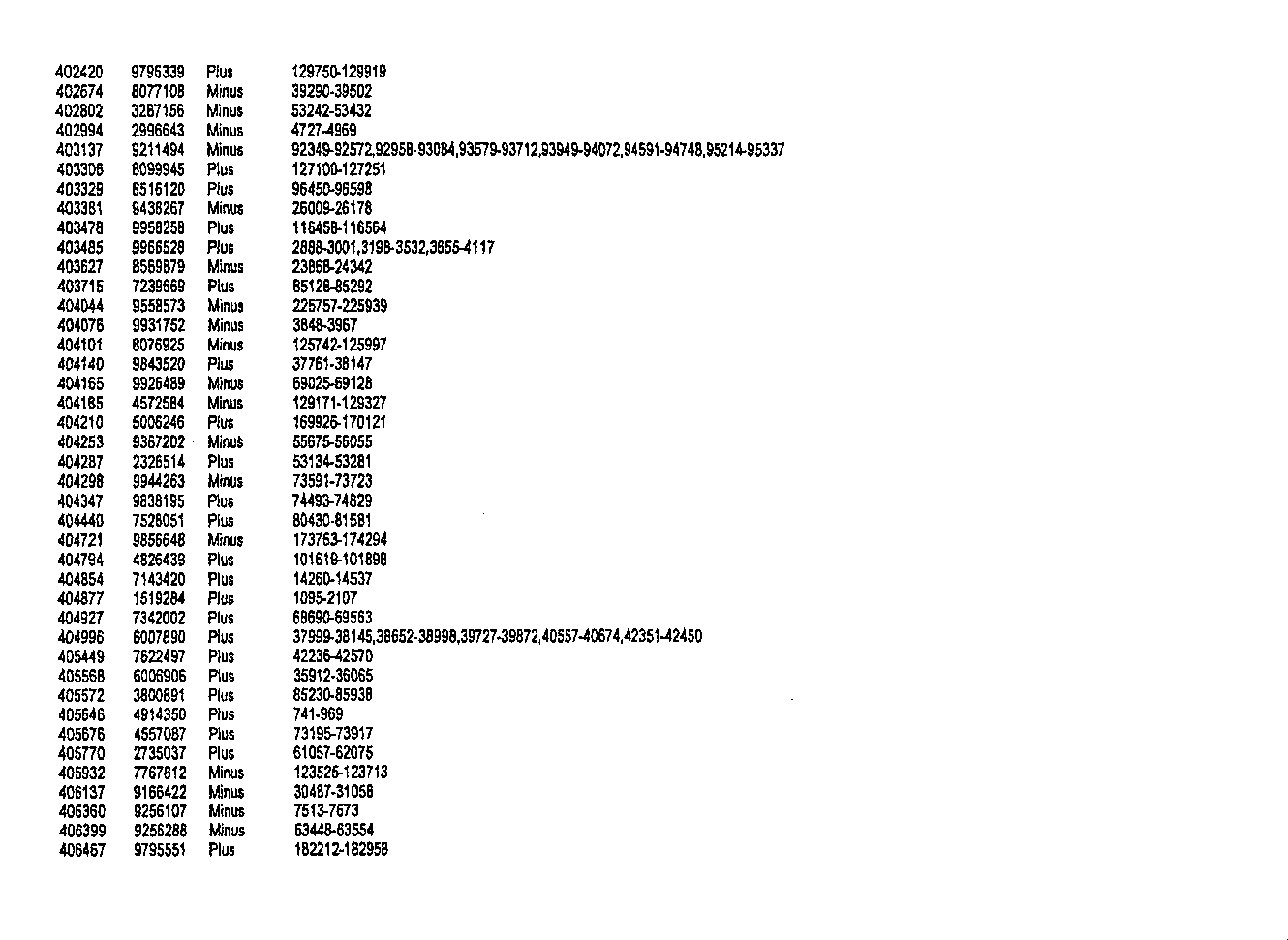
表1Bは、表1AにおいてUnigeneID'sを欠いているPkeyについてアクセッション・ナンバーを示す。各プローブセットについて、我々はオリゴヌクレオチドをそれから設計した遺伝子クラスター・ナンバーを記した。遺伝子クラスターは、Genbank ESTsとmRNAsから得られた配列を用いて編纂された。これらの配列が、Clustering and Alignment Tools (Double Twist, Oakland California)を用いて配列類似性に基づいてクラスター化された。各クラスターを含む配列のGenbankアクセッション・ナンバーがAccessionの欄にリストされている。
Pkey Unique Eosプローブセット識別ナンバー
CAT ナンバー: 遺伝子クラスター・ナンバー
Accession Genbankアクセッション・ナンバー
Table 1B shows the accession numbers for Pkeys that lack UnigeneID's in Table 1A. For each probe set, we noted the gene cluster number from which the oligonucleotide was designed. Gene clusters were compiled using sequences obtained from Genbank ESTs and mRNAs. These sequences were clustered based on sequence similarity using Clustering and Alignment Tools (Double Twist, Oakland California). The Genbank accession number of the sequence containing each cluster is listed in the Accession column.
Pkey Unique Eos probe set identification number
CAT number: gene cluster number
Accession Genbank Accession Number
表2A〜8Cは以前にUSSN 60/339,245(18501-004100US)で2001年11月9日に出願された。
表2Aは、正常な肺及び慢性疾患の肺に比べて肺腫瘍でダウンレギュレートされる504の遺伝子を示している。慢性疾患の肺サンプルは、線維症,気腫、気管支炎などの慢性の非悪性疾患を代表している。これらの遺伝子は、Eos/Affymetrix Hu03 Genechip アレーの59680のプローブセットから選ばれた。この分析で得られた各プローブセットについての遺伝子発現データはmRNA発現の相対レベルを反映する規格化された値である平均強度(AI)で表された。
Pkey: Unique Eosプローブセット識別ナンバー
ExAccn: Exemplarアクセッション・ナンバー、Genbankアクセッション・ナンバー
UnigeneID: Unigeneナンバー
Unigene Title: Unigene名称
R1: 慢性疾患肺サンプルのAIの90パーセンタイル値を腺がん及び扁平上皮がんサンプルのAIの80パーセンタイル値で割って得られる値
R2: 正常肺サンプルのAIの中央値を腺がん及び扁平上皮がんサンプルのAIの90パーセンタイル値で割って得られる値
R3: 正常肺サンプルのAIの中央値マイナス正常な肺、慢性疾患の肺及び腫瘍サンプル、の全体のAIの15パーセンタイル値を、腺がん及び扁平上皮がんサンプルのAIの90パーセンタイル値マイナス正常な肺、慢性疾患の肺及び腫瘍サンプル、の全体のAIの15パーセンタイル値で割って得られる値
R4: 正常肺サンプルのAIの中央値を扁平上皮がん及び腺がんサンプルの平均AIで割って得られる値
R5: 正常肺サンプルのAIの中央値を腺がんの90パーセンタイル値で割って得られる値
R6: 正常肺サンプルのAIの中央値マイナス正常な肺、慢性疾患の肺及び腫瘍サンプル、の全体のAIの15パーセンタイル値を、腺がんのAIの90パーセンタイル値マイナス正常な肺、慢性疾患の肺及び腫瘍サンプル、の全体のAIの15パーセンタイル値で割って得られる値
R7: 正常肺サンプルのAIの中央値を扁平上皮がんの90パーセンタイル値で割って得られる値
R8: 正常肺サンプルのAIの中央値マイナス正常な肺、慢性疾患の肺及び腫瘍サンプル、の全体のAIの15パーセンタイル値を、扁平上皮がんのAIの90パーセンタイル値マイナス正常な肺、慢性疾患の肺及び腫瘍サンプル、の全体のAIの15パーセンタイル値で割って得られる値
Tables 2A-8C were previously filed on November 9, 2001 at USSN 60 / 339,245 (18501-004100 US).
Table 2A shows 504 genes that are down-regulated in lung tumors compared to normal and chronically diseased lungs. Chronic disease lung samples represent chronic non-malignant diseases such as fibrosis, emphysema and bronchitis. These genes were selected from the 59680 probe set of the Eos / Affymetrix Hu03 Genechip array. The gene expression data for each probe set obtained in this analysis was expressed as mean intensity (AI), a normalized value that reflects the relative level of mRNA expression.
Pkey: Unique Eos probe set identification number
ExAccn: Exemplar accession number, Genbank accession number
UnigeneID: Unigene number
Unigene Title: Unigene name
R1: Value obtained by dividing the AI 90th percentile of lung disease lung samples by the AI 80th percentile of adenocarcinoma and squamous cell carcinoma samples
R2: Value obtained by dividing the median AI of normal lung samples by the 90th percentile of AI of adenocarcinoma and squamous cell carcinoma samples
R3: Median AI of normal lung samples minus total AI 15th percentile value of normal lung, chronically diseased lung and tumor samples, AI 90th percentile value of adenocarcinoma and squamous cell carcinoma samples minus normal Divided by the 15th percentile of the total AI of healthy lungs, lungs with chronic disease and tumor samples
R4: Value obtained by dividing the median AI of normal lung samples by the mean AI of squamous cell carcinoma and adenocarcinoma samples
R5: Value obtained by dividing the median AI of normal lung samples by the 90th percentile of adenocarcinoma
R6: Median AI of normal lung sample minus normal lung, chronic disease lung and tumor sample, 15th percentile value of AI, 90th percentile value of AI of adenocarcinoma minus normal lung, chronic disease The value obtained by dividing by the 15th percentile of the overall AI of lung and tumor samples
R7: Value obtained by dividing the median AI of normal lung samples by the 90th percentile of squamous cell carcinoma
R8: Median AI of normal lung samples minus normal lung, 15th percentile value of AI in chronic disease and lung samples, 90th percentile value of AI in squamous cell carcinoma minus normal lung, chronic disease Of lung and tumor samples, divided by the 15th percentile of the total AI
表2Bは、表2AにおいてUnigeneID'sを欠いているプライム・キー(Pkey)についてアクセッション・ナンバーを示す。各プローブセットについて、我々はオリゴヌクレオチドをそれから設計した遺伝子クラスター・ナンバーを記した。遺伝子クラスターは、Genbank ESTsとmRNAsから得られた配列を用いて編纂された。これらの配列が、Clustering and Alignment Tools (Double Twist, Oakland California)を用いて配列類似性に基づいてクラスター化された。各クラスターを含む配列のGenbankアクセッション・ナンバーがAccessionの欄にリストされている。
Pkey Unique Eosプローブセット識別ナンバー
CAT ナンバー: 遺伝子クラスター・ナンバー
Accession Genbankアクセッション・ナンバー
Table 2B shows the accession numbers for the prime key (Pkey) lacking UnigeneID's in Table 2A. For each probe set, we noted the gene cluster number from which the oligonucleotide was designed. Gene clusters were compiled using sequences obtained from Genbank ESTs and mRNAs. These sequences were clustered based on sequence similarity using Clustering and Alignment Tools (Double Twist, Oakland California). The Genbank accession number of the sequence containing each cluster is listed in the Accession column.
Pkey Unique Eos probe set identification number
CAT number: gene cluster number
Accession Genbank Accession Number
表3Aは、正常な肺に比べて慢性疾患の肺でアップレギュレートされる452の遺伝子を示している。慢性疾患の肺サンプルは、線維症,気腫、気管支炎などの慢性の非悪性疾患を代表している。これらの遺伝子は、Eos/Affymetrix Hu03 Genechip アレーの59680のプローブセットから選ばれた。この分析で得られた各プローブセットについての遺伝子発現データはmRNA発現の相対レベルを反映する規格化された値である平均強度(AI)で表された。
Pkey: Unique Eosプローブセット識別ナンバー
ExAccn: Exemplarアクセッション・ナンバー、Genbankアクセッション・ナンバー
UnigeneID: Unigeneナンバー
Unigene Title: Unigene名称
R1: 慢性疾患肺サンプルのAIの80パーセンタイル値を正常肺サンプルのAIの90パーセンタイル値で割って得られる値
R2: 慢性疾患肺サンプルのAIの80パーセンタイル値を正常肺サンプル、扁平上皮がん及び腺がん、の90パーセンタイル値で割って得られる値
R3: 慢性疾患肺サンプルのAIの70パーセンタイル値マイナス正常な肺、慢性疾患の肺及び腫瘍サンプル、の全体のAIの15パーセンタイル値を正常肺サンプル、扁平上皮がん及び腺がん、の90パーセンタイル値マイナス正常な肺、慢性疾患の肺及び腫瘍サンプル、の全体のAIの15パーセンタイル値で割って得られる値
Table 3A shows 452 genes that are up-regulated in lungs with chronic disease compared to normal lungs. Chronic disease lung samples represent chronic non-malignant diseases such as fibrosis, emphysema and bronchitis. These genes were selected from the 59680 probe set of the Eos / Affymetrix Hu03 Genechip array. The gene expression data for each probe set obtained in this analysis was expressed as mean intensity (AI), a normalized value that reflects the relative level of mRNA expression.
Pkey: Unique Eos probe set identification number
ExAccn: Exemplar accession number, Genbank accession number
UnigeneID: Unigene number
Unigene Title: Unigene name
R1: Value obtained by dividing the AI 80th percentile of the chronic lung sample by the AI 90th percentile of the normal lung sample
R2: Value obtained by dividing the 80th percentile value of AI in the lung sample of chronic disease by the 90th percentile value of normal lung sample, squamous cell carcinoma and adenocarcinoma
R3: AI 70th percentile value of chronic disease lung sample minus 90th percentile of normal lung sample, squamous cell carcinoma and adenocarcinoma, normal lung sample, chronic disease lung and tumor sample, 15th percentile value of overall AI Value minus normal lung, chronic disease lung and tumor sample, divided by the 15th percentile of the overall AI
表3Bは、表3AにおいてUnigeneID'sを欠いているプライム・キー(Pkey)についてアクセッション・ナンバーを示す。各プローブセットについて、我々はオリゴヌクレオチドをそれから設計した遺伝子クラスター・ナンバーを記した。遺伝子クラスターは、Genbank ESTsとmRNAsから得られた配列を用いて編纂された。これらの配列が、Clustering and Alignment Tools (Double Twist, Oakland California)を用いて配列類似性に基づいてクラスター化された。各クラスターを含む配列のGenbankアクセッション・ナンバーがAccessionの欄にリストされている。
Pkey Unique Eosプローブセット識別ナンバー
CAT ナンバー: 遺伝子クラスター・ナンバー
Accession Genbankアクセッション・ナンバー
Table 3B shows the accession numbers for the prime key (Pkey) lacking UnigeneID's in Table 3A. For each probe set, we noted the gene cluster number from which the oligonucleotide was designed. Gene clusters were compiled using sequences obtained from Genbank ESTs and mRNAs. These sequences were clustered based on sequence similarity using Clustering and Alignment Tools (Double Twist, Oakland California). The Genbank accession number of the sequence containing each cluster is listed in the Accession column.
Pkey Unique Eos probe set identification number
CAT number: gene cluster number
Accession Genbank Accession Number
表4Aは、化学療法又は放射線療法で治療された患者からのサンプルでアップレギュレートされる202の遺伝子を示す。これらの遺伝子は、Eos/Affymetrix Hu03 Genechip アレーの59680のプローブセットから選ばれた。この分析で得られた各プローブセットについての遺伝子発現データはmRNA発現の相対レベルを反映する規格化された値である平均強度(AI)で表された。
Pkey: Unique Eosプローブセット識別ナンバー
ExAccn: Exemplarアクセッション・ナンバー、Genbankアクセッション・ナンバー
UnigeneID: Unigeneナンバー
Unigene Title: Unigene名称
R1: 化学療法又は放射線療法で治療された患者からのサンプルのAIの平均を正常肺サンプルのAIの平均で割って得られる値
Table 4A shows 202 genes that are up-regulated in samples from patients treated with chemotherapy or radiation therapy. These genes were selected from the 59680 probe set of the Eos / Affymetrix Hu03 Genechip array. The gene expression data for each probe set obtained in this analysis was expressed as mean intensity (AI), a normalized value that reflects the relative level of mRNA expression.
Pkey: Unique Eos probe set identification number
ExAccn: Exemplar accession number, Genbank accession number
UnigeneID: Unigene number
Unigene Title: Unigene name
R1: Value obtained by dividing the average of AI in samples from patients treated with chemotherapy or radiation by the average of AI in normal lung samples
表4Bは、表4AにおいてUnigeneID'sを欠いているプライム・キー(Pkey)についてアクセッション・ナンバーを示す。各プローブセットについて、我々はオリゴヌクレオチドをそれから設計した遺伝子クラスター・ナンバーを記した。遺伝子クラスターは、Genbank ESTsとmRNAsから得られた配列を用いて編纂された。これらの配列が配列類似性に基づいてClustering and Alignment Tools (Double Twist, Oakland California)を用いてクラスター化された。各クラスターを含む配列のGenbankアクセッション・ナンバーが“Accession”の欄にリストされている。
Pkey Unique Eosプローブセット識別ナンバー
CAT ナンバー: 遺伝子クラスター・ナンバー
Accession Genbankアクセッション・ナンバー
Table 4B shows the accession numbers for the prime key (Pkey) lacking UnigeneID's in Table 4A. For each probe set, we noted the gene cluster number from which the oligonucleotide was designed. Gene clusters were compiled using sequences obtained from Genbank ESTs and mRNAs. These sequences were clustered using Clustering and Alignment Tools (Double Twist, Oakland California) based on sequence similarity. The Genbank accession number of the sequence containing each cluster is listed in the “Accession” column.
Pkey Unique Eos probe set identification number
CAT number: gene cluster number
Accession Genbank Accession Number
表5Aは、正常な肺及び慢性疾患の肺に比べて扁平上皮がん及び腺がん肺腫瘍においてアップレギュレートされる680の遺伝子を示す。これらの遺伝子は、Eos/Affymetrix Hu03 Genechip アレーの59680のプローブセットから選ばれた。この分析で得られた各プローブセットについての遺伝子発現データはmRNA発現の相対レベルを反映する規格化された値である平均強度(AI)で表された。
Pkey: Unique Eosプローブセット識別ナンバー
ExAccn: Exemplarアクセッション・ナンバー、Genbankアクセッション・ナンバー
UnigeneID: Unigeneナンバー
Unigene Title: Unigene名称
R1: 扁平上皮がん及び腺がん肺腫瘍サンプルのAIの70パーセンタイル値を正常な肺及び慢性疾患の肺サンプルのAIの90パーセンタイル値で割って得られる値
R2: 腺がん肺腫瘍サンプルのAIの80パーセンタイル値を正常な肺及び慢性疾患の肺サンプルのAIの90パーセンタイル値で割って得られる値
R3: 扁平上皮がん肺腫瘍サンプルのAIの80パーセンタイル値を正常な肺及び慢性疾患の肺サンプルのAIの90パーセンタイル値で割って得られる値
R4: 腺がん肺腫瘍サンプルのAIの80パーセンタイル値を扁平上皮がん肺腫瘍サンプルのAIの80パーセンタイル値で割って得られる値
R5: 扁平上皮がん及び腺がん肺腫瘍サンプルのAIの70パーセンタイル値マイナス正常な肺、慢性疾患の肺及び腫瘍サンプル全体のAIの15パーセンタイル値を正常及び慢性疾患肺サンプルの90パーセンタイル値マイナス正常な肺、慢性疾患の肺及び腫瘍サンプル全体のAIの15パーセンタイル値で割って得られる値
Table 5A shows 680 genes that are up-regulated in squamous cell carcinoma and adenocarcinoma lung tumors compared to normal and chronically diseased lungs. These genes were selected from the 59680 probe set of the Eos / Affymetrix Hu03 Genechip array. The gene expression data for each probe set obtained in this analysis was expressed as mean intensity (AI), a normalized value that reflects the relative level of mRNA expression.
Pkey: Unique Eos probe set identification number
ExAccn: Exemplar accession number, Genbank accession number
UnigeneID: Unigene number
Unigene Title: Unigene name
R1: Value obtained by dividing the 70th percentile of AI in squamous cell carcinoma and adenocarcinoma lung tumor samples by the 90th percentile of AI in lung samples from normal and chronic diseases
R2: Value obtained by dividing the 80th percentile of AI in adenocarcinoma lung tumor samples by the 90th percentile of AI in lung samples from normal and chronic diseases
R3: Value obtained by dividing the AI 80th percentile of squamous cell carcinoma lung tumor samples by the AI 90th percentile of normal and chronic lung samples
R4: Value obtained by dividing the AI 80th percentile of the adenocarcinoma lung tumor sample by the AI 80th percentile of the squamous cell lung tumor sample
R5: AI 70th percentile value for squamous cell carcinoma and adenocarcinoma lung tumor sample minus 15th percentile value for AI in normal lung, chronic disease lung and whole tumor sample minus 90th percentile value in normal and chronic disease lung sample Value obtained by dividing by the 15th percentile of AI for normal lung, chronically ill lung and tumor samples
表5Bは、表5AにおいてUnigeneID'sを欠いているプライム・キー(Pkey)についてアクセッション・ナンバーを示す。各プローブセットについて、我々はオリゴヌクレオチドをそれから設計した遺伝子クラスター・ナンバーを記した。遺伝子クラスターは、Genbank ESTsとmRNAsから得られた配列を用いて編纂された。これらの配列が配列類似性に基づいてClustering and Alignment Tools (Double Twist, Oakland California)を用いてクラスター化された。各クラスターを含む配列のGenbankアクセッション・ナンバーが“Accession”の欄にリストされている。
Pkey Unique Eosプローブセット識別ナンバー
CAT ナンバー: 遺伝子クラスター・ナンバー
Accession Genbankアクセッション・ナンバー
Table 5B shows the accession numbers for the prime key (Pkey) lacking UnigeneID's in Table 5A. For each probe set, we noted the gene cluster number from which the oligonucleotide was designed. Gene clusters were compiled using sequences obtained from Genbank ESTs and mRNAs. These sequences were clustered using Clustering and Alignment Tools (Double Twist, Oakland California) based on sequence similarity. The Genbank accession number of the sequence containing each cluster is listed in the “Accession” column.
Pkey Unique Eos probe set identification number
CAT number: gene cluster number
Accession Genbank Accession Number
表6Aは、肺がんの喫煙者に比べて肺がんの非喫煙者でアップレギュレートされる99の遺伝子を示す。これらの遺伝子は、Eos/Affymetrix Hu03 Genechip アレーの59680のプローブセットから選ばれた。この分析で得られた各プローブセットについての遺伝子発現データはmRNA発現の相対レベルを反映する規格化された値である平均強度(AI)で表された。
Pkey: Unique Eosプローブセット識別ナンバー
ExAccn: Exemplarアクセッション・ナンバー、Genbankアクセッション・ナンバー
UnigeneID: Unigeneナンバー
Unigene Title: Unigene名称
R1: 腺がんの非喫煙者のサンプルのAIの平均を腺がんの喫煙者のサンプルのAIの90パーセンタイル値で割って得られる値
R2: 扁平上皮がんの非喫煙者のサンプルのAIの平均を扁平上皮がんの喫煙者のサンプルのAIの90パーセンタイル値で割って得られる値
Table 6A shows 99 genes that are up-regulated in non-smokers with lung cancer compared to smokers with lung cancer. These genes were selected from the 59680 probe set of the Eos / Affymetrix Hu03 Genechip array. The gene expression data for each probe set obtained in this analysis was expressed as mean intensity (AI), a normalized value that reflects the relative level of mRNA expression.
Pkey: Unique Eos probe set identification number
ExAccn: Exemplar accession number, Genbank accession number
UnigeneID: Unigene number
Unigene Title: Unigene name
R1: Value obtained by dividing the average of AI in non-smokers samples of adenocarcino by the 90th percentile of AI in samples of smokers with adenocarcinomas
R2: Value obtained by dividing the average of AI of the non-smoker sample of squamous cell carcinoma by the 90th percentile of AI of the sample of squamous cell carcinoma smoker
表6Bは、表6AにおいてUnigeneID'sを欠いているプライム・キー(Pkey)についてアクセッション・ナンバーを示す。各プローブセットについて、我々はオリゴヌクレオチドをそれから設計した遺伝子クラスター・ナンバーを記した。遺伝子クラスターは、Genbank ESTsとmRNAsから得られた配列を用いて編纂された。これらの配列が配列類似性に基づいてClustering and Alignment Tools (Double Twist, Oakland California)を用いてクラスター化された。各クラスターを含む配列のGenbankアクセッション・ナンバーが“Accession”の欄にリストされている。
Pkey Unique Eosプローブセット識別ナンバー
CAT ナンバー: 遺伝子クラスター・ナンバー
Accession Genbankアクセッション・ナンバー
Table 6B shows the accession numbers for the prime key (Pkey) lacking UnigeneID's in Table 6A. For each probe set, we noted the gene cluster number from which the oligonucleotide was designed. Gene clusters were compiled using sequences obtained from Genbank ESTs and mRNAs. These sequences were clustered using Clustering and Alignment Tools (Double Twist, Oakland California) based on sequence similarity. The Genbank accession number of the sequence containing each cluster is listed in the “Accession” column.
Pkey Unique Eos probe set identification number
CAT number: gene cluster number
Accession Genbank Accession Number
表7Aは、肺がんの喫煙者に比べて肺がんの非喫煙者でダウンレギュレートされる98の遺伝子を示す。これらの遺伝子は、Eos/Affymetrix Hu03 Genechip アレーの59680のプローブセットから選ばれた。この分析で得られた各プローブセットについての遺伝子発現データはmRNA発現の相対レベルを反映する規格化された値である平均強度(AI)で表された。
Pkey: Unique Eosプローブセット識別ナンバー
ExAccn: Exemplarアクセッション・ナンバー、Genbankアクセッション・ナンバー
UnigeneID: Unigeneナンバー
Unigene Title: Unigene名称
R1: 腺がんの喫煙者のサンプルのAIの90パーセンタイル値を腺がんの非喫煙者のサンプルのAIの平均で割って得られる値
R2: 扁平上皮がんの喫煙者のサンプルのAIの90パーセンタイル値を扁平上皮がんの非喫煙者のサンプルのAIの平均で割って得られる値
Table 7A shows 98 genes that are down-regulated in non-smokers with lung cancer compared to smokers with lung cancer. These genes were selected from the 59680 probe set of the Eos / Affymetrix Hu03 Genechip array. The gene expression data for each probe set obtained in this analysis was expressed as mean intensity (AI), a normalized value that reflects the relative level of mRNA expression.
Pkey: Unique Eos probe set identification number
ExAccn: Exemplar accession number, Genbank accession number
UnigeneID: Unigene number
Unigene Title: Unigene name
R1: Value obtained by dividing the 90th percentile value of AI in a sample of adenocarcino smoker by the average of AI in a non-smoker sample of adenocarcinomas
R2: Value obtained by dividing the 90th percentile of AI in the smoker sample of squamous cell carcinoma by the average of AI in the nonsmoker sample of squamous cell carcinoma
表7Bは、表7AにおいてUnigeneID'sを欠いているプライム・キー(Pkey)についてアクセッション・ナンバーを示す。各プローブセットについて、我々はオリゴヌクレオチドをそれから設計した遺伝子クラスター・ナンバーを記した。遺伝子クラスターは、Genbank ESTsとmRNAsから得られた配列を用いて編纂された。これらの配列が配列類似性に基づいてClustering and Alignment Tools (Double Twist, Oakland California)を用いてクラスター化された。各クラスターを含む配列のGenbankアクセッション・ナンバーが“Accession”の欄にリストされている。
Pkey Unique Eosプローブセット識別ナンバー
CAT ナンバー: 遺伝子クラスター・ナンバー
Accession Genbankアクセッション・ナンバー
Table 7B shows the accession numbers for the prime key (Pkey) lacking UnigeneID's in Table 7A. For each probe set, we noted the gene cluster number from which the oligonucleotide was designed. Gene clusters were compiled using sequences obtained from Genbank ESTs and mRNAs. These sequences were clustered using Clustering and Alignment Tools (Double Twist, Oakland California) based on sequence similarity. The Genbank accession number of the sequence containing each cluster is listed in the “Accession” column.
Pkey Unique Eos probe set identification number
CAT number: gene cluster number
Accession Genbank Accession Number
表8Aは、40以上の異なる正常な体組織の集まりと比べて肺腫瘍又は慢性疾患の肺においてアップ−又はダウン−レギュレートされる1720の遺伝子を示す。慢性疾患の肺サンプルは、線維症,気腫、気管支炎などの慢性の非悪性疾患を代表している。これらの遺伝子は、Eos/Affymetrix Hu02 Genechip アレーの39494のプローブセットから選ばれた。この分析で得られた各プローブセットについての遺伝子発現データはmRNA発現の相対レベルを反映する規格化された値である平均強度(AI)で表された。
Pkey: Unique Eosプローブセット識別ナンバー
ExAccn: Exemplarアクセッション・ナンバー、Genbankアクセッション・ナンバー
UnigeneID: Unigeneナンバー
Unigene Title: Unigene名称
R1: 肺腫瘍のAIの70パーセンタイル値を正常な肺のAIの90パーセンタイル値で割って得られる値
R2: 慢性疾患の肺のAIの70パーセンタイル値を正常な肺のAIの90パーセンタイル値で割って得られる値
Table 8A shows 1720 genes that are up- or down-regulated in lung tumors or chronically diseased lungs compared to a collection of over 40 different normal body tissues. Chronic disease lung samples represent chronic non-malignant diseases such as fibrosis, emphysema and bronchitis. These genes were selected from the 39494 probe set from the Eos / Affymetrix Hu02 Genechip array. The gene expression data for each probe set obtained in this analysis was expressed as mean intensity (AI), a normalized value that reflects the relative level of mRNA expression.
Pkey: Unique Eos probe set identification number
ExAccn: Exemplar accession number, Genbank accession number
UnigeneID: Unigene number
Unigene Title: Unigene name
R1: Value obtained by dividing the AI 70th percentile value of lung tumor by the 90th percentile value of normal lung AI
R2: Value obtained by dividing the 70th percentile value of AI in lungs of chronic diseases by the 90th percentile value of AI in normal lungs
表8Bは、表8AにおいてUnigeneID'sを欠いているプライム・キー(Pkey)についてアクセッション・ナンバーを示す。各プローブセットについて、我々はオリゴヌクレオチドをそれから設計した遺伝子クラスター・ナンバーを記した。遺伝子クラスターは、Genbank ESTsとmRNAsから得られた配列を用いて編纂された。これらの配列が配列類似性に基づいてClustering and Alignment Tools (Double Twist, Oakland California)を用いてクラスター化された。各クラスターを含む配列のGenbankアクセッション・ナンバーが“Accession”の欄にリストされている。
Pkey Unique Eosプローブセット識別ナンバー
CAT ナンバー: 遺伝子クラスター・ナンバー
Accession Genbankアクセッション・ナンバー
Table 8B shows the accession numbers for the prime key (Pkey) that lacks UnigeneID's in Table 8A. For each probe set, we noted the gene cluster number from which the oligonucleotide was designed. Gene clusters were compiled using sequences obtained from Genbank ESTs and mRNAs. These sequences were clustered using Clustering and Alignment Tools (Double Twist, Oakland California) based on sequence similarity. The Genbank accession number of the sequence containing each cluster is listed in the “Accession” column.
Pkey Unique Eos probe set identification number
CAT number: gene cluster number
Accession Genbank Accession Number
表8Cは、UnigeneID'sとアクセッション・ナンバーを欠いている表8AのPkeysについてゲノム位置を示す。各予測されたエクソンに対して、我々は予測に用いられたゲノム配列源をリストした。各予測されたエクソンのヌクレオチド位置もリストされている。
Pkey: Eosプローブセットに対応するユニーク・ナンバー
Ref: 配列源。この欄の7けたの数字はGenbank 識別(GI)ナンバーである。“Dunham I, et al.”は、“ヒト染色体22のDNA配列”という標題の刊行物、Dunham I, et al. Nature (1999) 402:489-495、を指す。
Strand: エクソンが予測されたDNA鎖を示す。
Nt_position 予測されるエクソンのヌクレオチド位置を示す。
Table 8C shows the genomic location for UnigeneID's and Pkeys of Table 8A lacking accession numbers. For each predicted exon, we listed the genomic sequence source used for the prediction. The nucleotide position of each predicted exon is also listed.
Pkey: Unique number corresponding to Eos probe set
Ref: Array source. The 7-digit number in this column is the Genbank identification (GI) number. “Dunham I, et al.” Refers to the publication entitled “DNA sequence of human chromosome 22,” Dunham I, et al. Nature (1999) 402: 489-495.
Strand: The DNA strand in which an exon is predicted.
Nt_position Indicates the predicted exon nucleotide position.
表9A: 肺がん治療のための可能な治療、診断、及び予後判定ターゲット
表9Aは、正常な体組織に比べて肺腫瘍(扁平上皮がん、腺がん、小細胞がん、肉芽腫、カルチノイドを含む)でアップレギュレートされる約1312の遺伝子を示す。 これらの遺伝子は、Eos/Affymetrix Hu03 Genechip アレーの59680のプローブセットから選ばれた。
表9Bは、表9AでUnigeneID'sを欠いているプライム・キー(Pkey)についてアクセッション・ナンバーを示す。各プローブセットについて、我々はオリゴヌクレオチドをそれから設計した遺伝子クラスター・ナンバーを記した。遺伝子クラスターは、Genbank ESTsとmRNAsから得られた配列を用いて編纂された。これらの配列が配列類似性に基づいてClustering and Alignment Tools (Double Twist, Oakland California)を用いてクラスター化された。各クラスターを含む配列のGenbankアクセッション・ナンバーが“Accession”の欄にリストされている。
表9Cは、表9AにおいてUnigeneID'sとアクセッション・ナンバーを欠いているPkeysについてゲノム位置を示す。各予測されたエクソンに対して、我々は予測に用いられたゲノム配列源をリストした。各予測されたエクソンのヌクレオチド位置もリストされている。
Pkey: ユニークEosプローブセット識別ナンバー
ExAccn: Exemplarアクセッション・ナンバー、Genbankアクセッション・ナンバー
UnigeneID: Unigeneナンバー
Unigene Title: Unigene名称
R1: 肺腫瘍(扁平上皮がん、腺がん、小細胞がん、肉芽腫、カルチノイドを含む)の平均を正常な肺サンプルの平均で割って得られる値
R2: 非悪性肺疾患サンプル(気管支炎、気腫、線維症、無気肺、喘息を含む)の平均を正常な肺サンプルの平均で割って得られる値
Table 9A: Possible treatment, diagnosis, and prognostic targets for lung cancer treatment Table 9A shows lung tumors (squamous cell carcinoma, adenocarcinomas, small cell carcinomas, granulomas, carcinoids compared to normal body tissues) About 1312 genes that are up-regulated. These genes were selected from the 59680 probe set of the Eos / Affymetrix Hu03 Genechip array.
Table 9B shows the accession numbers for the prime key (Pkey) lacking UnigeneID's in Table 9A. For each probe set, we noted the gene cluster number from which the oligonucleotide was designed. Gene clusters were compiled using sequences obtained from Genbank ESTs and mRNAs. These sequences were clustered using Clustering and Alignment Tools (Double Twist, Oakland California) based on sequence similarity. The Genbank accession number of the sequence containing each cluster is listed in the “Accession” column.
Table 9C shows the genomic location for Pkeys lacking UnigeneID's and accession numbers in Table 9A. For each predicted exon, we listed the genomic sequence source used for the prediction. The nucleotide position of each predicted exon is also listed.
Pkey: Unique Eos probe set identification number
ExAccn: Exemplar accession number, Genbank accession number
UnigeneID: Unigene number
Unigene Title: Unigene name
R1: Value obtained by dividing the average of lung tumors (including squamous cell carcinoma, adenocarcinoma, small cell carcinoma, granuloma, carcinoid) by the average of normal lung samples
R2: Value obtained by dividing the average of non-malignant lung disease samples (including bronchitis, emphysema, fibrosis, atelectasis, asthma) by the average of normal lung samples
表9B
Pkey Unique Eosプローブセット識別ナンバー
CAT ナンバー: 遺伝子クラスター・ナンバー
Accession Genbankアクセッション・ナンバー
Table 9B
Pkey Unique Eos probe set identification number
CAT number: gene cluster number
Accession Genbank Accession Number
表9C
Pkey: Eosプローブセットに対応するユニーク・ナンバー
Ref: 配列源。この欄の7けたの数字はGenbank 識別(GI)ナンバーである。“Dunham I, et al.”は、“ヒト染色体22のDNA配列”という標題の刊行物、Dunham I, et al. Nature (1999) 402:489-495、を指す。
Strand: エクソンが予測されたDNA鎖を示す。
Nt_position 予測されるエクソンのヌクレオチド位置を示す。
Table 9C
Pkey: Unique number corresponding to Eos probe set
Ref: Array source. The 7-digit number in this column is the Genbank identification (GI) number. “Dunham I, et al.” Refers to the publication entitled “DNA sequence of human chromosome 22,” Dunham I, et al. Nature (1999) 402: 489-495.
Strand: The DNA strand in which an exon is predicted.
Nt_position Indicates the predicted exon nucleotide position.
表10A: 肺がん及び非悪性肺疾患の治療のための可能な治療、診断、及び予後判定ターゲット
表2Aは、肺腫瘍及び正常体組織に比べて非悪性肺疾患でアップレギュレートされる、及び/又は、正常な肺及び非悪性肺疾患と比べて肺腫瘍でダウンレギュレートされる約307の遺伝子を示す。これらの遺伝子は、Eos/Affymetrix Hu03 Genechip アレーの59680のプローブセットから選ばれた。
表10Bは、表10AでUnigeneID'sを欠いているPkey'sについてアクセッション・ナンバーを示す。各プローブセットについて、我々はオリゴヌクレオチドをそれから設計した遺伝子クラスター・ナンバーを記した。遺伝子クラスターは、Genbank ESTsとmRNAsから得られた配列を用いて編纂された。これらの配列が配列類似性に基づいてClustering and Alignment Tools (Double Twist, Oakland California)を用いてクラスター化された。各クラスターを含む配列のGenbankアクセッション・ナンバーが“Accession”の欄にリストされている。
表10Cは、表10AにおいてUnigeneID'sとアクセッション・ナンバーを欠いているPkeysについてゲノム位置を示す。各予測されたエクソンに対して、我々は予測に用いられたゲノム配列源をリストした。各予測されたエクソンのヌクレオチド位置もリストされている。
Pkey: ユニークEosプローブセット識別ナンバー
ExAccn: Exemplarアクセッション・ナンバー、Genbankアクセッション・ナンバー
UnigeneID: Unigeneナンバー
Unigene Title: Unigene名称
R1: 肺腫瘍(扁平上皮がん、腺がん、小細胞がん、肉芽腫、カルチノイド腫瘍を含む)の平均を正常な肺サンプルの平均で割って得られる値
R2: 非悪性肺疾患サンプル(気管支炎、気腫、線維症、無気肺、喘息を含む)の平均を正常な肺サンプルの平均で割って得られる値
Table 10A: Possible treatment, diagnosis, and prognostic targets for treatment of lung cancer and non-malignant lung disease Table 2A is up-regulated in non-malignant lung disease compared to lung tumors and normal body tissue, and / or Or about 307 genes that are down-regulated in lung tumors compared to normal lung and non-malignant lung disease. These genes were selected from the 59680 probe set of the Eos / Affymetrix Hu03 Genechip array.
Table 10B shows the accession numbers for Pkey's that lack UnigeneID's in Table 10A. For each probe set, we noted the gene cluster number from which the oligonucleotide was designed. Gene clusters were compiled using sequences obtained from Genbank ESTs and mRNAs. These sequences were clustered using Clustering and Alignment Tools (Double Twist, Oakland California) based on sequence similarity. The Genbank accession number of the sequence containing each cluster is listed in the “Accession” column.
Table 10C shows the genomic location for Pkeys lacking UnigeneID's and accession numbers in Table 10A. For each predicted exon, we listed the genomic sequence source used for the prediction. The nucleotide position of each predicted exon is also listed.
Pkey: Unique Eos probe set identification number
ExAccn: Exemplar accession number, Genbank accession number
UnigeneID: Unigene number
Unigene Title: Unigene name
R1: Value obtained by dividing the average of lung tumors (including squamous cell carcinoma, adenocarcinoma, small cell carcinoma, granuloma, carcinoid tumor) by the average of normal lung samples
R2: Value obtained by dividing the average of non-malignant lung disease samples (including bronchitis, emphysema, fibrosis, atelectasis, asthma) by the average of normal lung samples
表10B
Pkey Unique Eosプローブセット識別ナンバー
CAT ナンバー: 遺伝子クラスター・ナンバー
Accession Genbankアクセッション・ナンバー
Table 10B
Pkey Unique Eos probe set identification number
CAT number: gene cluster number
Accession Genbank Accession Number
表10C
Pkey: Eosプローブセットに対応するユニーク・ナンバー
Ref: 配列源。この欄の7けたの数字はGenbank 識別(GI)ナンバーである。“Dunham I, et al.”は、“ヒト染色体22のDNA配列”という標題の刊行物、Dunham I, et al. Nature (1999) 402:489-495、を指す。
Strand: エクソンが予測されたDNA鎖を示す。
Nt_position 予測されるエクソンのヌクレオチド位置を示す。
Table 10C
Pkey: Unique number corresponding to Eos probe set
Ref: Array source. The 7-digit number in this column is the Genbank identification (GI) number. “Dunham I, et al.” Refers to the publication entitled “DNA sequence of human chromosome 22,” Dunham I, et al. Nature (1999) 402: 489-495.
Strand: The DNA strand in which an exon is predicted.
Nt_position Indicates the predicted exon nucleotide position.
表11A: 腺がんを他の肺疾患及び正常肺から区別する遺伝子
表11Aは、肺の腺がんにおいて他の肺腫瘍、非悪性肺疾患、及び正常な肺と比べてアップレギュレートされる約84の遺伝子を示す。これらの遺伝子は、Eos/Affymetrix Hu03 Genechip アレーの59680のプローブセットから選ばれた。
表11Bは、表11AでUnigeneID'sを欠いているPkey'sについてアクセッション・ナンバーを示す。各プローブセットについて、我々はオリゴヌクレオチドをそれから設計した遺伝子クラスター・ナンバーを記した。遺伝子クラスターは、Genbank ESTsとmRNAsから得られた配列を用いて編纂された。これらの配列が配列類似性に基づいてClustering and Alignment Tools (Double Twist, Oakland California)を用いてクラスター化された。各クラスターを含む配列のGenbankアクセッション・ナンバーが“Accession”の欄にリストされている。
表11Cは、表11AにおいてUnigeneID'sとアクセッション・ナンバーを欠いているPkey'sについてゲノム位置を示す。各予測されたエクソンに対して、我々は予測に用いられたゲノム配列源をリストした。各予測されたエクソンのヌクレオチド位置もリストされている。
Pkey: ユニークEosプローブセット識別ナンバー
ExAccn: Exemplarアクセッション・ナンバー、Genbankアクセッション・ナンバー
UnigeneID: Unigeneナンバー
Unigene Title: Unigene名称
R1: 肺腫瘍(扁平上皮がん、腺がん、小細胞がん、肉芽腫、カルチノイド腫瘍を含む)の平均を正常な肺サンプルの平均で割って得られる値
R2: 非悪性肺疾患サンプル(気管支炎、気腫、線維症、無気肺、喘息を含む)の平均を正常な肺サンプルの平均で割って得られる値
Table 11A: Genes that differentiate adenocarcinoma from other lung diseases and normal lung Table 11A is upregulated in lung adenocarcinoma compared to other lung tumors, non-malignant lung disease, and normal lung About 84 genes are shown. These genes were selected from the 59680 probe set of the Eos / Affymetrix Hu03 Genechip array.
Table 11B shows the accession numbers for Pkey's that lack UnigeneID's in Table 11A. For each probe set, we noted the gene cluster number from which the oligonucleotide was designed. Gene clusters were compiled using sequences obtained from Genbank ESTs and mRNAs. These sequences were clustered using Clustering and Alignment Tools (Double Twist, Oakland California) based on sequence similarity. The Genbank accession number of the sequence containing each cluster is listed in the “Accession” column.
Table 11C shows the genomic location for Pkey's lacking UnigeneID's and accession numbers in Table 11A. For each predicted exon, we listed the genomic sequence source used for the prediction. The nucleotide position of each predicted exon is also listed.
Pkey: Unique Eos probe set identification number
ExAccn: Exemplar accession number, Genbank accession number
UnigeneID: Unigene number
Unigene Title: Unigene name
R1: Value obtained by dividing the average of lung tumors (including squamous cell carcinoma, adenocarcinoma, small cell carcinoma, granuloma, carcinoid tumor) by the average of normal lung samples
R2: Value obtained by dividing the average of non-malignant lung disease samples (including bronchitis, emphysema, fibrosis, atelectasis, asthma) by the average of normal lung samples
表11B
Pkey Unique Eosプローブセット識別ナンバー
CAT ナンバー: 遺伝子クラスター・ナンバー
Accession Genbankアクセッション・ナンバー
Table 11B
Pkey Unique Eos probe set identification number
CAT number: gene cluster number
Accession Genbank Accession Number
表11C
Pkey: Eosプローブセットに対応するユニーク・ナンバー
Ref: 配列源。この欄の7けたの数字はGenbank 識別(GI)ナンバーである。“Dunham I, et al.”は、“ヒト染色体22のDNA配列”という標題の刊行物、Dunham I, et al. Nature (1999) 402:489-495、を指す。
Strand: エクソンが予測されたDNA鎖を示す。
Nt_position 予測されるエクソンのヌクレオチド位置を示す。
Table 11C
Pkey: Unique number corresponding to Eos probe set
Ref: Array source. The 7-digit number in this column is the Genbank identification (GI) number. “Dunham I, et al.” Refers to the publication entitled “DNA sequence of human chromosome 22,” Dunham I, et al. Nature (1999) 402: 489-495.
Strand: The DNA strand in which an exon is predicted.
Nt_position Indicates the predicted exon nucleotide position.
表12A: 扁平上皮がんを他の肺疾患及び正常肺から区別する遺伝子
表12Aは、肺の扁平上皮がんにおいて他の肺腫瘍、非悪性肺疾患、及び正常な肺と比べてアップレギュレートされる約72の遺伝子を示す。これらの遺伝子は、Eos/Affymetrix Hu03 Genechip アレーの59680のプローブセットから選ばれた。
表12Bは、表12AでUnigeneID'sを欠いているPkey'sについてアクセッション・ナンバーを示す。各プローブセットについて、我々はオリゴヌクレオチドをそれから設計した遺伝子クラスター・ナンバーを記した。遺伝子クラスターは、Genbank ESTsとmRNAsから得られた配列を用いて編纂された。これらの配列が配列類似性に基づいてClustering and Alignment Tools (Double Twist, Oakland California)を用いてクラスター化された。各クラスターを含む配列のGenbankアクセッション・ナンバーが“Accession”の欄にリストされている。
表12Cは、表12AにおいてUnigeneID'sとアクセッション・ナンバーを欠いているPkey'sについてゲノム位置を示す。各予測されたエクソンに対して、我々は予測に用いられたゲノム配列源をリストした。各予測されたエクソンのヌクレオチド位置もリストされている。
Pkey: ユニークEosプローブセット識別ナンバー
ExAccn: Exemplarアクセッション・ナンバー、Genbankアクセッション・ナンバー
UnigeneID: Unigeneナンバー
Unigene Title: Unigene名称
R1: 肺腫瘍(扁平上皮がん、腺がん、小細胞がん、肉芽腫、カルチノイド腫瘍を含む)の平均を正常な肺サンプルの平均で割って得られる値
R2: 非悪性肺疾患サンプル(気管支炎、気腫、線維症、無気肺、喘息を含む)の平均を正常な肺サンプルの平均で割って得られる値
Table 12A: Genes that Differentiate Squamous Cell Carcinoma from Other Lung Diseases and Normal Lungs About 72 genes are shown. These genes were selected from the 59680 probe set of the Eos / Affymetrix Hu03 Genechip array.
Table 12B shows the accession numbers for Pkey's that lack UnigeneID's in Table 12A. For each probe set, we noted the gene cluster number from which the oligonucleotide was designed. Gene clusters were compiled using sequences obtained from Genbank ESTs and mRNAs. These sequences were clustered using Clustering and Alignment Tools (Double Twist, Oakland California) based on sequence similarity. The Genbank accession number of the sequence containing each cluster is listed in the “Accession” column.
Table 12C shows the genomic location for Pkey's lacking UnigeneID's and accession numbers in Table 12A. For each predicted exon, we listed the genomic sequence source used for the prediction. The nucleotide position of each predicted exon is also listed.
Pkey: Unique Eos probe set identification number
ExAccn: Exemplar accession number, Genbank accession number
UnigeneID: Unigene number
Unigene Title: Unigene name
R1: Value obtained by dividing the average of lung tumors (including squamous cell carcinoma, adenocarcinoma, small cell carcinoma, granuloma, carcinoid tumor) by the average of normal lung samples
R2: Value obtained by dividing the average of non-malignant lung disease samples (including bronchitis, emphysema, fibrosis, atelectasis, asthma) by the average of normal lung samples
表12B
Pkey Unique Eosプローブセット識別ナンバー
CAT ナンバー: 遺伝子クラスター・ナンバー
Accession Genbankアクセッション・ナンバー
Table 12B
Pkey Unique Eos probe set identification number
CAT number: gene cluster number
Accession Genbank Accession Number
表12C
Pkey: Eosプローブセットに対応するユニーク・ナンバー
Ref: 配列源。この欄の7けたの数字はGenbank 識別(GI)ナンバーである。“Dunham I, et al.”は、“ヒト染色体22のDNA配列”という標題の刊行物、Dunham I, et al. Nature (1999) 402:489-495、を指す。
Strand: エクソンが予測されたDNA鎖を示す。
Nt_position 予測されるエクソンのヌクレオチド位置を示す。
Table 12C
Pkey: Unique number corresponding to Eos probe set
Ref: Array source. The 7-digit number in this column is the Genbank identification (GI) number. “Dunham I, et al.” Refers to the publication entitled “DNA sequence of human chromosome 22,” Dunham I, et al. Nature (1999) 402: 489-495.
Strand: The DNA strand in which an exon is predicted.
Nt_position Indicates the predicted exon nucleotide position.
表13A: 非悪性肺疾患を肺腫瘍及び正常な肺と区別する遺伝子
表13Aは、肺腫瘍及び正常な肺と比べて非悪性肺疾患でアップレギュレートされる約23の遺伝子を示す。これらの遺伝子は、Eos/Affymetrix Hu03 Genechip アレーの59680のプローブセットから選ばれた。
表13Bは、表13AでUnigeneID'sを欠いているPkey'sについてアクセッション・ナンバーを示す。各プローブセットについて、我々はオリゴヌクレオチドをそれから設計した遺伝子クラスター・ナンバーを記した。遺伝子クラスターは、Genbank ESTsとmRNAsから得られた配列を用いて編纂された。これらの配列が配列類似性に基づいてClustering and Alignment Tools (Double Twist, Oakland California)を用いてクラスター化された。各クラスターを含む配列のGenbankアクセッション・ナンバーが“Accession”の欄にリストされている。
表13Cは、表13AにおいてUnigeneID'sとアクセッション・ナンバーを欠いているPkey'sについてゲノム位置を示す。各予測されたエクソンに対して、我々は予測に用いられたゲノム配列源をリストした。各予測されたエクソンのヌクレオチド位置もリストされている。
Pkey: ユニークEosプローブセット識別ナンバー
ExAccn: Exemplarアクセッション・ナンバー、Genbankアクセッション・ナンバー
UnigeneID: Unigeneナンバー
Unigene Title: Unigene名称
R1: 肺腫瘍(扁平上皮がん、腺がん、小細胞がん、肉芽腫、カルチノイド腫瘍を含む)の平均を正常な肺サンプルの平均で割って得られる値
R2: 非悪性肺疾患サンプル(気管支炎、気腫、線維症、無気肺、喘息を含む)の平均を正常な肺サンプルの平均で割って得られる値
Table 13A: Genes that Differentiate Non-Malignant Lung Disease from Lung Tumors and Normal Lungs Table 13A shows about 23 genes that are up-regulated in non-malignant lung diseases compared to lung tumors and normal lungs. These genes were selected from the 59680 probe set of the Eos / Affymetrix Hu03 Genechip array.
Table 13B shows the accession numbers for Pkey's that lack UnigeneID's in Table 13A. For each probe set, we noted the gene cluster number from which the oligonucleotide was designed. Gene clusters were compiled using sequences obtained from Genbank ESTs and mRNAs. These sequences were clustered using Clustering and Alignment Tools (Double Twist, Oakland California) based on sequence similarity. The Genbank accession number of the sequence containing each cluster is listed in the “Accession” column.
Table 13C shows the genomic location for Pkey's lacking UnigeneID's and accession numbers in Table 13A. For each predicted exon, we listed the genomic sequence source used for the prediction. The nucleotide position of each predicted exon is also listed.
Pkey: Unique Eos probe set identification number
ExAccn: Exemplar accession number, Genbank accession number
UnigeneID: Unigene number
Unigene Title: Unigene name
R1: Value obtained by dividing the average of lung tumors (including squamous cell carcinoma, adenocarcinoma, small cell carcinoma, granuloma, carcinoid tumor) by the average of normal lung samples
R2: Value obtained by dividing the average of non-malignant lung disease samples (including bronchitis, emphysema, fibrosis, atelectasis, asthma) by the average of normal lung samples
表13B
Pkey Unique Eosプローブセット識別ナンバー
CAT ナンバー: 遺伝子クラスター・ナンバー
Accession Genbankアクセッション・ナンバー
Table 13B
Pkey Unique Eos probe set identification number
CAT number: gene cluster number
Accession Genbank Accession Number
表10C
Pkey: Eosプローブセットに対応するユニーク・ナンバー
Ref: 配列源。この欄の7けたの数字はGenbank 識別(GI)ナンバーである。“Dunham I, et al.”は、“ヒト染色体22のDNA配列”という標題の刊行物、Dunham I, et al. Nature (1999) 402:489-495、を指す。
Strand: エクソンが予測されたDNA鎖を示す。
Nt_position 予測されるエクソンのヌクレオチド位置を示す。
Table 10C
Pkey: Unique number corresponding to Eos probe set
Ref: Array source. The 7-digit number in this column is the Genbank identification (GI) number. “Dunham I, et al.” Refers to the publication entitled “DNA sequence of human chromosome 22,” Dunham I, et al. Nature (1999) 402: 489-495.
Strand: The DNA strand in which an exon is predicted.
Nt_position Indicates the predicted exon nucleotide position.
表14A: 可能な肺疾患ターゲットの好ましい用途と細胞での局在
表14Aは、表9Aと10Aに現れる遺伝子の細胞での局在と好ましい用途を示す。mAbはモノクローナル抗体を表し、diagは診断を表し、s.m.は小分子を表し、CTLは細胞毒性リンパ球リガンドを表す。これらの遺伝子は、Eos/Affymetrix Hu03 Genechip アレーの59680のプローブセットから選ばれた。
表14Bは、表14AでUnigeneID'sを欠いているPkey'sについてアクセッション・ナンバーを示す。各プローブセットについて、我々はオリゴヌクレオチドをそれから設計した遺伝子クラスター・ナンバーを記した。遺伝子クラスターは、Genbank ESTsとmRNAsから得られた配列を用いて編纂された。これらの配列が配列類似性に基づいてClustering and Alignment Tools (Double Twist, Oakland California)を用いてクラスター化された。各クラスターを含む配列のGenbankアクセッション・ナンバーが“Accession”の欄にリストされている。
表14Cは、表14AにおいてUnigeneID'sとアクセッション・ナンバーを欠いているPkey'sについてゲノム位置を示す。各予測されたエクソンに対して、我々は予測に用いられたゲノム配列源をリストした。各予測されたエクソンのヌクレオチド位置もリストされている。
Pkey: ユニークEosプローブセット識別ナンバー
ExAccn: Exemplarアクセッション・ナンバー、Genbankアクセッション・ナンバー
UnigeneID: Unigeneナンバー
Unigene Title: Unigene名称
Pref.Utility: 好ましい用途
Pred.Loc: 予測される細胞での局在
Table 14A: Preferred uses and cellular localization of possible lung disease targets Table 14A shows the cellular localization and preferred uses of the genes appearing in Tables 9A and 10A. mAb represents a monoclonal antibody, diag represents a diagnosis, sm represents a small molecule, and CTL represents a cytotoxic lymphocyte ligand. These genes were selected from the 59680 probe set of the Eos / Affymetrix Hu03 Genechip array.
Table 14B shows the accession numbers for Pkey's that lack UnigeneID's in Table 14A. For each probe set, we noted the gene cluster number from which the oligonucleotide was designed. Gene clusters were compiled using sequences obtained from Genbank ESTs and mRNAs. These sequences were clustered using Clustering and Alignment Tools (Double Twist, Oakland California) based on sequence similarity. The Genbank accession number of the sequence containing each cluster is listed in the “Accession” column.
Table 14C shows the genomic location for Pkey's lacking UnigeneID's and accession numbers in Table 14A. For each predicted exon, we listed the genomic sequence source used for the prediction. The nucleotide position of each predicted exon is also listed.
Pkey: Unique Eos probe set identification number
ExAccn: Exemplar accession number, Genbank accession number
UnigeneID: Unigene number
Unigene Title: Unigene name
Pref.Utility: preferred use
Pred.Loc: Predicted cellular localization
表14B
Pkey Unique Eosプローブセット識別ナンバー
CAT ナンバー: 遺伝子クラスター・ナンバー
Accession Genbankアクセッション・ナンバー
Table 14B
Pkey Unique Eos probe set identification number
CAT number: gene cluster number
Accession Genbank Accession Number
表14C
Pkey: Eosプローブセットに対応するユニーク・ナンバー
Ref: 配列源。この欄の7けたの数字はGenbank 識別(GI)ナンバーである。“Dunham I, et al.”は、“ヒト染色体22のDNA配列”という標題の刊行物、Dunham I, et al. Nature (1999) 402:489-495、を指す。
Strand: エクソンが予測されたDNA鎖を示す。
Nt_position 予測されるエクソンのヌクレオチド位置を示す。
Table 14C
Pkey: Unique number corresponding to Eos probe set
Ref: Array source. The 7-digit number in this column is the Genbank identification (GI) number. “Dunham I, et al.” Refers to the publication entitled “DNA sequence of human chromosome 22,” Dunham I, et al. Nature (1999) 402: 489-495.
Strand: The DNA strand in which an exon is predicted.
Nt_position Indicates the predicted exon nucleotide position.
表15A: 表16における全ての配列に関する情報
表15Aは、表16の全ての配列に関するSeq ID No, Pkey, ExAccn, UnigeneID, 及びUnigene Title を示す。
表15Bは、表15AでUnigeneID'sを欠いているPkey'sについてアクセッション・ナンバーを示す。各プローブセットについて、我々はオリゴヌクレオチドをそれから設計した遺伝子クラスター・ナンバーを記した。遺伝子クラスターは、Genbank ESTsとmRNAsから得られた配列を用いて編纂された。これらの配列が配列類似性に基づいてClustering and Alignment Tools (Double Twist, Oakland California)を用いてクラスター化された。各クラスターを含む配列のGenbankアクセッション・ナンバーが“Accession”の欄にリストされている。
表15Cは、表15AにおいてUnigeneID'sとアクセッション・ナンバーを欠いているPkey'sについてゲノム位置を示す。各予測されたエクソンに対して、我々は予測に用いられたゲノム配列源をリストした。各予測されたエクソンのヌクレオチド位置もリストされている。
Seq ID No: 配列IDナンバー
Pkey: ユニークEosプローブセット識別ナンバー
ExAccn: Exemplarアクセッション・ナンバー、Genbankアクセッション・ナンバー
UnigeneID: Unigeneナンバー
Unigene Title: Unigene gene名称
Table 15A: Information on all sequences in Table 16 Table 15A shows Seq ID No, Pkey, ExAccn, UnigeneID, and Unigene Title for all sequences in Table 16.
Table 15B shows the accession numbers for Pkey's that lack UnigeneID's in Table 15A. For each probe set, we noted the gene cluster number from which the oligonucleotide was designed. Gene clusters were compiled using sequences obtained from Genbank ESTs and mRNAs. These sequences were clustered using Clustering and Alignment Tools (Double Twist, Oakland California) based on sequence similarity. The Genbank accession number of the sequence containing each cluster is listed in the “Accession” column.
Table 15C shows the genomic locations for Pkey's lacking UnigeneID's and accession numbers in Table 15A. For each predicted exon, we listed the genomic sequence source used for the prediction. The nucleotide position of each predicted exon is also listed.
Seq ID No: Sequence ID number
Pkey: Unique Eos probe set identification number
ExAccn: Exemplar accession number, Genbank accession number
UnigeneID: Unigene number
Unigene Title: Unigene gene name
表15B
Pkey Unique Eosプローブセット識別ナンバー
CAT ナンバー: 遺伝子クラスター・ナンバー
Accession Genbankアクセッション・ナンバー
Table 15B
Pkey Unique Eos probe set identification number
CAT number: gene cluster number
Accession Genbank Accession Number
表15C
Pkey: Eosプローブセットに対応するユニーク・ナンバー
Ref: 配列源。この欄の7けたの数字はGenbank 識別(GI)ナンバーである。“Dunham I, et al.”は、“ヒト染色体22のDNA配列”という標題の刊行物、Dunham I, et al. Nature (1999) 402:489-495、を指す。
Strand: エクソンが予測されたDNA鎖を示す。
Nt_position 予測されるエクソンのヌクレオチド位置を示す。
Table 15C
Pkey: Unique number corresponding to Eos probe set
Ref: Array source. The 7-digit number in this column is the Genbank identification (GI) number. “Dunham I, et al.” Refers to the publication entitled “DNA sequence of human chromosome 22,” Dunham I, et al. Nature (1999) 402: 489-495.
Strand: The DNA strand in which an exon is predicted.
Nt_position Indicates the predicted exon nucleotide position.
表16 Table 16
Claims (51)
(i)該治療処置を受けている患者からの生物学的サンプルを用意するステップ;及び
(ii)該生物学的サンプルを、表1A-16に示されるような配列と少なくとも80%同一な配列に選択的にハイブリダイズするポリヌクレオチドと接触させることにより該生物学的サンプルにおける肺がん関連転写物のレベルを決定し、それによって該治療の有効性をモニターするステップ;
を含む方法。 A method of monitoring the effectiveness of a therapeutic treatment for lung cancer comprising:
(I) providing a biological sample from the patient undergoing the therapeutic treatment; and (ii) aligning the biological sample with a sequence at least 80% identical to a sequence as shown in Table 1A-16 Determining the level of lung cancer associated transcripts in the biological sample by contacting with a polynucleotide that selectively hybridizes to, thereby monitoring the effectiveness of the treatment;
Including methods.
(iii )該肺がん関連転写物の該レベルを、該患者からの該治療処置以前の、又は該治療処置のもっと早期の生物学的サンプルにおける肺がん関連転写物のレベルと比較するステップ;
を含むことを特徴とする請求項13に記載の方法。 further,
(Iii) comparing the level of the lung cancer-related transcript with the level of lung cancer-related transcript in a biological sample prior to or earlier in the therapeutic treatment from the patient;
14. The method of claim 13, comprising:
(i)該治療処置を受けている患者からの生物学的サンプルを用意するステップ;及び
(ii)該生物学的サンプルを、表1A-16に示されるような配列と少なくとも80%同一な配列に選択的にハイブリダイズするポリヌクレオチドによってコードされるポリペプチドと接触させることによって、該ポリペプチドが肺がん関連抗体に特異的に結合することで該生物学的サンプルにおける該肺がん関連抗体のレベルを決定し、それにより該治療の有効性をモニターするステップ;
を含む方法。 A method of monitoring the effectiveness of a therapeutic treatment for lung cancer comprising:
(I) providing a biological sample from the patient undergoing the therapeutic treatment; and (ii) aligning the biological sample with a sequence at least 80% identical to a sequence as shown in Table 1A-16 Determining the level of the lung cancer-related antibody in the biological sample by contacting the polypeptide encoded by a polynucleotide that selectively hybridizes with the polypeptide to specifically bind to the lung cancer-related antibody. And thereby monitoring the effectiveness of the treatment;
Including methods.
(iii )該肺がん関連抗体の該レベルを、該患者からの該治療処置以前の又は該治療処置のもっと早期の生物学的サンプルにおける該肺がん関連抗体のレベルと比較するステップ;
を含むことを特徴とする請求項16に記載の方法。 further,
(Iii) comparing the level of the lung cancer associated antibody to the level of the lung cancer associated antibody in a biological sample prior to or earlier in the therapeutic treatment from the patient;
The method of claim 16, comprising:
(i)該治療処置を受けている患者からの生物学的サンプルを用意するステップ;及び
(ii)該生物学的サンプルを抗体と接触させて、該抗体が表1A-16に示されるような配列と少なくとも80%同一な配列に選択的にハイブリダイズするポリヌクレオチドによってコードされる肺がん関連ポリペプチドと特異的に結合することで、該生物学的サンプルにおける該肺がん関連ポリペプチドのレベルを決定し、それにより該治療の有効性をモニターするステップ;
を含む方法。 A method of monitoring the effectiveness of a therapeutic treatment for lung cancer comprising:
(I) providing a biological sample from a patient undergoing the therapeutic treatment; and (ii) contacting the biological sample with an antibody such that the antibody is as shown in Table 1A-16 Determining the level of the lung cancer-related polypeptide in the biological sample by specifically binding to a lung cancer-related polypeptide encoded by a polynucleotide that selectively hybridizes to a sequence that is at least 80% identical to the sequence. , Thereby monitoring the effectiveness of the treatment;
Including methods.
(iii )該肺がん関連ポリペプチドの該レベルを、該患者からの該治療処置以前の又は該治療処置のもっと早期の生物学的サンプルにおける該肺がん関連ポリペプチドのレベルと比較するステップ;
を含むことを特徴とする請求項19に記載の方法。 further,
(Iii) comparing the level of the lung cancer-related polypeptide with the level of the lung cancer-related polypeptide in a biological sample prior to or earlier in the therapeutic treatment from the patient;
20. The method of claim 19, comprising:
(i)該化合物を肺がん関連ポリペプチドと接触させるステップ;ただし、該ポリペプチドは、表1A-16に示されているような配列と少なくとも80%同一な配列と選択的にハイブリダイズするポリヌクレオチドによってコードされる;及び
(ii)該化合物が該ポリペプチドに及ぼす機能的効果を決定するステップ;
を含む方法。 A method of identifying a compound that modifies a lung cancer-related polypeptide, comprising:
(I) contacting the compound with a lung cancer associated polypeptide; provided that the polypeptide selectively hybridizes to a sequence at least 80% identical to a sequence as shown in Table 1A-16 And (ii) determining a functional effect of the compound on the polypeptide;
Including methods.
(i)肺がんにかかっている哺乳類又はそれから単離された細胞にテスト化合物を投与するステップ;
(ii)治療された細胞又は哺乳類における表1A-16に示されているような配列と少なくとも80%同一な配列と選択的にハイブリダイズするポリヌクレオチドの遺伝子発現のレベルを、対照の細胞又は哺乳類における該ポリヌクレオチドの遺伝子発現のレベルと比較するステップ;
を含み、該ポリヌクレオチドの発現のレベルを変化させる化合物を肺がん治療のための候補とすることを特徴とする分析法。 Drug screening analysis method:
(I) administering a test compound to a mammal having lung cancer or a cell isolated therefrom;
(Ii) the level of gene expression of a polynucleotide that selectively hybridizes to a sequence that is at least 80% identical to a sequence as shown in Table 1A-16 in the treated cell or mammal; Comparing the level of gene expression of said polynucleotide in
And a compound that changes the expression level of the polynucleotide as a candidate for treating lung cancer.
Applications Claiming Priority (7)
| Application Number | Priority Date | Filing Date | Title |
|---|---|---|---|
| US28477001P | 2001-04-18 | 2001-04-18 | |
| US29049201P | 2001-05-10 | 2001-05-10 | |
| US33924501P | 2001-11-09 | 2001-11-09 | |
| US35066601P | 2001-11-13 | 2001-11-13 | |
| US33437001P | 2001-11-29 | 2001-11-29 | |
| US37224602P | 2002-04-12 | 2002-04-12 | |
| PCT/US2002/012476 WO2002086443A2 (en) | 2001-04-18 | 2002-04-18 | Methods of diagnosis of lung cancer, compositions and methods of screening for modulators of lung cancer |
Publications (1)
| Publication Number | Publication Date |
|---|---|
| JP2005527180A true JP2005527180A (en) | 2005-09-15 |
Family
ID=27559574
Family Applications (1)
| Application Number | Title | Priority Date | Filing Date |
|---|---|---|---|
| JP2002583927A Pending JP2005527180A (en) | 2001-04-18 | 2002-04-18 | Lung cancer diagnosis method, composition of lung cancer modifier and screening method |
Country Status (5)
| Country | Link |
|---|---|
| EP (1) | EP1463928A2 (en) |
| JP (1) | JP2005527180A (en) |
| AU (1) | AU2002309583A1 (en) |
| CA (1) | CA2444691A1 (en) |
| WO (1) | WO2002086443A2 (en) |
Cited By (5)
| Publication number | Priority date | Publication date | Assignee | Title |
|---|---|---|---|---|
| JP2005537810A (en) * | 2002-09-11 | 2005-12-15 | ジェネンテック・インコーポレーテッド | Compositions and methods for tumor diagnosis and treatment |
| WO2010047028A1 (en) * | 2008-10-24 | 2010-04-29 | Oncotherapy Science, Inc. | Screening method of anti-lung or esophageal cancer compounds |
| JP2013532295A (en) * | 2010-07-09 | 2013-08-15 | ソマロジック・インコーポレーテッド | Lung cancer biomarkers and their use |
| US10359425B2 (en) | 2008-09-09 | 2019-07-23 | Somalogic, Inc. | Lung cancer biomarkers and uses thereof |
| US11041866B2 (en) | 2010-08-13 | 2021-06-22 | Somalogic, Inc. | Pancreatic cancer biomarkers and uses thereof |
Families Citing this family (174)
| Publication number | Priority date | Publication date | Assignee | Title |
|---|---|---|---|---|
| EP2168980A1 (en) * | 2000-06-23 | 2010-03-31 | Genentech, Inc. | Compositions and methods for the diagnosis and treatment of disorders involving angiogensis |
| US20030114410A1 (en) | 2000-08-08 | 2003-06-19 | Technion Research And Development Foundation Ltd. | Pharmaceutical compositions and methods useful for modulating angiogenesis and inhibiting metastasis and tumor fibrosis |
| US7115415B2 (en) | 2000-09-15 | 2006-10-03 | Genentech, Inc. | PRO9821 nucleic acids |
| JP2005516579A (en) | 2000-12-08 | 2005-06-09 | キュラジェン コーポレイション | Methods for detecting and treating nodular sclerosis complex associated with injury |
| US20060035237A1 (en) | 2002-08-26 | 2006-02-16 | Markowitz Sanford D | Methods and compositions for categorizing patients |
| US7271240B2 (en) | 2001-03-14 | 2007-09-18 | Agensys, Inc. | 125P5C8: a tissue specific protein highly expressed in various cancers |
| EP1572872A2 (en) * | 2001-06-05 | 2005-09-14 | Exelixis, Inc. | Igs as modifiers of the p53 pathway and methods of use |
| US20040009489A1 (en) * | 2001-09-28 | 2004-01-15 | Golub Todd R. | Classification of lung carcinomas using gene expression analysis |
| US20030175763A1 (en) * | 2001-12-20 | 2003-09-18 | Degenhardt Yan Y. | Identification of an amplified gene and target for drug intervention |
| EP1361433A3 (en) * | 2002-04-09 | 2005-02-23 | Kabushiki Kaisha Hayashibara Seibutsu Kagaku Kenkyujo | Method for estimating therapeutic efficacy of tumor necrosis factor (TNF) |
| US20050276812A1 (en) | 2004-06-01 | 2005-12-15 | Genentech, Inc. | Antibody-drug conjugates and methods |
| DE10225144A1 (en) * | 2002-05-29 | 2003-12-18 | Immatics Biotechnologies Gmbh | Tumor-associated peptides binding to MHC molecules |
| US20060189518A1 (en) * | 2002-06-26 | 2006-08-24 | Takeda Pharmaceutical Company Limited | Preventing/remedies for cancer |
| GB0215224D0 (en) * | 2002-07-01 | 2002-08-14 | Inpharmatica Ltd | Protein |
| WO2004020668A2 (en) * | 2002-08-30 | 2004-03-11 | Oncotherapy Science, Inc. | Method for treating synovial sarcoma |
| US7803370B2 (en) | 2002-08-30 | 2010-09-28 | Oncotherapy Science, Inc. | Method for treating synovial sarcoma |
| TW200413725A (en) * | 2002-09-30 | 2004-08-01 | Oncotherapy Science Inc | Method for diagnosing non-small cell lung cancers |
| WO2004058050A2 (en) * | 2002-12-20 | 2004-07-15 | Avalon Pharmaceuticals | Amplified cancer target genes useful in diagnosis and therapeutic screening |
| WO2004058969A1 (en) * | 2002-12-24 | 2004-07-15 | Takeda Pharmaceutical Company Limited | Preventives/remedies for cancer |
| AU2003292774A1 (en) * | 2002-12-26 | 2004-07-22 | Takeda Pharmaceutical Company Limited | Novel proteins and use thereof |
| US20070026398A1 (en) * | 2003-03-03 | 2007-02-01 | Farnsworth Amanda L | Protein tyrosine phosphatase-prl-1 a a marker and therapeutic target for pancreatic cancer |
| AU2004239362B2 (en) * | 2003-03-11 | 2009-05-14 | The University Of British Columbia | Diagnosis of gynecological neoplasms by detecting the levels of oviduct-specific glycoprotein |
| AU2004224448A1 (en) * | 2003-03-24 | 2004-10-07 | Corixa Corporation | Detection and monitoring of lung cancer |
| AU2003901511A0 (en) * | 2003-03-28 | 2003-04-17 | Bionomics Limited | Nucleic acid molecules associated with angiogenesis II |
| DE602004030899D1 (en) | 2003-04-25 | 2011-02-17 | Takeda Pharmaceutical | NEW SCREENING PROCEDURE |
| WO2004097034A2 (en) * | 2003-05-02 | 2004-11-11 | Bayer Healthcare Ag | Diagnostics and therapeutics for diseases associated with human transmembrane serine protease 4 (tmprss4) |
| WO2004111197A2 (en) * | 2003-06-10 | 2004-12-23 | Trustees Of Boston University | Gene expression signatures, methods and compositions for diagnosing disorders of the lung |
| WO2005000098A2 (en) * | 2003-06-10 | 2005-01-06 | The Trustees Of Boston University | Detection methods for disorders of the lung |
| WO2005002417A2 (en) * | 2003-06-20 | 2005-01-13 | Avalon Pharmaceuticals, Inc. | Cancer -linked gene aas target for chemotherapy |
| EP2305833B1 (en) * | 2003-07-17 | 2014-04-16 | Pacific Edge Limited | Markers for detection of gastric cancer |
| PT2489364E (en) | 2003-11-06 | 2015-04-16 | Seattle Genetics Inc | Monomethylvaline compounds conjugated to antibodies |
| WO2005059109A2 (en) * | 2003-12-15 | 2005-06-30 | The Regents Of The University Of California | Molecular signature of the pten tumor suppressor |
| JP2008507261A (en) * | 2004-01-27 | 2008-03-13 | コンピュゲン ユーエスエイ,インク. | Novel nucleotide and amino acid sequences for lung cancer diagnosis, and assays and methods of use thereof |
| JP2005230011A (en) * | 2004-02-20 | 2005-09-02 | Samsung Electronics Co Ltd | Breast cancer-related protein, gene encoding the same, and protein and diagnostic method for breast cancer using the gene |
| US20050186577A1 (en) | 2004-02-20 | 2005-08-25 | Yixin Wang | Breast cancer prognostics |
| US7399469B2 (en) * | 2004-03-26 | 2008-07-15 | Pdl Biopharma, Inc. | Anti-LFL2 antibodies for the diagnosis, prognosis and treatment of cancer |
| JP2005314397A (en) * | 2004-03-31 | 2005-11-10 | Mitsubishi Chemicals Corp | Anti-chondromodulin-1 specific antibody and use thereof |
| JP4928260B2 (en) | 2004-04-23 | 2012-05-09 | 武田薬品工業株式会社 | New screening method |
| DE102004023187A1 (en) * | 2004-05-11 | 2005-12-01 | Ganymed Pharmaceuticals Ag | Identification of surface-associated antigens for tumor diagnosis and therapy |
| ATE465175T1 (en) | 2004-06-03 | 2010-05-15 | Takeda Pharmaceutical | NEW PROTEIN COMPLEX AND APPLICATIONS THEREOF |
| JP2008512120A (en) * | 2004-09-08 | 2008-04-24 | ルードヴィッヒ インスティテュート フォー キャンサー リサーチ | Cancer-testis antigen |
| NZ553500A (en) | 2004-09-23 | 2009-11-27 | Genentech Inc Genentech Inc | Cysteine engineered antibodies and conjugates withCysteine engineered antibodies and conjugates with a free cysteine amino acid in the heavy chain a free cysteine amino acid in the heavy chain |
| US20100111856A1 (en) | 2004-09-23 | 2010-05-06 | Herman Gill | Zirconium-radiolabeled, cysteine engineered antibody conjugates |
| EP1812796B1 (en) * | 2004-10-19 | 2009-12-09 | Oncotherapy Science, Inc. | Pkp3 oncogene as a prognostic indicator for lung adenocarcinoma |
| EP1846550A2 (en) * | 2005-02-10 | 2007-10-24 | Centre National De La Recherche Scientifique (Cnrs) | Use of the mcm8 gene for the preparation of a pharmaceutical composition |
| EP2325305B1 (en) | 2005-02-25 | 2014-02-12 | Oncotherapy Science, Inc. | Peptide vaccines for lung cancers expressing TTK, URLC10 or KOC1 polypeptides |
| DE102005013846A1 (en) | 2005-03-24 | 2006-10-05 | Ganymed Pharmaceuticals Ag | Identification of surface-associated antigens for tumor diagnosis and therapy |
| EP2360279A1 (en) | 2005-04-14 | 2011-08-24 | Trustees Of Boston University | Diagnostic for lung disorders using class prediction |
| GB0508863D0 (en) * | 2005-04-29 | 2005-06-08 | Astrazeneca Ab | Peptide |
| AU2006245512B2 (en) * | 2005-05-13 | 2011-12-22 | Oxford Biomedica (Uk) Limited | Peptide |
| EA017812B1 (en) | 2005-12-08 | 2013-03-29 | Медарекс, Инк. | Isolated monoclonal antibody or antigen-binding portion thereof that binds to human protein tyrosine kinase 7 (ptk7) and use thereof |
| GB0526498D0 (en) * | 2005-12-28 | 2006-02-08 | Randox Lab Ltd | Method |
| WO2007103541A2 (en) | 2006-03-09 | 2007-09-13 | The Trustees Of Boston University | Diagnostic and prognostic methods for lung disorders using gene expression profiles from nose epithelial cells |
| CA2646611A1 (en) | 2006-03-21 | 2008-05-22 | Genentech, Inc. | Combinatorial therapy |
| JP5114637B2 (en) * | 2006-03-31 | 2013-01-09 | 静岡県 | Determination method of small cell lung cancer |
| JP5298266B2 (en) * | 2006-03-31 | 2013-09-25 | 静岡県 | Evaluation kit for small cell lung cancer |
| US8221751B2 (en) | 2006-06-21 | 2012-07-17 | Oncotherapy Science, Inc. | Tumor-targeting monoclonal antibodies to FZD10 and uses thereof |
| EP2032701B1 (en) * | 2006-06-23 | 2013-11-27 | Alethia Biotherapeutics Inc. | Polynucleotides and polypeptides involved in cancer |
| US20100092457A1 (en) | 2006-08-14 | 2010-04-15 | Forerunner Pharma Research Co., Ltd. | Diagnosis and Treatment of Cancer Using Anti-Desmoglein-3 Antibodies |
| EP1932854A1 (en) * | 2006-12-15 | 2008-06-18 | Institut National De La Sante Et De La Recherche Medicale (Inserm) | Lysosomal associated membrane protein (LAMP) - like polypeptide, ligands to the same, and use of the same in the frame of detection and purification of human plasmacytoid dendritic cells |
| TWI610939B (en) | 2007-02-21 | 2018-01-11 | 腫瘤療法 科學股份有限公司 | Peptide vaccines for cancers expressing tumor-associated antigens |
| WO2008140774A2 (en) | 2007-05-08 | 2008-11-20 | Picobella Llc | Methods for diagnosing and treating prostate and lung cancer |
| CA2688299A1 (en) | 2007-05-29 | 2008-12-18 | President And Fellows Of Harvard College | Molecules involved in regulation of osteoblast activity and osteoclast activity, and methods of use thereof |
| EP2537529B1 (en) | 2007-08-02 | 2018-10-17 | Gilead Biologics, Inc. | Loxl2 inhibitory antibodies and uses thereof |
| BRPI0816236A2 (en) | 2007-08-20 | 2015-08-18 | Oncotherapy Science Inc | Cdh3 peptide and medicinal agent containing the same |
| US20110160280A1 (en) * | 2007-08-24 | 2011-06-30 | Oncotherapy Science, Inc. | Cancer-related genes, cdca5, epha7, stk31 and wdhd1 |
| AU2008296927C1 (en) * | 2007-09-06 | 2015-08-13 | Case Western Reserve University | Methods for diagnosing and treating cancers |
| EP2193211A4 (en) | 2007-09-19 | 2010-12-08 | Univ Boston | IDENTIFICATION OF NEW PATHWAYS FOR THE DEVELOPMENT OF MEDICINES FOR THE TREATMENT OF LUNG DISEASES |
| HUE027911T2 (en) | 2007-09-26 | 2016-11-28 | Genentech Inc | Novel antibodies |
| ES2532635T3 (en) | 2008-07-15 | 2015-03-30 | Genentech, Inc. | Anthracycline conjugates, process for its preparation and its use as antitumor compounds |
| TW201008574A (en) | 2008-08-19 | 2010-03-01 | Oncotherapy Science Inc | INHBB epitope peptides and vaccines containing the same |
| GB2478441B (en) * | 2008-09-09 | 2013-03-27 | Somalogic Inc | Lung cancer biomarkers and uses thereof |
| WO2010037124A1 (en) * | 2008-09-29 | 2010-04-01 | The Trustees Of The University Of Pennsylvania | Tumor vascular marker-targeted vaccines |
| CN102264897B (en) | 2008-10-22 | 2014-06-11 | 肿瘤疗法科学股份有限公司 | RAB6KIFL/KIF20A epitope peptide and vaccine comprising it |
| MX336869B (en) | 2008-11-03 | 2016-02-04 | Alethia Biotherapeutics Inc | Antibodies that specifically block the biological activity of a tumor antigen. |
| US9495515B1 (en) | 2009-12-09 | 2016-11-15 | Veracyte, Inc. | Algorithms for disease diagnostics |
| US10236078B2 (en) | 2008-11-17 | 2019-03-19 | Veracyte, Inc. | Methods for processing or analyzing a sample of thyroid tissue |
| US9107935B2 (en) | 2009-01-06 | 2015-08-18 | Gilead Biologics, Inc. | Chemotherapeutic methods and compositions |
| JP5800299B2 (en) * | 2009-02-20 | 2015-10-28 | 国立大学法人 東京大学 | Novel monoclonal antibody and use thereof |
| CN102365297B (en) | 2009-03-25 | 2014-10-29 | 霍夫曼-拉罗奇有限公司 | Novel anti-α5β1 antibody and its application |
| JP6078339B2 (en) | 2009-05-07 | 2017-02-08 | ベラサイト インコーポレイテッド | Methods and compositions for diagnosis of thyroid status |
| TW201102081A (en) | 2009-05-11 | 2011-01-16 | Oncotherapy Science Inc | TTK peptides and vaccines including the same |
| JP2013502226A (en) | 2009-08-21 | 2013-01-24 | ギリアド バイオロジクス,インク. | Catalytic domain derived from lysyl oxidase and LOXL2 |
| CA2809819A1 (en) | 2009-09-09 | 2011-03-17 | Centrose, Llc | Extracellular targeted drug conjugates |
| EP2494362B1 (en) | 2009-10-26 | 2016-06-08 | Externautics S.p.A. | Prostate tumor markers and methods of use thereof |
| WO2011051280A1 (en) | 2009-10-26 | 2011-05-05 | Externautics S.P.A. | Ovary tumor markers and methods of use thereof |
| WO2011051278A1 (en) * | 2009-10-26 | 2011-05-05 | Externautics S.P.A. | Lung tumor markers and methods of use thereof |
| WO2011088163A1 (en) | 2010-01-14 | 2011-07-21 | President And Fellows Of Harvard College | Methods for modulating skeletal remodeling and patterning by modulating shn2 activity, shn3 activity, or shn2 and shn3 activity in combination |
| MA34277B1 (en) | 2010-04-15 | 2013-06-01 | Spirogen Developments Sarl | PYRROLOBENZODIAZEPINES AND CONJUGATES THEREOF |
| US9000130B2 (en) | 2010-06-08 | 2015-04-07 | Genentech, Inc. | Cysteine engineered antibodies and conjugates |
| EP3903812A1 (en) | 2010-09-29 | 2021-11-03 | Agensys, Inc. | Antibody drug conjugates (adc) that bind to 191p4d12 proteins |
| CN103313990B (en) | 2010-11-17 | 2016-07-20 | 基因泰克公司 | Alanyl maytansinol antibody coupling matter |
| CN106146664B (en) | 2011-03-31 | 2021-09-07 | Adc治疗股份有限公司 | Antibodies against kidney-associated antigen 1 and antigen-binding fragments thereof |
| ES2567276T3 (en) | 2011-05-12 | 2016-04-21 | Genentech, Inc. | LC-MS / MS method of monitoring multiple reactions to detect therapeutic antibodies in animal samples using frame-changing peptides |
| DK2750713T3 (en) | 2011-10-14 | 2015-12-21 | Medimmune Ltd | PYRROLOBENZODIAZEPINS AND CONJUGATES THEREOF |
| PL2802351T3 (en) | 2012-01-09 | 2019-11-29 | Adc Therapeutics Sa | Agents for treating triple negative breast cancer |
| WO2013130093A1 (en) | 2012-03-02 | 2013-09-06 | Genentech, Inc. | Biomarkers for treatment with anti-tubulin chemotherapeutic compounds |
| EP2906296B1 (en) | 2012-10-12 | 2018-03-21 | ADC Therapeutics SA | Pyrrolobenzodiazepine-antibody conjugates |
| US10695433B2 (en) | 2012-10-12 | 2020-06-30 | Medimmune Limited | Pyrrolobenzodiazepine-antibody conjugates |
| JP6270859B2 (en) | 2012-10-12 | 2018-01-31 | エイディーシー・セラピューティクス・エス・アー・エール・エルAdc Therapeutics Sarl | Pyrrolobenzodiazepine-antibody conjugate |
| US9931414B2 (en) | 2012-10-12 | 2018-04-03 | Medimmune Limited | Pyrrolobenzodiazepine-antibody conjugates |
| WO2014057114A1 (en) | 2012-10-12 | 2014-04-17 | Adc Therapeutics Sàrl | Pyrrolobenzodiazepine-anti-psma antibody conjugates |
| KR101995621B1 (en) | 2012-10-12 | 2019-07-03 | 에이디씨 테라퓨틱스 에스에이 | Pyrrolobenzodiazepine-anti-cd22 antibody conjugates |
| JP5993093B2 (en) | 2012-10-12 | 2016-09-14 | メドイミューン・リミテッドMedImmune Limited | Pyrrolobenzodiazepines and their complexes |
| AU2013366493B2 (en) | 2012-12-21 | 2017-08-24 | Medimmune Limited | Pyrrolobenzodiazepines and conjugates thereof |
| HK1216176A1 (en) | 2012-12-21 | 2016-10-21 | Medlmmune Limited | Unsymmetrical pyrrolobenzodiazepines-dimers for use in the treatment of proliferative and autoimmune diseases |
| AU2014230735B2 (en) | 2013-03-13 | 2018-03-15 | Medimmune Limited | Pyrrolobenzodiazepines and conjugates thereof |
| WO2014159981A2 (en) | 2013-03-13 | 2014-10-02 | Spirogen Sarl | Pyrrolobenzodiazepines and conjugates thereof |
| AU2014229529B2 (en) | 2013-03-13 | 2018-02-15 | Medimmune Limited | Pyrrolobenzodiazepines and conjugates thereof |
| EP2968988A4 (en) | 2013-03-14 | 2016-11-16 | Allegro Diagnostics Corp | Methods for evaluating copd status |
| US11976329B2 (en) | 2013-03-15 | 2024-05-07 | Veracyte, Inc. | Methods and systems for detecting usual interstitial pneumonia |
| US10442836B2 (en) | 2013-08-12 | 2019-10-15 | Genentech, Inc. | 1-(chloromethyl)-2,3-dihydro-1H-benzo[E]indole dimer antibody-drug conjugate compounds, and methods of use and treatment |
| US9956299B2 (en) | 2013-10-11 | 2018-05-01 | Medimmune Limited | Pyrrolobenzodiazepine—antibody conjugates |
| EP3054985B1 (en) | 2013-10-11 | 2018-12-26 | Medimmune Limited | Pyrrolobenzodiazepine-antibody conjugates |
| GB201317982D0 (en) | 2013-10-11 | 2013-11-27 | Spirogen Sarl | Pyrrolobenzodiazepines and conjugates thereof |
| US10010624B2 (en) | 2013-10-11 | 2018-07-03 | Medimmune Limited | Pyrrolobenzodiazepine-antibody conjugates |
| BR112016013861A2 (en) | 2013-12-16 | 2017-10-10 | Genentech Inc | drug and antibody conjugates, compounds, treatment method and pharmaceutical composition |
| WO2015095223A2 (en) | 2013-12-16 | 2015-06-25 | Genentech, Inc. | Peptidomimetic compounds and antibody-drug conjugates thereof |
| BR112016013258A2 (en) | 2013-12-16 | 2018-01-16 | Genentech Inc | antibody-drug conjugate, pharmaceutical composition, method for treating cancer and kit |
| US12297505B2 (en) | 2014-07-14 | 2025-05-13 | Veracyte, Inc. | Algorithms for disease diagnostics |
| CN106687141A (en) | 2014-09-10 | 2017-05-17 | 麦迪穆有限责任公司 | Pyrrolobenzodiazepines and conjugates thereof |
| GB201416112D0 (en) | 2014-09-12 | 2014-10-29 | Medimmune Ltd | Pyrrolobenzodiazepines and conjugates thereof |
| MX2017003123A (en) | 2014-09-12 | 2017-05-12 | Genentech Inc | Cysteine engineered antibodies and conjugates. |
| WO2016040825A1 (en) | 2014-09-12 | 2016-03-17 | Genentech, Inc. | Anthracycline disulfide intermediates, antibody-drug conjugates and methods |
| SG11201702079UA (en) | 2014-09-17 | 2017-04-27 | Genentech Inc | Pyrrolobenzodiazepines and antibody disulfide conjugates thereof |
| WO2016073768A1 (en) | 2014-11-05 | 2016-05-12 | Veracyte, Inc. | Systems and methods of diagnosing idiopathic pulmonary fibrosis on transbronchial biopsies using machine learning and high dimensional transcriptional data |
| BR112017011111A2 (en) | 2014-11-25 | 2017-12-26 | Adc Therapeutics Sa | pyrrolobenzodiazepine-antibody conjugates |
| EP3226909A1 (en) | 2014-12-03 | 2017-10-11 | Genentech, Inc. | Quaternary amine compounds and antibody-drug conjugates thereof |
| GB201505305D0 (en) | 2015-03-27 | 2015-05-13 | Immatics Biotechnologies Gmbh | Novel Peptides and combination of peptides for use in immunotherapy against various tumors |
| EP4397676A3 (en) | 2015-03-27 | 2024-10-09 | Immatics Biotechnologies GmbH | Novel peptides and combination of peptides for use in immunotherapy against various tumors |
| GB201506402D0 (en) | 2015-04-15 | 2015-05-27 | Berkel Patricius H C Van And Howard Philip W | Site-specific antibody-drug conjugates |
| GB201506411D0 (en) | 2015-04-15 | 2015-05-27 | Bergenbio As | Humanized anti-axl antibodies |
| MA43345A (en) | 2015-10-02 | 2018-08-08 | Hoffmann La Roche | PYRROLOBENZODIAZEPINE ANTIBODY-DRUG CONJUGATES AND METHODS OF USE |
| MA43354A (en) | 2015-10-16 | 2018-08-22 | Genentech Inc | CONJUGATE DRUG CONJUGATES WITH CLOUDY DISULPHIDE |
| MA45326A (en) | 2015-10-20 | 2018-08-29 | Genentech Inc | CALICHEAMICIN-ANTIBODY-DRUG CONJUGATES AND METHODS OF USE |
| GB201601431D0 (en) | 2016-01-26 | 2016-03-09 | Medimmune Ltd | Pyrrolobenzodiazepines |
| GB201602356D0 (en) | 2016-02-10 | 2016-03-23 | Medimmune Ltd | Pyrrolobenzodiazepine Conjugates |
| GB201602359D0 (en) | 2016-02-10 | 2016-03-23 | Medimmune Ltd | Pyrrolobenzodiazepine Conjugates |
| GB201603568D0 (en) * | 2016-03-01 | 2016-04-13 | Immatics Biotechnologies Gmbh | Efficient treatment options including peptides and combination of peptide and cell based medicaments for use in immunotherapy against urinary bladder cancer |
| CN121431692A (en) | 2016-03-25 | 2026-01-30 | 豪夫迈·罗氏有限公司 | Multiplex total antibodies and antibody conjugated drug quantification assays |
| US20190343942A1 (en) * | 2016-04-22 | 2019-11-14 | Curevac Ag | Rna encoding a tumor antigen |
| GB201607478D0 (en) | 2016-04-29 | 2016-06-15 | Medimmune Ltd | Pyrrolobenzodiazepine Conjugates |
| JP2019522633A (en) | 2016-05-20 | 2019-08-15 | ジェネンテック, インコーポレイテッド | PROTAC antibody conjugates and methods of use |
| JP7022080B2 (en) | 2016-05-27 | 2022-02-17 | ジェネンテック, インコーポレイテッド | Biochemical analytical methods for the characterization of site-specific antibody-drug conjugates |
| EP3464280B1 (en) | 2016-06-06 | 2021-10-06 | F. Hoffmann-La Roche AG | Silvestrol antibody-drug conjugates and methods of use |
| WO2018009915A1 (en) | 2016-07-08 | 2018-01-11 | Trustees Of Boston University | Gene expression-based biomarker for the detection and monitoring of bronchial premalignant lesions |
| JP7093767B2 (en) | 2016-08-11 | 2022-06-30 | ジェネンテック, インコーポレイテッド | Pyrrolobenzodiazepine prodrug and its antibody conjugate |
| JP7050770B2 (en) | 2016-10-05 | 2022-04-08 | エフ・ホフマン-ラ・ロシュ・アクチェンゲゼルシャフト | Method for preparing antibody drug conjugate |
| TWI762516B (en) | 2016-10-06 | 2022-05-01 | 日商腫瘤療法 科學股份有限公司 | Monoclonal antibodies against FZD10 and their uses |
| GB201617466D0 (en) | 2016-10-14 | 2016-11-30 | Medimmune Ltd | Pyrrolobenzodiazepine conjugates |
| TW201839136A (en) | 2017-02-06 | 2018-11-01 | 瑞士商諾華公司 | Composition and method for treating hemochromatosis |
| GB201702031D0 (en) | 2017-02-08 | 2017-03-22 | Medlmmune Ltd | Pyrrolobenzodiazepine-antibody conjugates |
| HUE054689T2 (en) | 2017-02-08 | 2021-09-28 | Adc Therapeutics Sa | Pyrrolobenzodiazepine antibody conjugates |
| SI3612537T1 (en) | 2017-04-18 | 2022-10-28 | Medimmune Limited | Pyrrolobenzodiazepine conjugates |
| EP3612234B1 (en) | 2017-04-20 | 2024-03-13 | ADC Therapeutics SA | Combination therapy with an anti-axl antibody-drug conjugate |
| CA3064804A1 (en) | 2017-06-14 | 2018-12-20 | Adc Therapeutics Sa | Dosage regimes for the administration of an anti-cd19 adc |
| SG11202000358YA (en) | 2017-08-18 | 2020-02-27 | Medimmune Ltd | Pyrrolobenzodiazepine conjugates |
| IL273387B2 (en) | 2017-09-20 | 2023-10-01 | Ph Pharma Co Ltd | Thailanstatin analogs |
| GB201803342D0 (en) | 2018-03-01 | 2018-04-18 | Medimmune Ltd | Methods |
| GB201806022D0 (en) | 2018-04-12 | 2018-05-30 | Medimmune Ltd | Pyrrolobenzodiazepines and conjugates thereof |
| GB201814281D0 (en) | 2018-09-03 | 2018-10-17 | Femtogenix Ltd | Cytotoxic agents |
| AU2019365238A1 (en) | 2018-10-24 | 2021-05-13 | F. Hoffmann-La Roche Ag | Conjugated chemical inducers of degradation and methods of use |
| JP7514834B2 (en) | 2018-12-03 | 2024-07-11 | アジェンシス,インコーポレイテッド | Pharmaceutical compositions comprising anti-191P4D12 antibody drug conjugates and methods of use thereof |
| JP2022513198A (en) | 2018-12-10 | 2022-02-07 | ジェネンテック, インコーポレイテッド | Photocrosslinkable peptide for site-specific conjugation to Fc-containing proteins |
| GB201901197D0 (en) | 2019-01-29 | 2019-03-20 | Femtogenix Ltd | G-A Crosslinking cytotoxic agents |
| MX2021010477A (en) | 2019-03-15 | 2021-10-01 | Medimmune Ltd | Azetidobenzodiazepine dimers and conjugates comprising them for use in the treatment of cancer. |
| GB2597532A (en) | 2020-07-28 | 2022-02-02 | Femtogenix Ltd | Cytotoxic compounds |
| CN114163510B (en) * | 2021-03-24 | 2024-12-06 | 深圳市新靶向生物科技有限公司 | An antigen peptide combination related to liver cancer driver gene mutation and its application |
| AU2021362997A1 (en) | 2021-11-03 | 2024-05-16 | Hangzhou Dac Biotech Co., Ltd. | Specific conjugation of an antibody |
| SI4294951T1 (en) * | 2022-05-13 | 2025-07-31 | Hummingbird Diagnostics Gmbh | Novel rna molecule for cancer detection |
| WO2024138128A2 (en) | 2022-12-23 | 2024-06-27 | Genentech, Inc. | Cereblon degrader conjugates, and uses thereof |
| CN121263210A (en) | 2023-04-17 | 2026-01-02 | 沛科生物公司 | Antibodies and antibody-drug conjugates, as well as their usage, synthesis processes, and intermediates |
| WO2026006688A2 (en) | 2024-06-28 | 2026-01-02 | Firefly Bio, Inc. | Degrader antibody conjugates and uses thereof |
| WO2026006689A2 (en) | 2024-06-28 | 2026-01-02 | Firefly Bio, Inc. | Bcl-xl degrader antibody conjugates and uses thereof |
-
2002
- 2002-04-18 JP JP2002583927A patent/JP2005527180A/en active Pending
- 2002-04-18 WO PCT/US2002/012476 patent/WO2002086443A2/en not_active Ceased
- 2002-04-18 CA CA002444691A patent/CA2444691A1/en not_active Abandoned
- 2002-04-18 AU AU2002309583A patent/AU2002309583A1/en not_active Abandoned
- 2002-04-18 EP EP02736590A patent/EP1463928A2/en not_active Withdrawn
Cited By (6)
| Publication number | Priority date | Publication date | Assignee | Title |
|---|---|---|---|---|
| JP2005537810A (en) * | 2002-09-11 | 2005-12-15 | ジェネンテック・インコーポレーテッド | Compositions and methods for tumor diagnosis and treatment |
| US10359425B2 (en) | 2008-09-09 | 2019-07-23 | Somalogic, Inc. | Lung cancer biomarkers and uses thereof |
| WO2010047028A1 (en) * | 2008-10-24 | 2010-04-29 | Oncotherapy Science, Inc. | Screening method of anti-lung or esophageal cancer compounds |
| JP2013532295A (en) * | 2010-07-09 | 2013-08-15 | ソマロジック・インコーポレーテッド | Lung cancer biomarkers and their use |
| KR101870123B1 (en) * | 2010-07-09 | 2018-06-25 | 소마로직, 인크. | Lung cancer biomarkers and uses thereof |
| US11041866B2 (en) | 2010-08-13 | 2021-06-22 | Somalogic, Inc. | Pancreatic cancer biomarkers and uses thereof |
Also Published As
| Publication number | Publication date |
|---|---|
| EP1463928A2 (en) | 2004-10-06 |
| AU2002309583A1 (en) | 2002-11-05 |
| CA2444691A1 (en) | 2002-10-31 |
| WO2002086443A8 (en) | 2004-06-17 |
| WO2002086443A2 (en) | 2002-10-31 |
Similar Documents
| Publication | Publication Date | Title |
|---|---|---|
| JP2005527180A (en) | Lung cancer diagnosis method, composition of lung cancer modifier and screening method | |
| US20030232350A1 (en) | Methods of diagnosis of cancer, compositions and methods of screening for modulators of cancer | |
| US6682890B2 (en) | Methods of diagnosing and determining prognosis of colorectal cancer | |
| US20040253606A1 (en) | Methods of detecting soft tissue sarcoma, compositions and methods of screening for soft tissue sarcoma modulators | |
| JP2005506033A (en) | Prostate cancer diagnostic method, prostate cancer modulator screening composition and method | |
| JP2005514908A (en) | Bladder cancer diagnostic method, bladder cancer modulator composition and screening method | |
| JP2004532622A (en) | Novel diagnostic methods and compositions for metastatic colorectal cancer and methods for screening modulators of metastatic colorectal cancer | |
| JP2005518782A (en) | Cancer diagnosis method, cancer modulator screening composition and method | |
| JP2005503760A (en) | Breast cancer diagnosis method, composition and breast cancer modulator screening method | |
| US20100297152A1 (en) | Methods of diagnosis of prostate cancer, compositions and methods of screening for modulators of prostate cancer | |
| US6750013B2 (en) | Methods for detection and diagnosing of breast cancer | |
| MXPA03011979A (en) | Methods of diagnosis of ovarian cancer, compositions and methods of screening for modulators of ovarian cancer. | |
| WO2004073657A2 (en) | Methods of diagnosis of cancer and other diseases, composition and methods of screening for modulators of cancer and other diseases | |
| JP2004531249A (en) | Method for diagnosing angiogenesis, composition, and method for screening angiogenesis modulator | |
| CA2368152A1 (en) | Novel methods of diagnosing and treating breast cancer, compositions, and methods of screening for breast cancer modulators | |
| US20070059748A1 (en) | Methods of diagnosis of cancer, compositions and methods of screening for modulators of cancer | |
| CA2369319A1 (en) | Novel methods of diagnosing colorectal cancer, compositions, and methods of screening for colorectal cancer modulators | |
| WO2002067771A2 (en) | Chemokine receptors and disease | |
| US20040146862A1 (en) | Methods of diagnosis of breast cancer, compositions and methods of screening for modulators of breast cancer | |
| US6294343B1 (en) | Methods of diagnosing colorectal cancer, compositions, and methods of screening for colorectal cancer modulators | |
| US6455668B1 (en) | Methods of diagnosing colorectal cancer, compositions, and methods of screening for colorectal cancer modulators | |
| US20080138838A1 (en) | Diagnosis of zd1839 resistant tumors | |
| US20020068036A1 (en) | Novel methods of diagnosis of prostate cancer and/or breast cancer, compositions, and methods of screening for prostate cancer and /or breast cancer modulators | |
| JP2005525789A (en) | Cancer diagnosis method, cancer modulator screening composition and method | |
| US20020076707A1 (en) | Novel methods of diagnosing cancer, compositions, and methods of screening for cancer modulators |