EP3823958B1 - Materials for organic electroluminescent devices - Google Patents
Materials for organic electroluminescent devices Download PDFInfo
- Publication number
- EP3823958B1 EP3823958B1 EP19742554.9A EP19742554A EP3823958B1 EP 3823958 B1 EP3823958 B1 EP 3823958B1 EP 19742554 A EP19742554 A EP 19742554A EP 3823958 B1 EP3823958 B1 EP 3823958B1
- Authority
- EP
- European Patent Office
- Prior art keywords
- radicals
- atoms
- aromatic
- substituted
- group
- Prior art date
- Legal status (The legal status is an assumption and is not a legal conclusion. Google has not performed a legal analysis and makes no representation as to the accuracy of the status listed.)
- Active
Links
Classifications
-
- C—CHEMISTRY; METALLURGY
- C07—ORGANIC CHEMISTRY
- C07D—HETEROCYCLIC COMPOUNDS
- C07D471/00—Heterocyclic compounds containing nitrogen atoms as the only ring hetero atoms in the condensed system, at least one ring being a six-membered ring with one nitrogen atom, not provided for by groups C07D451/00 - C07D463/00
- C07D471/02—Heterocyclic compounds containing nitrogen atoms as the only ring hetero atoms in the condensed system, at least one ring being a six-membered ring with one nitrogen atom, not provided for by groups C07D451/00 - C07D463/00 in which the condensed system contains two hetero rings
- C07D471/04—Ortho-condensed systems
-
- H—ELECTRICITY
- H10—SEMICONDUCTOR DEVICES; ELECTRIC SOLID-STATE DEVICES NOT OTHERWISE PROVIDED FOR
- H10K—ORGANIC ELECTRIC SOLID-STATE DEVICES
- H10K85/00—Organic materials used in the body or electrodes of devices covered by this subclass
- H10K85/60—Organic compounds having low molecular weight
- H10K85/649—Aromatic compounds comprising a hetero atom
- H10K85/657—Polycyclic condensed heteroaromatic hydrocarbons
- H10K85/6572—Polycyclic condensed heteroaromatic hydrocarbons comprising only nitrogen in the heteroaromatic polycondensed ring system, e.g. phenanthroline or carbazole
-
- C—CHEMISTRY; METALLURGY
- C07—ORGANIC CHEMISTRY
- C07D—HETEROCYCLIC COMPOUNDS
- C07D221/00—Heterocyclic compounds containing six-membered rings having one nitrogen atom as the only ring hetero atom, not provided for by groups C07D211/00 - C07D219/00
- C07D221/02—Heterocyclic compounds containing six-membered rings having one nitrogen atom as the only ring hetero atom, not provided for by groups C07D211/00 - C07D219/00 condensed with carbocyclic rings or ring systems
- C07D221/04—Ortho- or peri-condensed ring systems
- C07D221/06—Ring systems of three rings
- C07D221/10—Aza-phenanthrenes
- C07D221/12—Phenanthridines
-
- C—CHEMISTRY; METALLURGY
- C07—ORGANIC CHEMISTRY
- C07D—HETEROCYCLIC COMPOUNDS
- C07D401/00—Heterocyclic compounds containing two or more hetero rings, having nitrogen atoms as the only ring hetero atoms, at least one ring being a six-membered ring with only one nitrogen atom
- C07D401/02—Heterocyclic compounds containing two or more hetero rings, having nitrogen atoms as the only ring hetero atoms, at least one ring being a six-membered ring with only one nitrogen atom containing two hetero rings
- C07D401/04—Heterocyclic compounds containing two or more hetero rings, having nitrogen atoms as the only ring hetero atoms, at least one ring being a six-membered ring with only one nitrogen atom containing two hetero rings directly linked by a ring-member-to-ring-member bond
-
- C—CHEMISTRY; METALLURGY
- C07—ORGANIC CHEMISTRY
- C07D—HETEROCYCLIC COMPOUNDS
- C07D401/00—Heterocyclic compounds containing two or more hetero rings, having nitrogen atoms as the only ring hetero atoms, at least one ring being a six-membered ring with only one nitrogen atom
- C07D401/14—Heterocyclic compounds containing two or more hetero rings, having nitrogen atoms as the only ring hetero atoms, at least one ring being a six-membered ring with only one nitrogen atom containing three or more hetero rings
-
- C—CHEMISTRY; METALLURGY
- C07—ORGANIC CHEMISTRY
- C07D—HETEROCYCLIC COMPOUNDS
- C07D405/00—Heterocyclic compounds containing both one or more hetero rings having oxygen atoms as the only ring hetero atoms, and one or more rings having nitrogen as the only ring hetero atom
- C07D405/02—Heterocyclic compounds containing both one or more hetero rings having oxygen atoms as the only ring hetero atoms, and one or more rings having nitrogen as the only ring hetero atom containing two hetero rings
- C07D405/04—Heterocyclic compounds containing both one or more hetero rings having oxygen atoms as the only ring hetero atoms, and one or more rings having nitrogen as the only ring hetero atom containing two hetero rings directly linked by a ring-member-to-ring-member bond
-
- C—CHEMISTRY; METALLURGY
- C07—ORGANIC CHEMISTRY
- C07D—HETEROCYCLIC COMPOUNDS
- C07D409/00—Heterocyclic compounds containing two or more hetero rings, at least one ring having sulfur atoms as the only ring hetero atoms
- C07D409/02—Heterocyclic compounds containing two or more hetero rings, at least one ring having sulfur atoms as the only ring hetero atoms containing two hetero rings
- C07D409/04—Heterocyclic compounds containing two or more hetero rings, at least one ring having sulfur atoms as the only ring hetero atoms containing two hetero rings directly linked by a ring-member-to-ring-member bond
-
- C—CHEMISTRY; METALLURGY
- C07—ORGANIC CHEMISTRY
- C07D—HETEROCYCLIC COMPOUNDS
- C07D409/00—Heterocyclic compounds containing two or more hetero rings, at least one ring having sulfur atoms as the only ring hetero atoms
- C07D409/14—Heterocyclic compounds containing two or more hetero rings, at least one ring having sulfur atoms as the only ring hetero atoms containing three or more hetero rings
-
- C—CHEMISTRY; METALLURGY
- C07—ORGANIC CHEMISTRY
- C07D—HETEROCYCLIC COMPOUNDS
- C07D471/00—Heterocyclic compounds containing nitrogen atoms as the only ring hetero atoms in the condensed system, at least one ring being a six-membered ring with one nitrogen atom, not provided for by groups C07D451/00 - C07D463/00
- C07D471/12—Heterocyclic compounds containing nitrogen atoms as the only ring hetero atoms in the condensed system, at least one ring being a six-membered ring with one nitrogen atom, not provided for by groups C07D451/00 - C07D463/00 in which the condensed system contains three hetero rings
- C07D471/14—Ortho-condensed systems
-
- C—CHEMISTRY; METALLURGY
- C07—ORGANIC CHEMISTRY
- C07D—HETEROCYCLIC COMPOUNDS
- C07D495/00—Heterocyclic compounds containing in the condensed system at least one hetero ring having sulfur atoms as the only ring hetero atoms
- C07D495/12—Heterocyclic compounds containing in the condensed system at least one hetero ring having sulfur atoms as the only ring hetero atoms in which the condensed system contains three hetero rings
- C07D495/14—Ortho-condensed systems
-
- C—CHEMISTRY; METALLURGY
- C07—ORGANIC CHEMISTRY
- C07D—HETEROCYCLIC COMPOUNDS
- C07D513/00—Heterocyclic compounds containing in the condensed system at least one hetero ring having nitrogen and sulfur atoms as the only ring hetero atoms, not provided for in groups C07D463/00, C07D477/00 or C07D499/00 - C07D507/00
- C07D513/02—Heterocyclic compounds containing in the condensed system at least one hetero ring having nitrogen and sulfur atoms as the only ring hetero atoms, not provided for in groups C07D463/00, C07D477/00 or C07D499/00 - C07D507/00 in which the condensed system contains two hetero rings
- C07D513/04—Ortho-condensed systems
-
- C—CHEMISTRY; METALLURGY
- C09—DYES; PAINTS; POLISHES; NATURAL RESINS; ADHESIVES; COMPOSITIONS NOT OTHERWISE PROVIDED FOR; APPLICATIONS OF MATERIALS NOT OTHERWISE PROVIDED FOR
- C09K—MATERIALS FOR MISCELLANEOUS APPLICATIONS, NOT PROVIDED FOR ELSEWHERE
- C09K11/00—Luminescent, e.g. electroluminescent, chemiluminescent materials
- C09K11/02—Use of particular materials as binders, particle coatings or suspension media therefor
-
- C—CHEMISTRY; METALLURGY
- C09—DYES; PAINTS; POLISHES; NATURAL RESINS; ADHESIVES; COMPOSITIONS NOT OTHERWISE PROVIDED FOR; APPLICATIONS OF MATERIALS NOT OTHERWISE PROVIDED FOR
- C09K—MATERIALS FOR MISCELLANEOUS APPLICATIONS, NOT PROVIDED FOR ELSEWHERE
- C09K11/00—Luminescent, e.g. electroluminescent, chemiluminescent materials
- C09K11/06—Luminescent, e.g. electroluminescent, chemiluminescent materials containing organic luminescent materials
-
- H—ELECTRICITY
- H10—SEMICONDUCTOR DEVICES; ELECTRIC SOLID-STATE DEVICES NOT OTHERWISE PROVIDED FOR
- H10K—ORGANIC ELECTRIC SOLID-STATE DEVICES
- H10K85/00—Organic materials used in the body or electrodes of devices covered by this subclass
- H10K85/60—Organic compounds having low molecular weight
- H10K85/649—Aromatic compounds comprising a hetero atom
- H10K85/657—Polycyclic condensed heteroaromatic hydrocarbons
-
- H—ELECTRICITY
- H10—SEMICONDUCTOR DEVICES; ELECTRIC SOLID-STATE DEVICES NOT OTHERWISE PROVIDED FOR
- H10K—ORGANIC ELECTRIC SOLID-STATE DEVICES
- H10K2101/00—Properties of the organic materials covered by group H10K85/00
- H10K2101/10—Triplet emission
-
- H—ELECTRICITY
- H10—SEMICONDUCTOR DEVICES; ELECTRIC SOLID-STATE DEVICES NOT OTHERWISE PROVIDED FOR
- H10K—ORGANIC ELECTRIC SOLID-STATE DEVICES
- H10K50/00—Organic light-emitting devices
- H10K50/10—OLEDs or polymer light-emitting diodes [PLED]
- H10K50/11—OLEDs or polymer light-emitting diodes [PLED] characterised by the electroluminescent [EL] layers
-
- Y—GENERAL TAGGING OF NEW TECHNOLOGICAL DEVELOPMENTS; GENERAL TAGGING OF CROSS-SECTIONAL TECHNOLOGIES SPANNING OVER SEVERAL SECTIONS OF THE IPC; TECHNICAL SUBJECTS COVERED BY FORMER USPC CROSS-REFERENCE ART COLLECTIONS [XRACs] AND DIGESTS
- Y02—TECHNOLOGIES OR APPLICATIONS FOR MITIGATION OR ADAPTATION AGAINST CLIMATE CHANGE
- Y02E—REDUCTION OF GREENHOUSE GAS [GHG] EMISSIONS, RELATED TO ENERGY GENERATION, TRANSMISSION OR DISTRIBUTION
- Y02E10/00—Energy generation through renewable energy sources
- Y02E10/50—Photovoltaic [PV] energy
- Y02E10/549—Organic PV cells
Definitions
- the present invention relates to a compound of the formula (1), to the use of the compound in an electronic device, and to an electronic device comprising a compound of the formula (1).
- the present invention furthermore relates to a process for the preparation of a compound of the formula (1) and to a formulation comprising one or more compounds of the formula (1).
- OLEDs organic electroluminescent devices
- the emitting materials employed here are very often organometallic complexes which exhibit phosphorescence.
- phosphorescent instead of fluorescent emitters.
- the properties of phosphorescent OLEDs are not only determined by the triplet emitters but also by the other materials used together with triplet emitters in OLEDs, such as matrix materials, also called host materials. Improvements in these materials and their charge-transport properties can thus also result in significant improvements in the OLED properties.
- the choice of the matrix material in an emission layer comprising a phosphorescent emitter has a great influence on OLEDs properties, especially in terms of efficiency.
- the matrix material limits the quenching of excited states of emitter molecules by energy transfer.
- Certain compounds containing lactam derivatives combined with triphenylene derivatives exhibit excellent properties when they are employed in OLEDs, particularly when employed as matrix material for phosphorescent emitters. Indeed, these compounds lead to OLEDs exhibiting better properties in terms of lifetime and/or efficiency and/or electroluminescent emission. In addition, these compounds have a high glass transition temperature and a good thermal stability, which is an important property for OLED materials, especially when the materials are vapor-deposited via a vacuum process. It has now been found that specific mixtures of compounds containing lactam derivatives combined with triphenylene derivatives and compounds as described below lead to particularly suitable mixtures for the fabrication of OLEDs.
- the present invention therefore relates to electronic devices, in particular organic electroluminescent devices, which comprise specific mixtures of compounds containing lactam derivatives combined with triphenylene derivatives and compounds as described below.
- the present invention relates to an organic electroluminescent device comprising a mixture comprising a compound of the formula (1),
- Adjacent substituents in the sense of the present invention are substituents which are bonded to carbon atoms which are linked directly to one another or which are bonded to the same carbon atom.
- An aryl group in the sense of this invention contains 6 to 60 aromatic ring atoms; a heteroaryl group in the sense of this invention contains 5 to 60 aromatic ring atoms, at least one of which is a heteroatom.
- the hetero atoms are preferably selected from N, O and S. This represents the basic definition. If other preferences are indicated in the description of the present invention, for example with respect to the number of aromatic ring atoms or the heteroatoms present, these apply.
- An aryl group or heteroaryl group here is taken to mean either a simple aromatic ring, i.e. benzene, or a simple heteroaromatic ring, for example pyridine, pyrimidine or thiophene, or a condensed (annellated) aromatic or heteroaromatic polycycle, for example naphthalene, phenanthrene, quinoline or carbazole.
- a condensed (annellated) aromatic or heteroaromatic polycycle in the sense of the present application consists of two or more simple aromatic or heteroaromatic rings condensed with one another.
- An aryl or heteroaryl group which may in each case be substituted by the above-mentioned radicals and which may be linked to the aromatic or heteroaromatic ring system via any desired positions, is taken to mean, in particular, groups derived from benzene, naphthalene, anthracene, phenanthrene, pyrene, dihydropyrene, chrysene, perylene, fluoranthene, benzanthracene, benzophenanthrene, tetracene, pentacene, benzopyrene, furan, benzofuran, isobenzofuran, dibenzofuran, thiophene, benzothiophene, isobenzothiophene, dibenzothiophene, pyrrole, indole, isoindole, carbazole, pyridine, quinoline, isoquinoline, acridine, phenanthridine, benzo-5,6-quinoline,
- aryloxy group in accordance with the definition of the present invention is taken to mean an aryl group, as defined above, which is bonded via an oxygen atom.
- An analogous definition applies to heteroaryloxy groups.
- An aromatic ring system in the sense of this invention contains 6 to 60 C atoms in the ring system.
- a heteroaromatic ring system in the sense of this invention contains 5 to 60 aromatic ring atoms, at least one of which is a heteroatom.
- the heteroatoms are preferably selected from N, O and/or S.
- An aromatic or heteroaromatic ring system in the sense of this invention is intended to be taken to mean a system which does not necessarily contain only aryl or heteroaryl groups, but instead in which, in addition, a plurality of aryl or heteroaryl groups may be connected by a non-aromatic unit (preferably less than 10% of the atoms other than H), such as, for example, an sp 3 -hybridised C, Si, N or O atom, an sp 2 -hybridised C or N atom or an sp-hybridised C atom.
- systems such as 9,9'-spirobifluorene, 9,9'-diarylfluorene, triarylamine, diaryl ether, stilbene, etc., are also intended to be taken to be aromatic ring systems in the sense of this invention, as are systems in which two or more aryl groups are connected, for example, by a linear or cyclic alkyl, alkenyl or alkynyl group or by a silyl group.
- systems in which two or more aryl or heteroaryl groups are linked to one another via single bonds are also taken to be aromatic or heteroaromatic ring systems in the sense of this invention, such as, for example, systems such as biphenyl, terphenyl or diphenyltriazine.
- An aromatic or heteroaromatic ring system having 5 - 60 aromatic ring atoms, which may in each case also be substituted by radicals as defined above and which may be linked to the aromatic or heteroaromatic group via any desired positions, is taken to mean, in particular, groups derived from benzene, naphthalene, anthracene, benzanthracene, phenanthrene, benzophenanthrene, pyrene, chrysene, perylene, fluoranthene, naphthacene, pentacene, benzopyrene, biphenyl, biphenylene, terphenyl, terphenylene, quaterphenyl, fluorene, spirobifluorene, dihydrophenanthrene, dihydropyrene, tetrahydropyrene, cis- or trans-indenofluorene, truxene, isotruxene, spirotruxene,
- a straight-chain alkyl group having 1 to 40 C atoms or a branched or cyclic alkyl group having 3 to 40 C atoms or an alkenyl or alkynyl group having 2 to 40 C atoms in which, in addition, individual H atoms or CH 2 groups may be substituted by the groups mentioned above under the definition of the radicals, is preferably taken to mean the radicals methyl, ethyl, n-propyl, i-propyl, n-butyl, i-butyl, s-butyl, t-butyl, 2-methylbutyl, n-pentyl, s-pentyl, cyclopentyl, neopentyl, n-hexyl, cyclohexyl, neohexyl, n-heptyl, cycloheptyl, n-octyl, cyclooctyl, cyclooct
- An alkoxy or thioalkyl group having 1 to 40 C atoms is preferably taken to mean methoxy, trifluoromethoxy, ethoxy, n-propoxy, i-propoxy, n-butoxy, i-butoxy, s-butoxy, t-butoxy, n-pentoxy, s-pentoxy, 2-methylbutoxy, n-hexoxy, cyclohexyloxy, n-heptoxy, cycloheptyloxy, n-octyloxy, cyclooctyloxy, 2-ethylhexyloxy, pentafluoroethoxy, 2,2,2-trifluoroethoxy, methylthio, ethylthio, n-propylthio, i-propylthio, n-butylthio, i-butylthio, s-butylthio, t-butylthio, n-penty
- the above-mentioned formulation is also intended to be taken to mean that, in the case where one of the two radicals represents hydrogen, the second radical is bonded at the position to which the hydrogen atom was bonded, with formation of a ring. This is illustrated by the following scheme:
- the compounds of formula (1) are selected from the compounds of formulae (1A) or (1B), where
- the compounds of formula (1) are selected from the compounds of formulae (2), (3), (4), (5), (6) or (7), where the symbols and indices E, R 4 , Ar S and m have the same meaning as above; and where
- the index m is equal to 0 or 1.
- m is 0, then the group Ar s is absent and the group -(Ar S ) 0 - corresponds to a single bond.
- the compounds of formula (1) are selected from the compounds of formulae (2A) to (7B), where the symbols -E-, Ar S , R 4 , X, Y and V have the same meaning as above.
- the compounds of formula (1) are selected from the compounds of formulae (2A-1) to (7B-1), where the symbols E, X, Y and V have the same meaning as above.
- -E- is selected from a single bond, -C(R 0 ) 2 -, -O-, -S- and -N(R 0 )-. More preferably, -E- is selected from a single bond, -O- or -S-. Particularly preferably, -E- is a single bond.
- Ar S is an aromatic or heteroaromatic ring system having 5 to 40, more preferably 5 to 30, particularly preferably 5 to 18 aromatic ring atoms, which may in each case also be substituted by one or more radicals R; and
- the group Ar S stands on each occurrence, identically or differently, for phenyl, biphenyl, fluorene, spirobifluorene, naphthalene, phenanthrene, anthracene, dibenzofuran, dibenzothiophene, carbazole, pyridine, pyrimidine, pyrazine, pyridazine, triazine, benzopyridine, benzopyridazine, benzopyrimidine and quinazoline, each of which may be substituted by one or more radicals R.
- the group Ar S stands on each occurrence, identically or differently, for phenyl, biphenyl, fluorene, naphthalene, dibenzofuran, dibenzothiophene and carbazole, each of which may be substituted by one or more radicals R.
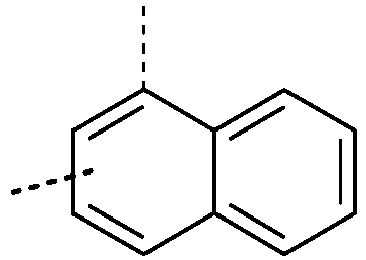
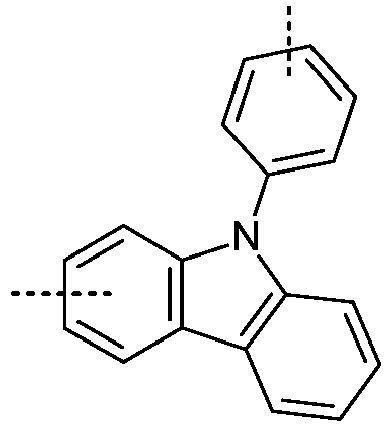
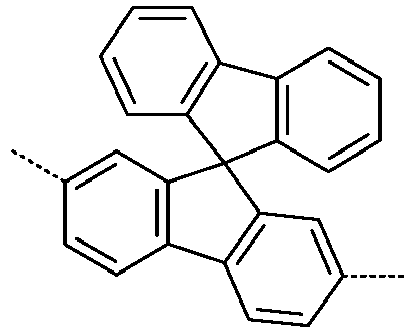
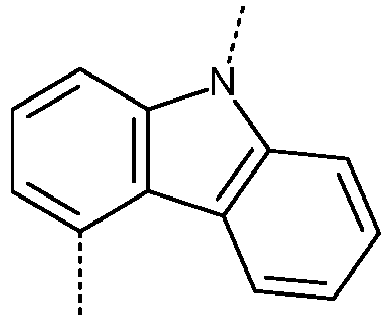
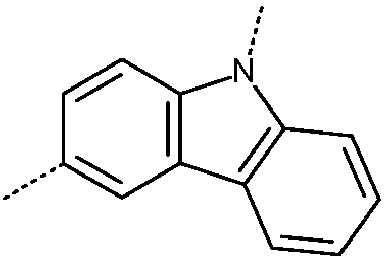
- Ar S examples include the groups (Ar S -1) to (Ar S -22) depicted in the table below: Ar S -1 Ar S -2 Ar S -3 Ar S -4 Ar S -5 Ar S -6 Ar S -7 Ar S -8 Ar S -9 Ar S -10 Ar s -11 Ar S -12 Ar S -13 Ar S -14 Ar S -15 Ar S -16 Ar S -17 Ar S -18 Ar S -19 Ar S -20 Ar S -21 Ar S -22 where the dashed bonds indicate the bonds to the structure of formula (1) and to the triphenylene derivative, and where the groups (Ar S -1) to (Ar S -22) may be substituted at each free position by a group R and where:
- Ar S examples are the groups (Ar S -23) to (Ar S -67) depicted in the table below: Ar S -23 Ar S -24 Ar S -25 Ar S -26 Ar S -27 Ar S -28 Ar S -29 Ar S -30 Ar S -31 Ar S -32 Ar S -33 Ar S -34 Ar S -35 Ar S -36 Ar S -37 Ar S -38 Ar S -39 Ar S -40 Ar s 41 Ar S -42 Ar S -43 Ar S -44 Ar S -45 Ar S -46 Ar S -47 Ar S -48 Ar S -49 Ar s -50 Ar s -51 Ar s -52 Ar S -53 Ar S -54 Ar S -55 Ar S -56 Ar S -57 Ar S -58 Ar S -59 Ar S -60 Ar S -61 Ar S -62 Ar S -63 Ar S -64 Ar S -65 Ar S -66 Ar S -67
- R° stands on each occurrence, identically or differently, for H, D, a straight-chain alkyl group having 1 to 10 C atoms or branched or a cyclic alkyl group having 3 to 10 C atoms, each of which may be substituted by one or more radicals R, an aromatic or heteroaromatic ring systems having 5 to 18 aromatic ring atoms, which may in each case be substituted by one or more radicals R, where two radicals R° may form a monocyclic or polycyclic, aliphatic, aromatic or heteroaromatic ring system with one another, which may be substituted by one or more radicals R.
- R 1 , R 2 , R 3 stand on each occurrence, identically or differently, for H, D, F, CN, a straight-chain alkyl group having 1 to 10 C atoms or branched or a cyclic alkyl group having 3 to 10 C atoms, each of which may be substituted by one or more radicals R, or an aromatic or heteroaromatic ring systems having 5 to 60, preferably 5 to 40, more preferably 5 to 30, very more preferably 5 to 18 aromatic ring atoms, which may in each case be substituted by one or more radicals R, where two radicals R 1 , two radicals R 2 and/or two radicals R 3 may form a monocyclic or polycyclic, aliphatic, aromatic or heteroaromatic ring system with one another, which may be substituted by one or more radicals R.
- the aromatic or heteroaromatic ring system is preferably selected from benzene, naphthalene, anthracene, benzanthracene, phenanthrene, triphenylene (also called benzophenanthrene), pyrene, chrysene, perylene, fluoranthene, naphthacene, pentacene, benzopyrene, biphenyl, biphenylene, terphenyl, terphenylene, quaterphenyl, fluorene, spirobifluorene, indenofluorene, furan, benzofuran, dibenzofuran, thiophene, benzothiophene, dibenzothiophene, pyrrole, indole, isoindole, carbazole, indolocarbazole, inde
- the aromatic or heteroaromatic ring system is selected from benzene, naphthalene, phenanthrene, triphenylene, fluoranthene, biphenyl, terphenyl, quaterphenyl, fluorene, spirobifluorene, indenofluorene, dibenzofuran, dibenzothiophene, carbazole, indolocarbazole, indenocarbazole, pyridine, quinoline, benzoquinoline, pyrimidine, benzopyrimidine, quinoxaline, phenoxazine, phenothiazine, azacarbazole, triazine, or combinations of these groups.
- R 4 stands on each occurrence, identically or differently, for H, D, F, a straight-chain alkyl group having 1 to 10 C atoms or branched or a cyclic alkyl group having 3 to 10 C atoms, each of which may be substituted by one or more radicals R, an aromatic or heteroaromatic ring systems having 5 to 60, preferably 5 to 40, more preferably 5 to 30, very more preferably 5 to 18 aromatic ring atoms, which may in each case be substituted by one or more radicals R, where two radicals R 4 may form a monocyclic or polycyclic, aliphatic, aromatic or heteroaromatic ring system, which may be substituted by one or more radicals R.
- R 4 stands on each occurrence, identically or differently, for H, D, a straight-chain alkyl group having 1 to 10 C atoms or a branched or a cyclic alkyl group having 3 to 10 C atoms, each of which may be substituted by one or more radicals R, or an aromatic or heteroaromatic ring systems having 5 to 18 aromatic ring atoms, which may in each case be substituted by one or more radicals R.
- R stands on each occurrence, identically or differently, for H, D, F, CN, a straight-chain alkyl or alkoxy group having 1 to 20 C atoms or branched or cyclic alkyl or alkoxy group having 3 to 20 C atoms, each of which may be substituted by one or more radicals R', an aromatic or heteroaromatic ring systems having 5 to 40, preferably 5 to 30, more preferably 5 to 18 aromatic ring atoms, which may in each case be substituted by one or more radicals R', where two radicals R may form a ring system with one another, which may be substituted by one or more radicals R'.
- R stands on each occurrence, identically or differently, for H, D, F, CN, a straight-chain alkyl group having 1 to 10 C atoms or branched or cyclic alkyl group having 3 to 10 C atoms, each of which may be substituted by one or more radicals R', an aromatic or heteroaromatic ring systems having 5 to 18 aromatic ring atoms, which may in each case be substituted by one or more radicals R.
- Ar is an aromatic or heteroaromatic ring system having 5 to 18 aromatic ring atoms, which may in each case also be substituted by one or more radicals R'.
- R' stands on each occurrence, identically or differently, for H, D, F, Cl, Br, I, CN, a straight-chain alkyl or alkoxy group having 1 to 20, preferably 1 to 10, more preferably 1 to 5 C atoms or branched or cyclic alkyl or alkoxy group having 3 to 20, preferably 1 to 10, more preferably 1 to 5 C atoms, where one or more H atoms may be replaced by D, F, Cl, Br or I, or an aromatic or heteroaromatic ring system having 5 to 24 C, preferably 5 to 18 C atoms.
- the compounds of formula (1) comprise at least one substituent R 1 or R 2 , which is selected from aromatic and heteroaromatic ring systems.
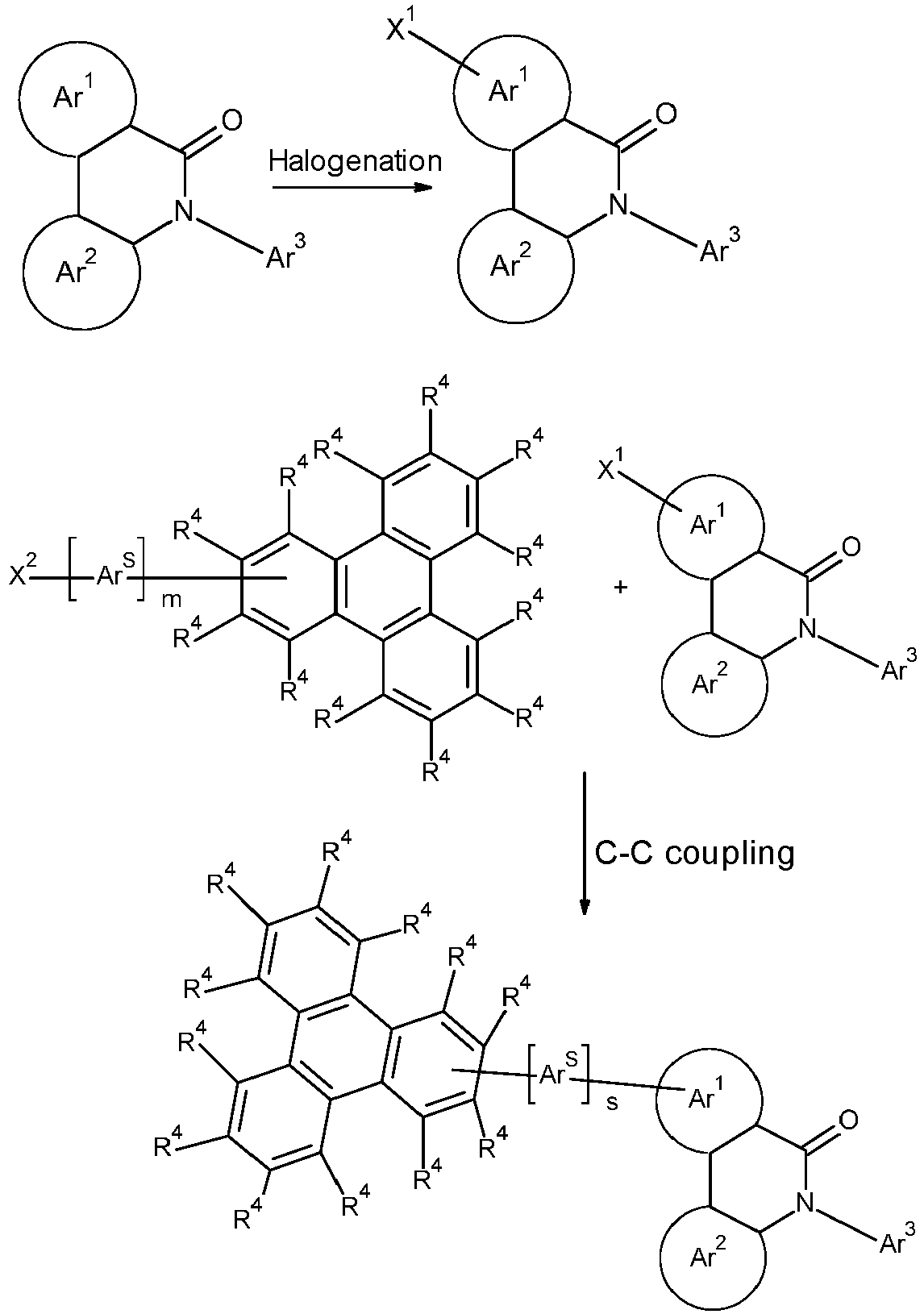
- the compounds can be prepared by synthesis steps known to the person skilled in the art, such as, for example, bromination, Suzuki coupling, Ullmann coupling, Hartwig-Buchwald coupling, etc. Examples of suitable synthesis processes are depicted in general terms in Schemes 1 and 2 below.
- X in scheme 1 is a leaving group, preferably selected from halogens (like Br, Cl, I), boronic acids and triflates, and where the other symbols and indices have the same meaning as above.
- X 1 and X 2 in scheme 2, are leaving groups, preferably selected from halogens (like Br, Cl, I), boronic acids and triflates, and where the other symbols and indices have the same meaning as above.
- formulations of the compounds are necessary. These formulations can be, for example, solutions, dispersions or emulsions. It may be preferred to use mixtures of two or more solvents for this purpose.
- Suitable and preferred solvents are, for example, toluene, anisole, o-, m- or p-xylene, methyl benzoate, mesitylene, tetralin, veratrol, THF, methyl-THF, THP, chlorobenzene, dioxane, phenoxytoluene, in particular 3-phenoxytoluene, (-)-fenchone, 1,2,3,5-tetramethylbenzene, 1,2,4,5-tetramethylbenzene, 1-methylnaphthalene, 2-methylbenzothiazole, 2-phenoxyethanol, 2-pyrrolidinone, 3-methylanisole, 4-methylanisole, 3,4-dimethylanisole, 3,5-dimethylanisole, acetophenone, ⁇ -terpineol, benzothiazole, butyl benzoate, cumene, cyclohexanol, cyclohexanone, cyclohexylbenzene, decalin, do
- a formulation here comprises a compound of formula (1) and at least one further compound.
- the further compound may be, for example, a solvent, in particular one of the above-mentioned solvents or a mixture of these solvents.
- the further compound may also be at least one further organic or inorganic compound which is likewise employed in the electronic device, for example an emitting compound, in particular a phosphorescent dopant, and/or a further matrix material. Suitable emitting compounds and further matrix materials are indicated below in connection with the organic electroluminescent device.
- This further compound may also be polymeric.
- An electronic device here is taken to mean a device which comprises at least one layer which comprises at least one organic compound.
- the component here may also comprise inorganic materials or also layers built up entirely from inorganic materials.
- An electronic device is preferably selected from the group consisting of organic electroluminescent devices (OLEDs, PLEDs), organic integrated circuits (O-ICs), organic field-effect transistors (O-FETs), organic thin-film transistors (O-TFTs), organic light-emitting transistors (O-LETs), organic solar cells (O-SCs), organic dye-sensitised solar cells, organic optical detectors, organic photoreceptors, organic field-quench devices (O-FQDs), light-emitting electrochemical cells (LECs), organic laser diodes (O-lasers) and "organic plasmon emitting devices” ( D. M. Koller et al., Nature Photonics 2008, 1-4 ), preferably organic electroluminescent devices (OLEDs, PLEDs), in particular phosphorescent OLEDs.
- OLEDs organic electroluminescent devices
- PLEDs organic integrated circuits
- O-FETs organic field-effect transistors
- OF-TFTs organic thin-film
- the organic electroluminescent device comprises a cathode, an anode and at least one emitting layer. Apart from these layers, it may also comprise further layers, for example in each case one or more hole-injection layers, hole-transport layers, hole-blocking layers, electron-transport layers, electron-injection layers, exciton-blocking layers, electron-blocking layers and/or charge-generation layers. It is likewise possible for interlayers, which have, for example, an exciton-blocking function, to be introduced between two emitting layers. However, it should be pointed out that each of these layers does not necessarily have to be present.
- the organic electroluminescent device here may comprise one emitting layer or a plurality of emitting layers.
- a plurality of emission layers are present, these preferably have in total a plurality of emission maxima between 380 nm and 750 nm, resulting overall in white emission, i.e. various emitting compounds which are able to fluoresce or phosphoresce are used in the emitting layers.
- various emitting compounds which are able to fluoresce or phosphoresce are used in the emitting layers.
- Particular preference is given to systems having three emitting layers, where the three layers exhibit blue, green and orange or red emission (for the basic structure see, for example, WO 2005/011013 ).
- These can be fluorescent or phosphorescent emission layers or hybrid systems, in which fluorescent and phosphorescent emission layers are combined with one another.
- the organic electroluminescent device here may comprise one emitting layer or a plurality of emitting layers, where at least one emitting layer comprises at least one compound of formula (1) as matrix material.
- Phosphorescence in the sense of this invention is taken to mean the luminescence from an excited state having spin multiplicity > 1, in particular from an excited triplet state.
- all luminescent transition-metal complexes and luminescent lanthanide complexes are to be regarded as phosphorescent compounds.
- the mixture comprising the compound of the formula (1) or in accordance with the preferred embodiments and the emitting compound comprises between 99 and 1% by vol., preferably between 98 and 10% by vol., particularly preferably between 97 and 60% by vol., in particular between 95 and 80% by vol., of the compound of the formula (1) or in accordance with the preferred embodiments, based on the entire mixture comprising emitter and matrix material.
- the mixture comprises between 1 and 99% by vol., preferably between 2 and 90% by vol., particularly preferably between 3 and 40% by vol., in particular between 5 and 20% by vol., of the emitter, based on the entire mixture comprising emitter and matrix material.
- Suitable phosphorescent compounds are, in particular, compounds which emit light, preferably in the visible region, on suitable excitation and in addition contain at least one atom having an atomic number greater than 20, preferably greater than 38 and less than 84, particularly preferably greater than 56 and less than 80, in particular a metal having this atomic number.
- the phosphorescent emitters used are preferably compounds which contain copper, molybdenum, tungsten, rhenium, ruthenium, osmium, rhodium, iridium, palladium, platinum, silver, gold or europium, in particular compounds which contain iridium or platinum.
- all luminescent compounds which contain the above-mentioned metals are regarded as phosphorescent compounds.
- Examples of the emitters described above are revealed by the applications WO 00/70655 , WO 2001/41512 , WO 2002/02714 , WO 2002/15645 , EP 1191613 , EP 1191612 , EP 1191614 , WO 05/033244 , WO 05/019373 , US 2005/0258742 , WO 2009/146770 , WO 2010/015307 , WO 2010/031485 , WO 2010/054731 , WO 2010/054728 , WO 2010/086089 , WO 2010/099852 , WO 2010/102709 , WO 2011/032626 , WO 2011/066898 , WO 2011/157339 , WO 2012/007086 , WO 2014/008982 , WO 2014/023377 , WO 2014/094962 , WO 2014/094961 , WO 2014/094960 , WO 2016/124304 ,
- Suitable phosphorescent emitters are the phosphorescent emitters listed in the table below:
- Suitable phosphorescent materials that can be advantageously combined with the compounds of formula (1) are, as mentioned above, compounds which emit a red light on suitable excitation, which means phosphorescent materials having an excited triplet state level (T1) comprised between 550 and 680 nm.
- a further preferred embodiment of the present invention is the use of the compound of the formula (1) or in accordance with the preferred embodiments as matrix material for a phosphorescent emitter in combination with a further matrix material.
- Particularly suitable matrix materials which can be employed in combination with the compounds of the formula (1) or in accordance with the preferred embodiments are aromatic ketones, aromatic phosphine oxides or aromatic sulfoxides or sulfones, for example in accordance with WO 2004/013080 , WO 2004/093207 , WO 2006/005627 or WO 2010/006680 , triarylamines, carbazole derivatives, for example CBP (N,N-bis-carbazolylbiphenyl) or the carbazole derivatives disclosed in WO 2005/ 039246 , US 2005/0069729 , JP 2004/288381 , EP 1205527 or WO 2008/ 086851 , indolocarbazole derivatives, for example in accordance with WO 2007/063754 or
- Preferred co-host materials are triarylamine derivatives, lactams, carbazole derivatives and indenocarbazole derivatives. Preferred co-host materials are very particularly carbazole derivatives and indenocarbazole derivatives.
- the second compound comprising at least one group of formula (11) or (12) is selected from the compounds of formulae (11-1) to (12-4),
- the second compound comprising at least one group of formula (11) or (12) is selected from the compounds of formulae (13-1) to (14-4), where the symbols and indices R 10 , E 10 , E 12 and p have the same meaning as above; and where:
- the organic electroluminescent device according to the invention does not comprise a separate hole-injection layer and/or hole-transport layer and/or hole-blocking layer and/or electron-transport layer, i.e. the emitting layer is directly adjacent to the hole-injection layer or the anode, and/or the emitting layer is directly adjacent to the electron-transport layer or the electron-injection layer or the cathode, as described, for example, in WO 2005/053051 . It is furthermore possible to use a metal complex which is identical or similar to the metal complex in the emitting layer as hole-transport or hole-injection material directly adjacent to the emitting layer, as described, for example, in WO 2009/030981 .
- the compound of formula (1) can also be used as a matrix for semiconducting light-emitting nanoparticles.
- the term “nano” denotes a size in the range from 0.1 to 999 nm, preferably from 1 to 150 nm.
- the semiconducting light-emitting nano-particle is a quantum material ("Quantum sized material").
- Quantum material in the sense of the present invention refers to the size of the semiconductor material itself without further connections or a further surface modification, which shows the so-called quantum confinement effect, as for example in ISBN: 978-3-662-44822-9.
- the total size of the quantum material is in the range from 1 to 100 nm, more preferably from 1 to 30 nm and particularly preferably from 5 to 15 nm.
- the core of the semiconducting light-emitting nano-particle can vary.
- Suitable examples are CdS, CdSe, CdTe, ZnS, ZnSe, ZnSeS, ZnTe, ZnO, GaAs, GaP, GaSb, HgS, HgSe, HgSe, HgTe, InAs, InP, InPS, InPZnS, InPZn, InPGa, InSb, AlAs , AIP, AlSb, Cu 2 S, Cu 2 Se, CulnS 2 , CulnSe 2 , Cu 2 (ZnSn)S 4 , Cu 2 (InGa) S 4 , TiO 2 , or a combination of said materials.
- the core of the semiconductive light-emitting particle contains one or more elements of group 13 and one or more elements of group 15 of the periodic system of the elements, for example GaAs, GaP, GaSb, InAs, InP, InPS, InPZnS, InPZn, InPGa, InSb, AlAs, AIP, AlSb, CulnS 2 , CulnSe 2 , Cu 2 (InGa)S 4 or a combination of the mentioned materials.
- the core contains In- and P-atoms, z. InP, InPS, InPZnS, InPZn or InPGa.
- the nanoparticle contains one or more shell layers, which comprise a first element from the group 12, 13 or 14 of the periodic table and a second element from the group 15 or 16 of the periodic table.
- all shell layers contain a first element from the group 12, 13 or 14 of the periodic system and a second element from the group 15 or 16 of the periodic system.
- at least one of the shell layers contains a first element from the group 12 and a second element from the group 16 of the periodic table, for example CdS, CdZnS, ZnS, ZnSe, ZnSSe, ZnSSeTe, CdS/ZnS, ZnSe/ZnS or ZnS/ZnSe.
- all shell layers contain a first element from the group 12 and a second element from the group 16 of the periodic table.
- an organic electroluminescent device characterised in that one or more layers are applied by means of a sublimation process, in which the materials are vapour-deposited in vacuum sublimation units at an initial pressure of less than 10 -5 mbar, preferably less than 10 -6 mbar.
- the initial pressure it is also possible for the initial pressure to be even lower or higher, for example less than 10 -7 mbar.
- an organic electroluminescent device characterised in that one or more layers are applied by means of the OVPD (organic vapour phase deposition) process or with the aid of carrier-gas sublimation, in which the materials are applied at a pressure between 10 -5 mbar and 1 bar.
- OVPD organic vapour phase deposition
- carrier-gas sublimation in which the materials are applied at a pressure between 10 -5 mbar and 1 bar.
- OVJP organic vapour jet printing
- an organic electroluminescent device characterised in that one or more layers are produced from solution, such as, for example, by spin coating, or by means of any desired printing process, such as, for example, ink-jet printing, LITI (light induced thermal imaging, thermal transfer printing), screen printing, flexographic printing, offset printing or nozzle printing. Soluble compounds, which are obtained, for example, by suitable substitution, are necessary for this purpose.
- hybrid processes in which, for example, one or more layers are applied from solution and one or more further layers are applied by vapour deposition.
- the compounds according to the invention generally have very good properties on use in organic electroluminescent devices.
- the lifetime on use of the compounds according to the invention in organic electroluminescent devices is significantly better compared with similar compounds in accordance with the prior art.
- the other properties of the organic electroluminescent device, in particular the efficiency and the voltage, are likewise better or at least comparable.
- the compounds have a high glass transition temperature and high thermal stability.
- Glass plates with structured ITO (50 nm, indium tin oxide) form the substrates on which the OLEDs are processed.
- the substrates are cleaned in a wet process (using filtered deionized water and the detergent "Extran” of Merck KGaA). Glass substrates are then dried for 15 minutes at 170°C.
- the OLEDs have in principle the following layer structure: substrate / hole-transport layer (HTL) / optional interlayer (IL) / electron-blocking layer (EBL) / emission layer (EML) / optional hole-blocking layer (HBL) / electron-transport layer (ETL) / optional electron-injection layer (EIL) and finally a cathode.
- the cathode is formed by an aluminium layer with a thickness of 100 nm.
- the exact layer structure is denoted in Table 1 (ITO and Aluminium layers are omitted for clarity).
- the materials used for the OLED fabrication are presented in Table 2.
- the emission layer here always consists of at least one matrix material (host material) and an emitting dopant (emitter), which is admixed with the matrix material or matrix materials in a certain proportion by volume by co-evaporation.
- the electron-transport layer may also consist of a mixture of two materials.
- the OLEDs are characterized by standard methods.
- the electroluminescence spectra and the lifetime are determined.
- the electroluminescent spectra are determined at a brightness of 1000 cd/m 2 and the corresponding CIE 1931 x and y color coordinates are determined.
- Lifetime LT is defined as the time in hours (h), after which the starting brightness at constant current density j 0 , is reduced to a certain level L1 in % of the starting brightness.
- the compounds of formula (1) are used in the emission layer (EML) of a phosphorescent green OLED.
- EML emission layer
- the inventive combination of the compound CbzT1 with one of the compound EG1 to EG5 is used as matrix material in the emission layer.
- a substantial improvement of the lifetime by 25-30% versus the state of the art like in example V1 at similar color coordinates, can be reached for example by using the inventive combination of CbzT1 and one of the compound EG1 to EG5 and similar emitter concentrations (e.g. 18%) in the emission layer like in example E1.
Landscapes
- Chemical & Material Sciences (AREA)
- Organic Chemistry (AREA)
- Engineering & Computer Science (AREA)
- Materials Engineering (AREA)
- Physics & Mathematics (AREA)
- Spectroscopy & Molecular Physics (AREA)
- Electroluminescent Light Sources (AREA)
Description
- The present invention relates to a compound of the formula (1), to the use of the compound in an electronic device, and to an electronic device comprising a compound of the formula (1). The present invention furthermore relates to a process for the preparation of a compound of the formula (1) and to a formulation comprising one or more compounds of the formula (1).
- The structure of organic electroluminescent devices (OLEDs) in which organic semiconductors are employed as functional materials is described, for example in
US 4539507 . The emitting materials employed here are very often organometallic complexes which exhibit phosphorescence. For quantum-mechanical reasons, an up to four-fold increase in efficiency is possible using phosphorescent instead of fluorescent emitters. In general, however, there is still a need for improvement in the case of OLEDs, in particular also in the case of OLEDs which exhibit triplet emission (phosphorescence), for example with respect to efficiency, operating voltage and lifetime. - The properties of phosphorescent OLEDs are not only determined by the triplet emitters but also by the other materials used together with triplet emitters in OLEDs, such as matrix materials, also called host materials. Improvements in these materials and their charge-transport properties can thus also result in significant improvements in the OLED properties.
- Thus, the choice of the matrix material in an emission layer comprising a phosphorescent emitter has a great influence on OLEDs properties, especially in terms of efficiency. The matrix material limits the quenching of excited states of emitter molecules by energy transfer.
- Compounds comprising lactam derivatives and their use in OLEDs are known from the prior art (for example in
WO 2011/137951 andWO 2013/064206 ). - Certain compounds containing lactam derivatives combined with triphenylene derivatives, as described in greater detail below, exhibit excellent properties when they are employed in OLEDs, particularly when employed as matrix material for phosphorescent emitters. Indeed, these compounds lead to OLEDs exhibiting better properties in terms of lifetime and/or efficiency and/or electroluminescent emission. In addition, these compounds have a high glass transition temperature and a good thermal stability, which is an important property for OLED materials, especially when the materials are vapor-deposited via a vacuum process. It has now been found that specific mixtures of compounds containing lactam derivatives combined with triphenylene derivatives and compounds as described below lead to particularly suitable mixtures for the fabrication of OLEDs.
- The present invention therefore relates to electronic devices, in particular organic electroluminescent devices, which comprise specific mixtures of compounds containing lactam derivatives combined with triphenylene derivatives and compounds as described below.
- The present invention relates to an organic electroluminescent device comprising a mixture comprising a compound of the formula (1),

- where the following applies to the symbols and indices used:
- Ar1
- stands on each occurrence, identically or differently, for an aromatic or heteroaromatic ring system having 5 to 60 aromatic ring atoms, which may in each case be substituted by one or more radicals R1;
- Ar2
- stands on each occurrence, identically or differently, for an aromatic or heteroaromatic ring system having 5 to 60 aromatic ring atoms, which may in each case be substituted by one or more radicals R2;
- Ar3
- stands on each occurrence, identically or differently, for an aromatic or heteroaromatic ring system having 5 to 60 aromatic ring atoms, which may in each case be substituted by one or more radicals R3;
- -E-
- is selected from a single bond, -B(R0)-, -C(R0)2-, -Si(R0)2-, -C(=O)-,-C(=NR0)-, -C(=C(R0)2)-, -O-, -S-, -S(=O)-, -S(O2)-, -N(R0)-, -P(R0)- and-P((=O)R0)-;
- R0, R2, R3
- R1, stand on each occurrence, identically or differently, for H, D, F, Cl, Br, I, CHO, CN, N(Ar)2, C(=O)Ar, P(=O)(Ar)2, S(=O)Ar, S(=O)2Ar, NO2, Si(R)3, B(OR)2, OSO2R, a straight-chain alkyl, alkoxy or thioalkyl group having 1 to 40 C atoms or branched or a cyclic alkyl, alkoxy or thioalkyl group having 3 to 40 C atoms, each of which may be substituted by one or more radicals R, where in each case one or more non-adjacent CH2 groups may be replaced by RC=CR, C=C, Si(R)2, Ge(R)2, Sn(R)2, C=O, C=S, C=Se, P(=O)(R), SO, SO2, O, S or CONR and where one or more H atoms may be replaced by D, F, Cl, Br, I, CN or NO2, an aromatic or heteroaromatic ring systems having 5 to 60 aromatic ring atoms, which may in each case be substituted by one or more radicals R, or an aryloxy group having 5 to 40 aromatic ring atoms, which may be substituted by one or more radicals R, where two radicals R°, two radicals R1, two radicals R2 and/or two radicals R3 may form a monocyclic or polycyclic, aliphatic, aromatic or heteroaromatic ring system with one another, which may be substituted by one or more radicals R;
- R
- stands on each occurrence, identically or differently, for H, D, F, Cl, Br, I, CHO, CN, N(Ar)2, C(=O)Ar, P(=O)(Ar)2, S(=O)Ar, S(=O)2Ar, NO2, Si(R')3, B(OR')2, OSO2R', a straight-chain alkyl, alkoxy or thioalkyl group having 1 to 40 C atoms or branched or cyclic alkyl, alkoxy or thioalkyl group having 3 to 40 C atoms, each of which may be substituted by one or more radicals R', where in each case one or more non-adjacent CH2 groups may be replaced by R'C=CR' , C=C, Si(R')2, Ge(R')2, Sn(R')2, C=O, C=S, C=Se, P(=O)(R'), SO, SO2, O, S or CONR' and where one or more H atoms may be replaced by D, F, Cl, Br, I, CN or NO2, an aromatic or heteroaromatic ring systems having 5 to 60 aromatic ring atoms, which may in each case be substituted by one or more radicals R , or an aryloxy group having 5 to 40 aromatic ring atoms, which may be substituted by one or more radicals R', where two radicals R may form a ring system with one another, which may be substituted by one or more radicals R';
- Ar
- is an aromatic or heteroaromatic ring system having 5 to 24 aromatic ring atoms, which may in each case also be substituted by one or more radicals R';
- R'
- stands on each occurrence, identically or differently, for H, D, F, Cl, Br, I, CN, a straight-chain alkyl, alkoxy or thioalkyl group having 1 to 20 C atoms or branched or cyclic alkyl, alkoxy or thioalkyl group having 3 to 20 C atoms, where in each case one or more non-adjacent CH2 groups may be replaced by SO, SO2, O, S and where one or more H atoms may be replaced by D, F, Cl, Br or I, or an aromatic or heteroaromatic ring system having 5 to 24 C atoms;
- n
- is 0 or 1; wherein when n is 0, the group -E- is absent;
- where the compound of formula (1) comprises at least
- one group Ar3, R1, R2 or R3, which stands for a triphenylene derivative of the formula (T),

- where the dashed bond indicates the bonding to the structure of formula (1); and where:
- R4
- is C at the position of the bonding to Ars or, R4 is C at the position of the bonding to the structure of formula (1) if m is 0; and at other positions, R4 stands on each occurrence, identically or differently, for H, D, F, Cl, Br, I, CHO, CN, N(Ar)2, C(=O)Ar, P(=O)(Ar)2, S(=O)Ar, S(=O)2Ar, NO2, Si(R)3, B(OR)2, OSO2R, a straight-chain alkyl, alkoxy or thioalkyl group having 1 to 40 C atoms or branched or a cyclic alkyl, alkoxy or thioalkyl group having 3 to 40 C atoms, each of which may be substituted by one or more radicals R, where in each case one or more non-adjacent CH2 groups may be replaced by RC=CR, C=C, Si(R)2, Ge(R)2, Sn(R)2, C=O, C=S, C=Se, P(=O)(R), SO, SO2, O, S or CONR and where one or more H atoms may be replaced by D, F, Cl, Br, I, CN or NO2, an aromatic or heteroaromatic ring systems having 5 to 60 aromatic ring atoms, which may in each case be substituted by one or more radicals R, or an aryloxy group having 5 to 40 aromatic ring atoms, which may be substituted by one or more radicals R, where two radicals R4 may form a monocyclic or polycyclic, aliphatic, aromatic or heteroaromatic ring system, which may be substituted by one or more radicals R;
- Ars
- is an aromatic or heteroaromatic ring system having 5 to 60 aromatic ring atoms, which may in each case also be substituted by one or more radicals R;
- m
- is an integer selected from 0, 1, 2, 3 or 4,
- and a second compound selected from compounds of formulae (11) and (12),


- where:
- R10
- stands on each occurrence, identically or differently, for H, D, F, Cl, Br, I, CHO, CN, N(Ar)2, C(=O)Ar, P(=O)(Ar)2, S(=O)Ar, S(=O)2Ar, NO2, Si(R)3, B(OR)2, OSO2R, a straight-chain alkyl, alkoxy or thioalkyl group having 1 to 40 C atoms or branched or a cyclic alkyl, alkoxy or thioalkyl group having 3 to 40 C atoms, each of which may be substituted by one or more radicals R, where in each case one or more non-adjacent CH2 groups may be replaced by RC=CR, C=C, Si(R)2, Ge(R)2, Sn(R)2, C=O, C=S, C=Se, P(=O)(R), SO, SO2, O, S or CONR and where one or more H atoms may be replaced by D, F, Cl, Br, I, CN or NO2, an aromatic or heteroaromatic ring systems having 5 to 60 aromatic ring atoms, which may in each case be substituted by one or more radicals R, or an aryloxy group having 5 to 40 aromatic ring atoms, which may be substituted by one or more radicals R, where two radicals R10 may form a monocyclic or polycyclic, aliphatic, aromatic or heteroaromatic ring system with one another, which may be substituted by one or more radicals R;
- Ar10
- is an aromatic or heteroaromatic ring system having 5 to 60 aromatic ring atoms, which may in each case also be substituted by one or more radicals R;
- p
- is an integer selected from 0, 1, 2, 3 and 4;
- E10
- stands for -C(R0)2-, -Si(R0)2-, -C(=O)-, -C(=NR0)-, -C(=C(R0)2)-, -O-, -S-,-S(=O)-, -S(O2)-, -N(Ar10)-, -P(R0)- or -P((=O)R0)-;
- E11
- stands for-C(R0)2-, -Si(R0)2-, -C(=O)-, -C(=NR0)-, -C(=C(R0)2)-, -O-, -S-,-S(=O)-, -S(O2)-, -N(Ar10)-, -P(R0)- or -P((=O)R0)-; and
- L1
- is a single bond or an aromatic or heteroaromatic ring system having 5 to 60 aromatic ring atoms, which may in each case also be substituted by one or more radicals R,
- where the mixture is employed as a matrix material for phosphorescent emitters in a light-emitting layer; and
- where the following compounds are excluded from the compounds of formula (1):
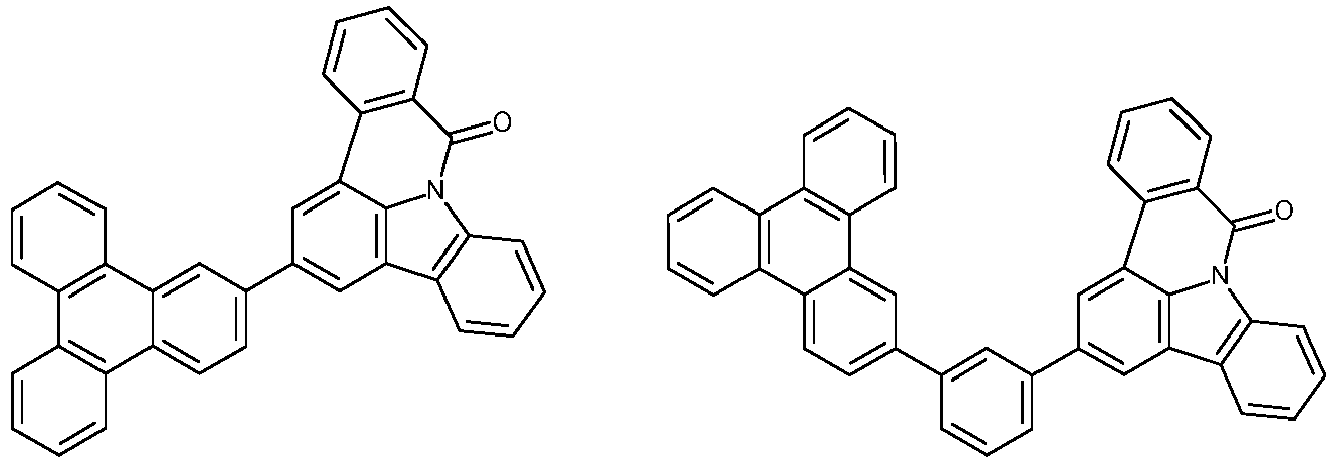
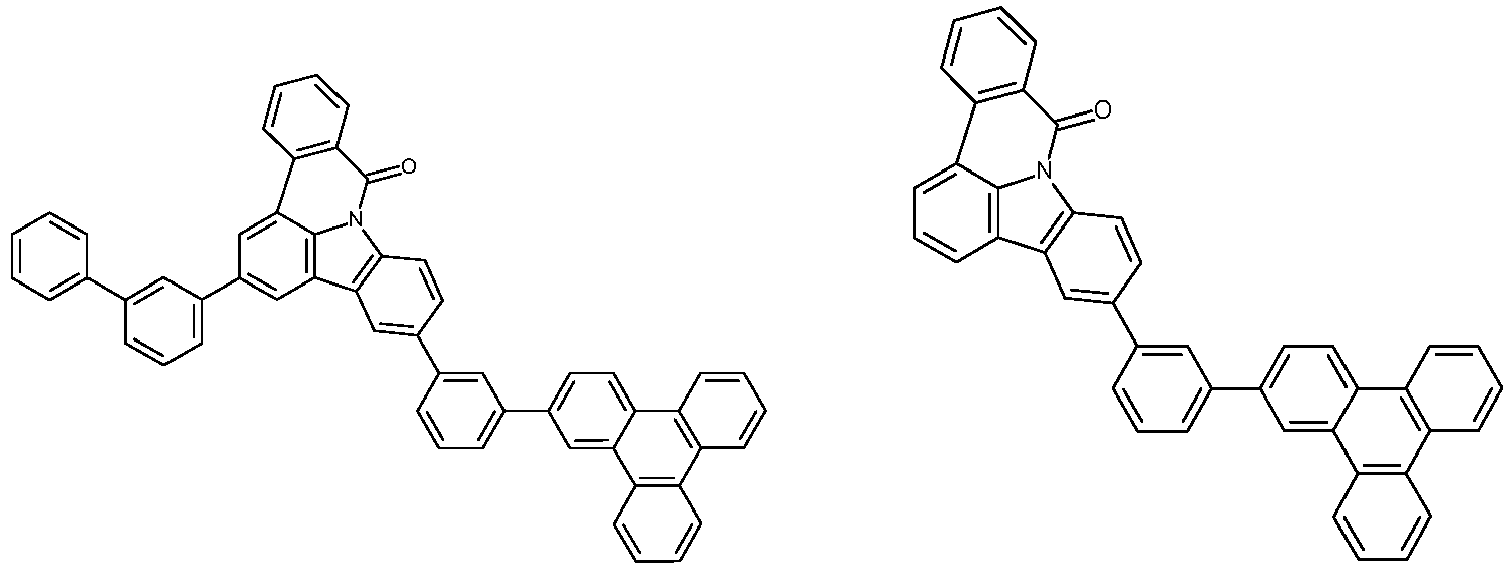


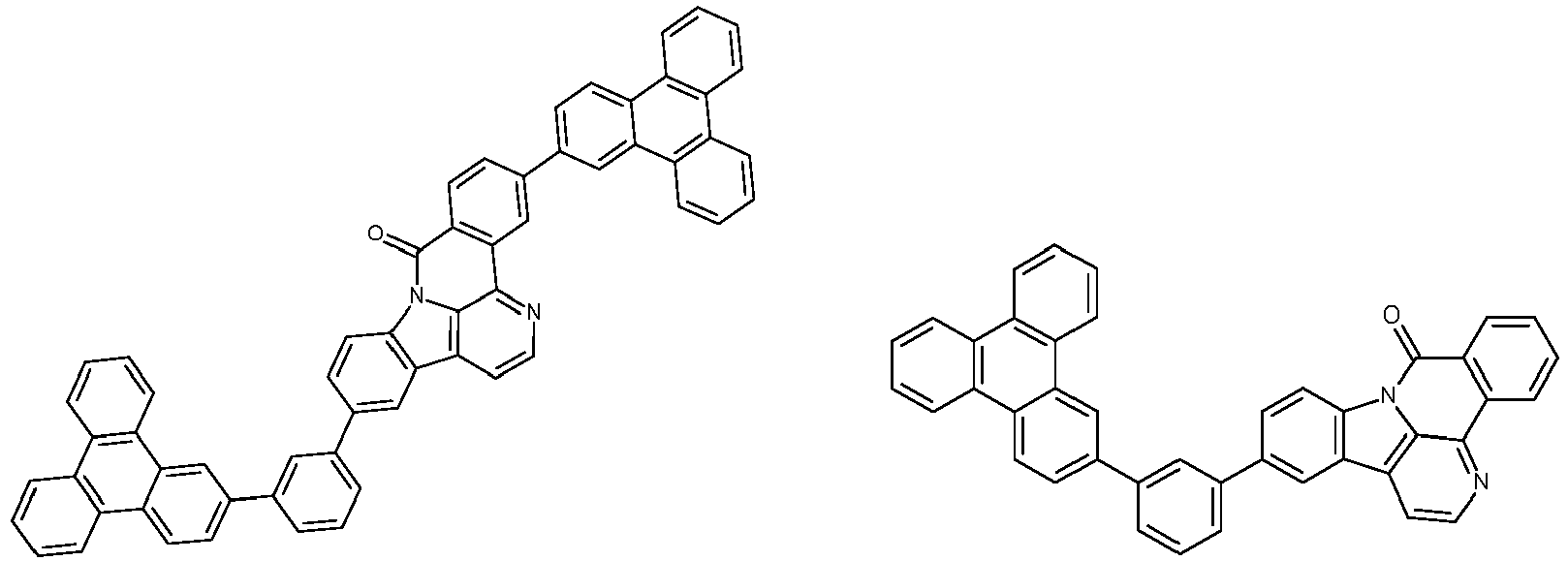
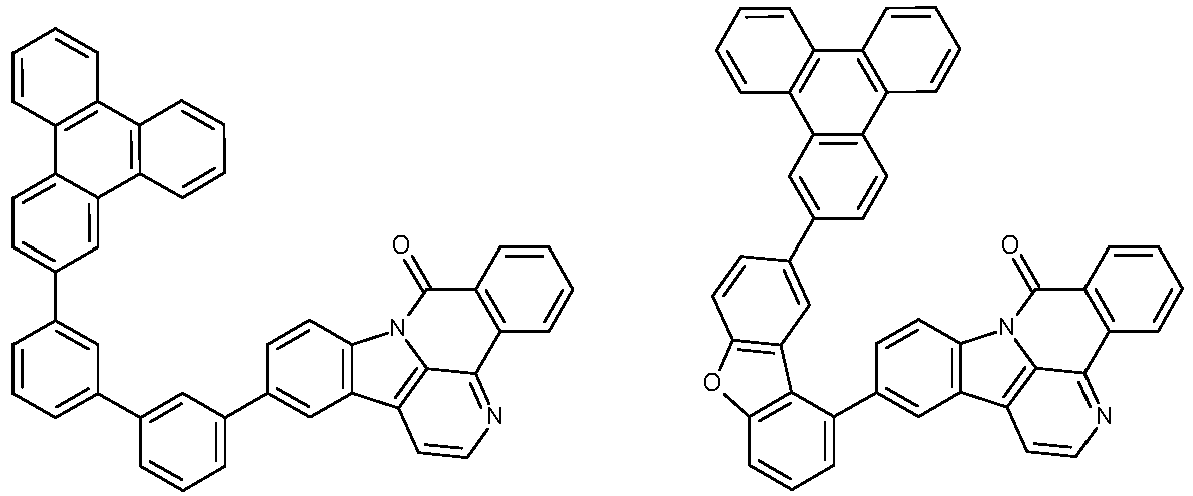
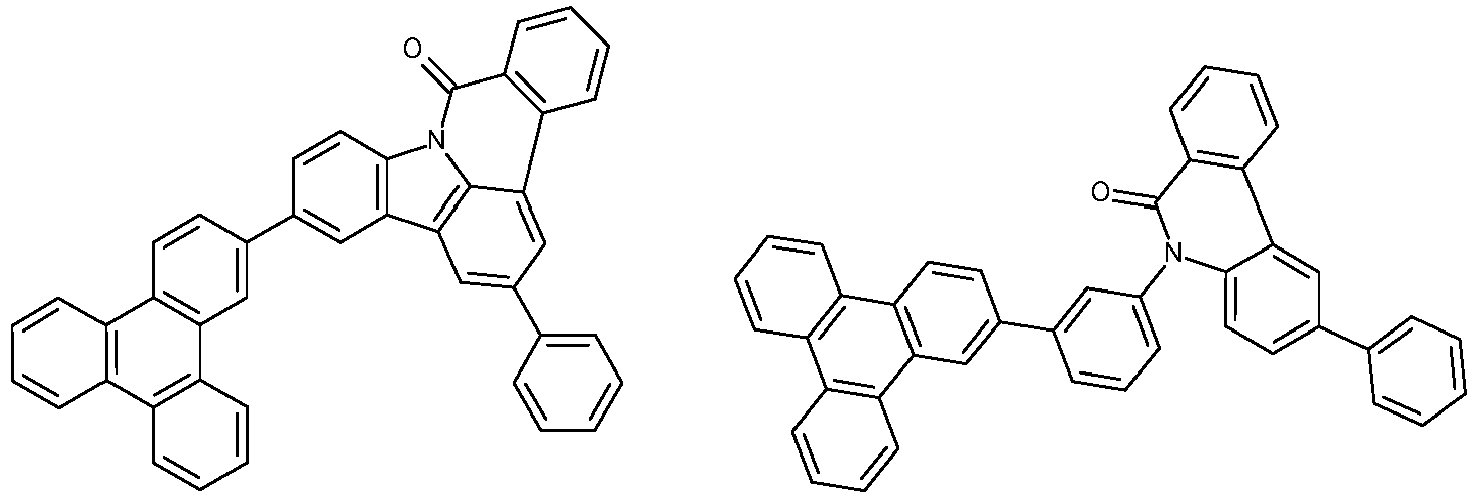

- Adjacent substituents in the sense of the present invention are substituents which are bonded to carbon atoms which are linked directly to one another or which are bonded to the same carbon atom.
- Furthermore, the following definitions of chemical groups apply for the purposes of the present application:
An aryl group in the sense of this invention contains 6 to 60 aromatic ring atoms; a heteroaryl group in the sense of this invention contains 5 to 60 aromatic ring atoms, at least one of which is a heteroatom. The hetero atoms are preferably selected from N, O and S. This represents the basic definition. If other preferences are indicated in the description of the present invention, for example with respect to the number of aromatic ring atoms or the heteroatoms present, these apply. - An aryl group or heteroaryl group here is taken to mean either a simple aromatic ring, i.e. benzene, or a simple heteroaromatic ring, for example pyridine, pyrimidine or thiophene, or a condensed (annellated) aromatic or heteroaromatic polycycle, for example naphthalene, phenanthrene, quinoline or carbazole. A condensed (annellated) aromatic or heteroaromatic polycycle in the sense of the present application consists of two or more simple aromatic or heteroaromatic rings condensed with one another.
- An aryl or heteroaryl group, which may in each case be substituted by the above-mentioned radicals and which may be linked to the aromatic or heteroaromatic ring system via any desired positions, is taken to mean, in particular, groups derived from benzene, naphthalene, anthracene, phenanthrene, pyrene, dihydropyrene, chrysene, perylene, fluoranthene, benzanthracene, benzophenanthrene, tetracene, pentacene, benzopyrene, furan, benzofuran, isobenzofuran, dibenzofuran, thiophene, benzothiophene, isobenzothiophene, dibenzothiophene, pyrrole, indole, isoindole, carbazole, pyridine, quinoline, isoquinoline, acridine, phenanthridine, benzo-5,6-quinoline, benzo-6,7-quinoline, benzo-7,8-quinoline, phenothiazine, phenoxazine, pyrazole, indazole, imidazole, benzimidazole, naphthimidazole, phenanthrimidazole, pyridimidazole, pyrazinimidazole, quinoxalinimidazole, oxazole, benzoxazole, naphthoxazole, anthroxazole, phenanthroxazole, isoxazole, 1,2-thiazole, 1,3-thiazole, benzothiazole, pyridazine, benzopyridazine, pyrimidine, benzopyrimidine, quinoxaline, pyrazine, phenazine, naphthyridine, azacarbazole, benzocarboline, phenanthroline, 1,2,3-triazole, 1,2,4-triazole, benzotriazole, 1,2,3-oxadiazole, 1,2,4-oxadiazole, 1,2,5-oxadiazole, 1,3,4-oxadiazole, 1,2,3-thiadiazole, 1,2,4-thiadiazole, 1,2,5-thiadiazole, 1,3,4-thiadiazole, 1,3,5-triazine, 1,2,4-triazine, 1,2,3-triazine, tetrazole, 1,2,4,5-tetrazine, 1,2,3,4-tetrazine, 1,2,3,5-tetrazine, purine, pteridine, indolizine and benzothiadiazole.
- An aryloxy group in accordance with the definition of the present invention is taken to mean an aryl group, as defined above, which is bonded via an oxygen atom. An analogous definition applies to heteroaryloxy groups.
- An aromatic ring system in the sense of this invention contains 6 to 60 C atoms in the ring system. A heteroaromatic ring system in the sense of this invention contains 5 to 60 aromatic ring atoms, at least one of which is a heteroatom. The heteroatoms are preferably selected from N, O and/or S. An aromatic or heteroaromatic ring system in the sense of this invention is intended to be taken to mean a system which does not necessarily contain only aryl or heteroaryl groups, but instead in which, in addition, a plurality of aryl or heteroaryl groups may be connected by a non-aromatic unit (preferably less than 10% of the atoms other than H), such as, for example, an sp3-hybridised C, Si, N or O atom, an sp2-hybridised C or N atom or an sp-hybridised C atom. Thus, for example, systems such as 9,9'-spirobifluorene, 9,9'-diarylfluorene, triarylamine, diaryl ether, stilbene, etc., are also intended to be taken to be aromatic ring systems in the sense of this invention, as are systems in which two or more aryl groups are connected, for example, by a linear or cyclic alkyl, alkenyl or alkynyl group or by a silyl group. Furthermore, systems in which two or more aryl or heteroaryl groups are linked to one another via single bonds are also taken to be aromatic or heteroaromatic ring systems in the sense of this invention, such as, for example, systems such as biphenyl, terphenyl or diphenyltriazine.
- An aromatic or heteroaromatic ring system having 5 - 60 aromatic ring atoms, which may in each case also be substituted by radicals as defined above and which may be linked to the aromatic or heteroaromatic group via any desired positions, is taken to mean, in particular, groups derived from benzene, naphthalene, anthracene, benzanthracene, phenanthrene, benzophenanthrene, pyrene, chrysene, perylene, fluoranthene, naphthacene, pentacene, benzopyrene, biphenyl, biphenylene, terphenyl, terphenylene, quaterphenyl, fluorene, spirobifluorene, dihydrophenanthrene, dihydropyrene, tetrahydropyrene, cis- or trans-indenofluorene, truxene, isotruxene, spirotruxene, spiroisotruxene, furan, benzofuran, isobenzofuran, dibenzofuran, thiophene, benzothiophene, isobenzothiophene, dibenzothiophene, pyrrole, indole, isoindole, carbazole, indolocarbazole, indenocarbazole, pyridine, quinoline, isoquinoline, acridine, phenanthridine, benzo-5,6-quinoline, benzo-6,7-quinoline, benzo-7,8-quinoline, phenothiazine, phenoxazine, pyrazole, indazole, imidazole, benzimidazole, naphthimidazole, phenanthrimidazole, pyridimidazole, pyrazinimidazole, quinoxalinimidazole, oxazole, benzoxazole, naphthoxazole, anthroxazole, phenanthroxazole, isoxazole, 1,2-thiazole, 1,3-thiazole, benzothiazole, pyridazine, benzopyridazine, pyrimidine, benzopyrimidine, quinoxaline, 1,5-diazaanthracene, 2,7-diazapyrene, 2,3-diazapyrene, 1,6-diazapyrene, 1,8-diazapyrene, 4,5-diazapyrene, 4,5,9,10-tetraazaperylene, pyrazine, phenazine, phenoxazine, phenothiazine, fluorubin, naphthyridine, azacarbazole, benzocarboline, phenanthroline, 1,2,3-triazole, 1,2,4-triazole, benzotriazole, 1,2,3-oxadiazole, 1,2,4-oxadiazole, 1,2,5-oxadiazole, 1,3,4-oxadiazole, 1,2,3-thiadiazole, 1,2,4-thiadiazole, 1,2,5-thiadiazole, 1,3,4-thiadiazole, 1,3,5-triazine, 1,2,4-triazine, 1,2,3-triazine, tetrazole, 1,2,4,5-tetrazine, 1,2,3,4-tetrazine, 1,2,3,5-tetrazine, purine, pteridine, indolizine and benzothiadiazole, or combinations of these groups.
- For the purposes of the present invention, a straight-chain alkyl group having 1 to 40 C atoms or a branched or cyclic alkyl group having 3 to 40 C atoms or an alkenyl or alkynyl group having 2 to 40 C atoms, in which, in addition, individual H atoms or CH2 groups may be substituted by the groups mentioned above under the definition of the radicals, is preferably taken to mean the radicals methyl, ethyl, n-propyl, i-propyl, n-butyl, i-butyl, s-butyl, t-butyl, 2-methylbutyl, n-pentyl, s-pentyl, cyclopentyl, neopentyl, n-hexyl, cyclohexyl, neohexyl, n-heptyl, cycloheptyl, n-octyl, cyclooctyl, 2-ethylhexyl, trifluoromethyl, pentafluoroethyl, 2,2,2-trifluoroethyl, ethenyl, propenyl, butenyl, pentenyl, cyclopentenyl, hexenyl, cyclohexenyl, heptenyl, cycloheptenyl, octenyl, cyclooctenyl, ethynyl, propynyl, butynyl, pentynyl, hexynyl or octynyl. An alkoxy or thioalkyl group having 1 to 40 C atoms is preferably taken to mean methoxy, trifluoromethoxy, ethoxy, n-propoxy, i-propoxy, n-butoxy, i-butoxy, s-butoxy, t-butoxy, n-pentoxy, s-pentoxy, 2-methylbutoxy, n-hexoxy, cyclohexyloxy, n-heptoxy, cycloheptyloxy, n-octyloxy, cyclooctyloxy, 2-ethylhexyloxy, pentafluoroethoxy, 2,2,2-trifluoroethoxy, methylthio, ethylthio, n-propylthio, i-propylthio, n-butylthio, i-butylthio, s-butylthio, t-butylthio, n-pentylthio, s-pentylthio, n-hexylthio, cyclohexylthio, n-heptylthio, cycloheptylthio, n-octylthio, cyclooctylthio, 2-ethylhexylthio, trifluoromethylthio, pentafluoroethylthio, 2,2,2-trifluoroethylthio, ethenylthio, propenylthio, butenylthio, pentenylthio, cyclopentenylthio, hexenylthio, cyclohexenylthio, heptenylthio, cycloheptenylthio, octenylthio, cyclooctenylthio, ethynylthio, propynylthio, butynylthio, pentynylthio, hexynylthio, heptynylthio or octynylthio.
- The formulation that two radicals may form a ring with one another is, for the purposes of the present application, intended to be taken to mean, inter alia, that the two radicals are linked to one another by a chemical bond. This is illustrated by the following schemes:

- Furthermore, the above-mentioned formulation is also intended to be taken to mean that, in the case where one of the two radicals represents hydrogen, the second radical is bonded at the position to which the hydrogen atom was bonded, with formation of a ring. This is illustrated by the following scheme:

- Preferably, the compounds of formula (1) are selected from the compounds of formulae (1A) or (1B),
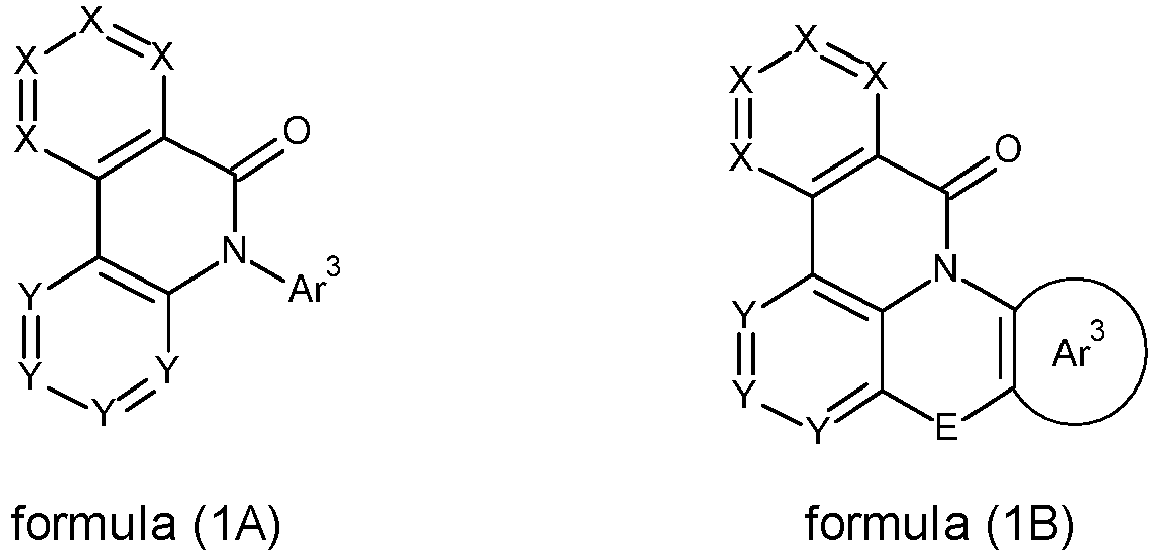
- the symbol -E- has the same meaning as above;
- X is CR1 or N;
- Y is CR2 or N;
- where the symbols R1, R2 have the same meaning as above; and
- Ar3 has the same meaning as above, with the proviso that Ar3 in formula (1B) is connected to the group -E- and the atom N via two adjacent C atoms as represented in formula (1B);
- characterized in that, in the compounds of formula (1A), at least one group Ar3, R1 or R2 stands for a triphenylene derivative of the formula (T) and, in the compounds of formula (1B), at least one group R1 or R2 stands for a triphenylene derivative of the formula (T).
- In accordance with the invention, when the group -E- is a single bond, then the compounds of formula (1B) correspond to compounds of formula (1B-E),

- More preferably, the compounds of formula (1) are selected from the compounds of formulae (2), (3), (4), (5), (6) or (7),

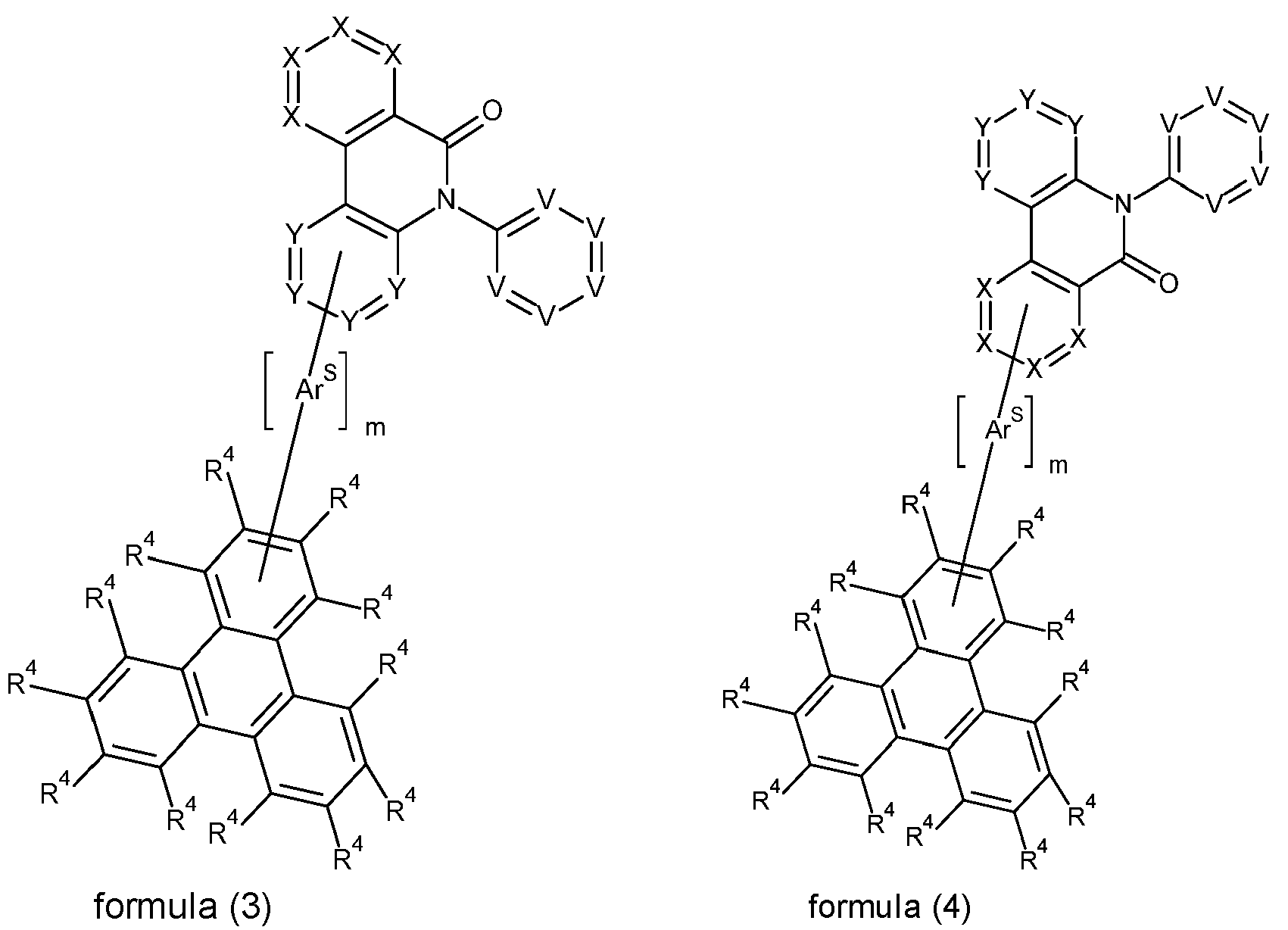


- X
- is CR1 or N, with the proviso that X is C at the position of the bonding to Ars or, if m is 0 and Ars is absent, to the triphenylene group in formulae (4) and (6);
- Y
- is CR2 or N, with the proviso that Y is C at the position of the bonding to Ars or, if m is 0 and Ars is absent, to the triphenylene group in formulae (3) and (5);
- V
- is CR3 or N, with the proviso that V is C at the position of the bonding to ArS or, if m is 0 and ArS is absent, to the triphenylene group in formula (7); or two adjacent groups V stand for a group of formula (V-1) or (V-2),
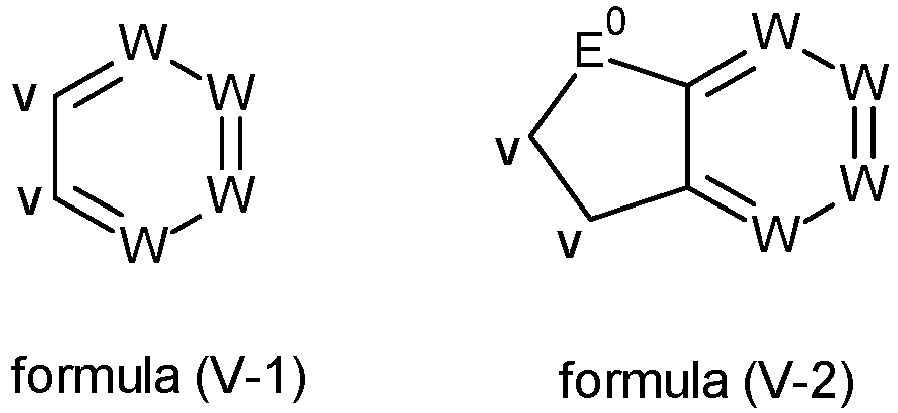
- E°
- stands for-C(R0)2-, -Si(R0)2-, -C(=O)-, -C(=NR0)-, -C(=C(R0)2)-, -O-, -S-,-S(=O)-, -S(O2)-, -N(R0)-, -P(R0)- or -P((=O)R0)-, preferably for -C(R0)2-,-O-, -S-, or -N(R0)-; where R0 has the same meaning as above;
- W
- stands for CR or N;
- In accordance with a preferred embodiment, the index m is equal to 0 or 1. When m is 0, then the group Ars is absent and the group -(ArS)0- corresponds to a single bond.
- In accordance with a preferred embodiment, there is 0 or 1 group X standing for N in the six-membered ring comprising the groups X, there is 0 or 1 group Y standing for N in the six-membered ring comprising the groups Y, and there is 0 or 1 group V in the six-membered ring comprising the groups V.
- Particularly preferably, the compounds of formula (1) are selected from the compounds of formulae (2A) to (7B),

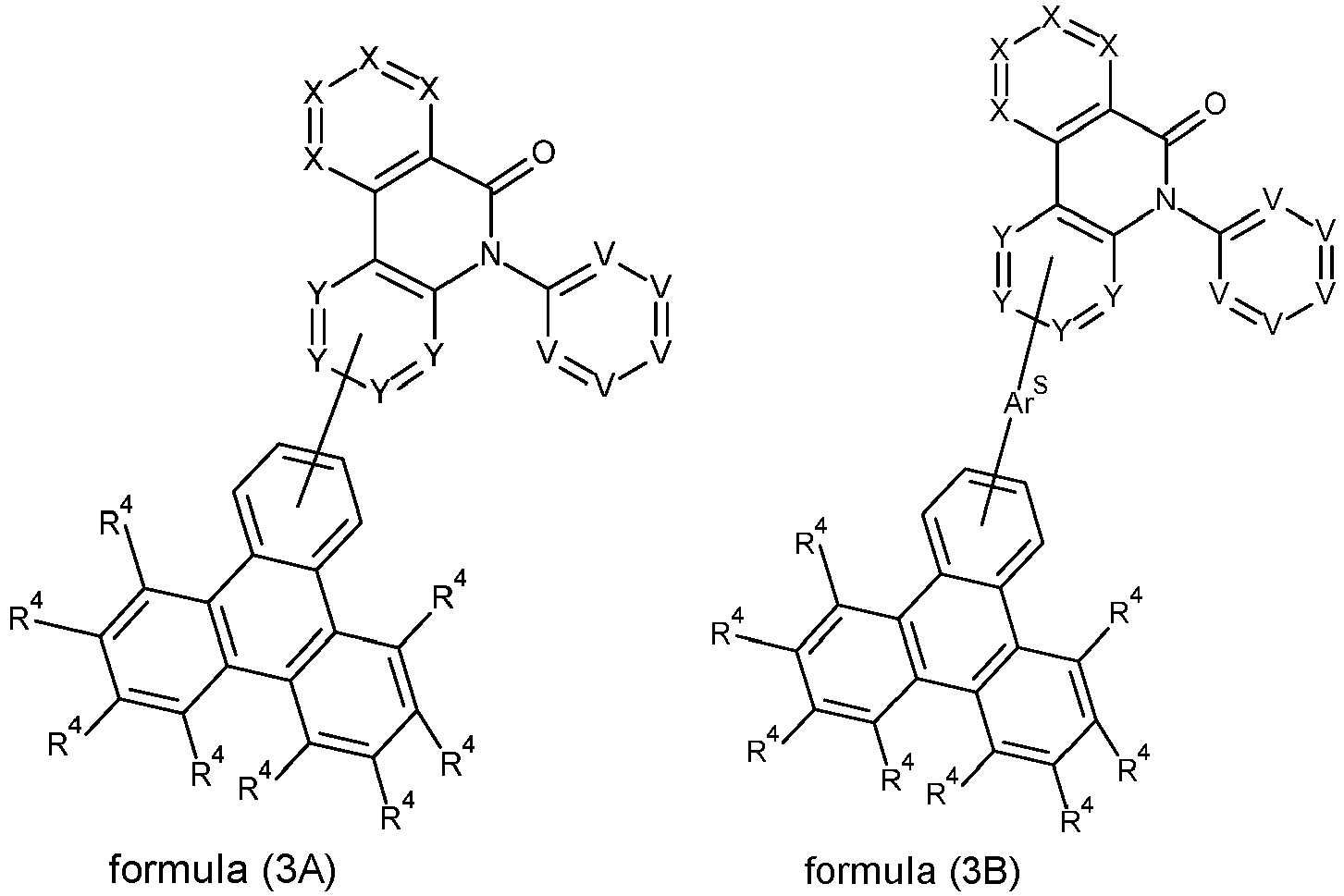


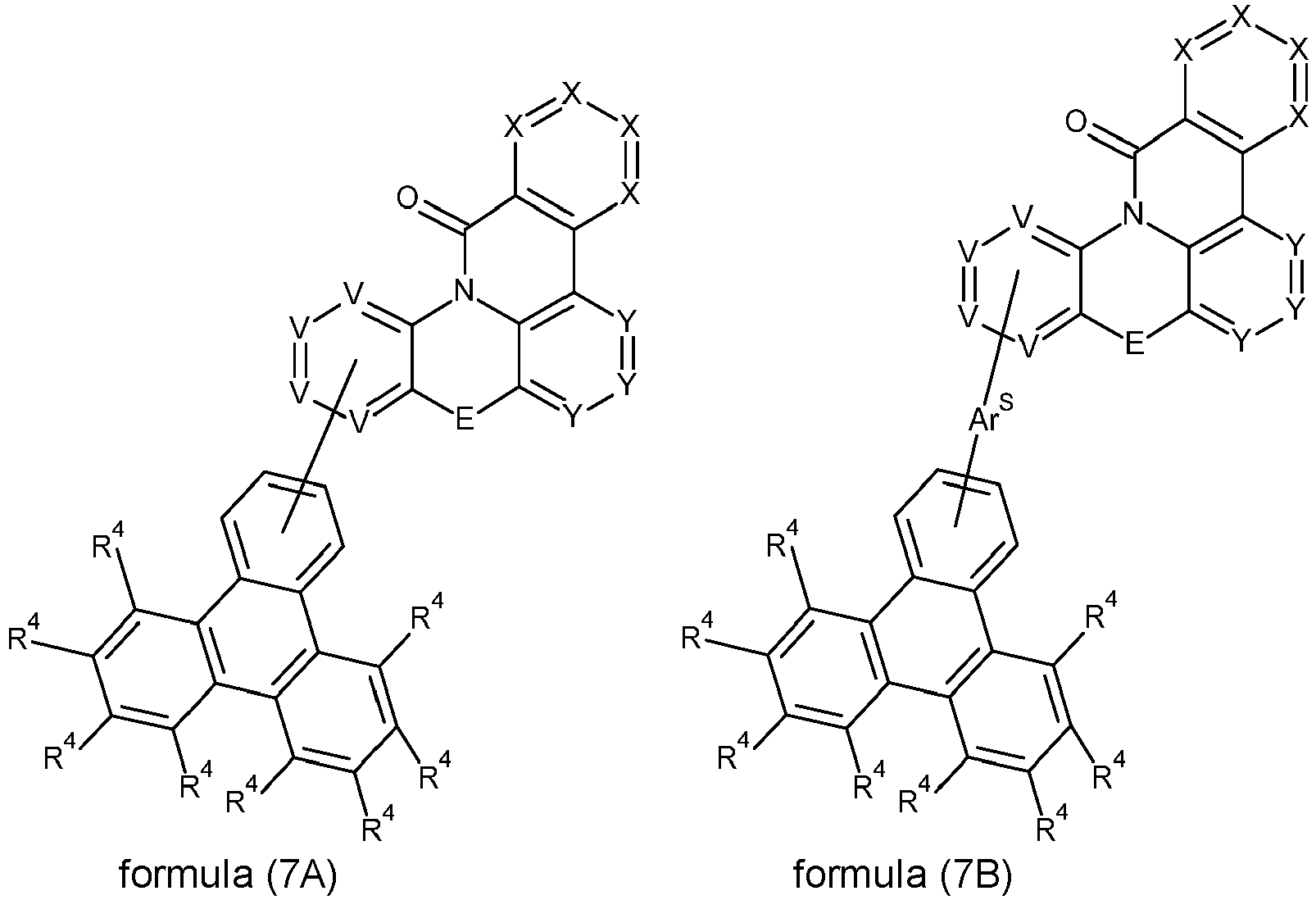
- Very particularly preferably, the compounds of formula (1) are selected from the compounds of formulae (2A-1) to (7B-1),


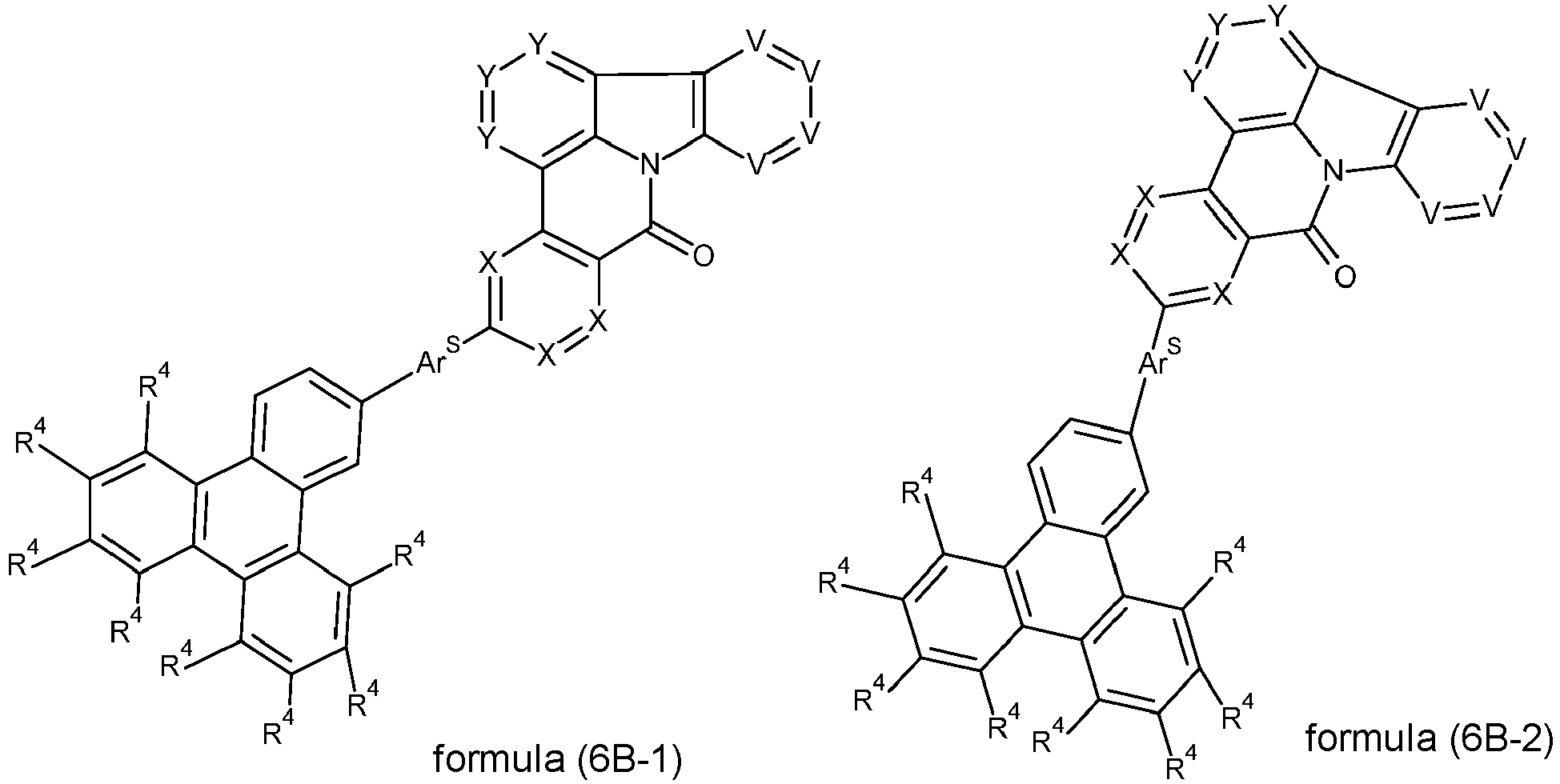
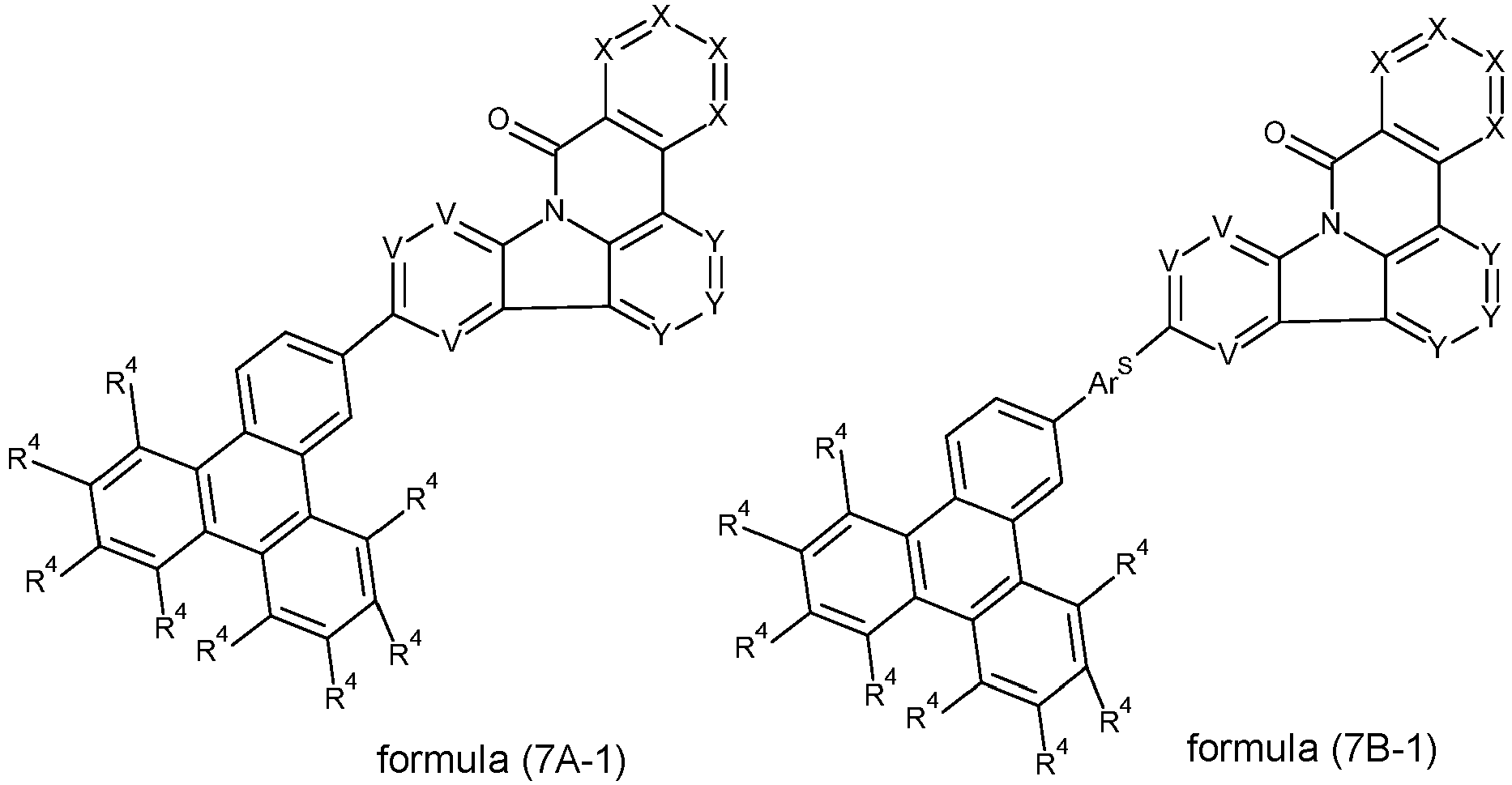
- In accordance with a preferred embodiment, -E- is selected from a single bond, -C(R0)2-, -O-, -S- and -N(R0)-. More preferably, -E- is selected from a single bond, -O- or -S-. Particularly preferably, -E- is a single bond.
- Preferably, ArS is an aromatic or heteroaromatic ring system having 5 to 40, more preferably 5 to 30, particularly preferably 5 to 18 aromatic ring atoms, which may in each case also be substituted by one or more radicals R; and
- More preferably, the group ArS stands on each occurrence, identically or differently, for phenyl, biphenyl, fluorene, spirobifluorene, naphthalene, phenanthrene, anthracene, dibenzofuran, dibenzothiophene, carbazole, pyridine, pyrimidine, pyrazine, pyridazine, triazine, benzopyridine, benzopyridazine, benzopyrimidine and quinazoline, each of which may be substituted by one or more radicals R.
- In accordance with a very preferred embodiment, the group ArS stands on each occurrence, identically or differently, for phenyl, biphenyl, fluorene, naphthalene, dibenzofuran, dibenzothiophene and carbazole, each of which may be substituted by one or more radicals R.
- Examples of suitable groups ArS are the groups (ArS-1) to (ArS-22) depicted in the table below:


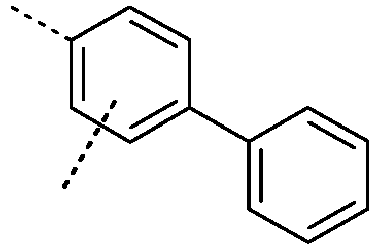
ArS-1 ArS-2 ArS-3 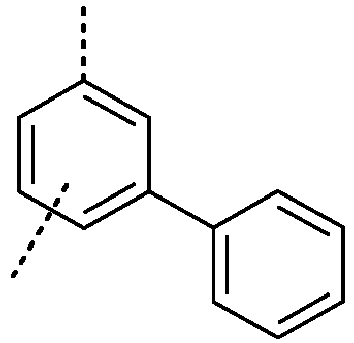
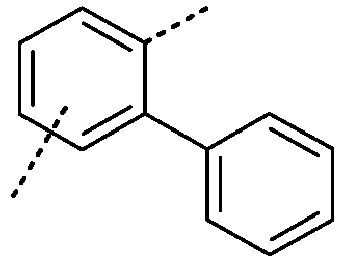
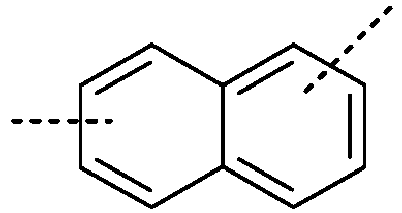
ArS-4 ArS-5 ArS-6 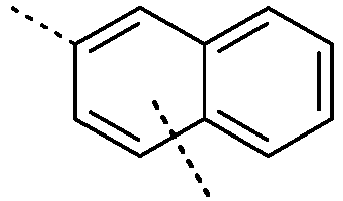

ArS-7 ArS-8 ArS-9 


ArS-10 Ars-11 ArS-12 


ArS-13 ArS-14 ArS-15 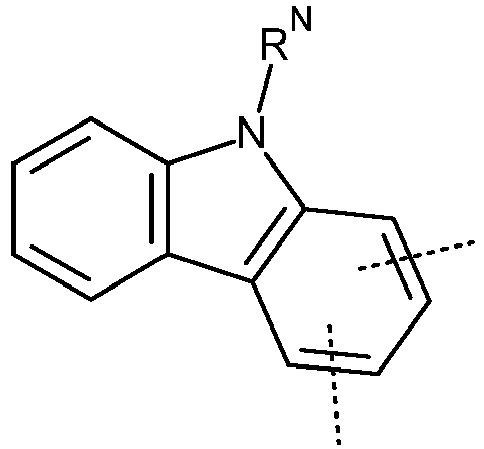

ArS-16 ArS-17 ArS-18 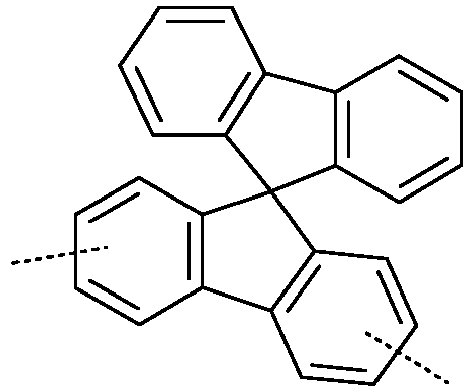


ArS-19 ArS-20 ArS-21 
ArS-22 - RN, RC
- in formulae (ArS-13) to (ArS-16), are on each occurrence, identically or differently, H, D, F, Cl, Br, I, CN, a straight-chain alkyl, alkoxy or thioalkoxy group having 1 to 40, preferably 1 to 20, more preferably 1 to 10 C atoms or cyclic alkyl, alkoxy or thioalkoxy group having 3 to 40, preferably 3 to 20, more preferably 3 to 10 C atoms, each of which may be substituted by one or more radicals R, where one or more non-adjacent CH2 groups may be replaced by (R)C=C(R), C=C, O or S and where one or more H atoms may be replaced by D, F, Cl, Br, I, CN or NO2, or an aromatic or heteroaromatic ring system having 5 to 60, preferably 5 to 40, more preferably 5 to 30, very more preferably 5 to 18 aromatic ring atoms, which may in each case be substituted by one or more radicals R, where optionally two adjacent substituents RC can form a mono- or polycyclic, aliphatic, aromatic or heteroaromatic ring system with one another.
- Examples of very suitable groups ArS are the groups (ArS-23) to (ArS-67) depicted in the table below:

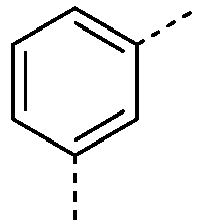
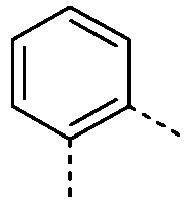
ArS-23 ArS-24 ArS-25 
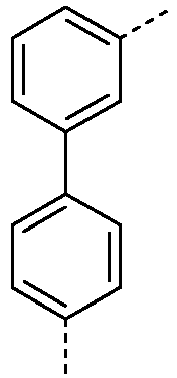
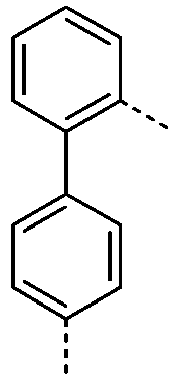
ArS-26 ArS-27 ArS-28 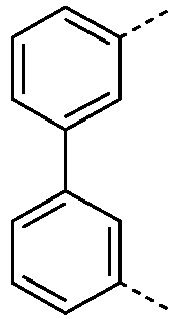
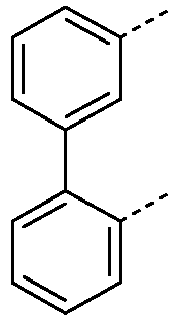
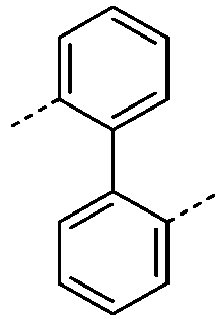
ArS-29 ArS-30 ArS-31 


ArS-32 ArS-33 ArS-34 


ArS-35 ArS-36 ArS-37 
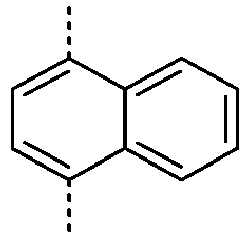

ArS-38 ArS-39 ArS-40 
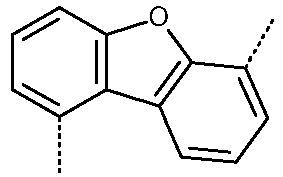

Ars41 ArS-42 ArS-43 


ArS-44 ArS-45 ArS-46 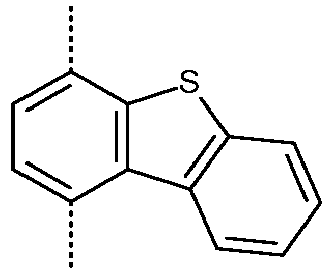


ArS-47 ArS-48 ArS-49 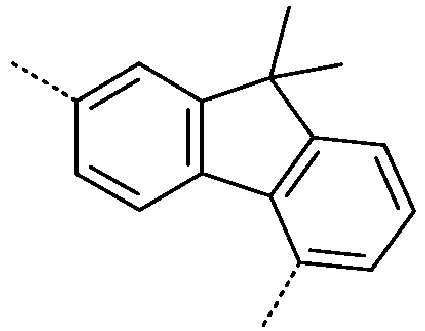


Ars-50 Ars-51 Ars-52 

ArS-53 ArS-54 ArS-55 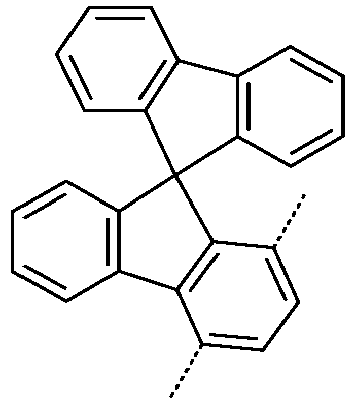


ArS-56 ArS-57 ArS-58 


ArS-59 ArS-60 ArS-61 
ArS-62 ArS-63 ArS-64 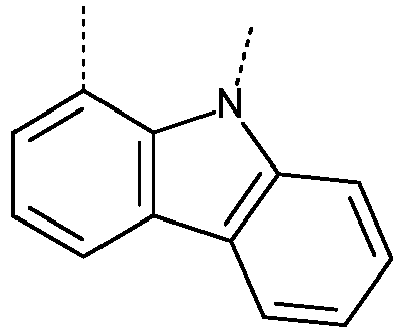


ArS-65 ArS-66 ArS-67 - Preferably, R0 stands on each occurrence, identically or differently, for H, D, F, CN, a straight-chain alkyl group having 1 to 20 C atoms or branched or a cyclic alkyl group having 3 to 20 C atoms, each of which may be substituted by one or more radicals R, where in each case one or more non-adjacent CH2 groups may be replaced by RC=CR, C=C, O or S and where one or more H atoms may be replaced by D, F, Cl, Br, I, CN or NO2, an aromatic or heteroaromatic ring systems having 5 to 40, preferably 5 to 30, more preferably 5 to 18 aromatic ring atoms, which may in each case be substituted by one or more radicals R, or an aryloxy group having 5 to 40, preferably 5 to 30, more preferably 5 to 18 aromatic ring atoms, which may be substituted by one or more radicals R, where two radicals R° may form a monocyclic or polycyclic, aliphatic, aromatic or heteroaromatic ring system with one another, which may be substituted by one or more radicals R. More preferably, R° stands on each occurrence, identically or differently, for H, D, a straight-chain alkyl group having 1 to 10 C atoms or branched or a cyclic alkyl group having 3 to 10 C atoms, each of which may be substituted by one or more radicals R, an aromatic or heteroaromatic ring systems having 5 to 18 aromatic ring atoms, which may in each case be substituted by one or more radicals R, where two radicals R° may form a monocyclic or polycyclic, aliphatic, aromatic or heteroaromatic ring system with one another, which may be substituted by one or more radicals R.
- Preferably, R1, R2, R3 stand on each occurrence, identically or differently, for H, D, F, CN, Si(R)3, a straight-chain alkyl or alkoxy group having 1 to 20 C atoms or branched or a cyclic alkyl or alkoxy group having 3 to 20 C atoms, each of which may be substituted by one or more radicals R, where in each case one or more non-adjacent CH2 groups may be replaced by RC=CR, C=C, O or S and where one or more H atoms may be replaced by D, F, Cl, Br, I, CN or NO2, an aromatic or heteroaromatic ring systems having 5 to 60 aromatic ring atoms, which may in each case be substituted by one or more radicals R, or an aryloxy group having 5 to 40 aromatic ring atoms, which may be substituted by one or more radicals R, where two radicals R1, two radicals R2 and/or two radicals R3 may form a monocyclic or polycyclic, aliphatic, aromatic or heteroaromatic ring system with one another, which may be substituted by one or more radicals R. More preferably, R1, R2, R3 stand on each occurrence, identically or differently, for H, D, F, CN, a straight-chain alkyl group having 1 to 10 C atoms or branched or a cyclic alkyl group having 3 to 10 C atoms, each of which may be substituted by one or more radicals R, or an aromatic or heteroaromatic ring systems having 5 to 60, preferably 5 to 40, more preferably 5 to 30, very more preferably 5 to 18 aromatic ring atoms, which may in each case be substituted by one or more radicals R, where two radicals R1, two radicals R2 and/or two radicals R3 may form a monocyclic or polycyclic, aliphatic, aromatic or heteroaromatic ring system with one another, which may be substituted by one or more radicals R.
- When the groups R1, R2 or R3 stands for an aromatic or heteroaromatic ring system having 5 to 60 aromatic ring atoms, then the aromatic or heteroaromatic ring system is preferably selected from benzene, naphthalene, anthracene, benzanthracene, phenanthrene, triphenylene (also called benzophenanthrene), pyrene, chrysene, perylene, fluoranthene, naphthacene, pentacene, benzopyrene, biphenyl, biphenylene, terphenyl, terphenylene, quaterphenyl, fluorene, spirobifluorene, indenofluorene, furan, benzofuran, dibenzofuran, thiophene, benzothiophene, dibenzothiophene, pyrrole, indole, isoindole, carbazole, indolocarbazole, indenocarbazole, pyridine, quinoline, isoquinoline, acridine, phenanthridine, benzoquinoline, phenothiazine, phenoxazine, imidazole, benzimidazole, naphthimidazole, phenanthrimidazole, pyrimidine, benzopyrimidine, quinoxaline, pyrazine, phenazine, phenoxazine, phenothiazine, azacarbazole, triazine, or combinations of these groups. More preferably, when the groups R1, R2 or R3 stands for an aromatic or heteroaromatic ring system having 5 to 60 aromatic ring atoms, then the aromatic or heteroaromatic ring system is selected from benzene, naphthalene, phenanthrene, triphenylene, fluoranthene, biphenyl, terphenyl, quaterphenyl, fluorene, spirobifluorene, indenofluorene, dibenzofuran, dibenzothiophene, carbazole, indolocarbazole, indenocarbazole, pyridine, quinoline, benzoquinoline, pyrimidine, benzopyrimidine, quinoxaline, phenoxazine, phenothiazine, azacarbazole, triazine, or combinations of these groups.
- Preferably, R4 stands on each occurrence, identically or differently, for H, D, F, Si(R)3, a straight-chain alkyl or alkoxy group having 1 to 20 C atoms or branched or a cyclic alkyl or alkoxy group having 3 to 20 C atoms, each of which may be substituted by one or more radicals R, where in each case one or more non-adjacent CH2 groups may be replaced by RC=CR, C=C, O or S and where one or more H atoms may be replaced by D, F, Cl, Br, I, CN or NO2, an aromatic or heteroaromatic ring systems having 5 to 60, preferably 5 to 40, more preferably 5 to 30, very more preferably 5 to 18 aromatic ring atoms, which may in each case be substituted by one or more radicals R, where two radicals R4may form a monocyclic or polycyclic, aliphatic, aromatic or heteroaromatic ring system, which may be substituted by one or more radicals R. More preferably, R4 stands on each occurrence, identically or differently, for H, D, F, a straight-chain alkyl group having 1 to 10 C atoms or branched or a cyclic alkyl group having 3 to 10 C atoms, each of which may be substituted by one or more radicals R, an aromatic or heteroaromatic ring systems having 5 to 60, preferably 5 to 40, more preferably 5 to 30, very more preferably 5 to 18 aromatic ring atoms, which may in each case be substituted by one or more radicals R, where two radicals R4 may form a monocyclic or polycyclic, aliphatic, aromatic or heteroaromatic ring system, which may be substituted by one or more radicals R. Particularly preferably, R4 stands on each occurrence, identically or differently, for H, D, a straight-chain alkyl group having 1 to 10 C atoms or a branched or a cyclic alkyl group having 3 to 10 C atoms, each of which may be substituted by one or more radicals R, or an aromatic or heteroaromatic ring systems having 5 to 18 aromatic ring atoms, which may in each case be substituted by one or more radicals R.
- Preferably, R stands on each occurrence, identically or differently, for H, D, F, CN, a straight-chain alkyl or alkoxy group having 1 to 20 C atoms or branched or cyclic alkyl or alkoxy group having 3 to 20 C atoms, each of which may be substituted by one or more radicals R', an aromatic or heteroaromatic ring systems having 5 to 40, preferably 5 to 30, more preferably 5 to 18 aromatic ring atoms, which may in each case be substituted by one or more radicals R', where two radicals R may form a ring system with one another, which may be substituted by one or more radicals R'. More preferably, R stands on each occurrence, identically or differently, for H, D, F, CN, a straight-chain alkyl group having 1 to 10 C atoms or branched or cyclic alkyl group having 3 to 10 C atoms, each of which may be substituted by one or more radicals R', an aromatic or heteroaromatic ring systems having 5 to 18 aromatic ring atoms, which may in each case be substituted by one or more radicals R.
- Preferably, Ar is an aromatic or heteroaromatic ring system having 5 to 18 aromatic ring atoms, which may in each case also be substituted by one or more radicals R'.
- Preferably, R'stands on each occurrence, identically or differently, for H, D, F, Cl, Br, I, CN, a straight-chain alkyl or alkoxy group having 1 to 20, preferably 1 to 10, more preferably 1 to 5 C atoms or branched or cyclic alkyl or alkoxy group having 3 to 20, preferably 1 to 10, more preferably 1 to 5 C atoms, where one or more H atoms may be replaced by D, F, Cl, Br or I, or an aromatic or heteroaromatic ring system having 5 to 24 C, preferably 5 to 18 C atoms.
- In accordance with a preferred embodiment, the compounds of formula (1) comprise at least one substituent R1 or R2, which is selected from aromatic and heteroaromatic ring systems.
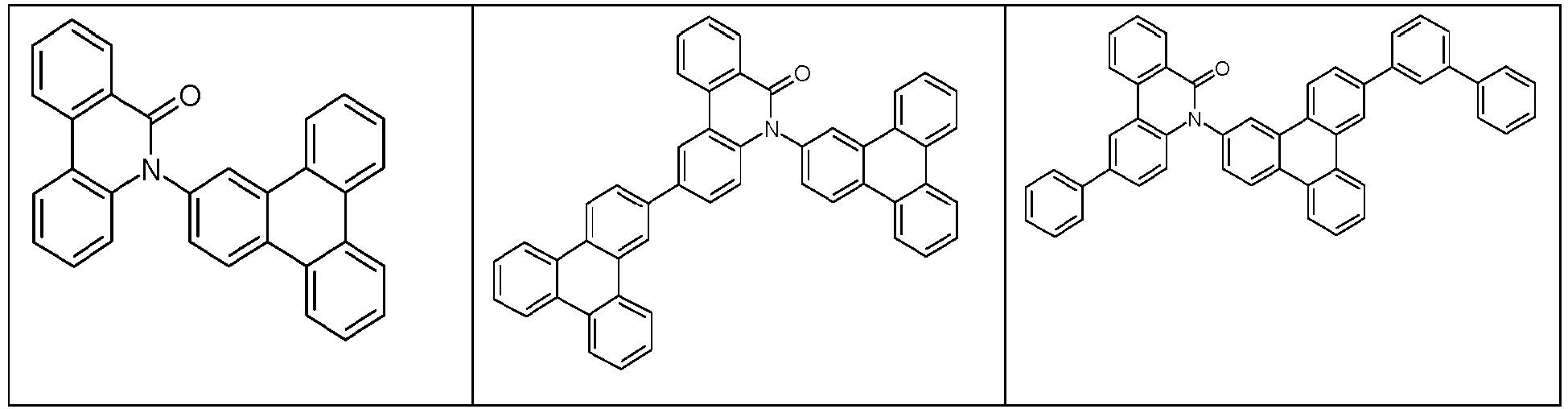
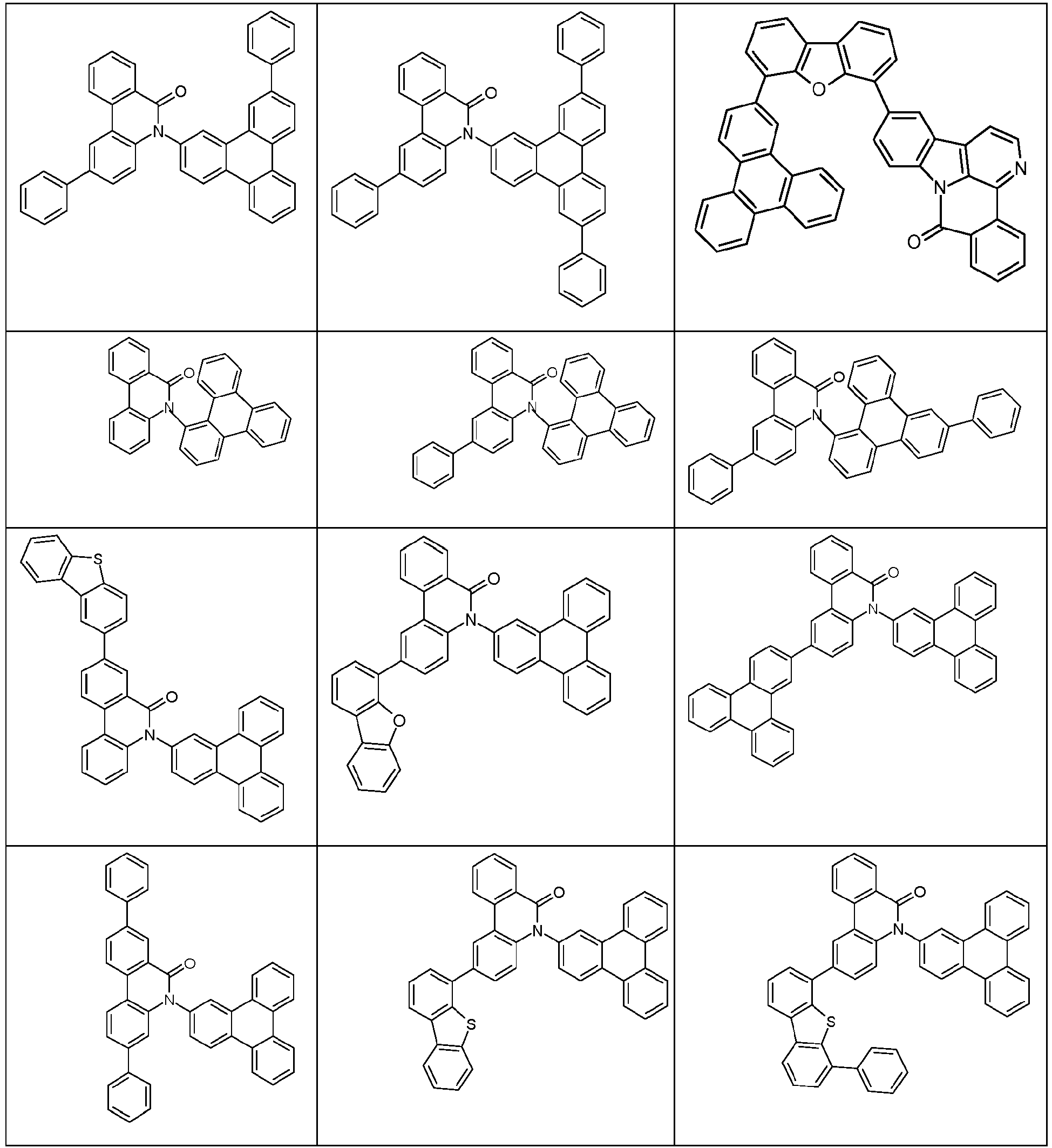
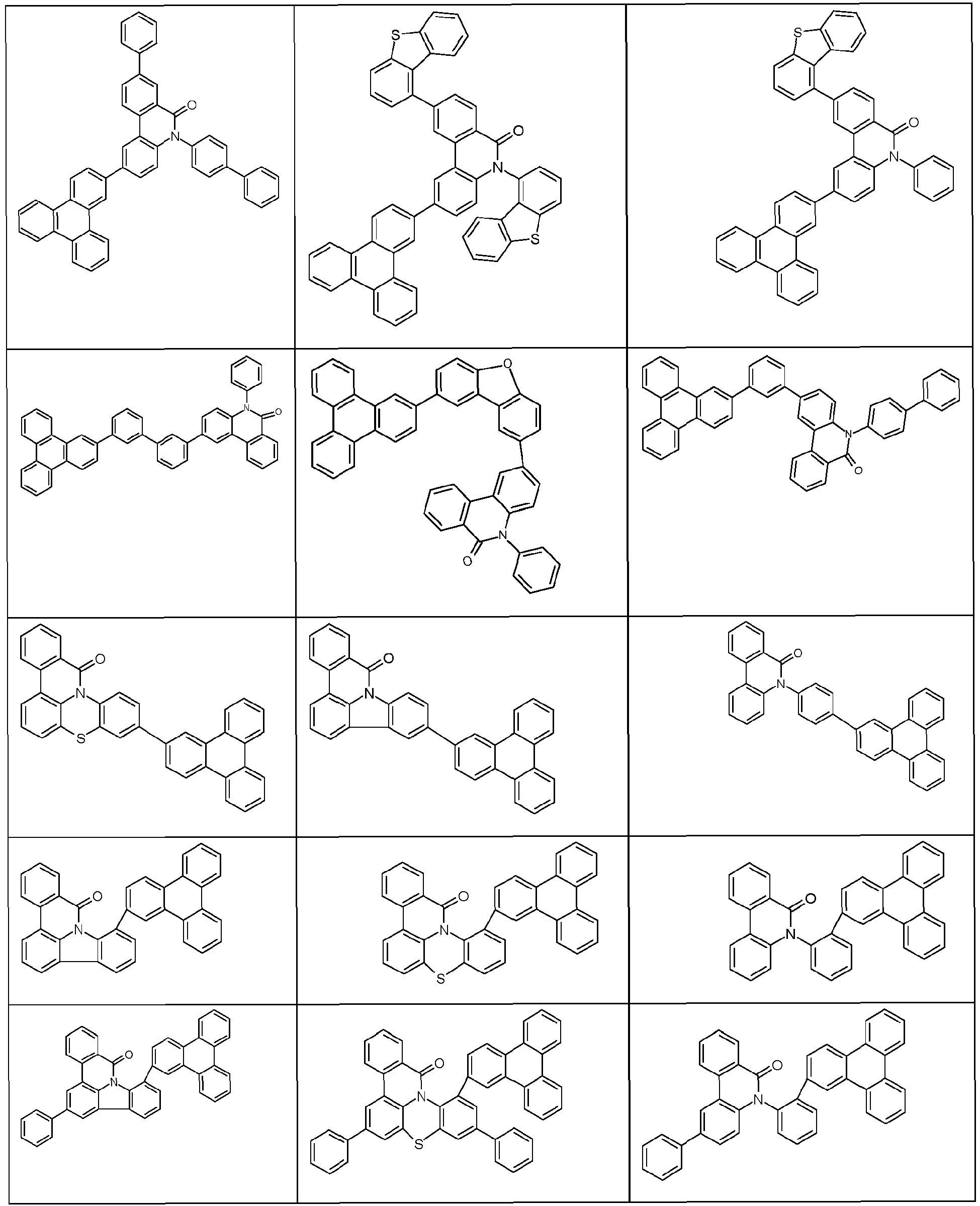
- Examples of suitable compounds of formula (1) are the structures shown in the table below:


- The compounds can be prepared by synthesis steps known to the person skilled in the art, such as, for example, bromination, Suzuki coupling, Ullmann coupling, Hartwig-Buchwald coupling, etc. Examples of suitable synthesis processes are depicted in general terms in Schemes 1 and 2 below.


- For the processing of the compounds from the liquid phase, for example by spin coating or by printing processes, formulations of the compounds are necessary. These formulations can be, for example, solutions, dispersions or emulsions. It may be preferred to use mixtures of two or more solvents for this purpose. Suitable and preferred solvents are, for example, toluene, anisole, o-, m- or p-xylene, methyl benzoate, mesitylene, tetralin, veratrol, THF, methyl-THF, THP, chlorobenzene, dioxane, phenoxytoluene, in particular 3-phenoxytoluene, (-)-fenchone, 1,2,3,5-tetramethylbenzene, 1,2,4,5-tetramethylbenzene, 1-methylnaphthalene, 2-methylbenzothiazole, 2-phenoxyethanol, 2-pyrrolidinone, 3-methylanisole, 4-methylanisole, 3,4-dimethylanisole, 3,5-dimethylanisole, acetophenone, α-terpineol, benzothiazole, butyl benzoate, cumene, cyclohexanol, cyclohexanone, cyclohexylbenzene, decalin, dodecylbenzene, ethyl benzoate, indane, methyl benzoate, NMP, p-cymene, phenetole, 1,4-diisopropylbenzene, dibenzyl ether, diethylene glycol butyl methyl ether, triethylene glycol butyl methyl ether, diethylene glycol dibutyl ether, triethylene glycol dimethyl ether, diethylene glycol - monobutyl ether, tripropylene glycol dimethyl ether, tetraethylene glycol dimethyl ether, 2-isopropylnaphthalene, pentylbenzene, hexylbenzene, heptylbenzene, octylbenzene, 1,1-bis(3,4-dimethylphenyl)ethane or mixtures of these solvents.
- A formulation here comprises a compound of formula (1) and at least one further compound. The further compound may be, for example, a solvent, in particular one of the above-mentioned solvents or a mixture of these solvents. However, the further compound may also be at least one further organic or inorganic compound which is likewise employed in the electronic device, for example an emitting compound, in particular a phosphorescent dopant, and/or a further matrix material. Suitable emitting compounds and further matrix materials are indicated below in connection with the organic electroluminescent device. This further compound may also be polymeric.
- The compounds and mixtures are suitable for use in an electronic device. An electronic device here is taken to mean a device which comprises at least one layer which comprises at least one organic compound. However, the component here may also comprise inorganic materials or also layers built up entirely from inorganic materials.
- An electronic device is preferably selected from the group consisting of organic electroluminescent devices (OLEDs, PLEDs), organic integrated circuits (O-ICs), organic field-effect transistors (O-FETs), organic thin-film transistors (O-TFTs), organic light-emitting transistors (O-LETs), organic solar cells (O-SCs), organic dye-sensitised solar cells, organic optical detectors, organic photoreceptors, organic field-quench devices (O-FQDs), light-emitting electrochemical cells (LECs), organic laser diodes (O-lasers) and "organic plasmon emitting devices" (D. M. Koller et al., Nature Photonics 2008, 1-4), preferably organic electroluminescent devices (OLEDs, PLEDs), in particular phosphorescent OLEDs.
- The organic electroluminescent device comprises a cathode, an anode and at least one emitting layer. Apart from these layers, it may also comprise further layers, for example in each case one or more hole-injection layers, hole-transport layers, hole-blocking layers, electron-transport layers, electron-injection layers, exciton-blocking layers, electron-blocking layers and/or charge-generation layers. It is likewise possible for interlayers, which have, for example, an exciton-blocking function, to be introduced between two emitting layers. However, it should be pointed out that each of these layers does not necessarily have to be present. The organic electroluminescent device here may comprise one emitting layer or a plurality of emitting layers. If a plurality of emission layers are present, these preferably have in total a plurality of emission maxima between 380 nm and 750 nm, resulting overall in white emission, i.e. various emitting compounds which are able to fluoresce or phosphoresce are used in the emitting layers. Particular preference is given to systems having three emitting layers, where the three layers exhibit blue, green and orange or red emission (for the basic structure see, for example,
WO 2005/011013 ). These can be fluorescent or phosphorescent emission layers or hybrid systems, in which fluorescent and phosphorescent emission layers are combined with one another. - The organic electroluminescent device here may comprise one emitting layer or a plurality of emitting layers, where at least one emitting layer comprises at least one compound of formula (1) as matrix material.
- Phosphorescence in the sense of this invention is taken to mean the luminescence from an excited state having spin multiplicity > 1, in particular from an excited triplet state. For the purposes of this application, all luminescent transition-metal complexes and luminescent lanthanide complexes, in particular all iridium, platinum and copper complexes, are to be regarded as phosphorescent compounds.
- The mixture comprising the compound of the formula (1) or in accordance with the preferred embodiments and the emitting compound comprises between 99 and 1% by vol., preferably between 98 and 10% by vol., particularly preferably between 97 and 60% by vol., in particular between 95 and 80% by vol., of the compound of the formula (1) or in accordance with the preferred embodiments, based on the entire mixture comprising emitter and matrix material. Correspondingly, the mixture comprises between 1 and 99% by vol., preferably between 2 and 90% by vol., particularly preferably between 3 and 40% by vol., in particular between 5 and 20% by vol., of the emitter, based on the entire mixture comprising emitter and matrix material.
- Suitable phosphorescent compounds (= triplet emitters) are, in particular, compounds which emit light, preferably in the visible region, on suitable excitation and in addition contain at least one atom having an atomic number greater than 20, preferably greater than 38 and less than 84, particularly preferably greater than 56 and less than 80, in particular a metal having this atomic number. The phosphorescent emitters used are preferably compounds which contain copper, molybdenum, tungsten, rhenium, ruthenium, osmium, rhodium, iridium, palladium, platinum, silver, gold or europium, in particular compounds which contain iridium or platinum. For the purposes of the present invention, all luminescent compounds which contain the above-mentioned metals are regarded as phosphorescent compounds.
- Examples of the emitters described above are revealed by the applications
WO 00/70655 WO 2001/41512 WO 2002/02714 WO 2002/15645 EP 1191613 ,EP 1191612 ,EP 1191614 ,WO 05/033244 WO 05/019373 US 2005/0258742 ,WO 2009/146770 ,WO 2010/015307 ,WO 2010/031485 ,WO 2010/054731 ,WO 2010/054728 ,WO 2010/086089 ,WO 2010/099852 ,WO 2010/102709 ,WO 2011/032626 ,WO 2011/066898 ,WO 2011/157339 ,WO 2012/007086 ,WO 2014/008982 ,WO 2014/023377 ,WO 2014/094962 ,WO 2014/094961 ,WO 2014/094960 ,WO 2016/124304 ,WO 2016/125715 ,WO 2017/032439 as well as the not yet published applicationsWO 2018/011186 andWO 2018/041769 . In general, all phosphorescent complexes as used in accordance with the prior art for phosphorescent OLEDs and as are known to the person skilled in the art in the area of organic electroluminescence are suitable, and the person skilled in the art will be able to use further phosphorescent complexes without inventive step. - Examples of suitable phosphorescent emitters are the phosphorescent emitters listed in the table below:
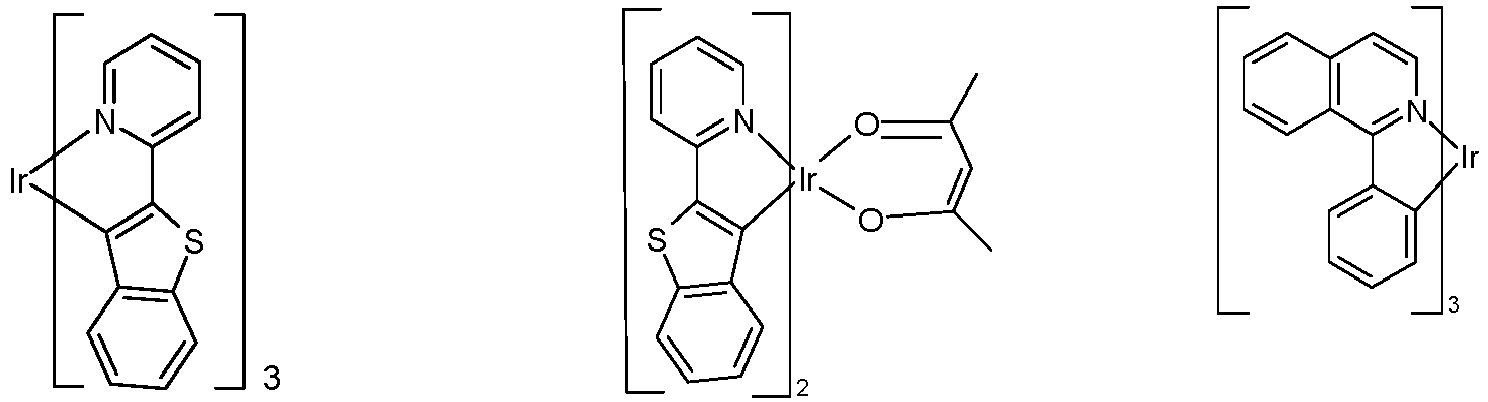

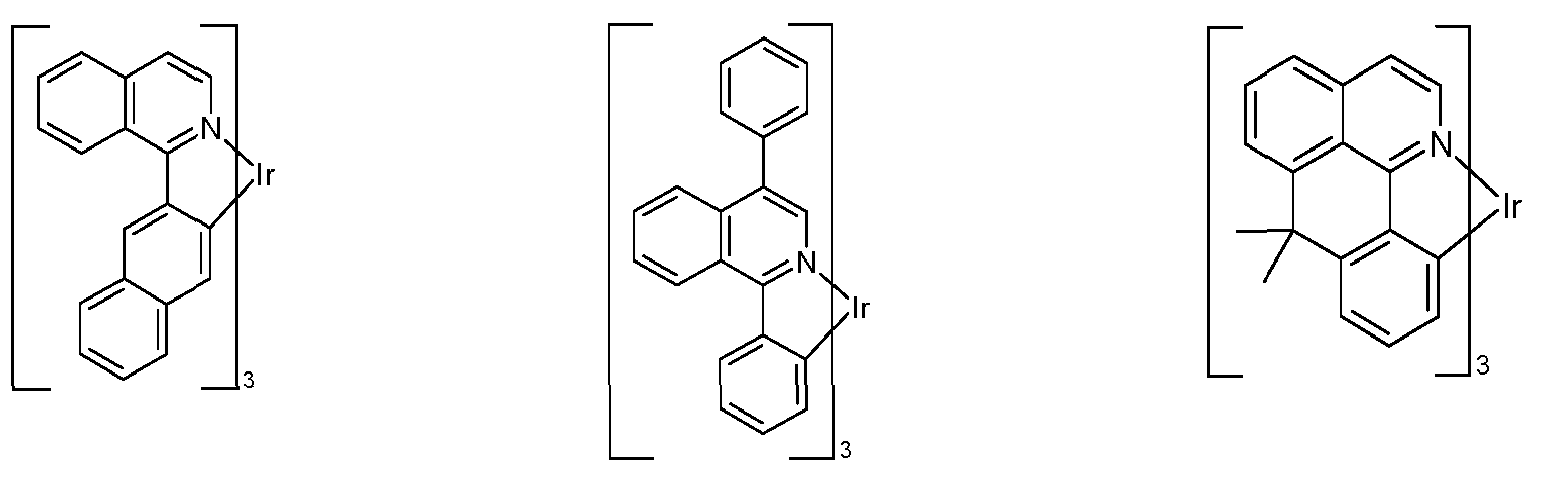
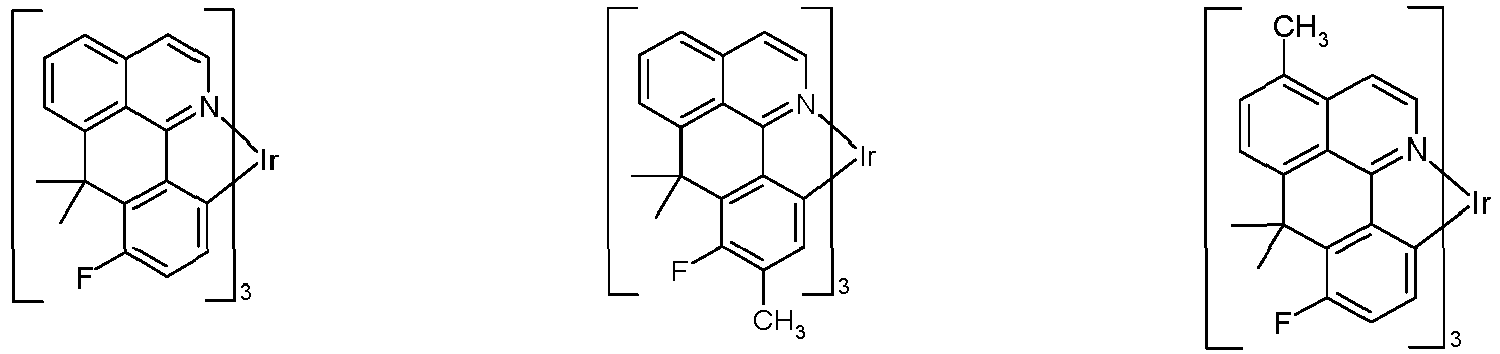
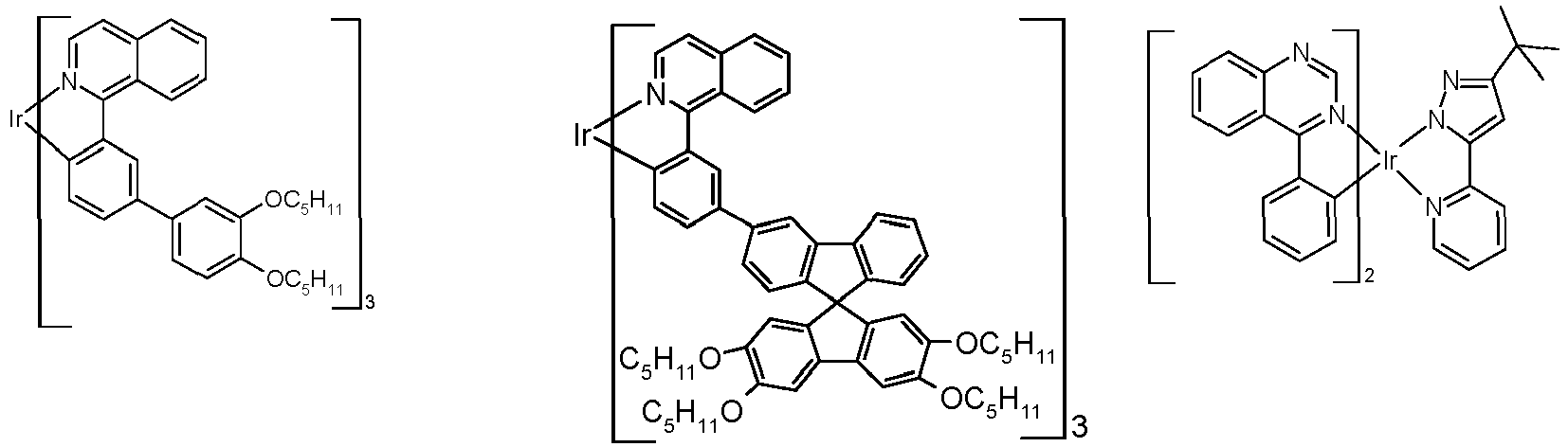


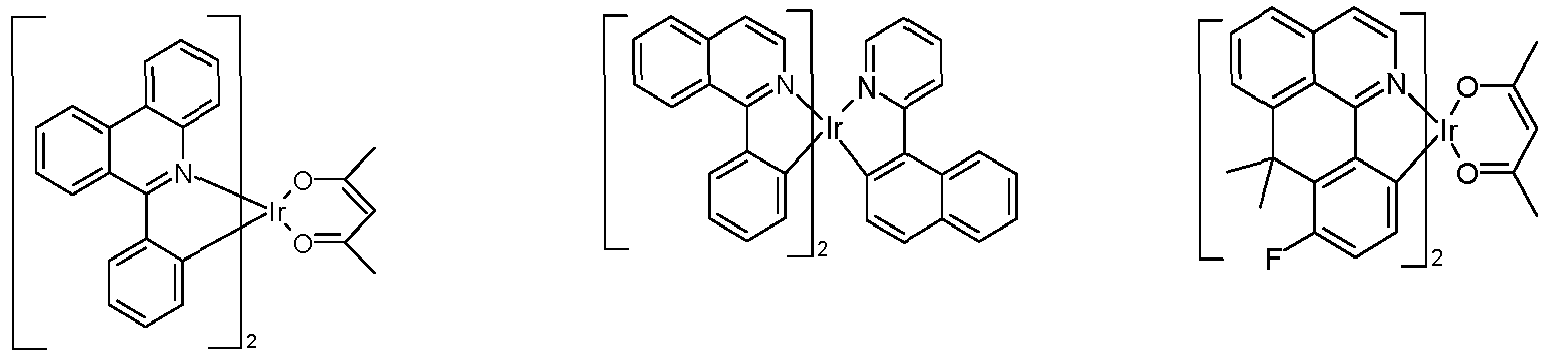


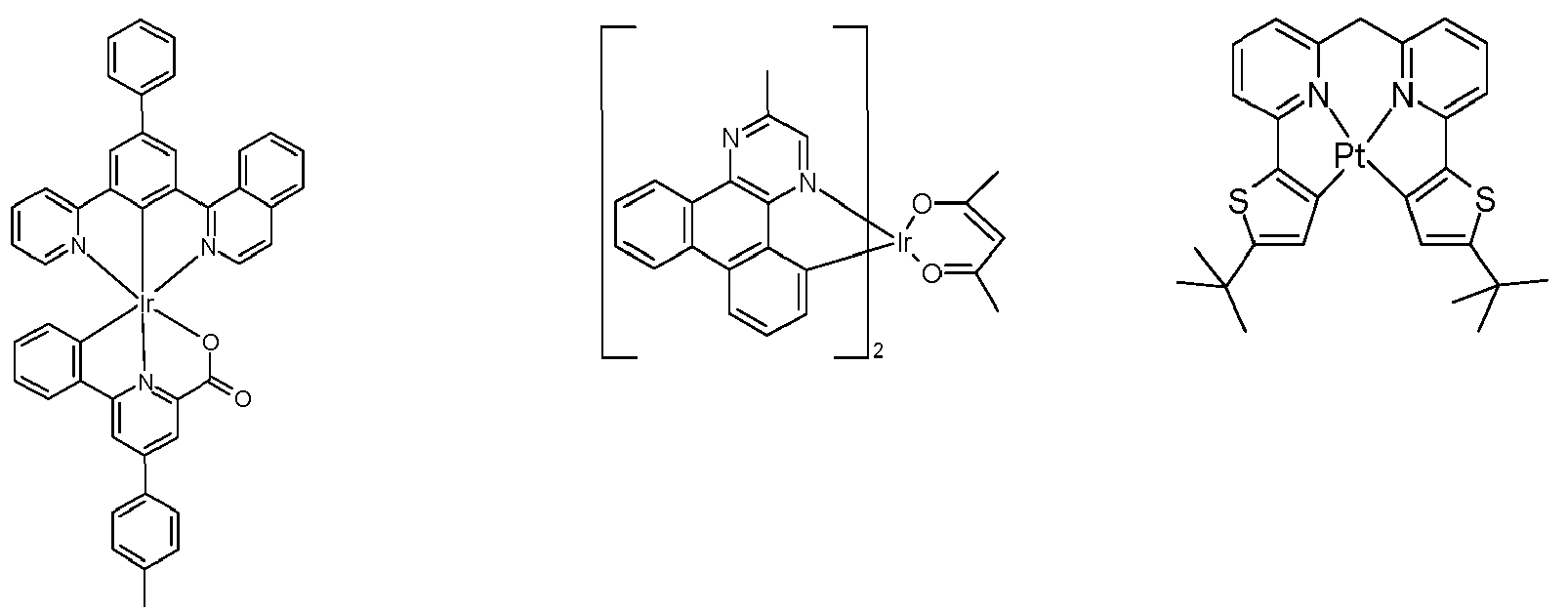
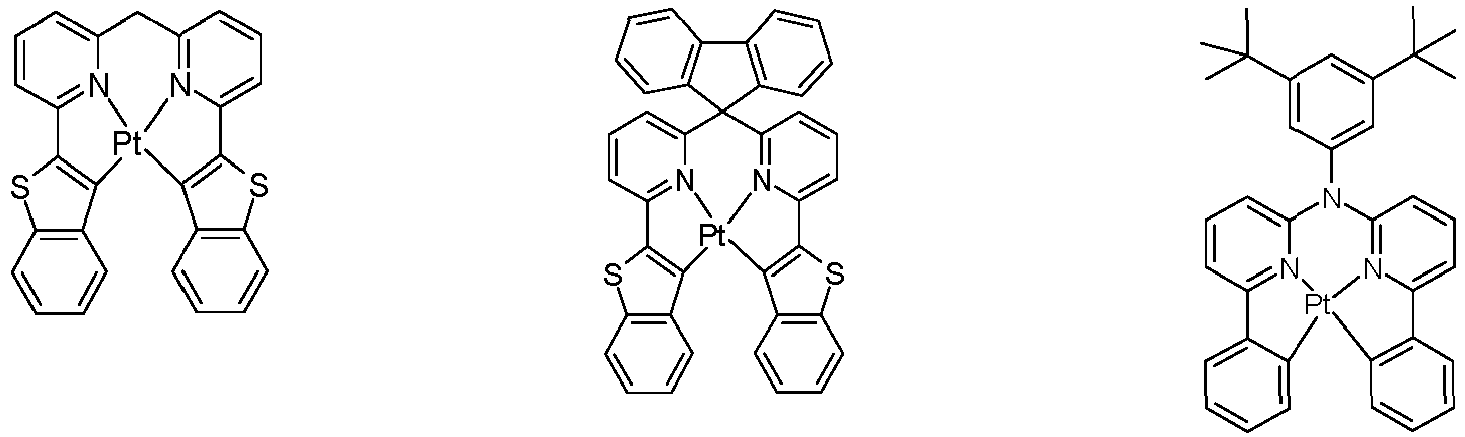


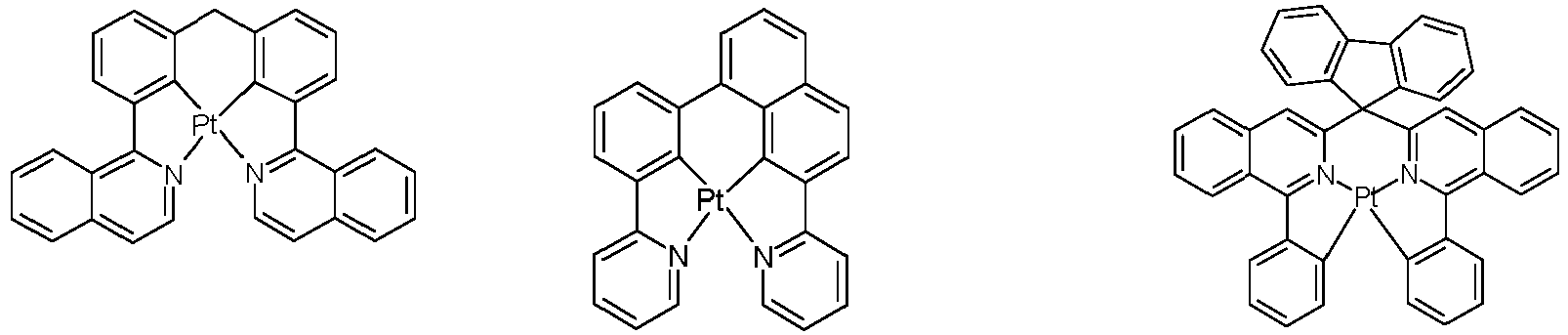
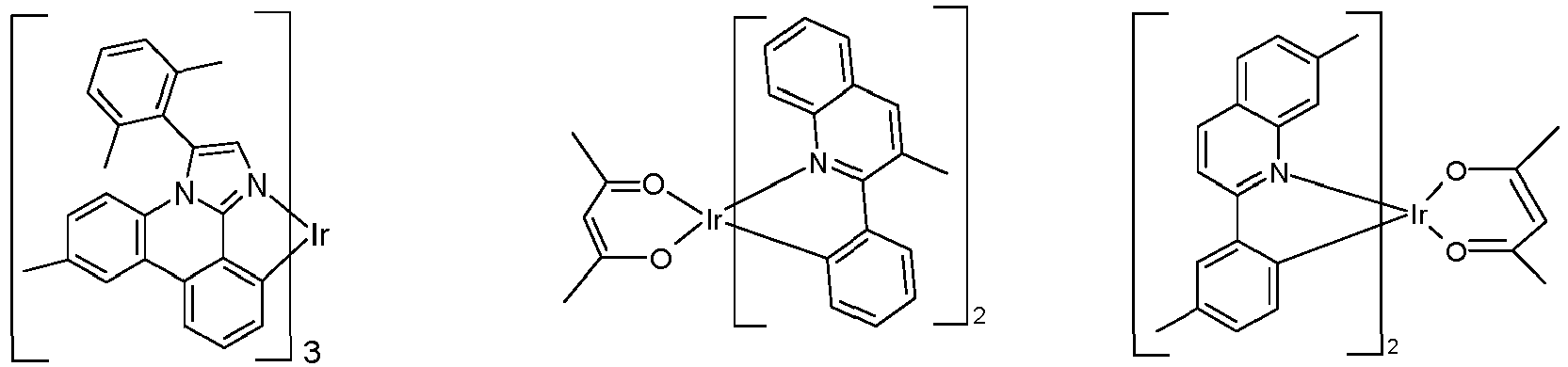


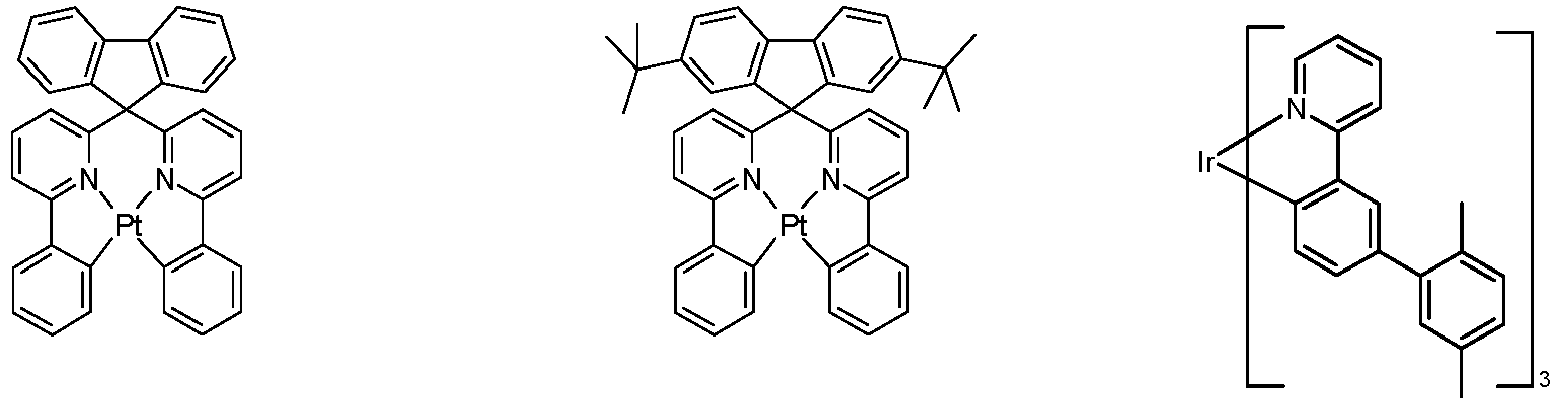

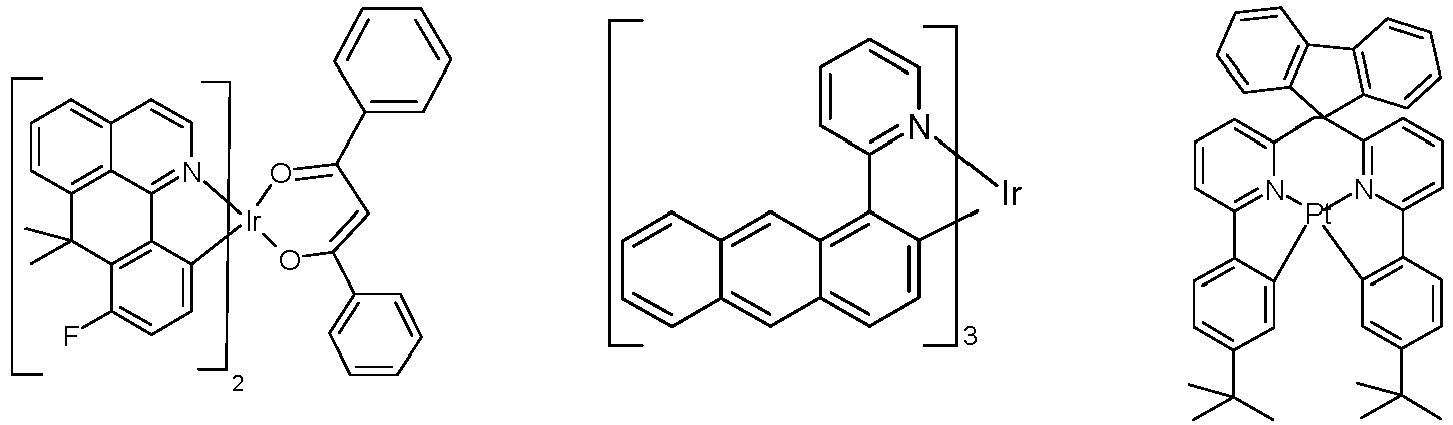
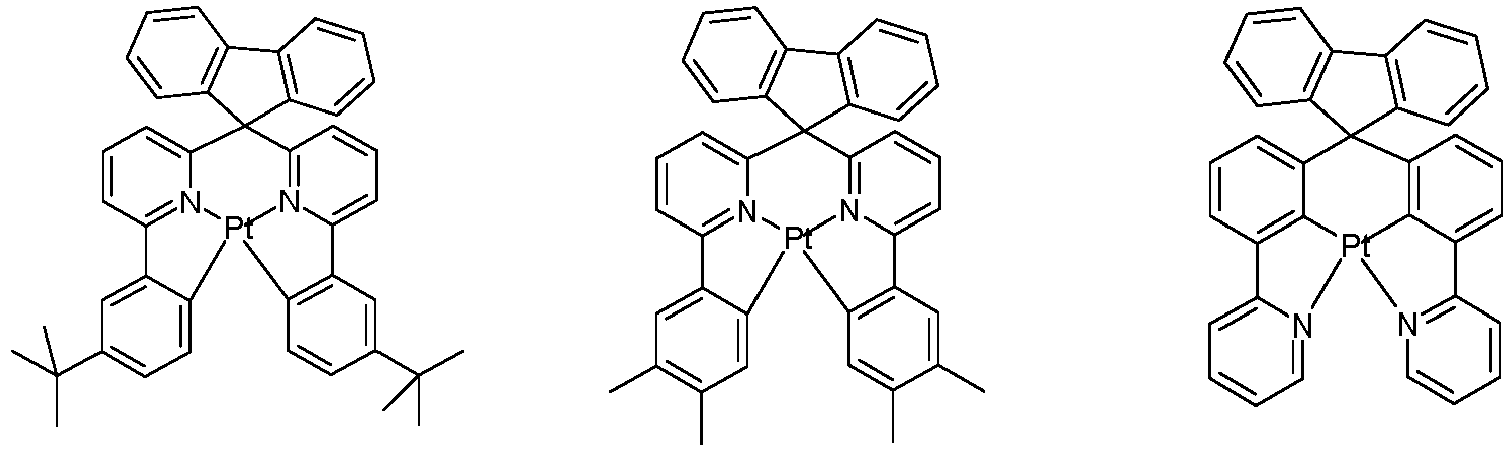


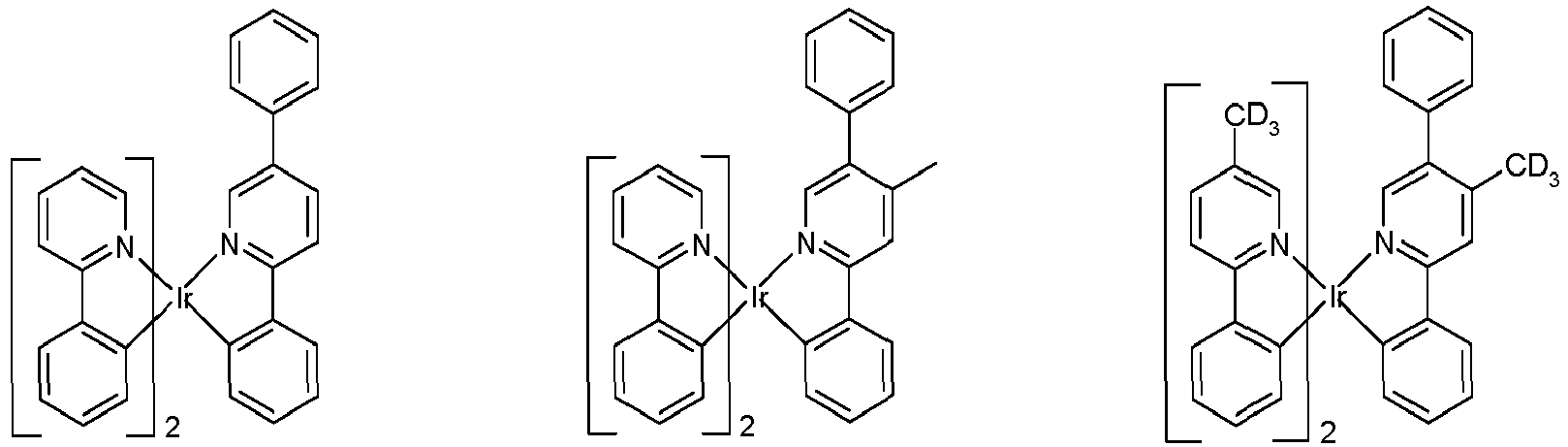
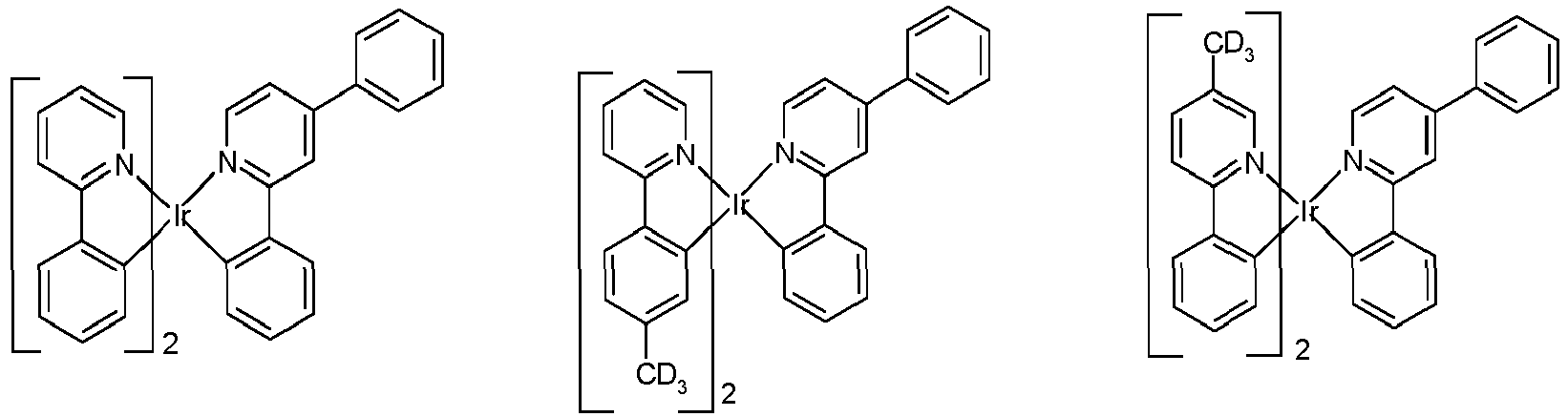


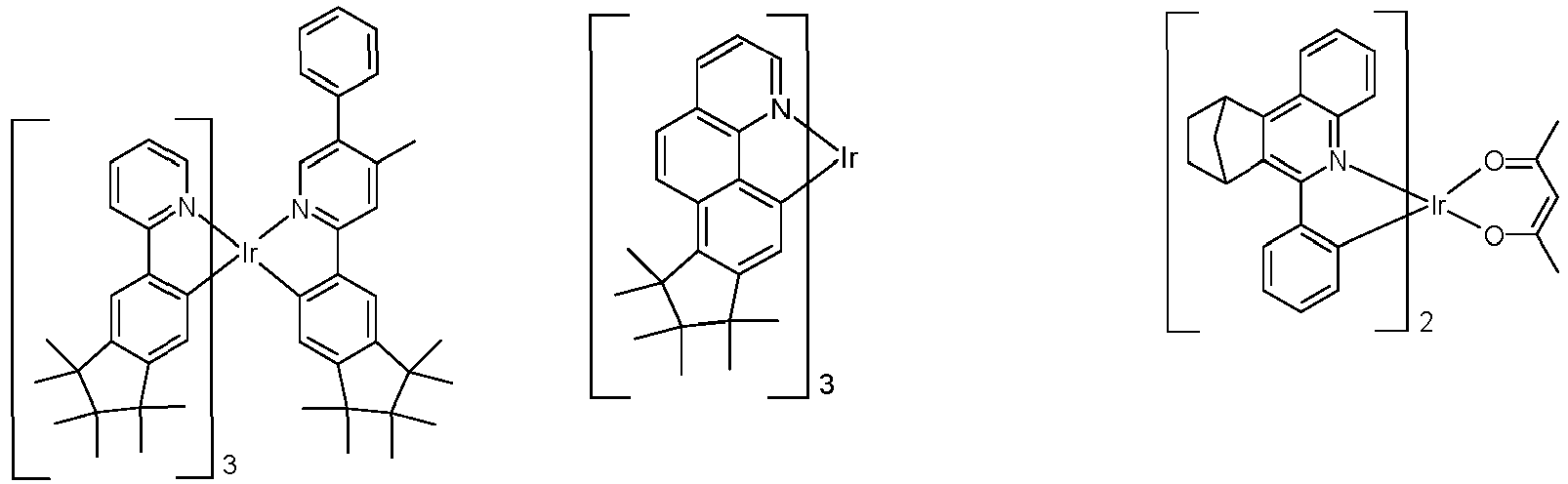


- Suitable phosphorescent materials (= triplet emitters) that can be advantageously combined with the compounds of formula (1) are, as mentioned above, compounds which emit a red light on suitable excitation, which means phosphorescent materials having an excited triplet state level (T1) comprised between 550 and 680 nm.
- A further preferred embodiment of the present invention is the use of the compound of the formula (1) or in accordance with the preferred embodiments as matrix material for a phosphorescent emitter in combination with a further matrix material. Particularly suitable matrix materials which can be employed in combination with the compounds of the formula (1) or in accordance with the preferred embodiments are aromatic ketones, aromatic phosphine oxides or aromatic sulfoxides or sulfones, for example in accordance with
WO 2004/013080 ,WO 2004/093207 ,WO 2006/005627 orWO 2010/006680 , triarylamines, carbazole derivatives, for example CBP (N,N-bis-carbazolylbiphenyl) or the carbazole derivatives disclosed inWO 2005/ 039246 ,US 2005/0069729 ,JP 2004/288381 EP 1205527 orWO 2008/ 086851 , indolocarbazole derivatives, for example in accordance withWO 2007/063754 orWO 2008/056746 , indenocarbazole derivatives, for example in accordance withWO 2010/136109 andWO 2011/000455 , azacarbazole derivatives, for example in accordance withEP 1617710 ,EP 1617711 ,EP 1731584 ,JP 2005/347160 WO 2007/137725 , silanes, for example in accordance withWO 005/111172 WO 2006/117052 , triazine derivatives, for example in accordance withWO 2010/015306 ,WO 2007/063754 orWO 2008/056746 , zinc complexes, for example in accordance withEP 652273 WO 2009/062578 , diazasilole or tetraazasilole derivatives, for example in accordance withWO 2010/054729 , diazaphosphole derivatives, for example in accordance withWO 2010/054730 , bridged carbazole derivatives, for example in accordance withUS 2009/0136779 ,WO 2010/050778 ,WO 2011/042107 ,WO 2011/088877 or in accordance withEP 11003232.3 WO 2012/048781 , or lactams, for example in accordance withWO 2011/116865 orWO 2011/137951 . A further phosphorescent emitter which emits at shorter wavelength than the actual emitter may likewise be present in the mixture as co-host. - Preferred co-host materials are triarylamine derivatives, lactams, carbazole derivatives and indenocarbazole derivatives. Preferred co-host materials are very particularly carbazole derivatives and indenocarbazole derivatives.
- More preferably, the second compound comprising at least one group of formula (11) or (12) is selected from the compounds of formulae (11-1) to (12-4),


- where the symbols and indices Ar10, R10, E10, L1 and p have the same meaning as above; and
- E12 stands for -C(R0)2-, -O-, -S-, -N(Ar10)-; where R0 has the same meaning as above.
- Particularly preferably, the second compound comprising at least one group of formula (11) or (12) is selected from the compounds of formulae (13-1) to (14-4),

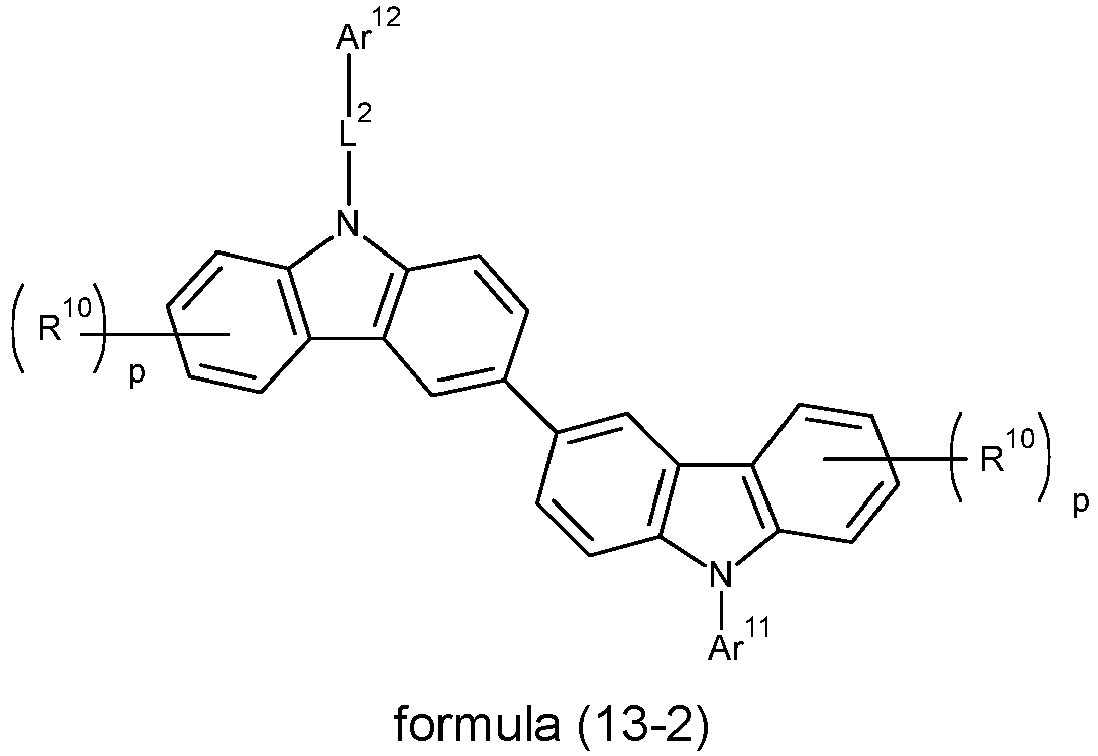

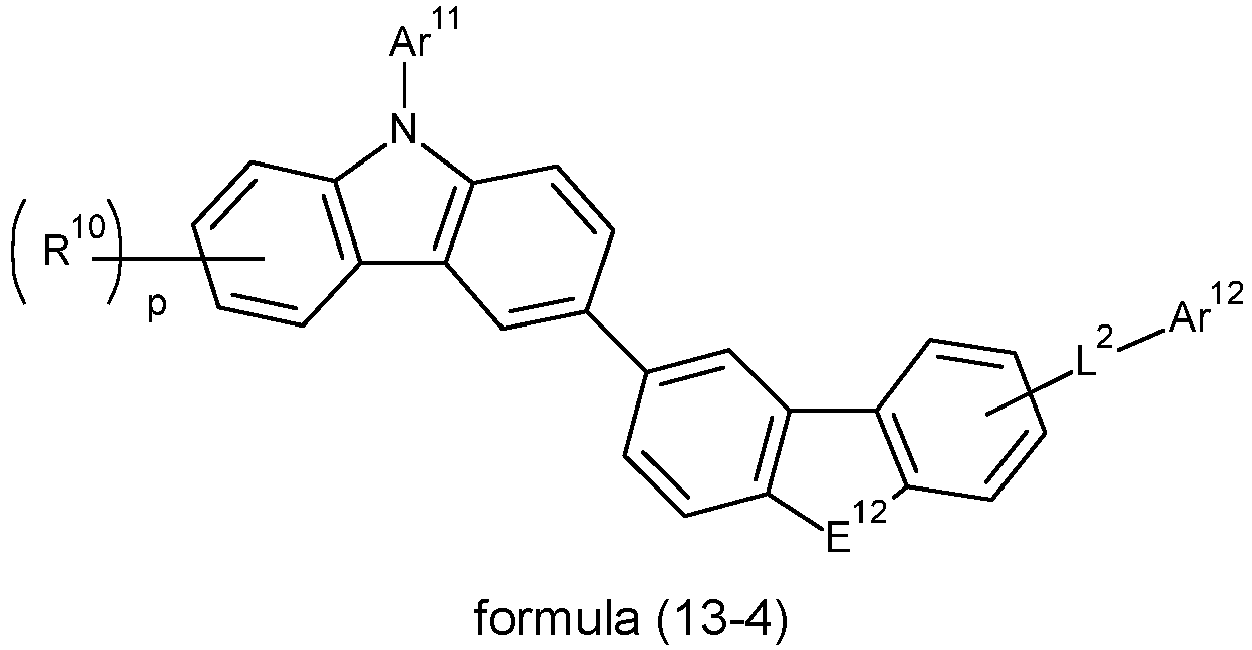
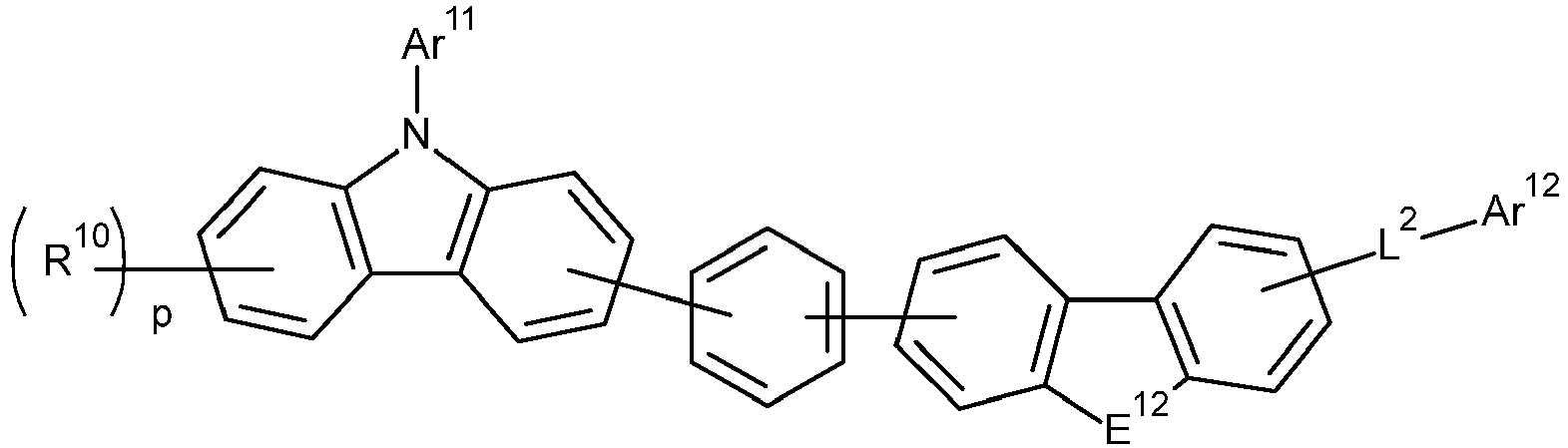


- Ar10
- stands for an aromatic or heteroaromatic ring system selected from benzene, naphthalene, pyrene, biphenyl, terphenyl, quaterphenyl, fluorene, spirobifluorene, cis- or trans-indenofluorene, dibenzofuran, dibenzothiophene, carbazole, indolocarbazole, indenocarbazole, which may be substituted by one or more radicals R; or combinations of these groups;
- L2
- stands for a single bond or an aromatic or heteroaromatic rings system having 6 to 18 aromatic rings atoms, which may be substituted by one or more radicals R;
- Ar12
- stands for an heteroaromatic ring system selected from pyridine, pyrazine, pyrimidine, triazine, which may be substituted by one or more radicals R; and
- R
- has the same meaning as above.
- In a further embodiment of the invention, the organic electroluminescent device according to the invention does not comprise a separate hole-injection layer and/or hole-transport layer and/or hole-blocking layer and/or electron-transport layer, i.e. the emitting layer is directly adjacent to the hole-injection layer or the anode, and/or the emitting layer is directly adjacent to the electron-transport layer or the electron-injection layer or the cathode, as described, for example, in
WO 2005/053051 . It is furthermore possible to use a metal complex which is identical or similar to the metal complex in the emitting layer as hole-transport or hole-injection material directly adjacent to the emitting layer, as described, for example, inWO 2009/030981 . - In the further layers of the organic electroluminescent device according to the invention, it is possible to use all materials as usually employed in accordance with the prior art. The person skilled in the art will therefore be able, without inventive step, to employ all materials known for organic electroluminescent devices in combination with the compounds of the formula (1) or in accordance with the preferred embodiments.
- For example, the compound of formula (1) can also be used as a matrix for semiconducting light-emitting nanoparticles. In the context of the present invention, the term "nano" denotes a size in the range from 0.1 to 999 nm, preferably from 1 to 150 nm. In a preferred embodiment, the semiconducting light-emitting nano-particle is a quantum material ("Quantum sized material"). The term "quantum material" in the sense of the present invention refers to the size of the semiconductor material itself without further connections or a further surface modification, which shows the so-called quantum confinement effect, as for example in ISBN: 978-3-662-44822-9. In one embodiment of the invention, the total size of the quantum material is in the range from 1 to 100 nm, more preferably from 1 to 30 nm and particularly preferably from 5 to 15 nm. In this case, the core of the semiconducting light-emitting nano-particle can vary. Suitable examples are CdS, CdSe, CdTe, ZnS, ZnSe, ZnSeS, ZnTe, ZnO, GaAs, GaP, GaSb, HgS, HgSe, HgSe, HgTe, InAs, InP, InPS, InPZnS, InPZn, InPGa, InSb, AlAs , AIP, AlSb, Cu2S, Cu2Se, CulnS2, CulnSe2, Cu2(ZnSn)S4, Cu2(InGa) S4, TiO2, or a combination of said materials. In a preferred embodiment, the core of the semiconductive light-emitting particle contains one or more elements of group 13 and one or more elements of group 15 of the periodic system of the elements, for example GaAs, GaP, GaSb, InAs, InP, InPS, InPZnS, InPZn, InPGa, InSb, AlAs, AIP, AlSb, CulnS2, CulnSe2, Cu2(InGa)S4 or a combination of the mentioned materials. Particularly preferably, the core contains In- and P-atoms, z. InP, InPS, InPZnS, InPZn or InPGa. In a further embodiment of the invention, the nanoparticle contains one or more shell layers, which comprise a first element from the group 12, 13 or 14 of the periodic table and a second element from the group 15 or 16 of the periodic table. Preferably, all shell layers contain a first element from the group 12, 13 or 14 of the periodic system and a second element from the group 15 or 16 of the periodic system. In a preferred embodiment of the invention, at least one of the shell layers contains a first element from the group 12 and a second element from the group 16 of the periodic table, for example CdS, CdZnS, ZnS, ZnSe, ZnSSe, ZnSSeTe, CdS/ZnS, ZnSe/ZnS or ZnS/ZnSe. Particularly preferably, all shell layers contain a first element from the group 12 and a second element from the group 16 of the periodic table.
- Preference is furthermore given to an organic electroluminescent device, characterised in that one or more layers are applied by means of a sublimation process, in which the materials are vapour-deposited in vacuum sublimation units at an initial pressure of less than 10-5 mbar, preferably less than 10-6 mbar. However, it is also possible for the initial pressure to be even lower or higher, for example less than 10-7 mbar.
- Preference is likewise given to an organic electroluminescent device, characterised in that one or more layers are applied by means of the OVPD (organic vapour phase deposition) process or with the aid of carrier-gas sublimation, in which the materials are applied at a pressure between 10-5 mbar and 1 bar. A special case of this process is the OVJP (organic vapour jet printing) process, in which the materials are applied directly through a nozzle and thus structured (for example M. S. Arnold et al., Appl. Phys. Lett. 2008, 92, 053301).
- Preference is furthermore given to an organic electroluminescent device, characterised in that one or more layers are produced from solution, such as, for example, by spin coating, or by means of any desired printing process, such as, for example, ink-jet printing, LITI (light induced thermal imaging, thermal transfer printing), screen printing, flexographic printing, offset printing or nozzle printing. Soluble compounds, which are obtained, for example, by suitable substitution, are necessary for this purpose.
- Also possible are hybrid processes, in which, for example, one or more layers are applied from solution and one or more further layers are applied by vapour deposition. Thus, it is possible, for example, to apply the emitting layer from solution and to apply the electron-transport layer by vapour deposition.
- These processes are generally known to the person skilled in the art and can be applied by him without inventive step to organic electroluminescent devices comprising the compounds according to the invention.
- The compounds according to the invention generally have very good properties on use in organic electroluminescent devices. In particular, the lifetime on use of the compounds according to the invention in organic electroluminescent devices is significantly better compared with similar compounds in accordance with the prior art. The other properties of the organic electroluminescent device, in particular the efficiency and the voltage, are likewise better or at least comparable. Furthermore, the compounds have a high glass transition temperature and high thermal stability.
- The invention will now be explained in greater detail by the following examples, without wishing to restrict it thereby.
- The following syntheses are carried out, unless indicated otherwise, under a protective-gas atmosphere in dried solvents. The solvents and reagents can be purchased, for example, from Sigma-ALDRICH or ABCR. The corresponding CAS numbers are also indicated in each case from the compounds known from the literature.
-

- 19.6 g (100 mmol) of benzo[c]-2,6-naphthyridinone, 51.6 g (120 mmol) of 2-(3-iodo-phenyl)-triphenylene and 2.3 g (20 mmol) of L-proline are dissolved in 100 mL of DMF and stirred at 150 ° C for 30 h. The solution is diluted with water, extracted with ethyl acetate twice, the combined organic phases dried over Na2SO4 and concentrated by rotary evaporation. The residue is purified by chromatography (EtOAc / hexane: 2/3). The residue is recrystallized from toluene and from dichloromethane / toluene and finally sublimed under high vacuum. The yield is 39 g (78 mmol) 66% of theory.
- The following compounds are obtained analogously:
Ex. Educt 1 Educt 2 Product Yield 1a 
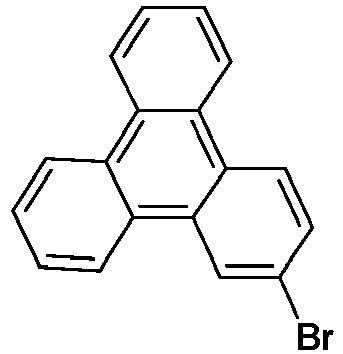

53% 2a 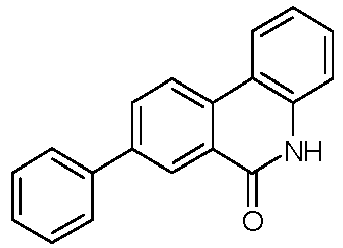
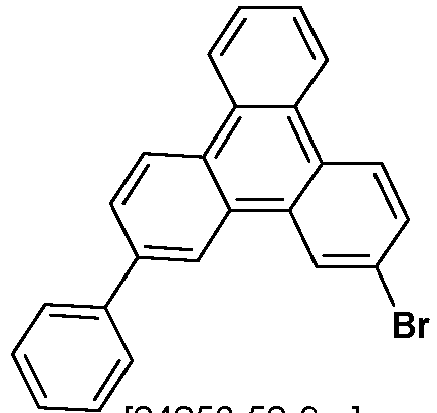
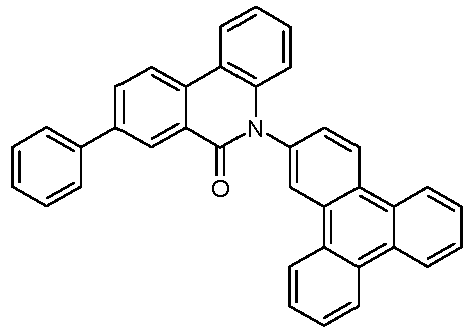
60% 3a 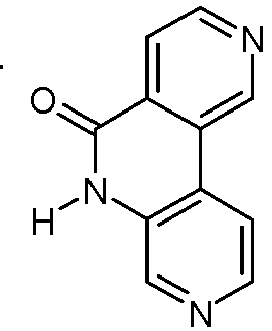
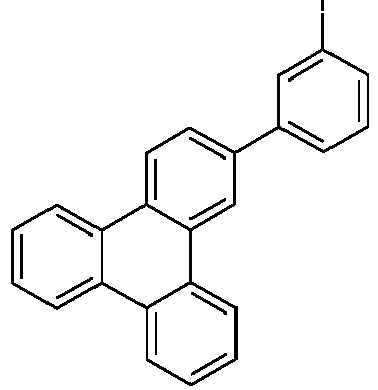

66% 4a 
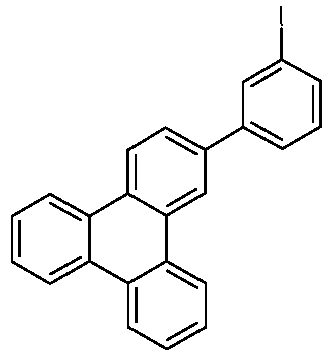

62% 5a 


77% 6a 

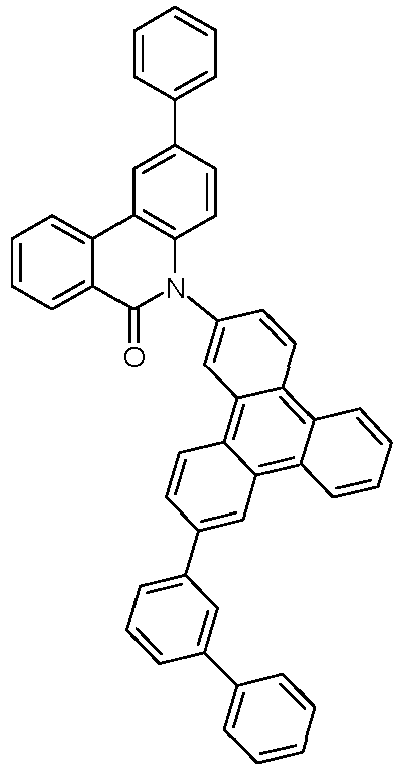
75% 7a 


78% 8a 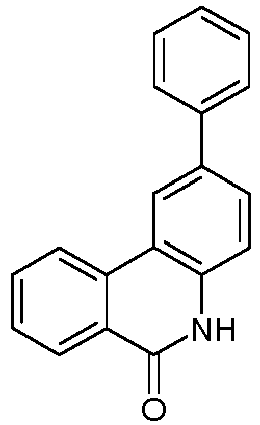
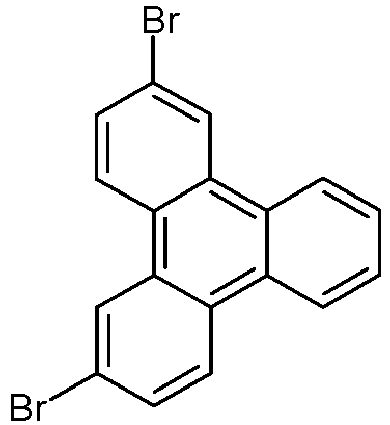
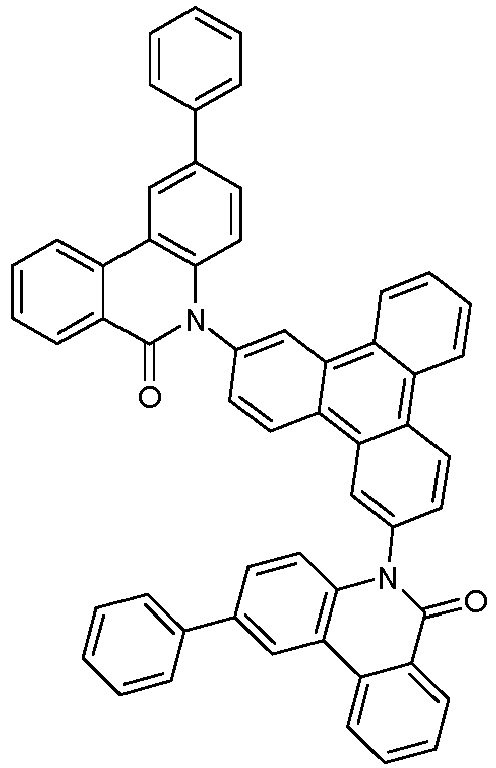
64% 9a 
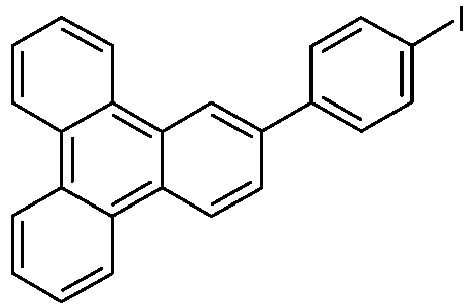

79% 10a 
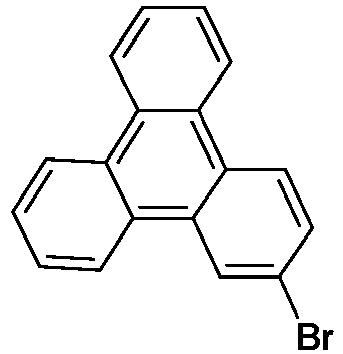

80% 11a 

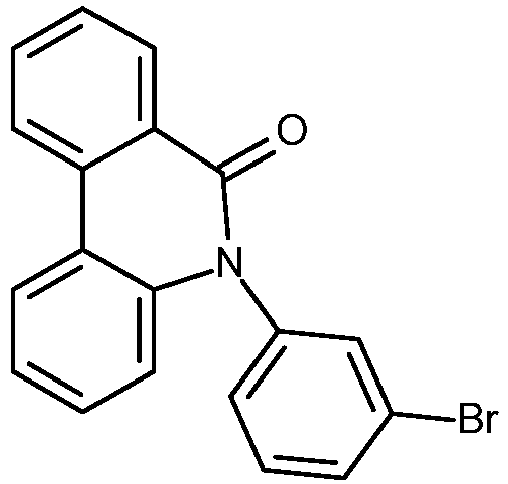
77% -
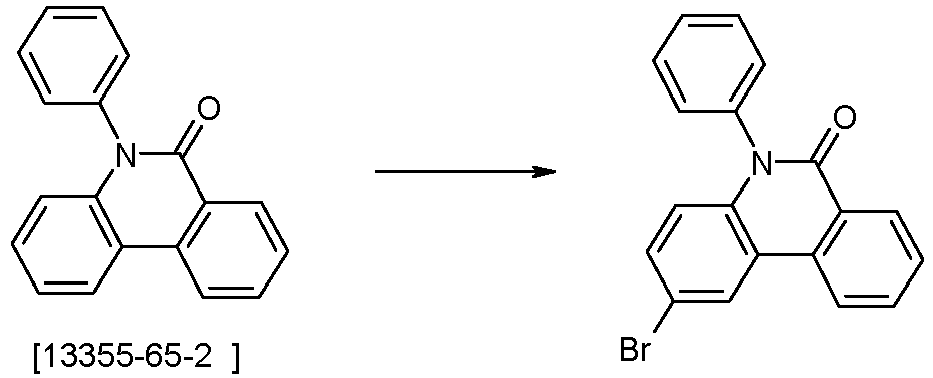
- 6.0 g (22.2 mmol) of 5-phenyl-5H-phenanthridin-6-one are initially put in 150 mL of DMF. A solution of 4 g (22.5 mmol) of NBS is then added dropwise in 100 mL of DMF at room temperature, with exclusion of light. The mixture is further stirred during 4 h at room temperature. Then, the mixture is mixed with 150 mL of water and extracted with CH2Cl2. The organic phase is dried over MgSO4 and the solvents are removed in vacuo. The product is stirred with hot hexane and filtered. Yield: 7.4 g (21 mmol), 80% of theory.
- The following compounds are obtained analogously:
Ex. Educt 1 Product 1 Yield 1b 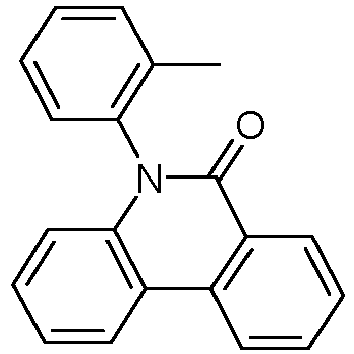

68 % 2b 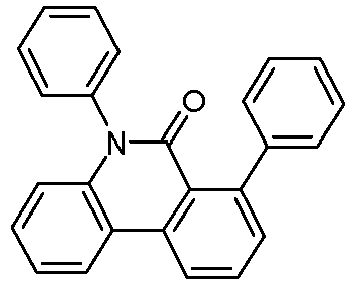

85% - Analogously, the following compounds are obtained with 2 equivalents of NBS in chloroform as solvent:
Ex. Educt 1 Product 1 Yield 3b 
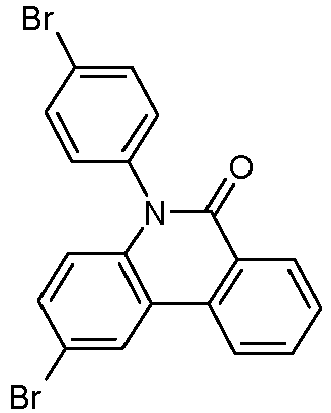
87 % 4b 
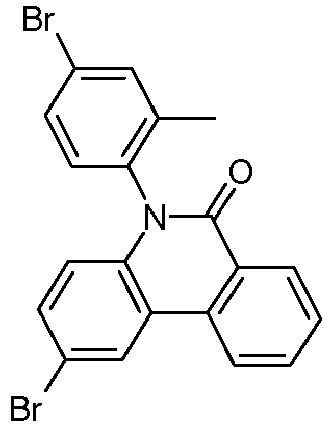
82 % 5b 
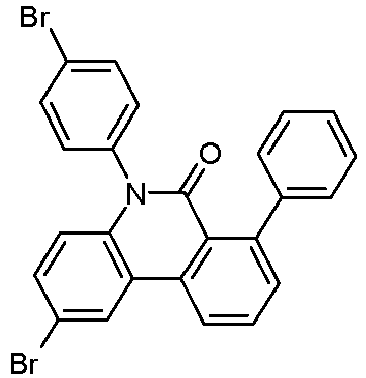
83% -

- 29.9 g (110.0 mmol) of triphenylene-2-boronic acid, 38 g (110.0 mmol) of 5-(4-bromo-phenyl)-5H-phenanthridin-6-one and 44.6 g (210.0 mmol) of tripotassium phosphate are suspended in 500 mL of toluene, 500 mL of dioxane and 500 mL of water. Then, 913 mg (3.0 mmol) of tri-o-tolylphosphine and subsequently 112 mg (0.5 mmol) of palladium(II)acetate are added to this suspension, and the reaction mixture is heated under reflux for 16 h. After cooling, the organic phase is collected, filtered through silica gel, washed three times with 200 mL of water and then concentrated to dryness. The residue is recrystallized from toluene and from dichloromethane / isopropanol and finally sublimed under high vacuum, purity is 99.9%. The yield is 43 g (86 mmol), corresponding to 80% of theory.
- The following compounds are obtained analogously:
Ex. Educt 1 Educt 2 Product Yield 1c 
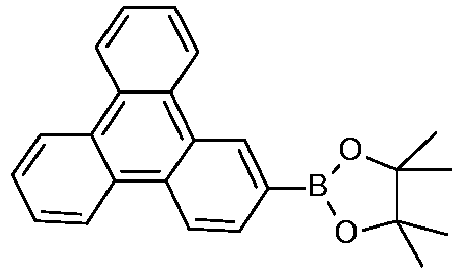

84% 2c 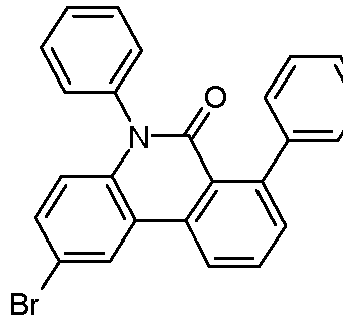
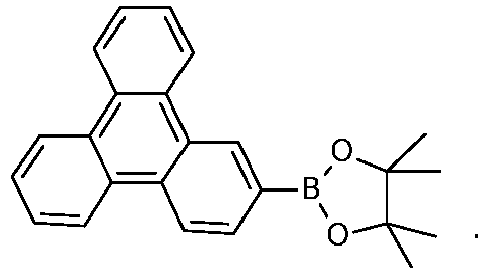
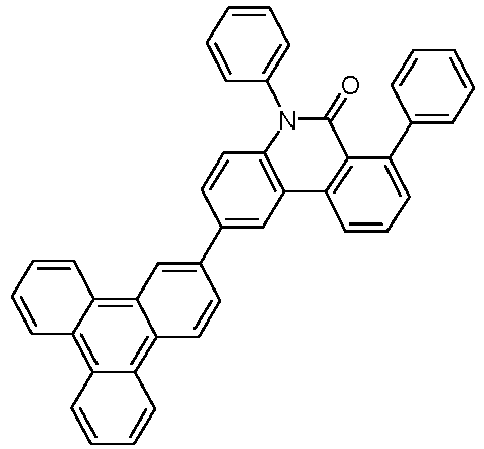
68% 3c 
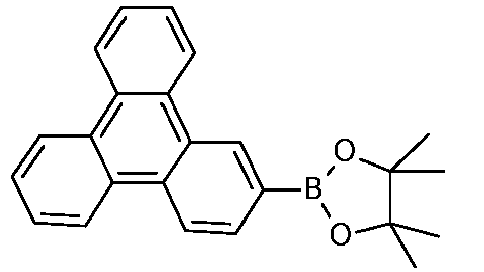

67% 4c 


71% 5c 
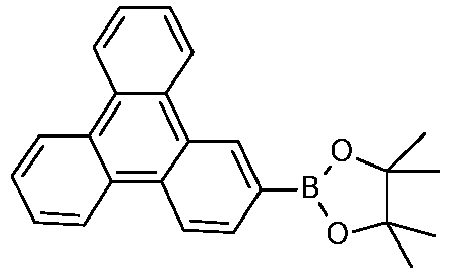

75% 6c 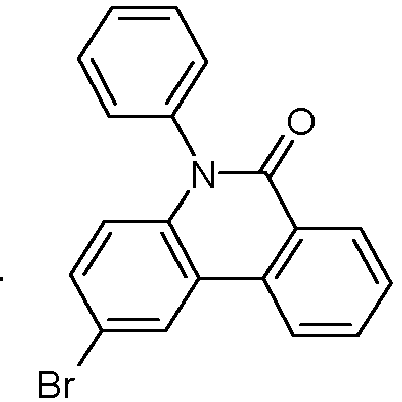

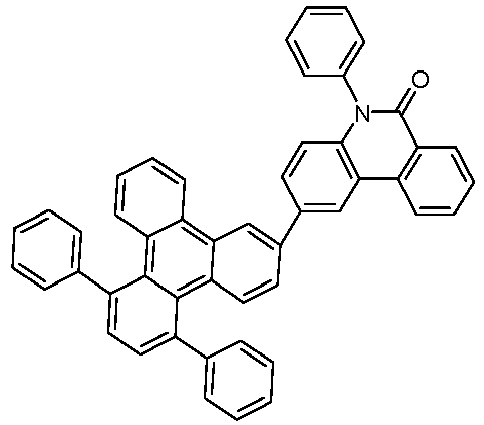
76% 7c 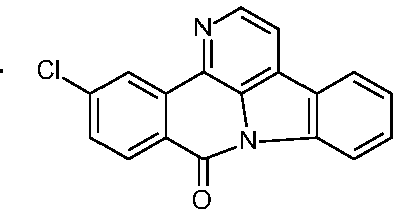

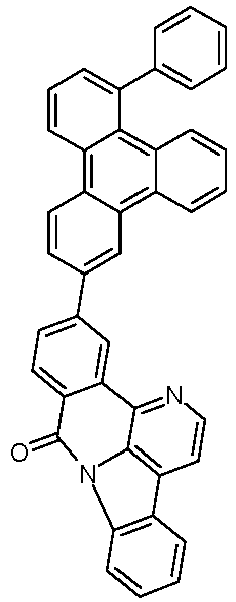
70% 8c 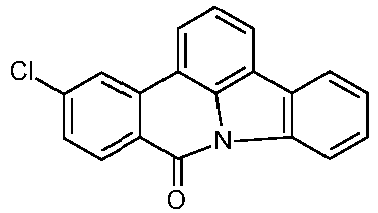


66% 9c 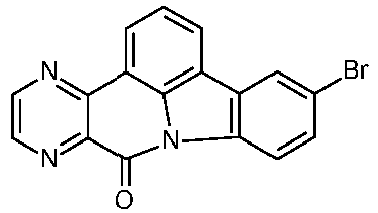
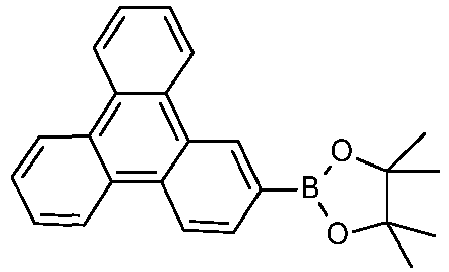

73% 10c 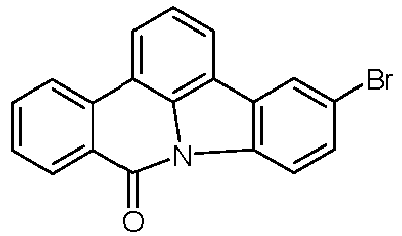


71% 11c 


80% 12c 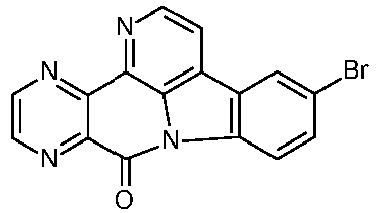
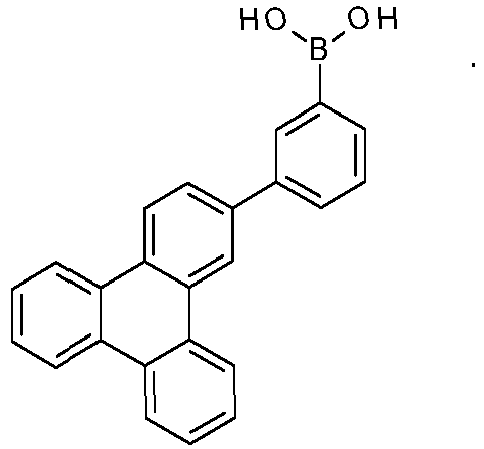
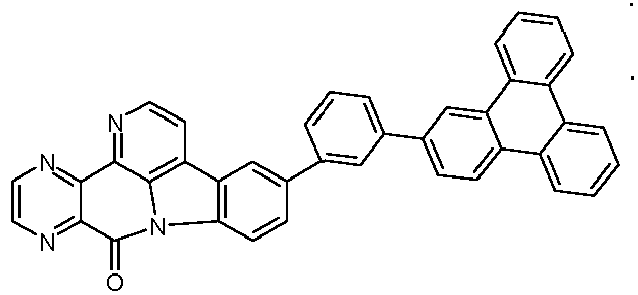
78% 13c 
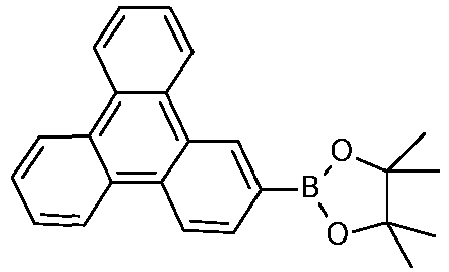

81% 14c 
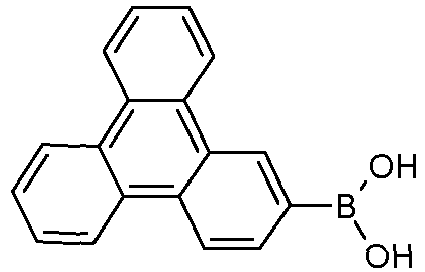

63% 15c 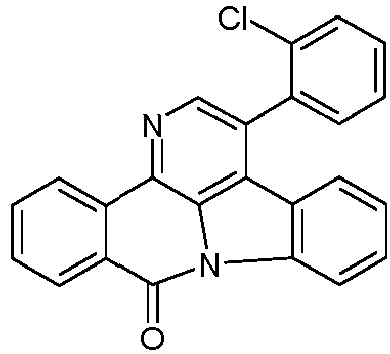
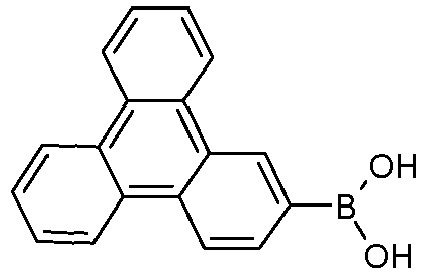

59% 16c 
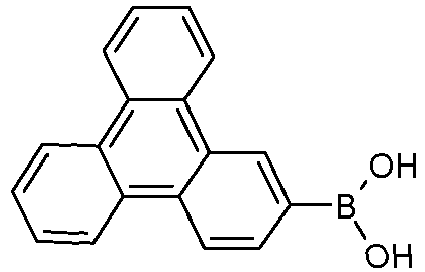

79% 17c 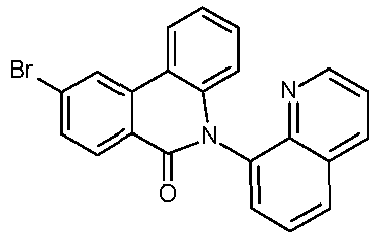

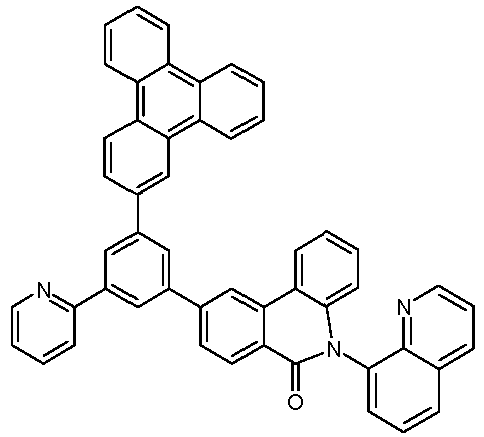
75% 18c 
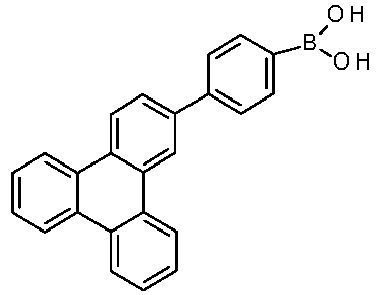

79% 19c 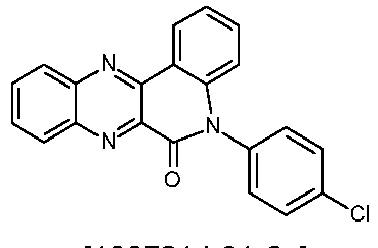

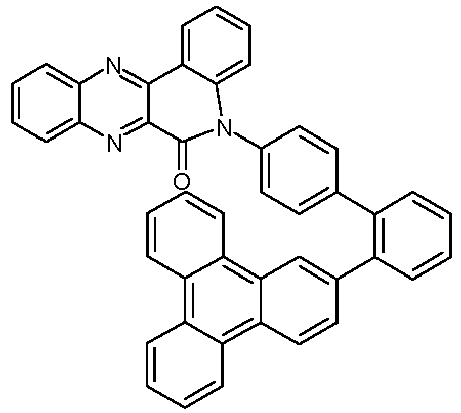
64% 20c 
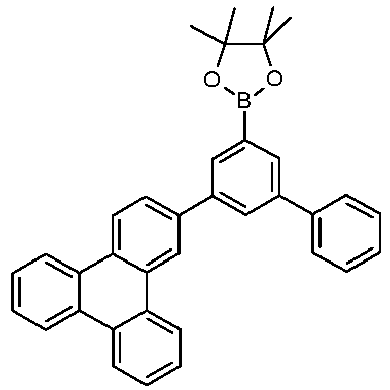
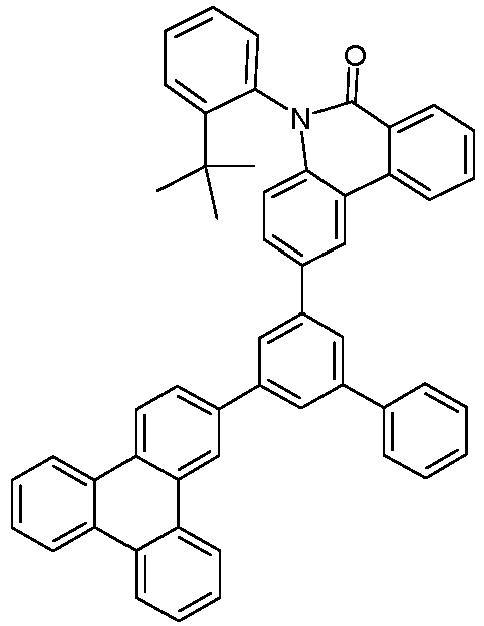
81% 21c 


77% 22c 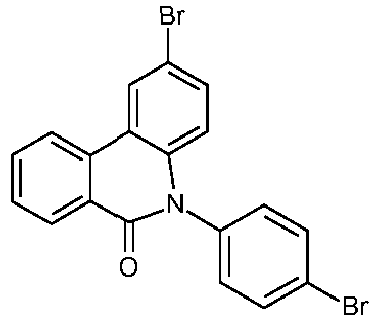


79% 23c 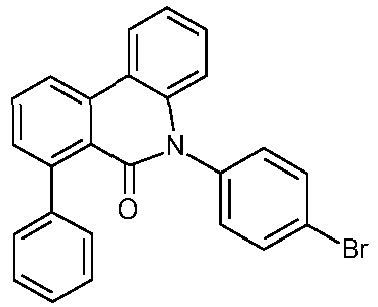


76% 24c 


68% 25c 


84% 26c 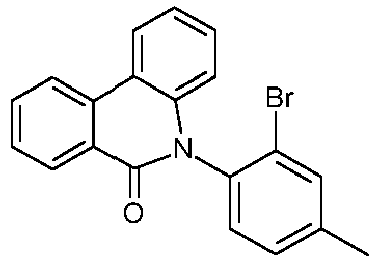

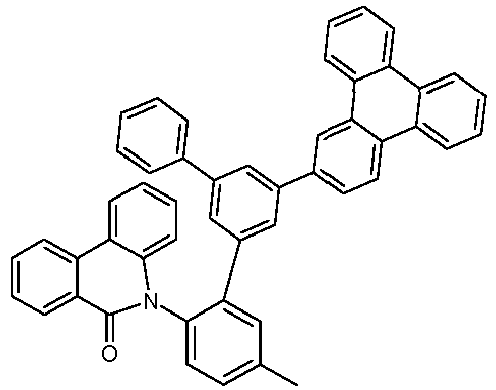
63% 27c 


81% 28C 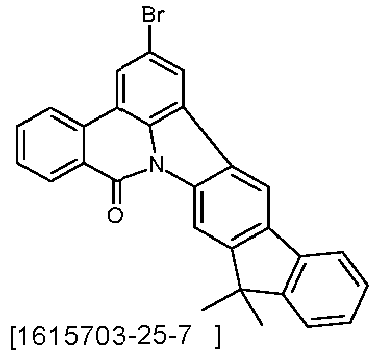


67% 29c 


86% 30c 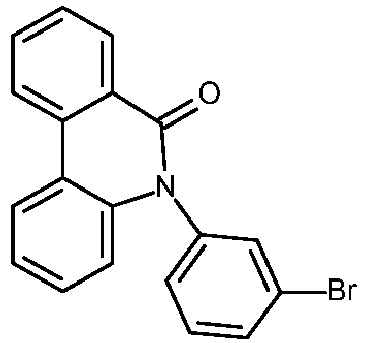
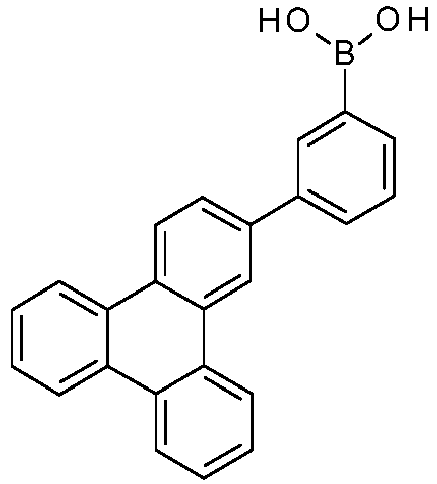
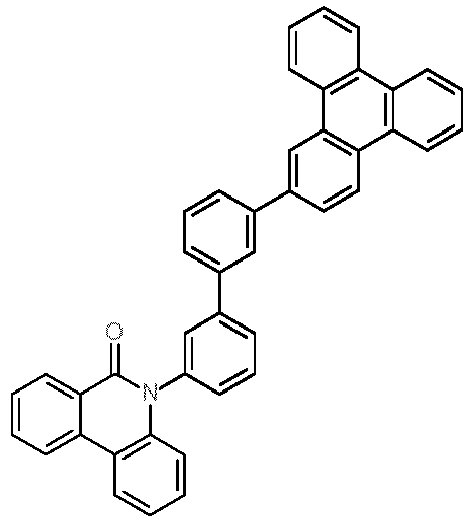
83% 31c 
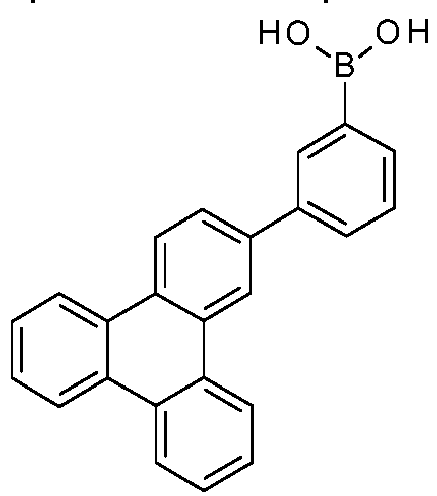

84% - The following examples V1 and E1 (see Table 1) show data of OLEDs.
- Glass plates with structured ITO (50 nm, indium tin oxide) form the substrates on which the OLEDs are processed. Before evaporation of the OLED materials, the substrates are cleaned in a wet process (using filtered deionized water and the detergent "Extran" of Merck KGaA). Glass substrates are then dried for 15 minutes at 170°C.
- Subsequently the clean and dry substrates are exposed to a oxygen and subsequently to an Argon plasma.
- The OLEDs have in principle the following layer structure: substrate / hole-transport layer (HTL) / optional interlayer (IL) / electron-blocking layer (EBL) / emission layer (EML) / optional hole-blocking layer (HBL) / electron-transport layer (ETL) / optional electron-injection layer (EIL) and finally a cathode. The cathode is formed by an aluminium layer with a thickness of 100 nm. The exact layer structure is denoted in Table 1 (ITO and Aluminium layers are omitted for clarity). The materials used for the OLED fabrication are presented in Table 2.
- All materials are applied by thermal vapour deposition in a vacuum chamber. The emission layer here always consists of at least one matrix material (host material) and an emitting dopant (emitter), which is admixed with the matrix material or matrix materials in a certain proportion by volume by co-evaporation. An expression such as CbzT1:SdT1:TEG1(41%:41%:18%) here means that material CbzT1 is present in the layer in a proportion by volume of 41%, SdT1 is present in the layer in a proportion of 41 % and TEG1 is present in the layer in a proportion of 18%. Analogously, the electron-transport layer may also consist of a mixture of two materials.
- The OLEDs are characterized by standard methods.
- For this purpose, the electroluminescence spectra and the lifetime are determined. The electroluminescent spectra are determined at a brightness of 1000 cd/m2 and the corresponding CIE 1931 x and y color coordinates are determined.
- Lifetime LT is defined as the time in hours (h), after which the starting brightness at constant current density j0, is reduced to a certain level L1 in % of the starting brightness.
- Here L1=80% means, that the given lifetime LT corresponds to the time after which the brightness is reduced to 80% of its starting value.
- The compounds of formula (1) are used in the emission layer (EML) of a phosphorescent green OLED. The inventive combination of the compound CbzT1 with one of the compound EG1 to EG5 is used as matrix material in the emission layer.
- In the following section several examples are described in more detail to show the advantages of the inventive OLEDs.
- By using the compounds according to the state of the art like in example V1 with high emitter concentrations in the EML of e.g. 18%, good color coordinates with x/y in the range of 0.33/0.63 can be reached. Nevertheless, the lifetime of such devices is not very high.
- A substantial improvement of the lifetime by 25-30% versus the state of the art like in example V1 at similar color coordinates, can be reached for example by using the inventive combination of CbzT1 and one of the compound EG1 to EG5 and similar emitter concentrations (e.g. 18%) in the emission layer like in example E1.
Table 1: Structure of the OLEDs Ex HIL Thickness HTL Thickness EBL Thickness EML Thickness HBL ETL Thickness ElL Thickness V1 HATCN 5nm SpMA1 230nm SpMA2 20nm CbzT1 :SdT1 :TEG1 (41 °,6:41 °,6:18°,6) 30nm ST2 10nm ST2:LiQ (50%:50%) 30nm LiQ 1nm E1 HATCN 5nm SpMA1 230nm SpMA2 20nm CbzT1:EG1:TEG1 (41%:41%:18%) 30nm ST2 10nm ST2:LiQ (50%:50%) 30nm LiQ 1nm E2 HATCN 5nm SpMA1 230nm SpMA2 20nm CbzT1:EG2:TEG1 (41%:41°,6:18°,6) 30nm ST2 10nm ST2:LiQ (50%:50%) 30nm LiQ 1nm E3 HATCN 5nm SpMA1 230nm SpMA2 20nm CbzT1:EG3:TEG1 (41%:41°,6:18°,6) 30nm ST2 10nm ST2:LiQ (50%:50%) 30nm LiQ 1nm E4 HATCN 5nm SpMA1 230nm SpMA2 20nm CbzT1:EG4:TEG1 (41%:41°,6:18°,6) 30nm ST2 10nm ST2:LiQ (50%:50%) 30nm LiQ 1nm E5 HATCN 5nm SpMA1 230nm SpMA2 20nm CbzT1:EG5:TEG1 (41%:41°,6:18°,6) 30nm ST2 10nm ST2:LiQ (50%:50%) 30nm LiQ 1nm Table 2: Chemical structures of the materials used in the OLEDs 

HATCN SpMA1 

SpMA2 ST2 

TEG1 LiQ 

CbzT1 SdT1 
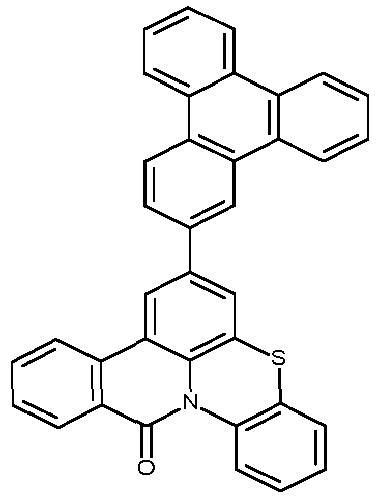
EG1 EG2 

EG3 EG4 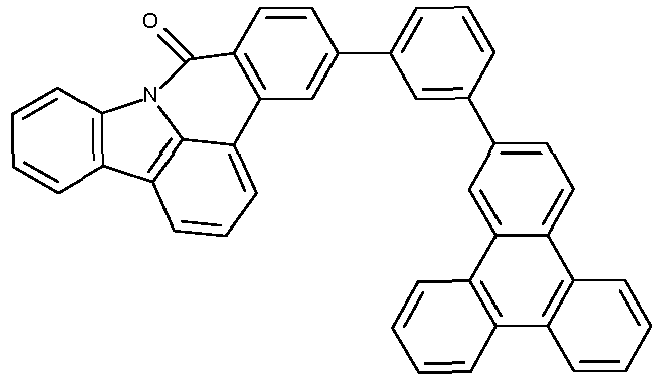
EG5 Table 3: OLEDs Data Ex.. U1000 (V) SE1000 (cd/A) EQE 1000 (%) CIE x/y bei 1000 cd/m2 L0; j0 L1 LD % (h) E1 <3.7 >57 >15 0.32/0.62 20 mA/cm2 80 90 E2 <3.6 >60 >18 0.3210.62 20 mA/cm2 80 125 E3 <3.5 >56 >18 0.32/0.62 20 mA/cm2 80 120 E4 <3.2 >54 >18 0.32/0.62 20 mA/cm2 80 127 E5 <3.3 >59 >18 0.32/0.62 20 mA/cm2 80 128
Claims (12)
- Organic electroluminescent device comprising a mixture comprising a compound of the formula (1),
 Ar1 stands on each occurrence, identically or differently, for an aromatic or heteroaromatic ring system having 5 to 60 aromatic ring atoms, which may in each case be substituted by one or more radicals R1;Ar2 stands on each occurrence, identically or differently, for an aromatic or heteroaromatic ring system having 5 to 60 aromatic ring atoms, which may in each case be substituted by one or more radicals R2;Ar3 stands on each occurrence, identically or differently, for an aromatic or heteroaromatic ring system having 5 to 60 aromatic ring atoms, which may in each case be substituted by one or more radicals R3;-E- is selected from a single bond, -B(R0)-, -C(R0)2-, -Si(R0)2-, -C(=O)-,-C(=NR0)-, -C(=C(R0)2)-, -O-, -S-, -S(=O)-, -S(O2)-, -N(R0)-, -P(R0)- and-P((=O)R0)-;R0, R1, R2, R3 stand on each occurrence, identically or differently, for H, D, F, Cl, Br, I, CHO, CN, N(Ar)2, C(=O)Ar, P(=O)(Ar)2, S(=O)Ar, S(=O)2Ar, NO2, Si(R)3, B(OR)2, OSO2R, a straight-chain alkyl, alkoxy or thioalkyl group having 1 to 40 C atoms or branched or a cyclic alkyl, alkoxy or thioalkyl group having 3 to 40 C atoms, each of which may be substituted by one or more radicals R, where in each case one or more non-adjacent CH2 groups may be replaced by RC=CR, C=C, Si(R)2, Ge(R)2, Sn(R)2, C=O, C=S, C=Se, P(=O)(R), SO, SO2, O, S or CONR and where one or more H atoms may be replaced by D, F, Cl, Br, I, CN or NO2, an aromatic or heteroaromatic ring systems having 5 to 60 aromatic ring atoms, which may in each case be substituted by one or more radicals R, or an aryloxy group having 5 to 40 aromatic ring atoms, which may be substituted by one or more radicals R, where two radicals R0, two radicals R1, two radicals R2 and/or two radicals R3 may form a monocyclic or polycyclic, aliphatic, aromatic or heteroaromatic ring system with one another, which may be substituted by one or more radicals R;R stands on each occurrence, identically or differently, for H, D, F, Cl, Br, I, CHO, CN, N(Ar)2, C(=O)Ar, P(=O)(Ar)2, S(=O)Ar, S(=O)2Ar, NO2, Si(R')3, B(OR')2, OSO2R', a straight-chain alkyl, alkoxy or thioalkyl group having 1 to 40 C atoms or branched or cyclic alkyl, alkoxy or thioalkyl group having 3 to 40 C atoms, each of which may be substituted by one or more radicals R', where in each case one or more non-adjacent CH2 groups may be replaced by R'C=CR', C=C, Si(R')2, Ge(R)2, Sn(R')2, C=O, C=S, C=Se, P(=O)(R'), SO, SO2, O, S or CONR' and where one or more H atoms may be replaced by D, F, Cl, Br, I, CN or NO2, an aromatic or heteroaromatic ring systems having 5 to 60 aromatic ring atoms, which may in each case be substituted by one or more radicals R', or an aryloxy group having 5 to 40 aromatic ring atoms, which may be substituted by one or more radicals R', where two radicals R may form a ring system with one another, which may be substituted by one or more radicals R';Ar is an aromatic or heteroaromatic ring system having 5 to 24 aromatic ring atoms, which may in each case also be substituted by one or more radicals R';R' stands on each occurrence, identically or differently, for H, D, F, Cl, Br, I, CN, a straight-chain alkyl, alkoxy or thioalkyl group having 1 to 20 C atoms or branched or cyclic alkyl, alkoxy or thioalkyl group having 3 to 20 C atoms, where in each case one or more non-adjacent CH2 groups may be replaced by SO, SO2, O, S and where one or more H atoms may be replaced by D, F, Cl, Br or I, or an aromatic or heteroaromatic ring system having 5 to 24 C atoms;n is 0 or 1; wherein when n is 0, the group -E- is absent;where the compound of formula (1) comprises at least one group Ar3, R1, R2 or R3, which stand for a triphenylene derivative of the formula (T),
 where the dashed bond indicates the bonding to the structure of formula (1), and where:R4 is C at the position of the bonding to ArS or, R4 is C at the position of the bonding to the structure of formula (1) if m is 0; and at other positions, R4 stands on each occurrence, identically or differently, for H, D, F, Cl, Br, I, CHO, CN, N(Ar)2, C(=O)Ar, P(=O)(Ar)2, S(=O)Ar, S(=O)2Ar, NO2, Si(R)3, B(OR)2, OSO2R, a straight-chain alkyl, alkoxy or thioalkyl group having 1 to 40 C atoms or branched or a cyclic alkyl, alkoxy or thioalkyl group having 3 to 40 C atoms, each of which may be substituted by one or more radicals R, where in each case one or more non-adjacent CH2 groups may be replaced by RC=CR, C=C, Si(R)2, Ge(R)2, Sn(R)2, C=O, C=S, C=Se, P(=O)(R), SO, SO2, O, S or CONR and where one or more H atoms may be replaced by D, F, Cl, Br, I, CN or NO2, an aromatic or heteroaromatic ring systems having 5 to 60 aromatic ring atoms, which may in each case be substituted by one or more radicals R, or an aryloxy group having 5 to 40 aromatic ring atoms, which may be substituted by one or more radicals R, where two radicals R4 may form a monocyclic or polycyclic, aliphatic, aromatic or heteroaromatic ring system, which may be substituted by one or more radicals R;ArS is an aromatic or heteroaromatic ring system having 5 to 60 aromatic ring atoms, which may in each case also be substituted by one or more radicals R; andm is an integer selected from 0, 1, 2, 3 or 4; andand a second compound selected from compounds of formulae (11) and (12),
 where:R10 stands on each occurrence, identically or differently, for H, D, F, Cl, Br, I, CHO, CN, N(Ar)2, C(=O)Ar, P(=O)(Ar)2, S(=O)Ar, S(=O)2Ar, NO2, Si(R)3, B(OR)2, OSO2R, a straight-chain alkyl, alkoxy or thioalkyl group having 1 to 40 C atoms or branched or a cyclic alkyl, alkoxy or thioalkyl group having 3 to 40 C atoms, each of which may be substituted by one or more radicals R, where in each case one or more non-adjacent CH2 groups may be replaced by RC=CR, C=C, Si(R)2, Ge(R)2, Sn(R)2, C=O, C=S, C=Se, P(=O)(R), SO, SO2, O, S or CONR and where one or more H atoms may be replaced by D, F, Cl, Br, I, CN or NO2, an aromatic or heteroaromatic ring systems having 5 to 60 aromatic ring atoms, which may in each case be substituted by one or more radicals R, or an aryloxy group having 5 to 40 aromatic ring atoms, which may be substituted by one or more radicals R, where two radicals R10 may form a monocyclic or polycyclic, aliphatic, aromatic or heteroaromatic ring system with one another, which may be substituted by one or more radicals R;Ar10 is an aromatic or heteroaromatic ring system having 5 to 60 aromatic ring atoms, which may in each case also be substituted by one or more radicals R;p is an integer selected from 0, 1, 2, 3 and 4;E10 stands for -C(R0)2-, -Si(R0)2-, -C(=O)-, -C(=NR0)-, -C(=C(R0)2)-, -O-, -S-, -S(=O)-, -S(O2)-, -N(Ar10)-, -P(R0)- or -P((=O)R0)-;E11 stands for -C(R0)2-, -Si(R0)2-, -C(=O)-, -C(=NR0)-, -C(=C(R0)2)-, -O-, -S-, -S(=O)-, -S(O2)-, -N(Ar10)-, -P(R0)- or -P((=O)R0)-; andL1 is a single bond or an aromatic or heteroaromatic ring system having 5 to 60 aromatic ring atoms, which may in each case also be substituted by one or more radicals R,where the mixture is employed as a matrix material for phosphorescent emitters in a light-emitting layer; andwhere the following compounds are excluded from the compounds of formula (1):

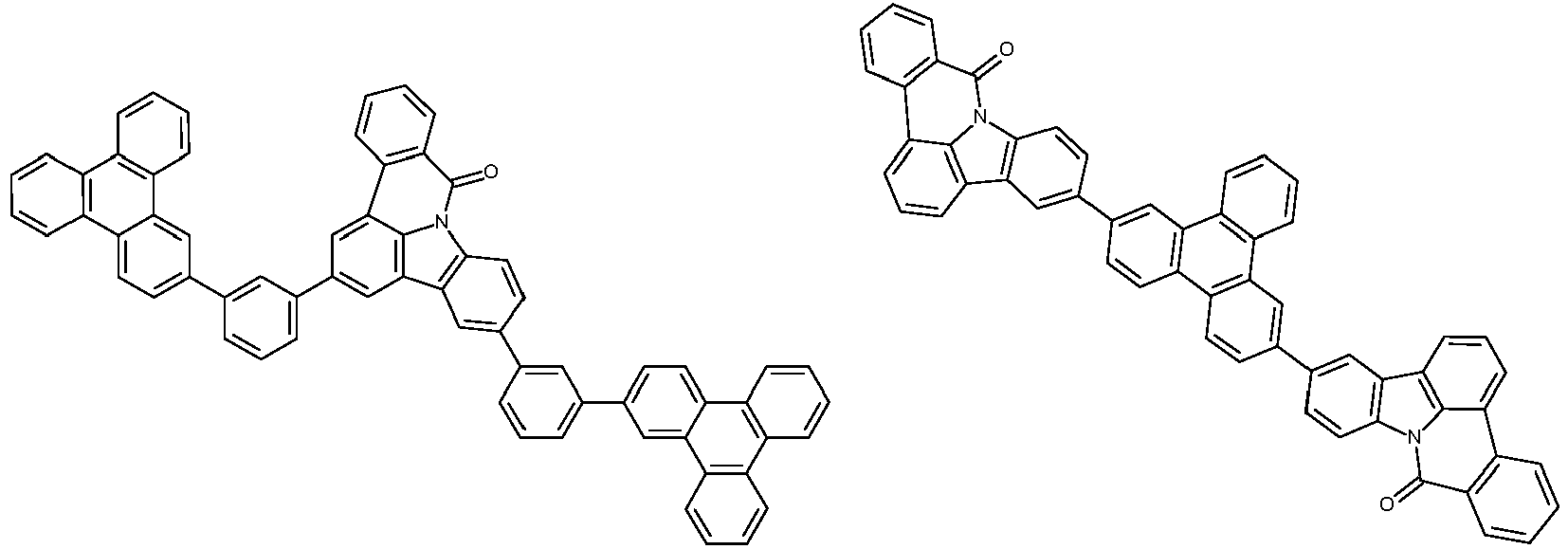

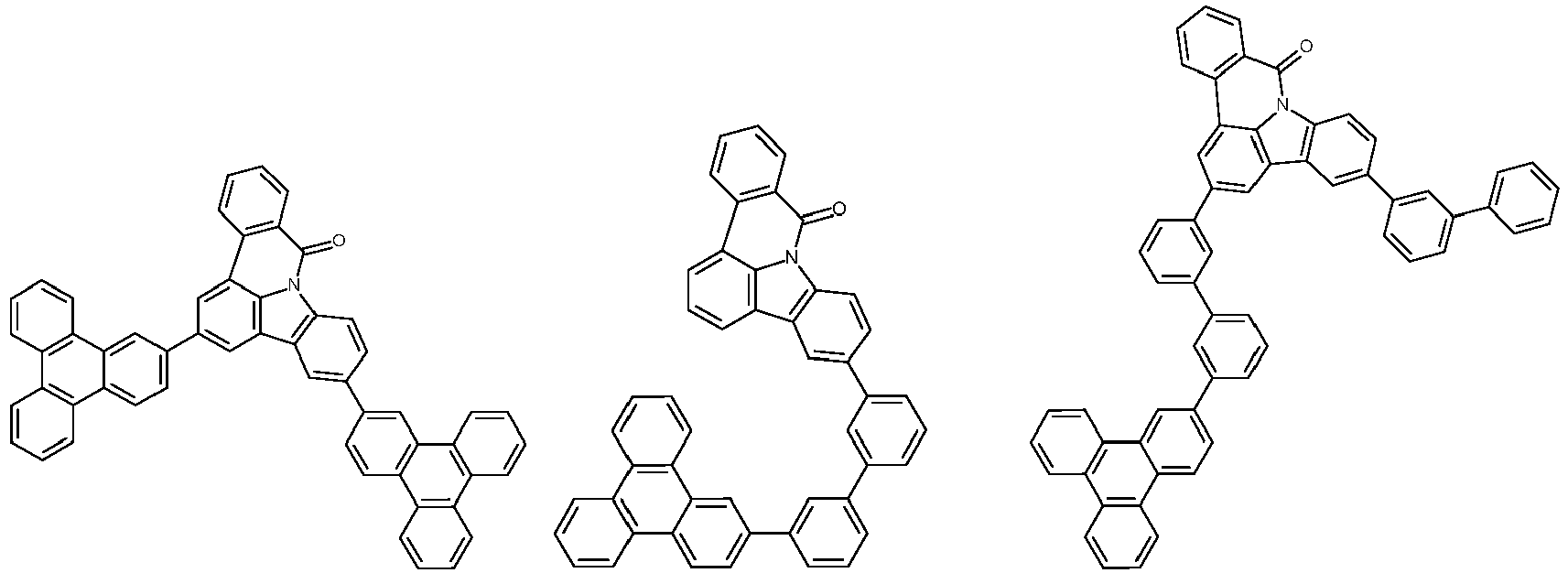
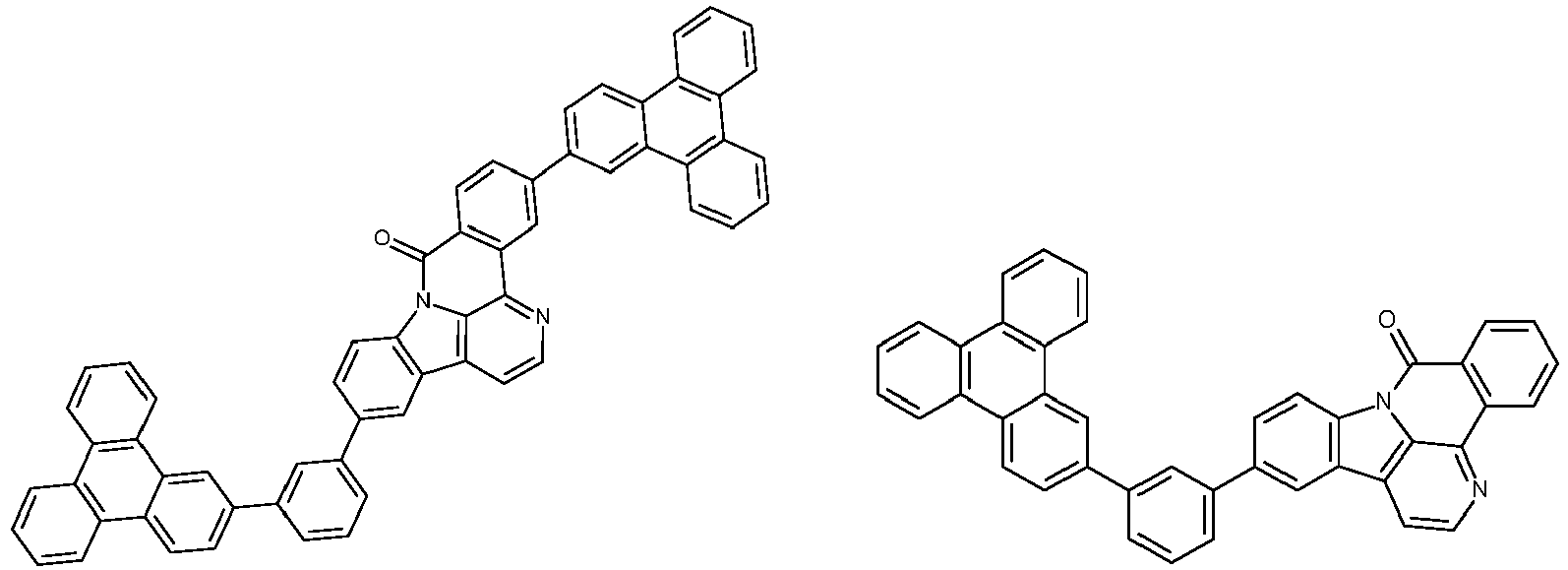
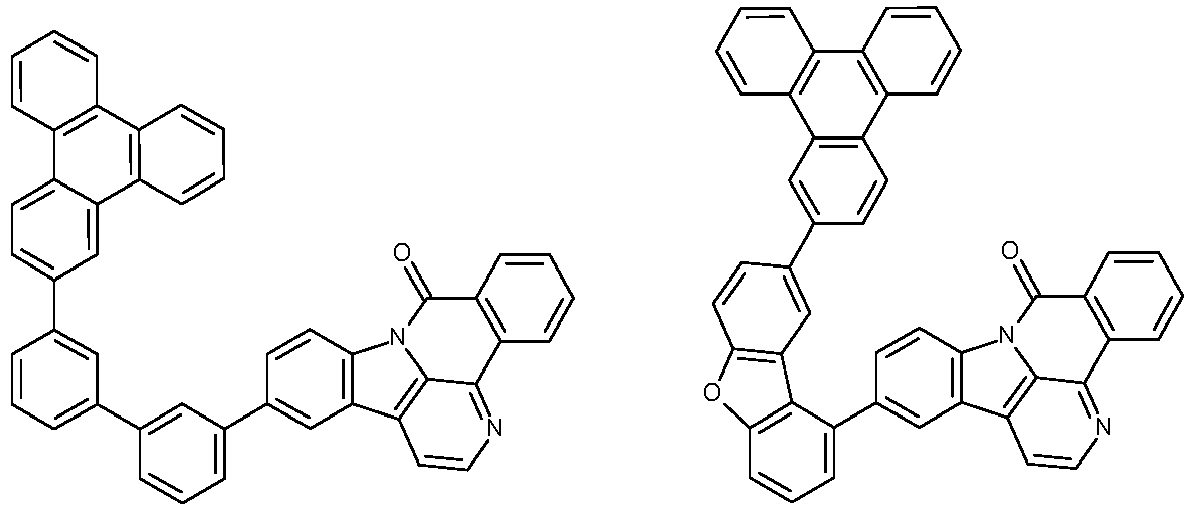

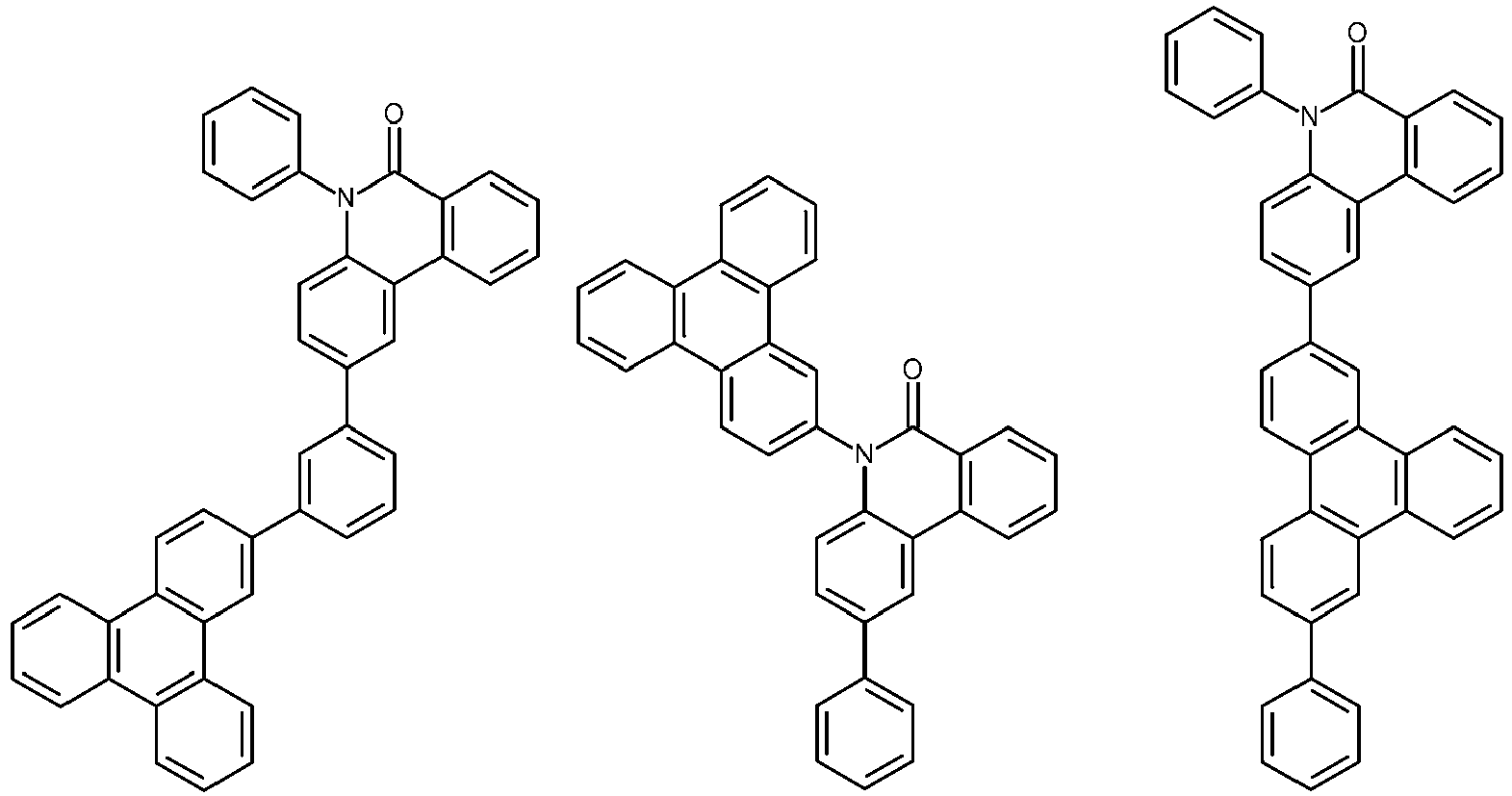
- Organic electroluminescent device according to claim 1, characterized in that the compound of formula (1) is selected from compounds of formulae (1A) or (1B),
 the symbol -E- has the same meaning as in claim 1;X is CR1 or N;Y is CR2 or N;where the symbols R1, R2 have the same meaning as in claim 1; andAr3 has the same meaning as in claim 1, with the proviso that Ar3, in formula (1B), is connected to the group -E- and the atom N via two adjacent C atoms as represented in formula (1B);and where in formula (1A), at least one group Ar3, R1 or R2 stands for a triphenylene derivative of the formula (T) and, in formula (1B), at least one group R1 or R2 stands for a triphenylene derivative of the formula (T), where the triphenylene derivative of the formula (T) is as defined in claim 1.
 - Organic electroluminescent device according to claim 1 or 2, characterized in that the compound of formula (1) is selected from the compounds of formulae (2), (3), (4), (5), (6) or (7),


 where the symbols and indices E, R4, ArS and m have the same meaning as in claim 1; and whereX is CR1 or N, with the proviso that X is C at the position of the bonding to ArS or, if m is 0 and ArS is absent, to the triphenylene group in formulae (4) and (6);Y is CR2 or N, with the proviso that Y is C at the position of the bonding to ArS or, if m is 0 and ArS is absent, to the triphenylene group in formulae (3) and (5);V is CR3 or N, with the proviso that V is C at the position of the bonding to ArS or, if m is 0 and ArS is absent, to the triphenylene group in formula (7); or two adjacent groups V stand for a group of formula (V-1) or (V-2),
 where the symbols V indicate the corresponding adjacent groups V in formulae (2) to (7);E0 stands for -C(R0)2-, -Si(R0)2-, -C(=O)-, -C(=NR0)-, -C(=C(R0)2)-, -O-, -S-, -S(=O)-, -S(O2)-, -N(R0)-, -P(R0)- or -P((=O)R0)-; where R0 has the same meaning as in claim 1; andW stands for CR or N.
 - Organic electroluminescent device according to one or more of the preceding claims, characterized in that the index m is equal to 0 or 1.
- Organic electroluminescent device according to one or more of the preceding claims, characterized in that the group ArS stands on each occurrence, identically or differently, for phenyl, biphenyl, fluorene, spirobifluorene, naphthalene, phenanthrene, anthracene, dibenzofuran, dibenzothiophene, carbazole, pyridine, pyrimidine, pyrazine, pyridazine, triazine, benzopyridine, benzopyridazine, benzopyrimidine and quinazoline, each of which may be substituted by one or more radicals R.
- Organic electroluminescent device according to one or more of the preceding claims, characterized in that the group ArS stands on each occurrence, identically or differently, for phenyl, biphenyl, fluorene, naphthalene, dibenzofuran, dibenzothiophene and carbazole, each of which may be substituted by one or more radicals R.
- Organic electroluminescent device according to one or more of the claims 2 to 6, characterized in that, in the compound of formula (1), there is 0 or 1 group X standing for N in the six-membered ring comprising the groups X, there is 0 or 1 group Y standing for N in the six-membered ring comprising the groups Y and there is 0 or 1 group V in the six-membered ring comprising the groups V.
- Organic electroluminescent device according to one or more of the preceding claims, characterized in that the compound of formula (1) is selected from compounds of formulae (2A) to (7B),


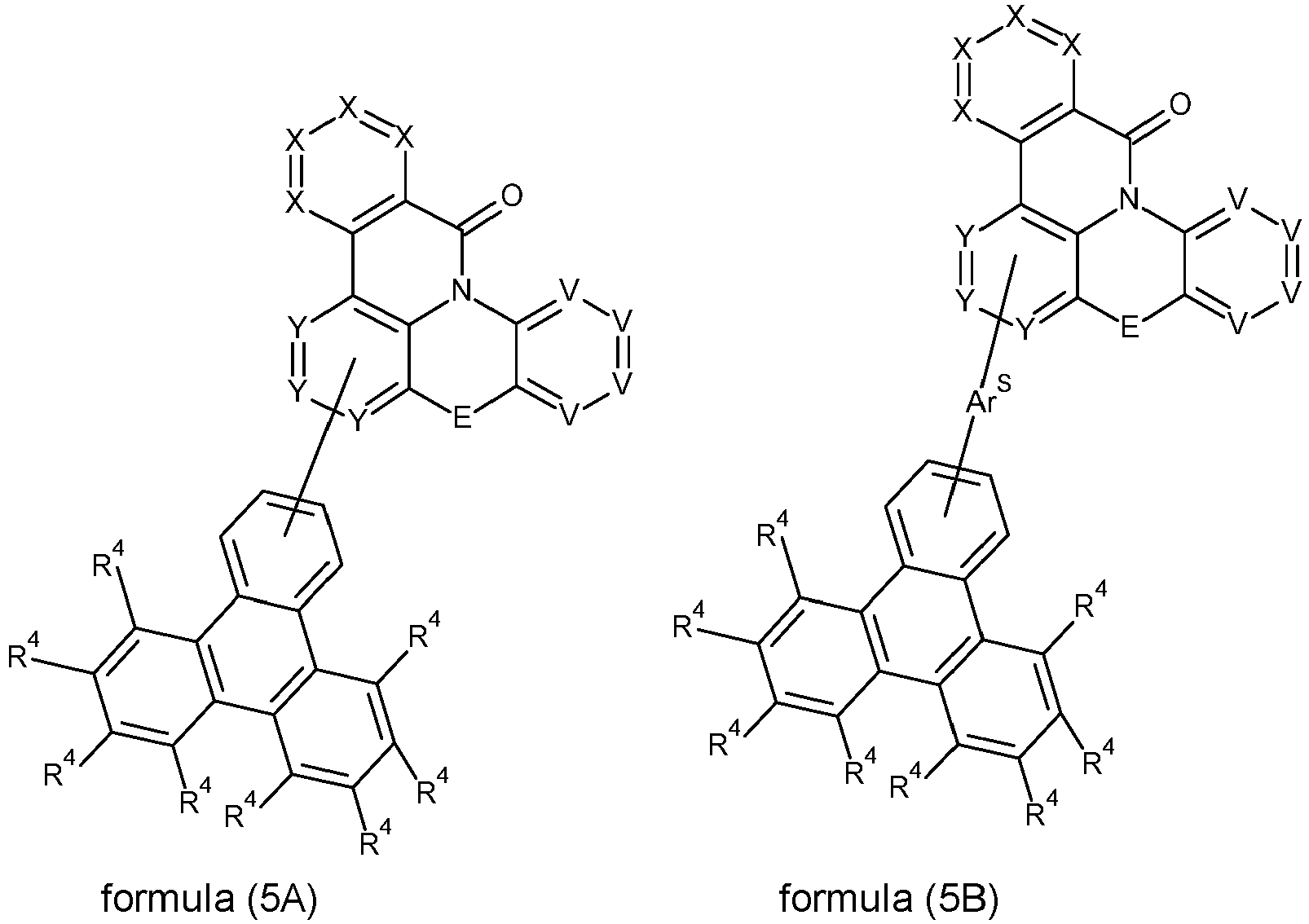


- Organic electroluminescent device according to one or more of the preceding claims, characterized in that the compound of formula (1) is selected from compounds (2A-1) to (7B-1),
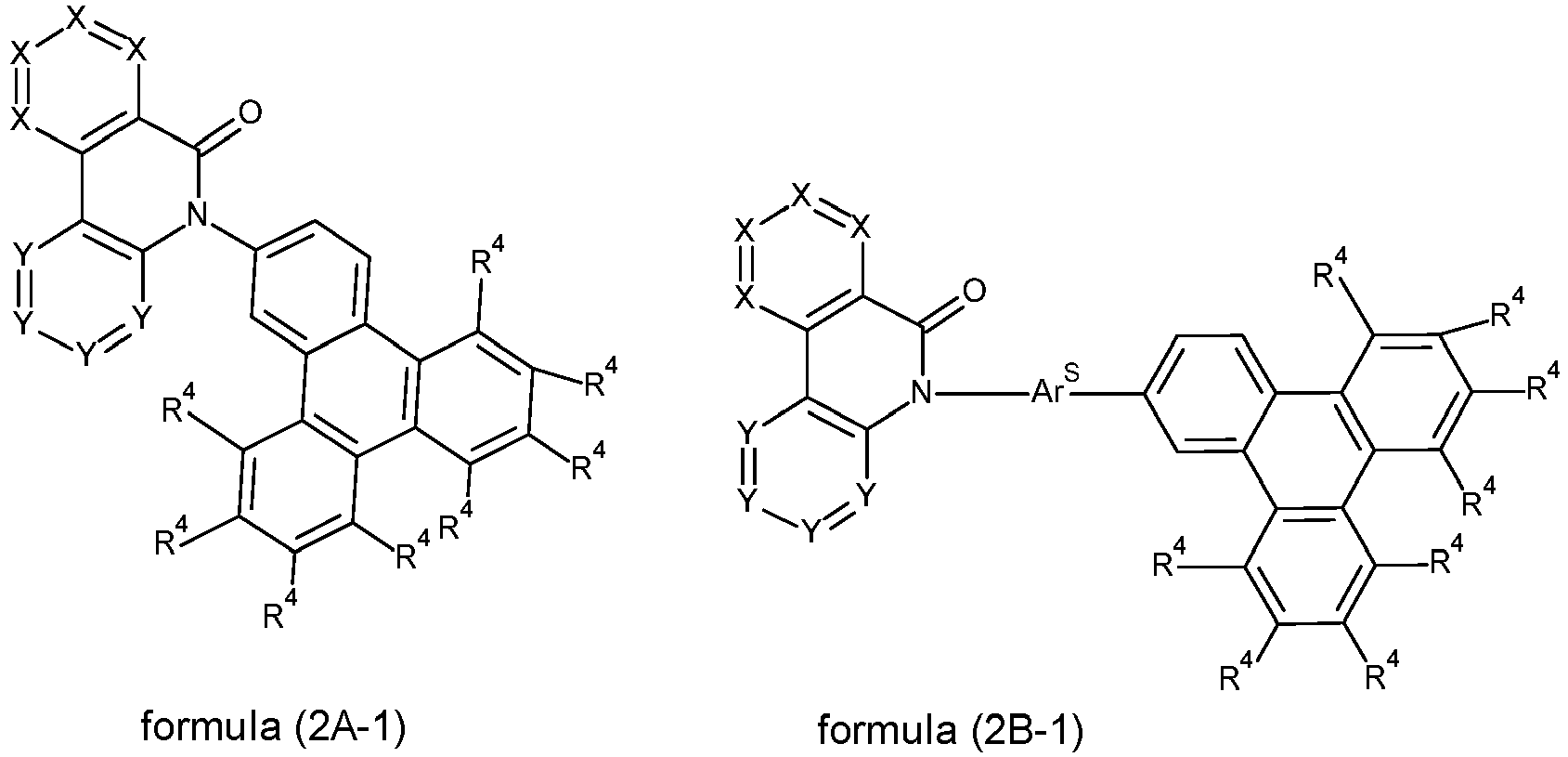


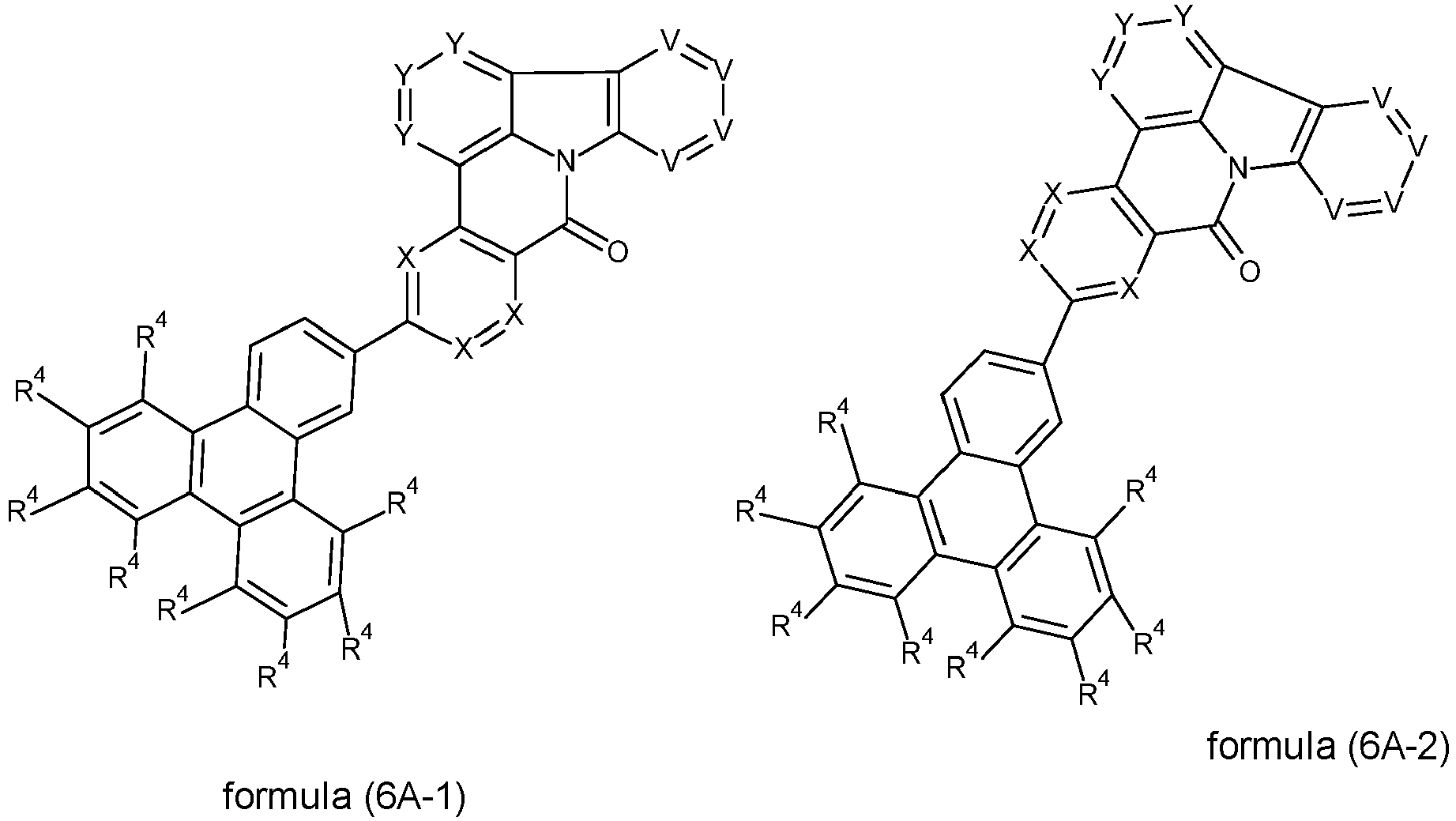
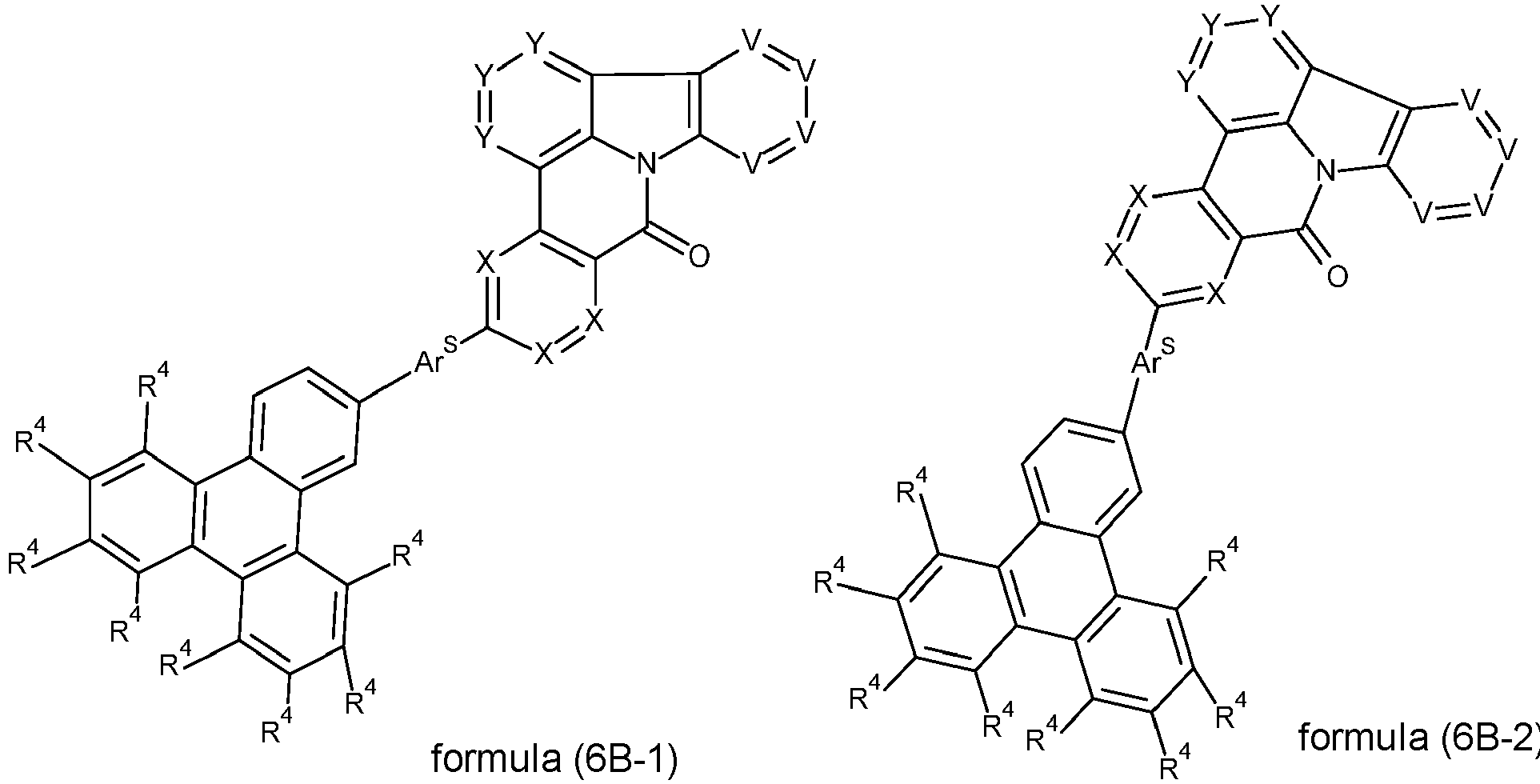

- Organic electroluminescent device according to one or more of the preceding claims, characterized in that the compound of formula (1) comprises at least one of the substituent R1 or R2, which is selected from aromatic and heteroaromatic ring systems.
- Organic electronic device according to one or more of the preceding claims, characterized in that the second compound is selected from compounds of formulae (11-1) to (12-4),


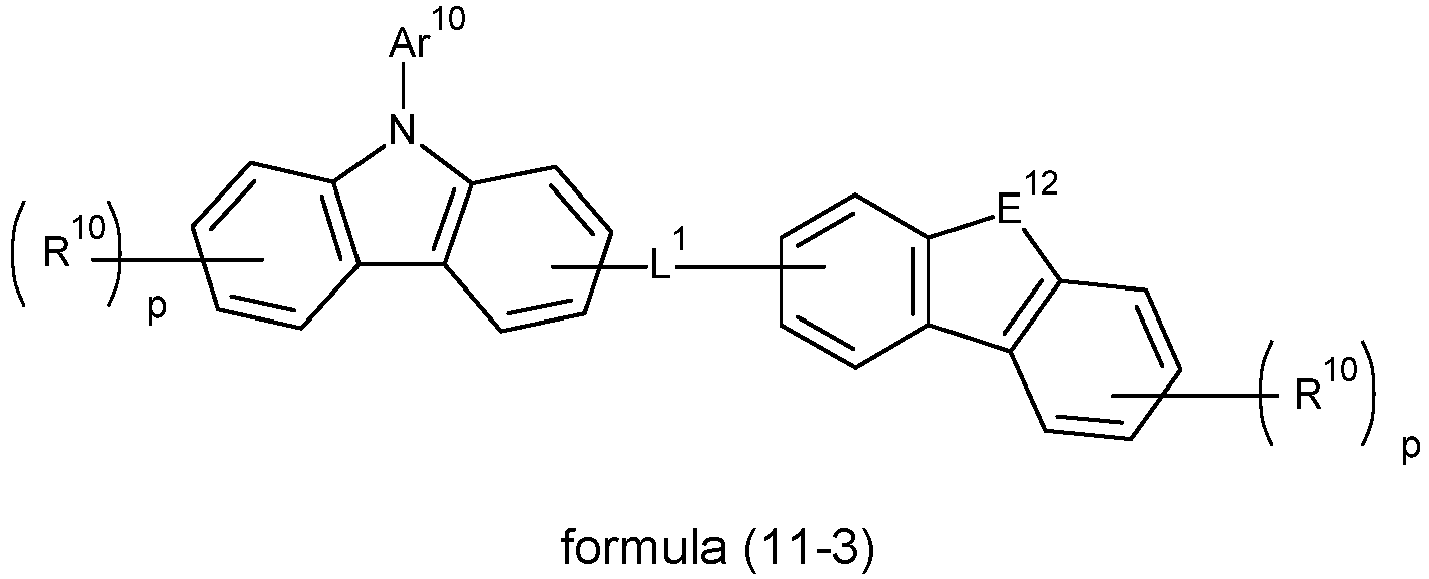
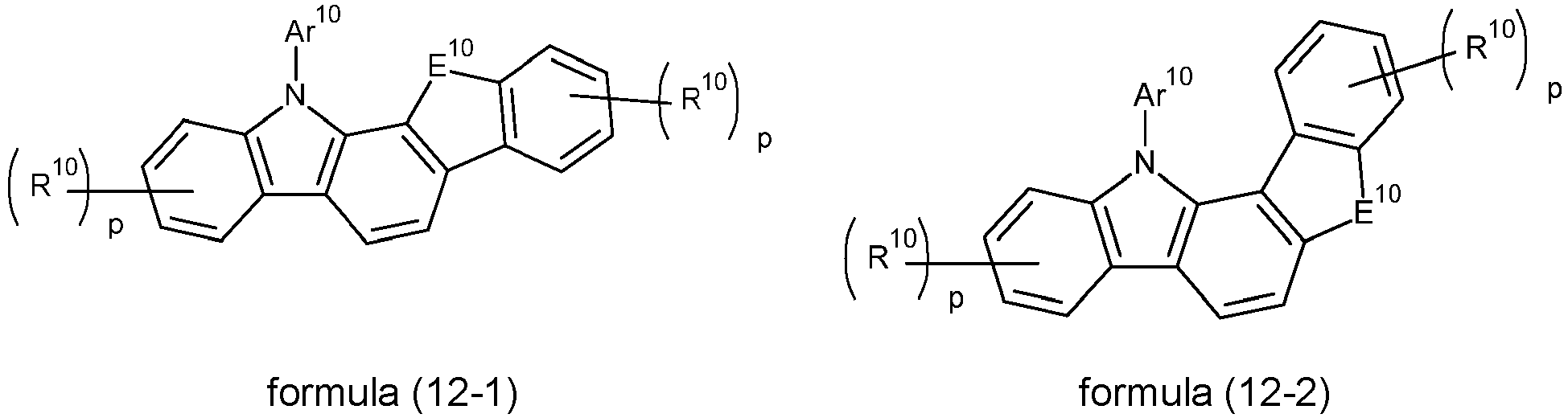
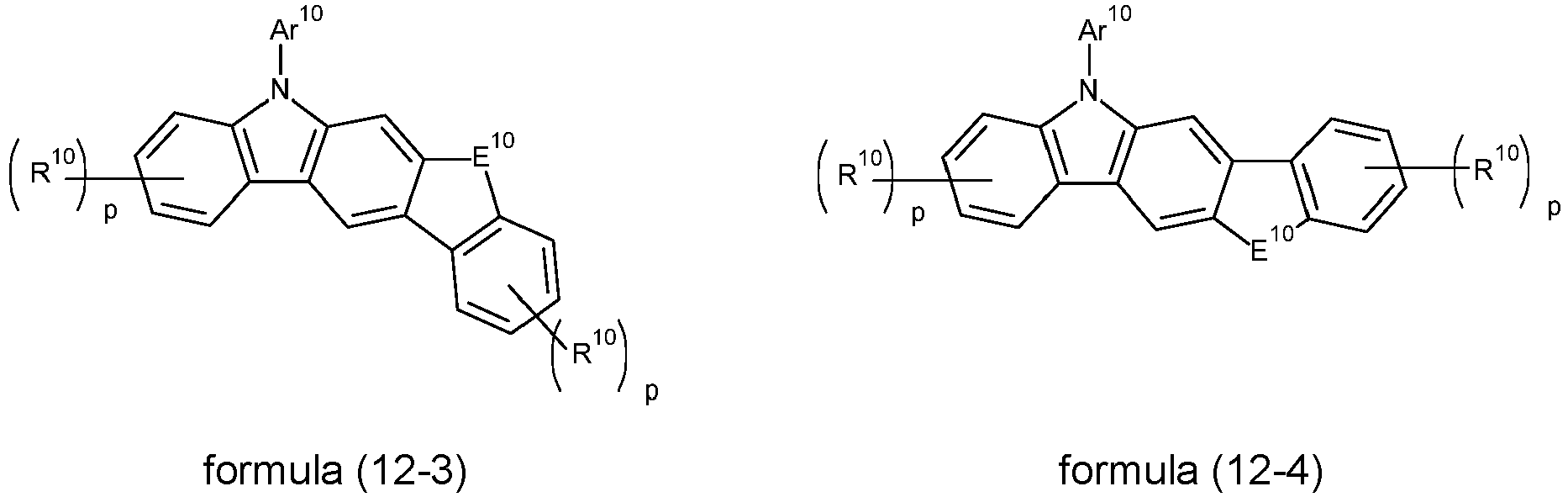 where the symbols and indices Ar10, R10, E10, L1 and p have the same meaning as in claim 1; andE12 stands for -C(R0)2-, -O-, -S-, -N(Ar10)-; where R0 has the same meaning as in claim 1.
 - Organic electronic device according to one or more of the preceding claims, characterized in that the second component is selected from compounds of formulae (13-1) to (14-4),


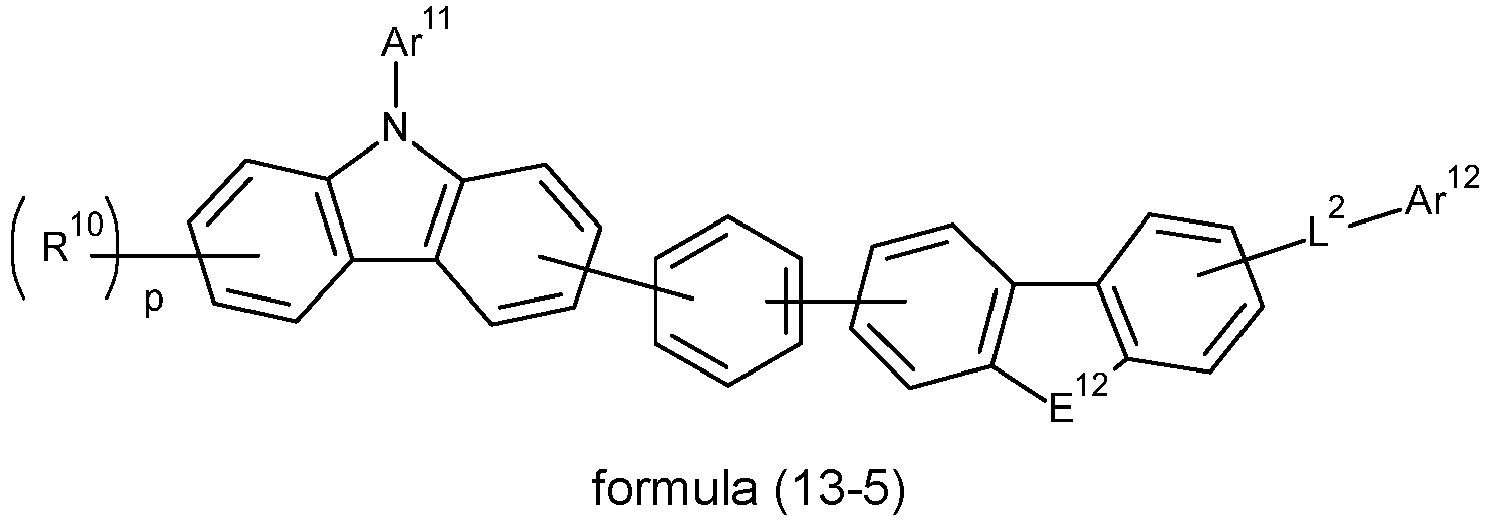

 Ar10 stands for an aromatic or heteroaromatic ring system selected from benzene, naphthalene, pyrene, biphenyl, terphenyl, quaterphenyl, fluorene, spirobifluorene, cis- or trans-indenofluorene, dibenzofuran, dibenzothiophene, carbazole, indolocarbazole, indenocarbazole, which may be substituted by one or more radicals R; or combinations of these groups;L2 stands for a single bond or an aromatic or heteroaromatic rings system having 6 to 18 aromatic rings atoms, which may be substituted by one or more radicals R;Ar12 stands for an heteroaromatic ring system selected from pyridine, pyrazine, pyrimidine, triazine, which may be substituted by one or more radicals R;R has the same meaning as in claim 1.
Applications Claiming Priority (2)
| Application Number | Priority Date | Filing Date | Title |
|---|---|---|---|
| EP18184673 | 2018-07-20 | ||
| PCT/EP2019/069178 WO2020016264A1 (en) | 2018-07-20 | 2019-07-17 | Materials for organic electroluminescent devices |
Publications (2)
| Publication Number | Publication Date |
|---|---|
| EP3823958A1 EP3823958A1 (en) | 2021-05-26 |
| EP3823958B1 true EP3823958B1 (en) | 2023-08-23 |
Family
ID=63014376
Family Applications (1)
| Application Number | Title | Priority Date | Filing Date |
|---|---|---|---|
| EP19742554.9A Active EP3823958B1 (en) | 2018-07-20 | 2019-07-17 | Materials for organic electroluminescent devices |
Country Status (5)
| Country | Link |
|---|---|
| US (1) | US20220069231A1 (en) |
| EP (1) | EP3823958B1 (en) |
| KR (1) | KR102789335B1 (en) |
| CN (1) | CN112424169A (en) |
| WO (1) | WO2020016264A1 (en) |
Families Citing this family (2)
| Publication number | Priority date | Publication date | Assignee | Title |
|---|---|---|---|---|
| US12137613B2 (en) * | 2019-10-10 | 2024-11-05 | Sfc Co., Ltd. | Polycyclic compound and organoelectro luminescent device using same |
| CN117362292B (en) * | 2023-06-15 | 2025-07-22 | 闽都创新实验室 | Amide derivative heat-activated delayed fluorescent material and preparation method and application thereof |
Family Cites Families (73)
| Publication number | Priority date | Publication date | Assignee | Title |
|---|---|---|---|---|
| US4539507A (en) | 1983-03-25 | 1985-09-03 | Eastman Kodak Company | Organic electroluminescent devices having improved power conversion efficiencies |
| JPH07133483A (en) | 1993-11-09 | 1995-05-23 | Shinko Electric Ind Co Ltd | Organic light emitting material for EL device and EL device |
| WO2000070655A2 (en) | 1999-05-13 | 2000-11-23 | The Trustees Of Princeton University | Very high efficiency organic light emitting devices based on electrophosphorescence |
| KR100946314B1 (en) | 1999-12-01 | 2010-03-09 | 더 트러스티즈 오브 프린스턴 유니버시티 | Organic light emitting device comprising a phosphorescent organo metallic compound |
| US6660410B2 (en) | 2000-03-27 | 2003-12-09 | Idemitsu Kosan Co., Ltd. | Organic electroluminescence element |
| US20020121638A1 (en) | 2000-06-30 | 2002-09-05 | Vladimir Grushin | Electroluminescent iridium compounds with fluorinated phenylpyridines, phenylpyrimidines, and phenylquinolines and devices made with such compounds |
| CN101924190B (en) | 2000-08-11 | 2012-07-04 | 普林斯顿大学理事会 | Organometallic compounds and emission-shifting organic electrophosphorescence |
| JP4154139B2 (en) | 2000-09-26 | 2008-09-24 | キヤノン株式会社 | Light emitting element |
| JP4154140B2 (en) | 2000-09-26 | 2008-09-24 | キヤノン株式会社 | Metal coordination compounds |
| JP4154138B2 (en) | 2000-09-26 | 2008-09-24 | キヤノン株式会社 | Light emitting element, display device and metal coordination compound |
| ITRM20020411A1 (en) | 2002-08-01 | 2004-02-02 | Univ Roma La Sapienza | SPIROBIFLUORENE DERIVATIVES, THEIR PREPARATION AND USE. |
| JP4411851B2 (en) | 2003-03-19 | 2010-02-10 | コニカミノルタホールディングス株式会社 | Organic electroluminescence device |
| JP5318347B2 (en) | 2003-04-15 | 2013-10-16 | メルク パテント ゲーエムベーハー | Mixture of matrix material and organic semiconductor capable of emitting light, use thereof, and electronic component comprising said mixture |
| EP2236579B1 (en) | 2003-04-23 | 2014-04-09 | Konica Minolta Holdings, Inc. | Organic electroluminescent element and display |
| DE10333232A1 (en) | 2003-07-21 | 2007-10-11 | Merck Patent Gmbh | Organic electroluminescent element |
| DE10338550A1 (en) | 2003-08-19 | 2005-03-31 | Basf Ag | Transition metal complexes with carbene ligands as emitters for organic light-emitting diodes (OLEDs) |
| DE10345572A1 (en) | 2003-09-29 | 2005-05-19 | Covion Organic Semiconductors Gmbh | metal complexes |
| US7795801B2 (en) | 2003-09-30 | 2010-09-14 | Konica Minolta Holdings, Inc. | Organic electroluminescent element, illuminator, display and compound |
| JP2007512692A (en) | 2003-11-25 | 2007-05-17 | メルク パテント ゲーエムベーハー | Organic electroluminescence device |
| US7790890B2 (en) | 2004-03-31 | 2010-09-07 | Konica Minolta Holdings, Inc. | Organic electroluminescence element material, organic electroluminescence element, display device and illumination device |
| DE102004023277A1 (en) | 2004-05-11 | 2005-12-01 | Covion Organic Semiconductors Gmbh | New material mixtures for electroluminescence |
| US7598388B2 (en) | 2004-05-18 | 2009-10-06 | The University Of Southern California | Carbene containing metal complexes as OLEDs |
| JP4862248B2 (en) | 2004-06-04 | 2012-01-25 | コニカミノルタホールディングス株式会社 | Organic electroluminescence element, lighting device and display device |
| ITRM20040352A1 (en) | 2004-07-15 | 2004-10-15 | Univ Roma La Sapienza | OLIGOMERIC DERIVATIVES OF SPIROBIFLUORENE, THEIR PREPARATION AND THEIR USE. |
| CN101171320B (en) | 2005-05-03 | 2013-04-10 | 默克专利有限公司 | Organic electroluminescent device |
| EP1956022B1 (en) | 2005-12-01 | 2012-07-25 | Nippon Steel Chemical Co., Ltd. | Compound for organic electroluminescent element and organic electroluminescent element |
| DE102006025777A1 (en) | 2006-05-31 | 2007-12-06 | Merck Patent Gmbh | New materials for organic electroluminescent devices |
| US8062769B2 (en) | 2006-11-09 | 2011-11-22 | Nippon Steel Chemical Co., Ltd. | Indolocarbazole compound for use in organic electroluminescent device and organic electroluminescent device |
| WO2009030981A2 (en) | 2006-12-28 | 2009-03-12 | Universal Display Corporation | Long lifetime phosphorescent organic light emitting device (oled) structures |
| DE102007002714A1 (en) | 2007-01-18 | 2008-07-31 | Merck Patent Gmbh | New materials for organic electroluminescent devices |
| DE102007053771A1 (en) | 2007-11-12 | 2009-05-14 | Merck Patent Gmbh | Organic electroluminescent devices |
| US7862908B2 (en) | 2007-11-26 | 2011-01-04 | National Tsing Hua University | Conjugated compounds containing hydroindoloacridine structural elements, and their use |
| DE102008027005A1 (en) | 2008-06-05 | 2009-12-10 | Merck Patent Gmbh | Organic electronic device containing metal complexes |
| DE102008033943A1 (en) | 2008-07-18 | 2010-01-21 | Merck Patent Gmbh | New materials for organic electroluminescent devices |
| DE102008036247A1 (en) | 2008-08-04 | 2010-02-11 | Merck Patent Gmbh | Electronic devices containing metal complexes |
| DE102008036982A1 (en) | 2008-08-08 | 2010-02-11 | Merck Patent Gmbh | Organic electroluminescent device |
| DE102008048336A1 (en) | 2008-09-22 | 2010-03-25 | Merck Patent Gmbh | Mononuclear neutral copper (I) complexes and their use for the production of optoelectronic devices |
| KR101506919B1 (en) | 2008-10-31 | 2015-03-30 | 롬엔드하스전자재료코리아유한회사 | Novel compounds for organic electronic material and organic electronic device using the same |
| DE102008056688A1 (en) | 2008-11-11 | 2010-05-12 | Merck Patent Gmbh | Materials for organic electroluminescent devices |
| KR20110097612A (en) | 2008-11-11 | 2011-08-31 | 메르크 파텐트 게엠베하 | Organic electroluminescent devices |
| DE102008057051B4 (en) | 2008-11-13 | 2021-06-17 | Merck Patent Gmbh | Materials for organic electroluminescent devices |
| DE102008057050B4 (en) | 2008-11-13 | 2021-06-02 | Merck Patent Gmbh | Materials for organic electroluminescent devices |
| DE102009007038A1 (en) | 2009-02-02 | 2010-08-05 | Merck Patent Gmbh | metal complexes |
| DE102009011223A1 (en) | 2009-03-02 | 2010-09-23 | Merck Patent Gmbh | metal complexes |
| DE102009013041A1 (en) | 2009-03-13 | 2010-09-16 | Merck Patent Gmbh | Materials for organic electroluminescent devices |
| DE102009023155A1 (en) | 2009-05-29 | 2010-12-02 | Merck Patent Gmbh | Materials for organic electroluminescent devices |
| DE102009031021A1 (en) | 2009-06-30 | 2011-01-05 | Merck Patent Gmbh | Materials for organic electroluminescent devices |
| DE102009041414A1 (en) | 2009-09-16 | 2011-03-17 | Merck Patent Gmbh | metal complexes |
| DE102009048791A1 (en) | 2009-10-08 | 2011-04-14 | Merck Patent Gmbh | Materials for organic electroluminescent devices |
| DE102009057167A1 (en) | 2009-12-05 | 2011-06-09 | Merck Patent Gmbh | Electronic device containing metal complexes |
| DE102010005697A1 (en) | 2010-01-25 | 2011-07-28 | Merck Patent GmbH, 64293 | Connections for electronic devices |
| DE102010012738A1 (en) | 2010-03-25 | 2011-09-29 | Merck Patent Gmbh | Materials for organic electroluminescent devices |
| DE102010019306B4 (en) | 2010-05-04 | 2021-05-20 | Merck Patent Gmbh | Organic electroluminescent devices |
| DE112011102008B4 (en) | 2010-06-15 | 2022-04-21 | Merck Patent Gmbh | metal complexes |
| DE102010027317A1 (en) | 2010-07-16 | 2012-01-19 | Merck Patent Gmbh | metal complexes |
| DE102010048608A1 (en) | 2010-10-15 | 2012-04-19 | Merck Patent Gmbh | Materials for organic electroluminescent devices |
| EP2773721B1 (en) * | 2011-11-01 | 2015-11-25 | Merck Patent GmbH | Organic electroluminescent device |
| EP2872590B1 (en) | 2012-07-13 | 2018-11-14 | Merck Patent GmbH | Metal complexes |
| JP6363075B2 (en) | 2012-08-07 | 2018-07-25 | メルク パテント ゲーエムベーハー | Metal complex |
| WO2014094964A1 (en) * | 2012-12-18 | 2014-06-26 | Merck Patent Gmbh | Organic electroluminescent device |
| EP2935292B1 (en) | 2012-12-21 | 2019-04-10 | Merck Patent GmbH | Metal complexes |
| WO2014094960A1 (en) | 2012-12-21 | 2014-06-26 | Merck Patent Gmbh | Metal complexes |
| US20150318498A1 (en) | 2012-12-21 | 2015-11-05 | Merck Patent Gmbh | Metal Complexes |
| EP3140302B1 (en) * | 2014-05-05 | 2019-08-21 | Merck Patent GmbH | Materials for organic light emitting devices |
| JP2017537085A (en) * | 2014-11-11 | 2017-12-14 | メルク パテント ゲーエムベーハー | Materials for organic electroluminescent devices |
| JP2018050093A (en) | 2015-02-03 | 2018-03-29 | シャープ株式会社 | Wireless receiver, wireless transmitter, communication method, and communication system |
| JP6772188B2 (en) | 2015-02-03 | 2020-10-21 | メルク、パテント、ゲゼルシャフト、ミット、ベシュレンクテル、ハフツングMerck Patent GmbH | Metal complex |
| WO2017016632A1 (en) * | 2015-07-29 | 2017-02-02 | Merck Patent Gmbh | Materials for organic electroluminescent devices |
| US11031562B2 (en) | 2015-08-25 | 2021-06-08 | Merck Patent Gmbh | Metal complexes |
| JP7039549B2 (en) | 2016-07-14 | 2022-03-22 | メルク パテント ゲゼルシャフト ミット ベシュレンクテル ハフツング | Metal complex |
| WO2018041769A1 (en) | 2016-08-30 | 2018-03-08 | Merck Patent Gmbh | Binuclear and trinuclear metal complexes composed of two inter-linked tripodal hexadentate ligands for use in electroluminescent devices |
| TW201829385A (en) * | 2016-11-30 | 2018-08-16 | 德商麥克專利有限公司 | a compound having a valeramine structure |
| WO2018189134A1 (en) * | 2017-04-13 | 2018-10-18 | Merck Patent Gmbh | Composition for organic electronic devices |
-
2019
- 2019-07-17 EP EP19742554.9A patent/EP3823958B1/en active Active
- 2019-07-17 CN CN201980047049.3A patent/CN112424169A/en active Pending
- 2019-07-17 US US17/261,869 patent/US20220069231A1/en not_active Abandoned
- 2019-07-17 WO PCT/EP2019/069178 patent/WO2020016264A1/en not_active Ceased
- 2019-07-17 KR KR1020217004456A patent/KR102789335B1/en active Active
Also Published As
| Publication number | Publication date |
|---|---|
| CN112424169A (en) | 2021-02-26 |
| WO2020016264A1 (en) | 2020-01-23 |
| KR20210033497A (en) | 2021-03-26 |
| US20220069231A1 (en) | 2022-03-03 |
| EP3823958A1 (en) | 2021-05-26 |
| KR102789335B1 (en) | 2025-03-31 |
Similar Documents
| Publication | Publication Date | Title |
|---|---|---|
| US12441715B2 (en) | Materials for organic electroluminescent devices | |
| US11309497B2 (en) | Materials for organic electroluminescent devices | |
| US9876181B2 (en) | Materials for organic electroluminescent devices | |
| KR102419246B1 (en) | Materials for organic electroluminescent devices | |
| EP3448866A1 (en) | Materials for organic electroluminescent devices | |
| US11345687B2 (en) | Materials for organic electroluminescent devices | |
| EP3368520B1 (en) | Materials for organic electroluminescent devices | |
| EP3541890B1 (en) | Materials for organic electroluminescent devices | |
| EP3823958B1 (en) | Materials for organic electroluminescent devices | |
| EP3621970B1 (en) | Organoboron complexes for organic electroluminescent devices | |
| EP3692043B1 (en) | Materials for organic electroluminescent devices | |
| EP3762373B1 (en) | Materials for organic electroluminescent devices | |
| EP3621971B1 (en) | Carbazole-based bodipys for organic electroluminescent devices | |
| US12139500B2 (en) | Materials for organic electroluminescent devices | |
| WO2021052924A1 (en) | Materials for organic electroluminescent devices | |
| US20220416172A1 (en) | Materials for organic electroluminescent devices |
Legal Events
| Date | Code | Title | Description |
|---|---|---|---|
| STAA | Information on the status of an ep patent application or granted ep patent |
Free format text: STATUS: UNKNOWN |
|
| STAA | Information on the status of an ep patent application or granted ep patent |
Free format text: STATUS: THE INTERNATIONAL PUBLICATION HAS BEEN MADE |
|
| PUAI | Public reference made under article 153(3) epc to a published international application that has entered the european phase |
Free format text: ORIGINAL CODE: 0009012 |
|
| STAA | Information on the status of an ep patent application or granted ep patent |
Free format text: STATUS: REQUEST FOR EXAMINATION WAS MADE |
|
| 17P | Request for examination filed |
Effective date: 20210119 |
|
| AK | Designated contracting states |
Kind code of ref document: A1 Designated state(s): AL AT BE BG CH CY CZ DE DK EE ES FI FR GB GR HR HU IE IS IT LI LT LU LV MC MK MT NL NO PL PT RO RS SE SI SK SM TR |
|
| DAV | Request for validation of the european patent (deleted) | ||
| DAX | Request for extension of the european patent (deleted) | ||
| STAA | Information on the status of an ep patent application or granted ep patent |
Free format text: STATUS: EXAMINATION IS IN PROGRESS |
|
| 17Q | First examination report despatched |
Effective date: 20220413 |
|
| GRAP | Despatch of communication of intention to grant a patent |
Free format text: ORIGINAL CODE: EPIDOSNIGR1 |
|
| STAA | Information on the status of an ep patent application or granted ep patent |
Free format text: STATUS: GRANT OF PATENT IS INTENDED |
|
| INTG | Intention to grant announced |
Effective date: 20230414 |
|
| P01 | Opt-out of the competence of the unified patent court (upc) registered |
Effective date: 20230519 |
|
| GRAS | Grant fee paid |
Free format text: ORIGINAL CODE: EPIDOSNIGR3 |
|
| GRAA | (expected) grant |
Free format text: ORIGINAL CODE: 0009210 |
|
| STAA | Information on the status of an ep patent application or granted ep patent |
Free format text: STATUS: THE PATENT HAS BEEN GRANTED |
|
| AK | Designated contracting states |
Kind code of ref document: B1 Designated state(s): AL AT BE BG CH CY CZ DE DK EE ES FI FR GB GR HR HU IE IS IT LI LT LU LV MC MK MT NL NO PL PT RO RS SE SI SK SM TR |
|
| REG | Reference to a national code |
Ref country code: GB Ref legal event code: FG4D |
|
| REG | Reference to a national code |
Ref country code: CH Ref legal event code: EP |
|
| REG | Reference to a national code |
Ref country code: IE Ref legal event code: FG4D |
|
| REG | Reference to a national code |
Ref country code: DE Ref legal event code: R096 Ref document number: 602019035614 Country of ref document: DE |
|
| REG | Reference to a national code |
Ref country code: LT Ref legal event code: MG9D |
|
| REG | Reference to a national code |
Ref country code: NL Ref legal event code: MP Effective date: 20230823 |
|
| REG | Reference to a national code |
Ref country code: AT Ref legal event code: MK05 Ref document number: 1602467 Country of ref document: AT Kind code of ref document: T Effective date: 20230823 |
|
| PG25 | Lapsed in a contracting state [announced via postgrant information from national office to epo] |
Ref country code: GR Free format text: LAPSE BECAUSE OF FAILURE TO SUBMIT A TRANSLATION OF THE DESCRIPTION OR TO PAY THE FEE WITHIN THE PRESCRIBED TIME-LIMIT Effective date: 20231124 |
|
| PG25 | Lapsed in a contracting state [announced via postgrant information from national office to epo] |
Ref country code: IS Free format text: LAPSE BECAUSE OF FAILURE TO SUBMIT A TRANSLATION OF THE DESCRIPTION OR TO PAY THE FEE WITHIN THE PRESCRIBED TIME-LIMIT Effective date: 20231223 |
|
| PG25 | Lapsed in a contracting state [announced via postgrant information from national office to epo] |
Ref country code: SE Free format text: LAPSE BECAUSE OF FAILURE TO SUBMIT A TRANSLATION OF THE DESCRIPTION OR TO PAY THE FEE WITHIN THE PRESCRIBED TIME-LIMIT Effective date: 20230823 Ref country code: RS Free format text: LAPSE BECAUSE OF FAILURE TO SUBMIT A TRANSLATION OF THE DESCRIPTION OR TO PAY THE FEE WITHIN THE PRESCRIBED TIME-LIMIT Effective date: 20230823 Ref country code: PT Free format text: LAPSE BECAUSE OF FAILURE TO SUBMIT A TRANSLATION OF THE DESCRIPTION OR TO PAY THE FEE WITHIN THE PRESCRIBED TIME-LIMIT Effective date: 20231226 Ref country code: NO Free format text: LAPSE BECAUSE OF FAILURE TO SUBMIT A TRANSLATION OF THE DESCRIPTION OR TO PAY THE FEE WITHIN THE PRESCRIBED TIME-LIMIT Effective date: 20231123 Ref country code: NL Free format text: LAPSE BECAUSE OF FAILURE TO SUBMIT A TRANSLATION OF THE DESCRIPTION OR TO PAY THE FEE WITHIN THE PRESCRIBED TIME-LIMIT Effective date: 20230823 Ref country code: LV Free format text: LAPSE BECAUSE OF FAILURE TO SUBMIT A TRANSLATION OF THE DESCRIPTION OR TO PAY THE FEE WITHIN THE PRESCRIBED TIME-LIMIT Effective date: 20230823 Ref country code: LT Free format text: LAPSE BECAUSE OF FAILURE TO SUBMIT A TRANSLATION OF THE DESCRIPTION OR TO PAY THE FEE WITHIN THE PRESCRIBED TIME-LIMIT Effective date: 20230823 Ref country code: IS Free format text: LAPSE BECAUSE OF FAILURE TO SUBMIT A TRANSLATION OF THE DESCRIPTION OR TO PAY THE FEE WITHIN THE PRESCRIBED TIME-LIMIT Effective date: 20231223 Ref country code: HR Free format text: LAPSE BECAUSE OF FAILURE TO SUBMIT A TRANSLATION OF THE DESCRIPTION OR TO PAY THE FEE WITHIN THE PRESCRIBED TIME-LIMIT Effective date: 20230823 Ref country code: GR Free format text: LAPSE BECAUSE OF FAILURE TO SUBMIT A TRANSLATION OF THE DESCRIPTION OR TO PAY THE FEE WITHIN THE PRESCRIBED TIME-LIMIT Effective date: 20231124 Ref country code: FI Free format text: LAPSE BECAUSE OF FAILURE TO SUBMIT A TRANSLATION OF THE DESCRIPTION OR TO PAY THE FEE WITHIN THE PRESCRIBED TIME-LIMIT Effective date: 20230823 Ref country code: AT Free format text: LAPSE BECAUSE OF FAILURE TO SUBMIT A TRANSLATION OF THE DESCRIPTION OR TO PAY THE FEE WITHIN THE PRESCRIBED TIME-LIMIT Effective date: 20230823 |
|
| PG25 | Lapsed in a contracting state [announced via postgrant information from national office to epo] |
Ref country code: PL Free format text: LAPSE BECAUSE OF FAILURE TO SUBMIT A TRANSLATION OF THE DESCRIPTION OR TO PAY THE FEE WITHIN THE PRESCRIBED TIME-LIMIT Effective date: 20230823 |
|
| PG25 | Lapsed in a contracting state [announced via postgrant information from national office to epo] |
Ref country code: ES Free format text: LAPSE BECAUSE OF FAILURE TO SUBMIT A TRANSLATION OF THE DESCRIPTION OR TO PAY THE FEE WITHIN THE PRESCRIBED TIME-LIMIT Effective date: 20230823 |
|
| PG25 | Lapsed in a contracting state [announced via postgrant information from national office to epo] |
Ref country code: SM Free format text: LAPSE BECAUSE OF FAILURE TO SUBMIT A TRANSLATION OF THE DESCRIPTION OR TO PAY THE FEE WITHIN THE PRESCRIBED TIME-LIMIT Effective date: 20230823 Ref country code: RO Free format text: LAPSE BECAUSE OF FAILURE TO SUBMIT A TRANSLATION OF THE DESCRIPTION OR TO PAY THE FEE WITHIN THE PRESCRIBED TIME-LIMIT Effective date: 20230823 Ref country code: ES Free format text: LAPSE BECAUSE OF FAILURE TO SUBMIT A TRANSLATION OF THE DESCRIPTION OR TO PAY THE FEE WITHIN THE PRESCRIBED TIME-LIMIT Effective date: 20230823 Ref country code: EE Free format text: LAPSE BECAUSE OF FAILURE TO SUBMIT A TRANSLATION OF THE DESCRIPTION OR TO PAY THE FEE WITHIN THE PRESCRIBED TIME-LIMIT Effective date: 20230823 Ref country code: DK Free format text: LAPSE BECAUSE OF FAILURE TO SUBMIT A TRANSLATION OF THE DESCRIPTION OR TO PAY THE FEE WITHIN THE PRESCRIBED TIME-LIMIT Effective date: 20230823 Ref country code: CZ Free format text: LAPSE BECAUSE OF FAILURE TO SUBMIT A TRANSLATION OF THE DESCRIPTION OR TO PAY THE FEE WITHIN THE PRESCRIBED TIME-LIMIT Effective date: 20230823 Ref country code: SK Free format text: LAPSE BECAUSE OF FAILURE TO SUBMIT A TRANSLATION OF THE DESCRIPTION OR TO PAY THE FEE WITHIN THE PRESCRIBED TIME-LIMIT Effective date: 20230823 |
|
| REG | Reference to a national code |
Ref country code: DE Ref legal event code: R097 Ref document number: 602019035614 Country of ref document: DE |
|
| PG25 | Lapsed in a contracting state [announced via postgrant information from national office to epo] |
Ref country code: IT Free format text: LAPSE BECAUSE OF FAILURE TO SUBMIT A TRANSLATION OF THE DESCRIPTION OR TO PAY THE FEE WITHIN THE PRESCRIBED TIME-LIMIT Effective date: 20230823 |
|
| PLBE | No opposition filed within time limit |
Free format text: ORIGINAL CODE: 0009261 |
|
| STAA | Information on the status of an ep patent application or granted ep patent |
Free format text: STATUS: NO OPPOSITION FILED WITHIN TIME LIMIT |
|
| 26N | No opposition filed |
Effective date: 20240524 |
|
| PG25 | Lapsed in a contracting state [announced via postgrant information from national office to epo] |
Ref country code: SI Free format text: LAPSE BECAUSE OF FAILURE TO SUBMIT A TRANSLATION OF THE DESCRIPTION OR TO PAY THE FEE WITHIN THE PRESCRIBED TIME-LIMIT Effective date: 20230823 |
|
| PG25 | Lapsed in a contracting state [announced via postgrant information from national office to epo] |
Ref country code: BG Free format text: LAPSE BECAUSE OF FAILURE TO SUBMIT A TRANSLATION OF THE DESCRIPTION OR TO PAY THE FEE WITHIN THE PRESCRIBED TIME-LIMIT Effective date: 20230823 |
|
| PG25 | Lapsed in a contracting state [announced via postgrant information from national office to epo] |
Ref country code: BG Free format text: LAPSE BECAUSE OF FAILURE TO SUBMIT A TRANSLATION OF THE DESCRIPTION OR TO PAY THE FEE WITHIN THE PRESCRIBED TIME-LIMIT Effective date: 20230823 |
|
| PG25 | Lapsed in a contracting state [announced via postgrant information from national office to epo] |
Ref country code: MC Free format text: LAPSE BECAUSE OF FAILURE TO SUBMIT A TRANSLATION OF THE DESCRIPTION OR TO PAY THE FEE WITHIN THE PRESCRIBED TIME-LIMIT Effective date: 20230823 |
|
| REG | Reference to a national code |
Ref country code: CH Ref legal event code: PL |
|
| PG25 | Lapsed in a contracting state [announced via postgrant information from national office to epo] |
Ref country code: LU Free format text: LAPSE BECAUSE OF NON-PAYMENT OF DUE FEES Effective date: 20240717 |
|
| GBPC | Gb: european patent ceased through non-payment of renewal fee |
Effective date: 20240717 |
|
| PG25 | Lapsed in a contracting state [announced via postgrant information from national office to epo] |
Ref country code: LU Free format text: LAPSE BECAUSE OF NON-PAYMENT OF DUE FEES Effective date: 20240717 |
|
| PG25 | Lapsed in a contracting state [announced via postgrant information from national office to epo] |
Ref country code: BE Free format text: LAPSE BECAUSE OF NON-PAYMENT OF DUE FEES Effective date: 20240731 Ref country code: CH Free format text: LAPSE BECAUSE OF NON-PAYMENT OF DUE FEES Effective date: 20240731 |
|
| PG25 | Lapsed in a contracting state [announced via postgrant information from national office to epo] |
Ref country code: FR Free format text: LAPSE BECAUSE OF NON-PAYMENT OF DUE FEES Effective date: 20240731 |
|
| PG25 | Lapsed in a contracting state [announced via postgrant information from national office to epo] |
Ref country code: GB Free format text: LAPSE BECAUSE OF NON-PAYMENT OF DUE FEES Effective date: 20240717 |
|
| REG | Reference to a national code |
Ref country code: BE Ref legal event code: MM Effective date: 20240731 |
|
| PG25 | Lapsed in a contracting state [announced via postgrant information from national office to epo] |
Ref country code: IE Free format text: LAPSE BECAUSE OF NON-PAYMENT OF DUE FEES Effective date: 20240717 |
|
| PGFP | Annual fee paid to national office [announced via postgrant information from national office to epo] |
Ref country code: DE Payment date: 20250620 Year of fee payment: 7 |
|
| PG25 | Lapsed in a contracting state [announced via postgrant information from national office to epo] |
Ref country code: CY Free format text: LAPSE BECAUSE OF FAILURE TO SUBMIT A TRANSLATION OF THE DESCRIPTION OR TO PAY THE FEE WITHIN THE PRESCRIBED TIME-LIMIT; INVALID AB INITIO Effective date: 20190717 |