EP1608369B1 - Use of organic compounds for immunopotentiation - Google Patents
Use of organic compounds for immunopotentiation Download PDFInfo
- Publication number
- EP1608369B1 EP1608369B1 EP04758593.0A EP04758593A EP1608369B1 EP 1608369 B1 EP1608369 B1 EP 1608369B1 EP 04758593 A EP04758593 A EP 04758593A EP 1608369 B1 EP1608369 B1 EP 1608369B1
- Authority
- EP
- European Patent Office
- Prior art keywords
- substituted
- methyl
- group
- amino
- carboxamide
- Prior art date
- Legal status (The legal status is an assumption and is not a legal conclusion. Google has not performed a legal analysis and makes no representation as to the accuracy of the status listed.)
- Expired - Lifetime
Links
- 0 *C(Nc(cccc1)c1N)=* Chemical compound *C(Nc(cccc1)c1N)=* 0.000 description 14
- LEICDYOVJNQLTN-UHFFFAOYSA-N CC(NCCCO)=O Chemical compound CC(NCCCO)=O LEICDYOVJNQLTN-UHFFFAOYSA-N 0.000 description 1
- YLVITZOJDAOARG-UHFFFAOYSA-N CC12NC(C(C(Nc3c4cn[nH]3)=O)=C4N)=NC1=CC=CC2 Chemical compound CC12NC(C(C(Nc3c4cn[nH]3)=O)=C4N)=NC1=CC=CC2 YLVITZOJDAOARG-UHFFFAOYSA-N 0.000 description 1
- URSNDQPDLBAKKB-UHFFFAOYSA-N CC1C=C2NC(C)=NC2=CC=C1 Chemical compound CC1C=C2NC(C)=NC2=CC=C1 URSNDQPDLBAKKB-UHFFFAOYSA-N 0.000 description 1
- FSWCCQWDVGZMRD-UHFFFAOYSA-N CC1CC=CCC1 Chemical compound CC1CC=CCC1 FSWCCQWDVGZMRD-UHFFFAOYSA-N 0.000 description 1
- ZAKAONRTRWRIJT-UHFFFAOYSA-N CCOC(CC(OCC)=O)=N Chemical compound CCOC(CC(OCC)=O)=N ZAKAONRTRWRIJT-UHFFFAOYSA-N 0.000 description 1
- ZJLSMLDOCGOURY-UHFFFAOYSA-N CNC(c1nccc(Oc(cc2)cc3c2nc(Nc(cc2)cc(C(F)(F)F)c2Cl)[nH]3)c1)=O Chemical compound CNC(c1nccc(Oc(cc2)cc3c2nc(Nc(cc2)cc(C(F)(F)F)c2Cl)[nH]3)c1)=O ZJLSMLDOCGOURY-UHFFFAOYSA-N 0.000 description 1
- RNSGCCCUVLPTMX-UHFFFAOYSA-N NC1C(N)=CC=CC1 Chemical compound NC1C(N)=CC=CC1 RNSGCCCUVLPTMX-UHFFFAOYSA-N 0.000 description 1
- LMNWTXHWJLAAMN-UHFFFAOYSA-N O=C(c(cc(c(Cl)c1)Cl)c1C1=O)N1c(cc(C(F)(F)F)cc1)c1Cl Chemical compound O=C(c(cc(c(Cl)c1)Cl)c1C1=O)N1c(cc(C(F)(F)F)cc1)c1Cl LMNWTXHWJLAAMN-UHFFFAOYSA-N 0.000 description 1
Classifications
-
- A—HUMAN NECESSITIES
- A61—MEDICAL OR VETERINARY SCIENCE; HYGIENE
- A61K—PREPARATIONS FOR MEDICAL, DENTAL OR TOILETRY PURPOSES
- A61K31/00—Medicinal preparations containing organic active ingredients
- A61K31/12—Ketones
-
- A—HUMAN NECESSITIES
- A61—MEDICAL OR VETERINARY SCIENCE; HYGIENE
- A61K—PREPARATIONS FOR MEDICAL, DENTAL OR TOILETRY PURPOSES
- A61K31/00—Medicinal preparations containing organic active ingredients
- A61K31/12—Ketones
- A61K31/122—Ketones having the oxygen directly attached to a ring, e.g. quinones, vitamin K1, anthralin
-
- A—HUMAN NECESSITIES
- A61—MEDICAL OR VETERINARY SCIENCE; HYGIENE
- A61K—PREPARATIONS FOR MEDICAL, DENTAL OR TOILETRY PURPOSES
- A61K31/00—Medicinal preparations containing organic active ingredients
- A61K31/16—Amides, e.g. hydroxamic acids
- A61K31/17—Amides, e.g. hydroxamic acids having the group >N—C(O)—N< or >N—C(S)—N<, e.g. urea, thiourea, carmustine
- A61K31/175—Amides, e.g. hydroxamic acids having the group >N—C(O)—N< or >N—C(S)—N<, e.g. urea, thiourea, carmustine having the group, >N—C(O)—N=N— or, e.g. carbonohydrazides, carbazones, semicarbazides, semicarbazones; Thioanalogues thereof
-
- A—HUMAN NECESSITIES
- A61—MEDICAL OR VETERINARY SCIENCE; HYGIENE
- A61K—PREPARATIONS FOR MEDICAL, DENTAL OR TOILETRY PURPOSES
- A61K31/00—Medicinal preparations containing organic active ingredients
- A61K31/16—Amides, e.g. hydroxamic acids
- A61K31/18—Sulfonamides
-
- A—HUMAN NECESSITIES
- A61—MEDICAL OR VETERINARY SCIENCE; HYGIENE
- A61K—PREPARATIONS FOR MEDICAL, DENTAL OR TOILETRY PURPOSES
- A61K31/00—Medicinal preparations containing organic active ingredients
- A61K31/33—Heterocyclic compounds
- A61K31/335—Heterocyclic compounds having oxygen as the only ring hetero atom, e.g. fungichromin
- A61K31/34—Heterocyclic compounds having oxygen as the only ring hetero atom, e.g. fungichromin having five-membered rings with one oxygen as the only ring hetero atom, e.g. isosorbide
- A61K31/343—Heterocyclic compounds having oxygen as the only ring hetero atom, e.g. fungichromin having five-membered rings with one oxygen as the only ring hetero atom, e.g. isosorbide condensed with a carbocyclic ring, e.g. coumaran, bufuralol, befunolol, clobenfurol, amiodarone
-
- A—HUMAN NECESSITIES
- A61—MEDICAL OR VETERINARY SCIENCE; HYGIENE
- A61K—PREPARATIONS FOR MEDICAL, DENTAL OR TOILETRY PURPOSES
- A61K31/00—Medicinal preparations containing organic active ingredients
- A61K31/33—Heterocyclic compounds
- A61K31/335—Heterocyclic compounds having oxygen as the only ring hetero atom, e.g. fungichromin
- A61K31/35—Heterocyclic compounds having oxygen as the only ring hetero atom, e.g. fungichromin having six-membered rings with one oxygen as the only ring hetero atom
- A61K31/352—Heterocyclic compounds having oxygen as the only ring hetero atom, e.g. fungichromin having six-membered rings with one oxygen as the only ring hetero atom condensed with carbocyclic rings, e.g. methantheline
-
- A—HUMAN NECESSITIES
- A61—MEDICAL OR VETERINARY SCIENCE; HYGIENE
- A61K—PREPARATIONS FOR MEDICAL, DENTAL OR TOILETRY PURPOSES
- A61K31/00—Medicinal preparations containing organic active ingredients
- A61K31/33—Heterocyclic compounds
- A61K31/38—Heterocyclic compounds having sulfur as a ring hetero atom
- A61K31/381—Heterocyclic compounds having sulfur as a ring hetero atom having five-membered rings
-
- A—HUMAN NECESSITIES
- A61—MEDICAL OR VETERINARY SCIENCE; HYGIENE
- A61K—PREPARATIONS FOR MEDICAL, DENTAL OR TOILETRY PURPOSES
- A61K31/00—Medicinal preparations containing organic active ingredients
- A61K31/33—Heterocyclic compounds
- A61K31/395—Heterocyclic compounds having nitrogen as a ring hetero atom, e.g. guanethidine or rifamycins
- A61K31/40—Heterocyclic compounds having nitrogen as a ring hetero atom, e.g. guanethidine or rifamycins having five-membered rings with one nitrogen as the only ring hetero atom, e.g. sulpiride, succinimide, tolmetin, buflomedil
-
- A—HUMAN NECESSITIES
- A61—MEDICAL OR VETERINARY SCIENCE; HYGIENE
- A61K—PREPARATIONS FOR MEDICAL, DENTAL OR TOILETRY PURPOSES
- A61K31/00—Medicinal preparations containing organic active ingredients
- A61K31/33—Heterocyclic compounds
- A61K31/395—Heterocyclic compounds having nitrogen as a ring hetero atom, e.g. guanethidine or rifamycins
- A61K31/40—Heterocyclic compounds having nitrogen as a ring hetero atom, e.g. guanethidine or rifamycins having five-membered rings with one nitrogen as the only ring hetero atom, e.g. sulpiride, succinimide, tolmetin, buflomedil
- A61K31/4015—Heterocyclic compounds having nitrogen as a ring hetero atom, e.g. guanethidine or rifamycins having five-membered rings with one nitrogen as the only ring hetero atom, e.g. sulpiride, succinimide, tolmetin, buflomedil having oxo groups directly attached to the heterocyclic ring, e.g. piracetam, ethosuximide
-
- A—HUMAN NECESSITIES
- A61—MEDICAL OR VETERINARY SCIENCE; HYGIENE
- A61K—PREPARATIONS FOR MEDICAL, DENTAL OR TOILETRY PURPOSES
- A61K31/00—Medicinal preparations containing organic active ingredients
- A61K31/33—Heterocyclic compounds
- A61K31/395—Heterocyclic compounds having nitrogen as a ring hetero atom, e.g. guanethidine or rifamycins
- A61K31/40—Heterocyclic compounds having nitrogen as a ring hetero atom, e.g. guanethidine or rifamycins having five-membered rings with one nitrogen as the only ring hetero atom, e.g. sulpiride, succinimide, tolmetin, buflomedil
- A61K31/403—Heterocyclic compounds having nitrogen as a ring hetero atom, e.g. guanethidine or rifamycins having five-membered rings with one nitrogen as the only ring hetero atom, e.g. sulpiride, succinimide, tolmetin, buflomedil condensed with carbocyclic rings, e.g. carbazole
-
- A—HUMAN NECESSITIES
- A61—MEDICAL OR VETERINARY SCIENCE; HYGIENE
- A61K—PREPARATIONS FOR MEDICAL, DENTAL OR TOILETRY PURPOSES
- A61K31/00—Medicinal preparations containing organic active ingredients
- A61K31/33—Heterocyclic compounds
- A61K31/395—Heterocyclic compounds having nitrogen as a ring hetero atom, e.g. guanethidine or rifamycins
- A61K31/40—Heterocyclic compounds having nitrogen as a ring hetero atom, e.g. guanethidine or rifamycins having five-membered rings with one nitrogen as the only ring hetero atom, e.g. sulpiride, succinimide, tolmetin, buflomedil
- A61K31/403—Heterocyclic compounds having nitrogen as a ring hetero atom, e.g. guanethidine or rifamycins having five-membered rings with one nitrogen as the only ring hetero atom, e.g. sulpiride, succinimide, tolmetin, buflomedil condensed with carbocyclic rings, e.g. carbazole
- A61K31/4035—Isoindoles, e.g. phthalimide
-
- A—HUMAN NECESSITIES
- A61—MEDICAL OR VETERINARY SCIENCE; HYGIENE
- A61K—PREPARATIONS FOR MEDICAL, DENTAL OR TOILETRY PURPOSES
- A61K31/00—Medicinal preparations containing organic active ingredients
- A61K31/33—Heterocyclic compounds
- A61K31/395—Heterocyclic compounds having nitrogen as a ring hetero atom, e.g. guanethidine or rifamycins
- A61K31/40—Heterocyclic compounds having nitrogen as a ring hetero atom, e.g. guanethidine or rifamycins having five-membered rings with one nitrogen as the only ring hetero atom, e.g. sulpiride, succinimide, tolmetin, buflomedil
- A61K31/403—Heterocyclic compounds having nitrogen as a ring hetero atom, e.g. guanethidine or rifamycins having five-membered rings with one nitrogen as the only ring hetero atom, e.g. sulpiride, succinimide, tolmetin, buflomedil condensed with carbocyclic rings, e.g. carbazole
- A61K31/404—Indoles, e.g. pindolol
-
- A—HUMAN NECESSITIES
- A61—MEDICAL OR VETERINARY SCIENCE; HYGIENE
- A61K—PREPARATIONS FOR MEDICAL, DENTAL OR TOILETRY PURPOSES
- A61K31/00—Medicinal preparations containing organic active ingredients
- A61K31/33—Heterocyclic compounds
- A61K31/395—Heterocyclic compounds having nitrogen as a ring hetero atom, e.g. guanethidine or rifamycins
- A61K31/41—Heterocyclic compounds having nitrogen as a ring hetero atom, e.g. guanethidine or rifamycins having five-membered rings with two or more ring hetero atoms, at least one of which being nitrogen, e.g. tetrazole
- A61K31/42—Oxazoles
-
- A—HUMAN NECESSITIES
- A61—MEDICAL OR VETERINARY SCIENCE; HYGIENE
- A61K—PREPARATIONS FOR MEDICAL, DENTAL OR TOILETRY PURPOSES
- A61K31/00—Medicinal preparations containing organic active ingredients
- A61K31/33—Heterocyclic compounds
- A61K31/395—Heterocyclic compounds having nitrogen as a ring hetero atom, e.g. guanethidine or rifamycins
- A61K31/41—Heterocyclic compounds having nitrogen as a ring hetero atom, e.g. guanethidine or rifamycins having five-membered rings with two or more ring hetero atoms, at least one of which being nitrogen, e.g. tetrazole
- A61K31/42—Oxazoles
- A61K31/421—1,3-Oxazoles, e.g. pemoline, trimethadione
-
- A—HUMAN NECESSITIES
- A61—MEDICAL OR VETERINARY SCIENCE; HYGIENE
- A61K—PREPARATIONS FOR MEDICAL, DENTAL OR TOILETRY PURPOSES
- A61K31/00—Medicinal preparations containing organic active ingredients
- A61K31/33—Heterocyclic compounds
- A61K31/395—Heterocyclic compounds having nitrogen as a ring hetero atom, e.g. guanethidine or rifamycins
- A61K31/41—Heterocyclic compounds having nitrogen as a ring hetero atom, e.g. guanethidine or rifamycins having five-membered rings with two or more ring hetero atoms, at least one of which being nitrogen, e.g. tetrazole
- A61K31/425—Thiazoles
-
- A—HUMAN NECESSITIES
- A61—MEDICAL OR VETERINARY SCIENCE; HYGIENE
- A61K—PREPARATIONS FOR MEDICAL, DENTAL OR TOILETRY PURPOSES
- A61K31/00—Medicinal preparations containing organic active ingredients
- A61K31/33—Heterocyclic compounds
- A61K31/395—Heterocyclic compounds having nitrogen as a ring hetero atom, e.g. guanethidine or rifamycins
- A61K31/41—Heterocyclic compounds having nitrogen as a ring hetero atom, e.g. guanethidine or rifamycins having five-membered rings with two or more ring hetero atoms, at least one of which being nitrogen, e.g. tetrazole
- A61K31/425—Thiazoles
- A61K31/428—Thiazoles condensed with carbocyclic rings
-
- A—HUMAN NECESSITIES
- A61—MEDICAL OR VETERINARY SCIENCE; HYGIENE
- A61K—PREPARATIONS FOR MEDICAL, DENTAL OR TOILETRY PURPOSES
- A61K31/00—Medicinal preparations containing organic active ingredients
- A61K31/33—Heterocyclic compounds
- A61K31/395—Heterocyclic compounds having nitrogen as a ring hetero atom, e.g. guanethidine or rifamycins
- A61K31/41—Heterocyclic compounds having nitrogen as a ring hetero atom, e.g. guanethidine or rifamycins having five-membered rings with two or more ring hetero atoms, at least one of which being nitrogen, e.g. tetrazole
- A61K31/433—Thidiazoles
-
- A—HUMAN NECESSITIES
- A61—MEDICAL OR VETERINARY SCIENCE; HYGIENE
- A61K—PREPARATIONS FOR MEDICAL, DENTAL OR TOILETRY PURPOSES
- A61K31/00—Medicinal preparations containing organic active ingredients
- A61K31/33—Heterocyclic compounds
- A61K31/395—Heterocyclic compounds having nitrogen as a ring hetero atom, e.g. guanethidine or rifamycins
- A61K31/435—Heterocyclic compounds having nitrogen as a ring hetero atom, e.g. guanethidine or rifamycins having six-membered rings with one nitrogen as the only ring hetero atom
- A61K31/4353—Heterocyclic compounds having nitrogen as a ring hetero atom, e.g. guanethidine or rifamycins having six-membered rings with one nitrogen as the only ring hetero atom ortho- or peri-condensed with heterocyclic ring systems
- A61K31/437—Heterocyclic compounds having nitrogen as a ring hetero atom, e.g. guanethidine or rifamycins having six-membered rings with one nitrogen as the only ring hetero atom ortho- or peri-condensed with heterocyclic ring systems the heterocyclic ring system containing a five-membered ring having nitrogen as a ring hetero atom, e.g. indolizine, beta-carboline
-
- A—HUMAN NECESSITIES
- A61—MEDICAL OR VETERINARY SCIENCE; HYGIENE
- A61K—PREPARATIONS FOR MEDICAL, DENTAL OR TOILETRY PURPOSES
- A61K31/00—Medicinal preparations containing organic active ingredients
- A61K31/33—Heterocyclic compounds
- A61K31/395—Heterocyclic compounds having nitrogen as a ring hetero atom, e.g. guanethidine or rifamycins
- A61K31/435—Heterocyclic compounds having nitrogen as a ring hetero atom, e.g. guanethidine or rifamycins having six-membered rings with one nitrogen as the only ring hetero atom
- A61K31/44—Non condensed pyridines; Hydrogenated derivatives thereof
- A61K31/4427—Non condensed pyridines; Hydrogenated derivatives thereof containing further heterocyclic ring systems
- A61K31/4439—Non condensed pyridines; Hydrogenated derivatives thereof containing further heterocyclic ring systems containing a five-membered ring with nitrogen as a ring hetero atom, e.g. omeprazole
-
- A—HUMAN NECESSITIES
- A61—MEDICAL OR VETERINARY SCIENCE; HYGIENE
- A61K—PREPARATIONS FOR MEDICAL, DENTAL OR TOILETRY PURPOSES
- A61K31/00—Medicinal preparations containing organic active ingredients
- A61K31/33—Heterocyclic compounds
- A61K31/395—Heterocyclic compounds having nitrogen as a ring hetero atom, e.g. guanethidine or rifamycins
- A61K31/435—Heterocyclic compounds having nitrogen as a ring hetero atom, e.g. guanethidine or rifamycins having six-membered rings with one nitrogen as the only ring hetero atom
- A61K31/44—Non condensed pyridines; Hydrogenated derivatives thereof
- A61K31/445—Non condensed piperidines, e.g. piperocaine
- A61K31/4453—Non condensed piperidines, e.g. piperocaine only substituted in position 1, e.g. propipocaine, diperodon
-
- A—HUMAN NECESSITIES
- A61—MEDICAL OR VETERINARY SCIENCE; HYGIENE
- A61K—PREPARATIONS FOR MEDICAL, DENTAL OR TOILETRY PURPOSES
- A61K31/00—Medicinal preparations containing organic active ingredients
- A61K31/33—Heterocyclic compounds
- A61K31/395—Heterocyclic compounds having nitrogen as a ring hetero atom, e.g. guanethidine or rifamycins
- A61K31/435—Heterocyclic compounds having nitrogen as a ring hetero atom, e.g. guanethidine or rifamycins having six-membered rings with one nitrogen as the only ring hetero atom
- A61K31/47—Quinolines; Isoquinolines
- A61K31/4709—Non-condensed quinolines and containing further heterocyclic rings
-
- A—HUMAN NECESSITIES
- A61—MEDICAL OR VETERINARY SCIENCE; HYGIENE
- A61K—PREPARATIONS FOR MEDICAL, DENTAL OR TOILETRY PURPOSES
- A61K31/00—Medicinal preparations containing organic active ingredients
- A61K31/33—Heterocyclic compounds
- A61K31/395—Heterocyclic compounds having nitrogen as a ring hetero atom, e.g. guanethidine or rifamycins
- A61K31/435—Heterocyclic compounds having nitrogen as a ring hetero atom, e.g. guanethidine or rifamycins having six-membered rings with one nitrogen as the only ring hetero atom
- A61K31/47—Quinolines; Isoquinolines
- A61K31/472—Non-condensed isoquinolines, e.g. papaverine
-
- A—HUMAN NECESSITIES
- A61—MEDICAL OR VETERINARY SCIENCE; HYGIENE
- A61K—PREPARATIONS FOR MEDICAL, DENTAL OR TOILETRY PURPOSES
- A61K31/00—Medicinal preparations containing organic active ingredients
- A61K31/33—Heterocyclic compounds
- A61K31/395—Heterocyclic compounds having nitrogen as a ring hetero atom, e.g. guanethidine or rifamycins
- A61K31/495—Heterocyclic compounds having nitrogen as a ring hetero atom, e.g. guanethidine or rifamycins having six-membered rings with two or more nitrogen atoms as the only ring heteroatoms, e.g. piperazine or tetrazines
-
- A—HUMAN NECESSITIES
- A61—MEDICAL OR VETERINARY SCIENCE; HYGIENE
- A61K—PREPARATIONS FOR MEDICAL, DENTAL OR TOILETRY PURPOSES
- A61K31/00—Medicinal preparations containing organic active ingredients
- A61K31/33—Heterocyclic compounds
- A61K31/395—Heterocyclic compounds having nitrogen as a ring hetero atom, e.g. guanethidine or rifamycins
- A61K31/495—Heterocyclic compounds having nitrogen as a ring hetero atom, e.g. guanethidine or rifamycins having six-membered rings with two or more nitrogen atoms as the only ring heteroatoms, e.g. piperazine or tetrazines
- A61K31/496—Non-condensed piperazines containing further heterocyclic rings, e.g. rifampin, thiothixene or sparfloxacin
-
- A—HUMAN NECESSITIES
- A61—MEDICAL OR VETERINARY SCIENCE; HYGIENE
- A61K—PREPARATIONS FOR MEDICAL, DENTAL OR TOILETRY PURPOSES
- A61K31/00—Medicinal preparations containing organic active ingredients
- A61K31/33—Heterocyclic compounds
- A61K31/395—Heterocyclic compounds having nitrogen as a ring hetero atom, e.g. guanethidine or rifamycins
- A61K31/495—Heterocyclic compounds having nitrogen as a ring hetero atom, e.g. guanethidine or rifamycins having six-membered rings with two or more nitrogen atoms as the only ring heteroatoms, e.g. piperazine or tetrazines
- A61K31/4965—Non-condensed pyrazines
- A61K31/497—Non-condensed pyrazines containing further heterocyclic rings
-
- A—HUMAN NECESSITIES
- A61—MEDICAL OR VETERINARY SCIENCE; HYGIENE
- A61K—PREPARATIONS FOR MEDICAL, DENTAL OR TOILETRY PURPOSES
- A61K31/00—Medicinal preparations containing organic active ingredients
- A61K31/33—Heterocyclic compounds
- A61K31/395—Heterocyclic compounds having nitrogen as a ring hetero atom, e.g. guanethidine or rifamycins
- A61K31/495—Heterocyclic compounds having nitrogen as a ring hetero atom, e.g. guanethidine or rifamycins having six-membered rings with two or more nitrogen atoms as the only ring heteroatoms, e.g. piperazine or tetrazines
- A61K31/498—Pyrazines or piperazines ortho- and peri-condensed with carbocyclic ring systems, e.g. quinoxaline, phenazine
-
- A—HUMAN NECESSITIES
- A61—MEDICAL OR VETERINARY SCIENCE; HYGIENE
- A61K—PREPARATIONS FOR MEDICAL, DENTAL OR TOILETRY PURPOSES
- A61K31/00—Medicinal preparations containing organic active ingredients
- A61K31/33—Heterocyclic compounds
- A61K31/395—Heterocyclic compounds having nitrogen as a ring hetero atom, e.g. guanethidine or rifamycins
- A61K31/495—Heterocyclic compounds having nitrogen as a ring hetero atom, e.g. guanethidine or rifamycins having six-membered rings with two or more nitrogen atoms as the only ring heteroatoms, e.g. piperazine or tetrazines
- A61K31/4985—Pyrazines or piperazines ortho- or peri-condensed with heterocyclic ring systems
-
- A—HUMAN NECESSITIES
- A61—MEDICAL OR VETERINARY SCIENCE; HYGIENE
- A61K—PREPARATIONS FOR MEDICAL, DENTAL OR TOILETRY PURPOSES
- A61K31/00—Medicinal preparations containing organic active ingredients
- A61K31/33—Heterocyclic compounds
- A61K31/395—Heterocyclic compounds having nitrogen as a ring hetero atom, e.g. guanethidine or rifamycins
- A61K31/495—Heterocyclic compounds having nitrogen as a ring hetero atom, e.g. guanethidine or rifamycins having six-membered rings with two or more nitrogen atoms as the only ring heteroatoms, e.g. piperazine or tetrazines
- A61K31/505—Pyrimidines; Hydrogenated pyrimidines, e.g. trimethoprim
- A61K31/517—Pyrimidines; Hydrogenated pyrimidines, e.g. trimethoprim ortho- or peri-condensed with carbocyclic ring systems, e.g. quinazoline, perimidine
-
- A—HUMAN NECESSITIES
- A61—MEDICAL OR VETERINARY SCIENCE; HYGIENE
- A61K—PREPARATIONS FOR MEDICAL, DENTAL OR TOILETRY PURPOSES
- A61K31/00—Medicinal preparations containing organic active ingredients
- A61K31/33—Heterocyclic compounds
- A61K31/395—Heterocyclic compounds having nitrogen as a ring hetero atom, e.g. guanethidine or rifamycins
- A61K31/495—Heterocyclic compounds having nitrogen as a ring hetero atom, e.g. guanethidine or rifamycins having six-membered rings with two or more nitrogen atoms as the only ring heteroatoms, e.g. piperazine or tetrazines
- A61K31/505—Pyrimidines; Hydrogenated pyrimidines, e.g. trimethoprim
- A61K31/519—Pyrimidines; Hydrogenated pyrimidines, e.g. trimethoprim ortho- or peri-condensed with heterocyclic rings
-
- A—HUMAN NECESSITIES
- A61—MEDICAL OR VETERINARY SCIENCE; HYGIENE
- A61K—PREPARATIONS FOR MEDICAL, DENTAL OR TOILETRY PURPOSES
- A61K31/00—Medicinal preparations containing organic active ingredients
- A61K31/33—Heterocyclic compounds
- A61K31/395—Heterocyclic compounds having nitrogen as a ring hetero atom, e.g. guanethidine or rifamycins
- A61K31/53—Heterocyclic compounds having nitrogen as a ring hetero atom, e.g. guanethidine or rifamycins having six-membered rings with three nitrogens as the only ring hetero atoms, e.g. chlorazanil, melamine
-
- A—HUMAN NECESSITIES
- A61—MEDICAL OR VETERINARY SCIENCE; HYGIENE
- A61K—PREPARATIONS FOR MEDICAL, DENTAL OR TOILETRY PURPOSES
- A61K31/00—Medicinal preparations containing organic active ingredients
- A61K31/56—Compounds containing cyclopenta[a]hydrophenanthrene ring systems; Derivatives thereof, e.g. steroids
- A61K31/58—Compounds containing cyclopenta[a]hydrophenanthrene ring systems; Derivatives thereof, e.g. steroids containing heterocyclic rings, e.g. danazol, stanozolol, pancuronium or digitogenin
- A61K31/585—Compounds containing cyclopenta[a]hydrophenanthrene ring systems; Derivatives thereof, e.g. steroids containing heterocyclic rings, e.g. danazol, stanozolol, pancuronium or digitogenin containing lactone rings, e.g. oxandrolone, bufalin
-
- A—HUMAN NECESSITIES
- A61—MEDICAL OR VETERINARY SCIENCE; HYGIENE
- A61K—PREPARATIONS FOR MEDICAL, DENTAL OR TOILETRY PURPOSES
- A61K31/00—Medicinal preparations containing organic active ingredients
- A61K31/695—Silicon compounds
-
- A—HUMAN NECESSITIES
- A61—MEDICAL OR VETERINARY SCIENCE; HYGIENE
- A61K—PREPARATIONS FOR MEDICAL, DENTAL OR TOILETRY PURPOSES
- A61K39/00—Medicinal preparations containing antigens or antibodies
- A61K39/39—Medicinal preparations containing antigens or antibodies characterised by the immunostimulating additives, e.g. chemical adjuvants
-
- A—HUMAN NECESSITIES
- A61—MEDICAL OR VETERINARY SCIENCE; HYGIENE
- A61P—SPECIFIC THERAPEUTIC ACTIVITY OF CHEMICAL COMPOUNDS OR MEDICINAL PREPARATIONS
- A61P1/00—Drugs for disorders of the alimentary tract or the digestive system
-
- A—HUMAN NECESSITIES
- A61—MEDICAL OR VETERINARY SCIENCE; HYGIENE
- A61P—SPECIFIC THERAPEUTIC ACTIVITY OF CHEMICAL COMPOUNDS OR MEDICINAL PREPARATIONS
- A61P11/00—Drugs for disorders of the respiratory system
-
- A—HUMAN NECESSITIES
- A61—MEDICAL OR VETERINARY SCIENCE; HYGIENE
- A61P—SPECIFIC THERAPEUTIC ACTIVITY OF CHEMICAL COMPOUNDS OR MEDICINAL PREPARATIONS
- A61P11/00—Drugs for disorders of the respiratory system
- A61P11/06—Antiasthmatics
-
- A—HUMAN NECESSITIES
- A61—MEDICAL OR VETERINARY SCIENCE; HYGIENE
- A61P—SPECIFIC THERAPEUTIC ACTIVITY OF CHEMICAL COMPOUNDS OR MEDICINAL PREPARATIONS
- A61P17/00—Drugs for dermatological disorders
-
- A—HUMAN NECESSITIES
- A61—MEDICAL OR VETERINARY SCIENCE; HYGIENE
- A61P—SPECIFIC THERAPEUTIC ACTIVITY OF CHEMICAL COMPOUNDS OR MEDICINAL PREPARATIONS
- A61P25/00—Drugs for disorders of the nervous system
-
- A—HUMAN NECESSITIES
- A61—MEDICAL OR VETERINARY SCIENCE; HYGIENE
- A61P—SPECIFIC THERAPEUTIC ACTIVITY OF CHEMICAL COMPOUNDS OR MEDICINAL PREPARATIONS
- A61P27/00—Drugs for disorders of the senses
-
- A—HUMAN NECESSITIES
- A61—MEDICAL OR VETERINARY SCIENCE; HYGIENE
- A61P—SPECIFIC THERAPEUTIC ACTIVITY OF CHEMICAL COMPOUNDS OR MEDICINAL PREPARATIONS
- A61P31/00—Antiinfectives, i.e. antibiotics, antiseptics, chemotherapeutics
-
- A—HUMAN NECESSITIES
- A61—MEDICAL OR VETERINARY SCIENCE; HYGIENE
- A61P—SPECIFIC THERAPEUTIC ACTIVITY OF CHEMICAL COMPOUNDS OR MEDICINAL PREPARATIONS
- A61P31/00—Antiinfectives, i.e. antibiotics, antiseptics, chemotherapeutics
- A61P31/12—Antivirals
- A61P31/14—Antivirals for RNA viruses
- A61P31/16—Antivirals for RNA viruses for influenza or rhinoviruses
-
- A—HUMAN NECESSITIES
- A61—MEDICAL OR VETERINARY SCIENCE; HYGIENE
- A61P—SPECIFIC THERAPEUTIC ACTIVITY OF CHEMICAL COMPOUNDS OR MEDICINAL PREPARATIONS
- A61P35/00—Antineoplastic agents
-
- A—HUMAN NECESSITIES
- A61—MEDICAL OR VETERINARY SCIENCE; HYGIENE
- A61P—SPECIFIC THERAPEUTIC ACTIVITY OF CHEMICAL COMPOUNDS OR MEDICINAL PREPARATIONS
- A61P37/00—Drugs for immunological or allergic disorders
-
- A—HUMAN NECESSITIES
- A61—MEDICAL OR VETERINARY SCIENCE; HYGIENE
- A61P—SPECIFIC THERAPEUTIC ACTIVITY OF CHEMICAL COMPOUNDS OR MEDICINAL PREPARATIONS
- A61P5/00—Drugs for disorders of the endocrine system
- A61P5/48—Drugs for disorders of the endocrine system of the pancreatic hormones
- A61P5/50—Drugs for disorders of the endocrine system of the pancreatic hormones for increasing or potentiating the activity of insulin
-
- A—HUMAN NECESSITIES
- A61—MEDICAL OR VETERINARY SCIENCE; HYGIENE
- A61P—SPECIFIC THERAPEUTIC ACTIVITY OF CHEMICAL COMPOUNDS OR MEDICINAL PREPARATIONS
- A61P7/00—Drugs for disorders of the blood or the extracellular fluid
-
- A—HUMAN NECESSITIES
- A61—MEDICAL OR VETERINARY SCIENCE; HYGIENE
- A61P—SPECIFIC THERAPEUTIC ACTIVITY OF CHEMICAL COMPOUNDS OR MEDICINAL PREPARATIONS
- A61P9/00—Drugs for disorders of the cardiovascular system
-
- A—HUMAN NECESSITIES
- A61—MEDICAL OR VETERINARY SCIENCE; HYGIENE
- A61K—PREPARATIONS FOR MEDICAL, DENTAL OR TOILETRY PURPOSES
- A61K39/00—Medicinal preparations containing antigens or antibodies
- A61K2039/555—Medicinal preparations containing antigens or antibodies characterised by a specific combination antigen/adjuvant
- A61K2039/55511—Organic adjuvants
-
- Y—GENERAL TAGGING OF NEW TECHNOLOGICAL DEVELOPMENTS; GENERAL TAGGING OF CROSS-SECTIONAL TECHNOLOGIES SPANNING OVER SEVERAL SECTIONS OF THE IPC; TECHNICAL SUBJECTS COVERED BY FORMER USPC CROSS-REFERENCE ART COLLECTIONS [XRACs] AND DIGESTS
- Y02—TECHNOLOGIES OR APPLICATIONS FOR MITIGATION OR ADAPTATION AGAINST CLIMATE CHANGE
- Y02A—TECHNOLOGIES FOR ADAPTATION TO CLIMATE CHANGE
- Y02A50/00—TECHNOLOGIES FOR ADAPTATION TO CLIMATE CHANGE in human health protection, e.g. against extreme weather
- Y02A50/30—Against vector-borne diseases, e.g. mosquito-borne, fly-borne, tick-borne or waterborne diseases whose impact is exacerbated by climate change
Definitions
- This invention relates generally to combinations of compounds for use in stimulating or modulating an immune response in a subject and antigens to be used in vaccine therapies.
- the compounds in one embodiment can be used as adjuvants for prophylactic and therapeutic vaccines for infectious diseases.
- they can be used as immunotherapeutics for, infectious diseases either alone or in combination with existing therapies.
- Immune response to certain antigens that are otherwise weakly antigenic can be enhanced through the use of vaccine adjuvants.
- adjuvants potentiate the immune response to specific antigens and are therefore the subject of considerable interest and study within the medical community.
- vaccines possessing antigenic epitopes that were previously impossible to produce.
- vaccine candidates include synthetic peptides mimicking streptococcal, gonococcal, and malarial antigens. These purified antigens are generally weak antigens, however, that require adjuvants in order to evoke protective immunity.
- conventional vaccine adjuvants possess a number of drawbacks that limit their overall use and effectiveness.
- Substances that stimulate immune cells in vitro exhibit similar immuno-stimulatory effects in vivo.
- These compounds such as recombinant cytokines, pathogen products (e.g. toxins, lipids, proteins/peptides, carbohydrates and nucleic acids) and other mammalian-derived immunostimulatory molecules (e.g. heat shock proteins, complement, immune complexes and proteoglycans) all induce a measurable pro-inflammatory response both in vitro and in vivo.
- the classic adjuvants have been Freund's complete or incomplete (i.e., without mycobacteria) adjuvants.
- Edmund Coley described the potential of Coley's toxin for cancer immuno-therapy.
- Other materials such as mineral oil and aluminum hydroxide, have also been used as adjuvants, but they invariably suffer from disadvantages.
- mineral oil is known to produce tissue irritation and to be potentially oncogenic.
- Alum the only approved adjuvant in the United States, also induces granulomas at the inoculation site and furthermore it does not effectively induce cell-mediated immunity.
- many of the adjuvants currently available have limited utility because they contain components, that are not metabolizable in humans. Additionally, most adjuvants are difficult to prepare in that they may require time consuming procedures and the use, in some cases, of elaborate and expensive equipment to formulate a vaccine and adjuvant system.
- Immunostimulatory oligonucleotides and polynucleotides are described in PCT WO 98/55495 and PCT WO 98/16247 .
- U.S. Patent Application No. 2002/0164341 describes adjuvants including an unmethylated CpG dinucleotide (CpG ODN) and a non-nucleic acid adjuvant.
- U.S. Patent Application No. 2002/0197269 describes compositions comprising an antigen, an antigenic CpO-oDN and a polycationic polymer.
- WO 03/082272 discloses substituted benzazole compounds as Raf kinase inhibitors.
- the compounds may be used either alone or in combination with at least one additional agent to treat disorders, such a cancer.
- WO 2004/085425 discloses compounds that have a fused bicyclic ring system.
- the compounds are said to have kinase inhibitory activity, such as VEGFR/KDR inhibitory activity.
- the compounds are also said to be useful in the prevention and treatment of certain conditions, such as angiogenesis related disorders.
- WO 03/074515 discloses a class of diaminopyrimidines that can include benzimidazoles. These compounds are said to be useful as VEGFR-2 inhibitors in the treatment of hyperproliferative diseases.
- the immunosupprassive effect of cytostatic substances has rendered them useful in the therapy of autoimmune diseases such as multiple sclerosis, psoriasis and certain rheumatic diseases. Even here their beneficial effect has to be weighed against the serious side effects that necessitate too low dosages and/or interruption of the treatment.
- Therapeutics that could serve to augment natural host defenses against viral and bacterial infections, with reduced cytotoxicity would be very beneficial.
- the present description provides such therapeutic agents, and further provides other related advantages.
- the instant invention provides novel pharmaceutical compositions.
- the invention further provides novel compounds for use in the treatment or prevention of chronic viral or bacterial infection.
- SMIP compounds used in the methods and compositions of the invention are inexpensive to produce and easy to administer. They have potential for finer specificity compared to existing immunostimulants, thus providing improved efficacy and safety profiles.
- the SMIP compounds are combined with numerous antigens and delivery systems to form a final vaccine product.
- the SMIP compounds are used alone or in combination with other therapies (e.g. anti-virals, anti-bacterials, other immune modulators or in therapeutic vaccine antigens) for treatment of chronic infections such as HIV. HCV, HBV, HSV, and H. pylori, .
- the SMIP compounds may be used for example for the treatment of BCG, cholera, plague, typhoid, hepatitis B infection, influenza, inactivated polio, rabies, measles, mumps, rubella, oral polio, yellow fever, tetanus, diphtheria, hemophilus influenzae b, meningococcus infection, and pneumococcus infection.
- Applicants have discovered a broad class of compounds that unexpectedly shows potent stimulation of cytokine activity in human peripheral blood mononuclear cells and as immunotherapeutics and/or vaccine adjuvants in combination with an antigen(s), will provide effective treatments for disorders described herein and those apparent to one skilled in the art.
- pharmaceutical composition comprises a SMIP compound and an antigen, wherein the SMIP compound is a benzazole compound of formula (XXI): wherein, A is selected from the group consisting of -O-, -S-, -NH-, and -NR 8 ; W is selected from the group consisting of -CH 2 , -O-, -S-, -NH-, and -NR 8 -; R 7 is selected from the group consisting of carbocyclyl, unfused carbocyclylcarbocyclyl, substituted aryl, unsubstituted aryl, substituted heteroaryl, unsubstituted heteroaryl, substituted fused arylheteroaryl, unsubstituted fused arylheteroaryl, substituted unfused arylaryl and unsubstituted unfused arylaryl; R 6 is selected from the group consisting of substituted or unsubstituted aryl
- a method of enhancing an immune response in a subject to an antigen comprising administering to said subject an antigen and an effective amount of a SMIP compound, or a salt or ester thereof, to enhance the immune response to said antigen.
- the antigen is associated, for example, with a disease such as BCG, cholera, plague, typhoid, hepatitis B infection, influenza, inactivated polio, rabies, measles, mumps, rubella, oral polio, yellow fever, tetanus, diphtheria, hemophilus influenzae b, meningococcus infection, and pneumococcus infection.
- the immune response is, for example, the cellular production of one or more cytokines.
- a pharmaceutical composition comprising an antigen and a SMIP compound capable of enhancing an immune response in a host to said antigen.
- the SMIP compound may be present in a concentration effective to enhance an immune response to an antigen.
- the composition may further comprise an aqueous carrier.
- the antigen may be associated with a disease such as BCG, cholera, plague, typhoid, hepatitis B infection, influenza, inactivated polio, rabies, measles, mumps, rubella, oral polio, yellow fever, tetanus, diphtheria, hemophilus influenzae b, meningococcus infection, and pneumococcus infection.
- the immune response is for example the cellular production of one or more cytokines leading to the enhancement of antigen-specific B (e.g. antibodies) and T cell responses and immunologic memeory.
- the administration of the pharmaceutical composition enhances an immune response in a subject.
- the immune response is about 1.2 times the non-enhanced response.
- the immune response is about 1.3 times the non-enhanced immune response.
- the immune response is about 1.4 times the non-enhanced immune response.
- the immune response is about 1.5 times the non-enhanced immune response.
- the immune response is about 2 times the non-enhanced immune response.
- the immune response is about 3 times the non-enhanced immune response.
- the immune response is about 4 times or greater the non-enhanced immume response.
- the magnitude of enhancement of an immune response can be determined by the methods described herein.
- the pharmaceutical composition is for use as an enhanced immune-response eliciting composition.
- the antigen is associated with a disease selected from the group consisting of BCG, cholera, plague, typhoid, hepatitis B infection, influenza, inactivated polio, rabies, measles, mumps, rubella, oral polio, yellow fever, tetanus, diphtheria, hemophilus influenzae b, meningococcus infection, and pneumococcus infection.
- a disease selected from the group consisting of BCG, cholera, plague, typhoid, hepatitis B infection, influenza, inactivated polio, rabies, measles, mumps, rubella, oral polio, yellow fever, tetanus, diphtheria, hemophilus influenzae b, meningococcus infection, and pneumococcus infection.
- the invention also relates to uses in a method of stimulating an immune response in a subject comprising administering a pharmaceutical composition comprising a SMIP compound.
- the immune response may be defined as the cellular production of one or more cytokines.
- the description also relates to a method of vaccinating a subject comprising administering an effective amount of a pharmaceutical composition comprising a SMIP compound described herein prior to, at the same time as, or after administration of a vaccine composition comprising an antigen.
- the description also relates to a method of vaccinating a subject comprising administering the pharmaceutical composition comprising a SMIP compound described herein and one or more antigens.
- the present invention also relates to pharmaceutical compositions comprising one or more SMIP compounds selected from the group consisting of N-methyl-4-[(2- ⁇ [2-(1-methylethyl)phenyl]amino ⁇ -1H-benzimidazol-5-yl)oxy]pyridine-2-carboxamide; N-methyl-4- ⁇ [1-methyl-2-( ⁇ 3-[(trimethylsilyl)ethynyl]phenyl ⁇ amino)-1H-benzimidazol-5-yl]oxy ⁇ pyridine-2-carboxamide; N-methyl-4-[(1-methyl-2-([2-(phenylcarbonyl)phenyl]amino ⁇ -1H-benzimidazol-5-yl)oxy]pyridine-2-carboxamide; 4-( ⁇ 2-[(4-butylphenyl)amino]-1,3-benzothiazol-5-yl ⁇ oxy)-N-methylpyridine-2-carboxamide; N-methyl-4-( ⁇ 1-methyl-2-[(
- the timing of administration it should be emphasized that it is the combination of therapeutic agents that gives rise to its synergistic therapeutic effect no matter whether the first and the second agent are administered together or separately. Therefore, the two agents may be given together in a single dose or in separate doses.
- the invention further provides compositions, uses in methods, and methods of manufacture as described in the detailed description of the invention.
- Immuno-stimulation or “immune potentiation” refers to activation of the immune system, including humoral or cellular activation, for example, activation of a cell, such as a killer (T or NK) or dendritic coll of the immune system, for example, causing the increase in cytokine production from a dendritic cell leading to an overall enhancement of host defense (immune response).
- a cell such as a killer (T or NK) or dendritic coll of the immune system, for example, causing the increase in cytokine production from a dendritic cell leading to an overall enhancement of host defense (immune response).
- an “immunogenic composition” refers to a composition capable of modulating the production of cytokines in a subject thereby effecting immune potentiation in the subject.
- an “immune-stimulatory effective amount” is an amount effective for activation of the immune system, for example, causing the increase in cytokine production from a dendritic cell leading to an overall enhancement of host defense (immune response).
- Enhancing the immune response to an antigen by a compound refers to enhancement of the immune response in comparison to that in the absence of the compound.
- An enhanced immune-response eliciting composition is a composition generally comprising an antigen and a small molecule immune potentiator compound that elicits an immune response greater that a composition comprising an antigen and not containing one or more small molecule immune potentiator compounds.
- the compound acts as an adjuvant, for example for use in vaccine compositions and methods.
- an effective amount of a compound to treat an infectious disorder may be an amount necessary to cause an antigen specific immune response upon exposure to an infectious agent.
- the effective amount may vary, depending, for example, upon the condition treated, weight of the subject and severity of the disease. One of skill in the art can readily determine the effective amount empirically without undue experimentation.
- an effective amount for treatment refers to an amount sufficient to palliate, ameliorate, stabilize, reverse, slow or delay progression of a condition such as a disease state.
- a "subject.” or “patient” is meant to describe a human or vertebrate animal including a dog, cat, pocket pat, marmoset, horse, cow, pig, sheep, goat, elephant, giraffe, chicken, lion, monkey, owl, rat, squirtel, slender loris, and mouse.
- a "pocket pet” refers to a group of vertabrate animals capable of fitting into a croat pocket such as, for example, hamsters, chinchillas. ferrets, rats, guinea pigs, gerbils. rabbits and sugar gliders.
- esters that hydrolyze in vivo and include those that break down readily in the human body to leave the parent compound or a salt thereof.
- Suitable ester groups include, for example, those derived from pharmaceutically acceptable aliphatic carboxylic acids, particularly alkanoic, alkenoic, cycloalkanoic and alkanedioic acids, in which each alkyl or alkenyl moiety advantageously has not more than 6 carbon atoms.
- Representative examples of particular esters include, but are not limited to, formates, acetates, propionates, butyrates, acrylates and ethylsuccinates.
- loweralkyl refers to branched or straight chain acyclical alkyl groups comprising one to ten carbon atoms, including, e.g., methyl, ethyl, propyl, isopropyl, n-butyl, t-butyl, neopentyl and the like.
- alkyl refers to alkyl groups that do not contain heteroatoms.
- the phrase includes straight chain alkyl groups such as methyl, ethyl, propyl, butyl, pentyl, hexyl, heptyl, octyl, nonyl, decyl, undecyl, dodecyl and the like.
- the phrase also includes branched chain isomers of straight chain alkyl groups, Including but not limited to, the following that are provided by way of examples: - CH(CH 3 ) 2 . -CH(CH 3 )(CH 2 CH 3 ).
- the phrase also includes cyclic alkyl groups such as cyclopropyl, cyclobutyl, cyclopenryl, cyclohexyl, cycloheptyl, and cyclooctyl and such rings substituted with straight and branched chain alkyl groups as defined above.
- the phrase also includes polycyclic alkyl groups such as, but not limited to, adamantyl norbomyl, and bicyclo[2.2.2]octyl and such rings substituted with straight and branched chain alkyl groups as defined above.
- unsubstituted alkyl groups includes primary alkyl groups, secondary alkyl groups, and tertiary alkyl groups. Unsubstituted alkyl groups may be bonded to one or more carbon atom(s), oxygen atom(s), nitrogen atom(s), and/or sulfur atom(s) in the patent compound
- Preferred unsubstituted alkyl groups include straight and blanched chain alkyl groups and cyclic alkyl groups having 1 to 20 carbon atoms.
- unsubstituted alkyl groups have from 1 to 10 carbon atoms while even more preferred such groups have from 1 to 5 carbon atoms.
- Most preferred unsubstituted alkyl groups include straight and branched chain alkyl groups having from 1 to 3 carbon atoms and include methyl, ethyl, propyl, and -CH(CH 3 ) 2 .
- substituted alkyl refers to an unsubstituted alkyl group as defined above in which one or more bonds to a carbon(s) or hydrogen(s) are replaced by a bond to non-hydrogen and non-carbon atoms such as, but not limited to, a halogen atom in halides such as F, Cl.
- a phosphorus atom in groups such as phosphate and dialkyl alkylphosphonate
- oxygen atom in groups such as hydroxyl groups, alkoxy groups, aryloxy groups, and ester groups
- a sulfur atom in groups such as thiol groups, alkyl and aryl sulfide groups, sulfone groups, sulfonyl groups, and sulfoxide groups
- a nitrogen atom in groups such as amines, amides, alkylamines, dialkylamines, arylamines, alkylarylamines, diarylamines, N-oxides, imides, and enamines
- a silicon atom in groups such as in trialkylsilyl groups, dialkylarylsilyl groups, alkyldiarylsilyl groups, and triarylsilyl groups; and other heteroatoms in various other groups.
- Substituted alkyl groups also include groups in which one or more bonds to a carbon(s) or hydrogen(s) atom is replaced by a bond to a heteroatom such as oxygen in carbonyl, carboxyl, and ester groups; nitrogen in groups such as imines, oximes, hydrazones, and nitriles.
- Preferred substituted alkyl groups include, among others, alkyl groups in which one or more bonds to a carbon or hydrogen atom is/are replaced by one or more bonds to fluorine atoms.
- One example of a substituted alkyl group is the trifluoromethyl group and other alkyl groups that contain the trifluoromethyl group.
- alkyl groups include those in which one or more bonds to a carbon or hydrogen atom is replaced by a bond to an oxygen atom such that the substituted alkyl group contains a hydroxyl, alkoxy, aryloxy group, or heterocyclyloxy group.
- Still other alkyl groups include alkyl groups that have an amine, alkylamine, dialkylamine, arylamine, (alkyl)(aryl)amine,diarylamine, heterocyclylamine, (alkyl)(heterocyclyl)amine, (aryl)(heterocyclyl)amine, or diheterocyclylamine group.
- alkoxy refers to RO- wherein R, for example, is alkyl such as loweralkyl defined above.
- R for example, is alkyl such as loweralkyl defined above.
- Representative examples of loweralkyl alkoxy groups include methoxy, ethoxy, t-butoxy and the like.
- substituted alkoxy refers to RO-, where R is, for example, an alkyl substituted, for example, with a halogen.
- RO is for example OCF 3 .
- alkenyl refers to a branched or straight chain groups comprising two to twenty carbon atoms which also comprises one or more carbon-carbon double bonds.
- Representative alkenyl groups include prenyl, 2-propenyl (i.e., allyl), 3-methyl-2-butenyl, 3,7-dimethyl-2,6-octadienyl, 4,8-dimethyl-3,7-nonadienyl, 3,7,11-trimethyl-2,6,10-dodecatrienyl and the like.
- substituted alkenyl refers to alkenyl groups that are substituted, for example, diethyl hex-5-enylphosponate, and others with an alkyl or substituted alkyl group such as dialkyl phosphate or an ester such as an acetate ester.
- dialkyl amino refers to an amino group substituted with two alkyl groups such as C1-20 alkyl groups.
- substituted dialkyl amino refers to a dialkylamino substituted, for example, with a carboxylic acid, ester, hydroxy or alkoxy.
- hydroxyalkylthio refers to a thio radical to which is appended a hydroxyalkyl group, where the alkyl is for example lower alkyl.
- alkyl is for example lower alkyl.
- An example is hydroxyethylthio, -SCH 2 CH 2 OH.
- N-alkylsulfonamide refers to the group -SO 2 NHalkyl, where alkyl is, for example, octyl.
- alkynyl refers to a branched or straight chain comprising two to twenty carbon atoms which also comprises one or more carbon-carbon triple bonds.
- Representative alkynyl groups include ethynyl, 2-propynyl (propargyl), 1-propynyl and the like.
- aryl refers to aryl groups that do not contain heteroatoms.
- the phrase includes, but is not limited to, groups such as phenyl, biphenyl, anthracenyl, naphthenyl by way of example.
- unsubstituted aryl includes groups containing condensed rings such as naphthalene, it does not include aryl groups that have other groups such as alkyl or halo groups bonded to one of the ring members, as aryl groups such as tolyl are considered herein to be substituted aryl groups as described below.
- a preferred unsubstituted aryl group is phenyl.
- Unsubstituted aryl groups may be bonded to one or more carbon atom(s), oxygen atom(s), nitrogen atom(s), and/or sulfur atom(s) in the parent compound, however.
- substituted aryl group has the same meaning with respect to aryl groups that substituted alkyl groups had with respect to alkyl groups.
- a substituted aryl group also includes aryl groups in which one of the aromatic carbons is bonded to one of the non-carbon or non-hydrogen atoms described above and also includes aryl groups in which one or more aromatic carbons of the aryl group is bonded to a substituted and/or unsubstituted alkyl, alkenyl, or alkynyl group as defined herein.
- arylalkyl refers to a loweralkyl radical to which is appended an aryl group.
- Representative arylalkyl groups include benzyl, phenylethyl, hydroxybenzyl, fluorobenzyl, fluorophenylethyl and the like.
- unfused arylaryl refers to a group or substituent to which two aryl groups, which are not condensed to each other, are bound.
- exemplary unfused arylaryl compounds include, for example, phenylbenzene, diphenyldiazene, 4-methylthio-1-phenylbenzene, phenoxybenzene, (2-phenylethynyl)benzene, diphenyl ketone, (4-phenylbuta-1,3-diynyl)benzene, phenylbenzylamine, (phenylmethoxy)benzene, and the like.
- Preferred substituted unfused arylaryl groups include: 2-(phenylamino)-N-[4-(2-phenylethynyl)phenyl]acetamide, 1,4-diphenylbenzene, N-[4-(2-phenylethynyl)phenyl]-2-[benzylamino]acetamide, 2-amino-N-[4-(2-phenylethynyl)phenyl]propanamide, 2-amino-N-[4-(2-phenylethynyl)phenyl]acetamide, 2-(cyclopropylamino)-N-[4-(2-phenylethynyl)phenyl]acetamide, 2-(ethylamino)-N-[4-(2-phenylethynyl)phenyl]acetamide, 2-[(2-methylpropyl)amino]-N-[4-(2-phenylethynyl)phenyl]acet
- unfused heteroarylaryl refers to a unfused arylaryl group where one of the aryl groups is a heteroaryl group.
- exemplary heteroarylaryl groups include, for example, 2-phenylpyridine, phenylpyrrole, 3-(2-phenylethynyl)pyridine, phenylpyrazole, 5-(2-phenylethynyl)-1,3-dihydropyrimidine-2,4-dione, 4-phenyl-1,2,3-thiadiazole, 2-(2-phenylethynyl)pyrazine, 2-phenylthiophene, phenylimidazole, 3-(2-piperazinylphenyl)furan, 3-(2,4-dichlorophenyl)-4-methylpyrrole, and the like.
- Preferred substituted unfused heteroarylaryl groups include: 5-(2-phenylethynyl)pyrimidine-2-ylamine, 1-methoxy-4-(2-thienyl)benzene, 1-methoxy-3-(2-thienyl)benzene, 5-methyl-2-phenylpyridine, 5-methyl-3-phenylisoxazole, 2-[3-(trifluoromethyl)phenyl]furan, 3-fluoro-5-(2-furyl)-2-methoxy-1-prop-2-enylbenzene, (hydroxyimino)(5-phenyl(2-thienyl))methane, 5-[(4-methylpiperazinyl)methyl]-2-phenylthiophene, 2-(4-ethylphenyl)thiophene, 4-methylthio-1-(2-thienyl)benzene, 2-(3-nitrophenyl)thiophene, (tert-butoxy)-N-[(5-phenyl(3
- unfused heteroarylheteroaryl refers to an unfused arylaryl group where both of the aryl groups is a heteroaryl group.
- exemplary heteroarylheteroaryl groups include, for example, 3-pyridylimidazole, 2-imidazolylpyrazine, and the like.
- Preferred substituted unfused heteroarylheteroaryl groups include: 2-(4-piperazinyl-3-pyridyl)furan, diethyl(3-pyrazin-2-yl(4-pyridyl))amine, and dimethyl ⁇ 2-[2-(5-methylpyrazin-2-yl)ethynyl](4-pyridyl) ⁇ amine.
- fused arylaryl refers to an aryl group as previously defined which is condensed, and fully conjugated to an aryl group.
- Representative fused arylaryl groups include biphenyl, 4-(1-naphthyl)phenyl, 4-(2-naphthyl)phenyl and the like.
- fused heteroarylaryl refers to an aryl group as previously defined which is condensed, and fully conjugated with a heteroaryl group.
- Representative fused heteroarylaryl groups include quinoline, quinazoline and the like.
- fused heteroarylheteroaryl refers to a heteroaryl group as previously defined which is condensed, and fully conjugated with another heteroaryl group.
- Representative fused heteroarylheteroaryl groups include pyrazalopyrimidine, imidazoquinoline and the like.
- aryloxy refers to RO- wherein R is an aryl group.
- Representative arylalkoxy group include benzyloxy, phenylethoxy and the like.
- arylalkoxy refers to a lower alkoxy radical to which is appended an aryl group.
- Representative arylalkoxy group include benzyloxy, phenylethoxy and the like.
- aryloxyaryl refers to an aryl radical to which is appended an aryloxy group.
- Representative aryloxyaryl groups include 4-phenoxyphenyl, 3-phenoxyphenyl, 4-phenoxy-1-naphthyl, 3-phenoxy-1-naphthyl and the like.
- aryloxyarylalkyl refers to an arylalkyl radical to which is appended an aryloxy group.
- Representative aryloxyarylalkyl groups include 4-phenoxyphenylmethyl, 3-phenoxyphenylmethyl, 4-phenoxyphenylethyl, 3-phenoxy-phenylethyl and the like.
- arylalkoxyaryl refers to an aryl radical to which is appended an arylalkoxy group.
- Representative arylalkoxyaryl groups include 4-benzyloxylphenyl, 3-benzyloxyphenyl and the like.
- arylalkoxyarylalkyl refers to an arylalkyl radical to which is appended an arylalkoxy group.
- Representative arylalkoxyarylalkyl groups include 4-benzyloxylbenzyl, 3-benzyloxybenzyl and the like.
- cycloalkyl refers to an alicyclic group comprising from 3 to 7 carbon atoms including, but not limited to, cyclopropyl, cyclobutyl, cyclopentyl, cyclohexyl and the like.
- cycloalkylalkyl refers to a loweralkyl radical to which is appended a cycloalkyl group.
- Representative examples of cycloalkylalkyl include cyclopropylmethyl, cyclohexylmethyl, 2-(cyclopropyl)ethyl and the like.
- halogen refers to iodine, bromine, chlorine or fluorine; "halo” refers to iodo, bromo, chloro or fluoro.
- haloalkyl refers to a lower alkyl radical, as defined above, bearing at least one halogen substituent, for example, chloromethyl, fluoroethyl or trifluoromethyl and the like.
- heterocyclyl refers to both aromatic and nonaromatic ring compounds including monocyclic, bicyclic, and polycyclic ring compounds such as, but not limited to, quinuclidyl, containing 3 or more ring members of which one or more is a heteroatom such as, but not limited to, N, O and S.
- unsubstituted heterocyclyl includes condensed heterocyclic rings such as benzimidazolyl, it does not include heterocyclyl groups that have other groups such as alkyl or halo groups bonded to one of the ring members as compounds such as 2-methylbenzimidazolyl are substituted heterocyclyl groups.
- heterocyclyl groups include, but are not limited to: unsaturated 3 to 8 membered rings containing 1 to 4 nitrogen atoms such as, but not limited to pyrrolyl, pyrrolinyl, imidazolyl, pyrazolyl, pyridyl, dihydropyridyl, pyrimidyl, pyrazinyl, pyridazinyl, triazolyl (e.g. 4H-1,2,4-triazolyl, 1H-1,2,3-triazolyl, 2H-1,2,3-triazolyl etc.), tetrazolyl, (e.g.
- saturated 3 to 8 membered rings containing 1 to 4 nitrogen atoms such as, but not limited to, pyrrolidinyl, imidazolidinyl, piperidinyl, piperazinyl; condensed unsaturated heterocyclic groups containing 1 to 4 nitrogen atoms such as, but not limited to, indolyl, isoindolyl, indolinyl, indolizinyl, benzimidazolyl, quinolyl, isoquinolyl, indazolyl, benzotriazolyl; unsaturated 3 to 8 membered rings containing 1 to 2 oxygen atoms and 1 to 3 nitrogen atoms such as, but not limited to, oxazolyl, isoxazolyl, oxadiazolyl (e.g.
- unsaturated 3 to 8 membered rings containing 1 to 3 sulfur atoms and 1 to 3 nitrogen atoms such as, but not limited to, thiazolyl, isothiazolyl, thiadiazolyl (e.g.
- 1,3-benzodioxoyl, etc. unsaturated 3 to 8 membered rings containing an oxygen atom and 1 to 2 sulfur atoms such as, but not limited to, dihydrooxathiinyl; saturated 3 to 8 membered rings containing 1 to 2 oxygen atoms and 1 to 2 sulfur atoms such as 1,4-oxathiane; unsaturated condensed rings containing 1 to 2 sulfur atoms such as benzothienyl, benzodithiinyl; and unsaturated condensed heterocyclic rings containing an oxygen atom and 1 to 2 oxygen atoms such as benzoxathiinyl.
- unsaturated 3 to 8 membered rings containing an oxygen atom and 1 to 2 sulfur atoms such as, but not limited to, dihydrooxathiinyl
- saturated 3 to 8 membered rings containing 1 to 2 oxygen atoms and 1 to 2 sulfur atoms such as 1,4-oxathiane
- Heterocyclyl group also include those described above in which one or more S atoms in the ring is double-bonded to one or two oxygen atoms (sulfoxides and sulfones).
- heterocyclyl groups include tetrahydrothiophene, tetrahydrothiophene oxide, and tetrahydrothiophene 1,1-dioxide.
- Preferred heterocyclyl groups contain 5 or 6 ring members.
- More preferred heterocyclyl groups include morpholine, piperazine, piperidine, pyrrolidine, imidazole, pyrazole, 1,2,3-triazole, 1,2,4-triazole, tetrazole, thiomorpholine, thiomorpholine in which the S atom of the thiomorpholine is bonded to one or more O atoms, pyrrole, homopiperazine, oxazolidin-2-one, pyrrolidin-2-one, oxazole, quinuclidine, thiazole, isoxazole, furan, and tetrahydrofuran.
- substituted heterocyclyl refers to an heterocyclyl group as defined above in which one of the ring members is bonded to a non-hydrogen atom such as described above with respect to substituted alkyl groups and substituted aryl groups. Examples, include, but are not limited to, 2-methylbenzimidazolyl, 5-methylbenzimidazolyl, 5-chlorobenzthiazolyl, 1-methyl piperazinyl, and 2-chloropyridyl among others.
- aminosulfonyl refers to the group -S(O) 2 -NH 2 .
- Substituted aminosulfonyl refersto the group -S(O) 2 -NRR' where R is loweralkyl and R' is hydrogen or a loweralkyl.
- aralkylaminosulfonlyaryl refers to the group -aryl-S(O) 2 -NH-aralkyl, where the aralkyl is loweraralkyl.
- Carbonyl refers to the divalent group -C(O)-.
- Carbonyloxy refers generally to the group -C(O)-O-,. Such groups include esters, -C(O)-O-R, where R is loweralkyl, cycloalkyl, aryl, or loweraralkyl.
- carbonyloxycycloalkyl refers generally to both an “carbonyloxycarbocycloalkyl” and an “carbonyloxyheterocycloalkyl", i.e., where R is a carbocycloalkyl or heterocycloalkyl, respectively.
- arylcarbonyloxy refers to the group -C(O)-O-aryl, where aryl is a mono- or polycyclic, carbocycloaryl or heterocycloaryl.
- aralkylcarbonyloxy refers to the group -C(O)-O-aralkyl, where the aralkyl is loweraralkyl.
- alkylsulfonyl refers to the group -SO 2 -.
- Alkylsulfonyl refers to a substituted sulfonyl of the structure -SO 2 R in which R is alkyl.
- Alkylsulfonyl groups employed in compounds of the present invention are typically loweralkylsulfonyl groups having from 1 to 6 carbon atoms in its backbone structure.
- alkylsulfonyl groups employed in compounds of the present invention include, for example, methylsulfonyl (i.e., where R is methyl), ethylsulfonyl (i.e., where R is ethyl), propylsulfonyl (i.e., where R is propyl), and the like.
- arylsulfonyl refersto the group -SO 2 -aryl.
- aralkylsulfonyl refers to the group -SO 2 -aralkyl in which the aralkyl is loweraralkyl.
- sulfonamido refers to -SO 2 NH 2 ⁇
- carbonylamino refers to the divalent group -NH-C(O)- in which the hydrogen atom of the amide nitrogen of the carbonylamino group can be replaced a loweralkyl, aryl, or loweraralkyl group.
- groups include moieties such as carbamate esters (-NH-C(O)-O-R) and amides -NH-C(O)-O-R, where R is a straight or branched chain loweralkyl, cycloalkyl, or aryl or loweraralkyl.
- loweralkylcarbonylamino refers to alkylcarbonylamino where R is a loweralkyl having from 1 to about 6 carbon atoms in its backbone structure.
- arylcarbonylamino refers to group - NH-C(O)-R where R is an aryl.
- aralkylcarbonylamino refers to carbonylamino where R is a lower aralkyl.
- the hydrogen atoms at any of the nitrogens can be replaced with a suitable substituent, such as loweralkyl, aryl, or loweraralkyl.
- cycloimido and heterocycloimido groups include, for example, those shown below. These cycloimido and heterocycloimido can be further substituted and may be attached at various positions as will be apparent to those having skill in the organic and medicinal chemistry arts in conjunction with the disclosure herein.
- amidino and heterocycloamidino groups include, for example, those shown below. These amidino and heterocycloamidino groups can be further substituted as will be apparent to those having skill in the organic and medicinal chemistry arts in conjunction with the disclosure herein.
- substituted alkylcarbonylamino, alkyloxycarbonylamino, aminoalkyloxycarbonylamino, and arylcarbonylamino groups include, for example, those shown below. These groups can be further substituted as will be apparent to those having skill in the organic and medicinal chemistry arts in conjunction with the disclosure herein.
- substituted aminocarbonyl groups include, for example, those shown below. These can heterocyclo groups be further substituted as will be apparent to those having skill in the organic and medicinal chemistry arts in conjunction with the disclosure herein.
- substituted alkoxycarbonyl groups include, for example, those shown below. These alkoxycarbonyl groups can be further substituted as will be apparent to those having skill in the organic and medicinal chemistry arts in conjunction with the disclosure herein.
- substitution groups include, those described herein for particular groups, as well as hydroxyl, nitro, amino, imino, cyano, halo, thio, thioamido, amidino, imidino, oxo, oxamidino, methoxamidino, imidino, guanidino, sulfonamido, carboxyl, formyl, alkyl, substituted alkyl, hololoweralkyl, lowaralkoxy, haloloweralkoxy, loweralkoxyalkyl, alkylcarbonyl, arylcarbonyl, aralkylcarbonyl, heteroarylcarbonyl, heteroaralkylcarbonyl, alkylthio, aminoalkyl, cyanoalkyl, benzyl, pyridyl, pyrazolyl, pyrrol
- linking moiety refers to a covalent bond or an uncyclized divalent group, such as, for example, -CO-, -O-, -S-, -CH2-, -NH-, and substituted or unsubstituted alkyl, alkenyl, alkenyl, carbonyl, alkoxycarbonyl groups as defined herein.
- SMIP compound refers to small molecule immuno-potentiating compounds, that include small molecule compounds below about MW 800 g/mol, capable of stimulating or modulating a pro-inflammatory response in a patient.
- the SMIP compounds are able to stimulate human peripheral blood mononuclear cells to produce cytokines.
- Benzazole compounds as described throughout this application include compounds of formula (XXI) as shown below: wherein, A is selected from the group consisting of -O-, -S-, -NH-, and -NR 8 -; W is selected from the group consisting of -CH 2 -, -O-, -S-, -NH-, and -NR 8 -; R 7 is selected from the group consisting of carbocyclyl, unfused carbocyclylcarbocyclyl, substituted aryl, unsubstituted aryl, substituted heteroaryl, unsubstituted heteroaryl, substituted fused arylheteroaryl, unsubstituted fused arylheteroaryl, substituted unfused arylaryl and unsubstituted unfused arylaryl; R 6 is selected from the group consisting of substituted or unsubstituted aryl, and heteroaryl; and, R 8 is independently substituted or unsubsti
- the SMIP compounds have antiviral activity. In another embodiment the SMIP compounds have antimicrobial activity.
- SMIP compounds identified by in-vitro (cellular or non-cellular assays) or in- vivo methods are thoroughly described in Methods 1 and 2.
- the subject invention also includes isotopically-labeled SMIP compounds, that are structurally identical to those disclosed above, but for the fact that one or more atoms are replaced by an atom having an atomic mass or mass number different from the atomic mass or mass number usually found in nature.
- isotopes that can be incorporated into compounds of the invention include isotopes of hydrogen, carbon, nitrogen, oxygen, phosphorous, sulfur, fluorine and chlorine, such as 2 H, 3 H, 13 C, 14 C, 15 N, 18 O, 17 O, 31 P, 32 P, 35 S, 18 F and 36 Cl, respectively.
- Compounds of the present invention, prodrugs thereof, and pharmaceutically acceptable salts of said compounds and of said prodrugs that contain the aforementioned isotopes and/or other isotopes of other atoms are within the scope of this invention.
- Certain isotopically labeled compounds of the present invention, for example those into which radioactive isotopes such as 3 H and 14 C are incorporated, are useful in drug and/or substrate tissue distribution assays. Tritiated, i.e., 3 H, and carbon-14, i.e., 14 C, isotopes are particularly preferred for their ease of preparation and detectability.
- isotopically labeled compounds of this invention and prodrugs thereof can generally be prepared by carrying out known or referenced procedures and by substituting a readily available isotopically labeled reagent for a non-isotopically labeled reagent.
- compositions comprising a SMIP compound, an antigen, and optionally other adjuvants.
- the SMIP compounds may be administered in an immune stimulatory effective amount for use in a method of treatment of infectious diseases either alone or in combination with other therapeutic agents.
- the invention provides immunogenic compositions, compounds and pharmaceutical compositions, and compounds for use in methods for treating or preventing a chronic viral or bacterial infection.
- the SMIP compounds are combined with numerous antigens and delivery systems to form a final immunogenic composition or vaccine product.
- the SMIP compounds are used alone or in combination with other therapies for treatment of chronic viral or bacterial infections such as HIV, HCV, HBV, HSV, and H. pylori, as well as medicaments for the reduction of tumor growth.
- the SMIP compound used in the uses in methods and compositions disclosed herein is a compound of Formula (XXI), or tautomer thereof, or a pharmaceutically acceptable salt or ester thereof.
- a use in a method of enhancing an immune response in a subject to an antigen comprising administering to said subject an antigen and an effective amount of a SMIP compound, or a salt or ester thereof, to enhance the immune response to said antigen.
- the antigen is associated, for example, with a disease such as BCG, cholera, plague, typhoid, hepatitis B infection, influenza, inactivated polio, rabies, measles, mumps, rubella, oral polio, yellow fever, tetanus, diphtheria, hemophilus influenzae b, meningococcus infection, and pneumococcus infection.
- the immune response is, for example, the cellular production of one or more cytokines.
- a pharmaceutical composition comprising an antigen and a SMIP compound capable of enhancing an immune response in a host to said antigen.
- the SMIP compound may be present in a concentration effective to enhance an immune response to an antigen.
- the composition may further comprise an aqueous carrier.
- the antigen is associated with a disease such as BCG, cholera, plague, typhoid, hepatitis B infection, influenza, inactivated polio, rabies, measles, mumps, rubella, oral polio, yellow fever, tetanus, diphtheria, hemophilus influenzae b, meningococcus infection, and pneumococcus infection.
- the immune response is for example the cellular production of one or more cytokines leading to the enhancement of antigen-specific B and T cell responses and immunologic memory.
- a benzazole compound of formula (XXI) is provided as shown below: wherein, A is selected from the group consisting of -O-, -S-, -NH-, and -NR 8 -; W is selected from the group consisting of -CH 2 -, -O-, -S-, -NH-, and -NR 8 -; R 7 is selected from the group consisting of carbocyclyl, unfused carbocyclylcarbocyclyl, substituted aryl, unsubstituted aryl, substituted heteroaryl, unsubstituted heteroaryl, substituted fused arylheteroaryl, unsubstituted fused arylheteroaryl, substituted unfused arylaryl and unsubstituted unfused arylaryl; R 6 is selected from the group consisting of substituted or unsubstituted aryl, and heteroaryl; and, R 8 is independently substituted or
- the organic compounds described herein may exhibit the phenomenon of tautomerism. It should be understood that the invention encompasses any tautomeric form of the drawn structure.
- the compounds comprise asymmetrically substituted carbon atoms. Such asymmetrically substituted carbon atoms can result in the compounds comprising mixtures of stereoisomers at a particular asymmetrically substituted carbon atom or a single stereoisomer. As a result, racemic mixtures, mixtures of diastereomers, as well as single diastereomers of the compounds are included in the present invention.
- the terms "S" and "R” configuration, are as defined by the IUPAC 1974 Recommendations for Section E, Fundamental Stereochemistry, Pure Appl. Chem. (1976) 45, 13-30 .
- ⁇ and ⁇ are employed for ring positions of cyclic compounds.
- the ⁇ -side of the reference plane is that side on which the preferred substituent lies at the lowered numbered position.
- Those substituents lying on the opposite side of the reference plane are assigned ⁇ descriptor. It should be noted that this usage differs from that for cyclic stereoparents, in which " ⁇ ” means “below the plane” and denotes absolute configuration.
- ⁇ and ⁇ configuration are as defined by the Chemical Abstracts Index Guide-Appendix IV (1987) paragraph 203.
- One embodiment of the invention is directed to a use in a method of inducing an immunostimulatory effect in a patient comprising administering a SMIP compound in an amount effective to stimulate an immune response such as a cell-mediated immune response.
- the SMIP compounds can be used with or without an antigen in therapeutic applications, for example to treat infectious diseases.
- the SMIP compounds also may be used in combination with other therapeutic agents, such as anti-virals and monoclonal antibodies in different therapeutic applications.
- One preferred embodiment of the method of inducing an immunostimulatory effect in a patient is directed to administering an immunogenic composition comprising a vaccine in an amount effective to stimulate an immune response such as a cell-mediated immune response and, as a vaccine adjuvant, a SMIP compound, in an amount effective to potentiate the immune response such as the cell-mediated immune response to the vaccine.
- an immunogenic composition comprising a vaccine in an amount effective to stimulate an immune response such as a cell-mediated immune response and, as a vaccine adjuvant, a SMIP compound, in an amount effective to potentiate the immune response such as the cell-mediated immune response to the vaccine.
- SMIP compounds and compositions as herein disclosed include SMIP compounds for use as single agents or in combination with (an)other agent(s), to treat diseases including bacterial diseases, and viral diseases.
- diseases susceptive to the SMIP compounds and combinations are bacterial diseases such as bacterial corneal ulcer, bacterial conjunctivitis, bacterial food poisoning, septic shock, endotoxin shock, bacterial endocarditis, bacterial meningitis, bacterial pneumonia, bacterial aneurysm, and bacterial cerebral aneurysm; viral diseases such as viral gastroenterocolitis, viral hepatitis, viral bronchitis, viral colon inflammatory, viral myocarditis, viral meningitis, viral entarocolitis, viral encephalitis, viral pneumonia, and AIDS;
- bacterial diseases such as bacterial corneal ulcer, bacterial conjunctivitis, bacterial food poisoning, septic shock, endotoxin shock, bacterial endocarditis, bacterial meningitis, bacterial pneumonia, bacterial aneurysm, and bacterial cerebral aneurysm
- viral diseases such as viral gastroenterocolitis, viral hepatitis, viral bronchitis
- Agents combined with the SMIP compounds, contemplated to be useful in treating the aformentioned diseases include those well known in the art, such as, anesthetics, hypnotic sedatives, anti-anxieties, antiepileptics, antipyretic antiphlogistics, stimulants, wake amines, anti-parkinson drugs, agents for psychoneuroses, agents for central nervous system, skeletal muscle relaxants, agents for antonomic nervous system, antispastic agents, cytotoxic agents, monoclonal antibodies, drugs for eye, drugs for nose and ear, anti-vertiginous drugs, cardiotonics, antiarrhythmic drugs, diuretics, pressure reduction drugs, vasoconstrictors, coronary vaso-dilators, peripheral vasodilating drugs, hyper-lipemia drugs, breath stimulants, antitussive and expectorant drugs, bronchodilators, drugs for allergy, antidiarrheal drugs, drugs for intestinal disorders, peptic ulcer drugs, stomach
- compositions described herein an used for the treatment of cancer and reduction of tumor growth.
- Also disclosed are methods of screening a SMIP compound and a test compound comprising: providing a SMIP compound; a test compound; a first group of cells; and contacting the first group of cells with the SMIP compound and the test compound; and observing the effects of contacting the first group of cells with the SMIP compound and the test compound.
- the present invention further provides the additional step of comparing the effects observed in the first cells against a second group of the cells contacted with the SMIP compound alone, or with the test compound alone.
- Effects that may be observed include, but are not limited to, changes in cell proliferation, changes in TNF alpha levels, changes in infected viral content of a cell, changes in bacterial infection levels in a cell, changes in histamine levels of a cell, changes in apoptotic stats, and changes in the expression of Bcl-2 family proteins, and the like.
- Qualitative and quantitative measurement of the immune response of a compound or composition can be implemented using methods known in the art, such as measuring antigen specific antibody production, activation of specific populations of lymphocytes such as CD4 + , CD8+ T cells or NK cells, and/or production of cytokines such as IFN, IL-2, IL-4 or IL-12.
- Methods for measuring specific antibody responses include enzyme-linked immunosorbent assay (ELISA) as known in the art.
- ELISA enzyme-linked immunosorbent assay
- Measurement of numbers of specific types of lymphocytes such as CD4 + T cells can be achieved, for example, with fluorescence-activated cell sorting (FACS). Cytotoxicity assays can be performed, e.g., as described in Raz et al., (1994) Proc. Natl. Acad.
- Serum concentrations of cytokines can be measured, for example, by ELISA.
- ELISA assays are described, e.g., in Selected Methods in Cellular Immunology (1980) Mishell and Shiigi, eds., W.H. Freeman and Co.
- a compound or composition such as a SMIP compound, is considered effective to elicit an immune response if a concentration of 20 ⁇ M (or alternatively 100 ⁇ M, or 200 ⁇ M, or 300 ⁇ M) of the SMIP compound causes the production of TNF- ⁇ in an in vitro cell based assay of human peripheral blood mononuclear cells, wherein the concentration of the human peripheral blood mononuclear cells is about 500,000/mL, and wherein the cells are exposed to the compound for about 18-24 hours, e.g., about 24 hours.
- the above compounds for use in stimulating a local immune response for example in selected cells or tissues of a patient includes the stimulation of a local immune response wherein the selected cells or tissues are infected.
- the selected cells or tissues are infected with a fungus or bacterium.
- the selected tissues are inflamed with an allergen, for example in an asthmatic condition.
- the selected cells are infected with a virus or bacteria.
- the infectious agent is HCV, HIV, HBV, HSV, H. pylori, HSV Type 1 or 2, or Human Papilloma Virus.
- immunogenic compositions of the invention can contain further pharmaceutically acceptable ingredients, excipients, carriers, and the like well known to those skilled in the art.
- the vaccine composition may include an additional adjuvant.
- Preferred adjuvants to enhance effectiveness of the composition include, but are not limited to: (1) aluminum salts (alum), such as aluminum hydroxide, aluminum phosphate, aluminum sulfate, etc; (2) oil-in-water emulsion formulations (with or without specific immunostimulating agents such as muramyl peptides or bacterial cell wall components), such as, for example (a) MF59 TM ( WO90/14837 ), containing 5% squalene, 0.5% Tween 80, and 0.5% Span 85 (optionally containing MTP-FE) formulated into submicron particles using a microfluidizer, (b) SAF, containing 5% squalene, 0.5% Tween 80, 5% pluronic-blocked polymer L121, and thr-MDP either microfluidized into a submicron emulsion or vortexed to generate a larger particle size emulsion, and (c) Ribi
- cytokines such as interleukins (e.g. IL-1, IL-2, IL-4, IL-5, IL-6, IL-7, IL-12 ( WO99/44636 ), etc.), interferons (e.g. gamma interferon), macrophage colony stimulating factor (M-CSF), tumor necrosis factor (TNF), etc.; (6) momophosphoryl lipid A (MPL) or 3-O-deacylated MPL (3dMPL), optionally in the substantial absence of alum when used with pneumococcal saccharides e.g.
- CFA Complete Freund's Adjuvant
- IFA Incomplete Freund's Adjuvant
- cytokines such as interleukins (e.g. IL-1, IL-2, IL-4, IL-5, IL-6, IL-7, IL-12 ( WO99/44636 ), etc.), interferons (e.g. gamma interferon), macrophage colony stimulating factor
- WO00/56358 and RC529 (7) combinations of 3dMPL with, for example, QS21 and /or oil-in-water emulsions e.g. EP-A-0835318 ; (8) oligonucleotides comprising CpG motifs, i.e. containing at least one CG dinucleotide, with 5-methylcytosine optionally being used in place of cytosine; (9) a polyoxyethylene ether or a polyoxyethylene ester e.g.
- WO99/52549 (10) a polyoxyethylene sorbitan ester surfactant in combination with an octoxynol ( WO0121207 ) or a polyoxyethylene alkyl ether or ester surfactant in combination with at least one additional non-ionic surfactant such as an octoxynol ( WO01/21152 ); (11) a saponin and an immunostimulatory oligonucleotide (e.g.
- a CpG oligonucleotide ( WO00/62800 ); (12) an immunostimulant and a particle of metal salt e.g WO00/23105 ; (13) a saponin and an oil-in-water emulsion e.g. WO99/11241 ; (14) a saponin (e.g. QS21) + 3dMPL +IL-12 (optionally + a sterol) e.g. WO98/57659 ; (14) other substances that act as immunostimulating agents to enhance the effectiveness of the composition.
- Alum especially aluminium phospate and/or hydroxide
- MF59 are preferred for use with saccharide antigens.
- the invention is also directed to administering the immunogenic composition.
- the vaccine is administered in an amount effective to stimulate an immune response.
- the amount that constitutes an effective amount depends, inter alia, on the particular vaccine used, the particular adjuvant compound being administered and the amount thereof, the immune response that is to be enhanced (humoral or cell mediated), the state of the immune system (e.g., suppressed, compromised, stimulated), and the desired therapeutic result. Accordingly it is not practical to set forth generally the amount that constitutes an effective amount of the vaccine. Those of ordinary skill in the art, however, can readily determine the appropriate amount with due consideration of such factors.
- immunogenic compositions of the invention can be administered to animals, e.g., mammals human and non-human, including, for example, pocket pets, fowl, and the like according to conventional methods well known to those skilled in the art (e.g., orally, subcutaneously, nasally, topically).
- Suitable vaccines include, but are not limited to, any material that raises either humoral or cell mediated immune response, or both.
- Suitable vaccines include live viral and bacterial antigens and inactivated viral, organism-derived, and bacterial antigens, toxoids, toxins, polysaccharides, proteins, glycoproteins, peptides, and the like.
- Conventional vaccines such as those used in connection with BCG (live bacteria), cholera, plague, and typhoid (killed bacteria), hepatitis B, influenza, inactivated polio, and rabies (inectivared virus), measles, mumps, rubella, oral polio, and yellow fever (live virus), tetanus and diphtheria (toxoids), hemophilus influenzae b, meningococcal, and pneumococcal (bacterial polysaccharides) also can be used.
- exemplary experimental subunit antigens include those related to viral disease such as adenovirus, AIDS, chicken pox, cytomegalovirus, dengue, feline leukemia, fowl plague, hepatitis A, hepatitis B, hepatitis C, HSV-1, HSV-2, hog cholera, influenza A, influenza B, Japanese encephalitis, measles, parainfluenza, rabies, respiratory syncytial virus, rotavirus, wart, and yellow fever.
- viral disease such as adenovirus, AIDS, chicken pox, cytomegalovirus, dengue, feline leukemia, fowl plague, hepatitis A, hepatitis B, hepatitis C, HSV-1, HSV-2, hog cholera, influenza A, influenza B, Japanese encephalitis, measles, parainfluenza, rabies, respiratory syncytial virus, rotavirus, wart, and yellow fever.
- antigens for use with the invention include, but are not limited to, those listed below.
- the number(s) in parenthesis indicate representative resources of the antigen.
- Specific antigens include: a protein antigen from N. meningitides serogroup B (1-7); an outer-membrane vesicle (OMV) preparation from N. meningitides serogroup B. (8, 9, 10, 11); a saccharide antigen from N. meningitides serogroup A, C W135 and/or Y, such as the oligosaccharide (12) from serogroup C (13); an antigen from hepatitis B virus, such as the surface and/or core antigens (e.g. 26, 27); virus (28); an antigen from Bordetella pertussis , such as petussis holotoxin (PT) and filamentous hasmagglutinin (FHA) from B.
- OMV outer-membrane vesicle
- pertussis optionally also combination with pertactin and/or agglutinogens 2 and 3 (29, 30); a diphtheria antigen, such as a diphtheria toxoid (31:chapter 3) e.g.
- the CRM 197 mutant 32; a tetanus antigen, such as a tetanus toxoid (31:chapter 4); a saccharide antigen from Haemophilus influenzae B (13); polio antigcn(s) (37, 38) such as IPV or OPV; rabies antigen(s) (39) such lyophilized inactivated virus (40, RobAvertTM); measles, mumps and/or rubella antigens (31: chapters 4, 10, & 11); influenza antigen(s) (31:chapter 19), such as the haemagglutinin and/or neuraminidase surfaceproteins;
- composition may comprise one or more of the above antigens.
- a saccharide or carbohydrate antigen is used, it is preferably conjugated to a carrier protein in order to enhance antigenicity (47-56).
- Preferred carrier proteins are bacterial toxine or toxoids, such as diphtheria or tetanus toxoids.
- the CRM 197 diphtheria toxoid is particularly preferred.
- Other suitable carrier proteins include the N. meningitides outer membrane protein (57), synthetic peptides (58, 59), heat shock proteins (60), pertussis proteins (61, 62), protein D from H. influenzae (63), toxin A or B from C. difficile (64) etc.
- a mixture comprises capsular saccharides from both serogroups A and C
- the ratio (w/w) of MenA saccharide:MenC saccharide is greater than 1 (e.g. 2:1, 3:1, 4:4, 5:1, 10:1 or higher).
- Saccharides from different serogroups of N. meningitides may be conjugated to the same or different carrier proteins.
- Toxic protein antigens may be detoxified where necessary (e.g. detoxification of pertussis toxin by chemical and/or genetic means (30)).
- a diphtheria antigen is included in the composition it is preferred also to include tetanus antigens and pertussis antigens. Similar, where a tetanus antigen is include it is preferred also to include diphtheria and pertussis antigens. Similar, where pertussis antigen is included it is preferred also to include diphtheria and tetanus antigens.
- compositions containing the SMIP compounds described herein can include additives such as excipients.
- suitable pharmaceutically acceptable excipients include processing agents and drug delivery modifiers and enhancers, such as, for example, calcium phosphate, magnesium stearate, talc, monosaccharides, disccharides, starch, gelatin, cellulose, methyl cellulose, sodium carboxymethyl cellulose, dextrose, hydroxypropyl- ⁇ -cyclodextrin, polyvinylpyrrolidinone, low melting waxes, ion exchange resins, and the like, as well as combinations of any two or more thereof.
- processing agents and drug delivery modifiers and enhancers such as, for example, calcium phosphate, magnesium stearate, talc, monosaccharides, disccharides, starch, gelatin, cellulose, methyl cellulose, sodium carboxymethyl cellulose, dextrose, hydroxypropyl- ⁇ -cyclodextrin, polyvinylpyrrolidinone, low melting wax
- compositions containing the compounds of the invention may be in any form suitable for the intended method of administration, including, for example, a solution, a suspension, or an emulsion.
- Liquid carriers are typically used in preparing solutions, suspensions, and emulsions.
- Liquid carriers contemplated for use in the practice of the present invention include, for example, water, saline, pharmaceutically acceptable organic solvent(s), pharmaceutically acceptable oils or fats, and the like, as well as mixtures of two or more thereof.
- the liquid carrier may contain other suitable pharmaceutically acceptable additives such as solubilizers, emulsifiers, nutrients, buffers, preservatives, suspending agents, thickening agents, viscosity regulators, stabilizers, and the like.
- Suitable organic solvents include, for example, monohydric alcohols, such as ethanol, and polyhydric alcohols, such as glycols.
- Suitable oils include, for example, soybean oil, coconut oil, olive oil, safflower oil, cottonseed oil, and the like.
- the carrier can also be an oily ester such as ethyl oleate, isopropyl myristate, and the like.
- Compositions of the present invention may also be in the form of microparticles, microcapsules, liposomal encapsulates, and the like, as well as combinations of any two or more thereof.
- Immunostimulatory oligonucleotides and polynucleotides are described in PCT WO 98/55495 and PCT WO 98/16247 .
- U.S. Patent Application No. 2002/0164341 describes adjuvants including an unmethylated CpG dinucleotide (CpG ODN) and a non-nucleic acid adjuvant.
- U.S. Patent Application No. 2002/0197269 describes compositions comprising an antigen, an antigenic CpG-ODN and a polycationic polymer.
- Other immunostimulatory additives described in the art may be used, for example, as described in U.S. Patent No. 5,026,546 ; U.S. Patent No. 4,806,352 ; and U.S. Patent No. 5,026,543 .
- a controlled release delivery system may be used, such as a diffusion controlled matrix system or an erodible system, as described for example in: Lee, "Diffusion-Controlled Matrix Systems", pp. 155-198 and Ron and Langer, “Erodible Systems", pp. 199-224 , in “ Treatise on Controlled Drug Delivery", A. Kydonieus Ed., Marcel Dekker, Inc., New York 1992 .
- the matrix may be, for example, a biodegradable material that can degrade spontaneously in situ and in vivo for, example, by hydrolysis or enzymatic cleavage, e.g. , by proteases.
- the delivery system may be, for example, a naturally occurring or synthetic polymer or copolymer, for example in the form of a hydrogel.
- exemplary polymers with cleavable linkages include polyesters, polyorthoesters, polyanhydrides, polysaccharides, poly(phosphoesters), polyamides, polyurethanes, poly(imidocarbonates) and poly(phosphazenes).
- the compounds of the invention may be administered enterally, orally, parenterally, sublingually, by inhalation spray, rectally, or topically in dosage unit formulations containing conventional nontoxic pharmaceutically acceptable carriers, adjuvants, and vehicles as desired.
- suitable modes of administration include oral, subcutaneous, transdermal, transmucosal, iontophoretic, intravenous, intramuscular, intraperitoneal, intranasal, subdermal, rectal, and the like.
- Topical administration may also involve the use of transdermal administration such as transdermal patches or ionophoresis devices.
- parenteral includes subcutaneous injections, intravenous, intramuscular, intrasternal injection, or infusion techniques.
- sterile injectable aqueous or oleaginous suspensions may be formulated according to the known art using suitable dispersing or wetting agents and suspending agents.
- the sterile injectable preparation may also be a sterile injectable solution or suspension in a nontoxic parenterally acceptable diluent or solvent, for example, as a solution in 1,3-propanediol.
- acceptable vehicles and solvents that may be employed are water, Ringer's solution, and isotonic sodium chloride solution.
- sterile, fixed oils are conventionally employed as a solvent or suspending medium.
- any bland fixed oil may be employed including synthetic mono- or diglycerides.
- fatty acids such as oleic acid find use in the preparation of injectables.
- Suppositories for rectal administration of the drug can be prepared by mixing the drug with a suitable nonirritating excipient such as cocoa butter and polyethylene glycols that are solid at ordinary temperatures but liquid at the rectal temperature and will therefore melt in the rectum and release the drug.
- a suitable nonirritating excipient such as cocoa butter and polyethylene glycols that are solid at ordinary temperatures but liquid at the rectal temperature and will therefore melt in the rectum and release the drug.
- Solid dosage forms for oral administration may include capsules, tablets, pills, powders, and granules.
- the active compound may be admixed with at least one inert diluent such as sucrose lactose or starch.
- Such dosage forms may also comprise, as is normal practice, additional substances other than inert diluents, e.g., lubricating agents such as magnesium stearate.
- the dosage forms may also comprise buffering agents. Tablets and pills can additionally be prepared with enteric coatings.
- Liquid dosage forms for oral administration may include pharmaceutically acceptable emulsions, solutions, suspensions, syrups, and elixirs containing inert diluents commonly used in the art, such as water.
- Such compositions may also comprise adjuvants, such as wetting agents, emulsifying and suspending agents, cyclodextrins, and sweetening, flavoring, and perfuming agents.
- the mode of administration it should be emphasized that it is the combination of therapeutic agents that gives rise to its synergistic therapeutic effect no matter whether the first and the second agent are administered together or separately. Therefore, the two agents may be given together in a single dose or in separate ones with respect to space and time.
- Effective amounts of the compounds of the invention generally include any amount sufficient to detectably treat viral infections.
- Successful treatment of a subject in accordance with the disclosure may result in the inducement of a reduction or alleviation of symptoms in a subject afflicted with a medical or biological disorder to, for example, halt the further progression of the disorder, or the prevention of the disorder.
- the amount of active ingredient that may be combined with the carrier materials to produce a single dosage form will vary depending upon the host treated and the particular mode of administration. It will be understood, however, that the specific dose level for any particular patient will depend upon a variety of factors including the activity of the specific compound employed, the age, body weight, general health, sex, diet, time of administration, route of administration, rate of excretion, drug combination, and the severity of the particular disease undergoing therapy. The therapeutically effective amount for a given situation can be readily determined by routine experimentation and is within the skill and judgment of the ordinary clinician.
- liposomes are generally derived from phospholipids or other lipid substances. Liposomes are formed by mono- or multilamellar hydrated liquid crystals that are dispersed in an aqueous medium. Any non-toxic, physiologically acceptable and metabolizable lipid capable of forming liposomes can be used.
- the present compositions in liposome form can contain, in addition to a compound of the present invention, stabilizers, preservatives, excipients, and the like.
- the preferred lipids are the phospholipids and phosphatidyl cholines (lecithins), both natural and synthetic. Methods to form liposomes are known in the art. See, for example, Prescott, Ed., Methods in Cell Biology, Volume XIV, Academic Press, New York, N.W., p. 33 et seq (1976 ).
- While the compounds of the invention can be administered as the sole active pharmaceutical agent, they can also be used in combination with one or more other agents used in the treatment of disorders.
- Representative agents useful in combination with the compounds of the invention for the treatment of viral infections include, for example, Interferon, Ribavirin, gancyclovir and the like.
- the additional active agents may generally be employed in therapeutic amounts as indicated in the PHYSICIANS' DESK REFERENCE (PDR) 53rd Edition (1999 ) or such therapeutically useful amounts as would be known to one of ordinary skill in the art.
- the compounds of the invention and the other therapeutically active agents can be administered at the recommended maximum clinical dosage or at lower doses. Dosage levels of the active compounds in the compositions of the invention may be varied so as to obtain a desired therapeutic response depending on the route of administration, severity of the disease and the response of the patient.
- the combination can be adnain6sUrcd as separate compositions or as a single dosage form containing both agents.
- the therapeutic agents can be formulated as separate compositions that are given at the same time or different times, or the therapeutic agents can be given as a single composition.
- the compounds can be used in the form of salts derived from inorganic or organic acids.
- These salts include but am not limited to the following: acetate, adipate, alginatc, citrate, aspartate, benzoate, benzenesulfonate, bisulfate, butyrate, camphorate, camphorsulfonate, digluconate cyclopentanepropionate, dodecylsulfate, ethanesulfonate, glucoheptanoate, glycerophosphate, hemisulfate, heptanoate, hexanoate, fumarate, hydrochloride, hydrobromide, hydroipdide, 2-hydroxycthanesulfonate lactate, maleate, methanesulfonate, nicotinate, 2-napthalenesulfonate, oxalate, pamoate, pectinate, persulfate 3-phenylproionate
- the basic nitrogen-containing groups can be quaternized with such agents as loweralkyl halides, such as methyl, ethyl, propyl, and butyl chloride, bromides, and iodides; dialkyl sulfates like dimethyl, diethyl, dibutyl, and diamyl sulfates, long chain halides such as decyl, lauryl, myristyl and stearyl chlorides, bromides and iodides, aralkyl halides like benzyl and phenethyl bromides, and others. Water or oil-soluble or dispersible products are thereby obtained.
- loweralkyl halides such as methyl, ethyl, propyl, and butyl chloride, bromides, and iodides
- dialkyl sulfates like dimethyl, diethyl, dibutyl, and diamyl sulfates
- long chain halides such
- Basic addition salts can be prepared in situ during the final isolation and purification of the compounds, or separately by reacting carboxylic acid moieties with a suitable base such as the hydroxide, carbonate or bicarbonate of a pharmaceutical acceptable metal cation or with ammonia, or an organic primary, secondary or tertiary amine.
- Pharmaceutical acceptable salts include, but are not limited to, cations based on the alkali and alkaline earth metals, such as sodium, lithium, potassium, calcium, magnesium, aluminum salts and the like, as well as nontoxic ammonium, quaternary ammonium, and amine cations, including, but not limited to ammonium, tetramethylammonium, tetraethylammonium, methylamine, dimethylamine, trimethylamine, triethylamine, ethylamine, and the like.
- Other representative organic amines useful for the formation of base addition salts include diethylamine, ethylenediamine, ethanolamine, diethanolamine, piperazine and the like.
- Compounds of the invention containing a benzimidazole core may be prepared using a number of methods familiar to one of skill in the art.
- suitably functionalized diamines may be coupled with various thioisocyanates to form the intermediate thioureas.
- Cyclization to form the benzimidazole moiety may be effected under known conditions such as with treatment carbodiimides or alkyl halides.
- the diamines may be reacted sequentially with carbonyl diimidazole and phosphoryl chloride followed by coupling with the appropriate amine.
- Compounds containing a benzothiazole core may also be prepared according to known methods.
- An ortho-halothioisocyanate may be reacted with an amine to form a thiourea. Reduction with NaH then allows formation of the thiazole ring.
- Benzothiazoles may generally be substituted in accordance with the present invention, such as through the following synthetic pathway:
- Step 1 Synthesis of 4-[(4-amino-3-nitrophenyl)oxy]- N -methylpyridine-2-carboxamide: A mixture containing 4-amino-3-nitrophenol (1eq) and potassium bis(trimethylsilyl)amide (2eq) was stirred in dimethylformamide for 2 hours at room temperature. To this mixture was added (4-chloro(2-pyridyl))-N-methylcarboxamide (1eq) and potassium carbonate (1.2eq) and stirred at 90°C for 3 days. The reaction mixture was then concentrated and partitioned between ethyl acetate and water. The organic layer was separated and washed with brine, dried, filtered, and concentrated in vacuum to give brown solid.
- Step 2 Synthesis of 4-( ⁇ 2-[(4-bromophenyl)aminoM-methyl-1H-benzimidazol-5-yl)oxy)-N-methylpyridine-2-carboxamde: A solution of the diamine 4- ⁇ [3-amino-4-(methylamino)phenyl]oxy ⁇ - N -methylpyridine-2-carboxamide (1eq) in methanol was treated with 4-bromophenylisothiocyanate (1eq) and stirred at 60 °C - 65°C for 2 hours. The reaction mixture was cooled down to room temperature and methyl iodide (1eq) was added and stirred overnight at 60°C.
- a substituted aromatic compound such as a substituted or unsubstituted 2-aminobenzoic acid may be reacted with an acyl halide such as methyl 2-(chlorocarbonyl)acetate to produce an amide that will react with a substituted or unsubstituted 1,2-diaminobenzene.
- the resulting product is a 4-hydroxy-substituted compound of structure I.
- One skilled in the art will recognize that the procedure set forth in Scheme 1 may be modified to produce various compounds.
- a method for preparing 4-amino substituted compounds of structure I is shown in Scheme 3.
- aromatic compounds substituted with amine and nitrile groups may be used to synthesize 4-amino substituted compounds of structure I.
- a compound such as ethyl 2-cyanoacetate may be reacted with ethanol to produce ethyl 3-ethoxy-3-iminopropanoate hydrochloride.
- Subsequent reaction with a substituted or unsubstituted 1,2-phenylenediamine provides substituted or unsubstituted ethyl 2-benzimidazol-2-ylacetate.
- Scheme 4 illustrates a general synthetic route that allows for the synthesis of 4-dialkylamino and 4-alkylamino compounds of structure I.
- An inspection of Scheme 3 shows that 4-hydroxy substituted compounds of structure I may be converted into the 4-chloro derivative by reaction with phosphorous oxychloride or thionyl chloride. The 4-chloro derivative may then be reacted with an alkylamine or dialkylamine to produce the corresponding 4-alkylamino or 4-dialkylamino derivative. Deprotection affords the final 4-alkylamino or 4-dialkylamino compounds of structure I.
- Other groups that may be reacted with the 4-chloro derivative in this manner include, but are not limited to, ROH, RSH, and CuCN.
- the entire reaction was loaded into a separatory funnel (washing with CH 2 Cl 2 ).
- the organic mixture was washed with citrate, sat. aq. NaHCO 3 , water, and brine.
- the organic layer was dried (Na 2 SO 4 ), filtered, and concentrated to dryness to give the crude product as an oil.
- the crude oil was mixed with hexane and stirred for 30 min.
- the precipitate that forms was filtered over celite and the filtrate was evaporated.
- the hexane mixture was loaded onto a filter plug of silica and eluted with EtOAc/hexane (97:2 v/v). The first eluted UV active fractions are collected and evaporated to give >99% pure 2 (75-80% yields).
- TFA catalytic amount
- Example compounds Nomenclature for the Example compounds was provided using ACD Name version 5.07 software (November 14, 2001) available from Advanced Chemistry Development, Inc. Some of the compounds and starting materials were named using standard IUPAC nomenclature.
- Examples 2-67 of Table 1 were synthesized following the synthetic methodology described above in the Examples and Schemes, and screened following the methods that directly follow the table.
- the precursors are readily recognizable by one skilled in the art and are commercially available from Aldrich (Milwaukee, WI) or Acros Organics (Pittsburgh, PA), among others.
- Candidate small molecule immuno-potentiators can be identified in vitro. Compounds are screened in vitro for their ability to activate immune cells. One marker of such activation is the induction of cytokine production, for example TNF- ⁇ production. Apoptosis inducing small molecules may be identified having this activity. These small molecule immuno-potentiators have potential utility as adjuvants and immuno-therapeutics.
- HTS High Throughput Screening
- SMIPs small molecule immune potentiators
- PBMC peripheral blood mononuclear cells
- FCS fetal calf serum
- SMIP compounds were confirmed by their TNF inducing activity that was measured in the assay as increased Europim counts over cells incubated in RPMI medium alone. "Hits" were selected based on their TNF-inducing activity relative to an optimal dose of lipopolysaccaride LPS (1 ⁇ g/ml), a strong TNF inducer.
- the robustness of the assay and low backgrounds allowed for the routine selection of hits with ⁇ 10% of LPS activity that was normally between 5-10X background (cells alone). Selected hits are then subjected to confirmation for their ability to induce cytokines from multiple donors at decreasing concentrations. Those compounds with consistent activity at or below 5 ⁇ M are considered confirmed for the purposes of this assay.
- the assay is readily modified for screening for compounds effective at higher or lower concentrations.
- Each of Examples 2-67 elicited TNF- ⁇ production in human peripheral blood mononuclear cells. Many of the compounds showed activity at less than 20 ⁇ M with respect to production of TNF- ⁇ . Many of these compounds showed activity at less than 5 ⁇ M with respect to production of TNF- ⁇ . Many of these compounds showed activity in the production of TNF- ⁇ at less than 1.5 ⁇ M.
- each of the R groups of any of the compounds listed in Table 1 are preferred. Additionally, because of the excellent activity of each of the compounds, each of these compounds is individually preferred and is preferred as a member of a group that includes any or all of the other compounds and each compound is preferred in methods of modulating immunopotentiation and in methods of treating biological conditions associated therewith, for example to be used as a vaccine adjuvant. Each of the compounds is also preferred for use in preparation of medicaments for vaccines, immunopotentiation, reducing tumor growth and in treating biological conditions mediated therefrom.
- cytokines e.g. IL1-beta, IL-12, IL-6, IFN-gamma, IL-10 etc.
- cytokines e.g. IL1-beta, IL-12, IL-6, IFN-gamma, IL-10 etc.
- Compounds may be useful that cause production of TNF- ⁇ at higher concentrations, such as 100 ⁇ M, 200 ⁇ M or 300 ⁇ M in the assays described herein.
- Loxoribine causes useful production of TNF- ⁇ at 300 ⁇ M (see Pope et al Immunostimulatory Compound 7-Allyl-8-Oxoguanosine (Loxoribine) Induces a Distinct Subset of Murine Cytokines Cellular Immunology 162: 333-339 (1995 )).
Landscapes
- Health & Medical Sciences (AREA)
- Life Sciences & Earth Sciences (AREA)
- Chemical & Material Sciences (AREA)
- Pharmacology & Pharmacy (AREA)
- Veterinary Medicine (AREA)
- Animal Behavior & Ethology (AREA)
- Public Health (AREA)
- General Health & Medical Sciences (AREA)
- Medicinal Chemistry (AREA)
- Epidemiology (AREA)
- Chemical Kinetics & Catalysis (AREA)
- General Chemical & Material Sciences (AREA)
- Nuclear Medicine, Radiotherapy & Molecular Imaging (AREA)
- Organic Chemistry (AREA)
- Bioinformatics & Cheminformatics (AREA)
- Engineering & Computer Science (AREA)
- Pulmonology (AREA)
- Diabetes (AREA)
- Immunology (AREA)
- Virology (AREA)
- Communicable Diseases (AREA)
- Mycology (AREA)
- Microbiology (AREA)
- Oncology (AREA)
- Cardiology (AREA)
- Molecular Biology (AREA)
- Biomedical Technology (AREA)
- Neurology (AREA)
- Neurosurgery (AREA)
- Heart & Thoracic Surgery (AREA)
- Dermatology (AREA)
- Endocrinology (AREA)
- Hematology (AREA)
- Pharmaceuticals Containing Other Organic And Inorganic Compounds (AREA)
- Medicines That Contain Protein Lipid Enzymes And Other Medicines (AREA)
- Acyclic And Carbocyclic Compounds In Medicinal Compositions (AREA)
- Medicines Containing Antibodies Or Antigens For Use As Internal Diagnostic Agents (AREA)
Description
- This invention relates generally to combinations of compounds for use in stimulating or modulating an immune response in a subject and antigens to be used in vaccine therapies. The compounds in one embodiment can be used as adjuvants for prophylactic and therapeutic vaccines for infectious diseases. In another embodiment they can be used as immunotherapeutics for, infectious diseases either alone or in combination with existing therapies.
- Immune response to certain antigens that are otherwise weakly antigenic can be enhanced through the use of vaccine adjuvants. Such adjuvants potentiate the immune response to specific antigens and are therefore the subject of considerable interest and study within the medical community.
- Research has permitted development of vaccines possessing antigenic epitopes that were previously impossible to produce. For example, currently available vaccine candidates include synthetic peptides mimicking streptococcal, gonococcal, and malarial antigens. These purified antigens are generally weak antigens, however, that require adjuvants in order to evoke protective immunity. However, conventional vaccine adjuvants possess a number of drawbacks that limit their overall use and effectiveness.
- Substances that stimulate immune cells in vitro exhibit similar immuno-stimulatory effects in vivo. These compounds, such as recombinant cytokines, pathogen products (e.g. toxins, lipids, proteins/peptides, carbohydrates and nucleic acids) and other mammalian-derived immunostimulatory molecules (e.g. heat shock proteins, complement, immune complexes and proteoglycans) all induce a measurable pro-inflammatory response both in vitro and in vivo.
- Historically, the classic adjuvants have been Freund's complete or incomplete (i.e., without mycobacteria) adjuvants. Edmund Coley described the potential of Coley's toxin for cancer immuno-therapy. Other materials, such as mineral oil and aluminum hydroxide, have also been used as adjuvants, but they invariably suffer from disadvantages. For example, mineral oil is known to produce tissue irritation and to be potentially oncogenic. Alum, the only approved adjuvant in the United States, also induces granulomas at the inoculation site and furthermore it does not effectively induce cell-mediated immunity. Moreover, many of the adjuvants currently available have limited utility because they contain components, that are not metabolizable in humans. Additionally, most adjuvants are difficult to prepare in that they may require time consuming procedures and the use, in some cases, of elaborate and expensive equipment to formulate a vaccine and adjuvant system.
- Immunological adjuvants are described in "Current Status of Immunological Adjuvants", Ann. Rev. Immunol., 1986,4, pp. 369-388, and "Recent Advances in Vaccine Adjuvants and Delivery Systems" by Derek T O'Hagan and Nicholas M. Valiente. See also
U.S. Pat. Nos. 4,806,352 ;5,026,543 ; and5,026,546 for disclosures of various vaccine adjuvants appearing in the patent literature. - Compounds are described in issued
U.S. Patent Nos. 4,547,511 and4,738,971 with the general structure (a):
- Immunostimulatory oligonucleotides and polynucleotides are described in
PCT WO 98/55495 PCT WO 98/16247 U.S. Patent Application No. 2002/0164341 describes adjuvants including an unmethylated CpG dinucleotide (CpG ODN) and a non-nucleic acid adjuvant.U.S. Patent Application No. 2002/0197269 describes compositions comprising an antigen, an antigenic CpO-oDN and a polycationic polymer. - Additionally, issued
U.S. patent Nos. 4,689,338 ,5,389,640 ,5,268,376 ,4,929,624 ,5,266,575 ,5,352,784 ,5,494,916 ,5,482,936 ,5,346,905 ,5,395,937 ,5,238,944 ,5,525,612 ,WO99/29693 U.S. Ser. No. 09/361,544 
-
WO 03/082272 -
WO 2004/085425 discloses compounds that have a fused bicyclic ring system. The compounds are said to have kinase inhibitory activity, such as VEGFR/KDR inhibitory activity. The compounds are also said to be useful in the prevention and treatment of certain conditions, such as angiogenesis related disorders. -
WO 03/074515 - There has been an effort to find new immune modutators for use as adjuvants for vaccines and immunotherapies that would overcome the drawbacks and deficiencies of conventional immune modulators . In particular, an adjuvant formulation that elicits potent cell-mediated and humoral immune responses to a wide range of antigens in humans and domestic animals, but lacking the side effects of conventional adjuvants and other immune modulators, would be highly desirable. This need could be met by small molecule immune potentiators (SMIPs) because the small molecule platform provides diverse compounds for the selective manipulation of the immune response, necessary for increasing the therapeutic index immune modulators.
- Furthermore, it would be desirable to provide novel compounds with a varied capacity. Compounds with structural disparities will often times elicit a desired response through a different mechanism of action, or with greater specificity to a urgent, such as a dendritic cell, modulating potency and lowering side effects when administered to a patient.
- The immunosupprassive effect of cytostatic substances has rendered them useful in the therapy of autoimmune diseases such as multiple sclerosis, psoriasis and certain rheumatic diseases. Even here their beneficial effect has to be weighed against the serious side effects that necessitate too low dosages and/or interruption of the treatment.
- It is the object of the present invention to provide a combination of active substances that results in a significantly improved effect.
- Therapeutics that could serve to augment natural host defenses against viral and bacterial infections, with reduced cytotoxicity would be very beneficial. The present description provides such therapeutic agents, and further provides other related advantages.
- The instant invention provides novel pharmaceutical compositions. The invention further provides novel compounds for use in the treatment or prevention of chronic viral or bacterial infection.
- The SMIP compounds used in the methods and compositions of the invention are inexpensive to produce and easy to administer. They have potential for finer specificity compared to existing immunostimulants, thus providing improved efficacy and safety profiles.
- As adjuvants, the SMIP compounds are combined with numerous antigens and delivery systems to form a final vaccine product.
- As immuno-therapeutics, the SMIP compounds are used alone or in combination with other therapies (e.g. anti-virals, anti-bacterials, other immune modulators or in therapeutic vaccine antigens) for treatment of chronic infections such as HIV. HCV, HBV, HSV, and H. pylori, . The SMIP compounds may be used for example for the treatment of BCG, cholera, plague, typhoid, hepatitis B infection, influenza, inactivated polio, rabies, measles, mumps, rubella, oral polio, yellow fever, tetanus, diphtheria, hemophilus influenzae b, meningococcus infection, and pneumococcus infection.
- Applicants have discovered a broad class of compounds that unexpectedly shows potent stimulation of cytokine activity in human peripheral blood mononuclear cells and as immunotherapeutics and/or vaccine adjuvants in combination with an antigen(s), will provide effective treatments for disorders described herein and those apparent to one skilled in the art.
- In one embodiment of the invention, pharmaceutical composition comprises a SMIP compound and an antigen, wherein the SMIP compound is a benzazole compound of formula (XXI):

A is selected from the group consisting of -O-, -S-, -NH-, and -NR8;
W is selected from the group consisting of -CH2, -O-, -S-, -NH-, and -NR8-;
R7 is selected from the group consisting of carbocyclyl, unfused carbocyclylcarbocyclyl, substituted aryl, unsubstituted aryl, substituted heteroaryl, unsubstituted heteroaryl, substituted fused arylheteroaryl, unsubstituted fused arylheteroaryl, substituted unfused arylaryl and unsubstituted unfused arylaryl; R6 is selected from the group consisting of substituted or unsubstituted aryl, and heteroaryl; and,
R8 is independently substituted or unsubstituted alkyl;
or a pharmaceutically acceptable salt or ester and a pharmaceutically acceptable excipient;
wherein the antigen is associated with a disease selected from the group consisting of BCG, cholera, plague, typhoid, hepatitis B infection, influenza, polio, rabies, measles, mumps, rubella, yellow fever, tetanus, diphtheria, hemophilus influenzae b, meningococcus infection, and pneumococcus infection; and
wherein said composition elicits an immune response in a subject. - Provided are uses in a method of enhancing an immune response in a subject to an antigen, the method comprising administering to said subject an antigen and an effective amount of a SMIP compound, or a salt or ester thereof, to enhance the immune response to said antigen. The antigen is associated, for example, with a disease such as BCG, cholera, plague, typhoid, hepatitis B infection, influenza, inactivated polio, rabies, measles, mumps, rubella, oral polio, yellow fever, tetanus, diphtheria, hemophilus influenzae b, meningococcus infection, and pneumococcus infection. The immune response is, for example, the cellular production of one or more cytokines.
- Also provided is a pharmaceutical composition comprising an antigen and a SMIP compound capable of enhancing an immune response in a host to said antigen. The SMIP compound may be present in a concentration effective to enhance an immune response to an antigen. The composition may further comprise an aqueous carrier. The antigen may be associated with a disease such as BCG, cholera, plague, typhoid, hepatitis B infection, influenza, inactivated polio, rabies, measles, mumps, rubella, oral polio, yellow fever, tetanus, diphtheria, hemophilus influenzae b, meningococcus infection, and pneumococcus infection. The immune response is for example the cellular production of one or more cytokines leading to the enhancement of antigen-specific B (e.g. antibodies) and T cell responses and immunologic memeory.
- In one embodiment, the administration of the pharmaceutical composition enhances an immune response in a subject. In an embodiment of the invention. the immune response is about 1.2 times the non-enhanced response. In a further embodiment of the invention, the immune response is about 1.3 times the non-enhanced immune response. In a further embodiment of the invention, the immune response is about 1.4 times the non-enhanced immune response. In a further embodiment of the invention, the immune response is about 1.5 times the non-enhanced immune response. In a further embodiment of the invention, the immune response is about 2 times the non-enhanced immune response. In a further embodiment of the invention, the immune response is about 3 times the non-enhanced immune response. In a fiuther embodiment of the invention, the immune response is about 4 times or greater the non-enhanced immume response. The magnitude of enhancement of an immune response can be determined by the methods described herein.
- In a preferred embodiment the pharmaceutical composition is for use as an enhanced immune-response eliciting composition.
- The antigen is associated with a disease selected from the group consisting of BCG, cholera, plague, typhoid, hepatitis B infection, influenza, inactivated polio, rabies, measles, mumps, rubella, oral polio, yellow fever, tetanus, diphtheria, hemophilus influenzae b, meningococcus infection, and pneumococcus infection.
- The invention also relates to uses in a method of stimulating an immune response in a subject comprising administering a pharmaceutical composition comprising a SMIP compound. The immune response may be defined as the cellular production of one or more cytokines.
- The description also relates to a method of vaccinating a subject comprising administering an effective amount of a pharmaceutical composition comprising a SMIP compound described herein prior to, at the same time as, or after administration of a vaccine composition comprising an antigen.
- The description also relates to a method of vaccinating a subject comprising administering the pharmaceutical composition comprising a SMIP compound described herein and one or more antigens.
- The present invention also relates to pharmaceutical compositions comprising one or more SMIP compounds selected from the group consisting of N-methyl-4-[(2-{[2-(1-methylethyl)phenyl]amino}-1H-benzimidazol-5-yl)oxy]pyridine-2-carboxamide; N-methyl-4-{[1-methyl-2-({3-[(trimethylsilyl)ethynyl]phenyl}amino)-1H-benzimidazol-5-yl]oxy}pyridine-2-carboxamide; N-methyl-4-[(1-methyl-2-([2-(phenylcarbonyl)phenyl]amino}-1H-benzimidazol-5-yl)oxy]pyridine-2-carboxamide; 4-({2-[(4-butylphenyl)amino]-1,3-benzothiazol-5-yl}oxy)-N-methylpyridine-2-carboxamide; N-methyl-4-({1-methyl-2-[(6-pyrrolidin-1-ylpyridin-3-yl)amino]-1H-benzimidazol-5-yl}oxy)pyridine-2-carboxamide; 4-({2-[1,1'-bi(cyclohexyl)-2-ylamino]-1-methyl-1H-benzimidazol-5-yl}oxy)-N-methylpyridine-2-carboxamide; 4-({2-[(4-chlorophenyl)amino]-1-methyl-1H-benzimidazol-5-yl}oxy)-N-1,3-thiazol-2-ylpyridine-2-carboxamide; 4-[(1-methyl-2-{ [2-(methyloxy)phenyl]amino}-1H-benzimidazol-5-yl)oxy]-N-[3-(methyloxy)propyl]pyridine-2-carboxamide; and, 4-({2-[(4-ethylphenyl)amino]-1,3-benzoxazol-5-yl}oxy)-N-methylpyridine-2-carboxamide.
- As to the timing of administration, it should be emphasized that it is the combination of therapeutic agents that gives rise to its synergistic therapeutic effect no matter whether the first and the second agent are administered together or separately. Therefore, the two agents may be given together in a single dose or in separate doses.
- The invention further provides compositions, uses in methods, and methods of manufacture as described in the detailed description of the invention.
- As used above and elsewhere herein the following terms and abbreviations have the meanings defined below:
- ATP:
- Adenosine triphosphate
- BCG
- Mycobacterium bovis bacillus Calmette-Guerin
- BSA:
- Bovine Serum Albumin
- FHA
- Filamentous haemaglutinin
- GCMS
- Gas Chromatography / Mass Spectroscopy
- H. Pylori
- Helicobacter Pylori
- HAV
- Hepatitis A Virus
- HBV
- Hepatitis B Virus
- HCV
- Hepatitis C Virus
- HIV
- Human Immunodeficiency Virus
- HPLC
- High Performance Liquid Chromatography
- HSV
- Herpes Simplex Virus
- IC50 value:
- The concentration of an inhibitor that causes a 50 % reduction in a measured activity.
- IFN
- Interferon
- IL
- Interleukin
- IMS
- Immunomagnetic separation
- IPV
- Inactivated polio virus
- LCMS
- Liquid Chromatography / Mass Spectroscopy
- LPS
- Lipopolysaccharide
- Men A
- Neisseria Meningitidis Type A
- Men C
- Neisseria Meningitidis Type C
- Men B
- Neisseria Meningitidis Type B
- Men W
- Neisseria Meningitidis Type W
- Men Y
- Neisseria Meningitidis Type Y
- MeOH:
- Methanol
- NANB
- Non-A, non-B hepatitis
- NMR
- Nuclear magnetic resonance
- OMV
- Outer membrane vesicle
- PBMC
- Peripheral blood mononuclear cells
- PT
- Petussis holotoxin
- Rt
- Room temperature (25°C)
- SMIP
- Small Molecule Immune Potentiator
- TLC
- Thin-layer chromatography
- TNF-α
- Tumour necrosis factor-a
- "Immune-stimulation" or "immune potentiation" refers to activation of the immune system, including humoral or cellular activation, for example, activation of a cell, such as a killer (T or NK) or dendritic coll of the immune system, for example, causing the increase in cytokine production from a dendritic cell leading to an overall enhancement of host defense (immune response).
- An "immunogenic composition" refers to a composition capable of modulating the production of cytokines in a subject thereby effecting immune potentiation in the subject.
- An "immune-stimulatory effective amount" is an amount effective for activation of the immune system, for example, causing the increase in cytokine production from a dendritic cell leading to an overall enhancement of host defense (immune response).
- "Enhancing the immune response to an antigen" by a compound refers to enhancement of the immune response in comparison to that in the absence of the compound. An enhanced immune-response eliciting composition is a composition generally comprising an antigen and a small molecule immune potentiator compound that elicits an immune response greater that a composition comprising an antigen and not containing one or more small molecule immune potentiator compounds. In this embodiment, the compound acts as an adjuvant, for example for use in vaccine compositions and methods.
- The term "effective amount" is an amount necessary or sufficient to realize a desired biological effect. For example, an effective amount of a compound to treat an infectious disorder may be an amount necessary to cause an antigen specific immune response upon exposure to an infectious agent. The effective amount may vary, depending, for example, upon the condition treated, weight of the subject and severity of the disease. One of skill in the art can readily determine the effective amount empirically without undue experimentation.
- As used herein "an effective amount for treatment" refers to an amount sufficient to palliate, ameliorate, stabilize, reverse, slow or delay progression of a condition such as a disease state.
- A "subject." or "patient" is meant to describe a human or vertebrate animal including a dog, cat, pocket pat, marmoset, horse, cow, pig, sheep, goat, elephant, giraffe, chicken, lion, monkey, owl, rat, squirtel, slender loris, and mouse.
- A "pocket pet" refers to a group of vertabrate animals capable of fitting into a croat pocket such as, for example, hamsters, chinchillas. ferrets, rats, guinea pigs, gerbils. rabbits and sugar gliders.
- As used wherein, the term "pharmaceutically acceptable easter" refers to esters, that hydrolyze in vivo and include those that break down readily in the human body to leave the parent compound or a salt thereof. Suitable ester groups include, for example, those derived from pharmaceutically acceptable aliphatic carboxylic acids, particularly alkanoic, alkenoic, cycloalkanoic and alkanedioic acids, in which each alkyl or alkenyl moiety advantageously has not more than 6 carbon atoms. Representative examples of particular esters include, but are not limited to, formates, acetates, propionates, butyrates, acrylates and ethylsuccinates.
- The term "loweralkyl" refers to branched or straight chain acyclical alkyl groups comprising one to ten carbon atoms, including, e.g., methyl, ethyl, propyl, isopropyl, n-butyl, t-butyl, neopentyl and the like.
- The phrase "alkyl" refers to alkyl groups that do not contain heteroatoms. Thus the phrase includes straight chain alkyl groups such as methyl, ethyl, propyl, butyl, pentyl, hexyl, heptyl, octyl, nonyl, decyl, undecyl, dodecyl and the like. The phrase also includes branched chain isomers of straight chain alkyl groups, Including but not limited to, the following that are provided by way of examples: - CH(CH3)2. -CH(CH3)(CH2CH3). -CH(CH2CH3)2, -C(CH3)3, -C(CH2CH3)3, - CH2CH(CH3)2, -CH2CH(CH3)(CH2CH3), -CH2CH(CH2CH3)2, -CH2C(CH3)3, - CH2C(CH2CH3)3, -CH(CH3)CH(CH3)(CH2CH3), -CH2CH2CH(CH3)2, - CH2CH3CH(CH3)(CH2CH3), -CH2CH2CH(CH2CH3)2, -CH2CH2C(CH3)3, CH2CH2C(CH2CH3)3. CH(CH3)CH2CH(CH3)2, -CH(CH3)CH(CH3)CH(CH3)2, CH(CH2CH3)CH(CH3)CH)(CH3CH3), and others. The phrase also includes cyclic alkyl groups such as cyclopropyl, cyclobutyl, cyclopenryl, cyclohexyl, cycloheptyl, and cyclooctyl and such rings substituted with straight and branched chain alkyl groups as defined above. The phrase also includes polycyclic alkyl groups such as, but not limited to, adamantyl norbomyl, and bicyclo[2.2.2]octyl and such rings substituted with straight and branched chain alkyl groups as defined above. Thus, the phrase unsubstituted alkyl groups includes primary alkyl groups, secondary alkyl groups, and tertiary alkyl groups. Unsubstituted alkyl groups may be bonded to one or more carbon atom(s), oxygen atom(s), nitrogen atom(s), and/or sulfur atom(s) in the patent compound Preferred unsubstituted alkyl groups include straight and blanched chain alkyl groups and cyclic alkyl groups having 1 to 20 carbon atoms. More preferred such unsubstituted alkyl groups have from 1 to 10 carbon atoms while even more preferred such groups have from 1 to 5 carbon atoms. Most preferred unsubstituted alkyl groups include straight and branched chain alkyl groups having from 1 to 3 carbon atoms and include methyl, ethyl, propyl, and -CH(CH3)2.
- The phrase "substituted alkyl" refers to an unsubstituted alkyl group as defined above in which one or more bonds to a carbon(s) or hydrogen(s) are replaced by a bond to non-hydrogen and non-carbon atoms such as, but not limited to, a halogen atom in halides such as F, Cl. Br, and I; a phosphorus atom in groups such as phosphate and dialkyl alkylphosphonate; oxygen atom in groups such as hydroxyl groups, alkoxy groups, aryloxy groups, and ester groups; a sulfur atom in groups such as thiol groups, alkyl and aryl sulfide groups, sulfone groups, sulfonyl groups, and sulfoxide groups; a nitrogen atom in groups such as amines, amides, alkylamines, dialkylamines, arylamines, alkylarylamines, diarylamines, N-oxides, imides, and enamines; a silicon atom in groups such as in trialkylsilyl groups, dialkylarylsilyl groups, alkyldiarylsilyl groups, and triarylsilyl groups; and other heteroatoms in various other groups. Substituted alkyl groups also include groups in which one or more bonds to a carbon(s) or hydrogen(s) atom is replaced by a bond to a heteroatom such as oxygen in carbonyl, carboxyl, and ester groups; nitrogen in groups such as imines, oximes, hydrazones, and nitriles. Preferred substituted alkyl groups include, among others, alkyl groups in which one or more bonds to a carbon or hydrogen atom is/are replaced by one or more bonds to fluorine atoms. One example of a substituted alkyl group is the trifluoromethyl group and other alkyl groups that contain the trifluoromethyl group. Other alkyl groups include those in which one or more bonds to a carbon or hydrogen atom is replaced by a bond to an oxygen atom such that the substituted alkyl group contains a hydroxyl, alkoxy, aryloxy group, or heterocyclyloxy group. Still other alkyl groups include alkyl groups that have an amine, alkylamine, dialkylamine, arylamine, (alkyl)(aryl)amine,diarylamine, heterocyclylamine, (alkyl)(heterocyclyl)amine, (aryl)(heterocyclyl)amine, or diheterocyclylamine group.
- The term "alkoxy" refers to RO- wherein R, for example, is alkyl such as loweralkyl defined above. Representative examples of loweralkyl alkoxy groups include methoxy, ethoxy, t-butoxy and the like.
- The term "substituted alkoxy" refers to RO-, where R is, for example, an alkyl substituted, for example, with a halogen. RO is for example OCF3.
- The term "alkenyl" refers to a branched or straight chain groups comprising two to twenty carbon atoms which also comprises one or more carbon-carbon double bonds. Representative alkenyl groups include prenyl, 2-propenyl (i.e., allyl), 3-methyl-2-butenyl, 3,7-dimethyl-2,6-octadienyl, 4,8-dimethyl-3,7-nonadienyl, 3,7,11-trimethyl-2,6,10-dodecatrienyl and the like.
- The term "substituted alkenyl" refers to alkenyl groups that are substituted, for example, diethyl hex-5-enylphosponate, and others with an alkyl or substituted alkyl group such as dialkyl phosphate or an ester such as an acetate ester.
- The term "dialkyl amino" refers to an amino group substituted with two alkyl groups such as C1-20 alkyl groups.
- The term "substituted dialkyl amino" refers to a dialkylamino substituted, for example, with a carboxylic acid, ester, hydroxy or alkoxy.
- The term "hydroxyalkylthio" refers to a thio radical to which is appended a hydroxyalkyl group, where the alkyl is for example lower alkyl. An example is hydroxyethylthio, -SCH2CH2OH.
- The term "N-alkylsulfonamide" refers to the group -SO2NHalkyl, where alkyl is, for example, octyl.
- The term "alkynyl" refers to a branched or straight chain comprising two to twenty carbon atoms which also comprises one or more carbon-carbon triple bonds. Representative alkynyl groups include ethynyl, 2-propynyl (propargyl), 1-propynyl and the like.
- The phrase "aryl" refers to aryl groups that do not contain heteroatoms. Thus the phrase includes, but is not limited to, groups such as phenyl, biphenyl, anthracenyl, naphthenyl by way of example. Although the phrase "unsubstituted aryl" includes groups containing condensed rings such as naphthalene, it does not include aryl groups that have other groups such as alkyl or halo groups bonded to one of the ring members, as aryl groups such as tolyl are considered herein to be substituted aryl groups as described below. A preferred unsubstituted aryl group is phenyl. Unsubstituted aryl groups may be bonded to one or more carbon atom(s), oxygen atom(s), nitrogen atom(s), and/or sulfur atom(s) in the parent compound, however.
- The phrase "substituted aryl group" has the same meaning with respect to aryl groups that substituted alkyl groups had with respect to alkyl groups. However, a substituted aryl group also includes aryl groups in which one of the aromatic carbons is bonded to one of the non-carbon or non-hydrogen atoms described above and also includes aryl groups in which one or more aromatic carbons of the aryl group is bonded to a substituted and/or unsubstituted alkyl, alkenyl, or alkynyl group as defined herein. This includes bonding arrangements in which two carbon atoms of an aryl group are bonded to two atoms of an alkyl, alkenyl, or alkynyl group to define a fused ring system (e.g. dihydronaphthyl or tetrahydronaphthyl). Thus, the phrase "substituted aryl" includes, but is not limited to tolyl, and hydroxyphenyl among others.
- The term "arylalkyl" refers to a loweralkyl radical to which is appended an aryl group. Representative arylalkyl groups include benzyl, phenylethyl, hydroxybenzyl, fluorobenzyl, fluorophenylethyl and the like.
- The term "unfused arylaryl" refers to a group or substituent to which two aryl groups, which are not condensed to each other, are bound. Exemplary unfused arylaryl compounds include, for example, phenylbenzene, diphenyldiazene, 4-methylthio-1-phenylbenzene, phenoxybenzene, (2-phenylethynyl)benzene, diphenyl ketone, (4-phenylbuta-1,3-diynyl)benzene, phenylbenzylamine, (phenylmethoxy)benzene, and the like. Preferred substituted unfused arylaryl groups include: 2-(phenylamino)-N-[4-(2-phenylethynyl)phenyl]acetamide, 1,4-diphenylbenzene, N-[4-(2-phenylethynyl)phenyl]-2-[benzylamino]acetamide, 2-amino-N-[4-(2-phenylethynyl)phenyl]propanamide, 2-amino-N-[4-(2-phenylethynyl)phenyl]acetamide, 2-(cyclopropylamino)-N-[4-(2-phenylethynyl)phenyl]acetamide, 2-(ethylamino)-N-[4-(2-phenylethynyl)phenyl]acetamide, 2-[(2-methylpropyl)amino]-N-[4-(2-phenylethynyl)phenyl]acetamide, 5-phenyl-2H-benzo[d] 1,3-dioxolene, 2-chloro-1-methoxy-4-phenylbenzene, 2-[(imidazolylmethyl)amino]-N-[4-(2-phenylethynyl)phenyl]acetamide, 4-phenyl-1-phenoxybenzene, N-(2-aminoethyl)[4-(2-phenylethynyl)phenyl]carboxamide, 2-{[(4-fluorophenyl)methyl]amino}-N-[4-(2-phenylethynyl)phenyl]acetamide, 2-{[(4-methylphenyl)methyl]amino}-N-[4-(2-phenylethynyl)phenyl]acetamide, 4-phenyl-1-(trifluoromethyl)benzene, 1-butyl-4-phenylbenzene, 2-(cyclohexylamino)-N-[4-(2-phenylethynyl)phenyl]acetamide, 2-(ethylmethylamino)-N-[4-(2-phenylethynyl)phenyl]acetamide, 2-(butylamino)-N-[4-(2-phenylethynyl)phenyl]acetamide, N-[4-(2-phenylethynyl)phenyl]-2-(4-pyridylamino)acetamide, N-[4-(2-phenylethynyl)phenyl]-2-(quinudidin-3-ylamino)acetamide, N-[4-(2-phenylethynyl)phenyl]pyrrolidin-2-ylcarboxamide, 2 - amino-3-methyl-N-[4-(2-phenylethynyl)phenyl]butanamide, 4-(4-phenylbuta-1,3-diynyl)phenylamine, 2-(dimethylamino)-N-[4-(4-phenylbuta-1,3-diynyl)phenyl]acetamide, 2-(ethylamino)-N-[4-(4-phenylbuta-1,3-diynyl)phenyl]acetamide, 4-ethyl-1-phenylbenzene, 1-[4-(2-phenylethynyl)phenyl]ethan-1-one, N-(1-carbamoyl-2-hydroxypropyl)[4-(4-phenylbuta-1,3-diynyl)phenyl]carboxamide, N-[4-(2-phenylethynyl)phenyl]propanamide, 4-methoxyphenyl phenyl ketone, phenyl-N-benzamide, (tert-butoxy)-N-[(4-phenylphenyl)methyl]carboxamide, 2-(3-phenylphenoxy)ethanehydroxamic acid, 3-phenylphenyl propanoate, 1-(4-ethoxyphenyl)-4-methoxybenzene, and [4-(2-phenylethynyl)phenyl]pyrrole.
- The term "unfused heteroarylaryl" refers to a unfused arylaryl group where one of the aryl groups is a heteroaryl group. Exemplary heteroarylaryl groups include, for example, 2-phenylpyridine, phenylpyrrole, 3-(2-phenylethynyl)pyridine, phenylpyrazole, 5-(2-phenylethynyl)-1,3-dihydropyrimidine-2,4-dione, 4-phenyl-1,2,3-thiadiazole, 2-(2-phenylethynyl)pyrazine, 2-phenylthiophene, phenylimidazole, 3-(2-piperazinylphenyl)furan, 3-(2,4-dichlorophenyl)-4-methylpyrrole, and the like. Preferred substituted unfused heteroarylaryl groups include: 5-(2-phenylethynyl)pyrimidine-2-ylamine, 1-methoxy-4-(2-thienyl)benzene, 1-methoxy-3-(2-thienyl)benzene, 5-methyl-2-phenylpyridine, 5-methyl-3-phenylisoxazole, 2-[3-(trifluoromethyl)phenyl]furan, 3-fluoro-5-(2-furyl)-2-methoxy-1-prop-2-enylbenzene, (hydroxyimino)(5-phenyl(2-thienyl))methane, 5-[(4-methylpiperazinyl)methyl]-2-phenylthiophene, 2-(4-ethylphenyl)thiophene, 4-methylthio-1-(2-thienyl)benzene, 2-(3-nitrophenyl)thiophene, (tert-butoxy)-N-[(5-phenyl(3-pyridyl))methyl]carboxamide, hydroxy-N-[(5-phenyl(3-pyridyl))methyl]amide, 2-(phenylmethylthio)pyridine, and benzylimidazole.
- The term "unfused heteroarylheteroaryl" refers to an unfused arylaryl group where both of the aryl groups is a heteroaryl group. Exemplary heteroarylheteroaryl groups include, for example, 3-pyridylimidazole, 2-imidazolylpyrazine, and the like. Preferred substituted unfused heteroarylheteroaryl groups include: 2-(4-piperazinyl-3-pyridyl)furan, diethyl(3-pyrazin-2-yl(4-pyridyl))amine, and dimethyl{2-[2-(5-methylpyrazin-2-yl)ethynyl](4-pyridyl)} amine.
- The term "fused arylaryl" refers to an aryl group as previously defined which is condensed, and fully conjugated to an aryl group. Representative fused arylaryl groups include biphenyl, 4-(1-naphthyl)phenyl, 4-(2-naphthyl)phenyl and the like.
- The term "fused heteroarylaryl" refers to an aryl group as previously defined which is condensed, and fully conjugated with a heteroaryl group. Representative fused heteroarylaryl groups include quinoline, quinazoline and the like.
- The term "fused heteroarylheteroaryl" refers to a heteroaryl group as previously defined which is condensed, and fully conjugated with another heteroaryl group. Representative fused heteroarylheteroaryl groups include pyrazalopyrimidine, imidazoquinoline and the like.
- The term, "aryloxy" refers to RO- wherein R is an aryl group. Representative arylalkoxy group include benzyloxy, phenylethoxy and the like.
- The term "arylalkoxy" refers to a lower alkoxy radical to which is appended an aryl group. Representative arylalkoxy group include benzyloxy, phenylethoxy and the like.
- The term "aryloxyaryl" refers to an aryl radical to which is appended an aryloxy group. Representative aryloxyaryl groups include 4-phenoxyphenyl, 3-phenoxyphenyl, 4-phenoxy-1-naphthyl, 3-phenoxy-1-naphthyl and the like.
- The term "aryloxyarylalkyl" refers to an arylalkyl radical to which is appended an aryloxy group. Representative aryloxyarylalkyl groups include 4-phenoxyphenylmethyl, 3-phenoxyphenylmethyl, 4-phenoxyphenylethyl, 3-phenoxy-phenylethyl and the like.
- The term "arylalkoxyaryl" refers to an aryl radical to which is appended an arylalkoxy group. Representative arylalkoxyaryl groups include 4-benzyloxylphenyl, 3-benzyloxyphenyl and the like.
- The term "arylalkoxyarylalkyl" refers to an arylalkyl radical to which is appended an arylalkoxy group. Representative arylalkoxyarylalkyl groups include 4-benzyloxylbenzyl, 3-benzyloxybenzyl and the like.
- The term "cycloalkyl" refers to an alicyclic group comprising from 3 to 7 carbon atoms including, but not limited to, cyclopropyl, cyclobutyl, cyclopentyl, cyclohexyl and the like.
- The term "cycloalkylalkyl" refers to a loweralkyl radical to which is appended a cycloalkyl group. Representative examples of cycloalkylalkyl include cyclopropylmethyl, cyclohexylmethyl, 2-(cyclopropyl)ethyl and the like.
- The term "halogen" refers to iodine, bromine, chlorine or fluorine; "halo" refers to iodo, bromo, chloro or fluoro.
- The term "haloalkyl" refers to a lower alkyl radical, as defined above, bearing at least one halogen substituent, for example, chloromethyl, fluoroethyl or trifluoromethyl and the like.
- The phrase "heterocyclyl" (or heterocyclic, or heterocyclo) refers to both aromatic and nonaromatic ring compounds including monocyclic, bicyclic, and polycyclic ring compounds such as, but not limited to, quinuclidyl, containing 3 or more ring members of which one or more is a heteroatom such as, but not limited to, N, O and S. Although the phrase "unsubstituted heterocyclyl" includes condensed heterocyclic rings such as benzimidazolyl, it does not include heterocyclyl groups that have other groups such as alkyl or halo groups bonded to one of the ring members as compounds such as 2-methylbenzimidazolyl are substituted heterocyclyl groups. Examples of heterocyclyl groups include, but are not limited to: unsaturated 3 to 8 membered rings containing 1 to 4 nitrogen atoms such as, but not limited to pyrrolyl, pyrrolinyl, imidazolyl, pyrazolyl, pyridyl, dihydropyridyl, pyrimidyl, pyrazinyl, pyridazinyl, triazolyl (e.g. 4H-1,2,4-triazolyl, 1H-1,2,3-triazolyl, 2H-1,2,3-triazolyl etc.), tetrazolyl, (e.g. 1H-tetrazolyl, 2H tetrazolyl, etc.); saturated 3 to 8 membered rings containing 1 to 4 nitrogen atoms such as, but not limited to, pyrrolidinyl, imidazolidinyl, piperidinyl, piperazinyl; condensed unsaturated heterocyclic groups containing 1 to 4 nitrogen atoms such as, but not limited to, indolyl, isoindolyl, indolinyl, indolizinyl, benzimidazolyl, quinolyl, isoquinolyl, indazolyl, benzotriazolyl; unsaturated 3 to 8 membered rings containing 1 to 2 oxygen atoms and 1 to 3 nitrogen atoms such as, but not limited to, oxazolyl, isoxazolyl, oxadiazolyl (e.g. 1,2,4-oxadiazolyl, 1,3,4-oxadiazolyl, 1,2,5-oxadiazolyl, etc.); saturated 3 to 8 membered rings containing 1 to 2 oxygen atoms and 1 to 3 nitrogen atoms such as, but not limited to, morpholinyl; unsaturated condensed heterocyclic groups containing 1 to 2 oxygen atoms and 1 to 3 nitrogen atoms, for example, benzoxazolyl, benzoxadiazolyl, benzoxazinyl (e.g. 2H-1,4-benzoxazinyl etc.); unsaturated 3 to 8 membered rings containing 1 to 3 sulfur atoms and 1 to 3 nitrogen atoms such as, but not limited to, thiazolyl, isothiazolyl, thiadiazolyl (e.g. 1,2,3-thiadiazolyl, 1,2,4-thiadiazolyl, 1,3,4-thiadiazolyl, 1,2,5-thiadiazolyl, etc.); saturated 3 to 8 membered rings containing 1 to 2 sulfur atoms and 1 to 3 nitrogen atoms such as, but not limited to, thiazolodinyl; saturated and unsaturated 3 to 8 membered rings containing 1 to 2 sulfur atoms such as, but not limited to, thienyl, dihydrodithiinyl, dihydrodithionyl, tetrahydrothiophene, tetrahydrothiopyran; unsaturated condensed heterocyclic rings containing 1 to 2 sulfur atoms and 1 to 3 nitrogen atoms such as, but not limited to, benzothiazolyl, benzothiadiazolyl, benzothiazinyl (e.g. 2H-1,4-benzothiazinyl, etc.), dihydrobenzothiazinyl (e.g. 2H-3,4-dihydrobenzothiazinyl, etc.), unsaturated 3 to 8 membered rings containing oxygen atoms such as, but not limited to furyl; unsaturated condensed heterocyclic rings containing 1 to 2 oxygen atoms such as benzodioxolyl (e.g. 1,3-benzodioxoyl, etc.); unsaturated 3 to 8 membered rings containing an oxygen atom and 1 to 2 sulfur atoms such as, but not limited to, dihydrooxathiinyl; saturated 3 to 8 membered rings containing 1 to 2 oxygen atoms and 1 to 2 sulfur atoms such as 1,4-oxathiane; unsaturated condensed rings containing 1 to 2 sulfur atoms such as benzothienyl, benzodithiinyl; and unsaturated condensed heterocyclic rings containing an oxygen atom and 1 to 2 oxygen atoms such as benzoxathiinyl. Heterocyclyl group also include those described above in which one or more S atoms in the ring is double-bonded to one or two oxygen atoms (sulfoxides and sulfones). For example, heterocyclyl groups include tetrahydrothiophene, tetrahydrothiophene oxide, and tetrahydrothiophene 1,1-dioxide. Preferred heterocyclyl groups contain 5 or 6 ring members. More preferred heterocyclyl groups include morpholine, piperazine, piperidine, pyrrolidine, imidazole, pyrazole, 1,2,3-triazole, 1,2,4-triazole, tetrazole, thiomorpholine, thiomorpholine in which the S atom of the thiomorpholine is bonded to one or more O atoms, pyrrole, homopiperazine, oxazolidin-2-one, pyrrolidin-2-one, oxazole, quinuclidine, thiazole, isoxazole, furan, and tetrahydrofuran.
- The phrase "substituted heterocyclyl" refers to an heterocyclyl group as defined above in which one of the ring members is bonded to a non-hydrogen atom such as described above with respect to substituted alkyl groups and substituted aryl groups. Examples, include, but are not limited to, 2-methylbenzimidazolyl, 5-methylbenzimidazolyl, 5-chlorobenzthiazolyl, 1-methyl piperazinyl, and 2-chloropyridyl among others.
- "Aminosulfonyl" refers to the group -S(O)2-NH2. "Substituted aminosulfonyl" refersto the group -S(O)2-NRR' where R is loweralkyl and R' is hydrogen or a loweralkyl. The term "aralkylaminosulfonlyaryl" refers to the group -aryl-S(O)2-NH-aralkyl, where the aralkyl is loweraralkyl.
- "Carbonyl" refers to the divalent group -C(O)-.
- "Carbonyloxy" refers generally to the group -C(O)-O-,. Such groups include esters, -C(O)-O-R, where R is loweralkyl, cycloalkyl, aryl, or loweraralkyl. The term "carbonyloxycycloalkyl" refers generally to both an "carbonyloxycarbocycloalkyl" and an "carbonyloxyheterocycloalkyl", i.e., where R is a carbocycloalkyl or heterocycloalkyl, respectively. The term "arylcarbonyloxy" refers to the group -C(O)-O-aryl, where aryl is a mono- or polycyclic, carbocycloaryl or heterocycloaryl. The term "aralkylcarbonyloxy" refers to the group -C(O)-O-aralkyl, where the aralkyl is loweraralkyl.
- The term "sulfonyl" refers to the group -SO2-. "Alkylsulfonyl" refers to a substituted sulfonyl of the structure -SO2R in which R is alkyl. Alkylsulfonyl groups employed in compounds of the present invention are typically loweralkylsulfonyl groups having from 1 to 6 carbon atoms in its backbone structure. Thus, typical alkylsulfonyl groups employed in compounds of the present invention include, for example, methylsulfonyl (i.e., where R is methyl), ethylsulfonyl (i.e., where R is ethyl), propylsulfonyl (i.e., where R is propyl), and the like. The term "arylsulfonyl" refersto the group -SO2-aryl. The term "aralkylsulfonyl" refers to the group -SO2-aralkyl in which the aralkyl is loweraralkyl. The term "sulfonamido" refers to -SO2NH2·
- As used herein, the term "carbonylamino" refers to the divalent group -NH-C(O)- in which the hydrogen atom of the amide nitrogen of the carbonylamino group can be replaced a loweralkyl, aryl, or loweraralkyl group. Such groups include moieties such as carbamate esters (-NH-C(O)-O-R) and amides -NH-C(O)-O-R, where R is a straight or branched chain loweralkyl, cycloalkyl, or aryl or loweraralkyl. The term "loweralkylcarbonylamino" refers to alkylcarbonylamino where R is a loweralkyl having from 1 to about 6 carbon atoms in its backbone structure. The term "arylcarbonylamino" refers to group - NH-C(O)-R where R is an aryl. Similarly, the term "aralkylcarbonylamino " refers to carbonylamino where R is a lower aralkyl.
- As used herein, the term "guanidino" or "guanidyl" refers to moieties derived from guanidine, H2N-C(=NH)-NH2. Such moieties include those bonded at the nitrogen atom carrying the formal double bond (the "2"-position of the guanidine, e.g., diaminomethyleneamino, (H2N)2C=NH-) and those bonded at either of the nitrogen atoms carrying a formal single bond (the "1-" and/or "3"-positions of the guandine, e.g., H2N-C(=NH)-NH-). The hydrogen atoms at any of the nitrogens can be replaced with a suitable substituent, such as loweralkyl, aryl, or loweraralkyl.
- Representative cycloimido and heterocycloimido groups include, for example, those shown below. These cycloimido and heterocycloimido can be further substituted and may be attached at various positions as will be apparent to those having skill in the organic and medicinal chemistry arts in conjunction with the disclosure herein.

- Representative substituted amidino and heterocycloamidino groups include, for example, those shown below. These amidino and heterocycloamidino groups can be further substituted as will be apparent to those having skill in the organic and medicinal chemistry arts in conjunction with the disclosure herein.

- Representative substituted alkylcarbonylamino, alkyloxycarbonylamino, aminoalkyloxycarbonylamino, and arylcarbonylamino groups include, for example, those shown below. These groups can be further substituted as will be apparent to those having skill in the organic and medicinal chemistry arts in conjunction with the disclosure herein.
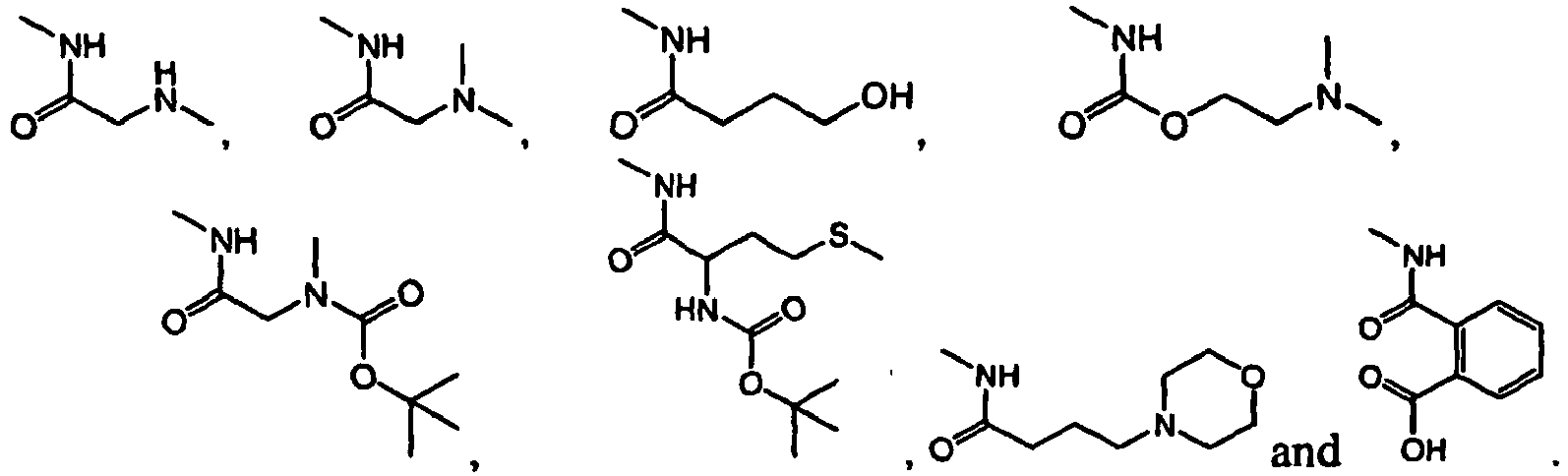
- Representative substituted aminocarbonyl groups include, for example, those shown below. These can heterocyclo groups be further substituted as will be apparent to those having skill in the organic and medicinal chemistry arts in conjunction with the disclosure herein.
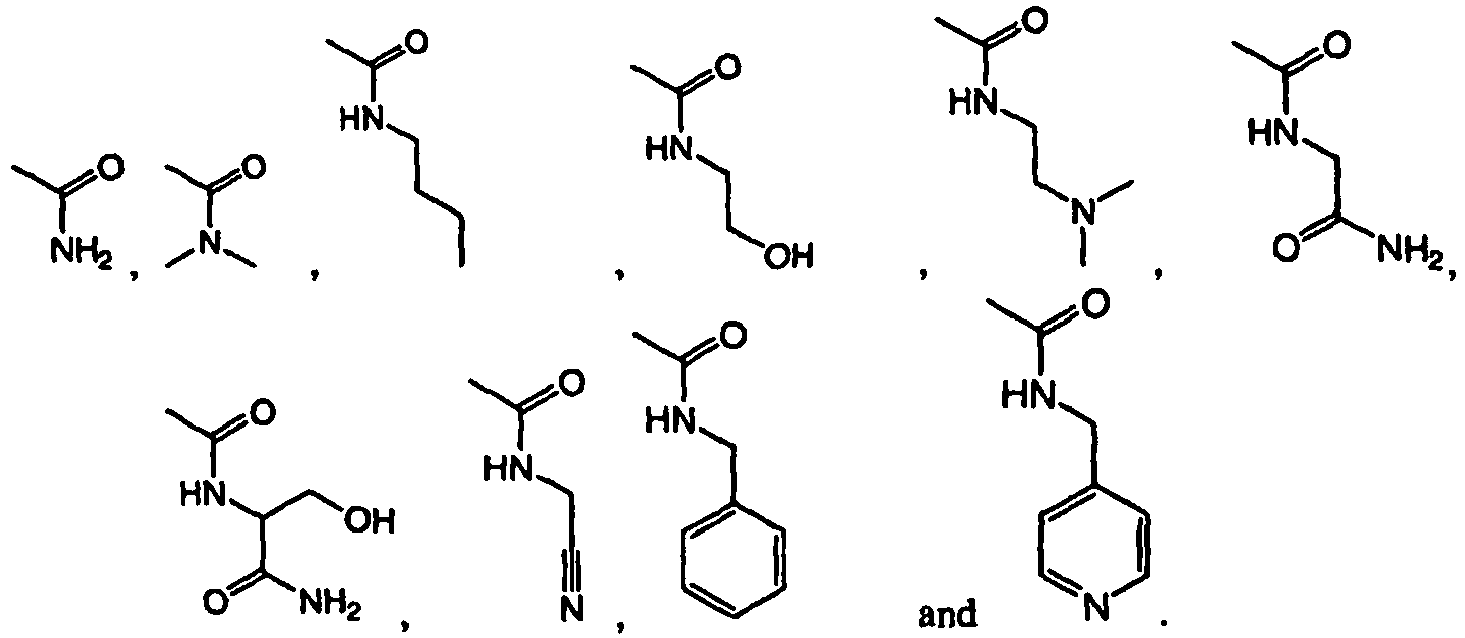
- Representative substituted alkoxycarbonyl groups include, for example, those shown below. These alkoxycarbonyl groups can be further substituted as will be apparent to those having skill in the organic and medicinal chemistry arts in conjunction with the disclosure herein.

- "Substituted" refers to the definite replacement of hydrogen with one or more monovalesnt or divalent radical. Suitable substitution groups include, those described herein for particular groups, as well as hydroxyl, nitro, amino, imino, cyano, halo, thio, thioamido, amidino, imidino, oxo, oxamidino, methoxamidino, imidino, guanidino, sulfonamido, carboxyl, formyl, alkyl, substituted alkyl, hololoweralkyl, lowaralkoxy, haloloweralkoxy, loweralkoxyalkyl, alkylcarbonyl, arylcarbonyl, aralkylcarbonyl, heteroarylcarbonyl, heteroaralkylcarbonyl, alkylthio, aminoalkyl, cyanoalkyl, benzyl, pyridyl, pyrazolyl, pyrrole, thiophene, imidazolyl, and the like.
- The term "linking moiety" refers to a covalent bond or an uncyclized divalent group, such as, for example, -CO-, -O-, -S-, -CH2-, -NH-, and substituted or unsubstituted alkyl, alkenyl, alkenyl, carbonyl, alkoxycarbonyl groups as defined herein.
- The term "SMIP compound" refers to small molecule immuno-potentiating compounds, that include small molecule compounds below about MW 800 g/mol, capable of stimulating or modulating a pro-inflammatory response in a patient. In an embodiment, the SMIP compounds are able to stimulate human peripheral blood mononuclear cells to produce cytokines.
- Benzazole compounds as described throughout this application include compounds of formula (XXI) as shown below:

A is selected from the group consisting of -O-, -S-, -NH-, and -NR8-;
W is selected from the group consisting of -CH2-, -O-, -S-, -NH-, and -NR8-;
R7 is selected from the group consisting of carbocyclyl, unfused carbocyclylcarbocyclyl, substituted aryl, unsubstituted aryl, substituted heteroaryl, unsubstituted heteroaryl, substituted fused arylheteroaryl, unsubstituted fused arylheteroaryl, substituted unfused arylaryl and unsubstituted unfused arylaryl; R6 is selected from the group consisting of substituted or unsubstituted aryl, and heteroaryl; and,
R8 is independently substituted or unsubstituted alkyl. - In another embodiment the SMIP compounds have antiviral activity. In another embodiment the SMIP compounds have antimicrobial activity.
- SMIP compounds identified by in-vitro (cellular or non-cellular assays) or in-vivo methods are thoroughly described in Methods 1 and 2.
- The subject invention also includes isotopically-labeled SMIP compounds, that are structurally identical to those disclosed above, but for the fact that one or more atoms are replaced by an atom having an atomic mass or mass number different from the atomic mass or mass number usually found in nature. Examples of isotopes that can be incorporated into compounds of the invention include isotopes of hydrogen, carbon, nitrogen, oxygen, phosphorous, sulfur, fluorine and chlorine, such as 2H, 3H, 13C, 14C, 15N, 18O, 17O, 31P, 32P, 35S, 18F and 36Cl, respectively. Compounds of the present invention, prodrugs thereof, and pharmaceutically acceptable salts of said compounds and of said prodrugs that contain the aforementioned isotopes and/or other isotopes of other atoms are within the scope of this invention. Certain isotopically labeled compounds of the present invention, for example those into which radioactive isotopes such as 3H and 14C are incorporated, are useful in drug and/or substrate tissue distribution assays. Tritiated, i.e., 3H, and carbon-14, i.e., 14C, isotopes are particularly preferred for their ease of preparation and detectability. Further, substitution with heavier isotopes such as deuterium, i.e., 2H, may afford certain therapeutic advantages resulting from greater metabolic stability, for example increased in vivo half-life or reduced dosage requirements and, hence, may be preferred in some circumstances. Isotopically labeled compounds of this invention and prodrugs thereof can generally be prepared by carrying out known or referenced procedures and by substituting a readily available isotopically labeled reagent for a non-isotopically labeled reagent.
- In accordance with the present invention compounds for use in a method are provided for the administration of an effective amount of a SMIP compound to act as an adjuvant. Also provided are immunogenic compositions comprising a SMIP compound, an antigen, and optionally other adjuvants.
- The SMIP compounds may be administered in an immune stimulatory effective amount for use in a method of treatment of infectious diseases either alone or in combination with other therapeutic agents.
- The invention provides immunogenic compositions, compounds and pharmaceutical compositions, and compounds for use in methods for treating or preventing a chronic viral or bacterial infection.
- As adjuvants, the SMIP compounds are combined with numerous antigens and delivery systems to form a final immunogenic composition or vaccine product.
- As immuno-therapeutics, the SMIP compounds are used alone or in combination with other therapies for treatment of chronic viral or bacterial infections such as HIV, HCV, HBV, HSV, and H. pylori, as well as medicaments for the reduction of tumor growth.
- In one embodiment, the SMIP compound used in the uses in methods and compositions disclosed herein is a compound of Formula (XXI), or tautomer thereof, or a pharmaceutically acceptable salt or ester thereof.
- Provided is a use in a method of enhancing an immune response in a subject to an antigen, the method comprising administering to said subject an antigen and an effective amount of a SMIP compound, or a salt or ester thereof, to enhance the immune response to said antigen. The antigen is associated, for example, with a disease such as BCG, cholera, plague, typhoid, hepatitis B infection, influenza, inactivated polio, rabies, measles, mumps, rubella, oral polio, yellow fever, tetanus, diphtheria, hemophilus influenzae b, meningococcus infection, and pneumococcus infection. The immune response is, for example, the cellular production of one or more cytokines.
Also provided is a pharmaceutical composition comprising an antigen and a SMIP compound capable of enhancing an immune response in a host to said antigen. The SMIP compound may be present in a concentration effective to enhance an immune response to an antigen. The composition may further comprise an aqueous carrier. The antigen is associated with a disease such as BCG, cholera, plague, typhoid, hepatitis B infection, influenza, inactivated polio, rabies, measles, mumps, rubella, oral polio, yellow fever, tetanus, diphtheria, hemophilus influenzae b, meningococcus infection, and pneumococcus infection. The immune response is for example the cellular production of one or more cytokines leading to the enhancement of antigen-specific B and T cell responses and immunologic memory. - In one aspect of the invention, a benzazole compound of formula (XXI) is provided as shown below:

A is selected from the group consisting of -O-, -S-, -NH-, and -NR8-;
W is selected from the group consisting of -CH2-, -O-, -S-, -NH-, and -NR8-;
R7 is selected from the group consisting of carbocyclyl, unfused carbocyclylcarbocyclyl, substituted aryl, unsubstituted aryl, substituted heteroaryl, unsubstituted heteroaryl, substituted fused arylheteroaryl, unsubstituted fused arylheteroaryl, substituted unfused arylaryl and unsubstituted unfused arylaryl; R6 is selected from the group consisting of substituted or unsubstituted aryl, and heteroaryl; and,
R8 is independently substituted or unsubstituted alkyl. - It should be understood that the organic compounds described herein may exhibit the phenomenon of tautomerism. It should be understood that the invention encompasses any tautomeric form of the drawn structure. The compounds comprise asymmetrically substituted carbon atoms. Such asymmetrically substituted carbon atoms can result in the compounds comprising mixtures of stereoisomers at a particular asymmetrically substituted carbon atom or a single stereoisomer. As a result, racemic mixtures, mixtures of diastereomers, as well as single diastereomers of the compounds are included in the present invention. The terms "S" and "R" configuration,, are as defined by the IUPAC 1974 Recommendations for Section E, Fundamental Stereochemistry, Pure Appl. Chem. (1976) 45, 13-30. The terms α and β are employed for ring positions of cyclic compounds. The α-side of the reference plane is that side on which the preferred substituent lies at the lowered numbered position. Those substituents lying on the opposite side of the reference plane are assigned β descriptor. It should be noted that this usage differs from that for cyclic stereoparents, in which "α" means "below the plane" and denotes absolute configuration. The terms α and β configuration" are as defined by the Chemical Abstracts Index Guide-Appendix IV (1987) paragraph 203.
- One embodiment of the invention is directed to a use in a method of inducing an immunostimulatory effect in a patient comprising administering a SMIP compound in an amount effective to stimulate an immune response such as a cell-mediated immune response.
- The SMIP compounds can be used with or without an antigen in therapeutic applications, for example to treat infectious diseases. The SMIP compounds also may be used in combination with other therapeutic agents, such as anti-virals and monoclonal antibodies in different therapeutic applications.
- One preferred embodiment of the method of inducing an immunostimulatory effect in a patient is directed to administering an immunogenic composition comprising a vaccine in an amount effective to stimulate an immune response such as a cell-mediated immune response and, as a vaccine adjuvant, a SMIP compound, in an amount effective to potentiate the immune response such as the cell-mediated immune response to the vaccine.
- It is contemplated that a vast number of disorders can be treated with the SMIP compounds and compositions as herein disclosed. Preferred uses of the invention include SMIP compounds for use as single agents or in combination with (an)other agent(s), to treat diseases including bacterial diseases, and viral diseases.
- Examples of such diseases susceptive to the SMIP compounds and combinations are bacterial diseases such as bacterial corneal ulcer, bacterial conjunctivitis, bacterial food poisoning, septic shock, endotoxin shock, bacterial endocarditis, bacterial meningitis, bacterial pneumonia, bacterial aneurysm, and bacterial cerebral aneurysm; viral diseases such as viral gastroenterocolitis, viral hepatitis, viral bronchitis, viral colon inflammatory, viral myocarditis, viral meningitis, viral entarocolitis, viral encephalitis, viral pneumonia, and AIDS;
- Agents combined with the SMIP compounds, contemplated to be useful in treating the aformentioned diseases include those well known in the art, such as, anesthetics, hypnotic sedatives, anti-anxieties, antiepileptics, antipyretic antiphlogistics, stimulants, wake amines, anti-parkinson drugs, agents for psychoneuroses, agents for central nervous system, skeletal muscle relaxants, agents for antonomic nervous system, antispastic agents, cytotoxic agents, monoclonal antibodies, drugs for eye, drugs for nose and ear, anti-vertiginous drugs, cardiotonics, antiarrhythmic drugs, diuretics, pressure reduction drugs, vasoconstrictors, coronary vaso-dilators, peripheral vasodilating drugs, hyper-lipemia drugs, breath stimulants, antitussive and expectorant drugs, bronchodilators, drugs for allergy, antidiarrheal drugs, drugs for intestinal disorders, peptic ulcer drugs, stomachic digestants, antacids, cholagogouses, pituitary hormone drugs, salivary gland hormones, thyroid hormone drugs, antithyroid drugs, anabolic steroids, corticosteroids, androgen drugs, estrogen drugs, corpus luteum hormone drugs, mixed hormones, urinary/genital organ drugs, anus drugs, surgical steritizations/antiseptics, wound protectives, externals for purulent diseases, analgesics, antipruritics, astringents, antiphlogistics, externals for parasite skin diseases, skin-softening drugs, caustics, dental/oral drugs, vitamins, inorganic preparations, supplemental liquids, hemostatics, anticoagulation drugs, drugs for liver diseases, antidotes, habitual intoxication drugs, drugs for treatment of gout, enzyme preparations, diabetic drugs, antioncotics, antihistaminics, drugs for stimulation treatment, antibiotics, chemotherapeutics, biological preparations, anthelmintics, and-Protozoas, drugs for preparations, X-ray contrast media, and diagnostic drugs.
- Further methods are provided wherein compositions described herein an used for the treatment of cancer and reduction of tumor growth.
- Also disclosed are methods of screening a SMIP compound and a test compound comprising: providing a SMIP compound; a test compound; a first group of cells; and contacting the first group of cells with the SMIP compound and the test compound; and observing the effects of contacting the first group of cells with the SMIP compound and the test compound. In some of these embodiments, the present invention further provides the additional step of comparing the effects observed in the first cells against a second group of the cells contacted with the SMIP compound alone, or with the test compound alone. Effects that may be observed include, but are not limited to, changes in cell proliferation, changes in TNF alpha levels, changes in infected viral content of a cell, changes in bacterial infection levels in a cell, changes in histamine levels of a cell, changes in apoptotic stats, and changes in the expression of Bcl-2 family proteins, and the like.
- In another embodiment methods of manufacturing compositions described herein are provided and contemplated to fall within the scope of the invention.
- Qualitative and quantitative measurement of the immune response of a compound or composition can be implemented using methods known in the art, such as measuring antigen specific antibody production, activation of specific populations of lymphocytes such as CD4+, CD8+ T cells or NK cells, and/or production of cytokines such as IFN, IL-2, IL-4 or IL-12. Methods for measuring specific antibody responses include enzyme-linked immunosorbent assay (ELISA) as known in the art. Measurement of numbers of specific types of lymphocytes such as CD4+ T cells can be achieved, for example, with fluorescence-activated cell sorting (FACS). Cytotoxicity assays can be performed, e.g., as described in Raz et al., (1994) Proc. Natl. Acad. Sci. USA 91:9519-9523. Serum concentrations of cytokines can be measured, for example, by ELISA. Such assays are described, e.g., in Selected Methods in Cellular Immunology (1980) Mishell and Shiigi, eds., W.H. Freeman and Co.
- In one embodiment, a compound or composition, such as a SMIP compound, is considered effective to elicit an immune response if a concentration of 20 µM (or alternatively 100 µM, or 200µM, or 300µM) of the SMIP compound causes the production of TNF-α in an in vitro cell based assay of human peripheral blood mononuclear cells, wherein the concentration of the human peripheral blood mononuclear cells is about 500,000/mL, and wherein the cells are exposed to the compound for about 18-24 hours, e.g., about 24 hours.
- The above compounds for use in stimulating a local immune response for example in selected cells or tissues of a patient includes the stimulation of a local immune response wherein the selected cells or tissues are infected. In one embodiment the selected cells or tissues are infected with a fungus or bacterium. In another embodiment the selected tissues are inflamed with an allergen, for example in an asthmatic condition. In another embodiment the selected cells are infected with a virus or bacteria. In still a more particular embodiment the infectious agent is HCV, HIV, HBV, HSV, H. pylori, HSV Type 1 or 2, or Human Papilloma Virus.
- The immunogenic compositions of the invention can contain further pharmaceutically acceptable ingredients, excipients, carriers, and the like well known to those skilled in the art.
- The vaccine composition may include an additional adjuvant. Preferred adjuvants to enhance effectiveness of the composition include, but are not limited to: (1) aluminum salts (alum), such as aluminum hydroxide, aluminum phosphate, aluminum sulfate, etc; (2) oil-in-water emulsion formulations (with or without specific immunostimulating agents such as muramyl peptides or bacterial cell wall components), such as, for example (a) MF59™ (
WO90/14837 WO00/07621 WO99/44636 WO00/56358 EP-A-0835318 ; (8) oligonucleotides comprising CpG motifs, i.e. containing at least one CG dinucleotide, with 5-methylcytosine optionally being used in place of cytosine; (9) a polyoxyethylene ether or a polyoxyethylene ester e.g.WO99/52549 WO0121207 WO01/21152 WO00/62800 WO00/23105 WO99/11241 WO98/57659 - The invention is also directed to administering the immunogenic composition. The vaccine is administered in an amount effective to stimulate an immune response. The amount that constitutes an effective amount depends, inter alia, on the particular vaccine used, the particular adjuvant compound being administered and the amount thereof, the immune response that is to be enhanced (humoral or cell mediated), the state of the immune system (e.g., suppressed, compromised, stimulated), and the desired therapeutic result. Accordingly it is not practical to set forth generally the amount that constitutes an effective amount of the vaccine. Those of ordinary skill in the art, however, can readily determine the appropriate amount with due consideration of such factors.
- The immunogenic compositions of the invention can be administered to animals, e.g., mammals human and non-human, including, for example, pocket pets, fowl, and the like according to conventional methods well known to those skilled in the art (e.g., orally, subcutaneously, nasally, topically).
- Suitable vaccines include, but are not limited to, any material that raises either humoral or cell mediated immune response, or both. Suitable vaccines include live viral and bacterial antigens and inactivated viral, organism-derived, and bacterial antigens, toxoids, toxins, polysaccharides, proteins, glycoproteins, peptides, and the like. Conventional vaccines, such as those used in connection with BCG (live bacteria), cholera, plague, and typhoid (killed bacteria), hepatitis B, influenza, inactivated polio, and rabies (inectivared virus), measles, mumps, rubella, oral polio, and yellow fever (live virus), tetanus and diphtheria (toxoids), hemophilus influenzae b, meningococcal, and pneumococcal (bacterial polysaccharides) also can be used.
- Furthermore, it is contemplated that certain currently experimental vaccines, especially materials such as recombinant proteins, glycoproteins, and peptides that do not raise a strong immune response, will also find use in connection with the SMIP compound. Exemplary experimental subunit antigens include those related to viral disease such as adenovirus, AIDS, chicken pox, cytomegalovirus, dengue, feline leukemia, fowl plague, hepatitis A, hepatitis B, hepatitis C, HSV-1, HSV-2, hog cholera, influenza A, influenza B, Japanese encephalitis, measles, parainfluenza, rabies, respiratory syncytial virus, rotavirus, wart, and yellow fever.
- Specific antigens for use with the invention include, but are not limited to, those listed below. The number(s) in parenthesis indicate representative resources of the antigen.
- Specific antigens include: a protein antigen from N. meningitides serogroup B (1-7); an outer-membrane vesicle (OMV) preparation from N. meningitides serogroup B. (8, 9, 10, 11); a saccharide antigen from N. meningitides serogroup A, C W135 and/or Y, such as the oligosaccharide (12) from serogroup C (13); an antigen from hepatitis B virus, such as the surface and/or core antigens (e.g. 26, 27); virus (28); an antigen from Bordetella pertussis, such as petussis holotoxin (PT) and filamentous hasmagglutinin (FHA) from B. pertussis, optionally also combination with pertactin and/or agglutinogens 2 and 3 (29, 30); a diphtheria antigen, such as a diphtheria toxoid (31:chapter 3) e.g. the CRM197 mutant (32); a tetanus antigen, such as a tetanus toxoid (31:chapter 4); a saccharide antigen from Haemophilus influenzae B (13); polio antigcn(s) (37, 38) such as IPV or OPV; rabies antigen(s) (39) such lyophilized inactivated virus (40, RobAvert™); measles, mumps and/or rubella antigens (31: chapters 4, 10, & 11); influenza antigen(s) (31:chapter 19), such as the haemagglutinin and/or neuraminidase surfaceproteins;
- The composition may comprise one or more of the above antigens.
- Where a saccharide or carbohydrate antigen is used, it is preferably conjugated to a carrier protein in order to enhance antigenicity (47-56). Preferred carrier proteins are bacterial toxine or toxoids, such as diphtheria or tetanus toxoids. The CRM197 diphtheria toxoid is particularly preferred. Other suitable carrier proteins include the N. meningitides outer membrane protein (57), synthetic peptides (58, 59), heat shock proteins (60), pertussis proteins (61, 62), protein D from H. influenzae (63), toxin A or B from C. difficile (64) etc. Where a mixture comprises capsular saccharides from both serogroups A and C, it is preferred that the ratio (w/w) of MenA saccharide:MenC saccharide is greater than 1 (e.g. 2:1, 3:1, 4:4, 5:1, 10:1 or higher). Saccharides from different serogroups of N. meningitides may be conjugated to the same or different carrier proteins.
- Any suitable conjugation reaction can be used, with any suitable linker where necessary. Toxic protein antigens may be detoxified where necessary (e.g. detoxification of pertussis toxin by chemical and/or genetic means (30)). Where a diphtheria antigen is included in the composition it is preferred also to include tetanus antigens and pertussis antigens. Similar, where a tetanus antigen is include it is preferred also to include diphtheria and pertussis antigens. Similar, where pertussis antigen is included it is preferred also to include diphtheria and tetanus antigens.
- The pharmaceutical compositions containing the SMIP compounds described herein can include additives such as excipients. Suitable pharmaceutically acceptable excipients include processing agents and drug delivery modifiers and enhancers, such as, for example, calcium phosphate, magnesium stearate, talc, monosaccharides, disccharides, starch, gelatin, cellulose, methyl cellulose, sodium carboxymethyl cellulose, dextrose, hydroxypropyl-β-cyclodextrin, polyvinylpyrrolidinone, low melting waxes, ion exchange resins, and the like, as well as combinations of any two or more thereof. Other suitable pharmceutically acceptable excipients are described in "Remington's Pharmaceutical Sciences," Mack Pub, Co., New Jersey (1991) or "Remington: The Science and Practice of Pharmacy," 20th ed., Lippincott William & Wilkins, Baltimore, Maryland (2000).
- Pharmaceutical compositions containing the compounds of the invention may be in any form suitable for the intended method of administration, including, for example, a solution, a suspension, or an emulsion. Liquid carriers are typically used in preparing solutions, suspensions, and emulsions. Liquid carriers contemplated for use in the practice of the present invention include, for example, water, saline, pharmaceutically acceptable organic solvent(s), pharmaceutically acceptable oils or fats, and the like, as well as mixtures of two or more thereof. The liquid carrier may contain other suitable pharmaceutically acceptable additives such as solubilizers, emulsifiers, nutrients, buffers, preservatives, suspending agents, thickening agents, viscosity regulators, stabilizers, and the like. Suitable organic solvents include, for example, monohydric alcohols, such as ethanol, and polyhydric alcohols, such as glycols. Suitable oils include, for example, soybean oil, coconut oil, olive oil, safflower oil, cottonseed oil, and the like. For parenteral administration, the carrier can also be an oily ester such as ethyl oleate, isopropyl myristate, and the like. Compositions of the present invention may also be in the form of microparticles, microcapsules, liposomal encapsulates, and the like, as well as combinations of any two or more thereof.
- Other additives include immunostimulatory agents known in the art. Immunostimulatory oligonucleotides and polynucleotides are described in
PCT WO 98/55495 PCT WO 98/16247 U.S. Patent Application No. 2002/0164341 describes adjuvants including an unmethylated CpG dinucleotide (CpG ODN) and a non-nucleic acid adjuvant.U.S. Patent Application No. 2002/0197269 describes compositions comprising an antigen, an antigenic CpG-ODN and a polycationic polymer. Other immunostimulatory additives described in the art may be used, for example, as described inU.S. Patent No. 5,026,546 ;U.S. Patent No. 4,806,352 ; andU.S. Patent No. 5,026,543 . - A controlled release delivery system may be used, such as a diffusion controlled matrix system or an erodible system, as described for example in: Lee, "Diffusion-Controlled Matrix Systems", pp. 155-198 and Ron and Langer, "Erodible Systems", pp. 199-224, in "Treatise on Controlled Drug Delivery", A. Kydonieus Ed., Marcel Dekker, Inc., New York 1992. The matrix may be, for example, a biodegradable material that can degrade spontaneously in situ and in vivo for, example, by hydrolysis or enzymatic cleavage, e.g., by proteases. The delivery system may be, for example, a naturally occurring or synthetic polymer or copolymer, for example in the form of a hydrogel. Exemplary polymers with cleavable linkages include polyesters, polyorthoesters, polyanhydrides, polysaccharides, poly(phosphoesters), polyamides, polyurethanes, poly(imidocarbonates) and poly(phosphazenes).
- The compounds of the invention may be administered enterally, orally, parenterally, sublingually, by inhalation spray, rectally, or topically in dosage unit formulations containing conventional nontoxic pharmaceutically acceptable carriers, adjuvants, and vehicles as desired. For example, suitable modes of administration include oral, subcutaneous, transdermal, transmucosal, iontophoretic, intravenous, intramuscular, intraperitoneal, intranasal, subdermal, rectal, and the like. Topical administration may also involve the use of transdermal administration such as transdermal patches or ionophoresis devices. The term parenteral includes subcutaneous injections, intravenous, intramuscular, intrasternal injection, or infusion techniques.
- Injectable preparations, for example, sterile injectable aqueous or oleaginous suspensions may be formulated according to the known art using suitable dispersing or wetting agents and suspending agents. The sterile injectable preparation may also be a sterile injectable solution or suspension in a nontoxic parenterally acceptable diluent or solvent, for example, as a solution in 1,3-propanediol. Among the acceptable vehicles and solvents that may be employed are water, Ringer's solution, and isotonic sodium chloride solution. In addition, sterile, fixed oils are conventionally employed as a solvent or suspending medium. For this purpose any bland fixed oil may be employed including synthetic mono- or diglycerides. In addition, fatty acids such as oleic acid find use in the preparation of injectables.
- Suppositories for rectal administration of the drug can be prepared by mixing the drug with a suitable nonirritating excipient such as cocoa butter and polyethylene glycols that are solid at ordinary temperatures but liquid at the rectal temperature and will therefore melt in the rectum and release the drug.
- Solid dosage forms for oral administration may include capsules, tablets, pills, powders, and granules. In such solid dosage forms, the active compound may be admixed with at least one inert diluent such as sucrose lactose or starch. Such dosage forms may also comprise, as is normal practice, additional substances other than inert diluents, e.g., lubricating agents such as magnesium stearate. In the case of capsules, tablets, and pills, the dosage forms may also comprise buffering agents. Tablets and pills can additionally be prepared with enteric coatings.
- Liquid dosage forms for oral administration may include pharmaceutically acceptable emulsions, solutions, suspensions, syrups, and elixirs containing inert diluents commonly used in the art, such as water. Such compositions may also comprise adjuvants, such as wetting agents, emulsifying and suspending agents, cyclodextrins, and sweetening, flavoring, and perfuming agents.
- As to the mode of administration, it should be emphasized that it is the combination of therapeutic agents that gives rise to its synergistic therapeutic effect no matter whether the first and the second agent are administered together or separately. Therefore, the two agents may be given together in a single dose or in separate ones with respect to space and time.
- Effective amounts of the compounds of the invention generally include any amount sufficient to detectably treat viral infections.
- Successful treatment of a subject in accordance with the disclosure may result in the inducement of a reduction or alleviation of symptoms in a subject afflicted with a medical or biological disorder to, for example, halt the further progression of the disorder, or the prevention of the disorder.
- The amount of active ingredient that may be combined with the carrier materials to produce a single dosage form will vary depending upon the host treated and the particular mode of administration. It will be understood, however, that the specific dose level for any particular patient will depend upon a variety of factors including the activity of the specific compound employed, the age, body weight, general health, sex, diet, time of administration, route of administration, rate of excretion, drug combination, and the severity of the particular disease undergoing therapy. The therapeutically effective amount for a given situation can be readily determined by routine experimentation and is within the skill and judgment of the ordinary clinician.
- The compounds of the present invention can also be administered in the form of liposomes. As is known in the art, liposomes are generally derived from phospholipids or other lipid substances. Liposomes are formed by mono- or multilamellar hydrated liquid crystals that are dispersed in an aqueous medium. Any non-toxic, physiologically acceptable and metabolizable lipid capable of forming liposomes can be used. The present compositions in liposome form can contain, in addition to a compound of the present invention, stabilizers, preservatives, excipients, and the like. The preferred lipids are the phospholipids and phosphatidyl cholines (lecithins), both natural and synthetic. Methods to form liposomes are known in the art. See, for example, Prescott, Ed., Methods in Cell Biology, Volume XIV, Academic Press, New York, N.W., p. 33 et seq (1976).
- While the compounds of the invention can be administered as the sole active pharmaceutical agent, they can also be used in combination with one or more other agents used in the treatment of disorders. Representative agents useful in combination with the compounds of the invention for the treatment of viral infections include, for example, Interferon, Ribavirin, gancyclovir and the like.
- When additional active agents are used in combination with the compounds of the present invention, the additional active agents may generally be employed in therapeutic amounts as indicated in the PHYSICIANS' DESK REFERENCE (PDR) 53rd Edition (1999) or such therapeutically useful amounts as would be known to one of ordinary skill in the art.
- The compounds of the invention and the other therapeutically active agents can be administered at the recommended maximum clinical dosage or at lower doses. Dosage levels of the active compounds in the compositions of the invention may be varied so as to obtain a desired therapeutic response depending on the route of administration, severity of the disease and the response of the patient. The combination can be adnain6sUrcd as separate compositions or as a single dosage form containing both agents. When administered as a combination, the therapeutic agents can be formulated as separate compositions that are given at the same time or different times, or the therapeutic agents can be given as a single composition.
- Compounds of the present invention can be readily synthesized using the methods described herein, or other methods, that are well known in the art.
- The compounds can be used in the form of salts derived from inorganic or organic acids. These salts include but am not limited to the following: acetate, adipate, alginatc, citrate, aspartate, benzoate, benzenesulfonate, bisulfate, butyrate, camphorate, camphorsulfonate, digluconate cyclopentanepropionate, dodecylsulfate, ethanesulfonate, glucoheptanoate, glycerophosphate, hemisulfate, heptanoate, hexanoate, fumarate, hydrochloride, hydrobromide, hydroipdide, 2-hydroxycthanesulfonate lactate, maleate, methanesulfonate, nicotinate, 2-napthalenesulfonate, oxalate, pamoate, pectinate, persulfate 3-phenylproionate, picrate, pivalate, propionate, succinate, tartrate, thiocyanate, p-toluenesulfonate and undecanoate. Also, the basic nitrogen-containing groups can be quaternized with such agents as loweralkyl halides, such as methyl, ethyl, propyl, and butyl chloride, bromides, and iodides; dialkyl sulfates like dimethyl, diethyl, dibutyl, and diamyl sulfates, long chain halides such as decyl, lauryl, myristyl and stearyl chlorides, bromides and iodides, aralkyl halides like benzyl and phenethyl bromides, and others. Water or oil-soluble or dispersible products are thereby obtained.
- Examples, of acids that may be employed to form pharmaceutically acceptable acid addition salts include such inorganic acids as hydrochloric acid, sulphuric acid and phosphoric acid and such organic acids as oxalic acid, maleic acid, succinic acid and citric acid. Basic addition salts can be prepared in situ during the final isolation and purification of the compounds, or separately by reacting carboxylic acid moieties with a suitable base such as the hydroxide, carbonate or bicarbonate of a pharmaceutical acceptable metal cation or with ammonia, or an organic primary, secondary or tertiary amine. Pharmaceutical acceptable salts include, but are not limited to, cations based on the alkali and alkaline earth metals, such as sodium, lithium, potassium, calcium, magnesium, aluminum salts and the like, as well as nontoxic ammonium, quaternary ammonium, and amine cations, including, but not limited to ammonium, tetramethylammonium, tetraethylammonium, methylamine, dimethylamine, trimethylamine, triethylamine, ethylamine, and the like. Other representative organic amines useful for the formation of base addition salts include diethylamine, ethylenediamine, ethanolamine, diethanolamine, piperazine and the like.
- Various compounds and methods of their synthesis are disclosed in international patent application Publication Nos.
WO2/18327 WO0222598 WO02/18383 WO 02/81443 Antigen references: 1 International patent application WO99/24578 2 International patent application WO99/36544 3 International patent application WO99/57280 4 International patent application WO00/22430 5 Tettelin et al. (2000) Science 287:1809-1815. 6 International patent application WO96/29412 7 Pizza et al. (2000) Science 287:1816-1820. 8 PCT WO 01/52885 9 Bjune et al. (1991) Lancet 338(8775). 10 Fuskasawa et al. (1999) Vaccine 17:2951-2958. 11 Rosenqist et al. (1998) Dev. Biol. Strand 92:323-333. 12 Constantino et al. (1992) Vaccine 10:691-698. 13 Constantino et al. (1999) Vaccine 17:1251-1263. 14 Watson (2000) Pediatr Infect Dis J 19:331-332. 15 Rubin (20000) Pediatr Clin North Am 47:269-285,v. 16 Jedrzejas (2001) Microbiol Mol Biol Rev 65:187-207. 17 International patent application filed on 3rd July 2001 claiming priority from GB-0016363.4 WO 02/02606 PCT IB/01/00166 18 Kalman et al. (1999) Nature Genetics 21:385-389. 19 Read et al. (2000) Nucleic Acids Res 28:1397-406. 20 Shirai et al. (2000) J. Infect. Dis 181(Suppl 3):S524-S527. 21 International patent application WO99/27105 22 International patent application WO00/27994 23 International patent application WO00/37494 24 International patent application WO99/28475 25 Bell (2000) Pediatr Infect Dis J 19:1187-1188. 26 Iwarson (1995) APMIS 103:321-326. 27 Gerlich et al. (1990) Vaccine 8 Suppl:S63-68 & 79-80. 28 Hsu et al. (1999) Clin Liver Dis 3:901-915. 29 Gastofsson et al. (1996) N. Engl. J. Med. 334-:349-355. 30 Rappuoli et al. (1991) TIBTECH 9:232-238. 31 Vaccines (1988) eds. Plotkin & Mortimer. ISBN 0-7216-1946-0. 32 Del Guidice et al. (1998) Molecular Aspects of Medicine 19:1-70. 33 International patent application WO93/018150 34 International patent application WO99/53310 35 International patent application WO98/04702 36 Ross et al. (2001) Vaccine 19:135-142. 37 Sutter et al. (2000) Pediatr Clin North Am 47:287-308. 38 Zimmerman & Spann (1999) Am Fan Physician 59:113-118, 125-126. 39 Dreensen (1997) Vaccine 15 Suppl"S2-6. 40 MMWR Morb Mortal Wkly rep 1998 Jan 16:47(1):12, 9. 41 McMichael (2000) Vaccine19 Suppl 1:S101-107. 42 Schuchat (1999) Lancer 353(9146):51-6. 43 GB patent applications 0026333.5 0028727.6 0105640.7 44 Dale (1999) Infect Disclin North Am 13:227-43, viii. 45 Ferretti et al. (2001) PNAS USA 98: 4658-4663. 46 Kuroda et al. (2001) Lancet 357(9264):1225-1240; see also pages 1218-1219. 47 Ramsay et al. (2001) Lancet 357(9251):195-196. 48 Lindberg (1999) Vaccine 17 Suppl 2:S28-36. 49 Buttery & Moxon (2000) J R Coil Physicians Long 34:163-168. 50 Ahmad & Chapnick (1999) Infect Dis Clin North Am 13:113-133, vii. 51 Goldblatt (1998) J. Med. Microbiol. 47:663-567. 52 European patent 0 477 508 .53 U.S. Patent No. 5,306,492 .54 International patent application WO98/42721 55 Conjugate Vaccines (eds. Cruse et at.) ISBN 3805549326, particularly vol. 10:48-114. 56 Hermanson (1996) Bioconjugate Techniques ISBN: 012323368 & 012342335X 57 European patent application 0372501 ,58 European patent application 0378881 .59 European patent application 0427347 .60 International patent application WO93/17712 61 International patent application WO98/58668 62 European patent application 0471177 .63 International patent application WO00/56360 64 International patent application WO00/67161 - The foregoing may be better understood by reference to the following Examples, Methods, and Schemes that are presented for illustration. Those groups of compounds that do not have experimental procedures relating to their synthesis are either commercially available, described by procedures incorporated herin by reference, or are easily synthesized by one skilled in the art from easily recognizable, commercially available starting materials.
- Compounds of the invention containing a benzimidazole core may be prepared using a number of methods familiar to one of skill in the art. In one method, suitably functionalized diamines may be coupled with various thioisocyanates to form the intermediate thioureas. Cyclization to form the benzimidazole moiety may be effected under known conditions such as with treatment carbodiimides or alkyl halides. Alternatively the diamines may be reacted sequentially with carbonyl diimidazole and phosphoryl chloride followed by coupling with the appropriate amine.
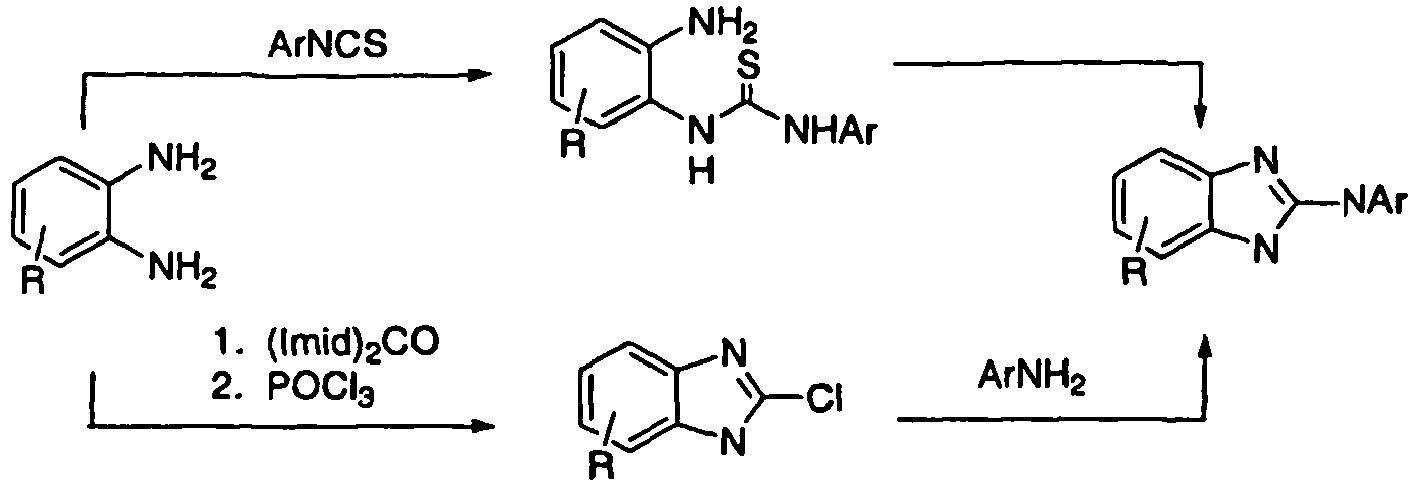
- Compounds containing the oxazole structure may similarly be prepared according to the methods above or according to other known general procedures. Haviv et. al. (J. Med. Chem. 1988, 31, 1719) describes a procedure for assembling oxazole cores wherein a hydroxy aniline is treated with ethyl potassium xanthate. The resulting sulfuryl benzoxazole may then be chlorinated and coupled with an amine.

- Compounds containing a benzothiazole core may also be prepared according to known methods. An ortho-halothioisocyanate may be reacted with an amine to form a thiourea. Reduction with NaH then allows formation of the thiazole ring.

- Benzothiazoles may generally be substituted in accordance with the present invention, such as through the following synthetic pathway:

- The compound 4-[(2-{[4-chloro-3-(trifluoromethyl)phenyl]amino}-1H-benzimidazol-6-yl)oxy]-N-methylpyridine-2-carboxamide (159322) was synthesized as follows:

- Step 1. Synthesis of 4-[(4-amino-3-nitrophenyl)oxy]-N-methylpyridine-2-carboxamide: A mixture containing 4-amino-3-nitrophenol (1eq) and potassium bis(trimethylsilyl)amide (2eq) was stirred in dimethylformamide for 2 hours at room temperature. To this mixture was added (4-chloro(2-pyridyl))-N-methylcarboxamide (1eq) and potassium carbonate (1.2eq) and stirred at 90°C for 3 days. The reaction mixture was then concentrated and partitioned between ethyl acetate and water. The organic layer was separated and washed with brine, dried, filtered, and concentrated in vacuum to give brown solid. Purification on silica gel (2% triethyl amine / 50% ethyl acetate in hexane) gave 4-[(4-amino-3-nitrophenyl)oxy]-N-methylpyridine-2-carboxamide as an orange solid. The product gave satisfactory NMR. HPLC, 3.39min; MS: MH+ = 289.
- Step 2. Synthesis of 4-[(3,4-diaminophenyl)oxy]-N-methylpyridine-2-carboxamide: The mixture containing [4-(3-amino-4-nitrophenoxy)(2-pyridyl)]-N- in methanol with catalytic amount of 10%Pd/C was hydrogenated until disappearance of the yellow color to yield the product amine. HPLC, 2.5mins; MS: MH+ = 259.
- The mixture containing 4-[(3,4-diaminophenyl)oxy]-N-methylpyridine-2-carboxamide (1eq) and 4-chloro-3-(trifluoromethyl)benzeneisothiocyanate (1eq) in tetrahydrofuran was stirred at room temperature for 16 hours to give the corresponding thiourea. To the resulting mixture was added 1-ethyl-3-(3-dimethylaminopropyl)carbodiimide hydrochloride (2eq) and the mixture was stirred for another 10 hours. The mixture was concentrated and partitioned between ethyl acetate and water. The organic layer was washed with brine and dried. Purification on HPLC gave 4-[(2-{[4-chloro-3-(trifluoromethyl)phenyl]amino}-1H-benzimidazol-6-yl)oxy]-N-methylpyridine-2-carboxamide. MS: MH+ = 462
- The compound 4-({2-[(4-bromophenyl)amino]-1-methyl-1H-benzimidazol-5-yl}oxy)-N-methylpyridine-2-carboxamide (161651) was synthesized as follows:

- Step 1. Synthesis of 4-{[3-amino-4-(methylamino)phenyl]oxy}-N methylpyridine-2-carboxamide: A solution of 4-[(4-amino-3-nitrophenyl)oxyl-N-methylpyridine-2-carboxamide (1eq) in methylene chloride was treated with trifluoroacetic anhydride (1eq) and stirred for 10 minutes at 0 °C. The mixture was quenched with satd. NaHCO3 solution. The organic layer was separated and washed with water, brine, dried and evaporated. MS: MH+=385.2
- To a solution of the trifluroacetamide (1eq) in a mixture of toluene, acetonitrile and sodium hydroxide solution (50%) was added benzyltrimethylammonium chloride (1eq) and dimethyl sulfate (1.2eq). The biphasic mixture was stirred overnight at room temperature and evaporated. The mixture was taken up in ethyl acetate, washed with water, brine, dried and evaporated. The crude product was purified by column chromatography eluting with 1:1 hexanes and ethylacetate followed by 2% triethylamine in 1:1 hexanes and ethyl acetate followed by 2% triethylamine in 1:1 hexanes and ethyl acetate to afford N-methyl-4-{[4-(methylamino)-3-nitrophenyl]oxy}pyridine-2-carboxamide as a reddish orange solid. MS: MH+ = 303.1.
- The solution of nitromethylaniline in methanol was treated with 5% palladium on carbon and stirred under hydrogen atmosphere for 15 min. (until the disappearance of yellow coloration) at room temperature. The mixture was filtered and the filtrate was concentrated to provide 0.36 g of the diamine 4-{[3-amino-4-(methylamino)phenyl]oxy}-N-methylpyridine-2-carboxamide. MS: MH+ = 273.3.
- Step 2. Synthesis of 4-({2-[(4-bromophenyl)aminoM-methyl-1H-benzimidazol-5-yl)oxy)-N-methylpyridine-2-carboxamde: A solution of the diamine 4-{[3-amino-4-(methylamino)phenyl]oxy}-N-methylpyridine-2-carboxamide (1eq) in methanol was treated with 4-bromophenylisothiocyanate (1eq) and stirred at 60 °C - 65°C for 2 hours. The reaction mixture was cooled down to room temperature and methyl iodide (1eq) was added and stirred overnight at 60°C. The reaction waa cooled to room temperature, evaporated, taken up in ethyl acetate, and washed with water and brine, dried, and evaporated under reduced pressure. Column chromatography using a gradient solvent system of hexanes and ethyl acetate and either 1:1 methylene chloride and acetone or 5% methanol in methylene chloride yielded the product as a half white powder. MS: MH+=452.3
- Compounds of structure I may be synthesized from simple starting molecules as shown in Schemes 1-4 and exemplified in the Examples. As shown in Scheme 1, compounds of structure I may generally be prepaced using aromatic compounds substituted with amines and carboxylic acid groups.

- As shown in Scheme 2, a substituted aromatic compound such as a substituted or unsubstituted 2-aminobenzoic acid may be reacted with an acyl halide such as methyl 2-(chlorocarbonyl)acetate to produce an amide that will react with a substituted or unsubstituted 1,2-diaminobenzene. The resulting product is a 4-hydroxy-substituted compound of structure I. One skilled in the art will recognize that the procedure set forth in Scheme 1 may be modified to produce various compounds.
- A method for preparing 4-amino substituted compounds of structure I is shown in Scheme 3. As shown in Scheme 3, aromatic compounds substituted with amine and nitrile groups may be used to synthesize 4-amino substituted compounds of structure I. A compound such as ethyl 2-cyanoacetate may be reacted with ethanol to produce ethyl 3-ethoxy-3-iminopropanoate hydrochloride. Subsequent reaction with a substituted or unsubstituted 1,2-phenylenediamine provides substituted or unsubstituted ethyl 2-benzimidazol-2-ylacetate. Reaction of a substituted or unsubstituted ethyl 2-benzimidazol-2-ylacetate with an aromatic compound having an amine and nitrile group such as substituted or unsubstituted 2-aminobenzonitrile with a base such as lithium bis(trimethylsilyl)amide or a Lewis acid such as tin tetrachloride provides the substituted or unsubstituted 4-amino substituted compound of structure I.

- Scheme 4 illustrates a general synthetic route that allows for the synthesis of 4-dialkylamino and 4-alkylamino compounds of structure I. An inspection of Scheme 3 shows that 4-hydroxy substituted compounds of structure I may be converted into the 4-chloro derivative by reaction with phosphorous oxychloride or thionyl chloride. The 4-chloro derivative may then be reacted with an alkylamine or dialkylamine to produce the corresponding 4-alkylamino or 4-dialkylamino derivative. Deprotection affords the final 4-alkylamino or 4-dialkylamino compounds of structure I. Other groups that may be reacted with the 4-chloro derivative in this manner include, but are not limited to, ROH, RSH, and CuCN.

- As shown in Scheme 5, the synthesis of compounds of structure I having a H, alkyl group, aryl group, or heterocyclyl group in the 4-position may be accomplished using a substituted or unsubstituted 2-benzimidazol-2-ylacetate prepared as shown in Schemes 3 and 4.

-

- A solution of aldehyde (1.0 equiv.) and thiosemicarbazide (1.05 equiv.) in acetic acid was stirred overnight. Excess of acetic acid was removed to give a residue, that was washed with ethanol, or purified by preparative-HPLC to give the thiosemicarbazone.
- A solution of aldehyde (1.0 equiv.), thiosemicarbazide (1.05 equiv.) and acetic acid (0.1 equiv.) in methanol was stirred overnight. Methanol was removed to give a residue, that was worked up as in Scheme 6.
- To a solution of {[(1E)-1-aza-2-(4-fluoro-3-nitrophenyl)vinyl]amino}-aminomethane-1-thione in ethanol was added an arylamine (2.1 equiv.). The solution was stirred at room temperature until the starting fluoride disappeared. The solution was purified to the product.

- A mixture of 4-(diethylamino)-2-hydroxybenzaldehyde (1 equiv.), benzylic bromide (1.2 equiv.) and powder potassium carbonate in ethanol was stirred at room temperature for 2 days. Ethanol was removed, and the residue was dissolved in ethyl acetate and water. The organic layer was washed with aqueous NaHCO3 and brine, dried over Na2SO4., and concentrated. The residue was purified on silica gel eluting with ethyl acetate/hexane to give 4-(diethylamino)-2-benzoxylic-benzaldehyde.
- The aldehydes were converted to thiosemicarbazones according to Scheme 7.
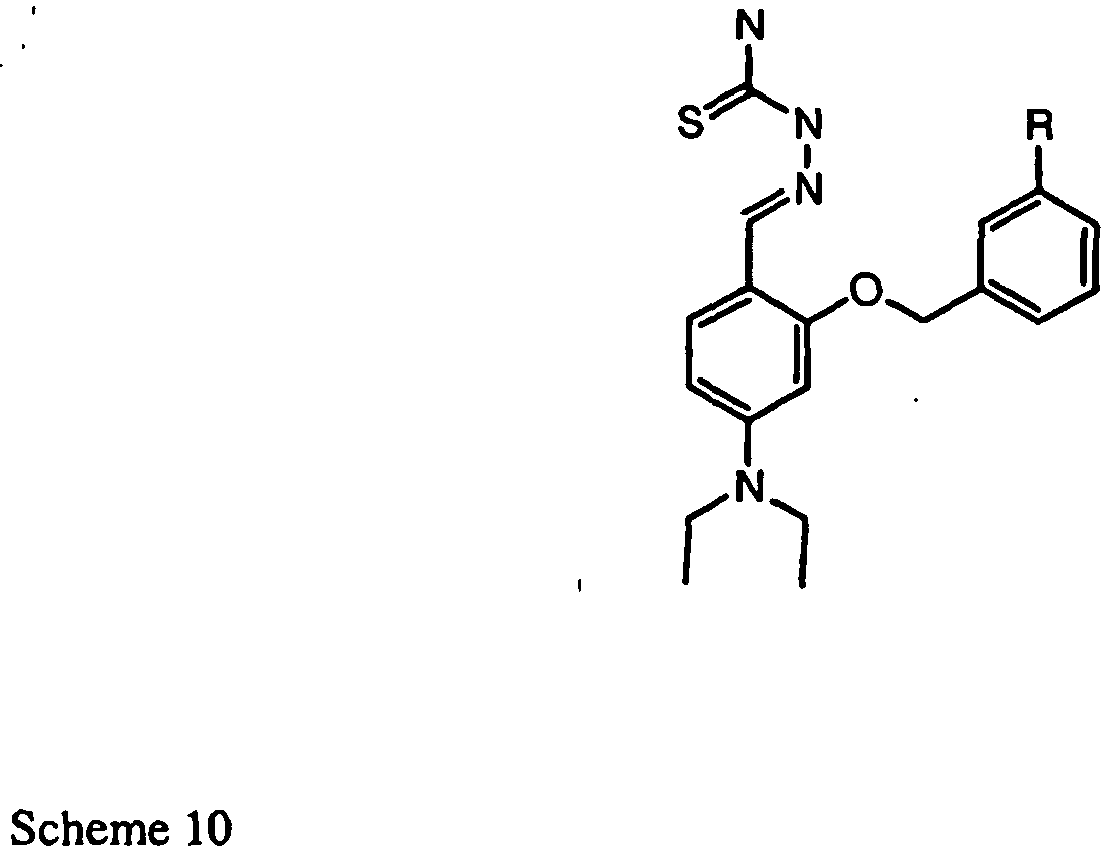
- A solution of 3,4-difluorobenzenecarbonitrile (1 equiv.), amine (1.5 equiv.) and DIEA (2 equiv.) in NMP was heated in a Smith Microwave (Personal Chemistry) for 30 minutes. The reaction mixture was purified on silica gel to give 4-substituted 3-fluorobenzenecarbonitrile.
- To a solution of nitrile in toluene at -78 °C was added DIBAL-H (1 M in toluene, 1.5 equiv.). The reaction mixture was warmed to rt, and stirred for 16 h, and quenched with methanol/ethyl acetate/brine (1:1:4). After being stirred at rt for 30 min, the solution was extracted with ethyl acetate (3x). The combined organic layers were washed with aqueous NaHCO3, brine and concentrated. The aldehyde was purified on silica gel or directly converted to thiosemicarbazones (Scheme 7). Scheme 11
- A solution of 2,4,5-trifluorobenzenecarbonitrile (1 equiv.) and 4-arylpiperazine (1.2 equiv.) and DIEA (1.2 equiv.) in THF was heated at 80 °C for 2 hours. The mixture was purified on silica gel to give 4-substituted 2,5-difluorobenzenecarbonitrile.
- To an alcohol (1.0 equiv) was added potassium t-butoxide in THF (1 M, 1.1 equiv). After 5 minutes, the solution was added to a solution of 4-N-substituted-2,5-difluorobenzenecarbonitrile (1 equiv.) in THF. The reaction mixture was stirred at rt overnight and quenched with aqueous ammonium chloride. The aqueous layer was extracted with ethyl acetate (3x). The combined organic layers were washed with brine, and concentrated to give a residue, that was purified to give 4-N-substituted-2-O-substituted-5-fluorobenzenecarbonitrile.
- 4-N-substituted-2-O-substituted-5-fluorobenzenecarbonitrile was reduced with DIBAL-H to give a 4-N-substituted-2-O-substituted-5-fluorobenzaldehyde according to procedure in Scheme 10.
- The aldehyde was converted to the corresponding thiosemicarbazone using Scheme 7.
- A solution of 4-N-substituted-2,5-difluorobenzenecarbonitrile (1 equiv.), amine (1.5 equiv.) and DIEA (2 equiv.) in NMP was heated in a Smith Microwave (Personal Chemistry) for 30 minutes. The reaction mixture was purified on silica gel to give 4-N-substituted-2-N-substituted-5-fluorobenzenecarbonitrile.
- 4-N-substituted-2-N-substituted-5-fluorobenzenecarbonitrile was reduced with DIBAL-H according to procedure described in Scheme 10 to give 4-N-substituted-2-N-substituted-5-fluorobenzaldehyde.
-
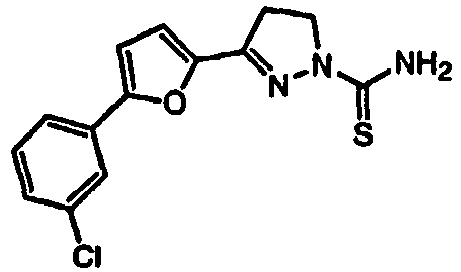
- To a solution of 5-(3-chlorophenyl)furan-2-carbaldehyde (1.0 equiv.) in THF at 0 °C was added MeMgBr in ether (3.0 equiv.) and stirred for 45 min. The reaction was quenched with water, diluted with ether and filtered through Celite. The organic layer was separated and washed with brine, dried over MgSO4, and concentrated to give the 1-[5-(3-chlorophenyl)-2-furyl]ethan-1-ol.
- To a solution of secondary alcohol(1.0 equiv.) in CH2Cl2 was added MnO2 (10 equiv.). The reaction was stirred overnight, filtered through Celite, and concentrated to give 1-[5-(3-chlorophenyl)-2-furyl]ethan-1-one.
- To a mixture of ketone (1.0 equiv.), paraformaldehyde (2.0 equiv.), and dimethylamine hydrochloride (2.0equiv) and molecular sieves in ethanol was added concentrated hydrochloric acid (cat.). The reaction was refluxed overnight under nitrogen and the concentrated. A few drops of HCl was added, and the mixture was worked up with DCM and water. The organic layer was discarded. The aqueous layer was adjusted to basic and extracted with DCM (3x). The organic layer was washed with brine, dried over MgSO4, and concentrated to yield 3-(dimethylamino)-1-[5-(3-chlorophenyl)(2-furyl)]propan-1-one.
- Thiosemicarbazide (1.0 equiv.) was dissolved in MeOH upon heating under nitrogen. Aqueous sodium hydroxide (6 M, 9.0 equiv.) was added to the reaction. A methanol solution of 3-(dimethylamino)-1-[5-(3-chlorophenyl)(2-furyl)]propan-1-one (1.0 equiv) was then added dropwise to the reaction mixture. The solvent was removed and the residue was dissolved in DCM and washed with water, brine, dried over MgSO4, and concentrated. The final compound was purified by preparative-HPLC to give amino{3-[5-(3-chlorophenyl)(2-furyl)](2-pyrazolinyl)}methane-1-thione; LC/MS m/z 306.2 (MH+); Rt =3.06 minutes.

- To a solution of 4-pyridylmethylamine (1.0 equiv.) and triethylamine (2.0 equiv.) in CHCl3 was added CS2 (1.0 equiv.)) and stirred overnight. The reaction was cooled to 0 °C and ethyl chloroformate (1.0 equiv.) was added dropwise. The reaction was stirred for 15 min at 0 °C and then stirred at room temperature for 2 hrs followed by addition of (tert-butyl)oxycarbohydrazide (1.2 equiv.). After stirring for an addition hour the mixture was washed with aqueous citric acid (5%), saturated NaHCO3, brine, dried over MgSO4, and concentrated. The desired Boc protected thiosemicarbazide was purified using column chromatography.
- To a solution of Boc protected thiosemicarbazide (1.0 equiv.) dissolved in DCM was added HCl in dioxane (2M, 8.3 equiv.) and stirred for 15 min. MeOH is then added to dissolve the precipitate, followed by addition of the furfural, and small amount of acetic acid (0.5 mL). The mixture is stirred overnight and the solvents are removed to give a residue purified by preparative-HPLC to give the thiosemicarbazone.
- Synthesis of 4-[4-(4-methylpiperazin-1-yl)phenoxymethyl]benzaldehyde

- To a solution of 4-piperazin-1-yl phenol (1 equivalent) in CHCl3, cooled to 0 °C, was added di-t-butyl dicarbonate (1 equivalent) in CHCl3 drop-wise. The solution was stirred at 0 °C for 1 hour before removing from the cold bath and stirring at ambient temperatures for 18 hours. The organic solution was washed aqueous NaHCO3 and brine dried over MgSO4 and concentrated the crude material was used without purification.
- A solution of the resulting 4-(1-BOC-piperazin-4-yl)phenol (1 equivalent) in dry CH3CN was slowly added drop-wise to a slurry of NaH (1 equivalent) in dry CH3CN at room temperature under N2. The slurry was stirred at room temperature for 2 hours before the solids were filtered and washed with Et2O.

- Sodium 4-(1-BOC-piperazin-4-yl)phenoxide (1 equivalent) and methyl 4-bromomethylbenzoate (1 equivalent) were combined in dry acetone and heated to reflux at 60 °C for 18 hours. The slurry was filtered and the filtrate was then concentrated to provide the crude methyl 4-[4-(1-BOC-piperazin-4-yl)phenoxymethyl]benzoate, that was used without purification.

- To a slurry of LiAH4 (4 equivalents) in dry THF, cooled to 0 °C under N2, was slowly added drop-wise a solution of methyl 4-[4-(1-BOC-piperazin-4-yl)phenoxymethyl]benzoate (1 equivalent) in dry THF. Once the addition was complete, the slurry was heated to reflux at 80°C for 1 hour. The slurry was subsequently cooled to 0 °C and treated with water, 10% aq. NaOH and with water again. The resulting solids were filtered, and the filtrate was diluted with chloroform, washed with brine, dried over MgSO4 and concentrated, providing the crude 4-[4-(4-methylpiperazin-1-yl)phenoxymethyl]benzyl alcohol that was used without purification.

- To a solution of DMSO (2.6 equivalents) in dry DCM, cooled to -78°C under N2 was added oxalyl chloride (1.1 equivalents) in DCM drop-wise. The solution was stirred at -78 °C for 5 minutes before a solution of 4-[4-(4-methylpiperazin-1-yl)phenoxymethyl]benzyl alcohol (1 equivalent) in DCM was added drop-wise, and allowed to stir at -78 °C for another 30 minutes. Triethylamine (2.5 equivalents) was slowly dripped in before allowing the solution to reach ambient temperatures. The solution was washed with aqueous NaHCO3 and brine, dried over MgSO4 and concentrated to provide the crude 4-[4-(4-methylpiperazin-1-yl)phenoxymethyl]benzaldehyde that was converted to thiosemicarbazones according to Scheme 7.
-


- Neat DIC (1.4 eq) was added to a well stirred solution of cinnamate (1 eq), t-butyl alcohol (4 eq), DMAP (1.4 eq) and CH2Cl2 under argon at rt. (Note - The cinnamate must be completely in solution which may require gentle warming. Allow the solution to cool to room temperature before adding the DIC. To avoid an exotherm on larger scales, it may be prudent to dilute the DIC with CH2Cl2 before the addition and have an ice bath ready.) After stirring for 8 hours, the reaction develops a white precipitate. The reaction may be monitored by TLC eluting with 25% EtOAc/Hexane (Rf of product was 0.9). The entire reaction was loaded into a separatory funnel (washing with CH2Cl2). The organic mixture was washed with citrate, sat. aq. NaHCO3, water, and brine. The organic layer was dried (Na2SO4), filtered, and concentrated to dryness to give the crude product as an oil. The crude oil was mixed with hexane and stirred for 30 min. The precipitate that forms was filtered over celite and the filtrate was evaporated. The hexane mixture was loaded onto a filter plug of silica and eluted with EtOAc/hexane (97:2 v/v). The first eluted UV active fractions are collected and evaporated to give >99% pure 2 (75-80% yields).

- Dry ether was added to NaH (1.5 eq as the oil dispersion) under argon. After decanting off the ether via syringe, the NaH was suspended again with fresh ether under argon. A solution of TOSMIC (1.1 eq) and 2 (1 eq) dissolved in a mixture of ether and DMSO was added dropwise to the stirred suspension of NaH at 0 °C over 20-30 min. The addition was mildly exothermic and evolved gas. After the addition, the reaction was allowed to warm to ambient rt. The progress of the reaction was followed by TLC (25% EtOAc/Hexane, the UV active product was at Rf= 0.4) and LCMS until done (~2-3 h). Upon completion, the reaction was carefully quenched with sat. aq. NH4Cl (added slowly to avoid strong gas evolution and exotherm) and diluted with ether. The layers were separated and the organic phase was washed with sat. aq. NaHCO3, water, and brine. The crude dark solid can be purified by recrystallization. Best results were achieved either through recrystallization directly from a mixture of hot EtOAc/hexane (1:3 v/v) or by dissolving the crude product in minimal hot EtOAc followed by addition of hexane (~2 volumes of hexane based on the volume of EtOAc). The hot solutions were allowed to cool to room temperature and age over night. The crystals were first filtered and then washed with hexane giving 99% pure product in 60-70 % yield.
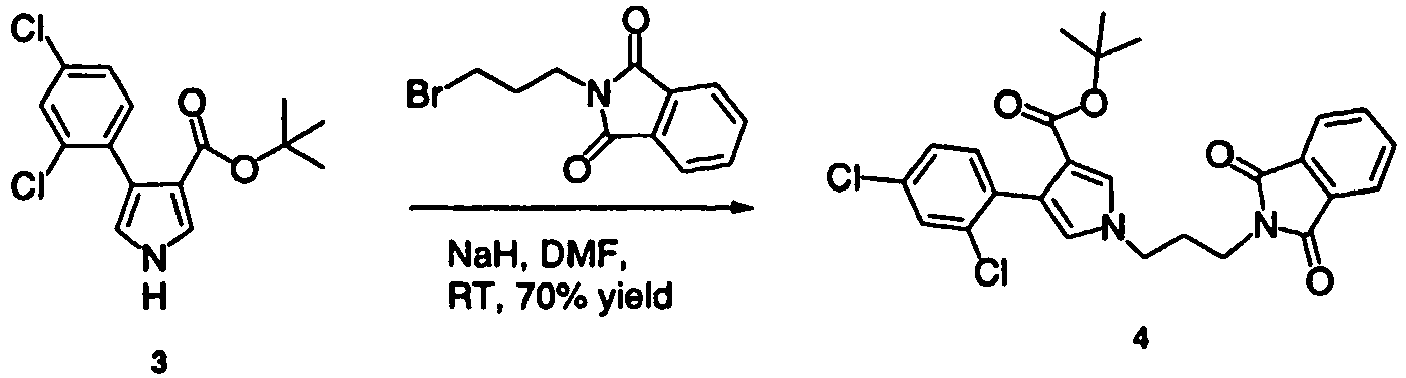
- Solid NaH (1.5 eq as the oil dispersion) was added in small portions to a solution of pyrrole 3 (1 eq) and 3-bromopropyl phthalimide (1.2 eq) dissolved in DMF stirred at room temperature and flushed with argon. NOTE - Some gas evolves, but the temperature does not seem to rise above 40-50 °C. The reaction was stirred for 1.5 h at room temperature under argon. The reaction was followed by TLC (CH2Cl2/acetonitrile (95:5 v/v), the UV active product was at Rf= 0.5) and LCMS. Upon completion, the reaction was quenched with sat. aq. NH4Cl (add slowly to avoid strong gas evolution and exotherm). Sat. aq. NaHCO3 was then added to avoid an emulsion, and the basic organic mixture was extracted with ether. The combined ether layers were washed with sat. aq. NaHCO3, water, brine, dried Na2SO4, filtered, and concentrated to dryness to give the crude product. The crude product was purified by eluting through silica with EtOAc/Hexane (1:4 v/v). The purified product contained some residual 3-bromopropyl phthalimide, that did not interfere with subsequent synthetic steps. The material was taken on and used without further purification. Assume a quantitative yield.

- The Pthalimido Pyrrole 4 (1 eq) was dissolved in ethanol and hydrazine (3 eq) at room temperature under nitrogen. Upon heating to reflux, the reaction generated a white precipitate. Stir at reflux until complete (-2 h) by TLC (CH2Cl2/acetonitrile (95:5 v/v), the UV active product was at Rf= 0.2) and LCMS. Upon reaching completion, the reaction was allowed to cool to room temperature and the precipitate was vacuum-filtered off using a medium to fine cintered-glass filter. The filtrate was concentrated under reduced pressure to a gummy solid. The crude material was taken up in ethanol/EtOAc (1:1 v/v), stirred and the precipitate was filtered off in the same fashion as before. The filtrate was concentrated under reduced pressure and than dried in vacuo for 10-15 min. This process of adding ethanol/EtOAc, filtering and concentrating was done one more time or as needed to remove the majority of the white precipitate and residual hydrazine. The product was then dried in vacuo overnight. The material was used without further purification. Once dried, the reaction yielded the product as a glass (~87% yield over 2 steps).

- To the premixed dry reagents, pyrrole 5 (1 eq) and powdered 6-chloro-3-nitro-2-pyridylamine (6) (1.1 eq), was added the DMA followed by Hilnig's base (2 eq) sequentially with stirring at rt. The reaction was then heated to 80 °C overnight. The reaction was followed by TLC (EtOAc/hexane (1:1 v/v), the UV active yellow product was at Rf= 0.25), HPLC and LCMS. Upon completion as judged by HPLC, the reaction was allowed to cool to 70 °C. Ethylene diamine (anhydrous) was then added to the reaction to destroy any remaining unreacted chloropyridine 6. After 15 min stirring at 70°C, the reaction was cooled and quenched with the addition of sat. aq. NaHCO3. The aqueous mixture was extracted with EtOAc, and the combined organic layers were washed with sat. aq. NaHCO3, water, brine, dried, filtered, and concentrated to dryness to give the crude product as a brown-yellow solid. The crude product was purified by flash chromatography eluted with EtOAc/hexane (4:6 v/v). The purified SnAr adduct 7 was isolated in 58% yield as a yellow solid.

- In a vial, TFA (catalytic amount) was added to a stirred mixture of tert-butyl ester pyrrole 7 (1 eq), water (.1%), and CH2Cl2 at rt. The vial stirred at room temperature until done (~12 h. The reaction was then concentrated under reduced pressure at room temperature and dried in vacuo. The crude residue was dissolved again in CH2Cl2 and concentrated under reduced pressure at rt. The material was used in the final coupling step without further purification as the TFA salt.

- (2S)-(+)-2-Aminopropan-1-ol (1.5 eq) was added to a stirred mixture of acid (8) (1 eq), HBTU (1.5 eq), Hünig's base (2 eq) and DMF (premixed sequentially in this order in a vial) at room temperature under argon. The reaction was stirred for 3-4 h until complete as shown by LCMS and HPLC. The reaction mixture was subsequently diluted with EtOAc, washed with NaHCO3, and concentrated to afford a powder in a 70% yield.
- Nomenclature for the Example compounds was provided using ACD Name version 5.07 software (November 14, 2001) available from Advanced Chemistry Development, Inc. Some of the compounds and starting materials were named using standard IUPAC nomenclature.
- Examples 2-67 of Table 1 were synthesized following the synthetic methodology described above in the Examples and Schemes, and screened following the methods that directly follow the table. The precursors are readily recognizable by one skilled in the art and are commercially available from Aldrich (Milwaukee, WI) or Acros Organics (Pittsburgh, PA), among others.
TABLE 1 Example Structure Name MH+ 2 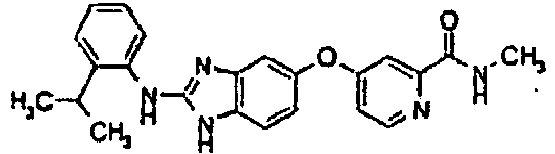
N-methyl-4-[(2-{[2-(1-ethylethyl)phenyl]amino}-1H-nzimidazol-5-yl)oxy]pyridine-2-carboxamide 402.5 3 
N-methyl-4-{[1-methyl-2-({3-[(trimethylsilyl)ethynyl]phenyl}am ino)-1H-benzimidazol-5-yl]oxy}pyridine-2-carboxamide 470.6 4 
N-methyl-4-[(1-methyl-2-{[2-(phenylcarbonyl)phenyl]amino}-1H-benzimidazol-5-yl)oxy]pyridine-2-carboxamide 478.5 5 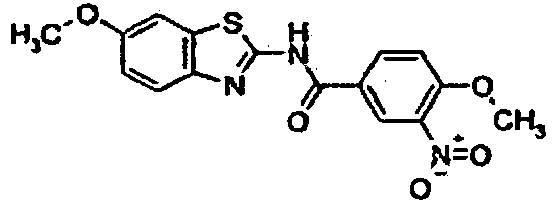
4-(methyloxy)-N-[6(methyloxy)-1,3-benzothiazol-2-yl]-3-nitrobenzamide 360.4 6 
4-({2-[(4-butylphenyl)amino]-1,3-benzothiazol-5-yl}oxy)-N-methylpyridine-2-carboxamide 433.5 7 
N-methyl-4-({1-methy)-2-[(6-pyrrolidin-1-ylpyridin-3-yl)amino]-1 H-benzimidazol-5-yl}oxy)pyridine-2-carboxamide 444.5 8 
4-({2-[1,1'-bi(cyclohexyl)-2-ylamino]-1-methyl-1H-benzimidazol-5-yl}oxy)-N-methylpyridine-2-carboxamide 462.6 9 
4-({2-[(4-chlorophenyl)amino)-1-ethyl-1H-benzimidazol-5-yl}oxy)-N-1,3-thiazol-2-ylpyridine-2-carboxamide 477.9 10 
4-[(1-methyl-2-{[2-(methyloxy)phenyl]amino}-1H-benzimidazol-5-yl)oxy]-N-[3-methyloxy)propyl]pyridine-2-carboxamide 462.5 11 
4-({2-[(4-ethylphenyl)amino]-1,3-benzoxazol-5-yl}oxy)-N-ethylpyridine-2-carboxamide 389.4 12* 
1-[(3-fluorophenyl)carbonyl]-4-{[4-(trifluoromethyl)phenyl]methyl}pi perazine 367.4 13* 
1-[2-(ethyloxy)phenyl]-4-{[3,4,5-tris(methyloxy)phenyl]carbonyl}p perazine 401.5 14* 
1-(3-chlorophenyl)-4-{[2-(ethyloxy)phenyl]carbonyl}pipera zine 345.8 15* 
3-({4-[(2E)-3-phenylprop-2-enyl]piperazin-1-yl}carbonyl)-7-oxabicyclo[2.2.1]heptane-2-carboxylic acid 371.4 16* 
1-[2-(methyloxy)phenyl]-4-{[3,4,5-tris(methyloxy)phenyl]carbonyl}p iperazine 387.4 17* 
3-[(4-pyridin-2-ylpiperazin-1-yl)carbonyl]-7-oxabicyclo[2.2.1]heptane-2-carboxylic acid 332.4 18* 
3-pentyl-7-[(4-phenylpiperazin-1-yl)carbonyl]-2-thioxo-2,3-dihydroquinazolin-4(1H)-one 437.6 19* 
1-[(E)-({4-[(2,4-dimethylphenyl)methyl]piperazin -1-yl}imino)methyl]naphthalen-2-ol 374.5 20* 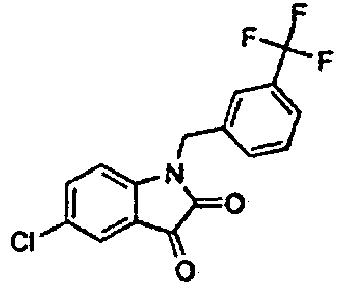
5-chloro-1-{[3-(trifluoromethyl)phenyl]methyl}-1H-indole-2,3-dione 340.7 21* 
1-[(4-methylphenyl)methyl]-5-nitro-1H-indole-2,3-dione 297.3 22* 
1-methyl-6,7-bis(methyloxy)-2-{[3-(methyloxy)phenyl]carbonyl}-1,2,3,4-tetrahydroisoquinoline 342.4 23* 
1-methyl-6,7-bis(methyloxy)-2-(naphthalen-2-ylcarbonyl)-1,2,3,4-tetrahydroisoquinoline 362.4 24* 
[2-(trifluoromethyl)phenyl]methyl 3-[4-(aminocarbonyl)phenyl]-2-cycloheptyl-1-oxo-1,2,3,4-tetrahydroisoquinoline-4-carboxylate 565.6 25* 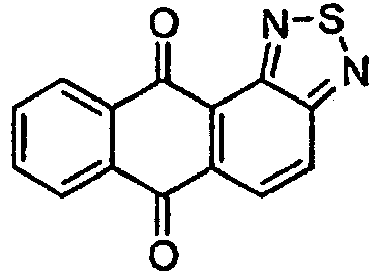
anthra[1,2-c][1,2,5]thiadiazole-6,11-dione 267.3 26* 
benzo[b]oxanthrene-6,11-dione 265.2 27* 
ethyl 6,11-dioxo-6,11-dihydrobenzo[b]phenazine-2-carboxylate 333.3 28* 
N,N-dimethyl-9,10-dioxo-9,10-dihydroanthracene-1-sulfonamide 316.3 29* 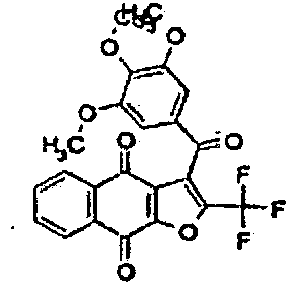
2-(trifluoromethyl)-3-{[3,4,5-tris(methyloxy)phenyl]carbonyl}n aphtho[2,3-b]furan-4,9-dione 461.4 30* 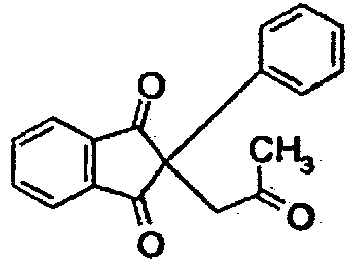
2-(2-oxopropyl)-2-phenyl-1H-indene-1,3(2H)-dione 279.3 31* 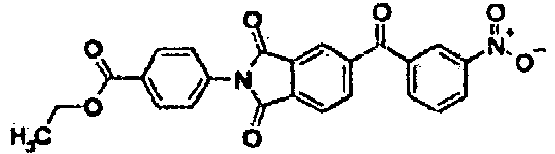
ethyl 4-{5-[(3-nitrophenyl)carbonyl]-1,3-dioxo-1,3-dihydro-2H-isoindol-2-yl}benzoate 445.4 32* 
5,6-dichloro-2-[2-chloro-5-(trifluoromethyl)phenyl]-1H-isoindole-1,3(2H)-dione 395.6 33* 
3-bromo-4-{[(2-fluorophenyl)methyl]oxy}-5-methyloxy)benzaldehyde thiosemicarbazone 413.3 34* 
2-[4-(3-chlorophenyl)piperazin-1-yl]-5-nitrobenzaldehyde thiosemicarbazone 419.9 35* 
4-{[2-(3-chlorophenyl)ethyl]amino}-3-nitrobenzaldehyde thiosemicarbazone 378.9 36* 
(1E)-6,9-dimethyl-2,3,4,9-tetrahydro-1H-carbazol-1-one thiosemicarbazone 287.4 37* 
(2E)-1,1'-bi(cyclohexan)-1-en-2-one thiosemicarbazone 252.4 38* 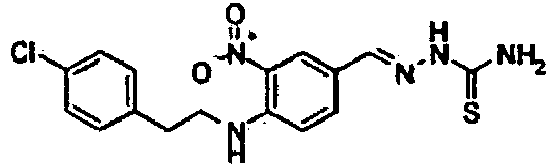
4-{[2-(4-chlorophenyl)ethyl]amino}-3-nitrobenzaldehyde thiosemicarbazone 378.9 39* 
4-(diethylamino)-2-{[(4-fluorophenyl)methyl]oxy}benzald ehyde N-(2-piperidin-1-ylethyl)thiosemicarbazone 486.7 40* 
3,4-bis(methyloxy)benzaldehyde 1,1-dioxido-1,2-benzisothiazol-3-yl)(methyl)hydrazone 360.4 41* 
(2E)-2-[(4-chlorophenyl)(5-chlorothien-2-yl)methylidene]hydrazinecarboxi midamide 314.2 42* 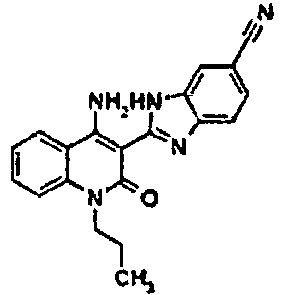
2-(4-amino-2-oxo-1-propyl-1,2-dihydroquinolin-3-yl)-1H-enzimidazole-6-carbonitrile 344.4 43* 
4-amino-6-fluoro-7-({[4-(methyloxy)phenyl]methyl}amino )-3-[5-(4-methylpiperazin-1-yl)-1H-benzimidazol-2-yl]quinolin-2(1H)-one 528.6 44* 
3-chloro-3-(5-chloro-1H-enzimidazol-2-yl)-4-{[2-dimethylamino)ethyl]amino}quin olin-2(1H)-one 417.3 45* 
4-mino-5-(1H-benzimidazol-2-yl)-1-methyl-1,7-dihydro-6H-pyrazolo[3,4-b]pyridin-6-one 281.3 46* 
5,5-dimethyl-4-methylidene-3-2,4,6-trinitrophenyl)-1,3-oxazolidin-2-one 339.2 47* 
ethyl-2-[4-(methyloxy)phenyl]hexahydro-1 H-isoindole-1,3(2H)-dione 274.3 48* 
5-methyl-2-(4-methylphenyl)hexahydro-1H-isoindole-1,3(2H)-dione 258.3 49* 
N~2~-(4-chlorophenyl)-6,6-dimethyl-1,6-dihydro-1,3,5-triazine-2,4-diamine 252.7 50* 
(7Z)-7-(furan-2-ylmethylidene)-3-henyl-3,4-dihydro-2H-[1,3]thiazolo[3,2-a][1,3,5]triazin-6(7H)-one 312.4 51* 
(3aR,9R,9aR)-6,7-dihydroxy-9-3,4,5-tris(methyloxy)phenyl]-3a,4,9,9a-tetrahydronaphtho[2,3-c]furan-1(3H)-one 387.4 52* 
6-chloro-2-(ethyloxy)4-methyl-3-(4-nitrophenyl)-3a,4,9,9a-tetrahydro-3H-pyrrolo[2,3-b]quinoxaline 387.8 53* 
ethyl 2-(ethyloxy)-4-methyl-3a,4,9,9a-tetrahydro-3H-pyrrolo[2,3-b]quinoxaline-3-carboxylate 304.4 54* 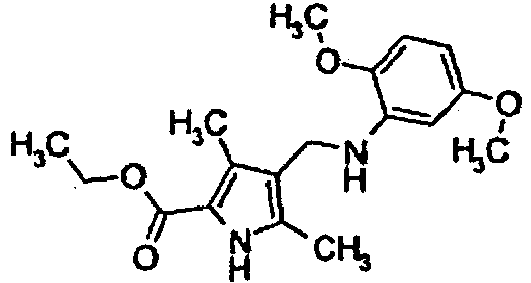
ethyl 4-({[2,5-bis(methyloxy)phenyl]amino}met hyl)-3,5-dimethyl-1H-pyrrole-2-carboxylate 333.4 55* 
1-{3-[(6-amino-5-nitropyridin-2-yl)amino]propyl}-4-(2-chlorophenyl)-N-[(2S)-2-hydroxypropyl]-1H-pyrrole-3-carboxamide 473.9 56* 
(4-methylphenyl)(5-nitro-2-piperidin-1-ylphenyl)methanone 325.4 57* 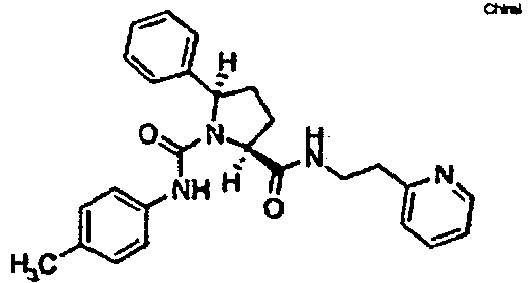
(2S,5R)-N~1~-(4-methylphenyl)-5-phenyl-N~2~-(2-pyridin-2-ylethyl)pyrrolidine-1,2-dicarboxamide 429.5 58* 
-[(3S)-3-(acetylamino)-2-oxopyrrolidin-1-yl]-N-[2-(4-fluorophenyl)ethyl]acetamide 322.4 59* 
N-[2-(2,4-dichlorophenyl)ethyl]-4-({(Z)-{(4,4-difluorocyclohexyl)imino[(3S)-3-methylpiperazin-1-yl]methyl}amino)benzamide 553.5 60* 
4-[4-(methyloxy)phenyl]-5-phenylisoxazole 252.3 61* 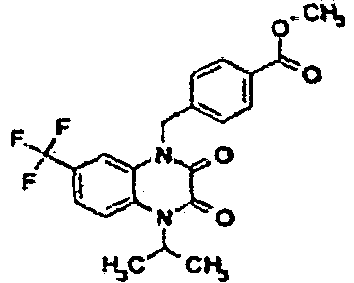
methyl 4-{[4-(1-methylethyl)-2,3-dioxo-7-(trifluoromethyl)-3,4-dihydroquinoxalin-1(2H)-yl]methyl}benzoate 421.4 62* 
(3beta,16beta)-3,14,16-trihydroxybufa-20,22-dienolide 403.5 63* 
2-(aminomethyl)-1-(2-pyridin-2-ylethyl)quinazolin-4(1H)-one 281.3 64* 
ethyl 4-{[5-[3,4--bis(methyloxy)phenyl]-7-(trifluoromethyl)pyrazolo[1,5-a]pyrimidin-3-yl]carbonyl}piperazine-1-carboxylate 508.5 65* 
5-[3,4-bis(methyloxy)phenyl]-3-(piperidin-1-ylcarbonyl)-7-(trifluoromethyl)pyrazolo[1,5-a]pyrimidine 435.4 66* 
5-[3,4-bis(methyloxy)phenyl]-N-methyl-N-(2-pyridin-2-ylethyl)-7-trifluoromethyl)pyrazolo[1,5-a]pyrimidine-2-carboxamide 486.5 67* 
5-propyl-2-thien-2-ylpyrazolo[1,5-a]pyrimidin-7-ol 260.3 * = comparative example - Candidate small molecule immuno-potentiators can be identified in vitro. Compounds are screened in vitro for their ability to activate immune cells. One marker of such activation is the induction of cytokine production, for example TNF-α production. Apoptosis inducing small molecules may be identified having this activity. These small molecule immuno-potentiators have potential utility as adjuvants and immuno-therapeutics.
- In an assay procedure (High Throughput Screening (HTS)) for small molecule immune potentiators (SMIPs), human peripheral blood mononuclear cells (PBMC), 500,000 per mL in RPMI 1640 medium with 10% FCS, were distributed in 96 well plates (100,000 per well) already containing 5µM of compound in DMSO. The PBMCs were incubated for 18 h at 37°C in 5% CO2. Their ability to produce cytokines in response to the small molecule compounds is determined using a modified sandwich ELISA.
- Briefly supernatants from the PBMC cultures were assayed for secreted TNF using a primary plate bound antibody for capture followed by a secondary biotinylated anti-TNF antibody forming a sandwich. The biotinylated second antibody was then detected using streptavidin-Europium and the amount of bound europium was determined by time resolved fluorescence. SMIP compounds were confirmed by their TNF inducing activity that was measured in the assay as increased Europim counts over cells incubated in RPMI medium alone. "Hits" were selected based on their TNF-inducing activity relative to an optimal dose of lipopolysaccaride LPS (1 µg/ml), a strong TNF inducer. The robustness of the assay and low backgrounds allowed for the routine selection of hits with ~10% of LPS activity that was normally between 5-10X background (cells alone). Selected hits are then subjected to confirmation for their ability to induce cytokines from multiple donors at decreasing concentrations. Those compounds with consistent activity at or below 5µM are considered confirmed for the purposes of this assay. The assay is readily modified for screening for compounds effective at higher or lower concentrations.
- Each of Examples 2-67 elicited TNF-α production in human peripheral blood mononuclear cells. Many of the compounds showed activity at less than 20 µM with respect to production of TNF-α. Many of these compounds showed activity at less than 5 µM with respect to production of TNF-α. Many of these compounds showed activity in the production of TNF-α at less than 1.5 µM.
- For this reason, each of the R groups of any of the compounds listed in Table 1 are preferred. Additionally, because of the excellent activity of each of the compounds, each of these compounds is individually preferred and is preferred as a member of a group that includes any or all of the other compounds and each compound is preferred in methods of modulating immunopotentiation and in methods of treating biological conditions associated therewith, for example to be used as a vaccine adjuvant. Each of the compounds is also preferred for use in preparation of medicaments for vaccines, immunopotentiation, reducing tumor growth and in treating biological conditions mediated therefrom.
- In additon to the procedure described above, methods of measuring other cytokines (e.g. IL1-beta, IL-12, IL-6, IFN-gamma, IL-10 etc.) are well known in the art and can be used to find active SMIP compounds of the present invention.
- Compounds may be useful that cause production of TNF-α at higher concentrations, such as 100µM, 200 µM or 300µM in the assays described herein. For example Loxoribine causes useful production of TNF-α at 300µM (see Pope et al Immunostimulatory Compound 7-Allyl-8-Oxoguanosine (Loxoribine) Induces a Distinct Subset of Murine Cytokines Cellular Immunology 162: 333-339 (1995)).
Claims (9)
- A pharmaceutical composition comprising a SMIP compound and an antigen, wherein the SMIP compound is a benzazole compound of formula (XXI):

A is selected from the group consisting of -O-, -S-, -NH-, and -NR8-;
W is selected from the group consisting of -CH2-, -O-, -S-, -NH-, and -NR8-;
R7 is selected from the group consisting of carbocyclyl, unfused carbocyclylcarbocyclyl, substituted aryl, unsubstituted aryl, substituted heteroaryl, unsubstituted heteroaryl, substituted fused arylheteroaryl, unsubstituted fused arylheteroaryl, substituted unfused arylaryl and unsubstituted unfused arylaryl;
R6 is selected from the group consisting of substituted or unsubstituted aryl, and heteroaryl; and,
R8 is independently substituted or unsubstituted alkyl,
or a pharmaceutically acceptable salt or ester thereof and a pharmaceutically acceptable excipient;
wherein the antigen is associated with a disease selected from the group consisting of BCG, cholera, plague, typhoid, hepatitis B infection, influenza, inactivated polio, rabies, measles, mumps, rubella, oral polio, yellow fever, tetanus, diphtheria, hemophilus influenzae b, meningococcus infection, and pneumococcus infection; and
wherein said composition elicits an immune response in a subject. - The pharmaceutical composition according to claim 1, wherein the immune response is the cellular production of one or more cytokines.
- The pharmaceutical composition of claim 1, wherein the SMIP compound is selected from the group consisting of:N-methyl-4-[(2-{[2-(1-methylethyl)phenyl]amino}-1H-benzimidazol-5-yl)oxy]pyridine-2-carboxamide;N-methyl-4-{[1-methyl-2-({3-[(trimethylsilyl)ethynyl]phenyl}amino)-1H-benzimidazol-5-yl]oxy}pyridine-2-carboxamide;N-methyl-4-[(1-methyl-2-{[2-(phenylcarbonyl)phenyl]amino}-1H-benzimidazol-5-yl)oxy]pyridine-2-carboxamide;4-({2-[(4-butylphenyl)amino]-1,3-benzothiazol-5-yl}oxy)-N-methylpyridine-2-carboxamide;N-methyl-4-({1-methyl-2-[(6-pyrrolidin-1-ylpyridin-3-yl)amino]-1H-benzimidazol-5-yl}oxy)pyridine-2-carboxamide;4-({2-[1,1'-bi(cyclohexyl)-2-ylamino]-1-methyl-1H-benzimidazol-5-yl}oxy)-N-methylpyridine-2-carboxamide;4-({2-[(4-chlorophenyl)amino]-1-methyl-1H-benzimidazol-5-yl}oxy)-N-1,3-thiazol-2-ylpyridine-2-carboxamide;4-[(1-methyl-2-{[2-(methyloxy)phenyl]amino}-1H-benzimidazol-5-yl)oxy]-N-[3-(methyloxy)propyl]pyridine-2-carboxamide; and,4-({2-[(4-ethylphenyl)amino]-1,3-benzoxazol-5-yl}oxy)-N-methylpyridine-2-carboxamide.
- The pharmaceutical composition of claim 1, wherein the antigen is associated with influenza.
- The pharmaceutical composition of claim 4, wherein the antigen comprises haemagglutinin and/or neuraminidase.
- The pharmaceutical composition according to any one of claims 1-5, further comprising an adjuvant.
- The pharmaceutical composition of claim 6, wherein the adjuvant is MF59.
- Use of a compound of formula XXI, in the manufacture of a medicament for the treatment or prevention of a chronic viral or bacterial infection:

A is selected from the group consisting of -O-, -S-, -NH-, and -NR8-;
W is selected from the group consisting of -CH2-, -O-, -S-, -NH-, and -NR8-;
R7 is selected from the group consisting of carbocyclyl, unfused carbocyclylcarbocyclyl, substituted aryl, unsubstituted aryl, substituted heteroaryl, unsubstituted heteroaryl, substituted fused arylheteroaryl, unsubstituted fused arylheteroaryl, substituted unfused arylaryl and unsubstituted unfused arylaryl;
R6 is selected from the group consisting of substituted or unsubstituted aryl, and heteroaryl; and,
R8 is independently substituted or unsubstituted alkyl,
or a pharmaceutically acceptable salt or ester thereof. - The use according to claim 8, wherein the infection is from influenza.
Priority Applications (1)
| Application Number | Priority Date | Filing Date | Title |
|---|---|---|---|
| EP10180709.7A EP2258365B1 (en) | 2003-03-28 | 2004-03-29 | Use of organic compounds for immunopotentiation |
Applications Claiming Priority (3)
| Application Number | Priority Date | Filing Date | Title |
|---|---|---|---|
| US45888803P | 2003-03-28 | 2003-03-28 | |
| US458888P | 2003-03-28 | ||
| PCT/US2004/010331 WO2004087153A2 (en) | 2003-03-28 | 2004-03-29 | Use of organic compounds for immunopotentiation |
Related Child Applications (1)
| Application Number | Title | Priority Date | Filing Date |
|---|---|---|---|
| EP10180709.7 Division-Into | 2010-09-28 |
Publications (2)
| Publication Number | Publication Date |
|---|---|
| EP1608369A2 EP1608369A2 (en) | 2005-12-28 |
| EP1608369B1 true EP1608369B1 (en) | 2013-06-26 |
Family
ID=33131836
Family Applications (2)
| Application Number | Title | Priority Date | Filing Date |
|---|---|---|---|
| EP04758593.0A Expired - Lifetime EP1608369B1 (en) | 2003-03-28 | 2004-03-29 | Use of organic compounds for immunopotentiation |
| EP10180709.7A Expired - Lifetime EP2258365B1 (en) | 2003-03-28 | 2004-03-29 | Use of organic compounds for immunopotentiation |
Family Applications After (1)
| Application Number | Title | Priority Date | Filing Date |
|---|---|---|---|
| EP10180709.7A Expired - Lifetime EP2258365B1 (en) | 2003-03-28 | 2004-03-29 | Use of organic compounds for immunopotentiation |
Country Status (5)
| Country | Link |
|---|---|
| US (1) | US7893096B2 (en) |
| EP (2) | EP1608369B1 (en) |
| CA (1) | CA2520124A1 (en) |
| ES (1) | ES2423800T3 (en) |
| WO (1) | WO2004087153A2 (en) |
Families Citing this family (207)
| Publication number | Priority date | Publication date | Assignee | Title |
|---|---|---|---|---|
| ATE448226T1 (en) | 2000-09-01 | 2009-11-15 | Novartis Vaccines & Diagnostic | AZA HETEROCYCLIC DERIVATIVES AND THEIR THERAPEUTIC USE |
| AP1666A (en) | 2000-09-11 | 2006-09-29 | Chiron Corp | Quinolinone derivatives as tyrosine kinase inhibitors. |
| CA2598144A1 (en) * | 2000-12-08 | 2006-08-31 | 3M Innovative Properties Company | Compositions and methods for targeted delivery of immune response modifiers |
| ATE447404T1 (en) * | 2002-03-29 | 2009-11-15 | Novartis Vaccines & Diagnostic | SUBSTITUTED BENZAZOLES AND THEIR USE AS RAF-KINASE INHIBITORS |
| US8299108B2 (en) * | 2002-03-29 | 2012-10-30 | Novartis Ag | Substituted benzazoles and methods of their use as inhibitors of raf kinase |
| CA2496164C (en) | 2002-08-23 | 2010-11-09 | Chiron Corporation | Benzimidazole quinolinones and uses thereof |
| JP4391422B2 (en) | 2002-12-17 | 2009-12-24 | 浜理薬品工業株式会社 | Novel 2,4-diamino-1,3,5-triazine derivatives |
| AU2004266641A1 (en) | 2003-08-12 | 2005-03-03 | 3M Innovative Properties Company | Oxime substituted imidazo-containing compounds |
| NZ545412A (en) | 2003-08-27 | 2008-12-24 | Coley Pharm Group Inc | Aryloxy and arylalkyleneoxy substituted imidazoquinolines |
| US20050054665A1 (en) | 2003-09-05 | 2005-03-10 | 3M Innovative Properties Company | Treatment for CD5+ B cell lymphoma |
| WO2005032484A2 (en) | 2003-10-03 | 2005-04-14 | 3M Innovative Properties Company | Alkoxy substituted imidazoquinolines |
| US7544697B2 (en) | 2003-10-03 | 2009-06-09 | Coley Pharmaceutical Group, Inc. | Pyrazolopyridines and analogs thereof |
| JP2007511535A (en) | 2003-11-14 | 2007-05-10 | スリーエム イノベイティブ プロパティズ カンパニー | Hydroxylamine substituted imidazo ring compounds |
| JP2007511527A (en) | 2003-11-14 | 2007-05-10 | スリーエム イノベイティブ プロパティズ カンパニー | Oxime-substituted imidazo ring compounds |
| NZ547467A (en) | 2003-11-25 | 2010-06-25 | 3M Innovative Properties Co | Substituted imidazo ring system and methods |
| DK1701940T3 (en) * | 2003-12-23 | 2008-09-08 | Lundbeck & Co As H | 2- (1H-indolylsulfanyl) benzylamine derivatives as SSRIs |
| WO2005066170A1 (en) | 2003-12-29 | 2005-07-21 | 3M Innovative Properties Company | Arylalkenyl and arylalkynyl substituted imidazoquinolines |
| JP2007517044A (en) | 2003-12-30 | 2007-06-28 | スリーエム イノベイティブ プロパティズ カンパニー | Imidazoquinolinyl, imidazopyridinyl, and imidazonaphthyridinylsulfonamide |
| CN1960731B (en) * | 2004-02-20 | 2011-12-07 | 诺华疫苗和诊断公司 | Method for regulating inflammatory and metastatic processes |
| CA2559863A1 (en) | 2004-03-24 | 2005-10-13 | 3M Innovative Properties Company | Amide substituted imidazopyridines, imidazoquinolines, and imidazonaphthyridines |
| US20050267145A1 (en) * | 2004-05-28 | 2005-12-01 | Merrill Bryon A | Treatment for lung cancer |
| WO2005123080A2 (en) | 2004-06-15 | 2005-12-29 | 3M Innovative Properties Company | Nitrogen-containing heterocyclyl substituted imidazoquinolines and imidazonaphthyridines |
| WO2006009826A1 (en) | 2004-06-18 | 2006-01-26 | 3M Innovative Properties Company | Aryloxy and arylalkyleneoxy substituted thiazoloquinolines and thiazolonaphthyridines |
| WO2006065280A2 (en) | 2004-06-18 | 2006-06-22 | 3M Innovative Properties Company | Isoxazole, dihydroisoxazole, and oxadiazole substituted imidazo ring compounds and methods |
| US7897609B2 (en) | 2004-06-18 | 2011-03-01 | 3M Innovative Properties Company | Aryl substituted imidazonaphthyridines |
| WO2006115509A2 (en) * | 2004-06-24 | 2006-11-02 | Novartis Vaccines And Diagnostics Inc. | Small molecule immunopotentiators and assays for their detection |
| AR052308A1 (en) * | 2004-07-16 | 2007-03-14 | Lundbeck & Co As H | DERIVATIVES OF 2- (1H-INDOLILSULFANIL) -ARILAMINE AND A PHARMACEUTICAL COMPOSITION CONTAINING THE COMPOUND |
| WO2006026470A2 (en) * | 2004-08-27 | 2006-03-09 | 3M Innovative Properties Company | Hiv immunostimulatory compositions |
| AR051780A1 (en) * | 2004-11-29 | 2007-02-07 | Japan Tobacco Inc | FUSIONED RING COMPOUNDS CONTAINING NITROGEN AND USING THEMSELVES |
| US7943609B2 (en) | 2004-12-30 | 2011-05-17 | 3M Innovative Proprerties Company | Chiral fused [1,2]imidazo[4,5-C] ring compounds |
| JP5313502B2 (en) | 2004-12-30 | 2013-10-09 | スリーエム イノベイティブ プロパティズ カンパニー | Substituted chiral condensed [1,2] imidazo [4,5-c] cyclic compounds |
| US8461174B2 (en) * | 2004-12-30 | 2013-06-11 | 3M Innovative Properties Company | Treatment for cutaneous metastases |
| AU2006210392A1 (en) | 2005-02-04 | 2006-08-10 | Coley Pharmaceutical Group, Inc. | Aqueous gel formulations containing immune response modifiers |
| AU2006213746A1 (en) | 2005-02-11 | 2006-08-17 | Coley Pharmaceutical Group, Inc. | Oxime and hydroxylamine substituted imidazo(4,5-c) ring compounds and methods |
| CN101142198B (en) | 2005-02-17 | 2012-10-31 | 辛塔制药公司 | Isoxazole cambrestatin derivatives for use in the treatment of diseases |
| SG164344A1 (en) | 2005-02-18 | 2010-09-29 | Novartis Vaccines & Diagnostics Srl | Immunogens from uropathogenic escherichia coli |
| DK2351772T3 (en) | 2005-02-18 | 2016-09-05 | Glaxosmithkline Biologicals Sa | Proteins and nucleic acids from meningitis / sepsis-associated Escherichia coli |
| CA2602683A1 (en) | 2005-04-01 | 2006-10-12 | Coley Pharmaceutical Group, Inc. | Pyrazolopyridine-1,4-diamines and analogs thereof |
| CA2602590A1 (en) | 2005-04-01 | 2006-10-12 | Coley Pharmaceutical Group, Inc. | 1-substituted pyrazolo (3,4-c) ring compounds as modulators of cytokine biosynthesis for the treatment of viral infections and neoplastic diseases |
| AU2006241166A1 (en) * | 2005-04-25 | 2006-11-02 | 3M Innovative Properties Company | Immunostimulatory compositions |
| EP1888556B1 (en) | 2005-05-17 | 2011-10-26 | Novartis AG | Methods for synthesizing heterocyclic compounds |
| US20070155738A1 (en) * | 2005-05-20 | 2007-07-05 | Alantos Pharmaceuticals, Inc. | Heterobicyclic metalloprotease inhibitors |
| WO2006128184A2 (en) * | 2005-05-20 | 2006-11-30 | Alantos-Pharmaceuticals, Inc. | Pyrimidine or triazine fused bicyclic metalloprotease inhibitors |
| US7629473B2 (en) * | 2005-06-17 | 2009-12-08 | H. Lundbeck A/S | 2-(1H-indolylsulfanyl)-aryl amine derivatives |
| AR054393A1 (en) * | 2005-06-17 | 2007-06-20 | Lundbeck & Co As H | DERIVATIVES OF BENZO (B) FURANO AND BENZO (B) THIOPHEN, PHARMACEUTICAL COMPOSITIONS CONTAINING THEM AND THEIR USE IN THE MANUFACTURE OF A MEDICINAL PRODUCT FOR THE TREATMENT OF DISEASES MEDIATED BY THE INHIBITION OF THE REINFORCEMENT OF AMINA BOSS NEUTRANTS. |
| WO2007011777A2 (en) | 2005-07-18 | 2007-01-25 | Novartis Ag | Small animal model for hcv replication |
| PE20070427A1 (en) | 2005-08-30 | 2007-04-21 | Novartis Ag | BENZIMIDAZOLES DERIVED COMPOUNDS SUBSTITUTED AS TYROSINE KINASE INHIBITORS |
| WO2007035613A1 (en) * | 2005-09-19 | 2007-03-29 | Bg Medicine, Inc. | Correlation analysis of biological systems |
| AU2006310337B9 (en) | 2005-11-04 | 2013-11-28 | Novartis Ag | Adjuvanted influenza vaccines including cytokine-inducing agents |
| US8697087B2 (en) | 2005-11-04 | 2014-04-15 | Novartis Ag | Influenza vaccines including combinations of particulate adjuvants and immunopotentiators |
| AU2006310163B2 (en) | 2005-11-04 | 2011-09-15 | Seqirus UK Limited | Influenza vaccine with reduced amount of oil-in-water emulsion as adjuvant |
| PL1945252T3 (en) | 2005-11-04 | 2013-11-29 | Seqirus Uk Ltd | Vaccines comprising purified surface antigens prepared from influenza viruses grown in cell culture, adjuvanted with squalene |
| TW200804288A (en) | 2005-12-12 | 2008-01-16 | Astrazeneca Ab | Alkylsulphonamide quinolines |
| US7622128B2 (en) * | 2005-12-13 | 2009-11-24 | University Of Washington | Porphyromonas gingivalis 1435/1449 LPS as an immune modulator |
| JO2660B1 (en) | 2006-01-20 | 2012-06-17 | نوفارتيس ايه جي | PI-3 Kinase inhibitors and methods of their use |
| WO2007085969A2 (en) | 2006-01-27 | 2007-08-02 | Novartis Vaccines And Diagnostics Gmbh & Co Kg | Influenza vaccines containing hemagglutinin and matrix proteins |
| CN101379060B (en) | 2006-02-10 | 2012-05-23 | 转化技术制药公司 | Benzoxazole Derivatives, Compositions and Methods of Use as Aurora Kinase Inhibitors |
| WO2007100634A2 (en) | 2006-02-22 | 2007-09-07 | 3M Innovative Properties Company | Immune response modifier conjugates |
| US8173657B2 (en) * | 2006-03-23 | 2012-05-08 | Novartis Ag | Imidazoquinoxaline compounds as immunomodulators |
| US8063063B2 (en) * | 2006-03-23 | 2011-11-22 | Novartis Ag | Immunopotentiating compounds |
| US20100010217A1 (en) * | 2006-03-23 | 2010-01-14 | Valiante Nicholas M | Methods for the preparation of imidazole-containing compounds |
| CN101448523A (en) | 2006-03-24 | 2009-06-03 | 诺华疫苗和诊断有限两合公司 | Storage of influenza vaccines without refrigeration |
| SG173336A1 (en) | 2006-03-31 | 2011-08-29 | Novartis Ag | Combined mucosal and parenteral immunization against hiv |
| TW200808739A (en) | 2006-04-06 | 2008-02-16 | Novartis Vaccines & Diagnostic | Quinazolines for PDK1 inhibition |
| US20100015168A1 (en) | 2006-06-09 | 2010-01-21 | Novartis Ag | Immunogenic compositions for streptococcus agalactiae |
| US7906506B2 (en) | 2006-07-12 | 2011-03-15 | 3M Innovative Properties Company | Substituted chiral fused [1,2] imidazo [4,5-c] ring compounds and methods |
| GB0614460D0 (en) | 2006-07-20 | 2006-08-30 | Novartis Ag | Vaccines |
| RU2009107688A (en) | 2006-08-04 | 2010-09-10 | Мерц Фарма Гмбх Унд Ко. Кгаа (De) | Pyrazolopyrimidines, a method for their production and their use as a medicine |
| US20100166788A1 (en) | 2006-08-16 | 2010-07-01 | Novartis Vaccines And Diagnostics | Immunogens from uropathogenic escherichia coli |
| JP5954921B2 (en) | 2006-09-11 | 2016-07-20 | ノバルティス アーゲー | Production of influenza virus vaccine without eggs |
| MX2009003673A (en) * | 2006-10-04 | 2009-04-22 | Pfizer Prod Inc | Pyrido[4,3-d]pyrimidin-4(3h)-one derivatives as calcium receptor antagonists. |
| WO2008045664A2 (en) * | 2006-10-06 | 2008-04-17 | Kalypsys, Inc. | Heterocyclic pde4 inhibitors as antiinflammatory agents |
| GB0623012D0 (en) * | 2006-11-17 | 2006-12-27 | Nordic Bioscience As | Diphyllin and other lignans as a medicament for V-ATPase mediated disease |
| WO2008068631A2 (en) | 2006-12-06 | 2008-06-12 | Novartis Ag | Vaccines including antigen from four strains of influenza virus |
| MX2009006706A (en) | 2006-12-22 | 2009-07-02 | Astex Therapeutics Ltd | Bicyclic heterocyclic compounds as fgfr inhibitors. |
| CA2672213C (en) | 2006-12-22 | 2016-02-16 | Astex Therapeutics Limited | Bicyclic amine derivatives as protein tyrosine kinase inhibitors |
| US20080149123A1 (en) | 2006-12-22 | 2008-06-26 | Mckay William D | Particulate material dispensing hairbrush with combination bristles |
| GB0700562D0 (en) | 2007-01-11 | 2007-02-21 | Novartis Vaccines & Diagnostic | Modified Saccharides |
| EA023804B1 (en) * | 2007-02-06 | 2016-07-29 | Ликсте Байотекнолоджи, Инк. | Oxabicycloheptanes, their preparation and use |
| GB0706072D0 (en) * | 2007-03-28 | 2007-05-09 | Sterix Ltd | Compound |
| CL2008001626A1 (en) | 2007-06-05 | 2009-06-05 | Takeda Pharmaceuticals Co | Compounds derived from fused heterocycles, a pharmaceutical agent that comprises them and their use in the prophylaxis and treatment of cancer. |
| EA201070066A1 (en) | 2007-06-27 | 2010-06-30 | Новартис Аг | VACCINES AGAINST FLU WITH LOW CONTENT OF ADDITIVES |
| GB0713880D0 (en) | 2007-07-17 | 2007-08-29 | Novartis Ag | Conjugate purification |
| GB0714963D0 (en) | 2007-08-01 | 2007-09-12 | Novartis Ag | Compositions comprising antigens |
| WO2009025358A1 (en) | 2007-08-23 | 2009-02-26 | Takeda Pharmaceutical Company Limited | Heterocyclic compound and use thereof |
| GB0720038D0 (en) | 2007-10-12 | 2007-11-21 | Astex Therapeutics Ltd | New compounds |
| GB0720041D0 (en) | 2007-10-12 | 2007-11-21 | Astex Therapeutics Ltd | New Compounds |
| GB0810305D0 (en) | 2008-06-05 | 2008-07-09 | Novartis Ag | Influenza vaccination |
| UY31545A1 (en) | 2007-12-20 | 2009-08-03 | NEW DERIVATIVES OF 2-CARBOXAMIDE CIANOAMINOUREA, ITS SALTS AND PHARMACEUTICALLY ACCEPTABLE PROFARMS, PREPARATION PROCESSES AND APPLICATIONS | |
| GB0818453D0 (en) | 2008-10-08 | 2008-11-12 | Novartis Ag | Fermentation processes for cultivating streptococci and purification processes for obtaining cps therefrom |
| EP2090576A1 (en) | 2008-02-01 | 2009-08-19 | Merz Pharma GmbH & Co.KGaA | 6-halo-pyrazolo[1,5-a]pyridines, a process for their preparation and their use as metabotropic glutamate receptor (mGluR) modulators |
| EP2085398A1 (en) | 2008-02-01 | 2009-08-05 | Merz Pharma GmbH & Co. KGaA | Pyrazolopyrimidines, a process for their preparation and their use as medicine |
| AU2009227674C1 (en) | 2008-03-18 | 2015-01-29 | Seqirus UK Limited | Improvements in preparation of influenza virus vaccine antigens |
| GB0810902D0 (en) | 2008-06-13 | 2008-07-23 | Astex Therapeutics Ltd | New compounds |
| EP2399921B1 (en) | 2008-12-01 | 2015-08-12 | Takeda Pharmaceutical Company Limited | Heterocyclic compound and use thereof |
| JO3101B1 (en) | 2008-12-02 | 2017-09-20 | Takeda Pharmaceuticals Co | Benzothiazole derivatives as anticancer agents |
| JP5578490B2 (en) | 2008-12-26 | 2014-08-27 | 味の素株式会社 | Pyrazolopyrimidine compounds |
| ES2733084T3 (en) | 2009-03-06 | 2019-11-27 | Glaxosmithkline Biologicals Sa | Chlamydia antigens |
| SG175092A1 (en) | 2009-04-14 | 2011-11-28 | Novartis Ag | Compositions for immunising against staphylococcus aerus |
| GB0906470D0 (en) | 2009-04-15 | 2009-05-20 | Astex Therapeutics Ltd | New compounds |
| GB0906472D0 (en) | 2009-04-15 | 2009-05-20 | Astex Therapeutics Ltd | New compounds |
| WO2010125461A1 (en) | 2009-04-27 | 2010-11-04 | Novartis Ag | Adjuvanted vaccines for protecting against influenza |
| US8293753B2 (en) | 2009-07-02 | 2012-10-23 | Novartis Ag | Substituted 2-carboxamide cycloamino ureas |
| WO2011004263A2 (en) | 2009-07-07 | 2011-01-13 | Novartis Ag | Conserved escherichia coli immunogens |
| ES2918381T3 (en) | 2009-07-15 | 2022-07-15 | Glaxosmithkline Biologicals Sa | RSV F protein compositions and methods for producing the same |
| WO2011007257A1 (en) | 2009-07-16 | 2011-01-20 | Novartis Ag | Detoxified escherichia coli immunogens |
| FR2948026B1 (en) * | 2009-07-17 | 2011-12-02 | Merck Sante Sas | DIHYDRO-1,3,5-TRIAZINE AMINO DERIVATIVES |
| GB0918392D0 (en) | 2009-10-20 | 2009-12-02 | Novartis Ag | Diagnostic and therapeutic methods |
| GB0919690D0 (en) | 2009-11-10 | 2009-12-23 | Guy S And St Thomas S Nhs Foun | compositions for immunising against staphylococcus aureus |
| WO2011080595A2 (en) | 2009-12-30 | 2011-07-07 | Novartis Ag | Polysaccharide immunogens conjugated to e. coli carrier proteins |
| EP2525815B1 (en) * | 2010-01-24 | 2015-02-25 | Novartis AG | Irradiated biodegradable polymer microparticles |
| EP2575988A1 (en) | 2010-05-28 | 2013-04-10 | Tetris Online, Inc. | Interactive hybrid asynchronous computer game infrastructure |
| GB201009861D0 (en) | 2010-06-11 | 2010-07-21 | Novartis Ag | OMV vaccines |
| CA2802492C (en) | 2010-07-02 | 2018-10-16 | Gilead Sciences, Inc. | 2-quinolinyl-acetic acid derivatives as hiv antiviral compounds |
| ES2634490T3 (en) | 2010-07-02 | 2017-09-28 | Gilead Sciences, Inc. | Napht-2-ylacetic acid derivatives to treat AIDS |
| US9192661B2 (en) | 2010-07-06 | 2015-11-24 | Novartis Ag | Delivery of self-replicating RNA using biodegradable polymer particles |
| AR082418A1 (en) | 2010-08-02 | 2012-12-05 | Novartis Ag | CRYSTAL FORMS OF 1- (4-METHYL-5- [2- (2,2,2-TRIFLUORO-1,1-DIMETHYL-Ethyl) -PIRIDIN-4-IL] -TIAZOL-2-IL) -AMIDE OF 2 -AMIDA OF THE ACID (S) -PIRROLIDIN-1,2-DICARBOXILICO |
| LT2667892T (en) | 2011-01-26 | 2019-05-10 | Glaxosmithkline Biologicals Sa | Rsv immunization regimen |
| AU2012213080B2 (en) | 2011-01-31 | 2014-03-27 | Novartis Ag | Novel heterocyclic derivatives |
| WO2012139876A1 (en) | 2011-04-14 | 2012-10-18 | Merz Pharma Gmbh & Co. Kgaa | Enteric formulations of metabotropic glutamate receptor modulators |
| AP2013007249A0 (en) | 2011-04-21 | 2013-11-30 | Gilead Sciences Inc | Benzothiazole compounds and their pharmaceutical use |
| US10953012B2 (en) | 2011-04-26 | 2021-03-23 | Bioenergenix Llc | Heterocyclic compounds for the inhibition of pask |
| US10849863B2 (en) * | 2011-04-28 | 2020-12-01 | University Of Louisville Research Foundation, Inc. | Compounds for treating cancer, for administering, and for pharmaceutical compositions |
| AU2012255971A1 (en) | 2011-05-13 | 2013-05-02 | Novartis Ag | Pre-fusion RSV F antigens |
| WO2012167088A1 (en) | 2011-06-03 | 2012-12-06 | 3M Innovative Properties Company | Heterobifunctional linkers with polyethylene glycol segments and immune response modifier conjugates made therefrom |
| CN103582640B (en) | 2011-06-03 | 2015-11-25 | 3M创新有限公司 | Diazanyl 1H-imidazoquinoline-4-amine and the conjugate be made up of it |
| SI2722322T1 (en) | 2011-06-16 | 2019-11-29 | Korea Res Inst Chemical Tech | 1,3-di-oxo-indene derivative, pharmaceutically acceptable salt or optical isomer thereof, preparation process and pharmaceutical composition containing it as antiviral active ingredient |
| EP3597184A3 (en) | 2011-06-16 | 2020-04-22 | Korea Research Institute of Chemical Technology | Indanone derivatives, pharmaceutically acceptable salts or optical isomers thereof, preparation method for same, and pharmaceutical compositions containing same as active ingredient for preventing or treating viral diseases |
| WO2013009564A1 (en) | 2011-07-08 | 2013-01-17 | Novartis Ag | Tyrosine ligation process |
| WO2013029006A1 (en) * | 2011-08-25 | 2013-02-28 | The Trustees Of Princeton University | Dengue virus and yellow fever virus therapies |
| AP2014007595A0 (en) * | 2011-09-30 | 2014-04-30 | Kineta Inc | Anti-viral compounds |
| PH12014500912A1 (en) | 2011-10-28 | 2014-06-09 | Novartis Ag | Novel purine derivatives and their use in the treatment of disease |
| MX354924B (en) | 2011-11-07 | 2018-03-22 | Novartis Ag | Carrier molecule comprising a spr0096 and a spr2021 antigen. |
| WO2013087815A1 (en) | 2011-12-15 | 2013-06-20 | Merz Pharma Gmbh & Co. Kgaa | Liquid pharmaceutical composition containing a pyrazolopyrimidine derivative and pharmaceutical uses thereof |
| WO2013087808A1 (en) | 2011-12-15 | 2013-06-20 | Merz Pharma Gmbh & Co. Kgaa | Pharmaceutical composition comprising a pyrazolopyrimidme and cyclodextrin |
| WO2013103738A1 (en) | 2012-01-04 | 2013-07-11 | Gilead Sciences, Inc. | Napthalene acetic acid derivatives against hiv infection |
| WO2013103724A1 (en) | 2012-01-04 | 2013-07-11 | Gilead Sciences, Inc. | 2- (tert - butoxy) -2- (7 -methylquinolin- 6 - yl) acetic acid derivatives for treating aids |
| WO2013108272A2 (en) | 2012-01-20 | 2013-07-25 | International Centre For Genetic Engineering And Biotechnology | Blood stage malaria vaccine |
| PH12014500842A1 (en) | 2012-04-20 | 2014-06-09 | Gilead Sciences Inc | Benzothiazol-6-yl acetic acid derivatives and their use for treating an hiv infection |
| US10213432B2 (en) | 2012-05-16 | 2019-02-26 | Novartis Ag | Dosage regimen for a PI-3 kinase inhibitor |
| CA2885625A1 (en) | 2012-10-02 | 2014-04-10 | Glaxosmithkline Biologicals S.A. | Nonlinear saccharide conjugates |
| WO2014066795A1 (en) | 2012-10-25 | 2014-05-01 | Bioenergenix | Heterocyclic compounds for the inhibition of pask |
| WO2014066743A1 (en) | 2012-10-25 | 2014-05-01 | Bioenergenix | Heterocyclic compounds for the inhibition of pask |
| AU2013351182C1 (en) | 2012-11-30 | 2018-11-08 | Glaxosmithkline Biologicals Sa | Pseudomonas antigens and antigen combinations |
| EP4585266A3 (en) | 2012-12-14 | 2025-09-17 | Korea Research Institute of Chemical Technology | Compound, pharmaceutically acceptable salt or optical isomer thereof, method for preparing same, and pharmaceutical composition for prevention or treatment of viral diseases containing same as active ingredient |
| SMT202000597T1 (en) | 2013-01-07 | 2021-01-05 | Univ Pennsylvania | Compositions and methods for treating cutaneous t cell lymphoma |
| WO2014168941A1 (en) | 2013-04-09 | 2014-10-16 | Lixte Biotechnology, Inc. | Formulations of oxabicycloheptanes and oxabicycloheptenes |
| CA2909752A1 (en) | 2013-04-19 | 2014-10-23 | Astrazeneca Ab | A nk3 receptor antagonist compound (nk3ra) for use in a method for the treatment of polycystic ovary syndrome (pcos) |
| EP2870974A1 (en) | 2013-11-08 | 2015-05-13 | Novartis AG | Salmonella conjugate vaccines |
| EP3068398A4 (en) * | 2013-11-15 | 2017-11-15 | Lixte Biotechnology, Inc. | Protein phosphatase inhibitors that cross the blood brain barrier |
| CA2930359C (en) | 2013-12-06 | 2022-03-01 | Novartis Ag | Dosage regimen for an alpha-isoform selective phosphatidylinositol 3-kinase inhibitor |
| NO2699580T3 (en) | 2014-01-24 | 2018-02-24 | ||
| CN106163284A (en) | 2014-02-07 | 2016-11-23 | 北京强新生物科技有限公司 | 3‑substituted carbonylnaphtho[2,3‑b]furan derivatives or pharmaceutically acceptable salts thereof |
| CN103951602B (en) * | 2014-03-19 | 2016-06-15 | 河南理工大学 | There is the synthetic method of pyrroles's thiosemicarbazones copper of anti-tumor activity, nickel complex |
| WO2015167616A1 (en) * | 2014-05-02 | 2015-11-05 | Nitor Therapeutics | Guanosine as an immunepotentiator mediated through toll receptors |
| CN113501826B (en) | 2015-01-08 | 2025-04-04 | 美国政府健康及人类服务部 | Furanoquinolinediones as inhibitors of TDP2 |
| WO2016128465A1 (en) | 2015-02-11 | 2016-08-18 | Basilea Pharmaceutica Ag | Substituted mono- and polyazanaphthalene derivatives and their use |
| JO3637B1 (en) | 2015-04-28 | 2020-08-27 | Janssen Sciences Ireland Uc | Rsv antiviral pyrazolo- and triazolo-pyrimidine compounds |
| WO2016186963A1 (en) | 2015-05-15 | 2016-11-24 | Lixte Biotechnology, Inc. | Oxabicycloheptane prodrugs |
| US10526309B2 (en) | 2015-10-02 | 2020-01-07 | The University Of North Carolina At Chapel Hill | Pan-TAM inhibitors and Mer/Axl dual inhibitors |
| EP3156404A1 (en) * | 2015-10-15 | 2017-04-19 | Inventiva | New compounds inhibitors of the yap/taz-tead interaction and their use in the treatment of malignant mesothelioma |
| CN108472289A (en) | 2015-11-02 | 2018-08-31 | 诺华股份有限公司 | The dosage regimen of inhibitors of phosphatidylinositol3 3-kinase |
| KR102049140B1 (en) | 2016-05-31 | 2019-11-26 | 전남대학교산학협력단 | Isoquinolinone derivatives, preparation method thereof and pharmaceutical composition for treating influenza virus containing the same |
| KR102411150B1 (en) | 2016-08-31 | 2022-06-21 | 아지오스 파마슈티컬스 아이엔씨. | inhibitors of cellular metabolic processes |
| WO2018060833A1 (en) | 2016-09-27 | 2018-04-05 | Novartis Ag | Dosage regimen for alpha-isoform selective phosphatidylinositol 3-kinase inhibitor alpelisib |
| MX2019006694A (en) | 2016-12-08 | 2019-08-21 | Lixte Biotechnology Inc | Oxabicycloheptanes for modulation of immune response. |
| KR102652866B1 (en) | 2017-04-06 | 2024-04-02 | 엥방티바 | Novel compounds that are inhibitors of YAP/TAZ-TAD interaction and their use in the treatment of malignant mesothelioma |
| CA3068081A1 (en) | 2017-06-27 | 2019-01-03 | Janssen Pharmaceutica Nv | New quinolinone compounds |
| US10513515B2 (en) | 2017-08-25 | 2019-12-24 | Biotheryx, Inc. | Ether compounds and uses thereof |
| CN109721620B (en) * | 2017-10-27 | 2022-05-13 | 药捷安康(南京)科技股份有限公司 | HPK1 inhibitors and uses thereof |
| TW201932470A (en) | 2017-11-29 | 2019-08-16 | 愛爾蘭商健生科學愛爾蘭無限公司 | Pyrazolopyrimidines having activity against RSV |
| EP3746444B1 (en) | 2018-01-31 | 2023-09-27 | Janssen Sciences Ireland Unlimited Company | Cycloalkyl substituted pyrazolopyrimidines having activity against rsv |
| KR20200128116A (en) | 2018-02-28 | 2020-11-11 | 화이자 인코포레이티드 | IL-15 variants and uses thereof |
| CN112055593B (en) | 2018-03-01 | 2024-04-09 | 阿斯利康(瑞典)有限公司 | Pharmaceutical composition |
| CA3095277A1 (en) | 2018-04-23 | 2019-10-31 | Janssen Sciences Ireland Unlimited Company | Heteroaromatic compounds having activity against rsv |
| JP7057843B2 (en) | 2018-05-23 | 2022-04-20 | ファイザー・インク | GUCY2c-specific antibodies and their use |
| BR112020022897A2 (en) | 2018-05-23 | 2021-02-23 | Pfizer Inc. | specific antibodies to cd3 and their uses |
| EP3823627A4 (en) | 2018-07-17 | 2022-04-20 | Insmed Incorporated | Certain (2s)-n-[(1s)-1-cyano-2-phenylethyl]-1,4-oxazepane-2-carboxamides for treating lupus nephritis |
| WO2020023782A1 (en) | 2018-07-27 | 2020-01-30 | Biotheryx, Inc. | Bifunctional compounds as cdk modulators |
| EP3632908A1 (en) | 2018-10-02 | 2020-04-08 | Inventiva | Inhibitors of the yap/taz-tead interaction and their use in the treatment of cancer |
| WO2020097398A1 (en) | 2018-11-07 | 2020-05-14 | Dana-Farber Cancer Institute, Inc. | Benzothiazole derivatives and 7-aza-benzothiazole derivatives as janus kinase 2 inhibitors and uses thereof |
| WO2020097400A1 (en) | 2018-11-07 | 2020-05-14 | Dana-Farber Cancer Institute, Inc. | Imidazopyridine derivatives and aza-imidazopyridine derivatives as janus kinase 2 inhibitors and uses thereof |
| WO2020097396A1 (en) | 2018-11-07 | 2020-05-14 | Dana-Farber Cancer Institute, Inc. | Benzimidazole derivatives and aza-benzimidazole derivatives as janus kinase 2 inhibitors and uses thereof |
| US10844039B2 (en) | 2018-11-13 | 2020-11-24 | Biotheryx, Inc. | Substituted isoindolinones |
| WO2020128893A1 (en) | 2018-12-21 | 2020-06-25 | Pfizer Inc. | Combination treatments of cancer comprising a tlr agonist |
| MX2022006578A (en) | 2019-12-17 | 2022-07-04 | Pfizer | Antibodies specific for cd47, pd-l1, and uses thereof. |
| CN118598916A (en) | 2020-02-18 | 2024-09-06 | 吉利德科学公司 | Antiviral compounds |
| TWI775313B (en) | 2020-02-18 | 2022-08-21 | 美商基利科學股份有限公司 | Antiviral compounds |
| TWI883391B (en) | 2020-02-18 | 2025-05-11 | 美商基利科學股份有限公司 | Antiviral compounds |
| TWI832045B (en) | 2020-04-20 | 2024-02-11 | 瑞士商諾華公司 | Antiviral 1,3-di-oxo-indene compounds |
| TW202448874A (en) | 2020-04-20 | 2024-12-16 | 瑞士商諾華公司 | Antiviral 1,3-di-oxo-indene compounds |
| WO2021222150A2 (en) | 2020-04-28 | 2021-11-04 | Anwita Biosciences, Inc. | Interleukin-2 polypeptides and fusion proteins thereof, and their pharmaceutical compositions and therapeutic applications |
| WO2021226261A1 (en) | 2020-05-06 | 2021-11-11 | Ajax Therapeutics, Inc. | 6-heteroaryloxy benzimidazoles and azabenzimidazoles as jak2 inhibitors |
| WO2022013775A1 (en) | 2020-07-17 | 2022-01-20 | Pfizer Inc. | Therapeutic antibodies and their uses |
| TW202233620A (en) * | 2020-10-23 | 2022-09-01 | 南韓商日東製藥股份有限公司 | Cftr modulator compounds, compositions, and uses thereof |
| US11787812B2 (en) | 2020-12-11 | 2023-10-17 | Ildong Pharmaceutical Co., Ltd. | Substituted pyrazolo[4,3-d]pyrimidines and imidazo[5,1 -f][1,2,4]triazines as androgen receptor and phosphodiesterase dual inhibitors |
| US12043632B2 (en) | 2020-12-23 | 2024-07-23 | Ajax Therapeutics, Inc. | 6-heteroaryloxy benzimidazoles and azabenzimidazoles as JAK2 inhibitors |
| CN117120444A (en) | 2021-04-16 | 2023-11-24 | 吉利德科学公司 | Method for preparing carboside using amides |
| JP7719954B2 (en) | 2021-08-18 | 2025-08-06 | ギリアード サイエンシーズ, インコーポレイテッド | Phospholipid compounds and methods for producing and using same |
| WO2023067388A1 (en) * | 2021-10-22 | 2023-04-27 | Ildong Pharmaceutical Co., Ltd. | Uses of cftr modulator and/or pde4 inhibitor compounds |
| CA3234638A1 (en) | 2021-11-09 | 2023-05-19 | Ajax Therapeutics, Inc. | 6-heteroaryloxy benzimidazoles and azabenzimidazoles as jak2 inhibitors |
| TW202404603A (en) * | 2022-04-20 | 2024-02-01 | 南韓商日東製藥股份有限公司 | Composition including cftr activator |
| CN116240560A (en) * | 2023-01-03 | 2023-06-09 | 南京工业大学 | A kind of method utilizing microchannel reactor to electrochemically synthesize furoquinone |
| AU2024206233A1 (en) | 2023-01-06 | 2025-08-21 | Insmed Incorporated | Novel, reversible dpp1 inhibitors and uses thereof |
| CN117229207B (en) * | 2023-09-01 | 2024-09-03 | 浙江工业大学 | A phenylnaphthalene compound and its preparation and application |
| WO2025104289A1 (en) | 2023-11-17 | 2025-05-22 | Medincell S.A. | Antineoplastic combinations |
| US12129257B1 (en) | 2023-12-28 | 2024-10-29 | King Faisal University | Imidazo[1,2-a]pyrazine compounds as CK2 inhibitors |
Family Cites Families (83)
| Publication number | Priority date | Publication date | Assignee | Title |
|---|---|---|---|---|
| US4171353A (en) * | 1978-05-16 | 1979-10-16 | Ryan Wayne L | Immunization of animals using choline esters as an immunological adjuvant |
| IE52670B1 (en) | 1981-03-03 | 1988-01-20 | Leo Ab | Heterocyclic carboxamides,compositions containing such compounds,and processes for their preparation |
| IL73534A (en) | 1983-11-18 | 1990-12-23 | Riker Laboratories Inc | 1h-imidazo(4,5-c)quinoline-4-amines,their preparation and pharmaceutical compositions containing certain such compounds |
| US4806352A (en) | 1986-04-15 | 1989-02-21 | Ribi Immunochem Research Inc. | Immunological lipid emulsion adjuvant |
| ATE60999T1 (en) | 1986-12-19 | 1991-03-15 | Duphar Int Res | STABILIZED ADJUVANT SUSPENSION CONTAINING DIMETHYLDIOCTADECYLAMMONIUM BROMIDE. |
| ES2052685T3 (en) | 1987-03-17 | 1994-07-16 | Akzo Nv | METHOD TO PRODUCE A FREE ADJUVANT. |
| DE3841091A1 (en) | 1988-12-07 | 1990-06-13 | Behringwerke Ag | SYNTHETIC ANTIGENS, METHOD FOR THEIR PRODUCTION AND THEIR USE |
| US5238944A (en) | 1988-12-15 | 1993-08-24 | Riker Laboratories, Inc. | Topical formulations and transdermal delivery systems containing 1-isobutyl-1H-imidazo[4,5-c]quinolin-4-amine |
| CA2006700A1 (en) | 1989-01-17 | 1990-07-17 | Antonello Pessi | Synthetic peptides and their use as universal carriers for the preparation of immunogenic conjugates suitable for the development of synthetic vaccines |
| US4929624A (en) | 1989-03-23 | 1990-05-29 | Minnesota Mining And Manufacturing Company | Olefinic 1H-imidazo(4,5-c)quinolin-4-amines |
| HU212924B (en) | 1989-05-25 | 1996-12-30 | Chiron Corp | Adjuvant formulation comprising a submicron oil droplet emulsion |
| IT1237764B (en) | 1989-11-10 | 1993-06-17 | Eniricerche Spa | SYNTHETIC PEPTIDES USEFUL AS UNIVERSAL CARRIERS FOR THE PREPARATION OF IMMUNOGENIC CONJUGATES AND THEIR USE FOR THE DEVELOPMENT OF SYNTHETIC VACCINES. |
| DE69113564T2 (en) | 1990-08-13 | 1996-05-30 | American Cyanamid Co | Bordetella pertussis fiber hemagglutinin as a carrier for conjugated vaccine. |
| US5153312A (en) | 1990-09-28 | 1992-10-06 | American Cyanamid Company | Oligosaccharide conjugate vaccines |
| US5389640A (en) | 1991-03-01 | 1995-02-14 | Minnesota Mining And Manufacturing Company | 1-substituted, 2-substituted 1H-imidazo[4,5-c]quinolin-4-amines |
| GB9108547D0 (en) * | 1991-04-22 | 1991-06-05 | Fujisawa Pharmaceutical Co | Quinoline derivatives |
| US5268376A (en) | 1991-09-04 | 1993-12-07 | Minnesota Mining And Manufacturing Company | 1-substituted 1H-imidazo[4,5-c]quinolin-4-amines |
| US5266575A (en) | 1991-11-06 | 1993-11-30 | Minnesota Mining And Manufacturing Company | 2-ethyl 1H-imidazo[4,5-ciquinolin-4-amines |
| WO1993018150A1 (en) | 1992-03-02 | 1993-09-16 | Biocine S.P.A. | Helicobacter pylori proteins useful for vaccines and diagnostics |
| IT1262896B (en) | 1992-03-06 | 1996-07-22 | CONJUGATE COMPOUNDS FORMED FROM HEAT SHOCK PROTEIN (HSP) AND OLIGO-POLY-SACCHARIDES, THEIR USE FOR THE PRODUCTION OF VACCINES. | |
| US5395937A (en) | 1993-01-29 | 1995-03-07 | Minnesota Mining And Manufacturing Company | Process for preparing quinoline amines |
| US5352784A (en) | 1993-07-15 | 1994-10-04 | Minnesota Mining And Manufacturing Company | Fused cycloalkylimidazopyridines |
| ES2149276T3 (en) | 1993-07-15 | 2000-11-01 | Minnesota Mining & Mfg | IMIDAZO (4,5-C) PIRIDIN-4-AMINAS. |
| US5482936A (en) | 1995-01-12 | 1996-01-09 | Minnesota Mining And Manufacturing Company | Imidazo[4,5-C]quinoline amines |
| IL117483A (en) | 1995-03-17 | 2008-03-20 | Bernard Brodeur | Proteinase k resistant surface protein of neisseria meningitidis |
| GB9513261D0 (en) | 1995-06-29 | 1995-09-06 | Smithkline Beecham Biolog | Vaccines |
| DE19630390A1 (en) | 1996-07-26 | 1998-01-29 | Chiron Behring Gmbh & Co | Proteins, in particular membrane proteins from Helicobacter pylori, their production and use |
| US6610661B1 (en) | 1996-10-11 | 2003-08-26 | The Regents Of The University Of California | Immunostimulatory polynucleotide/immunomodulatory molecule conjugates |
| JP4713698B2 (en) | 1997-03-05 | 2011-06-29 | スージェン, インク. | Formulation of hydrophobic drugs |
| US6406705B1 (en) | 1997-03-10 | 2002-06-18 | University Of Iowa Research Foundation | Use of nucleic acids containing unmethylated CpG dinucleotide as an adjuvant |
| US6299881B1 (en) | 1997-03-24 | 2001-10-09 | Henry M. Jackson Foundation For The Advancement Of Military Medicine | Uronium salts for activating hydroxyls, carboxyls, and polysaccharides, and conjugate vaccines, immunogens, and other useful immunological reagents produced using uronium salts |
| GB9711650D0 (en) | 1997-06-05 | 1997-07-30 | Pfizer Ltd | Compounds useful in therapy |
| CA2293489C (en) | 1997-06-06 | 2009-09-29 | The Regents Of The University Of California | Inhibitors of dna immunostimulatory sequence activity |
| GB9712347D0 (en) | 1997-06-14 | 1997-08-13 | Smithkline Beecham Biolog | Vaccine |
| GB9713156D0 (en) | 1997-06-20 | 1997-08-27 | Microbiological Res Authority | Vaccines |
| EP1009382B1 (en) | 1997-09-05 | 2003-06-18 | GlaxoSmithKline Biologicals S.A. | Oil in water emulsions containing saponins |
| AU9363798A (en) | 1997-11-06 | 1999-05-31 | Chiron S.P.A. | Neisserial antigens |
| EP1032674B1 (en) | 1997-11-21 | 2007-01-24 | Serono Genetics Institute S.A. | (chlamydia pneumoniae) genomic sequence and polypeptides, fragments thereof and uses thereof, in particular for the diagnosis, prevention and treatment of infection |
| EP1032676A2 (en) | 1997-11-28 | 2000-09-06 | Genset | $i(CHLAMYDIA TRACHOMATIS) GENOMIC SEQUENCE AND POLYPEPTIDES, FRAGMENTS THEREOF AND USES THEREOF, IN PARTICULAR FOR THE DIAGNOSIS, PREVENTION AND TREATMENT OF INFECTION |
| UA67760C2 (en) | 1997-12-11 | 2004-07-15 | Міннесота Майнінг Енд Мануфакчурінг Компані | Imidazonaphthyridines and use thereof to induce the biosynthesis of cytokines |
| CA2317815A1 (en) | 1998-01-14 | 1999-07-22 | Chiron S.P.A. | Neisseria meningitidis antigens |
| US6303114B1 (en) | 1998-03-05 | 2001-10-16 | The Medical College Of Ohio | IL-12 enhancement of immune responses to T-independent antigens |
| GB9807721D0 (en) | 1998-04-08 | 1998-06-10 | Chiron Spa | Antigen |
| KR20010042573A (en) | 1998-04-09 | 2001-05-25 | 장 스테판느 | Adjuvant compositions |
| PT1944371E (en) | 1998-05-01 | 2015-07-13 | Novartis Ag | Neisseria meningitidis antigens and compositions |
| US6589954B1 (en) * | 1998-05-22 | 2003-07-08 | Scios, Inc. | Compounds and methods to treat cardiac failure and other disorders |
| MXPA01002173A (en) | 1998-08-28 | 2003-07-14 | Scios Inc | INHIBITORS OF p38-alpha KINASE. |
| CA2317711A1 (en) | 1998-09-30 | 2000-04-06 | Wrair | Indolo[2,1-b]quinazole-6,12-dione antimalarial compounds and methods of treating malaria therewith |
| CA2346713A1 (en) | 1998-10-09 | 2000-04-20 | Chiron Corporation | Neisseria genomic sequences and methods of their use |
| CN100406060C (en) | 1998-10-16 | 2008-07-30 | 史密丝克莱恩比彻姆生物有限公司 | Adjuvant composition |
| AU1722300A (en) | 1998-11-12 | 2000-05-29 | Regents Of The University Of California, The | Chlamydia pneumoniae genome sequence |
| US6211177B1 (en) | 1998-11-24 | 2001-04-03 | Cell Pathways, Inc. | Method for treating neoplasia by exposure to substituted 2-aryl-benzimidazole derivatives |
| GB9828000D0 (en) | 1998-12-18 | 1999-02-10 | Chiron Spa | Antigens |
| DE122009000054I1 (en) | 1999-03-19 | 2009-12-31 | Glaxosmithkline Biolog Sa | VACCINE AGAINST BACTERIAL ANTIGENE |
| ES2391550T3 (en) | 1999-04-15 | 2012-11-27 | Bristol-Myers Squibb Company | Cyclic protein tyrosine kinase inhibitors |
| CN1227030C (en) | 1999-04-19 | 2005-11-16 | 史密丝克莱恩比彻姆生物有限公司 | Adjuvant compositions comprising saponins and immunostimulatory oligonucleotides |
| WO2000067161A2 (en) | 1999-05-04 | 2000-11-09 | Grant Lee H | Method and apparatus for categorizing and retrieving network pages and sites |
| US6451810B1 (en) | 1999-06-10 | 2002-09-17 | 3M Innovative Properties Company | Amide substituted imidazoquinolines |
| ATE339406T1 (en) | 1999-09-23 | 2006-10-15 | Astrazeneca Ab | CHINAZOLINE COMPOUNDS AS REMEDIES |
| CO5200838A1 (en) | 1999-09-24 | 2002-09-27 | Smithkline Beecham Corp | VACCINES |
| JP2003520248A (en) | 2000-01-17 | 2003-07-02 | カイロン エセ.ピー.アー. | N. Outer Membrane Vesicle (OMV) Vaccine Comprising MENINGITIDIS Serotype B Outer Membrane Protein |
| AT409085B (en) | 2000-01-28 | 2002-05-27 | Cistem Biotechnologies Gmbh | PHARMACEUTICAL COMPOSITION FOR IMMUNULATING AND PRODUCING VACCINES |
| FR2805536B1 (en) | 2000-02-25 | 2002-08-23 | Sanofi Synthelabo | NOVEL 1,3-DIHYDRO-2H-INDOL-2-ONE DERIVATIVES, A PROCESS FOR THEIR PREPARATION AND PHARMACEUTICAL COMPOSITIONS CONTAINING THEM |
| US7235658B2 (en) | 2000-03-06 | 2007-06-26 | Smithkline Beecham P.L.C. | Imidazol derivatives as Raf kinase inhibitors |
| WO2002002606A2 (en) | 2000-07-03 | 2002-01-10 | Chiron S.P.A. | Immunisation against chlamydia pneumoniae |
| GB0017256D0 (en) | 2000-07-13 | 2000-08-30 | Merck Sharp & Dohme | Therapeutic agents |
| DZ3415A1 (en) | 2000-08-31 | 2002-03-07 | Chiron Corp | GUANIDINOBENZAMIDES AS MC4-R AGONISTS. |
| ATE448226T1 (en) * | 2000-09-01 | 2009-11-15 | Novartis Vaccines & Diagnostic | AZA HETEROCYCLIC DERIVATIVES AND THEIR THERAPEUTIC USE |
| AP1666A (en) | 2000-09-11 | 2006-09-29 | Chiron Corp | Quinolinone derivatives as tyrosine kinase inhibitors. |
| WO2002042273A2 (en) | 2000-11-07 | 2002-05-30 | Bristol-Myers Squibb Company | Acid derivatives useful as serine protease inhibitors |
| AU2002232439A1 (en) | 2000-11-29 | 2002-06-11 | Glaxo Group Limited | Benzimidazole derivatives useful as tie-2 and/or vegfr-2 inhibitors |
| WO2002076960A1 (en) | 2001-03-22 | 2002-10-03 | Abbott Gmbh & Co. Kg | Transition metal mediated process |
| DE60216747T2 (en) | 2001-04-09 | 2007-10-04 | Novartis Vaccines and Diagnostics, Inc., Emeryville | GUANIDINE COMPOUNDS AS MELANOCORTIN-4-RECEPTOR (MC4-R) AGONISTS |
| RU2344123C9 (en) | 2001-04-16 | 2009-05-20 | Шеринг Корпорейшн | 3,4-disubstituted cyclobutene-1,2-diones as ligands of cxc-chemokine receptor |
| CA2446314C (en) | 2001-05-03 | 2011-02-22 | The University Of Chicago | Liver x receptor agonists |
| GB0112348D0 (en) | 2001-05-19 | 2001-07-11 | Smithkline Beecham Plc | Compounds |
| ITMI20011237A1 (en) * | 2001-06-12 | 2002-12-12 | Enzo Leone | USE OF YOHIMBINA FOR THE PREPARATION OF DRUGS FOR IMMUNOBIOLOGICAL ACTIVITY |
| ES2193839B1 (en) * | 2001-06-22 | 2005-02-16 | Almirall Prodesfarma, S.A. | NEW DERIVATIVES OF 6-PHENYLDIHYDROPIRROLPIRIMIDINDIONA. |
| GB0130789D0 (en) * | 2001-12-21 | 2002-02-06 | King S College London | Application of spores |
| ATE365165T1 (en) | 2002-03-01 | 2007-07-15 | Smithkline Beecham Corp | DIAMINOPYRIMIDINES AND THEIR USE AS ANGIOGENESIS INHIBITORS |
| ATE447404T1 (en) * | 2002-03-29 | 2009-11-15 | Novartis Vaccines & Diagnostic | SUBSTITUTED BENZAZOLES AND THEIR USE AS RAF-KINASE INHIBITORS |
| CA2496164C (en) | 2002-08-23 | 2010-11-09 | Chiron Corporation | Benzimidazole quinolinones and uses thereof |
| US7531553B2 (en) * | 2003-03-21 | 2009-05-12 | Amgen Inc. | Heterocyclic compounds and methods of use |
-
2004
- 2004-03-29 EP EP04758593.0A patent/EP1608369B1/en not_active Expired - Lifetime
- 2004-03-29 US US10/814,480 patent/US7893096B2/en not_active Expired - Fee Related
- 2004-03-29 ES ES10180709T patent/ES2423800T3/en not_active Expired - Lifetime
- 2004-03-29 EP EP10180709.7A patent/EP2258365B1/en not_active Expired - Lifetime
- 2004-03-29 WO PCT/US2004/010331 patent/WO2004087153A2/en not_active Ceased
- 2004-03-29 CA CA002520124A patent/CA2520124A1/en not_active Abandoned
Also Published As
| Publication number | Publication date |
|---|---|
| US7893096B2 (en) | 2011-02-22 |
| ES2423800T3 (en) | 2013-09-24 |
| EP2258365A1 (en) | 2010-12-08 |
| WO2004087153A3 (en) | 2005-03-17 |
| US20050136065A1 (en) | 2005-06-23 |
| WO2004087153A2 (en) | 2004-10-14 |
| EP2258365B1 (en) | 2013-05-29 |
| EP1608369A2 (en) | 2005-12-28 |
| CA2520124A1 (en) | 2004-10-14 |
Similar Documents
| Publication | Publication Date | Title |
|---|---|---|
| EP1608369B1 (en) | Use of organic compounds for immunopotentiation | |
| EP1594524B1 (en) | Use of tryptanthrin compounds for immune potentiation | |
| CN100393714C (en) | Gyrase inhibitors and uses thereof | |
| US7521062B2 (en) | Thiosemicarbazones as anti-virals and immunopotentiators | |
| EP1363702A1 (en) | Methods of inhibiting kinases | |
| JPH11349482A (en) | Medicament | |
| CN1446217A (en) | Beta-carboline derivatives useful as inhibitors of phosphodiesterase | |
| TW200521117A (en) | Benzimidazole derivatives, compositions containing them, preparation thereof and uses thereof | |
| US20110104186A1 (en) | Small molecule immunopotentiators and assays for their detection | |
| EP1293213A1 (en) | Preventives/remedies for postoperative stress | |
| WO2000027835A1 (en) | Ccr-3 receptor antagonists | |
| KR101376875B1 (en) | Use of Pyrimidylaminobenzamide Derivatives for the Treatment of Systematic Mastocytosis | |
| WO2010053127A1 (en) | MODULATOR OF α1GABAA RECEPTOR OR α5GABAA RECEPTOR | |
| JP6836502B2 (en) | New compound as an anti-tuberculosis drug | |
| EP1349550B1 (en) | Substituted-4-quinolones for the treatment of autoimmune diseases | |
| CN100354274C (en) | Medicines for prevention and treatment of neurodegenerative diseases | |
| EP1200093B1 (en) | Use of 2-amino-4-(4-fluoronaphth-1-yl)-6-isopropylpyrimidine in the treatment of gi disorders | |
| TW322473B (en) | ||
| JPH07503240A (en) | Use of 3-arylindole and 1-arylindazole derivatives for the treatment of psychosis | |
| CN119161340A (en) | A class of PROTAC molecules derived from AZD5305 and preparation methods and uses thereof | |
| CN101612401A (en) | Comprise the combination of diarrhea and Epothilones or epothilone derivate | |
| JP2004161674A (en) | Pharmaceutical having phosphodiesterase inhibitory activity containing 1H-imidazopyridine derivative as active ingredient | |
| HK1081864B (en) | Anti-inflammatory compositions and use of the same in the manufacture of medicaments | |
| HK1081864A1 (en) | Anti-inflammatory compositions and use of the same in the manufacture of medicaments |
Legal Events
| Date | Code | Title | Description |
|---|---|---|---|
| PUAI | Public reference made under article 153(3) epc to a published international application that has entered the european phase |
Free format text: ORIGINAL CODE: 0009012 |
|
| 17P | Request for examination filed |
Effective date: 20051004 |
|
| AK | Designated contracting states |
Kind code of ref document: A2 Designated state(s): AT BE BG CH CY CZ DE DK EE ES FI FR GB GR HU IE IT LI LU MC NL PL PT RO SE SI SK TR |
|
| AX | Request for extension of the european patent |
Extension state: AL LT LV MK |
|
| DAX | Request for extension of the european patent (deleted) | ||
| 17Q | First examination report despatched |
Effective date: 20060829 |
|
| RAP1 | Party data changed (applicant data changed or rights of an application transferred) |
Owner name: NOVARTIS VACCINES AND DIAGNOSTICS, INC. |
|
| REG | Reference to a national code |
Ref country code: DE Ref legal event code: R079 Ref document number: 602004042545 Country of ref document: DE Free format text: PREVIOUS MAIN CLASS: A61K0031443900 Ipc: A61K0039145000 |
|
| RIC1 | Information provided on ipc code assigned before grant |
Ipc: A61K 31/428 20060101ALI20120206BHEP Ipc: A61P 31/00 20060101ALI20120206BHEP Ipc: A61K 31/4439 20060101ALI20120206BHEP Ipc: A61K 35/00 20060101ALI20120206BHEP Ipc: A61K 39/145 20060101AFI20120206BHEP Ipc: A61P 31/16 20060101ALI20120206BHEP |
|
| GRAP | Despatch of communication of intention to grant a patent |
Free format text: ORIGINAL CODE: EPIDOSNIGR1 |
|
| RIN1 | Information on inventor provided before grant (corrected) |
Inventor name: VALIANTE, NICHOLAS |
|
| GRAS | Grant fee paid |
Free format text: ORIGINAL CODE: EPIDOSNIGR3 |
|
| GRAA | (expected) grant |
Free format text: ORIGINAL CODE: 0009210 |
|
| AK | Designated contracting states |
Kind code of ref document: B1 Designated state(s): AT BE BG CH CY CZ DE DK EE ES FI FR GB GR HU IE IT LI LU MC NL PL PT RO SE SI SK TR |
|
| REG | Reference to a national code |
Ref country code: GB Ref legal event code: FG4D |
|
| REG | Reference to a national code |
Ref country code: CH Ref legal event code: EP |
|
| REG | Reference to a national code |
Ref country code: CH Ref legal event code: NV Representative=s name: E. BLUM AND CO. AG PATENT- UND MARKENANWAELTE , CH Ref country code: AT Ref legal event code: REF Ref document number: 618397 Country of ref document: AT Kind code of ref document: T Effective date: 20130715 |
|
| REG | Reference to a national code |
Ref country code: IE Ref legal event code: FG4D |
|
| REG | Reference to a national code |
Ref country code: DE Ref legal event code: R096 Ref document number: 602004042545 Country of ref document: DE Effective date: 20130822 |
|
| REG | Reference to a national code |
Ref country code: NL Ref legal event code: T3 |
|
| PG25 | Lapsed in a contracting state [announced via postgrant information from national office to epo] |
Ref country code: SE Free format text: LAPSE BECAUSE OF FAILURE TO SUBMIT A TRANSLATION OF THE DESCRIPTION OR TO PAY THE FEE WITHIN THE PRESCRIBED TIME-LIMIT Effective date: 20130626 Ref country code: FI Free format text: LAPSE BECAUSE OF FAILURE TO SUBMIT A TRANSLATION OF THE DESCRIPTION OR TO PAY THE FEE WITHIN THE PRESCRIBED TIME-LIMIT Effective date: 20130626 Ref country code: SI Free format text: LAPSE BECAUSE OF FAILURE TO SUBMIT A TRANSLATION OF THE DESCRIPTION OR TO PAY THE FEE WITHIN THE PRESCRIBED TIME-LIMIT Effective date: 20130626 Ref country code: GR Free format text: LAPSE BECAUSE OF FAILURE TO SUBMIT A TRANSLATION OF THE DESCRIPTION OR TO PAY THE FEE WITHIN THE PRESCRIBED TIME-LIMIT Effective date: 20130927 |
|
| REG | Reference to a national code |
Ref country code: AT Ref legal event code: MK05 Ref document number: 618397 Country of ref document: AT Kind code of ref document: T Effective date: 20130626 |
|
| PG25 | Lapsed in a contracting state [announced via postgrant information from national office to epo] |
Ref country code: BG Free format text: LAPSE BECAUSE OF FAILURE TO SUBMIT A TRANSLATION OF THE DESCRIPTION OR TO PAY THE FEE WITHIN THE PRESCRIBED TIME-LIMIT Effective date: 20130926 |
|
| PG25 | Lapsed in a contracting state [announced via postgrant information from national office to epo] |
Ref country code: AT Free format text: LAPSE BECAUSE OF FAILURE TO SUBMIT A TRANSLATION OF THE DESCRIPTION OR TO PAY THE FEE WITHIN THE PRESCRIBED TIME-LIMIT Effective date: 20130626 Ref country code: SK Free format text: LAPSE BECAUSE OF FAILURE TO SUBMIT A TRANSLATION OF THE DESCRIPTION OR TO PAY THE FEE WITHIN THE PRESCRIBED TIME-LIMIT Effective date: 20130626 Ref country code: BE Free format text: LAPSE BECAUSE OF FAILURE TO SUBMIT A TRANSLATION OF THE DESCRIPTION OR TO PAY THE FEE WITHIN THE PRESCRIBED TIME-LIMIT Effective date: 20130626 Ref country code: PT Free format text: LAPSE BECAUSE OF FAILURE TO SUBMIT A TRANSLATION OF THE DESCRIPTION OR TO PAY THE FEE WITHIN THE PRESCRIBED TIME-LIMIT Effective date: 20131028 Ref country code: CZ Free format text: LAPSE BECAUSE OF FAILURE TO SUBMIT A TRANSLATION OF THE DESCRIPTION OR TO PAY THE FEE WITHIN THE PRESCRIBED TIME-LIMIT Effective date: 20130626 Ref country code: EE Free format text: LAPSE BECAUSE OF FAILURE TO SUBMIT A TRANSLATION OF THE DESCRIPTION OR TO PAY THE FEE WITHIN THE PRESCRIBED TIME-LIMIT Effective date: 20130626 Ref country code: CY Free format text: LAPSE BECAUSE OF FAILURE TO SUBMIT A TRANSLATION OF THE DESCRIPTION OR TO PAY THE FEE WITHIN THE PRESCRIBED TIME-LIMIT Effective date: 20130703 |
|
| PG25 | Lapsed in a contracting state [announced via postgrant information from national office to epo] |
Ref country code: RO Free format text: LAPSE BECAUSE OF FAILURE TO SUBMIT A TRANSLATION OF THE DESCRIPTION OR TO PAY THE FEE WITHIN THE PRESCRIBED TIME-LIMIT Effective date: 20130626 Ref country code: ES Free format text: LAPSE BECAUSE OF FAILURE TO SUBMIT A TRANSLATION OF THE DESCRIPTION OR TO PAY THE FEE WITHIN THE PRESCRIBED TIME-LIMIT Effective date: 20131007 Ref country code: PL Free format text: LAPSE BECAUSE OF FAILURE TO SUBMIT A TRANSLATION OF THE DESCRIPTION OR TO PAY THE FEE WITHIN THE PRESCRIBED TIME-LIMIT Effective date: 20130626 |
|
| PG25 | Lapsed in a contracting state [announced via postgrant information from national office to epo] |
Ref country code: CY Free format text: LAPSE BECAUSE OF FAILURE TO SUBMIT A TRANSLATION OF THE DESCRIPTION OR TO PAY THE FEE WITHIN THE PRESCRIBED TIME-LIMIT Effective date: 20130626 |
|
| PG25 | Lapsed in a contracting state [announced via postgrant information from national office to epo] |
Ref country code: DK Free format text: LAPSE BECAUSE OF FAILURE TO SUBMIT A TRANSLATION OF THE DESCRIPTION OR TO PAY THE FEE WITHIN THE PRESCRIBED TIME-LIMIT Effective date: 20130626 |
|
| PLBE | No opposition filed within time limit |
Free format text: ORIGINAL CODE: 0009261 |
|
| STAA | Information on the status of an ep patent application or granted ep patent |
Free format text: STATUS: NO OPPOSITION FILED WITHIN TIME LIMIT |
|
| 26N | No opposition filed |
Effective date: 20140327 |
|
| REG | Reference to a national code |
Ref country code: DE Ref legal event code: R097 Ref document number: 602004042545 Country of ref document: DE Effective date: 20140327 |
|
| REG | Reference to a national code |
Ref country code: DE Ref legal event code: R119 Ref document number: 602004042545 Country of ref document: DE |
|
| REG | Reference to a national code |
Ref country code: NL Ref legal event code: V1 Effective date: 20141001 |
|
| PG25 | Lapsed in a contracting state [announced via postgrant information from national office to epo] |
Ref country code: LU Free format text: LAPSE BECAUSE OF FAILURE TO SUBMIT A TRANSLATION OF THE DESCRIPTION OR TO PAY THE FEE WITHIN THE PRESCRIBED TIME-LIMIT Effective date: 20140329 |
|
| REG | Reference to a national code |
Ref country code: CH Ref legal event code: PL |
|
| GBPC | Gb: european patent ceased through non-payment of renewal fee |
Effective date: 20140329 |
|
| REG | Reference to a national code |
Ref country code: FR Ref legal event code: ST Effective date: 20141128 |
|
| REG | Reference to a national code |
Ref country code: IE Ref legal event code: MM4A |
|
| REG | Reference to a national code |
Ref country code: DE Ref legal event code: R119 Ref document number: 602004042545 Country of ref document: DE Effective date: 20141001 |
|
| PG25 | Lapsed in a contracting state [announced via postgrant information from national office to epo] |
Ref country code: GB Free format text: LAPSE BECAUSE OF NON-PAYMENT OF DUE FEES Effective date: 20140329 Ref country code: CH Free format text: LAPSE BECAUSE OF NON-PAYMENT OF DUE FEES Effective date: 20140331 Ref country code: LI Free format text: LAPSE BECAUSE OF NON-PAYMENT OF DUE FEES Effective date: 20140331 Ref country code: FR Free format text: LAPSE BECAUSE OF NON-PAYMENT OF DUE FEES Effective date: 20140331 Ref country code: DE Free format text: LAPSE BECAUSE OF NON-PAYMENT OF DUE FEES Effective date: 20141001 Ref country code: IE Free format text: LAPSE BECAUSE OF NON-PAYMENT OF DUE FEES Effective date: 20140329 |
|
| PG25 | Lapsed in a contracting state [announced via postgrant information from national office to epo] |
Ref country code: NL Free format text: LAPSE BECAUSE OF NON-PAYMENT OF DUE FEES Effective date: 20141001 |
|
| PG25 | Lapsed in a contracting state [announced via postgrant information from national office to epo] |
Ref country code: MC Free format text: LAPSE BECAUSE OF FAILURE TO SUBMIT A TRANSLATION OF THE DESCRIPTION OR TO PAY THE FEE WITHIN THE PRESCRIBED TIME-LIMIT Effective date: 20130626 |
|
| PG25 | Lapsed in a contracting state [announced via postgrant information from national office to epo] |
Ref country code: HU Free format text: LAPSE BECAUSE OF FAILURE TO SUBMIT A TRANSLATION OF THE DESCRIPTION OR TO PAY THE FEE WITHIN THE PRESCRIBED TIME-LIMIT; INVALID AB INITIO Effective date: 20040329 Ref country code: TR Free format text: LAPSE BECAUSE OF FAILURE TO SUBMIT A TRANSLATION OF THE DESCRIPTION OR TO PAY THE FEE WITHIN THE PRESCRIBED TIME-LIMIT Effective date: 20130626 |