This application claims benefit of U.S. non-provisional application No. 16/657,696 filed on day 10/18 in 2019, and is also entitled to priority from 35 u.s.c. § 119(e) (1) U.S. provisional application No. 62/748,653 filed on day 10/22 in 2018, and U.S. provisional application No. 62/902,207 filed on day 09/18 in 2019, both of which are incorporated herein by reference in their entireties.
SUMMARY
Representative techniques and equipment including process steps may be employed to mitigate undesired dishing in conductive interconnect structures and erosion of dielectric bonding surfaces. For example, an embedding layer may be added to the recessed or etched surface to eliminate unwanted recesses or voids and to form a flat bonding surface. Additional techniques and equipment including process steps may be employed to form the desired opening in the conductive interconnect structure, wherein the opening may have a predetermined or desired volume relative to the volume of the conductive material of the interconnect structure. Each of these techniques, apparatuses, and processes may provide for the use of larger diameter, larger volume, or mixed-size conductive interconnect structures at the bonding surfaces of the bonded die and wafer.
In some embodiments, one or more protective layers may also be deposited within the unintentionally or intentionally recessed portions of the conductive interconnect structure to prevent or eliminate atomic migration (e.g., inhibit surface movement) within the recessed portions. In various embodiments, the protective layer may comprise a conductive or non-conductive material.
Various embodiments and arrangements are discussed with reference to electrical and electronic components and various carriers. Although specific components (i.e., die, wafer, Integrated Circuit (IC) chip die, substrate, etc.) are mentioned, this is not intended to be limiting and is for ease of discussion and illustration. The techniques and apparatus discussed with reference to wafers, dies, substrates, etc., may be applied to any type or number of electronic components, circuits (e.g., Integrated Circuits (ICs), hybrids, ASICs, memory devices, processors, etc.), groups of components, packaged components, structures (e.g., wafers, panels, boards, PCBs, etc.), etc., that may be coupled to interface with each other, with external circuits, systems, carriers, etc. Each of these various components, circuits, groups, packages, structures, etc. may be collectively referred to as a "microelectronic component". For simplicity, a component that is bonded to another component is referred to herein as a "die" unless otherwise noted.
Referring to fig. 1A and 1B, in some examples, a damascene technique or the like may be used to form embedded conductive structures in an insulating layer 102 of a die or wafer. Barrier layer 106 may be deposited over one or more cavities 104 within insulating layer 102, followed by seed layer 108. The cavities 104 may be of different sizes (i.e., volumes and widths), have different areas, and be positioned relative to each other at various intervals, as desired and/or by design.
As shown at fig. 1B, the cavity 104 may be filled with a conductive material 110 (such as copper), for example, using an electroplating bath or other technique. Conductive material 110 can comprise the same material as seed layer 108, or in some cases can comprise a different material. As shown in fig. 1C, excess plating of the conductive material 110 is removed from the bonding surface 112. The conductive material 110 remaining within the damascene cavity 104 forms a conductive interconnect structure 114.
Referring to fig. 1C, preparing the bonding surface 112 of the die or wafer for direct bonding may include: the exposed surfaces of the embedded conductive interconnect structures 114 and the insulating (e.g., dielectric, etc.) layer 102 of the die or wafer are planarized. This may provide a desired profile and topography of the exposed surfaces of the conductive interconnect structure 114 and the top insulating layer 102. Due to the discontinuity in the properties (differences in mechanical properties, polishing rates, etc.) of the conductive material 110 (e.g., metal, such as copper) of the interconnect structure 114 and the insulator material 102 (e.g., silicon dioxide, etc.) of the die or wafer surface, and their interaction with the polishing pad, polishing slurry, and other process parameters, planarization may produce dielectric erosion (see, e.g., erosion 404 at fig. 4A) in high metal pattern density areas and depressions 116 in the exposed surfaces of the interconnect structure 114.
Generally, the higher the metal pattern density, the greater the corrosion. Similarly, the larger the area of the exposed surface of the conductive interconnect 114, the deeper the recessed defect 116. Both result in significant variations in the overall surface topography of the die or wafer. The variation may be sufficient to weaken the direct bond or reduce the reliability of the bond at the location of the surface variation (including reducing the reliability of the metal-metal bond).
Although some recessing may be required, as discussed further below, the result of undesired recessing on the exposed surface of the conductive interconnect structure 114 may include requiring a higher than desired temperature to bond the prepared device 118. This may limit the types of devices that may be bonded or limit the size of the interconnect 114 used. Furthermore, some interconnect structures 114 having large surface areas may experience a recess 116 that may be too deep to form a reliable diffusion bond. For example, the metal of structure 114 may not expand sufficiently at the annealing temperature to form a bond. If a key is formed, it may be defective and unreliable.
For example, in some cases as shown at fig. 1D, excessive dishing 116 of the structure 114 with a larger surface area may result in voids 120 within the bonded structure 114, including after annealing or a high temperature heat treatment step after bonding. Voids 120 may cause reliability issues because they may allow migration of voids or vacancy dislocation defects emanating from voids 120 (due to surface movement in metal atoms (such as copper, for example)) that cause device failure and limit the current carrying capability of interconnect structure 114.
An example of an attempt to mitigate the effects of excessive dishing 116 is illustrated by process 200 at fig. 2. For example, a device 118 having a conductive interconnect structure 114 is shown at block a, the conductive interconnect structure 114 having an over-recess 116. At block B, the process includes adding an insulating layer 202, such as a dielectric layer for example, on the non-planar bonding surface 112, and then re-surface processing the added bonding layer 202 (via CMP planarization, etc.) at block C.
As shown at block D, an interconnect structure 204 may be formed in the added layer 202 (using a single or dual damascene process), the interconnect structure 204 having a width (L2) and a small exposed surface area that are less than the larger width (L1) and the larger surface area of the interconnect structure 114. The new interconnect structure 204 extends through the added bonding layer 202 and makes electrical contact with the underlying recessed conductive structure 114. The objective is to reduce the exposed metal area on the new bonding layer 202 to reduce surface variations for more reliable direct bonding with the stacked substrate 206 (see block E). However, the process of adding the additional bonding layer 202 may add more than 10 manufacturing steps, which greatly increases the cost of the produced device 118. Furthermore, the new interconnect structure 204 (e.g., having a width of L2) tends to be much smaller in area than the underlying original structure 114 (e.g., having a width of L1), which generally negatively impacts electrical connection properties and limits the freedom of wiring design.
Example embodiments
In various embodiments, innovative techniques and apparatus are used to mitigate the effects of the recesses and indents 116 in the surface of the interconnect structure 114 of various sizes (including large area structures, e.g., having a width or diameter of 10 microns or more) to form reliable low temperature metal bonds. Techniques and apparatus are effective to fabricate direct bonding surfaces 112 on dies and wafers having embedded conductive interconnect structures 114, the conductive interconnect structures 114 having varying widths (e.g., diameters), sizes, and dimensions, including mixed dimensions on a single die surface 112, such as structures having widths or diameters from 1 micron to over 1000 microns. Furthermore, these techniques and apparatus allow for surface 112 preparation on such varying dies and wafers using standard fabrication techniques. In this embodiment, an embedding layer 304 (see fig. 3D) is added to the recessed surface of the interconnect structure 114 to reduce or eliminate recesses and/or voids. In an embodiment, the embedding layer 304 may comprise a dielectric material, such as SiC, SiC/SiCH, SiN/SiO2And the like. For example, the embedding layer 304 may include the same or different dielectric as the die or wafer surface 102. In other embodiments, the embedding layer304 may comprise a conductive material such as tungsten, alloys of tungsten, nickel alloys, and the like. Alternatively, the embedding layer 304 may comprise a low CTE material, a silicon-containing material, such as doped or undoped polysilicon (which may form a silicide), or other suitable material. Still further, multiple coatings or layers of insulating and/or conductive materials may be used.
Referring to fig. 3A and 3B (cross-sectional profile views are shown), the patterned metal and oxide layers often act as hybrid bonds or
The surface layer is provided on a die, wafer, or other microelectronic substrate (hereinafter, "die 302"). Various techniques may be used to form the representative device die 302 to include a base substrate (see fig. 6) and one or more insulating or
dielectric layers 102. The base substrate may comprise silicon, germanium, glass, quartz, a dielectric surface, a direct or indirect bandgap semiconductor material or layer, or other suitable material. The insulating
layer 102 is deposited or formed on a substrate and may include a layer of inorganic dielectric material such as an oxide, nitride, oxynitride, oxycarbide, carbide, carbonitride, diamond-like material, glass, ceramic, glass-ceramic, or the like.
As described above, in some examples, the embedded conductive structures 114 may be formed in the insulating layer 102 of a die or wafer using damascene techniques or the like. Prior to depositing the material of conductive interconnect structure 114, barrier layer 106, and then seed layer 108, may be deposited over one or more cavities 104 within insulating layer 102 such that barrier layer 106 is disposed between conductive interconnect structure 114 and insulating layer 102. The cavities 104 may be of different sizes (i.e., volumes and widths), of different areas, and positioned relative to each other at various intervals, as desired and/or by design. The barrier layer 106 may comprise a material, for example comprising tantalum or titanium or cobalt, or other conductive material to prevent or reduce diffusion of the material of the conductive interconnect structure 114 into the insulating layer 102.
As shown at fig. 3B, the cavity 104 may be filled with a conductive material 110 (such as copper or a copper alloy), for example, using an electroplating bath or other technique. Conductive material 110 can comprise the same material as seed layer 108, or in some cases can comprise a different material. As shown in fig. 3C, excess plating of the conductive material 110 is removed from the bonding surface 112. The conductive material 110 remaining within the damascene cavity 104 forms a conductive interconnect structure 114.
Forming bonding surface 112 includes machining surface 112 of insulating layer 102 to meet dielectric roughness specifications and machining any metal layers (e.g., copper traces, structures, pads, etc.) to meet recess specifications to prepare surface 112 for direct bonding. In other words, the bonding surface 112 is formed as flat and smooth as possible with very little surface topography variation.
Referring to fig. 3C, preparing the bonding surface 112 of the die 302 or wafer for direct bonding may include: the exposed surfaces of the embedded conductive interconnect structures 114 and the insulating (e.g., dielectric, etc.) layer 102 of the die 302 or wafer are planarized. This may provide a desired profile and topography of the exposed surfaces of the conductive interconnect structure 114 and the top insulating layer 102. Various conventional processes, such as Chemical Mechanical Polishing (CMP), may be used to achieve low surface roughness. This process provides a flat, smooth surface 112 that can result in a reliable bond.
However, as described above, planarization creates dielectric erosion 402 (see fig. 4A) in the dielectric portions adjacent to the interconnect structure 114 and depressions 116 in the exposed surface of the larger interconnect structure 114 due to the discontinuity in the properties (differences in mechanical properties, polishing rate, etc.) of the conductive material 110 (e.g., metal, such as copper, aluminum, etc.) and the insulator material 102 (e.g., silicon dioxide, etc.) of the die or wafer surface, and their interaction with the polishing pad, polishing slurry, and other process parameters.
In various embodiments, as shown at fig. 3D, an embedding layer 304 is formed (e.g., deposited, coated, etc.) over the previously prepared surface 112 of the die 302, the die 302 including the surface of the embedded structure 114 having the recess 116. The embedding layer 304 is planarized with a hard CMP pad. As shown at fig. 3E, the embedding layer 304 may be planarized to the point where the uppermost surface of the embedded interconnect structure 114 is exposed, the embedded interconnect structure 114 now including the embedding layer 304 within the perimeter of the exposed portion of the structure 114, the embedding layer 304 partially or completely filling the undesired recess 116 and covering the surface of the recess 116. The prepared bonding surface 306, including the conductive interconnect structure 114 and the embedding layer 304 and the planarized insulating layer 102, now has minimal surface topography variation and can be reliably bonded to the bonding surface of another die 302, wafer, etc. using direct bonding techniques.
For example, as shown at fig. 3F and 3G, a similar die 302 (or wafer, etc.) that may have a similarly prepared bonding surface may be bonded to the bonding surface 306 to form a bonding apparatus 312. In one embodiment, the bonded conductive interconnect structure 114 may be diffusion bonded at a lower temperature to form a unified conductive structure 310, and the embedding layer 304 may be included within the unified conductive structure 310. This allows the use of conductive interconnect structures 114A having a larger width or surface area, conductive interconnect structures 114 of mixed sizes, and enables a finer pitch of conductive interconnect structures 114B and 114C on bonding surface 306.
In some cases, as shown at fig. 3C, where the embedding layer 304 includes an insulating material, the embedding layer 304 fills the voids 120 that would otherwise be present, effectively inhibiting surface movement of atoms of the metal layer at the bonding region or interface between the embedding layer 304 and the conductive interconnect structure 114. The embedding layer 304 is located within the perimeter, thus allowing the outer perimeter of the bonded conductive structure 114 to diffuse the bond and function electrically. In some cases, the outer periphery is maintained to have a predetermined thickness (or width) for the desired conductivity. In addition, the material of the embedding layer 304 may be selected to achieve high bonding capabilities (e.g., SiC/SiCk, SiN/SiCk, etc.).
In other cases, where the embedding layer 304 includes a conductive material, the embedding layer 304 has the qualities previously discussed (e.g., inhibits surface movement within the recess, forms a desired bonding surface with low surface topography variations, etc.) and also helps to conduct signals, power, etc. at the unified conductive structure 310. The conductive material of the embedding layer 304 (e.g., tungsten, alloys of tungsten, nickel alloys, etc.) may be selected to have a predetermined low surface mobility tendency to reduce or avoid atom migration. In some cases, it may be preferable that the melting point of the embedding layer 304 is higher than the melting point of the material 110 of the conductive interconnect structure 114. In some cases, the embedding layer 304 may include multiple metals or similar materials.
As described in US patent 8809123 to Liu et al, the embedding layer 304 disclosed herein is distinct from the sealing layer, which has properties such that when the sealing layer (such as germanium, tin, etc.) is combined with the material of the conductive pad (e.g., copper) and heated to a predetermined temperature, a eutectic phase of metal is formed. In contrast, the embedding layer 304 of the present disclosure lines or coats a portion of the exposed surface of the conductive interconnect structure 114 (e.g., the recess 116), thereby reducing the gap of the recess 116 to form a flatter bonding surface and covering the exposed metal of the interconnect structure 114 to inhibit atomic migration at the recess 116.
Referring to fig. 3G, in an alternative embodiment, where the area of the interconnect 114 surface is particularly large, e.g., having a width or diameter of, for example, 100 microns or more, the embedding layer 304 may also experience some dishing during planarization. In this embodiment, the depressions may create voids 308 (or air gaps) in the embedding layer 304 within the unified conductive structure 310. However, the voids 308 in the embedding layer 304 may be insignificant because the embedding layer 304 still covers the metal of the interconnect structure 114, reducing surface movement of the material 110 of the conductive interconnect structure 114. In one embodiment, the width of the enclosed voids 308 or cavities within the embedding layer 304 is less than 50% of the width of the interconnect structure 114.
In various embodiments, the thickness of the embedding layer 304 is greater than the thickness of the barrier layer 106 deposited during the damascene process. For example, the embedding layer 304 may have a thickness of about 15 nanometers to 30 nanometers over the surface of the recess 116. In other embodiments, the embedding layer 304 may be thicker than 30 nanometers for some of the recesses 116. For example, in some examples, the depth of the recess 116 may be about 1 to 5 microns. In some embodiments, the thickness of the embedding layer 304 is less than the width (or diameter) of the recess 116.
In various embodiments, the width (or diameter) of the surface area of the embedding layer 304 is less than the width (or diameter) of the otherwise exposed surface of the conductive interconnect structure 114. For example, in various examples, the width or diameter of the embedding layer 304 may be less than 50%, 20%, 10%, 5%, or 2% of the width or diameter of the surface of the conductive interconnect structure 114.
In some embodiments, the spacing of the interconnect structures 114 may be reduced for greater wiring design freedom. For example, as interconnect 114 dishing and dielectric 102 erosion increase at a closer rate, the previous pad pitch to pad width (or diameter) ratio is kept large, on the order of 2: 1 and 3: 1. in this embodiment, the pitch of the interconnect 114 pads may be reduced to less than 2. In this embodiment, the distance between two adjacent interconnect pads 114 is less than the width of the interconnect 114 pad when using the disclosed techniques and apparatus. For one example, a set of adjacent 20 micron interconnect 114 pads may now have a pitch of about 25 microns when applying the disclosed techniques and apparatus.
Referring to fig. 4A-4C, in another embodiment, an embedding layer 304 may also be used outside of the recess 116 of the conductive structure 114, including inside or outside of the barrier layer 106 of the conductive structure 114. In one example, as shown at fig. 4A, the conductive structure 114 may have one or more metal-deficient cavities 402 at the perimeter of the structure 114. For example, the processing step may cause some of the conductive structures 114 to etch away, etc., leaving the cavities 402.
In one embodiment, as shown at fig. 4B, the deposited embedding layer 304 may fill the cavity 402 that lacks the metal of the structure 114. As shown at fig. 4C, the embedding layer 304 filling the cavity 402 may smooth the surface of the bonding layer 306 when the embedding layer 304 is planarized. In some embodiments, polishing the embedding layer 304 traps the material of the embedding layer 304 in the cavity 402 between the barrier layer 106 and the conductive structure 114.
In another example (as also shown at fig. 4A-4C), during the planarization step, the dielectric material 102 at the surface adjacent to the conductive structures 114 may be etched (or "rounded," see 404) at the outer edges of the conductive structures 114 or at the barrier layer 106. For example, in areas with high metal density, corrosion 404 may be more pronounced. As shown at fig. 4A, the dielectric etch 404 may include one or more cavities or recesses in the dielectric 102 beyond the edges of the conductive structures 114 or the barrier layer 106. As shown at fig. 4B, the deposited embedding layer 304 may also fill the cavity 404 that lacks the dielectric 102. As shown at fig. 4C, the embedding layer 304 filling the cavity 404 may smooth the surface 306 of the bonding layer 102 when the embedding layer 304 is planarized. In some embodiments, polishing the embedding layer 304 traps material of the embedding layer 304 in the cavity 404 or recess. Although the cavities 402 and 404 may be inadvertently formed as part of a process, such cavities or recesses may be intentionally provided at these or other locations on the bonding surface and may have any suitable shape, profile or configuration as needed or desired.
In further embodiments, referring to fig. 5A, another technique may be employed to mitigate the effects of the absence of metal portions of conductive interconnect structure 114, etc., while remediating recess 116 of structure 114. In this embodiment, selected portions 502 of the dielectric layer 102 may be removed such that portions of the sidewalls 504 of the conductive interconnect structures 114 protrude above the surface of the dielectric layer 102 (fig. 5B).
As shown at fig. 5C, an embedding layer 304 may be deposited over the surface of insulating layer 102 including interconnect structure 114. The embedding layer 304 may establish the surface of the insulating layer 102, thereby providing a new layer 506 ready for bonding. The embedding layer 304 may now contact at least a portion of the metal sidewall 504 of the barrier layer 106 and/or the interconnect structure 114. As shown at fig. 5D, the embedding layer 304 may be planarized to a point that exposes the highest point of the interconnect structure 114, while maintaining a planar surface with minimal surface topography variation. The interconnect structure 114 may now include an embedded layer 304 (filling the recess 116) within the perimeter of the exposed portion of the structure 114. Any other cavities (e.g., 402, 404) in the interconnect structure 114 and/or the insulating layer 102 are also covered by the embedding layer 304.
Referring to fig. 6, in various embodiments, the disclosed techniques (shown as process 600) may also be performed to provide a passivation layer 606 over the insulating layer 102 as a functional layer, a protective layer, or preferably a bonding layer. Block a shows a cavity 602 in the insulating layer 102 over a base layer 604, which is filled with a conductive material 110 (e.g., copper, etc.) using damascene techniques or the like (as described above). The overfill of conductive material from the damascene process is removed by planarization, etching, etc., to form conductive interconnect structures 114 in the cavities 602, as shown at block B. In some cases, it may be advantageous to make the surface of insulating layer 102 as flat and smooth as possible (e.g., if used for direct bonding).
At block C, a selective wet etch may be used, for example, to selectively remove portions 502 (e.g., approximately 30nm to 100nm) of dielectric 102 as needed to protrude conductive structures 114 from insulating layer 102. At block D, an embedding layer 304 is deposited over the surface of the insulating layer 102 including the interconnect structure 114. The embedding layer 304 may contact at least a portion of the metal sidewall 504 of the barrier layer 106 and/or the interconnect structure 114. The embedding layer 304 may be planarized (e.g., CMP) to a point that exposes the highest points of the interconnect structures 114 while maintaining a planar surface with minimal topographical variations, as discussed above and shown at block E. The passivation layer 606, which may constitute a preferred bonding layer, protective layer and/or functional layer for the die 302, includes the planarized embedded layer 304 remaining on the insulating layer 102.
Additional embodiments
Generally, when directly bonding a die or wafer having a bonding surface (comprising a combination of the dielectric layer 102 and one or more metal features, such as the embedded conductive interconnect structure 114), the dielectric surface 102 is bonded first, and the metal 110 of the features 114 subsequently expands (when the metal 110 is heated during annealing). The expansion of the metal 110 may cause the metal 110 from the two dies 302 to combine into a unified conductive structure 310 (metal-to-metal bonding). Although both insulating layer 102 and metal 110 are heated during the anneal, the Coefficient of Thermal Expansion (CTE) of metal 110 relative to the CTE of insulating layer 102 generally indicates: at a particular temperature (e.g., -300C), the metal 110 expands much more than the insulating layer 102. For example, copper has a CTE of 16.7, while fused silica has a CTE of 0.55, and silicon (e.g., substrate 604) has a CTE of 2.56. In some cases, greater expansion of metal 110 relative to insulating layer 102 may be problematic for directly bonding stacked die 302.
Some of the embedded conductive interconnect structures 114 may extend partially into the insulating layer 102 below the prepared bonding surface 112. For example, some patterned metal features may be about 0.5 to 3 microns thick. Other conductive interconnect structures 114 may include thicker (e.g., deeper) structures, including metal Through Silicon Vias (TSVs), etc., which may extend through a portion or all of insulating layer 102 and include a larger volume of metal 110. For example, the TSVs may extend approximately 100 microns or more, depending on the thickness of the substrate. In some applications, it may be desirable to form a large diameter metal structure 114, for example having a width or diameter of 10 microns to over 100 microns, which will also include a larger volume of metal 110. As described above, the metal of these structures 114 expands when heated. In some cases, the expansion of the metal 110 may cause undesirable local stresses, including potential delamination of the bonding surface at the location of the structure 114. In the worst case, the stress of the expanded metal 110 may separate the bonded dielectric surfaces 112 of the stacked die 302.
Also, forming a large cavity 104 that is completely filled with a metal or other conductive material 110 may be relatively expensive. For example, filling a TSV array having a diameter of 5 microns and a depth of 100 microns by an electroplating process may require a metal plating time of 10 to 20 minutes. However, filling TSV arrays with 20 micron diameters and similar depths may require between 120 minutes and 400 minutes, or even longer plating times. Longer plating times reduce the throughput of the plating tool used to fill the larger cavities 104. Similarly, it may take more to planarize the larger metal-filled cavities 104 to remove unwanted metal on the bonding surface. In fact, the larger the metal-filled cavity 104, the greater the mismatch stress due to the difference in Coefficient of Thermal Expansion (CTE) between the metallization 110 and the insulating layer 102. In the case of larger metal TSVs, the larger the diameter of the via, the larger the exclusion zone for the device in the device portion of the substrate.
Referring to fig. 7A-7D, in various embodiments, equipment, techniques, and processes may be employed to mitigate the effects of undesirably high stresses (including the possibility of delamination due to expansion of the metal 110), improve yield, and reduce the cost of ownership of forming a flat metal in a large cavity 104. This may allow for the use of larger diameter structures 114, larger volume structures 114, or mixed size structures 114. Illustratively, the diameter of 114A is greater than the diameter of 114B, which in turn is greater than the diameter of 114C.
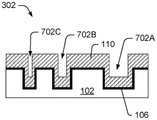
For example, in various embodiments, the opening 702 may be intentionally formed in the conductive interconnect structure 114. The opening 702 may extend a predetermined depth below the surface of the conductive interconnect 114. For a given metal coating time, the volume of the opening of 702A may be greater than the volume of the opening of 702B, and the volume of the opening 702B may be greater than the volume of 702C. The volume of the opening 702 may be selected based on the material 110 of the conductive interconnect 114, the thickness or volume of its material 110, and its expected expansion during annealing. In various embodiments, the opening 702 may include any recess, gap, cavity, void, etc. in the conductive interconnect structure 114 that provides expanded space for the material 110 of the interconnect structure 114. The appropriately sized openings 702 may reduce or eliminate stress of the expansion material 110 on the bond contacts 306 of the stacked die 302 or wafer, as the metal 110 may expand into the openings 702. The width of the opening 702 may range, for example, between less than 100nm and greater than 20 microns. With the opening 702 of a predetermined size, it may still allow the material 110 of the respective interconnect structure 114 to reliably bond and form a continuous conductive interconnect 310 between the stacked dies 302 or wafers.
In various embodiments, the openings 702 may be intentionally formed to have a desired preselected volume (e.g., to accommodate excessive stress due to thermal expansion mismatch of the coating metal 110 in the cavity 104 and the surrounding insulator 102 material). In other embodiments, the opening 702 may be allowed to be formed as part of the bonding surface 306 of the processing die 302 or wafer. In this case, the volume of the opening 702 may be predictable based on the process and materials involved.
For example, in some embodiments, the opening 702 may be intentionally formed when forming the conductive interconnect structure 114. For example, as shown at fig. 7A-7C, the conductive interconnect structure 114 may be formed using damascene techniques and may include a cavity 104 and a structure 114 having a mixed width (104A, 104B, and 104C) and depth. As shown at fig. 7A, one or more damascene cavities 104 may be formed in the surface of the dielectric layer 102 of the die 302 or wafer or substrate of interest to extend partially or fully through the dielectric layer 102. In one example, the cavity 104 may have a width or diameter of at least 10 microns, a depth of at least 5 microns or even 10 microns. Alternatively, the cavity 104 may be formed to extend into a base substrate (not shown, see, e.g., base 604 at fig. 6) of the die 302 or wafer. Barrier layer 106 and seed layer 108 are deposited over the exposed surfaces of cavity 104.
As shown at fig. 7B, the cavity 104 is partially filled with a conductive material 110 (e.g., copper alloy, etc.) using an superfill electroplating bath, or using a conformal electroplating or electroless plating bath, etc. In some embodiments, conductive layer 110 may be applied into chamber 104 by Physical Vapor Deposition (PVD) or by atomic layer deposition, chemical vapor deposition, or spin coating conductive layer 110 into chamber 104. The partial filling of the conductive layer 110 in the cavity 104 creates a conductive interconnect structure 114 having intentional openings 702 (e.g., 702A, 702B, and 702C) within the damascene cavity 104 (e.g., 104A, 104B, and 104C, respectively).
The bonding surface 306 of the die 302 or wafer or substrate of interest is planarized (using Chemical Mechanical Polishing (CMP) or the like) to prepare the dielectric surface 102 and conductive interconnect structure 114 for bonding. This includes removing unwanted plating 110 and other conductive barrier layers 106 from the damascene process from the dielectric bonding surface 306 as shown in fig. 7C. The remaining openings 702 '(e.g., 702A', 702B ', and 702C') are confined in the interconnect structure 114 and may have a predetermined volume. In one embodiment, the width ("w") of the remaining opening 702' at the bonding surface 306 of the die 302 or wafer is greater than the thickness of the barrier layer 106 between the conductive layer 110 and the dielectric layer 102. Thus, the width of the remaining opening 702A 'is greater than the width of the remaining opening 702B', and the width of the remaining opening 702B 'is greater than the width of the remaining opening 702C'. In other applications, the width ("w") of the remaining opening 702' at the bonding surface 306 is greater than the thickness of the conductive layer 110 within the corresponding cavity 104. In some applications, the depth ("d") of the remaining openings 702' may be less than 50nm, and preferably less than 100 microns.
The bonding surface 306 of the die 302 or wafer may be prepared for bonding with another similar die 302 or wafer, or with other prepared substrates 704, to form a bonding apparatus 312. In various embodiments, the substrate 704 may include the same or dissimilar or different material as the die 302. For example, the substrate 704 may include a dielectric, glass, semiconductor, or other material. After the bonding operation, in which one or more planar portions of the conductive interconnect structures 114(114A, 114B, and 114C) on the bonding surface 306 are bonded directly to the prepared surface of the opposing substrate 704, the remaining openings 702' are enclosed within the conductive interconnect structures 114, as shown in fig. 7D.
In an alternative process, as shown at fig. 8A-8D, after partially filling damascene cavity 104 with conductive material 110, a protective layer 802 (see fig. 8C and 8D) may be formed (e.g., deposited, coated, etc.) over the surface of conductive material 110, including within opening 702 of the surface of conductive interconnect structure 114.
In various embodiments, protective layer 802 may comprise a dielectric material, such as SiO2、SiC、SiN、SiC/SiO2、SiN/SiO2SiN/polysilicon, inorganic/organic dielectrics, etc. For example, the protective layer 802 may include the same or different dielectric as the die 302 or the insulating layer 102 of the wafer surface. In other embodiments, the protective layer 802 may comprise a conductive material such as tungsten, alloys of tungsten, nickel alloys, tantalum or titanium, and various alloys, such as TaN/Ta or Ta/TaN, Ti/TiN, cobalt, CoP, NiP, CoWP, CoP/NiP, and the like. Still further, the protective layer 802 may include a low CTEA material, a silicon-containing material such as doped or undoped polysilicon (which may form a silicide), or other suitable material. Still further, multiple coatings or layers of insulating and/or conductive materials may be used.
The protective layer may be deposited by PVD methods or by electrolytic or non-electrolytic plating baths or other techniques. Alternatively, protective layer 802 may include multiple coatings or layers of insulating and/or conductive materials. In some applications, protective layer 802 may include a conformal coating of one or more materials. One of the benefits of the protective layer 802 is to inhibit surface movement of metal atoms on the surface of the conductive layer 110 adjacent to the protective layer 802 within the opening 702, thereby improving the reliability of the bonded interconnect 114. Thus, the protective layer 802 may serve as a bonding surface for a portion of the conductive interconnect 114.
In one embodiment, the thickness of the protective layer 802 is less than the thickness of the conductive layer 110 within the respective cavity 104 bounded by the protective layer 802 and the barrier layer 106. In other embodiments, the protective layer 802 may be thicker than the conductive layer 110. After planarizing the bonding surface 306 (including removing unwanted material from the bonding surface 306), the remaining openings 702 ' (702A ', 702B ', and 702C ') in the surface of the interconnect structure 114 remain as the protective layer 802 on the inner surfaces of the remaining openings 702 ' (which may have a predetermined volume).
The die 302 or wafer may be prepared for bonding to another similar die 302 or wafer (as shown at fig. 3F, 3G, 9B, and 9C), and/or to some other prepared substrate 704 (as shown at fig. 7D, 9A, and 9C) to form the bonding apparatus 312. In one embodiment, the planarized wafer of FIG. 8D can be singulated by known methods, the singulated wafer cleaned and prepared for bonding operations. For example, a die 302 or wafer from a singulated wafer may be bonded to a flat substrate 704 or other carrier to form a bonding apparatus 312. In one embodiment, the planar carrier 704 or die 302 may include a single-level or multi-level BEOL interconnect structure 114 or a dielectric including one or more RDL layers. During the bonding operation, the conductive interconnect structures 114 of the die 302 align and mate with the receiving conductive interconnect structures 114 on the surface of a similar die 302 or wafer and/or prepared substrate 704 to form the unified conductive structure 310.
In various instances, as shown at fig. 9A-9C, the die 302 or wafer may be bonded front-to-front (fig. 9B) or back-to-front (fig. 9C) and/or bonded to a planar substrate 704 (fig. 9A and 9C) to form the bonding apparatus 312. After bonding, the conductive interconnect structure 114 has an enclosed cavity 702 ', with the protective layer 802 lining the inner surface of the cavity 702'. The profile of the one or more enclosed cavities 702' can be geometrically regular or irregular in shape as viewed in cross-section of the die 302. In various embodiments, the receiving substrate 704 may include a conductive layer that encloses one or more cavities 702', as shown at fig. 9A and 9C.
In other words, in an example embodiment, as shown at fig. 7D, the bonding apparatus 312 may include a portion of a conductive layer that is directly bonded to the substrate 704 (e.g., a portion of the conductive interconnect 114 at the bonding surface of the die 302) and may include another portion of the conductive layer that is not bonded to the same substrate 704 (e.g., an interior portion of the closed cavity 702' within the conductive interconnect 114). And in another embodiment, as shown at fig. 9A, the bonding apparatus 312 may include a portion of the conductive layer directly bonded to the substrate 704 (e.g., a portion of the conductive interconnect 114 at the bonding surface of the die 302) and may include another portion of the conductive layer directly coated with the protective layer 802 that is not bonded to the same substrate 704 (e.g., an interior portion of the closed cavity 702' within the conductive interconnect 114).
In some applications, where the wafer or die 302 includes TSVs or through-electrodes, after the bonding operation as shown in fig. 9B, the back side of the bonded wafer of die 302 may be thinned and formed to expose the back side of the conductive structures (TSVs or through-electrodes). Additional prepared dies 302 or wafers may be electrically coupled to the exposed TSVs on the back side of the bonded die 302 or wafer. The electrical coupling of the die 302 or wafer may include, among other things, using a DBI method or a flip chip method.
Further embodiments
Further embodiments are shown at fig. 10A to 12. In one embodiment, as shown at fig. 10A-10D, the partial fill of conductive material 110 discussed above is applied thinner and corresponds to a conformal or non-conformal metal coating 1002 within damascene cavity 104. Depending on the thickness of the conductive layer 1002, this thinner coating 1002 may result in an opening 702' that has a very large volume relative to the conductive interconnect structure 114.
In addition, as shown at fig. 10B, the coating 1002 may be thicker in some cases, or of varying thickness for different devices 312 or within a single device 312. For example, in some embodiments, the cross-sectional width ("w") of the opening 702' is greater than 3 times the thickness ("t") of the conductive layer 1002 (e.g., on the sidewalls of the cavity 104). Further, in some embodiments, the depth ("d") of the opening 702 'may be greater than the cross-sectional width ("w") of the opening 702'.
In one embodiment, as shown at fig. 10C, the inner surface of opening 702' (i.e., the exposed surface of conductive layer 1002) may be coated with protective coating 802 as described above. In another embodiment, as shown at fig. 10D, a compliant material 1004 (e.g., such as a fill material or an encapsulation material) may be deposited within the opening 702' of the conductive interconnect structure 114 (with or without the protective layer 802). The compliant material 1004 may partially or completely fill the opening 702.
Referring to fig. 11A-12, in some embodiments, the described techniques and processes may be used to form through silicon vias 1102 (TSVs), etc. for the device 312. In the case of TSV 1102, multiple layers may line the inner sidewalls of opening 702 within TSV 1102. In some embodiments, the TSVs 1102 may be formed by an intermediate via or last via approach. In the case of an intermediate via process, a backside exposure process may be applied to expose a portion of conductive interconnect structure 114 from the backside, regardless of how TSV 1102 or through-substrate via or through-glass via (TGV) or through-substrate electrode (TSE) or through-board via is formed.
For example, as shown at fig. 11A and 11B, after partially filling the cavity 104, one or more additional layers 1104 may be applied over the conductive layer 110, with or without the protective layer 802 (depending on the embodiment). In various examples, the one or more additional layers 1104 may include one or more dielectric layers or the like.
As shown at fig. 11B, planarizing the bonding surface 306 forms a conductive interconnect 114 with one or more additional layers 1104. Referring to fig. 11C, the backside of die 302 may be thinned and the backside of conductive interconnect 114 exposed by grinding, polishing, reactive ion etching methods, and other known methods to expose the interior of conductive interconnect structure 114, which forms TSV 1102. The TSV 1102 provides a hollow or through conductive opening 702 through the die 302, as shown at fig. 11C and 11D. In some embodiments, as shown, the inner conductive surface of the through opening 702 is lined with a dielectric layer 1104. The prepared backside may then be bonded directly to another die 302, a wafer, or a prepared substrate 704.
As shown at fig. 11D, one or more components 1106 (such as optical devices or other microelectronic components) may be bonded to the front bonding surface 306 of the die 302. In some cases, the TSVs 1102 provide electrical or optical signal transmission from one or more components 1106 to other dies 302, wafers, or prepared substrates 704 (bonded to the back side of the dies 302). For example, as shown at fig. 12, an optical device 312 is shown. In this example, the substrate 704 may include one or more layers of glass 1202 and include a reflector 1204 and optionally a cavity 1206 as required by the application. In this case, the TSVs 1102 may transmit optical signals, and in some cases, electrical signals as well.
In various other embodiments, other techniques may be used to modify the surface of the conductive interconnect structure 114 to mitigate the effects of metal expansion. For example, in some examples, the surface of the conductive interconnect structure 114 may be selectively etched (via acid etching, plasma oxidation, etc.) to provide a desired opening 702 depth. In further embodiments, the conductive interconnect structure 114 may be selected, formed, or processed to have a top surface that is not flat. For example, the top surface of the conductive interconnect structure may be rounded, domed, convex, concave, irregular, or otherwise non-planar.
Example procedure
Fig. 13 and 14 include text-based process flows for the above-described processes and techniques. Application of the described process flow provides for the use of conductive interconnect structures of greater width or diameter (e.g., 10-1000 microns, for example) at the bonding surface of a directly bonded die, wafer, substrate, or the like.
The order in which the processes are described is not intended to be construed as a limitation, and any number of the described process blocks in a process can be combined in any order to implement a process, or an alternative process. Moreover, individual blocks may be deleted from the processes without departing from the spirit and scope of the subject matter described herein. Further, the processes may be implemented in any suitable hardware, software, firmware, or combination thereof, without departing from the scope of the subject matter described herein. In alternative embodiments, other techniques may be included in the process in various combinations and still be within the scope of the present disclosure.
Fig. 13 illustrates a representative process 1300 of mitigating undesired recesses (e.g., such as recess 116) in a surface of a conductive interconnect structure (e.g., such as conductive interconnect structure 114) at a bonding surface of a die of interest (e.g., such as die 302), a wafer, or other substrate, in accordance with various embodiments. For example, an embedding layer (e.g., such as embedding layer 304) may be formed in the recess, filling the recess to provide a flat and smooth bonding surface suitable for direct bonding. Process 1300 refers to fig. 1A-6.
In one embodiment, at block 1302, process 1300 includes: one or more first embedded conductive interconnect structures (e.g., such as conductive interconnect structure 114) are formed in a first substrate (e.g., such as die 302).
At block 1304, the process includes planarizing a first surface of the first substrate to form a planar topography including the first surface and a surface of the one or more first embedded conductive interconnect structures. At block 1306, the process includes depositing a first embedding layer (e.g., such as embedding layer 304) over the first surface of the first substrate and the one or more first embedded conductive interconnect structures.
At block 1308, the process includes: planarizing the first embedding layer until a surface of the one or more first embedded conductive interconnect structures is exposed, and forming a bonding surface of the first embedding layer, the first recessed portions of the one or more first embedded conductive interconnect structures at least partially filling with a portion of the first embedding layer that covers the surface of the first recessed portions of the one or more first embedded conductive interconnect structures.
In one embodiment, a process comprises: by covering the surface of the first concave portion with the first embedding layer, surface movement of atoms of the material of the first concave portion is suppressed.
In one embodiment, a process comprises: forming one or more second embedded conductive interconnect structures in a second substrate; planarizing the first surface of the second substrate to form a planar topography comprising the first surface of the second substrate and surfaces of the one or more second embedded conductive interconnect structures; bonding the first surface of the second substrate to the bonding surface of the first substrate via direct bonding without an adhesive; and directly bonding the one or more second embedded conductive interconnect structures to the one or more first embedded conductive interconnect structures.
In another embodiment, a process comprises: depositing a second embedded layer over the first surface of the second substrate and the one or more second embedded conductive interconnect structures; and planarizing the second embedding layer until a surface of the one or more second embedded conductive interconnect structures is exposed and a second bonding surface of the second bonding layer is formed, the first recessed portions of the one or more second embedded conductive interconnect structures being at least partially filled with a portion of the second embedding layer that covers the surface of the first recessed portions of the one or more second embedded conductive interconnect structures.
In one embodiment, the process further comprises: a portion of the second embedding layer is bonded to a portion of the first embedding layer via direct bonding without an adhesive.
As an alternative embodiment, the process comprises: forming one or more first embedded conductive interconnect structures in a first substrate; planarizing a first surface of a first substrate to form a planarized topography comprising the first surface and a surface of one or more first embedded conductive interconnect structures; selectively removing a portion of the first surface to cause the one or more first embedded conductive interconnect structures to protrude above the first surface of the first substrate; depositing a first embedded layer over the first surface of the first substrate and the one or more first embedded conductive interconnect structures, the first embedded layer contacting a portion of the sidewalls of the one or more first embedded conductive interconnect structures; and planarizing the first embedding layer until a surface of the one or more first embedded conductive interconnect structures is exposed, and forming a bonding surface of the first embedding layer and a surface of the one or more first embedded conductive interconnect structures.
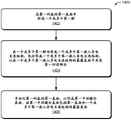
Fig. 14 illustrates a representative process 1400 of forming an opening (e.g., such as opening 702) in a surface of a conductive interconnect structure (e.g., such as conductive interconnect structure 114) at a bonding surface of a die of interest (e.g., such as die 302), a wafer, or other substrate, in accordance with various embodiments. For example, the opening may be formed in the conductive interconnect structure. Process 1400 refers to fig. 7A-12.
In one embodiment, at block 1402, the process 1400 includes forming one or more first cavities in a first surface of a first substrate.
At block 1404, the process includes forming one or more first embedded conductive interconnect structures within the one or more first cavities, including forming one or more of the first embedded conductive interconnect structures to have a first recessed portion in an exposed surface of the one or more first embedded conductive interconnect structures.
In one embodiment, a process comprises: one or more first embedded conductive interconnect structures and first recesses are formed by partially filling the one or more first cavities using a damascene process. In one embodiment, the one or more first embedded conductive interconnect structures include a conformal metal coating over one or more interior surfaces of the one or more first cavities.
In one embodiment, the process includes depositing a protective layer over the first recessed portion of the one or more first embedded conductive interconnect structures. In further embodiments, the process includes depositing one or more additional layers over the protective layer, at least one of the one or more additional layers including a dielectric material.
At block 1406, the process includes: the first surface of the first substrate is planarized to form a first planar bonding surface comprising the first surface and exposed surfaces of the one or more first embedded conductive interconnect structures.
In one embodiment, the process includes forming one or more second embedded conductive interconnect structures in a second substrate, including forming the one or more second embedded conductive interconnect structures in the second embedded conductive interconnect structures to have second recessed portions in exposed surfaces of the one or more second embedded conductive interconnect structures; planarizing the first surface of the second substrate to form a second planar bonding surface comprising the first surface of the second substrate and exposed surfaces of the one or more second embedded conductive interconnect structures; bonding the second planar bonding surface of the second substrate to the first planar bonding surface of the first substrate via direct bonding without an adhesive; and directly bonding the one or more second embedded conductive interconnect structures to the one or more first embedded conductive interconnect structures.
In further embodiments, the process includes depositing a protective layer over the second recessed portion of the one or more second embedded conductive interconnect structures. In an example, a process includes: by covering the surface of the second recessed portion with the protective layer, surface movement of atoms of the material of the second recessed portion is suppressed. In another example, the process includes: the direction of expansion of the material of the one or more second embedded conductive interconnect structures is controlled by covering the surface of the second recess with a protective layer.
As an alternative embodiment, the process comprises: forming one or more first cavities in a first surface of a first substrate; forming one or more first embedded conductive interconnect structures having one or more openings within one or more first cavities; and forming a planar surface comprising one or more of the first embedded conductive interconnect structures having one or more openings.
As another alternative embodiment, the process comprises: forming one or more first cavities in a first surface of a first substrate; forming one or more first embedded conductive interconnect structures having one or more openings within one or more first cavities; forming a planar surface comprising one or more first embedded conductive interconnect structures in a first embedded conductive interconnect structure having one or more openings; and directly bonding the planar surface of the interconnect structure having the opening to the prepared surface of the second substrate.
In various embodiments, some process steps may be modified or eliminated as compared to those described herein.
The techniques, components, and apparatus described herein are not limited to the illustrations of fig. 1A-15, and may be applied to other designs, types, arrangements, and configurations, including with other electrical components, without departing from the scope of the present disclosure. In some cases, the techniques described herein may be implemented using additional or alternative components, techniques, sequences, or processes. Further, the components and/or techniques may be arranged and/or combined in various combinations while producing similar or nearly identical results.
Conclusion
Although embodiments of the disclosure have been described in language specific to structural features and/or methodological acts, it is to be understood that the embodiments are not necessarily limited to the specific features or acts described. Rather, the specific features and acts are disclosed as representative forms of implementing example devices and techniques.