Compositions and methods for controlling phyllometaca
Cross reference to related applications and incorporation of sequence listing
This application claims priority from U.S. provisional patent application No. 61/856,137 filed on day 19, 7, 2013, 61/899,000 filed on day 1, 11, 2013, and 61/980,800 filed on day 17, 4, 2014, which are incorporated herein by reference in their entireties. The sequence listing contained in the document "40-21 _60191_ a.txt" (2,291 kilobytes, created at 19.7.2013, filed 19.7.2013 with U.S. provisional patent application No. 61/856,137), "40-21 _60191_0001US _ st25.txt" (2,322 kilobytes, created at 30.10.2013, filed 1.11.2013 with U.S. provisional patent application No. 61/899,000), and "40-21 _60191_0002_ US _ st25.txt" (2,338 kilobytes, created at 17.4.2014, and filed 17.4.2014, 2014 with U.S. provisional patent application No. 61/980,800) are incorporated herein by reference in their entirety. The sequence listing contained in the file, "40-21 _60191_0003_ ST25_ new.txt" (2,532,856 bytes, created on 7/17/2014) was filed as a letter and is incorporated herein by reference in its entirety.
FIELD
Methods of controlling invertebrate pest infestation, particularly in plants, are disclosed, as are compositions, polynucleotides, and recombinant DNA constructs for use in such methods. More specifically, the invention relates to polynucleotides that alter expression of genes in pests, particularly by RNA interference, and methods of use thereof. Pest species of interest include diabrotica species, particularly those that infest crops.
Background
Commercial crops are often targets for attack by invertebrate pests such as insects. Compositions for controlling insect infestation in plants have generally been in the form of chemical insecticides. However, there are several disadvantages to using chemical pesticides. For example, chemical insecticides are generally non-selective, and application of chemical insecticides intended to control pests in crops can also exert their effect on non-target insects and other invertebrates. Chemical pesticides often persist in the environment and degrade only slowly, potentially accumulating in the food chain. Furthermore, the use of persistent chemical pesticides can lead to the development of resistance in the target insect species. Thus, there is a long felt need for more environmentally friendly methods for controlling or eradicating insect infestations on or in plants, i.e. methods that are species selective, environmentally inert, non-persistent and biodegradable, and well suited for pest resistance management protocols.
RNA interference (RNAi, RNA-mediated gene suppression) is another approach for pest control. RNAi-based gene suppression was first demonstrated in nematodes (Fire et al (1998) Nature, 391: 806-811; Timmons and Fire (1998) Nature, 395: 854). Later, inhibition of invertebrate genes based on RNAi using recombinant nucleic acid technology has been reported in many species, including agriculturally or economically important pests from various insect and nematode populations.
The diabrotica species form a genus and include many species that infest commercially important plants, including many solanaceae (e.g., potato, tomato, eggplant, pepper, tobacco, and petunia). For example, Leptinotarsa decemlineata (CPB) is an early to mid-term pest that affects solanaceae plants such as potatoes. Colorado potato beetles feed primarily on aerial parts of the plant and defoliation leads to reduced tuber yield. There is a need for methods and compositions for controlling pests, especially diabrotica species, that infest crops.
Summary of The Invention
The present embodiments relate to the control of diabrotica species, particularly those that are economically or agriculturally important pests. In various embodiments, the diabrotica species is at least one selected from the group consisting of: leptotarsa behrensi, Leptotarsa colinsi, Leptotarsa (Colorado potato beetle), Leptotarsa deffecta, Leptotarsa (Haldeman green potato beetle), Leptotarsa heydeni, Leptotarsa juncta (Pseudopotato beetle), Leptotara camara (Leptotarsa lineolara) (Compositae, Ardisia shrubaliensis), Tribulus terrestris (Leptotara peninus), Physalis pubescens (Leptotara rubirosa), Phyllostachys nigra (Leptotara rubiginosa), Phyllostachys nigra (Leptotaraxacum rubiginosa), Phyllostachys nigra (Leptotarptotarotsa texana), and Leptobotrya. In particular embodiments, the diabrotica species is at least one selected from the group consisting of: potato beetles (colorado potato beetles), Leptinotarsa juncta (pseudopotato beetles), Leptinotarsa haldemania (Haldeman green potato beetles), and chamomile beetles (compositae, bushy beetles).
The compositions and methods described herein include recombinant polynucleotide molecules, such as recombinant DNA constructs, for producing transgenic plants that are resistant to diabrotica species infestation, and single-or double-stranded DNA or RNA molecules (also referred to herein as "triggers") for controlling or preventing plant infestation by such diabrotica species. In some embodiments, the polynucleotide trigger is provided as a topically applied agent for controlling or preventing infestation of a plant by a diabrotica species. In some embodiments, solanaceous plants with increased resistance to diabrotica species infestation, such as transgenic solanaceous plants (including seeds or propagatable parts such as tubers) expressing a polynucleotide trigger, are provided. In some embodiments, solanaceae plants (including seeds or propagatable parts such as tubers) that have been topically treated with a composition comprising a polynucleotide trigger (e.g., solanaceae plants that have been sprayed with a solution of dsRNA molecules) are provided. Also provided are polynucleotide-containing compositions for topical application to diabrotica species or plants, plant parts or seeds to be protected from diabrotica species.
Several embodiments relate to the inhibition of target genes in diabrotica species by polynucleotide triggers. Some embodiments relate to methods for selecting diabrotica target genes that may be effective targets for RNAi-mediated control of diabrotica species. In some embodiments, the target gene selected for RNAi-mediated inhibition is non-repetitive and non-redundant in the genome of a diabrotica species, or has low nucleotide diversity, or is evolutionarily or functionally limited to be less than non-synonymous (K) a) More synonyms (K)s) A nucleotide-changed gene. Provided herein is a nucleic acid sequence referred to herein as the "target gene sequences group," consisting of SEQ ID NO: 1-725 and SEQ ID NO: 726 and SEQ ID NO: 1087-1094. Also provided is a polypeptide referred to herein as the "trigger sequence set," consisting of SEQ ID NO: 831. 842, 849, 898, 910, 925, 928, 931, 932, 937, 938, 940, 941, 942, 943, 944, 945, 947, 948, 949, 950, 951, 952, 955, 956, 957, 958, 960, 961, 964, 966. 967, 968, 969, 970, 971, 973, 976, 978, 979, 982, 983, 985, 987, 988, 989, 991, 992, 994, 995, 996, 997, 999, 1006, 1007, 1008, 1009, 1010, 1013, 1018, 1019, 1020, 1022, 1025, 1029, 1030, 1033, 1035, 1037, 1038, 1039, 1040, 1041, 1042, 1043, 1045, 1046, 1047, 1049, 1050, 1053, 1054, 1058, 1060, 1061, 1064, 1065, 1066, 1067, 1068, 1103, 1073, 1074, 1075, 1077, 1078, 1101, 1081, 1082, 1084, 1095, 1096, 1097, 1099, 1098, 1099, 1100, 1111102, 1102, 1113, 1074, 1075, 1117, 1078, 1082, 1111114, 1114, 1113, 1114, and other sequences.
In one aspect, a method for controlling infestation of a plant by a diabrotica species comprises contacting the diabrotica species with a polynucleotide comprising at least one fragment of 18 or more contiguous nucleotides having a sequence from about 95% to about 100% identity to a corresponding fragment of DNA having a sequence selected from the group consisting of the target gene sequences group or the DNA complement thereof (e.g., a fragment of 21 contiguous nucleotides having a sequence of 100% identity). In one embodiment, a method for controlling infestation of a plant by a diabrotica species comprises contacting the diabrotica species with a polynucleotide comprising a nucleotide sequence complementary to at least 21 consecutive nucleotides of a target gene or of an RNA transcribed from the target gene, the target gene having a nucleotide sequence selected from: SEQ ID NO: 730. SEQ ID NO: 807. SEQ ID NO: 1-725, SEQ ID NO: 726, 729, SEQ ID NO: 731-806, SEQ ID NO: 808-830 and SEQ ID NO: 1087-1094. In some embodiments, the polynucleotide is double-stranded RNA. In some embodiments, the polynucleotide comprises one or more nucleotide sequences selected from the group consisting of trigger sequences. In some embodiments, contacting with the polynucleotide is accomplished by topically applying the polynucleotide, or a composition or solution containing the polynucleotide (e.g., by spraying or dusting or soaking), directly to the diabrotica species or to a surface or substrate (e.g., plant or soil) with which the diabrotica species is contacted. In some embodiments, the contacting with the polynucleotide is achieved by providing a polynucleotide that is taken up by a diabrotica species. In some embodiments, the contacting with the polynucleotide is achieved by providing a transgenic plant expressing a diabrotica species.
Several embodiments relate to a method of controlling infestation of plants by diabrotica species by providing in the diet of the diabrotica species an agent comprising a polynucleotide having at least one fragment of 18 or more contiguous nucleotides with a sequence from about 95% to about 100% identity to a corresponding fragment of DNA having a sequence selected from the target gene sequences group or the DNA complement thereof (e.g., a fragment of 21 contiguous nucleotides with a sequence of 100% identity), and wherein the agent acts on diabrotica species infestation to inhibit a biological function within the diabrotica species, thereby controlling diabrotica species infestation. In one embodiment, a method for controlling a plant infestations by a diabrotica species comprises providing in the food of the diabrotica species a polynucleotide comprising a nucleotide sequence complementary to at least 21 consecutive nucleotides of a target gene or of an RNA transcribed from the target gene, the target gene having a nucleotide sequence selected from: SEQ ID NO: 730. SEQ ID NO: 807. SEQ ID NO: 1-725, SEQ ID NO: 726, 729, SEQ ID NO: 731-806, SEQ ID NO: 808-830 and SEQ ID NO: 1087-1094. In some embodiments, the polynucleotide comprises one or more nucleotide sequences selected from the group consisting of trigger sequences. In some embodiments, the polynucleotide is double-stranded RNA. In some embodiments, the agent containing the polynucleotide is formulated for field application to a crop, for example, in the form of a sprayable solution or emulsion, a tank mix, or a dust. In some embodiments, the agent is produced biologically, for example in the form of a microbial fermentation product or expressed in a transgenic plant cell.
In another aspect, a method of causing death or impaired growth in larvae of a diabrotica species is provided. In some embodiments, the at least one RNA comprising at least one silencing element is provided in the diet of a diabrotica species larva, wherein ingestion of the RNA by the diabrotica species larva results in death or impaired growth in the diabrotica species larva. In some embodiments, the silencing element is substantially identical or substantially complementary to a fragment of a target gene sequence of a diabrotica species larva, wherein the target gene is selected from the group consisting of genes in the target gene sequence group. In one embodiment, a method of causing death or stunted growth in a diabrotica species larva comprises providing in the diet of said larva at least one polynucleotide comprising at least one silencing element comprising 21 contiguous nucleotides complementary to a target gene or RNA transcribed from said target gene, said target gene having a nucleotide sequence selected from the group consisting of: SEQ ID NO: 730. SEQ ID NO: 807. SEQ ID NO: 1-725, SEQ ID NO: 726, 729, SEQ ID NO: 731-806, SEQ ID NO: 808-830 and SEQ ID NO: 1087-1094. In some embodiments, the silencing element comprises one or more nucleotide sequences selected from the group of trigger sequences. In some embodiments, the polynucleotide is double-stranded RNA. Some embodiments relate to a method of causing death or reduced fertility in a diabrotica species, comprising providing in the diet of the diabrotica species at least one RNA comprising at least one silencing element substantially identical or substantially complementary to a fragment of a target gene sequence of a diabrotica species larva, wherein uptake of said RNA by the diabrotica species causes death or reduced fertility in the diabrotica species. In some embodiments, the target gene is selected from a gene in the target gene sequences group. In one embodiment, the method causes a reduction in allergy rate or a reduction in feeding activity. In one embodiment, the method is for providing a plant with increased resistance to a diabrotica species infestation.
Several embodiments relate to a method of providing a plant with increased resistance to diabrotica species infestation, comprising topically applying to the plant a composition comprising at least one polynucleotide having at least one segment of 18 or more contiguous nucleotides with a sequence from about 95% to about 100% identity to a corresponding segment of DNA having a sequence selected from the target gene sequences group or the DNA complement thereof (e.g., a segment of 21 contiguous nucleotides with 100% identity in sequence). In one embodiment, a method of providing a plant with increased resistance to diabrotica species infestation comprises topically applying to the plant a composition comprising at least one polynucleotide comprising a nucleotide sequence complementary to at least 21 consecutive nucleotides of a target gene or of an RNA transcribed from the target gene, the target gene having a nucleotide sequence selected from the group consisting of: SEQ ID NO: 730. SEQ ID NO: 807. SEQ ID NO: 1-725, SEQ ID NO: 726, 729, SEQ ID NO: 731-806, SEQ ID NO: 808-830 and SEQ ID NO: 1087-1094. In one embodiment, a method of providing a plant with increased resistance to diabrotica species infestation comprises topically applying to the plant a composition comprising at least one polynucleotide comprising at least 21 contiguous nucleotides complementary to a target gene or RNA transcribed from the target gene, the target gene having a nucleotide sequence selected from the group consisting of: SEQ ID NO: 730. SEQ ID NO: 807. SEQ ID NO: 1-725, SEQ ID NO: 726, 729, SEQ ID NO: 731-806, SEQ ID NO: 808-830 and SEQ ID NO: 1087-1094. In some embodiments, the polynucleotide comprises one or more nucleotide sequences selected from the group consisting of trigger sequences. In some embodiments, the polynucleotide is double-stranded RNA. Several embodiments relate to compositions comprising the polynucleotides formulated for field application to crops, for example, in the form of a sprayable solution or emulsion, a tank mix, or a dust.
Several embodiments relate to a pesticidal composition for controlling diabrotica species, comprising a pesticidally effective amount of at least one polynucleotide molecule comprising at least one segment of 18 or more contiguous nucleotides (e.g., a segment of 21 contiguous nucleotides with 100% identity or complementarity in sequence) that is substantially identical or complementary to a corresponding segment of DNA having a sequence selected from the target gene sequences group or the DNA complement thereof. In some embodiments, the polynucleotide molecule comprises at least 21 contiguous nucleotides that are complementary to a target gene or RNA transcribed from a target gene having a nucleotide sequence selected from the group consisting of: SEQ ID NO: 730. SEQ ID NO: 807. SEQ ID NO: 1-725, SEQ ID NO: 726, 729, SEQ ID NO: 731-806, SEQ ID NO: 808-830 and SEQ ID NO: 1087-1094. In some embodiments, the polynucleotide comprises one or more nucleotide sequences selected from the group consisting of trigger sequences. In some embodiments, the polynucleotide molecule is a recombinant polynucleotide. In some embodiments, the polynucleotide molecule is RNA. In some embodiments, the polynucleotide molecule is a double-stranded RNA. Related embodiments include pesticidal compositions comprising a polynucleotide molecule formulated for field application to a crop, for example, in the form of a sprayable solution or emulsion, a tank mix, or a powder, and optionally comprising one or more additional components, such as a carrier agent, a surfactant, a cationic lipid, a silicone surfactant, a polynucleotide herbicidal molecule, a non-polynucleotide pesticide, a safener, and an insect growth regulator.
Several embodiments relate to a method of providing a plant with increased resistance to diabrotica species infestation, comprising expressing in the plant at least one polynucleotide comprising at least one fragment of 18 or more contiguous nucleotides (e.g., a fragment of 21 contiguous nucleotides with 100% identity or complementarity in sequence) that is substantially identical to or complementary to a corresponding fragment of DNA having a sequence selected from the target gene sequences group or the DNA complement thereof. In some embodiments, the polynucleotide comprises one or more nucleotide sequences selected from the group consisting of trigger sequences. In some embodiments, the polynucleotide is double-stranded RNA.
Several embodiments relate to a recombinant DNA construct comprising a heterologous promoter operably linked to a DNA element comprising at least one segment of 18 or more contiguous nucleotides having a sequence from about 95% to about 100% identity to a corresponding segment of DNA having a sequence selected from the target gene sequences group or the DNA complement thereof (e.g., a segment of 21 contiguous nucleotides having a sequence of 100% identity). In some embodiments, the DNA element encodes a double-stranded RNA. In some embodiments, the double stranded RNA comprises one or more nucleotide sequences selected from the group of trigger sequences. Related embodiments include plant chromosomes or plastids or recombinant plant viral vectors or recombinant baculovirus vectors comprising the recombinant DNA constructs, or comprising the DNA elements, heterologous-free promoters.
Several embodiments relate to a transgenic solanaceous plant cell having in its genome recombinant DNA encoding an RNA that inhibits expression of a target gene in a diabrotica species that contacts or ingests the RNA, wherein the RNA comprises at least one silencing element having at least one segment of 18 or more contiguous nucleotides that is complementary to a segment of the target gene. In some embodiments, the target gene is selected from the target gene sequences group. A particular embodiment is a transgenic solanaceous plant cell having in its genome recombinant DNA encoding RNA that silences one or more target genes selected from the group consisting of an extravesicular gene, a ribosomal protein gene, and a proteosome gene. In some embodiments, the RNA comprises one or more nucleotide sequences selected from the group of trigger sequences.
Several embodiments relate to an isolated recombinant RNA molecule that causes death or stunted growth in a diabrotica species when ingested or contacted by the diabrotica species, wherein the recombinant RNA molecule comprises at least one 18 or more contiguous nucleotide fragment (e.g., a 21 contiguous nucleotide fragment with a sequence of 100% complementarity) that is substantially complementary to a corresponding fragment of DNA having a sequence selected from the target gene sequences group or the DNA complement thereof. In some embodiments, the recombinant RNA molecule is a double-stranded RNA. Particular embodiments include methods for inhibiting ribosomal proteins such as ribosomal L7 protein or a ribosomal protein consisting of SEQ ID NO: 730, and an isolated recombinant RNA molecule having an expression of a protein selected from the group consisting of SEQ ID NO: 989. 988, 1104 or 1105.
Several embodiments relate to a method of providing a plant with increased resistance to a diabrotica species infestation, comprising providing to the plant at least one polynucleotide comprising at least one fragment of 18 or more contiguous nucleotides that is substantially identical or complementary to a corresponding fragment of a target gene selected from the target gene sequences group (e.g., a fragment of 21 contiguous nucleotides having 100% identity or complementarity in sequence). In one embodiment, a method of providing a plant with increased resistance to diabrotica species infestation comprises providing to the plant at least one polynucleotide comprising at least one fragment identical or complementary to at least 21 contiguous nucleotides of a target gene or of an RNA transcribed from a target gene, wherein the target gene is selected from genes identified in the target gene sequence set. In some embodiments, the polynucleotide comprises one or more nucleotide sequences selected from the group consisting of trigger sequences. In some embodiments, the polynucleotide is double-stranded RNA.
Several embodiments relate to a method for controlling infestation of a plant by a diabrotica species, comprising contacting the diabrotica species with a polynucleotide comprising at least one fragment of 18 or more contiguous nucleotides (e.g., a fragment of 21 contiguous nucleotides having 100% identity or complementarity in sequence) that is substantially identical to or complementary to a corresponding fragment of equivalent length of the DNA of a target gene selected from the target gene sequences group. In some embodiments, the polynucleotide is double-stranded RNA. In one embodiment, a method for controlling infestation of a plant by a diabrotica species comprises contacting the diabrotica species with an effective amount of double stranded RNA, wherein one strand is complementary to at least 21 contiguous nucleotides of a gene encoding a ribosomal protein, wherein RNA interference is induced and death occurs. In some embodiments, the double stranded RNA comprises one or more nucleotide sequences selected from the group of trigger sequences.
Several embodiments relate to a method of selecting a target gene for RNAi-mediated silencing from a plant genome or from an animal genome. In various embodiments, the methods provide for single or low copy number (non-repetitive and non-redundant) presence in a particular genome, or low nucleotide diversity, or synonymy (K) at a certain ratios) Non-synonymous (K)a) Nucleotide changes (wherein Ks>>Ka) A target gene subset of (a).
Several embodiments relate to artificial compositions comprising at least one polynucleotide as described herein. In some embodiments, formulations for topical application to plants or substances in need of protection from diabrotica species are provided. In some embodiments, recombinant constructs and vectors are provided for the production of transgenic solanaceous plant cells and transgenic solanaceous plants. In some embodiments, formulations and coatings for treating solanaceous plants, solanaceous plant seeds, or propagatable parts such as tubers are provided. In some embodiments, commodity and foodstuff produced from such solanaceous plants, seeds, or propagatable parts treated with or containing a polynucleotide described herein (particularly commodity and foodstuff having a detectable amount of a polynucleotide as described herein) are provided. Several embodiments relate to polyclonal or monoclonal antibodies that bind to a protein encoded by a sequence or sequence fragment selected from the target gene sequences group. Another aspect relates to a polyclonal or monoclonal antibody that binds to a protein encoded by a sequence or sequence fragment selected from the group of trigger sequences or the complement thereof. Such antibodies are made by conventional methods known to those of ordinary skill in the art.
In various embodiments described herein, the plant may be any plant infested with diabrotica species. Of particular interest are embodiments wherein the plant is a solanaceous plant (solanaceae). Examples include plants selected from potato, tomato and eggplant. Embodiments include those wherein the plant is an ungerminated solanaceous plant seed, a solanaceous plant in a vegetative stage, or a solanaceous plant in a reproductive stage. Embodiments include those wherein the plant is a "seed potato" meaning a potato tuber or potato tuber piece that can be propagated into a new potato plant.
Other aspects and specific embodiments of the invention are disclosed in the following detailed description.
Detailed Description
Unless defined otherwise, all technical and scientific terms used herein have the same meaning as commonly understood by one of ordinary skill in the art to which this invention belongs. Where a term is provided in the singular, the inventors also contemplate the aspects of the invention described in the plural of that term. Terms and by introductionWhere there is a conflict with a definition used in a reference incorporated herein, the terms used in this application shall have the definition given herein. Other technical terms used have The ordinary meaning in The field in which they are used, as exemplified by various field-specific dictionaries, e.g., "The American

Science Dictionary "(edition of the American University Dictionary, 2011, Houghton Mifflin Harcourt, Boston and New York)," McGraw-Hill Dictionary of Scientific and Technical Terms "(2002, 6 th edition, McGraw-Hill, New York) or" Oxford Dictionary of Biology "(2008, 6 th edition, Oxford University Press, Oxford and New York). The inventors do not intend to be limited to one mechanism or mode of action. Reference thereto is provided for illustrative purposes only.
Unless otherwise indicated, nucleic acid sequences in the context of this specification are given, when read from left to right, in the 5 'to 3' direction. One skilled in the art will appreciate that a given DNA sequence is understood to define a corresponding RNA sequence that is identical to the DNA sequence except that the thymine (T) nucleotide of the DNA is replaced with a uracil (U) nucleotide. Thus, providing a specific DNA sequence is understood to define the exact RNA equivalents. A given first polynucleotide sequence, whether DNA or RNA, further defines the sequence of its exact complement (which may be DNA or RNA), a second polynucleotide that hybridizes perfectly to the first polynucleotide by forming Watson-Crick base pairs (Watson-Crick base-pair). For DNA: for DNA duplexes (hybrid strands), the base pairs are adenine: thymine or guanine: a cytosine; for DNA: for RNA duplexes, the base pairs are adenine: uracil or guanine: a cytosine. Thus, by providing the nucleotide sequence of one strand, whether given as DNA or RNA, the nucleotide sequence of a blunt-ended double-stranded polynucleotide that is perfectly hybridized (when there is "100% complementarity" between the strands or when the strands are "complementary") is clearly defined. By "substantially identical" or "substantially complementary" to a target gene or target gene fragment is meant that one polynucleotide strand (or at least one strand of a double-stranded polynucleotide) is designed to hybridize (typically under physiological conditions as found in a living plant or animal cell) to the target gene or target gene fragment or to a transcript of the target gene or target gene fragment; one skilled in the art will appreciate that such hybridization does not necessarily require 100% sequence identity or complementarity. A first nucleic acid sequence is "operably" linked or "linked" to a second nucleic acid sequence when the first nucleic acid sequence is in a functional relationship with the second nucleic acid sequence. For example, a promoter sequence is "operably linked" to DNA if the promoter is used for transcription or expression of the DNA. Typically, operably linked DNA sequences are contiguous.
The term "polynucleotide" generally refers to DNA or RNA molecules containing multiple nucleotides and generally refers to both "oligonucleotides" (polynucleotides 18-25 nucleotides in length) and longer polynucleotides of 26 or more nucleotides. Polynucleotides also include molecules comprising a plurality of nucleotides, including non-canonical nucleotides or chemically modified nucleotides, as is commonly practiced in the art; see, e.g., the technical manual "RNA Interference (RNAi) and DsiRNAs", 2011(Integrated DNA Technologies Coralville, IA). Generally, a polynucleotide as described herein, whether DNA or RNA or both, and whether single-stranded or double-stranded, includes a fragment of at least one 18 or more contiguous nucleotides (or, in the case of a double-stranded polynucleotide, at least 18 contiguous base pairs) that is substantially identical or complementary to an equally sized fragment of the target gene DNA or target gene RNA transcript. Throughout this disclosure, "at least 18 consecutive" means "from about 18 to about 10,000, including every integer point in between. Thus, embodiments of the invention include an oligonucleotide of 18-25 nucleotides in length (18-mer, 19-mer, 20-mer, 21-mer, 22-mer, 23-mer, 24-mer, or 25-mer) or a medium length polynucleotide of 26 or more nucleotides in length (26, 27, 28, 29, 30, 31, 32, 33, 34, 35, 36, 37, 38, 39, 40, 41, 42, 43, 44, 45, 46, 47, 48, 49, 50, 51, 52, 53, 54, 55, 56, 57, 58, 59, 60, about 65, about 70, about 75, about 80, about 85, about 90, about 95, about 100, about 110, about 120, about 130, about 140, about 150, about 160, about 170, about 180, about 190, about 200, about 210, about 220, about 230, about 240, about 250, about 260, about 270, about 280, about 290, or about 300 nucleotides in length, e.g., a polynucleotide of greater than 300 nucleotides in length (e.g., 300 nucleotides in length, between about 300 to about 400 nucleotides in length, between about 400 to about 500 nucleotides in length, between about 500 to about 600 nucleotides in length, between about 600 to about 700 nucleotides in length, between about 700 to about 800 nucleotides in length, between about 800 to about 900 nucleotides in length, between about 900 to about 1000 nucleotides in length, between about 300 to about 500 nucleotides in length, between about 300 to about 600 nucleotides in length, between about 300 to about 700 nucleotides in length, between about 300 to about 800 nucleotides in length, between about 300 to about 900 nucleotides in length, or about 1000 nucleotides in length, or even greater than about 1000 nucleotides in length, e.g., up to the target gene, including the coding or non-coding portion or both the coding and non-coding portions of the target gene). Where a polynucleotide is double-stranded, its length can be similarly described in terms of base pairs.
The polynucleotides described herein may be single stranded (ss) or double stranded (ds). "double-stranded" means that base pairing occurs between sufficiently complementary, antiparallel nucleic acid strands to form a double-stranded nucleic acid structure, typically under physiologically relevant conditions. Embodiments include those wherein the polynucleotide is selected from the group consisting of sense single stranded DNA (ssDNA), sense single stranded RNA (ssRNA), double stranded RNA (dsrna), double stranded DNA (dsdna), double stranded DNA/RNA hybrids, antisense ssDNA, or antisense ssRNA; mixtures of any of these types of polynucleotides may be used. In some embodiments, the polynucleotide is a double-stranded RNA of a length greater than that typical of naturally occurring small regulatory RNAs (e.g., endogenously produced sirnas and mature mirnas). In some embodiments, the polynucleotide is a double-stranded RNA of at least about 30 consecutive base pairs in length. In some embodiments, the polynucleotide is a double-stranded RNA between about 50 to about 500 base pairs in length. In some embodiments, the polynucleotide may include components other than standard ribonucleotides, for example, embodiments are RNA that include terminal deoxyribonucleotides.
In various embodiments, the polynucleotides described herein comprise naturally occurring nucleotides, such as those found in DNA and RNA. In certain embodiments, the polynucleotide is a combination of ribonucleotides and deoxyribonucleotides, e.g., a synthetic polynucleotide consisting essentially of ribonucleotides but having one or more terminal deoxyribonucleotides or one or more terminal dideoxyribonucleotides or a synthetic polynucleotide consisting essentially of deoxyribonucleotides but having one or more terminal dideoxyribonucleotides. In certain embodiments, the polynucleotide comprises a non-canonical nucleotide such as inosine, thiouridine, or pseudouridine. In certain embodiments, the polynucleotide comprises a chemically modified nucleotide. Examples of chemically modified oligonucleotides or polynucleotides are well known in the art; see, for example, U.S. patent publication 2011/0171287, U.S. patent publication 2011/0171176, U.S. patent publication 2011/0152353, U.S. patent publication 2011/0152346, and U.S. patent publication 2011/0160082, which are incorporated herein by reference. Illustrative examples include, but are not limited to, the naturally occurring phosphodiester backbone of an oligonucleotide or polynucleotide that may be partially or fully modified by phosphorothioate, phosphorodithioate, or methyl phosphonate internucleotide linkages, modified nucleobases or modified sugars may be used for oligonucleotide or polynucleotide synthesis, and the oligonucleotide or polynucleotide labeled with a fluorescent moiety (e.g., fluorescein or rhodamine) or other label (e.g., biotin).
Several embodiments relate to polynucleotides comprising at least one segment of 18 or more contiguous nucleotides having a sequence from about 95% to about 100% identity to a fragment of equivalent length of a DNA or target gene having a sequence selected from the target gene sequences group or the DNA complement thereof. In some embodiments, the consecutive nucleotide count is at least 18, such as between 18-24, or between 18-28, or between 20-30, or between 20-50, or between 20-100, or between 50-500, or between 100-250, or between 100-500, or between 200-1000, or between 500-2000, or even more. In some embodiments, the consecutive nucleotides count is greater than 18, e.g., 19, 20, 21, 22, 23, 24, 25, 26, 27, 28, 29, 30, or greater than 30, e.g., about 35, about 40, about 45, about 50, about 55, about 60, about 65, about 70, about 75, about 80, about 85, about 90, about 95, about 100, about 110, about 120, about 130, about 140, about 150, about 160, about 170, about 180, about 190, about 200, about 210, about 220, about 230, about 240, about 250, about 260, about 270, about 280, about 290, about 300, about 350, about 400, about 450, about 500, or greater than 500 consecutive nucleotides. In some embodiments, the polynucleotide comprises at least one fragment of at least 21 contiguous nucleotides having 100% identity to a fragment of equivalent length of a DNA or target gene having a sequence selected from the target gene sequences group or the DNA complement thereof. In some embodiments, the polynucleotide is a double-stranded nucleic acid (e.g., dsRNA), wherein one strand comprises at least one fragment of at least 21 contiguous nucleotides with 100% identity to a fragment of equivalent length of a DNA or target gene having a sequence selected from the target gene sequences group or the DNA complement thereof; expressed as base pairs, such double-stranded nucleic acids comprise at least one fragment of at least 21 consecutive, perfectly matched base pairs corresponding to a fragment of equivalent length of a DNA or target gene having a sequence selected from the target gene sequences group or the DNA complement thereof. In some embodiments, each fragment contained in the polynucleotide is of a length greater than that typical of naturally occurring small regulatory RNAs, e.g., each fragment is at least about 30 contiguous nucleotides (or base pairs) in length. In some embodiments, the total length of the polynucleotide or the length of each fragment contained in the polynucleotide is less than the total length of a DNA or target gene having a sequence selected from the target gene sequences group. In some embodiments, the total length of the polynucleotide is between about 50 to about 500 nucleotides (for single-stranded polynucleotides) or base pairs (for double-stranded polynucleotides). In some embodiments, the polynucleotide is a dsRNA of between about 100 to about 500 base pairs, such as a dsRNA of the length of any of the dsRNA triggers disclosed in tables 3, 5, 8, 9 and 10. Embodiments include wherein the polynucleotide expressed in the plant is a polynucleotide comprising a nucleotide sequence having a sequence selected from the group consisting of SEQ ID NOs: 831-, 1085-, 1095-, 1104-and 1110-1114, or complements thereof, or a fragment thereof consisting of a sequence selected from the group consisting of SEQ ID NO: 1105-1109. In some embodiments, the polynucleotide is expressed in a plant. In some embodiments, the polynucleotide is provided locally to the surface of the plant or diabrotica species.
Several embodiments relate to polynucleotides designed to regulate expression by inducing regulation or inhibition of a diabrotica species target gene. In some embodiments, the polynucleotide is designed to have a nucleotide sequence that is substantially identical or substantially complementary to a nucleotide sequence of a diabrotica species target gene or cDNA (e.g., a target gene sequences group) or to an RNA sequence transcribed from a diabrotica species target gene (which may be a coding or non-coding sequence). These effective polynucleotides that modulate expression may be referred to herein as "polynucleotides", "polynucleotide triggers" or "triggers".
Effective polynucleotides of any size may be used alone or in combination in the various methods and compositions described herein. In some embodiments, a single polynucleotide trigger is used to prepare a composition (e.g., a composition for topical application, or a recombinant DNA construct for the production of a transgenic plant). In other embodiments, a mixture or pool of different polynucleotide triggers is used; in such cases polynucleotide triggers can be used for a single target gene or multiple target genes.
As used herein, the term "isolated" refers to the separation of one molecule from other molecules with which it is normally associated in its natural or native state. The term "isolated" may thus refer to a DNA molecule that has been separated from other DNA molecules with which it is normally associated in its natural or native state. Such DNA molecules may be present in a recombinant state, such as recombinant DNA molecules. Thus, for example, a DNA molecule fused to a regulatory or coding sequence with which it is not normally associated, as a result of recombinant technology, is considered isolated even when integrated into the chromosome of a cell as a transgene or when present with other DNA molecules.
As used herein, the term "target gene sequences group" refers to a sequence consisting of SEQ ID NO: 1-725 and SEQ ID NO: 726 and SEQ ID NO: 1087-. As used herein, the term "trigger sequence set" refers to a sequence consisting of SEQ ID NO: 831. 842, 849, 898, 910, 925, 928, 931, 932, 937, 938, 940, 941, 942, 943, 944, 945, 947, 948, 949, 950, 951, 952, 955, 956, 957, 958, 960, 961, 964, 966, 967, 968, 969, 970, 971, 973, 976, 978, 979, 982, 983, 985, 987, 988, 989, 991, 992, 994, 995, 996, 997, 999, 1006, 1007, 1008, 1009, 1010, 1013, 1018, 1019, 1020, 1022, 1025, 1029, 1030, 1033, 1035, 1036, 7, 1038, 1039, 1041041040, 1042, 1043, 1045, 1046, 1047, 1059, 1053, 1054, 1058, 1111071, 1081, 1085, 1064, 1065, 1064, 1063, 1064, 1075, 1064, 1065, 1064, 1075, 1064, 1065, 1064, 1065, 1064, 1085, 1064, and 1064.
In various embodiments, the diabrotica species is at least one selected from the group consisting of: leptotarsa behrensi, Leptotarsa collinsi, Potato Blastoma esculentum (Colorado potato beetle), Leptotarsa deffecta, Leptotarsa haldemania (Haldeman green potato beetle), Leptotarsa heydeni, Leptotarsa juncta (Pseudopotato beetle), Musca bracteata Blastus (Compositae Buchterex), Tribulus terrestris, Withania rouxii, Elaeagnus oleander Blastoma yesii, Tribulus terrestris, Leptotarsa turmomoca, and Leptotarsa typographica. In particular embodiments, the diabrotica species is at least one selected from the group consisting of: potato beetles (colorado potato beetles), Leptinotarsa juncta (pseudopotato beetles), Leptinotarsa haldemania (Haldeman green potato beetles), and chamomile beetles (compositae bushelenchus beetles).
Control of phyllocladium infestation by contacting polynucleotides
Provided herein are methods of controlling infestation of a plant by a diabrotica species by contacting the diabrotica species with a polynucleotide comprising at least one fragment of 18 or more contiguous nucleotides having from about 95% to about 100% identity or complementarity to a DNA selected from the target gene sequences group or the DNA complement thereof, or to a corresponding fragment of the target gene. In one embodiment, a method for controlling infestation of a plant by a diabrotica species comprises contacting the diabrotica species with a polynucleotide comprising at least 21 consecutive nucleotides having 100% identity to a corresponding fragment of a target gene having a DNA sequence selected from the group consisting of: SEQ ID NO: 730. SEQ ID NO: 807. SEQ ID NO: 1-725, SEQ ID NO: 726, 729, SEQ ID NO: 731-806, SEQ ID NO: 808-830 and SEQ ID NO: 1087-1094 or the DNA complement thereof. In some embodiments, the polynucleotide is double-stranded RNA. In some embodiments, the polynucleotide (e.g., double-stranded RNA) is produced via chemical synthesis or by expression in a microorganism or in a plant cell. Embodiments include wherein the polynucleotide is a polynucleotide comprising a sequence selected from SEQ ID NOs: 831-, 1085-, 1095-, 1104-and 1110-1114 or complements thereof, or wherein the polynucleotide consists of a sequence selected from the group consisting of SEQ ID NOs: 1105-1109. In one embodiment, a method for controlling infestation of a plant by a diabrotica species comprises contacting the diabrotica species with a polynucleotide comprising a nucleotide sequence complementary to at least 21 consecutive nucleotides of a target gene, or an RNA transcribed from the target gene, encoded by a nucleotide sequence selected from the group consisting of: SEQ ID NO: 730. SEQ ID NO: 807. SEQ ID NO: 1-725, SEQ ID NO: 726, 729, SEQ ID NO: 731-806, SEQ ID NO: 808-830 and SEQ ID NO: 1087-1094. Embodiments include those wherein the polynucleotide is a dsRNA comprising a strand having a sequence selected from the trigger sequences group. In some embodiments, the methods use a polynucleotide comprising a sequence consisting of SEQ ID NO: 825 encoding an antisense (reverse complement) sequence of 127 contiguous nucleotides of a target gene, and a fragment of 127 contiguous nucleotides (SEQ ID NO: 831). In some embodiments, the methods use a polynucleotide comprising a sequence consisting of SEQ ID NOs: 732 encoding a fragment of 409 and 403 consecutive nucleotides (SEQ ID NO: 937 and SEQ ID NO: 938, respectively) of an antisense (reverse complement) sequence of 409 and 403 consecutive nucleotides of the target gene. Polynucleotides for use in the methods can be designed for multiple target genes. Related aspects of the invention include isolated polynucleotides for use in the methods and plants having increased phyllocrea resistance provided by the methods.
In some embodiments, the sequence of contiguous nucleotides has a sequence selected from the group consisting of: SEQ ID NO: 1-725 and SEQ ID NO: 726 and SEQ ID NO: the DNA or isometric fragment of the target gene of the sequence 1087-. In some embodiments, the contiguous nucleotides are identical (100%) to a fragment of equivalent length of a DNA or target gene having a sequence selected from the target gene sequences group or the DNA complement thereof. In some embodiments, the entire sequence of the polynucleotide is about 95%, about 96%, about 97%, about 98%, about 99%, or about 100% identical to a fragment of equivalent length of a DNA or target gene having a sequence selected from the target gene sequences group or the DNA complement thereof. In one embodiment, the polynucleotide comprises at least one segment of 21 contiguous nucleotides with 100% identity to a corresponding segment of a target gene having a DNA sequence selected from the group consisting of: SEQ ID NO: 730. SEQ ID NO: 807. SEQ ID NO: 1-725, SEQ ID NO: 726, 729, SEQ ID NO: 731-806, SEQ ID NO: 808-830 and SEQ ID NO: 1087-1094 or the DNA complement thereof. In some embodiments, the polynucleotide comprises a "neutral" sequence (a sequence that is not sequence identical or complementary to the target gene) in addition to one or more fragments of 21 contiguous nucleotides that have 100% identity to the corresponding fragment of the target gene, and thus the polynucleotide as a whole has much lower overall sequence identity to the target gene.
Several embodiments relate to polynucleotides designed to inhibit one or more genes ("target genes"). The term "gene" refers to any portion of a nucleic acid used for expression of a transcript or encoding a transcript. A "gene" may include, but is not limited to, a promoter region, a 5 'untranslated region, a transcript coding region that may include an intron region, a 3' untranslated region, or a combination of these regions. In some embodiments, a target gene may include coding or non-coding sequences or both. In other embodiments, the target gene has a sequence that is the same as or complementary to messenger RNA, e.g., in some embodiments the target gene is cDNA. In particular embodiments, the polynucleotide is designed to inhibit one or more target genes, wherein each target gene is encoded by a DNA sequence selected from the target gene sequences group. In various embodiments, the polynucleotides are designed to inhibit one or more target genes, wherein each target gene is encoded by a sequence selected from the target gene sequences group, and can be designed to inhibit multiple target genes from this group, or to target different regions of one or more of the target genes. In one embodiment, the polynucleotide comprises a plurality of fragments of 21 contiguous nucleotides with 100% identity to a fragment of equivalent length of a DNA or target gene having a sequence selected from the target gene sequences group or the DNA complement thereof. In such cases, each fragment may be the same or different in size or sequence, and may be sense or antisense with respect to the target gene. For example, in one embodiment the polynucleotide comprises a plurality of fragments in a tandem or repetitive arrangement wherein each fragment comprises 21 contiguous nucleotides having a sequence of 100% identity to a fragment of equivalent length of a DNA or target gene having a sequence selected from the target gene sequences group or the DNA complement thereof. In some embodiments, the fragments may be from different regions of the target gene, e.g., the fragments may correspond to different exonic regions of the target gene. In some embodiments, "spacer" nucleotides that do not correspond to the target gene may optionally be used between or near the fragments.
The total length of the polynucleotide used in such methods can be greater than 18 consecutive nucleotides and can include nucleotides other than consecutive nucleotides having a sequence from about 95% to about 100% identity to a fragment of equivalent length of a DNA or target gene having a sequence selected from the target gene sequences group or the DNA complement thereof. In other words, the total length of the polynucleotide can be greater than the length of the segment or fragment of the polynucleotide designed to suppress one or more target genes, wherein each target gene has a DNA sequence selected from the target gene sequences group. For example, a polynucleotide may have nucleotides flanking an "active" fragment of at least one fragment of 18 or more contiguous nucleotides that represses a target gene, or include "spacer" nucleotides between active fragments, or may have additional nucleotides at the 5 'end, or at the 3' end, or at both the 5 'and 3' ends. In one embodiment, the polynucleotide may comprise a polynucleotide having a sequence selected from the group consisting of: the DNA or target gene of the sequence of the target gene sequences group or the DNA complement thereof is not specifically related (has a sequence that is not complementary or identical to) additional nucleotides, e.g., nucleotides that provide stable secondary structure or facilitate cloning or production. In one embodiment, the polynucleotide may comprise additional nucleotides positioned immediately adjacent to one or more fragments of 18 or more contiguous nucleotides having from about 95% to about 100% identity to a fragment of equivalent length of a DNA or target gene having a sequence selected from the target gene sequences group or the DNA complement thereof. In one embodiment, the polynucleotide comprises one such fragment, with an additional 5 'G or an additional 3' C or both adjacent to the fragment. In another embodiment, the polynucleotide is a double-stranded RNA comprising additional nucleotides to form an overhang, e.g., a dsRNA comprising 2 deoxyribonucleotides to form a 3' overhang. Thus, in various embodiments, the nucleotide sequence of the entire polynucleotide is not 100% identical or complementary to a contiguous nucleotide sequence in a DNA or target gene having a sequence selected from the target gene sequences group or the DNA complement thereof. For example, in some embodiments the polynucleotide comprises at least two fragments of 21 contiguous nucleotides each having a sequence of 100% identity to a fragment of DNA having a sequence selected from the target gene sequences group or the DNA complement thereof, wherein (1) the at least two fragments are separated by one or more spacer nucleotides, or (2) the at least two fragments are arranged in an order different from the corresponding fragments present in DNA having a sequence selected from the target gene sequences group or the DNA complement thereof.
Polynucleotides for use in such methods are provided by suitable means known to those skilled in the art. Embodiments include those in which the polynucleotide is chemically synthesized (e.g., by in vitro transcription, such as transcription using T7 polymerase or other polymerases), produced by expression in a microorganism or in cell culture (such as a plant or insect cell grown in culture), produced by expression in a plant cell, or produced by fermentation of a microorganism.
The polynucleotides used in such methods in some embodiments are provided as isolated DNA or RNA fragments. In some embodiments the polynucleotide used in such a method is not part of an expression construct but lacks additional elements such as a promoter or terminator sequence). Such polynucleotides may be relatively short, such as single-stranded or double-stranded polynucleotides of between about 18 to about 300 or between about 50 to about 500 nucleotides (for single-stranded polynucleotides) or between about 18 to about 300 or between about 50 to about 500 base pairs (for double-stranded polynucleotides). In some embodiments, the polynucleotide is a dsRNA of between about 100 to about 500 base pairs, such as a dsRNA of the length of any of the dsRNA triggers disclosed in tables 3, 5, 8, 9 and 10. Embodiments include wherein the polynucleotide is a polynucleotide comprising a nucleotide sequence having a sequence selected from the group consisting of SEQ ID NOs: 831-, 1085-, 1095-, 1104-and 1110-1114, or complements thereof, or wherein the polynucleotide consists of a sequence selected from the group consisting of SEQ ID NOs: 1105-1109. Alternatively the polynucleotide may be provided in a more complex construct, for example as part of a recombinant expression construct, or included in a recombinant vector, for example in a recombinant plant viral vector or a recombinant baculovirus vector. Such recombinant expression constructs or vectors are designed in some embodiments to include additional elements, such as expression cassettes for expression of genes of interest (e.g., pesticidal proteins).
In various embodiments of the method, the contacting comprises applying to the surface of a diabrotica species a suitable composition comprising a polynucleotide for use in such a method; such compositions may, for example, be provided as solids, liquids (including homogeneous mixtures, such as solutions and heterogeneous mixtures, such as suspensions, colloids, micelles and emulsions), powders, suspensions, emulsions, sprays, encapsulations or microencapsulated formulations, or in or on microbeads or other carrier particles, in films or coatings, or on or within substrates, or as seed treatment agents. The contacting can be in the form of seed treatment, or in the form of "seed treatment with potato" tubers or tuber pieces (e.g., by soaking, coating, or dusting the seed with potato). Suitable binders, inert carriers, surfactants, and the like may optionally be included in the composition, as known to those familiar with pesticide and seed treatment formulations. In some embodiments, the contacting comprises providing the polynucleotide in a composition further comprising one or more components selected from the group consisting of a carrier agent, a surfactant, a cationic lipid (such as the cationic lipid disclosed in example 18 of U.S. patent application publication 2011/0296556, incorporated herein by reference), a silicone surfactant, a polynucleotide herbicidal molecule, a non-polynucleotide pesticide, a safener, and an insect growth regulator. In some embodiments, the contacting comprises providing the polynucleotide in a composition further comprising at least one pesticide selected from the group consisting of patatin, phytohemagglutinin, phytoecdysteroid, Bacillus thuringiensis (Bacillus thuringiensis) insecticidal protein, Xenorhabdus (Xenorhabdus) insecticidal protein, Photorhabdus (phorhabdus) insecticidal protein, Bacillus laterosporus (Bacillus laterosporus) insecticidal protein, and Bacillus sphaericus (Bacillus sphaericus) insecticidal protein. In one embodiment the contacting comprises providing the polynucleotide in a composition that is ingestible or otherwise internally absorbable by the diabrotica species.
It is expected that the combination of certain polynucleotides (e.g. the polynucleotide triggers described in the working examples) with one or more non-polynucleotide pesticides used in such a method will produce a synergistic increase in the prevention or control of diabrotica species infestation compared to the effect obtained with the polynucleotide alone or the non-polynucleotide pesticide alone. In one embodiment, a composition comprising one or more polynucleotides and one or more non-polynucleotide pesticides selected from the group consisting of patatin, phytohemagglutinin, phytoecdysteroid, bacillus thuringiensis insecticidal protein, xenorhabdus insecticidal protein, photorhabdus insecticidal protein, bacillus laterosporous insecticidal protein, and bacillus sphaericus insecticidal protein is found to achieve synergistically enhanced prevention or control of infestation of diabrotica species.
Controlling diabrotica infestation by providing food polynucleotides
Another aspect of the invention provides a method for controlling a plant infestations by a diabrotica species, comprising providing in the diet of the diabrotica species an agent comprising a polynucleotide having at least one fragment of 18 or more contiguous nucleotides with a sequence from about 95% to about 100% identity to a fragment of equivalent length of a DNA having a sequence selected from the target gene sequences set or the DNA complement thereof, wherein the agent acts on the diabrotica species infestation to inhibit a biological function within the diabrotica species, thereby controlling the diabrotica species infestation. The polynucleotide may be longer than the fragments it contains, but each polynucleotide fragment and the corresponding DNA fragment are of equal length. Polynucleotides for use in the methods can be designed for multiple target genes. Embodiments include wherein the agent comprises a dsRNA comprising a nucleic acid having a sequence selected from the group consisting of SEQ ID NOs: 831-, 1085-, 1095-, 1104 and 1110-1114 or complements thereof, or wherein the agent comprises a sequence selected from the group consisting of SEQ ID NOs: 1105-1109. In one embodiment, there is provided a method for controlling infestation of a plant by diabrotica species, comprising providing in the diet of a diabrotica species a polynucleotide comprising a nucleotide sequence complementary to at least 21 consecutive nucleotides of a target gene or of an RNA transcribed from a target gene, the target gene having a nucleotide sequence selected from: SEQ ID NO: 730. SEQ ID NO: 807. SEQ ID NO: 1-725, SEQ ID NO: 726, 729, SEQ ID NO: 731-806, SEQ ID NO: 808-830 and SEQ ID NO: 1087-1094. In some embodiments, the polynucleotide is double-stranded RNA. In some embodiments, the polynucleotide (e.g., double-stranded RNA) is produced via chemical synthesis or by expression in a microorganism or in a plant cell. Embodiments include those wherein the polynucleotide is a dsRNA with a strand having a sequence selected from the group of trigger sequences. Related aspects of the invention include isolated polynucleotides for use in the methods and plants having increased resistance to phyllocrea species provided by the methods.
In various embodiments, the agent comprising a polynucleotide comprises a microbial cell or is produced in a microorganism. For example, the agent may comprise or may be produced in a bacterial or yeast cell. In other embodiments the agent comprising a polynucleotide comprises a transgenic plant cell or is produced in a plant cell (e.g., a plant cell transiently expressing a polynucleotide); such plant cells may be cells in a plant or cells grown in tissue culture or cell suspension.
In various embodiments, the agent comprising the polynucleotide is provided in a form suitable for ingestion, e.g., as a solid, liquid (including homogeneous mixtures, such as solutions and heterogeneous mixtures, such as suspensions, colloids, micelles, and emulsions), powder, suspension, emulsion, spray, encapsulation, or microencapsulation formulation, or in or on microbeads or other carrier particles, in a film or coating, or on or within a substrate, or as a seed treatment for ingestion by a food of the diabrotica species. The agent comprising the polynucleotide may be provided for food intake by the diabrotica species by applying the agent to plants infested by the diabrotica species or by applying the agent to the seeds of the plants, for example by spraying, dusting or coating the plants, or by applying a soil drench, or by being provided in artificial food. The agent comprising the polynucleotide may be provided in an artificial diet formulated to meet specific nutritional requirements for feeding diabrotica species for ingestion by the diabrotica species, wherein the artificial diet is supplemented with an amount of a polynucleotide obtained from a separate source, such as chemical synthesis, or purified by microbial fermentation; this embodiment can be used, for example, to determine the time and amount of an effective polynucleotide treatment protocol. In some embodiments the agent comprising a polynucleotide is provided in the form of a plant cell or in a plant cell component, or in a microorganism (such as a bacterium or yeast) or microbial fermentation product, or in a synthetic or artificial food for ingestion by a diabrotica species food. In one embodiment the agent comprising a polynucleotide is provided as a bait for ingestion by a diabrotica species. The agent comprising the polynucleotide may be provided in the form of a seed treatment, or in the form of a "seed treated with a potato" tuber or tuber piece (e.g., by soaking, coating or dusting a seed with a potato). Suitable binders, inert carriers, surfactants, and the like may be included in the agent, as known to those familiar with pesticide and seed treatment formulations. In some embodiments, the agent comprising a polynucleotide further comprises one or more components selected from the group consisting of a carrier agent, a surfactant, a cationic lipid (such as the cationic lipid disclosed in example 18 of U.S. patent application publication 2011/0296556, incorporated herein by reference), a silicone surfactant, a polynucleotide herbicidal molecule, a non-polynucleotide pesticide, a safener, and an insect growth regulator. In some embodiments, the agent comprising a polynucleotide further comprises at least one pesticide selected from the group consisting of patatin, a lectin, a phytoecdysteroid, a bacillus thuringiensis insecticidal protein, a xenorhabdus insecticidal protein, a photorhabdus insecticidal protein, a bacillus laterosporous insecticidal protein, and a bacillus sphaericus insecticidal protein. In some embodiments, the agent comprising a polynucleotide comprises at least one implantable formulation selected from a microparticle, pellet, or capsule implanted in a plant; in such embodiments the method comprises implanting an implantable formulation in the plant. In some embodiments, the agent comprising a polynucleotide comprises at least one furrow preparation (in-furrow formulation) selected from a powder, granule, pellet, capsule, spray, or drench, or any other form suitable for application to a furrow; in such embodiments, the method comprises a furrow irrigation treatment with a furrow irrigation formulation. In some embodiments, the method comprises treating a solanaceous plant seed, potato tuber, or potato tuber piece with the agent.
It is expected that the combination of certain polynucleotides (e.g. polynucleotide triggers described in the working examples) and one or more non-polynucleotide pesticides used in the reagents for such a method will produce a synergistic increase in the prevention or control of diabrotica species infestation compared to the effect obtained with the polynucleotide alone or the non-polynucleotide pesticide alone. In one embodiment, a composition comprising one or more polynucleotides and one or more non-polynucleotide pesticides selected from the group consisting of patatin, phytohemagglutinin, phytoecdysteroid, bacillus thuringiensis insecticidal protein, xenorhabdus insecticidal protein, photorhabdus insecticidal protein, bacillus laterosporous insecticidal protein, and bacillus sphaericus insecticidal protein is found to achieve synergistically enhanced prevention or control of a diabrotica species infestation when provided to the diabrotica species in a food.
In some embodiments, the polynucleotide is a polynucleotide comprising a nucleotide sequence having a sequence selected from SEQ ID NOs: 831-, 1085-, 1095-, 1104-and 1110-1114, or complements thereof, or wherein the polynucleotide consists of a sequence selected from the group consisting of SEQ ID NOs: 1105-1109.
In some embodiments, the sequence of contiguous nucleotides is about 95%, about 96%, about 97%, about 98%, about 99%, or about 100% identical to a fragment of equivalent length of a DNA or target gene having a sequence selected from the target gene sequences group or the DNA complement thereof. In some embodiments, the contiguous nucleotides are identical (100%) to a fragment of equivalent length of a DNA or target gene having a sequence selected from the target gene sequences group or the DNA complement thereof. In some embodiments, the entire sequence of the polynucleotide is about 95%, about 96%, about 97%, about 98%, about 99%, or about 100% identical to a fragment of equivalent length of a DNA or target gene having a sequence selected from the target gene sequences group or the DNA complement thereof. In one embodiment, the polynucleotide comprises at least one segment of 21 contiguous nucleotides with a sequence of 100% identity to a corresponding segment of a target gene having a DNA sequence selected from the group consisting of: SEQ ID NO: 730. SEQ ID NO: 807. SEQ ID NO: 1-725, SEQ ID NO: 726, 729, SEQ ID NO: 731-806, SEQ ID NO: 808-830 and SEQ ID NO: 1087-1094 or a DNA complement thereof; in some embodiments, the polynucleotide comprises a "neutral" sequence (no sequence identity or complementarity to the target gene) in addition to a fragment of 21 contiguous nucleotides having 100% identity to the corresponding fragment of the target gene, and thus the polynucleotide as a whole has much lower overall sequence identity to the target gene.
The polynucleotides used in such methods are typically designed to inhibit one or more genes ("target genes"). The term "gene" refers to any portion of a nucleic acid used for expression of a transcript or encoding a transcript. A "gene" may include, but is not limited to, a promoter region, a 5 'untranslated region, a transcript coding region that may include an intron region, a 3' untranslated region, or a combination of these regions. In some embodiments, a target gene may include coding or non-coding sequences or both. In other embodiments, the target gene has a sequence that is the same as or complementary to messenger RNA, e.g., in some embodiments the target gene is cDNA. In particular embodiments, the polynucleotide is designed to inhibit one or more target genes, wherein each target gene has a DNA sequence selected from the target gene sequences group. In various embodiments, the polynucleotides are designed to suppress one or more target genes, wherein each target gene has a sequence selected from the target gene sequences group, and can be designed to suppress multiple target genes from this group, or to target different regions of one or more of the target genes. In one embodiment, the polynucleotide comprises a plurality of fragments of 21 contiguous nucleotides having 100% identity to a fragment of equivalent length of a DNA or target gene having a sequence selected from the target gene sequences group or the DNA complement thereof. In such cases, each fragment may be the same or different in size or sequence, and may be sense or antisense with respect to the target gene. For example, in one embodiment the polynucleotide comprises a plurality of fragments in a tandem or repetitive arrangement, wherein each fragment comprises 21 contiguous nucleotides having a sequence of 100% identity to a fragment of equivalent length of a DNA or target gene having a sequence selected from the target gene sequences group or the DNA complement thereof; the fragments may be from different regions of the target gene, for example, the fragments may correspond to different exonic regions of the target gene, and "spacer" nucleotides that do not correspond to the target gene may optionally be used between or adjacent the fragments.
The total length of the polynucleotide used in such methods can be greater than 18 consecutive nucleotides and can include nucleotides other than consecutive nucleotides having a sequence from about 95% to about 100% identity to a fragment of equivalent length of a DNA or target gene having a sequence selected from the target gene sequences group or the DNA complement thereof. In other words, the total length of the polynucleotide can be greater than the length of the segment or fragment of the polynucleotide designed to suppress one or more target genes, wherein each target gene has a DNA sequence selected from the target gene sequences group. For example, a polynucleotide may have nucleotides flanking an "active" fragment of at least one fragment of 18 or more contiguous nucleotides that represses a target gene, or include "spacer" nucleotides between active fragments, or may have additional nucleotides at the 5 'end, or at the 3' end, or at both the 5 'and 3' ends. In one embodiment, the polynucleotide may include additional nucleotides that are not specifically related to (have a sequence that is not complementary or identical to) a DNA or target gene having a sequence selected from the target gene sequences group or the DNA complement thereof, e.g., nucleotides that provide a stable secondary structure or that facilitate cloning or production. In one embodiment, the polynucleotide may comprise additional nucleotides positioned immediately adjacent to one or more fragments of 18 or more contiguous nucleotides having from about 95% to about 100% identity to a fragment of equivalent length of a DNA or target gene having a sequence selected from the target gene sequences group or the DNA complement thereof. In one embodiment, the polynucleotide comprises one such fragment, with an additional 5 'G or an additional 3' C or both adjacent to the fragment. In another embodiment, the polynucleotide is a double-stranded RNA comprising additional nucleotides to form an overhang, e.g., a dsRNA comprising 2 deoxyribonucleotides to form a 3' overhang. Thus, in various embodiments, the nucleotide sequence of the entire polynucleotide is not 100% identical or complementary to a contiguous nucleotide sequence in a DNA or target gene having a sequence selected from the target gene sequences group or the DNA complement thereof. For example, in some embodiments the polynucleotide comprises at least two fragments of 21 contiguous nucleotides each having a sequence of 100% identity to a fragment of DNA having a sequence selected from the target gene sequences group or the DNA complement thereof, wherein (1) the at least two fragments are separated by one or more spacer nucleotides, or (2) the at least two fragments are arranged in an order different from the corresponding fragments present in DNA having a sequence selected from the target gene sequences group or the DNA complement thereof.
Polynucleotides for use in such methods are provided by suitable means known to those skilled in the art. Embodiments include those in which the polynucleotide is chemically synthesized (e.g., by in vitro transcription, such as transcription using T7 polymerase or other polymerases), produced by expression in a microorganism or in cell culture (such as a plant or insect cell grown in culture), produced by expression in a plant cell, or produced by fermentation of a microorganism.
The polynucleotides used in such methods in some embodiments are provided as isolated DNA or RNA fragments. In some embodiments the polynucleotide used in such a method is not part of an expression construct but lacks additional elements such as a promoter or terminator sequence. Such polynucleotides may be relatively short, such as single-stranded or double-stranded polynucleotides of between about 18 to about 300 or between about 50 to about 500 nucleotides (for single-stranded polynucleotides) or between about 18 to about 300 or between about 50 to about 500 base pairs (for double-stranded polynucleotides). In some embodiments, the polynucleotide is a dsRNA of between about 100 to about 500 base pairs, such as a dsRNA of the length of any of the dsRNA triggers disclosed in tables 3, 5, 8, 9 and 10. Alternatively the polynucleotide may be provided in a more complex construct, for example as part of a recombinant expression construct, or included in a recombinant vector, for example in a recombinant plant viral vector or a recombinant baculovirus vector. Such recombinant expression constructs or vectors are designed in some embodiments to include additional elements, such as expression cassettes for expression of a gene of interest (e.g., a pesticidal protein).
Control of diabrotica species infestation by providing food RNA
Another aspect of the invention provides a method of causing death or stunted growth in a diabrotica species larva by providing in the diet of the larva at least one polynucleotide comprising at least one silencing element comprising 21 contiguous nucleotides complementary to a target gene or RNA transcribed from said target gene, said target gene having a nucleotide sequence selected from: SEQ ID NO: 730. SEQ ID NO: 807. SEQ ID NO: 1-725, SEQ ID NO: 726, 729, SEQ ID NO: 731-806, SEQ ID NO: 808-830 and SEQ ID NO: 1087-1094. In some embodiments, the polynucleotide is double-stranded RNA. In some embodiments, the polynucleotide (e.g., double-stranded RNA) is produced via chemical synthesis or by expression in a microorganism or in a plant cell. In one embodiment, there is provided a method of causing death or impaired growth in diabrotica species larvae, comprising providing in the diet of the larvae at least one RNA comprising at least one silencing element that is substantially identical or substantially complementary to a fragment of a target gene sequence of diabrotica species larvae, wherein the target gene sequence is selected from the group of target gene sequences, and wherein uptake of the RNA by diabrotica species larvae causes death or impaired growth in diabrotica species larvae. A related aspect of the invention is an RNA comprising at least one silencing element, wherein the at least one silencing element is essentially identical or essentially complementary to a fragment of a target gene of a diabrotica species larva, wherein the target gene sequence is selected from the group of target gene sequences. The RNA can be longer than the silencing element it contains, but each silencing element is of equal length to the corresponding fragment of the target gene sequence. RNA that can be designed for use in the method for multiple target genes; embodiments include an RNA comprising at least one silencing element comprising a sequence selected from SEQ ID NOs: 831-, 1085-, 1095-, 1104 and 1110-1114 or complements thereof, or wherein the silencing element is defined by a sequence selected from the group consisting of SEQ ID NOs: 1105-1109. Embodiments include those wherein the RNA comprises a dsRNA having a strand with a sequence selected from the group of trigger sequences. In a related aspect, there is provided a method of causing death or reduced fertility in a diabrotica species, comprising providing in the diet of the diabrotica species at least one RNA comprising at least one silencing element substantially identical or substantially complementary to a fragment of a target gene sequence of a diabrotica species larva, wherein the target gene sequence is selected from the group of target gene sequences or the DNA complement thereof, and wherein uptake of the RNA by the diabrotica species results in death or reduced fertility in the diabrotica species. Related aspects of the invention include isolated RNA for use in the methods and plants with increased resistance to phyllotaxis species provided by the methods.
In various embodiments, the food from which the RNA is provided comprises microbial cells or is produced in a microorganism. For example, the food from which the RNA is provided can include or can be produced in bacterial or yeast cells. In similar embodiments, the food from which the RNA is provided comprises a transgenic plant cell or is produced in a plant cell (e.g., a plant cell that transiently expresses the polynucleotide); such plant cells may be cells in a plant or cells grown in tissue culture or cell suspension.
In one embodiment the food for providing said RNA may be provided in the form of any plant infested by diabrotica species, wherein said RNA is contained in or on said plant. Such plants may be stably transgenic plants expressing the RNA, or non-transgenic plants transiently expressing the RNA or having been treated with the RNA (e.g., by spraying or coating). Stably transgenic plants usually contain integrated into their genome a recombinant construct encoding the RNA. Of particular interest are embodiments wherein the plant is a solanaceous plant (solanaceae). Examples include plants selected from potato, tomato and eggplant. Embodiments include those wherein the plant is an ungerminated solanaceous plant seed, a solanaceous plant in a vegetative stage, or a solanaceous plant in a reproductive stage. Embodiments include those wherein the plant is a "seed potato," meaning a potato tuber or potato tuber piece that can be propagated into a new potato plant.
In various embodiments, the food from which the RNA is provided is in a form suitable for ingestion by a diabrotica species, e.g., provided as a solid, liquid (including homogeneous mixtures, such as solutions, and heterogeneous mixtures, such as suspensions, colloids, micelles, and emulsions), powder, suspension, emulsion, spray, encapsulated or microencapsulated formulation, in or on microbeads or other carrier microparticles, in a film or coating, or on or within a substrate, or as a seed treatment. The food for providing the RNA may be provided by applying the food to plants infested with diabrotica species, for example by spraying, dusting or coating the plants, or by applying a soil drench, or by being provided in artificial food. In one embodiment the food for providing recombinant RNA is provided as a bait for ingestion by a diabrotica species. The food providing the RNA may be provided in an artificial food formulated to meet specific nutritional requirements for feeding diabrotica species, wherein the artificial food is supplemented with an amount of RNA obtained from a separate source, such as chemical synthesis or purified by microbial fermentation; this embodiment can be used, for example, to determine the time and amount of an effective polynucleotide treatment protocol. In some embodiments the RNA is provided in the form of a plant cell or in a plant cell component, or in a microorganism (such as a bacterium or yeast) or a microbial fermentation product, or in a synthetic food. In one embodiment the food for providing the RNA is provided as a bait for ingestion by the diabrotica species. The food to provide the RNA can be provided in the form of a seed treatment, or in the form of a "seed-potato" tuber or tuber piece treatment (e.g., by soaking, coating, or dusting the seed with potato). Suitable binders, inert carriers, surfactants, and the like may be included in the food as known to those familiar with pesticide and seed treatment formulations. In some embodiments, the food from which the RNA is provided further comprises one or more components selected from the group consisting of a carrier agent, a surfactant, a cationic lipid (such as the cationic lipid disclosed in example 18 of U.S. patent application publication 2011/0296556, incorporated herein by reference), a silicone surfactant, a polynucleotide herbicidal molecule, a non-polynucleotide pesticide, a safener, and an insect growth regulator. In some embodiments, the food from which the RNA is provided further comprises at least one pesticide selected from the group consisting of patatin, phytohemagglutinin, phytoecdysteroid, bacillus thuringiensis insecticidal protein, xenorhabdus insecticidal protein, photorhabdus insecticidal protein, bacillus laterosporous insecticidal protein, and bacillus sphaericus insecticidal protein. In some embodiments, the food from which the RNA is provided comprises at least one implantable formulation selected from a microparticle, pellet, or capsule implanted in a plant; in such embodiments the method comprises implanting an implantable formulation in the plant. In some embodiments, the food from which the RNA is provided comprises at least one furrow preparation selected from a powder, granule, pellet, capsule, spray, or drench, or any other form suitable for application to a furrow; in such embodiments, the method comprises a furrow irrigation treatment with a furrow irrigation formulation. In some embodiments, the method comprises treating a solanaceous plant seed, potato tuber, or potato tuber piece with the agent.
It is expected that the combination of certain RNAs (e.g., dsRNA triggers described in the working examples) with one or more non-polynucleotide pesticides used in such methods will result in a synergistic increase in the prevention or control of diabrotica species infestation compared to the effect obtained with RNA alone or the non-polynucleotide pesticide alone. In one embodiment, it has been found that a composition comprising one or more RNAs and one or more non-polynucleotide insecticides selected from the group consisting of patatin, phytohemagglutinin, phytoecdysteroid, bacillus thuringiensis insecticidal protein, xenorhabdus insecticidal protein, photorhabdus insecticidal protein, bacillus laterosporous insecticidal protein, and bacillus sphaericus insecticidal protein achieves prevention or control of synergistically enhanced leptinotarsa species infestation.
The RNA used in this method may be single stranded (ss) or double stranded (ds). Embodiments of the methods include those wherein the RNA is at least one selected from sense single-stranded RNA (ssrna), antisense single-stranded RNA (ssrna), or double-stranded RNA (dsrna); mixtures of any of these types of RNA can be used. In one embodiment, a double stranded DNA/RNA hybrid is used. The RNA may include components other than standard ribonucleotides, for example, an embodiment is an RNA that includes terminal deoxyribonucleotides.
The RNA comprises at least one silencing element, wherein the silencing element is substantially identical (as an RNA equivalent) or substantially complementary to a target gene fragment of a diabrotica species larva, wherein the target gene sequence is selected from the group consisting of target gene sequences groups. In some embodiments, the sequence of the silencing element has about 95%, about 96%, about 97%, about 98%, about 99%, or about 100% identity or complementarity to a fragment of equivalent length of DNA having a sequence selected from the target gene sequences group. In some embodiments the silencing element is identical (100%) or completely (100%) complementary (as an RNA equivalent) to a fragment of equivalent length of DNA having a sequence selected from the target gene sequences group or the DNA complement thereof. In some embodiments, the entire sequence of the RNA containing the silencing element is about 95%, about 96%, about 97%, about 98%, about 99%, or about 100% identical or complementary to a fragment of DNA having a sequence selected from the target gene sequences group.
In some embodiments, the silencing element comprises a fragment of 18 or more contiguous nucleotides having at least one of about 95% to about 100% identity or complementarity to a fragment of equivalent length of the target gene. In some embodiments, the silencing element comprises at least one segment of 18 or more contiguous nucleotides having a sequence of about 95% to about 100% identity or complementarity to a fragment of equivalent length of DNA having a sequence selected from the target gene sequences group. In some embodiments, the silencing element comprises at least one segment of 18 or more contiguous nucleotides, such as between 18-24, or between 18-28, or between 20-30, or between 20-50, or between 20-100, or between 50-500, or between 100-250, or between 100-500, or between 200-1000, or between 500-2000, or even more. In some embodiments, the silencing element comprises more than 18 consecutive nucleotides, e.g., 19, 20, 21, 22, 23, 24, 25, 26, 27, 28, 29, 30, or more than 30, e.g., about 35, about 40, about 45, about 50, about 55, about 60, about 65, about 70, about 75, about 80, about 85, about 90, about 95, about 100, about 11O, about 120, about 130, about 140, about 150, about 160, about 170, about 180, about 190, about 200, about 210, about 220, about 230, about 240, about 250, about 260, about 270, about 280, about 290, about 300, about 350, about 400, about 450, about 500, or more than 500 consecutive nucleotides. In a particular embodiment, the silencing element comprises at least one fragment of at least 21 contiguous nucleotides with a sequence of 100% identity to a fragment of equivalent length of a DNA or target gene having a sequence selected from the target gene sequences group or the DNA complement thereof. In particular embodiments, the RNA is a double-stranded nucleic acid (e.g., dsRNA), one strand comprising at least one segment of at least 21 contiguous nucleotides having a sequence of 100% identity to a fragment of equivalent length of a DNA or target gene having a sequence selected from the target gene sequences group or the DNA complement thereof; expressed as base pairs, such double-stranded nucleic acids comprise at least one fragment of at least 21 consecutive, perfectly matched base pairs corresponding to a fragment of equivalent length of a DNA or target gene having a sequence selected from the target gene sequences group or the DNA complement thereof. In particular embodiments, each silencing element contained in the RNA is of a length greater than that typical of naturally occurring small regulatory RNAs, e.g., each fragment is at least about 30 contiguous nucleotides (or base pairs) in length. In some embodiments, the total length of the RNA or the length of each silencing element contained in the RNA is less than the total length of the sequence of interest (DNA or target gene having a sequence selected from the target gene sequences group). In some embodiments, the total length of the RNA is between about 50 to about 500 nucleotides (for single-stranded polynucleotides) or base pairs (for double-stranded polynucleotides). In some embodiments, the RNA is a dsRNA of between about 100 to about 500 base pairs, such as a dsRNA of the length of any of the dsRNA triggers disclosed in tables 3, 5, 8, 9 and 10. Embodiments include wherein the RNA is a nucleic acid comprising a sequence having a sequence selected from SEQ ID NOs: 831-, 1085-, 1095-, 1104-and 1110-1114, or complements thereof, or wherein the RNA consists of a sequence selected from the group consisting of SEQ ID NO: 1105-1109.
The RNA used in such methods is typically designed to inhibit one or more genes ("target genes"). The term "gene" refers to any portion of a nucleic acid used for expression of a transcript or encoding a transcript. A "gene" may include, but is not limited to, a promoter region, a 5 'untranslated region, a transcript coding region that may include an intron region, a 3' untranslated region, or a combination of these regions. In some embodiments, a target gene may include coding or non-coding sequences or both. In other embodiments, the target gene has a sequence that is the same as or complementary to messenger RNA, e.g., in some embodiments the target gene is cDNA. In particular embodiments, the RNA is designed to inhibit one or more target genes, wherein each target gene has a DNA sequence selected from the target gene sequences group. In various embodiments, the RNA is designed to inhibit one or more genes, where each gene has a sequence selected from the target gene sequences group, and can be designed to inhibit multiple genes from this group, or to target different regions of one or more of these genes. In one embodiment, the RNA comprises a plurality of silencing elements, each of which comprises at least one segment of 21 contiguous nucleotides having a sequence of 100% identity or 100% complementarity to a fragment of equivalent length of DNA having a sequence selected from the target gene sequences group or the DNA complement thereof. In such cases, each silencing element may be the same or different in size or sequence, and may be sense or antisense with respect to the target gene. For example, in one embodiment the RNA can comprise a plurality of silencing elements in a tandem or repetitive arrangement, wherein each silencing element comprises at least one segment of 21 contiguous nucleotides having a sequence of 100% identity or 100% complementarity to a fragment of equivalent length of DNA having a sequence selected from the group consisting of the target gene sequences group; the fragments may be from different regions of the target gene, for example, the fragments may correspond to different exonic regions of the target gene, and "spacer" nucleotides that do not correspond to the target gene may optionally be used between or adjacent the fragments.
The RNA can have a total length of greater than 18 contiguous nucleotides and can include nucleotides other than a silencing element having a sequence from about 95% to about 100% identity or complementarity to a DNA having a sequence selected from the target gene sequences group or a fragment of equivalent length of the target gene. In other words, the total length of the RNA can be greater than the length of a silencing element designed to suppress one or more target genes, wherein each target gene has a DNA sequence selected from the target gene sequences group. For example, the RNA can have nucleotides flanking the "active" silencing element that suppresses at least one segment of the target gene that is 18 or more contiguous nucleotides, or include "spacer" nucleotides between the active silencing elements, or can have additional nucleotides at the 5 'end, or at the 3' end, or at both the 5 'and 3' ends. In one embodiment, the RNA comprises additional nucleotides that are not specifically related to (have a sequence that is not complementary or identical to) a DNA or target gene having a sequence selected from the target gene sequences group or the DNA complement thereof, e.g., nucleotides that provide a stable secondary structure or facilitate cloning or production. In one embodiment, the RNA comprises additional nucleotides positioned immediately adjacent to the silencing element of one or more 18 or more contiguous nucleotides having a sequence from about 95% to about 100% identity or complementarity to a fragment of equivalent length of a DNA or target gene having a sequence selected from the target gene sequences group. In one embodiment, the RNA comprises one such silencing element, with an additional 5 'G or an additional 3' C or both adjacent to the silencing element. In another embodiment, the RNA is a double-stranded RNA comprising additional nucleotides to form an overhang, e.g., a dsRNA comprising 2 deoxyribonucleotides to form a 3' overhang. Thus, in various embodiments, the nucleotide sequence of the entire RNA is not 100% identical or complementary to a contiguous stretch of nucleotides in the DNA or target gene having a sequence selected from the target gene sequences group. For example, in some embodiments the RNA comprises at least two silencing elements of 21 contiguous nucleotides each having a sequence of 100% identity to a fragment of DNA having a sequence selected from the target gene sequences group 4 or the DNA complement thereof, wherein (1) the at least two silencing elements are separated by one or more spacer nucleotides, or (2) the at least two silencing elements are arranged in an order different from the corresponding fragment present in DNA having a sequence selected from the target gene sequences group or the DNA complement thereof.
In some embodiments the RNA consists of naturally occurring ribonucleotides. In certain embodiments, the RNA comprises components other than ribonucleotides, e.g., a synthetic RNA consisting essentially of ribonucleotides, but having one or more terminal deoxyribonucleotides or one or more terminal dideoxyribonucleotides. In certain embodiments, the RNA comprises non-canonical nucleotides such as inosine, thiouridine, or pseudouridine. In certain embodiments, the RNA comprises chemically modified nucleotides.
The RNA for use in such a method is provided by suitable means known to the skilled person. Embodiments include those in which the RNA is produced via chemical synthesis (e.g., by in vitro transcription, such as transcription using T7 polymerase or other polymerases), by expression in a microorganism or in cell culture (such as a plant or insect cell grown in culture), by expression in a plant cell, or by fermentation of a microorganism.
In some embodiments the RNA is provided as an isolated RNA that is not part of an expression construct but lacks additional elements such as a promoter or terminator sequence. Such RNAs may be relatively short, such as single-stranded or double-stranded RNAs of between about 18 to about 300 or between about 50 to about 500 nucleotides (for single-stranded RNA) or between about 18 to about 300 or between about 50 to about 500 base pairs (for double-stranded RNA). Alternatively the RNA may be provided in a more complex construct, e.g. as part of a recombinant expression construct, or included in a recombinant vector, e.g. in a recombinant plant viral vector or a recombinant baculovirus vector. In some embodiments such recombinant expression constructs or vectors are designed to include additional elements, such as including additional RNAs encoding aptamers or ribozymes or expression cassettes for expressing a gene of interest (e.g., a pesticidal protein).
Methods of providing plants with increased resistance to infestation by diabrotica species and plants, plant parts and seeds provided thereby
Another aspect of the invention provides a method of providing a plant with increased resistance to diabrotica species infestation, comprising topically applying to the plant a composition comprising at least one polynucleotide having at least one fragment of 18 or more contiguous nucleotides with a sequence from about 95% to about 100% identity to a target gene or fragment of DNA having a sequence selected from the target gene sequences group or the DNA complement thereof, in a manner such that the plant treated with the composition comprising the polynucleotide exhibits increased resistance to diabrotica species infestation relative to an untreated plant. In one embodiment, the at least one polynucleotide comprises at least one fragment of 18 or more contiguous nucleotides that is substantially identical to a fragment of equivalent length of a DNA having a sequence selected from the target gene sequences group or the DNA complement thereof. The polynucleotide may be longer than the fragments it contains, but each fragment is of the same length as the corresponding fragment of the target gene. In one embodiment, the present invention provides a method of providing a plant with increased resistance to diabrotica species infestation, comprising topically applying to the plant a composition comprising at least one polynucleotide comprising a nucleotide sequence complementary to at least 21 consecutive nucleotides of a target gene or of an RNA transcribed from the target gene, the target gene having a nucleotide sequence selected from: SEQ ID NO: 730. SEQ ID NO: 807. SEQ ID NO: 1-725, SEQ ID NO: 726, 729, SEQ ID NO: 731-806, SEQ ID NO: 808-830 and SEQ ID NO: 1087-1094. In one embodiment, the present invention provides a method of providing a plant with increased resistance to diabrotica species infestation, comprising topically applying to the plant a composition comprising at least one polynucleotide comprising at least 21 contiguous nucleotides complementary to a target gene or to an RNA transcribed from the target gene, the target gene having a nucleotide sequence selected from the group consisting of: SEQ ID NO: 730. SEQ ID NO: 807. SEQ ID NO: 1-725, SEQ ID NO: 726, 729, SEQ ID NO: 731-806, SEQ ID NO: 808-830 and SEQ ID NO: 1087-1094. In some embodiments, the present invention provides a method for controlling a plant infestations by a diabrotica species, comprising topically applying to the plant a composition comprising at least one polynucleotide comprising a nucleotide sequence complementary to at least 21 consecutive nucleotides of a target gene or of an RNA transcribed from the target gene, the target gene having a nucleotide sequence selected from the group consisting of: SEQ ID NO: 730. SEQ ID NO: 807. SEQ ID NO: 1-725, SEQ ID NO: 726, 729, SEQ ID NO: 731-806, SEQ ID NO: 808-830 and SEQ ID NO: 1087-; wherein the diabrotica species is leptinotarsa decemlineata; and wherein the target gene has the amino acid sequence of SEQ ID NO: 730 or wherein the polynucleotide is a double stranded RNA having a sequence selected from SEQ ID NO: 989. 988, 1104 or 1105. Polynucleotides for use in the methods can be designed for multiple target genes. Embodiments include wherein the polynucleotide comprises a polynucleotide having a sequence selected from the group consisting of SEQ ID NOs: 831-, 1085-, 1095-, 1104 and 1110-1114 or complements thereof, or wherein the polynucleotide is encoded by a sequence selected from the group consisting of SEQ ID NOs: 1105-1109. Embodiments include those wherein the composition comprises a dsRNA having a strand with a sequence selected from the group consisting of trigger sequences. Related aspects of the invention include compositions for topical application and isolated polynucleotides for use in the methods, and plants with increased resistance to phyllosticta species provided by the methods.
By "topically applying" is meant applying to the surface or exterior of an object, such as the surface or exterior of a plant, such as to the surface of a plant part, such as a leaf, stem, flower, fruit, shoot, root, seed, tuber, flower, anther, or pollen, or to the entire plant, or to an above-ground or below-ground part of a plant. Topical application to non-living surfaces may be carried out, such as to soil, or to a surface or substrate from which insects of the genus diabrotica may come into contact with the polynucleotide. In various embodiments of the methods, the composition comprising at least one polynucleotide is in a suitable form, e.g., as a solid, liquid (including homogeneous mixtures, such as solutions, and heterogeneous mixtures, such as suspensions, colloids, micelles, and emulsions), powder, suspension, emulsion, spray, encapsulation, or microencapsulation formulation, or in or on microbeads or other carrier particles, in a film or coating, or on a substrateOr internally, or as a seed treatment applied topically to the plant. In some embodiments of the methods, the polynucleotide-containing composition is topically applied to the aerial parts of the plant, such as by spraying or dusting onto the leaves, stems, and flowering parts of the plant. Embodiments of the methods include topically applying a foliar spray (e.g., spraying a liquid polynucleotide-containing composition onto the leaves of a solanaceous plant) or a foliar dust (e.g., a polynucleotide-containing composition in powder form on a plant swatter of the solanaceous plant or on a carrier particle). In other embodiments, the polynucleotide-containing composition is applied topically to the underground portion of the plant, e.g., to the roots, e.g., with the aid of a soil drench. In other embodiments, the polynucleotide-containing composition is topically applied to seeds of growing plants. Topical application can be in the form of a topical treatment of the fruit of the solanaceae family of plants or of the seeds derived from the fruit of the solanaceae family of plants, or in the form of a topical treatment of the "seed potato" tubers or tuber pieces (for example, by soaking, coating or dusting the seeds with potatoes). Suitable binders, inert carriers, surfactants, and the like may be included in the polynucleotide-containing compositions, as known to those familiar with pesticide and seed treatment formulations. In some embodiments, the polynucleotide-containing composition is at least one topically implantable formulation selected from a microparticle, pellet, or capsule for topical implantation in a plant; in such embodiments the method comprises topically implanting the locally implantable formulation in a plant. In some embodiments, the polynucleotide-containing composition is at least one furrow preparation selected from a powder, granule, pellet, capsule, spray, or drench, or any other form suitable for topical application to a furrow; in such embodiments, the method comprises a furrow irrigation treatment with a furrow irrigation formulation. In one embodiment the polynucleotide-containing composition may be ingested or otherwise internally absorbed by the diabrotica species. For example, the polynucleotide-containing composition may be in the form of a bait. In some embodiments, the polynucleotide-containing composition further comprises a surfactant selected from the group consisting of a carrier agent, a cationic lipid (such as the cationic lipid disclosed in example 18 of U.S. patent application publication 2011/0296556, incorporated herein by reference), a silicone, an organic, a cationic lipid, a cationic A silicon surfactant, a polynucleotide herbicidal molecule, a non-polynucleotide pesticide, a safener, and one or more components of an insect growth regulator. In one embodiment the composition further comprises a nonionic silicone surfactant such as

Brand surfactants, for example, having CAS number 27306-78-1 and EPA number: CAL, REG, NO.5905-50073-AA, SILWET currently available from Momentive Performance Materials, Albany, New York

A brand surfactant. In some embodiments, the topically applied composition further comprises at least one insecticide selected from the group consisting of patatin, phytohemagglutinin, phytoecdysteroid, bacillus thuringiensis insecticidal protein, xenorhabdus insecticidal protein, photorhabdus insecticidal protein, bacillus laterosporous insecticidal protein, and bacillus sphaericus insecticidal protein. Alternatively such additional components or pesticides may be provided separately, for example by local application alone or by transgene expression in plants. Plants are optionally treated topically with a polynucleotide-containing composition and a separate (prior, subsequent, or simultaneous) application of a substance that enhances the efficacy of the polynucleotide-containing composition. For example, a first topical application may contain a nonionic silicone surfactant such as
Branded surfactants (e.g. SILWET)
Brand surfactants) followed by a second topical application of a polynucleotide containing composition to spray the plants, or vice versa.
It is expected that the combination of certain polynucleotides (e.g. the polynucleotide triggers described in the working examples) with one or more non-polynucleotide pesticides used in polynucleotide-containing compositions will result in a synergistic increase in the prevention or control of diabrotica species infestation compared to the effect obtained with the polynucleotide alone or the non-polynucleotide pesticide alone. In one embodiment, a polynucleotide-containing composition is provided as a transgenic plant expressing one or more polynucleotides and one or more genes encoding a non-polynucleotide pesticide selected from the group consisting of a patatin, a plant lectin, a phytoecdysteroid, a bacillus thuringiensis insecticidal protein, a xenorhabdus insecticidal protein, a photorhabdus insecticidal protein, a bacillus laterosporous insecticidal protein, and a bacillus sphaericus insecticidal protein, wherein the transgenic plant is found to exhibit synergistically increased resistance to phyllotreta species infestation.
The polynucleotides for use in the polynucleotide-containing compositions are provided by suitable means known to those skilled in the art. Embodiments include those in which the polynucleotide is chemically synthesized (e.g., by in vitro transcription, such as transcription using T7 polymerase or other polymerases), produced by expression in a microorganism or in cell culture (such as a plant or insect cell grown in culture), produced by expression in a plant cell, or produced by fermentation of a microorganism.
The polynucleotides used in the polynucleotide-containing compositions in many embodiments are provided as isolated DNA or RNA fragments. In some embodiments the polynucleotide used in the polynucleotide-containing composition is not part of an expression construct but lacks additional elements such as a promoter or terminator sequence). Such polynucleotides may be relatively short, such as single-stranded or double-stranded polynucleotides of between about 18 to about 300 or between about 50 to about 500 nucleotides (for single-stranded polynucleotides) or between about 18 to about 300 or between about 50 to about 500 base pairs (for double-stranded polynucleotides). In some embodiments, the polynucleotide is a dsRNA of between about 100 to about 500 base pairs, such as a dsRNA of the length of any of the dsRNA triggers disclosed in tables 3, 5, 8, 9 and 10. Alternatively the polynucleotide may be provided in a more complex construct, for example as part of a recombinant expression construct, or included in a recombinant vector, for example in a recombinant plant viral vector or a recombinant baculovirus vector. Such recombinant expression constructs or vectors can be designed to include additional elements, such as expression cassettes for expression of a gene of interest (e.g., a pesticidal protein).
The polynucleotides used in the polynucleotide-containing compositions have at least one segment of 18 or more contiguous nucleotides with a sequence of about 95% to about 100% identity to a fragment of equivalent length of DNA having a sequence selected from the target gene sequences group or the DNA complement thereof. In one embodiment, the polynucleotide comprises at least one fragment of 18 or more contiguous nucleotides that is substantially identical or complementary to a fragment of equivalent length of a DNA having a sequence selected from the target gene sequences group. In some embodiments, the sequence of contiguous nucleotides is about 95%, about 96%, about 97%, about 98%, about 99%, or about 100% identical to a fragment of DNA having a sequence selected from the group consisting of seq id nos: SEQ ID NO: 1-725 or SEQ ID NO: 726-830 or SEQ ID NO: 1087-1094 or the DNA complement thereof. In some embodiments, the contiguous nucleotides are identical (100%) to a fragment of equivalent length of DNA having a sequence selected from the target gene sequences group or the DNA complement thereof. In some embodiments, the entire sequence of the polynucleotide is about 95%, about 96%, about 97%, about 98%, about 99%, or about 100% identical to a fragment of DNA having a sequence selected from the target gene sequences group or the DNA complement thereof.
Polynucleotides for use in polynucleotide-containing compositions comprise at least one segment of 18 or more contiguous nucleotides having a sequence of about 95% to about 100% identity to a fragment of equivalent length of DNA having a sequence selected from the target gene sequences group or the DNA complement thereof. In some embodiments the polynucleotide comprises at least one fragment of 18 or more contiguous nucleotides, such as between 18-24, or between 18-28, or between 20-30, or between 20-50, or between 20-100, or between 50-500, or between 100-250, or between 100-500, or between 200-1000, or between 500-2000, or even more. In some embodiments the fragment comprises more than 18 contiguous nucleotides, such as 19, 20, 21, 22, 23, 24, 25, 26, 27, 28, 29, 30, or more than 30, for example, about 35, about 40, about 45, about 50, about 55, about 60, about 65, about 70, about 75, about 80, about 85, about 90, about 95, about 100, about 110, about 120, about 130, about 140, about 150, about 160, about 170, about 180, about 190, about 200, about 210, about 220, about 230, about 240, about 250, about 260, about 270, about 280, about 290, about 300, about 350, about 400, about 450, about 500, or more than 500 contiguous nucleotides. In a particular embodiment, the polynucleotide comprises at least one fragment of at least 21 contiguous nucleotides having 100% identity to a fragment of equivalent length of a DNA or target gene having a sequence selected from the target gene sequences group or the DNA complement thereof. In particular embodiments, the polynucleotide is a double-stranded nucleic acid (e.g., dsRNA), one strand comprising at least one segment of at least 21 contiguous nucleotides having a sequence of 100% identity to a fragment of equivalent length of a DNA or target gene having a sequence selected from the target gene sequences group or the DNA complement thereof; expressed as base pairs, such double-stranded nucleic acids comprise at least one fragment of at least 21 consecutive, perfectly matched base pairs corresponding to a fragment of equivalent length of a DNA or target gene having a sequence selected from the target gene sequences group or the DNA complement thereof. In particular embodiments, each fragment contained in the polynucleotide is of a length greater than that typical of naturally occurring small regulatory RNAs, e.g., each fragment is at least about 30 contiguous nucleotides (or base pairs) in length. In some embodiments, the total length of the polynucleotide or the length of each fragment contained in the polynucleotide is less than the total length of the sequence of interest (DNA or target gene having a sequence selected from the target gene sequences group). In some embodiments, the total length of the polynucleotide is between about 50 to about 500 nucleotides (for single-stranded polynucleotides) or base pairs (for double-stranded polynucleotides). In some embodiments, the polynucleotide is a dsRNA of between about 100 to about 500 base pairs, such as a dsRNA of the length of any of the dsRNA triggers disclosed in tables 3, 5, 8, 9 and 10. In some embodiments, the polynucleotide is a polynucleotide comprising a nucleotide sequence having a sequence selected from SEQ ID NOs: 831-, 1085-, 1095-, 1104-and 1110-1114-or complements thereof, or a polynucleotide consisting of a sequence selected from the group consisting of SEQ ID NOs: 1105-1109.
Locally administered polynucleotides are typically designed to inhibit one or more genes ("target genes"). Such target genes may include coding or non-coding sequences or both. In particular embodiments, the polynucleotide is designed to inhibit one or more target genes, wherein each target gene has a DNA sequence selected from the target gene sequences group. In various embodiments, the locally administered polynucleotide is designed to suppress one or more genes, wherein each gene has a sequence selected from the target gene sequences group, and can be designed to suppress multiple genes from this group, or to target different regions of one or more of these genes. In one embodiment, the locally administered polynucleotide comprises a plurality of segments or fragments, each of which comprises at least one fragment of 21 contiguous nucleotides having 100% identity to a fragment of equivalent length of a DNA having a sequence selected from the target gene sequences group or the DNA complement thereof. In such cases, each segment may be the same or different in size or sequence, and may be sense or antisense with respect to the target gene. For example, in one embodiment the locally administered polynucleotide may comprise a plurality of segments in a tandem or repetitive arrangement, wherein each segment comprises a sequence that hybridizes to a polynucleotide having a sequence selected from the group consisting of SEQ ID NOs: 1-725 or SEQ ID NO: 726-830 or SEQ ID NO: at least one segment of 21 contiguous nucleotides with 100% identity to a fragment of equal length of the DNA of the sequence 1087-1094 or the DNA complement thereof; the fragments may be from different regions of the target gene, for example, the fragments may correspond to different exonic regions of the target gene, and "spacer" nucleotides that do not correspond to the target gene may optionally be used between or adjacent the fragments.
The total length of the topically applied polynucleotide can be greater than 18 consecutive nucleotides, and can include nucleotides other than consecutive nucleotides having a sequence from about 95% to about 100% identity to a fragment of equivalent length of a DNA having a sequence selected from the target gene sequences group or the DNA complement thereof. In other words, the total length of the locally administered polynucleotide can be greater than the length of the segment or fragment of the polynucleotide designed to suppress one or more target genes, wherein each target gene has a DNA sequence selected from the target gene sequences group. For example, a locally administered polynucleotide may have nucleotides flanking an "active" fragment that suppresses at least one fragment of the target gene that is 18 or more contiguous nucleotides, or include "spacer" nucleotides between active fragments, or may have additional nucleotides at the 5 'end, or at the 3' end, or at both the 5 'and 3' ends. In one embodiment, the locally administered polynucleotide may comprise additional nucleotides that are not specifically related to (have a sequence that is not complementary or identical to) a DNA or target gene having a sequence selected from the target gene sequences group or the DNA complement thereof, e.g., nucleotides that provide stable secondary structure or facilitate cloning or production. In one embodiment, the locally administered polynucleotide comprises additional nucleotides positioned immediately adjacent to one or more fragments of 18 or more contiguous nucleotides having from about 95% to about 100% identity to a fragment of equivalent length of a DNA or target gene having a sequence selected from the target gene sequences group. In one embodiment, the topically administered polynucleotide comprises one such fragment, with an additional 5 'G or an additional 3' C or both adjacent to the fragment. In another embodiment, the locally administered polynucleotide is a dsRNA comprising an additional nucleotide to form an overhang, e.g., a dsRNA comprising 2 deoxyribonucleotides to form a 3' overhang. Thus, in various embodiments, the nucleotide sequence of the entire topically applied polynucleotide is not 100% identical or complementary to a contiguous nucleotide fragment in a DNA or target gene having a sequence selected from the target gene sequences group. For example, in some embodiments the locally administered polynucleotide comprises at least two fragments of 21 contiguous nucleotides each having a sequence of 100% identity to a fragment of DNA having a sequence selected from the group consisting of the target gene sequences group or the DNA complement thereof, wherein (1) the at least two fragments are separated by one or more spacer nucleotides, or (2) the at least two fragments are arranged in an order different from the corresponding fragments present in DNA having a sequence selected from the group consisting of the target gene sequences group or the DNA complement thereof.
In a related aspect, the invention relates to a plant having increased resistance to diabrotica species infestation provided by such a method, comprising topically applying to the plant a composition comprising at least one polynucleotide having at least one segment of 18 or more contiguous nucleotides with a sequence from about 95% to about 100% identity to a fragment of equivalent length of DNA having a sequence selected from the target gene sequences group or the DNA complement thereof, whereby the plant treated with the polynucleotide composition exhibits increased resistance to diabrotica species infestation relative to an untreated plant. An embodiment is a solanaceous plant with increased resistance to infestation by diabrotica species as compared to a control plant by topically applying to the plant or to the seed of a growing plant (or, when the plant is a potato plant, to a seed-potato of a growing potato plant) a seed having an amino acid sequence selected from the group consisting of SEQ ID NO: 831-, 1085-, 1095-, 1104-and 1110-1114 or complements thereof, or a dsRNA trigger consisting of a sequence selected from the group consisting of SEQ ID NOs: 1105-1109, and a trigger factor of dsRNA encoded by the sequence. In a further aspect, the present invention relates to seeds (especially transgenic progeny seeds) produced by plants having increased resistance to infestation by diabrotica species provided by such a method. Also encompassed are commodities produced by plants provided by this method having increased resistance to diabrotica species infestation, and commodities produced by transgenic progeny seed of such plants.
Insecticidal composition for controlling diabrotica species
Another aspect of the present invention provides an insecticidal composition for controlling diabrotica species, comprising an insecticidally effective amount of at least one RNA comprising at least one fragment of 18 or more contiguous nucleotides substantially identical or complementary to a fragment of a target gene or DNA having a sequence selected from the target gene sequences group. In this regard, "controlling" includes inducing physiological or behavioral changes in diabrotica species (adults or larvae), such as, but not limited to, impaired growth, increased mortality, reduced reproductive capacity, reduced or halted feeding or exercise, or reduced or halted development in the allergic phase. By "pesticidally effective" is meant effective in inducing physiological or behavioral changes in diabrotica species (adults or larvae), such as, but not limited to, impaired growth, increased mortality, reduced reproductive or reproductive capacity, reduced or halted feeding or exercise, or reduced or halted development in the allergic phase; in some embodiments, applying a pesticidally effective amount of RNA to a plant increases the resistance of the plant to infestation by diabrotica species. The RNA may be longer than the fragments it contains, but each fragment is of equal length to the corresponding fragment of the target gene. Multiple target genes may be designed into the RNA for use in the method. Embodiments include those of: wherein the pesticidal composition comprises a pesticidally effective amount of a polynucleotide comprising at least 21 consecutive nucleotides that are complementary to a target gene or an RNA transcribed from a target gene having a nucleotide sequence selected from the group consisting of: SEQ ID NO: 730. SEQ ID NO: 807. SEQ ID NO: 1-725, SEQ ID NO: 726, 729, SEQ ID NO: 731-806, SEQ ID NO: 808-830 and SEQ ID NO: 1087-; or a pesticidally effective amount of at least one polynucleotide comprising at least one silencing element complementary to at least 21 consecutive nucleotides of a target gene or an RNA transcribed from the target gene, wherein the target gene has a nucleotide sequence selected from the group consisting of: SEQ ID NO: 730. SEQ ID NO: 807. SEQ ID NO: 1-725, SEQ ID NO: 726, 729, SEQ ID NO: 731-806, SEQ ID NO: 808-830 and SEQ ID NO: 1087-; or a pesticidally effective amount of at least one RNA comprising at least one fragment identical or complementary to at least 21 consecutive nucleotides of a target gene or an RNA transcribed from a target gene having a nucleotide sequence selected from: SEQ ID NO: 730. SEQ ID NO: 807. SEQ ID NO: 1-725, SEQ ID NO: 726, 729, SEQ ID NO: 731-806, SEQ ID NO: 808-830 and SEQ ID NO: 1087-; or an RNA molecule that causes death or stunting of growth in a diabrotica species when ingested or contacted by said diabrotica species, wherein said RNA molecule comprises at least 21 contiguous nucleotides that are complementary to a target gene or to an RNA transcribed from a target gene having a nucleotide sequence selected from: SEQ ID NO: 730. SEQ ID NO: 807. SEQ ID NO: 1-725, SEQ ID NO: 726, 729, SEQ ID NO: 731-806, SEQ ID NO: 808-830 and SEQ ID NO: 1087-; or a pesticidal double-stranded RNA molecule that causes death or stunted growth in a diabrotica species when ingested or contacted by said diabrotica species, wherein at least one strand of said pesticidal double-stranded RNA molecule comprises 21 contiguous nucleotides that are complementary to a target gene or to an RNA transcribed from a target gene, wherein said target gene has a sequence selected from: SEQ ID NO: 730. SEQ ID NO: 807. SEQ ID NO: 1-725, SEQ ID NO: 726, 729, SEQ ID NO: 731-806, SEQ ID NO: 808-830 and SEQ ID NO: 1087-; or a pesticidally effective amount of at least one double stranded RNA comprising a sequence selected from the group of trigger sequences. In some embodiments, the polynucleotide is double-stranded RNA. In some embodiments, the polynucleotide (e.g., double-stranded RNA) is chemically synthesized or produced by expression in a microorganism or by expression in a plant cell. Embodiments include a polypeptide having an amino acid sequence selected from SEQ ID NOs: 831-, 1085-, 1095-, 1104-and 1110-1114-or complements thereof, or wherein said insecticidal composition comprises a dsRNA consisting of a sequence selected from the group consisting of SEQ ID NOs: 1105-1109. Embodiments include those wherein the pesticidal composition comprises a dsRNA having a strand with a sequence selected from the group of trigger sequences. In one embodiment the invention provides a pesticidal composition for controlling diabrotica species, comprising a pesticidally effective amount of a double stranded RNA molecule that causes death or stunted growth in diabrotica species when ingested or contacted by said diabrotica species, wherein said pesticidal double stranded RNA molecule comprises at least one fragment of DNA or of RNA transcribed from DNA having a sequence selected from: SEQ ID NO: 730. SEQ ID NO: 807. SEQ ID NO: 1-725, SEQ ID NO: 726, 729, SEQ ID NO: 731-806, SEQ ID NO: 808-830 and SEQ ID NO: 1087-. In one embodiment the invention provides an insecticidal composition for controlling diabrotica species, comprising an insecticidally effective amount of a double-stranded RNA molecule, wherein at least one strand of the double-stranded RNA molecule is complementary to at least 21 consecutive nucleotides of a gene encoding a ribosomal protein or of an RNA transcribed from said gene, wherein the diabrotica species is leptinotarsa decemlineata, and wherein RNA interference is induced and leptinotarsa decellularis death occurs, and wherein the ribosomal protein is ribosomal L7 protein or consists of SEQ ID NO: 730 or wherein the double stranded RNA comprises a sequence selected from SEQ ID NO: 989. 988, 1104 or 1105. Related aspects of the invention include isolated RNA for use in the composition and plants with increased resistance to phyllotaxis species provided by treatment with the composition.
In various embodiments, the pesticidal composition for controlling diabrotica species is in the form of at least one selected from the group consisting of: solid, liquid (including homogeneous mixtures, such as solutions and heterogeneous mixtures such as suspensions, colloids, micelles and emulsions), powder, suspension, emulsion, spray, encapsulated or microencapsulated formulations, in or on microbeads or other carrier particles, in a film or coating, or on or within a substrate, or as a seed treatment. Suitable binders, inert carriers, surfactants, and the like may optionally be included in the polynucleotide-containing composition, as known to those familiar with pesticide and seed treatment formulations. The species of diabrotica to be controlled are generally species of invasive plants. In some embodiments, the pesticidal composition is at least one implantable formulation selected from a microparticle, pellet, or capsule implanted in a plant; in such embodiments the method comprises implanting an implantable formulation in the plant. In some embodiments, the pesticidal composition is at least one furrow-irrigation formulation selected from a powder, granule, pellet, capsule, spray, or drench, or any other form suitable for application to a furrow; in such embodiments, the method comprises a furrow irrigation treatment with a furrow irrigation formulation. In one embodiment the pesticidal composition may be ingested or otherwise absorbed internally by a diabrotica species. For example, the pesticidal composition may be in the form of a bait. In some embodiments, the pesticidal composition further comprises a surfactant selected from the group consisting of a carrier agent, a cationic lipid (such as the cationic lipid disclosed in example 18 of U.S. patent application publication 2011/0296556, incorporated herein by reference), a silicone surfactant, a polynucleotide other than a cationic lipid, a silicone surfactant, a cationic lipid One or more components of a grass molecule, a non-polynucleotide herbicidal molecule, a non-polynucleotide pesticide, a safener, and an insect growth regulator. In one embodiment the pesticidal composition further comprises a nonionic silicone surfactant such as

Brand surfactants, for example, having CAS number 27306-78-1 and EPA number: CAL, REG, NO.5905-50073-AA, SILWET currently available from Momentive Performance Materials, Albany, New York
A brand surfactant. In some embodiments, the pesticidal composition further comprises at least one pesticide selected from the group consisting of patatin, phytohemagglutinin, phytoecdysteroid, bacillus thuringiensis insecticidal protein, xenorhabdus insecticidal protein, photorhabdus insecticidal protein, bacillus laterosporous insecticidal protein, and bacillus sphaericus insecticidal protein. Alternatively such additional components or pesticides may be provided separately, for example by local application alone or by transgene expression in plants. Plants are optionally treated topically with the pesticidal composition and a substance that enhances the efficacy of the pesticidal composition is applied separately (before, after or simultaneously). For example, a first topical application may contain a nonionic silicone surfactant such as
Branded surfactants (e.g. SILWET)
Brand surfactants) followed by a second topical application of the insecticidal composition to the plants, or vice versa.
It is expected that the combination of certain RNAs (e.g., dsRNA triggers described in the working examples) with one or more non-polynucleotide pesticides used in such methods will result in a synergistic increase in the prevention or control of diabrotica species infestation compared to the effect obtained with RNA alone or the non-polynucleotide pesticide alone. In one embodiment, the pesticidal composition contains one or more RNAs and one or more non-polynucleotide insecticides selected from the group consisting of patatin, phytohemagglutinin, phytoecdysteroid, bacillus thuringiensis insecticidal protein, xenorhabdus insecticidal protein, photorhabdus insecticidal protein, bacillus laterosporous insecticidal protein, and bacillus sphaericus insecticidal protein, and it has been found that synergistically enhanced prevention or control of diabrotica species infestation is achieved.
The species of diabrotica to be controlled are generally species of invasive plants. The plant may be any plant infested by diabrotica species. Of particular interest are embodiments wherein the plant is a solanaceous plant (solanaceae). Examples include plants selected from potato, tomato and eggplant. Embodiments include those wherein the plant is an ungerminated solanaceous plant seed, a solanaceous plant in a vegetative stage, or a solanaceous plant in a reproductive stage. Embodiments include those wherein the plant is a "seed potato," meaning a potato tuber or potato tuber piece that can be propagated into a new potato plant. In some embodiments, the use of the pesticidal composition results in control of diabrotica species, for example, resulting in impaired growth, increased mortality, reduced reproductive capacity, reduced or halted feeding behavior or exercise or reduced or halted development of the allergic phase. In some embodiments, control of diabrotica species is observed, such as increased growth or increased yield of solanaceae plants treated with the insecticidal composition as compared to plants not treated with the insecticidal composition. In some embodiments, control of diabrotica species is observed, such as a reduction in the number of eggs, larvae, or adults of the diabrotica species, a reduction in fallen leaves or other damage to the plant, or an increase in the yield of harvestable fruits (e.g., tomatoes or eggplants) or tubers (e.g., potatoes).
In various embodiments, the pesticidal composition comprises a microbial cell or is produced in a microorganism. For example, the pesticidal composition may include or may be produced in a bacterial or yeast cell. In similar embodiments, the pesticidal composition comprises a transgenic plant cell or is produced in a plant cell (e.g., a plant cell that transiently expresses a polynucleotide); such plant cells may be cells in a plant or cells grown in tissue culture or cell suspension.
The pesticidal composition may be provided for ingestion by a food of the diabrotica species by applying the composition to a plant or surface infested by the diabrotica species, for example by spraying, dusting or coating the plant or plant seed or species with potato, or by applying a soil drench or furrow treatment, or by being provided in an artificial food. The pesticidal composition may be provided in an artificial diet formulated to meet specific nutritional requirements for feeding diabrotica species for ingestion by the diabrotica species, wherein the artificial diet is supplemented with an amount of RNA obtained from a separate source, such as chemical synthesis or purified by microbial fermentation; this embodiment can be used, for example, to determine the time and amount of an effective RNA treatment protocol. In some embodiments the pesticidal composition is provided in the form of a plant cell or in a plant cell component, or in a microorganism (such as a bacterium or yeast) or a microbial fermentation product, or in a synthetic food for ingestion by a diabrotica species food. In one embodiment the pesticidal composition is provided as a bait for ingestion by a diabrotica species. The pesticidal composition may be provided in the form of a seed (or seed potato) treatment for food intake by diabrotica species.
In one embodiment the pesticidal composition may be provided in the form of any plant infested by diabrotica species, wherein the RNA is contained in or on the plant. Such plants may be stably transgenic plants expressing the RNA, or non-transgenic plants transiently expressing the RNA or that have been treated with the RNA (e.g., by spraying or coating). Stably transgenic plants usually contain integrated into their genome a recombinant construct encoding the RNA. Of particular interest are embodiments wherein the plant is a solanaceous plant (solanaceae). Examples include plants selected from potato, tomato and eggplant. Embodiments include those wherein the plant is an ungerminated solanaceous plant seed, a solanaceous plant in a vegetative stage, or a solanaceous plant in a reproductive stage. Embodiments include those wherein the plant is a "seed potato," meaning a potato tuber or potato tuber piece that can be propagated into a new potato plant.
The RNA used in the pesticidal composition may be single-stranded (ss) or double-stranded (ds). Embodiments include those wherein the RNA is at least one selected from sense single stranded RNA (ssrna), antisense single stranded RNA (ssrna), or double stranded RNA (dsrna); mixtures of any of these types of RNA can be used. In one embodiment, a double stranded DNA/RNA hybrid is used. The RNA may include components other than standard ribonucleotides, for example, an embodiment is an RNA that includes terminal deoxyribonucleotides.
The RNA in the pesticidal composition has at least one segment of 18 or more contiguous nucleotides with a sequence of about 95% to about 100% identity to a fragment of equivalent length of a target gene or DNA having a sequence selected from the target gene sequences group or the DNA complement thereof. In one embodiment the RNA comprises at least one segment of 18 or more contiguous nucleotides that is substantially identical or complementary to a segment of equivalent length of DNA having a sequence selected from the target gene sequences group. In some embodiments, the sequence of contiguous nucleotides is about 95%, about 96%, about 97%, about 98%, about 99%, or about 100% identical to a fragment of DNA having a sequence selected from the target gene sequences group or the DNA complement thereof. In some embodiments, the contiguous nucleotides are identical (100%) to a fragment of equivalent length of DNA having a sequence selected from the target gene sequences group or the DNA complement thereof. In some embodiments, the entire sequence of the RNA is about 95%, about 96%, about 97%, about 98%, about 99%, or about 100% identical to a fragment of DNA having a sequence selected from the target gene sequences group or the DNA complement thereof.
The RNA in the pesticidal composition comprises at least one segment of 18 or more contiguous nucleotides having a sequence of about 95% to about 100% identity to a fragment of equivalent length of a DNA having a sequence selected from the target gene sequences group or the DNA complement thereof. In some embodiments, the RNA comprises at least one segment of 18 or more contiguous nucleotides, such as between 18-24, or between 18-28, or between 20-30, or between 20-50, or between 20-100, or between 50-500, or between 100-250, or between 100-500, or between 200-1000, or between 500-2000, or even more. In some embodiments, the fragment comprises more than 18 contiguous nucleotides, e.g., 19, 20, 21, 22, 23, 24, 25, 26, 27, 28, 29, 30, or more than 30, e.g., about 35, about 40, about 45, about 50, about 55, about 60, about 65, about 70, about 75, about 80, about 85, about 90, about 95, about 100, about 110, about 120, about 130, about 140, about 150, about 160, about 170, about 180, about 190, about 200, about 210, about 220, about 230, about 240, about 250, about 260, about 270, about 280, about 290, about 300, about 350, about 400, about 450, about 500, or more than 500 contiguous nucleotides. In a particular embodiment, the RNA comprises at least one fragment of at least 21 contiguous nucleotides having 100% identity to a fragment of equivalent length of a DNA or target gene having a sequence selected from the target gene sequences group or the DNA complement thereof. In particular embodiments, the RNA is a double-stranded nucleic acid (e.g., dsRNA), one strand comprising at least one segment of at least 21 contiguous nucleotides having a sequence of 100% identity to a fragment of equivalent length of a DNA or target gene having a sequence selected from the target gene sequences group or the DNA complement thereof; expressed as base pairs, such double-stranded nucleic acids comprise at least one fragment of at least 21 consecutive, perfectly matched base pairs corresponding to a fragment of equivalent length of a DNA or target gene having a sequence selected from the target gene sequences group or the DNA complement thereof. In particular embodiments, each fragment contained in the RNA is of a length greater than that typical of naturally occurring small regulatory RNAs, e.g., each fragment is at least about 30 contiguous nucleotides (or base pairs) in length. In some embodiments, the total length of the RNA or the length of each fragment contained in the RNA is less than the total length of the sequence of interest (DNA or target gene having a sequence selected from the target gene sequences group). In some embodiments, the total length of the RNA is between about 50 to about 500 nucleotides (for single stranded multirna) or base pairs (for double stranded RNA). In some embodiments, the RNA comprises at least one RNA strand between about 50 to about 500 nucleotides in length. Embodiments include wherein the RNA comprises a RNA having a sequence selected from: SEQ ID NO: 831-, 1085-, 1095-, 1104-and 1110-1114 or complements thereof, or wherein said RNA consists of a sequence selected from the group consisting of SEQ ID NO: 1105-1109.
The RNA in a pesticidal composition is typically designed to inhibit one or more genes ("target genes"). Such target genes may include coding or non-coding sequences or both. In particular embodiments, the RNA is designed to inhibit one or more target genes, wherein each target gene has a DNA sequence selected from the target gene sequences group. In various embodiments, the RNA is designed to inhibit one or more genes, where each gene has a sequence selected from the target gene sequences group, and can be designed to inhibit multiple genes from this group, or to target different regions of one or more of these genes. In one embodiment, the RNA comprises a plurality of segments or fragments, each of which comprises at least one segment of 21 contiguous nucleotides having 100% identity to a fragment of equivalent length of a DNA having a sequence selected from the target gene sequences group or the DNA complement thereof. In such cases, each segment may be the same or different in size or sequence, and may be sense or antisense with respect to the target gene. For example, in one embodiment the RNA can comprise a plurality of segments in a tandem or repetitive arrangement, wherein each segment comprises at least one segment of 21 contiguous nucleotides having a sequence of 100% identity to a fragment of equivalent length of a DNA having a sequence selected from the target gene sequences group or the DNA complement thereof; the fragments may be from different regions of the target gene, for example, the fragments may correspond to different exonic regions of the target gene, and "spacer" nucleotides that do not correspond to the target gene may optionally be used between or adjacent the fragments.
The total length of the RNA in the pesticidal composition can be greater than 18 consecutive nucleotides, and can include nucleotides other than consecutive nucleotides having a sequence from about 95% to about 100% identity to a fragment of equivalent length of a DNA having a sequence selected from the target gene sequences group or the DNA complement thereof. In other words, the total length of the RNA can be greater than the length of the segment or fragment of RNA designed to suppress one or more target genes, wherein each target gene has a DNA sequence selected from the target gene sequences group. For example, the RNA can have nucleotides flanking an "active" fragment of at least one fragment of 18 or more contiguous nucleotides that suppresses the target gene, or "spacer" nucleotides included between the active fragments, or can have additional nucleotides at the 5 'end, or at the 3' end, or at both the 5 'and 3' ends. In one embodiment, the RNA comprises additional nucleotides that are not specifically related to (have a sequence that is not complementary or identical to) a DNA or target gene having a sequence selected from the target gene sequences group or the DNA complement thereof, e.g., nucleotides that provide a stable secondary structure or facilitate cloning or production. In one embodiment, the RNA comprises additional nucleotides positioned immediately adjacent to one or more fragments of 18 or more contiguous nucleotides having from about 95% to about 100% identity or complementarity to a fragment of equivalent length of a DNA or target gene having a sequence selected from the target gene sequences group. In one embodiment, the RNA comprises one such fragment, with an additional 5 'G or an additional 3' C or both adjacent to the fragment. In another embodiment, the RNA is a double-stranded RNA comprising additional nucleotides to form an overhang, e.g., a dsRNA comprising 2 deoxyribonucleotides to form a 3' overhang. Thus, in various embodiments, the nucleotide sequence of the entire RNA is not 100% identical or complementary to a contiguous stretch of nucleotides in the DNA or target gene having a sequence selected from the target gene sequences group. For example, in some embodiments the RNA comprises at least two fragments of 21 contiguous nucleotides each having a sequence of 100% identity to a fragment of DNA having a sequence selected from the target gene sequences group or the DNA complement thereof, wherein (1) the at least two fragments are separated by one or more spacer nucleotides, or (2) the at least two fragments are arranged in an order different from the corresponding fragments present in DNA having a sequence selected from the target gene sequences group or the DNA complement thereof.
In various embodiments the RNA in the pesticidal composition consists of naturally occurring ribonucleotides. Embodiments include, for example, synthetic RNAs consisting entirely of ribonucleotides or consisting essentially of ribonucleotides, but having one or more terminal deoxyribonucleotides or one or more terminal dideoxyribonucleotides. In certain embodiments, the RNA comprises non-canonical nucleotides such as inosine, thiouridine, or pseudouridine. In certain embodiments, the RNA comprises chemically modified nucleotides. (a) The RNA in the pesticidal composition is provided by suitable means known to the person skilled in the art. Embodiments include those in which the RNA is produced via chemical synthesis (e.g., by in vitro transcription, such as transcription using T7 polymerase or other polymerases), by expression in a microorganism or in cell culture (such as a plant or insect cell grown in culture), by expression in a plant cell, or by fermentation of a microorganism.
In some embodiments the RNA is provided as an isolated RNA that is not part of an expression construct. In some embodiments the RNA is provided as isolated RNA lacking additional elements such as promoter or terminator sequences. Such RNAs may be relatively short, such as single-stranded or double-stranded RNAs of between about 18 to about 300 or between about 50 to about 500 nucleotides (for single-stranded RNA) or between about 18 to about 300 or between about 50 to about 500 base pairs (for double-stranded RNA). Alternatively the RNA may be provided in a more complex construct, e.g. as part of a recombinant expression construct, or included in a recombinant vector, e.g. in a recombinant plant viral vector or a recombinant baculovirus vector. In some embodiments such recombinant expression constructs or vectors are designed to include additional elements, such as including additional RNAs encoding aptamers or ribozymes or expression cassettes for expressing a gene of interest (e.g., a pesticidal protein).
Methods of providing plants with increased resistance to infestation by diabrotica species and plants and seeds provided thereby
Another aspect of the invention relates to a method of providing a plant with increased resistance to diabrotica species infestation, comprising expressing in the plant at least one polynucleotide comprising at least one segment of 18 or more contiguous nucleotides that is substantially identical or complementary to a segment of a target gene or DNA having a sequence selected from the target gene sequences group, whereby the resulting plant has increased resistance to diabrotica species infestation when compared to a control plant in which the polynucleotide is not expressed. In one embodiment, the method comprises expressing in a plant at least one polynucleotide comprising at least one segment of 18 or more contiguous nucleotides having a sequence of about 95% to about 100% identity to a fragment of equivalent length of a target gene or DNA having a sequence selected from the target gene sequences group or the DNA complement thereof. In one embodiment, the present invention provides a method of providing a plant with increased resistance to diabrotica species infestation, comprising expressing in the plant at least one polynucleotide comprising at least one fragment identical or complementary to at least 21 consecutive nucleotides of a DNA having a sequence selected from the group consisting of seq id nos: SEQ ID NO: 730. SEQ ID NO: 807. SEQ ID NO: 1-725, SEQ ID NO: 726, 729, SEQ ID NO: 731-806, SEQ ID NO: 808-830 and SEQ ID NO: 1087-1094. By "expressing a polynucleotide in a plant" is generally meant "expressing an RNA transcript in a plant", e.g., expressing an RNA in a plant comprising a ribonucleotide sequence that is antisense or substantially complementary to at least one fragment of a target gene or DNA having a sequence selected from the group consisting of the target gene sequences group. Embodiments include wherein the polynucleotide expressed in the plant is a polynucleotide comprising a nucleotide sequence having a sequence selected from the group consisting of SEQ ID NOs: 831-, 1085-, 1095-, 1104 and 1110-1114 or complements thereof, or wherein the polynucleotide expressed in the plant is a polynucleotide consisting of a sequence selected from the group consisting of SEQ ID NOs: 1105-1109. Embodiments include those wherein the polynucleotide expressed in the plant comprises a dsRNA having a strand with a sequence selected from the group consisting of trigger sequences. However, the polynucleotide expressed in the plant may also be DNA (e.g., DNA produced during genome replication in the plant) or RNA encoded by such DNA. Related aspects of the invention include isolated polynucleotides for use in the methods and plants having increased resistance to phyllocrea species provided by the methods.
The method comprises expressing in a plant at least one polynucleotide, wherein the polynucleotide comprises at least one fragment of 18 or more contiguous nucleotides that is substantially identical or complementary to a fragment of a target gene or DNA having a sequence selected from the target gene sequences group. In some embodiments, the first polynucleotide is provided to the plant in DNA form (e.g., in the form of an isolated DNA molecule, or as an expression construct, or as a transformation vector), and the polynucleotide expressed in the plant is a second polynucleotide in the plant (e.g., an RNA transcript of the first polynucleotide). In one embodiment, the polynucleotide is expressed in the plant by transgenic expression, i.e., by stable integration of the polynucleotide into the plant genome, from where it can be expressed in one or more cells of the plant. In one embodiment, a first polynucleotide (e.g., a recombinant DNA construct comprising a promoter operably linked to DNA comprising at least one segment of 18 or more contiguous nucleotides that is substantially identical or complementary to a segment of a target gene or DNA having a sequence selected from the target gene sequences group) is stably integrated into a plant genome from which a second polynucleotide (e.g., an RNA transcript, a transcript comprising a segment of 18 or more contiguous nucleotides that is substantially identical or complementary to a segment of a target gene or DNA having a sequence selected from the target gene sequences group) is expressed in one or more cells of the plant. Methods of providing stably transformed plants are provided in the section entitled "making and Using transgenic plant cells and transgenic plants".
In another embodiment the polynucleotide expressed in the plant is expressed by transient expression (i.e., expression that is not caused by stable integration of the sequence into the plant genome). In such embodiments the methods may comprise the step of introducing a polynucleotide (e.g., dsRNA or dsDNA) into a plant by conventional techniques known in the art. For example, transient expression can be achieved by infiltrating a polynucleotide solution into plant leaves using a needleless syringe.
In some embodiments where the polynucleotide expressed in the plant is expressed by transient expression, the first polynucleotide is provided to the plant in the form of RNA or DNA or both RNA and DNA, and the second polynucleotide produced is transiently expressed in the plant. In some embodiments, the first polynucleotide is one or more selected from the group consisting of: (a) a single-stranded RNA molecule (ssRNA), (b) a single-stranded RNA molecule that self-hybridizes to form a double-stranded RNA molecule, (c) a double-stranded RNA molecule (dsRNA), (d) a single-stranded DNA molecule (ssDNA), (e) a single-stranded DNA molecule that self-hybridizes to form a double-stranded DNA molecule, (f) a single-stranded DNA molecule comprising a modified Pol III gene that is transcribed to an RNA molecule, (g) a double-stranded DNA molecule (dsDNA), (h) a double-stranded DNA molecule comprising a modified Pol III gene that is transcribed to an RNA molecule, and (i) a double-stranded, hybrid RNA/DNA molecule, or a combination thereof. In particular embodiments, the first polynucleotide is introduced into the plant by topically applying a polynucleotide-containing composition to the plant in a suitable form, for example, as a solid, liquid (including homogeneous mixtures, such as solutions and heterogeneous mixtures, such as suspensions, colloids, micelles, and emulsions), powder, suspension, emulsion, spray, encapsulation, or microcapsule formulation, in or on microbeads or other carrier particles, in a film or coating, or on or within a substrate, or in the form of a solanaceous plant seed treatment or seed treatment with potato. Suitable binders, inert carriers, surfactants, and the like may optionally be included in the composition, as known to those familiar with pesticide and seed treatment formulations. In such embodiments, the polynucleotide-containing composition may further comprise one or more components selected from the group consisting of a carrier agent, a surfactant, a cationic lipid (such as the cationic lipid disclosed in example 18 of U.S. patent application publication 2011/0296556, incorporated herein by reference), a silicone surfactant, a polynucleotide herbicidal molecule, a non-polynucleotide pesticide, a safener, and an insect growth regulator; in one embodiment the composition further comprises a nonionic silicone surfactant such as

Brand surfactants, for example, having CAS number 27306-78-1 and EPA number: CAL, REG, NO.5905-50073-AA, SILWET currently available from Momentive Performance Materials, Albany, New York
A brand surfactant. In some embodiments, the topically applied composition further comprises at least one insecticide selected from the group consisting of patatin, phytohemagglutinin, phytoecdysteroid, bacillus thuringiensis insecticidal protein, xenorhabdus insecticidal protein, photorhabdus insecticidal protein, bacillus laterosporous insecticidal protein, and bacillus sphaericus insecticidal protein. Alternatively such additional components or pesticides may be provided separately, for example by local application alone or by transgene expression in plants. Plants are optionally treated topically with a polynucleotide-containing composition and a separate (prior, subsequent, or simultaneous) application of a substance that enhances the efficacy of the polynucleotide-containing composition. For example, a first topical application may contain a nonionic silicone surfactant such as
Branded surfactants (e.g. SILWET)
Brand surfactants) followed by a second topical application of a polynucleotide containing composition to spray the plants, or vice versa.
It is expected that the combination of certain polynucleotides (e.g. the polynucleotide triggers described in the working examples) with one or more non-polynucleotide pesticides used in such a method will result in a synergistic increase in the prevention or control of diabrotica species infestation compared to the effect obtained with the polynucleotide alone or the non-polynucleotide pesticide alone. In one embodiment, transgenic plants expressing at least one polynucleotide comprising at least one segment of 18 or more contiguous nucleotides substantially identical or complementary to a segment of a target gene or DNA having a sequence selected from the target gene sequences group (e.g., the polynucleotide triggers described in the working examples) and encoding one or more genes of a non-polynucleotide pesticide selected from the group consisting of patatin, phytohemagglutinin, phytoecdysteroid, bacillus thuringiensis insecticidal protein, xenorhabdus insecticidal protein, photorhabdus insecticidal protein, bacillus laterosporous insecticidal protein, and bacillus sphaericus insecticidal protein were found to exhibit synergistically increased resistance to phyllosticta species infestation.
In some embodiments where the polynucleotide expressed in the plant is expressed by transient expression, the first polynucleotide is provided to the plant in the form of RNA or DNA or both RNA and DNA, and the second polynucleotide produced is transiently expressed in the plant; the site of administration of the first polynucleotide need not be the same site of transient expression of the second polynucleotide. For example, the first polynucleotide may be provided to the plant by topical application to the leaf, or by injection into the stem, and the second polynucleotide is transiently expressed elsewhere in the plant, e.g., in the root or throughout the plant. In some embodiments of the methods, the composition comprising at least one polynucleotide is topically applied to the aerial parts of the plant, such as by spraying or dusting onto the leaves, stems, and flowering parts of the plant. In other embodiments, a composition comprising at least one polynucleotide is topically applied to the underground portion of a plant, for example, to the roots, for example, with the aid of a soil drench. In other embodiments, a composition comprising at least one polynucleotide is topically applied to seeds that grow into plants having increased resistance to infestation by phyllotreta species (or, in the case of potatoes, to seed potatoes). In some embodiments the polynucleotide expressed in the plant is RNA, which may be single stranded (ss) or double stranded (ds) RNA or a combination of both.
In some embodiments, a first polynucleotide (DNA or RNA or both) is provided to a plant and a second polynucleotide having a sequence corresponding (identical or complementary) to the first polynucleotide is subsequently expressed in the plant. The polynucleotide expressed in the plant in such embodiments is an RNA transcript, which may be ssRNA or dsRNA or a combination of both. In some embodiments where the polynucleotides are expressed by transient expression, the first polynucleotide is provided to the plant in RNA or DNA or both RNA and DNA form, and the second polynucleotide produced is transiently expressed in the plant; in such embodiments, the first polynucleotide is one or more selected from the group consisting of: (a) a single-stranded RNA molecule (ssRNA), (b) a single-stranded RNA molecule that self-hybridizes to form a double-stranded RNA molecule, (c) a double-stranded RNA molecule (dsRNA), (d) a single-stranded DNA molecule (ssDNA), (e) a single-stranded DNA molecule that self-hybridizes to form a double-stranded DNA molecule, (f) a single-stranded DNA molecule comprising a modified Pol III gene that is transcribed to an RNA molecule, (g) a double-stranded DNA molecule (dsDNA), (h) a double-stranded DNA molecule comprising a modified Pol III gene that is transcribed to an RNA molecule, and (i) a double-stranded, hybrid RNA/DNA molecule, or a combination thereof. In such embodiments where the polynucleotide is expressed by transient expression, the first polynucleotide may be comprised of naturally occurring nucleotides, such as those found in DNA and RNA. In such embodiments where the polynucleotide is expressed by transient expression, the first polynucleotide may be chemically modified, or comprise chemically modified nucleotides. The first polynucleotide is provided by suitable means known to those skilled in the art. Embodiments include those in which the first polynucleotide is chemically synthesized (e.g., by in vitro transcription, such as transcription using T7 polymerase or other polymerases), produced by expression in a microorganism or in cell culture (such as a plant or insect cell grown in culture), produced by expression in a plant cell, or produced by fermentation of a microorganism. The first polynucleotide may be provided as an RNA or DNA fragment. Alternatively the first polynucleotide may be provided in a more complex construct, e.g. as part of a recombinant expression construct, or included in a recombinant vector, e.g. in a recombinant plant viral vector or a recombinant baculovirus vector; such recombinant expression constructs or vectors can be designed to include additional elements, such as expression cassettes for expression of a gene of interest (e.g., a pesticidal protein).
In some embodiments the polynucleotide expressed in the plant is an RNA molecule and may be relatively short, such as single-stranded or double-stranded RNA of between about 18 to about 300 or between about 50 to about 500 nucleotides (for single-stranded RNA) or between about 18 to about 300 or between about 50 to about 500 base pairs (for double-stranded RNA). Alternatively the polynucleotide may be provided in a more complex construct, for example as part of a recombinant expression construct, or included in a recombinant vector, for example in a recombinant plant viral vector or a recombinant baculovirus vector. Such recombinant expression constructs or vectors are designed in some embodiments to include additional elements, such as expression cassettes for expression of genes of interest (e.g., pesticidal proteins).
The polynucleotide expressed in the plant has at least one segment of 18 or more contiguous nucleotides with a sequence of about 95% to about 100% identity to a fragment of equivalent length of DNA having a sequence selected from the target gene sequences group or the DNA complement thereof. In one embodiment the polynucleotide expressed in the plant comprises at least one fragment of 18 or more contiguous nucleotides that is substantially identical or complementary to a fragment of equivalent length of a DNA having a sequence selected from the target gene sequences group. In some embodiments, the sequence of contiguous nucleotides is about 95%, about 96%, about 97%, about 98%, about 99%, or about 100% identical to a fragment of DNA having a sequence selected from the target gene sequences group or the DNA complement thereof. In some embodiments, the contiguous nucleotides are identical (100%) to a fragment of equivalent length of DNA having a sequence selected from the target gene sequences group or the DNA complement thereof. In some embodiments, the entire sequence of the polynucleotide expressed in the plant is about 95%, about 96%, about 97%, about 98%, about 99%, or about 100% identical to a fragment of DNA having a sequence selected from the target gene sequences group or the DNA complement thereof.
Polynucleotides expressed in plants are typically designed to inhibit one or more genes ("target genes"). Such target genes may include coding or non-coding sequences or both. In a particular embodiment, the polynucleotide expressed in the plant is designed to inhibit one or more target genes, wherein each target gene has a DNA sequence selected from the target gene sequences group. In various embodiments, the polynucleotide expressed in the plant is designed to suppress one or more genes, wherein each gene has a sequence selected from the target gene sequences group, and can be designed to suppress multiple genes from this group, or to target different regions of one or more of these genes. In one embodiment, the polynucleotide expressed in the plant comprises a plurality of segments or fragments, each of which comprises at least one segment of 21 contiguous nucleotides having 100% identity to a fragment of equivalent length of a DNA having a sequence selected from the target gene sequences group or the DNA complement thereof. In such cases, each segment may be the same or different in size or sequence, and may be sense or antisense with respect to the target gene. For example, a polynucleotide expressed in a plant in one embodiment may comprise a plurality of segments in a tandem or repetitive arrangement, wherein each segment comprises at least one 21 contiguous nucleotide fragment having 100% identity to a fragment of equivalent length of a DNA having a sequence selected from the group consisting of the target gene sequences group or the DNA complement thereof; the fragments may be from different regions of the target gene, for example, the fragments may correspond to different exonic regions of the target gene, and "spacer" nucleotides that do not correspond to the target gene may optionally be used between or adjacent the fragments.
The total length of the polynucleotide expressed in the plant can be greater than 18 consecutive nucleotides and can include nucleotides other than consecutive nucleotides having a sequence from about 95% to about 100% identity to a fragment of equivalent length of DNA having a sequence selected from the target gene sequences group or the DNA complement thereof. In other words, the total length of the polynucleotide expressed in the plant may be greater than the length of the segment or fragment of the polynucleotide designed to suppress one or more target genes, each having a DNA sequence selected from the target gene sequences group. For example, a polynucleotide expressed in a plant may have nucleotides flanking an "active" fragment of at least one fragment of 18 or more contiguous nucleotides that suppresses a target gene, or include "spacer" nucleotides between active fragments, or may have additional nucleotides at the 5 'end, or at the 3' end, or at both the 5 'and 3' ends. In one embodiment, the polynucleotide expressed in the plant comprises additional nucleotides that are not specifically related to (i.e., have a sequence that is not complementary or identical to) a DNA or target gene having a sequence selected from the target gene sequences group or the DNA complement thereof, e.g., nucleotides that provide a stable secondary structure or that facilitate cloning or production. In one embodiment, the polynucleotide expressed in the plant comprises additional nucleotides located immediately adjacent to one or more fragments of 18 or more contiguous nucleotides having from about 95% to about 100% identity or complementarity to a fragment of equivalent length of a DNA or target gene having a sequence selected from the target gene sequences group. In one embodiment, the polynucleotide expressed in the plant comprises one such fragment, with an additional 5 'G or an additional 3' C or both adjacent to the fragment. In another embodiment, the polynucleotide expressed in the plant is a dsRNA comprising additional nucleotides to form an overhang, e.g., a dsRNA comprising 2 deoxyribonucleotides to form a 3' overhang. Thus, in various embodiments, the nucleotide sequence of the entire polynucleotide expressed in the plant is not 100% identical or complementary to a contiguous nucleotide fragment in a DNA or target gene having a sequence selected from the target gene sequences group. For example, in some embodiments the polynucleotide expressed in the plant comprises at least two fragments of 21 contiguous nucleotides each having a sequence of 100% identity to a fragment of DNA having a sequence selected from the group consisting of the target gene sequences group or the DNA complement thereof, wherein (1) the at least two fragments are separated by one or more spacer nucleotides or (2) the at least two fragments are arranged in an order different from the corresponding fragments present in DNA having a sequence selected from the group consisting of the target gene sequences group or the DNA complement thereof.
In a related aspect, the invention relates to a plant having increased resistance to diabrotica species infestation by expression in the plant of at least one polynucleotide comprising at least one segment of 18 or more contiguous nucleotides that is substantially identical or complementary to a fragment of equivalent length of DNA having a sequence selected from the group consisting of the target gene sequences group, whereby the resulting plant has increased resistance to diabrotica species infestation when compared to a control plant in which the polynucleotide is not expressed. In a related aspect, the invention relates to a plant having increased resistance to diabrotica species infestation provided by expression in the plant of at least one polynucleotide comprising at least one segment of 18 or more contiguous nucleotides having a sequence from about 95% to about 100% identity to a fragment of equivalent length of DNA having a sequence selected from the target gene sequences group or the DNA complement thereof, whereby the resulting plant has increased resistance to diabrotica species infestation when compared to a control plant in which the polynucleotide is not expressed. An embodiment is a solanaceous plant with increased resistance to infestation by diabrotica species when compared to a control plant, by expressing in the plant a nucleic acid sequence having a sequence selected from the group consisting of SEQ ID NO: 831-, 1085-, 1095-, 1104 and 1110-1114 or complements thereof, or expressing in a plant a nucleic acid consisting of a sequence selected from the group consisting of SEQ ID NO: 1105, 1109, and a hairpin of RNA encoded by the sequence. In a further aspect, the present invention relates to seeds (especially transgenic progeny seeds) produced by plants having increased resistance to infestation by diabrotica species provided by such a method. Also encompassed are commodities produced by plants provided by this method having increased resistance to diabrotica species infestation, and commodities produced by transgenic progeny seed of such plants.
Recombinant DNA constructs for controlling diabrotica species
Another aspect of the invention provides a recombinant DNA construct comprising a heterologous promoter operably linked to a DNA element comprising at least one segment of 18 or more contiguous nucleotides having a sequence from about 95% to about 100% identity to a segment of DNA having a sequence selected from the target gene sequences group or the DNA complement thereof. In some embodiments, the recombinant DNA construct comprises a heterologous promoter operably linked to: (a) a DNA comprising a nucleotide sequence complementary to at least 21 consecutive nucleotides of a target gene or an RNA transcribed from said target gene, said target gene having a sequence selected from the group consisting of: SEQ ID NO: 730. SEQ ID NO: 807. SEQ ID NO: 1-725, SEQ ID NO: 726, 729, SEQ ID NO: 731-806, SEQ ID NO: 808-830 and SEQ ID NO: 1087-; or (b) a DNA comprising 21 or more contiguous nucleotides having 100% identity to a fragment of equivalent length of a DNA having a sequence selected from the group consisting of: SEQ ID NO: 730. SEQ ID NO: 807. SEQ ID NO: 1-725, SEQ ID NO: 726, 729, SEQ ID NO: 731-806, SEQ ID NO: 808-830 and SEQ ID NO: 1087-1094 or a DNA complement thereof; or (c) DNA encoding at least one silencing element complementary to at least 21 contiguous nucleotides of a target gene or of an RNA transcribed from said target gene, wherein said target gene has a sequence selected from the group consisting of: SEQ ID NO: 730. SEQ ID NO: 807. SEQ ID NO: 1-725, SEQ ID NO: 726, 729, SEQ ID NO: 731-806, SEQ ID NO: 808-830 and SEQ ID NO: 1087-; or (d) a DNA encoding at least one silencing element comprising at least 21 contiguous nucleotides complementary to a target gene selected from a gene in the target gene sequences group or an RNA transcribed from the target gene; or (e) DNA encoding an RNA comprising at least 21 contiguous nucleotides complementary to a nucleotide sequence selected from the group of trigger sequences or the complement thereof, or an orthologous nucleotide sequence from a diabrotica species or a pseudoglutethium species (Tribolium species), wherein the orthologous nucleotide sequence has at least 95% sequence identity to a nucleotide sequence selected from the group of trigger sequences, wherein the percentage of sequence identity is calculated over the same length; or (f) DNA encoding RNA comprising at least one double-stranded RNA region, at least one strand of the double-stranded RNA region comprising at least 21 contiguous nucleotides complementary to a nucleotide sequence selected from the group of trigger sequences or the complement thereof, or an orthologous nucleotide sequence from a diabrotica species or a parvulus species, wherein the orthologous nucleotide sequence has at least 95% sequence identity to a nucleotide sequence selected from the group of trigger sequences, wherein the percentage of sequence identity is calculated over the same length; or (g) a DNA encoding an RNA comprising a nucleotide sequence selected from the trigger sequences group or the complement thereof. Embodiments include a recombinant DNA construct comprising a polynucleotide having a sequence selected from the group consisting of: SEQ ID NO: 831-, 1085, 1095-, 1104 and 1110-1114 or complements thereof, or a heterologous promoter comprising a sequence operably linked to a DNA element encoding an RNA consisting of a sequence selected from the group consisting of SEQ ID NOs: 1105-1109 to a heterologous promoter operably linked to the DNA element of the RNA hairpin encoded by the sequence. Embodiments include a recombinant DNA construct comprising a heterologous promoter operably linked to DNA encoding a dsRNA having a strand with a sequence selected from the group of trigger sequences. The recombinant DNA constructs are used to provide plants with increased resistance to diabrotica species infestation, for example, by expressing transcripts of such recombinant DNA constructs in plants. The recombinant DNA constructs are also useful for producing polynucleotides useful in preparing compositions that can be applied to plants, seeds, fertile plant parts, soil or fields, or surfaces in need of protection from diabrotica species. Related aspects of the invention include: a composition comprising a recombinant DNA construct; a plant chromosome or plastid or recombinant plant viral vector or recombinant baculovirus vector comprising the recombinant DNA construct; a transgenic solanaceous plant cell having in its genome a recombinant DNA construct, optionally comprising in its genome DNA encoding at least one pesticide selected from the group consisting of: patatin, plant lectins, plant ecdysteroids, bacillus thuringiensis insecticidal proteins, xenorhabdus insecticidal proteins, photorhabdus insecticidal proteins, bacillus laterosporous insecticidal proteins, and bacillus sphaericus insecticidal proteins, and transgenic solanaceae plants, including such transgenic solanaceae plant cells or fruits, seeds, or reproductive parts of transgenic solanaceae plants; and plants with increased resistance to phyllanthus species provided by expression or treatment of the recombinant DNA construct or RNA encoded therein.
A recombinant DNA construct comprises a heterologous promoter operably linked to DNA comprising at least one segment of 18 or more contiguous nucleotides having a sequence of about 95% to about 100% identity to a fragment of equivalent length of DNA having a sequence selected from the target gene sequences group or the DNA complement thereof. In some embodiments, the sequence that is a fragment of 18 or more contiguous nucleotides is about 95%, about 96%, about 97%, about 98%, about 99%, or about 100% identical to a fragment of DNA having a sequence selected from the target gene sequences group or the DNA complement thereof. In some embodiments, the contiguous nucleotides are identical (100%) to a fragment of equivalent length of DNA having a sequence selected from the target gene sequences group or the DNA complement thereof. In some embodiments, the entire sequence of the DNA is about 95%, about 96%, about 97%, about 98%, about 99%, or about 100% identical to a DNA having a sequence selected from the target gene sequences group or the DNA complement thereof.
The recombinant DNA construct thus comprises a heterologous promoter operably linked to DNA comprising at least one segment of 18 or more contiguous nucleotides designed to suppress expression of a target gene having a sequence selected from the target gene sequences group or the DNA complement thereof. In some embodiments the DNA comprises at least one fragment of 18 or more contiguous nucleotides, e.g., between 18-24, or between 18-28, or between 20-30, or between 20-50, or between 20-100, or between 50-500, or between 100-250, or between 100-500, or between 200-1000, or between 500-2000, or even more. In some embodiments, the fragment comprises more than 18 contiguous nucleotides, e.g., 19, 20, 21, 22, 23, 24, 25, 26, 27, 28, 29, 30, or more than 30, e.g., about 35, about 40, about 45, about 50, about 55, about 60, about 65, about 70, about 75, about 80, about 85, about 90, about 95, about 100, about 110, about 120, about 130, about 140, about 150, about 160, about 170, about 180, about 190, about 200, about 210, about 220, about 230, about 240, about 250, about 260, about 270, about 280, about 290, about 300, about 350, about 400, about 450, about 500, or more than 500 contiguous nucleotides. In a particular embodiment, the DNA encodes an RNA comprising at least one segment of at least 21 contiguous nucleotides having a sequence of 100% identity to a fragment of equivalent length of a DNA or target gene having a sequence selected from the target gene sequences group or the DNA complement thereof. In particular embodiments, the DNA encodes a double-stranded nucleic acid (e.g., dsRNA), one strand comprising at least one segment of at least 21 contiguous nucleotides having a sequence of 100% identity to a fragment of equivalent length of a DNA or target gene having a sequence selected from the target gene sequences group or the DNA complement thereof; expressed as base pairs, such double-stranded nucleic acids comprise at least one fragment of at least 21 consecutive, perfectly matched base pairs corresponding to a fragment of equivalent length of a DNA or target gene having a sequence selected from the target gene sequences group or the DNA complement thereof. In particular embodiments, each fragment contained in the DNA is of a length greater than that typical of naturally occurring small regulatory RNAs. In some embodiments, each fragment is at least about 30 contiguous nucleotides (or base pairs) in length. In some embodiments, the total length of the DNA or the length of each fragment contained in the polynucleotide is less than the total length of the sequence of interest (DNA or target gene having a sequence selected from the target gene sequences group). In some embodiments, the total length of the DNA is between about 50 to about 500. In some embodiments, the DNA encoding has a sequence selected from the group consisting of: SEQ ID NO: 831-, 1085-, 1095-, 1104-and 1110-1114-or complements thereof. In some embodiments, the recombinant DNA construct comprises a sequence selected from SEQ ID NOs: 1105-1109.
Recombinant DNA constructs comprise a heterologous promoter operably linked to DNA that is typically designed to repress one or more genes ("target genes"). Such target genes may include coding or non-coding sequences or both. In a particular embodiment, the recombinant DNA construct is designed to suppress one or more target genes, wherein each target gene has a DNA sequence selected from the target gene sequences group. In various embodiments, the recombinant DNA constructs are designed to suppress one or more genes, wherein each gene has a sequence selected from the target gene sequences group, and can be designed to suppress multiple genes from this group, or to target different regions of one or more of the target genes. In one embodiment, the recombinant DNA construct comprises a heterologous promoter operably linked to a plurality of segments or fragments, each of which comprises at least one 21 contiguous nucleotide fragment having 100% identity to a fragment of equivalent length of DNA having a sequence selected from the target gene sequences group or the DNA complement thereof. In such cases, each segment may be the same or different in size or sequence, and may be sense or antisense with respect to the target gene. For example, in one embodiment a recombinant DNA construct may comprise a heterologous promoter operably linked to a plurality of segments in a tandem or repetitive arrangement, wherein each segment comprises at least one segment of 21 contiguous nucleotides having a sequence of 100% identity to a fragment of equivalent length of DNA having a sequence selected from the target gene sequences group or the DNA complement thereof; the fragments may be from different regions of the target gene, for example, the fragments may correspond to different exonic regions of the target gene, and "spacer" nucleotides that do not correspond to the target gene may optionally be used between or adjacent the fragments.
The recombinant DNA construct comprises a heterologous promoter operably linked to DNA that can have an overall length of greater than 18 contiguous nucleotides and can include nucleotides other than at least one fragment of 18 or more contiguous nucleotides having a sequence from about 95% to about 100% identity to a fragment of equivalent length of DNA having a sequence selected from the target gene sequences group or the DNA complement thereof. In other words, the total length of the DNA may be greater than the length of the DNA fragment designed to suppress one or more target genes, wherein each target gene has a DNA sequence selected from the target gene sequences group. For example, the DNA may have nucleotides flanking an "active" fragment of at least one fragment of 18 or more contiguous nucleotides that suppresses the target gene, or "spacer" nucleotides included between active fragments, or may have additional nucleotides at the 5 'end, or at the 3' end, or at both the 5 'and 3' ends. In one embodiment, the heterologous promoter may be operably linked to DNA comprising additional nucleotides that are not specifically related to (have a sequence that is not complementary or identical to) a DNA or target gene having a sequence selected from the target gene sequences group or the DNA complement thereof, e.g., nucleotides that provide stable secondary structure or facilitate cloning or production. In one embodiment, the heterologous promoter may be operably linked to DNA comprising additional nucleotides positioned immediately adjacent to one or more fragments of 18 or more contiguous nucleotides having from about 95% to about 100% identity or complementarity to a fragment of equivalent length of a DNA or target gene having a sequence selected from the target gene sequences group. In one embodiment, a heterologous promoter may be operably linked to DNA comprising one such fragment with an additional 5 'G or an additional 3' C or both adjacent to the fragment. In another embodiment, the heterologous promoter may be operably linked to DNA encoding a double stranded RNA comprising additional nucleotides to form an overhang. Thus, in various embodiments, the nucleotide sequence of the entire DNA operably linked to the heterologous promoter is not 100% identical or complementary to a contiguous nucleotide fragment in a DNA or target gene having a sequence selected from the target gene sequences group. For example, in some embodiments the heterologous promoter is operably linked to DNA comprising fragments of at least two 21 contiguous nucleotides each having a sequence of 100% identity to a fragment of DNA having a sequence selected from the target gene sequences group or the DNA complement thereof, wherein (1) the at least two fragments are separated by one or more spacer nucleotides, or (2) the at least two fragments are arranged in an order different from the corresponding fragments present in DNA having a sequence selected from the target gene sequences group or the DNA complement thereof.
In recombinant DNA constructs, a heterologous promoter is operably linked to DNA encoding a transcript that may be single-stranded (ss) or double-stranded (ds) or a combination of both. Embodiments of the methods include those wherein the DNA encodes a transcript comprising sense single-stranded rna (ssRNA), antisense ssRNA, or double-stranded rna (dsrna), or a combination of any of these.
The recombinant DNA construct is provided by suitable means known to those skilled in the art. Embodiments include those in which the recombinant DNA construct is synthesized in vitro, produced by expression in a microorganism or in cell culture (e.g., a plant or insect cell grown in culture), produced by expression in a plant cell, or produced by fermentation of a microorganism.
The heterologous promoter used in the recombinant DNA construct is selected from the group consisting of a promoter functional in plants, a promoter functional in prokaryotes, a promoter functional in fungal cells and a baculovirus promoter. Non-limiting examples of promoters are described in the section entitled "promoters".
In some embodiments, the recombinant DNA construct comprises a second promoter also operably linked to the DNA. For example, DNA comprising at least one segment of 18 or more contiguous nucleotides may be flanked by two promoters arranged such that the promoters transcribe in opposite directions and in a convergent manner, producing opposite strand transcripts of DNA that are complementary to each other and capable of hybridizing to each other to form a double stranded RNA. In one embodiment, the DNA is located between two root-specific promoters, which enable transcription of the DNA in opposite directions, resulting in dsRNA formation.
In some embodiments, the recombinant DNA construct comprises a DNA element other than a heterologous promoter operably linked to DNA comprising at least one segment of 18 or more contiguous nucleotides having a sequence from about 95% to about 100% identity to a fragment of equivalent length of DNA having a sequence selected from the target gene sequences group or the DNA complement thereof. Such DNA elements are known in the art and include, but are not limited to, introns, recombinase recognition sites, aptamers or ribozymes, additional and additional expression cassettes for expression of coding sequences (e.g., expression of transgenes such as insecticidal proteins or selectable markers) or non-coding sequences (e.g., expression of additional inhibitory elements). Including one or more recognition sites for binding and cleavage of small RNAs (e.g., mirnas or sirnas that are expressed only in specific cells or tissues) allows for more precise expression patterns in plants in which expression of the recombinant DNA construct is inhibited when the small RNA is expressed.
In some embodiments, the recombinant DNA construct is provided in a recombinant vector. By "recombinant vector" is meant a recombinant polynucleotide molecule used to transfer genetic information from one cell to another. Embodiments suitable for the present invention include, but are not limited to, recombinant plasmids, recombinant cosmids, artificial chromosomes, and recombinant viral vectors such as recombinant plant viral vectors and recombinant baculovirus vectors. Alternative embodiments include recombinant plasmids comprising a DNA element, a heterologous-free promoter, a recombinant cosmid, an artificial chromosome, and recombinant viral vectors such as recombinant plant viral vectors and recombinant baculovirus vectors.
In some embodiments, the recombinant DNA construct is provided in a plant chromosome or plastid, for example, in a transgenic plant cell or transgenic plant. Thus, the invention also encompasses transgenic plant cells having in their genome a recombinant DNA construct, and transgenic plants or parts of transgenic plants comprising such transgenic plant cells. Some transgenic plants include, for example, non-transgenic shoots transplanted onto transgenic rootstocks comprising transgenic plant cells. Embodiments include transgenic tomato rootstocks (including transgenic plant cells). The plant may be any plant infested by diabrotica species. Of particular interest are embodiments wherein the plant is a solanaceous plant (solanaceae). Examples include plants selected from potato, tomato and eggplant. Embodiments include those wherein the plant is an ungerminated solanaceous plant seed, a solanaceous plant in a vegetative stage, or a solanaceous plant in a reproductive stage. Embodiments include those wherein the plant is a "seed potato," meaning a potato tuber or potato tuber piece that can be propagated into a new potato plant. In yet another aspect, the invention relates to seeds (particularly transgenic progeny seeds) produced by a transgenic plant having in its genome a recombinant DNA construct as described herein. Embodiments also encompass transgenic seeds having a recombinant DNA construct in their genome as described herein. Also encompassed are commodities produced from such transgenic plants and from transgenic progeny seeds of such transgenic plants.
The recombinant DNA construct may be provided in a composition for topical application to the surface of a plant or plant seed, or for topical application to any substrate in need of protection from diabrotica species. Likewise, the recombinant DNA construct may be provided in a composition for topical administration to a diabrotica species, or in a composition for uptake by a diabrotica species. In various embodiments, such compositions containing recombinant DNA constructs are in the form of at least one selected from the group consisting of: solid, liquid (including homogeneous mixtures, such as solutions and heterogeneous mixtures such as suspensions, colloids, micelles and emulsions), powder, suspension, emulsion, spray, encapsulated or microencapsulated formulations, in or on microbeads or other carrier particles, in a film or coating, or on or within a substrate, or provided as a seed treatment. The topical application can be used for topical treatment of fruit of Solanaceae or from fruit of SolanaceaeIn the form of seeds of fruits of plants of the solanaceae family, or in the form of "seed-potato" tubers or tuber pieces which are treated locally (for example, by soaking, coating or dusting the seeds with potatoes). Suitable binders, inert carriers, surfactants, and the like may be included in the composition containing the recombinant DNA construct, as known to those familiar with pesticides and seed treatment formulations. In some embodiments, the topically applied composition comprising the recombinant DNA construct is at least one topically implantable formulation selected from a microparticle, pellet, or capsule that is topically implanted in a plant; in such embodiments the method comprises topically implanting the locally implantable formulation in a plant. In some embodiments, the composition for topical administration comprising the recombinant DNA construct is at least one furrow preparation selected from a powder, granule, pellet, capsule, spray, or drench, or any other form suitable for topical administration to a furrow; in such embodiments, the method comprises a furrow irrigation treatment with a furrow irrigation formulation. In one embodiment the composition for topical administration comprising the recombinant DNA construct may be ingested or otherwise taken up internally by the diabrotica species. For example, a topically applied composition containing a recombinant DNA construct may be in the form of a bait. In some embodiments, the composition comprising the recombinant DNA construct further comprises one or more components selected from the group consisting of a carrier agent, a surfactant, a cationic lipid (such as the cationic lipid disclosed in example 18 of U.S. patent application publication 2011/0296556, incorporated herein by reference), a silicone surfactant, a polynucleotide herbicidal molecule, a non-polynucleotide pesticide, a safener, and an insect growth regulator. In one embodiment the composition comprising the recombinant DNA construct further comprises a non-ionic silicone surfactant such as

Brand surfactants, for example, having CAS number 27306-78-1 and EPA number: CAL, REG, NO.5905-50073-AA, SILWET currently available from Momentive Performance Materials, Albany, New York
A brand surfactant. In some embodiments, the composition comprising the recombinant DNA construct further comprises at least one pesticidal agent selected from the group consisting of a patatin, a plant lectin, a plant ecdysteroid, a bacillus thuringiensis insecticidal protein, a xenorhabdus insecticidal protein, a photorhabdus insecticidal protein, a bacillus laterosporous insecticidal protein, and a bacillus sphaericus insecticidal protein.
It is expected that the combination of certain recombinant DNA constructs (e.g., recombinant DNA constructs comprising the polynucleotide triggers described in the working examples), whether transgenically expressed or topically applied, as described herein, with one or more non-polynucleotide pesticides, whether transgenically expressed or topically applied, will result in a synergistic increase in the prevention or control of diabrotica species infestation as compared to the effect obtained with the recombinant DNA construct alone or the non-polynucleotide pesticide alone. In one embodiment, a recombinant DNA construct expressing one or more polynucleotides and one or more genes encoding a non-polynucleotide pesticide selected from the group consisting of a patatin, a lectin, a phytoecdysteroid, a bacillus thuringiensis insecticidal protein, a xenorhabdus insecticidal protein, a photorhabdus insecticidal protein, a bacillus laterosporous insecticidal protein, and a bacillus sphaericus insecticidal protein is found to provide synergistically increased resistance to diabrotica species infestation in plants expressing the recombinant DNA construct. One embodiment relates to expressing a polypeptide comprising a polypeptide having an amino acid sequence selected from SEQ ID NOs: 831-1085 and 1095 and recombinant DNA constructs encoding one or more genes selected from the group consisting of patatin, phytohemagglutinin, phytoecdysteroid, bacillus thuringiensis insecticidal protein, xenorhabdus insecticidal protein, photorhabdus insecticidal protein, bacillus laterosporous insecticidal protein, and one or more genes of a non-polynucleotide insecticide of the bacillus sphaericus insecticidal protein.
Compositions containing the recombinant DNA construct may be provided for food intake by diabrotica species by applying the composition to plants or surfaces infested by diabrotica species, for example by spraying, dusting or coating the plants, or by applying soil drench, or by providing in artificial food. Compositions containing recombinant DNA constructs can be provided in artificial food formulated to meet specific nutritional requirements for feeding diabrotica species for ingestion by the diabrotica species, wherein the artificial food is supplemented with an amount of recombinant DNA construct obtained from a separate source, such as in vitro synthesis, or purified by microbial fermentation or other biological source; this embodiment can be used, for example, to determine the time and amount of an effective treatment regimen. In some embodiments the composition comprising the recombinant DNA construct is provided in the form of a plant cell or in a plant cell component, or in a microorganism (such as a bacterium or yeast) or a fermentation product of a microorganism, or in a synthetic food for ingestion by a diabrotica species food. In one embodiment the composition comprising the recombinant DNA construct is provided as a bait for ingestion by a diabrotica species. Compositions containing the recombinant DNA constructs may be provided as seed treatments for food intake by diabrotica species.
In various embodiments, a composition comprising a recombinant DNA construct comprises a microbial cell or is produced in a microorganism. For example, a composition comprising a recombinant DNA construct may comprise a bacterial or yeast cell or may be produced in a bacterial or yeast cell. In similar embodiments compositions comprising the recombinant DNA construct comprise a transgenic plant cell or are produced in a plant cell (e.g., a plant cell transiently expressing the recombinant DNA construct); such plant cells may be cells in a plant or cells grown in tissue culture or cell suspension.
Transgenic solanaceous plant cell
Several embodiments relate to transgenic solanaceous plant cells expressing a polynucleotide that inhibits expression of a target gene in a diabrotica species or controls perturbation of a diabrotica species for use in the methods described herein. In one aspect the invention provides a transgenic solanaceous plant cell having in its genome recombinant DNA encoding an RNA comprising at least one segment of 18 or more contiguous nucleotides having a sequence from about 95% to about 100% identity to a segment of DNA having a sequence selected from the group consisting of the target gene sequence or its DNA complement. In one aspect the invention provides a transgenic solanaceous plant cell having in its genome recombinant DNA encoding an RNA comprising at least one silencing element substantially identical to or substantially complementary to a fragment of a target gene sequence of a diabrotica species larva, wherein said target gene sequence is selected from the target gene sequences group or the DNA complement thereof. In one aspect the invention provides a transgenic solanaceous plant cell having in its genome recombinant DNA encoding an RNA that inhibits expression of a target gene in a diabrotica species that contacts or ingests the RNA, wherein the RNA comprises at least one silencing element having at least one segment of 18 or more contiguous nucleotides that is complementary to a segment of the target gene, and wherein the target gene is selected from the group of target gene sequences. Particular embodiments are transgenic solanaceous plant cells having in their genome recombinant DNA encoding an RNA that inhibits expression of a target gene in a diabrotica species that contacts or ingests the RNA, wherein the RNA comprises at least one silencing element having at least one segment of 18 or more contiguous nucleotides complementary to a segment of one or more extracapsular target genes; suitable extracapsular target genes include the extracapsular genes of the diabrotica species provided in table 4 or homologous sequences identified from other insect species. In one aspect the invention provides a vector having in its genome a coding sequence selected from: SEQ ID NO: 831-, 1085-, 1095-, 1104-and 1110-1114 or complements thereof or a recombinant DNA selected from the group consisting of the sequences of SEQ ID NO: 1105-1109 recombinant DNA of the transgenic Solanaceae plant cell; embodiments include transgenic solanaceous plant cells having in their genome recombinant DNA encoding a dsRNA having one strand with a sequence selected from the group consisting of trigger sequences groups. Such transgenic solanaceous plant cells are used to provide transgenic solanaceous plants with increased resistance to infestation by diabrotica species as compared to control plants lacking such plant cells. The transgenic solanaceous plant cell may be an isolated transgenic solanaceous plant cell or a transgenic solanaceous plant cell grown in culture, or a transgenic cell of any transgenic solanaceous plant that is infested with diabrotica species. Examples include transgenic solanaceous plants selected from the group consisting of potato, tomato and eggplant. Embodiments include those wherein the transgenic solanaceae plant is an unmalted transgenic solanaceae plant seed, a transgenic solanaceae plant in a vegetative stage, or a transgenic solanaceae plant in a reproductive stage. Embodiments include those in which the transgenic solanaceae plant is a potato tuber or potato tuber block ("seed potato") that can be propagated into a new transgenic potato plant.
In one embodiment, the recombinant DNA is stably integrated into the genome of the transgenic solanaceous plant, where it can be expressed in the cell or cells of the transgenic solanaceous plant. Methods of providing stably transformed plants are provided in the section entitled "making and Using transgenic plant cells and transgenic plants".
Several embodiments relate to a transgenic solanaceous plant cell having in its genome recombinant DNA encoding an RNA that inhibits expression of a target gene in a diabrotica species that contacts or ingests the RNA, wherein the RNA comprises at least one silencing element complementary to the target gene, and wherein the target gene sequence is selected from the target gene sequences group or the complement thereof. In some embodiments, the silencing element comprises at least one segment of 18 or more contiguous nucleotides having a sequence of about 95% to about 100% complementarity to a fragment of equivalent length of DNA having a sequence selected from the target gene sequences group. In some embodiments, the silencing element comprises at least one fragment of 18 or more contiguous nucleotides capable of hybridizing in vivo or under physiological conditions (e.g., physiological conditions typically found in a cell of the diabrotica species) to a fragment of equivalent length of DNA having a sequence selected from the target gene sequences group. The number of consecutive nucleotides is at least 18, such as between 18-24, or between 18-28, or between 20-30, or between 20-50, or between 20-100, or between 50-500, or between 100-250, or between 100-500, or between 200-1000, or between 500-2000, or even more. In some embodiments, the consecutive nucleotides count is greater than 18, e.g., 19, 20, 21, 22, 23, 24, 25, 26, 27, 28, 29, 30, or greater than 30, e.g., about 35, about 40, about 45, about 50, about 55, about 60, about 65, about 70, about 75, about 80, about 85, about 90, about 95, about 100, about 110, about 120, about 130, about 140, about 150, about 160, about 170, about 180, about 190, about 200, about 210, about 220, about 230, about 240, about 250, about 260, about 270, about 280, about 290, about 300, about 350, about 400, about 450, about 500, or greater than 500 consecutive nucleotides. In a particular embodiment, the silencing element comprises at least one fragment of at least 21 contiguous nucleotides with a sequence of 100% identity to a fragment of equivalent length of a DNA or target gene having a sequence selected from the target gene sequences group or the DNA complement thereof. In particular embodiments, the RNA is a double-stranded nucleic acid (e.g., dsRNA), one strand comprising at least one segment of at least 21 contiguous nucleotides having a sequence of 100% identity to a fragment of equivalent length of a DNA or target gene having a sequence selected from the target gene sequences group or the DNA complement thereof; expressed as base pairs, such double-stranded nucleic acids comprise at least one fragment of at least 21 consecutive, perfectly matched base pairs corresponding to a fragment of equivalent length of a DNA or target gene having a sequence selected from the target gene sequences group or the DNA complement thereof. In particular embodiments, each silencing element contained in the RNA is of a length greater than that typical of naturally occurring small regulatory RNAs. In some embodiments, each fragment is at least about 30 contiguous nucleotides (or base pairs) in length. In particular embodiments, the RNA is between about 50 to about 500 nucleotides in length. In certain embodiments, the RNA has a sequence selected from SEQ ID NO: 831-, 1085-, 1095-, 1104-and 1110-1114 or complements thereof, or the RNA is encoded by a sequence selected from the group consisting of SEQ ID NO: 1105-1109.
In some embodiments, the transgenic solanaceous plant cell is also capable of expressing additional heterologous DNA sequences. In one embodiment, the transgenic solanaceous plant cell has a genome further comprising a recombinant DNA encoding at least one pesticide selected from the group consisting of a patatin, a phytolectin, a phytoecdysteroid, a bacillus thuringiensis insecticidal protein, a xenorhabdus insecticidal protein, a photorhabdus insecticidal protein, a bacillus laterosporous insecticidal protein, and a bacillus sphaericus insecticidal protein. In a particular embodiment, the transgenic solanaceous plant cell has stably integrated in its genome (i) a nucleic acid sequence encoding a polypeptide having an amino acid sequence selected from the group consisting of SEQ ID NOs: 831-.
In a related aspect, the invention relates to transgenic solanaceae plants comprising transgenic solanaceae plant cells, commodity products produced from the transgenic solanaceae plants, and transgenic progeny solanaceae plant seeds or transgenic fertile portions of the transgenic solanaceae plants. Embodiments include a transgenic tomato plant, transgenic tomato rootstock, transgenic eggplant or transgenic potato plant having increased resistance to phyllora species infestation. Also encompassed are commodities produced by transgenic solanaceae plants and commodities produced by transgenic progeny seeds of such transgenic solanaceae plants.
Insecticidal composition for controlling diabrotica species
Another aspect of the invention provides a pesticidal composition for controlling diabrotica species, wherein the pesticidal composition consists essentially of an RNA molecule that causes death or stunted growth in diabrotica species when ingested or contacted by the diabrotica species, and wherein the RNA molecule comprises at least one segment of 18 or more contiguous nucleotides that is substantially complementary to a DNA segment having a sequence selected from the group consisting of the target gene sequences group or the DNA complement thereof. In this regard, "controlling" a diabrotica species includes inducing a physiological or behavioral change in the diabrotica species (adults or larvae), such as, but not limited to, impaired growth or increased mortality. In some embodiments, "controlling" a diabrotica species is achieved by reducing reproductive capacity, reducing or stopping feeding behavior or exercise, or reducing or stopping development of an allergic phase in the diabrotica species. Typically the RNA molecule has been isolated, i.e. substantially purified from a mixture such as a fermentation or in vitro synthesis mixture. In one embodiment the RNA molecule comprises at least one segment of 18 or more contiguous nucleotides having a sequence of about 95% to about 100% complementarity to a fragment of equivalent length of DNA having a sequence selected from the target gene sequences group or the DNA complement thereof. In some embodiments the RNA molecule comprises or has a sequence selected from the group consisting of: SEQ ID NO: 831-, 1085-, 1095-, 1104 and 1110-1114 or complements thereof, or a fragment of at least 18 or more contiguous nucleotides, or wherein the RNA molecule is represented by a sequence selected from the group consisting of SEQ ID NO: 1105-1109. In some embodiments the RNA molecule is double stranded and the at least one fragment is between about 50 to about 500 base pairs in length. In some embodiments the RNA molecule is a dsRNA having a sequence on one strand selected from the group consisting of trigger sequences. In some embodiments, an insecticidal composition is provided to control diabrotica species, wherein the insecticidal composition comprises a double-stranded RNA, wherein at least one strand of the double-stranded RNA is complementary to at least 21 consecutive nucleotides of a gene encoding a ribosomal protein or an RNA transcribed from the gene, wherein the diabrotica species is leptinotarsa decemlineata, and wherein RNA interference is induced and leptinotarsa decellularis death occurs, and wherein the ribosomal protein is ribosomal L7 protein or consists of SEQ ID NO: 730 or wherein the double stranded RNA comprises a sequence selected from SEQ ID NO: 989. 988, 1104 or 1105.
Embodiments of the RNA molecule include those wherein the sequence of the fragment of 18 or more contiguous nucleotides is about 95%, about 96%, about 97%, about 98%, about 99%, or about 100% complementary to a DNA fragment having a sequence selected from the target gene sequences group or the DNA complement thereof. In some embodiments, the contiguous nucleotides are fully (100%) complementary to a fragment of equivalent length of DNA having a sequence selected from the target gene sequences group or the DNA complement thereof. In some embodiments, the entire sequence of the RNA molecule has about 95%, about 96%, about 97%, about 98%, about 99%, or about 100% complementarity to a DNA having a sequence selected from the target gene sequences group or the DNA complement thereof.
Embodiments of the RNA molecule include at least one segment of 18 or more contiguous nucleotides designed to inhibit expression of a target gene having a sequence selected from the target gene sequences group or the DNA complement thereof. The fragments have a continuous nucleotide count of at least 18, such as between 18-24, or between 18-28, or between 20-30, or between 20-50, or between 20-100, or between 50-500, or between 100-250, or between 100-500, or between 200-1000, or between 500-2000, or even more. In some embodiments, the consecutive nucleotides count is greater than 18, such as 19, 20, 21, 22, 23, 24, 25, 26, 27, 28, 29, 30, or greater than 30, for example, about 35, about 40, about 45, about 50, about 55, about 60, about 65, about 70, about 75, about 80, about 85, about 90, about 95, about 100, about 110, about 120, about 130, about 140, about 150, about 160, about 170, about 180, about 190, about 200, about 210, about 220, about 230, about 240, about 250, about 260, about 270, about 280, about 290, about 300, about 350, about 400, about 450, about 500, or greater than 500 consecutive nucleotides. In a particular embodiment, the RNA molecule comprises at least one fragment of at least 21 contiguous nucleotides having 100% identity to a fragment of equivalent length of a DNA or target gene having a sequence selected from the target gene sequences group or the DNA complement thereof. In particular embodiments, the RNA is a double-stranded nucleic acid (e.g., dsRNA), one strand comprising at least one segment of at least 21 contiguous nucleotides having a sequence of 100% identity to a fragment of equivalent length of a DNA or target gene having a sequence selected from the target gene sequences group or the DNA complement thereof; expressed as base pairs, such double-stranded nucleic acids comprise at least one fragment of at least 21 consecutive, perfectly matched base pairs corresponding to a fragment of equivalent length of a DNA or target gene having a sequence selected from the target gene sequences group or the DNA complement thereof. In particular embodiments, each fragment contained in the RNA molecule is of a length greater than that typical of naturally occurring small regulatory RNAs. In some embodiments, each fragment is at least about 30 contiguous nucleotides (or base pairs) in length. In some embodiments, the total length of the RNA molecule or the length of each fragment contained in the RNA molecule is less than the total length of the sequence of interest (DNA or target gene having a sequence selected from the target gene sequences group). In some embodiments, the total length of the RNA molecule is between about 50 to about 500 nucleotides (for single-stranded polynucleotides) or base pairs (for double-stranded polynucleotides). In some embodiments, the RNA molecule is a dsRNA of between about 100 to about 500 base pairs, such as a dsRNA of the length of any of the dsRNA triggers disclosed in tables 3, 5, 8, 9, and 10. In some embodiments, the pesticidal composition consists essentially of a pesticidally effective amount of a single strand having an amino acid sequence selected from the group consisting of SEQ ID NOs: 831-, 1085-, 1095-, 1104 and 1110-1114 or complements thereof, or consists essentially of a pesticidally effective amount of a double stranded RNA molecule consisting of a sequence selected from the group consisting of SEQ ID NO: 1105-1109. In some embodiments, the pesticidal composition consists essentially of a pesticidally effective amount of a double stranded RNA molecule having a strand with a sequence selected from the group of trigger sequences.
The RNA molecules are typically designed to inhibit one or more genes ("target genes"). Such target genes may include coding or non-coding sequences or both. In particular embodiments, the RNA molecule is designed to inhibit one or more target genes, wherein each target gene has a DNA sequence selected from the target gene sequences group. In various embodiments, the RNA molecule is designed to inhibit one or more genes, wherein each gene has a sequence selected from the target gene sequences group, and can be designed to inhibit multiple genes from this group, or to target different regions of one or more of these genes. Embodiments of the RNA molecule include at least one segment of 18 or more contiguous nucleotides having a sequence designed to suppress one or more genes, wherein each gene has a sequence selected from the target gene sequences group. In one embodiment, the RNA molecule comprises a plurality of segments or fragments, each of which comprises at least one segment of 21 contiguous nucleotides having a sequence of 100% complementarity to a fragment of equivalent length of DNA having a sequence selected from the target gene sequences group or the DNA complement thereof. In such cases, each segment may be the same or different in size or sequence. For example, in one embodiment the RNA molecule comprises a plurality of segments in a tandem or repetitive arrangement, wherein each segment comprises at least one segment of 21 contiguous nucleotides having a sequence of 100% complementarity to a fragment of equivalent length of DNA having a sequence selected from the target gene sequences group or the DNA complement thereof; the fragments may be from different regions of the target gene, for example, the fragments may correspond to different exonic regions of the target gene, and "spacer" nucleotides that do not correspond to the target gene may optionally be used between or adjacent the fragments.
The RNA molecule can have a total length of greater than 18 contiguous nucleotides and can include nucleotides other than a fragment of at least one fragment of 18 or more contiguous nucleotides having a sequence of about 95% to about 100% complementarity to a fragment of equivalent length of DNA having a sequence selected from the target gene sequences group or the DNA complement thereof. In other words, the total length of the RNA molecule can be greater than the length of the segment designed to suppress one or more target genes, wherein each target gene has a DNA sequence selected from the target gene sequences group. For example, the RNA molecule can have nucleotides flanking an "active" fragment that suppresses at least one fragment of the target gene that is 18 or more contiguous nucleotides, or include "spacer" nucleotides between active fragments, or can have additional nucleotides at the 5 'end, or at the 3' end, or at both the 5 'and 3' ends. In one embodiment, the RNA molecule comprises additional nucleotides that are not specifically related to (have a sequence that is not complementary or identical to) a DNA or target gene having a sequence selected from the target gene sequences group or the DNA complement thereof, e.g., nucleotides that provide a stable secondary structure or facilitate cloning or production. In one embodiment, the RNA molecule comprises additional nucleotides positioned immediately adjacent to one or more fragments of 18 or more contiguous nucleotides having a sequence of about 95% to about 100% complementarity to a fragment of equivalent length of a DNA or target gene having a sequence selected from the target gene sequences group. In one embodiment, the RNA molecule comprises one such fragment, with an additional 5 'G or an additional 3' C or both adjacent to the fragment. In another embodiment, the RNA molecule is a double stranded RNA comprising additional nucleotides to form an overhang, e.g., a dsRNA comprising 2 deoxyribonucleotides to form a 3' overhang. Thus, in various embodiments, the nucleotide sequence of the entire RNA molecule is not 100% identical or complementary to a contiguous stretch of nucleotides in a DNA or target gene having a sequence selected from the target gene sequences group. For example, in some embodiments the RNA molecule comprises at least two fragments of 21 contiguous nucleotides each having a sequence of 100% identity to a fragment of DNA having a sequence selected from the target gene sequences group or the DNA complement thereof, wherein (1) the at least two fragments are separated by one or more spacer nucleotides, or (2) the at least two fragments are arranged in an order different from the corresponding fragments present in DNA having a sequence selected from the target gene sequences group or the DNA complement thereof.
The RNA molecule may be single stranded (ss) or double stranded (ds) or a combination of both. Embodiments of the RNA molecule include sense single-stranded RNA (ssRNA), antisense ssRNA, or double-stranded RNA (dsrna), or a combination of any of these. The RNA may include components other than standard ribonucleotides, for example, an embodiment is an RNA that includes terminal deoxyribonucleotides. In various embodiments the RNA molecule consists of naturally occurring ribonucleotides. In certain embodiments, the RNA molecule is a combination of ribonucleotides and deoxyribonucleotides, e.g., a synthetic RNA molecule consists essentially of ribonucleotides, but has one or more terminal deoxyribonucleotides or one or more terminals. In certain embodiments, the RNA molecule comprises a non-canonical nucleotide such as inosine, thiouridine, or pseudouridine. In certain embodiments, the RNA molecule comprises chemically modified nucleotides.
The RNA molecule is provided by suitable means known to the person skilled in the art. Embodiments include those wherein the RNA molecule is synthesized in vitro, produced by expression in a microorganism or in cell culture (e.g., a plant or insect cell grown in culture), produced by expression in a plant cell, or produced by fermentation of a microorganism.
In some embodiments the RNA molecule comprises other RNA elements, such as RNA aptamers or ribozymes, additional non-coding RNAs (e.g., additional inhibitory elements), or one or more recognition sites for binding and cleavage of small RNAs (e.g., mirnas or sirnas expressed only in specific cells or tissues).
The pesticidal composition may be provided for topical application to the surface of a plant or plant seed, or to any substrate that requires protection from diabrotica species. Likewise, the pesticidal composition may be provided for topical application to the diabrotica species, or provided in a composition for ingestion by the diabrotica species. In various embodiments, the pesticidal composition is in the form of at least one selected from the group consisting of: solid, liquid (including homogeneous mixtures, such as solutions and heterogeneous mixtures such as suspensions, colloids, micelles and emulsions), powder, suspension, emulsion, spray, encapsulated or microencapsulated formulations, in or on microbeads or other carrier particles, in a film or coating, or on or within a substrate. Suitable binders, inert carriers, surfactants and the like may be included in the pesticidal composition, as known to those familiar with pesticide and seed treatment formulations. Although the pesticidal composition consists essentially of an RNA molecule, in some embodiments, the pesticidal composition further comprises at least one non-pesticidal agent selected from the group consisting of: carrier agents, salts, surfactants, cationic lipids (such as the cationic lipids disclosed in example 18 of U.S. patent application publication 2011/0296556, incorporated herein by reference), silicones, silicone surfactants, polynucleotide herbicidal molecules, non-polynucleotide herbicidal molecules, and safeners. In one embodiment the composition comprising the recombinant RNA molecule further comprises a non-ionic silicone surfactant such as

Brand surfactants, for example, having CAS number 27306-78-1 and EPA number: CAL, REG, NO.5905-50073-AA, SILWET currently available from Momentive Performance Materials, Albany, New York
A brand surfactant. In addition, the pesticidal composition can be used in combination with treatment with a polynucleotide herbicidal molecule, a non-polynucleotide pesticide (e.g., at least one pesticide selected from the group consisting of patatin, a lectin, a phytoecdysteroid, a bacillus thuringiensis insecticidal protein, a xenorhabdus insecticidal protein, a photorhabdus insecticidal protein, a bacillus laterosporous insecticidal protein, and a bacillus sphaericus insecticidal protein), either before or after it. Related compositions include combinations of RNA molecules with polynucleotide herbicidal molecules, non-polynucleotide pesticides.
The pesticidal composition may be provided for food intake by diabrotica species by applying the composition to plants or surfaces infested by diabrotica species, for example by spraying, dusting or coating the plants, or by applying a soil drench, or by being provided in artificial food. The pesticidal composition may be provided in an artificial diet formulated to meet specific nutritional requirements for feeding diabrotica species for ingestion by the diabrotica species, wherein the artificial diet is supplemented with an amount of recombinant RNA molecules obtained from a separate source, such as chemical synthesis, or purified by microbial fermentation or other biological sources; this embodiment can be used, for example, to determine the time and amount of an effective treatment regimen. The pesticidal composition may be provided in the form of a seed treatment for food intake by diabrotica species.
Methods of providing plants with increased resistance to infestation by diabrotica species and plants, plant parts and seeds provided thereby
Several embodiments relate to a method of providing a plant with increased resistance to a diabrotica species infestation, comprising providing to the plant at least one polynucleotide comprising at least one fragment of 18 or more contiguous nucleotides that is substantially identical or complementary to a fragment of a target gene selected from a gene identified in a target gene sequence set. In one embodiment, the present invention provides a method of providing a plant with increased resistance to a diabrotica species infestation, comprising providing to the plant at least one polynucleotide comprising at least one fragment identical or complementary to at least 21 consecutive nucleotides of a target gene or of an RNA transcribed from the target gene, wherein the target gene is selected from a gene identified in a target gene sequence set or of an RNA transcribed from the target gene. Embodiments of these target genes are identified by name in tables 1, 2, and 4 and include genes having a sequence selected from the target gene sequences group as well as related genes, including orthologs from related insect species, such as related genes from other diabrotica species, oryzalin species, or other related genera. Examples of such related target genes include the Tribolium castaneum (Tribolium castaneum) gene listed in table 1. In some embodiments, the polynucleotide is double-stranded RNA. In some embodiments, the polynucleotide (e.g., double-stranded RNA) is produced via chemical synthesis or by expression in a microorganism or in a plant cell. In some embodiments, the polynucleotide comprises at least one fragment of 18 or more contiguous nucleotides that is substantially identical or complementary to a sequence selected from the target gene sequences group. In some embodiments the polynucleotide is a dsRNA, one strand having a sequence selected from the group consisting of: SEQ ID NO: 831-, 1085, 1095-, 1104 and 1110-1114 or complements thereof, or wherein said polynucleotide is encoded by a polynucleotide selected from the group consisting of SEQ ID NOs: 1105-1109. In some embodiments the polynucleotide comprises a dsRNA with a sequence selected from the group consisting of trigger sequences.
In one embodiment the method comprises topically applying to a plant a composition comprising at least one polynucleotide comprising at least one segment of 18 or more contiguous nucleotides that is substantially identical or complementary to a long fragment of DNA of a target gene selected from a gene identified in the target gene sequence set, whereby a plant treated with the polynucleotide composition exhibits increased resistance to a diabrotica species infestation relative to an untreated plant. By "topically applying" is meant applying to the surface or exterior of an object, such as the surface or exterior of a plant, such as to the surface of a plant part, such as a leaf, stem, flower, fruit, shoot, root, seed, tuber, flower, anther, or pollen, or to the entire plant, or to an above-ground or below-ground part of a plant. For non-living bodyTopical application is effected to a surface, such as to soil, or to a surface or substrate from which the diabrotica insects may come into contact with the polynucleotide. In various embodiments of the methods, the polynucleotide-containing composition is topically applied to the plant in a suitable form, for example, as a solid, liquid (including homogeneous mixtures, such as solutions and heterogeneous mixtures, such as suspensions, colloids, micelles, and emulsions), powder, suspension, emulsion, spray, encapsulation, or microencapsulation formulation, or in or on microbeads or other carrier microparticles, in a film or coating, or on or within a substrate, or as a seed treatment. In some embodiments of the methods, the polynucleotide-containing composition is topically applied to the aerial parts of the plant, such as by spraying or dusting onto the leaves, stems, and flowering parts of the plant. Embodiments of the methods include topically applying a foliar spray (e.g., spraying a liquid polynucleotide-containing composition onto the leaves of a solanaceous plant) or a foliar dust (e.g., a polynucleotide-containing composition in powder form on a plant swatter of the solanaceous plant or on a carrier particle). In other embodiments, the polynucleotide-containing composition is topically applied to the underground portion of the plant, such as to the roots, for example, with the aid of a soil drench. In other embodiments, the polynucleotide-containing composition is topically applied to seeds of growing plants. The topical application can be in the form of a topical treatment of the fruit of the solanaceae family of plants or of the seeds derived from the fruit of the solanaceae family of plants, or in the form of a topical treatment of the "seed potato" tubers or tuber pieces (e.g., by soaking, coating or dusting the seeds with potatoes). Suitable binders, inert carriers, surfactants, and the like may optionally be included in the polynucleotide-containing composition, as known to those familiar with pesticide and seed treatment formulations. In some embodiments, the polynucleotide-containing composition is at least one topically implantable formulation selected from a microparticle, pellet, or capsule for topical implantation in a plant; in such embodiments the method comprises topically implanting the locally implantable formulation in a plant. In some embodiments, the polynucleotide-containing composition is at least one furrow preparation selected from a powder, granule, pellet, capsule, spray, or drench, or any other form suitable for topical application to a furrow; In such embodiments, the method comprises a furrow irrigation treatment with a furrow irrigation formulation. In one embodiment the polynucleotide-containing composition may be ingested or otherwise internally absorbed by the diabrotica species. For example, the polynucleotide-containing composition may be in the form of a bait. In some embodiments, the polynucleotide-containing composition further comprises one or more components selected from the group consisting of a carrier agent, a surfactant, a cationic lipid (such as the cationic lipid disclosed in example 18 of U.S. patent application publication 2011/0296556, incorporated herein by reference), a silicone surfactant, a polynucleotide herbicidal molecule, a non-polynucleotide pesticide, a safener, and an insect growth regulator. In one embodiment the composition further comprises a nonionic silicone surfactant such as

Brand surfactants, for example, having CAS number 27306-78-1 and EPA number: CAL, REG, NO.5905-50073-AA, SILWET currently available from Momentive Performance Materials, Albany, New York
A brand surfactant. In some embodiments, the topically applied composition further comprises at least one insecticide selected from the group consisting of patatin, phytohemagglutinin, phytoecdysteroid, bacillus thuringiensis insecticidal protein, xenorhabdus insecticidal protein, photorhabdus insecticidal protein, bacillus laterosporous insecticidal protein, and bacillus sphaericus insecticidal protein. Alternatively such additional components or pesticides may be provided separately, for example by local application alone or by transgene expression in plants. Plants are optionally treated topically with a polynucleotide-containing composition and a separate (prior, subsequent, or simultaneous) application of a substance that enhances the efficacy of the polynucleotide-containing composition. For example, a first topical application may contain a nonionic silicone surfactant such as
Branded surfactants (e.g. SILWET)
Brand surfactants) followed by a second topical application of a polynucleotide containing composition to spray the plants, or vice versa.
It is expected that the combination of certain polynucleotides (e.g. the polynucleotide triggers described in the working examples) with one or more non-polynucleotide pesticides will result in a synergistic increase in the prevention or control of diabrotica species infestation compared to the effect obtained with the polynucleotide alone or the non-polynucleotide pesticide alone. In one embodiment, a composition comprising one or more polynucleotides and one or more non-polynucleotide pesticides selected from the group consisting of patatin, phytohemagglutinin, phytoecdysteroid, bacillus thuringiensis insecticidal protein, xenorhabdus insecticidal protein, photorhabdus insecticidal protein, bacillus laterosporous insecticidal protein, and bacillus sphaericus insecticidal protein, is found to achieve synergistically enhanced prevention or control of phyllotreta species infestation when topically applied to a plant.
In some embodiments, the method comprises topically applying to a plant a composition comprising at least one polynucleotide comprising at least one segment of 18 or more contiguous nucleotides that is substantially identical or complementary to a long fragment of DNA of a target gene selected from a gene identified in the target gene sequence set. The polynucleotide applied topically to the plant may be single stranded (ss) or double stranded (ds).
Polynucleotides for topical application to plants may be provided by suitable means known to those skilled in the art. Embodiments include those in which the polynucleotide is chemically synthesized (e.g., by in vitro transcription, such as transcription using T7 polymerase or other polymerases), produced by expression in a microorganism or in cell culture (such as a plant or insect cell grown in culture), produced by expression in a plant cell, or produced by fermentation of a microorganism.
In many embodiments, the polynucleotide applied topically to the plant is provided as isolated DNA or RNA. In some embodiments, the polynucleotide applied locally to the plant is not part of an expression construct but lacks additional elements such as a promoter or terminator sequence. Such polynucleotides may be relatively short, such as single-stranded or double-stranded polynucleotides of between about 18 to about 300 or between about 50 to about 500 nucleotides (for single-stranded polynucleotides) or between about 18 to about 300 or between about 50 to about 500 base pairs (for double-stranded polynucleotides). In some embodiments, the polynucleotide is a dsRNA of between about 100 to about 500 base pairs, such as a dsRNA of the length of any of the dsRNA triggers disclosed in tables 3, 5, 8, 9 and 10. Alternatively the polynucleotide may be provided in a more complex construct, for example as part of a recombinant expression construct, or included in a recombinant vector, for example in a recombinant plant viral vector or a recombinant baculovirus vector. Such recombinant expression constructs or vectors are designed to include additional elements, such as expression cassettes for expression of the gene of interest (e.g., a pesticidal protein).
The polynucleotide applied topically to the plant has at least one segment of 18 or more contiguous nucleotides with a sequence that is substantially identical or complementary to a segment of length of DNA of a target gene selected from the genes identified in the target gene sequence set, or a sequence that is about 95% to about 100% identical to a segment of length of DNA of a target gene selected from the genes identified in the target gene sequence set. In one embodiment the polynucleotide applied topically to the plant comprises at least one segment of 18 or more contiguous nucleotides that is substantially identical or complementary to a fragment of length of DNA of a target gene selected from a gene identified in the target gene sequence set. In some embodiments, the sequence of contiguous nucleotides has about 95%, about 96%, about 97%, about 98%, about 99%, or about 100% identity or complementarity to a fragment of length of DNA of a target gene selected from a gene identified in the target gene sequence set. In some embodiments, the contiguous nucleotides are identical (100%) or complementary to a fragment of length of DNA of a target gene selected from a gene identified in the target gene sequence set. In some embodiments, the entire sequence of the polynucleotide is about 95%, about 96%, about 97%, about 98%, about 99%, or about 100% identical or complementary to a target gene DNA fragment selected from a gene identified in the target gene sequence set.
Polynucleotides applied topically to plants are typically designed to inhibit one or more genes ("target genes"). In particular embodiments, the polynucleotide is designed to inhibit one or more target genes selected from genes identified in the target gene sequence set. Embodiments of the genes identified in the target gene sequence set include, but are not limited to, cDNA sequences selected from the target gene sequence set. In various embodiments, the polynucleotide applied topically to the plant is designed to suppress one or more genes, wherein each gene is selected from the genes identified in the target gene sequence set, and can be designed to suppress multiple genes from this set, or to target different regions of one or more of these genes. In one embodiment, the polynucleotide applied topically to a plant comprises a plurality of segments or fragments, each of which comprises at least one fragment of 18 or more contiguous nucleotides having a sequence from about 95% to about 100% identity to a long fragment of DNA of a target gene selected from a gene identified in the target gene sequence set. In such cases, each segment may be the same or different in size or sequence, and may be sense or antisense with respect to the target gene. For example, a polynucleotide applied locally to a plant in one embodiment may comprise a plurality of segments in tandem or in repetitive arrangements, wherein each segment comprises at least one segment of 21 contiguous nucleotides having a sequence of 100% identity or 100% complementarity to a long fragment of DNA of a target gene selected from the group of genes identified in the target gene sequence set; the fragments may be from different regions of the target gene, for example, the fragments may correspond to different exonic regions of a cDNA having a sequence selected from the target gene sequences group, and "spacer" nucleotides that do not correspond to the target gene may optionally be used between or adjacent the fragments.
The total length of the polynucleotide applied topically to the plant can be greater than 18 contiguous nucleotides and can include nucleotides other than at least one contiguous nucleotide segment whose sequence is substantially identical or complementary to a long segment of DNA of a target gene selected from a gene identified in the target gene sequence set. In other words, the total length of the polynucleotide applied locally to the plant may be greater than the length of the segment or fragment of the polynucleotide designed to suppress one or more target genes, wherein each target gene is selected from the group of genes identified in the target gene sequence set. For example, a polynucleotide applied topically to a plant can have nucleotides flanking an "active" fragment of at least one fragment of 18 or more contiguous nucleotides that suppresses a target gene, or include "spacer" nucleotides between active fragments, or can have additional nucleotides at the 5 'end, or at the 3' end, or at both the 5 'and 3' ends. In one embodiment, the polynucleotide applied locally to the plant comprises additional nucleotides that are not specifically related to (have a sequence that is not complementary or identical to) a target gene selected from a gene identified in the target gene sequence set, e.g., nucleotides that provide stable secondary structure or facilitate cloning or production. In one embodiment, the polynucleotide applied topically to a plant comprises additional nucleotides positioned immediately adjacent to one or more fragments of 18 or more contiguous nucleotides having from about 95% to about 100% identity or complementarity of a sequence to a target gene selected from the group of genes identified in the target gene sequence set. In one embodiment, the polynucleotide applied topically to the plant comprises one such fragment, with an additional 5 'G or an additional 3' C or both adjacent to the fragment. In another embodiment, the polynucleotide applied topically to the plant is a dsRNA comprising an additional nucleotide to form an overhang, e.g., a dsRNA comprising 2 deoxyribonucleotides to form a 3' overhang. Thus, in various embodiments, the nucleotide sequence of the entire polynucleotide applied topically to a plant is not 100% identical or complementary to a contiguous nucleotide fragment in a target gene selected from the group of genes identified in the target gene sequence set. For example, in some embodiments the polynucleotide applied locally to a plant comprises at least two fragments of 21 contiguous nucleotides each having a sequence of 100% identity to a fragment of a target gene selected from the genes identified in the target gene sequence set, wherein (1) the at least two fragments are separated by one or more spacer nucleotides, or (2) the at least two fragments are arranged in an order different from the corresponding fragments present in the target gene selected from the genes identified in the target gene sequence set.
In a related aspect, the invention relates to a plant having increased resistance to diabrotica species infestation provided by such a method, comprising topically applying to the plant a composition comprising at least one polynucleotide comprising at least one segment of 18 or more contiguous nucleotides that is substantially identical or complementary to a long fragment of DNA of a target gene selected from the group consisting of the genes identified in the target gene sequence set, whereby the plant treated with the polynucleotide composition exhibits increased resistance to diabrotica species infestation relative to an untreated plant. In a further aspect, the present invention relates to seeds (especially transgenic progeny seeds) produced by plants having increased resistance to infestation by diabrotica species provided by such a method. Also encompassed are commodities produced by plants provided by this method having increased resistance to diabrotica species infestation, and commodities produced by transgenic progeny seed of such plants.
In another embodiment, the method comprises expressing in a plant at least one polynucleotide comprising at least one segment of 18 or more contiguous nucleotides that is substantially identical or complementary to a segment of equivalent length of a target gene selected from a gene identified in the target gene sequence set, whereby a plant expressing the polynucleotide exhibits increased resistance to diabrotica species infestation relative to a plant not expressing the polynucleotide. In one embodiment, the method comprises expressing in a plant at least one polynucleotide comprising at least one segment of 18 or more contiguous nucleotides having a sequence of from about 95% to about 100% identity or complementarity to a long fragment of DNA of a target gene selected from the group of genes identified in the target gene sequence set. Embodiments of these target genes are identified by names in tables 1, 2, and 4 and include genes having a sequence selected from the target gene sequences group as well as related genes, including orthologs from related insect species, such as related genes from other diabrotica species, oryzalin species, or other related genera. Examples of such related target genes include the tribolium castaneum genes listed in table 1. By "expressing a polynucleotide in a plant" is generally meant "expressing an RNA transcript in a plant". However, the polynucleotide expressed in the plant may also be DNA, such as DNA produced during genome replication in the plant.
The method comprises expressing in a plant at least one polynucleotide, wherein the polynucleotide comprises at least one segment of 18 or more contiguous nucleotides that is substantially identical or complementary to a segment of a target gene selected from a gene identified in the target gene sequence set. In some embodiments, the first polynucleotide is provided to the plant in DNA form (e.g., in the form of an isolated DNA molecule, or as an expression construct, or as a transformation vector), and the polynucleotide expressed in the plant is a second polynucleotide in the plant (e.g., an RNA transcript of the first polynucleotide). In one embodiment, the polynucleotide is expressed in the plant by transgenic expression, i.e., by stable integration of the polynucleotide into the plant genome, from which it can be expressed in one or more cells of the plant. In one embodiment, a first polynucleotide (e.g., a recombinant DNA construct comprising a promoter operably linked to DNA comprising at least one segment of 18 or more contiguous nucleotides that is substantially identical or complementary to a segment of a target gene selected from a gene identified in the target gene sequence set) is stably integrated into a plant genome from which a second polynucleotide (e.g., an RNA transcript, a transcript comprising a segment of 18 or more contiguous nucleotides that is substantially identical or complementary to a segment of a target gene selected from a gene identified in the target gene sequence set) is expressed in one or more cells of the plant. Methods of providing stably transformed plants are provided in the section entitled "making and Using transgenic plant cells and transgenic plants".
In another embodiment the polynucleotide expressed in the plant is expressed by transient expression (i.e., expression that is not caused by stable integration of the sequence into the plant genome). In such embodiments the methods may comprise the step of introducing a polynucleotide (e.g., dsRNA or dsDNA) into a plant by conventional techniques known in the art. For example, transient expression can be achieved by infiltrating a polynucleotide solution into plant leaves using a needleless syringe.
In some embodiments, where the polynucleotide expressed in the plant is expressed by transient expression, the first polynucleotide is provided to the plant in RNA or DNA or both RNA and DNA form, and the second polynucleotide produced is transiently expressed in the plant. In some embodiments, the first polynucleotide is one or more selected from the group consisting of: (a) a single-stranded RNA molecule (ssRNA), (b) a single-stranded RNA molecule that self-hybridizes to form a double-stranded RNA molecule, (c) a double-stranded RNA molecule (dsRNA), (d) a single-stranded DNA molecule (ssDNA), (e) a single-stranded DNA molecule that self-hybridizes to form a double-stranded DNA molecule, (f) a single-stranded DNA molecule comprising a modified Pol III gene that is transcribed to an RNA molecule, (g) a double-stranded DNA molecule (dsDNA), (h) a double-stranded DNA molecule comprising a modified Pol III gene that is transcribed to an RNA molecule, and (i) a double-stranded, hybridized RNA/DNA molecule, or a combination thereof. In particular embodiments, the first polynucleotide is introduced into the plant by topically applying a polynucleotide-containing composition to the plant in a suitable form, for example, as a solid, liquid (including homogeneous mixtures, such as solutions and heterogeneous mixtures, such as suspensions, colloids, micelles, and emulsions), powder, suspension, emulsion, spray, encapsulation, or microencapsulation formulation, in or on microbeads or other carrier particles, in a film or coating, or on or within a substrate, or in the form of a solanaceous plant seed treatment or seed treatment with potato. Suitable binders, inert carriers, surfactants, and the like may optionally be included in the composition, as known to those familiar with pesticide and seed treatment formulations. In such embodiments, the polynucleotide-containing composition may further comprise one or more components selected from the group consisting of a carrier agent, a surfactant, a cationic lipid (such as the cationic lipid disclosed in example 18 of U.S. patent application publication 2011/0296556, incorporated herein by reference), a silicone surfactant, a polynucleotide herbicidal molecule, a non-polynucleotide pesticide, a safener, and an insect growth regulator; in one embodiment the composition further comprises a nonionic silicone surfactant such as

Brand surfactants, for example, having CAS number 27306-78-1 and EPA number: CAL, REG, NO.5905-50073-AA, SILWET currently available from Momentive Performance Materials, Albany, New York
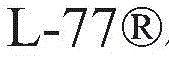
A brand surfactant. In some embodiments, the topically applied composition further comprises at least one insecticide selected from the group consisting of patatin, phytohemagglutinin, phytoecdysteroid, bacillus thuringiensis insecticidal protein, xenorhabdus insecticidal protein, photorhabdus insecticidal protein, bacillus laterosporous insecticidal protein, and bacillus sphaericus insecticidal protein. Alternatively such additional components or pesticides may be provided separately, for example by local application alone or by transgene expression in plants. Plants are optionally treated topically with a polynucleotide-containing composition and a separate (prior, subsequent, or simultaneous) application of a substance that enhances the efficacy of the polynucleotide-containing composition. For example, a first topical application may contain a nonionic silicone surfactant such as
Branded surfactants (e.g. SILWET)
Brand surfactants) followed by a second topical application of a polynucleotide containing composition to spray the plants, or vice versa.
It is expected that the combination of certain polynucleotides (e.g. the polynucleotide triggers described in the working examples) with one or more non-polynucleotide pesticides used in such a method will result in a synergistic increase in the prevention or control of diabrotica species infestation compared to the effect obtained with the polynucleotide alone or the non-polynucleotide pesticide alone. In one embodiment, transgenic plants expressing at least one polynucleotide comprising at least one fragment of 18 or more contiguous nucleotides substantially identical or complementary to a fragment of a target gene selected from the genes identified in table 1 (e.g., the polynucleotide triggers described in the working examples) and encoding one or more genes of a non-polynucleotide pesticide selected from patatin, phytohemagglutinin, phytoecdysteroid, bacillus thuringiensis insecticidal protein, xenorhabdus insecticidal protein, photorhabdus insecticidal protein, bacillus laterosporous insecticidal protein, and bacillus sphaericus insecticidal protein were found to exhibit synergistically increased resistance to phyllosticta species infestation.
In some embodiments where the polynucleotide expressed in the plant is expressed by transient expression, the first polynucleotide is provided to the plant in the form of RNA or DNA or both RNA and DNA, and the second polynucleotide produced is transiently expressed in the plant; the site of administration of the first polynucleotide need not be the same site of transient expression of the second polynucleotide. For example, the first polynucleotide may be provided to the plant by topical application to the leaf, or by injection into the stem, and the second polynucleotide is transiently expressed elsewhere in the plant, e.g., in the root or throughout the plant. In some embodiments of the methods, the composition comprising at least one polynucleotide is topically applied to the aerial parts of the plant, such as by spraying or dusting onto the leaves, stems, and flowering parts of the plant. In other embodiments, a composition comprising at least one polynucleotide is topically applied to the underground portion of a plant, for example, to the roots, for example, with the aid of a soil drench. In other embodiments, a composition comprising at least one polynucleotide is topically applied to seeds that grow into plants having increased resistance to infestation by phyllotreta species (or, in the case of potatoes, to seed potatoes).
In some embodiments the polynucleotide expressed in the plant is RNA, which may be single stranded (ss) or double stranded (ds) RNA or a combination of both.
In some embodiments, a first polynucleotide (DNA or RNA or both) is provided to a plant and a second polynucleotide having a sequence corresponding (identical or complementary) to the first polynucleotide is subsequently expressed in the plant. The polynucleotide expressed in the plant in such embodiments is an RNA transcript, which may be ssRNA or dsRNA or a combination of both. In some embodiments where the polynucleotides are expressed by transient expression, the first polynucleotide is provided to the plant in RNA or DNA or both RNA and DNA form, and the second polynucleotide produced is transiently expressed in the plant; in such embodiments, the first polynucleotide is one or more selected from the group consisting of: (a) a single-stranded RNA molecule (ssRNA), (b) a single-stranded RNA molecule that self-hybridizes to form a double-stranded RNA molecule, (c) a double-stranded RNA molecule (dsRNA), (d) a single-stranded DNA molecule (ssDNA), (e) a single-stranded DNA molecule that self-hybridizes to form a double-stranded DNA molecule, (f) a single-stranded DNA molecule comprising a modified Pol III gene that is transcribed to an RNA molecule, (g) a double-stranded DNA molecule (dsDNA), (h) a double-stranded DNA molecule comprising a modified Pol III gene that is transcribed to an RNA molecule, and (i) a double-stranded, hybridized RNA/DNA molecule, or a combination thereof. In such embodiments where the polynucleotide is expressed by transient expression, the first polynucleotide may be comprised of naturally occurring nucleotides, such as those found in DNA and RNA. In such embodiments where the polynucleotide is expressed by transient expression, the first polynucleotide may be chemically modified, or comprise chemically modified nucleotides. The first polynucleotide is provided by suitable means known to those skilled in the art. Embodiments include those in which the first polynucleotide is chemically synthesized (e.g., by in vitro transcription, such as transcription using T7 polymerase or other polymerases), produced by expression in a microorganism or in cell culture (such as a plant or insect cell grown in culture), produced by expression in a plant cell, or produced by fermentation of a microorganism. The first polynucleotide may be provided as an RNA or DNA fragment. Alternatively the first polynucleotide may be provided in a more complex construct, e.g. as part of a recombinant expression construct, or included in a recombinant vector, e.g. in a recombinant plant viral vector or a recombinant baculovirus vector; such recombinant expression constructs or vectors can be designed to include additional elements, such as expression cassettes for expression of a gene of interest (e.g., a pesticidal protein).
In some embodiments the polynucleotide expressed in the plant is an RNA molecule and may be relatively short, such as single-stranded or double-stranded RNA of between about 18 to about 300 or between about 50 to about 500 nucleotides (for single-stranded RNA) or between about 18 to about 300 or between about 50 to about 500 base pairs (for double-stranded RNA). Alternatively the polynucleotide may be provided in a more complex construct, for example as part of a recombinant expression construct, or included in a recombinant vector, for example in a recombinant plant viral vector or a recombinant baculovirus vector. Such recombinant expression constructs or vectors are designed in some embodiments to include additional elements, such as expression cassettes for expression of genes of interest (e.g., pesticidal proteins).
The polynucleotide expressed in the plant has at least one segment of 18 or more contiguous nucleotides with a sequence of about 95% to about 100% identity or complementarity to a fragment of equivalent length of a target gene selected from the genes identified in the target gene sequence set. In one embodiment the polynucleotide expressed in the plant comprises at least one segment of 18 or more contiguous nucleotides that is substantially identical or complementary to a fragment of equivalent length of a target gene selected from the group of genes identified in the target gene sequence set. In some embodiments, the sequence of contiguous nucleotides has about 95%, about 96%, about 97%, about 98%, about 99%, or about 100% identity or complementarity to a fragment of equivalent length of a target gene selected from a gene identified in the target gene sequence set. In some embodiments, the contiguous nucleotides are identical (100%) or complementary to a fragment of equivalent length of a target gene selected from a gene identified in the target gene sequence set. In some embodiments, the entire sequence of the polynucleotide expressed in the plant has about 95%, about 96%, about 97%, about 98%, about 99%, or about 100% identity or complementarity to a fragment of a target gene selected from the genes identified in the target gene sequence set.
Polynucleotides expressed in plants are typically designed to inhibit one or more genes ("target genes"). Such target genes may include coding or non-coding sequences or both. In particular embodiments, the polynucleotide expressed in the plant is designed to inhibit one or more target genes selected from the genes identified in the target gene sequence set. In various embodiments, the polynucleotide expressed in the plant is designed to repress one or more genes selected from the genes identified in the target gene sequence set, and may be designed to repress multiple genes from this set, or to target different regions of one or more of these genes. In one embodiment, the polynucleotide expressed in the plant comprises a plurality of segments or fragments, each of which comprises a fragment of at least one 18 or more contiguous nucleotides having a sequence of about 95% to about 100% identity or complementarity to a fragment of a target gene selected from the group of genes identified in the target gene sequence set. In such cases, each segment may be the same or different in size or sequence, and may be sense or antisense with respect to the target gene. For example, a polynucleotide expressed in a plant in one embodiment may comprise a plurality of segments in a tandem or repetitive arrangement, wherein each segment comprises a fragment of at least 18 or more contiguous nucleotides having a sequence of about 95% to about 100% identity or complementarity to a fragment of a target gene selected from the group of genes identified in the target gene sequence set; the fragments may be from different regions of the target gene, for example, the fragments may correspond to different exonic regions of the target gene, and "spacer" nucleotides that do not correspond to the target gene may optionally be used between or adjacent the fragments.
The total length of the polynucleotide expressed in the plant may be greater than 18 consecutive nucleotides and may include nucleotides other than consecutive nucleotides whose sequence has from about 95% to about 100% identity or complementarity to a fragment of a target gene selected from the genes identified in the target gene sequence set. In other words, the total length of the polynucleotide expressed in the plant may be greater than the length of the segment or fragment of the polynucleotide designed to suppress one or more target genes selected from the genes identified in the target gene sequence set. For example, a polynucleotide expressed in a plant may have nucleotides flanking an "active" fragment of at least one fragment of 18 or more contiguous nucleotides that suppresses a target gene, or include "spacer" nucleotides between active fragments, or may have additional nucleotides at the 5 'end, or at the 3' end, or at both the 5 'and 3' ends. In one embodiment, the polynucleotide expressed in the plant comprises additional nucleotides that are not specifically related to (have a sequence that is not complementary or identical to) a target gene selected from a gene identified in the target gene sequence set, e.g., nucleotides that provide stable secondary structure or facilitate cloning or production. In one embodiment, the polynucleotide expressed in the plant comprises additional nucleotides positioned immediately adjacent to one or more fragments of 18 or more contiguous nucleotides having from about 95% to about 100% identity or complementarity to a fragment of equivalent length of a target gene selected from the group of genes identified in the target gene sequence set. In one embodiment, the polynucleotide expressed in the plant comprises one such fragment, with an additional 5 'G or an additional 3' C or both adjacent to the fragment. In another embodiment, the polynucleotide expressed in the plant is a dsRNA comprising additional nucleotides to form an overhang, e.g., a dsRNA comprising 2 deoxyribonucleotides to form a 3' overhang. Thus, in various embodiments, the nucleotide sequence of the entire polynucleotide expressed in the plant is not 100% identical or complementary to a contiguous nucleotide fragment in a target gene selected from the genes identified in the target gene sequence set. For example, in some embodiments the polynucleotide expressed in the plant comprises at least two fragments of 21 contiguous nucleotides each having a sequence of 100% identity or 100% complementarity to a fragment of a target gene selected from the genes identified in the target gene sequence set, wherein (1) the at least two fragments are separated by one or more spacer nucleotides, or (2) the at least two fragments are arranged in an order different from the corresponding fragments present in the target gene selected from the genes identified in the target gene sequence set.
In a related aspect, the invention relates to a plant having increased resistance to diabrotica species infestation provided by expression in the plant of at least one polynucleotide comprising at least one segment of 18 or more contiguous nucleotides substantially identical or complementary to a segment of equivalent length of a target gene selected from a gene identified in the target gene sequence set, whereby the resulting plant has increased resistance to diabrotica species infestation when compared to a control plant in which the polynucleotide is not expressed. In a related aspect, the invention relates to a plant having increased resistance to diabrotica species infestation provided by expression in the plant of at least one polynucleotide comprising a fragment of 18 or more contiguous nucleotides having a sequence from about 95% to about 100% identity or complementarity to a fragment of a target gene selected from a gene identified in the target gene sequence set, whereby the resulting plant has increased resistance to diabrotica species infestation when compared to a control plant in which the polynucleotide is not expressed. An embodiment is a solanaceous plant with increased resistance to infestation by diabrotica species when compared to a control plant, by expressing in the plant a nucleic acid sequence having a sequence selected from the group consisting of SEQ ID NO: 831-1085 and 1095. In a further aspect, the invention relates to seeds or propagatable parts (especially transgenic progeny seeds or propagatable parts) produced by plants provided by this method having increased resistance to diabrotica species infestation. Also encompassed are commodities produced by plants provided by such methods having increased resistance to infestation by diabrotica species and commodities produced by transgenic progeny seeds or propagatable parts of such plants.
Method for controlling infestation of plants by diabrotica species
Several embodiments relate to a method for controlling infestation of a plant by a diabrotica species, comprising contacting the diabrotica species with a polynucleotide comprising at least one fragment of 18 or more contiguous nucleotides that is substantially identical or complementary to a fragment of length of DNA of a target gene selected from a gene identified in a target gene sequence set. In this regard, "controlling" includes inducing physiological or behavioral changes in diabrotica species (adults or larvae), such as, but not limited to, impaired growth, increased mortality, reduced reproductive capacity, reduced or halted feeding or exercise, or reduced or halted development in the allergic phase. In one embodiment, a method for controlling a plant infestations by a diabrotica species comprises contacting the diabrotica species with a polynucleotide comprising at least one fragment identical or complementary to at least 21 consecutive nucleotides of a target gene selected from a gene identified in a target gene sequence set or of an RNA transcribed from the target gene. In some embodiments, the polynucleotide is double-stranded RNA. In some embodiments, the polynucleotide (e.g., double-stranded RNA) is produced via chemical synthesis or by expression in a microorganism or in a plant cell. In some embodiments, the polynucleotide is a double-stranded RNA comprising one strand comprising a sequence selected from the group consisting of trigger sequences. In one embodiment, a method for controlling infestation of a plant by a diabrotica species comprises contacting the diabrotica species with an effective amount of a double stranded RNA, one strand of which is complementary to at least 21 consecutive nucleotides of a gene encoding a ribosomal protein, wherein RNA interference is induced and death occurs. Embodiments of the target genes are identified by names in tables 1, 2, and 4 and include genes having a sequence selected from the target gene sequences group as well as related genes, including orthologs from related insect species, such as related genes from other diabrotica species, pseudoglutelina species, or other related coleoptera genera. Examples of such related target genes include the tribolium castaneum genes listed in table 1. In some embodiments, the polynucleotide comprises at least one fragment of 18 or more contiguous nucleotides that is substantially identical or complementary to a target gene fragment having a sequence selected from the target gene sequences group. In some embodiments the polynucleotide comprises a polynucleotide having a sequence selected from the group consisting of SEQ ID NOs: 831-, 1085-, 1095-, 1104-and 1110-1114 or complements thereof, or an RNA consisting of a sequence selected from SEQ ID NO: 1105-1109. In some embodiments the polynucleotide comprises a dsRNA with a sequence selected from the group consisting of trigger sequences. In some embodiments, the present invention provides a method for controlling a plant infestations by a diabrotica species, comprising contacting the diabrotica species with an effective amount of a solution comprising double-stranded RNA, wherein at least one strand of the double-stranded RNA is complementary to at least 21 consecutive nucleotides of a gene encoding a ribosomal protein or of an RNA transcribed from said gene, wherein the diabrotica species is leptinotarsa decemlineata, and wherein RNA interference is induced and leptinotarsa deceased occurs, and wherein the ribosomal protein is ribosomal L7 protein or is encoded by SEQ ID NO: 730 or wherein the double stranded RNA comprises a sequence selected from SEQ ID NO: 989. 988, 1104, or 1105; in some embodiments, the solution further comprises one or more components selected from a silicone surfactant or a cationic lipid.
In some embodiments, the sequence of contiguous nucleotides has about 95%, about 96%, about 97%, about 98%, about 99%, or about 100% identity or complementarity to a fragment of equivalent length of a target gene selected from a gene identified in the target gene sequence set. In some embodiments, the contiguous nucleotides are identical (100%) or complementary to a fragment of equivalent length of a target gene selected from a gene identified in the target gene sequence set. In some embodiments, the entire sequence of the polynucleotide is about 95%, about 96%, about 97%, about 98%, about 99%, or about 100% identical or complementary to a fragment of equivalent length of a target gene selected from a gene identified in the target gene sequence set. In one embodiment, the polynucleotide comprises a fragment of at least 21 contiguous nucleotides having a sequence of 100% identity or complementarity to a corresponding fragment of a target gene selected from the genes identified in the target gene sequence set; in some embodiments, the polynucleotide comprises a "neutral" sequence (no sequence identity or complementarity to the target gene) in addition to a 21 contiguous nucleotide fragment having 100% identity to the corresponding fragment of the target gene, such that the polynucleotide as a whole has much lower overall sequence identity to the target gene.
The polynucleotides used in such methods are typically designed to inhibit one or more genes ("target genes"). The term "gene" refers to any portion of a nucleic acid used for expression of a transcript or encoding a transcript. A "gene" may include, but is not limited to, a promoter region, a 5 'untranslated region, a transcript coding region that may include an intron region, a 3' untranslated region, or a combination of these regions. In some embodiments, a target gene may include coding or non-coding sequences or both. In other embodiments, the target gene has a sequence that is the same as or complementary to messenger RNA, e.g., in some embodiments the target gene is cDNA. In particular embodiments, the polynucleotide is designed to inhibit one or more target genes selected from genes identified in the target gene sequence set. In various embodiments, the polynucleotide is designed to repress one or more target genes selected from genes identified in the target gene sequence set, and can be designed to repress multiple target genes from this set, or to target different regions of one or more of these target genes. In one embodiment, the polynucleotide comprises a plurality of fragments of 21 contiguous nucleotides having 100% identity to a fragment of equivalent length of a DNA or target gene having a sequence selected from the target gene sequences group or the DNA complement thereof. In such cases, each fragment may be the same or different in size or sequence, and may be sense or antisense with respect to the target gene. For example, in one embodiment the polynucleotide comprises a plurality of fragments in a tandem or repetitive arrangement, wherein each fragment comprises 18 or more contiguous nucleotides having a sequence of from about 95% to about 100% identity to a fragment of equivalent length of a target gene selected from the group of genes identified in the target gene sequence set; the fragments may be from different regions of the target gene, for example, the fragments may correspond to different exonic regions of the target gene, and "spacer" nucleotides that do not correspond to the target gene may optionally be used between or adjacent the fragments.
The total length of the polynucleotide used in such methods can be greater than 18 contiguous nucleotides and can include nucleotides other than contiguous nucleotides having a sequence from about 95% to about 100% identity or complementarity to a fragment of equivalent length of a target gene selected from the genes identified in the target gene sequence set. In other words, the total length of the polynucleotide may be greater than the length of the segment or fragment of the polynucleotide designed to be repressed from one or more target genes selected from the genes identified in the target gene sequence set. For example, the polynucleotide may have nucleotides flanking an "active" fragment that suppresses at least one fragment of the target gene that is 18 or more contiguous nucleotides, or include "spacer" nucleotides between active fragments, or may have additional nucleotides at the 5 'end, or at the 3' end, or at both the 5 'and 3' ends. In one embodiment, the polynucleotide may include additional nucleotides that are not specifically related to (have a sequence that is not complementary or identical to) a target gene selected from a gene identified in the target gene sequence set, e.g., nucleotides that provide stable secondary structure or facilitate cloning or production. In one embodiment, the polynucleotide may comprise additional nucleotides positioned immediately adjacent to one or more fragments of 18 or more contiguous nucleotides having from about 95% to about 100% identity or complementarity to a fragment of equivalent length of a target gene selected from the genes identified in the target gene sequence set. In one embodiment, the polynucleotide comprises one such fragment, with an additional 5 'G or an additional 3' C or both adjacent to the fragment. In another embodiment, the polynucleotide is a double-stranded RNA comprising additional nucleotides to form an overhang, e.g., a dsRNA comprising 2 deoxyribonucleotides to form a 3' overhang. Thus, in various embodiments, the nucleotide sequence of the entire polynucleotide is not 100% identical or complementary to a contiguous stretch of nucleotides in a target gene selected from the genes identified in the target gene sequence set. For example, in some embodiments the polynucleotide comprises at least two fragments of 21 contiguous nucleotides each having a sequence of 100% identity to a fragment of equivalent length of the target gene, wherein (1) the at least two fragments are separated by one or more spacer nucleotides, or (2) the at least two fragments are arranged in an order different from the corresponding fragments present in a DNA having a sequence selected from the target gene sequences group or the DNA complement thereof.
Polynucleotides for use in such methods may be provided by suitable means known to those skilled in the art. Embodiments include those in which the polynucleotide is chemically synthesized (e.g., by in vitro transcription, such as transcription using T7 polymerase or other polymerases), produced by expression in a microorganism or in cell culture (such as a plant or insect cell grown in culture), produced by expression in a plant cell, or produced by fermentation of a microorganism.
In some embodiments, the polynucleotides used in such methods are provided as isolated DNA or RNA fragments. In some embodiments the polynucleotide used in such a method is not part of an expression construct but lacks additional elements such as a promoter or terminator sequence). Such polynucleotides may be relatively short, such as single-stranded or double-stranded polynucleotides of between about 18 to about 300 or between about 50 to about 500 nucleotides (for single-stranded polynucleotides) or between about 18 to about 300 or between about 50 to about 500 base pairs (for double-stranded polynucleotides). In some embodiments, the polynucleotide is a dsRNA of between about 100 to about 500 base pairs, such as a dsRNA of the length of any of the dsRNA triggers disclosed in tables 3, 5, 8, 9 and 10. Embodiments include wherein the polynucleotide is a polynucleotide comprising a nucleotide sequence having a sequence selected from the group consisting of SEQ ID NOs: 831-, 1085-, 1095-, 1104-and 1110-1114 or complements thereof, or wherein the polynucleotide is a polynucleotide consisting of a sequence selected from the group consisting of SEQ ID NOs: 1105-1109. Alternatively the polynucleotide may be provided in a more complex construct, for example as part of a recombinant expression construct, or included in a recombinant vector, for example in a recombinant plant viral vector or a recombinant baculovirus vector. Such recombinant expression constructs or vectors are designed in some embodiments to include additional elements, such as expression cassettes for expression of genes of interest (e.g., pesticidal proteins).
In various embodiments of the method, the contacting comprises applying to the surface of a diabrotica species a suitable composition comprising a polynucleotide for use in such a method; such compositions may, for example, be provided as solids, liquids (including homogeneous mixtures, such as solutions and heterogeneous mixtures, such as suspensions, colloids, micelles and emulsions), powders, suspensions, emulsions, sprays, encapsulations or microencapsulated formulations, or in or on microbeads or other carrier particles, in films or coatings, or on or within substrates, or as seed treatment agents. The contacting can be in the form of seed treatment, or in the form of "seed treatment with potato" tubers or tuber pieces (e.g., by soaking, coating, or dusting the seed with potato). Suitable binders, inert carriers, surfactants, and the like may optionally be included in the composition, as known to those familiar with pesticide and seed treatment formulations. In some embodiments, the contacting comprises providing the polynucleotide in a composition further comprising one or more components selected from the group consisting of a carrier agent, a surfactant, a cationic lipid (such as the cationic lipid disclosed in example 18 of U.S. patent application publication 2011/0296556, incorporated herein by reference), a silicone surfactant, a polynucleotide herbicidal molecule, a non-polynucleotide pesticide, a safener, and an insect growth regulator. In embodiments, the contacting comprises providing the polynucleotide in a composition further comprising at least one pesticide selected from the group consisting of a patatin, a plant lectin, a phytoecdysteroid, a bacillus thuringiensis insecticidal protein, a xenorhabdus insecticidal protein, a photorhabdus insecticidal protein, a bacillus laterosporous insecticidal protein, and a bacillus sphaericus insecticidal protein. In one embodiment the contacting comprises providing the polynucleotide in a composition that is ingestible or otherwise internally absorbable by the diabrotica species.
It is expected that the combination of certain polynucleotides (e.g. the polynucleotide triggers described in the working examples) with one or more non-polynucleotide pesticides used in such a method will result in a synergistic increase in the prevention or control of diabrotica species infestation compared to the effect obtained with the polynucleotide alone or the non-polynucleotide pesticide alone. In one embodiment, a composition comprising one or more polynucleotides and one or more non-polynucleotide pesticides selected from the group consisting of patatin, phytohemagglutinin, phytoecdysteroid, bacillus thuringiensis insecticidal protein, xenorhabdus insecticidal protein, photorhabdus insecticidal protein, bacillus laterosporous insecticidal protein, and bacillus sphaericus insecticidal protein is found to achieve synergistically enhanced prevention or control of diabrotica species infestation.
Method for selecting target gene
In another aspect of the invention, a method for non-random selection of a target gene for RNAi-mediated silencing is provided. In one embodiment, the method provides a subset of target genes that are present in a particular genome at a single or low copy number (non-duplicated and non-redundant). Such target genes may be genes from the genome of a plant or genes from the genome of an animal. In some embodiments, the target gene is a gene of an invertebrate pest, such as an invertebrate pest of a plant or an invertebrate pest of a vertebrate. In some embodiments, the target gene is a gene of an insect pest of a plant or a nematode pest of a plant. In some embodiments, the target gene is a gene of a diabrotica species. Additional aspects include producing a polynucleotide (e.g., a ssRNA or dsRNA trigger, such as the dsRNA triggers described in the working examples, or a recombinant DNA construct for producing a transgenic plant) based on the target gene of RNAi-mediated silencing selected by any of the methods described herein.
In one embodiment, the method comprises the step of identifying single or low copy number genes in the selected genome, or alternatively identifying single or low copy number genes in an orthologous source database from a related organism, to predict which genes will be single/low copy in the selected organism. Low copy genes, and in particular single copy genes, are selected as targets for RNAi-mediated silencing. In one embodiment, the identification of single or low copy number genes is performed by sequence comparison between a set of genes from a first species and a set of genes from a second species in which the set of genes from the second species has been identified as single or low copy number. In one embodiment, the identification of a single or low copy number gene is performed by: a computer-implemented algorithm is applied to a set of genes from a first species to identify a subset of single or low copy number genes in the set of genes from the first species, and then the set of genes from a second species is compared to the subset of single or low copy number genes from the first species to identify corresponding single or low copy number genes from the second species. A single or low copy number gene from a second species is used as a target gene for RNAi-mediated silencing; the sequences of these target genes are used to design polynucleotides (e.g., ssRNA or dsRNA triggers, such as the dsRNA triggers described in the working examples, or recombinant DNA constructs for producing transgenic plants) and methods for their use in preventing or controlling infestation by a second species.
Embodiments of the method include the further step of estimating nucleotide diversity of low/single copy genes in the selected population of organisms and selecting those low/single copy genes further having the lowest nucleotide diversity. Low/single copy genes further having low nucleotide diversity were selected as targets for RNAi-mediated silencing.
Embodiments of the method include comparison of synonyms (K)s) Non-synonymous (K)a) The ratio of nucleotide changes serves as a further step in the estimation of functional or evolutionary limitations. In one embodiment, the method comprises selecting KsAt least equal to or greater than KaThe step of (3). In one embodiment, the method comprises selecting Ks>>KaThe step of (3).
A related aspect of the invention is a set of RNAi-mediated silencing target genes identified from a genome by any of the gene selection methods described herein. Embodiments relate to selecting a set of RNAi-mediated silenced target genes from a genome by identifying single or low copy number target genes from a larger set of genes from the genome. One embodiment relates to a set of RNAi-mediated silenced target genes selected from an invertebrate genome by identifying single or low copy number target genes from a larger set of genes from the invertebrate genome. Particular embodiments relate to a set of RNAi-mediated silenced target genes in a diabrotica species selected from a diabrotica genome by identifying single or low copy number target genes from a larger set of genes from the diabrotica genome. Particular embodiments relate to a set of RNAi-mediated silencing target genes in a diabrotica species selected from a diabrotica genome by identifying single or low copy number target genes from a larger set of genes from the diabrotica genome, wherein the sequences of the set are represented by SEQ ID NOs: 1-725 or the DNA complement thereof.
A related aspect of the invention is the use of a polypeptide consisting of SEQ ID NO: 1-725 or the DNA complement thereof. These include: (i) a method for controlling infestation of a plant by a diabrotica species, comprising contacting the diabrotica species with a polynucleotide comprising a sequence that hybridizes to a polynucleotide having a sequence selected from the group consisting of SEQ ID NO: 1-725 or the DNA complement thereof, or at least one fragment of 18 or more contiguous nucleotides having from about 95% to about 100% identity to a fragment of equivalent length of DNA; (ii) a method for controlling infestation of a plant by a diabrotica species, comprising providing in the diet of a diabrotica species an agent comprising a polynucleotide having a sequence identical to a polynucleotide having a sequence selected from SEQ ID NO: 1-725 or the DNA complement thereof, wherein the agent acts on uptake by a diabrotica species to inhibit a biological function within the diabrotica species, thereby controlling diabrotica species infestation; (iii) a method of causing death or stunted growth in diabrotica species larvae, comprising providing in the diet of diabrotica species larvae at least one recombinant RNA comprising at least one silencing element substantially identical or substantially complementary to a target gene of diabrotica species larvae, wherein the target gene is selected from the group consisting of SEQ ID NO: 1 to 725; (iv) a method of providing a plant with increased resistance to a diabrotica species infestation, comprising topically applying to the plant a composition comprising at least one polynucleotide having a sequence that is complementary to a polynucleotide having a sequence selected from the group consisting of SEQ ID NOs: 1-725 or the DNA complement thereof, or at least one fragment of 18 or more contiguous nucleotides having from about 95% to about 100% identity to a fragment of equivalent length of DNA; (v) a composition for controlling diabrotica species, comprising at least one recombinant polynucleotide comprising a nucleotide sequence identical to a nucleotide sequence having a sequence selected from SEQ ID NOs: 1-725, at least one fragment of 18 or more contiguous nucleotides that is substantially identical or complementary to a fragment of equivalent length of DNA of the sequence of seq id no; (vi) a method of providing a plant with increased resistance to a diabrotica species infestation, comprising expressing in the plant at least one polynucleotide comprising a nucleotide sequence identical to a nucleotide sequence having a nucleotide sequence selected from the group consisting of SEQ ID NOs: 1-725, at least one fragment of 18 or more contiguous nucleotides that is substantially identical or complementary to a fragment of equivalent length of DNA of the sequence of seq id no; (vii) a recombinant DNA construct comprising a heterologous promoter operably linked to DNA comprising a sequence that hybridizes to a nucleic acid sequence having a sequence selected from the group consisting of SEQ ID NO: 1-725 or the DNA complement thereof, or at least one fragment of 18 or more contiguous nucleotides having from about 95% to about 100% identity to a fragment of equivalent length of DNA; and (viii) a transgenic solanaceous plant cell having in its genome recombinant DNA encoding an RNA that inhibits expression of a target gene in a diabrotica species that contacts or ingests the RNA, wherein said RNA comprises at least one silencing element complementary to the target gene, and wherein said target gene sequence is a sequence selected from the group consisting of SEQ ID NO: 1-725 or the complement thereof.
Another embodiment relates to a set of RNAi-mediated silenced target genes selected from a genome by estimating the nucleotide diversity of a set of designated genes in a population of individuals of a species having the genome, and selecting those genes with the lowest nucleotide diversity. One embodiment relates to a set of target genes for RNAi-mediated silencing selected from an invertebrate genome by estimating the nucleotide diversity of a set of designated genes in a population of invertebrate individuals having the genome and selecting those genes having the lowest nucleotide diversity. Another embodiment relates to a set of target genes for RNAi-mediated silencing selected from an invertebrate genome by estimating the nucleotide diversity of low/single copy genes in a population of invertebrate individuals having the genome and selecting those low/single copy genes having the lowest nucleotide diversity.
Another embodiment relates to a set of RNAi-mediated silencing target genes selected from a genome by comparing synonyms (K) in genes of the genomes) Non-synonymous (K)a) The ratio of nucleotides is varied and K is selected sAt least equal to or greater than KaThe gene of (1). In one embodiment, the set of RNAi-mediated silencing target genes is wherein KsAt least equal to or greater than KaThe gene of (1). In one embodiment, the set of RNAi-mediated silencing target genes is Ks>>KaThe gene of (1). One embodiment relates to a set of RNAi-mediated silencing target genes selected from invertebrate genomes and wherein K is for the selected genes>>Ka。
In one embodiment, the single or low copy number target gene is a subset of target genes of a first invertebrate species selected from a larger set of genes from the first invertebrate species, wherein the selecting is achieved by a computer-performed sequence comparison between the larger set of genes from the first invertebrate species and a set of genes from a second invertebrate species that have been identified as single or low copy number in the second invertebrate species. In a particular embodiment, the single or low copy number target genes are a subset of the potato leafworm target genes selected from the larger set of potato leafworm target genes, wherein the selection is achieved by a computer-performed sequence comparison between the larger set of potato leafworm target genes and a set of genes from a second invertebrate species that have been identified as single or low copy number in the second invertebrate species. The potato diabrotica single or low copy number target genes selected by the methods are particularly useful in making the polynucleotides of the invention, including isolated recombinant RNA molecules for use, for example, in providing plants with increased resistance to diabrotica species infestation, and for use, for example, in making compositions for the topical treatment of plants or diabrotica species to provide prevention or control of diabrotica species infestation. In one embodiment, the single or low copy number target gene of leptinotarsa decemlineata selected by the method is a gene having a sequence selected from the group consisting of SEQ ID NO: 1-725.
Another aspect of the present invention is a polyclonal or monoclonal antibody that binds to a protein encoded by a sequence or a fragment of a sequence selected from the target gene sequences group and a polyclonal or monoclonal antibody that binds to a protein encoded by a sequence or a fragment of a sequence selected from the trigger sequences group or the complement thereof; such Antibodies are prepared by conventional Methods known to those of ordinary skill in the art, for example Using conventional Protocols described in "Antibody Methods and Protocols" (edited by Proetzel and Ebersbach, 2012, Humana Press, New York) or "Making and Using Antibodies" (edited by Howard and Kaser, 2006, CRC Press, Boca Raton).
Selection of effective polynucleotides by "Tiling
The polynucleotide used in the embodiments described herein need not be the full-length target gene, and in many embodiments is much shorter than the target gene. Examples of techniques for selecting effective polynucleotides are "tiling", or evaluating polynucleotides corresponding to adjacent or partially overlapping fragments of a target gene.
In some embodiments, an effective polynucleotide trigger can be identified by "shingles" of the gene target along the length of the target gene in fragments of selected length, such as fragments of 200-300 nucleotides in length with, for example, a partial overlap region of about 25 nucleotides. In some embodiments, the polynucleotide trigger sequence is designed to correspond to (have nucleotide identity or complementarity with) a region unique to the target gene. In some embodiments, the selected region of the target gene may include coding or non-coding sequences (e.g., promoter regions, 3' untranslated regions, introns, etc.) or a combination of both.
When it is of interest to design targets that are effective in suppressing multiple target genes, the multiple target gene sequences are aligned and the polynucleotide trigger is designed to correspond to a region of high sequence homology common among the multiple targets. In contrast, when it is of interest to design targets that selectively inhibit one of a plurality of target sequences, the plurality of target gene sequences are aligned and the polynucleotide trigger is designed to correspond to regions of lower non-sequence homology or common sequence homology among the plurality of targets.
Thermodynamic factors in efficient polynucleotide selection
In some embodiments, thermodynamic factors may be used to design polynucleotide triggers or optimize their sequences. For example, a polynucleotide trigger can be selected based on thermodynamic control of hybridization between one nucleic acid strand (e.g., a polynucleotide trigger or an individual siRNA) and another nucleic acid strand (e.g., a target gene transcript).
Methods and algorithms for predicting nucleotide sequences that may be effective for RNAi-mediated silencing of target genes are known in the art. Non-limiting examples of such methods and algorithms include Ichihara et al (2007) Nucleic Acids res., 35 (18): 123e "i-score"; available are disclosed in ma, urmc, rochester, edu/servers/oligowalk and Lu et al (2008) Nucleic Acids res, 36: "walking" (Oligowalk) as described by W104-108; and khovrova et al (2004) Nature biotechnol, 22: 326-330, Reynolds score (Reynolds score).
Tolerance of mismatch
By "substantially identical" or "substantially complementary" is meant that the polynucleotide (or at least one strand of a double-stranded polynucleotide) has sufficient identity or complementarity to a target gene or to an RNA transcribed from the target gene (e.g., a transcript) to inhibit expression of the target gene (e.g., achieve a reduced level or activity of the target gene transcript and/or encoded protein). The polynucleotides as described herein do not need to have 100% identity or complementarity to the target gene or the RNA transcribed from the target gene to inhibit expression of the target gene (e.g., to achieve a reduction in the level or activity of the target gene transcript and/or encoded protein, or to provide control over diabrotica species). In some embodiments, the polynucleotide or a portion thereof is designed to be substantially identical or substantially complementary to a sequence of at least 18 or 19 consecutive nucleotides in the target gene or RNA transcribed from the target gene. In some embodiments the polynucleotide or a portion thereof is designed to be 100% identical or 100% complementary to a sequence of one or more 21 contiguous nucleotides in the target gene or RNA transcribed from the target gene. In certain embodiments, a polynucleotide that is "substantially identical" has 100% sequence identity or at least about 83, 84, 85, 86, 87, 88, 89, 90, 91, 92, 93, 94, 95, 96, 97, 98, or 99% sequence identity when compared to a sequence of 18 or more contiguous nucleotides in an endogenous target gene or in an RNA transcribed from said target gene. In certain embodiments, a "substantially complementary" polynucleotide has 100% sequence complementarity or at least about 83, 84, 85, 86, 87, 88, 89, 90, 91, 92, 93, 94, 95, 96, 97, 98, or 99% sequence complementarity when compared to a sequence of 18 or more contiguous nucleotides in a target gene or an RNA transcribed from the target gene.
Polynucleotides containing mismatches to the target gene or transcript may be used in certain embodiments of the compositions and methods described herein. In some embodiments, the polynucleotide comprises at least 18 or at least 19 or at least 21 contiguous nucleotides that are substantially identical or substantially complementary to a fragment of equivalent length in the target gene or transcript of the target gene. In certain embodiments, a polynucleotide of 21 or more contiguous nucleotides that is substantially identical or substantially complementary to a fragment of equivalent length in the transcript of the target gene or target gene may have 1 or 2 mismatches with the target gene or transcript (i.e., 1 or 2 mismatches between the 21 contiguous nucleotides of the polynucleotide and the fragment of equivalent length in the transcript of the target gene or target gene). In certain embodiments, a polynucleotide containing a contiguous 21 nucleotide span of about 50, 100, 150, 200, 250, 300, 350 or more nucleotides that is identical or complementary to a fragment of equivalent length in a target gene or transcript of a target gene may have 1 or 2 mismatches with the target gene or transcript.
In designing polynucleotides with mismatches to an endogenous target gene or to the RNA transcribed from the target gene, certain types and likely tolerated mismatches at certain locations can be used. In certain embodiments, the Nucleic acid sequences as described by Du et al (2005) Nucleic Acids res, 33: 1671-1677, mismatches formed between adenine and cytosine or guanosine and uracil residues are used. In some embodiments, the Nucleic acid sequences as described by Du et al (2005) Nucleic Acids res, 33: 1671-1677 mismatches in a 19 base pair overlap region are at low tolerance positions 5, 7, 8 or 11 (starting from the 5 ' end of the 19-nucleotide target), at moderately tolerance positions 3, 4 and 12-17 (starting from the 5 ' end of the 19-nucleotide target) and/or at highly tolerance positions at the end of the complementary region, i.e., positions 1, 2, 18 and 19 (starting from the 5 ' end of the 19-nucleotide target). The tolerance for mismatches can be determined empirically in routine assays, for example in an in vitro food assay for larvae of the diabrotica species.
Embedding silencing elements in neutral sequences
In some embodiments, a silencing element comprising a sequence corresponding to the target gene and responsible for the observed suppression of the target gene is embedded in a "neutral" sequence, i.e., inserted into an additional nucleotide that is not sequence identical or complementary to the target gene. Neutral sequences may be desirable, for example, to increase the overall length of the polynucleotide. For example, it may be desirable for the polynucleotide to have a particular size for reasons of stability, cost-effectiveness of production, or biological activity. In some embodiments, the neutral sequence is also used to form a loop in the hairpin trigger or as a spacer between trigger regions.
It has been reported that in another coleopteran species (corn rootworm (Diabrotica virgifera)), dsRNA of greater than or equal to about 60 base pairs (bp) is required for biological activity in an artificial food bioassay; see Bolognesi et al (2012) PLoS ONE 7 (10): e47534. doi: 10.1371/journal.pane.0047534. Thus, in one embodiment, a 21-base pair dsRNA silencing element corresponding to the target genes in table 1 and found to provide control of diabrotica species infestation is embedded in an additional 39 base pair neutral sequence, thereby forming a polynucleotide of about 60 base pairs. In some embodiments, the dsRNA trigger comprises a neutral sequence of between about 60 to about 500, or between about 100 to about 450 base pairs, wherein the embedded sequence is complementary to a nucleotide sequence having a sequence selected from the group consisting of SEQ ID NOs: 1-725 and SEQ ID NO: 726 and SEQ ID NO: a fragment of at least 21 contiguous nucleotides having 100% identity or 100% complementarity to a fragment of equivalent length of the target gene of the sequence 1087-. In another embodiment, a single 21-base pair silencing element having a sequence with 100% identity or 100% complementarity to a fragment of equivalent length of the target gene is found to be effective when embedded in a larger segment of neutral sequence, e.g., where the total length of the polynucleotide is from about 60 to about 300 base pairs. In another embodiment, is selected from: SEQ ID NO: at least one fragment of sequences 831-, 1085-, 1095-, 1104 and 1110-1114, or their complements, of at least 21 contiguous nucleotides is embedded in a larger segment of the neutral sequence to provide an effective polynucleotide. In another embodiment, from a compound selected from: SEQ ID NO: 831-, 1085-, 1095-, 1104 and 1110-1114, or complements thereof, or multiple copies of a fragment from one or more of the sequences, are embedded in a larger segment of the neutral sequence to provide an effective polynucleotide. In embodiments where the polynucleotide includes a region of neutral sequence, the polynucleotide will have relatively lower overall sequence identity as compared to the target gene; for example, a dsRNA with an overall length of 210 base pairs containing a single 21-base pair trigger embedded in an additional 189 base pairs of neutral sequence (or 100% identity or complementarity to a 21-nucleotide fragment of the target gene) will have about 10% overall sequence identity to the target gene.
Pesticidal double stranded RNA molecules
Another aspect of the invention provides a pesticidal double-stranded RNA molecule that causes death or stunted growth in a diabrotica species when ingested or contacted by said diabrotica species, wherein said pesticidal double-stranded RNA molecule comprises at least one fragment of 18 or more contiguous nucleotides that is substantially identical or substantially complementary to a fragment of equivalent length of a target gene or dna (cdna) having a sequence selected from the target gene sequences group. In some embodiments, the pesticidal double-stranded RNA molecule is between about 50 to about 500 base pairs in length. In some embodiments, the pesticidal double-stranded RNA molecule comprises at least one fragment that is at least 30 contiguous nucleotides in length. In some embodiments, the pesticidal double-stranded RNA molecule comprises a plurality of fragments of 18 or more contiguous nucleotides that are substantially identical or substantially complementary to a fragment of equivalent length of a target gene or dna (cdna) having a sequence selected from the target gene sequences group, wherein the fragments are from different regions of the target gene (e.g., the fragments may correspond to different exonic regions of the target gene, and "spacer" nucleotides that do not correspond to the target gene may optionally be used between or near the fragments), or from different target genes. In some embodiments, the pesticidal double-stranded RNA molecule comprises a plurality of 18 or more contiguous nucleotide fragments that are substantially identical or substantially complementary to a fragment of equivalent length of a target gene or dna (cdna) having a sequence selected from the target gene sequences group, wherein the fragments are from different regions of the target gene and are arranged in the pesticidal double-stranded RNA molecule in an order that is different from the order in which the fragments naturally occur in the target gene. In some embodiments, the pesticidal double-stranded RNA molecule comprises a plurality of 21 contiguous nucleotide fragments having a sequence of 100% identity or 100% complementarity to a fragment of equivalent length of a target gene or dna (cdna) having a sequence selected from the target gene sequences group, wherein the fragments are from different regions of the target gene and are arranged in the pesticidal double-stranded RNA molecule in an order different from the order in which the fragments naturally occur in the target gene. In some embodiments, the pesticidal double-stranded RNA molecule comprises a dna molecule comprising a nucleotide sequence selected from the group consisting of: SEQ ID NO: 831-, 1085-, 1095-, 1104-and 1110-1114 or complements thereof, or a nucleic acid sequence comprising a sequence selected from the group consisting of SEQ ID NOs: 1105-1109. In some embodiments, the pesticidal double-stranded RNA comprises a dsRNA having a sequence selected from the group consisting of trigger sequences. Pesticidal double stranded RNA molecules can be topically applied to plants, particularly solanaceous plants such as tomato, eggplant or potato, to control or prevent infestation by diabrotica species. The pesticidal double stranded RNA molecule may be provided in a form suitable for ingestion by or direct contact with a diabrotica species, for example in the form of a spray or powder or bait. Other methods of providing pesticidal double stranded RNA molecules and suitable compositions are similar to those described in the preceding paragraphs for other aspects of the invention.
Several embodiments relate to tank mixtures comprising one or more insecticidal polynucleotides and water or other solvents, optionally including cationic lipids or silicone surfactants, or both. Embodiments include a tank mix formulation of a polynucleotide and optionally at least one pesticide selected from the group consisting of patatin, phytohemagglutinin, phytoecdysteroids, bacillus thuringiensis insecticidal protein, xenorhabdus insecticidal protein, photorhabdus insecticidal protein, bacillus laterosporous insecticidal protein, and bacillus sphaericus insecticidal protein. Embodiments of such compositions include embodiments wherein one or more pesticidal polynucleotides are provided in a living or dead microorganism, such as a bacterial or fungal or yeast cell, or as a microbial fermentation product, or in a living or dead plant cell, or as a synthetic recombinant polynucleotide. In one embodiment the composition comprises a non-pathogenic microbial strain comprising a polynucleotide as described herein; ingestion or ingestion of the microorganism results in the growth arrest or death of a diabrotica species; examples of suitable microorganisms include escherichia coli (e.coli), bacillus thuringiensis, Pseudomonas species (Pseudomonas sp.), photorhabdus, xenorhabdus, Serratia entomophila (Serratia entomophila) and related Serratia species (Serratia sp.), bacillus sphaericus, bacillus cereus (b.cereus), bacillus laterosporus, bacillus firmus (b.poliliae), Clostridium bifidus (Clostridium bifidum) and other Clostridium species or other spore-forming gram-positive bacteria. In one embodiment, the composition comprises a plant viral vector comprising a polynucleotide as described herein; the diabrotica species feeding on the plant treated with the plant viral vector results in growth arrest or death of the diabrotica species. In one embodiment, the composition comprises a baculovirus vector comprising a polynucleotide as described herein; ingestion or ingestion of the vector results in growth arrest or death of the diabrotica species. In one embodiment, a polynucleotide as described herein is encapsulated in a synthetic matrix such as a polymer or attached to a microparticle and topically applied to the surface of a plant; the feeding of the diabrotica species on the locally treated plants results in the growth of the diabrotica species being hindered or dead. In one embodiment, a polynucleotide as described herein is provided in the form of a plant cell that expresses the polynucleotide (e.g., a transgenic solanaceous plant cell of the invention); uptake of the plant cell or the contents of the plant cell by a diabrotica species results in stunted growth or death of the diabrotica species.
In some embodiments, one or more polynucleotides described herein are provided with appropriate stickers and humectants and UV protectants needed for effective leaf coverage to protect the polynucleotide, such as dsRNA, from UV damage. Such additives are commonly used in the biopesticide industry and are known to those skilled in the art. Compositions for soil application may include granular formulations for use as baits for larvae of the diabrotica species. In some embodiments, one or more polynucleotides described herein are also provided with a carrier agent, a surfactant, a cationic lipid (such as the cationic lipid disclosed in example 18 of U.S. patent application publication 2011/0296556, incorporated herein by reference), a silicone surfactant, a polynucleotide herbicidal molecule, a non-polynucleotide pesticide, a safener, and an insect growth regulator. In some embodiments, the composition further comprises at least one pesticide selected from the group consisting of patatin, phytohemagglutinin, phytoecdysteroid, bacillus thuringiensis insecticidal protein, xenorhabdus insecticidal protein, photorhabdus insecticidal protein, bacillus laterosporous insecticidal protein, and bacillus sphaericus insecticidal protein.
Such compositions are applied in any convenient manner, for example by spraying or dusting directly onto the diabrotica species, or onto plants or the environment in which it is desired to prevent or control infestation by such diabrotica species, or by applying a coating to the surface of the plant, or by applying a coating to the seed (or seed with potatoes) in preparation for seeding, or by applying a soil drench around the roots of the plant in which it is desired to prevent or control infestation by such diabrotica species.
An effective amount of a polynucleotide as described herein is an amount sufficient to provide control of, or prevent infestation by, a diabrotica species; determination of an effective amount of a polynucleotide is performed using conventional assays, such as the assays described in examples 5 and 6. Although there is no upper limit on the concentration and dosage of the pesticidal polynucleotides that can be used in the methods and compositions provided herein, lower effective concentrations and dosages will generally be sought for efficiency and economy. Non-limiting embodiments of effective amounts of polynucleotides include a range of about 10ng/ml to about 100 μ g/ml of a polynucleotide sprayed on a plant in liquid form, or about 10 mg/acre to about 100 g/acre of a polynucleotide applied to a plant field, or about 0.001 to about 0.1mg/ml of a polynucleotide in artificial food for feeding diabrotica species. When a polynucleotide as described herein is applied topically to a plant, the concentration can be adjusted in view of the volume of spray or treatment applied to the plant leaf or other plant part surface, such as petals, stems, tubers, fruits, anthers, pollen, leaves, roots, or seeds. In one embodiment, a useful treatment for herbaceous plants using a 25-mer polynucleotide as described herein is about 1 nanomole (nmol) of polynucleotide per plant, for example about 0.05 to 1nmol of polynucleotide per plant. Other embodiments of herbaceous plants include useful ranges of about 0.05 to about 100nmol, or about 0.1 to about 20nmol, or about 1nmol to about 10nmol of polynucleotide per plant. In certain embodiments, about 40 to about 50nmol of ssDNA polynucleotide is administered. In certain embodiments, about 0.5nmol to about 2nmol of dsRNA is administered. In certain embodiments, compositions containing from about 0.5 to about 2.0mg/ml or about 0.14mg/ml dsRNA or ssDNA (21-mer) are administered. In certain embodiments, about 0.5 to about 1.5mg/ml of a composition of the dsRNA polynucleotides of about 50 to about 200 or more nucleotides of the invention is administered. In certain embodiments, about 1nmol to about 5nmol of a dsRNA of the invention is applied to a plant. In certain embodiments, the polynucleotide composition for topical application to a plant contains at least one polynucleotide of the present invention at a concentration of about 0.01 to about 10mg/ml, or about 0.05 to about 2mg/ml, or about 0.1 to about 2 mg/ml. Very large plants, trees or vines may require correspondingly larger amounts of the polynucleotide. Lower concentrations can be used when using long dsRNA molecules of the invention that can be processed into multiple oligonucleotides (e.g., multiple triggers encoded by a single molecule of recombinant DNA of the invention). Non-limiting examples of effective polynucleotide treatment protocols include treatment of from about 0.1 to about 1nmol of polynucleotide molecule per plant, or from about 1nmol to about 10nmol of polynucleotide molecule per plant, or from about 10nmol to about 100nmol of polynucleotide molecule per plant.
In some embodiments, one or more polynucleotides are provided with a "transfer agent," which is an agent that enables a topically applied polynucleotide to enter a cell of an organism. Such transfer agents can be incorporated as part of a composition comprising a polynucleotide described herein, or administered prior to, concurrently with, or subsequent to the administration of the polynucleotide. In some embodiments, the transfer agent is an agent that increases the uptake of a polynucleotide of the invention by a diabrotica species. In some embodiments, the transfer agent is an agent that modulates the surface of a plant tissue, such as a seed, leaf, stem, root, flower, or fruit, to allow the polynucleotide to penetrate into the plant cell. In some embodiments, the transfer agent enables passage of the polynucleotide into the plant cell through the epidermal wax barrier, stomata, and/or cell wall or membrane barrier.
Suitable transfer agents include agents that increase permeability outside the organism or increase permeability of the organism's cells to polynucleotides. Suitable transfer agents include chemical or physical agents or combinations thereof. Chemical agents for conditioning or transfer include (a) surfactants, (b) organic solvents or aqueous solutions or aqueous mixtures of organic solvents, (c) oxidizing agents, (d) acids, (e) bases, (f) oils, (g) enzymes, or any combination thereof. In some embodiments, administration of the polynucleotide and the transfer agent optionally comprises an incubation step, a neutralization step (e.g., neutralizing an acid, base, or oxidizing agent, or inactivating an enzyme), a washing step, or a combination thereof. Suitable transfer agents may be in the form of an emulsion, inverse emulsion, liposome, or other micelle-like composition, or may bring the polynucleotide in the form of an emulsion, inverse emulsion, liposome, or other micelle-like composition. Embodiments of the transfer agent include counterions or other molecules known to associate with nucleic acid molecules, such as inorganic ammonium ions, alkylammonium ions, lithium ions, polyamines (e.g., spermine, spermidine, or putrescine), and other cations. Embodiments of the transfer agent include organic solvents such as DMSO, DMF, pyridine, N-pyrrolidine, hexamethylphosphoramide, acetonitrile, dioxane, polypropylene glycol, or other solvents that can be mixed with water or that dissolve the nucleotide phosphate in a non-aqueous system (e.g., as used in synthetic reactions). Embodiments of transfer agents include natural or synthetic oils, with or without surfactants or emulsifiers, for example, plant derived oils, crop oils (such as those listed in the Herbicide. Adjuvants. com, published on-line, 9 th edition Compendium of Herbicide Adjuvants), paraffin oils, polyol fatty acid esters, or oils with short chain molecules modified with amides or polyamines (such as polyethyleneimine or N-pyrrolidine).
Embodiments of the transfer agent include silicone formulations. For example, a suitable transfer agent is SILWET
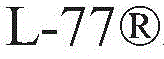
A silicone formulation commercially available under the brand name surfactant having CAS No. 27306-78-1 and EPA no: CAL, REG, NO.5905-50073-AA, and currently available from Momentive Performance Materials, Albany, New York. One embodiment includes a composition comprising a polynucleotide and a transfer agent, the transfer agent comprising an organosilicon agent, e.g.Silwet L-77 in a range of about 0.015 to about 2% (wt%) by weight (e.g., about 0.01, 0.015, 0.02, 0.025, 0.03, 0.035, 0.04, 0.045, 0.05, 0.055, 0.06, 0.065, 0.07, 0.075, 0.08, 0.085, 0.09, 0.095, 0.1, 0.2, 0.3, 0.4, 0.5, 0.6, 0.7, 0.8, 0.9, 1.0, 1.1, 1.2, 1.3, 1.4, 1.5, 1.6, 1.7, 1.8, 1.9, 2.0, 2.1, 2.2, 2.3, 2.5 wt%). One embodiment includes a composition comprising a polynucleotide of the invention and a transfer agent comprising SILWET in the range of about 0.3 to about 1% (wt%) by weight or about 0.5 to about 1% (wt%) by weight
A brand surfactant.
Organosilicon compounds useful as transfer agents for use in the present invention include, but are not limited to, compounds including: (a) a trisiloxane head group covalently attached thereto, (b) an alkyl linker including, but not limited to, an n-propyl linker covalently attached thereto, (c) a polyglycol chain covalently attached thereto, and (d) a terminal group. The trisiloxane head group of such organosilicon compounds includes, but is not limited to, heptamethyltrisiloxane. Alkyl linkers may include, but are not limited to, n-propyl linkers. The polyglycol chain includes, but is not limited to, polyethylene glycol or polypropylene glycol. The polyglycol chain may comprise a mixture that provides an average chain length "n" of about "7.5". In certain embodiments, the average chain length "n" can vary from about 5 to about 14. The end group may include, but is not limited to, an alkyl group such as methyl. Organosilicon compounds useful as transfer agents include, but are not limited to, trisiloxane ethoxylate surfactants or polyether modified heptamethyltrisiloxanes. Examples of transfer agents for use in the present invention are compound I:
(Compound I: polyether heptamethyltrisiloxane, average n.7.5).
The organosilicon compounds used as transfer agents are used, for example, in the fresh concentrations by weight in the range of about 0.015 to about 2% (wt%) (e.g., about 0.01, 0.015, 0.02, 0.025, 0.03, 0.035, 0.04, 0.045, 0.05, 0.055, 0.06, 0.065, 0.07, 0.075, 0.08, 0.085, 0.09, 0.095, 0.1, 0.2, 0.3, 0.4, 0.5, 0.6, 0.7, 0.8, 0.9, 1.0, 1.1, 1.2, 1.3, 1.4, 1.5, 1.6, 1.7, 1.8, 1.9, 2.0, 2.1, 2.2, 2.3, 2.5 wt%).
Embodiments of the transfer agent include one or more salts, such as ammonium chloride, tetrabutylphosphonium bromide, and ammonium sulfate, provided in or used with a composition comprising the polynucleotide. In some embodiments, ammonium chloride, tetrabutylphosphonium bromide, and/or ammonium sulfate is used at a concentration of about 0.5% to about 5% (w/v), or about 1% to about 3% (w/v), or about 2% (w/v). In certain embodiments, a composition comprising a polynucleotide comprises an ammonium salt at a concentration of greater than or equal to 300 millimolar. In certain embodiments, a composition comprising a polynucleotide comprises an organosilicon transfer agent at a concentration of about 0.015 to about 2% (wt%) by weight and ammonium sulfate at a concentration of about 80 to about 1200mM or about 150mM to about 600 mM.
Embodiments of the transfer agent include phosphate. Phosphates useful in compositions comprising polynucleotides include, but are not limited to, calcium, magnesium, potassium or sodium phosphates. In certain embodiments, a composition comprising a polynucleotide comprises phosphate at a concentration of at least about 5 millimolar, at least about 10 millimolar, or at least about 20 millimolar. In certain embodiments, a composition comprising a polynucleotide comprises phosphate in the range of about 1mM to about 25mM or in the range of about 5mM to about 25 mM. In certain embodiments, a composition comprising a polynucleotide comprises sodium phosphate at a concentration of at least about 5 millimolar, at least about 10 millimolar, or at least about 20 millimolar. In certain embodiments, a composition comprising a polynucleotide comprises sodium phosphate at a concentration of about 5 millimolar, about 10 millimolar, or about 20 millimolar. In certain embodiments, a composition comprising a polynucleotide comprises a sodium phosphate salt in the range of about 1mM to about 25mM or in the range of about 5mM to about 25 mM. In certain embodiments, a composition comprising a polynucleotide comprises a sodium phosphate salt in the range of about 10mM to about 160mM or in the range of about 20mM to about 40 mM. In certain embodiments, a composition comprising a polynucleotide comprises a sodium phosphate buffer at a pH of about 6.8.
Embodiments of the transfer agent include a surfactant and/or an effective molecule contained therein. Surfactants and/or effective molecules contained therein include, but are not limited to, sodium or lithium salts of fatty acids (such as tallow or tallow amine or phospholipids) and silicone surfactants. In certain embodiments, compositions comprising polynucleotides are formulated with counter ions or other molecules known to associate with nucleic acid molecules. Non-limiting examples include tetraalkylammonium ions, trialkylammonium ions, sulfonium ions, lithium ions, and polyamines (e.g., spermine, spermidine, or putrescine). In certain embodiments, compositions comprising polynucleotides are formulated with non-polynucleotide herbicides such as glyphosate (glyphosate), auxin-like (auxin) benzoate herbicides (including dicamba (dicamba), chloramben (chloramben) and TBA), glufosinate (glufosinate), auxin-like herbicides (including phenoxy carboxylic acid herbicides, pyridine carboxylic acid herbicides, quinoline carboxylic acid herbicides, pyrimidine carboxylic acid herbicides and benazolin-ethyl herbicides), thionylureas, imidazolinones, bromoxynil (bromoxynil), dalapon (apon), cyclohexanedione (cyclohexehenzenedione), protoporphyrinogen oxidase inhibitors and 4-hydroxyphenyl-pyruvate dioxygenase inhibiting herbicides. In certain embodiments, compositions comprising polynucleotides are formulated with non-polynucleotide pesticides, such as patatin, phytohemagglutinin, phytoecdysteroid, bacillus thuringiensis insecticidal protein, xenorhabdus insecticidal protein, photorhabdus insecticidal protein, bacillus laterosporous insecticidal protein, and bacillus sphaericus insecticidal protein. In some embodiments, the composition comprising a polynucleotide and a non-polynucleotide pesticide provides a synergistic increase in the prevention or control of a diabrotica species infestation, as compared to the effect obtained with the polynucleotide alone or the non-polynucleotide pesticide alone. In some embodiments, a composition comprising a double-stranded RNA having a strand with a sequence selected from the group of trigger sequences is combined with a non-polynucleotide pesticide (e.g., patatin, a lectin, a phytoecdysteroid, a bacillus thuringiensis insecticidal protein, a xenorhabdus insecticidal protein, a photorhabdus insecticidal protein, a bacillus laterosporous insecticidal protein, and a bacillus sphaericus insecticidal protein), wherein the combination is found to achieve synergistically increased prevention or control of a diabrotica species infestation when compared to the use of the double-stranded RNA alone or the non-polynucleotide pesticide alone.
Prior Art
Embodiments of the polynucleotides and nucleic acid molecules as described herein can include additional elements, such as promoters, small RNA recognition sites, aptamers or ribozymes, additional and additional expression cassettes for expression of coding sequences (e.g., expression of transgenes such as insecticidal proteins or selectable markers) or non-coding sequences (e.g., expression of additional inhibitory elements). For example, one aspect of the invention provides a recombinant DNA construct comprising a heterologous promoter operably linked to DNA comprising at least one segment of 18 or more contiguous nucleotides having a sequence of about 95% to about 100% identity to a segment of equivalent length of DNA having a sequence selected from the target gene sequences group or the DNA complement thereof. Another aspect of the invention provides a recombinant DNA construct comprising a heterologous promoter operably linked to DNA encoding an RNA hairpin having a sequence or fragment of a sequence selected from the antisense region of the trigger sequences group. In another embodiment, a recombinant DNA construct comprising a promoter operably linked to DNA encoding: (a) an RNA silencing element that inhibits a target gene selected from the genes identified in table 1, and (b) an aptamer stably integrated into a plant genome from which an RNA transcript including the RNA aptamer and the RNA silencing element is expressed in a plant cell; the aptamer is used to direct an RNA silencing element to a desired location in a cell. In another embodiment, the inclusion of one or more recognition sites for binding and cleavage of small RNAs (e.g., mirnas or sirnas expressed only in specific cells or tissues) allows for a more precise expression pattern in plants, wherein expression of the recombinant DNA construct is inhibited when the small RNA is expressed. Such additional elements are described below.
Promoters
The promoters used in the present invention are functional in the cells intended to transcribe the construct. Typically these promoters are heterologous promoters, as used in recombinant constructs, i.e., they are not actually found operably linked to other nucleic acid elements used in the constructs described herein. In various embodiments, the promoter is selected from the group consisting of a constitutive promoter, a spatially specific promoter, a temporally specific promoter, a developmentally specific promoter, and an inducible promoter. In many embodiments the promoter is a promoter functional in plants, for example, a pol II promoter, pol III promoter, pol IV promoter, or pol V promoter.
Non-constitutive promoters suitable for use with the recombinant DNA constructs of the present invention include spatially specific promoters, temporally specific promoters, and inducible promoters. Spatially specific promoters may include organelle, cell, tissue, or organ specific promoters (e.g., plastid-specific, root-specific, pollen-specific, or seed-specific promoters for expression in plastids, roots, pollen, or seeds, respectively). Seed-specific, embryo-specific, aleurone-specific or endosperm-specific promoters are particularly useful in many cases. Temporal specific promoters may include promoters that tend to promote expression during certain developmental stages of the plant growth cycle, or during different times of day or night, or during different seasons of the year. Inducible promoters include promoters that are induced by chemicals or environmental conditions, such as, but not limited to, biotic or abiotic stress (e.g., water deficit or drought, heat, cold, high or low nutrient or salt levels, high or low light levels, or infection by a pest or pathogen). Microrna promoters useful, especially those having a temporally specific, spatially specific, or inducible expression pattern; examples of miRNA promoters, and methods of identifying miRNA promoters with specific expression patterns are provided in U.S. patent application publications 2006/0200878, 2007/0199095, and 2007/0300329, which are expressly incorporated herein by reference. Expression-specific promoters may also include promoters that are normally constitutively expressed, but differ in the degree or "strength" of expression, including promoters that are normally considered "strong promoters" or "weak promoters".
Promoters of particular interest include the following examples: an opal synthase (opaline synthase) promoter isolated from T-DNA of Agrobacterium; cauliflower mosaic virus 35S promoter; enhanced promoter elements or chimeric promoter elements, such as the enhanced cauliflower mosaic virus (CaMV)35S promoter linked to an enhancer element (the intron of heat shock protein 70 from maize (Zea mays)); root-specific promoters such as those described in U.S. Pat. Nos. 5,837,848, 6,437,217, and 6,426,446; the maize L3 oleosin promoter disclosed in U.S. patent 6,433,252; the promoter of a plant nuclear gene encoding a plastid-localized aldolase disclosed in U.S. patent application publication 2004/0216189; a low temperature inducible promoter as disclosed in us patent 6,084,089; a salt-inducible promoter disclosed in U.S. patent No. 6,140,078; a light-inducible promoter disclosed in U.S. patent 6,294,714; pathogen-inducible promoters disclosed in U.S. patent 6,252,138; and the water deficit inducible promoter disclosed in U.S. patent application publication 2004/0123347A 1. All of the above patents and patent publications disclosing promoters and their action, particularly in recombinant DNA constructs having functionality in plants, are incorporated herein by reference.
Plant vascular or phloem specific promoters of interest include the rolC or rolA promoter of Agrobacterium rhizogenes (Agrobacterium rhizogenes), the promoter of the T-DNA gene 5 of Agrobacterium tumefaciens (Agrobacterium tumefaciens), the rice sucrose synthase RSs1 gene promoter, the Commelina (Commelina) yellowed mottle baculovirus promoter, the coconut leaf rot virus promoter, the rice tung bacillus virus promoter, the promoter of the pea glutamine synthase GS3A gene, the invCD111 and invCD141 promoters of potato invertase genes, kertbandit et al (1991) proc. 5212-5216 isolated promoter from Arabidopsis thaliana (Arabidopsis) having phloem-specific expression in tobacco, VAHOX1 promoter region, pea cell wall invertase gene promoter, carrot-derived acid invertase gene promoter, sulfur transporter gene Sultr 1; 3, a promoter of a plant sucrose synthase gene, and a promoter of a plant sucrose transporter gene.
Promoters suitable for use with the recombinant DNA constructs or polynucleotides of the present invention include polymerase II ("pol II") promoters and polymerase III ("pol III") promoters. RNA polymerase II transcribes a structural or catalytic RNA, typically shorter than 400 nucleotides in length, and recognizes a string of simple T residues as a termination signal; it has been used to transcribe siRNA duplexes (see, e.g., Lu et al (2004) Nucleic Acids Res., 32: e 171). Thus in certain embodiments where short RNA transcripts are to be generated from the recombinant DNA constructs of the invention is a Pol II promoter. In one embodiment, the recombinant DNA construct comprises a pol II promoter to express an RNA transcript flanked by self-cleaving ribozyme sequences (e.g., self-cleaving hammerhead ribozyme), resulting in a processed RNA, such as a single-stranded RNA that binds to the transcript of a diabrotica target gene, having defined 5 'and 3' ends, without potentially interfering flanking sequences. An alternative approach uses the pol III promoter to generate transcripts with relatively defined 5 'and 3' ends, i.e., transcribing RNA with minimal 5 'and 3' flanking sequences. In some embodiments, Pol III promoters (e.g., U6 or H1 promoters) are used to add short AT-rich transcription termination sites that create a 2 base pair overhang (UU) in the transcribed RNA; this is useful, for example, for expression of siRNA-like constructs. The use of pol III promoters to drive expression of siRNA constructs has been reported; see van de weetering et al (2003) EMBO rep, 4: 609-: 446-448. Baculovirus promoters such as the baculovirus polyhedrin and p10 promoter are known in the art and are commercially available; see, for example, "Guide to Baculovir Expression Vectors Systems (BEVS) and Insect Cell Culture Technologies" 2002(Life Technologies, Carlsbad, Calif.) and F.J.Haines et al, "Baculovir Expression Vectors," Undated (Oxford Expression Technologies, Oxford, UK) by Invitrogen.
Promoter elements may include nucleic acid sequences that are not naturally occurring promoters or promoter elements or homologs thereof, but which can regulate expression of a gene. Examples of such "gene-independent" regulatory sequences include naturally occurring or artificially designed RNA sequences comprising a ligand binding region or aptamer (see "aptamer" below) and a regulatory region (which may be cis-acting). See, e.g., Isaacs et al (2004) nat biotechnol, 22: 841-847; bayer and Smolke (2005) Nature biotechnol, 23: 337-343; mandal and Breaker (2004) Nature Rev.mol.cell biol., 5: 451-463; davidson and Ellington (2005) Trends biotechnol, 23: 109-112; winkler et al (2002) Nature, 419: 952-; sudarsan et al (2003) RNA, 9: 644 + 647; and Mandal and Breaker (2004) Nature struct.mol.biol., 11: 29-35. Such "riboregulators" can be selected or designed for a particular spatial or temporal specificity, e.g., to regulate translation of DNA encoding a silencing element that inhibits a diabrotica target gene only in the presence (or absence) of a given concentration of an appropriate ligand. One example is a riboregulator of endogenous ligands (e.g., jasmonic acid or salicylic acid) produced by a plant in response to stress (e.g., abiotic stress, such as water, temperature or nutritional stress; or biotic stress, such as attack by a pest or pathogen); under stress, the level of endogenous ligand is increased to a level sufficient for the riboregulator to begin transcribing DNA encoding a silencing element that suppresses a diabrotica target gene.
Recombinase sites
In some embodiments, the recombinant DNA constructs or polynucleotides of the invention comprise DNA encoding one or more recognition sites for a site-specific recombinase. In one embodiment, the recombinant DNA construct comprises at least one pair of loxP sites, wherein site-specific recombination of DNA between the loxP sites is mediated by Cre recombinase enzyme. Selecting the position and relative orientation of loxP sites to achieve the desired recombination; for example, when loxP sites are in the same direction, DNA between loxP sites is excised in a circular form. In another embodiment, the recombinant DNA construct comprises DNA encoding one loxP site; the two DNAs are recombined in the presence of Cre recombinase and another DNA having loxP sites.
Adaptant
In some embodiments, the recombinant DNA constructs or polynucleotides of the invention comprise DNA processed into RNA aptamers, i.e., RNA that bind to ligands by a binding mechanism that is not primarily based on Watson-Crick base-pairing (rather, e.g., based on base pairing occurring between complementary, antiparallel nucleic acid strands to form a double-stranded nucleic acid structure). See, e.g., Ellington and Szostak (1990) Nature, 346: 818-822. Examples of aptamers can be found, for example, in the public Aptamer Database (Aptamer Database) available online on Aptamer, icmb, utexas, edu (Lee et al (2004) Nucleic Acids res, 32 (1): D95-100). However, aptamers useful in the present invention can be monovalent (binding a single ligand) or multivalent (binding more than one individual ligand, e.g., binding one unit of two or more ligands).
Ligands for use in the present invention include any molecule (or portion of a molecule) that can be recognized and bound by a nucleic acid secondary structure through a mechanism that is not primarily based on watson-crick base pairing. Thus, recognition and binding of ligands and aptamers is similar to that of antigens and antibodies, or biological effectors and receptors. A ligand may comprise a single molecule (or a portion of a molecule) or a combination of two or more molecules (or portions of molecules), and may comprise one or more macromolecular complexes (e.g., polymers, lipid bilayers, liposomes, cell membranes or other cellular structures, or cell surfaces). Examples of specific ligands include vitamins (e.g., coenzyme B)12And thiamine pyrophosphate), flavin mononucleotide, guanine, adenosine, S-adenosylmethionine, S-adenosylhomocysteine, coenzyme a, lysine, tyrosine, dopamine, glucosamine-6-phosphate, caffeine, theophylline, antibiotics (such as chloramphenicol and neomycin), herbicides (such as glyphosate and dicamba), proteins (including viral or phage coat proteins and invertebrate epidermal or gut surface proteins), and RNA (including viral RNA, transfer RNA (t-RNA), ribosomal RNA (rrna)), and RNA polymerases (such as RNA-dependent RNA polymerase (RdRP)). Class R for use in the invention NA aptamers are "thermo switches" (which do not bind ligands but are thermo-responsive, that is, the conformation of the aptamer is determined by temperature; see, for example, Box 3in manual and Breaker (2004) Nature rev. 451-463.
Transgenic transcription unit
In some embodiments, a recombinant DNA construct or polynucleotide of the invention comprises a transgenic transcriptional unit. The transgenic transcriptional unit comprises a DNA sequence encoding a gene of interest, such as a native protein or a heterologous protein. The gene of interest can be any coding or non-coding sequence from any species, including but not limited to non-eukaryotes such as bacteria and viruses, fungi, protists, plants, invertebrates, and vertebrates. Genes of particular interest are genes encoding at least one pesticide selected from the group consisting of patatin, phytohemagglutinin, phytoecdysteroid, bacillus thuringiensis insecticidal protein, xenorhabdus insecticidal protein, photorhabdus insecticidal protein, bacillus laterosporous insecticidal protein, and bacillus sphaericus insecticidal protein. The transgenic transcription unit can also include 5 'or 3' sequences or both, as desired for transgene transcription.
Intron
In some embodiments, the recombinant DNA constructs or polynucleotides of the invention comprise DNA encoding a spliceable intron. By "intron" is generally meant a segment of DNA (or RNA transcribed from such a segment) located between exons (protein-coding segments of DNA or of the corresponding transcribed RNA), wherein during the maturation of the messenger RNA the existing intron is enzymatically "spliced out" or removed from the RNA strand by cleavage/ligation processes occurring in the nucleus of eukaryotes. The term "intron" also applies to non-coding DNA sequences transcribed into RNA fragments that can be spliced out of mature RNA transcripts, but which are not introns found between protein-coding exons. One example of these are spliceable sequences with the ability to enhance expression of downstream coding sequences in plants (in some cases, especially in monocotyledonous plants); these spliceable sequences are naturally located in the 5 'untranslated regions of some plant genes as well as in some viral genes (e.g., Gallie and Walbot (1992) Nucleic Acids Res., 20: 4631-4638 is described as a tobacco mosaic virus 5' leader or "omega" leader that enhances expression in plant genes). These spliceable sequences or "expression enhancing introns" may be artificially inserted into the 5' untranslated region of the plant gene between the promoters but before any protein coding exon. Examples of such expression enhancing introns include, but are not limited to, the maize alcohol dehydrogenase (Zm-Adh1), maize Bronze-1 expression enhancing intron, the rice actin 1(Os-Act1) intron, Shrunken-1(Sh-1) intron, the maize sucrose synthase intron, the heat shock protein 18(hsp18) intron, and the 82kd heat shock protein (hsp82) intron. U.S. Pat. Nos. 5,593,874 and 5,859,347, expressly incorporated herein by reference, describe methods for improving recombinant DNA constructs for use in plants by including an expression enhancing intron derived from a 70kd maize heat shock protein (hsp70) in the untranslated leader sequence located 3 'to the gene promoter and 5' to the first protein encoding exon.
Ribozymes
In some embodiments, a recombinant DNA construct or polynucleotide of the invention comprises DNA encoding one or more ribozymes. Ribozymes of particular interest include self-cleaving ribozymes, hammerhead ribozymes, or hairpin ribozymes. In one embodiment, the recombinant DNA construct comprises DNA encoding one or more ribozymes for cleaving transcribed RNA to provide defined RNA fragments, such as for inhibiting a silencing element of a diabrotica target gene.
Gene suppression element
In some embodiments, the recombinant DNA constructs or polynucleotides of the invention comprise DNA encoding additional gene suppression elements for suppression of a target gene other than a diabrotica target gene. The target gene to be inhibited may include coding or non-coding sequences or both.
Suitable gene suppression elements are described in detail in U.S. patent application publication 2006/0200878, the disclosure of which is expressly incorporated herein by reference and includes one or more of the following:
(a) DNA comprising at least one antisense DNA segment that is antisense to at least one segment of the gene to be repressed;
(b) DNA comprising multiple copies of at least one antisense DNA segment that is antisense to at least one segment of the gene to be repressed;
(c) DNA comprising at least one sense DNA fragment that is at least one fragment of the gene to be repressed;
(d) DNA comprising multiple copies of at least one sense DNA fragment that is at least one fragment of a gene to be repressed;
(e) DNA transcribed into RNA for suppressing the gene to be suppressed by forming double-stranded RNA and comprising at least one antisense DNA fragment that is antisense to at least one fragment of the gene to be suppressed and at least one sense DNA fragment that is at least one fragment of the gene to be suppressed;
(f) DNA transcribed into RNA for suppressing the gene to be suppressed by forming a single double-stranded RNA and comprising a plurality of contiguous antisense DNA fragments that are antisense to at least one fragment of the gene to be suppressed and a plurality of contiguous sense DNA fragments that are at least one fragment of the gene to be suppressed;
(g) DNA transcribed into RNA for suppressing a gene to be suppressed by forming a plurality of RNA duplexes and comprising a plurality of antisense DNA fragments that are antisense to at least one fragment of the gene to be suppressed and a plurality of sense DNA fragments that are at least one fragment of the gene to be suppressed, and wherein the plurality of antisense DNA fragments and the plurality of sense DNA fragments are arranged in a series of inverted repeats;
(h) DNA comprising nucleotides derived from plant mirnas;
(i) DNA comprising nucleotides of siRNA;
(j) DNA transcribed into an RNA aptamer capable of binding to a ligand; and
(k) DNA transcribed into an RNA aptamer capable of binding to the ligand, and DNA transcribed into a regulatory RNA capable of regulating the expression of the gene to be inhibited, wherein the regulation depends on the conformation of the regulatory RNA, and the conformation of the regulatory RNA is allosterically affected by the binding state of the RNA aptamer.
In some embodiments, introns are used to deliver gene suppression elements in the absence of any protein coding exon (coding sequence). In one example, an intron, such as an expression enhancing intron, is interrupted by the insertion of a gene suppression element into the intron, wherein, upon transcription, the gene suppression element is excised from the intron. Thus, protein-encoding exons are not required to provide the gene suppression function of the recombinant DNA constructs disclosed herein.
Transcriptional regulatory elements
In some embodiments, the recombinant DNA constructs or polynucleotides of the invention comprise DNA encoding a transcriptional regulatory element. Transcriptional regulatory elements include elements that regulate the level of expression of the recombinant DNA constructs of the present invention (relative to its expression in the absence of such regulatory elements). Examples of suitable transcriptional regulatory elements include riboswitches (cis or trans acting), transcript stabilizing sequences, and miRNA recognition sites, as described in detail in U.S. patent application publication 2006/0200878, which is expressly incorporated herein by reference.
Preparation and use of transgenic plant cells and transgenic plants
Transformation of plants may include any of several well-known methods and compositions. Suitable methods for plant transformation include virtually any method by which DNA can be introduced into cells. One method of plant transformation is microprojectile bombardent, such as described in U.S. Pat. nos. 5,015,580 (soybean), 5,538,880 (corn), 5,550,318 (corn), 5,914,451 (soybean), 6,153,812 (wheat), 6,160,208 (corn), 6,288,312 (rice), 6,365,807 (rice) and 6,399,861 (corn) and 6,403,865 (corn), all of which are incorporated by reference to enable the production of transgenic plants.
Another useful method of plant transformation is Agrobacterium-mediated transformation with the aid of Agrobacterium containing a binary Ti plasmid system, wherein the Agrobacterium carries a first Ti plasmid and a second chimeric plasmid containing at least one T-DNA border of a wild-type Ti plasmid, a promoter functional in the transformed plant cell and operably linked to a polynucleotide or recombinant DNA construct of the invention. See, for example, the binary system described in U.S. patent No. 5,159,135, which is incorporated by reference. See also De Framond (1983) Biotechnology, 1: 262-269; and Hoekema et al, (1983) Nature, 303: 179. in such binary systems, smaller plasmids containing a T-DNA border or borders can be conveniently constructed and manipulated in a suitable surrogate host (e.g., E.coli) and then transferred into Agrobacterium.
Detailed processes for agrobacterium-mediated transformation of plants, particularly crop plants, include, for example, U.S. Pat. nos. 5,004,863, 5,159,135, and 5,518,908 (cotton); 5,416,011, 5,569,834, 5,824,877 and 6,384,301 (soybean); 5,591,616 and 5,981,840 (corn); 5,463,174 (rutabaga, including rapeseed (canola)), 7,026,528 (wheat) and 6,329,571 (rice) and U.S. patent application publications 2004/0244075 (corn) and 2001/0042257 a1 (sugar beet), all of which are expressly incorporated by reference to enable the production of transgenic plants. U.S. patent application publication 2011/0296555 discloses in example 5 transformation vectors (including vector sequences) and detailed protocols for transforming maize, soybean, canola, cotton and sugarcane) and is expressly incorporated by reference to enable the production of transgenic plants. Similar methods have been reported for a number of Plant species (dicotyledonous and monocotyledonous plants) including inter alia peanut (Cheng et al (1996) Plant Cell Rep., 15: 653), asparagus (Bytebier et al (1987) Proc. Natl. Acad. Sci. U.S.A., 84: 5345), barley (Wan and Lemaux (1994) Plant physiol., 104: 37), rice (Toray ama et al (1988) Bio/Technology, 6: 10; Zhang et al (1988) Plant Cell Rep., 7: 379), wheat (Vasil et al (1992) Bio/Technology, 10: 667; Becker et al (1994) Plant J., 5: 299), alfalfa (Masoud et al (1996) transgene. Res., 5: 313) and tomato (Plant et al (1996) Plant Cell 431: 47). See also U.S. patent application publication 2003/0167537A 1, incorporated by reference, for a description of vectors, transformation methods, and production of transformed Arabidopsis plants (Arabidopsis thaliana) in which the transcription factor is constitutively expressed by the CaMV35S promoter So as to achieve the purpose. Transformation methods particularly useful for solanaceae plants are well known in the art. See, for example, the transformation methods described in public for tomato (Sharma et al (2009), J.biosci., 34: 423-. Stable transgenic potatoes, tomatoes and eggplants have been introduced commercially in various regions; see, e.g., K.Redenbaugh et al, "Safety Association of genetic Engineered liquids and vehicles: a Case Study of the FLAVR SAVRTMA large number of publicly available documents for commercially genetically modified crops in Tomato ", CRC Press, Boca Raton, 1992, and the GM Crop Database (GM Crop Database); see: CERA (2012). GM crop database Center for Environmental Risk Association (CERA), ILSI Research Foundation, Washington D.C., at www.cera-gmc.org/? action is electronically available on gm _ crop _ database ase. Various transformation methods for other plant species are known in the art, see, for example, the encyclopedia reference, "Compendium of Transgenic Crop Plants", edited by Chittaranjan Kole and Timothy c.hall, Blackwell publishing ltd., 2008; ISBN 978-1-405- Transformation procedures for tropical fruits and nuts (citrus, grapefruit, banana and plantain, pineapple, papaya, mango, avocado, kiwi, passion fruit and persimmon), vegetable crops (tomato, eggplant, chili, vegetable brassicas, radish, carrot, cucurbits, shallots, asparagus and leafy vegetables), sugar, tuber and fiber crops (sugarcane, sugar beet, stevia, potato, sweet potato, cassava and cotton), plantation crops, ornamental and turf grasses (tobacco, coffee, cocoa, tea, rubber trees, medicinal plants, ornamental and turf grasses) and forest tree species.
The transformation methods for providing transgenic plant cells and transgenic plants containing stably integrated recombinant DNA are preferably performed in tissue culture on media and in a controlled environment. "culture medium" refers to a variety of nutrient mixtures used to culture cells in vitro (i.e., outside of an intact living organism). Recipient cell targets include, but are not limited to, meristematic cells, callus tissue, immature embryos or parts of embryos and gametic cells (e.g., microspores, pollen, sperm and egg cells). Any cell that can be regenerated into a fertile plant is considered a recipient cell useful in the practice of the present invention. Callus may be initiated from a variety of tissue sources including, but not limited to, immature embryos or parts of embryos, seedling apical meristems, microspores, and the like. Those cells that can proliferate as callus can be used as recipient cells for gene transformation. Practical transformation methods and materials for making transgenic plants of the invention (e.g., transformation of various culture and recipient target cells, immature embryos, and subsequent regeneration of fertile transgenic plants) are disclosed, for example, in U.S. Pat. nos. 6,194,636 and 6,232,526, and U.S. patent application publication 2004/0216189, which are expressly incorporated by reference.
In common transformation practice, DNA is introduced into only a small percentage of target cells in any one transformation experiment. Marker genes are often used to provide an efficient system for identifying those cells that are stably transformed by receiving a transgenic DNA construct and integrating into their genome. Preferred marker genes provide selectable markers that confer resistance to a selection agent (e.g., an antibiotic or herbicide). Any antibiotic or herbicide to which the plant cell is resistant may be a useful agent for selection. The potentially transformed cells are exposed to a selective agent. Among the surviving cell populations will generally be those cells that have the resistance conferring gene integrated and expressed at sufficient levels to allow cell survival. The cells may be further tested to confirm stable integration of the recombinant DNA. Commonly used selectable marker genes include those that confer resistance to antibiotics, such as kanamycin (kanamycin) or paromomycin (nptII), hygromycin b (hygromycin b) (aph iv), and gentamicin (gentamycin) (aac3 and aacC4), or to herbicides, such as glufosinate (bar or pat) and glyphosate (EPSPS). Examples of useful selectable marker genes and selection agents are illustrated in U.S. Pat. nos. 5,550,318, 5,633,435, 5,780,708, and 6,118,047, all of which are expressly incorporated by reference. Selectable markers or reporter genes, such as markers that provide the ability to visually identify transformants, may also be used. Examples of useful screenable markers include, for example, genes that express proteins that produce a detectable color by acting on a chromogenic substrate (e.g., β -Glucuronidase (GUS) (uidA) or luciferase (luc)) or proteins that are themselves detectable (e.g., Green Fluorescent Protein (GFP)) or immunogenic molecules. One skilled in the art will recognize that many other useful markers or reporter genes may be used.
Detection or measurement of transcription of the recombinant DNA construct in the transgenic plant cell can be achieved by any suitable method, including protein detection methods (e.g., western blots, ELISA and other immunochemical methods), measurement of enzyme activity or nucleic acid detection methods (e.g., Southern blots, northern blots, PCR, RT-PCR, fluorescent in situ hybridization).
Other suitable methods for detecting or measuring transcription of a recombinant polynucleotide of the invention targeting a diabrotica species target gene in a plant cell include: measuring any other trait that is indicative, directly or on behalf of, of the expression level of the target gene in the diabrotica species relative to the expression level observed in the absence of the recombinant polynucleotide, for example, the growth rate, mortality, or reproductive or supplementation rate of the diabrotica species, or measuring damage (e.g., root damage) or yield loss in plants or plant fields infested with the diabrotica species. In general, suitable methods for detecting or measuring transcription of a recombinant polynucleotide of interest in a plant cell include, for example, large or microscopic morphological traits, growth rate, yield, reproduction or replenishment rate, resistance to a pest or pathogen, or resistance to biotic or abiotic stress (e.g., water deficit stress, salt stress, nutritional stress, heat or cold stress). Such methods may use direct measurements or representative assays of phenotypic traits (e.g., in plants, these assays include assays of plant parts, such as leaf or root assays, to determine tolerance to abiotic stress). Such methods include direct measurements of resistance to invertebrate pests or pathogens (e.g., damage to plant tissue) or representative assays (e.g., plant yield assays or bioassays, such as the western corn rootworm (Diabrotica virgifera virgifera) LeConte bioassay described in International patent application publication WO 2005/110068A 2 and U.S. patent application publication US 2006/0021087A 1, which are expressly incorporated by reference, or the Heterodera glycines bioassay described in Steves et al (2006) funct.plant biol., 33: 991-.
The recombinant DNA constructs of the invention may be stacked with other recombinant DNAs to confer additional traits, e.g., by expressing or inhibiting other genes (e.g., in the case of transformed plants, traits including herbicide resistance, insect resistance, cold germination tolerance, water deficit tolerance, etc.). Constructs for the coordinated reduction and increase of gene expression are disclosed in U.S. patent application publication 2004/0126845 a1, which is expressly incorporated by reference.
Seeds of fertile transgenic plants can be harvested and used to cultivate progeny, including hybrid progeny, of the transgenic plants of the invention that include the recombinant DNA construct in their genome. Thus, in addition to direct transformation of plants with the recombinant DNA constructs of the invention, transgenic plants of the invention can be prepared by crossing a first plant having the recombinant DNA with a second plant lacking the construct. For example, the recombinant DNA can be introduced into a readily transformed line to produce a transgenic plant, which can be crossed with a second line to introgress (introgresses) the recombinant DNA into the resulting progeny. The transgenic plants of the invention can be crossed with lines having other recombinant DNA conferring one or more additional traits (such as, but not limited to, herbicide resistance, pest or disease resistance, environmental stress tolerance, altered nutrient content, and yield improvement) to produce progeny plants having recombinant DNA conferring expression properties and additional traits to the desired target sequence.
In the breeding of such combined traits, the transgenic plant that confers the additional trait may be the paternal line (pollinator) and the transgenic plant that carries the basic trait is the maternal line. This hybrid progeny segregates so that some plants will carry DNA for both parental traits and some will carry DNA for one parental trait; such plants can be identified by markers associated with the parental recombinant DNA. Progeny plants carrying DNA for both parental traits may be backcrossed into the parent line multiple times, e.g., typically 6 to 8 generations, to produce homozygous progeny plants having substantially the same genotype as one of the original transgenic parent lines and recombinant DNA for the other transgenic parent line.
Yet another aspect of the invention is a transgenic plant grown from the transgenic seed of the invention (or in the case of potato, a transgenic seed). The present invention contemplates transgenic plants grown directly from transgenic seeds containing recombinant DNA as well as plant progeny, including inbred or hybrid lines, produced by crossing a transgenic plant grown directly from a transgenic seed with a second plant not grown from the same transgenic seed. Hybridization can include, for example, the following steps:
(a) Planting seed of a first parent plant (e.g., non-transgenic or transgenic) and a second parent plant that is transgenic according to the invention;
(b) growing seeds of the first and second parent plants into flowering plants;
(c) pollinating the flower of the first parent with pollen from the second parent; and
(d) the seeds produced on the parent plant with the fertilized flower are harvested.
It is often desirable to introgress (e.g., by backcrossing) recombinant DNA into elite varieties to transfer a particular desired trait from one source into an inbred plant or other plant lacking the trait. This can be achieved, for example, by first crossing the dominant inbred parent ("a") (the backcross parent) with the donor inbred parent ("B") (the non-backcross parent) carrying the appropriate gene for the trait in question (e.g., a construct made according to the invention). Among the resulting progeny, the progeny of this cross are first selected for the desired trait transferred from the non-backcross parent "B" and then the selected progeny are backcrossed to the dominant backcross parent "a". After five or more backcross generations of the desired trait are selected, the progeny are essentially hemizygous for the locus controlling the trait being transferred, but are identical to the dominant parent for most or almost all of the other genes. The last backcross generation will be selfed to produce progeny that are inbred for the transferred gene, e.g., one or more transformation events.
Through a series of breeding operations, the selected DNA construct can be moved from one line to a completely different line without further recombination operations. Inbred plants can thus be produced which are non-segregating lines (true breeding) of one or more DNA constructs. By crossing different inbred plants, a large number of different hybrids with different combinations of DNA constructs can be produced. In this way, plants can be produced that have the desired agronomic characteristics often associated with hybrids ("heterosis") as well as the desired characteristics conferred by one or more DNA constructs.
In certain transgenic plant cells and transgenic plants of the invention, it is sometimes desirable to simultaneously express a gene of interest while also regulating the expression of a diabrotica target gene. Thus, in some embodiments, the transgenic plant contains recombinant DNA that further comprises a gene expression element for expressing at least one gene of interest, and transcription of the recombinant DNA construct of the invention is effected with simultaneous transcription of the expressed gene element.
In some embodiments, the recombinant DNA constructs of the invention may be transcribed in any plant cell or tissue or throughout the plant at any developmental stage. The transgenic plant may be derived from any monocotyledonous or dicotyledonous plant, for example but not limited to plants of commercial or agricultural interest, such as crop plants (especially crop plants for use in human food or animal feed), trees for producing wood or pulp, vegetable plants, fruit trees and ornamental plants. Examples of plants of interest include cereal crops (e.g., wheat, oats, barley, corn, rye, triticale, rice, millet, sorghum, quinoa, amaranth, and buckwheat); forage crops (such as forage grass and forage dicotyledonous plants including alfalfa, wild pea, clover, etc.); oil crop plants (e.g., cotton, safflower, sunflower, soybean, mustard seed, canola, flax, peanut and oil palm); tree nuts (e.g., walnuts, cashews, hazelnuts, pecans, almonds, etc.); sugarcane, coconut, date, olive, sugar beet, tea and coffee; trees for producing wood or pulp; vegetable crop plants, such as legumes (e.g., beans, peas, lentils, alfalfa, peanuts), lettuce, asparagus, artichoke, celery, carrots, radishes, rutabaga (e.g., cabbage, kale, mustard and other leafy brassicas, broccoli, cauliflower, brussels sprouts, turnips, kohlrabi), edible cucurbits (e.g., cucumber, melon, zucchini, squash), edible onions (e.g., onion, garlic, leek, shallot, chives), edible solanaceae members (e.g., tomato, eggplant, potato, pepper, cherries), and edible chenopodiaceae members (e.g., beet, oxhide, spinach, quinoa, amaranth); fruit crop plants, such as apples, pears, citrus fruits (e.g. oranges, limes, lemons, grapefruits, etc.), stone fruits (e.g. apricots, peaches, plums, nectarines), bananas, pineapples, grapes, kiwis, papayas, avocados and berries; plants grown for biomass or biofuels (e.g., Miscanthus grass, switchgrass, jatropha curcas, oil palm, eukaryotic microalgae such as botrytis brown (Botryococcus braunii), Chlorella (Chlorella spp.) and Dunaliella (Dunaliella spp.) and eukaryotic macroalgae such as Gracilaria (Gracilaria spp.) and gulfweed (Sargassum spp.), and ornamental plants including ornamental flowering plants, ornamental trees and shrubs, ornamental bedding plants and ornamental grass plants.
The invention also provides commodity products produced from the transgenic plant cells, plants or seeds of the invention, including but not limited to harvested leaves, roots, shoots, tubers, stems, fruits, seeds or other parts of plants, meals, oils, extracts, fermentation or digestion products, crushed or whole grains or plant seeds, or any food or non-food product including such commodity products produced from the transgenic plant cells, plants or seeds of the invention. Detection of one or more nucleic acid sequences of a recombinant DNA construct of the invention in one or more commercial products or commercial products contemplated herein is evidence of the fact that the commercial product or commercial product contains or is derived from a transgenic plant cell, plant or seed of the invention.
Typically, transgenic plants having in their genome the recombinant DNA construct of the invention exhibit increased resistance to diabrotica species infestation. In various embodiments, for example, when the transgenic plant expresses the recombinant DNA construct of the invention superimposed with other recombinant DNA conferring additional traits, the transgenic plant has at least one additional altered trait selected from the group consisting of:
(a) Increased tolerance to abiotic stress;
(b) increased tolerance to biotic stress;
(c) a change in primary metabolite composition;
(d) a secondary metabolite composition change;
(e) trace elements, carotenoids or vitamins;
(f) the yield is improved;
(g) increased ability to utilize nitrogen, phosphoric acid, or other nutrients;
(h) agronomic characteristics change;
(i) altered growth and reproductive characteristics; and
(j) the quality of harvesting, storage or processing is improved.
In some embodiments, the transgenic plant is characterized by: increased tolerance to abiotic stress (e.g., water deficit or drought, heat, cold, non-optimal nutrient or salt levels, non-optimal light levels) or biotic stress (e.g., crowding, xenobiotic or trauma); primary metabolite (e.g., fatty acid, oil, amino acid, protein, sugar, or carbohydrate) composition changes; secondary metabolite (e.g., alkaloids, terpenoids, polyketides, nonribosomal peptides, and secondary metabolites of mixed biosynthetic origin) compositional alterations; trace elements (e.g., iron, zinc), carotenoids (e.g., beta-carotene, lycopene, lutein, zeaxanthin, or other carotenoids and xanthophylls), or vitamins (e.g., tocopherols) compositional changes; increased yield (e.g., increased yield under non-stress conditions or increased yield under biotic or abiotic stress); increased ability to utilize nitrogen, phosphoric acid, or other nutrients; agronomic characteristic changes (e.g., delayed ripening, delayed senescence, earlier or later ripening, increased shade tolerance, increased resistance to lodging of roots or stalks, increased resistance to "green snap" of the stem, altered photoperiodic response); altered growth or reproductive characteristics (e.g., intentional dwarfing; intentional male sterility for, e.g., improving the crossing process; increased vegetative growth rate; increased germination rate; increased male or female fertility); improved harvest, storage, or processing quality (e.g., improved resistance to pests during storage, improved resistance to breakage, improved appeal to consumers); or any combination of these traits.
In another embodiment, the composition of the primary metabolites (e.g., fatty acids, oils, amino acids, proteins, sugars, or carbohydrates) of the transgenic seed or seed produced by the transgenic plant is altered, the composition of the secondary metabolites is altered, the composition of the trace elements, carotenoids, or vitamins is altered, the quality of harvest, storage, or processing is improved, or a combination of these. In another embodiment, it may be desirable to alter the level of the original components of the transgenic plant or transgenic plant seed, for example, to reduce the level of allergenic proteins or glycoproteins or toxic metabolites.
Typically, screening a population of transgenic plants, each regenerated from transgenic plant cells, is performed to identify transgenic plant cells that develop into transgenic plants having the desired trait. Transgenic plants are assayed to detect enhanced traits, e.g., enhanced water use efficiency, enhanced cold tolerance, increased yield, enhanced nitrogen use efficiency, increased seed protein, and increased seed oil. The screening method comprises screening the trait directly or screening representative traits in a greenhouse or field trial. Such assays are intended to detect changes in the chemical composition, biomass, physiological properties or morphology of the plant. Changes in the chemical composition, e.g., nutritional composition, of grains are detected by analyzing the seed composition and the content of proteins, free amino acids, oils, free fatty acids, starch, tocopherols, or other nutrients. Changes in growth or biomass characteristics are detected by measuring plant height, stem diameter, internode length, root and shoot dry weight, and (for grain producing plants such as corn, rice or wheat) ear or seed ear length and diameter. Changes in physiological properties are identified by evaluating responses to stress conditions, e.g., assays under imposed stress conditions such as water deprivation, nitrogen deprivation or phosphorus deprivation, cold or hot growth conditions, pathogen or insect attack, insufficient light, or increased plant density. Other selection characteristics include days to flowering, days to pollen falloff, days to fruit ripening, quality or quantity of fruit or tuber produced, days to corn silking, leaf extension rate, chlorophyll content, leaf temperature, stand, seedling growth, internode length, plant height, leaf number, leaf area, tillers, root support, green support, stalk lodging, root lodging, plant health, fertility, green folding, and pest resistance. In addition, the harvested fruit, seed or tuber may be evaluated for phenotypic characteristics; for example, in tomatoes and eggplants, this may include the total number and weight of harvested fruits or the color, acidity, sugar content or flavor of such fruits, whereas in potatoes this may include the number or total weight of harvested tubers and the quality of such tubers.
Specific assays performed with the compositions and methods of the invention can be performed in solanaceae plants, including potatoes, tomatoes, eggplants and peppers, as hybrids or inbred lines; such assays are used, for example, to identify or select plants with increased resistance to colorado potato beetles (larvae or adults), to determine the pesticidally effective amount of a given composition, or to determine an effective treatment regimen. Non-limiting examples of such assays include the following.
Plant orthotopic colorado potato beetle (larval or adult) assays were performed in tomato plants, with 6 replicates per treatment. Large cherry tomato plants were planted in Readi-Earth soil containing 6 pounds per cubic yard of 14-14-14 fertilizer and maintained in a growth chamber at 27 degrees Celsius and 50% relative humidity for three weeks. On the day of the assay, the double stranded RNA was diluted into 25 ml of spray solution (20 mmol sodium phosphate buffer (pH 6.8), optionally containing a surfactant, e.g., 0.2% Silwet L77) to the desired concentration and applied to the plants at a rate of 15 gallons per acre using a track sprayer. The activity of a polynucleotide may be measured initially at a higher concentration (e.g., 100. mu.g/ml) and at a lower concentration (e.g., between about 0.1 to about 1. mu.g/ml) in subsequent assays, such as assays that measure the relative efficiency of various polynucleotides. The plants were individually housed in a net and infested with 12 new larvae of potato diabrotica (colorado potato beetle). The affected plants were grown in a growth chamber (27 ℃ C., 50% relative humidity) for 12-14 days. At the end of this period, the plants were evaluated for the level of fallen leaves, rated as "percent control", and insects were collected from the plants and soil to evaluate "percent live insects recovered" and "average weight of live insects recovered".
Plant orthotopic colorado potato beetle (larval or adult) assays were performed in potato plants, with 9 replicates per treatment. Cuttings were prepared from mature atlantic potato plants by cutting the stem at an angle from below the youngest growing second node. Cuttings were immersed in rooting hormone (Rhizopon #1, 0.1% IBA) and immediately inserted into prewet Readi-Earth soil containing 6 pounds per cubic yard of 14-14-14 fertilizer. The plane of the slip was masked to reduce exposure and placed in a sealed plastic bag to increase humidity. At the next week, the cover was removed and the flat was removed from the plastic bag. Plants 6-9 inches high (typically 3 weeks from the day of cutting) were used for the assay. On the day of the assay, the double stranded RNA was diluted into 25 ml of spray solution (20 mmol sodium phosphate buffer (pH 6.8), optionally containing a surfactant, e.g., 0.2% Silwet L77) to the desired concentration and applied to the plants at a rate of 15 gallons per acre using a track sprayer. The activity of a polynucleotide may be measured initially at a higher concentration (e.g., 100. mu.g/ml) and at a lower concentration (e.g., between about 0.1 to about 1. mu.g/ml) in subsequent assays, such as assays that measure the relative efficiency of various polynucleotides. The plants were individually housed in a net and infested with 6 new larvae of potato diabrotica (colorado potato beetle). The affected plants were grown in a growth chamber (27 ℃ C., 50% relative humidity) for 12-14 days. At the end of this period, the plants were evaluated for the level of fallen leaves, rated as "percent control", and insects were collected from the plants and soil to evaluate "percent live insects recovered" and "average weight of live insects recovered".
The following examples are presented for illustrative purposes and are not to be construed as limiting.
Examples
Example 1: generation of a diabrotica cDNA library
As follows, cDNA libraries were generated from newborn larvae of potato leafbeetles (colorado potato beetles, "CPB"). Total RNA was isolated from 800 (whole body) 3-instar Dimethoate Tomato larvae via an optional LiCl precipitation procedure using the Ambion Totally RNA isolation kit (catalog No. AM 1910, Life Technologies, Carlsbad, Calif.). Polyadenylated (PolyA) RNA was isolated using Ambion MicroPoly (A) Purist (Cat. No. AM 1919, Life Technologies, Carlsbad, Calif.). Random primer cDNA synthesis was performed using Superscript double-stranded cDNA synthesis kit (catalog No. 11917-010, Life Technologies, Carlsbad, CA) and random hexamer kit (catalog No. 12328-032, Life Technologies, Carlsbad, CA). Such as Margulies et al (2005) Nature, 437: the cDNA library was obtained by high throughput sequencing using the commercially available 454 technology (454Life Sciences, 15Commercial St., Branford, CT 06405, USA) as described in 376-. This provided 1,446,014 reads (on average about 350 base pairs in length), supplemented with publicly available potato leaf beetle sequence data from NCBI (including 8,835 expressed sequence tag sequences, 150 full-length cdnas, 839,061 high-throughput DNA and RNA archive sequence reads), providing a total of 2294087 combined reads. The combined sequence data was reassembled into contigs (contigs) using the Newbler (version 2.3) software package (454Life Sciences, 15Commercial St., Branford, CT 06405, USA). Approximately 38,164 assembled contigs were identified from the sequence data.
Example 2: selection of low copy target genes
The diabrotica target gene sequences that are expected to be effective targets for RNAi-mediated silencing are identified as follows. Low copy genes, and in particular single copy genes, were selected as targets for RNAi-mediated silencing because these genes are unlikely to have their function reproduced by paralogs. A public database of filtering orthologous genes, OrthoDB6 (available on cegg. unage. ch/OrthoDB6 and described in Waterhouse et al (2012) Nucleic Acids Res., PMID: 23180791; doi: 10.1093/nar/gks 1116) was used to select a subset of 766 genes that are single-copy or low-copy in Tripsammosile castanea (Triteroides, Coleoptera species) and single-copy or low-copy in all available arthropod genomes (an additional 33 arthropod genomes are available at the time of filing this application) in the database. Tribolium castaneum is a coleopteran species and is therefore closely related to the diabrotica genus, which makes it possible that, at least for genes with high sequence similarity between the two organisms, the single-copy or low-copy genes present in the tribolium castaneum genomic database will also be single-copy or low-copy genes in the potato leaf methyl genome. From 38,164 single genes (unigene) sequenced and assembled from potato beetle (colorado potato beetle, CPB) described in example 1, a BLAST search (tblastx) using the translated nucleotides identified a subset of 725 genes with high sequence similarity (significance or e-value less than or equal to 766 single-copy or low-copy erythropoeisis genes in the OrthoDB database) using the BLAST search (tblastx) Is equal to 1X10-15) The gene of (1).
For sequence annotation, SmartBlast annotation was performed by searching potato leafbeetle contigs from the publicly available uniref90.fasta database (ftp. uniprot. org/pub/databases/uniprot/current _ release/unireff 90/) using the blast 2.2.21 software of NCBI. blast searches were conducted in a blastx mode (translated potato phyllotactic nucleotide queries searched from uniref90 protein databases). Only blast hits with e values less than or equal to 9e-9 are retained. For each potato beetle contig, the description line from the uniref90 best hit was used as an annotation. When no Smartblast hit is found, the sequence is subjected to a supplemental Pfam search. To achieve this goal, the longest Open Reading Frame (ORF) was identified for each potato diabrotica contig and used to query a publicly available Pfam-a database (ftp. range. ac. uk/pub/databas/Pfam/current _ release) using the publicly available HMMER 3.0 software package (HMMER. janelia. org /). Protein family names and Pfam identifiers were annotated for potato leafworm contigs with Pfam hits and e values less than or equal to 1 e-5. Potato leafbeetle contigs without SmartBlast or Pfa m hits were annotated as "novel proteins".
As described above, 725 potato leaf methyl genes identified as having high sequence similarity to a single or low copy tribolium gene are identified as SEQ ID NO: 1-725, each gene is annotated according to sequence similarity to the tribolium castaneum and/or orthiodb sequences, or by a conserved Pfam domain. For each potato leaf methyl group, the homologous tribolium gene was also identified in the annotation together with the similarity e-value of each pair.
Example 3 selection of Diabrotica target genes
From the sequences obtained from sequencing and assembly of potato diabrotica (colorado potato beetle, CPB) described in example 1, cDNA sequences corresponding to useful target genes controlling diabrotica species by RNAi-mediated silencing were selected. This cDNA sequence or target gene is set forth in SEQ ID NO: 726 and 830. It is believed that similar sequences may be obtained from any of the other diabrotica species mentioned herein.
Example 4 selection of Polynucleotide triggers by "tiling
One non-limiting example of a method for selecting a polynucleotide trigger for expression in a transgenic plant or for use in a composition for topical application to the surface of a transgenic or non-transgenic plant involves the genetic localization of an effective polynucleotide sequence (or sequence fragment) using the whole-gene (or full-length reference sequence) shingle array method. Combining a nucleic acid sequence selected from SEQ ID NO: 1-725 and SEQ ID NO: 726 and SEQ ID NO: the 1087-1094 sequence is divided into "shingled sequences" or fragments of 200-300 contiguous nucleotides along the entire length of the selected target sequence. The shingle sequence can be designed as a contiguous segment of the selected sequence with no overlap or about 18, 19, 20, 21, 22, 23, 24, or 25 nucleotide overlap in adjacent segments of the selected sequence. Polynucleotide triggers corresponding to the 200-300 nucleotide each of the shingle sequences (in sense, antisense or sense and antisense orientations) were synthesized for efficacy screening.
The efficacy of a polynucleotide trigger in silencing a diabrotica species target gene is tested by any convenient means. An example of a suitable test is a food bioassay, such as the one described in examples 5 and 6. Another suitable test involves the topical application of a polynucleotide trigger directly to an individual of the genus diabrotica or to the surface of a plant to be protected from diabrotica species. One desirable result of treatment with a polynucleotide trigger is the prevention or control of diabrotica species infestation, for example, by inducing physiological or behavioral changes in diabrotica insects, such as, but not limited to, impaired growth, increased mortality, reduced reproductive capacity, reduced or halted feeding or locomotor activity, or reduced or halted development of the allergic phase. Another desirable result of treatment with a polynucleotide trigger is to provide solanaceous plants that exhibit increased resistance to infestation by diabrotica species, such as potato, tomato, eggplant or pepper plants that exhibit increased resistance to infestation by leptinotarsa decemlineata (CPB) or other diabrotica species. Polynucleotide triggers can be screened in groups. For example, multiple sets of 5 individual polynucleotide triggers are combined into a single polynucleotide composition and applied topically to plants. Those groups showing better efficacy are then screened again by testing the efficacy of the individual component polynucleotide triggers.
The tiling process can be repeated if desired. The polynucleotide trigger itself may be imbued to provide the desired activity for discovery. The parent polynucleotide triggers are divided into smaller overlapping or non-overlapping segments along their length. For example, the parent polynucleotide trigger is divided into fragments of 50-60 nucleotides in length along the entire length of the parent polynucleotide trigger. Polynucleotide triggers corresponding to each of the shingle sequences of 50-60 nucleotides (in sense, antisense or sense and antisense orientations) were synthesized for efficacy screening. More rounds of shingle analysis can be performed in which triggers as short as 18, 19, 20, 21, 22, 23, 24, or 25 nucleotides are tested.
Effective polynucleotide triggers of any size are used to prepare compositions for topical application or recombinant DNA constructs for the production of transgenic plants.
Example 5
This example illustrates a non-limiting assay for evaluating the efficacy of diabrotica control of polynucleotide triggers. More specifically, this example illustrates double stranded RNA triggers comprising nucleotide sequences complementary to at least 21 consecutive nucleotides of a diabrotica target gene (e.g., a target gene selected from the group of target gene sequences, or having a DNA sequence selected from SEQ ID NO: 1-725 and SEQ ID NO: 726-830 and SEQ ID NO: 1087-1094 or complements thereof) and bioassays for evaluating the diabrotica control efficacy of these dsRNA triggers.
Triggers ranging from about 50 to about 500 base pairs in length (more specifically, from about 100 to about 450 base pairs) are designed for the diabrotica target gene (see examples 2 and 3). Target genes listed in table 1 were made with SEQ ID NO: 831-E1085.
Determination of dsRNA triggers for inhibition of Diabrotica target genes (Table 1) using the following method to determine the trigger due to contact or uptake of a polynucleotideThe death rate or growth of the larval potato leafbeetle is hindered by the growth factor. Bioassays on Colorado Potato Beetle (CPB) (potato beetle) were performed using an artificial diet consisting of 13.2 g/l agar (Serva 11393), 140.3 g/l Bio-service premix (F9380B), 5 ml/l KOH (18.3% w/w) and 1.25 ml/l formalin (formalin) (37%). Food was dispensed in 200 microliter aliquots into 96-well plates and dried briefly prior to sample application. 20 microliter of sample was applied per well and sterile water was used as an untreated control (UTC). The plates were allowed to stand prior to the addition of insect larvae. One newborn CPB larva was added to each well with a fine brush. The panels were sealed with Mylar and vented using an insect needle. 32 larvae were tested per treatment. The bioassay plates were incubated at 27 deg.C, 60% relative humidity in complete darkness for 10-12 days. The plates were scored for blocked larva growth and mortality. Use of

Statistical software (SAS Institute, 1995) analyzed the data and a full-factor ANOVA was performed using the dunnett test (Dunnet's test) to check the effect of treatment compared to untreated controls (P < 0.05). Tukey-Kramer post-hoc tests were performed to compare all treatment pairs (P < 0.05). The results are provided in table 1.
The number of exons spanned by a given trigger sequence is determined and provided in table 1, allowing for available genomic sequence data: "1" indicates that the trigger sequence appears to be contained in a single contiguous genomic locus; "2? "indicates that the full length of the trigger is not aligned with the genome, and that at least 40 base pairs are missing, which may indicate an imperfection in the available genomic sequence data.
Additional cDNA sequences encoding subunits of the potato diabrotica (colorado potato beetle, CPB) extracapsular complex were identified from the same individual sequencing and assembly projects as the diabrotica target gene. These phyllomethoate external target genes, SEQ ID NO: 1087-.
As described in example 4, a trigger is designed for each of the Phyllotreta bleb external target genes (SEQ ID NO: 1087-1094) that is between about 50 to about 500 base pairs in length, and more specifically, between about 100 to about 450 base pairs in length. These triggers were tested using the same methods described above for the polynucleotides in table 1.
In one non-limiting example, a polynucleotide trigger designed to target the tuber beetle Exo70 gene (SEQ ID NO: 1093) functions as a polynucleotide having the sequence of SEQ ID NO: 1095, and a blunt-ended double-stranded RNA of the antisense strand sequence. Using the above method, this trigger causes significant growth arrest and significant mortality at the two concentrations tested. The results are provided in table 2.
TABLE 2
Sequence of antisense strand of dsRNA trigger
Significant growth arrest or mortality compared to water treated controls; (-) there was no significant growth retardation or mortality compared to the water treated control; NT ═ 1) no trigger tested, or (2) the following two events occurred: the samples did not provide significant growth arrest/mortality in this testAnd isThe positive control did not provide significant growth arrest/mortality. The positive control used for this assay was a protein targeting β coat protein and having the sequence of SEQ ID NO: 1086, previously described in U.S. patent No. 7,943,819 as SEQ ID NO: 880, sense strand sequence disclosed.
Example 6
This example illustrates non-limiting embodiments of the polynucleotides of the invention, pesticidal compositions for controlling diabrotica species, and representative assays for evaluating the diabrotica species control efficacy of such polynucleotides.
5 dsRNA triggers (having the antisense strand sequences of SEQ ID NOs: 989, 1049, 1050, 1078 and 1084; see Table 1) for inhibition of Diabrotica target genes were tested using the following leaf disk method to determine mortality or stunted growth of Dimethoate potato larvae due to contact or uptake of polynucleotide triggers.
For leaf disc bioassay with adults, newly emerged adults of colorado potato beetle (CPB, potato leafbeetle) were collected and fed with potato leaves for up to 7 days, then fasted for 6-8 hours before starting the bioassay. Each treatment used 15 adults (trigger/dose). 10 microliters of a dsRNA trigger containing 250, 83.3, 27.8, or 9.3 nanograms in a 0.1% Silwet L77 solution (in ultrapure water (Invitrogen)) was applied to a leaf disc of potato (atlantic variety) 15-mm in diameter; control leaf discs were treated with formulation 0.1% Silwet L77 solution or with a negative control trigger designed to silence Green Fluorescent Protein (GFP). The treated leaf discs were placed individually into wells of a 6-well cluster plate containing 2 ml/well of a solidified 2% agar/distilled water matrix. A single adult CPB was placed in each well and incubated overnight to allow it to eat away leaf discs; in the case of leaf discs that are not completely eaten, the insects may die or be damaged by the treatment and excluded from the assay. The following day, the CPB adults from the indicated trigger/dose treatment were collectively transferred to a feeding site made from a lidded, aerated 16 oz translucent plastic container lined with filter paper at the bottom of the container and filled with potato (Atlantic variety) leaves, and the stems were inserted into water-filled tubes for freshness. Insects were grown in a feeding place in an environmental chamber (27 ℃ C.; 60% relative humidity; 16 hours light/8 hours dark) and potato leaves were replenished as needed. Insect vigor was monitored daily. The insects were recorded as active (vigorous), moribund (not returned to a orthostatic position after 10 seconds in dorsal position) or dead. The viability results are provided in table 3.
TABLE 3
Unless otherwise indicated, is the sequence of the antisense strand of the dsRNA trigger.
"formulation-1" and "formulation-2" are duplicates of the null control (Silwet 0.1% in water). "GFP-1" and "GFP-2" were generated using a targeting Green Fluorescent Protein (GFP) and having the amino acid sequence of SEQ ID NO: 1115 sense strand sequence of 377bp dsRNA trigger. "n/a" is not applicable.
For leaf disc bioassay with larvae, newborn colorado potato beetle (CPB, potato leafworm) larvae incubated during a bioassay period of 24 hours were used. 16 larvae (trigger/dose) were used per treatment. Application of 2 microliters of dsRNA triggers containing 250, 83.3, 27.8, or 9.3 nanograms in 0.1% Silwet L77 solution (in ultrapure water (Invitrogen)) to a 7-millimeter diameter potato (atlantic variety) leaf disc; control leaf discs were treated with formulation 0.1% Silwet L77 solution or with a negative control trigger designed to silence Green Fluorescent Protein (GFP). The treated leaf discs were placed individually into wells of a 128-well plate containing 0.5 ml/well of a solidified 2% agar/distilled water matrix. A single CPB neonate was placed in each well and incubated overnight to eat the leaf disc; in the case of leaf discs that are not completely eaten, the insects may die or be damaged by the treatment and excluded from the assay. The following day, the CPB larvae from the indicated trigger/dose treatments were collectively transferred to a feeding site made from a lidded, aerated 16 oz translucent plastic container lined with filter paper at the bottom of the container and filled with potato (atlantic variety) leaves, and the stems were inserted into water-filled tubes for freshness. Insects were grown in a feeding place in an environmental chamber (27 ℃ C.; 60% relative humidity; 16 hours light/8 hours dark) and potato leaves were replenished as needed. Larvae viability was monitored daily. Larvae were recorded as alive or dead. The viability results are provided in table 4.
TABLE 4
Unless otherwise indicated, is the sequence of the antisense strand of the dsRNA trigger.
"formulation-1" and "formulation-2" are duplicates of the null control (Silwet 0.1% in water). "GFP-1" and "GFP-2" were generated using a targeting Green Fluorescent Protein (GFP) and having the amino acid sequence of SEQ ID NO: 1115 sense strand sequence of 377bp dsRNA trigger. "n/a" is not applicable.
Example 7
This example illustrates a non-limiting embodiment of a polynucleotide trigger for inhibition of a diabrotica species target gene. More specifically, this example illustrates an embodiment of a blunt-ended dsRNA trigger consisting of a sense and a separate antisense strand, and an embodiment of a dsRNA trigger in the form of a hairpin (a single RNA transcript containing both sense and antisense regions).
Table 5 provides blunt-ended dsRNA triggers having a sequence related to a "parent trigger" (see table 1), wherein the parent trigger has been determined to have insecticidal activity against potato beetles (see tables 1, 3 and 4) and the derived trigger is a blunt-ended dsRNA corresponding to a subregion of the parent trigger.
TABLE 5
Sequence of antisense strand of dsRNA trigger
Table 6 provides dsRNA triggers in hairpin form (single RNA transcripts containing sense and antisense regions that hybridize to form dsRNA) with sequences derived from or related to "parental triggers" (see table 1), where the parental triggers have been determined to have pesticidal activity against potato beetles (see tables 1, 3 and 4). Hairpin triggers are suitable for in vitro expression or in vivo expression when provided in an expression construct with an appropriate promoter or other elements to allow expression thereof, for example, in bacterial cells or plant cells. The non-limiting embodiments disclosed in table 6 each contain a T7 promoter (located at nucleotide positions 1-17 in each hairpin sequence) and a "loop" or spacer region located between the sense and antisense regions; the loop contains non-specific (non-complementary or identical to any part of the target gene) nucleotides. The skilled artisan will immediately appreciate that the sense and antisense regions of the hairpin are combined with different suitable promoters for expression in a given cell type, and are used in combination with different spacer or loop sequences (or one is also absent where the nucleotides at the junction of the sense and antisense regions form the necessary "bend" or minimal loop in the hairpin). The skilled artisan will also recognize that similar recombinant DNA constructs are readily designed to encode hairpin dsRNA triggers corresponding to the blunt-ended dsRNA triggers provided in tables 1-5 or targeting a target gene provided in the target gene sequences group.
TABLE 6
Sequence of a DNA construct encoding a hairpin dsRNA trigger
Sequence of antisense strand of dsRNA trigger
SEQ ID NO: 1086 corresponds to the sense strand sequence of a blunt-ended dsRNA targeting β -coat protein, previously identified in U.S. patent No. 7,943,819 as SEQ ID NO: 880, to be published.
It is expected that the combination of certain recombinant RNAs as described herein (e.g., the dsRNA triggers described in tables 1-6 or hairpin equivalents thereof, or active fragments of these triggers) with one or more non-polynucleotide pesticides will result in a synergistic increase in the prevention or control of diabrotica species infestation compared to the effect obtained with RNA alone or the non-polynucleotide pesticide alone. Conventional insect bioassays employing artificial foods, as described herein, are used to define dose responses to larval mortality or growth inhibition using a combination of a polynucleotide trigger and one or more non-polynucleotide insecticides (e.g., patatin, phytohemagglutinin, phytoecdysteroids, bacillus thuringiensis insecticidal protein, xenorhabdus insecticidal protein, photorhabdus insecticidal protein, bacillus laterosporous insecticidal protein, and bacillus sphaericus insecticidal protein). The skilled artisan can test combinations of polynucleotides and non-polynucleotide insecticides in conventional bioassays to identify combinations of bioactive agents that are synergistic and desirable for protecting plants from diabrotica species infestation.
Example 8RNAi mediated PairPotato leaf beetlesControlled field efficacy of
A field trial was conducted to test the efficacy of dsRNA triggers topically applied under field conditions to control potato plants infested with Colorado Potato Beetle (CPB). 3 dsRNA triggers were tested using topical (foliar spray) application: has the sequence shown in SEQ ID NO: 989, which targets ribosomal protein L7 (encoded by SEQ ID NO: 730); has the sequence shown in SEQ ID NO: 1049, which targets the possible 26S proteasome non-atpase regulatory subunit 3 (encoded by SEQ ID NO: 807); and by SEQ ID NO: 1105, which targets ribosomal protein L7 (encoded by SEQ ID NO: 730). SEQ ID NO: 1105 encodes a polypeptide having an amino acid sequence substantially identical to SEQ ID NO: 989 hairpin dsRNA of the corresponding antisense strand (see example 7). For the experiment 11 treatments were designed in a fully randomized block design arrangement, repeated 4 times. The test area consisted of potato plants ("good" varieties) planted in two rows of 20 feet in spring, spaced 6 feet apart in the center of the rows; the test area was maintained according to standard economic cultivation practices. The foliar spray treatment was carried out twice: the first treatment was 36 days after planting and the second treatment was 43 days after planting. All foliar treatments were applied using a 4-nozzle boom equipped with 110003VS nozzles spaced 20 inches apart, spraying 2 rows at a time, and delivering 38 gallons per acre driven by a carbon dioxide driven backpack sprayer at 40 pounds per square foot. All life stages of colorado potato beetles were recorded at 3 time points for 10 randomly selected stems per region: 3 days after the first foliar spray treatment (39 days after planting), 7 days after the first foliar spray treatment (43 days after planting) and 3 days after the second foliar spray treatment (46 days after planting). Defoliation mainly caused by young larvae was measured 9 days after the first foliar spray treatment (45 days after planting). Two commercial synthetic (small molecule) insecticides were used as positive controls:

(Chlorantraniliprole, DuPont) and
(Spinetoram, Dow Agrosciences). The results are presented in table 7; statistically different values are indicated by different letters (a, b, c, d, e). Those treatments that share one letter, such as untreated controls that share the letter "a" and 5 grams/acre of SEQ ID NO: 989 treatment had no statistical differences; those treatments not sharing a letter, e.g. untreated control and 3 days after the first spray
There were statistical differences in treatment. The effect of dsRNA triggers increased over time and showed a dose-dependent response; after 3 days of second foliar spray, the lowest dose of the foliar spray having SEQ ID NO: 1049 dsRNA triggers of the antisense strand sequence, all dsRNA trigger treatments resulted in a reduction of larval larvae, in addition to synthetic insecticide positive control: (
And radiation treatment) were not statistically different from untreated controls. Deciduous leaves also showed a dose-dependent response to dsRNA treatment; several dsRNA treatments were statistically different from untreated controls and all dsRNA triggers at the highest dose tested provided a positive control with synthetic insecticide: (
And radiation treatment) provided statistically-differential defoliation protection. A decrease in the number of larvae and a decrease in fallen leaves or plant damage indicates an increase in resistance of dsRNA-treated potato plants to potato leafbeetles; these plants with increased resistance to leptinotarsa decemlineata are expected to exhibit increased yield (increased harvestable tubers).
TABLE 7
n.a. not applicable
ns, not significant
Applied to a commercial spray adjuvant TACTIC containing 3 ml per 1600 ml of waterTMdsRNA triggers in formulations of (Loveland Products, Loveland, CO 80538)
The amount of liquid per acre is very much
All of the materials and methods disclosed and claimed herein can be made and used as indicated in the above disclosure without undue experimentation. While the materials and methods of this invention have been described in terms of embodiments and illustrative examples, it will be apparent to those of skill in the art that variations may be applied to the materials and methods described herein without departing from the principles, spirit and scope of the invention. All such similar substitutes and modifications apparent to those skilled in the art are deemed to be within the spirit, scope and concept of the invention as defined by the appended claims.