WO2022197624A1 - Therapeutic use of sars-cov-2 mrna domain vaccines - Google Patents
Therapeutic use of sars-cov-2 mrna domain vaccines Download PDFInfo
- Publication number
- WO2022197624A1 WO2022197624A1 PCT/US2022/020218 US2022020218W WO2022197624A1 WO 2022197624 A1 WO2022197624 A1 WO 2022197624A1 US 2022020218 W US2022020218 W US 2022020218W WO 2022197624 A1 WO2022197624 A1 WO 2022197624A1
- Authority
- WO
- WIPO (PCT)
- Prior art keywords
- mol
- mrna
- composition
- lipid
- cov
- Prior art date
- Legal status (The legal status is an assumption and is not a legal conclusion. Google has not performed a legal analysis and makes no representation as to the accuracy of the status listed.)
- Ceased
Links
Classifications
-
- A—HUMAN NECESSITIES
- A61—MEDICAL OR VETERINARY SCIENCE; HYGIENE
- A61K—PREPARATIONS FOR MEDICAL, DENTAL OR TOILETRY PURPOSES
- A61K39/00—Medicinal preparations containing antigens or antibodies
- A61K39/12—Viral antigens
- A61K39/215—Coronaviridae, e.g. avian infectious bronchitis virus
-
- A—HUMAN NECESSITIES
- A61—MEDICAL OR VETERINARY SCIENCE; HYGIENE
- A61K—PREPARATIONS FOR MEDICAL, DENTAL OR TOILETRY PURPOSES
- A61K39/00—Medicinal preparations containing antigens or antibodies
- A61K39/12—Viral antigens
-
- A—HUMAN NECESSITIES
- A61—MEDICAL OR VETERINARY SCIENCE; HYGIENE
- A61K—PREPARATIONS FOR MEDICAL, DENTAL OR TOILETRY PURPOSES
- A61K9/00—Medicinal preparations characterised by special physical form
- A61K9/48—Preparations in capsules, e.g. of gelatin, of chocolate
- A61K9/50—Microcapsules having a gas, liquid or semi-solid filling; Solid microparticles or pellets surrounded by a distinct coating layer, e.g. coated microspheres, coated drug crystals
- A61K9/51—Nanocapsules; Nanoparticles
- A61K9/5107—Excipients; Inactive ingredients
- A61K9/5123—Organic compounds, e.g. fats, sugars
-
- A—HUMAN NECESSITIES
- A61—MEDICAL OR VETERINARY SCIENCE; HYGIENE
- A61P—SPECIFIC THERAPEUTIC ACTIVITY OF CHEMICAL COMPOUNDS OR MEDICINAL PREPARATIONS
- A61P37/00—Drugs for immunological or allergic disorders
- A61P37/02—Immunomodulators
- A61P37/04—Immunostimulants
-
- A—HUMAN NECESSITIES
- A61—MEDICAL OR VETERINARY SCIENCE; HYGIENE
- A61K—PREPARATIONS FOR MEDICAL, DENTAL OR TOILETRY PURPOSES
- A61K39/00—Medicinal preparations containing antigens or antibodies
- A61K2039/51—Medicinal preparations containing antigens or antibodies comprising whole cells, viruses or DNA/RNA
- A61K2039/53—DNA (RNA) vaccination
-
- A—HUMAN NECESSITIES
- A61—MEDICAL OR VETERINARY SCIENCE; HYGIENE
- A61K—PREPARATIONS FOR MEDICAL, DENTAL OR TOILETRY PURPOSES
- A61K39/00—Medicinal preparations containing antigens or antibodies
- A61K2039/54—Medicinal preparations containing antigens or antibodies characterised by the route of administration
-
- A—HUMAN NECESSITIES
- A61—MEDICAL OR VETERINARY SCIENCE; HYGIENE
- A61K—PREPARATIONS FOR MEDICAL, DENTAL OR TOILETRY PURPOSES
- A61K39/00—Medicinal preparations containing antigens or antibodies
- A61K2039/545—Medicinal preparations containing antigens or antibodies characterised by the dose, timing or administration schedule
-
- A—HUMAN NECESSITIES
- A61—MEDICAL OR VETERINARY SCIENCE; HYGIENE
- A61K—PREPARATIONS FOR MEDICAL, DENTAL OR TOILETRY PURPOSES
- A61K39/00—Medicinal preparations containing antigens or antibodies
- A61K2039/555—Medicinal preparations containing antigens or antibodies characterised by a specific combination antigen/adjuvant
- A61K2039/55511—Organic adjuvants
- A61K2039/55555—Liposomes; Vesicles, e.g. nanoparticles; Spheres, e.g. nanospheres; Polymers
-
- C—CHEMISTRY; METALLURGY
- C12—BIOCHEMISTRY; BEER; SPIRITS; WINE; VINEGAR; MICROBIOLOGY; ENZYMOLOGY; MUTATION OR GENETIC ENGINEERING
- C12N—MICROORGANISMS OR ENZYMES; COMPOSITIONS THEREOF; PROPAGATING, PRESERVING, OR MAINTAINING MICROORGANISMS; MUTATION OR GENETIC ENGINEERING; CULTURE MEDIA
- C12N2770/00—MICROORGANISMS OR ENZYMES; COMPOSITIONS THEREOF; PROPAGATING, PRESERVING, OR MAINTAINING MICROORGANISMS; MUTATION OR GENETIC ENGINEERING; CULTURE MEDIA ssRNA viruses positive-sense
- C12N2770/00011—Details
- C12N2770/20011—Coronaviridae
- C12N2770/20034—Use of virus or viral component as vaccine, e.g. live-attenuated or inactivated virus, VLP, viral protein
Definitions
- SARS-CoV-2 Severe Acute Respiratory Syndrome Coronavirus 2
- 2019 novel coronavirus a coronavirus that has rapidly infected millions of people and caused a global pandemic.
- the pandemic disease that the SARS-CoV-2 virus causes has been named by World Health Organization (WHO) as COVID-19 (Coronavirus Disease 2019).
- WHO World Health Organization
- the first genome sequence of a SARS-CoV-2 isolate (Wuhan-Hu-1; USA-WA1/2020 isolate) was released bynvestigators from the Chinese CDC in Beijing on January 10, 2020 at Virological, a UK-based discussion forum for analysis and interpretation of virus molecular evolution and epidemiology.
- the sequence was then deposited in GenBank on January 12, 2020, having Genbank Accession number MN908947.1.
- the first treatments and vaccines were based on the initial strain first sequenced in Wuhan, China.
- virus evolution has remained high and vaccines must evolve to meet the changing nature of the pandemic.
- the continuing health problems and mortality associated with coronavirus infections, particularly the SARS-CoV-2 pandemic are of remendous concern internationally.
- compositions e.g., vaccines
- mRNA messenger ribonucleic acid
- the mRNA molecules described herein are used to express key neutralizing domains of the SARS-CoV-2 coronavirus spike (S) protein that are efficient at inducing protective immunity when used individually or in combination as anmmunogenic composition or vaccine to protect people from infection by the natural virus and/oro reduce symptoms if infected.
- the envelope S proteins of known betacoronaviruses determine the virus host tropism and entry into host cells and are critical for SARS-CoV-2 infection.
- the organization of the S protein is similar among betacoronaviruses, such as SARS-CoV-2, SARS-CoV, MERS-CoV, HKU1-CoV, MHV-CoV and NL63-CoV, including two subunits, S1 and S2, which mediate attachment and membrane fusion, respectively.
- the S1 subunit includes an N terminal domain (NTD) and a receptor binding domain (RBD).
- NTD N terminal domain
- RBD receptor binding domain
- the expression of subunit antigens focuses the immune response to specific subunits with minimal stimulation of memory B and T cells specific to other domains of the antigen that are shared with other related viruses.
- both the NTD and RBD are known to be sites for binding of antibodies that neutralize virus activity.
- RBD in the case of SARS-CoV-2 is the receptor binding site of the spike protein which binds the angiotensin-converting enzyme 2 (ACE2).
- ACE2 angiotensin-converting enzyme 2
- the NTD the function of which is not thoroughly understood, seems to have a role in binding sugar moieties and in facilitating the conformational transition of the spike protein from prefusion to a post fusion conformation.
- both the NTD and RBD domains induce high binding antibody and neutralizing antibody titers.
- some aspects of the present disclosure provide methods of administering to a human subject a therapeutic dose of a composition
- a composition comprising a messenger ribonucleic acid (mRNA) comprising an open reading frame (ORF) that encodes a fusion protein comprising at least two domains of a SARS-CoV-2 Spike (S) protein, and less than the full length spike protein, whereinhe mRNA is in a lipid nanoparticle.
- the therapeutic dose is 2.5 ⁇ g of the composition.
- the therapeutic dose is 5 ⁇ g of the composition.
- the herapeutic dose is 30 ⁇ g of the composition.
- the therapeutic dose is 10 ⁇ g of the composition.
- the composition comprises 20 mM Tris buffer comprising 87 mg/mL sucrose, and 10.7 mM sodium acetate, optionally wherein the composition has a pH of 7.5. In some embodiments, the composition comprises 0.5 mg/mL of the mRNA. In some embodiments, the composition is administered intramuscularly, optionally into a deltoid muscle of the subject’s arm. In some embodiments, the fusion protein comprises an amino acid sequence having ateast 90%, at least 95%, or at least 98% identity to the sequence of SEQ ID NO: 92. In some embodiments, the fusion protein comprises the amino acid sequence of SEQ ID NO: 92.
- the lipid nanoparticle comprises: 40-55 mol% ionizable amino lipid; 5-15 mol% neutral lipid; 35-45 mol% sterol; and 1-5 mol% PEG-modified lipid.
- the lipid nanoparticle comprises: 47 mol% ionizable amino lipid; 11.5 mol% neutral lipid; 38.5 mol% sterol; and 3.0 mol% PEG-modified lipid; 48 mol% ionizable amino lipid; 11 mol% neutral lipid; 38.5 mol% sterol; and 2.5 mol% PEG- modified lipid; 49 mol% ionizable amino lipid; 10.5 mol% neutral lipid; 38.5 mol% sterol; and 2.0 mol% PEG-modified lipid; 50 mol% ionizable amino lipid; 10 mol% neutral lipid; 38.5 mol% sterol; and 1.5 mol% PEG-modified lipid; or 51 mol% i
- the age of the subject is 18 to 54 years or 55 years or older.
- the subject is immunocompromised.
- the subject has a chronic pulmonary disease, such as chronic obstructive pulmonary disease (COPD) or asthma.
- COPD chronic obstructive pulmonary disease
- the subject has an underlying comorbid condition, optionally selected from obesity, heart disease, diabetes, and lung disease.
- the geometric mean titer (GMT) of neutralizing antibody titersnduced against SARS-CoV-2 (D614G) in the subject at least 45 days post administration of two doses, optionally 45 to 100 days post-administration of two doses, is at least 1,000.
- the GMT of neutralizing antibody titers induced against SARS-CoV-2 (B.1.351)n the subject at least 45 days post administration of two doses, optionally 45 to 100 days post- administration of two doses is at least 110.
- the geometric mean ratio (GMR) of neutralizing antibody titersnduced against SARS-CoV-2 (B.1.351) in the subject at least 45 days post administration of two doses, optionally 45 to 100 days post-administration of two doses, relative to a neutralizing antibody titer induced against SARS-CoV-2 (B.1.351) in a second subject administered mRNA encoding a SARS-CoV-2 spike protein comprising a double proline stabilizing mutation is ateast 1.05.
- the geometric mean fold rise (GMFR) of neutralizing antibodyiters induced against SARS-CoV-2 (D614G) in the subject at least 45 days post administration of two doses, optionally 45 to 100 days post-administration of two doses, relative to a neutralizing antibody titer induced against SARS-CoV-2 (D614G) in the subject prior to administration of the composition is at least 90.
- the GMFR of neutralizing antibody titers induced against SARS-CoV-2 (B.1.351) in the subject at least 45 days post administration of two doses, optionally 45 to 100 days post-administration of two doses, relative to a neutralizing antibody titer induced against SARS-CoV-2 (B.1.351) in the subject prior to administration of the composition is at least 8.
- FIG.1 Schematic representation of wild-type and 2P spike protein antigens encoded by mRNAs of the invention; signal peptide (SP), no fill, N-terminal domain (NTD), dotted; receptor-binding domain (RBD), downward diagonal stripes; subdomain 1 (SD1), horizontal stripes; subdomain 2 (SD2), wave; fusion peptide (FP), upward diagonal stripes; heptad repeat 1 (HR1) weave; heptad repeat 2 (HR2) diagonal brick; (TM), vertical stripes; and cytoplasmic tail (CT), brick.
- SP signal peptide
- NTD N-terminal domain
- RBD receptor-binding domain
- FP receptor-binding domain
- HR1 subdomain 1
- SD2 subdomain 2
- FP fusion peptide
- HR1 heptad repeat 1
- HR2 heptad repeat 2
- TM cytoplasmic tail
- FIG.2 Data showing mRNA-1283 (mRNA encoding a fusion protein comprising a first domain comprising an amino (N)-terminal domain of a SARS-CoV-2 Spike protein and a second domain comprising a receptor binding domain of a SARS-CoV-2 Spike protein; SEQ ID NO: 90; ORF SEQ ID NO: 91; encoding SEQ ID NO: 92) (two doses) elicits comparable levels of prototype pseudovirus neutralizing antibodies compared to mRNA-1273 (SEQ ID NO: 123; ORF SEQ ID NO: 124; encoding SEQ ID NO: 125) at all dose levels.
- FIG.3 Data showing mRNA-1283 (two doses) elicits comparable levels of B.1.351 neutralizing antibodies compared to 1273 at all dose levels.
- FIG.4 Data showing mRNA-1283 (two doses) elicits comparable levels of wild-type spike binding antibodies compared 1273 at all dose levels.
- FIG.5 Data showing mRNA-1283 (two doses) elicits comparable levels of wild-type RBD binding antibodies compared 1273 at all dose levels.
- DETAILED DESCRIPTION Severe acute respiratory syndrome coronavirus 2 (SARS-CoV-2) is a newly emerging respiratory virus with high morbidity and mortality.
- SARS-CoV-2 Severe acute respiratory syndrome coronavirus 2
- SARS-CoV-2 has rapidly spread around the world compared with SARS-CoV, which appeared in 2002, and Middle East respiratory syndrome coronavirus (MERS-CoV), which emerged in 2012.
- MERS-CoV Middle East respiratory syndrome coronavirus
- WHO World Health Organization
- SARS-CoV-2 severe acute respiratory syndrome coronavirus 2
- SARS-CoV-2 severe acute respiratory syndrome coronavirus 2
- Spike protein A key protein on the surface of coronavirus is the Spike protein.
- a large variety of mRNA constructs have been designed and are disclosed herein. When formulated in appropriate delivery vehicles mRNA encoding Spike antigen, subunits and domains thereof are capable ofnducing a strong immune response against SARS-CoV-2, thus producing effective and potent mRNA vaccines.
- Administration of the mRNA encoding various Spike protein antigens, in particular, Spike protein subunit and domain antigens results in delivery of the mRNA tommune tissues and cells of the immune system where it is rapidly translated into proteins antigens.
- compositions e.g., mRNA vaccines
- mRNA vaccines that elicit potent neutralizing antibodies against coronavirus antigens.
- a composition includes messenger RNA (mRNA) encoding a fusion protein comprising at least two domains of a SARS-CoV-2 Spike (S) protein, and less than the full length spike protein in a lipid nanoparticle (LNP).
- the fusion protein comprises the domains associated with inducing highiters of neutralizing antibodies such as the N-terminal domain (NTD) and the receptor binding domain (RBD).
- NTD N-terminal domain
- RBD receptor binding domain
- compositions e.g., vaccine compositions for inducing a neutralizing antibody response to SARS-CoV-2 Spike (S) protein in subject.
- the compositions provided herein can be used therapeutically or prophylactically.
- compositions provided herein comprise a messenger ribonucleic acid (mRNA) comprising an open reading frame (ORF) that encodes a fusion protein comprising at least two domains of a SARS-CoV-2 Spike (S) protein, such as the NTD and RBD domains and less than the full length spike protein, wherein the mRNA is in a lipid nanoparticle.
- mRNA messenger ribonucleic acid
- ORF open reading frame
- S SARS-CoV-2 Spike
- Both the NTD and RBD are known to be sites for binding of antibodies that neutralize virus activity.
- RBD in the case of SARS-CoV-2 is the receptor binding site of the spike protein which binds the angiotensin-converting enzyme 2 (ACE2).
- ACE2 angiotensin-converting enzyme 2
- NTD NTD antigen
- RBD-TM membrane bound RBD antigen
- NTD-TM membrane bound NTD antigen
- a therapeutic dose as used herein is a dose which is sufficient to induce, or boost the presence of, neutralizing antibodies in a subject.
- Such a dose can be administered to seropositive or seronegative subjects.
- a subject may be na ⁇ ve and not have antibodies that react with SARS-CoV-2 or may have preexisting antibodies to SARS-CoV-2 because the subject has previously had annfection with SARS-CoV-2 or may have previously been administered a dose of a vaccine (e.g., an mRNA vaccine) that induces antibodies against SARS-CoV-2.
- a vaccine e.g., an mRNA vaccine
- theherapeutic dose is a dose of 2.5 ⁇ g to 100 ⁇ g or any integer dose therebetween.
- the open reading frame comprises a nucleotide sequence having at least 75%, at least 80%, at least 90%, at least 95%, at least 96%, at least 97%, at least 98%, or at least 99% identity to the nucleotide sequence of SEQ ID NO: 76.
- the open reading frame comprises the nucleotide sequence of SEQ ID NO: 76.
- Other aspects of the present disclosure provide a messenger ribonucleic acid (mRNA) comprising an open reading frame encoding a fusion protein comprising an amino (N)-terminal domain of a SARS-CoV-2 Spike protein and a transmembrane domain.
- mRNA messenger ribonucleic acid
- SARS-CoV-2 The genome of SARS-CoV-2 is a single-stranded positive-sense RNA (+ssRNA) with the size of 29.8–30 kb encoding about 9860 amino acids (Chan et al.2000, supra; Kim et al.2020 Cell, May 14; 181(4):914-921.e10.). SARS-CoV-2 is a polycistronic mRNA with 5′-cap and 3′- poly-A tail.
- Spike surface glycoprotein (S), a small envelope protein (E), matrix protein (M), and nucleocapsid protein (N) are four main structural proteins. Since S-protein contributes to cell tropism it is capable ofnducing neutralizing antibodies (NAb) and protective immunity, it can be considered one of the most important targets in coronavirus vaccine development among all other structural proteins. Moreover, amino acid sequence analysis has shown that S-protein contains conserved regions among the coronaviruses, which may be the basis for universal vaccine development.
- compositions of the invention feature nucleic acids, in particular, mRNAs, designed to encode an antigen of interest, e.g., an antigen derived from a betacoronavirus structural protein, in particular, antigens derived from SARS-CoV-2 Spike protein.
- the compositions of the invention e.g., vaccine compositions, do not comprise antigens per se, but rather comprise nucleic acids, in particular, mRNA(s) that encode antigens or antigenic sequences once delivered to a cell, tissue or subject.
- the instant invention is based at least in part on the understanding that mRNA-encoded antigens, when expressed from mRNA administered to a cell or subject, can cause the immune system to produce an immune response to the expressed antigen, for example can trigger the production of antibodies against the expresses antigen, e.g., binding and/or neutralizing antibodies, can trigger B and or T cell responses specific to the expressed antigen, and ultimately can cause protective or prophylactic response against subsequent encounter with the antigen or with a pathogen with which the antigen is associated.
- Preferred mRNA-encoded antigens are “viral antigens”.
- the term “viral antigen” refers to an antigen derived from a virus, for example from a pathogenic virus.
- subunit refers to a single protein molecule, for example, a polypeptide or polypeptide chain resulting from processing of a nascent protein molecule, which subunit assembles (or “coassembles”) with other protein molecules (e.g., subunits or chains) to form a protein complex.
- Proteins can have a relatively small number of subunits and therefore be described as “oligomeric” or can consist of a large number of subunits and therefore be described as “multimeric”.
- the subunits of an oligomeric or multimeric protein may be identical, homologous or totally dissimilar and dedicated to disparate tasks. Proteins or protein subunits can further comprise domains.
- domain refers to a distinct functional and/or structural unit within a protein. Typically, a “domain” is responsible for a particular function or interaction, contributing to the overall role of a protein. Domains can exist in a variety of biological contexts. Similar domains (i.e., domains sharing structural, functional and/or sequence homology) can exist within a single protein or can exist within distinct proteins having similar or different functions. A protein domain is often a conserved part of a given protein tertiary structure or sequence that can function and existndependently of the rest of the protein or subunit thereof.
- antigen is distinct from the term “epitope” which is a substructure of an antigen, e.g., a polypeptide or carbohydrate structure, which may be recognized by an antigen binding site but is insufficient to induce an immune response.
- epitopope is a substructure of an antigen, e.g., a polypeptide or carbohydrate structure, which may be recognized by an antigen binding site but is insufficient to induce an immune response.
- protein antigens that are delivered to subjects or immune cells in isolated form, e.g.,solated protein, polypeptide or peptide antigens, however, the design, testing, validation, and production of protein antigens can be costly and time-consuming, especially when producing proteins at large scale.
- antigens are proteins capable of inducing an immune response (e.g., causing an immune system to produce antibodies against the antigens).
- antigen encompasses immunogenic proteins, as well as polypeptides or peptides derived frommmunogenic proteins, for example immunogenic fragments (an immunogenic fragment thatnduces (or is capable of inducing) an immune response to an antigen, unless otherwise stated.
- protein encompasses polypeptides and peptides and the erm “antigen” encompasses antigenic fragments.
- Nucleic acids comprise a polymer of nucleotides (nucleotide monomers). Thus, nucleic acids are also referred to as polynucleotides (also referred to as polynucleotide chains).
- the two main classes of nucleic acids are deoxyribonucleic acid (DNA) and ribonucleic acid (RNA).
- DNA constitutes the genetic material in all free-living organisms and most viruses.
- RNA is the genetic material of certain viruses, but it is also found in all living cells, where it plays an important role cellular processes, most notably the making of proteins.
- Nucleosides are the structural subunit of nucleic acids such as DNA and RNA.
- a nucleoside is composed of a nitrogenous base (a nucleobase), usually either a pyrimidine (cytosine, thymine or uracil) or a purine (adenine or guanine), covalently attached to a five- carbon carbohydrate ribose or “sugar” which is either ribose or deoxyribose.
- Nucleotides consist of a nitrogenous base, a sugar (ribose or deoxyribose) and one to three phosphate groups. In essence, a nucleotide is simply a nucleoside with an additional phosphate group or groups.
- the nucleobase portion of nucleic acids features purine bases, adenine (A) and guanine (G), and pyrimidine bases, cytosine (C), thymine (T) in DNA, and uracil (U) in RNA.
- the sugar portion of nucleic acids features deoxyribose in DNA, ribose in RNA.
- the five nucleosides are commonly abbreviated to their one-letter codes A, G, C, T and U, respectively.
- hymidine is more commonly written as “dT” (“d” represents “deoxy”) as it contains a 2'- deoxyribofuranose moiety rather than the ribofuranose ring found in uridine.
- RNA deoxyribonucleic acid
- RNA ribonucleic acid
- uridine is found in RNA and not DNA.
- the remaining three nucleosides may be found in both RNA and DNA. In RNA, they would be represented as A, C and G whereas in DNA they would be represented as dA, dC and dG.
- nucleic acid sequences set forth in the instant application may recite “T”s in a representative DNA sequence but where the sequence represents mRNA, the “T”s would be substituted for “U”s.
- Nucleic acids may be or may include, for example, deoxyribonucleic acids (DNAs), ribonucleic acids (RNAs), e.g.
- messenger RNAs particularly mRNAs designed to encode an antigen of interest, e.g., a betacoronavirus spike protein antigen, subunit, domain or fragments (e.g., antigenic fragments) thereof.
- Messenger RNA a subtype of RNA, is a single-stranded molecule of RNA that corresponds to the genetic sequence of a gene. mRNA is created during the process of transcription wherein a single strand of DNA is decoded by RNA polymerase, and mRNA is synthesized, i.e., transcribed. mRNA is read by a ribosome inhe process of synthesizing a protein, i.e., translation.
- messenger RNA is an RNA that encodes a (at least one) protein (a naturally-occurring, non-naturally-occurring, or modified polymer of amino acids) and can be translated to produce the encoded protein in vitro,n vivo, in situ, or ex vivo.
- the compositions of the present disclosure comprise a (at least one) mRNA having an open reading frame (ORF) encoding a coronavirus antigen.
- the mRNA further comprises a 5 ⁇ UTR, 3 ⁇ UTR, a poly(A) tail and/or a 5 ⁇ cap or cap analog.
- a composition comprises an mRNA that comprises a nucleotide sequence having at least 70%, at least 75%, ateast 80%, at least 85%, at least 90%, at least 95%, at least 96%, at least 97%, at least 98%, ateast 99%, or 100% identity to the nucleotide sequence of any one of the sequences in Tables 1- 15.
- a composition comprises an mRNA that comprises an ORF having at least 70%, at least 75%, at least 80%, at least 85%, at least 90%, at least 95%, at least 96%, ateast 97%, at least 98%, at least 99%, or 100% identity to the nucleotide sequence of any one of SEQ ID NOs: 46, 76, or 91.
- coronavirus spike (S) protein The envelope spike (S) proteins of known betacoronaviruses determine the virus hostropism and entry into host cells. Coronavirus spike (S) protein is a choice antigen for the vaccine design as it can induce neutralizing antibodies and protective immunity. S protein is critical for SARS-CoV-2 infection. The organization of the S protein is similar among betacoronaviruses, such as SARS-CoV-2, SARS-CoV, MERS-CoV, HKU1-CoV, MHV-CoV and NL63-CoV. As used herein, the term “Spike protein” refers to a glycoprotein that that forms homotrimers protruding from the envelope (viral surface) of viruses including betacoronaviruses.
- Trimerized Spike protein facilitates entry of the virion into a host cell by binding to a receptor onhe surface of a host cell followed by fusion of the viral and host cell membranes.
- the S proteins a highly glycosylated and large type I transmembrane fusion protein that is made up of 1,160o 1,400 amino acids, depending upon the type of virus.
- Betacoronavirus Spike proteins comprise between about 1100 to 1500 amino acids and comprise the structure (i.e., the domain composition and organization) as set forth in FIG.1.
- SARS-CoV-2 spike (S) protein is a choice antigen for the vaccine design as it can induce neutralizing antibodies and protective immunity.
- mRNAs of the invention are designed to produce SARS-CoV-2 Spike proteins (i.e., encode Spike proteins such that Spike protein is expressed when the mRNA is delivered to a cell orissue, for example a cell or tissue in a subject), as well as antigenic variants thereof.
- SARS-CoV-2 Spike proteins i.e., encode Spike proteins such that Spike protein is expressed when the mRNA is delivered to a cell orissue, for example a cell or tissue in a subject
- an essentially full length or complete Spike protein may be necessary for a virus, e.g., a betacoronavirus, to perform its intended function of facilitating virus entry into a host cell, a certain amount of variation in Spike protein structure and/or sequence isolerated when seeking primarily to elicit an immune response against Spike protein.
- minor truncation e.g., of one to a few, possibly up to 5 or up to 10 amino acids fromhe N- or C-terminus of the encoded Spike protein, e.g., encoded Spike protein antigen
- minor truncation e.g., of one to a few, possibly up to 5 or up to 10 amino acids fromhe N- or C-terminus of the encoded Spike protein, e.g., encoded Spike protein antigen
- variation e.g., conservative substitution
- variation of one to a few, possibly up to 5 or up to 10 amino acids (or more) ofhe encoded Spike protein, e.g., encoded Spike protein antigen, may be tolerated without changing the antigenic properties of the protein.
- a Spike protein e.g., an encoded Spike protein antigen
- a Spike protein e.g., an encoded Spike protein antigen
- the variant preferably has the same activity as the reference Spike protein sequence and/or has the same immune specificity as the reference Spike protein, as determined for example, in immunoassays (e.g., enzyme-linkedmmunosorbent assays (ELISA assays).
- immunoassays e.g., enzyme-linkedmmunosorbent assays (ELISA assays).
- S proteins of coronaviruses can be divided into two important functional subunits, of which include the N-terminal S1 subunit, which forms of the globular head of the S protein, andhe C-terminal S2 region that forms the stalk of the protein and is directly embedded into the viral envelope.
- the two subunits are separated from each other by an enzymatic cleavage process.
- S protein is first cleaved by furin-mediated cleavage at the S1/S2 site in infected cells, In vivo, a subsequent serine protease-mediated cleavage event occurs at the S2′ site within S1.
- the S1/S2 cleavage site is at amino acids 676 – TQTNSPRRAR/SVA – 688 (referencing SEQ ID NO: 127).
- the S2’ cleavage site is at amino acids 811 – KPSKR/SFI – 818 (referencing SEQ ID NO: 126).
- S1 subunit e.g., S1 subunit antigen
- S2 subunit e.g., S2 subunit antigen
- Spike protein S1 or S2 subunit may be necessary for receptor binding or membrane fusion, respectively, a certain amount of variationn S1 or S2 structure and/or sequence is tolerated when seeking primarily to elicit an immune response against Spike protein subunits.
- minor truncation e.g., of one to a few, possibly up to 4, 5, 6, 7, 8, 9 or 10 amino acids from the N- or C-terminus of the encoded subunit, e.g., encoded S1 or S2 protein antigens, may be tolerated without changing the antigenic properties of the protein.
- a Spike protein e.g., an encoded Spike protein antigen
- a Spike protein subunit e.g., an encoded S1 or S2 protein antigen
- the variant preferably has the same activity as the reference Spike protein subunit sequence and/or has the same immune specificity as the reference Spike protein subunit, as determined for example, in immunoassays (e.g., enzyme-linkedmmunosorbent assays (ELISA assays).
- immunoassays e.g., enzyme-linkedmmunosorbent assays (ELISA assays).
- the S1 and S2 subunits of the SARS-CoV-2 Spike protein further include domains readily discernable by structure and function, which in turn can be featured in designing antigenso be encoded by the nucleic acid vaccines, in particular, mRNA vaccines of the invention.
- domains include the N-terminal domain (NTD) and the receptor-binding domain (RBD), said RBD domain further including a receptor-binding motif (RBM).
- the wildype S1 subunit also includes a signal peptide (SD), N-terminal to the NTD domain and a first subdomain (SD1) and second subdomain (SD2).
- domains include fusion peptide (FP), heptad repeat 1 (HR1), heptad repeat 2 (HR2), transmembrane domain (TM), and cytoplasm domain, also known as cytoplasmic tail (CT) (Lu R. et al., supra; Wan et al., J. Virol.
- FIG.1 depictshe domain architecture in the SARS-CoV-2 Spike protein.
- the S1 subunit includes an Nerminal domain (NTD), a linker region, a receptor binding domain (RBD), a first subdomain (SD1), and a second subdomain (SD2).
- NTD Nerminal domain
- RBD receptor binding domain
- SD1 first subdomain
- SD2 second subdomain
- An S1 subunit may be modified to add a C-terminalransmembrane domain (TM) or it may be soluble.
- the S2 subunit includes, inter alia, a first heptad repeat (HR1), a second heptad repeat (HR2), a transmembrane domain (TM), and a cytoplasmic tail.
- HR1 first heptad repeat
- HR2 second heptad repeat
- TM transmembrane domain
- cytoplasmic tail A soluble S2 subunit may be generated without a TM domain.
- the NTD and RBD of S1 are good antigens for the vaccine design approach of thenvention as these domains have been shown to be the targets of neutralizing antibodies in betacoronavirus-infected individuals.
- N-terminal domain refers to a domain within the SARS-CoV-2 S1 subunit comprising approximately 290 amino acids inength, having identity to amino acids 1-290 of the S1 subunit of the Spike protein having the amino acid sequence set forth as SEQ ID NO: 125.
- compositions provided herein include mRNA that may encode any one or more full-ength or partial (truncated or other deletion of sequence) S protein subunit (e.g., S1 or S2 subunit), one or more domain or combination of domains of an S protein subunit (e.g., NTD, RBD, or NTD-RBD fusions, with or without an SD1 and/or SD2), or chimeras of full-length or partial and S2 protein subunits.
- compositions comprising an mRNA that encodes a (at least one) subunit of a SARS-CoV-2 S protein.
- the mRNA encodes an S1 subunit (e.g., full length or partial).
- the mRNA encodes an S2 subunit (e.g., full length or partial).
- the mRNA encodes a chimeric S1-S2 protein, wherein one of the subunits is from a SARS-CoV-2 S protein, and the other subunit is from another organism, e.g., a virus, such influenza virus.
- the SARS-CoV-2 subunits (S1 and/or S2) encoded by the mRNA of the present disclosure may be soluble or membrane bound (e.g., linked to a transmembrane domain).
- Soluble Subunit Antigens A soluble protein is present in the cytoplasm of a cell or is secreted from a cell (e.g., not membrane bound). Soluble antigens secreted by cells may be opsonized by complement and captured by follicular dendritic cells in lymph nodes, where they may be recognized by B cells specific to epitopes present on the expressed protein.
- subunit antigens further allows focusing of the immune response to specific subunits and with minimal stimulation of memory B and T cells specific to other domains of the antigen that are shared with other related viruses.
- presentation of the SARS-CoV-2 S1 subunit, including the NTD, the RBD, and, in some instances, the intervening polypeptides of the SARS-CoV-2 S1 subunit, in soluble form generates an S1 subunit-specific immune response.
- an mRNA provided herein encodes a soluble SARS-CoV-2 S1 subunit antigen and/or a soluble SARS-CoV-2 S2 subunit antigen.
- Tables 1A and 1B A non-limiting example of a soluble SARS-CoV-2 S1 subunit antigen and the mRNA encoding it is provided in Tables 1A and 1B below. Other examples of soluble SARS-CoV-2 subunit antigens are provided herein.
- Table 1A Soluble Subunit Antigen
- Table 1B Soluble Subunit Antigen
- Membrane Bound Subunit Antigens A membrane bound protein is anchored in a cell membrane with a transmembrane domain and is therefore not soluble. Without being bound by theory, it is thought that antigen presenting cells will carry the embedded antigen to the draining lymph nodes to generate a strongmmune response.
- the germinal center reaction that occurs in the draining lymph node involves prolonged contact between CD4 + T FH cells and B cells, allowing co-stimulation and local cytokine signals such as IL-4 and IL-21 that favor replication of B cells specific to the presented antigen and class switching to the production of IgG1, each of which may promote the generation of long-lived plasma cells and memory B cells.
- an mRNA encodes a membrane bound SARS-CoV-2 S1 subunit antigen and/or a membrane bound SARS-CoV-2 S2 subunit antigen.
- a membrane bound antigen e.g., S1 subunit, S2 subunit, NTD, RBD, or any combination thereof
- a transmembrane domain e.g., a naturally occurring transmembrane domain or a heterologous transmembrane domain (derived from a heterologous protein), which is responsible for anchoring the protein in the cell membrane.
- a non-limiting example of a membrane bound SARS-CoV-2 S1 subunit antigen and a SARS-CoV- 2 S2 subunit antigen and the mRNA encoding them are provided in Tables 2A and 2B below.
- Other membrane bound SARS-CoV-2 S1 subunit antigens are contemplated herein.
- a composition comprises an mRNA that encodes an S1 subunithat has been modified to remove the RBD or a portion of the RBD.
- Truncation of the S1 subunit provides fewer epitopes for the immune system to recognize, thereby biasing the immune response to the remaining epitopes, which may select for antibodies to specific epitopes that aremportant for virus neutralization.
- Truncation or partial deletion of the RBD may prevent the expressed protein or cells carrying it from interacting with receptor ACE2, making it more likelyo reach the lymph node and stimulate a desired immune response.
- a composition comprises an mRNA that encodes an S1 subunithat has been modified to remove the RBD or a portion of the RBD, wherein the S2 subunit contains a glycan.
- Glycans are attached to proteins by N-linked glycosylation via asparagine residues or O-linked glycosylation on serine or threonine residues.
- the presence of a glycan shield on some components of a protein may mask peptide epitopes, thereby focusing the antibody response towards other exposed peptide epitopes.
- glycosylated proteins also elicit antibodies that recognize the coating glycans.
- B cells that recognize the glycan epitope will intake and present linear peptide epitopes to CD4 + T cells, thereby boosting the CD4 + T cell response to linear epitopes found throughout the protein.
- a composition comprises an mRNA that encodes a chimeric protein, for example a chimeric S1-S2 protein with an S1 subunit from an S protein of one virus and an S2 subunit from an S protein of another, different virus.
- a chimeric protein for example a chimeric S1-S2 protein with an S1 subunit from an S protein of one virus and an S2 subunit from an S protein of another, different virus.
- an S2 subunit may be from SARS-CoV-2, while the S1 subunit may be from HKU1.
- an S2 subunit may be from SARS-CoV-2, while the S1 subunit may be from OC43.
- chimeric proteins are likely to be opsonized by circulating antibodies specific to the S1 subunit of HKU1 or OC43 generated by previous exposures, promoting efficient uptake and cross-presentation of SARS-CoV-2 S2 subunit peptides to CD4 + T cells by macrophages and dendritic cells. Opsonization by circulating antibodies also promotes capture by follicular dendritic cells for presentation to B cells with receptors specific to SARS-CoV-2 S2 subunit epitopes.
- Non-limiting examples of chimeric S1/S2 subunit constructs and the mRNA encoding them are provided in Tables 5A and 5B below. Table 5A. Chimeric S1 Subunit-S2 Subunit Antigens Table 5B.
- the NTD of certain betacoronaviruses elicits protective levels of antibodies.
- Antibodies specific to the NTD of other betacoronaviruses such as MERS act by preventing membrane fusion and viral entry (Zhou H et al. Nat Commun.2019; 3068), providing a second mechanism of neutralization that is distinct from preventing viral attachment to ACE2.
- the SARS-CoV-2 NTDs encoded by an mRNA of the present disclosure may be soluble or membrane bound.
- Tables 6A and 6B A non-limiting example of a membrane bound SARS-CoV-2 NTD antigen and the mRNA encoding it is provided in Tables 6A and 6B below. Table 6A. Membrane Bound NTD Antigens Table 6B. Membrane Bound NTD Antigens
- an mRNA provided herein encodes an RBD of an S1 subunit of a SARS-CoV-2 S protein.
- the RBD binds ACE2 receptors on host cells, which mediate virus attachment to cells. Attachment is necessary for the virus to enter cells and replicate.
- RBDargeted antibody responses which block virus attachment into the cell, effectively neutralize extracellular virus particles, preventing proliferation and promoting further immune responses to other components of the neutralized virus particles.
- the SARS-CoV-2 RBDs encoded by an mRNA of the present disclosure may be soluble or membrane bound (e.g., linked to aransmembrane domain).
- an mRNA encodes a soluble SARS-CoV-2 RBD.
- Dendritic cells sample soluble proteins by pinocytosis and, upon migrating to the draining lymph node, presentinear peptides that comprise the sampled protein to CD4 + T cells. These CD4 + T cells provide proliferation signals to B cells that have recognized, taken up, and presented an epitope from the RBD, so administration of specifically RBD without other components of the SARS-CoV-2 spike protein expected to focus the immune response towards the epitopes present in the RBD.
- Non-limiting examples of soluble SARS-CoV-2 RBDs and the mRNA encoding them are provided in the Tables 7A and 7B below. Table 7.
- Soluble RBD Antigens Table 7B Soluble RBD Antigens Membrane Bound RBD Antigens
- an mRNA encodes a membrane bound SARS-CoV-2 RBD.
- Cells expressing membrane bound RBD are expected to carry these membrane-bound antigens to the draining lymph node and promote efficient recognition of epitopes by RBD-specific B cells. Because the B cell surface contains many surface bound antibodies and the expressing cell contains many copies of the membrane bound RBD, it is expected that initial recognition of antigen by a B cell will be followed by cross-linking of B cell receptors, stimulating a strong response through an avidity effect.
- an mRNA provided herein encodes a SARS-CoV-2 NTD-RBD fusion protein.
- the NTD and the RBD of a SARS-CoV-2 S1 subunit of an S protein may be linked to each other through a linker, such as a short amino acid (e.g., glycine-serine) inker to allow flexibility/hinging and space between the domains.
- a linker such as a short amino acid (e.g., glycine-serine) inker to allow flexibility/hinging and space between the domains.
- fusion protein should then focus the immune response towards known protective epitopes and reduce the unnecessary generation of antibodies and T cells specific to non-protective epitopes.
- antibodies to different domains may neutralize virus particles through different mechanisms, such as by blocking attachment to host cells or preventing bound virus from undergoing membrane fusion and entering host cells.
- the broad response elicited by a fusion protein comprising different domains may thus be more evolutionarily robust, requiring multiple distinct mutations to escape vaccine-induced immunity.
- Non-limiting examples of SARS-CoV-2 NTD-RBD fusion proteins and the mRNA encodinghem are provided in Tables 9A and 9B below.
- Linkers A variety of linkers may be used in accordance with the present disclosure.
- Linkers are simply amino acid sequences that artificially link together two other amino acid sequences.
- Linkers used herein may be cleavable or non-cleavable.
- Cleavable linkers allow an mRNA to be translated into a polypeptide, after which cleavage of the linker allows eachndividual component to be released independently.
- Non-cleavable linkers keep one or more protein subunits connected, allowing the whole protein to perform a function that requires close proximity of the component subunits.
- Non-limiting examples of such linkers include glycine- serine (GS) linkers (non-cleavable); and F2A linker, P2A linker, T2A linker, and E2Alinker (cleavable).
- the linker is a GS linker.
- GS linkers are polypeptide linkers thatnclude glycine and serine amino acids repeats. They comprise flexible and hydrophilic residues and can be used to perform fusion of protein subunits without interfering in the folding and function of the protein domains, and without formation of secondary structures.
- an mRNA encodes a fusion protein that comprises a GS linker that is 3 to 20 amino acids long.
- the GS linker may have a length of (or have a length of at least) 3, 4, 5, 6, 7, 8, 9, 10, 11, 12, 13, 14, 15, 16, 17, 18, 19, or 20 amino acids.
- a GS linker is (or is at least) 15 amino acids long (e.g., GGSGGSGGSGGSGGG (SEQ ID NO: 133)). In some embodiments, a GS linker is (or is at least) 8 amino acids long (e.g., GGGSGGGS (SEQ ID NO: 134)). In some embodiments, a GS linker is (or is at least) 7 amino acids long (e.g., GGGSGGG (SEQ ID NO: 135)). In some embodiments, a GS linker is (or is at least) 4 amino acid long (e.g., GGGS (SEQ ID NO: 136)).
- the GS linker comprises (GGGS)n (SEQ ID NO: 136), where n is any integer from 1-5.
- a GSinker is (or is at least) 4 amino acid long (e.g., GSGG (SEQ ID NO: 152)).
- the GS linker comprises (GSGG)n (SEQ ID NO: 152), where n is any integer from 1-5.
- a linker is a glycine linker, for example having a length of (or aength of at least) 3 amino acids (e.g., GGG).
- a protein encoded by an mRNA vaccine includes more than oneinker, which may be the same or different from each other (e.g., GGGSGGG (SEQ ID NO: 135) and GGGS (SEQ ID NO: 136) in the same S protein construct).
- a linker comprises mRNA encoding a pan HLA DR-binding epitope (PADRE) (e.g., AKFVAAWTLKAAA (SEQ ID NO: 148)).
- PADRE is anmmunodominant helper CD4 T cell epitope and a potent immunogen (See, e.g., Alexander J. et al. J of Immuno.164(3): 1625-33, incorporated herein by reference).
- Table 9A Domain Fusion Antigen
- Table 9B Domain Fusion Antigen
- an mRNA encodes a SARS-CoV-2 S protein domain (e.g., NTD, RBD, or NTD-RBD fusion) linked to a Golgi trafficking signal.
- SARS-CoV-2 S protein domain e.g., NTD, RBD, or NTD-RBD fusion
- Non-limiting examples of such signals include macrophage markers, such as CD86 and/or CD11b, which are highly expressed and the intracellular region may control efficient export from the Golgi apparatus to the cell surface.
- Other cell trafficking signals may be used herein, for example, the VSV-G cytosolic tail (VSVGct). More efficient trafficking of encoded proteins to the cell surface is expected to increase antigen availability for B cell recognition and therefore promote the generation of antibodies to the encoded SARS-CoV-2 S protein domains.
- Non-limiting examples of SARS-CoV-2 antigens linked to a trafficking signal and the mRNA encoding them are provided in Tables 10A and 10B below.
- an mRNA provided herein encodes a SARS-CoV-2 NTD-RBD fusion protein in which some portion of the C-terminal domain has been truncated/deleted.
- 13 (or at least 13) amino acids have been deleted from the C-terminal domain of the NTD-RBD fusion protein. Deletion of these amino acids is expected to increase exposure of epitopes to antibodies, thereby stimulating a more robust immune response to protective epitopes present on the NTD and RBD domains.
- Tables 11A and 11B A non-limiting example of SARS-CoV-2 domain fusion antigen having a C-terminalruncation and the mRNA encoding it is provided in Tables 11A and 11B below. Table 11A. Domain Fusion C-Terminal Truncation Table 11B. Domain Fusion C-Terminal Truncation
- SARS-CoV-2 S protein domain antigens include “extended” regions that include sequences adjacent to and/or flanking what is understood in the art to be the NTD domain or the RBD domain.
- the RBD_EXT series encompasses the SD1 (subdomain 1).
- the NTD_EXT series encompasses a C-terminal helix in the NTD.
- NTD and RBD domains not only can provide additional B-cell epitopes to the antigen, but may potentially result in more optimal folding of those domains and stimulate B cells with antibodies specific to epitopes that may be found on the edge of either domain. Furthermore, the inclusion of these extension sequences may thus increase the distance between the NTD or RBD and the expressing cell membrane, increasing exposure of both domains to antibodies that may bind less efficiently if the expressed protein was too close to the cell surface.
- extension sequences increases the pool of peptides that could potentially be presented to CD4 + T cells by B cells that have recognized an NTD or RBD epitope, then processed the entire protein for antigen presentation, thereby increasing the chance that an NTD or RBD-specific B cell receives sufficient T cell help.
- SARS-CoV-2 domain extensions and the mRNA encoding them are provided in Tables 12A and 12B below. Table 12. Domain Extensions Table 12B. Domain Extensions
- compositions that comprise a mixture of mRNAs encoding SARS-CoV-2 S protein subdomains.
- a composition comprises a mixture of an mRNA encoding an NTD (with or without SD1, SD2, and/or aransmembrane domain) and an mRNA encoding an RBD (with or without SD1, SD2, and/or aransmembrane domain).
- a composition comprises an mRNA (e.g., SEQ ID NO: 45 or 46) encoding an NTD linked to a transmembrane domain (e.g., SEQ ID NO: 47) and an mRNA (e.g., SEQ ID NO: 75 or 76 encoding an RBD linked to a transmembrane domain (e.g., SEQ ID NO: 77).
- the ratio of the concentration of one mRNA to another in a composition may be 1:1 (50:50), 1:2, 1:3, 1:4, or 1:5. In some embodiments, the ratio is 1:1.
- a composition may comprise a 1:1 ratio of an mRNA (e.g., SEQ ID NO: 45 or 46) encoding an NTD linked to aransmembrane domain (e.g., SEQ ID NO: 47) to an mRNA (e.g., SEQ ID NO: 75 or 76 encoding an RBD linked to a transmembrane domain (e.g., SEQ ID NO: 77).
- the ratio is 1:2.
- a composition may comprise a 1:2 ratio of an mRNA (e.g., SEQ ID NO: 45 or 46) encoding an NTD linked to a transmembrane domain (e.g., SEQ ID NO: 47) to an mRNA (e.g., SEQ ID NO: 75 or 76) encoding an RBD linked to a transmembrane domain (e.g., SEQ ID NO: 77).
- an mRNA e.g., SEQ ID NO: 45 or 46
- an NTD linked to a transmembrane domain e.g., SEQ ID NO: 47
- an mRNA e.g., SEQ ID NO: 75 or 76
- RBD linked to a transmembrane domain
- a composition may comprise a 1:2 ratio of an mRNA (e.g., SEQ ID NO: 75 or 76) encoding an RBD linked to a transmembrane domain (e.g., SEQ ID NO: 77) to an mRNA (e.g., SEQ ID NO: 45 or 46) encoding an NTD linked to aransmembrane domain (e.g., SEQ ID NO: 47).
- an mRNA e.g., SEQ ID NO: 75 or 76
- an mRNA e.g., SEQ ID NO: 45 or 46
- NTD linked to aransmembrane domain
- scaffold domain may improve the immunogenicity of an antigen, e.g., by altering the structure of the antigen, altering the uptake and processing of the antigen, and/or causing the antigen to bind to another molecule.
- a scaffold domain linked to antigen facilitates self-assembly of the antigen into a viral nanoparticle or a larger protein-foldedmmunogen.
- Non-limiting examples of scaffold domains that may be used as provide hereinnclude, ferritin domains, lumazine synthetase domains, foldon domains, and encapsulin domains. Other scaffold domains may be used.
- Ferritin In some embodiments, a ferritin domain is used as a scaffold domain.
- Ferritin is a protein,he main function of which is intracellular iron storage.
- Ferritin is comprised of twenty-four (24) subunits, each composed of a four-alpha-helix bundle that self-assemble into a quaternary structure with octahedral symmetry (Cho K. J. et al. J Mol Biol.2009; 390: 83–98; (Granier T. et al. J Biol Inorg Chem.2003; 8: 105–111; and Lawson D.M. et al. Nature.1991; 349: 541–544). Ferritin self-assembles into nanoparticles with robust thermal and chemical stability.
- ferritin nanoparticles Enclosing antigens within ferritin nanoparticles in this manner is expected to both delay degradation of the antigen and aggregate individual antigens, with each nanoparticle containing twenty-four (24) antigen subunits. Aggregation of multiple copies of the same antigen enhances both antigen uptake and migration by dendritic cells, as well as more robust CD4 + and CD8 + T cell responses (Kastenmüller K et al. J Clin Invest.2011; 121(5):1782-96). Thus, the ferritin nanoparticle is a well-suited platform for antigen presentation and vaccine development.
- An mRNA provided herein encodes an RBD linked to a ferritin domain, for example, through a glycine (e.g., GGG) linker domain. Other linkers may be used.
- an mRNA provided herein encodes an S1 domain of an S proteininked to a ferritin domain, for example, through a glycine (e.g., GGG) linker. As indicated elsewhere herein, other linkers may be used.
- Non-limiting examples of SARS-CoV-2 antigens linked to a ferritin domain and the mRNA encoding them are provided in Tables 13A and 13B below. Table 13A. Antigens Linked to a Ferritin Domain Table 13B. Antigens Linked to a Ferritin Domain
- Lumazine Synthetase In some embodiments, a lumazine synthetase domain is used as a scaffold domain.
- Lumazine synthetase is an enzyme responsible for the penultimate catalytic step in the biosynthesis of riboflavin in a variety of organisms, including archaea, bacteria, fungi, plants, and eubacteria.
- Lumazine synthetase is composed of homooligomers, which vary in size and subunit number, including pentamers, decamers, and icosahedral sixty-mers, depending on its species of origin.
- the lumazine synthetase monomer is 150 amino acids long and includes beta- sheets with flanking, tandem alpha-helices.
- lumazine synthetase Different quaternary structures have been reported for lumazine synthetase, illustrating its morphological versatility: from homopentamers up to symmetrical assemblies of twelve (12) pentamers forming capsids of 150 ⁇ diameter. Presentation of antigens on the surface of lumazine synthetase results in a high local concentration of antigens displayed in an ordered array. Such repetitive structures enable the cross-linking of B-cell receptors and result in strong immune responses through an avidity effect.
- An mRNA provided herein encodes an RBD linked to a lumazine synthetase domain, for example, through a glycine-serine (e.g., GGS). Other linkers may be used.
- an mRNA provided herein encodes an S1 domain of an S proteininked to a lumazine synthetase domain, for example, through a glycine-serine (e.g., GGS) linker. As indicated elsewhere herein, other linkers may be used.
- SARS-CoV-2 antigens linked to a foldon domain and the mRNA encoding them are provided in Tables 14A and 14B below. Table 14A. Antigens Linked to a Lumazine Synthetase Domain Table 14B. Antigens Linked to a Lumazine Synthetase Domain
- a foldon domain is used as a scaffold domain.
- the C-terminal domain of T4 fibritin (foldon) is obligatory for the formation of the fibritin trimer structure and can be used as an artificial trimerization domain (see, e.g., Meier S. et al. Journal of Molecular Biology 2004 Dec 3; 344(4): 1051-1069; Tao Y et al. Structure 1997 Jun 15; 5(6):789-98).
- a foldon domain promotes correct trimerization of the S protein, thus avoiding misfolding of the protein.
- an encapsulin domain is used as a scaffold domain.
- Encapsulin is a protein cage nanoparticle isolated from the thermophile Thermotoga maritima.
- a composition of the present disclosure includes an mRNA encoding an antigenic fusion protein.
- the encoded antigen or antigens may include two or more proteins (e.g., protein and/or protein fragment) joined together.
- the protein to which a protein antigen is fused does not promote a strong immune response to itself, but rathero the coronavirus antigen.
- Antigenic fusion proteins retain the functional property from each original protein.
- a fusion protein comprises a receptor binding domain from a SARS-CoV-2 Spike protein. In some embodiments, a fusion protein comprises an N-terminal domain from a SARS- CoV-2 Spike protein In some embodiments, a fusion protein comprises a transmembrane domain.
- Theransmembrane domain may, in some embodiments, be from a virus that is not SARS-CoV-2.
- the transmembrane domain may be from an influenza hemagglutininransmembrane domain, which has been demonstrated to effectively anchor proteins at the cell surface.
- the compositions of the present disclosure include RNA that encodes a coronavirus antigen variant.
- Antigen variants or other polypeptide variants refers to molecules that differ in their amino acid sequence from a wild-type, native, or reference sequence.
- the antigen/polypeptide variants may possess substitutions, deletions, and/ornsertions at certain positions within the amino acid sequence, as compared to a native or reference sequence.
- variants possess at least 50% identity to a wild-type, native or reference sequence.
- variants share at least 80%, or at least 90% identity with a wild-type, native, or reference sequence.
- Variant antigens/polypeptides encoded by nucleic acids of the disclosure may contain amino acid changes that confer any of a number of desirable properties, e.g., that enhance theirmmunogenicity, enhance their expression, and/or improve their stability or PK/PD properties in a subject.
- Variant antigens/polypeptides can be made using routine mutagenesis techniques and assayed as appropriate to determine whether they possess the desired property. Assays to determine expression levels and immunogenicity are well known in the art and exemplary such assays are set forth in the Examples section.
- PK/PD properties of a protein variant can be measured using art recognized techniques, e.g., by determining expression of antigens in a vaccinated subject over time and/or by looking at the durability of the induced immune response.
- the stability of protein(s) encoded by a variant nucleic acid may be measured by assayinghermal stability or stability upon urea denaturation or may be measured using in silico prediction. Methods for such experiments and in silico determinations are known in the art.
- UTRs which are not variants of wild type regions. These UTRs or portions thereof may be placed in the same orientation as in the transcript from which they were selected or may be altered in orientation orocation. Hence a 5′ or 3′ UTR may be inverted, shortened, lengthened, made with one or more other 5′ UTRs or 3′ UTRs.
- altered as it relates to a UTR sequence, means that the UTR has been changed in some way in relation to a reference sequence.
- RNA cDNA encoding the polynucleotides described herein may be transcribed using an in vitroranscription (IVT) system.
- IVT in vitroranscription
- In vitro transcription of RNA is known in the art and is described in International Publication WO 2014/152027, which is incorporated by reference herein in its entirety.
- the RNA of the present disclosure is prepared in accordance with any one or more of the methods described in WO 2018/053209 and WO 2019/036682, each of which is incorporated by reference herein.
- the RNA transcript is generated using a non-amplified, linearized DNA template in an in vitro transcription reaction to generate the RNA transcript.
- the template DNA is isolated DNA.
- a nucleic acid may include 200 to 500, 200 to 1000, 200 to 1500, 200 to 3000, 500 to 1000, 500 to 1500, 500 to 2000, 500 to 3000, 1000 to 1500, 1000 to 2000, 1000 to 3000, 1500 to 3000, or 2000 to 3000 nucleotides).
- An in vitro transcription system typically comprises a transcription buffer, nucleotideriphosphates (NTPs), an RNase inhibitor and a polymerase.
- NTPs may be manufactured in house, may be selected from a supplier, or may be synthesized as described herein.
- the NTPs may be selected from, but are not limited to, those described herein including natural and unnatural (modified) NTPs.
- Exosomes may also be isolated by size exclusion chromatography, density gradient centrifugation, differential centrifugation, nanomembrane ultrafiltration, immunoabsorbent capture, affinity purification, microfluidic separation, or combinations thereof. These methods afford the investigator the ability to monitor, in real time, the level of nucleic acids remaining or delivered. This is possible because the nucleic acids of the present disclosure, in some embodiments, differ from the endogenous forms due to the structural or chemical modifications. In some embodiments, the nucleic acid may be quantified using methods such as, but notimited to, ultraviolet visible spectroscopy (UV/Vis).
- UV/Vis ultraviolet visible spectroscopy
- the lipid nanoparticle may comprise 20-50 mol%, 20-40 mol%, 20-30 mol%, 30-60 mol%, 30-50 mol%, 30-40 mol%, 40-60 mol%, 40-50 mol%, or 50-60 mol% ionizable amino lipid.
- the lipid nanoparticle comprises 20 mol%, 30 mol%, 40 mol%, 50 mol%, or 60 mol% ionizable amino lipid.
- the lipid nanoparticle comprises 25 mol%, 30 mol%, 35 mol%, 40 mol%, 45 mol%, 50 mol%, or 55 mol% sterol.
- the lipid nanoparticle comprises 0.5-15 mol% PEG-modified lipid.
- the lipid nanoparticle may comprise 0.5-10 mol%, 0.5-5 mol%, 1-15 mol%, 1-10 mol%, 1-5 mol%, 2-15 mol%, 2-10 mol%, 2-5 mol%, 5-15 mol%, 5-10 mol%, or 10-15 mol%.
- a subset of compounds of Formula (I) includes those in which when R 4 is -(CH 2 ) n Q, -(CH 2 ) n CHQR, –CHQR, or -CQ(R) 2 , then (i) Q is not -N(R) 2 when n is 1, 2, 3, 4 or 5, or (ii) Q is not 5, 6, or 7-membered heterocycloalkyl when n is 1 or 2.
- another subset of compounds of Formula (I) includes those in which R 1 is selected from the group consisting of C 5-30 alkyl, C 5-20 alkenyl, -R*YR”, -YR”, and -R”M’R’; R2 and R3 are independently selected from the group consisting of H, C1-14 alkyl, C2-14 alkenyl, -R*YR”, -YR”, and -R*OR”, or R 2 and R 3 , together with the atom to which they are attached, form a heterocycle or carbocycle; R4 is selected from the group consisting of a C3-6 carbocycle, -(CH2)nQ, -(CH2)nCHQR, -CHQR, -CQ(R)2, and unsubstituted C1-6 alkyl, where Q is selected from a C3-6 carbocycle, a 5-o 14-membered heteroaryl having one or more heteroatoms selected from N, O, and S, -OR, -
- another subset of compounds of Formula (I) includes those in which R1 is selected from the group consisting of C5-30 alkyl, C5-20 alkenyl, -R*YR”, -YR”, and -R”M’R’; R2 and R3 are independently selected from the group consisting of H, C1-14 alkyl, C2-14 alkenyl, -R*YR”, -YR”, and -R*OR”, or R2 and R3, together with the atom to which they are attached, form a heterocycle or carbocycle; R4 is selected from the group consisting of a C3-6 carbocycle, -(CH2)nQ, -(CH2)nCHQR, -CHQR, -CQ(R)2, and unsubstituted C1-6 alkyl, where Q is selected from a C3-6 carbocycle, a 5-o 14-membered heterocycle having one or more heteroatoms selected from N, O, and S, -OR, -O(CH
- another subset of compounds of Formula (I) includes those in which R1 is selected from the group consisting of C5-30 alkyl, C5-20 alkenyl, -R*YR”, -YR”, and -R”M’R’; R 2 and R 3 are independently selected from the group consisting of H, C 2-14 alkyl, C 2-14 alkenyl, -R*YR”, -YR”, and -R*OR”, or R2 and R3, together with the atom to which they are attached, form a heterocycle or carbocycle; R 4 is -(CH 2 ) n Q or -(CH 2 ) n CHQR, where Q is -N(R) 2 , and n is selected from 3, 4, and 5; each R 5 is independently selected from the group consisting of C 1-3 alkyl, C 2-3 alkenyl, and H; each R6 is independently selected from the group consisting of C1-3 alkyl, C2-3 alkenyl, and H; M and M’
- a subset of compounds of Formula (I) includes those of Formula (IIa), (IIb), (IIc), or (IIe): or a salt or isomer thereof, wherein R 4 is as described herein.
- a subset of compounds of Formula (I) includes those of Formula (IId): , or a salt or isomer thereof, wherein n is 2, 3, or 4; and m, R’, R”, and R2 through R6 are as described herein.
- each of R2 and R3 may be independently selected from the group consisting of C 5-14 alkyl and C 5-14 alkenyl.
- lipid nanoparticle may comprise 45, 46, 47, 48, 49, 50, 51, 52, 53, 54, or 55 mol% ionizable amino lipid.
- the lipid nanoparticle comprises 5 – 15 mol%, 5 – 10 mol%, or 10 – 15 mol% DSPC.
- the lipid nanoparticle may comprise 5, 6, 7, 8, 9, 10, 11, 12, 13, 14, or 15 mol% DSPC.
- the lipid nanoparticle comprises 35 – 40 mol% cholesterol.
- the lipid nanoparticle may comprise 35, 35.5, 36, 36.5, 37, 37.5, 38, 38.5, 39, 39.5, or 40 mol% cholesterol.
- the lipid nanoparticle comprises 1 – 2 mol%, 1 – 3 mol%, 1 – 4 mol%, or 1 – 5 mol% DMG-PEG.
- the lipid nanoparticle may comprise 1, 1.5, 2, 2.5, 3, or 3.5 mol% DMG-PEG.
- the lipid nanoparticle comprises 50 mol% ionizable amino lipid, 10 mol% DSPC, 38.5 mol% cholesterol, and 1.5 mol% DMG-PEG.
- the lipid nanoparticle comprises 49 mol% ionizable amino lipid, 10 mol% DSPC, 38.5 mol% cholesterol, and 2.5 mol% DMG-PEG.
- the lipid nanoparticle comprises 49 mol% ionizable amino lipid, 11 mol% DSPC, 38.5 mol% cholesterol, and 1.5 mol% DMG-PEG. In some embodiments, the lipid nanoparticle comprises 48 mol% ionizable amino lipid, 11 mol% DSPC, 38.5 mol% cholesterol, and 2.5 mol% DMG-PEG. In some embodiments, an LNP of the disclosure comprises an N:P ratio of from about 2:1o about 30:1. In some embodiments, an LNP of the disclosure comprises an N:P ratio of about 6:1. In some embodiments, an LNP of the disclosure comprises an N:P ratio of about 3:1.
- an LNP of the disclosure comprises a wt/wt ratio of the ionizable amino lipid component to the RNA of from about 10:1 to about 100:1. In some embodiments, an LNP of the disclosure comprises a wt/wt ratio of the ionizable amino lipid component to the RNA of about 20:1. In some embodiments, an LNP of the disclosure comprises a wt/wt ratio of the ionizable amino lipid component to the RNA of about 10:1. In some embodiments, an LNP of the disclosure has a mean diameter from about 50 nmo about 150 nm. In some embodiments, an LNP of the disclosure has a mean diameter from about 70 nmo about 120 nm.
- compositions may include RNA or multiple RNAs encoding two or more antigens of the same or different virus species.
- composition ncludes an mRNA or multiple mRNAs encoding two or more coronavirus antigens.
- the RNA may encode 1, 2, 3, 4, 5, 6, 7, 8, 9, 10, 11, 12, or more coronavirus antigens.
- two or more different mRNA encoding antigens may be formulated in the same lipid nanoparticle.
- two or more different RNA encoding antigens may be formulated in separate lipid nanoparticles (each RNA formulated in a single lipid nanoparticle).
- the vaccines of the present disclosure may be combination vaccines that target one or more antigens of the same strain/species, or one or more antigens of different strains/species, e.g., antigens which induce immunity to organisms which are found in the same geographic areas where the risk of coronavirus infection is high or organisms to which an individual is likely to be exposed to when exposed to a coronavirus.
- Pharmaceutical Formulations Provided herein are compositions (e.g., pharmaceutical compositions), methods, kits and reagents for prevention or treatment of coronavirus in humans and other mammals, for example.
- the compositions provided herein can be used as therapeutic or prophylactic agents. They may be used in medicine to prevent and/or treat a coronavirus infection.
- the amount of RNA provided to a cell, a tissue or a subject may be an amount effective for immune prophylaxis.
- a composition may be administered with other prophylactic or therapeutic compounds.
- a prophylactic or therapeutic compound may be an adjuvant or a booster.
- theerm “booster” refers to an extra administration of the prophylactic (vaccine) composition.
- a booster (or booster vaccine) may be given after an earlier administration of the prophylactic composition.
- the subject is administered at least one additional booster dose, such that the subject is administered 1, 2, 3, 4, 5, 6, 7, 8, 9, 10, or more booster doses.
- the time of administration between the initial administration of the prophylactic composition and the booster may be, but is not limited to, 1 week, 2 weeks, 3 weeks, 1 month, 2 months, 3 months, 6 months or 1 year.
- the booster dose is administered at least 28 days after a first dose of the composition is administered to the subject and within one year of the first dose.
- a composition may be administered intramuscularly, intranasally or intradermally, similarly to the administration of inactivated vaccines known in the art.
- the composition is administered intramuscularly, for example, to a subject’s deltoid muscle.
- a composition may be utilized in various settings depending on the prevalence of thenfection or the degree or level of unmet medical need.
- RNA vaccines may be utilized to treat and/or prevent a variety of infectious disease.
- RNA vaccines have superior properties in that they produce much larger antibody titers, better neutralizingmmunity, produce more durable immune responses, and/or produce responses earlier than commercially available vaccines.
- pharmaceutical compositions including RNA and/or complexes optionally in combination with one or more pharmaceutically acceptable excipients.
- the RNA may be formulated or administered alone or in conjunction with one or more other components.
- a composition may comprise other components including, but not limited to, adjuvants.
- a composition does not include an adjuvant (they are adjuvant free).
- RNA may be formulated or administered in combination with one or more pharmaceutically-acceptable excipients.
- vaccine compositions comprise at least one additional active substance, such as, for example, a therapeutically-active substance, a prophylactically-active substance, or a combination of both.
- Vaccine compositions may be sterile, pyrogen-free or both sterile and pyrogen-free. General considerations in the formulation and/or manufacture of pharmaceutical agents, such as vaccine compositions, may be found, for example, in Remington: The Science and Practice of Pharmacy 21st ed., Lippincott Williams & Wilkins, 2005 (incorporated herein by reference in its entirety).
- a composition is administered to humans, human patients or subjects.
- an mRNA is formulated using one or more excipients to: (1)ncrease stability; (2) increase cell transfection; (3) permit the sustained or delayed release (e.g., from a depot formulation); (4) alter the biodistribution (e.g., target to specific tissues or cellypes); (5) increase the translation of encoded protein in vivo; and/or (6) alter the release profile of encoded protein (antigen) in vivo.
- excipients can include, without limitation, lipidoids, liposomes, lipid nanoparticles, polymers, lipoplexes, core-shell nanoparticles, peptides, proteins, cells transfected with the RNA (e.g., forransplantation into a subject), hyaluronidase, nanoparticle mimics and combinations thereof.
- compositions e.g., RNA vaccines
- Immunizing compositions can be used as therapeutic or prophylactic agents.
- compositions are used to provide prophylactic protection from coronavirus infection.
- compositions are used to treat a coronavirus infection.
- compositions are used in the priming of immune effector cells, for example, to activate peripheral blood mononuclear cells (PBMCs) ex vivo, which are then infused (re-nfused) into a subject.
- PBMCs peripheral blood mononuclear cells
- a subject may be any mammal, including non-human primate and human subjects.
- a subject is a human subject.
- a composition e.g., RNA a vaccine
- a subject e.g., a mammalian subject, such as a human subject
- the RNA encoding the coronavirus antigen is expressed andranslated in vivo to produce the antigen, which then stimulates an immune response in the subject.
- Prophylactic protection from a coronavirus can be achieved following administration of a composition of the present disclosure.
- Immunizing compositions can be administered once,wice, three times, four times or more but it is likely sufficient to administer the vaccine once (optionally followed by a single booster).
- a method of eliciting an immune response in a subject against a coronavirus antigen is provided in aspects of the present disclosure.
- a method involves administering to the subject a composition comprising a mRNA having an open reading frame encoding a coronavirus antigen, thereby inducing in the subject an immune response specific to the coronavirus antigen, wherein anti-antigen antibody titer in the subject isncreased following vaccination relative to anti-antigen antibody titer in a subject vaccinated with a prophylactically effective dose of a traditional vaccine against the antigen.
- An “anti-antigen antibody” is a serum antibody the binds specifically to the antigen.
- a prophylactically effective dose is an effective dose that prevents infection with the virus at a clinically acceptable level.
- the effective dose is a dose listed in a package insert for the vaccine.
- a traditional vaccine refers to a vaccine otherhan the mRNA vaccines of the present disclosure.
- a traditional vaccine includes, but is not limited, to live microorganism vaccines, killed microorganism vaccines, subunit vaccines, protein antigen vaccines, DNA vaccines, virus like particle (VLP) vaccines, etc.
- a traditional vaccine is a vaccine that has achieved regulatory approval and/or is registered by a national drug regulatory body, for example the Food and Drug Administration (FDA) in the United States or the European Medicines Agency (EMA).
- FDA Food and Drug Administration
- EMA European Medicines Agency
- the anti-antigen antibody titer in the subject is increased 1 log to 10 log following vaccination relative to anti-antigen antibody titer in a subject vaccinated with a prophylactically effective dose of a traditional vaccine against the coronavirus or an unvaccinated subject. In some embodiments, the anti-antigen antibody titer in the subject isncreased 1 log, 2 log, 3 log, 4 log, 5 log, or 10 log following vaccination relative to anti-antigen antibody titer in a subject vaccinated with a prophylactically effective dose of a traditional vaccine against the coronavirus or an unvaccinated subject.
- a method of eliciting an immune response in a subject against a coronavirus involves administering to the subject a composition comprising an mRNA comprising an open reading frame encoding a coronavirus antigen, thereby inducing in the subject an immune response specific to the coronavirus, whereinhe immune response in the subject is equivalent to an immune response in a subject vaccinated with a traditional vaccine against the coronavirus at 2 times to 100 times the dosage level relativeo the composition.
- the immune response in the subject is equivalent to an immune response in a subject vaccinated with a traditional vaccine at twice the dosage level relative to a composition of the present disclosure.
- the immune response in the subjects equivalent to an immune response in a subject vaccinated with a traditional vaccine at threeimes the dosage level relative to a composition of the present disclosure.
- he immune response in the subject is equivalent to an immune response in a subject vaccinated with a traditional vaccine at 4 times, 5 times, 10 times, 50 times, or 100 times the dosage level relative to a composition of the present disclosure.
- the immune responsen the subject is equivalent to an immune response in a subject vaccinated with a traditional vaccine at 10 times to 1000 times the dosage level relative to a composition of the present disclosure.
- the immune response in the subject is equivalent to an immune response in a subject vaccinated with a traditional vaccine at 100 times to 1000 times the dosageevel relative to a composition of the present disclosure.
- the immune response is assessed by determining [protein] antibody titer in the subject.
- the ability of serum or antibody from anmmunized subject is tested for its ability to neutralize the virus.
- the ability to promote a robust T cell response(s) is measured using art recognized techniques.
- compositions may be administered by any route that results in a therapeutically effective outcome. These include, but are not limited, to intradermal, intramuscular, intranasal, and/or subcutaneous administration.
- the present disclosure provides methods comprising administering RNA vaccines to a subject in need thereof.
- RNA is typically formulated in dosage unit form for ease of administration and uniformity of dosage. It will be understood, however, that the total daily usage of the RNA may be decided by the attending physician within the scope of sound medical judgment.
- the specificherapeutically effective, prophylactically effective, or appropriate imaging dose level for any particular patient will depend upon a variety of factors including the disorder being treated andhe severity of the disorder; the activity of the specific compound employed; the specific composition employed; the age, body weight, general health, sex and diet of the patient; the time of administration, route of administration, and rate of excretion of the specific compound employed; the duration of the treatment; drugs used in combination or coincidental with the specific compound employed; and like factors well known in the medical arts.
- the effective amount (e.g., therapeutic dose) of the RNA, as provided herein, may be asow as 20 ⁇ g, administered for example as a single dose or as two 10 ⁇ g doses.
- the effective amount is a total dose of 10 ⁇ g. In some embodiments, the effective amount (e.g., therapeutic dose) is a total dose of 5 ⁇ g-30 ⁇ g, 5 ⁇ g -25 ⁇ g, 5 ⁇ g -20 ⁇ g, 5 ⁇ g -15 ⁇ g, 5 ⁇ g -10 ⁇ g, 10 ⁇ g -30 ⁇ g, 10 ⁇ g -25 ⁇ g, 10 ⁇ g-20 ⁇ g, 10 ⁇ g -15 ⁇ g, 15 ⁇ g -30 ⁇ g, 15 ⁇ g -25 ⁇ g, 15 ⁇ g -20 ⁇ g, 20 ⁇ g -30 ⁇ g, 25 ⁇ g -30 ⁇ g, or 25 ⁇ g-300 ⁇ g.
- the therapeutic dose (e.g., effective amount) is at least 10 ⁇ g and less than 25 ⁇ g of the composition. In some embodiments, the therapeutic dose (e.g., effective amount) is at least 5 ⁇ g and less than 25 ⁇ g of the composition.
- the effective amount may be aotal dose of 5 ⁇ g, 10 ⁇ g, 15 ⁇ g, 20 ⁇ g, 25 ⁇ g, 30 ⁇ g, 35 ⁇ g, 40 ⁇ g, 45 ⁇ g, 50 ⁇ g, 55 ⁇ g, 60 ⁇ g, 65 ⁇ g, 70 ⁇ g, 75 ⁇ g, 80 ⁇ g, 85 ⁇ g, 90 ⁇ g, 95 ⁇ g, 100 ⁇ g, 110 ⁇ g, 120 ⁇ g, 130 ⁇ g, 140 ⁇ g, 150 ⁇ g, 160 ⁇ g, 170 ⁇ g, 180 ⁇ g, 190 ⁇ g, 200 ⁇ g, 250 ⁇ g, or 300 ⁇ g.
- the effective amount is a total dose of 20 ⁇ g (e.g., two 10 ⁇ g doses). In some embodiments, the effective amount is a total dose of 25 ⁇ g. In some embodiments, the effective amount is a total dose of 30 ⁇ g. In some embodiments, the effective amount is a total dose of 50 ⁇ g. In some embodiments, the effective amount is a total dose of 60 ⁇ g (e.g., two 30 ⁇ g doses). In some embodiments, the effective amount is a total dose of 75 ⁇ g. In some embodiments, the effective amount is a total dose of 100 ⁇ g. In some embodiments, the effective amount is a total dose of 150 ⁇ g.
- the effective amount is a total dose of 200 ⁇ g. In some embodiments, the effective amount is a total dose of 250 ⁇ g. In some embodiments, the effective amount is a total dose of 300 ⁇ g.
- the RNA described herein can be formulated into a dosage form described herein, such as an intranasal, intratracheal, or injectable (e.g., intravenous, intraocular, intravitreal,ntramuscular, intradermal, intracardiac, intraperitoneal, and subcutaneous).
- compositions e.g., RNA vaccines
- the RNA is formulated in an effective amount to produce an antigen specific immune response in a subject (e.g., production of antibodies specific to a coronavirus antigen).
- an effective amount is a dose of the RNA effective to produce an antigen-specificmmune response.
- methods of inducing an antigen-specific immune response in a subject are the development in a subject of a humoral and/or a cellular immune response to a (one or more) coronavirus protein(s) present in the vaccine.
- a “humoral”mmune response refers to an immune response mediated by antibody molecules, including, e.g., secretory (IgA) or IgG molecules, while a “cellular” immune response is one mediated by T-ymphocytes (e.g., CD4+ helper and/or CD8+ T cells (e.g., CTLs) and/or other white blood cells.
- T-ymphocytes e.g., CD4+ helper and/or CD8+ T cells (e.g., CTLs) and/or other white blood cells.
- CTLs cytolytic T- cells
- CTLs have specificity for peptide antigens that are presented in association with proteins encoded by the major histocompatibility complex (MHC) and expressed on the surfaces of cells.
- MHC major histocompatibility complex
- helper T-cells help induce and promote the destruction of intracellular microbes or the lysis of cells infected with such microbes.
- Another aspect of cellular immunity involves and antigen- specific response by helper T-cells.
- Helper T-cells act to help stimulate the function and focushe activity nonspecific effector cells against cells displaying peptide antigens in association with MHC molecules on their surface.
- a cellular immune response also leads to the production of cytokines, chemokines, and other such molecules produced by activated T-cells and/or other white blood cells including those derived from CD4+ and CD8+ T-cells.
- the antigen-specific immune response is characterized by measuring an anti-coronavirus antigen antibody titer produced in a subject administered a composition as provided herein.
- An antibody titer is a measurement of the amount of antibodies within a subject, for example, antibodies that are specific to a particular antigen or epitope of an antigen.
- Antibody titer is typically expressed as the inverse of the greatest dilution that provides a positive result.
- Enzyme-linked immunosorbent assay (ELISA) is a common assay for determining antibody titers, for example.
- a variety of serological tests can be used to measure antibody against encoded antigen ofnterest, for example, SAR-CoV-2 virus or SAR-CoV-2 viral antigen, e.g., SAR-CoV-2 spike or S protein, of domain thereof. These tests include the hemagglutination-inhibition test, complement fixation test, fluorescent antibody test, enzyme-linked immunosorbent assay (ELISA), and plaque reduction neutralization test (PRNT). Each of these tests measures different antibody activities.
- a plaque reduction neutralization test, or PRNT is used as a serological correlate of protection.
- PRNT measures the biological parameter of in vitro virus neutralization and is the most serologically virus-specificest among certain classes of viruses, correlating well to serum levels of protection from virusnfection.
- the basic design of the PRNT allows for virus-antibody interaction to occur in a test tube or microtiter plate, and then measuring antibody effects on viral infectivity by plating the mixture on virus-susceptible cells, preferably cells of mammalian origin. The cells are overlaid with a semi-solid media that restricts spread of progeny virus.
- virus that initiates a productivenfection produces a localized area of infection (a plaque), that can be detected in a variety of ways. Plaques are counted and compared back to the starting concentration of virus to determinehe percent reduction in total virus infectivity.
- the serum sample being tested is usually subjected to serial dilutions prior to mixing with a standardized amount of virus.
- concentration of virus is held constant such that, when added to susceptible cells and overlaid with semi-solid media, individual plaques can be discerned and counted.
- PRNT end- point titers can be calculated for each serum sample at any selected percent reduction of virus activity.
- the serum sample dilution series for antibody titration should ideally start below the “seroprotective” thresholditer.
- the “seroprotective” threshold titer remains unknown; but a seropositivity threshold of 1:10 can be considered a seroprotectionhreshold in certain embodiments.
- PRNT end-point titers are expressed as the reciprocal of the last serum dilution showinghe desired percent reduction in plaque counts.
- the PRNT titer can be calculated based on a 50% or greater reduction in plaque counts (PRNT50).
- PRNT50 titer is preferred over titers using higher cut-offs (e.g., PRNT90) for vaccine sera, providing more accurate results from the linear portion of the titration curve.
- PRNT50 50% or greater reduction in plaque counts
- PRNT90 cut-offs
- titers The simplest and most widely used wayo calculate titers is to count plaques and report the titer as the reciprocal of the last serum dilution to show >50% reduction of the input plaque count as based on the back-titration of input plaques. Use of curve fitting methods from several serum dilutions may permit calculation of a more precise result. There are a variety of computer analysis programs available for this (e.g., SPSS or GraphPad Prism). In some embodiments, an antibody titer is used to assess whether a subject has had annfection or to determine whether immunizations are required.
- an antibody titer is used to determine the strength of an autoimmune response, to determine whether a booster immunization is needed, to determine whether a previous vaccine was effective, and todentify any recent or prior infections.
- an antibody titer may be used to determine the strength of an immune response induced in a subject by a composition (e.g., RNA vaccine).
- a composition e.g., RNA vaccine.
- an anti-coronavirus antigen antibody titer produced in a subject isncreased by at least 1 log relative to a control. For example, anti-coronavirus antigen antibodyiter produced in a subject may be increased by at least 1.5, at least 2, at least 2.5, or at least 3 log relative to a control.
- the anti-coronavirus antigen antibody titer producedn the subject is increased by 1, 1.5, 2, 2.5 or 3 log relative to a control. In some embodiments,he anti-coronavirus antigen antibody titer produced in the subject is increased by 1-3 log relativeo a control.
- the anti-coronavirus antigen antibody titer produced in a subject may be increased by 1-1.5, 1-2, 1-2.5, 1-3, 1.5-2, 1.5-2.5, 1.5-3, 2-2.5, 2-3, or 2.5-3 log relative to a control. In some embodiments, the anti-coronavirus antigen antibody titer produced in a subject isncreased at least 2 times relative to a control.
- the anti-coronavirus antigen antibodyiter produced in a subject may be increased at least 3 times, at least 4 times, at least 5 times, ateast 6 times, at least 7 times, at least 8 times, at least 9 times, or at least 10 times relative to a control.
- the anti-coronavirus antigen antibody titer produced in the subjects increased 2, 3, 4, 5, 6, 7, 8, 9, or 10 times relative to a control.
- the anti- coronavirus antigen antibody titer produced in a subject is increased 2-10 times relative to a control.
- the anti-coronavirus antigen antibody titer produced in a subject may bencreased 2-10, 2-9, 2-8, 2-7, 2-6, 2-5, 2-4, 2-3, 3-10, 3-9, 3-8, 3-7, 3-6, 3-5, 3-4, 4-10, 4-9, 4-8, 4-7, 4-6, 4-5, 5-10, 5-9, 5-8, 5-7, 5-6, 6-10, 6-9, 6-8, 6-7, 7-10, 7-9, 7-8, 8-10, 8-9, or 9-10 times relative to a control.
- an antigen-specific immune response is measured as a ratio of geometric mean titer (GMT), referred to as a geometric mean ratio (GMR), of serum neutralizing antibody titers to coronavirus.
- GTT geometric mean titer
- a geometric mean titer (GMT) is the average antibody titer for a group of subjects calculated by multiplying all values and taking the nth root of the number, where n is the number of subjects with available data.
- a control in some embodiments, is an anti-coronavirus antigen antibody titer produced in a subject who has not been administered a composition (e.g., RNA vaccine).
- a control is an anti-coronavirus antigen antibody titer produced in a subject administered a recombinant or purified protein vaccine.
- Recombinant protein vaccines typicallynclude protein antigens that either have been produced in a heterologous expression system (e.g., bacteria or yeast) or purified from large amounts of the pathogenic organism.
- the ability of a composition e.g., RNA vaccine
- a composition may be administered to a murine model and the murine model assayed for induction of neutralizing antibody titers. Viral challenge studies may also be used to assess the efficacy of a vaccine of the present disclosure.
- a composition may be administered to a murine model, the murine model challenged with virus, and the murine model assayed for survival and/or immune response (e.g., neutralizing antibody response, T cell response (e.g., cytokine response)).
- an effective amount of a composition e.g., RNA vaccine
- a “standard of care,” as provided herein, refers to a medical or psychological treatment guideline and can be general or specific. “Standard of care” specifies appropriate treatment based on scientific evidence and collaboration between medical professionals involved in the treatment of a given condition.
- a “standard of care dose,” as provided herein, refers to the dose of a recombinant or purified protein vaccine, or a live attenuated or inactivated vaccine, or a VLP vaccine, that a physician/clinician or other medical professional would administer to a subject to treat or prevent coronavirus infection or a related condition, while following the standard of care guideline for treating or preventing coronavirusnfection or a related condition.
- the anti-coronavirus antigen antibody titer produced in a subject administered an effective amount of a composition is equivalent to an anti-coronavirus antigen antibody titer produced in a control subject administered a standard of care dose of a recombinant or purified protein vaccine, or a live attenuated or inactivated vaccine, or a VLP vaccine.
- Vaccine efficacy may be assessed using standard analyses (see, e.g., Weinberg et al., J Infect Dis.2010 Jun 1;201(11):1607-10). For example, vaccine efficacy may be measured by double-blind, randomized, clinical controlled trials.
- AR disease attack rate
- RR relative risk
- vaccine effectiveness may be assessed using standard analyses (see, e.g., Weinberg et al., J Infect Dis.2010 Jun 1;201(11):1607-10).
- Vaccine effectiveness is an assessment of how a vaccine (which may have already proven to have high vaccine efficacy) reduces disease in a population.
- Vaccine effectiveness is proportional to vaccine efficacy (potency) but is also affected by how well target groups in the population are immunized, as well as by other non-vaccine-related factors that influence the ‘real-world’ outcomes of hospitalizations, ambulatory visits, or costs.
- a retrospective case control analysis may be used, in which the rates of vaccination among a set of infected cases and appropriate controls are compared.
- efficacy of the composition is at least 60% relative to unvaccinated control subjects.
- efficacy of the composition may be ateast 65%, at least 70%, at least 75%, at least 80%, at least 85%, at least 95%, at least 98%, or 100% relative to unvaccinated control subjects.
- Sterilizing Immunity refers to a unique immune status that prevents effective pathogen infection into the host.
- the effective amount of a composition of the present disclosure is sufficient to provide sterilizing immunity in the subject for at least 1 year.
- the effective amount of a composition of the present disclosure is sufficient to provide sterilizing immunity in the subject for at least 2 years, at least 3 years, at least 4 years, or at least 5 years.
- the effective amount of a composition of the present disclosure is sufficient to provide sterilizing immunity in the subject at an at least 5-fold lower dose relative to control.
- the effective amount may be sufficient to provide sterilizing immunity in the subject at an at least 10-fold lower, 15-fold, or 20-fold lower dose relative to a control.
- Detectable Antigen is sufficient to produce detectable levels of coronavirus antigen as measured in serum of the subject at 1-72 hours post administration. Titer.
- the study is a Phase 1, randomized, observer-blind study in healthy adult participants 18o 55 years of age, who are in good health and meet all eligibility criteria.
- the study is used to assess the safety, reactogenicity, and immunogenicity of a SARS-CoV-2 mRNA vaccine (SEQ ID NO: 90; ORF SEQ ID NO: 91; encoding SEQ ID NO: 92; referred to herein as “mRNA vaccine”). All participants participate in a Screening Period, Treatment Period, and Follow up Period.
- Three dose levels (10 ⁇ g, 30 ⁇ g, and 100 ⁇ g) of the mRNA vaccine (Arms 1 through 3) and 1 dose level (100 ⁇ g) of the mRNA vaccine (Arm 5) will each be evaluated in a 2-dose regimen, with the doses administered 28 days apart.
- One dose level (100 ⁇ g) of the mRNA vaccine will be evaluated in a single-dose regimen (Arm 4).
- Approximately 125 participants will be randomized in a 1:1:1:1:1 ratio to receive an investigational product (IP), with approximately 25 participants randomized to each study arm. All study arms will be enrolled in parallel.
- IP investigational product
- the mRNA vaccine was shown to bemmunogenic in Balb/c mice, demonstrating a bAb response and neutralization activity.
- the mRNA vaccine elicited CD4+ T cells re-stimulated with S1 or S2 peptide pools exhibited a Th1 dominant response (production of interferon- ⁇ , interleukin-2, tumor necrosis factor- ⁇ ), particularly at higher immunogen doses.
- Spike 1 and S2 in combination represent a peptide pool covering the entire SARS-CoV-2 S protein; the peptides were split into 2 pools to increase stability.
- the mRNA vaccine induced a robust CD8+ T cell response to the S1 peptide pool.
- the SARS-CoV-2 mRNA vaccine is provided as a sterile liquid for injection, white to off white dispersion in appearance, at a concentration of 0.5 mg/mL in 20 mM trometamol (Tris) buffer containing 87 mg/mL sucrose and 10.7 mM sodium acetate, at pH 7.5.
- the diluent is 0.9% sodium chloride (normal saline) injection, United States Pharmacopeia (USP).
- USP grade 0.9% NaCl or normal saline for injection is a sterile, nonpyrogenic, isotonic solution; each mL contains NaCl 9 mg.
- the secondary objectives are to evaluate the immunogenicity of the mRNA vaccine at thehree different administration schedules by assessing the titer or level of neutralizing antibody and binding antibody.
- the exploratory objectives are (1) to assess SARS-CoV-2 S-specific cell-mediatedmmune responses; (2) to further characterize humoral immune responses; and (3) to characterizehe immune response of participants infected by SARS-CoV-2 during the study.
- the full study comprises 8 scheduled study site visits: Screening, Day 1, Day 8, Day 29 (Month 1), Day 36, Day 57 (Month 2), Day 209 (Month 7), and Day 394 (Month 13).
- SARS-CoV-2 severe acute respiratory syndrome coronavirus 2
- swab samples are collected on Day 1, Day 29, Day 57, Day 209, and Day 394. Participants have serum collected at Screening and Day 1, Day 29, Day 57, and Day 394 for subsequent testing for anti- nucleocapsid antibodies detected by immunoassay. All participants are followed for safety and reactogenicity and will provide pre- and post-injection blood specimens for immunogenicityhrough 12 months after the last dose of IP. Immunogenicity is measured by measuring serum binding antibody level against SARS- CoV-2 with an enzyme-linked immunosorbent assay (ELISA) specific to the SARS CoV 2 S protein and receptor binding domain (RBD).
- ELISA enzyme-linked immunosorbent assay
- serum neutralizing antibody levels against SARS-CoV-2 are measured by pseudovirus and/or live virus neutralization assays. Further, testing for serologic markers for SARS-CoV-2 infection is performed by measuring anti- nucleocapsid antibodies detected by immunoassay. Participants have nasopharyngeal (NP) samples collected for SARS-CoV-2 testing on Days 1, 29, 57, 209, and 394.
- NP nasopharyngeal
- a study illness visit or a consultation is arranged within 24 hours or as soon as possible to collect an NP or nasal swab sample to ascertain the presence of SARS- CoV-2 via reverse transcriptase PCR if a participant experiences any of the following: signs or symptoms of SARS-CoV-2 infection as defined by the CDC; exposure to an individual confirmed to be infected with SARS-CoV-2; medically-attended adverse event (MAAE) suggesting a SARS-CoV-2 infection. Additionally, clinical information is collected to evaluatehe severity of the clinical case.
- Example 2. Interim Analysis Results Interim analysis was conducted on 104 randomized participants.
- Per-protocolmmunogenicity analyses included 86 participants who received 2 doses of study vaccine and completed the Day 57 visit, were anti-NP antibody-negative and RT-PCR negative at baseline, without major protocol deviations. A safety follow-up was performed after dose 2 at a median of 127 days (> 4 months). No SAEs or AESIs have been reported to date and no study pause rules have been met.
- any of the mRNA constructs described herein may further comprise a poly(A) tail and/or cap (e.g., 7mG(5’)ppp(5’)NlmpNp).
- a poly(A) tail and/or cap e.g., 7mG(5’)ppp(5’)NlmpNp.
- many of the mRNAs and encoded antigen sequences described herein include a signal peptide and/or a peptide tag (e.g., C-terminal His tag), it should be understood that the indicated signal peptide and/or peptide tag may be substituted for a different signal peptide and/or peptide tag, or the signal peptide and/or peptide tag may be omitted.
Landscapes
- Health & Medical Sciences (AREA)
- Life Sciences & Earth Sciences (AREA)
- Immunology (AREA)
- Chemical & Material Sciences (AREA)
- Pharmacology & Pharmacy (AREA)
- Medicinal Chemistry (AREA)
- Animal Behavior & Ethology (AREA)
- General Health & Medical Sciences (AREA)
- Public Health (AREA)
- Veterinary Medicine (AREA)
- Bioinformatics & Cheminformatics (AREA)
- Engineering & Computer Science (AREA)
- Epidemiology (AREA)
- Virology (AREA)
- Microbiology (AREA)
- Mycology (AREA)
- Physics & Mathematics (AREA)
- Organic Chemistry (AREA)
- Nanotechnology (AREA)
- Optics & Photonics (AREA)
- Chemical Kinetics & Catalysis (AREA)
- General Chemical & Material Sciences (AREA)
- Nuclear Medicine, Radiotherapy & Molecular Imaging (AREA)
- Biomedical Technology (AREA)
- Communicable Diseases (AREA)
- Pulmonology (AREA)
- Medicines That Contain Protein Lipid Enzymes And Other Medicines (AREA)
- Medicines Containing Antibodies Or Antigens For Use As Internal Diagnostic Agents (AREA)
- Pharmaceuticals Containing Other Organic And Inorganic Compounds (AREA)
- Medicinal Preparation (AREA)
- Peptides Or Proteins (AREA)
Abstract
Description


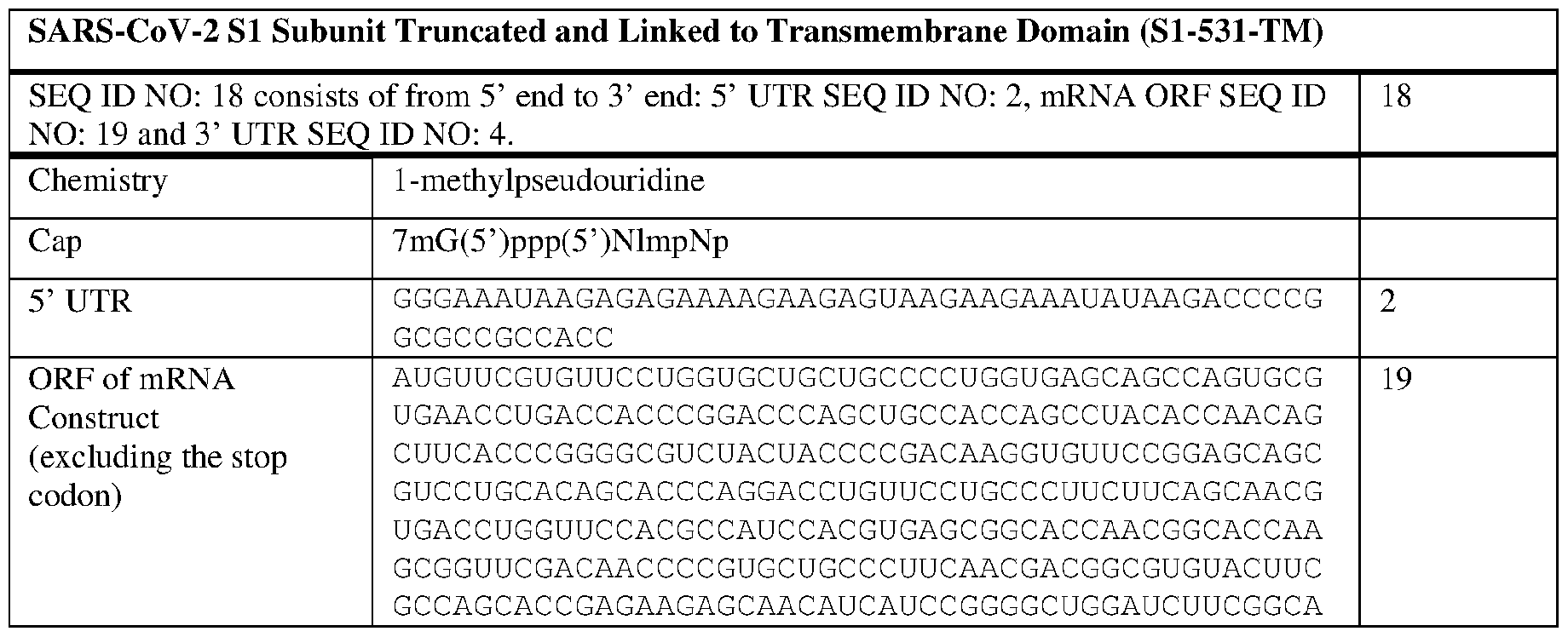


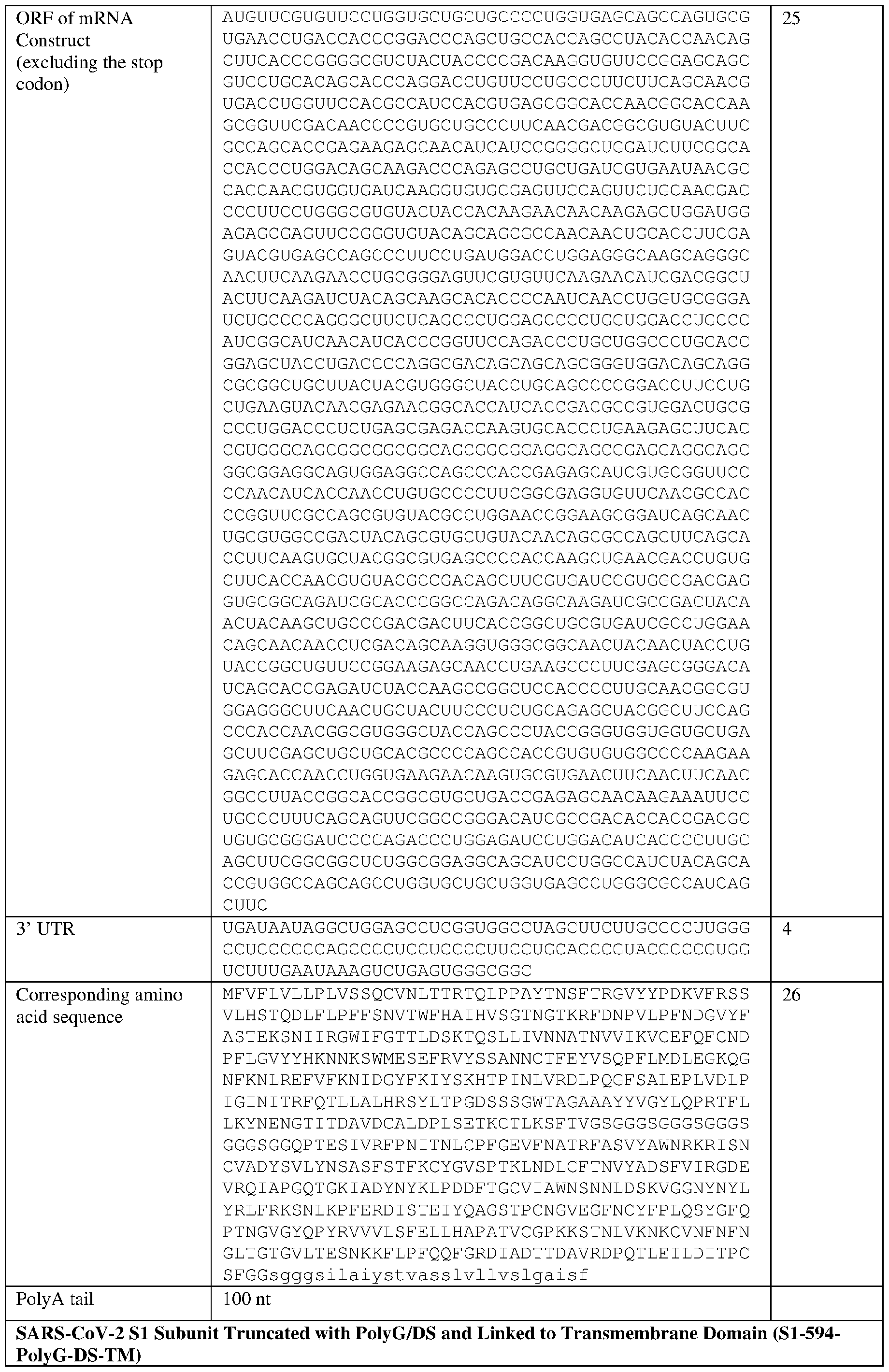
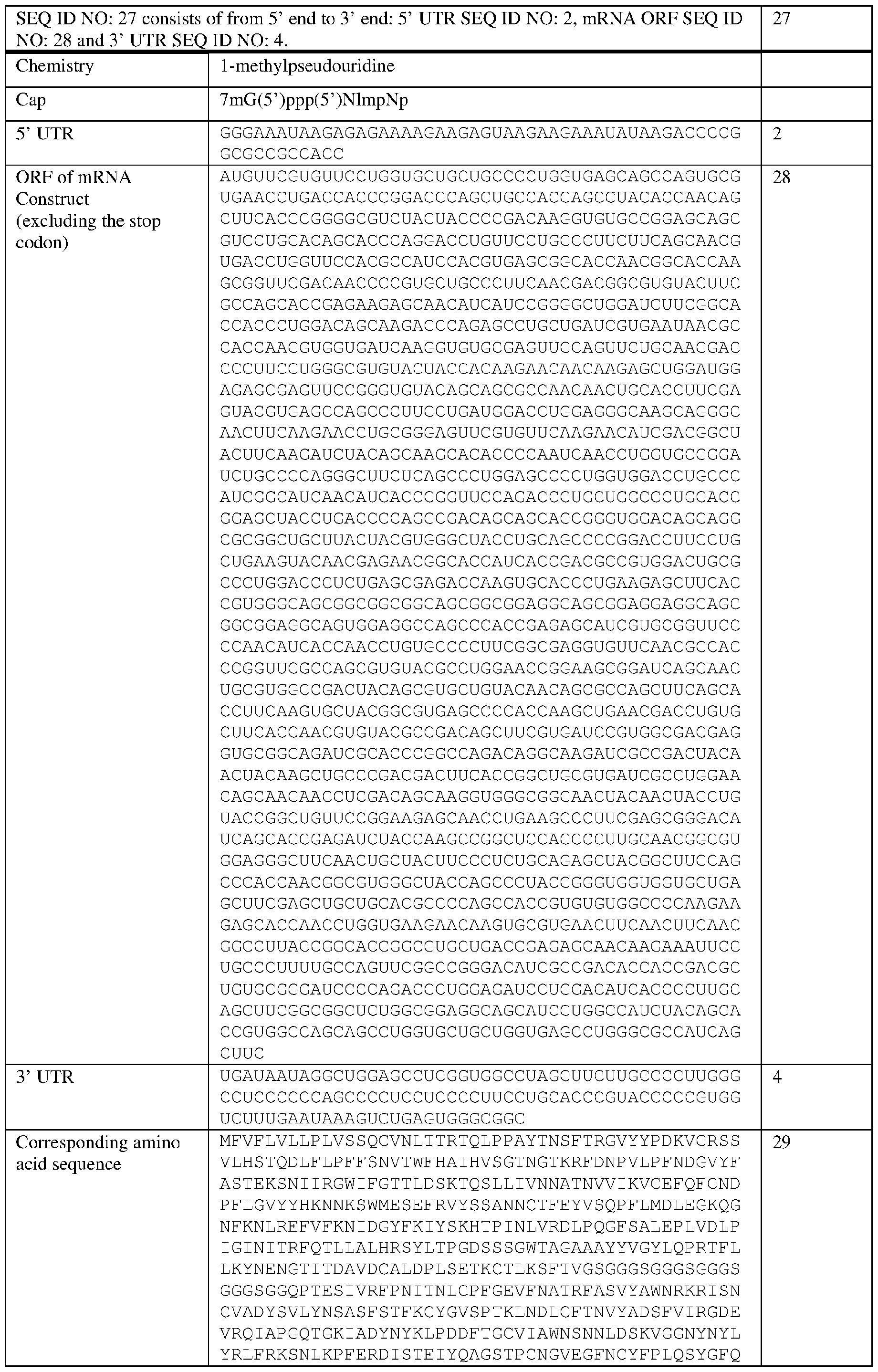


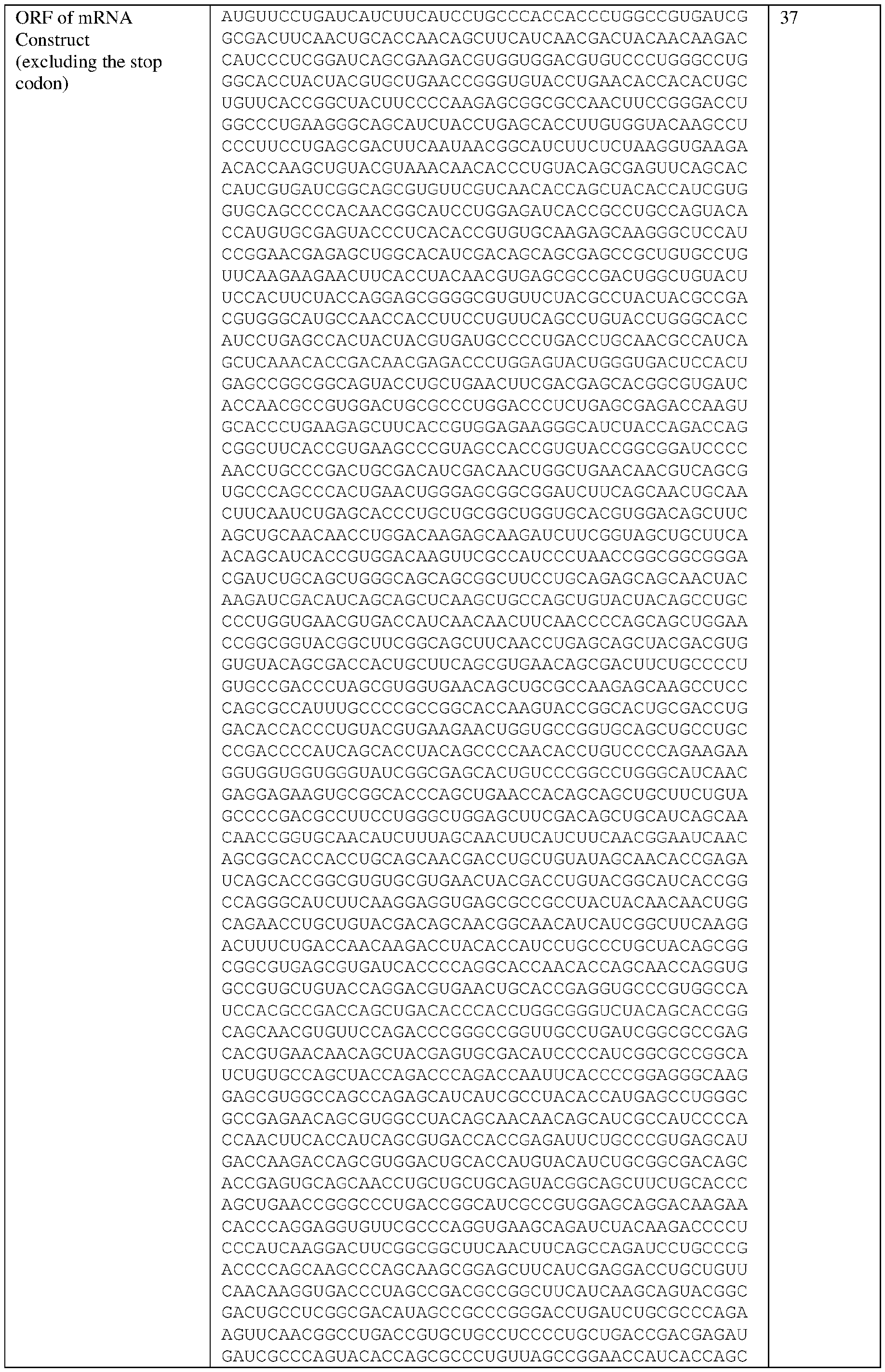


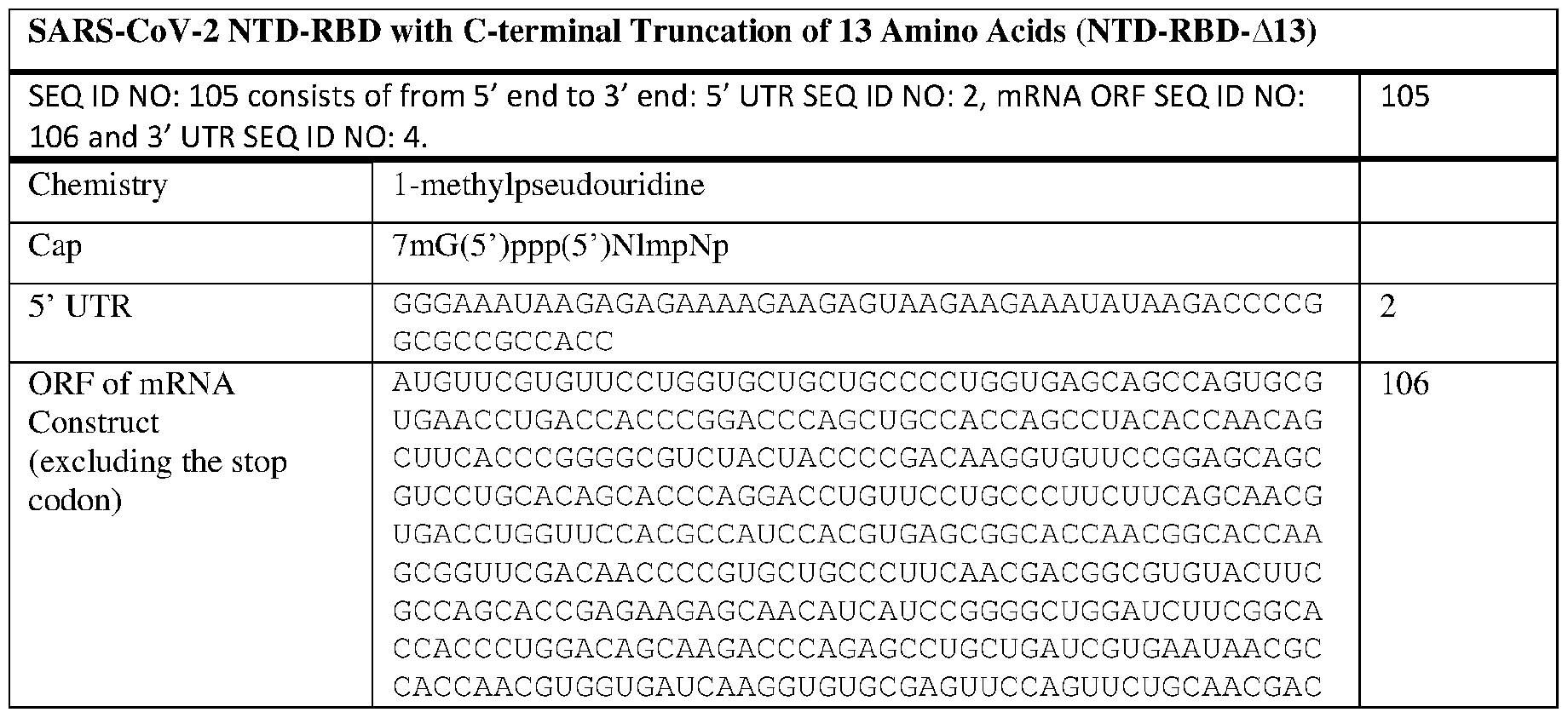


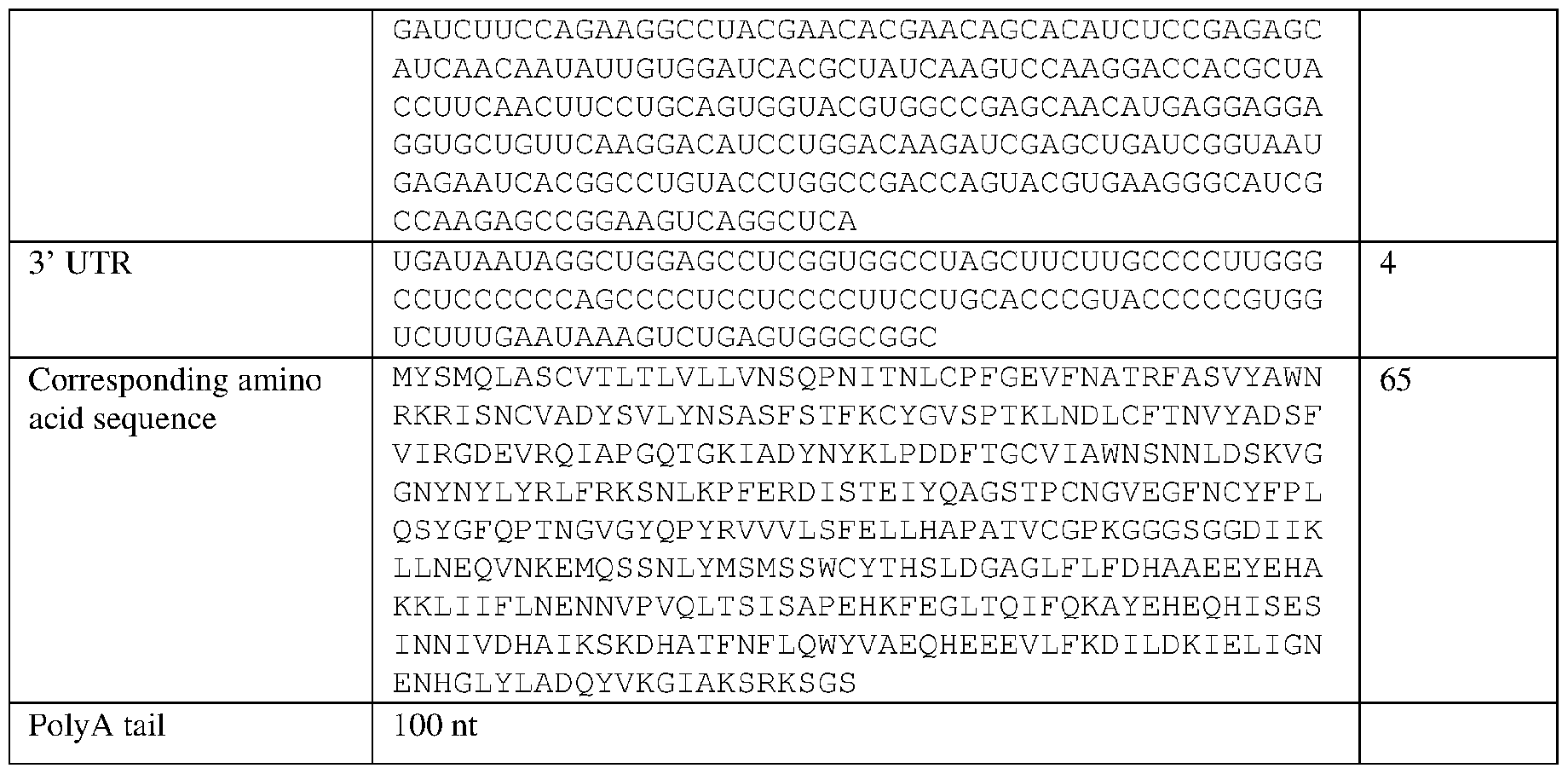


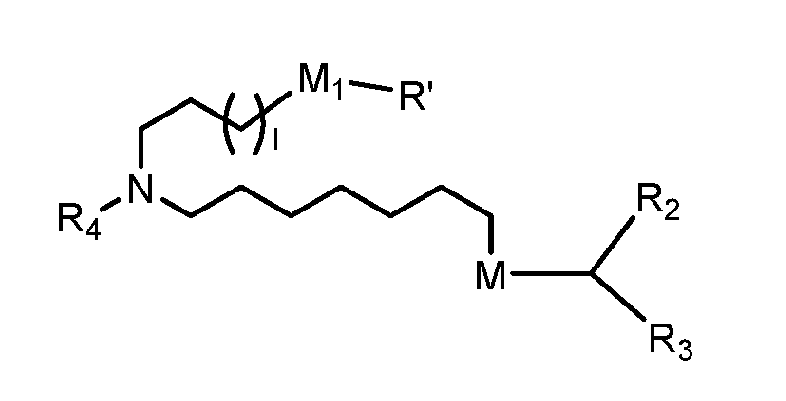





Claims
Priority Applications (4)
| Application Number | Priority Date | Filing Date | Title |
|---|---|---|---|
| AU2022237382A AU2022237382A1 (en) | 2021-03-15 | 2022-03-14 | Therapeutic use of sars-cov-2 mrna domain vaccines |
| JP2023556841A JP2024511346A (en) | 2021-03-15 | 2022-03-14 | Therapeutic use of SARS-COV-2 mRNA domain vaccines |
| EP22714665.1A EP4308156A1 (en) | 2021-03-15 | 2022-03-14 | Therapeutic use of sars-cov-2 mrna domain vaccines |
| US18/282,097 US20240299531A1 (en) | 2021-03-15 | 2022-03-14 | Therapeutic use of sars-cov-2 mrna domain vaccines |
Applications Claiming Priority (4)
| Application Number | Priority Date | Filing Date | Title |
|---|---|---|---|
| US202163161429P | 2021-03-15 | 2021-03-15 | |
| US63/161,429 | 2021-03-15 | ||
| US202163281021P | 2021-11-18 | 2021-11-18 | |
| US63/281,021 | 2021-11-18 |
Publications (1)
| Publication Number | Publication Date |
|---|---|
| WO2022197624A1 true WO2022197624A1 (en) | 2022-09-22 |
Family
ID=81327521
Family Applications (1)
| Application Number | Title | Priority Date | Filing Date |
|---|---|---|---|
| PCT/US2022/020218 Ceased WO2022197624A1 (en) | 2021-03-15 | 2022-03-14 | Therapeutic use of sars-cov-2 mrna domain vaccines |
Country Status (5)
| Country | Link |
|---|---|
| US (1) | US20240299531A1 (en) |
| EP (1) | EP4308156A1 (en) |
| JP (1) | JP2024511346A (en) |
| AU (1) | AU2022237382A1 (en) |
| WO (1) | WO2022197624A1 (en) |
Cited By (15)
| Publication number | Priority date | Publication date | Assignee | Title |
|---|---|---|---|---|
| WO2023019309A1 (en) * | 2021-08-17 | 2023-02-23 | Monash University | Vaccine compositions |
| US11905525B2 (en) | 2017-04-05 | 2024-02-20 | Modernatx, Inc. | Reduction of elimination of immune responses to non-intravenous, e.g., subcutaneously administered therapeutic proteins |
| WO2024141784A3 (en) * | 2022-12-29 | 2024-09-26 | Popvax Private Limited | Broadly protective betacoronavirus vaccines and compositions |
| US12150980B2 (en) | 2015-07-30 | 2024-11-26 | Modernatx, Inc. | Concatemeric peptide epitope RNAs |
| US12151029B2 (en) | 2018-09-19 | 2024-11-26 | Modernatx, Inc. | PEG lipids and uses thereof |
| US12195778B2 (en) | 2017-08-18 | 2025-01-14 | Modernatx, Inc. | RNA polymerase variants |
| US12208288B2 (en) | 2015-10-22 | 2025-01-28 | Modernatx, Inc. | Betacoronavirus RNA vaccines |
| US12274743B2 (en) | 2014-04-23 | 2025-04-15 | Modernatx, Inc. | Nucleic acid vaccines |
| WO2025106738A1 (en) * | 2023-11-15 | 2025-05-22 | BioNTech SE | Sars-cov-2 immunogenic compositions |
| WO2025106754A1 (en) * | 2023-11-15 | 2025-05-22 | BioNTech SE | Coronavirus vaccine |
| US12318443B2 (en) | 2016-11-11 | 2025-06-03 | Modernatx, Inc. | Influenza vaccine |
| US12329811B2 (en) | 2021-01-11 | 2025-06-17 | Modernatx, Inc. | Seasonal RNA influenza virus vaccines |
| US12383508B2 (en) | 2018-09-19 | 2025-08-12 | Modernatx, Inc. | High-purity peg lipids and uses thereof |
| US12428577B2 (en) | 2021-05-14 | 2025-09-30 | Modernatx, Inc. | Methods of monitoring in vitro transcription of mRNA and/or post-in vitro transcription processes |
| US12453766B2 (en) | 2018-01-29 | 2025-10-28 | Modernatx, Inc. | RSV RNA vaccines |
Families Citing this family (3)
| Publication number | Priority date | Publication date | Assignee | Title |
|---|---|---|---|---|
| AU2017326423B2 (en) | 2016-09-14 | 2023-11-09 | Modernatx, Inc. | High purity RNA compositions and methods for preparation thereof |
| EP3938507A4 (en) | 2019-03-11 | 2023-02-22 | ModernaTX, Inc. | Fed-batch in vitro transcription process |
| IL297419B2 (en) | 2020-04-22 | 2025-02-01 | BioNTech SE | Coronavirus vaccine |
Citations (23)
| Publication number | Priority date | Publication date | Assignee | Title |
|---|---|---|---|---|
| US20090226470A1 (en) | 2007-12-11 | 2009-09-10 | Mauro Vincent P | Compositions and methods related to mRNA translational enhancer elements |
| US20100129877A1 (en) | 2005-09-28 | 2010-05-27 | Ugur Sahin | Modification of RNA, Producing an Increased Transcript Stability and Translation Efficiency |
| US20100293625A1 (en) | 2007-09-26 | 2010-11-18 | Interexon Corporation | Synthetic 5'UTRs, Expression Vectors, and Methods for Increasing Transgene Expression |
| US20110086907A1 (en) | 2001-04-30 | 2011-04-14 | Zouboulis Christos C | Acne treatment |
| US20120195936A1 (en) | 2009-07-31 | 2012-08-02 | Ethris Gmbh | Rna with a combination of unmodified and modified nucleotides for protein expression |
| US8278063B2 (en) | 2007-06-29 | 2012-10-02 | Commonwealth Scientific And Industrial Research Organisation | Methods for degrading toxic compounds |
| WO2013185069A1 (en) | 2012-06-08 | 2013-12-12 | Shire Human Genetic Therapies, Inc. | Pulmonary delivery of mrna to non-lung target cells |
| WO2014071963A1 (en) | 2012-11-09 | 2014-05-15 | Biontech Ag | Method for cellular rna expression |
| US20140206753A1 (en) | 2011-06-08 | 2014-07-24 | Shire Human Genetic Therapies, Inc. | Lipid nanoparticle compositions and methods for mrna delivery |
| WO2014144196A1 (en) | 2013-03-15 | 2014-09-18 | Shire Human Genetic Therapies, Inc. | Synergistic enhancement of the delivery of nucleic acids via blended formulations |
| WO2014152027A1 (en) | 2013-03-15 | 2014-09-25 | Moderna Therapeutics, Inc. | Manufacturing methods for production of rna transcripts |
| WO2014152774A1 (en) | 2013-03-14 | 2014-09-25 | Shire Human Genetic Therapies, Inc. | Methods and compositions for delivering mrna coded antibodies |
| WO2015024667A1 (en) | 2013-08-21 | 2015-02-26 | Curevac Gmbh | Method for increasing expression of rna-encoded proteins |
| US9012219B2 (en) | 2005-08-23 | 2015-04-21 | The Trustees Of The University Of Pennsylvania | RNA preparations comprising purified modified RNA for reprogramming cells |
| WO2015062738A1 (en) | 2013-11-01 | 2015-05-07 | Curevac Gmbh | Modified rna with decreased immunostimulatory properties |
| WO2015101415A1 (en) | 2013-12-30 | 2015-07-09 | Curevac Gmbh | Artificial nucleic acid molecules |
| WO2015101414A2 (en) | 2013-12-30 | 2015-07-09 | Curevac Gmbh | Artificial nucleic acid molecules |
| WO2017051367A1 (en) | 2015-09-24 | 2017-03-30 | Medidata Sp. Z O.O. | Cryoapplicator for minimally invasive surgical cardiac ablation |
| WO2017070626A2 (en) | 2015-10-22 | 2017-04-27 | Modernatx, Inc. | Respiratory virus vaccines |
| WO2018053209A1 (en) | 2016-09-14 | 2018-03-22 | Modernatx, Inc. | High purity rna compositions and methods for preparation thereof |
| WO2018170347A1 (en) | 2017-03-17 | 2018-09-20 | Modernatx, Inc. | Zoonotic disease rna vaccines |
| WO2019036682A1 (en) | 2017-08-18 | 2019-02-21 | Modernatx, Inc. | Rna polymerase variants |
| WO2021159040A2 (en) * | 2020-02-07 | 2021-08-12 | Modernatx, Inc. | Sars-cov-2 mrna domain vaccines |
-
2022
- 2022-03-14 AU AU2022237382A patent/AU2022237382A1/en active Pending
- 2022-03-14 WO PCT/US2022/020218 patent/WO2022197624A1/en not_active Ceased
- 2022-03-14 EP EP22714665.1A patent/EP4308156A1/en active Pending
- 2022-03-14 JP JP2023556841A patent/JP2024511346A/en active Pending
- 2022-03-14 US US18/282,097 patent/US20240299531A1/en active Pending
Patent Citations (23)
| Publication number | Priority date | Publication date | Assignee | Title |
|---|---|---|---|---|
| US20110086907A1 (en) | 2001-04-30 | 2011-04-14 | Zouboulis Christos C | Acne treatment |
| US9012219B2 (en) | 2005-08-23 | 2015-04-21 | The Trustees Of The University Of Pennsylvania | RNA preparations comprising purified modified RNA for reprogramming cells |
| US20100129877A1 (en) | 2005-09-28 | 2010-05-27 | Ugur Sahin | Modification of RNA, Producing an Increased Transcript Stability and Translation Efficiency |
| US8278063B2 (en) | 2007-06-29 | 2012-10-02 | Commonwealth Scientific And Industrial Research Organisation | Methods for degrading toxic compounds |
| US20100293625A1 (en) | 2007-09-26 | 2010-11-18 | Interexon Corporation | Synthetic 5'UTRs, Expression Vectors, and Methods for Increasing Transgene Expression |
| US20090226470A1 (en) | 2007-12-11 | 2009-09-10 | Mauro Vincent P | Compositions and methods related to mRNA translational enhancer elements |
| US20120195936A1 (en) | 2009-07-31 | 2012-08-02 | Ethris Gmbh | Rna with a combination of unmodified and modified nucleotides for protein expression |
| US20140206753A1 (en) | 2011-06-08 | 2014-07-24 | Shire Human Genetic Therapies, Inc. | Lipid nanoparticle compositions and methods for mrna delivery |
| WO2013185069A1 (en) | 2012-06-08 | 2013-12-12 | Shire Human Genetic Therapies, Inc. | Pulmonary delivery of mrna to non-lung target cells |
| WO2014071963A1 (en) | 2012-11-09 | 2014-05-15 | Biontech Ag | Method for cellular rna expression |
| WO2014152774A1 (en) | 2013-03-14 | 2014-09-25 | Shire Human Genetic Therapies, Inc. | Methods and compositions for delivering mrna coded antibodies |
| WO2014152027A1 (en) | 2013-03-15 | 2014-09-25 | Moderna Therapeutics, Inc. | Manufacturing methods for production of rna transcripts |
| WO2014144196A1 (en) | 2013-03-15 | 2014-09-18 | Shire Human Genetic Therapies, Inc. | Synergistic enhancement of the delivery of nucleic acids via blended formulations |
| WO2015024667A1 (en) | 2013-08-21 | 2015-02-26 | Curevac Gmbh | Method for increasing expression of rna-encoded proteins |
| WO2015062738A1 (en) | 2013-11-01 | 2015-05-07 | Curevac Gmbh | Modified rna with decreased immunostimulatory properties |
| WO2015101415A1 (en) | 2013-12-30 | 2015-07-09 | Curevac Gmbh | Artificial nucleic acid molecules |
| WO2015101414A2 (en) | 2013-12-30 | 2015-07-09 | Curevac Gmbh | Artificial nucleic acid molecules |
| WO2017051367A1 (en) | 2015-09-24 | 2017-03-30 | Medidata Sp. Z O.O. | Cryoapplicator for minimally invasive surgical cardiac ablation |
| WO2017070626A2 (en) | 2015-10-22 | 2017-04-27 | Modernatx, Inc. | Respiratory virus vaccines |
| WO2018053209A1 (en) | 2016-09-14 | 2018-03-22 | Modernatx, Inc. | High purity rna compositions and methods for preparation thereof |
| WO2018170347A1 (en) | 2017-03-17 | 2018-09-20 | Modernatx, Inc. | Zoonotic disease rna vaccines |
| WO2019036682A1 (en) | 2017-08-18 | 2019-02-21 | Modernatx, Inc. | Rna polymerase variants |
| WO2021159040A2 (en) * | 2020-02-07 | 2021-08-12 | Modernatx, Inc. | Sars-cov-2 mrna domain vaccines |
Non-Patent Citations (27)
| Title |
|---|
| "Remington: The Science and Practice of Pharmacy", 2005, LIPPINCOTT WILLIAMS & WILKINS |
| ALEXANDER J. ET AL., J OF IMMUNO, vol. 164, no. 3, pages 1625 - 33 |
| CHAN ET AL., EMERG MICROBES INFECT., vol. 9, no. l, 2020, pages 221 - 236 |
| CHO K. ET AL., J MOL BIOL., vol. 390, 2009, pages 83 - 98 |
| CUI ET AL., NAT. REV. MICROBIOL., vol. 17, no. 3, 2019, pages 181 - 192 |
| GRANIER T. ET AL., J BIOL INORG CHEM., vol. 8, 2003, pages 105 - 111 |
| KASTENMIILLER K ET AL., J CLIN INVEST., vol. 121, no. 5, 2011, pages 1782 - 96 |
| KIM ET AL., CELL, vol. 181, no. 4, 2020, pages 914 - 921 |
| LAGOUTTE P. ET AL., VACCINE, vol. 36, no. 25, 2018, pages 3622 - 3628 |
| LAWSON D.M. ET AL., NATURE, vol. 349, 1991, pages 541 - 544 |
| LU H. ET AL., J MED VIROL., vol. 92, no. 4, 2020, pages 401 - 402 |
| MAGINI D ET AL., PLOS ONE, vol. 11, 2016, pages e0161193 |
| MEIER S. ET AL., JOURNAL OF MOLECULAR BIOLOGY, vol. 344, no. 4, 3 December 2004 (2004-12-03), pages 1051 - 1069 |
| NEEDLEMAN, S.B.WUNSCH, C.D.: "A general method applicable to the search for similarities in the amino acid sequences of two proteins", J. MOL. BIOL., vol. 48, 1970, pages 443 - 453 |
| RAHMANPOUR R. ET AL., FEBS J, vol. 280, 2013, pages 2097 - 2104 |
| SHANG ET AL., PLOS PATHOG, vol. 16, no. 3, March 2020 (2020-03-01), pages e1008392 |
| SMITH, T.F.WATERMAN, M.S.: "Identification of common molecular subsequences", J. MOL. BIOL., vol. 147, 1981, pages 195 - 197, XP024015032, DOI: 10.1016/0022-2836(81)90087-5 |
| SONG ET AL., VIRUSES, no. l, 2019, pages 59 |
| STEPHEN F. ALTSCHUL ET AL.: "Gapped BLAST and PSI-BLAST: a new generation of protein database search programs", NUCLEIC ACIDS RES., vol. 25, 1997, pages 3389 - 3402, XP002905950, DOI: 10.1093/nar/25.17.3389 |
| SUTTER M. ET AL., NAT STRUCT MOL BIOL, vol. 15, 2008, pages 939 - 947 |
| TAO Y ET AL., STRUCTURE, vol. 5, no. 6, 15 June 1997 (1997-06-15), pages 789 - 98 |
| VOGEL ANNETTE B ET AL: "BNT162b vaccines protect rhesus macaques from SARS-CoV-2", NATURE, vol. 592, no. 7853, 1 February 2021 (2021-02-01), pages 283 - 289, XP037417629, ISSN: 0028-0836, DOI: 10.1038/S41586-021-03275-Y * |
| WAN ET AL., J. VIROL., vol. 94, no. 7, March 2020 (2020-03-01), pages e00127 - 20 |
| WEINBERG ET AL., J INFECT DIS, vol. 201, no. 11, 1 June 2010 (2010-06-01), pages 1607 - 10 |
| WEINBERG ET AL., J INFECT DIS., vol. 201, no. 11, 1 June 2010 (2010-06-01), pages 1607 - 10 |
| XIA ET AL., CELL MOL IMMUNOL, vol. 17, no. 1, 2020, pages 1 - 12 |
| ZHOU H ET AL., NAT COMMUN, 2019, pages 3068 |
Cited By (21)
| Publication number | Priority date | Publication date | Assignee | Title |
|---|---|---|---|---|
| US12329812B2 (en) | 2014-04-23 | 2025-06-17 | Modernatx, Inc. | Nucleic acid vaccines |
| US12274743B2 (en) | 2014-04-23 | 2025-04-15 | Modernatx, Inc. | Nucleic acid vaccines |
| US12150980B2 (en) | 2015-07-30 | 2024-11-26 | Modernatx, Inc. | Concatemeric peptide epitope RNAs |
| US12521577B2 (en) | 2015-10-22 | 2026-01-13 | Modernatx, Inc. | Betacoronavirus RNA vaccines |
| US12409347B2 (en) | 2015-10-22 | 2025-09-09 | Modernatx, Inc. | Betacoronavirus mRNA vaccines |
| US12403336B2 (en) | 2015-10-22 | 2025-09-02 | Modernatx, Inc. | Betacorona virus mRNA vaccines |
| US12403335B2 (en) | 2015-10-22 | 2025-09-02 | Modernatx, Inc. | Betacoronavirus MRNA vaccines |
| US12208288B2 (en) | 2015-10-22 | 2025-01-28 | Modernatx, Inc. | Betacoronavirus RNA vaccines |
| US12318443B2 (en) | 2016-11-11 | 2025-06-03 | Modernatx, Inc. | Influenza vaccine |
| US12409218B2 (en) | 2016-11-11 | 2025-09-09 | Modernatx, Inc. | Influenza vaccine |
| US11905525B2 (en) | 2017-04-05 | 2024-02-20 | Modernatx, Inc. | Reduction of elimination of immune responses to non-intravenous, e.g., subcutaneously administered therapeutic proteins |
| US12195778B2 (en) | 2017-08-18 | 2025-01-14 | Modernatx, Inc. | RNA polymerase variants |
| US12453766B2 (en) | 2018-01-29 | 2025-10-28 | Modernatx, Inc. | RSV RNA vaccines |
| US12383508B2 (en) | 2018-09-19 | 2025-08-12 | Modernatx, Inc. | High-purity peg lipids and uses thereof |
| US12151029B2 (en) | 2018-09-19 | 2024-11-26 | Modernatx, Inc. | PEG lipids and uses thereof |
| US12329811B2 (en) | 2021-01-11 | 2025-06-17 | Modernatx, Inc. | Seasonal RNA influenza virus vaccines |
| US12428577B2 (en) | 2021-05-14 | 2025-09-30 | Modernatx, Inc. | Methods of monitoring in vitro transcription of mRNA and/or post-in vitro transcription processes |
| WO2023019309A1 (en) * | 2021-08-17 | 2023-02-23 | Monash University | Vaccine compositions |
| WO2024141784A3 (en) * | 2022-12-29 | 2024-09-26 | Popvax Private Limited | Broadly protective betacoronavirus vaccines and compositions |
| WO2025106754A1 (en) * | 2023-11-15 | 2025-05-22 | BioNTech SE | Coronavirus vaccine |
| WO2025106738A1 (en) * | 2023-11-15 | 2025-05-22 | BioNTech SE | Sars-cov-2 immunogenic compositions |
Also Published As
| Publication number | Publication date |
|---|---|
| AU2022237382A1 (en) | 2023-09-28 |
| US20240299531A1 (en) | 2024-09-12 |
| AU2022237382A9 (en) | 2024-01-25 |
| EP4308156A1 (en) | 2024-01-24 |
| JP2024511346A (en) | 2024-03-13 |
Similar Documents
| Publication | Publication Date | Title |
|---|---|---|
| US20240299531A1 (en) | Therapeutic use of sars-cov-2 mrna domain vaccines | |
| JP7443608B2 (en) | SARS-COV-2 mRNA domain vaccine | |
| US20240285754A1 (en) | Mrna vaccines encoding flexible coronavirus spike proteins | |
| US20240293534A1 (en) | Coronavirus glycosylation variant vaccines | |
| US20240358819A1 (en) | Pan-human coronavirus domain vaccines | |
| US20240382581A1 (en) | Pan-human coronavirus vaccines | |
| US20230355743A1 (en) | Multi-proline-substituted coronavirus spike protein vaccines | |
| US20230108894A1 (en) | Coronavirus rna vaccines | |
| WO2021159130A2 (en) | Coronavirus rna vaccines and methods of use | |
| WO2023283642A2 (en) | Pan-human coronavirus concatemeric vaccines | |
| WO2021222304A1 (en) | Sars-cov-2 rna vaccines | |
| WO2021211343A1 (en) | Zika virus mrna vaccines | |
| CA3216490A1 (en) | Epstein-barr virus mrna vaccines | |
| WO2023092069A1 (en) | Sars-cov-2 mrna domain vaccines and methods of use | |
| IL295148A (en) | Respiratory virus vaccine compositions | |
| WO2025019352A2 (en) | Mers-cov mrna vaccines | |
| TW202217000A (en) | Sars-cov-2 mrna domain vaccines |
Legal Events
| Date | Code | Title | Description |
|---|---|---|---|
| 121 | Ep: the epo has been informed by wipo that ep was designated in this application |
Ref document number: 22714665 Country of ref document: EP Kind code of ref document: A1 |
|
| WWE | Wipo information: entry into national phase |
Ref document number: 2022237382 Country of ref document: AU |
|
| WWE | Wipo information: entry into national phase |
Ref document number: 2023556841 Country of ref document: JP |
|
| ENP | Entry into the national phase |
Ref document number: 2022237382 Country of ref document: AU Date of ref document: 20220314 Kind code of ref document: A |
|
| WWE | Wipo information: entry into national phase |
Ref document number: 2022714665 Country of ref document: EP |
|
| NENP | Non-entry into the national phase |
Ref country code: DE |
|
| ENP | Entry into the national phase |
Ref document number: 2022714665 Country of ref document: EP Effective date: 20231016 |