[go: up one dir, main page]

WO2012065945A1 - 5-halogenopyrazole(thio)carboxamides - Google Patents

5-halogenopyrazole(thio)carboxamides Download PDF

Info

Publication number
WO2012065945A1
WO2012065945A1 PCT/EP2011/070038 EP2011070038W WO2012065945A1 WO 2012065945 A1 WO2012065945 A1 WO 2012065945A1 EP 2011070038 W EP2011070038 W EP 2011070038W WO 2012065945 A1 WO2012065945 A1 WO 2012065945A1
Authority
WO
WIPO (PCT)
Prior art keywords
methyl
plants
alkyl
attached
fluoroethyl
Prior art date
Legal status (The legal status is an assumption and is not a legal conclusion. Google has not performed a legal analysis and makes no representation as to the accuracy of the status listed.)
Ceased
Application number
PCT/EP2011/070038
Other languages
French (fr)
Inventor
Jürgen BENTING
Pierre Cristau
Peter Dahmen
Philippe Desbordes
Stéphanie Gary
Jörg GREUL
Hiroyuki Hadano
Jan Peter Schmidt
Tomoki Tsuchiya
Ulrike Wachendorff-Neumann
Current Assignee (The listed assignees may be inaccurate. Google has not performed a legal analysis and makes no representation or warranty as to the accuracy of the list.)
Bayer CropScience AG
Original Assignee
Bayer CropScience AG
Priority date (The priority date is an assumption and is not a legal conclusion. Google has not performed a legal analysis and makes no representation as to the accuracy of the date listed.)
Filing date
Publication date
Application filed by Bayer CropScience AG filed Critical Bayer CropScience AG
Priority to CN2011800650292A priority Critical patent/CN103369962A/en
Priority to JP2013538227A priority patent/JP2013543858A/en
Priority to MX2013005410A priority patent/MX2013005410A/en
Priority to BR112013012081A priority patent/BR112013012081A2/en
Priority to EP11781564.7A priority patent/EP2640191A1/en
Priority to US13/884,929 priority patent/US20130231303A1/en
Publication of WO2012065945A1 publication Critical patent/WO2012065945A1/en
Anticipated expiration legal-status Critical
Ceased legal-status Critical Current

Links

Classifications

    • CCHEMISTRY; METALLURGY
    • C07ORGANIC CHEMISTRY
    • C07DHETEROCYCLIC COMPOUNDS
    • C07D409/00Heterocyclic compounds containing two or more hetero rings, at least one ring having sulfur atoms as the only ring hetero atoms
    • C07D409/02Heterocyclic compounds containing two or more hetero rings, at least one ring having sulfur atoms as the only ring hetero atoms containing two hetero rings
    • C07D409/12Heterocyclic compounds containing two or more hetero rings, at least one ring having sulfur atoms as the only ring hetero atoms containing two hetero rings linked by a chain containing hetero atoms as chain links
    • AHUMAN NECESSITIES
    • A01AGRICULTURE; FORESTRY; ANIMAL HUSBANDRY; HUNTING; TRAPPING; FISHING
    • A01NPRESERVATION OF BODIES OF HUMANS OR ANIMALS OR PLANTS OR PARTS THEREOF; BIOCIDES, e.g. AS DISINFECTANTS, AS PESTICIDES OR AS HERBICIDES; PEST REPELLANTS OR ATTRACTANTS; PLANT GROWTH REGULATORS
    • A01N43/00Biocides, pest repellants or attractants, or plant growth regulators containing heterocyclic compounds
    • A01N43/48Biocides, pest repellants or attractants, or plant growth regulators containing heterocyclic compounds having rings with two nitrogen atoms as the only ring hetero atoms
    • A01N43/561,2-Diazoles; Hydrogenated 1,2-diazoles
    • AHUMAN NECESSITIES
    • A01AGRICULTURE; FORESTRY; ANIMAL HUSBANDRY; HUNTING; TRAPPING; FISHING
    • A01NPRESERVATION OF BODIES OF HUMANS OR ANIMALS OR PLANTS OR PARTS THEREOF; BIOCIDES, e.g. AS DISINFECTANTS, AS PESTICIDES OR AS HERBICIDES; PEST REPELLANTS OR ATTRACTANTS; PLANT GROWTH REGULATORS
    • A01N55/00Biocides, pest repellants or attractants, or plant growth regulators, containing organic compounds containing elements other than carbon, hydrogen, halogen, oxygen, nitrogen and sulfur
    • CCHEMISTRY; METALLURGY
    • C07ORGANIC CHEMISTRY
    • C07FACYCLIC, CARBOCYCLIC OR HETEROCYCLIC COMPOUNDS CONTAINING ELEMENTS OTHER THAN CARBON, HYDROGEN, HALOGEN, OXYGEN, NITROGEN, SULFUR, SELENIUM OR TELLURIUM
    • C07F7/00Compounds containing elements of Groups 4 or 14 of the Periodic Table
    • C07F7/02Silicon compounds
    • C07F7/08Compounds having one or more C—Si linkages
    • C07F7/0803Compounds with Si-C or Si-Si linkages
    • C07F7/081Compounds with Si-C or Si-Si linkages comprising at least one atom selected from the elements N, O, halogen, S, Se or Te
    • C07F7/0812Compounds with Si-C or Si-Si linkages comprising at least one atom selected from the elements N, O, halogen, S, Se or Te comprising a heterocyclic ring

Definitions

  • the present invention relates to novel 5-halogenopyrazole(thio)carboxamides, their process of preparation, their use as fungicide active agents, particularly in the form of fungicide compositions, and methods for the control of phytopathogenic fungi, notably of plants, using these compounds or compositions.
  • Hall and Hal2 independently of one another represent chlorine or fluorine;
  • Q represents Q 1 , Q 2 , Q 3 , Q 4 , Q 5 , or Q 6 ;
  • L represents
  • R 9 , R 10 independently of one another represents hydrogen, Ci-Cg-alkyl, or Ci-C 6 -haloalkyl; or
  • R 13 represents optionally substituted C 2 -Ci 2 -alkyl, optionally substituted C 2 -Ci 2 -alkenyl, optionally substituted C 2 -Ci 2 -alkynyl, optionally substituted C 3 -Ci 2 -cycloalkyl, optionally substituted phenyl or heterocyclyl;
  • Hal2 preferably represents chlorine.
  • R 3 and R 4 together with the carbon atom to which they are attached particularly preferably form a 3- , 5- or 6-membered carbocyclic saturated ring which is optionally substituted by methyl, ethyl or trifluoromethyl,
  • R 8 and R 9 together with the carbon atom to which they are attached preferably form a 3- to 6-membered carbocyclic or heterocyclic saturated or unsaturated ring which is optionally substituted by halogen, methyl, ethyl, methoxy, trifluoromethyl or trifluoromethoxy, R 8 and R 9 moreover together with the carbon atom to which they are attached particularly preferably form a 3-, 5- or 6-membered carbocyclic saturated ring which is optionally substituted by methyl, ethyl or trifluoromethyl,
  • R 10 preferably represents hydrogen, fluorine, chlorine, bromine, methyl, ethyl, n- or isopropyl, n- , iso-, sec- or tert-butyl or represents methyl, ethyl, n- or isopropyl, n-, iso-, sec- or tert- butyl, each of which is mono- or polysubstituted by identical or different substituents from the group consisting of fluorine, chlorine and bromine.
  • R 11 and R 12 independently of one another preferably represent hydrogen, fluorine, chlorine or bromine;
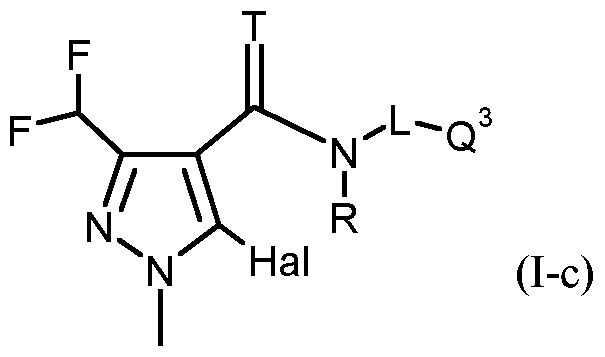
  • T, R, L, Q 1 have the meanings given above and Hal represents fluorine or chlorine;
  • T, R, L, Q 3 have the meanings given above and Hal represents fluorine or chlorine;
  • the compounds according to the invention may, if appropriate, be present as mixtures of various possible isomeric forms, in particular stereoisomers such as, for example, E and Z, threo and erythro, and also optical isomers, and, if appropriate, also of tautomers.
  • stereoisomers such as, for example, E and Z, threo and erythro, and also optical isomers, and, if appropriate, also of tautomers.
  • X 1 represents halogen or hydroxyl, are novel and are synthesized as described below:
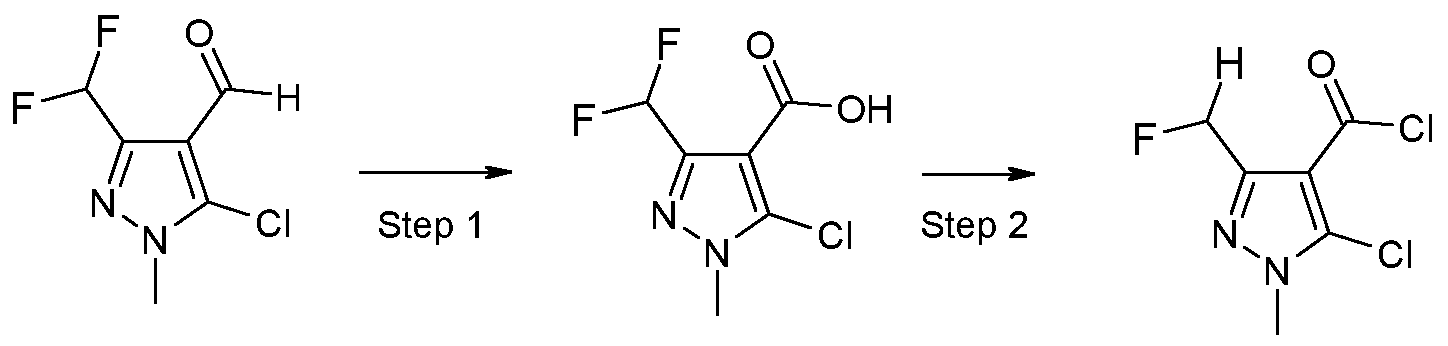
  • a further aspect of the invention comprises the process PI according to the invention for synthesizing the acid chlorides of the formula (II), as shown in the reaction scheme below:
  • the compounds according to the invention can be synthesized according to the process described above. Based on his expert knowledge, the person skilled in the art is able to modify the preparation processes for the compounds according to the invention in a suitable manner.
  • plants and plant parts can be treated.
  • plants are meant all plants and plant populations such as desirable and undesirable wild plants, cultivars and plant varieties (whether or not protectable by plant variety or plant breeder's rights).
  • Cultivars and plant varieties can be plants obtained by conventional propagation and breeding methods which can be assisted or supplemented by one or more biotechnological methods such as by use of double haploids, protoplast fusion, random and directed mutagenesis, molecular or genetic markers or by bioengineering and genetic engineering methods.
  • plants that can be protected by the method according to the invention mention may be made of major field crops like com, soybean, cotton, Brassica oilseeds such as Brassica napus (e.g. canola), Brassica rapa, B. juncea (e.g. mustard) and Brassica carinata, rice, wheat, sugarbeet, sugarcane, oats, rye, barley, millet, triticale, flax, vine and various fruits and vegetables of various botanical taxa such as Rosaceae sp.
  • Brassica oilseeds such as Brassica napus (e.g. canola), Brassica rapa, B. juncea (e.g. mustard) and Brassica carinata, rice, wheat, sugarbeet, sugarcane, oats, rye, barley, millet, triticale, flax, vine and various fruits and vegetables of various botanical taxa such as Rosaceae sp.
  • Plants and plant cultivars which are preferably to be treated according to the invention include all plants which have genetic material which impart particularly advantageous, useful traits to these plants (whether obtained by breeding and/or biotechnological means).
  • Plants that may be treated according to the invention are hybrid plants that already express the characteristic of heterosis or hybrid vigor which results in generally higher yield, vigor, health and resistance towards biotic and abiotic stresses). Such plants are typically made by crossing an inbred male-sterile parent line (the female parent) with another inbred male-fertile parent line (the male parent). Hybrid seed is typically harvested from the male sterile plants and sold to growers. Male sterile plants can sometimes (e.g. in corn) be produced by detasseling, i.e. the mechanical removal of the male reproductive organs (or males flowers) but, more typically, male sterility is the result of genetic determinants in the plant genome.
  • Glyphosate-tolerant plants can also be obtained by expressing a gene that encodes a glyphosate oxido-reductase enzyme as described in U.S. Patent Nos.
  • Plants tolerant to HPPD-inhibitors can be transformed with a gene encoding a naturally-occurring resistant HPPD enzyme, or a gene encoding a mutated or chimeric HPPD enzyme as described in WO 96/38567, WO 99/24585, WO 99/24586, WO 2009/144079, WO 2002/046387, or US 6,768,044.
  • Tolerance to HPPD-inhibitors can also be obtained by transforming plants with genes encoding certain enzymes enabling the formation of homogentisate despite the inhibition of the native HPPD enzyme by the HPPD-inhibitor. Such plants and genes are described in WO 99/34008 and WO 02/36787.
  • imidazolinone-tolerant plants are also described in for example WO 2004/040012, WO 2004/106529, WO 2005/020673, WO 2005/093093, WO 2006/007373, WO 2006/015376, WO 2006/024351, and WO 2006/060634. Further sulfonylurea- and imidazolinone-tolerant plants are also described in for example WO 07/024782 and US Patent Application No 61/288958.
  • a crystal protein from Bacillus thuringiensis or a portion thereof which is insecticidal in the presence of a second other crystal protein from Bacillus thuringiensis or a portion thereof, such as the binary toxin made up of the Cry34 and Cry 35 crystal proteins (Moellenbeck et al. 2001, Nat. Biotechnol. 19: 668-72; Schnepf et al. 2006, Applied Environm. Microbiol. 71, 1765-1774) or the binary toxin made up of the CrylA or CrylF proteins and the Cry2Aa or Cry2Ab or Cry2Ae proteins (US Patent Appl. No. 12/214,022 and EP 08010791.5); or
  • plants which contain a stress tolerance enhancing transgene capable of reducing the expression and/or the activity of the PARG encoding genes of the plants or plants cells as described e.g. in WO 2004/090140.
  • plants which contain a stress tolerance enhancing transgene coding for a plant-functional enzyme of the nicotineamide adenine dinucleotide salvage synthesis pathway including nicotinamidase, nicotinate phosphoribosyltransferase, nicotinic acid mononucleotide adenyl transferase, nicotinamide adenine dinucleotide synthetase or nicotine amide phosphorybosyltransferase as described e.g. in EP 04077624.7, WO 2006/133827,
  • Plants or plant cultivars which may also be treated according to the invention are plants, such as oilseed rape or related Brassica plants, with altered seed shattering characteristics.
  • Such plants can be obtained by genetic transformation, or by selection of plants contain a mutation imparting such altered seed shattering characteristics and include plants such as oilseed rape plants with delayed or reduced seed shattering as described in US Patent Appl. No. 61/135,230 WO09/068313 and WO10/006732.
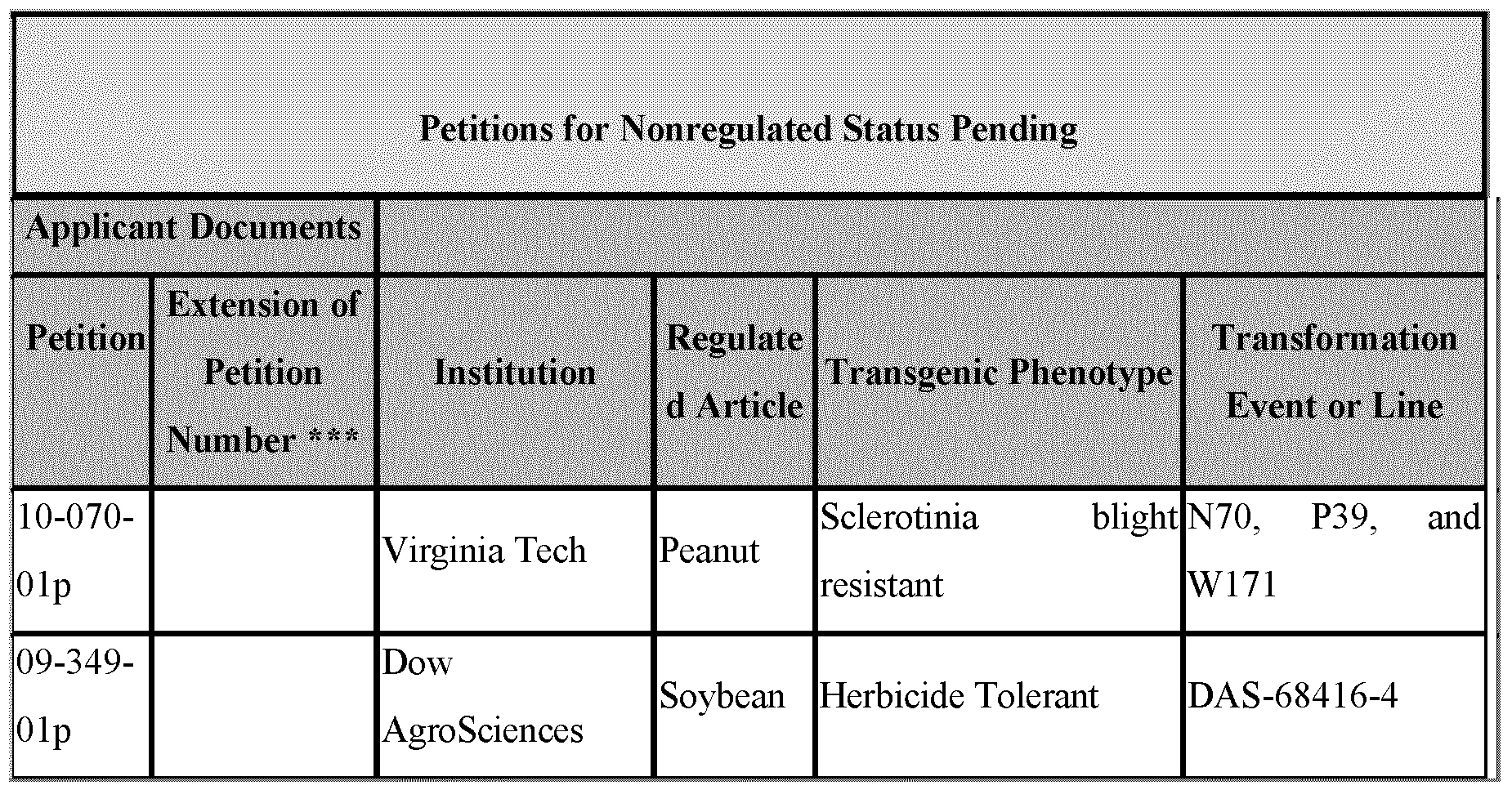
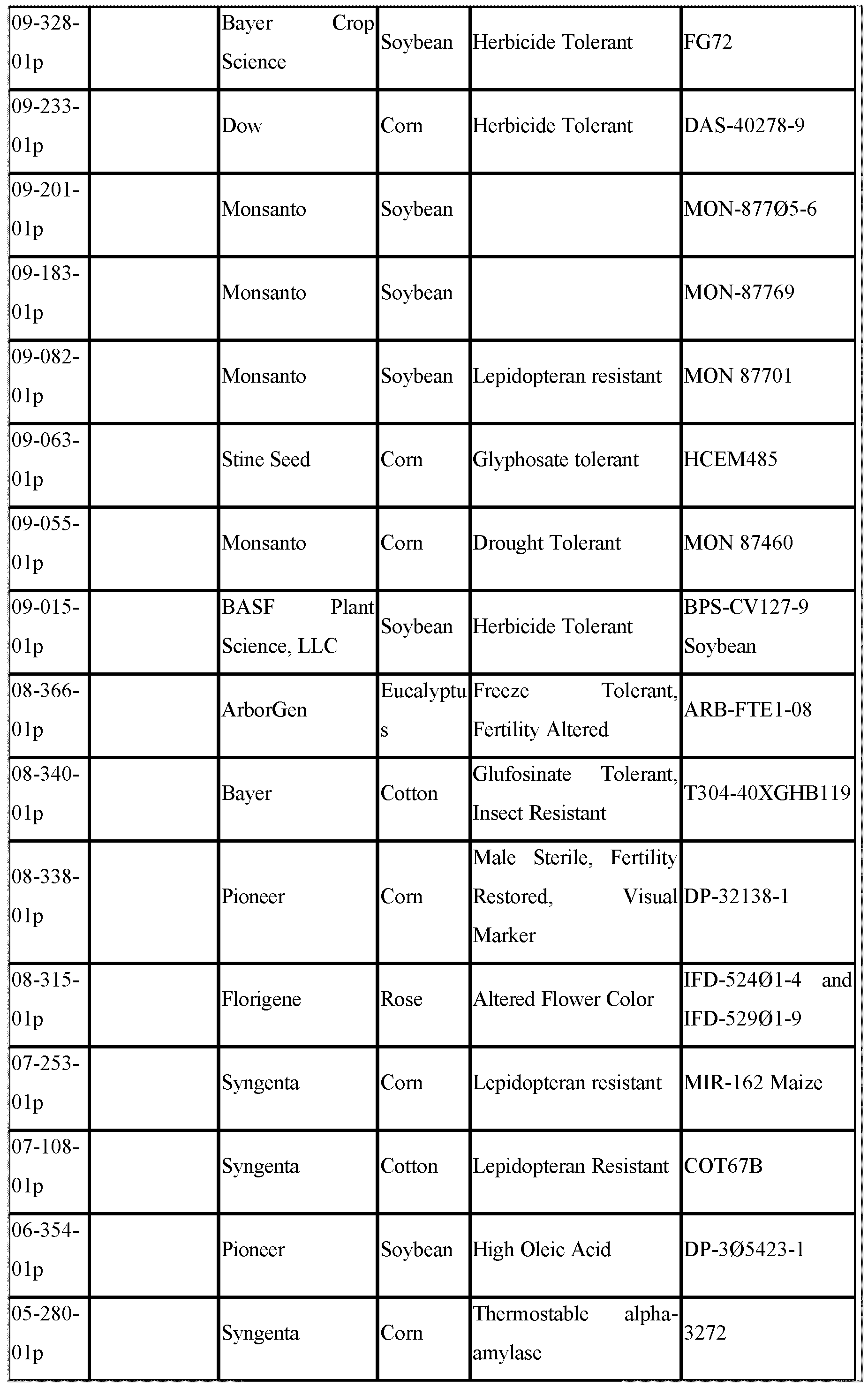
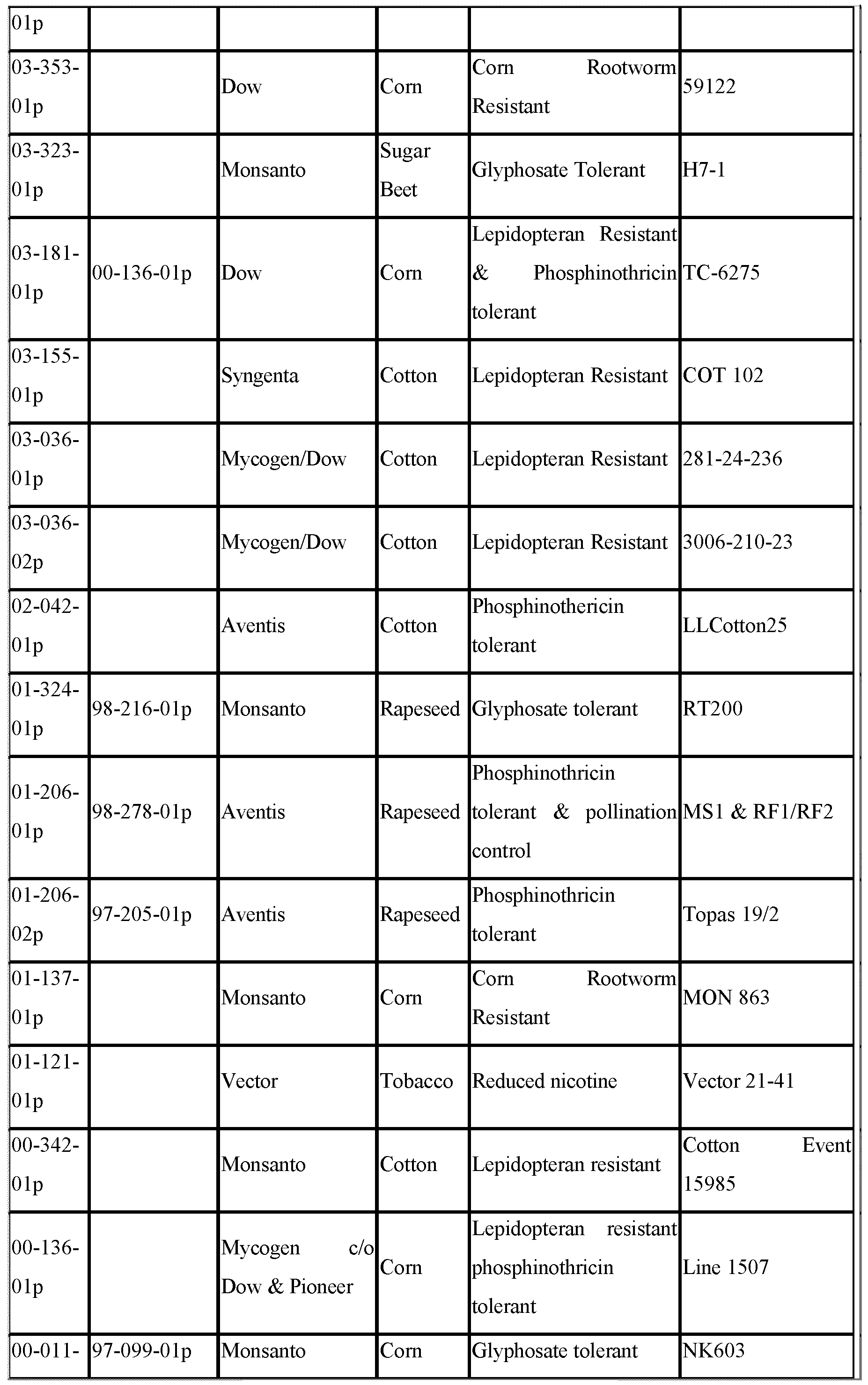
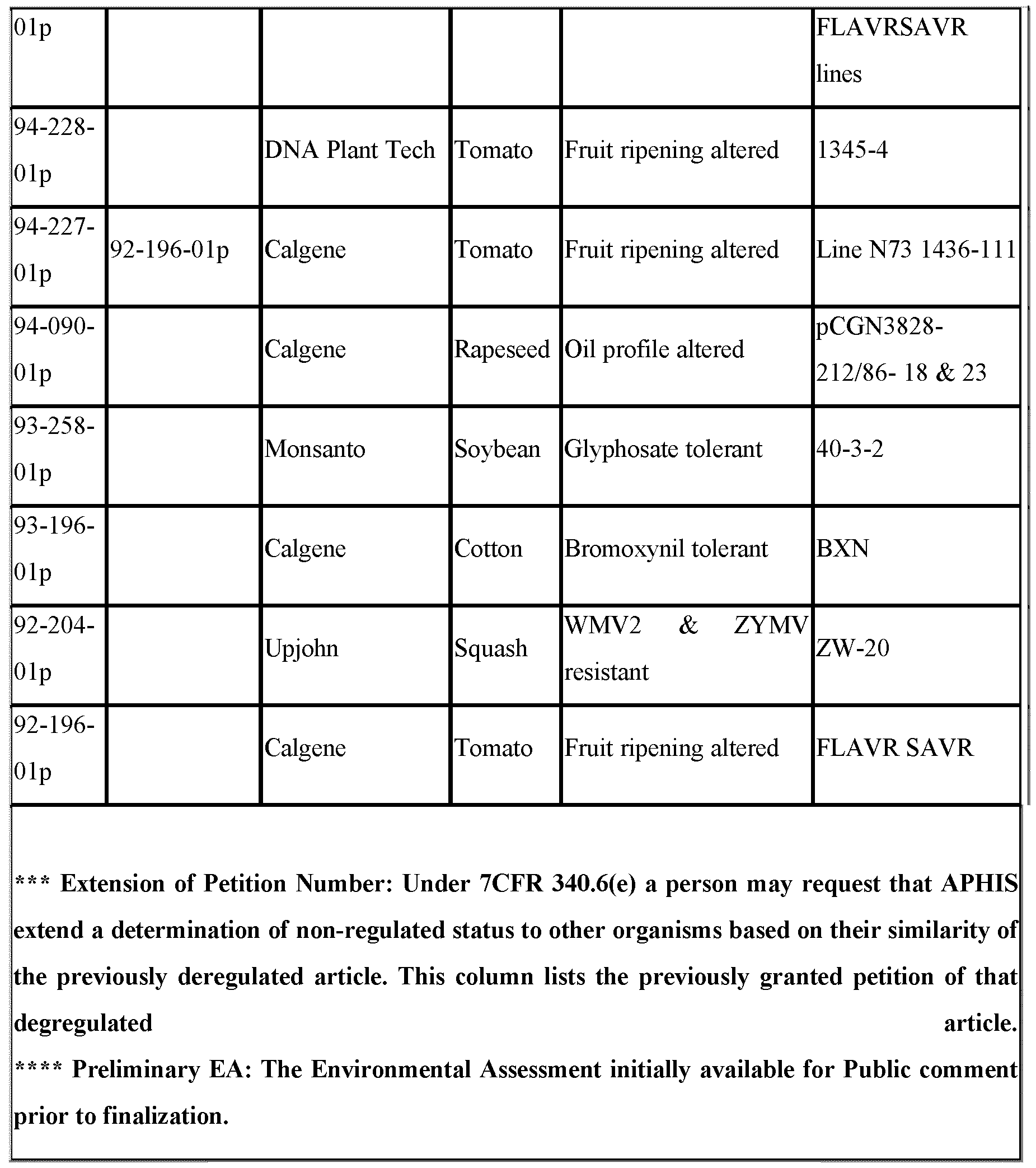
  • Petition the identification number of the petition.
  • Technical descriptions of the transformation events can be found in the individual petition documents which are obtainable from APHIS, for example on the APHIS website, by reference to this petition number. These descriptions are herein incorporated by reference.
  • Sphaerotheca diseases caused for example by Sphaerotheca fuliginea ;
  • Rust diseases such as :
  • Oomycete diseases such as :
  • Glomerella diseases caused for example by Glomerella cingulata ;
  • Pyrenophora diseases caused for example by Pyrenophora teres, or Pyrenophora tritici repentis;
  • Corticium diseases caused for example by Corticium graminearum ;
  • Alternaria diseases caused for example by Alternaria spp. ;
  • Ustilago diseases caused for example by Ustilago nuda ;
  • Verticilium diseases caused for example by Verticilium alboatrum ;
  • Seed and soilbome decay, mould, wilt, rot and damping-off diseases Seed and soilbome decay, mould, wilt, rot and damping-off diseases :
  • Fusarium diseases caused for example by Fusarium culmorum
  • Gibberella diseases caused for example by Gibberella zeae
  • Monographella diseases caused for example Monographella nivalis
  • Penicillium diseases caused for example by Penicillium expansum
  • Phomopsis diseases caused for example by Phomopsis sojae
  • Phytophthora diseases caused for example by Phytophthora cactorum
  • Pyrenophora diseases caused for example by Pyrenophora graminea
  • Pythium diseases caused for example by Pythium ultimum
  • Rhizopus diseases caused for example by Rhizopus oryzae Sclerotium diseases, caused for example by Sclerotium rolfsii;
  • Typhula diseases caused for example by Typhula incarnata
  • Canker, broom and dieback diseases such as :
  • Nectria diseases caused for example by Nectria galligena ;
  • Monilinia diseases caused for example by Monilinia laxa ;
  • Leaf blister or leaf curl diseases such as :
  • Taphrina diseases caused for example by Taphrina deformans ;
  • Esca diseases caused for example by Phaemoniella clamydospora ;
  • Eutypa dyeback caused for example by Eutypa lata ;
  • Ganoderma diseases caused for example by Ganoderma boninense
  • Rigidoporus diseases caused for example by Rigidoporus lignosus
  • Botrytis diseases caused for example by Botrytis cinerea
  • Rhizoctonia diseases caused for example by Rhizoctonia solani;
  • Helminthosporium diseases caused for example by Helminthosporium solani;
  • Plasmodiophora diseases cause for example by Plamodiophora brassicae.
  • Pseudomonas species for example Pseudomonas syringae pv. lachrymans;
  • the doses indicated herein are given as illustrative examples of the method according to the invention.
  • a person skilled in the art will know how to adapt the application doses, notably according to the nature of the plant or crop to be treated.
  • the compounds or mixtures according to the invention can also be used for the preparation of composition useful to curatively or preventively treat human or animal fungal diseases such as, for example, mycoses, dermatoses, trichophyton diseases and candidiases or diseases caused by Aspergillus spp., for example Aspergillus fumigatus.
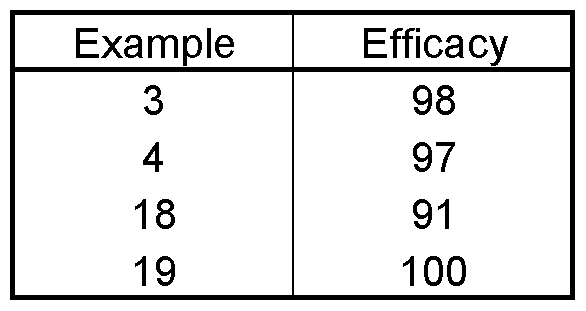
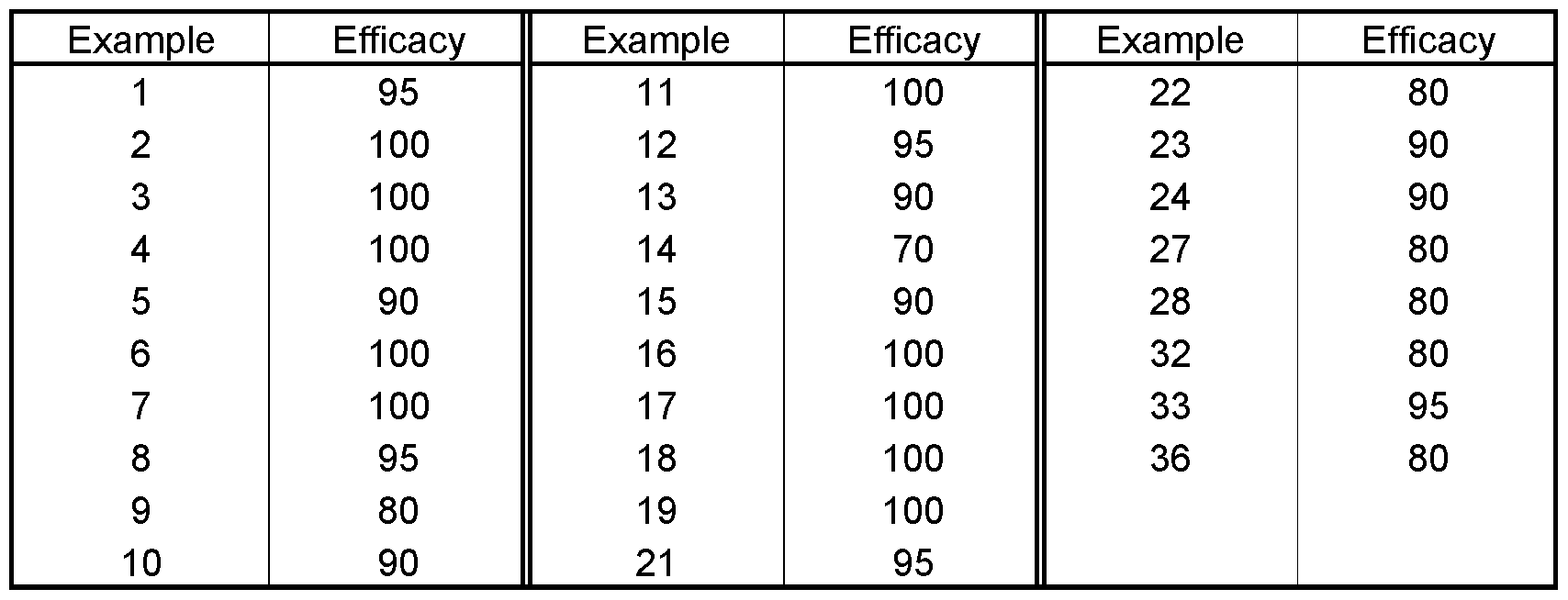
  • the test is evaluated 5 days after the inoculation. 0% means an efficacy which corresponds to that of the untreated control, while an efficacy of 100% means that no disease is observed.

Landscapes

  • Life Sciences & Earth Sciences (AREA)
  • Organic Chemistry (AREA)
  • Chemical & Material Sciences (AREA)
  • Dentistry (AREA)
  • Health & Medical Sciences (AREA)
  • Engineering & Computer Science (AREA)
  • Plant Pathology (AREA)
  • General Health & Medical Sciences (AREA)
  • Wood Science & Technology (AREA)
  • Zoology (AREA)
  • Environmental Sciences (AREA)
  • Pest Control & Pesticides (AREA)
  • Agronomy & Crop Science (AREA)
  • Agricultural Chemicals And Associated Chemicals (AREA)

Abstract

The present invention relates to novel 5-halogenopyrazole (thio) carboxamides of formula (I), their process of preparation, their use as fungicide active agents, particularly in the form of fungicide compositions, and methods for the control of phytopathogenic fungi, notably of plants, using these compounds or compositions wherein Hal1, Hal2, T, R, L and Q are as defined in the claims.

Description
5-Halogenopyrazole(thio)carboxamides
The present invention relates to novel 5-halogenopyrazole(thio)carboxamides, their process of preparation, their use as fungicide active agents, particularly in the form of fungicide compositions, and methods for the control of phytopathogenic fungi, notably of plants, using these compounds or compositions.
It is already known that numerous carboxamides have fungicidal properties (cf, for example, WO-A 1998/03495, WO-A 1998/03486 and EP-A 0 589 313). Thus, l-methyl-3-trifluoromethyl-5-fluoro- and 1,3-dimethylfluoropyrazolecarboxamides are already known (WO-A 2006/061215, WO-A 2005/042494, WO-A 2005/042493, WO-A 2008/095890, WO-A 2004/035589, WO-A 2003/074491). The activity of these compounds is good; however, in some cases, for example at low application rates, it is sometimes unsatisfactory.
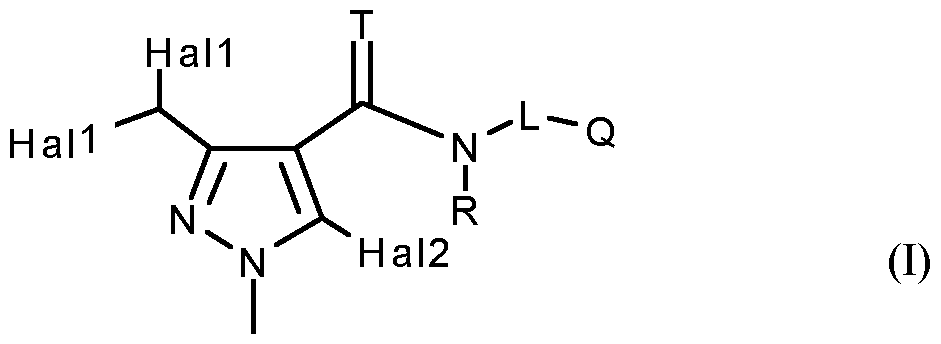
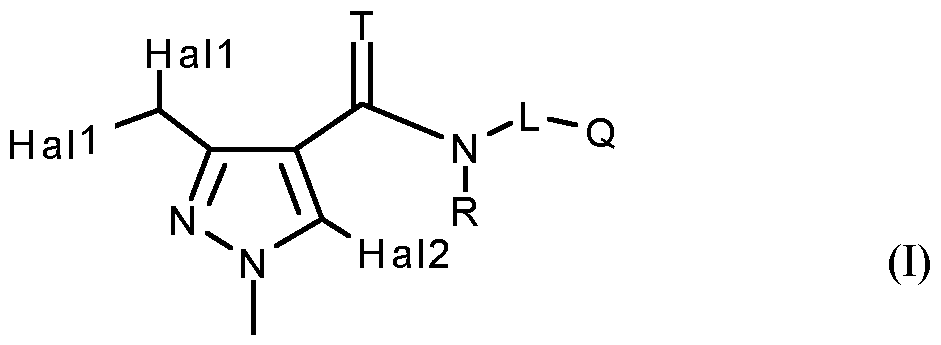
This invention now provides novel l-methyl-3-dihalogenomethyl-5-halogenopyrazole(thio) carboxamides of the formula (I)
Figure imgf000002_0001
in which T represents an oxygen or sulfur atom
R represents hydrogen, Ci-C6-alkylsulfonyl, Ci-C4-alkoxy-Ci-C4-alkyl, Ci-C -haloalkyl- sulfonyl, halo-Ci-C4-alkoxy-Ci-C4-alkyl or formyl;
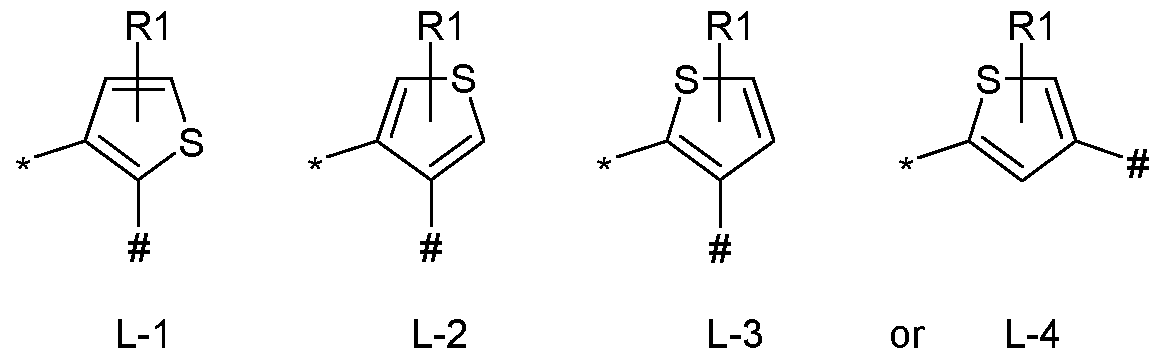
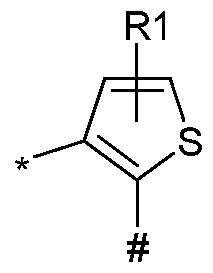
Hall and Hal2 independently of one another represent chlorine or fluorine; Q represents Q1, Q2, Q3, Q4, Q5, or Q6; L represents
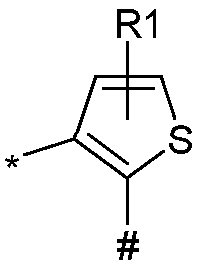
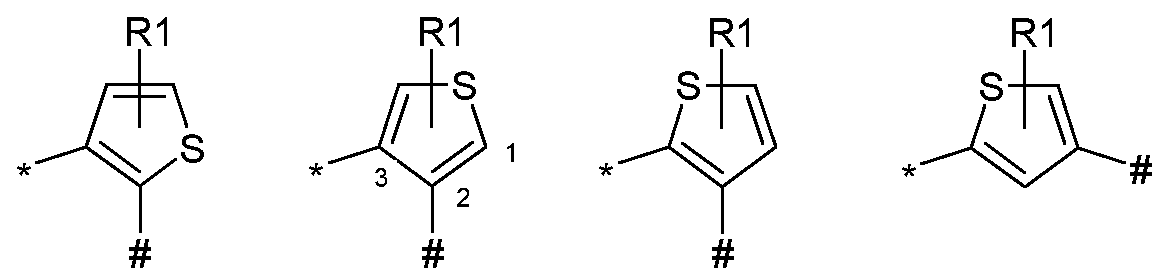
Figure imgf000003_0001
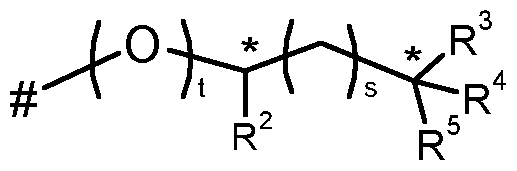
where the bond marked by * is attached to the amide while the bond marked # is attached to Q; R1 represents hydrogen, halogen, d-C4-alkyl or Ci-C4-haloalkyl;
Q1 represents
Figure imgf000003_0002
where the bond marked # is attached to L;
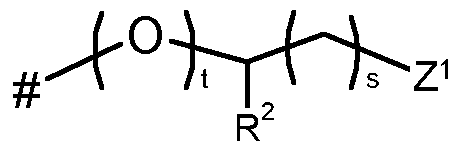
R2 represents hydrogen, Ci-C4-alkyl, C3-C6-cycloalkyl, Ci-C4-haloalkyl or optionally substituted phenyl;
Z1 represents -CR R4R5 or -SiR R4R5; s represents 0, 1, 2 or 3; t represents 0 or 1 ;
R3 represent hydrogen, cyano, Ci-Cg-alkyl, or Ci-C6-haloalkyl;
R4, R5 independently of one another represents hydrogen, Ci-Cg-alkyl, or Ci-C6-haloalkyl; or
R3 and R4 together with the carbon atom to which they are attached form a 3- to 6-membered optionally substituted carbocyclic or heterocyclic saturated or unsaturated ring;
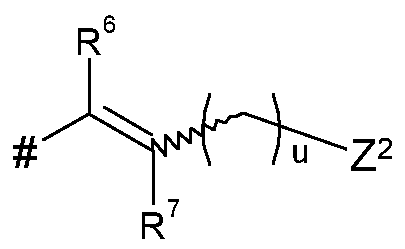
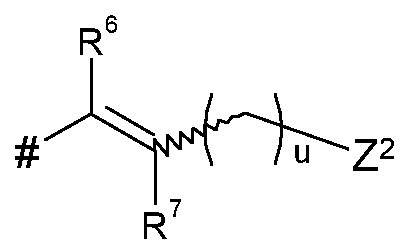
represents
Figure imgf000003_0003
where the bond marked # is attached to L;
R6 represents hydrogen, Ci-C -alkyl, C3-C6-cycloalkyl, Ci-C -haloalkyl or optionally substituted phenyl; R7 represents hydrogen, d-C4-alkyl, or Ci-C4-haloalkyl;
Z2 represents hydrogen, -CR8R9R10 or -SiR8R9R10; u represents 0, 1 or 2;
R8 represent hydrogen, cyano, Ci-Cg-alkyl, or Ci-C6-haloalkyl; or R7 and R8 together with the carbon atoms to which they are attached form a 3- to 6-membered optionally substituted carbocyclic saturated or unsaturated ring;
R9, R10 independently of one another represents hydrogen, Ci-Cg-alkyl, or Ci-C6-haloalkyl; or
R8 and R9 together with the carbon atom to which they are attached form a 3- to 6-membered optionally substituted carbocyclic saturated or unsaturated ring;
3
Q represents
Figure imgf000004_0001
where the bond marked # is attached to L; R11 represents hydrogen or halogen; R12 represents hydrogen or halogen;
R13 represents optionally substituted C2-Ci2-alkyl, optionally substituted C2-Ci2-alkenyl, optionally substituted C2-Ci2-alkynyl, optionally substituted C3-Ci2-cycloalkyl, optionally substituted phenyl or heterocyclyl;
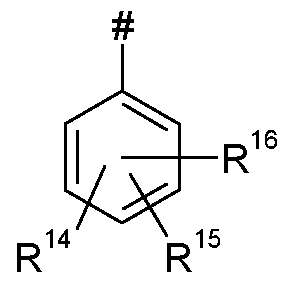
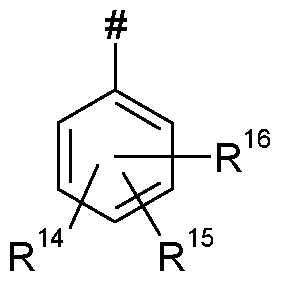
Q represents
Figure imgf000004_0002
where the bond marked # is attached to L, R14, R15 and R16 independently of one another represent halogen, cyano, nitro, Ci-C6-alkyl, C2-C6- alkenyl, Ci-C4-alkoxy, Ci-C4-alkylsulfanyl, Ci-C -alkylsulfonyl, C3-C6-cycloalkyl, or represent Ci-C4-haloalkyl, Ci-C4-haloalkoxy, Ci-C4-haloalkylsulfanyl or Ci-C -halo- alkylsulfonyl having in each case 1 to 5 halogen atoms;
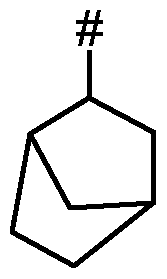
Figure imgf000005_0001
Q5 represents where the bond marked # is attached to L;
Q
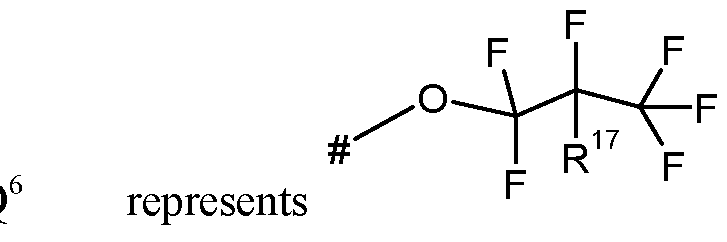
Figure imgf000005_0002
where R17 represents hydrogen or fluorine; where, unless indicated otherwise, a group or a substituent which is substituted according to the invention is substituted by one or more group selected in the list consisting of halogen; nitro, cyano, Ci-Ci2-alkyl; Ci-C6-haloalkyl having 1 to 9 identical or different halogen atoms; Ci- C6-alkoxy; Ci-C6-haloalkoxy having 1 to 9 identical or different halogen atoms; Ci-C6- alkylsulfanyl; Ci-C6-haloalkylsulfanyl having 1 to 9 identical or different halogen atoms; Ci- C6-alkylsulfonyl; Ci-C6-haloalkylsulfonyl having 1 to 9 identical or different halogen atoms; C2-Ci2-alkenyl; C2-Ci2-alkynyl; C3-C7-cycloalkyl; phenyl; tri(Ci-C8)alkylsilyl; tri(Ci- Cg)alkylsilyl-Ci-C8-alkyl;
The formula (I) provides a general definition of the l-methyl-3-dihalogeno-5- halogenopyrazole(thio)carboxamides according to the invention. Preferred radical definitions for the formulae shown above and below are given below. These definitions apply to the end products of the formula (I) and likewise to all intermediates.
T preferably represents an oxygen atom
R preferably represents hydrogen, Ci-C -alkylsulfonyl, d-C3-alkoxy-Ci-C3-alkyl, Ci-C - haloalkylsulfonyl, halo-Ci-C3-alkoxy-Ci-C3-alkyl having in each case 1 to 9 fluorine, chlorine and/or bromine atoms; or formyl. R particularly preferably represents hydrogen, methylsulfonyl, ethylsulfonyl, n- or isopropyl- sulfonyl, n-, iso-, sec- or tert-butylsulfonyl, methoxymethyl, methoxyethyl, ethoxymethyl, ethoxy- ethyl, trifluoromethylsulfonyl, trifluoromethoxymethyl; or formyl.
R very particularly preferably represents hydrogen, methoxymethyl, or formyl. Hall preferably represents chlorine.
Hall preferably represents fluorine.
Hal2 preferably represents chlorine.
Hal2 preferably represents fluorine.
L moreover preferably represents L-l L moreover preferably represents L-2
L moreover preferably represents L-3.
R1 preferably represents hydrogen or chlorine
Z1 preferably represents -CR R4R5.
Z1 moreover preferably represents -SiR R4R5. s preferably represents 0. s preferably represents 1. s moreover preferably represents 2. s particularly preferably represents 1. t preferably represents 0. t preferably represents 1.
R2 preferably represents hydrogen, fluorine, chlorine, methyl, ethyl, n- or isopropyl, or represents methyl, ethyl, n- or isopropyl, n-, iso-, sec- or tert-butyl, each of which is mono- or polysubstituted by identical or different substituents from the group consisting of fluorine, chlorine and bromine. particularly preferably represents hydrogen, fluorine, chlorine, methyl, ethyl, trifluorome- thyl, difluoromethyl, fluoromethyl, trichloromethyl, dichloromethyl, chloromethyl, chlorofluoromethyl, fluorodichloromethyl, difluorochloromethyl, pentafluoroethyl, 1- fluoroethyl, 2-fluoroethyl, 2,2-difluoroethyl, 2,2,2-trifluoroethyl, 2-chloro-2-fluoroethyl, 2- chloro-2,2-difluoroethyl, 2-chloro-2,2-difluoroethyl, 2-dichloro-2-fluoroethyl, 2,2,2-tri- chloroethyl, 1-chlorobutyl, heptafluoro-n-propyl or heptafluoroisopropyl. very particularly preferably represents hydrogen, methyl or ethyl. especially preferably represents hydrogen or methyl. preferably represents fluorine, chlorine, bromine, methyl, ethyl, n- or isopropyl, n-, iso-, sec- or tert-butyl or represents methyl, ethyl, n- or isopropyl, n-, iso-, sec- or tert-butyl, each of which is mono- or polysubstituted by identical or different substituents from the group consisting of fluorine, chlorine and bromine. particularly preferably represents fluorine, chlorine, methyl, ethyl, n- or isopropyl, n-, iso-, sec- or tert-butyl, trifluoromethyl, difluoromethyl, fluoromethyl, trichloromethyl, dichloromethyl, chloromethyl, chlorofluoromethyl, fluorodichloromethyl, difluorochloromethyl, pentafluoroethyl, 1-fluoroethyl, 2-fluoroethyl, 2,2-difluoroethyl, 2,2,2-trifluoroethyl, 2-chloro-2-fluoroethyl, 2-chloro-2,2-difluoroethyl, 2-chloro-2,2-difluoroethyl, 2-dichloro-2- fluoroethyl, 2,2,2-trichloroethyl, 1-chlorobutyl, heptafluoro-n-propyl or heptafluoroisopropyl. very particularly preferably represents chlorine, methyl, ethyl, isopropyl or trifluoromethyl. preferably represents fluorine, chlorine, bromine, methyl, ethyl, n- or isopropyl, n-, iso-, sec- or tert-butyl or represents methyl, ethyl, n- or isopropyl, n-, iso-, sec- or tert-butyl, each of which is mono- or polysubstituted by identical or different substituents from the group consisting of fluorine, chlorine and bromine. particularly preferably represents fluorine, chlorine, methyl, ethyl, n- or isopropyl, n-, iso-, sec- or tert-butyl, trifluoromethyl, difluoromethyl, fluoromethyl, trichloromethyl, dichloromethyl, chloromethyl, chlorofluoromethyl, fluorodichloromethyl, difluorochloromethyl, pentafluoroethyl, 1-fluoroethyl, 2-fluoroethyl, 2,2-difluoroethyl, 2,2,2-trifluoroethyl, 2-chloro-2-fluoroethyl, 2-chloro-2,2-difluoroethyl, 2-chloro-2,2-difluoroethyl, 2-dichloro-2- fluoroethyl, 2,2,2-trichloroethyl, 1-chlorobutyl, heptafluoro-n-propyl or heptafluoroisopropyl . R4 very particularly preferably represents chlorine, methyl, ethyl, isopropyl or trifluoromethyl.
In a particular embodiment, R3 and R4 together with the carbon atom to which they are attached preferably form a 3- to 6-membered carbocyclic or heterocyclic saturated or unsaturated ring which is optionally substituted by halogen, methyl, ethyl, methoxy, trifluoromethyl or trifluoromethoxy,
R3 and R4 together with the carbon atom to which they are attached particularly preferably form a 3- , 5- or 6-membered carbocyclic saturated ring which is optionally substituted by methyl, ethyl or trifluoromethyl,
R3 and R4 moreover together with the carbon atom to which they are attached very particularly preferably form a 6-membered carbocyclic unsaturated ring which is optionally substituted by halogen, methyl, ethyl, methoxy, trifluoromethyl or trifluoromethoxy.
R5 preferably represents hydrogen, fluorine, chlorine, bromine, methyl, ethyl, n- or isopropyl, n- , iso-, sec- or tert-butyl or represents methyl, ethyl, n- or isopropyl, n-, iso-, sec- or tert- butyl, each of which is mono- or polysubstituted by identical or different substituents from the group consisting of fluorine, chlorine and bromine.
R5 particularly preferably represents hydrogen, fluorine, chlorine, methyl, ethyl, n- or isopropyl, iso-, sec- or tert-butyl, trifluoromethyl, difluoromethyl, fluoromethyl, trichloromethyl, dichloromethyl, chloromethyl, chlorofluoromethyl, fluorodichloromethyl, difluorochloro- methyl, pentafluoroethyl, 1-fluoroethyl, 2-fluoroethyl, 2,2-difluoroethyl, 2,2,2-trifluoroethyl, 2-chloro-2-fluoroethyl, 2-chloro-2,2-difluoroethyl, 2-chloro-2,2-difluoroethyl, 2-dichloro-2- fluoroethyl, 2,2,2-trichloroethyl, 1-chlorobutyl, heptafluoro-n-propyl or heptafluoroisopropyl .
R5 very particularly preferably represents hydrogen, chlorine, methyl, ethyl, isopropyl or trifluoromethyl.
Z2 preferably represents -CR8R9R10.
Z2 moreover preferably represents -SiR8R8R10. u preferably represents 0. u preferably represents 1. u particularly preferably represents 1. preferably represents hydrogen, methyl or ethyl, preferably represents hydrogen, methyl or ethyl. preferably represents fluorine, chlorine, bromine, methyl, ethyl, n- or isopropyl, n-, iso-, sec- or tert-butyl or represents methyl, ethyl, n- or isopropyl, n-, iso-, sec- or tert-butyl, each of which is mono- or polysubstituted by identical or different substituents from the group consisting of fluorine, chlorine and bromine. particularly preferably represents fluorine, chlorine, methyl, ethyl, n- or isopropyl, n-, iso-, sec- or tert-butyl, trifluoromethyl, difluoromethyl, fluoromethyl, trichloromethyl, dichloromethyl, chloromethyl, chlorofluoromethyl, fluorodichloromethyl, difluorochloro- methyl, pentafluoroethyl, 1-fluoroethyl, 2-fluoroethyl, 2,2-difluoroethyl, 2,2,2-trifluoroethyl, 2-chloro-2-fluoroethyl, 2-chloro-2,2-difluoroethyl, 2-chloro-2,2-difluoroethyl, 2-dichloro-2- fluoroethyl, 2,2,2-trichloroethyl, 1-chlorobutyl, heptafluoro-n-propyl or heptafluoroisopropyl. very particularly preferably represents chlorine, methyl, ethyl, isopropyl or trifluoromethyl. preferably represents fluorine, chlorine, bromine, methyl, ethyl, n- or isopropyl, n-, iso-, sec- or tert-butyl or represents methyl, ethyl, n- or isopropyl, n-, iso-, sec- or tert-butyl, each of which is mono- or polysubstituted by identical or different substituents from the group consisting of fluorine, chlorine and bromine. particularly preferably represents fluorine, chlorine, methyl, ethyl, n- or isopropyl, n-, iso-, sec- or tert-butyl, trifluoromethyl, difluoromethyl, fluoromethyl, trichloromethyl, dichloromethyl, chloromethyl, chlorofluoromethyl, fluorodichloromethyl, difluorochloro- methyl, pentafluoroethyl, 1-fluoroethyl, 2-fluoroethyl, 2,2-difluoroethyl, 2,2,2-trifluoroethyl, 2-chloro-2-fluoroethyl, 2-chloro-2,2-difluoroethyl, 2-chloro-2,2-difluoroethyl, 2-dichloro-2- fluoroethyl, 2,2,2-trichloroethyl, 1-chlorobutyl, heptafluoro-n-propyl or heptafluoroisopropyl . very particularly preferably represents chlorine, methyl, ethyl, isopropyl or trifluoromethyl. a particular embodiment, R8 and R9 together with the carbon atom to which they are attached preferably form a 3- to 6-membered carbocyclic or heterocyclic saturated or unsaturated ring which is optionally substituted by halogen, methyl, ethyl, methoxy, trifluoromethyl or trifluoromethoxy, R8 and R9 moreover together with the carbon atom to which they are attached particularly preferably form a 3-, 5- or 6-membered carbocyclic saturated ring which is optionally substituted by methyl, ethyl or trifluoromethyl,
R8 and R9 moreover together with the carbon atom to which they are attached very particularly preferably form a 6-membered carbocyclic unsaturated ring which is optionally substituted by halogen, methyl, ethyl, methoxy, trifluoromethyl or trifluoromethoxy.
R10 preferably represents hydrogen, fluorine, chlorine, bromine, methyl, ethyl, n- or isopropyl, n- , iso-, sec- or tert-butyl or represents methyl, ethyl, n- or isopropyl, n-, iso-, sec- or tert- butyl, each of which is mono- or polysubstituted by identical or different substituents from the group consisting of fluorine, chlorine and bromine.
R10 particularly preferably represents hydrogen, fluorine, chlorine, methyl, ethyl, n- or isopropyl, iso-, sec- or tert-butyl, trifluoromethyl, difluoromethyl, fluoromethyl, trichloromethyl, dichloromethyl, chloromethyl, chlorofluoromethyl, fluorodichloromethyl, difluorochloro- methyl, pentafluoroethyl, 1-fluoroethyl, 2-fluoroethyl, 2,2-difluoroethyl, 2,2,2-trifluoroethyl, 2-chloro-2-fluoroethyl, 2-chloro-2,2-difluoroethyl, 2-chloro-2,2-difluoroethyl, 2-dichloro-2- fluoroethyl, 2,2,2-trichloroethyl, 1-chlorobutyl, heptafluoro-n-propyl or heptafluoroisopropyl .
R10 very particularly preferably represents hydrogen, chlorine, methyl, ethyl, isopropyl or trifluoromethyl.
R11 and R12 independently of one another preferably represent hydrogen, fluorine, chlorine or bromine;
R11 and R12 independently of one another particularly preferably represent hydrogen or fluorine; R11 and R12 very particularly preferably represent hydrogen;
R13 preferably represents C2-C6-alkyl, optionally substituted C3-C8-cycloalkyl, optionally substituted phenyl, pyridyl, thienyl or furyl;
R13 particularly preferably represents ethyl, n-propyl, isopropyl, n-butyl, sec-butyl, tert-butyl, n- pentyl, neopentyl, isopentyl, n-hexyl, isohexyl, n-heptyl, cyclopropyl, cyclobutyl, cyclopentyl, cyclohexyl, cycloheptyl, cyclooctyl, a-methylcyclopropyl, 2-, 3- or 4-halo- substituted phenyl, 2-thienyl, 3-thienyl or 2-furyl;
R13 very particularly preferably represents ethyl, n-propyl, isopropyl, n-butyl, sec-butyl, tert- butyl, cyclopropyl, cyclobutyl, cyclopentyl, cyclohexyl, a-methylcyclopropyl, 4- fluorophenyl, 4-bromophenyl, 4-chlorophenyl, 2-thienyl, 3-thienyl or 2-furyl;
R14, R15 and R16 independently of one another preferably represent fluorine, chlorine, bromine, cyano, nitro, methyl, ethyl, n- or isopropyl, n-, i-, s- or t-butyl, methoxy, ethoxy, methylsulfanyl, ethylsulfanyl, n- or isopropylsulfanyl, cyclopropyl, trifluoromethyl, trichloromethyl, trifluoroethyl, difluoromethoxy, trifluoromethoxy, difluorochloromethoxy, trifluoroethoxy, difluoromethylsulfanyl, difluorochloromethylsulfanyl or trifluoromethyl- sulfanyl;
R14, R15 and R16 independently of one another particularly preferably represent fluorine, chlorine, bromine, methyl, trifluoromethyl, difluoromethoxy or trifluoromethoxy;
R14, R15 and R16 independently of one another very particularly preferably represent fluorine, chlorine, bromine or trifluoromethyl.
Preference is given to compounds of the formula (I) in which all radicals in each case have the preferred meanings mentioned above.
Particular preference is given to compounds of the formula (I) in which all radicals in each case have the particularly preferred meanings mentioned above.
Very particular preference is given to compounds of the formula (I) in which all radicals in each case have the very particularly preferred meanings mentioned above.
The following groups of novel (thio)carboxamides of the formula
Figure imgf000011_0001
in which T, R, L, Q1 have the meanings given above and Hal represents fluorine or chlorine;
Figure imgf000012_0001
in which T, R, L, Q2 have the meanings given above and Hal represents fluorine or chlorine;
Figure imgf000012_0002
in which T, R, L, Q3 have the meanings given above and Hal represents fluorine or chlorine;
Figure imgf000012_0003
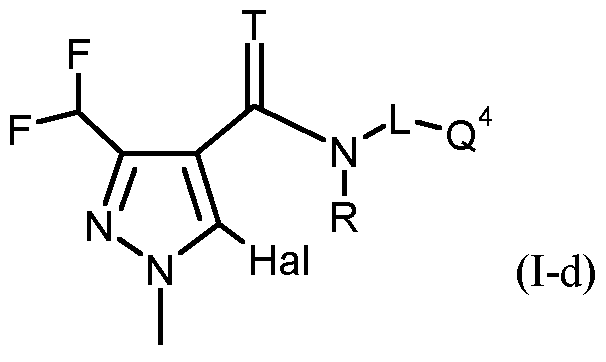
in which T, R, L, Q4 have the meanings given above and Hal represents fluorine or chlorine;
Figure imgf000012_0004
in which T, R, L, Q5 have the meanings given above and Hal represents fluorine or chlorine;
Figure imgf000012_0005
in which T, R, L, Q6 have the meanings given above and Hal represents fluorine or chlorine; are preferred and in each case to be understood as a subset of the compounds of the fonnula (I) mentioned above.
The following groups of novel carboxamides of the formulae
Figure imgf000013_0001
in which T, R, L and Q have the meanings given above and Hal represents fluorine;
Figure imgf000013_0002
in which T. R. L and Q have the meanings given above and Hal represents chlorine; are preferred and in each case to be understood as a subset of the compounds of the formula (I) mentioned above. Very particular special preference is given to compounds of the formula (I) where T represents oxygen R represents hydrogen; Hal represents chlorine or fluorine;
Hall and Hal2 independently of one another represent chlorine or fluorine; Q represents Q1, Q2, Q3, Q4, Q\ or Q6;
Figure imgf000013_0003
L represents, where the bond marked * is attached to the amide while the bond marked # is attached to Q; R1 represents hydrogen;
Figure imgf000014_0001
Q represen s
where the bond marked # is attached to L,
R2 represents hydrogen, methyl or ethyl,
Z1 represents -CR R4R5 or -SiR R4R5;
s represents 0, 1, 2 or 3;
t represents 0,
R3, R4, R5 independent!}7 of one another represent hydrogen or methyl;
Q
Figure imgf000014_0002
2 the bond marked # is attached to L,
R6 represents hydrogen or methyl,
R7 represents hydrogen or methyl,
Z2 represents -CR8R9R10 or -SiR8R9R10;
u represents 0, 1 or 2;
9, R10 independent!}7 of one another represent hydrogen or methyl;
Figure imgf000014_0003
Q3 represents
where the bond marked # is attached to L; R11 and R12 represent hydrogen; represents cyclopropyl;
Q4 represents
Figure imgf000015_0001
where the bond marked # is attached to L;
R14, R15 and R16 independently of one another represent fluorine, chlorine, bromine trifluoromethyl;
Figure imgf000015_0002
represents
represents
Figure imgf000015_0003
Saturated or unsaturated hydrocarbon radicals, such as alkyl or alkenyl, can in each case be straight- chain or branched as far as this is possible, including in combination with heteroatoms, such as, for example, in alkoxy.
Optionally substituted radicals can be mono- or polysubstituted, where in the case of polysubstitution the substituents can be identical or different. Thus, the definition dialkylamino also includes an amino group which is unsymmetrically substituted by alkyl, such as, for example, methylethylamino .
Halogen-substituted radicals, such as, for example, halogenoalkyl, are mono- or polyhalogenated. In the case of polyhalogenation, the halogen atoms can be identical or different. Halogen denotes fluorine, chlorine, bromine and iodine, in particular fluorine, chlorine and bromine.
The compounds according to the invention may, if appropriate, be present as mixtures of various possible isomeric forms, in particular stereoisomers such as, for example, E and Z, threo and erythro, and also optical isomers, and, if appropriate, also of tautomers. What is claimed are both the E and the Z isomers, and also the threo and erythro, and also the optical isomers, any mixtures of these isomers, and also the possible tautomeric forms.
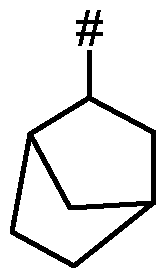
In the variations according to the invention of Q, up to two stereocentres (*) are present. What is claimed are all diastereomers and enantiomers, in particular of the following radicals :
Figure imgf000016_0001
The abovementioned general or preferred radical definitions or illustrations can be combined as desired between the respective ranges and preferred ranges. They apply both to the end products and, correspondingly, to precursors and intermediates. In particular the compounds mentioned in groups (I-a) to (I-h) can be combined both with the general and the preferred, particularly preferred, etc., meanings, where here, too, in each case all combinations between the preferred ranges are possible.
Finally, it has been found that the novel l-methyl-3-dihalogenomethyl-5-halogenopyrazole (thio)carboxamides of the formula (I) have very good microbicidal properties and can be used for controlling unwanted microorganisms both in crop protection and in the protection of materials.
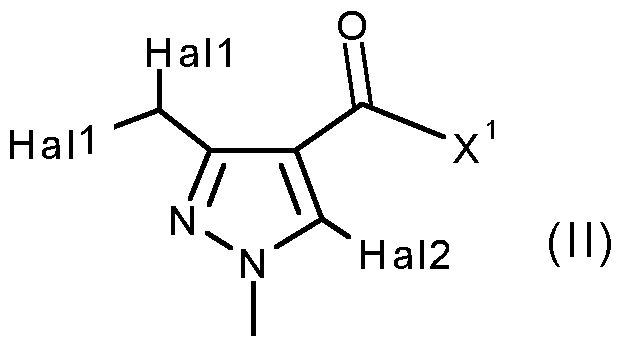
Furthermore, it has been found that l-methyl-3-dihalogenomethyl-5-halogenopyrazolecarboxamides of the formula (I) wherein T represents an oxygen atom are obtained when carboxylic acid derivatives of the formula (II)
Figure imgf000016_0002
in which
X represents halogen or hydroxyl,
Hal l and Hal2 independently of one another represent chlorine or fluorine; are reacted with amine derivatives of the formula (III) I
R
(III) in which R, L and Q have the meanings given above, if appropriate in the presence of a catalyst, if appropriate in the presence of a condensing agent, if appropriate in the presence of an acid binder and if appropriate in the presence of a diluent.
This process for synthesizing such amides of the formula (I) has already been described sufficiently: WO-A 2006/061215, WO-A 2005/042494, WO-A 2005/042493, WO-A 2008/095890, WO-A:
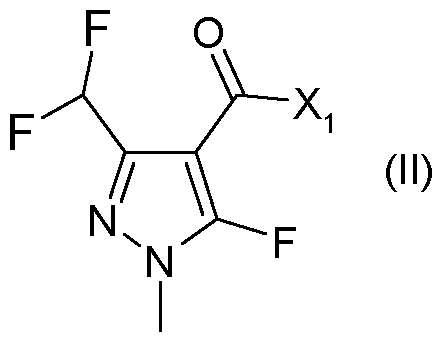
The acids and acid halides of the formula (II) used
Figure imgf000017_0001
in which
X1 represents halogen or hydroxyl, are novel and are synthesized as described below:
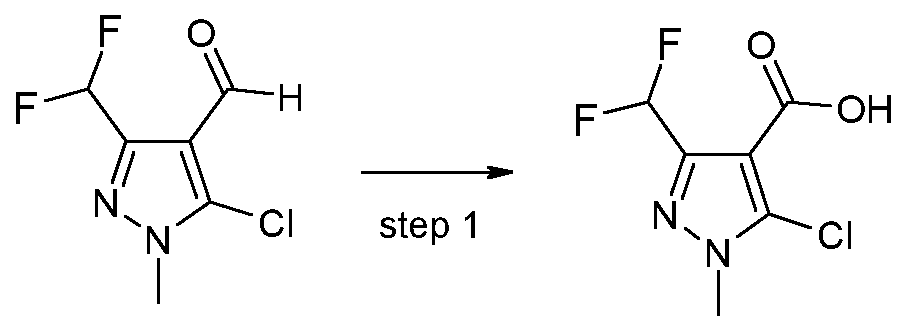
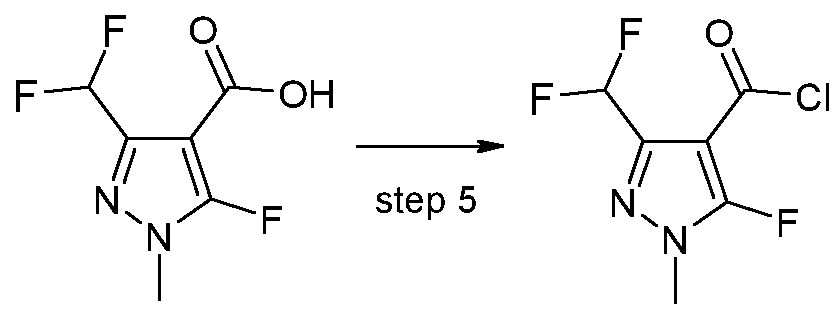
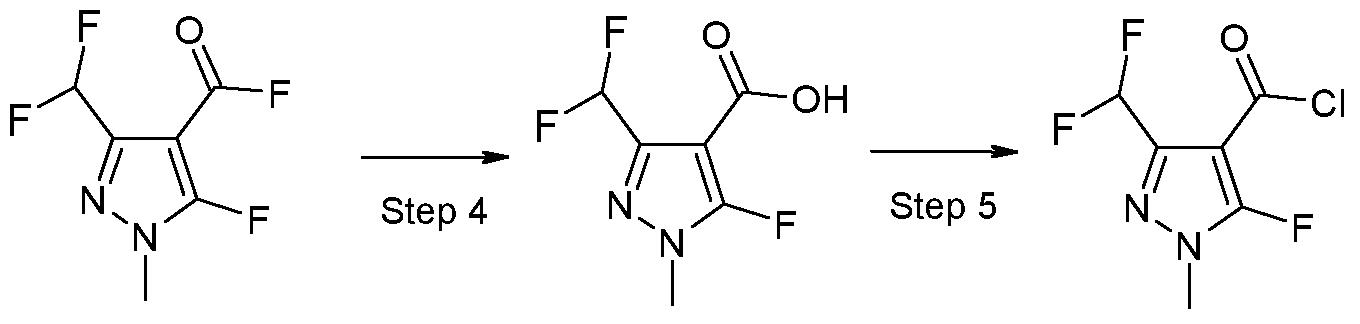
Preference is given to compounds of the formula (II) where X1 represents hydroxyl, chlorine or fluorine. A further aspect of the invention comprises the process PI according to the invention for synthesizing the acid chlorides of the formula (II), as shown in the reaction scheme below:
Figure imgf000018_0001
Figure imgf000018_0002
(l id) (He) (HO
Process PI
The compound of the formula (Ila), 5-chloro-3-(difluoromethyl)-l-methyl-lH-pyrazole-4- carbaldehyde, is known from WO-2004/014138 (Example 35). Step 1 in process PI according to the invention is carried out in the presence of an oxidizing agent and, if required, in the presence of a solvent.
Steps 2 and 5 in process PI according to the invention are carried out in the presence of an acid halide former and, if required, in the presence of a solvent.
Step 3 in process PI according to the invention is carried out in the presence of a fluorinating agent and, if required, in the presence of a solvent.
Step 4 in process P 1 according to the invention is carried out in the presence of an acid or a base and, if required, in the presence of a solvent.
Suitable oxidizing agents for carrying out step 1 of process PI according to the invention are all inorganic and organic oxidizing agents customarily used for such reactions. Preference is given to benzyltriethylammonium permanganate, bromine, chlorine, m- chloroperbenzoic acid, chromic acid, chromium(VI) oxide, hydrogen peroxide, hydrogen peroxide/boron trifluoride, hydrogen peroxide/urea adduct, 2-hydroxyperoxyhexafluoro-2-propanol, iodine, perbenzoic acid, peroxyacetyl nitrate, potassium permanganate, potassium ruthenate, pyridinium dichromate, ruthenium(VIII) oxide, silver(I) oxide, silver(II) oxide, silver nitrite, sodium chlorite, sodium hypochlorite, 2,2,6,6-tetramethylpiperidine-l-oxyl. Suitable acid halide formers for step 2 and step 5 of process PI according to the invention are all organic and inorganic acid halide formers customarily used for such reactions.
Preference is given to phosgene, phosphorus trichloride, phosphorus pentachloride, phosphorus oxytrichloride; thionyl chloride; or carbon tetrachloride/triphenylphosphine. Suitable fluorinating agents for step 3 of process PI according to the invention are those which are customarily used for such reactions.
Preference is given to caesium fluoride; potassium fluoride; potassium fluoride/calcium difluoride and also tetrabutylammonium fluoride.
Suitable solvents for steps 1 to 5 of process PI according to the invention are all customary inert organic solvents.
Preference is given to using optionally halogenated aliphatic, alicyclic or aromatic hydrocarbons, such as petroleum ether, hexane, heptane, cyclohexane, methylcyclohexane, benzene, toluene, xylene or decaline; chlorobenzene, dichlorobenzene, dichloromethane, chloroform, carbon tetrachloride, dichloroethane or trichloroethane; various ethers, such as diethyl ether, cyclopentyl methyl ether, diisopropyl ether, methyl t-butyl ether, methyl t-amyl ether, dioxane, tetrahydrofuran, 2- methyltetrahydrofuran, 1,2-dimethoxyethane, 1,2-diethoxyethane or anisole; nitriles, such as acetonitrile, propionitrile, n- or i-butyronitrile or benzonitrile; amides, such as N,N- dimethylformamide, N,N-dimethylacetamide, N-methylformanilide, N-methylpyrrolidone or hexamethylphosphoric triamide; esters, such as methyl acetate or ethyl acetate, sulfoxides, such as dimethyl sulfoxide, or sulfones, such as sulfolane.
When carrying out steps 1 to 5 of process PI according to the invention, the reaction temperatures can be varied over a relatively wide range. In general, the steps are carried out at temperatures of 0 °C to 160 °C, preferably at temperatures from 0 °C to 120 °C.
As a means for controlling the temperature in process PI according to the invention, it is also possible to use microwave technology.
Unless indicated otherwise, all steps of process PI according to the invention are generally carried out under atmospheric pressure. However, it is also possible to operate under elevated or reduced pressure - in general between 0.1 and 10 bar. For carrying out step 1 of process PI according to the invention, in general an excess of oxidizing agent is employed per mole of the aldehyde derivative of the formula (Ila). However, it is also possible to employ the components in other ratios.
For carrying out steps 2 and 5 of process PI according to the invention, in general an excess of acid halide former is employed per mole of the carboxylic acid derivative of the formula (lib) or (He). However, it is also possible to employ the components in other ratios.
For carrying out step 3 of process PI according to the invention, in general an excess of fluorinating agent is employed per mole of the acid halide derivative of the formula (lie). However, it is also possible to employ the components in other ratios. For carrying out step 4 of process PI according to the invention, in general an excess of acid or base is employed per mole of the acid fluoride derivative of the formula (lid). However, it is also possible to employ the components in other ratios.
A further aspect of the invention comprises the process P2 according to the invention for synthesizing l-methyl-3-dihalogenomethyl-5-halogenopyrazolethiocarboxamides of the formula (I) wherein T represents an sulfur atom, as shown in the reaction scheme below:
Figure imgf000020_0001
(I) (I)
Process P2 wherein Hall, Hal2, R, L and Q are as herein-defined, in the optionally presence of a catalytic or stoichiometric or excess amount, quantity of a base such as an inorganic and organic base. Preference is given to using alkali metal carbonates, such as sodium carbonate, potassium carbonate, potassium bicarbonate, sodium bicarbonate ; heterocyclic aromatic bases, such as pyridine, picoline, lutidine, collidine ; and also tertiary amines, such as trimethylamine, triethylamine, tributylamine, N,N-dimethylaniline, N,N-dimethylaminopyridine or N-methyl-piperidine . Process P2 according to the invention is performed in the presence of a thionating agent. Starting amide derivatives of formula (I) can be prepared as previously described.
Suitable thionating agents for carrying out process P2 according to the invention can be sulfur (S), sulfhydric acid (H2S), sodium sulfide (Na2S), sodium hydrosulfide (NaHS), boron trisulfide (B2S3), bis(diethylaluminium) sulfide ((AlEt2)2S), ammonium sulfide ((NH4)2S), phosphorous pentasulfide (P2S5), Lawesson's reagent (2,4-bis(4-methoxyphenyl)-l,2,3,4-dithiadiphosphetane 2,4-disulfide) or a polymer-supported thionating reagent such as described in Journal of the Chemical Society, Perkin 1 (2001), 358.
The compounds according to the invention can be synthesized according to the process described above. Based on his expert knowledge, the person skilled in the art is able to modify the preparation processes for the compounds according to the invention in a suitable manner.
Certain amines of the formula (III) used are already known such as :
2-(4-methylpentan-2-yl)thiophene-3-amine (EP-A 1 036 793, EP-A 0 737 682).
The compound according to the present invention can be prepared according to the general processes of preparation described above. It will nevertheless be understood that, on the basis of his general knowledge and of available publications, the skilled worker will be able to adapt this method according to the specifics of each of the compounds, which it is desired to synthesize.
In a further aspect, the present invention also relates to a fungicide composition comprising an effective and non-phytotoxic amount of an active compound of formula (I).
The expression "effective and non-phytotoxic amount" means an amount of composition according to the invention that is sufficient to control or destroy the fungi present or liable to appear on the cropsand that does not entail any appreciable symptom of phytotoxicity for the said crops. Such an amount can vary within a wide range depending on the fungus to be controlled, the type of crop, the climatic conditions and the compounds included in the fungicide composition according to the invention. This amount can be determined by systematic field trials that are within the capabilities of a person skilled in the art.
Thus, according to the invention, there is provided a fungicide composition comprising, as an active ingredient, an effective amount of a compound of formula (I) as herein defined and an agriculturally acceptable support, carrier or filler. According to the invention, the term "support" denotes a natural or synthetic, organic or inorganic compound with that the active compound of formula (I) is combined or associated to make it easier to apply, notably to the parts of the plant. This support is thus generally inert and should be agriculturally acceptable. The support can be a solid or a liquid. Examples of suitable supports include clays, natural or synthetic silicates, silica, resins, waxes, solid fertilisers, water, alcohols, in particular butanol, organic solvents, mineral and plant oils and derivatives thereof. Mixtures of such supports can also be used.
The composition according to the invention can also comprise additional components. In particular, the composition can further comprise a surfactant. The surfactant can be an emulsifier, a dispersing agent or a wetting agent of ionic or non-ionic type or a mixture of such surfactants. Mention can be made, for example, of polyacrylic acid salts, lignosulfonic acid salts, phenolsulfonic or naphthalenesulfonic acid salts, polycondensates of ethylene oxide with fatty alcohols or with fatty acids or with fatty amines, substituted phenols (in particular alkylphenols or arylphenols), salts of sulfosuccinic acid esters, taurine derivatives (in particular alkyl taurates), phosphoric esters of polyoxyethylated alcohols or phenols, fatty acid esters of polyolsand derivatives of the above compounds containing sulfate, sulfonate and phosphate functions. The presence of at least one surfactant is generally essential when the active compound and/or the inert support are water-insoluble and when the vector agent for the application is water. Preferably, surfactant content can be comprised from 5% to 40% by weight of the composition.
Optionally, additional components can also be included, e.g. protective colloids, adhesives, thickeners, thixotropic agents, penetration agents, stabilisers, sequestering agents. More generally, the active compounds can be combined with any solid or liquid additive, that complies with the usual formulation techniques.
In general, the composition according to the invention can contain from 0.05 to 99% by weight of active compound, preferably 10 to 70% by weight. Compositions according to the invention can be used in various forms such as aerosol dispenser, capsule suspension, cold fogging concentrate, dustable powder, emulsifiable concentrate, emulsion oil in water, emulsion water in oil, encapsulated granule, fine granule, flowable concentrate for seed treatment, gas (under pressure),gas generating product, granule, hot fogging concentrate, macrogranule, microgranule, oil dispersible powder, oil miscible flowable concentrate, oil miscible liquid, paste, plant rodlet, powder for dry seed treatment, seed coated with a pesticide, soluble concentrate, soluble powder, solution for seed treatment, suspension concentrate (flowable concentrate), ultra low volume (ULV) liquid, ultra low volume (ULV) suspension, water dispersible granules or tablets, water dispersible powder for slurry treatment, water soluble granules or tablets, water soluble powder for seed treatment and wettable powder. These compositions include not only compositions that are ready to be applied to the plant or seed to be treated by means of a suitable device, such as a spraying or dusting device, but also concentrated commercial compositions that must be diluted before application to the crop.
The compounds according to the invention can also be mixed with one or more insecticide, fungicide, bactericide, attractant, acaricide or pheromone active substance or other compounds with biological activity. The mixtures thus obtained have normally a broadened spectrum of activity. The mixtures with other fungicide compounds are particularly advantageous.
Examples of suitable fungicide mixing partners can be selected in the following lists:
(1) Inhibitors of the ergosterol biosynthesis, for example (1.1) aldimorph (1704-28-5), (1.2) azaconazole (60207-31-0), (1.3) bitertanol (55179-31-2), (1.4) bromuconazole (116255-48-2), (1.5) cyproconazole (113096-99-4), (1.6) diclobutrazole (75736-33-3), (1.7) difenoconazole (119446-68- 3), (1.8) diniconazole (83657-24-3), (1.9) diniconazole-M (83657-18-5), (1.10) dodemorph (1593- 77-7), (1.11) dodemorph acetate (31717-87-0), (1.12) epoxiconazole (106325-08-0), (1.13) etaconazole (60207-93-4), (1.14) fenarimol (60168-88-9), (1.15) fenbuconazole (114369-43-6), (1.16) fenhexamid (126833-17-8), (1.17) fenpropidin (67306-00-7), (1.18) fenpropimorph (67306- 03-0), (1.19) fluquinconazole (136426-54-5), (1.20) flurprimidol (56425-91-3), (1.21) flusilazole (85509-19-9), (1.22) flutriafol (76674-21-0), (1.23) furconazole (112839-33-5), (1.24) furconazole- cis (112839-32-4), (1.25) hexaconazole (79983-71-4), (1.26) imazalil (60534-80-7), (1.27) imazalil sulfate (58594-72-2), (1.28) imibenconazole (86598-92-7), (1.29) ipconazole (125225-28-7), (1.30) metconazole (125116-23-6), (1.31) myclobutanil (88671-89-0), (1.32) naftifine (65472-88-0), (1.33) nuarimol (63284-71-9), (1.34) oxpoconazole (174212-12-5), (1.35) paclobutrazol (76738-62-0), (1.36) pefurazoate (101903-30-4), (1.37) penconazole (66246-88-6), (1.38) piperalin (3478-94-2), (1.39) prochloraz (67747-09-5), (1.40) propiconazole (60207-90-1), (1.41) prothioconazole (178928-70-6), (1.42) pyributicarb (88678-67-5), (1.43) pyrifenox (88283-41-4), (1.44) quinconazole (103970-75-8), (1.45) simeconazole (149508-90-7), (1.46) spiroxamine (118134-30- 8), (1.47) tebuconazole (107534-96-3), (1.48) terbinafine (91161-71-6), (1.49) tetraconazole (112281-77-3), (1.50) triadimefon (43121-43-3), (1.51) triadimenol (89482-17-7), (1.52) tridemorph (81412-43-3), (1.53) triflumizole (68694-11-1), (1.54) triforine (26644-46-2), (1.55) triticonazole (131983-72-7), (1.56) uniconazole (83657-22-1), (1.57) uniconazole-p (83657-17-4), (1.58) viniconazole (77174-66-4), (1.59) voriconazole ( 137234-62-9), (1.60) l-(4-chlorophenyl)-2- (lH-l,2,4-triazol-l-yl)cycloheptanol (129586-32-9), (1.61) methyl l-(2,2-dimethyl-2,3-dihydro-lH- inden-l-yl)-lH-imidazole-5-carboxylate (1 10323-95-0), ( 1.62) N'-{5-(difluoromethyl)-2-methyl-4- [3-(trimemylsilyl)propoxy]phenyl}-N-ethyl-N-methylimidoformamide, (1.63) N-ethyl-N-methyl-N'- {2-memyl-5-(trifluoromemyl)-4-[3-(trimethylsilyl)propoxy]phenyl}imidoformamide and (1.64) 0-[l- (4-methoxyphenoxy)-3,3-dimethylbutan-2-yl] lH-imidazole-l-carbothioate (1 1 1226-71-2).
(2) inhibitors of the respiratory chain at complex I or II, for example (2.1) bixafen (581809-46-3), (2.2) boscalid (188425-85-6), (2.3) carboxin (5234-68-4), (2.4) diflumetorim (130339-07-0), (2.5) fenfuram (24691-80-3), (2.6) fluopyram (658066-35-4), (2.7) flutolanil (66332-96-5), (2.8) fluxapyroxad (907204-31-3), (2.9) furametpyr (123572-88-3), (2.10) furmecyclox (60568-05-0), (2.1 1) isopyrazam (mixture of syn-epimeric racemate 1RS,4SR,9RS and anti-epimeric racemate 1RS,4SR,9SR) (881685-58-1), (2.12) isopyrazam (anti-epimeric racemate 1RS,4SR,9SR), (2.13) isopyrazam (anti-epimeric enantiomer 1R,4S,9S), (2.14) isopyrazam (anti-epimeric enantiomer 1 S,4R,9R), (2.15) isopyrazam (syn epimeric racemate 1RS,4SR,9RS), (2.16) isopyrazam (syn- epimeric enantiomer 1R,4S,9R), (2.17) isopyrazam (syn-epimeric enantiomer 1 S,4R,9S), (2.18) mepronil (55814-41-0), (2.19) oxycarboxin (5259-88-1), (2.20) penflufen (494793-67-8), (2.21) penthiopyrad (183675-82-3), (2.22) sedaxane (874967-67-6), (2.23) thifluzamide (130000-40-7), (2.24) l-memyl-N-[2-(l , l,2,2-tetrafluoroethoxy)phenyl]-3-(trifluoromethyl)-lH-pyrazole-4- carboxamide, (2.25) 3-(difluoromemyl)-l-methyl-N-[2-(l , l,2,2-tetrafluoroethoxy)phenyl]-lH- pyrazole-4-carboxamide, (2.26) 3-(difluoromethyl)-N-[4-fluoro-2-( 1, 1 ,2,3,3,3- hexafluoropropoxy)phenyl] - 1 -methyl- lH-pyrazole-4-carboxamide, (2.27) N-[ 1 -(2,4- dichlorophenyl)- 1 -methoxypropan-2-yl] -3 -(difluoromethyl)- 1 -methyl- lH-pyrazole-4-carboxamide (1092400-95-7) (WO 2008148570), (2.28) 5,8-difluoro-N-[2-(2-fluoro-4-{ [4- (trifluoromethyl)pyridin-2-yl]oxy}phenyl)ethyl]quinazolin-4-amine (1210070-84-0)
(WO2010025451), (2.29) N-[9-(dichloromethylene)-l,2,3,4-tetrahydro-l,4-methanonaphthalen-5- yl]-3-(difluoromethyl)-l-methyl-lH-pyrazole-4-carboxamide, (2.30) N-[( l S,4R)-9-
(dichloromethylene)- 1 ,2,3 ,4-tetrahydro- 1 ,4-methanonaphthalen-5 -yl] -3 -(difluoromethyl)- 1 -methyl- lH-pyrazole-4-carboxamide and (2.31) N-[( lR,4S)-9-(dichloromethylene)-l,2,3,4-tetrahydro-l,4- methanonaphthalen-5 -yl] -3 -(difluoromethyl)- 1 -methyl- lH-pyrazole-4-carboxamide .
(3) inhibitors of the respiratory chain at complex III, for example (3.1) ametoctradin (865318-97-4), (3.2) amisulbrom (348635-87-0), (3.3) azoxystrobin (131860-33-8), (3.4) cyazofamid (120116-88- 3), (3.5) coumethoxystrobin (850881-30-0), (3.6) coumoxystrobin (850881-70-8), (3.7) dimoxystrobin (141600-52-4), (3.8) enestroburin (238410-1 1-2) (WO 2004/058723), (3.9) famoxadone (131807-57-3) (WO 2004/058723), (3.10) fenamidone (161326-34-7) (WO 2004/058723), (3.11) fenoxystrobin (918162-02-4), (3.12) fluoxastrobin (361377-29-9) (WO 2004/058723), (3.13) kresoxim-methyl (143390-89-0) (WO 2004/058723), (3.14) metominostrobin (133408-50-1) (WO 2004/058723), (3.15) orysastrobin (189892-69-1) (WO 2004/058723), (3.16) picoxystrobin (117428-22-5) (WO 2004/058723), (3.17) pyraclostrobin (175013-18-0) (WO 2004/058723), (3.18) pyrametostrobin (915410-70-7) (WO 2004/058723), (3.19) pyraoxystrobin (862588-11-2) (WO 2004/058723), (3.20) pyribencarb (799247-52-2) (WO 2004/058723), (3.21) triclopyricarb (902760-40-1), (3.22) trifloxystrobin (141517-21-7) (WO 2004/058723), (3.23) (2E)- 2-(2-{[6-(3-chloro-2-methylphenoxy)-5-fluoropyrimidin-4-yl]oxy}phenyl)-2-(methoxyimino)-N- methylethanamide (WO 2004/058723), (3.24) (2E)-2-(methoxyimino)-N-methyl-2-(2-{[({(lE)-l-[3- (trifluoromemyl)phenyl]ethylidene}amino)oxy]methyl}phenyl)ethanamide (WO 2004/058723), (3.25) (2E)-2-(methoxyimino)-N-methyl-2-{2-[(E)-({ l-[3-
(trifluoromemyl)phenyl]ethoxy}imino)methyl]phenyl}ethanamide (158169-73-4), (3.26) (2E)-2-{2- [({ [( IE)- 1 -(3-{ [(E)- 1 -fluoro-2-phenylethenyl]oxy}phenyl)ethylidene]amino}oxy)methyl]phenyl} -2- (methoxyimino)-N-methylethanamide (326896-28-0), (3.27) (2E)-2-{2-[({[(2E,3E)-4-(2,6- dichlorophenyl)but-3-en-2-ylidene]amino}oxy)methyl]phenyl}-2-(methoxyimino)-N- methylethanamide, (3.28) 2-chloro-N-(l,l,3-trimethyl-2,3-dihydro-lH-inden-4-yl)pyridine-3- carboxamide (119899-14-8), (3.29) 5-methoxy-2-methyl-4-(2-{[({(lE)-l-[3-
(trifluoromemyl)phenyl]emylidene}amino)oxy]methyl}phenyl)-2,4-dihydro-3H-l,2,4-triazol-3-one, (3.30) methyl (2E)-2-{2-[({cyclopropyl[(4-methoxyphenyl)imino]methyl}sulfanyl)methyl]phenyl}-3- methoxyprop-2-enoate (149601-03-6), (3.31) N-(3-ethyl-3,5,5-trimethylcyclohexyl)-3- (formylamino)-2-hydroxybenzamide (226551-21-9), (3.32) 2-{2-[(2,5- dimethylphenoxy)methyl]phenyl}-2-methoxy-N-methylacetamide (173662-97-0) and (3.33) (2R)-2- {2-[(2,5-dimethylphenoxy)methyl]phenyl}-2-methoxy-N-methylacetamide (394657-24-0).
(4) Inhibitors of the mitosis and cell division, for example (4.1) benomyl (17804-35-2), (4.2) carbendazim (10605-21-7), (4.3) chlorfenazole (3574-96-7), (4.4) diethofencarb (87130-20-9), (4.5) ethaboxam (162650-77-3), (4.6) fluopicolide (239110-15-7), (4.7) fuberidazole (3878-19-1), (4.8) pencycuron (66063-05-6), (4.9) thiabendazole (148-79-8), (4.10) thiophanate-methyl (23564-05-8), (4.11) thiophanate (23564-06-9), (4.12) zoxamide (156052-68-5), (4.13) 5-chloro-7-(4- methylpiperidin-l-yl)-6-(2,4,6-trifluorophenyl)[l,2,4]triazolo[l,5-a]pyrimidine (214706-53-3) and (4.14) 3-chloro-5-(6-chloropyridin-3-yl)-6-methyl-4-(2,4,6-trifluorophenyl)pyridazine (1002756-87- 7). (5) Compounds capable to have a multisite action, like for example (5.1) bordeaux mixture (8011- 63-0), (5.2) captafol (2425-06-1), (5.3) captan (133-06-2) (WO 02/12172), (5.4) chlorothalonil (1897-45-6), (5.5) copper hydroxide (20427-59-2), (5.6) copper naphthenate (1338-02-9), (5.7) copper oxide (1317-39-1), (5.8) copper oxychloride (1332-40-7), (5.9) copper(2+) sulfate (7758-98- 7), (5.10) dichlofluanid (1085-98-9), (5.11) dithianon (3347-22-6), (5.12) dodine (2439-10-3), (5.13) dodine free base, (5.14) ferbam (14484-64-1), (5.15) fluorofolpet (719-96-0), (5.16) folpet (133-07-3), (5.17) guazatine (108173-90-6), (5.18) guazatine acetate, (5.19) iminoctadine (13516- 27-3), (5.20) iminoctadine albesilate (169202-06-6), (5.21) iminoctadine triacetate (57520-17-9), (5.22) mancopper (53988-93-5), (5.23) mancozeb (8018-01-7), (5.24) maneb (12427-38-2), (5.25) metiram (9006-42-2), (5.26) metiram zinc (9006-42-2), (5.27) oxine-copper (10380-28-6), (5.28) propamidine (104-32-5), (5.29) propineb (12071-83-9), (5.30) sulfur and sulfur preparations including calcium polysulfide (7704-34-9), (5.31) thiram (137-26-8), (5.32) tolylfluanid (731-27-1), (5.33) zineb (12122-67-7) and (5.34) ziram (137-30-4). (6) Compounds capable to induce a host defence, for example (6.1) acibenzolar-S-methyl (135158- 54-2), (6.2) isotianil (224049-04-1), (6.3) probenazole (27605-76-1) and (6.4) tiadinil (223580-51- 6).
(7) Inhibitors of the amino acid and/or protein biosynthesis, for example (7.1) andoprim (23951-85- 1), (7.2) blasticidin-S (2079-00-7), (7.3) cyprodinil (121552-61-2), (7.4) kasugamycin (6980-18-3), (7.5) kasugamycin hydrochloride hydrate (19408-46-9), (7.6) mepanipyrim (110235-47-7), (7.7) pyrimethanil (53112-28-0) and (7.8) 3-(5-fluoro-3,3,4,4-tetramethyl-3,4-dihydroisoquinolin-l- yl)quinoline (861647-32-7) (WO2005070917). (8) Inhibitors of the ATP production, for example (8.1) fentin acetate (900-95-8), (8.2) fentin chloride (639-58-7), (8.3) fentin hydroxide (76-87-9) and (8.4) silthiofam (175217-20-6).
(9) Inhibitors of the cell wall synthesis, for example (9.1) benthiavalicarb (177406-68-7), (9.2) dimethomorph (110488-70-5), (9.3) flumorph (211867-47-9), (9.4) iprovalicarb (140923-17-7), (9.5) mandipropamid (374726-62-2), (9.6) polyoxins (11113-80-7), (9.7) polyoxorim (22976-86-9), (9.8) validamycin A (37248-47-8) and (9.9) valifenalate (283159-94-4; 283159-90-0).
(10) Inhibitors of the lipid and membrane synthesis, for example (10.1) biphenyl (92-52-4), (10.2) chloroneb (2675-77-6), (10.3) dicloran (99-30-9), (10.4) edifenphos (17109-49-8), (10.5) etridiazole (2593-15-9), (10.6) iodocarb (55406-53-6), (10.7) iprobenfos (26087-47-8), (10.8) isoprothiolane (50512-35-1), (10.9) propamocarb (25606-41-1), (10.10) propamocarb hydrochloride (25606-41-1), (10.11) prothiocarb (19622-08-3), (10.12) pyrazophos (13457-18-6), (10.13) quintozene (82-68-8), (10.14) tecnazene (117-18-0) and (10.15) tolclofos-methyl (57018-04-9). (11) Inhibitors of the melanine biosynthesis, for example (11.1) carpropamid (104030-54-8), (11.2) diclocymet (139920-32-4), (11.3) fenoxanil (115852-48-7), (11.4) phthalide (27355-22-2), (11.5) pyroquilon (57369-32-1), (11.6) tricyclazole (41814-78-2) and (11.7) 2,2,2-trifluoroethyl {3- methyl-l-[(4-methylbenzoyl)amino]butan-2-yl}carbamate (851524-22-6) (WO2005042474). (12) Inhibitors of the nucleic acid synthesis, for example (12.1) benalaxyl (71626-11-4), (12.2) benalaxyl-M (kiralaxyl) (98243-83-5), (12.3) bupirimate (41483-43-6), (12.4) clozylacon (67932- 85-8), (12.5) dimethirimol (5221-53-4), (12.6) ethirimol (23947-60-6), (12.7) furalaxyl (57646-30-
7) , (12.8) hymexazol (10004-44-1), (12.9) metalaxyl (57837-19-1), (12.10) metalaxyl-M (mefenoxam) (70630-17-0), (12.11) ofurace (58810-48-3), (12.12) oxadixyl (77732-09-3) and (12.13) oxolinic acid (14698-29-4).
(13) Inhibitors of the signal transduction, for example (13.1) chlozolinate (84332-86-5), (13.2) fenpiclonil (74738-17-3), (13.3) fludioxonil (131341-86-1), (13.4) iprodione (36734-19-7), (13.5) procymidone (32809-16-8), (13.6) quinoxyfen (124495-18-7) and (13.7) vinclozolin (50471-44-8).
(14) Compounds capable to act as an uncoupler, for example (14.1) binapacryl (485-31-4), (14.2) dinocap (131-72-6), (14.3) ferimzone (89269-64-7), (14.4) fluazinam (79622-59-6) and (14.5) meptyldinocap (131-72-6). (15) Further compounds, for example (15.1) benthiazole (21564-17-0), (15.2) bethoxazin (163269- 30-5), (15.3) capsimycin (70694-08-5), (15.4) carvone (99-49-0), (15.5) chinomethionat (2439-01- 2), (15.6) pyriofenone (chlazafenone) (688046-61-9), (15.7) cufraneb (11096-18-7), (15.8) cyflufenamid (180409-60-3), (15.9) cymoxanil (57966-95-7), (15.10) cyprosulfamide (221667-31-
8) , (15.11) dazomet (533-74-4), (15.12) debacarb (62732-91-6), (15.13) dichlorophen (97-23-4), (15.14) diclomezine (62865-36-5), (15.15) difenzoquat (49866-87-7), (15.16) difenzoquat methylsulfate (43222-48-6), (15.17) diphenylamine (122-39-4), (15.18) ecomate, (15.19) fenpyrazamine (473798-59-3), (15.20) flumetover (154025-04-4), (15.21) fluoroimide (41205-21- 4), (15.22) flusulfamide (106917-52-6), (15.23) flutianil (304900-25-2), (15.24) fosetyl-aluminium (39148-24-8), (15.25) fosetyl-calcium, (15.26) fosetyl-sodium (39148-16-8), (15.27) hexachlorobenzene (118-74-1), (15.28) irumamycin (81604-73-1), (15.29) methasulfocarb (66952- 49-6), (15.30) methyl isothiocyanate (556-61-6), (15.31) metrafenone (220899-03-6), (15.32) mildiomycin (67527-71-3), (15.33) natamycin (7681-93-8), (15.34) nickel dimethyldithiocarbamate (15521-65-0), (15.35) nitrothal-isopropyl (10552-74-6), (15.36) octhilinone (26530-20-1), (15.37) oxamocarb (917242-12-7), (15.38) oxyfenthiin (34407-87-9), (15.39) pentachlorophenol and salts (87-86-5), (15.40) phenothrin, (15.41) phosphorous acid and its salts (13598-36-2), (15.42) propamocarb-fosetylate, (15.43) propanosine-sodium (88498-02-6), (15.44) proquinazid (189278- 12-4), (15.45) pyrimorph (868390-90-3), (15.45e) (2E)-3-(4-tert-butylphenyl)-3-(2-chloropyridin-4- yl)-l-(moφholin-4-yl)prop-2-en-l-one (1231776-28-5), (15.45z) (2Z)-3-(4-tert-butylphenyl)-3-(2- chloropyridin-4-yl)-l-(moφholin-4-yl)prop-2-en-l-one (1231776-29-6), (15.46) pyrrolnitrine (1018-71-9) (EP-A 1 559 320), (15.47) tebufloquin (376645-78-2), (15.48) tecloftalam (76280-91- 6), (15.49) tolnifanide (304911-98-6), (15.50) triazoxide (72459-58-6), (15.51) trichlamide (70193- 21-4), (15.52) zarilamid (84527-51-5), (15.53) (3S,6S,7R,8R)-8-benzyl-3-[({3- [(isobutyryloxy)memoxy]-4-memoxypyridin-2-yl}carbonyl)amino]-6-methyl-4,9-dioxo-l,5- dioxonan-7-yl 2-methylpropanoate (517875-34-2) (WO2003035617), (15.54) l-(4-{4-[(5R)-5-(2,6- difluorophenyl)-4,5 -dihydro- 1 ,2-oxazol-3 -yl] - 1 ,3 -thiazol-2-yl }piperidin- 1 -yl)-2-[5 -methyl-3 -
(trifluoromethyl)-lH-pyrazol-l-yl]ethanone (1003319-79-6) (WO 2008013622), (15.55) l-(4-{4- [(5S)-5-(2,6-difluorophenyl)-4,5-dihydro-l,2-oxazol-3-yl]-l,3-thiazol-2-yl}piperidin-l-yl)-2-[5- methyl-3-(trifluoromethyl)-lH-pyrazol-l-yl]ethanone (1003319-80-9) (WO 2008013622), (15.56) l-(4-{4-[5-(2,6-difluorophenyl)-4,5-dihydro-l,2-oxazol-3-yl]-l,3-thiazol-2-yl}piperidin-l-yl)-2-[5- methyl-3-(trifluoromethyl)-lH-pyrazol-l-yl]ethanone (1003318-67-9) (WO 2008013622), (15.57) l-(4-methoxyphenoxy)-3,3-dimethylbutan-2-yl lH-imidazole-l-carboxylate (111227-17-9), (15.58) 2,3,5,6-tetrachloro-4-(methylsulfonyl)pyridine (13108-52-6), (15.59) 2,3-dibutyl-6-chlorothieno[2,3- d]pyrimidin-4(3H)-one (221451-58-7), (15.60) 2,6-dimethyl-lH,5H-[l,4]dithiino[2,3-c:5,6- c']dipyrrole-l,3,5,7(2H,6H)-tetrone, (15.61) 2-[5-methyl-3-(trifluoromethyl)-lH-pyrazol-l-yl]-l-(4- {4-[(5R)-5-phenyl-4,5-dihydro-l,2-oxazol-3-yl]-l,3-miazol-2-yl}piperidin-l-yl)ethanone (1003316- 53-7) (WO 2008013622), (15.62) 2-[5-methyl-3-(trifluoromethyl)-lH-pyrazol-l-yl]-l-(4-{4-[(5S)- 5-phenyl-4,5-dihydro-l,2-oxazol-3-yl]-l,3-thiazol-2-yl}piperidin-l-yl)ethanone (1003316-54-8) (WO 2008013622), (15.63) 2-[5-methyl-3-(trifluoromethyl)-lH-pyrazol-l-yl]-l-{4-[4-(5-phenyl- 4,5 -dihydro- 1 ,2-oxazol-3 -yl)- 1 ,3 -thiazol-2-yl]piperidin- 1 -yl} ethanone ( 1003316-51 -5) (WO 2008013622), (15.64) 2-butoxy-6-iodo-3-propyl-4H-chromen-4-one, (15.65) 2-chloro-5-[2-chloro- l-(2,6-difluoro-4-methoxyphenyl)-4-methyl-lH-imidazol-5-yl]pyridine, (15.66) 2-phenylphenol and salts (90-43-7), (15.67) 3-(4,4,5-trifluoro-3,3-dimethyl-3,4-dihydroisoquinolin-l-yl)quinoline (861647-85-0) (WO2005070917), (15.68) 3,4,5-trichloropyridine-2,6-dicarbonitrile (17824-85-0), (15.69) 3-[5-(4-chlorophenyl)-2,3-dimethyl-l,2-oxazolidin-3-yl]pyridine, (15.70) 3-chloro-5-(4- chlorophenyl)-4-(2,6-difluorophenyl)-6-methylpyridazine, (15.71) 4-(4-chlorophenyl)-5-(2,6- difluorophenyl)-3,6-dimethylpyridazine, (15.72) 5-amino-l,3,4-thiadiazole-2-thiol, (15.73) 5-chloro- N'-phenyl-N'-(prop-2-yn-l-yl)thiophene-2-sulfonohydrazide (134-31-6), (15.74) 5-fluoro-2-[(4- fluorobenzyl)oxy]pyrimidin-4-amine (1174376-11-4) (WO2009094442), (15.75) 5-fluoro-2-[(4- methylbenzyl)oxy]pyrimidin-4-amine (1174376-25-0) (WO2009094442), (15.76) 5-methyl-6- octyl[l,2,4]triazolo[l,5-a]pyrimidin-7-amine, (15.77) ethyl (2Z)-3-amino-2-cyano-3-phenylprop-2- enoate, (15.78) N'-(4-{[3-(4-chlorobenzyl)-l,2,4-miadiazol-5-yl]oxy}-2,5-dimemylphenyl)-N-ethyl- N-methylimidoformamide, ( 15.79) N-(4-chlorobenzyl)-3 -[3 -methoxy-4-(prop-2-yn- 1 - yloxy)phenyl]propanamide, (15.80) N-[(4-chlorophenyl)(cyano)methyl] -3 -[3 -methoxy-4-(prop-2-yn- 1 -yloxy)phenyl]propanamide, (15.81) N-[(5 -bromo-3 -chloropyridin-2-yl)methyl] -2,4- dichloropyridine-3 -carboxamide, (15.82) N-[ 1 -(5 -bromo-3 -chloropyridin-2-yl)ethyl] -2,4- dichloropyridine-3 -carboxamide, (15.83) N-[ 1 -(5 -bromo-3 -chloropyridin-2-yl)ethyl] -2-fluoro-4- iodopyridine-3 -carboxamide, ( 15.84) N- { (E)-[(cyclopropylmethoxy)imino] [6-(difluoromethoxy)-2,3 - difluorophenyl]methyl}-2-phenylacetamide (221201-92-9), (15.85) N-{(Z)-
[(cyclopropylmemoxy)imino][6-(difluoromemoxy)-2,3-difluorophenyl]methyl}-2-phenylacetamide (221201 -92-9), (15.86) N'-{4-[(3 -tert-butyl-4-cyano- 1 ,2-thiazol-5 -yl)oxy] -2-chloro-5 - methylphenyl} -N-ethyl-N-methylimidoformamide, (15.87) N-methyl-2-( 1 - { [5 -methyl-3 -
(trifluoromethyl)- lH-pyrazol- 1 -yl]acetyl}piperidin-4-yl)-N-( 1 ,2,3,4-tetrahydronaphthalen- 1 -yl)- 1,3- thiazole-4-carboxamide (922514-49-6) (WO 2007014290), (15.88) N-methyl-2-(l-{[5-methyl-3- (trifluoromethyl)- lH-pyrazol- 1 -yl]acetyl}piperidin-4-yl)-N-[( 1R)- 1 ,2,3,4-tetrahydronaphthalen- 1 - yl]-l,3-thiazole-4-carboxamide (922514-07-6) (WO 2007014290), (15.89) N-methyl-2-(l-{[5- methyl-3 -(trifluoromethyl)- lH-pyrazol- 1 -yl]acetyl}piperidin-4-yl)-N-[( 1 S)- 1 ,2,3,4- tetrahydronaphthalen-l-yl]-l,3-thiazole-4-carboxamide (922514-48-5) (WO 2007014290), (15.90) pentyl {6-[({[(l-memyl-lH-tetrazol-5-yl)^henyl)memylidene]amino}oxy)methyl]pyridin-2- yl}carbamate, (15.91) phenazine-l-carboxylic acid, (15.92) quinolin-8-ol (134-31-6), (15.93) quinolin-8-ol sulfate (2: 1) (134-31-6) and (15.94) tert-butyl {6-[({[(l-methyl-lH-tetrazol-5- yl)(phenyl)methylene]amino}oxy)methyl]pyridin-2-yl}carbamate.
(16) Further compounds, for example (16.1) l-methyl-3-(trifluoromethyl)-N-[2'- (trifluoromethyl)biphenyl-2-yl] - lH-pyrazole-4-carboxamide, (16.2) N-(4'-chlorobiphenyl-2-yl)-3 - (difluoromethyl)- 1 -methyl- lH-pyrazole-4-carboxamide, (16.3) N-(2',4'-dichlorobiphenyl-2-yl)-3- (difluoromethyl)- 1 -methyl- lH-pyrazole-4-carboxamide, (16.4) 3 -(difluoromethyl)- 1 -methyl-N-[4'- (trifluoromethyl)biphenyl-2-yl]-lH-pyrazole-4-carboxamide, (16.5) N-(2',5'-difluorobiphenyl-2-yl)- 1 -methyl-3 -(trifluoromethyl)- lH-pyrazole-4-carboxamide, (16.6) 3 -(difluoromethyl)- 1 -methyl-N-[4'- (prop-l-yn-l-yl)biphenyl-2-yl]-lH-pyrazole-4-carboxamide (known from WO 2004/058723), (16.7) 5 -fluoro- 1 ,3 -dimethyl-N-[4'-(prop- 1 -yn- 1 -yl)biphenyl-2-yl] - lH-pyrazole-4-carboxamide (known from WO 2004/058723), (16.8) 2-chloro-N-[4'-(prop-l-yn-l-yl)biphenyl-2-yl]pyridine-3- carboxamide (known from WO 2004/058723), (16.9) 3-(difluoromethyl)-N-[4'-(3,3-dime1hylbut-l- yn-l-yl)biphenyl-2-yl]-l-methyl-lH-pyrazole-4-carboxamide (known from WO 2004/058723), (16.10) N- [4'-(3 , 3 -dimethylbut- 1 -yn- 1 -yl)biphenyl-2-yl] -5 -fluoro- 1 , 3 -dimethyl- 1 H-pyrazole-4- carboxamide (known from WO 2004/058723), (16.11) 3-(difluoromethyl)-N-(4'-ethynylbiphenyl-2- yl)-l -methyl- lH-pyrazole-4-carboxamide (known from WO 2004/058723), (16.12) N-(4'- ethynylbiphenyl-2-yl)-5-fluoro-l,3-dimethyl-lH-pyrazole-4-carboxamide (known from WO 2004/058723), (16.13) 2-chloro-N-(4'-ethynylbiphenyl-2-yl)pyridine-3-carboxamide (known from WO 2004/058723), (16.14) 2-chloro-N-[4'-(3,3-dimethylbut-l-yn-l-yl)biphenyl-2-yl]pyridine-3- carboxamide (known from WO 2004/058723), (16.15) 4-(difluoromethyl)-2-methyl-N-[4'- (trifluoromethyl)biphenyl-2-yl]-l,3-thiazole-5-carboxamide (known from WO 2004/058723), (16.16) 5 -fluoro-N- [4'-(3 -hydroxy-3 -methylbut- 1 -yn- 1 -yl)biphenyl-2-yl] -1,3 -dimethyl- 1 H-pyrazole- 4-carboxamide (known from WO 2004/058723), (16.17) 2-chloro-N-[4'-(3-hydroxy-3-methylbut-l- yn-l-yl)biphenyl-2-yl]pyridine-3 -carboxamide (known from WO 2004/058723), (16.18) 3- (difluoromethyl)-N-[4'-(3 -methoxy-3 -methylbut- 1 -yn- 1 -yl)biphenyl-2-yl] - 1 -methyl- lH-pyrazole-4- carboxamide (known from WO 2004/058723), (16.19) 5-fluoro-N-[4'-(3-methoxy-3-methylbut-l- yn-l-yl)biphenyl-2-yl]-l,3-dimethyl-lH-pyrazole-4-carboxamide (known from WO 2004/058723), (16.20) 2-chloro-N-[4'-(3 -methoxy-3 -methylbut- 1 -yn- 1 -yl)biphenyl-2-yl]pyridine-3 -carboxamide (known from WO 2004/058723), (16.21) (5-bromo-2-methoxy-4-methylpyridin-3-yl)(2,3,4- trimethoxy-6-methylphenyl)methanone (known from EP-A 1 559 320), (16.22) N-[2-(4-{[3-(4- chlorophenyl)prop-2-yn- 1 -yl]oxy } -3 -methoxyphenyl)ethyl] -N2-(methylsulfonyl)valinamide (220706- 93-4), (16.23) 4-oxo-4-[(2-phenylethyl)amino]butanoic acid and (16.24) but-3-yn-l-yl {6-[({[(Z)-(l- memyl-lH-tetrazol-5-yl)^henyl)memylene]amino}oxy)methyl]pyridin-2-yl}carbamate. All named mixing partners of the classes (1) to (16) can, if their functional groups enable this, optionally form salts with suitable bases or acids.
The composition according to the invention comprising a mixture of a compound of formula (I) with a bactericide compound can also be particularly advantageous. Examples of suitable bactericide mixing partners can be selected in the following list: bronopol, dichlorophen, nitrapyrin, nickel dimethyldithiocarbamate, kasugamycin, octhilinone, furancarboxylic acid, oxytetracycline, probenazole, streptomycin, tecloftalam, copper sulfate and other copper preparations.
The compounds of formula (I) and the fungicide composition according to the invention can be used to curatively or preventively control the phytopathogenic fungi of plants or crops. Thus, according to a further aspect of the invention, there is provided a method for curatively or preventively controlling the phytopathogenic fungi of plants or crops characterised in that a compound of formula (I) or a fungicide composition according to the invention is applied to the seed, the plant or to the fruit of the plant or to the soil wherein the plant is growing or wherein it is desired to grow.
The method of treatment according to the invention can also be useful to treat propagation material such as tubers or rhizomes, but also seeds, seedlings or seedlings pricking out and plants or plants pricking out. This method of treatment can also be useful to treat roots. The method of treatment according to the invention can also be useful to treat the overground parts of the plant such as trunks, stems or stalks, leaves, flowers and fruit of the concerned plant.
According to the invention all plants and plant parts can be treated. By plants is meant all plants and plant populations such as desirable and undesirable wild plants, cultivars and plant varieties (whether or not protectable by plant variety or plant breeder's rights). Cultivars and plant varieties can be plants obtained by conventional propagation and breeding methods which can be assisted or supplemented by one or more biotechnological methods such as by use of double haploids, protoplast fusion, random and directed mutagenesis, molecular or genetic markers or by bioengineering and genetic engineering methods. By plant parts is meant all above ground and below ground parts and organs of plants such as shoot, leaf, blossom and root, whereby for example leaves, needles, stems, branches, blossoms, fruiting bodies, fruits and seed as well as roots, corms and rhizomes are listed. Crops and vegetative and generative propagating material, for example cuttings, corms, rhizomes, runners and seeds also belong to plant parts.
Among the plants that can be protected by the method according to the invention, mention may be made of major field crops like com, soybean, cotton, Brassica oilseeds such as Brassica napus (e.g. canola), Brassica rapa, B. juncea (e.g. mustard) and Brassica carinata, rice, wheat, sugarbeet, sugarcane, oats, rye, barley, millet, triticale, flax, vine and various fruits and vegetables of various botanical taxa such as Rosaceae sp. (for instance pip fruit such as apples and pears, but also stone fruit such as apricots, cherries, almonds and peaches, berry fruits such as strawberries), Ribesioidae sp., Juglandaceae sp., Betulaceae sp., Anacardiaceae sp., Fagaceae sp., Moraceae sp., Oleaceae sp., Actinidaceae sp., Lauraceae sp., Musaceae sp. (for instance banana trees and plantings), Rubiaceae sp. (for instance coffee), Theaceae sp., Sterculiceae sp., Rutaceae sp. (for instance lemons, oranges and grapefruit) ; Solanaceae sp. (for instance tomatoes, potatoes, peppers, eggplant), Liliaceae sp., Compositiae sp. (for instance lettuce, artichoke and chicory - including root chicory, endive or common chicory), Umbelliferae sp. (for instance carrot, parsley, celery and celeriac), Cucurbitaceae sp. (for instance cucumber - including pickling cucumber, squash, watermelon, gourds and melons), Alliaceae sp. (for instance onions and leek), Cruciferae sp. (for instance white cabbage, red cabbage, broccoli, cauliflower, brussel sprouts, pak choi, kohlrabi, radish, horseradish, cress, Chinese cabbage), Leguminosae sp. (for instance peanuts, peas and beans beans - such as climbing beans and broad beans), Chenopodiaceae sp. (for instance mangold, spinach beet, spinach, beetroots), Malvaceae (for instance okra), Asparagaceae (for instance asparagus); horticultural and forest crops; ornamental plants; as well as genetically modified homologues of these crops.
The method of treatment according to the invention can be used in the treatment of genetically modified organisms (GMOs), e.g. plants or seeds. Genetically modified plants (or transgenic plants) are plants of which a heterologous gene has been stably integrated into genome. The expression "heterologous gene" essentially means a gene which is provided or assembled outside the plant and when introduced in the nuclear, chloroplastic or mitochondrial genome gives the transformed plant new or improved agronomic or other properties by expressing a protein or polypeptide of interest or by downregulating or silencing other gene(s) which are present in the plant (using for example, antisense technology, cosuppression technology or RNA interference - RNAi - technology). A heterologous gene that is located in the genome is also called a transgene. A transgene that is defined by its particular location in the plant genome is called a transformation or transgenic event.
Depending on the plant species or plant cultivars, their location and growth conditions (soils, climate, vegetation period, diet), the treatment according to the invention may also result in additional effects. Thus, for example, reduced application rates and/or a widening of the activity spectrum and/or an increase in the activity of the active compounds and compositions which can be used according to the invention, better plant growth, increased tolerance to high or low temperatures, increased tolerance to drought or to water or soil salt content, increased flowering performance, easier harvesting, accelerated maturation, higher harvest yields, bigger fruits, larger plant height, greener leaf color, earlier flowering, higher quality and/or a higher nutritional value of the harvested products, higher sugar concentration within the fruits, better storage stability and/or processability of the harvested products are possible, which exceed the effects which were actually to be expected.
At certain application rates, the active compound combinations according to the invention may also have a strengthening effect in plants. Accordingly, they are also suitable for mobilizing the defense system of the plant against attack by unwanted microorganisms. This may, if appropriate, be one of the reasons of the enhanced activity of the combinations according to the invention, for example against fungi. Plant- strengthening (resistance-inducing) substances are to be understood as meaning, in the present context, those substances or combinations of substances which are capable of stimulating the defense system of plants in such a way that, when subsequently inoculated with unwanted microorganisms, the treated plants display a substantial degree of resistance to these microorganisms. In the present case, unwanted microorganisms are to be understood as meaning phytopathogenic fungi, bacteria and viruses. Thus, the substances according to the invention can be employed for protecting plants against attack by the abovementioned pathogens within a certain period of time after the treatment. The period of time within which protection is effected generally extends from 1 to 10 days, preferably 1 to 7 days, after the treatment of the plants with the active compounds.
Plants and plant cultivars which are preferably to be treated according to the invention include all plants which have genetic material which impart particularly advantageous, useful traits to these plants (whether obtained by breeding and/or biotechnological means).
Plants and plant cultivars which are also preferably to be treated according to the invention are resistant against one or more biotic stresses, i.e. said plants show a better defense against animal and microbial pests, such as against nematodes, insects, mites, phytopathogenic fungi, bacteria, viruses and/or viroids.
Examples of nematode resistant plants are described in e.g. US Patent Application Nos 11/765,491, 11/765,494, 10/926,819, 10/782,020, 12/032,479, 10/783,417, 10/782,096, 11/657,964, 12/192,904, 11/396,808, 12/166,253, 12/166,239, 12/166, 124, 12/166,209, 11/762,886, 12/364,335, 11/763,947, 12/252,453, 12/209,354, 12/491,396 or 12/497,221.
Plants and plant cultivars which may also be treated according to the invention are those plants which are resistant to one or more abiotic stresses. Abiotic stress conditions may include, for example, drought, cold temperature exposure, heat exposure, osmotic stress, flooding, increased soil salinity, increased mineral exposure, ozone exposure, high light exposure, limited availability of nitrogen nutrients, limited availability of phosphorus nutrients, shade avoidance.
Plants and plant cultivars which may also be treated according to the invention, are those plants characterized by enhanced yield characteristics. Increased yield in said plants can be the result of, for example, improved plant physiology, growth and development, such as water use efficiency, water retention efficiency, improved nitrogen use, enhanced carbon assimilation, improved photosynthesis, increased germination efficiency and accelerated maturation. Yield can furthermore be affected by improved plant architecture (under stress and non-stress conditions), including but not limited to, early flowering, flowering control for hybrid seed production, seedling vigor, plant size, internode number and distance, root growth, seed size, fruit size, pod size, pod or ear number, seed number per pod or ear, seed mass, enhanced seed filling, reduced seed dispersal, reduced pod dehiscence and lodging resistance. Further yield traits include seed composition, such as carbohydrate content, protein content, oil content and composition, nutritional value, reduction in anti-nutritional compounds, improved processability and better storage stability. Examples of plants with the above-mentioned traits are non-exhaustively listed in Table A.
Plants that may be treated according to the invention are hybrid plants that already express the characteristic of heterosis or hybrid vigor which results in generally higher yield, vigor, health and resistance towards biotic and abiotic stresses). Such plants are typically made by crossing an inbred male-sterile parent line (the female parent) with another inbred male-fertile parent line (the male parent). Hybrid seed is typically harvested from the male sterile plants and sold to growers. Male sterile plants can sometimes (e.g. in corn) be produced by detasseling, i.e. the mechanical removal of the male reproductive organs (or males flowers) but, more typically, male sterility is the result of genetic determinants in the plant genome. In that case, and especially when seed is the desired product to be harvested from the hybrid plants it is typically useful to ensure that male fertility in the hybrid plants is fully restored. This can be accomplished by ensuring that the male parents have appropriate fertility restorer genes which are capable of restoring the male fertility in hybrid plants that contain the genetic determinants responsible for male-sterility. Genetic determinants for male sterility may be located in the cytoplasm. Examples of cytoplasmic male sterility (CMS) were for instance described in Brassica species (WO 92/05251, WO 95/09910, WO 98/27806, WO 05/002324, WO 06/021972 and US 6,229,072). However, genetic determinants for male sterility can also be located in the nuclear genome. Male sterile plants can also be obtained by plant biotechnology methods such as genetic engineering. A particularly useful means of obtaining male- sterile plants is described in WO 89/10396 in which, for example, a ribonuclease such as barnase is selectively expressed in the tapetum cells in the stamens. Fertility can then be restored by expression in the tapetum cells of a ribonuclease inhibitor such as barstar (e.g. WO 91/02069).
Plants or plant cultivars (obtained by plant biotechnology methods such as genetic engineering) which may be treated according to the invention are herbicide-tolerant plants, i.e. plants made tolerant to one or more given herbicides. Such plants can be obtained either by genetic transformation, or by selection of plants containing a mutation imparting such herbicide tolerance. Herbicide-resistant plants are for example glyphosate-tolerant plants, i.e. plants made tolerant to the herbicide glyphosate or salts thereof. Plants can be made tolerant to glyphosate through different means. For example, glyphosate-tolerant plants can be obtained by transforming the plant with a gene encoding the enzyme 5 -enolpyruvylshikimate-3 -phosphate synthase (EPSPS). Examples of such EPSPS genes are the AroA gene (mutant CT7) of the bacterium Salmonella typhimurium (Comai et al., 1983, Science 221, 370-371), the CP4 gene of the bacterium Agrobacterium sp. (Barry et al., 1992, Curr. Topics Plant Physiol. 7, 139-145), the genes encoding a Petunia EPSPS (Shah et al., 1986, Science 233, 478-481), a Tomato EPSPS (Gasser et al., 1988, J. Biol. Chem. 263, 4280- 4289), or an Eleusine EPSPS (WO 01/66704). It can also be a mutated EPSPS as described in for example EP 0837944, WO 00/66746, WO 00/66747 or WO02/26995. Glyphosate-tolerant plants can also be obtained by expressing a gene that encodes a glyphosate oxido-reductase enzyme as described in U.S. Patent Nos. 5,776,760 and 5,463,175. Glyphosate-tolerant plants can also be obtained by expressing a gene that encodes a glyphosate acetyl transferase enzyme as described in for example WO 02/36782, WO 03/092360, WO 05/012515 and WO 07/024782. Glyphosate- tolerant plants can also be obtained by selecting plants containing naturally-occurring mutations of the above-mentioned genes, as described in for example WO 01/024615 or WO 03/013226. Plants expressing EPSPS genes that confer glyphosate tolerance are described in e.g. US Patent Application Nos 11/517,991, 10/739,610, 12/139,408, 12/352,532, 1 1/312,866, 11/315,678, 12/421,292, 11/400,598, 11/651,752, 1 1/681,285, 11/605,824, 12/468,205, 11/760,570, 11/762,526, 11/769,327, 11/769,255, 11/943801 or 12/362,774. Plants comprising other genes that confer glyphosate tolerance, such as decarboxylase genes, are described in e.g. US patent applications 11/588,811, 11/185,342, 12/364,724, 11/185,560 or 12/423,926.
Other herbicide resistant plants are for example plants that are made tolerant to herbicides inhibiting the enzyme glutamine synthase, such as bialaphos, phosphinothricin or glufosinate. Such plants can be obtained by expressing an enzyme detoxifying the herbicide or a mutant glutamine synthase enzyme that is resistant to inhibition, e.g. described in US Patent Application No 11/760,602. One such efficient detoxifying enzyme is an enzyme encoding a phosphinothricin acetyltransferase (such as the bar or pat protein from Streptomyces species). Plants expressing an exogenous phosphinothricin acetyltransferase are for example described in U.S. Patent Nos. 5,561,236; 5,648,477; 5,646,024; 5,273,894; 5,637,489; 5,276,268; 5,739,082; 5,908,810 and 7, 112,665. Further herbicide-tolerant plants are also plants that are made tolerant to the herbicides inhibiting the enzyme hydroxyphenylpyruvatedioxygenase (HPPD). Hydroxyphenylpyruvatedioxygenases are enzymes that catalyze the reaction in which para-hydroxyphenylpyruvate (HPP) is transformed into homogentisate. Plants tolerant to HPPD-inhibitors can be transformed with a gene encoding a naturally-occurring resistant HPPD enzyme, or a gene encoding a mutated or chimeric HPPD enzyme as described in WO 96/38567, WO 99/24585, WO 99/24586, WO 2009/144079, WO 2002/046387, or US 6,768,044.. Tolerance to HPPD-inhibitors can also be obtained by transforming plants with genes encoding certain enzymes enabling the formation of homogentisate despite the inhibition of the native HPPD enzyme by the HPPD-inhibitor. Such plants and genes are described in WO 99/34008 and WO 02/36787. Tolerance of plants to HPPD inhibitors can also be improved by transforming plants with a gene encoding an enzyme having prephenate deshydrogenase (PDH) activity in addition to a gene encoding an HPPD-tolerant enzyme, as described in WO 2004/024928. Further, plants can be made more tolerant to HPPD-inhibitor herbicides by adding into their genome a gene encoding an enzyme capable of metabolizing or degrading HPPD inhibitors, such as the CYP450 enzymes shown in WO 2007/103567 and WO 2008/150473.
Still further herbicide resistant plants are plants that are made tolerant to acetolactate synthase (ALS) inhibitors. Known ALS-inhibitors include, for example, sulfonylurea, imidazolinone, triazolopyrimidines, pryimidinyoxy(thio)benzoates, and/or sulfonylaminocarbonyltriazolinone herbicides. Different mutations in the ALS enzyme (also known as acetohydroxyacid synthase, AHAS) are known to confer tolerance to different herbicides and groups of herbicides, as described for example in Tranel and Wright (2002, Weed Science 50:700-712), but also, in U.S. Patent No. 5,605,011, 5,378,824, 5,141,870, and 5,013,659. The production of sulfonylurea-tolerant plants and imidazolinone-tolerant plants is described in U.S. Patent Nos. 5,605,011; 5,013,659; 5,141,870; 5,767,361; 5,731, 180; 5,304,732; 4,761,373; 5,331,107; 5,928,937; and 5,378,824; and international publication WO 96/33270. Other imidazolinone-tolerant plants are also described in for example WO 2004/040012, WO 2004/106529, WO 2005/020673, WO 2005/093093, WO 2006/007373, WO 2006/015376, WO 2006/024351, and WO 2006/060634. Further sulfonylurea- and imidazolinone-tolerant plants are also described in for example WO 07/024782 and US Patent Application No 61/288958.
Other plants tolerant to imidazolinone and/or sulfonylurea can be obtained by induced mutagenesis, selection in cell cultures in the presence of the herbicide or mutation breeding as described for example for soybeans in U.S. Patent 5,084,082, for rice in WO 97/41218, for sugar beet in U.S. Patent 5,773,702 and WO 99/057965, for lettuce in U.S. Patent 5,198,599, or for sunflower in WO 01/065922.
Plants or plant cultivars (obtained by plant biotechnology methods such as genetic engineering) which may also be treated according to the invention are insect-resistant transgenic plants, i.e. plants made resistant to attack by certain target insects. Such plants can be obtained by genetic transformation, or by selection of plants containing a mutation imparting such insect resistance. An "insect-resistant transgenic plant", as used herein, includes any plant containing at least one transgene comprising a coding sequence encoding:
1) an insecticidal crystal protein from Bacillus thuringiensis or an insecticidal portion thereof, such as the insecticidal crystal proteins listed by Crickmore et al. (1998, Microbiology and Molecular Biology Reviews, 62: 807-813), updated by Crickmore et al. (2005) at the Bacillus thuringiensis toxin nomenclature, online at:
http://www.lifesci.sussex.ac.uk/Home/Neil_Crickmore/Bt/), or insecticidal portions thereof, e.g., proteins of the Cry protein classes CrylAb, CrylAc, CrylB, CrylC, CrylD, CrylF, Cry2Ab, Cry3Aa, or Cry3Bb or insecticidal portions thereof (e.g. EP 1999141 and WO 2007/107302), or such proteins encoded by synthetic genes as e.g. described in and US Patent Application No 12/249,016 ; or
2) a crystal protein from Bacillus thuringiensis or a portion thereof which is insecticidal in the presence of a second other crystal protein from Bacillus thuringiensis or a portion thereof, such as the binary toxin made up of the Cry34 and Cry 35 crystal proteins (Moellenbeck et al. 2001, Nat. Biotechnol. 19: 668-72; Schnepf et al. 2006, Applied Environm. Microbiol. 71, 1765-1774) or the binary toxin made up of the CrylA or CrylF proteins and the Cry2Aa or Cry2Ab or Cry2Ae proteins (US Patent Appl. No. 12/214,022 and EP 08010791.5); or
3) a hybrid insecticidal protein comprising parts of different insecticidal crystal proteins from Bacillus thuringiensis, such as a hybrid of the proteins of 1) above or a hybrid of the proteins of 2) above, e.g., the CrylA.105 protein produced by corn event MON89034 (WO 2007/027777); or
4) a protein of any one of 1) to 3) above wherein some, particularly 1 to 10, amino acids have been replaced by another amino acid to obtain a higher insecticidal activity to a target insect species, and/or to expand the range of target insect species affected, and/or because of changes introduced into the encoding DNA during cloning or transformation, such as the Cry3Bbl protein in corn events MON863 or MON88017, or the Cry3A protein in corn event MIR604; or
5) an insecticidal secreted protein from Bacillus thuringiensis or Bacillus cereus, or an insecticidal portion thereof, such as the vegetative insecticidal (VIP) proteins listed at:
http://www.lifesci.sussex.ac.uk home/Neil Crickmore/Bt/vip.html. e.g., proteins from the VIP3Aa protein class; or
6) a secreted protein from Bacillus thuringiensis or Bacillus cereus which is insecticidal in the presence of a second secreted protein from Bacillus thuringiensis or B. cereus, such as the binary toxin made up of the VIP1A and VIP2A proteins (WO 94/21795); or
7) a hybrid insecticidal protein comprising parts from different secreted proteins from Bacillus thuringiensis or Bacillus cereus, such as a hybrid of the proteins in 1) above or a hybrid of the proteins in 2) above; or
8) a protein of any one of 5) to 7) above wherein some, particularly 1 to 10, amino acids have been replaced by another amino acid to obtain a higher insecticidal activity to a target insect species, and/or to expand the range of target insect species affected, and/or because of changes introduced into the encoding DNA during cloning or transformation (while still encoding an insecticidal protein), such as the VIP3Aa protein in cotton event COT 102; or 9) a secreted protein from Bacillus thuringiensis or Bacillus cereus which is insecticidal in the presence of a crystal protein from Bacillus thuringiensis, such as the binary toxin made up of VIP3 and CrylA or CrylF (US Patent Appl. No. 61/126083 and 61/195019), or the binary toxin made up of the VIP3 protein and the Cry2Aa or Cry2Ab or Cry2Ae proteins (US Patent Appl. No. 12/214,022 and EP 08010791.5).
10) a protein of 9) above wherein some, particularly 1 to 10, amino acids have been replaced by another amino acid to obtain a higher insecticidal activity to a target insect species, and/or to expand the range of target insect species affected, and/or because of changes introduced into the encoding DNA during cloning or transformation (while still encoding an insecticidal protein)
Of course, an insect-resistant transgenic plant, as used herein, also includes any plant comprising a combination of genes encoding the proteins of any one of the above classes 1 to 10. In one embodiment, an insect-resistant plant contains more than one transgene encoding a protein of any one of the above classes 1 to 10, to expand the range of target insect species affected when using different proteins directed at different target insect species, or to delay insect resistance development to the plants by using different proteins insecticidal to the same target insect species but having a different mode of action, such as binding to different receptor binding sites in the insect. An "insect-resistant transgenic plant", as used herein, further includes any plant containing at least one transgene comprising a sequence producing upon expression a double-stranded RNA which upon ingestion by a plant insect pest inhibits the growth of this insect pest, as described e.g. in WO 2007/080126, WO 2006/129204, WO 2007/074405, WO 2007/080127 and WO 2007/035650. Plants or plant cultivars (obtained by plant biotechnology methods such as genetic engineering) which may also be treated according to the invention are tolerant to abiotic stresses. Such plants can be obtained by genetic transformation, or by selection of plants containing a mutation imparting such stress resistance. Particularly useful stress tolerance plants include:
1) plants which contain a transgene capable of reducing the expression and/or the activity of poly(ADP-ribose) polymerase (PARP) gene in the plant cells or plants as described in WO
00/04173, WO/2006/045633, EP 04077984.5, or EP 06009836.5.
2) plants which contain a stress tolerance enhancing transgene capable of reducing the expression and/or the activity of the PARG encoding genes of the plants or plants cells, as described e.g. in WO 2004/090140. 3) plants which contain a stress tolerance enhancing transgene coding for a plant-functional enzyme of the nicotineamide adenine dinucleotide salvage synthesis pathway including nicotinamidase, nicotinate phosphoribosyltransferase, nicotinic acid mononucleotide adenyl transferase, nicotinamide adenine dinucleotide synthetase or nicotine amide phosphorybosyltransferase as described e.g. in EP 04077624.7, WO 2006/133827,
PCT/EP07/002433, EP 1999263, or WO 2007/107326.
Plants or plant cultivars (obtained by plant biotechnology methods such as genetic engineering) which may also be treated according to the invention show altered quantity, quality and/or storage- stability of the harvested product and/or altered properties of specific ingredients of the harvested product such as :
1) transgenic plants which synthesize a modified starch, which in its physical-chemical characteristics, in particular the amylose content or the amylose/amylopectin ratio, the degree of branching, the average chain length, the side chain distribution, the viscosity behaviour, the gelling strength, the starch grain size and/or the starch grain morphology, is changed in comparison with the synthesised starch in wild type plant cells or plants, so that this is better suited for special applications. Said transgenic plants synthesizing a modified starch are disclosed, for example, in EP 0571427, WO 95/04826, EP 0719338, WO 96/15248, WO 96/19581, WO 96/27674, WO 97/11188, WO 97/26362, WO 97/32985, WO 97/42328, WO 97/44472, WO 97/45545, WO 98/27212, WO 98/40503, W099/58688, WO 99/58690, WO 99/58654, WO 00/08184, WO 00/08185, WO 00/08175, WO 00/28052, WO 00/77229, WO 01/12782, WO 01/12826, WO 02/101059, WO 03/071860, WO 2004/056999, WO 2005/030942, WO 2005/030941, WO 2005/095632, WO 2005/095617, WO 2005/095619, WO 2005/095618, WO 2005/123927, WO 2006/018319, WO 2006/103107, WO 2006/108702, WO 2007/009823, WO 00/22140, WO 2006/063862, WO 2006/072603, WO 02/034923, EP 06090134.5, EP 06090228.5, EP 06090227.7, EP 07090007.1, EP 07090009.7, WO 01/14569, WO 02/79410, WO 03/33540, WO 2004/078983, WO 01/19975, WO 95/26407, WO 96/34968, WO 98/20145, WO 99/12950, WO 99/66050, WO 99/53072, US 6,734,341, WO 00/11192, WO 98/22604, WO 98/32326, WO 01/98509, WO 01/98509, WO 2005/002359, US 5,824,790, US 6,013,861, WO 94/04693, WO 94/09144, WO 94/11520, WO 95/35026, WO 97/20936
2) transgenic plants which synthesize non starch carbohydrate polymers or which synthesize non starch carbohydrate polymers with altered properties in comparison to wild type plants without genetic modification. Examples are plants producing polyfructose, especially of the inulin and levan-type, as disclosed in EP 0663956, WO 96/01904, WO 96/21023, WO 98/39460, and WO 99/24593, plants producing alpha- 1,4-glucans as disclosed in WO 95/31553, US 2002031826, US 6,284,479, US 5,712, 107, WO 97/47806, WO 97/47807, WO 97/47808 and WO 00/14249, plants producing alpha-1,6 branched alpha- 1,4-glucans, as disclosed in WO 00/73422, plants producing alternan, as disclosed in e.g. WO 00/47727, WO 00/73422, EP 06077301.7, US 5,908,975 and EP 0728213,
3) transgenic plants which produce hyaluronan, as for example disclosed in WO 2006/032538, WO 2007/039314, WO 2007/039315, WO 2007/039316, JP 2006304779, and WO 2005/012529.
4) transgenic plants or hybrid plants, such as onions with characteristics such as 'high soluble solids content', 'low pungency' (LP) and/or 'long storage' (LS), as described in US Patent Appl. No. 12/020,360 and 61/054,026.
Plants or plant cultivars (that can be obtained by plant biotechnology methods such as genetic engineering) which may also be treated according to the invention are plants, such as cotton plants, with altered fiber characteristics. Such plants can be obtained by genetic transformation, or by selection of plants contain a mutation imparting such altered fiber characteristics and include:
a) Plants, such as cotton plants, containing an altered form of cellulose synthase genes as described in WO 98/00549
b) Plants, such as cotton plants, containing an altered form of rsw2 or rsw3 homologous nucleic acids as described in WO 2004/053219
c) Plants, such as cotton plants, with increased expression of sucrose phosphate synthase as described in WO 01/17333
d) Plants, such as cotton plants, with increased expression of sucrose synthase as described in WO 02/45485
e) Plants, such as cotton plants, wherein the timing of the plasmodesmatal gating at the basis of the fiber cell is altered, e.g. through downregulation of fiber-selective β-1,3- glucanase as described in WO 2005/017157, or as described in EP 08075514.3 or US Patent Appl. No. 61/128,938
f) Plants, such as cotton plants, having fibers with altered reactivity, e.g. through the expression of N-acetylglucosaminetransferase gene including nodC and chitin synthase genes as described in WO 2006/136351
Plants or plant cultivars (that can be obtained by plant biotechnology methods such as genetic engineering) which may also be treated according to the invention are plants, such as oilseed rape or related Brassica plants, with altered oil profile characteristics. Such plants can be obtained by genetic transformation, or by selection of plants contain a mutation imparting such altered oil profile characteristics and include:
a) Plants, such as oilseed rape plants, producing oil having a high oleic acid content as described e.g. in US 5,969,169, US 5,840,946 or US 6,323,392 or US 6,063,947 b) Plants such as oilseed rape plants, producing oil having a low linolenic acid content as described in US 6,270,828, US 6,169,190, or US 5,965,755
c) Plant such as oilseed rape plants, producing oil having a low level of saturated fatty acids as described e.g. in US Patent No. 5,434,283 or US Patent Application No 12/668303
Plants or plant cultivars (that can be obtained by plant biotechnology methods such as genetic engineering) which may also be treated according to the invention are plants, such as oilseed rape or related Brassica plants, with altered seed shattering characteristics. Such plants can be obtained by genetic transformation, or by selection of plants contain a mutation imparting such altered seed shattering characteristics and include plants such as oilseed rape plants with delayed or reduced seed shattering as described in US Patent Appl. No. 61/135,230 WO09/068313 and WO10/006732. Particularly useful transgenic plants which may be treated according to the invention are plants containing transformation events, or combination of transformation events, that are the subject of petitions for non-regulated status, in the United States of America, to the Animal and Plant Health Inspection Service (APHIS) of the United States Department of Agriculture (USDA) whether such petitions are granted or are still pending. At any time this information is readily available from APHIS (4700 River Road Riverdale, MD 20737, USA), for instance on its internet site (URL http://www.aphis.usda.gov/brs/not_reg.html). On the filing date of this application the petitions for nonregulated status that were pending with APHIS or granted by APHIS were those listed in table B which contains the following information:
Petition : the identification number of the petition. Technical descriptions of the transformation events can be found in the individual petition documents which are obtainable from APHIS, for example on the APHIS website, by reference to this petition number. These descriptions are herein incorporated by reference.
Extension of Petition : reference to a previous petition for which an extension is requested.
Institution : the name of the entity submitting the petition.
- Regulated article : the plant species concerned. Transgenic phenotype : the trait conferred to the plants by the transformation event. Transformation event or line : the name of the event or events (sometimes also designated as lines or lines) for which nonregulated status is requested.
APHIS documents : various documents published by APHIS in relation to the Petition and which can be requested with APHIS.
Additional particularly useful plants containing single transformation events or combinations of transformation events are listed for example in the databases from various national or regional regulatory agencies (see for example http://gmoinfo.irc.it/gmp browse. aspx and http : //www .agbios .com/dbase .php) .
Further particularly transgenic plants include plants containing a transgene in an agronomically neutral or beneficial position as described in any of the patent publications listed in Table C.
Table A
Trait Reference
Water use efficiency WO 2000/073475
Nitrogen use efficiency WO 1995/009911 WO 2007/076115
WO 1997/030163 WO 2005/103270
WO 2007/092704 WO 2002/002776
Improved photosynthesis WO 2008/056915 WO 2004/101751
Nematode resistance WO 1995/020669 WO 2003/033651
WO 2001/051627 WO 1999/060141
WO 2008/139334 WO 1998/012335
WO 2008/095972 WO 1996/030517
WO 2006/085966 WO 1993/018170
Reduced pod dehiscence WO 2006/009649 WO 1997/013865
WO 2004/113542 WO 1996/030529
WO 1999/015680 WO 1994/023043
WO 1999/000502
Aphid resistance WO 2006/125065 WO 2008/067043
WO 1997/046080 WO 2004/072109
Sclerotinia resistance WO 2006/135717 WO 2005/000007
WO 2006/055851 WO 2002/099385
WO 2005/090578 WO 2002/061043 Botrytis resistance WO 2006/046861 WO 2002/085105
Bremia resistance US 20070022496 WO 2004/049786
WO 2000/063432
Erwinia resistance WO 2004/049786
Closterovirus resistance WO 2007/073167 WO 2002/022836
WO 2007/053015
Stress tolerance (including WO 2010/019838 WO2008/002480
drought tolerance) WO 2009/049110 WO2005/033318
Tobamovirus resistance WO 2006/038794
Table B
Petitions of Nonregulated Status Granted or Pending by APHIS as of March 31, 2010
NOTE: To obtain the most up-to-date list of Crops No Longer Regulated, please look at the Current Status of Petitions. This list is automatically updated and reflects all petitions received to date by APHIS, including petitions pending, withdrawn, or approved.
Abbreviations:
CMV-cucumber mosaic virus; CPB-colorado potato beetle; PLRV- potato leafroll virus; PRSV-papaya ringspot virus; PVY-potato virus Y; WMV2- watermelon mosaic virus 2 ZYMV-zucchini yellow mosaic virus
Figure imgf000043_0001
Figure imgf000044_0001
04-110- Monsanto &
Alfalfa Glyphosate Tolerant J101, J163 Olp Forage Genetics
03-104- Monsanto & Creeping
Glyphosate Tolerant ASR368 Olp Scotts bentgrass
Figure imgf000046_0001
Figure imgf000047_0001
Figure imgf000048_0001
Figure imgf000049_0001
Figure imgf000050_0001
Figure imgf000051_0001
Table C
Plant species Event Trait
Corn PV-ZMGT32 Glyphosate tolerance
(NK603)
Corn MIR604 Insect resistance (Cry3a055) Corn LY038 High lysine content US 7,157,281 Corn 3272 Self processing corn (alpha- US 2006-230473 amylase)
Corn PV-ZMIR13 Insect resistance (Cry3Bb) US 2006-095986
(MON863)
Corn DAS-59122-7 Insect resistance US 2006-070139
(Cry34Abl/Cry35Abl)
Corn TC1507 Insect resistance (Cry IF) US 7,435,807 Corn MON810 Insect resistance (CrylAb) US 2004-180373 Corn VIP 1034 Insect resistance WO 03/052073 Corn B16 Glufosinate resistance US 2003-126634 Corn GA21 Glyphosate resistance US 6,040,497 Corn GG25 Glyphosate resistance US 6,040,497 Corn GJ11 Glyphosate resistance US 6,040,497 Corn FI117 Glyphosate resistance US 6,040,497 Corn GAT-ZM1 Glufosinate tolerance WO 01/51654 Corn MON87460 Drought tolerance WO
2009/111263
Corn DP-098140-6 Glyphosate tolerance / ALS WO
inhibitor tolerance 2008/112019
Wheat Event 1 Fusarium resistance CA 2561992
(trichothecene 3-0- acetyltransferase)
Sugar beet T227-1 Glyphosate tolerance US 2004-117870 Sugar beet H7-1 Glyphosate tolerance WO 2004- 074492
Soybean MON89788 Glyphosate tolerance US 2006-282915 Soybean A2704-12 Glufosinate tolerance WO
2006/108674
Soybean A5547-35 Glufosinate tolerance WO
2006/108675
Soybean DP-305423-1 High oleic acid / ALS inhibitor WO
tolerance 2008/054747
Rice GAT-OS2 Glufosinate tolerance WO 01/83818 Rice GAT-OS 3 Glufosinate tolerance US 2008-289060 Rice PE-7 Insect resistance (CrylAc) WO
2008/114282
Oilseed rape MS-B2 Male sterility WO 01/31042 Oilseed rape MS-BN1/RF-BN1 Male sterility/restoration WO 01/41558 Oilseed rape RT73 Glyphosate resistance WO 02/36831 Cotton CE43-67B Insect resistance (CrylAb) WO
2006/128573
Cotton CE46-02A Insect resistance (CrylAb) WO
2006/128572
Cotton CE44-69D Insect resistance (CrylAb) WO
2006/128571
Cotton 1143-14A Insect resistance (CrylAb) WO
2006/128569
Cotton 1143-5 IB Insect resistance (CrylAb) WO
2006/128570
Cotton T342-142 Insect resistance (CrylAb) WO
2006/128568
Cotton event3006-210-23 Insect resistance (CrylAc) WO
2005/103266
Cotton PV-GHGT07 (1445) Glyphosate tolerance US 2004-148666 Cotton MON88913 Glyphosate tolerance WO
2004/072235
Cotton EE-GH3 Glyphosate tolerance WO
2007/017186
Cotton T304-40 Insect-resistance (CrylAb) WO2008/122406 Cotton Cot202 Insect resistance (VIP3) US 2007-067868 Cotton LLcotton25 Glufosinate resistance WO
2007/017186
Cotton EE-GH5 Insect resistance (CrylAb) WO
2008/122406
Cotton event 281-24-236 Insect resistance (CrylF) WO
2005/103266
Cotton Cot 102 Insect resistance (Vip3A) US 2006-130175 Cotton MON 15985 Insect resistance US 2004-250317
(CrylA/Cry2Ab) Bent Grass Asr-368 Glyphosate tolerance US 2006-162007 Brinjal EE-1 Insect resistance (CrylAc) WO
2007/091277
Among the diseases of plants or crops that can be controlled by the method according to the invention, mention can be made of :
Powdery mildew diseases such as :
Blumeria diseases, caused for example by Blumeria graminis ;
Podosphaera diseases, caused for example by Podosphaera leucotricha ;
Sphaerotheca diseases, caused for example by Sphaerotheca fuliginea ;
Uncinula diseases, caused for example by Uncinula necator ;
Rust diseases such as :
Gymnosporangium diseases, caused for example by Gymnosporangium sabinae ;
Hemileia diseases, caused for example by Hemileia vastatrix ;
Phakopsora diseases, caused for example by Phakopsora pachyrhizi or Phakopsora meibomiae ;
Puccinia diseases, caused for example by Puccinia recondite, Puccinia graminis or Puccinia striiformis;
Uromyces diseases, caused for example by Uromyces appendiculatus ;
Oomycete diseases such as :
Albugo diseases caused for example by Albugo Candida;
Bremia diseases, caused for example by Bremia lactucae ;
Peronospora diseases, caused for example by Peronospora pisi or P. brassicae ;
Phytophthora diseases, caused for example by Phytophthora infestans ;
Plasmopara diseases, caused for example by Flasmopara viticola ;
Pseudoperonospora diseases, caused for example by Pseudoperonospora humuli or
Pseudoperonospora cubensis ;
Pythium diseases, caused for example by Pythium ultimum ;
Leafspot, leaf blotch and leaf blight diseases such as :
Alternaria diseases, caused for example by Alternaria solani ;
Cercospora diseases, caused for example by Cercospora beticola ;
Cladiosporiim diseases, caused for example by Cladiosporium cucumerinum ;
Cochliobolus diseases, caused for example by Cochliobolus sativus (Conidiaform: Drechslera, Syn: Helminthosporium) or Cochliobolus miyabeanus ;
Colletotrichum diseases, caused for example by Colletotrichum lindemuthanium ; Cycloconium diseases, caused for example by Cycloconium oleaginum ;
Diaporthe diseases, caused for example by Diaporthe citri ;
Elsinoe diseases, caused for example by Elsinoe fawcettii ;
Gloeosporium diseases, caused for example by Gloeosporium laeticolor ;
Glomerella diseases, caused for example by Glomerella cingulata ;
Guignardia diseases, caused for example by Guignardia bidwelli ;
Leptosphaeria diseases, caused for example by Leptosphaeria maculans ; Leptosphaeria nodorum
Magnaporthe diseases, caused for example by Magnaporthe grisea ;
Mycosphaerella diseases, caused for example by Mycosphaerella graminicola ; Mycosphaerella arachidicola ; Mycosphaerella fljiensis ;
Phaeosphaeria diseases, caused for example by Phaeosphaeria nodorum ;
Pyrenophora diseases, caused for example by Pyrenophora teres, or Pyrenophora tritici repentis;
Ramularia diseases, caused for example by Ramularia collo-cygni , or Ramularia areola;
Rhynchosporium diseases, caused for example by Rhynchosporium secalis ;
Septoria diseases, caused for example by Septoria apii or Septoria lycopercisi ;
Typhula diseases, caused for example by Typhula incarnata ;
Venturia diseases, caused for example by Venturia inaequalis ;
Root, Sheath and stem diseases such as :
Corticium diseases, caused for example by Corticium graminearum ;
Fusarium diseases, caused for example by Fusarium oxysporum ;
Gaeumannomyces diseases, caused for example by Gaeumannomyces graminis ;
Rhizoctonia diseases, caused for example by Rhizoctonia solani ;
Sarocladium diseases caused for example by Sarocladium oryzae;
Sclerotium diseases caused for example by Sclerotium oryzae;
Tapesia diseases, caused for example by Tapesia acuformis ;
Thielaviopsis diseases, caused for example by Thielaviopsis basicola ;
Ear and panicle diseases such as :
Alternaria diseases, caused for example by Alternaria spp. ;
Aspergillus diseases, caused for example by Aspergillus flaws ;
Cladosporium diseases, caused for example by Cladosporium spp. ;
Claviceps diseases, caused for example by Claviceps purpurea ;
Fusarium diseases, caused for example by Fusarium culmorum ;
Gibberella diseases, caused for example by Gibberella zeae ; Monographella diseases, caused for example by Monographella nivalis ; Smut and bunt diseases such as :
Sphacelotheca diseases, caused for example by Sphacelotheca reiliana ;
Tilletia diseases, caused for example by Tilletia caries ;
Urocystis diseases, caused for example by Urocystis occulta ;
Ustilago diseases, caused for example by Ustilago nuda ;
Fruit rot and mould diseases such as :
Aspergillus diseases, caused for example by Aspergillus flaws ;
Botrytis diseases, caused for example by Botrytis cinerea ;
Penicillium diseases, caused for example by Penicillium expansum ;
Rhizopus diseases caused by example by Rhizopus stolonifer
Sclerotinia diseases, caused for example by Sclerotinia sclerotiorum ;
Verticilium diseases, caused for example by Verticilium alboatrum ;
Seed and soilbome decay, mould, wilt, rot and damping-off diseases :
Alternaria diseases, caused for example by Alternaria brassicicola
Aphanomyces diseases, caused for example by Aphanomyces euteiches
Ascochyta diseases, caused for example by Ascochyta lentis
Aspergillus diseases, caused for example by Aspergillus flavus
Cladosporium diseases, caused for example by Cladosporium herbarum
Cochliobolus diseases, caused for example by Cochliobolus sativus
(Conidiaform: Drechslera, Bipolaris Syn: Helminthosporium);
Colletotrichum diseases, caused for example by Colletotrichum coccodes;
Fusarium diseases, caused for example by Fusarium culmorum;
Gibberella diseases, caused for example by Gibberella zeae;
Macrophomina diseases, caused for example by Macrophomina phaseolina
Monographella diseases, caused for example Monographella nivalis;
Penicillium diseases, caused for example by Penicillium expansum
Phoma diseases, caused for example by Phoma lingam
Phomopsis diseases, caused for example by Phomopsis sojae;
Phytophthora diseases, caused for example by Phytophthora cactorum;
Pyrenophora diseases, caused for example by Pyrenophora graminea
Pyricularia diseases, caused for example by Pyricularia oryzae;
Pythium diseases, caused for example by Pythium ultimum;
Rhizoctonia diseases, caused for example by Rhizoctonia solani;
Rhizopus diseases, caused for example by Rhizopus oryzae Sclerotium diseases, caused for example by Sclerotium rolfsii;
Septoria diseases, caused for example by Septoria nodorum;
Typhula diseases, caused for example by Typhula incarnata;
Verticillium diseases, caused for example by Verticillium dahliae ;
Canker, broom and dieback diseases such as :
Nectria diseases, caused for example by Nectria galligena ;
Blight diseases such as :
Monilinia diseases, caused for example by Monilinia laxa ;
Leaf blister or leaf curl diseases such as :
Exobasidium diseases caused for example by Exobasidium vexans
Taphrina diseases, caused for example by Taphrina deformans ;
Decline diseases of wooden plants such as :
Esca diseases, caused for example by Phaemoniella clamydospora ;
Eutypa dyeback, caused for example by Eutypa lata ;
Ganoderma diseases caused for example by Ganoderma boninense;
Rigidoporus diseases caused for example by Rigidoporus lignosus
Diseases of Flowers and Seeds such as
Botrytis diseases caused for example by Botrytis cinerea;
Diseases of Tubers such as
Rhizoctonia diseases caused for example by Rhizoctonia solani;
Helminthosporium diseases caused for example by Helminthosporium solani;
Club root diseases such as
Plasmodiophora diseases, cause for example by Plamodiophora brassicae.
Diseases caused by Bacterial Organisms such as
Xanthomonas species for example Xanthomonas campestris pv. oryzae;
Pseudomonas species for example Pseudomonas syringae pv. lachrymans;
Erwinia species for example Erwinia amylovora.
The composition according to the invention may also be used against fungal diseases liable to grow on or inside timber. The term "timber" means all types of species of wood, and all types of working of this wood intended for construction, for example solid wood, high-density wood, laminated wood, and plywood. The method for treating timber according to the invention mainly consists in contacting one or more compounds according to the invention or a composition according to the invention; this includes for example direct application, spraying, dipping, injection or any other suitable means. The dose of active compound usually applied in the method of treatment according to the invention is generally and advantageously from 10 to 800 g/ha, preferably from 50 to 300 g/ha for applications in foliar treatment. The dose of active substance applied is generally and advantageously from 2 to 200 g per 100 kg of seed, preferably from 3 to 150 g per 100 kg of seed in the case of seed treatment.
It is clearly understood that the doses indicated herein are given as illustrative examples of the method according to the invention. A person skilled in the art will know how to adapt the application doses, notably according to the nature of the plant or crop to be treated. The compounds or mixtures according to the invention can also be used for the preparation of composition useful to curatively or preventively treat human or animal fungal diseases such as, for example, mycoses, dermatoses, trichophyton diseases and candidiases or diseases caused by Aspergillus spp., for example Aspergillus fumigatus.
The preparation and the use of the active compounds l-methyl-3-dihalogenomethyl-5- halogenopyrazole(thio)carboxamides of the formula (I) according to the invention and the intermediates is illustrated by the examples below.
Procedure for synthesizing amides of the formula (I) according to the invention from compounds of the formula (II) and compounds of the formula (III): 4 mL of a 0.15 molar solution (0.60 mmol) of an amine according to formula III as described above are initially charged in a 13 mL Chemspeed™ reaction tube in dichloromethane, followed by 0.72 mmol of triethylamine. At a rate of 1 mL/min, 2 mL of a 0.30 molar solution of the acyl chloride (lib) or (He) (0.60 mmol) are added, and the mixture is stirred at room temperature ovemight. 1 mL of water is then added, and the mixture is applied to a cartridge with basic alumina (weight 2 g) and eluted with dichloromethane. The solvent is removed and the reaction mixture is analyzed by LCMS and NMR. Impure products are purified further by preparative LCMS.
Procedure for synthesizing the carboxylic acid derivatives of the formula (II) according to the invention according to process PI:
5-Chloro-3-(difluoromethyl)-l-methyl-lH-pyrazole-4-carboxylic acid (Example lib)
Figure imgf000059_0001
(lla) (lib)
In a 500 mL round-bottom flask, 6.0 g (31 mmol) of 5-chloro-3-(difluoromethyl)-l-methyl-lH- pyrazole-4-carbaldehyde were taken up in 30 mL of toluene. A solution of 2.4 g (62 mmol) of sodium hydroxide in 6 mL of water was added to the reaction mixture, followed by 103 mL of a 30% strength solution of hydrogen peroxide in water. During the addition, the temperature was kept below 37 °C. The reaction mixture was then stirred at 50 °C for 7 h. After cooling, the organic phase was extracted with 100 mL of water. The aqueous phase was acidified to pH 2 using dilute hydrochloric acid. The white precipitate formed was filtered off, washed twice with 20 mL of water and dried. This gave 3.2 g of 5-chloro-3-(difluoromethyl)-l-methyl-lH-pyrazole-4-carboxylic acid as a white solid.
¾ NMR (400 MHz, DMSO- 6) δ ppm : 3.78 (s, 3H); 7.12 (t, 1H, JHF= 53.60 Hz); 13.19 (s, 1H); IR (KBr): 1688 cm_1 (C=0); 2200-3200 cm"1 broad;
5-Chloro-3-(difluoromethyl)-l-methyl-lH-pyrazole-4-carbonyl chloride (Example lie)
Figure imgf000059_0002
(lib) (lie) 3.2 g of 5-chloro-3-(difluoromethyl)-l-methyl-lH-pyrazole-4-carboxylic acid and 44.3 mL of thionyl chloride were heated under reflux for 5 h. After cooling, the reaction mixture was concentrated under reduced pressure, giving 3.5 g of 5-chloro-3-(difluoromethyl)-l-methyl-lH-pyrazole-4-carbonyl chloride as a yellow oil.
¾ NMR (400 MHz, CHC13- 6) δ ppm : 3.97 (s, 3H); 7.00 (t, J= 52.01 Hz, 1 H); IR (TQ): 1759 and 1725 cm"1 (C=0);
3-(Difluoromethyl)-5-fluoro-l-methyl-lH-pyrazole-4-carbonyl fluoride (Example lid)
Figure imgf000060_0001
(lie)
(lid)
At 100 °C, a solution of 5.0 g (22 mmol) of 5-chloro-3-(difluoromethyl)-l-methyl-lH-pyrazole-4- carbonyl chloride in 15 mL of toluene was added to a dried solution of 4.0 g (70 mmol) of potassium fluoride in 21 mL of tetrahydrothiophene- 1, 1 -dioxide. The reaction mixture was then stirred at 190- 200 °C for 22 h. Removal of the solvent under reduced pressure gave 8 g of a solution (25% molar) of 3-(difluoromethyl)-5-fluoro-l-methyl-lH-pyrazole-4-carbonyl fluoride in tetrahydrothiophene-
1, 1 -dioxide.
¾ NMR (250 MHz, CHC13- 6) δ ppm : 3.87 (s, 3H); 6.79 (t, J= 53.75 Hz, 1 H);
19F NMR (250 MHz, CHCWe) δ ppm : 45.37 (s, COF); -117.5 (d, J = 28.2 Hz); -131.6 (m);
5-Fluoro-3-(difluoromethyl)-l-methyl-lH-pyrazole-4-carboxylic acid (Example He)
Figure imgf000060_0002
(lid) (He)
67.5 g of a solution (10% molar) of 3-(difluoromethyl)-5-fluoro-l-methyl-lH-pyrazole-4-carbonyl fluoride in tetrahydrothiophene- 1, 1 -dioxide were added dropwise to 400 mL of an aqueous IN
NaOH solution. During the addition, the temperature was kept below 20 °C. After 2 h of stirring at room temperature, the mixture was carefully acidified to pH 2 using concentrated hydrochloric acid. The white precipitate formed was filtered off, washed with water and dried. This gave 6 g of 5- fluoro-3-(difluoromethyl)-l-methyl-lH-pyrazole-4-carboxylic acid as a white solid.
¾ NMR (400 MHz, DMSO- 6) δ ppm : 3.90 (s, 3H); 7.22 (t, 1H, JHF= 53.55Hz); 13.33 (s, 1H);
5-Fluoro-3-(difluoromethyl)-l-methyl-lH-pyrazole-4-carbonyl chloride (Example Ilf)
Figure imgf000061_0001
(He) (HO
9.1 g of 5-fluoro-3-(difluoromethyl)-l-methyl-lH-pyrazole-4-carboxylic acid and 75.5 mL of thionyl chloride were heated under reflux for 1.5 h. After cooling, the reaction mixture was concentrated under reduced pressure, giving 10 g of 5-fluoro-3-(difluoromemyl)-l-methyl-lH-pyrazole-4- carbonyl chloride as a yellow oil.
GC-MS (Μ+·) = 212; fragments: (M+ -C1) = 177 and (M+ -F) = 193;
General procedure for synthesizing thioamides of the formula (I) according to the invention from amides of the formula (I) according to process P2:
In a 13 mLChemspeed™ vial is weighed 0.27 mmol of phosphorous pentasulfide (P2S5). 3 mL of a 0.18 molar solution of the amide (I) (0.54 mmol) in dioxane is added and the mixture is heated at reflux for two hours. The temperature is then cooled to 80 °C and 2.5 mL of water are added. The mixture is heated at 80 °C for one more hour. 2 mL of water are then added and the reaction mixture is extracted twice by 4 mL of dichloromethane. The organic phase is deposited on a basic alumina cartridge (2 g) and eluted twice by 8 mL of dichloromethane. The solvents are removed and the crude thioamide derivative is analyzed by LCMS and NMR. Insufficiently pure compounds are further purified by preparative LCMS.
The following examples of compounds according to formula (I) are listed in Table 1 below:
Figure imgf000061_0002
(I) where R represents hydrogen and L has the following meaning
Figure imgf000062_0001
L-2 L-3 L-4 where the bond marked by * is attached to the amide while the bond marked # is attached to Q; Table 1
Mass
Ex. Hal T L R1 Q logP
(M+H)
1 CI 0 L-l H 3-methylbutyl 3.74 362
2 CI 0 L-l H pentan-2-yl 3.70 362
3 CI 0 L-l H 4-methylpentan-2-yl 4.19 376
4 F 0 L-l H 4-methylpentan-2-yl 3.94 360
5 CI 0 L-l H 2-ethylbutyl 4.03 376
6 CI 0 L-l H 3 , 3 -dimethylbutyl 4.01 376
7 CI 0 L-l H 2-hexyl 4.25 376
8 CI 0 L-l H hexan-2-yl 4.13 376
9 CI 0 L-l H 2-methylpentan-3 -yl 4.07 376
10 CI 0 L-l H 3 -methylpentan-2-yl 3.99 376
11 CI 0 L-l H 5 -cyanopentan-2-yl 2.57 387
12 CI 0 L-l H cyclohexylmethyl 4.27 388
13 CI 0 L-l H 2,3-dimethylpentyl 4.41 390
14 CI 0 L-l H heptan-4-yl 4.54 390
15 CI 0 L-l H 5 -methylhexan-3 -yl 4.46 390
16 CI 0 L-l H 5 -methylhexan-2-yl 4.45 390 Mass
Ex. Hal T L R1 Q logP
(M+H)
17 CI 0 L-l H 4,4-dimethylpentan-2-yl 4.29 390
18 CI 0 L-l H 2-(trimethylsilyl)ethyl 4.30
19 F 0 L-l H 2-(trimethylsilyl)ethyl 4.06
20 F s L-l H 2-(trimethylsilyl)ethyl 4.46 392
21 CI 0 L-l H 1 -cyclohexylethyl 4.56 402
22 CI 0 L-l H pent-2-en-2-yl 3.71 + 360
3.87 (1)
23 CI 0 L-l H 3 , 3 -dimethylbut- 1 -en- 1 -yl 3.92 374
24 CI 0 L-l H 2-ethylbut- 1 -en- 1 -yl 4.06 374
25 CI 0 L-l H hex-l-en-l-yl 4.12 374
26 CI 0 L-l H hex-2-en-2-yl 4.14 + 374
4.27 (1)
27 CI 0 L-l H 4-methylpent-2-en-3 -yl 4.26 374
28 CI 0 L-l H 3 -methylpent-2-en-2-yl 4.23 374
29 CI 0 L-l H 5 -cyanopent-2-en-2-yl 2.58 + 385
2.70 (1)
30 CI 0 L-l H cyclohexylidenemethyl 4.25 386
31 CI 0 L-l H 2,3 -dimethylpent- 1 -en- 1 -yl 4.41 388
32 CI 0 L-l H hept-3-en-4-yl 4.58 + 388
4.74 (1)
33 CI 0 L-l H 4,4-dimethylpent-2-en-2-yl 4.43 + 388
4.61 (1)
34 CI 0 L-l H 5 -methylhex-2-en-2-yl 4.46 + 388
4.50 (1)
35 CI 0 L-l H 5 -methylhex-3 -en-3 -yl 4.51 + 388
4.66 (1)
36 CI 0 L-l H 1 -cyclohexylvinyl 4.78 + 400
5.16 (1)
37 CI 0 L-l H 1 -phenylprop- 1 -en- 1 -yl 3.70 408 Mass
Ex. Hal T L R1 Q logP
(M+H)
38 F 0 L-l H phenyl 3.11 352
39 F 0 L-2 1-trifluoro phenyl 4.11 420
methyl
40 F 0 L-3 H 4-methylphenyl 3.60 366
41 F 0 L-4 H 4-chlorophenyl 3.87 386
Note 1 : mixture of isomers
In table 1, unless otherwise specified, M+H (Apcl+) means the molecular ion peak plus 1 a.m.u. (atomic mass unit) as observed in mass spectroscopy via positive atmospheric pressure chemical ionisation.
In table 1, the logP values were determined in accordance with EEC Directive 79/831 Annex V.A8 by HPLC (High Performance Liquid Chromatography) on a reversed-phase column (C 18), using the method described below :
Temperature: 40 °C ; Mobile phases : 0.1% aqueous formic acid and acetonitrile ; linear gradient from 10% acetonitrile to 90% acetonitrile.
Calibration was carried out using unbranched alkan-2-ones (comprising 3 to 16 carbon atoms) with known logP values (determination of the logP values by the retention times using linear interpolation between two successive alkanones). lambda-max-values were determined using UV-spectra from 200 nm to 400 nm and the peak values of the chromatographic signals.
NMR data of selected examples
NMR peak list method
The ¾-NMR data of selected examples are stated in the form of ¾-NMR peak lists. For each signal peak, the δ value in ppm and the signal intensity in brackets are listed:
I Example 3 l NMR (600MHz, CD3CN-d) δ ppm: 0.84-0.86 (m, 3 H); 1.22-1.23 (m, 2 H); 1.44-1.55 (m, 2 H); 1.93-1.97 (m, 6 H); 2.15 (s, 1H); 3.20-3.24 (m, 1H); 3.90 (s, 2H); 7.10 (t, 1H); 7.28 (s, 1H); 8.03 (b, 1H)
Example 4 l NMR (600MHz, CD3CN-d) δ ppm: 0.84-0.87 (m, 6 H); 1.18-1.27 (m, 2 H); 1.41-1.52 (m, 2 H); 1.92-1.97 (m, 6 H); 2.15 (s, 1H); 3.16-3.34 (m, 1H); 3.79 (s, 2H); 7.10 (t, 1H); 7.14 (s, 1H); 7.82 (b, 1H)
Use Examples Example A
Alternaria test (tomato) / preventive Solvent: 49 parts by weight of N,N-dimethylformamide
Emulsifier: 1 part by weight of alkylarylpolyglycolether
To produce a suitable preparation of active compound, 1 part by weight of active compound is mixed with the stated amounts of solvent and emulsifier, and the concentrate is diluted with water to the desired concentration. To test for preventive activity, young plants are sprayed with the preparation of active compound at the stated rate of application. One day after this treatment, the plants are inoculated with an aqueous spore suspension of Alternaria solani. The plants remain for one day in an incubation cabinet at approximately 22 °C and a relative atmospheric humidity of 100%. Then the plants are placed in an incubation cabinet at approximately 20 °C and a relative atmospheric humidity of 96%. The test is evaluated 7 days after the inoculation. 0% means an efficacy which corresponds to that of the untreated control while an efficacy of 100% means that no disease is observed.
In this test, the following compounds from table A according to the invention, show at an active compound concentration of 500 ppm, an efficacy of 70% or more:
Table A Example Efficacy Example Efficacy Example Efficacy
1 100 12 100 22 94
2 94 13 95 23 70
3 100 15 88 26 75
4 100 16 88 27 75
5 100 17 94 28 94
6 95 18 80 30 70
8 94 19 90 33 88
9 94 21 95
Example B
Sphaerotheca test (cucumber) / preventive
Solvent: 49 parts by weight of N,N-dimethylformamide Emulsifier: 1 part by weight of alkylarylpolyglycolether
To produce a suitable preparation of active compound, 1 part by weight of active compound is mixed with the stated amounts of solvent and emulsifier, and the concentrate is diluted with water to the desired concentration.
To test for preventive activity, young plants are sprayed with the preparation of active compound at the stated rate of application. One day after this treatment, the plants are inoculated with an aqueous spore suspension of Sphaerotheca fuliginea. Then the plants are placed in a greenhouse at approximately 23 °C and a relative atmospheric humidity of approximately 70%.
The test is evaluated 7 days after the inoculation. 0% means an efficacy which corresponds to that of the untreated control, while an efficacy of 100% means that no disease is observed. In this test, the following compounds from table B according to the invention, show at an active compound concentration of 500 ppm, an efficacy of 85% or more:
Table B
Example Efficacy
3 96
4 100
6 89
17 100
18 98
19 100 Example C
Venturia test (apples) / preventive
Solvent: 24.5 parts by weight of acetone
24.5 parts by weight of N,N-dimethylformamide
Emulsifier: 1 part by weight of alkylaryl polyglycol ether
To produce a suitable preparation of active compound, 1 part by weight of active compound is mixed with the stated amounts of solvent and emulsifier, and the concentrate is diluted with water to the desired concentration.
To test for preventive activity, young plants are sprayed with the preparation of active compound at the stated rate of application. After the spray coating has dried on, the plants are inoculated with an aqueous conidia suspension of the causal agent of apple scab (Venturia inaequalis) and then remain for 1 day in an incubation cabinet at approximately 20 °C and a relative atmospheric humidity of
100%.
The plants are then placed in a greenhouse at approximately 21 °C and a relative atmospheric humidity of approximately 90%.
The test is evaluated 10 days after the inoculation. 0% means an efficacy which corresponds to that of the untreated control, while an efficacy of 100% means that no disease is observed.
In this test, the following compounds from table C according to the invention, show at an active compound concentration of 100 ppm, an efficacy of 90% or more:
Table C
Figure imgf000067_0001
Example D
Uromyces test (beans) / preventive
Solvent: 24.5 parts by weight of acetone 24.5 parts by weight of N,N-dimethylformamide Emulsifier: 1 part by weight of alkylaryl polyglycol ether
To produce a suitable preparation of active compound, 1 part by weight of active compound is mixed with the stated amounts of solvent and emulsifier, and the concentrate is diluted with water to the desired concentration.
To test for preventive activity, young plants are sprayed with the preparation of active compound at the stated rate of application. After the spray coating has dried on, the plants are inoculated with an aqueous spore suspension of the causal agent of bean rust (Uromyces appendiculatus) and then remain for 1 day in an incubation cabinet at approximately 20 °C and a relative atmospheric humidity of 100%.
The plants are then placed in a greenhouse at approximately 21 °C and a relative atmospheric humidity of approximately 90%.
The test is evaluated 10 days after the inoculation. 0% means an efficacy which corresponds to that of the untreated control, while an efficacy of 100% means that no disease is observed.
In this test, the following compounds from table D according to the invention, show at an active compound concentration of 100 ppm, a total efficacy:
Table D
Figure imgf000068_0001
Example E Botrytis test (beans) / preventive
Solvent: 24.5 parts by weight of acetone
24.5 parts by weight of N,N-dimethylformamide Emulsifier: 1 part by weight of alkylaryl polyglycol ether To produce a suitable preparation of active compound, 1 part by weight of active compound is mixed with the stated amounts of solvent and emulsifier, and the concentrate is diluted with water to the desired concentration.
To test for preventive activity, young plants are sprayed with the preparation of active compound. After the spray coating has dried on, 2 small pieces of agar covered with growth of Botrytis cinerea are placed on each leaf. The inoculated plants are placed in a darkened chamber at 20 °C and a relative atmospheric humidity of 100%.
2 days after the inoculation, the size of the lesions on the leaves is evaluated. 0% means an efficacy which corresponds to that of the untreated control, while an efficacy of 100% means that no disease is observed.
In this test, the following compounds from table E according to the invention, show at an active compound concentration of 100 ppm, an efficacy of 90% or more:
Table E
Figure imgf000069_0001
Example F
Blumeria test (barley) / preventive
Solvent: 49 parts by weight of N,N-dimethylacetamid
Emulsifier: 1 part by weight of alkylaryl polyglycol ether
To produce a suitable preparation of active compound, 1 part by weight of active compound or active compound combination is mixed with the stated amounts of solvent and emulsifier, and the concentrate is diluted with water to the desired concentration.
To test for preventive activity, young plants are sprayed with the preparation of active compound or active compound combination at the stated rate of application. After the spray coating has been dried, the plants are dusted with spores of Blumeria graminis f.sp. hordei. The plants are placed in the greenhouse at a temperature of approximately 18 °C and a relative atmospheric humidity of approximately 80% to promote the development of mildew pustules.
The test is evaluated 7 days after the inoculation. 0% means an efficacy which corresponds to that of the untreated control, while an efficacy of 100% means that no disease is observed. In this test, the following compounds from table F according to the invention, show at an active compound concentration of 500 ppm, an efficacy of 90% or more:
Table F
Figure imgf000070_0001
Example G
Fusarium nivale (var. majus)-test (wheat) / preventive
Solvent: 49 parts by weight of N,N-dimethylacetamide
Emulsifier: 1 part by weight of alkylaryl polyglycol ether
To produce a suitable preparation of active compound, 1 part by weight of active compound or active compound combination is mixed with the stated amounts of solvent and emulsifier, and the concentrate is diluted with water to the desired concentration.
To test for preventive activity, young plants are sprayed with the preparation of active compound or active compound combination at the stated rate of application.
After the spray coating has been dried, the plants are slightly injured by using a sandblast and afterwards they are sprayed with a conidia suspension of Fusarium nivale (var. majus).
The plants are placed in the greenhouse under a translucent incubation cabinet at a temperature of approximately 10 °C and a relative atmospheric humidity of approximately 100%.
The test is evaluated 5 days after the inoculation. 0% means an efficacy which corresponds to that of the untreated control, while an efficacy of 100% means that no disease is observed.
In this test, the following compounds from table G according to the invention, show at an active compound concentration of 500 ppm, an efficacy of 80% or more: Table G
Figure imgf000071_0001
Under the same conditions, high (at least 80%) protection to total protection is observed at a dose of 250 ppm and 500 ppm of active ingredient with compound 3, whereas poor (less than 15%) protection to average (less than 50%) protection is observed with the compound of example 1.13 disclosed in patent application EP-0737682 as in table G2.
Table G2
Figure imgf000071_0002
Example 1.13 disclosed in international patent EP-0737682 corresponds to l-methyl-N-[2-(4- memylpentan-2-yl)-3-thienyl]-3-(trifluoromethyl)-lH-pyrazole-4-carboxamide [commun name penthiopyrad] .
These results show that the compounds according to the invention have a better biological activity than the structurally closest compounds disclosed in EP-0737682 .
Example H
Puccinia test (wheat) / preventive
Solvent: 49 parts by weight of N,N-dimethylformamide Emulsifier: 1 part by weight of alkylarylpolyglycolether
To produce a suitable preparation of active compound, 1 part by weight of active compound is mixed with the stated amounts of solvent and emulsifier, and the concentrate is diluted with water to the desired concentration. To test for preventive activity, young plants are sprayed with the preparation of active compound at the stated rate of application. One day after this treatment, the plants are inoculated with an aqueous spore suspension of Puccinia recondita. The plants remain for 48 hours in an incubation cabinet at 22 °C and a relative atmospheric humidity of 100%. Then the plants are placed in a greenhouse at a temperature of approximately 20 °C and a relative atmospheric humidity of approximately 80%.
The test is evaluated 7-9 days after the inoculation. 0% means an efficacy which corresponds to that of the untreated control while an efficacy of 100% means that no disease is observed.
In this test, the following compounds from table H according to the invention, show at an active compound concentration of 500 ppm, an efficacy of 70% or more: Table H
Figure imgf000072_0001
Example I
Pyrenophora test (barley) / preventive
Solvent: 49 parts by weight of N,N-dimethylformamide Emulsifier: 1 part by weight of alkylarylpolyglycolether
To produce a suitable preparation of active compound, 1 part by weight of active compound is mixed with the stated amounts of solvent and emulsifier, and the concentrate is diluted with water to the desired concentration.
To test for preventive activity, young plants are sprayed with the preparation of active compound at the stated rate of application. One day after this treatment, the plants are inoculated with an aqueous spore suspension of Pyrenophora teres. The plants remain for 48 hours in an incubation cabinet at 22 °C and a relative atmospheric humidity of 100%. Then the plants are placed in a greenhouse at a temperature of approximately 20 °C and a relative atmospheric humidity of approximately 80%.
The test is evaluated 7-9 days after the inoculation. 0% means an efficacy which corresponds to that of the untreated control while an efficacy of 100% means that no disease is observed. In this test, the following compounds from table I according to the invention, show at an active compound concentration of 500 ppm, an efficacy of 70% or more:
Table I
Figure imgf000073_0001
Example J
Pyricularia test (rice) / protective
Solvent: 28.5 parts by weight of acetone
Emulsifier: 1.5 part by weight of alkylaryl polyglycol ether
To produce a suitable preparation of active compound, 1 part by weight of active compound is mixed with the stated amount of solvent, and the concentrate is diluted with water and the stated amount of emulsifier to the desired concentration.
To test for protective activity, young rice plants are sprayed with the preparation of active compound at the stated application rate. 1 day after the treatment, the plants are inoculated with an aqueous spore suspension of Pyricularia oryz e. The plants are then placed in a greenhouse at a relative atmospheric humidity of 100% and a temperature of 25 °C.
Evaluation is carried out 5 days after the inoculation. 0% means an efficacy which corresponds to that of the control, whereas an efficacy of 100% means that no infection is observed. In this test, the following compound according to the invention, show at an active compound concentration of 250 ppm, an efficacy of 95% or more :
Example no. 3 (97%).
Example K
Rhizoctonia test (rice) / protective
Solvent: 28.5 parts by weight of acetone
Emulsifier: 1.5 part by weight of alkylaryl polyglycol ether
To produce a suitable preparation of active compound, 1 part by weight of active compound is mixed with the stated amount of solvent, and the concentrate is diluted with water and the stated amount of emulsifier to the desired concentration.
To test for protective activity, young rice plants are sprayed with the preparation of active compound at the stated application rate. 1 day after the treatment, the plants are inoculated with hyphae of Rhizoctonia solani. The plants are then placed in a greenhouse at a relative atmospheric humidity of 100% and a temperature of 25 °C .
Evaluation is carried out 4 days after the inoculation. 0% means an efficacy which corresponds to that of the control, whereas an efficacy of 100% means that no infection is observed.
In this test, the following compound according to the invention, show at an active compound concentration of 250 ppm, an efficacy of 95% or more : Example no. 3 (100%).
Example L
Cochliobolus test (rice)/protective
Solvent: 28.5 parts by weight of acetone
Emulsifier: 1.5 part by weight of alkylaryl polyglycol ether To produce a suitable preparation of active compound, 1 part by weight of active compound is mixed with the stated amount of solvent, and the concentrate is diluted with water and the stated amount of emulsifier to the desired concentration.
To test for protective activity, young rice plants are sprayed with the preparation of active compound at the stated application rate. 1 day after the treatment, the plants are inoculated with an aqueous spore suspension of Cochliobolus miyabeanus. The plants are then placed in a greenhouse at a relative atmospheric humidity of 100% and a temperature of 25 °C.
Evaluation is carried out 4 days after the inoculation. 0% means an efficacy which corresponds to that of the control, whereas an efficacy of 100% means that no infection is observed. In this test, the following compound according to the invention, show at an active compound concentration of 250 ppm, an efficacy of 95% or more :
Example no. 3 (97%).
Example M
Phakopsora test (soybeans) / protective Solvent: 28.5 parts by weight of acetone
Emulsifier: 1.5 parts by weight of polyoxyethylene alkyl phenyl ether
To produce a suitable preparation of active compound, 1 part by weight of active compound is mixed with the stated amounts of solvent and emulsifier, and the concentrate is diluted with water to the desired concentration. To test for protective activity, young plants are sprayed with the preparation of active compound at the stated rate of application. One day after spraying, the plants are inoculated with an aqueous spore suspension of the causal agent of soybean rust (Phakopsora pachyrhm' ). The plants are then placed in a greenhouse at approximately 20 °C and a relative atmospheric humidity of approximately 80%. The test is evaluated 11 days after the inoculation. 0% means an efficacy which corresponds to that of the control, while an efficacy of 100% means that no disease is observed.
In this test, the following compounds from table M according to the invention, show at an active compound concentration of 250 ppm, an efficacy of 95% or more: Table M
Example Efficacy
3 98
4 99

Claims

Patent claims
1. A l-methyl-3-dihalogenomethyl-5-halogenopyrazole(thio) carboxamide compound of formula (I)
Figure imgf000077_0001
in which
T represents an oxygen or sulfur atom
R represents hydrogen, Ci-C6-alkylsulfonyl, Ci-C4-alkoxy-Ci-C4-alkyl, Ci-C -haloalkyl- sulfonyl, halo-Ci-C4-alkoxy-Ci-C4-alkyl or formyl;
Hall and Hal2 independently of one another represent chlorine or fluorine; Q represents Q1, Q2, Q3, Q4, Q5, or Q6;
L represents
Figure imgf000077_0002
where the bond marked by * is attached to the amide while the bond marked # is attached to Q; R1 represents hydrogen, halogen, Ci-C -alkyl or Ci-C -haloalkyl;
Q1 represents
Figure imgf000077_0003
where the bond marked # is attached to L;
R2 represents hydrogen, Ci-C -alkyl, C3-C6-cycloalkyl, Ci-C -haloalkyl or optionally substituted phenyl; Z1 represents -CR R4R5 or -SiR R4R5; s represents 0, 1, 2 or 3; t represents 0 or 1 ;
R3 represent hydrogen, cyano, Ci-Cg-alkyl, or Ci-C6-haloalkyl; R4, R5 independently of one another represents hydrogen, Ci-Cg-alkyl, Ci-C6-haloalkyl; or
R3 and R4 together with the carbon atom to which they are attached form a 3- to 6-membered optionally substituted carbocyclic or heterocyclic saturated or unsaturated ring;
Q2 represents
Figure imgf000078_0001
where the bond marked # is attached to L;
R6 represents hydrogen, d-C4-alkyl, C3-C6-cycloalkyl, Ci-C4-haloalkyl or optionally substituted phenyl;
R7 represents hydrogen, Ci-C4-alkyl, or Ci-C4-haloalkyl; Z2 represents hydrogen, -CR8R9R10 or -SiR8R9R10; u represents 0, 1 or 2;
R8 represent hydrogen, cyano, Ci-Cg-alkyl, or Ci-C6-haloalkyl; or
R7 and R8 together with the carbon atoms to which they are attached form a 3- to 6-membered optionally substituted carbocyclic saturated or unsaturated ring;
R9, R10 independently of one another represent hydrogen, Ci-Cg-alkyl, or Ci-C6-haloalkyl; or
R8 and R9 together with the carbon atom to which they are attached form a 3- to 6-membered optionally substituted carbocyclic saturated or unsaturated ring;
Figure imgf000079_0001
Q represents where the bond marked # is attached to L; R11 represents hydrogen or halogen; R12 represents hydrogen or halogen; represents optionally substituted C2-Ci2-alkyl, optionally substituted C2-Ci2-alkenyl, optionally substituted C2-Ci2-alkynyl, optionally substituted C3-Ci2-cycloalkyl, optionally substituted phenyl or heterocyclyl;
Q4 represents
Figure imgf000079_0002
where the bond marked # is attached to L,
R and R independently of one another represent halogen, cyano, nitro, Ci-C6-alkyl, C2-C6- alkenyl, d-C4-alkoxy, Ci-C4-alkylsulfanyl, Ci-C4-alkylsulfonyl, C3-C6-cycloalkyl, or represent Ci-C4-haloalkyl, Ci-C -haloalkoxy, Ci-C -haloalkylsulfanyl or Ci-C -halo- alkylsulfonyl having in each case 1 to 5 halogen atoms;
Figure imgf000079_0003
Q5 represents where the bond marked # is attached to L;
Q represents
Figure imgf000079_0004
where R17 represents hydrogen or fluorine; where, unless indicated otherwise, a group or a substituent which is substituted according to the invention is substituted by one or more group selected in the list consisting of halogen; nitro, cyano, Ci-Ci2-alkyl; Ci-C6-haloalkyl having 1 to 9 identical or different halogen atoms; Ci- C6-alkoxy; Ci-C6-haloalkoxy having 1 to 9 identical or different halogen atoms; Ci-C6- alkylsulfanyl; Ci-C6-haloalkylsulfanyl having 1 to 9 identical or different halogen atoms; Ci-
C6-alkylsulfonyl; Ci-C6-haloalkylsulfonyl having 1 to 9 identical or different halogen atoms; C2-Ci2-alkenyl; C2-Ci2-alkynyl; C3-C7-cycloalkyl; phenyl; tri(Ci-C8)alkylsilyl; tri(Ci- Cg)alkylsilyl-Ci-C8-alkyl;
2. A compound according to claim 1 wherein T represents an oxygen atom.
3. A compound according to claim 1 or 2 wherein R represents hydrogen, methylsulfonyl, ethylsulfo- nyl, n- or isopropylsulfonyl, n-, iso-, sec- or tert-butylsulfonyl, methoxymethyl, methoxyethyl, ethoxymethyl, ethoxyethyl, trifluoromethylsulfonyl, trifluoromethoxymethyl or formyl.
4. A compound according to anyone of claims 1 to 3 wherein R represents hydrogen, methoxymethyl, or formyl.
5. A compound according to anyone of claims 1 to 4 wherein R1 represents hydrogen or chlorine
6. A compound according to anyone of claims 1 to 5 wherein s or u represents 1.
7. A compound according to anyone of claims 1 to 6 wherein R2 and R10 independently of one another represents hydrogen, fluorine, chlorine, methyl, ethyl, trifluoromethyl, difluoromethyl, fluoromethyl, trichloromethyl, dichloromethyl, chloromethyl, chlorofluoromethyl, fluorodichloromethyl, difluorochloromethyl, pentafluoroethyl, 1-fluoroethyl, 2-fluoroethyl, 2,2-difluoroethyl, 2,2,2-trifluoroethyl, 2-chloro-2-fluoroethyl, 2-chloro-2,2-difluoroethyl, 2- chloro-2,2-difluoroethyl, 2-dichloro-2-fluoroethyl, 2,2,2-trichloroethyl, 1-chlorobutyl, heptafluoro-n-propyl or heptafluoroisopropyl.
8. A compound according to anyone of claims 1 to 7 wherein R5 represents represents hydrogen, fluorine, chlorine, methyl, ethyl, n- or isopropyl, iso-, sec- or tert-butyl, trifluoromethyl, difluoromethyl, fluoromethyl, trichloromethyl, dichloromethyl, chloromethyl, chlorofluoromethyl, fluorodichloromethyl, difluorochloromethyl, pentafluoroethyl, 1- fluoroethyl, 2-fluoroethyl, 2,2-difluoroethyl, 2,2,2-trifluoroethyl, 2-chloro-2-fluoroethyl, 2- chloro-2,2-difluoroethyl, 2-chloro-2,2-difluoroethyl, 2-dichloro-2-fluoroethyl, 2,2,2-tri- chloroethyl, 1-chlorobutyl, heptafluoro-n-propyl or heptafluoroisopropyl
9. A compound according to anyone of claims 1 to 8 wherein R3, R4, R8 and R9 independently of one another represent fluorine, chlorine, methyl, ethyl, n- or isopropyl, n-, iso-, sec- or tert-butyl, trifluoromethyl, difluoromethyl, fluoromethyl, trichloromethyl, dichloromethyl, chloromethyl, chlorofluoromethyl, fluorodichloromethyl, difluorochloromethyl, pentafluoroethyl, 1-fluoroethyl, 2-fluoroethyl, 2,2-difluoroethyl, 2,2,2-trifluoroethyl, 2- chloro-2-fluoroethyl, 2-chloro-2,2-difluoroethyl, 2-chloro-2,2-difluoroethyl, 2-dichloro-2- fluoroethyl, 2,2,2-trichloroethyl, 1-chlorobutyl, heptafluoro-n-propyl or heptafluoroisopropyl .
10. A compound according to anyone of claims 1 to 8 wherein R3 and R4 together with the carbon atom to which they are attached , or R8 and R9 together with the carbon atom to which they are attached, form a 3- to 6-membered carbocyclic or heterocyclic saturated or unsaturated ring which is optionally substituted by halogen, methyl, ethyl, methoxy, trifluoromethyl or trifluoromethoxy,
11. A compound according to anyone of claims 1 to 10 wherein R6 and R7 independently of one another represents hydrogen, methyl or ethyl.
12. A compound according to anyone of claims 1 to 11 wherein R13 represents C2-C6-alkyl, optionally substituted C3-C8-cycloalkyl, optionally substituted phenyl, pyridyl, thienyl or furyl;
13. A compound according to anyone of claims 1 to 12 wherein R14, R15 and R16 independently of one another represent fluorine, chlorine, bromine, cyano, nitro, methyl, ethyl, n- or isopropyl, n-, i-, s- or t-butyl, methoxy, ethoxy, methylsulfanyl, ethylsulfanyl, n- or isopropylsulfanyl, cyclopropyl, trifluoromethyl, trichloromethyl, trifluoroethyl, difluoromethoxy, trifluoromethoxy, difluorochloromethoxy, trifluoroethoxy, difluoromethylsulfanyl, difluoro- chloromethylsulfanyl or trifluoromethylsulfanyl;
14. A compound according to anyone of claims 1 to 13 wherein
T represents oxygen;
R represents hydrogen;
Hal represents chlorine or fluorine; Hall and Hal2 independently of one another represent chlorine or fluorine;
Q represents Q1, Q2, Q3, Q4, Q5, or Q6;
Figure imgf000082_0001
I 1
L represents,
where the bond marked * is attached to the amide while the bond marked # is attached to Q; R1 represents hydrogen;
Q
Figure imgf000082_0002
where the bond marked # is attached to L,
R2 represents hydrogen, methyl or ethyl,
Z1 represents -CR R4R5 or -SiR R4R5;
s represents 0, 1, 2 or 3;
t represents 0,
R3, R4, R5 independently of one another represent hydrogen or methyl;
Q represents
Figure imgf000082_0003
where the bond marked # is attached to L,
R6 represents hydrogen or methyl,
R7 represents hydrogen or methyl,
Z2 represents -CR8R9R10 or -SiR8R9R10; u represents 0, 1 or 2;
R8, R9, R10 independently of one another represent hydrogen or methyl;
3
Q represents
Figure imgf000083_0001
where the bond marked # is attached to L;
R11 and R12 represent hydrogen; represents cyclopropyl;
Q4 represents
Figure imgf000083_0002
where the bond marked # is attached to L;
R14, R15 and R16 independently of one another represent fluorine, chlorine, bromine or trifluoromethyl;
Figure imgf000083_0003
Q represents
Q represents
Figure imgf000083_0004
15. A fungicide composition comprising, as an active ingredient, an effective amount of a compound of formula (I) according to any one of claims 1 to 14 and an agriculturally acceptable support, carrier or filler.
16. A method for controlling phytopathogenic fungi of crops, characterized in that an agronomically effective and substantially non-phytotoxic quantity of a compound according to claims 1 to 14 or a fungicide composition according to claim 15 is applied to the soil where plants grow or are capable of growing, to the leaves and/or the fruit of plants or to the seeds of plants.
PCT/EP2011/070038 2010-11-15 2011-11-14 5-halogenopyrazole(thio)carboxamides Ceased WO2012065945A1 (en)

Priority Applications (6)

Application Number Priority Date Filing Date Title
CN2011800650292A CN103369962A (en) 2010-11-15 2011-11-14 5-halogenated pyrazole (thio) carboxamide
JP2013538227A JP2013543858A (en) 2010-11-15 2011-11-14 5-halogenopyrazole (thio) carboxamides
MX2013005410A MX2013005410A (en) 2010-11-15 2011-11-14 5-halogenopyrazole(thio)carboxamides.
BR112013012081A BR112013012081A2 (en) 2010-11-15 2011-11-14 5-halopyrazole (thio) carboxamides
EP11781564.7A EP2640191A1 (en) 2010-11-15 2011-11-14 5-halogenopyrazole(thio)carboxamides
US13/884,929 US20130231303A1 (en) 2010-11-15 2011-11-14 5-halogenopyrazole(thio)carboxamides

Applications Claiming Priority (2)

Application Number Priority Date Filing Date Title
EP10191265 2010-11-15
EP10191265.7 2010-11-15

Publications (1)

Publication Number Publication Date
WO2012065945A1 true WO2012065945A1 (en) 2012-05-24

Family

ID=44925560

Family Applications (1)

Application Number Title Priority Date Filing Date
PCT/EP2011/070038 Ceased WO2012065945A1 (en) 2010-11-15 2011-11-14 5-halogenopyrazole(thio)carboxamides

Country Status (8)

Country Link
US (1) US20130231303A1 (en)
EP (1) EP2640191A1 (en)
JP (1) JP2013543858A (en)
CN (1) CN103369962A (en)
AR (1) AR083874A1 (en)
BR (1) BR112013012081A2 (en)
MX (1) MX2013005410A (en)
WO (1) WO2012065945A1 (en)

Cited By (5)

* Cited by examiner, † Cited by third party
Publication number Priority date Publication date Assignee Title
WO2014095677A1 (en) 2012-12-19 2014-06-26 Bayer Cropscience Ag Difluoromethyl-nicotinic- tetrahydronaphtyl carboxamides
WO2015039877A1 (en) * 2013-09-20 2015-03-26 Bayer Cropscience Ag Process for preparing 5-fluoro-1-alkyl-3-fluoroalkyl-1h-pyrazole-4-carbaldehyde
WO2015063086A1 (en) 2013-10-30 2015-05-07 Bayer Cropscience Ag Benzocyclobutane(thio) carboxamides
US9376391B2 (en) 2012-12-19 2016-06-28 Bayer Cropscience Ag Difluoromethyl-nicotinic-tetrahydronaphthyl carboxamides as fungicides
EP3650443A1 (en) 2018-11-07 2020-05-13 Fujian Yongjing Technology Co., Ltd. Continuous flow synthesis of fluorinated or non-fluorinated pyrazoles

Citations (205)

* Cited by examiner, † Cited by third party
Publication number Priority date Publication date Assignee Title
US2036008A (en) 1934-11-07 1936-03-31 White Martin Henry Plug fuse
US3247908A (en) 1962-08-27 1966-04-26 Robook Nicolay Nikolaevich Adjustable blades hydraulic turbine runner
US4761373A (en) 1984-03-06 1988-08-02 Molecular Genetics, Inc. Herbicide resistance in plants
WO1989010396A1 (en) 1988-04-28 1989-11-02 Plant Genetic Systems N.V. Plants with modified stamen cells
WO1991002069A1 (en) 1989-08-10 1991-02-21 Plant Genetic Systems N.V. Plants with modified flowers
US5013659A (en) 1987-07-27 1991-05-07 E. I. Du Pont De Nemours And Company Nucleic acid fragment encoding herbicide resistant plant acetolactate synthase
US5084082A (en) 1988-09-22 1992-01-28 E. I. Du Pont De Nemours And Company Soybean plants with dominant selectable trait for herbicide resistance
WO1992005251A1 (en) 1990-09-21 1992-04-02 Institut National De La Recherche Agronomique Dna sequence imparting cytoplasmic male sterility, mitochondrial genome, nuclear genome, mitochondria and plant containing said sequence and process for the preparation of hybrids
US5198599A (en) 1990-06-05 1993-03-30 Idaho Resarch Foundation, Inc. Sulfonylurea herbicide resistance in plants
EP0571427A1 (en) 1991-02-13 1993-12-01 Hoechst Schering AgrEvo GmbH Plasmids containing dna-sequences that cause changes in the carbohydrate concentration and the carbohydrate composition in plants, as well as plant cells and plants containing these plasmids
US5273894A (en) 1986-08-23 1993-12-28 Hoechst Aktiengesellschaft Phosphinothricin-resistance gene, and its use
US5276268A (en) 1986-08-23 1994-01-04 Hoechst Aktiengesellschaft Phosphinothricin-resistance gene, and its use
WO1994004693A2 (en) 1992-08-26 1994-03-03 Zeneca Limited Novel plants and processes for obtaining them
EP0589313A1 (en) 1992-09-21 1994-03-30 BASF Aktiengesellschaft Cyclohex(en)ylcarboxamides, process for their preparation and anti-fungal agents containing them
US5304732A (en) 1984-03-06 1994-04-19 Mgi Pharma, Inc. Herbicide resistance in plants
WO1994009144A1 (en) 1992-10-14 1994-04-28 Zeneca Limited Novel plants and processes for obtaining them
WO1994011520A2 (en) 1992-11-09 1994-05-26 Zeneca Limited Novel plants and processes for obtaining them
US5331107A (en) 1984-03-06 1994-07-19 Mgi Pharma, Inc. Herbicide resistance in plants
WO1994021795A1 (en) 1993-03-25 1994-09-29 Ciba-Geigy Ag Novel pesticidal proteins and strains
US5378824A (en) 1986-08-26 1995-01-03 E. I. Du Pont De Nemours And Company Nucleic acid fragment encoding herbicide resistant plant acetolactate synthase
WO1995004826A1 (en) 1993-08-09 1995-02-16 Institut Für Genbiologische Forschung Berlin Gmbh Debranching enzymes and dna sequences coding them, suitable for changing the degree of branching of amylopectin starch in plants
US5402608A (en) 1992-02-27 1995-04-04 Chu; Rey-Chin Prefabricated built-up building construction
WO1995009910A1 (en) 1993-10-01 1995-04-13 Mitsubishi Corporation Gene that identifies sterile plant cytoplasm and process for preparing hybrid plant by using the same
US5434283A (en) 1990-04-04 1995-07-18 Pioneer Hi-Bred International, Inc. Edible endogenous vegetable oil extracted from rapeseeds of reduced stearic and palmitic saturated fatty acid content
EP0663956A1 (en) 1992-08-12 1995-07-26 Hoechst Schering AgrEvo GmbH Dna sequences which lead to the formation of polyfructans (levans), plasmids containing these sequences as well as a process for preparing transgenic plants
WO1995026407A1 (en) 1994-03-25 1995-10-05 National Starch And Chemical Investment Holding Corporation Method for producing altered starch from potato plants
US5463175A (en) 1990-06-25 1995-10-31 Monsanto Company Glyphosate tolerant plants
WO1995031553A1 (en) 1994-05-18 1995-11-23 Institut Für Genbiologische Forschung Berlin Gmbh DNA SEQUENCES CODING FOR ENZYMES CAPABLE OF FACILITATING THE SYNTHESIS OF LINEAR α-1,4 GLUCANS IN PLANTS, FUNGI AND MICROORGANISMS
WO1995035026A1 (en) 1994-06-21 1995-12-28 Zeneca Limited Novel plants and processes for obtaining them
WO1996001904A1 (en) 1994-07-08 1996-01-25 Stichting Scheikundig Onderzoek In Nederland Production of oligosaccharides in transgenic plants
WO1996015248A1 (en) 1994-11-10 1996-05-23 Hoechst Schering Agrevo Gmbh Dna molecules that code for enzymes involved in starch synthesis, vectors, bacteria, transgenic plant cells and plants containing said molecules
WO1996019581A1 (en) 1994-12-22 1996-06-27 Hoechst Schering Agrevo Gmbh Dna molecules coding for debranching enzymes derived from plants
EP0719338A1 (en) 1993-09-09 1996-07-03 Hoechst Schering AgrEvo GmbH Combination of dna sequences which enable the formation of modified starch in plant cells and plants, processes for the production of these plants and the modified starch obtainable therefrom
WO1996021023A1 (en) 1995-01-06 1996-07-11 Centrum Voor Plantenveredelings- En Reproduktieonderzoek (Cpro - Dlo) Dna sequences encoding carbohydrate polymer synthesizing enzymes and method for producing transgenic plants
EP0728213A1 (en) 1993-11-09 1996-08-28 E.I. Du Pont De Nemours And Company Transgenic fructan accumulating crops and methods for their production
WO1996027674A1 (en) 1995-03-08 1996-09-12 Hoechst Schering Agrevo Gmbh Modified starch from plants, plants synthesizing this starch, and process for its preparation
US5561236A (en) 1986-03-11 1996-10-01 Plant Genetic Systems Genetically engineered plant cells and plants exhibiting resistance to glutamine synthetase inhibitors, DNA fragments and recombinants for use in the production of said cells and plants
EP0737682A1 (en) 1995-04-11 1996-10-16 Mitsui Toatsu Chemicals, Incorporated Substituted thiophene derivative and agricultural and horticultural fungicide containing the same as active ingredient
WO1996033270A1 (en) 1995-04-20 1996-10-24 American Cyanamid Company Structure-based designed herbicide resistant products
WO1996034968A2 (en) 1995-05-05 1996-11-07 National Starch And Chemical Investment Holding Corporation Improvements in or relating to plant starch composition
WO1996038567A2 (en) 1995-06-02 1996-12-05 Rhone-Poulenc Agrochimie Dna sequence of a gene of hydroxy-phenyl pyruvate dioxygenase and production of plants containing a gene of hydroxy-phenyl pyruvate dioxygenase and which are tolerant to certain herbicides
US5605011A (en) 1986-08-26 1997-02-25 E. I. Du Pont De Nemours And Company Nucleic acid fragment encoding herbicide resistant plant acetolactate synthase
WO1997011188A1 (en) 1995-09-19 1997-03-27 Planttec Biotechnologie Gmbh Plants which synthesise a modified starch, process for the production thereof and modified starch
US5637489A (en) 1986-08-23 1997-06-10 Hoechst Aktiengesellschaft Phosphinothricin-resistance gene, and its use
WO1997020936A1 (en) 1995-12-06 1997-06-12 Zeneca Limited Modification of starch synthesis in plants
WO1997026362A1 (en) 1996-01-16 1997-07-24 Planttec Biotechnologie Gmbh Nucleic acid molecules from plants coding enzymes which participate in the starch synthesis
WO1997032985A1 (en) 1996-03-07 1997-09-12 Planttec Biotechnologie Gmbh Forschung & Entwicklung Nucleic acid molecules coding for debranching enzymes from maize
WO1997041218A1 (en) 1996-04-29 1997-11-06 Board Of Supervisors Of Louisiana State University And Agricultural And Mechanical College Herbicide resistant rice
WO1997042328A1 (en) 1996-05-06 1997-11-13 Planttec Biotechnologie Gmbh Nucleic acid molecules which code the potato debranching enzyme
WO1997044472A1 (en) 1996-05-17 1997-11-27 Planttec Biotechnologie Gmbh Nucleic acid molecules coding soluble maize starch synthases
WO1997045545A1 (en) 1996-05-29 1997-12-04 Hoechst Schering Agrevo Gmbh Nucleic acid molecules encoding enzymes from wheat which are involved in starch synthesis
WO1997047808A1 (en) 1996-06-12 1997-12-18 Pioneer Hi-Bred International, Inc. Substitutes for modified starch in paper manufacture
WO1997047807A1 (en) 1996-06-12 1997-12-18 Pioneer Hi-Bred International, Inc. Substitutes for modified starch in paper manufacture
WO1997047806A1 (en) 1996-06-12 1997-12-18 Pioneer Hi-Bred International, Inc. Substitutes for modified starch in paper manufacture
WO1998000549A1 (en) 1996-06-27 1998-01-08 The Australian National University MANIPULATION OF CELLULOSE AND/OR β-1,4-GLUCAN
US5712107A (en) 1995-06-07 1998-01-27 Pioneer Hi-Bred International, Inc. Substitutes for modified starch and latexes in paper manufacture
WO1998003495A1 (en) 1996-07-24 1998-01-29 Bayer Aktiengesellschaft Dihydrofuran carboxamides
WO1998003486A1 (en) 1996-07-24 1998-01-29 Bayer Aktiengesellschaft 1,3-dimethyl-5-fluoro-pyrazole-4-carboxamide derivatives, their preparation and their use as microbicides
US5731180A (en) 1991-07-31 1998-03-24 American Cyanamid Company Imidazolinone resistant AHAS mutants
US5739082A (en) 1990-02-02 1998-04-14 Hoechst Schering Agrevo Gmbh Method of improving the yield of herbicide-resistant crop plants
EP0837944A2 (en) 1995-07-19 1998-04-29 Rhone-Poulenc Agrochimie Mutated 5-enol pyruvylshikimate-3-phosphate synthase, gene coding for said protein and transformed plants containing said gene
EP0841336A1 (en) * 1996-11-06 1998-05-13 MITSUI TOATSU CHEMICALS, Inc. Substituted thiopene derivative and plant disease control agent comprising the same as active ingredient
WO1998020145A2 (en) 1996-11-05 1998-05-14 National Starch And Chemical Investment Holding Corporation Improvements in or relating to starch content of plants
WO1998022604A1 (en) 1996-11-20 1998-05-28 Pioneer Hi-Bred International, Inc. Methods of producing high-oil seed by modification of starch levels
WO1998027212A1 (en) 1996-12-19 1998-06-25 Planttec Biotechnologie Gmbh Novel nucleic acid molecules from maize and their use for the production of modified starch
US5773702A (en) 1996-07-17 1998-06-30 Board Of Trustees Operating Michigan State University Imidazolinone herbicide resistant sugar beet plants
WO1998027806A1 (en) 1996-12-24 1998-07-02 Pioneer Hi-Bred International, Inc. Oilseed brassica containing an improved fertility restorer gene for ogura cytoplasmic male sterility
WO1998032326A2 (en) 1997-01-24 1998-07-30 Pioneer Hi-Bred International, Inc. Methods for $i(agrobacterium)-mediated transformation
WO1998039460A1 (en) 1997-03-04 1998-09-11 MAX-PLANCK-Gesellschaft zur Förderung der Wissenschaften e.V. Nucleic acid molecules from artichoke ($i(cynara scolymus)) encoding enzymes having fructosyl polymerase activity
WO1998040503A1 (en) 1997-03-10 1998-09-17 Planttec Biotechnologie Gmbh Nucleic acid molecules encoding starch phosphorylase from maize
US5824790A (en) 1994-06-21 1998-10-20 Zeneca Limited Modification of starch synthesis in plants
US5840946A (en) 1987-12-31 1998-11-24 Pioneer Hi-Bred International, Inc. Vegetable oil extracted from rapeseeds having a genetically controlled unusually high oleic acid content
WO1999012950A2 (en) 1997-09-06 1999-03-18 National Starch And Chemical Investment Holding Corporation Improvements in or relating to stability of plant starches
WO1999024593A1 (en) 1997-11-06 1999-05-20 MAX-PLANCK-Gesellschaft zur Förderung der Wissenschaften e.V. Nucleic acid molecules which encode proteins having fructosyl transferase activity and methods for producing long-chain inulin
WO1999024586A1 (en) 1997-11-07 1999-05-20 Aventis Cropscience S.A. Chimeric hydroxy-phenyl pyruvate dioxygenase, dna sequence and method for obtaining plants containing such a gene, with herbicide tolerance
US5908810A (en) 1990-02-02 1999-06-01 Hoechst Schering Agrevo Gmbh Method of improving the growth of crop plants which are resistant to glutamine synthetase inhibitors
WO1999034008A1 (en) 1997-12-24 1999-07-08 Aventis Cropscience S.A. Method for enzymatic preparation of homogentisate
US5928937A (en) 1995-04-20 1999-07-27 American Cyanamid Company Structure-based designed herbicide resistant products
US5965755A (en) 1993-10-12 1999-10-12 Agrigenetics, Inc. Oil produced from the Brassica napus
US5969169A (en) 1993-04-27 1999-10-19 Cargill, Incorporated Non-hydrogenated canola oil for food applications
WO1999053072A1 (en) 1998-04-09 1999-10-21 E.I. Du Pont De Nemours And Company Starch r1 phosphorylation protein homologs
WO1999058654A2 (en) 1998-05-13 1999-11-18 Planttec Biotechnologie Gmbh Forschung & Entwicklung Transgenic plants with a modified activity of a plastidial adp/atp translocator
WO1999057965A1 (en) 1998-05-14 1999-11-18 Aventis Cropscience Gmbh Sulfonylurea-tolerant sugar beet mutants
WO1999058688A2 (en) 1998-05-08 1999-11-18 Aventis Cropscience Gmbh Nucleic acid molecules which code for enzymes derived from wheat and which are involved in the synthesis of starch
WO1999058690A2 (en) 1998-05-08 1999-11-18 Aventis Cropscience Gmbh Nucleic acid molecules which code for enzymes derived from wheat and which are involved in the synthesis of starch
WO1999066050A1 (en) 1998-06-15 1999-12-23 National Starch And Chemical Investment Holding Corporation Improvements in or relating to plants and plant products
US6013861A (en) 1989-05-26 2000-01-11 Zeneca Limited Plants and processes for obtaining them
WO2000004173A1 (en) 1998-07-17 2000-01-27 Aventis Cropscience N.V. Methods and means to modulate programmed cell death in eukaryotic cells
WO2000008184A1 (en) 1998-07-31 2000-02-17 Aventis Cropscience Gmbh Plants which synthesize a modified starch, methods for producing the plants, their use, and the modified starch
WO2000008175A2 (en) 1998-07-31 2000-02-17 Aventis Cropscience Gmbh Nucleic acid module coding for alpha glucosidase, plants that synthesize modified starch, methods for the production and use of said plants, and modified starch
WO2000008185A1 (en) 1998-07-31 2000-02-17 Aventis Cropscience Gmbh Nucleic acid molecule coding for beta-amylase, plants synthesizing a modified starch, method of production and applications
WO2000011192A2 (en) 1998-08-25 2000-03-02 Pioneer Hi-Bred International, Inc. Plant glutamine: fructose-6-phosphate amidotransferase nucleic acids
WO2000014249A1 (en) 1998-09-02 2000-03-16 Planttec Biotechnologie Gmbh Nucleic acid molecules encoding an amylosucrase
WO2000022140A1 (en) 1998-10-09 2000-04-20 Planttec Biotechnologie Gmbh Forschung & Entwicklung NUCLEIC ACID MOLECULES WHICH CODE A BRANCHING ENZYME FROM BACTERIA OF THE GENUS NEISSERIA, AND A METHOD FOR PRODUCING α-1,6-BRANCHED α-1,4-GLUCANS
US6063947A (en) 1996-07-03 2000-05-16 Cargill, Incorporated Canola oil having increased oleic acid and decreased linolenic acid content
WO2000028052A2 (en) 1998-11-09 2000-05-18 Planttec Biotechnologie Gmbh Nucleic acid molecules from rice encoding an r1 protein and their use for the production of modified starch
WO2000047727A2 (en) 1999-02-08 2000-08-17 Planttec Biotechnologie Gmbh Forschung & Entwicklung Nucleic acid molecules encoding alternansucrase
EP1036793A2 (en) 1999-03-16 2000-09-20 Mitsui Chemicals, Inc. A process for preparing 2-alkyl-3-aminothiophene derivative and 3-aminothiophene derivative
WO2000066746A1 (en) 1999-04-29 2000-11-09 Syngenta Limited Herbicide resistant plants
WO2000066747A1 (en) 1999-04-29 2000-11-09 Syngenta Limited Herbicide resistant plants
WO2000073422A1 (en) 1999-05-27 2000-12-07 Planttec Biotechnologie Gmbh Genetically modified plant cells and plants with an increased activity of an amylosucrase protein and a branching enzyme
WO2000077229A2 (en) 1999-06-11 2000-12-21 Aventis Cropscience Gmbh R1 protein from wheat and the use thereof for the production of modified strach
WO2001012782A2 (en) 1999-08-12 2001-02-22 Aventis Cropscience Gmbh Transgenically modified plant cells and plants having modified gbssi- and be-protein activity
WO2001012826A2 (en) 1999-08-11 2001-02-22 Aventis Cropscience Gmbh Nucleic acid molecules derived from plants which code for enzymes which are involved in the synthesis of starch
WO2001014569A2 (en) 1999-08-20 2001-03-01 Basf Plant Science Gmbh Increasing the polysaccharide content in plants
WO2001017333A1 (en) 1999-09-10 2001-03-15 Texas Tech University Transgenic fiber producing plants with increased expression of sucrose phosphate synthase
WO2001019975A2 (en) 1999-09-15 2001-03-22 National Starch And Chemical Investment Holding Corporation Plants having reduced activity in two or more starch-modifying enzymes
WO2001024615A1 (en) 1999-10-07 2001-04-12 Valigen (Us), Inc. Non-transgenic herbicide resistant plants
US6229072B1 (en) 1995-07-07 2001-05-08 Adventa Technology Ltd Cytoplasmic male sterility system production canola hybrids
US6270828B1 (en) 1993-11-12 2001-08-07 Cargrill Incorporated Canola variety producing a seed with reduced glucosinolates and linolenic acid yielding an oil with low sulfur, improved sensory characteristics and increased oxidative stability
US6284479B1 (en) 1995-06-07 2001-09-04 Pioneer Hi-Bred International, Inc. Substitutes for modified starch and latexes in paper manufacture
WO2001066704A2 (en) 2000-03-09 2001-09-13 Monsanto Technology Llc Methods for making plants tolerant to glyphosate and compositions thereof
WO2001065922A2 (en) 2000-03-09 2001-09-13 E. I. Du Pont De Nemours And Company Sulfonylurea-tolerant sunflower plants
US6323392B1 (en) 1999-03-01 2001-11-27 Pioneer Hi-Bred International, Inc. Formation of brassica napus F1 hybrid seeds which exhibit a highly elevated oleic acid content and a reduced linolenic acid content in the endogenously formed oil of the seeds
WO2001098509A2 (en) 2000-06-21 2001-12-27 Syngenta Participations Ag Grain processing method and transgenic plants useful therein
WO2002012172A1 (en) 2000-08-08 2002-02-14 Dow Agrosciences Llc Unsaturated oxime ethers and their use as fungicides
WO2002026995A1 (en) 2000-09-29 2002-04-04 Syngenta Limited Herbicide resistant plants
WO2002034923A2 (en) 2000-10-23 2002-05-02 Bayer Cropscience Gmbh Monocotyledon plant cells and plants which synthesise modified starch
WO2002036782A2 (en) 2000-10-30 2002-05-10 Maxygen, Inc. Novel glyphosate n-acetyltransferase (gat) genes
WO2002036787A2 (en) 2000-10-30 2002-05-10 Bayer Cropscience S.A. Herbicide-tolerant plants through bypassing metabolic pathway
WO2002046387A2 (en) 2000-12-07 2002-06-13 Syngenta Limited Plant derived hydroxy phenyl pyruvate dioxygenases (hppd) resistant against triketone herbicides and transgenic plants containing these dioxygenases
WO2002045485A1 (en) 2000-12-08 2002-06-13 Commonwealth Scienctific And Industrial Research Organisation Modification of sucrose synthase gene expression in plant tissue and uses therefor
WO2002079410A2 (en) 2001-03-30 2002-10-10 Basf Plant Science Gmbh Glucan chain length domains
WO2002101059A2 (en) 2001-06-12 2002-12-19 Bayer Cropscience Gmbh Transgenic plants synthesising high amylose starch
WO2003013226A2 (en) 2001-08-09 2003-02-20 Cibus Genetics Non-transgenic herbicide resistant plants
WO2003033540A2 (en) 2001-10-17 2003-04-24 Basf Plant Science Gmbh Starch
WO2003035617A2 (en) 2001-10-23 2003-05-01 Dow Agrosciences Llc Patent Department Derivatives of uk-2a
WO2003071860A2 (en) 2002-02-26 2003-09-04 Bayer Cropscience Gmbh Method for generating maize plants with an increased leaf starch content, and their use for making maize silage
WO2003074491A1 (en) 2002-03-05 2003-09-12 Syngenta Participations Ag O-cyclopropyl-carboxanilides and their use as fungicides
WO2003092360A2 (en) 2002-04-30 2003-11-13 Verdia, Inc. Novel glyphosate-n-acetyltransferase (gat) genes
WO2004014138A1 (en) 2002-08-07 2004-02-19 Kumiai Chemical Industry Co., Ltd. Herbicide compositions
WO2004024928A2 (en) 2002-09-11 2004-03-25 Bayer Cropscience S.A. Transformed plants with enhanced prenylquinone biosynthesis
WO2004035589A1 (en) 2002-10-18 2004-04-29 Syngenta Participations Ag Heterocyclocarboxamide derivatives
US6734341B2 (en) 1999-09-02 2004-05-11 Pioneer Hi-Bred International, Inc. Starch synthase polynucleotides and their use in the production of new starches
WO2004039799A1 (en) * 2002-11-01 2004-05-13 Syngenta Participations Ag Cyclopropyl-thienyl-carboxamide as fungicides
WO2004040012A2 (en) 2002-10-29 2004-05-13 Basf Plant Science Gmbh Compositions and methods for identifying plants having increased tolerance to imidazolinone herbicides
WO2004053219A2 (en) 2002-12-05 2004-06-24 Jentex Corporation Abrasive webs and methods of making the same
WO2004056999A1 (en) 2002-12-19 2004-07-08 Bayer Cropscience Gmbh Plant cells and plants which synthesize a starch with an increased final viscosity
WO2004058723A1 (en) 2002-12-24 2004-07-15 Syngenta Participations Ag Biphenyl derivatives and their use as fungicides
US6768044B1 (en) 2000-05-10 2004-07-27 Bayer Cropscience Sa Chimeric hydroxyl-phenyl pyruvate dioxygenase, DNA sequence and method for obtaining plants containing such a gene, with herbicide tolerance
WO2004078983A2 (en) 2003-03-07 2004-09-16 Basf Plant Science Gmbh Enhanced amylose production in plants
WO2004090140A2 (en) 2003-04-09 2004-10-21 Bayer Bioscience N.V. Methods and means for increasing the tolerance of plants to stress conditions
WO2004106529A2 (en) 2003-05-28 2004-12-09 Basf Aktiengesellschaft Wheat plants having increased tolerance to imidazolinone herbicides
WO2005002359A2 (en) 2003-05-22 2005-01-13 Syngenta Participations Ag Modified starch, uses, methods for production thereof
WO2005002324A2 (en) 2003-07-04 2005-01-13 Institut National De La Recherche Agronomique Method of producing double low restorer lines of brassica napus having a good agronomic value
WO2005012529A1 (en) 2003-07-31 2005-02-10 Toyo Boseki Kabushiki Kaisha Plant producing hyaluronic acid
WO2005012515A2 (en) 2003-04-29 2005-02-10 Pioneer Hi-Bred International, Inc. Novel glyphosate-n-acetyltransferase (gat) genes
WO2005017157A1 (en) 2003-08-15 2005-02-24 Commonwealth Scientific And Industrial Research Organisation (Csiro) Methods and means for altering fiber characteristics in fiber-producing plants
WO2005020673A1 (en) 2003-08-29 2005-03-10 Instituto Nacional De Technologia Agropecuaria Rice plants having increased tolerance to imidazolinone herbicides
WO2005030941A1 (en) 2003-09-30 2005-04-07 Bayer Cropscience Gmbh Plants with increased activity of a class 3 branching enzyme
WO2005030942A1 (en) 2003-09-30 2005-04-07 Bayer Cropscience Gmbh Plants with reduced activity of a class 3 branching enzyme
WO2005042494A1 (en) 2003-10-23 2005-05-12 Bayer Cropscience Aktiengesellschaft Isopentyl carboxanilides for combating undesired micro-organisms
WO2005042493A1 (en) 2003-10-23 2005-05-12 Bayer Cropscience Aktiengesellschaft Hexyl carboxanilides and their use for controlling undesirable micro-organisms
WO2005042474A1 (en) 2003-10-31 2005-05-12 Mitsui Chemicals, Inc. Diamine derivative, process for producing the same, and plant disease control agent containing the same as active ingredient
EP1559320A1 (en) 2002-10-31 2005-08-03 Ishihara Sangyo Kaisha, Ltd. 3-benzoyl-2,4,5-substituted pyridine derivatives or salts thereof and bactericides containing the same
WO2005070917A1 (en) 2004-01-23 2005-08-04 Sankyo Agro Company, Limited 3-(dihydro(tetrahydro)isoquinolin-1-yl)quinolines
WO2005093093A2 (en) 2004-03-22 2005-10-06 Basf Aktiengesellschaft Methods and compositions for analyzing ahasl genes
DE102004012901A1 (en) * 2004-03-17 2005-10-06 Bayer Cropscience Ag Silylated carboxamides
WO2005095618A2 (en) 2004-03-05 2005-10-13 Bayer Cropscience Gmbh Plants with reduced activity of the starch phosphorylating enzyme phosphoglucan, water dikinase
WO2005095617A2 (en) 2004-03-05 2005-10-13 Bayer Cropscience Gmbh Plants with increased activity of a starch phosphorylating enzyme
WO2005095619A1 (en) 2004-03-05 2005-10-13 Bayer Cropscience Gmbh Plants with increased activity of multiple starch phosphorylating enzymes
WO2005095632A2 (en) 2004-03-05 2005-10-13 Bayer Cropscience Gmbh Methods for identifying proteins with starch phosphorylating enzymatic activity
WO2005122770A2 (en) * 2004-06-21 2005-12-29 Bayer Cropscience Aktiengesellschaft Protectant for controlling phytopathogenic fungi
WO2005123927A1 (en) 2004-06-21 2005-12-29 Bayer Cropscience Gmbh Plants that produce amylopectin starch with novel properties
WO2006007373A2 (en) 2004-06-16 2006-01-19 Basf Plant Science Gmbh Polynucleotides encoding mature ahasl proteins for creating imidazolinone-tolerant plants
WO2006015376A2 (en) 2004-08-04 2006-02-09 Basf Plant Science Gmbh Monocot ahass sequences and methods of use
WO2006018319A1 (en) 2004-08-18 2006-02-23 Bayer Cropscience Gmbh Plants with increased plastidic activity of r3 starch-phosphorylating enzyme
WO2006021972A1 (en) 2004-08-26 2006-03-02 Dhara Vegetable Oil And Foods Company Limited A novel cytoplasmic male sterility system for brassica species and its use for hybrid seed production in indian oilseed mustard brassica juncea
WO2006024351A1 (en) 2004-07-30 2006-03-09 Basf Agrochemical Products B.V. Herbicide-resistant sunflower plants, plynucleotides encoding herbicide-resistant acetohydroxy acid synthase large subunit proteins, and methods of use
WO2006032538A1 (en) 2004-09-23 2006-03-30 Bayer Cropscience Gmbh Methods and means for producing hyaluronan
WO2006045633A1 (en) 2004-10-29 2006-05-04 Bayer Bioscience N.V. Stress tolerant cotton plants
WO2006060634A2 (en) 2004-12-01 2006-06-08 Basf Agrochemical Products, B.V. Novel mutation involved in increased tolerance to imidazolinone herbicides in plants
WO2006061215A2 (en) 2004-12-11 2006-06-15 Bayer Cropscience Ag 2-alkyl-cycloalk(en)yl-carboxamides
WO2006063862A1 (en) 2004-12-17 2006-06-22 Bayer Cropscience Ag Transformed plant expressing a dextransucrase and synthesizing a modified starch
WO2006072603A2 (en) 2005-01-10 2006-07-13 Bayer Cropscience Ag Transformed plant expressing a mutansucrase and synthesizing a modified starch
WO2006103107A1 (en) 2005-04-01 2006-10-05 Bayer Cropscience Ag Phosphorylated waxy potato starch
WO2006108702A1 (en) 2005-04-08 2006-10-19 Bayer Cropscience Ag High-phosphate starch
JP2006304779A (en) 2005-03-30 2006-11-09 Toyobo Co Ltd Hexosamine high production plant
WO2006129204A2 (en) 2005-05-31 2006-12-07 Devgen Nv Rnai for control of insects and arachnids
WO2006133827A2 (en) 2005-06-15 2006-12-21 Bayer Bioscience N.V. Methods for increasing the resistance of plants to hypoxic conditions
WO2006136351A2 (en) 2005-06-24 2006-12-28 Bayer Bioscience N.V. Methods for altering the reactivity of plant cell walls
WO2007009823A1 (en) 2005-07-22 2007-01-25 Bayer Cropscience Ag Overexpression of starch synthase in plants
WO2007014290A2 (en) 2005-07-26 2007-02-01 E. I. Du Pont De Nemours And Company Fungicidal carboxamides
WO2007024782A2 (en) 2005-08-24 2007-03-01 Pioneer Hi-Bred International, Inc. Compositions providing tolerance to multiple herbicides and methods of use thereof
WO2007027777A2 (en) 2005-08-31 2007-03-08 Monsanto Technology Llc Nucleotide sequences encoding insecticidal proteins
WO2007035650A2 (en) 2005-09-16 2007-03-29 Monsanto Technology Llc Methods for genetic control of insect infestations in plants and compositions thereof
WO2007039316A1 (en) 2005-10-05 2007-04-12 Bayer Cropscience Ag Improved methods and means for producings hyaluronan
WO2007039314A2 (en) 2005-10-05 2007-04-12 Bayer Cropscience Ag Plants with increased hyaluronan production
WO2007039315A1 (en) 2005-10-05 2007-04-12 Bayer Cropscience Ag Plants with an increased production of hyaluronan ii
DE102005060467A1 (en) * 2005-12-17 2007-06-21 Bayer Cropscience Ag carboxamides
WO2007074405A2 (en) 2005-09-16 2007-07-05 Devgen Nv Dsrna as insect control agent
WO2007080126A2 (en) 2006-01-12 2007-07-19 Devgen N.V. Dsrna as insect control agent
WO2007080127A2 (en) 2006-01-12 2007-07-19 Devgen N.V. Dsrna as insect control agent
WO2007103567A2 (en) 2006-03-09 2007-09-13 E. I. Dupont De Nemours & Company Polynucleotide encoding a maize herbicide resistance gene and methods for use
WO2007107302A2 (en) 2006-03-21 2007-09-27 Bayer Bioscience N.V. Novel genes encoding insecticidal proteins
WO2007107326A1 (en) 2006-03-21 2007-09-27 Bayer Bioscience N.V. Stress resistant plants
WO2008013622A2 (en) 2006-07-27 2008-01-31 E. I. Du Pont De Nemours And Company Fungicidal azocyclic amides
WO2008095890A2 (en) 2007-02-05 2008-08-14 Basf Se Fungicidal mixtures comprising substituted 1-methylpyrazol-4-ylcarboxanilides
WO2008148570A1 (en) 2007-06-08 2008-12-11 Syngenta Participations Ag Pyrazole carboxylic acid amides useful as microbiocides
WO2008150473A2 (en) 2007-05-30 2008-12-11 Syngenta Participations Ag Cytochrome p450 genes conferring herbicide resistance
WO2009068313A2 (en) 2007-11-28 2009-06-04 Bayer Bioscience N.V. Brassica plant comprising a mutant indehiscent allele
WO2009094442A2 (en) 2008-01-22 2009-07-30 Dow Agrosciences Llc 5-fluoro pyrimidine derivatives
WO2009144079A1 (en) 2008-04-14 2009-12-03 Bayer Bioscience N.V. New mutated hydroxyphenylpyruvate dioxygenase, dna sequence and isolation of plants which are tolerant to hppd inhibitor herbicides
WO2010006732A2 (en) 2008-07-17 2010-01-21 Bayer Bioscience N.V. Brassica plant comprising a mutant indehiscent allelle
WO2010025451A2 (en) 2008-08-29 2010-03-04 Dow Agrosciences Llc 5,8-difluoro-4-(2-(4-(heteroaryloxy)-phenyl)ethylamino)quinazolines and their use as agrochemicals

Patent Citations (217)

* Cited by examiner, † Cited by third party
Publication number Priority date Publication date Assignee Title
US2036008A (en) 1934-11-07 1936-03-31 White Martin Henry Plug fuse
US3247908A (en) 1962-08-27 1966-04-26 Robook Nicolay Nikolaevich Adjustable blades hydraulic turbine runner
US5304732A (en) 1984-03-06 1994-04-19 Mgi Pharma, Inc. Herbicide resistance in plants
US4761373A (en) 1984-03-06 1988-08-02 Molecular Genetics, Inc. Herbicide resistance in plants
US5331107A (en) 1984-03-06 1994-07-19 Mgi Pharma, Inc. Herbicide resistance in plants
US5561236A (en) 1986-03-11 1996-10-01 Plant Genetic Systems Genetically engineered plant cells and plants exhibiting resistance to glutamine synthetase inhibitors, DNA fragments and recombinants for use in the production of said cells and plants
US5646024A (en) 1986-03-11 1997-07-08 Plant Genetic Systems, N.V. Genetically engineered plant cells and plants exhibiting resistance to glutamine synthetase inhibitors, DNA fragments and recombinants for use in the production of said cells and plants
US7112665B1 (en) 1986-03-11 2006-09-26 Bayer Bioscience N.V. Genetically engineered plant cells and plants exhibiting resistance to glutamine synthetase inhibitors, DNA fragments and recombinants for use in the production of said cells and plants
US5648477A (en) 1986-03-11 1997-07-15 Plant Genetic Systems, N.V. Genetically engineered plant cells and plants exhibiting resistance to glutamine synthetase inhibitors, DNA fragments and recombinants for use in the production of said cells and plants
US5637489A (en) 1986-08-23 1997-06-10 Hoechst Aktiengesellschaft Phosphinothricin-resistance gene, and its use
US5273894A (en) 1986-08-23 1993-12-28 Hoechst Aktiengesellschaft Phosphinothricin-resistance gene, and its use
US5276268A (en) 1986-08-23 1994-01-04 Hoechst Aktiengesellschaft Phosphinothricin-resistance gene, and its use
US5605011A (en) 1986-08-26 1997-02-25 E. I. Du Pont De Nemours And Company Nucleic acid fragment encoding herbicide resistant plant acetolactate synthase
US5378824A (en) 1986-08-26 1995-01-03 E. I. Du Pont De Nemours And Company Nucleic acid fragment encoding herbicide resistant plant acetolactate synthase
US5013659A (en) 1987-07-27 1991-05-07 E. I. Du Pont De Nemours And Company Nucleic acid fragment encoding herbicide resistant plant acetolactate synthase
US5141870A (en) 1987-07-27 1992-08-25 E. I. Du Pont De Nemours And Company Nucleic acid fragment encoding herbicide resistant plant acetolactate synthase
US5840946A (en) 1987-12-31 1998-11-24 Pioneer Hi-Bred International, Inc. Vegetable oil extracted from rapeseeds having a genetically controlled unusually high oleic acid content
WO1989010396A1 (en) 1988-04-28 1989-11-02 Plant Genetic Systems N.V. Plants with modified stamen cells
US5084082A (en) 1988-09-22 1992-01-28 E. I. Du Pont De Nemours And Company Soybean plants with dominant selectable trait for herbicide resistance
US6013861A (en) 1989-05-26 2000-01-11 Zeneca Limited Plants and processes for obtaining them
WO1991002069A1 (en) 1989-08-10 1991-02-21 Plant Genetic Systems N.V. Plants with modified flowers
US5739082A (en) 1990-02-02 1998-04-14 Hoechst Schering Agrevo Gmbh Method of improving the yield of herbicide-resistant crop plants
US5908810A (en) 1990-02-02 1999-06-01 Hoechst Schering Agrevo Gmbh Method of improving the growth of crop plants which are resistant to glutamine synthetase inhibitors
US5434283A (en) 1990-04-04 1995-07-18 Pioneer Hi-Bred International, Inc. Edible endogenous vegetable oil extracted from rapeseeds of reduced stearic and palmitic saturated fatty acid content
US5198599A (en) 1990-06-05 1993-03-30 Idaho Resarch Foundation, Inc. Sulfonylurea herbicide resistance in plants
US5776760A (en) 1990-06-25 1998-07-07 Monsanto Company Glyphosate tolerant plants
US5463175A (en) 1990-06-25 1995-10-31 Monsanto Company Glyphosate tolerant plants
WO1992005251A1 (en) 1990-09-21 1992-04-02 Institut National De La Recherche Agronomique Dna sequence imparting cytoplasmic male sterility, mitochondrial genome, nuclear genome, mitochondria and plant containing said sequence and process for the preparation of hybrids
EP0571427A1 (en) 1991-02-13 1993-12-01 Hoechst Schering AgrEvo GmbH Plasmids containing dna-sequences that cause changes in the carbohydrate concentration and the carbohydrate composition in plants, as well as plant cells and plants containing these plasmids
US5767361A (en) 1991-07-31 1998-06-16 American Cyanamid Company Imidazolinone resistant AHAS mutants
US5731180A (en) 1991-07-31 1998-03-24 American Cyanamid Company Imidazolinone resistant AHAS mutants
US5402608A (en) 1992-02-27 1995-04-04 Chu; Rey-Chin Prefabricated built-up building construction
EP0663956A1 (en) 1992-08-12 1995-07-26 Hoechst Schering AgrEvo GmbH Dna sequences which lead to the formation of polyfructans (levans), plasmids containing these sequences as well as a process for preparing transgenic plants
WO1994004693A2 (en) 1992-08-26 1994-03-03 Zeneca Limited Novel plants and processes for obtaining them
EP0589313A1 (en) 1992-09-21 1994-03-30 BASF Aktiengesellschaft Cyclohex(en)ylcarboxamides, process for their preparation and anti-fungal agents containing them
WO1994009144A1 (en) 1992-10-14 1994-04-28 Zeneca Limited Novel plants and processes for obtaining them
WO1994011520A2 (en) 1992-11-09 1994-05-26 Zeneca Limited Novel plants and processes for obtaining them
WO1994021795A1 (en) 1993-03-25 1994-09-29 Ciba-Geigy Ag Novel pesticidal proteins and strains
US5969169A (en) 1993-04-27 1999-10-19 Cargill, Incorporated Non-hydrogenated canola oil for food applications
WO1995004826A1 (en) 1993-08-09 1995-02-16 Institut Für Genbiologische Forschung Berlin Gmbh Debranching enzymes and dna sequences coding them, suitable for changing the degree of branching of amylopectin starch in plants
EP0719338A1 (en) 1993-09-09 1996-07-03 Hoechst Schering AgrEvo GmbH Combination of dna sequences which enable the formation of modified starch in plant cells and plants, processes for the production of these plants and the modified starch obtainable therefrom
WO1995009910A1 (en) 1993-10-01 1995-04-13 Mitsubishi Corporation Gene that identifies sterile plant cytoplasm and process for preparing hybrid plant by using the same
US6169190B1 (en) 1993-10-12 2001-01-02 Agrigenetics Inc Oil of Brassica napus
US5965755A (en) 1993-10-12 1999-10-12 Agrigenetics, Inc. Oil produced from the Brassica napus
EP0728213A1 (en) 1993-11-09 1996-08-28 E.I. Du Pont De Nemours And Company Transgenic fructan accumulating crops and methods for their production
US5908975A (en) 1993-11-09 1999-06-01 E. I. Du Pont De Nemours And Company Accumulation of fructans in plants by targeted expression of bacterial levansucrase
US6270828B1 (en) 1993-11-12 2001-08-07 Cargrill Incorporated Canola variety producing a seed with reduced glucosinolates and linolenic acid yielding an oil with low sulfur, improved sensory characteristics and increased oxidative stability
WO1995026407A1 (en) 1994-03-25 1995-10-05 National Starch And Chemical Investment Holding Corporation Method for producing altered starch from potato plants
WO1995031553A1 (en) 1994-05-18 1995-11-23 Institut Für Genbiologische Forschung Berlin Gmbh DNA SEQUENCES CODING FOR ENZYMES CAPABLE OF FACILITATING THE SYNTHESIS OF LINEAR α-1,4 GLUCANS IN PLANTS, FUNGI AND MICROORGANISMS
WO1995035026A1 (en) 1994-06-21 1995-12-28 Zeneca Limited Novel plants and processes for obtaining them
US5824790A (en) 1994-06-21 1998-10-20 Zeneca Limited Modification of starch synthesis in plants
WO1996001904A1 (en) 1994-07-08 1996-01-25 Stichting Scheikundig Onderzoek In Nederland Production of oligosaccharides in transgenic plants
WO1996015248A1 (en) 1994-11-10 1996-05-23 Hoechst Schering Agrevo Gmbh Dna molecules that code for enzymes involved in starch synthesis, vectors, bacteria, transgenic plant cells and plants containing said molecules
WO1996019581A1 (en) 1994-12-22 1996-06-27 Hoechst Schering Agrevo Gmbh Dna molecules coding for debranching enzymes derived from plants
WO1996021023A1 (en) 1995-01-06 1996-07-11 Centrum Voor Plantenveredelings- En Reproduktieonderzoek (Cpro - Dlo) Dna sequences encoding carbohydrate polymer synthesizing enzymes and method for producing transgenic plants
WO1996027674A1 (en) 1995-03-08 1996-09-12 Hoechst Schering Agrevo Gmbh Modified starch from plants, plants synthesizing this starch, and process for its preparation
EP0737682A1 (en) 1995-04-11 1996-10-16 Mitsui Toatsu Chemicals, Incorporated Substituted thiophene derivative and agricultural and horticultural fungicide containing the same as active ingredient
US5928937A (en) 1995-04-20 1999-07-27 American Cyanamid Company Structure-based designed herbicide resistant products
WO1996033270A1 (en) 1995-04-20 1996-10-24 American Cyanamid Company Structure-based designed herbicide resistant products
WO1996034968A2 (en) 1995-05-05 1996-11-07 National Starch And Chemical Investment Holding Corporation Improvements in or relating to plant starch composition
WO1996038567A2 (en) 1995-06-02 1996-12-05 Rhone-Poulenc Agrochimie Dna sequence of a gene of hydroxy-phenyl pyruvate dioxygenase and production of plants containing a gene of hydroxy-phenyl pyruvate dioxygenase and which are tolerant to certain herbicides
US5712107A (en) 1995-06-07 1998-01-27 Pioneer Hi-Bred International, Inc. Substitutes for modified starch and latexes in paper manufacture
US6284479B1 (en) 1995-06-07 2001-09-04 Pioneer Hi-Bred International, Inc. Substitutes for modified starch and latexes in paper manufacture
US20020031826A1 (en) 1995-06-07 2002-03-14 Nichols Scott E. Glucan-containing compositions and paper
US6229072B1 (en) 1995-07-07 2001-05-08 Adventa Technology Ltd Cytoplasmic male sterility system production canola hybrids
EP0837944A2 (en) 1995-07-19 1998-04-29 Rhone-Poulenc Agrochimie Mutated 5-enol pyruvylshikimate-3-phosphate synthase, gene coding for said protein and transformed plants containing said gene
WO1997011188A1 (en) 1995-09-19 1997-03-27 Planttec Biotechnologie Gmbh Plants which synthesise a modified starch, process for the production thereof and modified starch
WO1997020936A1 (en) 1995-12-06 1997-06-12 Zeneca Limited Modification of starch synthesis in plants
WO1997026362A1 (en) 1996-01-16 1997-07-24 Planttec Biotechnologie Gmbh Nucleic acid molecules from plants coding enzymes which participate in the starch synthesis
WO1997032985A1 (en) 1996-03-07 1997-09-12 Planttec Biotechnologie Gmbh Forschung & Entwicklung Nucleic acid molecules coding for debranching enzymes from maize
WO1997041218A1 (en) 1996-04-29 1997-11-06 Board Of Supervisors Of Louisiana State University And Agricultural And Mechanical College Herbicide resistant rice
WO1997042328A1 (en) 1996-05-06 1997-11-13 Planttec Biotechnologie Gmbh Nucleic acid molecules which code the potato debranching enzyme
WO1997044472A1 (en) 1996-05-17 1997-11-27 Planttec Biotechnologie Gmbh Nucleic acid molecules coding soluble maize starch synthases
WO1997045545A1 (en) 1996-05-29 1997-12-04 Hoechst Schering Agrevo Gmbh Nucleic acid molecules encoding enzymes from wheat which are involved in starch synthesis
WO1997047806A1 (en) 1996-06-12 1997-12-18 Pioneer Hi-Bred International, Inc. Substitutes for modified starch in paper manufacture
WO1997047808A1 (en) 1996-06-12 1997-12-18 Pioneer Hi-Bred International, Inc. Substitutes for modified starch in paper manufacture
WO1997047807A1 (en) 1996-06-12 1997-12-18 Pioneer Hi-Bred International, Inc. Substitutes for modified starch in paper manufacture
WO1998000549A1 (en) 1996-06-27 1998-01-08 The Australian National University MANIPULATION OF CELLULOSE AND/OR β-1,4-GLUCAN
US6063947A (en) 1996-07-03 2000-05-16 Cargill, Incorporated Canola oil having increased oleic acid and decreased linolenic acid content
US5773702A (en) 1996-07-17 1998-06-30 Board Of Trustees Operating Michigan State University Imidazolinone herbicide resistant sugar beet plants
WO1998003495A1 (en) 1996-07-24 1998-01-29 Bayer Aktiengesellschaft Dihydrofuran carboxamides
WO1998003486A1 (en) 1996-07-24 1998-01-29 Bayer Aktiengesellschaft 1,3-dimethyl-5-fluoro-pyrazole-4-carboxamide derivatives, their preparation and their use as microbicides
WO1998020145A2 (en) 1996-11-05 1998-05-14 National Starch And Chemical Investment Holding Corporation Improvements in or relating to starch content of plants
EP0841336A1 (en) * 1996-11-06 1998-05-13 MITSUI TOATSU CHEMICALS, Inc. Substituted thiopene derivative and plant disease control agent comprising the same as active ingredient
WO1998022604A1 (en) 1996-11-20 1998-05-28 Pioneer Hi-Bred International, Inc. Methods of producing high-oil seed by modification of starch levels
WO1998027212A1 (en) 1996-12-19 1998-06-25 Planttec Biotechnologie Gmbh Novel nucleic acid molecules from maize and their use for the production of modified starch
WO1998027806A1 (en) 1996-12-24 1998-07-02 Pioneer Hi-Bred International, Inc. Oilseed brassica containing an improved fertility restorer gene for ogura cytoplasmic male sterility
WO1998032326A2 (en) 1997-01-24 1998-07-30 Pioneer Hi-Bred International, Inc. Methods for $i(agrobacterium)-mediated transformation
WO1998039460A1 (en) 1997-03-04 1998-09-11 MAX-PLANCK-Gesellschaft zur Förderung der Wissenschaften e.V. Nucleic acid molecules from artichoke ($i(cynara scolymus)) encoding enzymes having fructosyl polymerase activity
WO1998040503A1 (en) 1997-03-10 1998-09-17 Planttec Biotechnologie Gmbh Nucleic acid molecules encoding starch phosphorylase from maize
WO1999012950A2 (en) 1997-09-06 1999-03-18 National Starch And Chemical Investment Holding Corporation Improvements in or relating to stability of plant starches
WO1999024593A1 (en) 1997-11-06 1999-05-20 MAX-PLANCK-Gesellschaft zur Förderung der Wissenschaften e.V. Nucleic acid molecules which encode proteins having fructosyl transferase activity and methods for producing long-chain inulin
WO1999024585A1 (en) 1997-11-07 1999-05-20 Aventis Cropscience S.A. Mutated hydroxy-phenyl pyruvate dioxygenase, dna sequence and method for obtaining herbicide-tolerant plants containing such gene
WO1999024586A1 (en) 1997-11-07 1999-05-20 Aventis Cropscience S.A. Chimeric hydroxy-phenyl pyruvate dioxygenase, dna sequence and method for obtaining plants containing such a gene, with herbicide tolerance
WO1999034008A1 (en) 1997-12-24 1999-07-08 Aventis Cropscience S.A. Method for enzymatic preparation of homogentisate
WO1999053072A1 (en) 1998-04-09 1999-10-21 E.I. Du Pont De Nemours And Company Starch r1 phosphorylation protein homologs
WO1999058688A2 (en) 1998-05-08 1999-11-18 Aventis Cropscience Gmbh Nucleic acid molecules which code for enzymes derived from wheat and which are involved in the synthesis of starch
WO1999058690A2 (en) 1998-05-08 1999-11-18 Aventis Cropscience Gmbh Nucleic acid molecules which code for enzymes derived from wheat and which are involved in the synthesis of starch
WO1999058654A2 (en) 1998-05-13 1999-11-18 Planttec Biotechnologie Gmbh Forschung & Entwicklung Transgenic plants with a modified activity of a plastidial adp/atp translocator
WO1999057965A1 (en) 1998-05-14 1999-11-18 Aventis Cropscience Gmbh Sulfonylurea-tolerant sugar beet mutants
WO1999066050A1 (en) 1998-06-15 1999-12-23 National Starch And Chemical Investment Holding Corporation Improvements in or relating to plants and plant products
WO2000004173A1 (en) 1998-07-17 2000-01-27 Aventis Cropscience N.V. Methods and means to modulate programmed cell death in eukaryotic cells
WO2000008185A1 (en) 1998-07-31 2000-02-17 Aventis Cropscience Gmbh Nucleic acid molecule coding for beta-amylase, plants synthesizing a modified starch, method of production and applications
WO2000008175A2 (en) 1998-07-31 2000-02-17 Aventis Cropscience Gmbh Nucleic acid module coding for alpha glucosidase, plants that synthesize modified starch, methods for the production and use of said plants, and modified starch
WO2000008184A1 (en) 1998-07-31 2000-02-17 Aventis Cropscience Gmbh Plants which synthesize a modified starch, methods for producing the plants, their use, and the modified starch
WO2000011192A2 (en) 1998-08-25 2000-03-02 Pioneer Hi-Bred International, Inc. Plant glutamine: fructose-6-phosphate amidotransferase nucleic acids
WO2000014249A1 (en) 1998-09-02 2000-03-16 Planttec Biotechnologie Gmbh Nucleic acid molecules encoding an amylosucrase
WO2000022140A1 (en) 1998-10-09 2000-04-20 Planttec Biotechnologie Gmbh Forschung & Entwicklung NUCLEIC ACID MOLECULES WHICH CODE A BRANCHING ENZYME FROM BACTERIA OF THE GENUS NEISSERIA, AND A METHOD FOR PRODUCING α-1,6-BRANCHED α-1,4-GLUCANS
WO2000028052A2 (en) 1998-11-09 2000-05-18 Planttec Biotechnologie Gmbh Nucleic acid molecules from rice encoding an r1 protein and their use for the production of modified starch
WO2000047727A2 (en) 1999-02-08 2000-08-17 Planttec Biotechnologie Gmbh Forschung & Entwicklung Nucleic acid molecules encoding alternansucrase
US6323392B1 (en) 1999-03-01 2001-11-27 Pioneer Hi-Bred International, Inc. Formation of brassica napus F1 hybrid seeds which exhibit a highly elevated oleic acid content and a reduced linolenic acid content in the endogenously formed oil of the seeds
EP1036793A2 (en) 1999-03-16 2000-09-20 Mitsui Chemicals, Inc. A process for preparing 2-alkyl-3-aminothiophene derivative and 3-aminothiophene derivative
WO2000066747A1 (en) 1999-04-29 2000-11-09 Syngenta Limited Herbicide resistant plants
WO2000066746A1 (en) 1999-04-29 2000-11-09 Syngenta Limited Herbicide resistant plants
WO2000073422A1 (en) 1999-05-27 2000-12-07 Planttec Biotechnologie Gmbh Genetically modified plant cells and plants with an increased activity of an amylosucrase protein and a branching enzyme
WO2000077229A2 (en) 1999-06-11 2000-12-21 Aventis Cropscience Gmbh R1 protein from wheat and the use thereof for the production of modified strach
WO2001012826A2 (en) 1999-08-11 2001-02-22 Aventis Cropscience Gmbh Nucleic acid molecules derived from plants which code for enzymes which are involved in the synthesis of starch
WO2001012782A2 (en) 1999-08-12 2001-02-22 Aventis Cropscience Gmbh Transgenically modified plant cells and plants having modified gbssi- and be-protein activity
WO2001014569A2 (en) 1999-08-20 2001-03-01 Basf Plant Science Gmbh Increasing the polysaccharide content in plants
US6734341B2 (en) 1999-09-02 2004-05-11 Pioneer Hi-Bred International, Inc. Starch synthase polynucleotides and their use in the production of new starches
WO2001017333A1 (en) 1999-09-10 2001-03-15 Texas Tech University Transgenic fiber producing plants with increased expression of sucrose phosphate synthase
WO2001019975A2 (en) 1999-09-15 2001-03-22 National Starch And Chemical Investment Holding Corporation Plants having reduced activity in two or more starch-modifying enzymes
WO2001024615A1 (en) 1999-10-07 2001-04-12 Valigen (Us), Inc. Non-transgenic herbicide resistant plants
WO2001066704A2 (en) 2000-03-09 2001-09-13 Monsanto Technology Llc Methods for making plants tolerant to glyphosate and compositions thereof
WO2001065922A2 (en) 2000-03-09 2001-09-13 E. I. Du Pont De Nemours And Company Sulfonylurea-tolerant sunflower plants
US6768044B1 (en) 2000-05-10 2004-07-27 Bayer Cropscience Sa Chimeric hydroxyl-phenyl pyruvate dioxygenase, DNA sequence and method for obtaining plants containing such a gene, with herbicide tolerance
WO2001098509A2 (en) 2000-06-21 2001-12-27 Syngenta Participations Ag Grain processing method and transgenic plants useful therein
WO2002012172A1 (en) 2000-08-08 2002-02-14 Dow Agrosciences Llc Unsaturated oxime ethers and their use as fungicides
WO2002026995A1 (en) 2000-09-29 2002-04-04 Syngenta Limited Herbicide resistant plants
WO2002034923A2 (en) 2000-10-23 2002-05-02 Bayer Cropscience Gmbh Monocotyledon plant cells and plants which synthesise modified starch
WO2002036787A2 (en) 2000-10-30 2002-05-10 Bayer Cropscience S.A. Herbicide-tolerant plants through bypassing metabolic pathway
WO2002036782A2 (en) 2000-10-30 2002-05-10 Maxygen, Inc. Novel glyphosate n-acetyltransferase (gat) genes
WO2002046387A2 (en) 2000-12-07 2002-06-13 Syngenta Limited Plant derived hydroxy phenyl pyruvate dioxygenases (hppd) resistant against triketone herbicides and transgenic plants containing these dioxygenases
WO2002045485A1 (en) 2000-12-08 2002-06-13 Commonwealth Scienctific And Industrial Research Organisation Modification of sucrose synthase gene expression in plant tissue and uses therefor
WO2002079410A2 (en) 2001-03-30 2002-10-10 Basf Plant Science Gmbh Glucan chain length domains
WO2002101059A2 (en) 2001-06-12 2002-12-19 Bayer Cropscience Gmbh Transgenic plants synthesising high amylose starch
WO2003013226A2 (en) 2001-08-09 2003-02-20 Cibus Genetics Non-transgenic herbicide resistant plants
WO2003033540A2 (en) 2001-10-17 2003-04-24 Basf Plant Science Gmbh Starch
WO2003035617A2 (en) 2001-10-23 2003-05-01 Dow Agrosciences Llc Patent Department Derivatives of uk-2a
WO2003071860A2 (en) 2002-02-26 2003-09-04 Bayer Cropscience Gmbh Method for generating maize plants with an increased leaf starch content, and their use for making maize silage
WO2003074491A1 (en) 2002-03-05 2003-09-12 Syngenta Participations Ag O-cyclopropyl-carboxanilides and their use as fungicides
WO2003092360A2 (en) 2002-04-30 2003-11-13 Verdia, Inc. Novel glyphosate-n-acetyltransferase (gat) genes
WO2004014138A1 (en) 2002-08-07 2004-02-19 Kumiai Chemical Industry Co., Ltd. Herbicide compositions
WO2004024928A2 (en) 2002-09-11 2004-03-25 Bayer Cropscience S.A. Transformed plants with enhanced prenylquinone biosynthesis
WO2004035589A1 (en) 2002-10-18 2004-04-29 Syngenta Participations Ag Heterocyclocarboxamide derivatives
WO2004040012A2 (en) 2002-10-29 2004-05-13 Basf Plant Science Gmbh Compositions and methods for identifying plants having increased tolerance to imidazolinone herbicides
EP1559320A1 (en) 2002-10-31 2005-08-03 Ishihara Sangyo Kaisha, Ltd. 3-benzoyl-2,4,5-substituted pyridine derivatives or salts thereof and bactericides containing the same
WO2004039799A1 (en) * 2002-11-01 2004-05-13 Syngenta Participations Ag Cyclopropyl-thienyl-carboxamide as fungicides
WO2004053219A2 (en) 2002-12-05 2004-06-24 Jentex Corporation Abrasive webs and methods of making the same
WO2004056999A1 (en) 2002-12-19 2004-07-08 Bayer Cropscience Gmbh Plant cells and plants which synthesize a starch with an increased final viscosity
WO2004058723A1 (en) 2002-12-24 2004-07-15 Syngenta Participations Ag Biphenyl derivatives and their use as fungicides
WO2004078983A2 (en) 2003-03-07 2004-09-16 Basf Plant Science Gmbh Enhanced amylose production in plants
WO2004090140A2 (en) 2003-04-09 2004-10-21 Bayer Bioscience N.V. Methods and means for increasing the tolerance of plants to stress conditions
WO2005012515A2 (en) 2003-04-29 2005-02-10 Pioneer Hi-Bred International, Inc. Novel glyphosate-n-acetyltransferase (gat) genes
WO2005002359A2 (en) 2003-05-22 2005-01-13 Syngenta Participations Ag Modified starch, uses, methods for production thereof
WO2004106529A2 (en) 2003-05-28 2004-12-09 Basf Aktiengesellschaft Wheat plants having increased tolerance to imidazolinone herbicides
WO2005002324A2 (en) 2003-07-04 2005-01-13 Institut National De La Recherche Agronomique Method of producing double low restorer lines of brassica napus having a good agronomic value
WO2005012529A1 (en) 2003-07-31 2005-02-10 Toyo Boseki Kabushiki Kaisha Plant producing hyaluronic acid
WO2005017157A1 (en) 2003-08-15 2005-02-24 Commonwealth Scientific And Industrial Research Organisation (Csiro) Methods and means for altering fiber characteristics in fiber-producing plants
WO2005020673A1 (en) 2003-08-29 2005-03-10 Instituto Nacional De Technologia Agropecuaria Rice plants having increased tolerance to imidazolinone herbicides
WO2005030942A1 (en) 2003-09-30 2005-04-07 Bayer Cropscience Gmbh Plants with reduced activity of a class 3 branching enzyme
WO2005030941A1 (en) 2003-09-30 2005-04-07 Bayer Cropscience Gmbh Plants with increased activity of a class 3 branching enzyme
WO2005042494A1 (en) 2003-10-23 2005-05-12 Bayer Cropscience Aktiengesellschaft Isopentyl carboxanilides for combating undesired micro-organisms
WO2005042493A1 (en) 2003-10-23 2005-05-12 Bayer Cropscience Aktiengesellschaft Hexyl carboxanilides and their use for controlling undesirable micro-organisms
WO2005042474A1 (en) 2003-10-31 2005-05-12 Mitsui Chemicals, Inc. Diamine derivative, process for producing the same, and plant disease control agent containing the same as active ingredient
WO2005070917A1 (en) 2004-01-23 2005-08-04 Sankyo Agro Company, Limited 3-(dihydro(tetrahydro)isoquinolin-1-yl)quinolines
WO2005095632A2 (en) 2004-03-05 2005-10-13 Bayer Cropscience Gmbh Methods for identifying proteins with starch phosphorylating enzymatic activity
WO2005095618A2 (en) 2004-03-05 2005-10-13 Bayer Cropscience Gmbh Plants with reduced activity of the starch phosphorylating enzyme phosphoglucan, water dikinase
WO2005095617A2 (en) 2004-03-05 2005-10-13 Bayer Cropscience Gmbh Plants with increased activity of a starch phosphorylating enzyme
WO2005095619A1 (en) 2004-03-05 2005-10-13 Bayer Cropscience Gmbh Plants with increased activity of multiple starch phosphorylating enzymes
DE102004012901A1 (en) * 2004-03-17 2005-10-06 Bayer Cropscience Ag Silylated carboxamides
WO2005093093A2 (en) 2004-03-22 2005-10-06 Basf Aktiengesellschaft Methods and compositions for analyzing ahasl genes
WO2006007373A2 (en) 2004-06-16 2006-01-19 Basf Plant Science Gmbh Polynucleotides encoding mature ahasl proteins for creating imidazolinone-tolerant plants
WO2005123927A1 (en) 2004-06-21 2005-12-29 Bayer Cropscience Gmbh Plants that produce amylopectin starch with novel properties
WO2005122770A2 (en) * 2004-06-21 2005-12-29 Bayer Cropscience Aktiengesellschaft Protectant for controlling phytopathogenic fungi
WO2006024351A1 (en) 2004-07-30 2006-03-09 Basf Agrochemical Products B.V. Herbicide-resistant sunflower plants, plynucleotides encoding herbicide-resistant acetohydroxy acid synthase large subunit proteins, and methods of use
WO2006015376A2 (en) 2004-08-04 2006-02-09 Basf Plant Science Gmbh Monocot ahass sequences and methods of use
WO2006018319A1 (en) 2004-08-18 2006-02-23 Bayer Cropscience Gmbh Plants with increased plastidic activity of r3 starch-phosphorylating enzyme
WO2006021972A1 (en) 2004-08-26 2006-03-02 Dhara Vegetable Oil And Foods Company Limited A novel cytoplasmic male sterility system for brassica species and its use for hybrid seed production in indian oilseed mustard brassica juncea
WO2006032538A1 (en) 2004-09-23 2006-03-30 Bayer Cropscience Gmbh Methods and means for producing hyaluronan
WO2006045633A1 (en) 2004-10-29 2006-05-04 Bayer Bioscience N.V. Stress tolerant cotton plants
WO2006060634A2 (en) 2004-12-01 2006-06-08 Basf Agrochemical Products, B.V. Novel mutation involved in increased tolerance to imidazolinone herbicides in plants
WO2006061215A2 (en) 2004-12-11 2006-06-15 Bayer Cropscience Ag 2-alkyl-cycloalk(en)yl-carboxamides
WO2006063862A1 (en) 2004-12-17 2006-06-22 Bayer Cropscience Ag Transformed plant expressing a dextransucrase and synthesizing a modified starch
WO2006072603A2 (en) 2005-01-10 2006-07-13 Bayer Cropscience Ag Transformed plant expressing a mutansucrase and synthesizing a modified starch
JP2006304779A (en) 2005-03-30 2006-11-09 Toyobo Co Ltd Hexosamine high production plant
WO2006103107A1 (en) 2005-04-01 2006-10-05 Bayer Cropscience Ag Phosphorylated waxy potato starch
WO2006108702A1 (en) 2005-04-08 2006-10-19 Bayer Cropscience Ag High-phosphate starch
WO2006129204A2 (en) 2005-05-31 2006-12-07 Devgen Nv Rnai for control of insects and arachnids
WO2006133827A2 (en) 2005-06-15 2006-12-21 Bayer Bioscience N.V. Methods for increasing the resistance of plants to hypoxic conditions
WO2006136351A2 (en) 2005-06-24 2006-12-28 Bayer Bioscience N.V. Methods for altering the reactivity of plant cell walls
WO2007009823A1 (en) 2005-07-22 2007-01-25 Bayer Cropscience Ag Overexpression of starch synthase in plants
WO2007014290A2 (en) 2005-07-26 2007-02-01 E. I. Du Pont De Nemours And Company Fungicidal carboxamides
WO2007024782A2 (en) 2005-08-24 2007-03-01 Pioneer Hi-Bred International, Inc. Compositions providing tolerance to multiple herbicides and methods of use thereof
WO2007027777A2 (en) 2005-08-31 2007-03-08 Monsanto Technology Llc Nucleotide sequences encoding insecticidal proteins
WO2007035650A2 (en) 2005-09-16 2007-03-29 Monsanto Technology Llc Methods for genetic control of insect infestations in plants and compositions thereof
WO2007074405A2 (en) 2005-09-16 2007-07-05 Devgen Nv Dsrna as insect control agent
WO2007039316A1 (en) 2005-10-05 2007-04-12 Bayer Cropscience Ag Improved methods and means for producings hyaluronan
WO2007039314A2 (en) 2005-10-05 2007-04-12 Bayer Cropscience Ag Plants with increased hyaluronan production
WO2007039315A1 (en) 2005-10-05 2007-04-12 Bayer Cropscience Ag Plants with an increased production of hyaluronan ii
DE102005060467A1 (en) * 2005-12-17 2007-06-21 Bayer Cropscience Ag carboxamides
WO2007080126A2 (en) 2006-01-12 2007-07-19 Devgen N.V. Dsrna as insect control agent
WO2007080127A2 (en) 2006-01-12 2007-07-19 Devgen N.V. Dsrna as insect control agent
WO2007103567A2 (en) 2006-03-09 2007-09-13 E. I. Dupont De Nemours & Company Polynucleotide encoding a maize herbicide resistance gene and methods for use
WO2007107302A2 (en) 2006-03-21 2007-09-27 Bayer Bioscience N.V. Novel genes encoding insecticidal proteins
WO2007107326A1 (en) 2006-03-21 2007-09-27 Bayer Bioscience N.V. Stress resistant plants
EP1999263A1 (en) 2006-03-21 2008-12-10 Bayer BioScience N.V. Stress resistant plants
EP1999141A2 (en) 2006-03-21 2008-12-10 Bayer BioScience N.V. Novel genes encoding insecticidal proteins
WO2008013622A2 (en) 2006-07-27 2008-01-31 E. I. Du Pont De Nemours And Company Fungicidal azocyclic amides
WO2008095890A2 (en) 2007-02-05 2008-08-14 Basf Se Fungicidal mixtures comprising substituted 1-methylpyrazol-4-ylcarboxanilides
WO2008150473A2 (en) 2007-05-30 2008-12-11 Syngenta Participations Ag Cytochrome p450 genes conferring herbicide resistance
WO2008148570A1 (en) 2007-06-08 2008-12-11 Syngenta Participations Ag Pyrazole carboxylic acid amides useful as microbiocides
WO2009068313A2 (en) 2007-11-28 2009-06-04 Bayer Bioscience N.V. Brassica plant comprising a mutant indehiscent allele
WO2009094442A2 (en) 2008-01-22 2009-07-30 Dow Agrosciences Llc 5-fluoro pyrimidine derivatives
WO2009144079A1 (en) 2008-04-14 2009-12-03 Bayer Bioscience N.V. New mutated hydroxyphenylpyruvate dioxygenase, dna sequence and isolation of plants which are tolerant to hppd inhibitor herbicides
WO2010006732A2 (en) 2008-07-17 2010-01-21 Bayer Bioscience N.V. Brassica plant comprising a mutant indehiscent allelle
WO2010025451A2 (en) 2008-08-29 2010-03-04 Dow Agrosciences Llc 5,8-difluoro-4-(2-(4-(heteroaryloxy)-phenyl)ethylamino)quinazolines and their use as agrochemicals

Non-Patent Citations (9)

* Cited by examiner, † Cited by third party
Title
BARRY ET AL., CURR. TOPICS PLANT PHYSIOL., vol. 7, 1992, pages 139 - 145
COMAI ET AL., SCIENCE, vol. 221, 1983, pages 370 - 371
CRICKMORE ET AL., MICROBIOLOGY AND MOLECULAR BIOLOGY REVIEWS, vol. 62, 1998, pages 807 - 813
GASSER ET AL., J. BIOL. CHEM., vol. 263, 1988, pages 4280 - 4289
JOURNAL OF THE CHEMICAL SOCIETY, 2001, pages 358
MOELLENBECK ET AL., NAT. BIOTECHNOL., vol. 19, 2001, pages 668 - 72
SCHNEPF ET AL., APPLIED ENVIRONM. MICROBIOL., vol. 71, 2006, pages 1765 - 1774
SHAH ET AL., SCIENCE, vol. 233, 1986, pages 478 - 481
TRANEL, WRIGHT, WEED SCIENCE, vol. 50, 2002, pages 700 - 712

Cited By (11)

* Cited by examiner, † Cited by third party
Publication number Priority date Publication date Assignee Title
WO2014095677A1 (en) 2012-12-19 2014-06-26 Bayer Cropscience Ag Difluoromethyl-nicotinic- tetrahydronaphtyl carboxamides
US9376391B2 (en) 2012-12-19 2016-06-28 Bayer Cropscience Ag Difluoromethyl-nicotinic-tetrahydronaphthyl carboxamides as fungicides
US9428459B2 (en) 2012-12-19 2016-08-30 Bayer Cropscience Ag Difluoromethyl-nicotinic- tetrahydronaphtyl carboxamides
WO2015039877A1 (en) * 2013-09-20 2015-03-26 Bayer Cropscience Ag Process for preparing 5-fluoro-1-alkyl-3-fluoroalkyl-1h-pyrazole-4-carbaldehyde
CN105555770A (en) * 2013-09-20 2016-05-04 拜耳作物科学股份公司 Process for preparing 5-fluoro-1-alkyl-3-fluoroalkyl-1h-pyrazole-4-carbaldehyde
JP2016538324A (en) * 2013-09-20 2016-12-08 バイエル・クロップサイエンス・アクチェンゲゼルシャフト Process for producing 5-fluoro-1-alkyl-3-fluoroalkyl-1H-pyrazole-4-carbaldehyde
US9951023B2 (en) 2013-09-20 2018-04-24 Bayer Cropscience Aktiengesellschaft Process for preparing 5-fluoro-1-alkyl-3-fluoroalkyl-1H-pyrazole-4-carbaldehyde
WO2015063086A1 (en) 2013-10-30 2015-05-07 Bayer Cropscience Ag Benzocyclobutane(thio) carboxamides
US9878985B2 (en) 2013-10-30 2018-01-30 Bayer Cropscience Aktiengesellschaft Benzocyclobutane(thio) carboxamides
EP3650443A1 (en) 2018-11-07 2020-05-13 Fujian Yongjing Technology Co., Ltd. Continuous flow synthesis of fluorinated or non-fluorinated pyrazoles
US11299463B2 (en) 2018-11-07 2022-04-12 Fujian Yongjing Technology Co., Ltd. Process for the manufacture of pyrazoles or pyrimidones

Also Published As

Publication number Publication date
MX2013005410A (en) 2013-07-03
BR112013012081A2 (en) 2016-07-19
AR083874A1 (en) 2013-03-27
CN103369962A (en) 2013-10-23
JP2013543858A (en) 2013-12-09
US20130231303A1 (en) 2013-09-05
EP2640191A1 (en) 2013-09-25

Similar Documents

Publication Publication Date Title
EP2640707B1 (en) 5-halogenopyrazolecarboxamides
EP2576517B1 (en) N-[(het)arylalkyl)]pyrazole (thio)carboxamides and their heterosubstituted analogues
US9232799B2 (en) N-[(het)arylethyl)] pyrazole(thio)carboxamides and their heterosubstituted analogues
EP2630138B1 (en) 1-(heterocyclic carbonyl)-2-substituted pyrrolidines and their use as fungicides
EP2630135B1 (en) 1-(heterocyclic carbonyl) piperidines
EP2640191A1 (en) 5-halogenopyrazole(thio)carboxamides
US20130289077A1 (en) Fungicide hydroximoyl-tetrazole derivatives
EP2576571B1 (en) Fungicide n-[(trisubstitutedsilyl)methyl]-carboxamide derivatives
US10093611B2 (en) Benzocycloalkenes as antifungal agents

Legal Events

Date Code Title Description
121 Ep: the epo has been informed by wipo that ep was designated in this application
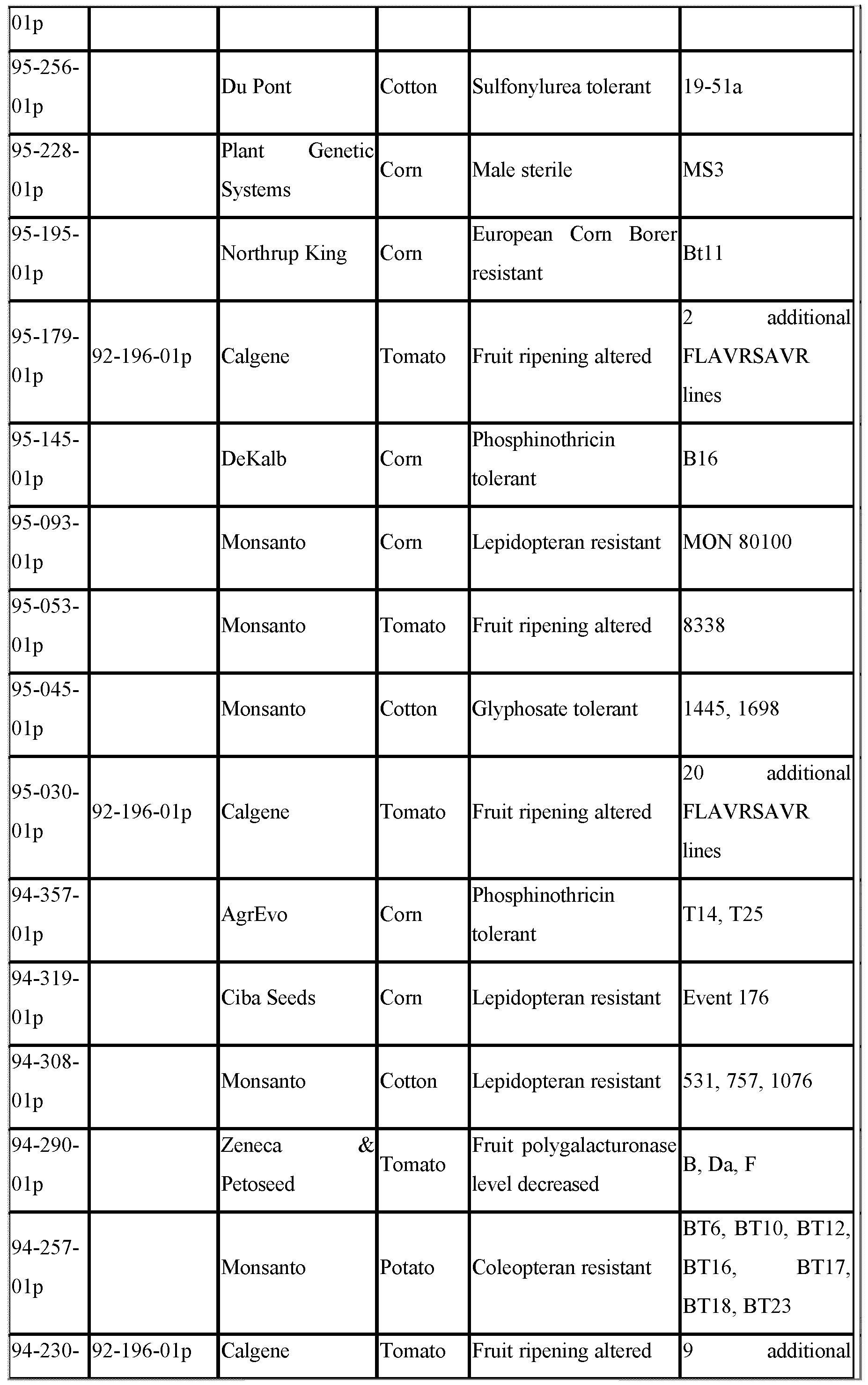
Ref document number: 11781564

Country of ref document: EP

Kind code of ref document: A1

REEP Request for entry into the european phase

Ref document number: 2011781564

Country of ref document: EP

WWE Wipo information: entry into national phase

Ref document number: 2011781564

Country of ref document: EP

WWE Wipo information: entry into national phase

Ref document number: 13884929

Country of ref document: US

ENP Entry into the national phase

Ref document number: 2013538227

Country of ref document: JP

Kind code of ref document: A

WWE Wipo information: entry into national phase

Ref document number: MX/A/2013/005410

Country of ref document: MX

NENP Non-entry into the national phase

Ref country code: DE

REG Reference to national code

Ref country code: BR

Ref legal event code: B01A

Ref document number: 112013012081

Country of ref document: BR

ENP Entry into the national phase

Ref document number: 112013012081

Country of ref document: BR

Kind code of ref document: A2

Effective date: 20130515