WO2011104089A1 - Process for the preparation of isoxazoline derivatives - Google Patents
Process for the preparation of isoxazoline derivatives Download PDFInfo
- Publication number
- WO2011104089A1 WO2011104089A1 PCT/EP2011/051513 EP2011051513W WO2011104089A1 WO 2011104089 A1 WO2011104089 A1 WO 2011104089A1 EP 2011051513 W EP2011051513 W EP 2011051513W WO 2011104089 A1 WO2011104089 A1 WO 2011104089A1
- Authority
- WO
- WIPO (PCT)
- Prior art keywords
- compound
- formula
- phenyl
- methyl
- substituted
- Prior art date
- Legal status (The legal status is an assumption and is not a legal conclusion. Google has not performed a legal analysis and makes no representation as to the accuracy of the status listed.)
- Ceased
Links
- 0 *C1(**C1)INC(C(C(*)=C(*)C(C(C=C(*)*)=O)=*)=I)=C Chemical compound *C1(**C1)INC(C(C(*)=C(*)C(C(C=C(*)*)=O)=*)=I)=C 0.000 description 7
- OFSRCGMRYJYDFF-QGMBQPNBSA-N Cc1cc(C(/C=C(/C(F)(F)F)\c2cc(Cl)cc(Cl)c2)=O)ccc1C(NC1CSC1)=O Chemical compound Cc1cc(C(/C=C(/C(F)(F)F)\c2cc(Cl)cc(Cl)c2)=O)ccc1C(NC1CSC1)=O OFSRCGMRYJYDFF-QGMBQPNBSA-N 0.000 description 3
- KMKXDCGJHIGASU-UHFFFAOYSA-N Cc(cc(cc1)C(C2)=NOC2(C(F)(F)F)c2cc(Cl)cc(Cl)c2)c1C(NC1CSC1)=O Chemical compound Cc(cc(cc1)C(C2)=NOC2(C(F)(F)F)c2cc(Cl)cc(Cl)c2)c1C(NC1CSC1)=O KMKXDCGJHIGASU-UHFFFAOYSA-N 0.000 description 2
- NGOTZSLPEOKQGQ-UHFFFAOYSA-N CC(c(cc1)cc(C)c1N)=O Chemical compound CC(c(cc1)cc(C)c1N)=O NGOTZSLPEOKQGQ-UHFFFAOYSA-N 0.000 description 1
- SMSVMBMJEYTUOZ-UHFFFAOYSA-N CC(c(cc1C)ccc1F)=O Chemical compound CC(c(cc1C)ccc1F)=O SMSVMBMJEYTUOZ-UHFFFAOYSA-N 0.000 description 1
- LJEKBWVNMQPBGU-UHFFFAOYSA-N CC(c1ccc(C(NC2CSC2)=O)c(C)c1)=O Chemical compound CC(c1ccc(C(NC2CSC2)=O)c(C)c1)=O LJEKBWVNMQPBGU-UHFFFAOYSA-N 0.000 description 1
- QGXDUDDPMXVLOO-UHFFFAOYSA-N CC(c1ccc(C(O)=O)c(C)c1)=O Chemical compound CC(c1ccc(C(O)=O)c(C)c1)=O QGXDUDDPMXVLOO-UHFFFAOYSA-N 0.000 description 1
- ZEEGHLXPTWFEHJ-UHFFFAOYSA-N C[N](C)(=CC=C1)=CC2=C1OCO2 Chemical compound C[N](C)(=CC=C1)=CC2=C1OCO2 ZEEGHLXPTWFEHJ-UHFFFAOYSA-N 0.000 description 1
- OITRZRODQUPQFP-UHFFFAOYSA-N Cc(cc(cc1)C(C2)=NOC2(C(F)(F)F)c2cc(Cl)cc(Cl)c2)c1C(NC(C1)CS1(=N)=O)=O Chemical compound Cc(cc(cc1)C(C2)=NOC2(C(F)(F)F)c2cc(Cl)cc(Cl)c2)c1C(NC(C1)CS1(=N)=O)=O OITRZRODQUPQFP-UHFFFAOYSA-N 0.000 description 1
- JKKHXHFLYMPMHU-DJKKODMXSA-N Cc1cc(C(/C=C(/C(F)(F)F)\c2cc(Cl)cc(Cl)c2)=O)ccc1C(NC(C1)CS1(=C)=O)=O Chemical compound Cc1cc(C(/C=C(/C(F)(F)F)\c2cc(Cl)cc(Cl)c2)=O)ccc1C(NC(C1)CS1(=C)=O)=O JKKHXHFLYMPMHU-DJKKODMXSA-N 0.000 description 1
- DZDSQRPDUCSOQV-UHFFFAOYSA-N O=C(C(F)(F)F)c1cc(Cl)cc(Cl)c1 Chemical compound O=C(C(F)(F)F)c1cc(Cl)cc(Cl)c1 DZDSQRPDUCSOQV-UHFFFAOYSA-N 0.000 description 1
Classifications
-
- A—HUMAN NECESSITIES
- A01—AGRICULTURE; FORESTRY; ANIMAL HUSBANDRY; HUNTING; TRAPPING; FISHING
- A01N—PRESERVATION OF BODIES OF HUMANS OR ANIMALS OR PLANTS OR PARTS THEREOF; BIOCIDES, e.g. AS DISINFECTANTS, AS PESTICIDES OR AS HERBICIDES; PEST REPELLANTS OR ATTRACTANTS; PLANT GROWTH REGULATORS
- A01N43/00—Biocides, pest repellants or attractants, or plant growth regulators containing heterocyclic compounds
- A01N43/72—Biocides, pest repellants or attractants, or plant growth regulators containing heterocyclic compounds having rings with nitrogen atoms and oxygen or sulfur atoms as ring hetero atoms
- A01N43/80—Biocides, pest repellants or attractants, or plant growth regulators containing heterocyclic compounds having rings with nitrogen atoms and oxygen or sulfur atoms as ring hetero atoms five-membered rings with one nitrogen atom and either one oxygen atom or one sulfur atom in positions 1,2
-
- A—HUMAN NECESSITIES
- A01—AGRICULTURE; FORESTRY; ANIMAL HUSBANDRY; HUNTING; TRAPPING; FISHING
- A01N—PRESERVATION OF BODIES OF HUMANS OR ANIMALS OR PLANTS OR PARTS THEREOF; BIOCIDES, e.g. AS DISINFECTANTS, AS PESTICIDES OR AS HERBICIDES; PEST REPELLANTS OR ATTRACTANTS; PLANT GROWTH REGULATORS
- A01N43/00—Biocides, pest repellants or attractants, or plant growth regulators containing heterocyclic compounds
- A01N43/72—Biocides, pest repellants or attractants, or plant growth regulators containing heterocyclic compounds having rings with nitrogen atoms and oxygen or sulfur atoms as ring hetero atoms
- A01N43/82—Biocides, pest repellants or attractants, or plant growth regulators containing heterocyclic compounds having rings with nitrogen atoms and oxygen or sulfur atoms as ring hetero atoms five-membered rings with three ring hetero atoms
-
- A—HUMAN NECESSITIES
- A61—MEDICAL OR VETERINARY SCIENCE; HYGIENE
- A61P—SPECIFIC THERAPEUTIC ACTIVITY OF CHEMICAL COMPOUNDS OR MEDICINAL PREPARATIONS
- A61P33/00—Antiparasitic agents
-
- B—PERFORMING OPERATIONS; TRANSPORTING
- B01—PHYSICAL OR CHEMICAL PROCESSES OR APPARATUS IN GENERAL
- B01J—CHEMICAL OR PHYSICAL PROCESSES, e.g. CATALYSIS OR COLLOID CHEMISTRY; THEIR RELEVANT APPARATUS
- B01J31/00—Catalysts comprising hydrides, coordination complexes or organic compounds
- B01J31/02—Catalysts comprising hydrides, coordination complexes or organic compounds containing organic compounds or metal hydrides
- B01J31/0234—Nitrogen-, phosphorus-, arsenic- or antimony-containing compounds
- B01J31/0271—Nitrogen-, phosphorus-, arsenic- or antimony-containing compounds also containing elements or functional groups covered by B01J31/0201 - B01J31/0231
-
- C—CHEMISTRY; METALLURGY
- C07—ORGANIC CHEMISTRY
- C07D—HETEROCYCLIC COMPOUNDS
- C07D413/00—Heterocyclic compounds containing two or more hetero rings, at least one ring having nitrogen and oxygen atoms as the only ring hetero atoms
- C07D413/02—Heterocyclic compounds containing two or more hetero rings, at least one ring having nitrogen and oxygen atoms as the only ring hetero atoms containing two hetero rings
- C07D413/12—Heterocyclic compounds containing two or more hetero rings, at least one ring having nitrogen and oxygen atoms as the only ring hetero atoms containing two hetero rings linked by a chain containing hetero atoms as chain links
-
- C—CHEMISTRY; METALLURGY
- C07—ORGANIC CHEMISTRY
- C07D—HETEROCYCLIC COMPOUNDS
- C07D413/00—Heterocyclic compounds containing two or more hetero rings, at least one ring having nitrogen and oxygen atoms as the only ring hetero atoms
- C07D413/14—Heterocyclic compounds containing two or more hetero rings, at least one ring having nitrogen and oxygen atoms as the only ring hetero atoms containing three or more hetero rings
-
- C—CHEMISTRY; METALLURGY
- C07—ORGANIC CHEMISTRY
- C07D—HETEROCYCLIC COMPOUNDS
- C07D453/00—Heterocyclic compounds containing quinuclidine or iso-quinuclidine ring systems, e.g. quinine alkaloids
- C07D453/02—Heterocyclic compounds containing quinuclidine or iso-quinuclidine ring systems, e.g. quinine alkaloids containing not further condensed quinuclidine ring systems
- C07D453/04—Heterocyclic compounds containing quinuclidine or iso-quinuclidine ring systems, e.g. quinine alkaloids containing not further condensed quinuclidine ring systems having a quinolyl-4, a substituted quinolyl-4 or a alkylenedioxy-quinolyl-4 radical linked through only one carbon atom, attached in position 2, e.g. quinine
Definitions
- the present invention relates to the stereoselective synthesis of substituted isoxazolines and in particular to the stereoselective synthesis of substituted isoxazolines that have pesticidal activity.
- WO2009/080250 discloses isoxazoline compounds that have insecticidal activity.
- the present invention provides a process for the stereoselective synthesis of isoxazoline compounds, such as those disclosed in WO2009/080250.
- the invention provides a process for the preparation of a compound of formula IB
- one of Y 1 and Y 2 is S, SO or S0 2 and the other is CH 2 ;
- L is a direct bond or methylene
- a 1 and A 2 are C-H, or one of A 1 and A 2 is C-H and the other is N;
- R 1 is hydrogen or methyl
- R 2 is chlorodifluoromethyl or trifluoromethyl
- R 3 is 3,5-dibromo-phenyl, 3,5-dichloro-phenyl, 3,4-dichloro-phenyl, or 3,4,5-trichloro- phenyl;
- R 4 is methyl
- R 5 is hydrogen
- R 4 and R 5 together form a bridging 1,3-butadiene group; comprising reacting a compound of formula II
- Y 1 , R4 and R 5 J are as defined for the compound of formula I above; with hydroxylamine in the presence of water, a base and a chiral phase transfer catalyst, which chiral phase transfer catalyst is a quinine derivative, for example a compound of formula III
- R 6 is optionally substituted aryl or optionally substituted heteroaryl
- W is ethyl or vinyl
- X is an anion, preferably a halogen anion, more preferably chloride or bromide.
- reaction is performed in an organic solvent.
- the enantiomer for formula IB is substantially more biologically active than the other enantiomer, e.g. it is substantially more effective at controlling invertebrate animal pests such as insects, acarines, nematodes and/or molluscs.
- the more biologically active enantiomer may be confirmed using the methodology described in the Examples. In some cases the less biologically active enantiomer has negligible biological activity, e.g. it provides no control of invertebrate animal pests.
- the present invention allows the more biologically active enantiomer to be selectively synthesised, thereby allowing production of enantiomerically enriched mixtures. This potentially allows reduced rates of application.
- the invention provides a process for the preparation of a mixture comprising a compound of formula IA and a compound of formula IB
- Y 1 , Y 2 , L, A 1 , A 2 , R 1 , R 2 , R 3 , R 4 and R 5 are as defined for the compound of formula I above; wherein the mixture is enantiomerically enriched for the compound of formula IB; comprising reacting a compound of formula II
- Y 1 , Y 2 , L, A 1 , A 2 , R 1 , R 2 , R 3 , R 4 and R 5 are as defined for the compound of formula I above; with hydroxylamine in the presence of water, a base and a chiral phase transfer catalyst, which chiral phase transfer catalyst is a quinine derivative, for example a compound of formula III
- R 6 is optionally substituted aryl or optionally substituted heteroaryl
- W is ethyl or vinyl
- X is an anion, preferably a halogen anion, more preferably chloride or bromide.
- the invention provides a process for the preparation of a compound of formula IB or a mixture comprising a compound of formula IA and IB
- one of Y 1 and Y 2 is S, SO or S0 2 and the other is CH 2 ;
- L is a direct bond or methylene
- a 1 and A 2 are C-H, or one of A 1 and A 2 is C-H and the other is N;
- R 1 is hydrogen or methyl
- R 2 is chlorodifluoromethyl or trifluoromethyl
- R 3 is 3,5-dibromo-phenyl, 3,5-dichloro-phenyl, 3,4-dichloro-phenyl, or 3,4,5-trichloro- phenyl;
- R 4 is methyl
- R 5 is hydrogen
- R 4 and R 5 together form a bridging 1,3-butadiene group; comprising reacting a compound of formula XV
- Y 1 , R4 and R 5 J are as defined for the compound of formula I; with hydroxylamine in the presence of water, a base and a chiral phase transfer catalyst, which chiral phase transfer catalyst is a quinine derivative.
- the invention provides a compound of formula IB
- the invention provides a mixture comprising a compound of formula IA and a compound of formula IB
- chiral phase transfer catalysts derived from quinine such as compounds of formula III, may have other beneficial effects on the reaction in addition to providing
- stereoselectivity may increase the rate of the reaction and/or allow the reaction to be run under milder conditions, for example at lower temperature.
- Each alkyl moiety either alone or as part of a larger group is a straight or branched chain and is, for example, methyl, ethyl, n-propyl, prop-2-yl, n-butyl, but-2-yl, 2-methyl-prop-l-yl or 2-methyl-prop- 2-yl.
- the alkyl groups are preferably Q to Ce alkyl groups, more preferably C1 -C4 and most preferably C1 -C3 alkyl groups.
- Halogen is fluorine, chlorine, bromine or iodine.
- Haloalkyl groups are alkyl groups which are substituted by one or more of the same or different halogen atoms and are, for example, trifluoromethyl, chlorodifluoromethyl, 2,2,2-trifluoro-ethyl or 2,2- difluoro-ethyl.
- aryl refers to a ring system which may be mono-, bi- or tricyclic. Examples of such rings include phenyl,
- naphthalenyl anthracenyl, indenyl or phenanthrenyl.
- a preferred aryl group is phenyl.
- heteroaryl refers to an aromatic ring system containing at least one heteroatom and consisting either of a single ring or of two or more fused rings.
- single rings will contain up to three heteroatoms and bicyclic systems up to four heteroatoms which will preferably be chosen from nitrogen, oxygen and sulfur.
- Examples of monocyclic groups include pyridyl, pyridazinyl, pyrimidinyl, pyrazinyl, pyrrolyl, pyrazolyl, imidazolyl, triazolyl, tetrazolyl, furanyl, thiophenyl, oxazolyl, isoxazolyl, oxadiazolyl, thiazolyl, isothiazolyl, and thiadiazolyl.
- Examples of bicyclic groups include quinolinyl, cinnolinyl, quinoxalinyl, benzimidazolyl, benzothiophenyl, and
- benzothiadiazolyl Monocyclic heteroaryl groups are preferred, pyridyl being most preferred.
- the compound of formula III is a compound of formula Ilia
- R 6 is optionally substituted aryl or optionally substituted heteroaryl and X is an anion, halogen, more preferably chloride or bromide.
- Preferred substituents of compounds of formula III, including formula Ilia are, in any combination, as set out below:
- W is vinyl
- R 6 is phenyl or phenyl substituted by one to five R 7 , naphthyl or naphthyl substituted by one to five R 7 , anthracenyl or anthracenyl substituted by one to five R 7 , pyrimidinyl or pyrimidinyl substituted by one to three R 7 , or pyridyl or pyridyl substituted by one to four R 7 ; more preferably phenyl or phenyl substituted by one to five R 7 , naphthyl or naphthyl substituted by one to five R 7 , anthracenyl or anthracenyl substituted by one to five R 7 , or pyridyl or pyridyl substituted by one to four R 7 ; more preferably R 6 is phenyl or phenyl substituted by one to five R 7 , anthracenyl or anthracenyl substituted by one to five R 7 , or
- Each R 7 is independently halogen, cyano, nitro, Ci-Cgalkyl, Ci-Cshaloalkyl, Ci- Csalkoxy, Ci-Cshaloalkoxy, C3-C8 cycloalkyl, phenyl or phenyl substituted by one to five halogen, and wherein two R 7 substituents on adjacent carbon atoms may together form a partially saturated 5-7 membered ring containing one or two heteroatoms selected from O, N(R 8 ) and S; and each R 8 is independently hydrogen or C1-C4 alkyl.
- each R 7 is independently halogen, cyano, nitro, Ci-C4alkyl, Ci-C4haloalkyl, Ci-C4alkoxy, or Ci- C4haloalkoxy, and wherein any two R 7 substituents on adjacent carbon atoms may together form a partially saturated 5 membered ring containing one or two O atoms, more preferably each R 7 is independently halogen, methyl, halomethyl, methoxy or
- any two R 7 substituents on adjacent carbon atoms may together form a partially saturated 5 membered ring containing one or two O atoms, more preferably each R 7 is independently halogen, methyl or methoxy, most preferably each R 7 is independently fluorine, methyl or methoxy.
- R 6 is phenyl or phenyl substituted by one to five R 7 , naphthyl or naphthyl substituted by one to five R 7 , anthracenyl or anthracenyl substituted by one to five R 7 , or heteroaryl or heteroaryl substituted by one to four R 7 ; each R 7 is independently halogen, cyano, nitro, Ci-C 8 alkyl, Ci-Cghaloalkyl, Ci-Csalkoxy, Ci-Cshaloalkoxy, phenyl or phenyl substituted by one to five halogen, and wherein two R 7 substituents on adjacent carbon atoms may together form a partially saturated 5-7 membered ring containing one or two heteroatoms selected from O, N(R 8 ) and S; and each R 8 is independently hydrogen or C 1 -C 4 alkyl.
- R 6 is phenyl or phenyl substituted by one to five R 7 , anthracenyl or anthracenyl substituted by one to five R 7 , or pyrimidinyl or pyrimidinyl substituted by one to three R 7 ; pyridyl or pyridyl substituted by one to four R 7 ; and each R 7 is independently halogen, cyano, nitro, Ci-C 4 alkyl, Q- C 4 haloalkyl, Ci-C 4 alkoxy, or Ci-C 4 haloalkoxy, and wherein two R 7 substituents on adjacent carbon atoms may together form a partially saturated 5-7 membered ring containing one or two O atoms.
- R 6 is phenyl or phenyl substituted by one to five R 7 , anthracenyl or anthracenyl substituted by one to five R 7 , or pyridyl or pyridyl substituted by one to four R 7 ; and each R 7 is independently halogen, cyano, nitro, Ci-C 4 alkyl, Ci-C 4 haloalkyl, Ci-C 4 alkoxy, or Ci-C 4 haloalkoxy, and wherein two R 7 substituents on adjacent carbon atoms may together form a partially saturated 5-7 membered ring containing one or two O atoms.
- R 6 is phenyl or phenyl substituted by one to five R 7 , anthracenyl or anthracenyl substituted by one to five R 7 , or pyridyl or pyridyl substituted by one to four R 7 ; and each R 7 is independently halogen, methyl, halomethyl, methoxy or halomethoxy, and wherein any two R 7 substituents on adjacent carbon atoms may together form a partially saturated 5 membered ring containing one or two O atoms.
- R 6 is phenyl or phenyl substituted by one to five substituents independently selected from halogen and methoxy, anthracenyl or anthracenyl substituted by one to five substituents independently selected from halogen and methoxy, pyridyl or pyridyl substituted by one to four halogen atoms, or grou A
- R 6 is phenyl substituted by one to five R 7 , pyridy or pyridyl substituted by one to four R 7 , pyrimidyl or pyrimidinyl substituted by one to three R 7 , or group A
- each R 7 is independently halogen, nitro, C1-C4 alkyl or C1-C4 alkoxy.
- R 6 is phenyl substituted by one to five substituents independently selected from halogen, methyl and methoxy, or pyridyl or pyridyl substituted by one to four halogen atoms.
- R 6 is phenyl substituted by one to five substituents independently selected from fluorine, methyl and methoxy.
- R 6 is phenyl substituted by three to five substituents independently selected from fluorine, methyl and methoxy.
- R 6 is phenyl substituted by three to five methoxy groups.
- R 6 is phenyl substituted by three to five substituents independently selected from methyl and fluorine.
- R 6 is phenyl substituted by three to five substituents independently selected from methyl and fluorine, and no more than one substituent is methyl.
- R 6 is phenyl substituted by three to five fluorine atoms.
- R 5 is pyridyl or pyridyl substituted by two to four halogen atoms.
- the compound of formula III is a compound of formula IIIA, IIIB, IIIC, HID, HIE, IIIF, IIIG, IIIH, IIIJ, IIIK, IIIL, IIIM, IIIN or IIIO wherein X is an anion, preferably a halogen anion, more preferably chloride or bromide.
- the compound of formula III is a compound of IIIB, IIIC, HIE, IIIF, IIIG, IIIH, IIIJ, IIIK, IIIL, IIIM, ⁇ and IIIO, wherein X is an anion, preferably a halogen anion, more preferably chloride or bromide.
- R 6 is 2,4,6-trifluorophenyl; phenyl substituted by one to five groups independently selected from methyl and fluorine, providing that the phenyl is substituted by at least one methyl and one fluorine; phenyl substituted by one to five groups independently selected from methoxy and nitro, providing that the phenyl is substituted by at least one methoxy and one nitro; phenyl substituted by one to five groups independently selected from methoxy and halogen, providing that the phenyl is substituted by at least one methoxy and one halogen; pyrimidinyl substituted by one to three groups independently selected from halogen, nitro, C1-C4 alkyl or C1-C4 alkoxy; pyridyl or pyridyl substituted by one to four halogen; or group A
- X is an anion, preferably a halogen anion, more preferably chloride or bromide.
- R 6 is 2,4,6-trifluorophenyl; phenyl substituted by three to five groups independently selected from methyl and fluorine, providing that the phenyl is substituted by at least one methyl and one fluorine; phenyl substituted by three to five groups independently selected from methoxy and nitro, providing that the phenyl is substituted by at least one methoxy and one nitro;phenyl substituted by three to five groups independently selected from methoxy and halogen, providing that the phenyl is substituted by at least one methoxy and one halogen; pyrimidinyl substituted by one to three C1-C4 alkoxy; pyridyl or pyridyl optionally substituted by two to four halogen; or group A
- R 6 is 2,4,6-trifluorophenyl, phenyl substituted by three to five groups independently selected from methyl and fluorine, providing that the phenyl is substituted by at least one methyl and one fluorine; or pyridyl or pyridyl substituted by two to four halogen, preferably phenyl substituted by methyl and two to four fluorine atoms.
- the invention includes the dissociated cation and N-oxides of the compounds of formula III.
- the compound of formula III* is a compound of formula IIIC, HIE, IIIF, IIIH, IIIJ, IIIK, IIIL, ⁇ or IIIO, wherein X is an anion, preferably a halogen anion, more preferably chloride or bromide
- the invention provides a process for the preparation of a compound of formula III
- R 6 is optionally substituted aarryyll c or optionally substituted heteroaryl and X is an anion, preferably a halogen anion, more preferably chloride or bromide; comprising reacting a compound of formula IV
- R 6 and X are as defined for the compound of formula III; wherein the compound of formula III is for use in a process for the preparation of the compound of formula IB or enriched mixtures thereof.
- Preferably said process includes the preparation of said compound or mixture.
- the invention provides a process for the preparation of a compound of formula III*
- R 6 is 2,4,6-trifiuorophenyl, phenyl substituted by one to five methoxy, pyridyl or pyridyl optionally substituted by one to four halogen, or group A
- X is an anion, preferably a halogen anion, more preferably chloride or bromide; com rising reacting a compound of formula IV
- R 6 and X are as defined for the compound of formula III*.
- Preferably processes for the preparation of a compound of formula III or IIP are performed in an organic solvent, e.g. toluene.
- the invention provides use of a compound of formula III as defined in herein as chiral phase transfer catalyst catalyst in the preparation of a compound of formula IB as defined herein, or a mixture of formula IA and IB as defined herein.
- the invention provides a process for the preparation of a compound of formula IB as defined herein, or a mixture of formula IA and IB as defined herein, comprising the step of reacting a beta-keto unsaturated carbonyl group with hydroxylamine in the presence of water, a base and a phase transfer catalyst, which phase transfer catalyst is a quinine derivative.
- Processes for the preparation of the compound of formula I IB may also proceed via intermediates in which the heterocycle side chain is attached to the molecule after the stereoselective step.
- a process for the preparation of the compound of formula IB may comprise reacting a compound of formula IX
- R 2 , R 3 , R 4 , R 5 , A 1 and A 2 are as defined for a compound of formula I and R is OH or Ci-Cealkoxy; or a compound of formula XVI
- R 2 , R 3 , R 4 , R 5 , A 1 and A 2 are as defined for a compound of formula I and R is OH or Ci-C 6 alkoxy; with hydroxylamine in the presence of water, a base and a chiral phase transfer catalyst, which chiral phase transfer catalyst is a quinine derivative, for example a compound of formula III
- R 6 is optionally substituted aryl or optionally substituted heteroaryl
- W is ethyl or vinyl
- X is an anion, preferably a halogen anion, more preferably chloride or bromide; to form a compound of formula X
- R 2 , R 3 , R 4 , R 5 , A 1 and A 2 are as defined for a compound of formula I and R is OH, or Ci-Cealkoxy; and reacting the compound of formula X with a compound of formula XI (xi)
- the process may include additional steps of converting the compound of formula X from a compound of formula X wherein R is OH to a compound of formula X wherein R is Q- Cgalkoxy, or vice versa, or a step of converting a compound of formula X wherein R is R is
- R 2 , R 3 , R 4 , R 5 , A 1 and A 2 are as defined for a compound of formula I and R is F, CI or Br, prior to reacting the compound of formula X (or the compound of formula XIV) with a compound of formula XI.
- the process may include the step of converting a compound of formula X wherein R 2 , R 3 , R 4 , R 5 , A 1 and A 2 are as defined for a compound of formula I and R is Ci- Cgalkoxy into a compound of formula X wherein R 2 , R 3 , R 4 , R 5 , A 1 and A 2 are as defined for a compound of formula I and R is OH; and subsequently reacting the compound of formula X with a compound of formula XI
- R 1 , L, Y 1 and Y 2 are as defined for a compound of formula I to give the compound of formula IB; or the process may include the step of converting a compound of formula X wherein R 2 , R 3 , R 4 , R 5 , A 1 and A 2 are as defined for a compound of formula I and R is OH or d-
- R 2 , R 3 , R 4 , R 5 , A 1 and A 2 are as defined for a compound of formula I and R is F, CI, Br, and subsequently reacting the compound of formula XIV with a compound of formula XI (xi)
- R 1 , L, Y 1 and Y 2 are as defined for a compound of formula I to give the compound of formula IB.
- a process for the preparation of the compound of formula IB may alternatively comprise reacting a compound of formula XII
- R 2 , R 3 , R 4 , R 5 , A 1 and A 2 are as defined for a compound of formula I and X is a leaving group, e.g. a halogen, such as bromo;
- R 2 , R 3 , R 44 ,, RR 55 ,, AA !1 aanndd AA 22 aarr(e as defined for a compound of formula I and X B is a leaving group, e.g. a halogen, such as bromo; with hydroxylamine in the presence of water, a base and a chiral phase transfer catalyst, which chiral phase transfer catalyst is a quinine derivative, for example a compound of formula III
- R 6 is optionally substituted aryl or optionally substituted heteroaryl
- W is ethyl or vinyl
- X is an anion, preferably a halogen anion, more preferably chloride or bromide
- R 2 , R 3 , R 4 , R 5 , A 1 and A 2 are as defined for a compound of formula I and R is OH or Ci-C(5alkoxy; subsequently reacting the compound of formula X with a compound of formula XI
- R 1 , L, Y 1 and Y 2 are as defined for a compound of formula I;
- R 1 , L, Y 1 and Y 2 are as defined for a compound of formula I;
- this alternative process may include additional steps of converting the compound of formula X from a compound of formula X wherein R is OH to a compound of formula X wherein R is Ci-C 6 alkoxy, or vice versa, or a step of converting a compound of formula
- R 2 , R 3 , R 4 , R 5 , A 1 and A 2 are as defined for a compound of formula I and R is F, CI or Br, prior to reacting the compound of formula X (or the compound of formula XIV) with a compound of formula XI.
- Y 1 is S and Y 2 is CH 2 .
- Y 1 is SO and Y 2 is CH 2 .
- Y 1 is S0 2 and Y 2 is CH 2 .
- Y 2 is S and Y 1 is CH 2 .
- Y 2 is SO and Y 1 is CH 2 .
- Y 2 is S0 2 and Y 1 is CH 2 .
- Y 1 is CH 2 .
- compounds of formula I L is a direct bond or methylene; one of Y 1 and Y 2 is S and the other is CH 2 ; A 1 and A 2 are C-H; R 1 is hydrogen or methyl; R 2 is trifluoromethyl; R 3 is 3,5-dichloro-phenyl; R 4 is methyl; and R 5 is hydrogen.
- In yet another preferred group of compounds of formula I L is a direct bond or methylene; one of Y 1 and Y 2 is SO and the other is CH 2 ; A 1 and A 2 are C-H; R 1 is hydrogen or methyl; R 2 is trifluoromethyl; R 3 is 3,5-dichloro-phenyl; R 4 is methyl; and R 5 is hydrogen.
- In yet another preferred group of compounds of formula I L is a direct bond or methylene; one of Y 1 and Y 2 is S0 2 and the other is CH 2 ; A 1 and A 2 are C-H; R 1 is hydrogen or methyl; R 2 is trifluoromethyl; R 3 is 3,5-dichloro-phenyl; R 4 is methyl; and R 5 is hydrogen.
- in yet another preferred group of compounds of formula I L is a direct bond or methylene; one of Y 1 and Y 2 is S and the other is CH 2 ; A 1 and A 2 are C-H; R 1 is hydrogen or methyl; R 2 is trifluoromethyl; R 3 is 3,5-dichloro-phenyl; and R 4 and R 5 together form a bridging 1 , 3 -butadiene grou .
- in yet another preferred group of compounds of formula I L is a direct bond or methylene; one of Y 1 and Y 2 is SO and the other is CH 2 ; A 1 and A 2 are C-H; R 1 is hydrogen or methyl; R 2 is trifluoromethyl; R 3 is 3,5-dichloro-phenyl; and R 4 and R 5 together form a bridging 1,3-butadiene group.
- in yet another preferred group of compounds of formula I L is a direct bond or methylene; one of Y 1 and Y 2 is SO 2 and the other is CH 2 ; A 1 and A 2 are C-H; R 1 is hydrogen or methyl; R 2 is trifluoromethyl; R 3 is 3,5-dichloro-phenyl; and R 4 and R 5 together form a bridging 1,3-butadiene group.
- In yet another preferred group of compounds of formula I L is a direct bond or methylene; one of Y 1 and Y 2 is S and the other is CH 2 ; A 1 is C-H; A 2 is N; R 1 is hydrogen or methyl; R 2 is trifluoromethyl; R 3 is 3,5-dichloro-phenyl; R 4 is methyl; and R 5 is hydrogen.
- In yet another preferred group of compounds of formula I L is a direct bond or methylene; one of Y 1 and Y 2 is SO and the other is CH 2 ; A 1 is C-H; A 2 is N; R 1 is hydrogen or methyl; R 2 is trifluoromethyl; R 3 is 3,5-dichloro-phenyl; R 4 is methyl; and R 5 is hydrogen.
- In yet another preferred group of compounds of formula I L is a direct bond or methylene; one of Y 1 and Y 2 is S0 2 and the other is CH 2 ; A 1 is C-H; A 2 is N; R 1 is hydrogen or methyl; R 2 is trifluoromethyl; R 3 is 3,5-dichloro-phenyl; R 4 is methyl; and R 5 is hydrogen.
- Y 2 is CH 2 and Y 1 is S, SO or S0 2 and when L is methylene Y 2 is S, SO or S0 2 and Y 1 is CH 2 .
- the process may include the additional step of oxidising the S to SO or S0 2 .
- the invention otherwise includes all isomers of compounds of formula I (including formula IA and IB) and salts and -oxides thereof, including enantiomers, diastereomers and tautomers.
- the more biologically active enantiomer i.e. the compound of formula IB relative to the compound of formula IA
- Y 1 or Y 2 is SO
- the more biologically active enantiomer may be a mixture of the cis and trans isomer in any ratio, e.g.
- the mixture in a molar ratio of 1 :99 to 99: 1 , e.g. 10: 1 to 1 : 10, e.g. a substantially 50:50 molar ratio, e.g. in some cases the mixture may be cis enriched, in other cases the mixture may be trans enriched.
- the molar proportion of the trans compound in the mixture compared to the total amount of both cis and trans is for example greater than 50%, e.g. at least 55, 60, 65, 70, 75, 80, 85, 90, 95, 96, 97, 98, or at least 99%., e.g.
- mixtures may be at least 60% enantiomerically enriched for formula IB and at least 60, 70, 80, or at least 90% enriched for trans SO, e.g. at least 70% enantiomerically enriched for formula IB and at least 60, 70, 80, or at least 90% enriched for trans SO, e.g. at least 80% enantiomerically enriched for formula IB and at least 60, 70, 80, or at least 90% enriched for trans SO, e.g. at least 90%> enantiomerically enriched for formula IB and at least 60, 70, 80, or at least 90% enriched for trans SO.
- cis enriched mixtures (preferred) of the more biologically active enantiomer e.g.
- the molar proportion of the cis compound in the mixture compared to the total amount of both cis and trans is for example greater than 50%, e.g. at least 55, 60, 65, 70, 75, 80, 85, 90, 95, 96, 97, 98, or at least 99%, e.g. at least 60% enantiomerically enriched for formula IB and at least 60, 70, 80, or at least 90% enriched for cis SO, e.g. at least 70% enantiomerically enriched for formula IB and at least 60, 70, 80, or at least 90% enriched for cis SO, e.g.
- Y 1 or Y 2 is SO for compounds 2, 3, 6, 7, 10, 1 1 , 14 and 15 in Table A.
- Enantioenriched compounds of formula (I) can be prepared by reacting a compound of formula (II) with hydroxylamine in the presence of a chiral phase transfer catalyst derived from quinine in a mixture of water and an organic solvent, as shown in Scheme 1. In some cases it should be possible to perform the reaction in the absence of an organic solvent, e.g. when the compound of formula II forms an immiscible liquid phase with water.
- reaction time is usually between 30 minutes and 48 hours, preferably between 1 and 4 hours.
- amount of catalyst is usually between 0.1 and 0.4 molar equivalents, preferably between 0.1 and 0.2 molar equivalents.
- amount of hydroxylamine is usually between 1 and 20 equivalents, preferably between 2 and 6 equivalents.
- Suitable bases include alkali hydroxides such as lithium hydroxide, sodium hydroxide or potassium hydroxide, preferably sodium hydroxide, in usual amounts of between 1 and 10 equivalents, although sub-stochiometric amounts can be used. Preferably the amount of base used is between 2 and 6 equivalents.
- the compound of formula II may be prepared according to scheme 2, e.g. as described in WO2009/080250.
- the more biologically active enantiomer of the compound of formula I can be prepared selectively from compounds of formula (IX) wherein R is OH or Ci-C 6 alkoxy and (XII) wherein X B is a leaving group, for example a halogen, such as bromo,. using an asymmetric reaction similar to that used for conversion of (II) to the more biologically active enantiomer of (I) as shown on Scheme 3.
- compounds of formula (X) and (XIII) are obtained enantioselectively and can be converted to compounds of formula (I) using the following methods :
- R When R is OH such reactions are usually carried out in the presence of a coupling reagent, such as ⁇ , ⁇ '-dicyclohexylcarbodiimide (“DCC”), 1- ethyl-3-(3-dimethylamino-propyl)carbodiimide hydrochloride (“EDC”) or bis(2-oxo-3- oxazolidinyl)phosphonic chloride (“BOP-C1”), in the presence of a base, and optionally in the presence of a nucleophilic catalyst, such as hydroxybenzotriazole (“HOBT").
- DCC ⁇ , ⁇ '-dicyclohexylcarbodiimide
- EDC 1- ethyl-3-(3-dimethylamino-propyl)carbodiimide hydrochloride
- BOP-C1 bis(2-oxo-3- oxazolidinyl)phosphonic chloride
- R When R is CI, such reactions are usually carried out in the presence
- a biphasic system comprising an organic solvent, preferably ethyl acetate, and an aqueous solvent, preferably a solution of sodium hydrogen carbonate.
- R is Ci-Cealkoxy it is sometimes possible to convert the ester directly to the amide by heating the ester and amine together in a thermal process.
- Suitable bases include pyridine, triethylamine, 4- (dimethylamino)-pyridine (“DMAP”) or diisopropylethylamine (Hunig's base).
- Preferred solvents are NN-dimethylacetamide, tetrahydrofuran, dioxane, 1 ,2-dimethoxyethane, ethyl acetate and toluene.
- the reaction is carried out at a temperature of from 0°C to 100°C, preferably from 15°C to 30°C, in particular at ambient temperature.
- Amines of formula ( ⁇ ) are known in the literature or can be prepared using methods known to a person skilled in the art.
- Acid halides of formula (X), wherein R is CI, F or Br may be made from carboxylic acids of formula (X), wherein R is OH, under standard conditions, such as treatment with thionyl chloride or oxalyl chloride.
- a preferred solvent is dichloromethane. The reaction is carried out at a temperature of from 0°C to 100°C, preferably from 15°C to 30°C, in particular at ambient temperature.
- Carboxylic acids of formula (X), wherein R is OH may be formed from esters of formula (X), wherein G 1 is oxygen and R is Ci-Cgalkoxy. It is known to a person skilled in the art that there are many methods for the hydrolysis of such esters depending on the nature of the alkoxy group.
- One widely used method to achieve such a transformation is the treatment of the ester with an alkali hydroxide, such as lithium hydroxide, sodium hydroxide or potassium hydroxide, in a solvent, such as ethanol or tetrahydrofuran, in the presence of water.
- Another is the treatment of the ester with an acid, such as trifiuoroacetic acid, in a solvent, such as dichloromethane, followed by addition of water.
- the reaction is carried out at a temperature of from 0°C to 1 0°C, preferably from 15°C to 100°C, in particular at 50°C.
- Compounds of formula (X) wherein R is Ci-Cgalkoxy can be prepared by reacting a compound of formula (XII) wherein X B is a leaving group, for example a halogen, such as bromo, with carbon monoxide and an alcohol of formula R-OH, such as ethanol, in the presence of a catalyst, such as bis(triphenylphosphine)palladium(II) dichloride, and a base, such as pyridine, triethylamine, 4-(dimethylamino)-pyridine (“DMAP”) or diisopropylethylamine (Hunig's base).
- a catalyst such as bis(triphenylphosphine)palladium(II) dichloride
- a base such as pyridine, triethylamine, 4-(dimethylamino)-pyridine (“DMAP”) or diisopropylethylamine (Hunig's base).
- the reaction is carried out at a temperature of from 50°C to 200°C, preferably from 100°C to 150°C, in particular at 115°C.
- the reaction is carried out at a pressure of from 50 to 200 bar, preferably from 100 to 150 bar, in particular at 120 bar.
- compounds of formula (I) can be prepared by reacting a compound of formula (XIII) wherein X B is a leaving group, for example a halogen, such as bromo, with carbon monoxide and an amine of formula (XI), in the presence of a catalyst, such as palladium(II) acetate or bis(triphenylphosphine)palladium(II) dichloride, optionally in the presence of a ligand, such as triphenylphosphine, and a base, such as sodium carbonate, pyridine, triethylamine, 4-(dimethylamino)-pyridine (“DMAP”) or diisopropyl- ethylamine (Hunig's base), in a solvent, such as water, NN-dimethylformamide or tetrahydrofuran.
- a catalyst such as palladium(II) acetate or bis(triphenylphosphine)palladium(II) dichloride, optional
- enantiomerically enriched mixtures thereof can be used to combat and control infestations of insect pests such as Lepidoptera, Diptera, Hemiptera, Thysanoptera, Orthoptera, Dictyoptera, Coleoptera, Siphonaptera, Hymenoptera and Isoptera and also other invertebrate pests, for example, acarine, nematode and mollusc pests. Insects, acarines, nematodes and molluscs are hereinafter collectively referred to as pests.
- the pests which may be combated and controlled by the use of the invention compounds include those pests associated with agriculture (which term includes the growing of crops for food and fiber products), horticulture and animal husbandry, companion animals, forestry and the storage of products of vegetable origin (such as fruit, grain and timber); those pests associated with the damage of man-made structures and the transmission of diseases of man and animals; and also nuisance pests (such as flies).
- the invention provides a method of protecting an animal from a parasitic invertebrate pest comprising administering to the animal a pesticidally effective amount of a compound or enantiomerically enriched mixture of the invention.
- the invention provides a compound or enantiomerically enriched mixture of the invention for use in protecting an animal from a parasitic invertebrate pest.
- the invention provides use of a compound or enantiomerically enriched mixture of the invention in the manufacture of a medicament for protecting an animal from a parasitic invertebrate pest.
- the invention provides a method of treating an animal suffering from a parasitic invertebrate pest comprising administering to the animal a pesticidally effective amount of a compound or enantiomerically enriched mixture of the invention.
- the invention provides a compound or enantiomerically enriched mixture of the invention for use in treating an animal suffering from a parasitic invertebrate pest.
- the invention provides use of a compound or enantiomerically enriched mixture of the invention in the manufacture of a medicament for treating an animal suffering from a parasitic invertebrate pest.
- pest species which may be controlled by the biologically active enantiomers of compounds of formula (I) and enantiomerically enriched mixtures thereof include: Myzus persicae (aphid), Aphis gossypii (aphid), Aphis fabae (aphid), Lygus spp. (capsids), Dysdercus spp. (capsids), Nilaparvata lugens (planthopper), Nephotettixc incticeps (leafhopper), Nezara spp. (stinkbugs), Euschistus spp. (stinkbugs), Leptocorisa spp.
- Rhinotermitidae for example Coptotermes formosanus, Reticulitermes flavipes, R.
- Globitermes sulfur eus Solenopsis geminata (fire ant), Monomorium pharaonis (pharaoh's ant), Damalinia spp. and Linognathus spp. (biting and sucking lice), Meloidogyne spp. (root knot nematodes), Globodera spp. and Heterodera spp. (cyst nematodes),
- Pratylenchus spp. lesion nematodes
- Rhodopholus spp. banana burrowing nematodes
- Tylenchulus spp. citrus nematodes
- Haemonchus contortus barber pole worm
- the compounds of the invention may be used for pest control on various plants, including soybean (e.g. 10-70g/ha), corn (e.g. 10-70g/ha), sugarcane (e.g. 20-200g/ha), alfalfa (e.g. 10-70g/ha), brassicas (e.g. 10-50g/ha), oilseed rape (e.g. canola) (e.g. 20- 70g/ha), potatoes (including sweet potatoes) (e.g. 10-70g/ha), cotton (e.g. 10-70g/ha), rice (e.g. 10-70g/ha), coffee (e.g. 30-150g/ha), citrus (e.g. 60-200g/ha), almonds (e.g.
- fruiting vegetables e.g. tomatoes, pepper, chili, eggplant, cucumber, squash etc.
- tea e.g. 20-150g/ha
- bulb vegetables e.g. onion, leek etc.
- grapes e.g. 30-180g/ha
- pome fruit e.g. apples, pears etc.
- stone fruit e.g. pears, plums etc.
- the compounds of the invention may be used on soybean to control, for example, Elasmopalpus lignosellus, Diloboderus abderus, Diabrotica speciosa, Sternechus subsignatus, Formicidae, Agrotis ypsilon, Julus ssp. , Anticarsia gemmatalis, Megascelis ssp. , Procornitermes ssp. , Gryllotalpidae, Nezara viridula, Piezodorus spp.
- Acrosternum spp. Neomegalotomus spp., Cerotoma trifurcata, Popillia japonica, Edessa spp., Liogenys fuscus, Euchistus heros, stalk borer, Scaptocoris castanea, phyllophaga spp., Pseudoplusia includens, Spodoptera spp., Bemisia tabaci, Agriotes spp.
- the compounds of the invention are preferably used on soybean to control Diloboderus abderus, Diabrotica speciosa, Nezara viridula, Piezodorus spp., Acrosternum spp., Cerotoma trifurcata, Popillia japonica, Euchistus heros, phyllophaga spp., Agriotes spp..
- the compounds of the invention may be used on corn to control, for example, Euchistus heros, Dichelops furcatus, Diloboderus abderus, Elasmopalpus lignosellus, Spodoptera frugiperda, Nezara viridula, Cerotoma trifurcata, Popillia japonica, Agrotis ypsilon, Diabrotica speciosa, Heteroptera, Procornitermes ssp., Scaptocoris castanea, Formicidae, Julus ssp., Dalbulus maidis, Diabrotica virgifera, Mods latipes, Bemisia tabaci, heliothis spp., Tetranychus spp., thrips spp., phyllophaga spp., scaptocoris spp., Liogenys fuscus, Spodoptera spp. , Ostrinia spp. , Se
- the compounds of the invention may be used on sugar cane to control, for example, Sphenophorus spp., termites, Mahanarva spp..
- the compounds of the invention are preferably used on sugar cane to control termites, Mahanarva spp..
- the compounds of the invention may be used on alfalfa to control, for example, Hypera brunneipennis, Hypera postica, Colias eurytheme, Collops spp., Empoasca solana, Epitrix, Geocoris spp., Lygus hesperus, Lygus lineolaris, Spissistilus spp, Spodoptera spp., Trichoplusia ni.
- the compounds of the invention are preferably used on alfalfa to control Hypera brunneipennis, Hypera postica, Empoasca solana, Epitrix, Lygus hesperus, Lygus lineolaris, Trichoplusia ni.
- the compounds of the invention may be used on brassicas to control, for example,
- Plutella xylostella Pieris spp., Mamestra spp., Plusia spp., Trichoplusia ni, Phyllotreta spp. , Spodoptera spp. , Empoasca solana, thrips spp. , Spodoptera spp. , Delia spp..
- the compounds of the invention are preferably used on brassicas to control Plutella xylostella Pieris spp. , Plusia spp. , Trichoplusia ni, Phyllotreta spp. , thrips spp..
- the compounds of the invention may be used on oil seed rape, e.g. canola, to control, for example, Meligethes sp, Ceutorhynchus napi, Psylloides sp.
- the compounds of the invention may be used on potatoes, including sweet potatoes, to control, for example, Empoasca sp, Leptinotarsa sp, Diabrotica speciosa, Phthorimaea sp, Paratrioza sp, Maladera matrida, Agriotes sp.
- the compounds of the invention are preferably used on potatoes, including sweet potatoes, to control Empoasca sp, Leptinotarsa sp, Diabrotica speciosa, Phthorimaea sp, Paratrioza sp, Agriotes sp.
- the compounds of the invention may be used on cotton to control, for example, Anthonomus grandis, Pectinophora sp, heliothis sp, Spodoptera sp, Tetranychus sp, Empoasca sp, thrips sp, Bemisia tabaci, Lygus sp , phyllophaga sp, Scaptocoris sp.
- the compounds of the invention are preferably used on cotton to control Anthonomus grandis, Tetranychus sp, Empoasca sp, thrips sp, Lygus sp, phyllophaga sp, Scaptocoris sp.
- the compounds of the invention may be used on rice to control, for example, Leptocorisa sp, Cnaphalocrosis sp, Chilo sp, Scirpophaga sp, Lissorhoptrus sp, Oebalus pugnax.
- the compounds of the invention are preferably used on rice to control Leptocorisa sp, Lissorhoptrus sp, Oebalus pugnax.
- the compounds of the invention may be used on coffee to control, for example, Hypothenemus Hampei, Perileucoptera Coffeella, Tetranychus sp.
- the compounds of the invention are preferably used on coffee to control Hypothenemus Hampei, Perileucoptera Coffeella.
- the compounds of the invention may be used on citrus to control, for example, Panonychus citri, Phyllocoptruta oleivora, Brevipalpus sp, Diaphorina citri, Scirtothrips sp, thrips sp, Unaspis sp, Ceratitis capitata, Phyllocnistis sp.
- the compounds of the invention are preferably used on citrus to control Panonychus citri, Phyllocoptruta oleivora, Brevipalpus sp, Diaphorina citri, Scirtothrips sp, thrips sp, Phyllocnistis sp.
- the compounds of the invention may be used on almonds to control, for example, Amyelois transitella, Tetranychus sp.
- the compounds of the invention may be used on fruiting vegetable, including tomatoes, pepper, chili, eggplant, cucumber, squash etc, to control thrips sp, Tetranychus sp, Polyphagotarsonemus sp, Aculops sp, Empoasca sp, Spodoptera sp, heliothis sp, Tuta absolutea, Liriomyza sp, Bemisia tabaci, Trialeurodes sp, Paratrioza sp, Frankliniella occidentalis, Frankliniella sp, Anthonomus sp, Phyllotreta sp, Amrasca sp, Epilachna sp, Halyomorpha sp, Scirtothrips sp, Leucinodes sp, Neoleucinodes sp..
- the compounds of the invention are preferably used on fruiting vegetable, including tomatoes, pepper, chili, eggplant, cucumber, squash etc, to control, for example, thrips sp,
- the compounds of the invention may be used on tea to control, for example, Pseudaulacaspis sp, Empoasca sp, Scirtothrips sp, Caloptilia theivora.
- the compounds of the invention are prefrerably used on tea to control Empoasca sp, Scirtothrips sp.
- the compounds of the invention may be used on bulb vegetables, including onion, leek etc to control, for example, thrips sp, Spodoptera sp, heliothis sp.
- the compounds of the invention are preferably used on bulb vegetables, including onion, leek etc to control thrips sp.
- the compounds of the invention may be used on grapes to control, for example, Empoasca sp, Lobesia sp, Frankliniella sp, thrips sp, Tetranychus sp, Rhipiphorothrips Cruentatus, Eotetranychus Willamettei, Erythroneura Elegantula, Scaphoides sp..
- the compounds of the invention are preferably used on grapes to control Frankliniella sp, thrips sp, Tetranychus sp, Rhipiphorothrips Cruentatus, Scaphoides sp.
- the compounds of the invention may be used on pome fruit, including apples, pairs etc, to control, for example, Cacopsylla sp, Psylla sp, Panonychus ulmi, Cydia pomonella.
- the compounds of the invention are preferably used on pome fruit, including apples, pairs etc, to control Cacopsylla sp, Psylla sp, Panonychus ulmi.
- the compounds of the invention may be used on stone fruit to control, for example, Grapholita molesta, Scirtothrips sp, thrips sp, Frankliniella sp, Tetranychus sp.
- the compounds of the invention are preferably used on stone fruit to control Scirtothrips sp, thrips sp, Frankliniella sp, Tetranychus sp.
- the invention therefore provides a method of combating and/or controlling insects, acarines, nematodes or molluscs which comprises applying an insecticidally, acaricidally, nematicidally or molluscicidally effective amount of the more biologically active enantiomer of a compound of formula (I) or an enantiomerically enriched mixture thereof, or a composition containing the same, to a pest, to a locus of a pest, preferably a plant, to a plant susceptible to attack by a pest or to plant propagation material susceptible to attack by a pest.
- the more biologically active enantiomers of compounds of formula (I) and enantiomerically enriched mixtures thereof are preferably used against insects, acarines or nematodes.
- plant as used herein includes seedlings, bushes and trees.
- plant propagation material is understood to denote generative parts of a plant, such as seeds, which can be used for the multiplication of the latter, and vegetative material, such as cuttings or tubers, for example potatoes. There may be mentioned for example seeds (in the strict sense), roots, fruits, tubers, bulbs, rhizomes and parts of plants. Germinated plants and young plants which are to be transplanted after germination or after emergence from the soil, may also be mentioned. These young plants may be protected before transplantation by a total or partial treatment by immersion. Preferably "plant propagation material” is understood to denote seeds.
- Crops are to be understood as also including those crops which have been rendered tolerant to herbicides or classes of herbicides (e.g. ALS-, GS-, EPSPS-, PPO- and HPPD- inhibitors) by conventional methods of breeding or by genetic engineering.
- herbicides or classes of herbicides e.g. ALS-, GS-, EPSPS-, PPO- and HPPD- inhibitors
- An example of a crop that has been rendered tolerant to imidazolinones, e.g. imazamox, by conventional methods of breeding is Clearfield® summer rape (canola).
- crops that have been rendered tolerant to herbicides by genetic engineering methods include e.g.
- glyphosate- and glufosinate-resistant maize varieties commercially available under the trade names oundup eady® and LibertyLink®.
- Crops are also to be understood as being those which have been rendered resistant to harmful insects by genetic engineering methods, for example Bt maize (resistant to European corn borer), Bt cotton (resistant to cotton boll weevil) and also Bt potatoes (resistant to Colorado beetle).
- Bt maize are the Bt 176 maize hybrids of NK® (Syngenta Seeds).
- Examples of transgenic plants comprising one or more genes that code for an insecticidal resistance and express one or more toxins are KnockOut® (maize), Yield Gard® (maize), NuCOTIN33B® (cotton), Bollgard® (cotton), NewLeaf®
- Plant crops or seed material thereof can be both resistant to herbicides and, at the same time, resistant to insect feeding ("stacked" transgenic events).
- seed can have the ability to express an insecticidal Cry3 protein while at the same time being tolerant to glyphosate.
- Crops are also to be understood as being those which are obtained by conventional methods of breeding or genetic engineering and contain so-called output traits (e.g.
- said compound or mixture is usually formulated into a composition which includes, in addition to said compound or mixture a suitable inert diluent or carrier and, optionally, a surface active agent (SFA).
- a suitable inert diluent or carrier and, optionally, a surface active agent (SFA).
- SFAs are chemicals which are able to modify the properties of an interface (for example, liquid/solid, liquid/air or liquid/liquid interfaces) by lowering the interfacial tension and thereby leading to changes in other properties (for example dispersion, emulsification and wetting). It is preferred that all compositions (both solid and liquid formulations) comprise, by weight, 0.0001 to 95%, more preferably 1 to 85%, for example 5 to 60%, of the more biologically active enantiomer of a compound of formula (I) or enantiomerically enriched mixture thereof.
- the composition is generally used for the control of pests such that the compound of mixture is applied at a rate of from 0. lg to 10kg per hectare, preferably from lg to 6kg per hectare, more preferably from lg to 1kg per hectare.
- the compound of mixture When used in a seed dressing, the compound of mixture is used at a rate of 0.000 lg to lOg (for example O.OOlg or 0.05g), preferably 0.005g to lOg, more preferably 0.005g to 4g, per kilogram of seed.
- the present invention provides an insecticidal, acaricidal, nematicidal or molluscicidal composition
- an insecticidally, acaricidally, nematicidally or molluscicidal composition comprising an insecticidally, acaricidally, nematicidally or molluscicidally effective amount of the more biologically active enantiomer of a compound of formula (I) or enantiomerically enriched mixture thereof and a suitable carrier or diluent therefor.
- the composition is preferably an insecticidal, acaricidal, nematicidal or molluscicidal composition.
- compositions can be chosen from a number of formulation types, including dustable powders (DP), soluble powders (SP), water soluble granules (SG), water dispersible granules (WG), wettable powders (WP), granules (GR) (slow or fast release), soluble concentrates (SL), oil miscible liquids (OL), ultra low volume liquids (UL), emulsifiable concentrates (EC), dispersible concentrates (DC), emulsions (both oil in water (EW) and water in oil (EO)), micro-emulsions (ME), suspension concentrates (SC), aerosols, fogging/smoke formulations, capsule suspensions (CS) and seed treatment formulations.
- the formulation type chosen in any instance will depend upon the particular purpose envisaged and the physical, chemical and biological properties of the compound of formula (I).
- Dustable powders may be prepared by mixing compounds or enantiomerically enriched mixtures of the invention with one or more solid diluents (for example natural clays, kaolin, pyrophyllite, bentonite, alumina, montmorillonite, kieselguhr, chalk, diatomaceous earths, calcium phosphates, calcium and magnesium carbonates, sulfur, lime, flours, talc and other organic and inorganic solid carriers) and mechanically grinding the mixture to a fine powder.
- solid diluents for example natural clays, kaolin, pyrophyllite, bentonite, alumina, montmorillonite, kieselguhr, chalk, diatomaceous earths, calcium phosphates, calcium and magnesium carbonates, sulfur, lime, flours, talc and other organic and inorganic solid carriers
- Soluble powders may be prepared by mixing compounds or enantiomerically enriched mixtures of the invention with one or more water-soluble inorganic salts (such as sodium bicarbonate, sodium carbonate or magnesium sulfate) or one or more water-soluble organic solids (such as a polysaccharide) and, optionally, one or more wetting agents, one or more dispersing agents or a mixture of said agents to improve water
- water-soluble inorganic salts such as sodium bicarbonate, sodium carbonate or magnesium sulfate
- water-soluble organic solids such as a polysaccharide
- compositions may also be granulated to form water soluble granules (SG).
- WP Wettable powders
- enantiomerically enriched mixtures of the invention with one or more solid diluents or carriers, one or more wetting agents and, preferably, one or more dispersing agents and, optionally, one or more suspending agents to facilitate the dispersion in liquids.
- the mixture is then ground to a fine powder.
- Similar compositions may also be granulated to form water dispersible granules (WG).
- Granules may be formed either by granulating compounds or
- enantiomerically enriched mixtures of the invention with one or more powdered solid diluents or carriers, or from pre-formed blank granules by absorbing compounds and enantiomerically enriched mixtures of the invention (or a solution thereof, in a suitable agent) in a porous granular material (such as pumice, attapulgite clays, fuller's earth, kieselguhr, diatomaceous earths or ground corn cobs) or by adsorbing compounds and enantiomerically enriched mixtures of the invention (or a solution thereof, in a suitable agent) on to a hard core material (such as sands, silicates, mineral carbonates, sulfates or phosphates) and drying if necessary.
- a hard core material such as sands, silicates, mineral carbonates, sulfates or phosphates
- Agents which are commonly used to aid absorption or adsorption include solvents (such as aliphatic and aromatic petroleum solvents, alcohols, ethers, ketones and esters) and sticking agents (such as polyvinyl acetates, polyvinyl alcohols, dextrins, sugars and vegetable oils).
- solvents such as aliphatic and aromatic petroleum solvents, alcohols, ethers, ketones and esters
- sticking agents such as polyvinyl acetates, polyvinyl alcohols, dextrins, sugars and vegetable oils.
- One or more other additives may also be included in granules (for example an emulsifying agent, wetting agent or dispersing agent).
- DC Dispersible Concentrates
- a surface active agent for example to improve water dilution or prevent crystallization in a spray tank.
- Emulsifiable concentrates or oil-in- water emulsions (EW) may be prepared by dissolving a compound of formula (I) in an organic solvent (optionally containing one or more wetting agents, one or more emulsifying agents or a mixture of said agents).
- Suitable organic solvents for use in ECs include aromatic hydrocarbons (such as alkylbenzenes or alkylnaphthalenes, exemplified by SOLVESSO 100, SOLVESSO 150 and SOLVESSO 200; SOLVESSO is a Registered Trade Mark), ketones (such as cyclohexanone or methylcyclohexanone) and alcohols (such as benzyl alcohol, furfuryl alcohol or butanol), N-alkylpyrrolidones (such as N-methylpyrrolidone or N-octylpyrrolidone), dimethyl amides of fatty acids (such as Cs-Cio fatty acid dimethylamide) and chlorinated hydrocarbons.
- aromatic hydrocarbons such as alkylbenzenes or alkylnaphthalenes, exemplified by SOLVESSO 100, SOLVESSO 150 and SOLVESSO 200; SOLVESSO is a Registered Trade Mark
- ketones such as cycl
- An EC product may spontaneously emulsify on addition to water, to produce an emulsion with sufficient stability to allow spray application through appropriate equipment.
- Preparation of an EW involves obtaining the compounds or mixtures of the invention either as a liquid (if it is not a liquid at room temperature, it may be melted at a reasonable temperature, typically below 70°C) or in solution (by dissolving it in an appropriate solvent) and then emulsifiying the resultant liquid or solution into water containing one or more SFAs, under high shear, to produce an emulsion.
- Suitable solvents for use in EWs include vegetable oils, chlorinated hydrocarbons (such as chlorobenzenes), aromatic solvents (such as alkylbenzenes or alkylnaphthalenes) and other appropriate organic solvents which have a low solubility in water.
- Microemulsions (ME) may be prepared by mixing water with a blend of one or more solvents with one or more SFAs, to produce spontaneously a thermodynamically stable isotropic liquid formulation. Compounds or enantiomerically enriched mixtures of the invention are present initially in either the water or the solvent/SFA blend.
- Suitable solvents for use in MEs include those hereinbefore described for use in ECs or in EWs.
- An ME may be either an oil-in- water or a water-in-oil system (which system is present may be determined by conductivity measurements) and may be suitable for mixing water-soluble and oil-soluble pesticides in the same formulation.
- An ME is suitable for dilution into water, either remaining as a microemulsion or forming a conventional oil-in-water emulsion.
- SC Suspension concentrates
- SCs may comprise aqueous or non-aqueous suspensions of finely divided insoluble solid particles of compounds or enantiomerically enriched mixtures of the invention.
- SCs may be prepared by ball or bead milling the solid compounds or enantiomerically enriched mixtures of the invention in a suitable medium, optionally with one or more dispersing agents, to produce a fine particle suspension of the compound.
- One or more wetting agents may be included in the composition and a suspending agent may be included to reduce the rate at which the particles settle.
- the compounds and mixtures of the invention may be dry milled and added to water, containing agents hereinbefore described, to produce the desired end product.
- Aerosol formulations comprise a compound or enantiomerically enriched mixture of the invention and a suitable propellant (for example n-butane).
- a suitable propellant for example n-butane
- a compound or mixture of the invention may also be dissolved or dispersed in a suitable medium (for example water or a water miscible liquid, such as n-propanol) to provide compositions for use in non-pressurized, hand-actuated spray pumps.
- a compound or enantiomerically enriched mixture of the invention may be mixed in the dry state with a pyrotechnic mixture to form a composition suitable for generating, in an enclosed space, a smoke containing the compound.
- Capsule suspensions may be prepared in a manner similar to the preparation of EW formulations but with an additional polymerization stage such that an aqueous dispersion of oil droplets is obtained, in which each oil droplet is encapsulated by a polymeric shell and contains a compound or mixture of the invention and, optionally, a carrier or diluent therefor.
- the polymeric shell may be produced by either an interfacial polycondensation reaction or by a coacervation procedure.
- the compositions may provide for controlled release of the compound of mixture of the invention and they may be used for seed treatment.
- a compound or enantiomerically enriched mixture of the invention may also be formulated in a biodegradable polymeric matrix to provide a slow, controlled release of the compound.
- a composition may include one or more additives to improve the biological performance of the composition (for example by improving wetting, retention or distribution on surfaces; resistance to rain on treated surfaces; or uptake or mobility of a compound or mixture of the invention)).
- additives include surface active agents, spray additives based on oils, for example certain mineral oils or natural plant oils (such as soy bean and rape seed oil), and blends of these with other bio-enhancing adjuvants
- a compound or enantiomerically enriched mixture of the invention may also be formulated for use as a seed treatment, for example as a powder composition, including a powder for dry seed treatment (DS), a water soluble powder (SS) or a water dispersible powder for slurry treatment (WS), or as a liquid composition, including a flowable concentrate (FS), a solution (LS) or a capsule suspension (CS).
- DS powder for dry seed treatment
- SS water soluble powder
- WS water dispersible powder for slurry treatment
- CS capsule suspension
- the preparations of DS, SS, WS, FS and LS compositions are very similar to those of, respectively, DP, SP, WP, SC and DC compositions described above.
- Compositions for treating seed may include an agent for assisting the adhesion of the composition to the seed (for example a mineral oil or a film-forming barrier).
- Wetting agents, dispersing agents and emulsifying agents may be surface SFAs of the cationic, anionic, amphoteric or non-ionic type.
- Suitable SFAs of the cationic type include quaternary ammonium compounds (for example cetyltrimethyl ammonium bromide), imidazolines and amine salts.
- Suitable anionic SFAs include alkali metals salts of fatty acids, salts of aliphatic monoesters of sulfuric acid (for example sodium lauryl sulfate), salts of sulfonated aromatic compounds (for example sodium dodecylbenzenesulfonate, calcium
- ether sulfates for example sodium laureth-3 -sul
- Suitable SFAs of the amphoteric type include betaines, propionates and glycinates.
- Suitable SFAs of the non-ionic type include condensation products of alkylene oxides, such as ethylene oxide, propylene oxide, butylene oxide or mixtures thereof, with fatty alcohols (such as oleyl alcohol or cetyl alcohol) or with alkylphenols (such as octylphenol, nonylphenol or octylcresol); partial esters derived from long chain fatty acids or hexitol anhydrides; condensation products of said partial esters with ethylene oxide; block polymers (comprising ethylene oxide and propylene oxide); alkanolamides; simple esters (for example fatty acid polyethylene glycol esters); amine oxides (for example lauryl dimethyl amine oxide); and lecithins.
- Suitable suspending agents include hydrophilic colloids (such as polysaccharides, polyvinylpyrrolidone or sodium carboxymethylcellulose) and swelling clays (such as bentonite or attapulgite).
- hydrophilic colloids such as polysaccharides, polyvinylpyrrolidone or sodium carboxymethylcellulose
- swelling clays such as bentonite or attapulgite
- a compound or enantiomerically enriched mixture of the invention may be applied by any of the known means of applying pesticidal compounds.
- it may be applied, formulated or unformulated, to the pests or to a locus of the pests (such as a habitat of the pests, or a growing plant liable to infestation by the pests) or to any part of the plant, including the foliage, stems, branches or roots, to the seed before it is planted or to other media in which plants are growing or are to be planted (such as soil surrounding the roots, the soil generally, paddy water or hydroponic culture systems), directly or it may be sprayed on, dusted on, applied by dipping, applied as a cream or paste formulation, applied as a vapor or applied through distribution or incorporation of a composition (such as a granular composition or a composition packed in a water-soluble bag) in soil or an aqueous environment.
- a locus of the pests such as a habitat of the pests, or a growing plant liable to infestation by the
- a compound or enantiomerically enriched mixture of the invention may also be injected into plants or sprayed onto vegetation using electrodynamic spraying techniques or other low volume methods, or applied by land or aerial irrigation systems.
- compositions for use as aqueous preparations are generally supplied in the form of a concentrate containing a high proportion of the active ingredient, the concentrate being added to water before use.
- These concentrates which may include DCs, SCs, ECs, EWs, MEs, SGs, SPs, WPs, WGs and CSs, are often required to withstand storage for prolonged periods and, after such storage, to be capable of addition to water to form aqueous preparations which remain homogeneous for a sufficient time to enable them to be applied by conventional spray equipment.
- Such aqueous preparations may contain varying amounts of a compound or mixture of the invention (for example 0.0001 to 10%, by weight) depending upon the purpose for which they are to be used.
- a compound or enantiomerically enriched mixture of the invention may be used in mixtures with fertilizers (for example nitrogen-, potassium- or phosphorus-containing fertilizers).
- Suitable formulation types include granules of fertilizer.
- the mixtures preferably contain up to 25% by weight of the compounds and enantiomerically enriched mixtures of the invention.
- the invention therefore also provides a fertilizer composition comprising a fertilizer and a compound or enantiomerically enriched mixture of the invention.
- compositions of this invention may contain other compounds having biological activity, for example micronutrients or compounds having fungicidal activity or which possess plant growth regulating, herbicidal, insecticidal, nematicidal or acaricidal activity.
- the compounds or enantiomerically enriched mixtures of the invention may be the sole active ingredient of the composition or it may be admixed with one or more additional active ingredients such as a pesticide, fungicide, synergist, herbicide or plant growth regulator where appropriate.
- An additional active ingredient may: provide a composition having a broader spectrum of activity or increased persistence at a locus; synergize the activity or complement the activity (for example by increasing the speed of effect or overcoming repellency) of the compounds and enantiomerically enriched mixtures of the invention; or help to overcome or prevent the development of resistance to individual components.
- suitable pesticides include the following:
- a pyrethroid selected from the group consisting of permethrin, cypermethrin, fenvalerate, esfenvalerate, deltamethrin, cyhalothrin, lambda-cyhalothrin, gamma- cyhalothrin, bifenthrin, fenpropathrin, cyfluthrin, tefluthrin, ethofenprox, natural pyrethrin, tetramethrin, S-bioallethrin, fenfluthrin, prallethrin and
- an organophosphate selected from the group consisting of sulprofos, acephate, methyl parathion, azinphos-methyl, demeton-s-methyl, heptenophos, thiometon, fenamiphos, monocrotophos, profenofos, triazophos, methamidophos, dimethoate, phosphamidon, malathion, chlorpyrifos, phosalone, terbufos, fensulfothion, fonofos, phorate, phoxim, pirimiphos-methyl, pirimiphos-ethyl, fenitrothion, fosthiazate and diazinon;
- a carbamate selected from the group consisting of pinmicarb, triazamate, cloethocarb, carbofuran, furathiocarb, ethiofencarb, aldicarb, thiofurox, carbosulfan, bendiocarb, fenobucarb, propoxur, methomyl and oxamyl;
- a benzoyl urea selected from the group consisting of diflubenzuron, triflumuron, hexaflumuron, flufenoxuron, lufenuron and chlorfluazuron;
- an organic tin compound selected from the group consisting of cyhexatin, fenbutatin oxide and azocyclotin;
- a pyrazole selected from the group consisting of tebufenpyrad and fenpyroximate
- a macrolide selected from the group consisting of abamectin, emamectin (e.g.
- emamectin benzoate ivermectin, milbemycin, spinosad, azadirachtin and spinetoram
- an organochlorine compound selected from the group consisting of endosulfan (in particular alpha-endosulfan), benzene hexachloride, DDT, chlordane and dieldrin;
- an amidine selected from the group consisting of chlordimeform and amitraz;
- a fumigant agent selected from the group consisting of chloropicrin, dichloropropane, methyl bromide and metam;
- a neonicotinoid compound selected from the group consisting of imidacloprid, thiacloprid, acetamiprid, nitenpyram, dinotefuran, thiamethoxam, clothianidin, nithiazine and flonicamid;
- a diacylhydrazine selected from the group consisting of tebufenozide, chromafenozide and methoxyfenozide;
- n a diphenyl ether selected from the group consisting of diofenolan and pyriproxyfen; n) indoxacarb;
- r a diamide selected from the group consisting of flubendiamide, chlorantraniliprole (Rynaxypyr®) and cyantraniliprole;
- pesticides having particular targets may be employed in the composition, if appropriate for the intended utility of the composition.
- selective insecticides for particular crops for example stemborer specific insecticides (such as cartap) or hopper specific insecticides (such as buprofezin) for use in rice may be employed.
- insecticides or acaricides specific for particular insect species/stages may also be included in the compositions (for example acaricidal ovo-larvicides, such as clofentezine, f ubenzimine, hexythiazox or tetradifon; acaricidal motilicides, such as dicofol or propargite; acaricides, such as bromopropylate or chlorobenzilate; or growth regulators, such as hydramethylnon, cyromazine, methoprene, chlorfiuazuron or diflubenzuron).
- acaricidal ovo-larvicides such as clofentezine, f ubenzimine, hexythiazox or tetradifon
- acaricidal motilicides such as dicofol or propargite
- acaricides such as bromopropylate or chlorobenzilate
- fungicidal compounds which may be included in the composition of the invention are a strobilurin fungicide selected from the group consisting of:
- Metominostrobin Orysastrobin, Picoxystrobin, Pyraclostrobin, Trifloxystrobin;
- an azole fungicide selected from the group consisting of:
- a phenyl pyrrole fungicide selected from the group consisting of:
- an anilino-pyrimidine fungicide selected from the group consisting of:
- a morpholine fungicide selected from the group consisting of:
- a carboxamide selected from the group consisting of:
- a carboxylic acid amide selected from the group consisting of:
- Chlorothalonil Fluazinam, Dithianon, Metrafenone, Tricyclazole, Mefenoxam, Metalaxyl, Acibenzolar, Mancozeb, Ametoctradine and Cyflufenamid.
- nematicidally active biological agent refers to any biological agent that has nematicidal activity.
- the biological agent can be any type known in the art including bacteria and fungi.
- the wording "nematicidally active" refers to having an effect on, such as reduction in damage caused by, agricultural-related nematodes.
- the nematicidally active biological agent can be a bacterium or a fungus.
- the biological agent is a bacterium.
- nematicidally active bacteria examples include Bacillus firmus, Bacillus cereus, Bacillus subtilis, and Pasteuria penetrans, preferably Bacillus firmus, Bacillus subtilis, and Pasteuria penetrans.
- a suitable Bacillus firmus strain is strain CNCM 1-1582 which is commercially available as BioNemTM.
- a suitable Bacillus cereus strain is strain CNCM 1-1562. Of both Bacillus strains more details can be found in US 6,406,690.
- the compounds or enantiomerically enriched mixtures of the invention may be mixed with soil, peat or other rooting media for the protection of plants against seed-borne, soil-borne or foliar fungal diseases.
- synergists for use in the compositions include piperonyl butoxide, sesamex, safroxan and dodecyl imidazole.
- Suitable herbicides and plant-growth regulators for inclusion in the compositions will depend upon the intended target and the effect required.
- An example of a rice selective herbicide which may be included is propanil.
- An example of a plant growth regulator for use in cotton is PIXTM.
- Some mixtures may comprise active ingredients which have significantly different physical, chemical or biological properties such that they do not easily lend themselves to the same conventional formulation type.
- other formulation types may be prepared.
- one active ingredient is a water insoluble solid and the other a water insoluble liquid
- the resultant composition is a suspoemulsion (SE) formulation.
- the compounds of the invention are also useful in the field of animal health, e.g. they may be used against parasitic invertebrate pests, more preferably against parasitic invertebrate pests in or on an animal.
- pests include nematodes, trematodes, cestodes, flies, mites, tricks, lice, fleas, true bugs and maggots.
- the animal may be a non-human animal, e.g. an animal associated with agriculture, e.g. a cow, a pig, a sheep, a goat, a horse, or a donkey, or a companion animal, e.g. a dog or a cat.
- the invention provides a compound of the invention for use in a method of therapeutic treatment.
- the invention relates to a method of controlling parasitic invertebrate pests in or on an animal comprising administering a pesticidally effective amount of a compound of the invention.
- the administration may be for example oral administration, parenteral administration or external administration, e.g. to the surface of the animal body.
- the invention relates to a compound of the invention for controlling parasitic invertebrate pests in or on an animal.
- the invention relates to use of a compound of the invention in the manufacture of a
- the invention relates to a method of controlling parasitic invertebrate pests comprising administering a pesticidally effective amount of a compound of the invention to the environment in which an animal resides.
- the invention provides a pharmaceutical composition
- a pharmaceutical composition comprising a compound of the invention and a pharmaceutically suitable excipient.
- the compounds of the invention may be used alone or in combination with one or more other biologically active ingredients.
- the invention provides a combination product comprising a pesticidally effective amount of a component A and a pesticidally effective amount of component B wherein component A is a compound of the invention and component B is a compound as described below.
- the compounds of the invention may be used in combination with anthelmintic agents.
- anthelmintic agents include, compounds selected from the macrocyclic lactone class of compounds such as ivermectin, avermectin, abamectin, emamectin, eprinomectin, doramectin, selamectin, moxidectin, nemadectin and milbemycin derivatives as described in EP- 357460, EP-444964 and EP-594291.
- Additional anthelmintic agents include semisynthetic and biosynthetic avermectin/milbemycin derivatives such as those described in US-5015630, WO-9415944 and WO-9522552. Additional anthelmintic agents include the benzimidazoles such as albendazole, cambendazole, fenbendazole,
- Additional anthelmintic agents include imidazothiazoles and
- tetrahydropyrimidines such as tetramisole, levamisole, pyrantel pamoate, oxantel or morantel.
- Additional anthelmintic agents include flukicides, such as triclabendazole and clorsulon and the cestocides, such as praziquantel and epsiprantel.
- the compounds of the invention may be used in combination with derivatives and analogues of the paraherquamide/marcfortine class of anthelmintic agents, as well as the antiparasitic oxazolines such as those disclosed in US-5478855, US- 4639771 and DE- 19520936.
- the compounds of the invention may be used in combination with derivatives and analogues of the general class of dioxomorpholine antiparasitic agents as described in WO- 9615121 and also with anthelmintic active cyclic depsipeptides such as those described in WO-9611945, WO-9319053, WO- 9325543, EP-626375, EP-382173, WO-9419334, EP- 382173, and EP-503538.
- the compounds of the invention may be used in combination with other ectoparasiticides; for example, fipronil; pyrethroids; organophosphates; insect growth regulators such as lufenuron; ecdysone agonists such as tebufenozide and the like;
- ectoparasiticides for example, fipronil; pyrethroids; organophosphates; insect growth regulators such as lufenuron; ecdysone agonists such as tebufenozide and the like;
- neonicotinoids such as imidacloprid and the like.
- the compounds of the invention may be used in combination with terpene alkaloids, for example those described in International Patent Application Publication Numbers W095/19363 or WO04/72086, particularly the compounds disclosed therein.
- Organophosphates acephate, azamethiphos, azinphos-ethyl, azinphos- methyl, bromophos, bromophos-ethyl, cadusafos, chlorethoxyphos, chlorpyrifos, chlorfenvinphos, chlormephos, demeton, demeton-S-methyl, demeton-S-methyl sulphone, dialifos, diazinon, dichlorvos, dicrotophos, dimethoate, disulfoton, ethion, ethoprophos, etrimfos, famphur, fenamiphos, fenitrothion, fensulfothion, fenthion, flupyrazofos, fonofos, formothion, fosthiazate, heptenophos, isazophos, isothioate, isoxathion, malathion, me
- Carbamates alanycarb, aldicarb, 2-sec-butylphenyl methylcarbamate, benfuracarb, carbaryl, carbofuran, carbosulfan, cloethocarb, ethiofencarb, fenoxycarb, fenthiocarb, furathiocarb, HCN-801, isoprocarb, indoxacarb, methiocarb, methomyl, 5 -methyl -m- cumenylbutyryl(methyl)carbamate, oxamyl, pirimicarb, propoxur, thiodicarb, thiofanox, triazamate, UC-51717.
- Pyrethroids acrinathin, allethrin, alphametrin, 5-benzyl-3-furylmethyl (E) - (1 R)-cis-2,2-dimethyl-3-(2-oxothiolan-3-ylidenemethyl)cyclopropanecarboxylate, bifenthrin, beta -cyfluthrin, cyfluthrin, a-cypermethrin, beta -cypermethrin, bioallethrin, bioallethrin((S)-cyclopentylisomer), bioresmethrin, bifenthrin, NCI-85193, cycloprothrin, cyhalothrin, cythithrin, cyphenothrin, deltamethrin, empenthrin, esfenvalerate,
- Arthropod growth regulators a) chitin synthesis inhibitors: benzoylureas:
- Bacillus thuringiensis Bacillus thuringiensis, bensultap, bifenazate, binapacryl, bromopropylate, BTG-504, BTG- 505, camphechlor, cartap, chlorobenzilate, chlordimeform, chlorfenapyr, chromafenozide, clothianidine, cyromazine, diacloden, diafenthiuron, DBI-3204, dinactin,
- Fungicides acibenzolar, aldimorph, ampropylfos, andoprim, azaconazole, azoxystrobin, benalaxyl, benomyl, bialaphos, blasticidin-S, Bordeaux mixture, bromuconazole, bupirimate, carpropamid, captafol, captan, carbendazim, chlorfenazole, chloroneb, chloropicrin, chlorothalonil, chlozolinate, copper oxychloride, copper salts, cyfiufenamid, cymoxanil, cyproconazole, cyprodinil, cyprofuram, RH-7281, diclocymet, diclobutrazole, diclomezine, dicloran, difenoconazole, RP-407213, dimethomorph, domoxystrobin, diniconazole, diniconazole-M, do
- Biological agents Bacillus thuringiensis ssp aizawai, kurstaki, Bacillus
- Bactericides chlortetracycline, oxytetracycline, streptomycin.
- the compounds of the invention are preferably used in combination with imidacloprid, enrofloxacin, praziquantel, pyrantel embonate, febantel, penethamate, moloxicam, cefalexin, kanamycin, pimobendan, clenbuterol, fipronil, ivermectin, omeprazole, tiamulin, benazepril, milbemycin, cyromazine, thiamethoxam, pyriprole, deltamethrin, cefquinome, florfenicol, buserelin, cefovecin, tulathromycin, ceftiour, selamectin, carprofen, metaflumizone, moxidectin, methoprene (including S-methoprene), clorsulon, pyrantel, amitraz, triclabendazo
- a combination product of the invention may comprise a pesticidally effective amount of a compound of formula I and pesticidally effective amount of at least one additional parasitic invertebrate pest control active ingredient having a similar spectrum of control but a different site of action.
- salts of chemical compounds are in equilibrium with their corresponding non salt forms, salts share the biological utility of the non salt forms.
- salts of compounds of the invention may be useful for control of invertebrate pests and animal parasites.
- Salts include acid-addition salts with inorganic or organic acids such as hydrobromic, hydrochloric, nitric, phosphoric, sulfuric, acetic, butyric, fumaric, lactic, maleic, malonic, oxalic, propionic, salicylic, tartaric, 4- toluenesulfonic or valeric acids.
- the compounds of the invention also include N-oxides. Accordingly, the invention comprises combinations of compounds of the invention including N-oxides and salts thereof and an additional active ingredient including N-oxides and salts thereof.
- compositions for use in animal health may also contain formulation auxiliaries and additives, known to those skilled in the art as formulation aids (some of which may be considered to also function as solid diluents, liquid diluents or surfactants).
- formulation auxiliaries and additives may control: pH (buffers), foaming during processing (antifoams such polyorganosiloxanes), sedimentation of active ingredients (suspending agents), viscosity (thixotropic thickeners), in-container microbial growth (antimicrobials), product freezing (antifreezes), color (dyes/pigment dispersions), wash-off (film formers or stickers), evaporation (evaporation retardants), and other formulation attributes.
- Film formers include, for example, polyvinyl acetates, polyvinyl acetate copolymers, polyvinylpyrrolidone-vinyl acetate copolymer, polyvinyl alcohols, polyvinyl alcohol copolymers and waxes.
- formulation auxiliaries and additives include those listed in McCutcheon 's Volume 2: Functional Materials, annual International and North American editions published by McCutcheon's Division, The Manufacturing Confectioner Publishing Co.; and PCT Publication WO 03/024222.
- the compounds of the invention can be applied without other adjuvants, but most often application will be of a formulation comprising one or more active ingredients with suitable carriers, diluents, and surfactants and possibly in combination with a food depending on the contemplated end use.
- One method of application involves spraying a water dispersion or refined oil solution of the combination products.
- Compositions with spray oils, spray oil concentrations, spreader stickers, adjuvants, other solvents, and synergists such as piperonyl butoxide often enhance compound efficacy.
- Such sprays can be applied from spray containers such as a can, a bottle or other container, either by means of a pump or by releasing it from a pressurized container, e.g., a pressurized aerosol spray can.
- Such spray compositions can take various forms, for example, sprays, mists, foams, fumes or fog. Such spray compositions thus can further comprise propellants, foaming agents, etc. as the case may be.
- a spray composition comprising a pesticidally effective amount of a compound of the invention and a carrier.
- a spray composition comprises a pesticidally effective amount of a compound of the invention and a propellant.
- propellants include, but are not limited to, methane, ethane, propane, butane, isobutane, butene, pentane, isopentane, neopentane, pentene, hydro fluorocarbons, chlorofluorocarbons, dimethyl ether, and mixtures of the foregoing.
- a spray composition (and a method utilizing such a spray composition dispensed from a spray container) used to control at least one parasitic invertebrate pest selected from the group consisting of mosquitoes, black flies, stable flies, deer flies, horse flies, wasps, yellow jackets, hornets, ticks, spiders, ants, gnats, and the like, including individually or in combinations.
- the controlling of animal parasites includes controlling external parasites that are parasitic to the surface of the body of the host animal (e.g., shoulders, armpits, abdomen, inner part of the thighs) and internal parasites that are parasitic to the inside of the body of the host animal (e.g., stomach, intestine, lung, veins, under the skin, lymphatic tissue).
- External parasitic or disease transmitting pests include, for example, chiggers, ticks, lice, mosquitoes, flies, mites and fleas.
- Internal parasites include heartworms, hookworms and helminths.
- the compounds of the invention may be particularly suitable for combating external parasitic pests.
- the compounds of the invention may be suitable for systemic and/or non-systemic control of infestation or infection by parasites on animals.
- the compounds of the invention may be suitable for combating parasitic invertebrate pests that infest animal subjects including those in the wild, livestock and agricultural working animals.
- Livestock is the term used to refer (singularly or plurally) to a domesticated animal intentionally reared in an agricultural setting to make produce such as food or fiber, or for its labor; examples of livestock include cattle, sheep, goats, horses, pigs, donkeys, camels, buffalo, rabbits, hens, turkeys, ducks and geese (e.g., raised for meat, milk, butter, eggs, fur, leather, feathers and/or wool).
- the compounds of the invention may be suitable for combating parasitic invertebrate pests that infest companion animals and pets (e.g., dogs, cats, pet birds and aquarium fish), research and experimental animals (e.g., hamsters, guinea pigs, rats and mice), as well as animals raised for/in zoos, wild habitats and/or circuses.
- companion animals and pets e.g., dogs, cats, pet birds and aquarium fish
- research and experimental animals e.g., hamsters, guinea pigs, rats and mice
- the animal is preferably a vertebrate, and more preferably a mammal, avian or fish.
- the animal subject is a mammal (including great apes, such as humans).
- Other mammalian subjects include primates (e.g., monkeys), bovine (e.g., cattle or dairy cows), porcine (e.g., hogs or pigs), ovine (e.g., goats or sheep), equine (e.g., horses), canine (e.g., dogs), feline (e.g., house cats), camels, deer, donkeys, buffalos, antelopes, rabbits, and rodents (e.g., guinea pigs, squirrels, rats, mice, gerbils, and hamsters).
- primates e.g., monkeys
- bovine e.g., cattle or dairy cows
- porcine e.g., hogs or pigs
- ovine
- Avians include Anatidae (swans, ducks and geese), Columbidae (e.g., doves and pigeons), Phasianidae (e.g., partridges, grouse and turkeys), Thesienidae (e.g., domestic chickens), Psittacines (e.g., parakeets, macaws, and parrots), game birds, and ratites (e.g., ostriches).
- Anatidae swans, ducks and geese
- Columbidae e.g., doves and pigeons
- Phasianidae e.g., partridges, grouse and turkeys
- Thesienidae e.g., domestic chickens
- Psittacines e.g., parakeets, macaws, and parrots
- game birds e.g.,
- Birds treated or protected by the compounds of the invention can be associated with either commercial or noncommercial aviculture. These include Anatidae, such as swans, geese, and ducks, Columbidae, such as doves and domestic pigeons, Phasianidae, such as partridge, grouse and turkeys, Thesienidae, such as domestic chickens, and Psittacines, such as parakeets, macaws and parrots raised for the pet or collector market, among others.
- Anatidae such as swans, geese, and ducks
- Columbidae such as doves and domestic pigeons
- Phasianidae such as partridge, grouse and turkeys
- Thesienidae such as domestic chickens
- Psittacines such as parakeets, macaws and parrots raised for the pet or collector market, among others.
- fish is understood to include without limitation, the Teleosti grouping of fish, i.e., teleosts. Both the Salmoniformes order (which includes the Salmonidae family) and the Perciformes order (which includes the Centrarchidae family) are contained within the Teleosti grouping. Examples of potential fish recipients include the Salmonidae, Serranidae, Sparidae, Cichlidae, and Centrarchidae, among others.
- inventions are also contemplated to benefit from the inventive methods, including marsupials (such as kangaroos), reptiles (such as farmed turtles), and other economically important domestic animals for which the inventive methods are safe and effective in treating or preventing parasite infection or infestation.
- marsupials such as kangaroos
- reptiles such as farmed turtles
- other economically important domestic animals for which the inventive methods are safe and effective in treating or preventing parasite infection or infestation.
- Examples of parasitic invertebrate pests controlled by administering a pesticidally effective amount of the compounds of the invention to an animal to be protected include ectoparasites (arthropods, acarines, etc.) and endoparasites (helminths, e.g., nematodes, trematodes, cestodes, acanthocephalans, etc.).
- ectoparasites arthropods, acarines, etc.
- endoparasites e.g., nematodes, trematodes, cestodes, acanthocephalans, etc.
- helminthiasis The disease or group of diseases described generally as helminthiasis is due to infection of an animal host with parasitic worms known as helminths.
- helminths The term 'helminths' is meant to include nematodes, trematodes, cestodes and acanthocephalans.
- Helminthiasis is a prevalent and serious economic problem with domesticated animals such as swine, sheep, horses, cattle, goats, dogs, cats and poultry.
- the group of worms described as nematodes causes widespread and at times serious infection in various species of animals.
- Nematodes that are contemplated to be treated by the compounds of the invention include, without limitation, the following genera: Acanthocheilonema, Aelurostrongylus ,
- Ancylostoma Angiostrongylus , Ascaridia, Ascaris, Brugia, Bunostomum, Capillaria, Chabertia, Cooperia, Crenosoma, Dictyocaulus, Dioctophyme, Dipetalonema,
- Protostrongylus Setaria, Spirocerca, Stephanofilaria, Strongyloides , Strongylus, Thelazia, Toxascaris, Toxocara, Trichinetta, Trichonema, Trichostrongylus, Trichuris, Uncinaria and Wuchereria.
- Dictyocaulus Dictyocaulus, Capillaria, Heterakis, Toxocara, Ascaridia, Oxyuris, Ancylostoma, Uncinaria, Toxascaris and Parascaris. Certain of these, such as Nematodirus, Cooperia and Oesophagostomum attack primarily the intestinal tract while others, such as
- Haemonchus and Ostertagia are more prevalent in the stomach while others such as Dictyocaulus are found in the lungs. Still other parasites may be located in other tissues such as the heart and blood vessels, subcutaneous and lymphatic tissue and the like.
- Trematodes that are contemplated to be treated by the invention and by the inventive methods include, without limitation, the following genera: Alaria, Fasciola, Nanophyetus, Opisthorchis, Paragonimus and Schistosoma.
- Cestodes that are contemplated to be treated by the invention and by the inventive methods include, without limitation, the following genera: Diphyllobothrium, Diplydium, Spirometra and Taenia.
- Enterobius Other medically important genera of parasites which are found in the blood or other tissues and organs outside the gastrointestinal tract are the filarial worms such as Wuchereria, Brugia, Onchocerca and Loa, as well as Dracunculus and extra intestinal stages of the intestinal worms Strongyloides and Trichinella.
- helminth genera and species are known to the art, and are also contemplated to be treated by the compounds of the invention. These are enumerated in great detail in Textbook of Veterinary Clinical Parasitology, Volume 1, Helminths, E. J. L. Soulsby, F. A. Davis Co., Philadelphia, Pa.; Helminths, Arthropods and Protozoa, (6 th Edition of Monnig's Veterinary Helminthology and Entomology), E. J. L. Soulsby, Williams and Wilkins Co., Baltimore, Md.
- the compounds of the invention may be effective against a number of animal ectoparasites (e.g., arthropod ectoparasites of mammals and birds).
- animal ectoparasites e.g., arthropod ectoparasites of mammals and birds.
- Insect and acarine pests include, e.g., biting insects such as flies and mosquitoes, mites, ticks, lice, fleas, true bugs, parasitic maggots, and the like.
- Adult flies include, e.g., the horn fly or Haematobia irritans, the horse fly or
- Parasitic fly maggots include, e.g., the bot fly (Oestrus ovis and Cuterebra spp.), the blow fly or Phaenicia spp. , the screwworm or Cochliomyia hominivorax, the cattle grub or Hypoderma spp., the fleeceworm and the Gastrophilus of horses.
- Mosquitoes include, for example, Culex spp., Anopheles spp. and Aedes spp.
- Mites include Mesostigmalphatalpha spp. e.g., mesostigmatids such as the chicken mite, Dermalphanyssus galphallinalphae; itch or scab mites such as Sarcoptidae spp. for example, Salpharcoptes scalphabiei; mange mites such as Psoroptidae spp. including Chorioptes bovis and Psoroptes ovis; chiggers e.g., Trombiculidae spp. for example the North American chigger, Trombiculalpha alphalfreddugesi.
- mesostigmatids such as the chicken mite, Dermalphanyssus galphallinalphae
- itch or scab mites such as Sarcoptidae spp. for example, Salpharcoptes scalphabiei
- mange mites such as Psoroptidae spp. including Chorioptes
- Ticks include, e.g., soft-bodied ticks including Argasidae spp. for example Argalphas spp. and Ornithodoros spp.; hard-bodied ticks including Ixodidae spp., for example Rhipicephalphalus sanguineus, Dermacentor variabilis, Dermacentor andersoni, Amblyomma americanum, Ixodes scapularis and other Rhipicephalus spp. (including the former Boophilus genera).
- soft-bodied ticks including Argasidae spp. for example Argalphas spp. and Ornithodoros spp.
- hard-bodied ticks including Ixodidae spp., for example Rhipicephalphalus sanguineus, Dermacentor variabilis, Dermacentor andersoni, Amblyomma americanum, Ixodes scapularis and other Rhipicephalus spp. (including the former Boophilus genera).
- Lice include, e.g., sucking lice, e.g., Menopon spp.
- biting lice e.g., Haematopinus spp., Linognathus spp. and Solenopotes spp.
- Fleas include, e.g., Ctenocephalides spp., such as dog flea (Ctenocephalides canis) and cat flea ⁇ Ctenocephalides felis); Xenopsylla spp. such as oriental rat flea ⁇ Xenopsylla cheopis); and Pulex spp. such as human flea (Pulex irritans).
- Ctenocephalides spp. such as dog flea (Ctenocephalides canis) and cat flea ⁇ Ctenocephalides felis
- Xenopsylla spp. such as oriental rat flea ⁇ Xenopsylla cheopis
- Pulex spp. such as human flea (Pulex irritans).
- True bugs include, e.g., Cimicidae or e.g., the common bed bug (Cimex lectularius); Triatominae spp. including triatomid bugs also known as kissing bugs; for example Rhodnius prolixus and Triatoma spp.
- flies, fleas, lice, mosquitoes, gnats, mites, ticks and helminths cause tremendous losses to the livestock and companion animal sectors.
- Arthropod parasites also are a nuisance to humans and can vector disease-causing organisms in humans and animals.
- the compounds of the invention may also be effective against ectoparasites including: flies such as Haematobia (Lyperosia) irritans (horn fly), Simulium spp.
- flies such as Haematobia (Lyperosia) irritans (horn fly), Simulium spp.
- Treatments of the invention are by conventional means such as by enteral administration in the form of, for example, tablets, capsules, drinks, drenching
- preparations, granulates, pastes, boli, feed-through procedures, or suppositories preparations, granulates, pastes, boli, feed-through procedures, or suppositories; or by parenteral administration, such as, for example, by injection (including intramuscular, subcutaneous, intravenous, intraperitoneal) or implants; or by nasal administration.
- parenteral administration such as, for example, by injection (including intramuscular, subcutaneous, intravenous, intraperitoneal) or implants; or by nasal administration.
- compounds of the invention When compounds of the invention are applied in combination with an additional biologically active ingredient, they may be administered separately e.g. as separate compositions.
- the biologically active ingredients may be administered simultaneously or sequentially.
- the biologically active ingredients may be components of one composition.
- the compounds of the invention may be administered in a controlled release form, for example in subcutaneous or orally adminstered slow release formulations.
- a parasiticidal composition according to the present invention comprises a compound of the invention, optionally in combination with an additional biologically active ingredient, or N-oxides or salts thereof, with one or more pharmaceutically or veterinarily acceptable carriers comprising excipients and auxiliaries selected with regard to the intended route of administration (e.g., oral or parenteral administration such as injection) and in accordance with standard practice.
- a suitable carrier is selected on the basis of compatibility with the one or more active ingredients in the composition, including such considerations as stability relative to pH and moisture content. Therefore of note are compounds of the invention for protecting an animal from an invertebrate parasitic pest comprising a parasitically effective amount of a compound of the invention, optionally in combination with an additional biologically active ingredient and at least one carrier.
- parenteral administration including intravenous, intramuscular and
- the compounds of the invention can be formulated in suspension, solution or emulsion in oily or aqueous vehicles, and may contain adjuncts such as suspending, stabilizing and/or dispersing agents.
- compositions for injection include aqueous solutions of water-soluble forms of active ingredients (e.g., a salt of an active compound), preferably in physiologically compatible buffers containing other excipients or auxiliaries as are known in the art of pharmaceutical formulation. Additionally, suspensions of the active compounds may be prepared in a lipophilic vehicle. Suitable lipophilic vehicles include fatty oils such as sesame oil, synthetic fatty acid esters such as ethyl oleate and triglycerides, or materials such as liposomes.
- Aqueous injection suspensions may contain substances that increase the viscosity of the suspension, such as sodium carboxymethyl cellulose, sorbitol, or dextran.
- Formulations for injection may be presented in unit dosage form, e.g., in ampoules or in multi-dose containers.
- the active ingredient may be in powder form for constitution with a suitable vehicle, e.g., sterile, pyrogen-free water, before use.
- the compounds of the invention may also be formulated as a depot preparation.
- Such long acting formulations may be administered by implantation (for example, subcutaneously or intramuscularly) or by intramuscular or subcutaneous injection.
- the compounds of the invention may be formulated for this route of administration with suitable polymeric or hydrophobic materials (for instance, in an emulsion with a pharmacologically acceptable oil), with ion exchange resins, or as a sparingly soluble derivative such as, without limitation, a sparingly soluble salt.
- the compounds of the invention can be delivered in the form of an aerosol spray using a pressurized pack or a nebulizer and a suitable propellant, e.g., without limitation, dichlorodifluoromethane, trichlorofluoromethane, dichlorotetrafluoroethane or carbon dioxide.
- a suitable propellant e.g., without limitation, dichlorodifluoromethane, trichlorofluoromethane, dichlorotetrafluoroethane or carbon dioxide.
- the dosage unit may be controlled by providing a valve to deliver a metered amount.
- Capsules and cartridges of, for example, gelatin for use in an inhaler or insufflator may be formulated containing a powder mix of the compound and a suitable powder base such as lactose or starch.
- the compounds of the invention may have favourable pharmacokinetic and pharmacodynamic properties providing systemic availability from oral administration and ingestion. Therefore after ingestion by the animal to be protected, parasiticidally effective concentrations of a compound of the invention in the bloodstream may protect the treated animal from blood-sucking pests such as fleas, ticks and lice. Therefore of note is a composition for protecting an animal from an invertebrate parasite pest in a form for oral administration (i.e. comprising, in addition to a parasiticidally effective amount of a compound of the invention, one or more carriers selected from binders and fillers suitable for oral administration and feed concentrate carriers).
- the compounds of the invention can be formulated with binders/fillers known in the art to be suitable for oral administration compositions, such as sugars and sugar derivatives (e.g., lactose, sucrose, mannitol, sorbitol), starch (e.g., maize starch, wheat starch, rice starch, potato starch), cellulose and derivatives (e.g., methylcellulose, carboxymethylcellulose, ethylhydroxycellulose), protein derivatives (e.g., zein, gelatin), and synthetic polymers (e.g., polyvinyl alcohol, polyvinylpyrrolidone).
- sugars and sugar derivatives e.g., lactose, sucrose, mannitol, sorbitol
- starch e.g., maize starch, wheat starch, rice starch, potato starch
- cellulose and derivatives e.g., methylcellulose, carboxymethylcellulose, ethylhydroxycellulose
- protein derivatives e.
- lubricants e.g., magnesium stearate
- disintegrating agents e.g., cross-linked polyvinylpyrrolidinone, agar, alginic acid
- dyes or pigments can be added.
- Pastes and gels often also contain adhesives (e.g., acacia, alginic acid, bentonite, cellulose, xanthan gum, colloidal magnesium aluminum silicate) to aid in keeping the composition in contact with the oral cavity and not being easily ejected.
- a composition of the present invention is formulated into a chewable and/or edible product (e.g., a chewable treat or edible tablet).
- a chewable and/or edible product e.g., a chewable treat or edible tablet.
- Such a product would ideally have a taste, texture and/or aroma favored by the animal to be protected so as to facilitate oral administration of the compounds of the invention.
- the carrier is typically selected from high-performance feed, feed cereals or protein concentrates.
- Such feed concentrate-containing compositions can, in addition to the parasiticidal active ingredients, comprise additives promoting animal health or growth, improving quality of meat from animals for slaughter or otherwise useful to animal husbandry.
- additives can include, for example, vitamins, antibiotics, chemotherapeutics, bacteriostats, fungistats, coccidiostats and hormones.
- the compound of the invention may also be formulated in rectal compositions such as suppositories or retention enemas, using, e.g., conventional suppository bases such as cocoa butter or other glycerides.
- the formulations for the method of this invention may include an antioxidant, such asBHT (butylated hydroxytoluene).
- the antioxidant is generally present in amounts of at 0.1- 5 percent (wt/vol).
- Some of the formulations require a solubilizer, such as oleic acid, to dissolve the active agent, particularly if spinosad is included.
- Common spreading agents used in these pour-on formulations include isopropyl myristate, isopropyl palmitate, caprylic/capric acid esters of saturated C 12 -Ci 8 fatty alcohols, oleic acid, oleyl ester, ethyl oleate, triglycerides, silicone oils and dipropylene glycol methyl ether.
- the pour-on formulations for the method of this invention are prepared according to known techniques. Where the pour-on is a solution, the parasiticide/insecticide is mixed with the carrier or vehicle, using heat and stirring if required. Auxiliary or additional ingredients can be added to the mixture of active agent and carrier, or they can be mixed with the active agent prior to the addition of the carrier. Pour-on formulations in the form of emulsions or suspensions are similarly prepared using known techniques.
- Liposomes and emulsions are well-known examples of delivery vehicles or carriers for hydrophobic drugs.
- organic solvents such as dimethylsulfoxide may be used, if needed.
- the rate of application required for effective parasitic invertebrate pest control (e.g. "pesticidally effective amount”) will depend on such factors as the species of parasitic invertebrate pest to be controlled, the pest's life cycle, life stage, its size, location, time of year, host crop or animal, feeding behavior, mating behavior, ambient moisture, temperature, and the like.
- One skilled in the art can easily determine the pesticidally effective amount necessary for the desired level of parasitic invertebrate pest control.
- the compounds of the invention are administered in a pesticidally effective amount to an animal, particularly a homeothermic animal, to be protected from parasitic invertebrate pests.
- a pesticidally effective amount is the amount of active ingredient needed to achieve an observable effect diminishing the occurrence or activity of the target parasitic invertebrate pest.
- the pesticidally effective dose can vary for the various compounds and compositions useful for the method of the present invention, the desired pesticidal effect and duration, the target parasitic invertebrate pest species, the animal to be protected, the mode of application and the like, and the amount needed to achieve a particular result can be determined through simple experimentation.
- a dose of the compositions of the present invention administered at suitable intervals typically ranges from about 0.01 mg/kg to aboutlOO mg/kg, and preferably from about 0.01 mg/kg to about 30 mg/kg of animal body weight.
- Suitable intervals for the administration of the compositions of the present invention to animals range from about daily to about yearly. Of note are administration intervals ranging from about weekly to about once every 6 months. Of particular note are monthly adminstration intervals (i.e. administering the compounds to the animal once every month). Examples
- MS ZQ Mass Spectrometer from Waters single quadrupole mass spectrometer
- ionization method electrospray, polarity: positive ionization, capillary (kV) 3.00, cone (V) 30.00, source temperature (°C) 100, desolvation temperature (°C) 250, cone gas flow (L/Hr) 50, desolvation gas flow (L/Hr) 400, mass range: 150 to 1000 Da.
- ionization method electrospray, polarity: positive ionization, capillary (kV) 3.00, cone (V) 30.00, extractor (V) 3.00, source temperature (°C) 150, desolvation temperature (°C) 320, cone gas flow (L/Hr) 50, desolvation gas flow (L/Hr) 400, mass range: 150 to 800 Da.
- ionization method electrospray, polarity: positive ionization, capillary (kV) 3.00, cone (V) 30.00, extractor (V) 3.00, source temperature (°C) 150, desolvation temperature (°C) 320, cone gas flow (L/Hr) 50, desolvation gas flow (L/Hr) 400, mass range: 150 to 800 Da.
- MS ZQ Mass Spectrometer from Waters single quadrupole mass spectrometer
- ionization method electrospray, polarity: positive ionization, capillary (kV) 3.00, cone (V) 30.00, extractor (V) 3.00, source temperature (°C) 100, desolvation temperature (°C) 200, cone gas flow (L/Hr) 200, desolvation gas flow (L/Hr) 250, mass range: 150 to 800 Da.
- LC 1 lOOer Series HPLC from Agilent quaternary pump, heated column compartment and diode-array detector.
- MS ZQ Mass Spectrometer from Waters single quadrupole mass spectrometer
- ionization method electrospray, polarity: negative ionization, capillary (kV) 3.00, cone (V) 45.00, source temperature (°C) 100, desolvation temperature (°C) 250, cone gas flow (L/Hr) 50, desolvation gas flow (L/Hr) 400, mass range: 150 to 1000 Da.
- MS ZQ Mass Spectrometer from Waters single quadrupole mass spectrometer
- ionization method electrospray, polarity: negative ionization, capillary (kV) 3.00, cone (V) 30.00, source temperature (°C) 100, desolvation temperature (°C) 250, cone gas flow (L/Hr) 50, desolvation gas flow (L/Hr) 400, mass range: 100 to 900 Da.
- ionization method electrospray, polarity: positive ionization, capillary (kV) 3.80, cone (V) 30.00, extractor (V) 3.00, source temperature (°C) 150, desolvation temperature (°C) 350, cone gas flow (L/Hr) OFF, desolvation gas flow (L/Hr) 600, mass range: 100 to 900 Da.
- Example 1A Catal st preparation: Anthracenyl-methyl quininium chloride
- Example 2 Catal st preparation: 2,4,6-pentafluorophenyl-methyl quininium bromide
- Example 4 Catal st preparation: 2,3.4.5.6-pentafluorophenyl-methyl quininium chloride
- Example 8 Catal st preparation: 2,6-dichloro-4-methyl-pyridine quininium chloride
- Step A l-(4-Fluoro-3-methyl-phenyl)-ethanone
- Step B l-(4-Cvano-3-methyl-phenyl)-ethanone
- Step D 4-Acetyl-2 -methyl -N-thietan-3-yl-benzamide
- Step A cis- 1 -oxide-thietan-3ylamine
- Step B 4-Acetyl-2 -methyl -N-(cis- 1 -oxide-thietan-3-vD-benzamide
- Step C 4-r(EV3-i3.5-dichloro-phenyl)-4,4,4-trifluoro-but-2-enoyll-2-methyl-N-(c ⁇ -l- oxide-thietan-3-yl-benzamide
- Step B 4-Acetyl-2 -methyl -N-( 1 , 1 -dioxide-thietan-3-yl)-benzamide
- Step C 4-r(E)-3-(3,5-dichloro-phenyl -4,4,4-trifluoro-but-2-enoyll-2-methyl-N-(l ,1- dioxide-thietan-3-yl-benzamide
- Example 15 the product contained ISOMER B (retention time 8.80 min) as the major product (63%ee).
- Example 15 the product contained ISOMER B (retention time 8.80 min) as the major product (63%ee).
- Example 10 the product contained ISOMER B (retention time 8.40 min) as the major product (49%ee).
- the product was analyzed by chiral HPLC (method J) and compared to reference samples of ISOMERS A and B of the title compound (chiral separation Example): the product contained ISOMER B (retention time 17.0 minutes) as the major product (90%ee).
- Optical rotation was measured on a 3.1 mg sample dissolved in 1ml ethanol using a 1 dm path length. [a D ] +58.7°.
- the product was analysed by chiral HPLC (method J) and compared to reference samples of ISOMERS A and B of the title compound (chiral separation Example): the product contained ISOMER B (retention time 21.5 minutes) as the major product (32.5 %ee).
- Example 2 the product contained ISOMER B (retention time 21.6 minutes) as the major product (67 % ee).
- Example 35 Biological examples
- Cotton leaf discs were placed on agar in a 24-well microtiter plate and sprayed with test solutions at an application rate of 50 ppm. After drying, the leaf discs were infested with 5 LI larvae. The samples were checked for mortality, feeding behavior, and growth regulation 3 days after treatment (DAT).
- Eggs (0-24 h old) were placed in 24-well microtiter plate on artificial diet and treated with test solutions at an application rate of 50 ppm (concentration in well 18 ppm) by pipetting. After an incubation period of 4 days, samples were checked for egg mortality, larval mortality, and growth regulation.
- MTP microtiter plate
- Diabrotica balteata (Corn root worm):
- MTP microtiter plate
- test solutions at an application rate of 50 ppm (concentration in well 4.5 ppm) by pipetting. After drying, the MTP's were infested with L2 larvae (6-10 per well). After an incubation period of 5 days, samples were checked for larval mortality and growth regulation.
- Thrips tabaci Onion thrips
- Sunflower leaf discs were placed on agar in a 24-well microtiter plate and sprayed with test solutions at an application rate of 50 ppm. After drying, the leaf discs were infested with an aphid population of mixed ages. After an incubation period of 7 days, samples were checked for mortality.
- Tetranychus urticae (Two-spotted spider mite):
- Bean leaf discs on agar in 24-well microtiter plates were sprayed with test solutions at an application rate of 50 ppm. After drying, the leaf discs are infested with mite populations of mixed ages. 8 days later, discs are checked for egg mortality, larval mortality, and adult mortality.
Landscapes
- Chemical & Material Sciences (AREA)
- Organic Chemistry (AREA)
- Life Sciences & Earth Sciences (AREA)
- Health & Medical Sciences (AREA)
- Engineering & Computer Science (AREA)
- General Health & Medical Sciences (AREA)
- Dentistry (AREA)
- Wood Science & Technology (AREA)
- Zoology (AREA)
- Environmental Sciences (AREA)
- Plant Pathology (AREA)
- Pest Control & Pesticides (AREA)
- Agronomy & Crop Science (AREA)
- Chemical Kinetics & Catalysis (AREA)
- Veterinary Medicine (AREA)
- Materials Engineering (AREA)
- General Chemical & Material Sciences (AREA)
- Medicinal Chemistry (AREA)
- Nuclear Medicine, Radiotherapy & Molecular Imaging (AREA)
- Pharmacology & Pharmacy (AREA)
- Animal Behavior & Ethology (AREA)
- Public Health (AREA)
- Tropical Medicine & Parasitology (AREA)
- Organic Low-Molecular-Weight Compounds And Preparation Thereof (AREA)
- Plural Heterocyclic Compounds (AREA)
- Low-Molecular Organic Synthesis Reactions Using Catalysts (AREA)
- Heterocyclic Carbon Compounds Containing A Hetero Ring Having Nitrogen And Oxygen As The Only Ring Hetero Atoms (AREA)
- Catalysts (AREA)
- Agricultural Chemicals And Associated Chemicals (AREA)
- Nitrogen And Oxygen Or Sulfur-Condensed Heterocyclic Ring Systems (AREA)
- Nitrogen Condensed Heterocyclic Rings (AREA)
- Pharmaceuticals Containing Other Organic And Inorganic Compounds (AREA)
Abstract
Description


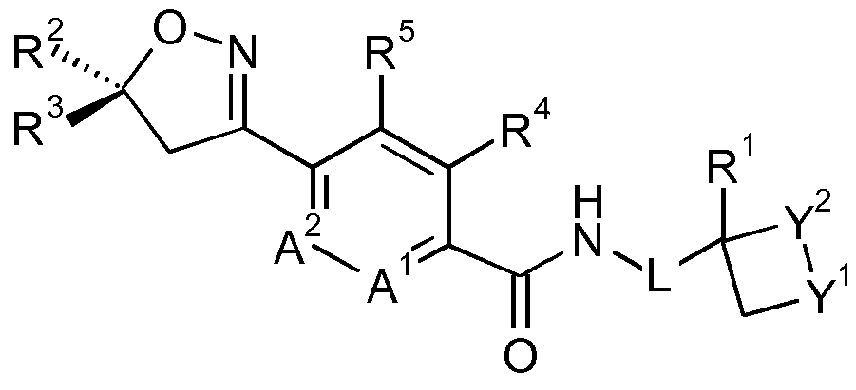

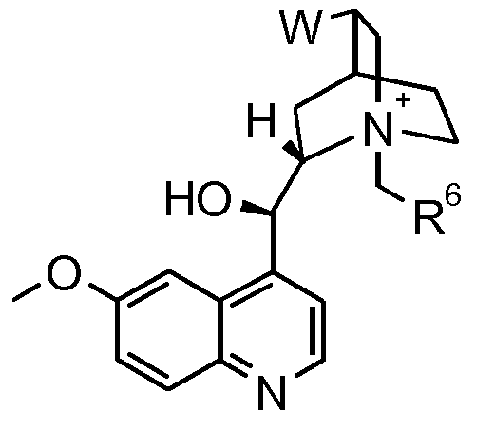
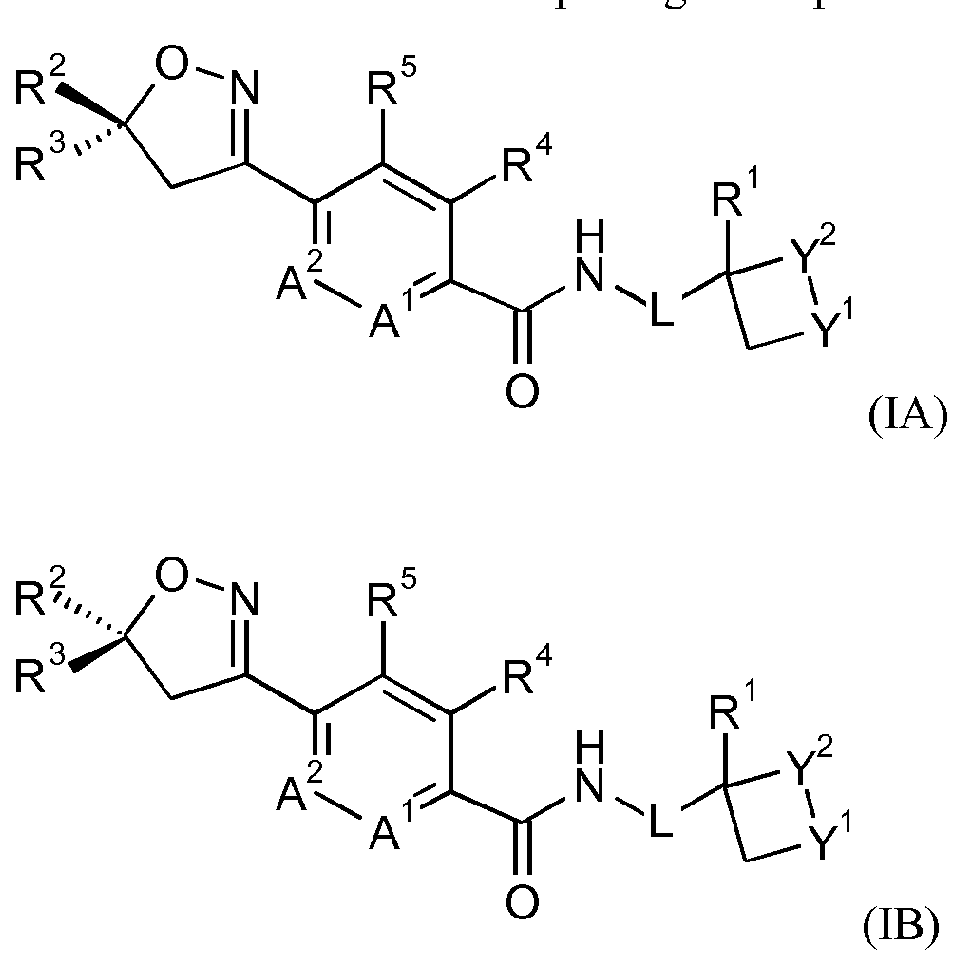


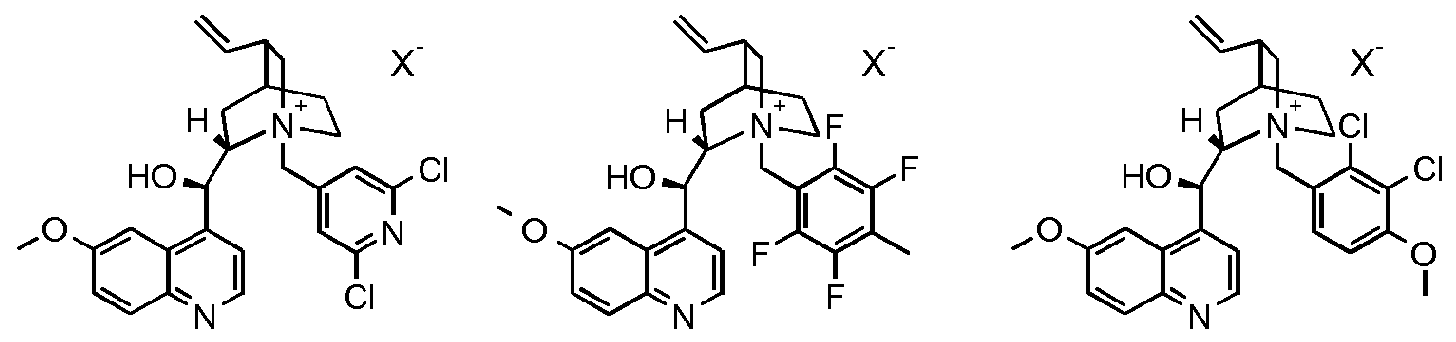
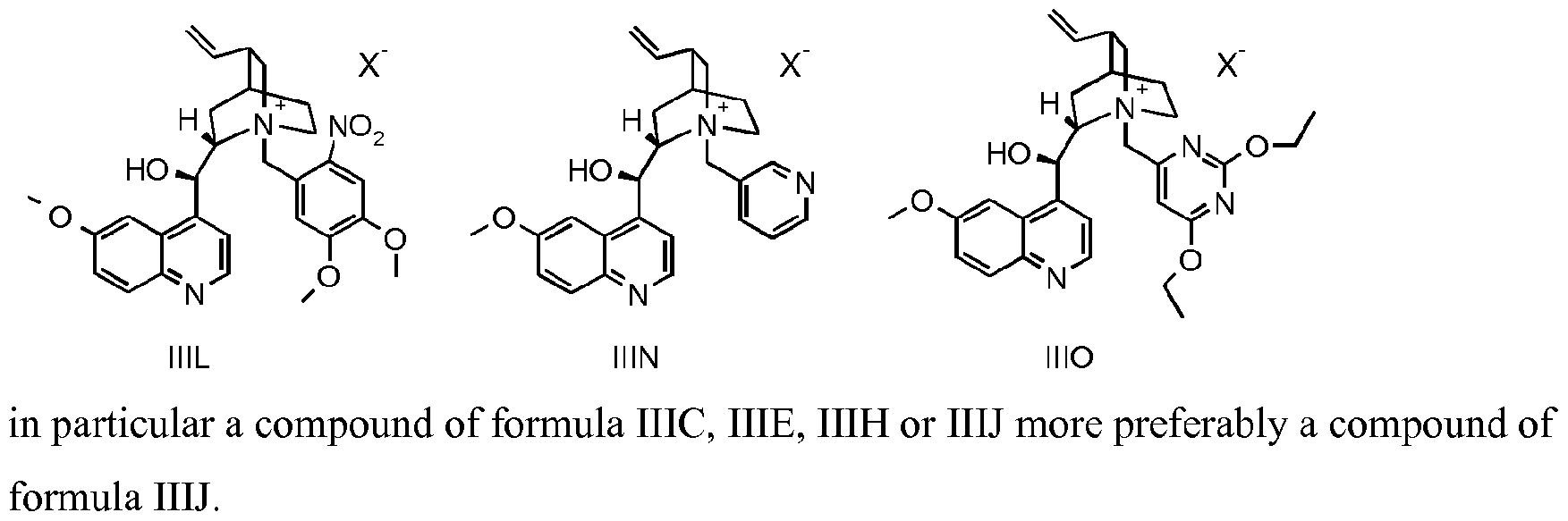


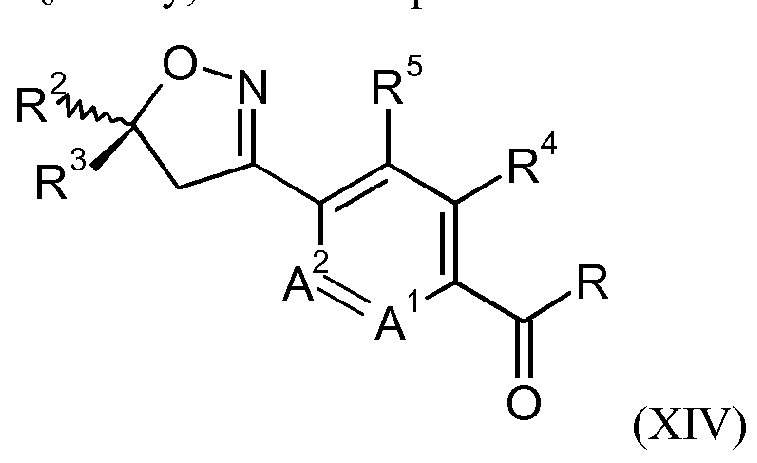

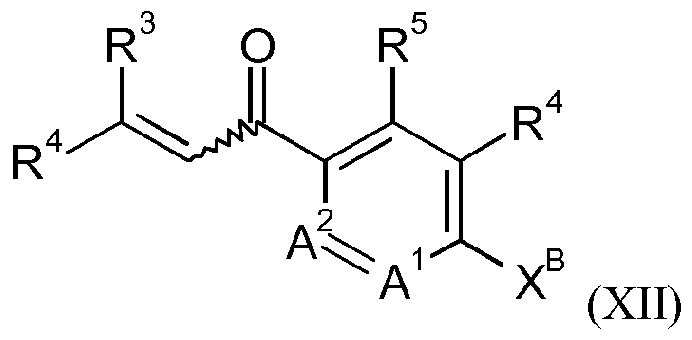


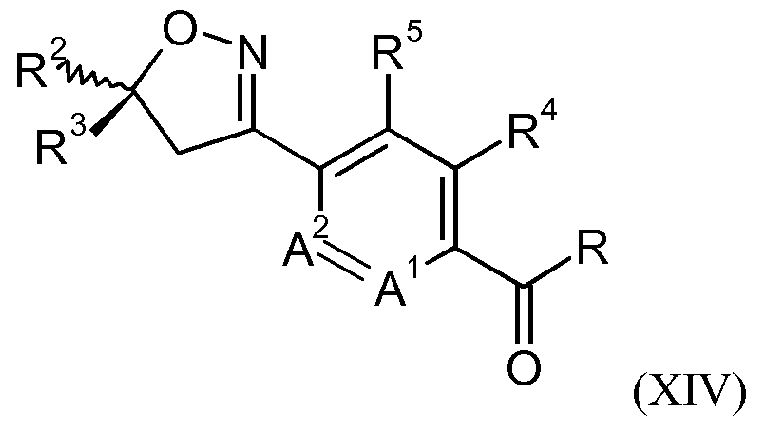


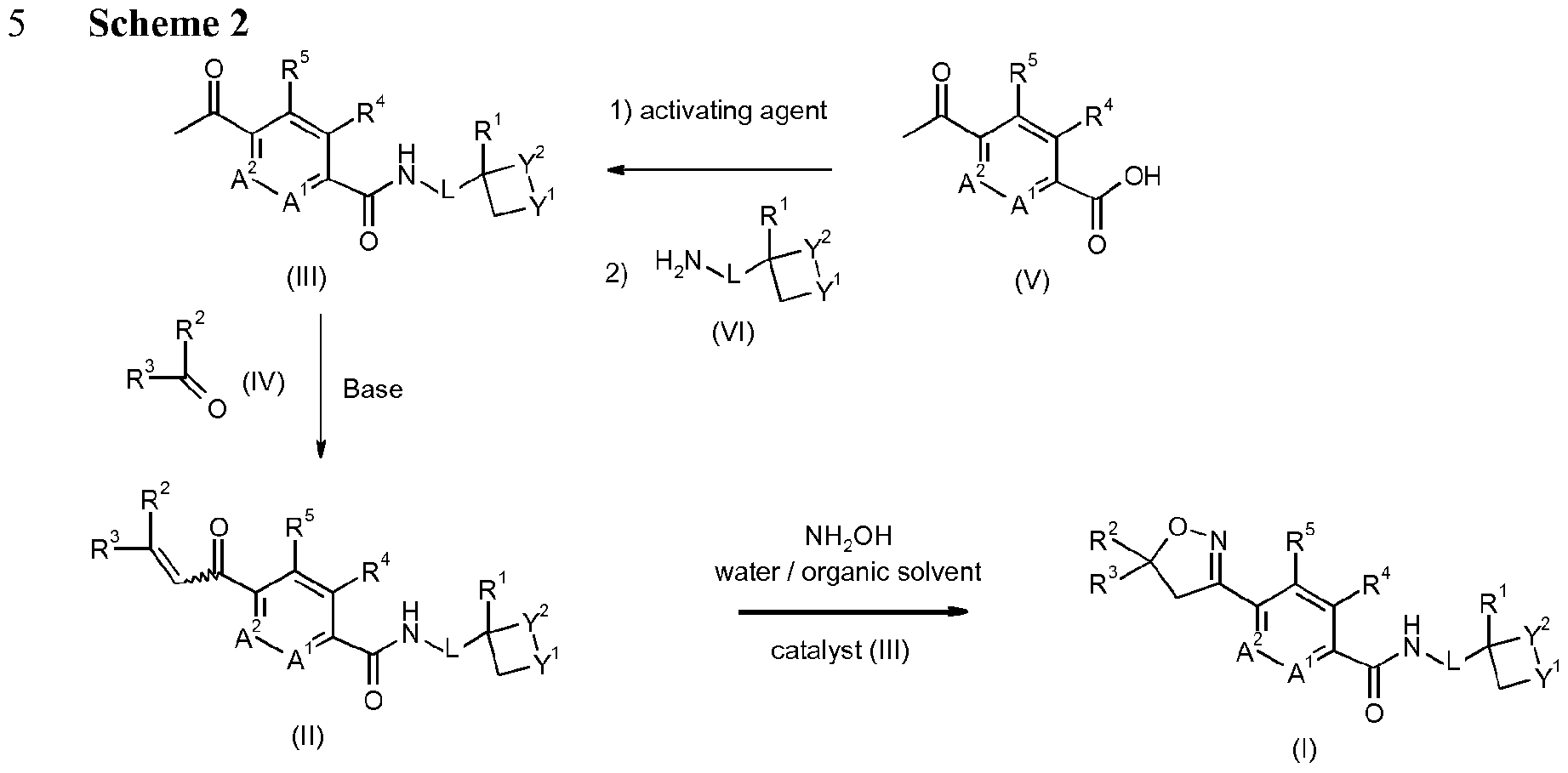


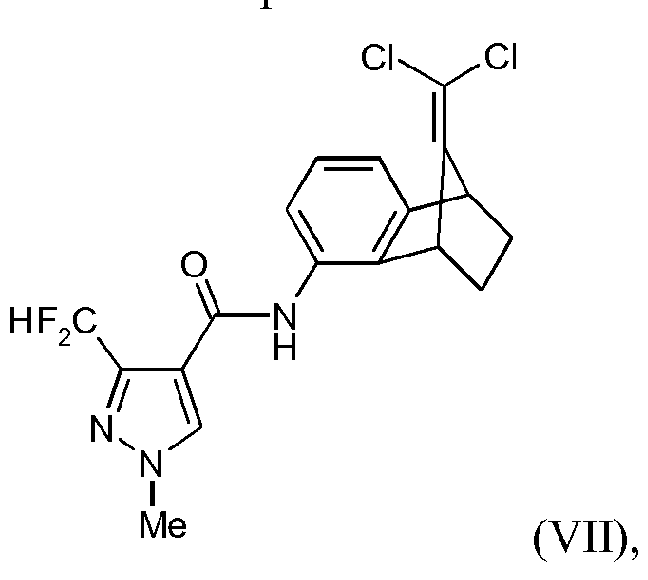


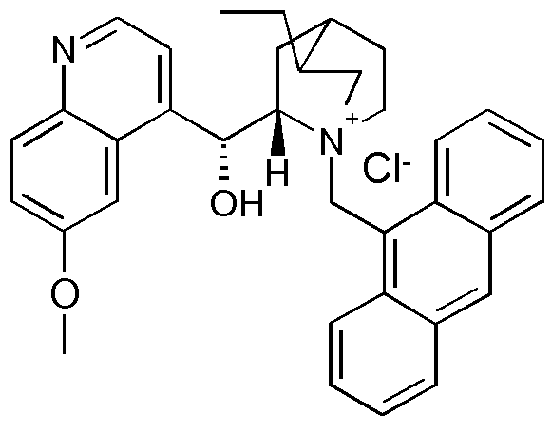
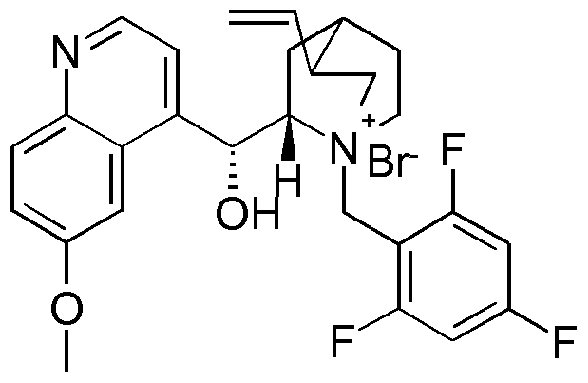

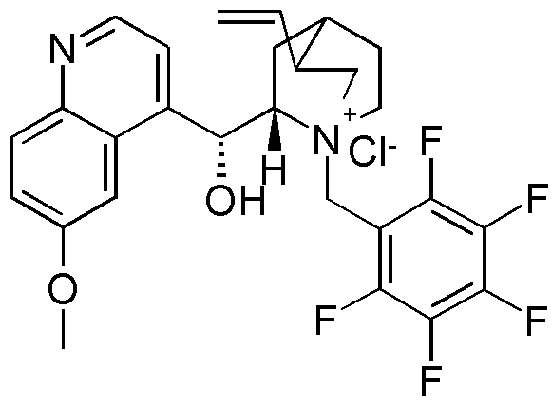

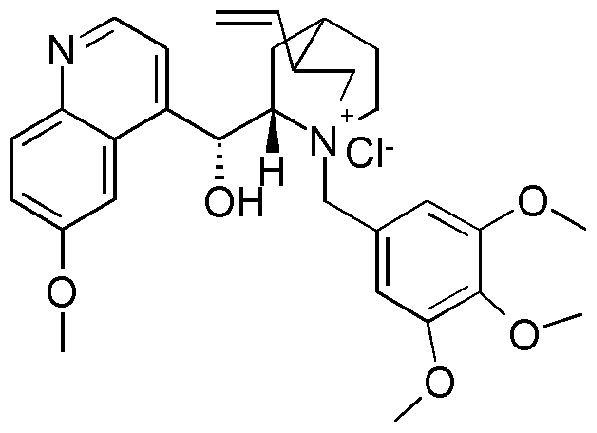


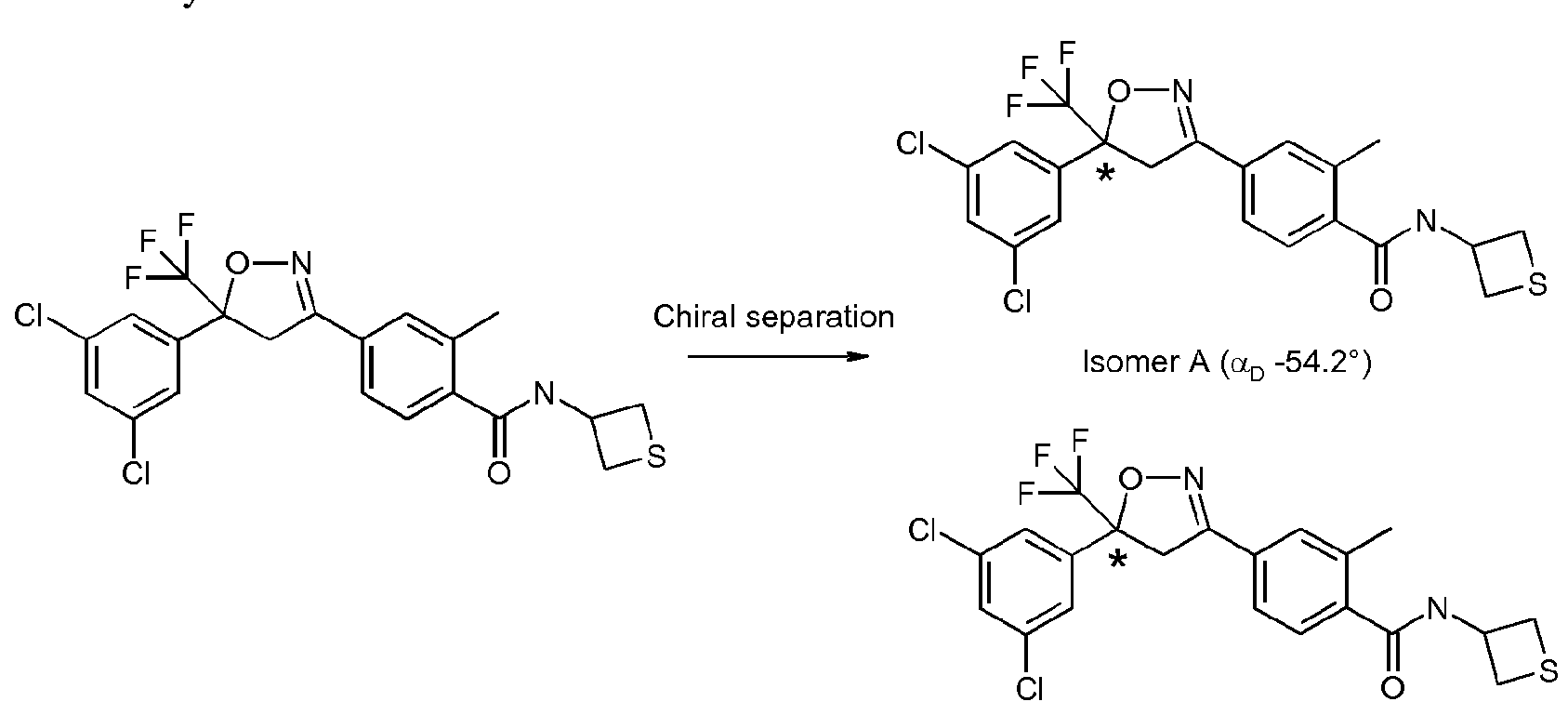


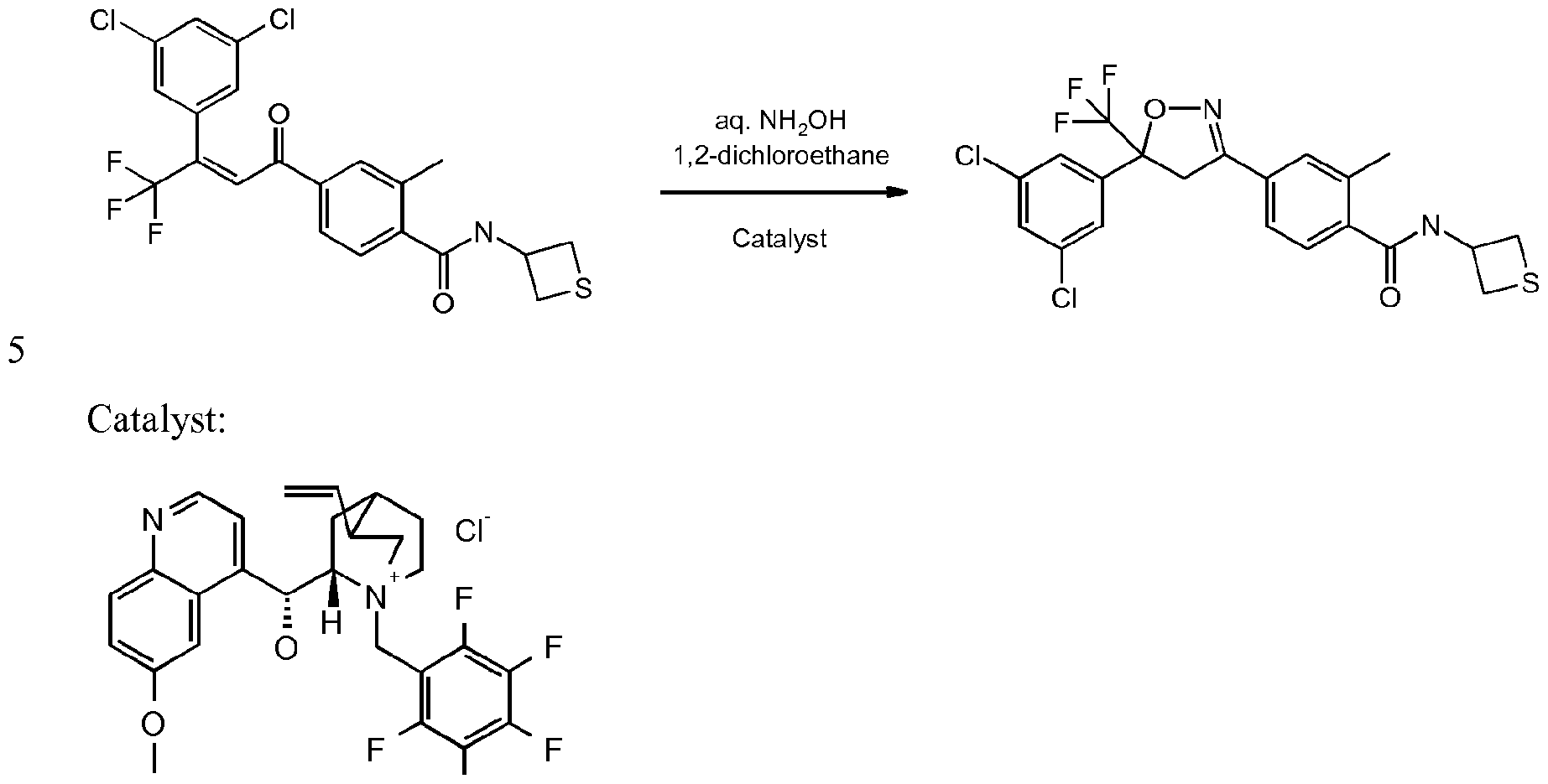

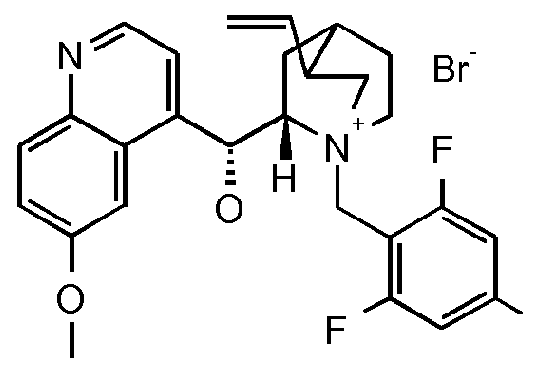
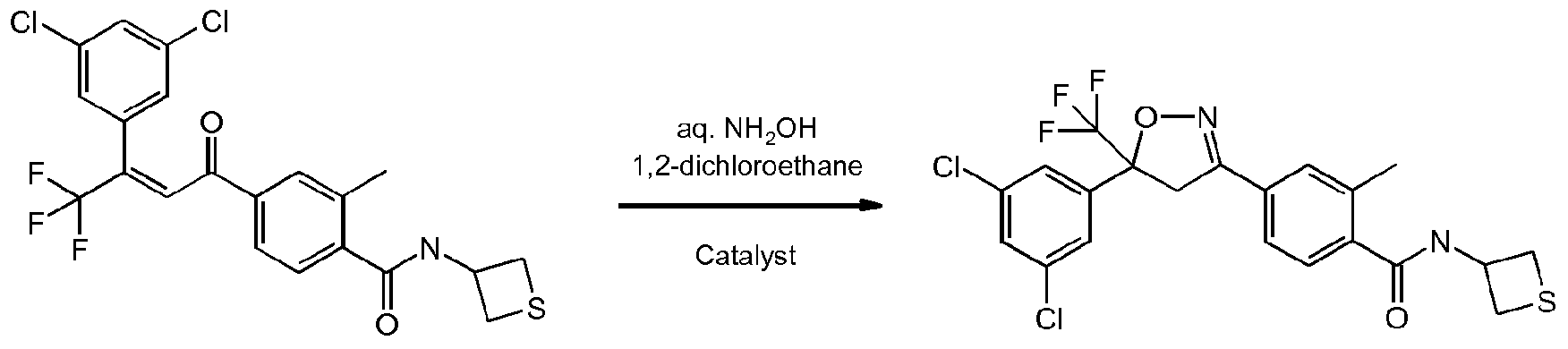

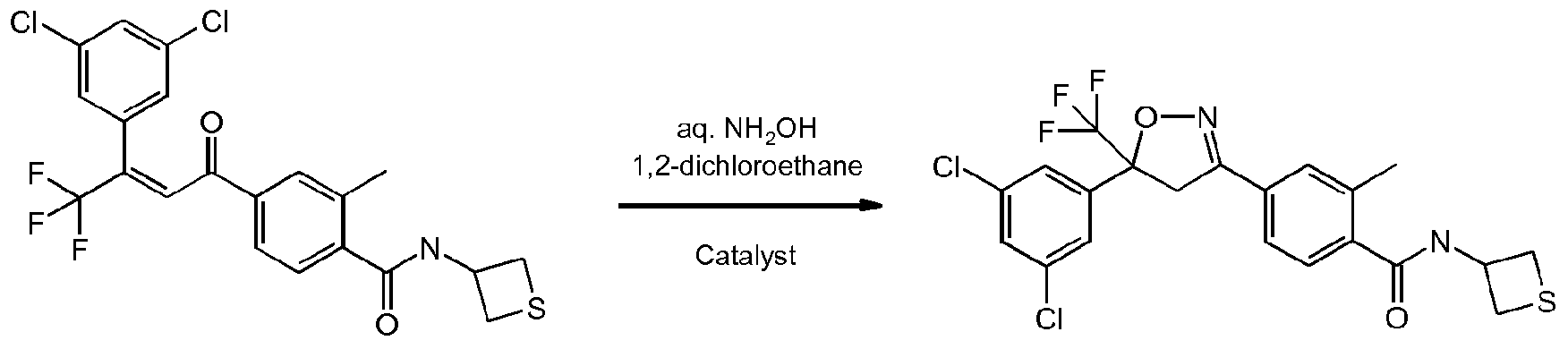


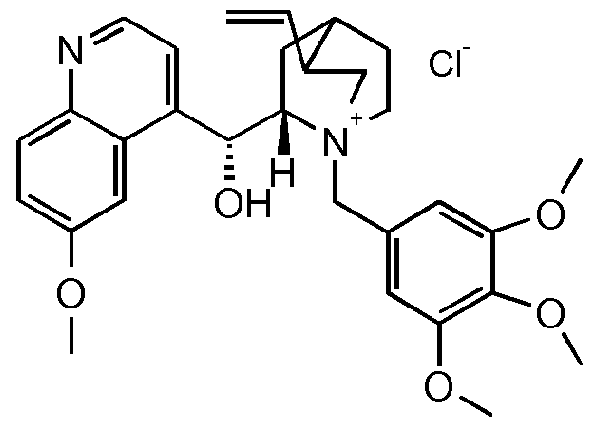

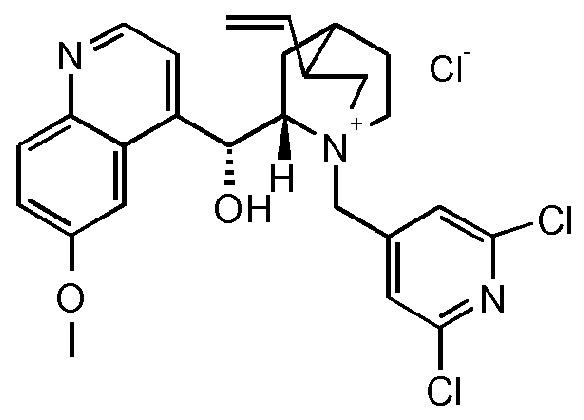

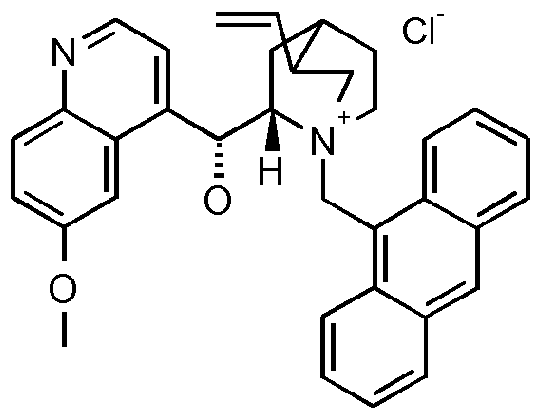

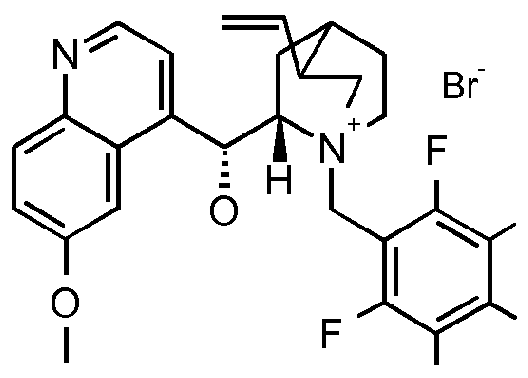


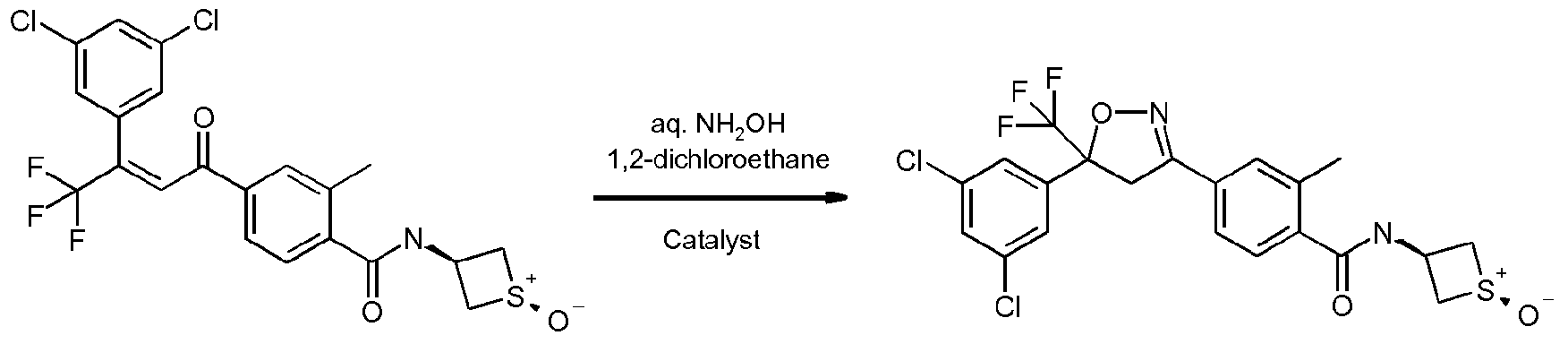


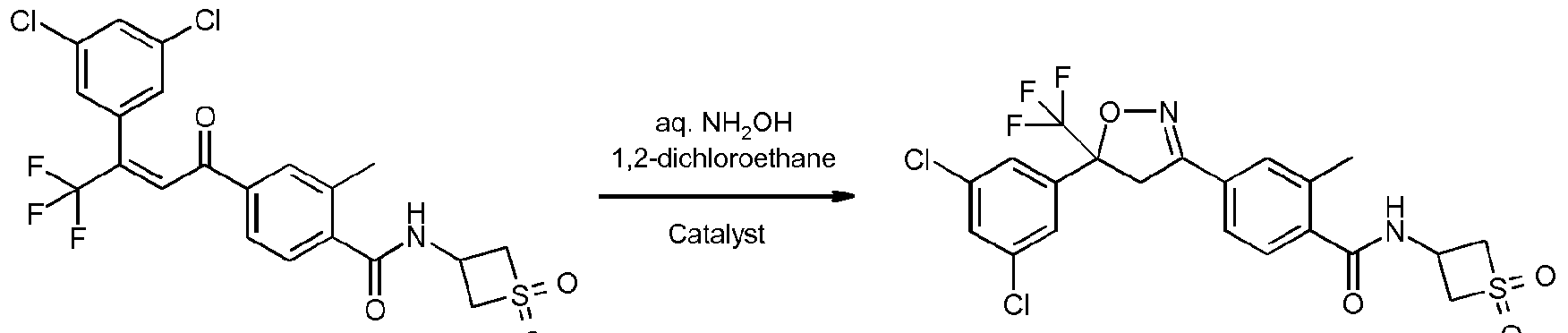


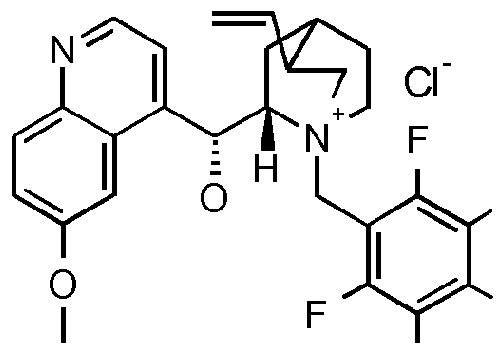


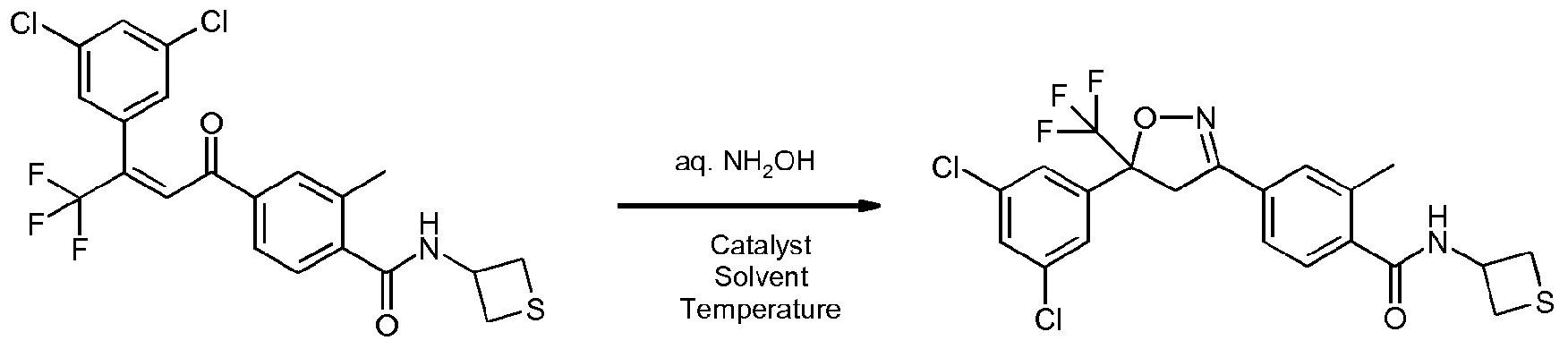


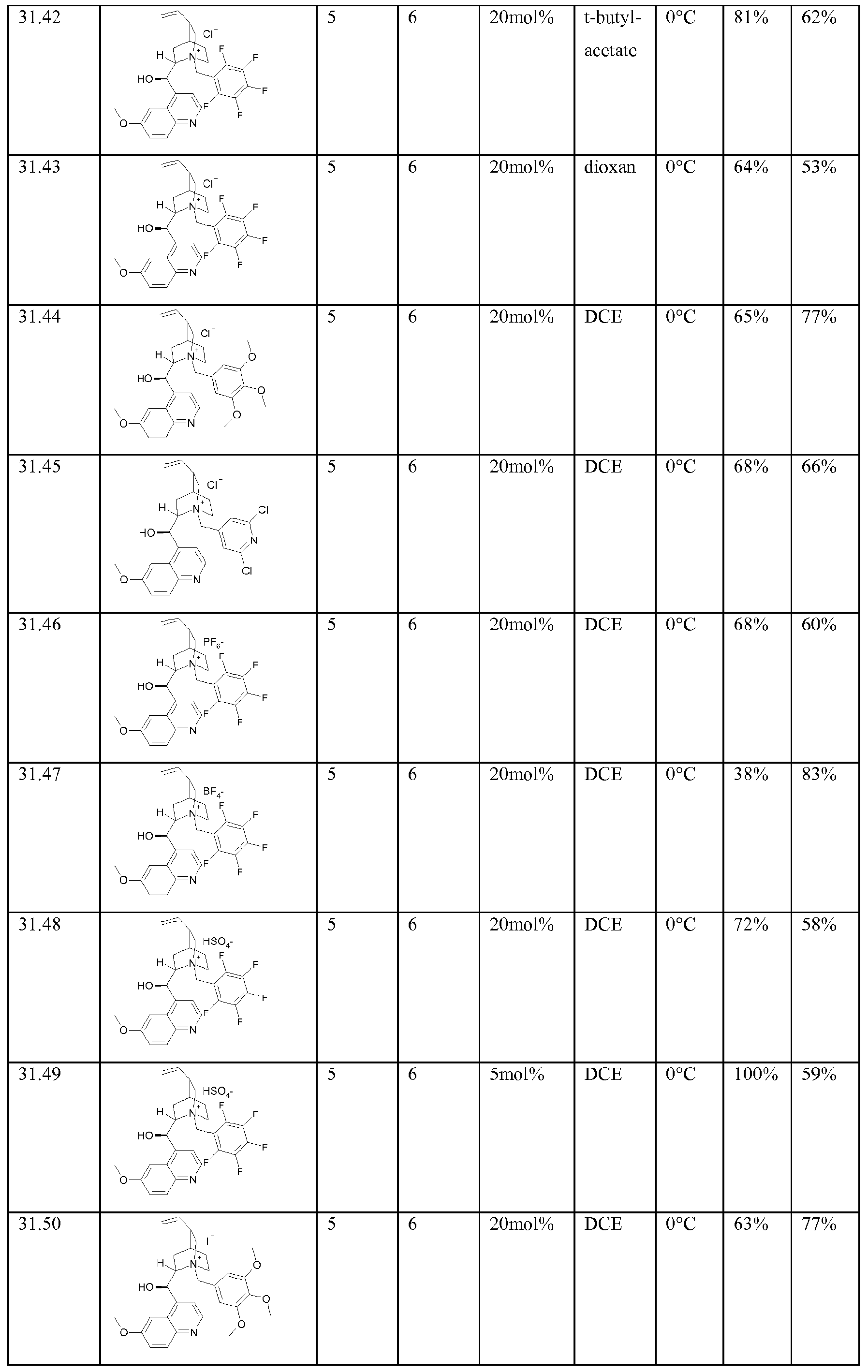




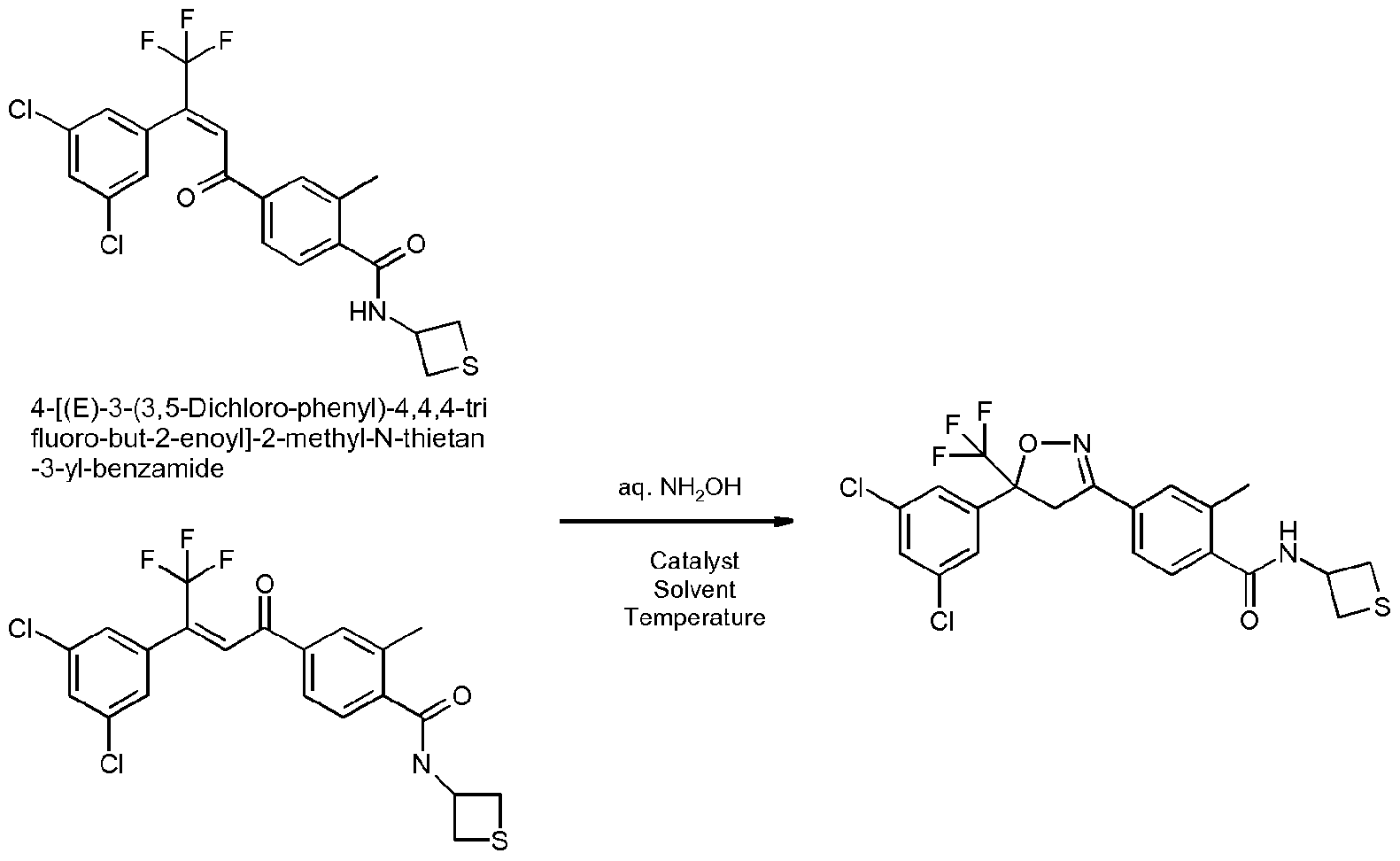


Claims


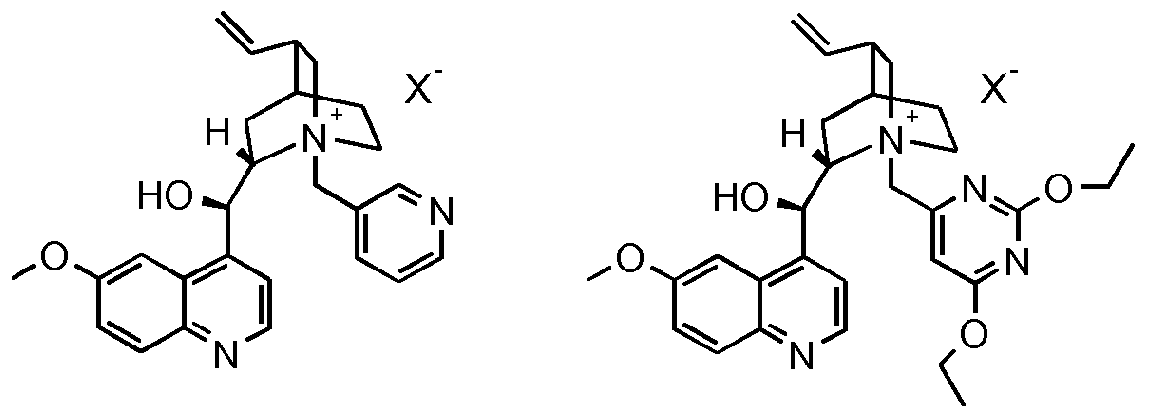

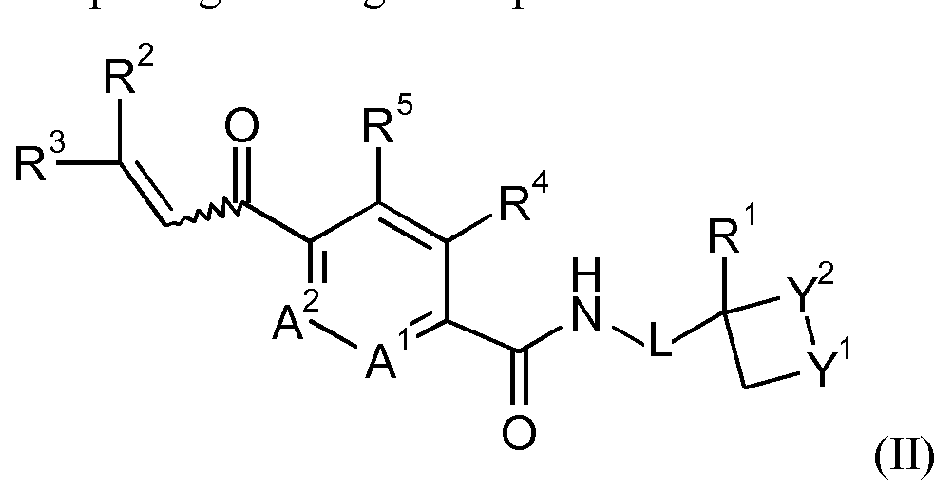


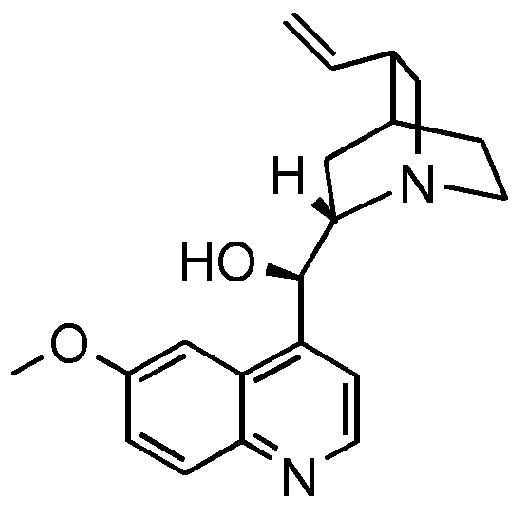


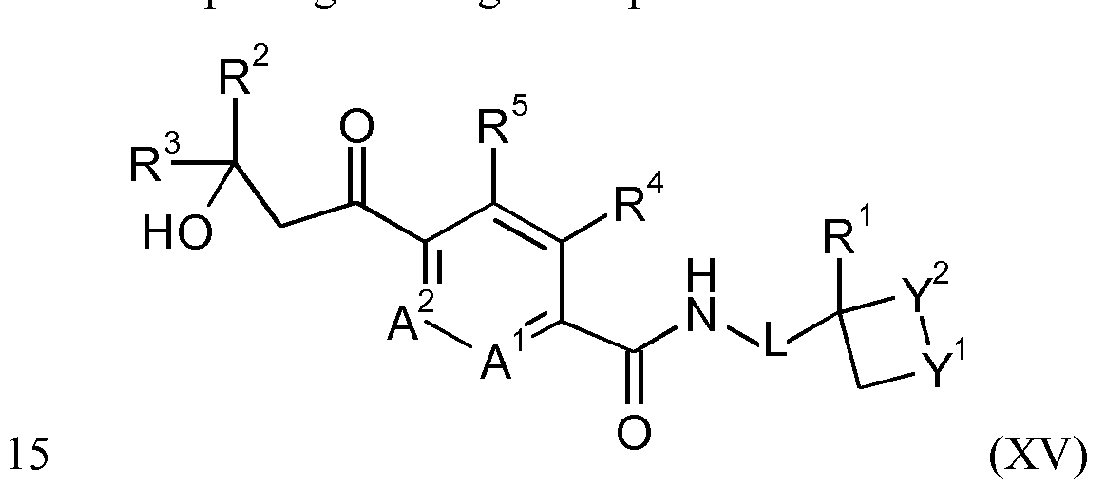

Priority Applications (36)
| Application Number | Priority Date | Filing Date | Title |
|---|---|---|---|
| KR1020127022244A KR20120133401A (en) | 2010-02-25 | 2011-02-03 | Process for the preparation of isoxazoline derivatives |
| CN201180010865.0A CN102822168B (en) | 2010-02-25 | 2011-02-03 | The method for preparing isoxazoline derivatives |
| BR112012020983A BR112012020983A2 (en) | 2010-02-25 | 2011-02-03 | process for the preparation of isoxazoline derivatives |
| US13/581,137 US20140206633A1 (en) | 2010-02-25 | 2011-02-03 | Process for the preparation of isoxazoline derivatives |
| EP11702823.3A EP2539335B1 (en) | 2010-02-25 | 2011-02-03 | Process for the preparation of isoxazoline derivatives |
| CA2790963A CA2790963A1 (en) | 2010-02-25 | 2011-02-03 | Process for the preparation of isoxazoline derivatives |
| AU2011220041A AU2011220041A1 (en) | 2010-02-25 | 2011-02-03 | Process for the preparation of isoxazoline derivatives |
| EA201201179A EA201201179A1 (en) | 2010-02-25 | 2011-02-03 | METHOD FOR PRODUCING ISOXASOLINE DERIVATIVES |
| PH1/2012/501625A PH12012501625A1 (en) | 2010-02-25 | 2011-02-03 | Process for the preparation of isoxazoline derivatives |
| JP2012554271A JP2013520456A (en) | 2010-02-25 | 2011-02-03 | Method for producing isoxazoline derivative |
| MX2012009707A MX2012009707A (en) | 2010-02-25 | 2011-02-03 | Process for the preparation of isoxazoline derivatives. |
| UY0001033887A UY33887A (en) | 2011-02-03 | 2012-01-31 | PEST CONTROL METHODS IN SOYA |
| MA36149A MA34849B1 (en) | 2011-02-03 | 2012-02-01 | METHODS FOR CONTROLLING PEST SIGNIFICANT ANIMALS IN SOYBEANS |
| NZ700056A NZ700056B2 (en) | 2011-02-03 | 2012-02-01 | Methods of pest control in soybean |
| KR1020137023184A KR20140044783A (en) | 2011-02-03 | 2012-02-01 | Methods of pest control in soybean |
| CN201410832217.9A CN104642338A (en) | 2011-02-03 | 2012-02-01 | Methods of pest control in soybean |
| EA201300878A EA201300878A1 (en) | 2011-02-03 | 2012-02-01 | METHODS OF COMBATING SOY PESTS |
| EP12703052.6A EP2670248A2 (en) | 2011-02-03 | 2012-02-01 | Methods of pest control in soybean |
| EA201401285A EA201401285A1 (en) | 2011-02-03 | 2012-02-01 | METHODS OF COMBATING SOY PESTS |
| ARP120100324A AR085786A1 (en) | 2011-02-03 | 2012-02-01 | PEST CONTROL METHODS IN SOYA |
| CN2012800074199A CN103338644A (en) | 2011-02-03 | 2012-02-01 | Soybean Pest Control Methods |
| US13/983,491 US20130317073A1 (en) | 2011-02-03 | 2012-02-01 | Methods of pest control in soybean |
| CA2826493A CA2826493A1 (en) | 2011-02-03 | 2012-02-01 | Methods of pest control in soybean |
| NZ626702A NZ626702B2 (en) | 2011-02-03 | 2012-02-01 | Methods of pest control in soybean |
| MX2013008639A MX2013008639A (en) | 2011-02-03 | 2012-02-01 | Methods of pest control in soybean. |
| PH1/2013/501531A PH12013501531A1 (en) | 2011-02-03 | 2012-02-01 | Methods of pest control in soybean |
| PCT/EP2012/051638 WO2012104331A2 (en) | 2011-02-03 | 2012-02-01 | Methods of pest control in soybean |
| BR112013019678A BR112013019678A2 (en) | 2011-02-03 | 2012-02-01 | soybean pest control methods. |
| AU2012213424A AU2012213424A1 (en) | 2011-02-03 | 2012-02-01 | Methods of pest control in soybean |
| IL221392A IL221392A0 (en) | 2010-02-25 | 2012-08-09 | Process for the preparation of isoxazoline derivatives |
| ZA2012/06095A ZA201206095B (en) | 2010-02-25 | 2012-08-14 | Process for the preparation of isoxazoline derivatives |
| IL227373A IL227373A0 (en) | 2011-02-03 | 2013-07-08 | Methods for controlling soybean pests |
| CR20130364A CR20130364A (en) | 2011-02-03 | 2013-07-29 | PEST CONTROL METHODS IN SOYA |
| DO2013000171A DOP2013000171A (en) | 2011-02-03 | 2013-07-30 | PEST CONTROL METHODS IN SOYA |
| GT201300189A GT201300189A (en) | 2011-02-03 | 2013-07-30 | PEST CONTROL METHODS IN SOYA |
| CO13182376A CO6761323A2 (en) | 2011-02-03 | 2013-08-01 | Pest control methods in soybeans |
Applications Claiming Priority (12)
| Application Number | Priority Date | Filing Date | Title |
|---|---|---|---|
| EP10250337.2 | 2010-02-25 | ||
| EP10250337 | 2010-02-25 | ||
| EP10250336 | 2010-02-25 | ||
| EP10250336.4 | 2010-02-25 | ||
| GB1007689.1 | 2010-05-07 | ||
| GBGB1007689.1A GB201007689D0 (en) | 2010-05-07 | 2010-05-07 | Process |
| EP10164234 | 2010-05-28 | ||
| EP10164231 | 2010-05-28 | ||
| EP10164234.6 | 2010-05-28 | ||
| EP10164231.2 | 2010-05-28 | ||
| EP10187269.5 | 2010-10-12 | ||
| EP10187269 | 2010-10-12 |
Publications (1)
| Publication Number | Publication Date |
|---|---|
| WO2011104089A1 true WO2011104089A1 (en) | 2011-09-01 |
Family
ID=43856171
Family Applications (1)
| Application Number | Title | Priority Date | Filing Date |
|---|---|---|---|
| PCT/EP2011/051513 Ceased WO2011104089A1 (en) | 2010-02-25 | 2011-02-03 | Process for the preparation of isoxazoline derivatives |
Country Status (16)
| Country | Link |
|---|---|
| US (1) | US20140206633A1 (en) |
| EP (1) | EP2539335B1 (en) |
| JP (1) | JP2013520456A (en) |
| KR (1) | KR20120133401A (en) |
| CN (1) | CN102822168B (en) |
| AU (1) | AU2011220041A1 (en) |
| BR (1) | BR112012020983A2 (en) |
| CA (1) | CA2790963A1 (en) |
| CL (1) | CL2012002345A1 (en) |
| EA (1) | EA201201179A1 (en) |
| IL (1) | IL221392A0 (en) |
| MX (1) | MX2012009707A (en) |
| PH (1) | PH12012501625A1 (en) |
| UY (1) | UY33249A (en) |
| WO (1) | WO2011104089A1 (en) |
| ZA (1) | ZA201206095B (en) |
Cited By (49)
| Publication number | Priority date | Publication date | Assignee | Title |
|---|---|---|---|---|
| WO2012107434A1 (en) | 2011-02-09 | 2012-08-16 | Syngenta Participations Ag | Insecticidal compounds |
| WO2012117021A2 (en) | 2011-03-03 | 2012-09-07 | Syngenta Participations Ag | Novel microbiocidal oxime ethers |
| WO2012120399A1 (en) | 2011-03-10 | 2012-09-13 | Pfizer Inc. | Spirocyclic isoxazoline derivatives as antiparasitic agents |
| WO2012126881A1 (en) | 2011-03-22 | 2012-09-27 | Syngenta Participations Ag | Insecticidal compounds |
| WO2012143395A1 (en) | 2011-04-20 | 2012-10-26 | Syngenta Participations Ag | 4,5-dihydro-isoxazole derivatives as fungicides |
| WO2012156400A1 (en) | 2011-05-18 | 2012-11-22 | Syngenta Participations Ag | Insecticidal compounds based on arylthioacetamide derivatives |
| WO2012175474A1 (en) | 2011-06-20 | 2012-12-27 | Syngenta Participations Ag | 1,2,3 triazole pesticides |
| WO2013007550A1 (en) | 2011-07-08 | 2013-01-17 | Syngenta Participations Ag | Fungicide mixtures |
| WO2013011010A1 (en) | 2011-07-19 | 2013-01-24 | Syngenta Participations Ag | Fungizide mixtures |
| WO2013026931A1 (en) * | 2011-08-25 | 2013-02-28 | Syngenta Participations Ag | Isoxazoline derivatives as insecticidal compounds |
| WO2013026900A1 (en) | 2011-08-23 | 2013-02-28 | Syngenta Participations Ag | Pyridine derivatives as microbiocides |
| WO2013050317A1 (en) | 2011-10-03 | 2013-04-11 | Syngenta Limited | Polymorphs of an isoxazoline derivative |
| WO2013069731A1 (en) * | 2011-11-08 | 2013-05-16 | 日産化学工業株式会社 | Method for catalytic asymmetric synthesis of optically active isoxazoline compound, and optically active isoxazoline compound |
| WO2013092460A1 (en) | 2011-12-20 | 2013-06-27 | Syngenta Participations Ag | Cyclic bisoxime microbicides |
| WO2013116236A1 (en) | 2012-02-03 | 2013-08-08 | Zoetis Llc | Process for the preparation of chiral isoxazoline azetidine derivatives as antiparasitic agents |
| WO2013119442A1 (en) | 2012-02-06 | 2013-08-15 | Merial Limited | Parasiticidal oral veterinary compositions comprising systemically-acting active agents, methods and uses thereof |
| WO2013126694A1 (en) | 2012-02-23 | 2013-08-29 | Merial Limited | Topical compositions comprising fipronil and permethrin and methods of use |
| EP2641901A1 (en) | 2012-03-22 | 2013-09-25 | Syngenta Participations AG. | Novel microbiocides |
| WO2014019951A1 (en) | 2012-08-03 | 2014-02-06 | Syngenta Participations Ag | Methods of controlling insects |
| WO2014036056A1 (en) * | 2012-08-31 | 2014-03-06 | Zoetis Llc | Crystalline forms of 1-(5'-(5-(3,5-dichloro-4-fluorophenyl)-5-(trifluoromethyl)-4,5-dihydroisoxazol-3-yl)-3'h-spiro[azetidine-3,1'-isobenzofuran]-1-yl)-2-(methylsulfonyl)ethanone |
| US8735362B2 (en) | 2009-12-01 | 2014-05-27 | Syngenta Crop Protection, Llc | Insecticidal compounds based on isoxazoline derivatives |
| US8946447B2 (en) | 2009-06-22 | 2015-02-03 | Syngenta Limited | Insecticidal compounds |
| WO2015055764A1 (en) | 2013-10-18 | 2015-04-23 | Syngenta Participations Ag | 3-methanimidamid-pyridine derivatives as fungicides |
| WO2015066277A1 (en) | 2013-11-01 | 2015-05-07 | Merial Limited | Antiparisitic and pesticidal isoxazoline compounds |
| WO2015161224A1 (en) | 2014-04-17 | 2015-10-22 | Merial, Inc. | Use of malononitrile compounds for protecting animals from parasites |
| WO2016023787A1 (en) * | 2014-08-11 | 2016-02-18 | Syngenta Participations Ag | Process for the preparation of optically active isoxazoline compounds |
| US9420793B2 (en) | 2015-01-16 | 2016-08-23 | Avista Pharma Solutions | Antiparasitic compounds |
| WO2016138339A1 (en) | 2015-02-26 | 2016-09-01 | Merial, Inc. | Long-acting injectable formulations comprising an isoxazoline active agent, methods and uses thereof |
| WO2016187534A1 (en) | 2015-05-20 | 2016-11-24 | Merial, Inc. | Anthelmintic depsipeptide compounds |
| US9637480B2 (en) | 2010-11-19 | 2017-05-02 | Nissan Chemical Industries, Ltd. | Parasite- and hygienic pest-controlling agent |
| WO2017147352A1 (en) | 2016-02-24 | 2017-08-31 | Merial, Inc. | Antiparasitic isoxazoline compounds, long-acting injectable formulations comprising them, methods and uses thereof |
| WO2017176948A1 (en) | 2016-04-06 | 2017-10-12 | Merial, Inc. | Process for the preparation of enantiomerically enriched isoxazoline compounds - crystalline toluene solvate of (s)-afoxolaner |
| WO2018071535A1 (en) | 2016-10-14 | 2018-04-19 | Merial, Inc. | Pesticidal and parasiticidal vinyl isoxazoline compounds |
| WO2018093920A1 (en) | 2016-11-16 | 2018-05-24 | Merial, Inc. | Anthelmintic depsipeptide compounds |
| WO2019036407A1 (en) | 2017-08-14 | 2019-02-21 | Merial, Inc. | Pesticidal and parasiticidal pyrazole-isoxazoline compounds |
| WO2020014068A1 (en) | 2018-07-09 | 2020-01-16 | Boehringer Ingelheim Animal Health USA Inc. | Anthelminthic heterocyclic compounds |
| WO2020112374A1 (en) | 2018-11-20 | 2020-06-04 | Boehringer Ingelheim Animal Health USA Inc. | Indazolylcyanoethylamino compound, compositions of same, method of making, and methods of using thereof |
| WO2020191091A1 (en) | 2019-03-19 | 2020-09-24 | Boehringer Ingelheim Animal Health USA Inc. | Anthelmintic aza-benzothiophene and aza-benzofuran compounds |
| US10807992B2 (en) | 2017-11-16 | 2020-10-20 | Avista Pharma Solutions, Inc. | Single enantiomer antiparasitic compounds |
| WO2021197880A1 (en) | 2020-03-31 | 2021-10-07 | Basf Se | Process for preparation of optically enriched isoxazolines |
| WO2021242581A1 (en) | 2020-05-29 | 2021-12-02 | Boehringer Ingelheim Animal Health USA Inc. | Anthelmintic heterocyclic compounds |
| WO2022162001A1 (en) | 2021-01-27 | 2022-08-04 | Intervet International B.V. | Cyclopropylamide compounds against parasites in fish |
| WO2022162016A1 (en) | 2021-01-27 | 2022-08-04 | Intervet International B.V. | Cyclopropylamide compounds against parasites in fish |
| WO2023156938A1 (en) | 2022-02-17 | 2023-08-24 | Boehringer Ingelheim Vetmedica Gmbh | Method and system for providing a fluid product mailer |
| WO2024012527A1 (en) | 2022-07-13 | 2024-01-18 | 安徽圣丰生化有限公司 | Compound containing pyrazole structure, application, and insecticide |
| WO2025003945A1 (en) * | 2023-06-30 | 2025-01-02 | Hikal Limited | An improved process for the preparation of 4-acetyl-2-methyl-benzonitrile |
| EP4523685A1 (en) | 2023-09-15 | 2025-03-19 | EVAH Atlantic Inc. | Dihydroisoxazole compound for use in the treatment of ectoparasite infestations on fish |
| US12304903B2 (en) | 2020-07-24 | 2025-05-20 | Elanco Us Inc. | Process for making an isoxazoline compound and intermediate thereof |
| US12544336B2 (en) | 2021-09-02 | 2026-02-10 | Elanco Us Inc. | Palatable formulations |
Families Citing this family (6)
| Publication number | Priority date | Publication date | Assignee | Title |
|---|---|---|---|---|
| US20130085064A1 (en) * | 2010-02-25 | 2013-04-04 | Syngenta Crop Protection Llc | Pesticidal mixtures containing isoxazoline derivatives and insecticide or nematoicidal biological agent |
| CN109553528A (en) * | 2018-12-21 | 2019-04-02 | 荆门医药工业技术研究院 | A kind of synthetic method of 2- methyl -4- acetylbenzoic acid methyl esters |
| MX2023014962A (en) | 2021-08-11 | 2024-02-13 | Elanco Us Inc | Process for making diaryl isoxazoline derivative. |
| CN116478057A (en) * | 2022-01-17 | 2023-07-25 | 洛阳惠中兽药有限公司 | A kind of preparation method of Frellaner intermediate |
| CN115477577B (en) * | 2022-10-25 | 2024-03-15 | 台州臻挚生物科技有限公司 | New method for preparing 2-methyl-4-acetyl benzoic acid and derivatives thereof |
| CN120774881A (en) * | 2024-04-01 | 2025-10-14 | 山东康乔生物科技有限公司 | Preparation method of isoxazoline compound containing sulfone five-membered heterocyclic group |
Citations (26)
| Publication number | Priority date | Publication date | Assignee | Title |
|---|---|---|---|---|
| US4639771A (en) | 1984-10-31 | 1987-01-27 | Kabushiki Kaisha Toshiba | Image processing system |
| EP0357460A2 (en) | 1988-09-02 | 1990-03-07 | Sankyo Company Limited | 13-Substituted milbemycin derivatives, their preparation and use |
| EP0382173A2 (en) | 1989-02-07 | 1990-08-16 | Meiji Seika Kaisha Ltd. | PF 1022 substance, method of producing same and anthelmintic composition containing same |
| US5015630A (en) | 1989-01-19 | 1991-05-14 | Merck & Co., Inc. | 5-oxime avermectin derivatives |
| EP0444964A1 (en) | 1990-03-01 | 1991-09-04 | Sankyo Company Limited | Milbemycin ether derivatives, their preparation and their anthelmintic uses |
| EP0503538A1 (en) | 1991-03-08 | 1992-09-16 | Meiji Seika Kaisha Ltd. | Medicinal composition containing an anthelmintic cyclic depsipeptide |
| WO1993019053A1 (en) | 1992-03-17 | 1993-09-30 | Fujisawa Pharmaceutical Co., Ltd. | Depsipeptide derivative, production thereof and use thereof |
| WO1993025543A2 (en) | 1992-06-11 | 1993-12-23 | Bayer Aktiengesellschaft | Enniatines and enniatine derivates used to control endoparasites |
| EP0594291A1 (en) | 1992-09-01 | 1994-04-27 | Sankyo Company Limited | Novel processes for the production of 13-ether derivatives of milbemycins, and novel intermediates therefor |
| WO1994015944A1 (en) | 1993-01-18 | 1994-07-21 | Pfizer Limited | New antiparasitic agents related to the milbemycins and avermectins |
| WO1994019334A1 (en) | 1993-02-19 | 1994-09-01 | Meiji Seika Kaisha, Ltd. | Pf1022 derivative, cyclic depsipeptide |
| EP0626375A1 (en) | 1993-05-26 | 1994-11-30 | Bayer Ag | Octacyclodepsipeptides having endoparasiticidal activity |
| WO1995019363A1 (en) | 1994-01-14 | 1995-07-20 | Pfizer Inc. | Antiparasitic pyrrolobenzoxazine compounds |
| WO1995022552A1 (en) | 1994-02-16 | 1995-08-24 | Pfizer Limited | Antiparasitic agents |
| US5478855A (en) | 1992-04-28 | 1995-12-26 | Yashima Chemical Industry Co., Ltd. | 2-(2,6-difluorophenyl)-4-(2-ethoxy-4-tert-butylphenyl)-2-oxazoline |
| WO1996011945A2 (en) | 1994-10-18 | 1996-04-25 | Bayer Aktiengesellschaft | Cyclic depsipeptide sulfonylation, sulfenylation and phosphorylation process |
| WO1996015121A1 (en) | 1994-11-10 | 1996-05-23 | Bayer Aktiengesellschaft | Use of dioxomorpholines to combat endoparasites, novel dioxomorpholines and process for their production |
| DE19520936A1 (en) | 1995-06-08 | 1996-12-12 | Bayer Ag | Ectoparasiticides means |
| US6406690B1 (en) | 1995-04-17 | 2002-06-18 | Minrav Industries Ltd. | Bacillus firmus CNCM I-1582 or Bacillus cereus CNCM I-1562 for controlling nematodes |
| WO2003024222A1 (en) | 2001-09-21 | 2003-03-27 | E. I. Du Pont De Nemours And Company | Anthranilamide arthropodicide treatment |
| WO2004072086A2 (en) | 2003-02-14 | 2004-08-26 | Pfizer Limited | Antiparasitic terpene alkaloids |
| DE102006015467A1 (en) | 2006-03-31 | 2007-10-04 | Bayer Cropscience Ag | New cyclic enamine ketone derivatives useful for controlling pests, especially insects |
| WO2009063910A1 (en) * | 2007-11-12 | 2009-05-22 | Nissan Chemical Industries, Ltd. | Method for catalytic asymmetric synthesis of optically active isoxazoline compound |
| WO2009080250A2 (en) | 2007-12-24 | 2009-07-02 | Syngenta Participations Ag | Insecticidal compounds |
| WO2010025998A1 (en) * | 2008-09-04 | 2010-03-11 | Syngenta Participations Ag | Insecticidal compounds |
| WO2011067272A1 (en) * | 2009-12-01 | 2011-06-09 | Syngenta Participations Ag | Insecticidal compounds based on isoxazoline derivatives |
Family Cites Families (1)
| Publication number | Priority date | Publication date | Assignee | Title |
|---|---|---|---|---|
| US20130085064A1 (en) * | 2010-02-25 | 2013-04-04 | Syngenta Crop Protection Llc | Pesticidal mixtures containing isoxazoline derivatives and insecticide or nematoicidal biological agent |
-
2011
- 2011-02-03 CA CA2790963A patent/CA2790963A1/en not_active Abandoned
- 2011-02-03 EA EA201201179A patent/EA201201179A1/en unknown
- 2011-02-03 US US13/581,137 patent/US20140206633A1/en not_active Abandoned
- 2011-02-03 MX MX2012009707A patent/MX2012009707A/en not_active Application Discontinuation
- 2011-02-03 BR BR112012020983A patent/BR112012020983A2/en not_active IP Right Cessation
- 2011-02-03 KR KR1020127022244A patent/KR20120133401A/en not_active Withdrawn
- 2011-02-03 WO PCT/EP2011/051513 patent/WO2011104089A1/en not_active Ceased
- 2011-02-03 EP EP11702823.3A patent/EP2539335B1/en not_active Not-in-force
- 2011-02-03 JP JP2012554271A patent/JP2013520456A/en active Pending
- 2011-02-03 PH PH1/2012/501625A patent/PH12012501625A1/en unknown
- 2011-02-03 AU AU2011220041A patent/AU2011220041A1/en not_active Abandoned
- 2011-02-03 CN CN201180010865.0A patent/CN102822168B/en not_active Expired - Fee Related
- 2011-02-25 UY UY0001033249A patent/UY33249A/en not_active Application Discontinuation
-
2012
- 2012-08-09 IL IL221392A patent/IL221392A0/en unknown
- 2012-08-14 ZA ZA2012/06095A patent/ZA201206095B/en unknown
- 2012-08-23 CL CL2012002345A patent/CL2012002345A1/en unknown
Patent Citations (26)
| Publication number | Priority date | Publication date | Assignee | Title |
|---|---|---|---|---|
| US4639771A (en) | 1984-10-31 | 1987-01-27 | Kabushiki Kaisha Toshiba | Image processing system |
| EP0357460A2 (en) | 1988-09-02 | 1990-03-07 | Sankyo Company Limited | 13-Substituted milbemycin derivatives, their preparation and use |
| US5015630A (en) | 1989-01-19 | 1991-05-14 | Merck & Co., Inc. | 5-oxime avermectin derivatives |
| EP0382173A2 (en) | 1989-02-07 | 1990-08-16 | Meiji Seika Kaisha Ltd. | PF 1022 substance, method of producing same and anthelmintic composition containing same |
| EP0444964A1 (en) | 1990-03-01 | 1991-09-04 | Sankyo Company Limited | Milbemycin ether derivatives, their preparation and their anthelmintic uses |
| EP0503538A1 (en) | 1991-03-08 | 1992-09-16 | Meiji Seika Kaisha Ltd. | Medicinal composition containing an anthelmintic cyclic depsipeptide |
| WO1993019053A1 (en) | 1992-03-17 | 1993-09-30 | Fujisawa Pharmaceutical Co., Ltd. | Depsipeptide derivative, production thereof and use thereof |
| US5478855A (en) | 1992-04-28 | 1995-12-26 | Yashima Chemical Industry Co., Ltd. | 2-(2,6-difluorophenyl)-4-(2-ethoxy-4-tert-butylphenyl)-2-oxazoline |
| WO1993025543A2 (en) | 1992-06-11 | 1993-12-23 | Bayer Aktiengesellschaft | Enniatines and enniatine derivates used to control endoparasites |
| EP0594291A1 (en) | 1992-09-01 | 1994-04-27 | Sankyo Company Limited | Novel processes for the production of 13-ether derivatives of milbemycins, and novel intermediates therefor |
| WO1994015944A1 (en) | 1993-01-18 | 1994-07-21 | Pfizer Limited | New antiparasitic agents related to the milbemycins and avermectins |
| WO1994019334A1 (en) | 1993-02-19 | 1994-09-01 | Meiji Seika Kaisha, Ltd. | Pf1022 derivative, cyclic depsipeptide |
| EP0626375A1 (en) | 1993-05-26 | 1994-11-30 | Bayer Ag | Octacyclodepsipeptides having endoparasiticidal activity |
| WO1995019363A1 (en) | 1994-01-14 | 1995-07-20 | Pfizer Inc. | Antiparasitic pyrrolobenzoxazine compounds |
| WO1995022552A1 (en) | 1994-02-16 | 1995-08-24 | Pfizer Limited | Antiparasitic agents |
| WO1996011945A2 (en) | 1994-10-18 | 1996-04-25 | Bayer Aktiengesellschaft | Cyclic depsipeptide sulfonylation, sulfenylation and phosphorylation process |
| WO1996015121A1 (en) | 1994-11-10 | 1996-05-23 | Bayer Aktiengesellschaft | Use of dioxomorpholines to combat endoparasites, novel dioxomorpholines and process for their production |
| US6406690B1 (en) | 1995-04-17 | 2002-06-18 | Minrav Industries Ltd. | Bacillus firmus CNCM I-1582 or Bacillus cereus CNCM I-1562 for controlling nematodes |
| DE19520936A1 (en) | 1995-06-08 | 1996-12-12 | Bayer Ag | Ectoparasiticides means |
| WO2003024222A1 (en) | 2001-09-21 | 2003-03-27 | E. I. Du Pont De Nemours And Company | Anthranilamide arthropodicide treatment |
| WO2004072086A2 (en) | 2003-02-14 | 2004-08-26 | Pfizer Limited | Antiparasitic terpene alkaloids |
| DE102006015467A1 (en) | 2006-03-31 | 2007-10-04 | Bayer Cropscience Ag | New cyclic enamine ketone derivatives useful for controlling pests, especially insects |
| WO2009063910A1 (en) * | 2007-11-12 | 2009-05-22 | Nissan Chemical Industries, Ltd. | Method for catalytic asymmetric synthesis of optically active isoxazoline compound |
| WO2009080250A2 (en) | 2007-12-24 | 2009-07-02 | Syngenta Participations Ag | Insecticidal compounds |
| WO2010025998A1 (en) * | 2008-09-04 | 2010-03-11 | Syngenta Participations Ag | Insecticidal compounds |
| WO2011067272A1 (en) * | 2009-12-01 | 2011-06-09 | Syngenta Participations Ag | Insecticidal compounds based on isoxazoline derivatives |
Non-Patent Citations (11)
| Title |
|---|
| "McCutcheon 's Volume 2: Functional Materials", vol. 2, MCCUTCHEON'S DIVISION, THE MANUFACTURING CONFECTIONER PUBLISHING CO. |
| "Supporting information", CHEMICAL COMMUNICATIONS, 2007, XP055003205, ISSN: 1359-7345 * |
| CLAUDIO GIOIA ET AL: "Organocatalytic Asymmetric Formal [3 + 2] Cycloaddition with in Situ-Generated N -Carbamoyl Nitrones", JOURNAL OF THE AMERICAN CHEMICAL SOCIETY, vol. 131, no. 28, 22 July 2009 (2009-07-22), pages 9614 - 9615, XP055003071, ISSN: 0002-7863, DOI: 10.1021/ja902458m * |
| D. S. KETTLE: "Medical and Veterinary Entomology", JOHN WILEY AND SONS |
| E. J. L. SOULSBY: "Helminths, Arthropods and Protozoa", WILLIAMS AND WILKINS CO. |
| HELMINTHS, E.; J. L. SOULSBY: "Textbook of Veterinary Clinical Parasitology", vol. 1, F. A. DAVIS CO. |
| KAZUTAKA MATOBA ET AL: "Enantioselective Synthesis of Trifluoromethyl-Substituted 2-Isoxazolines: Asymmetric Hydroxylamine/Enone Cascade Reaction", ANGEWANDTE CHEMIE INTERNATIONAL EDITION, vol. 49, no. 33, 2 August 2010 (2010-08-02), pages 5762 - 5766, XP055003070, ISSN: 1433-7851, DOI: 10.1002/anie.201002065 * |
| LYGO B ET AL: "A New Class of Asymmetric Phase-Transfer Catalysts Derived from Cinchona Alkaloids - Application in the Enantioselective Synthesis of alpha-Amino Acids", TETRAHEDRON LETTERS, ELSEVIER, AMSTERDAM, NL, vol. 38, no. 49, 8 December 1997 (1997-12-08), pages 8595 - 8598, XP004096008, ISSN: 0040-4039, DOI: DOI:10.1016/S0040-4039(97)10293-3 * |
| OLIVIER MAHÉ ET AL: "Enantioselective Phase-Transfer Catalysis: Synthesis of Pyrazolines", ANGEWANDTE CHEMIE INTERNATIONAL EDITION, vol. 49, no. 39, 17 September 2010 (2010-09-17), pages 7072 - 7075, XP055003079, ISSN: 1433-7851, DOI: 10.1002/anie.201002485 * |
| R. O. DRUMMAND; J. E. GEORGE; S. E. KUNZ: "Control of Arthropod Pests of Livestock: A Review of Technology", CRC PRESS |
| STEFANO SANTORO ET AL: "Enantioselective organocatalytic substitution of [alpha]-cyanoacetates on imidoyl chlorides - synthesis of optically active ketimines", CHEMICAL COMMUNICATIONS, no. 48, 1 January 2007 (2007-01-01), pages 5155, XP055003110, ISSN: 1359-7345, DOI: 10.1039/b715810f * |
Cited By (90)
| Publication number | Priority date | Publication date | Assignee | Title |
|---|---|---|---|---|
| US9493445B2 (en) | 2009-06-22 | 2016-11-15 | Syngenta Limited | Insecticidal compounds |
| US9834546B2 (en) | 2009-06-22 | 2017-12-05 | Syngenta Limited | Insecticidal compounds |
| US10364235B2 (en) | 2009-06-22 | 2019-07-30 | Synenta Crop Protection LLC | Insecticidal compounds |
| US8946447B2 (en) | 2009-06-22 | 2015-02-03 | Syngenta Limited | Insecticidal compounds |
| US10206400B2 (en) | 2009-12-01 | 2019-02-19 | Syngenta Participations Ag | Insecticidal compounds based on isoxazoline derivatives |
| US9609869B2 (en) | 2009-12-01 | 2017-04-04 | Syngenta Crop Protection, Llc | Insecticidal compounds based on isoxazoline derivatives |
| US11357231B2 (en) | 2009-12-01 | 2022-06-14 | Syngenta Crop Protection Llc | Insecticidal compounds based on isoxazoline derivatives |
| US8735362B2 (en) | 2009-12-01 | 2014-05-27 | Syngenta Crop Protection, Llc | Insecticidal compounds based on isoxazoline derivatives |
| US10750745B2 (en) | 2009-12-01 | 2020-08-25 | Syngenta Crop Protection, Llc | Insecticidal compounds based on isoxazoline derivatives |
| US9637480B2 (en) | 2010-11-19 | 2017-05-02 | Nissan Chemical Industries, Ltd. | Parasite- and hygienic pest-controlling agent |
| WO2012107434A1 (en) | 2011-02-09 | 2012-08-16 | Syngenta Participations Ag | Insecticidal compounds |
| WO2012117021A2 (en) | 2011-03-03 | 2012-09-07 | Syngenta Participations Ag | Novel microbiocidal oxime ethers |
| WO2012120399A1 (en) | 2011-03-10 | 2012-09-13 | Pfizer Inc. | Spirocyclic isoxazoline derivatives as antiparasitic agents |
| US8466115B2 (en) | 2011-03-10 | 2013-06-18 | Zoetis Llc | Spirocyclic isoxazoline derivatives as antiparasitic agents |
| WO2012126881A1 (en) | 2011-03-22 | 2012-09-27 | Syngenta Participations Ag | Insecticidal compounds |
| WO2012143395A1 (en) | 2011-04-20 | 2012-10-26 | Syngenta Participations Ag | 4,5-dihydro-isoxazole derivatives as fungicides |
| WO2012156400A1 (en) | 2011-05-18 | 2012-11-22 | Syngenta Participations Ag | Insecticidal compounds based on arylthioacetamide derivatives |
| WO2012175474A1 (en) | 2011-06-20 | 2012-12-27 | Syngenta Participations Ag | 1,2,3 triazole pesticides |
| WO2013007550A1 (en) | 2011-07-08 | 2013-01-17 | Syngenta Participations Ag | Fungicide mixtures |
| WO2013011010A1 (en) | 2011-07-19 | 2013-01-24 | Syngenta Participations Ag | Fungizide mixtures |
| WO2013026900A1 (en) | 2011-08-23 | 2013-02-28 | Syngenta Participations Ag | Pyridine derivatives as microbiocides |
| WO2013026931A1 (en) * | 2011-08-25 | 2013-02-28 | Syngenta Participations Ag | Isoxazoline derivatives as insecticidal compounds |
| JP2014524458A (en) * | 2011-08-25 | 2014-09-22 | シンジェンタ パーティシペーションズ アクチェンゲゼルシャフト | Isoxazoline derivatives as insecticidal compounds |
| CN106045962A (en) * | 2011-08-25 | 2016-10-26 | 先正达参股股份有限公司 | Isoxazoline derivatives as insecticidal compounds |
| US9247740B2 (en) | 2011-08-25 | 2016-02-02 | Syngenta Participations Ag | Isoxazoline derivatives as insecticidal compounds |
| WO2013050317A1 (en) | 2011-10-03 | 2013-04-11 | Syngenta Limited | Polymorphs of an isoxazoline derivative |
| JPWO2013069731A1 (en) * | 2011-11-08 | 2015-04-02 | 日産化学工業株式会社 | Catalytic asymmetric synthesis method of optically active isoxazoline compound and optically active isoxazoline compound |
| WO2013069731A1 (en) * | 2011-11-08 | 2013-05-16 | 日産化学工業株式会社 | Method for catalytic asymmetric synthesis of optically active isoxazoline compound, and optically active isoxazoline compound |
| US9126995B2 (en) | 2011-11-08 | 2015-09-08 | Nissan Chemical Industries, Ltd. | Method for catalytic asymmetric synthesis of optically active isoxazoline compound and optically active isoxazoline compound |
| WO2013092460A1 (en) | 2011-12-20 | 2013-06-27 | Syngenta Participations Ag | Cyclic bisoxime microbicides |
| WO2013116236A1 (en) | 2012-02-03 | 2013-08-08 | Zoetis Llc | Process for the preparation of chiral isoxazoline azetidine derivatives as antiparasitic agents |
| EP3766491A1 (en) | 2012-02-06 | 2021-01-20 | Boehringer Ingelheim Animal Health USA Inc. | Parasiticidal oral veterinary compositions comprising systemically-acting active agents, methods and uses thereof |
| WO2013119442A1 (en) | 2012-02-06 | 2013-08-15 | Merial Limited | Parasiticidal oral veterinary compositions comprising systemically-acting active agents, methods and uses thereof |
| EP3061454A1 (en) | 2012-02-06 | 2016-08-31 | Merial, Inc. | Parasiticidal oral veterinary compositions comprising systemically-acting active agents, methods and uses thereof |
| WO2013126694A1 (en) | 2012-02-23 | 2013-08-29 | Merial Limited | Topical compositions comprising fipronil and permethrin and methods of use |
| EP3659439A1 (en) | 2012-02-23 | 2020-06-03 | Boehringer Ingelheim Animal Health USA Inc. | Topical compositions comprising fipronil and permethrin and methods of use |
| EP2641901A1 (en) | 2012-03-22 | 2013-09-25 | Syngenta Participations AG. | Novel microbiocides |
| WO2013139822A1 (en) | 2012-03-22 | 2013-09-26 | Syngenta Participations Ag | Novel bisoxime microbiocides |
| WO2014019951A1 (en) | 2012-08-03 | 2014-02-06 | Syngenta Participations Ag | Methods of controlling insects |
| CN104812758B (en) * | 2012-08-31 | 2017-05-03 | 硕腾服务有限责任公司 | 1-(5'-(5-(3,5-dichloro-4-fluorophenyl)-5-(trifluoromethyl)-4,5-dihydroisoxazol-3-yl)-3' Crystal form of H-spiro[azetidine-3,1′-isobenzofuran]-1-yl)-2-(methylsulfonyl)ethanone |
| US9200003B2 (en) | 2012-08-31 | 2015-12-01 | Zoetis Services Llc | Crystalline forms of 1-(5′-(5-(3,5-dichloro-4-fluorophenyl)-5-(trifluoro-methyl)-4,5-dihydroisoxazol-3-yl)-3′H-spiro[azetidine-3,1′-isobenzofuran]-1-yl)-2-(methylsulfonyl) ethanone |
| RU2614978C2 (en) * | 2012-08-31 | 2017-03-31 | Зоэтис Сервисиз Ллс | Crystalline forms of 1-(5'-(5-(3,5-dichloro-4-fluorophenyl)-5-(trifluoromethyl)-4,5-dihydroisoxazol-3-yl)-3'h-spiro[azetidine-3,1'-isobenzofuran]-1-yl)-2-(methylsulfonyl)ethanone |
| JP2015526522A (en) * | 2012-08-31 | 2015-09-10 | ゾエティス・エルエルシー | 1- (5 ′-(5- (3,5-dichloro-4-fluorophenyl) -5- (trifluoromethyl) -4,5-dihydroisoxazol-3-yl) -3′H-spiro [azetidine Crystal form of -3,1'-isobenzofuran] -1-yl) -2- (methylsulfonyl) ethanone |
| WO2014036056A1 (en) * | 2012-08-31 | 2014-03-06 | Zoetis Llc | Crystalline forms of 1-(5'-(5-(3,5-dichloro-4-fluorophenyl)-5-(trifluoromethyl)-4,5-dihydroisoxazol-3-yl)-3'h-spiro[azetidine-3,1'-isobenzofuran]-1-yl)-2-(methylsulfonyl)ethanone |
| CN104812758A (en) * | 2012-08-31 | 2015-07-29 | 硕腾有限责任公司 | 1-(5'-(5-(3,5-dichloro-4-fluorophenyl)-5-(trifluoromethyl)-4,5-dihydroisoxazol-3-yl)-3' Crystal form of H-spiro[azetidine-3,1′-isobenzofuran]-1-yl)-2-(methylsulfonyl)ethanone |
| WO2015055764A1 (en) | 2013-10-18 | 2015-04-23 | Syngenta Participations Ag | 3-methanimidamid-pyridine derivatives as fungicides |
| EP3733664A1 (en) | 2013-11-01 | 2020-11-04 | Boehringer Ingelheim Animal Health USA Inc. | Antiparisitic and pesticidal isoxazoline compounds |
| WO2015066277A1 (en) | 2013-11-01 | 2015-05-07 | Merial Limited | Antiparisitic and pesticidal isoxazoline compounds |
| WO2015161224A1 (en) | 2014-04-17 | 2015-10-22 | Merial, Inc. | Use of malononitrile compounds for protecting animals from parasites |
| WO2016023787A1 (en) * | 2014-08-11 | 2016-02-18 | Syngenta Participations Ag | Process for the preparation of optically active isoxazoline compounds |
| US9815829B2 (en) | 2014-08-11 | 2017-11-14 | Syngenta Participations Ag | Process for the preparation of optically active isoxazoline compounds |
| US9883674B2 (en) | 2015-01-16 | 2018-02-06 | Avista Pharma Solutions, Inc. | Antiparasitic compounds |
| US10772331B2 (en) | 2015-01-16 | 2020-09-15 | Avista Pharma Solutions, Inc. | Antiparasitic compounds |
| US10092001B2 (en) | 2015-01-16 | 2018-10-09 | Avista Pharma Solutions, Inc. | Antiparasitic compounds |
| US9686991B2 (en) | 2015-01-16 | 2017-06-27 | Avista Pharma Solutions, Inc. | Antiparasitic compounds |
| US9420793B2 (en) | 2015-01-16 | 2016-08-23 | Avista Pharma Solutions | Antiparasitic compounds |
| US10342234B2 (en) | 2015-01-16 | 2019-07-09 | Avista Pharma Solutions, Inc. | Antiparasitic compounds |
| WO2016138339A1 (en) | 2015-02-26 | 2016-09-01 | Merial, Inc. | Long-acting injectable formulations comprising an isoxazoline active agent, methods and uses thereof |
| EP3922639A1 (en) | 2015-05-20 | 2021-12-15 | Boehringer Ingelheim Animal Health USA Inc. | Anthelmintic depsipeptide compounds |
| WO2016187534A1 (en) | 2015-05-20 | 2016-11-24 | Merial, Inc. | Anthelmintic depsipeptide compounds |
| US11497732B2 (en) | 2016-02-24 | 2022-11-15 | Boehringer Ingelheim Animal Health USA Inc. | Antiparasitic isoxazoline compounds, long-acting injectable formulations comprising them, methods and uses thereof |
| EP3763211A1 (en) | 2016-02-24 | 2021-01-13 | Boehringer Ingelheim Animal Health USA Inc. | Antiparasitic isoxazoline compounds, long-acting injectable formulations comprising them, methods and uses thereof |
| US12083100B1 (en) | 2016-02-24 | 2024-09-10 | Boehringer Ingelheim Animal Health USA Inc. | Antiparasitic isoxazoline compounds, long-acting injectable formulations comprising them, methods and uses thereof |
| EA036716B1 (en) * | 2016-02-24 | 2020-12-11 | БЁРИНГЕР ИНГЕЛЬХАЙМ ЭНИМАЛ ХЕЛТ ЮЭсЭй ИНК. | Antiparasitic isoxazoline compounds, long-acting injectable formulations comprising them, methods and uses thereof |
| WO2017147352A1 (en) | 2016-02-24 | 2017-08-31 | Merial, Inc. | Antiparasitic isoxazoline compounds, long-acting injectable formulations comprising them, methods and uses thereof |
| EP3978483A1 (en) | 2016-04-06 | 2022-04-06 | Boehringer Ingelheim Animal Health USA Inc. | Crystalline toluene solvate of (s)-afoxolaner |
| US11324220B2 (en) | 2016-04-06 | 2022-05-10 | Boehringer Ingelheim Animal Health USA Inc. | Process for the preparation of isoxazoline compounds |
| US10750744B2 (en) | 2016-04-06 | 2020-08-25 | Boehringer Ingelheim Animal Health USA Inc. | Process for the preparation of isoxazoline compounds |
| WO2017176948A1 (en) | 2016-04-06 | 2017-10-12 | Merial, Inc. | Process for the preparation of enantiomerically enriched isoxazoline compounds - crystalline toluene solvate of (s)-afoxolaner |
| US10433552B2 (en) | 2016-04-06 | 2019-10-08 | Merial, Inc. | Process for the preparation of isoxazoline compounds |
| TWI753897B (en) * | 2016-04-06 | 2022-02-01 | 美商百靈佳殷格翰動物保健美國有限公司 | Process for the preparation of isoxazoline compounds |
| WO2018071535A1 (en) | 2016-10-14 | 2018-04-19 | Merial, Inc. | Pesticidal and parasiticidal vinyl isoxazoline compounds |
| WO2018093920A1 (en) | 2016-11-16 | 2018-05-24 | Merial, Inc. | Anthelmintic depsipeptide compounds |
| WO2019036407A1 (en) | 2017-08-14 | 2019-02-21 | Merial, Inc. | Pesticidal and parasiticidal pyrazole-isoxazoline compounds |
| US10807992B2 (en) | 2017-11-16 | 2020-10-20 | Avista Pharma Solutions, Inc. | Single enantiomer antiparasitic compounds |
| WO2020014068A1 (en) | 2018-07-09 | 2020-01-16 | Boehringer Ingelheim Animal Health USA Inc. | Anthelminthic heterocyclic compounds |
| WO2020112374A1 (en) | 2018-11-20 | 2020-06-04 | Boehringer Ingelheim Animal Health USA Inc. | Indazolylcyanoethylamino compound, compositions of same, method of making, and methods of using thereof |
| WO2020191091A1 (en) | 2019-03-19 | 2020-09-24 | Boehringer Ingelheim Animal Health USA Inc. | Anthelmintic aza-benzothiophene and aza-benzofuran compounds |
| WO2021197880A1 (en) | 2020-03-31 | 2021-10-07 | Basf Se | Process for preparation of optically enriched isoxazolines |
| WO2021242581A1 (en) | 2020-05-29 | 2021-12-02 | Boehringer Ingelheim Animal Health USA Inc. | Anthelmintic heterocyclic compounds |
| US12304903B2 (en) | 2020-07-24 | 2025-05-20 | Elanco Us Inc. | Process for making an isoxazoline compound and intermediate thereof |
| WO2022162001A1 (en) | 2021-01-27 | 2022-08-04 | Intervet International B.V. | Cyclopropylamide compounds against parasites in fish |
| WO2022162016A1 (en) | 2021-01-27 | 2022-08-04 | Intervet International B.V. | Cyclopropylamide compounds against parasites in fish |
| EP4644362A1 (en) | 2021-01-27 | 2025-11-05 | Intervet International B.V. | Cyclopropylamide compounds against parasites in fish |
| EP4656047A2 (en) | 2021-01-27 | 2025-12-03 | Intervet International B.V. | Cyclopropylamide compounds against parasites in fish |
| US12544336B2 (en) | 2021-09-02 | 2026-02-10 | Elanco Us Inc. | Palatable formulations |
| WO2023156938A1 (en) | 2022-02-17 | 2023-08-24 | Boehringer Ingelheim Vetmedica Gmbh | Method and system for providing a fluid product mailer |
| WO2024012527A1 (en) | 2022-07-13 | 2024-01-18 | 安徽圣丰生化有限公司 | Compound containing pyrazole structure, application, and insecticide |
| WO2025003945A1 (en) * | 2023-06-30 | 2025-01-02 | Hikal Limited | An improved process for the preparation of 4-acetyl-2-methyl-benzonitrile |
| EP4523685A1 (en) | 2023-09-15 | 2025-03-19 | EVAH Atlantic Inc. | Dihydroisoxazole compound for use in the treatment of ectoparasite infestations on fish |
Also Published As
| Publication number | Publication date |
|---|---|
| MX2012009707A (en) | 2012-09-12 |
| UY33249A (en) | 2011-09-30 |
| JP2013520456A (en) | 2013-06-06 |
| ZA201206095B (en) | 2015-04-29 |
| US20140206633A1 (en) | 2014-07-24 |
| AU2011220041A1 (en) | 2012-08-23 |
| EP2539335A1 (en) | 2013-01-02 |
| PH12012501625A1 (en) | 2012-10-22 |
| CN102822168B (en) | 2016-10-26 |
| KR20120133401A (en) | 2012-12-10 |
| IL221392A0 (en) | 2012-10-31 |
| CL2012002345A1 (en) | 2013-01-18 |
| BR112012020983A2 (en) | 2016-11-01 |
| CN102822168A (en) | 2012-12-12 |
| EA201201179A1 (en) | 2013-04-30 |
| EP2539335B1 (en) | 2016-12-21 |
| CA2790963A1 (en) | 2011-09-01 |
Similar Documents
| Publication | Publication Date | Title |
|---|---|---|
| US11357231B2 (en) | Insecticidal compounds based on isoxazoline derivatives | |
| WO2011104089A1 (en) | Process for the preparation of isoxazoline derivatives | |
| AU2011217466B2 (en) | Dihydrofuran derivatives as insecticidal compounds | |
| EP2536698B1 (en) | Isoxazoline derivatives as insecticides | |
| TW201528952A (en) | Insecticidal compounds based on isoxazoline derivatives | |
| HK1169985A (en) | Insecticidal compounds based on isoxazoline derivatives | |
| HK1169985B (en) | Insecticidal compounds based on isoxazoline derivatives |
Legal Events
| Date | Code | Title | Description |
|---|---|---|---|
| WWE | Wipo information: entry into national phase |
Ref document number: 201180010865.0 Country of ref document: CN |
|
| 121 | Ep: the epo has been informed by wipo that ep was designated in this application |
Ref document number: 11702823 Country of ref document: EP Kind code of ref document: A1 |
|
| WWE | Wipo information: entry into national phase |
Ref document number: 2011220041 Country of ref document: AU |
|
| WWE | Wipo information: entry into national phase |
Ref document number: 6908/DELNP/2012 Country of ref document: IN |
|
| WWE | Wipo information: entry into national phase |
Ref document number: 221392 Country of ref document: IL |
|
| WWE | Wipo information: entry into national phase |
Ref document number: 12012501625 Country of ref document: PH |
|
| REEP | Request for entry into the european phase |
Ref document number: 2011702823 Country of ref document: EP |
|
| WWE | Wipo information: entry into national phase |
Ref document number: 2011702823 Country of ref document: EP |
|
| WWE | Wipo information: entry into national phase |
Ref document number: MX/A/2012/009707 Country of ref document: MX |
|
| ENP | Entry into the national phase |
Ref document number: 2011220041 Country of ref document: AU Date of ref document: 20110203 Kind code of ref document: A Ref document number: 2790963 Country of ref document: CA |
|
| WWE | Wipo information: entry into national phase |
Ref document number: 2012002345 Country of ref document: CL Ref document number: 12143126 Country of ref document: CO |
|
| ENP | Entry into the national phase |
Ref document number: 20127022244 Country of ref document: KR Kind code of ref document: A |
|
| WWE | Wipo information: entry into national phase |
Ref document number: 2012554271 Country of ref document: JP |
|
| WWE | Wipo information: entry into national phase |
Ref document number: 1201004290 Country of ref document: TH |
|
| NENP | Non-entry into the national phase |
Ref country code: DE |
|
| WWE | Wipo information: entry into national phase |
Ref document number: A201210856 Country of ref document: UA |
|
| WWE | Wipo information: entry into national phase |
Ref document number: 201201179 Country of ref document: EA |
|
| REG | Reference to national code |
Ref country code: BR Ref legal event code: B01A Ref document number: 112012020983 Country of ref document: BR |
|
| WWE | Wipo information: entry into national phase |
Ref document number: 13581137 Country of ref document: US |
|
| ENP | Entry into the national phase |
Ref document number: 112012020983 Country of ref document: BR Kind code of ref document: A2 Effective date: 20120821 |