WO2007021858A2 - Methods of making radiolabeled tracers and precursors thereof - Google Patents
Methods of making radiolabeled tracers and precursors thereof Download PDFInfo
- Publication number
- WO2007021858A2 WO2007021858A2 PCT/US2006/031231 US2006031231W WO2007021858A2 WO 2007021858 A2 WO2007021858 A2 WO 2007021858A2 US 2006031231 W US2006031231 W US 2006031231W WO 2007021858 A2 WO2007021858 A2 WO 2007021858A2
- Authority
- WO
- WIPO (PCT)
- Prior art keywords
- alkyl
- independently
- formula
- compound
- occurrence
- Prior art date
- Legal status (The legal status is an assumption and is not a legal conclusion. Google has not performed a legal analysis and makes no representation as to the accuracy of the status listed.)
- Ceased
Links
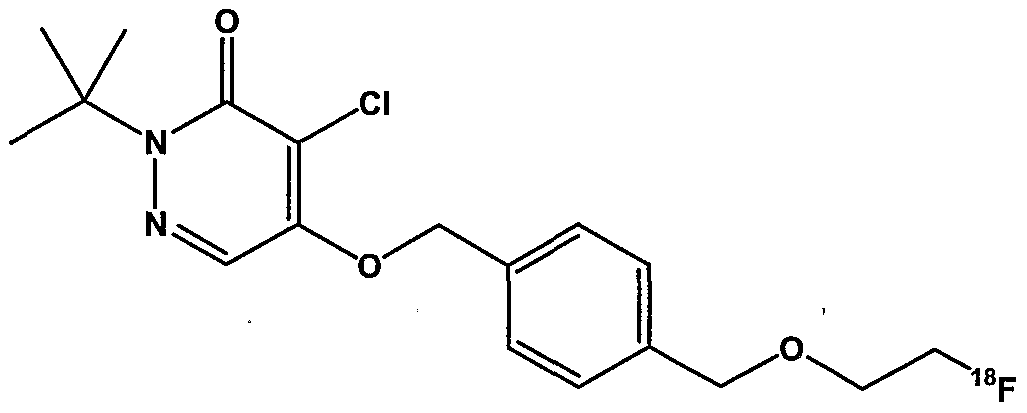
- 0 CC(C)(C)N(C1=O)N=CC(OCc2ccc(COCC*)cc2)=C1Cl Chemical compound CC(C)(C)N(C1=O)N=CC(OCc2ccc(COCC*)cc2)=C1Cl 0.000 description 3
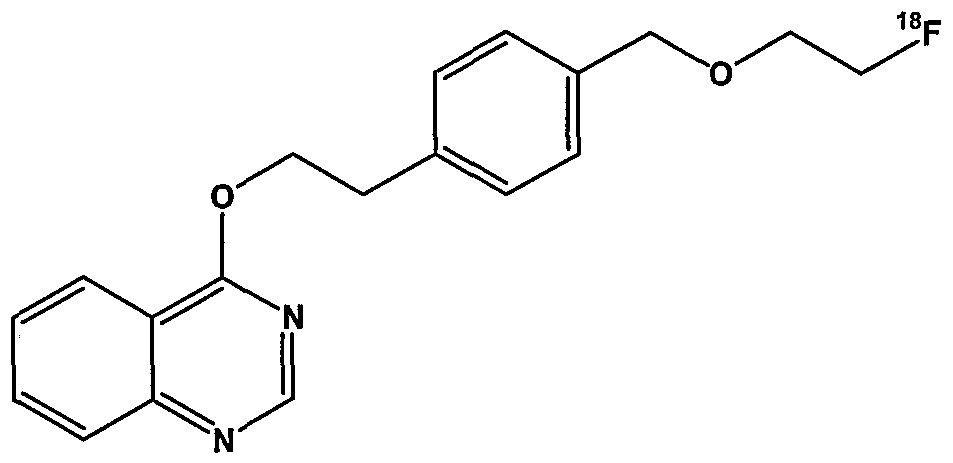
- VHUJGHMUXYBTDM-UHFFFAOYSA-N SCCOCc1ccc(CCOc2c(cccc3)c3ncn2)cc1 Chemical compound SCCOCc1ccc(CCOc2c(cccc3)c3ncn2)cc1 VHUJGHMUXYBTDM-UHFFFAOYSA-N 0.000 description 1
Classifications
-
- C—CHEMISTRY; METALLURGY
- C07—ORGANIC CHEMISTRY
- C07D—HETEROCYCLIC COMPOUNDS
- C07D237/00—Heterocyclic compounds containing 1,2-diazine or hydrogenated 1,2-diazine rings
- C07D237/02—Heterocyclic compounds containing 1,2-diazine or hydrogenated 1,2-diazine rings not condensed with other rings
- C07D237/06—Heterocyclic compounds containing 1,2-diazine or hydrogenated 1,2-diazine rings not condensed with other rings having three double bonds between ring members or between ring members and non-ring members
- C07D237/10—Heterocyclic compounds containing 1,2-diazine or hydrogenated 1,2-diazine rings not condensed with other rings having three double bonds between ring members or between ring members and non-ring members with hetero atoms or with carbon atoms having three bonds to hetero atoms with at the most one bond to halogen, e.g. ester or nitrile radicals, directly attached to ring carbon atoms
- C07D237/14—Oxygen atoms
-
- A—HUMAN NECESSITIES
- A61—MEDICAL OR VETERINARY SCIENCE; HYGIENE
- A61K—PREPARATIONS FOR MEDICAL, DENTAL OR TOILETRY PURPOSES
- A61K51/00—Preparations containing radioactive substances for use in therapy or testing in vivo
- A61K51/02—Preparations containing radioactive substances for use in therapy or testing in vivo characterised by the carrier, i.e. characterised by the agent or material covalently linked or complexing the radioactive nucleus
- A61K51/04—Organic compounds
- A61K51/041—Heterocyclic compounds
- A61K51/0412—Heterocyclic compounds having oxygen as the only ring hetero atom, e.g. fungichromin
- A61K51/0421—Heterocyclic compounds having oxygen as the only ring hetero atom, e.g. fungichromin having six-membered rings with one oxygen as the only ring hetero atom
-
- A—HUMAN NECESSITIES
- A61—MEDICAL OR VETERINARY SCIENCE; HYGIENE
- A61K—PREPARATIONS FOR MEDICAL, DENTAL OR TOILETRY PURPOSES
- A61K51/00—Preparations containing radioactive substances for use in therapy or testing in vivo
- A61K51/02—Preparations containing radioactive substances for use in therapy or testing in vivo characterised by the carrier, i.e. characterised by the agent or material covalently linked or complexing the radioactive nucleus
- A61K51/04—Organic compounds
- A61K51/041—Heterocyclic compounds
- A61K51/044—Heterocyclic compounds having nitrogen as a ring hetero atom, e.g. guanethidine, rifamycins
- A61K51/0459—Heterocyclic compounds having nitrogen as a ring hetero atom, e.g. guanethidine, rifamycins having six-membered rings with two nitrogen atoms as the only ring hetero atoms, e.g. piperazine
-
- C—CHEMISTRY; METALLURGY
- C07—ORGANIC CHEMISTRY
- C07B—GENERAL METHODS OF ORGANIC CHEMISTRY; APPARATUS THEREFOR
- C07B59/00—Introduction of isotopes of elements into organic compounds ; Labelled organic compounds per se
- C07B59/002—Heterocyclic compounds
-
- C—CHEMISTRY; METALLURGY
- C07—ORGANIC CHEMISTRY
- C07D—HETEROCYCLIC COMPOUNDS
- C07D237/00—Heterocyclic compounds containing 1,2-diazine or hydrogenated 1,2-diazine rings
- C07D237/02—Heterocyclic compounds containing 1,2-diazine or hydrogenated 1,2-diazine rings not condensed with other rings
-
- C—CHEMISTRY; METALLURGY
- C07—ORGANIC CHEMISTRY
- C07D—HETEROCYCLIC COMPOUNDS
- C07D237/00—Heterocyclic compounds containing 1,2-diazine or hydrogenated 1,2-diazine rings
- C07D237/02—Heterocyclic compounds containing 1,2-diazine or hydrogenated 1,2-diazine rings not condensed with other rings
- C07D237/06—Heterocyclic compounds containing 1,2-diazine or hydrogenated 1,2-diazine rings not condensed with other rings having three double bonds between ring members or between ring members and non-ring members
- C07D237/10—Heterocyclic compounds containing 1,2-diazine or hydrogenated 1,2-diazine rings not condensed with other rings having three double bonds between ring members or between ring members and non-ring members with hetero atoms or with carbon atoms having three bonds to hetero atoms with at the most one bond to halogen, e.g. ester or nitrile radicals, directly attached to ring carbon atoms
- C07D237/14—Oxygen atoms
- C07D237/16—Two oxygen atoms
-
- C—CHEMISTRY; METALLURGY
- C07—ORGANIC CHEMISTRY
- C07D—HETEROCYCLIC COMPOUNDS
- C07D239/00—Heterocyclic compounds containing 1,3-diazine or hydrogenated 1,3-diazine rings
- C07D239/70—Heterocyclic compounds containing 1,3-diazine or hydrogenated 1,3-diazine rings condensed with carbocyclic rings or ring systems
- C07D239/72—Quinazolines; Hydrogenated quinazolines
- C07D239/86—Quinazolines; Hydrogenated quinazolines with hetero atoms directly attached in position 4
- C07D239/88—Oxygen atoms
-
- C—CHEMISTRY; METALLURGY
- C07—ORGANIC CHEMISTRY
- C07D—HETEROCYCLIC COMPOUNDS
- C07D311/00—Heterocyclic compounds containing six-membered rings having one oxygen atom as the only hetero atom, condensed with other rings
- C07D311/02—Heterocyclic compounds containing six-membered rings having one oxygen atom as the only hetero atom, condensed with other rings ortho- or peri-condensed with carbocyclic rings or ring systems
- C07D311/04—Benzo[b]pyrans, not hydrogenated in the carbocyclic ring
- C07D311/42—Benzo[b]pyrans, not hydrogenated in the carbocyclic ring with oxygen or sulfur atoms in positions 2 and 4
Definitions
- the present disclosure relates to a solid-phase process for the production of radiolabeled tracers, in particular for the production of F-labeled compounds which may be used as Positron Emission Tomography (PET) radiolabeled tracers.
- PET Positron Emission Tomography
- the disclosure also relates to radiopharmaceutical kits comprising precursors to the radiolabeled tracers, which can be converted to the radiolabeled tracers using the processes described herein.
- the favored radioisotope for PET, F has a relatively short half-life of 110 minutes.
- 18 F-labeled tracers for PET therefore have to be synthesized and purified as rapidly as possible, and ideally within one hour of clinical use.
- Standard synthetic methods for introducing 18 F are relatively slow and require post-reaction purification (for example, by HPLC) which means that it is difficult to obtain the 18 F-labeled tracer for clinical use in good radiochemical yield.
- HPLC post-reaction purification
- the present disclosure provides materials and methods for the synthesis of tracers that are useful in the imaging of cardiovascular tissue by interaction with mitochondrial complex I. Furthermore, the present disclosure provides a solid-phase process for producing 18 F-labeled tracers quickly and with high specific activity yet avoiding time-consuming purification steps, such that the resultant F-labeled tracer is suitable for use in PET. The solid-phase methods also lend themselves to automation with advantages of ease of production and greater throughput. The disclosure also comprises radiopharmaceutical kits which use such processes and thus provide the radiopharmacist or clinician with a convenient means of preparing an 18 F-labeled tracer.
- the disclosure provides a process for the production of an 18 F-labeled tracer which comprises treatment of a resin-bound precursor of formula (VII)
- the 18 F-labeled tracer of formula (VIII) As the 18 F-labeled tracer of formula (VIII) is removed from the solid-phase into solution, all unreacted precursor remains bound to the resin and can be separated by simple filtration, thus obviating the need for complicated purification, for example, by HPLC.
- the 18 F-labeled tracer of formula (VIII) may be cleaned up by removal of excess F " , for example by ion-exchange chromatography and/or by removal of any organic solvent.
- the resultant 18 F-labeled tracer of formula (VIII) may then be further made-up into an appropriate formulation for clinical use.
- Examples of tracers which may be 18 F-labeled in the manner of the disclosure include analogs of the insecticides pyridaben, fenazaquin, tebufenpyrad, fenpyroximate, and rotenone. Additionally the process may be used to manufacture 18 F-labeled analogs of piericidin, 2-substituted chromones and the class of compounds collectively referred to as annonaceous acetogenins. These compound classes contain analogs that possess a high affinity for mitochondrial complex I.
- the tracer produced is selected from analogs of pyridaben, fenazaquin, 2-substituted chromones and annonaceous acetogenins, and is most preferably and analog of pyridaben or 2-substituted chromones.
- X is a group which promotes nucleophilic substitution at a specific site on the attached TRACER. Examples of X include — SO 2 O-- as in formula (Vila) below.
- the disclosure provides a process for the production of an
- the TRACER is suitably an analog of pyridaben, fenazaquin, a 2-substituted chromone or an annonaceous acetogenin or a precursor thereof in which one or more functional groups have been protected.
- the TRACER in the compound of formula (Vila) is pyridaben or a precursor thereof.
- the compound of formula (Vila) may be conveniently prepared from any sulphonic acid functionalized commercially available resin, such as Merrifield Resin, NovaSyn.RTM, TG Bromo Resin, (Bromomethyl)phenoxymethyl polystyrene, or Wang Resin which may be reacted with a chlorinating agent to give the corresponding sulphonyl chloride resin. This may be carried out by treating the resin with, for example, phosphorus pentachloride, phosphorus trichloride, oxalyl chloride, or thionyl chloride, in an appropriate inert solvent such as dichloromethane, chloroform, or acetonitrile, and heating at elevated temperature for a period of time.
- any sulphonic acid functionalized commercially available resin such as Merrifield Resin, NovaSyn.RTM, TG Bromo Resin, (Bromomethyl)phenoxymethyl polystyrene, or Wang Resin which may be reacted with a chlor
- the excess reagent may then be removed from the resin by washing with further portions of the inert solvent.
- the sulphonyl chloride resin may then be reacted with the alcohol analogue of the tracer to produce the resin-bound precursor of formula (Vila). This may be carried out by treating the resin with a solution of the alcohol in an inert solvent such as chloroform, dichloromethane, acetonitrile, or tetrahydrofuran containing a non-nucleophilic soluble base such as sodium hydride or a trialkylamine, for example triethylamine or diisopropylethylamine.
- an inert solvent such as chloroform, dichloromethane, acetonitrile, or tetrahydrofuran containing a non-nucleophilic soluble base such as sodium hydride or a trialkylamine, for example triethylamine or diisopropylethylamine.
- the reaction may be carried out at a temperature of 10 to 80° C, optimally at ambient temperature for a period of from around 1 to 24 hours.
- the excess alcohol and base may then be removed from the solid support by washing with further portions of an inert solvent such as chloroform, dichloromethane, or tetrahydrofuran.
- the "SOLID SUPPORT” maybe any suitable solid- phase support which is insoluble in any solvents to be used in the process but to which the LINKER and/or TRACER can be covalently bound.
- suitable SOLID SUPPORT include polymers such as polystyrene (which may be block grafted, for example with polyethylene glycol), polyacrylamide, or polypropylene or glass or silicon coated with such a polymer.
- the solid support may be in the form of small discrete particles such as beads or pins, or as a coating on the inner surface of a cartridge or on a microfabricated vessel.
- the "LINKER” maybe any suitable organic group which serves to space the reactive site sufficiently from the solid support structure so as to maximize reactivity.
- the LINKER comprises zero to four aryl groups (suitably phenyl) and/or a C 1-6 alkyl or C 1-6 haloalkyl (suitably C 1-6 fluoroalkyl), and optionally one to four additional functional groups such as amide or sulphonamide groups. Examples of such linkers are well known to those skilled in the art of solid- phase chemistry.
- any protecting groups in the TRACER may be removed by simple procedures which are also standard in the art. Suitable protection and deprotection methodologies may be found, for example, in Protecting Groups in Organic Synthesis, Theodora W. Greene and Peter G. M. Wuts, published by John Wiley & Sons Inc.
- Treatment of the compound of formula (VII) or (Vila) with 18 F " may be effected by treatment with any suitable source of 18 F " , such as Na 18 F, K 18 F, Cs 18 F, tetraalkylammonium [ 18 F] fluoride, or tetraalkylphosphonium [ 18 F] fluoride.
- a phase transfer catalyst such as 4,7,13,16,21,24 hexaoxa-l,10-diazabicyclo[8,8,8] hexacosane may be added and the reaction performed in a non-protic solvent. These conditions give reactive fluoride ions.
- the treatment with 18 F " is suitably effected in the presence of a suitable organic solvent such as acetonitrile, dimethylformamide, dimethylsulfoxide, tetrahydrofuran, 1,4-dioxane, 1,2 dimethoxyethane, sulpholane, l-Methylpyrrolidin-2-one (N- methylpyrrolidinone, NMP), at a non-extreme temperature, for example, 15 0 C to 180° C, preferably at elevated temperature.
- a suitable organic solvent such as acetonitrile, dimethylformamide, dimethylsulfoxide, tetrahydrofuran, 1,4-dioxane, 1,2 dimethoxyethane, sulpholane, l-Methylpyrrolidin-2-one (N- methylpyrrolidinone, NMP), at a non-extreme temperature, for example, 15 0 C to 180° C, preferably at elevated temperature.
- Any excess 18 F " may be removed from the solution of 18 F " tracer by any suitable means, for example by ion-exchange chromatography or solid phase absorbents.
- Suitable ion-exchange resins include BIO-RAD AG 1-X8 or Waters QMA and suitable solid phase absorbents include alumina.
- the excess 18 F " may be removed using such solid phases at room temperature in aprotic solvents.
- Any organic solvent may be removed by any standard method such as by evaporation at elevated temperature in vacuo or by passing a stream of inert gas such as nitrogen or argon over the solution.
- the 18 F " labeled tracer Before use of the 18 F " labeled tracer, it may be appropriate to formulate it, for example as an aqueous solution by dissolving the 18 F " labeled tracer in sterile isotonic saline which may contain up to 10% of a suitable organic solvent such as ethanol, or a suitable buffered solution such as phosphate buffer. Other additives may be added such as ascorbic acid to reduce radiolysis.
- the present disclosure provides, in a further aspect, a process for the production of 2-tert-Butyl-4-chloro-5-[4-(2-[ 18 F]-fluoro-ethoxymethyl)-benzyloxy]- 2H-pyridazin-3-one which comprises treatment of a solid support-bound precursor of formula (II):
- the LINKER is preferably -(CH 2 V wherein n is 0 to 3, and is more preferably 6; and the SOLID SUPPORT is suitably a polystyrene resin.
- any protecting groups from the compound of formula (Ha) may be effected by standard methods as referred to above.
- the sugar hydroxyl groups are protected as esters, suitably C 1-8 alkanoic esters, preferably as acetate esters, or as ethers, preferably C 1-6 alkoxy methyl ethers, or acetals.
- Ester, acetal, or ether protecting groups may be conveniently removed by hydrolysis, for example in the presence of acid or base.
- Such deprotections may be effected by using solid supported acid or base catalysts that render the need for post deprotection neutralization unnecessary.
- the present disclosure provides in a further aspect, a process for the production of a radiotracer which comprises treatment of a solid support-bound precursor of formula (I) :
- Sup is a solid support, resin, polymer or macromolecular matrix
- X and Y are each independently selected at each instance from the set of S, O, or -(CH 2 )-, n is 0 to 6, and is more preferably 3, and R is C 1-6 alkyl;
- the present disclosure provides in a further aspect, a process for the production of a radiotracer which comprises treatment of a solid support-bound precursor of formula (III):
- Sup is a solid support, resin, polymer or macromolecular matrix
- X and Y are each independently selected at each instance from the set of S, O, or -(CH 2 )-
- n is 0 to 6, and is more preferably 3
- the present disclosure provides in a further aspect, a process for the production of a radiotracer which comprises treatment of a solid support-bound precursor of formula (V):
- the advantages of such solid-phase processes for preparation of F-labeled tracers include the relative speed of the process, simplified purification methods and ease of automation—all of which mean that the processes are suitable for preparation of 18 F-labeled tracers for use in PET. Accordingly, the present disclosure provides the use of a process for the manufacture of a F-labeled tracer of formula (VIII) or (Ia, Ha, HIa, IVa, Va or Via) for use in PET.
- the solid support bound precursor of formula (VII) could be provided as part of a kit to a radiopharmacy.
- the kit may contain a cartridge which can be plugged into a suitably adapted automated synthesizer.
- the cartridge may contain, apart from the solid support-bound precursor, a column to remove unwanted fluoride ion, and an appropriate vessel connected so as to allow the reaction mixture to be evaporated and allow the product to be formulated as required.
- the reagents and solvents and other consumables required for the synthesis may also be included together with a compact disc carrying the software which allows the synthesizer to be operated in a way so as to meet the customers requirements for radioactive concentration, volumes, time of delivery etc.
- kits are disposable to minimize the possibilities of contamination between runs and may be sterile and quality assured.
- the disclosure further provides a radiopharmaceutical kit for the preparation of an 18 F-labeled tracer for use in PET, which comprises:
- the disclosure further provides a cartridge for a radiopharmaceutical kit for the preparation of an 18 F-labeled tracer for use in PET which comprises: (i) a vessel containing a compound of formula (Ia, Ha, Ilia, IVa, Va, Via or VIII); and (ii) means for eluting the vessel with a source of 18 F " .
- a method for obtaining a diagnostic PET image which comprises the step of using a radiopharmaceutical kit or a cartridge for a radiopharmaceutical kit as described above.
- Example Ia Synthesis ofPS-4-(Benzyl-ethyl-sulfonamide)octqfluoro-butane-l- sulfonic acid
- the solvent was removed by filtration and the resin washed with consecutive addition and filtration of dichloromethane (5 ml), methanol (5 ml), DMF (5 ml), water (5 ml), methanol (5 ml), and dichloromethane (5 ml).
- the resulting resin was then treated with NaOH (IM) in THF/water (2 x 2 ml) before washing with consecutive portions of methanol (5 ml), dichloromethane (5 ml) and methanol (5 ml) again.
- the resin was then dried under high vacuum.
- a portion of the resin prepared in the manner of Example Ia above is swollen with dichloromethane (2 ml) and then washed consecutively with HCl (IM) in THF/water (10 x 5 ml) to give the free sulphonic acid.
- the resin is washed consecutively with dichloromethane, methanol and THF before drying under high vacuum.
- the resin is then suspended in dichloromethane and to it is added in excess a common chlorinating agent such as phosphorous pentachloride, phosphorus trichloride or thionyl chloride. The suspension is stirred for 2 hours before filtration and then washing of the resin with dichloromethane and then THF.
- Example Ic To a portion of the resin (prepared as described in Example Ic) held in a cartridge is added a solution in dry acetonitrile of kryptofix[2.2.2], potassium carbonate and [ 18 F]-fluoride. The cartridge is heated to 85°C. for 10 minutes and then the solution is eluted. The solution is then passed onto a C- 18 solid phase extraction cartridge and washed with water to remove acetonitrile, kryptofix and potassium carbonate. The product is eluted from the column with acetonitrile, and analytical aliquot is taken. The solvent is removed and the resultant material is reconstituted in an appropriate buffer for injection, and sterilized by passage through a 0.2 ⁇ filter.
- Example 2b Radiofluorination to prepare 4- ⁇ 2-[4-(2-[ 18 F]Fluoro-ethoxymethyl)- phenyl] -ethoxy ⁇ -quinazoline (Wa)
- Example 2a To a portion of the resin (prepared as described in Example 2a held in a cartridge is added a solution in dry acetonitrile of kryptof ⁇ x[2.2.2], potassium carbonate and [ 18 F] -fluoride. The cartridge is heated to 85°C. for 10 minutes and then the solution is eluted. The solution is then passed onto a C- 18 solid phase extraction cartridge and washed with water to remove acetonitrile, kryptofix and potassium carbonate. The product is eluted from the column with acetonitrile, and analytical aliquot is taken. The solvent is removed and the resultant material is reconstituted in an appropriate buffer for injection, and sterilized by passage through a 0.2 ⁇ filter.
- Example 3a To a portion of the resin (prepared as described in Example 3a held in a cartridge is added a solution in dry acetonitrile of kryptofix[2.2.2], potassium carbonate and [ 18 F]-fluoride. The cartridge is heated to 85°C. for 12 minutes and then the solution is eluted. The solution is then passed onto a C- 18 solid phase extraction cartridge and washed with water to remove acetonitrile, kryptof ⁇ x and potassium carbonate. The product is eluted from the column with acetonitrile, and analytical aliquot is taken. The solvent is removed and the resultant material is reconstituted in an appropriate buffer for injection, and sterilized by passage through a 0.2 ⁇ filter.
Landscapes
- Chemical & Material Sciences (AREA)
- Organic Chemistry (AREA)
- Health & Medical Sciences (AREA)
- Life Sciences & Earth Sciences (AREA)
- Pharmacology & Pharmacy (AREA)
- Physics & Mathematics (AREA)
- Medicinal Chemistry (AREA)
- Optics & Photonics (AREA)
- Proteomics, Peptides & Aminoacids (AREA)
- Epidemiology (AREA)
- Animal Behavior & Ethology (AREA)
- General Health & Medical Sciences (AREA)
- Public Health (AREA)
- Veterinary Medicine (AREA)
- Medicines Containing Antibodies Or Antigens For Use As Internal Diagnostic Agents (AREA)
- Organic Low-Molecular-Weight Compounds And Preparation Thereof (AREA)
- Addition Polymer Or Copolymer, Post-Treatments, Or Chemical Modifications (AREA)
Abstract
The present disclosure relates to a solid-phase process for the production of radiolabeled tracers, in particular for the production of 18F-labeled compounds which may be used as Positron Emission Tomography (PET) radiolabeled tracers. The disclosure also relates to radiopharmaceutical kits comprising precursors to the radiolabeled tracers, which can be converted to the radiolabeled tracers using the processes described herein.
Description
METHODS OF MAKING RADIOLABELED TRACERS AND PRECURSORS THEREOF
CROSS- REFERENCE TO RELATED APPLICATIONS
This application claims the benefit of U.S. Provisional Application Serial Number 60/706,885 filed August 10, 2005.
The present disclosure relates to a solid-phase process for the production of radiolabeled tracers, in particular for the production of F-labeled compounds which may be used as Positron Emission Tomography (PET) radiolabeled tracers. The disclosure also relates to radiopharmaceutical kits comprising precursors to the radiolabeled tracers, which can be converted to the radiolabeled tracers using the processes described herein.
1 Si
The favored radioisotope for PET, F, has a relatively short half-life of 110 minutes. 18F-labeled tracers for PET therefore have to be synthesized and purified as rapidly as possible, and ideally within one hour of clinical use. Standard synthetic methods for introducing 18F are relatively slow and require post-reaction purification (for example, by HPLC) which means that it is difficult to obtain the 18F-labeled tracer for clinical use in good radiochemical yield. There is also a need for automation to protect the operator from radiation exposure. Many radiofluorinations are complicated procedures and it is necessary to simplify them to facilitate automation.
The present disclosure provides materials and methods for the synthesis of tracers that are useful in the imaging of cardiovascular tissue by interaction with mitochondrial complex I. Furthermore, the present disclosure provides a solid-phase process for producing 18F-labeled tracers quickly and with high specific activity yet avoiding time-consuming purification steps, such that the resultant F-labeled tracer is suitable for use in PET. The solid-phase methods also lend themselves to automation with advantages of ease of production and greater throughput. The disclosure also comprises radiopharmaceutical kits which use such processes and
thus provide the radiopharmacist or clinician with a convenient means of preparing an 18F-labeled tracer.
hi a general aspect, the disclosure provides a process for the production of an 18F-labeled tracer which comprises treatment of a resin-bound precursor of formula (VII)
SOLID SUPPORT-LINKER-X-TRACER (VII)
with 18F" to produce the labeled tracer of formula (VIII)
18F -TRACER (VIII).
As the 18F-labeled tracer of formula (VIII) is removed from the solid-phase into solution, all unreacted precursor remains bound to the resin and can be separated by simple filtration, thus obviating the need for complicated purification, for example, by HPLC. The 18F-labeled tracer of formula (VIII) may be cleaned up by removal of excess F", for example by ion-exchange chromatography and/or by removal of any organic solvent. The resultant 18F-labeled tracer of formula (VIII) may then be further made-up into an appropriate formulation for clinical use.
Examples of tracers which may be 18F-labeled in the manner of the disclosure include analogs of the insecticides pyridaben, fenazaquin, tebufenpyrad, fenpyroximate, and rotenone. Additionally the process may be used to manufacture 18F-labeled analogs of piericidin, 2-substituted chromones and the class of compounds collectively referred to as annonaceous acetogenins. These compound classes contain analogs that possess a high affinity for mitochondrial complex I. hi preferred aspects of the disclosure, the tracer produced is selected from analogs of pyridaben, fenazaquin, 2-substituted chromones and annonaceous acetogenins, and is most preferably and analog of pyridaben or 2-substituted chromones.
In the compounds of formula (I)5 X is a group which promotes nucleophilic substitution at a specific site on the attached TRACER. Examples of X include — SO2O-- as in formula (Vila) below.
In a further aspect, the disclosure provides a process for the production of an
18F-labeled tracer which comprises treatment of a resin-bound precursor of formula (Vila)
SOLID SUPPORT-LINKER-SO2O-TRACER (Vila)
with 18F" to produce the labeled tracer of formula (VIII)
18F -TRACER (VIII)
followed by optionally
(i) removal of excess 18F", for example by ion-exchange chromatography; and/or
(ii) removal of any protecting groups; and/or
(iii) removal of organic solvent; and/or
(iv) formulation of the resultant compound of formula (VIII) as an aqueous solution.
In the compound of formula (Vila), the TRACER is suitably an analog of pyridaben, fenazaquin, a 2-substituted chromone or an annonaceous acetogenin or a precursor thereof in which one or more functional groups have been protected. Most suitably, the TRACER in the compound of formula (Vila) is pyridaben or a precursor thereof.
The compound of formula (Vila) may be conveniently prepared from any sulphonic acid functionalized commercially available resin, such as Merrifield Resin, NovaSyn.RTM, TG Bromo Resin, (Bromomethyl)phenoxymethyl polystyrene, or
Wang Resin which may be reacted with a chlorinating agent to give the corresponding sulphonyl chloride resin. This may be carried out by treating the resin with, for example, phosphorus pentachloride, phosphorus trichloride, oxalyl chloride, or thionyl chloride, in an appropriate inert solvent such as dichloromethane, chloroform, or acetonitrile, and heating at elevated temperature for a period of time. The excess reagent may then be removed from the resin by washing with further portions of the inert solvent. The sulphonyl chloride resin may then be reacted with the alcohol analogue of the tracer to produce the resin-bound precursor of formula (Vila). This may be carried out by treating the resin with a solution of the alcohol in an inert solvent such as chloroform, dichloromethane, acetonitrile, or tetrahydrofuran containing a non-nucleophilic soluble base such as sodium hydride or a trialkylamine, for example triethylamine or diisopropylethylamine. The reaction may be carried out at a temperature of 10 to 80° C, optimally at ambient temperature for a period of from around 1 to 24 hours. The excess alcohol and base may then be removed from the solid support by washing with further portions of an inert solvent such as chloroform, dichloromethane, or tetrahydrofuran.
In the compounds of formulae (VII) and (Vila) and in the following more specific aspects of the disclosure, the "SOLID SUPPORT" maybe any suitable solid- phase support which is insoluble in any solvents to be used in the process but to which the LINKER and/or TRACER can be covalently bound. Examples of suitable SOLID SUPPORT include polymers such as polystyrene (which may be block grafted, for example with polyethylene glycol), polyacrylamide, or polypropylene or glass or silicon coated with such a polymer. The solid support may be in the form of small discrete particles such as beads or pins, or as a coating on the inner surface of a cartridge or on a microfabricated vessel.
In the compounds of formulae (VII) and (Vila) and in the following more specific aspects of the disclosure, the "LINKER" maybe any suitable organic group which serves to space the reactive site sufficiently from the solid support structure so as to maximize reactivity. Suitably, the LINKER comprises zero to four aryl groups (suitably phenyl) and/or a C1-6 alkyl or C1-6 haloalkyl (suitably C1-6 fluoroalkyl), and optionally one to four additional functional groups such as amide or sulphonamide
groups. Examples of such linkers are well known to those skilled in the art of solid- phase chemistry.
As would be apparent to the person skilled in the art, it may be necessary to protect functional groups in the TRACER to avoid unwanted reactions during the radiolabeling process. Such protection may be achieved using standard methods of protecting group chemistry. After the radiolabeling is complete, any protecting groups may be removed by simple procedures which are also standard in the art. Suitable protection and deprotection methodologies may be found, for example, in Protecting Groups in Organic Synthesis, Theodora W. Greene and Peter G. M. Wuts, published by John Wiley & Sons Inc.
Treatment of the compound of formula (VII) or (Vila) with 18F" may be effected by treatment with any suitable source of 18F", such as Na18F, K18F, Cs18F, tetraalkylammonium [18F] fluoride, or tetraalkylphosphonium [18F] fluoride. To increase the reactivity of the fluoride, a phase transfer catalyst such as 4,7,13,16,21,24 hexaoxa-l,10-diazabicyclo[8,8,8] hexacosane may be added and the reaction performed in a non-protic solvent. These conditions give reactive fluoride ions. The treatment with18F" is suitably effected in the presence of a suitable organic solvent such as acetonitrile, dimethylformamide, dimethylsulfoxide, tetrahydrofuran, 1,4-dioxane, 1,2 dimethoxyethane, sulpholane, l-Methylpyrrolidin-2-one (N- methylpyrrolidinone, NMP), at a non-extreme temperature, for example, 150C to 180° C, preferably at elevated temperature. On completion of the reaction, the 18F- labeled tracer of formula (VIII) dissolved in the solvent is conveniently separated from the solid-phase by filtration. The same fluorination techniques may be used in the following more specific aspects of the disclosure.
Any excess 18F" may be removed from the solution of 18F" tracer by any suitable means, for example by ion-exchange chromatography or solid phase absorbents. Suitable ion-exchange resins include BIO-RAD AG 1-X8 or Waters QMA and suitable solid phase absorbents include alumina. The excess 18F" may be removed using such solid phases at room temperature in aprotic solvents.
Any organic solvent may be removed by any standard method such as by evaporation at elevated temperature in vacuo or by passing a stream of inert gas such as nitrogen or argon over the solution.
Before use of the 18F" labeled tracer, it may be appropriate to formulate it, for example as an aqueous solution by dissolving the 18F" labeled tracer in sterile isotonic saline which may contain up to 10% of a suitable organic solvent such as ethanol, or a suitable buffered solution such as phosphate buffer. Other additives may be added such as ascorbic acid to reduce radiolysis.
The present disclosure provides, in a further aspect, a process for the production of 2-tert-Butyl-4-chloro-5-[4-(2-[18F]-fluoro-ethoxymethyl)-benzyloxy]- 2H-pyridazin-3-one which comprises treatment of a solid support-bound precursor of formula (II):

(H) wherein Sup denotes an appropriate solid support, with 18F' to produce the labeled tracer of formula (Ha)

(Ha) optionally followed by
(i) removal of excess 18- Fc-", for example by ion-exchange chromatography; and/or
(ii) removal of organic solvent; and/or
(iii) formulation of the resultant compound of formula (Ila) as an aqueous solution.
In the compound of formula (II) the LINKER is preferably -(CH2V wherein n is 0 to 3, and is more preferably 6; and the SOLID SUPPORT is suitably a polystyrene resin.
Removal of any protecting groups from the compound of formula (Ha) may be effected by standard methods as referred to above. In a preferred embodiment of this aspect of the disclosure, the sugar hydroxyl groups are protected as esters, suitably C1-8 alkanoic esters, preferably as acetate esters, or as ethers, preferably C1-6 alkoxy methyl ethers, or acetals. Ester, acetal, or ether protecting groups may be conveniently removed by hydrolysis, for example in the presence of acid or base. Such deprotections may be effected by using solid supported acid or base catalysts that render the need for post deprotection neutralization unnecessary.
The present disclosure provides in a further aspect, a process for the production of a radiotracer which comprises treatment of a solid support-bound precursor of formula (I) :

(I) wherein Sup is a solid support, resin, polymer or macromolecular matrix, X and Y are each independently selected at each instance from the set of S, O, or -(CH2)-, n is 0 to 6, and is more preferably 3, and R is C1-6 alkyl;
with 18F" to produce the labeled tracer of formula (Ia)
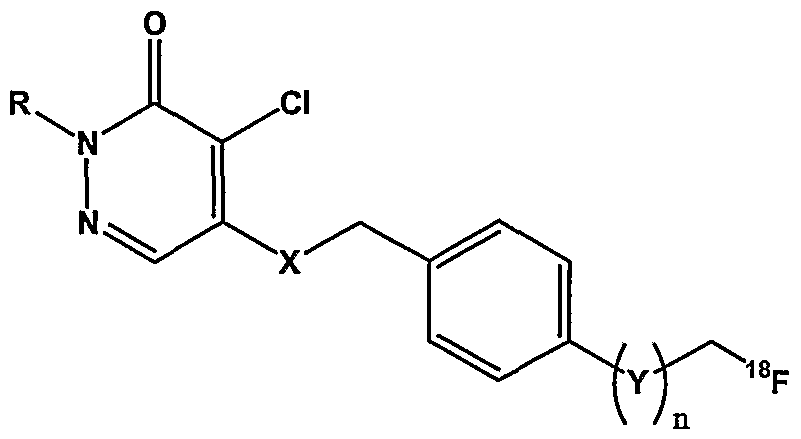
(Ia) wherein X and Y are each independently selected at each instance from the set of S, O, or -(CH2)-, n is 0 to 6, and is more preferably 3, and R is C1-6 alkyl;
optionally followed by
(i) removal of excess 18- Fcv"-, for example by ion-exchange chromatography; and/or
(ii) removal of organic solvent; and/or
(iii) formulation of the resultant compound of formula (Ia) as an aqueous solution.
The present disclosure provides in a further aspect, a process for the production of a radiotracer which comprises treatment of a solid support-bound precursor of formula (III):

(III) wherein Sup is a solid support, resin, polymer or macromolecular matrix, X and Y are each independently selected at each instance from the set of S, O, or -(CH2)-, n is 0 to 6, and is more preferably 3, m is 0 to 6, preferably 2, independently at each occurrence absent, alkyl, alkoxy, aryloxy, arylalkoxy, -CH=CH-CH=CH-, or -CH=CH-Z- (A and A could join to form a bicyclic structure), wherein Z is O, S, NH, or NR where R is alkyl, alkyloxy, or aryl;
with 18F" to produce the labeled tracer of formula (Ilia)
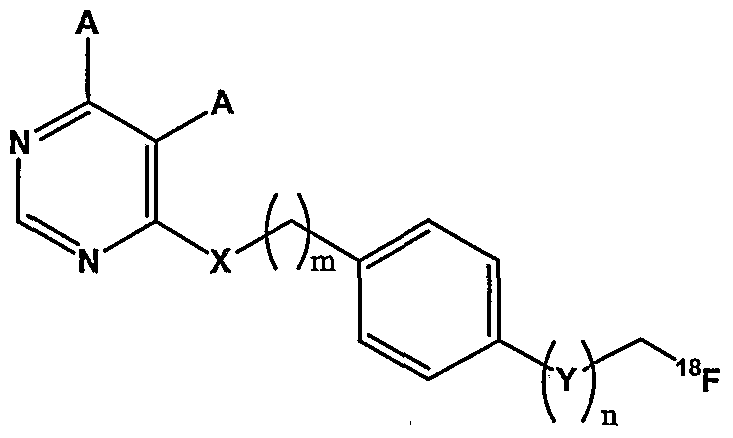
(Ilia) wherein X and Y are each independently selected at each instance from the set of S, O, or -(CH2)-, n is 0 to 6, and is more preferably 3, m is 0 to 6, preferably 2, A is independently at each occurrence absent, alkyl, alkoxy, aryloxy, arylalkoxy, -CH=CH-CH=CH-, or -CH=CH-Z- (A and A could join to form a bicyclic structure), wherein Z is O, S, NH, or NR where R is alkyl, alkyloxy, or aryl;
optionally followed by
(i) removal of excess 18F", for example by ion-exchange chromatography; and/or (ii) removal of organic solvent; and/or
(iii) formulation of the resultant compound of formula (Ilia) as an appropriate aqueous solution.
The present disclosure provides in a further aspect, a process for the production of a radiotracer which comprises treatment of a solid support-bound precursor of formula (V):

(V) wherein Sup is a solid support, resin, polymer or macromolecular matrix, Y is independently selected at each instance from the set of S, O, or -(CH2)-, n is 0 to 6, and is more preferably 3, X is independently selected at each instance from S, O, NH
or NR2, where R2 is alkyl, alkyloxy, or aryl, m is 0 to 6, preferably 2, A is independently at each occurrence absent, alkyl, alkoxy, aryloxy, arylalkoxy, -CH=CH-CH=CH-, or -CH=CH-Z- (A and A could join to form a bicyclic structure), wherein Z is O, S3 NH, or NR where R is alkyl, alkyloxy, or aryl and R1 is halogen or Ci-6 alkyl;
with 18c F-' , to produce the labeled tracer of formula (Va)

(Va) wherein Y is independently selected at each instance from the set of S, O, or -(CH2)-, n is 0 to 6, and is more preferably 3, X is independently selected at each instance from S, O, NH or NR2, where R2 is alkyl, alkyloxy, or aryl, m is 0 to 6, preferably 2, A is independently at each occurrence absent, alkyl, alkoxy, aryloxy, arylalkoxy, -CH=CH-CH=CH-, or -CH=CH-Z- (A and A could join to form a bicyclic structure), wherein Z is O, S, NH, or NR where R is alkyl, alkyloxy, or aryl and Ri is halogen or Ci-6 alkyl;
optionally followed by
(i) removal of excess 18F", for example by ion-exchange chromatography; and/or (ii) removal of organic solvent; and/or
(iii) formulation of the resultant compound of formula (Va) as an appropriate aqueous solution.
As described above, the advantages of such solid-phase processes for preparation of F-labeled tracers include the relative speed of the process, simplified purification methods and ease of automation—all of which mean that the processes are suitable for preparation of 18F-labeled tracers for use in PET. Accordingly, the
present disclosure provides the use of a process for the manufacture of a F-labeled tracer of formula (VIII) or (Ia, Ha, HIa, IVa, Va or Via) for use in PET.
Conveniently, the solid support bound precursor of formula (VII) could be provided as part of a kit to a radiopharmacy. The kit may contain a cartridge which can be plugged into a suitably adapted automated synthesizer. The cartridge may contain, apart from the solid support-bound precursor, a column to remove unwanted fluoride ion, and an appropriate vessel connected so as to allow the reaction mixture to be evaporated and allow the product to be formulated as required. The reagents and solvents and other consumables required for the synthesis may also be included together with a compact disc carrying the software which allows the synthesizer to be operated in a way so as to meet the customers requirements for radioactive concentration, volumes, time of delivery etc.
Conveniently, all components of the kit are disposable to minimize the possibilities of contamination between runs and may be sterile and quality assured.
The disclosure further provides a radiopharmaceutical kit for the preparation of an 18F-labeled tracer for use in PET, which comprises:
(i) a vessel containing a compound of formula (I to VII); and
(ii) means for eluting the vessel with a source of 18F';
(iii) an ion-exchange cartridge for removal of excess 18F'; and optionally
(iv) a cartridge for solid-phase purification of the resultant product of formula (VIII) or (Ha to He).
The disclosure further provides a cartridge for a radiopharmaceutical kit for the preparation of an 18F-labeled tracer for use in PET which comprises: (i) a vessel containing a compound of formula (Ia, Ha, Ilia, IVa, Va, Via or VIII); and (ii) means for eluting the vessel with a source of 18F".
In a further aspect of the disclosure, there is provided a method for obtaining a diagnostic PET image which comprises the step of using a radiopharmaceutical kit or a cartridge for a radiopharmaceutical kit as described above.
The disclosure will now be illustrated by way of the following non-limiting
Examples.
Throughout the Examples, abbreviations used are as follows:
DMF: N,N-dimethylformamide w/v: weight/volume h: hour(s) tic: thin layer chromatography
THF: tetrahydrofuran eq.: equivalents
EXAMPLES
Example 1: 2-tert-Butyl-4-chloro-5-[4-(2-[18F]-fluoro-ethoxymethyl)-benzyloxy]-2H-pyj'idazin-3- one (LIa)
To a portion of the polystyrene resin (Novabiochem, Novasyn resin) (202 mg), which had previously been swollen in dichloromethane (2 ml) and then suspended in a further aliquot of dichloromethane (2 ml) the perfluorobutyl-1,4- cyclic-sulfonic anhydride (116 mg, 5 eq.) was added. Following this, diisopropylethylamine (0.174 ml) was added and the suspension stirred overnight at room temperature. The solvent was removed by filtration and the resin washed with consecutive addition and filtration of dichloromethane (5 ml), methanol (5 ml), DMF (5 ml), water (5 ml), methanol (5 ml), and dichloromethane (5 ml). The resulting resin was then treated with NaOH (IM) in THF/water (2 x 2 ml) before washing with consecutive portions of methanol (5 ml), dichloromethane (5 ml) and methanol (5 ml) again. The resin was then dried under high vacuum.
Example Ib: Synthesis ofPS-4-(Benzyl-ethyl-sulfonamide)octafluoro-butane-l- sulfonyl chloride
A portion of the resin prepared in the manner of Example Ia above is swollen with dichloromethane (2 ml) and then washed consecutively with HCl (IM) in THF/water (10 x 5 ml) to give the free sulphonic acid. The resin is washed consecutively with dichloromethane, methanol and THF before drying under high vacuum. The resin is then suspended in dichloromethane and to it is added in excess a common chlorinating agent such as phosphorous pentachloride, phosphorus trichloride or thionyl chloride. The suspension is stirred for 2 hours before filtration and then washing of the resin with dichloromethane and then THF.
Example Ic: Synthesis of2-tert-Butyl-4-chloro-5-[4-(2-oxysulfanato-ethoxymethyl)- benzyloxy] -2H-pyridazin-3-one resin (I)
A solution of 2-tert-Butyl-4-chloro-5-[4-(2-hydroxy-ethoxymethyl)- benzyloxy]-2H-pyridazin-3-one in THF is added to a portion of the resin prepared as described in Example Ib above which has previously been swollen in THF. A
solution of potassium t-butoxide in tetrahydrofuran is added and the resultant suspension is stirred overnight at room temperature. After filtration the resin is washed successively with dichloromethane and THF before drying under high vacuum.
Example Id: Radiofluorination to prepare 2-tert-Butyl-4-chloro-5-[4-(2-[18F]- fluoro-ethoxymethyl)-benzyloxy]-2H-pyridazin-3-one (Ha)
To a portion of the resin (prepared as described in Example Ic) held in a cartridge is added a solution in dry acetonitrile of kryptofix[2.2.2], potassium carbonate and [18F]-fluoride. The cartridge is heated to 85°C. for 10 minutes and then the solution is eluted. The solution is then passed onto a C- 18 solid phase extraction cartridge and washed with water to remove acetonitrile, kryptofix and potassium carbonate. The product is eluted from the column with acetonitrile, and analytical aliquot is taken. The solvent is removed and the resultant material is reconstituted in an appropriate buffer for injection, and sterilized by passage through a 0.2μ filter.
Example 2: 4- (2-[4-(2-[18F] Fluoro-ethoxymethyl)-phenyl]-ethoxy}-quinazoline (Wa)
Example 2a: Synthesis of4-{2-[4-(2-Oxysulfanato-ethoxymethyl)-phenyl]-ethoxy}- quinazoline resin (LIIa)
A solution of 4-{2-[4-(2-hydroxy-ethoxymethyl)-phenyl]-ethoxy}- quinazoline in THF is added to a portion of the resin prepared as described in
Example Ib above which has previously been swollen in THF. A solution of potassium t-butoxide in tetrahydrofuran is added and the resultant suspension is stirred overnight at room temperature. After filtration the resin is washed successively with dichloromethane and THF before drying under high vacuum.
Example 2b: Radiofluorination to prepare 4-{2-[4-(2-[18F]Fluoro-ethoxymethyl)- phenyl] -ethoxy}-quinazoline (Wa)
To a portion of the resin (prepared as described in Example 2a held in a cartridge is added a solution in dry acetonitrile of kryptofϊx[2.2.2], potassium carbonate and [18F] -fluoride. The cartridge is heated to 85°C. for 10 minutes and then the solution is eluted. The solution is then passed onto a C- 18 solid phase extraction cartridge and washed with water to remove acetonitrile, kryptofix and potassium carbonate. The product is eluted from the column with acetonitrile, and analytical aliquot is taken. The solvent is removed and the resultant material is reconstituted in an appropriate buffer for injection, and sterilized by passage through a 0.2μ filter.
Example 3: 2-[4-(2-[ F]Fluoro-ethoxymethyl)-benzylsulfanyl]-3-methyl-chromen-4-one (Via)
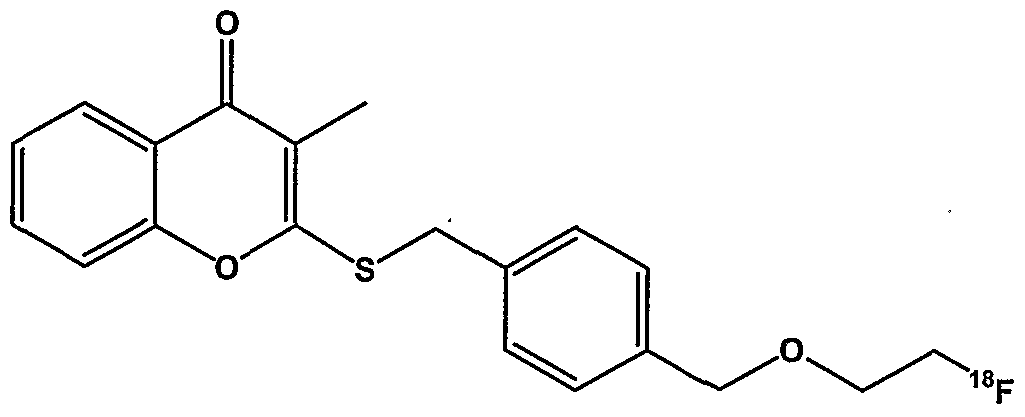
Example 3a: Synthesis of2-[4-(2- Oxysulfanato-ethoxymethyl)-benzylsulfanyl]-3- methyl-chromen-4-one resin (Va):
A solution of 2-{2-[4-(2-Hydroxy-ethoxymethyl)-phenyl]-ethyl}-3-methyl- chromen-4-one in THF is added to a portion of the resin prepared as described in Example Ib above which has previously been swollen in THF. A solution of potassium t-butoxide in tetrahydrofuran is added and the resultant suspension is
stirred overnight at room temperature. After filtration the resin is washed successively with dichloromethane and THF before drying under high vacuum.
Example Sb: Radiofluorination to prepare 2-[4-(2-[ FJFluoro-ethoxymethyl)- benzylsulfanyl]-3-methyl-chromen-4-one (Via) :
To a portion of the resin (prepared as described in Example 3a held in a cartridge is added a solution in dry acetonitrile of kryptofix[2.2.2], potassium carbonate and [18F]-fluoride. The cartridge is heated to 85°C. for 12 minutes and then the solution is eluted. The solution is then passed onto a C- 18 solid phase extraction cartridge and washed with water to remove acetonitrile, kryptofϊx and potassium carbonate. The product is eluted from the column with acetonitrile, and analytical aliquot is taken. The solvent is removed and the resultant material is reconstituted in an appropriate buffer for injection, and sterilized by passage through a 0.2μ filter.
Claims
1. A compound of formula (I)

(I), wherein
Sup is a solid support, resin, polymer, or macromolecular matrix; X and Y are independently at each occurrence S, O5 or -(CH2)-; n is 0 to 6; and R is C1-6 alkyl.
2. The compound of Claim 1 wherein n is 3.
3. The compound of Claim 1 of formula (II)

(II).
4. A compound of formula (III)
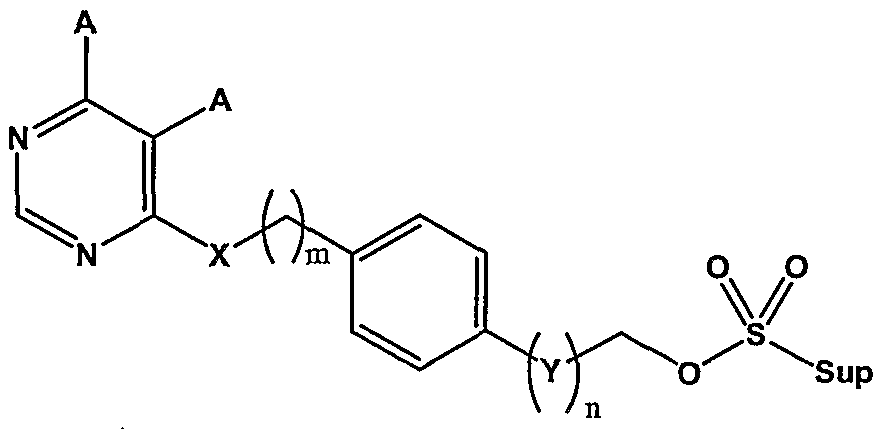
(HI), wherein
Sup is a solid support, resin, polymer or macromolecular matrix;
X and Y are independently at each occurrence S, O, or -(CH2)-; n is 0 to 6; m is 0 to 6;
A is independently at each occurrence absent, alkoxy, alkyl, arylalkoxy, aryloxy, -CH=CH-CH=CH-, or -CH=CH-Z- (A and A could join to form a bicyclic structure);
Z is S or NR; and
R is hydrogen, alkyl, alkyloxy, or aryl.
5. The compound of Claim 4 wherein n is 3 and m is 2.
6. The compound of Claim 4 of formula (IV)

(IV).
7. A compound of formula (V)

(V)5 wherein
Y is independently at each occurrence S, O, or -(CH2)-; n is 0 to 6;
X is independently at each occurrence S, O, or NR2; R2 is hydrogen, alkyl, alkyloxy, or aryl; m is 0 to 6;
A is independently at each occurrence absent, alkyl, alkoxy, aryloxy, arylalkoxy, -CH=CH-CH=CH-, or -CH=CH-Z- (A and A could join to form a bicyclic structure);
Z is O, S, or NR;
R is hydrogen, alkyl, alkyloxy, or aryl;
R1 is halogen or C1-6 alkyl; and
Sup is a solid support, resin, polymer or a macromolecular structure.
8. The compound of Claim 7 of formula (VI)

(VI).
9. A method of making a radiotracer comprising (a) reacting a compound of formula (I)

(I), wherein Sup is a solid support, resin, polymer, or macromolecular matrix;
X and Y are independently selected at each occurrence S, O, Or-(CH2)-; n is 0 to 6; and
R is C1-6 alkyl; with a source of 18F", optionally in an organic solvent, to provide a compound of formula (Ia) 
(Ia)5
(b) optionally removing excess 18F";
(c) optionally removing the organic solvent; and
(d) optionally formulating the resulting product as an aqueous solution.
10. The method of Claim 9 wherein n is 3.
11. A method of making a radiotracer comprising (a) reacting a compound of formula (II)
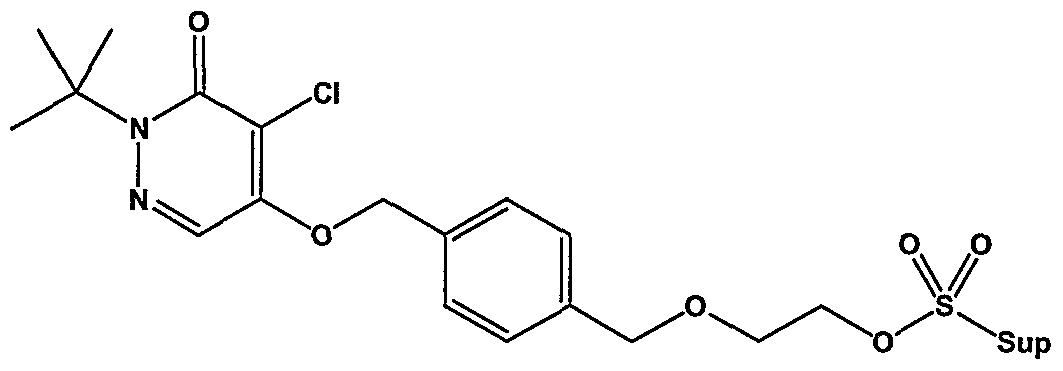
(H), wherein
Sup is a solid support, resin, polymer, or macromolecular matrix; with a source of 18F", optionally in an organic solvent, to provide a compound of formula (Ha)

(Ha)5
(b) optionally removing excess 18F";
(c) optionally removing the organic solvent; and
(d) optionally formulating the resulting product i as an aqueous solution.
12. A method of making a radiotracer comprising (a) reacting a compound of formula (III)

(III), wherein
Sup is a solid support, resin, polymer or macromolecular matrix;
X and Y are independently at each occurrence S, O, or -(CH2)-; n is 0 to 6; m is 0 to 6; 0 A is independently at each occurrence absent, alkoxy, alkyl, arylalkoxy, aryloxy, -CH=CH-CH=CH-, or -CH=CH-Z- (A and A could join to form a bicyclic structure);
Z is O, S, or NR; and
R is hydrogen, alkyl, alkyloxy, or aryl; -5 with a source of F", optionally in an organic solvent, to provide a compound of formula (Ilia)

(HIa);
(b) optionally removing excess 18F"; 0 (c) optionally removing the organic solvent; and
(d) optionally formulating the resulting product as an aqueous solution.
13. The method of Claim 12 wherein n is 3 and m is 2.
14. A method of making a radiotracer comprising (a) reacting a compound of formula (IV)

(IV), wherein
Sup is a solid support, resin, polymer or macromolecular matrix; , with a source of 18F", optionally in an organic solvent, to provide a compound of formula (IVa)

(IVa);
(b) optionally removing excess 18F";
(c) optionally removing the organic solvent; and
(d) optionally formulating the resulting product as an aqueous solution.
15. A method of making a radiotracer comprising (a) reacting a compound formula (V)
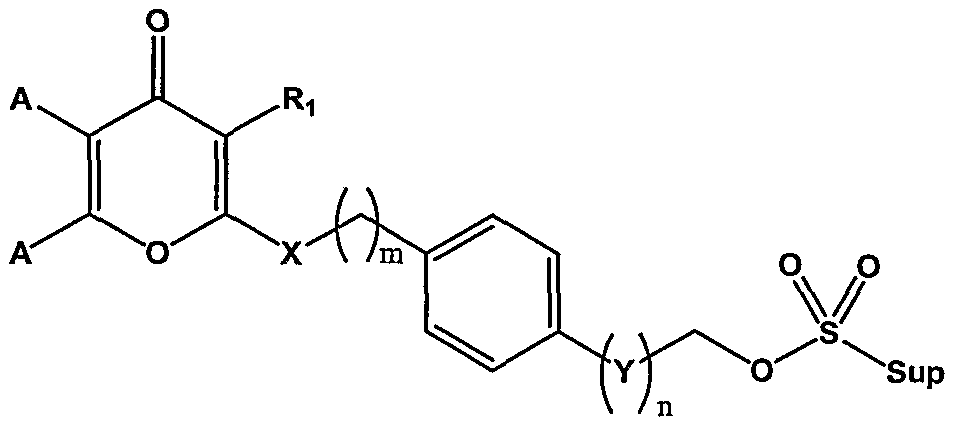
(V)5 or a pharmaceutically acceptable salt thereof, wherein
Y is independently at each occurrence S, O, or -(CH2)-; n is 0 to 6;
X is independently at each occurrence S, O, or NR2;
R2 is hydrogen, alkyl, alkyloxy, or aryl; m is 0 to 6;
A is independently at each occurrence absent, alkyl, alkoxy, aryloxy, arylalkoxy, -CH=CH-CH=CH-, or -CH=CH-Z- (A and A could join to form a bicyclic structure);
Z is O, S, or NR;
R is hydrogen, alkyl, alkyloxy, or aryl;
R1 is halogen or C1-6 alkyl; and
Sup is a solid support, resin, polymer or macromolecular structure; with a source of F", optionally in an organic solvent, to provide a compound of formula (Va)

(Va);
(b) optionally removing excess 18F";
(c) optionally removing the organic solvent; and
(d) optionally formulating the resulting product as an aqueous solution.
16. The method of Claim 15 wherein n is 3 and m is 2.
17. A method of making a radiotracer comprising (a) reacting a compound formula (VI)

(VI), wherein Sup is a solid support, resin, polymer or macromolecular structure; with a source of 18F", optionally in an organic solvent, to provide a compound of formula (Via)
(Via);
(b) optionally removing excess 18F";
(c) optionally removing the organic solvent; and
(d) optionally formulating the resulting product as an aqueous solution.
1 δ
18. A radiopharmaceutical kit for the preparation of an F-labeled tracer for use in Positron Emission Tomography, comprising
(i) a vessel containing a compound of formula (I)

(I), or a pharmaceutically acceptable salt thereof, wherein
Sup is a solid support, resin, polymer, or macromolecular matrix; X and Y are independently at each occurrence S, O, or -(CH2)-; n is 0 to 6; and R is C1-6 alkyl;
(ii) means for eluting the vessel with a source of 18F"; (iii) an ion-exchange cartridge for removal of excess 18F"; and (iv) an optional cartridge for solid-phase purification of a compound of formula (Ia) 
(Ia), wherein
X and Y are independently each occurrence S, O, or -(CH2)-; n is 0 to 6; and R is C1-6 alkyl.
19. A radiopharmaceutical kit for the preparation of an 18F-labeled tracer for use in Positron Emission Tomography, comprising (i) a vessel containing a compound of formula (III)
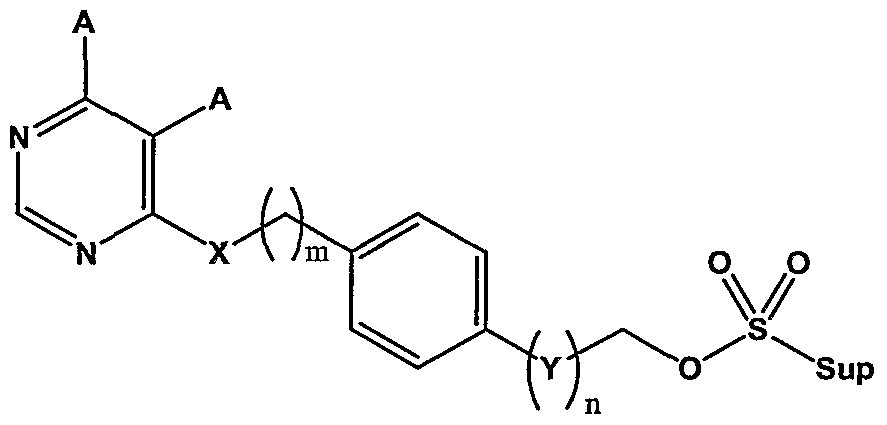
Sup is a solid support, resin, polymer or macromolecular matrix;
X and Y are independently at each occurrence S, O, or -(CH2)-; n is 0 to 6; m is 0 to 6;
A is independently at each occurrence absent, alkoxy, alkyl, arylalkoxy, aryloxy, -CH=CH-CH=CH-, or -CH=CH-Z- (A and A could join to form a bicyclic structure);
Z is O, S, or NR; and
R is hydrogen, alkyl, alkyloxy, or aryl; (ii) means for eluting the vessel with a source of 18F"; (iii) an ion-exchange cartridge for removal of excess 18F'; and (iv) an optional cartridge for solid-phase purification a compound of formula
(Ilia)

(Ilia), wherein
X and Y are independently at each occurrence S, O, or -(CH2)-; n is 0 to 6; m is 0 to 6;
A is independently at each occurrence absent, alkoxy, alkyl, arylalkoxy, aryloxy, -CH=CH-CH=CH-, or -CH=CH-Z- (A and A could join to form a bicyclic structure);
Z is O, S, or NR; and
R is hydrogen, alkyl, alkyloxy, or aryl.
20. A radiopharmaceutical kit for the preparation of an 18F-labeled tracer for use in Positron Emission Tomography, comprising
(i) a vessel containing a compound formula (V)
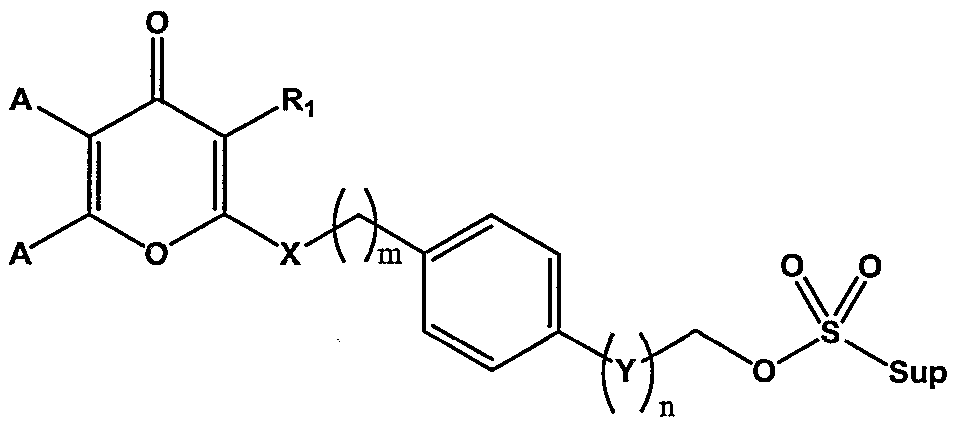
(V), or a pharmaceutically acceptable salt thereof, wherein
Y is independently at each occurrence S, O, or -(CH2)-; n is 0 to 6;
X is independently at each occurrence S, O, or NR2; R2 is hydrogen, alkyl, alkyloxy, or aryl; m is 0 to 6;
A is independently at each occurrence absent, alkyl, alkoxy, aryloxy, arylalkoxy, -CH=CH-CH=CH-, or -CH=CH-Z- (A and A could join to form a bicyclic structure);
Z is O, S, or NR;
R is hydrogen, alkyl, alkyloxy, or aryl; R1 is halogen or C1-6 alkyl; and
Sup is a solid support, resin, polymer or macromolecular structure; (ii) means for eluting the vessel with a source of 18F"; (iii) an ion-exchange cartridge for removal of excess 18F"; and (iv) an optional cartridge for solid-phase purification of the resultant product of (Va)
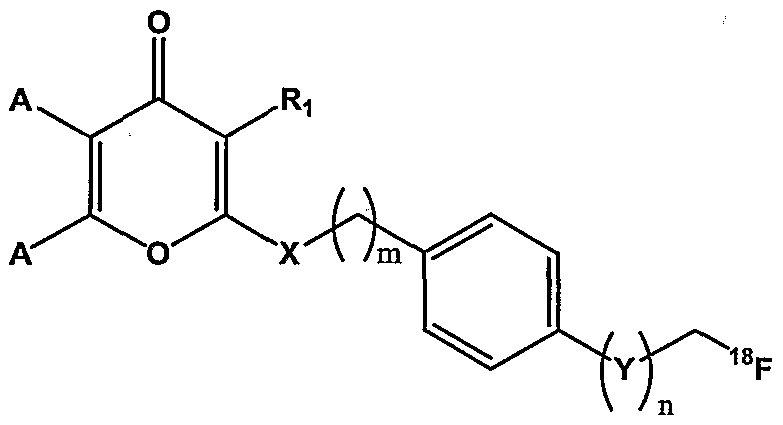
(Va), wherein
Y is independently at each occurrence S, O, or -(CH2)-; n is 0 to 6;
X is independently at each occurrence S, O, or NR2;
R2 is hydrogen, alkyl, alkyloxy, or aryl; m is 0 to 6;
A is independently at each occurrence absent, alkyl, alkoxy, aryloxy, arylalkoxy, -CH=CH-CH=CH-, or -CH=CH-Z- (A and A could join to form a bicyclic structure);
Z is O, S, or NR; R is hydrogen, alkyl, alkyloxy, or aryl; and
R1 is halogen or C1-6 alkyl.
21. A cartridge for a radiopharmaceutical kit used in the preparation of an 18F- labeled tracer for use in Positron Emission Tomography comprising (i) a vessel containing a compound of formula (I)
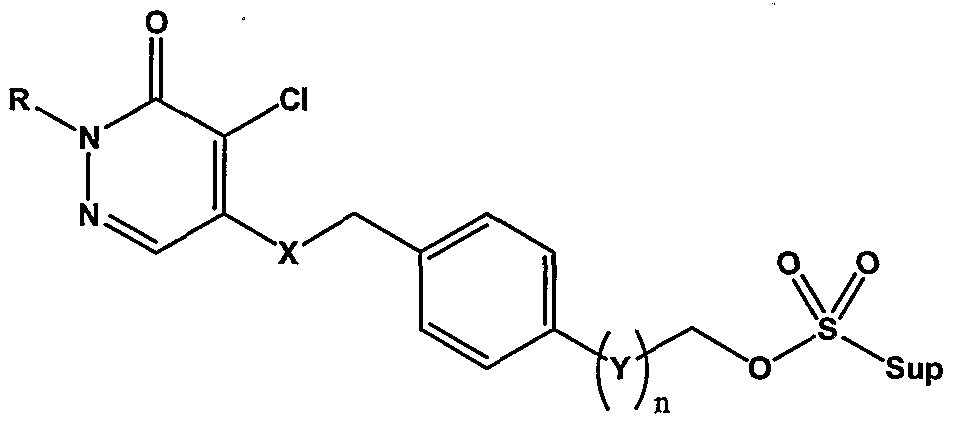
Sup is a solid support, resin, polymer, or macromolecular matrix; X and Y are independently at each occurrence S, O5 Or-(CH2)-; n is 0 to 6; and R is C1-6 alkyl; and
(ii) means for eluting the vessel with a source of 18F".
22. A cartridge for a radiopharmaceutical kit used in the preparation of an 18F- labeled tracer for use in Positron Emission Tomography comprising (i) a vessel containing a compound of formula (III);
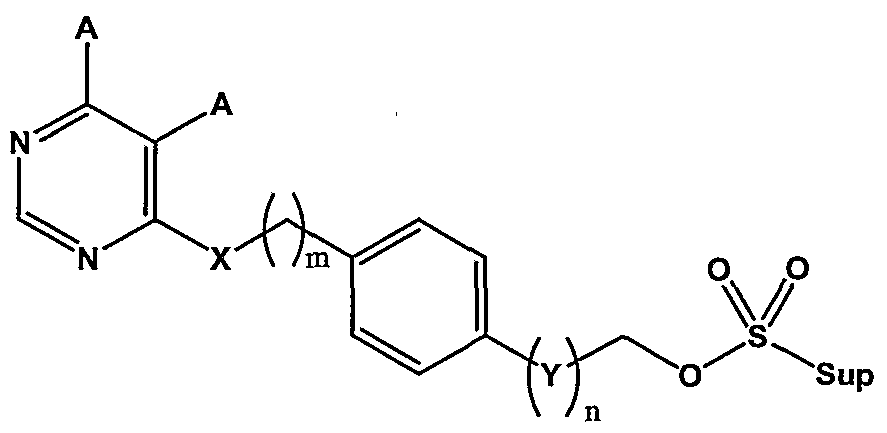
(HI), wherein
Sup is a solid support, resin, polymer or macromolecular matrix; X and Y are independently at each occurrence S, O, or -(CH2)-; n is 0 to 6; m is 0 to 6; A is independently at each occurrence absent, alkoxy, alkyl, arylalkoxy, aryloxy, -CH=CH-CH=CH-, or -CH=CH-Z- (A and A could join to form a bicyclic structure);
Z is O, S, or NR; and R is hydrogen, alkyl, alkyloxy, or aryl; and
(ii) means for eluting the vessel with a source of 18F".
23. A cartridge for a radiopharmaceutical kit used in the preparation of an 18F- labeled tracer for use in Positron Emission Tomography comprising (i) a vessel containing a compound of formula (V)
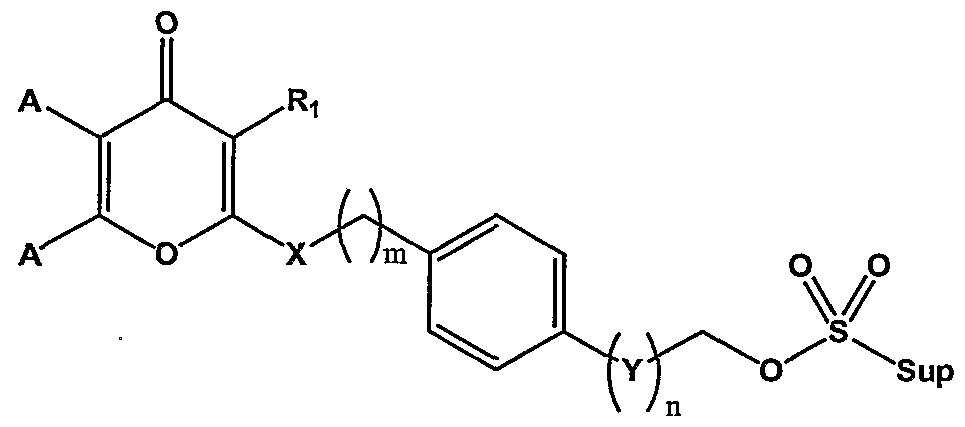
(V), or a pharmaceutically acceptable salt thereof, wherein
Y is independently at each occurrence S, O, or -(CH2)-; n is 0 to 6;
X is independently at each occurrence S, O, or NR2; R2 is hydrogen, alkyl, alkyloxy, or aryl; m is O to 6;
A is independently at each occurrence absent, alkyl, alkoxy, aryloxy, arylalkoxy, -CH=CH-CH=CH-, or -CH=CH-Z- (A and A could join to form a bicyclic structure);
Z is O, S, or NR;
R is hydrogen, alkyl, alkyloxy, or aryl; R1 is halogen or C1-6 alkyl; and Sup is a solid support, resin, polymer or macromolecular structure; and
(ii) means for eluting the vessel with a source of 18F".
24. A method for obtaining a diagnostic PET image which comprises the step of using a radiopharmaceutical kit according to claim 18.
25. A method for obtaining a diagnostic PET image which comprises the step of using a radiopharmaceutical kit according to claim 19.
26. A method for obtaining a diagnostic PET image which comprises the step of using a radiopharmaceutical kit according to claim 20.
Priority Applications (3)
| Application Number | Priority Date | Filing Date | Title |
|---|---|---|---|
| EP06801160A EP1926500A2 (en) | 2005-08-10 | 2006-08-09 | Methods of making radiolabeled tracers and precursors thereof |
| CA002618988A CA2618988A1 (en) | 2005-08-10 | 2006-08-09 | Methods of making radiolabeled tracers and precursors thereof |
| JP2008526203A JP2009504849A (en) | 2005-08-10 | 2006-08-09 | Method for producing radiolabeled tracer and precursor thereof |
Applications Claiming Priority (2)
| Application Number | Priority Date | Filing Date | Title |
|---|---|---|---|
| US70688505P | 2005-08-10 | 2005-08-10 | |
| US60/706,885 | 2005-08-10 |
Publications (2)
| Publication Number | Publication Date |
|---|---|
| WO2007021858A2 true WO2007021858A2 (en) | 2007-02-22 |
| WO2007021858A3 WO2007021858A3 (en) | 2007-05-03 |
Family
ID=37667830
Family Applications (1)
| Application Number | Title | Priority Date | Filing Date |
|---|---|---|---|
| PCT/US2006/031231 Ceased WO2007021858A2 (en) | 2005-08-10 | 2006-08-09 | Methods of making radiolabeled tracers and precursors thereof |
Country Status (6)
| Country | Link |
|---|---|
| US (1) | US7824659B2 (en) |
| EP (1) | EP1926500A2 (en) |
| JP (1) | JP2009504849A (en) |
| CA (1) | CA2618988A1 (en) |
| TW (1) | TW200738271A (en) |
| WO (1) | WO2007021858A2 (en) |
Cited By (8)
| Publication number | Priority date | Publication date | Assignee | Title |
|---|---|---|---|---|
| WO2010120368A3 (en) * | 2009-04-15 | 2011-02-24 | Lantheus Medical Imaging, Inc. | Stabilization of radiopharmaceutical compositions using ascorbic acid |
| JP2011513306A (en) * | 2008-02-29 | 2011-04-28 | ランセウス メディカル イメージング, インコーポレイテッド | Contrast agents for applications involving perfusion imaging |
| US8226929B2 (en) | 2004-02-13 | 2012-07-24 | Lantheus Medical Imaging, Inc. | Contrast agents for myocardial perfusion imaging |
| US8263042B2 (en) | 2004-04-28 | 2012-09-11 | Lantheus Medical Imaging, Inc. | Contrast agents for myocardial perfusion imaging |
| WO2013095273A1 (en) * | 2011-12-22 | 2013-06-27 | Respiratorius Ab | Contrast agent for imagining myocardial perfusion |
| US8936777B2 (en) | 2010-02-08 | 2015-01-20 | Lantheus Medical Imaging, Inc. | Methods and apparatus for synthesizing imaging agents, and intermediates thereof |
| US9713651B2 (en) | 2012-08-10 | 2017-07-25 | Lantheus Medical Imaging, Inc. | Compositions, methods, and systems for the synthesis and use of imaging agents |
| CN109503590A (en) * | 2018-11-22 | 2019-03-22 | 四川大学华西医院 | Using 7-deazaadenine base as mother nucleus18F-PET/CT tracer agent and preparation method thereof |
Families Citing this family (8)
| Publication number | Priority date | Publication date | Assignee | Title |
|---|---|---|---|---|
| EP2360169B1 (en) * | 2001-10-23 | 2015-10-14 | Psma Development Company, L.L.C. | PSMA antibodies |
| AU2015200027B2 (en) * | 2008-02-29 | 2017-01-19 | Lantheus Medical Imaging, Inc. | Contrast agents for applications including perfusion imaging |
| JP2011526267A (en) * | 2008-07-03 | 2011-10-06 | バイエル ファーマ アクチエンゲゼルシャフト | Compound and radiopharmaceutical production method |
| CA2848147C (en) | 2011-09-09 | 2021-08-24 | Lantheus Medical Imaging, Inc. | Compositions, methods, and systems for the synthesis and use of imaging agents |
| CA2852395C (en) * | 2011-10-21 | 2020-04-28 | Lantheus Medical Imaging, Inc. | Compositions comprising ascorbic acid and pyridaben and pyridaben analogs attached to an imaging moiety and related methods |
| JP6190240B2 (en) | 2013-10-16 | 2017-08-30 | 浜松ホトニクス株式会社 | Diagnostic agent for therapeutic effect on cancer |
| US9988336B2 (en) | 2014-03-18 | 2018-06-05 | Mayo Foundation For Medical Education And Research | Gaseous F-18 technologies |
| GB201915206D0 (en) | 2019-10-21 | 2019-12-04 | Ge Healthcare Ltd | Use of cyclodextrins as a radiostabilizer |
Family Cites Families (36)
| Publication number | Priority date | Publication date | Assignee | Title |
|---|---|---|---|---|
| GB1073999A (en) | 1965-01-29 | 1967-06-28 | Ncr Co | Process for forming stable images in photochromic material |
| JPH07110815B2 (en) | 1985-11-18 | 1995-11-29 | ボ−ド・オブ・リ−ジェンツ、ザ・ユニバ−シティ−・オブ・テキサス・システム | Polychelating agent for image and spectral enhancement (and spectral shift) |
| US5252317A (en) | 1986-11-10 | 1993-10-12 | The State Of Oregon Acting By And Through The State Board Of Higher Education On Behalf Of The University Of Oregon | Amplifier molecules for diagnosis and therapy derived from 3,5-bis[1-(3-amino-2,2-bis (aminomethyl)-propyl) oxymethyl] benzoic acid |
| US5567411A (en) | 1986-11-10 | 1996-10-22 | State Of Oregon Acting By And Through The State Board Of Higher Education On Behalf Of The University Of Oregon | Dendritic amplifier molecules having multiple terminal active groups stemming from a benzyl core group |
| IT1229684B (en) | 1989-04-05 | 1991-09-06 | Mini Ricerca Scient Tecnolog | PYRIDAZINONE WITH INSECTICIDE AND ACARICIDE ACTIVITY |
| US5087440A (en) | 1989-07-31 | 1992-02-11 | Salutar, Inc. | Heterocyclic derivatives of DTPA used for magnetic resonance imaging |
| GB8923843D0 (en) | 1989-10-23 | 1989-12-13 | Salutar Inc | Compounds |
| US5088499A (en) | 1989-12-22 | 1992-02-18 | Unger Evan C | Liposomes as contrast agents for ultrasonic imaging and methods for preparing the same |
| US5228446A (en) | 1989-12-22 | 1993-07-20 | Unger Evan C | Gas filled liposomes and their use as ultrasonic contrast agents |
| US5585112A (en) | 1989-12-22 | 1996-12-17 | Imarx Pharmaceutical Corp. | Method of preparing gas and gaseous precursor-filled microspheres |
| US5679810A (en) | 1990-01-19 | 1997-10-21 | Salutar, Inc. | Linear oligomeric polychelant compounds |
| GB9006977D0 (en) | 1990-03-28 | 1990-05-23 | Nycomed As | Compositions |
| WO1992017215A1 (en) | 1990-03-28 | 1992-10-15 | Nycomed Salutar, Inc. | Contrast media |
| US5205290A (en) | 1991-04-05 | 1993-04-27 | Unger Evan C | Low density microspheres and their use as contrast agents for computed tomography |
| US5760191A (en) | 1993-02-05 | 1998-06-02 | Nycomed Imaging As | Macrocyclic complexing agents and targeting immunoreagents useful in therapeutic and diagnostic compositions and methods |
| HU222574B1 (en) | 1993-03-31 | 2003-08-28 | Mallinckrodt Medical Inc. | Radiopharmaceuticals containing phosphines and kits containing them as reducing agents |
| US5417959A (en) | 1993-10-04 | 1995-05-23 | Mallinckrodt Medical, Inc. | Functionalized aza-crytand ligands for diagnostic imaging applications |
| US5520904A (en) | 1995-01-27 | 1996-05-28 | Mallinckrodt Medical, Inc. | Calcium/oxyanion-containing particles with a polymerical alkoxy coating for use in medical diagnostic imaging |
| EP0727225A3 (en) | 1995-02-14 | 1997-01-15 | Sonus Pharma Inc | Compositions and methods for directed ultrasound imaging |
| US5587491A (en) | 1995-03-15 | 1996-12-24 | Regents Of The University Of Minnesota | Method for the synthesis of bis-tetrahydrofuranyl Annonaceous acetogenins |
| US5801228A (en) | 1995-06-07 | 1998-09-01 | Nycomed Imaging As | Polymeric contrast agents for medical imaging |
| US5804161A (en) | 1996-05-14 | 1998-09-08 | Nycomed Salutar Inc. | Contrast agents |
| US5846517A (en) | 1996-09-11 | 1998-12-08 | Imarx Pharmaceutical Corp. | Methods for diagnostic imaging using a renal contrast agent and a vasodilator |
| US6565889B2 (en) | 1996-12-02 | 2003-05-20 | The Regents Of The University Of California | Bilayer structure which encapsulates multiple containment units and uses thereof |
| US6056939A (en) | 1998-08-28 | 2000-05-02 | Desreux; Jean F. | Self-assembling heteropolymetallic chelates as imaging agents and radiopharmaceuticals |
| DE69941298D1 (en) | 1998-09-29 | 2009-10-01 | Merck & Co Inc | Radiolabeled Neukoquin-1 receptor antagonists |
| AU2001288899A1 (en) | 2000-09-06 | 2002-03-22 | The Scripps Research Institute | Inhibitors of nadh:ubiquinone oxidoreductase |
| GB0115927D0 (en) | 2001-06-29 | 2001-08-22 | Nycomed Amersham Plc | Solid-phase nucleophilic fluorination |
| US7344702B2 (en) | 2004-02-13 | 2008-03-18 | Bristol-Myers Squibb Pharma Company | Contrast agents for myocardial perfusion imaging |
| US20030044354A1 (en) | 2001-08-16 | 2003-03-06 | Carpenter Alan P. | Gas microsphere liposome composites for ultrasound imaging and ultrasound stimulated drug release |
| AU2003217349B2 (en) | 2002-02-06 | 2008-05-22 | The Johns Hopkins University | Non-invasive diagnostic imaging technology for mitochondria using radiolabeled lipophilic salts |
| AU2003226737B2 (en) | 2002-03-29 | 2008-09-04 | Janssen Pharmaceutica N.V. | Radiolabelled quinoline and quinolinone derivatives and their use as metabotropic glutamate receptor ligands |
| AU2003224747A1 (en) | 2002-04-08 | 2003-10-27 | Biostream, Inc. | Technetium-labeled rotenone derivatives, and methods of use thereof |
| GB0229683D0 (en) | 2002-12-20 | 2003-01-29 | Imaging Res Solutions Ltd | Preparation of radiopharmaceuticals |
| GB0317920D0 (en) | 2003-07-31 | 2003-09-03 | Amersham Plc | Solid-phase synthesis |
| US7485283B2 (en) | 2004-04-28 | 2009-02-03 | Lantheus Medical Imaging | Contrast agents for myocardial perfusion imaging |
-
2006
- 2006-07-25 US US11/492,729 patent/US7824659B2/en active Active
- 2006-08-09 JP JP2008526203A patent/JP2009504849A/en active Pending
- 2006-08-09 WO PCT/US2006/031231 patent/WO2007021858A2/en not_active Ceased
- 2006-08-09 EP EP06801160A patent/EP1926500A2/en not_active Withdrawn
- 2006-08-09 CA CA002618988A patent/CA2618988A1/en not_active Abandoned
- 2006-08-10 TW TW095129316A patent/TW200738271A/en unknown
Cited By (29)
| Publication number | Priority date | Publication date | Assignee | Title |
|---|---|---|---|---|
| US9161997B2 (en) | 2001-08-16 | 2015-10-20 | David S. Casebier | Contrast agents for myocardial perfusion imaging |
| US10889550B2 (en) | 2004-02-13 | 2021-01-12 | Lantheus Medical Imaging, Inc. | Contrast agents for myocardial perfusion imaging |
| US8226929B2 (en) | 2004-02-13 | 2012-07-24 | Lantheus Medical Imaging, Inc. | Contrast agents for myocardial perfusion imaging |
| US9718786B2 (en) | 2004-02-13 | 2017-08-01 | Lantheus Medical Imaging, Inc. | Contrast agents for myocardial perfusion imaging |
| US10125106B2 (en) | 2004-02-13 | 2018-11-13 | Lantheus Medical Imaging, Inc. | Contrast agents for myocardial perfusion imaging |
| US8263042B2 (en) | 2004-04-28 | 2012-09-11 | Lantheus Medical Imaging, Inc. | Contrast agents for myocardial perfusion imaging |
| JP2016164182A (en) * | 2008-02-29 | 2016-09-08 | ランセウス メディカル イメージング, インコーポレイテッド | Contrast agents for applications including perfusion imaging |
| US9408927B2 (en) | 2008-02-29 | 2016-08-09 | Lantheus Medical Imaging, Inc. | Contrast agents for applications including perfusion imaging |
| US10245332B2 (en) | 2008-02-29 | 2019-04-02 | Lantheus Medical Imaging, Inc. | Contrast agents for applications including perfusion imaging |
| JP2011513306A (en) * | 2008-02-29 | 2011-04-28 | ランセウス メディカル イメージング, インコーポレイテッド | Contrast agents for applications involving perfusion imaging |
| JP2015061842A (en) * | 2008-02-29 | 2015-04-02 | ランセウス メディカル イメージング, インコーポレイテッド | Contrast agents for applications involving perfusion imaging |
| US9687571B2 (en) | 2009-04-15 | 2017-06-27 | Lantheus Medical Imaging, Inc. | Stabilization of radiopharmaceutical compositions using ascorbic acid |
| WO2010120368A3 (en) * | 2009-04-15 | 2011-02-24 | Lantheus Medical Imaging, Inc. | Stabilization of radiopharmaceutical compositions using ascorbic acid |
| US8936777B2 (en) | 2010-02-08 | 2015-01-20 | Lantheus Medical Imaging, Inc. | Methods and apparatus for synthesizing imaging agents, and intermediates thereof |
| US9603951B2 (en) | 2010-02-08 | 2017-03-28 | Lantheus Medical Imaging, Inc. | Methods and apparatus for synthesizing imaging agents, and intermediates thereof |
| US10842892B2 (en) | 2010-02-08 | 2020-11-24 | Lantheus Medical Imaging, Inc. | Methods and apparatus for synthesizing imaging agents, and intermediates thereof |
| US10022462B2 (en) | 2010-02-08 | 2018-07-17 | Lantheus Medical Imaging, Inc. | Methods and apparatus for synthesizing imaging agents, and intermediates thereof |
| US9687565B2 (en) | 2011-12-22 | 2017-06-27 | Respiratorius Ab | Diagnostic kit |
| RU2629840C2 (en) * | 2011-12-22 | 2017-09-04 | Респираториус Аб | Contrast agent for myocardial perfusion visualization |
| US9295738B2 (en) | 2011-12-22 | 2016-03-29 | Respiratorius Ab | Contrast agent for imagining myocardial perfusion |
| CN104114191A (en) * | 2011-12-22 | 2014-10-22 | 瑞思拜尔锐特略斯股份公司 | Contrast agent for imagining myocardial perfusion |
| WO2013095273A1 (en) * | 2011-12-22 | 2013-06-27 | Respiratorius Ab | Contrast agent for imagining myocardial perfusion |
| US9919064B2 (en) | 2012-08-10 | 2018-03-20 | Lantheus Medical Imaging, Inc. | Compositions, methods, and systems for the synthesis and use of imaging agents |
| US9713651B2 (en) | 2012-08-10 | 2017-07-25 | Lantheus Medical Imaging, Inc. | Compositions, methods, and systems for the synthesis and use of imaging agents |
| US10500293B2 (en) | 2012-08-10 | 2019-12-10 | Lantheus Medical Imaging, Inc. | Compositions, methods, and systems for the synthesis and use of imaging agents |
| US11744906B2 (en) | 2012-08-10 | 2023-09-05 | Lantheus Medical Imaging, Inc. | Compositions, methods, and systems for the synthesis and use of imaging agents |
| CN109503590A (en) * | 2018-11-22 | 2019-03-22 | 四川大学华西医院 | Using 7-deazaadenine base as mother nucleus18F-PET/CT tracer agent and preparation method thereof |
| WO2020103392A1 (en) * | 2018-11-22 | 2020-05-28 | 四川大学华西医院 | 18f-pet/ct tracer comprising 7-deazaadenine base as parent nucleus and preparation method therefor |
| CN109503590B (en) * | 2018-11-22 | 2021-06-25 | 四川大学华西医院 | A kind of 18F-PET/CT tracer with 7-deazaadenine base as parent nucleus and preparation method thereof |
Also Published As
| Publication number | Publication date |
|---|---|
| CA2618988A1 (en) | 2007-02-22 |
| US7824659B2 (en) | 2010-11-02 |
| JP2009504849A (en) | 2009-02-05 |
| WO2007021858A3 (en) | 2007-05-03 |
| US20070036716A1 (en) | 2007-02-15 |
| TW200738271A (en) | 2007-10-16 |
| EP1926500A2 (en) | 2008-06-04 |
Similar Documents
| Publication | Publication Date | Title |
|---|---|---|
| EP1418950B1 (en) | Solid-phase nucleophilic fluorination | |
| EP1572601B1 (en) | Solid-phase preparation of 18 f-labelled amino acids | |
| US7824659B2 (en) | Methods of making radiolabeled tracers and precursors thereof | |
| AU2002314298A1 (en) | Solid-phase nucleophilic fluorination | |
| US20130089501A1 (en) | Solid-phase fluorination of benzothiazoles | |
| JP2007532524A (en) | Fluorination method | |
| CN108299482A (en) | F-BPA and its intermediate synthetic method, intermediate and its application | |
| US20070202039A1 (en) | Solid-Phase Preparation of [18F]Fluorohaloalkanes | |
| HK1065945B (en) | Solid-phase nucleophilic fluorination |
Legal Events
| Date | Code | Title | Description |
|---|---|---|---|
| 121 | Ep: the epo has been informed by wipo that ep was designated in this application | ||
| WWE | Wipo information: entry into national phase |
Ref document number: 2006801160 Country of ref document: EP |
|
| ENP | Entry into the national phase |
Ref document number: 2618988 Country of ref document: CA |
|
| NENP | Non-entry into the national phase |
Ref country code: DE |
|
| WWE | Wipo information: entry into national phase |
Ref document number: 2008526203 Country of ref document: JP |