US9493442B2 - Cyclopropylamines as LSD1 inhibitors - Google Patents
Cyclopropylamines as LSD1 inhibitors Download PDFInfo
- Publication number
- US9493442B2 US9493442B2 US14/620,950 US201514620950A US9493442B2 US 9493442 B2 US9493442 B2 US 9493442B2 US 201514620950 A US201514620950 A US 201514620950A US 9493442 B2 US9493442 B2 US 9493442B2
- Authority
- US
- United States
- Prior art keywords
- alkyl
- methyl
- amino
- piperidin
- phenylcyclopropyl
- Prior art date
- Legal status (The legal status is an assumption and is not a legal conclusion. Google has not performed a legal analysis and makes no representation as to the accuracy of the status listed.)
- Active
Links
- 0 *.B.CC.CC.[3*]C([4*])(C)CC([5*])([6*])CC1CC1C Chemical compound *.B.CC.CC.[3*]C([4*])(C)CC([5*])([6*])CC1CC1C 0.000 description 15
- PPEYQFWASQEVAR-UHFFFAOYSA-N CC(C)C1=CC=C(C2(C)CC2)C=C1.CC(C)C1=CC=CC(C2=CN(C)N=C2)=C1 Chemical compound CC(C)C1=CC=C(C2(C)CC2)C=C1.CC(C)C1=CC=CC(C2=CN(C)N=C2)=C1 PPEYQFWASQEVAR-UHFFFAOYSA-N 0.000 description 4
- RPHOXQFBJRWFAC-OZAIVSQSSA-N C=CCOC(=O)N(CC1(CC2=CN=C(OC)C=C2)CCNCC1)[C@@H]1CC1C1=CC=CC=C1 Chemical compound C=CCOC(=O)N(CC1(CC2=CN=C(OC)C=C2)CCNCC1)[C@@H]1CC1C1=CC=CC=C1 RPHOXQFBJRWFAC-OZAIVSQSSA-N 0.000 description 2
- FFWSICBKRCICMR-UHFFFAOYSA-N CC(=O)CCC(C)C Chemical compound CC(=O)CCC(C)C FFWSICBKRCICMR-UHFFFAOYSA-N 0.000 description 2
- MUAABBCFRJTGMQ-UHFFFAOYSA-N CC(C)(C)OC(=O)N1CCC(C=O)(CC2=CC=CC(OCC3=CC=CC=C3)=C2)CC1 Chemical compound CC(C)(C)OC(=O)N1CCC(C=O)(CC2=CC=CC(OCC3=CC=CC=C3)=C2)CC1 MUAABBCFRJTGMQ-UHFFFAOYSA-N 0.000 description 2
- DTJOPWCWQOHWNZ-UHFFFAOYSA-N CC(C)(C)OC(=O)N1CCC(C=O)(COCC2CCC2)CC1 Chemical compound CC(C)(C)OC(=O)N1CCC(C=O)(COCC2CCC2)CC1 DTJOPWCWQOHWNZ-UHFFFAOYSA-N 0.000 description 2
- IBMQRNQGGPQIIS-BPGUCPLFSA-N C=CCOC(=O)N(CC1(C(=O)OC)CCN(C(=O)OC(C)(C)C)CC1)[C@@H]1CC1C1=CC=CC=C1 Chemical compound C=CCOC(=O)N(CC1(C(=O)OC)CCN(C(=O)OC(C)(C)C)CC1)[C@@H]1CC1C1=CC=CC=C1 IBMQRNQGGPQIIS-BPGUCPLFSA-N 0.000 description 1
- FRJFCSJOEMPIAY-WUBHUQEYSA-N C=CCOC(=O)N(CC1(CC2=CN=C(Cl)C=C2)CCN(C(=O)OC(C)(C)C)CC1)[C@@H]1CC1C1=CC=CC=C1 Chemical compound C=CCOC(=O)N(CC1(CC2=CN=C(Cl)C=C2)CCN(C(=O)OC(C)(C)C)CC1)[C@@H]1CC1C1=CC=CC=C1 FRJFCSJOEMPIAY-WUBHUQEYSA-N 0.000 description 1
- XZNDHXYGTMNPKR-BPGUCPLFSA-N C=CCOC(=O)N(CC1(CO)CCN(C(=O)OC(C)(C)C)CC1)[C@@H]1CC1C1=CC=CC=C1 Chemical compound C=CCOC(=O)N(CC1(CO)CCN(C(=O)OC(C)(C)C)CC1)[C@@H]1CC1C1=CC=CC=C1 XZNDHXYGTMNPKR-BPGUCPLFSA-N 0.000 description 1
- FPJFALITWRJNOP-WUBHUQEYSA-N C=CCOC(=O)N(CC1(COC2=CC=C(F)C=N2)CCN(C(=O)OC(C)(C)C)CC1)[C@@H]1CC1C1=CC=CC=C1 Chemical compound C=CCOC(=O)N(CC1(COC2=CC=C(F)C=N2)CCN(C(=O)OC(C)(C)C)CC1)[C@@H]1CC1C1=CC=CC=C1 FPJFALITWRJNOP-WUBHUQEYSA-N 0.000 description 1
- QWLLKUAQZRINQZ-WUBHUQEYSA-N C=CCOC(=O)N(CC1(COC2=CC=C(F)C=N2)CCN(CCC(=O)OC)CC1)[C@@H]1CC1C1=CC=CC=C1 Chemical compound C=CCOC(=O)N(CC1(COC2=CC=C(F)C=N2)CCN(CCC(=O)OC)CC1)[C@@H]1CC1C1=CC=CC=C1 QWLLKUAQZRINQZ-WUBHUQEYSA-N 0.000 description 1
- JBEDUZMRILKGOI-FOIFJWKZSA-N C=CCOC(=O)N(CC1(COC2=CC=C(F)C=N2)CCNCC1)[C@@H]1CC1C1=CC=CC=C1 Chemical compound C=CCOC(=O)N(CC1(COC2=CC=C(F)C=N2)CCNCC1)[C@@H]1CC1C1=CC=CC=C1 JBEDUZMRILKGOI-FOIFJWKZSA-N 0.000 description 1
- CXVREFRWJPTTQN-OZAIVSQSSA-N C=CCOC(=O)N(CC1(COCC2CCC2)CCNCC1)[C@@H]1CC1C1=CC=CC=C1 Chemical compound C=CCOC(=O)N(CC1(COCC2CCC2)CCNCC1)[C@@H]1CC1C1=CC=CC=C1 CXVREFRWJPTTQN-OZAIVSQSSA-N 0.000 description 1
- JUZYCHVCRVYDOP-PLYLYKGUSA-N CC(=O)N(CC1(CC2=CC=C(CC#N)C=C2)CCN(C(=O)OC(C)(C)C)CC1)[C@@H]1CC1C1=CC=CC=C1 Chemical compound CC(=O)N(CC1(CC2=CC=C(CC#N)C=C2)CCN(C(=O)OC(C)(C)C)CC1)[C@@H]1CC1C1=CC=CC=C1 JUZYCHVCRVYDOP-PLYLYKGUSA-N 0.000 description 1
- GPXIFCZWDUJAFV-WUBHUQEYSA-N CC(=O)N(CC1(CC2=CC=C(CC#N)C=C2)CCNCC1)[C@@H]1CC1C1=CC=CC=C1 Chemical compound CC(=O)N(CC1(CC2=CC=C(CC#N)C=C2)CCNCC1)[C@@H]1CC1C1=CC=CC=C1 GPXIFCZWDUJAFV-WUBHUQEYSA-N 0.000 description 1
- UXJNYWRSMKKYCL-FXDYGKIASA-N CC(=O)N(CC1(CC2=CC=C(F)C=C2)CCN(C(=O)OC(C)(C)C)CC1)[C@@H]1CC1C1=CC=CC=C1 Chemical compound CC(=O)N(CC1(CC2=CC=C(F)C=C2)CCN(C(=O)OC(C)(C)C)CC1)[C@@H]1CC1C1=CC=CC=C1 UXJNYWRSMKKYCL-FXDYGKIASA-N 0.000 description 1
- GEDRLVFEYNPYGE-OZAIVSQSSA-N CC(=O)N(CC1(CC2=CC=C(F)C=C2)CCNCC1)[C@@H]1CC1C1=CC=CC=C1 Chemical compound CC(=O)N(CC1(CC2=CC=C(F)C=C2)CCNCC1)[C@@H]1CC1C1=CC=CC=C1 GEDRLVFEYNPYGE-OZAIVSQSSA-N 0.000 description 1
- ZWKNVLGGORUDEX-FXDYGKIASA-N CC(=O)N(CC1(CC2=CC=CC(Br)=C2)CCN(C(=O)OC(C)(C)C)CC1)[C@@H]1CC1C1=CC=CC=C1 Chemical compound CC(=O)N(CC1(CC2=CC=CC(Br)=C2)CCN(C(=O)OC(C)(C)C)CC1)[C@@H]1CC1C1=CC=CC=C1 ZWKNVLGGORUDEX-FXDYGKIASA-N 0.000 description 1
- ILHLBFJGMHYLQZ-OZAIVSQSSA-N CC(=O)N(CC1(CC2=CC=CC(Br)=C2)CCNCC1)[C@@H]1CC1C1=CC=CC=C1 Chemical compound CC(=O)N(CC1(CC2=CC=CC(Br)=C2)CCNCC1)[C@@H]1CC1C1=CC=CC=C1 ILHLBFJGMHYLQZ-OZAIVSQSSA-N 0.000 description 1
- GMIYMUVZLLYUSW-SSYAZFEXSA-N CC(=O)N(CC1(CC2=CC=CC(C#N)=C2)CCN(C(=O)OC(C)(C)C)CC1)[C@@H]1CC1C1=CC=CC=C1 Chemical compound CC(=O)N(CC1(CC2=CC=CC(C#N)=C2)CCN(C(=O)OC(C)(C)C)CC1)[C@@H]1CC1C1=CC=CC=C1 GMIYMUVZLLYUSW-SSYAZFEXSA-N 0.000 description 1
- NCWMFUILUQMUAU-XMMISQBUSA-N CC(=O)N(CC1(CC2=CC=CC(C#N)=C2)CCNCC1)[C@@H]1CC1C1=CC=CC=C1 Chemical compound CC(=O)N(CC1(CC2=CC=CC(C#N)=C2)CCNCC1)[C@@H]1CC1C1=CC=CC=C1 NCWMFUILUQMUAU-XMMISQBUSA-N 0.000 description 1
- IGYWMHRCJYCKOW-OZAIVSQSSA-N CC(=O)N(CC1(CC2=CC=CC(O)=C2)CCNCC1)[C@@H]1CC1C1=CC=CC=C1 Chemical compound CC(=O)N(CC1(CC2=CC=CC(O)=C2)CCNCC1)[C@@H]1CC1C1=CC=CC=C1 IGYWMHRCJYCKOW-OZAIVSQSSA-N 0.000 description 1
- HSWPQGRNYSPQGQ-LWMIZPGFSA-N CC(=O)N(CC1(COC2=CC=CC=C2F)CCNCC1)[C@@H]1CC1C1=CC=CC=C1 Chemical compound CC(=O)N(CC1(COC2=CC=CC=C2F)CCNCC1)[C@@H]1CC1C1=CC=CC=C1 HSWPQGRNYSPQGQ-LWMIZPGFSA-N 0.000 description 1
- CJQHAFNWAPPIIP-UHFFFAOYSA-N CC(=O)N1CCC(CC#N)(CCC2CC2C2=CC=CC=C2)CC1 Chemical compound CC(=O)N1CCC(CC#N)(CCC2CC2C2=CC=CC=C2)CC1 CJQHAFNWAPPIIP-UHFFFAOYSA-N 0.000 description 1
- MOCDOWAEFZUUIX-UHFFFAOYSA-N CC(C)(C)OC(=O)N1CCC(C=O)(CC#N)CC1 Chemical compound CC(C)(C)OC(=O)N1CCC(C=O)(CC#N)CC1 MOCDOWAEFZUUIX-UHFFFAOYSA-N 0.000 description 1
- JZFTZADOIYBWMG-UHFFFAOYSA-N CC(C)(C)OC(=O)N1CCC(C=O)(CC2=CC=C(F)C=C2)CC1 Chemical compound CC(C)(C)OC(=O)N1CCC(C=O)(CC2=CC=C(F)C=C2)CC1 JZFTZADOIYBWMG-UHFFFAOYSA-N 0.000 description 1
- PTKBZDDXLPHFHP-UHFFFAOYSA-N CC(C)(C)OC(=O)N1CCC(C=O)(CC2=CC=CC(O)=C2)CC1 Chemical compound CC(C)(C)OC(=O)N1CCC(C=O)(CC2=CC=CC(O)=C2)CC1 PTKBZDDXLPHFHP-UHFFFAOYSA-N 0.000 description 1
- ZPTFGPNXPKJCIT-UHFFFAOYSA-N CC(C)(C)OC(=O)N1CCC(CC#N)(C(=O)O)CC1 Chemical compound CC(C)(C)OC(=O)N1CCC(CC#N)(C(=O)O)CC1 ZPTFGPNXPKJCIT-UHFFFAOYSA-N 0.000 description 1
- OKXLQIKVLTYYLC-UHFFFAOYSA-N CC(C)(C)OC(=O)N1CCC(CC#N)(CCC2CC2C2=CC=CC=C2)CC1 Chemical compound CC(C)(C)OC(=O)N1CCC(CC#N)(CCC2CC2C2=CC=CC=C2)CC1 OKXLQIKVLTYYLC-UHFFFAOYSA-N 0.000 description 1
- FOOSZIKQCZTPOH-UHFFFAOYSA-N CC(C)(C)OC(=O)N1CCC(CC#N)(CN(C(=O)C(F)(F)F)C2CC2C2=CC=CC=C2)CC1 Chemical compound CC(C)(C)OC(=O)N1CCC(CC#N)(CN(C(=O)C(F)(F)F)C2CC2C2=CC=CC=C2)CC1 FOOSZIKQCZTPOH-UHFFFAOYSA-N 0.000 description 1
- VGBWCBLJHASAOX-AVJYQCBHSA-N CC(C)(C)OC(=O)N1CCC(CC[C@@H]2CC2C2=CC=CC=C2)(CC2=CC=C(CC#N)C=C2)CC1 Chemical compound CC(C)(C)OC(=O)N1CCC(CC[C@@H]2CC2C2=CC=CC=C2)(CC2=CC=C(CC#N)C=C2)CC1 VGBWCBLJHASAOX-AVJYQCBHSA-N 0.000 description 1
- JDUQPIXUVVEMAD-XQZUBTRRSA-N CC(C)(C)OC(=O)N1CCC(CC[C@@H]2CC2C2=CC=CC=C2)(CC2=CC=C(F)C=C2)CC1 Chemical compound CC(C)(C)OC(=O)N1CCC(CC[C@@H]2CC2C2=CC=CC=C2)(CC2=CC=C(F)C=C2)CC1 JDUQPIXUVVEMAD-XQZUBTRRSA-N 0.000 description 1
- SFJBQZBZQFIZSZ-WTQRLHSKSA-N CC(C)(C)OC(=O)N1CCC(CC[C@@H]2CC2C2=CC=CC=C2)(CC2=CN=C(Cl)C=C2)CC1 Chemical compound CC(C)(C)OC(=O)N1CCC(CC[C@@H]2CC2C2=CC=CC=C2)(CC2=CN=C(Cl)C=C2)CC1 SFJBQZBZQFIZSZ-WTQRLHSKSA-N 0.000 description 1
- CEOMUKLFANLTPB-MIHMCVIASA-N CC(C)(C)OC(=O)N1CCC(CC[C@@H]2CC2C2=CC=CC=C2)(COCC2CCC2)CC1 Chemical compound CC(C)(C)OC(=O)N1CCC(CC[C@@H]2CC2C2=CC=CC=C2)(COCC2CCC2)CC1 CEOMUKLFANLTPB-MIHMCVIASA-N 0.000 description 1
- ZREHGTHLAMYLRJ-UHFFFAOYSA-N CC(C)(C)OC(=O)N1CCC(CO)(CC#N)CC1 Chemical compound CC(C)(C)OC(=O)N1CCC(CO)(CC#N)CC1 ZREHGTHLAMYLRJ-UHFFFAOYSA-N 0.000 description 1
- JLJSLCJLESWFPT-UHFFFAOYSA-N CC(C)(C)OC(=O)N1CCC(CO)(CC2=CC=C(F)C=C2)CC1 Chemical compound CC(C)(C)OC(=O)N1CCC(CO)(CC2=CC=C(F)C=C2)CC1 JLJSLCJLESWFPT-UHFFFAOYSA-N 0.000 description 1
- PLORMTUPTKNKPX-UHFFFAOYSA-N CC(C)(C)OC(=O)N1CCC(CO)(COC2=CC=CC=C2F)CC1 Chemical compound CC(C)(C)OC(=O)N1CCC(CO)(COC2=CC=CC=C2F)CC1 PLORMTUPTKNKPX-UHFFFAOYSA-N 0.000 description 1
- RTCMKZLOTWUDFP-UHFFFAOYSA-N CC(C)(C)OC(=O)N1CCC(CO)(COC2CCCCC2)CC1 Chemical compound CC(C)(C)OC(=O)N1CCC(CO)(COC2CCCCC2)CC1 RTCMKZLOTWUDFP-UHFFFAOYSA-N 0.000 description 1
- SXADNDQRJLPLEL-UHFFFAOYSA-N CC(C)(C)OC(=O)N1CCC(CO)(COCC2CCC2)CC1 Chemical compound CC(C)(C)OC(=O)N1CCC(CO)(COCC2CCC2)CC1 SXADNDQRJLPLEL-UHFFFAOYSA-N 0.000 description 1
- MBTLFUMEICRWFS-QRWMCTBCSA-N CC(C)(C)OC(N(CC1)CCC1(CN[C@H](C1)C1c1ccccc1)C(OC)=O)=O Chemical compound CC(C)(C)OC(N(CC1)CCC1(CN[C@H](C1)C1c1ccccc1)C(OC)=O)=O MBTLFUMEICRWFS-QRWMCTBCSA-N 0.000 description 1
- CVBIFQDCGWFGAW-FXDYGKIASA-N CC(C)(C)OC(N1CCC(Cc2ccc(CC#N)cc2)(CN([C@H](C2)C2c2ccccc2)C(C(F)(F)F)=O)CC1)=O Chemical compound CC(C)(C)OC(N1CCC(Cc2ccc(CC#N)cc2)(CN([C@H](C2)C2c2ccccc2)C(C(F)(F)F)=O)CC1)=O CVBIFQDCGWFGAW-FXDYGKIASA-N 0.000 description 1
- NYRUXFILGCTTIE-XQZUBTRRSA-N CC(C)N1CCC(CC[C@@H]2CC2C2=CC=CC=C2)(CC2=CC=CC(C(=O)O)=C2)CC1 Chemical compound CC(C)N1CCC(CC[C@@H]2CC2C2=CC=CC=C2)(CC2=CC=CC(C(=O)O)=C2)CC1 NYRUXFILGCTTIE-XQZUBTRRSA-N 0.000 description 1
- GUPNVEXNNSRLFV-UHFFFAOYSA-N CCC1(CO)CCN(C(=O)OC(C)(C)C)CC1 Chemical compound CCC1(CO)CCN(C(=O)OC(C)(C)C)CC1 GUPNVEXNNSRLFV-UHFFFAOYSA-N 0.000 description 1
- VHELRLGQGUCVMK-UHFFFAOYSA-N CCC1(COC2=CC=CC=C2)CCN(C(=O)OC(C)(C)C)CC1 Chemical compound CCC1(COC2=CC=CC=C2)CCN(C(=O)OC(C)(C)C)CC1 VHELRLGQGUCVMK-UHFFFAOYSA-N 0.000 description 1
- LNFNUFHWICOMMN-UHFFFAOYSA-N CCC1(COCC2CCC2)CCN(C(=O)OC(C)(C)C)CC1 Chemical compound CCC1(COCC2CCC2)CCN(C(=O)OC(C)(C)C)CC1 LNFNUFHWICOMMN-UHFFFAOYSA-N 0.000 description 1
- KIMHOHJJIOGBEO-UHFFFAOYSA-N CCC1=CC=C(F)C=N1 Chemical compound CCC1=CC=C(F)C=N1 KIMHOHJJIOGBEO-UHFFFAOYSA-N 0.000 description 1
- OKAXWRSELDGWQB-LETIRJCYSA-N CCN1CCC(CC[C@@H]2CC2C2=CC=CC=C2)(CC2=CC=CC(C(=O)O)=C2)CC1 Chemical compound CCN1CCC(CC[C@@H]2CC2C2=CC=CC=C2)(CC2=CC=CC(C(=O)O)=C2)CC1 OKAXWRSELDGWQB-LETIRJCYSA-N 0.000 description 1
- DZEMMOWWDDHUNL-RMVMEJTISA-N CCOC1=CC(CC2(CC[C@@H]3CC3C3=CC=CC=C3)CCN(CCC(=O)O)CC2)=CC=C1 Chemical compound CCOC1=CC(CC2(CC[C@@H]3CC3C3=CC=CC=C3)CCN(CCC(=O)O)CC2)=CC=C1 DZEMMOWWDDHUNL-RMVMEJTISA-N 0.000 description 1
- BKRWVQPWCJKGEN-FIWHBWSRSA-N CCOCC1(CC[C@@H]2CC2C2=CC=CC=C2)CCN(CCC(=O)O)CC1 Chemical compound CCOCC1(CC[C@@H]2CC2C2=CC=CC=C2)CCN(CCC(=O)O)CC1 BKRWVQPWCJKGEN-FIWHBWSRSA-N 0.000 description 1
- LUCZKQRXVYPHAL-RMVMEJTISA-N CN(C)C(=O)CCN1CCC(CC[C@@H]2CC2C2=CC=CC=C2)(CC2=CC=C(F)C=C2)CC1 Chemical compound CN(C)C(=O)CCN1CCC(CC[C@@H]2CC2C2=CC=CC=C2)(CC2=CC=C(F)C=C2)CC1 LUCZKQRXVYPHAL-RMVMEJTISA-N 0.000 description 1
- GUDSISONHSHSNI-UHFFFAOYSA-N CN(C)C(=O)N1CCC(CC#N)(CCC2CC2C2=CC=CC=C2)CC1 Chemical compound CN(C)C(=O)N1CCC(CC#N)(CCC2CC2C2=CC=CC=C2)CC1 GUDSISONHSHSNI-UHFFFAOYSA-N 0.000 description 1
- RFNHJXSBUUYRMS-DCWQJPKNSA-N CN(C)CC(=O)N1CCC(CC[C@@H]2CC2C2=CC=CC=C2)(CC2=CC=CC(C#N)=C2)CC1 Chemical compound CN(C)CC(=O)N1CCC(CC[C@@H]2CC2C2=CC=CC=C2)(CC2=CC=CC(C#N)=C2)CC1 RFNHJXSBUUYRMS-DCWQJPKNSA-N 0.000 description 1
- SFHDGEJYONAUHI-XQZUBTRRSA-N CN(C)CC(=O)N1CCC(CC[C@@H]2CC2C2=CC=CC=C2)(CC2=CC=CC(C(N)=O)=C2)CC1 Chemical compound CN(C)CC(=O)N1CCC(CC[C@@H]2CC2C2=CC=CC=C2)(CC2=CC=CC(C(N)=O)=C2)CC1 SFHDGEJYONAUHI-XQZUBTRRSA-N 0.000 description 1
- WBOSYVYNRKQGGB-HSLSYKTRSA-N CN1C=C(C2=CC(CC3(CC[C@@H]4CC4C4=CC=CC=C4)CCN(CCC(=O)O)CC3)=CC=C2)C=N1 Chemical compound CN1C=C(C2=CC(CC3(CC[C@@H]4CC4C4=CC=CC=C4)CCN(CCC(=O)O)CC3)=CC=C2)C=N1 WBOSYVYNRKQGGB-HSLSYKTRSA-N 0.000 description 1
- LRRJQVGMSGTDII-UHFFFAOYSA-N CN1CCC(CC#N)(CCC2CC2C2=CC=CC=C2)CC1 Chemical compound CN1CCC(CC#N)(CCC2CC2C2=CC=CC=C2)CC1 LRRJQVGMSGTDII-UHFFFAOYSA-N 0.000 description 1
- CWBMYBXPJDAXSP-UHFFFAOYSA-N CN1CCC(CC#N)(CNC(C2)C2c2ccccc2)CC1 Chemical compound CN1CCC(CC#N)(CNC(C2)C2c2ccccc2)CC1 CWBMYBXPJDAXSP-UHFFFAOYSA-N 0.000 description 1
- BMBITYMRUNPLGI-FKHAVUOCSA-N CN1CCC(CC[C@@H]2CC2C2=CC=CC=C2)(CC2=CC=CC(C(=O)O)=C2)CC1 Chemical compound CN1CCC(CC[C@@H]2CC2C2=CC=CC=C2)(CC2=CC=CC(C(=O)O)=C2)CC1 BMBITYMRUNPLGI-FKHAVUOCSA-N 0.000 description 1
- QHCRMNCWCGIMLL-XQZUBTRRSA-N CNC(=O)CCN1CCC(CC[C@@H]2CC2C2=CC=CC=C2)(CC2=CC=C(F)C=C2)CC1 Chemical compound CNC(=O)CCN1CCC(CC[C@@H]2CC2C2=CC=CC=C2)(CC2=CC=C(F)C=C2)CC1 QHCRMNCWCGIMLL-XQZUBTRRSA-N 0.000 description 1
- QBRBVXXXVMWLAV-FIWHBWSRSA-N CNC(=O)CCN1CCC(CC[C@@H]2CC2C2=CC=CC=C2)(COC)CC1 Chemical compound CNC(=O)CCN1CCC(CC[C@@H]2CC2C2=CC=CC=C2)(COC)CC1 QBRBVXXXVMWLAV-FIWHBWSRSA-N 0.000 description 1
- DPBQSLJAPUNSLU-UHFFFAOYSA-N CNC(CCN1CCC(CN)(COC)CC1)=O Chemical compound CNC(CCN1CCC(CN)(COC)CC1)=O DPBQSLJAPUNSLU-UHFFFAOYSA-N 0.000 description 1
- ORSYDLVMTMZUFS-UHFFFAOYSA-N COC(=O)C1(C=O)CCN(C(=O)OC(C)(C)C)CC1 Chemical compound COC(=O)C1(C=O)CCN(C(=O)OC(C)(C)C)CC1 ORSYDLVMTMZUFS-UHFFFAOYSA-N 0.000 description 1
- UQRMOFVFJWSNEV-UHFFFAOYSA-N COC(=O)C1(CC#N)CCN(C(=O)OC(C)(C)C)CC1 Chemical compound COC(=O)C1(CC#N)CCN(C(=O)OC(C)(C)C)CC1 UQRMOFVFJWSNEV-UHFFFAOYSA-N 0.000 description 1
- ZHDJFSNBIIDNJJ-UHFFFAOYSA-N COC(=O)C1(CC2=CC=C(F)C=C2)CCN(C(=O)OC(C)(C)C)CC1 Chemical compound COC(=O)C1(CC2=CC=C(F)C=C2)CCN(C(=O)OC(C)(C)C)CC1 ZHDJFSNBIIDNJJ-UHFFFAOYSA-N 0.000 description 1
- JRFIUVZBLYSGTN-MRTLOADZSA-N COC(=O)C1(CC[C@@H]2CC2C2=CC=CC=C2)CCN(C(=O)OC(C)(C)C)CC1 Chemical compound COC(=O)C1(CC[C@@H]2CC2C2=CC=CC=C2)CCN(C(=O)OC(C)(C)C)CC1 JRFIUVZBLYSGTN-MRTLOADZSA-N 0.000 description 1
- UQZQXEFGHRYLNJ-UHFFFAOYSA-N COC(=O)C1(CO)CCN(C(=O)OC(C)(C)C)CC1 Chemical compound COC(=O)C1(CO)CCN(C(=O)OC(C)(C)C)CC1 UQZQXEFGHRYLNJ-UHFFFAOYSA-N 0.000 description 1
- AAQPQHYQESFAPJ-UHFFFAOYSA-N COC(=O)C1(COC2=CC=CC=C2F)CCN(C(=O)OC(C)(C)C)CC1 Chemical compound COC(=O)C1(COC2=CC=CC=C2F)CCN(C(=O)OC(C)(C)C)CC1 AAQPQHYQESFAPJ-UHFFFAOYSA-N 0.000 description 1
- BVRQSFGGPOZVQL-UHFFFAOYSA-N COC(=O)C1(COCC2=CC=CC=C2)CCN(C(=O)OC(C)(C)C)CC1 Chemical compound COC(=O)C1(COCC2=CC=CC=C2)CCN(C(=O)OC(C)(C)C)CC1 BVRQSFGGPOZVQL-UHFFFAOYSA-N 0.000 description 1
- YQUIEIPPSKDBHP-SSYAZFEXSA-N COC(=O)C1=CC(CC2(CN(C(C)=O)[C@@H]3CC3C3=CC=CC=C3)CCN(C(=O)OC(C)(C)C)CC2)=CC=C1 Chemical compound COC(=O)C1=CC(CC2(CN(C(C)=O)[C@@H]3CC3C3=CC=CC=C3)CCN(C(=O)OC(C)(C)C)CC2)=CC=C1 YQUIEIPPSKDBHP-SSYAZFEXSA-N 0.000 description 1
- YKKABOKUJBKZFU-WUBHUQEYSA-N COC(=O)C1=CC(CC2(CN(C(C)=O)[C@@H]3CC3C3=CC=CC=C3)CCN(C)CC2)=CC=C1 Chemical compound COC(=O)C1=CC(CC2(CN(C(C)=O)[C@@H]3CC3C3=CC=CC=C3)CCN(C)CC2)=CC=C1 YKKABOKUJBKZFU-WUBHUQEYSA-N 0.000 description 1
- FGFQJUOCBBUYTP-XMMISQBUSA-N COC(=O)C1=CC(CC2(CN(C(C)=O)[C@@H]3CC3C3=CC=CC=C3)CCNCC2)=CC=C1 Chemical compound COC(=O)C1=CC(CC2(CN(C(C)=O)[C@@H]3CC3C3=CC=CC=C3)CCNCC2)=CC=C1 FGFQJUOCBBUYTP-XMMISQBUSA-N 0.000 description 1
- JJPBOGWJMRAOJE-FXDYGKIASA-N COC(=O)CCN1CCC(CC2=CC=CC(Br)=C2)(CN(C(C)=O)[C@@H]2CC2C2=CC=CC=C2)CC1 Chemical compound COC(=O)CCN1CCC(CC2=CC=CC(Br)=C2)(CN(C(C)=O)[C@@H]2CC2C2=CC=CC=C2)CC1 JJPBOGWJMRAOJE-FXDYGKIASA-N 0.000 description 1
- KNVVHYOJFPJGOT-BDCODIICSA-N COC(=O)CCN1CCC(CC2=CC=CC(C3=CN(C)N=C3)=C2)(CN(C(C)=O)[C@@H]2CC2C2=CC=CC=C2)CC1 Chemical compound COC(=O)CCN1CCC(CC2=CC=CC(C3=CN(C)N=C3)=C2)(CN(C(C)=O)[C@@H]2CC2C2=CC=CC=C2)CC1 KNVVHYOJFPJGOT-BDCODIICSA-N 0.000 description 1
- CQVDQFDHLOTOPS-FXDYGKIASA-N COC(=O)CCN1CCC(CC2=CC=CC(O)=C2)(CN(C(C)=O)[C@@H]2CC2C2=CC=CC=C2)CC1 Chemical compound COC(=O)CCN1CCC(CC2=CC=CC(O)=C2)(CN(C(C)=O)[C@@H]2CC2C2=CC=CC=C2)CC1 CQVDQFDHLOTOPS-FXDYGKIASA-N 0.000 description 1
- WCCJXYYWLYYZOS-PRASYNANSA-N COC(=O)CCN1CCC(CC2=CC=CC(O[C@@H]3CCOC3)=C2)(CN(C(C)=O)[C@@H]2CC2C2=CC=CC=C2)CC1 Chemical compound COC(=O)CCN1CCC(CC2=CC=CC(O[C@@H]3CCOC3)=C2)(CN(C(C)=O)[C@@H]2CC2C2=CC=CC=C2)CC1 WCCJXYYWLYYZOS-PRASYNANSA-N 0.000 description 1
- NULYWQVMRSOUOB-FKHAVUOCSA-N COC(=O)CCN1CCC(CC[C@@H]2CC2C2=CC=CC=C2)(COC2=CC=C(F)C=N2)CC1 Chemical compound COC(=O)CCN1CCC(CC[C@@H]2CC2C2=CC=CC=C2)(COC2=CC=C(F)C=N2)CC1 NULYWQVMRSOUOB-FKHAVUOCSA-N 0.000 description 1
- BVXSTSRAOWONLL-UHFFFAOYSA-N COC(=O)N1CCC(CC#N)(CCC2CC2C2=CC=CC=C2)CC1 Chemical compound COC(=O)N1CCC(CC#N)(CCC2CC2C2=CC=CC=C2)CC1 BVXSTSRAOWONLL-UHFFFAOYSA-N 0.000 description 1
- IZSUQHXCUYMZDK-XQZUBTRRSA-N COC1=CC(CC2(CC[C@@H]3CC3C3=CC=CC=C3)CCN(CCC(=O)O)CC2)=CC=C1 Chemical compound COC1=CC(CC2(CC[C@@H]3CC3C3=CC=CC=C3)CCN(CCC(=O)O)CC2)=CC=C1 IZSUQHXCUYMZDK-XQZUBTRRSA-N 0.000 description 1
- QWBLLBVFQHUCAO-XQZUBTRRSA-N COC1=CC=C(CC2(CC[C@@H]3CC3C3=CC=CC=C3)CCN(CCC(=O)O)CC2)C=C1 Chemical compound COC1=CC=C(CC2(CC[C@@H]3CC3C3=CC=CC=C3)CCN(CCC(=O)O)CC2)C=C1 QWBLLBVFQHUCAO-XQZUBTRRSA-N 0.000 description 1
- UOWJGFCQZSSLNL-WTQRLHSKSA-N COC1=NC=C(CC2(CC[C@@H]3CC3C3=CC=CC=C3)CCN(CCC(=O)O)CC2)C=C1 Chemical compound COC1=NC=C(CC2(CC[C@@H]3CC3C3=CC=CC=C3)CCN(CCC(=O)O)CC2)C=C1 UOWJGFCQZSSLNL-WTQRLHSKSA-N 0.000 description 1
- MAPYKNWQCGBCES-UHFFFAOYSA-N COCC1(C(=O)OC)CCCCC1 Chemical compound COCC1(C(=O)OC)CCCCC1 MAPYKNWQCGBCES-UHFFFAOYSA-N 0.000 description 1
- LENYLESHOWGJLW-UHFFFAOYSA-N COCC1(C=O)CCCCC1 Chemical compound COCC1(C=O)CCCCC1 LENYLESHOWGJLW-UHFFFAOYSA-N 0.000 description 1
- SASRBGSQEMETQV-ZMFCMNQTSA-N COCC1(CC[C@@H]2CC2C2=CC=CC=C2)CCN(C(=O)CN2CCOCC2)CC1 Chemical compound COCC1(CC[C@@H]2CC2C2=CC=CC=C2)CCN(C(=O)CN2CCOCC2)CC1 SASRBGSQEMETQV-ZMFCMNQTSA-N 0.000 description 1
- MIKWWWZRDKFBTC-VQCQRNETSA-N COCC1(CC[C@@H]2CC2C2=CC=CC=C2)CCN(C(=O)N2CCOCC2)CC1 Chemical compound COCC1(CC[C@@H]2CC2C2=CC=CC=C2)CCN(C(=O)N2CCOCC2)CC1 MIKWWWZRDKFBTC-VQCQRNETSA-N 0.000 description 1
- PTPNRMQEOFVZGW-FIWHBWSRSA-N COCC1(CC[C@@H]2CC2C2=CC=CC=C2)CCN(C(=O)OC(C)(C)C)CC1 Chemical compound COCC1(CC[C@@H]2CC2C2=CC=CC=C2)CCN(C(=O)OC(C)(C)C)CC1 PTPNRMQEOFVZGW-FIWHBWSRSA-N 0.000 description 1
- ORAWQCOAJNGLLC-FIWHBWSRSA-N COCC1(CC[C@@H]2CC2C2=CC=CC=C2)CCN(CC(C)(C)C(=O)O)CC1 Chemical compound COCC1(CC[C@@H]2CC2C2=CC=CC=C2)CCN(CC(C)(C)C(=O)O)CC1 ORAWQCOAJNGLLC-FIWHBWSRSA-N 0.000 description 1
- RFCCLPUCKWFYAS-VQCQRNETSA-N COCC1(CC[C@@H]2CC2C2=CC=CC=C2)CCN(CCC(=O)N(C)C)CC1 Chemical compound COCC1(CC[C@@H]2CC2C2=CC=CC=C2)CCN(CCC(=O)N(C)C)CC1 RFCCLPUCKWFYAS-VQCQRNETSA-N 0.000 description 1
- YWHIIUARUGSSFD-MRTLOADZSA-N COCC1(CC[C@@H]2CC2C2=CC=CC=C2)CCN(CCC(=O)O)CC1 Chemical compound COCC1(CC[C@@H]2CC2C2=CC=CC=C2)CCN(CCC(=O)O)CC1 YWHIIUARUGSSFD-MRTLOADZSA-N 0.000 description 1
- DJTSSGNLEVSFGR-TZHYSIJRSA-N COCC1(CC[C@@H]2CC2C2=CC=CC=C2)CCNCC1 Chemical compound COCC1(CC[C@@H]2CC2C2=CC=CC=C2)CCNCC1 DJTSSGNLEVSFGR-TZHYSIJRSA-N 0.000 description 1
- COAQPEGGYWQKCR-BPGUCPLFSA-N COCC1(CN(C(C)=O)[C@@H]2CC2C2=CC=CC=C2)CCN(C(=O)OC(C)(C)C)CC1 Chemical compound COCC1(CN(C(C)=O)[C@@H]2CC2C2=CC=CC=C2)CCN(C(=O)OC(C)(C)C)CC1 COAQPEGGYWQKCR-BPGUCPLFSA-N 0.000 description 1
- VIKCEFPWNAPNJE-QRWMCTBCSA-N COCC1(CN(C(C)=O)[C@@H]2CC2C2=CC=CC=C2)CCNCC1 Chemical compound COCC1(CN(C(C)=O)[C@@H]2CC2C2=CC=CC=C2)CCNCC1 VIKCEFPWNAPNJE-QRWMCTBCSA-N 0.000 description 1
- VJQBXGGQYHYFHI-OEMAIJDKSA-N COCC1(CN([C@H](C2)C2c2ccccc2)C(C(F)(F)F)=O)CCNCC1 Chemical compound COCC1(CN([C@H](C2)C2c2ccccc2)C(C(F)(F)F)=O)CCNCC1 VJQBXGGQYHYFHI-OEMAIJDKSA-N 0.000 description 1
- FAABVQIBIYGNJV-UHFFFAOYSA-N COCC1(CO)CCCCC1 Chemical compound COCC1(CO)CCCCC1 FAABVQIBIYGNJV-UHFFFAOYSA-N 0.000 description 1
- XAHRHQWANORXQH-UHFFFAOYSA-N CS(=O)(=O)N1CCC(CC#N)(CCC2CC2C2=CC=CC=C2)CC1 Chemical compound CS(=O)(=O)N1CCC(CC#N)(CCC2CC2C2=CC=CC=C2)CC1 XAHRHQWANORXQH-UHFFFAOYSA-N 0.000 description 1
- UAEXNROUKZNPIL-NKHNCIPHSA-N C[C@@H](N)C(=O)N1CCC(CC[C@@H]2CC2C2=CC=CC=C2)(CC2=CC=C(F)C=C2)CC1 Chemical compound C[C@@H](N)C(=O)N1CCC(CC[C@@H]2CC2C2=CC=CC=C2)(CC2=CC=C(F)C=C2)CC1 UAEXNROUKZNPIL-NKHNCIPHSA-N 0.000 description 1
- UEZCXWSUZJZOEL-SJLPKXTDSA-N C[C@H](C1)[C@@H]1NCC1(COc(cccc2)c2C#N)CCN(CCC(O)=O)CC1 Chemical compound C[C@H](C1)[C@@H]1NCC1(COc(cccc2)c2C#N)CCN(CCC(O)=O)CC1 UEZCXWSUZJZOEL-SJLPKXTDSA-N 0.000 description 1
- CFHYNPFZVLTVHL-VQIMIIECSA-N C[C@H](C1)[C@@H]1NCC1(Cc(cc2)ccc2C#N)CCN(CCC(O)=O)CC1 Chemical compound C[C@H](C1)[C@@H]1NCC1(Cc(cc2)ccc2C#N)CCN(CCC(O)=O)CC1 CFHYNPFZVLTVHL-VQIMIIECSA-N 0.000 description 1
- JANNEEHPHGBNTE-CRAIPNDOSA-N C[C@H](C1)[C@@H]1NCC1(Cc(cc2)ccc2F)CCN(CCC(O)=O)CC1 Chemical compound C[C@H](C1)[C@@H]1NCC1(Cc(cc2)ccc2F)CCN(CCC(O)=O)CC1 JANNEEHPHGBNTE-CRAIPNDOSA-N 0.000 description 1
- PAHZBPUOZGFFEZ-VQIMIIECSA-N C[C@H](C1)[C@@H]1NCC1(Cc2cccc(OC)c2)CCN(CCC(O)=O)CC1 Chemical compound C[C@H](C1)[C@@H]1NCC1(Cc2cccc(OC)c2)CCN(CCC(O)=O)CC1 PAHZBPUOZGFFEZ-VQIMIIECSA-N 0.000 description 1
- UAEXNROUKZNPIL-VBLFYTBKSA-N C[C@H](N)C(=O)N1CCC(CC[C@@H]2CC2C2=CC=CC=C2)(CC2=CC=C(F)C=C2)CC1 Chemical compound C[C@H](N)C(=O)N1CCC(CC[C@@H]2CC2C2=CC=CC=C2)(CC2=CC=C(F)C=C2)CC1 UAEXNROUKZNPIL-VBLFYTBKSA-N 0.000 description 1
- FJXSUUGAXDTRSB-PSDZMVHGSA-N FC1=CC=C(CC2(CC[C@@H]3CC3C3=CC=CC=C3)CCNCC2)C=C1 Chemical compound FC1=CC=C(CC2(CC[C@@H]3CC3C3=CC=CC=C3)CCNCC2)C=C1 FJXSUUGAXDTRSB-PSDZMVHGSA-N 0.000 description 1
- FJXSUUGAXDTRSB-RBBKRZOGSA-N FC1=CC=C(CC2(CC[C@H]3C[C@@H]3C3=CC=CC=C3)CCNCC2)C=C1 Chemical compound FC1=CC=C(CC2(CC[C@H]3C[C@@H]3C3=CC=CC=C3)CCNCC2)C=C1 FJXSUUGAXDTRSB-RBBKRZOGSA-N 0.000 description 1
- NAJWHTNEEBHFQQ-CSMDKSQMSA-N N#CC1(C2=CC=C(CC3(CC[C@@H]4CC4C4=CC=CC=C4)CCN(CCC(=O)O)CC3)C=C2)CC1 Chemical compound N#CC1(C2=CC=C(CC3(CC[C@@H]4CC4C4=CC=CC=C4)CCN(CCC(=O)O)CC3)C=C2)CC1 NAJWHTNEEBHFQQ-CSMDKSQMSA-N 0.000 description 1
- VYAQZROINOPUHV-LETIRJCYSA-N N#CC1=CC(F)=C(CC2(CC[C@@H]3CC3C3=CC=CC=C3)CCN(CCC(=O)O)CC2)C=C1 Chemical compound N#CC1=CC(F)=C(CC2(CC[C@@H]3CC3C3=CC=CC=C3)CCN(CCC(=O)O)CC2)C=C1 VYAQZROINOPUHV-LETIRJCYSA-N 0.000 description 1
- IRDBWAYZOKJRQD-XQZUBTRRSA-N N#CC1=CC(OCC2(CC[C@@H]3CC3C3=CC=CC=C3)CCN(CCC(=O)O)CC2)=CC=C1 Chemical compound N#CC1=CC(OCC2(CC[C@@H]3CC3C3=CC=CC=C3)CCN(CCC(=O)O)CC2)=CC=C1 IRDBWAYZOKJRQD-XQZUBTRRSA-N 0.000 description 1
- NDROAKHRWINYHJ-IKOFQBKESA-N N#CC1=CC=C(CC2(CC[C@@H]3CC3C3=CC=CC=C3)CCN(CCC(=O)O)CC2)C=C1 Chemical compound N#CC1=CC=C(CC2(CC[C@@H]3CC3C3=CC=CC=C3)CCN(CCC(=O)O)CC2)C=C1 NDROAKHRWINYHJ-IKOFQBKESA-N 0.000 description 1
- QLSNPLKAVJZJFF-XQZUBTRRSA-N N#CC1=CC=C(OCC2(CC[C@@H]3CC3C3=CC=CC=C3)CCN(CCC(=O)O)CC2)C=C1 Chemical compound N#CC1=CC=C(OCC2(CC[C@@H]3CC3C3=CC=CC=C3)CCN(CCC(=O)O)CC2)C=C1 QLSNPLKAVJZJFF-XQZUBTRRSA-N 0.000 description 1
- DTKKJDAEDBRCTE-LETIRJCYSA-N N#CC1=CC=CC=C1OCC1(CC[C@@H]2CC2C2=CC=CC=C2)CCN(CCC(=O)O)CC1 Chemical compound N#CC1=CC=CC=C1OCC1(CC[C@@H]2CC2C2=CC=CC=C2)CCN(CCC(=O)O)CC1 DTKKJDAEDBRCTE-LETIRJCYSA-N 0.000 description 1
- CCRQEAWTINNZSD-UHFFFAOYSA-N N#CCC1(CCC2CC2C2=CC=CC=C2)CCN(CC2=CC=CN=C2)CC1 Chemical compound N#CCC1(CCC2CC2C2=CC=CC=C2)CCN(CC2=CC=CN=C2)CC1 CCRQEAWTINNZSD-UHFFFAOYSA-N 0.000 description 1
- ALGMRJJGAJLWIU-UHFFFAOYSA-N N#CCC1(CCC2CC2C2=CC=CC=C2)CCNCC1 Chemical compound N#CCC1(CCC2CC2C2=CC=CC=C2)CCNCC1 ALGMRJJGAJLWIU-UHFFFAOYSA-N 0.000 description 1
- ATKPSLQYRMLCNM-UHFFFAOYSA-N N#CCC1(CN(C(=O)C(F)(F)F)C2CC2C2=CC=CC=C2)CCNCC1 Chemical compound N#CCC1(CN(C(=O)C(F)(F)F)C2CC2C2=CC=CC=C2)CCNCC1 ATKPSLQYRMLCNM-UHFFFAOYSA-N 0.000 description 1
- XEDNSFABCRXBJB-DCWQJPKNSA-N N#CCC1=CC=C(CC2(CC[C@@H]3CC3C3=CC=CC=C3)CCN(CCC(=O)O)CC2)C=C1 Chemical compound N#CCC1=CC=C(CC2(CC[C@@H]3CC3C3=CC=CC=C3)CCN(CCC(=O)O)CC2)C=C1 XEDNSFABCRXBJB-DCWQJPKNSA-N 0.000 description 1
- XRPIQHQDFQTSJR-XQZUBTRRSA-N N#CCCN1CCC(CC[C@@H]2CC2C2=CC=CC=C2)(CC2=CC=CC(C(=O)O)=C2)CC1 Chemical compound N#CCCN1CCC(CC[C@@H]2CC2C2=CC=CC=C2)(CC2=CC=CC(C(=O)O)=C2)CC1 XRPIQHQDFQTSJR-XQZUBTRRSA-N 0.000 description 1
- QZNOCSSBYLISFJ-DXDQHDRFSA-N O=C(O)C1=CC(CC2(CC[C@@H]3CC3C3=CC=CC=C3)CCN(C3CCOCC3)CC2)=CC=C1 Chemical compound O=C(O)C1=CC(CC2(CC[C@@H]3CC3C3=CC=CC=C3)CCN(C3CCOCC3)CC2)=CC=C1 QZNOCSSBYLISFJ-DXDQHDRFSA-N 0.000 description 1
- RUYVFMLEAQLKPM-RMVMEJTISA-N O=C(O)C1=CC(CC2(CC[C@@H]3CC3C3=CC=CC=C3)CCN(CC3CC3)CC2)=CC=C1 Chemical compound O=C(O)C1=CC(CC2(CC[C@@H]3CC3C3=CC=CC=C3)CCN(CC3CC3)CC2)=CC=C1 RUYVFMLEAQLKPM-RMVMEJTISA-N 0.000 description 1
- LEPZUYPPCQDOOP-HSLSYKTRSA-N O=C(O)C1=CC=CC(CC2(CC[C@@H]3CC3C3=CC=CC=C3)CCN(CC3=CN=CC=C3)CC2)=C1 Chemical compound O=C(O)C1=CC=CC(CC2(CC[C@@H]3CC3C3=CC=CC=C3)CCN(CC3=CN=CC=C3)CC2)=C1 LEPZUYPPCQDOOP-HSLSYKTRSA-N 0.000 description 1
- VJUZNQCCVHXSPJ-RXVAYIKUSA-N O=C(O)C1=CC=CC(CC2(CC[C@@H]3CC3C3=CC=CC=C3)CCN(CC3=NC=CC=C3)CC2)=C1 Chemical compound O=C(O)C1=CC=CC(CC2(CC[C@@H]3CC3C3=CC=CC=C3)CCN(CC3=NC=CC=C3)CC2)=C1 VJUZNQCCVHXSPJ-RXVAYIKUSA-N 0.000 description 1
- GTYPPGGUUAWEGG-PSDZMVHGSA-N O=C(O)CCN1CCC(CC[C@@H]2CC2C2=CC=CC=C2)(CC2=C(F)C(F)=CC=C2)CC1 Chemical compound O=C(O)CCN1CCC(CC[C@@H]2CC2C2=CC=CC=C2)(CC2=C(F)C(F)=CC=C2)CC1 GTYPPGGUUAWEGG-PSDZMVHGSA-N 0.000 description 1
- NJAJSECXZNBKME-PPUHSXQSSA-N O=C(O)CCN1CCC(CC[C@@H]2CC2C2=CC=CC=C2)(CC2=C(F)C=C(F)C=C2)CC1 Chemical compound O=C(O)CCN1CCC(CC[C@@H]2CC2C2=CC=CC=C2)(CC2=C(F)C=C(F)C=C2)CC1 NJAJSECXZNBKME-PPUHSXQSSA-N 0.000 description 1
- GJPOAQREQSDBFY-FKHAVUOCSA-N O=C(O)CCN1CCC(CC[C@@H]2CC2C2=CC=CC=C2)(CC2=C(F)C=CC=C2)CC1 Chemical compound O=C(O)CCN1CCC(CC[C@@H]2CC2C2=CC=CC=C2)(CC2=C(F)C=CC=C2)CC1 GJPOAQREQSDBFY-FKHAVUOCSA-N 0.000 description 1
- CCDBZTJAJCWTCS-ZMFCMNQTSA-N O=C(O)CCN1CCC(CC[C@@H]2CC2C2=CC=CC=C2)(CC2=CC(F)=C(F)C=C2)CC1 Chemical compound O=C(O)CCN1CCC(CC[C@@H]2CC2C2=CC=CC=C2)(CC2=CC(F)=C(F)C=C2)CC1 CCDBZTJAJCWTCS-ZMFCMNQTSA-N 0.000 description 1
- YFUQTIZVLVREGQ-LETIRJCYSA-N O=C(O)CCN1CCC(CC[C@@H]2CC2C2=CC=CC=C2)(CC2=CC(F)=CC=C2)CC1 Chemical compound O=C(O)CCN1CCC(CC[C@@H]2CC2C2=CC=CC=C2)(CC2=CC(F)=CC=C2)CC1 YFUQTIZVLVREGQ-LETIRJCYSA-N 0.000 description 1
- ZFWIRQOEJNENER-LETIRJCYSA-N O=C(O)CCN1CCC(CC[C@@H]2CC2C2=CC=CC=C2)(CC2=CC=C(F)C=C2)CC1 Chemical compound O=C(O)CCN1CCC(CC[C@@H]2CC2C2=CC=CC=C2)(CC2=CC=C(F)C=C2)CC1 ZFWIRQOEJNENER-LETIRJCYSA-N 0.000 description 1
- PDQBLMFZJBKASM-QZWVJJBASA-N O=C(O)CCN1CCC(CC[C@@H]2CC2C2=CC=CC=C2)(CC2=CC=CC(OC3CCOCC3)=C2)CC1 Chemical compound O=C(O)CCN1CCC(CC[C@@H]2CC2C2=CC=CC=C2)(CC2=CC=CC(OC3CCOCC3)=C2)CC1 PDQBLMFZJBKASM-QZWVJJBASA-N 0.000 description 1
- HQFCBBBPDQBREU-ORJQHCMISA-N O=C(O)CCN1CCC(CC[C@@H]2CC2C2=CC=CC=C2)(CC2=CC=CC(O[C@@H]3CCOC3)=C2)CC1 Chemical compound O=C(O)CCN1CCC(CC[C@@H]2CC2C2=CC=CC=C2)(CC2=CC=CC(O[C@@H]3CCOC3)=C2)CC1 HQFCBBBPDQBREU-ORJQHCMISA-N 0.000 description 1
- KCWGGPOXTNCRPA-PPUHSXQSSA-N O=C(O)CCN1CCC(CC[C@@H]2CC2C2=CC=CC=C2)(CC2=NC=C(F)C=C2)CC1 Chemical compound O=C(O)CCN1CCC(CC[C@@H]2CC2C2=CC=CC=C2)(CC2=NC=C(F)C=C2)CC1 KCWGGPOXTNCRPA-PPUHSXQSSA-N 0.000 description 1
- NLZOVCOGDKRSME-CILPGNKCSA-N O=C(O)CCN1CCC(CC[C@@H]2CC2C2=CC=CC=C2)(COC2=CC=C(F)C=C2)CC1 Chemical compound O=C(O)CCN1CCC(CC[C@@H]2CC2C2=CC=CC=C2)(COC2=CC=C(F)C=C2)CC1 NLZOVCOGDKRSME-CILPGNKCSA-N 0.000 description 1
- KCIMTQYQSFLTDQ-PSDZMVHGSA-N O=C(O)CCN1CCC(CC[C@@H]2CC2C2=CC=CC=C2)(COC2=CC=C(F)C=N2)CC1 Chemical compound O=C(O)CCN1CCC(CC[C@@H]2CC2C2=CC=CC=C2)(COC2=CC=C(F)C=N2)CC1 KCIMTQYQSFLTDQ-PSDZMVHGSA-N 0.000 description 1
- PZJMUBJRBYXGQR-CILPGNKCSA-N O=C(O)CCN1CCC(CC[C@@H]2CC2C2=CC=CC=C2)(COC2=CC=CC(F)=C2)CC1 Chemical compound O=C(O)CCN1CCC(CC[C@@H]2CC2C2=CC=CC=C2)(COC2=CC=CC(F)=C2)CC1 PZJMUBJRBYXGQR-CILPGNKCSA-N 0.000 description 1
- OPSDHYAVRYQZOS-ZMFCMNQTSA-N O=C(O)CCN1CCC(CC[C@@H]2CC2C2=CC=CC=C2)(COC2=CC=CC=C2F)CC1 Chemical compound O=C(O)CCN1CCC(CC[C@@H]2CC2C2=CC=CC=C2)(COC2=CC=CC=C2F)CC1 OPSDHYAVRYQZOS-ZMFCMNQTSA-N 0.000 description 1
- VJKFDOZSUCGZED-YMBRHYMPSA-N O=C(O)CCN1CCC(CC[C@@H]2CC2C2=CC=CC=C2)(COC2=NC=C(F)C=N2)CC1 Chemical compound O=C(O)CCN1CCC(CC[C@@H]2CC2C2=CC=CC=C2)(COC2=NC=C(F)C=N2)CC1 VJKFDOZSUCGZED-YMBRHYMPSA-N 0.000 description 1
- LWDYSFWKQWNUPA-LETIRJCYSA-N O=C(O)CCN1CCC(CC[C@@H]2CC2C2=CC=CC=C2)(COC2CCCCC2)CC1 Chemical compound O=C(O)CCN1CCC(CC[C@@H]2CC2C2=CC=CC=C2)(COC2CCCCC2)CC1 LWDYSFWKQWNUPA-LETIRJCYSA-N 0.000 description 1
- WNBYTZMHYIDDBH-IKOFQBKESA-N O=C(O)CCN1CCC(CC[C@@H]2CC2C2=CC=CC=C2)(COCC2=CC=CC=C2)CC1 Chemical compound O=C(O)CCN1CCC(CC[C@@H]2CC2C2=CC=CC=C2)(COCC2=CC=CC=C2)CC1 WNBYTZMHYIDDBH-IKOFQBKESA-N 0.000 description 1
- RLTQQENSZIJZPA-WTQRLHSKSA-N O=C(O)CCN1CCC(CC[C@@H]2CC2C2=CC=CC=C2)(COCC2CCC2)CC1 Chemical compound O=C(O)CCN1CCC(CC[C@@H]2CC2C2=CC=CC=C2)(COCC2CCC2)CC1 RLTQQENSZIJZPA-WTQRLHSKSA-N 0.000 description 1
- LVUMKEYURVSGQJ-FKHAVUOCSA-N O=C(O)CN1CCC(CC[C@@H]2CC2C2=CC=CC=C2)(CC2=CC=C(F)C=C2)CC1 Chemical compound O=C(O)CN1CCC(CC[C@@H]2CC2C2=CC=CC=C2)(CC2=CC=C(F)C=C2)CC1 LVUMKEYURVSGQJ-FKHAVUOCSA-N 0.000 description 1
- PLTNJEKWZXMTQE-UHFFFAOYSA-N [C-]#[N+]CC1=CC=C(CC2(C(=O)OC)CCN(C(=O)OC(C)(C)C)CC2)C=C1 Chemical compound [C-]#[N+]CC1=CC=C(CC2(C(=O)OC)CCN(C(=O)OC(C)(C)C)CC2)C=C1 PLTNJEKWZXMTQE-UHFFFAOYSA-N 0.000 description 1
- KCBCPTPXLCZREQ-UHFFFAOYSA-N [C-]#[N+]CC1=CC=C(CC2(C=O)CCN(C(=O)OC(C)(C)C)CC2)C=C1 Chemical compound [C-]#[N+]CC1=CC=C(CC2(C=O)CCN(C(=O)OC(C)(C)C)CC2)C=C1 KCBCPTPXLCZREQ-UHFFFAOYSA-N 0.000 description 1
- GGJQYVUSIYEADV-UHFFFAOYSA-N [C-]#[N+]CC1=CC=C(CC2(CO)CCN(C(=O)OC(C)(C)C)CC2)C=C1 Chemical compound [C-]#[N+]CC1=CC=C(CC2(CO)CCN(C(=O)OC(C)(C)C)CC2)C=C1 GGJQYVUSIYEADV-UHFFFAOYSA-N 0.000 description 1
Classifications
-
- A—HUMAN NECESSITIES
- A61—MEDICAL OR VETERINARY SCIENCE; HYGIENE
- A61K—PREPARATIONS FOR MEDICAL, DENTAL OR TOILETRY PURPOSES
- A61K31/00—Medicinal preparations containing organic active ingredients
- A61K31/33—Heterocyclic compounds
- A61K31/395—Heterocyclic compounds having nitrogen as a ring hetero atom, e.g. guanethidine or rifamycins
- A61K31/435—Heterocyclic compounds having nitrogen as a ring hetero atom, e.g. guanethidine or rifamycins having six-membered rings with one nitrogen as the only ring hetero atom
- A61K31/44—Non condensed pyridines; Hydrogenated derivatives thereof
- A61K31/445—Non condensed piperidines, e.g. piperocaine
-
- A—HUMAN NECESSITIES
- A61—MEDICAL OR VETERINARY SCIENCE; HYGIENE
- A61K—PREPARATIONS FOR MEDICAL, DENTAL OR TOILETRY PURPOSES
- A61K31/00—Medicinal preparations containing organic active ingredients
- A61K31/33—Heterocyclic compounds
- A61K31/395—Heterocyclic compounds having nitrogen as a ring hetero atom, e.g. guanethidine or rifamycins
- A61K31/435—Heterocyclic compounds having nitrogen as a ring hetero atom, e.g. guanethidine or rifamycins having six-membered rings with one nitrogen as the only ring hetero atom
- A61K31/44—Non condensed pyridines; Hydrogenated derivatives thereof
- A61K31/445—Non condensed piperidines, e.g. piperocaine
- A61K31/4465—Non condensed piperidines, e.g. piperocaine only substituted in position 4
-
- A—HUMAN NECESSITIES
- A61—MEDICAL OR VETERINARY SCIENCE; HYGIENE
- A61K—PREPARATIONS FOR MEDICAL, DENTAL OR TOILETRY PURPOSES
- A61K31/00—Medicinal preparations containing organic active ingredients
- A61K31/33—Heterocyclic compounds
- A61K31/395—Heterocyclic compounds having nitrogen as a ring hetero atom, e.g. guanethidine or rifamycins
- A61K31/435—Heterocyclic compounds having nitrogen as a ring hetero atom, e.g. guanethidine or rifamycins having six-membered rings with one nitrogen as the only ring hetero atom
- A61K31/44—Non condensed pyridines; Hydrogenated derivatives thereof
- A61K31/445—Non condensed piperidines, e.g. piperocaine
- A61K31/4523—Non condensed piperidines, e.g. piperocaine containing further heterocyclic ring systems
- A61K31/4525—Non condensed piperidines, e.g. piperocaine containing further heterocyclic ring systems containing a five-membered ring with oxygen as a ring hetero atom
-
- A—HUMAN NECESSITIES
- A61—MEDICAL OR VETERINARY SCIENCE; HYGIENE
- A61K—PREPARATIONS FOR MEDICAL, DENTAL OR TOILETRY PURPOSES
- A61K31/00—Medicinal preparations containing organic active ingredients
- A61K31/33—Heterocyclic compounds
- A61K31/395—Heterocyclic compounds having nitrogen as a ring hetero atom, e.g. guanethidine or rifamycins
- A61K31/435—Heterocyclic compounds having nitrogen as a ring hetero atom, e.g. guanethidine or rifamycins having six-membered rings with one nitrogen as the only ring hetero atom
- A61K31/44—Non condensed pyridines; Hydrogenated derivatives thereof
- A61K31/445—Non condensed piperidines, e.g. piperocaine
- A61K31/4523—Non condensed piperidines, e.g. piperocaine containing further heterocyclic ring systems
- A61K31/453—Non condensed piperidines, e.g. piperocaine containing further heterocyclic ring systems containing a six-membered ring with oxygen as a ring hetero atom
-
- A—HUMAN NECESSITIES
- A61—MEDICAL OR VETERINARY SCIENCE; HYGIENE
- A61K—PREPARATIONS FOR MEDICAL, DENTAL OR TOILETRY PURPOSES
- A61K31/00—Medicinal preparations containing organic active ingredients
- A61K31/33—Heterocyclic compounds
- A61K31/395—Heterocyclic compounds having nitrogen as a ring hetero atom, e.g. guanethidine or rifamycins
- A61K31/435—Heterocyclic compounds having nitrogen as a ring hetero atom, e.g. guanethidine or rifamycins having six-membered rings with one nitrogen as the only ring hetero atom
- A61K31/44—Non condensed pyridines; Hydrogenated derivatives thereof
- A61K31/445—Non condensed piperidines, e.g. piperocaine
- A61K31/4523—Non condensed piperidines, e.g. piperocaine containing further heterocyclic ring systems
- A61K31/454—Non condensed piperidines, e.g. piperocaine containing further heterocyclic ring systems containing a five-membered ring with nitrogen as a ring hetero atom, e.g. pimozide, domperidone
-
- A—HUMAN NECESSITIES
- A61—MEDICAL OR VETERINARY SCIENCE; HYGIENE
- A61K—PREPARATIONS FOR MEDICAL, DENTAL OR TOILETRY PURPOSES
- A61K31/00—Medicinal preparations containing organic active ingredients
- A61K31/33—Heterocyclic compounds
- A61K31/395—Heterocyclic compounds having nitrogen as a ring hetero atom, e.g. guanethidine or rifamycins
- A61K31/435—Heterocyclic compounds having nitrogen as a ring hetero atom, e.g. guanethidine or rifamycins having six-membered rings with one nitrogen as the only ring hetero atom
- A61K31/44—Non condensed pyridines; Hydrogenated derivatives thereof
- A61K31/445—Non condensed piperidines, e.g. piperocaine
- A61K31/4523—Non condensed piperidines, e.g. piperocaine containing further heterocyclic ring systems
- A61K31/4545—Non condensed piperidines, e.g. piperocaine containing further heterocyclic ring systems containing a six-membered ring with nitrogen as a ring hetero atom, e.g. pipamperone, anabasine
-
- A—HUMAN NECESSITIES
- A61—MEDICAL OR VETERINARY SCIENCE; HYGIENE
- A61K—PREPARATIONS FOR MEDICAL, DENTAL OR TOILETRY PURPOSES
- A61K31/00—Medicinal preparations containing organic active ingredients
- A61K31/33—Heterocyclic compounds
- A61K31/395—Heterocyclic compounds having nitrogen as a ring hetero atom, e.g. guanethidine or rifamycins
- A61K31/495—Heterocyclic compounds having nitrogen as a ring hetero atom, e.g. guanethidine or rifamycins having six-membered rings with two or more nitrogen atoms as the only ring heteroatoms, e.g. piperazine or tetrazines
- A61K31/505—Pyrimidines; Hydrogenated pyrimidines, e.g. trimethoprim
- A61K31/506—Pyrimidines; Hydrogenated pyrimidines, e.g. trimethoprim not condensed and containing further heterocyclic rings
-
- A—HUMAN NECESSITIES
- A61—MEDICAL OR VETERINARY SCIENCE; HYGIENE
- A61K—PREPARATIONS FOR MEDICAL, DENTAL OR TOILETRY PURPOSES
- A61K31/00—Medicinal preparations containing organic active ingredients
- A61K31/33—Heterocyclic compounds
- A61K31/395—Heterocyclic compounds having nitrogen as a ring hetero atom, e.g. guanethidine or rifamycins
- A61K31/535—Heterocyclic compounds having nitrogen as a ring hetero atom, e.g. guanethidine or rifamycins having six-membered rings with at least one nitrogen and one oxygen as the ring hetero atoms, e.g. 1,2-oxazines
- A61K31/5375—1,4-Oxazines, e.g. morpholine
- A61K31/5377—1,4-Oxazines, e.g. morpholine not condensed and containing further heterocyclic rings, e.g. timolol
-
- A—HUMAN NECESSITIES
- A61—MEDICAL OR VETERINARY SCIENCE; HYGIENE
- A61P—SPECIFIC THERAPEUTIC ACTIVITY OF CHEMICAL COMPOUNDS OR MEDICINAL PREPARATIONS
- A61P31/00—Antiinfectives, i.e. antibiotics, antiseptics, chemotherapeutics
- A61P31/12—Antivirals
-
- A—HUMAN NECESSITIES
- A61—MEDICAL OR VETERINARY SCIENCE; HYGIENE
- A61P—SPECIFIC THERAPEUTIC ACTIVITY OF CHEMICAL COMPOUNDS OR MEDICINAL PREPARATIONS
- A61P35/00—Antineoplastic agents
-
- C—CHEMISTRY; METALLURGY
- C07—ORGANIC CHEMISTRY
- C07D—HETEROCYCLIC COMPOUNDS
- C07D211/00—Heterocyclic compounds containing hydrogenated pyridine rings, not condensed with other rings
- C07D211/04—Heterocyclic compounds containing hydrogenated pyridine rings, not condensed with other rings with only hydrogen or carbon atoms directly attached to the ring nitrogen atom
- C07D211/06—Heterocyclic compounds containing hydrogenated pyridine rings, not condensed with other rings with only hydrogen or carbon atoms directly attached to the ring nitrogen atom having no double bonds between ring members or between ring members and non-ring members
- C07D211/08—Heterocyclic compounds containing hydrogenated pyridine rings, not condensed with other rings with only hydrogen or carbon atoms directly attached to the ring nitrogen atom having no double bonds between ring members or between ring members and non-ring members with hydrocarbon or substituted hydrocarbon radicals directly attached to ring carbon atoms
- C07D211/10—Heterocyclic compounds containing hydrogenated pyridine rings, not condensed with other rings with only hydrogen or carbon atoms directly attached to the ring nitrogen atom having no double bonds between ring members or between ring members and non-ring members with hydrocarbon or substituted hydrocarbon radicals directly attached to ring carbon atoms with radicals containing only carbon and hydrogen atoms attached to ring carbon atoms
- C07D211/14—Heterocyclic compounds containing hydrogenated pyridine rings, not condensed with other rings with only hydrogen or carbon atoms directly attached to the ring nitrogen atom having no double bonds between ring members or between ring members and non-ring members with hydrocarbon or substituted hydrocarbon radicals directly attached to ring carbon atoms with radicals containing only carbon and hydrogen atoms attached to ring carbon atoms with hydrocarbon or substituted hydrocarbon radicals attached to the ring nitrogen atom
-
- C—CHEMISTRY; METALLURGY
- C07—ORGANIC CHEMISTRY
- C07D—HETEROCYCLIC COMPOUNDS
- C07D211/00—Heterocyclic compounds containing hydrogenated pyridine rings, not condensed with other rings
- C07D211/04—Heterocyclic compounds containing hydrogenated pyridine rings, not condensed with other rings with only hydrogen or carbon atoms directly attached to the ring nitrogen atom
- C07D211/06—Heterocyclic compounds containing hydrogenated pyridine rings, not condensed with other rings with only hydrogen or carbon atoms directly attached to the ring nitrogen atom having no double bonds between ring members or between ring members and non-ring members
- C07D211/08—Heterocyclic compounds containing hydrogenated pyridine rings, not condensed with other rings with only hydrogen or carbon atoms directly attached to the ring nitrogen atom having no double bonds between ring members or between ring members and non-ring members with hydrocarbon or substituted hydrocarbon radicals directly attached to ring carbon atoms
- C07D211/18—Heterocyclic compounds containing hydrogenated pyridine rings, not condensed with other rings with only hydrogen or carbon atoms directly attached to the ring nitrogen atom having no double bonds between ring members or between ring members and non-ring members with hydrocarbon or substituted hydrocarbon radicals directly attached to ring carbon atoms with substituted hydrocarbon radicals attached to ring carbon atoms
- C07D211/26—Heterocyclic compounds containing hydrogenated pyridine rings, not condensed with other rings with only hydrogen or carbon atoms directly attached to the ring nitrogen atom having no double bonds between ring members or between ring members and non-ring members with hydrocarbon or substituted hydrocarbon radicals directly attached to ring carbon atoms with substituted hydrocarbon radicals attached to ring carbon atoms with hydrocarbon radicals, substituted by nitrogen atoms
-
- C—CHEMISTRY; METALLURGY
- C07—ORGANIC CHEMISTRY
- C07D—HETEROCYCLIC COMPOUNDS
- C07D211/00—Heterocyclic compounds containing hydrogenated pyridine rings, not condensed with other rings
- C07D211/04—Heterocyclic compounds containing hydrogenated pyridine rings, not condensed with other rings with only hydrogen or carbon atoms directly attached to the ring nitrogen atom
- C07D211/06—Heterocyclic compounds containing hydrogenated pyridine rings, not condensed with other rings with only hydrogen or carbon atoms directly attached to the ring nitrogen atom having no double bonds between ring members or between ring members and non-ring members
- C07D211/08—Heterocyclic compounds containing hydrogenated pyridine rings, not condensed with other rings with only hydrogen or carbon atoms directly attached to the ring nitrogen atom having no double bonds between ring members or between ring members and non-ring members with hydrocarbon or substituted hydrocarbon radicals directly attached to ring carbon atoms
- C07D211/18—Heterocyclic compounds containing hydrogenated pyridine rings, not condensed with other rings with only hydrogen or carbon atoms directly attached to the ring nitrogen atom having no double bonds between ring members or between ring members and non-ring members with hydrocarbon or substituted hydrocarbon radicals directly attached to ring carbon atoms with substituted hydrocarbon radicals attached to ring carbon atoms
- C07D211/34—Heterocyclic compounds containing hydrogenated pyridine rings, not condensed with other rings with only hydrogen or carbon atoms directly attached to the ring nitrogen atom having no double bonds between ring members or between ring members and non-ring members with hydrocarbon or substituted hydrocarbon radicals directly attached to ring carbon atoms with substituted hydrocarbon radicals attached to ring carbon atoms with hydrocarbon radicals, substituted by carbon atoms having three bonds to hetero atoms with at the most one bond to halogen, e.g. ester or nitrile radicals
-
- C—CHEMISTRY; METALLURGY
- C07—ORGANIC CHEMISTRY
- C07D—HETEROCYCLIC COMPOUNDS
- C07D211/00—Heterocyclic compounds containing hydrogenated pyridine rings, not condensed with other rings
- C07D211/92—Heterocyclic compounds containing hydrogenated pyridine rings, not condensed with other rings with a hetero atom directly attached to the ring nitrogen atom
- C07D211/96—Sulfur atom
-
- C—CHEMISTRY; METALLURGY
- C07—ORGANIC CHEMISTRY
- C07D—HETEROCYCLIC COMPOUNDS
- C07D401/00—Heterocyclic compounds containing two or more hetero rings, having nitrogen atoms as the only ring hetero atoms, at least one ring being a six-membered ring with only one nitrogen atom
- C07D401/02—Heterocyclic compounds containing two or more hetero rings, having nitrogen atoms as the only ring hetero atoms, at least one ring being a six-membered ring with only one nitrogen atom containing two hetero rings
- C07D401/06—Heterocyclic compounds containing two or more hetero rings, having nitrogen atoms as the only ring hetero atoms, at least one ring being a six-membered ring with only one nitrogen atom containing two hetero rings linked by a carbon chain containing only aliphatic carbon atoms
-
- C—CHEMISTRY; METALLURGY
- C07—ORGANIC CHEMISTRY
- C07D—HETEROCYCLIC COMPOUNDS
- C07D401/00—Heterocyclic compounds containing two or more hetero rings, having nitrogen atoms as the only ring hetero atoms, at least one ring being a six-membered ring with only one nitrogen atom
- C07D401/02—Heterocyclic compounds containing two or more hetero rings, having nitrogen atoms as the only ring hetero atoms, at least one ring being a six-membered ring with only one nitrogen atom containing two hetero rings
- C07D401/10—Heterocyclic compounds containing two or more hetero rings, having nitrogen atoms as the only ring hetero atoms, at least one ring being a six-membered ring with only one nitrogen atom containing two hetero rings linked by a carbon chain containing aromatic rings
-
- C—CHEMISTRY; METALLURGY
- C07—ORGANIC CHEMISTRY
- C07D—HETEROCYCLIC COMPOUNDS
- C07D401/00—Heterocyclic compounds containing two or more hetero rings, having nitrogen atoms as the only ring hetero atoms, at least one ring being a six-membered ring with only one nitrogen atom
- C07D401/02—Heterocyclic compounds containing two or more hetero rings, having nitrogen atoms as the only ring hetero atoms, at least one ring being a six-membered ring with only one nitrogen atom containing two hetero rings
- C07D401/12—Heterocyclic compounds containing two or more hetero rings, having nitrogen atoms as the only ring hetero atoms, at least one ring being a six-membered ring with only one nitrogen atom containing two hetero rings linked by a chain containing hetero atoms as chain links
-
- C—CHEMISTRY; METALLURGY
- C07—ORGANIC CHEMISTRY
- C07D—HETEROCYCLIC COMPOUNDS
- C07D405/00—Heterocyclic compounds containing both one or more hetero rings having oxygen atoms as the only ring hetero atoms, and one or more rings having nitrogen as the only ring hetero atom
- C07D405/02—Heterocyclic compounds containing both one or more hetero rings having oxygen atoms as the only ring hetero atoms, and one or more rings having nitrogen as the only ring hetero atom containing two hetero rings
- C07D405/04—Heterocyclic compounds containing both one or more hetero rings having oxygen atoms as the only ring hetero atoms, and one or more rings having nitrogen as the only ring hetero atom containing two hetero rings directly linked by a ring-member-to-ring-member bond
-
- C—CHEMISTRY; METALLURGY
- C07—ORGANIC CHEMISTRY
- C07D—HETEROCYCLIC COMPOUNDS
- C07D405/00—Heterocyclic compounds containing both one or more hetero rings having oxygen atoms as the only ring hetero atoms, and one or more rings having nitrogen as the only ring hetero atom
- C07D405/02—Heterocyclic compounds containing both one or more hetero rings having oxygen atoms as the only ring hetero atoms, and one or more rings having nitrogen as the only ring hetero atom containing two hetero rings
- C07D405/12—Heterocyclic compounds containing both one or more hetero rings having oxygen atoms as the only ring hetero atoms, and one or more rings having nitrogen as the only ring hetero atom containing two hetero rings linked by a chain containing hetero atoms as chain links
-
- C—CHEMISTRY; METALLURGY
- C07—ORGANIC CHEMISTRY
- C07D—HETEROCYCLIC COMPOUNDS
- C07D413/00—Heterocyclic compounds containing two or more hetero rings, at least one ring having nitrogen and oxygen atoms as the only ring hetero atoms
- C07D413/02—Heterocyclic compounds containing two or more hetero rings, at least one ring having nitrogen and oxygen atoms as the only ring hetero atoms containing two hetero rings
- C07D413/06—Heterocyclic compounds containing two or more hetero rings, at least one ring having nitrogen and oxygen atoms as the only ring hetero atoms containing two hetero rings linked by a carbon chain containing only aliphatic carbon atoms
Definitions
- the present invention relates to enzyme inhibitors, which selectively modulate demethylase, and uses therefor.
- Particular embodiments contemplate compounds and disease indications amenable to treatment by modulation of lysine specific demethylase-1 (LSD1).
- Epigenetic modifications can impact genetic variation but, when dysregulated, can also contribute to the development of various diseases (Portela, A. and M. Esteller, Epigenetic modifications and human disease . Nat Biotechnol, 2010. 28(10): p. 1057-68; Lund, A. H. and M. van Lohuizen, Epigenetics and cancer . Genes Dev, 2004. 18(19): p. 2315-35). Recently, in depth cancer genomics studies have discovered many epigenetic regulatory genes are often mutated or their own expression is abnormal in a variety of cancers (Dawson, M. A. and T. Kouzarides, Cancer epigenetics: from mechanism to therapy . Cell, 2012. 150(1): p. 12-27; Waldmann, T. and R.
- LSD1 lysine specific demethylase-1
- the N-terminal SWIRM which functions in nucleosome targeting
- the tower domain which is involved in protein-protein interaction, such as transcriptional co-repressor, co-repressor of RE1-silencing transcription factor (CoREST), and lastly the C terminal catalytic domain whose sequence and structure share homology with the flavin adenine dinucleotide (FAD)-dependent monoamine oxidases (i.e., MAO-A and MAO-B)
- FAD flavin adenine dinucleotide
- MAO-A and MAO-B flavin adenine dinucleotide
- LSD1 also shares a fair degree of homology with another lysine specific demethylase (LSD2) (Karytinos, A., et al., A novel mammalian flavin - dependent histone demethylase . J Biol Chem, 2009. 284(26): p. 17775-82). Although the biochemical mechanism of action is conserved in two isoforms, the substrate specificities are thought to be distinct with relatively small overlap.
- LSD2 lysine specific demethylase
- LSD1 and LSD2 are dependent on the redox process of FAD and the requirement of a protonated nitrogen in the methylated lysine is thought to limit the activity of LSD1/2 to mono- and di-methylated at the position of 4 or 9 of histone 3 (H3K4 or H3K9).
- H3K4 or H3K9 histone 3
- These mechanisms make LSD1/2 distinct from other histone demethylase families (i.e. Jumonji domain containing family) that can demethylate mono-, di-, and tri-methylated lysines through alpha-ketoglutarate dependent reactions (Kooistra, S. M. and K. Helie, Molecular mechanisms and potential functions of histone demethylases . Nat Rev Mol Cell Biol, 2012. 13(5): p. 297-311; Mosammaparast, N. and Y. Shi, Reversal of histone methylation: biochemical and molecular mechanisms of histone demethylases . Annu Rev Biochem, 2010.
- Methylated histone marks on K3K4 and H3K9 are generally coupled with transcriptional activation and repression, respectively.
- corepressor complexes e.g., CoREST
- LSD1 has been reported to demethylate H3K4 and repress transcription
- LSD1 in nuclear hormone receptor complex (e.g., androgen receptor)
- Metzger, E., et al. LSD 1 demethylates repressive histone marks to promote androgen - receptor - dependent transcription . Nature, 2005. 437(7057): p.
- LSD1 may demethylate non-histone proteins. These include p53 (Huang, J., et al., p 53 is regulated by the lysine demethylase LSD 1. Nature, 2007. 449(7158): p.
- E2F Kontaki, H. and I. Talianidis, Lysine methylation regulates E 2 F 1- induced cell death . Mol Cell, 2010. 39(1): p. 152-60
- STAT3 Yamamoto, J., et al., Reversible methylation of promoter - bound STAT 3 by histone - modifying enzymes . Proc Natl Acad Sci USA, 2010. 107(50): p. 21499-504
- Tat Sakane, N., et al., Activation of HIV transcription by the viral Tat protein requires a demethylation step mediated by lysine - specific demethylase 1 ( LSD 1 /KDM 1). PLoS Pathog, 2011.
- LSD1 also associates with other epigenetic regulators, such as DNA methyltransferase 1 (DNMT1) (Wang, J., et al., The lysine demethylase LSD 1 ( KDM 1) is required for maintenance of global DNA methylation . Nat Genet, 2009. 41(1): p. 125-9) and histone deacetylases (HDACs) complexes (Hakimi, M. A., et al., A core - BRAF 35 complex containing histone deacetylase mediates repression of neuronal - specific genes . Proc Natl Acad Sci USA, 2002. 99(11): p. 7420-5; Lee, M.
- DNMT1 DNA methyltransferase 1
- HDACs histone deacetylases
- LSD1 has been reported to contribute to a variety of biological processes, including cell proliferation, epithelial-mesenchymal transition (EMT), and stem cell biology (both embryonic stem cells and cancer stem cells) or self-renewal and cellular transformation of somatic cells (Chen, Y., et al., Lysine - specific histone demethylase 1 ( LSD 1): A potential molecular target for tumor therapy . Crit Rev Eukaryot Gene Expr, 2012. 22(1): p. 53-9; Sun, G., et al., Histone demethylase LSD 1 regulates neural stem cell proliferation . Mol Cell Biol, 2010. 30(8): p. 1997-2005; Adamo, A., M. J. Barrero, and J.
- cancer stem cells or cancer initiating cells have some pluripotent stem cell properties that contribute the heterogeneity of cancer cells. This feature may render cancer cells more resistant to conventional therapies, such as chemotherapy or radiotherapy, and then develop recurrence after treatment (Clevers, H., The cancer stem cell: premises, promises and challenges . Nat Med, 2011. 17(3): p.
- LSD1 was reported to maintain an undifferentiated tumor initiating or cancer stem cell phenotype in a spectrum of cancers (Zhang, X., et al., Pluripotent Stem Cell Protein Sox 2 Confers Sensitivity to LSD 1 Inhibition in Cancer Cells . Cell Rep, 2013. 5(2): p. 445-57; Wang, J., et al., Novel histone demethylase LSD 1 inhibitors selectively target cancer cells with pluripotent stem cell properties. Cancer Res, 2011. 71(23): p. 7238-49).
- AMLs Acute myeloid leukemias
- LSC leukemia stem cell
- LSD1 Overexpression of LSD1 is frequently observed in many types of cancers, including bladder cancer, NSCLC, breast carcinomas, ovary cancer, glioma, colorectal cancer, sarcoma including chondrosarcoma, Ewing's sarcoma, osteosarcoma, and rhabdomyosarcoma, neuroblastoma, prostate cancer, esophageal squamous cell carcinoma, and papillary thyroid carcinoma.
- studies found over-expression of LSD1 was significantly associated with clinically aggressive cancers, for example, recurrent prostate cancer, NSCLC, glioma, breast, colon cancer, ovary cancer, esophageal squamous cell carcinoma, and neuroblastoma.
- LSD 1 Lysine - specific demethylase 1
- LSD 1 Lysine - specific demethylase 1
- LSD 1 lysine - specific demethylase 1
- KDM 1 is a novel therapeutic target for the treatment of gliomas .
- Lysine - specific demethylase 1 ( LSD 1/ KDM 1 A/AOF 2 /BHC 110) is expressed and is an epigenetic drug target in chondrosarcoma, Ewing's sarcoma, osteosarcoma, and rhabdomyosarcoma . Hum Pathol, 2012. 43(8): p. 1300-7; Schulte, J. H., et al., Lysine - specific demethylase 1 is strongly expressed in poorly differentiated neuroblastoma: implications for therapy . Cancer Res, 2009. 69(5): p.
- CD86 expression is a marker of maturation of dendritic cells (DCs) which are involved in antitumor immune response.
- DCs dendritic cells
- CD86 functions as a co-stimulatory factor to activate T cell proliferation (Greaves, P. and J. G. Gribben, The role of B 7 family molecules in hematologic malignancy . Blood, 2013. 121(5): p. 734-44; Chen, L. and D. B. Flies, Molecular mechanisms of T cell co - stimulation and co - inhibition . Nat Rev Immunol, 2013. 13(4): p. 227-42).
- LSD1 activity has also been associated with viral pathogenesis.
- LSD1 activity appears to be linked with viral replications and expressions of viral genes.
- LSD1 functions as a co-activator to induce gene expression from the viral immediate early genes of various type of herpes virus including herpes simplex virus (HSV), varicella zoster virus (VZV), and ⁇ -herpesvirus human cytomegalovirus (Liang, Y., et al., Targeting the JMJD 2 histone demethylases to epigenetically control herpesvirus infection and reactivation from latency . Sci Transl Med, 2013. 5(167): p.
- HSV herpes simplex virus
- VZV varicella zoster virus
- ⁇ -herpesvirus human cytomegalovirus Liang, Y., et al., Targeting the JMJD 2 histone demethylases to epigenetically control herpesvirus infection and reactivation from latency .
- LSD1 histone demethylase LSD 1 blocks alpha - herpesvirus lytic replication and reactivation from latency . Nat Med, 2009. 15(11): p. 1312-7).
- a LSD1 inhibitor showed antiviral activity by blocking viral replication and altering virus associated gene expression.
- fetal globin gene would be potentially therapeutically beneficial for the disease of ⁇ -globinopathies, including ⁇ -thalassemia and sickle cell disease where the production of normal ⁇ -globin, a component of adult hemoglobin, is impaired (Sankaran, V. G. and S. H. Orkin, The switch from fetal to adult hemoglobin . Cold Spring Harb Perspect Med, 2013. 3(1): p. a011643; Bauer, D. E., S. C. Kamran, and S. H. Orkin, Reawakening fetal hemoglobin: prospects for new therapies for the beta - globin disorders . Blood, 2012. 120(15): p. 2945-53).
- LSD1 inhibition may potentiate other clinically used therapies, such as hydroxyurea or azacitidine. These agents may act, at least in part, by increasing ⁇ -globin gene expression through different mechanisms.
- LSD1 contributes to tumor development by altering epigenetic marks on histones and non-histone proteins. Accumulating data have validated that either genetic depletion or pharmacological intervention of LSD1 normalizes altered gene expressions, thereby inducing differentiation programs into mature cell types, decreasing cell proliferation, and promoting apoptosis in cancer cells. Therefore, LSD1 inhibitors alone or in combination with established therapeutic drugs would be effective to treat the diseases associated with LSD1 activity.
- the present invention is directed to, inter alia, a compound of Formula I:
- the present invention is further directed to a pharmaceutical composition
- a pharmaceutical composition comprising a compound of Formula I and at least one pharmaceutically acceptable carrier.
- the present invention is further directed to a method of inhibiting LSD1 comprising contacting the LSD1 with a compound of Formula I.
- the present invention is further directed to a method of treating an LSD1-mediated disease in a patient comprising administering to the patient a therapeutically effective amount of a compound of Formula I.
- the present invention is directed to LSD1 inhibitors such as a compound of Formula I:
- ring A is C 6-10 aryl or 5-10 membered heteroaryl having carbon and 1, 2, 3 or 4 heteroatoms selected from N, O, and S;
- R Z is Cy 1 , CN, C(O)OR a , C(O)NR c R d , OR a , SR a , C(O)R b , OC(O)R b , OC(O)NR c R d , NR c R d , NR c C(O)R b , NR c C(O)OR a , NR c C(O)NR c R d , NR c S(O) 2 R b , S(O)R b , S(O)NR c R d , S(O) 2 R b , or S(O) 2 NR c R d ;
- R 3 and R 4 are each independently selected from H, halo, CN, C 1-4 alkyl, C 1-4 haloalkyl, C 1-4 cyanoalkyl, and —(C 1-4 alkyl)-OR a4 ;
- each Cy is independently selected from C 6-10 aryl, C 3-10 cycloalkyl, 5-10 membered heteroaryl, and 4-10 membered heterocycloalkyl;
- Cy 1 is C 6-10 aryl, C 3-10 cycloalkyl, 5-10 membered heteroaryl, or 4-10 membered heterocycloalkyl, each of which is substituted with 1, 2, 3, or 4 substituents independently selected from Cy 2 , halo, C 1-4 alkyl, C 1-4 haloalkyl, C 1-4 cyanoalkyl, CN, NO 2 , OR a3 , SR a3 , C(O)R b3 , C(O)NR c3 R d3 , C(O)OR a3 , OC(O)R b3 , OC(O)NR c3 R d3 , C( ⁇ NR e3 )NR c3 R d3 , NR c3 C( ⁇ NR e3 )NR c3 R d3 , NR c3 R d3 , NR c3 C( ⁇ NR e3 )NR c3 R d3 ,
- Cy 2 is C 6-10 aryl, C 3-10 cycloalkyl, 5-10 membered heteroaryl, or 4-10 membered heterocycloalkyl, each of which is optionally substituted with 1, 2, 3, or 4 substituents independently selected from halo, C 1-4 alkyl, C 1-4 haloalkyl, C 1-4 cyanoalkyl, CN, NO 2 , OR a3 , SR a3 , C(O)R b3 , C(O)NR c3 R d3 , C(O)OR a3 , OC(O)R b3 , OC(O)NR c3 R d3 , C( ⁇ NR e3 )NR c3 R d3 , NR c3 C( ⁇ NR e3 )NR c3 R d3 , NR c3 R d3 , NR c3 C( ⁇ NR e3 )NR c3 R d3 , NR
- each R a , R b , R c , and R d is independently selected from H, C 1-6 alkyl, C 1-4 haloalkyl, C 2-6 alkenyl, C 2-6 alkynyl, C 6-10 aryl, C 3-10 cycloalkyl, 5-10 membered heteroaryl, 4-10 membered heterocycloalkyl, C 6-10 aryl-C 1-4 alkyl-, C 3-10 cycloalkyl-C 1-4 alkyl-, (5-10 membered heteroaryl)-C 1-4 alkyl-, and (4-10 membered heterocycloalkyl)-C 1-4 alkyl-, wherein said C 1-6 alkyl, C 2-6 alkenyl, C 2-6 alkynyl, C 6-10 aryl, C 3-10 cycloalkyl, 5-10 membered heteroaryl, 4-10 membered heterocycloalkyl, C 6-10 aryl-C 1-4 alkyl-, C 3-10
- R c and R d together with the N atom to which they are attached form a 4-, 5-, 6-, or 7-membered heterocycloalkyl group optionally substituted with 1, 2, or 3 substituents independently selected from C 1-6 alkyl, C 3-7 cycloalkyl, 4-7 membered heterocycloalkyl, C 6-10 aryl, 5-6 membered heteroaryl, C 1-6 haloalkyl, halo, CN, OR a4 , SR a4 , C(O)R b4 , C(O)NR c4 R d4 , C(O)OR a4 , OC(O)R b4 , OC(O)NR c4 R d4 , NR c4 R d4 , NR c4 C(O)R b4 , NR c4 C(O)NR c4 R d4 , NR c4 C(O)R b4 , NR c
- each R a1 , R b1 , R c1 , and R d1 is independently selected from H, C 1-6 alkyl, C 1-4 haloalkyl, C 2-6 alkenyl, C 2-6 alkynyl, C 6-10 aryl, C 3-10 cycloalkyl, 5-10 membered heteroaryl, 4-10 membered heterocycloalkyl, C 6-10 aryl-C 1-4 alkyl-, C 3-10 cycloalkyl-C 1-4 alkyl-, (5-10 membered heteroaryl)-C 1-4 alkyl-, and (4-10 membered heterocycloalkyl)-C 1-4 alkyl-, wherein said C 1-6 alkyl, C 2-6 alkenyl, C 2-6 alkynyl, C 6-10 aryl, C 3-10 cycloalkyl, 5-10 membered heteroaryl, 4-10 membered heterocycloalkyl, C 6-10 aryl-C 1-4 alkyl-
- R c1 and R d1 together with the N atom to which they are attached form a 4-, 5-, 6-, or 7-membered heterocycloalkyl group optionally substituted with 1, 2, or 3 substituents independently selected from C 1-6 alkyl, C 3-7 cycloalkyl, 4-7 membered heterocycloalkyl, C 6-10 aryl, 5-6 membered heteroaryl, C 1-6 haloalkyl, halo, CN, OR a4 , SR a4 , C(O)R b4 , C(O)NR c4 R d4 , C(O)OR a4 , OC(O)R b4 , OC(O)NR c4 R d4 , NR c4 R d4 , NR c4 C(O)R b4 , NR c4 C(O)NR c4 R d4 , NR c4 C(O)R b4 , NR
- each R a2 , R b2 , R c2 , and R d2 is independently selected from H, C 1-6 alkyl, and Cy, wherein said C 1-6 alkyl is optionally substituted with 1, 2, 3, 4, or 5 substituents independently selected from Cy, halo, CN, OR a4 , SR a4 , C(O)R b4 , C(O)NR c4 R d4 , C(O)OR a4 , OC(O)R b4 , OC(O)NR c4 R d4 , NR c4 R d4 , NR c4 C(O)R b4 , NR c4 C(O)NR c4 R d4 , NR c4 C(O)OR d4 , NR c4 C(O)OR a4 , C( ⁇ NR e4 )NR c4 R d4 , NR c4 C( ⁇ NR e
- each R a3 , R b3 , R c3 , and R d3 is independently selected from H, C 1-6 alkyl, C 1-4 haloalkyl, C 2-6 alkenyl, C 2-6 alkynyl, C 6-10 aryl, C 3-10 cycloalkyl, 5-10 membered heteroaryl, 4-10 membered heterocycloalkyl, C 6-10 aryl-C 1-4 alkyl-, C 3-10 cycloalkyl-C 1-4 alkyl-, (5-10 membered heteroaryl)-C 1-4 alkyl-, and (4-10 membered heterocycloalkyl)-C 1-4 alkyl-, wherein said C 1-6 alkyl, C 2-6 alkenyl, C 2-6 alkynyl, C 6-10 aryl, C 3-10 cycloalkyl, 5-10 membered heteroaryl, 4-10 membered heterocycloalkyl, C 6-10 aryl-C 1-4 alkyl-
- R a3 and R d3 together with the N atom to which they are attached form a 4-, 5-, 6-, or 7-membered heterocycloalkyl group optionally substituted with 1, 2, or 3 substituents independently selected from C 1-6 alkyl, C 3-7 cycloalkyl, 4-7 membered heterocycloalkyl, C 6-10 aryl, 5-6 membered heteroaryl, C 1-6 haloalkyl, halo, CN, OR a4 , SR a4 , C(O)R b4 , C(O)NR c4 R d4 , C(O)OR a4 , OC(O)R b4 , OC(O)NR c4 R d4 , NR c4 R d4 , NR c4 C(O)R b4 , NR c4 C(O)NR c4 R d4 , NR c4 C(O)R b4 , NR
- the compound of the invention is a compound of Formula I:
- R Z is Cy 1 , CN, C(O)OR a , C(O)NR c R d , OR a , SR a , C(O)R b , OC(O)R b , OC(O)NR c R d , NR c R d , NR c C(O)R b , NR c C(O)OR a , NR c C(O)NR c R d , NR c S(O) 2 R b , S(O)R b , S(O)NR c R d , S(O) 2 R b , or S(O) 2 NR c R d ;
- each R 1 is independently selected from halo, C 1-6 alkyl, C 2-6 alkenyl, C 2-6 alkynyl, C 1-6 haloalkyl, C 6-10 aryl, C 3-10 cycloalkyl, 5-10 membered heteroaryl, 4-10 membered heterocycloalkyl, C 6-10 aryl-C 1-4 alkyl-, C 3-10 cycloalkyl-C 1-4 alkyl-, (5-10 membered heteroaryl)-C 1-4 alkyl-, (4-10 membered heterocycloalkyl)-C 1-4 alkyl-, CN, NO 2 , OR a1 , SR a1 , C(O)R b1 , C(O)NR c1 R d1 , C(O)OR a1 , OC(O)R b1 , OC(O)NR c1 R d1 , NR c1 R d1 , NR c1 C(O
- each R B is independently selected from Cy, halo, C 1-6 alkyl, CN, OR a2 , C(O)R b2 , C(O)NR c2 R d2 , C(O)OR a2 , NR c2 R d2 , S(O)R b2 , S(O)NR c2 R d2 , S(O) 2 R b2 , and S(O) 2 NR c2 R d2 , wherein said C 1-6 alkyl is optionally substituted with 1, 2, or 3 substituents independently selected from Cy, halo, CN, OR a2 , SR a2 , C(O)R b2 , C(O)NR c2 R d2 , C(O)OR a2 , OC(O)R b2 , OC(O)NR c2 R d2 , C( ⁇ NR e2 )NR c2 R d2 , NR
- R B is substituted on any ring-forming atom of ring B except the ring-forming atom of ring B to which R Z is bonded;
- R 3 and R 4 are each independently selected from H, halo, CN, C 1-4 alkyl, C 1-4 haloalkyl, C 1-4 cyanoalkyl, and —(C 1-4 alkyl)-OR a4 ;
- R 5 and R 6 are each independently selected from H, halo, CN, C 1-4 alkyl, C 1-4 haloalkyl, C 1-4 cyanoalkyl, and —(C 1-4 alkyl)-OR a4 ;
- each Cy is independently selected from C 6-10 aryl, C 3-10 cycloalkyl, 5-10 membered heteroaryl, and 4-10 membered heterocycloalkyl;
- Cy 1 is C 6-10 aryl, C 3-10 cycloalkyl, 5-10 membered heteroaryl, or 4-10 membered heterocycloalkyl, each of which is substituted with 1, 2, 3, or 4 substituents independently selected from halo, C 1-4 alkyl, C 1-4 haloalkyl, C 1-4 cyanoalkyl, CN, NO 2 , OR a3 , SR a3 , C(O)R b3 , C(O)NR c3 R d3 , C(O)OR a3 , OC(O)R b3 , OC(O)NR c3 R d3 , C( ⁇ NR e3 )NR c3 R d3 , NR c3 C( ⁇ NR e3 )NR c3 R d3 , NR c3 R d3 , NR c3 C( ⁇ NR e3 )NR c3 R d3 , NR c3
- each R a , R b , R c , and R d is independently selected from H, C 1-6 alkyl, C 1-4 haloalkyl, C 2-6 alkenyl, C 2-6 alkynyl, C 6-10 aryl, C 3-10 cycloalkyl, 5-10 membered heteroaryl, 4-10 membered heterocycloalkyl, C 6-10 aryl-C 1-4 alkyl-, C 3-10 cycloalkyl-C 1-4 alkyl-, (5-10 membered heteroaryl)-C 1-4 alkyl-, and (4-10 membered heterocycloalkyl)-C 1-4 alkyl-, wherein said C 1-6 alkyl, C 2-6 alkenyl, C 2-6 alkynyl, C 6-10 aryl, C 3-10 cycloalkyl, 5-10 membered heteroaryl, 4-10 membered heterocycloalkyl, C 6-10 aryl-C 1-4 alkyl-, C 3-10
- R c and R d together with the N atom to which they are attached form a 4-, 5-, 6-, or 7-membered heterocycloalkyl group optionally substituted with 1, 2, or 3 substituents independently selected from C 1-6 alkyl, C 3-7 cycloalkyl, 4-7 membered heterocycloalkyl, C 6-10 aryl, 5-6 membered heteroaryl, C 1-6 haloalkyl, halo, CN, OR a4 , SR a4 , C(O)R b4 , C(O)NR c4 R d4 , C(O)OR a4 , OC(O)R b4 , OC(O)NR c4 R d4 , NR c4 R d4 , NR c4 C(O)R b4 , NR c4 C(O)NR c4 R d4 , NR c4 C(O)R b4 , NR c
- R a1 and R d1 together with the N atom to which they are attached form a 4-, 5-, 6-, or 7-membered heterocycloalkyl group optionally substituted with 1, 2, or 3 substituents independently selected from C 1-6 alkyl, C 3-7 cycloalkyl, 4-7 membered heterocycloalkyl, C 6-10 aryl, 5-6 membered heteroaryl, C 1-6 haloalkyl, halo, CN, OR a4 , SR a4 , C(O)R b4 , C(O)NR c4 R d4 , C(O)OR a4 , OC(O)R b4 , OC(O)NR c4 R d4 , NR c4 R d4 , NR c4 C(O)R b4 , NR c4 C(O)NR c4 R d4 , NR c4 C(O)R b4 , NR
- each R a2 , R b2 , R c2 , and R d2 is independently selected from H, C 1-6 alkyl, and Cy, wherein said C 1-6 alkyl is optionally substituted with 1, 2, 3, 4, or 5 substituents independently selected from Cy, halo, CN, OR a4 , SR a4 , C(O)R b4 , C(O)NR c4 R d4 , C(O)OR a4 , OC(O)R b4 , OC(O)NR c4 R d4 , NR c4 R d4 , NR c4 C(O)R b4 , NR c4 C(O)NR c4 R d4 , NR c4 C(O)OR d4 , NR c4 C(O)OR a4 , C( ⁇ NR e4 )NR c4 R d4 , NR c4 C( ⁇ NR e
- each R a3 , R b3 , R c3 , and R d3 is independently selected from H, C 1-6 alkyl, C 1-4 haloalkyl, C 2-6 alkenyl, C 2-6 alkynyl, C 6-10 aryl, C 3-10 cycloalkyl, 5-10 membered heteroaryl, 4-10 membered heterocycloalkyl, C 6-10 aryl-C 1-4 alkyl-, C 3-10 cycloalkyl-C 1-4 alkyl-, (5-10 membered heteroaryl)-C 1-4 alkyl-, and (4-10 membered heterocycloalkyl)-C 1-4 alkyl-, wherein said C 1-6 alkyl, C 2-6 alkenyl, C 2-6 alkynyl, C 6-10 aryl, C 3-10 cycloalkyl, 5-10 membered heteroaryl, 4-10 membered heterocycloalkyl, C 6-10 aryl-C 1-4 alkyl-
- R a3 and R d3 together with the N atom to which they are attached form a 4-, 5-, 6-, or 7-membered heterocycloalkyl group optionally substituted with 1, 2, or 3 substituents independently selected from C 1-6 alkyl, C 3-7 cycloalkyl, 4-7 membered heterocycloalkyl, C 6-10 aryl, 5-6 membered heteroaryl, C 1-6 haloalkyl, halo, CN, OR a4 , SR a4 , C(O)R b4 , C(O)NR c4 R d4 , C(O)OR a4 , OC(O)R b4 , OC(O)NR c4 R d4 , NR c4 R d4 , NR c4 C(O)R b4 , NR c4 C(O)NR c4 R d4 , NR c4 C(O)R b4 , NR
- each R c1 , R e2 , R e3 and R e4 is independently selected from H, C 1-4 alkyl, and CN;
- ring B is monocyclic 4-7 membered heterocycloalkyl having carbon and 1, 2, or 3 heteroatoms selected from N, O, and S.
- ring B is a 4-10 membered heterocycloalkyl having carbon and 1, 2, or 3 heteroatoms selected from N, O, and S wherein said ring B comprises at least one ring-forming N atom.
- ring B is a 4-7 membered heterocycloalkyl having carbon and 1, 2, or 3 heteroatoms selected from N, O, and S wherein said ring B comprises at least one ring-forming N atom.
- ring B is a 6-membered heterocycloalkyl ring having carbon and 1 or 2 heteroatoms selected from N, O, and S wherein said ring B comprises at least one ring-forming N atom.
- ring A is C 6-10 aryl or 5-10 membered heteroaryl having carbon and 1, 2, 3 or 4 heteroatoms selected from N, O, and S.
- ring B is 4-10 membered heterocycloalkyl having carbon and 1, 2, or 3 heteroatoms selected from N, O, and S.
- the compound of the invention is a compound of Formula II:
- ring A is C 6-10 aryl or 5-10 membered heteroaryl having carbon and 1, 2, 3 or 4 heteroatoms selected from N, O, and S;
- X is —CH 2 — or —CH 2 —CH 2 —;
- Y is —CH 2 — or —CH 2 —CH 2 —;
- R N is H or R B ;
- R Z is Cy 1 , CN, C(O)OR a , C(O)NR c R d , OR a , SR a , C(O)R b , OC(O)R b , OC(O)NR c R d , NR c R d , NR c C(O)R b , NR c C(O)OR a , NR c C(O)NR c R d , NR c S(O) 2 R b , S(O)R b , S(O)NR c R d , S(O) 2 R b , or S(O) 2 NR c R d ;
- each R 1 is independently selected from halo, C 1-6 alkyl, C 2-6 alkenyl, C 2-6 alkynyl, C 1-6 haloalkyl, C 6-10 aryl, C 3-10 cycloalkyl, 5-10 membered heteroaryl, 4-10 membered heterocycloalkyl, C 6-10 aryl-C 1-4 alkyl-, C 3-10 cycloalkyl-C 1-4 alkyl-, (5-10 membered heteroaryl)-C 1-4 alkyl-, (4-10 membered heterocycloalkyl)-C 1-4 alkyl-, CN, NO 2 , OR a1 , SR a1 , C(O)R b1 , C(O)NR c1 R d1 , C(O)OR a1 , OC(O)R b1 , OC(O)NR c1 R d1 , NR c1 R d1 , NR c1 C(O
- R 3 and R 4 are each independently selected from H, halo, CN, C 1-4 alkyl, C 1-4 haloalkyl, C 1-4 cyanoalkyl, and —(C 1-4 alkyl)-OR a4 ;
- R 5 and R 6 are each independently selected from H, halo, CN, C 1-4 alkyl, C 1-4 haloalkyl, C 1-4 cyanoalkyl, and —(C 1-4 alkyl)-OR a4 ;
- each Cy is independently selected from C 6-10 aryl, C 3-10 cycloalkyl, 5-10 membered heteroaryl, and 4-10 membered heterocycloalkyl;
- Cy 1 is C 6-10 aryl, C 3-10 cycloalkyl, 5-10 membered heteroaryl, or 4-10 membered heterocycloalkyl, each of which is substituted with 1, 2, 3, or 4 substituents independently selected from Cy 2 , halo, C 1-4 alkyl, C 1-4 haloalkyl, C 1-4 cyanoalkyl, CN, NO 2 , OR′′, SR′′, C(O)R b3 , C(O)NR c3 R d3 , C(O)OR a3 , OC(O)R b3 , OC(O)NR c3 R d3 , C( ⁇ NR e3 )NR c3 R d3 , NR c3 C( ⁇ NR e3 )NR c3 R d3 , NR c3 R d3 , NR c3 C( ⁇ NR e3 )NR c3 R d3 , NR c3 R
- Cy 2 is C 6-10 aryl, C 3-10 cycloalkyl, 5-10 membered heteroaryl, or 4-10 membered heterocycloalkyl, each of which is optionally substituted with 1, 2, 3, or 4 substituents independently selected from halo, C 1-4 alkyl, C 1-4 haloalkyl, C 1-4 cyanoalkyl, CN, NO 2 , OR a3 , SR′′, C(O)R b3 , C(O)NR c3 R d3 , C(O)OR a3 , OC(O)R b3 , OC(O)NR c3 R d3 , C( ⁇ NR e3 )NR c3 R d3 , NR c3 C( ⁇ NR e3 )NR c3 R d3 , NR c3 R d3 , NR c3 C( ⁇ NR e3 )NR c3 R d3 , NR c3 C
- each R a , R b , R c , and R d is independently selected from H, C 1-6 alkyl, C 1-4 haloalkyl, C 2-6 alkenyl, C 2-6 alkynyl, C 6-10 aryl, C 3-10 cycloalkyl, 5-10 membered heteroaryl, 4-10 membered heterocycloalkyl, C 6-10 aryl-C 1-4 alkyl-, C 3-10 cycloalkyl-C 1-4 alkyl-, (5-10 membered heteroaryl)-C 1-4 alkyl-, and (4-10 membered heterocycloalkyl)-C 1-4 alkyl-, wherein said C 1-6 alkyl, C 2-6 alkenyl, C 2-6 alkynyl, C 6-10 aryl, C 3-10 cycloalkyl, 5-10 membered heteroaryl, 4-10 membered heterocycloalkyl, C 6-10 aryl-C 1-4 alkyl-, C 3-10
- R c and R d together with the N atom to which they are attached form a 4-, 5-, 6-, or 7-membered heterocycloalkyl group optionally substituted with 1, 2, or 3 substituents independently selected from C 1-6 alkyl, C 3-7 cycloalkyl, 4-7 membered heterocycloalkyl, C 6-10 aryl, 5-6 membered heteroaryl, C 1-6 haloalkyl, halo, CN, OR a4 , SR a4 , C(O)R b4 , C(O)NR c4 R d4 , C(O)OR a4 , OC(O)R b4 , OC(O)NR c4 R d4 , NR c4 R d4 , NR c4 C(O)R b4 , NR c4 C(O)NR c4 R d4 , NR c4 C(O)R b4 , NR c
- each R a1 , R b1 , R c1 , and R d1 is independently selected from H, C 1-6 alkyl, C 1-4 haloalkyl, C 2-6 alkenyl, C 2-6 alkynyl, C 6-10 aryl, C 3-10 cycloalkyl, 5-10 membered heteroaryl, 4-10 membered heterocycloalkyl, C 6-10 aryl-C 1-4 alkyl-, C 3-10 cycloalkyl-C 1-4 alkyl-, (5-10 membered heteroaryl)-C 1-4 alkyl-, and (4-10 membered heterocycloalkyl)-C 1-4 alkyl-, wherein said C 1-6 alkyl, C 2-6 alkenyl, C 2-6 alkynyl, C 6-10 aryl, C 3-10 cycloalkyl, 5-10 membered heteroaryl, 4-10 membered heterocycloalkyl, C 6-10 aryl-C 1-4 alkyl-
- each R a2 , R b2 , R c2 , and R d2 is independently selected from H, C 1-6 alkyl, and Cy, wherein said C 1-6 alkyl is optionally substituted with 1, 2, 3, 4, or 5 substituents independently selected from Cy, halo, CN, OR a4 , SR a4 , C(O)R b4 , C(O)NR c4 R d4 , C(O)OR a4 , OC(O)R b4 , OC(O)NR c4 R d4 , NR c4 R d4 , NR c4 C(O)R b4 , NR c4 C(O)NR c4 R d4 , NR c4 C(O)OR d4 , NR c4 C(O)OR a4 , C( ⁇ NR e4 )NR c4 R d4 , NR c4 C( ⁇ NR e
- each R a3 , R b3 , R c3 , and R d3 is independently selected from H, C 1-6 alkyl, C 1-4 haloalkyl, C 2-6 alkenyl, C 2-6 alkynyl, C 6-10 aryl, C 3-10 cycloalkyl, 5-10 membered heteroaryl, 4-10 membered heterocycloalkyl, C 6-10 aryl-C 1-4 alkyl-, C 3-10 cycloalkyl-C 1-4 alkyl-, (5-10 membered heteroaryl)-C 1-4 alkyl-, and (4-10 membered heterocycloalkyl)-C 1-4 alkyl-, wherein said C 1-6 alkyl, C 2-6 alkenyl, C 2-6 alkynyl, C 6-10 aryl, C 3-10 cycloalkyl, 5-10 membered heteroaryl, 4-10 membered heterocycloalkyl, C 6-10 aryl-C 1-4 alkyl-
- R a3 and R d3 together with the N atom to which they are attached form a 4-, 5-, 6-, or 7-membered heterocycloalkyl group optionally substituted with 1, 2, or 3 substituents independently selected from C 1-6 alkyl, C 3-7 cycloalkyl, 4-7 membered heterocycloalkyl, C 6-10 aryl, 5-6 membered heteroaryl, C 1-6 haloalkyl, halo, CN, OR a4 , SR a4 , C(O)R b4 , C(O)NR c4 R d4 , C(O)OR a4 , OC(O)R b4 , OC(O)NR c4 R d4 , NR c4 R d4 , NR c4 C(O)R b4 , NR c4 C(O)NR c4 R d4 , NR c4 C(O)R b4 , NR
- each R a4 , R b4 , R c4 , and R d4 is independently selected from H, C 1-4 alkyl, C 1-4 haloalkyl, C 2-4 alkenyl, and C 2-4 alkynyl, wherein said C 1-4 alkyl, C 2-4 alkenyl, and C 2-4 alkynyl, is optionally substituted with 1, 2, or 3 substituents independently selected from OH, CN, amino, halo, C 1-4 alkyl, C 1-4 alkoxy, C 1-4 alkylthio, C 1-4 alkylamino, di(C 1-4 alkyl)amino, C 1-4 haloalkyl, and C 1-4 haloalkoxy;
- each R e1 , R e2 , R e3 and R e4 is independently selected from H, C 1-4 alkyl, and CN;
- the compounds of the invention include a compound of Formula II:
- ring A is C 6-10 aryl or 5-10 membered heteroaryl having carbon and 1, 2, 3 or 4 heteroatoms selected from N, O, and S;
- X is —CH 2 — or —CH 2 —CH 2 —;
- Y is —CH 2 — or —CH 2 —CH 2 —;
- R N is H or R B ;
- R Z is Cy 1 , CN, C(O)OR a , C(O)NR c R d , OR a , SR a , C(O)R b , OC(O)R b , OC(O)NR c R d , NR c R d , NR c C(O)R b , NR c C(O)OR a , NR c C(O)NR c R d , NR c S(O) 2 R b , S(O)R b , S(O)NR c R d , S(O) 2 R b , or S(O) 2 NR c R d ;
- each R 1 is independently selected from halo, C 1-6 alkyl, C 2-6 alkenyl, C 2-6 alkynyl, C 1-6 haloalkyl, C 6-10 aryl, C 3-10 cycloalkyl, 5-10 membered heteroaryl, 4-10 membered heterocycloalkyl, C 6-10 aryl-C 1-4 alkyl-, C 3-10 cycloalkyl-C 1-4 alkyl-, (5-10 membered heteroaryl)-C 1-4 alkyl-, (4-10 membered heterocycloalkyl)-C 1-4 alkyl-, CN, NO 2 , OR a1 , SR a1 , C(O)R b1 , C(O)NR c1 R d1 , C(O)OR a1 , OC(O)R b1 , OC(O)NR c1 R d1 , NR c1 R d1 , NR c1 C(O
- each R B is independently selected from Cy, halo, C 1-6 alkyl, CN, OR a2 , C(O)R b2 , C(O)NR c2 R d2 , C(O)OR a2 , NR c2 R d2 , S(O)R b2 , S(O)NR d2 , S(O) 2 R b2 , and S(O) 2 NR d2 , wherein said C 1-6 alkyl is optionally substituted with 1, 2, or 3 substituents independently selected from Cy, halo, CN, OR a2 , SR a2 , C(O)R b2 , C(O)NR c2 R d2 , C(O)OR a2 , OC(O)R b2 , OC(O)NR c2 R d2 , C( ⁇ NR e2 )NR c2 R d2 , NR c2 C( ⁇ NR
- R 3 and R 4 are each independently selected from H, halo, CN, C 1-4 alkyl, C 1-4 haloalkyl, C 1-4 cyanoalkyl, and —(C 1-4 alkyl)-OR a4 ;
- R 5 and R 6 are each independently selected from H, halo, CN, C 1-4 alkyl, C 1-4 haloalkyl, C 1-4 cyanoalkyl, and —(C 1-4 alkyl)-OR a4 ;
- each Cy is independently selected from C 6-10 aryl, C 3-10 cycloalkyl, 5-10 membered heteroaryl, and 4-10 membered heterocycloalkyl;
- Cy 1 is C 6-10 aryl, C 3-10 cycloalkyl, 5-10 membered heteroaryl, or 4-10 membered heterocycloalkyl, each of which is substituted with 1, 2, 3, or 4 substituents independently selected from halo, C 1-4 alkyl, C 1-4 haloalkyl, C 1-4 cyanoalkyl, CN, NO 2 , OR a3 , SR a3 , C(O)R b3 , C(O)NR c3 R d3 , C(O)OR a4 , OC(O)R b3 , OC(O)NR c3 R d3 , C( ⁇ NR e3 )NR c3 R d3 , NR c3 C( ⁇ NR e3 )NR c3 R d3 , NR c3 R d3 , NR c3 C( ⁇ NR e3 )NR c3 R d3 , NR c3
- each R a , R b , R c , and R d is independently selected from H, C 1-6 alkyl, C 1-4 haloalkyl, C 2-6 alkenyl, C 2-6 alkynyl, C 6-10 aryl, C 3-10 cycloalkyl, 5-10 membered heteroaryl, 4-10 membered heterocycloalkyl, C 6-10 aryl-C 1-4 alkyl-, C 3-10 cycloalkyl-C 1-4 alkyl-, (5-10 membered heteroaryl)-C 1-4 alkyl-, and (4-10 membered heterocycloalkyl)-C 1-4 alkyl-, wherein said C 1-6 alkyl, C 2-6 alkenyl, C 2-6 alkynyl, C 6-10 aryl, C 3-10 cycloalkyl, 5-10 membered heteroaryl, 4-10 membered heterocycloalkyl, C 6-10 aryl-C 1-4 alkyl-, C 3-10
- R c and R d together with the N atom to which they are attached form a 4-, 5-, 6-, or 7-membered heterocycloalkyl group optionally substituted with 1, 2, or 3 substituents independently selected from C 1-6 alkyl, C 3-7 cycloalkyl, 4-7 membered heterocycloalkyl, C 6-10 aryl, 5-6 membered heteroaryl, C 1-6 haloalkyl, halo, CN, OR a4 , SR a4 , C(O)R b4 , C(O)NR c4 R d4 , C(O)OR a4 , OC(O)R b4 , OC(O)NR c4 R d4 , NR c4 R d4 , NR c4 C(O)R b4 , NR c4 C(O)NR c4 R d4 , NR c4 C(O)R b4 , NR c
- each R a1 , R b1 , R c1 , and R d1 is independently selected from H, C 1-6 alkyl, C 1-4 haloalkyl, C 2 -6 alkenyl, C 2-6 alkynyl, C 6-10 aryl, C 3-10 cycloalkyl, 5-10 membered heteroaryl, 4-10 membered heterocycloalkyl, C 6-10 aryl-C 1-4 alkyl-, C 3-10 cycloalkyl-C 1-4 alkyl-, (5-10 membered heteroaryl)-C 1-4 alkyl-, and (4-10 membered heterocycloalkyl)-C 1-4 alkyl-, wherein said C 1-6 alkyl, C 2-6 alkenyl, C 2-6 alkynyl, C 6-10 aryl, C 3-10 cycloalkyl, 5-10 membered heteroaryl, 4-10 membered heterocycloalkyl, C 6-10 aryl-C 1-4 alkyl
- R a1 and R d1 together with the N atom to which they are attached form a 4-, 5-, 6-, or 7-membered heterocycloalkyl group optionally substituted with 1, 2, or 3 substituents independently selected from C 1-6 alkyl, C 3-7 cycloalkyl, 4-7 membered heterocycloalkyl, C 6-10 aryl, 5-6 membered heteroaryl, C 1-6 haloalkyl, halo, CN, OR a4 , SR a4 , C(O)R b4 , C(O)NR c4 R d4 , C(O)OR a4 , OC(O)R b4 , OC(O)NR c4 R d4 , NR c4 R d4 , NR c4 C(O)R b4 , NR c4 C(O)NR c4 R d4 , NR c4 C(O)R b4 , NR
- each R a2 , R b2 , R c2 , and R d2 is independently selected from H, C 1-6 alkyl, and Cy, wherein said C 1-6 alkyl is optionally substituted with 1, 2, 3, 4, or 5 substituents independently selected from Cy, halo, CN, OR a4 , SR a4 , C(O)R b4 , C(O)NR c4 R d4 , C(O)OR a4 , OC(O)R b4 , OC(O)NR c4 R d4 , NR c4 R d4 , NR c4 C(O)R b4 , NR c4 C(O)NR c4 R d4 , NR c4 C(O)OR d4 , NR c4 C(O)OR a4 , C( ⁇ NR e4 )NR c4 R d4 , NR c4 C( ⁇ NR e
- each R a3 , R b3 , R c3 , and R d3 is independently selected from H, C 1-6 alkyl, C 1-4 haloalkyl, C 2-6 alkenyl, C 2-6 alkynyl, C 6-10 aryl, C 3-10 cycloalkyl, 5-10 membered heteroaryl, 4-10 membered heterocycloalkyl, C 6-10 aryl-C 1-4 alkyl-, C 3-10 cycloalkyl-C 1-4 alkyl-, (5-10 membered heteroaryl)-C 1-4 alkyl-, and (4-10 membered heterocycloalkyl)-C 1-4 alkyl-, wherein said C 1-6 alkyl, C 2-6 alkenyl, C 2-6 alkynyl, C 6-10 aryl, C 3-10 cycloalkyl, 5-10 membered heteroaryl, 4-10 membered heterocycloalkyl, C 6-10 aryl-C 1-4 alkyl-
- R a3 and R d3 together with the N atom to which they are attached form a 4-, 5-, 6-, or 7-membered heterocycloalkyl group optionally substituted with 1, 2, or 3 substituents independently selected from C 1-6 alkyl, C 3-7 cycloalkyl, 4-7 membered heterocycloalkyl, C 6-10 aryl, 5-6 membered heteroaryl, C 1-6 haloalkyl, halo, CN, OR a4 , SR a4 , C(O)R b4 , C(O)NR c4 R d4 , C(O)OR a4 , OC(O)R b4 , OC(O)NR c4 R d4 , NR c4 R d4 , NR c4 C(O)R b4 , NR c4 C(O)NR c4 R d4 , NR c4 C(O)R b4 , NR
- each R a4 , R b4 , R c4 , and R d4 is independently selected from H, C 1-4 alkyl, C 1-4 haloalkyl, C 2-4 alkenyl, and C 2-4 alkynyl, wherein said C 1-4 alkyl, C 2-4 alkenyl, and C 2-4 alkynyl, is optionally substituted with 1, 2, or 3 substituents independently selected from OH, CN, amino, halo, C 1-4 alkyl, C 1-4 alkoxy, C 1-4 alkylthio, C 1-4 alkylamino, di(C 1-4 alkyl)amino, C 1-4 haloalkyl, and C 1-4 haloalkoxy;
- each R e1 R e2 , R e3 , and R e4 is independently selected from H, C 1-4 alkyl, and CN;
- the compound of the invention is a compound of Formula IIIa:
- ring A is C 6-10 aryl or 5-10 membered heteroaryl having carbon and 1, 2, 3 or 4 heteroatoms selected from N, O, and S;
- R N is H or R B ;
- R Z is Cy 1 , CN, C(O)OR a , C(O)NR c R d , OR a , SR a , C(O)R b , OC(O)R b , OC(O)NR c R d , NR c R d , NR c C(O)R b , NR c C(O)OR a , NR c C(O)NR c R d , NR c S(O) 2 R b , S(O)R b , S(O)NR c R d , S(O) 2 R b , or S(O) 2 NR c R d ;
- each R 1 is independently selected from halo, C 1-6 alkyl, C 2-6 alkenyl, C 2-6 alkynyl, C 1-6 haloalkyl, C 6-10 aryl, C 3-10 cycloalkyl, 5-10 membered heteroaryl, 4-10 membered heterocycloalkyl, C 6-10 aryl-C 1-4 alkyl-, C 3-10 cycloalkyl-C 1-4 alkyl-, (5-10 membered heteroaryl)-C 1-4 alkyl-, (4-10 membered heterocycloalkyl)-C 1-4 alkyl-, CN, NO 2 , OR a1 , SR a1 , C(O)R b1 , C(O)NR c1 R d1 , C(O)OR a1 , OC(O)R b1 , OC(O)NR c1 R d1 , NR c1 R d1 , NR c1 C(O
- each R B is independently selected from Cy, halo, C 1-6 alkyl, CN, OR a2 , C(O)R b2 , C(O)NR c2 R d2 , C(O)OR a2 , NR c2 R d2 , S(O)R b2 , S(O)NR c2 R d2 , S(O) 2 R b2 , and S(O) 2 NR c2 R d2 , wherein said C 1-6 alkyl is optionally substituted with 1, 2, or 3 substituents independently selected from Cy, halo, CN, OR′′, SR′′, C(O)R b2 , C(O)NR c2 R d2 , C(O)OR′′, OC(O)R b2 , OC(O)NR c2 R d2 , C( ⁇ NR e2 )NR c2 R d2 , NR c2 C( ⁇ NR e
- R 3 and R 4 are each independently selected from H, halo, CN, C 1-4 alkyl, C 1-4 haloalkyl, C 1-4 cyanoalkyl, and —(C 1-4 alkyl)-OR a4 ;
- R 5 and R 6 are each independently selected from H, halo, CN, C 1-4 alkyl, C 1-4 haloalkyl, C 1-4 cyanoalkyl, and —(C 1-4 alkyl)-OR a4 ;
- each Cy is independently selected from C 6-10 aryl, C 3-10 cycloalkyl, 5-10 membered heteroaryl, and 4-10 membered heterocycloalkyl;
- Cy 1 is C 6-10 aryl, C 3-10 cycloalkyl, 5-10 membered heteroaryl, or 4-10 membered heterocycloalkyl, each of which is substituted with 1, 2, 3, or 4 substituents independently selected from Cy 2 , halo, C 1-4 alkyl, C 1-4 haloalkyl, C 1-4 cyanoalkyl, CN, NO 2 , OR a3 , SR a3 , C(O)R b3 , C(O)NR c3 R d3 , C(O)OR a3 , OC(O)R b3 , OC(O)NR c3 R d3 , C( ⁇ NR e3 )NR c3 R d3 , NR c3 C( ⁇ NR e3 )NR c3 R d3 , NR c3 R d3 , NR c3 C( ⁇ NR e3 )NR c3 R d3 ,
- Cy 2 is C 6-10 aryl, C 3-10 cycloalkyl, 5-10 membered heteroaryl, or 4-10 membered heterocycloalkyl, each of which is optionally substituted with 1, 2, 3, or 4 substituents independently selected from halo, C 1-4 alkyl, C 1-4 haloalkyl, C 1-4 cyanoalkyl, CN, NO 2 , OR a3 , SR a3 , C(O)R b3 , C(O)NR c3 R d3 , C(O)OR a3 , OC(O)R b3 , OC(O)NR c3 R d3 , C( ⁇ NR e3 )NR c3 R d3 , NR c3 C( ⁇ NR e3 )NR c3 R d3 , NR c3 R d3 , NR c3 C( ⁇ NR e3 )NR c3 R d3 , NR
- each R a , R b , R c , and R d is independently selected from H, C 1-6 alkyl, C 1-4 haloalkyl, C 2-6 alkenyl, C 2-6 alkynyl, C 6-10 aryl, C 3-10 cycloalkyl, 5-10 membered heteroaryl, 4-10 membered heterocycloalkyl, C 6-10 aryl-C 1-4 alkyl-, C 3-10 cycloalkyl-C 1-4 alkyl-, (5-10 membered heteroaryl)-C 1-4 alkyl-, and (4-10 membered heterocycloalkyl)-C 1-4 alkyl-, wherein said C 1-6 alkyl, C 2-6 alkenyl, C 2-6 alkynyl, C 6-10 aryl, C 3-10 cycloalkyl, 5-10 membered heteroaryl, 4-10 membered heterocycloalkyl, C 6-10 aryl-C 1-4 alkyl-, C 3-10
- R c and R d together with the N atom to which they are attached form a 4-, 5-, 6-, or 7-membered heterocycloalkyl group optionally substituted with 1, 2, or 3 substituents independently selected from C 1-6 alkyl, C 3-7 cycloalkyl, 4-7 membered heterocycloalkyl, C 6-10 aryl, 5-6 membered heteroaryl, C 1-6 haloalkyl, halo, CN, OR a4 , SR a4 , C(O)R b4 , C(O)NR c4 R d4 , C(O)OR a4 , OC(O)R b4 , OC(O)NR c4 R d4 , NR c4 R d4 , NR c4 C(O)R b4 , NR c4 C(O)NR c4 R d4 , NR c4 C(O)R b4 , NR c
- each R a1 , R b1 , R c1 , and R d1 is independently selected from H, C 1-6 alkyl, C 1-4 haloalkyl, C 2-6 alkenyl, C 2-6 alkynyl, C 6-10 aryl, C 3-10 cycloalkyl, 5-10 membered heteroaryl, 4-10 membered heterocycloalkyl, C 6-10 aryl-C 1-4 alkyl-, C 3-10 cycloalkyl-C 1-4 alkyl-, (5-10 membered heteroaryl)-C 1-4 alkyl-, and (4-10 membered heterocycloalkyl)-C 1-4 alkyl-, wherein said C 1-6 alkyl, C 2-6 alkenyl, C 2-6 alkynyl, C 6-10 aryl, C 3-10 cycloalkyl, 5-10 membered heteroaryl, 4-10 membered heterocycloalkyl, C 6-10 aryl-C 1-4 alkyl-
- R c1 and R d1 together with the N atom to which they are attached form a 4-, 5-, 6-, or 7-membered heterocycloalkyl group optionally substituted with 1, 2, or 3 substituents independently selected from C 1-6 alkyl, C 3-7 cycloalkyl, 4-7 membered heterocycloalkyl, C 6-10 aryl, 5-6 membered heteroaryl, C 1-6 haloalkyl, halo, CN, OR a4 , SR a4 , C(O)R b4 , C(O)NR c4 R d4 , C(O)OR a4 , OC(O)R b4 , OC(O)NR c4 R d4 , NR c4 R d4 , NR c4 C(O)R b4 , NR c4 C(O)NR c4 R d4 , NR c4 C(O)R b4 , NR
- each R a2 , R b2 , R c2 , and R d2 is independently selected from H, C 1-6 alkyl, and Cy, wherein said C 1-6 alkyl is optionally substituted with 1, 2, 3, 4, or 5 substituents independently selected from Cy, halo, CN, OR a4 , SR a4 , C(O)R b4 , C(O)NR c4 R d4 , C(O)OR a4 , OC(O)R b4 , OC(O)NR c4 R d4 , NR c4 R d4 , NR c4 C(O)R b4 , NR c4 C(O)NR c4 R d4 , NR c4 C(O)OR d4 , NR c4 C(O)OR a4 , C( ⁇ NR e4 )NR c4 R d4 , NR c4 C( ⁇ NR e
- each R a3 , R b3 , R c3 , and R d3 is independently selected from H, C 1-6 alkyl, C 1-4 haloalkyl, C 2-6 alkenyl, C 2-6 alkynyl, C 6-10 aryl, C 3-10 cycloalkyl, 5-10 membered heteroaryl, 4-10 membered heterocycloalkyl, C 6-10 aryl-C 1-4 alkyl-, C 3-10 cycloalkyl-C 1-4 alkyl-, (5-10 membered heteroaryl)-C 1-4 alkyl-, and (4-10 membered heterocycloalkyl)-C 1-4 alkyl-, wherein said C 1-6 alkyl, C 2-6 alkenyl, C 2-6 alkynyl, C 6-10 aryl, C 3-10 cycloalkyl, 5-10 membered heteroaryl, 4-10 membered heterocycloalkyl, C 6-10 aryl-C 1-4 alkyl-
- R a3 and R d3 together with the N atom to which they are attached form a 4-, 5-, 6-, or 7-membered heterocycloalkyl group optionally substituted with 1, 2, or 3 substituents independently selected from C 1-6 alkyl, C 3-7 cycloalkyl, 4-7 membered heterocycloalkyl, C 6-10 aryl, 5-6 membered heteroaryl, C 1-6 haloalkyl, halo, CN, OR a4 , SR a4 , C(O)R b4 , C(O)NR c4 R d4 , C(O)OR a4 , OC(O)R b4 , OC(O)NR c4 R d4 , NR c4 R d4 , NR c4 C(O)R b4 , NR c4 C(O)NR c4 R d4 , NR c4 C(O)R b4 , NR
- each R a4 , R b4 , R c4 , and R d4 is independently selected from H, C 1-4 alkyl, C 1-4 haloalkyl, C 2-4 alkenyl, and C 2-4 alkynyl, wherein said C 1-4 alkyl, C 2-4 alkenyl, and C 2-4 alkynyl, is optionally substituted with 1, 2, or 3 substituents independently selected from OH, CN, amino, halo, C 1-4 alkyl, C 1-4 alkoxy, C 1-4 alkylthio, C 1-4 alkylamino, di(C 1-4 alkyl)amino, C 1-4 haloalkyl, and C 1-4 haloalkoxy;
- each R e1 , R e2 , R e3 , and R e4 is independently selected from H, C 1-4 alkyl, and CN;
- the compounds of the invention include a compound of Formula IIIa:
- ring A is C 6-10 aryl or 5-10 membered heteroaryl having carbon and 1, 2, 3 or 4 heteroatoms selected from N, O, and S;
- R N is H or R B ;
- R Z is Cy 1 , CN, C(O)OR a , C(O)NR c R d , OR a , SR a , C(O)R b , OC(O)R b , OC(O)NR c R d , NR c R d , NR c C(O)R b , NR c C(O)OR a , NR c C(O)NR c R d , NR c S(O) 2 R b , S(O)R b , S(O)NR c R d , S(O) 2 R b , or S(O) 2 NR c R d ;
- each R 1 is independently selected from halo, C 1-6 alkyl, C 2-6 alkenyl, C 2-6 alkynyl, C 1-6 haloalkyl, C 6-10 aryl, C 3-10 cycloalkyl, 5-10 membered heteroaryl, 4-10 membered heterocycloalkyl, C 6-10 aryl-C 1-4 alkyl-, C 3-10 cycloalkyl-C 1-4 alkyl-, (5-10 membered heteroaryl)-C 1-4 alkyl-, (4-10 membered heterocycloalkyl)-C 1-4 alkyl-, CN, NO 2 , OR a1 , SR a1 , C(O)R b1 , C(O)NR c1 R d1 , C(O)OR a1 , OC(O)R b1 , OC(O)NR c1 R d1 , NR c1 R d1 , NR c1 C(O
- each R B is independently selected from Cy, halo, C 1-6 alkyl, CN, OR a2 , C(O)R b2 , C(O)NR c2 R d2 , C(O)OR a2 , NR c2 R d2 , S(O)R b2 , S(O)NR c2 R d2 , S(O) 2 R b2 , and S(O) 2 NR c2 R d2 , wherein said C 1-6 alkyl is optionally substituted with 1, 2, or 3 substituents independently selected from Cy, halo, CN, OR a2 , SR a2 , C(O)R b2 , C(O)NR c2 R d2 , C(O)OR a2 , OC(O)R b2 , OC(O)NR c2 R d2 , C( ⁇ NR e2 )NR c2 R d2 , NR
- R 3 and R 4 are each independently selected from H, halo, CN, C 1-4 alkyl, C 1-4 haloalkyl, C 1-4 cyanoalkyl, and —(C 1-4 alkyl)-OR a4 ;
- R 5 and R 6 are each independently selected from H, halo, CN, C 1-4 alkyl, C 1-4 haloalkyl, C 1-4 cyanoalkyl, and —(C 1-4 alkyl)-OR a4 ;
- each Cy is independently selected from C 6-10 aryl, C 3-10 cycloalkyl, 5-10 membered heteroaryl, and 4-10 membered heterocycloalkyl;
- Cy 1 is C 6-10 aryl, C 3-10 cycloalkyl, 5-10 membered heteroaryl, or 4-10 membered heterocycloalkyl, each of which is substituted with 1, 2, 3, or 4 substituents independently selected from halo, C 1-4 alkyl, C 1-4 haloalkyl, C 1-4 cyanoalkyl, CN, NO 2 , OR a3 , SR a3 , C(O)R b3 , C(O)NR c3 R d3 , C(O)OR′′, OC(O)R b3 , OC(O)NR c3 R d3 , C( ⁇ NR e3 )NR c3 R d3 , NR c3 C( ⁇ NR e3 )NR c3 R d3 , NR c3 R d3 , NR c3 C( ⁇ NR e3 )NR c3 R d3 , NR c3 R d
- each R a , R b , R c , and R d is independently selected from H, C 1-6 alkyl, C 1-4 haloalkyl, C 2-6 alkenyl, C 2-6 alkynyl, C 6-10 aryl, C 3-10 cycloalkyl, 5-10 membered heteroaryl, 4-10 membered heterocycloalkyl, C 6-10 aryl-C 1-4 alkyl-, C 3-10 cycloalkyl-C 1-4 alkyl-, (5-10 membered heteroaryl)-C 1-4 alkyl-, and (4-10 membered heterocycloalkyl)-C 1-4 alkyl-, wherein said C 1-6 alkyl, C 2-6 alkenyl, C 2-6 alkynyl, C 6-10 aryl, C 3-10 cycloalkyl, 5-10 membered heteroaryl, 4-10 membered heterocycloalkyl, C 6-10 aryl-C 1-4 alkyl-, C 3-10
- R c and R d together with the N atom to which they are attached form a 4-, 5-, 6-, or 7-membered heterocycloalkyl group optionally substituted with 1, 2, or 3 substituents independently selected from C 1-6 alkyl, C 3-7 cycloalkyl, 4-7 membered heterocycloalkyl, C 6-10 aryl, 5-6 membered heteroaryl, C 1-6 haloalkyl, halo, CN, OR a4 , SR a4 , C(O)R b4 , C(O)NR c4 R d4 , C(O)OR a4 , OC(O)R b4 , OC(O)NR c4 R d4 , NR c4 R d4 , NR c4 C(O)R b4 , NR c4 C(O)NR c4 R d4 , NR c4 C(O)R b4 , NR c
- each R a1 , R b1 , R c1 , and R d1 is independently selected from H, C 1-6 alkyl, C 1-4 haloalkyl, C 2 -6 alkenyl, C 2-6 alkynyl, C 6-10 aryl, C 3-10 cycloalkyl, 5-10 membered heteroaryl, 4-10 membered heterocycloalkyl, C 6-10 aryl-C 1-4 alkyl-, C 3-10 cycloalkyl-C 1-4 alkyl-, (5-10 membered heteroaryl)-C 1-4 alkyl-, and (4-10 membered heterocycloalkyl)-C 1-4 alkyl-, wherein said C 1-6 alkyl, C 2-6 alkenyl, C 2-6 alkynyl, C 6-10 aryl, C 3-10 cycloalkyl, 5-10 membered heteroaryl, 4-10 membered heterocycloalkyl, C 6-10 aryl-C 1-4 alkyl
- R c1 and R d1 together with the N atom to which they are attached form a 4-, 5-, 6-, or 7-membered heterocycloalkyl group optionally substituted with 1, 2, or 3 substituents independently selected from C 1-6 alkyl, C 3-7 cycloalkyl, 4-7 membered heterocycloalkyl, C 6-10 aryl, 5-6 membered heteroaryl, C 1-6 haloalkyl, halo, CN, OR a4 , SR a4 , C(O)R b4 , C(O)NR c4 R d4 , C(O)OR a4 , OC(O)R b4 , OC(O)NR c4 R d4 , NR c4 R d4 , NR c4 C(O)R b4 , NR c4 C(O)NR c4 R d4 , NR c4 C(O)R b4 , NR
- each R a3 , R b3 , R c3 , and R d3 is independently selected from H, C 1-6 alkyl, C 1-4 haloalkyl, C 2-6 alkenyl, C 2-6 alkynyl, C 6-10 aryl, C 3-10 cycloalkyl, 5-10 membered heteroaryl, 4-10 membered heterocycloalkyl, C 6-10 aryl-C 1-4 alkyl-, C 3-10 cycloalkyl-C 1-4 alkyl-, (5-10 membered heteroaryl)-C 1-4 alkyl-, and (4-10 membered heterocycloalkyl)-C 1-4 alkyl-, wherein said C 1-6 alkyl, C 2-6 alkenyl, C 2-6 alkynyl, C 6-10 aryl, C 3-10 cycloalkyl, 5-10 membered heteroaryl, 4-10 membered heterocycloalkyl, C 6-10 aryl-C 1-4 alkyl-
- R a3 and R d3 together with the N atom to which they are attached form a 4-, 5-, 6-, or 7-membered heterocycloalkyl group optionally substituted with 1, 2, or 3 substituents independently selected from C 1-6 alkyl, C 3-7 cycloalkyl, 4-7 membered heterocycloalkyl, C 6-10 aryl, 5-6 membered heteroaryl, C 1-6 haloalkyl, halo, CN, OR a4 , SR a4 , C(O)R b4 , C(O)NR c4 R d4 , C(O)OR a4 , OC(O)R b4 , OC(O)NR c4 R d4 , NR c4 R d4 , NR c4 C(O)R b4 , NR c4 C(O)NR c4 R d4 , NR c4 C(O)R b4 , NR
- each R a4 , R b4 , R c4 , and R d4 is independently selected from H, C 1-4 alkyl, C 1-4 haloalkyl, C 2-4 alkenyl, and C 2-4 alkynyl, wherein said C 1-4 alkyl, C 2-4 alkenyl, and C 2-4 alkynyl, is optionally substituted with 1, 2, or 3 substituents independently selected from OH, CN, amino, halo, C 1-4 alkyl, C 1-4 alkoxy, C 1-4 alkylthio, C 1-4 alkylamino, di(C 1-4 alkyl)amino, C 1-4 haloalkyl, and C 1-4 haloalkoxy;
- each R e1 , R e2 , R e3 , and R e4 is independently selected from H, C 1-4 alkyl, and CN;
- q is 0.
- q is 1.
- s is 1.
- ring A is phenyl
- n 0.
- both R 5 and R 6 are H.
- both R 3 and R 4 are H.
- R Z is CN, ORB, or Cy 1 .
- R Z is CN
- R Z is OR a .
- R Z is OR a and R a is selected from C 1-6 alkyl, C 6-10 aryl, C 3-10 cycloalkyl, 5-10 membered heteroaryl, C 6-10 aryl-C 1-4 alkyl-, and C 3-10 cycloalkyl-C 1-4 alkyl-, each of which is optionally substituted with halo or CN.
- R Z is methoxy
- R Z is ethoxy
- R Z is phenoxy substituted by 1 or 2 substituents independently selected from halo and CN.
- R Z is (C 6-10 aryl-C 1-4 alkyl)-O—.
- R Z is (pyridinyl)-O— or (pyrimidinyl)-O—, of which is substituted by 1 or 2 substituents independently selected from halo.
- R Z is (C 3-10 cycloalkyl-C 1-4 alkyl)-O—.
- R Z is (C 3-10 cycloalkyl)-O—.
- R Z is Cy 1 .
- R Z is phenyl substituted by 1 or 2 substituents independently selected from Cy 2 , halo, CN, C 1-6 alkoxy, —C(O)NR c3 R d3 , —C(O)OR a3 , (4-10 membered hetero cycloalkyl)-O—, and C 1-4 cyanoalkyl.
- R Z is phenyl substituted by 1 or 2 substituents independently selected from Cy 2 , halo, and C 1-4 cyanoalkyl.
- R Z is phenyl substituted by 1 or 2 halo.
- R Z is pyridinyl substituted by 1 or 2 substituents independently selected from halo and C 1-6 alkoxy.
- R Z is 2-fluorophenyl, 3-fluorophenyl, 4-fluorophenyl, 2,3-difluorophenyl, 3,4-difluorophenyl, 4-(cyanomethyl)phenyl, 3-carboxyphenyl, 3-[(3S)-tetrahydrofuran-3-yloxy]phenyl, 3-(tetrahydropyran-4-yloxy)phenyl, 2-fluorophenoxy, 3-fluorophenoxy, 4-fluorophenoxy, benzyloxy, 4-cyanophenyl, 4-cyano-2-fluorophenyl, 3-cyanophenyl, 2-cyanophenoxy, (5-fluoropyridin-2-yl)oxy, (5-fluoropyrimidin-2-yl)oxy, 3-cyanophenoxy, 6-methoxypyridin-3-yl, 5-fluoropyridin-2-yl, ethoxy, cyclobutylmethoxy, cyclohe
- R Z is 2-fluorophenyl, 3-fluorophenyl, 4-fluorophenyl, 2,3-difluorophenyl, 3,4-difluorophenyl, 4-(cyanomethyl)phenyl,
- R N is H.
- R N is R B .
- each R B is independently selected from C 1-6 alkyl, 4-10 membered heterocycloalkyl, C(O)R b2 , C(O)NR c2 R d2 , C(O)OR a2 , and S(O) 2 R b2 , wherein said C 1-6 alkyl is optionally substituted with 1, 2, or 3 substituents independently selected from Cy, halo, CN, OR a2 , SR a2 , C(O)R b2 , C(O)NR c2 R d2 , C(O)OR a2 , OC(O)R b2 , OC(O)NR c2 R d2 , C( ⁇ NR e2 )NR c2 R d2 , NR c2 C( ⁇ NR e2 )NR c2 R d2 , NR c2 R d2 , NR c2 C( ⁇ NR e2 )NR c2 R d
- each R B is independently selected from C 1-6 alkyl, C(O)R b2 , C(O)NR c2 R d2 , C(O)OR a2 , and S(O) 2 R b2 , wherein said C 1-6 alkyl is optionally substituted with 1, 2, or 3 substituents independently selected from Cy, halo, CN, OR a2 , SR a2 , C(O)R b2 , C(O)NR c2 R d2 , C(O)OR a2 , OC(O)R b2 , OC(O)NR c2 R d2 , C( ⁇ NR e2 )NR c2 R d2 , NR c2 C( ⁇ NR e2 )NR c2 R d2 , NR c2 R d2 , NR c2 C(O)R b2 , NR c2 C(O)OR a2 , NR
- each R B is independently selected from C 1-6 alkyl, C(O)R b2 , C(O)NR c2 R d2 , C(O)OR a2 , and S(O) 2 R b2 , wherein said C 1-6 alkyl is optionally substituted with 1, 2, or 3 substituents independently selected from Cy, halo, CN, OR a2 , SR a , C(O)R b2 , C(O)NR c2 R d2 , C(O)OR a2 , OC(O)R b2 , OC(O)NR c2 R d2 , C( ⁇ NR e2 )NR c2 R d2 , NR c2 C( ⁇ NR e2 )NR c2 R d2 , NR c2 R d2 , NR c2 C(O)R b2 , NR c2 C(O)OR a2 ,
- each R B is independently selected from C 1-6 alkyl, C(O)R b2 , C(O)NR c2 R d2 , C(O)OR a2 , and S(O) 2 R b2 , wherein R a2 , R b2 , R c2 , and R d2 are each selected from H and C 1-4 alkyl.
- each R B is independently selected from —C( ⁇ O)CH 3 , —C( ⁇ O)OCH 3 , —C( ⁇ O)N(CH 3 ) 2 , —S(O 2 )Me, methyl, and —CH 2 — (pyridine).
- R B is a group of formula:
- p is 0.
- p is 1.
- each R a , R b , R c , and R d is independently selected from H, C 1-6 alkyl, C 1-4 haloalkyl, C 6-10 aryl, C 3-10 cycloalkyl, 5-10 membered heteroaryl, 4-10 membered heterocycloalkyl, C 6-10 aryl-C 1-4 alkyl-, C 3-10 cycloalkyl-C 1-4 alkyl-, (5-10 membered heteroaryl)-C 1-4 alkyl-, and (4-10 membered heterocycloalkyl)-C 1-4 alkyl-, wherein said C 1-6 alkyl, C 6-10 aryl, C 3-10 cycloalkyl, 5-10 membered heteroaryl, 4-10 membered heterocycloalkyl, C 6-10 aryl-C 1-4 alkyl-, C 3-10 cycloalkyl-C 1-4 alkyl-, (5-10 membered heteroaryl)-C 1-4 alkyl-, where
- each R a1 , R b1 , R c1 , and R d1 is independently selected from H, C 1-6 alkyl, C 1-4 haloalkyl, C 6-10 aryl, C 3-10 cycloalkyl, 5-10 membered heteroaryl, 4-10 membered heterocycloalkyl, C 6-10 aryl-C 1-4 alkyl-, C 3-10 cycloalkyl-C 1-4 alkyl-, (5-10 membered heteroaryl)-C 1-4 alkyl-, and (4-10 membered heterocycloalkyl)-C 1-4 alkyl-, wherein said C 1-6 alkyl, C 6-10 aryl, C 3-10 cycloalkyl, 5-10 membered heteroaryl, 4-10 membered heterocycloalkyl, C 6-10 aryl-C 1-4 alkyl-, C 3-10 cycloalkyl-C 1-4 alkyl-, (5-10 membered heteroaryl)-C
- each R a3 , R b3 , R c3 , and R d3 is independently selected from H, C 1-6 alkyl, C 1-4 haloalkyl, C 6-10 aryl, C 3-10 cycloalkyl, 5-10 membered heteroaryl, 4-10 membered heterocycloalkyl, C 6-10 aryl-C 1-4 alkyl-, C 3-10 cycloalkyl-C 1-4 alkyl-, (5-10 membered heteroaryl)-C 1-4 alkyl-, and (4-10 membered heterocycloalkyl)-C 1-4 alkyl-, wherein said C 1-6 alkyl, C 6-10 aryl, C 3-10 cycloalkyl, 5-10 membered heteroaryl, 4-10 membered heterocycloalkyl, C 6-10 aryl-C 1-4 alkyl-, C 3-10 cycloalkyl-C 1-4 alkyl-, (5-10 membered heteroaryl)-C
- each R a , R b , R c , and R d is independently selected from H and C 1-6 alkyl.
- each R a1 , R b1 , R c1 , and R d1 is independently selected from H and C 1-6 alkyl.
- each R a3 , R b3 , R c3 , and R d3 is independently selected from H and C 1-6 alkyl.
- each R a2 , R b2 , R c2 , and R d2 is independently selected from H, C 1-6 alkyl, and Cy, wherein said C 1-6 alkyl is optionally substituted with 1, 2, or 3 substituents independently selected from Cy, OH, CN, amino, halo, C 1-4 alkyl, C 1-4 alkoxy, C 1-4 alkylthio, C 1-4 alkylamino, di(C 1-4 alkyl)amino, C 1-4 haloalkyl, and C 1-4 haloalkoxy.
- each R a2 , R b2 , R c2 , and R d2 is independently selected from H and C 1-6 alkyl.
- the compound has a trans configuration with respect to the di-substituted cyclopropyl group depicted in Formula I (or any of Formulas II and IIIa).
- a floating bond crossing a ring moiety in any structure or formula depicted herein is intended to show, unless otherwise indicated, that the bond can connect to any ring-forming atom of the ring moiety.
- ring A in Formula I is a naphthyl group
- an R 1 substituent if present, can be substituted on either of the two rings forming the naphthyl group.
- the phrase “optionally substituted” means unsubstituted or substituted.
- substituted means that a hydrogen atom is removed and replaced by a substituent. It is to be understood that substitution at a given atom is limited by valency.
- C i-j indicates a range which includes the endpoints, wherein i and j are integers and indicate the number of carbons. Examples include C 1-4 , C 1-6 , and the like.
- z-membered typically describes the number of ring-forming atoms in a moiety where the number of ring-forming atoms is z.
- piperidinyl is an example of a 6-membered heterocycloalkyl ring
- pyrazolyl is an example of a 5-membered heteroaryl ring
- pyridyl is an example of a 6-membered heteroaryl ring
- 1,2,3,4-tetrahydro-naphthalene is an example of a 10-membered cycloalkyl group.
- carbon refers to one or more carbon atoms.
- C i-j alkyl refers to a saturated hydrocarbon group that may be straight-chain or branched, having i to j carbons.
- the alkyl group contains from 1 to 6 carbon atoms or from 1 to 4 carbon atoms, or from 1 to 3 carbon atoms.
- alkyl moieties include, but are not limited to, chemical groups such as methyl, ethyl, n-propyl, isopropyl, n-butyl, s-butyl, and t-butyl.
- C i-j alkoxy refers to a group of formula —O-alkyl, wherein the alkyl group has i to j carbons.
- Example alkoxy groups include methoxy, ethoxy, and propoxy (e.g., n-propoxy and isopropoxy).
- the alkyl group has 1 to 3 carbon atoms.
- C i-j alkenyl refers to an unsaturated hydrocarbon group having one or more double carbon-carbon bonds and having i to j carbons.
- the alkenyl moiety contains 2 to 6 or 2 to 4 carbon atoms.
- Example alkenyl groups include, but are not limited to, ethenyl, n-propenyl, isopropenyl, n-butenyl, sec-butenyl, and the like.
- C i-j alkynyl refers to an unsaturated hydrocarbon group having one or more triple carbon-carbon bonds and having i to j carbons.
- Example alkynyl groups include, but are not limited to, ethynyl, propyn-1-yl, propyn-2-yl, and the like.
- the alkynyl moiety contains 2 to 6 or 2 to 4 carbon atoms.
- C i-j alkylamino refers to a group of formula —NH(alkyl), wherein the alkyl group has i to j carbon atoms. In some embodiments, the alkyl group has 1 to 6 or 1 to 4 carbon atoms. Exemplary alkylamino groups include methylamino, ethylamino, and the like.
- C i-j alkylthio refers to a group of formula —S-alkyl, wherein the alkyl group has i to j carbon atoms. In some embodiments, the alkyl group has 1 to 6 or 1 to 4 carbon atoms. In some embodiments, the alkylthio group is C 1-4 alkylthio such as, for example, methylthio or ethylthio.
- amino employed alone or in combination with other terms, refers to a group of formula —NH 2 .
- aryl refers to a monocyclic or polycyclic (e.g., having 2 fused rings) aromatic hydrocarbon, such as, but not limited to, phenyl, 1-naphthyl, 2-naphthyl, and the like. In some embodiments, aryl is C 6-10 aryl. In some embodiments, the aryl group is a naphthalene ring or phenyl ring. In some embodiments, the aryl group is phenyl.
- carbonyl employed alone or in combination with other terms, refers to a —C(O)— group.
- C i-j cyanoalkyl refers to an alkyl group substituted by a CN group.
- C i-j cycloalkyl refers to a non-aromatic cyclic hydrocarbon moiety having i to j ring-forming carbon atoms, which may optionally contain one or more alkenylene groups as part of the ring structure.
- Cycloalkyl groups can include mono- or polycyclic (e.g., having 2, 3 or 4 fused rings) ring systems.
- cycloalkyl Also included in the definition of cycloalkyl are moieties that have one or more aromatic rings fused (i.e., having a bond in common with) to the cycloalkyl ring, for example, benzo derivatives of cyclopentane, cyclopentene, cyclohexane, and the like.
- One or more ring-forming carbon atoms of a cycloalkyl group can be oxidized to form carbonyl linkages.
- cycloalkyl is C 3-10 cycloalkyl, C 3-7 cycloalkyl, or C 5-6 cycloalkyl.
- Exemplary cycloalkyl groups include cyclopropyl, cyclobutyl, cyclopentyl, cyclohexyl, cycloheptyl, cyclopentenyl, cyclohexenyl, cyclohexadienyl, cycloheptatrienyl, norbornyl, norpinyl, norcarnyl, and the like.
- Further exemplary cycloalkyl groups include cyclopropyl, cyclobutyl, cyclopentyl, and cyclohexyl.
- C i-j haloalkoxy refers to a group of formula —O-haloalkyl having i to j carbon atoms.
- An example haloalkoxy group is OCF 3 .
- An additional example haloalkoxy group is OCHF 2 .
- the haloalkoxy group is fluorinated only.
- the alkyl group has 1 to 6 or 1 to 4 carbon atoms.
- the haloalkoxy group is C 1-4 haloalkoxy.
- halo refers to a halogen atom selected from F, Cl, I or Br. In some embodiments, “halo” refers to a halogen atom selected from F, Cl, or Br. In some embodiments, the halo substituent is F.
- C i-j haloalkyl refers to an alkyl group having from one halogen atom to 2 s+1 halogen atoms which may be the same or different, where “s” is the number of carbon atoms in the alkyl group, wherein the alkyl group has i to j carbon atoms.
- the haloalkyl group is fluorinated only.
- the haloalkyl group is fluoromethyl, difluoromethyl, or trifluoromethyl.
- the haloalkyl group is trifluoromethyl.
- the alkyl group has 1 to 6 or 1 to 4 carbon atoms.
- heteroaryl refers to a monocyclic or polycyclic (e.g., having 2, 3 or 4 fused rings) aromatic heterocylic moiety, having one or more heteroatom ring members selected from nitrogen, sulfur and oxygen.
- the heteroaryl group has 1, 2, 3, or 4 heteroatom ring members.
- the heteroaryl group has 1, 2, or 3 heteroatom ring members.
- the heteroaryl group has 1 or 2 heteroatom ring members.
- the heteroaryl group has 1 heteroatom ring member.
- the heteroaryl group is 5- to 10-membered or 5- to 6-membered.
- the heteroaryl group is 5-membered. In some embodiments, the heteroaryl group is 6-membered. In some embodiments, the heteroaryl ring has or comprises carbon and 1, 2, 3 or 4 heteroatoms selected from N, O, and S. When the heteroaryl group contains more than one heteroatom ring member, the heteroatoms may be the same or different. The nitrogen atoms in the ring(s) of the heteroaryl group can be oxidized to form N-oxides.
- Example heteroaryl groups include, but are not limited to, pyridinyl, pyrimidinyl, pyrazinyl, pyridazinyl, pyrrolyl, pyrazolyl, azolyl, oxazolyl, isoxazolyl, thiazolyl, isothiazolyl, imidazolyl, furanyl, thiophenyl, triazolyl, tetrazolyl, thiadiazolyl, quinolinyl, isoquinolinyl, indolyl, benzothiophenyl, benzofuranyl, benzisoxazolyl, imidazo[1,2-b]thiazolyl, purinyl, triazinyl, and the like.
- a 5-membered heteroaryl is a heteroaryl group having five ring-forming atoms wherein one or more of the ring-forming atoms are independently selected from N, O, and S.
- the 5-membered heteroaryl group has 1, 2, or 3 heteroatom ring members.
- the 5-membered heteroaryl group has 1 or 2 heteroatom ring members.
- the 5-membered heteroaryl group has 1 heteroatom ring member.
- Example ring-forming members include CH, N, NH, O, and S.
- Example five-membered ring heteroaryls are thienyl, furyl, pyrrolyl, imidazolyl, thiazolyl, oxazolyl, pyrazolyl, isothiazolyl, isoxazolyl, 1,2,3-triazolyl, tetrazolyl, 1,2,3-thiadiazolyl, 1,2,3-oxadiazolyl, 1,2,4-triazolyl, 1,2,4-thiadiazolyl, 1,2,4-oxadiazolyl, 1,3,4-triazolyl, 1,3,4-thiadiazolyl, and 1,3,4-oxadiazolyl.
- a 6-membered heteroaryl is a heteroaryl group having six ring-forming atoms wherein one or more of the ring-forming atoms is N. In some embodiments, the 6-membered heteroaryl group has 1, 2, or 3 heteroatom ring members. In some embodiments, the 6-membered heteroaryl group has 1 or 2 heteroatom ring members. In some embodiments, the 6-membered heteroaryl group has 1 heteroatom ring member.
- Example ring-forming members include CH and N.
- Example six-membered ring heteroaryls are pyridyl, pyrazinyl, pyrimidinyl, triazinyl, and pyridazinyl.
- heterocycloalkyl refers to non-aromatic heterocyclic ring system, which may optionally contain one or more unsaturations as part of the ring structure, and which has at least one heteroatom ring member independently selected from nitrogen, sulfur and oxygen.
- the heterocycloalkyl group has 1, 2, 3, or 4 heteroatom ring members.
- the heterocycloalkyl group has 1, 2, or 3 heteroatom ring members.
- the heterocycloalkyl group has 1 or 2 heteroatom ring members.
- the heterocycloalkyl group has 1 heteroatom ring member.
- the heterocycloalkyl group has or comprises carbon and 1, 2, or 3 heteroatotas selected from N, O, and S.
- the heterocycloalkyl group contains more than one heteroatom in the ring, the heteroatoms may be the same or different.
- Example ring-forming members include CH, CH 2 , C(O), N, NH, O, S, S(O), and S(O) 2 .
- Heterocycloalkyl groups can include mono- or polycyclic (e.g., having 2, 3 or 4 fused rings) ring systems, including spiro systems.
- heterocycloalkyl moieties that have one or more aromatic rings fused (i.e., having a bond in common with) to the non-aromatic ring, for example, 1,2,3,4-tetrahydro-quinoline, dihydrobenzofuran and the like.
- the carbon atoms or heteroatoms in the ring(s) of the heterocycloalkyl group can be oxidized to form a carbonyl, sulfinyl, or sulfonyl group (or other oxidized linkage) or a nitrogen atom can be quaternized.
- heterocycloalkyl is 5- to 10-membered, 4- to 10-membered, 4- to 7-membered, 5-membered, or 6-membered.
- heterocycloalkyl groups include 1,2,3,4-tetrahydro-quinolinyl, dihydrobenzofuranyl, azetidinyl, azepanyl, pyrrolidinyl, piperidinyl, piperazinyl, morpholinyl, thiomorpholinyl, and pyranyl.
- the compounds described herein can be asymmetric (e.g., having one or more stereocenters). All stereoisomers, such as enantiomers and diastereoisomers, are intended unless otherwise indicated.
- Compounds of the present invention that contain asymmetrically substituted carbon atoms can be isolated in optically active or racemic forms. Methods on how to prepare optically active forms from optically inactive starting materials are known in the art, such as by resolution of racemic mixtures or by stereoselective synthesis. Many geometric isomers of olefins, C ⁇ N double bonds, and the like can also be present in the compounds described herein, and all such stable isomers are contemplated in the present invention. Cis and trans geometric isomers of the compounds of the present invention are described and may be isolated as a mixture of isomers or as separated isomeric forms.
- the compounds of the invention can be any of the possible stereoisomers.
- the stereochemistry of the chiral center can be (R) or (S).
- the stereochemistry of the chiral centers can each be independently (R) or (S) so the configuration of the chiral centers can be (R) and (R), (R) and (S); (S) and (R), or (S) and (S).
- each of the three chiral centers can each be independently (R) or (S) so the configuration of the chiral centers can be (R), (R) and (R); (R), (R) and (S); (R), (S) and (R); (R), (S) and (S); (S), (R) and (R); (S), (R) and (S); (S), (S) and (R); or (S), (S) and (S).
- An example method includes fractional recrystallization using a chiral resolving acid which is an optically active, salt-forming organic acid.
- Suitable resolving agents for fractional recrystallization methods are, for example, optically active acids, such as the D and L forms of tartaric acid, diacetyltartaric acid, dibenzoyltartaric acid, mandelic acid, malic acid, lactic acid or the various optically active camphorsulfonic acids such as ⁇ -camphorsulfonic acid.
- resolving agents suitable for fractional crystallization methods include stereoisomerically pure forms of ⁇ -methylbenzylamine (e.g., S and R forms, or diastereoisomerically pure forms), 2-phenylglycinol, norephedrine, ephedrine, N-methylephedrine, cyclohexylethylamine, 1,2-diaminocyclohexane, and the like.
- Resolution of racemic mixtures can also be carried out by elution on a column packed with an optically active resolving agent (e.g., dinitrobenzoylphenylglycine).
- an optically active resolving agent e.g., dinitrobenzoylphenylglycine
- Suitable elution solvent composition can be determined by one skilled in the art.
- Tautomeric forms result from the swapping of a single bond with an adjacent double bond together with the concomitant migration of a proton.
- Tautomeric forms include prototropic tautomers which are isomeric protonation states having the same empirical formula and total charge.
- Example prototropic tautomers include ketone-enol pairs, amide-imidic acid pairs, lactam-lactim pairs, amide-imidic acid pairs, enamine-imine pairs, and annular forms where a proton can occupy two or more positions of a heterocyclic system, for example, 1H- and 3H-imidazole, 1H-, 2H- and 4H-1,2,4-triazole, 1H- and 2H-isoindole, and 1H- and 2H-pyrazole.
- Tautomeric forms can be in equilibrium or sterically locked into one form by appropriate substitution.
- Compounds of the invention can also include all isotopes of atoms occurring in the intermediates or final compounds.
- Isotopes include those atoms having the same atomic number but different mass numbers.
- compound as used herein is meant to include all stereoisomers, geometric isomers, tautomers, and isotopes of the structures depicted.
- Compounds herein identified by name or structure as one particular tautomeric form are intended to include other tautomeric forms unless otherwise specified (e.g., in the case of purine rings, unless otherwise indicated, when the compound name or structure has the 9H tautomer, it is understood that the 7H tautomer is also encompassed).
- All compounds, and pharmaceutically acceptable salts thereof, can be found together with other substances such as water and solvents (e.g., hydrates and solvates) or can be isolated.
- the compounds of the invention, or salts thereof are substantially isolated.
- substantially isolated is meant that the compound is at least partially or substantially separated from the environment in which it was formed or detected.
- Partial separation can include, for example, a composition enriched in a compound of the invention.
- Substantial separation can include compositions containing at least about 50%, at least about 60%, at least about 70%, at least about 80%, at least about 90%, at least about 95%, at least about 97%, or at least about 99% by weight of the compounds of the invention, or salt thereof. Methods for isolating compounds and their salts are routine in the art.
- phrases “pharmaceutically acceptable” is employed herein to refer to those compounds, materials, compositions, and/or dosage forms which are, within the scope of sound medical judgment, suitable for use in contact with the tissues of human beings and animals without excessive toxicity, irritation, allergic response, or other problem or complication, commensurate with a reasonable benefit/risk ratio.
- ambient temperature and “room temperature,” as used herein, are understood in the art, and refer generally to a temperature, e.g., a reaction temperature, that is about the temperature of the room in which the reaction is carried out, for example, a temperature from about 20° C. to about 30° C.
- the present invention also includes pharmaceutically acceptable salts of the compounds described herein.
- pharmaceutically acceptable salts refers to derivatives of the disclosed compounds wherein the parent compound is modified by converting an existing acid or base moiety to its salt form.
- examples of pharmaceutically acceptable salts include, but are not limited to, mineral or organic acid salts of basic residues such as amines; alkali or organic salts of acidic residues such as carboxylic acids; and the like.
- the pharmaceutically acceptable salts of the present invention include the conventional non-toxic salts of the parent compound formed, for example, from non-toxic inorganic or organic acids.
- the pharmaceutically acceptable salts of the present invention can be synthesized from the parent compound which contains a basic or acidic moiety by conventional chemical methods.
- such salts can be prepared by reacting the free acid or base forms of these compounds with a stoichiometric amount of the appropriate base or acid in water or in an organic solvent, or in a mixture of the two; generally, non-aqueous media like ether, ethyl acetate, alcohols (e.g., methanol, ethanol, iso-propanol, or butanol) or acetonitrile (MeCN) are preferred.
- non-aqueous media like ether, ethyl acetate, alcohols (e.g., methanol, ethanol, iso-propanol, or butanol) or acetonitrile (MeCN) are preferred.
- suitable salts are found in Remington's Pharmaceutical Sciences, 17 th Ed., (Mack Publishing Company, Easton, 1985), p. 1418, Berge et al., J. Pharm. Sci., 1977, 66(1), 1-19, and in Stahl et al.,
- the reactions for preparing compounds of the invention can be carried out in suitable solvents which can be readily selected by one of skill in the art of organic synthesis.
- suitable solvents can be substantially non-reactive with the starting materials (reactants), the intermediates, or products at the temperatures at which the reactions are carried out, e.g., temperatures which can range from the solvent's freezing temperature to the solvent's boiling temperature.
- a given reaction can be carried out in one solvent or a mixture of more than one solvent.
- suitable solvents for a particular reaction step can be selected by the skilled artisan.
- Preparation of compounds of the invention can involve the protection and deprotection of various chemical groups.
- the need for protection and deprotection, and the selection of appropriate protecting groups, can be readily determined by one skilled in the art.
- the chemistry of protecting groups can be found, for example, in P. G. M. Wuts and T. W. Greene, Protective Groups in Organic Synthesis, 4 th Ed., Wiley & Sons, Inc., New York (2006), which is incorporated herein by reference in its entirety.
- Protecting groups in the synthetic schemes are typically represented by “PG.”
- Reactions can be monitored according to any suitable method known in the art.
- product formation can be monitored by spectroscopic means, such as nuclear magnetic resonance spectroscopy (e.g., 1 H or 13 C), infrared spectroscopy, spectrophotometry (e.g., UV-visible), mass spectrometry, or by chromatographic methods such as high performance liquid chromatography (HPLC), liquid chromatography-mass spectroscopy (LCMS), or thin layer chromatography (TLC).
- HPLC high performance liquid chromatography
- LCMS liquid chromatography-mass spectroscopy
- TLC thin layer chromatography
- Compounds can be purified by those skilled in the art by a variety of methods, including high performance liquid chromatography (HPLC) (“ Preparative LC - MS Purification: Improved Compound Specific Method Optimization” Karl F. Blom, Brian Glass, Richard Sparks, Andrew P. Combs J. Combi. Chem. 2004, 6(6), 874-883, which is incorporated here
- cyclopropylamine derivative of formula 1 can react with an aldehyde of formula 2 under reductive amination conditions well known in the art of organic synthesis to give the corresponding products of formula 3.
- the reductive amination reaction can be performed in a suitable solvent such as DCM or THF using a reducing agent such as, but not limited to, sodium triacetoxyborohydride, optionally in the presence of an acid such as acetic acid.
- a suitable solvent such as DCM or THF
- a reducing agent such as, but not limited to, sodium triacetoxyborohydride
- Protected functional groups in compound for 2 can be deprotected as necessary to obtain the final product of formula 3. Suitable deprotection conditions can be found in the literature or detailed in the specific examples described below.
- the starting materials of formula 1 or 2 are either commercially available or prepared as described herein or in the literature.
- a representative preparation of compounds of formula 2 is shown in Scheme 3 starting from suitable ester derivatives of formula 8 (R is alkyl such as Et).
- R is alkyl such as Et.
- a suitable base such as, but not limited to, LDA
- displacement of the leaving group X (X ⁇ Cl, Br, I, OMs, etc) in compound 9 can give compounds of formula 10.
- the ester group in compound 10 can then be reduced with a suitable reagent such as LAH to give the alcohol derivative of formula 11, which can be oxidized by an appropriate oxidant such as, but not limited to, Dess-Martin periodinane to give the aldehyde of formula 2.
- Cyclopropylamine derivatives of formula 1 can be prepared using methods outlined in Scheme 4, starting from the acrylate derivatives of formula 12 (R is alkyl such as Et) which are either commercially available or prepared using methods disclosed in the literature or detailed herein. Cyclopropanation of compound 12 under standard conditions such as Corey-Chaykovsky reaction can give the cyclopropyl derivatives of formula 13. The ester can be saponified under basic conditions to give acids of formula 14, which can be subjected to Curtius rearrangement conditions followed by deprotection with acid such as TFA to give cyclopropylamine derivatives of formula 1.
- Compounds of the invention are LSD1 inhibitors and, thus, are useful in treating diseases and disorders associated with activity of LSD1.
- any of the compounds of the invention including any of the embodiments thereof, may be used.
- the compounds of the invention are selective for LSD1 over LSD2, meaning that the compounds bind to or inhibit LSD1 with greater affinity or potency, compared to LSD2.
- selectivity can be at least about 5-fold, at least about 10-fold, at least about 20-fold, at least about 50-fold, at least about 100-fold, at least about 200-fold, at least about 500-fold or at least about 1000-fold.
- LSD1-mediated disease or “LSD1-mediated disorder” refers to any disease or condition in which LSD1 plays a role, or where the disease or condition is associated with expression or activity of LSD1.
- the compounds of the invention can therefore be used to treat or lessen the severity of diseases and conditions where LSD1 is known to play a role.
- Diseases and conditions treatable using the compounds of the invention include generally cancers, inflammation, autoimmune diseases, viral induced pathogenesis, beta-globinopathies, and other diseases linked to LSD1 activity.
- Cancers treatable using compounds according to the present invention include, for example, hematological cancers, sarcomas, lung cancers, gastrointestinal cancers, genitourinary tract cancers, liver cancers, bone cancers, nervous system cancers, gynecological cancers, and skin cancers.
- Example hematological cancers include, for example, lymphomas and leukemias such as acute lymphoblastic leukemia (ALL), acute myelogenous leukemia (AML), acute promyelocytic leukemia (APL), chronic lymphocytic leukemia (CLL), chronic myelogenous leukemia (CML), diffuse large B-cell lymphoma (DLBCL), mantle cell lymphoma, Non-Hodgkin lymphoma (including relapsed or refractory NHL and recurrent follicular), Hodgkin lymphoma, myeloproliferative diseases (e.g., primary myelofibrosis (PMF), polycythemia vera (PV), essential thrombocytosis (ET)), myelodysplasia syndrome (MDS), and multiple myeloma.
- ALL acute lymphoblastic leukemia
- AML acute myelogenous leukemia
- APL acute promyelocytic
- Example sarcomas include, for example, chondrosarcoma, Ewing's sarcoma, osteosarcoma, rhabdomyosarcoma, angiosarcoma, fibrosarcoma, liposarcoma, myxoma, rhabdomyoma, fibroma, lipoma, harmatoma, and teratoma.
- Example lung cancers include, for example, non-small cell lung cancer (NSCLC), bronchogenic carcinoma (squamous cell, undifferentiated small cell, undifferentiated large cell, adenocarcinoma), alveolar (bronchiolar) carcinoma, bronchial adenoma, chondromatous hamartoma, and mesothelioma.
- NSCLC non-small cell lung cancer
- bronchogenic carcinoma squamous cell, undifferentiated small cell, undifferentiated large cell
- adenocarcinoma alveolar (bronchiolar) carcinoma
- bronchial adenoma chondromatous hamartoma
- mesothelioma mesothelioma
- Example gastrointestinal cancers include, for example, cancers of the esophagus (squamous cell carcinoma, adenocarcinoma, leiomyosarcoma, lymphoma), stomach (carcinoma, lymphoma, leiomyosarcoma), pancreas (ductal adenocarcinoma, insulinoma, glucagonoma, gastrinoma, carcinoid tumors, vipoma), small bowel (adenocarcinoma, lymphoma, carcinoid tumors, Kaposi's sarcoma, leiomyoma, hemangioma, lipoma, neurofibroma, fibroma), large bowel (adenocarcinoma, tubular adenoma, villous adenoma, hamartoma, leiomyoma), and colorectal cancer.
- Example genitourinary tract cancers include, for example, cancers of the kidney (adenocarcinoma, Wilm's tumor [nephroblastoma]), bladder and urethra (squamous cell carcinoma, transitional cell carcinoma, adenocarcinoma), prostate (adenocarcinoma, sarcoma), and testis (seminoma, teratoma, embryonal carcinoma, teratocarcinoma, choriocarcinoma, sarcoma, interstitial cell carcinoma, fibroma, fibroadenoma, adenomatoid tumors, lipoma).
- kidney adenocarcinoma, Wilm's tumor [nephroblastoma]
- bladder and urethra squamous cell carcinoma, transitional cell carcinoma, adenocarcinoma
- prostate adenocarcinoma, sarcoma
- testis seminoma, teratoma,
- Example liver cancers include, for example, hepatoma (hepatocellular carcinoma), cholangiocarcinoma, hepatoblastoma, angiosarcoma, hepatocellular adenoma, and hemangioma.
- hepatoma hepatocellular carcinoma
- cholangiocarcinoma hepatoblastoma
- angiosarcoma hepatocellular adenoma
- hemangioma hemangioma
- Example bone cancers include, for example, osteogenic sarcoma (osteosarcoma), fibrosarcoma, malignant fibrous histiocytoma, chondrosarcoma, Ewing's sarcoma, malignant lymphoma (reticulum cell sarcoma), multiple myeloma, malignant giant cell tumor chordoma, osteochronfroma (osteocartilaginous exostoses), benign chondroma, chondroblastoma, chondromyxofibroma, osteoid osteoma, and giant cell tumors
- Example nervous system cancers include, for example, cancers of the skull (osteoma, hemangioma, granuloma, xanthoma, osteitis deformans), meninges (meningioma, meningiosarcoma, gliomatosis), brain (astrocytoma, meduoblastoma, glioma
- Example gynecological cancers include, for example, cancers of the uterus (endometrial carcinoma), cervix (cervical carcinoma, pre-tumor cervical dysplasia), ovaries (ovarian carcinoma (serous cystadenocarcinoma, mucinous cystadenocarcinoma, unclassified carcinoma), granulosa-thecal cell tumors, Sertoli-Leydig cell tumors, dysgerminoma, malignant teratoma), vulva (squamous cell carcinoma, intraepithelial carcinoma, adenocarcinoma, fibrosarcoma, melanoma), vagina (clear cell carcinoma, squamous cell carcinoma, botryoid sarcoma (embryonal rhabdomyosarcoma), and fallopian tubes (carcinoma).
- endometrial carcinoma endometrial carcinoma
- cervix cervical carcinoma, pre-tumor cervical dysplasia
- Example skin cancers include, for example, melanoma, basal cell carcinoma, squamous cell carcinoma, Kaposi's sarcoma, moles dysplastic nevi, lipoma, angioma, dermatofibroma, and keloids.
- the compounds of the invention can further be used to treat cancer types where LSD1 may be overexpressed including, for example, breast, prostate, head and neck, laryngeal, oral, and thyroid cancers (e.g., papillary thyroid carcinoma).
- cancer types where LSD1 may be overexpressed including, for example, breast, prostate, head and neck, laryngeal, oral, and thyroid cancers (e.g., papillary thyroid carcinoma).
- the compounds of the invention can further be used to treat genetic disorders such as Cowden syndrome and Bannayan-Zonana syndrome.
- the compounds of the invention can further be used to treat viral diseases such as herpes simplex virus (HSV), varicella zoster virus (VZV), human cytomegalovirus, hepatitis B virus (HBV), and adenovirus.
- viral diseases such as herpes simplex virus (HSV), varicella zoster virus (VZV), human cytomegalovirus, hepatitis B virus (HBV), and adenovirus.
- the compounds of the invention can further be used to treat beta-globinopathies including, for example, beta-thalassemia and sickle cell anemia.
- contacting refers to the bringing together of indicated moieties in an in vitro system or an in vivo system.
- “contacting” a LSD1 protein with a compound of the invention includes the administration of a compound of the present invention to an individual or patient, such as a human, having a LSD1 protein, as well as, for example, introducing a compound of the invention into a sample containing a cellular or purified preparation containing the LSD1 protein.
- the term “individual” or “patient,” used interchangeably, refers to any animal, including mammals, preferably mice, rats, other rodents, rabbits, dogs, cats, swine, cattle, sheep, horses, or primates, and most preferably humans.
- the phrase “therapeutically effective amount” refers to the amount of active compound or pharmaceutical agent that elicits the biological or medicinal response that is being sought in a tissue, system, animal, individual or human by a researcher, veterinarian, medical doctor or other clinician.
- treating refers to inhibiting the disease; for example, inhibiting a disease, condition or disorder in an individual who is experiencing or displaying the pathology or symptomatology of the disease, condition or disorder (i.e. arresting further development of the pathology and/or symptomatology) or ameliorating the disease; for example, ameliorating a disease, condition or disorder in an individual who is experiencing or displaying the pathology or symptomatology of the disease, condition or disorder (i.e. reversing the pathology and/or symptomatology) such as decreasing the severity of disease.
- preventing refers to preventing the disease; for example, preventing a disease, condition or disorder in an individual who may be predisposed to the disease, condition or disorder but does not yet experience or display the pathology or symptomatology of the disease.
- the compounds of the invention can be used in combination treatments where the compound of the invention is administered in conjunction with other treatments such as the administration of one or more additional therapeutic agents.
- the additional therapeutic agents are typically those which are normally used to treat the particular condition to be treated.
- the additional therapeutic agents can include, e.g., chemotherapeutics, anti-inflammatory agents, steroids, immunosuppressants, as well as Bcr-Abl, Flt-3, RAF, FAK, JAK, PIM, PI3K inhibitors for treatment of LSD1-mediated diseases, disorders or conditions.
- the one or more additional pharmaceutical agents can be administered to a patient simultaneously or sequentially.
- the compounds of the invention can be used in combination with a therapeutic agent that targets an epigenetic regulator.
- epigenetic regulators include the histone lysine methyltransferases, histone arginine methyl transferases, histone demethylases, histone deacetylases, histone acetylases, and DNA methyltransferases.
- Histone deacetylase inhibitors include, e.g., vorinostat.
- the compounds of the invention can be used in combination with chemotherapeutic agents, or other anti-proliferative agents.
- the compounds of the invention can also be used in combination with medical therapy such as surgery or radiotherapy, e.g., gamma-radiation, neutron beam radiotherapy, electron beam radiotherapy, proton therapy, brachytherapy, and systemic radioactive isotopes.
- chemotherapeutic agents include any of: abarelix, aldesleukin, alemtuzumab, alitretinoin, allopurinol, altretamine, anastrozole, arsenic trioxide, asparaginase, azacitidine, bendamustine, bevacizumab, bexarotene, bleomycin, bortezombi, bortezomib, busulfan intravenous, busulfan oral, calusterone, capecitabine, carboplatin, carmustine, cetuximab, chlorambucil, cisplatin, cladribine, do farabine, cyclophosphamide, cytarabine, dacarbazine, dactinomycin, dalteparin sodium, dasatinib, daunorubicin, decitabine, denileukin, denileukin diftitox, dexrazoxane,
- the compounds of the invention can be used in combination with ruxolitinib.
- the compounds of the invention can be used in combination with targeted therapies, including JAK kinase inhibitors (Ruxolitinib, JAK1-selective), Pim kinase inhibitors, PI3 kinase inhibitors including PI3K-delta selective and broad spectrum PI3K inhibitors, MEK inhibitors, Cyclin Dependent kinase inhibitors, b-RAF inhibitors, mTOR inhibitors, Proteasome inhibitors (Bortezomib, Carfilzomib), HDAC-inhibitors (Panobinostat, Vorinostat), DNA methyl transferase inhibitors, dexamethasone, bromo and extra terminal family members inhibitors and indoleamine 2,3-dioxygenase inhibitors.
- JAK kinase inhibitors Rosolitinib, JAK1-selective
- Pim kinase inhibitors including PI3K-delta selective and broad spectrum PI3K
- the compound of the invention can be administered in combination with a corticosteroid such as triamcinolone, dexamethasone, fluocinolone, cortisone, prednisolone, or flumetholone.
- a corticosteroid such as triamcinolone, dexamethasone, fluocinolone, cortisone, prednisolone, or flumetholone.
- the compound of the invention can be administered in combination with an immune suppressant such as fluocinolone acetonide (Retisert®), rimexolone (AL-2178, Vexol, Alcon), or cyclosporine (Restasis®).
- an immune suppressant such as fluocinolone acetonide (Retisert®), rimexolone (AL-2178, Vexol, Alcon), or cyclosporine (Restasis®).
- the compound of the invention can be administered in combination with one or more additional agents selected from DehydrexTM (Holles Labs), Civamide (Opko), sodium hyaluronate (Vismed, Lantibio/TRB Chemedia), cyclosporine (ST-603, Sirion Therapeutics), ARG101(T) (testosterone, Argentis), AGR1012(P) (Argentis), ecabet sodium (Senju-Ista), gefarnate (Santen), 15-(s)-hydroxyeicosatetraenoic acid (15(S)-HETE), cevilemine, doxycycline (ALTY-0501, Alacrity), minocycline, iDestrinTM (NP50301, Nascent Pharmaceuticals), cyclosporine A (Nova22007, Novagali), oxytetracycline (Duramycin, MOLI1901, Lantibio), CF101 (2S,3S,4R,5R)-3,
- the compound of the invention can be administered in combination with one or more agents selected from an antibiotic, antiviral, antifungal, anesthetic, anti-inflammatory agents including steroidal and non-steroidal anti-inflammatories, and anti-allergic agents.
- suitable medicaments include aminoglycosides such as amikacin, gentamycin, tobramycin, streptomycin, netilmycin, and kanamycin; fluoroquinolones such as ciprofloxacin, norfloxacin, ofloxacin, trovafloxacin, lomefloxacin, levofloxacin, and enoxacin; naphthyridine; sulfonamides; polymyxin; chloramphenicol; neomycin; paramomycin; colistimethate; bacitracin; vancomycin; tetracyclines; rifampin and its derivatives (“rifampins”); cycloserine; beta-lactams; cephalosporins; amphotericins; fluconazole; flucytosine; natamycin; miconazole; ketoconazole; corticosteroids; diclofenac; flurbiprofen; ketorola
- agents one or more of which a provided compound may also be combined with include: a treatment for Alzheimer's Disease such as donepezil and rivastigmine; a treatment for Parkinson's Disease such as L-DOPA/carbidopa, entacapone, ropinirole, pramipexole, bromocriptine, pergolide, trihexyphenidyl, and amantadine; an agent for treating multiple sclerosis (MS) such as beta interferon (e.g., Avonex® and Rebif®), glatiramer acetate, and mitoxantrone; a treatment for asthma such as albuterol and montelukast; an agent for treating schizophrenia such as zyprexa, risperdal, seroquel, and haloperidol; an anti-inflammatory agent such as a corticosteroid, such as dexamethasone or prednisone, a TNF blocker, IL-1 RA, azathi
- Biological drugs such as antibodies and cytokines, used as anticancer angents, can be combined with the compounds of the invention.
- drugs modulating microenvironment or immune responses can be combined with the compounds of the invention. Examples of such drugs are anti-Her2 antibodies, anti-CD20 antibodies, anti-CTLA1, anti-PD-1, anti-PDL1, and other immunotherapeutic drugs.
- the compounds of the invention can be administered in the form of pharmaceutical compositions.
- These compositions can be prepared in a manner well known in the pharmaceutical art, and can be administered by a variety of routes, depending upon whether local or systemic treatment is desired and upon the area to be treated. Administration may be topical (including transdermal, epidermal, ophthalmic and to mucous membranes including intranasal, vaginal and rectal delivery), pulmonary (e.g., by inhalation or insufflation of powders or aerosols, including by nebulizer; intratracheal or intranasal), oral or parenteral.
- topical including transdermal, epidermal, ophthalmic and to mucous membranes including intranasal, vaginal and rectal delivery
- pulmonary e.g., by inhalation or insufflation of powders or aerosols, including by nebulizer; intratracheal or intranasal
- oral or parenteral e.g., by inhal
- Parenteral administration includes intravenous, intraarterial, subcutaneous, intraperitoneal intramuscular or injection or infusion; or intracranial, e.g., intrathecal or intraventricular, administration.
- Parenteral administration can be in the form of a single bolus dose, or may be, for example, by a continuous perfusion pump.
- Pharmaceutical compositions and formulations for topical administration may include transdermal patches, ointments, lotions, creams, gels, drops, suppositories, sprays, liquids and powders. Conventional pharmaceutical carriers, aqueous, powder or oily bases, thickeners and the like may be necessary or desirable.
- compositions which contain, as the active ingredient, the compound of the invention or a pharmaceutically acceptable salt thereof, in combination with one or more pharmaceutically acceptable carriers (excipients).
- the composition is suitable for topical administration.
- the active ingredient is typically mixed with an excipient, diluted by an excipient or enclosed within such a carrier in the form of, for example, a capsule, sachet, paper, or other container.
- the excipient serves as a diluent, it can be a solid, semi-solid, or liquid material, which acts as a vehicle, carrier or medium for the active ingredient.
- compositions can be in the form of tablets, pills, powders, lozenges, sachets, cachets, elixirs, suspensions, emulsions, solutions, syrups, aerosols (as a solid or in a liquid medium), ointments containing, for example, up to 10% by weight of the active compound, soft and hard gelatin capsules, suppositories, sterile injectable solutions, and sterile packaged powders.
- the active compound can be milled to provide the appropriate particle size prior to combining with the other ingredients. If the active compound is substantially insoluble, it can be milled to a particle size of less than 200 mesh. If the active compound is substantially water soluble, the particle size can be adjusted by milling to provide a substantially uniform distribution in the formulation, e.g., about 40 mesh.
- the compounds of the invention may be milled using known milling procedures such as wet milling to obtain a particle size appropriate for tablet formation and for other formulation types.
- Finely divided (nanoparticulate) preparations of the compounds of the invention can be prepared by processes known in the art, e.g., see International App. No. WO 2002/000196.
- excipients include lactose, dextrose, sucrose, sorbitol, mannitol, starches, gum acacia , calcium phosphate, alginates, tragacanth, gelatin, calcium silicate, microcrystalline cellulose, polyvinylpyrrolidone, cellulose, water, syrup, and methyl cellulose.
- the formulations can additionally include: lubricating agents such as talc, magnesium stearate, and mineral oil; wetting agents; emulsifying and suspending agents; preserving agents such as methyl- and propylhydroxy-benzoates; sweetening agents; and flavoring agents.
- the compositions of the invention can be formulated so as to provide quick, sustained or delayed release of the active ingredient after administration to the patient by employing procedures known in the art.
- compositions can be formulated in a unit dosage form, each dosage containing from about 5 to about 1,000 mg (1 g), more usually about 100 mg to about 500 mg, of the active ingredient.
- unit dosage forms refers to physically discrete units suitable as unitary dosages for human subjects and other mammals, each unit containing a predetermined quantity of active material calculated to produce the desired therapeutic effect, in association with a suitable pharmaceutical excipient.
- the active compound may be effective over a wide dosage range and is generally administered in a pharmaceutically effective amount. It will be understood, however, that the amount of the compound actually administered will usually be determined by a physician, according to the relevant circumstances, including the condition to be treated, the chosen route of administration, the actual compound administered, the age, weight, and response of the individual patient, the severity of the patient's symptoms, and the like.
- the principal active ingredient is mixed with a pharmaceutical excipient to form a solid preformulation composition containing a homogeneous mixture of a compound of the present invention.
- a solid preformulation composition containing a homogeneous mixture of a compound of the present invention.
- the active ingredient is typically dispersed evenly throughout the composition so that the composition can be readily subdivided into equally effective unit dosage forms such as tablets, pills and capsules.
- This solid preformulation is then subdivided into unit dosage forms of the type described above containing from, for example, about 0.1 to about 1000 mg of the active ingredient of the present invention.
- the tablets or pills of the present invention can be coated or otherwise compounded to provide a dosage form affording the advantage of prolonged action.
- the tablet or pill can comprise an inner dosage and an outer dosage component, the latter being in the form of an envelope over the former.
- the two components can be separated by an enteric layer which serves to resist disintegration in the stomach and permit the inner component to pass intact into the duodenum or to be delayed in release.
- enteric layers or coatings such materials including a number of polymeric acids and mixtures of polymeric acids with such materials as shellac, cetyl alcohol, and cellulose acetate.
- liquid forms in which the compounds and compositions of the present invention can be incorporated for administration orally or by injection include aqueous solutions, suitably flavored syrups, aqueous or oil suspensions, and flavored emulsions with edible oils such as cottonseed oil, sesame oil, coconut oil, or peanut oil, as well as elixirs and similar pharmaceutical vehicles.
- compositions for inhalation or insufflation include solutions and suspensions in pharmaceutically acceptable, aqueous or organic solvents, or mixtures thereof, and powders.
- the liquid or solid compositions may contain suitable pharmaceutically acceptable excipients as described supra.
- the compositions are administered by the oral or nasal respiratory route for local or systemic effect.
- Compositions can be nebulized by use of inert gases. Nebulized solutions may be breathed directly from the nebulizing device or the nebulizing device can be attached to a face masks tent, or intermittent positive pressure breathing machine. Solution, suspension, or powder compositions can be administered orally or nasally from devices which deliver the formulation in an appropriate manner.
- Topical formulations can contain one or more conventional carriers.
- ointments can contain water and one or more hydrophobic carriers selected from, for example, liquid paraffin, polyoxyethylene alkyl ether, propylene glycol, white vaseline, and the like.
- Carrier compositions of creams can be based on water in combination with glycerol and one or more other components, e.g., glycerinemonostearate, PEG-glycerinemonostearate and cetylstearyl alcohol.
- Gels can be formulated using isopropyl alcohol and water, suitably in combination with other components such as, for example, glycerol, hydroxyethyl cellulose, and the like.
- topical formulations contain at least about 0.1, at least about 0.25, at least about 0.5, at least about 1, at least about 2, or at least about 5 wt % of the compound of the invention.
- the topical formulations can be suitably packaged in tubes of, for example, 100 g which are optionally associated with instructions for the treatment of the select indication, e.g., psoriasis or other skin condition.
- compositions can be administered to a patient already suffering from a disease in an amount sufficient to cure or at least partially arrest the symptoms of the disease and its complications. Effective doses will depend on the disease condition being treated as well as by the judgment of the attending clinician depending upon factors such as the severity of the disease, the age, weight and general condition of the patient, and the like.
- compositions administered to a patient can be in the form of pharmaceutical compositions described above. These compositions can be sterilized by conventional sterilization techniques, or may be sterile filtered. Aqueous solutions can be packaged for use as is, or lyophilized, the lyophilized preparation being combined with a sterile aqueous carrier prior to administration.
- the pH of the compound preparations typically will be between 3 and 11, more preferably from 5 to 9 and most preferably from 7 to 8. It will be understood that use of certain of the foregoing excipients, carriers, or stabilizers will result in the formation of pharmaceutical salts.
- the therapeutic dosage of a compound of the present invention can vary according to, for example, the particular use for which the treatment is made, the manner of administration of the compound, the health and condition of the patient, and the judgment of the prescribing physician.
- the proportion or concentration of a compound of the invention in a pharmaceutical composition can vary depending upon a number of factors including dosage, chemical characteristics (e.g., hydrophobicity), and the route of administration.
- the compounds of the invention can be provided in an aqueous physiological buffer solution containing about 0.1 to about 10% w/v of the compound for parenteral administration. Some typical dose ranges are from about 1 ⁇ g/kg to about 1 g/kg of body weight per day.
- the dose range is from about 0.01 mg/kg to about 100 mg/kg of body weight per day.
- the dosage is likely to depend on such variables as the type and extent of progression of the disease or disorder, the overall health status of the particular patient, the relative biological efficacy of the compound selected, formulation of the excipient, and its route of administration. Effective doses can be extrapolated from dose-response curves derived from in vitro or animal model test systems.
- compositions of the invention can further include one or more additional pharmaceutical agents such as a chemotherapeutic, steroid, anti-inflammatory compound, or immunosuppressant, examples of which are listed hereinabove.
- additional pharmaceutical agents such as a chemotherapeutic, steroid, anti-inflammatory compound, or immunosuppressant, examples of which are listed hereinabove.
- the compounds of the invention can be provided with or used in combination with a companion diagnostic.
- a companion diagnostic refers to a diagnostic device useful for determining the safe and effective use of a therapeutic agent.
- a companion diagnostic may be used to customize dosage of a therapeutic agent for a given subject, identify appropriate subpopulations for treatment, or identify populations who should not receive a particular treatment because of an increased risk of a serious side effect.
- the companion diagnostic is used to monitor treatment response in a patient. In some embodiments, the companion diagnostic is used to identify a subject that is likely to benefit from a given compound or therapeutic agent. In some embodiments, the companion diagnostic is used to identify a subject having an increased risk of adverse side effects from administration of a therapeutic agent, compared to a reference standard. In some embodiments, the companion diagnostic is an in vitro diagnostic or imaging tool selected from the list of FDA cleared or approved companion diagnostic devices. In some embodiments, the companion diagnostic is selected from the list of tests that have been cleared or approved by the Center for Devices and Radiological Health.
- Another aspect of the present invention relates to labeled compounds of the invention (radio-labeled, fluorescent-labeled, etc.) that would be useful not only in imaging techniques but also in assays, both in vitro and in vivo, for localizing and quantitating LSD1 in tissue samples, including human, and for identifying LSD1 ligands by inhibition binding of a labeled compound.
- the present invention includes LSD1 assays that contain such labeled compounds.
- the present invention further includes isotopically-labeled compounds of the invention.
- An “isotopically” or “radio-labeled” compound is a compound of the invention where one or more atoms are replaced or substituted by an atom having an atomic mass or mass number different from the atomic mass or mass number typically found in nature (i.e., naturally occurring).
- Suitable radionuclides that may be incorporated in compounds of the present invention include but are not limited to 3 H (also written as T for tritium), 11 C, 13 C, 14 C, 13 N, 15 N, 15 O, 17 O, 18 O, 18 F, 35 S, 36 Cl, 82 Br, 75 Br, 76 Br, 77 Br, 123 I, 124 I, 125 I and 131 I.
- the radionuclide that is incorporated in the instant radio-labeled compounds will depend on the specific application of that radio-labeled compound.
- a “radio-labeled” or “labeled compound” is a compound that has incorporated at least one radionuclide.
- the radionuclide is selected from the group consisting of 3 H, 14 C, 125 I, 35 S and 82 Br.
- the compound incorporates 1, 2, or 3 deuterium atoms.
- the present invention can further include synthetic methods for incorporating radio-isotopes into compounds of the invention. Synthetic methods for incorporating radio-isotopes into organic compounds are well known in the art, and an ordinary skill in the art will readily recognize the methods applicable for the compounds of invention.
- a labeled compound of the invention can be used in a screening assay to identify/evaluate compounds.
- a newly synthesized or identified compound i.e., test compound
- a test compound which is labeled can be evaluated for its ability to bind LSD1 by monitoring its concentration variation when contacting with LSD1, through tracking of the labeling.
- a test compound (labeled) can be evaluated for its ability to reduce binding of another compound which is known to bind to LSD1 (i.e., standard compound). Accordingly, the ability of a test compound to compete with the standard compound for binding to LSD1 directly correlates to its binding affinity.
- the standard compound is labeled and test compounds are unlabeled. Accordingly, the concentration of the labeled standard compound is monitored in order to evaluate the competition between the standard compound and the test compound, and the relative binding affinity of the test compound is thus ascertained.
- Typical preparative reverse-phase high performance liquid chromatography (RP-HPLC) column conditions are as follows:
- pH 10 purifications: Waters XBridge C 18 5 ⁇ m particle size, 19 ⁇ 100 mm column, eluting with mobile phase A: 0.15% NH 4 OH in water and mobile phase B: acetonitrile; the flow rate was 30 mL/minute, the separating gradient was optimized for each compound using the Compound Specific Method Optimization protocol as described in the literature [See “Preparative LCMS Purification: Improved Compound Specific Method Optimization”, K. Blom, B. Glass, R. Sparks, A. Combs, J. Comb. Chem., 6, 874-883 (2004)]. Typically, the flow rate used with 30 ⁇ 100 mm column was 60 mL/minute.
- Step 5 tert-Butyl 4-(cyanomethyl)-4- ⁇ [(trans-2-phenylcyclopropyl)amino]methyl ⁇ piperidine-1-carboxylate
- Step 6 tert-Butyl 4-(cyanomethyl)-4- ⁇ [(trans-2-phenylcyclopropyl)(trifluoroacetyl)amino]methyl ⁇ piperidine-1-carboxylate
- Step 7 N- ⁇ [4-(Cyanomethyl)piperidin-4-yl]methyl ⁇ -2,2,2-trifluoro-N-(trans-2-phenylcyclopropyl)acetamide
- Step 8 (1-Acetyl-4- ⁇ [(trans-2-phenylcyclopropyl)amino]methyl ⁇ piperidin-4-yl)acetonitrile
- Step 1 1-tert-butyl 4-methyl 4-(4-fluorobenzyl)piperidine-1,4-dicarboxylate
- Step 2 tert-butyl 4-(4-fluorobenzyl)-4-(hydroxymethyl)piperidine-1-carboxylate
- Step 3 tert-butyl 4-(4-fluorobenzyl)-4-formylpiperidine-1-carboxylate
- Step 4 tert-butyl 4-(4-fluorobenzyl)-4-( ⁇ [(1R,2S)-2-phenylcyclopropyl]amino ⁇ methyl)piperidine-1-carboxylate
- Step 5 tert-butyl 4-(4-fluorobenzyl)-4- ⁇ [(1R,2S)-2-phenylcyclopropyl-(trifluoroacetyl)amino]methyl ⁇ piperidine-1-carboxylate
- Trifluoroacetic anhydride (2.08 mL, 14.7 mmol) was added to a solution of tert-butyl 4-(4-fluorobenzyl)-4-( ⁇ [(1R,2S)-2-phenylcyclopropyl]amino ⁇ methyl)piperidine-1-carboxylate (4.3 g, 9.8 mmol) and N,N-diisopropylethylamine (4.3 mL, 24 mmol) in methylene chloride (40 mL) at 0° C. The resulting mixture was stirred at 0° C. for 1 h then diluted with ether and washed with 1 N HCl, water, and brine.
- Step 6 2,2,2-trifluoro-N- ⁇ [4-(4-fluorobenzyl)piperidin-4-yl]methyl ⁇ -N-[(1R,2S)-2-phenylcyclopropyl]acetamide
- Step 7 3-[4-(4-fluorobenzyl)-4-( ⁇ [(1R,2S)-2-phenylcyclopropyl]amino ⁇ methyl)piperidin-1-yl]propanoic acid
- Triethylamine (270 ⁇ L, 1.9 mmol) was added to a mixture of 2,2,2-trifluoro-N- ⁇ [4-(4-fluorobenzyl)piperidin-4-yl]methyl ⁇ -N-[(1R,2S)-2-phenylcyclopropyl]acetamide (280.0 mg, 0.6445 mmol) and methyl acrylate (1 mL, 10 mmol) in acetonitrile (2 mL). The resulting mixture was stirred at room temperature for 3 h then concentrated. The residue was dissolved in THF (1.0 mL) then 1 N NaOH aqueous solution (4.0 mL) was added and stirred at room temperature for overnight.
- Trifluoroacetic acid (0.3 mL) was added to a solution of tert-butyl 4-(4-fluorobenzyl)-4-( ⁇ [(1R,2S)-2-phenylcyclopropyl]amino ⁇ methyl)piperidine-1-carboxylate (Example 8, Step 4: 20.0 mg, 0.0456 mmol) in methylene chloride (0.3 mL).
- the resulting mixture was stirred at room temperature for 1 h then concentrated.
- Triethylamine (22 ⁇ L, 0.16 mmol) was added to a mixture of 2,2,2-trifluoro-N- ⁇ [4-(4-fluorobenzyl)piperidin-4-yl]methyl ⁇ -N-[(1R,2S)-2-phenylcyclopropyl]acetamide (Example 8, Step 6: 23.4 mg, 0.0540 mmol) and tert-butyl bromoacetate (0.2 mL, 1 mmol) in acetonitrile (0.2 mL). The resulting mixture was stirred at room temperature for 3 h then diluted with DCM and filtered.
- Triethylamine (23 ⁇ L, 0.16 mmol) was added to a solution of (2S)-2-[(tert-butoxycarbonyl)amino]propanoic acid (Aldrich, cat#15380: 7.78 mg, 0.0411 mmol), 2,2,2-trifluoro-N- ⁇ [4-(4-fluorobenzyl)piperidin-4-yl]methyl ⁇ -N-[(1R,2S)-2-phenylcyclopropyl]acetamide (Example 8, Step 6: 14 mg, 0.033 mmol) and benzotriazol-1-yloxytris(dimethylamino)phosphonium hexafluorophosphate (27 mg, 0.062 mmol) in N,N-dimethylformamide (0.6 mL).
- Step 2 tert-butyl 4-(hydroxymethyl)-4-(methoxymethyl)piperidine-1-carboxylate
- Step 4 tert-butyl 4-(methoxymethyl)-4-( ⁇ [(1R,2S)-2-phenylcyclopropyl]amino ⁇ methyl-)piperidine-1-carboxylate
- Step 1 tert-butyl 4-(methoxymethyl)-4- ⁇ [[(1R,2S)-2-phenylcyclopropyl]-(trifluoroacetyl)amino]methyl ⁇ piperidine-1-carboxylate
- Trifluoroacetic anhydride (0.96 mL, 6.8 mmol) was added to a solution of tert-butyl 4-(methoxymethyl)-4-( ⁇ [(1R,2S)-2-phenylcyclopropyl]amino ⁇ methyl)piperidine-1-carboxylate (Example 21, Step 4: 1.7 g, 4.5 mmol) and N,N-diisopropylethylamine (1.6 mL, 9.1 mmol) in methylene chloride (25 mL) at 0° C.
- Step 3 3-[4-(methoxymethyl)-4-( ⁇ [(1R,2S)-2-phenylcyclopropyl]amino ⁇ methyl)piperidin-1-yl]propanoic acid
- Triethylamine (290 ⁇ L, 2.1 mmol) was added to a mixture of 2,2,2-trifluoro-N- ⁇ [4-(methoxymethyl)piperidin-4-yl]methyl ⁇ -N-[(1R,2S)-2-phenylcyclopropyl]acetamide (260 mg, 0.70 mmol) and methyl acrylate (0.6 mL, 7 mmol) in acetonitrile (3 mL). The reaction mixture was stirred at room temperature for 3 h then concentrated. The residue was dissolved in THF (1.0 mL) then 1 N NaOH (1.0 mL) was added.
- Step 1 1-tert-butyl 4-methyl 4-[4-(cyanomethyl)benzyl]piperidine-1,4-dicarboxylate
- Step 2 tert-butyl 4-[4-(cyanomethyl)benzyl]-4-(hydroxymethyl)piperidine-1-carboxylate
- Step 3 tert-butyl 4-[4-(cyanomethyl)benzyl]-4-formylpiperidine-1-carboxylate
- Step 4 tert-butyl 4-[4-(cyanomethyl)benzyl]-4-( ⁇ [(1R,2S)-2-phenylcyclopropyl]amino ⁇ methyl)-piperidine-1-carboxylate
- Step 5 tert-butyl 4-[4-(cyanomethyl)benzyl]-4- ⁇ [[(1R,2S)-2-phenylcyclopropyl]-(trifluoroacetyl)amino]methyl ⁇ piperidine-1-carboxylate
- Step 6 N-( ⁇ 4-[4-(cyanomethyl)benzyl]piperidin-4-yl ⁇ methyl)-2,2,2-trifluoro-N-[(1R,2S)-2-phenylcyclopropyl]acetamide hydrochloride
- Step 7 3-[4-[4-(cyanomethyl)benzyl]-4-( ⁇ [(1R,2S)-2-phenylcyclopropyl]amino ⁇ methyl)piperidin-1-yl]propanoic acid
- Step 1 N- ⁇ [4-(3-bromobenzyl)piperidin-4-yl]methyl ⁇ -2,2,2-trifluoro-N-[(1R,2S)-2-phenylcyclopropyl]acetamide hydrochloride
- Step 2 methyl 3-(4-(3-bromobenzyl)-4- ⁇ [[(1R,2S)-2-phenylcyclopropyl](trifluoroacetyl)amino]methyl ⁇ piperidin-1-yl)propanoate
- Step 3 methyl 3-(4-[3-(1-methyl-1H-pyrazol-4-yl)benzyl]-4- ⁇ [[((1R,2S)-2-phenylcyclopropyl](trifluoroacetyl)amino]methyl ⁇ piperidin-1-yl)propanoate
- Step 4 3-[4-[3-(1-methyl-1H-pyrazol-4-yl)benzyl]-4-( ⁇ [(1R,2S)-2-phenylcyclopropyl]amino ⁇ methyl)piperidin-1-yl]propanoic acid
- Step 1 tert-butyl 4-(3-bromobenzyl)-4- ⁇ [[(1R,2S)-2-phenylcyclopropyl](trifluoroacetyl)amino]methyl ⁇ piperidine-1-carboxylate
- Step 2 tert-butyl 4-[3-(methoxycarbonyl)benzyl]-4- ⁇ [[(1R,2S)-2-phenylcyclopropyl](trifluoroacetyl)amino]methyl ⁇ piperidine-1-carboxylate
- Step 3 methyl 3-[(4- ⁇ [[(1R,2S)-2-phenylcyclopropyl](trifluoroacetyl)amino]methyl ⁇ piperidin-4-yl)methyl]benzoate
- Step 4 methyl 3-[(1-methyl-4- ⁇ [[(1R,2S)-2-phenylcyclopropyl](trifluoroacetyl)amino]methyl ⁇ piperidin-4-yl)methyl]benzoate
- Acetic acid (10 ⁇ L, 0.19 mmol) was added to a solution of methyl 3-[(4- ⁇ [[(1R,2S)-2-phenylcyclopropyl](trifluoroacetyl)amino]methyl ⁇ piperidin-4-yl)methyl]benzoate hydrochloride (48 mg, 0.094 mmol) and formaldehyde (13.3 M in water, 70. ⁇ L, 0.94 mmol) in tetrahydrofuran (2 mL). Then sodium triacetoxyborohydride (40 mg, 0.19 mmol) was added to the reaction mixture. The resulting reaction mixture was stirred at room temperature for 1 h, then diluted with DCM and washed with water.
- Step 5 3- ⁇ [1-methyl-4-( ⁇ [(1R,2S)-2-phenylcyclopropyl]amino ⁇ methyl)piperidin-4-yl]methyl ⁇ benzoic acid
- Step 1 tert-butyl 4-[3-(benzyloxy)benzyl]-4-formylpiperidine-1-carboxylate
- Step 2 tert-butyl 4-formyl-4-(3-hydroxybenzyl)piperidine-1-carboxylate
- Step 4 methyl 3-(4-(3-hydroxybenzyl)-4- ⁇ [[(1R,2S)-2-phenylcyclopropyl](trifluoroacetyl)amino]methyl ⁇ piperidin-1-yl)propanoate
- Step 5 methyl 3-(4- ⁇ [[(1R,2S)-2-phenylcyclopropyl]trifluoroacetyl)amino]methyl ⁇ -4- ⁇ 3-[(3R)-tetrahydrofuran-3-yloxy]benzyl ⁇ piperidin-1-yl)propanoate
- Triphenylphosphine (18 mg, 0.069 mmol) was added to a solution of methyl 3-(4-(3-hydroxybenzyl)-4- ⁇ [[(1R,2S)-2-phenylcyclopropyl](trifluoroacetyl)amino]methyl ⁇ piperidin-1-yl)propanoate (12. mg, 0.023 mmol) and (3S)-tetrahydrofuran-3-ol (Aldrich, cat#296686: 5.5 ⁇ L, 0.069 mmol) in THF (1 mL).
- Step 6 3-(4-( ⁇ [(1R,2S)-2-phenylcyclopropyl]amino ⁇ methyl)-4- ⁇ 3-[(3R)-tetrahydrofuran-3-yloxy]benzyl ⁇ piperidin-1-yl)propanoic acid
- Step 1 1-tert-butyl 4-methyl 4-[(benzyloxy)methyl]piperidine-1,4-dicarboxylate
- Step 4 tert-butyl 4-[(2-fluorophenoxy)methyl]-4-(hydroxymethyl)piperidine-1-carboxylate
- Step 5 2,2,2-trifluoro-N-( ⁇ 4-[(2-fluorophenoxy)methyl]piperidin-4-yl ⁇ methyl)-N-[(1R,2S)-2-phenylcyclopropyl]acetamide
- Step 6 3-[4-[(2-fluorophenoxy)methyl]-4-( ⁇ [(1R,2S)-2-phenylcyclopropyl]amino ⁇ methyl)piperidin-1-yl]propanoic acid
- Step 2 1-tert-butyl 4-methyl 4-( ⁇ [(1R,2S)-2-phenylcyclopropyl]amino ⁇ methyl)piperidine-1,4-dicarboxylate
- Step 3 1-tert-butyl 4-methyl 4-( ⁇ [(allyloxy)carbonyl][(1R,2S)-2-phenylcyclopropyl]amino ⁇ methyl)piperidine-1,4-dicarboxylate
- Step 4 tert-butyl 4-( ⁇ [(allyloxy)carbonyl][(1R,2S)-2-phenylcyclopropyl]amino ⁇ methyl)-4-(hydroxymethyl)piperidine-1-carboxylate
- Lithium tetrahydroaluminate (1 M in THF, 4.5 mL, 4.5 mmol) was added to a solution of 1-tert-butyl 4-methyl 4-( ⁇ [(allyloxy)carbonyl][(1R,2S)-2-phenylcyclopropyl]amino ⁇ methyl)piperidine-1,4-dicarboxylate (2.13 g, 4.51 mmol) in tetrahydrofuran (40 mL) at ⁇ 78° C. The reaction mixture was warmed to ⁇ 20° C. and stirred at that temperature for 0.5 h. The mixture was quenched with NaHCO 3 (aq.), and extracted with ethyl acetate.
- Step 5 tert-butyl 4-( ⁇ [(allyloxy)carbonyl][(1R,2S)-2-phenylcyclopropyl]amino ⁇ methyl)-4- ⁇ [(5-fluoropyridin-2-yl)oxy]methyl ⁇ piperidine-1-carboxylate
- Step 6 allyl[(4- ⁇ [(5-fluoropyridin-2-yl)oxy]methyl ⁇ piperidin-4-yl)methyl][(1R,2S)-2-phenylcyclopropyl]carbamate
- Step 7 methyl 3-(4-( ⁇ [(allyloxy)carbonyl][(1R,2S)-2-phenylcyclopropyl]amino ⁇ methyl)-4- ⁇ [(5-fluoropyridin-2-yl)oxy]methyl ⁇ piperidin-1-yl)propanoate
- Step 8 methyl 3-[4- ⁇ [(5-fluoropyridin-2-yl)oxy]methyl ⁇ -4-( ⁇ [(1R,2S)-2-phenylcyclopropyl]amino ⁇ methyl)piperidin-1-yl]propanoate
- Step 9 3-[4- ⁇ [(5-fluoropyridin-2-yl)oxy]methyl ⁇ -4-( ⁇ [(1R,2S)-2-phenylcyclopropyl]amino ⁇ methyl)piperidin-1-yl]propanoic acid
- Morpholine-4-carbonyl chloride (Aldrich, cat#348295: 24 ⁇ L, 0.20 mmol) was added to a solution of 2,2,2-trifluoro-N- ⁇ [4-(methoxymethyl)piperidin-4-yl]methyl ⁇ -N-[(1R,2S)-2-phenylcyclopropyl]acetamide (Example 22, Step 2: 25.0 mg, 0.0675 mmol) and N,N-diisopropylethylamine (0.035 mL, 0.20 mmol) in methylene chloride (0.5 mL). The resulting reaction mixture was stirred at room temperature for 3 h then concentrated under reduced pressure.
- Step 1 tert-butyl 4-[(6-chloropyridin-3-yl)methyl]-4-( ⁇ [(1R,2S)-2-phenylcyclopropyl]amino ⁇ methyl)piperidine-1-carboxylate
- Step 2 tert-butyl 4-( ⁇ [(allyloxy)carbonyl][(1R,2S)-2-phenylcyclopropyl]amino ⁇ methyl)-4-[(6-chloropyridin-3-yl)methyl]piperidine-1-carboxylate
- Step 3 allyl( ⁇ 4-[(6-methoxypyridin-3-yl)methyl]piperidin-4-yl ⁇ methyl)[(1R,2S)-2-phenylcyclopropyl]carbamate
- Step 4 3-[4-[(6-methoxypyridin-3-yl)methyl]-4-( ⁇ [(1R,2S)-2-phenylcyclopropyl]amino ⁇ methyl)piperidin-1-yl]propanoic acid
- Triethylamine (29 ⁇ L, 0.21 mmol) was added to a solution of allyl( ⁇ 4-[(6-methoxypyridin-3-yl)methyl]piperidin-4-yl ⁇ methyl)[(1R,2S)-2-phenylcyclopropyl]carbamate (30 mg, 0.069 mmol) and methyl acrylate (0.1 mL, 1 mmol) in acetonitrile (0.2 mL). The resulting mixture was stirred at room temperature for 3 h then concentrated under reduced pressure.
- Step 1 tert-butyl 4-[(benzyloxy)methyl]-4-(hydroxymethyl)piperidine-1-carboxylate
- Lithium tetrahydroaluminate (1 M in THF, 28 mL, 28 mmol) was added to a solution of 1-tert-butyl 4-methyl 4-[(benzyloxy)methyl]piperidine-1,4-dicarboxylate (Example 37, Step 1: 10.0 g, 27.5 mmol) in tetrahydrofuran (200 mL) at ⁇ 78° C.
- the reaction mixture was warmed to ⁇ 20° C. and stirred for 0.5 h.
- the reaction mixture was quenched with NaHCO 3 (aq.), and extracted with ethyl acetate.
- the combined organic layers were washed with brine, dried over Na 2 SO 4 , filtered and concentrated under reduced pressure.
- Step 2 tert-butyl 4-[(benzyloxy)methyl]-4-[(cyclobutylmethoxy)methyl]piperidine-1-carboxylate
- Step 3 tert-butyl 4-[(cyclobutylmethoxy)methyl]-4-(hydroxymethyl)piperidine-1-carboxylate
- Step 4 tert-butyl 4-[(cyclobutylmethoxy)methyl]-4-formylpiperidine-1-carboxylate
- Step 5 tert-butyl 4-[(cyclobutylmethoxy)methyl]-4-( ⁇ [(1R,2S)-2-phenylcyclopropyl]amino ⁇ methyl)piperidine-1-carboxylate
- Step 6 allyl( ⁇ 4-[(cyclobutylmethoxy)methyl]piperidin-4-yl ⁇ methyl)[(1R,2S)-2-phenylcyclopropyl]carbamate
- Step 7 3-[4-[(cyclobutylmethoxy)methyl]-4-( ⁇ [(1R,2S)-2-phenylcyclopropyl]amino ⁇ -methyl)piperidin-1-yl]propanoic acid
- Triethylamine (21 ⁇ L, 0.15 mmol) was added to a mixture of allyl( ⁇ 4-[(cyclo butylmethoxy)methyl]piperidin-4-yl ⁇ methyl)[(1R,2S)-2-phenylcyclopropyl]carbamate (20 mg, 0.049 mmol) and methyl acrylate (0.09 mL, 1 mmol) in acetonitrile (0.2 mL), and the reaction mixture was stirred at room temperature for 3 h, then quenched with water and extracted with EtOAc. The combined extracts were washed with water and brine. The organic layer was dried over Na 2 SO 4 , filtered and concentrated in vacuo.
- Step 1 tert-butyl 4-[(benzyloxy)methyl]-4-(phenoxymethyl)piperidine-1-carboxylate
- Step 2 tert-butyl 4-[(cyclohexyloxy)methyl]-4-(hydroxymethyl)piperidine-1-carboxylate
- Step 3 3-[4-[(cyclohexyloxy)methyl]-4-( ⁇ [(1R,2S)-2-phenylcyclopropyl]amino ⁇ methyl)piperidin-1-yl]propanoic acid
- This compound was prepared according to the procedures of Example 52, Steps 4-7, starting from tert-butyl 4-[(cyclo hexyloxy)methyl]-4-(hydroxymethyl)piperidine-1-carboxylate instead of tert-butyl 4-[(cyclo butylmethoxy)methyl]-4-(hydroxymethyl)piperidine-1-carboxylate.
- LC-MS calculated for C 25 H 39 N 2 O 3 [M+H] + : m/z 415.3. found 415.2.
- Step 2 3-[4-[(5-fluoropyridin-2-yl)methyl]-4-( ⁇ [(1R,2S)-2-phenylcyclopropyl]amino ⁇ methyl)piperidin-1-yl]propanoic acid
- This compound was prepared using similar procedures as described for Example 8, with (5-fluoropyridin-2-yl)methyl methanesulfonate replacing ⁇ -bromo-4-fluorotoluene in Step 1.
- Step 1 tert-butyl 4-(3-cyanobenzyl)-4- ⁇ [[(1R,2S)-2-phenylcyclopropyl](trifluoroacetyl)amino]methyl ⁇ piperidine-1-carboxylate
- Step 2 N- ⁇ [4-(3-cyanobenzyl)piperidin-4-yl]methyl ⁇ -2,2,2-trifluoro-N-[(1R,2S)-2-phenylcyclopropyl]acetamide
- Step 3 3- ⁇ [1-[(dimethylamino)acetyl]-4-( ⁇ [(1R,2S)-2-phenylcyclopropyl]amino ⁇ methyl)piperidin-4-yl]methyl ⁇ benzonitrile
- N,N,N′,N′-Tetramethyl-O-(7-azabenzotriazol-1-yl)uronium hexafluorophosphate (19.7 mg, 0.0518 mmol) was added to a solution of N- ⁇ [4-(3-cyanobenzyl)piperidin-4-yl]methyl ⁇ -2,2,2-trifluoro-N-[(1R,2S)-2-phenylcyclopropyl]acetamide hydrochloride (16 mg, 0.035 mmol) and (dimethylamino)acetic acid (4.6 mg, 0.045 mmol) in DMF (0.3 mL), followed by N,N-diisopropylethylamine (15 ⁇ L, 0.086 mmol).
- Triethylamine (31 ⁇ L, 0.22 mmol) was added to a solution of morpholin-4-ylacetic acid (Chem-Impex, cat#23291: 13 mg, 0.088 mmol), 2,2,2-trifluoro-N- ⁇ [4-(methoxymethyl)piperidin-4-yl]methyl ⁇ -N-[(1R,2S)-2-phenylcyclopropyl]acetamide (Example 22, Step 2: 16 mg, 0.044 mmol) and (benzotriazol-1-yloxy)tripyrrolidinophosphonium hexafluorophosphate (46 mg, 0.088 mmol) in N,N-dimethylformamide (0.8 mL, 10 mmol) at room temperature.
- morpholin-4-ylacetic acid (Chem-Impex, cat#23291: 13 mg, 0.088 mmol)
- LANCE LSD1/KDM1A demethylase assay 10 ⁇ L of 1 nM LSD-1 enzyme (ENZO BML-SE544-0050) in the assay buffer (50 mM Tris, pH 7.5, 0.01% Tween-20, 25 mM NaCl, 5 mM DTT) were preincubated for 1 hour at 25° C. with 0.8 ⁇ L compound/DMSO dotted in black 384 well polystyrene plates.
Landscapes
- Chemical & Material Sciences (AREA)
- Organic Chemistry (AREA)
- Health & Medical Sciences (AREA)
- Life Sciences & Earth Sciences (AREA)
- Pharmacology & Pharmacy (AREA)
- Animal Behavior & Ethology (AREA)
- General Health & Medical Sciences (AREA)
- Public Health (AREA)
- Veterinary Medicine (AREA)
- Medicinal Chemistry (AREA)
- Epidemiology (AREA)
- General Chemical & Material Sciences (AREA)
- Chemical Kinetics & Catalysis (AREA)
- Nuclear Medicine, Radiotherapy & Molecular Imaging (AREA)
- Virology (AREA)
- Communicable Diseases (AREA)
- Oncology (AREA)
- Pharmaceuticals Containing Other Organic And Inorganic Compounds (AREA)
- Acyclic And Carbocyclic Compounds In Medicinal Compositions (AREA)
- Organic Low-Molecular-Weight Compounds And Preparation Thereof (AREA)
Abstract
Description

or a pharmaceutically acceptable salt thereof, wherein constituent variables are defined herein.

or a pharmaceutically acceptable salt thereof, wherein:
-
- ring B is 4-10 membered heterocycloalkyl having carbon and 1, 2, or 3 heteroatoms selected from N, O, and S;
-
- each R1 is independently selected from halo, C1-6 alkyl, C2-6 alkenyl, C2-6 alkynyl, C1-6 haloalkyl, C6-10 aryl, C3-10 cycloalkyl, 5-10 membered heteroaryl, 4-10 membered heterocycloalkyl, C6-10 aryl-C1-4 alkyl-, C3-10 cycloalkyl-C1-4 alkyl-, (5-10 membered heteroaryl)-C1-4 alkyl-, (4-10 membered heterocycloalkyl)-C1-4 alkyl-, CN, NO2, ORa1, SRa1, C(O)Rb1, C(O)NRc1Rd1, C(O)ORa1, OC(O)Rb1, OC(O)NRc1Rd1, NRc1Rd1, NRc1C(O)Rb1, NRc1C(O)ORa1, NRc1C(O)NRc1Rd1, C(═NRe1)Rb1, C(═NRe1)NRc1Rd1, NRc1C(═NRe1)NRc1Rd1, NRc1S(O)Rb1, NRc1S(O)2Rb1, NRc1S(O)2NRc1Rd1, S(O)Rb1, S(O)NRc1Rd1, S(O)2Rb1, and S(O)2NRc1Rd1, wherein said C1-6 alkyl, C2-6 alkenyl, C2-6 alkynyl, C6-10 aryl, C3-10 cycloalkyl, 5-10 membered heteroaryl, 4-10 membered heterocycloalkyl, C6-10 aryl-C1-4 alkyl-, C3-10 cycloalkyl-C1-4 alkyl-, (5-10 membered heteroaryl)-C1-4 alkyl-, and (4-10 membered heterocycloalkyl)-C1-4 alkyl- are each optionally substituted with 1, 2, 3, or 4 substituents independently selected from halo, C1-4 alkyl, C1-4 haloalkyl, C1-4 cyanoalkyl, CN, NO2, ORa1, SRa1, C(O)Rb1, C(O)NRc1Rd1, C(O)ORa1, OC(O)Rb1, OC(O)NRc1Rd1, C(═NRe1)NRc1Rd1, NRc1C(═NRe1)NRc1Rd1, NRc1Rd1, NRc1C(O)Rb1, NRc1C(O)ORa1, NRc1C(O)NRc1Rd1, NRc1S(O)Rb1, NRc1S(O)2Rb1, NRc1S(O)2NRc1Rd1, S(O)Rb1, S(O)NRc1Rd1, S(O)2Rb1, and S(O)2NRc1Rd1;
- each RB is independently selected from Cy, halo, C1-6 alkyl, CN, ORa2, C(O)Rb2, C(O)NRc2Rd2, C(O)ORa2, NRc2Rd2, S(O)Rb2, S(O)NRc2Rd2, S(O)2Rb2, and S(O)2NRc2Rd2, wherein said C1-6 alkyl is optionally substituted with 1, 2, or 3 substituents independently selected from Cy, halo, CN, ORa2, SRa2, C(O)Rb2, C(O)NRc2Rd2, C(O)ORa2, OC(O)Rb2, OC(O)NRc2Rd2, C(═NRe2)NRc2Rd2, NRc2C(═NRe2)NRc2Rd2, NRc2Rd2, NRc2C(O)Rb2, NRc2C(O)ORa2, NRc2C(O)NRc2Rd2, NRc2S(O)Rb2, NRc2S(O)2Rb2, NRc2S(O)2NRc2Rd2, S(O)Rb2, S(O)NRc2Rd2, S(O)2Rb2, and S(O)2NRc2Rd2;
- wherein RB is substituted on any ring-forming atom of ring B except the ring-forming atom of ring B to which RZ is bonded;
-
- R5 and R6 are each independently selected from H, halo, CN, C1-4 alkyl, C1-4 haloalkyl,
-
- or any Rc2 and Rd2 together with the N atom to which they are attached form a 4-, 5-, 6-, or 7-membered heterocycloalkyl group;
-
- each Ra4, Rb4, Rc4, and Rd4 is independently selected from H, C1-4 alkyl, C1-4 haloalkyl, C2-4 alkenyl, and C2-4 alkynyl, wherein said C1-4 alkyl, C2-4 alkenyl, and C2-4 alkynyl, is optionally substituted with 1, 2, or 3 substituents independently selected from OH, CN, amino, halo, C1-4 alkyl, C1-4 alkoxy, C1-4 alkylthio, C1-4 alkylamino, di(C1-4 alkyl)amino, C1-4 haloalkyl, and C1-4 haloalkoxy;
- each Re1, Re2, Re3, and Re4 is independently selected from H, C1-4 alkyl, and CN;
- n is 0, 1, 2, or 3;
- p is 0, 1, 2, or 3;
- q is 0, 1, or 2; and
- s is 1, 2, 3, or 4.

or a pharmaceutically acceptable salt thereof, wherein:
-
- ring A is C6-10 aryl or 5-10 membered heteroaryl having carbon and 1, 2, 3 or 4 heteroatoms selected from N, O, and S;
- ring B is 4-10 membered heterocycloalkyl having carbon and 1, 2, or 3 heteroatoms selected from N, O, and S;
-
- each Ra1, Rb1, Rc1, and Rd1 is independently selected from H, C1-6 alkyl, C1-4 haloalkyl, C2-6 alkenyl, C2-6 alkynyl, C6-10 aryl, C3-10 cycloalkyl, 5-10 membered heteroaryl, 4-10 membered heterocycloalkyl, C6-10 aryl-C1-4 alkyl-, C3-10 cycloalkyl-C1-4 alkyl-, (5-10 membered heteroaryl)-C1-4 alkyl-, and (4-10 membered heterocycloalkyl)-C1-4 alkyl-, wherein said C1-6 alkyl, C2-6 alkenyl, C2-6 alkynyl, C6-10 aryl, C3-10 cycloalkyl, 5-10 membered heteroaryl, 4-10 membered heterocycloalkyl, C6-10 aryl-C1-4 alkyl-, C3-10 cycloalkyl-C1-4 alkyl-, (5-10 membered heteroaryl)-C1-4 alkyl-, and (4-10 membered heterocycloalkyl)-C1-4 alkyl- is optionally substituted with 1, 2, 3, 4, or 5 substituents independently selected from C1-4 alkyl, C1-4 haloalkyl, C1-4 cyanoalkyl, halo, CN, ORa4, SRa4, C(O)Rb4, C(O)NRc4Rd4, C(O)ORa4, OC(O)Rb4, OC(O)NRc4Rd4, NRc4Rd4, NRc4C(O)Rb4, NRc4C(O)NRc4Rd4, NRc4C(O)ORa4, C(═NRe4)NRc4Rd4, NRc4C(═NRe4)NRc4Rd4, S(O)Rb4, S(O)NRc4Rd4, S(O)2Rb4, NRc4S(O)2Rb4, NRc4S(O)2NRc4Rd4, and S(O)2NRc4Rd4;
-
- each Ra4, Rb4, Rc4, and Rd4 is independently selected from H, C1-4 alkyl, C1-4 haloalkyl, C2-4 alkenyl, and C2-4 alkynyl, wherein said C1-4 alkyl, C2-4 alkenyl, and C2-4 alkynyl, is optionally substituted with 1, 2, or 3 substituents independently selected from OH, CN, amino, halo, C1-4 alkyl, C1-4 alkoxy, C1-4 alkylthio, C1-4 alkylamino, di(C1-4 alkyl)amino, C1-4 haloalkyl, and C1-4 haloalkoxy;
-
- n is 0, 1, 2, or 3;
- p is 0, 1, 2, or 3;
- q is 0, 1, or 2; and
- s is 1, 2, 3, or 4.

or a pharmaceutically acceptable salt thereof, wherein:
-
- each RB is independently selected from Cy, halo, C1-6 alkyl, CN, ORa2, C(O)Rb2, C(O)NRc2Rd2, C(O)ORa2, NRc2Rd2, S(O)Rb2, S(O)NRc2Rd2, S(O)2Rb2, and S(O)2NRc2Rd2, wherein said C1-6 alkyl is optionally substituted with 1, 2, or 3 substituents independently selected from Cy, halo, CN, ORa2, SRa2, C(O)Rb2, C(O)NRc2Rd2, C(O)ORa2, OC(O)Rb2, OC(O)NRc2Rd2, C(═NRe2)NRc2Rd2, NRc2C(═NRe2)NRc2Rd2, NRc2Rd2, NRc2C(O)Rb2, NRc2C(O)ORa2, NRc2C(O)NRc2Rd2, NRc2S(O)Rb2, NRc2S(O)2Rb2, NRc2S(O)2NRc2Rd2, S(O)Rb2, S(O)NRc2Rd2, S(O)2Rb2, and S(O)2NRc2Rd2;
-
- or any Ra1 and Rd1 together with the N atom to which they are attached form a 4-, 5-, 6-, or 7-membered heterocycloalkyl group optionally substituted with 1, 2, or 3 substituents independently selected from C1-6 alkyl, C3-7 cycloalkyl, 4-7 membered heterocycloalkyl, C6-10 aryl, 5-6 membered heteroaryl, C1-6 haloalkyl, halo, CN, ORa4, SRa4, C(O)Rb4, C(O)NRc4Rd4, C(O)ORa4, OC(O)Rb4, OC(O)NRc4Rd4, NRc4Rd4, NRc4C(O)Rb4, NRc4C(O)NRc4Rd4, NRc4C(O)ORa4, C(═NRe4)NRc4Rd4, NRc4C(═NRe4)NRc4Rd4, S(O)Rb4, S(O)NRc4Rd4, S(O)2Rb4, NRc4S(O)2Rb4, NRc4S(O)2NRc4Rd4, and S(O)2NRc4Rd4, wherein said C1-6 alkyl, C3-7 cycloalkyl, 4-7 membered heterocycloalkyl, C6-10 aryl, and 5-6 membered heteroaryl are optionally substituted by 1, 2, or 3 substituents independently selected from halo, C1-4 alkyl, C1-4 haloalkyl, C1-4 cyanoalkyl, CN, ORa4, SRa4, C(O)Rb4, C(O)NRc4Rd4, C(O)ORa4, OC(O)Rb4, OC(O)NRc4Rd4, NRc4Rd4, NRc4C(O)Rb4, NRc4C(O)NRc4Rd4, NRc4C(O)ORa4, C(═NRe4)NRc4Rd4, NRc4C(═NRe4)NRc4Rd4, S(O)Rb4, S(O)NRc4Rd4, S(O)2Rb4, NRc4S(O)2Rb4, NRc4S(O)2NRc4Rd4, and S(O)2NRc4Rd4;
-
- or any Rc2 and Rd2 together with the N atom to which they are attached form a 4-, 5-, 6-, or 7-membered heterocycloalkyl group;
-
- n is 0, 1, 2, or 3;
- q is 0, 1, or 2; and
- s is 1, 2, 3, or 4.

or a pharmaceutically acceptable salt thereof, wherein:
-
- n is 0, 1, 2, or 3;
- q is 0, 1, or 2; and
- s is 1, 2, 3, or 4.

or a pharmaceutically acceptable salt thereof, wherein:
-
- n is 0, 1, 2, or 3;
- q is 0, 1, or 2; and
- s is 1, 2, 3, or 4.

or a pharmaceutically acceptable salt thereof, wherein:
-
- each Ra2, Rb2, Rc2, and Rd2 is independently selected from H, C1-6 alkyl, and Cy, wherein said C1-6 alkyl is optionally substituted with 1, 2, 3, 4, or 5 substituents independently selected from Cy, halo, CN, ORa4, SRa4, C(O)Rb4, C(O)NRc4NRd4, C(O)ORa4, OC(O)Rb4, OC(O)NRc4Rd4, NRc4Rd4, NRc4C(O)Rb4, NRc4C(O)NRc4Rd4, NRc4C(O)ORa4, C(═NRe4)NRc4Rd4, NRc4C(═NRe4)NRc4Rd4, S(O)Rb4, S(O)NRc4Rd4, S(O)2Rb4, NRc4S(O)2Rb4, NRc4S(O)2NRc4Rd4, and S(O)2NRc4Rd4;
-
- n is 0, 1, 2, or 3;
- q is 0, 1, or 2; and
- s is 1, 2, 3, or 4.


Methods of Use
-
- pH=2 purifications: Waters Sunfire™ C18 5 μm particle size, 19×100 mm column, eluting with mobile phase A: 0.1% TFA (trifluoroacetic acid) in water and mobile phase B: acetonitrile; the flow rate was 30 mL/minute, the separating gradient was optimized for each compound using the Compound Specific Method Optimization protocol as described in the literature [see “Preparative LCMS Purification: Improved Compound Specific Method Optimization”, K. Blom, B. Glass, R. Sparks, A. Combs, J. Comb. Chem., 6, 874-883 (2004)]. Typically, the flow rate used with the 30×100 mm column was 60 mL/minute.


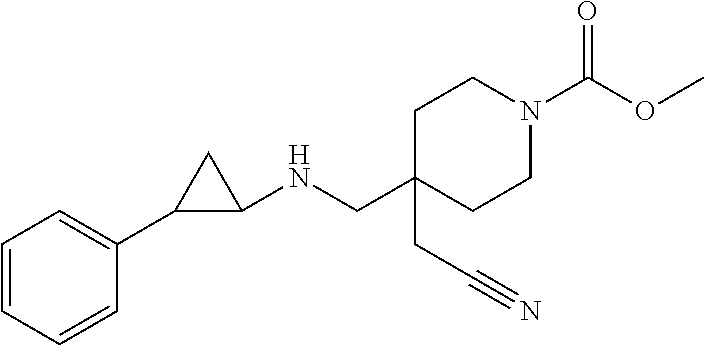


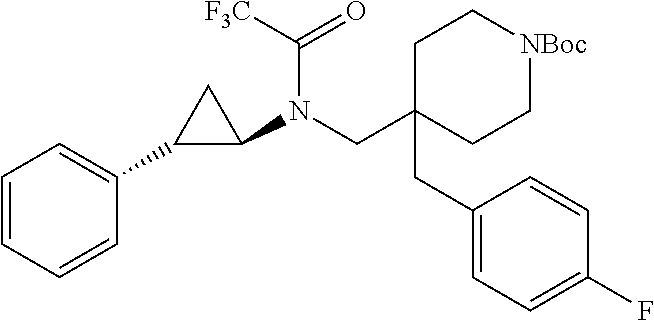


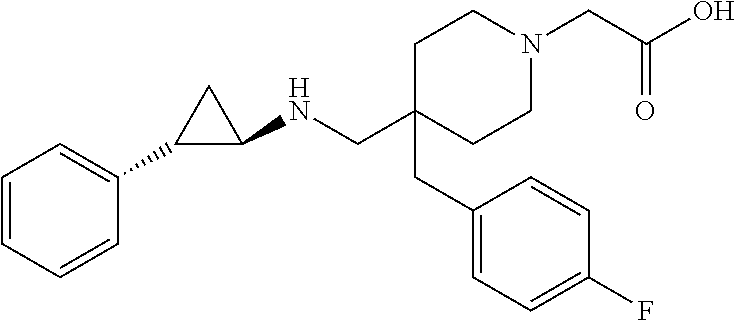


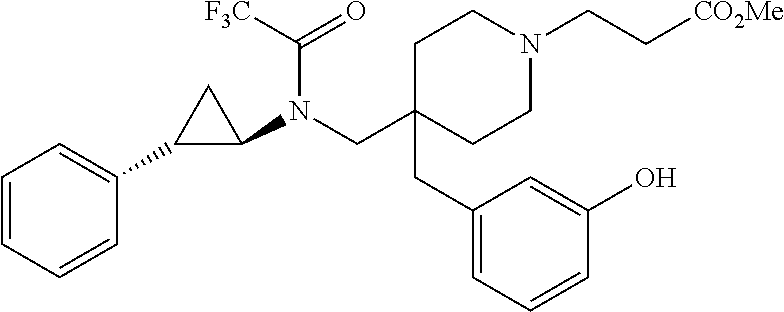


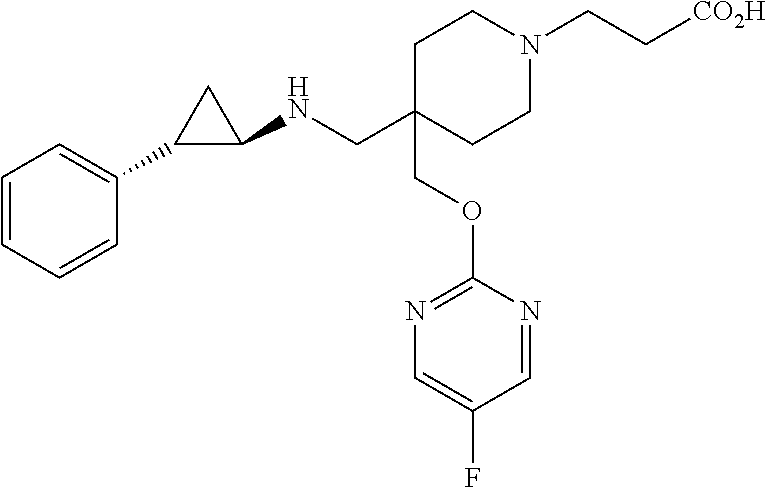


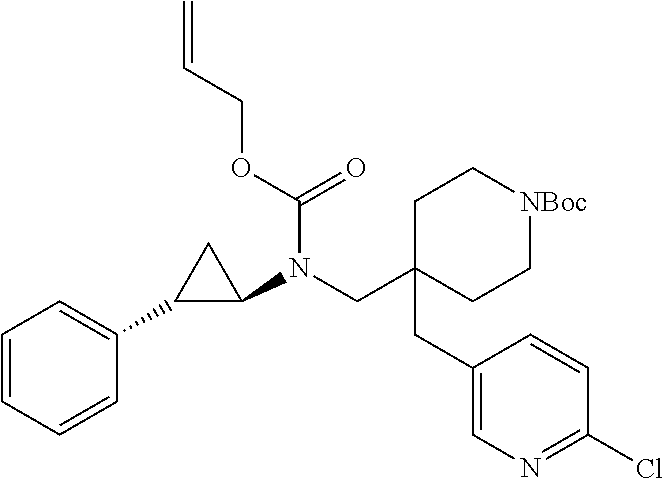


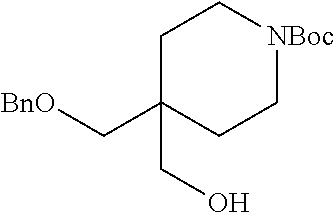


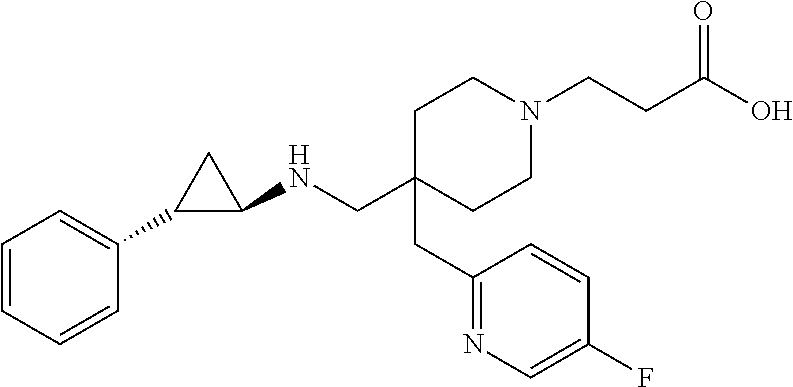


| TABLE 1 | |||
| Example No. | IC50 (nM) | ||
| 1 | + | ||
| 2 | + | ||
| 3 | + | ||
| 4 | + | ||
| 5 | + | ||
| 6 | + | ||
| 7 | + | ||
| 8 | + | ||
| 9 | + | ||
| 10 | + | ||
| 11 | + | ||
| 12 | + | ||
| 13 | + | ||
| 14 | + | ||
| 15 | + | ||
| 16 | + | ||
| 17 | + | ||
| 18 | + | ||
| 19 | + | ||
| 20 | + | ||
| 21 | + | ||
| 22 | + | ||
| 23 | + | ||
| 24 | + | ||
| 25 | + | ||
| 26 | + | ||
| 27 | + | ||
| 28 | + | ||
| 29 | + | ||
| 30 | + | ||
| 31 | + | ||
| 32 | + | ||
| 33 | + | ||
| 34 | + | ||
| 35 | + | ||
| 36 | + | ||
| 37 | + | ||
| 38 | + | ||
| 39 | + | ||
| 40 | + | ||
| 41 | + | ||
| 42 | + | ||
| 43 | + | ||
| 44 | + | ||
| 45 | + | ||
| 46 | + | ||
| 47 | + | ||
| 48 | + | ||
| 49 | + | ||
| 50 | + | ||
| 51 | + | ||
| 52 | + | ||
| 53 | + | ||
| 54 | + | ||
| 55 | + | ||
| 56 | + | ||
| 57 | + | ||
| 58 | + | ||
| 59 | + | ||
| 60 | + | ||
| 61 | + | ||
Claims (47)


Priority Applications (2)
| Application Number | Priority Date | Filing Date | Title |
|---|---|---|---|
| US14/620,950 US9493442B2 (en) | 2014-02-13 | 2015-02-12 | Cyclopropylamines as LSD1 inhibitors |
| US15/285,792 US10300051B2 (en) | 2014-02-13 | 2016-10-05 | Cyclopropylamines as LSD1 inhibitors |
Applications Claiming Priority (3)
| Application Number | Priority Date | Filing Date | Title |
|---|---|---|---|
| US201461939520P | 2014-02-13 | 2014-02-13 | |
| US201462061280P | 2014-10-08 | 2014-10-08 | |
| US14/620,950 US9493442B2 (en) | 2014-02-13 | 2015-02-12 | Cyclopropylamines as LSD1 inhibitors |
Related Child Applications (1)
| Application Number | Title | Priority Date | Filing Date |
|---|---|---|---|
| US15/285,792 Continuation US10300051B2 (en) | 2014-02-13 | 2016-10-05 | Cyclopropylamines as LSD1 inhibitors |
Publications (2)
| Publication Number | Publication Date |
|---|---|
| US20150225379A1 US20150225379A1 (en) | 2015-08-13 |
| US9493442B2 true US9493442B2 (en) | 2016-11-15 |
Family
ID=52595460
Family Applications (2)
| Application Number | Title | Priority Date | Filing Date |
|---|---|---|---|
| US14/620,950 Active US9493442B2 (en) | 2014-02-13 | 2015-02-12 | Cyclopropylamines as LSD1 inhibitors |
| US15/285,792 Active US10300051B2 (en) | 2014-02-13 | 2016-10-05 | Cyclopropylamines as LSD1 inhibitors |
Family Applications After (1)
| Application Number | Title | Priority Date | Filing Date |
|---|---|---|---|
| US15/285,792 Active US10300051B2 (en) | 2014-02-13 | 2016-10-05 | Cyclopropylamines as LSD1 inhibitors |
Country Status (5)
| Country | Link |
|---|---|
| US (2) | US9493442B2 (en) |
| EP (2) | EP3392244A1 (en) |
| ES (1) | ES2672797T3 (en) |
| TW (1) | TW201613860A (en) |
| WO (1) | WO2015123408A1 (en) |
Cited By (16)
| Publication number | Priority date | Publication date | Assignee | Title |
|---|---|---|---|---|
| US9758523B2 (en) | 2014-07-10 | 2017-09-12 | Incyte Corporation | Triazolopyridines and triazolopyrazines as LSD1 inhibitors |
| US9944647B2 (en) | 2015-04-03 | 2018-04-17 | Incyte Corporation | Heterocyclic compounds as LSD1 inhibitors |
| US9994546B2 (en) | 2014-02-13 | 2018-06-12 | Incyte Corporation | Cyclopropylamines as LSD1 inhibitors |
| US10047086B2 (en) | 2014-07-10 | 2018-08-14 | Incyte Corporation | Imidazopyridines and imidazopyrazines as LSD1 inhibitors |
| US10112950B2 (en) | 2014-07-10 | 2018-10-30 | Incyte Corporation | Substituted imidazo[1,2-a]pyrazines as LSD1 inhibitors |
| US10125133B2 (en) | 2014-07-10 | 2018-11-13 | Incyte Corporation | Substituted [1,2,4]triazolo[1,5-a]pyridines and substituted [1,2,4]triazolo[1,5-a]pyrazines as LSD1 inhibitors |
| US10166221B2 (en) | 2016-04-22 | 2019-01-01 | Incyte Corporation | Formulations of an LSD1 inhibitor |
| US10174030B2 (en) | 2014-02-13 | 2019-01-08 | Incyte Corporation | Cyclopropylamines as LSD1 inhibitors |
| US10300051B2 (en) | 2014-02-13 | 2019-05-28 | Incyte Corporation | Cyclopropylamines as LSD1 inhibitors |
| US10329255B2 (en) | 2015-08-12 | 2019-06-25 | Incyte Corporation | Salts of an LSD1 inhibitor |
| US10513493B2 (en) | 2014-02-13 | 2019-12-24 | Incyte Corporation | Cyclopropylamines as LSD1 inhibitors |
| WO2020123675A1 (en) * | 2018-12-11 | 2020-06-18 | Duke University | Compositions and methods for the treatment of cancer |
| US10968200B2 (en) | 2018-08-31 | 2021-04-06 | Incyte Corporation | Salts of an LSD1 inhibitor and processes for preparing the same |
| GB202115017D0 (en) | 2021-10-20 | 2021-12-01 | Univ London Queen Mary | Sequential treatments and biomarkers to reverse resistance to kinase inhibitors |
| WO2023067058A1 (en) | 2021-10-20 | 2023-04-27 | Queen Mary University Of London | Sequential treatments and biomarkers to reverse resistance to kinase inhibitors |
| US11685782B2 (en) | 2017-10-23 | 2023-06-27 | Children's Medical Center Corporation | Methods of treating cancer using LSD1 inhibitors in combination with immunotherapy |
Families Citing this family (27)
| Publication number | Priority date | Publication date | Assignee | Title |
|---|---|---|---|---|
| SG10201911989SA (en) | 2015-06-12 | 2020-02-27 | Oryzon Genomics Sa | Biomarkers associated with lsd1 inhibitors and uses thereof |
| WO2017013061A1 (en) | 2015-07-17 | 2017-01-26 | Oryzon Genomics, S.A. | Biomarkers associated with lsd1 inhibitors and uses thereof |
| US10059668B2 (en) | 2015-11-05 | 2018-08-28 | Mirati Therapeutics, Inc. | LSD1 inhibitors |
| CN108884029B (en) * | 2015-12-29 | 2021-10-26 | 米拉蒂医疗股份有限公司 | LSD1 inhibitors |
| WO2017114497A1 (en) | 2015-12-30 | 2017-07-06 | Novartis Ag | Immune effector cell therapies with enhanced efficacy |
| CN109195593A (en) | 2016-03-15 | 2019-01-11 | 奥莱松基因组股份有限公司 | For treating the combination of the LSD1 inhibitor of solid tumor |
| CN107200706A (en) * | 2016-03-16 | 2017-09-26 | 中国科学院上海药物研究所 | Cyclopropylamine class compound of one class fluorine substitution and preparation method thereof, pharmaceutical composition and purposes |
| ES3042059T3 (en) | 2016-03-16 | 2025-11-18 | Oryzon Genomics Sa | Methods to determine kdm1a target engagement and chemoprobes useful therefor |
| CN107459476B (en) | 2016-06-03 | 2022-06-24 | 中国科学院上海药物研究所 | Anti-indoline cyclopropylamine compound and preparation method, pharmaceutical composition and application thereof |
| CN107513068A (en) * | 2016-06-16 | 2017-12-26 | 中国科学院上海药物研究所 | A kind of new compound and its preparation and application with FGFR inhibitory activity |
| US20190256930A1 (en) | 2016-11-03 | 2019-08-22 | Oryzon Genomics, S.A. | Biomarkers for determining responsiveness to lsd1 inhibitors |
| WO2018083138A1 (en) | 2016-11-03 | 2018-05-11 | Oryzon Genomics, S.A. | Pharmacodynamic biomarkers for personalized cancer care using epigenetic modifying agents |
| AU2018213637B2 (en) * | 2017-01-24 | 2022-01-27 | Cspc Zhongqi Pharmaceutical Technology (Shijiazhuang) Co., Ltd. | LSD1 inhibitor and preparation method and application thereof |
| AU2018269947B2 (en) | 2017-05-15 | 2021-10-14 | The Regents Of The University Of Michigan | Pyrrolo(2,3-c)pyridines and related analogs as LSD-1 inhibitors |
| KR20180134675A (en) * | 2017-06-09 | 2018-12-19 | 한미약품 주식회사 | Cyclopropylamine derivative compound and use thereof |
| DK3661510T3 (en) | 2017-08-03 | 2025-01-02 | Oryzon Genomics Sa | METHODS FOR TREATING BEHAVIORAL CHANGES |
| WO2019068326A1 (en) | 2017-10-05 | 2019-04-11 | Université D'aix-Marseille | Lsd1 inhibitors for the treatment and prevention of cardiomyopathies |
| US11944614B2 (en) | 2018-05-15 | 2024-04-02 | Regents Of The University Of Michigan | Imidazo[4,5-c]pyridine compounds as LSD-1 inhibitors |
| CN121370879A (en) | 2019-03-20 | 2026-01-23 | 奥莱松基因组股份有限公司 | Treatment methods for borderline personality disorder |
| EP3941465B1 (en) | 2019-03-20 | 2025-09-17 | Oryzon Genomics, S.A. | Methods of treating attention deficit hyperactivity disorder using kdm1a inhibitors such as the compound vafidemstat |
| WO2021004610A1 (en) | 2019-07-05 | 2021-01-14 | Oryzon Genomics, S.A. | Biomarkers and methods for personalized treatment of small cell lung cancer using kdm1a inhibitors |
| CN114502561B (en) * | 2019-09-29 | 2023-12-26 | 南昌弘益药业有限公司 | LSD1 inhibitor |
| EP3964204A1 (en) | 2020-09-08 | 2022-03-09 | Université d'Aix-Marseille | Lsd1 inhibitors for use in the treatment and prevention of fibrosis of tissues |
| BR112023020554A2 (en) | 2021-04-08 | 2023-12-05 | Oryzon Genomics Sa | LSD1 INHIBITOR COMBINATIONS FOR THE TREATMENT OF MYELOID CANCERS |
| JP2025516647A (en) | 2022-05-09 | 2025-05-30 | オリゾン・ゲノミクス・ソシエダッド・アノニマ | Treatment of malignant peripheral nerve sheath tumors (MPNST) using LSD1 inhibitors |
| CN119497613A (en) | 2022-05-09 | 2025-02-21 | 奥莱松基因组股份有限公司 | Methods of treating NF1-mutated tumors using LSD1 inhibitors |
| CN120529900A (en) | 2022-11-24 | 2025-08-22 | 奥莱松基因组股份有限公司 | Combination of LSD1 inhibitors and Menin inhibitors for the treatment of cancer |
Citations (229)
| Publication number | Priority date | Publication date | Assignee | Title |
|---|---|---|---|---|
| WO1988004298A1 (en) | 1986-12-05 | 1988-06-16 | Byk Gulden Lomberg Chemische Fabrik Gmbh | 8-alkylaminoimidazo[1,2-a]pyrazines and derivatives, their preparation and their application in therapy |
| EP0404190A1 (en) | 1989-06-23 | 1990-12-27 | Takeda Chemical Industries, Ltd. | Condensed heterocyclic compounds, their production and use |
| EP0430385A2 (en) | 1989-11-30 | 1991-06-05 | Schering Aktiengesellschaft | Substituted 1,2,4-triazolo-[4,3-a]pyridines, and substituted N'-(2-pyridyl)-hydrazones, and their use as herbicides |
| FR2662163A1 (en) | 1990-05-16 | 1991-11-22 | Lipha | New 8-amino-1,2,4-triazolo[4,3-a]pyrazines, preparation processes and medicaments containing them |
| WO1993025553A1 (en) | 1992-06-17 | 1993-12-23 | The Upjohn Company | Pyridino-, pyrrolidino- and azepino-substituted oximes useful as anti-atherosclerosis and anti-hypercholesterolemic agents |
| WO1994018198A1 (en) | 1993-02-15 | 1994-08-18 | Bayer Aktiengesellschaft | Imidazoazines |
| WO1999024434A1 (en) | 1997-11-11 | 1999-05-20 | Ono Pharmaceutical Co., Ltd. | Fused pyrazine compounds |
| JP2000319278A (en) | 1999-05-11 | 2000-11-21 | Ono Pharmaceut Co Ltd | Condensed pyrazine compound and drug containing the compound as active ingredient |
| JP2000319277A (en) | 1999-05-11 | 2000-11-21 | Ono Pharmaceut Co Ltd | Condensed pyrazine compound and drug containing the compound as active ingredient |
| JP2001006877A (en) | 1999-06-21 | 2001-01-12 | Toray Ind Inc | Light-emitting device |
| JP2001035664A (en) | 1999-07-21 | 2001-02-09 | Mitsui Chemicals Inc | Organic electroluminescence element |
| JP2001057292A (en) | 1999-08-20 | 2001-02-27 | Toray Ind Inc | Luminescent element |
| WO2001027119A2 (en) | 1999-10-08 | 2001-04-19 | Grünenthal GmbH | Substance library containing bicyclic imidazo-5-yl-amines and/or bicyclic imidazo-3-yl-amines |
| JP2001114780A (en) | 1999-10-18 | 2001-04-24 | Yakult Honsha Co Ltd | Tricyclic fused imidazole derivatives |
| WO2001083481A1 (en) | 2000-04-27 | 2001-11-08 | Yamanouchi Pharmaceutical Co., Ltd. | Imidazopyridine derivatives |
| WO2002000196A2 (en) | 2000-06-28 | 2002-01-03 | Smithkline Beecham P.L.C. | Wet milling process |
| WO2002006286A2 (en) | 2000-07-14 | 2002-01-24 | Bristol-Myers Squibb Pharma Company | IMIDAZO[1,2-a]PYRAZINES FOR THE TREATMENT OF NEUROLOGICAL DISORDERS |
| WO2002034748A1 (en) | 2000-10-24 | 2002-05-02 | Sankyo Company, Limited | Imidazopyridine derivatives |
| WO2002038562A1 (en) | 2000-11-08 | 2002-05-16 | Sumitomo Chemical Takeda Agro Company, Limited | Bicyclic triazolone derivatives and herbicides containing the same |
| WO2002051831A1 (en) | 2000-12-23 | 2002-07-04 | Aventis Pharma Deutschland Gmbh | Oxybenzamides derivatives as factor xa inhibitors |
| WO2002072549A1 (en) | 2001-03-12 | 2002-09-19 | Millennium Pharmaceuticals, Inc. | Functionalized heterocycles as modulators of chemokine receptor function and methods of use therefor |
| US20020151549A1 (en) | 2000-04-27 | 2002-10-17 | Masahiko Hayakawa | Imidazopyridine derivatives |
| WO2003006471A1 (en) | 2001-07-13 | 2003-01-23 | Neurogen Corporation | Heteroaryl substituted fused bicyclic heteroaryl compounds as gabaa receptor ligands |
| WO2003044021A2 (en) | 2001-11-16 | 2003-05-30 | Amgen Inc. | Substituted indolizine-like compounds and methods of use |
| WO2003062392A2 (en) | 2002-01-18 | 2003-07-31 | Ceretek Llc | Methods of treating conditions associated with an edg receptor |
| US20040023972A1 (en) | 2000-10-13 | 2004-02-05 | Gruenenthal Gmbh | Use of substituted imidazo[1,2-a]-pyridin-, -pyrimidin-and-pyrazin-3-yl-amine derivatives in the preparation of medicaments for inhibiting NOS |
| WO2004017950A2 (en) | 2002-08-22 | 2004-03-04 | Piramed Limited | Phosphadidylinositol 3,5-biphosphate inhibitors as anti-viral agents |
| WO2004021989A2 (en) | 2002-09-06 | 2004-03-18 | Biogen Idec Ma Inc. | Imidazolopyridines and methods of making and using the same |
| US20040058938A1 (en) | 2000-12-13 | 2004-03-25 | Oliver Cullmann | Use of substituted imidazoazines, novel imidazoazines, methods for the production thereof, and agents containing these compounds |
| US20040082781A1 (en) | 2001-02-08 | 2004-04-29 | Shigeki Hibi | Bicyclic nitrogenous fused-ring compound |
| US20040082635A1 (en) | 2001-06-26 | 2004-04-29 | Hiromasa Hashimoto | Fused cyclic compounds and medicinal use thereof |
| WO2004058762A1 (en) | 2002-12-20 | 2004-07-15 | Pharmacia Corporation | Mitogen activated protein kinase-activated protein kinase-2 inhibiting compounds |
| WO2004072081A1 (en) | 2003-02-10 | 2004-08-26 | Cellular Genomics, Inc. | Certain 8-heteroaryl-6-phenyl-imidazo[1,2-a]pyrazines as modulators of kinase activity |
| WO2004074290A1 (en) | 2003-02-20 | 2004-09-02 | Merck Sharp & Dohme Limited | Substituted amino heterocycles as vr-1 antagonists for treating pain |
| WO2004089416A2 (en) | 2003-04-11 | 2004-10-21 | Novo Nordisk A/S | Combination of an 11beta-hydroxysteroid dehydrogenase type 1 inhibitor and an antihypertensive agent |
| WO2004089380A2 (en) | 2003-04-11 | 2004-10-21 | Novo Nordisk A/S | Pharmaceutical use of fused 1,2,4-triazoles |
| US20040220189A1 (en) | 2003-02-20 | 2004-11-04 | Sugen, Inc. | Use of 8-amino-aryl-substituted imidazopyrazines as kinase inhbitors |
| WO2004108692A1 (en) | 2003-06-05 | 2004-12-16 | Astrazeneca Ab | Sulphonamide compounds that modulate chemokine receptor activity (ccr4) |
| US20050009832A1 (en) | 2003-02-20 | 2005-01-13 | Sugen, Inc. | Use of 8-amino-aryl-substituted imidazopyrazines as kinase inhibitors |
| WO2005025558A1 (en) | 2003-09-12 | 2005-03-24 | Applied Reserach Systems Ars Holding N.V. | Sulfonamide derivatives for the treatment of diabetes |
| JP2005089352A (en) | 2003-09-16 | 2005-04-07 | Kissei Pharmaceut Co Ltd | NEW IMIDAZO[1,5-a]PYRAZINE DERIVATIVE, MEDICINE COMPOSITION CONTAINING THE SAME AND THEIR USE |
| WO2005035532A1 (en) | 2003-10-10 | 2005-04-21 | Pfizer Products Inc. | Substituted 2h-[1,2,4]triazolo[4,3-a]pyrazines as gsk-3 inhibitors |
| WO2005042537A1 (en) | 2003-10-22 | 2005-05-12 | Bristol-Myers Squibb Company | Phenyl-aniline substituted bicyclic compounds useful as kinase inhibitors |
| US20050113283A1 (en) | 2002-01-18 | 2005-05-26 | David Solow-Cordero | Methods of treating conditions associated with an EDG-4 receptor |
| WO2005007658A3 (en) | 2003-07-14 | 2005-06-16 | Arena Pharm Inc | Fused-aryl and heteroaryl derivatives as modulators of metabolism and the prophylaxis and treatment of disorders related thereto |
| WO2005097052A1 (en) | 2004-03-30 | 2005-10-20 | The Procter & Gamble Company | Keratin dyeing compositions bicyclic 5-6 heteroaromatic dyeing compounds with one ring nitrogen junction |
| WO2004096131A3 (en) | 2003-04-24 | 2005-11-03 | Merck & Co Inc | Inhibitors of akt activity |
| WO2005044793A3 (en) | 2003-10-31 | 2006-03-30 | Takeda Pharmaceutical | Nitrogen-containing fused heterocyclic compounds |
| WO2006058752A1 (en) | 2004-12-01 | 2006-06-08 | Laboratoires Serono S.A. | [1,2,4]triazolo[4,3-a]pyridine derivatives for the treatment of hyperproliferative diseases |
| WO2006018727A3 (en) | 2004-08-18 | 2006-07-06 | Pharmacia & Upjohn Co Llc | Triazolopyridine compounds useful for the treatment of inflammation |
| WO2006038116A3 (en) | 2004-10-07 | 2006-07-13 | Warner Lambert Co | Triazolopyridine derivatives as antibacterial agents |
| WO2006015263A3 (en) | 2004-07-29 | 2006-07-27 | Threshold Pharmaceuticals Inc | Lonidamine analogs |
| US20060178399A1 (en) | 2003-03-14 | 2006-08-10 | Rena Nishizawa | Nitrogen-containing heterocyclic derivatives and drugs containing the same as the active ingredient |
| WO2006073938A3 (en) | 2004-12-30 | 2006-10-12 | Univ East Carolina | Method for the synthesis of 3-substituted indolizine and benzoindolizine compounds |
| WO2006074041A3 (en) | 2004-12-31 | 2006-11-23 | Nat Health Research Institutes | Anti-tumor compounds |
| WO2006131003A1 (en) | 2005-06-09 | 2006-12-14 | Oncalis Ag | Angiogenesis inhibitors |
| WO2006135795A1 (en) | 2005-06-09 | 2006-12-21 | Bristol-Myers Squibb Company | Imidazo- and triazolopyridines as inhibitors of 11-beta hydroxysteroid dehydrogenase type i |
| WO2006135667A1 (en) | 2005-06-09 | 2006-12-21 | Bristol-Myers Squibb Company | Imidiazo -and triazolopyridines as inhibitors of 11-beta hydroxysteroid dehydrogenase type i |
| WO2006138695A1 (en) | 2005-06-17 | 2006-12-28 | Bristol-Myers Squibb Company | Triazolopyridine derivatives as cannabinoid receptor 1 antagonists |
| WO2006138657A1 (en) | 2005-06-17 | 2006-12-28 | Bristol-Myers Squibb Company | Bicyclic heterocycles as cannabinoid-1 receptor modulators |
| WO2006138734A1 (en) | 2005-06-17 | 2006-12-28 | Bristol-Myers Squibb Company | Triazolopyrimidine cannabinoid receptor 1 antagonists |
| WO2006113704A3 (en) | 2005-04-18 | 2007-02-08 | Neurogen Corp | Subtituted heteroaryl cb1 antagonists |
| WO2006057946A3 (en) | 2004-11-22 | 2007-07-05 | Threshold Pharmaceuticals Inc | Tubulin binding anti cancer agents and prodrugs thereof |
| WO2007074491B1 (en) | 2005-12-28 | 2007-08-16 | Univ Siena | HETEROTRICYCLIC AMIDE DERIVATIVES AS NEUROKININ-l (NKl) RECEPTOR LIGANDS |
| WO2007095588A1 (en) | 2006-02-14 | 2007-08-23 | Novartis Ag | Pi-3 kinase inhibitors and methods of their use |
| WO2007113226A1 (en) | 2006-03-31 | 2007-10-11 | Novartis Ag | Organic compounds |
| WO2007028051A3 (en) | 2005-09-02 | 2007-11-01 | Abbott Lab | Novel imidazo based heterocycles |
| WO2007058942A3 (en) | 2005-11-10 | 2007-11-15 | Schering Corp | Imidazopyrazines as protein kinase inhibitors |
| WO2007145921A1 (en) | 2006-06-06 | 2007-12-21 | Schering Corporation | Imidazopyrazines as protein kinase inhibitors |
| WO2008005423A1 (en) | 2006-07-03 | 2008-01-10 | Cambrex Charles City, Inc. | Improved method of making sufentanil |
| WO2008005908A2 (en) | 2006-07-07 | 2008-01-10 | Forest Laboratories Holdings Limited | Pyridoimidazole derivatives |
| WO2008005262A1 (en) | 2006-06-29 | 2008-01-10 | Schering Corporation | Substituted bicyclic and tricyclic thrombin receptor antagonists |
| WO2008011560A2 (en) | 2006-07-20 | 2008-01-24 | Mehmet Kahraman | Benzothiophene inhibitors of rho kinase |
| WO2008027812A2 (en) | 2006-08-28 | 2008-03-06 | Forest Laboratories Holdings Limited | Imidazopyridine and imidazopyrimidine derivatives |
| DE102006041292A1 (en) | 2006-09-01 | 2008-03-06 | Henkel Kgaa | Use of optionally substituted hexagonal heterocycle with a nitrogen in the ring for activating and improving the brightening effect of the hydrogen peroxide for keratin fibers such as fur, wool, feathers and human hair |
| WO2008037607A1 (en) | 2006-09-25 | 2008-04-03 | Basf Se | Heterocyclic compounds containing carbonyl groups, and the use thereof for controlling phytopathogenic fungi |
| WO2008045393A2 (en) | 2006-10-11 | 2008-04-17 | Amgen Inc. | Imidazo- and triazolo-pyridine compounds and methods of use therof |
| WO2008056176A1 (en) | 2006-11-10 | 2008-05-15 | Scottish Biomedical Limited | Pyrazolopyrimidines as phosphodiesterase inhibitors |
| WO2008064157A1 (en) | 2006-11-22 | 2008-05-29 | Incyte Corporation | Imidazotriazines and imidazopyrimidines as kinase inhibitors |
| WO2008065198A1 (en) | 2006-12-01 | 2008-06-05 | Galapagos N.V. | Triazolopyridine compounds useful for the treatment of degenerative & inflammatory diseases |
| WO2008113559A2 (en) | 2007-03-21 | 2008-09-25 | Schwarz Pharma Ag | Indolizines and aza-analog derivatives thereof as cns active compounds |
| US20080249154A1 (en) | 2003-12-26 | 2008-10-09 | Ono Pharmaceutical Co., Ltd. | Preventive and/or Therapeutic Agent For Disease In Which Mitochondrial Benzodiazephine Receptor Participates |
| WO2007149478A3 (en) | 2006-06-22 | 2008-10-09 | Mallinckrodt Inc | Pyrazine derivatives with extended conjugation and uses thereof |
| WO2008125111A1 (en) | 2007-04-16 | 2008-10-23 | Leo Pharma A/S | Triazolopyridines as phosphodiesterase inhibitors for treatment of dermal diseases |
| WO2008130951A1 (en) | 2007-04-17 | 2008-10-30 | Bristol-Myers Squibb Company | Fused heterocyclic 11-beta-hydroxysteroid dehydrogenase type i inhibitors |
| WO2008141239A1 (en) | 2007-05-10 | 2008-11-20 | Acadia Pharmaceuticals Inc. | Imidazol [1,2-a] pyridines and related compounds with activity at cannabinoid cb2 receptors |
| WO2008154241A1 (en) | 2007-06-08 | 2008-12-18 | Abbott Laboratories | 5-heteroaryl substituted indazoles as kinase inhibitors |
| WO2008157752A1 (en) | 2007-06-21 | 2008-12-24 | Incyte Corporation | Spirocycles as inhibitors of 11-beta hydroxyl steroid dehydrogenase type 1 |
| WO2008156614A2 (en) | 2007-06-14 | 2008-12-24 | Schering Corporation | Imidazopyrazines as protein kinase inhibitors |
| WO2009010530A1 (en) | 2007-07-18 | 2009-01-22 | Novartis Ag | Bicyclic heteroaryl compounds and their use as kinase inhibitors |
| WO2009017954A1 (en) | 2007-08-01 | 2009-02-05 | Phenomix Corporation | Inhibitors of jak2 kinase |
| WO2008008539A3 (en) | 2006-07-14 | 2009-02-12 | Amgen Inc | Fused heterocyclic derivatives useful as inhibitors of the hepatocyte growth factor receptor |
| WO2009023179A2 (en) | 2007-08-10 | 2009-02-19 | Genelabs Technologies, Inc. | Nitrogen containing bicyclic chemical entities for treating viral infections |
| FR2920091A1 (en) | 2007-08-24 | 2009-02-27 | Oreal | Composition for coloring keratin fibers, preferably human hair, comprises amino pyrazolopyridine oxidation bases, couplers and polyols comprising hydrocarbon chain carrying two hydroxyl functions, where the chain is free from ether function |
| FR2920090A1 (en) | 2007-08-24 | 2009-02-27 | Oreal | Composition for coloring keratin fibers, preferably human hair, comprises amino pyrazolopyridine oxidation bases, couplers, and surfactants comprising alkyl ether carboxylic acid and alkyl polyglucosides |
| WO2009045753A1 (en) | 2007-10-01 | 2009-04-09 | Bristol-Myers Squibb Company | Triazolopyridine 11-beta hydroxysteroid dehydrogenase type i inhibitors |
| WO2007022529A3 (en) | 2005-08-19 | 2009-04-16 | Array Biopharma Inc | Method of treating inflammatory diseases |
| WO2009047514A1 (en) | 2007-10-10 | 2009-04-16 | Cancer Research Technology Limited | [1,2,4]triazolo[1,5-a]pyridine and [1,2,4]triazolo[1,5-c]pyrimidine compounds and their use |
| WO2009017701A3 (en) | 2007-07-31 | 2009-05-07 | Schering Corp | Anti-mitotic agent and aurora kinase inhibitor combination as anti-cancer treatment |
| WO2009085230A1 (en) | 2007-12-19 | 2009-07-09 | Amgen Inc. | Inhibitors of pi3 kinase |
| WO2009085980A1 (en) | 2007-12-19 | 2009-07-09 | Genentech, Inc. | 8-anilin0imidaz0pyridines and their use as anti-cancer and/or anti-inflammatory agents |
| WO2009091374A2 (en) | 2008-01-15 | 2009-07-23 | Amgen Inc. | Fused heterocyclic derivatives and methods of use |
| US20090203690A1 (en) | 2007-06-08 | 2009-08-13 | Abbott Laboratories | 5-substituted indazoles as kinase inhibitors |
| WO2009114180A1 (en) | 2008-03-13 | 2009-09-17 | The General Hospital Corporation | Inhibitors of the bmp signaling pathway |
| WO2009114512A1 (en) | 2008-03-11 | 2009-09-17 | Incyte Corporation | Azetidine and cyclobutane derivatives as jak inhibitors |
| WO2009128520A1 (en) | 2008-04-18 | 2009-10-22 | 塩野義製薬株式会社 | Heterocyclic compound having inhibitory activity on p13k |
| US20090318436A1 (en) | 2006-07-14 | 2009-12-24 | Amgen Inc. | Fused heterocyclic derivatives and methods of use |
| WO2010010188A1 (en) | 2008-07-25 | 2010-01-28 | Galapagos Nv | Novel compounds useful for the treatment of degenerative and inflammatory diseases. |
| WO2010010184A1 (en) | 2008-07-25 | 2010-01-28 | Galapagos Nv | [1, 2, 4] triazolo [1, 5-a] pyridines as jak inhibitors |
| WO2010010189A1 (en) | 2008-07-25 | 2010-01-28 | Galapagos Nv | Novel compounds useful for the treatment of degenerative and inflammatory diseases |
| WO2010010187A1 (en) | 2008-07-25 | 2010-01-28 | Galapagos Nv | Novel compounds useful for the treatment of degenerative and inflammatory diseases |
| WO2010019899A1 (en) | 2008-08-14 | 2010-02-18 | Takeda Pharmaceutical Company Limited | cMET INHIBITORS |
| WO2010033906A2 (en) | 2008-09-19 | 2010-03-25 | President And Fellows Of Harvard College | Efficient induction of pluripotent stem cells using small molecule compounds |
| WO2010036380A1 (en) | 2008-09-26 | 2010-04-01 | Intellikine, Inc. | Heterocyclic kinase inhibitors |
| JP2010070503A (en) | 2008-09-19 | 2010-04-02 | Daiichi Sankyo Co Ltd | Antifungal 2-amino-triazolopyridine derivative |
| WO2010043721A1 (en) | 2008-10-17 | 2010-04-22 | Oryzon Genomics, S.A. | Oxidase inhibitors and their use |
| WO2010048149A2 (en) | 2008-10-20 | 2010-04-29 | Kalypsys, Inc. | Heterocyclic modulators of gpr119 for treatment of disease |
| US20100113441A1 (en) | 2007-03-16 | 2010-05-06 | Bayer Schering Pharma Aktiengesellschaft | Substituted imidazopyrimidines and triazolopyrimidines |
| WO2010064020A1 (en) | 2008-12-04 | 2010-06-10 | Proximagen Ltd. | Imidazopyridine compounds |
| WO2010084160A1 (en) | 2009-01-21 | 2010-07-29 | Oryzon Genomics S.A. | Phenylcyclopropylamine derivatives and their medical use |
| WO2010088368A2 (en) | 2009-01-29 | 2010-08-05 | Schering Corporation | Imidazopyrazines as protein kinase inhibitors |
| WO2010091067A2 (en) | 2009-02-04 | 2010-08-12 | Vitae Pharmaceuticals, Inc. | Cyclic inhibitors of 11beta-hydroxysteroid dehydrogenase 1 |
| WO2010108059A1 (en) | 2009-03-20 | 2010-09-23 | Incyte Corporation | Substituted pyrimidine derivatives as antagonists of the histamine h4 receptor |
| WO2010113942A1 (en) | 2009-03-31 | 2010-10-07 | キッセイ薬品工業株式会社 | Indolizine derivative and use thereof for medical purposes |
| WO2010119264A1 (en) | 2009-04-16 | 2010-10-21 | Centro Nacional De Investigaciones Oncólogicas (Cnio) | Imidazopyrazines for use as kinase inhibitors |
| WO2010136438A1 (en) | 2009-05-27 | 2010-12-02 | N.V. Organon | (dihydro) imidazoiso (5, 1-a) quinolines as fsh receptor agonists for the treatment of fertility disorders |
| WO2010104306A3 (en) | 2009-03-07 | 2010-12-16 | 주식회사 메디젠텍 | Pharmaceutical compositions for treating or preventing diseases caused by the translocation of gsk3 from the cell nucleus to the cytoplasm, containing compounds for inhibiting the translocation of gsk3 from the cell nucleus to the cytoplasm |
| WO2010144571A1 (en) | 2009-06-10 | 2010-12-16 | Sepracor Inc. | Histamine h3 inverse agonists and antagonists and methods of use thereof |
| WO2010151711A1 (en) | 2009-06-25 | 2010-12-29 | Alkermes, Inc. | Prodrugs of nh-acidic compounds |
| WO2011022439A1 (en) | 2009-08-17 | 2011-02-24 | Intellikine, Inc. | Heterocyclic compounds and uses thereof |
| WO2011033265A1 (en) | 2009-09-18 | 2011-03-24 | Almac Discovery Limited | Pharmaceutical compounds |
| WO2011035941A1 (en) | 2009-09-25 | 2011-03-31 | Oryzon Genomics S.A. | Lysine specific demethylase-1 inhibitors and their use |
| WO2011042217A1 (en) | 2009-10-09 | 2011-04-14 | Oryzon Genomics S.A. | Substituted heteroaryl- and aryl- cyclopropylamine acetamides and their use |
| WO2011050245A1 (en) | 2009-10-23 | 2011-04-28 | Yangbo Feng | Bicyclic heteroaryls as kinase inhibitors |
| US20110112067A1 (en) | 2009-11-09 | 2011-05-12 | Universitat Des Saarlandes | Inhibitors of the Human Aldosterone Sythase CYP11B2 |
| WO2011089400A1 (en) | 2010-01-22 | 2011-07-28 | Centro Nacional De Investigaciones Oncológicas (Cnio) | Inhibitors of pi3 kinase |
| WO2011097607A1 (en) | 2010-02-08 | 2011-08-11 | Southern Research Institute | Anti-viral treatment and assay to screen for anti-viral agent |
| WO2011106105A2 (en) | 2010-02-24 | 2011-09-01 | Oryzon Genomics, S.A. | Inhibitors for antiviral use |
| WO2011113606A1 (en) | 2010-03-18 | 2011-09-22 | Institut Pasteur Korea | Anti-infective compounds |
| WO2011113862A1 (en) | 2010-03-18 | 2011-09-22 | Bayer Pharma Aktiengesellschaft | Imidazopyrazines |
| WO2011121137A1 (en) | 2010-04-02 | 2011-10-06 | Euroscreen S.A. | Novel nk-3 receptor selective antagonist compounds, pharmaceutical composition and methods for use in nk-3 receptors mediated disorders |
| WO2011131576A1 (en) | 2010-04-20 | 2011-10-27 | Università Degli Studi Di Roma "La Sapienza" | Tranylcypromine derivatives as inhibitors of histone demethylase lsd1 and/or lsd2 |
| WO2011131697A1 (en) | 2010-04-19 | 2011-10-27 | Oryzon Genomics S.A. | Lysine specific demethylase-1 inhibitors and their use |
| WO2011143365A1 (en) | 2010-05-13 | 2011-11-17 | Amgen Inc. | Nitrogen heterocyclic compounds useful as pde10 inhibitors |
| WO2011141713A1 (en) | 2010-05-13 | 2011-11-17 | Centro Nacional De Investigaciones Oncologicas (Cnio) | New bicyclic compounds as pi3-k and mtor inhibitors |
| WO2011160548A1 (en) | 2010-06-25 | 2011-12-29 | 中国人民解放军军事医学科学院毒物药物研究所 | 2-aryl imidazo[1,2-a]pyridine-3-acetamide derivatives, preparation methods and use thereof |
| WO2012003392A1 (en) | 2010-07-02 | 2012-01-05 | Gilead Sciences, Inc. | Fused heterocyclic compounds as ion channel modulators |
| WO2012007345A2 (en) | 2010-07-12 | 2012-01-19 | Bayer Pharma Aktiengesellschaft | Substituted imidazo[1,2-a]pyrimidines and -pyridines |
| WO2011106106A3 (en) | 2010-02-24 | 2012-01-19 | Oryzon Genomics, S.A. | Lysine demethylase inhibitors for diseases and disorders associated with hepadnaviridae |
| WO2011112766A3 (en) | 2010-03-10 | 2012-01-19 | Kalypsys, Inc. | Heterocyclic inhibitors of histamine receptors for the treatment of disease |
| WO2012013728A1 (en) | 2010-07-29 | 2012-02-02 | Oryzon Genomics S.A. | Arylcyclopropylamine based demethylase inhibitors of lsd1 and their medical use |
| WO2012016133A2 (en) | 2010-07-29 | 2012-02-02 | President And Fellows Of Harvard College | Ros1 kinase inhibitors for the treatment of glioblastoma and other p53-deficient cancers |
| WO2012013727A1 (en) | 2010-07-29 | 2012-02-02 | Oryzon Genomics S.A. | Cyclopropylamine derivatives useful as lsd1 inhibitors |
| US8115000B2 (en) | 2006-06-22 | 2012-02-14 | Mallinckrodt Llc | Pyrazine derivatives and uses thereof in renal monitoring |
| WO2012042042A1 (en) | 2010-09-30 | 2012-04-05 | Oryzon Genomics S.A. | Selective lsd1 and dual lsd1/mao-b inhibitors for modulating diseases associated with alterations in protein conformation |
| WO2012047852A2 (en) | 2010-10-07 | 2012-04-12 | The J. David Gladstone Institutes | Compositions and methods for modulating immunodeficiency virus transcription |
| WO2012052745A1 (en) | 2010-10-21 | 2012-04-26 | Centro Nacional De Investigaciones Oncológicas (Cnio) | Combinations of pi3k inhibitors with a second anti -tumor agent |
| WO2012054233A1 (en) | 2010-10-18 | 2012-04-26 | E. I. Du Pont De Nemours And Company | Nematocidal sulfonamides |
| WO2012052730A1 (en) | 2010-10-21 | 2012-04-26 | Centro Nacional De Investigaciones Oncológicas (Cnio) | Use of pi3k inibitors for the treatment of obesity, steatosis and ageing |
| WO2012072713A2 (en) | 2010-11-30 | 2012-06-07 | Oryzon Genomics, S.A. | Lysine demethylase inhibitors for diseases and disorders associated with flaviviridae |
| WO2012034116A3 (en) | 2010-09-10 | 2012-06-14 | The Johns Hopkins University | Small molecules as epigenetic modulators of lysine-specific demethylase 1 and methods of treating disorders |
| WO2012080236A1 (en) | 2010-12-17 | 2012-06-21 | Bayer Pharma Aktiengesellschaft | 6-substituted imidazopyrazines for use as mps-1 and tkk inhibitors in the treatment of hyperproliferative disorders |
| WO2012080234A1 (en) | 2010-12-17 | 2012-06-21 | Bayer Pharma Aktiengesellschaft | Substituted 6-imidazopyrazines for use as mps-1 and tkk inhibitors in the treatment of hyperproliferative disorders |
| WO2012080729A2 (en) | 2010-12-14 | 2012-06-21 | Electrophoretics Limited | CASEIN KINASE 1δ (CK1δ) INHIBITORS |
| WO2012080232A1 (en) | 2010-12-17 | 2012-06-21 | Bayer Pharma Aktiengesellschaft | 2-substituted imidazopyrazines for use as mps-1 and tkk inhibitors in the treatment of hyperproliferative disorders |
| WO2012080230A1 (en) | 2010-12-17 | 2012-06-21 | Bayer Pharma Aktiengesellschaft | 6 substituted imidazopyrazines for use as mps-1 and tkk inhibitors in the treatment of hyperproliferative disorders |
| WO2012080476A1 (en) | 2010-12-17 | 2012-06-21 | Boehringer Ingelheim International Gmbh | Fused dihydropyrans as gpr119 modulators for the treatment of diabetes, obesity and related diseases |
| WO2012088438A1 (en) | 2010-12-22 | 2012-06-28 | Eutropics Pharmaceuticals, Inc. | Compositions and methods useful for treating diseases |
| WO2012088411A1 (en) | 2010-12-22 | 2012-06-28 | Pamlico Pharmaceutical Inc. | 2-arylimidazo[1,2-b]pyridazine, 2-phenylimidazo[1,2-a]pyridine, and 2-phenylimidazo[1,2-a]pyrazine derivatives |
| WO2012071469A3 (en) | 2010-11-23 | 2012-07-26 | Nevada Cancer Institute | Histone demethylase inhibitors and uses thereof for treatment o f cancer |
| WO2012100229A2 (en) | 2011-01-21 | 2012-07-26 | The General Hospital Corporation | Compositions and methods for cardiovascular disease |
| WO2012107498A1 (en) | 2011-02-08 | 2012-08-16 | Oryzon Genomics S.A. | Lysine demethylase inhibitors for myeloproliferative disorders |
| WO2012107499A1 (en) | 2011-02-08 | 2012-08-16 | Oryzon Genomics S.A. | Lysine demethylase inhibitors for myeloproliferative or lymphoproliferative diseases or disorders |
| US20120220582A1 (en) | 2008-12-08 | 2012-08-30 | Gilead Connecticut, Inc. | Imidazopyrazine syk inhibitors |
| WO2012129562A2 (en) | 2011-03-24 | 2012-09-27 | The Scripps Research Institute | Compounds and methods for inducing chondrogenesis |
| WO2012135113A2 (en) * | 2011-03-25 | 2012-10-04 | Glaxosmithkline Llc | Cyclopropylamines as lsd1 inhibitors |
| WO2012147890A1 (en) | 2011-04-27 | 2012-11-01 | 持田製薬株式会社 | Novel azole derivative |
| EP2524918A1 (en) | 2011-05-19 | 2012-11-21 | Centro Nacional de Investigaciones Oncológicas (CNIO) | Imidazopyrazines derivates as kinase inhibitors |
| WO2012156531A2 (en) | 2011-05-19 | 2012-11-22 | Oryzon Genomics, S.A. | Lysine demethylase inhibitors for inflammatory diseases or conditions |
| US20120322877A1 (en) | 2009-08-18 | 2012-12-20 | Casero Robert A | (bis)urea and (bis)thiorea compounds as eipgenic modulators of lysine-specific demethylase 1 and methods of treating disorders |
| WO2012176856A2 (en) | 2011-06-24 | 2012-12-27 | Ishihara Sangyo Kaisha, Ltd. | Pesticide |
| WO2012116237A3 (en) | 2011-02-23 | 2012-12-27 | Intellikine, Llc | Heterocyclic compounds and uses thereof |
| WO2012177606A1 (en) | 2011-06-20 | 2012-12-27 | Incyte Corporation | Azetidinyl phenyl, pyridyl or pyrazinyl carboxamide derivatives as jak inhibitors |
| WO2013010380A1 (en) | 2011-07-19 | 2013-01-24 | Merck Sharp & Dohme Corp. | Btk inhibitors |
| WO2013022047A1 (en) | 2011-08-09 | 2013-02-14 | 武田薬品工業株式会社 | Cyclopropaneamine compound |
| WO2013025805A1 (en) | 2011-08-15 | 2013-02-21 | University Of Utah Research Foundation | Substituted (e)-n'-(1-phenylethylidene) benzohydrazide analogs as histone demethylase inhiitors |
| WO2013033688A1 (en) | 2011-09-01 | 2013-03-07 | The Brigham And Women's Hospital, Inc. | Treatment of cancer |
| WO2013033515A1 (en) | 2011-09-02 | 2013-03-07 | Promega Corporation | Compounds and methods for assaying redox state of metabolically active cells and methods for measuring nad(p)/nad(p)h |
| WO2012156537A9 (en) | 2011-05-19 | 2013-03-07 | Oryzon Genomics, S.A. | Lysine demethylase inhibitors such as cyclylcylopropamine derivatives for use in the treatment of thrombosis and cardiovascular diseases |
| WO2013053690A1 (en) | 2011-10-10 | 2013-04-18 | H. Lundbeck A/S | Pde9i with imidazo pyrazinone backbone |
| CN103054869A (en) | 2013-01-18 | 2013-04-24 | 郑州大学 | Application of amino dithio formic ester compound with triazolyl in preparing medicine taking LSD1 (Lysine Specificity Demethylase 1) as target |
| WO2013057322A1 (en) | 2011-10-20 | 2013-04-25 | Oryzon Genomics, S.A. | (hetero)aryl cyclopropylamine compounds as lsd1 inhibitors |
| WO2013057320A1 (en) | 2011-10-20 | 2013-04-25 | Oryzon Genomics, S.A. | (hetero)aryl cyclopropylamine compounds as lsd1 inhibitors |
| US20130109751A1 (en) | 2011-10-28 | 2013-05-02 | Mesogenics S.R.L. | Lsd-1 enzyme inhibitors for inducing osteogenic differentiation |
| WO2013074390A1 (en) | 2011-11-14 | 2013-05-23 | Merck Sharp & Dohme Corp. | Triazolopyridinone pde10 inhibitors |
| WO2013085877A1 (en) | 2011-12-05 | 2013-06-13 | Brandeis University | Treatment of amyloidosis by compounds that regulate retromer stabilization |
| US20130217878A1 (en) | 2010-09-29 | 2013-08-22 | Kissei Pharmaceutical Co., Ltd. | (aza)indolizine derivative and pharmaceutical use thereof |
| WO2013147711A1 (en) | 2012-03-30 | 2013-10-03 | Agency For Science, Technology And Research | Bicyclic heterocyclic derivatives as mnk1 and mnk2 modulators and uses thereof |
| CN103373996A (en) | 2012-04-20 | 2013-10-30 | 山东亨利医药科技有限责任公司 | Bicyclic derivatives serving as CRTH2 receptor antagonist |
| WO2014002051A2 (en) | 2012-06-28 | 2014-01-03 | Novartis Ag | Complement pathway modulators and uses thereof |
| WO2014009296A1 (en) | 2012-07-13 | 2014-01-16 | Ucb Pharma S.A. | Imidazopyrazine derivatives as modulators of tnf activity |
| WO2014058071A1 (en) | 2012-10-12 | 2014-04-17 | 武田薬品工業株式会社 | Cyclopropanamine compound and use thereof |
| WO2014078479A2 (en) | 2012-11-14 | 2014-05-22 | The Board Of Regents Of The University Of Texas System | INHIBITION OF HIF-2α HETERODIMERIZATION WITH HIF1β (ARNT) |
| WO2014085613A1 (en) | 2012-11-30 | 2014-06-05 | Mccord Darlene E | Hydroxytyrosol and oleuropein compositions for induction of dna damage, cell death and lsd1 inhibition |
| WO2014084298A1 (en) | 2012-11-28 | 2014-06-05 | 京都府公立大学法人 | Lsd1-selective inhibitor having lysine structure |
| EP2740474A1 (en) | 2012-12-05 | 2014-06-11 | Instituto Europeo di Oncologia S.r.l. | Cyclopropylamine derivatives useful as inhibitors of histone demethylases kdm1a |
| CN103893163A (en) | 2014-03-28 | 2014-07-02 | 中国药科大学 | Application of 2-([1,1'-biphenyl]-4-yl)-2-oxoethyl 4-((3-chloro-4-methylphenyl) amino)-4-oxobutanoate in preparing an LSD1 (lysine-specific demethylase 1) inhibitor medicament |
| CN103933036A (en) | 2013-01-23 | 2014-07-23 | 中国人民解放军军事医学科学院毒物药物研究所 | Application of 2-arylimidazo[1,2-alpha]pyridine-3-acetamide derivative to prepare medicines for controlling PTSD |
| CN103961340A (en) | 2014-04-30 | 2014-08-06 | 中国科学院海洋研究所 | LSD1 inhibitors and application thereof |
| WO2014127350A1 (en) | 2013-02-18 | 2014-08-21 | The Scripps Research Institute | Modulators of vasopressin receptors with therapeutic potential |
| WO2014138791A1 (en) | 2013-03-13 | 2014-09-18 | Australian Nuclear Science And Technology Organisation | Transgenic non-human organisms with non-functional tspo genes |
| WO2014164867A1 (en) | 2013-03-11 | 2014-10-09 | Imago Biosciences | Kdm1a inhibitors for the treatment of disease |
| CN104119280A (en) | 2014-06-27 | 2014-10-29 | 郑州大学 | Pyrimidine derivatives containing semicarbazide and terminal alkyne structural units, and preparation methods and applications of pyrimidine derivatives |
| US20140343118A1 (en) | 2013-03-14 | 2014-11-20 | Duke University | Methods of treatment using arylcyclopropylamine compounds |
| WO2014194280A2 (en) | 2013-05-30 | 2014-12-04 | The Board of Regents of the Nevada System of Higher Education on behalf of the University of | Novel suicidal lsd1 inhibitors targeting sox2-expressing cancer cells |
| WO2014205213A1 (en) | 2013-06-19 | 2014-12-24 | University Of Utah Research Foundation | Substituted (e)-n'-(1-phenylethylidene) benzohydrazide analogs as histone demethylase inhibitors |
| WO2015031564A2 (en) | 2013-08-30 | 2015-03-05 | University Of Utah | Substituted-1h-benzo[d]imidazole series compounds as lysine-specfic demethylase 1 (lsd1) inhibitors |
| US20150065434A1 (en) | 2013-08-29 | 2015-03-05 | Musc Foundation For Research Development | Cyclic peptide inhibitors of lysine-specific demethylase 1 |
| US20150133564A1 (en) | 2013-11-13 | 2015-05-14 | Snu R&Db Foundation | Novel compound, preparing method thereof, and use thereof as inhibitors of histone demethylase |
| WO2015089192A1 (en) | 2013-12-11 | 2015-06-18 | Quanticel Pharmaceuticals, Inc. | Inhibitors of lysine specific demethylase-1 |
| US20150225375A1 (en) | 2014-02-13 | 2015-08-13 | Incyte Corporation | Cyclopropylamines as lsd1 inhibitors |
| US20150225394A1 (en) | 2014-02-13 | 2015-08-13 | Incyte Corporation | Cyclopropylamines as lsd1 inhibitors |
| US20150225401A1 (en) | 2014-02-13 | 2015-08-13 | Incyte Corporation | Cyclopropylamines as lsd1 inhibitors |
| WO2015156417A1 (en) | 2014-04-11 | 2015-10-15 | Takeda Pharmaceutical Company Limited | Cyclopropanamine compound and use thereof |
| WO2015181380A1 (en) | 2014-05-30 | 2015-12-03 | Ieo - Istituto Europeo Di Oncologia S.R.L. | Cyclopropylamine compounds as histone demethylase inhibitors |
| US20160009721A1 (en) | 2014-07-10 | 2016-01-14 | Incyte Corporation | Triazolopyridines and triazolopyrazines as lsd1 inhibitors |
| US20160009720A1 (en) | 2014-07-10 | 2016-01-14 | Incyte Corporation | Imidazopyrazines as lsd1 inhibitors |
| US20160009712A1 (en) | 2014-07-10 | 2016-01-14 | Incyte Corporation | Imidazopyridines and imidazopyrazines as lsd1 inhibitors |
| US20160009711A1 (en) | 2014-07-10 | 2016-01-14 | Incyte Corporation | Triazolopyridines and triazolopyrazines as lsd1 inhibitors |
Family Cites Families (16)
| Publication number | Priority date | Publication date | Assignee | Title |
|---|---|---|---|---|
| US4625040A (en) | 1984-09-24 | 1986-11-25 | Pennwalt Corporation | N-(phenyl) or N-(phenylcyclopropyl)-2,5-dihydro-2-oxo-4[(substituted phenyl)amino]-3-furancarboxamide derivatives |
| US4614810A (en) | 1984-09-24 | 1986-09-30 | Pennwalt Corporation | 4,5-dihydro-4-oxo-2-[(2-trans-phenylcyclopropyl)amino]-3-furancarboxylic acids and derivatives thereof |
| FR2711993B1 (en) | 1993-11-05 | 1995-12-01 | Rhone Poulenc Rorer Sa | Drugs containing 7H-imidazol [1,2-a] pyrazine-8-one derivatives, new compounds and their preparation. |
| WO2005077948A1 (en) | 2004-02-16 | 2005-08-25 | Daiichi Pharmaceutical Co., Ltd. | Fungicidal heterocyclic compounds |
| AP2007004067A0 (en) | 2005-02-22 | 2007-08-31 | Pfizer | Oxyindole derivatives as 5HT4 receptor agonists |
| CN101848713B (en) | 2007-05-21 | 2012-04-11 | 东丽株式会社 | Oral preparation comprising specific organic acid, and method for improvement in elution property and chemical stability of oral preparation |
| JP4705695B2 (en) | 2007-10-11 | 2011-06-22 | アストラゼネカ アクチボラグ | Pyrrolo [2,3-D] pyrimidine derivatives as protein kinase B inhibitors |
| EP2465492B1 (en) | 2007-10-12 | 2015-07-01 | Novartis AG | Compositions comprising sphingosine I phosphate (sip) receptor modulators |
| US8349210B2 (en) | 2008-06-27 | 2013-01-08 | Transitions Optical, Inc. | Mesogenic stabilizers |
| WO2012009475A1 (en) | 2010-07-14 | 2012-01-19 | Oregon Health & Science University | Methods of treating cancer with inhibition of lysine-specific demethylase 1 |
| CA2866450C (en) | 2012-03-07 | 2020-02-18 | Merck Patent Gmbh | Triazolopyrazine derivatives |
| ES2672797T3 (en) | 2014-02-13 | 2018-06-18 | Incyte Corporation | Cyclopropylamines as LSD1 inhibitors |
| MA51438A (en) | 2015-04-03 | 2021-04-14 | Incyte Corp | HETEROCYCLIC COMPOUNDS USED AS LSD1 INHIBITORS |
| SG10202001219UA (en) | 2015-08-12 | 2020-03-30 | Incyte Corp | Salts of an lsd1 inhibitor |
| WO2017130933A1 (en) | 2016-01-25 | 2017-08-03 | 国立大学法人熊本大学 | Therapeutic agent for neurodegenerative diseases |
| CR20180553A (en) | 2016-04-22 | 2019-02-01 | Incyte Corp | FORMULATIONS OF AN LSD1 INHIBITOR |
-
2015
- 2015-02-12 ES ES15707004.6T patent/ES2672797T3/en active Active
- 2015-02-12 TW TW104104826A patent/TW201613860A/en unknown
- 2015-02-12 EP EP18160157.6A patent/EP3392244A1/en not_active Withdrawn
- 2015-02-12 WO PCT/US2015/015600 patent/WO2015123408A1/en not_active Ceased
- 2015-02-12 US US14/620,950 patent/US9493442B2/en active Active
- 2015-02-12 EP EP15707004.6A patent/EP3105219B9/en active Active
-
2016
- 2016-10-05 US US15/285,792 patent/US10300051B2/en active Active
Patent Citations (257)
| Publication number | Priority date | Publication date | Assignee | Title |
|---|---|---|---|---|
| WO1988004298A1 (en) | 1986-12-05 | 1988-06-16 | Byk Gulden Lomberg Chemische Fabrik Gmbh | 8-alkylaminoimidazo[1,2-a]pyrazines and derivatives, their preparation and their application in therapy |
| EP0404190A1 (en) | 1989-06-23 | 1990-12-27 | Takeda Chemical Industries, Ltd. | Condensed heterocyclic compounds, their production and use |
| EP0430385A2 (en) | 1989-11-30 | 1991-06-05 | Schering Aktiengesellschaft | Substituted 1,2,4-triazolo-[4,3-a]pyridines, and substituted N'-(2-pyridyl)-hydrazones, and their use as herbicides |
| FR2662163A1 (en) | 1990-05-16 | 1991-11-22 | Lipha | New 8-amino-1,2,4-triazolo[4,3-a]pyrazines, preparation processes and medicaments containing them |
| WO1993025553A1 (en) | 1992-06-17 | 1993-12-23 | The Upjohn Company | Pyridino-, pyrrolidino- and azepino-substituted oximes useful as anti-atherosclerosis and anti-hypercholesterolemic agents |
| WO1994018198A1 (en) | 1993-02-15 | 1994-08-18 | Bayer Aktiengesellschaft | Imidazoazines |
| US5658857A (en) | 1993-02-15 | 1997-08-19 | Bayer Aktiengesellschaft | Imidazoazines |
| WO1999024434A1 (en) | 1997-11-11 | 1999-05-20 | Ono Pharmaceutical Co., Ltd. | Fused pyrazine compounds |
| JP2000319278A (en) | 1999-05-11 | 2000-11-21 | Ono Pharmaceut Co Ltd | Condensed pyrazine compound and drug containing the compound as active ingredient |
| JP2000319277A (en) | 1999-05-11 | 2000-11-21 | Ono Pharmaceut Co Ltd | Condensed pyrazine compound and drug containing the compound as active ingredient |
| JP2001006877A (en) | 1999-06-21 | 2001-01-12 | Toray Ind Inc | Light-emitting device |
| JP2001035664A (en) | 1999-07-21 | 2001-02-09 | Mitsui Chemicals Inc | Organic electroluminescence element |
| JP2001057292A (en) | 1999-08-20 | 2001-02-27 | Toray Ind Inc | Luminescent element |
| WO2001027119A2 (en) | 1999-10-08 | 2001-04-19 | Grünenthal GmbH | Substance library containing bicyclic imidazo-5-yl-amines and/or bicyclic imidazo-3-yl-amines |
| JP2001114780A (en) | 1999-10-18 | 2001-04-24 | Yakult Honsha Co Ltd | Tricyclic fused imidazole derivatives |
| WO2001083481A1 (en) | 2000-04-27 | 2001-11-08 | Yamanouchi Pharmaceutical Co., Ltd. | Imidazopyridine derivatives |
| US20020151549A1 (en) | 2000-04-27 | 2002-10-17 | Masahiko Hayakawa | Imidazopyridine derivatives |
| WO2002000196A2 (en) | 2000-06-28 | 2002-01-03 | Smithkline Beecham P.L.C. | Wet milling process |
| WO2002006286A2 (en) | 2000-07-14 | 2002-01-24 | Bristol-Myers Squibb Pharma Company | IMIDAZO[1,2-a]PYRAZINES FOR THE TREATMENT OF NEUROLOGICAL DISORDERS |
| US20040023972A1 (en) | 2000-10-13 | 2004-02-05 | Gruenenthal Gmbh | Use of substituted imidazo[1,2-a]-pyridin-, -pyrimidin-and-pyrazin-3-yl-amine derivatives in the preparation of medicaments for inhibiting NOS |
| WO2002034748A1 (en) | 2000-10-24 | 2002-05-02 | Sankyo Company, Limited | Imidazopyridine derivatives |
| WO2002038562A1 (en) | 2000-11-08 | 2002-05-16 | Sumitomo Chemical Takeda Agro Company, Limited | Bicyclic triazolone derivatives and herbicides containing the same |
| US20040058938A1 (en) | 2000-12-13 | 2004-03-25 | Oliver Cullmann | Use of substituted imidazoazines, novel imidazoazines, methods for the production thereof, and agents containing these compounds |
| WO2002051831A1 (en) | 2000-12-23 | 2002-07-04 | Aventis Pharma Deutschland Gmbh | Oxybenzamides derivatives as factor xa inhibitors |
| US20040082781A1 (en) | 2001-02-08 | 2004-04-29 | Shigeki Hibi | Bicyclic nitrogenous fused-ring compound |
| WO2002072549A1 (en) | 2001-03-12 | 2002-09-19 | Millennium Pharmaceuticals, Inc. | Functionalized heterocycles as modulators of chemokine receptor function and methods of use therefor |
| US20040082635A1 (en) | 2001-06-26 | 2004-04-29 | Hiromasa Hashimoto | Fused cyclic compounds and medicinal use thereof |
| WO2003006471A1 (en) | 2001-07-13 | 2003-01-23 | Neurogen Corporation | Heteroaryl substituted fused bicyclic heteroaryl compounds as gabaa receptor ligands |
| WO2003044021A2 (en) | 2001-11-16 | 2003-05-30 | Amgen Inc. | Substituted indolizine-like compounds and methods of use |
| WO2003062392A2 (en) | 2002-01-18 | 2003-07-31 | Ceretek Llc | Methods of treating conditions associated with an edg receptor |
| US20050113283A1 (en) | 2002-01-18 | 2005-05-26 | David Solow-Cordero | Methods of treating conditions associated with an EDG-4 receptor |
| WO2004017950A2 (en) | 2002-08-22 | 2004-03-04 | Piramed Limited | Phosphadidylinositol 3,5-biphosphate inhibitors as anti-viral agents |
| WO2004021989A2 (en) | 2002-09-06 | 2004-03-18 | Biogen Idec Ma Inc. | Imidazolopyridines and methods of making and using the same |
| WO2004058762A1 (en) | 2002-12-20 | 2004-07-15 | Pharmacia Corporation | Mitogen activated protein kinase-activated protein kinase-2 inhibiting compounds |
| WO2004072081A1 (en) | 2003-02-10 | 2004-08-26 | Cellular Genomics, Inc. | Certain 8-heteroaryl-6-phenyl-imidazo[1,2-a]pyrazines as modulators of kinase activity |
| WO2004074290A1 (en) | 2003-02-20 | 2004-09-02 | Merck Sharp & Dohme Limited | Substituted amino heterocycles as vr-1 antagonists for treating pain |
| US20040220189A1 (en) | 2003-02-20 | 2004-11-04 | Sugen, Inc. | Use of 8-amino-aryl-substituted imidazopyrazines as kinase inhbitors |
| US20050009832A1 (en) | 2003-02-20 | 2005-01-13 | Sugen, Inc. | Use of 8-amino-aryl-substituted imidazopyrazines as kinase inhibitors |
| US20060178399A1 (en) | 2003-03-14 | 2006-08-10 | Rena Nishizawa | Nitrogen-containing heterocyclic derivatives and drugs containing the same as the active ingredient |
| WO2004089416A2 (en) | 2003-04-11 | 2004-10-21 | Novo Nordisk A/S | Combination of an 11beta-hydroxysteroid dehydrogenase type 1 inhibitor and an antihypertensive agent |
| WO2004089380A2 (en) | 2003-04-11 | 2004-10-21 | Novo Nordisk A/S | Pharmaceutical use of fused 1,2,4-triazoles |
| WO2004096131A3 (en) | 2003-04-24 | 2005-11-03 | Merck & Co Inc | Inhibitors of akt activity |
| WO2004108692A1 (en) | 2003-06-05 | 2004-12-16 | Astrazeneca Ab | Sulphonamide compounds that modulate chemokine receptor activity (ccr4) |
| WO2005007658A3 (en) | 2003-07-14 | 2005-06-16 | Arena Pharm Inc | Fused-aryl and heteroaryl derivatives as modulators of metabolism and the prophylaxis and treatment of disorders related thereto |
| WO2005025558A1 (en) | 2003-09-12 | 2005-03-24 | Applied Reserach Systems Ars Holding N.V. | Sulfonamide derivatives for the treatment of diabetes |
| JP2005089352A (en) | 2003-09-16 | 2005-04-07 | Kissei Pharmaceut Co Ltd | NEW IMIDAZO[1,5-a]PYRAZINE DERIVATIVE, MEDICINE COMPOSITION CONTAINING THE SAME AND THEIR USE |
| WO2005035532A1 (en) | 2003-10-10 | 2005-04-21 | Pfizer Products Inc. | Substituted 2h-[1,2,4]triazolo[4,3-a]pyrazines as gsk-3 inhibitors |
| WO2005042537A1 (en) | 2003-10-22 | 2005-05-12 | Bristol-Myers Squibb Company | Phenyl-aniline substituted bicyclic compounds useful as kinase inhibitors |
| WO2005044793A3 (en) | 2003-10-31 | 2006-03-30 | Takeda Pharmaceutical | Nitrogen-containing fused heterocyclic compounds |
| US20080249154A1 (en) | 2003-12-26 | 2008-10-09 | Ono Pharmaceutical Co., Ltd. | Preventive and/or Therapeutic Agent For Disease In Which Mitochondrial Benzodiazephine Receptor Participates |
| WO2005097052A1 (en) | 2004-03-30 | 2005-10-20 | The Procter & Gamble Company | Keratin dyeing compositions bicyclic 5-6 heteroaromatic dyeing compounds with one ring nitrogen junction |
| WO2006015263A3 (en) | 2004-07-29 | 2006-07-27 | Threshold Pharmaceuticals Inc | Lonidamine analogs |
| WO2006018727A3 (en) | 2004-08-18 | 2006-07-06 | Pharmacia & Upjohn Co Llc | Triazolopyridine compounds useful for the treatment of inflammation |
| WO2006038116A3 (en) | 2004-10-07 | 2006-07-13 | Warner Lambert Co | Triazolopyridine derivatives as antibacterial agents |
| WO2006057946A3 (en) | 2004-11-22 | 2007-07-05 | Threshold Pharmaceuticals Inc | Tubulin binding anti cancer agents and prodrugs thereof |
| WO2006058752A1 (en) | 2004-12-01 | 2006-06-08 | Laboratoires Serono S.A. | [1,2,4]triazolo[4,3-a]pyridine derivatives for the treatment of hyperproliferative diseases |
| WO2006073938A3 (en) | 2004-12-30 | 2006-10-12 | Univ East Carolina | Method for the synthesis of 3-substituted indolizine and benzoindolizine compounds |
| WO2006074041A3 (en) | 2004-12-31 | 2006-11-23 | Nat Health Research Institutes | Anti-tumor compounds |
| WO2006113704A3 (en) | 2005-04-18 | 2007-02-08 | Neurogen Corp | Subtituted heteroaryl cb1 antagonists |
| WO2006131003A1 (en) | 2005-06-09 | 2006-12-14 | Oncalis Ag | Angiogenesis inhibitors |
| WO2006135667A1 (en) | 2005-06-09 | 2006-12-21 | Bristol-Myers Squibb Company | Imidiazo -and triazolopyridines as inhibitors of 11-beta hydroxysteroid dehydrogenase type i |
| WO2006135795A1 (en) | 2005-06-09 | 2006-12-21 | Bristol-Myers Squibb Company | Imidazo- and triazolopyridines as inhibitors of 11-beta hydroxysteroid dehydrogenase type i |
| WO2006138657A1 (en) | 2005-06-17 | 2006-12-28 | Bristol-Myers Squibb Company | Bicyclic heterocycles as cannabinoid-1 receptor modulators |
| WO2006138734A1 (en) | 2005-06-17 | 2006-12-28 | Bristol-Myers Squibb Company | Triazolopyrimidine cannabinoid receptor 1 antagonists |
| US20070004772A1 (en) | 2005-06-17 | 2007-01-04 | Chongqing Sun | Triazolopyridine cannabinoid receptor 1 antagonists |
| WO2006138695A1 (en) | 2005-06-17 | 2006-12-28 | Bristol-Myers Squibb Company | Triazolopyridine derivatives as cannabinoid receptor 1 antagonists |
| WO2007022529A3 (en) | 2005-08-19 | 2009-04-16 | Array Biopharma Inc | Method of treating inflammatory diseases |
| WO2007028051A3 (en) | 2005-09-02 | 2007-11-01 | Abbott Lab | Novel imidazo based heterocycles |
| WO2007058942A3 (en) | 2005-11-10 | 2007-11-15 | Schering Corp | Imidazopyrazines as protein kinase inhibitors |
| WO2007074491B1 (en) | 2005-12-28 | 2007-08-16 | Univ Siena | HETEROTRICYCLIC AMIDE DERIVATIVES AS NEUROKININ-l (NKl) RECEPTOR LIGANDS |
| WO2007095588A1 (en) | 2006-02-14 | 2007-08-23 | Novartis Ag | Pi-3 kinase inhibitors and methods of their use |
| WO2007113226A1 (en) | 2006-03-31 | 2007-10-11 | Novartis Ag | Organic compounds |
| WO2007145921A1 (en) | 2006-06-06 | 2007-12-21 | Schering Corporation | Imidazopyrazines as protein kinase inhibitors |
| US8115000B2 (en) | 2006-06-22 | 2012-02-14 | Mallinckrodt Llc | Pyrazine derivatives and uses thereof in renal monitoring |
| WO2007149478A3 (en) | 2006-06-22 | 2008-10-09 | Mallinckrodt Inc | Pyrazine derivatives with extended conjugation and uses thereof |
| WO2008005262A1 (en) | 2006-06-29 | 2008-01-10 | Schering Corporation | Substituted bicyclic and tricyclic thrombin receptor antagonists |
| WO2008005423A1 (en) | 2006-07-03 | 2008-01-10 | Cambrex Charles City, Inc. | Improved method of making sufentanil |
| WO2008005908A2 (en) | 2006-07-07 | 2008-01-10 | Forest Laboratories Holdings Limited | Pyridoimidazole derivatives |
| WO2008008539A3 (en) | 2006-07-14 | 2009-02-12 | Amgen Inc | Fused heterocyclic derivatives useful as inhibitors of the hepatocyte growth factor receptor |
| US20090318436A1 (en) | 2006-07-14 | 2009-12-24 | Amgen Inc. | Fused heterocyclic derivatives and methods of use |
| WO2008011560A2 (en) | 2006-07-20 | 2008-01-24 | Mehmet Kahraman | Benzothiophene inhibitors of rho kinase |
| WO2008027812A2 (en) | 2006-08-28 | 2008-03-06 | Forest Laboratories Holdings Limited | Imidazopyridine and imidazopyrimidine derivatives |
| DE102006041292A1 (en) | 2006-09-01 | 2008-03-06 | Henkel Kgaa | Use of optionally substituted hexagonal heterocycle with a nitrogen in the ring for activating and improving the brightening effect of the hydrogen peroxide for keratin fibers such as fur, wool, feathers and human hair |
| WO2008037607A1 (en) | 2006-09-25 | 2008-04-03 | Basf Se | Heterocyclic compounds containing carbonyl groups, and the use thereof for controlling phytopathogenic fungi |
| WO2008045393A2 (en) | 2006-10-11 | 2008-04-17 | Amgen Inc. | Imidazo- and triazolo-pyridine compounds and methods of use therof |
| WO2008056176A1 (en) | 2006-11-10 | 2008-05-15 | Scottish Biomedical Limited | Pyrazolopyrimidines as phosphodiesterase inhibitors |
| WO2008064157A1 (en) | 2006-11-22 | 2008-05-29 | Incyte Corporation | Imidazotriazines and imidazopyrimidines as kinase inhibitors |
| WO2008065198A1 (en) | 2006-12-01 | 2008-06-05 | Galapagos N.V. | Triazolopyridine compounds useful for the treatment of degenerative & inflammatory diseases |
| US20100113441A1 (en) | 2007-03-16 | 2010-05-06 | Bayer Schering Pharma Aktiengesellschaft | Substituted imidazopyrimidines and triazolopyrimidines |
| US20130040946A1 (en) | 2007-03-16 | 2013-02-14 | Bayer Intellectual Property Gmbh | Substituted imidazopyrimidines and triazolopyrimidines |
| WO2008113559A2 (en) | 2007-03-21 | 2008-09-25 | Schwarz Pharma Ag | Indolizines and aza-analog derivatives thereof as cns active compounds |
| WO2008125111A1 (en) | 2007-04-16 | 2008-10-23 | Leo Pharma A/S | Triazolopyridines as phosphodiesterase inhibitors for treatment of dermal diseases |
| WO2008130951A1 (en) | 2007-04-17 | 2008-10-30 | Bristol-Myers Squibb Company | Fused heterocyclic 11-beta-hydroxysteroid dehydrogenase type i inhibitors |
| WO2008141239A1 (en) | 2007-05-10 | 2008-11-20 | Acadia Pharmaceuticals Inc. | Imidazol [1,2-a] pyridines and related compounds with activity at cannabinoid cb2 receptors |
| US20090203690A1 (en) | 2007-06-08 | 2009-08-13 | Abbott Laboratories | 5-substituted indazoles as kinase inhibitors |
| WO2008154241A1 (en) | 2007-06-08 | 2008-12-18 | Abbott Laboratories | 5-heteroaryl substituted indazoles as kinase inhibitors |
| WO2008156614A2 (en) | 2007-06-14 | 2008-12-24 | Schering Corporation | Imidazopyrazines as protein kinase inhibitors |
| WO2008157752A1 (en) | 2007-06-21 | 2008-12-24 | Incyte Corporation | Spirocycles as inhibitors of 11-beta hydroxyl steroid dehydrogenase type 1 |
| WO2009010530A1 (en) | 2007-07-18 | 2009-01-22 | Novartis Ag | Bicyclic heteroaryl compounds and their use as kinase inhibitors |
| WO2009017701A3 (en) | 2007-07-31 | 2009-05-07 | Schering Corp | Anti-mitotic agent and aurora kinase inhibitor combination as anti-cancer treatment |
| WO2009017954A1 (en) | 2007-08-01 | 2009-02-05 | Phenomix Corporation | Inhibitors of jak2 kinase |
| WO2009023179A2 (en) | 2007-08-10 | 2009-02-19 | Genelabs Technologies, Inc. | Nitrogen containing bicyclic chemical entities for treating viral infections |
| FR2920091A1 (en) | 2007-08-24 | 2009-02-27 | Oreal | Composition for coloring keratin fibers, preferably human hair, comprises amino pyrazolopyridine oxidation bases, couplers and polyols comprising hydrocarbon chain carrying two hydroxyl functions, where the chain is free from ether function |
| FR2920090A1 (en) | 2007-08-24 | 2009-02-27 | Oreal | Composition for coloring keratin fibers, preferably human hair, comprises amino pyrazolopyridine oxidation bases, couplers, and surfactants comprising alkyl ether carboxylic acid and alkyl polyglucosides |
| WO2009045753A1 (en) | 2007-10-01 | 2009-04-09 | Bristol-Myers Squibb Company | Triazolopyridine 11-beta hydroxysteroid dehydrogenase type i inhibitors |
| WO2009047514A1 (en) | 2007-10-10 | 2009-04-16 | Cancer Research Technology Limited | [1,2,4]triazolo[1,5-a]pyridine and [1,2,4]triazolo[1,5-c]pyrimidine compounds and their use |
| WO2009085230A1 (en) | 2007-12-19 | 2009-07-09 | Amgen Inc. | Inhibitors of pi3 kinase |
| WO2009085980A1 (en) | 2007-12-19 | 2009-07-09 | Genentech, Inc. | 8-anilin0imidaz0pyridines and their use as anti-cancer and/or anti-inflammatory agents |
| WO2009091374A2 (en) | 2008-01-15 | 2009-07-23 | Amgen Inc. | Fused heterocyclic derivatives and methods of use |
| WO2009114512A1 (en) | 2008-03-11 | 2009-09-17 | Incyte Corporation | Azetidine and cyclobutane derivatives as jak inhibitors |
| WO2009114180A1 (en) | 2008-03-13 | 2009-09-17 | The General Hospital Corporation | Inhibitors of the bmp signaling pathway |
| WO2009128520A1 (en) | 2008-04-18 | 2009-10-22 | 塩野義製薬株式会社 | Heterocyclic compound having inhibitory activity on p13k |
| US20110105457A1 (en) | 2008-04-18 | 2011-05-05 | Shionogi & Co., Ltd. | Heterocyclic compound having inhibitory activity on pi3k |
| WO2010010188A1 (en) | 2008-07-25 | 2010-01-28 | Galapagos Nv | Novel compounds useful for the treatment of degenerative and inflammatory diseases. |
| WO2010010184A1 (en) | 2008-07-25 | 2010-01-28 | Galapagos Nv | [1, 2, 4] triazolo [1, 5-a] pyridines as jak inhibitors |
| WO2010010189A1 (en) | 2008-07-25 | 2010-01-28 | Galapagos Nv | Novel compounds useful for the treatment of degenerative and inflammatory diseases |
| WO2010010187A1 (en) | 2008-07-25 | 2010-01-28 | Galapagos Nv | Novel compounds useful for the treatment of degenerative and inflammatory diseases |
| WO2010019899A1 (en) | 2008-08-14 | 2010-02-18 | Takeda Pharmaceutical Company Limited | cMET INHIBITORS |
| JP2010070503A (en) | 2008-09-19 | 2010-04-02 | Daiichi Sankyo Co Ltd | Antifungal 2-amino-triazolopyridine derivative |
| WO2010033906A2 (en) | 2008-09-19 | 2010-03-25 | President And Fellows Of Harvard College | Efficient induction of pluripotent stem cells using small molecule compounds |
| WO2010036380A1 (en) | 2008-09-26 | 2010-04-01 | Intellikine, Inc. | Heterocyclic kinase inhibitors |
| WO2010043721A1 (en) | 2008-10-17 | 2010-04-22 | Oryzon Genomics, S.A. | Oxidase inhibitors and their use |
| WO2010048149A2 (en) | 2008-10-20 | 2010-04-29 | Kalypsys, Inc. | Heterocyclic modulators of gpr119 for treatment of disease |
| WO2010064020A1 (en) | 2008-12-04 | 2010-06-10 | Proximagen Ltd. | Imidazopyridine compounds |
| US20120220582A1 (en) | 2008-12-08 | 2012-08-30 | Gilead Connecticut, Inc. | Imidazopyrazine syk inhibitors |
| WO2010084160A1 (en) | 2009-01-21 | 2010-07-29 | Oryzon Genomics S.A. | Phenylcyclopropylamine derivatives and their medical use |
| WO2010088368A2 (en) | 2009-01-29 | 2010-08-05 | Schering Corporation | Imidazopyrazines as protein kinase inhibitors |
| WO2010091067A2 (en) | 2009-02-04 | 2010-08-12 | Vitae Pharmaceuticals, Inc. | Cyclic inhibitors of 11beta-hydroxysteroid dehydrogenase 1 |
| WO2010104306A3 (en) | 2009-03-07 | 2010-12-16 | 주식회사 메디젠텍 | Pharmaceutical compositions for treating or preventing diseases caused by the translocation of gsk3 from the cell nucleus to the cytoplasm, containing compounds for inhibiting the translocation of gsk3 from the cell nucleus to the cytoplasm |
| WO2010108059A1 (en) | 2009-03-20 | 2010-09-23 | Incyte Corporation | Substituted pyrimidine derivatives as antagonists of the histamine h4 receptor |
| WO2010113942A1 (en) | 2009-03-31 | 2010-10-07 | キッセイ薬品工業株式会社 | Indolizine derivative and use thereof for medical purposes |
| WO2010119264A1 (en) | 2009-04-16 | 2010-10-21 | Centro Nacional De Investigaciones Oncólogicas (Cnio) | Imidazopyrazines for use as kinase inhibitors |
| WO2010136438A1 (en) | 2009-05-27 | 2010-12-02 | N.V. Organon | (dihydro) imidazoiso (5, 1-a) quinolines as fsh receptor agonists for the treatment of fertility disorders |
| WO2010144571A1 (en) | 2009-06-10 | 2010-12-16 | Sepracor Inc. | Histamine h3 inverse agonists and antagonists and methods of use thereof |
| WO2010151711A1 (en) | 2009-06-25 | 2010-12-29 | Alkermes, Inc. | Prodrugs of nh-acidic compounds |
| WO2011022439A1 (en) | 2009-08-17 | 2011-02-24 | Intellikine, Inc. | Heterocyclic compounds and uses thereof |
| US20120322877A1 (en) | 2009-08-18 | 2012-12-20 | Casero Robert A | (bis)urea and (bis)thiorea compounds as eipgenic modulators of lysine-specific demethylase 1 and methods of treating disorders |
| WO2011033265A1 (en) | 2009-09-18 | 2011-03-24 | Almac Discovery Limited | Pharmaceutical compounds |
| WO2011035941A1 (en) | 2009-09-25 | 2011-03-31 | Oryzon Genomics S.A. | Lysine specific demethylase-1 inhibitors and their use |
| US20120283266A1 (en) | 2009-09-25 | 2012-11-08 | Ortega Munoz Alberto | Lysine specific demethylase-1 inhibitors and their use |
| WO2011042217A1 (en) | 2009-10-09 | 2011-04-14 | Oryzon Genomics S.A. | Substituted heteroaryl- and aryl- cyclopropylamine acetamides and their use |
| WO2011050245A1 (en) | 2009-10-23 | 2011-04-28 | Yangbo Feng | Bicyclic heteroaryls as kinase inhibitors |
| US20110112067A1 (en) | 2009-11-09 | 2011-05-12 | Universitat Des Saarlandes | Inhibitors of the Human Aldosterone Sythase CYP11B2 |
| WO2011089400A1 (en) | 2010-01-22 | 2011-07-28 | Centro Nacional De Investigaciones Oncológicas (Cnio) | Inhibitors of pi3 kinase |
| WO2011097607A1 (en) | 2010-02-08 | 2011-08-11 | Southern Research Institute | Anti-viral treatment and assay to screen for anti-viral agent |
| US20130095067A1 (en) | 2010-02-24 | 2013-04-18 | Jonathan Alleman Baker | Lysine demethylase inhibitors for diseases and disorders associated with hepadnaviridae |
| WO2011106106A3 (en) | 2010-02-24 | 2012-01-19 | Oryzon Genomics, S.A. | Lysine demethylase inhibitors for diseases and disorders associated with hepadnaviridae |
| WO2011106105A2 (en) | 2010-02-24 | 2011-09-01 | Oryzon Genomics, S.A. | Inhibitors for antiviral use |
| WO2011112766A3 (en) | 2010-03-10 | 2012-01-19 | Kalypsys, Inc. | Heterocyclic inhibitors of histamine receptors for the treatment of disease |
| WO2011113862A1 (en) | 2010-03-18 | 2011-09-22 | Bayer Pharma Aktiengesellschaft | Imidazopyrazines |
| WO2011113606A1 (en) | 2010-03-18 | 2011-09-22 | Institut Pasteur Korea | Anti-infective compounds |
| WO2011121137A1 (en) | 2010-04-02 | 2011-10-06 | Euroscreen S.A. | Novel nk-3 receptor selective antagonist compounds, pharmaceutical composition and methods for use in nk-3 receptors mediated disorders |
| US20140213657A1 (en) | 2010-04-19 | 2014-07-31 | Oryzon Genomics S.A. | Lysine specific demethylase-1 inhibitors and their use |
| WO2011131697A1 (en) | 2010-04-19 | 2011-10-27 | Oryzon Genomics S.A. | Lysine specific demethylase-1 inhibitors and their use |
| US20130090386A1 (en) | 2010-04-19 | 2013-04-11 | Oryzon Genomics S.A. | Lysine specific demethylase-1 inhibitors and their use |
| US20130035377A1 (en) | 2010-04-20 | 2013-02-07 | Università Degli Studi Di Roma "La Sapienza" | Tranylcypromine derivatives as inhibitors of histone demethylases lsd1 and/or lsd2 |
| WO2011131576A1 (en) | 2010-04-20 | 2011-10-27 | Università Degli Studi Di Roma "La Sapienza" | Tranylcypromine derivatives as inhibitors of histone demethylase lsd1 and/or lsd2 |
| WO2011141713A1 (en) | 2010-05-13 | 2011-11-17 | Centro Nacional De Investigaciones Oncologicas (Cnio) | New bicyclic compounds as pi3-k and mtor inhibitors |
| WO2011143365A1 (en) | 2010-05-13 | 2011-11-17 | Amgen Inc. | Nitrogen heterocyclic compounds useful as pde10 inhibitors |
| US20130203754A1 (en) | 2010-06-25 | 2013-08-08 | Institute Of Pharmacology And Toxicology Academy Of Military Medical Sciences P.L.A. China | 2-Aryl Imidazo[1,2-a]Pyridine-3-Acetamide Derivatives, Preparation Methods and Uses Thereof |
| WO2011160548A1 (en) | 2010-06-25 | 2011-12-29 | 中国人民解放军军事医学科学院毒物药物研究所 | 2-aryl imidazo[1,2-a]pyridine-3-acetamide derivatives, preparation methods and use thereof |
| WO2012003392A1 (en) | 2010-07-02 | 2012-01-05 | Gilead Sciences, Inc. | Fused heterocyclic compounds as ion channel modulators |
| WO2012007345A2 (en) | 2010-07-12 | 2012-01-19 | Bayer Pharma Aktiengesellschaft | Substituted imidazo[1,2-a]pyrimidines and -pyridines |
| US20130197013A1 (en) | 2010-07-29 | 2013-08-01 | Mathew Colin Thor Fyfe | Cyclopropylamine derivatives useful as lsd1 inhibitors |
| US20130231342A1 (en) | 2010-07-29 | 2013-09-05 | Oryzon Fenomics S.A. | Arylcyclopropylamine based demethylase inhibitors of lsd1 and their medical use |
| CN103124724A (en) | 2010-07-29 | 2013-05-29 | 奥瑞泽恩基因组学股份有限公司 | Arylcyclopropylamine-based demethylase inhibitors of LSD1 and their medical use |
| WO2012016133A2 (en) | 2010-07-29 | 2012-02-02 | President And Fellows Of Harvard College | Ros1 kinase inhibitors for the treatment of glioblastoma and other p53-deficient cancers |
| WO2012013728A1 (en) | 2010-07-29 | 2012-02-02 | Oryzon Genomics S.A. | Arylcyclopropylamine based demethylase inhibitors of lsd1 and their medical use |
| WO2012013727A1 (en) | 2010-07-29 | 2012-02-02 | Oryzon Genomics S.A. | Cyclopropylamine derivatives useful as lsd1 inhibitors |
| US20140011857A1 (en) | 2010-09-10 | 2014-01-09 | The Johns Hopkins University | Small molecules as epigenetic modulators of lysine-specific demethylase 1 and methods of treating disorders |
| WO2012034116A3 (en) | 2010-09-10 | 2012-06-14 | The Johns Hopkins University | Small molecules as epigenetic modulators of lysine-specific demethylase 1 and methods of treating disorders |
| US20130217878A1 (en) | 2010-09-29 | 2013-08-22 | Kissei Pharmaceutical Co., Ltd. | (aza)indolizine derivative and pharmaceutical use thereof |
| US20130303545A1 (en) | 2010-09-30 | 2013-11-14 | Tamara Maes | Cyclopropylamine derivatives useful as lsd1 inhibitors |
| WO2012042042A1 (en) | 2010-09-30 | 2012-04-05 | Oryzon Genomics S.A. | Selective lsd1 and dual lsd1/mao-b inhibitors for modulating diseases associated with alterations in protein conformation |
| WO2012047852A2 (en) | 2010-10-07 | 2012-04-12 | The J. David Gladstone Institutes | Compositions and methods for modulating immunodeficiency virus transcription |
| WO2012054233A1 (en) | 2010-10-18 | 2012-04-26 | E. I. Du Pont De Nemours And Company | Nematocidal sulfonamides |
| WO2012052730A1 (en) | 2010-10-21 | 2012-04-26 | Centro Nacional De Investigaciones Oncológicas (Cnio) | Use of pi3k inibitors for the treatment of obesity, steatosis and ageing |
| WO2012052745A1 (en) | 2010-10-21 | 2012-04-26 | Centro Nacional De Investigaciones Oncológicas (Cnio) | Combinations of pi3k inhibitors with a second anti -tumor agent |
| WO2012071469A3 (en) | 2010-11-23 | 2012-07-26 | Nevada Cancer Institute | Histone demethylase inhibitors and uses thereof for treatment o f cancer |
| WO2012072713A2 (en) | 2010-11-30 | 2012-06-07 | Oryzon Genomics, S.A. | Lysine demethylase inhibitors for diseases and disorders associated with flaviviridae |
| US20140256742A1 (en) | 2010-11-30 | 2014-09-11 | Oryzon Genomics, S.A. | Lysine demethylase inhibitors for diseases and disorders associated with flaviviridae |
| WO2012080729A2 (en) | 2010-12-14 | 2012-06-21 | Electrophoretics Limited | CASEIN KINASE 1δ (CK1δ) INHIBITORS |
| WO2012080236A1 (en) | 2010-12-17 | 2012-06-21 | Bayer Pharma Aktiengesellschaft | 6-substituted imidazopyrazines for use as mps-1 and tkk inhibitors in the treatment of hyperproliferative disorders |
| WO2012080476A1 (en) | 2010-12-17 | 2012-06-21 | Boehringer Ingelheim International Gmbh | Fused dihydropyrans as gpr119 modulators for the treatment of diabetes, obesity and related diseases |
| WO2012080230A1 (en) | 2010-12-17 | 2012-06-21 | Bayer Pharma Aktiengesellschaft | 6 substituted imidazopyrazines for use as mps-1 and tkk inhibitors in the treatment of hyperproliferative disorders |
| WO2012080232A1 (en) | 2010-12-17 | 2012-06-21 | Bayer Pharma Aktiengesellschaft | 2-substituted imidazopyrazines for use as mps-1 and tkk inhibitors in the treatment of hyperproliferative disorders |
| WO2012080234A1 (en) | 2010-12-17 | 2012-06-21 | Bayer Pharma Aktiengesellschaft | Substituted 6-imidazopyrazines for use as mps-1 and tkk inhibitors in the treatment of hyperproliferative disorders |
| WO2012088438A1 (en) | 2010-12-22 | 2012-06-28 | Eutropics Pharmaceuticals, Inc. | Compositions and methods useful for treating diseases |
| WO2012088411A1 (en) | 2010-12-22 | 2012-06-28 | Pamlico Pharmaceutical Inc. | 2-arylimidazo[1,2-b]pyridazine, 2-phenylimidazo[1,2-a]pyridine, and 2-phenylimidazo[1,2-a]pyrazine derivatives |
| WO2012100229A2 (en) | 2011-01-21 | 2012-07-26 | The General Hospital Corporation | Compositions and methods for cardiovascular disease |
| WO2012107498A1 (en) | 2011-02-08 | 2012-08-16 | Oryzon Genomics S.A. | Lysine demethylase inhibitors for myeloproliferative disorders |
| WO2012107499A1 (en) | 2011-02-08 | 2012-08-16 | Oryzon Genomics S.A. | Lysine demethylase inhibitors for myeloproliferative or lymphoproliferative diseases or disorders |
| US20150232436A1 (en) | 2011-02-08 | 2015-08-20 | Oryzon Genomics S.A. | Lysine demethylase inhibitors for myeloproliferative disorders |
| WO2012116237A3 (en) | 2011-02-23 | 2012-12-27 | Intellikine, Llc | Heterocyclic compounds and uses thereof |
| WO2012129562A2 (en) | 2011-03-24 | 2012-09-27 | The Scripps Research Institute | Compounds and methods for inducing chondrogenesis |
| CA2831143A1 (en) | 2011-03-25 | 2012-10-04 | Glaxosmithkline Intellectual Property Development Limited | Cyclopropylamines as lsd1 inhibitors |
| US20140018393A1 (en) | 2011-03-25 | 2014-01-16 | Glaxo Smith Kline LLC | Cyclopropylamines as lsd1 inhibitors |
| WO2012135113A2 (en) * | 2011-03-25 | 2012-10-04 | Glaxosmithkline Llc | Cyclopropylamines as lsd1 inhibitors |
| US8853408B2 (en) | 2011-03-25 | 2014-10-07 | Glaxosmithkline Intellectual Property (No. 2) Limited | Cyclopropylamines as LSD1 inhibitors |
| WO2012147890A1 (en) | 2011-04-27 | 2012-11-01 | 持田製薬株式会社 | Novel azole derivative |
| EP2524918A1 (en) | 2011-05-19 | 2012-11-21 | Centro Nacional de Investigaciones Oncológicas (CNIO) | Imidazopyrazines derivates as kinase inhibitors |
| WO2012156531A2 (en) | 2011-05-19 | 2012-11-22 | Oryzon Genomics, S.A. | Lysine demethylase inhibitors for inflammatory diseases or conditions |
| WO2012156537A9 (en) | 2011-05-19 | 2013-03-07 | Oryzon Genomics, S.A. | Lysine demethylase inhibitors such as cyclylcylopropamine derivatives for use in the treatment of thrombosis and cardiovascular diseases |
| WO2012177606A1 (en) | 2011-06-20 | 2012-12-27 | Incyte Corporation | Azetidinyl phenyl, pyridyl or pyrazinyl carboxamide derivatives as jak inhibitors |
| WO2012176856A2 (en) | 2011-06-24 | 2012-12-27 | Ishihara Sangyo Kaisha, Ltd. | Pesticide |
| WO2013010380A1 (en) | 2011-07-19 | 2013-01-24 | Merck Sharp & Dohme Corp. | Btk inhibitors |
| US20140228405A1 (en) | 2011-08-09 | 2014-08-14 | Takeda Pharmaceutical Company Limited | Cyclopropaneamine compound |
| EP2743256A1 (en) | 2011-08-09 | 2014-06-18 | Takeda Pharmaceutical Company Limited | Cyclopropaneamine compound |
| CA2844525A1 (en) | 2011-08-09 | 2013-02-14 | Takeda Pharmaceutical Company Limited | Cyclopropaneamine compound |
| WO2013022047A1 (en) | 2011-08-09 | 2013-02-14 | 武田薬品工業株式会社 | Cyclopropaneamine compound |
| US20140094445A1 (en) | 2011-08-15 | 2014-04-03 | University Of Utah Research Foundation | Substituted (e)-n'-(1-phenylethylidene)benzohydrazide analogs as histone demethylase inhibitors |
| WO2013025805A1 (en) | 2011-08-15 | 2013-02-21 | University Of Utah Research Foundation | Substituted (e)-n'-(1-phenylethylidene) benzohydrazide analogs as histone demethylase inhiitors |
| WO2013033688A1 (en) | 2011-09-01 | 2013-03-07 | The Brigham And Women's Hospital, Inc. | Treatment of cancer |
| US20140206757A1 (en) | 2011-09-01 | 2014-07-24 | The Brigham And Women's Hospital, Inc. | Treatment of cancer |
| WO2013033515A1 (en) | 2011-09-02 | 2013-03-07 | Promega Corporation | Compounds and methods for assaying redox state of metabolically active cells and methods for measuring nad(p)/nad(p)h |
| WO2013053690A1 (en) | 2011-10-10 | 2013-04-18 | H. Lundbeck A/S | Pde9i with imidazo pyrazinone backbone |
| WO2013057322A1 (en) | 2011-10-20 | 2013-04-25 | Oryzon Genomics, S.A. | (hetero)aryl cyclopropylamine compounds as lsd1 inhibitors |
| WO2013057320A1 (en) | 2011-10-20 | 2013-04-25 | Oryzon Genomics, S.A. | (hetero)aryl cyclopropylamine compounds as lsd1 inhibitors |
| US20130109751A1 (en) | 2011-10-28 | 2013-05-02 | Mesogenics S.R.L. | Lsd-1 enzyme inhibitors for inducing osteogenic differentiation |
| WO2013074390A1 (en) | 2011-11-14 | 2013-05-23 | Merck Sharp & Dohme Corp. | Triazolopyridinone pde10 inhibitors |
| WO2013085877A1 (en) | 2011-12-05 | 2013-06-13 | Brandeis University | Treatment of amyloidosis by compounds that regulate retromer stabilization |
| WO2013147711A1 (en) | 2012-03-30 | 2013-10-03 | Agency For Science, Technology And Research | Bicyclic heterocyclic derivatives as mnk1 and mnk2 modulators and uses thereof |
| CN103373996A (en) | 2012-04-20 | 2013-10-30 | 山东亨利医药科技有限责任公司 | Bicyclic derivatives serving as CRTH2 receptor antagonist |
| WO2014002051A2 (en) | 2012-06-28 | 2014-01-03 | Novartis Ag | Complement pathway modulators and uses thereof |
| WO2014009296A1 (en) | 2012-07-13 | 2014-01-16 | Ucb Pharma S.A. | Imidazopyrazine derivatives as modulators of tnf activity |
| CA2887598A1 (en) | 2012-10-12 | 2014-04-17 | Takeda Pharmaceutical Company Limited | Cyclopropanamine compound and use thereof |
| WO2014058071A1 (en) | 2012-10-12 | 2014-04-17 | 武田薬品工業株式会社 | Cyclopropanamine compound and use thereof |
| WO2014078479A2 (en) | 2012-11-14 | 2014-05-22 | The Board Of Regents Of The University Of Texas System | INHIBITION OF HIF-2α HETERODIMERIZATION WITH HIF1β (ARNT) |
| WO2014084298A1 (en) | 2012-11-28 | 2014-06-05 | 京都府公立大学法人 | Lsd1-selective inhibitor having lysine structure |
| WO2014085613A1 (en) | 2012-11-30 | 2014-06-05 | Mccord Darlene E | Hydroxytyrosol and oleuropein compositions for induction of dna damage, cell death and lsd1 inhibition |
| WO2014086790A1 (en) | 2012-12-05 | 2014-06-12 | Istituto Europeo Di Oncologia S.R.L. | Cyclopropylamine derivatives useful as inhibitors of histone demethylases kdm1a |
| EP2740474A1 (en) | 2012-12-05 | 2014-06-11 | Instituto Europeo di Oncologia S.r.l. | Cyclopropylamine derivatives useful as inhibitors of histone demethylases kdm1a |
| CN103054869A (en) | 2013-01-18 | 2013-04-24 | 郑州大学 | Application of amino dithio formic ester compound with triazolyl in preparing medicine taking LSD1 (Lysine Specificity Demethylase 1) as target |
| CN103933036A (en) | 2013-01-23 | 2014-07-23 | 中国人民解放军军事医学科学院毒物药物研究所 | Application of 2-arylimidazo[1,2-alpha]pyridine-3-acetamide derivative to prepare medicines for controlling PTSD |
| WO2014127350A1 (en) | 2013-02-18 | 2014-08-21 | The Scripps Research Institute | Modulators of vasopressin receptors with therapeutic potential |
| WO2014164867A1 (en) | 2013-03-11 | 2014-10-09 | Imago Biosciences | Kdm1a inhibitors for the treatment of disease |
| WO2014138791A1 (en) | 2013-03-13 | 2014-09-18 | Australian Nuclear Science And Technology Organisation | Transgenic non-human organisms with non-functional tspo genes |
| US20140343118A1 (en) | 2013-03-14 | 2014-11-20 | Duke University | Methods of treatment using arylcyclopropylamine compounds |
| WO2014194280A2 (en) | 2013-05-30 | 2014-12-04 | The Board of Regents of the Nevada System of Higher Education on behalf of the University of | Novel suicidal lsd1 inhibitors targeting sox2-expressing cancer cells |
| WO2014205213A1 (en) | 2013-06-19 | 2014-12-24 | University Of Utah Research Foundation | Substituted (e)-n'-(1-phenylethylidene) benzohydrazide analogs as histone demethylase inhibitors |
| US20150065434A1 (en) | 2013-08-29 | 2015-03-05 | Musc Foundation For Research Development | Cyclic peptide inhibitors of lysine-specific demethylase 1 |
| WO2015031564A2 (en) | 2013-08-30 | 2015-03-05 | University Of Utah | Substituted-1h-benzo[d]imidazole series compounds as lysine-specfic demethylase 1 (lsd1) inhibitors |
| US20150065495A1 (en) | 2013-08-30 | 2015-03-05 | University Of Utah | Substituted- 1h-benzo[d]imidazole series compounds as lysine-specific demethylase 1 (lsd1) inhibitors |
| US20150133564A1 (en) | 2013-11-13 | 2015-05-14 | Snu R&Db Foundation | Novel compound, preparing method thereof, and use thereof as inhibitors of histone demethylase |
| WO2015089192A1 (en) | 2013-12-11 | 2015-06-18 | Quanticel Pharmaceuticals, Inc. | Inhibitors of lysine specific demethylase-1 |
| US20150225375A1 (en) | 2014-02-13 | 2015-08-13 | Incyte Corporation | Cyclopropylamines as lsd1 inhibitors |
| US20150225394A1 (en) | 2014-02-13 | 2015-08-13 | Incyte Corporation | Cyclopropylamines as lsd1 inhibitors |
| US20150225401A1 (en) | 2014-02-13 | 2015-08-13 | Incyte Corporation | Cyclopropylamines as lsd1 inhibitors |
| CN103893163A (en) | 2014-03-28 | 2014-07-02 | 中国药科大学 | Application of 2-([1,1'-biphenyl]-4-yl)-2-oxoethyl 4-((3-chloro-4-methylphenyl) amino)-4-oxobutanoate in preparing an LSD1 (lysine-specific demethylase 1) inhibitor medicament |
| WO2015156417A1 (en) | 2014-04-11 | 2015-10-15 | Takeda Pharmaceutical Company Limited | Cyclopropanamine compound and use thereof |
| CN103961340A (en) | 2014-04-30 | 2014-08-06 | 中国科学院海洋研究所 | LSD1 inhibitors and application thereof |
| WO2015181380A1 (en) | 2014-05-30 | 2015-12-03 | Ieo - Istituto Europeo Di Oncologia S.R.L. | Cyclopropylamine compounds as histone demethylase inhibitors |
| CN104119280A (en) | 2014-06-27 | 2014-10-29 | 郑州大学 | Pyrimidine derivatives containing semicarbazide and terminal alkyne structural units, and preparation methods and applications of pyrimidine derivatives |
| US20160009721A1 (en) | 2014-07-10 | 2016-01-14 | Incyte Corporation | Triazolopyridines and triazolopyrazines as lsd1 inhibitors |
| US20160009720A1 (en) | 2014-07-10 | 2016-01-14 | Incyte Corporation | Imidazopyrazines as lsd1 inhibitors |
| US20160009712A1 (en) | 2014-07-10 | 2016-01-14 | Incyte Corporation | Imidazopyridines and imidazopyrazines as lsd1 inhibitors |
| US20160009711A1 (en) | 2014-07-10 | 2016-01-14 | Incyte Corporation | Triazolopyridines and triazolopyrazines as lsd1 inhibitors |
Non-Patent Citations (170)
Cited By (30)
| Publication number | Priority date | Publication date | Assignee | Title |
|---|---|---|---|---|
| US11155532B2 (en) | 2014-02-13 | 2021-10-26 | Incyte Corporation | Cyclopropylamines as LSD1 inhibitors |
| US10717737B2 (en) | 2014-02-13 | 2020-07-21 | Incyte Corporation | Cyclopropylamines as LSD1 inhibitors |
| US9994546B2 (en) | 2014-02-13 | 2018-06-12 | Incyte Corporation | Cyclopropylamines as LSD1 inhibitors |
| US11247992B2 (en) | 2014-02-13 | 2022-02-15 | Incyte Corporation | Cyclopropylamines as LSD1 inhibitors |
| US10676457B2 (en) | 2014-02-13 | 2020-06-09 | Incyte Corporation | Cyclopropylamines as LSD1 inhibitors |
| US10513493B2 (en) | 2014-02-13 | 2019-12-24 | Incyte Corporation | Cyclopropylamines as LSD1 inhibitors |
| US10300051B2 (en) | 2014-02-13 | 2019-05-28 | Incyte Corporation | Cyclopropylamines as LSD1 inhibitors |
| US10174030B2 (en) | 2014-02-13 | 2019-01-08 | Incyte Corporation | Cyclopropylamines as LSD1 inhibitors |
| US10968221B2 (en) | 2014-07-10 | 2021-04-06 | Incyte Corporation | Substituted [1,2,4]triazolo[1,5-a]pyrazines as LSD1 inhibitors |
| US10138249B2 (en) | 2014-07-10 | 2018-11-27 | Incyte Corporation | Triazolopyridines and triazolopyrazines as LSD1 inhibitors |
| US10047086B2 (en) | 2014-07-10 | 2018-08-14 | Incyte Corporation | Imidazopyridines and imidazopyrazines as LSD1 inhibitors |
| US10125133B2 (en) | 2014-07-10 | 2018-11-13 | Incyte Corporation | Substituted [1,2,4]triazolo[1,5-a]pyridines and substituted [1,2,4]triazolo[1,5-a]pyrazines as LSD1 inhibitors |
| US10556908B2 (en) | 2014-07-10 | 2020-02-11 | Incyte Corporation | Substituted imidazo[1,2-a]pyrazines as LSD1 inhibitors |
| US10640503B2 (en) | 2014-07-10 | 2020-05-05 | Incyte Corporation | Imidazopyridines and imidazopyrazines as LSD1 inhibitors |
| US10112950B2 (en) | 2014-07-10 | 2018-10-30 | Incyte Corporation | Substituted imidazo[1,2-a]pyrazines as LSD1 inhibitors |
| US9758523B2 (en) | 2014-07-10 | 2017-09-12 | Incyte Corporation | Triazolopyridines and triazolopyrazines as LSD1 inhibitors |
| US11401272B2 (en) | 2015-04-03 | 2022-08-02 | Incyte Corporation | Heterocyclic compounds as LSD1 inhibitors |
| US9944647B2 (en) | 2015-04-03 | 2018-04-17 | Incyte Corporation | Heterocyclic compounds as LSD1 inhibitors |
| US10800779B2 (en) | 2015-04-03 | 2020-10-13 | Incyte Corporation | Heterocyclic compounds as LSD1 inhibitors |
| US10329255B2 (en) | 2015-08-12 | 2019-06-25 | Incyte Corporation | Salts of an LSD1 inhibitor |
| US11498900B2 (en) | 2015-08-12 | 2022-11-15 | Incyte Corporation | Salts of an LSD1 inhibitor |
| US10723700B2 (en) | 2015-08-12 | 2020-07-28 | Incyte Corporation | Salts of an LSD1 inhibitor |
| US10166221B2 (en) | 2016-04-22 | 2019-01-01 | Incyte Corporation | Formulations of an LSD1 inhibitor |
| US11685782B2 (en) | 2017-10-23 | 2023-06-27 | Children's Medical Center Corporation | Methods of treating cancer using LSD1 inhibitors in combination with immunotherapy |
| US10968200B2 (en) | 2018-08-31 | 2021-04-06 | Incyte Corporation | Salts of an LSD1 inhibitor and processes for preparing the same |
| US11512064B2 (en) | 2018-08-31 | 2022-11-29 | Incyte Corporation | Salts of an LSD1 inhibitor and processes for preparing the same |
| WO2020123675A1 (en) * | 2018-12-11 | 2020-06-18 | Duke University | Compositions and methods for the treatment of cancer |
| US12098117B2 (en) | 2018-12-11 | 2024-09-24 | Duke University | Compositions and methods for the treatment of cancer |
| GB202115017D0 (en) | 2021-10-20 | 2021-12-01 | Univ London Queen Mary | Sequential treatments and biomarkers to reverse resistance to kinase inhibitors |
| WO2023067058A1 (en) | 2021-10-20 | 2023-04-27 | Queen Mary University Of London | Sequential treatments and biomarkers to reverse resistance to kinase inhibitors |
Also Published As
| Publication number | Publication date |
|---|---|
| ES2672797T3 (en) | 2018-06-18 |
| EP3105219B9 (en) | 2018-10-03 |
| US20150225379A1 (en) | 2015-08-13 |
| US10300051B2 (en) | 2019-05-28 |
| TW201613860A (en) | 2016-04-16 |
| EP3105219B1 (en) | 2018-04-11 |
| EP3105219A1 (en) | 2016-12-21 |
| US20170112816A1 (en) | 2017-04-27 |
| WO2015123408A1 (en) | 2015-08-20 |
| EP3392244A1 (en) | 2018-10-24 |
Similar Documents
| Publication | Publication Date | Title |
|---|---|---|
| US11247992B2 (en) | Cyclopropylamines as LSD1 inhibitors | |
| US10300051B2 (en) | Cyclopropylamines as LSD1 inhibitors | |
| US11155532B2 (en) | Cyclopropylamines as LSD1 inhibitors | |
| US10513493B2 (en) | Cyclopropylamines as LSD1 inhibitors | |
| US10138249B2 (en) | Triazolopyridines and triazolopyrazines as LSD1 inhibitors | |
| HK1231061B (en) | Cyclopropylamines as lsd1 inhibitors | |
| HK1231061A1 (en) | Cyclopropylamines as lsd1 inhibitors | |
| HK40026839B (en) | Cyclopropylamines for use as lsd1 inhibitors | |
| HK40026839A (en) | Cyclopropylamines for use as lsd1 inhibitors | |
| HK1231062B (en) | Cyclopropylamines as lsd1 inhibitors | |
| HK1231062A1 (en) | Cyclopropylamines as lsd1 inhibitors |
Legal Events
| Date | Code | Title | Description |
|---|---|---|---|
| AS | Assignment |
Owner name: INCYTE CORPORATION, DELAWARE Free format text: ASSIGNMENT OF ASSIGNORS INTEREST;ASSIGNORS:WU, LIANGXING;COURTER, JOEL R.;HE, CHUNHONG;AND OTHERS;SIGNING DATES FROM 20150311 TO 20150325;REEL/FRAME:035308/0784 |
|
| STCF | Information on status: patent grant |
Free format text: PATENTED CASE |
|
| CC | Certificate of correction | ||
| MAFP | Maintenance fee payment |
Free format text: PAYMENT OF MAINTENANCE FEE, 4TH YEAR, LARGE ENTITY (ORIGINAL EVENT CODE: M1551); ENTITY STATUS OF PATENT OWNER: LARGE ENTITY Year of fee payment: 4 |
|
| AS | Assignment |
Owner name: INCYTE HOLDINGS CORPORATION, DELAWARE Free format text: ASSIGNMENT OF ASSIGNORS INTEREST;ASSIGNOR:INCYTE CORPORATION;REEL/FRAME:058815/0857 Effective date: 20170123 Owner name: INCYTE CORPORATION, DELAWARE Free format text: ASSIGNMENT OF ASSIGNORS INTEREST;ASSIGNOR:INCYTE CORPORATION;REEL/FRAME:058815/0857 Effective date: 20170123 Owner name: INCYTE CORPORATION, DELAWARE Free format text: ASSIGNMENT OF ASSIGNOR'S INTEREST;ASSIGNOR:INCYTE CORPORATION;REEL/FRAME:058815/0857 Effective date: 20170123 Owner name: INCYTE HOLDINGS CORPORATION, DELAWARE Free format text: ASSIGNMENT OF ASSIGNOR'S INTEREST;ASSIGNOR:INCYTE CORPORATION;REEL/FRAME:058815/0857 Effective date: 20170123 |
|
| MAFP | Maintenance fee payment |
Free format text: PAYMENT OF MAINTENANCE FEE, 8TH YEAR, LARGE ENTITY (ORIGINAL EVENT CODE: M1552); ENTITY STATUS OF PATENT OWNER: LARGE ENTITY Year of fee payment: 8 |