TWI878338B - Novel oxadiazole compounds containing 5-membered heteroaromatic ring for controlling or preventing phytopathogenic fungi - Google Patents
Novel oxadiazole compounds containing 5-membered heteroaromatic ring for controlling or preventing phytopathogenic fungi Download PDFInfo
- Publication number
- TWI878338B TWI878338B TW109128316A TW109128316A TWI878338B TW I878338 B TWI878338 B TW I878338B TW 109128316 A TW109128316 A TW 109128316A TW 109128316 A TW109128316 A TW 109128316A TW I878338 B TWI878338 B TW I878338B
- Authority
- TW
- Taiwan
- Prior art keywords
- phenyl
- trifluoromethyl
- oxadiazol
- methyl
- compound
- Prior art date
Links
Classifications
-
- C—CHEMISTRY; METALLURGY
- C07—ORGANIC CHEMISTRY
- C07D—HETEROCYCLIC COMPOUNDS
- C07D413/00—Heterocyclic compounds containing two or more hetero rings, at least one ring having nitrogen and oxygen atoms as the only ring hetero atoms
- C07D413/02—Heterocyclic compounds containing two or more hetero rings, at least one ring having nitrogen and oxygen atoms as the only ring hetero atoms containing two hetero rings
- C07D413/10—Heterocyclic compounds containing two or more hetero rings, at least one ring having nitrogen and oxygen atoms as the only ring hetero atoms containing two hetero rings linked by a carbon chain containing aromatic rings
-
- A—HUMAN NECESSITIES
- A01—AGRICULTURE; FORESTRY; ANIMAL HUSBANDRY; HUNTING; TRAPPING; FISHING
- A01N—PRESERVATION OF BODIES OF HUMANS OR ANIMALS OR PLANTS OR PARTS THEREOF; BIOCIDES, e.g. AS DISINFECTANTS, AS PESTICIDES OR AS HERBICIDES; PEST REPELLANTS OR ATTRACTANTS; PLANT GROWTH REGULATORS
- A01N43/00—Biocides, pest repellants or attractants, or plant growth regulators containing heterocyclic compounds
- A01N43/72—Biocides, pest repellants or attractants, or plant growth regulators containing heterocyclic compounds having rings with nitrogen atoms and oxygen or sulfur atoms as ring hetero atoms
- A01N43/82—Biocides, pest repellants or attractants, or plant growth regulators containing heterocyclic compounds having rings with nitrogen atoms and oxygen or sulfur atoms as ring hetero atoms five-membered rings with three ring hetero atoms
Landscapes
- Organic Chemistry (AREA)
- Chemical & Material Sciences (AREA)
- Life Sciences & Earth Sciences (AREA)
- Health & Medical Sciences (AREA)
- Environmental Sciences (AREA)
- Engineering & Computer Science (AREA)
- Dentistry (AREA)
- General Health & Medical Sciences (AREA)
- Wood Science & Technology (AREA)
- Zoology (AREA)
- Plant Pathology (AREA)
- Pest Control & Pesticides (AREA)
- Agronomy & Crop Science (AREA)
- Plural Heterocyclic Compounds (AREA)
- Pharmaceuticals Containing Other Organic And Inorganic Compounds (AREA)
- Agricultural Chemicals And Associated Chemicals (AREA)
- Heterocyclic Carbon Compounds Containing A Hetero Ring Having Nitrogen And Oxygen As The Only Ring Hetero Atoms (AREA)
Abstract
Description
本發明涉及可用於防治植物病原性真菌的新型惡二唑化合物、製備惡二唑、包含新型惡二唑的組合和組合物的方法。本發明還涉及控制或預防植物病原性真菌的方法。 The present invention relates to novel oxadiazole compounds that can be used to control plant pathogenic fungi, methods for preparing oxadiazoles, combinations containing novel oxadiazoles, and combinations. The present invention also relates to methods for controlling or preventing plant pathogenic fungi.
惡二唑已在文獻中公開。例如在EP3165093、WO2017076740、WO2017093019、WO2017093348、WO2017118689、WO2017162868、WO2017220485、WO2018118781、WO2018158365、WO2018184970、WO2018187553、WO2018202491、WO2019011923、WO2019012003、WO2019011926、WO2019011928、WO2019011929、WO2019012001和WO2019012011中公開了各種惡二唑類化合物。 Oxadiazoles are disclosed in the literature. For example, various oxadiazole compounds are disclosed in EP3165093, WO2017076740, WO2017093019, WO2017093348, WO2017118689, WO2017162868, WO2017220485, WO2018118781, WO2018158365, WO2018184970, WO2018187553, WO2018202491, WO2019011923, WO2019012003, WO2019011926, WO2019011928, WO2019011929, WO2019012001 and WO2019012011.
在上述文獻中報導的惡二唑化合物在某些方面具有缺點,例如它們表現出狹窄的活性譜或它們不具有令人滿意的殺真菌活性(特別是在低施用率下)。 The oxadiazole compounds reported in the above literature have disadvantages in some aspects, for example, they exhibit a narrow spectrum of activity or they do not have satisfactory fungicidal activity (especially at low application rates).
因此,本發明的目的是提供對植物病原性真菌具有改善/增強的活性和/或更寬的活性譜的化合物。 Therefore, the object of the present invention is to provide compounds having improved/enhanced activity and/or a broader spectrum of activity against phytopathogenic fungi.
該目的可以通過使用本發明的式(I)的化合物來控制或預防植物病原性真菌來實現。 This object can be achieved by using the compound of formula (I) of the present invention to control or prevent phytopathogenic fungi.
本發明涉及式(I)化合物,
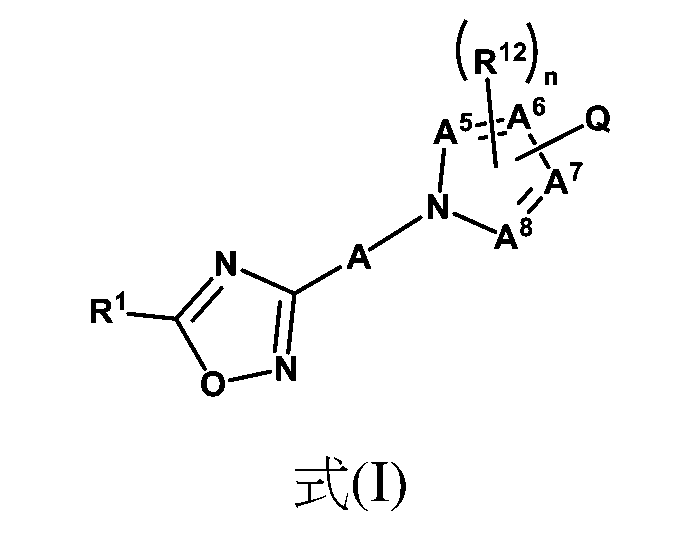
其中,R1、A、A5、A6、A7、A8、R12、n和Q如詳細描述中所定義。本發明還涉及製備式(I)化合物的方法。 wherein R 1 , A, A 5 , A 6 , A 7 , A 8 , R 12 , n and Q are as defined in the detailed description. The present invention also relates to a process for preparing the compound of formula (I).
現已發現與文獻報導的化合物相比,式(I)的化合物具有改善的殺真菌活性、更寬的生物活性譜、更低的施用率、更有利的生物學或環境特性或增強的植物相容性。 It has now been found that the compounds of formula (I) have improved fungicidal activity, a broader spectrum of biological activity, lower application rates, more favorable biological or environmental properties or enhanced plant compatibility compared to the compounds reported in the literature.
本發明進一步涉及用以有效地控制或預防難以防治的植物病原性真菌的組合,其包含本發明的式(I)化合物和至少一種另外的殺蟲活性物質。 The present invention further relates to a combination for effectively controlling or preventing difficult-to-control phytopathogenic fungi, which comprises a compound of formula (I) of the present invention and at least one additional insecticidal active substance.
本發明還涉及一種農業化學組合物,其包含式(I)化合物本身或式(I)化合物與其他殺蟲活性物質的組合物。 The present invention also relates to an agricultural chemical composition, which comprises the compound of formula (I) itself or a combination of the compound of formula (I) and other insecticidal active substances.
本發明還進一步涉及式(I)化合物本身、其組合或組合物在控制和/或預防植物疾病(特別是植物致病真菌)的方法和用途。 The present invention further relates to methods and uses of the compound of formula (I) itself, its combination or the combination in controlling and/or preventing plant diseases (especially plant pathogenic fungi).
本發明詳細描述 Detailed description of the invention
定義 Definition
本文提供的用於本公開中使用的術語的定義僅用於說明目的,絕不限制本發明公開的本發明的範圍。 The definitions of terms used in this disclosure provided herein are for illustrative purposes only and in no way limit the scope of the present invention disclosed herein.
本文所用的“包含”、“包括”、“具有”、“擁有”、“以...為特徵”或其任何其他變體旨在涵蓋非排他性包含,但須受明確指明的除外。例如,組合、混合、過程或方法包含的要素表不一定局限於這些要素,但可以包括沒有明確列出的該組合、混合、步驟或方法固有的其他要素。 As used herein, "comprises," "includes," "has," "possessing," "characterized by," or any other variation thereof, are intended to cover a non-exclusive inclusion unless expressly specified. For example, a list of elements included in a combination, mixture, process, or method is not necessarily limited to those elements but may include other elements inherent to that combination, mixture, step, or method not expressly listed.
過渡詞“由...組成”排除任何未指定的元素、步驟或成分。如果在請求項中(除了通常與之相關的雜項之外),這樣的請求項將包含除所述材料之外的材料。當“由…組成”一詞出現在請求項正文的一個條款中,而不是緊接在序言之後時,它只限制該條款所規定的要素;其他因素也未從整個請求項中排除。 The transitional term "consisting of" excludes any unspecified element, step, or ingredient. If in a claim (other than the miscellaneous items normally associated therewith), such claim will include material other than that specified. When the term "consisting of" appears in a clause in the body of a claim, rather than immediately following the preamble, it limits only the elements specified in that clause; other elements are not excluded from the claim as a whole.
過渡詞“基本上由...組成”用於定義包括材料、步驟、特徵、成分或要素的組合物或方法,條件是這些附加材料、步驟、特徵、成分或要素不實質上影響請求項保護的發明的基本要素和新穎特徵。術語“基本上由...組成”在“包含”和“由...組成”之間佔據中間地帶。 The transitional term "consisting essentially of" is used to define a composition or method that includes materials, steps, features, ingredients, or elements, provided that such additional materials, steps, features, ingredients, or elements do not materially affect the basic and novel characteristics of the claimed invention. The term "consisting essentially of" occupies an intermediate zone between "comprising" and "consisting of."
此外,除非有相反的明確說明,否則“或”是指包含性的“或”而不是排他性的“或”。例如,條件A“或”B滿足以下任何一個:A為真(或存 在)且B為假(或不存在),A為假(或不存在)且B為真(或現在),A和B都為真(或存在)。 In addition, unless expressly stated to the contrary, "or" refers to an inclusive "or" rather than an exclusive "or". For example, the condition A "or" B satisfies any of the following: A is true (or exists) and B is false (or does not exist), A is false (or does not exist) and B is true (or present), and both A and B are true (or exist).
此外,在本發明的要素或成分之前的不定冠詞“a”和“an”不限制該要素或成分的實例(即出現次數)的數量。因此,“a”或“an”應該被理解為包括一個或至少一個,並且要素或成分的單數單詞形式也包括複數,除非該數明顯是單數的。 In addition, the indefinite articles "a" and "an" before the elements or components of the present invention do not limit the number of instances (i.e., the number of occurrences) of the elements or components. Therefore, "a" or "an" should be understood to include one or at least one, and the singular form of the elements or components also includes the plural form unless the number is obviously singular.
本發明所提及的術語“無脊椎有害生物”包括節肢動物、腹足動物和線蟲等具有經濟重要性的害蟲。術語“節肢動物”包括昆蟲、蟎蟲、蜘蛛、蜈蚣、千足蟲、球潮蟲和綜合綱。術語“腹足動物”包括蝸牛、蛞蝓和其他柄眼亞目類。術語“線蟲”是指線形動物門的活生物體。術語“蠕蟲”包括蛔蟲、犬惡絲蟲、食草線蟲、吸蟲、棘頭蟲和絛蟲類。 The term "invertebrate pests" referred to in the present invention include pests of economic importance such as arthropods, gastropods and nematodes. The term "arthropods" includes insects, mites, spiders, centipedes, millipedes, ball weevil and synapomorpha. The term "gastropods" includes snails, slugs and other stalked eyes. The term "nematodes" refers to living organisms of the phylum Nematoda. The term "worms" includes roundworms, dog wireworms, herbivorous nematodes, trematodes, acanthocephalians and tapeworms.
在本發明中,“無脊椎有害生物控制”是指抑制無脊椎動物害蟲的發展(包括死亡率,進食減少和/或交配中斷),並且相關表達的定義與此類似。 For purposes of this invention, "invertebrate pest control" means the inhibition of the development of invertebrate pests (including mortality, reduced feeding and/or mating disruption), and related expressions are defined similarly.
術語“農業的”一詞是指農作物如食物、飼料和纖維的生產,包括種植玉米、大豆和其他豆類、大米、穀物(如小麥、燕麥、大麥、黑麥、水稻、玉米)、綠葉蔬菜(如生菜、捲心菜和其他油菜作物)、果實蔬菜(如番茄、胡椒、茄子、十字花科植物和葫蘆)、土豆、紅薯、葡萄、棉花、樹木果實(如梨果和柑橘),小水果(草莓、櫻桃)和其他特種作物(如油菜、向日葵、橄欖)。 The term "agricultural" refers to the production of crops such as food, feed and fiber, including the cultivation of corn, soybeans and other legumes, rice, cereals (such as wheat, oats, barley, rye, paddy, corn), leafy green vegetables (such as lettuce, cabbage and other cole crops), fruiting vegetables (such as tomatoes, peppers, eggplant, crucifers and cucurbits), potatoes, sweet potatoes, grapes, cotton, tree fruits (such as pome and citrus), small fruits (strawberries, cherries) and other specialty crops (such as canola, sunflower, olives).
術語“非農的”一詞指的非農作物,例如園藝作物(例如,花房、苗圃或不在田間生長的觀賞植物)、住宅、農業、商業和工業結構、草皮(例如,草皮農場、牧場、高爾夫球場、草坪、運動場等)、木製品、儲藏物、農林業和 植被管理、公共衛生(即人類)和動物健康(例如寵物、牲畜和家禽等馴養動物,野生動物等非馴養動物)應用。 The term "non-agricultural" refers to non-agricultural crops such as horticultural crops (e.g., greenhouses, nurseries, or ornamental plants not grown in the field), residential, agricultural, commercial and industrial structures, turf (e.g., turf farms, pastures, golf courses, lawns, sports fields, etc.), wood products, storage, agroforestry and vegetation management, public health (i.e., human) and animal health (e.g., domesticated animals such as pets, livestock and poultry, non-domesticated animals such as wild animals) applications.
非農學應用包括通過向要保護的動物施用殺寄生蟲有效量(即生物學上有效)的本發明化合物(通常以配製用於獸醫用途的組合物的形式)來保護動物免受無脊椎動物寄生蟲的侵害。在本公開和請求項書中所提及術語“殺寄生蟲的”和“寄生殺蟲的”是指為保護動物免受害蟲的侵害而殺死無脊椎動物寄生蟲的顯著效果。殺寄生蟲效果通常涉及減少目標無脊椎動物寄生蟲的出現或活動。對害蟲的這種效果包括壞死、死亡、生長遲緩,活動性降低或在動物身上的寄宿能力降低、進食減少和繁殖受到抑制。這些對無脊椎動物寄生蟲害蟲的效果可控制(包括預防、減少或消除)動物的寄生蟲侵染或感染。 Non-agricultural applications include protecting animals from invertebrate parasites by administering to the animals to be protected a parasiticidally effective amount (i.e., biologically effective) of a compound of the invention, usually in the form of a composition formulated for veterinary use. The terms "parasiticidal" and "parasiticidal" as used in this disclosure and claims refer to a significant effect of killing invertebrate parasites in order to protect animals from pests. Parasiticidal effects generally involve reducing the presence or activity of target invertebrate parasites. Such effects on pests include necrosis, death, slowed growth, reduced activity or reduced ability to host animals, reduced feeding, and inhibited reproduction. These effects on invertebrate parasitic pests may control (including prevent, reduce or eliminate) parasitic infestations or infections of animals.
本發明的化合物可以以純的形式或作為不同可能的異構形式的混合物存在,例如立體異構體或結構異構體。各種立體異構體包括對映異構體、非對映異構體、手性異構體、阻轉異構體、構象異構體、旋轉異構體、互變異構體、光學異構體、多晶型物和幾何異構體。這些異構體的任何所需混合物都屬於本發明的請求項的範圍。本領域技術人員將理解,當相對於其他異構體富集時或當與其他異構體分離時,一種立體異構體可以更具活性和/或可以表現出有益效果。另外,本領域技術人員知道分離、富集和/或選擇性製備所述異構體的過程或方法或技術。 The compounds of the present invention may exist in pure form or as a mixture of different possible isomeric forms, such as stereoisomers or structural isomers. The various stereoisomers include enantiomers, diastereomers, chiral isomers, atropisomers, conformational isomers, rotational isomers, tautomers, optical isomers, polymorphs and geometric isomers. Any desired mixture of these isomers is within the scope of the claims of the present invention. Those skilled in the art will appreciate that one stereoisomer may be more active and/or may exhibit beneficial effects when enriched relative to other isomers or when separated from other isomers. In addition, those skilled in the art know the process or method or technique for separating, enriching and/or selectively preparing the isomers.
現就本說明中使用的各種術語的含義給予說明。 The meanings of various terms used in this manual are now explained.
術語“烷基”,獨立使用或在“烷基硫”或“鹵代烷基”或-N(烷基)或烷基羰基烷基或烷基磺醯胺基等複合詞中使用,包括直鏈或支鏈C1到C24烷基,優選C1到C15烷基,優選C1到C10烷基,更優選C1到C6烷基。烷基的非限制性 例子包括甲基、乙基、丙基、1-甲基乙基、1-甲基乙基、戊基、1-甲基丁基、1-甲基丁基、2-甲基丁基、2-甲基丙基、1-甲基戊基、1-甲基戊基、1-甲基戊基、2-甲基戊基、3-甲基戊基、4-甲基戊基、1,1-二甲基丁基、1,2-二甲基丁基、2,3-二甲基丁基、3,3-二甲基丁基、1-乙基丁基、2-乙基丁基、1,1,2-三甲基丙基、1,2,2-三甲基丙基,1-乙基1-甲基丙基和1-乙基2-甲基丙基或不同異構體。如果烷基在複合取代基的末端,例如,在烷基環烷基中,起始的複合取代基的部分,例如環烷基,可以以相同或不同方式且獨立地被烷基單取代或多取代。這同樣適用於其他自由基如烯基、烷基、羥基、鹵素、羰基、羰基氧基等位於末端的複合取代基。 The term "alkyl", used alone or in a compound word such as "alkylthio" or "halogenated alkyl" or -N(alkyl) or alkylcarbonylalkyl or alkylsulfonamido, includes straight chain or branched C1 to C24 alkyl, preferably C1 to C15 alkyl, preferably C1 to C10 alkyl, more preferably C1 to C6 alkyl. Non-limiting examples of alkyl include methyl, ethyl, propyl, 1-methylethyl, 1-methylethyl, pentyl, 1-methylbutyl, 1-methylbutyl, 2-methylbutyl, 2-methylpropyl, 1-methylpentyl, 1-methylpentyl, 1-methylpentyl, 2-methylpentyl, 3-methylpentyl, 4-methylpentyl, 1,1-dimethylbutyl, 1,2-dimethylbutyl, 2,3-dimethylbutyl, 3,3-dimethylbutyl, 1-ethylbutyl, 2-ethylbutyl, 1,1,2-trimethylpropyl, 1,2,2-trimethylpropyl, 1-ethyl1-methylpropyl and 1-ethyl2-methylpropyl or different isomers. If the alkyl group is at the end of a composite substituent, for example, in an alkylcycloalkyl group, the initial composite substituent part, for example the cycloalkyl group, may be mono- or poly-substituted in the same or different manners and independently by alkyl groups. The same applies to other free radicals such as alkenyl, alkyl, hydroxyl, halogen, carbonyl, carbonyloxy and other terminal complex substituents.
術語“烯基”,獨立使用或在複合詞中使用,包括直鏈或C2到C24烯烴、優選C2到C15烯烴、更優選C2到C10烯烴、更優選C2到C6烯烴的支鏈。烯烴的非限制性例子包括乙烯基、1-丙烯基、2-丙烯基、1-丁烯基、2-丁烯基、1-甲基-1-丙烯基、2-甲基-2-丙烯基、2-甲基-1-丁烯基、1-甲基-1-丁烯基、2-甲基-1-丁烯基、3-甲基-2-丁烯基、3-甲基-3-丁烯基、2-甲基-3-丁烯基、3-甲基-3-丁烯基、1-1-二甲-2-丁烯基、1,2-二甲基-2-丙烯、1-乙基-1-丙烯、1-乙基-2-丙烯、1-乙基-2-戊烯、3-甲基-1-戊烯、2-甲基-1-戊烯、3-甲基-2-戊烯、3-甲基-2-戊烯、3-甲基-3-戊烯、3-甲基-3-戊烯、4-甲基-4-戊烯、3-甲基-4-戊烯、3-甲基-4-戊烯、1,1-二甲基-2-丁烯基、1,1-二甲基-3-丁烯基、1,2-二甲基-2-丁烯基、1,2-二甲基-3-丁烯基、1,3-二甲基-3-丁烯基、2,3-二甲基-3-丁烯基、2,3-二甲基-3-丁烯基、2,3-二甲基-3-丁烯基、3,3-二甲基-3-丁烯基、1-乙基-1-丁烯基、1-乙基-2-丁烯基、2-乙基-2-丁烯基、2-乙基-2-丁烯基、2-乙基-2-丁烯基、2-乙基-2-丁烯基、2-乙基-2-丁烯基、1-乙基-2-丁烯基、1-乙基-2-甲基-1-丙烯和1-乙基-2-甲基-2-丙烯及其異構體。烯烴 也包括多烯,如1,2-丙二烯和2,4-己二烯。除非在其他地方有明確的定義,這個定義也適用於烯烴作為複合取代基的一部分,例如鹵代烯烴等。 The term "alkenyl", used alone or in compound words, includes straight chains or branched chains of C2 to C24 alkenes, preferably C2 to C15 alkenes, more preferably C2 to C10 alkenes, more preferably C2 to C6 alkenes. Non-limiting examples of olefins include ethenyl, 1-propenyl, 2-propenyl, 1-butenyl, 2-butenyl, 1-methyl-1-propenyl, 2-methyl-2-propenyl, 2-methyl-1-butenyl, 1-methyl-1-butenyl, 2-methyl-1-butenyl, 3-methyl-2-butenyl, 3-methyl-3-butenyl, 2-methyl-3-butenyl, 3-methyl-3-butenyl, 1-1-dimethyl-2-butenyl, 1,2-dimethyl-2-propene, 1-ethyl-1-propene, 1-ethyl-2-propene, 1-ethyl-2-pentene, 3-methyl-1-pentene, 2-methyl-1-pentene, 3-methyl-2-pentene, 3-methyl-2-pentene, 3-methyl-3-pentene, 3-methyl-3-pentene, 4-methyl-4-pentene, 3- Methyl-4-pentene, 3-methyl-4-pentene, 1,1-dimethyl-2-butenyl, 1,1-dimethyl-3-butenyl, 1,2-dimethyl-2-butenyl, 1,2-dimethyl-3-butenyl, 1,3-dimethyl-3-butenyl, 2,3-dimethyl-3-butenyl, 2,3-dimethyl-3-butenyl, 3,3-dimethyl-3-butenyl, 1-ethyl-1-butenyl, 1-ethyl-2-butenyl, 2-ethyl-2-butenyl, 2-ethyl-2-butenyl, 2-ethyl-2-butenyl, 2-ethyl-2-butenyl, 1-ethyl-2-butenyl, 1-ethyl-2-methyl-1-propene and 1-ethyl-2-methyl-2-propene and their isomers. Alkenes also include polyenes, such as 1,2-propadiene and 2,4-hexadiene. Unless otherwise specified elsewhere, this definition also applies to alkenes that are part of a complex substituent group, such as halogenated alkenes.
炔基的非限制性例子包括乙炔基、1-丙炔基、2-丙炔基、1-丁炔基、2-丁炔基、3-丁炔基、1-甲基-2-丙炔基、1-戊炔基、2-戊炔基、3-戊炔基,4-戊炔基、1-甲基-2-丁炔基、1-甲基-3-丁炔基、2-甲基-3-丁炔基、3-甲基-1-丁炔基、1,1-二甲基-2-丙炔基、1-乙基-2-丙炔基、1-己炔基、2-己炔基、3-己炔基、4-己炔基、5-己炔基、1-甲基-2-戊炔基、1-甲基-3-戊炔基、1-甲基-4-戊炔基、2-甲基-3-戊炔基、2-甲基-4-戊炔基、3-甲基-1-戊炔基、3-甲基-4-戊炔基、4-甲基-1-戊炔基、4-甲基-2-戊炔基、1,1-二甲基-2-丁炔基、1,1-二甲基-3-丁炔基、1,2-二甲基-3-丁炔基、2,2-二甲基-3-丁炔基、3,3-二甲基-1-丁炔基、1-乙基-2-丁炔基、1-乙基-3-丁炔基、2-乙基-3-丁炔基和1-乙基-1-甲基-2-丙炔基和不同的異構體。除非在別處明確限定,否則該定義也適用於作為複合取代基的一部分的炔基,例如鹵代炔基等。術語“炔基”還可包括由多個三鍵組成的部分,例如2,5-己二炔基。 Non-limiting examples of alkynyl groups include ethynyl, 1-propynyl, 2-propynyl, 1-butynyl, 2-butynyl, 3-butynyl, 1-methyl-2-propynyl, 1-pentynyl, 2-pentynyl, 3-pentynyl, 4-pentynyl, 1-methyl-2-butynyl, 1-methyl-3-butynyl, 2-methyl-3-butynyl, 3-methyl-1-butynyl, 1,1-dimethyl-2-propynyl, 1-ethyl-2-propynyl, 1-hexynyl, 2-hexynyl, 3-hexynyl, 4-hexynyl, 5-hexynyl, 1-methyl-2-pentynyl, 1-methyl-3-pentynyl, 1 1-methyl-4-pentynyl, 2-methyl-3-pentynyl, 2-methyl-4-pentynyl, 3-methyl-1-pentynyl, 3-methyl-4-pentynyl, 4-methyl-1-pentynyl, 4-methyl-2-pentynyl, 1,1-dimethyl-2-butynyl, 1,1-dimethyl-3-butynyl, 1,2-dimethyl-3-butynyl, 2,2-dimethyl-3-butynyl, 3,3-dimethyl-1-butynyl, 1-ethyl-2-butynyl, 1-ethyl-3-butynyl, 2-ethyl-3-butynyl and 1-ethyl-1-methyl-2-propynyl and the different isomers. Unless expressly limited elsewhere, this definition also applies to alkynyl as part of a composite substituent, such as halogenated alkynyl, etc. The term "alkynyl" may also include moieties consisting of multiple triple bonds, such as 2,5-hexadiynyl.
術語“環烷基”是指閉合形成環的烷基。非限制性實例包括但不限於環丙基、環丁基、環戊基和環己基。除非在別處明確限定,否則該定義也適用於作為複合取代基的一部分的環烷基,例如環烷基烷基等。 The term "cycloalkyl" refers to an alkyl group that is closed to form a ring. Non-limiting examples include, but are not limited to, cyclopropyl, cyclobutyl, cyclopentyl, and cyclohexyl. Unless expressly limited elsewhere, this definition also applies to cycloalkyl groups that are part of a composite substituent, such as cycloalkylalkyl, etc.
術語“環烯基”是指烯基封閉形成環,包括單環、部分不飽和的烴基。非限制性實例包括但不限於環戊烯基和環己烯基。除非在別處明確限定,否則該定義也適用於作為複合取代基的一部分的環烯基,例如環烯基烷基等。 The term "cycloalkenyl" refers to an alkenyl group closed to form a ring, including monocyclic, partially unsaturated alkyl groups. Non-limiting examples include, but are not limited to, cyclopentenyl and cyclohexenyl. Unless expressly limited elsewhere, this definition also applies to cycloalkenyl groups as part of a composite substituent, such as cycloalkenylalkyl, etc.
術語“環炔基”是指炔基封閉形成環,包括單環、部分不飽和的基團。除非在別處具體限定,否則該定義也適用於作為複合取代基的一部分的環炔基,例如環炔基烷基等。 The term "cycloalkynyl" refers to alkynyl groups closed to form a ring, including monocyclic, partially unsaturated groups. Unless specifically limited elsewhere, this definition also applies to cycloalkynyl groups as part of a composite substituent, such as cycloalkynylalkyl, etc.
“環烷氧基”,“環烯氧基”等類似詞具有類似的定義。環烷氧基的非限制性實例包括環丙氧基,環戊氧基和環己氧基。除非在別處明確限定,否則該定義也適用於環烷氧基作為複合取代基的一部分,例如環烷氧基烷基等。 "Cycloalkoxy", "cycloalkenyloxy" and the like have similar definitions. Non-limiting examples of cycloalkoxy include cyclopropoxy, cyclopentyloxy and cyclohexyloxy. Unless expressly limited elsewhere, this definition also applies to cycloalkoxy as part of a composite substituent, such as cycloalkoxyalkyl, etc.
術語“鹵素”,獨立或以複合詞如“鹵代烷基”,包括氟、氯、溴或碘。此外,當用於諸如“鹵代烷基”的複合詞時,所述烷基可以部分或完全被鹵素原子取代,所述鹵素原子可以相同或不同。“鹵代烷基”的非限制性實例包括氯甲基、溴甲基、二氯甲基、三氯甲基、氟甲基、二氟甲基、三氟甲基、氯氟甲基、二氯氟甲基、氯二氟甲基、1-氯乙基、1-溴乙基、1-氟乙基、2-氟乙基、2,2-二氟乙基2,2,2-三氟乙基、2-氯-2-氟乙基、2-氯-2,2-二氟乙基、2,2-二氯-2-氟乙基、2,2,2-三氯乙基、五氟乙基、1,1,2-二氟乙基-二氯-2,2,2-三氟乙基和1,1,1-三氟丙-2-基。除非在別處明確限定,否則這個定義也適用於鹵代烷基作為複合取代基的一部分,例如鹵代烷基胺基烷基等。 The term "halogen", alone or in compound words such as "haloalkyl", includes fluorine, chlorine, bromine or iodine. Furthermore, when used in compound words such as "haloalkyl", the alkyl group may be partially or completely substituted by halogen atoms, which may be the same or different. Non-limiting examples of "haloalkyl" include chloromethyl, bromomethyl, dichloromethyl, trichloromethyl, fluoromethyl, difluoromethyl, trifluoromethyl, chlorofluoromethyl, dichlorofluoromethyl, chlorodifluoromethyl, 1-chloroethyl, 1-bromoethyl, 1-fluoroethyl, 2-fluoroethyl, 2,2-difluoroethyl 2,2,2-trifluoroethyl, 2-chloro-2-fluoroethyl, 2-chloro-2,2-difluoroethyl, 2,2-dichloro-2-fluoroethyl, 2,2,2-trichloroethyl, pentafluoroethyl, 1,1,2-difluoroethyl-dichloro-2,2,2-trifluoroethyl and 1,1,1-trifluoropropan-2-yl. Unless expressly limited elsewhere, this definition also applies to haloalkyl as part of a composite substituent, such as haloalkylaminoalkyl, etc.
“鹵代烯基”和“鹵代炔基”的定義類似,不同的是烯基和炔基代替烷基作為取代基的一部分存在。 "Haloalkenyl" and "haloalkynyl" are similarly defined, except that alkenyl and alkynyl are present as part of the substituent instead of alkyl.
“鹵代烷氧基”是指直鏈或支鏈烷氧基,其中這些基團中的一些或所有氫原子可以被如上所述的鹵素原子取代。鹵代烷氧基的非限制性實例包括氯甲氧基,溴甲氧基,二氯甲氧基,三氯甲氧基,氟甲氧基,二氟甲氧基,三氟甲氧基,氯氟甲氧基,二氯氟甲氧基,氯二氟甲氧基,1-氯乙氧基,1-溴乙氧基,1-氟乙氧基,2-氟乙氧基,2,2-二氟乙氧基,22,2-三氟乙氧基,2-氯-2-氟乙氧基,2-氯-2,2-二氟乙氧基,2,2-二氯-2-氟乙氧基,2,2,2-三氯乙氧基,五氟乙氧基和1,1,1-三氟丙-2-氧基。除非在別處明確限定,否則該定義也適用於鹵代烷氧基作為複合取代基的一部分的基團,例如鹵代烷氧基烷基等。 "Halogenated alkoxy" refers to a straight or branched chain alkoxy group, wherein some or all of the hydrogen atoms in these groups may be substituted by halogen atoms as described above. Non-limiting examples of halogenated alkoxy groups include chloromethoxy, bromomethoxy, dichloromethoxy, trichloromethoxy, fluoromethoxy, difluoromethoxy, trifluoromethoxy, chlorofluoromethoxy, dichlorofluoromethoxy, chlorodifluoromethoxy, 1-chloroethoxy, 1-bromoethoxy, 1-fluoroethoxy, 2-fluoroethoxy, 2,2-difluoroethoxy, 2,2,2-trifluoroethoxy, 2-chloro-2-fluoroethoxy, 2-chloro-2,2-difluoroethoxy, 2,2-dichloro-2-fluoroethoxy, 2,2,2-trichloroethoxy, pentafluoroethoxy and 1,1,1-trifluoropropane-2-oxy. Unless expressly limited elsewhere, this definition also applies to groups in which the halogenated alkoxy group is part of a composite substituent, such as halogenated alkoxyalkyl, etc.
術語“鹵代烷硫基”是指直鏈或支鏈烷硫基團,其中這些基團中至少一個至多所有氫原子可被如上所述的鹵素原子取代。鹵代烷硫基的非限制性實例包括氯甲硫基,碘甲硫基,溴甲硫基,二氯甲硫基,三氯甲硫基,氟甲硫基,二氟甲硫基,三氟甲硫基,氯氟甲硫基,二氯氟甲硫基,氯二氟甲硫基,1-氯乙硫基,1-溴乙硫基,1-氟乙硫基,2-氟乙硫基,2,2-二氟乙硫基,2,2,2-三氟乙硫基,2-氯-2-氟乙硫基,2-氯-2,2-二氟乙硫基,2,2-二氯-2-氟乙硫基,2,2,2-三氯乙硫基,五氟乙硫基和1,1,1-三氟-2-基硫基。除非在別處明確限定,否則該定義也適用於鹵代烷硫基作為複合取代基的一部分的基團,例如鹵代烷硫基烷基等。 The term "halogenated alkylthio" refers to straight-chain or branched alkylthio groups wherein at least one up to all hydrogen atoms in these groups may be substituted by halogen atoms as described above. Non-limiting examples of halogenated alkylthio groups include chloromethylthio, iodomethylthio, bromomethylthio, dichloromethylthio, trichloromethylthio, fluoromethylthio, difluoromethylthio, trifluoromethylthio, chlorofluoromethylthio, dichlorofluoromethylthio, chlorodifluoromethylthio, 1-chloroethylthio, 1-bromoethylthio, 1-fluoroethylthio, 2-fluoroethylthio, 2,2-difluoroethylthio, 2,2,2-trifluoroethylthio, 2-chloro-2-fluoroethylthio, 2-chloro-2,2-difluoroethylthio, 2,2-dichloro-2-fluoroethylthio, 2,2,2-trichloroethylthio, pentafluoroethylthio and 1,1,1-trifluoro-2-ylthio. Unless expressly limited elsewhere, this definition also applies to groups in which halogenated alkylthio is part of a composite substituent, such as halogenated alkylthioalkyl, etc.
“鹵代烷基亞磺醯基”的非限制性實例包括CF3S(O)、CCl3S(O)、CF3CH2S(O)。“鹵代烷基磺醯基”的非限制性實例包括CF3S(O)2、CCl3S(O)2、CF3CH2S(O)2和CF3CF2S(O)2。 Non-limiting examples of "haloalkylsulfinyl" include CF3S (O), CCl3S (O), CF3CH2S (O). Non-limiting examples of "haloalkylsulfonyl" include CF3S (O) 2 , CCl3S (O) 2 , CF3CH2S (O)2, and CF3CF2S ( O ) 2 .
術語“羥基”表示-OH,胺基表示-NRR,其中R可以是H或任何可能的取代基,例如烷基。羰基表示-C(O)-,羰基氧基表示-OC(O)-,亞磺醯基表示SO,磺醯基表示S(O)2。 The term "hydroxy" refers to -OH, amino refers to -NRR, where R can be H or any possible substituent, such as alkyl. Carbonyl refers to -C(O)-, carbonyloxy refers to -OC(O)-, sulfinyl refers to SO, and sulfonyl refers to S(O) 2 .
術語“烷氧基”(單獨使用或以複合詞的形式使用)包括C1至C24烷氧基,優選C1至C15烷氧基,更優選C1至C10烷氧基,最優選C1至C6烷氧基。烷氧基的實例包括甲氧基、乙氧基、丙氧基、1-甲基乙氧基、丁氧基、1-甲基丙氧基、2-甲基丙氧基、1,1-二甲基乙氧基、戊氧基、1-甲基丁氧基、2-甲基丁氧基、3-甲基丁氧基、2,2-二甲基丙氧基、1-乙基丙氧基、己氧基、1,1-二甲基丙氧基、1,2-二甲基丙氧基、1-甲基戊氧基、2-甲基戊氧基、3-甲基戊氧基、4-甲基戊氧基、1,1-二甲基丁氧基、1,2-二甲基丁氧基、1,3-二甲基丁氧基、2,2-二甲基丁氧基、 2,3-二甲基丁氧基、3,3-二甲基丁氧基、1-乙基丁氧基、2-乙基丁氧基、1,1,2-三甲基丙氧基、1,2,2-三甲基丙氧基、1-乙基-1-甲基丙氧基和1-乙基-2-甲基丙氧基和不同的異構體。除非在別處具體限定,否則該定義也適用於烷氧基作為複合取代基的一部分,例如鹵代烷氧基、炔基烷氧基等。 The term "alkoxy" (used alone or in compound form) includes C1 to C24 alkoxy, preferably C1 to C15 alkoxy, more preferably C1 to C10 alkoxy, most preferably C1 to C6 alkoxy. Examples of alkoxy groups include methoxy, ethoxy, propoxy, 1-methylethoxy, butoxy, 1-methylpropoxy, 2-methylpropoxy, 1,1-dimethylethoxy, pentoxy, 1-methylbutoxy, 2-methylbutoxy, 3-methylbutoxy, 2,2-dimethylpropoxy, 1-ethylpropoxy, hexyloxy, 1,1-dimethylpropoxy, 1,2-dimethylpropoxy, 1-methylpentoxy, 2-methylpentoxy, 3-methylpentoxy, 4-methylpentoxy, 1,1-dimethylbutoxy, 1,2-dimethylbutoxy, 1,3-dimethylbutoxy, 2,2-dimethylbutoxy, 2,3-dimethylbutoxy, 3,3-dimethylbutoxy, 1-ethylbutoxy, 2-ethylbutoxy, 1,1,2-trimethylpropoxy, 1,2,2-trimethylpropoxy, 1-ethyl-1-methylpropoxy and 1-ethyl-2-methylpropoxy and different isomers. Unless specifically limited elsewhere, this definition also applies to alkoxy as part of a composite substituent, for example halogenated alkoxy, alkynylalkoxy, etc.
術語“烷氧基烷基”表示烷基被烷氧基取代。“烷氧基烷基”的非限制性實例包括CH3OCH2、CH3OCH2CH2、CH3CH2OCH2、CH3CH2CH2CH2OCH2和CH3CH2OCH2CH2。 The term " alkoxyalkyl" means an alkyl group substituted with an alkoxy group. Non - limiting examples of "alkoxyalkyl" include CH3OCH2 , CH3OCH2CH2 , CH3CH2OCH2 , CH3CH2CH2CH2OCH2 , and CH3CH2OCH2CH2 .
術語“烷氧基烷氧基”表示烷氧基被烷氧基取代。 The term "alkoxyalkoxy" means that an alkoxy group is substituted by an alkoxy group.
術語“烷硫基”包括支鏈或直鏈烷硫基基團,例如甲硫基、乙硫基、丙硫基、1-甲硫基硫基、丁硫基、1-甲基丙硫基、2-甲基丙硫基、1,1-二甲基乙硫基、戊硫基、1-甲基丁硫基、2-甲基丁硫基、3-甲基丁硫基、2,2-二甲基丙硫基、1-乙基丙硫基、己硫基、1,1-二甲基丙硫基、1,2-二甲基丙硫基、1-甲基戊硫基、2-甲基戊硫基、3-甲基戊硫基、4-甲基戊硫基、1,1-二甲基丁硫基1,2-二甲基丁硫基、1,3-二甲基丁硫基、2,2-二甲基丁硫基、2,3-二甲基丁硫基、3,3-二甲基丁硫基、1-乙基丁硫基、2-乙基丁硫基、1,1,2-三甲基丙硫基、1,2,2-二甲基丁硫基、2-三甲基丙硫基、1-乙基-1-甲基丙硫基和1-乙基-2-甲基丙硫基以及不同的異構體。 The term "alkylthio" includes branched or straight chain alkylthio groups such as methylthio, ethylthio, propylthio, 1-methylthiothio, butylthio, 1-methylpropylthio, 2-methylpropylthio, 1,1-dimethylethylthio, pentylthio, 1-methylbutylthio, 2-methylbutylthio, 3-methylbutylthio, 2,2-dimethylpropylthio, 1-ethylpropylthio, hexylthio, 1,1-dimethylpropylthio, 1,2-dimethylpropylthio, 1-methylpentylthio, 2-methylpentylthio, 3- Methylpentylthio, 4-methylpentylthio, 1,1-dimethylbutylthio, 1,2-dimethylbutylthio, 1,3-dimethylbutylthio, 2,2-dimethylbutylthio, 2,3-dimethylbutylthio, 3,3-dimethylbutylthio, 1-ethylbutylthio, 2-ethylbutylthio, 1,1,2-trimethylpropylthio, 1,2,2-dimethylbutylthio, 2-trimethylpropylthio, 1-ethyl-1-methylpropylthio and 1-ethyl-2-methylpropylthio and different isomers.
鹵代環烷基、鹵代環烯基、烷基環烷基、環烷基烷基、環烷氧基烷基、烷基亞磺醯基烷基、烷基磺醯基烷基、鹵代烷基羰基、環烷基羰基、鹵代烷氧基烷基等的定義與上述例子類似。 The definitions of halogenated cycloalkyl, halogenated cycloalkenyl, alkylcycloalkyl, cycloalkylalkyl, cycloalkoxyalkyl, alkylsulfinylalkyl, alkylsulfonylalkyl, halogenated alkylcarbonyl, cycloalkylcarbonyl, halogenated alkoxyalkyl, etc. are similar to the above examples.
術語“烷基硫代烷基”表示烷基被烷硫基取代。“烷基硫代烷基”的非限制性實例包括-CH2SCH2、-CH2SCH2CH2、CH3CH2SCH2、 CH3CH2CH2CH2SCH2和CH3CH2SCH2CH2。“烷基硫代烷氧基”表示烷氧基被烷硫基取代。“環烷基代烷基胺基”表示烷基胺基被環烷基取代。 The term "alkylthioalkyl" means an alkyl group substituted by an alkylthio group. Non - limiting examples of "alkylthioalkyl" include -CH2SCH2 , -CH2SCH2CH2 , CH3CH2SCH2 , CH3CH2CH2CH2SCH2 , and CH3CH2SCH2CH2 . "Alkylthioalkoxy" means an alkoxy group substituted by an alkylthio group. " Cycloalkylalkylamino" means an alkylamino group substituted by a cycloalkyl group.
烷氧基烷氧基烷基、烷基胺基烷基、二烷基胺基烷基、環烷基胺基烷基、環烷基胺基羰基等的定義與“烷基硫代烷基”或“環烷基代烷基胺基”類似。 The definitions of alkoxyalkoxyalkyl, alkylaminoalkyl, dialkylaminoalkyl, cycloalkylaminoalkyl, cycloalkylaminocarbonyl, etc. are similar to those of "alkylthioalkyl" or "cycloalkylalkylamino".
“烷氧基羰基”是通過羰基(-CO-)與骨架鍵合的烷氧基。除非在別處具體限定,否則該定義也適用於烷氧基羰基作為複合取代基的一部分,例如環烷基烷氧基羰基等。 "Alkoxycarbonyl" is an alkoxy group bonded to the backbone via a carbonyl group (-CO-). Unless specifically limited elsewhere, this definition also applies to alkoxycarbonyl as part of a composite substituent, such as cycloalkylalkoxycarbonyl, etc.
術語“烷氧基羰基烷基胺基”表示烷基胺基被烷氧基羰基取代。“烷基羰基烷基胺基”表示烷基胺基被烷基羰基取代。術語烷硫基烷氧基羰基、環烷基烷基胺基烷基等的定義與此類似。 The term "alkoxycarbonylalkylamino" means an alkylamino group substituted by an alkoxycarbonyl group. "Alkylcarbonylalkylamino" means an alkylamino group substituted by an alkylcarbonyl group. The definitions of the terms alkylthioalkoxycarbonyl, cycloalkylalkylaminoalkyl, etc. are similar.
“烷基亞磺醯基”的非限制性例子包括但不限於甲基亞磺醯基、乙基亞磺醯基、丙基亞磺醯基、1-甲基乙基亞磺醯基、丁基亞磺醯基、1-甲基丙基亞磺醯基、2-甲基丁基亞磺醯基、1-甲基丁基亞磺醯基、2-甲基丁基亞磺醯基、2-甲基丁基亞磺醯基、1-乙基丙基亞磺醯基、1-乙基丙基亞磺醯基、1-2-二甲基丙基亞磺醯基、2-甲基戊基磺醯、3-甲基戊基磺醯、4-甲基戊基磺醯、1,1-二甲基丁基磺醯、1,3-二甲基丁基磺醯、2,3-二甲基丁基磺醯、3,3-二甲基丁基磺醯、1-乙基丁基磺醯、1,1,2-三甲基丙基磺醯、1-乙基1-甲基丙基磺醯和1-乙基2-甲基丙基磺醯及其異構體。“芳基亞磺醯基”一詞包括Ar-S(O),其中Ar可以是任何羧基或雜環。除非另有專門定義,否則這一定義也適用於烷基亞磺醯基作為複合取代基的一部分,例如鹵代烷基亞磺醯基等。 Non-limiting examples of “alkylsulfinyl” include, but are not limited to, methylsulfinyl, ethylsulfinyl, propylsulfinyl, 1-methylethylsulfinyl, butylsulfinyl, 1-methylpropylsulfinyl, 2-methylbutylsulfinyl, 1-methylbutylsulfinyl, 2-methylbutylsulfinyl, 2-methylbutylsulfinyl, 1-ethylpropylsulfinyl, 1-ethylpropylsulfinyl, 1-2-methylbutylsulfinyl, 1-ethylpropylsulfinyl, 1-ethylpropylsulfinyl, 1-2-methylbutylsulfinyl, 1-ethylpropylsulfinyl, 1-ethylpropylsulfinyl, 1-ethylpropylsulfinyl, 1-ethylpropylsulfinyl, 1-ethylpropylsulfinyl, 1-ethylpropylsulfinyl, 1-ethylpropylsulfinyl, 1-ethylpropylsulfinyl, 1-ethylpropylsulfinyl, 1-ethylpropylsulfinyl, 1-ethylpropylsulfinyl, 1-ethylpropylsulfinyl, 1-ethylbutylsulfinyl, 1-methylbutylsulfinyl, 1-methylbutylsulfinyl, 1-methylbutylsulfinyl, 1-methylbutylsulfinyl, 1-ethyl ...methylbutylsulfinyl, 1-methylbutylsulfinyl, 1-methylbutylsulfinyl, 1-methylbutylsulfinyl, 1-ethylbutylsulfinyl, 1-ethylbutylsulfinyl, 1-ethylbutylsulfinyl, 1-methylbutylsulfinyl, 1-methyl -dimethylpropylsulfinyl, 2-methylpentylsulfonyl, 3-methylpentylsulfonyl, 4-methylpentylsulfonyl, 1,1-dimethylbutylsulfonyl, 1,3-dimethylbutylsulfonyl, 2,3-dimethylbutylsulfonyl, 3,3-dimethylbutylsulfonyl, 1-ethylbutylsulfonyl, 1,1,2-trimethylpropylsulfonyl, 1-ethyl1-methylpropylsulfonyl and 1-ethyl2-methylpropylsulfonyl and their isomers. The term "arylsulfinyl" includes Ar-S(O), wherein Ar can be any carboxyl or heterocyclic. Unless specifically defined otherwise, this definition also applies to alkylsulfinyl as part of a composite substituent, such as halogenated alkylsulfinyl, etc.
“烷基磺醯基”的非限制性例子包括但不限於甲基磺醯基、乙基磺醯基、丙基磺醯基、1-甲基乙基磺醯基、丁基磺醯基、1-甲基丙基磺醯基、2-甲基丁基磺醯基、1-甲基丁基磺醯基、2-甲基丁基磺醯基、3-甲基丁基磺醯基、2,2-甲基丙基磺醯基、1-乙基丙基磺醯基、1-乙基丙基磺醯基、1,2-二甲基丙基磺醯基、1-甲基磺醯基、2-甲基戊基磺基、3-甲基戊基磺基、4-甲基戊基磺基、1,1-二甲基丁基磺基、1,2-二甲基丁基磺基、2,2-二甲基丁基磺基、2,3-二甲基丁基磺基、3,3-二甲基丁基磺基、1-乙基丁基磺基、1,1,2-三甲基丙基磺基、1-乙基1-甲基丙基磺基、1-乙基2-甲基丙基磺基及其異構體。“芳基磺醯基”一詞包括Ar-S(O)2,其中Ar可以是任何羧基或雜環。除非另有定義,這個定義也適用於烷基磺醯基作為複合取代基的一部分,例如烷基磺基烷基等。 Non-limiting examples of “alkylsulfonyl” include, but are not limited to, methylsulfonyl, ethylsulfonyl, propylsulfonyl, 1-methylethylsulfonyl, butylsulfonyl, 1-methylpropylsulfonyl, 2-methylbutylsulfonyl, 1-methylbutylsulfonyl, 2-methylbutylsulfonyl, 3-methylbutylsulfonyl, 2,2-methylpropylsulfonyl, 1-ethylpropylsulfonyl, 1-ethylpropylsulfonyl, 1,2-dimethylpropylsulfonyl, 1-methylsulfonyl, 2-methylpentylsulfonyl, 3-methylpentylsulfonyl, 4-methylpentylsulfonyl, 1,1-dimethylbutylsulfonyl, 1,2-dimethylbutylsulfonyl, 2,2-dimethylbutylsulfonyl, 2,3-dimethylbutylsulfonyl, 3,3-dimethylbutylsulfonyl, 1-ethylbutylsulfonyl, 1,1,2-trimethylpropylsulfonyl, 1-ethyl1-methylpropylsulfonyl, 1-ethyl2-methylpropylsulfonyl and isomers thereof. The term "arylsulfonyl" includes Ar-S(O) 2 , wherein Ar can be any carboxyl or heterocyclic. Unless otherwise defined, this definition also applies to alkylsulfonyl as part of a composite substituent, for example alkylsulfonylalkyl, etc.
“烷基胺基”、“二烷基胺基”等術語的定義與上述示例類似。 The definitions of terms such as "alkylamino" and "dialkylamino" are similar to the above examples.
術語“碳環”或“碳環的”或“碳環基的”包括“芳族碳環系”和“非芳族碳環系”或多環或雙環(螺環、稠合、橋連、非稠合)環化合物,其中環可以是芳族的或非芳香族(其中芳香族表示符合休克爾規則,非芳香族表示不滿足休克爾規則)。 The term "carbocycle" or "carbocyclic" or "carbocyclic group" includes "aromatic carbocyclic ring systems" and "non-aromatic carbocyclic ring systems" or polycyclic or bicyclic (spiro, fused, bridged, non-fused) ring compounds, wherein the rings can be aromatic or non-aromatic (where aromatic means satisfying Huckel's rules, and non-aromatic means not satisfying Huckel's rules).
術語“雜環”或“雜環的”包括“芳香雜環”或“雜芳基環系”和“非芳香雜環系”或多環或雙環(螺環,稠合,橋連,非稠合)環化合物,環可以是芳香族的或非芳香族,其中雜環含有至少一個選自N、O、S(O)0-2的雜原子,和/或雜環的C環成員可以被C(=O)、C(=S)、C(=CR*R*)和C=NR*取代(*表示整數)。 The term "heterocycle" or "heterocyclic" includes "aromatic heterocycle" or "heteroaryl ring system" and "non-aromatic heterocycle system" or polycyclic or bicyclic (spiro, fused, bridged, non-fused) ring compounds, the rings can be aromatic or non-aromatic, wherein the heterocycle contains at least one heteroatom selected from N, O, S(O) 0-2 , and/or the C ring members of the heterocycle can be substituted by C(=O), C(=S), C(=CR*R*) and C=NR* (* represents an integer).
術語“非芳族雜環”或“非芳族雜環”是指含有1至4個選自氧、氮和硫的雜原子的三至十五元(優選三至十二元)飽和或部分不飽和的雜環:單 環,雙環或三環雜環,除碳環成員外,還含有1-3個氮原子和/或一個氧或硫原子或一個或兩個氧和/或硫原子;如果環含有多個氧原子,則它們不直接相鄰;例如(但不限於)環氧乙烷基、氮丙啶基、氧雜環丁烷基、氮雜環丁烷基、硫雜環丁基、2-四氫呋喃基、3-四氫呋喃基、2-四氫噻吩基、3-四氫噻吩基、1-吡咯烷基、2-吡咯烷基、3-吡咯烷基、3-異惡唑烷基、4-異惡唑烷基、5-異惡唑烷基、3-異噻唑烷基、4-異噻唑烷基、5-異噻唑烷基、1-吡唑烷基、3-吡唑烷基、4-吡唑烷基、5-吡唑烷基、2-惡唑烷基、4-惡唑烷基、5-惡唑烷基、2-噻唑烷基、4-噻唑烷基、5-噻唑烷基、1-咪唑烷基、2-咪唑烷基、4-咪唑烷基、1,2,4-惡二唑烷-3-基、1,2,4-惡二唑烷-5-基、1,2,4-噻二唑烷-3-基、1,2,4-噻二唑烷-5-基、1,2,4-三唑烷-1-基、1,2,4-三唑烷-3-基、1,3,4-惡二唑烷-2-基、1,3,4-噻二唑烷-2-基、1,3,4-三唑烷-1-基、1,3,4-三唑烷-2-基、2,3-二氫呋喃-2-基、2,3-二氫呋喃-3-基、2,4-二氫呋喃-2-基、2,4-二氫呋喃-3-基、2,3-二氫噻吩-2-基、2,3-二氫噻吩-3-基、2,4-二氫噻吩-2-基、2,4-二氫噻吩-3-基、吡咯啉基、2-吡咯啉-2-基、2-吡咯-3-基、3-吡咯-2-基、3-吡咯-3-基、2-異惡唑啉-3-基、3-異惡唑啉-3-基、4-異惡唑啉-3-基、2-異惡唑啉-4-基、3-異惡唑啉-4-基、4-異惡唑啉-4-基、2-異惡唑啉-5-基、3-異惡唑啉-5-基、4-異惡唑啉-5-基、2-異噻唑啉-3-基、3-異噻唑啉-3-、4-異噻唑啉-3-基、2-異噻唑啉-4-基、3-異噻唑啉-4-基、4-異噻唑啉-4-基、2-異噻唑啉-5-基、3-異噻唑啉-5-基、4-異噻唑啉-5-基、2,3-二氫吡唑-1-基、2,3-二氫吡唑-2-基、2,3-二氫吡唑-3-基、2,3-二氫吡唑-4-基、2,3-二氫吡唑-5-基、3,4-二氫吡唑-1-基、3,4-二氫吡唑-3-基、3,4-二氫吡唑-4-基、3,4-二氫吡唑-5-基、4,5-二氫吡唑-1-基、4,5-二氫吡唑-3-基、4,5-二氫吡唑-4-基、4,5-二氫吡唑-5-基、2,3-二氫惡唑-2-基、2、3-二氫惡唑-3-基、2,3-二氫惡唑-4-基、2,3-二氫惡唑-5-基、3,4-二氫惡唑-2-基、3,4-二氫惡唑-3-基、 3,4-二氫惡唑-4-基、3,4-二氫惡唑-5-基、3,4-二氫惡唑-2-基、3,4-二氫惡唑-3-基、3,4-二氫惡唑-4-基、呱啶基、2點二乙烯基、3-呱啶基、4-呱啶基、吡嗪基、嗎啉基、硫代嗎啉基、1,3-二惡烷-5-基、2-四氫吡喃基、4-四氫吡喃基、2-四氫噻吩基、3-六氫噠嗪基、4-六氫噠嗪基、2-六氫嘧啶基、4-六氫嘧啶基、5-六氫嘧啶基、2-呱嗪基、1,3,5-六氫三嗪-2-基、1,2,4-六氫三嗪-3-基、環絲胺酸、2,3,4,5-四氫[1H]氮雜卓-1-或-2-或-3-或-4-或-5-或-6-或-7-基、3,4,5,6-四氫[2H]氮雜卓-2-或-3-或-4-或-5-或-6-或-7-基、2,3,4,7-四氫[1H]氮雜卓-1-或-2-或-3-或-4-或-5-或-6-或-7-基、2,3,6,7-四氫[1H]氮雜卓-1-或-2-或-3-或-4-或-5-或-6-或-7-基、六氫氮雜-1-或-2-或-3-或-4-基、四-和六氫氧雜環庚烯基、如2,3,4,5-四氫[1H]氧雜環庚烷-2-或-3-或-4-或-5-或-6-或-7-基、2,3,4,7-四氫[1H]氧雜-2-酮或-3-或-4-或-5-或-6-或-7-基、2,3,6,7-四氫[1H]氧雜-2-酮或-3-或-4-或-5-或-6-或-7-基、六氫氮雜-1-或-2--或-3-或-4-基、四-和六氫-1,3-二氮雜基、四-和六氫-1,4-二氮雜基、四-和六氫-1,3-氧氮雜基、四-和六氫-1,4-氧氮雜基、四-和六氫-1,3-二氧雜環庚烯基、四氫和六氫-1,4-二氧雜環庚烯基。除非在別處具體限定,否則該定義也適用於雜環烷基作為複合取代基的一部分,例如雜環基烷基等。 The term "non-aromatic heterocyclic ring" or "non-aromatic heterocyclic ring" refers to a three- to fifteen-membered (preferably three- to twelve-membered) saturated or partially unsaturated heterocyclic ring containing 1 to 4 heteroatoms selected from oxygen, nitrogen and sulfur: a monocyclic, bicyclic or tricyclic heterocyclic ring containing, in addition to carbon ring members, 1 to 3 nitrogen atoms and/or one oxygen or sulfur atom or one or two oxygen and/or or sulfur atom; if the ring contains multiple oxygen atoms, they are not directly adjacent; for example (but not limited to) oxirane, aziridine, oxadiazole, aziridine, thiacyclobutyl, 2-tetrahydrofuranyl, 3-tetrahydrofuranyl, 2-tetrahydrothienyl, 3-tetrahydrothienyl, 1-pyrrolidinyl, 2-pyrrolidinyl, 3 1-imidazolidinyl, 2-imidazolidinyl, 4-imidazolidinyl, 1,2,4-oxadiazolidin-3-yl, 1,2,4-oxadiazolidin-5-yl, 1,2,4-thiadiazolidin-3-yl, 1,2,4-thiadiazolidin-5-yl, 1,2,4-triazolidin-1-yl, 1,2,4-triazolidin-1-yl, 1,2,4-triazolidin-2-yl, 1,2,4-triazolidin-3-yl, 1,2,4-triazolidin-5 ... 4-triazolidin-3-yl, 1,3,4-oxadiazolidin-2-yl, 1,3,4-thiadiazolidin-2-yl, 1,3,4-triazolidin-1-yl, 1,3,4-triazolidin-2-yl, 2,3-dihydrofuran-2-yl, 2,3-dihydrofuran-3-yl, 2,4-dihydrofuran-2-yl, 2,4-dihydrofuran-3-yl, 2,3-dihydrothiophene-2-yl, 2,3-dihydrothiophene-3-yl, 2,4-dihydrothiophene-2-yl, 2,4-dihydrothiophene-3-yl, pyrrolinyl, 2-pyrrolin-2-yl, 2-pyrrol-3-yl, 3-pyrrol-2-yl, 3-pyrrol-3-yl, 2-isoxazoline-3-yl yl, 3-isoxazolin-3-yl, 4-isoxazolin-3-yl, 2-isoxazolin-4-yl, 3-isoxazolin-4-yl, 4-isoxazolin-4-yl, 2-isoxazolin-5-yl, 3-isoxazolin-5-yl, 4-isoxazolin-5-yl, 2-isothiazolin-3-yl, 3-isothiazolin-3-yl, 4-isothiazolin-3-yl, 2-isothiazolin-4-yl, 3-isothiazolin-4-yl, 4-isothiazolin-4-yl, 2-isothiazolin-5-yl, 3-isothiazolin-5-yl, 4-isothiazolin-5-yl, 2,3-dihydropyrazole-1-yl, 2,3-dihydropyrazole-2-yl, 2,3-dihydropyrazole- 3-yl, 2,3-dihydropyrazol-4-yl, 2,3-dihydropyrazol-5-yl, 3,4-dihydropyrazol-1-yl, 3,4-dihydropyrazol-3-yl, 3,4-dihydropyrazol-4-yl, 3,4-dihydropyrazol-5-yl, 4,5-dihydropyrazol-1-yl, 4,5-dihydropyrazol-3-yl, 4,5 -Dihydropyrazole-4-yl, 4,5-dihydropyrazole-5-yl, 2,3-dihydrooxazol-2-yl, 2,3-dihydrooxazol-3-yl, 2,3-dihydrooxazol-4-yl, 2,3-dihydrooxazol-5-yl, 3,4-dihydrooxazol-2-yl, 3,4-dihydrooxazol-3-yl, 3,4-dihydrooxazol-4 -yl, 3,4-dihydrooxazol-5-yl, 3,4-dihydrooxazol-2-yl, 3,4-dihydrooxazol-3-yl, 3,4-dihydrooxazol-4-yl, piperidinyl, 2-divinyl, 3-piperidinyl, 4-piperidinyl, pyrazinyl, morpholinyl, thiomorpholinyl, 1,3-dioxane-5-yl, 2-tetrahydropyranyl , 4-tetrahydropyranyl, 2-tetrahydrothienyl, 3-hexahydroxazinyl, 4-hexahydroxazinyl, 2-hexahydropyrimidinyl, 4-hexahydropyrimidinyl, 5-hexahydropyrimidinyl, 2-piperazinyl, 1,3,5-hexahydrotriazin-2-yl, 1,2,4-hexahydrotriazin-3-yl, cycloserine, 2,3,4,5-tetrahydro[1H] aza-1- or -2- or -3- or -4- or -5- or -6- or -7-yl, 3,4,5,6-tetrahydro[2H]azet-2- or -3- or -4- or -5- or -6- or -7-yl, 2,3,4,7-tetrahydro[1H]azet-1- or -2- or -3- or -4- or -5- or -6- or -7-yl -6- or -7-yl, 2,3,6,7-tetrahydro[1H]azepine-1- or -2- or -3- or -4- or -5- or -6- or -7-yl, hexahydroazepine-1- or -2- or -3- or -4-yl, tetra- and hexahydrooxacycloheptenyl, such as 2,3,4,5-tetrahydro[1H]oxacyclohepten-2- or -3- or -4- or -5- or -6- or -7-yl, 2,3,4,7-tetrahydro[1H]oxazol-2-one or -3- or -4- or -5- or -6- or -7-yl, 2,3,6,7-tetrahydro[1H]oxazol-2-one or -3- or -4- or -5- or -6- or -7-yl, hexahydroazol-1 - or -2- or -3- or -4-yl, tetra- and hexahydro-1,3-diaza-, tetra- and hexahydro-1,4-diaza-, tetra- and hexahydro-1,3-oxazol-, tetra- and hexahydro-1,4-oxazol-, tetra- and hexahydro-1,3-dioxacycloheptenyl, tetrahydro and hexahydro-1,4-dioxacycloheptenyl. Unless specifically limited elsewhere, this definition also applies to heterocycloalkyl as part of a composite substituent, such as heterocycloalkyl, etc.
術語“雜芳基”是指包含氧、氮和硫族中的一至四個雜原子的5或6元全不飽和單環系;如果該環含有一個以上的氧原子,它們並不直接相鄰;5元雜芳基包含一至四個氮原子或一至三個氮原子及一個硫或氧原子:除了碳原子外,五元雜芳基還可含有一至四個氮原子或一至三個氮原子及一個硫或氧原子作為環成員,例如(但不限於)呋喃基、噻吩基、吡咯基、異惡唑基、異噻唑基、吡唑基、惡唑基、噻唑基、咪唑基、1,2,4-惡二唑基、1,2,4-噻二唑基1,2,4,4-三唑基、1,3,4-惡二唑基、1,3,4-噻二唑基、1,3,4-三唑基、四唑基;含有一至四個 氮原子的氮鍵合的5-元雜芳基,或含有一至三個氮原子的苯並稠合的氮鍵合的5-元雜芳基;除碳原子外,可含有一至四個氮原子的五元雜芳基或者一至三個氮原子作為環成員並且其中兩個相鄰的碳環成員或一個氮和一個相鄰的碳環成員可以通過丁-1,3-二烯-1,4-二基橋接,其中一個或兩個碳原子可被氮原子取代,其中這些環通過一個氮環成員與骨架連接,例如(但不限於)1-吡咯基,1-吡唑基,1,2,4-三唑-1-基,1-咪唑基,1,2,3-三唑-1-基和1,3,4-三唑-1-基。 The term "heteroaryl" refers to a 5- or 6-membered fully unsaturated monocyclic ring system containing one to four heteroatoms from the oxygen, nitrogen and sulfur groups; if the ring contains more than one oxygen atom, they are not directly adjacent; a 5-membered heteroaryl contains one to four nitrogen atoms or one to three nitrogen atoms and one sulfur or oxygen atom: a 5-membered heteroaryl may contain, in addition to carbon atoms, one to four nitrogen atoms or one to three a nitrogen atom and one sulfur or oxygen atom as a ring member, such as (but not limited to) furanyl, thienyl, pyrrolyl, isoxazolyl, isothiazolyl, pyrazolyl, oxazolyl, thiazolyl, imidazolyl, 1,2,4-oxadiazolyl, 1,2,4-thiadiazolyl, 1,2,4,4-triazolyl, 1,3,4-oxadiazolyl, 1,3,4-thiadiazolyl, 1,3,4 -triazolyl, tetrazolyl; nitrogen-bonded 5-membered heteroaryl containing one to four nitrogen atoms, or benzo-fused nitrogen-bonded 5-membered heteroaryl containing one to three nitrogen atoms; in addition to carbon atoms, a 5-membered heteroaryl containing one to four nitrogen atoms or one to three nitrogen atoms as ring members and two adjacent carbon ring members or one nitrogen and one adjacent carbon ring member may be The rings may be bridged by buta-1,3-diene-1,4-diyl, wherein one or two carbon atoms may be replaced by nitrogen atoms, wherein these rings are connected to the skeleton via a nitrogen ring member, such as (but not limited to) 1-pyrrolyl, 1-pyrazolyl, 1,2,4-triazol-1-yl, 1-imidazolyl, 1,2,3-triazol-1-yl and 1,3,4-triazol-1-yl.
含有1-4個氮原子的6-元雜芳基:6-元雜芳基,其除碳原子外,還可分別含有1-3個和1-4個氮原子作為環成員,例如(但不限於)2-吡啶基、3-吡啶基、4-吡啶基、3-噠嗪基、4-噠嗪基、2-嘧啶基、4-嘧啶基、5-嘧啶基、2-吡嗪基、1,3,5-三嗪-2-基、1,2,4-三嗪-3-基和1,2,4,5-四嗪-3-基;含有一至三個氮原子或一個氮原子和一個氧或硫原子的苯並稠合的5-元雜芳基:例如(但不限於)吲哚-1-基、吲哚-2-基、吲哚-3-基、吲哚-4-基、吲哚-5-基、吲哚-6-基、吲哚-7-基、苯並咪唑-1-基、苯並咪唑-2-基、苯並咪唑-4-基、苯並咪唑-5-基、吲唑-1-基、吲唑-3-基、吲唑-4-基、吲唑-5-基、吲唑-6-基、吲唑-7-基、吲唑-2-基、1-苯並呋喃-2-基、1-苯並呋喃-3-基、1-苯並呋喃-4-基、1-苯並呋喃-5-基、1-苯並呋喃-6-基、1-苯並呋喃-7-基、1-苯並噻吩-2-基、1-苯並噻吩-3-基基團、1-苯並噻吩-4-基、1-苯並噻吩-5-基、1-苯並噻吩-6-基、1-苯並噻吩-7-基、1,3-苯並噻唑-2-基、1,3-苯並噻唑-4-基、1,3-苯並噻唑-5-基、1,3-苯並噻唑-6-基、1,3-苯並噻唑-7-基、1,3-苯並惡唑-2-基、1,3-苯並惡唑-4-基、1,3-苯並惡唑-5-基、1,3-苯並惡唑-6-基和1,3-苯並惡唑-7-基;含有一至三個氮原子的苯並稠合的6-元雜芳基:例如(但不限於)喹啉-2-基、喹啉-3-基、喹啉-4-基、喹啉-5-基、喹啉-6-基、喹啉-7-基、喹啉-8-基、 異喹啉-1-基、異喹啉-3-基、異喹啉-4-基、異喹啉-5-基、異喹啉-6-基、異喹啉-7-基和異喹啉啉-8-基。 6-membered heteroaryl containing 1-4 nitrogen atoms: 6-membered heteroaryl groups, which, in addition to carbon atoms, may contain 1-3 and 1-4 nitrogen atoms as ring members, respectively, such as (but not limited to) 2-pyridyl, 3-pyridyl, 4-pyridyl, 3-oxazinyl, 4-oxazinyl, 2-pyrimidinyl, 4-pyrimidinyl, 5-pyrimidinyl, 2-pyrazinyl, 1,3,5-triazin-2-yl, 1,2,4-triazin-3-yl and 1,2,4,5-tetrazin-3-yl; benzophenone containing one to three nitrogen atoms or one nitrogen atom and one oxygen or sulfur atom; Fused 5-membered heteroaryl: for example, but not limited to, indol-1-yl, indol-2-yl, indol-3-yl, indol-4-yl, indol-5-yl, indol-6-yl, indol-7-yl, benzimidazol-1-yl, benzimidazol-2-yl, benzimidazol-4-yl, benzimidazol-5-yl, indazol-1-yl, indazol-3-yl, indazol-4-yl, indazol-5-yl, indazol-6-yl, indazol-7-yl, indazol-2-yl, 1-benzofuran-2-yl, 1-benzofuran-3-yl, 1-benzofuran-4-yl , 1-benzofuran-5-yl, 1-benzofuran-6-yl, 1-benzofuran-7-yl, 1-benzothiophene-2-yl, 1-benzothiophene-3-yl, 1-benzothiophene-4-yl, 1-benzothiophene-5-yl, 1-benzothiophene-6-yl, 1-benzothiophene-7-yl, 1,3-benzothiazol-2-yl, 1,3-benzothiazol-4-yl, 1,3-benzothiazol-5-yl, 1,3-benzothiazol-6-yl, 1,3-benzothiazol-7-yl, 1,3-benzooxazol-2-yl, 1,3- benzoxazol-4-yl, 1,3-benzoxazol-5-yl, 1,3-benzoxazol-6-yl and 1,3-benzoxazol-7-yl; benzo-fused 6-membered heteroaryl containing one to three nitrogen atoms: for example (but not limited to) quinolin-2-yl, quinolin-3-yl, quinolin-4-yl, quinolin-5-yl, quinolin-6-yl, quinolin-7-yl, quinolin-8-yl, isoquinolin-1-yl, isoquinolin-3-yl, isoquinolin-4-yl, isoquinolin-5-yl, isoquinolin-6-yl, isoquinolin-7-yl and isoquinolin-8-yl.
術語“三烷基甲矽烷基”包括3個支鏈和/或直鏈烷基自由基,它們附屬於並連接在矽原子上,例如三甲基甲矽烷基,三乙基甲矽烷基和叔丁基二甲基甲矽烷基。“鹵代烷基甲矽烷基”表示三個烷基中的至少一個被鹵素原子部分或完全取代,所述鹵素原子可以相同或不同。“烷氧基三烷基甲矽烷基”表示三個烷基中的至少一個被一個或多個可以相同或不同的烷氧基取代。“三烷基甲矽烷氧基”表示通過氧連接的三烷基甲矽烷基部分。 The term "trialkylsilyl" includes 3 branched and/or straight chain alkyl radicals attached to and linked to a silicon atom, such as trimethylsilyl, triethylsilyl and tert-butyldimethylsilyl. "Haloalkylsilyl" means that at least one of the three alkyl groups is partially or fully substituted by a halogen atom, which may be the same or different. "Alkoxytrialkylsilyl" means that at least one of the three alkyl groups is substituted by one or more alkoxy groups, which may be the same or different. "Trialkylsiloxy" means a trialkylsilyl moiety linked through an oxygen.
“烷基羰基”的非限制性實例包括C(O)CH3、C(O)CH2CH2CH3和C(O)CH(CH3)2。“烷氧基羰基”的實例包括CH3OC(=O)、CH3CH2OC(=O)、CH3CH2CH2OC(=O)、(CH3)2CHOC(=O)和不同的丁氧基或戊氧基羰基異構體。“烷基胺基羰基”的實例包括CH3NHC(=O)、CH3CH2NHC(=O)、CH3CH2CH2NHC(=O)、(CH3)2CHNHC(=O)和不同的丁胺基-或戊基胺基羰基異構體。“二烷基胺基羰基”的實例包括(CH3)2NC(=O)、(CH3CH2)2NC(=O)、CH3CH2(CH3)NC(=O)、CH3CH2CH2(CH3)NC(=O)和(CH3)2CHN(CH3)C(=O)“烷氧基烷基羰基”的實例包括CH3OCH2C(=O)、CH3OCH2CH2C(=O)、CH3CH2OCH2C(=O)、CH3CH2CH2CH2OCH2C(=O)和CH3CH2OCH2CH2C(=O)。“烷基硫代烷基羰基”的實例包括CH3SCH2C(=O)、CH3SCH2CH2C(=O)、CH3CH2SCH2C(=O)、CH3CH2CH2CH2SCH2C(=O)和CH3CH2SCH2CH2C(=O)。鹵代烷基磺醯基羰基、烷基磺醯基胺基羰基、烷基硫代烷氧基羰基、烷氧基羰基烷基胺基等的定義與此類似。 Non-limiting examples of “alkylcarbonyl” include C(O)CH 3 , C(O)CH 2 CH 2 CH 3 , and C(O)CH(CH 3 ) 2 . Examples of “alkoxycarbonyl” include CH 3 OC(═O), CH 3 CH 2 OC(═O), CH 3 CH 2 CH 2 OC(═O), (CH 3 ) 2 CHOC(═O), and different butoxy or pentyloxycarbonyl isomers. Examples of “alkylaminocarbonyl” include CH 3 NHC(═O), CH 3 CH 2 NHC(═O), CH 3 CH 2 CH 2 NHC(═O), (CH 3 ) 2 CHNHC(═O), and different butylamino- or pentylaminocarbonyl isomers. Examples of “dialkylaminocarbonyl” include ( CH3 ) 2NC (=O), ( CH3CH2 ) 2NC (=O), CH3CH2 ( CH3 ) NC(=O ) , CH3CH2CH2 ( CH3 ) NC(=O) and ( CH3 ) 2CHN ( CH3 )C(= O ). Examples of “ alkoxyalkylcarbonyl ” include CH3OCH2C (=O), CH3OCH2CH2C (=O), CH3CH2OCH2C ( =O ) , CH3CH2CH2CH2OCH2C ( = O ) and CH3CH2OCH2CH2C ( = O ) . Examples of " alkylthioalkylcarbonyl " include CH3SCH2C ( =O), CH3SCH2CH2C (=O), CH3CH2SCH2C (=O ) , CH3CH2CH2CH2SCH2C (=O) and CH3CH2SCH2CH2C ( = O ) . Halogenated alkylsulfonylcarbonyl , alkylsulfonylaminocarbonyl , alkylthioalkoxycarbonyl , alkoxycarbonylalkylamino and the like are defined similarly.
“烷基胺基烷基羰基”的非限制性實例包括CH3NHCH2C(=O)、CH3NHCH2CH2C(=O)、CH3CH2NHCH2C(=O)、CH3CH2CH2CH2NHCH2C(=O)和CH3CH2NHCH2CH2C(=O)。 Non-limiting examples of "alkylaminoalkylcarbonyl" include CH3NHCH2C (= O ) , CH3NHCH2CH2C (=O), CH3CH2NHCH2C ( =O), CH3CH2CH2CH2NHCH2C (= O ) , CH3CH2CH2CH2NHCH2C ( = O ) , and CH3CH2NHCH2CH2C (= O ) .
“醯胺”指的是A-R'C=ONR"-B,其中R'和R"表示取代基,A和B表示任何基團。 "Amide" refers to A-R'C=ONR"-B, where R' and R" represent substituents, and A and B represent any groups.
“硫代醯胺”是指A-R'C=SNR"-B,其中R'和R"表示取代基,A和B表示任何基團。 "Thioamide" means A-R'C=SNR"-B, where R' and R" represent substituents, and A and B represent any groups.
取代基中的碳原子總數由“Ci-Cj”首碼表示,其中i和j是1至21的數。例如,C1-C3烷基磺醯基表示甲基磺醯基至丙基磺醯基;C2烷氧基烷基表示CH3OCH2;C3烷氧基烷基表示例如CH3CH(OCH3)、CH3OCH2CH2或CH3CH2OCH2;C4烷氧基烷基表示被含有總共四個碳原子的烷氧基取代的烷基的各種異構體,實例包括CH3CH2CH2OCH2和CH3CH2OCH2CH2。在上述敘述中,當式(I)化合物由一個或多個雜環組成時,所有取代基通過任何可用的碳或氮通過取代所述碳或氮上的氫而連接到這些環上。 The total number of carbon atoms in a substituent is indicated by a " Ci - Cj " prefix, where i and j are numbers from 1 to 21. For example, C1 - C3 alkylsulfonyl represents methylsulfonyl to propylsulfonyl ; C2 alkoxyalkyl represents CH3OCH2 ; C3 alkoxyalkyl represents, for example, CH3CH ( OCH3 ) , CH3OCH2CH2 or CH3CH2OCH2 ; C4 alkoxyalkyl represents various isomers of alkyl substituted with alkoxy groups containing a total of four carbon atoms, examples of which include CH3CH2CH2OCH2 and CH3CH2OCH2CH2 . In the above description , when the compound of formula (I) is composed of one or more heterocyclic rings, all substituents are attached to these rings through any available carbon or nitrogen by replacing hydrogen on said carbon or nitrogen.
當化合物被帶有下標的取代基取代時,所述取代基表示所述取代基的數目可以超過1,所述取代基(當它們超過1時)獨立地選自所定義的取代基。此外,當(R)m中的下標m表示範圍從例如0到4的整數時,則取代基的數目可以從0和4之間的整數中選擇。 When a compound is substituted with a substituent having a subscript, the substituent indicates that the number of the substituents may exceed 1, and the substituents (when they exceed 1) are independently selected from the defined substituents. In addition, when the subscript m in (R) m indicates an integer ranging from, for example, 0 to 4, the number of substituents may be selected from integers between 0 and 4.
當基團含有可以是氫的取代基時,則當該取代基被認為是氫時,可以認為所述基團未被取代。 When a group contains a substituent that may be hydrogen, the group may be considered unsubstituted when the substituent is considered to be hydrogen.
本文中的實施方案及其各種特徵和有利的細節將參照描述中的非限制性實施方案進行說明。為避免不必要地模糊本文實施方案,省略了對已知 成分和處理技術的描述。這裡使用的示例僅旨在便於理解可以實踐本文的實施方案的方式,並且進一步使本領域技術人員能夠實踐本文的實施方案。因此,這些實施方案不應被解釋為限制本文實施方案的範圍。 The embodiments herein and their various features and advantageous details will be described with reference to the non-limiting embodiments in the description. To avoid unnecessarily obscuring the embodiments herein, descriptions of known ingredients and processing techniques are omitted. The examples used herein are intended only to facilitate understanding of the manner in which the embodiments herein may be practiced and to further enable those skilled in the art to practice the embodiments herein. Therefore, these embodiments should not be construed as limiting the scope of the embodiments herein.
具體實施方案的描述將充分地揭示本文實施方案的大致性質,使其他人可以通過應用當前知識,能夠修改和/或適應應用這些具體實施方式而不脫離一般概念,因此,這種適應和修改,應被理解為具有本發明同樣地意義和範圍。需要理解的是,這裡使用的片語或術語是為了描述的目的,而不是為了限制。因此,雖然這裡的實施方案是以首選實施方案的形式描述的,但那些精通該技術的人將認識到,在這裡描述的實施方案的精神和範圍內,通過修改可以實踐這裡的實施方案。 The description of the specific embodiments will fully reveal the general nature of the embodiments herein, so that others can modify and/or adapt the specific embodiments without departing from the general concept by applying current knowledge, and therefore, such adaptation and modification should be understood to have the same meaning and scope as the present invention. It should be understood that the phrases or terms used herein are for descriptive purposes and not for limitation. Therefore, although the embodiments herein are described in the form of preferred embodiments, those skilled in the art will recognize that the embodiments herein can be practiced by modification within the spirit and scope of the embodiments described herein.
在本詳述中包含的對文檔、步驟、材料、裝置、物品等的任何討論僅僅是為了提供本發明的背景。不得視為承認這些事項構成現有技術基礎的一部分,或是本申請的最先日期之前存在的本發明領域的一般常識。 Any discussion of documents, procedures, materials, devices, articles, etc. contained in this specification is for the purpose of providing a background to the invention only. It is not to be regarded as an admission that these matters form part of the prior art base or were common general knowledge in the field of the invention as existed before the priority date of this application.
儘管在描述和描述/請求項中提到的數值可能構成本發明的本發明的關鍵部分,但是如果該偏差遵循相同的科學,則與這些數值的任何偏差仍然是本發明的範圍內。 Although the numerical values mentioned in the description and description/claims may constitute a crucial part of the present invention, any deviation from these numerical values remains within the scope of the present invention if the deviation follows the same science.
如果合適,本發明的發明化合物可以作為不同可能的異構形式的混合物存在,尤其是立體異構體的混合物,例如E和Z、蘇式和赤型、光學異構體,還有互變異構體(如果合適)。E和Z異構體以及蘇型和赤型異構體和光學異構體的任何所需混合物和可能的互變異構形式都被是本公開和請求項的範圍。用於本發明目的的術語“害蟲”包括但不限於真菌、原生藻菌(卵菌綱)、細菌、線蟲、蟎蟲、蜱蟲、昆蟲和齧齒動物。 If appropriate, the inventive compounds of the invention may be present as mixtures of different possible isomeric forms, in particular mixtures of stereoisomers, such as E and Z, threo and erythro, optical isomers, and also tautomers, if appropriate. Any desired mixtures of E and Z isomers as well as threo and erythro isomers and optical isomers and possible tautomeric forms are within the scope of the present disclosure and claims. The term "pest" for the purposes of the present invention includes but is not limited to fungi, stramenopiles (Oomycetes), bacteria, nematodes, mites, ticks, insects and rodents.
術語“植物”在此應理解為意指所有植物和植物種群,例如需要的和不需要的野生植物或作物植物(包括天然存在的作物植物)。作物植物可以是通過常規育種和優化方法或通過生物技術和基因工程方法或這些方法的組合獲得的植物,包括轉基因植物和植物育種者權利受保護和不受保護的植物栽培種。 The term "plants" is to be understood here as meaning all plants and plant populations, such as desired and undesired wild plants or crop plants (including naturally occurring crop plants). Crop plants can be plants obtained by conventional breeding and optimization methods or by biotechnology and genetic engineering methods or a combination of these methods, including transgenic plants and plant cultivars protected and not protected under plant breeders' rights.
用於本發明的目的的術語“植物”包括以樹木、灌木、草本植物、草、蕨類植物和苔蘚這些通常在田間生長,通過其根部吸收水和所需物質,以及通過光合作用合成葉片中的營養成分的活生物體。 The term "plant" for the purposes of the present invention includes living organisms such as trees, shrubs, herbs, grasses, ferns and mosses that grow in fields and absorb water and essential substances through their roots and synthesize nutrients in their leaves by photosynthesis.
用於本發明目的的“植物”的實例包括但不限於農作物,例如小麥、黑麥、大麥、黑小麥、燕麥或大米;甜菜;水果和果樹,例如梨果、核果或軟果,例如蘋果、梨、李子、桃子、杏仁、櫻桃、草莓、覆盆子、黑莓或醋栗;豆科植物,如扁豆、豌豆、苜蓿或大豆;油菜、芥菜、橄欖、向日葵、椰子、可可豆、蓖麻油植物、油棕櫚、花生或大豆等油料植物;葫蘆,如南瓜、黃瓜或甜瓜;纖維植物,如棉花、亞麻、大麻或黃麻;柑橘類水果和柑橘樹,如柳丁、檸檬、葡萄柚或柑橘;任何園藝植物、蔬菜,如菠菜、生菜、蘆筍、捲心菜、胡蘿蔔、洋蔥、番茄、土豆、葫蘆或辣椒粉;月桂科屬植物,如鱷梨、肉桂或樟腦;葫蘆科植物;含油植物;能源和原料植物,如穀物、玉米、大豆、其他豆科植物、油菜、甘蔗或油棕;煙草;堅果;咖啡;茶;可可;香蕉;胡椒;葡萄藤(鮮食葡萄和葡萄汁、葡萄藤);跳;草皮;甜葉(也稱甜葉菊);天然橡膠植物或觀賞植物和林業植物,例如花、灌木、闊葉樹或常綠植物,例如針葉樹;以及植物繁殖材料,例如種子,以及這些植物的作物材料。 Examples of "plants" for the purposes of the present invention include, but are not limited to, crop plants such as wheat, rye, barley, triticale, oats or rice; sugar beets; fruits and fruit trees such as pome, stone or soft fruit such as apples, pears, plums, peaches, almonds, cherries, strawberries, raspberries, blackberries or currants; legumes such as lentils, peas, alfalfa or soybeans; oil plants such as rapeseed, mustard, olives, sunflowers, coconuts, cocoa beans, castor oil plants, oil palms, peanuts or soybeans; cucurbits such as pumpkin, cucumber or melon; fiber plants such as cotton, flax, hemp or jute; citrus fruits and citrus trees such as oranges, lemons, grapefruits or tangerines; any horticultural plants , vegetables such as spinach, lettuce, asparagus, cabbage, carrots, onions, tomatoes, potatoes, cucurbits or paprika; plants of the laurel family such as avocado, cinnamon or camphor; plants of the cucurbitaceae family; oil-bearing plants; energy and raw material plants such as cereals, corn, soybeans, other leguminous plants, rapeseed, sugar cane or oil palm; tobacco; nuts; coffee; tea; cocoa; bananas; peppers; grapevines (table grapes and grape juice, grapevines); hops; turf; sweet leaf (also known as stevia); natural rubber plants or ornamental and forestry plants, such as flowers, shrubs, broad-leaved trees or evergreen plants, such as conifers; and plant propagation material, such as seeds, and crop material of these plants.
優選地,用於本發明目的的植物包括但不限於穀類、玉米、大米、大豆和其他豆科植物、水果和果樹、葡萄、堅果和堅果樹、柑橘和柑橘樹、任何園藝植物、葫蘆科、含油植物、煙草、咖啡、茶、可可、甜菜、甘蔗、棉花、馬鈴薯、番茄、洋蔥、辣椒和蔬菜、觀賞植物、任何供人類和動物使用的花卉植物和其他植物。 Preferably, plants used for the purposes of the present invention include but are not limited to cereals, corn, rice, soybeans and other legumes, fruits and fruit trees, grapes, nuts and nut trees, citrus and citrus trees, any horticultural plants, cucurbitaceae, oil plants, tobacco, coffee, tea, cocoa, sugar beets, sugar cane, cotton, potatoes, tomatoes, onions, peppers and vegetables, ornamental plants, any flowering plants and other plants used by humans and animals.
術語“植物部分”應理解為是指植物地上和地下的所有部分和器官。為了本發明的目的,術語植物部分包括但不限於插條、葉、枝、塊莖、花、種子、分枝、根,包括主根、側根、根毛、根尖、根冠、根狀莖、幼枝、芽、果實、子實體、樹皮、莖、芽、輔助芽、分生組織、節和節間。 The term "plant parts" is understood to mean all parts and organs of a plant above and below ground. For the purposes of the present invention, the term plant parts includes but is not limited to cuttings, leaves, branches, tubers, flowers, seeds, offshoots, roots, including taproots, lateral roots, root hairs, root tips, root caps, rhizomes, shoots, buds, fruits, fruiting bodies, bark, stems, buds, auxiliary buds, meristems, nodes and internodes.
術語“其位點”包括土壤、植物或植物部分的周圍環境以及在播種/種植植物或植物部分之前、期間或之後使用的設備或工具。 The term "its location" includes the soil, the surroundings of the plant or plant part and the equipment or tools used before, during or after sowing/planting the plant or plant part.
本發明化合物或組合物(由本發明化合物和任意其它相容化合物組成的)中的本發明化合物在植物或植物材料或其所在位點上的應用包括通過本領域技術人員已知的技術施用,包括但不限於噴灑、塗料、浸漬、薰蒸、浸漬、注射和撒粉。 The application of the compounds of the present invention or the compositions of the present invention (composed of the compounds of the present invention and any other compatible compounds) to plants or plant materials or their locations includes application by techniques known to those skilled in the art, including but not limited to spraying, painting, dipping, fumigation, impregnation, injection and dusting.
術語“施用”是指物理或化學性黏附於植物或植物部分,包括浸漬。 The term "application" means physical or chemical attachment to plants or plant parts, including impregnation.
因此,本發明提供了式(I)的新型惡二唑化合物,
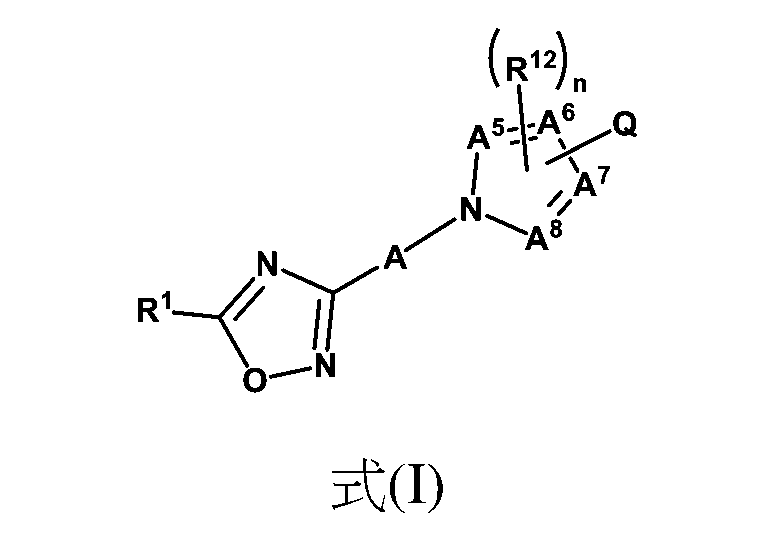
其中,R1為C1-C2-鹵代烷基;A為
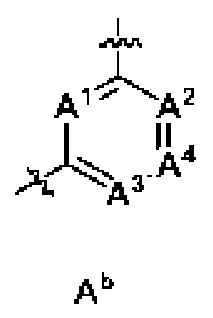

其中,R2和R3獨立地選自氫、鹵素、C1-C6烷基、C1-C6鹵代烷基、C1-C6烷氧基和C1-C6鹵代烷氧基;或者 R2和R3與它們所連接的C原子一起可以形成3至6元的非芳族碳環或3至6元的非芳族雜環;其中雜原子選自O、S或N;所述非芳族碳環或所述非芳族雜環的C原子可任選地被C(=O)或C(=S)取代;所述非芳族碳環或所述非芳族雜環可任選被鹵素或C1-C3烷基或C1-C3-烷氧基取代;R4、R5、R6、R7和R8獨立地選自氫、鹵素、C1-C6烷基、C2-C6-烯基、C2-C6-炔基、C3-C6環烷基、C1-C6烷氧基、C1-C6鹵代烷基、C3-C6環烷基-C1-C6烷基、C1-C6烷氧基-C1-C6烷基、C1-C6烷氧基羰基、C1-C6烷基亞磺醯基、C1-C6烷基磺醯基、-(CR10R11)0-4C3-C6非芳香族碳環基環、-(CR10R11)0-4C6-C10芳香族碳環基環、-(CR10R11)0-4C3-C6非芳香族雜環基環、-(CR10R11)0-4C6-C10芳香族雜環基環、-S(O)0-2C3-C6非芳香族碳環基環、-S(O)0-2C6-C10芳香族碳環基環、-S(O)0-2C3-C6非芳香雜環基環和-S(O)0-2C6-C10芳香雜環基環;或者R4和R5、R8和R7、R4和R6、R5和R6、R4和R7與它們所連接的原子一起可以代表4至8元非芳族雜環;其中雜原子選自O、S(=O)0-2或NR13;所述非芳族雜環的C原子可以任選地被C(=O)或C(=S)取代;R4、R5、R6、R7和R8任選、獨立地被鹵素、氰基、胺基、C1-C6烷基、C1-C6烷氧基、C1-C6鹵代烷氧基、C1-C6鹵代烷基、C3-C6環烷基、C3-C6環烷氧基;C1-C6烷基胺基、C1-C6二烷基胺基和C1-C6三烷基胺基;R10、R11和R13獨立地選自氫、鹵素、C1-C6烷基、C3-C6環烷基、C1-C6鹵代烷基和C1-C6烷氧基;n為選自0、1、2或3的整數;和/或N-氧化物、金屬絡合物、異構體、多晶型物或其農業上可接受的鹽。 wherein R2 and R3 are independently selected from hydrogen, halogen, C1 - C6 alkyl, C1 - C6 halogenated alkyl, C1 - C6 alkoxy and C1 - C6 halogenated alkoxy; or R2 and R3 together with the C atoms to which they are connected can form a 3- to 6-membered non-aromatic carbocyclic ring or a 3- to 6-membered non-aromatic heterocyclic ring; wherein the heteroatom is selected from O, S or N; the C atom of the non-aromatic carbocyclic ring or the non-aromatic heterocyclic ring can be optionally substituted by C(=O) or C(=S); the non-aromatic carbocyclic ring or the non-aromatic heterocyclic ring can be optionally substituted by halogen or C1 - C3 alkyl or C1- C3 -alkoxy; R4 , R5 , R6 , R7 and R8 are selected from the group consisting of: 8 are independently selected from hydrogen, halogen, C 1 -C 6 alkyl, C 2 -C 6 -alkenyl, C 2 -C 6 -alkynyl, C 3 -C 6 cycloalkyl, C 1 -C 6 alkoxy, C 1 -C 6 halogenated alkyl, C 3 -C 6 cycloalkyl-C 1 -C 6 alkyl, C 1 -C 6 alkoxy-C 1 -C 6 alkyl, C 1 -C 6 alkoxycarbonyl, C 1 -C 6 alkylsulfinyl, C 1 -C 6 alkylsulfonyl, -(CR 10 R 11 ) 0-4 C 3 -C 6 non-aromatic carbocyclyl ring, -(CR 10 R 11 ) 0-4 C 6 -C 10 aromatic carbocyclyl ring, -(CR 10 R 11 ) R 4 and R 5 , R 8 and R 7 , R 4 and R 6 , R 5 and R 6 , R 4 and R 6 , R 5 and R 6 , R 4 and R R 7 together with the atoms to which they are attached can represent a 4- to 8-membered non-aromatic heterocyclic ring; wherein the heteroatom is selected from O, S(═O) 0-2 or NR 13 ; the C atom of the non-aromatic heterocyclic ring can be optionally substituted by C(═O) or C(═S); R 4 , R 5 , R 6 , R 7 and R 8 are optionally and independently substituted by halogen, cyano, amine, C 1 -C 6 alkyl, C 1 -C 6 alkoxy, C 1 -C 6 halogenated alkoxy, C 1 -C 6 halogenated alkyl, C 3 -C 6 cycloalkyl, C 3 -C 6 cycloalkoxy; C 1 -C 6 alkylamino, C 1 -C 6 dialkylamino and C 1 -C 6 trialkylamino; R 10 , R 11 and R 13 is independently selected from hydrogen, halogen, C 1 -C 6 alkyl, C 3 -C 6 cycloalkyl, C 1 -C 6 halogenated alkyl and C 1 -C 6 alkoxy; n is an integer selected from 0, 1, 2 or 3; and/or N-oxide, metal complex, isomer, polymorph or an agriculturally acceptable salt thereof.
在優選的實施方案中,本發明提供式(I)化合物,其中
R1選自-CF3、-CHF2和-CF2Cl;A為苯基或吡啶基;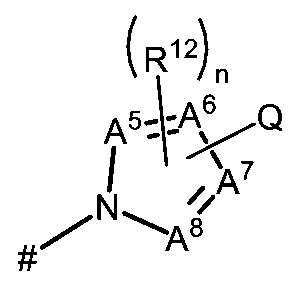
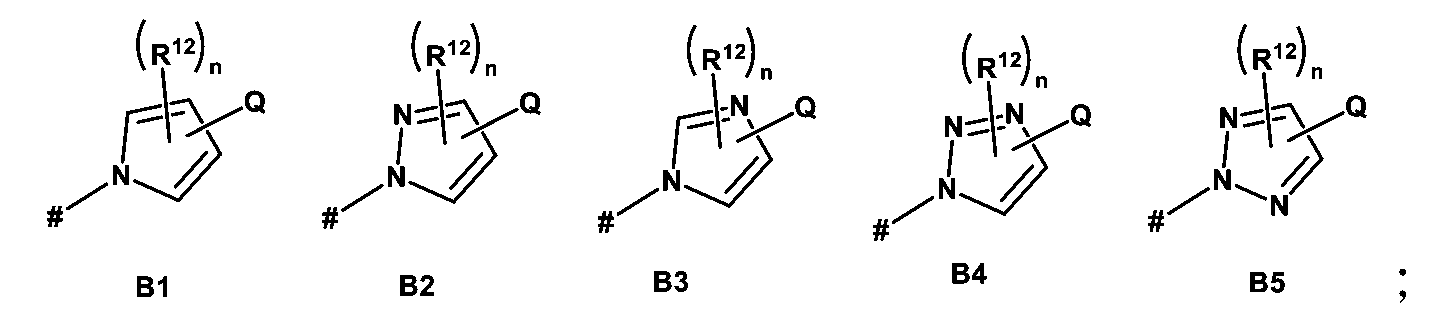
在一個實施方案中,本發明提供式(Ia)化合物,
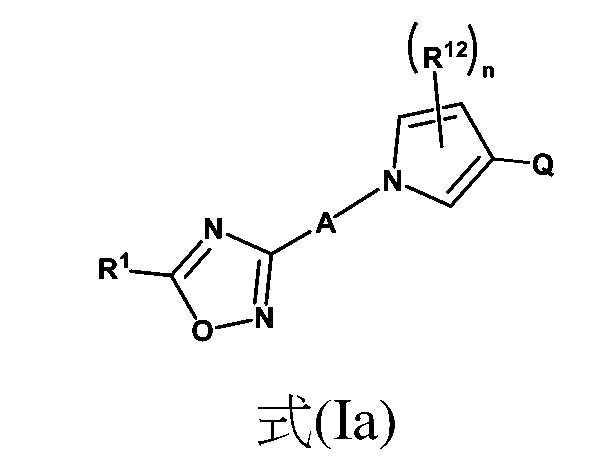
其中,R1為CF3;A、R12、n和Q如上文詳述中所定義。 wherein R 1 is CF 3 ; A, R 12 , n and Q are as defined in detail above.
在另一個實施方案中,本發明提供式(Iaa)化合物,
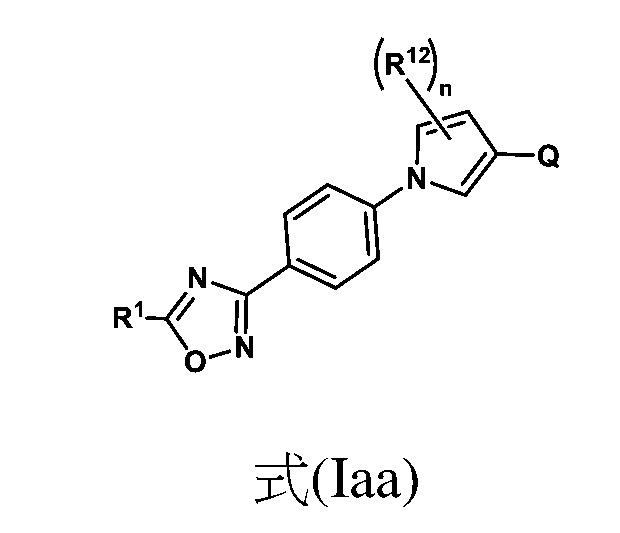
其中,R1為CF3;R12、n和Q如上文詳述中所定義。 wherein R 1 is CF 3 ; R 12 , n and Q are as defined in detail above.
在另一個實施方案中,本發明提供了式(Ib)化合物,
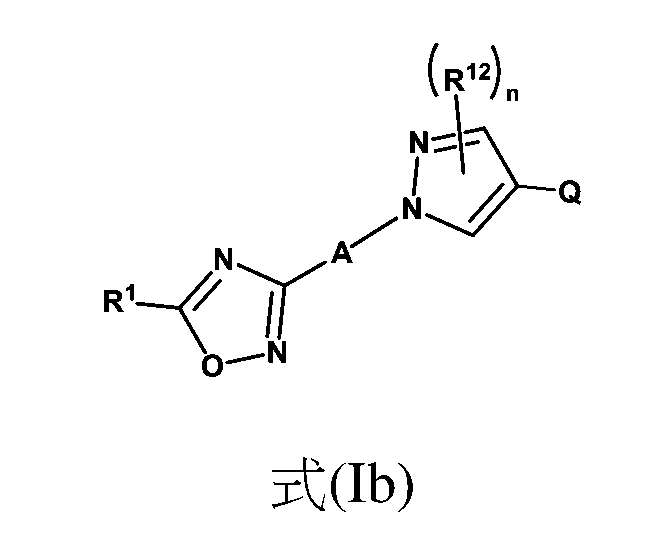
其中,R1為CF3;A、R12、n和Q如上文詳述中所定義。 wherein R 1 is CF 3 ; A, R 12 , n and Q are as defined in detail above.
在另一個實施方案中,本發明提供式(Iba)化合物,
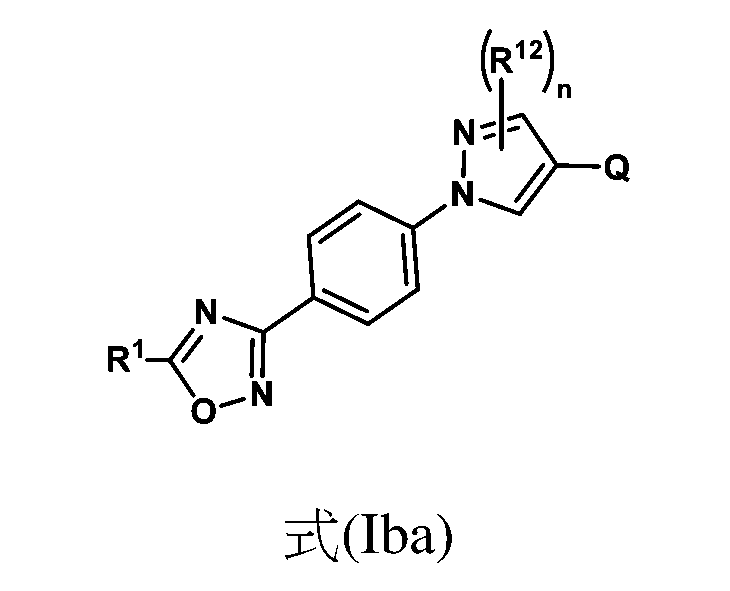
其中,R1為CF3;R12、n和Q如上文詳述中所定義。 wherein R 1 is CF 3 ; R 12 , n and Q are as defined in detail above.
在另一個實施方案中,本發明提供式(Ic)化合物,

其中,R1為CF3;A、R12、n和Q如上文詳述中所定義。 wherein R 1 is CF 3 ; A, R 12 , n and Q are as defined in detail above.
在另一個實施方案中,本發明提供式(Ica)化合物,
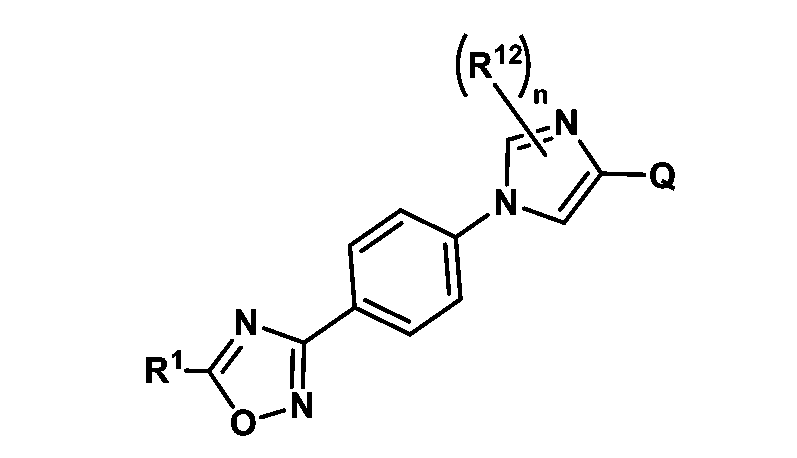
其中,R1為CF3;R12、n和Q如上文詳述中所定義。 wherein R 1 is CF 3 ; R 12 , n and Q are as defined in detail above.
在另一個優選的實施方案中,本發明提供以下式(I)化合物:2-(1-(4-(5-(三氟甲基)-1,2,4-惡二唑-3-基)苯基)-1H-咪唑-4-基)乙酸乙酯,N-(4-甲氧基苯基)-2-(1-(4-(5-(三氟甲基)-1,2,4-惡二唑-3-基)苯基)-1H-咪唑-4-基)乙醯胺,1-(吡咯烷-1-基)-2-(1-(4-(5-(三氟甲基)-1,2,4-惡二唑-3-基)苯基)-1H-咪唑-4-基)乙烷-1-酮,N-苄基-2-(1-(4-(5-(三氟甲基)-1,2,4-惡二唑-3-基)苯基)-1H-咪唑-4-基)乙醯胺,N-(4-甲氧基苄基)-2-(1-(4-(5-(三氟甲基)-1,2,4-惡二唑-3-基)苯基)-1H-咪唑-4-基)乙醯胺,N-(4-氟苄基)-2-(1-(4-(5-(三氟甲基)-1,2,4-惡二唑-3-基)苯基)-1H-咪唑-4-基)乙醯胺,N-(2-氟苄基)-2-(1-(4-(5-(三氟甲基)-1,2,4-惡二唑-3-基)苯基)-1H-咪唑-4-基)乙醯胺,N-(對甲苯基)-2-(1-(4-(5-(三氟甲基)-1,2,4-惡二唑-3-基)苯基)-1H-咪唑-4-基)乙醯胺,N-(4-氯苯基)-2-(1-(4-(5-(三氟甲基)-1,2,4-惡二唑-3-基)苯基)-1H-咪唑-4-基)乙醯胺,N-(3-氟苯基)-2-(1-(4-(5-(三氟甲基)-1,2,4-惡二唑-3-基)苯基)-1H-咪唑-4-基)乙醯胺,1-(呱啶-1-基)-2-(1-(4-(5-(三氟甲基)-1,2,4-惡二唑-3-基)苯基)-1H-咪唑-4-基)乙烷-1-酮,N-(3-甲氧基苯基)-2-(1-(4-(5-(三氟甲基)-1,2,4-惡二唑-3-基)苯基)-1H-咪唑-4-基)乙醯胺,N-(吡啶-3-基)-2-(1-(4-(5-(三氟甲基)-1,2,4-惡二唑-3-基)苯基)-1H-咪唑-4-基)乙醯胺,N-(2-溴苯基)-2-(1-(4-(5-(三氟甲基)-1,2,4-惡二唑-3-基)苯基)-1H-咪唑-4-基)乙醯胺,N-苯基-2-(1-(4-(5-(三氟甲基)-1,2,4-惡二唑-3-基)苯基)-1H-咪唑-4-基)乙醯胺,N-(5-甲氧基-2-甲基苯基)-2-(1-(4-(5-(三氟甲基)-1,2,4-惡二唑-3-基)苯基)-1H-咪唑-4-基)乙醯胺,N-(4-氟-2-甲氧基苯基)-2-(1-(4-(5-(三氟甲基)-1,2,4-惡二唑-3-基)苯基)-1H-咪唑-4-基)乙醯胺,N-(4-氧負離子基-1,4-λ6-惡噻烷-4-亞基)-1-(4-(5-(三 氟甲基)-1,2,4-惡二唑-3-基)苯基)-1H-吡唑-4-羧醯胺,N-(甲基(氧基)(鄰甲苯基)-λ6-亞硫烷基)-1-(4-(5-(三氟甲基)-1,2,4-惡二唑-3-基)苯基)-1H-吡唑-4-羧醯胺,N-((2-甲氧基苯基)(甲基)(氧基)-λ6-亞硫烷基)-1-(4-(5-(三氟甲基)-1,2,4-惡二唑-3-基)苯基)-1H-吡唑-4-羧醯胺,N-((4-甲氧基苯基)(甲基)(氧基)-λ6-亞硫烷基)-1-(4-(5-(三氟甲基)-1,2,4-惡二唑-3-基)苯基)-1H-吡唑-4-羧醯胺,N-(甲基(氧基)(苯基)-λ6-亞硫烷基)-1-(4-(5-(三氟甲基)-1,2,4-惡二唑-3-基)苯基)-1H-吡唑-4-羧醯胺,N-((3-氟苯基)(甲基)(氧基)-λ6-亞磺醯基)-1-(4-(5-(三氟甲基)-1,2,4-惡二唑-3-基)苯基)-1H-吡唑-4-羧醯胺,N-(甲基(氧基)(間甲苯基)-λ6-亞磺醯基)-1-(4-(5-(三氟甲基)-1,2,4-惡二唑-3-基)苯基)-1H-吡咯-3-羧醯胺,N-((2-甲氧基乙基)(氧基)(吡啶-2-基)-λ6-亞磺醯基)-1-(4-(5-(三氟甲基)-1,2,4-惡二唑-3-基)苯基)-1H-吡咯-3-羧醯胺,N-(甲基(氧基)(5-(三氟甲基)吡啶-2-基)-λ6-亞磺醯基)-1-(4-(5-(三氟甲基)-1,2,4-惡二唑-3-基)苯基)-1H-吡咯-3-羧醯胺,N-((4-氟苯基)(甲基)(氧基)-λ6-亞磺醯基)-1-(4-(5-(三氟甲基)-1,2,4-惡二唑-3-基)苯基)-1H-吡咯-3-羧胺,N-((3-氟吡啶-4-基)(甲基)(氧基)-λ6-亞磺醯基)-1-(4-(5-(三氟甲基)-1,2,4-惡二唑-3-基)苯基)-1H-吡咯-3-羧胺,N-((4-甲氧基吡啶-2-基)(甲基)(氧基)-λ6-亞磺醯基)-1-(4-(5-(三氟甲基)-1,2,4-惡二唑-3-基)苯基)-1H-吡咯-3-羧醯胺,N-(二甲基(氧基)-λ6-亞磺醯基)-1-(4-(5-(三氟甲基)-1,2,4-惡二唑-3-基)苯基)-1H-吡咯-3-羧醯胺,N-((4-甲氧基苯基)(甲基)(氧基)-λ6-亞磺醯基)-1-(4-(5-(三氟甲基)-1,2,4-惡二唑-3-基)苯基)-1H-吡咯-3-羧醯胺,N-((2,4-二甲氧基苯基)(甲基)(氧基)-λ6-亞硫烷基)-1-(4-(5-(三氟甲基)-1,2,4-惡二唑-3-基)苯基)-1H-吡唑-4-羧醯胺,N-((2,6-di氯苯基)(甲基)(氧基)-λ6-亞硫烷基)-1-(4-(5-(三氟甲基)-1,2,4-惡二唑-3-基)苯基)-1H-吡唑-4-羧醯胺,N-(甲基(氧基)(吡啶-4-基)-λ6-亞硫烷基)-1-(4-(5-(三氟甲基)-1,2,4-惡二唑-3-基)苯 基)-1H-吡唑-4-羧醯胺,N-((2-甲氧基乙基)(甲基)(氧基)-λ6-亞硫烷基)-1-(4-(5-(三氟甲基)-1,2,4-惡二唑-3-基)苯基)-1H-吡唑-4-羧醯胺,N-(二乙基(氧基)-λ6-亞硫烷基)-1-(4-(5-(三氟甲基)-1,2,4-惡二唑-3-基)苯基)-1H-吡唑-4-羧醯胺,N-(二甲基(氧基)-λ6-亞硫烷基)-1-(4-(5-(三氟甲基)-1,2,4-惡二唑-3-基)苯基)-1H-吡唑-4-羧醯胺,N-((4-氯苯基)(甲基)(氧基)-λ6-亞硫烷基)-1-(4-(5-(三氟甲基)-1,2,4-惡二唑-3-基)苯基)-1H-吡唑-4-羧醯胺,N-((3-溴苯基)(異丙基)(氧基)-λ6-亞磺醯基)-1-(4-(5-(三氟甲基)-1,2,4-惡二唑-3-基)苯基)-1H-吡咯-3-羧醯胺,N-(甲基(氧基)(噻唑-2-基)-λ6-亞磺醯基)-1-(4-(5-(三氟甲基)-1,2,4-惡二唑-3-基)苯基)-1H-吡咯-3-羧醯胺,3-(4-(4-(呱啶-1-基磺醯基)-1H-吡唑-1-基)苯基)-5-(三氟甲基)-1,2,4-惡二唑,3-(4-(4-((苯基硫基)甲基)-1H-咪唑-1-基)苯基)-5-(三氟甲基)-1,2,4-惡二唑,2-(3,5-二甲基-1-(4-(5-(三氟甲基)-1,2,4-惡二唑-3-基)苯基)-1H-吡唑-4-基)乙酸叔丁酯,N-(4-氟苯基)-1-(4-(5-(三氟甲基)-1,2,4-惡二唑-3-基)苯基)-1H-吡唑-4-磺醯胺,N-乙烷基-1-(4-(5-(三氟甲基)-1,2,4-惡二唑-3-基)苯基)-1H-吡唑-4-磺醯胺,N-(2,4-二氟苯基)-N-甲基-1-(4-(5-(三氟甲基)-1,2,4-惡二唑-3-基)苯基)-1H-吡唑-4-磺醯胺,N-(2-氟苯基)-N-甲基-1-(4-(5-(三氟甲基)-1,2,4-惡二唑-3-基)苯基)-1H-吡唑-4-磺醯胺,3-(4-(4-(雜氮環丁烷-1-基磺醯基)-1H-吡唑-1-基)苯基)-5-(三氟甲基)-1,2,4-惡二唑,N-甲基-N-苯基-1-(4-(5-(三氟甲基)-1,2,4-惡二唑-3-基)苯基)-1H-吡唑-4-磺醯胺,N-(3-甲氧基苯基)-N-甲基-1-(4-(5-(三氟甲基)-1,2,4-惡二唑-3-基)苯基)-1H-吡唑-4-磺醯胺,N-甲基-N-(對甲苯基)-1-(4-(5-(三氟甲基)-1,2,4-惡二唑-3-基)苯基)-1H-吡唑-4-磺醯胺,N-(3-氟苯基)-N-甲基-1-(4-(5-(三氟甲基)-1,2,4-惡二唑-3-基)苯基)-1H-吡唑-4-磺醯胺,N-(3-氯苯基)-N-甲基-1-(4-(5-(三氟甲基)-1,2,4-惡二唑-3-基)苯基)-1H-吡唑-4-磺醯胺,3-(4-(4-((3-氟吡咯烷-1-基)磺醯基)-1H-吡唑-1- 基)苯基)-5-(三氟甲基)-1,2,4-惡二唑,N-甲基-N-(吡啶-2-基)-1-(4-(5-(三氟甲基)-1,2,4-惡二唑-3-基)苯基)-1H-吡唑-4-磺醯胺,4-((1-(4-(5-(三氟甲基)-1,2,4-惡二唑-3-基)苯基)-1H-吡唑-4-基)磺醯基)嗎啉,N-環丙基-1-(4-(5-(三氟甲基)-1,2,4-惡二唑-3-基)苯基)-1H-吡唑-4-磺醯胺,N-苄基-1-(4-(5-(三氟甲基)-1,2,4-惡二唑-3-基)苯基)-1H-吡唑-4-磺醯胺,3-(4-(4-(((4-甲氧基苯基)硫基)甲基)-1H-咪唑-1-基)苯基)-5-(三氟甲基)-1,2,4-惡二唑,3-(4-(4-((異丙基硫基)甲基)-1H-咪唑-1-基)苯基)-5-(三氟甲基)-1,2,4-惡二唑,3-(4-(4-(((2-氟苯基)硫基)甲基)-1H-咪唑-1-基)苯基)-5-(三氟甲基)-1,2,4-惡二唑,3-(4-(4-(((4-氟苯基)硫基)甲基)-1H-咪唑-1-基)苯基)-5-(三氟甲基)-1,2,4-惡二唑,3-(4-(4-(((3-氯苯基)硫基)甲基)-1H-咪唑-1-基)苯基)-5-(三氟甲基)-1,2,4-惡二唑,3-(4-(4-(((4-甲氧基苄基)硫基)甲基)-1H-咪唑-1-基)苯基)-5-(三氟甲基)-1,2,4-惡二唑,3-(4-(4-((吡啶-2-基硫基)甲基)-1H-咪唑-1-基)苯基)-5-(三氟甲基)-1,2,4-惡二唑,3-(4-(4-((苯基磺醯基)甲基)-1H-咪唑-1-基)苯基)-5-(三氟甲基)-1,2,4-惡二唑,3-(4-(4-(((4-甲氧基苯基)磺醯基)甲基)-1H-咪唑-1-基)苯基)-5-(三氟甲基)-1,2,4-惡二唑,3-(4-(4-((異丙基磺醯基)甲基)-1H-咪唑-1-基)苯基)-5-(三氟甲基)-1,2,4-惡二唑,3-(4-(4-(((2-氟苯基)磺醯基)甲基)-1H-咪唑-1-基)苯基)-5-(三氟甲基)-1,2,4-惡二唑,3-(4-(4-(((4-氟苯基)磺醯基)甲基)-1H-咪唑-1-基)苯基)-5-(三氟甲基)-1,2,4-惡二唑,3-(4-(4-(((3-氯苯基)磺醯基)甲基)-1H-咪唑-1-基)苯基)-5-(三氟甲基)-1,2,4-惡二唑,3-(4-(4-(((4-甲氧基苄基)磺醯基)甲基)-1H-咪唑-1-基)苯基)-5-(三氟甲基)-1,2,4-惡二唑,3-(4-(4-((吡啶-2-基磺醯基)甲基)-1H-咪唑-1-基)苯基)-5-(三氟甲基)-1,2,4-惡二唑,亞胺基(苯基)((1-(4-(5-(三氟甲基)-1,2,4-惡二唑-3-基)苯基)-1H-咪唑-4-基)甲基)-λ6-磺胺酮,(2-氟苯基)(亞胺基)((1-(4-(5-(三氟甲基)-1,2,4-惡二唑-3-基)苯基)-1H-咪唑-4-基)甲基)- λ6-磺胺酮,4-甲基-N-((1-(4-(5-(三氟甲基)-1,2,4-惡二唑-3-基)苯基)-1H-咪唑-4-基)甲基)苯磺醯胺,N-((1-(4-(5-(三氟甲基)-1,2,4-惡二唑-3-基)苯基)-1H-咪唑-4-基)甲基)苯磺醯胺,N-((1-(4-(5-(三氟甲基)-1,2,4-惡二唑-3-基)苯基)-1H-咪唑-4-基)甲基)乙醯胺,4-氟-N-((1-(4-(5-(三氟甲基)-1,2,4-惡二唑-3-基)苯基)-1H-咪唑-4-基)甲基)苯磺醯胺,N-((1-(4-(5-(三氟甲基)-1,2,4-惡二唑-3-基)苯基)-1H-咪唑-4-基)甲基)環丙烷磺醯胺,4-(三氟甲基)-N-((1-(4-(5-(三氟甲基)-1,2,4-惡二唑-3-基)苯基)-1H-咪唑-4-基)甲基)苯甲醯胺,N-((1-(4-(5-(三氟甲基)-1,2,4-惡二唑-3-基)苯基)-1H-咪唑-4-基)甲基)異丁醯胺,N-((1-(4-(5-(三氟甲基)-1,2,4-惡二唑-3-基)苯基)-1H-咪唑-4-基)甲基)環丁烷羧醯胺,N-((1-(4-(5-(三氟甲基)-1,2,4-惡二唑-3-基)苯基)-1H-咪唑-4-基)甲基)苯甲醯胺,4-甲氧基-N-((1-(4-(5-(三氟甲基)-1,2,4-惡二唑-3-基)苯基)-1H-咪唑-4-基)甲基)苯甲醯胺,2-氟-N-((1-(4-(5-(三氟甲基)-1,2,4-惡二唑-3-基)苯基)-1H-咪唑-4-基)甲基)苯甲醯胺,N-((1-(4-(5-(三氟甲基)-1,2,4-惡二唑-3-基)苯基)-1H-咪唑-4-基)甲基)甲烷磺醯胺,N-((1-(4-(5-(三氟甲基)-1,2,4-惡二唑-3-基)苯基)-1H-咪唑-4-基)甲基)噻唑-2-羧醯胺,2-(3,5-二甲基-1-(4-(5-(三氟甲基)-1,2,4-惡二唑-3-基)苯基)-1H-吡唑-4-基)-N-苯基乙醯胺,N-(4-氯苯基)-2-(3,5-二甲基-1-(4-(5-(三氟甲基)-1,2,4-惡二唑-3-基)苯基)-1H-吡唑-4-基)乙醯胺,2-(3,5-二甲基-1-(4-(5-(三氟甲基)-1,2,4-惡二唑-3-基)苯基)-1H-吡唑-4-基)-N-(4-氟-2-甲氧基苯基)乙醯胺,2-(3,5-二甲基-1-(4-(5-(三氟甲基)-1,2,4-惡二唑-3-基)苯基)-1H-吡唑-4-基)-N-(吡啶-2-基)乙醯胺,2-(3,5-二甲基-1-(4-(5-(三氟甲基)-1,2,4-惡二唑-3-基)苯基)-1H-吡唑-4-基)-N-(噻唑-2-基)乙醯胺,N-(4-氯-3-氟苯基)-2-(3,5-二甲基-1-(4-(5-(三氟甲基)-1,2,4-惡二唑-3-基)苯基)-1H-吡唑-4-基)乙醯胺,N-(4-氯苄基)-2-(3,5-二甲基-1-(4-(5-(三氟甲基)-1,2,4-惡二唑- 3-基)苯基)-1H-吡唑-4-基)乙醯胺,4-氯-N-((1-(4-(5-(三氟甲基)-1,2,4-惡二唑-3-基)苯基)-1H-吡唑-4-基)甲基)苯甲醯胺,N-((1-(4-(5-(三氟甲基)-1,2,4-惡二唑-3-基)苯基)-1H-吡唑-4-基)甲基)乙醯胺,N-((1-(4-(5-(三氟甲基)-1,2,4-惡二唑-3-基)苯基)-1H-吡唑-4-基)甲基)丙醯胺,2-氟-N-((1-(4-(5-(三氟甲基)-1,2,4-惡二唑-3-基)苯基)-1H-吡唑-4-基)甲基)苯甲醯胺,4-氟-N-((1-(4-(5-(三氟甲基)-1,2,4-惡二唑-3-基)苯基)-1H-吡唑-4-基)甲基)苯甲醯胺,2-甲基-N-((1-(4-(5-(三氟甲基)-1,2,4-惡二唑-3-基)苯基)-1H-吡唑-4-基)甲基)噻唑-5-羧醯胺,N-((1-(4-(5-(三氟甲基)-1,2,4-惡二唑-3-基)苯基)-1H-吡唑-4-基)甲基)環丁烷羧醯胺,N-((1-(4-(5-(三氟甲基)-1,2,4-惡二唑-3-基)苯基)-1H-吡唑-4-基)甲基)煙醯胺,N-((1-(4-(5-(三氟甲基)-1,2,4-惡二唑-3-基)苯基)-1H-吡唑-4-基)甲基)甲烷磺醯胺,N-((1-(4-(5-(三氟甲基)-1,2,4-惡二唑-3-基)苯基)-1H-吡唑-4-基)甲基)乙烷磺醯胺,N-((1-(4-(5-(三氟甲基)-1,2,4-惡二唑-3-基)苯基)-1H-吡唑-4-基)甲基)環丙烷磺醯胺,2-氟-N-((1-(4-(5-(三氟甲基)-1,2,4-惡二唑-3-基)苯基)-1H-吡唑-4-基)甲基)苯磺醯胺,5-氯-N-((1-(4-(5-(三氟甲基)-1,2,4-惡二唑-3-基)苯基)-1H-吡唑-4-基)甲基)噻吩-2-磺醯胺,4-氟-N-((1-(4-(5-(三氟甲基)-1,2,4-惡二唑-3-基)苯基)-1H-吡唑-4-基)甲基)苯磺醯胺,N-((1-(4-(5-(三氟甲基)-1,2,4-惡二唑-3-基)苯基)-1H-吡唑-4-基)甲基)吡啶-3-磺醯胺,1-(吡啶-3-基)-3-((1-(4-(5-(三氟甲基)-1,2,4-惡二唑-3-基)苯基)-1H-吡唑-4-基)甲基)脲,1-(2-氟苯基)-3-((1-(4-(5-(三氟甲基)-1,2,4-惡二唑-3-基)苯基)-1H-吡唑-4-基)甲基)脲,(4-氟苯基)(亞胺基)((1-(4-(5-(三氟甲基)-1,2,4-惡二唑-3-基)苯基)-1H-咪唑-4-基)甲基)-λ6-磺胺酮,(3-氯苯基)(亞胺基)((1-(4-(5-(三氟甲基)-1,2,4-惡二唑-3-基)苯基)-1H-咪唑-4-基)甲基)-λ6-磺胺酮,2-(3,5-二甲基-1-(4-(5-(三氟甲基)-1,2,4-惡二唑-3-基)苯基)-1H-吡唑-4-基)-N-(2-甲氧基乙基) 乙醯胺,N-(環丙基甲基)-2-(3,5-二甲基-1-(4-(5-(三氟甲基)-1,2,4-惡二唑-3-基)苯基)-1H-吡唑-4-基)乙醯胺,N-環丙基-2-(3,5-二甲基-1-(4-(5-(三氟甲基)-1,2,4-惡二唑-3-基)苯基)-1H-吡唑-4-基)乙醯胺,3-(4-(4-(((4-氟苯基)亞磺醯基)甲基)-1H-咪唑-1-基)苯基)-5-(三氟甲基)-1,2,4-惡二唑,3-(4-(4-((苯基亞磺醯基)甲基)-1H-咪唑-1-基)苯基)-5-(三氟甲基)-1,2,4-惡二唑,(2-氟苯基)(甲基)(((1-(4-(5-(三氟甲基)-1,2,4-惡二唑-3-基)苯基)-1H-吡唑-4-基)甲基)亞胺基)-λ6-磺胺酮,(4-甲氧基苯基)(甲基)(((1-(4-(5-(三氟甲基)-1,2,4-惡二唑-3-基)苯基)-1H-吡唑-4-基)甲基)亞胺基)-λ6-磺胺酮,甲基(噻唑-2-基)(((1-(4-(5-(三氟甲基)-1,2,4-惡二唑-3-基)苯基)-1H-吡唑-4-基)甲基)亞胺基)-λ6-磺胺酮,甲基(吡啶-4-基)(((1-(4-(5-(三氟甲基)-1,2,4-惡二唑-3-基)苯基)-1H-吡唑-4-基)甲基)亞胺基)-λ6-磺胺酮和甲基(苯基)(((1-(4-(5-(三氟甲基)-1,2,4-惡二唑-3-基)苯基)-1H-吡唑-4-基)甲基)亞胺基)-λ6-磺胺酮。 In another preferred embodiment, the present invention provides the following compounds of formula (I): ethyl 2-(1-(4-(5-(trifluoromethyl)-1,2,4-oxadiazol-3-yl)phenyl)-1H-imidazole-4-yl)acetate, N-(4-methoxyphenyl)-2-(1-(4-(5-(trifluoromethyl)-1,2,4-oxadiazol-3-yl)phenyl)-1H-imidazole-4-yl)acetate -yl)acetamide, 1-(pyrrolidin-1-yl)-2-(1-(4-(5-(trifluoromethyl)-1,2,4-oxadiazol-3-yl)phenyl)-1H-imidazol-4-yl)ethan-1-one, N-benzyl-2-(1-(4-(5-(trifluoromethyl)-1,2,4-oxadiazol-3-yl)phenyl)-1H-imidazol-4-yl)acetamide, N-(4-methoxy N-(4-fluorobenzyl)-2-(1-(4-(5-(trifluoromethyl)-1,2,4-oxadiazol-3-yl)phenyl)-1H-imidazol-4-yl)acetamide, N-(2-fluorobenzyl)-2-(1-(4-(5-(trifluoromethyl)-1,2,4-oxadiazol-3-yl)phenyl)-1H-imidazol-4-yl)acetamide 5-(trifluoromethyl)-1,2,4-oxadiazol-3-yl)phenyl)-1H-imidazol-4-yl)acetamide, N-(p-tolyl)-2-(1-(4-(5-(trifluoromethyl)-1,2,4-oxadiazol-3-yl)phenyl)-1H-imidazol-4-yl)acetamide, N-(4-chlorophenyl)-2-(1-(4-(5-(trifluoromethyl)-1,2,4-oxadiazol-3-yl)phenyl)-1H-imidazol-4-yl)acetamide oxadiazol-3-yl)phenyl)-1H-imidazol-4-yl)acetamide, N-(3-fluorophenyl)-2-(1-(4-(5-(trifluoromethyl)-1,2,4-oxadiazol-3-yl)phenyl)-1H-imidazol-4-yl)acetamide, 1-(piperidin-1-yl)-2-(1-(4-(5-(trifluoromethyl)-1,2,4-oxadiazol-3-yl)phenyl)-1H-imidazol-4-yl)acetamide H-imidazol-4-yl)ethan-1-one, N-(3-methoxyphenyl)-2-(1-(4-(5-(trifluoromethyl)-1,2,4-oxadiazol-3-yl)phenyl)-1H-imidazol-4-yl)acetamide, N-(pyridin-3-yl)-2-(1-(4-(5-(trifluoromethyl)-1,2,4-oxadiazol-3-yl)phenyl)-1H-imidazol-4-yl)acetamide )acetamide, N-(2-bromophenyl)-2-(1-(4-(5-(trifluoromethyl)-1,2,4-oxadiazol-3-yl)phenyl)-1H-imidazol-4-yl)acetamide, N-phenyl-2-(1-(4-(5-(trifluoromethyl)-1,2,4-oxadiazol-3-yl)phenyl)-1H-imidazol-4-yl)acetamide, N-(5-methoxy-2-methylphenyl)acetamide N-(4-fluoro-2-methoxyphenyl)-2-(1-(4-(5-(trifluoromethyl)-1,2,4-oxadiazol-3-yl)phenyl)-1H-imidazol-4-yl)acetamide, N-(4-fluoro-2-methoxyphenyl)-2-(1-(4-(5-(trifluoromethyl)-1,2,4-oxadiazol-3-yl)phenyl)-1H-imidazol-4-yl)acetamide, N-(4-oxadiazol-1,4-λ 6 -oxathian-4-ylidene)-1-(4-(5-(trifluoromethyl)-1,2,4-oxadiazol-3-yl)phenyl)-1H-pyrazole-4-carboxamide, N-(methyl(oxy)(o-tolyl)-λ 6 -sulfanylidene)-1-(4-(5-(trifluoromethyl)-1,2,4-oxadiazol-3-yl)phenyl)-1H-pyrazole-4-carboxamide, N-((2-methoxyphenyl)(methyl)(oxy)-λ 6 -sulfanylidene)-1-(4-(5-(trifluoromethyl)-1,2,4-oxadiazol-3-yl)phenyl)-1H-pyrazole-4-carboxamide, N-((4-methoxyphenyl)(methyl)(oxy)-λ 6 -sulfanylidene)-1-(4-(5-(trifluoromethyl)-1,2,4-oxadiazol-3-yl)phenyl)-1H-pyrazole-4-carboxamide, N-(methyl(oxy)(phenyl)-λ 6 -sulfanylidene)-1-(4-(5-(trifluoromethyl)-1,2,4-oxadiazol-3-yl)phenyl)-1H-pyrazole-4-carboxamide, N-((3-fluorophenyl)(methyl)(oxy)-λ 6 -sulfinyl)-1-(4-(5-(trifluoromethyl)-1,2,4-oxadiazol-3-yl)phenyl)-1H-pyrazole-4-carboxamide, N-(methyl(oxy)(m-tolyl)-λ 6 -sulfinyl)-1-(4-(5-(trifluoromethyl)-1,2,4-oxadiazol-3-yl)phenyl)-1H-pyrrole-3-carboxamide, N-((2-methoxyethyl)(oxy)(pyridin-2-yl)-λ 6 -sulfinyl)-1-(4-(5-(trifluoromethyl)-1,2,4-oxadiazol-3-yl)phenyl)-1H-pyrrole-3-carboxamide, N-(methyl(oxy)(5-(trifluoromethyl)pyridin-2-yl)-λ 6 -sulfinyl)-1-(4-(5-(trifluoromethyl)-1,2,4-oxadiazol-3-yl)phenyl)-1H-pyrrole-3-carboxamide, N-((4-fluorophenyl)(methyl)(oxy)-λ 6 -sulfinyl)-1-(4-(5-(trifluoromethyl)-1,2,4-oxadiazol-3-yl)phenyl)-1H-pyrrole-3-carboxamide, N-((3-fluoropyridin-4-yl)(methyl)(oxy)-λ 6 -sulfinyl)-1-(4-(5-(trifluoromethyl)-1,2,4-oxadiazol-3-yl)phenyl)-1H-pyrrole-3-carboxamide, N-((4-methoxypyridin-2-yl)(methyl)(oxy)-λ 6 -sulfinyl)-1-(4-(5-(trifluoromethyl)-1,2,4-oxadiazol-3-yl)phenyl)-1H-pyrrole-3-carboxamide, N-(dimethyl(oxy)-λ 6 -sulfinyl)-1-(4-(5-(trifluoromethyl)-1,2,4-oxadiazol-3-yl)phenyl)-1H-pyrrole-3-carboxamide, N-((4-methoxyphenyl)(methyl)(oxy)-λ 6 -sulfinyl)-1-(4-(5-(trifluoromethyl)-1,2,4-oxadiazol-3-yl)phenyl)-1H-pyrrole-3-carboxamide, N-((2,4-dimethoxyphenyl)(methyl)(oxy)-λ 6 -sulfenyl)-1-(4-(5-(trifluoromethyl)-1,2,4-oxadiazol-3-yl)phenyl)-1H-pyrrole-4-carboxamide, N-((2,6-dichlorophenyl)(methyl)(oxy)-λ 6 -sulfanylidene)-1-(4-(5-(trifluoromethyl)-1,2,4-oxadiazol-3-yl)phenyl)-1H-pyrazole-4-carboxamide, N-(methyl(oxy)(pyridin-4-yl)-λ 6 -sulfanylidene)-1-(4-(5-(trifluoromethyl)-1,2,4-oxadiazol-3-yl)phenyl)-1H-pyrazole-4-carboxamide, N-((2-methoxyethyl)(methyl)(oxy)-λ 6 -sulfanylidene)-1-(4-(5-(trifluoromethyl)-1,2,4-oxadiazol-3-yl)phenyl)-1H-pyrazole-4-carboxamide, N-(diethyl(oxy)-λ 6 -sulfanylidene)-1-(4-(5-(trifluoromethyl)-1,2,4-oxadiazol-3-yl)phenyl)-1H-pyrazole-4-carboxamide, N-(dimethyl(oxy)-λ 6 -sulfanylidene)-1-(4-(5-(trifluoromethyl)-1,2,4-oxadiazol-3-yl)phenyl)-1H-pyrazole-4-carboxamide, N-((4-chlorophenyl)(methyl)(oxy)-λ 6 -sulfanylidene)-1-(4-(5-(trifluoromethyl)-1,2,4-oxadiazol-3-yl)phenyl)-1H-pyrazole-4-carboxamide, N-((3-bromophenyl)(isopropyl)(oxy)-λ 6 -sulfinyl)-1-(4-(5-(trifluoromethyl)-1,2,4-oxadiazol-3-yl)phenyl)-1H-pyrrole-3-carboxamide, N-(methyl(oxy)(thiazol-2-yl)-λ 6 -sulfinyl)-1-(4-(5-(trifluoromethyl)-1,2,4-oxadiazol-3-yl)phenyl)-1H-pyrrole-3-carboxamide, 3-(4-(4-(piperidin-1-ylsulfonyl)-1H-pyrazol-1-yl)phenyl)-5-(trifluoromethyl)-1,2,4-oxadiazole, 3-(4-(4-((phenylthio)methyl)-1H-imidazol-1-yl)phenyl)-5-(trifluoromethyl)-1,2,4-oxadiazole, 2-(3,5-dimethyl-1-(4-(5-(trifluoromethyl)-1,2,4-oxadiazol-3-yl)phenyl)-1H-pyrazole-4 -yl) tert-butyl acetate, N-(4-fluorophenyl)-1-(4-(5-(trifluoromethyl)-1,2,4-oxadiazol-3-yl)phenyl)-1H-pyrazole-4-sulfonamide, N-ethyl-1-(4-(5-(trifluoromethyl)-1,2,4-oxadiazol-3-yl)phenyl)-1H-pyrazole-4-sulfonamide, N-(2,4-difluorophenyl)-N-methyl-1-(4-(5-(trifluoromethyl)-1,2,4-oxadiazol-3-yl)phenyl)-1H-pyrazole-4-sulfonamide, 1,2,4-oxadiazol-3-yl)phenyl)-1H-pyrazole-4-sulfonamide, 3-(4-(4-(azobutane-1-ylsulfonyl)-1H-pyrazole-1-yl)phenyl)-5-(trifluoromethyl)-1,2,4-oxadiazole, N-methyl-N-phenyl-1-(4-(5-(trifluoromethyl)-1,2,4-oxadiazol-3-yl)phenyl)-1H-pyrazole-4-sulfonamide, N-(3-methoxyphenyl)-N-methyl-1-(4-(5-(trifluoromethyl)-1,2,4-oxadiazol-3-yl)phenyl)-1H-pyrazole-4-sulfonamide, N-methyl- N-(p-tolyl)-1-(4-(5-(trifluoromethyl)-1,2,4-oxadiazol-3-yl)phenyl)-1H-pyrazole-4-sulfonamide, N-(3-fluorophenyl)-N-methyl-1-(4-(5-(trifluoromethyl)-1,2,4-oxadiazol-3-yl)phenyl)-1H-pyrazole-4-sulfonamide, N-(3-chlorophenyl)-N-methyl-1-(4-(5-(trifluoromethyl)-1,2,4-oxadiazol-3-yl)phenyl)-1H-pyrazole-4-sulfonamide, 3-(4-(4-((3-fluoropyrrolidin-1-yl)sulfonyl)-1H-pyrazole-1- 1-(4-(5-(trifluoromethyl)-1,2,4-oxadiazol-3-yl)phenyl)-1H-pyrazole-4-sulfonamide, 4-((1-(4-(5-(trifluoromethyl)-1,2,4-oxadiazol-3-yl)phenyl)-1H-pyrazole-4-sulfonyl)oxoline, N-cyclopropane Benzyl-1-(4-(5-(trifluoromethyl)-1,2,4-oxadiazol-3-yl)phenyl)-1H-pyrazole-4-sulfonamide, N-benzyl-1-(4-(5-(trifluoromethyl)-1,2,4-oxadiazol-3-yl)phenyl)-1H-pyrazole-4-sulfonamide, 3-(4-(4-(((4-methoxyphenyl)thio)methyl)-1H-imidazol-1-yl)phenyl)-5-(trifluoromethyl)- )-1,2,4-oxadiazole, 3-(4-(4-((isopropylthio)methyl)-1H-imidazol-1-yl)phenyl)-5-(trifluoromethyl)-1,2,4-oxadiazole, 3-(4-(4-(((2-fluorophenyl)thio)methyl)-1H-imidazol-1-yl)phenyl)-5-(trifluoromethyl)-1,2,4-oxadiazole, 3-(4-(4-(((4-fluorophenyl)thio)methyl )-1H-imidazol-1-yl)phenyl)-5-(trifluoromethyl)-1,2,4-oxadiazole, 3-(4-(4-(((3-chlorophenyl)thio)methyl)-1H-imidazol-1-yl)phenyl)-5-(trifluoromethyl)-1,2,4-oxadiazole, 3-(4-(4-(((4-methoxybenzyl)thio)methyl)-1H-imidazol-1-yl)phenyl)-5-(trifluoromethyl)-1,2,4-oxadiazole 4-oxadiazole, 3-(4-(4-((pyridin-2-ylthio)methyl)-1H-imidazol-1-yl)phenyl)-5-(trifluoromethyl)-1,2,4-oxadiazole, 3-(4-(4-((phenylsulfonyl)methyl)-1H-imidazol-1-yl)phenyl)-5-(trifluoromethyl)-1,2,4-oxadiazole, 3-(4-(4-(((4-methoxyphenyl)sulfonyl)methyl)-1H -imidazol-1-yl)phenyl)-5-(trifluoromethyl)-1,2,4-oxadiazole, 3-(4-(4-((isopropylsulfonyl)methyl)-1H-imidazol-1-yl)phenyl)-5-(trifluoromethyl)-1,2,4-oxadiazole, 3-(4-(4-(((2-fluorophenyl)sulfonyl)methyl)-1H-imidazol-1-yl)phenyl)-5-(trifluoromethyl)-1,2,4-oxadiazole, -(4-(4-(((4-fluorophenyl)sulfonyl)methyl)-1H-imidazol-1-yl)phenyl)-5-(trifluoromethyl)-1,2,4-oxadiazole, 3-(4-(4-(((3-chlorophenyl)sulfonyl)methyl)-1H-imidazol-1-yl)phenyl)-5-(trifluoromethyl)-1,2,4-oxadiazole, 3-(4-(4-(((4-methoxybenzyl)sulfonyl)methyl)-1H -imidazol-1-yl)phenyl)-5-(trifluoromethyl)-1,2,4-oxadiazole, 3-(4-(4-((pyridin-2-ylsulfonyl)methyl)-1H-imidazol-1-yl)phenyl)-5-(trifluoromethyl)-1,2,4-oxadiazole, imino(phenyl)((1-(4-(5-(trifluoromethyl)-1,2,4-oxadiazol-3-yl)phenyl)-1H-imidazol-4-yl)methyl)-λ 6 -sulfonamide, (2-fluorophenyl)(imino)((1-(4-(5-(trifluoromethyl)-1,2,4-oxadiazol-3-yl)phenyl)-1H-imidazol-4-yl)methyl)-λ 6 -sulfonamide, 4-methyl-N-((1-(4-(5-(trifluoromethyl)-1,2,4-oxadiazol-3-yl)phenyl)-1H-imidazol-4-yl)methyl)benzenesulfonamide, N-((1-(4-(5-(trifluoromethyl)-1,2,4-oxadiazol-3-yl)phenyl)-1H-imidazol-4-yl)methyl)benzenesulfonamide, N-((1-(4-(5-(trifluoromethyl)-1,2,4-oxadiazol-3-yl)phenyl)-1H-imidazol-4-yl)methyl)benzenesulfonamide )phenyl)-1H-imidazol-4-yl)methyl)acetamide, 4-fluoro-N-((1-(4-(5-(trifluoromethyl)-1,2,4-oxadiazol-3-yl)phenyl)-1H-imidazol-4-yl)methyl)benzenesulfonamide, N-((1-(4-(5-(trifluoromethyl)-1,2,4-oxadiazol-3-yl)phenyl)-1H-imidazol-4-yl)methyl)cyclopropanesulfonamide, 4-(trifluoromethyl)-N-((1 -(4-(5-(trifluoromethyl)-1,2,4-oxadiazol-3-yl)phenyl)-1H-imidazol-4-yl)methyl)benzamide, N-((1-(4-(5-(trifluoromethyl)-1,2,4-oxadiazol-3-yl)phenyl)-1H-imidazol-4-yl)methyl)isobutyramide, N-((1-(4-(5-(trifluoromethyl)-1,2,4-oxadiazol-3-yl)phenyl)-1H-imidazol-4-yl) 4-Methoxy-N-((1-(4-(5-(trifluoromethyl)-1,2,4-oxadiazol-3-yl)phenyl)-1H-imidazol-4-yl)methyl)benzamide, 2-fluoro-N-((1-(4-(5-(trifluoromethyl)-1,2 ,4-oxadiazol-3-yl)phenyl)-1H-imidazol-4-yl)methyl)benzamide, N-((1-(4-(5-(trifluoromethyl)-1,2,4-oxadiazol-3-yl)phenyl)-1H-imidazol-4-yl)methyl)methanesulfonamide, N-((1-(4-(5-(trifluoromethyl)-1,2,4-oxadiazol-3-yl)phenyl)-1H-imidazol-4-yl)methyl)thiazole-2-carboxamide, 2-(3 ,5-dimethyl-1-(4-(5-(trifluoromethyl)-1,2,4-oxadiazol-3-yl)phenyl)-1H-pyrazol-4-yl)-N-phenylacetamide, N-(4-chlorophenyl)-2-(3,5-dimethyl-1-(4-(5-(trifluoromethyl)-1,2,4-oxadiazol-3-yl)phenyl)-1H-pyrazol-4-yl)acetamide, 2-(3,5-dimethyl-1-(4-(5-(trifluoromethyl) -1,2,4-oxadiazol-3-yl)phenyl)-1H-pyrazol-4-yl)-N-(4-fluoro-2-methoxyphenyl)acetamide, 2-(3,5-dimethyl-1-(4-(5-(trifluoromethyl)-1,2,4-oxadiazol-3-yl)phenyl)-1H-pyrazol-4-yl)-N-(pyridin-2-yl)acetamide, 2-(3,5-dimethyl-1-(4-(5-(trifluoromethyl)-1,2,4-oxadiazol-3-yl)phenyl)-1H-pyrazol-4-yl)-N-(pyridin-2-yl)acetamide N-(4-chloro-3-fluorophenyl)-2-(3,5-dimethyl-1-(4-(5-(trifluoromethyl)-1,2,4-oxadiazol-3-yl)phenyl)-1H-pyrazol-4-yl)acetamide, N-(4-chlorobenzyl)-2-(3,5-dimethyl-1-(4-(5-(trifluoromethyl)-1,2,4-oxadiazol-3-yl)phenyl)-1H-pyrazol-4-yl)acetamide 4-Chloro-N-((1-(4-(5-(trifluoromethyl)-1,2,4-oxadiazol-3-yl)phenyl)-1H-pyrazol-4-yl)methyl)benzamide, N-((1-(4-(5-(trifluoromethyl)-1,2,4-oxadiazol-3-yl)phenyl)-1H-pyrazol-4-yl)methyl)acetamide , N-((1-(4-(5-(trifluoromethyl)-1,2,4-oxadiazol-3-yl)phenyl)-1H-pyrazol-4-yl)methyl)propanamide, 2-fluoro-N-((1-(4-(5-(trifluoromethyl)-1,2,4-oxadiazol-3-yl)phenyl)-1H-pyrazol-4-yl)methyl)benzamide, 4-fluoro-N-((1-(4-(5-(trifluoromethyl)-1,2,4-oxadiazol-3-yl)phenyl)-1H-pyrazol-4-yl)methyl )-1,2,4-oxadiazol-3-yl)phenyl)-1H-pyrazol-4-yl)methyl)benzamide, 2-methyl-N-((1-(4-(5-(trifluoromethyl)-1,2,4-oxadiazol-3-yl)phenyl)-1H-pyrazol-4-yl)methyl)thiazole-5-carboxamide, N-((1-(4-(5-(trifluoromethyl)-1,2,4-oxadiazol-3-yl)phenyl)-1H-pyrazol-4-yl)methyl)thiazole-5-carboxamide N-((1-(4-(5-(trifluoromethyl)-1,2,4-oxadiazol-3-yl)phenyl)-1H-pyrazol-4-yl)methyl)methanesulfonamide, N-((1-(4-(5-(trifluoromethyl)-1,2,4-oxadiazol-3-yl)phenyl)-1H-pyrazol-4-yl)methyl)cyclobutanecarboxamide, N-((1-(4-(5-(trifluoromethyl)-1,2,4-oxadiazol-3-yl)phenyl)-1H-pyrazol-4-yl)methyl)methanesulfonamide, -((1-(4-(5-(trifluoromethyl)-1,2,4-oxadiazol-3-yl)phenyl)-1H-pyrazol-4-yl)methyl)ethanesulfonamide, N-((1-(4-(5-(trifluoromethyl)-1,2,4-oxadiazol-3-yl)phenyl)-1H-pyrazol-4-yl)methyl)cyclopropanesulfonamide, 2-fluoro-N-((1-(4-(5-(trifluoromethyl) -1,2,4-oxadiazol-3-yl)phenyl)-1H-pyrazol-4-yl)methyl)benzenesulfonamide, 5-chloro-N-((1-(4-(5-(trifluoromethyl)-1,2,4-oxadiazol-3-yl)phenyl)-1H-pyrazol-4-yl)methyl)thiophene-2-sulfonamide, 4-fluoro-N-((1-(4-(5-(trifluoromethyl)-1,2,4-oxadiazol-3-yl)phenyl)-1H-pyrazol-4-yl)methyl)thiophene-2-sulfonamide 1-(pyridin-3-yl)-3-((1-(4-(5-(trifluoromethyl)-1,2,4-oxadiazol-3-yl)phenyl)-1H-pyrazol-4-yl)methyl)benzenesulfonamide, N-((1-(4-(5-(trifluoromethyl)-1,2,4-oxadiazol-3-yl)phenyl)-1H-pyrazol-4-yl)methyl)pyridine-3-sulfonamide, 1-(pyridin-3-yl)-3-((1-(4-(5-(trifluoromethyl)-1,2,4-oxadiazol-3-yl)phenyl)-1H-pyrazol-4-yl)methyl oxadiazol-4-yl)methyl)urea, 1-(2-fluorophenyl)-3-((1-(4-(5-(trifluoromethyl)-1,2,4-oxadiazol-3-yl)phenyl)-1H-pyrazol-4-yl)methyl)urea, (4-fluorophenyl)(imino)((1-(4-(5-(trifluoromethyl)-1,2,4-oxadiazol-3-yl)phenyl)-1H-imidazol-4-yl)methyl)-λ 6 -Sulfonamide, (3-chlorophenyl)(imino)((1-(4-(5-(trifluoromethyl)-1,2,4-oxadiazol-3-yl)phenyl)-1H-imidazol-4-yl)methyl)-λ 6 -Sulfonamide, 2-(3,5-dimethyl-1-(4-(5-(trifluoromethyl)-1,2,4-oxadiazol-3-yl)phenyl)-1H-pyrazol-4-yl)-N-(2-methoxyethyl) Acetamide, N-(cyclopropylmethyl)-2-(3,5-dimethyl-1-(4-(5-(trifluoromethyl)-1,2,4-oxadiazol-3-yl)phenyl)-1H-pyrazol-4-yl)acetamide, N-cyclopropyl-2-(3,5-dimethyl-1-(4-(5-(trifluoromethyl)-1,2,4-oxadiazol-3-yl)phenyl)-1H-pyrazol-4-yl)acetamide, 3-(4-(4-(((4-fluorophenyl)sulfinyl) )methyl)-1H-imidazol-1-yl)phenyl)-5-(trifluoromethyl)-1,2,4-oxadiazole, 3-(4-(4-((phenylsulfinyl)methyl)-1H-imidazol-1-yl)phenyl)-5-(trifluoromethyl)-1,2,4-oxadiazole, (2-fluorophenyl)(methyl)(((1-(4-(5-(trifluoromethyl)-1,2,4-oxadiazol-3-yl)phenyl)-1H-pyrazol-4-yl)methyl)imino)-λ 6 -Sulfonamide, (4-methoxyphenyl)(methyl)(((1-(4-(5-(trifluoromethyl)-1,2,4-oxadiazol-3-yl)phenyl)-1H-pyrazol-4-yl)methyl)imino)-λ 6 -Sulfonamide, methyl(thiazol-2-yl)(((1-(4-(5-(trifluoromethyl)-1,2,4-oxadiazol-3-yl)phenyl)-1H-pyrazol-4-yl)methyl)imino)-λ 6 -Sulfonamide, methyl(pyridin-4-yl)(((1-(4-(5-(trifluoromethyl)-1,2,4-oxadiazol-3-yl)phenyl)-1H-pyrazol-4-yl)methyl)imino)-λ 6 -sulfonamide and methyl(phenyl)(((1-(4-(5-(trifluoromethyl)-1,2,4-oxadiazol-3-yl)phenyl)-1H-pyrazol-4-yl)methyl)imino)-λ 6 -sulfonamide.
在一個實施方案中,本發明提供式(II)化合物,
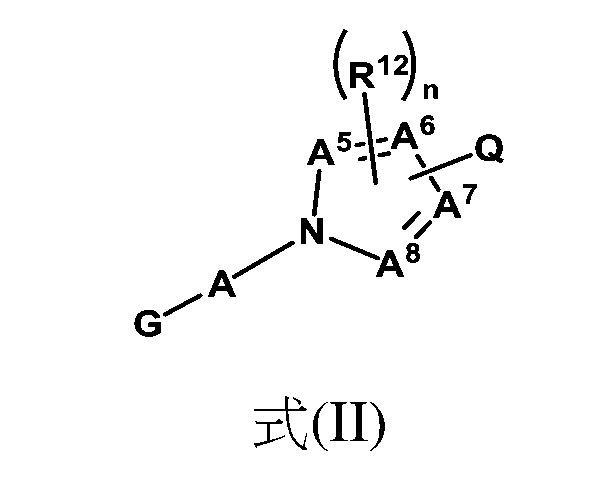
其中,G為-CN或-C(NH2)=N-OH;A、A5、A6、A7、A8、R12、n和Q如上文所定義。 wherein G is -CN or -C(NH 2 )=N-OH; A, A 5 , A 6 , A 7 , A 8 , R 12 , n and Q are as defined above.
在一個實施方案中,本發明提供式(III)化合物,
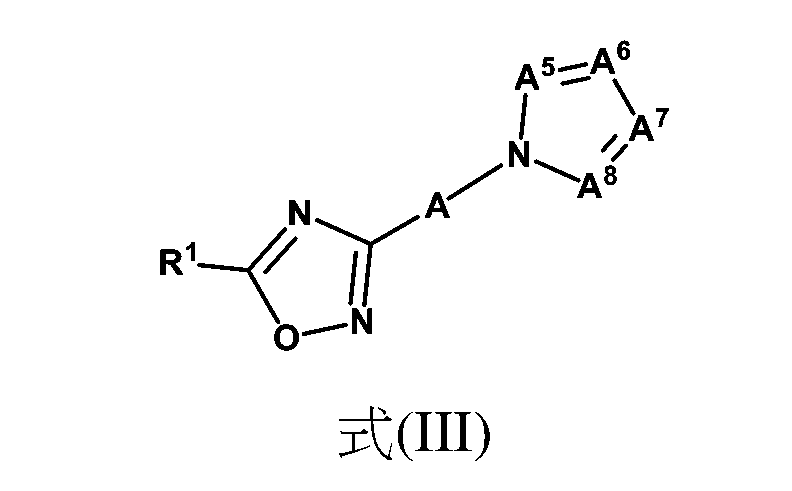
其中,R1為C1-C2鹵代烷基;A5、A6、A7和A8獨立地選自CR9或N;條件是A5、A6、A7和A8中的至少一個是CR9;R9選自氫、鹵素、硝基、氰基、C1-C6烷基、C1-C6鹵代烷基、C1-C6烷氧基、C1-C6鹵代烷氧基、C3-C6環烷基和C3-C6環烷氧基;-S(O)2Cl、C1-C6烷基胺基、C1-C6二烷基胺基和C1-C6三烷基胺基。 wherein R 1 is C 1 -C 2 halogenated alkyl; A 5 , A 6 , A 7 and A 8 are independently selected from CR 9 or N; provided that at least one of A 5 , A 6 , A 7 and A 8 is CR 9 ; R 9 is selected from hydrogen, halogen, nitro, cyano, C 1 -C 6 alkyl, C 1 -C 6 halogenated alkyl, C 1 -C 6 alkoxy, C 1 -C 6 halogenated alkoxy, C 3 -C 6 cycloalkyl and C 3 -C 6 cycloalkoxy; -S(O) 2 Cl, C 1 -C 6 alkylamino, C 1 -C 6 dialkylamino and C 1 -C 6 trialkylamino.
本發明的化合物可以作為一種或多種立體異構體存在,包括對映異構體、非對映異構體、阻轉異構體和幾何異構體。本領域技術人員將理解,當相與其他立體異構體富集時或當與其他立體異構體分離時,一種立體異構體可以更具活性和/或可以表現出有益效果。另外,技術人員知道如何分離、富集和/或選擇性地製備所述立體異構體。本發明化合物可以作為立體異構體的混合物、單獨的立體異構體或作為光學活性形式存在。 The compounds of the present invention may exist as one or more stereoisomers, including enantiomers, diastereomers, atropisomers, and geometric isomers. Those skilled in the art will appreciate that one stereoisomer may be more active and/or may exhibit beneficial effects when enriched with other stereoisomers or when separated from other stereoisomers. In addition, those skilled in the art know how to separate, enrich, and/or selectively prepare the stereoisomers. The compounds of the present invention may exist as a mixture of stereoisomers, a single stereoisomer, or as an optically active form.
在式I化合物是陽離子或能夠形成陽離子的情況下,鹽的陰離子部分可以是無機或有機的。或者,在式I化合物是陰離子或能夠形成陰離子的情況下,鹽的陽離子部分可以是無機或有機的。鹽的無機陰離子部分的實例包括(但不限於)氯化物、溴化物、碘化物、氟化物、硫酸鹽、磷酸鹽、硝酸鹽、亞硝酸鹽、碳酸氫鹽、硫酸氫鹽。鹽的有機陰離子部分的實例包括(但不限於)甲酸鹽、鏈烷酸鹽、碳酸鹽、乙酸鹽、三氟乙酸鹽、三氯乙酸鹽、丙酸鹽、乙醇酸鹽、硫 氰酸鹽、乳酸鹽、琥珀酸鹽、蘋果酸鹽、檸檬酸鹽、苯甲酸鹽、肉桂酸鹽、草酸鹽、烷基硫酸鹽、烷基磺酸鹽、芳基磺酸鹽、芳基二磺酸鹽、烷基膦酸鹽、芳基膦酸鹽、芳基二膦酸鹽、對甲苯磺酸鹽和水楊酸鹽。鹽的無機陽離子部分的實例包括(但不限於)鹼金屬和鹼土金屬。鹽的有機陽離子部分的實例包括(但不限於)吡啶、甲胺、咪唑、苯並咪唑、呱啶、磷腈、四甲基銨、四丁基銨、膽鹼和三甲胺。 In the case where the compound of formula I is a cation or is capable of forming a cation, the anionic portion of the salt may be inorganic or organic. Alternatively, in the case where the compound of formula I is an anionic portion or is capable of forming an anionic portion, the anionic portion of the salt may be inorganic or organic. Examples of inorganic anionic portions of the salt include, but are not limited to, chlorides, bromides, iodides, fluorides, sulfates, phosphates, nitrates, nitrites, bicarbonates, and bisulfates. Examples of the organic anion portion of the salt include, but are not limited to, formates, alkanoates, carbonates, acetates, trifluoroacetates, trichloroacetates, propionates, glycolates, thiocyanates, lactates, succinates, appletates, citrates, benzoates, cinnamates, oxalates, alkyl sulfates, alkyl sulfonates, aryl sulfonates, aryl disulfonates, alkyl phosphonates, aryl phosphonates, aryl diphosphonates, p-toluene sulfonates, and salicylates. Examples of the inorganic cationic portion of the salt include, but are not limited to, alkali metals and alkaline earth metals. Examples of the organic cationic portion of the salt include, but are not limited to, pyridine, methylamine, imidazole, benzimidazole, piperidine, phosphazene, tetramethylammonium, tetrabutylammonium, choline, and trimethylamine.
式I化合物的金屬配合物中的金屬離子最常見的有第二主族元素的離子,尤其是鈣和鎂;第三和第四主族的,尤其是鋁、錫和鉛;還有第一至第八過渡族的,特別是鉻、錳、鐵、鈷、鎳、銅、鋅等。優選為第四週期的元素和第一至第八過渡族的金屬離子。這裡,金屬可以以它們可以呈現的各種價態存在。 The metal ions in the metal complexes of the compounds of formula I are most often ions of elements of the second main group, especially calcium and magnesium; of the third and fourth main groups, especially aluminum, tin and lead; and of the first to eighth transition groups, especially chromium, manganese, iron, cobalt, nickel, copper, zinc, etc. Preferred are elements of the fourth period and metal ions of the first to eighth transition groups. Here, the metals can exist in various valence states that they can assume.
選自式(I)的化合物(包括其所有立體異構體,N-氧化物和鹽)通常可以以多於一種形式存在。因此,式(I)包括式(I)表示的化合物的所有結晶和非結晶形式。非結晶形式包括固體(如蠟和膠)的實施方案以及液體(如溶液和熔體)的實施方案。結晶形式包括實質上表示單晶型的實施方案和表示多晶型混合物(即不同的晶型)的實施方案。術語“多晶型物”是一種特定結晶形式--化學化合物可以以不同結晶形式結晶,這些形式在晶格中具有不同的分子排列和/或構造。儘管多晶型物可以具有相同的化學組成,但由於存在或不存在共結晶水或其他分子(這些共結晶水或其他分子可以在晶格中弱或強地結合),它們在組成上也可以不同。晶型在晶體形狀、密度、硬度、顏色、化學穩定性、熔點、吸濕性、懸浮性、溶解速度和生物利用度等化學、物理和生物特性上存在差異。本領域技術人員將理解,式(I)表示的化合物的多晶型物相對於 另一種多晶型物或式I表示的相同化合物的多晶型物的混合物可顯示出有益效果(例如,適合製備有用的製劑、改善的生物學性能)。由式(I)表示的化合物的特定多晶型物的製備和分離可以通過本領域技術人員已知的方法實現,包括例如選擇溶劑在合適的溫度下結晶。 Compounds selected from formula (I) (including all stereoisomers, N-oxides and salts thereof) can generally exist in more than one form. Therefore, formula (I) includes all crystalline and non-crystalline forms of the compounds represented by formula (I). Non-crystalline forms include embodiments of solids (such as waxes and gels) and embodiments of liquids (such as solutions and melts). Crystalline forms include embodiments that substantially represent single crystals and embodiments that represent polymorphic mixtures (i.e., different crystalline forms). The term "polymorph" is a specific crystalline form - a chemical compound can crystallize in different crystalline forms that have different molecular arrangements and/or structures in the crystal lattice. Although polymorphs can have the same chemical composition, they can also differ in composition due to the presence or absence of eutectic water or other molecules (which can be weakly or strongly bound in the crystal lattice). Crystal forms differ in chemical, physical and biological properties such as crystal shape, density, hardness, color, chemical stability, melting point, hygroscopicity, suspension, dissolution rate and bioavailability. Those skilled in the art will understand that a polymorph of a compound represented by formula (I) may exhibit beneficial effects (e.g., suitability for preparing useful formulations, improved biological properties) relative to another polymorph or a mixture of polymorphs of the same compound represented by formula I. The preparation and separation of a specific polymorph of a compound represented by formula (I) may be achieved by methods known to those skilled in the art, including, for example, selecting a solvent for crystallization at an appropriate temperature.
在一個實施方案中,本發明提供了合成式(I)化合物的方法。 In one embodiment, the present invention provides a method for synthesizing a compound of formula (I).
合成(I)式化合物的方法至少包括如下步驟(a)至(m)中的一項:a)使式3化合物與羥胺反應,得到式4化合物;
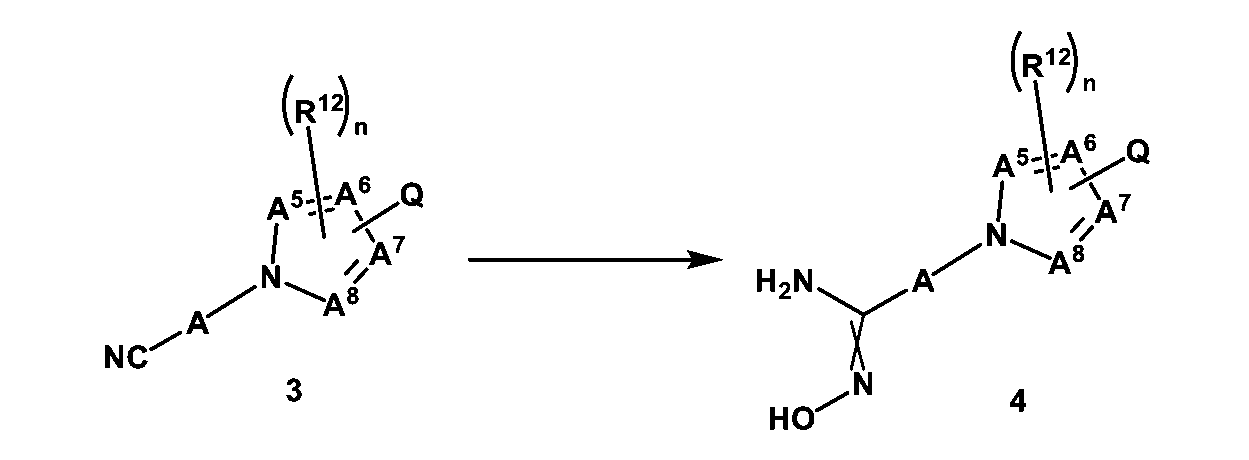
其中,R12、A、A5、A6、A7和A8如上面的詳述中所定義;Q為Q3、Q6、Q7、Q11、H、CR2R3N(Boc)2或CR2R3SR7,條件是R12不為氰基;b)使式4化合物與式5的合適的羧酸酐反應,得到式(I)的化合物;
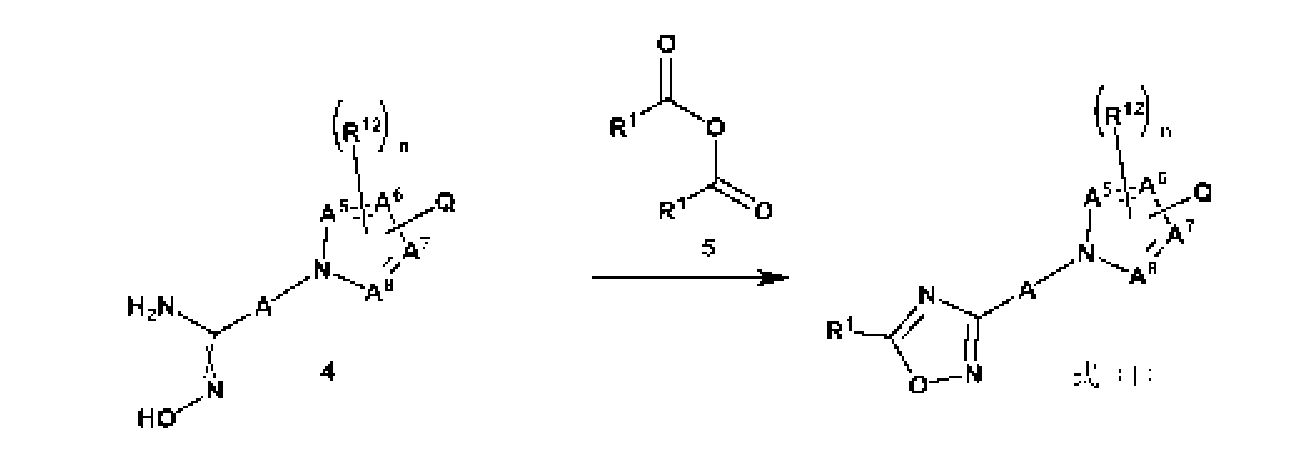
其中,R1、R12、A、A5、A6、A7和A8如上面的詳述中所定義;Q為Q3、Q6、Q7、Q11、H、CR2R3N(Boc)2或CR2R3SR7;條件是R12不為氰基;c)使式6化合物與式7化合物反應,得到式(I)化合物;

其中,R1、R12、A、A5、A6、A7和A8如上面的詳述中所定義;Q為Q1;d)使式12化合物與式2d化合物反應,得到式(I)化合物;

其中,R1、R12、A、A5、A6、A7和A8如上面的詳述中所定義;Q為Q4;e)使式16化合物與氯磺酸反應,得到式17化合物;

其中,R1、R12、A、A5、A6和A8如上面的詳述中所定義;A7為CH;且R12不為氰基;f)使式17化合物與合適的式NHR4R5的胺反應,得到式(I)化合物;
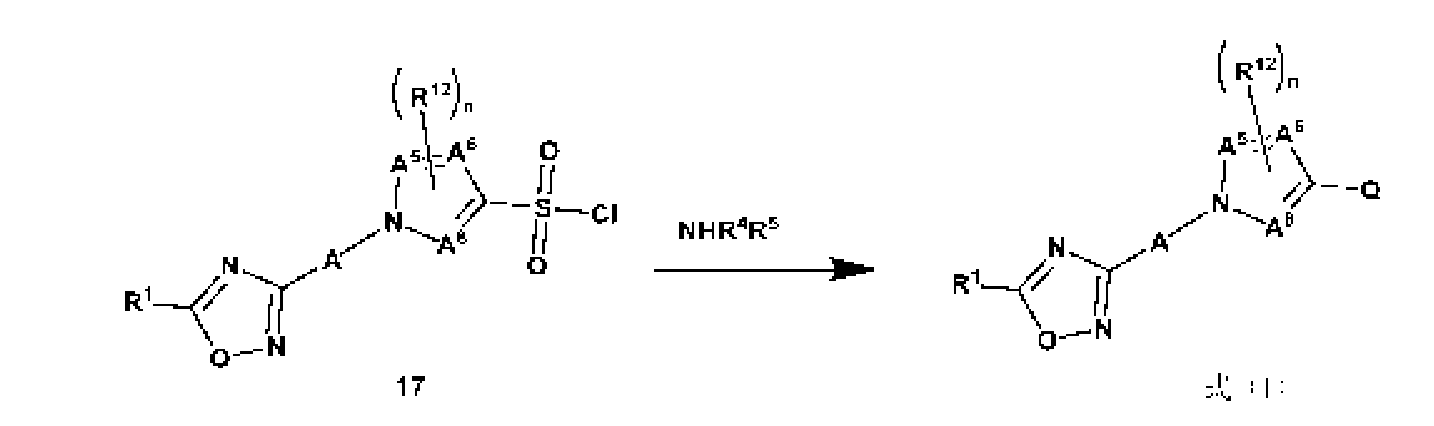
其中,R1、R4、R5、R12、A、A5、A6和A8如上面的詳述中所定義;Q為Q6;A7為CH;R12不為氰基;
g)使式21化合物與式2h的化合物反應,得到式22化合物;
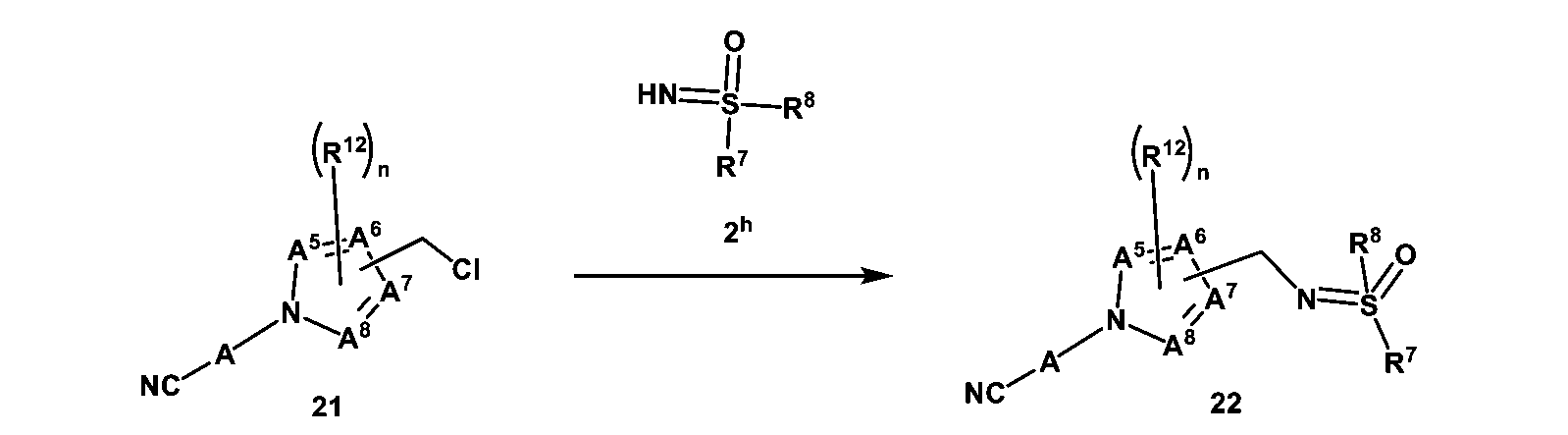
其中,R7、R8、R12、A、A5、A6、A7和A8如上面的詳述中所定義;h)使式22化合物與羥胺反應,得到式23化合物; wherein R 7 , R 8 , R 12 , A, A 5 , A 6 , A 7 and A 8 are as defined in detail above; h) reacting the compound of formula 22 with a hydroxylamine to obtain a compound of formula 23;

其中,R7、R8、R12、A、A5、A6、A7和A8如上面的詳述中所定義;i)使式23化合物與式5化合物反應,得到式(I)化合物;
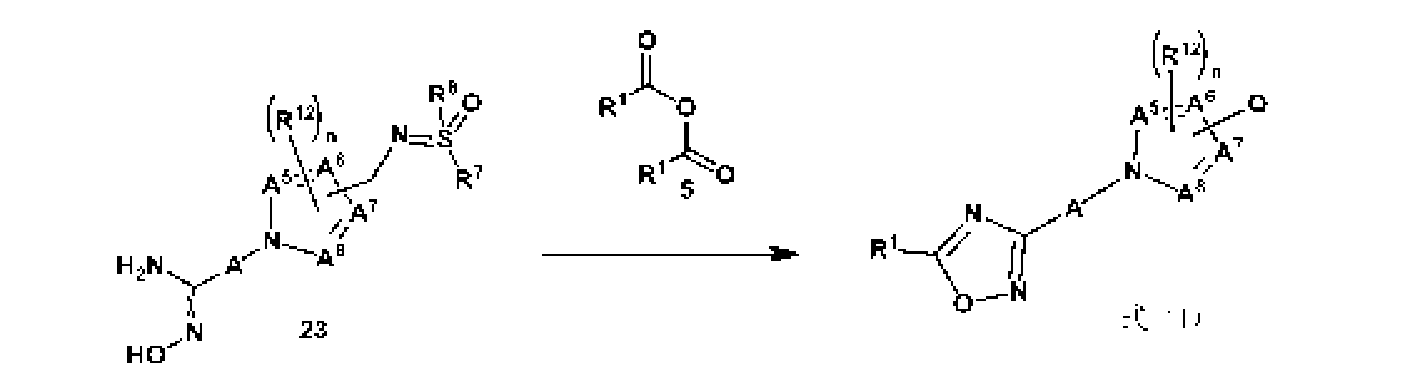
其中,R1、R7、R8、R12、A、A5、A6、A7和A8如上面的詳述中所定義;Q為Q5;j)使式26化合物與合適的酸反應,得到式27化合物;
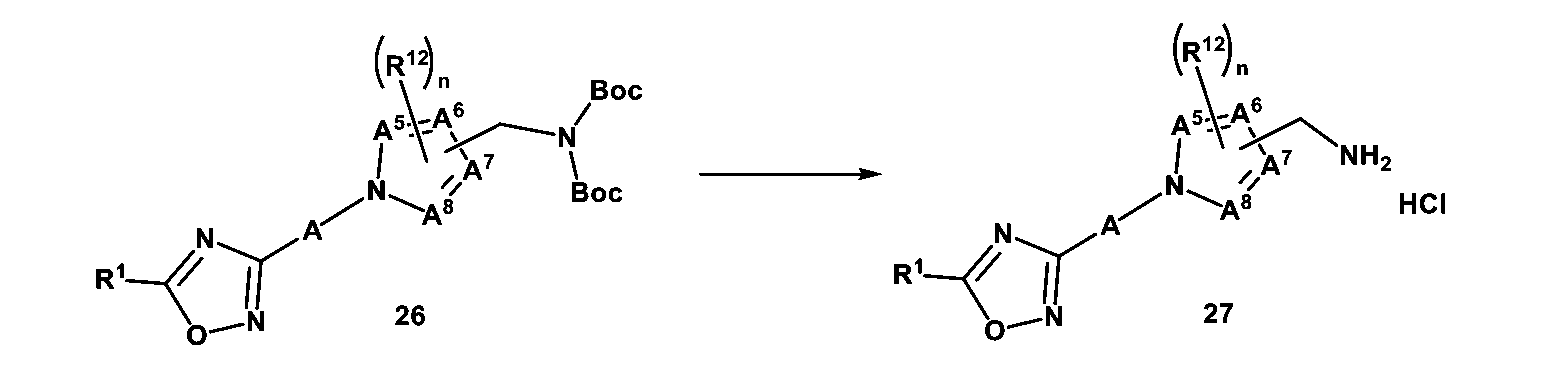
其中,R1、R12、A、A5、A6、A7和A8如上面的詳述中所定義;k)使式27化合物與式2e或2f的化合物反應,得到式(I)化合物;
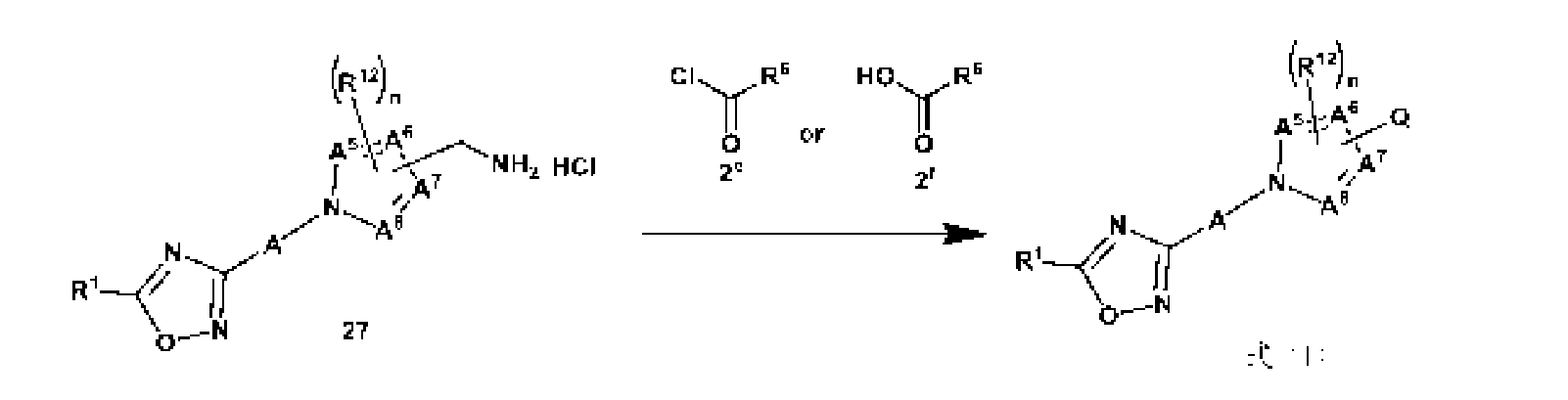
其中,R1、R6、R12、A、A5、A6、A7和A8如上面的詳述中所定義;Q為Q2;l)使式27化合物與式2g化合物反應,得到式(I)化合物;
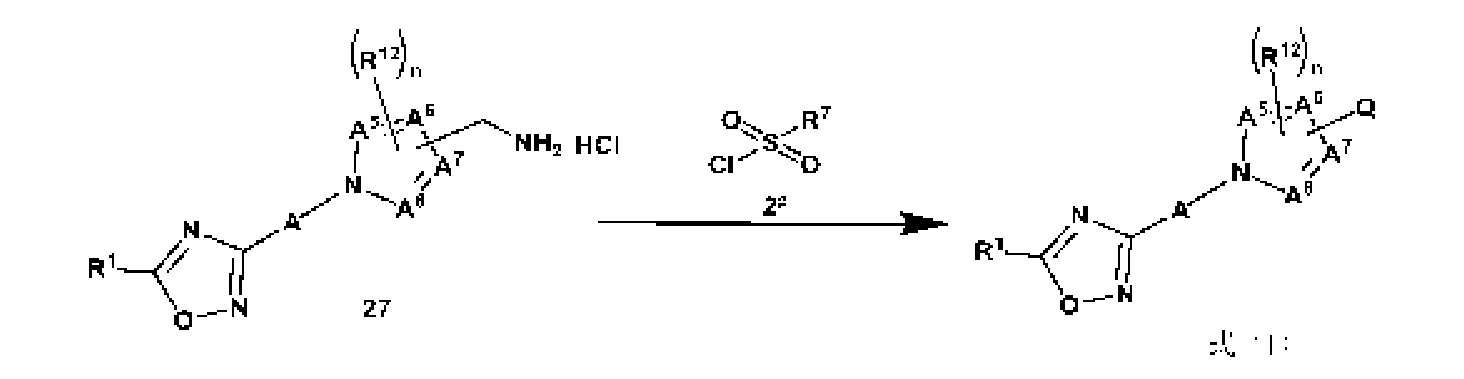
其中,R1、R12、A、A5、A6、A7和A8如上面的詳述中所定義;Q為Q8;m)在合適的氧化劑存在下,使式30化合物與胺源試劑反應,得到式(I)化合物;

其中,R1、R7、R12、A、A5、A6、A7和A8如上面的詳述中所定義;Q為Q3。 wherein R 1 , R 7 , R 12 , A, A 5 , A 6 , A 7 and A 8 are as defined in the above description; and Q is Q 3 .
由式(I)和/或表1至16所定義的本發明化合物可以以已知的方式,按方案1-9中所述的各種方式來製備。 The compounds of the present invention defined by formula (I) and/or Tables 1 to 16 can be prepared in a known manner in various ways as described in Schemes 1-9.
通用方案1General solution 1
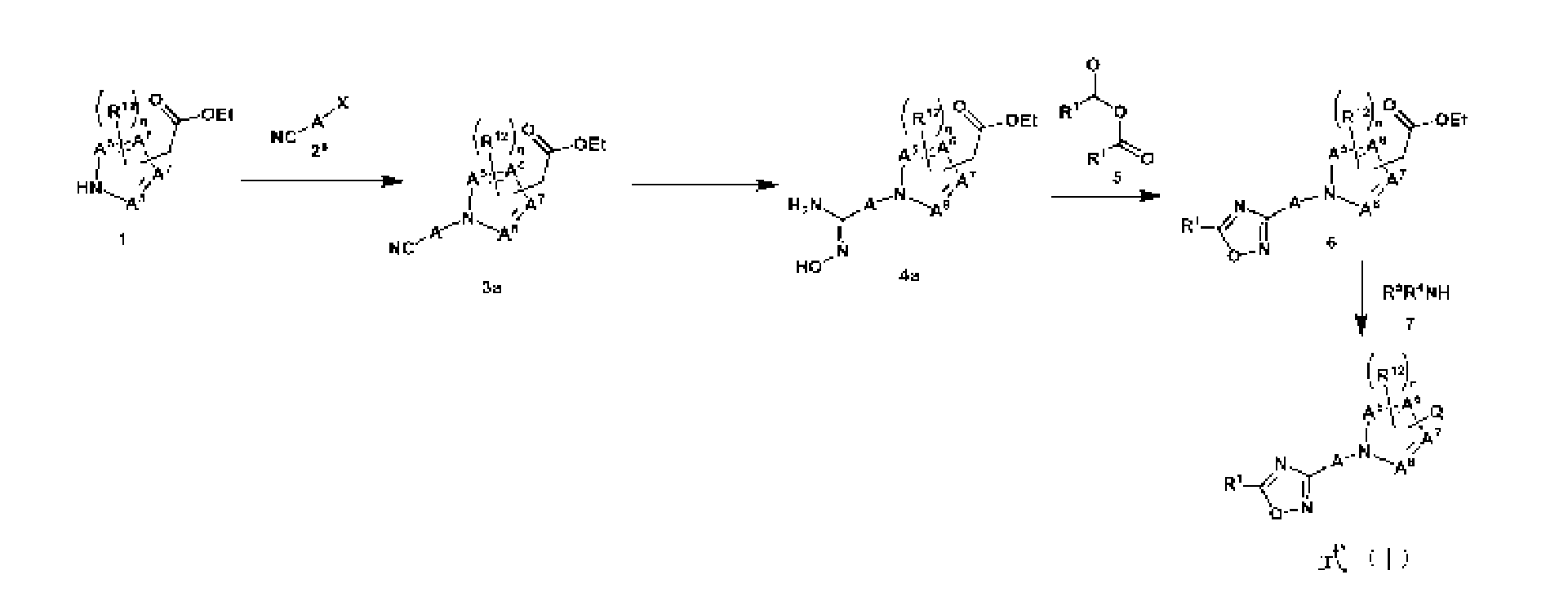
其中,R1、R7、R12、A、A5、A6、A7和A8如上面的詳述中所定義;Q為Q1,條件是R12不為氰基。 wherein R 1 , R 7 , R 12 , A, A 5 , A 6 , A 7 and A 8 are as defined in the above description; Q is Q 1 , with the proviso that R 12 is not cyano.
第1步Step 1

式3a化合物可通過在CuI催化劑存在下(L-脯胺酸作為配體),使式1化合物與式2a化合物(其中X為Cl、Br或I)反應來獲得。該反應通常在50至120℃下,在鹼(例如碳酸鉀或碳酸銫)的存在下,在極性非質子溶劑(例如N,N-二甲基甲醯胺或二甲基亞碸)中進行。 The compound of formula 3a can be obtained by reacting the compound of formula 1 with the compound of formula 2a (wherein X is Cl, Br or I) in the presence of CuI catalyst (L-proline as ligand). The reaction is usually carried out at 50 to 120° C. in the presence of a base (such as potassium carbonate or cesium carbonate) in a polar aprotic solvent (such as N,N-dimethylformamide or dimethyl sulfoxide).
或者,式3a的化合物也可通過在鹼(例如碳酸銫、碳酸鉀、氫化鈉等)存在下,使式1化合物與式2a化合物(其中A為Aa、X為F)反應來獲得。該反應通常在50至120℃下於極性非質子溶劑(如N,N-二甲基甲醯胺或二甲基亞碸)中進行。 Alternatively, the compound of formula 3a can also be obtained by reacting the compound of formula 1 with the compound of formula 2a (wherein A is Aa and X is F) in the presence of a base (e.g., cesium carbonate, potassium carbonate, sodium hydroxide, etc.). The reaction is usually carried out at 50 to 120° C. in a polar aprotic solvent (e.g., N,N-dimethylformamide or dimethyl sulfoxide).
第2步Step 2

式4a化合物可以通過在質子惰性溶劑(如乙醇、甲醇等)中使式3a的腈化合物與羥胺反應來製備。或者,該反應也可以通過在有機和無機鹼(例如三乙胺、N,N-二異丙基乙胺、碳酸氫鈉等)存在下使用鹽酸羥胺來進行。 The compound of formula 4a can be prepared by reacting the nitrile compound of formula 3a with a hydroxylamine in an aprotic solvent (such as ethanol, methanol, etc.). Alternatively, the reaction can also be carried out using hydroxylamine hydrochloride in the presence of organic and inorganic bases (such as triethylamine, N,N-diisopropylethylamine, sodium bicarbonate, etc.).
第3步Step 3
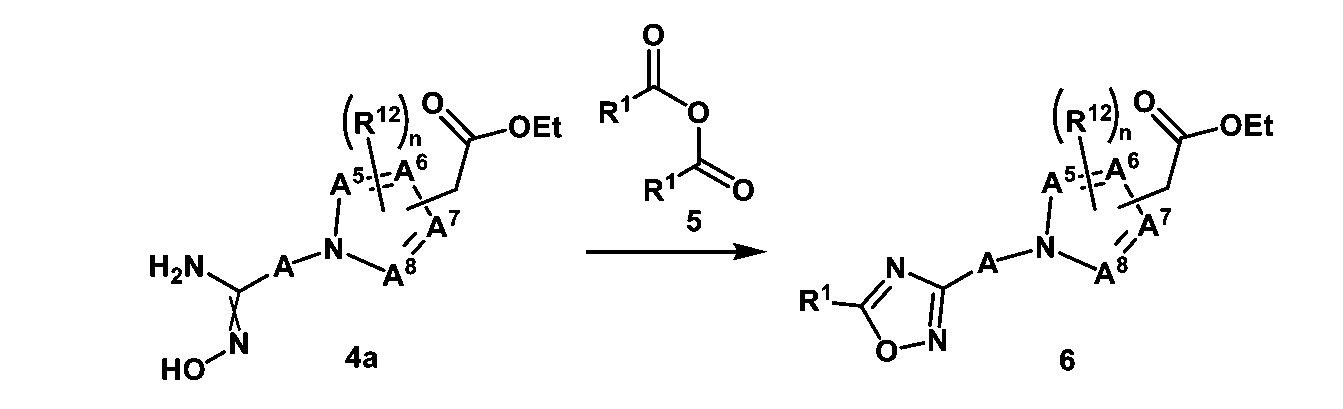
式6的化合物可通過使式4a的化合物與式5的羧酸酐反應來獲得。這些反應通常在0-50℃下,在非質子溶劑(如四氫呋喃、1,4-二惡烷、二氯甲烷等)中,任選地在鹼(例如三乙胺、N,N-二異丙基乙胺等)存在下進行。 The compound of formula 6 can be obtained by reacting the compound of formula 4a with the carboxylic anhydride of formula 5. These reactions are usually carried out at 0-50°C in an aprotic solvent (such as tetrahydrofuran, 1,4-dioxane, dichloromethane, etc.), optionally in the presence of a base (such as triethylamine, N,N-diisopropylethylamine, etc.).
第4步Step 4

式(I)化合物(其中Q為Q1)可以通過在三甲基鋁的存在下使式6化合物與式7化合物反應來獲得。該反應可以在20-80℃下,在非質子溶劑(例如甲苯)中進行。 The compound of formula (I) (wherein Q is Q 1 ) can be obtained by reacting a compound of formula 6 with a compound of formula 7 in the presence of trimethylaluminum. The reaction can be carried out at 20-80°C in an aprotic solvent (eg toluene).
通用方案2General Solution 2
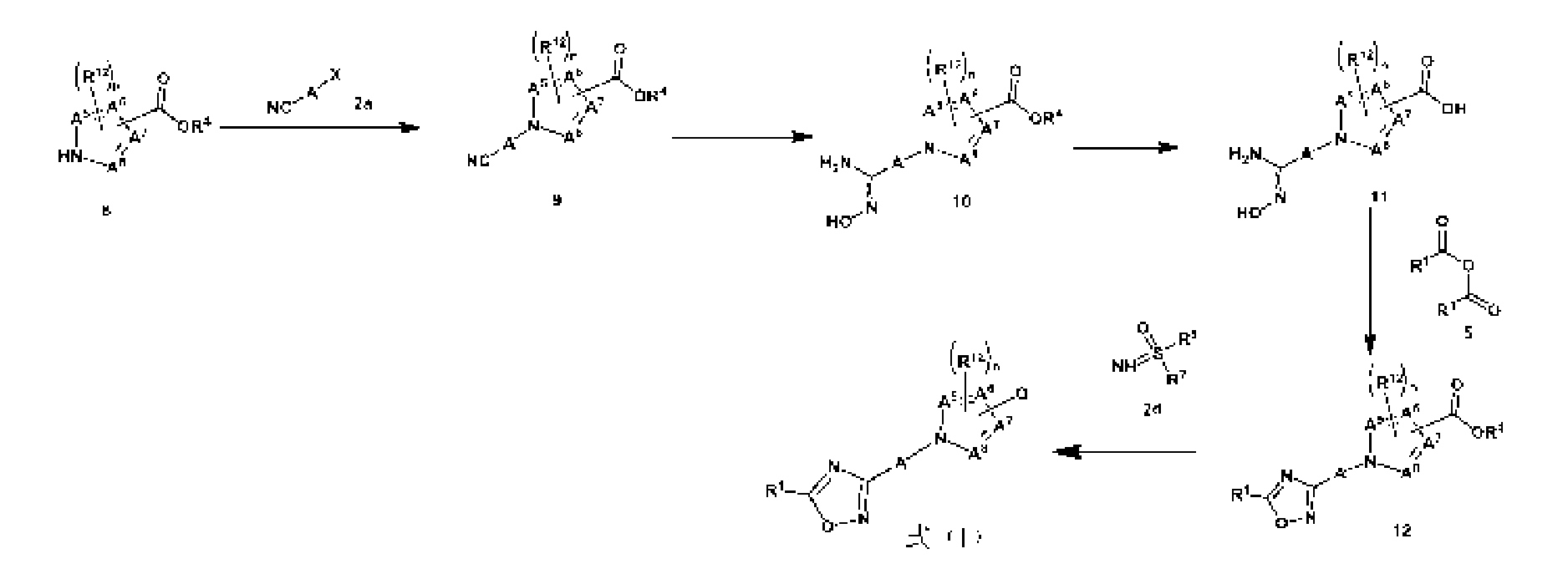
其中,R1、R7、R12、A、A5、A6、A7和A8如上面的詳述中所定義;Q為Q4;R12不為氰基。 wherein R 1 , R 7 , R 12 , A, A 5 , A 6 , A 7 and A 8 are as defined in the above description; Q is Q 4 ; and R 12 is not cyano.
第1步Step 1

式9化合物可通過在CuI催化劑(L-脯胺酸作為配體)存在下使式8化合物與式2a化合物(其中X為Cl、Br或I)反應獲得。該反應通常可在50至120℃下,在鹼(例如碳酸鉀或碳酸銫)的存在下,在極性非質子溶劑(例如N,N-二甲基甲醯胺或二甲基亞碸)中進行。 The compound of formula 9 can be obtained by reacting the compound of formula 8 with the compound of formula 2a (wherein X is Cl, Br or I) in the presence of CuI catalyst (L-proline as ligand). The reaction can usually be carried out at 50 to 120° C. in the presence of a base (such as potassium carbonate or cesium carbonate) in a polar aprotic solvent (such as N,N-dimethylformamide or dimethyl sulfoxide).
或者,式9化合物也可通過在鹼(例如碳酸銫、碳酸鉀、氫化鈉等)存在下,使式8化合物與式2a化合物(其中A為Aa且X為F)反應來獲得。該反應通常在50至120℃下,在極性非質子溶劑(如N,N-二甲基甲醯胺或二甲基亞碸)中進行。 Alternatively, the compound of formula 9 can also be obtained by reacting the compound of formula 8 with the compound of formula 2a (wherein A is Aa and X is F) in the presence of a base (e.g., cesium carbonate, potassium carbonate, sodium hydroxide, etc.). The reaction is usually carried out at 50 to 120° C. in a polar aprotic solvent (e.g., N,N-dimethylformamide or dimethyl sulfoxide).
第2步Step 2
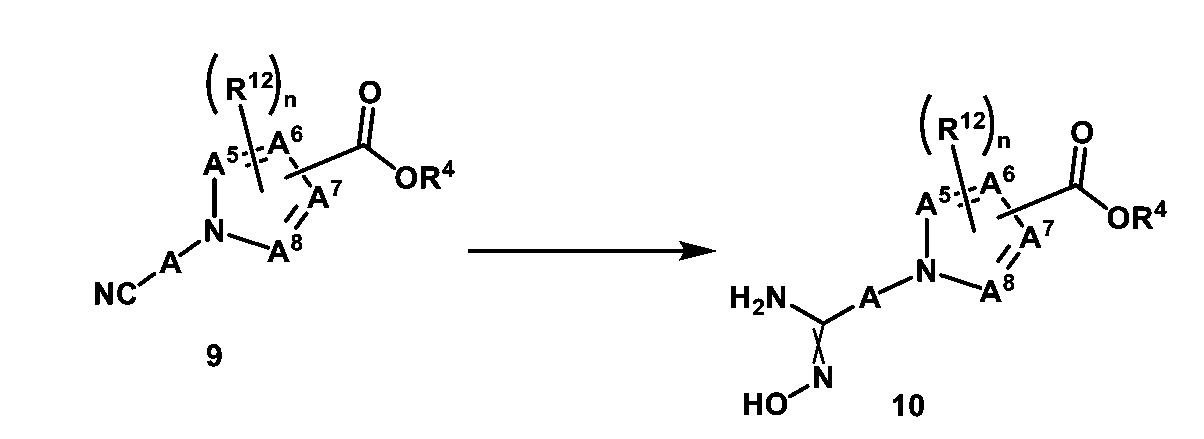
式10化合物可以通過在質子惰性溶劑(如乙醇、甲醇等)中使式9的腈化合物與羥胺反應來製備。或者,該反應也可以通過在有機和無機鹼(例如三乙胺、N,N-二異丙基乙胺、碳酸氫鈉)等存在下使用鹽酸羥胺來進行。 The compound of formula 10 can be prepared by reacting the nitrile compound of formula 9 with a hydroxylamine in an aprotic solvent (such as ethanol, methanol, etc.). Alternatively, the reaction can also be carried out using hydroxylamine hydrochloride in the presence of organic and inorganic bases (such as triethylamine, N,N-diisopropylethylamine, sodium bicarbonate, etc.).
第3步Step 3
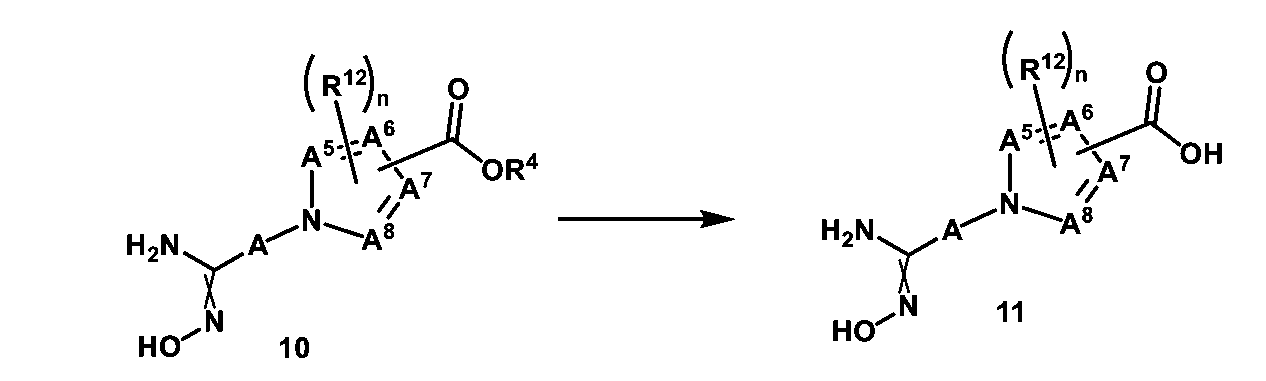
式11化合物可以通過在0-30℃下,在鹼(例如氫氧化鈉,氫氧化鋰或氫氧化鉀)的存在下,在乙醇、甲醇、四氫呋喃等水性混合溶劑中水解式10化合物來獲得。 The compound of formula 11 can be obtained by hydrolyzing the compound of formula 10 in an aqueous mixed solvent such as ethanol, methanol, tetrahydrofuran, etc. at 0-30°C in the presence of a base (such as sodium hydroxide, lithium hydroxide or potassium hydroxide).
第4步Step 4

式12化合物可以通過使式11化合物與式5的羧酸酐反應來獲得。該反應通常在0-50℃下,在鹼(例如三乙胺、N,N-二異丙基乙胺等)存在下,在非質子溶劑(如四氫呋喃、1,4-二惡烷,二氯甲烷等)中進行。 The compound of formula 12 can be obtained by reacting the compound of formula 11 with the carboxylic anhydride of formula 5. The reaction is usually carried out at 0-50°C in the presence of a base (such as triethylamine, N,N-diisopropylethylamine, etc.) in an aprotic solvent (such as tetrahydrofuran, 1,4-dioxane, dichloromethane, etc.).
第5步Step 5

式(I)化合物(其中Q為Q4,n為0)可以通過在胺基偶聯劑例如N-(3-二甲基胺基丙基)-N'-乙基碳二亞胺鹽酸鹽和4-二甲基胺基吡啶的存在下使12化合物與式2d化合物反應來獲得。該反應通常在0-30℃下在溶劑(如二氯甲烷或二甲基甲醯胺)中進行。 The compound of formula (I) (wherein Q is Q 4 and n is 0) can be obtained by reacting compound 12 with a compound of formula 2d in the presence of an amine coupling agent such as N-(3-dimethylaminopropyl)-N'-ethylcarbodiimide hydrochloride and 4-dimethylaminopyridine. The reaction is usually carried out at 0-30°C in a solvent (such as dichloromethane or dimethylformamide).
通用方案3General solution 3

其中,R1、R4、R5、R12、A、A5、A6和A8如上面的詳述中所定義;Q為Q6;A7為CH;且R12不為氰基。 wherein R 1 , R 4 , R 5 , R 12 , A, A 5 , A 6 and A 8 are as defined in the above description; Q is Q 6 ; A 7 is CH; and R 12 is not cyano.
第1步Step 1

式14化合物可以通過在CuI催化劑(L-脯胺酸作為配體)存在下使式13化合物與式2a化合物(其中X為Cl、Br或I)反應來獲得。該反應通常在50至120℃下,在鹼(例如碳酸鉀或碳酸銫)的存在下,在極性非質子溶劑(例如N,N-二甲基甲醯胺或二甲基亞碸)中進行。 The compound of formula 14 can be obtained by reacting the compound of formula 13 with a compound of formula 2a (wherein X is Cl, Br or I) in the presence of a CuI catalyst (L-proline as a ligand). The reaction is usually carried out at 50 to 120° C. in the presence of a base (such as potassium carbonate or cesium carbonate) in a polar aprotic solvent (such as N,N-dimethylformamide or dimethyl sulfoxide).
或者,式9a化合物也可以通過在鹼(例如碳酸銫、碳酸鉀、氫化鈉等)存在下,使式8化合物與式2a化合物(其中A為Aa、X為F)反應來獲得。該反應通常在50至120℃下,在極性非質子傳遞溶劑(如N,N-二甲基甲醯胺或二甲基亞碸)中進行。 Alternatively, the compound of formula 9a can also be obtained by reacting the compound of formula 8 with the compound of formula 2a (wherein A is Aa and X is F) in the presence of a base (e.g., cesium carbonate, potassium carbonate, sodium hydroxide, etc.). The reaction is usually carried out at 50 to 120° C. in a polar aprotic solvent (e.g., N,N-dimethylformamide or dimethyl sulfoxide).
第2步Step 2
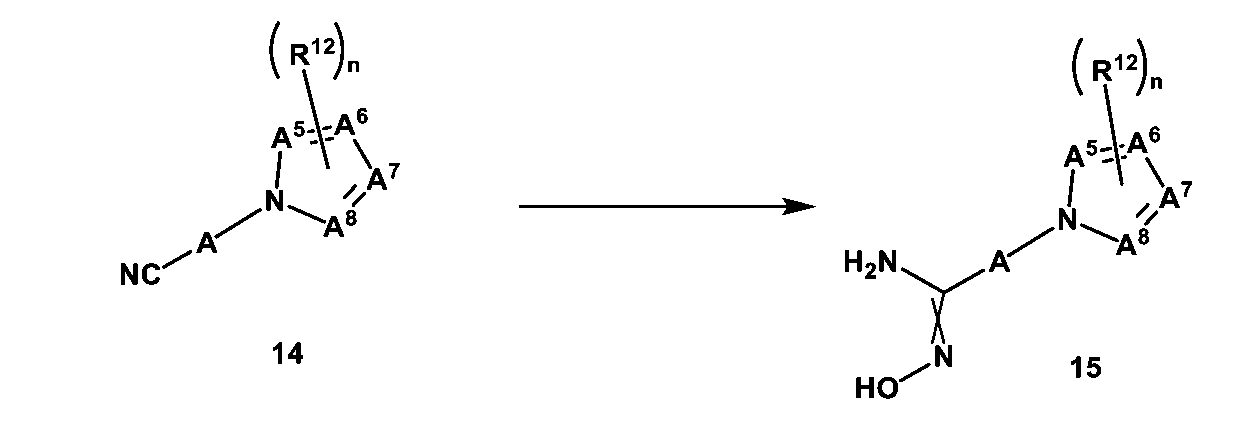
式15化合物可以通過在20-60℃下,在極性質子溶劑(如乙醇、甲醇等)中,使式14的腈化合物與羥胺反應來製備。或者,該反應也可以通過在有機和無機鹼(例如三乙胺、N,N-二異丙基乙胺或碳酸氫鈉等)的存在下使用羥胺鹽酸鹽來進行。 The compound of formula 15 can be prepared by reacting the nitrile compound of formula 14 with a hydroxylamine in a polar protic solvent (such as ethanol, methanol, etc.) at 20-60°C. Alternatively, the reaction can also be carried out using hydroxylamine hydrochloride in the presence of organic and inorganic bases (such as triethylamine, N,N-diisopropylethylamine or sodium bicarbonate, etc.).
第3步Step 3
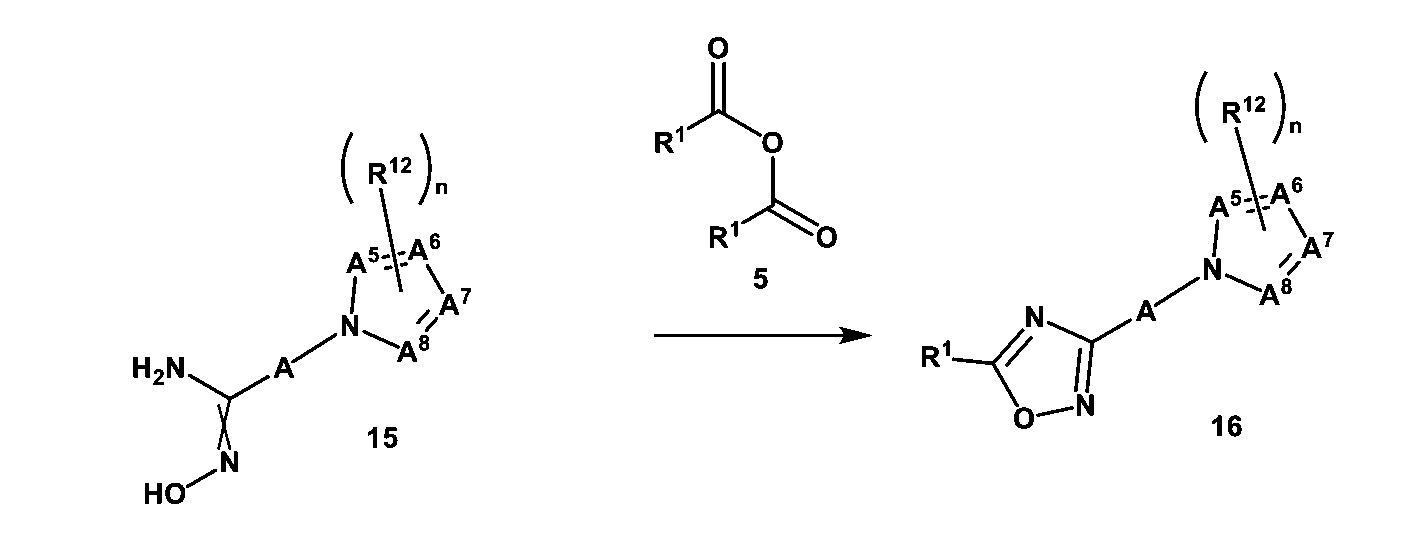
式16化合物可以通過使式15的化合物與式5的羧酸酐反應來獲得。該反應通常在0-50℃下,在鹼(例如三乙胺、N,N-二異丙基乙胺等)存在下,在非質子溶劑(如四氫呋喃、1,4-二惡烷、二氯甲烷等)中進行。 The compound of formula 16 can be obtained by reacting the compound of formula 15 with the carboxylic anhydride of formula 5. The reaction is usually carried out at 0-50°C in the presence of a base (such as triethylamine, N,N-diisopropylethylamine, etc.) in an aprotic solvent (such as tetrahydrofuran, 1,4-dioxane, dichloromethane, etc.).
第4步Step 4
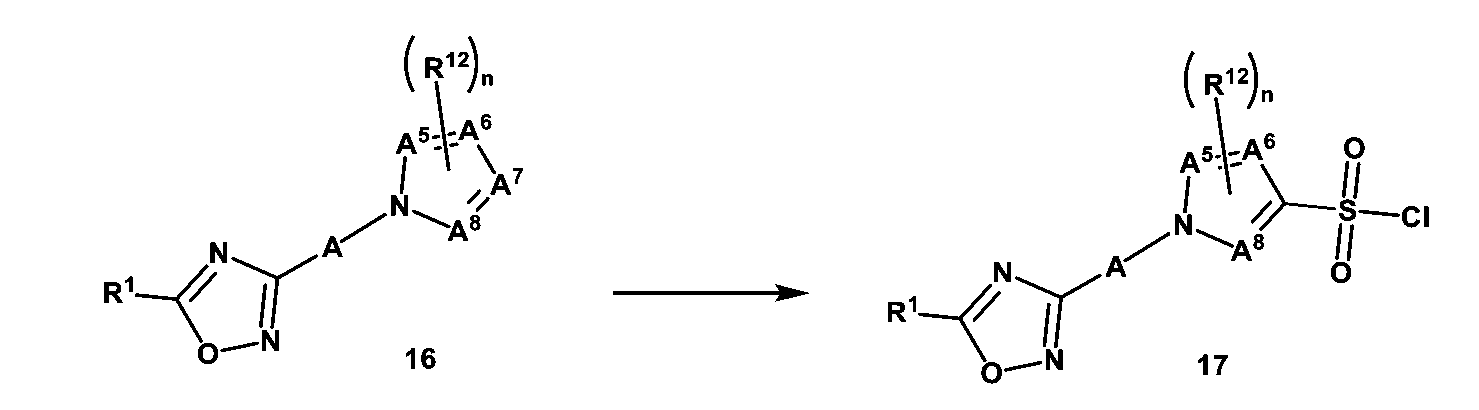
式17化合物可通過在50-110℃下使式16化合物與氯磺酸反應來獲得。 The compound of formula 17 can be obtained by reacting the compound of formula 16 with chlorosulfonic acid at 50-110°C.
第5步Step 5

式(I)化合物(其中,Q為Q6的)可通過在鹼(如三乙胺、N,N-二異丙基乙胺等)存在下使式17化合物與式NHR4R5化合物反應來獲得。該反應通常在0-40℃下,在非質子溶劑(如二氯甲烷、四氫呋喃等)中進行。 The compound of formula (I) (wherein Q is Q 6 ) can be obtained by reacting a compound of formula 17 with a compound of formula NHR 4 R 5 in the presence of a base (such as triethylamine, N,N-diisopropylethylamine, etc.). The reaction is usually carried out at 0-40°C in an aprotic solvent (such as dichloromethane, tetrahydrofuran, etc.).
通用方案4General solution 4
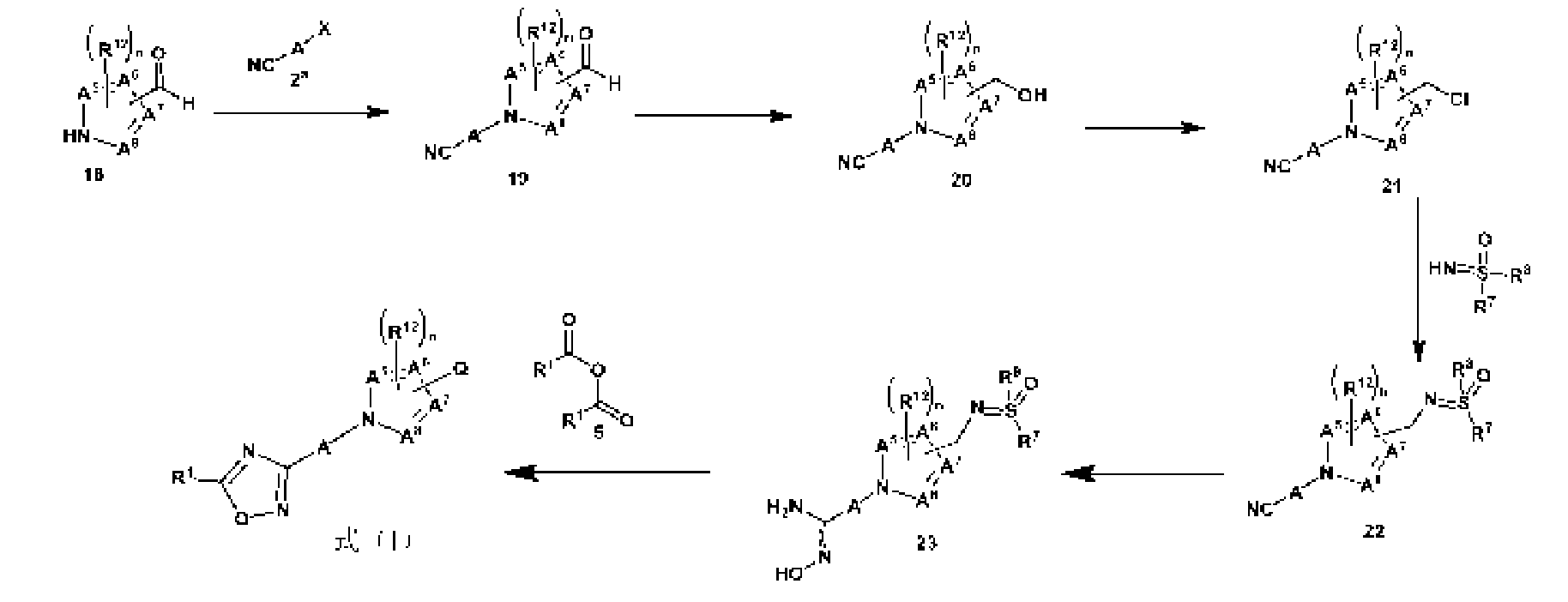
其中,R1、R7、R8、R12、A、A5、A6、A7和A8如上面的詳述中所定義;Q為Q5;條件是R12不為氰基。 wherein R 1 , R 7 , R 8 , R 12 , A, A 5 , A 6 , A 7 and A 8 are as defined in the above description; Q is Q 5 ; provided that R 12 is not cyano.
第1步Step 1
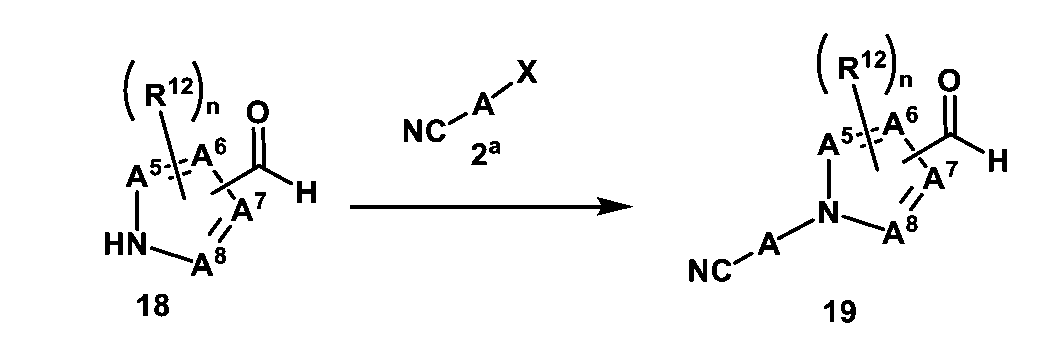
式19的化合物可以通過在CuI催化劑(L-脯胺酸作為配體)存在下使式18化合物與式2a化合物(其中X為Cl、Br或I)反應來獲得。該反應通常在50至120℃下,在鹼(例如碳酸鉀或碳酸銫)的存在下,在極性非質子溶劑(例如N,N-二甲基甲醯胺或二甲基亞碸)中進行。 The compound of formula 19 can be obtained by reacting the compound of formula 18 with the compound of formula 2a (wherein X is Cl, Br or I) in the presence of CuI catalyst (L-proline as ligand). The reaction is usually carried out at 50 to 120° C. in the presence of a base (such as potassium carbonate or cesium carbonate) in a polar aprotic solvent (such as N,N-dimethylformamide or dimethyl sulfoxide).
或者,式9化合物也可以通過在鹼(例如碳酸銫、碳酸鉀、氫化鈉等)的存在下使式8化合物與式2a的化合物(其中A為Aa、X為F)反應來獲得。該反應通常在50至120℃下,在極性非質子溶劑(如N,N-二甲基甲醯胺或二甲基亞碸)中進行。 Alternatively, the compound of formula 9 can also be obtained by reacting the compound of formula 8 with a compound of formula 2a (wherein A is Aa and X is F) in the presence of a base (e.g., cesium carbonate, potassium carbonate, sodium hydroxide, etc.). The reaction is usually carried out at 50 to 120° C. in a polar aprotic solvent (e.g., N,N-dimethylformamide or dimethyl sulfoxide).
第2步Step 2
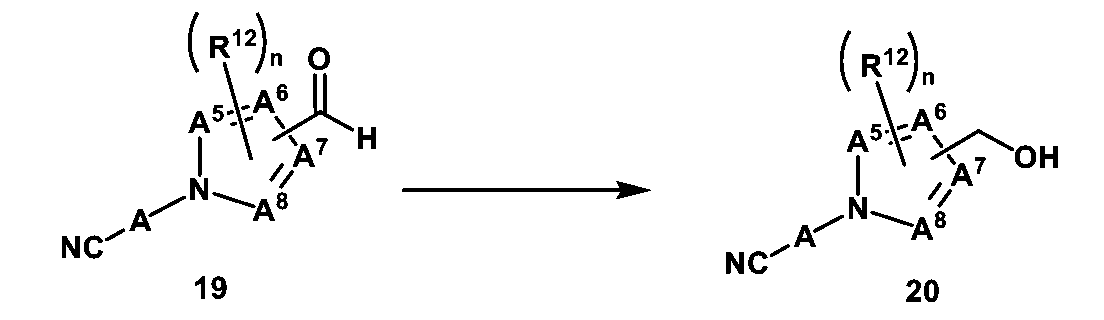
式20化合物可以通過使式19化合物與硼氫化鈉等還原劑反應來獲得。該反應可以在0-30℃下在四氫呋喃和甲醇等混合溶劑中進行。 The compound of formula 20 can be obtained by reacting the compound of formula 19 with a reducing agent such as sodium borohydride. The reaction can be carried out in a mixed solvent such as tetrahydrofuran and methanol at 0-30°C.
第3步Step 3

式21化合物可以通過使式20化合物與亞硫醯氯等試劑反應來獲得。該反應是在40至70℃下,在氯仿等溶劑中進行的。 The compound of formula 21 can be obtained by reacting the compound of formula 20 with a reagent such as sulfinyl chloride. The reaction is carried out at 40 to 70°C in a solvent such as chloroform.
第4步Step 4
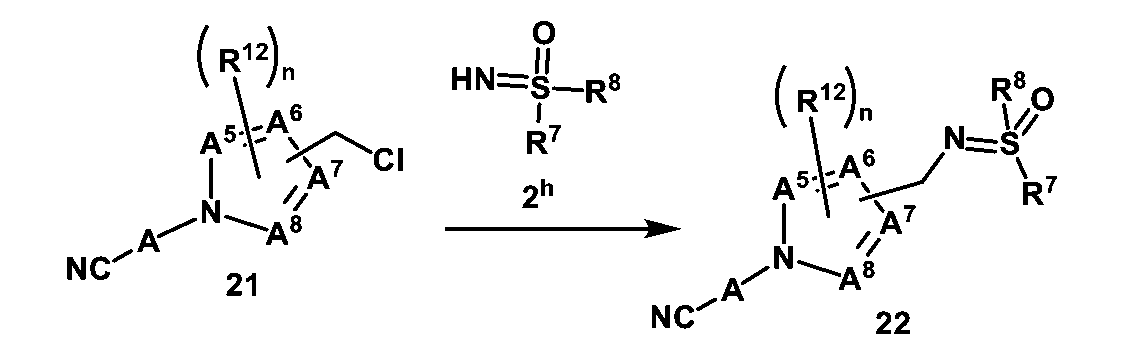
式22化合物可以通過在叔丁醇鉀等鹼存在下使式21化合物與式2h化合物反應來獲得。該反應通常在0-30℃下在四氫呋喃或二甲基甲醯胺等溶劑中進行。 The compound of formula 22 can be obtained by reacting the compound of formula 21 with the compound of formula 2h in the presence of a base such as potassium tert-butoxide. The reaction is usually carried out in a solvent such as tetrahydrofuran or dimethylformamide at 0-30°C.
第5步Step 5
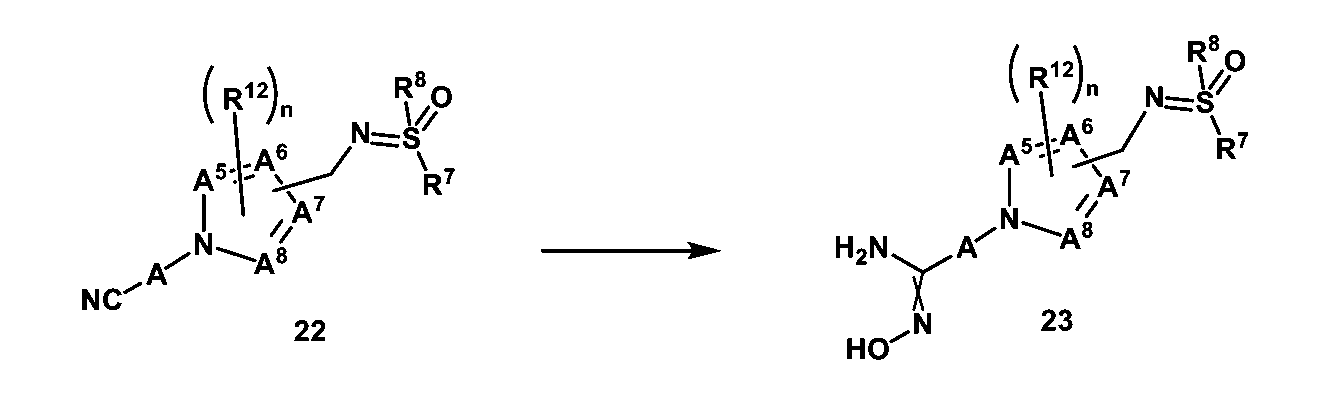
式23化合物可以通過在20-60℃下在極性質子溶劑(如乙醇、甲醇等)中使式22的腈化合物與羥胺反應來製備。或者,該反應也可以通過在有機和無機鹼(例如三乙胺、N,N-二異丙基乙胺、碳酸氫鈉等)的存在下使用鹽酸羥胺來進行。 The compound of formula 23 can be prepared by reacting the nitrile compound of formula 22 with a hydroxylamine in a polar protic solvent (such as ethanol, methanol, etc.) at 20-60°C. Alternatively, the reaction can also be carried out using hydroxylamine hydrochloride in the presence of organic and inorganic bases (such as triethylamine, N,N-diisopropylethylamine, sodium bicarbonate, etc.).
第6步Step 6
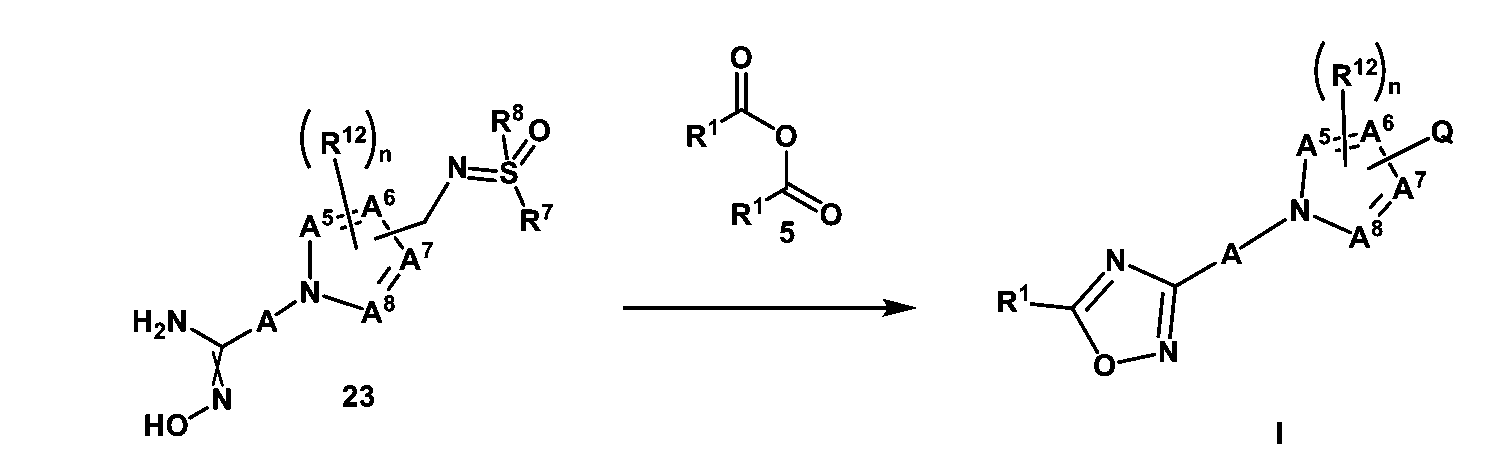
式(I)化合物(其中Q為Q5,n為1)可以通過使式23化合物與式5的羧酸酐反應來獲得。該反應通常在0-50℃下,任選在鹼(如三乙胺、N,N-二異丙基乙胺等)的存在下,在非質子溶劑(如四氫呋喃、1,4-二惡烷、二氯甲烷等)中進行。 The compound of formula (I) (wherein Q is Q 5 and n is 1) can be obtained by reacting the compound of formula 23 with the carboxylic anhydride of formula 5. The reaction is usually carried out at 0-50°C in an aprotic solvent (such as tetrahydrofuran, 1,4-dioxane, dichloromethane, etc.) in the presence of a base (such as triethylamine, N,N-diisopropylethylamine, etc.).
通用方案5General solution 5

其中,R1、R6、R12、A、A5、A6、A7和A8如上面的詳述中所定義;Q為Q2,R12不為氰基。 wherein R 1 , R 6 , R 12 , A, A 5 , A 6 , A 7 and A 8 are as defined in the above description; Q is Q 2 , and R 12 is not cyano.
第1步Step 1
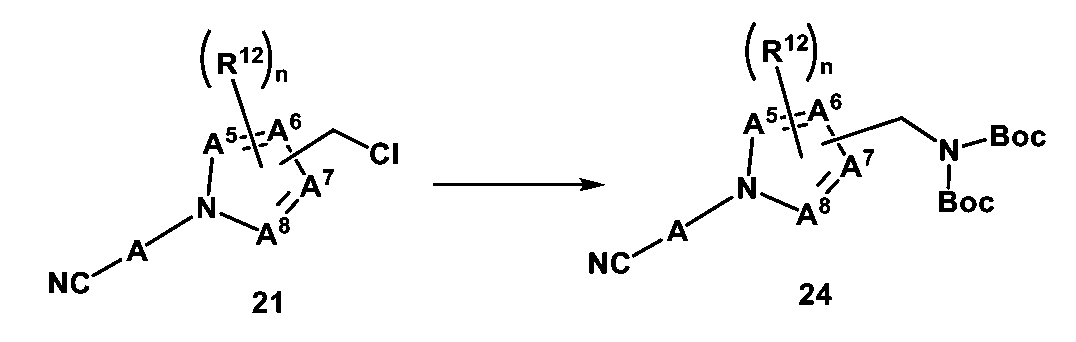
式24化合物可以通過在鹼(例如碳酸鉀或碳酸銫)的存在下使式21化合物與二叔丁基亞胺基二羧酸酯反應來製備。該反應通常在70至100℃下,在N,N-二甲基甲醯胺等極性非質子溶劑中進行。 The compound of formula 24 can be prepared by reacting the compound of formula 21 with di-tert-butylimidodicarboxylate in the presence of a base (e.g., potassium carbonate or cesium carbonate). The reaction is usually carried out at 70 to 100°C in a polar aprotic solvent such as N,N-dimethylformamide.
第2步Step 2

式25化合物可以通過在20-60℃下,在極性質子溶劑(如乙醇、甲醇等)中使式24的腈化合物與羥胺反應來製備。或者,該反應也可以通過在有機和無機鹼(例如三乙胺、N,N-二異丙基乙胺,碳酸氫鈉等)的存在下使用鹽酸羥胺來進行。 The compound of formula 25 can be prepared by reacting the nitrile compound of formula 24 with a hydroxylamine in a polar protic solvent (such as ethanol, methanol, etc.) at 20-60°C. Alternatively, the reaction can also be carried out using hydroxylamine hydrochloride in the presence of organic and inorganic bases (such as triethylamine, N,N-diisopropylethylamine, sodium bicarbonate, etc.).
第3步Step 3

式26化合物可通過使式25化合物與式5的羧酸酐反應來獲得。該反應通常在0-50℃下,任選地鹼(如三乙胺、N,N-二異丙基乙胺等)的存在下,在非質子溶劑(如四氫呋喃、1,4-二惡烷、二氯己烷等)中進行。 The compound of formula 26 can be obtained by reacting the compound of formula 25 with the carboxylic anhydride of formula 5. The reaction is usually carried out at 0-50°C in the presence of an optional alkali (such as triethylamine, N,N-diisopropylethylamine, etc.) in an aprotic solvent (such as tetrahydrofuran, 1,4-dioxane, dichlorohexane, etc.).
第4步Step 4
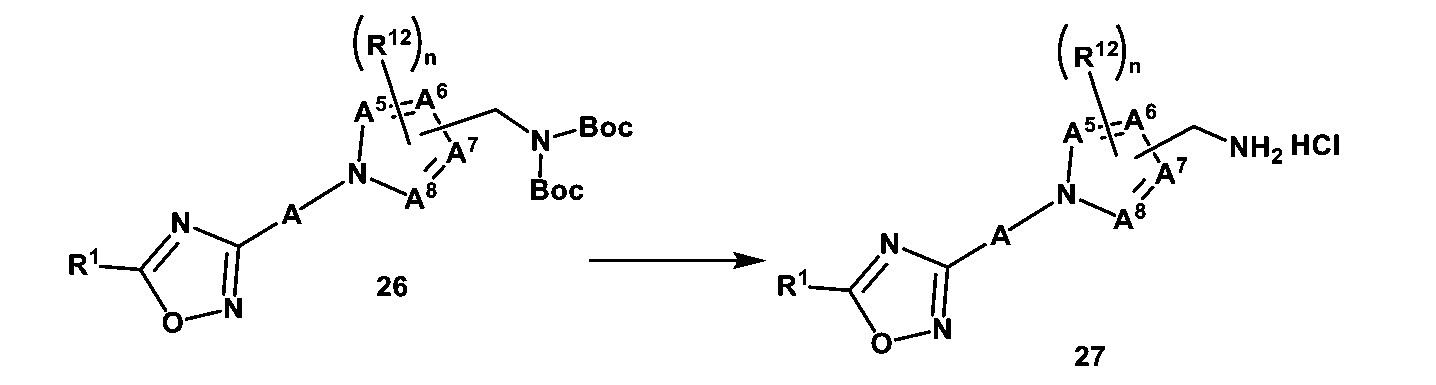
式27的化合物可以通過在4M鹽酸的1,4-二惡烷溶液等酸的存在下使式26化合物脫保護來獲得。該反應是在0-30℃下在二氯甲烷或四氫呋喃等溶劑中進行的。 The compound of formula 27 can be obtained by deprotecting the compound of formula 26 in the presence of an acid such as 4M hydrochloric acid in 1,4-dioxane. The reaction is carried out in a solvent such as dichloromethane or tetrahydrofuran at 0-30°C.
第5步Step 5
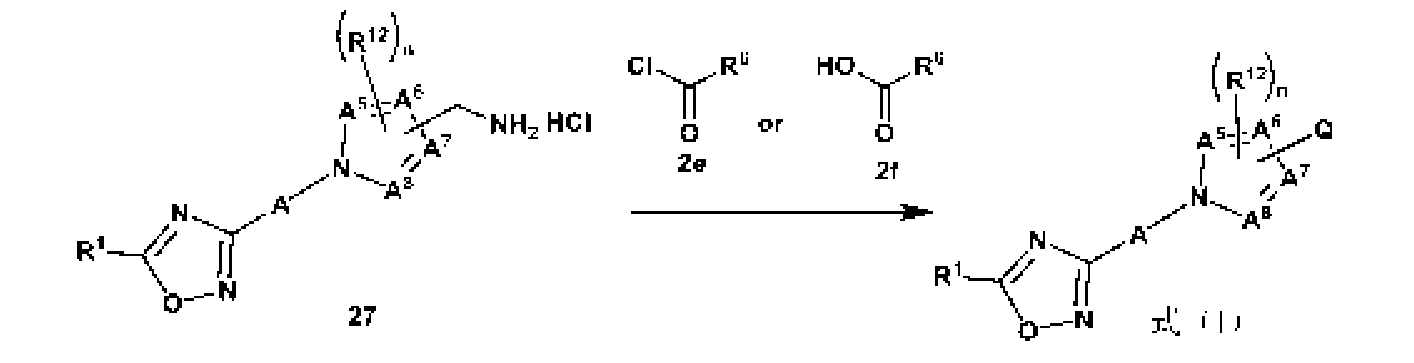
式(I)化合物(其中Q為Q2)可通過在鹼(例如三乙胺或N,N-二異丙基乙胺)存在下使式27化合物與式2e化合物反應來獲得。該反應是在0-30℃下在非質子溶劑(如二氯甲烷、四氫呋喃等)中進行的。 The compound of formula (I) (wherein Q is Q 2 ) can be obtained by reacting a compound of formula 27 with a compound of formula 2e in the presence of a base (such as triethylamine or N,N-diisopropylethylamine). The reaction is carried out at 0-30°C in an aprotic solvent (such as dichloromethane, tetrahydrofuran, etc.).
或者,式(I)化合物(其中Q為Q2)也可以通過在醯胺偶聯劑(如1-[雙(二甲基胺基)亞甲基]-1H-1,2,3-三唑並[4,5-b]吡啶3-氧化物六氟磷酸鹽(HATU)、N-(3-二甲基胺丙基)-N'-乙基碳二亞胺鹽酸鹽和4-二甲基胺基等)存在下使式27化合物與式2f化合物反應來獲得。該反應是在0-40℃下下鹼(如三乙胺或N,N-二異丙基乙胺)的存在下,在二氯甲烷或二甲基甲醯胺等溶劑中進行的。 Alternatively, the compound of formula (I) (wherein Q is Q 2 ) can also be obtained by reacting the compound of formula 27 with the compound of formula 2f in the presence of an amide coupling agent (such as 1-[bis(dimethylamino)methylene]-1H-1,2,3-triazolo[4,5- b ]pyridine 3-oxide hexafluorophosphate (HATU), N-(3-dimethylaminopropyl)-N'-ethylcarbodiimide hydrochloride and 4-dimethylamino). The reaction is carried out in a solvent such as dichloromethane or dimethylformamide at 0-40°C in the presence of a base (such as triethylamine or N,N-diisopropylethylamine).
通用方案6General Solution 6
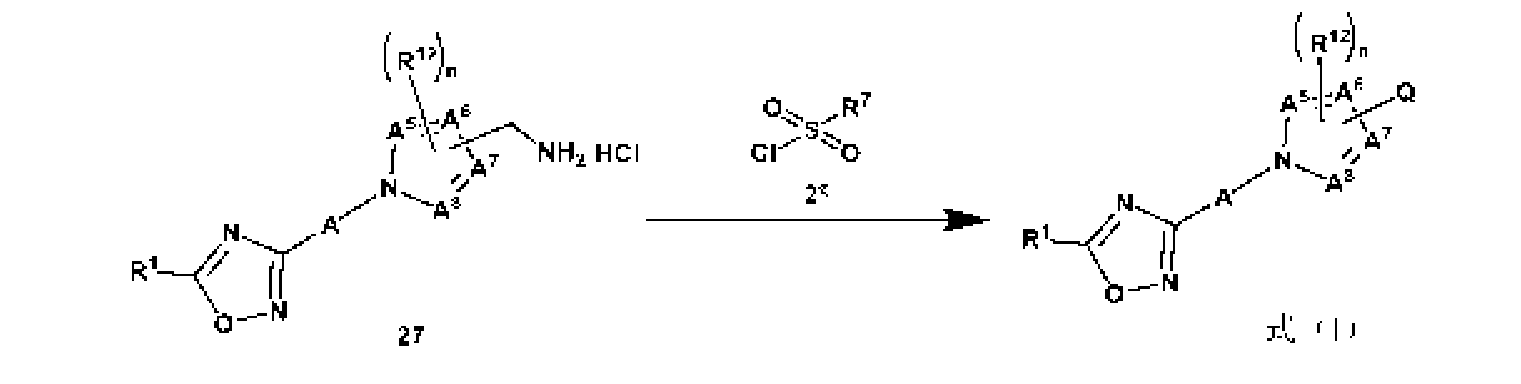
其中,R1、R12、A、A5、A6、A7和A8如上面的詳述中所定義;Q為Q8;條件是R12不為氰基。 wherein R 1 , R 12 , A, A 5 , A 6 , A 7 and A 8 are as defined in the above description; Q is Q 8 ; provided that R 12 is not cyano.
式(I)的化合物(其中Q為Q8)可以通過在0-30℃下在鹼(例如三乙胺或N,N-二甲苯基乙胺)的存在下,在二氯甲烷等溶劑中使式27化合物與式2g的磺醯氯反應來獲得。 The compound of formula (I) (wherein Q is Q 8 ) can be obtained by reacting the compound of formula 27 with a sulfonyl chloride of formula 2g in the presence of a base (eg, triethylamine or N,N-dimethylphenylethylamine) in a solvent such as dichloromethane at 0-30°C .
通用方案7General Solution 7
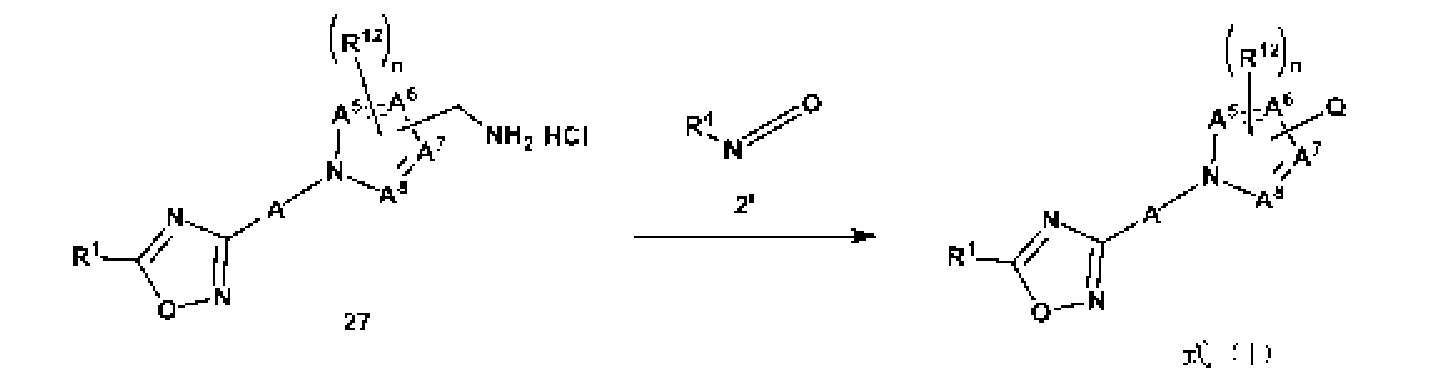
其中,R1、R12、A、A5、A6、A7和A8如上面的詳述中所定義;Q為Q9;條件是R12不為氰基。 wherein R 1 , R 12 , A, A 5 , A 6 , A 7 and A 8 are as defined in the above description; Q is Q 9 ; provided that R 12 is not cyano.
式(I)的化合物(其中Q為Q9)可以通過在0-30℃下,在鹼(例如三乙胺或N,N-二異丙基乙胺)的存在下,在乙腈、二氯甲烷或四氫呋喃等溶劑中使式27化合物與式2i的磺醯氯反應來獲得。 The compound of formula (I) (wherein Q is Q 9 ) can be obtained by reacting a compound of formula 27 with a sulfonyl chloride of formula 2 i in the presence of a base (eg triethylamine or N,N-diisopropylethylamine) in a solvent such as acetonitrile, dichloromethane or tetrahydrofuran at 0-30°C.
通用方案8General solution 8
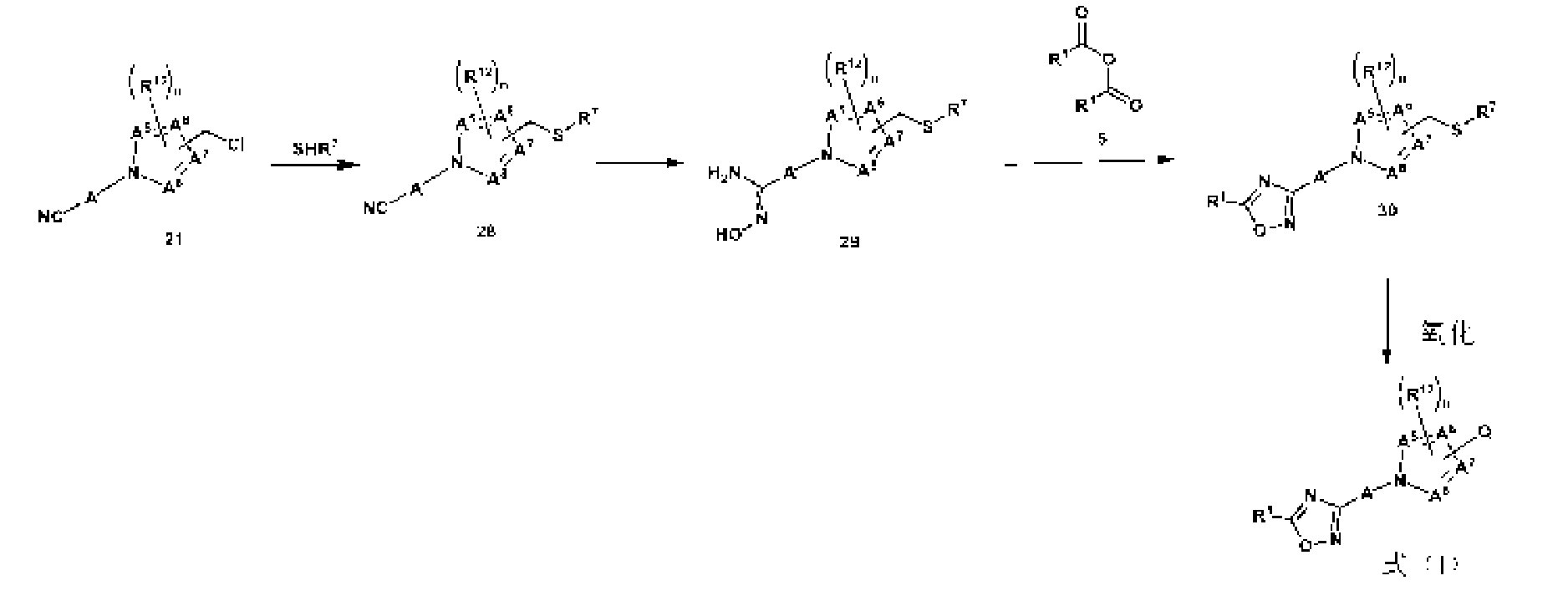
其中,R1、R12、A、A5、A6、A7和A8如上面的詳述中所定義;Q為Q3;條件是R12不為氰基。 wherein R 1 , R 12 , A, A 5 , A 6 , A 7 and A 8 are as defined in the above description; Q is Q 3 ; provided that R 12 is not cyano.
第1步Step 1
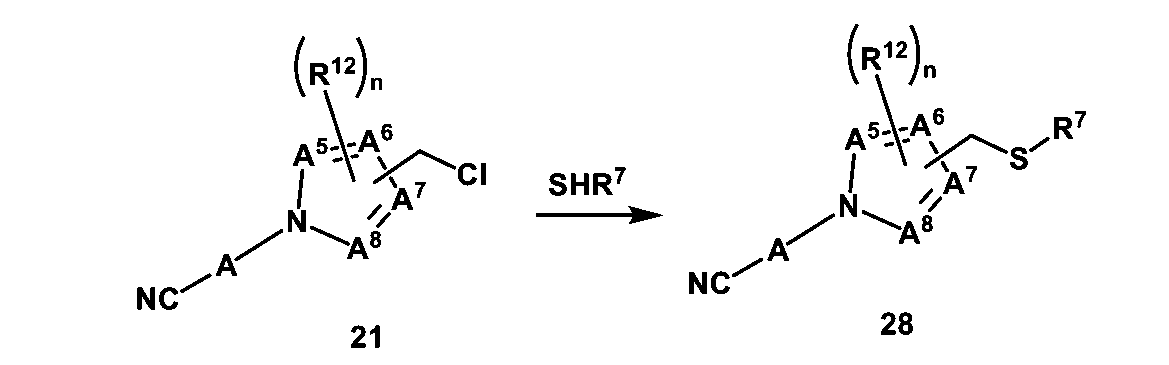
式28化合物可以通過在0-80℃下,在鹼(如碳酸鉀、碳酸銫、氫化鈉或叔丁醇鉀)的存在下在二甲基甲醯胺或二甲基亞碸等溶劑中使式21化合物與式R7SH的硫基化合物反應來製備。 The compound of formula 28 can be prepared by reacting the compound of formula 21 with a thiol compound of formula R 7 SH in the presence of a base (such as potassium carbonate, cesium carbonate, sodium hydroxide or potassium tert-butoxide) in a solvent such as dimethylformamide or dimethyl sulfoxide at 0-80°C.
第2步Step 2
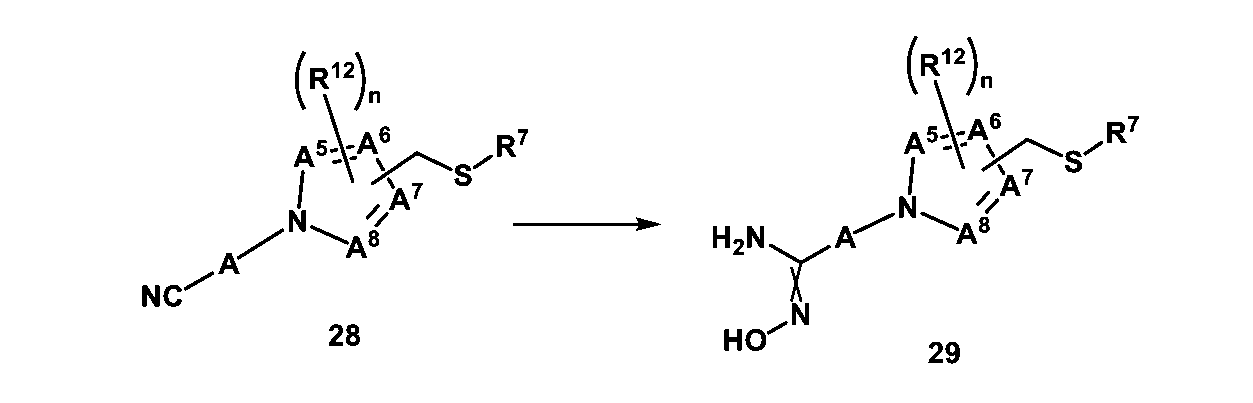
式29化合物可以通過在20-60℃下在極性質子溶劑(如乙醇、甲醇等)中使式28的腈化合物與羥胺反應來製備。或者,該反應也可以通過在有機和 無機鹼(例如三乙胺、N,N-二異丙基乙胺、碳酸氫鈉等)的存在下使用鹽酸羥胺來進行。 The compound of formula 29 can be prepared by reacting the nitrile compound of formula 28 with a hydroxylamine in a polar protic solvent (such as ethanol, methanol, etc.) at 20-60°C. Alternatively, the reaction can also be carried out using hydroxylamine hydrochloride in the presence of organic and inorganic bases (such as triethylamine, N,N-diisopropylethylamine, sodium bicarbonate, etc.).
第3步Step 3
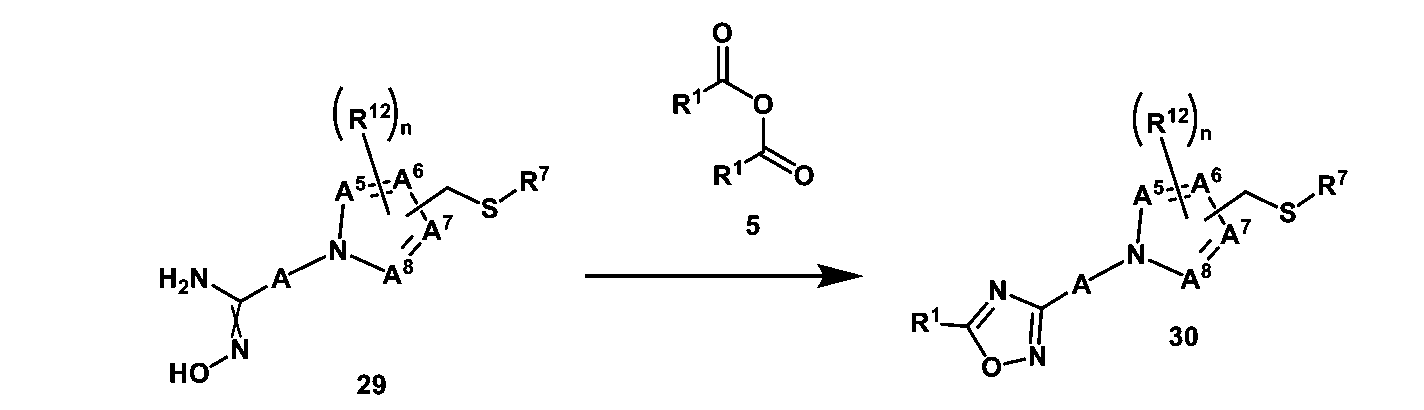
式30化合物可以通過使式29化合物與式5的羧酸酐反應來獲得。 該反應通常在0-50℃下,任選地在鹼(例如三乙胺,N,N-二異丙基乙胺等)存在下,在非質子溶劑(如四氫呋喃、1,4-二惡烷、二氯甲烷等)中進行。 The compound of formula 30 can be obtained by reacting the compound of formula 29 with the carboxylic anhydride of formula 5. The reaction is usually carried out at 0-50°C, optionally in the presence of a base (such as triethylamine, N,N-diisopropylethylamine, etc.), in an aprotic solvent (such as tetrahydrofuran, 1,4-dioxane, dichloromethane, etc.).
第4步Step 4
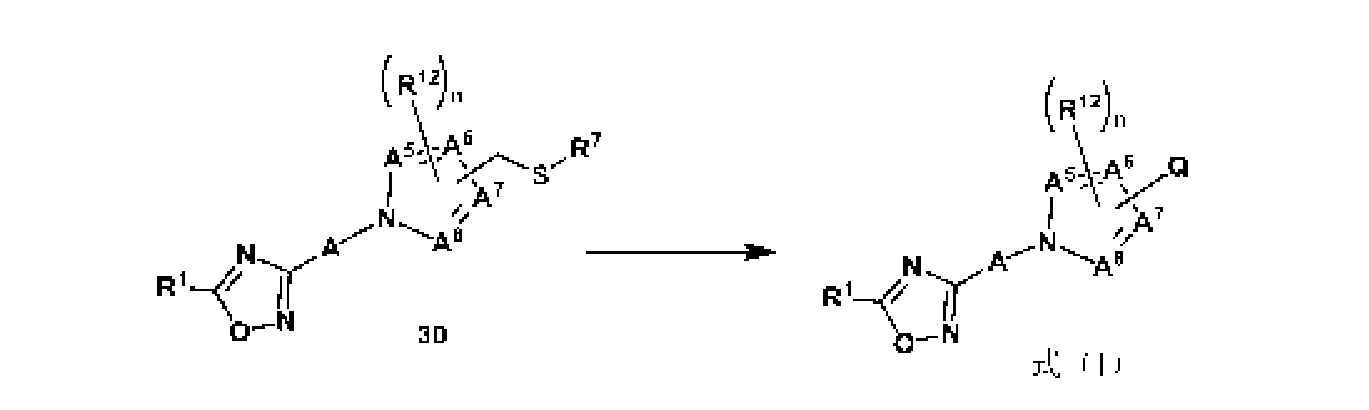
式(I)化合物可以通過在0-30℃下在合適的溶劑例如甲醇中使式30化合物與合適的氧化劑(例如氧雜環丁烷)反應而獲得。 The compound of formula (I) can be obtained by reacting the compound of formula 30 with a suitable oxidizing agent (e.g. cyclohexane) in a suitable solvent such as methanol at 0-30°C.
通用方案9General Solution 9
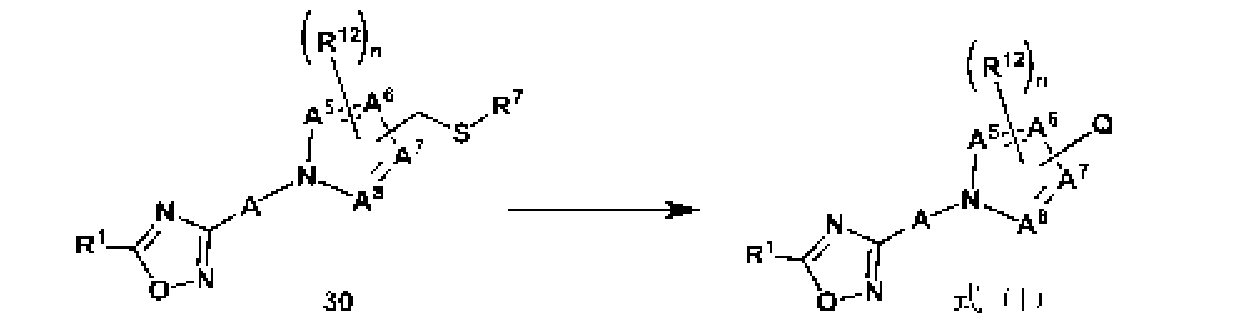
其中,R1、R7、R12、A、A5、A6、A7和A8如上面的詳述中所定義;Q為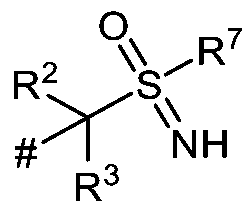
式(I)的化合物(其中Q為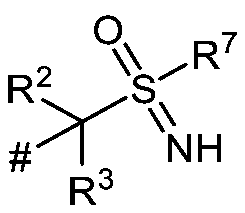
在另一個實施方案中,本發明涉及一種組合物,其包含式(I)的化合物,或其農業上可接受的鹽、金屬絡合物、結構異構體、立體異構體、非對映異構體、對映異構體、手性異構體、阻轉異構體、構象異構體、旋轉異構體、互變異構體、光學異構體、多晶型物、幾何異構體或N-氧化物,和任選一種或多種其他活性成分以及輔助成分(例如惰性載體)或任何其他必要成分(例如表面活性劑、添加劑、固體稀釋劑和液體稀釋劑)。 In another embodiment, the present invention relates to a composition comprising a compound of formula (I), or an agriculturally acceptable salt, metal complex, structural isomer, stereoisomer, diastereomer, enantiomer, chiral isomer, atropisomer, conformational isomer, rotational isomer, tautomer, optical isomer, polymorph, geometric isomer or N-oxide thereof, and optionally one or more other active ingredients and auxiliary ingredients (e.g., inert carriers) or any other necessary ingredients (e.g., surfactants, additives, solid diluents and liquid diluents).
本發明式(I)化合物和組合物分別適合作為殺真菌劑。它們對廣泛的植物病原真菌(包括土生真菌)具有顯著的抑制作用,這些真菌主要來自於瘧原蟲孢子菌、嗜麥芽孢桿菌(卵菌綱)、壺菌綱、接合菌綱、子囊菌綱、擔子菌綱和半知菌綱(不完全菌綱)。有些是全系有效的,它們可以在作物保護中作為葉面殺真菌劑、拌種用殺菌劑和土壤殺菌劑。此外,它們適用於防治有害真菌(尤其是在木材或植物根部的真菌)。 The compounds and compositions of formula (I) of the present invention are respectively suitable as fungicides. They have significant inhibitory effects on a wide range of plant pathogenic fungi (including soil-borne fungi), which are mainly from the classes of Plasmodium, Bacillus maltophilus (Oomycetes), Pocillopora, Zygomycetes, Ascomycetes, Dioscorea and Deuteromycetes (Incomplete Fungi). Some are fully effective, and they can be used as foliar fungicides, seed dressing fungicides and soil fungicides in crop protection. In addition, they are suitable for controlling harmful fungi (especially fungi on wood or plant roots).
式(I)化合物和本發明組合物在控制各種種植植物上的多種植物致病真菌有很好的效果,這些植物包括穀物,如小麥、黑麥、大麥、黑小麥、燕麥或大米;甜菜,例如甜菜;水果和果樹,例如梨果、核果或軟果,例如蘋果、梨、李子、桃子、杏仁、櫻桃、草莓、覆盆子、黑莓或醋栗;豆科植物,如扁豆、豌豆、苜蓿或大豆;油菜、芥菜、橄欖、向日葵、椰子、可可豆、蓖麻油植物、油棕櫚、花生或大豆等油料植物;葫蘆,如南瓜、黃瓜或甜瓜;纖維植物,如棉 花、亞麻、大麻或黃麻;柑橘類水果和柑橘樹,如柳丁、檸檬、葡萄柚或柑橘;任何園藝植物、蔬菜,如菠菜、生菜、蘆筍、捲心菜、胡蘿蔔、洋蔥、番茄、土豆、葫蘆或辣椒粉;月桂科屬植物,如鱷梨、肉桂或樟腦;葫蘆科植物;含油植物;能源和原料植物,如穀物、玉米、大豆、其他豆科植物、油菜、甘蔗或;油棕;煙草;堅果;咖啡;茶;可可;香蕉;胡椒;葡萄藤(鮮食葡萄和葡萄汁、葡萄藤);跳;草皮;甜葉(也稱甜葉菊);天然橡膠植物或觀賞植物和林業植物,例如花、灌木、闊葉樹或常綠植物,例如針葉樹;以及植物繁殖材料,例如種子,以及這些植物的作物材料。 The compounds of formula (I) and the compositions of the present invention are very effective in controlling a variety of plant pathogenic fungi on various plant species, including cereals such as wheat, rye, barley, triticale, oats or rice; beets, such as beets; fruits and fruit trees, such as pome, stone fruit or soft fruit, such as apples, pears, plums, peaches, almonds, cherries, strawberries, raspberries, blackberries or currants; legumes, such as lentils, peas, alfalfa or soybeans; oil plants such as rapeseed, mustard, olives, sunflowers, coconuts, cocoa beans, castor oil plants, oil palms, peanuts or soybeans; cucurbits, such as pumpkins, cucumbers or melons; fiber plants, such as cotton, flax, hemp or jute; citrus fruits and citrus trees, such as oranges, lemons, etc. , grapefruit or citrus; any horticultural plant, vegetable, such as spinach, lettuce, asparagus, cabbage, carrot, onion, tomato, potato, gourd or paprika; plants of the laurel family, such as avocado, cinnamon or camphor; plants of the cucurbitaceae family; oil-bearing plants; energy and raw material plants, such as cereals, corn, soybeans, other legumes, rapeseed, sugar cane or; oil palm; tobacco; nuts; coffee; tea; cocoa; bananas; peppers; grapevines (table grapes and grape juice, grapevines); hops; turf; sweet leaf (also known as stevia); natural rubber plants or ornamental and forestry plants, such as flowers, shrubs, broad-leaved trees or evergreen plants, such as conifers; and plant propagation materials, such as seeds, and crop materials of these plants.
特別地,本發明式I化合物和組合物在控制大豆和植物繁殖材料(例如種子)和大豆作物材料上的植物致病真菌方面有很好的效果。因此,本發明還包括含有至少一種式I化合物和種子的組合物,該組合物中式I化合物的量為每100kg種子0.1g至10kg活性成分。 In particular, the compounds and compositions of formula I of the present invention have good effects in controlling plant pathogenic fungi on soybeans and plant propagation materials (such as seeds) and soybean crop materials. Therefore, the present invention also includes a composition containing at least one compound of formula I and seeds, wherein the amount of the compound of formula I in the composition is 0.1g to 10kg of active ingredient per 100kg of seeds.
優選地,式I化合物及其組合物分別用於控制農作物上的多種真菌,這些農作物包括馬鈴薯甜菜、煙草、小麥、黑麥、大麥、燕麥、大米、玉米、棉花、大豆、油菜、豆類、向日葵、咖啡或甘蔗;水果;藤蔓;觀賞植物;或黃瓜、番茄、豆類或南瓜等蔬菜。 Preferably, the compounds of formula I and their compositions are used to control various fungi on crops, including potatoes, beets, tobacco, wheat, rye, barley, oats, rice, corn, cotton, soybeans, rapeseed, beans, sunflowers, coffee or sugar cane; fruits; vines; ornamental plants; or vegetables such as cucumbers, tomatoes, beans or pumpkins.
術語“植物繁殖材料”應理解為表示植物的所有生殖或繁殖部分,例如可用於植物的繁殖的種子和營養植物材料,例如插條和塊莖(如馬鈴薯)。這包括種子、根、果實、塊莖、鱗莖、根莖、枝條、芽、枝、花和植物的其他部分,包括它們在萌發後或從土壤中出苗後移植的籽苗和幼苗。 The term "plant propagation material" is understood to mean all reproductive or multiplying parts of a plant, such as seeds and vegetative plant material, such as cuttings and tubers (e.g. potatoes), which can be used for the propagation of the plant. This includes seeds, roots, fruits, tubers, scales, rhizomes, branches, buds, branches, flowers and other parts of the plant, including their seedlings and seedlings transplanted after germination or emergence from the soil.
這些幼苗也可以在移植前通過浸漬或澆灌進行整體或部分處理來保護。 These seedlings can also be protected by total or partial treatment by immersion or irrigation before transplanting.
優選地,可分別用式I化合物、其組合和/或組合物處理植物繁殖材料用於控制穀物上的大量真菌,這些穀物包括小麥、黑麥、大麥和燕麥;大米、玉米、棉花、水果,咖啡、甘蔗和大豆。 Preferably, plant propagation materials can be treated with compounds of formula I, combinations thereof and/or compositions thereof, respectively, for controlling a wide variety of fungi on cereals, including wheat, rye, barley and oats; rice, corn, cotton, fruit, coffee, sugar cane and soybeans.
術語“栽培植物”應理解為包括通過育種,誘變或基因工程改進的植物,包括但不限於市場上或開發中的農業生物技術產品(參見http://cera-gmc.org/,見其中的轉基因作物資料庫)。轉基因植物是在自然環境下不能通過雜交育種,突變或自然重組很容易地獲得,因此通過使用重組DNA技術進行改進的植物。通常,一種或多種基因已整合到轉基因植物的基因材料中,用以改善植物的某些特性。此類基因改進還包括但不限於蛋白質,寡肽或多肽的靶向翻譯後修飾,例如通過糖基化或聚合物如異戊烯化的添加,乙醯化或法呢基化的部分或PEG部分。通過育種,誘變或基因工程進行修飾的植物能夠耐受特定種類的除草劑,如生長素除草劑,如麥草畏或2,4-D;漂白劑除草劑,如羥基苯丙酮酸雙加氧酶(HPPD)抑制劑或八氫番茄紅素去飽和酶(PDS)抑制劑;乙醯乳酸合酶(ALS)抑制劑如磺醯脲或咪唑啉酮;磷酸合成酶(EPSPS)抑制劑,如草甘膦;谷胺醯胺合成酶(GS)抑制劑,如草銨膦;原卟啉原-IX氧化酶抑制劑;脂質生物合成抑制劑如乙醯輔酶A羧化酶(ACCase)抑制劑;通過常規育種或基因工程方法的結果,或者是含氧化合物(即溴苯腈或碘苯腈)除草劑。此外,通過多種基因修飾使植物對多種除草劑具有抗性,例如對草甘膦和草銨膦的抗性,或對草甘膦和來自另一類如ALS抑制劑,對羥苯基丙酮酸氧化酶(HPPD)抑制劑,生長素除草劑或乙醯輔酶A羧化酶(ACCase)抑制劑的除草劑的抗性。這些除草劑抗性技術在Pest Managem.Sci.61,2005,246;61,2005,258;61,2005,277;61,2005,269;61,2005,286;64,2008,326;64,2008,332;Weed Sci.57,2009,108;Austral.J. Agricult.Res.58,2007,708;Science 316,2007,1 185中有描述;和其中引用的參考文獻。通過常規育種方法(誘變)使幾種栽培植物對除草劑具有耐受性,例如Clearfield®夏季油菜(Canola,巴斯夫,德國)耐受咪唑啉酮,如甲氧咪草煙或,ExpressSun®向日葵(杜邦,美國)耐受磺醯脲,如苯磺隆。基因工程方法已經使栽培植物,例如大豆,棉花,玉米,甜菜和油菜,耐受除草劑如草甘膦和草銨膦,其中一些商品已經可以商購,如RoundupReady®(草甘膦耐受性,孟山都,美國),Cultivance®(咪唑啉酮耐受性,BASF SE,德國)和LibertyLink®(草銨膦耐受性,Bayer CropScience,德國)。 The term "cultivated plants" is to be understood as including plants that have been improved by breeding, mutation or genetic engineering, including but not limited to agricultural biotechnology products on the market or in development (see http://cera-gmc.org/ for the transgenic crop database). Transgenic plants are plants that cannot be easily obtained by cross breeding, mutation or natural recombination under natural conditions and have therefore been improved by using recombinant DNA technology. Typically, one or more genes have been integrated into the genetic material of the transgenic plant to improve certain properties of the plant. Such genetic modifications also include but are not limited to targeted post-translational modifications of proteins, oligopeptides or polypeptides, for example by glycosylation or the addition of polymers such as prenylated, acetylated or farnesylated moieties or PEG moieties. Plants modified by breeding, mutation or genetic engineering to tolerate specific classes of herbicides, such as auxin herbicides, such as dicamba or 2,4-D; bleaching agent herbicides, such as hydroxyphenylpyruvate dioxygenase (HPPD) inhibitors or phytoene desaturase (PDS) inhibitors; acetolactate synthase (ALS) inhibitors, such as sulfonylureas or imidazolinones; phospholipids; The herbicides are resistant to glutamine synthase (EPSPS) inhibitors such as glyphosate, glutamine synthase (GS) inhibitors such as glufosinate, protoporphyrinogen-IX oxidase inhibitors, lipid biosynthesis inhibitors such as acetyl coenzyme A carboxylase (ACCase) inhibitors, or oxygen-containing compound (i.e., bromoxynil or ioxynil) herbicides, as a result of conventional breeding or genetic engineering methods. In addition, plants are made resistant to various herbicides by various genetic modifications, such as resistance to glyphosate and glufosinate, or resistance to glyphosate and a herbicide from another class such as ALS inhibitors, hydroxyphenylpyruvate oxidase (HPPD) inhibitors, auxin herbicides, or acetyl coenzyme A carboxylase (ACCase) inhibitors. These herbicide resistance technologies are described in Pest Managem. Sci. 61, 2005, 246; 61, 2005, 258; 61, 2005, 277; 61, 2005, 269; 61, 2005, 286; 64, 2008, 326; 64, 2008, 332; Weed Sci. 57, 2009, 108; Austral. J. Agricult. Res. 58, 2007, 708; Science 316, 2007, 1 185; and references cited therein. Several cultivated plants have been rendered tolerant to herbicides by conventional breeding methods (induction), e.g. Clearfield® summer rapeseed (Canola, BASF, Germany) is tolerant to imidazolinones, such as imazamox or, and ExpressSun® sunflower (DuPont, USA) is tolerant to sulfonylureas, such as bensulfuron-methyl. Genetic engineering methods have rendered cultivated plants, such as soybean, cotton, corn, sugar beet and rapeseed, tolerant to herbicides such as glyphosate and glufosinate, some of which are already commercially available, such as RoundupReady® (glyphosate tolerant, Monsanto, USA), Cultivance® (imidazolinone tolerant, BASF SE, Germany) and LibertyLink® (glufosinate tolerant, Bayer CropScience, Germany).
此外,使用重組DNA技術還能夠使植物合成一種或多種殺蟲蛋白,尤其是從芽孢桿菌屬細菌,特別是從蘇雲金芽孢桿菌的,例如δ-內毒素,如CrylA(b),CrylA(c),CrylF,CrylF(a2),CryllA(b),CrylllA,CrylllB(bl)或Cry9c的植物;營養性殺蟲蛋白(VIP),如VIP1,VIP2,VIP3或VIP3A;細菌定殖線蟲,如線蟲,如發光桿菌或致病桿菌屬的殺蟲蛋白;動物產生的毒素,如蠍毒素,蜘蛛毒素,黃蜂毒素或其他昆蟲特異性神經毒素;由真菌產生的毒素,如鏈黴菌毒素,植物凝集素,如豌豆或大麥凝集素;凝集素;蛋白酶抑制劑,如胰蛋白酶抑制劑,絲胺酸蛋白酶抑制劑,馬鈴薯糖蛋白,半胱胺酸蛋白酶抑制劑或木瓜蛋白酶抑制劑;核糖體失活蛋白(RIP),如蓖麻毒蛋白,玉米-RIP,相思蛋白,松脂,皂草素或布林定;類固醇代謝酶,如3-羥基類固醇氧化酶,蛻皮類固醇-IDP-糖基轉移酶,膽固醇氧化酶,蛻皮激素抑制劑或HMG-CoA-還原酶;離子通道阻滯劑,如鈉或鈣通道阻滯劑;保幼激素酯酶;利尿激素受體;二苯乙烯合成酶,聯苄合酶,幾丁質酶或葡聚糖酶。在本發明的背景下,這些殺蟲蛋白或毒素也應明確地理解為預毒素,雜合蛋白,截短的或以其他方式修飾的蛋白質。雜合蛋白 的特徵在於蛋白質結構域的新組合(參見如WO02/015701)。有發明公開了能夠合成這種毒素或基因修飾植物的其他實例。例如,在EP374753,WO93/007278,WO95/34656,EP427 529,EP451 878,WO03/18810和WO03/52073中。用於生產這種基因修飾植物的方法通常是本領域技術人員已知的,並且如上述出版物中所述。轉基因植物中含有的這些殺蟲蛋白賦予產生這些蛋白質的植物耐受來自節肢動物的所有分類群的害蟲,特別是甲蟲(鞘翅目),雙翅昆蟲(雙翅目昆蟲)和飛蛾(鱗翅目)和線蟲(線蟲綱)。能夠合成一種或多種殺蟲蛋白的基因修飾植物,在上述出版物中有描述,其中一些可商購,例如產率Gard®(產生Cry1Ab毒素的玉米栽培種),產率Gard®Plus(產生Cry1Ab和Cry3Bb1毒素的玉米栽培種),Starlink®(產生Cry9c毒素的玉米栽培種),Herculex®RW(產生Cry34Ab1,Cry35Ab1和酶膦絲菌素-N-乙醯轉移酶[PAT]的玉米栽培種);NuCOTN®33B(產生Cry1Ac毒素的棉花品種),Bollgard®I(產生Cry1Ac毒素的棉花品種),Bollgard®II(產生Cry1Ac和Cry2Ab2毒素的棉花品種);VIPCOT®(生產VIP毒素的棉花品種);NewLeaf®(生產Cry3A毒素的馬鈴薯栽培品種);Bt-Xtra®,NatureGard®,KnockOut®,BiteGard®,Protecta®,來自法國Syngenta Seeds SAS的Bt11(如Agrisure®CB)和Bt176生產CrylAb毒素和PAT enyzme的玉米品種),來自法國先正達種子的MIR604(產生Cry3A毒素的玉米栽培種,參見WO 03/018810),來自比利時孟山都公司歐洲的MON 863(產生Cry3Bb1毒素的玉米栽培種),來自比利時孟山都公司歐洲的IPC 531(產生Cry1Ac毒素的棉花栽培品種),來自比利時先鋒海外公司1507(產生Cry1F毒素和PAT酶的玉米栽培種)。 Furthermore, the use of recombinant DNA technology also enables plants to synthesize one or more insecticidal proteins, in particular from bacteria of the genus Bacillus, in particular from Bacillus thuringiensis, for example delta-endotoxins, such as Cry1A(b), Cry1A(c), Cry1F, Cry1F(a2), Cry11A(b), Cry11A, Cry11B(bl) or Cry9c; vegetative insecticidal proteins (VIP), such as VIP1, VIP2, VIP3 or VIP3A; insecticidal proteins of bacteria colonizing nematodes, such as nematodes, such as Photorhabditis elegans or Pseudomonas; toxins produced by animals, such as scorpion toxins, spider toxins, wasp toxins or other insect-specific neurotoxins; toxins produced by fungi toxins, such as streptomycin, plant lectins, such as pea or barley lectins; lectins; protease inhibitors, such as trypsin inhibitor, serine protease inhibitor, potato glycoprotein, cysteine protease inhibitor or papain inhibitor; ribosome inactivating proteins (RIP), such as ricin, maize-RIP, abrin, rosin, saporin or Brindin; steroid metabolizing enzymes, such as 3-hydroxysteroid oxidase, corticosteroid-IDP-glycosyltransferase, cholesterol oxidase, corticosteroid inhibitor or HMG-CoA-reductase; ion channel blockers, such as sodium or calcium channel blockers; juvenile hormone esterase; diuretic hormone receptor; stilbene synthase, bibenzyl synthase, chitinase or glucanase. In the context of the present invention, these insecticidal proteins or toxins should also be understood explicitly as pretoxins, hybrid proteins, truncated or otherwise modified proteins. Hybrid proteins are characterized by a new combination of protein domains (see, for example, WO02/015701). There are other examples of inventions that disclose plants that are able to synthesize such toxins or genetically modified plants. For example, in EP374753, WO93/007278, WO95/34656, EP427529, EP451878, WO03/18810 and WO03/52073. Methods for producing such genetically modified plants are generally known to those skilled in the art and are described in the above-mentioned publications. The insecticidal proteins contained in transgenic plants give the plants producing these proteins resistance to pests from all taxonomic groups of arthropods, in particular beetles (Coleoptera), two-winged insects (Diptera) and moths (Lepidoptera) and nematodes (Nematodes). Genetically modified plants capable of synthesizing one or more insecticidal proteins are described in the above-mentioned publications, some of which are commercially available, such as YieldGard® (a corn cultivar producing Cry1Ab toxin), YieldGard® Plus (a corn cultivar producing Cry1Ab and Cry3Bb1 toxins), Starlink® (a corn cultivar producing Cry9c toxin), Herculex® RW (a corn cultivar producing Cry34Ab1, Cry35Ab1 and the enzyme phosphinothricin-N-acetyltransferase [PAT]); NuCOTN® 33B (a cotton cultivar producing Cry1Ac toxin), Bollgard® I (a cotton cultivar producing Cry1Ac toxin), Bollgard® II (a cotton cultivar producing Cry1Ac and Cry2Ab2 toxins); VIPCOT® (cotton variety producing VIP toxin); NewLeaf ® (potato cultivar producing Cry3A toxin); Bt-Xtra ® , NatureGard ® , KnockOut ® , BiteGard ® , Protecta ® , Bt11 (such as Agrisure ® CB) and Bt176 (corn varieties producing Cry1Ab toxin and PAT enyzme) from Syngenta Seeds SAS, France, MIR604 (corn cultivar producing Cry3A toxin, see WO 03/018810) from Syngenta Seeds, France, MON 863 (corn cultivar producing Cry3Bb1 toxin) from Monsanto Europe, Belgium, IPC from Monsanto Europe, Belgium 531 (cotton cultivar producing Cry1Ac toxin), and 1507 from Pioneer Overseas Company of Belgium (corn cultivar producing Cry1F toxin and PAT enzyme).
此外,還涵蓋了通過使用重組DNA技術能夠合成一種或多種蛋白質的來增加這些植物對細菌,病毒或真菌病原體的抗性或耐受性的植物。這種 蛋白質的實例是所謂的“發病相關蛋白”(PR蛋白,參見EP392225),植物抗病基因(如馬鈴薯栽培品種:表達抗性基因,起源於來自墨西哥野生馬鈴薯的致病疫黴或T4-溶菌酶(如能夠合成這些蛋白質的馬鈴薯栽培品種,其對細菌如歐文氏菌的抗性增加)。用於生產這種遺傳修飾植物的方法通常是本領域技術人員已知的,也如上述出版物中有描述。 Furthermore, plants are also covered which are capable of synthesizing one or more proteins using recombinant DNA techniques to increase the resistance or tolerance of these plants to bacterial, viral or fungal pathogens. Examples of such proteins are the so-called "pathogenesis-related proteins" (PR proteins, see EP392225), plant disease resistance genes (e.g. potato cultivars expressing resistance genes originating from the pathogenic fungus Phytophthora infestans from Mexican wild potatoes or T4-lysozyme (e.g. potato cultivars capable of synthesizing these proteins, which have increased resistance to bacteria such as Erwinia). Methods for producing such genetically modified plants are generally known to the person skilled in the art and are described in the above-mentioned publications.
此外,還涵蓋了通過使用重組DNA技術能夠合成一種或多種蛋白質以提高生產力(如生物量產量、穀物產量、澱粉含量、油含量或蛋白質含量),提高對乾旱、鹽度或其他生長限制的環境因素耐受性或提高對這些植物的害蟲和真菌、細菌或病毒病原體的耐受性的植物。 In addition, plants are covered that are capable of synthesizing one or more proteins through the use of recombinant DNA technology to increase productivity (e.g. biomass yield, grain yield, starch content, oil content or protein content), increase tolerance to drought, salinity or other growth-limiting environmental factors or increase tolerance to pests and fungal, bacterial or viral pathogens of these plants.
此外,還涵蓋了通過使用重組DNA技術含有一定數量的含量物質或新的含量物質,特別是用於改善人類或動物營養的植物,如產生促進健康的長鏈ω-3脂肪酸或不飽和的ω-9脂肪酸的油料作物(如Nexera®油菜,陶氏益農,加拿大)。 Also covered are substances containing certain amounts of substances or novel substances produced by the use of recombinant DNA technology, particularly plants for improved nutrition for humans or animals, such as oil crops that produce health-promoting long-chain omega-3 fatty acids or unsaturated omega-9 fatty acids (e.g., Nexera® canola, Dow AgroSciences, Canada).
此外,還涵蓋了通過使用重組DNA技術含有一定數量的含量物質或新的含量物質,特別是用於改善原料生產的植物,如產生更高支鏈澱粉的馬鈴薯(如Amflora®馬鈴薯,巴斯夫,德國)。 Also covered are plants containing certain amounts of substances or new substances produced by the use of recombinant DNA technology, in particular for improved raw material production, such as potatoes producing higher branched starch (e.g. Amflora ® potatoes, BASF, Germany).
本發明還涉及用有效量的至少一種本發明式I化合物或本發明組合或其組合物施用於植物種子,以控制或預防農作物和/或園藝作物免受植物病原微生物侵染的方法。本發明的化合物、組合和組合物可用於控制或預防植物疾病。式I化合物及其組合和組合物都特別適用於控制以下植物疾病:觀賞植物、蔬菜(如念珠菌)和向日葵(如金龜子甲)上的(白銹病);蔬菜、油菜(油菜或芸苔)、甜菜(細鏈格孢)、水果、大米、大豆、馬鈴薯(如龍葵鏈格孢)、番茄 (如龍葵鏈格孢)和小麥上的鏈格孢屬;在甜菜和蔬菜上殼二胞菌;穀物和蔬菜上的絲囊黴菌,例如,小麥上的小麥赤黴病(炭疽病)和大麥上的黑麥赤黴病;蠕孢黴和內臍蠕孢屬(異形體:旋孢腔菌屬),例如玉米/穀物上的南方葉枯病(玉米灰斑病菌)或玉米大斑病(玉米圓斑病菌),例如穀物上的葉斑病(麥根腐病)和稻穀和草皮上的稻瘟病;在穀類作物(例如小麥或大麥)的白粉病菌(以前是白粉菌)禾本科植物(白粉病);在水果和漿果(例如草莓)、蔬菜(如萵苣、胡蘿蔔、芹菜和捲心菜)、油菜、花卉、葡萄、林業植物和油菜上的灰黴病菌(異形體:灰葡萄孢黴:灰色黴菌)小麥;萵苣上的霜黴病;闊葉樹和常綠植物上的長喙殼,例如榆樹上的尺蠖(荷蘭榆病);在玉米上(例如灰斑:玉米-玉米斑病)、大米、甜菜(例如檳榔)、甘蔗、蔬菜、咖啡、大豆(例如大豆斑病)菊苣)和大米上的紫斑病;番茄和和穀類上的枝孢黴(例如葉黴),例如小麥上的草莖點黴(黑穗);穀物上的麥角菌(麥角);玉米(玉米圓斑病菌)、穀類(例如圓葉槐,異形體:根腐病菌)和水稻(例如葉斑病,異形體:稻瘟病)的旋孢腔菌(異形體:兩極線蟲);在棉花、玉米(例如大草鶯屬:炭疽病莖腐爛)、軟水果、馬鈴薯(例如炭疽病菌:黑點)、豆類(例如豆刺盤孢)和大豆(例如平頭刺盤孢或膠孢炭病菌)上的炭疽菌(異形體:小叢殼屬)(炭疽病);大米上的伏革菌屬,例如紋枯病(鞘枯病);大豆和觀賞植物上的葉斑;橄欖樹上的雀斑病;果樹、葡萄藤(例如鵝掌藤屬,有性型,黑腳病)和觀賞植物上的柱孢屬(果樹潰瘍病或幼年藤蔓衰退,異形體:壞死或初生孢子);大豆上的脫毒植物(變形蟲:薔薇屬)壞死菌(根和莖腐爛);大豆上的菜豆輪斑病菌;玉米、穀物如大麥(如圓柱菌、網斑病)和小麥(如小麥:褐斑病)、大米和草坪上的內臍蠕孢屬(蠕蟲孢子,遠距形成層:核孔蟲);葡萄藤上由蟻生(層孔菌)、馬 鞭草、地黃、厚垣褐指藻(早熟的厚垣褐指藻)、嗜綠指藻和/或鈍頂芽孢桿菌引起的回枯;梨果、軟果(炭疽病)和藤本植物(炭疽病)上的痂囊腔菌屬病;稻子上的稻黑腫病;小麥黑黴病;甜菜(甜菜黑黴病)、蔬菜(如豌豆),如葫蘆(如菊苣)、捲心菜、油菜(如十字花科植物)上的白粉病;果樹、藤蔓和觀賞林上的白樺上的頂枯病(無性潰瘍或枯梢病,無性生殖:胞孢菌。瞼球菌);在玉米(例如薑黃)上的寄生蟲;各種植物上的鐮刀菌(萎蔫、根腐或莖腐),如穀類(例如小麥或大麥)上的禾本科或倉鼠(根腐、痂或頭疫),番茄上的氧化孢子菌,茄上的茄子枯萎病菌(現為甘胺酸桿菌)。病毒型和圖庫曼原蟲和巴西原蟲分別在大豆上引起猝死綜合症,和玉米上引起輪狀芽孢桿菌;禾穀類作物(如小麥或大麥)和玉米上引起禾本科芽孢桿菌;在穀類作物上(如玉米屬)和水稻上(巴卡那病)的赤黴菌屬;葡萄、柚子和其他植物上的扣帶小球藻;棉花上的棉鈴蟲;水稻上的禾本科複合體;葡萄上的吉格納氏菌(黑腐病);薔薇科植物和杜松上的裸子孢子菌,例如梨上的莎比納(鏽菌);玉米、穀物和水稻上的蠕蟲孢子菌;咖啡上的駝孢鏽菌屬,如咖啡鏽菌(咖啡葉鏽);葡萄騰上的枝孢黴;大豆和棉花上的巨噬細胞病(根和莖腐爛);穀類(例如小麥或大麥)上的小孢子菌(粉色雪黴);大豆上的小孢子菌(白粉病);結石水果和其他薔薇科植物上的鏈核盤菌屬,例如開花和嫩枝枯萎病,褐腐病;在穀類、香蕉、軟水果和碎堅果上的葉斑病,比如小麥上的麥粒可樂(變形體:小麥紋枯病菌,殼針孢葉斑病)或香蕉上的斐濟黴菌(黑穗病);甘藍(例如甘藍)、油菜(例如寄生蟲)、洋蔥(例如破壞磷)、煙草(煙粉虱)和大豆(例如滿洲青黴)上的霜黴屬(霜黴);大豆上的大豆鏽;葡萄上(如氣管線蟲)和大豆(如灰黴莖腐病)的瓶黴屬;油菜和捲心菜上的根朽病(根腐和莖腐),甜菜上的蛇眼病菌(根腐、葉斑和阻尼); 向日葵、葡萄藤(葡萄霜黴病和葉斑病)和大豆(莖腐病:赤小豆,有性型:大豆莖潰瘍病菌)上的擬莖點黴屬;玉米上的麥芽疫黴(褐斑);各種植物上的疫黴(枯萎病、根、葉、果和莖根),如辣椒和葫蘆(如辣椒疫黴),大豆(如巨豆疫黴,同源物)大豆疫黴、馬鈴薯和番茄(例如晚疫病)和闊葉樹(例如櫟樹疫黴:突然死亡);甘藍、油菜、蘿蔔和其他植物上的甘藍(球根)瘧原蟲;等離子體寄生蟲,例如葡萄上的玻璃體瘧原蟲(葡萄霜黴),向日葵上的哈氏瘧原蟲;薔薇科植物、酒花、石榴和軟果上的叉絲單囊殼屬(白粉病),例如蘋果上的白背飛虱;多黏菌,例如穀類,如大麥和小麥(多黏菌)和甜菜(甜菜蛇眼病)和傳播病毒病;禾穀類,如小麥或大麥上的假小尾孢屬;各種植物上的假單孢菌(霜黴病),如葫蘆上的楔形芽孢桿菌或啤酒花上的腐黴;在葡萄上氣管假單孢菌(紅火病或輪蟲病,變形體:瓶黴屬);各種植物上的柄鏽菌屬(鏽),例如小麥(棕色或葉鏽)、條鏽菌(條鏽或黃鏽)、矮生銹菌(矮生銹)、禾本科鏽菌(莖或黑鏽)或禾本科鏽菌(褐色或葉鏽),例如小麥、大麥或黑麥、甘蔗和蘆筍上屈恩柄鏽菌(橙鏽);小麥上的焦粒病菌(變形體:內臍蠕孢屬),小麥赤黴病菌(褐斑病)或大麥上的赤黴病菌(網斑病);稻穀上的稻瘟病菌(遠形:稻瘟)和大米上的稻瘟病菌(稻瘟),草坪、水稻、玉米、小麥、棉花、葡萄、向日葵、大豆、甜菜、蔬菜和各種其他植物(例如極致疫黴或無疫黴)上的稻瘟病菌(阻尼);柱隔孢屬,如大麥上的葉斑(生理葉斑)和甜菜上的灰白斑長隔孢黴;棉花、水稻、馬鈴薯、草坪、玉米、油菜、馬鈴薯、甜菜、蔬菜以及各種其他植物上的絲核菌屬,例如大豆上的立枯絲核菌(根莖腐爛)、水稻上的立枯絲核菌(紋枯病)或小麥或大麥上的麥子紋枯病(紋枯病);黑黴、胡蘿蔔、捲心菜、藤蔓和番茄上的匍匐根黴(黑黴、軟腐病);大麥、黑麥和小黑麥上的大麥雲紋病菌(燙傷)樣;水稻上 的稻瘟病菌和稀疏鏈球菌(鞘腐);蔬菜和大田作物上的菌核病菌(莖腐或白黴),如油菜、向日葵(例如菌核病菌)和大豆(例如羅氏菌核病菌);各種植物上的殼針孢屬,如大豆上的甘胺酸鏈球菌(褐斑)、小麥上的小麥斑點桿菌(殼針孢斑點葉枯病)和穀物上的殼多胞菌屬;葡萄藤上的鉤絲殼屬(變形體:白粉病)和板口線蟲屬(白粉病,無性型:粉孢屬);玉米(如薑黃,同源異株.葉蠕孢菌)和草坪上的葉枯病菌;玉米(如玉米絲黑穗病菌:絲黑穗病)、高粱和甘蔗上的軸黑粉菌屬(黑穗病);葫蘆上的球形孢菌(粉狀黴);馬鈴薯上的海綿孢菌(粉狀疥瘡),從而傳播病毒疾病;穀物類上的殼多胞菌屬,如小麥上的穎枯殼針孢(殼多胞菌屬,有性型:小球腔菌屬)[異形體:鉤端螺旋體];馬鈴薯上的內生合胞體(馬鈴薯疣病);例如桃上的變形桿菌(葉捲曲病)和李子上的李外囊菌(李袋);煙草、柚子、蔬菜、大豆和棉花上的根串珠黴(黑根腐爛),例如根黑腐病(變形體.雅致暗內孢);穀物上的腥黑粉菌屬(普通茴香或臭黑穗病),如小麥上的小麥腥黑粉菌(異形體.小麥光腥黑穗病)和小麥矮腥黑穗病菌(矮腥黑穗病);大麥或小麥上的肉孢核瑚菌(灰雪黴病);條黑粉菌屬,如黑麥上的莖黑穗病;蔬菜,如豆類(菜豆鏽菌)和甜菜上的單胞鏽菌屬(銹病);穀物類(如,黑穗病)、玉米(如,玉米黑粉菌:玉米黑穗病)和甘蔗上的黑粉菌屬;蘋果(如,黑星病)和梨上的黑星菌屬(瘡痂病);以及各種植物,如水果、觀賞植物、葡萄藤、軟性水果、蔬菜和大田作物上的黃萎病(枯萎病),例如草莓、油菜,馬鈴薯和番茄上的大麗輪枝菌。 The present invention also relates to a method for controlling or preventing agricultural and/or horticultural crops from infection by plant pathogenic microorganisms by applying an effective amount of at least one compound of formula I of the present invention or a combination of the present invention or a combination thereof to plant seeds. The compounds, combinations and compositions of the present invention can be used to control or prevent plant diseases. The compounds of formula I and their combinations and compositions are particularly suitable for controlling the following plant diseases: (rust disease) on ornamental plants, vegetables (such as Candida albicans) and sunflowers (such as golden beetles); Alternaria species on vegetables, rapeseed (canola or Brassica rapa), beets (Alternaria spp.), fruits, rice, soybeans, potatoes (such as Alternaria natans), tomatoes (such as Alternaria natans) and wheat; Alternaria species on beets and vegetables Chlamydia; Mycospore molds on cereals and vegetables, e.g., graminearum (anthracnose) on wheat and graminearum on barley; Helminthosporium and Helminthosporium (Heteromorph: Cochliobolus), e.g., southern leaf blight (Geochromis maydis) or greater corn leaf spot (Geochromis zea) on corn/cereals, e.g., leaf spot (root rot) on cereals and rice blast on rice and turf; Powdery mildew fungus (formerly Blumeria graminearum) on grasses (powdery mildew) on crops such as wheat or barley; Gray mold fungus (heteromorph: Botrytis cinerea: Gray mold) on fruits and berries (e.g. strawberries), vegetables (such as lettuce, carrots, celery and cabbage), rapeseed, flowers, grapes, forestry plants and wheat; downy mildew on lettuce; long-beaked shell on broad-leaved trees and evergreen plants, For example, the looper on elm (Dutch elm disease); on corn (e.g. gray spot: maize - corn leaf spot), rice, sugar beets (e.g. betel nut), sugar cane, vegetables, coffee, soybeans (e.g. soybean leaf spot) chicory) and purple leaf spot on rice; Cladosporium molds on tomatoes and cereals (e.g. leaf molds), such as grass stem spot mold (Ustilago smut) on wheat; Ergot (Ergot) on cereals; Maize (Cornyspora maydis) , cereals (e.g., Sophora japonica, heteromorph: root rot) and rice (e.g., leaf spot, heteromorph: rice blast); Colletotrichum spp. (heteromorph: Dipoletrix) on cotton, corn (e.g., Glechoma spp.: anthracnose stem rot), soft fruit, potatoes (e.g., Colletotrichum spp.: black spot), beans (e.g., Discoidea pellucida), and soybeans (e.g., Discoidea spp. or Glechomatophytes) : Concha spp.) (anthracnose); Fusarium spp. on rice, e.g., leaf spot (sheath blight); leaf spot on soybeans and ornamentals; leaf spot on olive trees; Cylindrospermum spp. (fruit ulcer or young vine decline, heteromorphs: necrosis or primary spores) on fruit trees, vines (e.g., Coleus spp., teleomorphs, blackleg) and ornamentals; phytotoxic (metamorph: Rosa spp.) necrosis fungi on soybeans (root and stem rot); Phaseolus vulgaris on soybeans; Helminthosporium spp. (helminth spores, teleocambium: pyrocystis) on corn, cereals such as barley (e.g., Cylindrocystis, Web blotch) and wheat (e.g., wheat: brown spot), rice, and lawns; on grapevines caused by ant-infested (Phyllostoma spp.), Vervain, Rehmannia glutinosa, Phaeodactylum chlamydomonas (precocious Phaeodactylum chlamydomonas), Phaeodactylum chlorophilum, and/or Bacillus subtilis blight; scabies on pome, soft fruit (anthracnose) and vines (anthracnose); black scald on rice; black mold on wheat; powdery mildew on sugar beets (black mold on beets), vegetables (e.g. peas), cucurbits (e.g. chicory), cabbage, rapeseed (e.g. crucifers); top blight on birch on fruit trees, vines and ornamental plants (asexual scab or dieback, asexual reproduction: Cytosporium. ; parasites on corn (e.g. turmeric); sickle fungi (wilt, root rot or stem rot) on various plants, such as Poaceae or barnworm (root rot, scab or head blight) on cereals (e.g. wheat or barley), oxysporum on tomatoes, and Fusarium oxysporum (now Glycinebacterium) on eggplant. Viral and Tucuman and Brazilian protozoa cause sudden death syndrome on soybeans and Bacillus verticillatus on corn, respectively; Bacillus graminaceus on cereal crops (e.g. wheat or barley) and corn; Gibberellus spp. on cereal crops (e.g. Zea mays) and rice (Bakana disease); Chlorella cingulum on grapes, grapefruit and other plants; Bollworm on cotton; Poaceae complex on rice; Gingena (black rot) on grapes; Gymnospores on roses and junipers, such as Sabina (rust fungus) on pears; Helminthosporium on corn, cereals and rice; Camellia spp. on coffee, such as R. coffeae (coffee leaf rust); Cladosporium on grapes; Macrophage (root and stem rot) on soybeans and cotton; Microsporum (pink snow mold) on cereals (e.g. wheat or barley); Microsporum (powdery mildew) on soybeans; Sclerotinia species on stone fruit and other rose plants, such as blossom and twig blight, brown rot; leaf spots on cereals, bananas, soft fruits and cracked nuts, such as wheat grain cola (variants: Pseudomonas aeruginosa, Septoria leaf spot) on wheat or F. fijiensis (smut) on bananas; Peronospora spp. (downy mildew) on cabbage (e.g. oleracea), rapeseed (e.g. parasites), onions (e.g. chlorella), tobacco (whitefly), and soybeans (e.g. Manchurian green mold); soybean rust on soybeans; Bottle mold spp. on grapes (e.g. tracheal nematodes) and soybeans (e.g. gray mold stem rot); root rot (root rot and stem rot) on rapeseed and cabbage rot), snake eye fungus on sugar beets (root rot, leaf spot and damping); Pseudomonas spp. on sunflowers, grapevines (downy mildew and leaf spot) and soybeans (stem rot: adzuki bean, teleomorph: soybean stem ulcer fungus); malaria fungus on corn (brown spot); blight fungi (wilt, root, leaf, fruit and stem) on various plants, such as peppers and cucurbits (such as pepper blight) , soybean (e.g. giant soya fungus, homologues) soybean fungus, potato and tomato (e.g. late blight) and broad-leaved trees (e.g. oak fungus: sudden death); cabbage (bulb) malaria parasites on cabbage, rapeseed, radish and other plants; plasma parasites, e.g. vitreous malaria (grape frosting mildew) on grapes, malaria parasites on sunflowers; rose plants, hops, Pseudomonas spp. (powdery mildew) on pomegranates and soft fruits, such as white-backed planthoppers on apples; Polymyxa, such as cereals, such as barley and wheat (polymyxa) and sugar beets (beet eye disease) and transmitted viral diseases; Pseudomonas spp. on cereals, such as wheat or barley; Pseudomonas spp. (downy mildew) on various plants, such as Bacillus cuneiformis on cucurbits or Fungia spp. on hops; Pseudomonas trachei (red fire or rotifer disease, variant: bottle mold) on grapes; Rutilus spp. (rust) on various plants, such as wheat (brown or leaf rust), Rutilus stripe (stripe or yellow rust), Rutilus dwarf (dwarf rust), Rutilus graminaceus (stem or black rust) or Rutilus graminaceus (brown or leaf rust), such as wheat, barley or rye, sugar cane and Rutilus quernbergii (orange rust) on asparagus. rust); scorch spore (variant: Helminthosporium spp.) on wheat, gibberella solani (brown spot) on wheat or gibberella solani (net spot) on barley; rice blast (distant: oryzae) on rice and rice blast (rice blast) on rice, lawns, rice, corn, wheat, cotton, grapes, sunflowers, soybeans, sugar beets, vegetables and various other plants (e.g., Phytophthora or aphids); Pyricularia species, such as leaf spot (physiological leaf spot) on barley and Rhizoctonia solani on sugar beet; Rhizoctonia species on cotton, rice, potato, turf, corn, rapeseed, potato, sugar beet, vegetables, and various other plants, such as Rhizoctonia solani (root and stem rot) on soybeans, Rhizoctonia solani (skin blight) on rice or barley leaf blight (leaf blight) on wheat or barley; creeping root mold (black mold, soft rot) on black mold, carrots, cabbage, vines and tomatoes; barley moire (scald) on barley, rye and triticale; Pyricularia grisea and Streptococcus sparsely (sheath rot) on rice; Sclerotinia sclerotiorum (stem rot or white mold) on vegetables and field crops such as rapeseed, sunflower ( Sclerotinia sclerotiorum) and soybeans (e.g. Roseburia sclerotiorum); Septoria spp. on various plants, such as Streptococcus glycinicus (brown spot) on soybeans, Pseudomonas tritici (Septoria leaf blight) on wheat, and Septoria spp. on cereals; Mycelia spp. (morphs: powdery mildew) and Echinostoma spp. (powdery mildew, anamorph: Pseudomonas spp.) on grapevines; corn (e.g. ginger yellow, homologous heterozygous. Leaf blight fungi on turfgrass; Ustilago officinalis (smut) on corn (such as Ustilago maydis: head smut), sorghum, and sugarcane; Sphaerospora (powdery mildew) on cucurbits; Spongiosporium (powdery scab) on potatoes, thus transmitting viral diseases; Mycopolyspora on cereals, such as Septoria spp. (Mycopolyspora spp.) on wheat. genus, teleomorph: Microsphaeria) [heteromorph: Leptospira]; endophytic syncytia (potato wart disease) on potatoes; e.g., Bacillus morphus (leaf curl) on peaches and Exotheca solani (plum bag) on plums; Root rot (black root rot) on tobacco, grapefruit, vegetables, soybeans, and cotton, e.g., Black rot (var. elegans); fishy smell on cereals Ustilago (common anise or smelly smut), such as T. tricholoma (heteromorph. light bunt) and T. tricholoma (dwarf bunt) on wheat; Sarcosporium (grey snow mold) on barley or wheat; Ustilago (stem smut), such as stem smut on rye; vegetables, such as Pseudomonas phaseolus (rust disease) on beans and Pseudomonas (rust disease) on sugar beets; cereals on corn (e.g., smut), corn (e.g., Ustilago maydis: Ustilago smut), and sugar cane; on apples (e.g., scab) and pears; and on various plants, such as Verticillium wilt (wilt) on fruits, ornamentals, vines, soft fruits, vegetables, and field crops, such as Verticillium dahliae on strawberries, rapeseed, potatoes, and tomatoes.
式I化合物、其組合或組合物可用於治療幾種真菌病原體。可根據本發明處理的真菌致病病原體的非限制性實例包括: 黑粉菌目,如稻曲病菌、小麥散黑穗病、小麥散黑粉病菌、玉米黑粉菌,引起銹病的,例如,柄鏽菌,如蠟鏽屬、雲杉帚銹病菌、擔子菌亞門鞘鏽菌屬、咖啡鏽菌、花生柄鏽菌、卡卡巴塔鏽菌、小麥鏽菌、葉銹病、玉米銹病菌、大麥柄鏽菌、條鏽菌、禾草雲斑病、膨痂鏽菌,或鏽菌目,如松皰銹病菌、膠鏽菌屬、楊樹葉銹病菌、亞洲銹病、病原為多胞鏽菌、疣雙胞鏽菌屬和蠶豆單胞鏽菌;還有引起其他的腐爛和疾病的,如隱球菌屬、茶餅病菌、絨毛革蓋菌、小菇屬、絲黑穗病菌、核瑚菌屬、條黑粉菌、伏革菌屬、銀耳孢子、立枯絲核菌、大理菌斑葉病毒、黑粉菌和小麥網腥黑穗病菌。芽枝黴綱,如玉米褐斑病菌。毛黴綱,如瓜笄黴;毛黴屬;和少根根黴。 Compounds of formula I, combinations thereof or compositions thereof can be used to treat several fungal pathogens. Non-limiting examples of fungal pathogens that can be treated according to the present invention include: Ustilagoras, such as Ustilago smut, Ustilago smut, Ustilago maydis, rust-causing, for example, rust fungi, such as Rhizoctonia spp., Rhizoctonia picea, Rhizoctonia spp. of the subdivision Mycotica, Rhizoctonia oleracea ... Rust fungi, or the order Russomycetes, such as pine rust, Glechoma, poplar leaf rust, Asian rust, multicellular rust fungi, verrucosus, and unicellular rust fungi; and those that cause other rots and diseases, such as Cryptococcus, tea cake fungi, velvet fungi, Agaricus, smut, Coraline fungi, stripe smut, Cortex, Tremella spores, Rhizoctonia solani, Dali leaf spot virus, smut, and wheat web stinking smut. Bud fungi, such as corn brown spot. Hairy fungi, such as cucurbit mold; Hairy fungi; and Rhizoctonia solani.
在另一個實施方案中,引起的病害的是銹病病原體,例如,膠鏽菌種,如褐色膠鏽菌;駝孢鏽菌種,如咖啡鏽菌;層鏽菌屬,例如大豆鏽菌或層鏽菌;柄鏽屬,例如小麥葉鏽菌、禾柄鏽菌和條形柄鏽菌;單胞鏽種,例如單胞鏽屬;特別是生柱鏽菌(白松皰銹病);膠鏽菌(雪松-蘋果銹病);咖啡鏽菌(咖啡鏽);層鏽菌和大豆鏽菌(大豆銹病);禾冠柄鏽菌(燕麥和黑麥草的冠鏽);禾稈鏽菌(小麥和肯塔基藍草的莖銹病,或穀物的黑銹病);柄鏽菌屬(黃花菜銹病)。小麥葉鏽菌(小麥銹病或褐色或紅鏽);玉米銹病菌(玉米銹病);條形柄鏽菌(穀物中的黃銹病);菜豆銹病菌(豆類銹病);菜豆單胞鏽菌(豆鏽);黑頂柄鏽菌(甘蔗中的褐銹病);屈恩柄鏽菌(甘蔗中的橙鏽)。 In another embodiment, the disease is caused by a rust pathogen, for example, a species of Gum, such as Gum brown Gum; a species of Camellia, such as Gum coffee; a genus of the genus Rutilus, such as Gum soybean or Rutilus; a genus of the genus Rutilus, such as Rutilus graminis, Rutilus graminis, and Rutilus stripes; a species of the genus Rutilus, such as Rutilus unicellularis; in particular, a species of the genus Rutilus. Rustigo (white pine rust); Rustigo (cedar-apple rust); Rustigo (coffee rust); Rustigo and R. glycines (soybean rust); Rustigo (oat and rye grass rust); Rustigo (stem rust of wheat and Kentucky bluegrass, or black rust of cereals); Rustigo (daylily rust). Rustiola truncatula (wheat rust or brown or red rust); Rustiola maydis (corn rust); Rustiola striata (yellow rust in cereals); Rustiola vulgaris (bean rust); Rustiola striata (bean rust); Rustiola nigrocapensis (brown rust in sugarcane); Rustiola qunniflora (orange rust in sugarcane).
可根據本發明處理的植物包括:棉花,亞麻,葡萄,水果,蔬菜,例如薔薇科(例如梨果,例如蘋果,梨,杏,櫻桃,杏仁和桃子);裡貝西科、核桃科、樺木科、漆樹科、殼鬥科、桑科、木犀科、放線科、樟科、麝香科(例 如香蕉樹和種植園)、茜草科(例如咖啡)、山茶科、梧桐科、芸香科(例如檸檬、桔子和葡萄柚);維他科(例如葡萄);茄科(例如番茄、辣椒)、百合科、菊科(例如生菜)、傘形科、十字花科、葉科、葫蘆科(如黃瓜)、大蒜科(如韭菜、洋蔥)、乳突科(如豌豆);主要農作物,如禾本科/禾本科(如玉米、草坪、小麥、黑麥、大米、大麥、燕麥、小米和小黑麥等穀類)、菊科(如向日葵)、巴西仙人掌屬(例如白捲心菜、紅捲心菜、花椰菜、花椰菜、芽甘藍、小白菜、大頭菜、蘿蔔和油籽油菜、芥末、辣根和水芹)、蠶豆科(例如大豆、花生)、蝶形花科(例如大豆)、茄科(例如土豆)、藜科(例如甜菜、飼料甜菜,瑞士甜菜,甜菜根);錦葵科(例如棉花);花園和樹木繁茂地區的有用植物和觀賞植物;以及每種植物的轉基因品種。 Plants that can be treated according to the present invention include: cotton, flax, grapes, fruits, vegetables, such as Rosaceae (e.g. pome fruits, such as apples, pears, apricots, cherries, almonds and peaches); Ribesicaceae, Juglandaceae, Betulaceae, Anacardiaceae, Coleaceae, Moraceae, Oleaceae, Actinaceae, Lauraceae, Muskaceae (e.g. banana trees and plantations), Rubiaceae (e.g. coffee), Theaceae, Sterculiaceae, Rutaceae (e.g. lemons, oranges and grapefruits); Vitaceae (e.g. grapes); Solanaceae (e.g. tomatoes, peppers), Liliaceae, Asteraceae (e.g. lettuce), Umbelliferae, Cruciferae, Cyperaceae, Cucurbitaceae (e.g. cucumbers), Allicaceae (e.g. leeks, onions), Mammillaceae ( such as peas); major agricultural crops such as Poaceae/Grassaceae (e.g. cereals such as corn, turf, wheat, rye, rice, barley, oats, millet and triticale), Asteraceae (e.g. sunflower), Opuntia (e.g. cabbage, red cabbage, broccoli, cauliflower, Brussels sprouts, pakchoi, kohlrabi, radish and oilseed rape, mustard, horseradish and watercress), Leguminosae (e.g. soybean, peanut), Fabaceae (e.g. soybean), Solanaceae (e.g. potato), Chenopodiaceae (e.g. beet, feed beet, Swiss chard, beetroot); Malvaceae (e.g. cotton); useful and ornamental plants for gardens and wooded areas; and transgenic varieties of each plant.
更優選的是控制大豆的下列疾病:葉、莖、莢和種子上的真菌病,例如由葉斑病(鏈格孢屬)、炭疽病(赤葉枯刺盤孢菌)、褐斑病(大豆殼針孢)、和枯萎病引起的。黑葉病、白葉病、三孢白葉病、大花葉斑病、霜黴病、大花葉斑病、蛙眼斑病、薄葉斑病、葉斑病、葉枯病、豆莢和莖枯病、白粉病、皮諾查埃塔葉斑病、地上絲核菌、葉枯病和網枯病、銹病層孢菌、赤黴病、莖葉枯病、靶斑病。 More preferred is the control of the following diseases of soybean: fungal diseases on leaves, stems, pods and seeds, such as those caused by leaf spot (Alternaria), anthracnose (Echinococcus aureus), brown spot (Septoria sojae), and wilt. Black leaf disease, white leaf disease, trisporus white leaf disease, large mosaic leaf spot, downy mildew, large mosaic leaf spot, frog eye spot, thin leaf spot, leaf spot, leaf blight, pod and stem blight, powdery mildew, Pinocheta leaf spot, ground Rhizoctonia, leaf blight and web blight, rust stratum, head mold, stem and leaf blight, target spot.
根和莖基上的真菌性疾病,例如黑根腐病(赤連菌屬)、木炭腐病(巨孢子蟲屬)、鐮刀菌枯萎病或枯萎病、根腐病以及莢和衣領腐病(枯萎鐮刀菌屬、直立鐮刀菌屬、半覆蓋鐮刀菌屬、等長鐮刀菌屬)、鉤端鐮刀菌根腐病(陸生鐮刀菌屬)、新大陸滲透孢子蟲(新赤殼)、豆莢和莖枯萎病(大豆莖潰瘍病菌)、莖潰瘍病(大豆莖潰瘍病菌)、疫黴腐病(大雄疫黴)、褐色莖腐病(大豆莖褐腐病菌a)、腐黴腐病(瓜果腐黴菌、不規則腐黴菌、德巴厘腐黴、 群結腐黴、腐黴菌)、絲核菌根腐爛、莖腐爛和衰減(絲核菌屬)、菌核病莖腐爛(菌核病)、菌核病南部枯萎(菌核病)、藤蔓根腐爛(藤蔓)。 Fungal diseases on roots and stem bases, such as black root rot (Erythromyces spp.), charcoal rot (Giancospora spp.), sickle wilt or blight, root rot, and pod and collar rot (Erythromyces spp., Erectus spp., Hemicapsula spp., Equilongus spp.), sickle root rot (Eremocephalus spp.), new continental penetrant spores (New Erythromyces spp.), pod and stem wilt (Soybean stem ulcer Pathogen), stem ulcer (soybean stem ulcer), fungus rot (P. major), brown stem rot (soybean stem brown rot a), rot rot (P. aphanidermatus, P. irregularis, P. debarica, grouping rot, P. pyrifos), Rhizoctonia root rot, stem rot and decay (Rhizoctonia spp.), sclerotinia stem rot (Sclerotinia), Sclerotinia southern wilt (Sclerotinia), vine root rot (vine).
本發明還涉及式I化合物、其組合或組合物用於控制或預防以下植物疾病的用途:各種植物上的柄鏽屬(銹病),例如但不限於小麥葉鏽菌(褐色或葉銹病),條形柄鏽菌(條紋或黃鏽),大麥柄鏽菌(矮銹病),黑痣病(莖或黑鏽)或穀物上,如小麥,大麥或黑麥的小麥葉銹病(褐色或葉銹病)和在各種植物上之層鏽菌屬,特別是大豆豆薯層鏽菌和大豆銹病(大豆銹病),咖啡鏽菌(咖啡銹病),菜豆銹病菌,蠶豆單胞鏽菌和菜豆單胞鏽菌(豆銹病)。 The present invention also relates to the use of a compound of formula I, a combination thereof or a composition for controlling or preventing the following plant diseases: Rusts on various plants, such as, but not limited to, Rustia spp. (brown or leaf rust) of wheat, Rustia spp. (striped or yellow rust), Rustia spp. (dwarf rust) of barley, black spot (stem or black rust) or on cereals, such as Rustia spp. (brown or leaf rust) of wheat, barley or rye and Rustia spp. on various plants, in particular Rustia spp. of soybean and Rustia spp. (soybean rust), Rustia spp. (coffee rust), Rustia spp. of bean, Rustia spp. of broad bean and Rustia spp. of bean (bean rust).
本發明進一步涉及式I化合物、其組合或組合物在控制或預防農作物和/或園藝作物中植物病原性真菌如豆薯層鏽菌的用途。 The present invention further relates to the use of compounds of formula I, combinations thereof or compositions thereof in controlling or preventing plant pathogenic fungi such as Mycorrhiza oryzae in agricultural and/or horticultural crops.
式I化合物、其組合和組合物也分別適用於防治有害真菌以保護儲存的產品或收穫物,以及保護材料。術語“材料保護”應理解為表示對技術的以及非活體材料,例如黏合劑、膠水、木材、紙和紙板、紡織品、皮革、塗料分散體、塑膠、冷卻潤滑劑、纖維或織物的保護,以防止有害微生物如真菌和細菌的侵染和破壞。 The compounds of formula I, their combinations and compositions are also suitable for controlling harmful fungi, for protecting stored products or harvests, and for protecting materials, respectively. The term "material protection" is to be understood as meaning the protection of technical and non-living materials, such as adhesives, glues, wood, paper and cardboard, textiles, leather, paint dispersions, plastics, cooling lubricants, fibers or fabrics, against infestation and destruction by harmful microorganisms such as fungi and bacteria.
在木材和其他材料的保護方面,特別注意以下有害真菌:蛇孢屬、角孢囊藻屬、普魯蘭金桿菌屬、鞏膜菌屬、毛黴屬、胡米柯拉菌屬、石化菌屬、旋毛蟲屬;擔子菌,如分生孢子菌屬、真皮層菌屬、舌苔菌屬、香菇屬、側耳菌屬、茯苓屬、龍介蟲屬和酪酵母菌屬,半知菌綱,如麯黴屬、枝孢菌屬、青黴屬、木黴菌屬、鏈黴菌屬、擬青黴屬,以及合子菌類,如毛黴屬。此外,在貯藏產品和收穫物的保護方面,值得注意的下列酵母菌:念珠菌屬和酵母菌屬。 In the protection of wood and other materials, special attention should be paid to the following harmful fungi: Ophiocordyceps, Ceratocystis, Pulvinarium, Sclerotium, Trichoderma, Humicola, Petrosporium, Trichinella; Fungi such as Conidia, Dermatophytes, Glossoms, Lentinula, Siderophore, Poria, Ostreus and Tyrosinase, Deuteromycetes such as Aspergillus, Cladosporium, Penicillium, Trichoderma, Chain Mold, Pseudomonas, and Zygomycetes such as Trichoderma. In addition, in the protection of stored products and harvests, the following yeasts are worth paying attention to: Candida and Saccharomyces.
在一個實施方案中,式I化合物、其組合和組合物分別特別適用於控制大豆豆薯層鏽菌和大豆銹病。 In one embodiment, the compound of formula I, its combination and the composition are particularly suitable for controlling soybean yam layer rust fungus and soybean rust disease, respectively.
本發明進一步涉及控制或預防植物致病真菌的方法。該方法包括用有效量的至少一種式I化合物或包含至少一種式I的化合物的組合或組合物處理真菌或材料、植物、植物部分、其部位、土壤或種子以防止真菌侵襲。 The invention further relates to a method for controlling or preventing plant pathogenic fungi. The method comprises treating fungi or materials, plants, plant parts, parts thereof, soil or seeds with an effective amount of at least one compound of formula I or a combination or composition comprising at least one compound of formula I to prevent fungal infestation.
根據本發明的處理方法還可以用於保護儲存物或收穫物以抵抗真菌和微生物的侵襲。根據本發明,術語“儲存物”應理解為表示植物或動物來源的天然物質及其加工形式,其取自自然生命週期並且需要長期保護。農作物來源的儲存物,如植物或其部分(如莖、葉、塊莖、種子、果實或穀物),可以以新鮮收穫的狀態或加工形式保護,例如烘乾、濕潤、粉碎、研磨、壓榨或烤制,這種過程也稱為收穫後處理。木材(無論是原木形式,如建築木材、電塔和柵欄,還是成品,如傢俱或木製品)也同樣屬於儲存物的定義範疇。動物來源的存儲產品包括獸皮、皮革、毛皮、毛髮等。根據本發明的組合可以防止諸如腐爛、變色或黴菌的不利影響。優選地,“儲存物”應理解為表示植物來源的天然物質及其加工形式,更優選的為水果及其加工形式,例如梨果、核果、軟果和柑橘類水果及其加工形式。 The treatment method according to the invention can also be used to protect stored materials or harvested materials against attack by fungi and microorganisms. According to the invention, the term "stored materials" is understood to mean natural substances of plant or animal origin and processed forms thereof, which are taken from the natural life cycle and require long-term protection. Stored materials of crop origin, such as plants or parts thereof (such as stems, leaves, tubers, seeds, fruits or grains), can be protected in the fresh harvest state or in processed form, for example drying, moistening, crushing, grinding, pressing or roasting, this process is also called post-harvest treatment. Wood (whether in the form of logs, such as building wood, pylons and fences, or finished products, such as furniture or wooden products) also belongs to the definition of stored materials. Stored products of animal origin include hides, leathers, furs, hairs, etc. The combination according to the invention can prevent adverse effects such as decay, discoloration or mold. Preferably, "stored products" should be understood to mean natural substances of plant origin and processed forms thereof, more preferably fruits and processed forms thereof, such as pome fruits, stone fruits, soft fruits and citrus fruits and processed forms thereof.
式I化合物,其組合和組合物可分別用於改善植物的健康。本發明還涉及通過分別用有效量的化合物I及其組合物處理植物、其繁殖材料和/或植物生長或將要生長的場所來改善植物健康的方法。 The compounds of formula I, their combinations and compositions can be used to improve the health of plants. The present invention also relates to a method for improving the health of plants by treating plants, their propagation materials and/or the places where plants grow or are to grow with an effective amount of compound I and its combination.
術語“植物健康”應理解為表示植物和/或其產品的狀況,其由單獨的指標或幾個指標結合測定,這些指標有產量(例如增加的生物量和/或增加的有價值成分的含量)、植物活力(例如植物的生長更好和/或葉子更綠(“綠 化效果”))、品質(例如改善的某些成分的含量或組成)和對非生物和/或生物脅迫的耐受性等。以上確定的植物健康狀況指標可能是相互依賴的,也可能是相互產生的。 The term "plant health" is understood to mean the condition of plants and/or their products as measured by a single indicator or a combination of indicators such as yield (e.g. increased biomass and/or increased content of valuable components), plant vigor (e.g. better plant growth and/or greener leaves ("greening effect")), quality (e.g. improved content or composition of certain components) and tolerance to abiotic and/or biotic stresses. The above-identified indicators of plant health may be interdependent or mutually reinforcing.
式I化合物可以以不同的晶體變體或多晶型存在,其生物活性可能不同。它們同樣是本發明的主題。 The compounds of formula I may exist in different crystalline variants or polymorphs, which may have different biological activities. They are also the subject of the present invention.
式(I)化合物可以以原樣或以組合物的形式,用殺真菌有效量的其活性物質處理植物、植物繁殖材料,如種子、土壤、表面、材料或空間,防止真菌侵襲。可以在植物、植物繁殖材料(例如種、土壤、表面、材料或空間)被真菌感染之前和之後施用。 The compound of formula (I) can be used as is or in the form of a composition to treat plants, plant propagation materials, such as seeds, soil, surfaces, materials or spaces with a fungicidal effective amount of its active substance to prevent fungal infection. It can be applied before and after plants, plant propagation materials (such as seeds, soil, surfaces, materials or spaces) are infected by fungi.
植物繁殖材料可以在種植或移植時或之前用式I的化合物、其組合和組合物進行保護性處理。 Plant propagation material can be protectively treated with compounds of formula I, combinations thereof and compositions thereof before or at the time of planting or transplanting.
本發明還涉及包含一種輔助劑和至少一種式I化合物的農業化學組合物。 The present invention also relates to an agrochemical composition comprising an adjuvant and at least one compound of formula I.
農業化學組合物包含殺真菌有效量的式(I)化合物。術語“有效量”表示組合物或式(I)化合物的量足以控制栽培植物上的有害真菌或保護材料並且不會對處理的植物造成實質性損害。這種量可以在很大範圍內變化,並且取決於各種因素,例如待控制的真菌物種、處理過的栽培植物或材料、氣候條件和所用的具體式(I)化合物。 The agrochemical composition comprises a fungicidally effective amount of a compound of formula (I). The term "effective amount" means an amount of the composition or compound of formula (I) sufficient to control harmful fungi on cultivated plants or protective materials without causing substantial damage to the treated plants. This amount can vary within a wide range and depends on various factors, such as the fungal species to be controlled, the cultivated plants or materials treated, climatic conditions and the specific compound of formula (I) used.
式I化合物、它們的N氧化物、金屬絡合物、異構體、多晶型物或農業上可接受的鹽可以轉化成常規類型的農業化學組合物,如溶液、乳液、懸浮液、粉劑、粉末、糊劑、顆粒、壓製劑、膠囊及其混合物。組合物類型的實例有懸浮液(例如SC、OD、FS)、可乳化濃縮物(例如EC)、乳液(例如EW、EO、 ES、ME)、膠囊(例如CS、ZC)、糊劑、錠劑、可濕性粉劑或粉劑(例如WP、SP、WS、DP、DS)、壓製劑(例如BR、TB、DT)、顆粒(例如WG、SG、GR、FG、GG、MG)、殺蟲製品(例如LN),以及用於處理植物繁殖材料如種子(例如GF)的凝膠製劑。這些和其他組合物類型在《農藥製劑類型和國際編碼系統》(技術專論第2號.第6版.2008年5月.國際作物生命協會)有定義。 The compounds of formula I, their N-oxides, metal complexes, isomers, polymorphs or agriculturally acceptable salts can be converted into conventional types of agricultural chemical compositions, such as solutions, emulsions, suspensions, dusts, powders, pastes, granules, pressed tablets, capsules and mixtures thereof. Examples of composition types are suspensions (e.g. SC, OD, FS), emulsifiable concentrates (e.g. EC), emulsions (e.g. EW, EO, ES, ME), capsules (e.g. CS, ZC), pastes, tablets, wettable powders or dusts (e.g. WP, SP, WS, DP, DS), extrudates (e.g. BR, TB, DT), granules (e.g. WG, SG, GR, FG, GG, MG), insecticides (e.g. LN), and gel preparations for treating plant propagation material such as seeds (e.g. GF). These and other composition types are defined in "Types of Pesticide Preparations and the International Numbering System" (Technical Monograph No. 2. 6th Edition. May 2008. CropLife International).
該組合物以已知的方式製備,製備方法在例如莫列特和格魯伯貝恩(Mollet and Grube mann)的《製劑技術》(Wiley VCH出版社,魏因海姆,2001);或諾爾斯(Knowles)的《作物保護產品製劑的新發展》(Agrow Reports DS243,T & F lnforma,倫敦,2005)中有描述。 The compositions are prepared in a known manner, as described, for example, in Mollet and Grubemann, "Formulation Technology" (Wiley VCH, Weinheim, 2001) or Knowles, "New Developments in Formulations for Crop Protection Products" (Agrow Reports DS243, T & F Informa, London, 2005).
合適的助劑有溶劑、液體載體、固體載體或填料、表面活性劑、分散劑、乳化劑、濕潤劑、佐劑、增溶劑、滲透促進劑、保護膠體、黏合劑、增稠劑、保濕劑、驅蟲劑、引誘劑、餵食興奮劑、增容劑、殺菌劑、抗-凍結劑、消泡劑、著色劑、增黏劑和黏合劑。 Suitable additives include solvents, liquid carriers, solid carriers or fillers, surfactants, dispersants, emulsifiers, wetting agents, adjuvants, solubilizers, penetration enhancers, protective colloids, adhesives, thickeners, humectants, insecticides, attractants, feeding stimulants, bulking agents, bactericides, anti-freezing agents, defoaming agents, colorants, viscosity enhancers and adhesives.
合適的溶劑和液體載體有水和有機溶劑,例如中沸點至高沸點的礦物油餾分,例如煤油、柴油;植物油或動物油;脂族、環狀和芳族烴,例如甲苯、石蠟、四氫化萘、烷基化萘;醇類,例如乙醇、丙醇、丁醇、苯甲醇、環己醇;乙二醇;二甲基亞碸;酮類,例如環己酮;酯類,例如乳酸、碳酸酯、脂肪酸酯、γ-丁內酯;脂肪酸;膦酸酯;胺;醯胺類,例如N-甲基吡咯烷酮、脂肪酸二甲基醯胺;及其混合物。合適的固體載體或填料有礦物土,例如,矽酸鹽、矽膠、滑石、高嶺土、石灰石、石灰、白堊、黏土、白雲石、矽藻土、膨潤土、硫酸鈣、硫酸鎂、氧化鎂;多糖,例如纖維素、澱粉;肥料,例如硫酸銨、磷酸銨、 硝酸銨、脲;植物來源的產品,例如穀物粉、樹皮粉、木粉,堅果殼粉及其混合物。 Suitable solvents and liquid carriers include water and organic solvents, such as medium- to high-boiling mineral oil fractions, such as kerosene, diesel; vegetable or animal oils; aliphatic, cyclic and aromatic hydrocarbons, such as toluene, wax, tetrahydronaphthalene, alkylated naphthalene; alcohols, such as ethanol, propanol, butanol, benzyl alcohol, cyclohexanol; ethylene glycol; dimethyl sulfoxide; ketones, such as cyclohexanone; esters, such as lactic acid, carbonates, fatty acid esters, γ-butyrolactone; fatty acids; phosphonates; amines; amides, such as N-methylpyrrolidone, fatty acid dimethylamide; and mixtures thereof. Suitable solid carriers or fillers include mineral soils, such as silicates, silica gel, talc, kaolin, limestone, lime, chalk, clay, dolomite, diatomaceous earth, bentonite, calcium sulfate, magnesium sulfate, magnesium oxide; polysaccharides, such as cellulose, starch; fertilizers, such as ammonium sulfate, ammonium phosphate, ammonium nitrate, urea; products of plant origin, such as cereal powder, bark powder, wood powder, nut shell powder and mixtures thereof.
合適的表面活性劑有表面活性化合物,例如陰離子、陽離子、非離子和兩性表面活性劑、嵌段聚合物、聚電解質及其混合物。這些表面活性劑可用作乳化劑、分散劑、增溶劑、潤濕劑、滲透增強劑、保護膠體或佐劑。表面活性劑的實例列於麥克卡森(McCutcheon),第1卷:乳化劑和洗滌劑,《麥克卡森目錄》(McCutcheon's Directories),格蘭岩市,美國,2008(國際版或北美版)中。 Suitable surfactants are surface-active compounds such as anionic, cationic, nonionic and amphoteric surfactants, block polymers, polyelectrolytes and mixtures thereof. These surfactants can be used as emulsifiers, dispersants, solubilizers, wetting agents, penetration enhancers, protective colloids or adjuvants. Examples of surfactants are listed in McCutcheon's Directories, Volume 1: Emulsifiers and Detergents, Glen Rock, USA, 2008 (International or North American edition).
合適的陰離子表面活性劑有磺酸鹽、硫酸鹽、磷酸鹽、羧酸鹽及其混合物的鹼金屬、鹼土金屬或銨鹽。磺酸鹽的實例有烷基芳基磺酸鹽、二苯基磺酸鹽、α-烯烴磺酸鹽、木質素磺酸鹽、脂肪酸和油的磺酸鹽、乙氧基化烷基酚的磺酸鹽、烷氧基化芳基酚的磺酸鹽、縮合萘的磺酸鹽、十二烷基和十三烷基苯磺酸鹽、萘磺酸鹽和烷基萘、磺基琥珀酸鹽或磺基琥珀醯胺酸鹽。硫酸鹽的實例有脂肪酸和油的硫酸鹽、乙氧基化烷基酚、醇、乙氧基化醇或脂肪酸酯的硫酸鹽。磷酸酯的實例有磷酸酯。羧酸鹽的實例有烷基羧酸鹽和羧化醇或烷基酚乙氧基化物。 Suitable anionic surfactants are alkali metal, alkali earth metal or ammonium salts of sulfonates, sulfates, phosphates, carboxylates and mixtures thereof. Examples of sulfonates are alkylarylsulfonates, diphenylsulfonates, α-olefinsulfonates, ligninsulfonates, sulfonates of fatty acids and oils, sulfonates of ethoxylated alkylphenols, sulfonates of alkoxylated arylphenols, sulfonates of condensed naphthalenes, dodecyl and tridecylbenzenesulfonates, naphthalenesulfonates and alkylnaphthalenes, sulfosuccinates or sulfosuccinamates. Examples of sulfates are sulfates of fatty acids and oils, sulfates of ethoxylated alkylphenols, alcohols, ethoxylated alcohols or fatty acid esters. Examples of phosphates are phosphate esters. Examples of carboxylates are alkyl carboxylates and carboxylated alcohol or alkylphenol ethoxylates.
合適的非離子表面活性劑有烷氧基化物,N-取代的脂肪酸醯胺、氧化胺、酯、糖基表面活性劑、聚合物表面活性劑,以及它們的混合物。烷氧基化物的實例有1至50當量烷氧基化醇類、烷基酚類、胺類、醯胺類、芳基酚類、脂肪酸或脂肪酸酯化合物。環氧乙烷和/或環氧丙烷可用於烷氧基化,優選環氧乙烷。 Suitable nonionic surfactants include alkoxylates, N-substituted fatty acid amides, amine oxides, esters, sugar-based surfactants, polymer surfactants, and mixtures thereof. Examples of alkoxylates include 1 to 50 equivalents of alkoxylated alcohols, alkylphenols, amines, amides, arylphenols, fatty acids or fatty acid ester compounds. Ethylene oxide and/or propylene oxide can be used for alkoxylation, preferably ethylene oxide.
N-取代的脂肪酸醯胺的實例有脂肪酸葡糖醯胺或脂肪酸鏈烷醇醯胺。酯的實例有脂肪酸酯,甘油酯或甘油單酯。糖基表面活性劑的實例有脫水山梨糖醇,乙氧基化脫水山梨糖醇、蔗糖和葡萄糖酯或烷基聚葡糖苷。聚合物表面活性劑的實例有乙烯基吡咯烷酮、乙烯醇或乙酸乙烯酯的均聚物或共聚物。 Examples of N-substituted fatty acid amides are fatty acid glucamides or fatty acid chain alkanolamides. Examples of esters are fatty acid esters, glycerides or glycerol monoesters. Examples of sugar-based surfactants are sorbitan, ethoxylated sorbitan, sucrose and glucose esters or alkyl polyglucosides. Examples of polymeric surfactants are homopolymers or copolymers of vinyl pyrrolidone, vinyl alcohol or vinyl acetate.
合適的陽離子表面活性劑有季銨表面活性劑,例如具有一個或兩個疏水基團的季銨化合物,或長鏈伯胺的鹽。合適的兩性表面活性劑有烷基甜菜鹼和咪唑啉。合適的嵌段聚合物有包含聚環氧乙烷和聚環氧丙烷嵌段的A-B或A-B-A型嵌段聚合物,或包含鏈烷醇、聚環氧乙烷和聚環氧丙烷的A-B-C型嵌段聚合物。合適的聚電解質有多元酸或多元醇。多元酸的實例有聚丙烯酸或聚酸梳狀聚合物的鹼鹽。多鹼的實例有聚乙烯胺或聚乙烯胺。 Suitable cationic surfactants include quaternary ammonium surfactants, such as quaternary ammonium compounds with one or two hydrophobic groups, or salts of long-chain primary amines. Suitable amphoteric surfactants include alkyl betaines and imidazolines. Suitable block polymers include A-B or A-B-A type block polymers containing polyethylene oxide and polypropylene oxide blocks, or A-B-C type block polymers containing alkanol, polyethylene oxide and polypropylene oxide. Suitable polyelectrolytes include polyacids or polyols. Examples of polyacids include polyacrylic acid or the base salt of polyacid comb polymers. Examples of polyalkalis include polyvinylamine or polyvinylamine.
合適的佐劑為本身幾乎沒有殺蟲活性能夠提高式(I)化合物對目標的生物性能的化合物。實例有表面活性劑、礦物質或植物油以及其他助劑。其他例子列於諾爾斯的《佐劑和添加劑》(Agrow報告DS256,T&F lnforma英國,2006年,第5章)。 Suitable adjuvants are compounds which have little insecticidal activity themselves but which are able to improve the biological performance of the compound of formula (I) against the target organism. Examples are surfactants, mineral or vegetable oils and other adjuvants. Other examples are listed in Knowles' Adjuvants and Additives (Agrow Report DS256, T&F Informa UK, 2006, Chapter 5).
合適的增稠劑有多糖(例如黃原膠,羧甲基纖維素),無機黏土(有機改性或未改性的),多羧酸鹽和矽酸鹽。 Suitable thickeners include polysaccharides (e.g. xanthan gum, carboxymethyl cellulose), inorganic clays (organically modified or unmodified), polycarboxylates and silicates.
合適的殺菌劑有溴硝醇和異噻唑啉酮衍生物,例如烷基異噻唑啉酮和苯並異噻唑啉酮。 Suitable fungicides are bronopol and isothiazolinone derivatives, such as alkylisothiazolinone and benzoisothiazolinone.
合適的防凍劑有乙二醇、丙二醇、尿素和甘油。 Suitable antifreeze agents include ethylene glycol, propylene glycol, urea and glycerin.
合適的消泡劑有矽氧烷,長鏈醇和脂肪酸鹽。 Suitable defoamers include siloxanes, long-chain alcohols and fatty acid salts.
合適的著色劑(如紅色、藍色或綠色)有低水溶性顏料和水溶性染料。實例是無機著色劑(如氧化鐵、氧化鈦、六氰基鐵酸鐵)和有機著色劑(如茜素-、偶氮-和酞菁著色劑)。 Suitable colorants (such as red, blue or green) are low water-soluble pigments and water-soluble dyes. Examples are inorganic colorants (such as iron oxide, titanium oxide, iron hexacyanoferrate) and organic colorants (such as alizarin-, azo- and phthalocyanine colorants).
合適的增黏劑或黏合劑有聚乙烯吡咯烷酮,聚乙酸乙烯酯、聚乙烯醇、聚丙烯酸酯、生物或合成蠟和纖維素醚。 Suitable tackifiers or adhesives include polyvinyl pyrrolidone, polyvinyl acetate, polyvinyl alcohol, polyacrylates, biological or synthetic waxes and cellulose ethers.
組合物類型及其製備的實例有: Examples of composition types and their preparation include:
i)水溶性濃縮物(SL,LS) i) Water-soluble concentrates (SL, LS)
將重量比為10-60%的式(I)化合物和重量比為5-15%的潤濕劑(例如醇烷氧基化物)溶解在重量比為100%的水和/或水溶性溶劑(例如醇)中。活性物質在用水稀釋即溶解 Dissolve 10-60% by weight of the compound of formula (I) and 5-15% by weight of a wetting agent (e.g., alcohol alkoxylate) in 100% by weight of water and/or a water-soluble solvent (e.g., alcohol). The active substance dissolves when diluted with water.
ii)分散性濃縮物(DC) ii) Dispersible Concentrate (DC)
將重量比為5-25%的式(I)化合物和重量比為1-10%的分散劑(例如聚乙烯吡咯烷酮)溶解在重量比為100%的有機溶劑(例如環己酮)中。用水稀釋得到分散性濃縮物。 Dissolve 5-25% by weight of the compound of formula (I) and 1-10% by weight of a dispersant (e.g., polyvinyl pyrrolidone) in 100% by weight of an organic solvent (e.g., cyclohexanone). Dilute with water to obtain a dispersible concentrate.
iii)可乳化濃縮物(EC) iii) Emulsifiable concentrate (EC)
將重量比為15-70%的式(I)化合物和重量比為5-10%的乳化劑(例如十二烷基苯磺酸鈣和蓖麻油乙氧基化物)溶解在重量比為100%的水不溶性有機溶劑(例如芳族烴碳)中。用水稀釋得到乳液。 Dissolve 15-70% by weight of the compound of formula (I) and 5-10% by weight of an emulsifier (e.g. calcium dodecylbenzenesulfonate and castor oil ethoxylate) in 100% by weight of a water-insoluble organic solvent (e.g. aromatic hydrocarbons). Dilute with water to obtain an emulsion.
iv)乳液(EW,EO,ES) iv) Emulsion (EW, EO, ES)
將重量比為5-40%的式(I)化合物和重量比為1-10%的乳化劑(例如十二烷基苯磺酸鈣和蓖麻油乙氧基化物)溶解在重量比為20-40%的水不溶性有機溶劑(例 如芳烴)中。通過乳化機將該混合物溶在重量比為100%的水中並製成均相乳液。用水稀釋得到乳液。 Dissolve 5-40% by weight of the compound of formula (I) and 1-10% by weight of an emulsifier (e.g. calcium dodecylbenzenesulfonate and castor oil ethoxylate) in 20-40% by weight of a water-insoluble organic solvent (e.g. aromatic hydrocarbon). Dissolve the mixture in 100% by weight of water using an emulsifier to prepare a homogeneous emulsion. Dilute with water to obtain an emulsion.
v)懸浮液(SC,OD,FS) v) Suspension (SC, OD, FS)
在攪拌球磨機中,將重量比為20-60%的式(I)化合物粉碎,加入重量比為2-10%的分散劑和潤濕劑(例如木質素磺酸鈉和醇乙氧基化物),重量比為0.1-2%的增稠劑(例如,黃原膠)和重量比為100%的水,得到細活性物質懸浮液。用水稀釋得到活性物質的穩定懸浮液。對於FS型組合物,加入重量比高達40%的黏合劑(例如聚乙烯醇)。 In a stirred ball mill, 20-60% by weight of the compound of formula (I) is crushed, 2-10% by weight of a dispersant and a wetting agent (e.g. sodium lignin sulfonate and alcohol ethoxylate), 0.1-2% by weight of a thickener (e.g. xanthan gum) and 100% by weight of water are added to obtain a fine suspension of the active substance. Dilution with water gives a stable suspension of the active substance. For FS-type compositions, up to 40% by weight of a binder (e.g. polyvinyl alcohol) is added.
vi)水分散性顆粒和水溶性顆粒(WG,SG) vi) Water-dispersible granules and water-soluble granules (WG, SG)
將重量比為50-80%的式(I)化合物粉碎,加入重量比為100%的分散劑和潤濕劑(例如木質素磺酸鈉和醇乙氧基化物),並通過技術器具(例如擠壓、噴霧塔、流化床)作為水分散性或水溶性顆粒製備。用水稀釋可得穩定的具有活性物質的分散體或溶液。 The compound of formula (I) is crushed at a weight ratio of 50-80%, and a dispersant and a wetting agent (such as sodium lignin sulfonate and alcohol ethoxylate) are added at a weight ratio of 100%, and prepared as water-dispersible or water-soluble granules by technical equipment (such as extrusion, spray tower, fluidized bed). Dilution with water can obtain a stable dispersion or solution containing active substances.
vii)水分散性粉末和水溶性粉末(WP,SP,WS) vii) Water dispersible powders and water soluble powders (WP, SP, WS)
將重量比為50-80%的式(I)化合物在轉子-定子磨機中研磨並添加重量比為1-5%的分散劑(例如木質素磺酸鈉)、重量比為1-3%的潤濕劑(例如醇乙氧基化物)和重量比為100%固體載體(例如矽膠)。用水稀釋得到穩定的具有活性物質的分散體或溶液。 50-80% by weight of the compound of formula (I) is ground in a rotor-stator mill and 1-5% by weight of a dispersant (e.g. sodium lignin sulfonate), 1-3% by weight of a wetting agent (e.g. alcohol ethoxylate) and 100% by weight of a solid carrier (e.g. silica gel) are added. Dilution with water gives a stable dispersion or solution containing the active substance.
viii)凝膠(GW,GF) viii) Gel (GW, GF)
在攪拌球磨機中,將重量比為5-25%的式(I)化合物粉碎,加入重量比為3-10%分散劑(例如木質素磺酸鈉),重量比為1-5%增稠劑(例如羧甲基纖維素)和 重量比為100%的水,得到有活性物質的細懸浮液。用水稀釋得到有活性物質的穩定懸浮液。 In a stirred ball mill, 5-25% by weight of the compound of formula (I) is crushed, 3-10% by weight of a dispersant (e.g. sodium lignin sulfonate), 1-5% by weight of a thickener (e.g. carboxymethyl cellulose) and 100% by weight of water are added to obtain a fine suspension of the active substance. Dilute with water to obtain a stable suspension of the active substance.
ix)微乳劑(ME) ix) Microemulsion (ME)
將重量比為5-20%的式(I)化合物加入到重量比為5-30%的有機溶劑混合物(例如脂肪酸二甲基醯胺和環己酮),重量比為10-25%的表面活性劑混合物(例如醇乙氧基化物和芳基酚乙氧基化物),和重量比為100%的水。將該混合物攪拌1小時,自發產生熱力學穩定的微乳液。 5-20% by weight of the compound of formula (I) is added to 5-30% by weight of an organic solvent mixture (e.g., fatty acid dimethylamide and cyclohexanone), 10-25% by weight of a surfactant mixture (e.g., alcohol ethoxylate and aromatic phenol ethoxylate), and 100% by weight of water. The mixture is stirred for 1 hour to spontaneously generate a thermodynamically stable microemulsion.
x)微膠囊(CS) x) Microcapsules (CS)
將其含有重量比為5-50%的式(I)化合物、重量比為0-40%的水不溶性有機溶劑(例如芳烴)、重量比為2-15%的丙烯酸單體(例如甲基丙烯酸甲酯,甲基丙烯酸和二-或將三丙烯酸酯)油相分散在保護膠體(例如聚乙烯醇)的水攪拌溶液中。自由基聚合形成聚(甲基)丙烯酸酯微膠囊。或者,將含有重量比為5-50%的根據本發明的式(I)的化合物,重量比為0-40%的水不溶性有機溶劑(例如芳烴)和異氰酸酯單體(例如二苯基甲烷-4,4'-二異氰酸酯)的油相分散到保護膠體(例如聚乙烯醇)的水攪拌溶液中。加入多胺(例如六甲基苯二胺)形成聚脲微膠囊。單體量占重量的1-10%。wt%為占微膠囊組合物總重量百分比。 The oil phase containing 5-50% by weight of the compound of formula (I), 0-40% by weight of a water-insoluble organic solvent (e.g., aromatic hydrocarbon), and 2-15% by weight of an acrylic monomer (e.g., methyl methacrylate, methacrylic acid, and di- or triacrylate) is dispersed in a water-stirred solution of a protective colloid (e.g., polyvinyl alcohol). Free radical polymerization forms poly(meth)acrylate microcapsules. Alternatively, an oil phase containing 5-50% by weight of the compound of formula (I) according to the present invention, 0-40% by weight of a water-insoluble organic solvent (e.g., aromatic hydrocarbon) and an isocyanate monomer (e.g., diphenylmethane-4,4'-diisocyanate) is dispersed in a water-stirred solution of a protective colloid (e.g., polyvinyl alcohol). Polyamine (e.g., hexamethylphenylenediamine) is added to form polyurea microcapsules. The monomer content is 1-10% by weight. wt% is the percentage of the total weight of the microcapsule composition.
xi)可撒粉的粉末(DP,DS) xi) Dustable powder (DP, DS)
將重量比為1-10%的式(I)化合物細碎研磨並與重量比為100%的固體載體(例如細碎的高嶺土)充分混合。 1-10% by weight of the compound of formula (I) is finely ground and thoroughly mixed with 100% by weight of a solid carrier (e.g. finely ground kaolin).
xii)顆粒(GR,FG) xii) Particles (GR, FG)
將重量比為0.5-30%的式(I)化合物細碎研磨並與重量比為100%的固體載體(例如矽酸鹽)混合。通過擠制加工,噴霧乾燥或流化床實現造粒。 0.5-30% by weight of the compound of formula (I) is finely ground and mixed with 100% by weight of a solid carrier (e.g. silicate). Granulation is achieved by extrusion processing, spray drying or fluidized bed.
xiii)超低量液(UL) xiii) Ultra Low Volume Liquid (UL)
將重量比為1-50%的式(I)化合物溶於重量比為100%的有機溶劑(例如芳烴)中。 Dissolve 1-50% by weight of the compound of formula (I) in 100% by weight of an organic solvent (e.g. aromatic hydrocarbon).
i)至xiii)的組合物可任選地包含其他助劑,例如重量比為0.1-1%的殺菌劑,重量比為5-15%的防凍劑,重量比為0.1-1%的消泡劑和重量比為0.1-1%的著色劑。 The compositions of i) to xiii) may optionally contain other auxiliary agents, such as 0.1-1% by weight of a bactericide, 5-15% by weight of an antifreeze agent, 0.1-1% by weight of a defoamer and 0.1-1% by weight of a colorant.
農業化學組合物通常包含重量比為0.01至95%,優選0.1至90%,特別是0.5至75%的活性物質。活性物質的純度為90%-100%,優選95%-100%(根據NMR光譜)。 Agrochemical compositions usually contain 0.01 to 95%, preferably 0.1 to 90%, and especially 0.5 to 75% by weight of active substance. The purity of the active substance is 90%-100%, preferably 95%-100% (according to NMR spectroscopy).
處理植物繁殖材料(特別是種子)時,常使用種子處理溶液(LS)、懸浮乳液(SE)、可流動濃縮物(FS)、乾燥處理粉末(DS)、漿液處理用水分散性粉末(WS)通常使用水溶性粉末(SS)、乳液(ES)、可乳化濃縮物(EC)和凝膠(GF)。在二至十倍稀釋後,所述組合物在即用製劑中產生重量比為0.01至60%(優選0.1至40%)的活性物質濃度。 When treating plant propagation materials (especially seeds), seed treatment solutions (LS), suspension emulsions (SE), flowable concentrates (FS), dry treatment powders (DS), slurry treatment water dispersible powders (WS) are often used. Water-soluble powders (SS), emulsions (ES), emulsifiable concentrates (EC) and gels (GF) are usually used. After two- to ten-fold dilution, the composition produces an active substance concentration of 0.01 to 60% by weight (preferably 0.1 to 40%) in a ready-to-use preparation.
將式(I)化合物及其組合物分別施用到植物繁殖材料(特別是種子)上的方法包括敷料、塗覆、造粒、撒粉和浸泡以及犁溝施用方法。優選地,分別通過拌種、造粒、塗覆和撒粉這些不誘導發芽的方法將式I化合物、其組合、組合物施用於植物繁殖材料上。 The methods of applying the compound of formula (I) and its combination to plant propagation materials (especially seeds) include dressing, coating, granulation, dusting and soaking as well as furrow application. Preferably, the compound of formula I, its combination, and the composition are applied to plant propagation materials by seed dressing, granulation, coating and dusting, which are methods that do not induce germination.
當用於植物保護時,根據所需效果,施用的活性物質的量為每公頃0.001至2千克,優選每公頃0.005至1千克,更優選每公頃0.1至1.0千克。 When used for plant protection, the amount of active substance applied is 0.001 to 2 kg per hectare, preferably 0.005 to 1 kg per hectare, more preferably 0.1 to 1.0 kg per hectare, depending on the desired effect.
在處理植物繁殖材料如種子時,例如,通過撒粉、塗覆或浸透種子,活性物質的量為每100千克植物繁殖材料(通常需要優選種子)0.1至1000克,優選1至1000克,更優選1至100克,最優選5至100克。 When treating plant propagation material such as seeds, for example, by dusting, coating or impregnating the seeds, the amount of active substance is 0.1 to 1000 g, preferably 1 to 1000 g, more preferably 1 to 100 g, most preferably 5 to 100 g per 100 kg of plant propagation material (usually preferably seeds).
當用於材料或儲存物的保護時,所施加的活性物質的量取決於施用的類型和所需的效果。通常用於保護材料的量為每立方米經處理的材料施用0.001g至2kg(優選0.005g至1kg)活性物質。 When used for the protection of materials or storage, the amount of active substance applied depends on the type of application and the desired effect. The amount usually used for the protection of materials is 0.001 g to 2 kg (preferably 0.005 g to 1 kg) of active substance per cubic meter of treated material.
可以將各種類型的油、濕潤劑、佐劑、肥料或微量營養素以及其他農藥(例如除草劑、殺蟲劑、殺真菌劑、生長調節劑、安全劑、生物殺蟲劑)添加到活性物質或包含它們的組合物中作為預混物,或者如果合適的話使用前再加(罐裝混合)。這些試劑可以按照本發明的組合物以1:100至100:1(優選1:20至20:1)的重量比混合。 Various types of oils, wetting agents, adjuvants, fertilizers or trace nutrients and other pesticides (e.g. herbicides, insecticides, fungicides, growth regulators, safeners, biocides) can be added to the active substances or compositions containing them as premixes or, if appropriate, before use (tank mix). These reagents can be mixed in a weight ratio of 1:100 to 100:1 (preferably 1:20 to 20:1) according to the composition of the invention.
殺蟲劑通常是化學或生物製劑(例如殺蟲活性成分,化合物,組合物,毒素,細菌,抗微生物劑或消毒劑),通過其效果阻止、使喪失能力、殺死或以其他方式阻止害蟲。目標害蟲可包括昆蟲、植物病原體、雜草、軟體動物、鳥類、哺乳動物、魚類、線蟲(蛔蟲)和破壞財產、引起滋擾、傳播疾病或是疾病傳播媒介的微生物。術語“農藥”還包括改變植物預期生長、開花或繁殖率的植物生長調節劑;導致葉子或其他葉子從植物上掉落的落葉劑(通常是為了促進收穫);促進活組織(如不需要的植物頂部)乾燥的乾燥劑;啟動植物生理學以防禦某些害蟲的植物啟動劑;減少殺蟲劑對作物植物不必要的除草活性的安全劑;以及影響植物生理學以增加作物植物的可收穫物的植物生長、生物量、產量或任何其他品質參數的植物生長促進劑。 Pesticides are generally chemical or biological agents (e.g., insecticide active ingredients, compounds, compositions, toxins, bacteria, antimicrobials, or disinfectants) that, by their effect, deter, incapacitate, kill, or otherwise deter pests. Target pests may include insects, plant pathogens, weeds, molluscs, birds, mammals, fish, nematodes (roundworms), and microorganisms that damage property, cause nuisances, transmit disease, or are disease vectors. The term "pesticide" also includes plant growth regulators that alter the expected growth, flowering, or reproductive rate of a plant; defoliants that cause leaves or other foliage to fall from a plant (usually to facilitate harvest); desiccants that promote drying of living tissue (such as unwanted plant tops); plant activators that activate plant physiology to provide protection against certain pests; safeners that reduce the unwanted herbicidal activity of pesticides on crop plants; and plant growth promoters that affect plant physiology to increase plant growth, biomass, yield, or any other quality parameter of harvestable material from crop plants.
使用者通常從預劑量裝置、背負式噴霧器、噴霧罐、噴霧飛機或灌溉系統施用根據本發明的組合物。通常,農業化學組合物由水、緩衝劑和/或其它助劑配製成所需的施用濃度,從而獲得即用型噴霧液或根據本發明的農業 化學組合物。通常,每公頃農業有用區域施用20至2000升(優選50至400升)即用型噴霧液。 The user usually applies the composition according to the invention from a pre-dosing device, a backpack sprayer, a spray can, a spraying airplane or an irrigation system. Usually, the agrochemical composition is formulated with water, a buffer and/or other adjuvants to the desired application concentration, thereby obtaining a ready-to-use spray liquid or an agrochemical composition according to the invention. Usually, 20 to 2000 liters (preferably 50 to 400 liters) of the ready-to-use spray liquid are applied per hectare of agricultural useful area.
在一個實施方案中,根據本發明的組合物的各個成分,例如部分試劑或部分二元或三元混合物可以由用戶自己在噴霧罐或用於施用的任何其他種類的容器(如種子處理器鼓、種子造粒機械、背負式噴霧器)中混合,而且可以選擇添加其他輔助劑。 In one embodiment, the individual components of the composition according to the invention, for example part of the reagent or part of the binary or ternary mixture, can be mixed by the user himself in a spray tank or any other kind of container for application (such as a seed treatment drum, a seed pelleting machine, a backpack sprayer), and other adjuvants can be optionally added.
因此,本發明的一個實施方案是用於製備可用的殺蟲組合物的試劑盒,該試劑盒包含a)包含如本文定義的組分1)和至少一種助劑的組合物;b)包含如本文所定義的組分2)和至少一種助劑的組合物;和任選地c)包含至少一種助劑和任選的另外一種本文所定義活性成分3)的組合物。 Thus, one embodiment of the invention is a kit for preparing a useful insecticidal composition, the kit comprising a) a composition comprising component 1) as defined herein and at least one adjuvant; b) a composition comprising component 2) as defined herein and at least one adjuvant; and optionally c) a composition comprising at least one adjuvant and optionally another active ingredient 3) as defined herein.
式I化合物,其組合及其組合物在用作與其它殺真菌劑的殺真菌劑的用途中可以獲得更廣的殺真菌活性譜或防止殺真菌劑抗性的發展。此外,在許多情況下都可以獲得很好的效果。 The compounds of formula I, their combinations and their compositions can obtain a broader spectrum of fungicidal activity or prevent the development of fungicide resistance when used as fungicides with other fungicides. In addition, good effects can be obtained in many cases.
本發明還涉及包含至少一種式I化合物和至少一種選自殺真菌劑、殺蟲劑、殺線蟲劑、殺蟎劑、生物殺蟲劑、除草劑、安全劑、植物生長調節劑、抗生素、肥料和營養素的其他殺蟲活性物質的組合。WO2015185485第36-43頁和WO2017093019第42-56頁中報導的殺蟲活性物質可與式I化合物一起使用。 The present invention also relates to a combination comprising at least one compound of formula I and at least one other insecticidal active substance selected from fungicides, insecticides, nematicides, acaricides, biopesticides, herbicides, safeners, plant growth regulators, antibiotics, fertilizers and nutrients. The insecticidal active substances reported in WO2015185485, pages 36-43 and WO2017093019, pages 42-56, can be used together with the compound of formula I.
被稱為成分2的活性物質,它們的製備和它們對抗有害真菌的活性是已知的(參見:http://www.alanwood.net/pesticides/);這些物質是可商購的。IU PAC命名法描述的化合物,它們的製備和它們的殺蟲活性也是已知的(參見Can.J.Plant Sci.48(6),587-94,1968;EP141317;EP152031;EP226917;EP243970;EP256503;EP428941;EP532022;EP1028125;EP1035122;EP1201648; EP1122244,JP2002316902;DE19650197;DE10021412;DE102005009458;US3296272;US3325503;WO9846608;WO9914187;WO9924413;WO9927783;WO0029404;WO0046148;WO0065913;WO0154501;WO 0156358;WO0222583;WO0240431;WO0310149;WO0311853;WO0314103;WO0316286;WO0353145;WO0361388;WO0366609;WO0374491;WO0449804;WO0483193;WO05120234;WO05123689;WO05123690;WO0563721;WO0587772;WO0587773;WO0615866;WO0687325;WO0687343;WO0782098;WO0790624;WO11028657;WO2012168188;WO2007006670;WO201177514;WO13047749;WO10069882;WO13047441;WO0316303;WO0990181;WO13007767;WO1310862;WO13127704;WO13024009;WO13024010;WO13047441;WO13162072;WO13092224和WO11135833)。 The active substances referred to as component 2, their preparation and their activity against harmful fungi are known (see: http://www.alanwood.net/pesticides/); these substances are commercially available. The compounds described by the IU PAC nomenclature, their preparation and their insecticidal activity are also known (see Can. J. Plant Sci. 48 (6), 587-94, 1968; EP141317; EP152031; EP226917; EP243970; EP256503; EP428941; EP532022; EP1028125; EP1035122; EP1201648; EP1122244, JP2002316902; DE19650197; DE10021412; DE102005009458; US3296272; US3325503; WO9846608; WO 9914187; WO9924413; WO9927783; WO0029404; WO0046148; WO0065913; WO0154501; WO 0156358; WO0222583; WO0240431; WO0310149; WO0311853; WO0314103; WO0316286; WO0353145; WO0361388; WO0366609; WO0374491; WO 0449804; WO0483193; WO05120234; WO05123689; WO05123690; WO0563721; WO0587772; WO0587773; WO0615866; WO0687325; WO0687343; WO0782098; WO0790624; WO11028657; WO2012168188; WO2007006670; WO201177514; WO13047749; WO10069882; WO13047441; WO0316303; WO0990181; WO13007767; WO1310862; WO13127704; WO13024009; WO13024010; WO13047441; WO13162072; WO13092224 and WO11135833).
本發明還涉及可用於植物保護農業化學混合物,其包含至少一種式I化合物(組分1)和至少一種的其他活性物質。 The present invention also relates to an agrochemical mixture which can be used for plant protection, comprising at least one compound of formula I (component 1) and at least one other active substance.
通過將式I化合物與至少一種殺蟲活性化合物一起施用,可以獲得額外的效果。 Additional effects can be obtained by applying the compound of formula I together with at least one insecticidal active compound.
要獲得這種效果,可通過同時施用(如罐混),或單獨施用或連續施用式I化合物和至少一種其他殺蟲活性物質,其中在各個施用之間的時間間隔選擇上,要確保在施用其他殺蟲活性物質時,在作用部位首先施用的活性物質仍然有足夠的量。施用順序不會影響本發明的有效性。 This effect can be achieved by applying the compound of formula I and at least one other insecticidal active substance simultaneously (such as tank mixing), or applying them separately or continuously, wherein the time interval between each application is selected to ensure that when the other insecticidal active substances are applied, there is still a sufficient amount of the active substance applied first at the site of action. The order of application will not affect the effectiveness of the present invention.
當連續施用式I化合物和殺蟲活性物質時,兩次施用之間的時間可以在2小時至7天之間。更寬的範圍也可以是0.25小時至30天,優選0.5小時至14天,特別是1小時至7天或1.5小時至5天,甚至更優選2小時至1天。在根據本發明的二元混合物和組合物中,組分1)和組分2)的重量比通常取決於所用活性組分 的性質,通常在1:100至100:1的範圍內,經常在1:50至50:1的範圍內,優選在1:20至20:1的範圍內,更優選在1:10至10:1的範圍內,甚至更優選在1:4至4:1,特別是1:2至2:1的範圍內。 When the compound of formula I and the insecticidal active substance are applied consecutively, the time between the two applications can be between 2 hours and 7 days. A wider range can also be 0.25 hours to 30 days, preferably 0.5 hours to 14 days, especially 1 hour to 7 days or 1.5 hours to 5 days, and even more preferably 2 hours to 1 day. In the binary mixtures and compositions according to the invention, the weight ratio of component 1) and component 2) generally depends on the nature of the active ingredients used, usually in the range of 1:100 to 100:1, often in the range of 1:50 to 50:1, preferably in the range of 1:20 to 20:1, more preferably in the range of 1:10 to 10:1, even more preferably in the range of 1:4 to 4:1, especially in the range of 1:2 to 2:1.
在使用二元混合物及其組合物的另一實施方案中,組分1)和組分2)的重量比通常在1000:1至1:1000的範圍內,經常在100:1至1:100的範圍內,通常在50:1至1:50的範圍內,優選在20:1至1:20的範圍內,更優選在10:1至1:10的範圍內,甚至更優選在4:1至1:4,特別是2:1至1:2的範圍內。 In another embodiment using binary mixtures and combinations thereof, the weight ratio of component 1) to component 2) is usually in the range of 1000:1 to 1:1000, often in the range of 100:1 to 1:100, usually in the range of 50:1 to 1:50, preferably in the range of 20:1 to 1:20, more preferably in the range of 10:1 to 1:10, even more preferably in the range of 4:1 to 1:4, especially in the range of 2:1 to 1:2.
在三元混合物,即根據本發明包含組分1)和組分2)和化合物III(組分3)的組合物中,組分1)和組分2)的重量比取決於所用活性物質的性質,通常在1:100至100:1的範圍內,經常在1:50至50:1的範圍內,優選在1:20至20:1的範圍內,更優選在1:10至10:1,特別是在1:4至4:1的範圍內。組分1)和組分3)的重量比通常在1:100至100:1的範圍內,常常在1:50至50:1的範圍內,優選1:20至20:1,更優選在1:10至10:1,特別是在1:4至4:1的範圍內。 In the ternary mixture, i.e. the composition according to the invention comprising component 1) and component 2) and compound III (component 3), the weight ratio of component 1) to component 2) depends on the nature of the active substance used and is usually in the range of 1:100 to 100:1, often in the range of 1:50 to 50:1, preferably in the range of 1:20 to 20:1, more preferably in the range of 1:10 to 10:1, in particular in the range of 1:4 to 4:1. The weight ratio of component 1) to component 3) is usually in the range of 1:100 to 100:1, often in the range of 1:50 to 50:1, preferably in the range of 1:20 to 20:1, more preferably in the range of 1:10 to 10:1, in particular in the range of 1:4 to 4:1.
如果需要,任何其他要添加的活性組分與組分1)的比例範圍為20:1至1:20。 If necessary, any other active ingredients to be added may be present in a ratio ranging from 20:1 to 1:20 to component 1).
這些比例也適用於用於種子處理的本發明混合物。 These proportions also apply to the mixtures of the invention for seed treatment.
現在將借助於非限制性實施例來詳細說明本公開中公開的發明。 The invention disclosed in this disclosure will now be described in detail with the aid of non-limiting examples.
例1:-N-(4-甲氧基苯基)-2-(1-(4-(5-(三氟甲基)-1,2,4-惡二唑-3-基)苯基)-1H-咪唑-4-基)乙醯胺(化合物2號)的製備Example 1: Preparation of N-(4-methoxyphenyl)-2-(1-(4-(5-(trifluoromethyl)-1,2,4-oxadiazol-3-yl)phenyl)-1H-imidazol-4-yl)acetamide (Compound No. 2)
第1步:-2-(1H-咪唑-4-基)乙酸乙酯Step 1: Ethyl 2-(1H-imidazol-4-yl)acetate
向2-(1H-咪唑-4-基)乙酸(7g,55mmol)的乙醇(50mL)攪拌溶液中加入硫酸(0.27mL,5.1mmol),並將反應物料回流,保持2小時,將所得反應混合物冷卻至25℃,並用飽和碳酸氫鈉水溶液(20mL)中和,使用二氯甲烷(80mL)和甲醇(15mL)的混合物萃取反應混合物。用無水硫酸鈉乾燥含有產物的有機層,並減壓濃縮,得到2-(1H-咪唑-4-基)乙酸乙酯(7.7g,90%產率)。 Sulfuric acid (0.27 mL, 5.1 mmol) was added to a stirred solution of 2-(1H-imidazol-4-yl)acetic acid (7 g, 55 mmol) in ethanol (50 mL), and the reaction mass was refluxed for 2 hours. The resulting reaction mixture was cooled to 25°C and neutralized with a saturated aqueous sodium bicarbonate solution (20 mL). The reaction mixture was extracted with a mixture of dichloromethane (80 mL) and methanol (15 mL). The organic layer containing the product was dried over anhydrous sodium sulfate and concentrated under reduced pressure to obtain ethyl 2-(1H-imidazol-4-yl)acetate (7.7 g, 90% yield).
第2步:-2-(1-(4-氰基苯基)-1H-咪唑-4-基)乙酸乙酯Step 2: Ethyl 2-(1-(4-cyanophenyl)-1H-imidazol-4-yl)acetate
向碳酸鉀(0.15g,1.1mmol)和2-(1H-咪唑-4-基)乙酸乙酯(80mg,0.5mmol)的二甲基亞碸(脫氣後的,2mL)攪拌混合物中加入的4-碘苄腈(0.1g,0.44mmol)、L-脯胺酸(30mg,0.36mmol)和碘化亞銅(I)(0.025g,0.1mmol),將反應混合物加熱至80℃並攪拌24小時。將反應混合物冷卻至25℃,並通過矽藻土床過濾,將矽藻土床用乙酸乙酯(10mL)洗滌,將合併的乙酸乙酯濾液用水(5mL)洗滌,用無水硫酸鈉乾燥並在減壓下濃縮。所得粗產物用矽膠柱色譜(用乙酸乙酯的己烷溶液作為洗脫劑)純化,得到2-(1-(4-氰基苯基)-1H-咪唑-4-基)乙酸乙酯(56mg,50%產率)。 To a stirred mixture of potassium carbonate (0.15 g, 1.1 mmol) and ethyl 2-(1H-imidazol-4-yl)acetate (80 mg, 0.5 mmol) in dimethylsulfoxide (degassed, 2 mL) were added 4-iodobenzonitrile (0.1 g, 0.44 mmol), L-proline (30 mg, 0.36 mmol) and cuprous (I) iodide (0.025 g, 0.1 mmol), and the reaction mixture was heated to 80° C. and stirred for 24 hours. The reaction mixture was cooled to 25° C. and filtered through a celite bed, the celite bed was washed with ethyl acetate (10 mL), the combined ethyl acetate filtrate was washed with water (5 mL), dried over anhydrous sodium sulfate and concentrated under reduced pressure. The crude product was purified by silica gel column chromatography (using ethyl acetate in hexane as eluent) to obtain ethyl 2-(1-(4-cyanophenyl)-1H-imidazol-4-yl)acetate (56 mg, 50% yield).
第3步:-2-(1-(4-(N'-羥基胺基甲醯亞胺基)苯基)-1H-咪唑-4-基)乙酸乙酯Step 3: Ethyl 2-(1-(4-(N'-hydroxyaminoformamido)phenyl)-1H-imidazol-4-yl)acetate
將2-(1-(4-氰基苯基)-1H-咪唑-4-基)乙酸乙酯(7.5g,29mmol),鹽酸羥胺(4.1g,59mmol)和碳酸氫鈉(4.9g,59mmol)的乙醇(100mL)攪拌懸浮液回流16小時,將反應混合物減壓濃縮,將所得殘餘物用冷水(200mL)稀釋。濾出所得沉澱,用冷水(50mL)洗滌,然後在減壓乾燥,得到2-(1-(4-(N'-羥基胺基甲醯亞胺基)苯基)-1H-咪唑-4-基)乙酸乙酯(6.2g,73%產率)。 Ethyl 2-(1-(4-cyanophenyl)-1H-imidazol-4-yl)acetate (7.5g, 29mmol), hydroxylamine hydrochloride (4.1g, 59mmol) and sodium bicarbonate (4.9g, 59mmol) in ethanol (100mL) were stirred and suspended under reflux for 16 hours. The reaction mixture was concentrated under reduced pressure and the residue was diluted with cold water (200mL). The precipitate was filtered, washed with cold water (50mL), and then dried under reduced pressure to obtain ethyl 2-(1-(4-(N'-hydroxyaminocarbonyl)phenyl)-1H-imidazol-4-yl)acetate (6.2g, 73% yield).
第4步:-2-(1-(4-(5-(三氟甲基)-1,2,4-惡二唑-3-基)苯基)-1H-咪唑-4-基)乙酸乙酯(化合物1號)Step 4: Ethyl 2-(1-(4-(5-(trifluoromethyl)-1,2,4-oxadiazol-3-yl)phenyl)-1H-imidazol-4-yl)acetate (Compound No. 1)
在0-5℃下,在氮氣環境中向2-(1-(4-(N'-羥基胺基甲醯亞胺基)苯基)-1H-咪唑-4-基)乙酸乙酯(7.5g,26mmol)的四氫呋喃(40mL)攪拌溶液中逐滴加入三氟乙酸酐(4.04mL,27mmol)。將所得反應混合物在25℃下攪拌16小時。反應完成後,將反應混合物緩慢倒入冰中。用冷的碳酸氫鈉飽和水溶液(100mL)和乙酸乙酯(350mL)萃取,乙酸乙酯層用無水硫酸鈉乾燥並在減壓下濃縮,得到粗產物,將粗產物通過矽膠柱色譜法(用30%乙酸乙酯的己烷溶液作為洗脫劑)純化,得到2-(1-(4-(5-(三氟甲基)-1,2,4-惡二唑-3-基)苯基)-1H-咪唑-4-基)乙酸乙酯(3.5g,37%產率)。1H-NMR(400MHz,DMSO-d6)δ 8.36(d,1H),8.16(dt,2H),7.91(dt,2H),7.73(t,1H),4.10(q,2H),3.61(s,2H),1.20(t,3H);LCMS(M+H):367.35。 To a stirred solution of ethyl 2-(1-(4-(N'-hydroxycarbamoylamino)phenyl)-1H-imidazol-4-yl)acetate (7.5 g, 26 mmol) in tetrahydrofuran (40 mL) was added trifluoroacetic anhydride (4.04 mL, 27 mmol) dropwise at 0-5°C in a nitrogen atmosphere. The resulting reaction mixture was stirred at 25°C for 16 hours. After the reaction was completed, the reaction mixture was slowly poured into ice. The reaction mixture was extracted with a cold saturated aqueous sodium bicarbonate solution (100 mL) and ethyl acetate (350 mL). The ethyl acetate layer was dried over anhydrous sodium sulfate and concentrated under reduced pressure to give a crude product. The crude product was purified by silica gel column chromatography (using 30% ethyl acetate in hexane as eluent) to give ethyl 2-(1-(4-(5-(trifluoromethyl)-1,2,4-oxadiazol-3-yl)phenyl)-1H-imidazol-4-yl)acetate (3.5 g, 37% yield). 1 H-NMR (400MHz, DMSO- d6 ) δ 8.36 (d, 1H), 8.16 (dt, 2H), 7.91 (dt, 2H), 7.73 (t, 1H), 4.10 (q, 2H), 3.61 (s, 2H), 1.20 (t, 3H); LCMS (M+H): 367.35.
第5步:N-(4-甲氧基苯基)-2-(1-(4-(5-(三氟甲基)-1,2,4-惡二唑-3-基)苯基)-1H-咪唑-4-基)乙醯胺(化合物2號)Step 5: N-(4-methoxyphenyl)-2-(1-(4-(5-(trifluoromethyl)-1,2,4-oxadiazol-3-yl)phenyl)-1H-imidazol-4-yl)acetamide (Compound No. 2)
在0-5℃下,在氮氣環境中向4-甲氧基苯胺(0.1g,0.8mmol)的二氯甲烷(4mL)攪拌溶液中逐滴加入三甲基鋁(重量比為25%的己烷溶液)(0.18mL,2.56mmol)。將獲得的反應混合物在0-5℃下攪拌1.5小時,然後在0-5℃下逐滴加入2-(1-(4-(5-(三氟甲基)-1,2,4-惡二唑-3-基)苯基)-1H-咪唑-4-基)乙酸乙酯(4mL)的三氯甲烷(0.3g,0.82mmol)。在25℃下將所得的反應混合物攪拌16小時。將反應混合物在0-5℃下用甲醇(5mL)淬滅,萃取至乙酸乙酯(20mL)中,再用飽和碳酸氫鈉溶液(20mL)洗滌,將乙酸乙酯層濃縮,得到乙酸乙酯。使用製備型高效液相色譜法純化獲得的粗產物,得到N- (4-甲氧基苯基)-2-(1-(4-(5-(三(三氟甲基))-1,2,4-惡二唑-3-基)苯基)-1H-咪唑-4-基)乙醯胺(122mg,34%產率)。1H-NMR(400MHz,DMSO-d6)δ 9.96(s,1H),8.38(d,1H),8.17(dt,2H),7.92(dt,2H),7.73(s,1H),7.54-7.50(m,2H),6.89-6.85(m,2H),3.71(s,3H),3.59(s,2H);LCMS(M+H):444.15。 Trimethylaluminum (25% by weight in hexane) (0.18 mL, 2.56 mmol) was added dropwise to a solution of 4-methoxyaniline (0.1 g, 0.8 mmol) in dichloromethane (4 mL) at 0-5°C in a nitrogen atmosphere. The obtained reaction mixture was stirred at 0-5°C for 1.5 hours, and then ethyl 2-(1-(4-(5-(trifluoromethyl)-1,2,4-oxadiazol-3-yl)phenyl)-1H-imidazol-4-yl)acetate (4 mL) in trichloromethane (0.3 g, 0.82 mmol) was added dropwise at 0-5°C. The obtained reaction mixture was stirred at 25°C for 16 hours. The reaction mixture was quenched with methanol (5 mL) at 0-5°C, extracted into ethyl acetate (20 mL), and then washed with saturated sodium bicarbonate solution (20 mL). The ethyl acetate layer was concentrated to obtain ethyl acetate. The crude product was purified by preparative HPLC to obtain N-(4-methoxyphenyl)-2-(1-(4-(5-(tris(trifluoromethyl))-1,2,4-oxadiazol-3-yl)phenyl)-1H-imidazol-4-yl)acetamide (122 mg, 34% yield). 1 H-NMR(400MHz,DMSO- d6 )δ 9.96(s,1H),8.38(d,1H),8.17(dt,2H),7.92(dt,2H),7.73(s,1H),7.54-7. 50(m,2H),6.89-6.85(m,2H),3.71(s,3H),3.59(s,2H); LCMS(M+H): 444.15.
表1中所列的化合物可通過例1中所述的類似方法製備。 The compounds listed in Table 1 can be prepared by a similar method as described in Example 1.

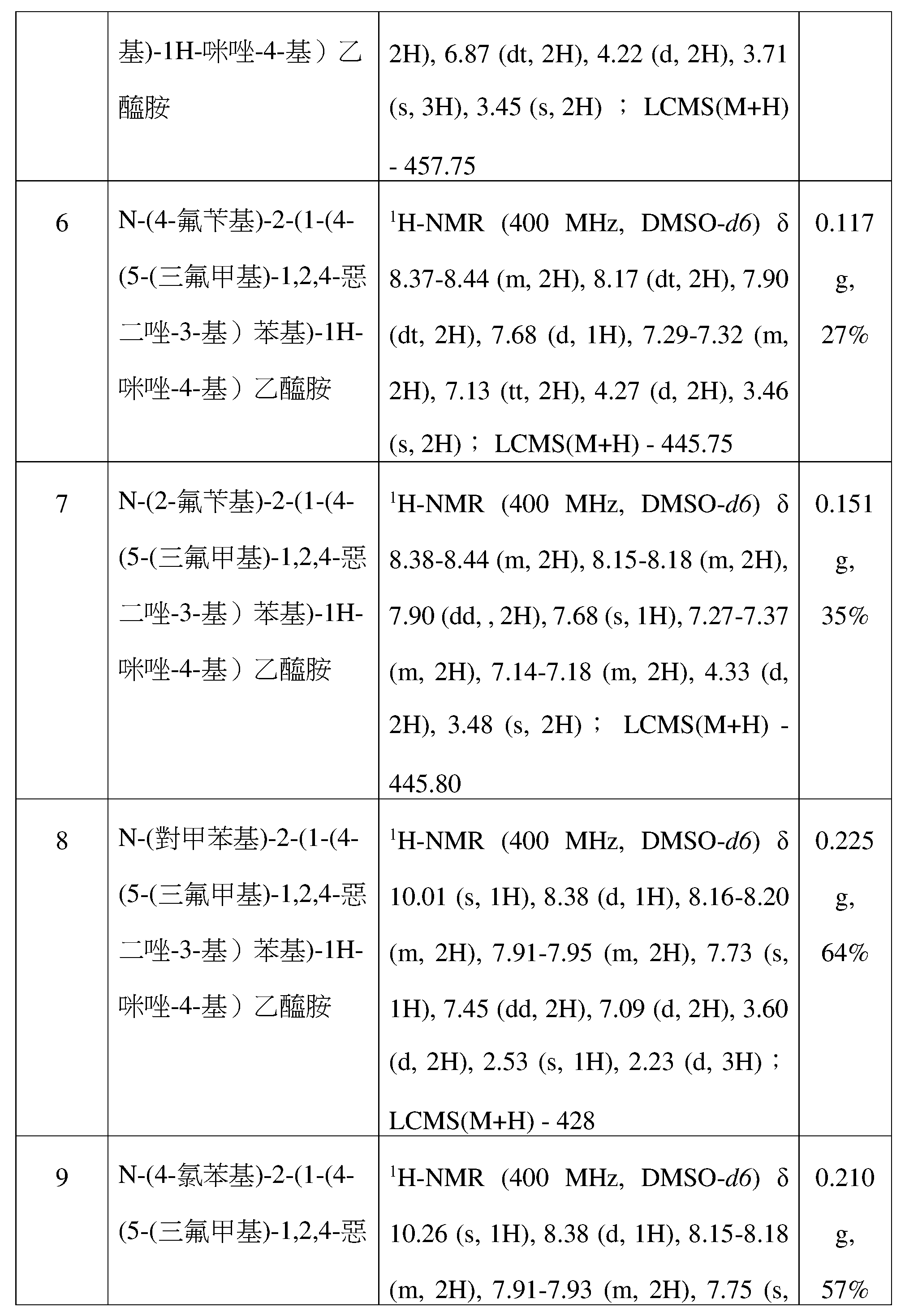

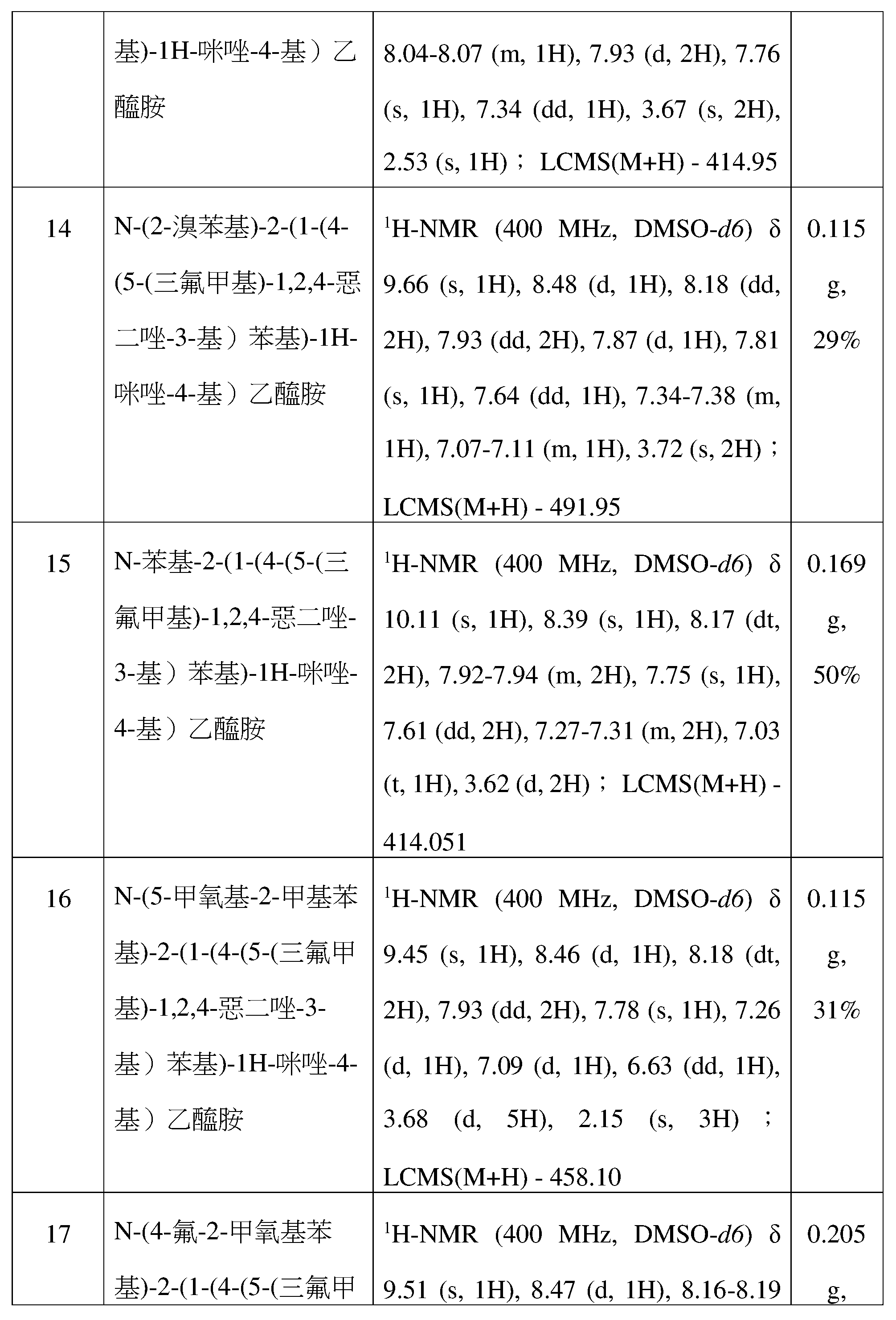
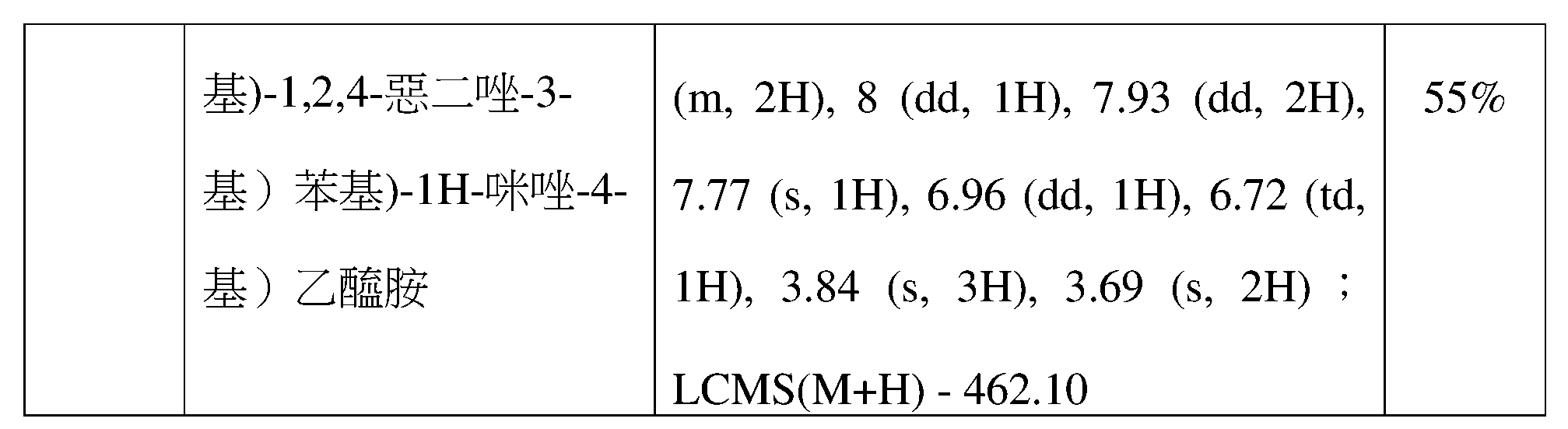
例2:-N-((3-氟苯基)(甲基)(氧基)-λ6 -亞磺醯基)-1-(4-(5-(三氟甲基)-1,2,4-惡二唑-3-基)苯基)-1H-吡唑-4-羧醯胺(化合物23號)的製備 Example 2: Preparation of N -((3-fluorophenyl)(methyl)(oxy)-λ 6 -sulfinyl)-1-(4-(5-(trifluoromethyl)-1,2,4-oxadiazol-3-yl)phenyl)-1H-pyrazole-4-carboxamide (Compound No. 23)
第1步:1-(4-氰基苯基)-1H-吡唑-4-羧酸乙酯Step 1: 1-(4-cyanophenyl)-1H-pyrazole-4-carboxylic acid ethyl ester
在25℃下向4-氟苄腈(1g,8.3mmol)的N,N-二甲基甲醯胺(15mL)攪拌溶液中加入1H-吡唑-4-羧酸乙酯(1.157g,8.3mmol)和碳酸銫(4.04g,12.38mmol)。將所得反應混合物在70℃下攪拌16小時。將反應混合物冷卻至25℃並過濾。將濾液倒在碎冰(30g)上。將獲得的沉澱物過濾並用冰冷的水(40mL)洗滌,並在減壓下乾燥,得到1-(4-氰基苯基)-1H-吡唑-4-羧酸乙酯(1.4g,70%產率)。 To a stirred solution of 4-fluorobenzonitrile (1 g, 8.3 mmol) in N,N-dimethylformamide (15 mL) at 25°C, 1H-pyrazole-4-carboxylic acid ethyl ester (1.157 g, 8.3 mmol) and cesium carbonate (4.04 g, 12.38 mmol) were added. The resulting reaction mixture was stirred at 70°C for 16 hours. The reaction mixture was cooled to 25°C and filtered. The filtrate was poured onto crushed ice (30 g). The obtained precipitate was filtered and washed with ice-cold water (40 mL), and dried under reduced pressure to obtain 1-(4-cyanophenyl)-1H-pyrazole-4-carboxylic acid ethyl ester (1.4 g, 70% yield).
第2步:1-(4-(N'-羥基胺基甲醯亞胺基)苯基)-1H-吡唑-4-羧酸乙酯Step 2: 1-(4-(N'-hydroxyaminoformamido)phenyl)-1H-pyrazole-4-carboxylic acid ethyl ester
將1-(4-氰基苯基)-1H-吡唑-4-羧酸乙酯(0.5g,2.1mmol)的乙醇(10mL)攪拌懸浮液冷卻至5℃。逐滴加入50%的羥胺水溶液(0.137g,2.1mmol),並在55℃下攪拌12小時。減壓濃縮反應混合物以除去揮發物,得到1-(4-(N'-羥基胺基甲醯亞胺基)苯基)-1H-吡唑-4-羧酸乙酯(0.57g,100%產率)。 A stirred suspension of ethyl 1-(4-cyanophenyl)-1H-pyrazole-4-carboxylate (0.5 g, 2.1 mmol) in ethanol (10 mL) was cooled to 5°C. A 50% aqueous solution of hydroxylamine (0.137 g, 2.1 mmol) was added dropwise and stirred at 55°C for 12 hours. The reaction mixture was concentrated under reduced pressure to remove volatiles to obtain ethyl 1-(4-(N'-hydroxyaminocarbonylamino)phenyl)-1H-pyrazole-4-carboxylate (0.57 g, 100% yield).
第3步:1-(4-(N'-羥基胺基甲醯亞胺基)苯基)-1H-吡唑-4-羧酸Step 3: 1-(4-(N'-hydroxyaminoformamido)phenyl)-1H-pyrazole-4-carboxylic acid
在25℃下將1-(4-(N'-羥基胺基甲醯亞胺基)苯基)-1H-吡唑-4-甲酸乙酯(8g,29.2mmol)的甲醇(80mL)攪拌懸浮液中加入氫氧化鈉(2.92g,72.9mmol)的水(8mL)溶液中,並將得到的懸浮液在55℃下攪拌5小時。減壓濃縮反應混合物以除去揮發物,並將所得殘餘物溶於水(50mL)中,在10℃下用10%鹽酸水溶液酸化至pH 5,並將所得沉澱物過濾。將獲得的固體用水(30mL)洗滌,並在減壓下乾燥,得到1-(4-(N'-羥基胺基甲醯亞胺基)苯基)-1H-吡唑-4-羧酸(7.2g,100%產率)。 To a stirred suspension of ethyl 1-(4-(N'-hydroxyaminocarbonyl imide)phenyl)-1H-pyrazole-4-carboxylate (8 g, 29.2 mmol) in methanol (80 mL) was added a solution of sodium hydroxide (2.92 g, 72.9 mmol) in water (8 mL) at 25° C., and the resulting suspension was stirred at 55° C. for 5 hours. The reaction mixture was concentrated under reduced pressure to remove volatiles, and the resulting residue was dissolved in water (50 mL), acidified to pH 5 with 10% aqueous hydrochloric acid at 10° C., and the resulting precipitate was filtered. The obtained solid was washed with water (30 mL) and dried under reduced pressure to obtain 1-(4-(N'-hydroxyaminocarbonylamino)phenyl)-1H-pyrazole-4-carboxylic acid (7.2 g, 100% yield).
第4步:1-(4-(5-(三氟甲基)-1,2,4-惡二唑-3-基)苯基)-1H-吡唑-4-羧酸Step 4: 1-(4-(5-(trifluoromethyl)-1,2,4-oxadiazol-3-yl)phenyl)-1H-pyrazole-4-carboxylic acid
在0℃下,在氮氣環境中向1-(4-(N'-羥基胺基甲醯亞胺基)苯基)-1H-吡唑-4-羧酸(7.1g,28.8mmol)和二氯甲烷(10mL)的攪拌懸浮液中加入三氟乙酸酐(6.11mL,43.3mmol),將得到的反應混合物在25℃攪拌14小時。將反應混合物在減壓下濃縮以完全除去揮發物。在25℃下將獲得的殘餘物在二氯甲烷和己烷的1:1混合物(40mL)中攪拌30分鐘。將獲得的沉澱物過濾並在減壓下乾燥。將固體產物在水(40mL)中攪拌1小時,並在25℃下向該溶液中加入碳酸氫鈉(1.696g,20.2mmol)和水(10mL)的溶液。將沉澱物過濾並在減壓下乾燥,得到1-(4-(5-(三氟甲基)-1,2,4-惡二唑-3-基)苯基)-1H-吡唑-4-羧酸(9g,96%產率)。 To a stirred suspension of 1-(4-(N'-hydroxyaminoformamido)phenyl)-1H-pyrazole-4-carboxylic acid (7.1 g, 28.8 mmol) and dichloromethane (10 mL) was added trifluoroacetic anhydride (6.11 mL, 43.3 mmol) at 0°C in a nitrogen atmosphere, and the resulting reaction mixture was stirred at 25°C for 14 hours. The reaction mixture was concentrated under reduced pressure to completely remove volatiles. The obtained residue was stirred in a 1:1 mixture (40 mL) of dichloromethane and hexane at 25°C for 30 minutes. The obtained precipitate was filtered and dried under reduced pressure. The solid product was stirred in water (40 mL) for 1 hour, and a solution of sodium bicarbonate (1.696 g, 20.2 mmol) and water (10 mL) was added to the solution at 25°C. The precipitate was filtered and dried under reduced pressure to give 1-(4-(5-(trifluoromethyl)-1,2,4-oxadiazol-3-yl)phenyl)-1H-pyrazole-4-carboxylic acid (9 g, 96% yield).
第5步:N-((3-氟苯基)(甲基)(氧基)-λ6 -亞磺醯基)-1-(4-(5-(三氟甲基)-1,2,4-惡二唑-3-基)苯基)-1H-吡唑-4-羧醯胺 Step 5: N-((3-fluorophenyl)(methyl)(oxy)-λ 6 -sulfinyl)-1-(4-(5-(trifluoromethyl)-1,2,4-oxadiazol-3-yl)phenyl)-1H-pyrazole-4-carboxamide
在5-10℃下向(3-氟苯基)(亞胺基)(甲基)-λ6-磺胺酮(0.107g,0.6mmol)、1-(4-(5-(三氟甲基)-1 2,4-惡二唑-3-基)苯基)-1H-吡唑-4-羧酸(0.20 g,0.6mmol)、N,N-二異丙基乙胺(0.269mL,1.5mmol)和N,N-二甲基甲醯胺(5mL)的攪拌溶液中加入1-[雙(二甲基胺基)亞甲基]-1H-1,2,3-三唑[4,5-b]吡啶3-氧化物六氟磷酸鹽(HATU)(0.352g,0.9mmol),並將所得反應混合物在25℃下攪拌16小時。向該反應混合物中加入冰冷的飽和碳酸氫鈉水溶液(10mL),並在25℃下攪拌30分鐘。過濾得到的沉澱,用水(5mL)洗滌,乾燥,通過製備型高效液相色譜法純化粗產物,得到N-((3-氟苯基)(甲基)(氧基)-λ6-亞磺醯基)-1-(4-(5-(三氟甲基)-1,2,4-惡二唑-3-基)苯基)-1H-吡唑-4-羧醯胺(0.096g,33%產率)。1H-NMR(400MHz,DMSO-d6)δ 9.07(d,1H),8.19(s,4H),8.13(d,1H),7.91-7.93(m,2H),7.74-7.79(m,1H),7.63-7.68(m,1H),3.65(s,3H);LCMS(M+H):479.75。 To a stirred solution of (3-fluorophenyl)(imino)(methyl)-λ 6 -sulfonamide (0.107 g, 0.6 mmol), 1-(4-(5-(trifluoromethyl)-1 2,4-oxadiazol-3-yl)phenyl)-1H-pyrazole-4-carboxylic acid (0.20 g, 0.6 mmol), N,N-diisopropylethylamine (0.269 mL, 1.5 mmol) and N,N-dimethylformamide (5 mL) was added 1-[bis(dimethylamino)methylene]-1H-1,2,3-triazolo[4,5-b]pyridine 3-oxide hexafluorophosphate (HATU) (0.352 g, 0.9 mmol) at 5-10° C., and the resulting reaction mixture was stirred at 25° C. for 16 hours. To the reaction mixture was added an ice-cold saturated aqueous sodium bicarbonate solution (10 mL), and stirred at 25° C. for 30 minutes. The resulting precipitate was filtered, washed with water (5 mL), dried, and the crude product was purified by preparative HPLC to give N-((3-fluorophenyl)(methyl)(oxy)-λ 6 -sulfinyl)-1-(4-(5-(trifluoromethyl)-1,2,4-oxadiazol-3-yl)phenyl)-1H-pyrazole-4-carboxamide (0.096 g, 33% yield). 1 H-NMR(400MHz,DMSO- d6 )δ 9.07(d,1H),8.19(s,4H),8.13(d,1H),7.91-7.93(m,2H),7.74-7.79(m,1H),7.63-7.68(m,1H),3.65(s,3H); LCMS(M+H): 479.75.
表2中所列的化合物可通過例2中所述的類似方法製備。 The compounds listed in Table 2 can be prepared by a similar method as described in Example 2.
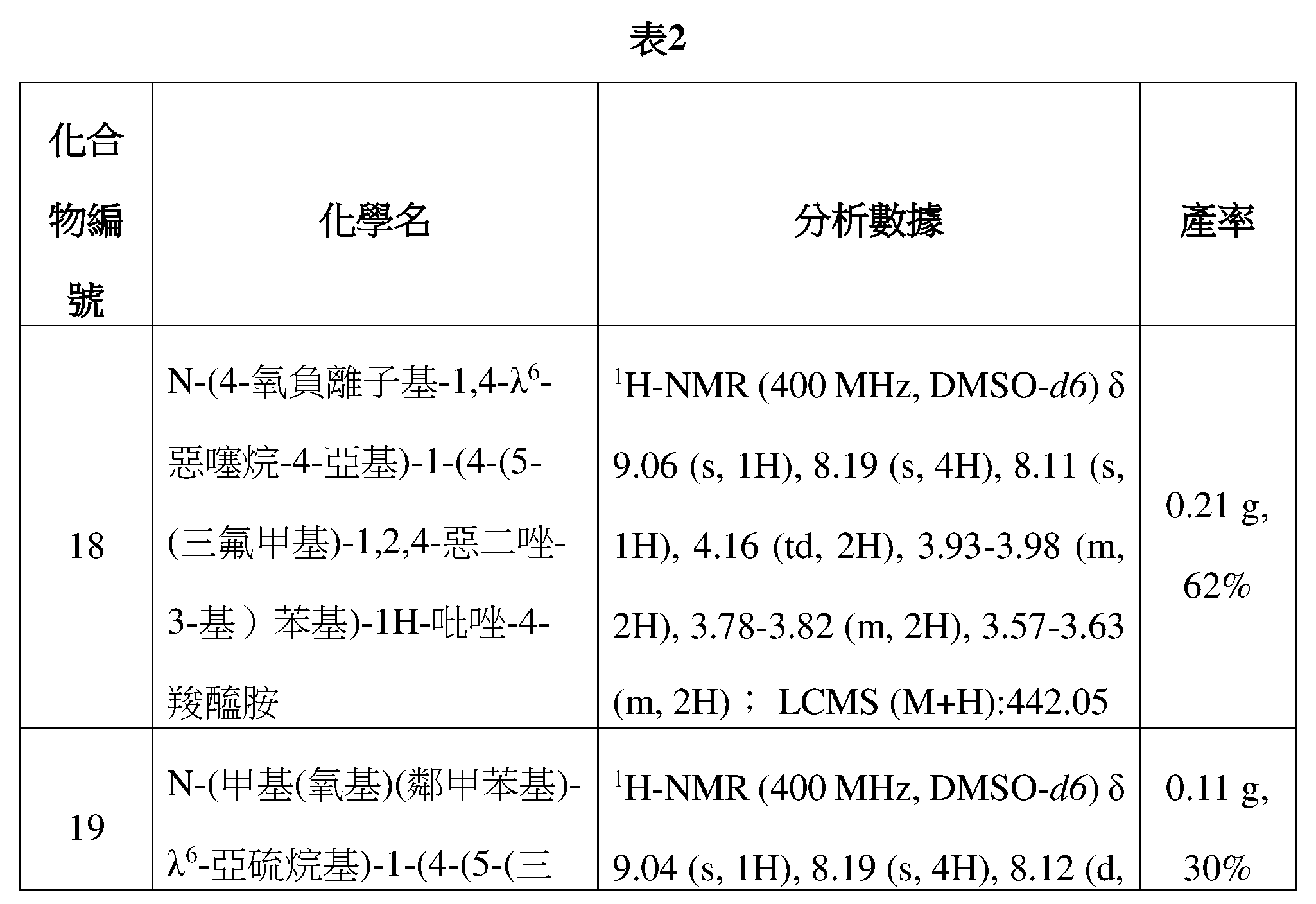
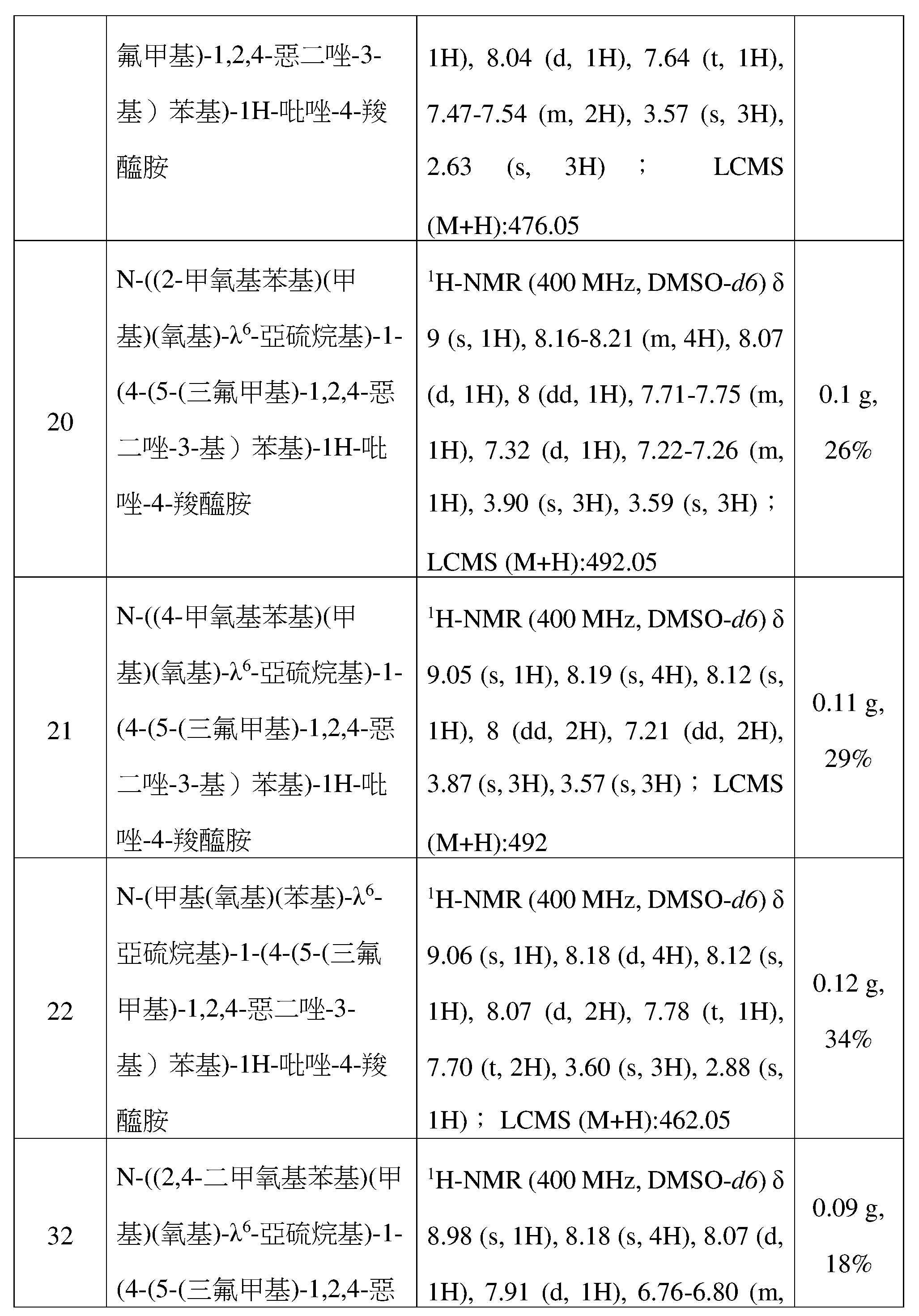
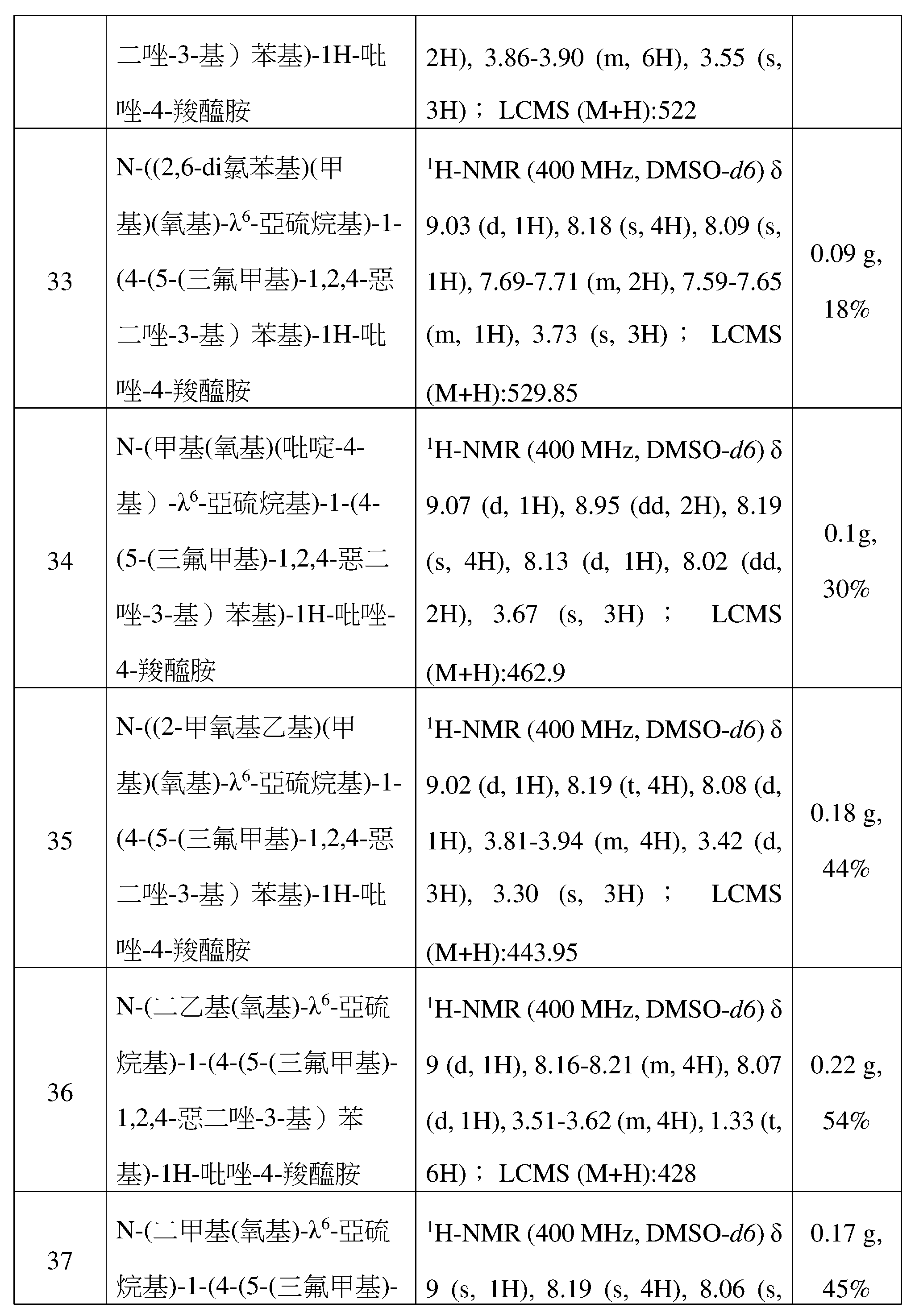

例3:-4-氯-N-((1-(4-(5-(三氟甲基)-1,2,4-惡二唑-3-基)苯基)-1H-吡唑-4-基)甲基)苯甲醯胺(化合物104號)的製備Example 3: Preparation of 4-chloro-N-((1-(4-(5-(trifluoromethyl)-1,2,4-oxadiazol-3-yl)phenyl)-1H-pyrazol-4-yl)methyl)benzamide (Compound No. 104)
第1步:4-(1H-吡唑-1-基)苄腈Step 1: 4-(1H-pyrazol-1-yl)benzonitrile
在氮氣環境中向冷卻至0℃的1H-吡唑(10g,147mmol)的N,N-二甲基甲醯胺(100mL)攪拌溶液中分批加入氫化鈉(5.87g,147mmol)中。將形成的懸浮液在0℃下攪拌30分鐘。在0℃下將4-氟苄胺基(17.8g,147mmol)加入到反應混合物中。將所得反應混合物升至25℃並攪拌16小時。反應完成後,將反應混合物倒在冰冷的水(500mL)上。過濾獲得的固體,並在減壓下乾燥,得到4-(1H-吡唑-1-基)苄腈(22g,130mmol,89%產率),為白色固體。 To a stirred solution of 1H-pyrazole (10 g, 147 mmol) in N,N-dimethylformamide (100 mL) cooled to 0°C was added sodium hydride (5.87 g, 147 mmol) in a nitrogen atmosphere in batches. The resulting suspension was stirred at 0°C for 30 minutes. 4-Fluorobenzylamine (17.8 g, 147 mmol) was added to the reaction mixture at 0°C. The resulting reaction mixture was raised to 25°C and stirred for 16 hours. After the reaction was completed, the reaction mixture was poured onto ice-cold water (500 mL). The obtained solid was filtered and dried under reduced pressure to give 4-(1H-pyrazol-1-yl)benzonitrile (22 g, 130 mmol, 89% yield) as a white solid.
第2步:4-(4-甲酸基-1H-吡唑-1-基)苄腈Step 2: 4-(4-Formyl-1H-pyrazol-1-yl)benzonitrile
在氮氣環境中向4-(1H-吡唑-1-基)苄腈(19g,112mmol)的三氟乙酸(147mL,1909mmol)攪拌溶液中分批加入六亞甲基四胺(47.2g,337mmol)。在氮氣環境中將反應混合物加熱至75℃,持續48小時。反應完成後,將反應混合物倒在冰冷的飽和碳酸氫鈉水溶液(300mL)中,並用乙酸乙酯(225mL)萃取三次,合併的乙酸乙酯層用水(100mL)洗滌,用無水硫酸鈉將 乙酸乙酯層乾燥並減壓蒸發,粗化合物通過快速柱色譜(用30%乙酸乙酯的己烷溶液作為洗脫劑)法進行純化,得到4-(4-甲苯基-1H-吡唑-1-基)苯甲腈(12.86g,65.2mmol,58%產率)。 To a stirred solution of 4-(1H-pyrazol-1-yl)benzonitrile (19 g, 112 mmol) in trifluoroacetic acid (147 mL, 1909 mmol) was added hexamethylenetetramine (47.2 g, 337 mmol) in portions under nitrogen. The reaction mixture was heated to 75 °C under nitrogen for 48 hours. After the reaction was completed, the reaction mixture was poured into an ice-cold saturated aqueous sodium bicarbonate solution (300 mL) and extracted three times with ethyl acetate (225 mL). The combined ethyl acetate layers were washed with water (100 mL), dried with anhydrous sodium sulfate, and evaporated under reduced pressure. The crude compound was purified by flash column chromatography (using 30% ethyl acetate in hexane as an eluent) to obtain 4-(4-tolyl-1H-pyrazol-1-yl)benzonitrile (12.86 g, 65.2 mmol, 58% yield).
第3步:4-(4-(羥甲基)-1H-吡唑-1-基)苄腈Step 3: 4-(4-(Hydroxymethyl)-1H-pyrazol-1-yl)benzonitrile
在25℃下,在氮氣環境中向4-(4-甲酸基-1H-吡唑-1-基)苄腈(12.9g,65.2mmol)的四氫呋喃(60mL)和甲醇(60mL)攪拌溶液中加入氯化鋰(0.276g,6.5mmol)。將反應混合物冷卻至0℃,然後分批加入硼氫化鈉(3.7g,98mmol)。將反應混合物升至25℃並攪拌8小時。反應完成後,將反應混合物冷卻至0℃,並向反應混合物中滴加水(50mL)。將產物在二氯甲烷(225mL)中萃取三次。合併的二氯甲烷層用無水硫酸鈉乾燥並減壓蒸發。將粗化合物經快速柱色譜法(用75%乙酸乙酯的己烷溶液為洗脫劑)純化,得到4-(4-(羥甲基)-1H-吡唑-1-基)苄腈(10g,77%產率)。 To a stirred solution of 4-(4-formyl-1H-pyrazol-1-yl)benzonitrile (12.9 g, 65.2 mmol) in tetrahydrofuran (60 mL) and methanol (60 mL) was added lithium chloride (0.276 g, 6.5 mmol) at 25°C in a nitrogen atmosphere. The reaction mixture was cooled to 0°C, and then sodium borohydride (3.7 g, 98 mmol) was added in portions. The reaction mixture was raised to 25°C and stirred for 8 hours. After the reaction was completed, the reaction mixture was cooled to 0°C, and water (50 mL) was added dropwise to the reaction mixture. The product was extracted three times in dichloromethane (225 mL). The combined dichloromethane layers were dried over anhydrous sodium sulfate and evaporated under reduced pressure. The crude compound was purified by flash column chromatography (using 75% ethyl acetate in hexane as eluent) to give 4-(4-(hydroxymethyl)-1H-pyrazol-1-yl)benzonitrile (10 g, 77% yield).
第4步:4-(4-(氯甲基)-1H-吡唑-1-基)苄腈Step 4: 4-(4-(Chloromethyl)-1H-pyrazol-1-yl)benzonitrile
在25℃下,在氮氣環境中向4-(4-(羥甲基)-1H-吡唑-1-基)苄腈(7g,35mmol)的氯仿(70mL)攪拌溶液中逐滴加入亞硫醯氯(3.1mL,42mmol),將所得反應混合物在68℃下回流2-3小時,將反應混合物升至25℃,並用水(100mL)稀釋。用二氯甲烷(150mL)萃取三次。將混合的二氯甲烷層用水(50mL)洗滌,並用無水硫酸鈉乾燥。將二氯甲烷層減壓蒸發,得到4-(4-(氯甲基)-1H-吡唑-1-基)苄腈(7.48g,34.4mmol,98%產率),為膏狀固體,將所得的粗化合物直接用於下一步。 To a stirred solution of 4-(4-(hydroxymethyl)-1H-pyrazol-1-yl)benzonitrile (7 g, 35 mmol) in chloroform (70 mL) was added sulfinyl chloride (3.1 mL, 42 mmol) dropwise at 25°C in a nitrogen atmosphere. The resulting reaction mixture was refluxed at 68°C for 2-3 hours. The reaction mixture was warmed to 25°C and diluted with water (100 mL). It was extracted three times with dichloromethane (150 mL). The combined dichloromethane layers were washed with water (50 mL) and dried over anhydrous sodium sulfate. The dichloromethane layer was evaporated under reduced pressure to give 4-(4-(chloromethyl)-1H-pyrazol-1-yl)benzonitrile (7.48 g, 34.4 mmol, 98% yield) as a paste solid. The resulting crude compound was used directly in the next step.
第5步:叔丁基(叔丁氧基羰基)((1-(4-氰基苯基)-1H-吡唑-4-基)甲基)胺基甲酸酯Step 5: tert-Butyl(tert-butoxycarbonyl)((1-(4-cyanophenyl)-1H-pyrazol-4-yl)methyl)carbamate
在氮氣環境下,向二叔丁基亞胺基二羧酸酯(7.5g,34mmol)的N,N-二甲基甲醯胺(70mL)攪拌溶液中分批加入碳酸鉀(5.7g,41mmol)。將4-(4-(氯甲基)-1H-吡唑-1-基)苄腈(7.5g,34mmol)溶於N,N-二甲基甲醯胺(5mL)中,並在25℃下在氮氣環境中逐滴添加至反應混合物。將反應混合物在100℃下加熱16小時。反應混合物用水(100mL)稀釋。產物用乙酸乙酯(300mL)萃取三次。混合的乙酸乙酯層用冰冷的水(400mL)洗滌兩次,用無水硫酸鈉將乙酸乙酯層乾燥並在減壓下蒸發。將粗產物通過快速柱色譜法(使用65%乙酸乙酯的己烷溶液作為洗脫液)純化,得到叔丁基(叔丁氧基羰基)((1-(4-氰基苯基)-1H-吡唑-4-基)甲基)胺基甲酸酯(12g,30mmol,88%產率),為無色膠。 Potassium carbonate (5.7 g, 41 mmol) was added in portions to a stirred solution of di-tert-butylimidodicarboxylate (7.5 g, 34 mmol) in N,N-dimethylformamide (70 mL) under nitrogen. 4-(4-(Chloromethyl)-1H-pyrazol-1-yl)benzonitrile (7.5 g, 34 mmol) was dissolved in N,N-dimethylformamide (5 mL) and added dropwise to the reaction mixture at 25°C under nitrogen. The reaction mixture was heated at 100°C for 16 hours. The reaction mixture was diluted with water (100 mL). The product was extracted three times with ethyl acetate (300 mL). The combined ethyl acetate layers were washed twice with ice-cold water (400 mL), and the ethyl acetate layer was dried over anhydrous sodium sulfate and evaporated under reduced pressure. The crude product was purified by flash column chromatography (using 65% ethyl acetate in hexanes as eluent) to give tert-butyl(tert-butoxycarbonyl)((1-(4-cyanophenyl)-1H-pyrazol-4-yl)methyl)carbamate (12 g, 30 mmol, 88% yield) as a colorless gum.
第6步:叔丁基(叔丁氧羰基)((1-(4-(N'-羥基胺基甲醯亞胺基)苯基)-1H-吡唑-4-基)甲基)胺基甲酸酯Step 6: tert-Butyl(tert-butyloxycarbonyl)((1-(4-(N'-hydroxycarbamoyl)phenyl)-1H-pyrazol-4-yl)methyl)carbamate
在25℃下向叔丁基(叔丁基氧羰基)((1-(4-氰基苯基)-1H-吡唑-4-基)甲基)胺基甲酸酯(12g,30.1mmol)的乙醇(130mL)攪拌溶液中加入50%的羥胺水溶液(3.7mL,60mmol),並將所得反應混合物在氮氣環境中加熱至80℃保持16小時。除去揮發物,得到叔丁基(叔丁氧羰基)((1-(4-(N'-羥基胺基甲醯亞胺基)苯基)-1H-吡唑-4-基)甲基)胺基甲酸酯(12.5g,29mmol,96%產率),為奶油狀固體。 To a stirred solution of tert-butyl(tert-butyloxycarbonyl)((1-(4-cyanophenyl)-1H-pyrazol-4-yl)methyl)carbamate (12 g, 30.1 mmol) in ethanol (130 mL) was added 50% aqueous hydroxylamine solution (3.7 mL, 60 mmol) at 25°C, and the resulting reaction mixture was heated to 80°C in a nitrogen atmosphere for 16 hours. Volatiles were removed to give tert-butyl(tert-butyloxycarbonyl)((1-(4-(N'-hydroxycarbamoylcarbamoyl)phenyl)-1H-pyrazol-4-yl)methyl)carbamate (12.5 g, 29 mmol, 96% yield) as a creamy solid.
第7步:叔丁基(叔丁氧羰基)((1-(4-(5-(三氟甲基)-1,2,4-惡二唑-3-基)苯基)-1H-吡唑-4-基)甲基)胺基甲酸酯Step 7: tert-Butyl(tert-butyloxycarbonyl)((1-(4-(5-(trifluoromethyl)-1,2,4-oxadiazol-3-yl)phenyl)-1H-pyrazol-4-yl)methyl)carbamate
在25℃下,向叔丁基(叔丁氧羰基)((1-(4-(N'-羥基胺基甲醯亞胺基)苯基)-1H-吡唑-4-基)甲基)胺基甲酸酯(12.5g,29.0mmol)的四氫 呋喃(130mL)攪拌溶液中加入三乙胺(6mL,43mmol)。將反應混合物冷卻至0℃。向該反應混合物中逐滴加入三氟乙酸酐(6.1mL,43mmol)並使其升溫至25℃,然後在25℃下在氮氣環境中攪拌16小時。反應完成後,將反應混合物用水(100mL)稀釋。產物用乙酸乙酯(300mL)萃取三次,合併的乙酸乙酯層用無水硫酸鈉乾燥並減壓蒸發,粗化合物經快速柱色譜(用18%乙酸乙酯的己烷溶液作為洗脫劑)純化,得到叔丁基(叔丁氧羰基)((1-(4-(5-(三氟甲基)-1,2,4-惡二唑-3-基)苯基)-1H-吡唑-4-基)甲基)胺基甲酸酯(10.5g,20.6mmol,71%產率),為白色固體。 To a stirred solution of tert-butyl(tert-butyloxycarbonyl)((1-(4-(N'-hydroxycarbamoyl)phenyl)-1H-pyrazol-4-yl)methyl)carbamate (12.5 g, 29.0 mmol) in tetrahydrofuran (130 mL) at 25°C was added triethylamine (6 mL, 43 mmol). The reaction mixture was cooled to 0°C. Trifluoroacetic anhydride (6.1 mL, 43 mmol) was added dropwise to the reaction mixture and allowed to warm to 25°C, and then stirred at 25°C in a nitrogen atmosphere for 16 hours. After the reaction was completed, the reaction mixture was diluted with water (100 mL). The product was extracted three times with ethyl acetate (300 mL), the combined ethyl acetate layers were dried over anhydrous sodium sulfate and evaporated under reduced pressure, and the crude compound was purified by flash column chromatography (using 18% ethyl acetate in hexane as eluent) to obtain tert-butyl(tert-butyloxycarbonyl)((1-(4-(5-(trifluoromethyl)-1,2,4-oxadiazol-3-yl)phenyl)-1H-pyrazol-4-yl)methyl)carbamate (10.5 g, 20.6 mmol, 71% yield) as a white solid.
第8步:(1-(4-(5-(三氟甲基)-1,2,4-惡二唑-3-基)苯基)-1H-吡唑-4-基)甲胺鹽酸鹽Step 8: (1-(4-(5-(trifluoromethyl)-1,2,4-oxadiazol-3-yl)phenyl)-1H-pyrazol-4-yl)methanamine hydrochloride
向冷卻至0℃的叔丁基(叔丁氧羰基)((1-(4-(5-(三氟甲基)-1,2,4-惡二唑-3-基)苯基)-1H-吡唑-4-基)甲基)胺基甲酸酯(10.5g,20.6mmol)(10.5g,20.6mmol)的二氯甲烷(100mL)攪拌溶液中滴加4M鹽酸的二惡烷(70mL,280mmol)溶液,將反應混合物在25℃下在氮氣環境中攪拌12小時,反應完成後,過濾反應混合物中形成的固體,用正己烷(150mL)洗滌三次,減壓乾燥,得到(1-(4-(5-(三氟甲基)-1,2,4-惡二唑-3-基)苯基)-1H-吡唑-4-基)甲胺鹽酸鹽(6.5g,18.7mmol,91%產率),為白色固體。 To a solution of tert-butyl(tert-butoxycarbonyl)((1-(4-(5-(trifluoromethyl)-1,2,4-oxadiazol-3-yl)phenyl)-1H-pyrazol-4-yl)methyl)carbamate (10.5 g, 20.6 mmol) in dichloromethane (100 mL) cooled to 0°C was added dropwise a 4 M solution of hydrochloric acid in dioxane (70 mL, 280 mmol). The reaction mixture was stirred at 25°C in a nitrogen environment for 12 hours. After the reaction was completed, the solid formed in the reaction mixture was filtered, washed three times with n-hexane (150 mL), and dried under reduced pressure to obtain (1-(4-(5-(trifluoromethyl)-1,2,4-oxadiazol-3-yl)phenyl)-1H-pyrazol-4-yl)methylamine hydrochloride (6.5 g, 18.7 mmol, 91% yield) as a white solid.
第9步:4-氯-N-((1-(4-(5-(三氟甲基)-1,2,4-惡二唑-3-基)苯基)-1H-吡唑-4-基)甲基)苯甲醯胺(化合物104號)Step 9: 4-Chloro-N-((1-(4-(5-(trifluoromethyl)-1,2,4-oxadiazol-3-yl)phenyl)-1H-pyrazol-4-yl)methyl)benzamide (Compound No. 104)
在25℃下向(1-(4-(5-(三氟甲基)-1,2,4-惡二唑-3-基)苯基)-1H-吡唑-4-基)甲胺鹽酸鹽(0.11g,0.32mmol)和4-氯苯甲酸(0.05g,0.3mmol)的N,N-二甲基甲醯胺(10mL)的攪拌溶液中加入N,N-二異丙基乙胺(0.22mL, 1.28mmol),然後加入1-[雙(二甲基胺基)亞甲基]-1H-1,2,3-三唑並[4,5-b]吡啶3-氧化六氟磷酸鉀(HATU)(0.24g,0.6mmol)。將所得反應混合物在25℃在氮氣環境中攪拌16小時。反應完成後,將反應混合物用水(20mL)稀釋,將產物萃取三次。用乙酸乙酯(60mL)洗滌合併的乙酸乙酯層,用冰冷的水(60mL)洗滌三次,用無水硫酸鈉乾燥並減壓蒸發,粗產物通過快速柱色譜法(用51%乙酸乙酯的己烷溶液作為洗脫液)純化,得到4-氯-N-((1-(4-(5-(三氟甲基)-1,2,4-惡二唑-3-基)苯基)-1H-吡唑-4-基)甲基)苯甲醯胺(0.065g,0.15mmol,46%產率),為白色固體。1H-NMR(400MHz,DMSO-d6)δ 9(t,1H),8.57(s,1H),8.17-8.14(m,2H),8.08-8.02(m,2H),7.92-7.86(m,2H),7.79(s,1H),7.56-7.51(m,2H),4.43(dd,2H);LCMS:m/e 448(M+H)。 To a stirred solution of (1-(4-(5-(trifluoromethyl)-1,2,4-oxadiazol-3-yl)phenyl)-1H-pyrazol-4-yl)methanamine hydrochloride (0.11 g, 0.32 mmol) and 4-chlorobenzoic acid (0.05 g, 0.3 mmol) in N,N-dimethylformamide (10 mL) was added N,N-diisopropylethylamine (0.22 mL, 1.28 mmol) followed by 1-[bis(dimethylamino)methylene]-1H-1,2,3-triazolo[4,5-b]pyridine 3-oxide potassium hexafluorophosphate (HATU) (0.24 g, 0.6 mmol) at 25° C. The resulting reaction mixture was stirred at 25° C. under nitrogen for 16 hours. After the reaction was completed, the reaction mixture was diluted with water (20 mL) and the product was extracted three times. The combined ethyl acetate layers were washed with ethyl acetate (60 mL), washed three times with ice-cold water (60 mL), dried over anhydrous sodium sulfate and evaporated under reduced pressure. The crude product was purified by flash column chromatography (using 51% ethyl acetate in hexane as eluent) to give 4-chloro-N-((1-(4-(5-(trifluoromethyl)-1,2,4-oxadiazol-3-yl)phenyl)-1H-pyrazol-4-yl)methyl)benzamide (0.065 g, 0.15 mmol, 46% yield) as a white solid. 1 H-NMR(400MHz,DMSO- d6 )δ 9(t,1H),8.57(s,1H),8.17-8.14(m,2H),8.08-8.02(m,2H),7.92-7.86(m,2H),7.79(s,1H),7.56-7.51(m,2H),4.43(dd,2H); LCMS: m/e 448(M+H).
表3中所列的化合物可通過例3中所述的類似方法製備。 The compounds listed in Table 3 can be prepared by a similar method as described in Example 3.
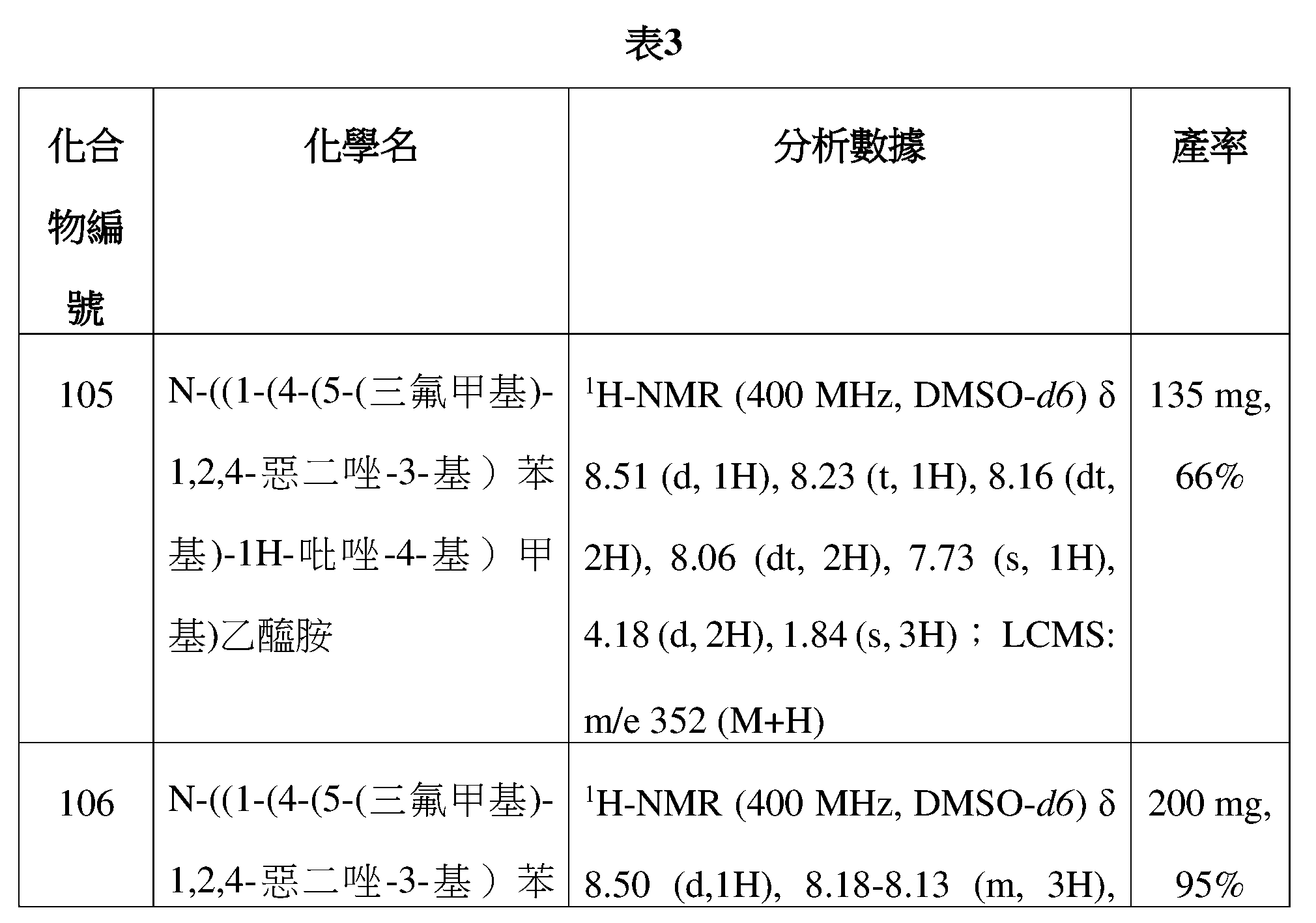


例4:-N-((1-(4-(5-(三氟甲基)-1,2,4-惡二唑-3-基)苯基)-1H-吡唑-4-基)甲基)甲烷磺醯胺(化合物112號)的製備Example 4: Preparation of N-((1-(4-(5-(trifluoromethyl)-1,2,4-oxadiazol-3-yl)phenyl)-1H-pyrazol-4-yl)methyl)methanesulfonamide (Compound No. 112)
在25℃下向(1-(4-(5-(三氟甲基)-1,2,4-惡二唑-3-基)苯基)-1H-吡唑-4-基)甲胺鹽酸鹽(0.2g,0.58mmol)的二氯甲烷(10mL)攪拌溶液中加入三乙胺(0.24mL,1.7mmol)。將反應混合物冷卻至0℃。在0℃下逐滴加入甲磺醯氯(0.045mL,0.6),將所得反應混合物升至25℃,在氮氣環境中攪拌16小時,反應完成後,將反應混合物用水(20mL)稀釋。用二氯甲烷(60mL)萃取三次,將合併的二氯甲烷層用水(20mL)洗滌,用無水硫酸鈉乾燥,並減壓蒸發,將粗化合物通過快速柱色譜法(使用60%乙酸乙酯的己烷溶液作為洗脫劑)純化,得到N-((1-(4-(5-(三氟甲基)-1,2,4-惡二唑-3-基)苯基)-1H-吡唑-4-基)甲基)甲烷磺醯胺(0.14g,0.4mmol,62%產率),為白色固體。1H-NMR(400MHz,DMSO-d6)δ 8.59(s,1H),8.17(dt,9.2,2.1,2H),8.07(dt,9.1,2.1,2H),7.81(s,1H),7.43(t,6.0,1H),4.13(d,6.1,2H),2.91(s,3H);LCMS:m/e 388(M+H)。 To a stirred solution of (1-(4-(5-(trifluoromethyl)-1,2,4-oxadiazol-3-yl)phenyl)-1H-pyrazol-4-yl)methanamine hydrochloride (0.2 g, 0.58 mmol) in dichloromethane (10 mL) was added triethylamine (0.24 mL, 1.7 mmol) at 25°C. The reaction mixture was cooled to 0°C. Methanesulfonyl chloride (0.045 mL, 0.6) was added dropwise at 0°C, the resulting reaction mixture was warmed to 25°C, stirred for 16 hours in a nitrogen atmosphere, and after the reaction was completed, the reaction mixture was diluted with water (20 mL). The reaction mixture was extracted three times with dichloromethane (60 mL), the combined dichloromethane layers were washed with water (20 mL), dried over anhydrous sodium sulfate, and evaporated under reduced pressure. The crude compound was purified by flash column chromatography using 60% ethyl acetate in hexane as eluent to give N-((1-(4-(5-(trifluoromethyl)-1,2,4-oxadiazol-3-yl)phenyl)-1H-pyrazol-4-yl)methyl)methanesulfonamide (0.14 g, 0.4 mmol, 62% yield) as a white solid. 1 H-NMR(400MHz,DMSO- d6 )δ 8.59(s,1H),8.17(dt,9.2,2.1,2H),8.07(dt,9.1,2.1,2H),7.81(s,1H),7.43(t,6.0,1H),4.13(d,6.1,2H),2.91(s,3H); LCMS: m/e 388(M+H).
表4中所列的化合物可通過例4中所述的類似方法製備。 The compounds listed in Table 4 can be prepared by a similar method as described in Example 4.

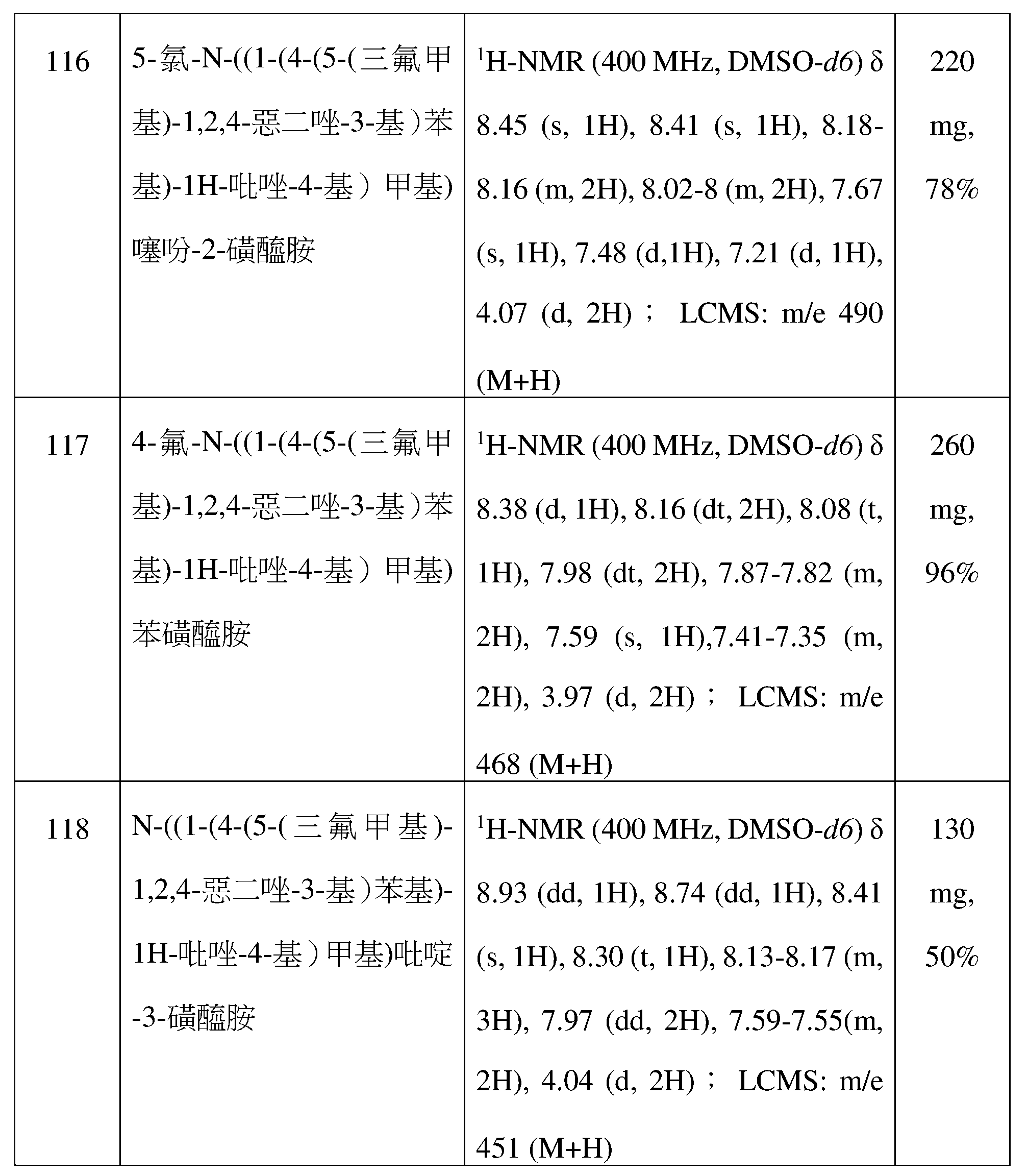
例5:-1-(吡啶-3-基)-3-((1-(4-(5-(三氟甲基)-1,2,4-惡二唑-3-基)苯基)-1H-吡唑-4-基)甲基)脲(化合物119號)的製備Example 5: Preparation of 1-(pyridin-3-yl)-3-((1-(4-(5-(trifluoromethyl)-1,2,4-oxadiazol-3-yl)phenyl)-1H-pyrazol-4-yl)methyl)urea (Compound No. 119)
向(1-(4-(5-(三氟甲基)-1,2,4-惡二唑-3-基)苯基)-1H-吡唑-4-基)甲胺鹽酸鹽(0.2g,0.6mmol)的二氯甲烷(10mL)攪拌溶液中加入三乙胺(0.12mL,0.9mmol),將所得混合物冷卻至0℃,並加入3-異氰基吡啶(0.069g,0.6 mmol),將所得反應混合物升至25℃並在氮氣環境中攪拌16小時,反應完成後,將反應混合物減壓蒸發至乾,將粗化合物通過製備高效液相色譜法進行純化,得到1-(吡啶-3-基)-3-((1-(4-(5-(三氟甲基)-1,2,4-惡二唑-3-基)苯基)-1H-吡唑-4-基)甲基)脲(0.15g,0.3mmol,58%產率),為奶油色固體。1H-NMR(400MHz,DMSO-d6)δ 8.71(d,1H),8.54(s,2H),8.16(dt,2H),8.11(dd,1H),8.07(dt,2H),7.90(dq,1H),7.78(s,1H),7.25(q,1H),6.68(t,1H),4.25(d,2H);LCMS:m/e 430(M+H)。 To a stirred solution of (1-(4-(5-(trifluoromethyl)-1,2,4-oxadiazol-3-yl)phenyl)-1H-pyrazol-4-yl)methanamine hydrochloride (0.2 g, 0.6 mmol) in dichloromethane (10 mL) was added triethylamine (0.12 mL, 0.9 mmol), the resulting mixture was cooled to 0°C, and 3-isocyanopyridine (0.069 g, 0.6 mmol), the reaction mixture was heated to 25° C. and stirred in a nitrogen atmosphere for 16 hours. After the reaction was completed, the reaction mixture was evaporated to dryness under reduced pressure, and the crude compound was purified by preparative high performance liquid chromatography to obtain 1-(pyridin-3-yl)-3-((1-(4-(5-(trifluoromethyl)-1,2,4-oxadiazol-3-yl)phenyl)-1H-pyrazol-4-yl)methyl)urea (0.15 g, 0.3 mmol, 58% yield) as a cream solid. 1 H-NMR(400MHz,DMSO- d6 )δ 8.71(d,1H),8.54(s,2H),8.16(dt,2H),8.11(dd,1H),8.07(dt,2H),7.9 0(dq,1H),7.78(s,1H),7.25(q,1H),6.68(t,1H),4.25(d,2H); LCMS: m/e 430(M+H).
表5中所列的化合物可通過例5中所述的類似方法製備。 The compounds listed in Table 5 can be prepared by a similar method as described in Example 5.
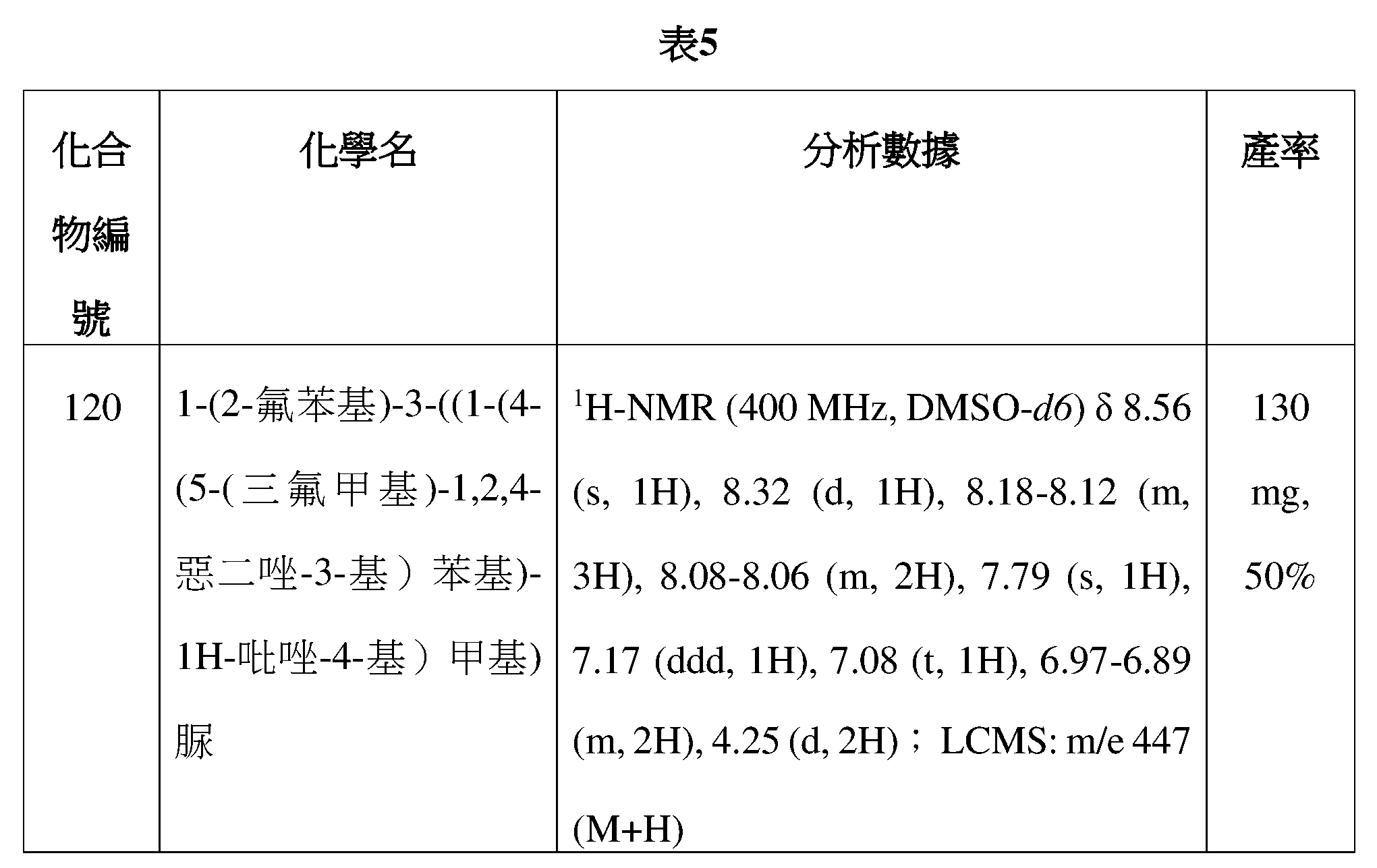
例6:-N-(甲基(氧基)(間甲苯基)-λ6 -亞磺醯基)-1-(4-(5-(三氟甲基)-1,2,4-惡二唑-3-基)苯基)-1H-吡咯-3-羧醯胺(化合物24號) Example 6: -N-(methyl(oxy)(m-tolyl)-λ 6 -sulfinyl)-1-(4-(5-(trifluoromethyl)-1,2,4-oxadiazol-3-yl)phenyl)-1H-pyrrole-3-carboxamide (Compound No. 24)
第1步:1H-吡咯-3-羧酸甲酯Step 1: 1H-pyrrole-3-carboxylic acid methyl ester
向1H-吡咯-3-羧酸(6g,54mmol)的N,N-二甲基甲醯胺(60mL)攪拌溶液中加入碳酸鉀(8.96g,64.8mmol),然後加入甲基碘(3.4mL,54mmol),將得到的反應混合物在25℃下在氮氣環境中攪拌2小時。反應完成後,將水 (50mL)加入到反應混合物中,並用乙酸乙酯(150mL)萃取三次。混合的乙酸乙酯層用冰冷的水(225mL)洗滌三次。乙酸乙酯層用無水硫酸鈉乾燥,並減壓蒸發,得到1H-吡咯-3-羧酸甲酯(6.5g,52mmol,96%產率)。 Potassium carbonate (8.96 g, 64.8 mmol) was added to a stirred solution of 1H-pyrrole-3-carboxylic acid (6 g, 54 mmol) in N,N-dimethylformamide (60 mL), followed by methyl iodide (3.4 mL, 54 mmol), and the resulting reaction mixture was stirred at 25 °C in a nitrogen atmosphere for 2 hours. After the reaction was completed, water (50 mL) was added to the reaction mixture, and extracted three times with ethyl acetate (150 mL). The mixed ethyl acetate layer was washed three times with ice-cold water (225 mL). The ethyl acetate layer was dried over anhydrous sodium sulfate and evaporated under reduced pressure to obtain 1H-pyrrole-3-carboxylic acid methyl ester (6.5 g, 52 mmol, 96% yield).
第2步:1-(4-氰基苯基)-1H-吡咯-3-羧酸甲酯Step 2: 1-(4-cyanophenyl)-1H-pyrrole-3-carboxylic acid methyl ester
向4-氟苄腈(6.5g,53.7mmol)的N,N-二甲基甲醯胺(60mL)攪拌溶液中加入1H-吡咯-3-羧酸甲酯(6.7g,54mmol)和碳酸銫(44g,134mmol)。將得到的反應混合物在80℃下在氮氣環境中加熱12小時。反應完成後,將反應混合物用水(60mL)稀釋,產物用乙酸乙酯(150mL)萃取三次。混合的乙酸乙酯層用冰冷的水(150mL)洗滌三次。用無水硫酸鈉乾燥乙酸乙酯層,並在減壓下蒸發,得到1-(4-氰基苯基)-1H-吡咯-3-羧酸甲酯(8.8g,38.9mmol,72%產率),為淺棕色固體。 To a stirred solution of 4-fluorobenzonitrile (6.5 g, 53.7 mmol) in N,N-dimethylformamide (60 mL) were added 1H-pyrrole-3-carboxylic acid methyl ester (6.7 g, 54 mmol) and cesium carbonate (44 g, 134 mmol). The resulting reaction mixture was heated at 80 °C in a nitrogen atmosphere for 12 hours. After the reaction was completed, the reaction mixture was diluted with water (60 mL) and the product was extracted three times with ethyl acetate (150 mL). The mixed ethyl acetate layer was washed three times with ice-cold water (150 mL). The ethyl acetate layer was dried over anhydrous sodium sulfate and evaporated under reduced pressure to obtain 1-(4-cyanophenyl)-1H-pyrrole-3-carboxylic acid methyl ester (8.8 g, 38.9 mmol, 72% yield) as a light brown solid.
第3步:1-(4-氰基苯基)-1H-吡咯-3-羧酸Step 3: 1-(4-cyanophenyl)-1H-pyrrole-3-carboxylic acid
向冷卻至0℃的1-(4-氰基苯基)-1H-吡咯-3-羧酸甲酯(8.8g,39mmol)的四氫呋喃(120mL)和甲醇(26mL)的混合物的攪拌溶液中逐滴加入氫氧化鋰(2.8g,117mmol)水(26mL)溶液。將得到的反應混合物在氮氣環境中加熱至50℃,保持5小時。反應完成後,使用10%的鹽酸水溶液將反應混合物酸化至pH 4。過濾析出的固體,並減壓乾燥,得到1-(4-氰基苯基)-1H-吡咯-3-羧酸(7.2g,34mmol,87%收率),為白色固體。粗化合物不經純化直接用於下一步。 Lithium hydroxide (2.8 g, 117 mmol) in water (26 mL) was added dropwise to a stirred solution of a mixture of 1-(4-cyanophenyl)-1H-pyrrole-3-carboxylic acid methyl ester (8.8 g, 39 mmol) in tetrahydrofuran (120 mL) and methanol (26 mL) cooled to 0°C. The resulting reaction mixture was heated to 50°C in a nitrogen atmosphere for 5 hours. After the reaction was completed, the reaction mixture was acidified to pH 4 using a 10% aqueous hydrochloric acid solution. The solid was filtered and dried under reduced pressure to obtain 1-(4-cyanophenyl)-1H-pyrrole-3-carboxylic acid (7.2 g, 34 mmol, 87% yield) as a white solid. The crude compound was used directly in the next step without purification.
第4步:1-(4-(N'-羥基胺基甲醯亞胺基)苯基)-1H-吡咯-3-羧酸Step 4: 1-(4-(N'-hydroxyaminoformamido)phenyl)-1H-pyrrole-3-carboxylic acid
在25℃下向1-(4-氰基苯基)-1H-吡咯-3-羧酸(3.5g,16.5mmol)的乙醇(30mL)攪拌溶液中加入50%羥胺水溶液(1.52mL,24.7mmol))。 將反應混合物在80℃下在氮氣環境中攪拌12小時。反應完成後,將反應混合物升至25℃並在減壓下蒸發至乾,得到1-(4-(N'-羥基胺基甲醯亞胺基)苯基)-1H-吡咯-3-羧酸(4g,16.3mmol,99%產率),為白色固體。 To a stirred solution of 1-(4-cyanophenyl)-1H-pyrrole-3-carboxylic acid (3.5 g, 16.5 mmol) in ethanol (30 mL) at 25 °C was added a 50% aqueous solution of hydroxylamine (1.52 mL, 24.7 mmol). The reaction mixture was stirred at 80 °C in a nitrogen atmosphere for 12 hours. After the reaction was completed, the reaction mixture was raised to 25 °C and evaporated to dryness under reduced pressure to obtain 1-(4-(N'-hydroxyaminocarbonyl imide)phenyl)-1H-pyrrole-3-carboxylic acid (4 g, 16.3 mmol, 99% yield) as a white solid.
第5步:1-(4-(5-(三氟甲基)-1,2,4-惡二唑-3-基)苯基)-1H-吡咯-3-羧酸Step 5: 1-(4-(5-(trifluoromethyl)-1,2,4-oxadiazol-3-yl)phenyl)-1H-pyrrole-3-carboxylic acid
在0℃下向1-(4-(N'-羥基胺基甲醯亞胺基)苯基)-1H-吡咯-3-羧酸(4g,16mmol)的四氫呋喃(50mL)攪拌溶液中逐滴加入三氟乙酸酐(3.5mL,24.5mmol)。將所得反應混合物升至25℃,並在氮氣環境中攪拌12小時。反應完成後,將反應混合物用水稀釋,並將產物用乙酸乙酯(180mL)萃取三次。合併的乙酸乙酯層用無水硫酸鈉乾燥,並減壓蒸發。通過快速柱色譜法(使用75%乙酸乙酯的己烷溶液作為洗脫劑)純化粗化合物,得到1-(4-(5-(三氟甲基)-1,2,4-惡二唑-3-基)苯基)-1H-吡咯-3-羧酸(5g,15.5mmol,95%產率),為奶油色固體。 To a stirred solution of 1-(4-(N'-hydroxyaminoformylamino)phenyl)-1H-pyrrole-3-carboxylic acid (4 g, 16 mmol) in tetrahydrofuran (50 mL) was added trifluoroacetic anhydride (3.5 mL, 24.5 mmol) dropwise at 0°C. The resulting reaction mixture was warmed to 25°C and stirred for 12 hours in a nitrogen atmosphere. After the reaction was completed, the reaction mixture was diluted with water, and the product was extracted three times with ethyl acetate (180 mL). The combined ethyl acetate layers were dried over anhydrous sodium sulfate and evaporated under reduced pressure. The crude compound was purified by flash column chromatography (using 75% ethyl acetate in hexanes as eluent) to give 1-(4-(5-(trifluoromethyl)-1,2,4-oxadiazol-3-yl)phenyl)-1H-pyrrole-3-carboxylic acid (5 g, 15.5 mmol, 95% yield) as a cream-colored solid.
第6步:N-(甲基(氧基)(間甲苯基)-λ6 -亞磺醯基)-1-(4-(5-(三氟甲基)-1,2,4-惡二唑-3-基)苯基)-1H-吡咯-3-羧醯胺(化合物24號) Step 6: N-(methyl(oxy)(m-tolyl)-λ 6 -sulfinyl)-1-(4-(5-(trifluoromethyl)-1,2,4-oxadiazol-3-yl)phenyl)-1H-pyrrole-3-carboxamide (Compound No. 24)
在25℃下向1-(4-(5-(三氟甲基)-1,2,4-惡二唑-3-基)苯基)-1H-吡咯-3-羧酸(0.4g,1.24mmol)的二氯甲烷(10mL)攪拌溶液中加入亞胺基(甲基)(間甲苯基)-λ6-磺胺酮(0.21g,1.2mmol)(0.21g,1.2mmol)和4-二甲基胺基吡啶(0.23g,1.9mmol)。將反應混合物冷卻至0℃,並將1-(3-二甲基胺丙基)-3-乙基碳二亞胺鹽酸鹽(0.36g,1.9mmol)加入反應混合物中,在25℃下在氮氣環境中攪拌反應混合物12小時。反應完成後,將反應混合物用水(10mL)淬滅,將產物用乙酸乙酯(60mL)萃取三次,將合併的乙酸乙酯層在室溫下洗滌三次。用冰冷的水(60mL)洗脫,將乙酸乙酯層用無水硫酸鈉乾燥,並減壓 蒸發,將粗化合物通過快速柱色譜法(使用80%乙酸乙酯的己烷溶液作為洗脫劑)純化,得到N-(甲基(氧基)(間甲苯基)-λ6-亞磺醯基)-1-(4-(5-(三氟甲基)-1,2,4-惡二唑-3-基)苯基)-1H-吡咯-3-羧醯胺(0.1g,0.2mmol,18%產率),為無色膠狀物。1H-NMR(400MHz,DMSO-d6)δ 8.17-8.13(m,2H),8(dd,1H),7.94(dd,2H),7.83-7.81(m,2H),7.59-7.53(m,3H),6.64(q,1H),3.52(s,3H),2.43(s,3H);LCMS:m/e 475(M+H)。 To a stirred solution of 1-(4-(5-(trifluoromethyl)-1,2,4-oxadiazol-3-yl)phenyl)-1H-pyrrole-3-carboxylic acid (0.4 g, 1.24 mmol) in dichloromethane (10 mL) were added imino(methyl)(m-tolyl)-λ 6 -sulfonamide (0.21 g, 1.2 mmol) (0.21 g, 1.2 mmol) and 4-dimethylaminopyridine (0.23 g, 1.9 mmol) at 25° C. The reaction mixture was cooled to 0° C., and 1-(3-dimethylaminopropyl)-3-ethylcarbodiimide hydrochloride (0.36 g, 1.9 mmol) was added to the reaction mixture, and the reaction mixture was stirred at 25° C. in a nitrogen atmosphere for 12 hours. After the reaction was completed, the reaction mixture was quenched with water (10 mL), the product was extracted three times with ethyl acetate (60 mL), and the combined ethyl acetate layers were washed three times at room temperature. The ethyl acetate layer was dried over anhydrous sodium sulfate and evaporated under reduced pressure after elution with ice-cold water ( 60 mL). The crude compound was purified by flash column chromatography (using 80% ethyl acetate in hexane as eluent) to give N-(methyl(oxy)(m-tolyl)-λ 6 -sulfinyl)-1-(4-(5-(trifluoromethyl)-1,2,4-oxadiazol-3-yl)phenyl)-1H-pyrrole-3-carboxamide (0.1 g, 0.2 mmol, 18% yield) as a colorless gum. 1 H-NMR(400MHz,DMSO- d6 )δ 8.17-8.13(m,2H),8(dd,1H),7.94(dd,2H),7.83-7.81(m,2H),7.59-7.53(m,3H),6.64(q,1H),3.52(s,3H),2.43(s,3H); LCMS: m/e 475(M+H).
表6中所列的化合物可通過例6中所述的類似方法製備。 The compounds listed in Table 6 can be prepared by a similar method as described in Example 6.
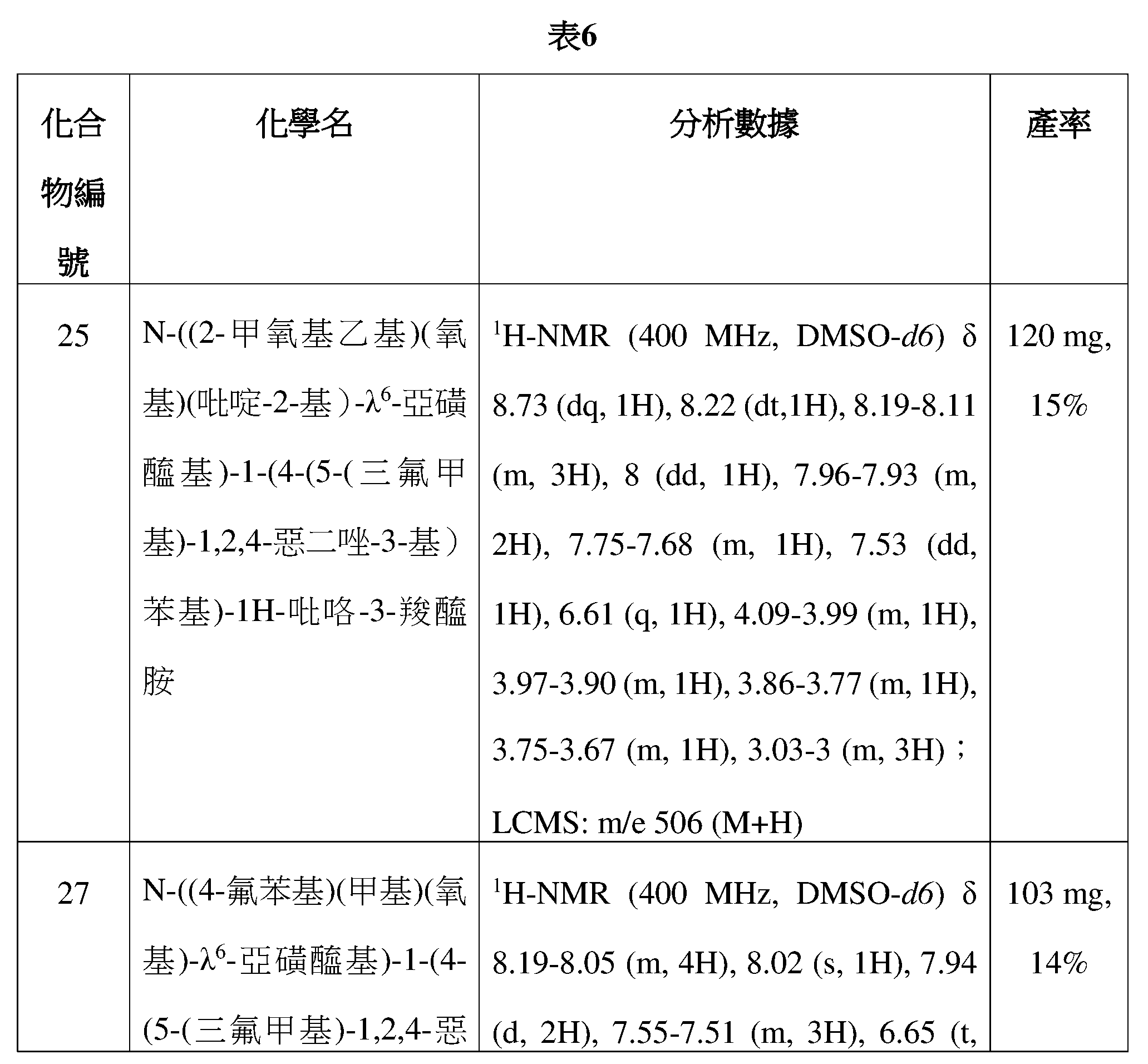

例7:-N-(甲基(氧基)(5-(三氟甲基)吡啶-2-基)-λ6 -亞磺醯基)-1-(4-(5-(三氟甲基)-1,2,4-惡二唑-3-基)苯基)-1H-吡咯-3-羧醯胺(化合物26號)的製備 Example 7: Preparation of N-(methyl(oxy)(5-(trifluoromethyl)pyridin-2-yl)-λ 6 -sulfinyl)-1-(4-(5-(trifluoromethyl)-1,2,4-oxadiazol-3-yl)phenyl)-1H-pyrrole-3-carboxamide (Compound No. 26)
在0℃下,在氮氣環境中向1-(4-(5-(三氟甲基)-1,2,4-惡二唑-3-基)苯基)-1H-吡咯-3-羧酸(0.3g,0.93mmol)的二氯甲烷(10mL)攪拌溶液中加入N,N-二甲基甲醯胺(3.6μL,0.05mmol)和草醯氯(0.09mL,1.0mmol)。將混合物加熱至48℃,保持30分鐘,將反應混合物降溫至25℃。在氮氣環境中將該混合物逐滴添加至先前攪拌的亞胺基(甲基)(5-(三氟甲基)吡啶-2-基)-λ6-磺胺酮(0.21g,0.9mmol)、N,N-二異丙基乙胺(0.24mL,1.3mmol)和4-二甲基胺基吡啶(0.01g,0.09mmol)的二氯甲烷(5mL)溶液中,將反應混合物在25℃下攪拌2小時。反應完成後,用水(10mL)淬滅反應混合物,用二氯萃取三次混合物(60mL)。混合的硫酸鎂層用冰冷的水(40mL)洗滌兩次,碳酸氫鈉層用無水硫酸鈉乾燥並在減壓下蒸發,粗化合物通過快速柱色譜法(使用70%乙酸乙酯的己烷溶液作為洗脫液),得到N-(甲基(氧基)(5-(三氟甲基)吡啶-2-基)-λ6-亞磺醯基)-1-(4-(5-(三氟甲基)-1,2,4-惡二唑-3-基)苯基)-1H-吡咯-3-羧醯胺(0.1g,0.2mmol,21%產率),為白色固體。1H-NMR(400MHz,DMSO-d6)δ 9.22(q,1H),8.64(dd,1H),8.48-8.44(m,1H),8.14(dt,2H),8.01-7.99(m,1H),7.95-7.92(m,2H),7.53(dd,1H),6.60(q,1H),3.57(s,3H);LCMS:m/e 530(M+H)。 To a stirred solution of 1-(4-(5-(trifluoromethyl)-1,2,4-oxadiazol-3-yl)phenyl)-1H-pyrrole-3-carboxylic acid (0.3 g, 0.93 mmol) in dichloromethane (10 mL) was added N,N-dimethylformamide (3.6 μL, 0.05 mmol) and oxalyl chloride (0.09 mL, 1.0 mmol) at 0°C under nitrogen atmosphere. The mixture was heated to 48°C for 30 minutes and the reaction mixture was cooled to 25°C. The mixture was added dropwise to a previously stirred solution of imino(methyl)(5-(trifluoromethyl)pyridin-2-yl)-λ 6 -sulfonamide (0.21 g, 0.9 mmol), N,N-diisopropylethylamine (0.24 mL, 1.3 mmol) and 4-dimethylaminopyridine (0.01 g, 0.09 mmol) in dichloromethane (5 mL) under nitrogen atmosphere, and the reaction mixture was stirred at 25° C. for 2 hours. After the reaction was completed, the reaction mixture was quenched with water (10 mL), and the mixture was extracted three times with dichloromethane (60 mL). The combined magnesium sulfate layers were washed twice with ice-cold water (40 mL). The sodium bicarbonate layer was dried over anhydrous sodium sulfate and evaporated under reduced pressure. The crude compound was purified by flash column chromatography (using 70% ethyl acetate in hexane as eluent) to give N-(methyl(oxy)(5-(trifluoromethyl)pyridin-2-yl)-λ 6 -sulfinyl)-1-(4-(5-(trifluoromethyl)-1,2,4-oxadiazol-3-yl)phenyl)-1H-pyrrole-3-carboxamide (0.1 g, 0.2 mmol, 21% yield) as a white solid. 1 H-NMR(400MHz,DMSO- d6 )δ 9.22(q,1H),8.64(dd,1H),8.48-8.44(m,1H),8.14(dt,2H),8.01-7.99(m ,1H),7.95-7.92(m,2H),7.53(dd,1H),6.60(q,1H),3.57(s,3H); LCMS: m/e 530(M+H).
表7中所列的化合物可通過例7中所述的類似方法製備。 The compounds listed in Table 7 can be prepared by a similar method as described in Example 7.
表7Table 7

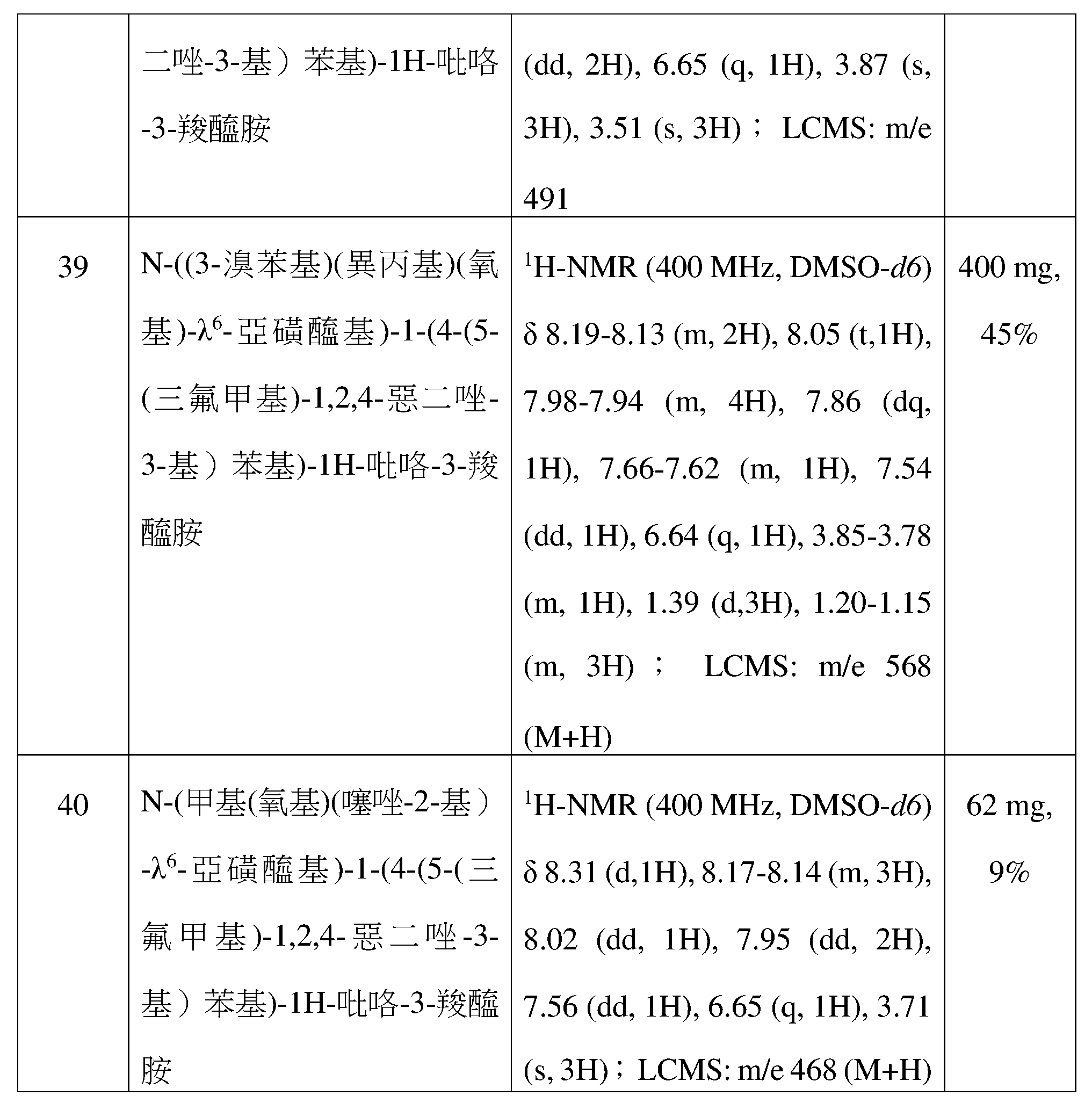
例8:-N-(4-氟苯基)-1-(4-(5-(三氟甲基)-1,2,4-惡二唑-3-基)苯基)-1H-吡唑-4-磺醯胺(化合物47號)的製備Example 8: Preparation of N-(4-fluorophenyl)-1-(4-(5-(trifluoromethyl)-1,2,4-oxadiazol-3-yl)phenyl)-1H-pyrazole-4-sulfonamide (Compound No. 47)
第1步:-4-(1H-吡唑-1-基)苄腈Step 1: 4-(1H-pyrazol-1-yl)benzonitrile
在0℃下在氮氣環境中向1H-吡唑(10g,147mmol)的N,N-二甲基甲醯胺(100mL)攪拌溶液中分批加入氫化鈉(5.90g,147mmol)。攪拌30分鐘後,在0℃下將4-氟苄腈(17.80g,147mmol)加入到反應混合物中,並將得到的反應混合物在25℃下攪拌16小時。反應完成後,將反應混合物倒入冰冷的水 (500mL)中。將沉澱出的固體過濾並減壓乾燥,得到4-(1H-吡唑-1-基)苄腈(22g,130mmol,89%產率),為白色固體。 To a stirred solution of 1H-pyrazole (10 g, 147 mmol) in N,N-dimethylformamide (100 mL) was added sodium hydride (5.90 g, 147 mmol) in portions at 0°C in a nitrogen atmosphere. After stirring for 30 minutes, 4-fluorobenzonitrile (17.80 g, 147 mmol) was added to the reaction mixture at 0°C, and the resulting reaction mixture was stirred at 25°C for 16 hours. After the reaction was completed, the reaction mixture was poured into ice-cold water (500 mL). The precipitated solid was filtered and dried under reduced pressure to obtain 4-(1H-pyrazol-1-yl)benzonitrile (22 g, 130 mmol, 89% yield) as a white solid.
第2步:-N'-羥基-4-(1H-吡唑-1-基)苯甲脒Step 2: -N'-Hydroxy-4-(1H-pyrazol-1-yl)benzamidine
在25℃下向4-(1H-吡唑-1-基)苄腈(13g,77mmol)的乙醇(130mL)攪拌溶液中加入50%的羥胺水溶液(9.40mL,154mmol)。將該反應混合物在80℃下攪拌16小時,反應完成後,減壓蒸發至乾,得到N'-羥基-4-(1H-吡唑-1-基))苯甲脒(15g,74.2mmol,97%產率),直接用於下一步。 To a stirred solution of 4-(1H-pyrazol-1-yl)benzonitrile (13g, 77mmol) in ethanol (130mL) was added a 50% aqueous solution of hydroxylamine (9.40mL, 154mmol) at 25°C. The reaction mixture was stirred at 80°C for 16 hours. After the reaction was completed, it was evaporated to dryness under reduced pressure to obtain N'-hydroxy-4-(1H-pyrazol-1-yl))benzamide (15g, 74.2mmol, 97% yield), which was used directly in the next step.
第3步:-3-(4-(1H-吡唑-1-基)苯基)-5-(三氟甲基)-1,2,4-惡二唑Step 3: 3-(4-(1H-pyrazol-1-yl)phenyl)-5-(trifluoromethyl)-1,2,4-oxadiazole
在0℃下向N'-羥基-4-(1H-吡唑-1-基)苯甲苯(15g,74.2mmol)的四氫呋喃(100mL)攪拌溶液中加入三氟乙酸酐(18.90mL,134mmol)。將得到的反應混合物在25℃下攪拌12小時,反應完成後,向反應混合物中加入乙酸乙酯(100mL),然後加入飽和碳酸氫鈉溶液(100mL)。分離乙酸乙酯層,用鹽水溶液(25mL)洗滌,用無水硫酸鈉乾燥,將乙酸乙酯減壓蒸發,得到粗化合物,將其通過柱色譜法純化,得到3-(4-(1H-吡唑-1-基)苯基)-5-(三氟甲基)-1,2,4-惡二唑(17g,60.7mmol,82%產率)。 To a stirred solution of N'-hydroxy-4-(1H-pyrazol-1-yl)benzene (15 g, 74.2 mmol) in tetrahydrofuran (100 mL) was added trifluoroacetic anhydride (18.90 mL, 134 mmol) at 0° C. The resulting reaction mixture was stirred at 25° C. for 12 hours. After the reaction was completed, ethyl acetate (100 mL) was added to the reaction mixture, followed by a saturated sodium bicarbonate solution (100 mL). The ethyl acetate layer was separated, washed with saline solution (25 mL), dried over anhydrous sodium sulfate, and the ethyl acetate was evaporated under reduced pressure to obtain a crude compound, which was purified by column chromatography to obtain 3-(4-(1H-pyrazol-1-yl)phenyl)-5-(trifluoromethyl)-1,2,4-oxadiazole (17 g, 60.7 mmol, 82% yield).
第4步:-1-(4-(5-(三氟甲基)-1,2,4-惡二唑-3-基)苯基)-1H-吡唑-4-磺醯氯Step 4: 1-(4-(5-(trifluoromethyl)-1,2,4-oxadiazol-3-yl)phenyl)-1H-pyrazole-4-sulfonyl chloride
在0℃下在15分鐘內向氯磺酸攪拌溶液(14.30mL,214mmol)中分批加入3-(4-(1H-吡唑-1-基)苯基)-5-(三氟甲基)-1,2,4-惡二唑(2g,7.1mmol),將所得反應混合物在100℃下攪拌24小時,使反應混合物冷卻至25℃並將反應混合物倒入滴入含有乙酸乙酯(100mL)的碎冰中,將得到的混合物在乙酸乙酯(60mL)中萃取三次,分離乙酸乙酯層,用無水硫酸鈉乾燥並減壓蒸發,得到 粗制的1-(4-(5-(三氟甲基)-1,2,4-惡二唑-3-基)苯基)-1H-吡唑-4-磺醯氯(2g,5.28mmol,74%產率)。 To a stirred solution of chlorosulfonic acid (14.30 mL, 214 mmol) was added 3-(4-(1H-pyrazol-1-yl)phenyl)-5-(trifluoromethyl)-1,2,4-oxadiazole (2 g, 7.1 mmol) portionwise at 0°C over 15 min. The resulting reaction mixture was stirred at 100°C for 24 h. The reaction mixture was cooled to 25°C and poured into a The mixture was poured into crushed ice containing ethyl acetate (100 mL), and the resulting mixture was extracted three times with ethyl acetate (60 mL). The ethyl acetate layer was separated, dried over anhydrous sodium sulfate and evaporated under reduced pressure to obtain crude 1-(4-(5-(trifluoromethyl)-1,2,4-oxadiazol-3-yl)phenyl)-1H-pyrazole-4-sulfonyl chloride (2 g, 5.28 mmol, 74% yield).
第5步:-N-(4-氟苯基)-1-(4-(5-(三氟甲基)-1,2,4-惡二唑-3-基)苯基)-1H-吡唑-4-磺醯胺(化合物47號)Step 5: -N-(4-fluorophenyl)-1-(4-(5-(trifluoromethyl)-1,2,4-oxadiazol-3-yl)phenyl)-1H-pyrazole-4-sulfonamide (Compound No. 47)
在0℃下向4-氟苯胺(0.2g,1.80mmol)的甲苯(10mL)攪拌溶液中加入三乙胺(0.30mL,2.0mmol),然後加入1-(4-(5-(三氟甲基)-1,2,4-惡二唑-3-基)苯基)-1H-吡唑-4-磺醯氯(0.25g,0.7mmol)。在25℃下攪拌8小時,向反應混合物中加入飽和碳酸氫鈉水溶液(10mL),並將粗產物用二氯甲烷(20mL)萃取,分離二氯甲烷層,用無水硫酸鈉乾燥。減壓蒸發得到粗產物,將其通過快速色譜(用10%乙酸乙酯的己烷溶液作為洗脫劑)純化,得到N-(4-氟苯基)-1-(4-(5-(三氟甲基)-1,2,4-惡二唑-3-基)苯基)-1H-吡唑-4-磺醯胺(160mg,0.35mmol,53.5%產率)。1H-NMR(400MHz,DMSO-d6)δ 10.25(s,1H),9.16(d,1H),8.20-8.16(m,2H),8.13(dt,2H),8.02(d,1H),7.20-7.16(m,2H),7.15-7.10(m,2H);LCMS(M-H)=452.2。 To a stirred solution of 4-fluoroaniline (0.2 g, 1.80 mmol) in toluene (10 mL) was added triethylamine (0.30 mL, 2.0 mmol) and then 1-(4-(5-(trifluoromethyl)-1,2,4-oxadiazol-3-yl)phenyl)-1H-pyrazole-4-sulfonyl chloride (0.25 g, 0.7 mmol) at 0° C. After stirring at 25° C. for 8 hours, a saturated aqueous sodium bicarbonate solution (10 mL) was added to the reaction mixture, and the crude product was extracted with dichloromethane (20 mL), and the dichloromethane layer was separated and dried over anhydrous sodium sulfate. Evaporation under reduced pressure gave the crude product which was purified by flash chromatography (10% ethyl acetate in hexanes as eluent) to give N-(4-fluorophenyl)-1-(4-(5-(trifluoromethyl)-1,2,4-oxadiazol-3-yl)phenyl)-1H-pyrazole-4-sulfonamide (160 mg, 0.35 mmol, 53.5% yield). 1 H-NMR(400MHz,DMSO- d6 )δ 10.25(s,1H),9.16(d,1H),8.20-8.16(m,2H),8.13(dt,2H),8.02(d,1H),7.20-7.16(m,2H),7.15-7.10(m,2H); LCMS(MH)=452.2.
表8中所列的化合物可通過例8中所述的類似方法製備。 The compounds listed in Table 8 can be prepared by a similar method as described in Example 8.
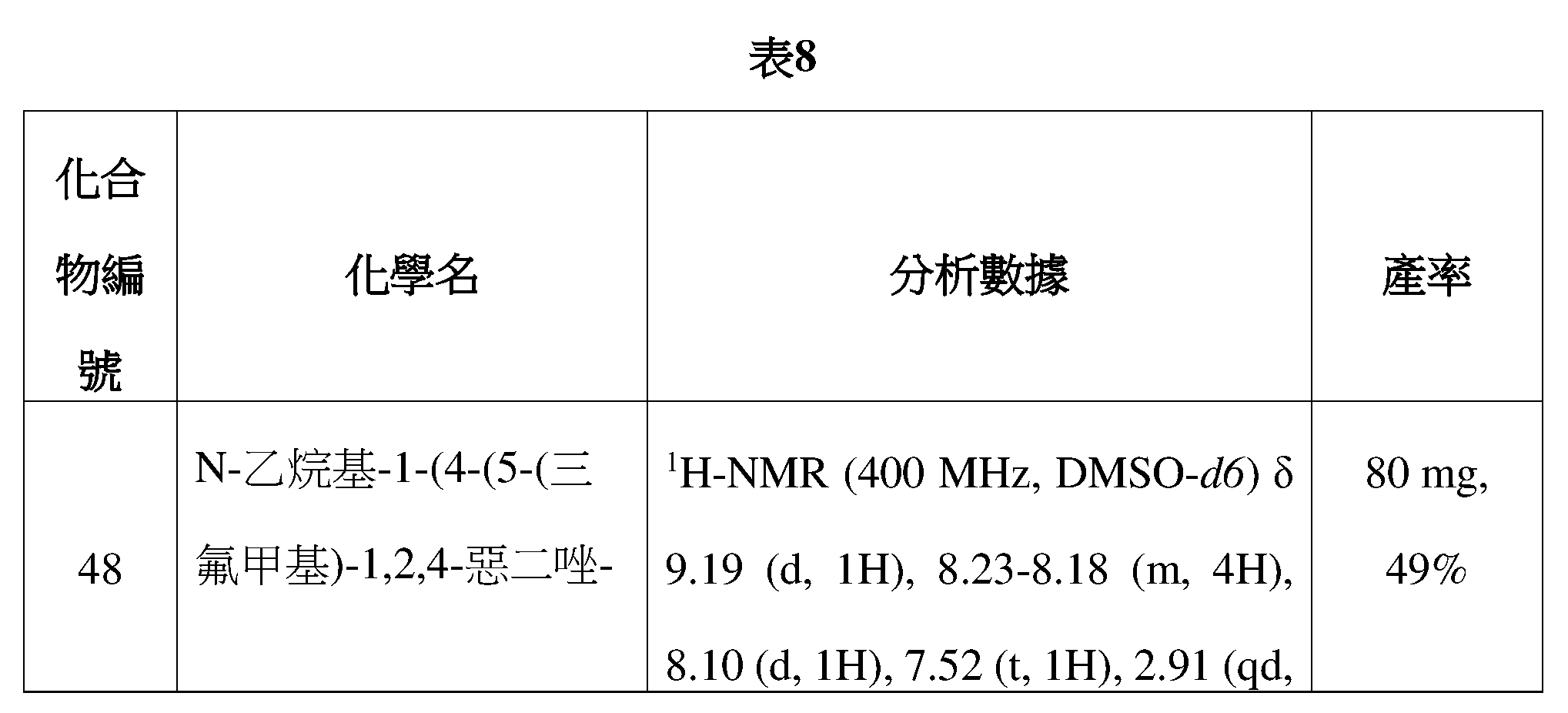
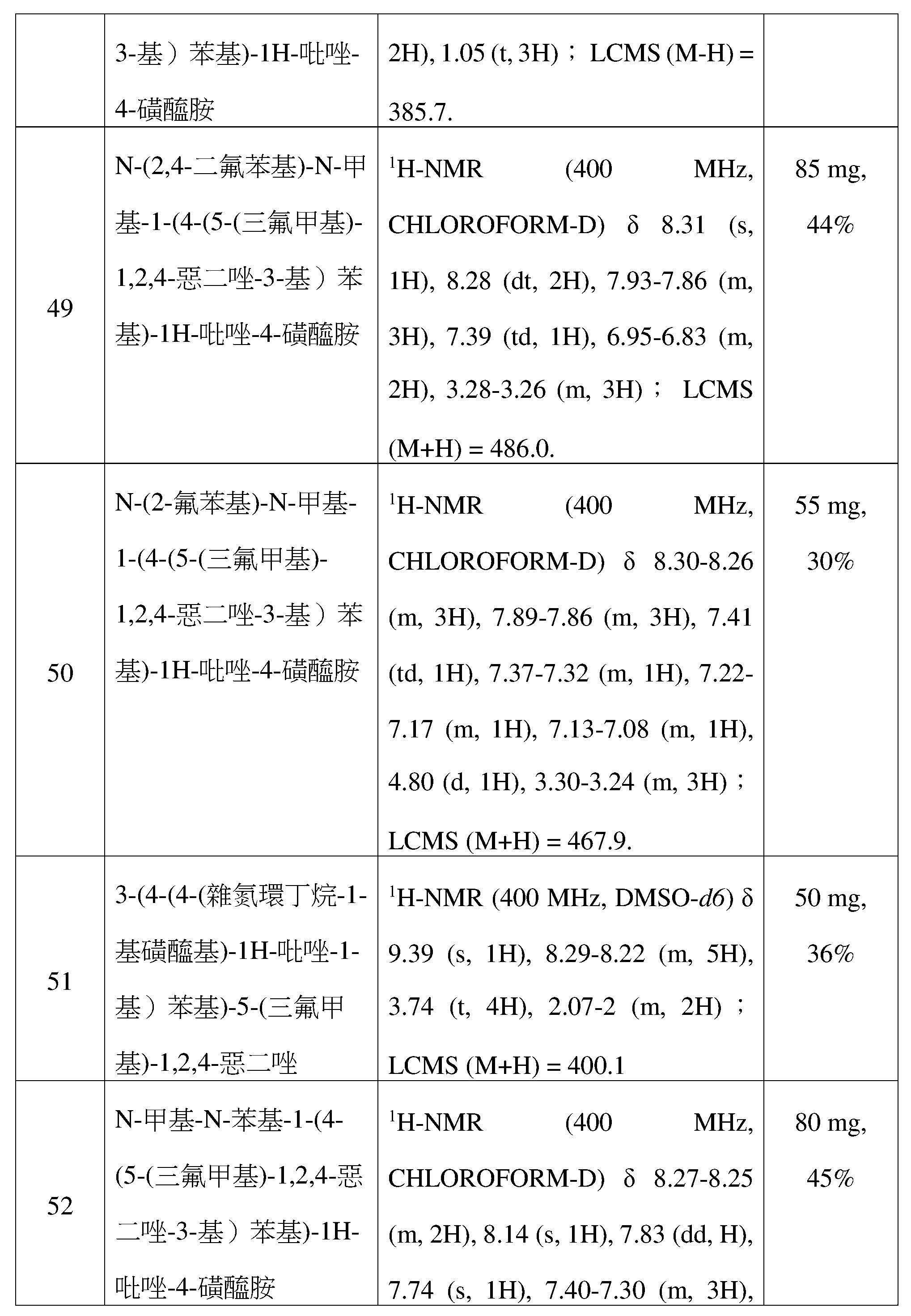

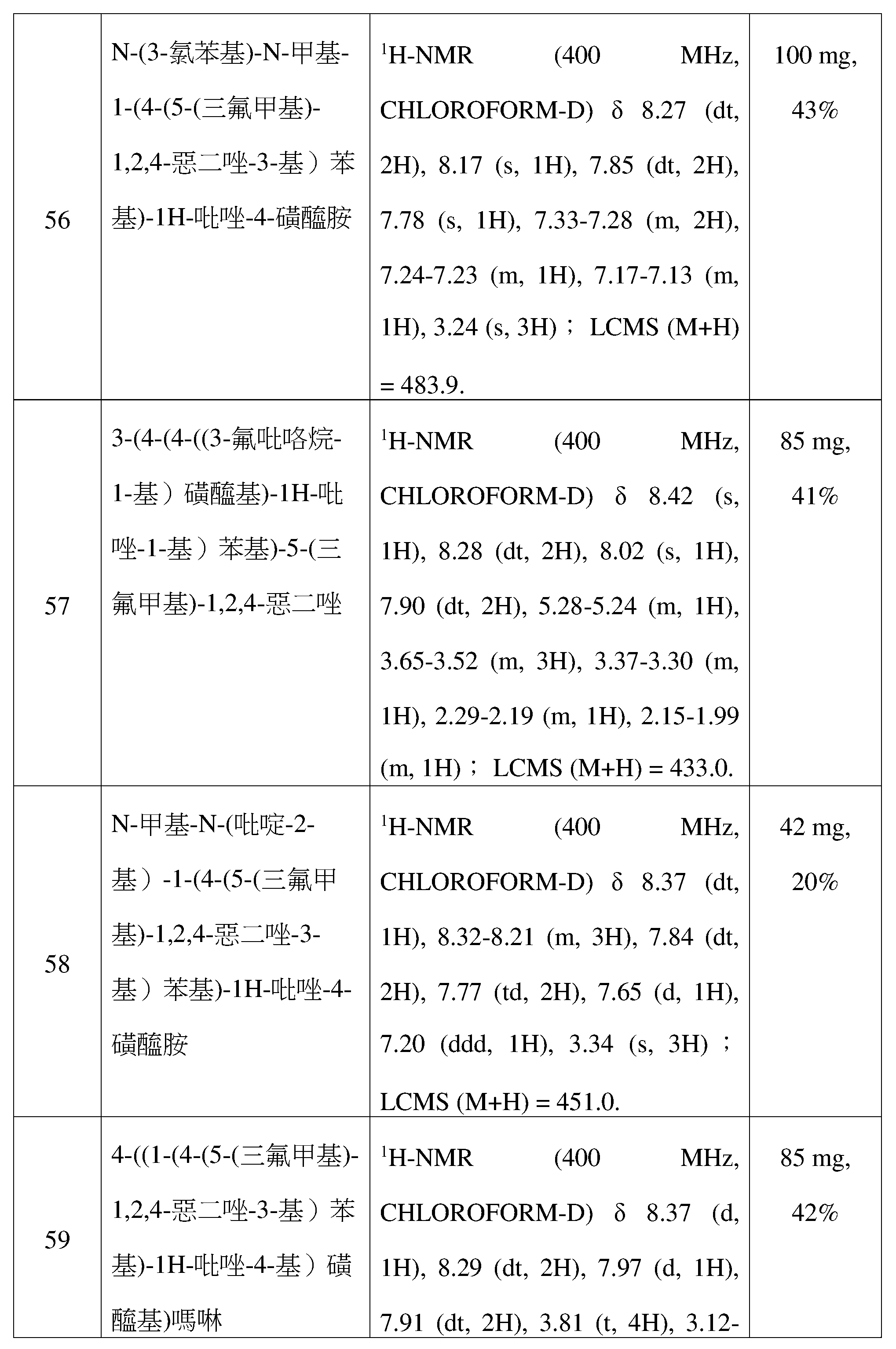
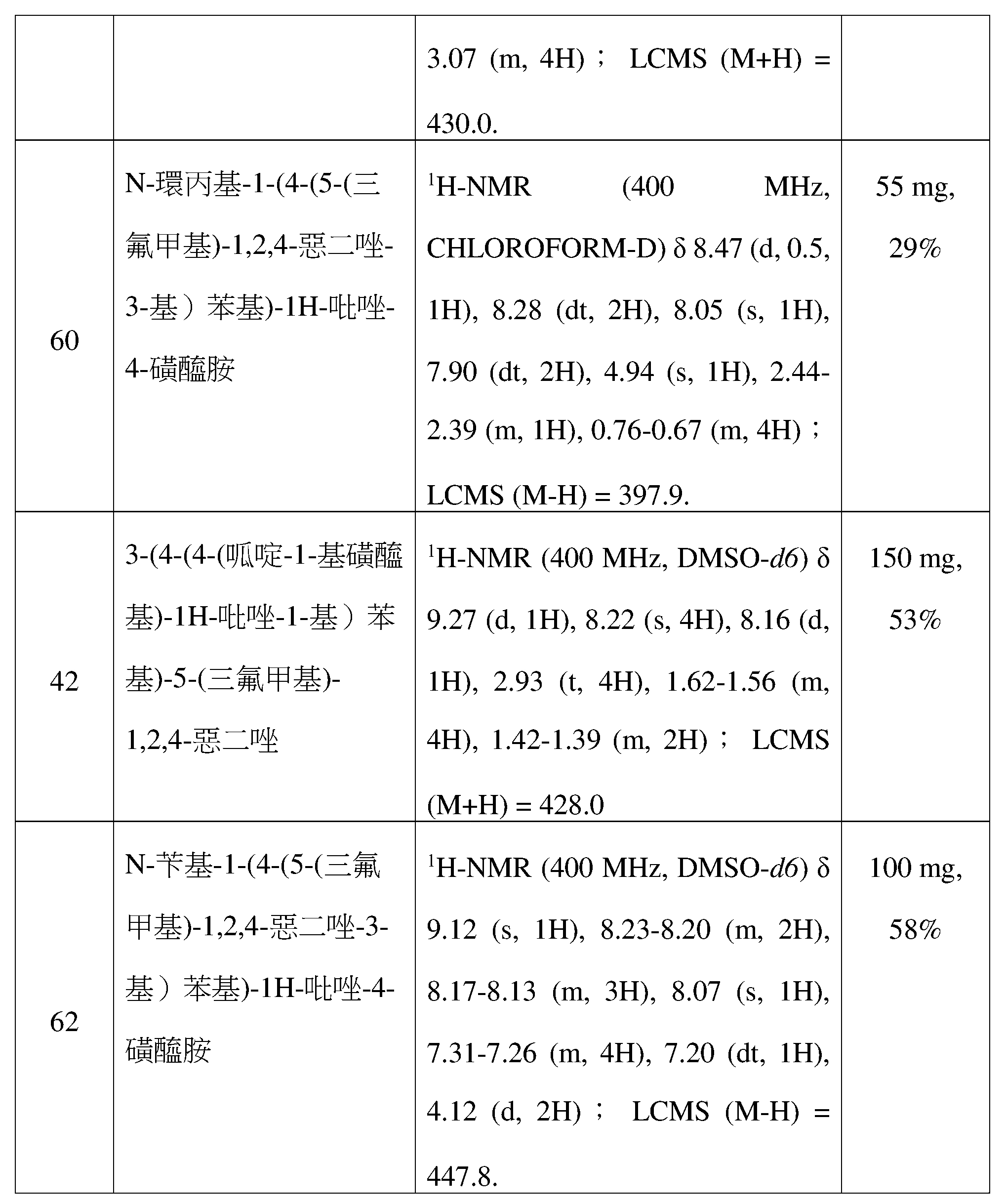
例9:-3-(4-(4-((苯基硫基)甲基)-1H-咪唑-1-基)苯基)-5-(三氟甲基)-1,2,4-惡二唑(化合物43號)的製備Example 9: Preparation of 3-(4-(4-((phenylthio)methyl)-1H-imidazol-1-yl)phenyl)-5-(trifluoromethyl)-1,2,4-oxadiazole (Compound No. 43)
第1步:-4-(4-甲酸基-1H-咪唑-1-基)苄腈Step 1: 4-(4-Formyl-1H-imidazol-1-yl)benzonitrile
在25℃下向1H-咪唑-4-甲醛(9.52g,99mmol)和N,N-二甲基甲醯胺(120mL)的攪拌溶液中加入4-氟苄腈(12g,99mmol),然後加入碳酸鉀(2.282g,16.5mmol)。將得到的混合物在100℃下加熱16小時。用水(50mL)淬滅反應混合物,過濾獲得的固體,進一步用水(20mL)和乙酸乙酯(25mL)洗滌兩次。然後將得到的固體減壓乾燥,得到4-(4-甲酸基-1H-咪唑-1-基)苄腈(18g,91mmol,92%產率)。 To a stirred solution of 1H-imidazole-4-carboxaldehyde (9.52 g, 99 mmol) and N,N-dimethylformamide (120 mL) was added 4-fluorobenzonitrile (12 g, 99 mmol) and then potassium carbonate (2.282 g, 16.5 mmol) at 25°C. The resulting mixture was heated at 100°C for 16 hours. The reaction mixture was quenched with water (50 mL), and the obtained solid was filtered and further washed twice with water (20 mL) and ethyl acetate (25 mL). The obtained solid was then dried under reduced pressure to obtain 4-(4-formyl-1H-imidazol-1-yl)benzonitrile (18 g, 91 mmol, 92% yield).
第2步:-4-(4-(羥甲基)-1H-咪唑-1-基)苄腈Step 2: 4-(4-(Hydroxymethyl)-1H-imidazol-1-yl)benzonitrile
在0℃下向4-(4-甲酸基-1H-咪唑-1-基)苄腈(15g,76mmol)的四氫呋喃(75mL)和甲醇(75mL)的混合物的攪拌溶液中分批加入硼氫化鈉(5.76g,152mmol),然後將所得混合物在25℃下攪拌16小時,反應完成後,將反應混合物濃縮並用二氯甲烷(20mL)萃取兩次。用水(25mL)洗滌兩次兩次,再次用10%甲醇的二氯甲烷溶液萃取水層,將混合的有機層用100mL鹽水洗滌兩次,用無水硫酸鈉乾燥。減壓蒸發,得到4-(4-(羥甲基)-1H-咪唑-1-基)苄腈(13g,65.3mmol,86%產率)。 To a stirred solution of a mixture of 4-(4-formyl-1H-imidazol-1-yl)benzonitrile (15 g, 76 mmol) in tetrahydrofuran (75 mL) and methanol (75 mL) was added sodium borohydride (5.76 g, 152 mmol) in portions at 0°C, and the resulting mixture was stirred at 25°C for 16 hours. After the reaction was completed, the reaction mixture was concentrated and extracted twice with dichloromethane (20 mL). The aqueous layer was washed twice with water (25 mL), and the aqueous layer was extracted again with a 10% methanol in dichloromethane solution, and the combined organic layers were washed twice with 100 mL of brine and dried over anhydrous sodium sulfate. Evaporation under reduced pressure gave 4-(4-(hydroxymethyl)-1H-imidazol-1-yl)benzonitrile (13 g, 65.3 mmol, 86% yield).
第3步:-4-(4-(氯甲基)-1H-咪唑-1-基)苄腈Step 3: 4-(4-(Chloromethyl)-1H-imidazol-1-yl)benzonitrile
在0℃下向4-(4-(羥甲基)-1H-咪唑-1-基)苄腈(1g,5.0mmol)和氯仿(70mL)的攪拌溶液中滴加亞硫醯氯(0.440mL,6.0mmol),並將所得反應混合物在68℃下回流2-3小時。將反應混合物降溫至25℃並用水(100mL)稀釋。將產物用二氯甲烷萃取三次。將混合的二氯甲烷層用水(15mL)洗滌三次,然後用無水硫酸鈉乾燥。將二氯甲烷層(10mL)用水(15mL)洗滌三次,然後在無水硫酸鈉上乾燥。減壓蒸發,得到4-(4-(氯甲基)-1H-咪唑-1-基)苄腈(1g,4.64mmol,92%產率)。 To a stirred solution of 4-(4-(hydroxymethyl)-1H-imidazol-1-yl)benzonitrile (1 g, 5.0 mmol) and chloroform (70 mL) was added dropwise sulfinyl chloride (0.440 mL, 6.0 mmol) at 0°C, and the resulting reaction mixture was refluxed at 68°C for 2-3 hours. The reaction mixture was cooled to 25°C and diluted with water (100 mL). The product was extracted three times with dichloromethane. The combined dichloromethane layers were washed three times with water (15 mL) and then dried over anhydrous sodium sulfate. The dichloromethane layer (10 mL) was washed three times with water (15 mL) and then dried over anhydrous sodium sulfate. Evaporation under reduced pressure gave 4-(4-(chloromethyl)-1H-imidazol-1-yl)benzonitrile (1 g, 4.64 mmol, 92% yield).
第4步:-4-(4-((苯基硫基)甲基)-1H-咪唑-1-基)苄腈Step 4: 4-(4-((phenylthio)methyl)-1H-imidazol-1-yl)benzonitrile
在0℃下向4-(4-(氯甲基)-1H-咪唑-1-基)苄腈(1g,4.6mmol)和N,N-二甲基甲醯胺(10mL)的攪拌溶液中加入苯硫酚(0.568mL,5.5mmol)和碳酸鉀(1.587g,11.5mmol),將所得反應混合物在25℃下攪拌16小時,反應結束後,將反應混合物用乙酸乙酯(20mL)萃取兩次,然後用水(25mL)洗滌四次,將混合的乙酸乙酯層用無水硫酸鈉乾燥並在減壓下濃縮,將粗產物通過矽膠柱色譜法(使用80%乙酸乙酯的己烷溶液為洗脫液)純化,得到4-(4-((苯基硫基)甲基)-1H-咪唑-1-基)苄腈(1.12g,3.8mmol,84%產率)。 To a stirred solution of 4-(4-(chloromethyl)-1H-imidazol-1-yl)benzonitrile (1 g, 4.6 mmol) and N,N-dimethylformamide (10 mL) were added thiophenol (0.568 mL, 5.5 mmol) and potassium carbonate (1.587 g, 11.5 mmol) at 0°C. The resulting reaction mixture was stirred at 25°C for 16 hours. After the reaction was completed, the reaction mixture was washed with ethyl acetate. The mixture was extracted twice with ethyl acetate (20 mL) and then washed four times with water (25 mL). The combined ethyl acetate layers were dried over anhydrous sodium sulfate and concentrated under reduced pressure. The crude product was purified by silica gel column chromatography (using 80% ethyl acetate in hexane as eluent) to obtain 4-(4-((phenylthio)methyl)-1H-imidazol-1-yl)benzonitrile (1.12 g, 3.8 mmol, 84% yield).
第5步:-N'-羥基-4-(4-((苯基硫基)甲基)-1H-咪唑-1-基)苯甲脒Step 5: -N'-Hydroxy-4-(4-((phenylthio)methyl)-1H-imidazol-1-yl)benzamidine
在0℃下向4-(4-((苯基硫基)甲基)-1H-咪唑-1-基)苄腈(1.14g,3.9mmol)和乙醇(10mL)的攪拌溶液中加入50%的羥胺水溶(0.435mL,7.0mmol)並攪拌8小時,反應完成後,濃縮反應混合物,再次加入乙酸乙酯,攪拌,然後濃縮,得到N'-羥基-4-(4-((苯基硫基)甲基)-1H-咪唑-1-基)苯甲脒(1.2g,3.70mmol,95%產率)。 At 0°C, add 50% aqueous hydroxylamine (0.435 mL, 7.0 mmol) to a stirred solution of 4-(4-((phenylthio)methyl)-1H-imidazol-1-yl)benzonitrile (1.14 g, 3.9 mmol) and ethanol (10 mL) and stir for 8 hours. After the reaction is completed, concentrate the reaction mixture, add ethyl acetate again, stir, and then concentrate to obtain N'-hydroxy-4-(4-((phenylthio)methyl)-1H-imidazol-1-yl)benzamidine (1.2 g, 3.70 mmol, 95% yield).
第6步:-3-(4-(4-((苯基硫基)甲基)-1H-咪唑-1-基)苯基)-5-(三氟甲基)-1,2,4-惡二唑(化合物43號)Step 6: -3-(4-(4-((phenylthio)methyl)-1H-imidazol-1-yl)phenyl)-5-(trifluoromethyl)-1,2,4-oxadiazole (Compound No. 43)
在0℃下向N'-羥基-4-(4-((苯基硫基)甲基)-1H-咪唑-1-基)苯甲脒(1.49g,4.5mmol)的四氫呋喃(7mL)攪拌溶液中加入三氟乙酸酐(0.973mL,6.8mmol),然後攪拌16小時。反應完成後,將反應混合物用乙酸乙酯(20mL)稀釋並用碳酸氫鈉水溶液(20mL)洗滌。用無水硫酸鈉乾燥乙酸乙酯層並濃縮,得到粗化合物,將粗殘餘物通過矽膠柱色譜法(用70%乙酸乙酯的己烷溶液作為洗脫液)純化,得到3-(4-(4-((苯基硫基)甲基)-1H-咪唑-1-基)苯基)-5-(三氟甲基)- 1,2,4-惡二唑(1.43g,3.55mmol,77%產率)。1H-NMR(400MHz,DMSO-d6)δ 8.38(d,1.2,1H),8.16(dd,6.9,2.0,2H),7.87-7.90(m,2H),7.77(t,0.6,1H),7.38-7.40(m,2H),7.28-7.32(m,2H),7.15-7.19(m,1H),4.18(s,2H)-LCMS(M+H)=403.35。 To a stirred solution of N'-hydroxy-4-(4-((phenylthio)methyl)-1H-imidazol-1-yl)benzamidine (1.49 g, 4.5 mmol) in tetrahydrofuran (7 mL) was added trifluoroacetic anhydride (0.973 mL, 6.8 mmol) at 0°C, followed by stirring for 16 hours. After completion of the reaction, the reaction mixture was diluted with ethyl acetate (20 mL) and washed with aqueous sodium bicarbonate solution (20 mL). The ethyl acetate layer was dried over anhydrous sodium sulfate and concentrated to give the crude compound, which was purified by silica gel column chromatography (using 70% ethyl acetate in hexane as eluent) to give 3-(4-(4-((phenylthio)methyl)-1H-imidazol-1-yl)phenyl)-5-(trifluoromethyl)-1,2,4-oxadiazole (1.43 g, 3.55 mmol, 77% yield). 1 H-NMR(400MHz,DMSO- d6 )δ 8.38(d,1.2,1H),8.16(dd,6.9,2.0,2H),7.87-7.90(m,2H),7.77(t,0.6,1H),7.38- 7.40(m,2H),7.28-7.32(m,2H),7.15-7.19(m,1H),4.18(s,2H)-LCMS(M+H)=403.35.
表9中所列的化合物可通過例9中所述的類似方法製備。 The compounds listed in Table 9 can be prepared by a similar method as described in Example 9.


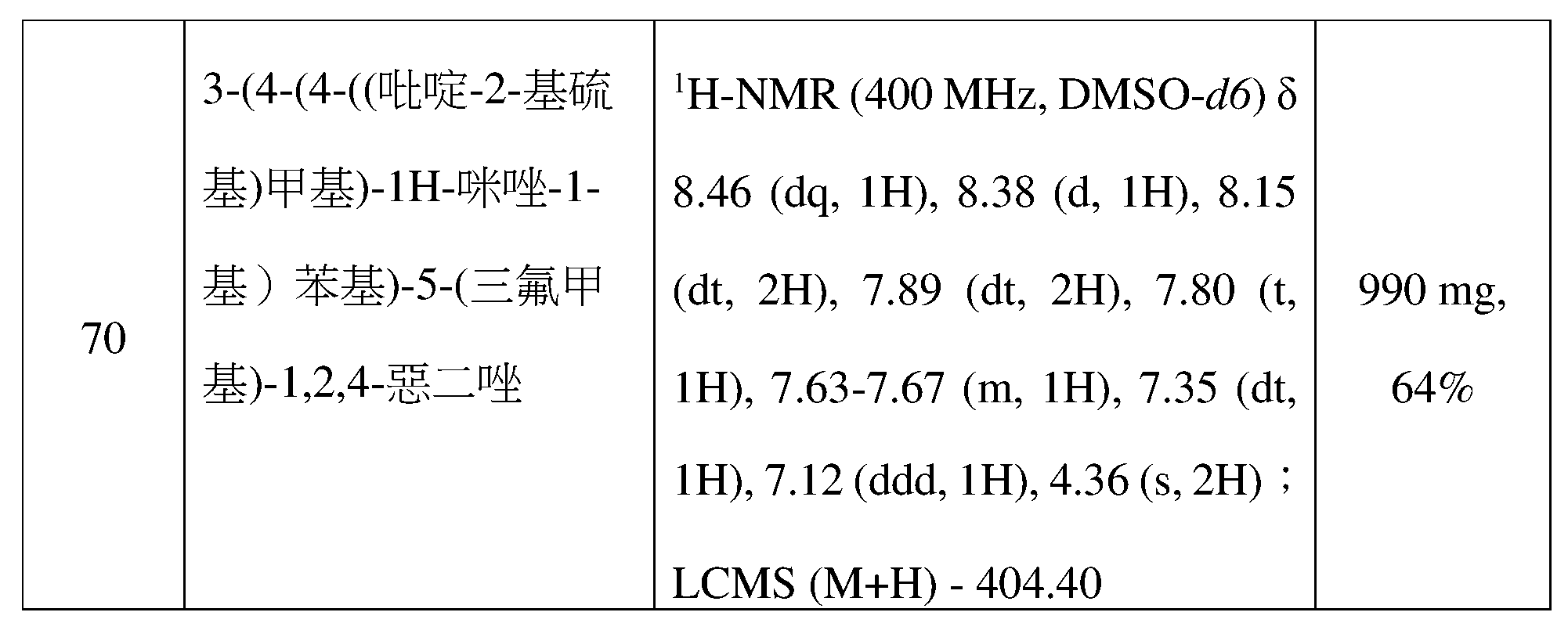
例10:-3-(4-(4-((苯基磺醯基)甲基)-1H-咪唑-1-基)苯基)-5-(三氟甲基)-1,2,4-惡二唑(化合物71號)的製備Example 10: Preparation of 3-(4-(4-((phenylsulfonyl)methyl)-1H-imidazol-1-yl)phenyl)-5-(trifluoromethyl)-1,2,4-oxadiazole (Compound No. 71)
在0℃下向3-(4-(4-((苯基硫基)甲基)-1H-咪唑-1-基)苯基)-5-(三氟甲基)-1,2,4-惡二唑(200mg,0.5mmol)的甲醇(5mL)攪拌溶液中加入硫酸氫鉀(1.2g,1.9mmol)並攪拌8小時。反應完成後,將反應混合物濃縮然後用水(20mL)淬滅,用乙酸乙酯(10mL)萃取三次,將合併的乙酸乙酯層用鹽水溶液(10mL)洗滌兩次,用無水硫酸鈉乾燥並在減壓下蒸發,得到粗產物。粗產物經製備高效液相色譜法純化,得到3-(4-(4-((苯基磺醯基)甲基)-1H-咪唑-1-基)苯基)-5-(三氟甲基)-1,2,4-惡二唑(138mg,0.318mmol,64%產率)。1H-NMR(400MHz,DMSO-d6)δ 8.34(d,1.2,1H),8.17(dt,9.2,,2H),7.87(dt,2H),7.78-7.81(m,2H),7.75(d,1.2,1H),7.69-7.74(m,1H),7.58-7.62(m,2H),4.61(s,2H)-LCMS(M+H)=434.95。 To a stirred solution of 3-(4-(4-((phenylthio)methyl)-1H-imidazol-1-yl)phenyl)-5-(trifluoromethyl)-1,2,4-oxadiazole (200 mg, 0.5 mmol) in methanol (5 mL) was added potassium hydrogen sulfate (1.2 g, 1.9 mmol) at 0°C and stirred for 8 hours. After completion of the reaction, the reaction mixture was concentrated and then quenched with water (20 mL), extracted three times with ethyl acetate (10 mL), and the combined ethyl acetate layers were washed twice with brine solution (10 mL), dried over anhydrous sodium sulfate and evaporated under reduced pressure to give a crude product. The crude product was purified by preparative HPLC to give 3-(4-(4-((phenylsulfonyl)methyl)-1H-imidazol-1-yl)phenyl)-5-(trifluoromethyl)-1,2,4-oxadiazole (138 mg, 0.318 mmol, 64% yield). 1 H-NMR (400 MHz, DMSO- d6 ) δ 8.34 (d, 1.2, 1H), 8.17 (dt, 9.2,, 2H), 7.87 (dt, 2H), 7.78-7.81 (m, 2H), 7.75 (d, 1.2, 1H), 7.69-7.74 (m, 1H), 7.58-7.62 (m, 2H), 4.61 (s, 2H) - LCMS (M+H) = 434.95.
表10中所列的化合物可通過例10中所述的類似方法製備。 The compounds listed in Table 10 can be prepared by a similar method as described in Example 10.

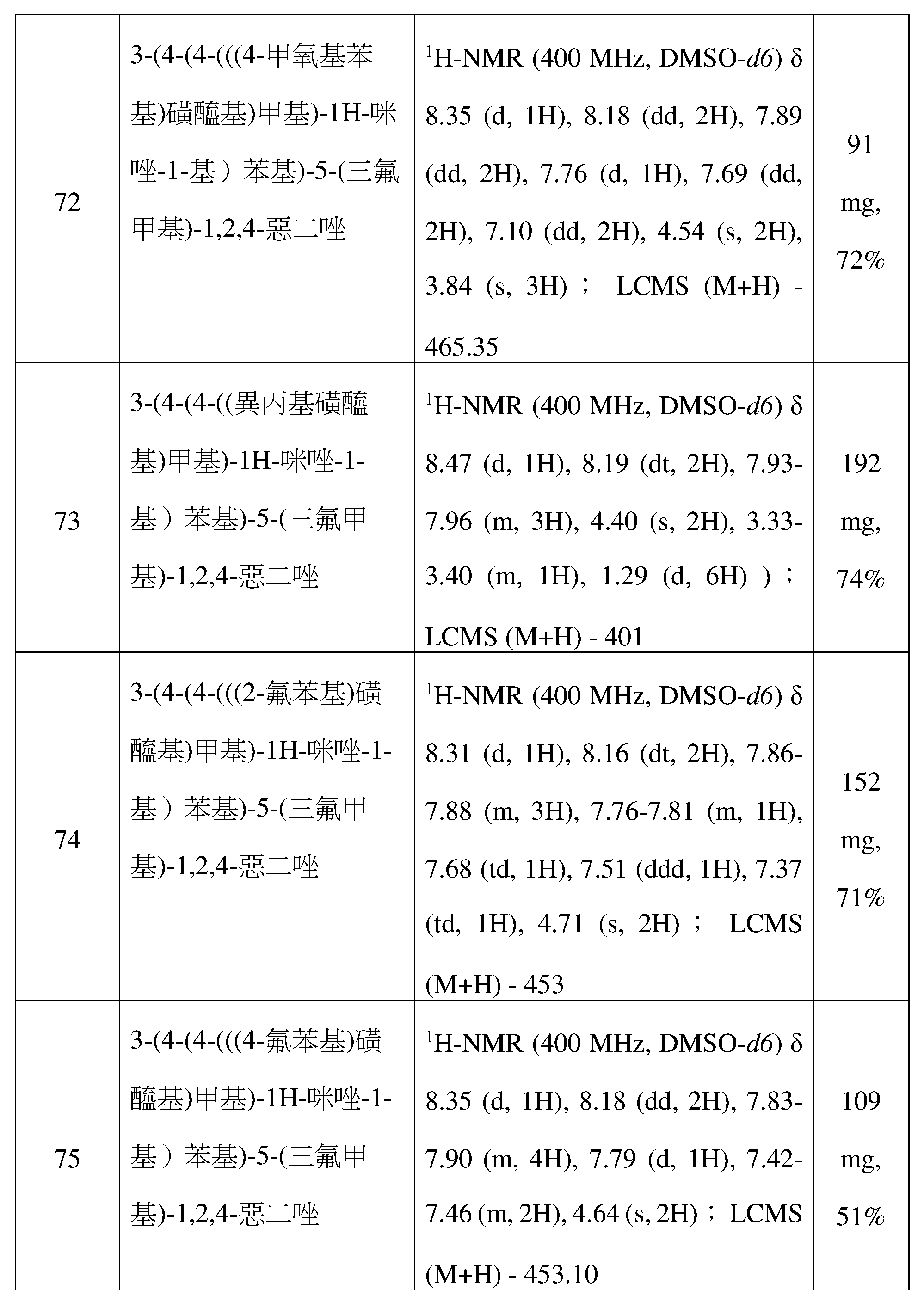

例11:-亞胺基(苯基)((1-(4-(5-(三氟甲基)-1,2,4-惡二唑-3-基)苯基)-1H-咪唑-4-基)甲基)-λ6 -磺胺酮(化合物79號)的製備 Example 11: Preparation of -Imino(phenyl)((1-(4-(5-(trifluoromethyl)-1,2,4-oxadiazol-3-yl)phenyl)-1H-imidazol-4-yl)methyl)-λ 6 -sulfonamide (Compound No. 79)
在0℃下向3-(4-(4-((苯基硫基)甲基)-1H-咪唑-1-基)苯基)-5-(三氟甲基)-1,2,4-惡二唑(200mg,0.4mmol)的甲醇(5mL)攪拌溶液中加入二乙酸碘苯(480mg,1.5mmol)和胺基甲酸銨(38.8mg,0.5mmol),攪拌16小時。反應結束後將反應混合物濃縮,得到粗化合物,將該粗化合物通過高效液相色譜法 純化,得到亞胺基(苯基)((1-(4-(5-(三氟甲基)-1,2,4-惡二唑-3-基)苯基)-1H-咪唑-4-基)甲基)-λ6-磺胺酮(50mg,0.115mmol,23%產率)。1H-NMR(400MHz,DMSO-d6)δ 8.32(d,1H),8.18(dt,2H),7.87(dt,2H),7.79-7.82(m,2H),7.72(d,1H),7.61-7.66(m,1H),7.52-7.56(m,2H),4.43(dd,18.8,14.2,2H),4.29(s,1H);433.95。 To a stirred solution of 3-(4-(4-((phenylthio)methyl)-1H-imidazol-1-yl)phenyl)-5-(trifluoromethyl)-1,2,4-oxadiazole (200 mg, 0.4 mmol) in methanol (5 mL) were added iodobenzene diacetate (480 mg, 1.5 mmol) and ammonium carbamate (38.8 mg, 0.5 mmol) at 0°C, and the mixture was stirred for 16 hours. After the reaction was completed, the reaction mixture was concentrated to obtain a crude compound, which was purified by high performance liquid chromatography to obtain imino(phenyl)((1-(4-(5-(trifluoromethyl)-1,2,4-oxadiazol-3-yl)phenyl)-1H-imidazol-4-yl)methyl)-λ 6 -sulfonamide (50 mg, 0.115 mmol, 23% yield). 1 H-NMR(400MHz,DMSO- d6 )δ 8.32(d,1H),8.18(dt,2H),7.87(dt,2H),7.79-7.82(m,2H),7.72(d,1H),7.61- 7.66(m,1H),7.52-7.56(m,2H),4.43(dd,18.8,14.2,2H),4.29(s,1H);433.95.
表11中所列的化合物可通過例11中所述的類似方法製備。 The compounds listed in Table 11 can be prepared by a similar method as described in Example 11.


例12:4-甲基-N-((1-(4-(5-(三氟甲基)-1,2,4-惡二唑-3-基)苯基)-1H-咪唑-4-基)甲基)苯磺醯胺(化合物81號)的製備Example 12: Preparation of 4-methyl-N-((1-(4-(5-(trifluoromethyl)-1,2,4-oxadiazol-3-yl)phenyl)-1H-imidazol-4-yl)methyl)benzenesulfonamide (Compound No. 81)
第1步:-叔丁基(叔丁氧羰基)((1-(4-氰基苯基)-1H-咪唑-4-基)甲基)胺基甲酸酯Step 1: -tert-Butyl(tert-butyloxycarbonyl)((1-(4-cyanophenyl)-1H-imidazol-4-yl)methyl)carbamate
在25℃下,向亞胺基二羧酸二叔丁酯(5g,23mmol)的N,N-二甲基甲醯胺(50mL)攪拌溶液中加入碳酸鉀(6.4g,46mmol),並在相同的溫度下攪拌15分鐘。加入4-(4-(氯甲基)-1H-咪唑-1-基)苄腈(5.0g,23mmol),並將所得反應混合物加熱至90℃,持續16小時。反應完成後,將反應混合物用冰水(200mL)淬滅,並用乙酸乙酯(100mL)萃取三次。混合的乙酸乙酯層用無水硫酸鈉乾燥,並在減壓下蒸發至乾。通過快速色譜法(使用2%甲醇的二氯甲烷溶液作為洗脫劑)純化所得粗產物,得到叔丁基(叔丁氧羰基)((1-(4-氰基苯基)-1H-咪唑-4-基)甲基)胺基甲酸酯(6.0g,66%產率),為白色固體。 Potassium carbonate (6.4 g, 46 mmol) was added to a stirred solution of di-tert-butyl iminodicarboxylate (5 g, 23 mmol) in N,N-dimethylformamide (50 mL) at 25°C and stirred at the same temperature for 15 minutes. 4-(4-(chloromethyl)-1H-imidazol-1-yl)benzonitrile (5.0 g, 23 mmol) was added and the resulting reaction mixture was heated to 90°C for 16 hours. After the reaction was completed, the reaction mixture was quenched with ice water (200 mL) and extracted three times with ethyl acetate (100 mL). The combined ethyl acetate layers were dried over anhydrous sodium sulfate and evaporated to dryness under reduced pressure. The crude product was purified by flash chromatography (using 2% methanol in dichloromethane as eluent) to give tert-butyl(tert-butyloxycarbonyl)((1-(4-cyanophenyl)-1H-imidazol-4-yl)methyl)carbamate (6.0 g, 66% yield) as a white solid.
第2步:-叔丁基(叔丁氧羰基)((1-(4-(N'-羥基胺基甲醯亞胺基)苯基)-1H-咪唑-4-基)甲基)胺基甲酸酯Step 2: -tert-butyl(tert-butyloxycarbonyl)((1-(4-(N'-hydroxycarbamoyl)phenyl)-1H-imidazol-4-yl)methyl)carbamate
在0℃下向叔丁基(叔丁氧羰基)((1-(4-氰基苯基)-1H-咪唑-4-基)甲基)胺基甲酸酯(2g,5mmol)的甲醇(20mL)攪拌溶液中加入50%的羥胺水溶液(1.3mL,20mmol)。將所得反應混合物在25℃下攪拌16小時。反應完成後,蒸發掉揮發物,將得到的粗化合物與10%乙酸乙酯的己烷溶液一起研磨,得到叔 丁基(叔丁氧羰基)((1-(4-(N'-羥基胺基甲醯亞胺基)苯基)-1H-咪唑-4-基)甲基)胺基甲酸酯(2.1g,4.9mmol,97%產率),為白色固體。 To a stirred solution of tert-butyl(tert-butyloxycarbonyl)((1-(4-cyanophenyl)-1H-imidazol-4-yl)methyl)carbamate (2g, 5mmol) in methanol (20mL) was added 50% aqueous hydroxylamine solution (1.3mL, 20mmol) at 0°C. The resulting reaction mixture was stirred at 25°C for 16 hours. After the reaction was completed, the volatiles were evaporated and the obtained crude compound was triturated with 10% ethyl acetate in hexane to give tert-butyl(tert-butyloxycarbonyl)((1-(4-(N'-hydroxycarbamoyl)phenyl)-1H-imidazol-4-yl)methyl)carbamate (2.1g, 4.9mmol, 97% yield) as a white solid.
第3步:叔丁基(叔丁氧羰基)((1-(4-(5-(三氟甲基)-1,2,4-惡二唑-3-基)苯基)-1H-咪唑-4-基)甲基)胺基甲酸酯Step 3: tert-Butyl(tert-butyloxycarbonyl)((1-(4-(5-(trifluoromethyl)-1,2,4-oxadiazol-3-yl)phenyl)-1H-imidazol-4-yl)methyl)carbamate
在0℃下向叔丁基(叔丁氧羰基)((1-(4-(N'-羥基胺基甲醯亞胺基)苯基)-1H-咪唑-4-基)甲基)胺基甲酸酯(2.1g,4.8mmol)的四氫呋喃(20mL)攪拌溶液中加入三氟乙酸酐(1.7mL,12mmol),並將所得反應混合物在25℃下攪拌16小時。反應完成後,減壓蒸餾除去揮發物,將所得粗化合物與10%乙酸乙酯的己烷溶液一起研磨,得到叔丁基(叔丁氧羰基)((1-(4-(5-(三氟甲基)-1,2,4-惡二唑-3-基)苯基)-1H-咪唑-4-基)甲基)胺基甲酸酯(2.4g,97%產率),為黏性固體。1H-NMR(400MHz,DMSO-d6)δ 8.35(d,1H),8.16(dd,2H),7.90(dd,2H),7.61(d,1H),4.64(s,2H),1.42(s,18H),;LCMS(M+H):510.10。 To a stirred solution of tert-butyl(tert-butoxycarbonyl)((1-(4-(N'-hydroxycarbamoyl)phenyl)-1H-imidazol-4-yl)methyl)carbamate (2.1 g, 4.8 mmol) in tetrahydrofuran (20 mL) was added trifluoroacetic anhydride (1.7 mL, 12 mmol) at 0°C, and the resulting reaction mixture was stirred at 25°C for 16 hours. After completion of the reaction, the volatiles were removed by distillation under reduced pressure, and the resulting crude compound was triturated with 10% ethyl acetate in hexane to give tert-butyl(tert-butoxycarbonyl)((1-(4-(5-(trifluoromethyl)-1,2,4-oxadiazol-3-yl)phenyl)-1H-imidazol-4-yl)methyl)carbamate (2.4 g, 97% yield) as a sticky solid. 1 H-NMR (400MHz, DMSO- d6 ) δ 8.35 (d, 1H), 8.16 (dd, 2H), 7.90 (dd, 2H), 7.61 (d, 1H), 4.64 (s, 2H), 1.42 (s, 18H),; LCMS (M+H): 510.10.
第4步:(1-(4-(5-(三氟甲基)-1,2,4-惡二唑-3-基)苯基)-1H-咪唑-4-基)甲胺鹽酸鹽Step 4: (1-(4-(5-(trifluoromethyl)-1,2,4-oxadiazol-3-yl)phenyl)-1H-imidazol-4-yl)methanamine hydrochloride
在0℃下向叔丁基(叔丁氧羰基)((1-(4-(5-(三氟甲基)-1,2,4-惡二唑-3-基)苯基)-1H-咪唑-4-基)甲基)胺基甲酸酯(2.5g,4.9mmol)的四氫呋喃(25mL)攪拌溶液中加入4M氯化氫的二惡烷(6.1mL,25mmol)溶液。將該混合物溫熱至25℃,再加熱至70℃,持續4小時,反應完成後,減壓蒸發揮發物,將所得粗化合物與甲苯(20mL)共蒸餾三次,得到(1-(4-(5-(三氟甲基)-1,2,4-惡二唑-3-基)苯基)-1H-咪唑-4-基)甲胺鹽酸鹽(1.5g,4.3mmol,88%產率)。1H-NMR (400MHz,DMSO-d6)δ 9.01(s,1H),8.59(s,3H),8.25(dt,2.1,2H),8.16(s,1H),7.96(dt,2H),4.06(q,2H),;LCMS(M+H):310.10。 To a stirred solution of tert-butyl(tert-butoxycarbonyl)((1-(4-(5-(trifluoromethyl)-1,2,4-oxadiazol-3-yl)phenyl)-1H-imidazol-4-yl)methyl)carbamate (2.5 g, 4.9 mmol) in tetrahydrofuran (25 mL) was added 4 M hydrogen chloride in dioxane (6.1 mL, 25 mmol) at 0°C. The mixture was warmed to 25°C and then heated to 70°C for 4 hours. After the reaction was completed, the volatiles were evaporated under reduced pressure. The crude compound was co-distilled with toluene (20 mL) three times to give (1-(4-(5-(trifluoromethyl)-1,2,4-oxadiazol-3-yl)phenyl)-1H-imidazol-4-yl)methanamine hydrochloride (1.5 g, 4.3 mmol, 88% yield). 1 H-NMR (400 MHz, DMSO- d6 ) δ 9.01 (s, 1H), 8.59 (s, 3H), 8.25 (dt, 2.1, 2H), 8.16 (s, 1H), 7.96 (dt, 2H), 4.06 (q, 2H),; LCMS (M+H): 310.10.
第5步:4-甲基-N-((1-(4-(5-(三氟甲基)-1,2,4-惡二唑-3-基)苯基)-1H-咪唑-4-基)甲基)苯磺醯胺(化合物81號)Step 5: 4-methyl-N-((1-(4-(5-(trifluoromethyl)-1,2,4-oxadiazol-3-yl)phenyl)-1H-imidazol-4-yl)methyl)benzenesulfonamide (Compound No. 81)
在0℃下向(1-(4-(5-(三氟甲基)-1,2,4-惡二唑-3-基)苯基)-1H-咪唑-4-基)甲胺鹽酸鹽(0.16g,0.5mmol)的二氯甲烷(5mL)攪拌溶液中加入4-甲基苯磺醯氯(0.088g,0.56mmol),然後加入三乙胺(0.13mL,0.9mmol)。將混合物在0℃下攪拌30分鐘,反應完成後,將反應混合物用水(50mL)淬滅,並用二氯甲烷(50mL)萃取兩次,將混合的二氯甲烷層用硫酸鈉乾燥。將所得粗產物通過製備高效液相色譜法純化,得到4-甲基-N-((1-(4-(5-(三氟甲基)-1,2,4-惡二唑-3-基)苯基)-1H-咪唑-4-基)甲基)苯磺醯胺(0.16g,72%產率),為白色固體。1H-NMR(400MHz,DMSO-d6)δ 8.29(d,1H),8.15-8.17(m,2H),7.94(t,1H),7.79-7.82(m,2H),7.67(d,2H),7.48(s,1H),7.33(d,2H),3.92(d,2H),2.30(s,3H)LCMS(M+H):464.40。 To a stirred solution of (1-(4-(5-(trifluoromethyl)-1,2,4-oxadiazol-3-yl)phenyl)-1H-imidazol-4-yl)methanamine hydrochloride (0.16 g, 0.5 mmol) in dichloromethane (5 mL) at 0° C., 4-methylbenzenesulfonyl chloride (0.088 g, 0.56 mmol) was added, followed by triethylamine (0.13 mL, 0.9 mmol). The mixture was stirred at 0° C. for 30 minutes. After the reaction was completed, the reaction mixture was quenched with water (50 mL) and extracted twice with dichloromethane (50 mL). The combined dichloromethane layers were dried over sodium sulfate. The crude product was purified by preparative HPLC to give 4-methyl-N-((1-(4-(5-(trifluoromethyl)-1,2,4-oxadiazol-3-yl)phenyl)-1H-imidazol-4-yl)methyl)benzenesulfonamide (0.16 g, 72% yield) as a white solid. 1 H-NMR (400 MHz, DMSO- d6 ) δ 8.29 (d, 1H), 8.15-8.17 (m, 2H), 7.94 (t, 1H), 7.79-7.82 (m, 2H), 7.67 (d, 2H), 7.48 (s, 1H), 7.33 (d, 2H), 3.92 (d, 2H), 2.30 (s, 3H) LCMS (M+H): 464.40.
表12中所列的化合物可通過例12中所述的類似方法製備。 The compounds listed in Table 12 can be prepared by a similar method as described in Example 12.
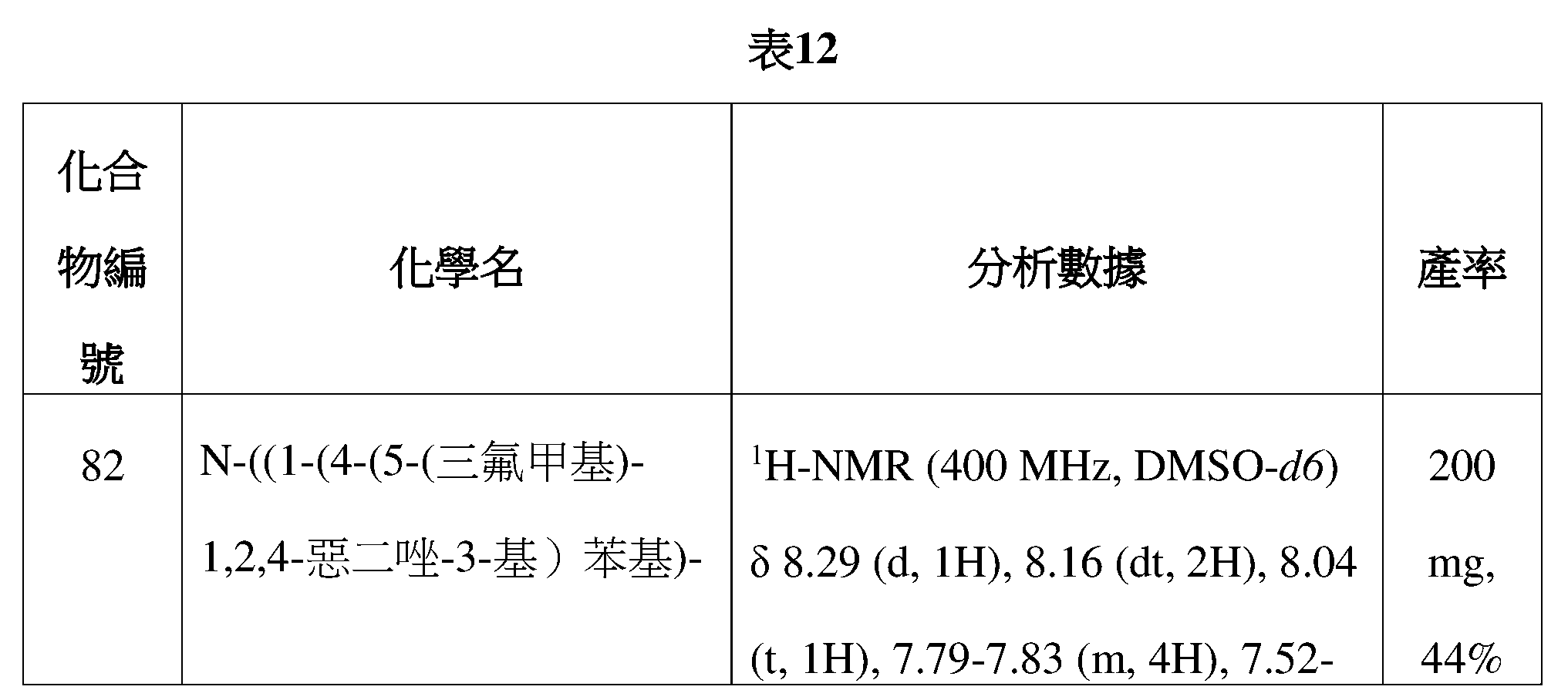
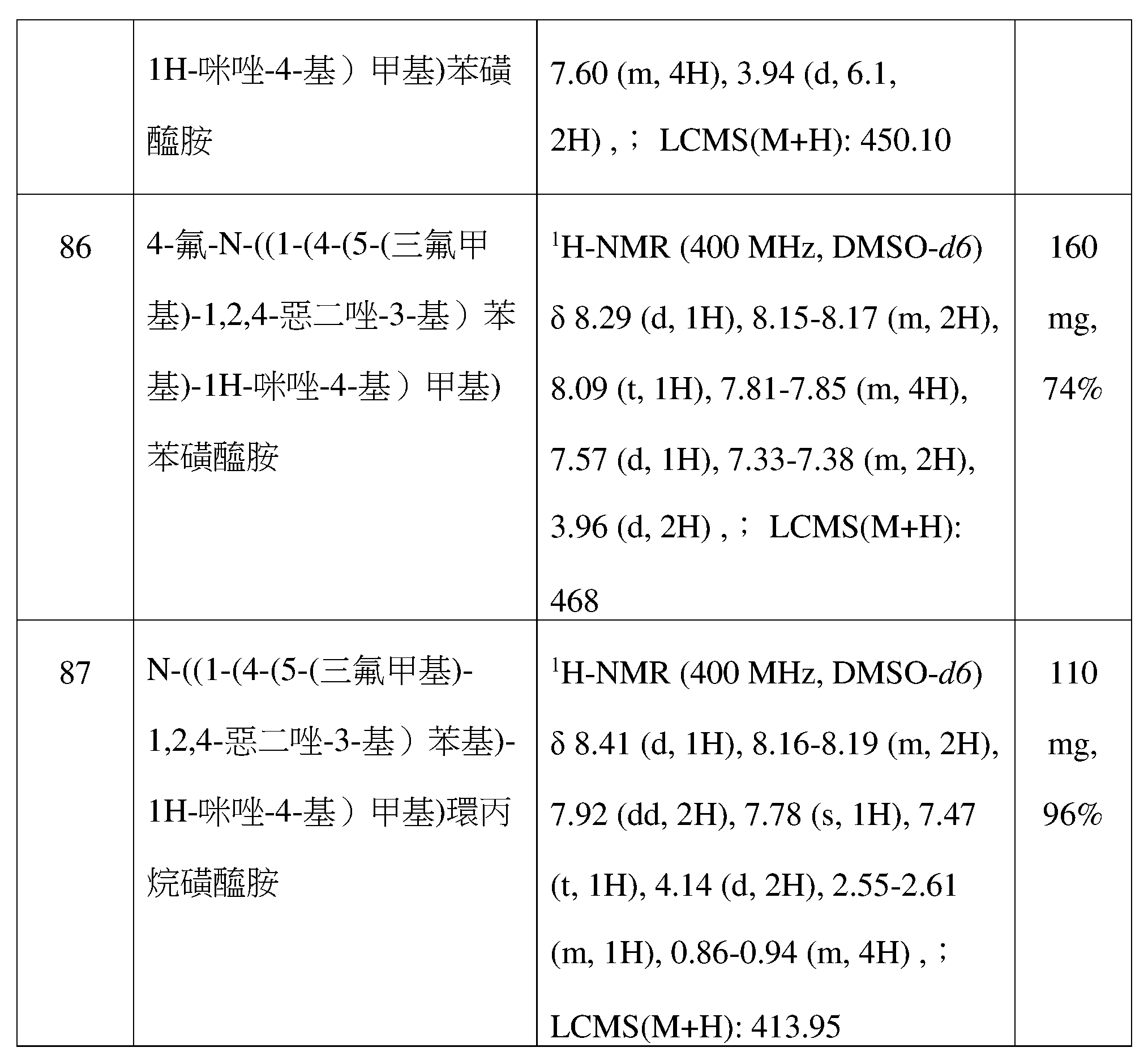
例13:-N-((1-(4-(5-(三氟甲基)-1,2,4-惡二唑-3-基)苯基)-1H-咪唑-4-基)甲基)乙醯胺(化合物85號)的製備Example 13: Preparation of N-((1-(4-(5-(trifluoromethyl)-1,2,4-oxadiazol-3-yl)phenyl)-1H-imidazol-4-yl)methyl)acetamide (Compound No. 85)
在0℃下向(1-(4-(5-(三氟甲基)-1,2,4-惡二唑-3-基)苯基)-1H-咪唑-4-基)甲胺鹽酸鹽(0.16g,0.45mmol)的二氯甲烷(5mL)攪拌溶液中加入乙醯氯(0.033mL,0.56mmol),然後加入三乙胺(0.13mL,0.93mmol)。在0℃下攪拌所得的反應混合物,持續30分鐘,反應完成後,用水(50mL)淬滅反應,並用二氯甲烷(50mL)萃取兩次,混合的二氯甲烷層用無水硫酸鈉乾燥並在減壓下蒸發。通過製備高效液相色譜法純化得到的粗產物,得到N-((1-(4-(5-(三氟 甲基)-1,2,4-惡二唑-3-基)苯基)-1H-咪唑-4-基)甲基)乙醯胺(0.05g,31%產率),為白色固體。1H-NMR(400MHz,DMSO-d6)δ 8.38(d,1H),8.15-8.21(m,3H),7.91(dd,2H),7.69(s,1H),4.18(d,2H),1.85(s,3H)LCMS(M-H):351.95。 To a stirred solution of (1-(4-(5-(trifluoromethyl)-1,2,4-oxadiazol-3-yl)phenyl)-1H-imidazol-4-yl)methanamine hydrochloride (0.16 g, 0.45 mmol) in dichloromethane (5 mL) was added acetyl chloride (0.033 mL, 0.56 mmol) and then triethylamine (0.13 mL, 0.93 mmol) at 0°C. The resulting reaction mixture was stirred at 0°C for 30 minutes. After completion of the reaction, the reaction was quenched with water (50 mL) and extracted twice with dichloromethane (50 mL). The combined dichloromethane layers were dried over anhydrous sodium sulfate and evaporated under reduced pressure. The crude product was purified by preparative HPLC to give N-((1-(4-(5-(trifluoromethyl)-1,2,4-oxadiazol-3-yl)phenyl)-1H-imidazol-4-yl)methyl)acetamide (0.05 g, 31% yield) as a white solid. 1 H-NMR (400 MHz, DMSO- d6 ) δ 8.38 (d, 1H), 8.15-8.21 (m, 3H), 7.91 (dd, 2H), 7.69 (s, 1H), 4.18 (d, 2H), 1.85 (s, 3H) LCMS (MH): 351.95.
表13中所列的化合物可通過例13中所述的類似方法製備。 The compounds listed in Table 13 can be prepared by a similar method as described in Example 13.


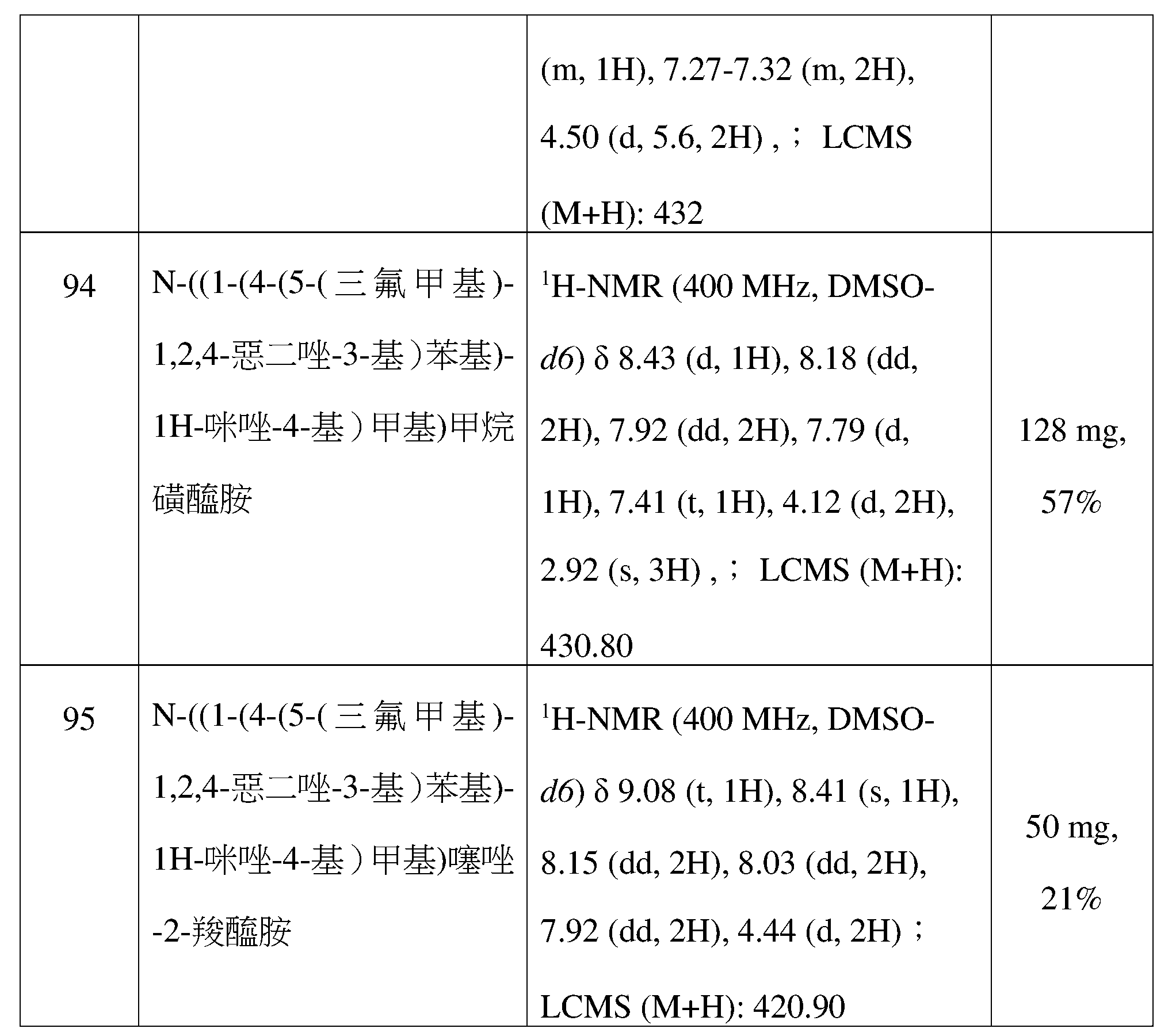
例14:2-(3,5-二甲基-1-(4-(5-(三氟甲基)-1,2,4-惡二唑-3-基)苯基)-1H-吡唑-4-基)-N-苯基乙醯胺(化合物96號)的製備Example 14: Preparation of 2-(3,5-dimethyl-1-(4-(5-(trifluoromethyl)-1,2,4-oxadiazol-3-yl)phenyl)-1H-pyrazol-4-yl)-N-phenylacetamide (Compound No. 96)
第1步:-3-乙醯基-4-氧戊酸叔丁酯Step 1: tert-Butyl 3-acetyl-4-oxopentanoate
將氫化鈉(0.320g,8mmol)和無水四氫呋喃(20mL)的懸浮液冷卻至0℃。將戊烷-2,4-二酮(0.688mL,6.77mmol)的無水四氫呋喃(10mL)溶液加入該懸浮液中,並將混合物攪拌1小時。將2-溴乙酸乙酯(0.811mL,7.3mmol)和無水四氫呋喃(10mL)的溶液加入其中,並將所得反應混合物攪拌18小時。通過加入飽和氯化銨水溶液淬滅反應混合物。用乙酸乙酯(20mL)萃取 產物。混合的乙酸乙酯層用鹽水溶液(20mL)洗滌,用無水硫酸鎂乾燥,並減壓濃縮,得到3-乙醯基-4-氧戊酸叔丁酯(0.869g,98%產率),為黃色的油。 A suspension of sodium hydride (0.320 g, 8 mmol) and anhydrous tetrahydrofuran (20 mL) was cooled to 0°C. A solution of pentane-2,4-dione (0.688 mL, 6.77 mmol) in anhydrous tetrahydrofuran (10 mL) was added to the suspension, and the mixture was stirred for 1 hour. A solution of ethyl 2-bromoacetate (0.811 mL, 7.3 mmol) and anhydrous tetrahydrofuran (10 mL) was added thereto, and the resulting reaction mixture was stirred for 18 hours. The reaction mixture was quenched by adding a saturated aqueous ammonium chloride solution. The product was extracted with ethyl acetate (20 mL). The combined ethyl acetate layers were washed with aqueous saline solution (20 mL), dried over anhydrous magnesium sulfate, and concentrated under reduced pressure to give tert-butyl 3-acetyl-4-oxopentanoate (0.869 g, 98% yield) as a yellow oil.
第2步:-2-(3,5-二甲基-1H-吡唑-4-基)乙酸叔丁酯Step 2: tert-Butyl 2-(3,5-dimethyl-1H-pyrazol-4-yl)acetate
在25℃下向3-乙醯基-4-氧戊酸叔丁酯(1.0g,4.67mmol)的甲醇(15mL)溶液中加入80%的水合肼溶液(0.363mL,7mmol),並將所得反應混合物攪拌3小時。將反應混合物在減壓下濃縮,得到2-(3,5-二甲基-1H-吡唑-4-基)乙酸叔丁酯(0.89g,4.23mmol,91%產率),為無色油。 To a solution of tert-butyl 3-acetyl-4-oxopentanoate (1.0 g, 4.67 mmol) in methanol (15 mL) was added 80% hydrazine hydrate solution (0.363 mL, 7 mmol) at 25 °C, and the resulting reaction mixture was stirred for 3 hours. The reaction mixture was concentrated under reduced pressure to give tert-butyl 2-(3,5-dimethyl-1H-pyrazol-4-yl)acetate (0.89 g, 4.23 mmol, 91% yield) as a colorless oil.
第3步:-2-(1-(4-(氰基苯基)-3,5-二甲基-1H-吡唑-4-基)乙酸叔丁酯Step 3: tert-Butyl 2-(1-(4-(cyanophenyl)-3,5-dimethyl-1H-pyrazol-4-yl)acetate
在25℃下向2-(3,5-二甲基-1H-吡唑-4-基)乙酸叔丁酯(8.5g,40.4mmol)的N,N-二甲基甲醯胺(25mL)溶液中加入碳酸酯(14.37g,44.1mmol)並攪拌1小時。然後加入4-氟苯胺(4.45g,36.7mmol),將所得反應混合物在100℃下攪拌8小時。用水稀釋反應混合物,並用二氯甲烷(50mL)萃取兩次。將混合的硫酸鈉層用鹽水溶液(50mL)洗滌,用無水硫酸鈉乾燥並在減壓下濃縮,將得到的粗殘餘物用矽膠快速柱色譜法(用30%乙酸乙酯的己烷溶液作為洗脫液)純化,得到2-(1-(4-(氰基苯基)-3,5-二甲基-1H-吡唑-4-基)乙酸叔丁酯(7.5g,66%產率)。 To a solution of tert-butyl 2-(3,5-dimethyl-1H-pyrazol-4-yl)acetate (8.5 g, 40.4 mmol) in N,N-dimethylformamide (25 mL) was added carbonate (14.37 g, 44.1 mmol) at 25°C and stirred for 1 hour. Then 4-fluoroaniline (4.45 g, 36.7 mmol) was added and the resulting reaction mixture was stirred at 100°C for 8 hours. The reaction mixture was diluted with water and extracted twice with dichloromethane (50 mL). The combined sodium sulfate layers were washed with a saline solution (50 mL), dried over anhydrous sodium sulfate and concentrated under reduced pressure, and the resulting crude residue was purified by silica gel flash column chromatography (using 30% ethyl acetate in hexane as eluent) to obtain tert-butyl 2-(1-(4-(cyanophenyl)-3,5-dimethyl-1H-pyrazol-4-yl)acetate (7.5 g, 66% yield).
第4步:-2-(1-(4-(N'-羥基胺基甲醯胺基)苯基)-3,5-二甲基-1H-吡唑-4-基)乙酸叔丁酯Step 4: tert-Butyl 2-(1-(4-(N'-hydroxyaminoformamido)phenyl)-3,5-dimethyl-1H-pyrazol-4-yl)acetate
在25℃下向2-(1-(4-氰基苯基)-3,5-二甲基-1H-吡唑-4-基)乙酸叔丁酯(1g,3.21mmol)的乙醇(15mL)攪拌溶液中加入重量比為50%的羥胺水溶液(0.743mL,11.2mmol),然後在60℃下攪拌3小時,將反應混合物減壓濃 縮,得到2-(1-(4-(N'-羥基胺基甲醯胺基)苯基)-3,5-二甲基-1H-吡唑-4-基)乙酸叔丁酯(1.08g,98%產率)。 To a stirred solution of tert-butyl 2-(1-(4-cyanophenyl)-3,5-dimethyl-1H-pyrazol-4-yl)acetate (1 g, 3.21 mmol) in ethanol (15 mL) was added a 50% by weight aqueous solution of hydroxylamine (0.743 mL, 11.2 mmol) at 25°C, and then stirred at 60°C for 3 hours. The reaction mixture was concentrated under reduced pressure to obtain tert-butyl 2-(1-(4-(N'-hydroxyaminoformylamino)phenyl)-3,5-dimethyl-1H-pyrazol-4-yl)acetate (1.08 g, 98% yield).
第5步:-2-(3,5-二甲基-1-(4-(5-(三氟甲基)-1,2,4-惡二唑-3-基)苯基)-1H-吡唑-4-基)乙酸叔丁酯(化合物44號)Step 5: tert-Butyl 2-(3,5-dimethyl-1-(4-(5-(trifluoromethyl)-1,2,4-oxadiazol-3-yl)phenyl)-1H-pyrazol-4-yl)acetate (Compound No. 44)
0-5℃下,在氮氣環境中向2-(1-(4-(N'-羥基胺基甲醯胺基)苯基)-3,5-二甲基-1H-吡唑-4-基)乙酸叔丁酯(1.1g,3.19mmol)的四氫呋喃(15mL)攪拌溶液中緩慢加入三氟乙酸酐(0.812mL,5.7mmol),然後在25℃下攪拌18小時。將其懸浮於50mL乙酸乙酯中,並用碳酸氫鈉水溶液(30mL)洗滌,分離乙酸乙酯層,用無水硫酸鈉乾燥,並減壓濃縮,將粗殘餘物通過矽膠快速柱色譜法(用5%乙酸乙酯的己烷溶液作為洗脫劑)純化,得到2-(3,5-二甲基-1-(4-(5-(三氟甲基)-1,2,4-惡二唑-3-基)苯基)-1H-吡唑-4-基)乙酸叔丁酯(1.302g,3.08mmol,97%產率)。 To a stirred solution of tert-butyl 2-(1-(4-(N'-hydroxyaminoformamido)phenyl)-3,5-dimethyl-1H-pyrazol-4-yl)acetate (1.1 g, 3.19 mmol) in tetrahydrofuran (15 mL) was slowly added trifluoroacetic anhydride (0.812 mL, 5.7 mmol) at 0-5°C in a nitrogen atmosphere, followed by stirring at 25°C for 18 hours. It was suspended in 50 mL of ethyl acetate and washed with aqueous sodium bicarbonate solution (30 mL). The ethyl acetate layer was separated, dried over anhydrous sodium sulfate, and concentrated under reduced pressure. The crude residue was purified by silica gel flash column chromatography (using 5% ethyl acetate in hexane as eluent) to obtain tert-butyl 2-(3,5-dimethyl-1-(4-(5-(trifluoromethyl)-1,2,4-oxadiazol-3-yl)phenyl)-1H-pyrazol-4-yl)acetate (1.302 g, 3.08 mmol, 97% yield).
第6步:-2-(3,5-二甲基-1-(4-(5-(三氟甲基)-1,2,4-惡二唑-3-基)苯基)-1H-吡唑-4-基)乙酸Step 6: 2-(3,5-dimethyl-1-(4-(5-(trifluoromethyl)-1,2,4-oxadiazol-3-yl)phenyl)-1H-pyrazol-4-yl)acetic acid
0-5℃下向叔丁基-2-(3,5-二甲基-1-(4-(5-(三氟甲基)-1,2,4-惡二唑-3-基)苯的基)-1H-吡唑-4-基)乙酸酯(0.2g,0.5mmol)的四氫呋喃(10mL)和水(3mL)的攪拌溶液中緩慢加入濃鹽酸(2mL),然後在60℃下攪拌8小時。將混合物濃縮至一半體積,用飽和碳酸氫鈉水溶液中和至pH 8-9,並用乙酸乙酯(20mL)萃取。乙酸乙酯層用水洗滌(20mL)。用10%鹽酸水溶液將混合的水層酸化至pH 3,然後再用乙酸乙酯(30mL)萃取。將混合的乙酸乙酯層用無水硫酸鈉乾燥,並減壓濃縮,得到2-(3,5-二甲基-1-(4-(5-(三氟甲基)-1,2,4-惡二唑-3-基)苯基)-1H-吡唑-4-基)乙酸(0.135g,78%產率)。1H-NMR (400MHz,DMSO-d6)δ 12.31(s,1H),8.16(d,2H),7.77(d,2H),3.38(d,2H),2.31(d,3H),2.14(d,3H);LCMS(M+H):367。 To a stirred solution of tert-butyl-2-(3,5-dimethyl-1-(4-(5-(trifluoromethyl)-1,2,4-oxadiazol-3-yl)phenyl)-1H-pyrazol-4-yl)acetate (0.2 g, 0.5 mmol) in tetrahydrofuran (10 mL) and water (3 mL) was slowly added concentrated hydrochloric acid (2 mL) at 0-5°C, followed by stirring at 60°C for 8 hours. The mixture was concentrated to half volume, neutralized to pH 8-9 with saturated aqueous sodium bicarbonate solution, and extracted with ethyl acetate (20 mL). The ethyl acetate layer was washed with water (20 mL). The combined aqueous layers were acidified to pH 3 with 10% aqueous hydrochloric acid solution, followed by further extraction with ethyl acetate (30 mL). The combined ethyl acetate layers were dried over anhydrous sodium sulfate and concentrated under reduced pressure to give 2-(3,5-dimethyl-1-(4-(5-(trifluoromethyl)-1,2,4-oxadiazol-3-yl)phenyl)-1H-pyrazol-4-yl)acetic acid (0.135 g, 78% yield). 1 H-NMR (400 MHz, DMSO- d6 ) δ 12.31 (s, 1H), 8.16 (d, 2H), 7.77 (d, 2H), 3.38 (d, 2H), 2.31 (d, 3H), 2.14 (d, 3H); LCMS (M+H): 367.
第7步:-2-(3,5-二甲基-1-(4-(5-(三氟甲基)-1,2,4-惡二唑-3-基)苯基)-1H-吡唑-4-基)-N-苯基乙醯胺Step 7: 2-(3,5-dimethyl-1-(4-(5-(trifluoromethyl)-1,2,4-oxadiazol-3-yl)phenyl)-1H-pyrazol-4-yl)-N-phenylacetamide
在0-5℃下,在氮氣環境中向2-(3,5-二甲基-1-(4-(5-(三氟甲基)-1,2,4-惡二唑-3-基)苯基)-1H-吡唑-4-基)乙酸(0.25g,0.7mmol)的二氯甲烷(10mL)溶液中加入N,N-二甲基胺基吡啶(0.183g,1.5mmol)、N-(3-二甲基胺基丙基)-N'-乙基碳二亞胺鹽酸鹽(0.288g,1.5mmol)和苯胺(0.076g,0.8mmol),將所得反應混合物在25℃攪拌18小時。將該反應混合物在二氯甲烷(20mL)中稀釋,用水(30mL)洗滌兩次,用無水硫酸鈉乾燥,並在減壓下濃縮。將粗產物通過製備高效液相色譜法純化,得到純的2-(3,5-二甲基-1-(4-(5-(三氟甲基)-1,2,4-惡二唑-3-基)苯基)-1H-吡唑-4-基)-N-苯基乙醯胺(0.097g,32%產率)。1H-NMR(400MHz,DMSO-d6)δ 10.08(s,1H),8.16(dt,2H),7.80-7.76(m,2H),7.59(dd,2H),7.31-7.27(m,2H),7.05-7.01(m,1H),3.50(s,2H),2.38(d,3H),2.21(s,3H);LCMS(M+H):442.15。 To a solution of 2-(3,5-dimethyl-1-(4-(5-(trifluoromethyl)-1,2,4-oxadiazol-3-yl)phenyl)-1H-pyrazol-4-yl)acetic acid (0.25 g, 0.7 mmol) in dichloromethane (10 mL) were added N,N-dimethylaminopyridine (0.183 g, 1.5 mmol), N-(3-dimethylaminopropyl)-N'-ethylcarbodiimide hydrochloride (0.288 g, 1.5 mmol) and aniline (0.076 g, 0.8 mmol) at 0-5°C in a nitrogen atmosphere, and the resulting reaction mixture was stirred at 25°C for 18 hours. The reaction mixture was diluted in dichloromethane (20 mL), washed twice with water (30 mL), dried over anhydrous sodium sulfate, and concentrated under reduced pressure. The crude product was purified by preparative HPLC to give pure 2-(3,5-dimethyl-1-(4-(5-(trifluoromethyl)-1,2,4-oxadiazol-3-yl)phenyl)-1H-pyrazol-4-yl)-N-phenylacetamide (0.097 g, 32% yield). 1 H-NMR(400MHz,DMSO- d6 )δ 10.08(s,1H),8.16(dt,2H),7.80-7.76(m,2H),7.59(dd,2H),7.31-7.27(m,2H) ,7.05-7.01(m,1H),3.50(s,2H),2.38(d,3H),2.21(s,3H); LCMS(M+H): 442.15.
表14中所列的化合物可通過例14中所述的類似方法製備。 The compounds listed in Table 14 can be prepared by a similar method as described in Example 14.
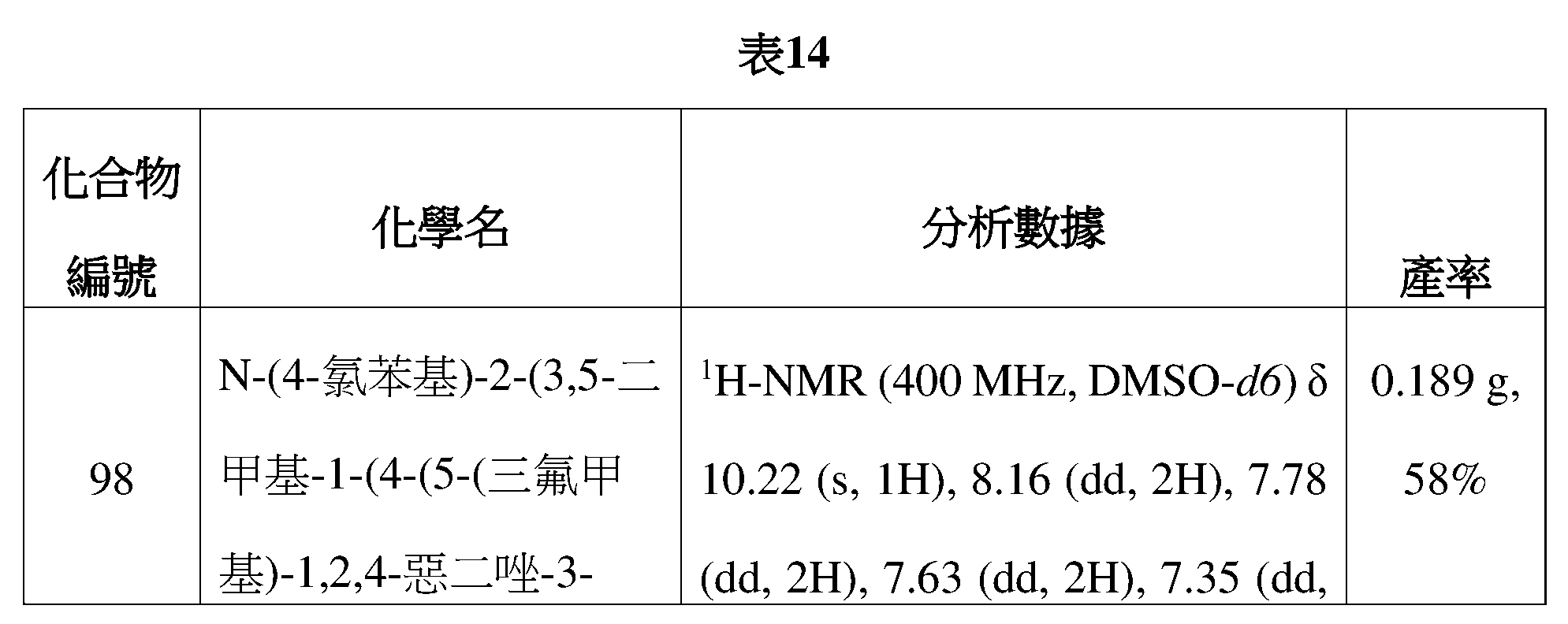

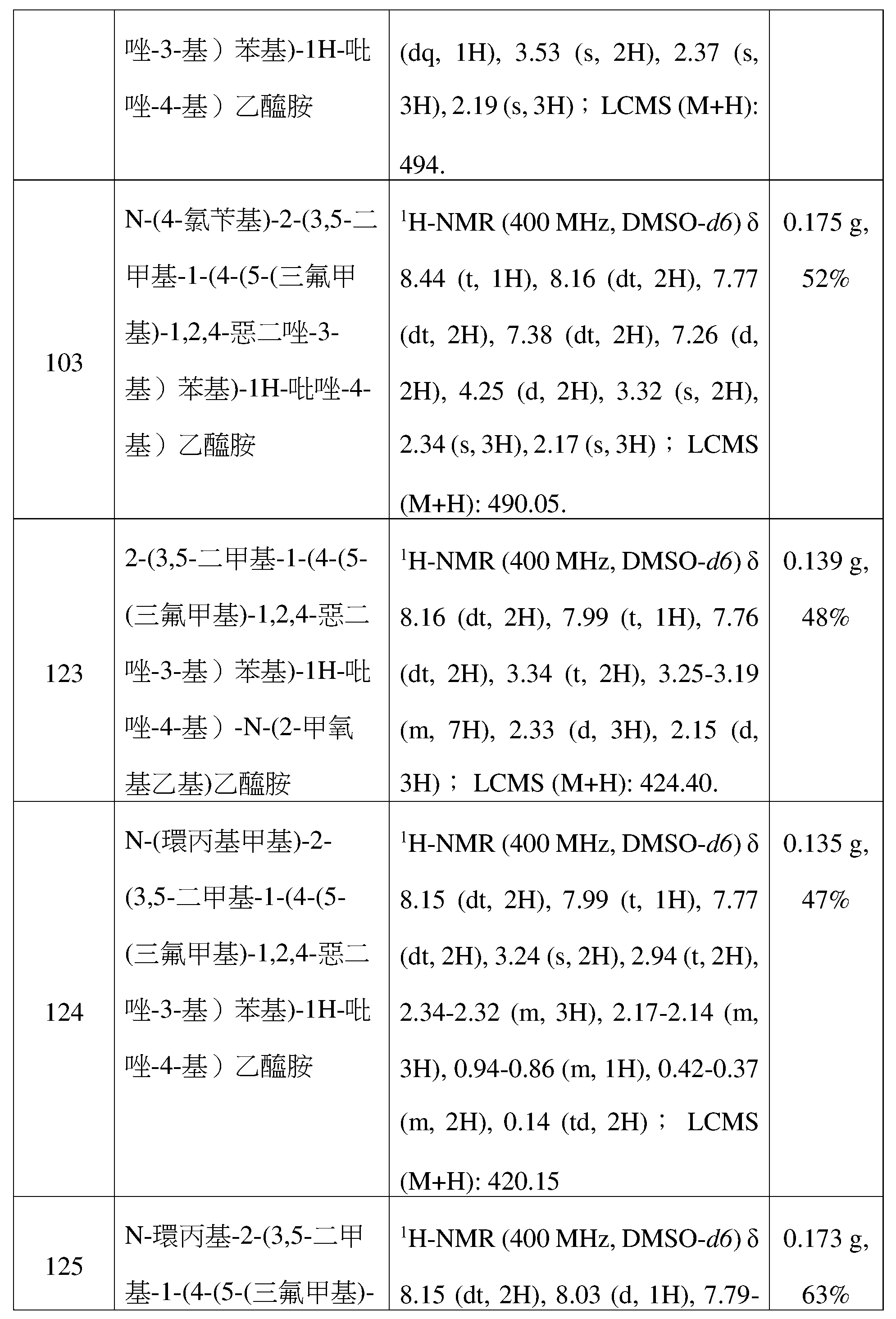

例15:-3-(4-(4-(((4-氟苯基)亞磺醯基)甲基)-1H-咪唑-1-基)苯基)-5-(三氟甲基)-1,2,4-惡二唑(化合物126號)的製備Example 15: Preparation of 3-(4-(4-(((4-fluorophenyl)sulfinyl)methyl)-1H-imidazol-1-yl)phenyl)-5-(trifluoromethyl)-1,2,4-oxadiazole (Compound No. 126)
在0℃下向3-(4-(4-(((4-氟苯基)硫基)甲基)-1H-咪唑-1-基)苯基)-5-(三氟甲基)-1,2,4-惡二唑(300mg,0.7mmol)的甲醇(5ml)溶液中加入硫酸氫鉀(263mg,0.4mmol)並攪拌16小時。反應完成後,濃縮反應混合物,用水(20mL)淬滅,並用乙酸乙酯(10mL)萃取混合物三次。混合的乙酸乙酯層用鹽水溶液(10mL)洗滌,用無水硫酸鈉乾燥並蒸發,得到粗產物。通過製備高效液相色譜法純化粗化合物,得到3-(4-(4-(((4-氟苯基)亞磺醯基)甲基)-1H-咪唑-1-基)苯基)-5-(三氟甲基)-1,2,4-惡二唑(137mg,0.314mmol,44%產率)。1H-NMR(400MHz,DMSO-d6)δ 8.41(d,1H),8.18(dt,2H),7.86-7.90(m,2H),7.68(d,1H),7.53-7.62(m,5H),4.13-4.17(m,1H),4.06(d,1H);LCMS(M+H)-418.90。 To a solution of 3-(4-(4-(((4-fluorophenyl)thio)methyl)-1H-imidazol-1-yl)phenyl)-5-(trifluoromethyl)-1,2,4-oxadiazole (300 mg, 0.7 mmol) in methanol (5 ml) was added potassium hydrogen sulfate (263 mg, 0.4 mmol) at 0°C and stirred for 16 hours. After completion of the reaction, the reaction mixture was concentrated, quenched with water (20 mL), and the mixture was extracted three times with ethyl acetate (10 mL). The combined ethyl acetate layers were washed with brine solution (10 mL), dried over anhydrous sodium sulfate and evaporated to give a crude product. The crude compound was purified by preparative HPLC to give 3-(4-(4-(((4-fluorophenyl)sulfinyl)methyl)-1H-imidazol-1-yl)phenyl)-5-(trifluoromethyl)-1,2,4-oxadiazole (137 mg, 0.314 mmol, 44% yield). 1 H-NMR (400 MHz, DMSO- d6 ) δ 8.41 (d, 1H), 8.18 (dt, 2H), 7.86-7.90 (m, 2H), 7.68 (d, 1H), 7.53-7.62 (m, 5H), 4.13-4.17 (m, 1H), 4.06 (d, 1H); LCMS (M+H) -418.90.
表15中所列的化合物可通過例15中所述的類似方法製備。 The compounds listed in Table 15 can be prepared by a similar method as described in Example 15.


例16:-(2-氟苯基)(甲基)(((1-(4-(5-(三氟甲基)-1,2,4-惡二唑-3-基)苯基)-1H-吡唑-4-基)甲基)亞胺基)-λ6 -磺胺酮(化合物128號) Example 16: -(2-Fluorophenyl)(methyl)(((1-(4-(5-(trifluoromethyl)-1,2,4-oxadiazol-3-yl)phenyl)-1H-pyrazol-4-yl)methyl)imino)-λ 6 -sulfonamide (Compound No. 128)
第1步:-4-(4-(氯甲基)-1H-吡唑-1-基)苄腈Step 1: 4-(4-(Chloromethyl)-1H-pyrazol-1-yl)benzonitrile
在0℃下向4-(4-(羥甲基)-1H-吡唑-1-基)苄腈(2.5g,12.55mmol)和氯仿(50mL)的攪拌溶液中加入亞硫醯氯(1.191ml,16.31mmol)。將所得反應混合物在68℃下攪拌4小時。反應完成後,將反應混合物用二氯甲烷(50mL)稀釋並用水(50mL)洗滌。將二氯甲烷層用無水硫酸鈉乾燥,減壓濃縮,得到4-(4-(氯甲基)-1H-吡唑-1-基)苄腈(2.2g,81%產率)。 To a stirred solution of 4-(4-(hydroxymethyl)-1H-pyrazol-1-yl)benzonitrile (2.5 g, 12.55 mmol) and chloroform (50 mL) was added sulfinyl chloride (1.191 ml, 16.31 mmol) at 0°C. The resulting reaction mixture was stirred at 68°C for 4 hours. After the reaction was completed, the reaction mixture was diluted with dichloromethane (50 mL) and washed with water (50 mL). The dichloromethane layer was dried over anhydrous sodium sulfate and concentrated under reduced pressure to obtain 4-(4-(chloromethyl)-1H-pyrazol-1-yl)benzonitrile (2.2 g, 81% yield).
第2步:-4-(4-((((2-氟苯基)(甲基)(氧基)-λ6 -亞硫烷基)胺基)甲基)-1H-吡唑-1-基)苄腈 Step 2: -4-(4-((((2-fluorophenyl)(methyl)(oxy)-λ 6 -sulfanylene)amino)methyl)-1H-pyrazol-1-yl)benzonitrile
在0℃下向(2-氟苯基)(亞胺基)(甲基)-λ6-磺胺酮(0.239g,1.380mmol)和二甲基甲醯胺(5mL)的攪拌溶液中加入叔丁醇鉀(0.178g,1.587mmol)。將得到的反應混合物在25℃下攪拌15分鐘,在0℃下分批添加4-(4-(氯甲基)-1H-吡唑-1-基)苯甲腈(0.300g,1.380mmol)。將得到的反應混合物在25℃下攪拌2小時,反應完成後,將反應混合物用乙酸乙酯(50mL)稀釋,並用水(50mL)洗滌。將乙酸乙酯層用無水硫酸鈉乾燥,減壓濃縮。將粗殘餘物通過矽膠柱色譜法(用40%乙酸乙酯的己烷溶液為洗脫劑)純化,得到4-(4-((((2-氟苯基)(甲基)(氧基)-λ6-亞硫烷基)胺基)甲基)-1H-吡唑-1-基)苄腈(300mg,61%產率)。 To a stirred solution of (2-fluorophenyl)(imino)(methyl)-λ 6 -sulfonamide (0.239 g, 1.380 mmol) and dimethylformamide (5 mL) was added potassium tert-butoxide (0.178 g, 1.587 mmol) at 0°C. The resulting reaction mixture was stirred at 25°C for 15 minutes, and 4-(4-(chloromethyl)-1H-pyrazol-1-yl)benzonitrile (0.300 g, 1.380 mmol) was added portionwise at 0°C. The resulting reaction mixture was stirred at 25°C for 2 hours, and after the reaction was completed, the reaction mixture was diluted with ethyl acetate (50 mL) and washed with water (50 mL). The ethyl acetate layer was dried over anhydrous sodium sulfate and concentrated under reduced pressure. The crude residue was purified by silica gel column chromatography (40% ethyl acetate in hexanes as eluent) to give 4-(4-((((2-fluorophenyl)(methyl)(oxy)-λ 6 -sulfanylidene)amino)methyl)-1H-pyrazol-1-yl)benzonitrile (300 mg, 61% yield).
第3步:-4-(4-((((2-氟苯基)(甲基)(氧基)-λ6 -亞硫烷基)胺基)甲基)-1H-吡唑-1-基)-N'-羥基苯甲醯胺 Step 3: -4-(4-((((2-fluorophenyl)(methyl)(oxy)-λ 6 -sulfanyl)amino)methyl)-1H-pyrazol-1-yl)-N'-hydroxybenzamide
在0℃下向4-(4-((((2-氟苯基)(甲基)(氧基)-λ6-亞磺醯基)胺基)甲基)-1H-吡唑-1-基)苄腈(300mg,0.84mmol)和乙醇(15mL)的攪拌溶液中加入50%的羥胺水溶液(0.10ml,0.84mmol),將所得反應混合物在65℃下攪拌12小時。反應完成後,將反應混合物減壓濃縮,得到4-(4-((((2-氟苯基)(甲基)(氧基)-λ6-亞硫烷基)胺基)甲基)-1H-吡唑-1-基)-N'-羥基苯甲脒(220mg,67%產率)。 To a stirred solution of 4-(4-((((2-fluorophenyl)(methyl)(oxy)-λ 6 -sulfinyl)amino)methyl)-1H-pyrazol-1-yl)benzonitrile (300 mg, 0.84 mmol) and ethanol (15 mL) was added 50% aqueous hydroxylamine solution (0.10 ml, 0.84 mmol) at 0° C., and the resulting reaction mixture was stirred at 65° C. for 12 hours. After the reaction was completed, the reaction mixture was concentrated under reduced pressure to give 4-(4-((((2-fluorophenyl)(methyl)(oxy)-λ 6 -sulfinyl)amino)methyl)-1H-pyrazol-1-yl)-N′-hydroxybenzamidine (220 mg, 67% yield).
第4步:-(2-氟苯基)(甲基)(((1-(4-(5-(三氟甲基)-1,2,4-惡二唑-3-基)苯基)-1H-吡唑-4-基)甲基)亞胺基)-λ6 -磺胺酮 Step 4: -(2-Fluorophenyl)(methyl)(((1-(4-(5-(trifluoromethyl)-1,2,4-oxadiazol-3-yl)phenyl)-1H-pyrazol-4-yl)methyl)imino)-λ 6 -sulfonamide
在0℃下向4-(4-((((2-氟苯基)(甲基)(氧基)-λ6-亞硫烷基)胺基)甲基)-1H-吡唑-1-基)-N'-羥基苯甲脒(220mg,0.568mmol)的四氫呋喃(15mL)攪拌溶液中加入三氟乙酸酐(0.12mL,0.852mmol),並在25℃下攪拌12小時。將反應混合物用乙酸乙酯(150mL)稀釋,並用碳酸氫鈉溶液(40mL)洗滌兩次,將有機層用無水硫酸鈉乾燥並在減壓下濃縮,將粗殘餘物通過矽膠柱色譜法(使用38%乙酸乙酯的己烷溶液作為洗脫劑)純化,得到(2-氟苯基)(甲基)(((1-(4-(5-(三氟甲基)-1,2,4-惡二唑-3-基)苯基)-1H-吡唑-4-基)甲基)亞胺基)-λ6-磺胺酮(188mg,71%產率)。 To a stirred solution of 4-(4-((((2-fluorophenyl)(methyl)(oxy)-λ 6 -sulfanylene)amino)methyl)-1H-pyrazol-1-yl)-N′-hydroxybenzamidine (220 mg, 0.568 mmol) in tetrahydrofuran (15 mL) was added trifluoroacetic anhydride (0.12 mL, 0.852 mmol) at 0° C. and stirred at 25° C. for 12 hours. The reaction mixture was diluted with ethyl acetate (150 mL) and washed twice with sodium bicarbonate solution (40 mL). The organic layer was dried over anhydrous sodium sulfate and concentrated under reduced pressure. The crude residue was purified by silica gel column chromatography (using 38% ethyl acetate in hexane as eluent) to give (2-fluorophenyl)(methyl)(((1-(4-(5-(trifluoromethyl)-1,2,4-oxadiazol-3-yl)phenyl)-1H-pyrazol-4-yl)methyl)imino)-λ 6 -sulfonamide (188 mg, 71% yield).
表16中所列的化合物可通過例16中所述的類似方法製備。 The compounds listed in Table 16 can be prepared by a similar method as described in Example 16.

如本文所述,式(I)化合物顯示出殺真菌活性--針對攻擊重要農作物的多種植物致病真菌發揮作用。本發明化合物的活性經過以下測試評估: As described herein, the compounds of formula (I) exhibit fungicidal activity against a variety of plant pathogenic fungi that attack important agricultural crops. The activity of the compounds of the present invention was evaluated in the following tests:
將化合物溶解在0.3%的二甲基亞碸中,加入土豆葡萄糖瓊脂培養基中,然後將其放入皮氏培養皿中。將5ml培養基按要求濃度配製成60mm無菌皮氏培養皿。固化後,每片培養板播種5mm大小的菌絲盤,菌絲盤形成主動生長的毒力培養板皿的週邊。將培養皿在溫度為25℃和相對濕度為60%的生長室中溫育7天,並測量徑向生長。在這些測試中,與未處理的廣泛發病的對照組相比,濃度為300ppm的化合物3 24 28 40 43給予了超過70%的控制。 The compounds were dissolved in 0.3% dimethyl sulfoxide and added to potato dextrose agar medium, which was then placed in petri dishes. 5 ml of medium was prepared into 60 mm sterile petri dishes at the required concentration. After solidification, each plate was seeded with 5 mm mycelial disks, which formed the periphery of the actively growing virulence plates. The plates were incubated in a growth chamber at 25°C and 60% relative humidity for 7 days, and radial growth was measured. In these tests, compounds 3 24 28 40 43 at a concentration of 300 ppm gave more than 70% control compared to the untreated, widespread disease control group.
將化合物溶解在0.3%的二甲基亞碸中,加入土豆葡萄糖瓊脂培養基中,然後將其放入皮氏培養皿中。將5ml培養基按要求濃度配製成60mm無菌皮氏培養皿。固化後,每片培養板播種5mm大小的菌絲盤,菌絲盤形成主動生長的毒力培養板皿的週邊。將培養皿在溫度為22℃和相對濕度為90%的生長室中溫育7天,並測量徑向生長。在這些測試中,與未處理的廣泛發病的對照組相比,濃度為300ppm的化合物28給予了超過70%的控制。 Compounds were dissolved in 0.3% dimethyl sulfoxide and added to potato dextrose agar medium, which was then placed in petri dishes. 5 ml of medium was prepared at the required concentration into 60 mm sterile petri dishes. After solidification, each plate was seeded with 5 mm mycelial disks, which formed the periphery of the actively growing virulence plates. The plates were incubated in a growth chamber at 22°C and 90% relative humidity for 7 days, and radial growth was measured. In these tests, compound 28 at a concentration of 300 ppm gave more than 70% control compared to the untreated, widespread disease control group.
將化合物溶解在0.3%的二甲基亞碸中,加入土豆葡萄糖瓊脂培養基中,然後將其放入皮氏培養皿中。將5ml培養基按要求濃度配製成60mm無菌皮氏培養皿。固化後,每片培養板播種5mm大小的菌絲盤,菌絲盤形成主動生長 的毒力培養板皿的週邊。將培養皿在溫度為25℃和相對濕度為60%的生長室中溫育7天,並測量徑向生長。在這些測試中,與未處理的廣泛發病的對照組相比,濃度為300ppm的化合物1 24 25 28 36 37 38給予了超過70%的控制。 Compounds were dissolved in 0.3% dimethyl sulfoxide and added to potato dextrose agar medium, which was then placed in petri dishes. 5 ml of medium was prepared at the required concentration into 60 mm sterile petri dishes. After solidification, each plate was seeded with 5 mm mycelial disks, which formed the periphery of the actively growing virulence plates. The plates were incubated in a growth chamber at 25°C and 60% relative humidity for 7 days, and radial growth was measured. In these tests, compounds 1 24 25 28 36 37 38 at a concentration of 300 ppm gave more than 70% control compared to untreated, widespread disease controls.
將化合物溶解在0.3%的二甲基亞碸中,加入土豆葡萄糖瓊脂培養基中,然後將其放入皮氏培養皿中。將5ml培養基按要求濃度配製成60mm無菌皮氏培養皿。固化後,每片培養板播種5mm大小的菌絲盤,菌絲盤形成主動生長的毒力培養板皿的週邊。將培養皿在溫度為25℃和相對濕度為60%的生長室中溫育7天,並測量徑向生長。在這些測試中,與未處理的廣泛發病的對照組相比,濃度為300ppm的化合物28給予了超過70%的控制。 Compounds were dissolved in 0.3% dimethyl sulfoxide and added to potato dextrose agar medium, which was then placed in petri dishes. 5 ml of medium was prepared at the required concentration into 60 mm sterile petri dishes. After solidification, each plate was seeded with 5 mm mycelial disks, which formed the periphery of the actively growing virulence plates. The plates were incubated in a growth chamber at 25°C and 60% relative humidity for 7 days, and radial growth was measured. In these tests, compound 28 at a concentration of 300 ppm gave more than 70% control compared to the untreated, widespread diseased controls.
製備了含有PARANO(105孢子/ml)孢子懸浮液的馬鈴薯葡萄糖液體培養基。為了進行抑制測定,將每種測試化合物溶解在二甲基亞碸中。將100μl的測試培養基溶液添加到96孔微量滴定板中,最後將相同體積(100μl)的孢子懸浮液添加到孔中,以製作最終的測試濃聚物,並將該培養皿在18℃下孵育15-18天。通過測量OD600評估生長抑制。使用以下公式計算抑制百分比: I=(C-B)-(T-B)/(C-B)*100 A potato dextrose liquid medium containing a PARANO (10 5 spores/ml) spore suspension was prepared. For inhibition assays, each test compound was dissolved in dimethyl sulfoxide. 100 μl of the test medium solution was added to a 96-well microtiter plate, and finally the same volume (100 μl) of the spore suspension was added to the wells to make the final test concentrate, and the culture dish was incubated at 18°C for 15-18 days. Growth inhibition was assessed by measuring OD600. The percentage of inhibition was calculated using the following formula: I=(CB)-(TB)/(CB)*100
其中T=處理組,C=對照組,B=空白組 Where T = treatment group, C = control group, B = blank group
在這些測試中,與未處理的廣泛發病的對照組相比,濃度為300ppm的化合物3 6 15 16 17 24 28 29 30 43給予了超過70%的控制。 In these tests, compounds 3 6 15 16 17 24 28 29 30 43 at 300 ppm concentrations gave over 70% control compared to untreated, extensively diseased controls.
將化合物溶於2%二甲基亞碸/丙酮中,然後與水混合至50mL校準的噴霧量,並倒入噴霧瓶中用於進一步的應用。 The compound was dissolved in 2% DMSO/acetone, then mixed with water to a calibrated spray volume of 50 mL and poured into a spray bottle for further application.
為了測試化合物的防病活性,使用空心錐形噴嘴在噴霧櫃內以所述的施用率往溫室中培養的健康幼齡大豆植物噴灑活性化合物製劑。處理後一天,用含有2×10⁵的大豆鏽菌接種物的孢子懸浮液接種植物。然後將接種的植物保持在溫度為22-24℃,相對濕度為80-90%的溫室中以進行疾病表達。 To test the disease control activity of the compounds, healthy young soybean plants grown in a greenhouse are sprayed with the active compound formulation at the stated application rate using a hollow cone spray nozzle in a spray booth. One day after treatment, the plants are inoculated with a spore suspension containing 2×10 5 of a soybean rust fungus inoculum. The inoculated plants are then kept in a greenhouse at a temperature of 22-24°C and a relative humidity of 80-90% for disease expression.
通過在施用後3,7,10和15天對處理植物的疾病嚴重性(0-100%規模)進行評級來進行化合物性能的視覺評估。通過比較治療中的疾病評級與未處理對照之一來計算化合物的功效(%控制率)。並通過記錄壞死、萎黃和生長遲緩等症狀評估噴過藥劑的植物的化合物植物相容性。在這些測試中,與未處理的廣泛發病的對照組相比,濃度為500ppm的化合物1 2 3 4 5 6 7 8 9 10 11 12 13 14 15 16 17 18 19 20 21 22 23 25 27 29 30給予了超過70%的控制。 Visual assessment of compound performance was performed by rating the disease severity (0-100% scale) of treated plants 3, 7, 10 and 15 days after application. Compound efficacy (% control) was calculated by comparing the disease rating in the treatment with the one of the untreated control. And compound phytocompatibility was evaluated on sprayed plants by recording symptoms such as necrosis, chlorosis and stunted growth. In these tests, compound 1 2 3 4 5 6 7 8 9 10 11 12 13 14 15 16 17 18 19 20 21 22 23 25 27 29 30 at a concentration of 500 ppm gave over 70% control compared to the untreated extensively diseased control.
Claims (13)


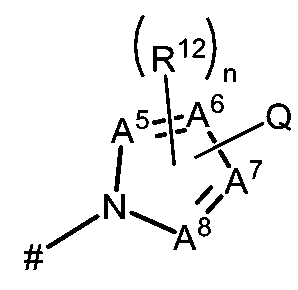
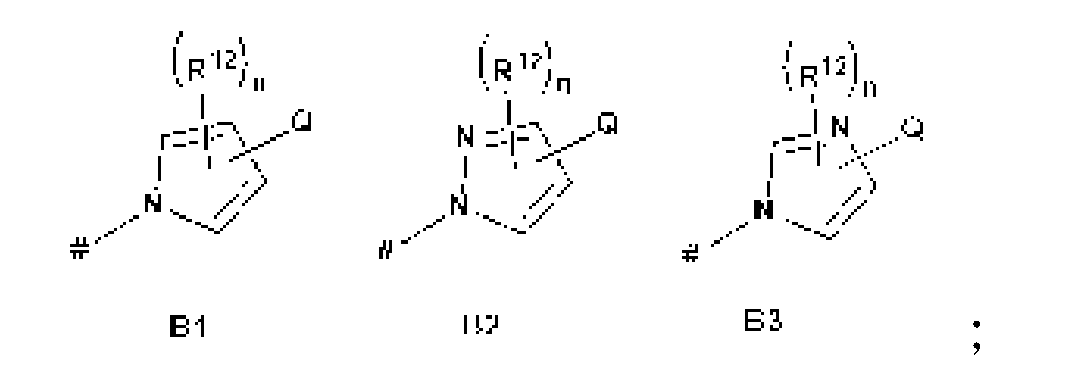

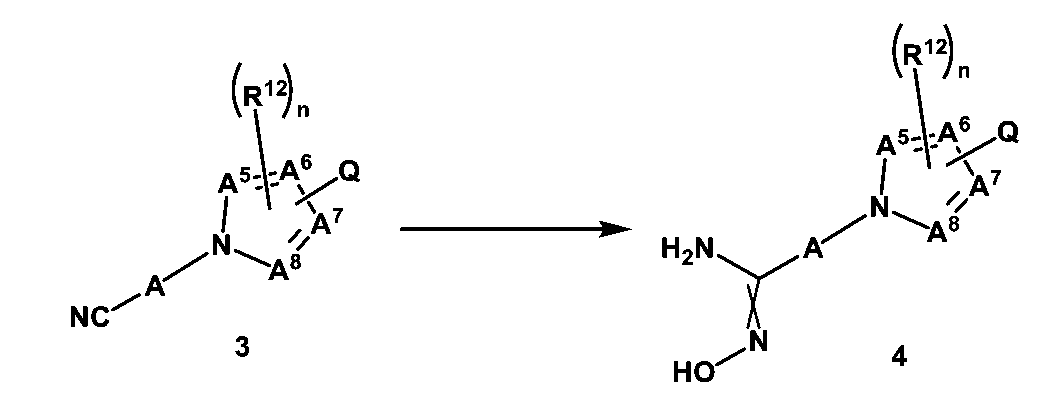
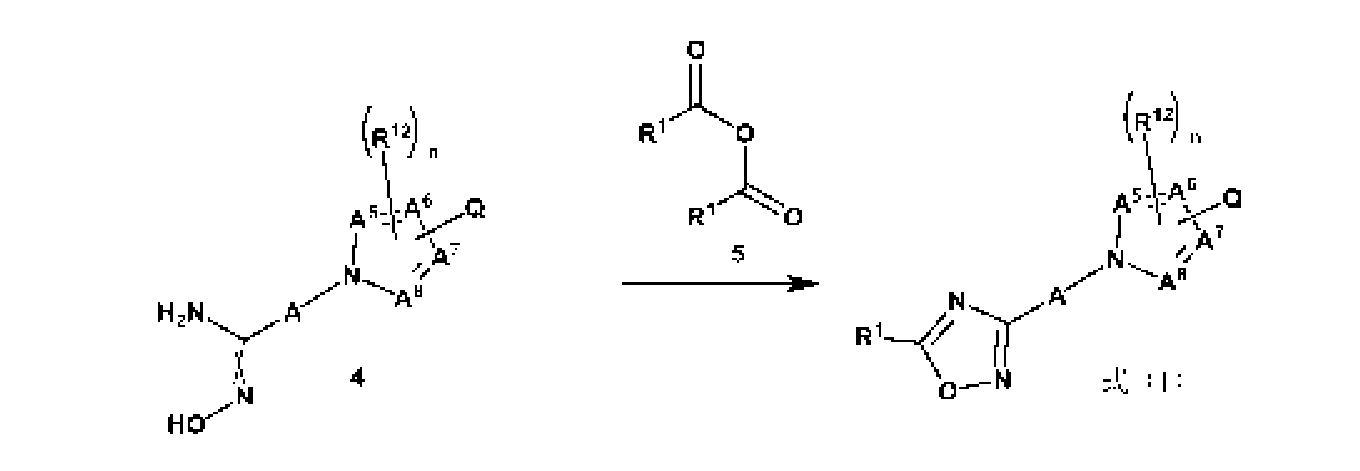
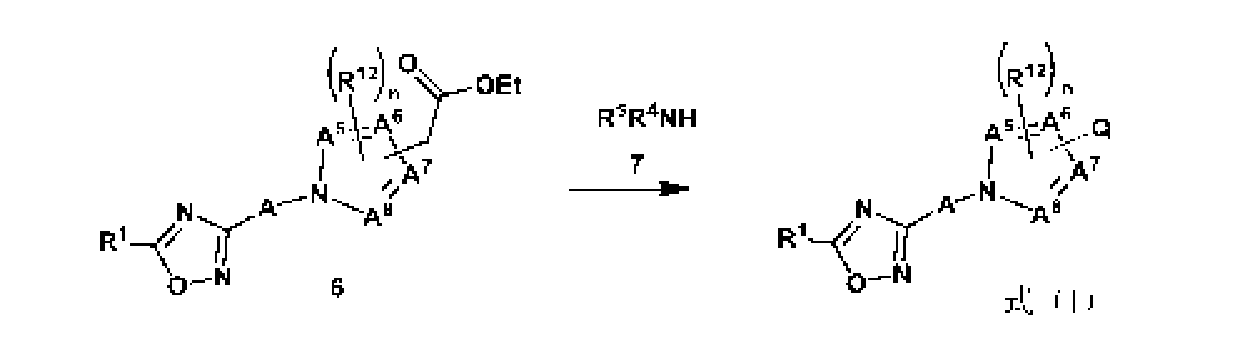
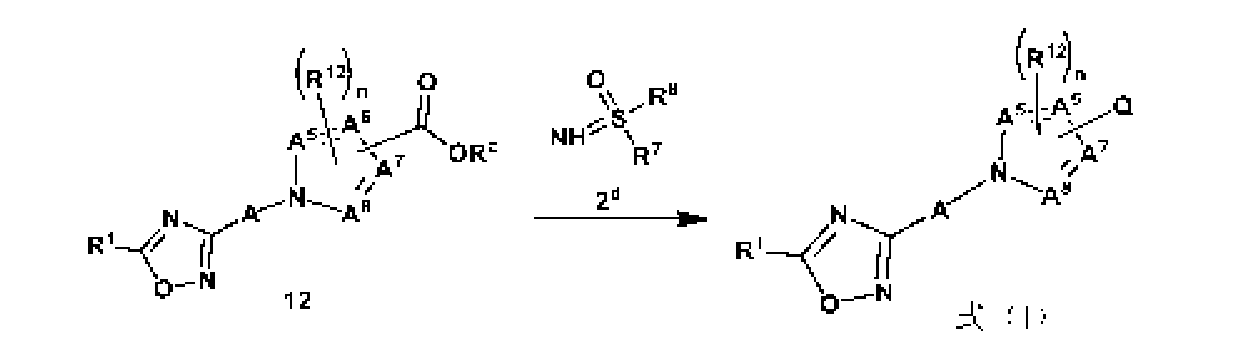
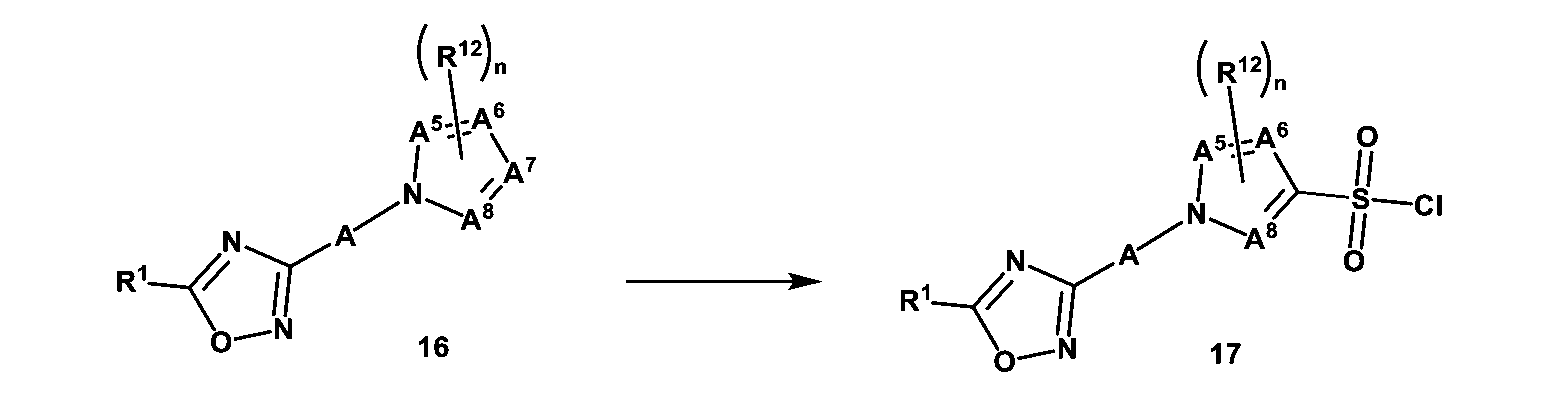


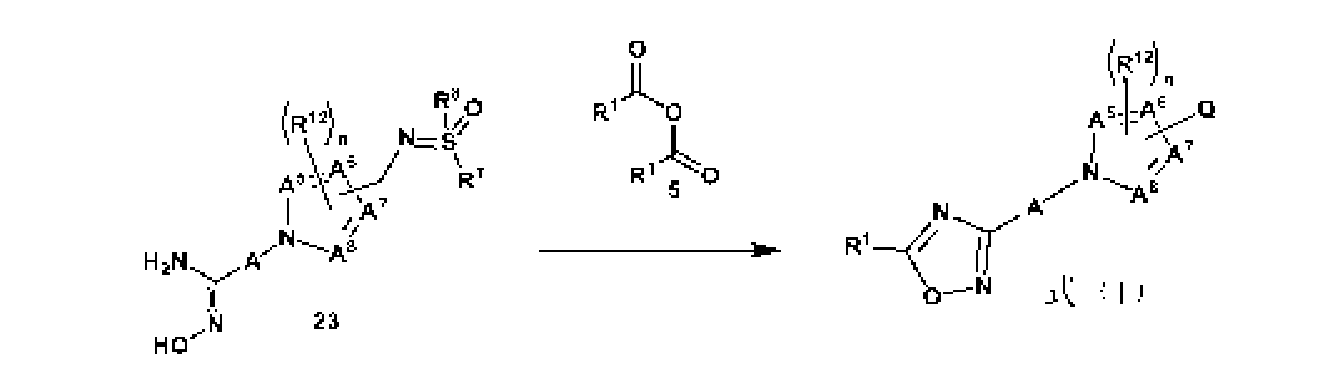

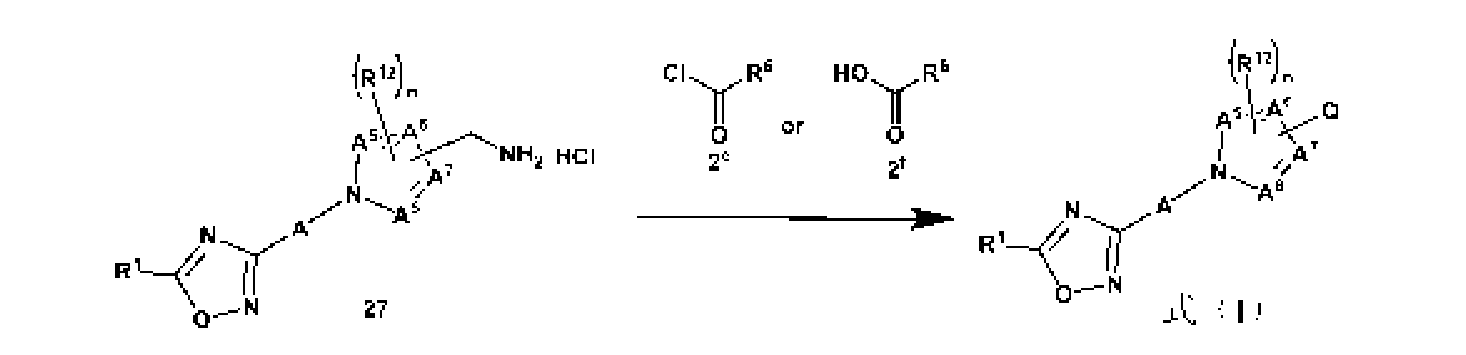
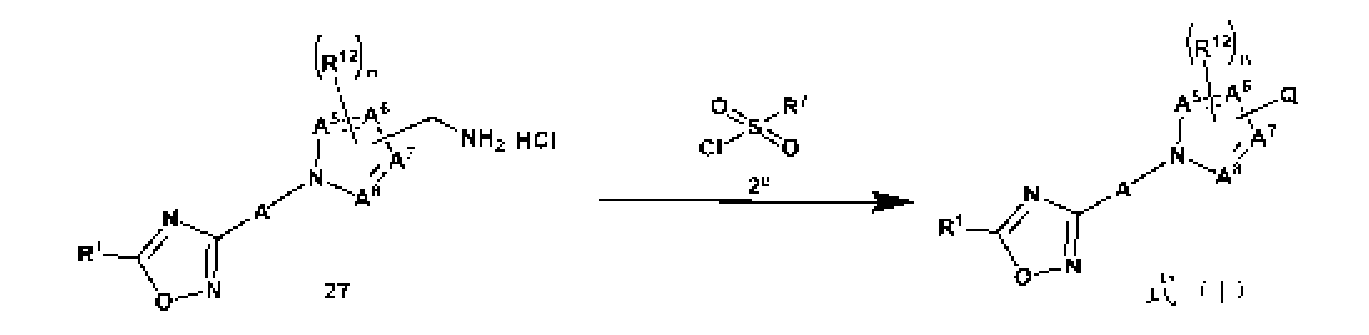
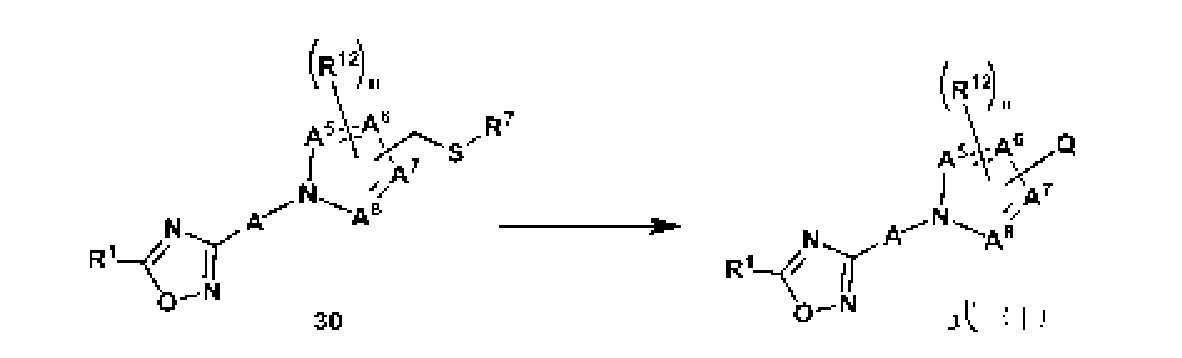

Applications Claiming Priority (2)
| Application Number | Priority Date | Filing Date | Title |
|---|---|---|---|
| IN201911033375 | 2019-08-19 | ||
| IN201911033375 | 2019-08-19 |
Publications (2)
| Publication Number | Publication Date |
|---|---|
| TW202115051A TW202115051A (en) | 2021-04-16 |
| TWI878338B true TWI878338B (en) | 2025-04-01 |
Family
ID=72560847
Family Applications (1)
| Application Number | Title | Priority Date | Filing Date |
|---|---|---|---|
| TW109128316A TWI878338B (en) | 2019-08-19 | 2020-08-19 | Novel oxadiazole compounds containing 5-membered heteroaromatic ring for controlling or preventing phytopathogenic fungi |
Country Status (8)
| Country | Link |
|---|---|
| US (1) | US20220348567A1 (en) |
| EP (1) | EP4017852A1 (en) |
| CN (1) | CN114341131B (en) |
| AR (1) | AR119774A1 (en) |
| BR (1) | BR112022003134A2 (en) |
| MX (1) | MX2022002124A (en) |
| TW (1) | TWI878338B (en) |
| WO (1) | WO2021033133A1 (en) |
Citations (2)
| Publication number | Priority date | Publication date | Assignee | Title |
|---|---|---|---|---|
| WO2006071940A2 (en) * | 2004-12-23 | 2006-07-06 | Deciphera Pharmaceuticals, Llc | Enzyme modulators and treatments |
| WO2017162868A1 (en) * | 2016-03-24 | 2017-09-28 | Syngenta Participations Ag | Microbiocidal oxadiazole derivatives |
Family Cites Families (98)
| Publication number | Priority date | Publication date | Assignee | Title |
|---|---|---|---|---|
| US3325503A (en) | 1965-02-18 | 1967-06-13 | Diamond Alkali Co | Polychloro derivatives of mono- and dicyano pyridines and a method for their preparation |
| US3296272A (en) | 1965-04-01 | 1967-01-03 | Dow Chemical Co | Sulfinyl- and sulfonylpyridines |
| DE3338292A1 (en) | 1983-10-21 | 1985-05-02 | Basf Ag, 6700 Ludwigshafen | 7-AMINO-AZOLO (1,5-A) -PYRIMIDINE AND FUNGICIDES CONTAINING THEM |
| CA1249832A (en) | 1984-02-03 | 1989-02-07 | Shionogi & Co., Ltd. | Azolyl cycloalkanol derivatives and agricultural fungicides |
| BR8600161A (en) | 1985-01-18 | 1986-09-23 | Plant Genetic Systems Nv | CHEMICAL GENE, HYBRID, INTERMEDIATE PLASMIDIO VECTORS, PROCESS TO CONTROL INSECTS IN AGRICULTURE OR HORTICULTURE, INSECTICIDE COMPOSITION, PROCESS TO TRANSFORM PLANT CELLS TO EXPRESS A PLANTINIDE TOXIN, PRODUCED BY CULTURES, UNITED BY BACILLA |
| DE3545319A1 (en) | 1985-12-20 | 1987-06-25 | Basf Ag | ACRYLIC ACID ESTERS AND FUNGICIDES THAT CONTAIN THESE COMPOUNDS |
| CN1015981B (en) | 1986-05-02 | 1992-03-25 | 施托福化学公司 | The preparation method of pyridyl imidate |
| DE256503T1 (en) | 1986-08-12 | 1990-02-08 | Mitsubishi Kasei Corp., Tokio/Tokyo | PYRIDINE CARBOXAMIDE DERIVATIVES AND THEIR USE AS A FUNGICIDAL AGENT. |
| EP0374753A3 (en) | 1988-12-19 | 1991-05-29 | American Cyanamid Company | Insecticidal toxines, genes coding therefor, antibodies binding them, transgenic plant cells and plants expressing these toxines |
| ES2199931T3 (en) | 1989-03-24 | 2004-03-01 | Syngenta Participations Ag | TRANSGENIC PLANTS RESISTANT TO DISEASES. |
| ES2074547T3 (en) | 1989-11-07 | 1995-09-16 | Pioneer Hi Bred Int | LARVICID LECTINES, AND INDUCED RESISTANCE OF PLANTS TO INSECTS. |
| AU628229B2 (en) | 1989-11-10 | 1992-09-10 | Agro-Kanesho Co. Ltd. | Hexahydrotriazine compounds and insecticides |
| JP2828186B2 (en) | 1991-09-13 | 1998-11-25 | 宇部興産株式会社 | Acrylate-based compounds, their preparation and fungicides |
| UA48104C2 (en) | 1991-10-04 | 2002-08-15 | Новартіс Аг | Dna fragment including sequence that codes an insecticide protein with optimization for corn, dna fragment providing directed preferable for the stem core expression of the structural gene of the plant related to it, dna fragment providing specific for the pollen expression of related to it structural gene in the plant, recombinant dna molecule, method for obtaining a coding sequence of the insecticide protein optimized for corn, method of corn plants protection at least against one pest insect |
| US5530195A (en) | 1994-06-10 | 1996-06-25 | Ciba-Geigy Corporation | Bacillus thuringiensis gene encoding a toxin active against insects |
| DE19650197A1 (en) | 1996-12-04 | 1998-06-10 | Bayer Ag | 3-thiocarbamoylpyrazole derivatives |
| TW460476B (en) | 1997-04-14 | 2001-10-21 | American Cyanamid Co | Fungicidal trifluoromethylalkylamino-triazolopyrimidines |
| NZ503594A (en) | 1997-09-18 | 2001-08-31 | Basf Ag | (Phenyl, thienyl or pyrazolyl)-substituted and alkyl-substituted benzamidoxime derivatives, and benzonitrile intermediates, useful as fungicides |
| DE19750012A1 (en) | 1997-11-12 | 1999-05-20 | Bayer Ag | Isothiazole carboxamides |
| AU1621799A (en) | 1997-12-04 | 1999-06-16 | Dow Agrosciences Llc | Fungicidal compositions and methods, and compounds and methods for the preparation thereof |
| AU755538B2 (en) | 1998-11-17 | 2002-12-12 | Ihara Chemical Industry Co. Ltd. | Pyrimidinylbenzimidazole and triazinylbenzimidazole derivatives and agricultural/horticultural fungicides |
| IT1303800B1 (en) | 1998-11-30 | 2001-02-23 | Isagro Ricerca Srl | DIPEPTID COMPOUNDS HAVING HIGH FUNGICIDE AND AGRICULTURAL USE. |
| JP3417862B2 (en) | 1999-02-02 | 2003-06-16 | 新東工業株式会社 | Silica gel highly loaded with titanium oxide photocatalyst and method for producing the same |
| AU770077B2 (en) | 1999-03-11 | 2004-02-12 | Dow Agrosciences Llc | Heterocyclic substituted isoxazolidines and their use as fungicides |
| US6586617B1 (en) | 1999-04-28 | 2003-07-01 | Sumitomo Chemical Takeda Agro Company, Limited | Sulfonamide derivatives |
| UA73307C2 (en) | 1999-08-05 | 2005-07-15 | Куміаі Кемікал Індастрі Ко., Лтд. | Carbamate derivative and fungicide of agricultural/horticultural destination |
| DE10021412A1 (en) | 1999-12-13 | 2001-06-21 | Bayer Ag | Fungicidal active ingredient combinations |
| DK1250047T3 (en) | 2000-01-25 | 2005-05-30 | Syngenta Participations Ag | Herbicide agent |
| US6376548B1 (en) | 2000-01-28 | 2002-04-23 | Rohm And Haas Company | Enhanced propertied pesticides |
| IL167957A (en) | 2000-02-04 | 2009-07-20 | Sumitomo Chemical Co | Hydroxypyridine compound |
| CN100353846C (en) | 2000-08-25 | 2007-12-12 | 辛根塔参与股份公司 | New insecticidal toxins from Bacillus thuringiensis insecticidal crystal proteins |
| MXPA03002338A (en) | 2000-09-18 | 2003-09-10 | Du Pont | Pyridinyl amides and imides for use as fungicides. |
| NZ525744A (en) | 2000-11-17 | 2004-10-29 | Dow Agrosciences Llc | Compounds having fungicidal activity and processes to make and use same |
| JP4465133B2 (en) * | 2001-02-08 | 2010-05-19 | クミアイ化学工業株式会社 | Isoxazoline derivatives and herbicides containing the same as active ingredients |
| JP5034142B2 (en) | 2001-04-20 | 2012-09-26 | 住友化学株式会社 | Plant disease control composition |
| DE10136065A1 (en) | 2001-07-25 | 2003-02-13 | Bayer Cropscience Ag | pyrazolylcarboxanilides |
| AR037228A1 (en) | 2001-07-30 | 2004-11-03 | Dow Agrosciences Llc | ACID COMPOUNDS 6- (ARIL OR HETEROARIL) -4-AMYNOPYCOLINIC, HERBICIDE COMPOSITION THAT UNDERSTANDS AND METHOD TO CONTROL UNWANTED VEGETATION |
| FR2828196A1 (en) | 2001-08-03 | 2003-02-07 | Aventis Cropscience Sa | New iodochromone derivatives, useful for the prevention or cure of plant fungal disorders, especially in cereals, vines, fruits, legumes or ornamental plants |
| JPWO2003016286A1 (en) | 2001-08-17 | 2004-12-02 | 三共アグロ株式会社 | 3-phenoxy-4-pyridazinol derivative and herbicidal composition containing the same |
| BR0212034A (en) | 2001-08-20 | 2004-08-03 | Dainippon Ink & Chemicals | Tetrazoyloxime derivative and agricultural chemical containing same as active ingredient |
| US7230167B2 (en) | 2001-08-31 | 2007-06-12 | Syngenta Participations Ag | Modified Cry3A toxins and nucleic acid sequences coding therefor |
| WO2003052073A2 (en) | 2001-12-17 | 2003-06-26 | Syngenta Participations Ag | Novel corn event |
| WO2003053145A1 (en) | 2001-12-21 | 2003-07-03 | Nissan Chemical Industries, Ltd. | Bactericidal composition |
| TWI327462B (en) | 2002-01-18 | 2010-07-21 | Sumitomo Chemical Co | Condensed heterocyclic sulfonyl urea compound, a herbicide containing the same, and a method for weed control using the same |
| DE10204390A1 (en) | 2002-02-04 | 2003-08-14 | Bayer Cropscience Ag | Disubstituted thiazolylcarboxanilides |
| HK1079785B (en) | 2002-03-05 | 2007-08-10 | 辛根塔参与股份公司 | O-cyclopropyl-carboxanilides and their use as fungicides |
| GB0227966D0 (en) | 2002-11-29 | 2003-01-08 | Syngenta Participations Ag | Organic Compounds |
| WO2004083193A1 (en) | 2003-03-17 | 2004-09-30 | Sumitomo Chemical Company, Limited | Amide compound and bactericide composition containing the same |
| TWI355894B (en) | 2003-12-19 | 2012-01-11 | Du Pont | Herbicidal pyrimidines |
| HRP20100538T1 (en) | 2004-03-10 | 2010-12-31 | Basf Se | 5,6-dialkyl-7-amino-triazolopyrimidines, method for their production, their use for controlling pathogenic fungi and agents containing said compounds |
| JP2007527886A (en) | 2004-03-10 | 2007-10-04 | ビーエーエスエフ アクチェンゲゼルシャフト | 5,6-Dialkyl-7-aminotriazolopyrimidines, their preparation, and their use for controlling harmful fungi, and compositions containing these compounds |
| WO2005120234A2 (en) | 2004-06-03 | 2005-12-22 | E.I. Dupont De Nemours And Company | Fungicidal mixtures of amidinylphenyl compounds |
| EP1761498A1 (en) | 2004-06-18 | 2007-03-14 | Basf Aktiengesellschaft | 1-methyl-3-difluoromethyl-pyrazol-4-carbonic acid-(ortho-phenyl)-anilides, and use thereof as a fungicide |
| BRPI0512273A (en) * | 2004-06-18 | 2008-02-19 | Millennium Pharm Inc | xa factor inhibitors |
| ATE458722T1 (en) | 2004-06-18 | 2010-03-15 | Basf Se | 1-METHYL-3-TRIFLUORMETHYL-PYRAZOLE-4-CARBONIC ACID (ORTHO-PHENYL) ANILIDES AND THEIR USE AS A FUNGICIDE |
| GB0418048D0 (en) | 2004-08-12 | 2004-09-15 | Syngenta Participations Ag | Method for protecting useful plants or plant propagation material |
| DE102005007160A1 (en) | 2005-02-16 | 2006-08-24 | Basf Ag | Pyrazolecarboxylic acid anilides, process for their preparation and compositions containing them for controlling harmful fungi |
| WO2006087325A1 (en) | 2005-02-16 | 2006-08-24 | Basf Aktiengesellschaft | 5-alkoxyalkyl-6-alkyl-7-amino-azolopyrimidines, method for their production, their use for controlling pathogenic fungi and agents containing said substances |
| DE102005009458A1 (en) | 2005-03-02 | 2006-09-07 | Bayer Cropscience Ag | pyrazolylcarboxanilides |
| ATE520681T1 (en) | 2005-07-07 | 2011-09-15 | Basf Se | N-THIOANTHRANILAMIDE COMPOUNDS AND THEIR USE AS PESTICIDES |
| PL1973881T3 (en) | 2006-01-13 | 2010-04-30 | Dow Agrosciences Llc | 6-(poly-substituted aryl)-4-aminopicolinates and their use as herbicides |
| EP1983832A2 (en) | 2006-02-09 | 2008-10-29 | Syngeta Participations AG | A method of protecting a plant propagation material, a plant, and/or plant organs |
| DE602008005582D1 (en) * | 2007-05-10 | 2011-04-28 | Glaxo Group Ltd | PYRAZONE DERIVATIVES AS P2X7 MODULATORS |
| EP3262940A1 (en) | 2008-01-15 | 2018-01-03 | Bayer Intellectual Property GmbH | Pesticide composition comprising a tetrazolyloxime derivative and an insecticide active substance |
| GB0823002D0 (en) | 2008-12-17 | 2009-01-28 | Syngenta Participations Ag | Isoxazoles derivatives with plant growth regulating properties |
| MX2012002579A (en) | 2009-09-01 | 2012-07-23 | Dow Agrosciences Llc | Synergistic fungicidal compositions containing a 5-fluoropyrimidine derivative for fungal control in cereals. |
| PH12012501288A1 (en) | 2009-12-22 | 2013-01-07 | Mitsui Chemicals Crop & Life Solutions Inc | Plant disease control composition and method for controlling plant diseases by applying the same |
| CN102858172A (en) | 2010-04-28 | 2013-01-02 | 住友化学株式会社 | Plant disease control composition and its use |
| EP2532233A1 (en) | 2011-06-07 | 2012-12-12 | Bayer CropScience AG | Active compound combinations |
| EA026736B1 (en) | 2011-07-13 | 2017-05-31 | Басф Агро Б.В. | Fungicidal substituted 2-[2-halogenalkyl-4-(phenoxy)phenyl]-1-[1,2,4]triazol-1-yl-ethanol compounds |
| EP2731438B1 (en) | 2011-07-15 | 2015-04-08 | Basf Se | Fungicidal alkyl-substituted 2-[2-chloro-4-(4-chloro-phenoxy)-phenyl]-1-[1,2,4]triazol-1-yl-ethanol compounds |
| IN2014CN01025A (en) | 2011-08-12 | 2015-04-10 | Basf Se | |
| IN2014CN00979A (en) | 2011-08-12 | 2015-04-10 | Basf Se | |
| WO2013047441A1 (en) | 2011-09-26 | 2013-04-04 | 日本曹達株式会社 | Agricultural and horticultural bactericide composition |
| HUE032086T2 (en) | 2011-09-29 | 2017-09-28 | Mitsui Chemicals Agro Inc | SAIB (Sucrose Acetate-Isobutyrate) Long-lasting Local Anesthetic Composition |
| WO2013092224A1 (en) | 2011-12-21 | 2013-06-27 | Basf Se | Use of strobilurin type compounds for combating phytopathogenic fungi resistant to qo inhibitors |
| UA113198C2 (en) | 2012-02-27 | 2016-12-26 | COMBINATIONS OF ACTIVE COMPOUNDS | |
| JP6107377B2 (en) | 2012-04-27 | 2017-04-05 | 住友化学株式会社 | Tetrazolinone compounds and uses thereof |
| BR122021017872B1 (en) | 2014-06-06 | 2021-11-23 | Basf Se | USE OF COMPOUNDS, AGROCHEMICAL COMPOSITION AND METHOD TO COMBAT PHYTOPATHOGENIC FUNGI |
| US20180317490A1 (en) | 2015-11-04 | 2018-11-08 | Basf Se | Substituted oxadiazoles for combating phytopathogenic fungi |
| EP3165093A1 (en) | 2015-11-05 | 2017-05-10 | Basf Se | Substituted oxadiazoles for combating phytopathogenic fungi |
| BR112018011053A2 (en) | 2015-12-02 | 2018-11-21 | Syngenta Participations Ag | microbiocidal oxadiazole derivatives |
| CN108366564A (en) | 2015-12-03 | 2018-08-03 | 巴斯夫欧洲公司 | Substituted oxadiazoles for controlling phytopathogenic fungi |
| UY37062A (en) | 2016-01-08 | 2017-08-31 | Syngenta Participations Ag | DERIVATIVES OF ARYL OXADIAZOL FUNGICIDAS |
| AR108745A1 (en) | 2016-06-21 | 2018-09-19 | Syngenta Participations Ag | MICROBIOCIDES OXADIAZOL DERIVATIVES |
| PL3558984T3 (en) | 2016-12-20 | 2024-01-15 | Fmc Corporation | Fungicidal oxadiazoles |
| UY37623A (en) | 2017-03-03 | 2018-09-28 | Syngenta Participations Ag | DERIVATIVES OF OXADIAZOL THIOPHEN FUNGICIDES |
| TWI886480B (en) | 2017-04-06 | 2025-06-11 | 美商富曼西公司 | Fungicidal oxadiazoles |
| WO2018184970A1 (en) | 2017-04-07 | 2018-10-11 | Basf Se | Substituted oxadiazoles for combating phytopathogenic fungi |
| WO2018202491A1 (en) | 2017-05-04 | 2018-11-08 | Basf Se | Substituted trifluoromethyloxadiazoles for combating phytopathogenic fungi |
| US11447481B2 (en) * | 2017-06-02 | 2022-09-20 | Syngenta Participations Ag | Microbiocidal oxadiazole derivatives |
| WO2019011928A1 (en) | 2017-07-11 | 2019-01-17 | Syngenta Participations Ag | Microbiocidal oxadiazole derivatives |
| WO2019011929A1 (en) | 2017-07-11 | 2019-01-17 | Syngenta Participations Ag | Microbiocidal oxadiazole derivatives |
| WO2019011923A1 (en) | 2017-07-11 | 2019-01-17 | Syngenta Participations Ag | Microbiocidal oxadiazole derivatives |
| WO2019011926A1 (en) | 2017-07-11 | 2019-01-17 | Syngenta Participations Ag | Microbiocidal oxadiazole derivatives |
| BR112020000371A2 (en) | 2017-07-12 | 2020-07-14 | Syngenta Participations Ag | microbiocidal oxadiazole derivatives |
| WO2019012001A1 (en) | 2017-07-12 | 2019-01-17 | Syngenta Participations Ag | MICROBIOCIDE OXADIAZOLE DERIVATIVES |
| WO2019012003A1 (en) | 2017-07-13 | 2019-01-17 | Syngenta Participations Ag | Microbiocidal oxadiazole derivatives |
-
2020
- 2020-08-14 AR ARP200102312A patent/AR119774A1/en unknown
- 2020-08-18 BR BR112022003134A patent/BR112022003134A2/en unknown
- 2020-08-18 WO PCT/IB2020/057756 patent/WO2021033133A1/en not_active Ceased
- 2020-08-18 MX MX2022002124A patent/MX2022002124A/en unknown
- 2020-08-18 EP EP20775062.1A patent/EP4017852A1/en active Pending
- 2020-08-18 US US17/753,065 patent/US20220348567A1/en active Pending
- 2020-08-18 CN CN202080056722.2A patent/CN114341131B/en active Active
- 2020-08-19 TW TW109128316A patent/TWI878338B/en active
Patent Citations (2)
| Publication number | Priority date | Publication date | Assignee | Title |
|---|---|---|---|---|
| WO2006071940A2 (en) * | 2004-12-23 | 2006-07-06 | Deciphera Pharmaceuticals, Llc | Enzyme modulators and treatments |
| WO2017162868A1 (en) * | 2016-03-24 | 2017-09-28 | Syngenta Participations Ag | Microbiocidal oxadiazole derivatives |
Also Published As
| Publication number | Publication date |
|---|---|
| AR119774A1 (en) | 2022-01-12 |
| CN114341131A (en) | 2022-04-12 |
| CN114341131B (en) | 2024-09-03 |
| US20220348567A1 (en) | 2022-11-03 |
| EP4017852A1 (en) | 2022-06-29 |
| TW202115051A (en) | 2021-04-16 |
| WO2021033133A1 (en) | 2021-02-25 |
| BR112022003134A2 (en) | 2022-05-17 |
| MX2022002124A (en) | 2022-03-17 |
Similar Documents
| Publication | Publication Date | Title |
|---|---|---|
| AU2018241628B2 (en) | Pyrimidinium compounds and their mixtures for combating animal pests | |
| CN112004813B (en) | Oxadiazole compounds for controlling phytopathogenic fungi | |
| TWI859210B (en) | Oxadiazole compounds, applications of the same and methods of producing the same | |
| TW201940470A (en) | Novel heterocyclic compounds | |
| ES2962639T3 (en) | New oxadiazole compounds to control or prevent phytopathogenic fungi | |
| CN115052875B (en) | 4- (4, 5-Dihydroisoxazol-3-yl) thiazol-2-yl) piperidine-thioimine or sulphoxide-imine derivatives and related compounds as fungicides for crop protection | |
| TW202028196A (en) | Novel oxadiazoles | |
| TWI891730B (en) | Fused heterocyclic compounds and their use as pest control agents | |
| TW202024041A (en) | Novel oxadiazoles | |
| TW202226947A (en) | Novel heterocyclic compounds for combating phytopathogenic fungi | |
| TW202218546A (en) | Novel picolinamide compounds for combating phytopathogenic fungi | |
| TW201927781A (en) | Pyrazolopyridine-diamides, their use as insecticide and processes for preparing the same | |
| CN114761403A (en) | 1- (4- (4- (5-phenyl-4, 5-dihydroisoxazol-3-yl) thiazol-2-yl) piperidin-1-yl) -ethan-1-one derivatives and related compounds as crop protection fungicides | |
| CN113454063A (en) | 3-substituted phenylamidine compounds, preparation method and application thereof | |
| TW202128679A (en) | Novel oxadiazole compounds containing fused heterocyclyl rings for controlling or preventing phytopathogenic fungi | |
| TWI878338B (en) | Novel oxadiazole compounds containing 5-membered heteroaromatic ring for controlling or preventing phytopathogenic fungi | |
| TW202104222A (en) | Oxadiazole compounds, applications of the same and methods of producing the same | |
| TW202009234A (en) | Novel phenylamidine compounds and use thereof | |
| TW202340186A (en) | Novel substituted fused bicyclic pyridine carboxamide compounds for combating phytopathogenic fungi | |
| TW202045008A (en) | 4-substituted isoxazole/isoxazoline (hetero) arylamidine compounds, preparation and use thereof | |
| TW202009235A (en) | 1,2-dithiolone compounds and use thereof |