KR20250027281A - EPHA2 BCL-XL inhibitor antibody-drug conjugates and methods of use thereof - Google Patents
EPHA2 BCL-XL inhibitor antibody-drug conjugates and methods of use thereof Download PDFInfo
- Publication number
- KR20250027281A KR20250027281A KR1020247041741A KR20247041741A KR20250027281A KR 20250027281 A KR20250027281 A KR 20250027281A KR 1020247041741 A KR1020247041741 A KR 1020247041741A KR 20247041741 A KR20247041741 A KR 20247041741A KR 20250027281 A KR20250027281 A KR 20250027281A
- Authority
- KR
- South Korea
- Prior art keywords
- group
- alkyl
- antibody
- seq
- alkylene
- Prior art date
- Legal status (The legal status is an assumption and is not a legal conclusion. Google has not performed a legal analysis and makes no representation as to the accuracy of the status listed.)
- Pending
Links
Images


Classifications
-
- A—HUMAN NECESSITIES
- A61—MEDICAL OR VETERINARY SCIENCE; HYGIENE
- A61K—PREPARATIONS FOR MEDICAL, DENTAL OR TOILETRY PURPOSES
- A61K47/00—Medicinal preparations characterised by the non-active ingredients used, e.g. carriers or inert additives; Targeting or modifying agents chemically bound to the active ingredient
- A61K47/50—Medicinal preparations characterised by the non-active ingredients used, e.g. carriers or inert additives; Targeting or modifying agents chemically bound to the active ingredient the non-active ingredient being chemically bound to the active ingredient, e.g. polymer-drug conjugates
- A61K47/51—Medicinal preparations characterised by the non-active ingredients used, e.g. carriers or inert additives; Targeting or modifying agents chemically bound to the active ingredient the non-active ingredient being chemically bound to the active ingredient, e.g. polymer-drug conjugates the non-active ingredient being a modifying agent
- A61K47/68—Medicinal preparations characterised by the non-active ingredients used, e.g. carriers or inert additives; Targeting or modifying agents chemically bound to the active ingredient the non-active ingredient being chemically bound to the active ingredient, e.g. polymer-drug conjugates the non-active ingredient being a modifying agent the modifying agent being an antibody, an immunoglobulin or a fragment thereof, e.g. an Fc-fragment
- A61K47/6835—Medicinal preparations characterised by the non-active ingredients used, e.g. carriers or inert additives; Targeting or modifying agents chemically bound to the active ingredient the non-active ingredient being chemically bound to the active ingredient, e.g. polymer-drug conjugates the non-active ingredient being a modifying agent the modifying agent being an antibody, an immunoglobulin or a fragment thereof, e.g. an Fc-fragment the modifying agent being an antibody or an immunoglobulin bearing at least one antigen-binding site
- A61K47/6851—Medicinal preparations characterised by the non-active ingredients used, e.g. carriers or inert additives; Targeting or modifying agents chemically bound to the active ingredient the non-active ingredient being chemically bound to the active ingredient, e.g. polymer-drug conjugates the non-active ingredient being a modifying agent the modifying agent being an antibody, an immunoglobulin or a fragment thereof, e.g. an Fc-fragment the modifying agent being an antibody or an immunoglobulin bearing at least one antigen-binding site the antibody targeting a determinant of a tumour cell
-
- A—HUMAN NECESSITIES
- A61—MEDICAL OR VETERINARY SCIENCE; HYGIENE
- A61K—PREPARATIONS FOR MEDICAL, DENTAL OR TOILETRY PURPOSES
- A61K47/00—Medicinal preparations characterised by the non-active ingredients used, e.g. carriers or inert additives; Targeting or modifying agents chemically bound to the active ingredient
- A61K47/50—Medicinal preparations characterised by the non-active ingredients used, e.g. carriers or inert additives; Targeting or modifying agents chemically bound to the active ingredient the non-active ingredient being chemically bound to the active ingredient, e.g. polymer-drug conjugates
- A61K47/51—Medicinal preparations characterised by the non-active ingredients used, e.g. carriers or inert additives; Targeting or modifying agents chemically bound to the active ingredient the non-active ingredient being chemically bound to the active ingredient, e.g. polymer-drug conjugates the non-active ingredient being a modifying agent
- A61K47/68—Medicinal preparations characterised by the non-active ingredients used, e.g. carriers or inert additives; Targeting or modifying agents chemically bound to the active ingredient the non-active ingredient being chemically bound to the active ingredient, e.g. polymer-drug conjugates the non-active ingredient being a modifying agent the modifying agent being an antibody, an immunoglobulin or a fragment thereof, e.g. an Fc-fragment
- A61K47/6801—Drug-antibody or immunoglobulin conjugates defined by the pharmacologically or therapeutically active agent
- A61K47/6803—Drugs conjugated to an antibody or immunoglobulin, e.g. cisplatin-antibody conjugates
-
- A—HUMAN NECESSITIES
- A61—MEDICAL OR VETERINARY SCIENCE; HYGIENE
- A61K—PREPARATIONS FOR MEDICAL, DENTAL OR TOILETRY PURPOSES
- A61K47/00—Medicinal preparations characterised by the non-active ingredients used, e.g. carriers or inert additives; Targeting or modifying agents chemically bound to the active ingredient
- A61K47/50—Medicinal preparations characterised by the non-active ingredients used, e.g. carriers or inert additives; Targeting or modifying agents chemically bound to the active ingredient the non-active ingredient being chemically bound to the active ingredient, e.g. polymer-drug conjugates
- A61K47/51—Medicinal preparations characterised by the non-active ingredients used, e.g. carriers or inert additives; Targeting or modifying agents chemically bound to the active ingredient the non-active ingredient being chemically bound to the active ingredient, e.g. polymer-drug conjugates the non-active ingredient being a modifying agent
- A61K47/68—Medicinal preparations characterised by the non-active ingredients used, e.g. carriers or inert additives; Targeting or modifying agents chemically bound to the active ingredient the non-active ingredient being chemically bound to the active ingredient, e.g. polymer-drug conjugates the non-active ingredient being a modifying agent the modifying agent being an antibody, an immunoglobulin or a fragment thereof, e.g. an Fc-fragment
- A61K47/6835—Medicinal preparations characterised by the non-active ingredients used, e.g. carriers or inert additives; Targeting or modifying agents chemically bound to the active ingredient the non-active ingredient being chemically bound to the active ingredient, e.g. polymer-drug conjugates the non-active ingredient being a modifying agent the modifying agent being an antibody, an immunoglobulin or a fragment thereof, e.g. an Fc-fragment the modifying agent being an antibody or an immunoglobulin bearing at least one antigen-binding site
- A61K47/6849—Medicinal preparations characterised by the non-active ingredients used, e.g. carriers or inert additives; Targeting or modifying agents chemically bound to the active ingredient the non-active ingredient being chemically bound to the active ingredient, e.g. polymer-drug conjugates the non-active ingredient being a modifying agent the modifying agent being an antibody, an immunoglobulin or a fragment thereof, e.g. an Fc-fragment the modifying agent being an antibody or an immunoglobulin bearing at least one antigen-binding site the antibody targeting a receptor, a cell surface antigen or a cell surface determinant
-
- A—HUMAN NECESSITIES
- A61—MEDICAL OR VETERINARY SCIENCE; HYGIENE
- A61K—PREPARATIONS FOR MEDICAL, DENTAL OR TOILETRY PURPOSES
- A61K47/00—Medicinal preparations characterised by the non-active ingredients used, e.g. carriers or inert additives; Targeting or modifying agents chemically bound to the active ingredient
- A61K47/50—Medicinal preparations characterised by the non-active ingredients used, e.g. carriers or inert additives; Targeting or modifying agents chemically bound to the active ingredient the non-active ingredient being chemically bound to the active ingredient, e.g. polymer-drug conjugates
- A61K47/51—Medicinal preparations characterised by the non-active ingredients used, e.g. carriers or inert additives; Targeting or modifying agents chemically bound to the active ingredient the non-active ingredient being chemically bound to the active ingredient, e.g. polymer-drug conjugates the non-active ingredient being a modifying agent
- A61K47/68—Medicinal preparations characterised by the non-active ingredients used, e.g. carriers or inert additives; Targeting or modifying agents chemically bound to the active ingredient the non-active ingredient being chemically bound to the active ingredient, e.g. polymer-drug conjugates the non-active ingredient being a modifying agent the modifying agent being an antibody, an immunoglobulin or a fragment thereof, e.g. an Fc-fragment
- A61K47/6889—Conjugates wherein the antibody being the modifying agent and wherein the linker, binder or spacer confers particular properties to the conjugates, e.g. peptidic enzyme-labile linkers or acid-labile linkers, providing for an acid-labile immuno conjugate wherein the drug may be released from its antibody conjugated part in an acidic, e.g. tumoural or environment
-
- A—HUMAN NECESSITIES
- A61—MEDICAL OR VETERINARY SCIENCE; HYGIENE
- A61P—SPECIFIC THERAPEUTIC ACTIVITY OF CHEMICAL COMPOUNDS OR MEDICINAL PREPARATIONS
- A61P35/00—Antineoplastic agents
-
- C—CHEMISTRY; METALLURGY
- C07—ORGANIC CHEMISTRY
- C07K—PEPTIDES
- C07K16/00—Immunoglobulins [IGs], e.g. monoclonal or polyclonal antibodies
- C07K16/18—Immunoglobulins [IGs], e.g. monoclonal or polyclonal antibodies against material from animals or humans
- C07K16/28—Immunoglobulins [IGs], e.g. monoclonal or polyclonal antibodies against material from animals or humans against receptors, cell surface antigens or cell surface determinants
- C07K16/2866—Immunoglobulins [IGs], e.g. monoclonal or polyclonal antibodies against material from animals or humans against receptors, cell surface antigens or cell surface determinants against receptors for cytokines, lymphokines, interferons
-
- G01N33/5759—
-
- C—CHEMISTRY; METALLURGY
- C07—ORGANIC CHEMISTRY
- C07K—PEPTIDES
- C07K2317/00—Immunoglobulins specific features
- C07K2317/50—Immunoglobulins specific features characterized by immunoglobulin fragments
- C07K2317/52—Constant or Fc region; Isotype
- C07K2317/526—CH3 domain
-
- C—CHEMISTRY; METALLURGY
- C07—ORGANIC CHEMISTRY
- C07K—PEPTIDES
- C07K2317/00—Immunoglobulins specific features
- C07K2317/50—Immunoglobulins specific features characterized by immunoglobulin fragments
- C07K2317/52—Constant or Fc region; Isotype
- C07K2317/53—Hinge
Landscapes
- Health & Medical Sciences (AREA)
- Chemical & Material Sciences (AREA)
- Life Sciences & Earth Sciences (AREA)
- Engineering & Computer Science (AREA)
- Bioinformatics & Cheminformatics (AREA)
- Immunology (AREA)
- Medicinal Chemistry (AREA)
- General Health & Medical Sciences (AREA)
- Public Health (AREA)
- Veterinary Medicine (AREA)
- Pharmacology & Pharmacy (AREA)
- Animal Behavior & Ethology (AREA)
- Organic Chemistry (AREA)
- Epidemiology (AREA)
- Cell Biology (AREA)
- Molecular Biology (AREA)
- Biochemistry (AREA)
- Proteomics, Peptides & Aminoacids (AREA)
- Nuclear Medicine, Radiotherapy & Molecular Imaging (AREA)
- General Chemical & Material Sciences (AREA)
- Chemical Kinetics & Catalysis (AREA)
- Genetics & Genomics (AREA)
- Biophysics (AREA)
- Pharmaceuticals Containing Other Organic And Inorganic Compounds (AREA)
- Medicines Containing Antibodies Or Antigens For Use As Internal Diagnostic Agents (AREA)
- Hematology (AREA)
- Urology & Nephrology (AREA)
- Peptides Or Proteins (AREA)
- Biomedical Technology (AREA)
- Oncology (AREA)
- Hospice & Palliative Care (AREA)
- Nuclear Medicine (AREA)
- Biotechnology (AREA)
- Medicines That Contain Protein Lipid Enzymes And Other Medicines (AREA)
- Microbiology (AREA)
- Medicinal Preparation (AREA)
- Food Science & Technology (AREA)
- Physics & Mathematics (AREA)
- Analytical Chemistry (AREA)
- General Physics & Mathematics (AREA)
Abstract
인간 종양학 표적에 결합하는 항-EphA2 항체-약물 접합체가 개시된다. 항체-약물 접합체는 Bcl-xL 억제제 약물 모이어티, 및 항원 표적, 예를 들어 종양 또는 다른 암 세포 상에서 발현된 항원에 결합하는 항-EphA2 항체 또는 그의 항원-결합 단편을 포함한다. 본 개시내용은 추가로, 본원에 제공된 항체-약물 접합체를 투여함으로써 암을 치료하는 데 사용하기 위한 방법 및 조성물에 관한 것이다. Bcl-xL 억제제 약물 모이어티를 포함하는 링커-약물 접합체 및 그의 제조 방법이 또한 개시된다.Disclosed are anti-EphA2 antibody-drug conjugates that bind to a human oncology target. The antibody-drug conjugate comprises a Bcl-xL inhibitor drug moiety and an anti-EphA2 antibody or antigen-binding fragment thereof that binds to an antigen target, e.g., an antigen expressed on a tumor or other cancer cell. The present disclosure further relates to methods and compositions for use in treating cancer by administering the antibody-drug conjugates provided herein. Linker-drug conjugates comprising a Bcl-xL inhibitor drug moiety and methods for making the same are also disclosed.

Description
관련 출원Related Applications
본 출원은 2022년 5월 20일에 출원된 미국 가출원 번호 63/344,454를 35 U.S.C. §119(e) 하에 우선권 주장하며, 그의 전체 내용은 본원에 참조로 포함된다.This application claims priority under 35 U.S.C. §119(e) to U.S. Provisional Application No. 63/344,454, filed May 20, 2022, the entire contents of which are incorporated herein by reference.
발명의 분야Field of invention
본 개시내용은 Bcl-xL 억제제, 및 항원 표적, 예를 들어 종양 또는 다른 암 세포 상에서 발현된 항원에 결합하는 항-EphA2 항체 또는 그의 항원-결합 단편을 포함하는 항체-약물 접합체 (ADC)에 관한 것이다. 본 개시내용은 추가로 표적 항원을 발현하고/거나 Bcl-xL 발현 및/또는 활성을 조정함으로써 치료에 적용가능한 암의 치료 및/또는 진단에 유용한 방법 및 조성물, 뿐만 아니라 이들 조성물의 제조 방법에 관한 것이다. Bcl-xL 억제제 약물 모이어티를 포함하는 링커-약물 접합체 및 그의 제조 방법이 또한 개시된다.The present disclosure relates to antibody-drug conjugates (ADCs) comprising a Bcl-xL inhibitor and an anti-EphA2 antibody or antigen-binding fragment thereof that binds to an antigen target, e.g., an antigen expressed on a tumor or other cancer cell. The present disclosure further relates to methods and compositions useful for the treatment and/or diagnosis of cancers amenable to therapy by expressing the target antigen and/or modulating Bcl-xL expression and/or activity, as well as methods for making these compositions. Linker-drug conjugates comprising a Bcl-xL inhibitor drug moiety and methods for making the same are also disclosed.
아폽토시스 (프로그램화된 세포 사멸)는 조직 항상성, 손상된 세포의 발생 및 제거에 필수적인 진화적으로 보존된 경로이다. 아폽토시스의 탈조절은 악성종양, 신경변성 장애, 면역계 질환 및 자가면역 질환을 포함한 인간 질환에 기여한다 (Hanahan and Weinberg, Cell. 2011 Mar 4;144(5):646-74; Marsden and Strasser, Annu Rev Immunol. 2003;21:71-105; Vaux and Flavell, Curr Opin Immunol. 2000 Dec;12(6):719-24). 아폽토시스의 회피는 암의 특징으로서 인식되며, 종양의 발생뿐만 아니라 지속적인 확장 및 항암 치료에 대한 저항성에 관여한다 (Hanahan and Weinberg, Cell. 2000 Jan 7;100(1):57-70).Apoptosis (programmed cell death) is an evolutionarily conserved pathway essential for tissue homeostasis, development and removal of damaged cells. Deregulation of apoptosis contributes to human diseases, including malignancies, neurodegenerative disorders, immune system diseases, and autoimmune diseases (Hanahan and Weinberg, Cell. 2011 Mar 4;144(5):646-74; Marsden and Strasser, Annu Rev Immunol. 2003;21:71-105; Vaux and Flavell, Curr Opin Immunol. 2000 Dec;12(6):719-24). Evasion of apoptosis is recognized as a hallmark of cancer and is involved in tumor initiation as well as sustained expansion and resistance to anticancer treatments (Hanahan and Weinberg, Cell. 2000 Jan 7;100(1):57-70).
Bcl-2 단백질 패밀리는 아폽토시스를 억제 (예를 들어, Bcl-2, Bcl-xL, Mcl-1) 또는 촉진 (예를 들어, Bad, Bax)할 수 있는 세포 생존의 주요 조절제를 포함한다 (Gross et al., Genes Dev. 1999 Aug 1;13(15):1899-911, Youle and Strasser, Nat. Rev. Mol. Cell Biol. 2008 Jan;9(1):47-59).The Bcl-2 family of proteins includes key regulators of cell survival that can inhibit (e.g., Bcl-2, Bcl-xL, Mcl-1) or promote (e.g., Bad, Bax) apoptosis (Gross et al., Genes Dev. 1999 Aug 1;13(15):1899-911, Youle and Strasser, Nat. Rev. Mol. Cell Biol. 2008 Jan;9(1):47-59).
스트레스 자극에 직면하였을 때, 세포가 생존하는지 또는 아폽토시스를 겪는지 여부는 세포 사멸을 촉진하는 Bcl-2 패밀리 구성원과 세포 생존을 촉진하는 패밀리 구성원 사이의 쌍형성의 정도에 의존한다. 대부분의 경우에, 이들 상호작용은 아폽토시스촉진 패밀리 구성원의 Bcl-2 상동성 3 (BH3) 도메인을 생존촉진 구성원의 표면 상의 홈 내로 도킹하는 것을 수반한다. Bcl-2 상동성 (BH) 도메인의 존재는 Bcl-2 패밀리의 구성원 자격을 정의하며, 이는 단백질 내에 존재하는 특정한 BH 도메인에 따라 3개의 주요 군으로 나누어진다. 생존촉진 구성원, 예컨대 Bcl-2, Bcl-xL 및 Mcl-1은 BH 도메인 1-4를 함유하는 반면, 아폽토시스 동안 미토콘드리아 외막 투과화의 아폽토시스촉진 이펙터인 Bax 및 Bak는 BH 도메인 1-3을 함유한다 (Youle and Strasser, Nat. Rev. Mol. Cell Biol. 2008 Jan;9(1):47-59).When faced with stress stimuli, whether a cell survives or undergoes apoptosis depends on the degree of pairing between pro-apoptotic and pro-survival Bcl-2 family members. In most cases, these interactions involve docking of the Bcl-2 homology 3 (BH3) domain of a pro-apoptotic family member into a groove on the surface of a pro-survival member. The presence of a Bcl-2 homology (BH) domain defines membership in the Bcl-2 family, which is divided into three major groups based on the specific BH domain present in the protein. Pro-survival members, such as Bcl-2, Bcl-xL, and Mcl-1, contain BH domains 1-4, whereas pro-apoptotic effectors of mitochondrial outer membrane permeabilization during apoptosis, Bax and Bak, contain BH domains 1-3 (Youle and Strasser, Nat. Rev. Mol. Cell Biol. 2008 Jan;9(1):47-59).
Bcl-2 패밀리의 생존촉진 구성원의 과다발현은 암의 특징이고, 이들 단백질은 종양 발생, 유지 및 항암 요법에 대한 저항성에서 중요한 역할을 하는 것으로 제시되었다 (Czabotar et al., Nat. Rev. Mol. Cell Biol. 2014 Jan;15(1):49-63). Bcl-xL (BCL2-유사 1로부터 비롯된 BCL2L1로도 명명됨)은 암에서 빈번하게 증폭되고 (Beroukhim et al., Nature 2010 Feb 18;463(7283):899-905), 그의 발현은 대표적인 암 세포주 패널 (NCI-60)에서 120종 초과의 항암 치료 분자에 대한 감수성과 역의 상관관계가 있는 것으로 제시되었다 (Amundson et al., Cancer Res. 2000 Nov 1;60(21):6101-10).Overexpression of pro-survival members of the Bcl-2 family is a hallmark of cancer, and these proteins have been suggested to play important roles in tumor initiation, maintenance, and resistance to chemotherapy (Czabotar et al., Nat. Rev. Mol. Cell Biol. 2014 Jan;15(1):49-63). Bcl-xL (also named BCL2L1 from BCL2-like 1) is frequently amplified in cancer (Beroukhim et al., Nature 2010 Feb 18;463(7283):899-905), and its expression has been shown to inversely correlate with sensitivity to >120 chemotherapy molecules in a representative cancer cell line panel (NCI-60) (Amundson et al., Cancer Res. 2000 Nov 1;60(21):6101-10).
추가로, 트랜스제닉 녹아웃 마우스 모델 및 Bcl-2 패밀리 구성원의 트랜스제닉 과다발현을 사용한 여러 연구는 면역계 질환 및 자가면역 질환에서의 이들 단백질의 중요성을 강조하였다 (검토를 위해, 문헌 [Merino et al., Apoptosis 2009 Apr;14(4):570-83. doi: 10.1007/s10495-008-0308-4.PMID: 19172396] 참조). T-세포 구획 내에서의 Bcl-xL의 트랜스제닉 과다발현은 글루코코르티코이드, g-방사선 및 CD3 가교에 의해 유도된 아폽토시스에 대한 저항성을 유발하였으며, 이는 트랜스제닉 Bcl-xL 과다발현이 휴지 및 활성화된 T-세포에서 아폽토시스를 감소시킬 수 있다는 것을 시사한다 (Droin et al., Biochim Biophys Acta 2004 Mar 1;1644(2-3):179-88. doi: 10.1016/j.bbamcr.2003.10.011.PMID: 14996502). 환자 샘플에서, 항아폽토시스 Bcl-2 패밀리 단백질의 지속적인 또는 높은 발현이 관찰되었다 (Pope et al., Nat Rev Immunol. 2002 Jul;2(7):527-35. doi: 10.1038/nri846.PMID: 12094227). 특히, 류마티스 관절염 환자의 관절로부터 단리된 T-세포는 증가된 Bcl-xL 발현을 나타냈고, 자발적 아폽토시스에 대해 저항성이었다 (Salmon et al., J Clin Invest. 1997 Feb 1;99(3):439-46. doi: 10.1172/JCI119178.PMID: 9022077).Additionally, several studies using transgenic knockout mouse models and transgenic overexpression of Bcl-2 family members have highlighted the importance of these proteins in immune and autoimmune diseases (for review, see Merino et al., Apoptosis 2009 Apr;14(4):570-83. doi: 10.1007/s10495-008-0308-4. PMID: 19172396). Transgenic overexpression of Bcl-xL within the T cell compartment induced resistance to apoptosis induced by glucocorticoids, g-radiation, and CD3 crosslinking, suggesting that transgenic Bcl-xL overexpression can reduce apoptosis in resting and activated T cells (Droin et al., Biochim Biophys Acta 2004 Mar 1;1644(2-3):179-88. doi: 10.1016/j.bbamcr.2003.10.011.PMID: 14996502). In patient samples, persistent or elevated expression of antiapoptotic Bcl-2 family proteins was observed (Pope et al., Nat Rev Immunol. 2002 Jul;2(7):527-35. doi: 10.1038/nri846.PMID: 12094227). In particular, T cells isolated from the joints of rheumatoid arthritis patients showed increased Bcl-xL expression and were resistant to spontaneous apoptosis (Salmon et al., J Clin Invest. 1997 Feb 1;99(3):439-46. doi: 10.1172/JCI119178.PMID: 9022077).
상기 나타낸 발견은 BH3 모방체로 명명된 새로운 부류의 약물의 발견 및 개발에 동기를 부여하였다. 이들 분자는 Bcl-2 패밀리의 아폽토시스촉진 구성원과 항아폽토시스 구성원 사이의 상호작용을 방해할 수 있고, 아폽토시스의 강력한 유도제이다. 이러한 새로운 부류의 약물은 Bcl-2, Bcl-xL, Bcl-w 및 Mcl-1의 억제제를 포함한다. 기재된 제1 BH3 모방체는 Bcl-2, Bcl-xL 및 Bcl-w를 표적화하는 ABT-737 및 ABT-263이었다 (Park et al., J. Med. Chem. 2008 Nov 13;51(21):6902-15; Roberts et al., J. Clin. Oncol. 2012 Feb 10;30(5):488-96). 그 후, Bcl-2의 선택적 억제제 (ABT-199 및 S55746 - 문헌 [Souers et al., Nat Med. 2013 Feb;19(2):202-8; Casara et al., Oncotarget 2018 Apr 13;9(28):20075-20088]), Bcl-xL의 선택적 억제제 (A-1155463 및 A-1331852 - 문헌 [Tao et al., ACS Med Chem Lett. 2014 Aug 26;5(10):1088-93; Leverson et al., Sci Transl Med. 2015 Mar 18;7(279):279ra40]) 및 Mcl-1의 선택적 억제제 (A-1210477, S63845, S64315, AMG-176 및 AZD-5991 - 문헌 [Leverson et al., Cell Death Dis. 2015 Jan 15;6:e1590.; Kotschy et al., Nature 2016, 538, 477-482; Maragno et al., AACR 2019, Poster #4482; Kotschy et al., WO 2015/097123; Caenepeel et al., Cancer Discov. 2018 Dec;8(12):1582-1597; Tron et al., Nat. Commun. 2018 Dec 17;9(1):5341])가 또한 발견되었다. 선택적 Bcl-2 억제제 ABT-199는 현재 조합 요법에서 CLL 및 AML을 갖는 환자의 치료에 대해 승인되어 있는 반면, 다른 억제제는 여전히 전임상 또는 임상 개발 하에 있다. 전임상 모델에서, ABT-263은 여러 혈액 악성종양 및 고형 종양에서 활성을 나타냈다 (Shoemaker et al., Clin. Cancer Res. 2008 Jun 1;14(11):3268-77; Ackler et al., Cancer Chemother. Pharmacol. 2010 Oct;66(5):869-80; Chen et al., Mol. Cancer Ther. 2011 Dec;10(12):2340-9). 임상 연구에서, ABT-263은 림프성 악성종양에서 객관적 항종양 활성을 나타냈고 (Wilson et al., Lancet Oncol. 2010 Dec;11(12):1149-59; Roberts et al., J. Clin. Oncol. 2012 Feb 10;30(5):488-96), 그의 활성은 고형 종양에서 여러 요법과 조합되어 조사되고 있다. 선택적 Bcl-xL 억제제인 A-1155463 또는 A-1331852는 T-ALL (T-세포 급성 림프모구성 백혈병) 및 상이한 유형의 고형 종양의 전임상 모델에서 생체내 활성을 나타냈다 (Tao et al., ACS Med. Chem. Lett. 2014 Aug 26;5(10):1088-93; Leverson et al., Sci. Transl. Med. 2015 Mar 18;7(279):279ra40). BH3 모방체의 사용은 또한 면역계 질환 및 자가면역 질환의 전임상 모델에서 이익을 나타냈다. ABT-737 (Bcl-2, Bcl-xL 및 Bcl-w 억제제)을 사용한 치료는 시험관내 림프구 증식의 강력한 억제를 가져왔다. 중요하게는, 관절염 및 루푸스의 동물 모델에서 ABT-737로 치료된 마우스는 질환 중증도의 유의한 감소를 나타냈다 (Bardwell et al., J Clin Invest. 1997 Feb 1;99(3):439-46. doi: 10.1172/JCI119178.PMID: 9022077). 추가로, ABT-737은 시험관내 동종 T-세포 활성화, 증식 및 세포독성을 방지하고, 피부 이식 후 동종 T- 및 B-세포 반응을 림프성 세포에 대한 높은 선택성으로 억제한 것으로 제시되었다 (Cippa et al., Transpl Int. 2011 Jul;24(7):722-32. doi: 10.1111/j.1432-2277.2011.01272.x. Epub 2011 May 25.PMID: 21615547). 따라서, 아폽토시스 신호전달 경로에서의 Bcl-xL 또는 그의 상류 및/또는 하류 단백질을 치료적으로 표적화하는 것은 종양학에서 및 면역 및 자가면역 질환의 분야에서 신규 요법의 개발을 위한 매우 매력적인 접근법을 나타낸다.The above findings have motivated the discovery and development of a new class of drugs called BH3 mimetics. These molecules can interfere with the interaction between pro- and anti-apoptotic members of the Bcl-2 family and are potent inducers of apoptosis. This new class of drugs includes inhibitors of Bcl-2, Bcl-xL, Bcl-w and Mcl-1. The first BH3 mimetics described were ABT-737 and ABT-263, which target Bcl-2, Bcl-xL and Bcl-w (Park et al., J. Med. Chem. 2008 Nov 13;51(21):6902-15; Roberts et al., J. Clin. Oncol. 2012 Feb 10;30(5):488-96). Subsequently, selective inhibitors of Bcl-2 (ABT-199 and S55746 - described in [Souers et al., Nat Med. 2013 Feb;19(2):202-8; Casara et al., Oncotarget 2018 Apr 13;9(28):20075-20088]), selective inhibitors of Bcl-xL (A-1155463 and A-1331852 - described in [Tao et al., ACS Med Chem Lett. 2014 Aug 26;5(10):1088-93; Leverson et al., Sci Transl Med. 2015 Mar 18;7(279):279ra40]) and selective inhibitors of Mcl-1 (A-1210477, S63845, S64315, AMG-176 and AZD-5991 - (Leverson et al., Cell Death Dis. 2015 Jan 15;6:e1590.; Kotschy et al., Nature 2016, 538, 477-482; Maragno et al., AACR 2019, Poster #4482; Kotschy et al., WO 2015/097123; Caenepeel et al., Cancer Discov. 2018 Dec;8(12):1582-1597; Tron et al., Nat. Commun. 2018 Dec 17;9(1):5341) was also discovered. The selective Bcl-2 inhibitor ABT-199 is currently approved for the treatment of patients with CLL and AML in combination therapy, while other inhibitors are still in preclinical or clinical development. In preclinical models, ABT-263 has been active against several hematological malignancies and solid tumors (Shoemaker et al., Clin. Cancer Res. 2008 Jun 1;14(11):3268-77; Ackler et al., Cancer Chemother. Pharmacol. 2010 Oct;66(5):869-80; Chen et al., Mol. Cancer Ther. 2011 Dec;10(12):2340-9). In clinical studies, ABT-263 has demonstrated objective antitumor activity in lymphoid malignancies (Wilson et al., Lancet Oncol. 2010 Dec;11(12):1149-59; Roberts et al., J. Clin. Oncol. 2012 Feb 10;30(5):488-96), and its activity is being investigated in combination with several therapies in solid tumors. Selective Bcl-xL inhibitors, A-1155463 or A-1331852, have shown activity in vivo in preclinical models of T-ALL (T-cell acute lymphoblastic leukemia) and different types of solid tumors (Tao et al., ACS Med. Chem. Lett. 2014 Aug 26;5(10):1088-93; Leverson et al., Sci. Transl. Med. 2015 Mar 18;7(279):279ra40). The use of BH3 mimetics has also shown benefit in preclinical models of immune and autoimmune diseases. Treatment with ABT-737 (a Bcl-2, Bcl-xL, and Bcl-w inhibitor) resulted in potent inhibition of lymphocyte proliferation in vitro. Importantly, in animal models of arthritis and lupus, mice treated with ABT-737 exhibited a significant reduction in disease severity (Bardwell et al., J Clin Invest. 1997 Feb 1;99(3):439-46. doi: 10.1172/JCI119178.PMID: 9022077). Additionally, ABT-737 has been shown to prevent in vitro allogeneic T-cell activation, proliferation and cytotoxicity, and to inhibit allogeneic T- and B-cell responses after skin grafting with high selectivity for lymphoid cells (Cippa et al., Transpl Int. 2011 Jul;24(7):722-32. doi: 10.1111/j.1432-2277.2011.01272.x. Epub 2011 May 25. PMID: 21615547). Therefore, therapeutically targeting Bcl-xL or its upstream and/or downstream proteins in the apoptotic signaling pathway represents a very attractive approach for the development of novel therapies in oncology and in the fields of immune and autoimmune diseases.
EphA2 수용체는 수용체 티로신 키나제의 에프린 수용체 서브패밀리에 속한다. EphA2는 종양 조직에서 고도로 생산되는 한편; 대부분의 정상 성인 조직에서는 비교적 낮은 수준으로 존재하는 것으로 나타났다. EphA2 조절이상은 다양한 병리학적 과정, 특히 암과 연관되었다. 특정 유형의 암에 대해, EphA2는 불량한 예후 및 감소된 환자 생존과 연관된다. 따라서, EphA2 수용체는 항체 약물 접합체에 대한 매력적인 표적이다.The EphA2 receptor belongs to the ephrin receptor subfamily of receptor tyrosine kinases. EphA2 is highly produced in tumor tissues; however, it is present at relatively low levels in most normal adult tissues. EphA2 dysregulation has been linked to a variety of pathological processes, particularly cancer. For certain types of cancer, EphA2 is associated with poor prognosis and decreased patient survival. Therefore, the EphA2 receptor is an attractive target for antibody-drug conjugates.
일부 실시양태에서, 본 개시내용은 부분적으로 암 세포에 대한 생물학적 활성을 갖는 신규 항체-약물 접합체 (ADC) 화합물을 제공한다. 화합물은 포유동물에서 종양 성장을 둔화시키고/거나, 억제하고/거나, 역전시킬 수 있고/거나, 인간 암 환자를 치료하는 데 유용할 수 있다. 본 개시내용은 보다 구체적으로, 일부 실시양태에서, 암 세포에 결합하여 그를 사멸시킬 수 있는 ADC 화합물에 관한 것이다. 일부 실시양태에서, 본원에 개시된 ADC 화합물은 Bcl-xL 억제제를 전장 항-EphA2 항체 또는 항원-결합 단편에 부착시키는 링커를 포함한다. 일부 실시양태에서, ADC 화합물은 또한 결합 후에 표적 세포 내로 내재화될 수 있다.In some embodiments, the present disclosure provides novel antibody-drug conjugate (ADC) compounds having biological activity against cancer cells in part. The compounds can slow, inhibit, and/or reverse tumor growth in a mammal, and/or can be useful in treating human cancer patients. The present disclosure more specifically relates to ADC compounds that, in some embodiments, can bind to and kill a cancer cell. In some embodiments, the ADC compounds disclosed herein comprise a linker that attaches a Bcl-xL inhibitor to a full-length anti-EphA2 antibody or antigen-binding fragment. In some embodiments, the ADC compounds can also be internalized into a target cell following binding.
일부 실시양태에서, ADC 화합물은 하기 화학식 (1)에 의해 나타내어질 수 있다:In some embodiments, the ADC compound can be represented by the following formula (1):
Ab-(L-D)p (1)Ab-(LD) p (1)
여기서 Ab는 항-EphA2 항체 또는 그의 항원-결합 단편이고;wherein Ab is an anti-EphA2 antibody or an antigen-binding fragment thereof;
D는 Bcl-xL 억제제이고;D is a Bcl-xL inhibitor;
L은 Ab를 D에 공유 부착시키는 링커이고;L is a linker that covalently attaches Ab to D;
p는 1 내지 16의 정수이다. 일부 실시양태에서, Ab는 암 세포를 표적화하는 항체 또는 그의 항원-결합 단편이다.p is an integer from 1 to 16. In some embodiments, Ab is an antibody or an antigen-binding fragment thereof that targets cancer cells.
일부 실시양태에서, 화학식 (1)의 ADC 화합물에 대해, D는 링커 L에 공유 부착된 하기 화학식 (I') 또는 화학식 (II')의 Bcl-xL 억제제 화합물을 포함한다:In some embodiments, for the ADC compound of formula (1), D comprises a Bcl-xL inhibitor compound of formula (I') or formula (II') covalently attached to linker L:

또는 상기 중 어느 하나의 거울상이성질체, 부분입체이성질체 및/또는 제약상 허용되는 염, 여기서or an enantiomer, diastereomer and/or pharmaceutically acceptable salt of any of the above, wherein
R1 및 R2는 서로 독립적으로 수소; 히드록실 또는 C1-C6알콕시 기에 의해 임의로 치환된 선형 또는 분지형 C1-C6알킬; C3-C6시클로알킬; 트리플루오로메틸; 및 선형 또는 분지형 C1-C6알킬렌-헤테로시클로알킬로 이루어진 군으로부터 선택된 기를 나타내고, 여기서 헤테로시클로알킬 기는 선형 또는 분지형 C1-C6알킬 기에 의해 임의로 치환되거나;R 1 and R 2 independently represent a group selected from the group consisting of hydrogen; linear or branched C 1 -C 6 alkyl optionally substituted by hydroxyl or a C 1 -C 6 alkoxy group; C 3 -C 6 cycloalkyl; trifluoromethyl; and linear or branched C 1 -C 6 alkylene-heterocycloalkyl, wherein the heterocycloalkyl group is optionally substituted by a linear or branched C 1 -C 6 alkyl group;
또는 R1 및 R2는 이들을 보유하는 탄소 원자와 함께 C3-C6시클로알킬렌 기를 형성하고,or R 1 and R 2 together with the carbon atoms carrying them form a C 3 -C 6 cycloalkylene group,
R3은 수소; C3-C6시클로알킬; 선형 또는 분지형 C1-C6알킬; -X1-NRaRb; -X1-N+RaRbRc; -X1-O-Rc; -X1-COORc; -X1-PO(OH)2; -X1-SO2(OH); -X1-N3 및 
Ra 및 Rb는 서로 독립적으로 수소; 헤테로시클로알킬; -SO2-페닐 (여기서 페닐은 선형 또는 분지형 C1-C6알킬에 의해 치환될 수 있음); 1 또는 2개의 히드록실 기에 의해 임의로 치환된 선형 또는 분지형 C1-C6알킬; C1-C6알킬렌-SO2OH; C1-C6알킬렌-SO2O-; C1-C6알킬렌-COOH; C1-C6알킬렌-PO(OH)2; C1-C6알킬렌-NRdRe; C1-C6알킬렌-N+RdReRf; C1-C6알킬렌-페닐 (여기서 페닐은 C1-C6알콕시 기에 의해 치환될 수 있음) 및 하기 기로 이루어진 군으로부터 선택된 기를 나타내거나:R a and R b independently represent a group selected from the group consisting of hydrogen; heterocycloalkyl; -SO 2 -phenyl (wherein phenyl may be substituted by linear or branched C 1 -C 6 alkyl); linear or branched C 1 -C 6 alkyl optionally substituted by 1 or 2 hydroxyl groups; C 1 -C 6 alkylene-SO 2 OH; C 1 -C 6 alkylene-SO 2 O - ; C 1 -C 6 alkylene-COOH; C 1 -C 6 alkylene-PO(OH) 2 ; C 1 -C 6 alkylene-NR d R e ; C 1 -C 6 alkylene-N + R d R e R f ; C 1 -C 6 alkylene-phenyl (wherein phenyl may be substituted by a C 1 -C 6 alkoxy group) and the following groups:

또는 Ra 및 Rb는 이들을 보유하는 질소 원자와 함께 사이클 B1을 형성하거나;or R a and R b together with the nitrogen atom carrying them form cycle B 1 ;
또는 Ra, Rb 및 Rc는 이들을 보유하는 질소 원자와 함께 가교된 C3-C8헤테로시클로알킬을 형성하고,or R a , R b and R c together with the nitrogen atom carrying them form a bridged C 3 -C 8 heterocycloalkyl,
Rc, Rd, Re, Rf는 서로 독립적으로 수소 또는 선형 또는 분지형 C1-C6알킬 기를 나타내거나,R c , R d , R e , R f independently represent hydrogen or a linear or branched C 1 -C 6 alkyl group, or
또는 Rd 및 Re는 이들을 보유하는 질소 원자와 함께 사이클 B2를 형성하거나,or R d and R e form cycle B 2 together with the nitrogen atom carrying them,
또는 Rd, Re 및 Rf는 이들을 보유하는 질소 원자와 함께 가교된 C3-C8헤테로를 형성하고,or R d , R e and R f form a bridged C 3 -C 8 heteroatom together with the nitrogen atom carrying them,
Het1은 하기로 이루어진 군으로부터 선택된 기를 나타내고:Het 1 represents a group selected from the group consisting of:

Het2는 하기로 이루어진 군으로부터 선택된 기를 나타내고:Het 2 represents a group selected from the group consisting of:

A1은 -NH-, -N(C1-C3알킬), O, S 또는 Se이고,A 1 is -NH-, -N(C 1 -C 3 alkyl), O, S or Se,
A2는 N, CH 또는 C(R5)이고,A 2 is N, CH or C(R 5 ),
G는 하기로 이루어진 군으로부터 선택되고;G is selected from the group consisting of;
-C(O)ORG3, -C(O)NRG1RG2, -C(O)RG2, -NRG1C(O)RG2, -NRG1C(O)NRG1RG2, -OC(O)NRG1RG2, -NRG1C(O)ORG3, -C(=NORG1)NRG1RG2, -NRG1C(=NCN)NRG1RG2, -NRG1S(O)2NRG1RG2, -S(O)2RG3, -S(O)2NRG1RG2, -NRG1S(O)2RG2, -NRG1C(=NRG2)NRG1RG2, -C(=S)NRG1RG2, -C(=NRG1)NRG1RG2, 히드록실 기에 의해 임의로 치환된 -C1-C6알킬, 할로겐, -NO2 및 -CN, 여기서-C(O)OR G3 , -C(O)NR G1 R G2 , -C(O)R G2 , -NR G1 C(O)R G2 , -NR G1 C(O)NR G1 R G2 , -OC(O)NR G1 R G2 , -NR G1 C(O)OR G3 , -C(=NOR G1 )NR G1 R G2 , -NR G1 C(=NCN)NR G1 R G2 , -NR G1 S(O) 2 NR G1 R G2 , -S(O) 2 R G3 , -S(O) 2 NR G1 R G2 , -NR G1 S(O) 2 R G2 , -NR G1 C(=NR G2 )NR G1 R G2 , -C(=S)NR G1 R G2 , -C(=NR G1 )NR G1 R G2 , Hydroxyl group -C 1 -C 6 alkyl, halogen, -NO 2 and -CN, optionally substituted by
- RG1 및 RG2는 각각의 경우에 각각 독립적으로 수소, 1 내지 3개의 할로겐 원자에 의해 임의로 치환된 C1-C6알킬, 히드록실에 의해 치환된 C1-C6알킬, C1-C6알콕시 기에 의해 치환된 C1-C6알킬, C2-C6알케닐, C2-C6알키닐, C3-C6시클로알킬, 페닐 및 -(CH2)1-4-페닐로 이루어진 군으로부터 선택되고;- R G1 and R G2 are each independently selected in each case from the group consisting of hydrogen, C 1 -C 6 alkyl optionally substituted by 1 to 3 halogen atoms, C 1 -C 6 alkyl substituted by hydroxyl, C 1 -C 6 alkyl substituted by a C 1 -C 6 alkoxy group, C 2 -C 6 alkenyl, C 2 -C 6 alkynyl, C 3 -C 6 cycloalkyl, phenyl and -(CH 2 ) 1-4 -phenyl;
- RG3은 1 내지 3개의 할로겐 원자에 의해 임의로 치환된 C1-C6알킬, C2-C6알케닐, C2-C6알키닐, C3-C6시클로알킬, 페닐 및 -(CH2)1-4-페닐로 이루어진 군으로부터 선택되거나; 또는 RG1 및 RG2는 이들 각각이 부착되어 있는 원자와 함께 조합되어 C3-C8헤테로시클로알킬을 형성하거나; 또는 대안적으로, G는 하기로 이루어진 군으로부터 선택되고;- R G3 is selected from the group consisting of C 1 -C 6 alkyl, C 2 -C 6 alkenyl, C 2 -C 6 alkynyl, C 3 -C 6 cycloalkyl, phenyl and -(CH 2 ) 1-4 -phenyl, optionally substituted by 1 to 3 halogen atoms; or R G1 and R G2 are combined with the atoms to which they are each attached to form C 3 -C 8 heterocycloalkyl; or alternatively, G is selected from the group consisting of:

여기서 RG4는 수소, 1 내지 3개의 할로겐 원자에 의해 임의로 치환된 C1-C6알킬, 히드록실에 의해 치환된 C1-C6알킬, C1-C6알콕시 기에 의해 치환된 C1-C6알킬, C2-C6알케닐, C2-C6알키닐 및 C3-C6시클로알킬로 이루어진 군으로부터 선택되고,wherein R G4 is selected from the group consisting of hydrogen, C 1 -C 6 alkyl optionally substituted by 1 to 3 halogen atoms, C 1 -C 6 alkyl substituted by hydroxyl, C 1 -C 6 alkyl substituted by a C 1 -C 6 alkoxy group, C 2 -C 6 alkenyl, C 2 -C 6 alkynyl and C 3 -C 6 cycloalkyl,
RG5는 수소 원자 또는 1 내지 3개의 할로겐 원자에 의해 임의로 치환된 C1-C6알킬 기를 나타내고,R G5 represents a C 1 -C 6 alkyl group optionally substituted with a hydrogen atom or 1 to 3 halogen atoms,
R4는 수소, 플루오린, 염소 또는 브로민 원자, 메틸, 히드록실 또는 메톡시 기를 나타내고,R 4 represents a hydrogen, fluorine, chlorine or bromine atom, a methyl, hydroxyl or methoxy group,
R5는 1 내지 3개의 할로겐 원자에 의해 임의로 치환된 C1-C6알킬; C2-C6알케닐; C2-C6알키닐; 할로겐; 및 -CN으로 이루어진 군으로부터 선택된 기를 나타내고,R 5 represents a group selected from the group consisting of C 1 -C 6 alkyl, optionally substituted with 1 to 3 halogen atoms; C 2 -C 6 alkenyl; C 2 -C 6 alkynyl; halogen; and -CN,
R6은 하기로 이루어진 군으로부터 선택된 기를 나타내고:R 6 represents a group selected from the group consisting of:
수소;hydrogen;
선형 또는 분지형 -C1-C6알킬렌-R8 기;Linear or branched -C 1 -C 6 alkylene-R 8 group;
-C2-C6알케닐;-C 2 -C 6 alkenyl;
-X2-O-R7;-X 2 -OR 7 ;

-X2-NSO2-R7;-X 2 -NSO 2 -R 7 ;
-C=C(R9)-Y1-O-R7;-C=C(R 9 )-Y 1 -OR 7 ;
C3-C6시클로알킬;C 3 -C 6 cycloalkyl;
히드록실 기에 의해 임의로 치환된 C3-C6헤테로시클로알킬;C 3 -C 6 heterocycloalkyl optionally substituted by hydroxyl groups;
C3-C6시클로알킬렌-Y2-R7;C 3 -C 6 cycloalkylene-Y 2 -R 7 ;
C3-C6헤테로시클로알킬렌-Y2-R7 기 및C 3 -C 6 heterocycloalkylene-Y 2 -R 7 group and
선형 또는 분지형 C1-C6알킬 기에 의해 임의로 치환된 헤테로아릴렌-R7 기,A heteroarylene-R 7 group optionally substituted by a linear or branched C 1 -C 6 alkyl group,
R7은 선형 또는 분지형 C1-C6알킬 기; (C3-C6)시클로알킬렌-R8,R 7 is a linear or branched C 1 -C 6 alkyl group; (C 3 -C 6 )cycloalkylene-R 8 ,
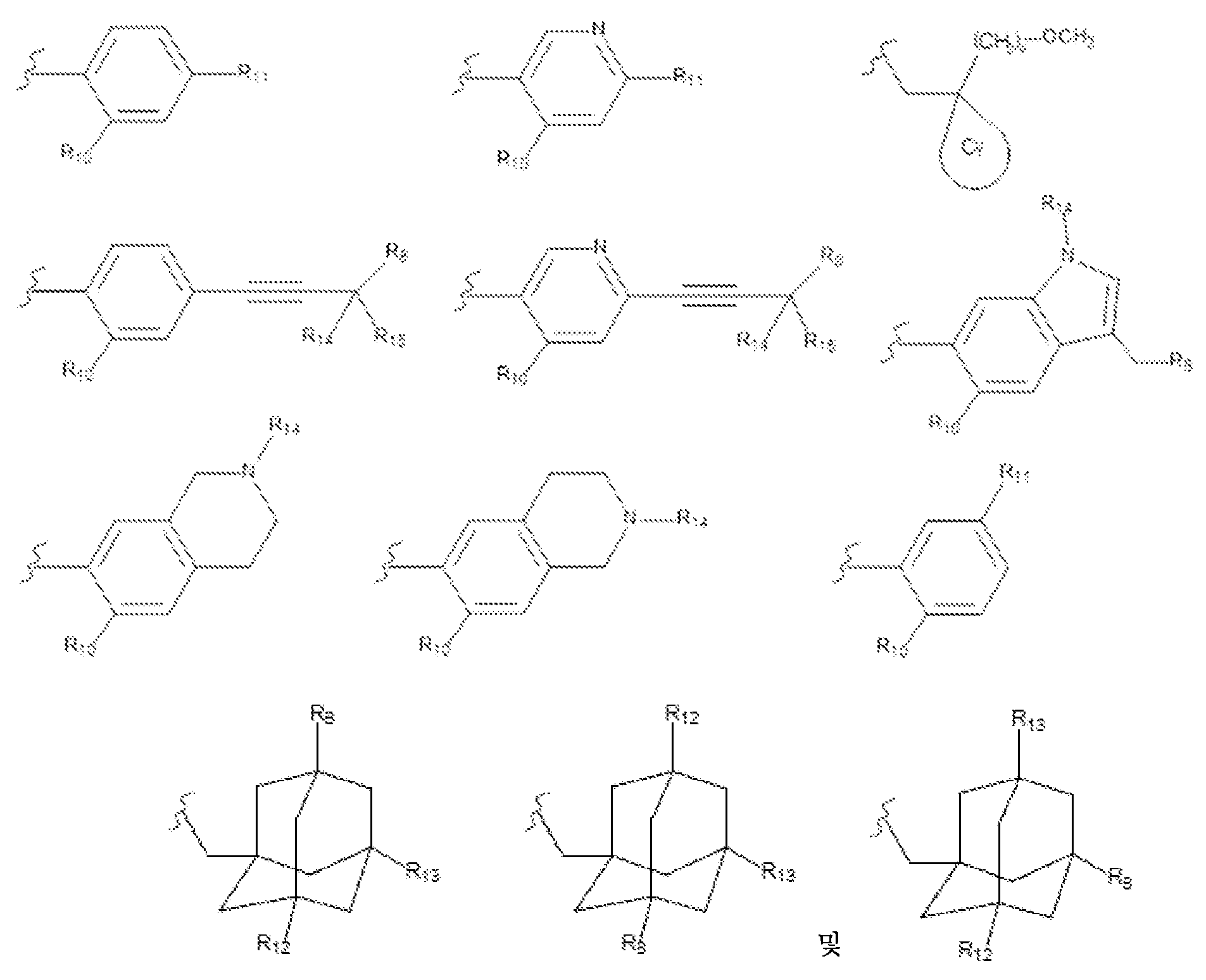
여기서 Cy는 C3-C8시클로알킬을 나타내고,Here, Cy represents C 3 -C 8 cycloalkyl,
R8은 수소; 선형 또는 분지형 C1-C6알킬, -NR'aR'b; -NR'a-CO-OR'c; -NR'a-CO-R'c; -N+R'aR'bR'c; -O-R'c; -NH-X'2-N+R'aR'bR'c; -O-X'2-NR'aR'b; -X'2-NR'aR'b; -NR'c-X'2-N3 및 
R9는 선형 또는 분지형 C1-C6알킬, 트리플루오로메틸, 히드록실, 할로겐 및 C1-C6알콕시로 이루어진 군으로부터 선택된 기를 나타내고,R 9 represents a group selected from the group consisting of linear or branched C 1 -C 6 alkyl, trifluoromethyl, hydroxyl, halogen and C 1 -C 6 alkoxy,
R10은 수소, 플루오린, 염소, 브로민, -CF3 및 메틸로 이루어진 군으로부터 선택된 기를 나타내고,R 10 represents a group selected from the group consisting of hydrogen, fluorine, chlorine, bromine, -CF 3 and methyl,
R11은 수소, C1-C3알킬렌-R8, -O-C1-C3알킬렌-R8, -CO-NRhRi 및 -CH=CH-C1-C4알킬렌-NRhRi, -CH=CH-CHO, C3-C8시클로알킬렌-CH2-R8 및 C3-C8헤테로시클로알킬렌-CH2-R8로 이루어진 군으로부터 선택된 기를 나타내고,R 11 represents a group selected from the group consisting of hydrogen, C 1 -C 3 alkylene-R 8 , -OC 1 -C 3 alkylene-R 8 , -CO-NR h R i and -CH=CH-C 1 -C 4 alkylene-NR h R i , -CH=CH-CHO, C 3 -C 8 cycloalkylene-CH 2 -R 8 and C 3 -C 8 heterocycloalkylene-CH 2 -R 8 ,
R12 및 R13은 서로 독립적으로 수소 원자 또는 메틸 기를 나타내고,R 12 and R 13 independently represent a hydrogen atom or a methyl group,
R14 및 R15는 서로 독립적으로 수소 또는 메틸 기를 나타내거나, 또는 R14 및 R15는 이들을 보유하는 탄소 원자와 함께 시클로헥실을 형성하고,R 14 and R 15 independently represent hydrogen or a methyl group, or R 14 and R 15 together with the carbon atom carrying them form cyclohexyl,
Rh 및 Ri는 서로 독립적으로 수소 또는 선형 또는 분지형 C1-C6알킬 기를 나타내고,R h and R i independently represent hydrogen or a linear or branched C 1 -C 6 alkyl group,
X1 및 X2는 서로 독립적으로 트리플루오로메틸, 히드록실, 할로겐 및 C1-C6알콕시로 이루어진 군으로부터 선택된 1 또는 2개의 기에 의해 임의로 치환된 선형 또는 분지형 C1-C6알킬렌 기를 나타내고,X 1 and X 2 independently represent a linear or branched C 1 -C 6 alkylene group optionally substituted by 1 or 2 groups selected from the group consisting of trifluoromethyl, hydroxyl, halogen and C 1 -C 6 alkoxy,
X'2는 선형 또는 분지형 C1-C6알킬렌을 나타내고,X' 2 represents linear or branched C 1 -C 6 alkylene,
R'a 및 R'b는 서로 독립적으로 수소; 헤테로시클로알킬; -SO2-페닐 (여기서 페닐은 선형 또는 분지형 C1-C6알킬에 의해 치환될 수 있음); 1 또는 2개의 히드록실 또는 C1-C6알콕시 기에 의해 임의로 치환된 선형 또는 분지형 C1-C6알킬; C1-C6알킬렌-SO2OH; C1-C6알킬렌-SO2O-; C1-C6알킬렌-COOH; C1-C6알킬렌-PO(OH)2; C1-C6알킬렌-NR'dR'e; C1-C6알킬렌-N+R'dR'eR'f; C1-C6알킬렌-O-C1-C6알킬렌-OH; C1-C6알킬렌-페닐 (여기서 페닐은 히드록실 또는 C1-C6알콕시 기에 의해 치환될 수 있음) 및 하기 기로 이루어진 군으로부터 선택된 기를 나타내거나:R' a and R' b are independently hydrogen; heterocycloalkyl; -SO 2 -phenyl (wherein phenyl may be substituted by linear or branched C 1 -C 6 alkyl); linear or branched C 1 -C 6 alkyl optionally substituted by one or two hydroxyl or C 1 -C 6 alkoxy groups; C 1 -C 6 alkylene-SO 2 OH; C 1 -C 6 alkylene-SO 2 O - ; C 1 -C 6 alkylene-COOH; C 1 -C 6 alkylene-PO(OH) 2 ; C 1 -C 6 alkylene-NR' d R'e; C 1 -C 6 alkylene-N + R' d R' e R' f ; C 1 -C 6 alkylene-OC 1 -C 6 alkylene-OH; C 1 -C 6 alkylene-phenyl (wherein phenyl may be substituted by hydroxyl or a C 1 -C 6 alkoxy group) and a group selected from the group consisting of the following groups:

또는 R'a 및 R'b는 이들을 보유하는 질소 원자와 함께 사이클 B3을 형성하거나,or R' a and R' b together with the nitrogen atom carrying them form cycle B 3 ,
또는 R'a, R'b 및 R'c는 이들을 보유하는 질소 원자와 함께 가교된 C3-C8헤테로시클로알킬을 형성하고;or R' a , R' b and R' c together with the nitrogen atom carrying them form a bridged C 3 -C 8 heterocycloalkyl;
R'c, R'd, R'e, R'f는 서로 독립적으로 수소 또는 선형 또는 분지형 C1-C6알킬 기를 나타내거나,R' c , R' d , R' e , R' f independently represent hydrogen or a linear or branched C 1 -C 6 alkyl group, or
또는 R'd 및 R'e는 이들을 보유하는 질소 원자와 함께 사이클 B4를 형성하거나,or R' d and R' e form cycle B 4 together with the nitrogen atom carrying them, or
또는 R'd, R'e 및 R'f는 이들을 보유하는 질소 원자와 함께 가교된 C3-C8헤테로시클로알킬을 형성하고,or R' d , R' e and R' f together with the nitrogen atom carrying them form a bridged C 3 -C 8 heterocycloalkyl,
Y1은 선형 또는 분지형 C1-C4알킬렌을 나타내고,Y 1 represents linear or branched C 1 -C 4 alkylene,
Y2는 결합, -O-, -O-CH2-, -O-CO-, -O-SO2-, -CH2-, -CH2-O, -CH2-CO-, -CH2-SO2-, -C2H5-, -CO-, -CO-O-, -CO-CH2-, -CO-NH-CH2-, -SO2-, -SO2-CH2-, -NH-CO- 또는 -NH-SO2-를 나타내고,Y 2 represents a bond, -O-, -O-CH 2 -, -O-CO-, -O-SO 2 -, -CH 2 -, -CH 2 -O, -CH 2 -CO-, -CH 2 -SO 2 -, -C 2 H 5 -, -CO-, -CO-O-, -CO-CH 2 -, -CO-NH-CH 2 -, -SO 2 -, -SO 2 -CH 2 -, -NH-CO- or -NH-SO 2 -,
m=0, 1 또는 2이고,m=0, 1 or 2,
B1, B2, B3 및 B4는 서로 독립적으로 C3-C8헤테로시클로알킬 기를 나타내고, 상기 기는 (i) 모노- 또는 비-시클릭 기일 수 있고 (여기서 비시클릭 기는 융합된, 가교된 또는 스피로 고리계를 포함함), (ii) 질소 원자 이외에도, 산소, 황 및 질소로부터 독립적으로 선택된 1 또는 2개의 헤테로 원자를 함유할 수 있고, (iii) 플루오린, 브로민, 염소, 선형 또는 분지형 C1-C6알킬, 히드록실, -NH2, 옥소 및 피페리디닐로 이루어진 군으로부터 선택된 1 또는 2개의 기에 의해 치환될 수 있고,B 1 , B 2 , B 3 and B 4 independently represent a C 3 -C 8 heterocycloalkyl group, which group (i) may be a mono- or abicyclic group (wherein the abicyclic group comprises a fused, bridged or spiro ring system), (ii) may contain, in addition to a nitrogen atom, 1 or 2 heteroatoms independently selected from oxygen, sulfur and nitrogen, and (iii) may be substituted by 1 or 2 groups selected from the group consisting of fluorine, bromine, chlorine, linear or branched C 1 -C 6 alkyl, hydroxyl, -NH 2 , oxo and piperidinyl,
여기서 R3 및 R8 기 중 1개는, 존재하는 경우, 링커에 공유 부착되고, 여기서 원자의 원자가는 그에 결합된 1개 이상의 치환기에 의해 초과되지 않음; 또는wherein one of the groups R 3 and R 8 , if present, is covalently attached to the linker, and wherein the valency of the atom is not exceeded by one or more substituents bonded thereto; or

또는 상기 중 어느 하나의 거울상이성질체, 부분입체이성질체 및/또는 제약상 허용되는 염, 여기서or an enantiomer, diastereomer and/or pharmaceutically acceptable salt of any of the above, wherein
n=0, 1 또는 2이고,n=0, 1 or 2,
------는 단일 또는 이중 결합을 나타내고,------ indicates a single or double bond,
A4 및 A5는 서로 독립적으로 탄소 또는 질소 원자를 나타내고,A 4 and A 5 independently represent carbon or nitrogen atoms,
Z1은 결합, -N(R)- 또는 -O-를 나타내고, 여기서 R은 수소 또는 선형 또는 분지형 C1-C6알킬을 나타내고,Z 1 represents a bond, -N(R)- or -O-, where R represents hydrogen or linear or branched C 1 -C 6 alkyl,
R1은 수소; 히드록실 또는 C1-C6알콕시 기에 의해 임의로 치환된 선형 또는 분지형 C1-C6알킬; C3-C6시클로알킬; 트리플루오로메틸; 및 선형 또는 분지형 C1-C6알킬렌-헤테로시클로알킬로 이루어진 군으로부터 선택된 기를 나타내고, 여기서 헤테로시클로알킬 기는 선형 또는 분지형 C1-C6알킬 기에 의해 임의로 치환되고;R 1 represents a group selected from the group consisting of hydrogen; linear or branched C 1 -C 6 alkyl optionally substituted by hydroxyl or a C 1 -C 6 alkoxy group; C 3 -C 6 cycloalkyl; trifluoromethyl; and linear or branched C 1 -C 6 alkylene-heterocycloalkyl, wherein the heterocycloalkyl group is optionally substituted by a linear or branched C 1 -C 6 alkyl group;
R2는 수소 또는 메틸을 나타내고;R 2 represents hydrogen or methyl;
R3은 수소; 선형 또는 분지형 C1-C4알킬; -X1-NRaRb; -X1-N+RaRbRc; -X1-O-Rc; -X1-COORc; -X1-PO(OH)2; -X1-SO2(OH); -X1-N3 및 
Ra 및 Rb는 서로 독립적으로 수소; 헤테로시클로알킬; -SO2-페닐 (여기서 페닐은 선형 또는 분지형 C1-C6알킬에 의해 치환될 수 있음); 1 또는 2개의 히드록실 기에 의해 임의로 치환된 선형 또는 분지형 C1-C6알킬; C1-C6알킬렌-SO2OH; C1-C6알킬렌-SO2O-; C1-C6알킬렌-COOH; C1-C6알킬렌-PO(OH)2; C1-C6알킬렌-NRdRe; C1-C6알킬렌-N+RdReRf; C1-C6알킬렌-페닐 (여기서 페닐은 C1-C6알콕시 기에 의해 치환될 수 있음) 및 하기 기로 이루어진 군으로부터 선택된 기를 나타내거나:R a and R b independently represent a group selected from the group consisting of hydrogen; heterocycloalkyl; -SO 2 -phenyl (wherein phenyl may be substituted by linear or branched C 1 -C 6 alkyl); linear or branched C 1 -C 6 alkyl optionally substituted by 1 or 2 hydroxyl groups; C 1 -C 6 alkylene-SO 2 OH; C 1 -C 6 alkylene-SO 2 O - ; C 1 -C 6 alkylene-COOH; C 1 -C 6 alkylene-PO(OH) 2 ; C 1 -C 6 alkylene-NR d R e ; C 1 -C 6 alkylene-N + R d R e R f ; C 1 -C 6 alkylene-phenyl (wherein phenyl may be substituted by a C 1 -C 6 alkoxy group) and the following groups:

또는 Ra 및 Rb는 이들을 보유하는 질소 원자와 함께 사이클 B1을 형성하거나;or R a and R b together with the nitrogen atom carrying them form cycle B 1 ;
또는 Ra, Rb 및 Rc는 이들을 보유하는 질소 원자와 함께 가교된 C3-C8헤테로시클로알킬을 형성하고,or R a , R b and R c together with the nitrogen atom carrying them form a bridged C 3 -C 8 heterocycloalkyl,
Rc, Rd, Re, Rf는 서로 독립적으로 수소 또는 선형 또는 분지형 C1-C6알킬 기를 나타내거나,R c , R d , R e , R f independently represent hydrogen or a linear or branched C 1 -C 6 alkyl group, or
또는 Rd 및 Re는 이들을 보유하는 질소 원자와 함께 사이클 B2를 형성하거나,or R d and R e form cycle B 2 together with the nitrogen atom carrying them,
또는 Rd, Re 및 Rf는 이들을 보유하는 질소 원자와 함께 가교된 C3-C8헤테로시클로알킬을 형성하고,or R d , R e and R f together with the nitrogen atom carrying them form a bridged C 3 -C 8 heterocycloalkyl,
Het1은 하기로 이루어진 군으로부터 선택된 기를 나타내고:Het 1 represents a group selected from the group consisting of:
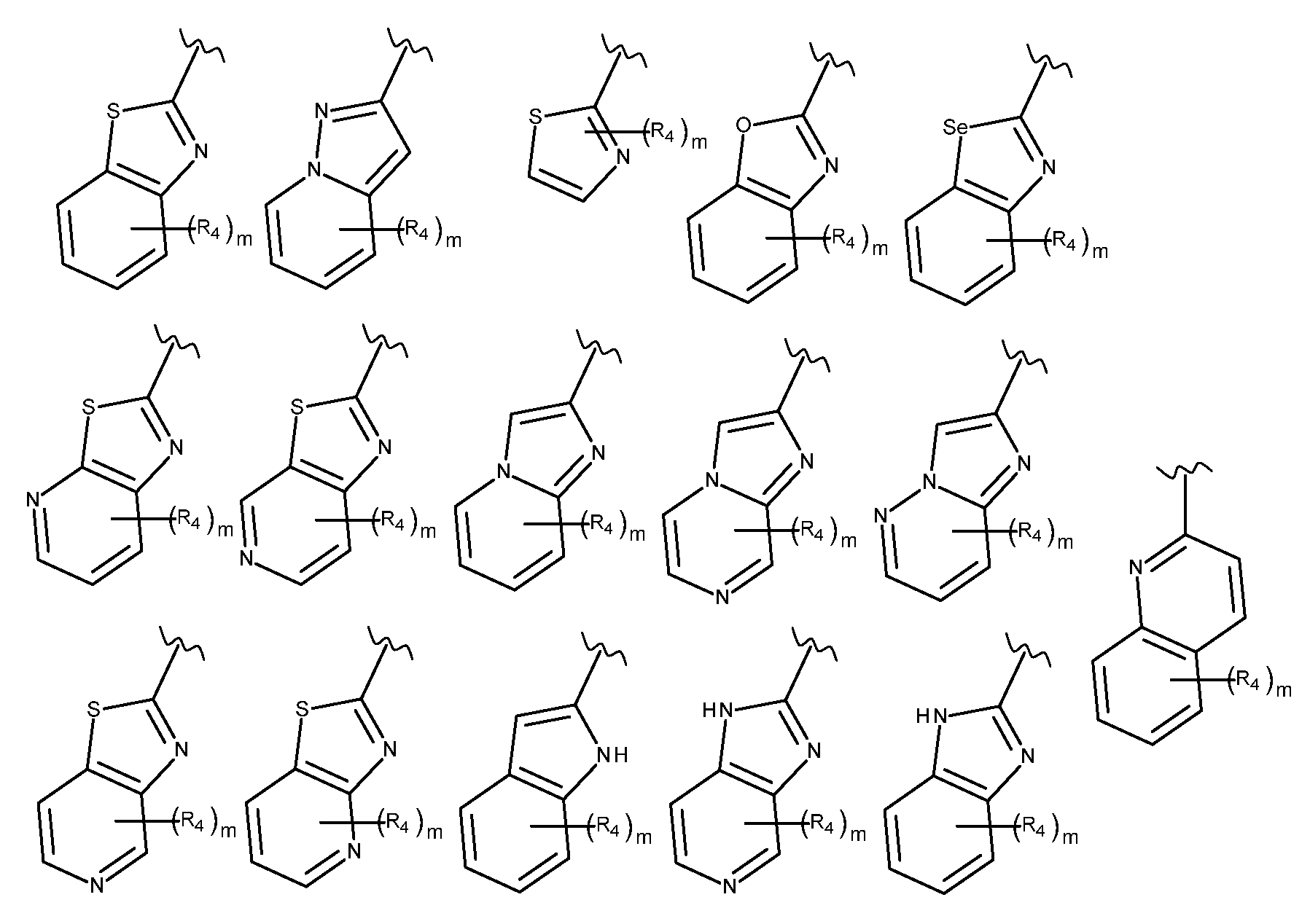
Het2는 하기로 이루어진 군으로부터 선택된 기를 나타내고:Het 2 represents a group selected from the group consisting of:

A1은 -NH-, -N(C1-C3알킬), O, S 또는 Se이고,A 1 is -NH-, -N(C 1 -C 3 alkyl), O, S or Se,
A2는 N, CH 또는 C(R5)이고,A 2 is N, CH or C(R 5 ),
G는 하기로 이루어진 군으로부터 선택되고;G is selected from the group consisting of;
-C(O)ORG3, -C(O)NRG1RG2, -C(O)RG2, -NRG1C(O)RG2, -NRG1C(O)NRG1RG2, -OC(O)NRG1RG2, -NRG1C(O)ORG3, -C(=NORG1)NRG1RG2, -NRG1C(=NCN)NRG1RG2, -NRG1S(O)2NRG1RG2, -S(O)2RG3, -S(O)2NRG1RG2, -NRG1S(O)2RG2, -NRG1C(=NRG2)NRG1RG2, -C(=S)NRG1RG2, -C(=NRG1)NRG1RG2, 히드록실 기에 의해 임의로 치환된 -C1-C6알킬, 할로겐, -NO2 및 -CN, 여기서-C(O)OR G3 , -C(O)NR G1 R G2 , -C(O)R G2 , -NR G1 C(O)R G2 , -NR G1 C(O)NR G1 R G2 , -OC(O)NR G1 R G2 , -NR G1 C(O)OR G3 , -C(=NOR G1 )NR G1 R G2 , -NR G1 C(=NCN)NR G1 R G2 , -NR G1 S(O) 2 NR G1 R G2 , -S(O) 2 R G3 , -S(O) 2 NR G1 R G2 , -NR G1 S(O) 2 R G2 , -NR G1 C(=NR G2 )NR G1 R G2 , -C(=S)NR G1 R G2 , -C(=NR G1 )NR G1 R G2 , Hydroxyl group -C 1 -C 6 alkyl, halogen, -NO 2 and -CN, optionally substituted by
- RG1 및 RG2는 각각의 경우에 각각 독립적으로 수소, 1 내지 3개의 할로겐 원자에 의해 임의로 치환된 C1-C6알킬, 히드록실에 의해 치환된 C1-C6알킬, C1-C6알콕시 기에 의해 치환된 C1-C6알킬, C2-C6알케닐, C2-C6알키닐, C3-C6시클로알킬, 페닐 및 -(CH2)1-4-페닐로 이루어진 군으로부터 선택되고;- R G1 and R G2 are each independently selected in each case from the group consisting of hydrogen, C 1 -C 6 alkyl optionally substituted by 1 to 3 halogen atoms, C 1 -C 6 alkyl substituted by hydroxyl, C 1 -C 6 alkyl substituted by a C 1 -C 6 alkoxy group, C 2 -C 6 alkenyl, C 2 -C 6 alkynyl, C 3 -C 6 cycloalkyl, phenyl and -(CH 2 ) 1-4 -phenyl;
- RG3은 1 내지 3개의 할로겐 원자에 의해 임의로 치환된 C1-C6알킬, C2-C6알케닐, C2-C6알키닐, C3-C6시클로알킬, 페닐 및 -(CH2)1-4-페닐로 이루어진 군으로부터 선택되거나; 또는 RG1 및 RG2는 이들 각각이 부착되어 있는 원자와 함께 조합되어 C3-C8헤테로시클로알킬을 형성하거나; 또는 대안적으로, G는 하기로 이루어진 군으로부터 선택되고;- R G3 is selected from the group consisting of C 1 -C 6 alkyl, C 2 -C 6 alkenyl, C 2 -C 6 alkynyl, C 3 -C 6 cycloalkyl, phenyl and -(CH 2 ) 1-4 -phenyl, optionally substituted by 1 to 3 halogen atoms; or R G1 and R G2 are combined with the atoms to which they are each attached to form C 3 -C 8 heterocycloalkyl; or alternatively, G is selected from the group consisting of:
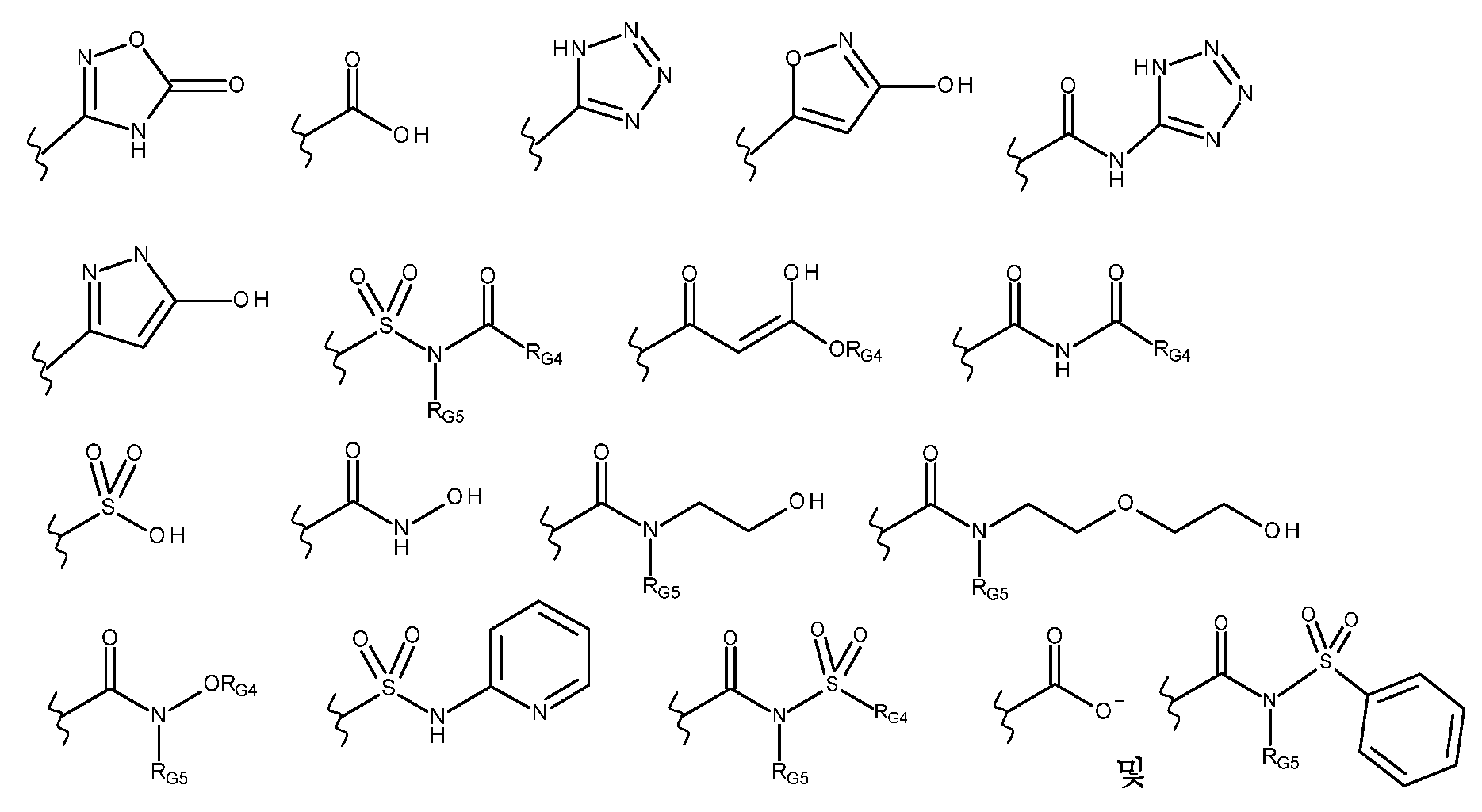
여기서 RG4는 수소, 1 내지 3개의 할로겐 원자에 의해 임의로 치환된 C1-C6알킬, 히드록실에 의해 치환된 C1-C6알킬, C1-C6알콕시 기에 의해 치환된 C1-C6알킬, C2-C6알케닐, C2-C6알키닐 및 C3-C6시클로알킬로 이루어진 군으로부터 선택되고,wherein R G4 is selected from the group consisting of hydrogen, C 1 -C 6 alkyl optionally substituted by 1 to 3 halogen atoms, C 1 -C 6 alkyl substituted by hydroxyl, C 1 -C 6 alkyl substituted by a C 1 -C 6 alkoxy group, C 2 -C 6 alkenyl, C 2 -C 6 alkynyl and C 3 -C 6 cycloalkyl,
RG5는 수소 원자 또는 1 내지 3개의 할로겐 원자에 의해 임의로 치환된 C1-C6알킬 기를 나타내고,R G5 represents a C 1 -C 6 alkyl group optionally substituted with a hydrogen atom or 1 to 3 halogen atoms,
R4는 수소, 플루오린, 염소 또는 브로민 원자, 메틸, 히드록실 또는 메톡시 기를 나타내고,R 4 represents a hydrogen, fluorine, chlorine or bromine atom, a methyl, hydroxyl or methoxy group,
R5는 1 내지 3개의 할로겐 원자에 의해 임의로 치환된 C1-C6알킬; C2-C6알케닐; C2-C6알키닐; 할로겐; 및 -CN으로 이루어진 군으로부터 선택된 기를 나타내고,R 5 represents a group selected from the group consisting of C 1 -C 6 alkyl, optionally substituted with 1 to 3 halogen atoms; C 2 -C 6 alkenyl; C 2 -C 6 alkynyl; halogen; and -CN,
R6은 하기로 이루어진 군으로부터 선택된 기를 나타내고:R 6 represents a group selected from the group consisting of:
수소;hydrogen;
선형 또는 분지형 -C1-C6알킬렌-R8 기;Linear or branched -C 1 -C 6 alkylene-R 8 group;
-C2-C6알케닐;-C 2 -C 6 alkenyl;
-X2-O-R7;-X 2 -OR 7 ;

-X2-NSO2-R7;-X 2 -NSO 2 -R 7 ;
-C=C(R9)-Y1-O-R7;-C=C(R 9 )-Y 1 -OR 7 ;
C3-C6시클로알킬;C 3 -C 6 cycloalkyl;
히드록실 기에 의해 임의로 치환된 C3-C6헤테로시클로알킬;C 3 -C 6 heterocycloalkyl optionally substituted by hydroxyl groups;
C3-C6시클로알킬렌-Y2-R7;C 3 -C 6 cycloalkylene-Y 2 -R 7 ;
C3-C6헤테로시클로알킬렌-Y2-R7 기 및C 3 -C 6 heterocycloalkylene-Y 2 -R 7 group and
선형 또는 분지형 C1-C6알킬 기에 의해 임의로 치환된 헤테로아릴렌-R7 기,A heteroarylene-R 7 group optionally substituted by a linear or branched C 1 -C 6 alkyl group,
R7은 선형 또는 분지형 C1-C6알킬 기; (C3-C6)시클로알킬렌-R8,R 7 is a linear or branched C 1 -C 6 alkyl group; (C 3 -C 6 )cycloalkylene-R 8 ,

여기서 Cy는 C3-C8시클로알킬을 나타내고,Here, Cy represents C 3 -C 8 cycloalkyl,
R8은 수소; 선형 또는 분지형 C1-C6알킬, -NR'aR'b; -NR'a-CO-OR'c; -NR'a-CO-R'c; -N+R'aR'bR'c; -O-R'c; -NH-X'2-N+R'aR'bR'c; -O-X'2-NR'aR'b, -X'2-NR'aR'b, -NR'c-X'2-N3 및 
R9는 선형 또는 분지형 C1-C6알킬, 트리플루오로메틸, 히드록실, 할로겐 및 C1-C6알콕시로 이루어진 군으로부터 선택된 기를 나타내고,R 9 represents a group selected from the group consisting of linear or branched C 1 -C 6 alkyl, trifluoromethyl, hydroxyl, halogen and C 1 -C 6 alkoxy,
R10은 수소, 플루오린, 염소, 브로민, -CF3 및 메틸로 이루어진 군으로부터 선택된 기를 나타내고,R 10 represents a group selected from the group consisting of hydrogen, fluorine, chlorine, bromine, -CF 3 and methyl,
R11은 수소, 할로겐, C1-C3알킬렌-R8, -O-C1-C3알킬렌-R8, -CO-NRhRi 및 -CH=CH-C1-C4알킬렌-NRhRi, -CH=CH-CHO, C3-C8시클로알킬렌-CH2-R8 및 C3-C8헤테로시클로알킬렌-CH2-R8로 이루어진 군으로부터 선택된 기를 나타내고,R 11 represents a group selected from the group consisting of hydrogen, halogen, C 1 -C 3 alkylene-R 8 , -OC 1 -C 3 alkylene-R 8 , -CO-NR h R i and -CH=CH-C 1 -C 4 alkylene-NR h R i , -CH=CH-CHO, C 3 -C 8 cycloalkylene-CH 2 -R 8 and C 3 -C 8 heterocycloalkylene-CH 2 -R 8 ,
R12 및 R13은 서로 독립적으로 수소 원자 또는 메틸 기를 나타내고,R 12 and R 13 independently represent a hydrogen atom or a methyl group,
R14 및 R15는 서로 독립적으로 수소 또는 메틸 기를 나타내거나, 또는 R14 및 R15는 이들을 보유하는 탄소 원자와 함께 시클로헥실을 형성하고,R 14 and R 15 independently represent hydrogen or a methyl group, or R 14 and R 15 together with the carbon atom carrying them form cyclohexyl,
Rh 및 Ri는 서로 독립적으로 수소 또는 선형 또는 분지형 C1-C6알킬 기를 나타내고,R h and R i independently represent hydrogen or a linear or branched C 1 -C 6 alkyl group,
X1은 트리플루오로메틸, 히드록실, 할로겐 및 C1-C6알콕시로 이루어진 군으로부터 선택된 1 또는 2개의 기에 의해 임의로 치환된 선형 또는 분지형 C1-C4알킬렌 기를 나타내고,X 1 represents a linear or branched C 1 -C 4 alkylene group optionally substituted by 1 or 2 groups selected from the group consisting of trifluoromethyl, hydroxyl, halogen and C 1 -C 6 alkoxy,
X2는 트리플루오로메틸, 히드록실, 할로겐 및 C1-C6알콕시로 이루어진 군으로부터 선택된 1 또는 2개의 기에 의해 임의로 치환된 선형 또는 분지형 C1-C6알킬렌 기를 나타내고,X 2 represents a linear or branched C 1 -C 6 alkylene group optionally substituted by 1 or 2 groups selected from the group consisting of trifluoromethyl, hydroxyl, halogen and C 1 -C 6 alkoxy,
X'2는 선형 또는 분지형 C1-C6알킬렌을 나타내고,X' 2 represents linear or branched C 1 -C 6 alkylene,
R'a 및 R'b는 서로 독립적으로 수소; 헤테로시클로알킬; -SO2-페닐 (여기서 페닐은 선형 또는 분지형 C1-C6알킬에 의해 치환될 수 있음); 1 또는 2개의 히드록실 또는 C1-C6알콕시 기에 의해 임의로 치환된 선형 또는 분지형 C1-C6알킬; C1-C6알킬렌-SO2OH; C1-C6알킬렌-SO2O-; C1-C6알킬렌-COOH; C1-C6알킬렌-PO(OH)2; C1-C6알킬렌-NR'dR'e; C1-C6알킬렌-N+R'dR'eR'f; C1-C6알킬렌-O-C1-C6알킬렌-OH; C1-C6알킬렌-페닐 (여기서 페닐은 히드록실 또는 C1-C6알콕시 기에 의해 치환될 수 있음) 및 하기 기로 이루어진 군으로부터 선택된 기를 나타내거나:R' a and R' b are independently hydrogen; heterocycloalkyl; -SO 2 -phenyl (wherein phenyl may be substituted by linear or branched C 1 -C 6 alkyl); linear or branched C 1 -C 6 alkyl optionally substituted by one or two hydroxyl or C 1 -C 6 alkoxy groups; C 1 -C 6 alkylene-SO 2 OH; C 1 -C 6 alkylene - SO 2 O - ; C 1 -C 6 alkylene-COOH; C 1 -C 6 alkylene-PO(OH) 2 ; C 1 -C 6 alkylene-NR' d R'e; C 1 -C 6 alkylene-N + R' d R' e R'f; C 1 -C 6 alkylene-OC 1 -C 6 alkylene-OH; C 1 -C 6 alkylene-phenyl (wherein phenyl may be substituted by hydroxyl or a C 1 -C 6 alkoxy group) and a group selected from the group consisting of the following groups:
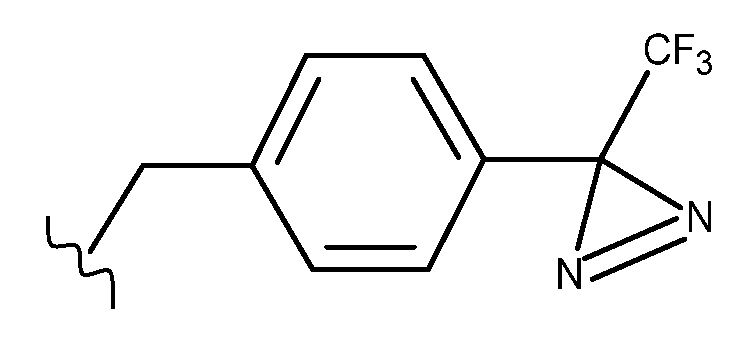
또는 R'a 및 R'b는 이들을 보유하는 질소 원자와 함께 사이클 B3을 형성하거나,or R' a and R' b together with the nitrogen atom carrying them form cycle B 3 ,
또는 R'a, R'b 및 R'c는 이들을 보유하는 질소 원자와 함께 가교된 C3-C8헤테로시클로알킬을 형성하고,or R' a , R' b and R' c together with the nitrogen atom carrying them form a bridged C 3 -C 8 heterocycloalkyl,
R'c, R'd, R'e, R'f는 서로 독립적으로 수소 또는 선형 또는 분지형 C1-C6알킬 기를 나타내거나,R' c , R' d , R' e , R' f independently represent hydrogen or a linear or branched C 1 -C 6 alkyl group, or
또는 R'd 및 R'e는 이들을 보유하는 질소 원자와 함께 사이클 B4를 형성하거나,or R' d and R' e form cycle B 4 together with the nitrogen atom carrying them, or
또는 R'd, R'e 및 R'f는 이들을 보유하는 질소 원자와 함께 가교된 C3-C8헤테로시클로알킬을 형성하고,or R' d , R' e and R' f together with the nitrogen atom carrying them form a bridged C 3 -C 8 heterocycloalkyl,
Y1은 선형 또는 분지형 C1-C4알킬렌을 나타내고,Y 1 represents linear or branched C 1 -C 4 alkylene,
Y2는 결합, -O-, -O-CH2-, -O-CO-, -O-SO2-, -CH2-, -CH2-O, -CH2-CO-, -CH2-SO2-, -C2H5-, -CO-, -CO-O-, -CO-CH2-, -CO-NH-CH2-, -SO2-, -SO2-CH2-, -NH-CO- 또는 -NH-SO2-를 나타내고,Y 2 represents a bond, -O-, -O-CH 2 -, -O-CO-, -O-SO 2 -, -CH 2 -, -CH 2 -O, -CH 2 -CO-, -CH 2 -SO 2 -, -C 2 H 5 -, -CO-, -CO-O-, -CO-CH 2 -, -CO-NH-CH 2 -, -SO 2 -, -SO 2 -CH 2 -, -NH-CO- or -NH-SO 2 -,
m=0, 1 또는 2이고,m=0, 1 or 2,
B1, B2, B3 및 B4는 서로 독립적으로 C3-C8헤테로시클로알킬 기를 나타내고, 상기 기는 (i) 모노- 또는 비-시클릭 기일 수 있고 (여기서 비시클릭 기는 융합된, 가교된 또는 스피로 고리계를 포함함), (ii) 질소 원자 이외에도, 산소, 황 및 질소로부터 독립적으로 선택된 1 또는 2개의 헤테로 원자를 함유할 수 있고, (iii) 플루오린, 브로민, 염소, 선형 또는 분지형 C1-C6알킬, 히드록실, -NH2, 옥소 및 피페리디닐로 이루어진 군으로부터 선택된 1 또는 2개의 기에 의해 치환될 수 있고,B 1 , B 2 , B 3 and B 4 independently represent a C 3 -C 8 heterocycloalkyl group, which group (i) may be a mono- or abicyclic group (wherein the abicyclic group comprises a fused, bridged or spiro ring system), (ii) may contain, in addition to a nitrogen atom, 1 or 2 heteroatoms independently selected from oxygen, sulfur and nitrogen, and (iii) may be substituted by 1 or 2 groups selected from the group consisting of fluorine, bromine, chlorine, linear or branched C 1 -C 6 alkyl, hydroxyl, -NH 2 , oxo and piperidinyl,
여기서 R3, R8 및 G 기 중 1개는, 존재하는 경우, 링커에 공유 부착되고, 여기서 원자의 원자가는 그에 결합된 1개 이상의 치환기에 의해 초과되지 않는다.wherein one of the groups R 3 , R 8 and G , if present, is covalently attached to the linker, and wherein the valency of the atom is not exceeded by one or more substituents bonded thereto.
일부 실시양태에서, 화학식 (I)의 ADC 화합물에 대해, D는 링커 L에 공유 부착된 하기 화학식 (I) 또는 화학식 (II)의 Bcl-xL 억제제 화합물을 포함한다:In some embodiments, for the ADC compound of formula (I), D comprises a Bcl-xL inhibitor compound of formula (I) or formula (II) covalently attached to linker L:

또는 그의 거울상이성질체, 부분입체이성질체 및/또는 상기 중 어느 하나의 제약상 허용되는 산 또는 염기와의 부가염 (즉, 제약상 허용되는 염), 여기서or its enantiomers, diastereomers and/or addition salts with any of the above pharmaceutically acceptable acids or bases (i.e., pharmaceutically acceptable salts), wherein
R1 및 R2는 서로 독립적으로 수소; 히드록실 또는 C1-C6알콕시 기에 의해 임의로 치환된 선형 또는 분지형 C1-C6알킬; C3-C6시클로알킬; 트리플루오로메틸; 선형 또는 분지형 C1-C6알킬렌-헤테로시클로알킬로부터 선택된 기를 나타내고, 여기서 헤테로시클로알킬 기는 선형 또는 분지형 C1-C6알킬 기에 의해 임의로 치환되거나;R 1 and R 2 independently represent a group selected from hydrogen; linear or branched C 1 -C 6 alkyl optionally substituted by hydroxyl or a C 1 -C 6 alkoxy group; C 3 -C 6 cycloalkyl; trifluoromethyl; linear or branched C 1 -C 6 alkylene-heterocycloalkyl, wherein the heterocycloalkyl group is optionally substituted by a linear or branched C 1 -C 6 alkyl group;
또는 R1 및 R2는 이들을 보유하는 탄소 원자와 함께 C3-C6시클로알킬렌 기를 형성하고,or R 1 and R 2 together with the carbon atoms carrying them form a C 3 -C 6 cycloalkylene group,
R3은 수소; C3-C6시클로알킬; 선형 또는 분지형 C1-C6알킬; -X1-NRaRb; -X1-N+RaRbRc; -X1-O-Rc; -X1-COORc; -X1-PO(OH)2; -X1-SO2(OH); -X1-N3 및 
Ra 및 Rb는 서로 독립적으로 수소; 헤테로시클로알킬; -SO2-페닐 (여기서 페닐은 선형 또는 분지형 C1-C6알킬에 의해 치환될 수 있음); 1 또는 2개의 히드록실 기에 의해 임의로 치환된 선형 또는 분지형 C1-C6알킬; C1-C6알킬렌-SO2OH; C1-C6알킬렌-SO2O-; C1-C6알킬렌-COOH; C1-C6알킬렌-PO(OH)2; C1-C6알킬렌-NRdRe; C1-C6알킬렌-N+RdReRf; C1-C6알킬렌-페닐 (여기서 페닐은 C1-C6알콕시 기에 의해 치환될 수 있음) 및 하기 기로부터 선택된 기를 나타내거나:R a and R b independently represent hydrogen; heterocycloalkyl; -SO 2 -phenyl (wherein phenyl may be substituted by linear or branched C 1 -C 6 alkyl); linear or branched C 1 -C 6 alkyl optionally substituted by 1 or 2 hydroxyl groups; C 1 -C 6 alkylene-SO 2 OH; C 1 -C 6 alkylene-SO 2 O - ; C 1 -C 6 alkylene-COOH; C 1 -C 6 alkylene-PO(OH) 2 ; C 1 -C 6 alkylene-NR d R e ; C 1 -C 6 alkylene-N + R d R e R f ; C 1 -C 6 alkylene-phenyl (wherein phenyl may be substituted by a C 1 -C 6 alkoxy group) and a group selected from the following groups:

또는 Ra 및 Rb는 이들을 보유하는 질소 원자와 함께 사이클 B1을 형성하거나;or R a and R b together with the nitrogen atom carrying them form cycle B 1 ;
또는 Ra, Rb 및 Rc는 이들을 보유하는 질소 원자와 함께 가교된 C3-C8헤테로시클로알킬을 형성하고,or R a , R b and R c together with the nitrogen atom carrying them form a bridged C 3 -C 8 heterocycloalkyl,
Rc, Rd, Re, Rf는 서로 독립적으로 수소 또는 선형 또는 분지형 C1-C6알킬 기를 나타내거나,R c , R d , R e , R f independently represent hydrogen or a linear or branched C 1 -C 6 alkyl group, or
또는 Rd 및 Re는 이들을 보유하는 질소 원자와 함께 사이클 B2를 형성하거나,or R d and R e form cycle B 2 together with the nitrogen atom carrying them,
또는 Rd, Re 및 Rf는 이들을 보유하는 질소 원자와 함께 가교된 C3-C8헤테로시클로알킬을 형성하고,or R d , R e and R f together with the nitrogen atom carrying them form a bridged C 3 -C 8 heterocycloalkyl,
Het1은 하기로부터 선택된 기를 나타내고:Het 1 represents a group selected from:

Het2는 하기로부터 선택된 기를 나타내고:Het 2 represents a group selected from the following:

A1은 -NH-, -N(C1-C3알킬), O, S 또는 Se이고,A 1 is -NH-, -N(C 1 -C 3 alkyl), O, S or Se,
A2는 N, CH 또는 C(R5)이고,A 2 is N, CH or C(R 5 ),
G는 하기로 이루어진 군으로부터 선택되고;G is selected from the group consisting of;
-C(O)ORG3, -C(O)NRG1RG2, -C(O)RG2, -NRG1C(O)RG2, -NRG1C(O)NRG1RG2, -OC(O)NRG1RG2, -NRG1C(O)ORG3, -C(=NORG1)NRG1RG2, -NRG1C(=NCN)NRG1RG2, -NRG1S(O)2NRG1RG2, -S(O)2RG3, -S(O)2NRG1RG2, -NRG1S(O)2RG2, -NRG1C(=NRG2)NRG1RG2, -C(=S)NRG1RG2, -C(=NRG1)NRG1RG2, 히드록실 기에 의해 임의로 치환된 C1-C6알킬, 할로겐, -NO2 및 -CN, 여기서-C(O)OR G3 , -C(O)NR G1 R G2 , -C(O)R G2 , -NR G1 C(O)R G2 , -NR G1 C(O)NR G1 R G2 , -OC(O)NR G1 R G2 , -NR G1 C(O)OR G3 , -C(=NOR G1 )NR G1 R G2 , -NR G1 C(=NCN)NR G1 R G2 , -NR G1 S(O) 2 NR G1 R G2 , -S(O) 2 R G3 , -S(O) 2 NR G1 R G2 , -NR G1 S(O) 2 R G2 , -NR G1 C(=NR G2 )NR G1 R G2 , -C(=S)NR G1 R G2 , -C(=NR G1 )NR G1 R G2 , Hydroxyl group C 1 -C 6 alkyl, halogen, -NO 2 and -CN, optionally substituted by
- RG1 및 RG2는 각각의 경우에 각각 독립적으로 수소, 1 내지 3개의 할로겐 원자에 의해 임의로 치환된 C1-C6알킬, C2-C6알케닐, C2-C6알키닐, C3-C6시클로알킬, 페닐 및 -(CH2)1-4-페닐로 이루어진 군으로부터 선택되고;- R G1 and R G2 are each independently selected from the group consisting of hydrogen, C 1 -C 6 alkyl, C 2 -C 6 alkenyl, C 2 -C 6 alkynyl, C 3 -C 6 cycloalkyl, phenyl and -(CH 2 ) 1-4 -phenyl, each optionally substituted with 1 to 3 halogen atoms ;
- RG3은 1 내지 3개의 할로겐 원자에 의해 임의로 치환된 C1-C6알킬, C2-C6알케닐, C2-C6알키닐, C3-C6시클로알킬, 페닐 및 -(CH2)1-4-페닐로 이루어진 군으로부터 선택되거나; 또는- R G3 is selected from the group consisting of C 1 -C 6 alkyl, C 2 -C 6 alkenyl, C 2 -C 6 alkynyl, C 3 -C 6 cycloalkyl, phenyl and -(CH 2 ) 1-4 -phenyl, optionally substituted by 1 to 3 halogen atoms; or
RG1 및 RG2는 이들 각각이 부착되어 있는 원자와 함께 조합되어 C3-C8헤테로시클로알킬을 형성하거나; 또는 대안적으로, G는 하기로 이루어진 군으로부터 선택되고:R G1 and R G2 are combined with the atoms to which they are each attached to form C 3 -C 8 heterocycloalkyl; or alternatively, G is selected from the group consisting of:
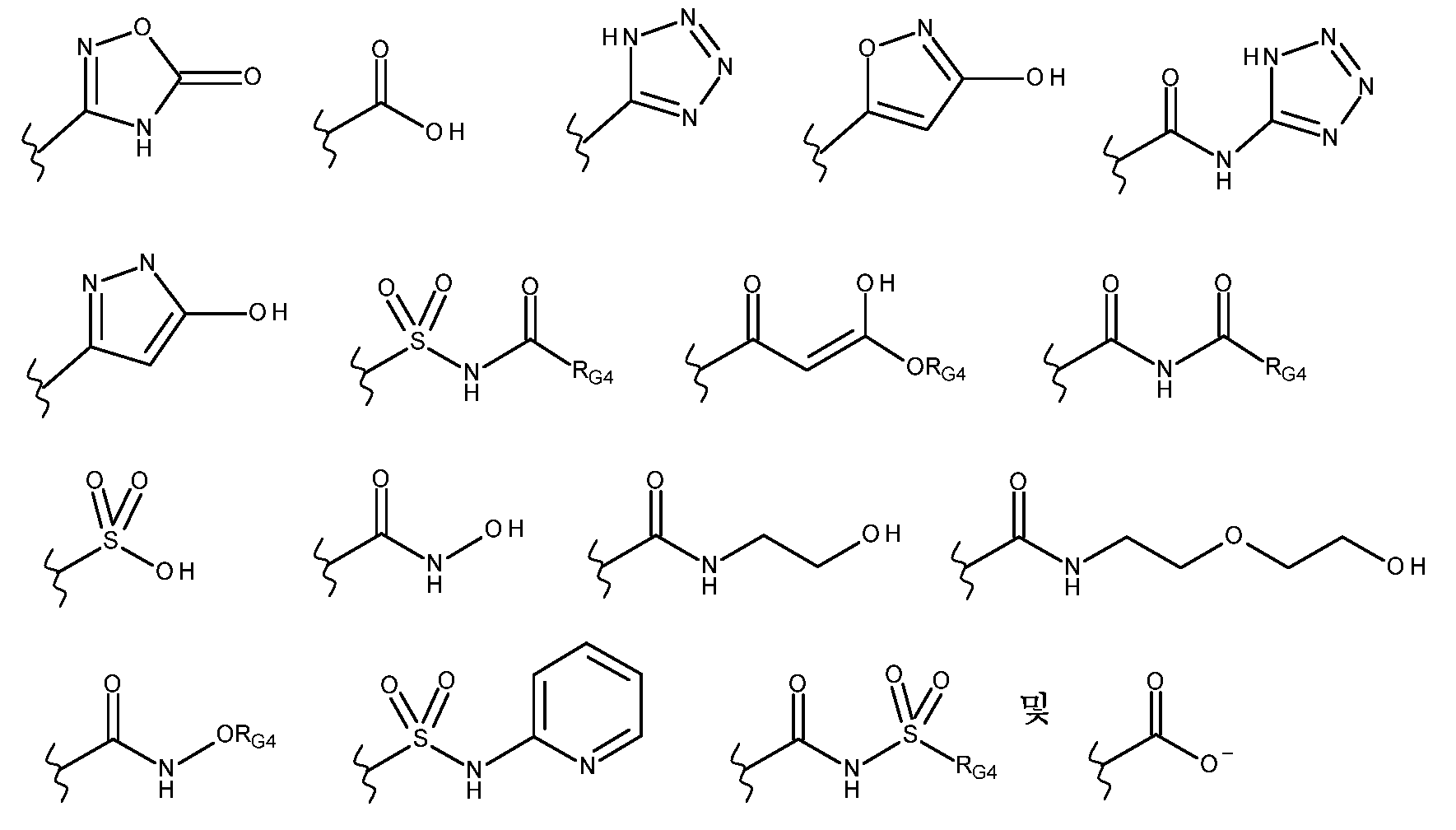
여기서 RG4는 수소, 1 내지 3개의 할로겐 원자에 의해 임의로 치환된 C1-C6알킬, C2-C6알케닐, C2-C6알키닐 및 C3-C6시클로알킬로부터 선택되고,wherein R G4 is selected from hydrogen, C 1 -C 6 alkyl, C 2 -C 6 alkenyl, C 2 -C 6 alkynyl and C 3 -C 6 cycloalkyl optionally substituted with 1 to 3 halogen atoms,
R4는 수소, 플루오린, 염소 또는 브로민 원자, 메틸, 히드록실 또는 메톡시 기를 나타내고,R 4 represents a hydrogen, fluorine, chlorine or bromine atom, a methyl, hydroxyl or methoxy group,
R5는 1 내지 3개의 할로겐 원자에 의해 임의로 치환된 C1-C6알킬; C2-C6알케닐; C2-C6알키닐; 할로겐 또는 -CN으로부터 선택된 기를 나타내고,R 5 represents a group selected from C 1 -C 6 alkyl, C 2 -C 6 alkenyl, C 2 -C 6 alkynyl, halogen or -CN, optionally substituted with 1 to 3 halogen atoms,
R6은 하기로부터 선택된 기를 나타내고:R 6 represents a group selected from the following:
수소;hydrogen;
-C2-C6알케닐;-C 2 -C 6 alkenyl;
-X2-O-R7;-X 2 -OR 7 ;
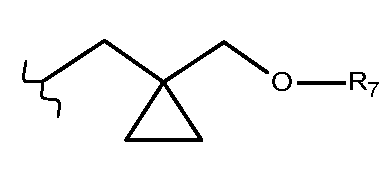
-X2-NSO2-R7;-X 2 -NSO 2 -R 7 ;
-C=C(R9)-Y1-O-R7;-C=C(R 9 )-Y 1 -OR 7 ;
C3-C6시클로알킬;C 3 -C 6 cycloalkyl;
히드록실 기에 의해 임의로 치환된 C3-C6헤테로시클로알킬;C 3 -C 6 heterocycloalkyl optionally substituted by hydroxyl groups;
C3-C6시클로알킬렌-Y2-R7;C 3 -C 6 cycloalkylene-Y 2 -R 7 ;
C3-C6헤테로시클로알킬렌-Y2-R7 기;C 3 -C 6 heterocycloalkylene-Y 2 -R 7 group;
선형 또는 분지형 C1-C6알킬 기에 의해 임의로 치환된 헤테로아릴렌-R7 기;A heteroarylene-R 7 group optionally substituted by a linear or branched C 1 -C 6 alkyl group;
R7은 선형 또는 분지형 C1-C6알킬 기; (C3-C6)시클로알킬렌-R8 또는 하기로부터 선택된 기를 나타내고:R 7 represents a linear or branched C 1 -C 6 alkyl group; (C 3 -C 6 )cycloalkylene-R 8 or a group selected from the following:

여기서 Cy는 C3-C8시클로알킬을 나타내고,Here, Cy represents C 3 -C 8 cycloalkyl,
R8은 수소; 선형 또는 분지형 C1-C6알킬, -NR'aR'b; -NR'a-CO-OR'c; -NR'a-CO-R'c; -N+R'aR'bR'c; -O-R'c; -NH-X'2-N+R'aR'bR'c; -O-X'2-NR'aR'b, -X'2-NR'aR'b, -NR'c-X'2-N3 및 
R9는 선형 또는 분지형 C1-C6알킬, 트리플루오로메틸, 히드록실, 할로겐, C1-C6알콕시로부터 선택된 기를 나타내고,R 9 represents a group selected from linear or branched C 1 -C 6 alkyl, trifluoromethyl, hydroxyl, halogen, C 1 -C 6 alkoxy,
R10은 수소, 플루오린, 염소, 브로민, -CF3 및 메틸로부터 선택된 기를 나타내고,R 10 represents a group selected from hydrogen, fluorine, chlorine, bromine, -CF 3 and methyl,
R11은 수소, C1-C3알킬렌-R8, -O-C1-C3알킬렌-R8, -CO-NRhRi 및 -CH=CH-C1-C4알킬렌-NRhRi, -CH=CH-CHO, C3-C8시클로알킬렌-CH2-R8, C3-C8헤테로시클로알킬렌-CH2-R8로부터 선택된 기를 나타내고,R 11 represents a group selected from hydrogen, C 1 -C 3 alkylene-R 8 , -OC 1 -C 3 alkylene-R 8 , -CO-NR h R i and -CH=CH-C 1 -C 4 alkylene-NR h R i , -CH=CH-CHO, C 3 -C 8 cycloalkylene-CH 2 -R 8 , C 3 -C 8 heterocycloalkylene-CH 2 -R 8 ,
R12 및 R13은 서로 독립적으로 수소 원자 또는 메틸 기를 나타내고,R 12 and R 13 independently represent a hydrogen atom or a methyl group,
R14 및 R15는 서로 독립적으로 수소 또는 메틸 기를 나타내거나 또는 R14 및 R15는 이들을 보유하는 탄소 원자와 함께 시클로헥실을 형성하고,R 14 and R 15 independently represent hydrogen or a methyl group, or R 14 and R 15 together with the carbon atom carrying them form cyclohexyl,
Rh 및 Ri는 서로 독립적으로 수소 또는 선형 또는 분지형 C1-C6알킬 기를 나타내고,R h and R i independently represent hydrogen or a linear or branched C 1 -C 6 alkyl group,
X1 및 X2는 서로 독립적으로 트리플루오로메틸, 히드록실, 할로겐, C1-C6알콕시로부터 선택된 1 또는 2개의 기에 의해 임의로 치환된 선형 또는 분지형 C1-C6알킬렌 기를 나타내고,X 1 and X 2 independently represent a linear or branched C 1 -C 6 alkylene group optionally substituted by 1 or 2 groups selected from trifluoromethyl, hydroxyl, halogen, C 1 -C 6 alkoxy,
X'2는 선형 또는 분지형 C1-C6알킬렌을 나타내고,X' 2 represents linear or branched C 1 -C 6 alkylene,
R'a 및 R'b는 서로 독립적으로 수소; 헤테로시클로알킬; -SO2-페닐 (여기서 페닐은 선형 또는 분지형 C1-C6알킬에 의해 치환될 수 있음); 1 또는 2개의 히드록실 또는 C1-C6알콕시 기에 의해 임의로 치환된 선형 또는 분지형 C1-C6알킬; C1-C6알킬렌-SO2OH; C1-C6알킬렌-SO2O-; C1-C6알킬렌-COOH; C1-C6알킬렌-PO(OH)2; C1-C6알킬렌-NR'dR'e; C1-C6알킬렌-N+R'dR'eR'f; C1-C6알킬렌-O-C1-C6알킬렌-OH; C1-C6알킬렌-페닐 (여기서 페닐은 히드록실 또는 C1-C6알콕시 기에 의해 치환될 수 있음) 및 하기 기로부터 선택된 기를 나타내거나:R' a and R' b are independently hydrogen; heterocycloalkyl; -SO 2 -phenyl (wherein phenyl may be substituted by linear or branched C 1 -C 6 alkyl); linear or branched C 1 -C 6 alkyl optionally substituted by one or two hydroxyl or C 1 -C 6 alkoxy groups; C 1 -C 6 alkylene-SO 2 OH; C 1 -C 6 alkylene-SO 2 O - ; C 1 -C 6 alkylene-COOH; C 1 -C 6 alkylene-PO(OH) 2 ; C 1 -C 6 alkylene-NR' d R'e; C 1 -C 6 alkylene-N + R' d R' e R' f ; C 1 -C 6 alkylene-OC 1 -C 6 alkylene-OH; C 1 -C 6 alkylene-phenyl (wherein phenyl may be substituted by hydroxyl or a C 1 -C 6 alkoxy group) and a group selected from the following groups:

또는 R'a 및 R'b는 이들을 보유하는 질소 원자와 함께 사이클 B3을 형성하거나,or R' a and R' b together with the nitrogen atom carrying them form cycle B 3 ,
또는 R'a, R'b 및 R'c는 이들을 보유하는 질소 원자와 함께 가교된 C3-C8헤테로시클로알킬을 형성하고,or R' a , R' b and R' c together with the nitrogen atom carrying them form a bridged C 3 -C 8 heterocycloalkyl,
R'c, R'd, R'e, R'f는 서로 독립적으로 수소 또는 선형 또는 분지형 C1-C6알킬 기를 나타내거나,R' c , R' d , R' e , R' f independently represent hydrogen or a linear or branched C 1 -C 6 alkyl group, or
또는 R'd 및 R'e는 이들을 보유하는 질소 원자와 함께 사이클 B4를 형성하거나,or R' d and R' e form cycle B 4 together with the nitrogen atom carrying them, or
또는 R'd, R'e 및 R'f는 이들을 보유하는 질소 원자와 함께 가교된 C3-C8헤테로시클로알킬을 형성하고,or R' d , R' e and R' f together with the nitrogen atom carrying them form a bridged C 3 -C 8 heterocycloalkyl,
Y1은 선형 또는 분지형 C1-C4알킬렌을 나타내고,Y 1 represents linear or branched C 1 -C 4 alkylene,
Y2는 결합, -O-, -O-CH2-, -O-CO-, -O-SO2-, -CH2-, -CH2-O, -CH2-CO-, -CH2-SO2-, -C2H5-, -CO-, -CO-O-, -CO-CH2-, -CO-NH-CH2-, -SO2-, -SO2-CH2-, -NH-CO-, -NH-SO2-를 나타내고,Y 2 is a bond, -O-, -O-CH 2 -, -O-CO-, -O-SO 2 -, -CH 2 -, -CH 2 -O, -CH 2 -CO-, -CH 2 -SO 2 -, -C 2 H 5 -, -CO-, -CO-O-, -CO-CH 2 -, -CO-NH-CH 2 -, -SO 2 -, -SO 2 -CH 2 -, -NH-CO-, -NH-SO 2 -,
m=0, 1 또는 2이고,m=0, 1 or 2,
p=1, 2, 3 또는 4이고,p=1, 2, 3 or 4,
B1, B2, B3 및 B4는 서로 독립적으로 C3-C8헤테로시클로알킬 기를 나타내고, 상기 기는 (i) 모노- 또는 비-시클릭 기일 수 있고 (여기서 비시클릭 기는 융합된, 가교된 또는 스피로 고리계를 포함함), (ii) 질소 원자 이외에도, 산소, 황 및 질소로부터 독립적으로 선택된 1 또는 2개의 헤테로 원자를 함유할 수 있고, (iii) 플루오린, 브로민, 염소, 선형 또는 분지형 C1-C6알킬, 히드록실, -NH2, 옥소 또는 피페리디닐로부터 선택된 1 또는 2개의 기에 의해 치환될 수 있고,B 1 , B 2 , B 3 and B 4 independently represent a C 3 -C 8 heterocycloalkyl group, which group (i) may be a mono- or abicyclic group (wherein the abicyclic group comprises a fused, bridged or spiro ring system), (ii) may contain, in addition to the nitrogen atom, 1 or 2 heteroatoms independently selected from oxygen, sulfur and nitrogen, and (iii) may be substituted by 1 or 2 groups selected from fluorine, bromine, chlorine, linear or branched C 1 -C 6 alkyl, hydroxyl, -NH 2 , oxo or piperidinyl,
여기서 R3 및 R8 기 중 1개는, 존재하는 경우, 링커에 공유 부착되고, 여기서 원자의 원자가는 그에 결합된 1개 이상의 치환기에 의해 초과되지 않음; 또는wherein one of the groups R 3 and R 8 , if present, is covalently attached to the linker, and wherein the valency of the atom is not exceeded by one or more substituents bonded thereto; or
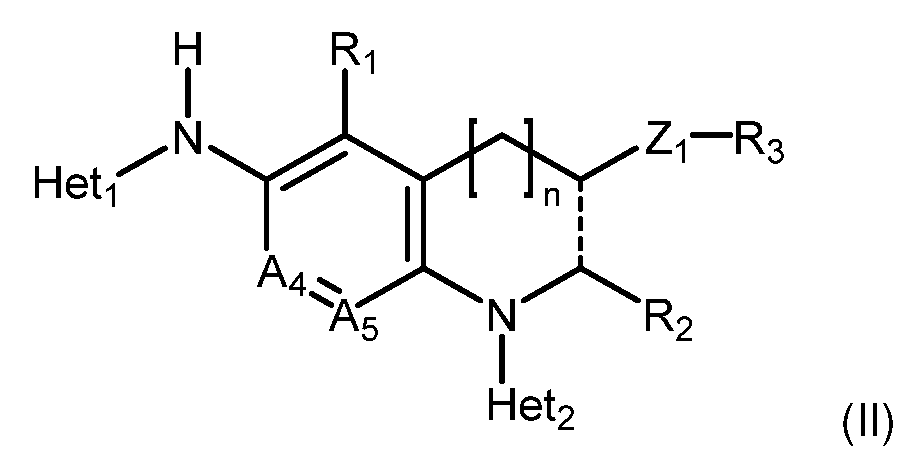
또는 그의 거울상이성질체, 부분입체이성질체 및/또는 상기의 제약상 허용되는 산 또는 염기와의 부가염 (즉, 제약상 허용되는 염), 여기서or its enantiomers, diastereomers and/or addition salts with pharmaceutically acceptable acids or bases (i.e., pharmaceutically acceptable salts), wherein
n=0, 1 또는 2이고,n=0, 1 or 2,
------는 단일 또는 이중 결합을 나타내고,------ indicates a single or double bond,
A4 및 A5는 서로 독립적으로 탄소 또는 질소 원자를 나타내고,A 4 and A 5 independently represent carbon or nitrogen atoms,
Z1은 결합, -N(R)- 또는 -O-를 나타내고, 여기서 R은 수소 또는 선형 또는 분지형 C1-C6알킬을 나타내고,Z 1 represents a bond, -N(R)- or -O-, where R represents hydrogen or linear or branched C 1 -C 6 alkyl,
R1은 수소; 히드록실 또는 C1-C6알콕시 기에 의해 임의로 치환된 선형 또는 분지형 C1-C6알킬; C3-C6시클로알킬; 트리플루오로메틸; 선형 또는 분지형 C1-C6알킬렌-헤테로시클로알킬로부터 선택된 기를 나타내고, 여기서 헤테로시클로알킬 기는 선형 또는 분지형 C1-C6알킬 기에 의해 임의로 치환되고;R 1 represents a group selected from hydrogen; linear or branched C 1 -C 6 alkyl optionally substituted by hydroxyl or a C 1 -C 6 alkoxy group; C 3 -C 6 cycloalkyl; trifluoromethyl; linear or branched C 1 -C 6 alkylene-heterocycloalkyl, wherein the heterocycloalkyl group is optionally substituted by a linear or branched C 1 -C 6 alkyl group;
R2는 수소 또는 메틸을 나타내고;R 2 represents hydrogen or methyl;
R3은 수소; 선형 또는 분지형 C1-C4알킬; -X1-NRaRb; -X1-N+RaRbRc; -X1-O-Rc; -X1-COORc; -X1-PO(OH)2; -X1-SO2(OH); -X1-N3 및 
Ra 및 Rb는 서로 독립적으로 수소; 헤테로시클로알킬; -SO2-페닐 (여기서 페닐은 선형 또는 분지형 C1-C6알킬에 의해 치환될 수 있음); 1 또는 2개의 히드록실 기에 의해 임의로 치환된 선형 또는 분지형 C1-C6알킬; C1-C6알킬렌-SO2OH; C1-C6알킬렌-SO2O-; C1-C6알킬렌-COOH; C1-C6알킬렌-PO(OH)2; C1-C6알킬렌-NRdRe; C1-C6알킬렌-N+RdReRf; C1-C6알킬렌-페닐 (여기서 페닐은 C1-C6알콕시 기에 의해 치환될 수 있음) 및 하기 기로부터 선택된 기를 나타내거나:R a and R b independently represent hydrogen; heterocycloalkyl; -SO 2 -phenyl (wherein phenyl may be substituted by linear or branched C 1 -C 6 alkyl); linear or branched C 1 -C 6 alkyl optionally substituted by 1 or 2 hydroxyl groups; C 1 -C 6 alkylene-SO 2 OH; C 1 -C 6 alkylene-SO 2 O - ; C 1 -C 6 alkylene-COOH; C 1 -C 6 alkylene-PO(OH) 2 ; C 1 -C 6 alkylene-NR d R e ; C 1 -C 6 alkylene-N + R d R e R f ; C 1 -C 6 alkylene-phenyl (wherein phenyl may be substituted by a C 1 -C 6 alkoxy group) and a group selected from the following groups:

또는 Ra 및 Rb는 이들을 보유하는 질소 원자와 함께 사이클 B1을 형성하거나;or R a and R b together with the nitrogen atom carrying them form cycle B 1 ;
또는 Ra, Rb 및 Rc는 이들을 보유하는 질소 원자와 함께 가교된 C3-C8헤테로시클로알킬을 형성하고,or R a , R b and R c together with the nitrogen atom carrying them form a bridged C 3 -C 8 heterocycloalkyl,
Rc, Rd, Re, Rf는 서로 독립적으로 수소 또는 선형 또는 분지형 C1-C6알킬 기를 나타내거나,R c , R d , R e , R f independently represent hydrogen or a linear or branched C 1 -C 6 alkyl group, or
또는 Rd 및 Re는 이들을 보유하는 질소 원자와 함께 사이클 B2를 형성하거나,or R d and R e form cycle B 2 together with the nitrogen atom carrying them,
또는 Rd, Re 및 Rf는 이들을 보유하는 질소 원자와 함께 가교된 C3-C8헤테로시클로알킬을 형성하고,or R d , R e and R f together with the nitrogen atom carrying them form a bridged C 3 -C 8 heterocycloalkyl,
Het1은 하기로부터 선택된 기를 나타내고:Het 1 represents a group selected from:

Het2는 하기로부터 선택된 기를 나타내고:Het 2 represents a group selected from the following:

A1은 -NH-, -N(C1-C3알킬), O, S 또는 Se이고,A 1 is -NH-, -N(C 1 -C 3 alkyl), O, S or Se,
A2는 N, CH 또는 C(R5)이고,A 2 is N, CH or C(R 5 ),
G는 하기로 이루어진 군으로부터 선택되고;G is selected from the group consisting of;
-C(O)ORG3, -C(O)NRG1RG2, -C(O)RG2, -NRG1C(O)RG2, -NRG1C(O)NRG1RG2, -OC(O)NRG1RG2, -NRG1C(O)ORG3, -C(=NORG1)NRG1RG2, -NRG1C(=NCN)NRG1RG2, -NRG1S(O)2NRG1RG2, -S(O)2RG3, -S(O)2NRG1RG2, -NRG1S(O)2RG2, -NRG1C(=NRG2)NRG1RG2, -C(=S)NRG1RG2, -C(=NRG1)NRG1RG2, 히드록실 기에 의해 임의로 치환된 C1-C6알킬, 할로겐, -NO2 및 -CN, 여기서-C(O)OR G3 , -C(O)NR G1 R G2 , -C(O)R G2 , -NR G1 C(O)R G2 , -NR G1 C(O)NR G1 R G2 , -OC(O)NR G1 R G2 , -NR G1 C(O)OR G3 , -C(=NOR G1 )NR G1 R G2 , -NR G1 C(=NCN)NR G1 R G2 , -NR G1 S(O) 2 NR G1 R G2 , -S(O) 2 R G3 , -S(O) 2 NR G1 R G2 , -NR G1 S(O) 2 R G2 , -NR G1 C(=NR G2 )NR G1 R G2 , -C(=S)NR G1 R G2 , -C(=NR G1 )NR G1 R G2 , Hydroxyl group C 1 -C 6 alkyl, halogen, -NO 2 and -CN, optionally substituted by
- RG1 및 RG2는 각각의 경우에 각각 독립적으로 수소, 1 내지 3개의 할로겐 원자에 의해 임의로 치환된 C1-C6알킬, C2-C6알케닐, C2-C6알키닐, C3-C6시클로알킬, 페닐 및 -(CH2)1-4-페닐로 이루어진 군으로부터 선택되고;- R G1 and R G2 are each independently selected from the group consisting of hydrogen, C 1 -C 6 alkyl, C 2 -C 6 alkenyl, C 2 -C 6 alkynyl, C 3 -C 6 cycloalkyl, phenyl and -(CH 2 ) 1-4 -phenyl, each optionally substituted with 1 to 3 halogen atoms ;
- RG3은 1 내지 3개의 할로겐 원자에 의해 임의로 치환된 C1-C6알킬, C2-C6알케닐, C2-C6알키닐, C3-C6시클로알킬, 페닐 및 -(CH2)1-4-페닐로 이루어진 군으로부터 선택되거나; 또는- R G3 is selected from the group consisting of C 1 -C 6 alkyl, C 2 -C 6 alkenyl, C 2 -C 6 alkynyl, C 3 -C 6 cycloalkyl, phenyl and -(CH 2 ) 1-4 -phenyl, optionally substituted by 1 to 3 halogen atoms; or
RG1 및 RG2는 이들 각각이 부착되어 있는 원자와 함께 조합되어 C3-C8헤테로시클로알킬을 형성하거나; 또는 대안적으로, G는 하기로 이루어진 군으로부터 선택되고:R G1 and R G2 are combined with the atoms to which they are each attached to form C 3 -C 8 heterocycloalkyl; or alternatively, G is selected from the group consisting of:

여기서 RG4는 수소, 1 내지 3개의 할로겐 원자에 의해 임의로 치환된 C1-C6알킬, C2-C6알케닐, C2-C6알키닐 및 C3-C6시클로알킬로부터 선택되고,wherein R G4 is selected from hydrogen, C 1 -C 6 alkyl, C 2 -C 6 alkenyl, C 2 -C 6 alkynyl and C 3 -C 6 cycloalkyl optionally substituted with 1 to 3 halogen atoms,
R4는 수소, 플루오린, 염소 또는 브로민 원자, 메틸, 히드록실 또는 메톡시 기를 나타내고,R 4 represents a hydrogen, fluorine, chlorine or bromine atom, a methyl, hydroxyl or methoxy group,
R5는 1 내지 3개의 할로겐 원자에 의해 임의로 치환된 C1-C6알킬; C2-C6알케닐; C2-C6알키닐; 할로겐 또는 -CN으로부터 선택된 기를 나타내고,R 5 represents a group selected from C 1 -C 6 alkyl, C 2 -C 6 alkenyl, C 2 -C 6 alkynyl, halogen or -CN, optionally substituted with 1 to 3 halogen atoms,
R6은 하기로부터 선택된 기를 나타내고:R 6 represents a group selected from the following:
수소;hydrogen;
-C2-C6알케닐;-C 2 -C 6 alkenyl;
-X2-O-R7;-X 2 -OR 7 ;

-X2-NSO2-R7;-X 2 -NSO 2 -R 7 ;
-C=C(R9)-Y1-O-R7;-C=C(R 9 )-Y 1 -OR 7 ;
C3-C6시클로알킬;C 3 -C 6 cycloalkyl;
히드록실 기에 의해 임의로 치환된 C3-C6헤테로시클로알킬;C 3 -C 6 heterocycloalkyl optionally substituted by hydroxyl groups;
C3-C6시클로알킬렌-Y2-R7;C 3 -C 6 cycloalkylene-Y 2 -R 7 ;
C3-C6헤테로시클로알킬렌-Y2-R7 기;C 3 -C 6 heterocycloalkylene-Y 2 -R 7 group;
선형 또는 분지형 C1-C6알킬 기에 의해 임의로 치환된 헤테로아릴렌-R7 기;A heteroarylene-R 7 group optionally substituted by a linear or branched C 1 -C 6 alkyl group;
R7은 선형 또는 분지형 C1-C6알킬 기; (C3-C6)시클로알킬렌-R8 또는 하기로부터 선택된 기를 나타내고:R 7 represents a linear or branched C 1 -C 6 alkyl group; (C 3 -C 6 )cycloalkylene-R 8 or a group selected from the following:

여기서 Cy는 C3-C8시클로알킬을 나타내고,Here, Cy represents C 3 -C 8 cycloalkyl,
R8은 수소; 선형 또는 분지형 C1-C6알킬, -NR'aR'b; -NR'a-CO-OR'c; -NR'a-CO-R'c; -N+R'aR'bR'c; -O-R'c; -NH-X'2-N+R'aR'bR'c; -O-X'2-NR'aR'b, -X'2-NR'aR'b, -NR'c-X'2-N3 및 
R9는 선형 또는 분지형 C1-C6알킬, 트리플루오로메틸, 히드록실, 할로겐, C1-C6알콕시로부터 선택된 기를 나타내고,R 9 represents a group selected from linear or branched C 1 -C 6 alkyl, trifluoromethyl, hydroxyl, halogen, C 1 -C 6 alkoxy,
R10은 수소, 플루오린, 염소, 브로민, -CF3 및 메틸로부터 선택된 기를 나타내고,R 10 represents a group selected from hydrogen, fluorine, chlorine, bromine, -CF 3 and methyl,
R11은 수소, 할로겐, C1-C3알킬렌-R8, -O-C1-C3알킬렌-R8, -CO-NRhRi 및 -CH=CH-C1-C4알킬렌-NRhRi, -CH=CH-CHO, C3-C8시클로알킬렌-CH2-R8, C3-C8헤테로시클로알킬렌-CH2-R8로부터 선택된 기를 나타내고,R 11 represents a group selected from hydrogen, halogen, C 1 -C 3 alkylene-R 8 , -OC 1 -C 3 alkylene-R 8 , -CO-NR h R i and -CH=CH-C 1 -C 4 alkylene-NR h R i , -CH=CH-CHO, C 3 -C 8 cycloalkylene-CH 2 -R 8 , C 3 -C 8 heterocycloalkylene-CH 2 -R 8 ,
R12 및 R13은 서로 독립적으로 수소 원자 또는 메틸 기를 나타내고,R 12 and R 13 independently represent a hydrogen atom or a methyl group,
R14 및 R15는 서로 독립적으로 수소 또는 메틸 기를 나타내거나, 또는 R14 및 R15는 이들을 보유하는 탄소 원자와 함께 시클로헥실을 형성하고,R 14 and R 15 independently represent hydrogen or a methyl group, or R 14 and R 15 together with the carbon atom carrying them form cyclohexyl,
Rh 및 Ri는 서로 독립적으로 수소 또는 선형 또는 분지형 C1-C6알킬 기를 나타내고,R h and R i independently represent hydrogen or a linear or branched C 1 -C 6 alkyl group,
X1은 트리플루오로메틸, 히드록실, 할로겐, C1-C6알콕시로부터 선택된 1 또는 2개의 기에 의해 임의로 치환된 선형 또는 분지형 C1-C4알킬렌 기를 나타내고,X 1 represents a linear or branched C 1 -C 4 alkylene group optionally substituted by 1 or 2 groups selected from trifluoromethyl, hydroxyl, halogen, C 1 -C 6 alkoxy,
X2는 트리플루오로메틸, 히드록실, 할로겐, C1-C6알콕시로부터 선택된 1 또는 2개의 기에 의해 임의로 치환된 선형 또는 분지형 C1-C6알킬렌 기를 나타내고,X 2 represents a linear or branched C 1 -C 6 alkylene group optionally substituted by 1 or 2 groups selected from trifluoromethyl, hydroxyl, halogen, C 1 -C 6 alkoxy,
X'2는 선형 또는 분지형 C1-C6알킬렌을 나타내고,X' 2 represents linear or branched C 1 -C 6 alkylene,
R'a 및 R'b는 서로 독립적으로 수소; 헤테로시클로알킬; -SO2-페닐 (여기서 페닐은 선형 또는 분지형 C1-C6알킬에 의해 치환될 수 있음); 1 또는 2개의 히드록실 또는 C1-C6알콕시 기에 의해 임의로 치환된 선형 또는 분지형 C1-C6알킬; C1-C6알킬렌-SO2OH; C1-C6알킬렌-SO2O-; C1-C6알킬렌-COOH; C1-C6알킬렌-PO(OH)2; C1-C6알킬렌-NR'dR'e; C1-C6알킬렌-N+R'dR'eR'f; C1-C6알킬렌-O-C1-C6알킬렌-OH; C1-C6알킬렌-페닐 (여기서 페닐은 히드록실 또는 C1-C6알콕시 기에 의해 치환될 수 있음) 및 하기 기로부터 선택된 기를 나타내거나:R' a and R' b are independently hydrogen; heterocycloalkyl; -SO 2 -phenyl (wherein phenyl may be substituted by linear or branched C 1 -C 6 alkyl); linear or branched C 1 -C 6 alkyl optionally substituted by one or two hydroxyl or C 1 -C 6 alkoxy groups; C 1 -C 6 alkylene-SO 2 OH; C 1 -C 6 alkylene-SO 2 O - ; C 1 -C 6 alkylene-COOH; C 1 -C 6 alkylene-PO(OH) 2 ; C 1 -C 6 alkylene-NR' d R'e; C 1 -C 6 alkylene-N + R' d R' e R' f ; C 1 -C 6 alkylene-OC 1 -C 6 alkylene-OH; C 1 -C 6 alkylene-phenyl (wherein phenyl may be substituted by hydroxyl or a C 1 -C 6 alkoxy group) and a group selected from the following groups:

또는 R'a 및 R'b는 이들을 보유하는 질소 원자와 함께 사이클 B3을 형성하거나,or R' a and R' b together with the nitrogen atom carrying them form cycle B 3 ,
또는 R'a, R'b 및 R'c는 이들을 보유하는 질소 원자와 함께 가교된 C3-C8헤테로시클로알킬을 형성하고,or R' a , R' b and R' c together with the nitrogen atom carrying them form a bridged C 3 -C 8 heterocycloalkyl,
R'c, R'd, R'e, R'f는 서로 독립적으로 수소 또는 선형 또는 분지형 C1-C6알킬 기를 나타내거나,R' c , R' d , R' e , R' f independently represent hydrogen or a linear or branched C 1 -C 6 alkyl group, or
또는 R'd 및 R'e는 이들을 보유하는 질소 원자와 함께 사이클 B4를 형성하거나,or R' d and R' e form cycle B 4 together with the nitrogen atom carrying them, or
또는 R'd, R'e 및 R'f는 이들을 보유하는 질소 원자와 함께 가교된 C3-C8헤테로시클로알킬을 형성하고,or R' d , R' e and R' f together with the nitrogen atom carrying them form a bridged C 3 -C 8 heterocycloalkyl,
Y1은 선형 또는 분지형 C1-C4알킬렌을 나타내고,Y 1 represents linear or branched C 1 -C 4 alkylene,
Y2는 결합, -O-, -O-CH2-, -O-CO-, -O-SO2-, -CH2-, -CH2-O, -CH2-CO-, -CH2-SO2-, -C2H5-, -CO-, -CO-O-, -CO-CH2-, -CO-NH-CH2-, -SO2-, -SO2-CH2-, -NH-CO-, -NH-SO2-를 나타내고,Y 2 is a bond, -O-, -O-CH 2 -, -O-CO-, -O-SO 2 -, -CH 2 -, -CH 2 -O, -CH 2 -CO-, -CH 2 -SO 2 -, -C 2 H 5 -, -CO-, -CO-O-, -CO-CH 2 -, -CO-NH-CH 2 -, -SO 2 -, -SO 2 -CH 2 -, -NH-CO-, -NH-SO 2 -,
m=0, 1 또는 2이고,m=0, 1 or 2,
p=1, 2, 3 또는 4이고,p=1, 2, 3 or 4,
B1, B2, B3 및 B4는 서로 독립적으로 C3-C8헤테로시클로알킬 기를 나타내고, 상기 기는 (i) 모노- 또는 비-시클릭 기일 수 있고 (여기서 비시클릭 기는 융합된, 가교된 또는 스피로 고리계를 포함함), (ii) 질소 원자 이외에도, 산소, 황 및 질소로부터 독립적으로 선택된 1 또는 2개의 헤테로 원자를 함유할 수 있고, (iii) 플루오린, 브로민, 염소, 선형 또는 분지형 C1-C6알킬, 히드록실, -NH2, 옥소 또는 피페리디닐로부터 선택된 1 또는 2개의 기에 의해 치환될 수 있고,B 1 , B 2 , B 3 and B 4 independently represent a C 3 -C 8 heterocycloalkyl group, which group (i) may be a mono- or abicyclic group (wherein the abicyclic group comprises a fused, bridged or spiro ring system), (ii) may contain, in addition to the nitrogen atom, 1 or 2 heteroatoms independently selected from oxygen, sulfur and nitrogen, and (iii) may be substituted by 1 or 2 groups selected from fluorine, bromine, chlorine, linear or branched C 1 -C 6 alkyl, hydroxyl, -NH 2 , oxo or piperidinyl,
여기서 R3 및 R8 기 중 1개는, 존재하는 경우, 링커에 공유 부착되고, 여기서 원자의 원자가는 그에 결합된 1개 이상의 치환기에 의해 초과되지 않는다.wherein one of the groups R 3 and R 8 , if present, is covalently attached to the linker, and wherein the valency of the atom is not exceeded by one or more substituents bonded thereto.
일부 실시양태에서, 화학식 (I) 또는 화학식 (II)의 경우, G는 하기로 이루어진 군으로부터 선택된다:In some embodiments, for Formula (I) or Formula (II), G is selected from the group consisting of:
-C(O)ORG3, -C(O)NRG1RG2, -C(O)RG2, -NRG1C(O)RG2, -NRG1C(O)NRG1RG2, -OC(O)NRG1RG2, -NRG1C(O)ORG3, -C(=NORG1)NRG1RG2, -NRG1C(=NCN)NRG1RG2, -NRG1S(O)2NRG1RG2, -S(O)2RG3, -S(O)2NRG1RG2, -NRG1S(O)2RG2, -NRG1C(=NRG2)NRG1RG2, -C(=S)NRG1RG2, -C(=NRG1)NRG1RG2, 할로겐, -NO2 및 -CN, 여기서-C(O)OR G3 , -C(O)NR G1 R G2 , -C(O)R G2 , -NR G1 C(O)R G2 , -NR G1 C(O)NR G1 R G2 , -OC(O)NR G1 R G2 , -NR G1 C(O)OR G3 , -C(=NOR G1 )NR G1 R G2 , -NR G1 C(=NCN)NR G1 R G2 , -NR G1 S(O) 2 NR G1 R G2 , -S(O) 2 R G3 , -S(O) 2 NR G1 R G2 , -NR G1 S(O) 2 R G2 , -NR G1 C(=NR G2 )NR G1 R G2 , -C(=S)NR G1 R G2 , -C(=NR G1 )NR G1 R G2 , Halogen, -NO 2 and -CN, where
- RG1 및 RG2는 각각의 경우에 각각 독립적으로 수소, 1 내지 3개의 할로겐 원자에 의해 임의로 치환된 C1-C6알킬, C2-C6알케닐, C2-C6알키닐, C3-C6시클로알킬, 페닐 및 -(CH2)1-4-페닐로 이루어진 군으로부터 선택되고;- R G1 and R G2 are each independently selected from the group consisting of hydrogen, C 1 -C 6 alkyl, C 2 -C 6 alkenyl, C 2 -C 6 alkynyl, C 3 -C 6 cycloalkyl, phenyl and -(CH 2 ) 1-4 -phenyl, each optionally substituted with 1 to 3 halogen atoms ;
- RG3은 1 내지 3개의 할로겐 원자에 의해 임의로 치환된 C1-C6알킬, C2-C6알케닐, C2-C6알키닐, C3-C6시클로알킬, 페닐 및 -(CH2)1-4-페닐로 이루어진 군으로부터 선택되거나; 또는- R G3 is selected from the group consisting of C 1 -C 6 alkyl, C 2 -C 6 alkenyl, C 2 -C 6 alkynyl, C 3 -C 6 cycloalkyl, phenyl and -(CH 2 ) 1-4 -phenyl, optionally substituted by 1 to 3 halogen atoms; or
RG1 및 RG2는 이들 각각이 부착되어 있는 원자와 함께 조합되어 C3-C8헤테로시클로알킬을 형성하거나; 또는 대안적으로, G는 하기로 이루어진 군으로부터 선택되고:R G1 and R G2 are combined with the atoms to which they are each attached to form C 3 -C 8 heterocycloalkyl; or alternatively, G is selected from the group consisting of:

여기서 RG4는 1 내지 3개의 할로겐 원자에 의해 임의로 치환된 C1-C6알킬, C2-C6알케닐, C2-C6알키닐 및 C3-C6시클로알킬로부터 선택된다.wherein R G4 is selected from C 1 -C 6 alkyl, C 2 -C 6 alkenyl, C 2 -C 6 alkynyl and C 3 -C 6 cycloalkyl, optionally substituted by 1 to 3 halogen atoms.
일부 실시양태에서, p는 1 내지 8의 정수이다. 일부 실시양태에서, p는 1 내지 5의 정수이다. 일부 실시양태에서, p는 2 내지 4의 정수이다. 일부 실시양태에서, p는 2이다. 일부 실시양태에서, p는 4이다. 일부 실시양태에서, p는 액체 크로마토그래피-질량 분광측정법 (LC-MS)에 의해 결정된다.In some embodiments, p is an integer from 1 to 8. In some embodiments, p is an integer from 1 to 5. In some embodiments, p is an integer from 2 to 4. In some embodiments, p is 2. In some embodiments, p is 4. In some embodiments, p is determined by liquid chromatography-mass spectrometry (LC-MS).
일부 실시양태에서, 링커 (L)는 부착 기, 적어도 1개의 스페이서 기 및 적어도 1개의 절단가능한 기를 포함한다. 일부 경우에, 절단가능한 기는 피로포스페이트 기 및/또는 자기 희생적 기를 포함한다. 구체적 실시양태에서, L은 부착 기; 적어도 1개의 가교 스페이서 기; 및 피로포스페이트 기 및/또는 자기 희생적 기를 포함하는 적어도 1개의 절단가능한 기를 포함한다.In some embodiments, the linker (L) comprises an attachment group, at least one spacer group, and at least one cleavable group. In some cases, the cleavable group comprises a pyrophosphate group and/or a self-immolative group. In specific embodiments, L comprises an attachment group; at least one bridging spacer group; and at least one cleavable group comprising a pyrophosphate group and/or a self-immolative group.
일부 실시양태에서, 항체-약물 접합체는 하기 화학식 (A)의 링커-약물 (또는 "링커-페이로드") 모이어티 -(L-D)를 포함한다:In some embodiments, the antibody-drug conjugate comprises a linker-drug (or “linker-payload”) moiety of formula (A): -(L-D)

여기서 R1은 부착 기이고, L1은 가교 스페이서 기이고, E는 절단가능한 기이다.Here, R 1 is an attachment group, L 1 is a crosslinking spacer group, and E is a cleavable group.
일부 실시양태에서, 절단가능한 기는 피로포스페이트 기를 포함한다. 일부 실시양태에서, 절단가능한 기는 하기를 포함한다:In some embodiments, the cleavable group comprises a pyrophosphate group. In some embodiments, the cleavable group comprises:

일부 실시양태에서, 가교 스페이서 기는 폴리옥시에틸렌 (PEG) 기를 포함한다. 일부 경우에, PEG 기는 PEG1, PEG2, PEG3, PEG4, PEG5, PEG6, PEG7, PEG8, PEG9, PEG10, PEG11, PEG12, PEG13, PEG14 및 PEG15로부터 선택될 수 있다. 일부 실시양태에서, 가교 스페이서 기는 -CO-CH2-CH2-PEG12-를 포함할 수 있다. 다른 실시양태에서, 가교 스페이서 기는 부타노일, 펜타노일, 헥사노일, 헵타노일 또는 옥타노일 기를 포함한다. 일부 실시양태에서, 가교 스페이서 기는 헥사노일 기를 포함한다.In some embodiments, the crosslinking spacer group comprises a polyoxyethylene (PEG) group. In some cases, the PEG group can be selected from PEG1, PEG2, PEG3, PEG4, PEG5, PEG6, PEG7, PEG8, PEG9, PEG10, PEG11, PEG12, PEG13, PEG14 and PEG15. In some embodiments, the crosslinking spacer group can comprise -CO-CH 2 -CH 2 -PEG12-. In other embodiments, the crosslinking spacer group comprises a butanoyl, pentanoyl, hexanoyl, heptanoyl or octanoyl group. In some embodiments, the crosslinking spacer group comprises a hexanoyl group.
일부 실시양태에서 부착 기는 말레이미드 기, 티올 기, 시클로옥틴 기 및 아지도 기로부터 선택된 적어도 1개의 반응성 기로부터 형성된다. 예를 들어, 말레이미드 기는 하기 구조를 가질 수 있다:In some embodiments, the attachment group is formed from at least one reactive group selected from a maleimide group, a thiol group, a cyclooctyne group, and an azido group. For example, the maleimide group can have the structure:

아지도 기는 구조: -N=N+=N-를 가질 수 있다.Ajido can also have the following structure: -N=N + =N - .
시클로옥틴 기는 하기 구조를 가질 수 있으며:The cyclooctene group can have the following structures:


일부 경우에, 시클로옥틴 기는 하기 구조를 가지며:In some cases, the cyclooctene group has the structure:


일부 실시양태에서, 부착 기는 하기 구조를 포함하는 화학식을 가지며:In some embodiments, the attachment group has a chemical formula comprising the structure:


일부 실시양태에서, 항체는 하기로부터 선택된 부착 기에 의해 링커 (L)에 연결되며:In some embodiments, the antibody is linked to the linker (L) by an attachment group selected from:

여기서 

일부 실시양태에서, 가교 스페이서 기는 절단가능한 기에 연결되거나 공유 연결된다.In some embodiments, the crosslinking spacer group is linked or covalently connected to a cleavable group.
일부 실시양태에서, 가교 스페이서 기는 -CO-CH2-CH2-PEG12-이다.In some embodiments, the bridging spacer group is -CO-CH 2 -CH 2 -PEG12-.
일부 실시양태에서, 절단가능한 기는 -피로포스페이트-CH2-CH2-NH2-이다.In some embodiments, the cleavable group is -pyrophosphate-CH 2 -CH 2 -NH 2 -.
일부 실시양태에서, 절단가능한 기는 Bcl-xL 억제제 (D)에 연결되거나 공유 연결된다.In some embodiments, the cleavable group is linked or covalently linked to a Bcl-xL inhibitor (D).
일부 실시양태에서, 링커는 부착 기, 적어도 1개의 가교 스페이서 기, 펩티드 기 및 적어도 1개의 절단가능한 기를 포함한다.In some embodiments, the linker comprises an attachment group, at least one cross-linking spacer group, a peptide group and at least one cleavable group.
일부 실시양태에서, 항체-약물 접합체는 하기 화학식 (B)의 링커-약물 모이어티 -(L-D)를 포함한다:In some embodiments, the antibody-drug conjugate comprises a linker-drug moiety of formula (B) -(L-D):

여기서 R1은 부착 기이고, L1은 가교 스페이서이고, Lp는 1 내지 6개의 아미노산 잔기를 포함하는 펩티드 기이고, E는 절단가능한 기이고, L2는 가교 스페이서이고, m은 0 또는 1이고; D는 Bcl-xL 억제제이다. 일부 경우에, m은 1이고, 가교 스페이서는 하기를 포함한다:wherein R 1 is an attachment group, L 1 is a cross-linking spacer, Lp is a peptide group comprising 1 to 6 amino acid residues, E is a cleavable group, L 2 is a cross-linking spacer, m is 0 or 1; and D is a Bcl-xL inhibitor. In some cases, m is 1 and the cross-linking spacer comprises:
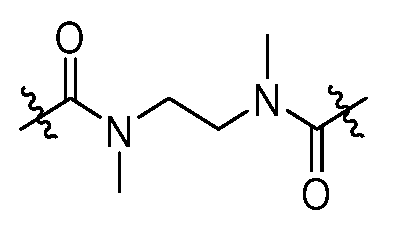
일부 실시양태에서, 적어도 1개의 가교 스페이서는 PEG 기를 포함한다. 일부 경우에, PEG 기는 PEG1, PEG2, PEG3, PEG4, PEG5, PEG6, PEG7, PEG8, PEG9, PEG10, PEG11, PEG12, PEG13, PEG14 및 PEG15로부터 선택된다. 일부 경우에, 적어도 1개의 가교 스페이서는 *-C(O)-CH2-CH2-PEG1-**, *-C(O)-CH2-PEG3-**, *-C(O)-CH2-CH2-PEG12**, *-NH-CH2-CH2-PEG1-**, 폴리히드록시알킬 기, *-C(O)-N(CH3)-CH2-CH2-N(CH3)-C(O)-**, *-C(O)-CH2-CH2-PEG12-NH-C(O)CH2-CH2-**로부터 선택되고, 여기서 **는 부착 기에 대한 적어도 1개의 가교 스페이서의 직접 또는 간접 부착 지점을 나타내고, *는 펩티드 기에 대한 적어도 1개의 가교 스페이서의 직접 또는 간접 부착 지점을 나타낸다.In some embodiments, at least one crosslinking spacer comprises a PEG group. In some cases, the PEG group is selected from PEG1, PEG2, PEG3, PEG4, PEG5, PEG6, PEG7, PEG8, PEG9, PEG10, PEG11, PEG12, PEG13, PEG14 and PEG15. In some cases, at least one crosslinking spacer is selected from *-C(O)-CH 2 -CH 2 -PEG1-**, *-C(O)-CH 2 -PEG3-**, *-C(O)-CH 2 -CH 2 -PEG12**, *-NH-CH 2 -CH 2 -PEG1-**, a polyhydroxyalkyl group, *-C(O)-N(CH 3 )-CH 2 -CH 2 -N(CH 3 )-C(O)-**, *-C(O)-CH 2 -CH 2 -PEG12-NH-C(O)CH 2 -CH 2 -**, wherein ** represents a direct or indirect attachment point of at least one crosslinking spacer to an attachment group, and * represents a direct or indirect attachment point of at least one crosslinking spacer to a peptide group.
일부 실시양태에서, L1은 *-C(O)-CH2-CH2-PEG1-**, *-C(O)-CH2-PEG3-**, *-C(O)-CH2-CH2-PEG12**, *-NH-CH2-CH2-PEG1-** 및 폴리히드록시알킬 기로부터 선택되고, 여기서 **는 R1에 대한 L1의 직접 또는 간접 부착 지점을 나타내고, *는 Lp에 대한 L1의 직접 또는 간접 부착 지점을 나타낸다.In some embodiments, L 1 is selected from *-C(O)-CH 2 -CH 2 -PEG1-**, *-C(O)-CH 2 -PEG3-**, *-C(O)-CH 2 -CH 2 -PEG12**, *-NH-CH 2 -CH 2 -PEG1-** and a polyhydroxyalkyl group, wherein ** represents the point of direct or indirect attachment of L 1 to R 1 , and * represents the point of direct or indirect attachment of L 1 to Lp.
일부 실시양태에서, m은 1이고, L2는 -C(O)-N(CH3)-CH2-CH2-N(CH3)-C(O)-이다.In some embodiments, m is 1 and L 2 is -C(O)-N(CH 3 )-CH 2 -CH 2 -N(CH 3 )-C(O)-.
일부 실시양태에서, 펩티드 기는 1 내지 12개의 아미노산 잔기를 포함한다. 일부 실시양태에서, 펩티드 기 (Lp)는 1 내지 10개의 아미노산 잔기를 포함한다. 일부 실시양태에서, 펩티드 기 (Lp)는 1 내지 8개의 아미노산 잔기를 포함한다. 일부 실시양태에서, 펩티드 기 (Lp)는 1 내지 6개의 아미노산 잔기를 포함한다. 일부 실시양태에서, 펩티드 기는 1 내지 4개의 아미노산 잔기를 포함한다. 일부 실시양태에서, 펩티드 기는 1 내지 3개의 아미노산 잔기를 포함한다. 일부 실시양태에서, 펩티드 기는 1 내지 2개의 아미노산 잔기를 포함한다. 일부 경우에, 아미노산 잔기는 글리신 (Gly), L-발린 (Val), L-시트룰린 (Cit), L-시스테산 (술포-Ala), L-리신 (Lys), L-이소류신 (Ile), L-페닐알라닌 (Phe), L-메티오닌 (Met), L-아스파라긴 (Asn), L-프롤린 (Pro), L-알라닌 (Ala), L-류신 (Leu), L-트립토판 (Trp) 및 L-티로신 (Tyr)으로부터 선택된다. 예를 들어, 펩티드 기는 Val-Cit, Phe-Lys, Val-Ala, Val-Lys, Leu-Cit, 술포-Ala-Val-Cit, 술포-Ala-Val-Ala, Gly-Gly-Gly 및/또는 Gly-Gly-Phe-Gly (서열식별번호(SEQ ID NO): 68)을 포함할 수 있다. 일부 실시양태에서, 펩티드 기 (Lp)는 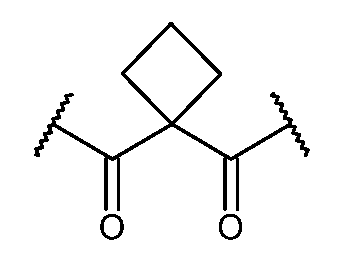

일부 경우에, 펩티드 기는 하기로부터 선택된 기를 포함한다:In some cases, the peptide group comprises a group selected from:
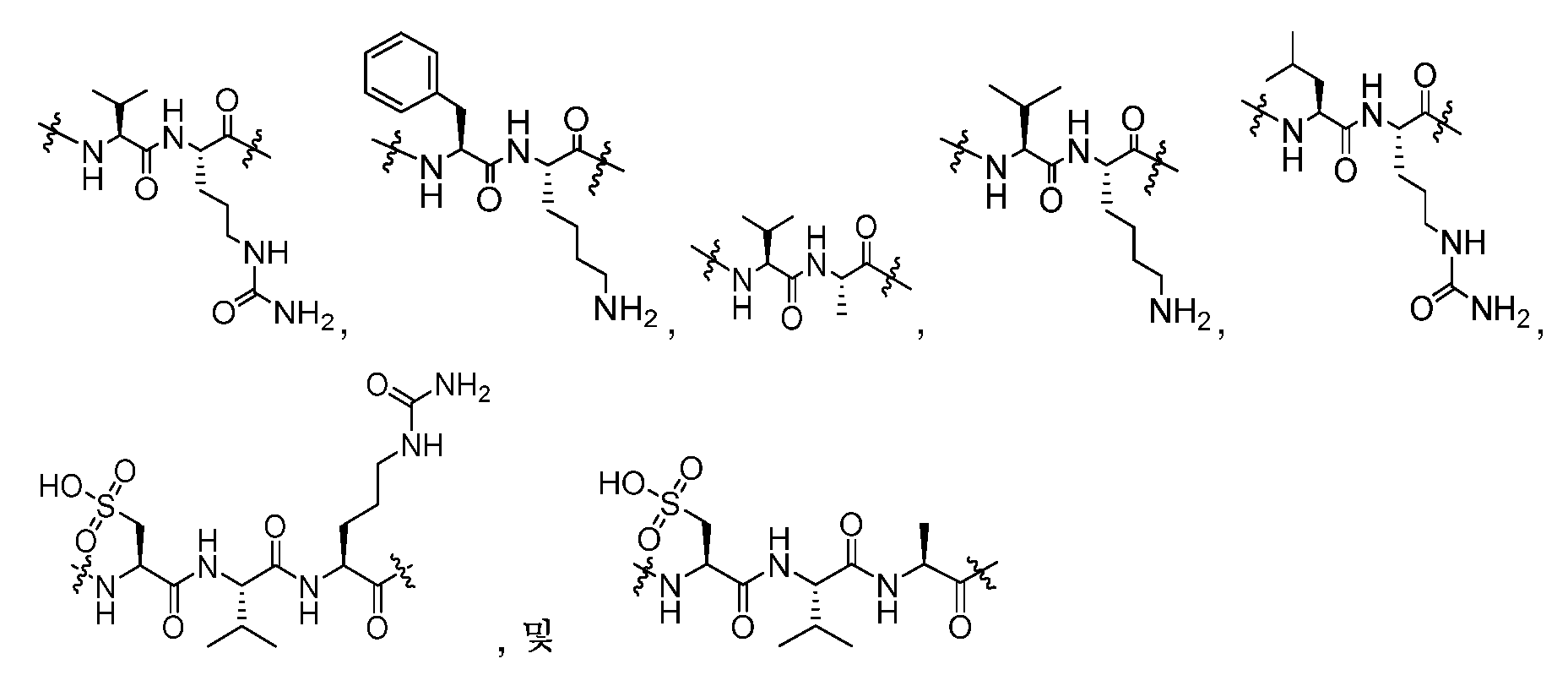
일부 실시양태에서, 자기 희생적 기는 파라-아미노벤질-카르바메이트, 파라-아미노벤질-암모늄, 파라-아미노-(술포)벤질-암모늄, 파라-아미노-(술포)벤질-카르바메이트, 파라-아미노-(알콕시-PEG-알킬)벤질-카르바메이트, 파라-아미노-(폴리히드록시카르복시테트라히드로피라닐)알킬-벤질-카르바메이트 또는 파라-아미노-(폴리히드록시카르복시테트라히드로피라닐)알킬-벤질-암모늄을 포함한다.In some embodiments, the self-immolative group comprises para-aminobenzyl-carbamate, para-aminobenzyl-ammonium, para-amino-(sulfo)benzyl-ammonium, para-amino-(sulfo)benzyl-carbamate, para-amino-(alkoxy-PEG-alkyl)benzyl-carbamate, para-amino-(polyhydroxycarboxytetrahydropyranyl)alkyl-benzyl-carbamate or para-amino-(polyhydroxycarboxytetrahydropyranyl)alkyl-benzyl-ammonium.
일부 실시양태에서, m은 1이고, 가교 스페이서는 
일부 실시양태에서, 링커-약물 모이어티 -(L-D)는 하기로부터 선택된 화합물로부터 형성된다:In some embodiments, the linker-drug moiety -(L-D) is formed from a compound selected from:
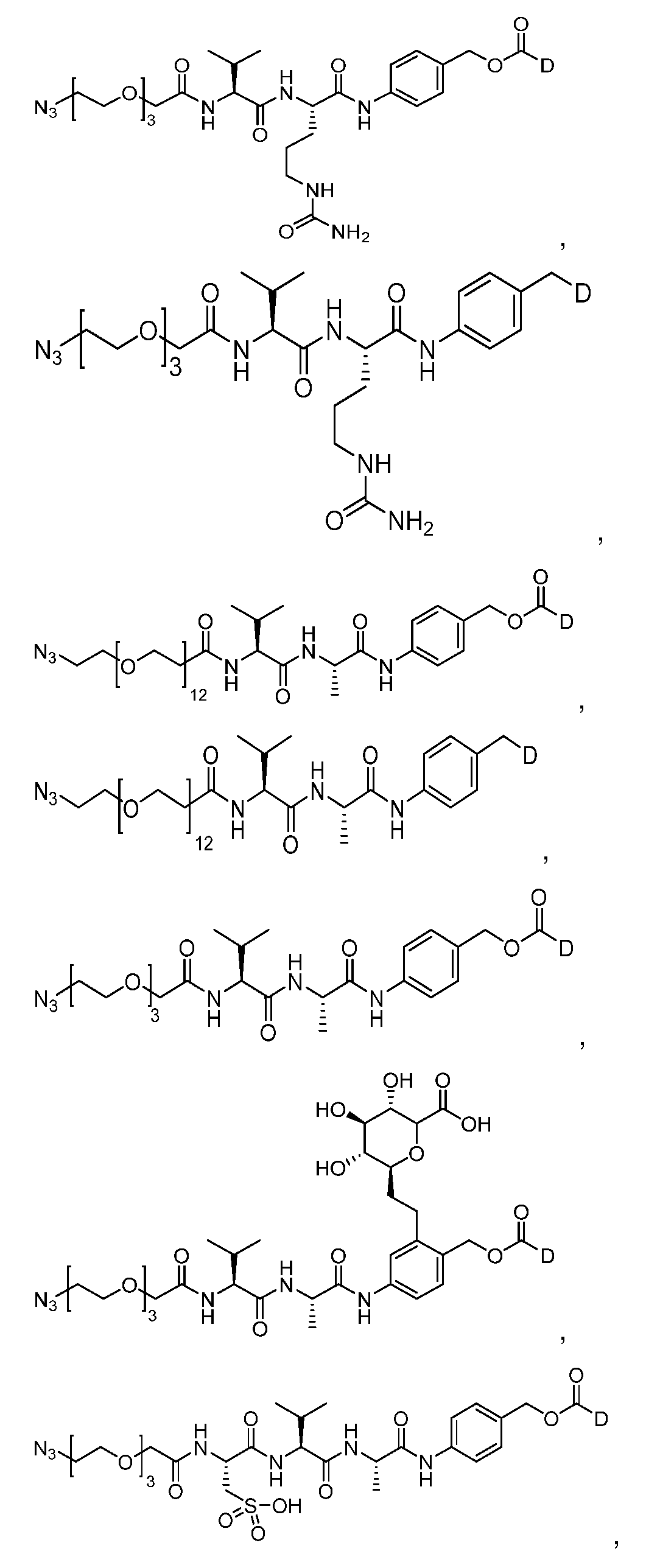


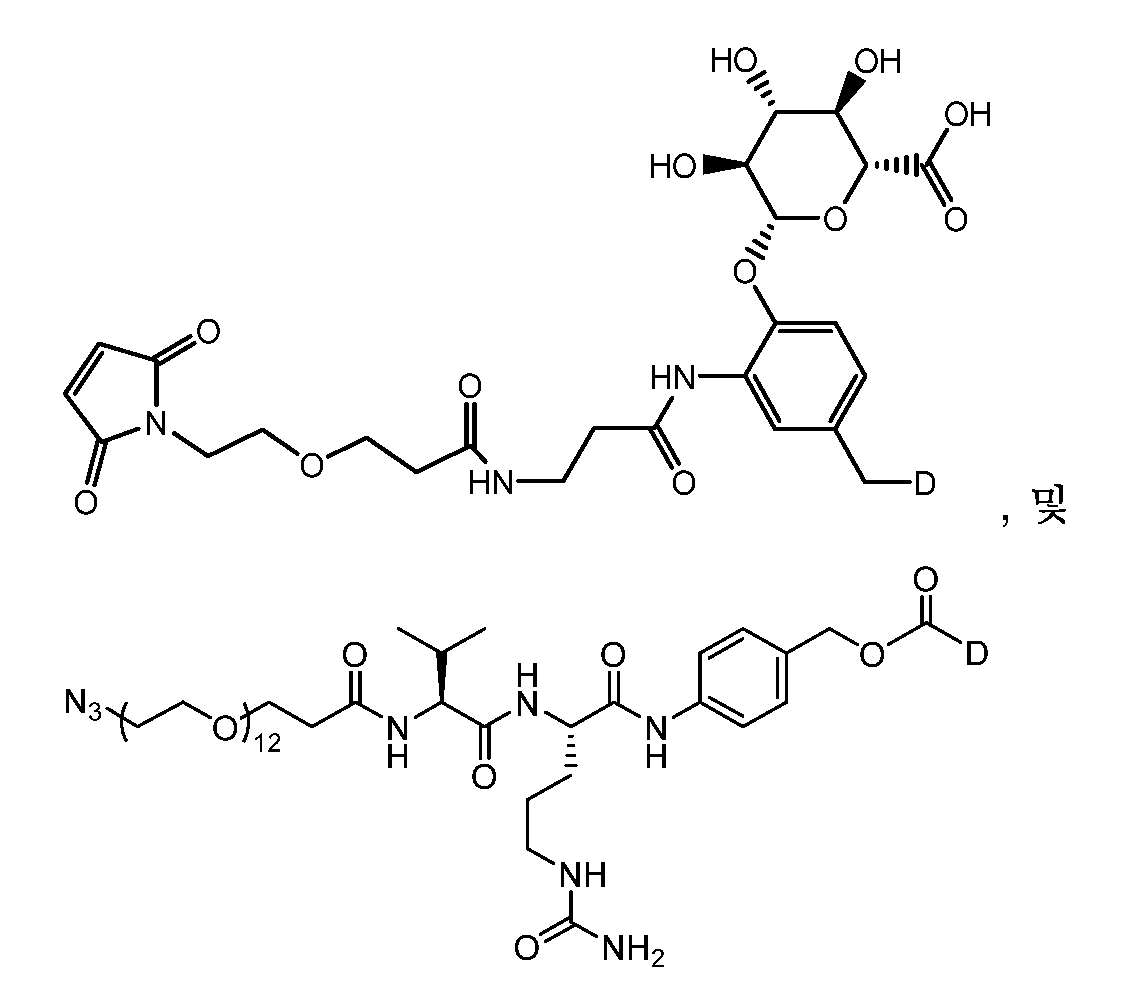
일부 실시양태에서, 항체-약물 접합체는 하기로부터 선택된 화학식을 포함하는 링커-약물 기 -(L-D)를 포함한다:In some embodiments, the antibody-drug conjugate comprises a linker-drug group -(L-D) comprising a formula selected from:

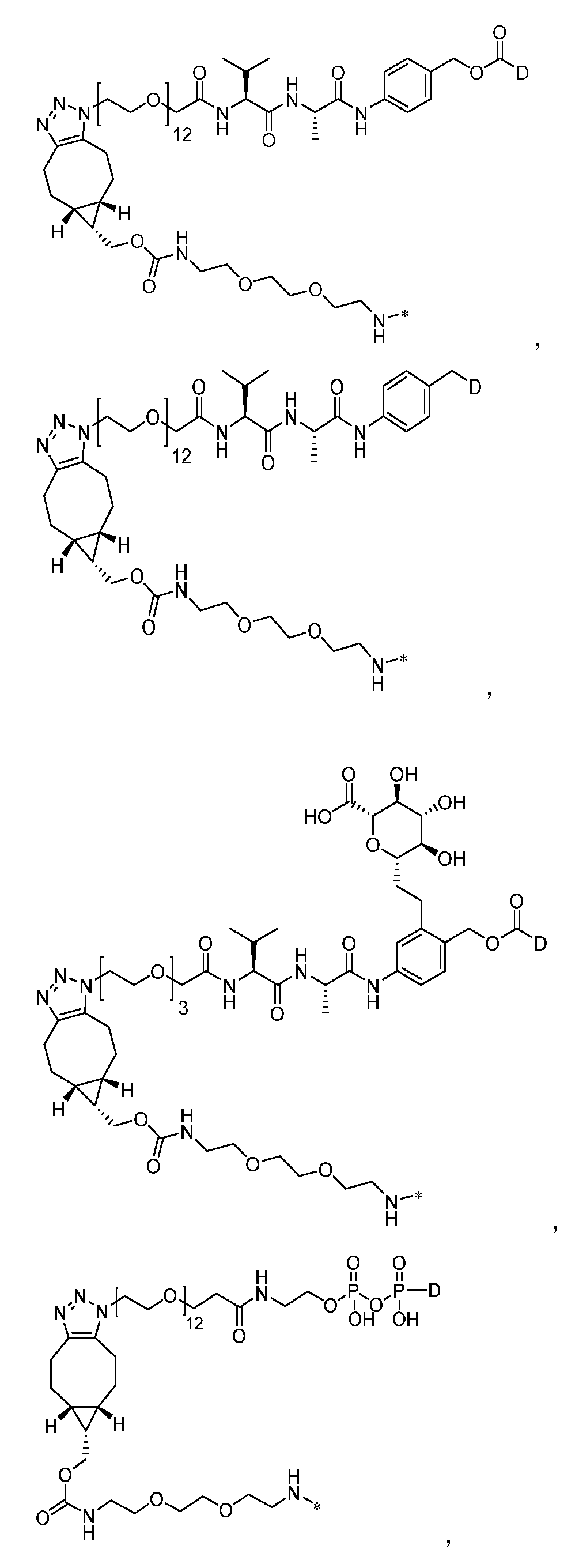


여기서 
일부 실시양태에서, 항체-약물 접합체는 하기 화학식 (C)인 링커 약물 기 -(L-D)를 포함한다:In some embodiments, the antibody-drug conjugate comprises a linker drug group -(L-D) of the following formula (C):
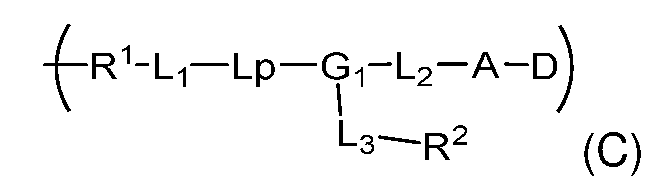
여기서 R1은 부착 기이고, L1은 가교 스페이서이고; Lp는 1 내지 6개의 아미노산을 포함하는 펩티드 기이고; D는 Bcl-xL 억제제이고; G1-L2-A는 자기 희생적 스페이서이고; L2는 결합, 메틸렌, 네오펜틸렌 또는 C2-C3 알케닐렌이고; A는 결합, -OC(=O)-*,wherein R 1 is an attachment group, L 1 is a cross-linking spacer; L p is a peptide group comprising 1 to 6 amino acids; D is a Bcl-xL inhibitor; G 1 -L 2 -A are self-immolative spacers; L 2 is a bond, methylene, neopentylene or C 2 -C 3 alkenylene; A is a bond, -OC(=O)-*,

일부 실시양태에서, 항체-약물 접합체는 하기 화학식 (D)인 링커 약물 기 -(L-D)를 포함한다:In some embodiments, the antibody-drug conjugate comprises a linker drug group -(L-D) of the following formula (D):
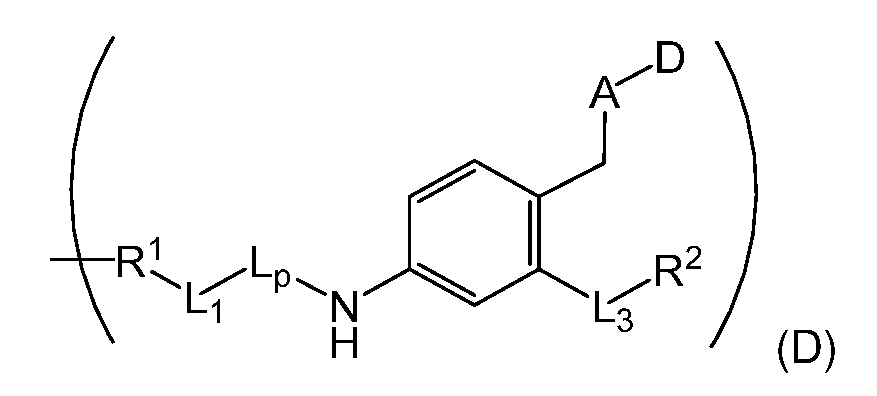
여기서 R1은 부착 기이고; L1은 가교 스페이서이고; Lp는 1 내지 6개의 아미노산을 포함하는 펩티드 기이고; A는 결합, -OC(=O)-*,Here, R 1 is an attachment group; L 1 is a crosslinking spacer; Lp is a peptide group containing 1 to 6 amino acids; A is a bond, -OC(=O)-*,

일부 실시양태에서, L1은 
일부 실시양태에서, L1은 
일부 실시양태에서, L1은 
일부 실시양태에서, L1은 
일부 실시양태에서, L1은 
일부 실시양태에서, L1은 
일부 실시양태에서, L1은 *-C(=O)(CH2)mO(CH2)m-**; *-C(=O)((CH2)mO)t(CH2)n-**; *-C(=O)(CH2)m-**; *-C(=O)NH((CH2)mO)t(CH2)n-**; *-C(=O)O(CH2)mSSC(R3)2(CH2)mC(=O)NR3(CH2)mNR3C(=O)(CH2)m-**; *-C(=O)O(CH2)mC(=O)NH(CH2)m-**; *-C(=O)(CH2)mNH(CH2)m-**; *-C(=O)(CH2)mNH(CH2)nC(=O)-**; *-C(=O)(CH2)mX1(CH2)m-**; *-C(=O)((CH2)mO)t(CH2)nX1(CH2)n-**; *-C(=O)(CH2)mNHC(=O)(CH2)n-**; *-C(=O)((CH2)mO)t(CH2)nNHC(=O)(CH2)n-**; *-C(=O)(CH2)mNHC(=O)(CH2)nX1(CH2)n-**; *-C(=O)((CH2)mO)t(CH2)nNHC(=O)(CH2)nX1(CH2)n-**; *-C(=O)((CH2)mO)t(CH2)nC(=O)NH(CH2)m-**; *-C(=O)(CH2)mC(R3)2-** 또는 *-C(=O)(CH2)mC(=O)NH(CH2)m-**를 포함하는 가교 스페이서이고, 여기서 L1의 *는 Lp에 대한 직접 또는 간접 부착 지점을 나타내고, L1의 **는 R1에 대한 직접 또는 간접 부착 지점을 나타내고, 여기서 X1은 
각각의 m은 독립적으로 1, 2, 3, 4, 5, 6, 7, 8, 9 및 10으로부터 선택되고;Each m is independently selected from 1, 2, 3, 4, 5, 6, 7, 8, 9, and 10;
각각의 n은 독립적으로 1, 2, 3, 4, 5, 6, 7, 8, 9 및 10으로부터 선택되고;Each n is independently selected from 1, 2, 3, 4, 5, 6, 7, 8, 9, and 10;
각각의 t는 독립적으로 1, 2, 3, 4, 5, 6, 7, 8, 9, 10, 11, 12, 13, 14, 15, 16, 17, 18, 19, 20, 21, 22, 23, 24, 25, 26, 27, 28, 29 및 30으로부터 선택된다.Each t is independently selected from 1, 2, 3, 4, 5, 6, 7, 8, 9, 10, 11, 12, 13, 14, 15, 16, 17, 18, 19, 20, 21, 22, 23, 24, 25, 26, 27, 28, 29, and 30.
일부 실시양태에서, R2는 폴리에틸렌 글리콜, 폴리알킬렌 글리콜, 폴리올, 폴리사르코신, 당, 올리고사카라이드, 폴리펩티드, 1 내지 3개의 


일부 실시양태에서, 친수성 모이어티는 화학식 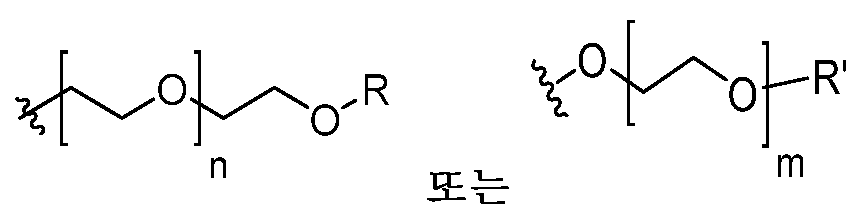
일부 실시양태에서, 친수성 모이어티는 
일부 실시양태에서, 친수성 모이어티는, 예를 들어 하기 모이어티를 갖는 폴리사르코신을 포함하며:In some embodiments, the hydrophilic moiety comprises, for example, a polysarcosine having the following moieties:
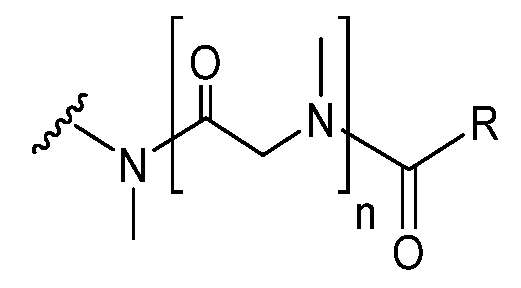
일부 실시양태에서, L3은 구조 
여기서Here
W는 -CH2-, -CH2O-, -CH2N(Rb)C(=O)O-, -NHC(=O)C(Rb)2NHC(=O)O-, -NHC(=O)C(Rb)2NH-, -NHC(=O)C(Rb)2NHC(=O)-, -CH2N(X-R2)C(=O)O-, -C(=O)N(X-R2)-, -CH2N(X-R2)C(=O)-, -C(=O)NRb-, -C(=O)NH-, -CH2NRbC(=O)-, -CH2NRbC(=O)NH-, -CH2NRbC(=O)NRb-, -NHC(=O)-, -NHC(=O)O-, -NHC(=O)NH-, -OC(=O)NH-, -S(O)2NH-, -NHS(O)2-, -C(=O)-, -C(=O)O- 또는 -NH-이고, 여기서 각각의 Rb는 독립적으로 H, C1-C6 알킬 및 C3-C8 시클로알킬로부터 선택되고;W is -CH 2 -, -CH 2 O-, -CH 2 N(R b )C(=O)O-, -NHC(=O)C(R b ) 2 NHC(=O)O-, -NHC(=O)C(R b ) 2 NH-, -NHC(=O)C(R b ) 2 NHC(=O)-, -CH 2 N(XR 2 )C(=O)O-, -C(=O)N(XR 2 )-, -CH 2 N(XR 2 )C(=O)-, -C(=O)NR b -, -C(=O)NH-, -CH 2 NR b C(=O)-, -CH 2 NR b C(=O)NH-, -CH 2 NR b C(=O)NR b -, -NHC(=O)-, -NHC(=O)O-, -NHC(=O)NH-, -OC(=O)NH-, -S(O) 2 NH-, -NHS(O) 2 -, -C(=O)-, -C(=O)O- or -NH-, wherein each R b is independently selected from H, C 1 -C 6 alkyl and C 3 -C 8 cycloalkyl;
X는 결합, 트리아졸릴 또는 -CH2-트리아졸릴-이고, 여기서 X는 R2에 연결된다.X is a bond, triazolyl or -CH 2 -triazolyl-, wherein X is connected to R 2 .
일부 실시양태에서, L3은 구조 
여기서Here
W는 -CH2-, -CH2O-, -CH2N(Rb)C(=O)O-, -NHC(=O)C(Rb)2NHC(=O)O-, -NHC(=O)C(Rb)2NH-, -NHC(=O)C(Rb)2NHC(=O)-, -CH2N(X-R2)C(=O)O-, -C(=O)N(X-R2)-, -CH2N(X-R2)C(=O)-, -C(=O)NRb-, -C(=O)NH-, -CH2NRbC(=O)-, -CH2NRbC(=O)NH-, -CH2NRbC(=O)NRb-, -NHC(=O)-, -NHC(=O)O-, -NHC(=O)NH-, -OC(=O)NH-, -S(O)2NH-, -NHS(O)2-, -C(=O)-, -C(=O)O- 또는 -NH-이고, 여기서 각각의 Rb는 독립적으로 H, C1-C6 알킬 및 C3-C8 시클로알킬로부터 선택되고;W is -CH 2 -, -CH 2 O-, -CH 2 N(R b )C(=O)O-, -NHC(=O)C(R b ) 2 NHC(=O)O-, -NHC(=O)C(R b ) 2 NH-, -NHC(=O)C(R b ) 2 NHC(=O)-, -CH 2 N(XR 2 )C(=O)O-, -C(=O)N(XR 2 )-, -CH 2 N(XR 2 )C(=O)-, -C(=O)NR b -, -C(=O)NH-, -CH 2 NR b C(=O)-, -CH 2 NR b C(=O)NH-, -CH 2 NR b C(=O)NR b -, -NHC(=O)-, -NHC(=O)O-, -NHC(=O)NH-, -OC(=O)NH-, -S(O) 2 NH-, -NHS(O) 2 -, -C(=O)-, -C(=O)O- or -NH-, wherein each R b is independently selected from H, C 1 -C 6 alkyl and C 3 -C 8 cycloalkyl;
X는 -CH2-트리아졸릴-C1-4 알킬렌-OC(O)NHS(O)2NH-, -C4-6 시클로알킬렌-OC(O)NHS(O)2NH-, -(CH2CH2O)n-C(O)NHS(O)2NH-, -(CH2CH2O)n-C(O)NHS(O)2NH-(CH2CH2O)n-, -CH2-트리아졸릴-C1-4 알킬렌-OC(O)NHS(O)2NH-(CH2CH2O)n- 또는 -C4-6 시클로알킬렌-OC(O)NHS(O)2NH-(CH2CH2O)n-이고, 여기서 각각의 n은 독립적으로 1, 2 또는 3이고, 여기서 X는 R2에 연결된다.X is -CH 2 -triazolyl-C 1-4 alkylene-OC(O)NHS(O) 2 NH-, -C 4-6 cycloalkylene-OC(O)NHS(O) 2 NH-, -(CH 2 CH 2 O) n -C(O)NHS(O) 2 NH-, -(CH 2 CH 2 O) n -C(O)NHS(O) 2 NH-(CH 2 CH 2 O) n -, -CH 2 -triazolyl-C 1-4 alkylene-OC(O)NHS(O) 2 NH-(CH 2 CH 2 O) n - or -C 4-6 cycloalkylene-OC(O)NHS(O) 2 NH-(CH 2 CH 2 O) n -, wherein each n is independently 1, 2 or 3, and wherein X is connected to R 2 .
일부 실시양태에서, 부착 기는 적어도 1개의 반응성 기를 포함하는 반응에 의해 형성된다. 일부 경우에, 부착 기는 링커에 부착된 제1 반응성 기와 항체에 부착되거나 항체의 아미노산 잔기인 제2 반응성 기를 반응시킴으로써 형성된다.In some embodiments, the attachment group is formed by a reaction involving at least one reactive group. In some cases, the attachment group is formed by reacting a first reactive group attached to the linker with a second reactive group that is attached to the antibody or is an amino acid residue of the antibody.
일부 실시양태에서, 반응성 기 중 적어도 1개는 하기를 포함한다:In some embodiments, at least one of the reactive groups comprises:
티올,thiol,
말레이미드,Maleimide,
할로아세트아미드,Haloacetamide,
아지드,Azid,
알킨,Alkyne,
시클로옥텐,cyclooctene,
트리아릴 포스핀,Triaryl phosphine,
옥사노보르나디엔,Oxanobornadiene,
시클로옥틴,cyclooctyne,
디아릴 테트라진,Diaryl tetrazine,
모노아릴 테트라진,Monoaryl tetrazine,
노르보르넨,Norbornene,
알데히드,Aldehyde,
히드록실아민,Hydroxylamine,
히드라진,Hydrazine,
NH2-NH-C(=O)-,NH 2 -NH-C(=O)-,
케톤,Ketones,
비닐 술폰,vinyl sulfone,
아지리딘,Aziridine,
아미노산 잔기,amino acid residue,

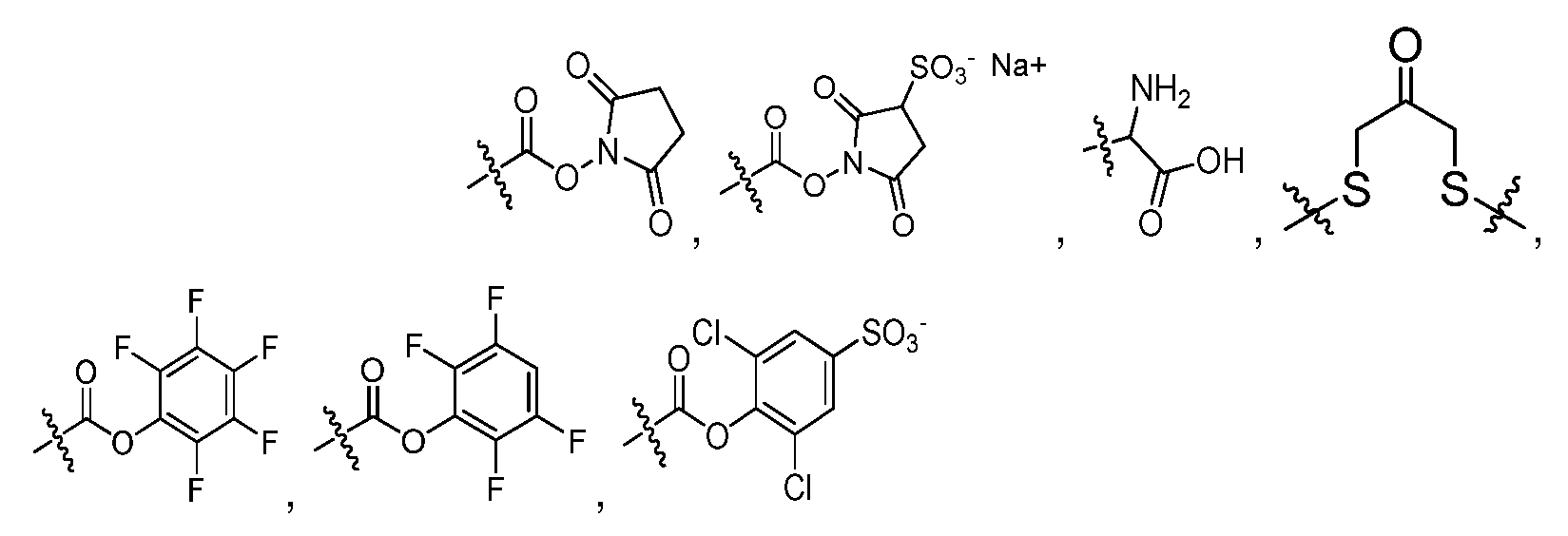


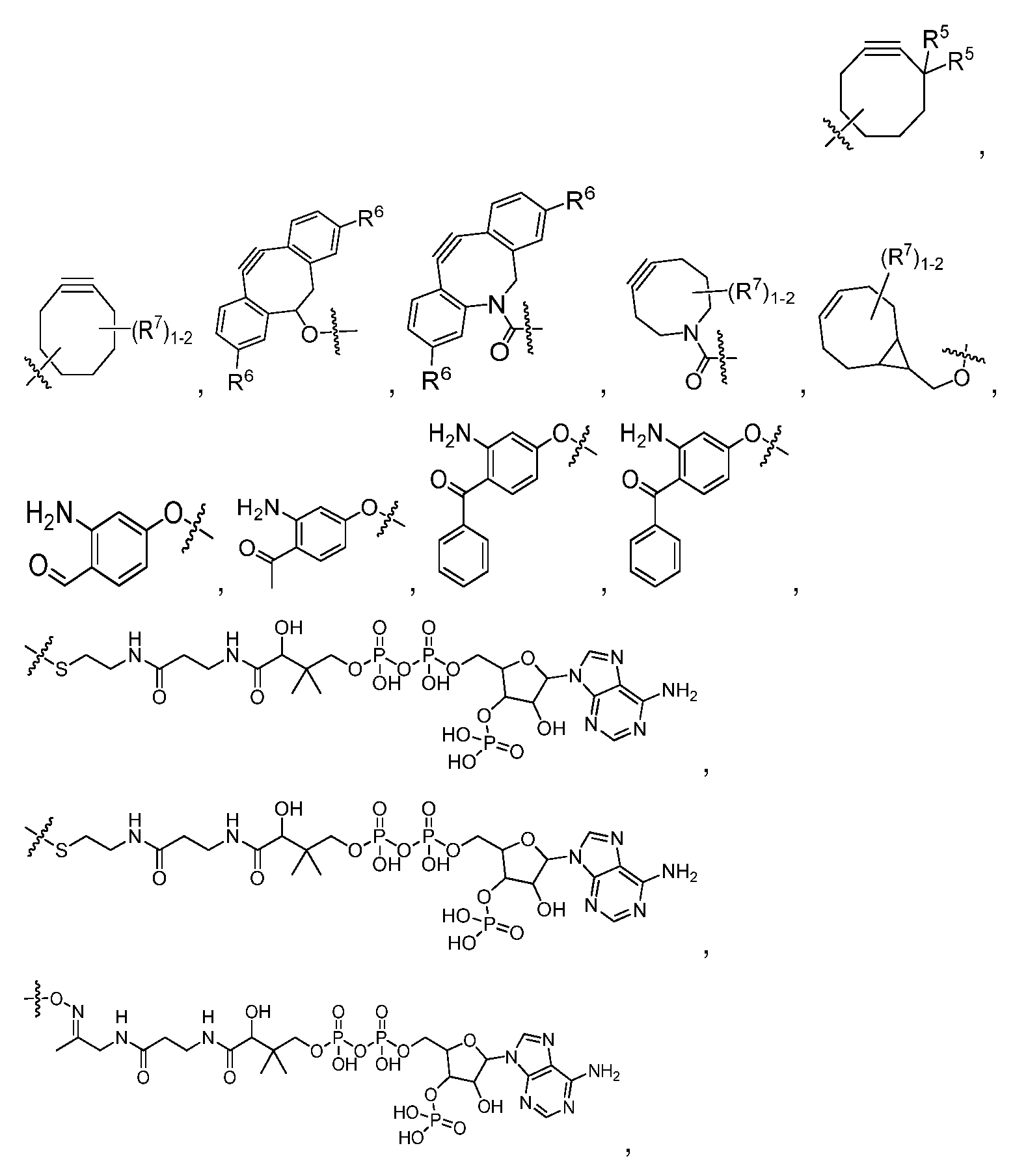
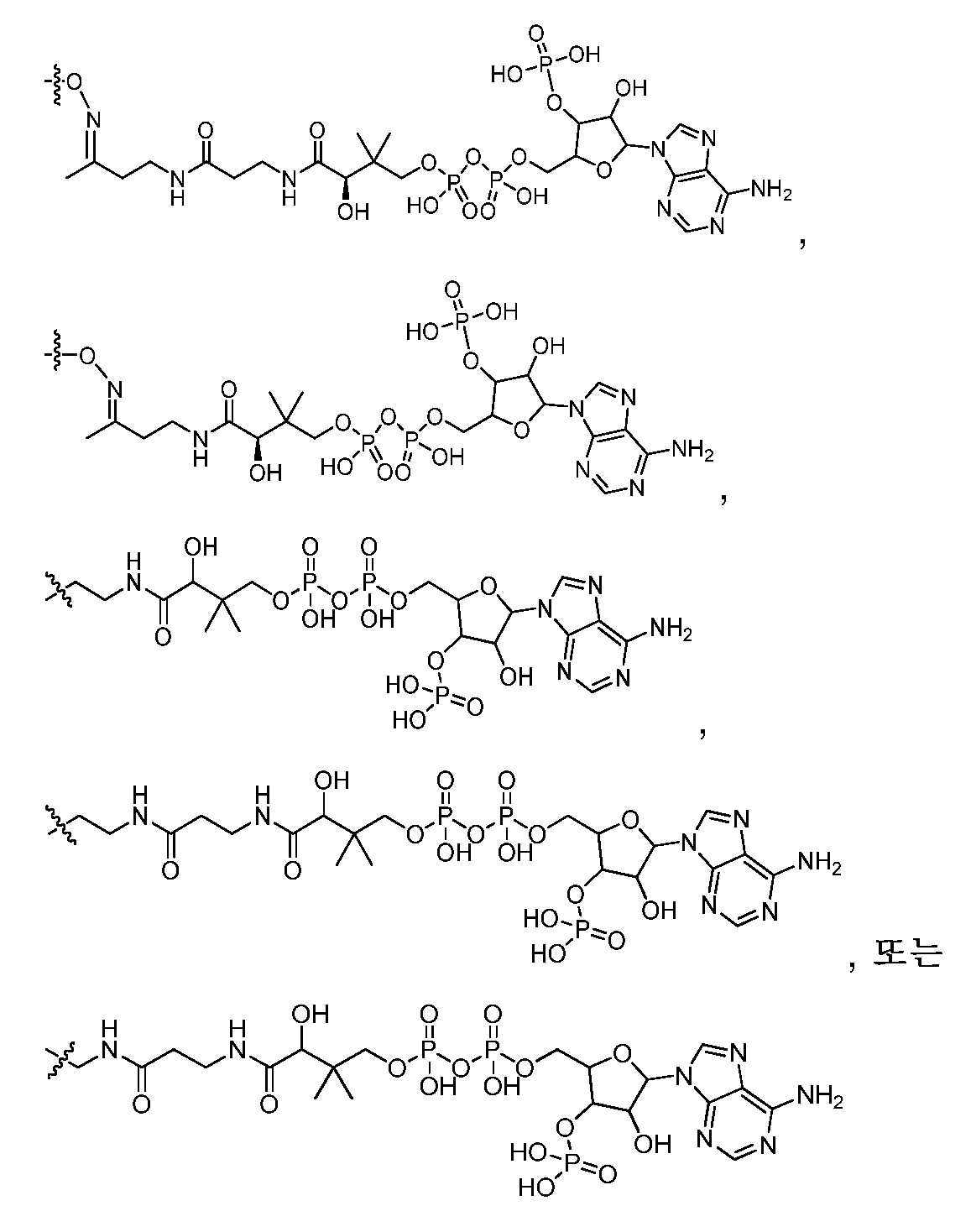
여기서Here
각각의 R3은 독립적으로 H 및 C1-C6알킬로부터 선택되고;Each R 3 is independently selected from H and C 1 -C 6 alkyl;
각각의 R4는 2-피리딜 또는 4-피리딜이고;Each R 4 is 2-pyridyl or 4-pyridyl;
각각의 R5는 독립적으로 H, C1-C6알킬, F, Cl 및 -OH로부터 선택되고;Each R 5 is independently selected from H, C1-C 6 alkyl, F, Cl and -OH;
각각의 R6은 독립적으로 H, C1-C6알킬, F, Cl, -NH2, -OCH3, -OCH2CH3, -N(CH3)2, -CN, -NO2 및 -OH로부터 선택되고;each R 6 is independently selected from H, C 1 -C 6 alkyl, F, Cl, -NH 2 , -OCH 3 , -OCH 2 CH 3 , -N(CH 3 ) 2 , -CN, -NO 2 and -OH;
각각의 R7은 독립적으로 H, C1-6알킬, 플루오로, -C(=O)OH로 치환된 벤질옥시, -C(=O)OH로 치환된 벤질, -C(=O)OH로 치환된 C1-4알콕시 및 -C(=O)OH로 치환된 C1-4알킬로부터 선택된다.Each R 7 is independently selected from H, C 1-6 alkyl, fluoro, benzyloxy substituted with -C(=O)OH, benzyl substituted with -C(=O)OH, C 1-4 alkoxy substituted with -C(=O)OH, and C 1-4 alkyl substituted with -C(=O)OH.
일부 실시양태에서, 제1 반응성 기 및 제2 반응성 기는 하기를 포함한다:In some embodiments, the first reactive group and the second reactive group comprise:
티올 및 말레이미드,Thiols and maleimides,
티올 및 할로아세트아미드,thiols and haloacetamides,
티올 및 비닐 술폰,Thiol and vinyl sulfone,
티올 및 아지리딘,Thiols and aziridines,
아지드 및 알킨,Azides and alkynes,
아지드 및 시클로옥틴,Azide and cyclooctyne,
아지드 및 시클로옥텐,Azide and cyclooctene,
아지드 및 트리아릴 포스핀,Azide and triaryl phosphines,
아지드 및 옥사노보르나디엔,Azide and oxanobornadiene,
디아릴 테트라진 및 시클로옥텐,Diaryl tetrazine and cyclooctene,
모노아릴 테트라진 및 노르보르넨,Monoaryl tetrazine and norbornene,
알데히드 및 히드록실아민,Aldehydes and hydroxylamines,
알데히드 및 히드라진,Aldehydes and hydrazines,
알데히드 및 NH2-NH-C(=O)-,Aldehydes and NH 2 -NH-C(=O)-,
케톤 및 히드록실아민,Ketones and hydroxylamines,
케톤 및 히드라진,Ketones and hydrazines,
케톤 및 NH2-NH-C(=O)-,Ketones and NH2-NH-C(=O)-,
히드록실아민 및 
아민 및 
CoA 또는 CoA 유사체 및 세린 잔기.CoA or CoA analogue and a serine residue.
일부 실시양태에서, 부착 기는 하기로부터 선택된 기를 포함한다:In some embodiments, the attachment group comprises a group selected from:


여기서Here
R32는 H, C1-4 알킬, 페닐, 피리미딘 또는 피리딘이고;R 32 is H, C 1-4 alkyl, phenyl, pyrimidine or pyridine;
R35는 H, C1-6알킬, 페닐 또는 1 내지 3개의 -OH 기로 치환된 C1-4 알킬이고;R 35 is H, C 1-6 alkyl, phenyl or C 1-4 alkyl substituted with 1 to 3 -OH groups;
각각의 R7은 독립적으로 H, C1-6알킬, 플루오로, -C(=O)OH로 치환된 벤질옥시, -C(=O)OH로 치환된 벤질, -C(=O)OH로 치환된 C1-4 알콕시 및 -C(=O)OH로 치환된 C1-4 알킬로부터 선택되고;Each R 7 is independently selected from H, C 1-6 alkyl, fluoro, benzyloxy substituted with -C(=O)OH, benzyl substituted with -C(=O)OH, C 1-4 alkoxy substituted with -C(=O)OH, and C 1-4 alkyl substituted with -C(=O)OH;
R37은 독립적으로 H, 페닐 및 피리딘으로부터 선택되고;R 37 is independently selected from H, phenyl and pyridine;
q는 0, 1, 2 또는 3이고;q is 0, 1, 2, or 3;
R8은 H 또는 메틸이고;R 8 is H or methyl;
R9는 H, -CH3 또는 페닐이다.R 9 is H, -CH 3 or phenyl.
일부 실시양태에서, 펩티드 기 (Lp)는 1 내지 6개의 아미노산 잔기를 포함한다. 일부 실시양태에서, 펩티드 기 (Lp)는 1 내지 4개의 아미노산 잔기를 포함한다. 일부 실시양태에서, 펩티드 기는 1 내지 3개의 아미노산 잔기를 포함한다. 일부 실시양태에서, 펩티드 기는 1 내지 2개의 아미노산 잔기를 포함한다. 일부 실시양태에서, 아미노산 잔기는 글리신 (Gly), L-발린 (Val), L-시트룰린 (Cit), L-시스테산 (술포-Ala), L-리신 (Lys), L-이소류신 (Ile), L-페닐알라닌 (Phe), L-메티오닌 (Met), L-아스파라긴 (Asn), L-프롤린 (Pro), L-알라닌 (Ala), L-류신 (Leu), L-트립토판 (Trp) 및 L-티로신 (Tyr)으로부터 선택된다. 일부 실시양태에서, 펩티드 기는 Val-Cit, Phe-Lys, Val-Ala, Val-Lys, Leu-Cit, 술포-Ala-Val-Cit, 술포-Ala-Val-Ala, Gly-Gly-Gly 및/또는 Gly-Gly-Phe-Gly (서열식별번호: 78)를 포함한다.In some embodiments, the peptide group (Lp) comprises 1 to 6 amino acid residues. In some embodiments, the peptide group (Lp) comprises 1 to 4 amino acid residues. In some embodiments, the peptide group comprises 1 to 3 amino acid residues. In some embodiments, the peptide group comprises 1 to 2 amino acid residues. In some embodiments, the amino acid residues are selected from glycine (Gly), L-valine (Val), L-citrulline (Cit), L-cysteic acid (sulfo-Ala), L-lysine (Lys), L-isoleucine (Ile), L-phenylalanine (Phe), L-methionine (Met), L-asparagine (Asn), L-proline (Pro), L-alanine (Ala), L-leucine (Leu), L-tryptophan (Trp) and L-tyrosine (Tyr). In some embodiments, the peptide group comprises Val-Cit, Phe-Lys, Val-Ala, Val-Lys, Leu-Cit, Sulfo-Ala-Val-Cit, Sulfo-Ala-Val-Ala, Gly-Gly-Gly and/or Gly-Gly-Phe-Gly (SEQ ID NO: 78).
일부 실시양태에서, Lp는 하기로부터 선택된다:In some embodiments, Lp is selected from:
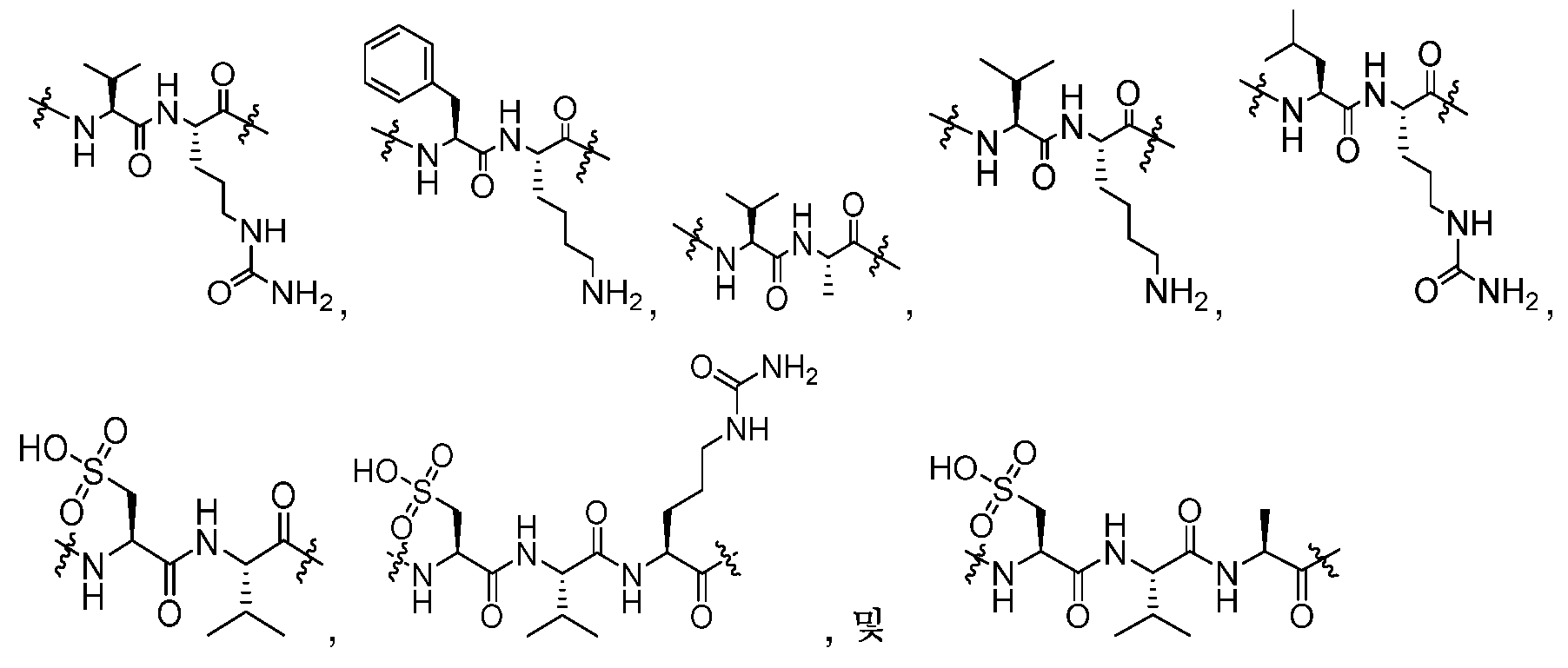
일부 실시양태에서, 링커-약물 기 -(L-D)는 하기 화학식의 화합물을 포함하거나 또는 그로부터 형성된다:In some embodiments, the linker-drug group -(L-D) comprises or is formed from a compound of the following formula:

R은 H, -CH3 또는 -CH2CH2C(=O)OH이고;R is H, -CH 3 or -CH 2 CH 2 C(=O)OH;
A는 결합, -OC(=O)-*,A is a bond, -OC(=O)-*,

D는 Bcl-xL 억제제이다. 일부 실시양태에서, 링커-약물 기 -(L-D)는 하기 화학식을 포함한다:D is a Bcl-xL inhibitor. In some embodiments, the linker-drug group -(L-D) comprises the formula:

여기서 
일부 실시양태에서, 링커-약물 기 -(L-D)는 하기 화학식의 화합물을 포함하거나 또는 그로부터 형성된다:In some embodiments, the linker-drug group -(L-D) comprises or is formed from a compound of the following formula:

R은 H, -CH3 또는 -CH2CH2C(=O)OH이고;R is H, -CH 3 or -CH 2 CH 2 C(=O)OH;
A는 결합, -OC(=O)-*,A is a bond, -OC(=O)-*,

D는 Bcl-xL 억제제이다. 일부 실시양태에서, 링커-약물 기 -(L-D)는 하기 화학식을 포함한다:D is a Bcl-xL inhibitor. In some embodiments, the linker-drug group -(L-D) comprises the formula:
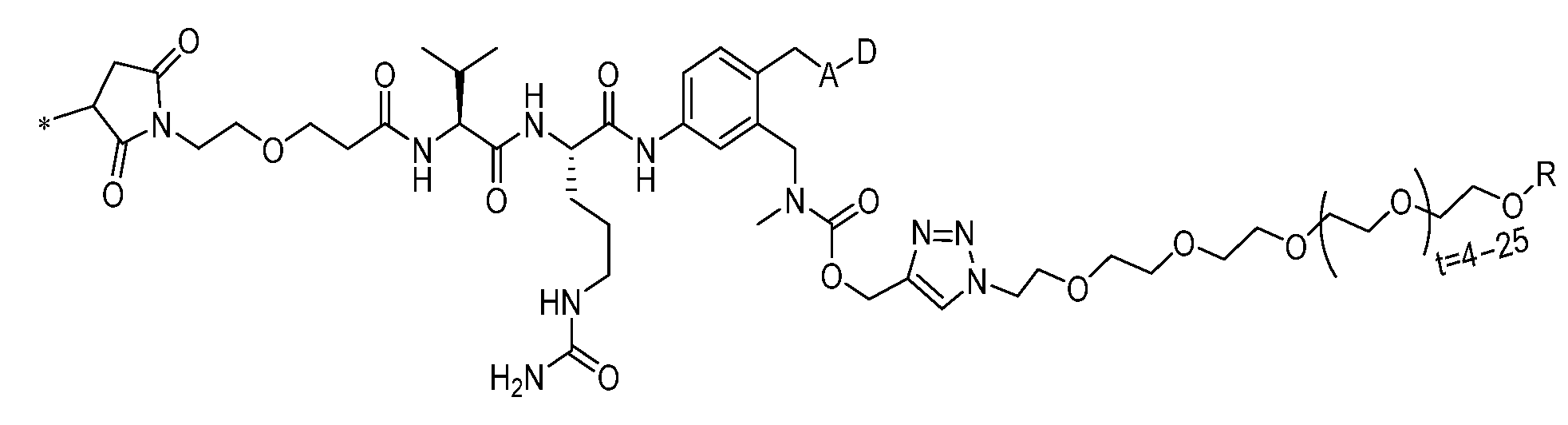

일부 실시양태에서, 링커-약물 기 -(L-D)는 하기 화학식의 화합물을 포함하거나 또는 그로부터 형성된다:In some embodiments, the linker-drug group -(L-D) comprises or is formed from a compound of the following formula:

R은 H, -CH3 또는 -CH2CH2C(=O)OH이고;R is H, -CH 3 or -CH 2 CH 2 C(=O)OH;
A는 결합, -OC(=O)-*,A is a bond, -OC(=O)-*,

D는 Bcl-xL 억제제이다. 일부 실시양태에서, 링커-약물 기 -(L-D)는 하기 화학식을 포함한다:D is a Bcl-xL inhibitor. In some embodiments, the linker-drug group -(L-D) comprises the formula:


일부 실시양태에서, 링커-약물 기 -(L-D)는 하기 화학식의 화합물을 포함하거나 또는 그로부터 형성된다:In some embodiments, the linker-drug group -(L-D) comprises or is formed from a compound of the following formula:

각각의 R은 독립적으로 H, -CH3 및 -CH2CH2C(=O)OH로부터 선택되고;Each R is independently selected from H, -CH 3 , and -CH 2 CH 2 C(=O)OH;
A는 결합, -OC(=O)-*,A is a bond, -OC(=O)-*,

D는 Bcl-xL 억제제이다. 일부 실시양태에서, 링커-약물 기 -(L-D)는 하기 화학식을 포함한다:D is a Bcl-xL inhibitor. In some embodiments, the linker-drug group -(L-D) comprises the formula:

여기서 
일부 실시양태에서, 링커-약물 기 -(L-D)는 하기 화학식의 화합물을 포함하거나 또는 그로부터 형성된다:In some embodiments, the linker-drug group -(L-D) comprises or is formed from a compound of the following formula:
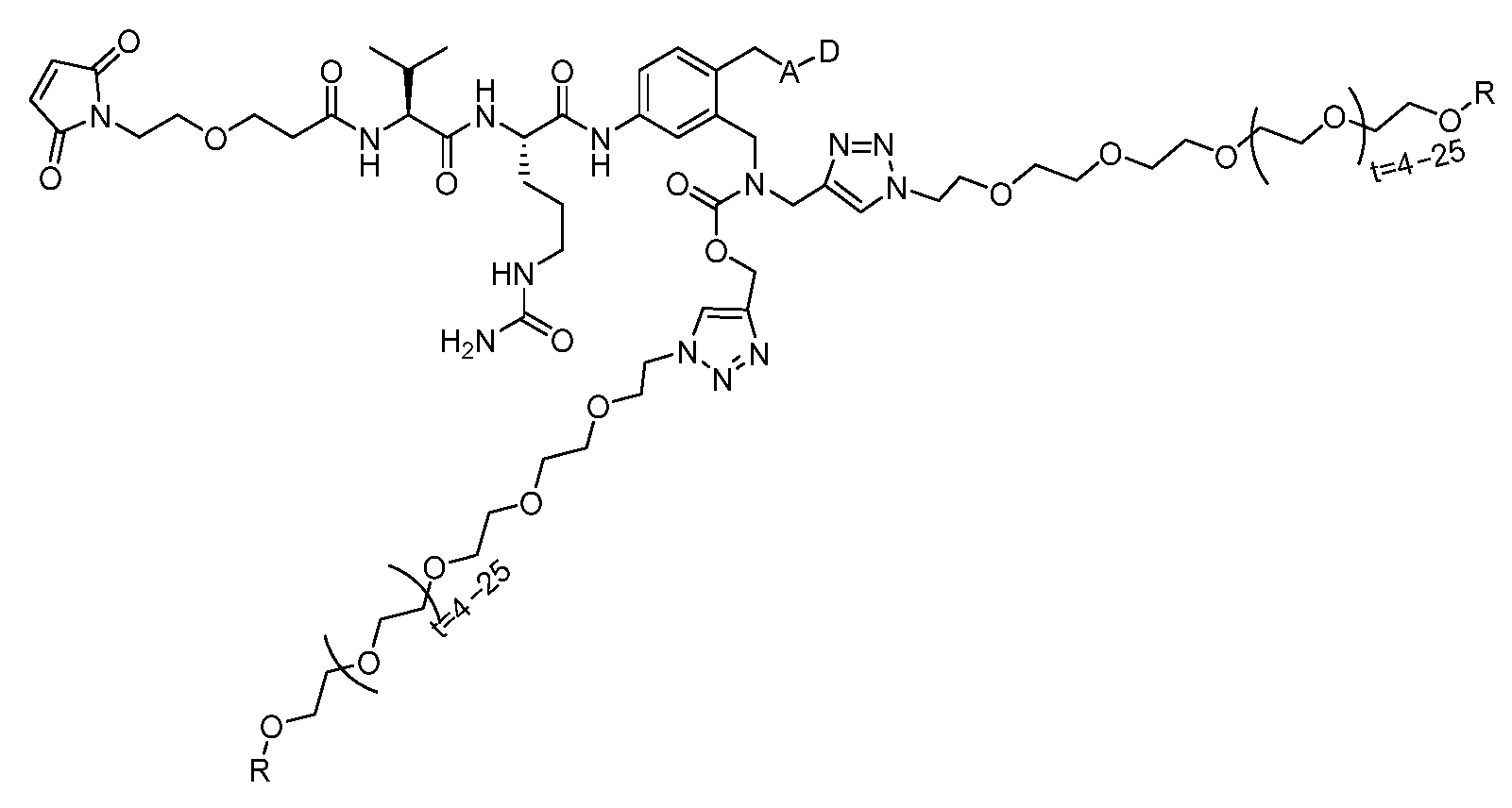
각각의 R은 독립적으로 H, -CH3 및 -CH2CH2C(=O)OH로부터 선택되고;Each R is independently selected from H, -CH 3 , and -CH 2 CH 2 C(=O)OH;
A는 결합, -OC(=O)-*,A is a bond, -OC(=O)-*,

D는 Bcl-xL 억제제이다. 일부 실시양태에서, 링커-약물 기 -(L-D)는 하기 화학식을 포함한다:D is a Bcl-xL inhibitor. In some embodiments, the linker-drug group -(L-D) comprises the formula:


일부 실시양태에서, 링커-약물 기 -(L-D)는 하기 화학식의 화합물을 포함하거나 또는 그로부터 형성된다:In some embodiments, the linker-drug group -(L-D) comprises or is formed from a compound of the following formula:

Xa는 -CH2-, -OCH2-, -NHCH2- 또는 -NRCH2-이고, 각각의 R은 독립적으로 H, -CH3 또는 -CH2CH2C(=O)OH이고;Xa is -CH 2 -, -OCH 2 -, -NHCH 2 -, or -NRCH 2 -, and each R is independently H, -CH 3 , or -CH 2 CH 2 C(=O)OH;
A는 결합, -OC(=O)-*,A is a bond, -OC(=O)-*,

D는 Bcl-xL 억제제이다. 일부 실시양태에서, 링커-약물 기 -(L-D)는 하기 화학식을 포함한다:D is a Bcl-xL inhibitor. In some embodiments, the linker-drug group -(L-D) comprises the formula:


일부 실시양태에서, 링커-약물 기 -(L-D)는 하기 화학식의 화합물을 포함하거나 또는 그로부터 형성된다:In some embodiments, the linker-drug group -(L-D) comprises or is formed from a compound of the following formula:

R은 H, -CH3 또는 -CH2CH2C(=O)OH이고;R is H, -CH 3 or -CH 2 CH 2 C(=O)OH;
A는 결합, -OC(=O)-*,A is a bond, -OC(=O)-*,

D는 Bcl-xL 억제제이다. 일부 실시양태에서, 링커-약물 기 -(L-D)는 하기 화학식을 포함한다:D is a Bcl-xL inhibitor. In some embodiments, the linker-drug group -(L-D) comprises the formula:


일부 실시양태에서, 링커-약물 기 -(L-D)는 하기 화학식의 화합물을 포함하거나 또는 그로부터 형성된다:In some embodiments, the linker-drug group -(L-D) comprises or is formed from a compound of the following formula:

Xb는 -CH2-, -OCH2-, -NHCH2- 또는 -NRCH2-이고, 각각의 R은 독립적으로 H, -CH3 또는 -CH2CH2C(=O)OH이고;Xb is -CH 2 -, -OCH 2 -, -NHCH 2 -, or -NRCH 2 -, and each R is independently H, -CH 3 , or -CH 2 CH 2 C(=O)OH;
A는 결합, -OC(=O)-*,A is a bond, -OC(=O)-*,

D는 Bcl-xL 억제제이다. 일부 실시양태에서, 링커-약물 기 -(L-D)는 하기 화학식을 포함한다:D is a Bcl-xL inhibitor. In some embodiments, the linker-drug group -(L-D) comprises the formula:


일부 실시양태에서, 링커-약물 기 -(L-D)는 하기 화학식의 화합물을 포함하거나 또는 그로부터 형성된다:In some embodiments, the linker-drug group -(L-D) comprises or is formed from a compound of the following formula:

A는 결합, -OC(=O)-*,A is a bond, -OC(=O)-*,

D는 Bcl-xL 억제제이다. 일부 실시양태에서, 링커-약물 기 -(L-D)는 하기 화학식을 포함한다:D is a Bcl-xL inhibitor. In some embodiments, the linker-drug group -(L-D) comprises the formula:


일부 실시양태에서, 링커-약물 기 -(L-D)는 하기 화학식의 화합물을 포함하거나 또는 그로부터 형성된다:In some embodiments, the linker-drug group -(L-D) comprises or is formed from a compound of the following formula:
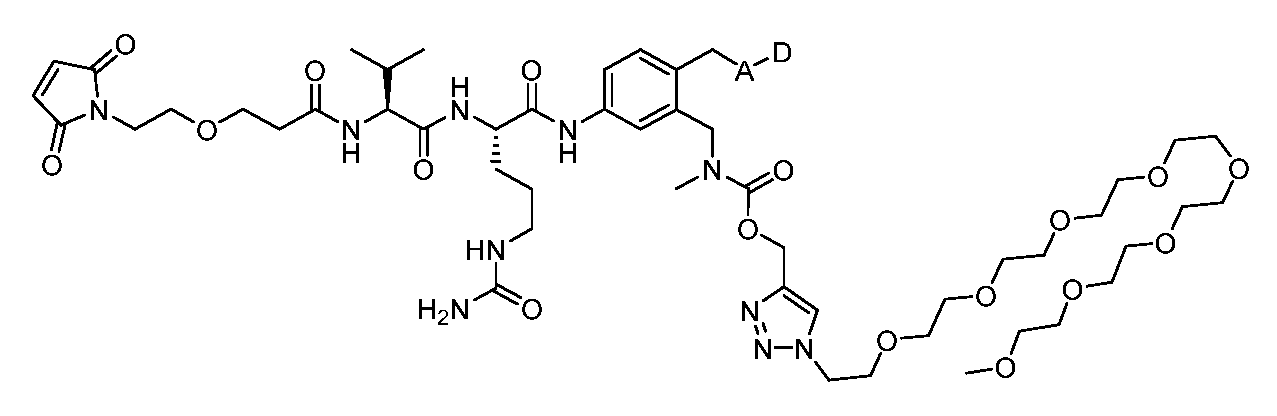
A는 결합, -OC(=O)-*,A is a bond, -OC(=O)-*,

D는 Bcl-xL 억제제이다. 일부 실시양태에서, 링커-약물 기 -(L-D)는 하기 화학식을 포함한다:D is a Bcl-xL inhibitor. In some embodiments, the linker-drug group -(L-D) comprises the formula:


일부 실시양태에서, 링커-약물 기 -(L-D)는 하기 화학식의 화합물을 포함하거나 또는 그로부터 형성된다:In some embodiments, the linker-drug group -(L-D) comprises or is formed from a compound of the following formula:

A는 결합, -OC(=O)-*,A is a bond, -OC(=O)-*,

D는 Bcl-xL 억제제이다. 일부 실시양태에서, 링커-약물 기 -(L-D)는 하기 화학식을 포함한다:D is a Bcl-xL inhibitor. In some embodiments, the linker-drug group -(L-D) comprises the formula:


일부 실시양태에서, 링커-약물 기 -(L-D)는 하기 화학식의 화합물을 포함하거나 또는 그로부터 형성된다:In some embodiments, the linker-drug group -(L-D) comprises or is formed from a compound of the following formula:

A는 결합, -OC(=O)-*,A is a bond, -OC(=O)-*,

D는 Bcl-xL 억제제이다. 일부 실시양태에서, 링커-약물 기 -(L-D)는 하기 화학식을 포함한다:D is a Bcl-xL inhibitor. In some embodiments, the linker-drug group -(L-D) comprises the formula:


일부 실시양태에서, 링커-약물 기 -(L-D)는 하기 화학식의 화합물을 포함하거나 또는 그로부터 형성된다:In some embodiments, the linker-drug group -(L-D) comprises or is formed from a compound of the following formula:

A는 결합, -OC(=O)-*,A is a bond, -OC(=O)-*,

D는 Bcl-xL 억제제이다. 일부 실시양태에서, 링커-약물 기 -(L-D)는 하기 화학식을 포함한다:D is a Bcl-xL inhibitor. In some embodiments, the linker-drug group -(L-D) comprises the formula:
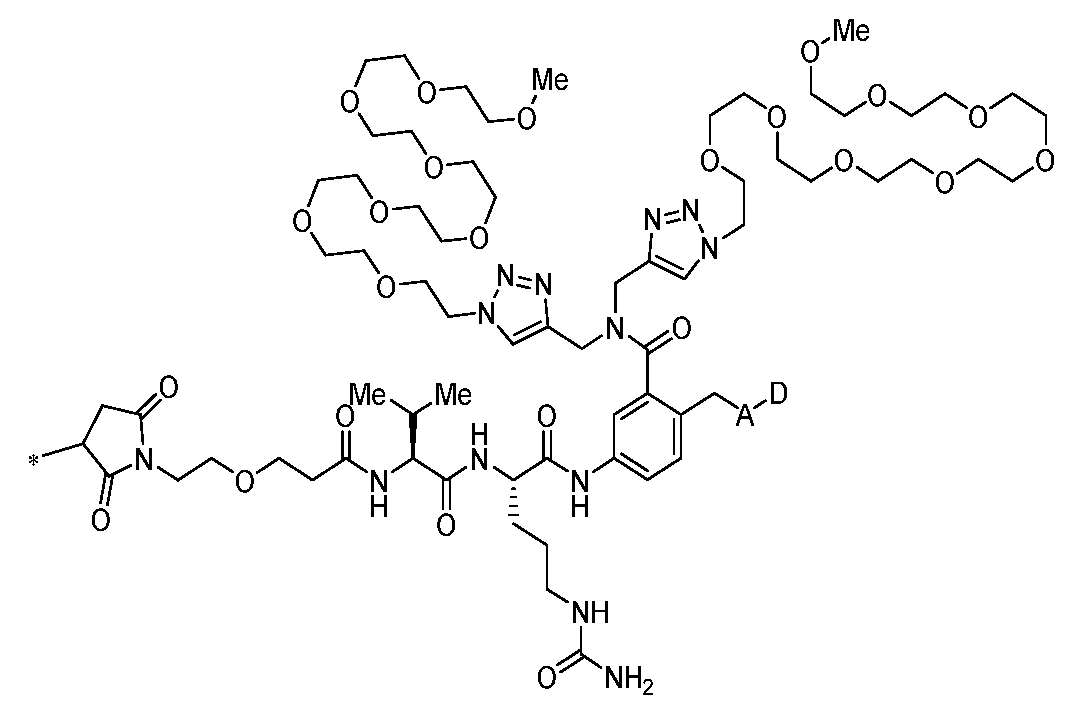

일부 실시양태에서, 링커-약물 기 -(L-D)는 하기 화학식의 화합물을 포함하거나 또는 그로부터 형성된다:In some embodiments, the linker-drug group -(L-D) comprises or is formed from a compound of the following formula:

A는 결합, -OC(=O)-*,A is a bond, -OC(=O)-*,

D는 Bcl-xL 억제제이다. 일부 실시양태에서, 링커-약물 기 -(L-D)는 하기 화학식을 포함한다:D is a Bcl-xL inhibitor. In some embodiments, the linker-drug group -(L-D) comprises the formula:
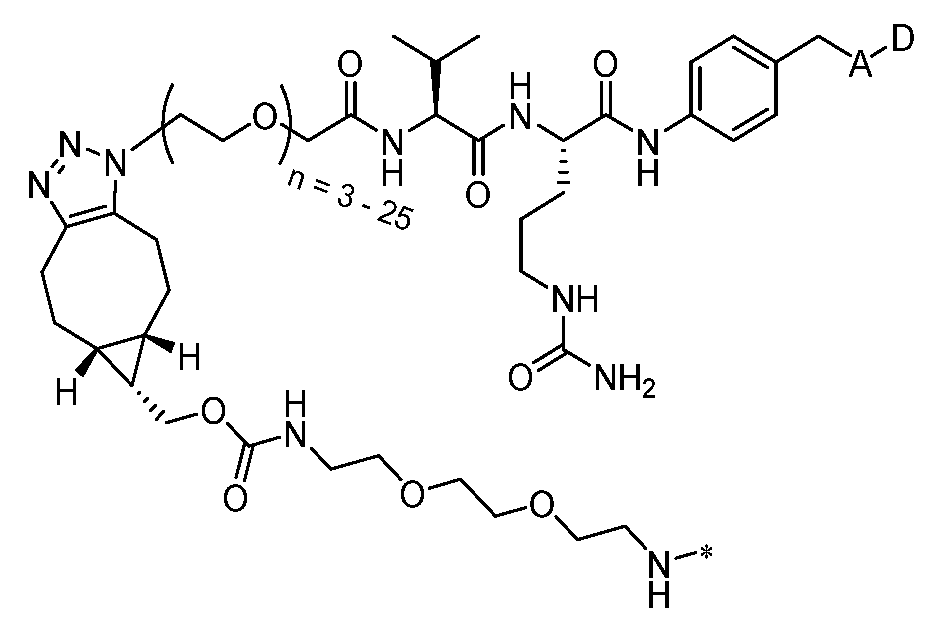

일부 실시양태에서, 링커-약물 기 -(L-D)는 하기 화학식의 화합물을 포함하거나 또는 그로부터 형성된다:In some embodiments, the linker-drug group -(L-D) comprises or is formed from a compound of the following formula:

A는 결합, -OC(=O)-*,A is a bond, -OC(=O)-*,

D는 Bcl-xL 억제제이다. 일부 실시양태에서, 링커-약물 기 -(L-D)는 하기 화학식을 포함한다:D is a Bcl-xL inhibitor. In some embodiments, the linker-drug group -(L-D) comprises the formula:


일부 실시양태에서, 링커-약물 기 -(L-D)는 하기 화학식의 화합물을 포함하거나 또는 그로부터 형성된다:In some embodiments, the linker-drug group -(L-D) comprises or is formed from a compound of the following formula:

각각의 R은 독립적으로 H, -CH3 또는 -CH2CH2C(=O)OH이고;Each R is independently H, -CH 3 or -CH 2 CH 2 C(=O)OH;
A는 결합, -OC(=O)-*,A is a bond, -OC(=O)-*,

여기서 각각의 Ra는 독립적으로 H, C1-C6 알킬 및 C3-C8 시클로알킬로부터 선택되고, A의 *는 D에 대한 부착 지점을 나타내고;wherein each R a is independently selected from H, C 1 -C 6 alkyl and C 3 -C 8 cycloalkyl, and the * of A indicates the point of attachment to D;
D는 Bcl-xL 억제제이다. 일부 실시양태에서, 링커-약물 기 -(L-D)는 하기 화학식을 포함한다:D is a Bcl-xL inhibitor. In some embodiments, the linker-drug group -(L-D) comprises the formula:


일부 실시양태에서, 링커-약물 기 -(L-D)는 하기 화학식의 화합물을 포함하거나 또는 그로부터 형성된다:In some embodiments, the linker-drug group -(L-D) comprises or is formed from a compound of the following formula:

각각의 R은 독립적으로 H, -CH3 또는 -CH2CH2C(=O)OH이고;Each R is independently H, -CH 3 or -CH 2 CH 2 C(=O)OH;
A는 결합, -OC(=O)-*,A is a bond, -OC(=O)-*,

여기서 각각의 Ra는 독립적으로 H, C1-C6 알킬 및 C3-C8 시클로알킬로부터 선택되고, A의 *는 D에 대한 부착 지점을 나타내고;wherein each R a is independently selected from H, C 1 -C 6 alkyl and C 3 -C 8 cycloalkyl, and the * of A indicates the point of attachment to D;
D는 Bcl-xL 억제제이다. 일부 실시양태에서, 링커-약물 기 -(L-D)는 하기 화학식을 포함한다:D is a Bcl-xL inhibitor. In some embodiments, the linker-drug group -(L-D) comprises the formula:


일부 실시양태에서, 링커-약물 기 -(L-D)는 하기 화학식의 화합물을 포함하거나 또는 그로부터 형성된다:In some embodiments, the linker-drug group -(L-D) comprises or is formed from a compound of the following formula:
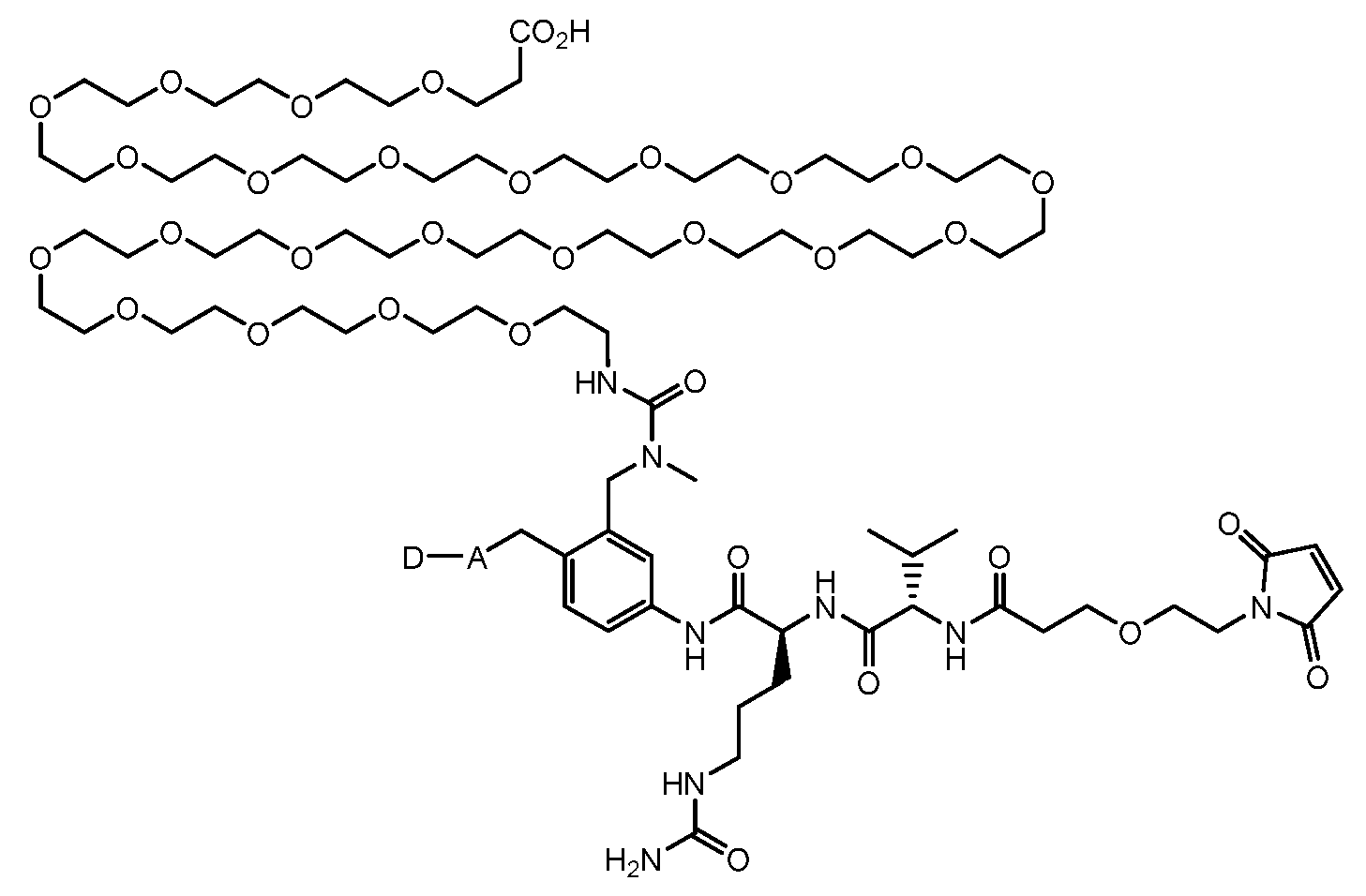
A는 결합, -OC(=O)-*,A is a bond, -OC(=O)-*,

여기서 각각의 Ra는 독립적으로 H, C1-C6 알킬 및 C3-C8 시클로알킬로부터 선택되고, A의 *는 D에 대한 부착 지점을 나타내고;wherein each R a is independently selected from H, C 1 -C 6 alkyl and C 3 -C 8 cycloalkyl, and the * of A indicates the point of attachment to D;
D는 Bcl-xL 억제제이다.D is a Bcl-xL inhibitor.
일부 실시양태에서, A는 결합이다.In some embodiments, A is a bond.
일부 실시양태에서, A는 -OC(=O)-*이다.In some embodiments, A is -OC(=O)-*.
일부 실시양태에서, R은 -CH3이다.In some embodiments, R is -CH 3 .
일부 실시양태에서, R은 -CH2CH2COOH이다.In some embodiments, R is -CH 2 CH 2 COOH.
일부 실시양태에서, 항체-약물 접합체는 하기로부터 선택된 화합물로부터 형성된 링커-약물 기 -(L-D)를 포함한다:In some embodiments, the antibody-drug conjugate comprises a linker-drug group -(L-D) formed from a compound selected from:


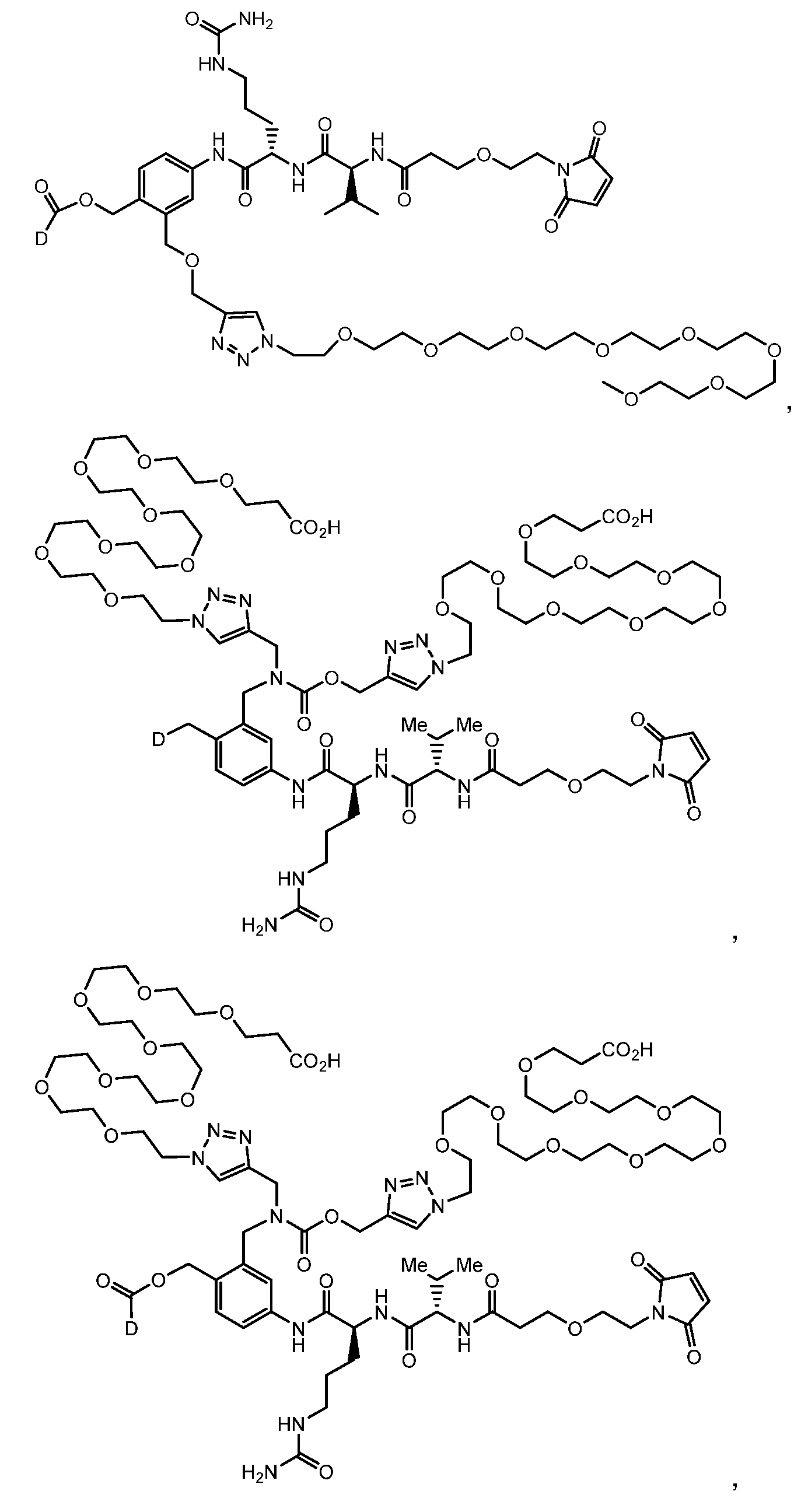
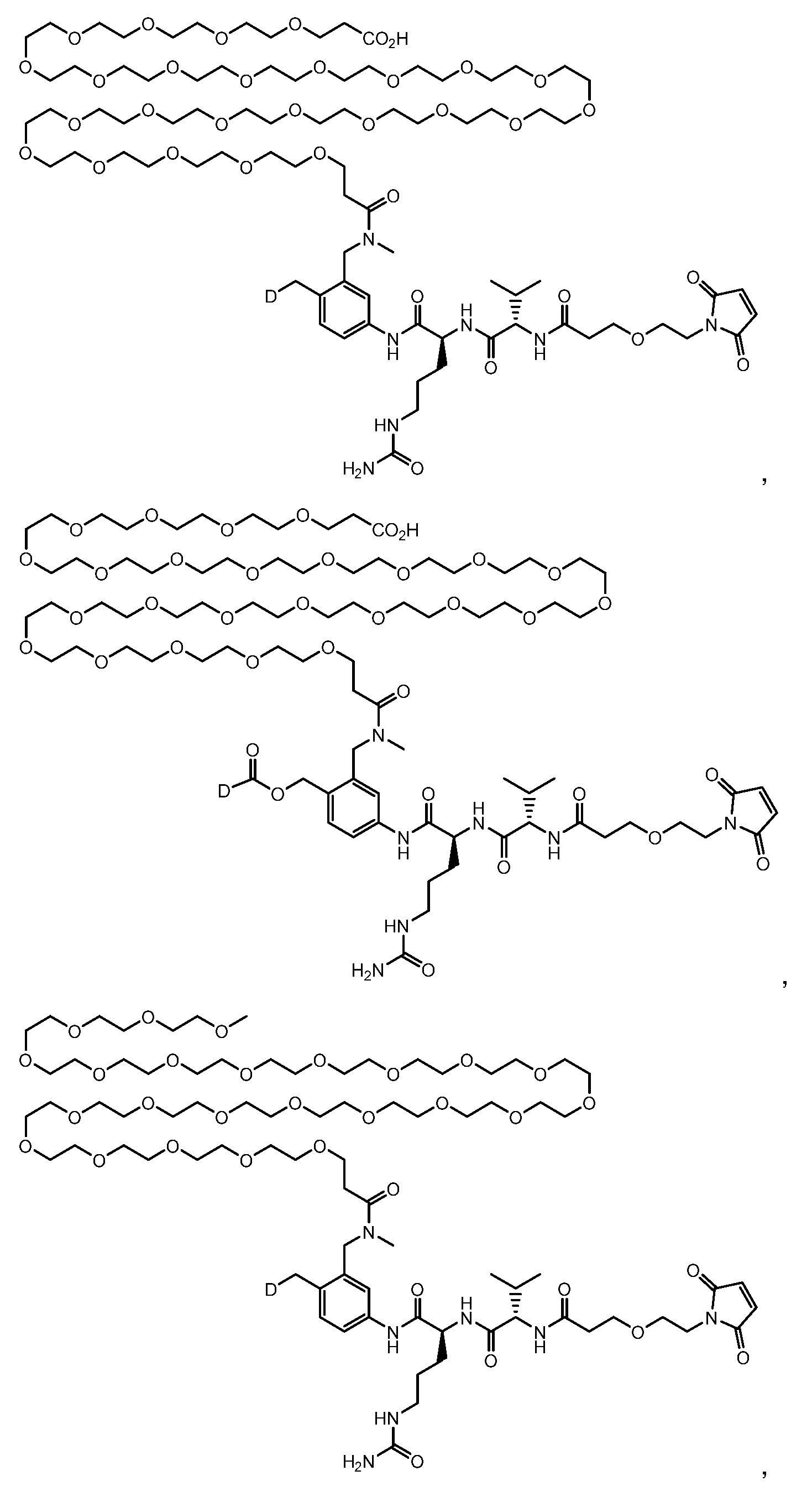
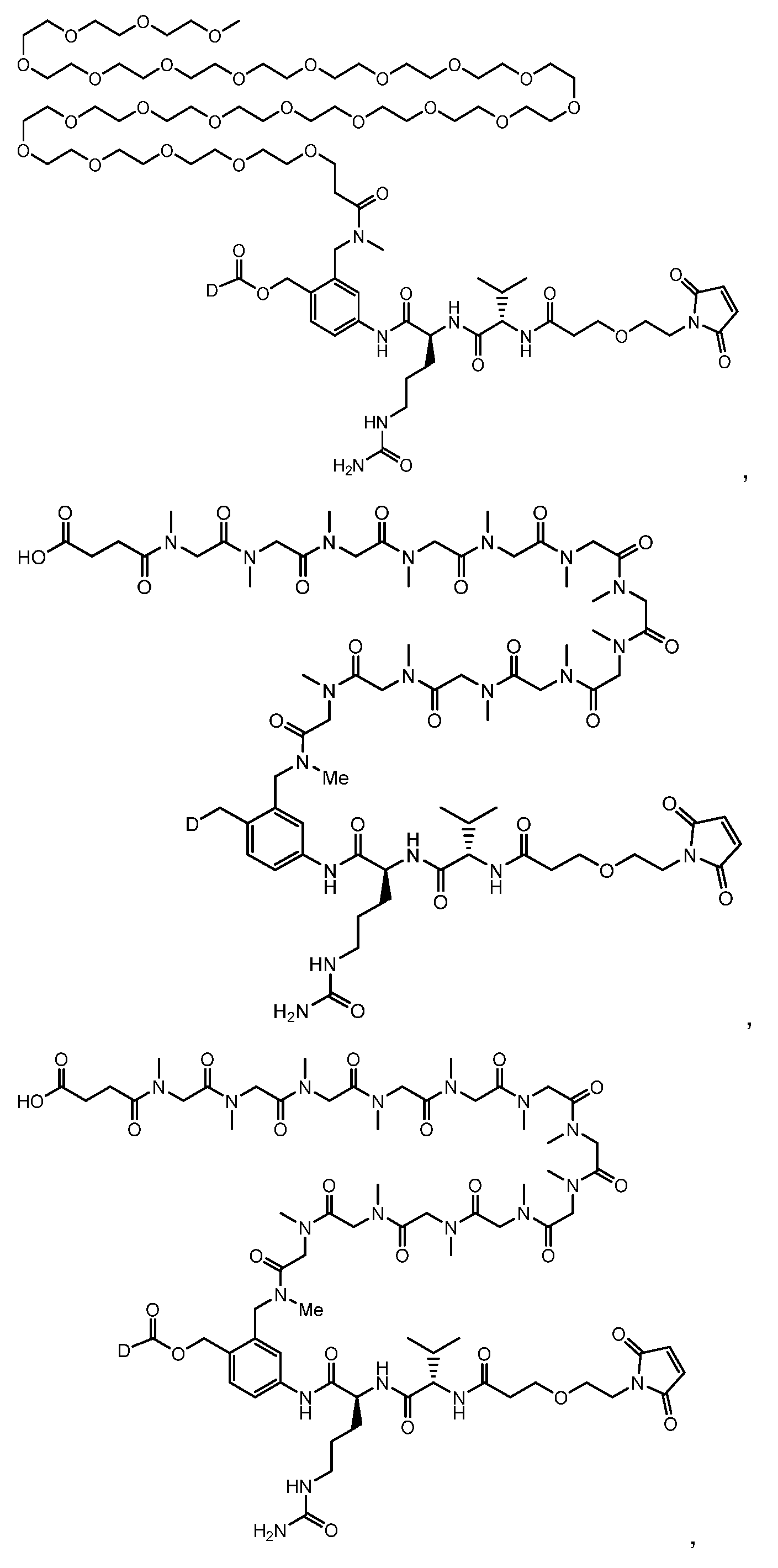


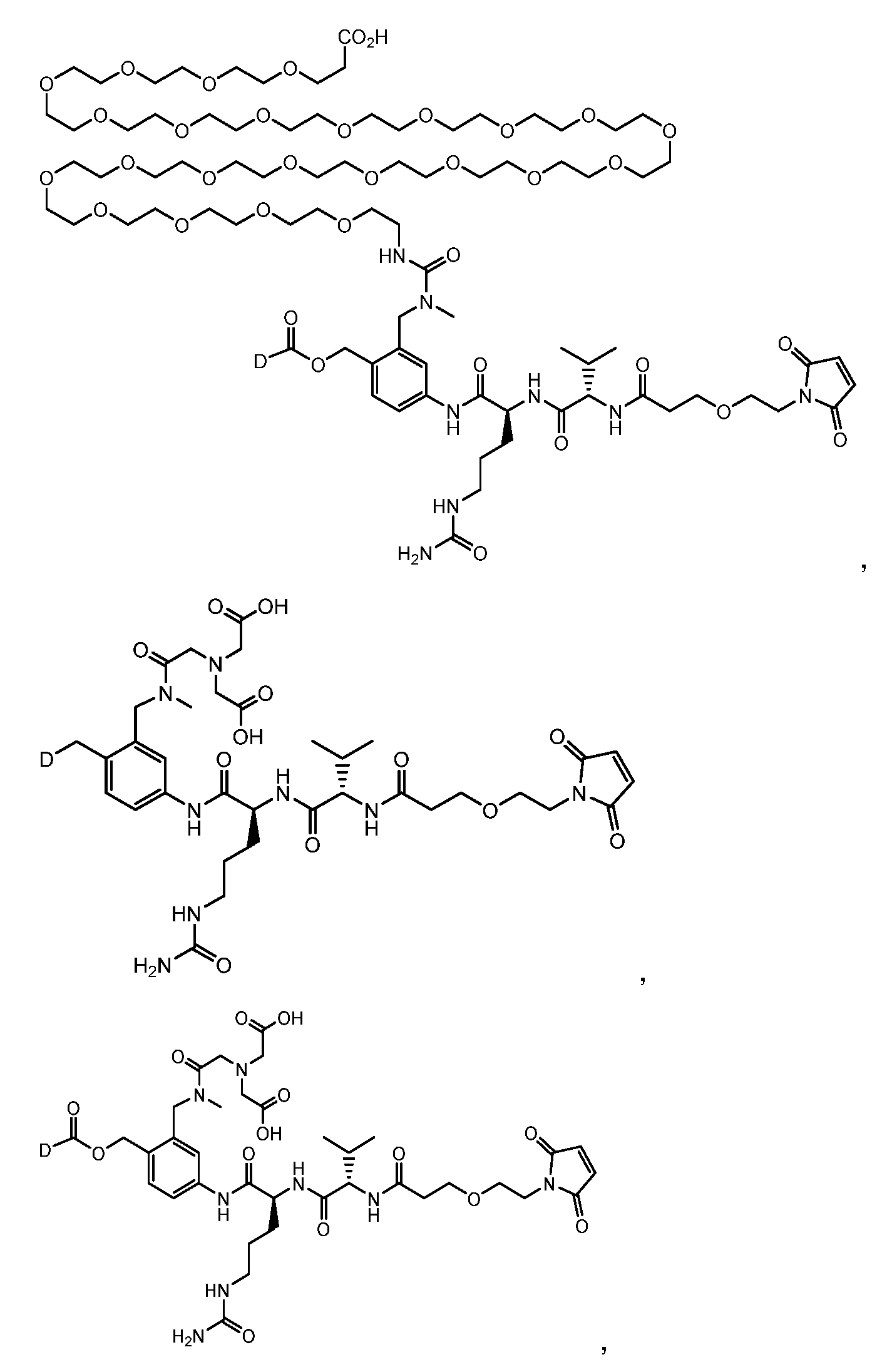

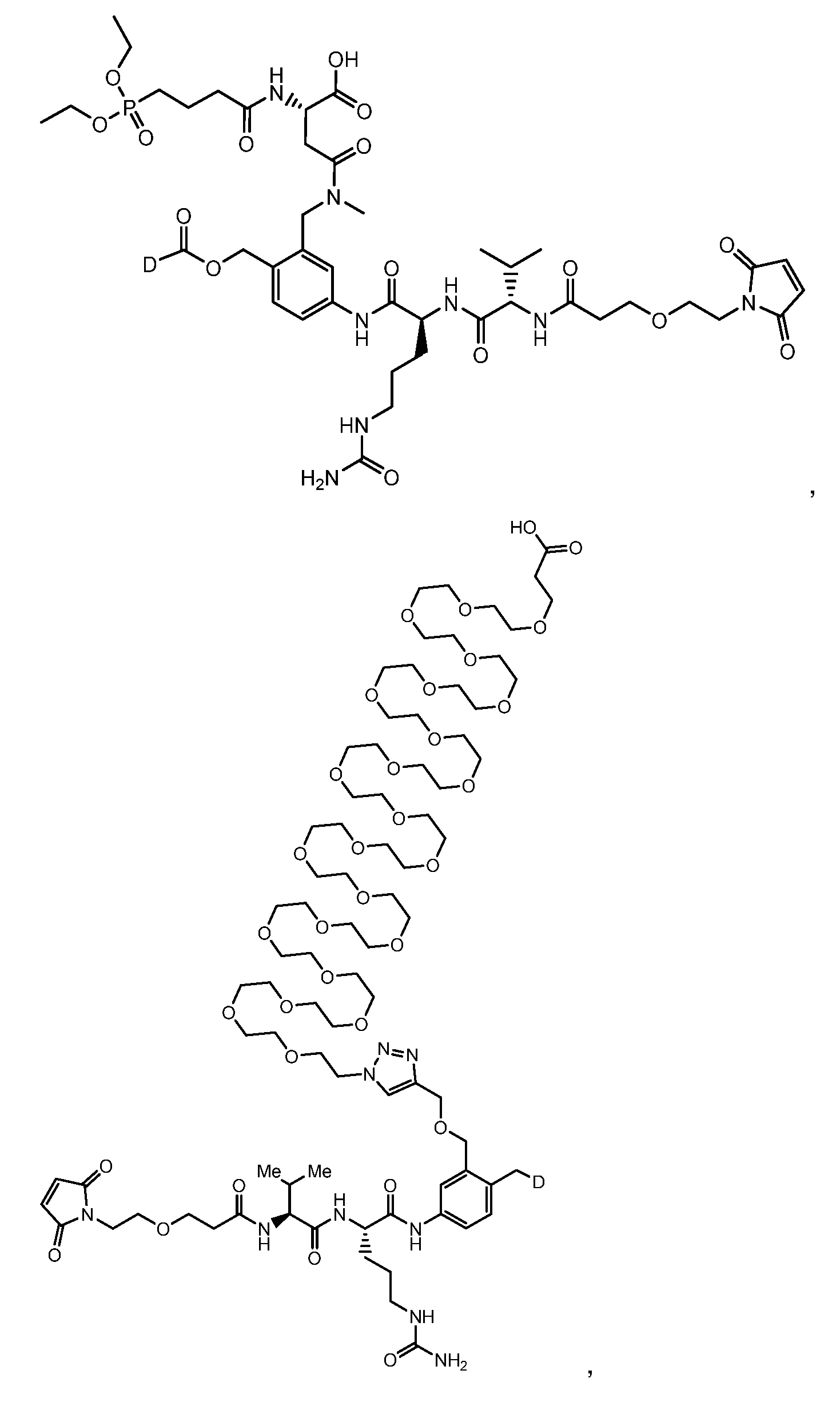
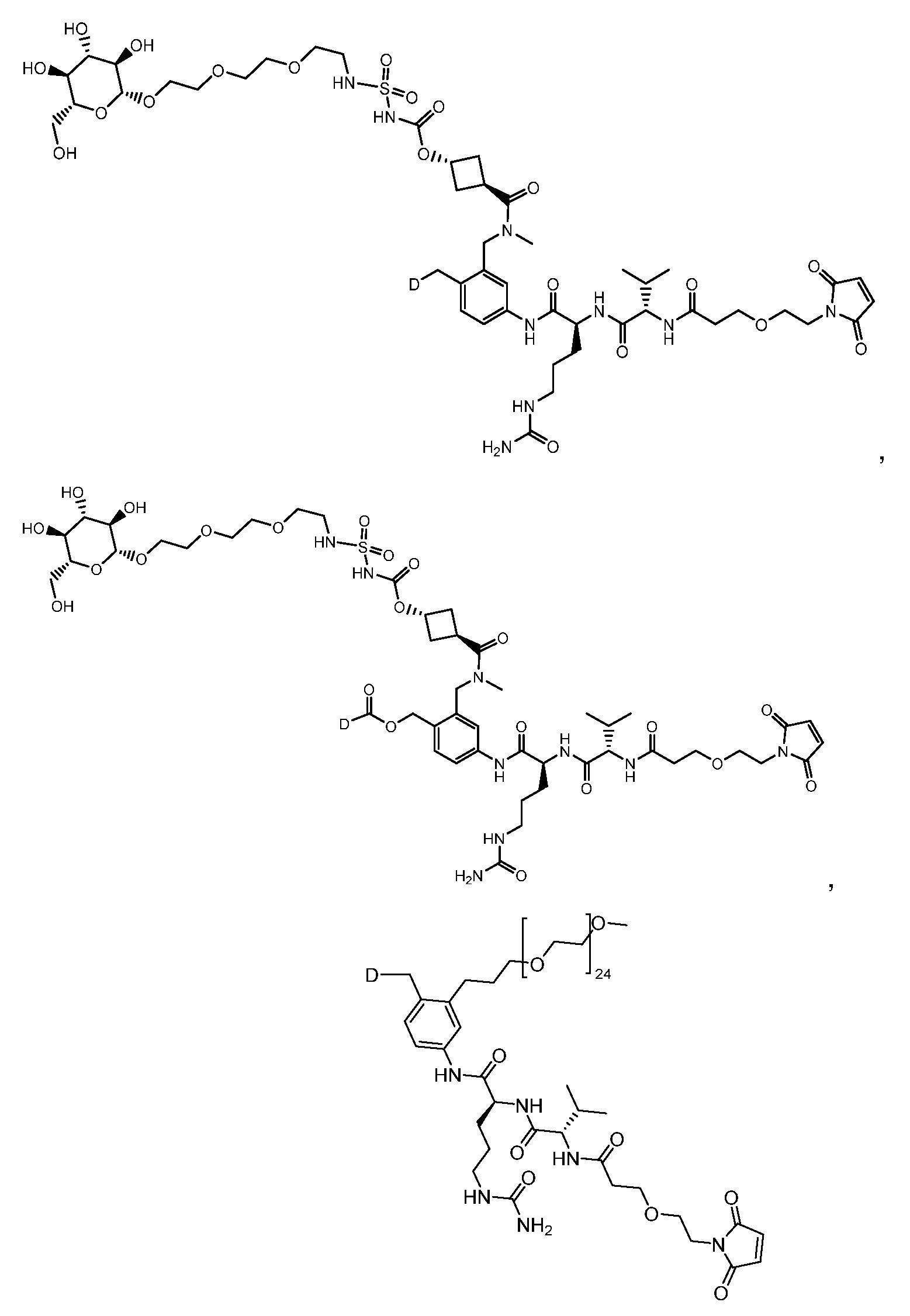
일부 실시양태에서, 항체-약물 접합체는 하기로부터 선택된 화학식을 포함하는 링커-약물 기 -(L-D)를 포함한다:In some embodiments, the antibody-drug conjugate comprises a linker-drug group -(L-D) comprising a formula selected from:

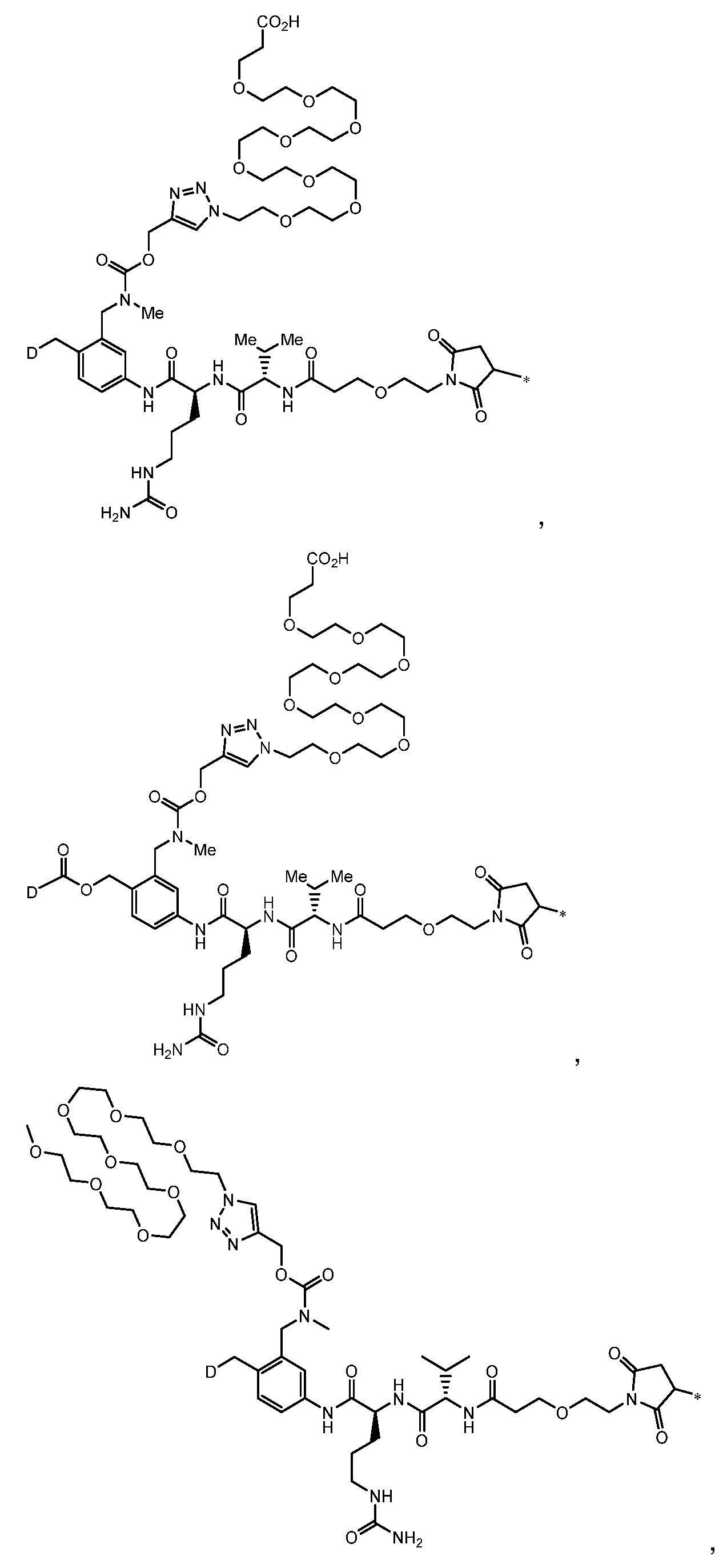
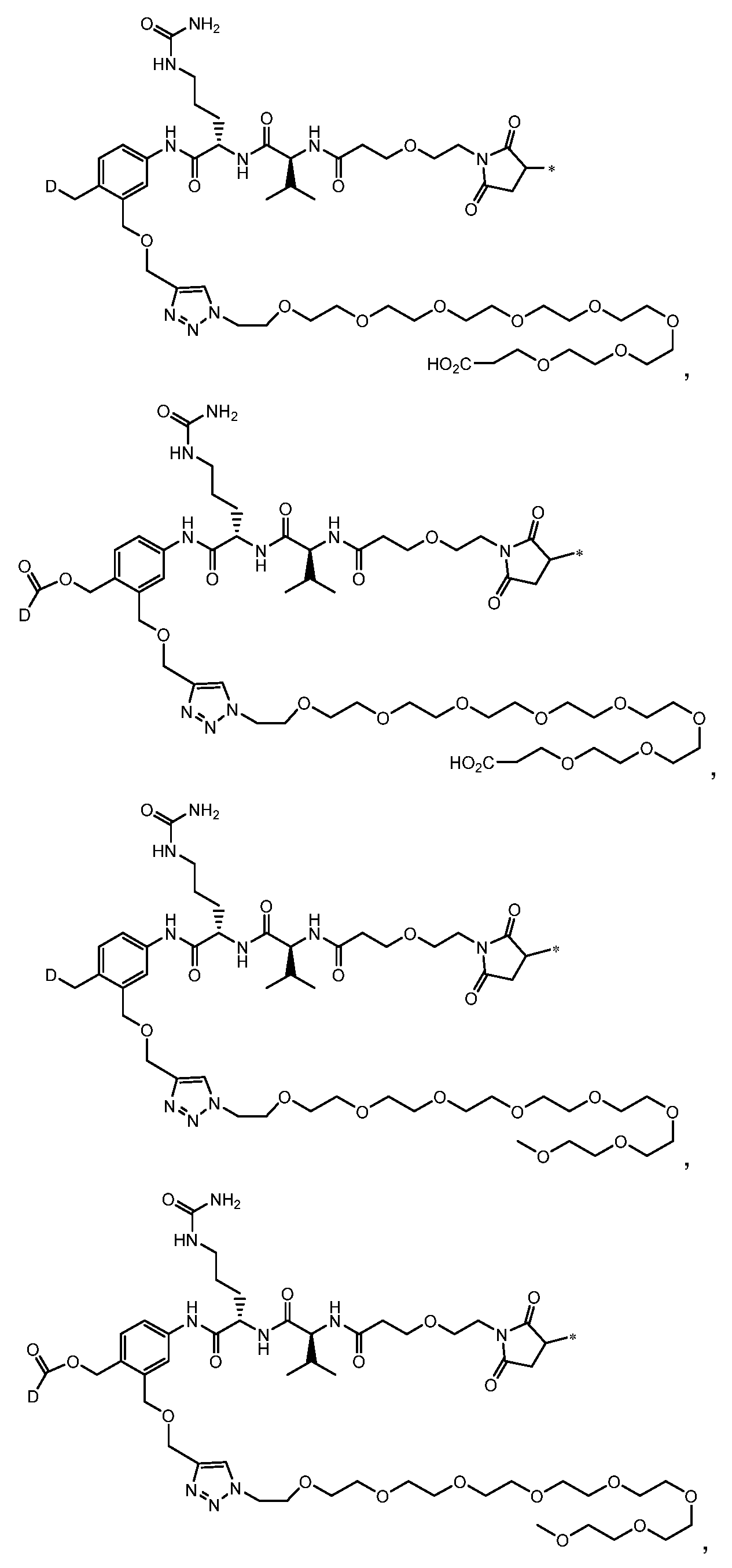


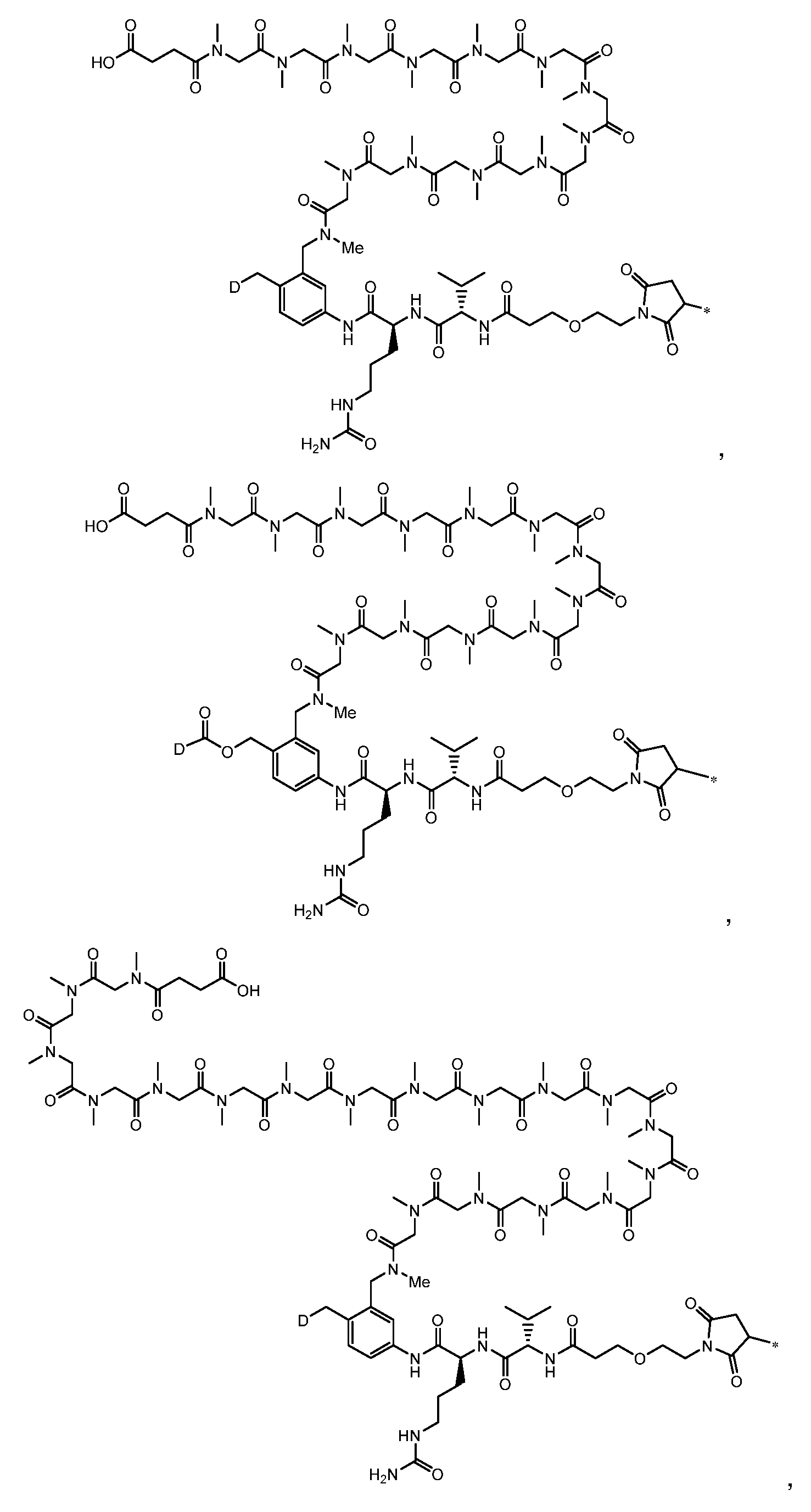


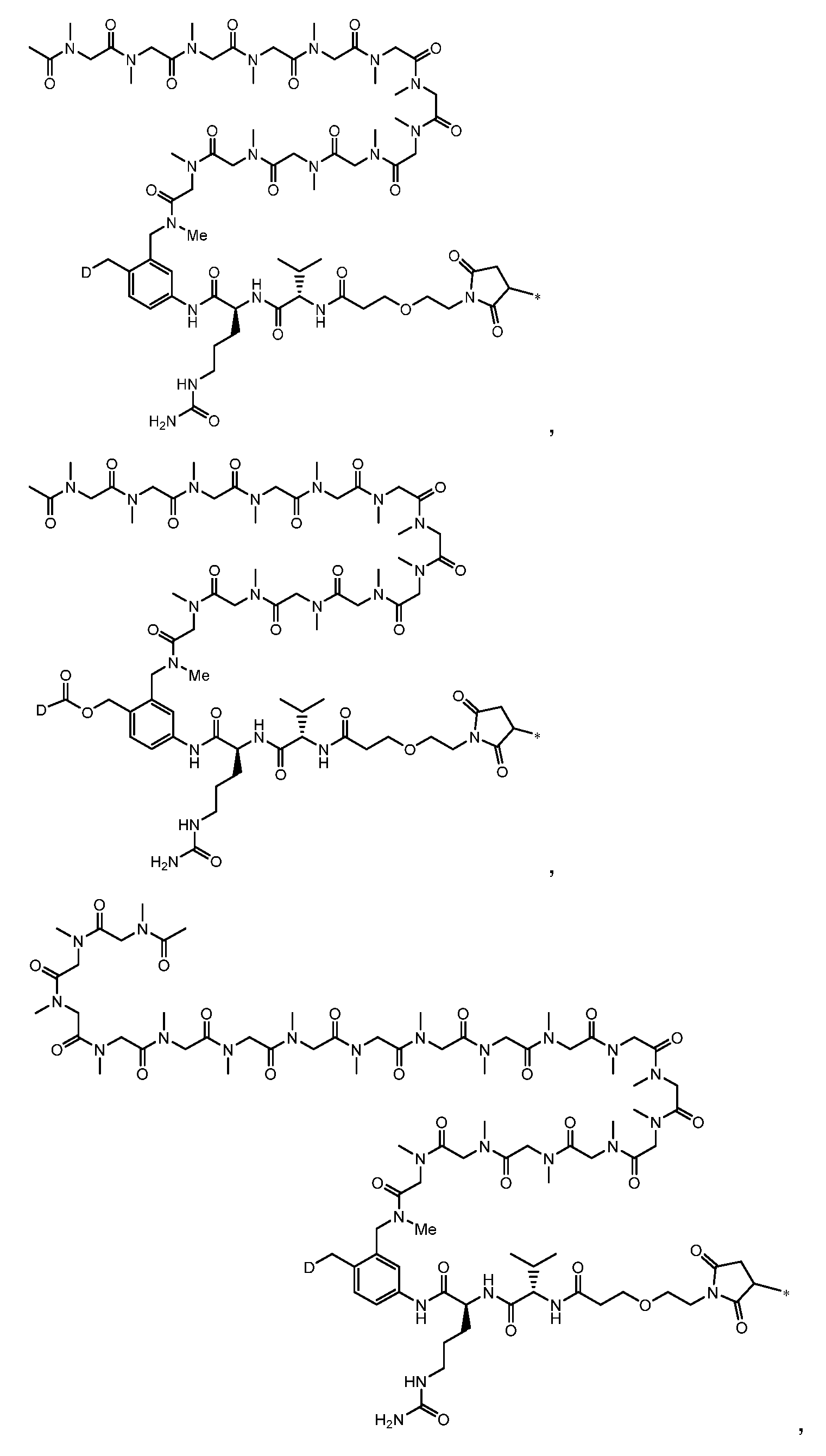


여기서 
일부 실시양태에서, Bcl-xL 억제제 (D)는 하기 화학식 (I)의 화합물을 포함한다:In some embodiments, the Bcl-xL inhibitor (D) comprises a compound of formula (I):

또는 상기 중 어느 하나의 거울상이성질체, 부분입체이성질체 및/또는 제약상 허용되는 염, 여기서 가변기는 화학식 (I)에 대해 상기 기재되어 있다. 일부 실시양태에서, R1은 선형 또는 분지형 C1-6알킬이고, R2는 H이다.Or an enantiomer, diastereomer and/or pharmaceutically acceptable salt of any one of the above, wherein the variables are as described above for Formula (I). In some embodiments, R1 is linear or branched C1-6 alkyl and R2 is H.
일부 실시양태에서, Bcl-xL 억제제 (D)는 하기 화학식 (II)의 화합물을 포함한다:In some embodiments, the Bcl-xL inhibitor (D) comprises a compound of formula (II):

또는 상기 중 어느 하나의 거울상이성질체, 부분입체이성질체 및/또는 제약상 허용되는 염, 여기서 가변기는 화학식 (II)에 대해 상기 기재되어 있다. A1 및 A5는 둘 다 질소 원자를 나타내고, R1은 선형 또는 분지형 C1-6알킬이고; R2는 H이고; n은 1이고; ------는 단일 결합을 나타낸다.Or an enantiomer, a diastereomer and/or a pharmaceutically acceptable salt thereof, wherein the variables are as described above for formula (II). A1 and A5 both represent a nitrogen atom, R1 is linear or branched C1-6 alkyl; R2 is H; n is 1; and ------ represents a single bond.
일부 실시양태에서, Bcl-xL 억제제 (D)는 하기 화학식 (IA) 또는 (IIA)의 화합물을 포함한다:In some embodiments, the Bcl-xL inhibitor (D) comprises a compound of formula (IA) or (IIA):

또는 상기 중 어느 하나의 거울상이성질체, 부분입체이성질체 및/또는 제약상 허용되는 염, 여기서or an enantiomer, diastereomer and/or pharmaceutically acceptable salt of any of the above, wherein
Z1은 결합 또는 -O-를 나타내고,Z 1 represents a bond or -O-,
R3은 수소; C3-C6시클로알킬; 선형 또는 분지형 C1-C6알킬; -X1-NRaRb; -X1-N+RaRbRc; 및 -X1-O-Rc로부터 선택된 기를 나타내고,R 3 represents a group selected from hydrogen; C 3 -C 6 cycloalkyl; linear or branched C 1 -C 6 alkyl; -X 1 -NR a R b ; -X 1 -N + R a R b R c ; and -X 1 -OR c ,
Ra 및 Rb는 서로 독립적으로 수소; 1 또는 2개의 히드록실 기에 의해 임의로 치환된 선형 또는 분지형 C1-C6알킬; 및 C1-C6알킬렌-SO2O-로부터 선택된 기를 나타내고,R a and R b independently represent a group selected from hydrogen; linear or branched C 1 -C 6 alkyl optionally substituted by 1 or 2 hydroxyl groups; and C 1 -C 6 alkylene-SO 2 O - ,
Rc는 수소 또는 선형 또는 분지형 C1-C6알킬 기를 나타내고,R c represents hydrogen or a linear or branched C 1 -C 6 alkyl group,
Het2는 하기로부터 선택된 기를 나타내고:Het 2 represents a group selected from the following:
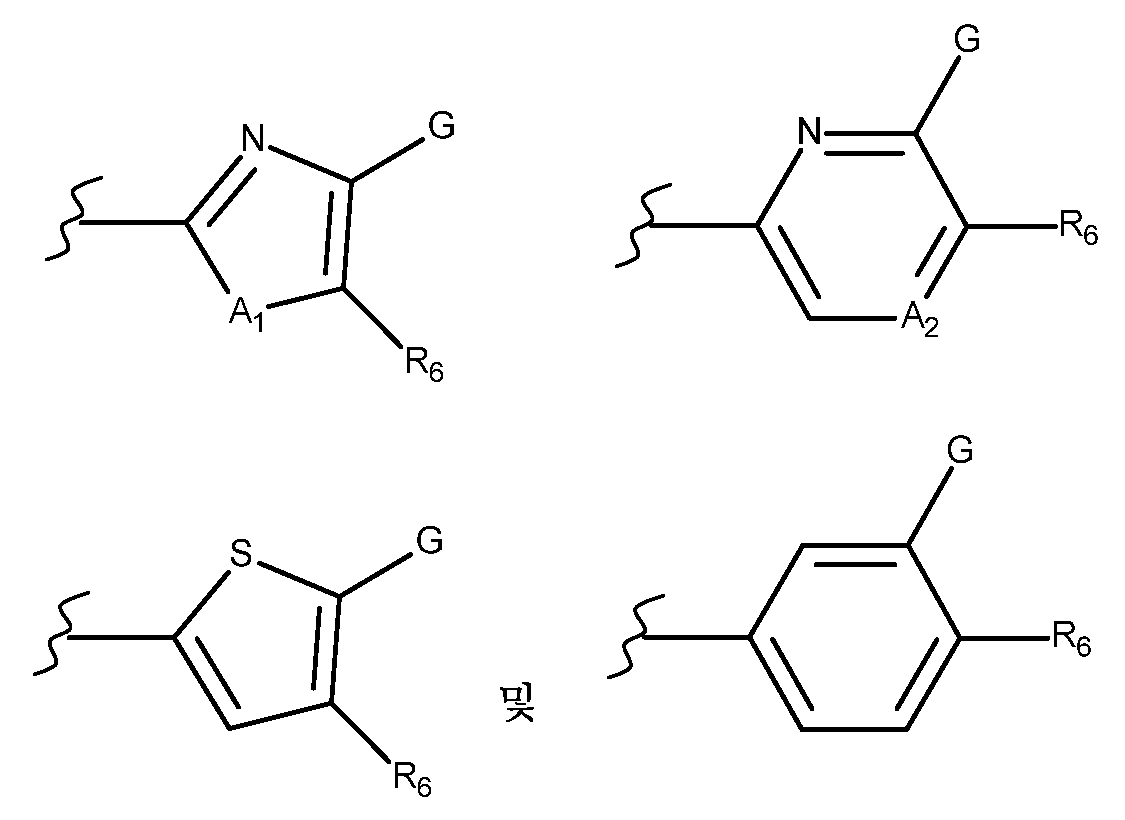
A1은 -NH-, -N(C1-C3알킬), O, S 또는 Se이고,A 1 is -NH-, -N(C 1 -C 3 alkyl), O, S or Se,
A2는 N, CH 또는 C(R5)이고,A 2 is N, CH or C(R 5 ),
G는 하기로 이루어진 군으로부터 선택되고;G is selected from the group consisting of;
-C(O)OH, -C(O)ORG3, -C(O)NRG1RG2, -C(O)RG2, -NRG1C(O)RG2, -NRG1C(O)NRG1RG2, -OC(O)NRG1RG2, -NRG1C(O)ORG3, -C(=NORG1)NRG1RG2, -NRG1C(=NCN)NRG1RG2, -NRG1S(O)2NRG1RG2, -S(O)2RG3, -S(O)2NRG1RG2, -NRG1S(O)2RG2, -NRG1C(=NRG2)NRG1RG2, -C(=S)NRG1RG2, -C(=NRG1)NRG1RG2, 히드록실 기에 의해 임의로 치환된 C1-C6알킬, 할로겐, -NO2 및 -CN, 여기서-C(O)OH, -C(O)OR G3 , -C(O)NR G1 R G2 , -C(O)R G2 , -NR G1 C(O)R G2 , -NR G1 C(O)NR G1 R G2 , -OC(O)NR G1 R G2 , -NR G1 C(O)OR G3 , -C(=NOR G1 )NR G1 R G2 , -NR G1 C(=NCN)NR G1 R G2 , -NR G1 S(O) 2 NR G1 R G2 , -S(O) 2 R G3 , -S(O) 2 NR G1 R G2 , -NR G1 S(O) 2 R G2 , -NR G1 C(=NR G2 )NR G1 R G2 , -C(=S)NR G1 R G2 , -C(=NR G1 )NR G1 R G2 , C 1 -C 6 alkyl optionally substituted by hydroxyl groups, halogen, -NO 2 and -CN, where
- RG1 및 RG2는 각각의 경우에 각각 독립적으로 수소 및 1 내지 3개의 할로겐 원자에 의해 임의로 치환된 C1-C6알킬로 이루어진 군으로부터 선택되고;- R G1 and R G2 are each independently selected from the group consisting of hydrogen and C 1 -C 6 alkyl optionally substituted by 1 to 3 halogen atoms;
- RG3은 1 내지 3개의 할로겐 원자에 의해 임의로 치환된 C1-C6알킬이거나; 또는- R G3 is C 1 -C 6 alkyl optionally substituted by 1 to 3 halogen atoms; or
RG1 및 RG2는 이들 각각이 부착되어 있는 원자와 함께 조합되어 C3-C8헤테로시클로알킬을 형성하고;R G1 and R G2 combine with the atoms to which they are each attached to form C 3 -C 8 heterocycloalkyl;
R4는 수소, 플루오린, 염소 또는 브로민 원자, 메틸, 히드록실 또는 메톡시 기를 나타내고,R 4 represents a hydrogen, fluorine, chlorine or bromine atom, a methyl, hydroxyl or methoxy group,
R5는 1 내지 3개의 할로겐 원자에 의해 임의로 치환된 C1-C6알킬; 할로겐 또는 -CN으로부터 선택된 기를 나타내고,R 5 represents C 1 -C 6 alkyl optionally substituted with 1 to 3 halogen atoms; a group selected from halogen or -CN,
R6은 하기로부터 선택된 기를 나타내고:R 6 represents a group selected from the following:
-X2-O-R7; 및-X 2 -OR 7 ; and
선형 또는 분지형 C1-C6알킬 기에 의해 임의로 치환된 헤테로아릴렌-R7 기;A heteroarylene-R 7 group optionally substituted by a linear or branched C 1 -C 6 alkyl group;
R7은 선형 또는 분지형 C1-C6알킬 기; (C3-C6)시클로알킬렌-R8 또는 하기로부터 선택된 기를 나타내고:R 7 represents a linear or branched C 1 -C 6 alkyl group; (C 3 -C 6 )cycloalkylene-R 8 or a group selected from the following:
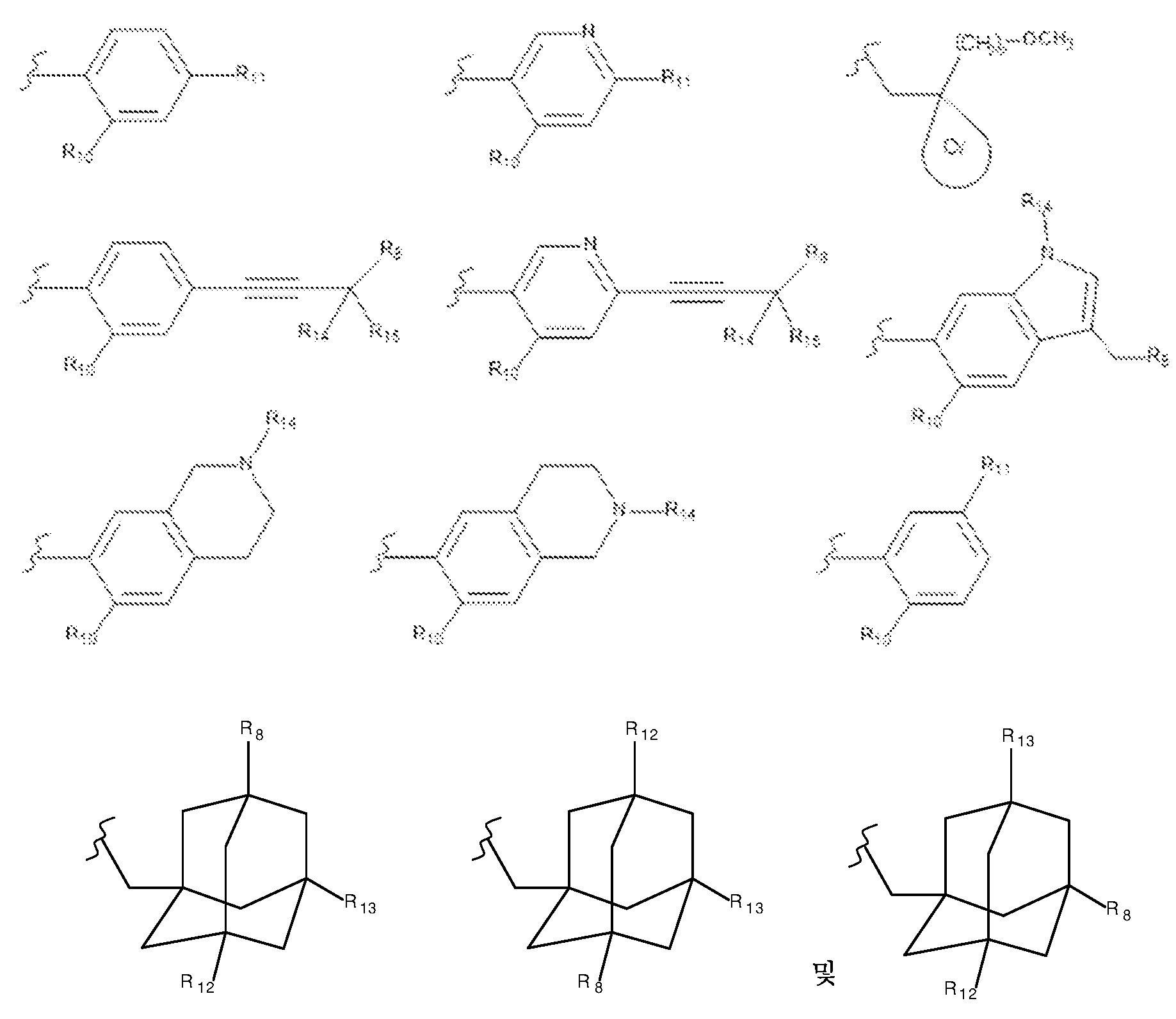
여기서 Cy는 C3-C8시클로알킬을 나타내고,Here, Cy represents C 3 -C 8 cycloalkyl,
R8은 수소; 선형 또는 분지형 C1-C6알킬, -NR'aR'b; -NR'a-CO-OR'c; -NR'a-CO-R'c; -N+R'aR'bR'c; -O-R'c; -NH-X'2-N+R'aR'bR'c; -O-X'2-NR'aR'b; -X'2-NR'aR'b; -NR'c-X'2-N3 및 
R10은 수소, 플루오린, 염소, 브로민, -CF3 및 메틸로부터 선택된 기를 나타내고,R 10 represents a group selected from hydrogen, fluorine, chlorine, bromine, -CF 3 and methyl,
R11은 수소, C1-C3알킬렌-R8, -O-C1-C3알킬렌-R8, -CO-NRhRi 및 -CH=CH-C1-C4알킬렌-NRhRi, -CH=CH-CHO, C3-C8시클로알킬렌-CH2-R8, C3-C8헤테로시클로알킬렌-CH2-R8로부터 선택된 기를 나타내고,R 11 represents a group selected from hydrogen, C 1 -C 3 alkylene-R 8 , -OC 1 -C 3 alkylene-R 8 , -CO-NR h R i and -CH=CH-C 1 -C 4 alkylene-NR h R i , -CH=CH-CHO, C 3 -C 8 cycloalkylene-CH 2 -R 8 , C 3 -C 8 heterocycloalkylene-CH 2 -R 8 ,
R12 및 R13은 서로 독립적으로 수소 원자 또는 메틸 기를 나타내고,R 12 and R 13 independently represent a hydrogen atom or a methyl group,
R14 및 R15는 서로 독립적으로 수소 또는 메틸 기를 나타내거나, 또는 R14 및 R15는 이들을 보유하는 탄소 원자와 함께 시클로헥실을 형성하고,R 14 and R 15 independently represent hydrogen or a methyl group, or R 14 and R 15 together with the carbon atom carrying them form cyclohexyl,
Rh 및 Ri는 서로 독립적으로 수소 또는 선형 또는 분지형 C1-C6알킬 기를 나타내고,R h and R i independently represent hydrogen or a linear or branched C 1 -C 6 alkyl group,
X1 및 X2는 서로 독립적으로 트리플루오로메틸, 히드록실, 할로겐, C1-C6알콕시로부터 선택된 1 또는 2개의 기에 의해 임의로 치환된 선형 또는 분지형 C1-C6알킬렌 기를 나타내고,X 1 and X 2 independently represent a linear or branched C 1 -C 6 alkylene group optionally substituted by 1 or 2 groups selected from trifluoromethyl, hydroxyl, halogen, C 1 -C 6 alkoxy,
X'2는 선형 또는 분지형 C1-C6알킬렌을 나타내고,X' 2 represents linear or branched C 1 -C 6 alkylene,
R'a 및 R'b는 서로 독립적으로 수소; 헤테로시클로알킬; -SO2-페닐 (여기서 페닐은 선형 또는 분지형 C1-C6알킬에 의해 치환될 수 있음); 1 또는 2개의 히드록실 또는 C1-C6알콕시 기에 의해 임의로 치환된 선형 또는 분지형 C1-C6알킬; C1-C6알킬렌-SO2OH; C1-C6알킬렌-SO2O-; C1-C6알킬렌-COOH; C1-C6알킬렌-PO(OH)2; C1-C6알킬렌-NR'dR'e; C1-C6알킬렌-N+R'dR'eR'f; C1-C6알킬렌-O-C1-C6알킬렌-OH; C1-C6알킬렌-페닐 (여기서 페닐은 히드록실 또는 C1-C6알콕시 기에 의해 치환될 수 있음) 및 하기 기로부터 선택된 기를 나타내거나:R' a and R' b are independently hydrogen; heterocycloalkyl; -SO 2 -phenyl (wherein phenyl may be substituted by linear or branched C 1 -C 6 alkyl); linear or branched C 1 -C 6 alkyl optionally substituted by one or two hydroxyl or C 1 -C 6 alkoxy groups; C 1 -C 6 alkylene-SO 2 OH; C 1 -C 6 alkylene - SO 2 O - ; C 1 -C 6 alkylene-COOH; C 1 -C 6 alkylene-PO(OH) 2 ; C 1 -C 6 alkylene-NR' d R'e; C 1 -C 6 alkylene-N + R' d R' e R'f; C 1 -C 6 alkylene-OC 1 -C 6 alkylene-OH; C 1 -C 6 alkylene-phenyl (wherein phenyl may be substituted by hydroxyl or a C 1 -C 6 alkoxy group) and a group selected from the following groups:

또는 R'a 및 R'b는 이들을 보유하는 질소 원자와 함께 사이클 B3을 형성하거나,or R' a and R' b together with the nitrogen atom carrying them form cycle B 3 ,
또는 R'a, R'b 및 R'c는 이들을 보유하는 질소 원자와 함께 가교된 C3-C8헤테로시클로알킬을 형성하고,or R' a , R' b and R' c together with the nitrogen atom carrying them form a bridged C 3 -C 8 heterocycloalkyl,
R'c, R'd, R'e, R'f는 서로 독립적으로 수소 또는 선형 또는 분지형 C1-C6알킬 기를 나타내거나,R' c , R' d , R' e , R' f independently represent hydrogen or a linear or branched C 1 -C 6 alkyl group, or
또는 R'd 및 R'e는 이들을 보유하는 질소 원자와 함께 사이클 B4를 형성하거나,or R' d and R' e form cycle B 4 together with the nitrogen atom carrying them, or
또는 R'd, R'e 및 R'f는 이들을 보유하는 질소 원자와 함께 가교된 C3-C8헤테로시클로알킬을 형성하고,or R' d , R' e and R' f together with the nitrogen atom carrying them form a bridged C 3 -C 8 heterocycloalkyl,
m=0, 1 또는 2이고,m=0, 1 or 2,
p=1, 2, 3 또는 4이고,p=1, 2, 3 or 4,
B3 및 B4는 서로 독립적으로 C3-C8헤테로시클로알킬 기를 나타내고, 상기 기는 (i) 모노- 또는 비-시클릭 기일 수 있고 (여기서 비시클릭 기는 융합된, 가교된 또는 스피로 고리계를 포함함), (ii) 질소 원자 이외에도, 산소, 황 및 질소로부터 독립적으로 선택된 1 또는 2개의 헤테로 원자를 함유할 수 있고, (iii) 플루오린, 브로민, 염소, 선형 또는 분지형 C1-C6알킬, 히드록실, -NH2, 옥소 또는 피페리디닐로부터 선택된 1 또는 2개의 기에 의해 치환될 수 있다.B 3 and B 4 independently represent a C 3 -C 8 heterocycloalkyl group, which group (i) may be a mono- or a bicyclic group (wherein the bicyclic group comprises a fused, bridged or spiro ring system), (ii) may contain, in addition to the nitrogen atom, 1 or 2 heteroatoms independently selected from oxygen, sulfur and nitrogen, and (iii) may be substituted by 1 or 2 groups selected from fluorine, bromine, chlorine, linear or branched C 1 -C 6 alkyl, hydroxyl, -NH 2 , oxo or piperidinyl.
일부 실시양태에서, 화학식 (IA) 또는 (IIA)의 경우, G는 -C(O)OH, -C(O)ORG3, -C(O)NRG1RG2, -C(O)RG2, -NRG1C(O)RG2, -NRG1C(O)NRG1RG2, -OC(O)NRG1RG2, -NRG1C(O)ORG3, -C(=NORG1)NRG1RG2, -NRG1C(=NCN)NRG1RG2, -NRG1S(O)2NRG1RG2, -S(O)2RG3, -S(O)2NRG1RG2, -NRG1S(O)2RG2, -NRG1C(=NRG2)NRG1RG2, -C(=S)NRG1RG2, -C(=NRG1)NRG1RG2, 할로겐, -NO2 및 -CN으로 이루어진 군으로부터 선택되고, 여기서In some embodiments, for formula (IA) or (IIA), G is -C(O)OH, -C(O)OR G3 , -C(O)NR G1 R G2 , -C(O)R G2 , -NR G1 C(O)R G2 , -NR G1 C(O)NR G1 R G2 , -OC(O)NR G1 R G2 , -NR G1 C(O)OR G3 , -C(=NOR G1 )NR G1 R G2 , -NR G1 C(=NCN)NR G1 R G2 , -NR G1 S(O) 2 NR G1 R G2 , -S(O) 2 R G3 , -S(O) 2 NR G1 R G2 , -NR G1 S(O) 2 R G2 , -NR G1 C(=NR G2 )NR G1 R G2 , -C(=S)NR G1 R G2 , -C(=NR G1 )NR G1 R G2 , halogen, -NO 2 and -CN, wherein
- RG1 및 RG2는 각각의 경우에 각각 독립적으로 수소 및 1 내지 3개의 할로겐 원자에 의해 임의로 치환된 C1-C6알킬로 이루어진 군으로부터 선택되고;- R G1 and R G2 are each independently selected from the group consisting of hydrogen and C 1 -C 6 alkyl optionally substituted by 1 to 3 halogen atoms;
- RG3은 1 내지 3개의 할로겐 원자에 의해 임의로 치환된 C1-C6알킬이거나; 또는- R G3 is C 1 -C 6 alkyl optionally substituted by 1 to 3 halogen atoms; or
- RG1 및 RG2는 이들 각각이 부착되어 있는 원자와 함께 조합되어 C3-C8헤테로시클로알킬을 형성한다.- R G1 and R G2 combine with the atoms to which they are each attached to form C 3 -C 8 heterocycloalkyl.
일부 실시양태에서, 화학식 (I), (II), (IA) 또는 (IIA)의 경우, R7은 선형 또는 분지형 C1-C6알킬 기; (C3-C6)시클로알킬렌-R8; 또는 하기로부터 선택된 기를 나타내고:In some embodiments, for formula (I), (II), (IA) or (IIA), R 7 represents a linear or branched C 1 -C 6 alkyl group; (C 3 -C 6 )cycloalkylene-R 8 ; or a group selected from:
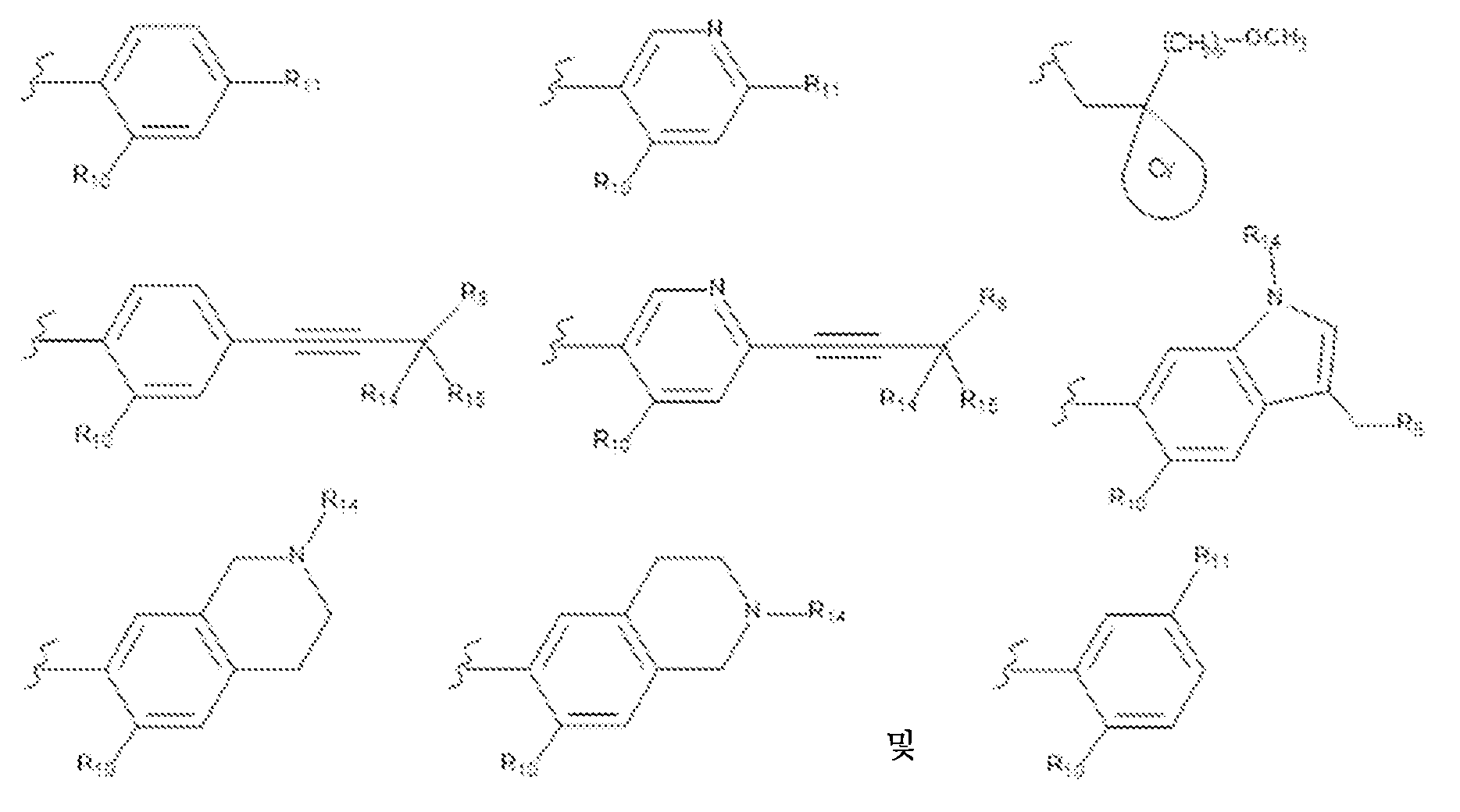
여기서 Cy는 C3-C8시클로알킬을 나타낸다.Here, Cy represents C 3 -C 8 cycloalkyl.
일부 실시양태에서, 화학식 (I), (II), (IA) 또는 (IIA)의 경우, R7은 하기로부터 선택된 기를 나타낸다:In some embodiments, for formula (I), (II), (IA) or (IIA), R 7 represents a group selected from:
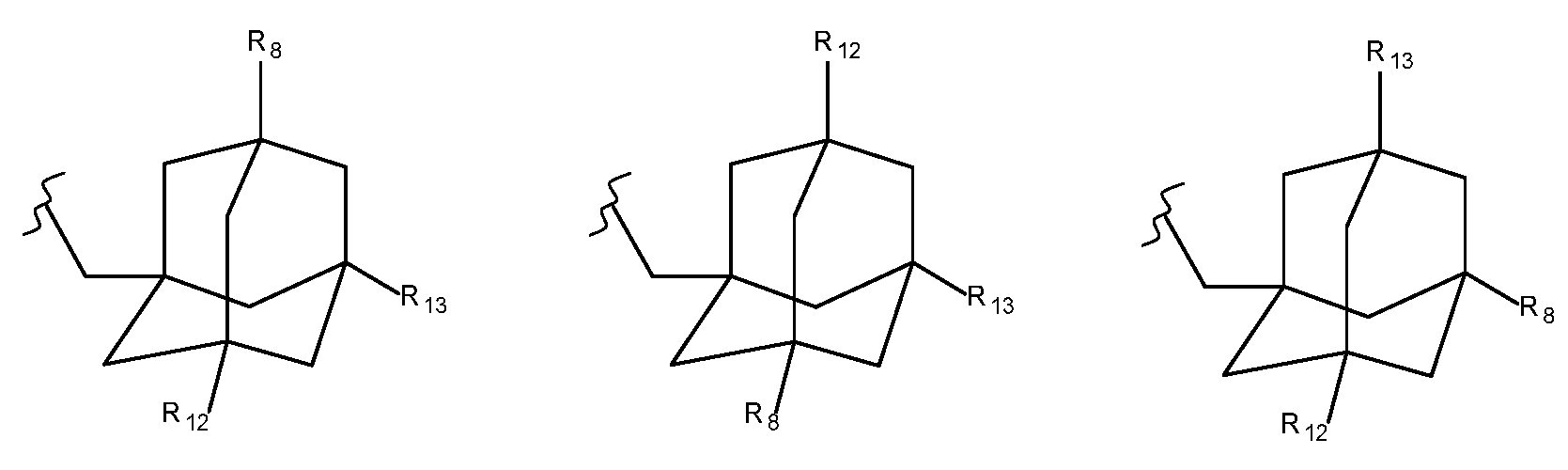
일부 실시양태에서, Bcl-xL 억제제 (D)는 하기 화학식 (IB), (IC), (IIB) 또는 (IIC)의 화합물을 포함한다:In some embodiments, the Bcl-xL inhibitor (D) comprises a compound of formula (IB), (IC), (IIB) or (IIC):

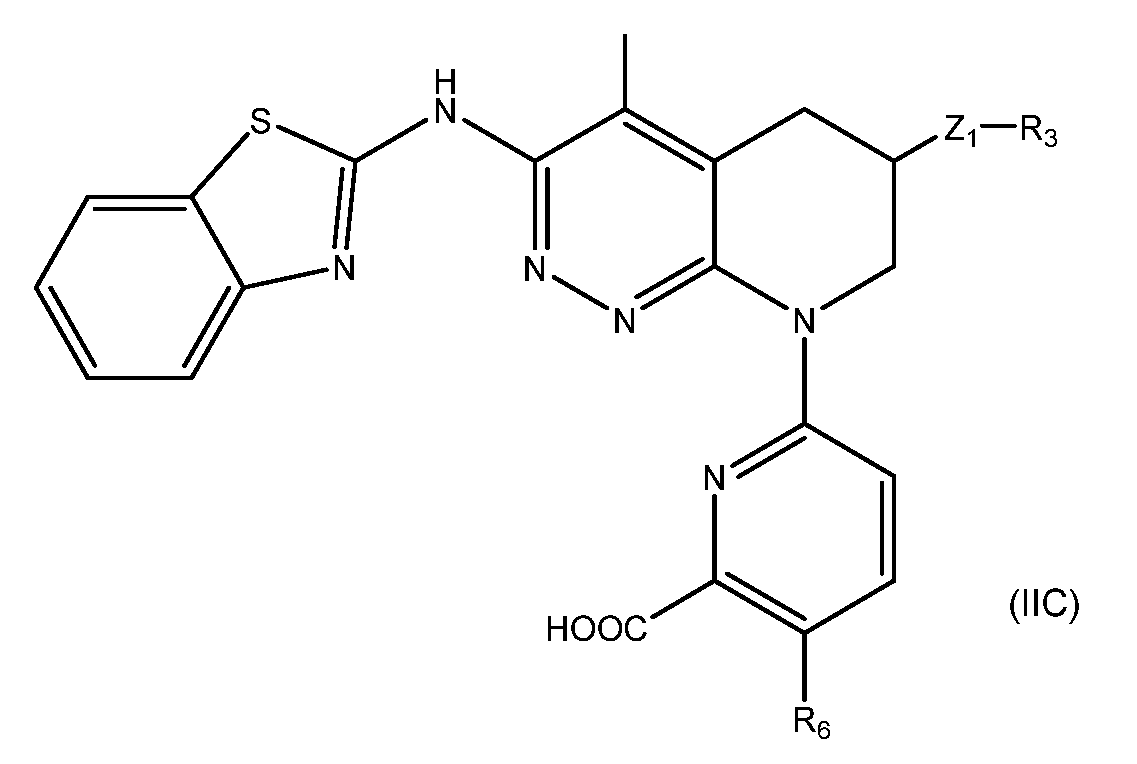
또는 상기 중 어느 하나의 거울상이성질체, 부분입체이성질체 및/또는 제약상 허용되는 염, 여기서or an enantiomer, diastereomer and/or pharmaceutically acceptable salt of any of the above, wherein
화학식 (IB) 또는 (IC)의 경우, R3은 수소; 선형 또는 분지형 C1-C6알킬; -X1-NRaRb; -X1-N+RaRbRc; 및 -X1-O-Rc로부터 선택된 기를 나타내고;For formula (IB) or (IC), R 3 represents a group selected from hydrogen; linear or branched C 1 -C 6 alkyl; -X 1 -NR a R b ; -X 1 -N + R a R b R c ; and -X 1 -OR c ;
화학식 (IIB) 또는 (IIC)의 경우, Z1은 결합을 나타내고, R3은 수소를 나타내거나; 또는 Z1은 -O-를 나타내고, R3은 -X1-NRaRb를 나타내고,In the case of chemical formula (IIB) or (IIC), Z 1 represents a bond, R 3 represents hydrogen; or Z 1 represents -O-, R 3 represents -X 1 -NR a R b ,
Ra 및 Rb는 서로 독립적으로 수소; 1 또는 2개의 히드록실 기에 의해 임의로 치환된 선형 또는 분지형 C1-C6알킬; 및 C1-C6알킬렌-SO2O-로부터 선택된 기를 나타내고,R a and R b independently represent a group selected from hydrogen; linear or branched C 1 -C 6 alkyl optionally substituted by 1 or 2 hydroxyl groups; and C 1 -C 6 alkylene-SO 2 O - ,
Rc는 수소 또는 선형 또는 분지형 C1-C6알킬 기를 나타내고,R c represents hydrogen or a linear or branched C 1 -C 6 alkyl group,
R6은 -X2-O-R7 또는 선형 또는 분지형 C1-C6알킬 기에 의해 임의로 치환된 헤테로아릴렌-R7 기를 나타내고,R 6 represents -X 2 -OR 7 or a heteroarylene-R 7 group optionally substituted by a linear or branched C 1 -C 6 alkyl group,
R7은 하기로부터 선택된 기를 나타내고:R 7 represents a group selected from the following:

R8은 -NR'aR'b; -O-X'2-NR'aR'b; 및 -X'2-NR'aR'b로부터 선택된 기를 나타내고,R 8 represents a group selected from -NR' a R'b;-O-X' 2 -NR' a R'b; and -X' 2 -NR' a R' b ,
R10은 플루오린을 나타내고,R 10 represents fluorine,
R12 및 R13은 서로 독립적으로 수소 원자 또는 메틸 기를 나타내고,R 12 and R 13 independently represent a hydrogen atom or a methyl group,
R14 및 R15는 서로 독립적으로 수소 또는 메틸 기를 나타내고,R 14 and R 15 independently represent hydrogen or a methyl group,
X1 및 X2는 서로 독립적으로 트리플루오로메틸, 히드록실, 할로겐, C1-C6알콕시로부터 선택된 1 또는 2개의 기에 의해 임의로 치환된 선형 또는 분지형 C1-C6알킬렌 기를 나타내고,X 1 and X 2 independently represent a linear or branched C 1 -C 6 alkylene group optionally substituted by 1 or 2 groups selected from trifluoromethyl, hydroxyl, halogen, C 1 -C 6 alkoxy,
X'2는 선형 또는 분지형 C1-C6알킬렌을 나타내고,X' 2 represents linear or branched C 1 -C 6 alkylene,
R'a 및 R'b는 서로 독립적으로 수소; 1 또는 2개의 히드록실 또는 C1-C6알콕시 기에 의해 임의로 치환된 선형 또는 분지형 C1-C6알킬; C1-C6알킬렌-NR'dR'e로부터 선택된 기를 나타내거나;R' a and R' b independently represent a group selected from hydrogen; linear or branched C 1 -C 6 alkyl optionally substituted by 1 or 2 hydroxyl or C 1 -C 6 alkoxy groups; C 1 -C 6 alkylene-NR' d R'e;
또는 R'a 및 R'b는 이들을 보유하는 질소 원자와 함께 사이클 B3을 형성하고,or R' a and R' b form cycle B 3 together with the nitrogen atom carrying them,
R'd, R'e는 서로 독립적으로 수소 또는 선형 또는 분지형 C1-C6알킬 기를 나타내고,R' d , R' e independently represent hydrogen or a linear or branched C 1 -C 6 alkyl group,
B3은 C3-C8헤테로시클로알킬 기를 나타내고, 상기 기는 (i) 모노- 또는 비-시클릭 기일 수 있고 (여기서 비시클릭 기는 융합된, 가교된 또는 스피로 고리계를 포함함), (ii) 질소 원자 이외에도, 산소 및 질소로부터 독립적으로 선택된 1 또는 2개의 헤테로 원자를 함유할 수 있고, (iii) 플루오린, 브로민, 염소, 선형 또는 분지형 C1-C6알킬, 히드록실 및 옥소로부터 선택된 1 또는 2개의 기에 의해 치환될 수 있다.B3 represents a C3-C8 heterocycloalkyl group, which group (i) may be a mono- or a bicyclic group (wherein the bicyclic group includes a fused, bridged or spiro ring system), (ii) may contain, in addition to the nitrogen atom, 1 or 2 heteroatoms independently selected from oxygen and nitrogen, and (iii) may be substituted by 1 or 2 groups selected from fluorine, bromine, chlorine, linear or branched C1-C6 alkyl, hydroxyl and oxo.
일부 실시양태에서, R7은 하기 기를 나타낸다:In some embodiments, R 7 represents a group:

일부 실시양태에서, R7은 하기로부터 선택된 기를 나타낸다:In some embodiments, R 7 represents a group selected from:

일부 실시양태에서, 화학식 (I), (IA), (IB), (IC), (II), (IIA), (IIB) 또는 (IIC)의 경우, R8은 하기로부터 선택된 기를 나타낸다:In some embodiments, for formula (I), (IA), (IB), (IC), (II), (IIA), (IIB) or (IIC), R 8 represents a group selected from:


여기서 
일부 실시양태에서, B3은 피롤리디닐 기, 피페리디닐 기, 피페라지닐 기, 모르폴리닐 기, 아제파닐 기 및 2,8-디아자스피로[4,5]데카닐 기로부터 선택된 C3-C8헤테로시클로알킬 기를 나타낸다.In some embodiments, B3 represents a C3-C8 heterocycloalkyl group selected from a pyrrolidinyl group, a piperidinyl group, a piperazinyl group, a morpholinyl group, an azepanyl group, and a 2,8-diazaspiro[4,5]decanyl group.
일부 실시양태에서, D는 공유 결합에 의해 링커 L에 부착된 Bcl-xL 억제제를 나타내며, 여기서 Bcl-xL 억제제는 표 A1에서의 화합물로부터 선택된다:In some embodiments, D represents a Bcl-xL inhibitor attached to linker L by a covalent bond, wherein the Bcl-xL inhibitor is selected from a compound in Table A1:
표 A1Table A1


또는 상기 중 어느 하나의 거울상이성질체, 부분입체이성질체 및/또는 제약상 허용되는 염.Or any one of the enantiomers, diastereomers and/or pharmaceutically acceptable salts thereof.
일부 실시양태에서, D는 표 A2에서의 화학식 중 어느 하나로부터 선택된 화학식 또는 상기 중 어느 하나의 거울상이성질체, 부분입체이성질체 및/또는 제약상 허용되는 염을 포함한다.In some embodiments, D comprises a formula selected from any one of the formulas in Table A2, or an enantiomer, diastereomer, and/or pharmaceutically acceptable salt of any of the foregoing.
표 A2Table A2
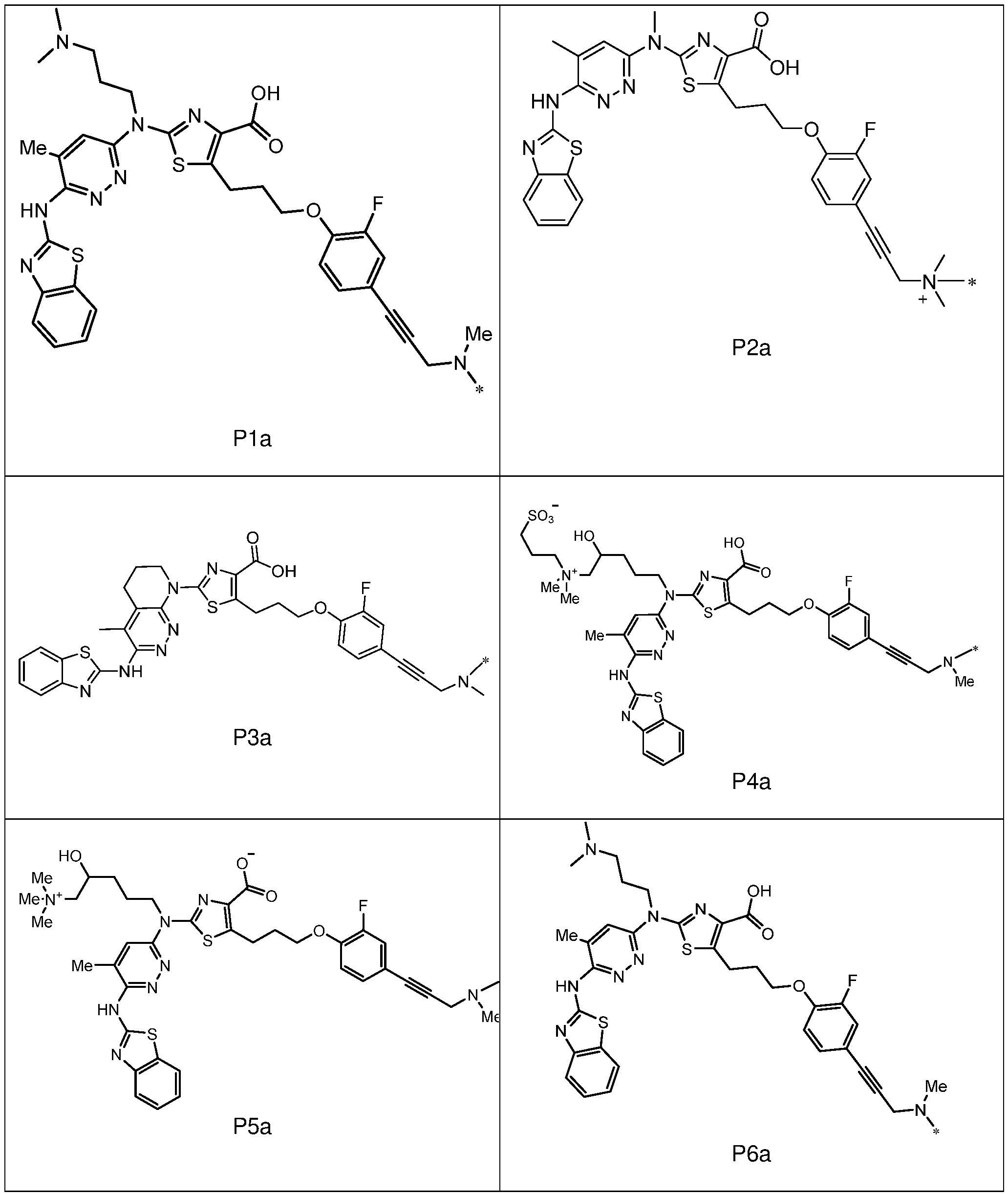


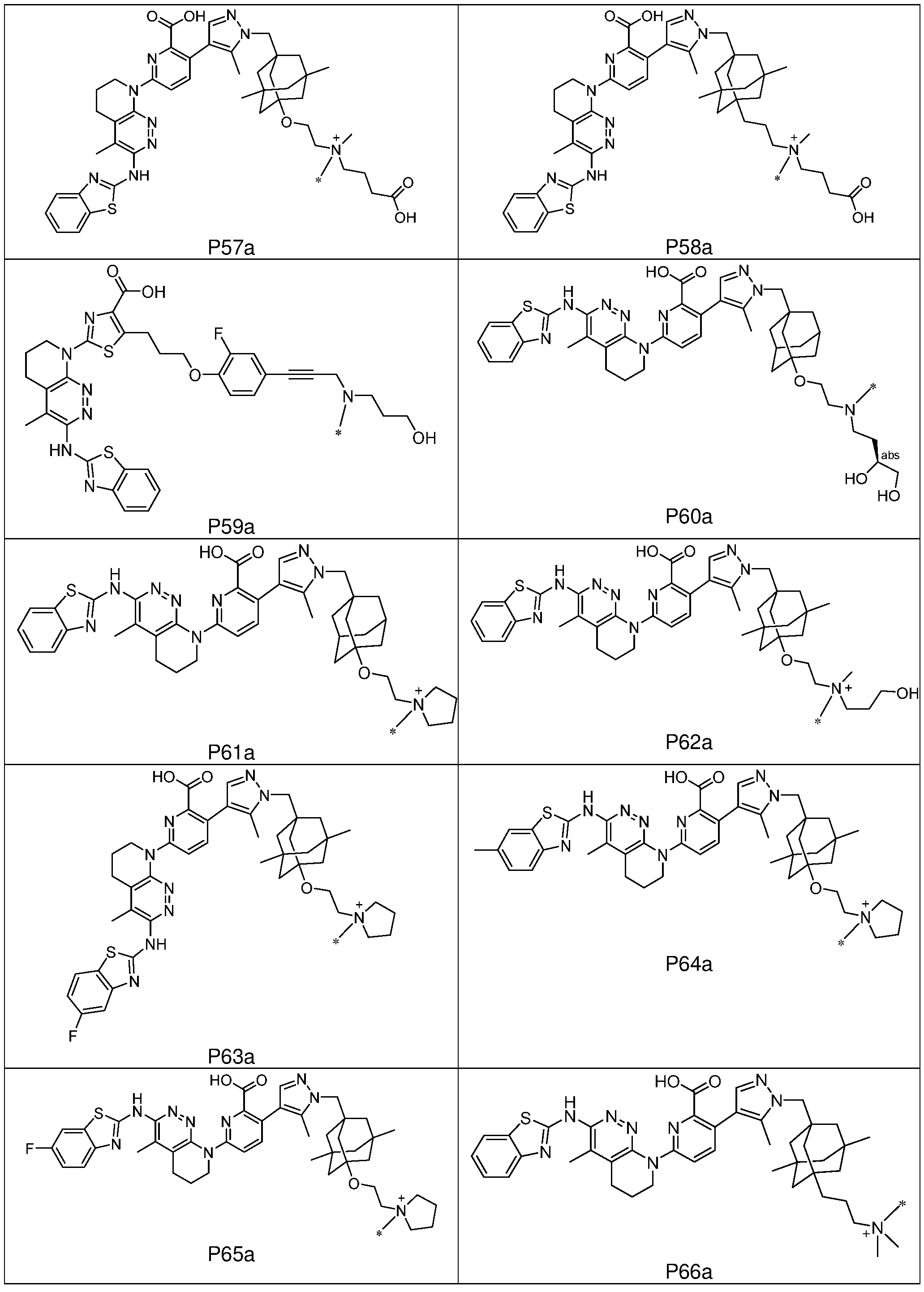


여기서 
일부 실시양태에서, -(L-D)는 표 B로부터 선택된 화합물 또는 그의 거울상이성질체, 부분입체이성질체 및/또는 제약상 허용되는 염으로부터 형성된다. 일부 실시양태에서, 표 B의 화합물에서의 말레이미드 기 

표 B. 예시적인 링커 약물 기Table B. Exemplary linker drug compounds


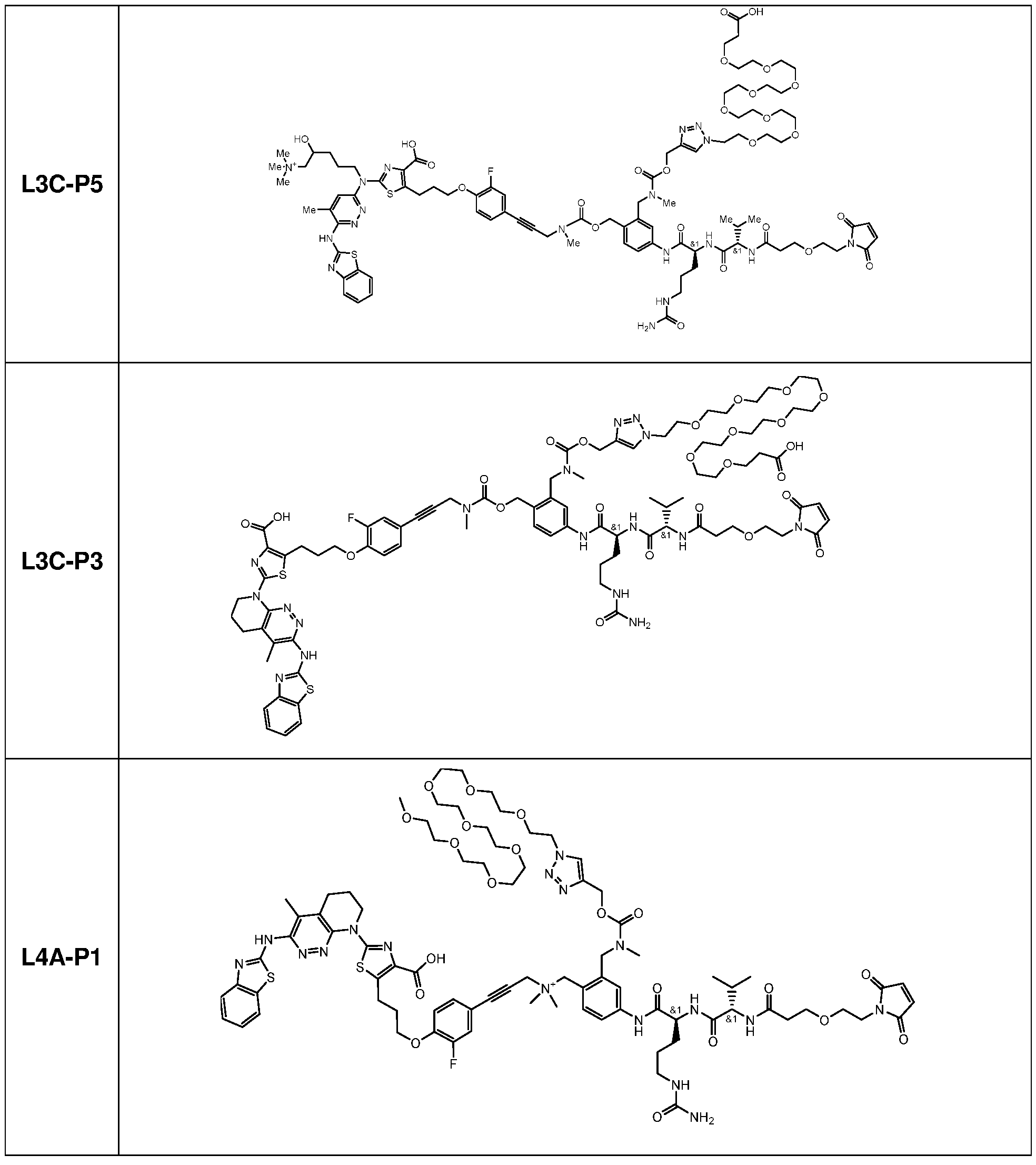
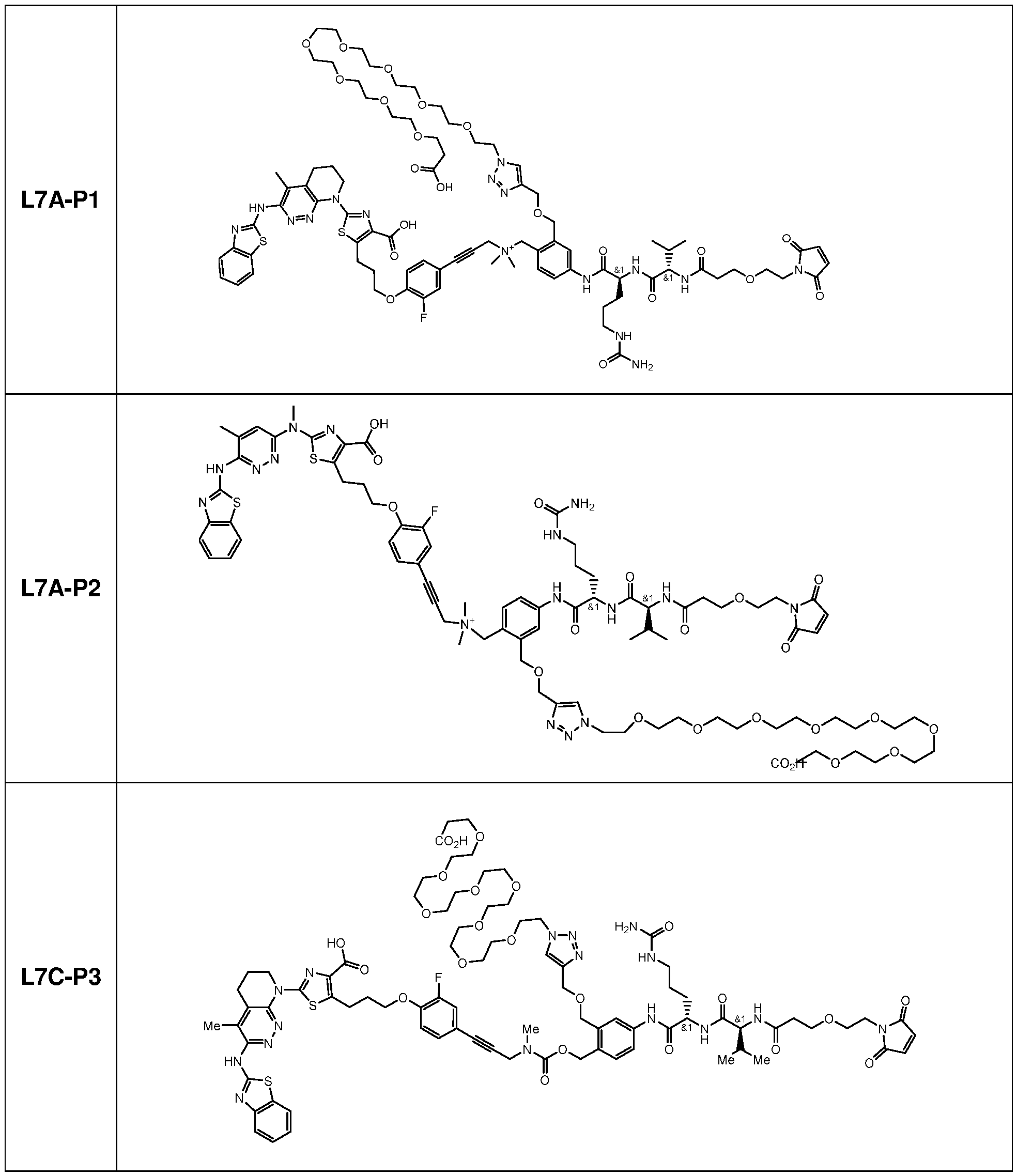
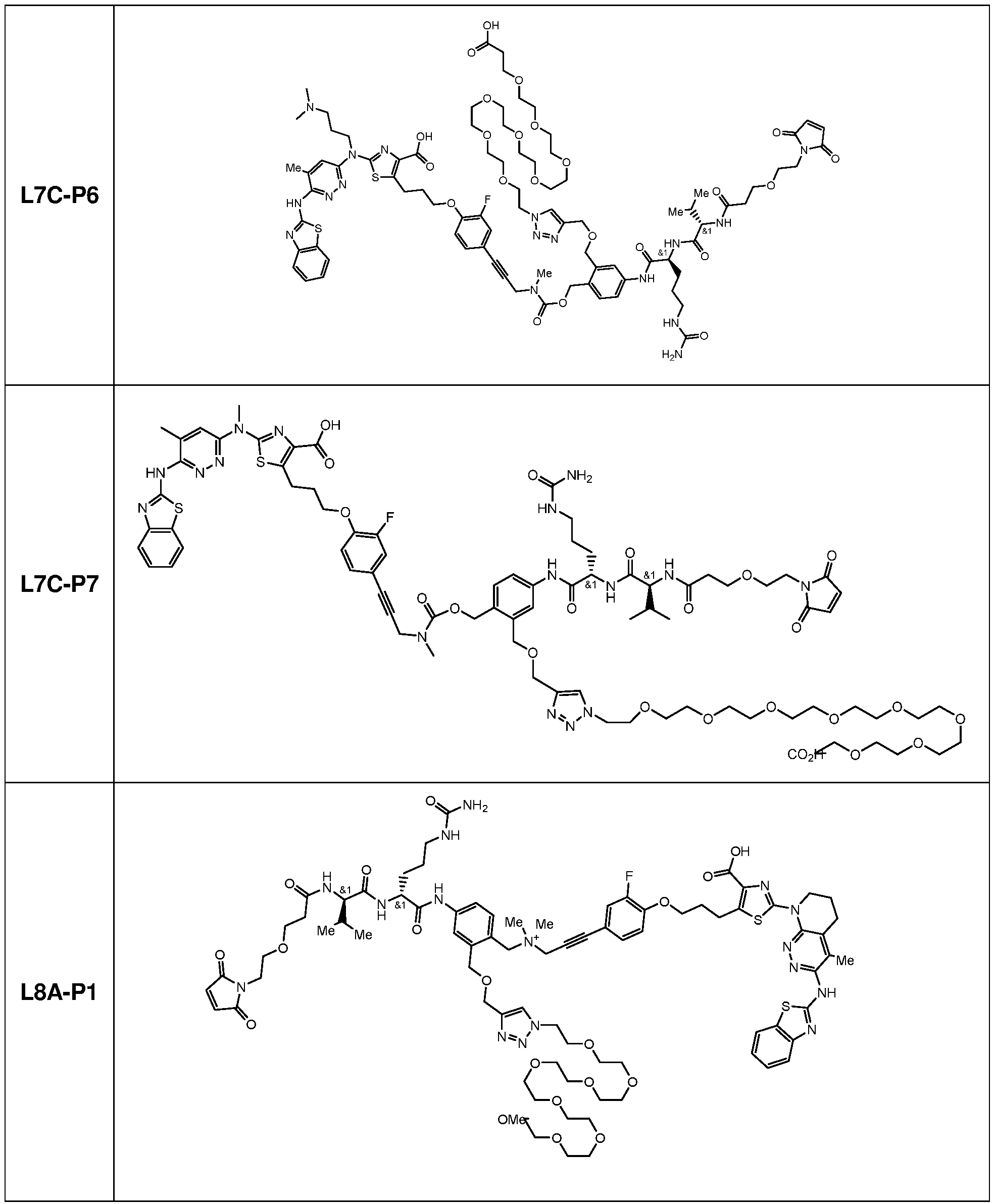


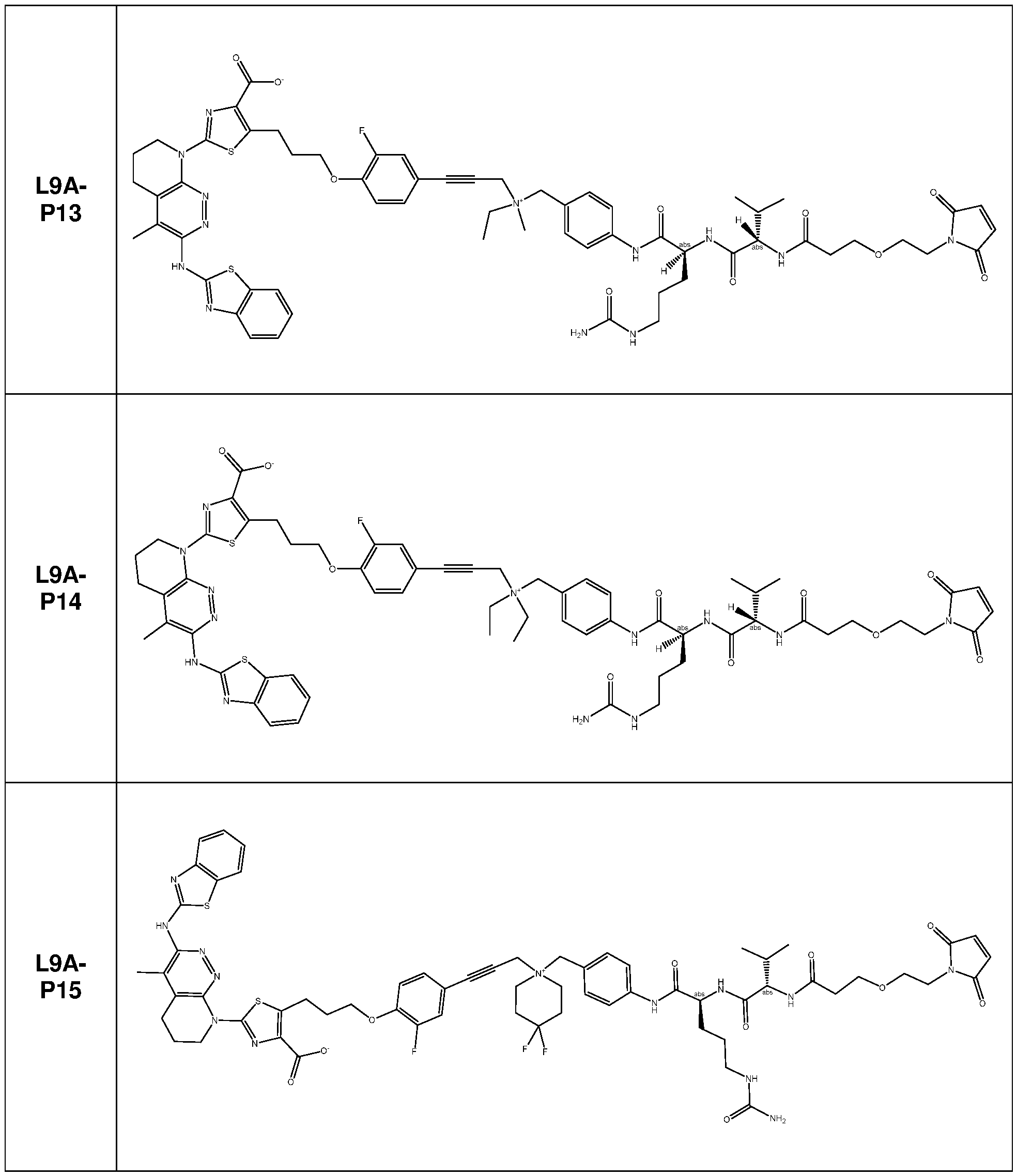


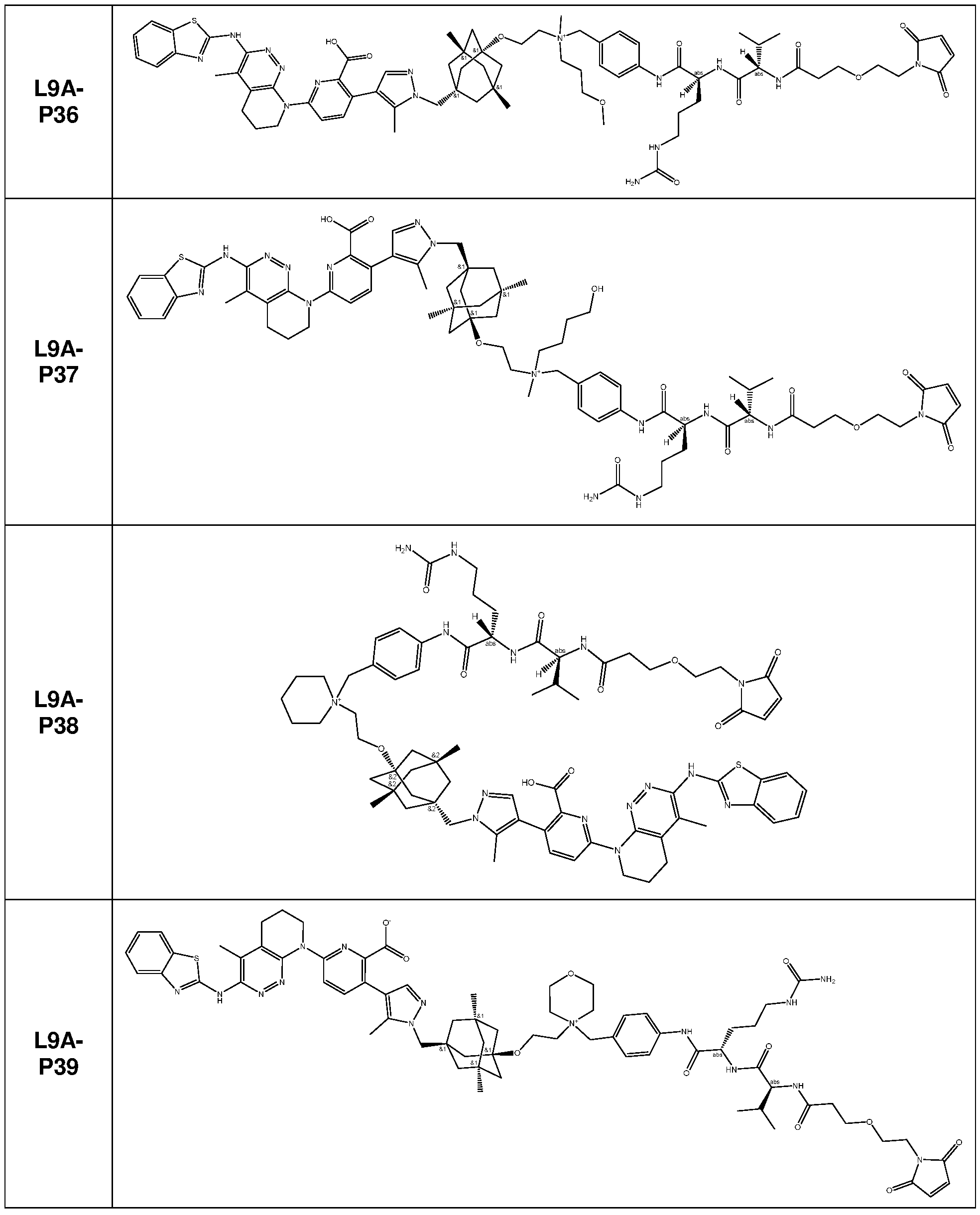


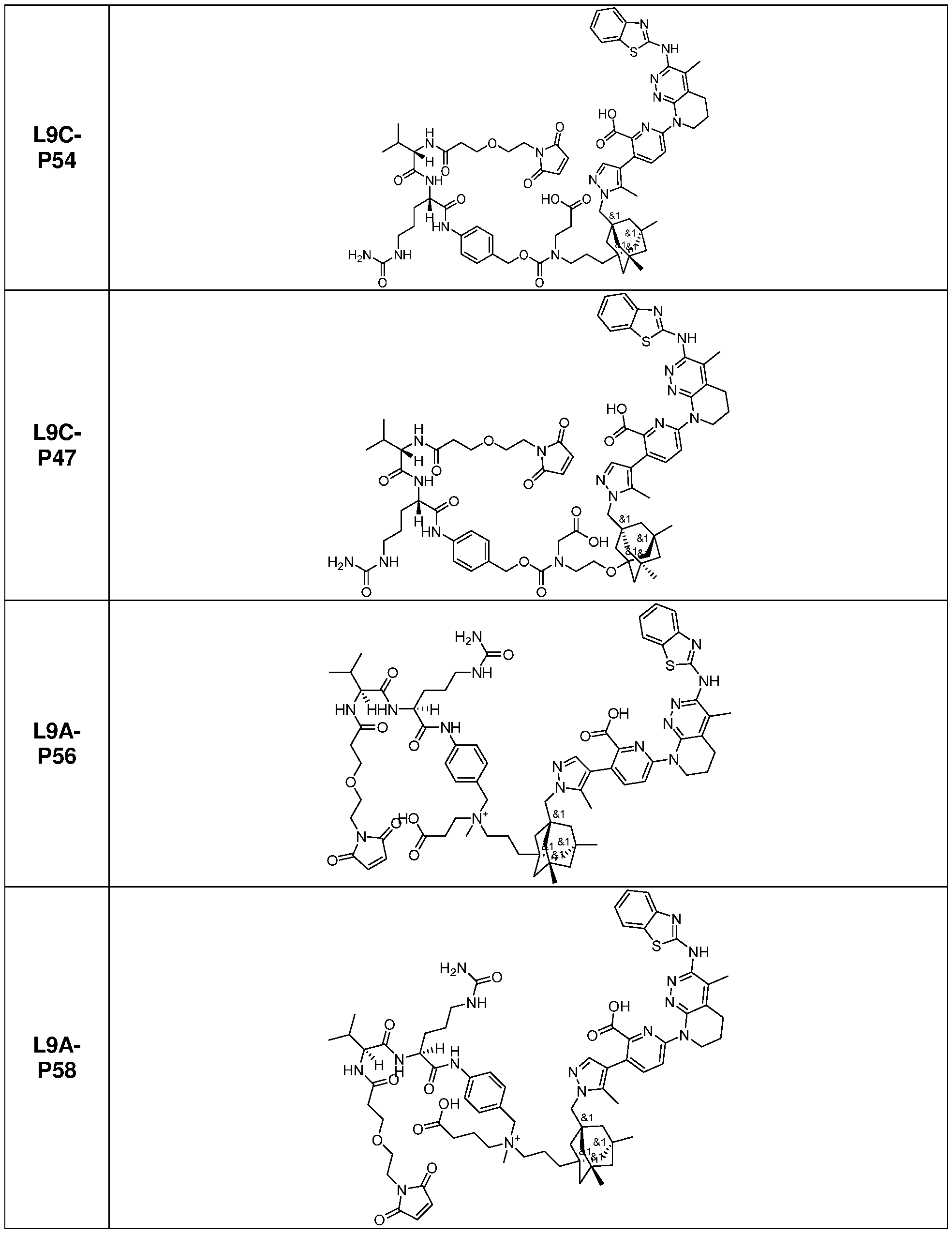


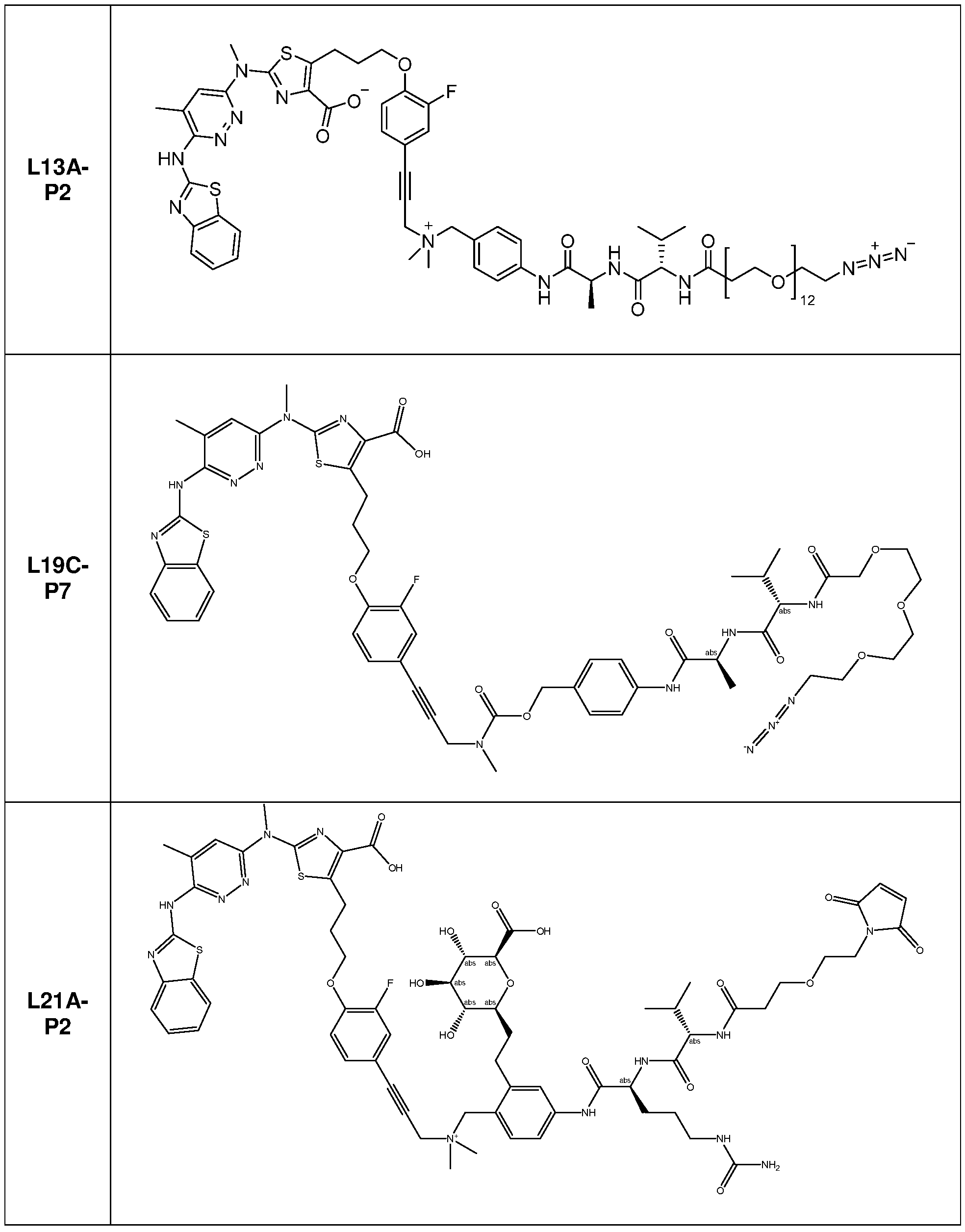
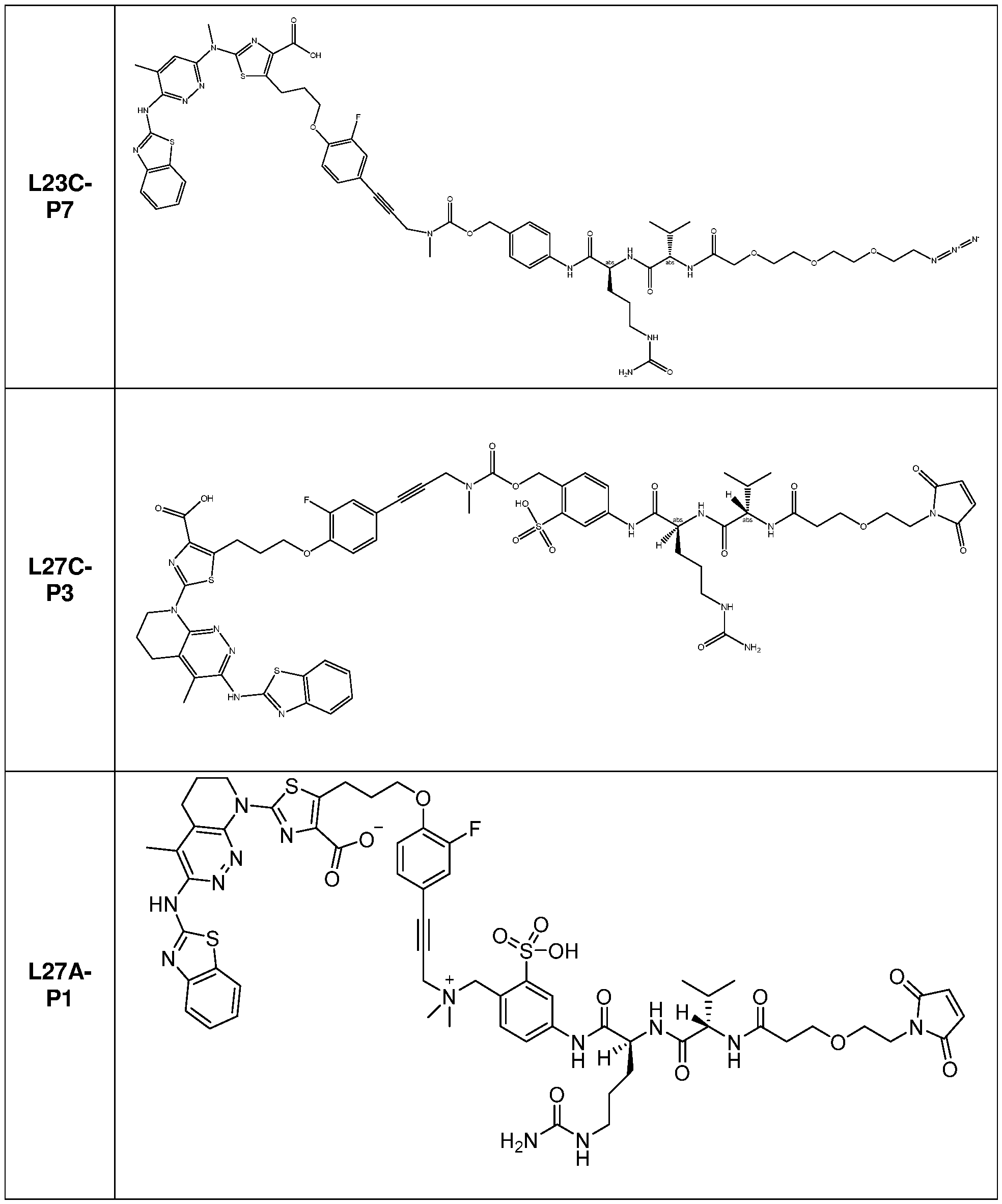

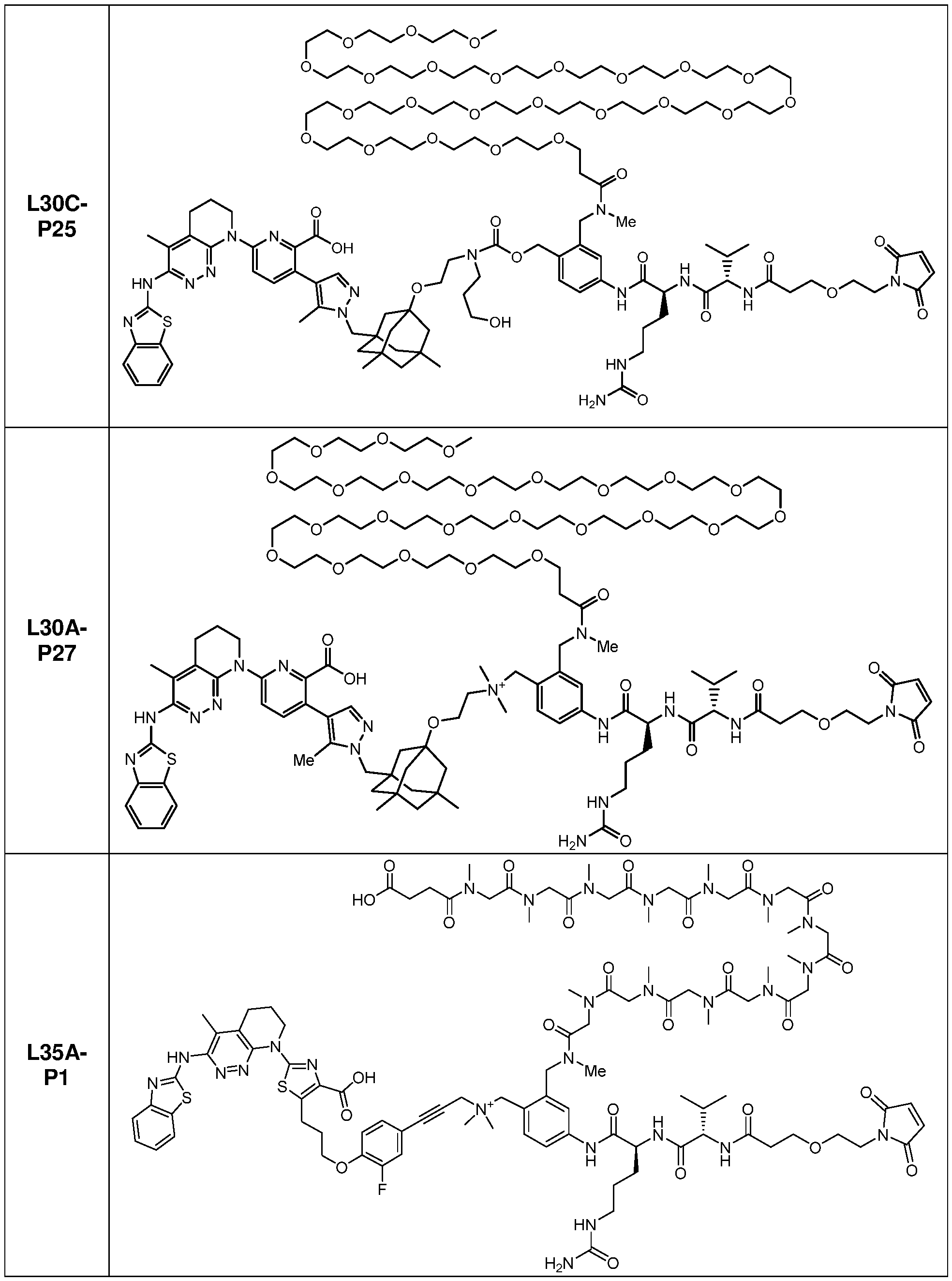
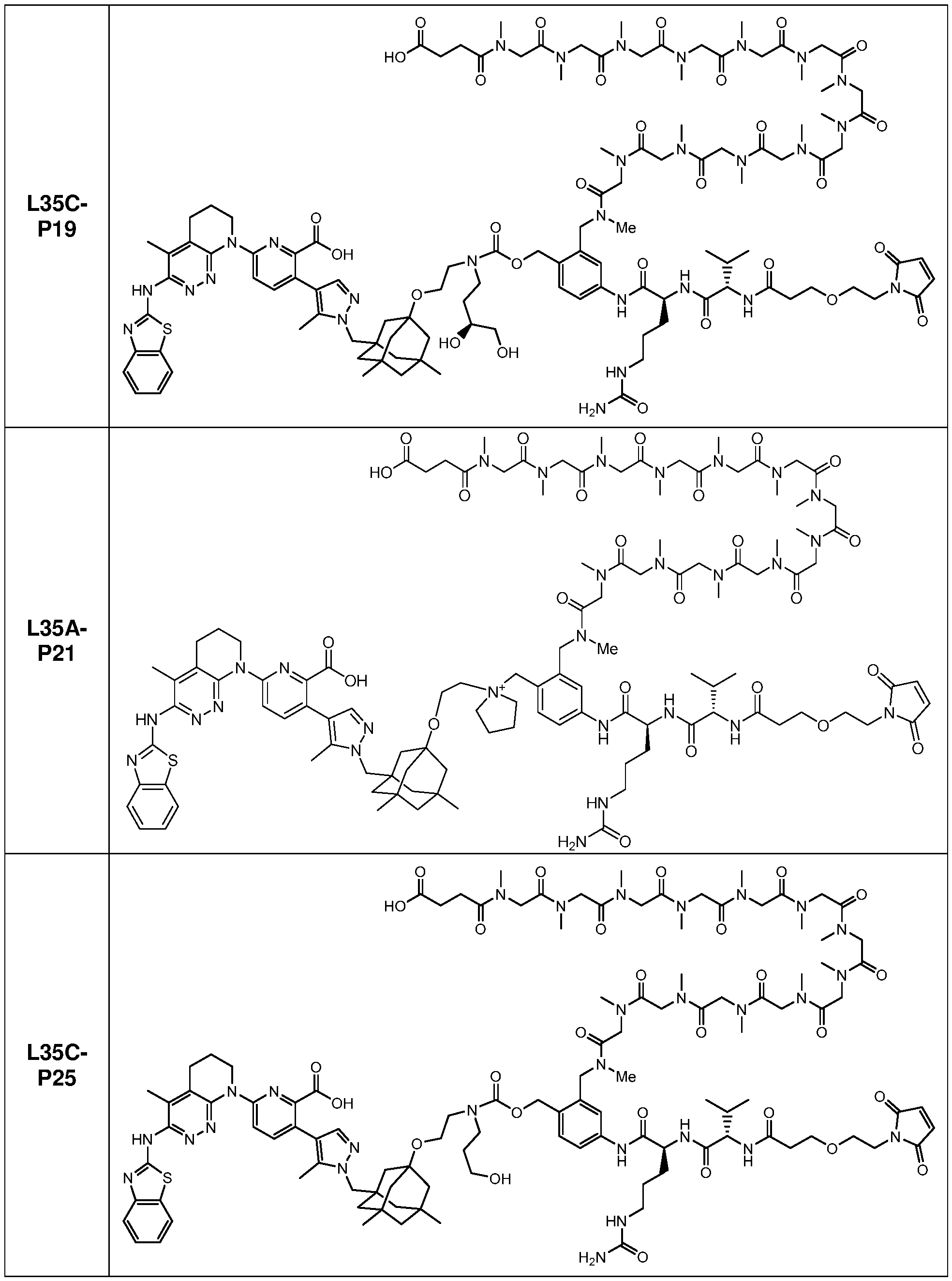
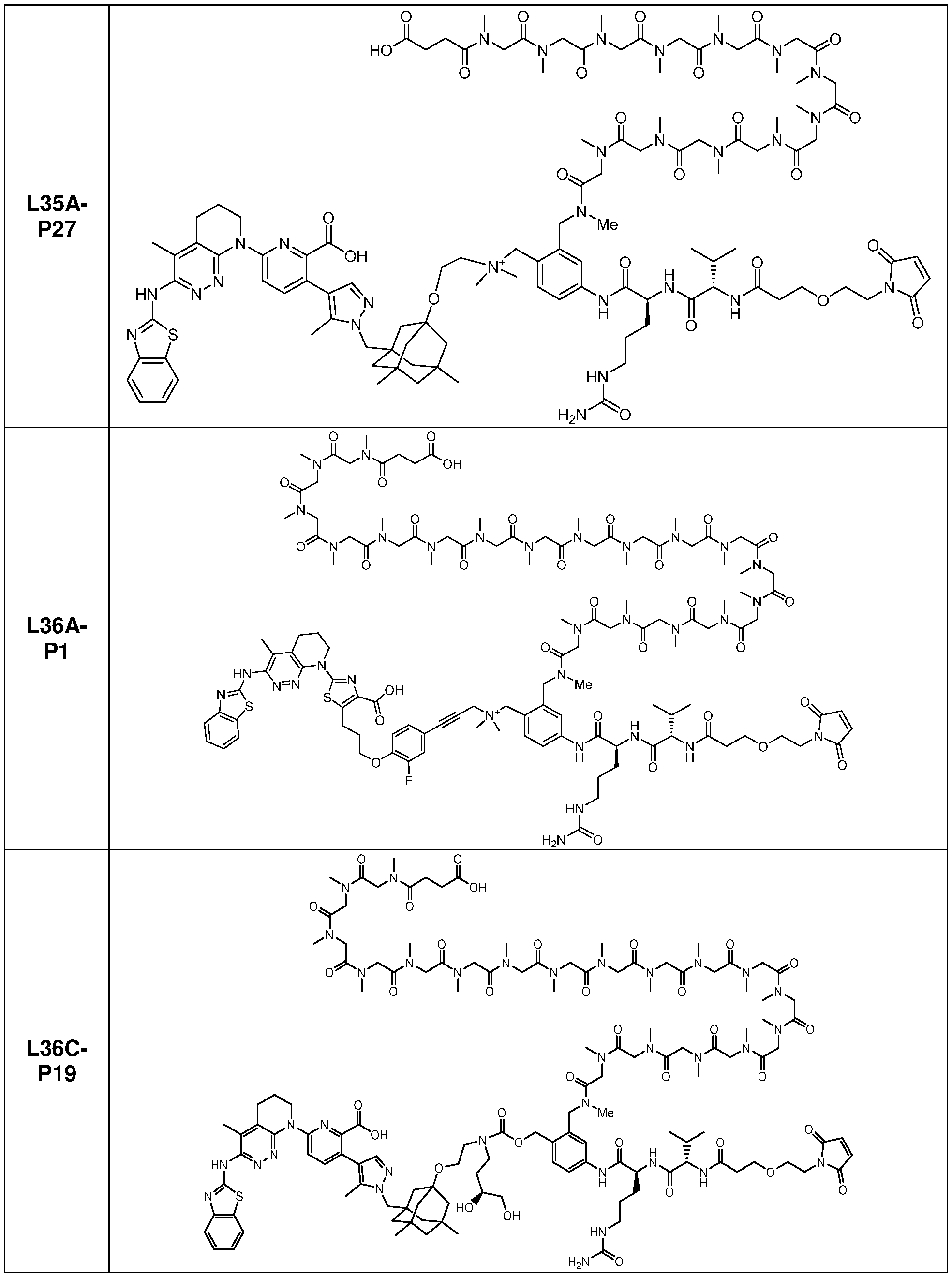

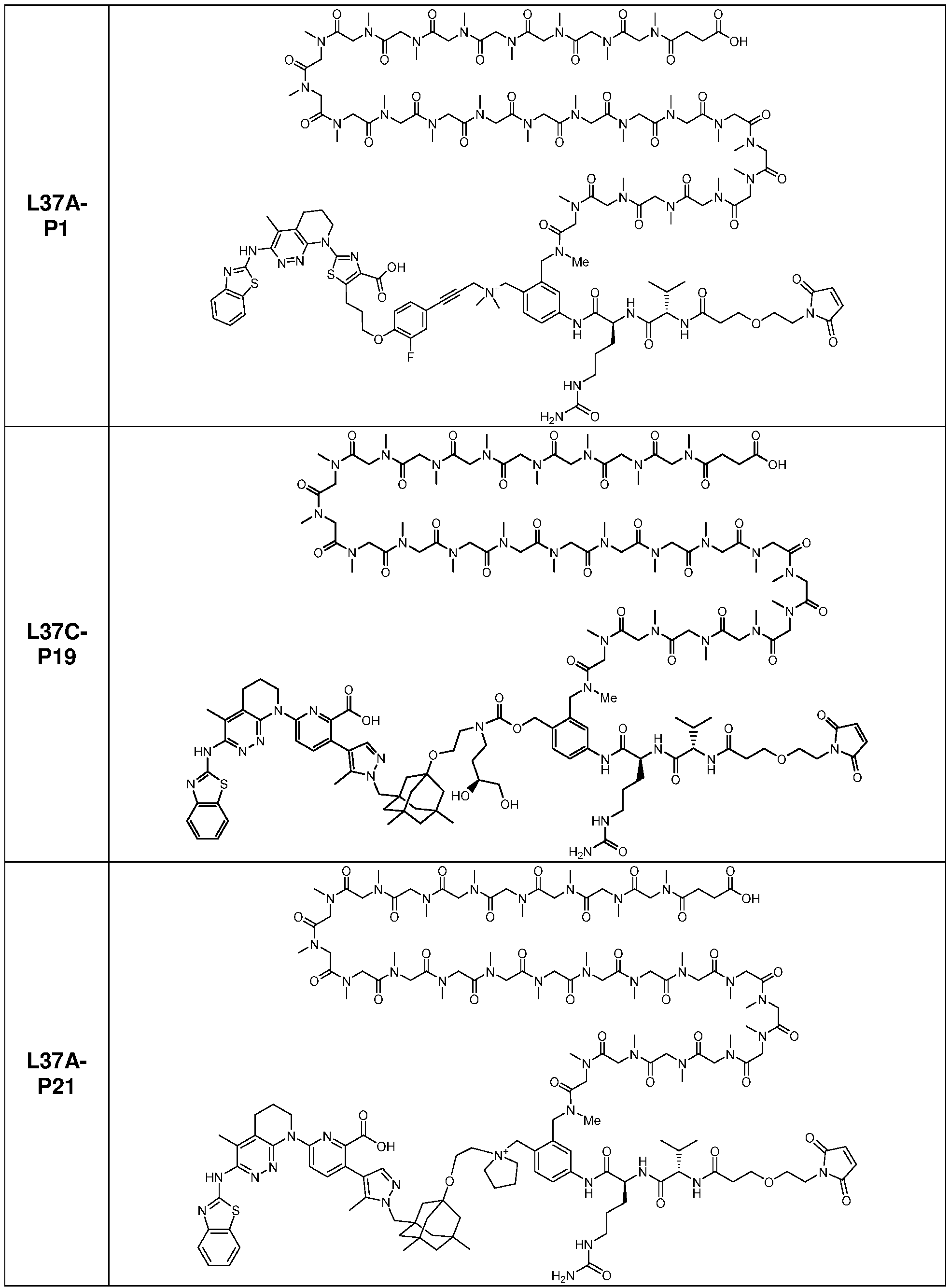

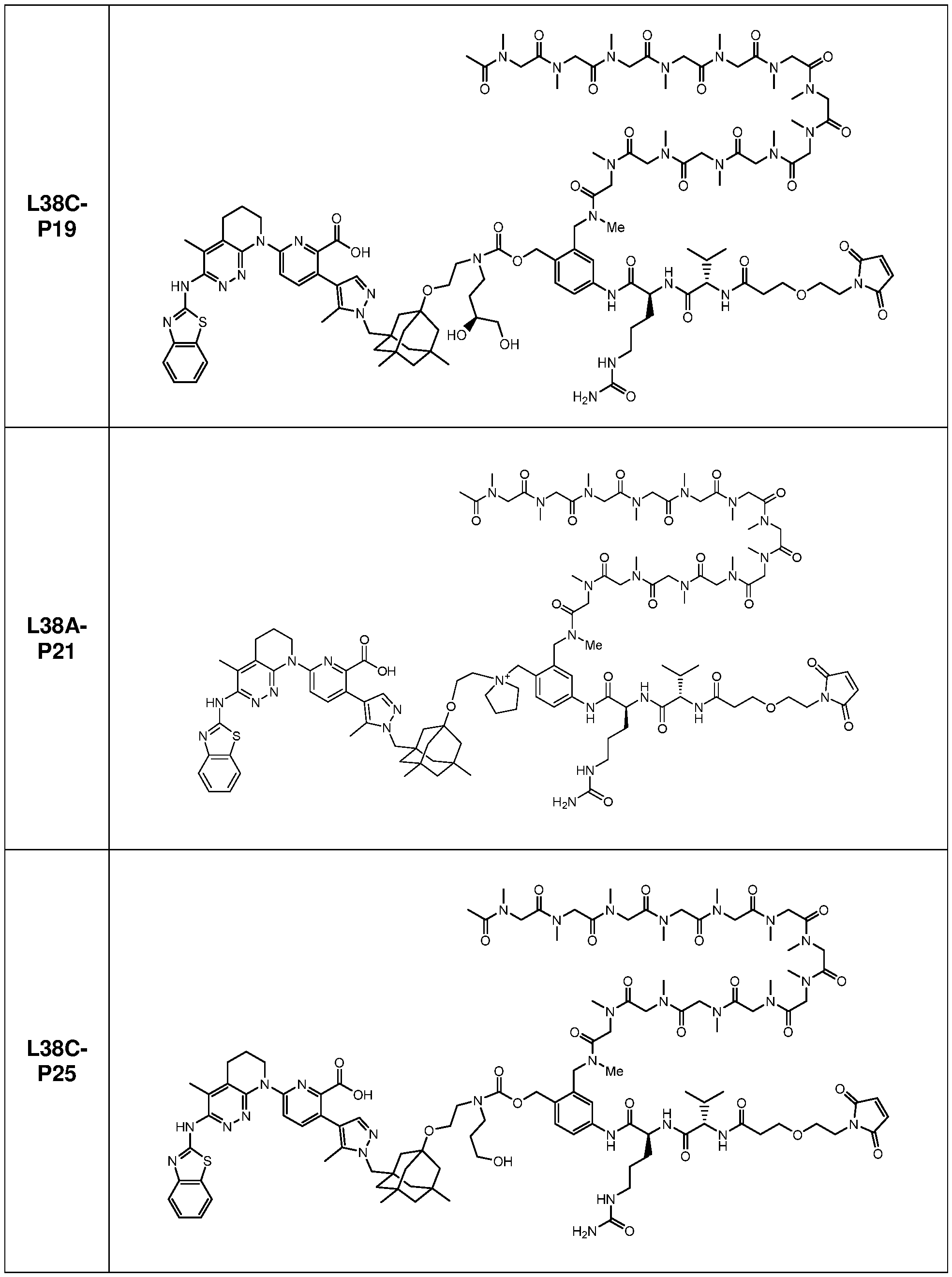
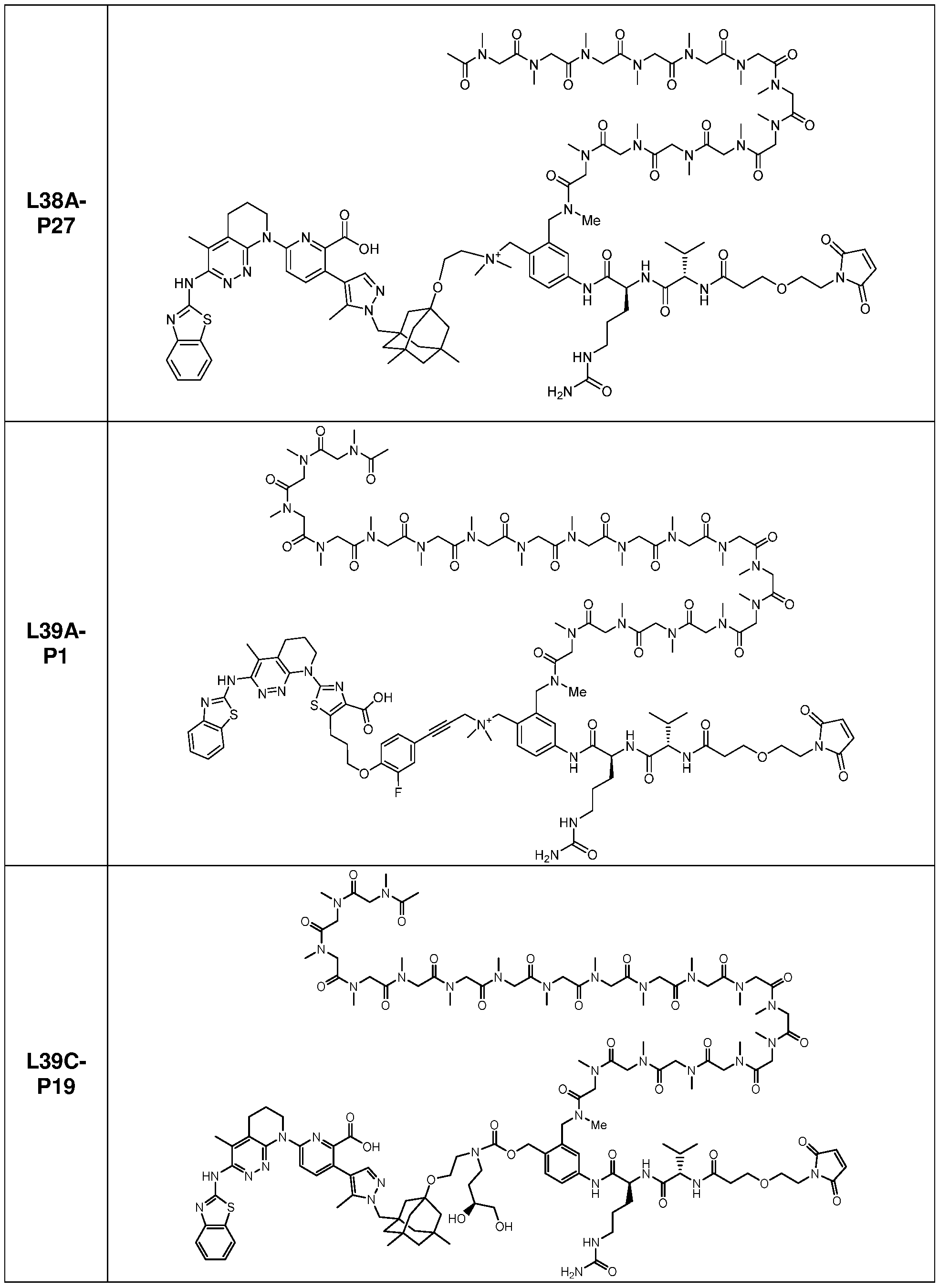


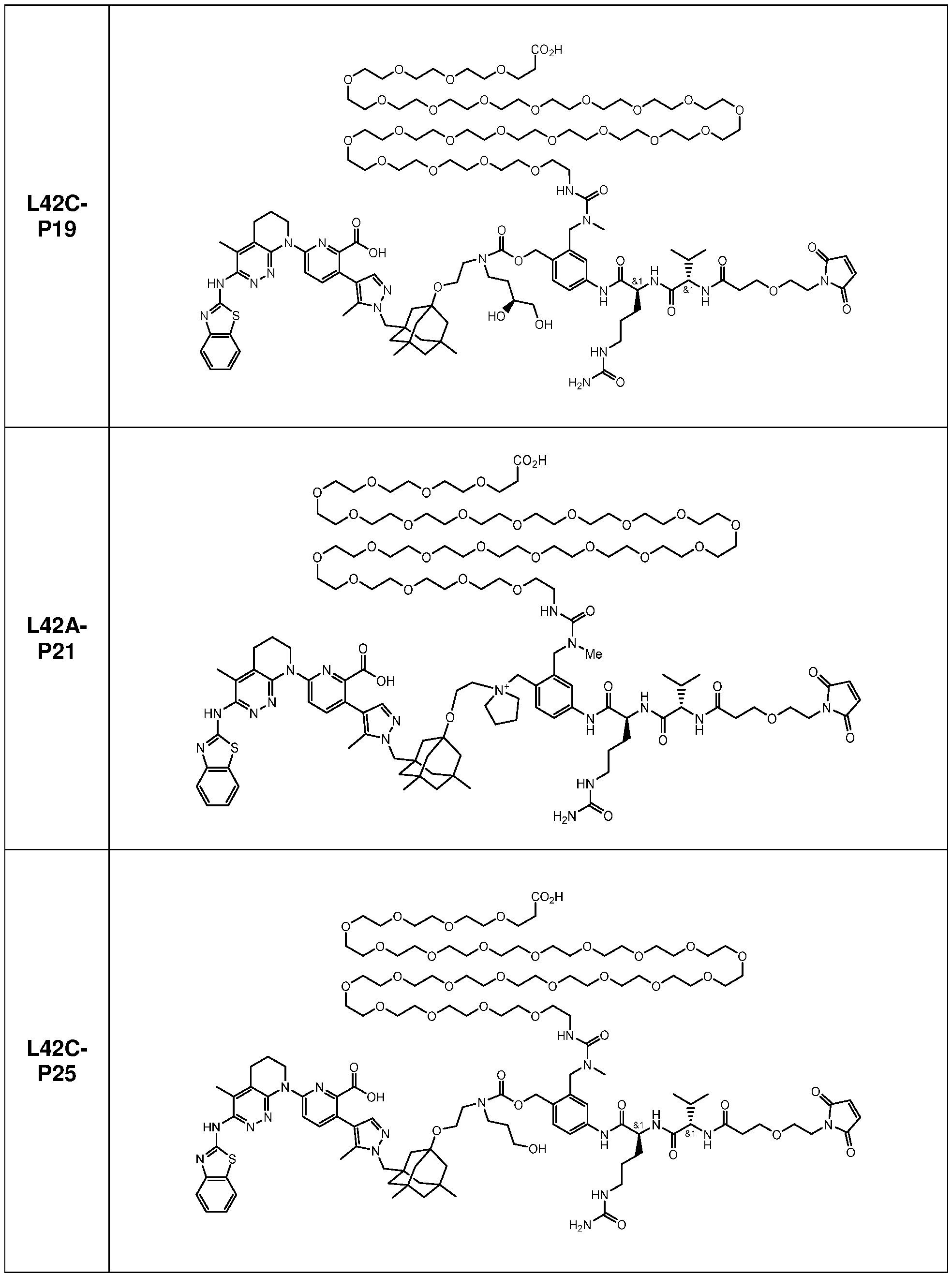


일부 실시양태에서, 항체-약물 접합체는 표 1에 제시된 구조 중 어느 하나에 따른 화학식을 갖는다.In some embodiments, the antibody-drug conjugate has a chemical formula according to any one of the structures set forth in Table 1.
표 1. 예시적인 ADC 구조Table 1. Exemplary ADC architecture

*Ab: 본원에 기재된 임의의 항체 (예를 들어, EphA2-DANAPA 항체)*Ab: Any antibody described herein (e.g., EphA2-DANAPA antibody)
상기 도시된 ADC는 또한 하기 화학식에 의해 나타내어질 수 있다:The ADC illustrated above can also be represented by the following chemical formula:
Ab-(L-D)p (1),Ab-(LD) p (1),
여기서 Ab는 상기 도시된 링커-페이로드 (L/P)에 공유 연결된 항-EphA2 항체 또는 그의 항원 단편을 나타내고; p는 1 내지 16의 정수이다. 일부 실시양태에서, p는 1 내지 8의 정수이다. 일부 실시양태에서, p는 1 내지 5의 정수이다. 일부 실시양태에서, p는 2 내지 4의 정수이다. 일부 실시양태에서, p는 2이다. 일부 실시양태에서, p는 4이다. 일부 실시양태에서, p는 액체 크로마토그래피-질량 분광측정법 (LC-MS)에 의해 결정된다.wherein Ab represents an anti-EphA2 antibody or an antigen fragment thereof covalently linked to the linker-payload (L/P) depicted above; and p is an integer from 1 to 16. In some embodiments, p is an integer from 1 to 8. In some embodiments, p is an integer from 1 to 5. In some embodiments, p is an integer from 2 to 4. In some embodiments, p is 2. In some embodiments, p is 4. In some embodiments, p is determined by liquid chromatography-mass spectrometry (LC-MS).
본원에 사용된 "L/P"는 본원에 개시된 링커-페이로드, 링커-약물 또는 링커-화합물을 지칭하고, 용어 "L#-P#" 및 "L#-C#"은 본원에 개시된 특정 링커-약물을 지칭하는 것으로 상호교환가능하게 사용되는 한편, 코드 "P#" 및 "C#"은 달리 명시되지 않는 한 특정 화합물을 지칭하는 것으로 상호교환가능하게 사용된다. 예를 들어, "L1-C1" 및 "L1-P1" 둘 다는 본원에 개시된 동일한 링커-페이로드 구조를 지칭하는 한편, "C1" 및 "P1" 둘 다는 상기 중 어느 것의 거울상이성질체, 부분입체이성질체, 회전장애이성질체, 중수소화 유도체 및/또는 제약상 허용되는 염을 포함한 본원에 개시된 동일한 화합물을 나타낸다.As used herein, "L/P" refers to a linker-payload, linker-drug or linker-compound disclosed herein, and the terms "L#-P#" and "L#-C#" are used interchangeably to refer to particular linker-drugs disclosed herein, while the codes "P#" and "C#" are used interchangeably to refer to particular compounds, unless otherwise specified. For example, both "L1-C1" and "L1-P1" refer to the same linker-payload structure disclosed herein, while both "C1" and "P1" represent the same compound disclosed herein, including enantiomers, diastereomers, atropisomers, deuterated derivatives and/or pharmaceutically acceptable salts of any of the above.
일부 실시양태에서, 항체-약물 접합체 (예를 들어, 본원에 기재된 임의의 예시적인 항체-약물 접합체)의 다중 카피를 포함하는 조성물이 또한 본원에 제공된다. 일부 실시양태에서, 조성물 중 항체-약물 접합체의 평균 p는 약 2 내지 약 4이다.In some embodiments, also provided herein are compositions comprising multiple copies of an antibody-drug conjugate (e.g., any of the exemplary antibody-drug conjugates described herein). In some embodiments, the average p of the antibody-drug conjugates in the composition is from about 2 to about 4.
일부 실시양태에서, 항체-약물 접합체 (예를 들어, 본원에 기재된 임의의 예시적인 항체-약물 접합체) 또는 조성물 (예를 들어, 본원에 기재된 임의의 예시적인 조성물) 및 제약상 허용되는 담체를 포함하는 제약 조성물이 또한 본원에 제공된다.In some embodiments, also provided herein is a pharmaceutical composition comprising an antibody-drug conjugate (e.g., any of the exemplary antibody-drug conjugates described herein) or composition (e.g., any of the exemplary compositions described herein) and a pharmaceutically acceptable carrier.
일부 실시양태에서, 예를 들어 암을 치료하는 데 있어서 기재된 ADC 화합물 및 조성물에 대한 치료 용도가 본원에 추가로 제공된다. 일부 실시양태에서, 본 개시내용은 암 (예를 들어, ADC의 항체 또는 항원-결합 단편에 의해 표적화된 EphA2 항원을 발현하는 암)을 치료하는 방법을 제공한다. 일부 실시양태에서, 본 개시내용은 대상체에서 암 세포 집단의 확장을 감소시키거나 둔화시키는 방법을 제공한다. 일부 실시양태에서, 본 개시내용은 암을 갖거나 갖는 것으로 의심되는 대상체가 본원에 개시된 ADC 화합물 또는 조성물을 사용한 치료에 대해 반응성일지 여부를 결정하는 방법을 제공한다.In some embodiments, further provided herein are therapeutic uses for the ADC compounds and compositions described herein, for example, in treating cancer. In some embodiments, the present disclosure provides a method for treating a cancer (e.g., a cancer expressing an EphA2 antigen targeted by an antibody or antigen-binding fragment of an ADC). In some embodiments, the present disclosure provides a method for reducing or slowing the expansion of a cancer cell population in a subject. In some embodiments, the present disclosure provides a method for determining whether a subject having or suspected of having cancer will be responsive to treatment with an ADC compound or composition disclosed herein.
예시적인 실시양태는 암을 갖거나 갖는 것으로 의심되는 대상체를 치료하는 방법으로서, 대상체에게 치료 유효량의 항체-약물 접합체, 조성물 또는 제약 조성물 (예를 들어, 본원에 개시된 임의의 예시적인 항체-약물 접합체, 조성물 또는 제약 조성물)을 투여하는 것을 포함하는 방법이다. 일부 실시양태에서, 암은 표적 항원 EphA2를 발현한다. 일부 실시양태에서, 암은 종양 또는 혈액암이다. 일부 실시양태에서, 암은 유방암, 다발성 골수종, 형질 세포 골수종, 백혈병, 림프종, 육종, 위암, 급성 골수성 백혈병, 방광암, 뇌암, 골수암, 자궁경부암, 만성 림프구성 백혈병, 결장직장암, 식도암, 간세포성암, 림프모구성 백혈병, 예컨대 급성 림프모구성 백혈병, 여포성 림프종, T-세포 또는 B-세포 기원의 림프성 악성종양, 흑색종, 골수 백혈병, 골수종, 구강암, 난소암, 비소세포 폐암, 전립선암, 소세포 폐암, 비장암, 췌장암, 위암, 결장암 또는 두경부암이다. 일부 실시양태에서, 암은 림프종 또는 위암이다. 일부 실시양태에서, 암은 유방암, 비소세포 폐암, 췌장암, 식도암, 두경부암, 위암, 방광암 또는 결장암이다. 일부 실시양태에서, 암은 유방암 또는 비소세포 폐암이다.An exemplary embodiment is a method of treating a subject having or suspected of having cancer, the method comprising administering to the subject a therapeutically effective amount of an antibody-drug conjugate, composition or pharmaceutical composition (e.g., any of the exemplary antibody-drug conjugates, compositions or pharmaceutical compositions disclosed herein). In some embodiments, the cancer expresses the target antigen EphA2. In some embodiments, the cancer is a tumor or a hematological malignancy. In some embodiments, the cancer is breast cancer, multiple myeloma, plasma cell myeloma, leukemia, lymphoma, sarcoma, gastric cancer, acute myeloid leukemia, bladder cancer, brain cancer, bone marrow cancer, cervical cancer, chronic lymphocytic leukemia, colorectal cancer, esophageal cancer, hepatocellular cancer, lymphoblastic leukemia such as acute lymphoblastic leukemia, follicular lymphoma, lymphoid malignancy of T-cell or B-cell origin, melanoma, myeloid leukemia, myeloma, oral cancer, ovarian cancer, non-small cell lung cancer, prostate cancer, small cell lung cancer, spleen cancer, pancreatic cancer, stomach cancer, colon cancer, or head and neck cancer. In some embodiments, the cancer is lymphoma or stomach cancer. In some embodiments, the cancer is breast cancer, non-small cell lung cancer, pancreatic cancer, esophageal cancer, head and neck cancer, stomach cancer, bladder cancer, or colon cancer. In some embodiments, the cancer is breast cancer or non-small cell lung cancer.
또 다른 예시적인 실시양태는 대상체에서 종양의 성장을 감소시키거나 억제하는 방법으로서, 대상체에게 치료 유효량의 항체-약물 접합체, 조성물 또는 제약 조성물 (예를 들어, 본원에 개시된 임의의 예시적인 항체-약물 접합체, 조성물 또는 제약 조성물)을 투여하는 것을 포함하는 방법이다. 일부 실시양태에서, 종양은 표적 항원 EphA2를 발현한다. 일부 실시양태에서, 종양은 유방암, 위암, 방광암, 뇌암, 자궁경부암, 결장직장암, 식도암, 간세포성암, 흑색종, 구강암, 난소암, 비소세포 폐암, 전립선암, 소세포 폐암, 췌장암, 위암, 결장암 또는 비장암이다. 일부 실시양태에서, 종양은 위암이다. 일부 실시양태에서, 종양은 유방암, 비소세포 폐암, 췌장암, 식도암, 두경부암, 위암, 방광암 또는 결장암이다. 일부 실시양태에서, 종양은 유방암 또는 비소세포 폐암이다. 일부 실시양태에서, 항체-약물 접합체, 조성물 또는 제약 조성물의 투여는 종양의 성장을 적어도 약 10%, 적어도 약 20%, 적어도 약 30%, 적어도 약 40%, 적어도 약 50%, 적어도 약 60%, 적어도 약 70%, 적어도 약 80%, 적어도 약 90%, 적어도 약 95% 또는 적어도 약 99%만큼 감소시키거나 억제한다.Another exemplary embodiment is a method of reducing or inhibiting the growth of a tumor in a subject, comprising administering to the subject a therapeutically effective amount of an antibody-drug conjugate, composition, or pharmaceutical composition (e.g., any of the exemplary antibody-drug conjugates, compositions, or pharmaceutical compositions disclosed herein). In some embodiments, the tumor expresses the target antigen EphA2. In some embodiments, the tumor is breast cancer, gastric cancer, bladder cancer, brain cancer, cervical cancer, colorectal cancer, esophageal cancer, hepatocellular cancer, melanoma, oral cancer, ovarian cancer, non-small cell lung cancer, prostate cancer, small cell lung cancer, pancreatic cancer, gastric cancer, colon cancer, or spleen cancer. In some embodiments, the tumor is gastric cancer. In some embodiments, the tumor is breast cancer, non-small cell lung cancer, pancreatic cancer, esophageal cancer, head and neck cancer, gastric cancer, bladder cancer, or colon cancer. In some embodiments, the tumor is breast cancer or non-small cell lung cancer. In some embodiments, administration of the antibody-drug conjugate, composition or pharmaceutical composition reduces or inhibits tumor growth by at least about 10%, at least about 20%, at least about 30%, at least about 40%, at least about 50%, at least about 60%, at least about 70%, at least about 80%, at least about 90%, at least about 95% or at least about 99%.
또 다른 예시적인 실시양태는 대상체에서 암 세포 집단의 확장을 감소시키거나 둔화시키는 방법으로서, 대상체에게 치료 유효량의 항체-약물 접합체, 조성물 또는 제약 조성물 (예를 들어, 본원에 개시된 임의의 예시적인 항체-약물 접합체, 조성물 또는 제약 조성물)을 투여하는 것을 포함하는 방법이다. 일부 실시양태에서, 암 세포 집단은 표적 항원 EphA2를 발현한다.Another exemplary embodiment is a method of reducing or slowing the expansion of a cancer cell population in a subject, comprising administering to the subject a therapeutically effective amount of an antibody-drug conjugate, composition or pharmaceutical composition (e.g., any of the exemplary antibody-drug conjugates, compositions or pharmaceutical compositions disclosed herein). In some embodiments, the cancer cell population expresses the target antigen EphA2.
일부 실시양태에서, 암 세포 집단은 종양 또는 혈액암으로부터의 것이다. 일부 실시양태에서, 암 세포 집단은 유방암, 다발성 골수종, 형질 세포 골수종, 백혈병, 림프종, 육종, 위암, 급성 골수성 백혈병, 방광암, 뇌암, 골수암, 자궁경부암, 만성 림프구성 백혈병, 결장직장암, 식도암, 간세포성암, 림프모구성 백혈병, 예컨대 급성 림프모구성 백혈병, 여포성 림프종, T-세포 또는 B-세포 기원의 림프성 악성종양, 흑색종, 골수 백혈병, 골수종, 구강암, 난소암, 비소세포 폐암, 전립선암, 소세포 폐암, 비장암, 췌장암, 위암, 결장암 또는 두경부암으로부터의 것이다. 일부 실시양태에서, 암 세포 집단은 림프종 또는 위암으로부터의 것이다. 일부 실시양태에서, 암 세포 집단은 유방암, 비소세포 폐암, 췌장암, 식도암, 두경부암, 위암, 방광암 또는 결장암으로부터의 것이다. 일부 실시양태에서, 암 세포 집단은 유방암 또는 비소세포 폐암으로부터의 것이다. 일부 실시양태에서, 항체-약물 접합체, 조성물 또는 제약 조성물의 투여는 암 세포 집단을 적어도 약 10%, 적어도 약 20%, 적어도 약 30%, 적어도 약 40%, 적어도 약 50%, 적어도 약 60%, 적어도 약 70%, 적어도 약 80%, 적어도 약 90%, 적어도 약 95% 또는 적어도 약 99%만큼 감소시킨다. 일부 실시양태에서, 항체-약물 접합체, 조성물 또는 제약 조성물의 투여는 암 세포 집단의 확장을 적어도 약 10%, 적어도 약 20%, 적어도 약 30%, 적어도 약 40%, 적어도 약 50%, 적어도 약 60%, 적어도 약 70%, 적어도 약 80%, 적어도 약 90%, 적어도 약 95% 또는 적어도 약 99%만큼 둔화시킨다.In some embodiments, the cancer cell population is from a tumor or a hematological cancer. In some embodiments, the cancer cell population is from breast cancer, multiple myeloma, plasma cell myeloma, leukemia, lymphoma, sarcoma, gastric cancer, acute myeloid leukemia, bladder cancer, brain cancer, bone marrow cancer, cervical cancer, chronic lymphocytic leukemia, colorectal cancer, esophageal cancer, hepatocellular cancer, lymphoblastic leukemia such as acute lymphoblastic leukemia, follicular lymphoma, lymphoid malignancy of T-cell or B-cell origin, melanoma, myeloid leukemia, myeloma, oral cancer, ovarian cancer, non-small cell lung cancer, prostate cancer, small cell lung cancer, spleen cancer, pancreatic cancer, stomach cancer, colon cancer, or head and neck cancer. In some embodiments, the cancer cell population is from a lymphoma or a stomach cancer. In some embodiments, the cancer cell population is from breast cancer, non-small cell lung cancer, pancreatic cancer, esophageal cancer, head and neck cancer, gastric cancer, bladder cancer, or colon cancer. In some embodiments, the cancer cell population is from breast cancer or non-small cell lung cancer. In some embodiments, administration of the antibody-drug conjugate, composition, or pharmaceutical composition reduces the cancer cell population by at least about 10%, at least about 20%, at least about 30%, at least about 40%, at least about 50%, at least about 60%, at least about 70%, at least about 80%, at least about 90%, at least about 95%, or at least about 99%. In some embodiments, administration of the antibody-drug conjugate, composition or pharmaceutical composition slows the expansion of a cancer cell population by at least about 10%, at least about 20%, at least about 30%, at least about 40%, at least about 50%, at least about 60%, at least about 70%, at least about 80%, at least about 90%, at least about 95%, or at least about 99%.
또 다른 예시적인 실시양태는 암을 갖거나 갖는 것으로 의심되는 대상체를 치료하는 데 사용하기 위한 항체-약물 접합체, 조성물 또는 제약 조성물 (예를 들어, 본원에 개시된 임의의 예시적인 항체-약물 접합체, 조성물 또는 제약 조성물)이다. 일부 실시양태에서, 암은 표적 항원 EphA2를 발현한다. 일부 실시양태에서, 암은 종양 또는 혈액암이다. 일부 실시양태에서, 암은 유방암, 다발성 골수종, 형질 세포 골수종, 백혈병, 림프종, 육종, 위암, 급성 골수성 백혈병, 방광암, 뇌암, 골수암, 자궁경부암, 만성 림프구성 백혈병, 결장직장암, 식도암, 간세포성암, 림프모구성 백혈병, 예컨대 급성 림프모구성 백혈병, 여포성 림프종, T-세포 또는 B-세포 기원의 림프성 악성종양, 흑색종, 골수 백혈병, 골수종, 구강암, 난소암, 비소세포 폐암, 전립선암, 소세포 폐암, 비장암, 췌장암, 위암, 결장암 또는 두경부암이다. 일부 실시양태에서, 암은 림프종 또는 위암이다. 일부 실시양태에서, 암 세포 집단은 유방암, 비소세포 폐암, 췌장암, 식도암, 두경부암, 위암, 방광암 또는 결장암으로부터의 것이다. 일부 실시양태에서, 암 세포 집단은 유방암 또는 비소세포 폐암으로부터의 것이다.Another exemplary embodiment is an antibody-drug conjugate, composition or pharmaceutical composition (e.g., any of the exemplary antibody-drug conjugates, compositions or pharmaceutical compositions disclosed herein) for use in treating a subject having or suspected of having cancer. In some embodiments, the cancer expresses the target antigen EphA2. In some embodiments, the cancer is a tumor or a hematological cancer. In some embodiments, the cancer is breast cancer, multiple myeloma, plasma cell myeloma, leukemia, lymphoma, sarcoma, gastric cancer, acute myeloid leukemia, bladder cancer, brain cancer, bone marrow cancer, cervical cancer, chronic lymphocytic leukemia, colorectal cancer, esophageal cancer, hepatocellular cancer, lymphoblastic leukemia such as acute lymphoblastic leukemia, follicular lymphoma, lymphoid malignancy of T-cell or B-cell origin, melanoma, myeloid leukemia, myeloma, oral cancer, ovarian cancer, non-small cell lung cancer, prostate cancer, small cell lung cancer, spleen cancer, pancreatic cancer, stomach cancer, colon cancer, or head and neck cancer. In some embodiments, the cancer is lymphoma or stomach cancer. In some embodiments, the cancer cell population is from breast cancer, non-small cell lung cancer, pancreatic cancer, esophageal cancer, head and neck cancer, stomach cancer, bladder cancer, or colon cancer. In some embodiments, the cancer cell population is from breast cancer or non-small cell lung cancer.
또 다른 예시적인 실시양태는 암을 갖거나 갖는 것으로 의심되는 대상체를 치료하는 데 있어서 항체-약물 접합체, 조성물 또는 제약 조성물 (예를 들어, 본원에 개시된 임의의 예시적인 항체-약물 접합체, 조성물 또는 제약 조성물)의 용도이다. 일부 실시양태에서, 암은 표적 항원 EphA2를 발현한다. 일부 실시양태에서, 암은 종양 또는 혈액암이다. 일부 실시양태에서, 암은 유방암, 다발성 골수종, 형질 세포 골수종, 백혈병, 림프종, 육종, 위암, 급성 골수성 백혈병, 방광암, 뇌암, 골수암, 자궁경부암, 만성 림프구성 백혈병, 결장직장암, 식도암, 간세포성암, 림프모구성 백혈병, 예컨대 급성 림프모구성 백혈병, 여포성 림프종, T-세포 또는 B-세포 기원의 림프성 악성종양, 흑색종, 골수 백혈병, 골수종, 구강암, 난소암, 비소세포 폐암, 전립선암, 소세포 폐암, 비장암, 췌장암, 위암, 결장암 또는 두경부암이다. 일부 실시양태에서, 암은 림프종 또는 위암이다. 일부 실시양태에서, 암은 유방암, 비소세포 폐암, 췌장암, 식도암, 두경부암, 위암, 방광암 또는 결장암이다. 일부 실시양태에서, 암은 유방암 또는 비소세포 폐암이다.Another exemplary embodiment is the use of an antibody-drug conjugate, composition, or pharmaceutical composition (e.g., any of the exemplary antibody-drug conjugates, compositions, or pharmaceutical compositions disclosed herein) in treating a subject having or suspected of having cancer. In some embodiments, the cancer expresses the target antigen EphA2. In some embodiments, the cancer is a tumor or a hematological malignancy. In some embodiments, the cancer is breast cancer, multiple myeloma, plasma cell myeloma, leukemia, lymphoma, sarcoma, gastric cancer, acute myeloid leukemia, bladder cancer, brain cancer, bone marrow cancer, cervical cancer, chronic lymphocytic leukemia, colorectal cancer, esophageal cancer, hepatocellular cancer, lymphoblastic leukemia such as acute lymphoblastic leukemia, follicular lymphoma, lymphoid malignancy of T-cell or B-cell origin, melanoma, myeloid leukemia, myeloma, oral cancer, ovarian cancer, non-small cell lung cancer, prostate cancer, small cell lung cancer, spleen cancer, pancreatic cancer, stomach cancer, colon cancer, or head and neck cancer. In some embodiments, the cancer is lymphoma or stomach cancer. In some embodiments, the cancer is breast cancer, non-small cell lung cancer, pancreatic cancer, esophageal cancer, head and neck cancer, stomach cancer, bladder cancer, or colon cancer. In some embodiments, the cancer is breast cancer or non-small cell lung cancer.
또 다른 예시적인 실시양태는 암을 갖거나 갖는 것으로 의심되는 대상체를 치료하기 위한 의약을 제조하는 방법에 있어서 항체-약물 접합체, 조성물 또는 제약 조성물 (예를 들어, 본원에 개시된 임의의 예시적인 항체-약물 접합체, 조성물 또는 제약 조성물)의 용도이다. 일부 실시양태에서, 암은 표적 항원 EphA2를 발현한다. 일부 실시양태에서, 암은 종양 또는 혈액암이다. 일부 실시양태에서, 암은 유방암, 다발성 골수종, 형질 세포 골수종, 백혈병, 림프종, 육종, 위암, 급성 골수성 백혈병, 방광암, 뇌암, 골수암, 자궁경부암, 만성 림프구성 백혈병, 결장직장암, 식도암, 간세포성암, 림프모구성 백혈병, 예컨대 급성 림프모구성 백혈병, 여포성 림프종, T-세포 또는 B-세포 기원의 림프성 악성종양, 흑색종, 골수 백혈병, 골수종, 구강암, 난소암, 비소세포 폐암, 전립선암, 소세포 폐암, 비장암, 췌장암, 위암, 결장암 또는 두경부암이다. 일부 실시양태에서, 암은 림프종 또는 위암이다. 일부 실시양태에서, 암은 유방암, 비소세포 폐암, 췌장암, 식도암, 두경부암, 위암, 방광암 또는 결장암이다. 일부 실시양태에서, 암은 유방암 또는 비소세포 폐암이다.Another exemplary embodiment is the use of an antibody-drug conjugate, composition or pharmaceutical composition (e.g., any of the exemplary antibody-drug conjugates, compositions or pharmaceutical compositions disclosed herein) in a method of preparing a medicament for treating a subject having or suspected of having cancer. In some embodiments, the cancer expresses the target antigen EphA2. In some embodiments, the cancer is a tumor or a hematological cancer. In some embodiments, the cancer is breast cancer, multiple myeloma, plasma cell myeloma, leukemia, lymphoma, sarcoma, gastric cancer, acute myeloid leukemia, bladder cancer, brain cancer, bone marrow cancer, cervical cancer, chronic lymphocytic leukemia, colorectal cancer, esophageal cancer, hepatocellular cancer, lymphoblastic leukemia such as acute lymphoblastic leukemia, follicular lymphoma, lymphoid malignancy of T-cell or B-cell origin, melanoma, myeloid leukemia, myeloma, oral cancer, ovarian cancer, non-small cell lung cancer, prostate cancer, small cell lung cancer, spleen cancer, pancreatic cancer, stomach cancer, colon cancer, or head and neck cancer. In some embodiments, the cancer is lymphoma or stomach cancer. In some embodiments, the cancer is breast cancer, non-small cell lung cancer, pancreatic cancer, esophageal cancer, head and neck cancer, stomach cancer, bladder cancer, or colon cancer. In some embodiments, the cancer is breast cancer or non-small cell lung cancer.
또 다른 예시적인 실시양태는 암을 갖거나 갖는 것으로 의심되는 대상체로부터의 생물학적 샘플을 제공하고; 샘플을 항체-약물 접합체와 접촉시키고; 샘플 내의 암 세포에 대한 항체-약물 접합체의 결합을 검출함으로써 상기 대상체가 항체-약물 접합체, 조성물 또는 제약 조성물 (예를 들어, 본원에 개시된 임의의 예시적인 항체-약물 접합체, 조성물 또는 제약 조성물)을 사용한 치료에 대해 반응성일지 여부를 결정하는 방법이다. 일부 실시양태에서, 샘플 내의 암 세포는 표적 항원을 발현한다. 일부 실시양태에서, 암은 표적 항원 EphA2를 발현한다. 일부 실시양태에서, 암은 종양 또는 혈액암이다. 일부 실시양태에서, 암은 유방암, 다발성 골수종, 형질 세포 골수종, 백혈병, 림프종, 육종, 위암, 급성 골수성 백혈병, 방광암, 뇌암, 골수암, 자궁경부암, 만성 림프구성 백혈병, 결장직장암, 식도암, 간세포성암, 림프모구성 백혈병, 예컨대 급성 림프모구성 백혈병, 여포성 림프종, T-세포 또는 B-세포 기원의 림프성 악성종양, 흑색종, 골수 백혈병, 골수종, 구강암, 난소암, 비소세포 폐암, 전립선암, 소세포 폐암, 비장암, 췌장암, 위암, 결장암 또는 두경부암이다. 일부 실시양태에서, 암은 림프종 또는 위암이다. 일부 실시양태에서, 암은 유방암, 비소세포 폐암, 췌장암, 식도암, 두경부암, 위암, 방광암 또는 결장암이다. 일부 실시양태에서, 암은 유방암 또는 비소세포 폐암이다. 일부 실시양태에서, 샘플은 조직 생검 샘플, 혈액 샘플 또는 골수 샘플이다.Another exemplary embodiment is a method of determining whether the subject is responsive to treatment with an antibody-drug conjugate, composition or pharmaceutical composition (e.g., any of the exemplary antibody-drug conjugates, compositions or pharmaceutical compositions disclosed herein) by providing a biological sample from a subject having or suspected of having cancer; contacting the sample with an antibody-drug conjugate; and detecting binding of the antibody-drug conjugate to cancer cells in the sample. In some embodiments, the cancer cells in the sample express a target antigen. In some embodiments, the cancer expresses the target antigen EphA2. In some embodiments, the cancer is a tumor or a hematological malignancy. In some embodiments, the cancer is breast cancer, multiple myeloma, plasma cell myeloma, leukemia, lymphoma, sarcoma, gastric cancer, acute myeloid leukemia, bladder cancer, brain cancer, bone marrow cancer, cervical cancer, chronic lymphocytic leukemia, colorectal cancer, esophageal cancer, hepatocellular cancer, lymphoblastic leukemia such as acute lymphoblastic leukemia, follicular lymphoma, lymphoid malignancy of T-cell or B-cell origin, melanoma, myeloid leukemia, myeloma, oral cancer, ovarian cancer, non-small cell lung cancer, prostate cancer, small cell lung cancer, spleen cancer, pancreatic cancer, stomach cancer, colon cancer, or head and neck cancer. In some embodiments, the cancer is lymphoma or stomach cancer. In some embodiments, the cancer is breast cancer, non-small cell lung cancer, pancreatic cancer, esophageal cancer, head and neck cancer, stomach cancer, bladder cancer, or colon cancer. In some embodiments, the cancer is breast cancer or non-small cell lung cancer. In some embodiments, the sample is a tissue biopsy sample, a blood sample, or a bone marrow sample.
기재된 ADC 화합물 및 조성물을 생산하는 방법이 또한 개시된다. 예시적인 실시양태는 항체 또는 항원-결합 단편을 Bcl-xL 억제제에 연결되거나 공유 부착된 절단가능한 링커와 접합을 허용하는 조건 하에 반응시킴으로써 항체-약물 접합체를 생산하는 방법이다.Methods for producing the described ADC compounds and compositions are also disclosed. An exemplary embodiment is a method for producing an antibody-drug conjugate by reacting an antibody or antigen-binding fragment under conditions permitting conjugation with a cleavable linker linked to or covalently attached to a Bcl-xL inhibitor.
도 1은 EphA2-DANAPA-L11C-P25 ADC (30 mg/kg, SD, IV), 3207-DANAPA-L11C-P25 이소형 대조군 ADC (30 mg/kg, SD, IV) 및 EphA2-DANAPA CysMab 대조군 항체 (3.75 mg/kg, SD, IV) 단독 또는 파클리탁셀 (12.5 mg/kg, SD, IV)과의 조합의 EBC-1 성장 동역학을 보여준다.
도 2는 상이한 투여량의 EphA2-DANAPA-L11C-P25 ADC 단독 또는 파클리탁셀과의 조합의 EBC-1 성장 동역학을 보여준다.
도 3은 EphA2-DANAPA-L11C-P25 ADC, 3207-DANAPA-L11C-P25 이소형 대조군 ADC 및 EphA2-DANAPA CysMab 대조군 항체 단독 또는 겜시타빈과의 조합의 Panc03.27 성장 동역학을 보여준다.
도 4는 EphA2-DANAPA-L11C-P25 ADC, 3207-DANAPA-L11C-P25 이소형 대조군 ADC 및 EphA2-DANAPA CysMab 대조군 항체 단독 또는 MAPK 억제제 LXH254 및 CFF272와의 조합의 Panc03.27 성장 동역학을 보여준다.
도 5는 EphA2를 과다발현하도록 형질도입된 HKB-11 세포주에 대한 EphA2 항체의 결합 친화도를 보여준다 (라운드 1).
도 6은 EphA2를 과다발현하도록 형질도입된 HKB-11 세포주에 대한 EphA2 항체의 결합 친화도를 보여준다 (라운드 2).
도 7은 EphA2를 과다발현하도록 형질도입된 HKB-11 세포주에 대한 EphA2 항체의 결합 친화도를 보여준다 (라운드 3).
도 8은 항-EphA2 IgG 항체 1C1 및 그의 경쇄 점 돌연변이 IgG에 대한 HKB11 세포 상에서 발현된 인간 EphA2의 결합 동역학을 보여준다.
도 9a 및 9b는 항-EphA2 IgG 항체 1C1 및 그의 경쇄 점 돌연변이 IgG에 대한 인간, 마우스 및 시노 EphA2 엑토도메인의 결합 동역학을 보여준다.Figure 1 shows EBC-1 growth kinetics of EphA2-DANAPA-L11C-P25 ADC (30 mg/kg, SD, IV), 3207-DANAPA-L11C-P25 isotype control ADC (30 mg/kg, SD, IV) and EphA2-DANAPA CysMab control antibody (3.75 mg/kg, SD, IV) alone or in combination with paclitaxel (12.5 mg/kg, SD, IV).
Figure 2 shows EBC-1 growth kinetics of different doses of EphA2-DANAPA-L11C-P25 ADC alone or in combination with paclitaxel.
Figure 3 shows the growth kinetics of Panc03.27 in the presence of EphA2-DANAPA-L11C-P25 ADC, 3207-DANAPA-L11C-P25 isotype control ADC, and EphA2-DANAPA CysMab control antibody alone or in combination with gemcitabine.
Figure 4 shows the growth kinetics of Panc03.27 in the presence of EphA2-DANAPA-L11C-P25 ADC, 3207-DANAPA-L11C-P25 isotype control ADC, and EphA2-DANAPA CysMab control antibody alone or in combination with MAPK inhibitors LXH254 and CFF272.
Figure 5 shows the binding affinity of EphA2 antibodies to HKB-11 cell lines transduced to overexpress EphA2 (round 1).
Figure 6 shows the binding affinity of EphA2 antibodies to HKB-11 cells transduced to overexpress EphA2 (round 2).
Figure 7 shows the binding affinity of EphA2 antibodies to HKB-11 cell lines transduced to overexpress EphA2 (round 3).
Figure 8 shows the binding kinetics of human EphA2 expressed on HKB11 cells to anti-EphA2 IgG antibody 1C1 and its light chain point mutant IgG.
Figures 9a and 9b show the binding kinetics of human, mouse, and cyno EphA2 ectodomains to anti-EphA2 IgG antibody 1C1 and its light chain point mutant IgGs.
개시된 조성물 및 방법은 본 개시내용의 일부를 형성하는 첨부 도면과 관련하여 취해진 하기 상세한 설명을 참조하여 보다 용이하게 이해될 수 있다.The disclosed compositions and methods may be more readily understood by reference to the following detailed description taken in connection with the accompanying drawings, which form a part of this disclosure.
본문 전반에 걸쳐, 설명은 조성물 및 조성물을 사용하는 방법을 언급한다. 본 개시내용이 조성물과 연관된 특색 또는 실시양태를 기재하거나 청구하는 경우에, 이러한 특색 또는 실시양태는 조성물을 사용하는 방법에 동등하게 적용가능하다. 마찬가지로, 본 개시내용이 조성물을 사용하는 방법과 연관된 특색 또는 실시양태를 기재하거나 청구하는 경우에, 이러한 특색 또는 실시양태는 조성물에 동등하게 적용가능하다.Throughout the text, the description refers to compositions and methods of using the compositions. Where the disclosure describes or claims features or embodiments associated with a composition, such features or embodiments are equally applicable to methods of using the composition. Likewise, where the disclosure describes or claims features or embodiments associated with methods of using the composition, such features or embodiments are equally applicable to the composition.
값의 범위가 표현되는 경우에, 이는 범위 내의 임의의 특정한 값을 사용하는 실시양태를 포함한다. 추가로, 범위로 기재된 값에 대한 언급은 그 범위 내의 각각의 및 모든 값을 포함한다. 모든 범위는 그의 종점을 포함하고 조합가능하다. 값이 선행 "약"의 사용에 의해 근사치로서 표현되는 경우에, 특정한 값은 또 다른 실시양태를 형성하는 것으로 이해될 것이다. 특정한 수치 값에 대한 언급은 문맥이 달리 명확하게 지시하지 않는 한 적어도 그 특정한 값을 포함한다. "또는"의 사용은 그의 사용의 구체적 문맥이 달리 지시하지 않는 한 "및/또는"을 의미할 것이다. 본원에 인용된 모든 참고문헌은 임의의 목적을 위해 참조로 포함된다. 참고문헌 및 명세서가 상충되는 경우에, 명세서가 우선할 것이다.When a range of values is expressed, this includes embodiments using any particular value within the range. Additionally, reference to a value stated as a range includes each and every value within that range. All ranges are inclusive of their endpoints and are combinable. When values are expressed as approximations, by use of the antecedent "about," it will be understood that the particular value forms another embodiment. Reference to a particular numerical value includes at least that particular value unless the context clearly dictates otherwise. The use of "or" will mean "and/or" unless the specific context of its use dictates otherwise. All references cited herein are incorporated by reference for any purpose. In the event of a conflict between the references and the specification, the specification will control.
설명의 문맥이 달리 나타내지 않는 한, 예를 들어 연결성의 특정 지점(들)을 나타내는 기호의 부재 하에, 구조의 구조 또는 단편이 그려질 때, 이는 그 자체로 사용되거나 또는 ADC의 다른 성분에 부착될 수 있고, 이는 임의의 배향으로, 예를 들어 항체가 화학적 모이어티, 예컨대 링커-약물에 임의의 적합한 부착 지점에서 부착된 상태로 그렇게 사용될 수 있다. 그러나, 나타나 있는 경우에, ADC의 성분은 주어진 화학식에 제시된 배향으로 부착된다. 예를 들어, 화학식 (1)이 Ab-(L-D)p로서 기재되고, 기 "-(L-D)"가 

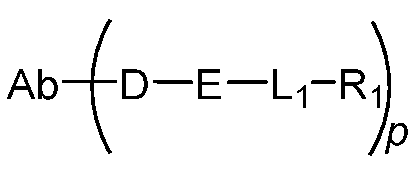
명확성을 위해 별개의 실시양태와 관련하여 본원에 기재된 개시된 조성물 및 방법의 특정 특색은 또한 단일 실시양태로 조합되어 제공될 수 있는 것으로 인지되어야 한다. 반대로, 간결성을 위해 단일 실시양태와 관련하여 기재된 개시된 조성물 및 방법의 다양한 특색은 또한 개별적으로 또는 임의의 하위-조합으로 제공될 수 있다.It is to be appreciated that certain features of the disclosed compositions and methods, which are, for clarity, described herein in the context of separate embodiments, may also be provided in combination in a single embodiment. Conversely, various features of the disclosed compositions and methods, which are, for brevity, described in the context of a single embodiment, may also be provided individually or in any sub-combination.
본 출원 전반에 걸쳐 사용된 바와 같이, 항체 약물 접합체는 "표적 항원/항체-링커-페이로드"의 일반적 포맷의 명명 규정을 사용하여 확인될 수 있다. 단지 예를 들어, 항체 약물 접합체가 "표적 X-L0-P0"으로 지칭되는 경우에, 이러한 접합체는 표적 X에 결합하는 항체, L0으로 지정된 링커 및 P0으로 지정된 페이로드를 포함할 것이다. 대안적으로, 항체 약물 접합체가 "항-표적 X-L0-P0"으로 지칭되는 경우에, 이러한 접합체는 표적 X에 결합하는 항체, L0으로 지정된 링커 및 P0으로 지정된 페이로드를 포함할 것이다. 또 다른 대안에서, 항체 약물 접합체가 "AbX-L0-P0"으로 지칭되는 경우에, 이러한 접합체는 AbX로 지정된 항체, L0으로 지정된 링커 및 P0으로 지정된 페이로드를 포함할 것이다. 비-특이적, 이소형 대조군 항체를 포함하는 대조군 항체 약물 접합체는 "이소형 대조군 IgG1-L0-P0" 또는 "IgG1-L0-P0"으로 지칭될 수 있다.As used throughout this application, antibody drug conjugates may be identified using the naming convention of the general format of "target antigen/antibody-linker-payload". For example only, if an antibody drug conjugate is referred to as "target X-L0-P0", then the conjugate would comprise an antibody that binds target X, a linker designated L0, and a payload designated P0. Alternatively, if an antibody drug conjugate is referred to as "anti-target X-L0-P0", then the conjugate would comprise an antibody that binds target X, a linker designated L0, and a payload designated P0. In yet another alternative, if an antibody drug conjugate is referred to as "AbX-L0-P0", then the conjugate would comprise an antibody designated AbX, a linker designated L0, and a payload designated P0. A control antibody drug conjugate comprising a non-specific, isotype control antibody may be referred to as “isotype control IgG1-L0-P0” or “IgG1-L0-P0”.
본원에 주어진 임의의 화학식은 또한 화합물의 비표지된 형태뿐만 아니라 동위원소 표지된 형태를 나타내는 것으로 의도된다. 동위원소 표지된 화합물은 1개 이상의 원자가 선택된 원자 질량 또는 질량수를 갖는 원자에 의해 대체된 것을 제외하고는 본원에 주어진 화학식에 의해 도시된 구조를 갖는다. 본 발명의 화합물 내로 혼입될 수 있는 동위원소는, 예를 들어 수소, 탄소, 질소, 산소, 플루오린 및 염소의 동위원소, 예컨대 3H, 11C, 13C, 14C, 15N, 18F 및 36Cl을 포함한다. 따라서, 본 개시내용은, 예를 들어 방사성 동위원소, 예컨대 3H 및 14C 또는 비-방사성 동위원소, 예컨대 2H 및 13C가 존재하는 것들을 포함한, 상기 언급된 임의의 동위원소 중 1개 이상이 혼입된 화합물을 포함하는 것으로 이해되어야 한다. 이러한 동위원소 표지된 화합물은 대사 연구 (14C 사용), 반응 동역학 연구 (예를 들어, 2H 또는 3H 사용), 검출 또는 영상화 기술, 예컨대 약물 또는 기질 조직 분포 검정을 포함한 양전자 방출 단층촬영 (PET) 또는 단일-광자 방출 컴퓨터 단층촬영 (SPECT), 또는 환자의 방사성 치료에 유용하다. 특히, 18F 또는 표지된 화합물이 PET 또는 SPECT 연구에 특히 바람직할 수 있다. 동위원소-표지된 화합물은 일반적으로 관련 기술분야의 통상의 기술자에게 공지된 통상적인 기술에 의해, 예를 들어 이전에 사용된 비-표지된 시약 대신에 적절한 동위원소-표지된 시약을 사용하여 제조될 수 있다.Any chemical formula given herein is also intended to represent isotopically labeled forms as well as unlabeled forms of the compounds. Isotopically labeled compounds have the structure depicted by the chemical formula given herein except that one or more atoms are replaced by an atom having a selected atomic mass or mass number. Isotopes that may be incorporated into the compounds of the present invention include, for example, isotopes of hydrogen, carbon, nitrogen, oxygen, fluorine and chlorine, such as 3 H, 11 C, 13 C, 14 C, 15 N, 18 F and 36 Cl. Accordingly, it should be understood that the present disclosure includes compounds in which one or more of any of the above-mentioned isotopes are incorporated, including, for example, those in which radioactive isotopes, such as 3 H and 14 C, or non-radioactive isotopes, such as 2 H and 13 C, are present. Such isotopically labeled compounds are useful for metabolic studies (using 14 C), reaction kinetic studies (e.g., using 2 H or 3 H), detection or imaging techniques such as positron emission tomography (PET) or single-photon emission computed tomography (SPECT), including drug or substrate tissue distribution assays, or for radiotherapy of patients. In particular, 18 F or labeled compounds may be particularly preferred for PET or SPECT studies. Isotopically labeled compounds can generally be prepared by conventional techniques known to those of ordinary skill in the art, for example, by using an appropriate isotopically labeled reagent in place of a previously used non-labeled reagent.
정의definition
설명의 측면과 관련된 다양한 용어가 명세서 및 청구범위 전반에 걸쳐 사용된다. 이러한 용어는 달리 나타내지 않는 한 관련 기술분야에서의 그의 통상의 의미로 주어져야 한다. 다른 구체적으로 정의된 용어는 본원에 제공된 정의와 일치하는 방식으로 해석되어야 한다.Various terms relating to aspects of the description are used throughout the specification and claims. These terms should be given their ordinary meaning in the relevant art unless otherwise indicated. Other specifically defined terms should be interpreted in a manner consistent with the definitions provided herein.
본원에 사용된 단수 형태는 문맥이 달리 명확하게 지시하지 않는 한 복수 형태를 포함한다. 용어 "포함하는", "갖는", "화학식을 갖는"에서와 같은 "갖는", "포함한" 및 "함유하는"은 달리 나타내지 않는 한 개방형 용어 (즉, "포함하나 이에 제한되지는 않는"을 의미함)로 해석되어야 한다. 추가적으로, 한 실시양태에서 "포함하는" 또는 또 다른 개방형 용어가 사용될 때마다, 동일한 실시양태는 중간 용어 "본질적으로 이루어진" 또는 폐쇄형 용어 "이루어진"을 사용하여 보다 좁게 청구될 수 있는 것으로 이해되어야 한다.As used herein, the singular forms include plural reference unless the context clearly dictates otherwise. The terms "having," "including," and "containing," as in "comprising," "having a chemical formula," are to be construed as open-ended terms (i.e., meaning "including but not limited to") unless otherwise indicated. Additionally, whenever "comprising" or another open-ended term is used in an embodiment, it should be understood that the same embodiment could also be more narrowly claimed using the intermediate term "consisting essentially of" or the closed term "consisting of."
용어 "약" 또는 "대략"은, 수치 값 및 범위와 관련하여 사용되는 경우에, 본원에 함유된 교시로부터 통상의 기술자에게 분명한 바와 같이, 실시양태가 의도된 대로 수행될 수 있도록 언급된 값 또는 범위에 근접하거나 그에 가까운 값 또는 범위를 지칭한다. 일부 실시양태에서, 약은 수치 양의 플러스 또는 마이너스 20%, 15%, 10%, 5%, 1%, 0.5% 또는 0.1%를 의미한다. 한 실시양태에서, 용어 "약"은 명시된 값보다 10% 더 크거나 더 작은 값의 범위를 지칭한다. 또 다른 실시양태에서, 용어 "약"은 명시된 값보다 5% 더 크거나 더 작은 값의 범위를 지칭한다. 또 다른 실시양태에서, 용어 "약"은 명시된 값보다 1% 더 크거나 더 작은 값의 범위를 지칭한다.The terms "about" or "approximately," when used in connection with numerical values and ranges, refer to a value or range that is near or near the stated value or range so that the embodiment may be carried out as intended, as would be apparent to one of ordinary skill in the art from the teachings contained herein. In some embodiments, about means plus or minus 20%, 15%, 10%, 5%, 1%, 0.5%, or 0.1% of the numerical amount. In one embodiment, the term "about" refers to a range of values that are 10% greater or less than a stated value. In another embodiment, the term "about" refers to a range of values that are 5% greater or less than a stated value. In another embodiment, the term "about" refers to a range of values that are 1% greater or less than a stated value.
용어 "항체-약물 접합체", "항체 접합체", "접합체", "면역접합체" 및 "ADC"는 상호교환가능하게 사용되고, 1종 이상의 항체 또는 항원-결합 단편에 연결된 1종 이상의 치료 화합물 (예를 들어, Bcl-xL 억제제)을 지칭한다. 일부 실시양태에서, ADC는 화학식: Ab-(L-D)p (화학식 1)에 의해 정의되며, 여기서 Ab = 항체 또는 항원-결합 단편 (예를 들어, 항-EphA2 항체 또는 그의 항원-결합 단편)이고, L = 링커 모이어티이고, D = 약물 모이어티 (예를 들어, Bcl-xL 억제제 약물 모이어티)이고, p = 항체 또는 항원-결합 단편당 약물 모이어티의 수이다. Bcl-xL 억제제 약물 모이어티를 포함하는 ADC에서, "p"는 항체 또는 항원-결합 단편에 연결된 Bcl-xL 억제제 화합물의 수를 지칭한다.The terms "antibody-drug conjugate", "antibody conjugate", "conjugate", "immunoconjugate" and "ADC" are used interchangeably and refer to one or more therapeutic compounds (e.g., a Bcl-xL inhibitor) linked to one or more antibodies or antigen-binding fragments. In some embodiments, the ADC is defined by the formula: Ab-(LD) p (Formula 1), where Ab = antibody or antigen-binding fragment (e.g., an anti-EphA2 antibody or antigen-binding fragment thereof), L = linker moiety, D = drug moiety (e.g., a Bcl-xL inhibitor drug moiety), and p = number of drug moieties per antibody or antigen-binding fragment. In an ADC comprising a Bcl-xL inhibitor drug moiety, "p" refers to the number of Bcl-xL inhibitor compounds linked to the antibody or antigen-binding fragment.
용어 "항체"는 가장 넓은 의미로, 이뮤노글로불린 분자의 가변 영역 내의 적어도 1개의 항원 인식 부위를 통해 표적, 예컨대 단백질, 폴리펩티드, 탄수화물, 폴리뉴클레오티드, 지질 또는 상기의 조합을 인식하고 그에 특이적으로 결합하는 이뮤노글로불린 분자를 지칭하는 것으로 사용된다. 항체는 폴리클로날 또는 모노클로날, 다중 또는 단일 쇄, 또는 무손상 이뮤노글로불린일 수 있고, 천연 공급원으로부터 또는 재조합 공급원으로부터 유래될 수 있다. "무손상" 항체는 전형적으로 디술피드 결합에 의해 상호연결된 적어도 2개의 중쇄 (H) 및 2개의 경쇄 (L)를 포함하는 당단백질이다. 각각의 중쇄는 중쇄 가변 영역 (본원에서 VH로 약칭됨) 및 중쇄 불변 영역으로 구성된다. 중쇄 불변 영역은 3개의 도메인, CH1, CH2 및 CH3을 포함한다. 각각의 경쇄는 경쇄 가변 영역 (본원에서 VL로 약칭됨) 및 경쇄 불변 영역으로 구성된다. 경쇄 불변 영역은 1개의 도메인, CL로 구성된다. VH 및 VL 영역은 프레임워크 영역 (FR)으로 불리는 보다 보존된 영역이 사이에 배치된, 상보성 결정 영역 (CDR)으로 불리는 초가변성 영역으로 추가로 세분될 수 있다. 각각의 VH 및 VL은 아미노-말단에서 카르복실-말단으로 하기 순서로 배열된 3개의 CDR 및 4개의 FR로 구성된다: FR1, CDR1, FR2, CDR2, FR3, CDR3, FR4. 중쇄 및 경쇄의 가변 영역은 항원과 상호작용하는 결합 도메인을 함유한다. 항체의 불변 영역은 면역계의 다양한 세포 (예를 들어, 이펙터 세포) 및 전형적 보체계의 제1 성분 (C1q)을 포함한 숙주 조직 또는 인자에 대한 이뮤노글로불린의 결합을 매개할 수 있다. 항체는 모노클로날 항체, 인간 항체, 인간화 항체, 낙타화 항체 또는 키메라 항체일 수 있다. 항체는 임의의 이소형 (예를 들어, IgG, IgE, IgM, IgD, IgA 및 IgY), 부류 (예를 들어, IgG1, IgG2, IgG3, IgG4, IgA1 및 IgA2) 또는 하위부류의 것일 수 있다. 항체는 무손상 항체 또는 그의 항원-결합 단편일 수 있다.The term "antibody" is used in the broadest sense to refer to an immunoglobulin molecule that recognizes and specifically binds to a target, such as a protein, a polypeptide, a carbohydrate, a polynucleotide, a lipid, or a combination of the above, through at least one antigen recognition site within the variable region of the immunoglobulin molecule. Antibodies may be polyclonal or monoclonal, multi- or single-chain, or intact immunoglobulins, and may be derived from natural sources or from recombinant sources. An "intact" antibody is typically a glycoprotein comprising at least two heavy (H) chains and two light (L) chains interconnected by disulfide bonds. Each heavy chain is comprised of a heavy chain variable region (abbreviated herein as VH) and a heavy chain constant region. The heavy chain constant region comprises three domains, CH1, CH2, and CH3. Each light chain is comprised of a light chain variable region (abbreviated herein as VL) and a light chain constant region. The light chain constant region consists of one domain, CL. The VH and VL regions can be further subdivided into hypervariable regions, called complementarity determining regions (CDRs), interspersed with more conserved regions, called framework regions (FRs). Each VH and VL is composed of three CDRs and four FRs, arranged from amino-terminus to carboxyl-terminus in the following order: FR1, CDR1, FR2, CDR2, FR3, CDR3, FR4. The variable regions of the heavy and light chains contain binding domains that interact with antigen. The constant region of an antibody can mediate binding of the immunoglobulin to host tissues or factors, including various cells of the immune system (e.g., effector cells) and the first component (C1q) of the classical complement system. The antibody can be a monoclonal antibody, a human antibody, a humanized antibody, a camelized antibody, or a chimeric antibody. The antibody may be of any isotype (e.g., IgG, IgE, IgM, IgD, IgA, and IgY), class (e.g., IgG1, IgG2, IgG3, IgG4, IgA1, and IgA2) or subclass. The antibody may be an intact antibody or an antigen-binding fragment thereof.
일부 실시양태에서, 본원에 개시된 항체 또는 항체 단편은 약물 모이어티에의 접합을 위한 부위로서 변형된 또는 조작된 아미노산 잔기, 예를 들어 1개 이상의 시스테인 잔기를 포함한다 (Junutula JR, et al., Nat Biotechnol 2008, 26:925-932). 한 실시양태에서, 본 개시내용은 본원에 기재된 위치에서의 1개 이상의 아미노산의 시스테인으로의 치환을 포함하는 변형된 항체 또는 항체 단편을 제공한다. 시스테인 치환을 위한 부위는 항체 또는 항체 단편의 불변 영역 내에 있고, 따라서 다양한 항체 또는 항체 단편에 적용가능하면, 부위는 안정하고 균질한 접합체를 제공하도록 선택된다. 변형된 항체 또는 단편은 1, 2개 또는 그 초과의 시스테인 치환을 가질 수 있고, 이들 치환은 본원에 기재된 바와 같은 다른 변형 및 접합 방법과 조합되어 사용될 수 있다. 항체의 특정 위치에 시스테인을 삽입하는 방법은 관련 기술분야에 공지되어 있으며, 예를 들어 문헌 [Lyons et al., (1990) Protein Eng., 3:703-708], WO 2011/005481, WO2014/124316, WO 2015/138615을 참조한다. 특정 실시양태에서, 변형된 항체는 그의 불변 영역 상에 항체의 중쇄의 위치 117, 119, 121, 124, 139, 152, 153, 155, 157, 164, 169, 171, 174, 189, 191, 195, 197, 205, 207, 246, 258, 269, 274, 286, 288, 290, 292, 293, 320, 322, 326, 333, 334, 335, 337, 344, 355, 360, 375, 382, 390, 392, 398, 400 및 422로부터 선택된 1개 이상의 아미노산의 시스테인으로의 치환을 포함하며, 여기서 위치는 EU 시스템에 따라 넘버링된다. 일부 실시양태에서, 변형된 항체 또는 항체 단편은 그의 불변 영역 상에 항체 또는 항체 단편의 경쇄의 위치 107, 108, 109, 114, 129, 142, 143, 145, 152, 154, 156, 159, 161, 165, 168, 169, 170, 182, 183, 197, 199 및 203으로부터 선택된 1개 이상의 아미노산의 시스테인으로의 치환을 포함하며, 여기서 위치는 EU 시스템에 따라 넘버링되고, 여기서 경쇄는 인간 카파 경쇄이다. 특정 실시양태에서, 변형된 항체 또는 그의 항체 단편은 그의 불변 영역 상에 2개 이상의 아미노산의 시스테인으로의 치환의 조합을 포함하며, 여기서 조합은 항체 중쇄의 위치 375, 항체 중쇄의 위치 152, 항체 중쇄의 위치 360 또는 항체 경쇄의 위치 107에서의 치환을 포함하고, 여기서 위치는 EU 시스템에 따라 넘버링된다. 특정 실시양태에서, 변형된 항체 또는 그의 항체 단편은 그의 불변 영역 상에 1개의 아미노산의 시스테인으로의 치환을 포함하며, 여기서 치환은 항체 중쇄의 위치 375, 항체 중쇄의 위치 152, 항체 중쇄의 위치 360, 항체 경쇄의 위치 107, 항체 경쇄의 위치 165 또는 항체 경쇄의 위치 159이고, 여기서 위치는 EU 시스템에 따라 넘버링되고, 여기서 경쇄는 카파 쇄이다. 특정한 실시양태에서, 변형된 항체 또는 그의 항체 단편은 그의 불변 영역 상에 2개의 아미노산의 시스테인으로의 치환의 조합을 포함하며, 여기서 조합은 항체 중쇄의 위치 375 및 항체 중쇄의 위치 152에서의 치환을 포함하고, 여기서 위치는 EU 시스템에 따라 넘버링된다. 특정한 실시양태에서, 변형된 항체 또는 그의 항체 단편은 항체 중쇄의 위치 360에서의 1개의 아미노산의 시스테인으로의 치환을 포함하며, 여기서 위치는 EU 시스템에 따라 넘버링된다. 다른 특정한 실시양태에서, 변형된 항체 또는 그의 항체 단편은 항체 경쇄의 위치 107에서의 1개의 아미노산의 시스테인으로의 치환을 포함하며, 여기서 위치는 EU 시스템에 따라 넘버링되고, 여기서 경쇄는 카파 쇄이다.In some embodiments, the antibodies or antibody fragments disclosed herein comprise modified or engineered amino acid residues, for example, one or more cysteine residues, as sites for conjugation to a drug moiety (Junutula JR, et al., Nat Biotechnol 2008, 26:925-932). In one embodiment, the present disclosure provides modified antibodies or antibody fragments comprising a substitution of one or more amino acids with cysteine at a position described herein. The site for the cysteine substitution is within the constant region of the antibody or antibody fragment, and thus is applicable to a variety of antibodies or antibody fragments, and the site is selected so as to provide a stable and homogeneous conjugate. The modified antibodies or fragments can have one, two, or more cysteine substitutions, and these substitutions can be used in combination with other modifications and conjugation methods as described herein. Methods for inserting cysteines into specific positions in antibodies are known in the art, see, for example, Lyons et al., (1990) Protein Eng., 3:703-708, WO 2011/005481, WO2014/124316, WO 2015/138615. In certain embodiments, the modified antibody comprises a heavy chain residue at
본원에 사용된 용어 "항체 단편" 또는 "항원-결합 단편" 또는 "기능적 항체 단편"은 항원 (예를 들어, EphA2)의 에피토프와 (예를 들어, 결합, 입체 장애, 안정화/탈안정화, 공간 분포에 의해) 특이적으로 상호작용하는 능력을 보유하는 항체의 적어도 한 부분을 지칭한다. 항원-결합 단편은 또한 항원-발현 세포 내로 내재화하는 능력을 보유할 수 있다. 일부 실시양태에서, 항원-결합 단편은 또한 면역 이펙터 활성을 보유한다. 용어 항체, 항체 단편, 항원-결합 단편 등은 보다 큰 거대분자, 예컨대 ADC와 관련하여 항체로부터의 결합 도메인의 사용을 포괄하는 것으로 의도된다. 전장 항체의 단편은 전장 항체의 항원 결합 기능을 수행할 수 있는 것으로 나타났다. 항체 단편의 예는 Fab, Fab', F(ab')2, Fv 단편, scFv 항체 단편, 디술피드-연결된 Fv (sdFv), VH 및 CH1 도메인으로 이루어진 Fd 단편, 선형 항체, 단일 도메인 항체, 예컨대 sdAb (VL 또는 VH), 낙타류 VHH 도메인, 항체 단편, 예컨대 힌지 영역에서 디술피드 가교에 의해 연결된 2개의 Fab 단편을 포함하는 2가 단편으로부터 형성된 다중-특이적 항체 및 단리된 CDR 또는 항체의 다른 에피토프 결합 단편을 포함하나 이에 제한되지는 않는다. 항원-결합 단편은 또한 단일 도메인 항체, 맥시바디, 미니바디, 나노바디, 인트라바디, 디아바디, 트리아바디, 테트라바디, 이중특이적 또는 다중특이적 항체 구축물, ADC, v-NAR 및 bis-scFv 내로 혼입될 수 있다 (예를 들어, 문헌 [Holliger and Hudson (2005) Nat Biotechnol. 23(9):1126-36] 참조). 항원-결합 단편은 또한 폴리펩티드, 예컨대 피브로넥틴 유형 III (Fn3)에 기초한 스캐폴드 내로 그라프팅될 수 있다 (피브로넥틴 폴리펩티드 미니바디를 기재하고 있는 미국 특허 번호 6,703,199 참조). 용어 "scFv"는 경쇄의 가변 영역을 포함하는 적어도 1개의 항원-결합 단편 및 중쇄의 가변 영역을 포함하는 적어도 1개의 항원-결합 단편을 포함하는 융합 단백질을 지칭하며, 여기서 경쇄 및 중쇄 가변 영역은, 예를 들어 합성 링커, 예를 들어 짧은 가요성 폴리펩티드 링커를 통해 인접하여 연결되고, 단일 쇄 폴리펩티드로서 발현될 수 있고, 여기서 scFv는 그것이 유래된 무손상 항체의 특이성을 보유한다. 명시되지 않는 한, scFv는 VL 및 VH 가변 영역을 어느 순서로나 가질 수 있고, 예를 들어 폴리펩티드의 N-말단 및 C-말단 단부에 관하여, scFv는 VL-링커-VH를 포함할 수 있거나 또는 VH-링커-VL을 포함할 수 있다. 항원-결합 단편은 관련 기술분야의 통상의 기술자에게 공지된 통상적인 기술을 사용하여 수득되고, 결합 단편은 무손상 항체와 동일한 방식으로 유용성 (예를 들어, 결합 친화도, 내재화)에 대해 스크리닝된다. 항원-결합 단편은, 예를 들어 무손상 단백질의 절단, 예를 들어 프로테아제 또는 화학적 절단에 의해 제조될 수 있다.The term "antibody fragment" or "antigen-binding fragment" or "functional antibody fragment" as used herein refers to at least a portion of an antibody that retains the ability to specifically interact (e.g., by binding, steric hindrance, stabilization/destabilization, spatial distribution) with an epitope of an antigen (e.g., EphA2). The antigen-binding fragment may also retain the ability to internalize into antigen-expressing cells. In some embodiments, the antigen-binding fragment also retains immune effector activity. The terms antibody, antibody fragment, antigen-binding fragment, and the like are intended to encompass use of a binding domain from an antibody in the context of larger macromolecules, such as ADCs. Fragments of full-length antibodies have been shown to be capable of performing the antigen binding function of a full-length antibody. Examples of antibody fragments include, but are not limited to, Fab, Fab', F(ab')2, Fv fragments, scFv antibody fragments, disulfide-linked Fv (sdFv), Fd fragments consisting of VH and CH1 domains, linear antibodies, single domain antibodies such as sdAb (either VL or VH), camelid VHH domains, multi-specific antibodies formed from antibody fragments such as a bivalent fragment comprising two Fab fragments linked by a disulfide bridge at the hinge region, and isolated CDRs or other epitope binding fragments of antibodies. Antigen-binding fragments may also be incorporated into single domain antibodies, maxibodies, minibodies, nanobodies, intrabodies, diabodies, triabodies, tetrabodies, bispecific or multispecific antibody constructs, ADCs, v-NARs and bis-scFv (see, e.g., Holliger and Hudson (2005) Nat Biotechnol. 23(9):1126-36). Antigen-binding fragments may also be grafted into scaffolds based on polypeptides such as fibronectin type III (Fn3) (see U.S. Pat. No. 6,703,199 which describes fibronectin polypeptide minibodies). The term "scFv" refers to a fusion protein comprising at least one antigen-binding fragment comprising a variable region of a light chain and at least one antigen-binding fragment comprising a variable region of a heavy chain, wherein the light and heavy chain variable regions are contiguously linked, e.g., via a synthetic linker, e.g., a short flexible polypeptide linker, and capable of being expressed as a single chain polypeptide, and wherein the scFv retains the specificity of the intact antibody from which it is derived. Unless specified, an scFv may have the VL and VH variable regions in either order, e.g., with respect to the N-terminal and C-terminal ends of the polypeptide, an scFv may comprise VL-linker-VH or may comprise VH-linker-VL. Antigen-binding fragments are obtained using conventional techniques known to those of ordinary skill in the art, and the binding fragments are screened for utility (e.g., binding affinity, internalization) in the same manner as intact antibodies. Antigen-binding fragments can be prepared, for example, by cleavage of the intact protein, e.g., by proteases or chemical cleavage.
본원에 사용된 용어 "상보성 결정 영역" 또는 "CDR"은 항원 특이성 및 결합 친화도를 부여하는 항체 가변 영역 내의 아미노산의 서열을 지칭한다. 예를 들어, 일반적으로, 각각의 중쇄 가변 영역에 3개의 CDR (예를 들어, HCDR1, HCDR2 및 HCDR3) 및 각각의 경쇄 가변 영역에 3개의 CDR (LCDR1, LCDR2 및 LCDR3)이 존재한다. 주어진 CDR의 정확한 아미노산 서열 경계는 문헌 [Kabat et al. (1991) "Sequences of Proteins of Immunological Interest," 5th Ed. Public Health Service, National Institutes of Health, Bethesda, MD]에 기재된 것 ("카바트" 넘버링 스킴); 문헌 [Al-Lazikani et al. (1997) J Mol Biol. 273(4):927-48]에 기재된 것 ("코티아" 넘버링 스킴); 이뮤노젠틱스 (IMGT) 넘버링 (문헌 [Lefranc (2001) Nucleic Acids Res. 29(1):207-9; Lefranc et al. (2003) Dev Comp Immunol. 27(1):55-77]) ("IMGT" 넘버링 스킴) 또는 그의 조합을 포함한 다수의 널리 공지된 스킴 중 임의의 것을 사용하여 결정될 수 있다. 주어진 CDR 영역 (예를 들어, HC CDR1, HC CDR2, HC CDR3, LC CDR1, LC CDR2 또는 LC CDR3)에 대한 조합된 카바트 및 코티아 넘버링 스킴에서, 일부 실시양태에서, CDR은 코티아 CDR의 일부로서 정의된 아미노산 잔기와 함께 카바트 CDR의 일부로서 정의된 아미노산 잔기에 상응한다. 본원에 사용된 "코티아" 넘버링 스킴에 따라 정의된 CDR은 또한 때때로 "초가변 루프"로 지칭된다.The term "complementarity determining region" or "CDR," as used herein, refers to the sequence of amino acids within an antibody variable region that confers antigen specificity and binding affinity. For example, typically there are three CDRs in each heavy chain variable region (e.g., HCDR1, HCDR2, and HCDR3) and three CDRs in each light chain variable region (LCDR1, LCDR2, and LCDR3). The precise amino acid sequence boundaries of a given CDR are those described in Kabat et al. (1991) "Sequences of Proteins of Immunological Interest," 5th Ed. Public Health Service, National Institutes of Health, Bethesda, MD (the "Kabat" numbering scheme); Al-Lazikani et al. (1997) J Mol Biol. 273(4):927-48 (the "Chotia" numbering scheme); Immunogenetics (IMGT) numbering (see Lefranc (2001) Nucleic Acids Res. 29(1):207-9; Lefranc et al. (2003) Dev Comp Immunol. 27(1):55-77) (“IMGT” numbering scheme) or a combination thereof. In the combined Kabat and Chothia numbering scheme for a given CDR region (e.g., HC CDR1, HC CDR2, HC CDR3, LC CDR1, LC CDR2, or LC CDR3), in some embodiments, the CDR corresponds to the amino acid residues defined as part of a Kabat CDR together with the amino acid residues defined as part of a Chothia CDR. As used herein, CDRs defined according to the “Chothia” numbering scheme are also sometimes referred to as “hypervariable loops.”
일부 실시양태에서, 카바트 하에, 중쇄 가변 도메인 (VH) 내의 CDR 아미노산 잔기는 31-35 (HCDR1) (예를 들어, 위치 35 뒤의 삽입(들)), 50-65 (HCDR2) 및 95-102 (HCDR3)로 넘버링되고; 경쇄 가변 도메인 (VL) 내의 CDR 아미노산 잔기는 24-34 (LCDR1) (예를 들어, 위치 27 뒤의 삽입(들)), 50-56 (LCDR2) 및 89-97 (LCDR3)로 넘버링된다. 일부 실시양태에서, 코티아 하에, VH 내의 CDR 아미노산은 26-32 (HCDR1) (예를 들어, 위치 31 뒤의 삽입(들)), 52-56 (HCDR2) 및 95-102 (HCDR3)로 넘버링되고; VL 내의 아미노산 잔기는 26-32 (LCDR1) (예를 들어, 위치 30 뒤의 삽입(들)), 50-52 (LCDR2) 및 91-96 (LCDR3)으로 넘버링된다. 카바트 및 코티아 둘 다의 CDR 정의를 조합함으로써, 일부 실시양태에서, CDR은, 예를 들어 인간 VH 내의 아미노산 잔기 26-35 (HCDR1), 50-65 (HCDR2) 및 95-102 (HCDR3) 및 인간 VL 내의 아미노산 잔기 24-34 (LCDR1), 50-56 (LCDR2) 및 89-97 (LCDR3)을 포함하거나 또는 그로 이루어진다. 일부 실시양태에서, IMGT 하에, VH 내의 CDR 아미노산 잔기는 대략 26-35 (CDR1), 51-57 (CDR2) 및 93-102 (CDR3)로 넘버링되고, VL 내의 CDR 아미노산 잔기는 대략 27-32 (CDR1), 50-52 (CDR2) 및 89-97 (CDR3)로 넘버링된다. 일부 실시양태에서, IMGT 하에, 항체의 CDR 영역은 프로그램 IMGT/도메인갭 얼라인(DomainGap Align)을 사용하여 결정될 수 있다.In some embodiments, under Kabat, the CDR amino acid residues within the heavy chain variable domain (VH) are numbered 31-35 (HCDR1) (e.g., insertion(s) after position 35), 50-65 (HCDR2), and 95-102 (HCDR3); and the CDR amino acid residues within the light chain variable domain (VL) are numbered 24-34 (LCDR1) (e.g., insertion(s) after position 27), 50-56 (LCDR2), and 89-97 (LCDR3). In some embodiments, under Chothia, the CDR amino acids within the VH are numbered 26-32 (HCDR1) (e.g., insertion(s) after position 31), 52-56 (HCDR2), and 95-102 (HCDR3); The amino acid residues within the VL are numbered 26-32 (LCDR1) (e.g., insertion(s) after position 30), 50-52 (LCDR2), and 91-96 (LCDR3). By combining the CDR definitions of both Kabat and Chothia, in some embodiments, the CDR comprises or consists of, e.g., amino acid residues 26-35 (HCDR1), 50-65 (HCDR2), and 95-102 (HCDR3) in human VH and amino acid residues 24-34 (LCDR1), 50-56 (LCDR2), and 89-97 (LCDR3) in human VL. In some embodiments, under IMGT, the CDR amino acid residues within the VH are numbered approximately 26-35 (CDR1), 51-57 (CDR2), and 93-102 (CDR3), and the CDR amino acid residues within the VL are numbered approximately 27-32 (CDR1), 50-52 (CDR2), and 89-97 (CDR3). In some embodiments, under IMGT, the CDR regions of an antibody can be determined using the program IMGT/DomainGap Align.
본원에 사용된 용어 "모노클로날 항체"는 실질적으로 동종인 항체 집단으로부터 수득된 항체를 지칭하며, 즉 집단에 포함되는 개별 항체는 미량으로 존재할 수 있는 가능한 자연 발생 돌연변이를 제외하고는 동일하다. 모노클로날 항체는 고도로 특이적이고, 단일 항원 에피토프에 대해 지시된다. 대조적으로, 통상적인 (폴리클로날) 항체 제제는 전형적으로 상이한 에피토프에 대해 지시된 (또는 그에 특이적인) 다수의 항체를 포함한다. 수식어 "모노클로날"은 실질적으로 동종인 항체 집단으로부터 수득된 바와 같은 항체의 특징을 나타내며, 임의의 특정한 방법에 의한 항체의 생산을 요구하는 것으로 해석되어서는 안된다. 예를 들어, 본 개시내용에 따라 사용될 모노클로날 항체는 문헌 [Kohler et al. (1975) Nature 256:495]에 처음 기재된 하이브리도마 방법에 의해 제조될 수 있거나 또는 재조합 DNA 방법 (예를 들어, 미국 특허 번호 4,816,567 참조)에 의해 제조될 수 있다. 모노클로날 항체는 또한, 예를 들어 문헌 [Clackson et al. (1991) Nature 352:624-8 및 Marks et al. (1991) J Mol Biol. 222:581-97]에 기재된 기술을 사용하여 파지 항체 라이브러리로부터 단리될 수 있다. 상기 용어는 또한 단일 분자 조성의 항체 분자의 제제를 포함한다. 모노클로날 항체 조성물은 특정한 에피토프에 대해 단일 결합 특이성 및 친화도를 나타낸다.The term "monoclonal antibody" as used herein refers to an antibody obtained from a substantially homogeneous population of antibodies, i.e., the individual antibodies included in the population are identical except for possible naturally occurring mutations that may be present in trace amounts. Monoclonal antibodies are highly specific and directed against a single antigenic epitope. In contrast, conventional (polyclonal) antibody preparations typically comprise a plurality of antibodies directed against (or specific for) different epitopes. The modifier "monoclonal" indicates the character of the antibody as being obtained from a substantially homogeneous population of antibodies, and is not to be construed as requiring production of the antibody by any particular method. For example, monoclonal antibodies to be used in accordance with the present disclosure may be prepared by the hybridoma method first described by Kohler et al. (1975) Nature 256:495, or may be prepared by recombinant DNA methods (see, e.g., U.S. Pat. No. 4,816,567). Monoclonal antibodies may also be isolated from phage antibody libraries, for example, using techniques described in the literature [Clackson et al. (1991) Nature 352:624-8 and Marks et al. (1991) J Mol Biol. 222:581-97]. The term also includes preparations of antibody molecules of single molecule composition. Monoclonal antibody compositions exhibit a single binding specificity and affinity for a particular epitope.
본원에 기재된 모노클로날 항체는 비-인간, 인간 또는 인간화 항체일 수 있다. 상기 용어는 구체적으로, 중쇄 및/또는 경쇄의 한 부분이 특정한 종으로부터 유래되거나 특정한 항체 부류 또는 하위부류에 속하는 항체의 상응하는 서열과 동일하거나 상동이고 쇄(들)의 나머지는 또 다른 종으로부터 유래되거나 또 다른 항체 부류 또는 하위부류에 속하는 항체의 상응하는 서열과 동일하거나 상동인 "키메라" 항체, 뿐만 아니라 표적 항원에 특이적으로 결합하고/거나 목적하는 생물학적 활성을 나타내는 한 이러한 항체의 단편을 포함한다.The monoclonal antibodies described herein may be non-human, human or humanized antibodies. The term specifically includes "chimeric" antibodies in which a portion of the heavy and/or light chain is identical with or homologous to corresponding sequences in antibodies derived from a particular species or belonging to a particular antibody class or subclass, and the remainder of the chain(s) is identical with or homologous to corresponding sequences in antibodies derived from another species or belonging to another antibody class or subclass, as well as fragments of such antibodies, so long as they specifically bind the target antigen and/or exhibit the desired biological activity.
본원에 사용된 용어 "인간 항체"는 인간에 의해 생산된 항체 또는 인간에 의해 생산된 항체의 아미노산 서열을 갖는 항체를 지칭한다. 상기 용어는 프레임워크 및 CDR 영역 둘 다가 인간 기원의 서열로부터 유래된 가변 영역을 갖는 항체를 포함한다. 추가로, 항체가 불변 영역을 함유하는 경우에, 불변 영역은 또한 이러한 인간 서열, 예를 들어 인간 배선 서열 또는 인간 배선 서열의 돌연변이된 버전, 또는 예를 들어 문헌 [Knappik et al. ((2000) J Mol Biol. 296(1):57-86)]에 기재된 바와 같은 인간 프레임워크 서열 분석으로부터 유래된 컨센서스 프레임워크 서열을 함유하는 항체로부터 유래된다. 이뮤노글로불린 가변 도메인, 예를 들어 CDR의 구조 및 위치는 널리 공지된 넘버링 스킴, 예를 들어 카바트 넘버링 스킴, 코티아 넘버링 스킴 또는 카바트 및 코티아의 조합 및/또는 이뮤노젠틱스 (IMGT) 넘버링을 사용하여 정의될 수 있다. 본 발명의 인간 항체는 인간 서열에 의해 코딩되지 않는 아미노산 잔기 (예를 들어, 시험관내 무작위 또는 부위-특이적 돌연변이유발 또는 생체내 체세포 돌연변이에 의해 도입된 돌연변이, 또는 안정성 또는 제조를 촉진하기 위한 보존적 치환)를 포함할 수 있다. 그러나, 본원에 사용된 용어 "인간 항체"는 또 다른 포유동물 종, 예컨대 마우스의 배선으로부터 유래된 CDR 서열이 인간 프레임워크 서열 상에 그라프팅된 항체를 포함하는 것으로 의도되지 않는다.The term "human antibody" as used herein refers to an antibody produced by a human or an antibody having the amino acid sequence of an antibody produced by a human. The term includes antibodies in which both the framework and CDR regions are variable regions derived from sequences of human origin. Additionally, if the antibody contains a constant region, the constant region is also derived from an antibody containing such a human sequence, e.g., a human germline sequence or a mutated version of a human germline sequence, or a consensus framework sequence derived from a human framework sequence analysis, e.g., as described in Knappik et al. ((2000) J Mol Biol. 296(1):57-86). The structure and location of an immunoglobulin variable domain, e.g., a CDR, can be defined using well-known numbering schemes, e.g., the Kabat numbering scheme, the Chothia numbering scheme, or a combination of Kabat and Chothia and/or Immunogenetics (IMGT) numbering. The human antibodies of the present invention may include amino acid residues that are not encoded by human sequences (e.g., mutations introduced by random or site-specific mutagenesis in vitro or by somatic mutation in vivo, or conservative substitutions to facilitate stability or manufacturing). However, the term "human antibody" as used herein is not intended to include antibodies in which CDR sequences derived from the germline of another mammalian species, such as a mouse, are grafted onto human framework sequences.
본원에 사용된 용어 "재조합 인간 항체"는 재조합 수단에 의해 제조, 발현, 생성 또는 단리된 인간 항체, 예컨대 인간 이뮤노글로불린 유전자에 대해 트랜스제닉 또는 트랜스크로모소말인 동물 (예를 들어, 마우스) 또는 그로부터 제조된 하이브리도마로부터 단리된 항체, 인간 항체를 발현하도록 형질전환된 숙주 세포, 예를 들어 트랜스펙토마로부터 단리된 항체, 재조합의 조합 인간 항체 라이브러리로부터 단리된 항체, 및 인간 이뮤노글로불린 유전자 서열의 모두 또는 한 부분을 다른 DNA 서열로 스플라이싱하는 것을 수반하는 임의의 다른 수단에 의해 제조, 발현, 생성 또는 단리된 항체를 지칭한다. 이러한 재조합 인간 항체는 프레임워크 및 CDR 영역이 인간 배선 이뮤노글로불린 서열로부터 유래된 가변 영역을 갖는다. 그러나, 일부 실시양태에서, 이러한 재조합 인간 항체는 시험관내 돌연변이유발 (또는 인간 Ig 서열에 대해 트랜스제닉인 동물이 사용되는 경우에, 생체내 체세포 돌연변이유발)에 적용될 수 있고, 따라서 재조합 항체의 VH 및 VL 영역의 아미노산 서열은, 인간 배선 VH 및 VL 서열로부터 유래되고 그와 관련되지만, 생체내 인간 항체 배선 레퍼토리 내에 자연적으로 존재하지 않을 수 있는 서열이다.The term "recombinant human antibody" as used herein refers to human antibodies prepared, expressed, created or isolated by recombinant means, such as antibodies isolated from an animal (e.g., a mouse) which is transgenic or transchromosomal for human immunoglobulin genes or a hybridoma prepared therefrom, antibodies isolated from a host cell transformed to express human antibodies, e.g., a transfectoma, antibodies isolated from a recombinant combinatorial human antibody library, and antibodies prepared, expressed, created or isolated by any other means involving splicing of all or a portion of human immunoglobulin gene sequences to another DNA sequence. Such recombinant human antibodies have variable regions in which the framework and CDR regions are derived from human germline immunoglobulin sequences. However, in some embodiments, such recombinant human antibodies may be subjected to in vitro mutagenesis (or, when an animal transgenic for human Ig sequences is used, in vivo somatic mutagenesis), such that the amino acid sequences of the VH and VL regions of the recombinant antibodies are sequences that, although derived from and related to human germline VH and VL sequences, may not naturally exist within the human antibody germline repertoire in vivo.
본원에 사용된 용어 "키메라 항체"는 이뮤노글로불린 분자의 아미노산 서열이 2종 이상의 종으로부터 유래된 것인 항체를 지칭한다. 일부 경우에, 중쇄 및 경쇄 둘 다의 가변 영역은 목적하는 특이성, 친화도 및 활성을 갖는 한 종으로부터 유래된 항체의 가변 영역에 상응하는 반면, 불변 영역은 또 다른 종 (예를 들어, 인간)으로부터 유래된 항체와 상동이어서 후자의 종에서의 면역 반응을 최소화한다.The term "chimeric antibody" as used herein refers to an antibody in which the amino acid sequence of the immunoglobulin molecule is derived from two or more species. In some cases, the variable regions of both the heavy and light chains correspond to the variable regions of an antibody from one species having the desired specificity, affinity, and activity, while the constant regions are homologous to antibodies from another species (e.g., humans) to minimize immune responses in the latter species.
본원에 사용된 용어 "인간화 항체"는 비-인간 (예를 들어, 뮤린) 항체뿐만 아니라 인간 항체로부터의 서열을 함유하는 항체의 형태를 지칭한다. 이러한 항체는 비-인간 이뮤노글로불린으로부터 유래된 최소 서열을 함유하는 키메라 항체의 유형이다. 일반적으로, 인간화 항체는 적어도 1개 및 전형적으로 2개의 가변 도메인을 실질적으로 모두 포함할 것이며, 여기서 모든 또는 실질적으로 모든 초가변 루프는 비-인간 이뮤노글로불린의 것에 상응하고, 모든 또는 실질적으로 모든 프레임워크 (FR) 영역은 인간 이뮤노글로불린 서열의 것이다. 인간화 항체는 또한 임의로 이뮤노글로불린 불변 영역 (Fc)의 적어도 한 부분, 전형적으로 인간 이뮤노글로불린의 것을 포함할 것이다. 인간화 항체는 Fv 프레임워크 영역에서 및/또는 대체된 비-인간 잔기 내에서 잔기의 치환에 의해 추가로 변형되어 항체 특이성, 친화도 및/또는 활성을 정밀화 및 최적화할 수 있다.The term "humanized antibody" as used herein refers to a form of an antibody that contains sequences from a non-human (e.g., murine) antibody as well as a human antibody. Such antibodies are a type of chimeric antibody that contains minimal sequence derived from a non-human immunoglobulin. In general, a humanized antibody will comprise substantially all of at least one, and typically two, variable domains, wherein all or substantially all of the hypervariable loops correspond to those of a non-human immunoglobulin, and all or substantially all of the framework (FR) regions are from a human immunoglobulin sequence. The humanized antibody optionally also will comprise at least a portion of an immunoglobulin constant region (Fc), typically that of a human immunoglobulin. A humanized antibody may be further modified by substitution of residues in the Fv framework region and/or within the replaced non-human residues to refine and optimize antibody specificity, affinity, and/or activity.
본원에 사용된 용어 "Fc 영역"은 CH3, CH2 및 항체의 불변 도메인의 힌지 영역의 적어도 한 부분을 포함하는 폴리펩티드를 지칭한다. 임의로, Fc 영역은 일부 항체 부류에 존재하는 CH4 도메인을 포함할 수 있다. Fc 영역은 항체의 불변 도메인의 전체 힌지 영역을 포함할 수 있다. 일부 실시양태에서, 항체 또는 항원-결합 단편은 항체의 Fc 영역 및 CH1 영역을 포함한다. 일부 실시양태에서, 항체 또는 항원-결합 단편은 항체의 Fc 영역인 CH3 영역을 포함한다. 일부 실시양태에서, 항체 또는 항원-결합 단편은 항체의 불변 도메인으로부터의 Fc 영역, CH1 영역 및 카파/람다 영역을 포함한다. 일부 실시양태에서, 항체 또는 항원-결합 단편은 불변 영역, 예를 들어 중쇄 불변 영역 및/또는 경쇄 불변 영역을 포함한다. 일부 실시양태에서, 이러한 불변 영역은 야생형 불변 영역과 비교하여 변형된다. 즉, 폴리펩티드는 3개의 중쇄 불변 도메인 (CH1, CH2 또는 CH3) 중 1개 이상 및/또는 경쇄 불변 영역 도메인 (CL)에 대한 변경 또는 변형을 포함할 수 있다. 변형의 예는 1개 이상의 도메인 내의 1개 이상의 아미노산의 부가, 결실 또는 치환을 포함한다. 이러한 변화는 이펙터 기능, 반감기 등을 최적화하기 위해 포함될 수 있다.The term "Fc region" as used herein refers to a polypeptide comprising at least a portion of the CH3, CH2, and hinge regions of the constant domains of an antibody. Optionally, the Fc region can comprise a CH4 domain, which is present in some classes of antibodies. The Fc region can comprise the entire hinge region of the constant domain of an antibody. In some embodiments, the antibody or antigen-binding fragment comprises an Fc region and a CH1 region of an antibody. In some embodiments, the antibody or antigen-binding fragment comprises a CH3 region, which is an Fc region of an antibody. In some embodiments, the antibody or antigen-binding fragment comprises an Fc region, a CH1 region, and a kappa/lambda region from a constant domain of an antibody. In some embodiments, the antibody or antigen-binding fragment comprises a constant region, e.g., a heavy chain constant region and/or a light chain constant region. In some embodiments, such constant regions are modified as compared to a wild-type constant region. That is, the polypeptide may comprise alterations or modifications to one or more of the three heavy chain constant domains (CH1, CH2 or CH3) and/or the light chain constant region domain (CL). Examples of modifications include additions, deletions or substitutions of one or more amino acids within one or more of the domains. Such changes may be included to optimize effector function, half-life, etc.
항체 또는 항원-결합 단편과 관련하여 본원에 사용된 "내재화"는 세포에, 바람직하게는 세포 내의 분해 구획 내에 결합 시 세포의 지질 이중층 막을 통해 내부 구획으로 취해질 (즉, "내재화"될) 수 있는 항체 또는 항원-결합 단편을 지칭한다. 예를 들어, 내재화 항-EphA2 항체는 세포 막 상의 EphA2에 결합한 후에 세포 내로 취해질 수 있는 것이다. 일부 실시양태에서, 본원에 개시된 ADC에서 사용된 항체 또는 항원-결합 단편은 세포 표면 항원 (예를 들어, EphA2)을 표적화하고, 내재화 항체 또는 내재화 항원-결합 단편이다 (즉, ADC는 항원 결합 후에 세포 막을 통해 전달됨). 일부 실시양태에서, 내재화 항체 또는 항원-결합 단편은 세포 표면 상의 수용체에 결합한다. 세포 막 상의 수용체를 표적화하는 내재화 항체 또는 내재화 항원-결합 단편은 수용체-매개 세포내이입을 유도할 수 있다. 일부 실시양태에서, 내재화 항체 또는 내재화 항원-결합 단편은 수용체-매개 세포내이입을 통해 세포 내로 취해진다.As used herein, “internalization” in reference to an antibody or antigen-binding fragment refers to an antibody or antigen-binding fragment that can be taken up through the lipid bilayer membrane of a cell into an internal compartment (i.e., “internalized”) upon binding to a cell, preferably into a lytic compartment within the cell. For example, an internalizing anti-EphA2 antibody can be taken up into a cell after binding to EphA2 on the cell membrane. In some embodiments, the antibody or antigen-binding fragment used in the ADCs disclosed herein targets a cell surface antigen (e.g., EphA2) and is an internalizing antibody or internalizing antigen-binding fragment (i.e., the ADC is transported through the cell membrane after antigen binding). In some embodiments, the internalizing antibody or antigen-binding fragment binds to a receptor on the cell surface. An internalizing antibody or internalizing antigen-binding fragment that targets a receptor on the cell membrane can induce receptor-mediated endocytosis. In some embodiments, the internalized antibody or internalized antigen-binding fragment is taken up into the cell via receptor-mediated endocytosis.
항체 또는 항원-결합 단편과 관련하여 본원에 사용된 "비-내재화"는 세포에 결합 시 세포 표면에 남아있는 항체 또는 항원-결합 단편을 지칭한다. 일부 실시양태에서, 본원에 개시된 ADC에 사용된 항체 또는 항원-결합 단편은 세포 표면 항원을 표적화하고, 비-내재화 항체 또는 비-내재화 항원-결합 단편이다 (즉, ADC는 항원 결합 후에 세포 표면에 남아있고 세포 막을 통해 전달되지 않음). 일부 실시양태에서, 비-내재화 항체 또는 항원-결합 단편은 비-내재화 수용체 또는 다른 세포 표면 항원에 결합한다.As used herein, "non-internalizing" with respect to an antibody or antigen-binding fragment refers to an antibody or antigen-binding fragment that remains on the cell surface upon binding to the cell. In some embodiments, the antibody or antigen-binding fragment used in the ADCs disclosed herein targets a cell surface antigen and is a non-internalizing antibody or antigen-binding fragment (i.e., the ADC remains on the cell surface after antigen binding and is not transported through the cell membrane). In some embodiments, the non-internalizing antibody or antigen-binding fragment binds to a non-internalizing receptor or other cell surface antigen.
본원에 사용된 용어 "EPH 수용체 A2", "에프린 유형-A 수용체 2" 또는 "EphA2"는 인간 EphA2의 임의의 천연 형태를 지칭한다. 상기 용어는 전장 인간 EphA2 (예를 들어, NCBI 참조 서열: NP_004422.2; 서열식별번호: 61), 뿐만 아니라 세포 프로세싱으로부터 생성될 수 있는 임의의 형태의 인간 EphA2를 포괄한다. 상기 용어는 또한 인간 EphA2의 1종 이상의 생물학적 기능을 보유하는 스플라이스 변이체, 대립유전자 변이체 및 이소형을 포함하나 이에 제한되지는 않는 인간 EphA2의 기능적 변이체 또는 단편을 포괄한다 (즉, 상기 용어가 야생형 단백질만을 지칭하는 것으로 사용된다는 것을 문맥이 나타내지 않는 한, 변이체 및 단편은 포괄됨). EphA2는 인간으로부터 단리될 수 있거나 또는 재조합적으로 또는 합성 방법에 의해 생산될 수 있다.The terms "EPH receptor A2", "ephrin type-
본원에 사용된 용어 "항-EphA2 항체" 또는 "EphA2에 결합하는 항체"는 EphA2에 결합하는, 예를 들어 특이적으로 결합하는 임의의 형태의 항체 또는 그의 항원-결합 단편을 지칭한다. 상기 용어는 모노클로날 항체 (전장 모노클로날 항체 포함), 폴리클로날 항체, 및 EphA2에 결합하는, 예를 들어 특이적으로 결합하는 한 생물학적으로 기능적인 항원-결합 단편을 포괄한다. WO2007/030642는 예시적인 항-EphA2 항체 서열을 포함한 예시적인 EphA2-결합 서열을 제공하고, 이에 대해 본원에 참조로 포함된다. 일부 실시양태에서, 본원에 개시된 ADC에서 사용된 항-EphA2 항체는 내재화 항체 또는 내재화 항원-결합 단편이다. 1C1 (WO2007/030642)은 예시적인 항-EphA2 항체이다.The term "anti-EphA2 antibody" or "antibody that binds to EphA2", as used herein, refers to any form of an antibody or antigen-binding fragment thereof that binds, e.g., specifically, to EphA2. The term encompasses monoclonal antibodies (including full-length monoclonal antibodies), polyclonal antibodies, and biologically functional antigen-binding fragments that bind, e.g., specifically, to EphA2. WO2007/030642 provides exemplary EphA2-binding sequences, including exemplary anti-EphA2 antibody sequences, and is incorporated herein by reference. In some embodiments, the anti-EphA2 antibody used in the ADCs disclosed herein is an internalizing antibody or an internalizing antigen-binding fragment. 1C1 (WO2007/030642) is an exemplary anti-EphA2 antibody.
본원에 사용된 용어 "결합 특이성"은 다른 항원 결정기에 비해 하나의 항원 결정기와 우선적으로 반응하는 개별 항체 또는 항원 결합 단편의 능력을 지칭한다. 특이성의 정도는 항체 또는 단편이 다른 항원 결정기에 비해 하나의 항원 결정기에 우선적으로 결합하는 정도를 나타낸다. 또한, 본원에 사용된 용어 "특이적", "특이적으로 결합한다" 및 "특이적으로 결합하는"은 단백질 및 다른 생물제제의 불균질 집단에서 항체 또는 항원-결합 단편 (예를 들어, 항-EphA2 항체)과 표적 항원 (예를 들어, EphA2) 사이의 결합 반응을 지칭한다. 항체는 주어진 세트의 조건 하에 적절한 항원에 대한 결합을 비관련 항원 또는 항원 혼합물에 대한 결합과 비교함으로써 결합의 특이성에 대해 시험될 수 있다. 항체가 비관련 항원 또는 항원 혼합물보다 적어도 2, 5, 7, 10배 또는 그 초과로 더 큰 친화도로 적절한 항원에 결합하는 경우에, 이때 이는 특이적인 것으로 간주된다. "특이적 항체" 또는 "표적-특이적 항체"는 단지 표적 항원 (예를 들어, EphA2)에만 결합하며, 다른 항원에는 결합하지 않는 (또는 최소 결합을 나타내는) 것이다. 일부 실시양태에서, 표적 항원 (예를 들어, EphA2)에 특이적으로 결합하는 항체 또는 항원-결합 단편은 1x10⁻⁶ M 미만, 1x10⁻⁷ M 미만, 1x10⁻⁸ M 미만, 1x10⁻⁹ M 미만, 1x10⁻¹⁰ M 미만, 1x10-11 M 미만, 1x10-12 M 미만 또는 1x10-13 M 미만의 KD를 갖는다. 일부 실시양태에서, KD는 1 pM 내지 500 pM이다. 일부 실시양태에서, KD는 500 pM 내지 1 μM, 1 μM 내지 100 nM, 또는 100 mM 내지 10 nM이다.The term "binding specificity" as used herein refers to the ability of an individual antibody or antigen-binding fragment to preferentially react with one antigenic determinant over other antigenic determinants. The degree of specificity indicates the extent to which an antibody or fragment preferentially binds to one antigenic determinant over other antigenic determinants. In addition, the terms "specific,""bindsspecifically," and "binds specifically," as used herein, refer to a binding reaction between an antibody or antigen-binding fragment (e.g., an anti-EphA2 antibody) and a target antigen (e.g., EphA2) in a heterogeneous population of proteins and other biologics. An antibody can be tested for specificity of binding by comparing its binding to an appropriate antigen under a given set of conditions with its binding to an unrelated antigen or mixture of antigens. An antibody is considered specific if it binds to an appropriate antigen with an affinity that is at least 2, 5, 7, 10, or more times greater than that of an unrelated antigen or mixture of antigens. A "specific antibody" or "target-specific antibody" is one that binds only to a target antigen (e.g., EphA2) and does not bind (or exhibits minimal binding to) other antigens. In some embodiments, an antibody or antigen-binding fragment that specifically binds to a target antigen (e.g., EphA2) has a K D of less than 1x10 -6 M, less than 1x10 -7 M, less than 1x10 -8 M, less than 1x10 -9 M, less than 1x10 -10 M, less than 1x10 -11 M, less than 1x10 -12 M, or less than 1x10 -13 M. In some embodiments, the K D is between 1 pM and 500 pM. In some embodiments, the K D is between 500 pM and 1 μM, between 1 μM and 100 nM, or between 100 mM and 10 nM.
본원에 사용된 용어 "친화도"는 단일 항원 부위에서 항체와 항원 사이의 상호작용의 강도를 지칭한다. 이론에 얽매이지는 않지만, 각각의 항원 결합 부위 내에서, 항체 "아암"의 가변 영역은 수많은 부위에서 항원과 약한 비-공유 힘을 통해 상호작용하며; 상호작용이 많을수록, 전형적으로 친화도가 더 강하다. 항체의 결합 친화도는 항원 결정기와 항체의 결합 부위 사이에서 작동하는 인력 및 척력의 합계이다.The term "affinity" as used herein refers to the strength of the interaction between an antibody and an antigen at a single antigenic site. Without wishing to be bound by theory, within each antigen binding site, the variable regions of the antibody "arms" interact with the antigen at numerous sites through weak non-covalent forces; the more interactions, the stronger the affinity typically. The binding affinity of an antibody is the sum of the attractive and repulsive forces operating between the antigenic determinant and the binding site of the antibody.
용어 "kon" 또는 "ka"는 항체/항원 복합체를 형성하기 위한 항원에의 항체의 회합에 대한 온-레이트 상수를 지칭한다. 레이트는 표준 검정, 예컨대 표면 플라즈몬 공명, 생물층 간섭측정법 또는 ELISA 검정을 사용하여 결정될 수 있다.The term "k on " or "k a " refers to the on-rate constant for the association of an antibody to an antigen to form an antibody/antigen complex. The rate can be determined using standard assays, such as surface plasmon resonance, biolayer interferometry, or ELISA assays.
용어 "koff" 또는 "kd"는 항체/항원 복합체로부터의 항체의 해리에 대한 오프-레이트 상수를 지칭한다. 레이트는 표준 검정, 예컨대 표면 플라즈몬 공명, 생물층 간섭측정법 또는 ELISA 검정을 사용하여 결정될 수 있다.The term "k off " or "k d " refers to the off-rate constant for dissociation of an antibody from an antibody/antigen complex. The rate can be determined using standard assays, such as surface plasmon resonance, biolayer interferometry, or ELISA assays.
용어 "KD"는 특정한 항체-항원 상호작용의 평형 해리 상수를 지칭한다. KD는 ka/kd에 의해 계산된다. 레이트는 표준 검정, 예컨대 표면 플라즈몬 공명, 생물층 간섭측정법 또는 ELISA 검정을 사용하여 결정될 수 있다.The term "K D " refers to the equilibrium dissociation constant of a particular antibody-antigen interaction. K D is calculated by k a /k d . The rate can be determined using standard assays, such as surface plasmon resonance, biolayer interferometry, or ELISA assays.
용어 "에피토프"는 항체 (또는 항원-결합 단편)에 의해 인식되고 특이적으로 결합될 수 있는 항원의 부분을 지칭한다. 에피토프 결정기는 일반적으로 분자, 예컨대 아미노산 또는 탄수화물 또는 당 측쇄의 화학적 활성 표면 기로 이루어지고, 특이적 3차원 구조적 특징, 뿐만 아니라 특이적 전하 특징을 가질 수 있다. 항원이 폴리펩티드인 경우에, 에피토프는 폴리펩티드의 3차 폴딩에 의해 병치된 인접 아미노산 또는 비인접 아미노산으로부터 형성될 수 있다. 에피토프는 "선형" 또는 "입체형태적"일 수 있다. 입체형태적 및 선형 에피토프는, 전자에 대한 결합은 변성 용매의 존재 하에 상실되지만 후자에 대한 결합은 그렇지 않다는 점에서 구별된다. 항체 (또는 항원-결합 단편)에 의해 결합된 에피토프는 관련 기술분야에 공지된 임의의 에피토프 맵핑 기술, 예컨대 항원-항체 복합체의 직접 가시화에 의한 에피토프 확인을 위한 X선 결정학, 뿐만 아니라 항원의 단편 또는 돌연변이된 변이에 대한 항체의 결합의 모니터링 또는 항체 및 항원의 상이한 부분의 용매 접근성의 모니터링을 사용하여 확인될 수 있다. 항체 에피토프를 맵핑하는 데 사용된 예시적인 전략은 어레이-기반 올리고-펩티드 스캐닝, 제한된 단백질분해, 부위-지정 돌연변이유발, 고처리량 돌연변이유발 맵핑, 수소-중수소 교환 및 질량 분광측정법을 포함하나 이에 제한되지는 않는다 (예를 들어, 문헌 [Gershoni et al. (2007) BioDrugs 21:145-56; 및 Hager-Braun and Tomer (2005) Expert Rev Proteomics 2:745-56] 참조).The term "epitope" refers to a portion of an antigen that can be recognized and specifically bound by an antibody (or antigen-binding fragment). Epitope determinants are usually chemically active surface groups of molecules, such as amino acids or carbohydrate or sugar side chains, and may have specific three-dimensional structural characteristics, as well as specific charge characteristics. When the antigen is a polypeptide, the epitope may be formed from adjacent or non-adjacent amino acids juxtaposed by tertiary folding of the polypeptide. Epitopes may be "linear" or "conformational". Conformational and linear epitopes are distinguished in that binding to the former is lost in the presence of denaturing solvents, but binding to the latter is not. The epitope bound by the antibody (or antigen-binding fragment) can be identified using any epitope mapping technique known in the art, such as X-ray crystallography for epitope identification by direct visualization of the antigen-antibody complex, as well as monitoring binding of the antibody to fragments or mutated variants of the antigen or monitoring the solvent accessibility of different parts of the antibody and antigen. Exemplary strategies used to map antibody epitopes include, but are not limited to, array-based oligo-peptide scanning, limited proteolysis, site-directed mutagenesis, high-throughput mutagenesis mapping, hydrogen-deuterium exchange and mass spectrometry (see, e.g., Gershoni et al. (2007) BioDrugs 21:145-56; and Hager-Braun and Tomer (2005) Expert Rev Proteomics 2:745-56).
경쟁적 결합 및 에피토프 비닝을 또한 사용하여, 동일하거나 중첩되는 에피토프를 공유하는 항체를 결정할 수 있다. 경쟁적 결합은 교차-차단 검정, 예컨대 문헌 ["Antibodies, A Laboratory Manual," Cold Spring Harbor Laboratory, Harlow and Lane (1st edition 1988, 2nd edition 2014)]에 기재된 검정을 사용하여 평가될 수 있다. 일부 실시양태에서, 경쟁적 결합은 교차-차단 검정에서 시험 항체 또는 결합 단백질이 표적 항원, 예컨대 EphA2에 대한 참조 항체 또는 결합 단백질 (예를 들어, 표 C-D에서 확인된 것으로부터 선택된 CDR 및/또는 가변 도메인을 포함하는 결합 단백질)의 결합을 적어도 약 50% (예를 들어, 50%, 60%, 70%, 80%, 90%, 95%, 99%, 99.5% 또는 그 초과 또는 그 사이의 임의의 백분율)만큼 감소시키는 경우에 확인되고/거나, 그 반대의 경우도 마찬가지이다. 일부 실시양태에서, 경쟁적 결합은 공유되거나 유사한 (예를 들어, 부분적으로 중첩되는) 에피토프에 기인할 수 있거나 또는 항체 또는 결합 단백질이 인근 에피토프에 결합하는 입체 장애에 기인할 수 있다 (예를 들어, 문헌 [Tzartos, Methods in Molecular Biology (Morris, ed. (1998) vol. 66, pp. 55-66)] 참조). 일부 실시양태에서, 경쟁적 결합은 유사한 에피토프를 공유하는 결합 단백질의 기를 분류하는 데 사용될 수 있다. 예를 들어, 결합에 대해 경쟁하는 결합 단백질은 중첩 또는 인근 에피토프를 갖는 결합 단백질의 군으로서 "비닝"될 수 있는 반면, 경쟁하지 않는 것은 중첩 또는 인근 에피토프를 갖지 않는 결합 단백질의 별개의 군에 놓인다.Competitive binding and epitope binning can also be used to determine antibodies that share identical or overlapping epitopes. Competitive binding can be assessed using a cross-blocking assay, such as that described in "Antibodies, A Laboratory Manual," Cold Spring Harbor Laboratory, Harlow and Lane (1 st
본원에 사용된 용어 "펩티드", "폴리펩티드" 및 "단백질"은 아미노산 잔기의 중합체를 지칭하는 것으로 상호교환가능하게 사용된다. 상기 용어는 펩티드 결합에 의해 서로 연결된 2개 이상의 아미노산을 포함하는 아미노산 중합체, 1개 이상의 아미노산 잔기가 상응하는 자연 발생 아미노산의 인공 화학적 모방체인 아미노산 중합체, 뿐만 아니라 자연 발생 아미노산 중합체 및 비-자연 발생 아미노산 중합체를 포괄한다. 상기 용어는, 예를 들어 특히 생물학적 활성 단편, 실질적으로 상동인 폴리펩티드, 올리고펩티드, 동종이량체, 이종이량체, 폴리펩티드의 변이체, 변형된 폴리펩티드, 유도체, 유사체, 융합 단백질을 포함한다. 상기 용어는 또한 천연 펩티드, 재조합 펩티드, 합성 펩티드 또는 그의 조합을 포함한다. 달리 나타내지 않는 한, 특정한 폴리펩티드 서열은 또한 그의 보존적으로 변형된 변이체를 함축적으로 포괄한다.As used herein, the terms "peptide", "polypeptide" and "protein" are used interchangeably to refer to a polymer of amino acid residues. The terms encompass amino acid polymers comprising two or more amino acids joined together by peptide bonds, amino acid polymers in which one or more amino acid residues are artificial chemical mimics of corresponding naturally occurring amino acids, as well as naturally occurring amino acid polymers and non-naturally occurring amino acid polymers. The terms include, for example, biologically active fragments, substantially homologous polypeptides, oligopeptides, homodimers, heterodimers, variants of polypeptides, modified polypeptides, derivatives, analogs, fusion proteins, among others. The terms also encompass natural peptides, recombinant peptides, synthetic peptides or combinations thereof. Unless otherwise indicated, a particular polypeptide sequence also implicitly encompasses conservatively modified variants thereof.
"재조합" 단백질은 재조합 기술을 사용하여, 예를 들어 재조합 핵산의 발현을 통해 제조된 단백질 (예를 들어, 항체)을 지칭한다.A "recombinant" protein refers to a protein (e.g., an antibody) that is produced using recombinant techniques, for example, by expression of a recombinant nucleic acid.
"단리된" 단백질은 그의 천연 상태에서 정상적으로 회합되는 물질의 적어도 일부가 동반되지 않은 단백질을 지칭한다. 예를 들어, 살아있는 유기체에 존재하는 자연 발생 폴리뉴클레오티드 또는 폴리펩티드는 단리된 것이 아니지만, 살아있는 유기체에 공존하는 물질의 일부 또는 모두로부터 분리된 동일한 폴리뉴클레오티드 또는 폴리펩티드는 단리된 것이 아니다. 정의는 관련 기술분야에 공지된 매우 다양한 유기체 및/또는 숙주 세포에서의 항체의 생산을 포함한다.An "isolated" protein refers to a protein that is free of at least some of the materials with which it is normally associated in its native state. For example, a naturally occurring polynucleotide or polypeptide present in a living organism is not isolated, but the same polynucleotide or polypeptide separated from some or all of the materials present in the living organism is not isolated. The definition encompasses the production of antibodies in a wide variety of organisms and/or host cells known in the art.
본원에 사용된 "단리된 항체"는 그의 공급원 환경의 성분 (중량 기준) 중 1종 이상 (예를 들어, 대부분)으로부터, 예를 들어 그의 생산에 사용된 하이브리도마 세포 배양물 또는 상이한 세포 배양물의 성분으로부터 확인되고 분리된 항체이다. 일부 실시양태에서, 분리는 그렇지 않으면 목적하는 적용 (예를 들어, 치료 용도)에 대한 항체의 적합성을 방해할 수 있는 성분을 충분히 제거하도록 수행된다. 단리된 항체를 제조하는 방법은 관련 기술분야에 공지되어 있고, 단백질 A 크로마토그래피, 음이온 교환 크로마토그래피, 양이온 교환 크로마토그래피, 바이러스 보유 여과 및 한외여과를 비제한적으로 포함한다.An "isolated antibody" as used herein is an antibody that has been identified and separated from one or more (e.g., a majority) of the components (by weight) of its source environment, e.g., from components of a hybridoma cell culture or a different cell culture used in its production. In some embodiments, the separation is performed to sufficiently remove components that might otherwise interfere with the suitability of the antibody for the intended application (e.g., therapeutic use). Methods for preparing isolated antibodies are known in the art and include, but are not limited to, protein A chromatography, anion exchange chromatography, cation exchange chromatography, virus retention filtration, and ultrafiltration.
본원에 사용된 용어 "변이체"는 각각 참조 핵산 서열 또는 아미노산 서열과 상이하지만 참조 서열의 1종 이상의 생물학적 특성을 보유하는 핵산 서열 또는 아미노산 서열을 지칭한다. 변이체는 참조 서열에 비해 1개 이상의 아미노산 치환, 결실 및/또는 삽입 (또는 코돈의 상응하는 치환, 결실 및/또는 삽입)을 함유할 수 있다. 핵산 변이체에서의 변화는 참조 핵산 서열에 의해 코딩되는 펩티드의 아미노산 서열을 변경시키지 않을 수 있거나 또는 아미노산 치환, 부가, 결실, 융합 및/또는 말단절단을 유발할 수 있다. 일부 실시양태에서, 본원에 개시된 핵산 변이체는 비변형된 핵산에 의해 코딩되는 것과 동일한 아미노산 서열을 코딩하거나 또는 비변형된 아미노산 서열의 1종 이상의 기능적 특성을 보유하는 변형된 아미노산 서열을 코딩한다. 펩티드 변이체의 서열에서의 변화는 전형적으로 제한되거나 또는 보존적이어서, 비변형된 펩티드 및 변이체의 서열은 전체적으로 밀접하게 유사하고, 많은 영역에서 동일하다. 일부 실시양태에서, 펩티드 변이체는 비변형된 펩티드 서열의 1종 이상의 기능적 특성을 보유한다. 변이체 및 비변형된 펩티드는 임의의 조합으로의 1개 이상의 치환, 부가, 결실에 의해 아미노산 서열이 상이할 수 있다.The term "variant" as used herein refers to a nucleic acid sequence or amino acid sequence that differs from a reference nucleic acid sequence or amino acid sequence, respectively, but retains one or more biological properties of the reference sequence. A variant may contain one or more amino acid substitutions, deletions, and/or insertions (or corresponding substitutions, deletions, and/or insertions of codons) relative to the reference sequence. The changes in a nucleic acid variant may not alter the amino acid sequence of a peptide encoded by the reference nucleic acid sequence, or may result in amino acid substitutions, additions, deletions, fusions, and/or truncations. In some embodiments, a nucleic acid variant disclosed herein encodes an amino acid sequence that is identical to that encoded by the unmodified nucleic acid, or encodes a modified amino acid sequence that retains one or more functional properties of the unmodified amino acid sequence. The changes in the sequence of a peptide variant are typically limited or conservative, such that the sequences of the unmodified peptide and the variant are overall closely similar and identical in many regions. In some embodiments, a peptide variant retains one or more functional properties of the unmodified peptide sequence. Mutant and unmodified peptides may differ in amino acid sequence by one or more substitutions, additions, or deletions in any combination.
핵산 또는 펩티드의 변이체는 자연 발생 변이체 또는 자연 발생하는 것으로 공지되지 않은 변이체일 수 있다. 핵산 및 펩티드의 변이체는 돌연변이유발 기술에 의해, 직접 합성에 의해 또는 관련 기술분야에 공지된 다른 기술에 의해 제조될 수 있다. 변이체는 참조 서열의 물리적 조작을 반드시 요구하지는 않는다. 서열이 참조 서열과 비교하여 상이한 핵산 또는 아미노산을 함유하는 한, 이는 어떻게 합성되었는지에 상관없이 "변이체"로 간주된다. 일부 실시양태에서, 변이체는 참조 서열과 비교하여 높은 서열 동일성 (즉, 60% 또는 그 초과의 핵산 또는 아미노산 서열 동일성)을 갖는다. 일부 실시양태에서, 펩티드 변이체는, 폴리펩티드가 참조 서열과 또는 참조 서열의 상응하는 절편 (예를 들어, 기능적 단편)과 적어도 60%, 적어도 65%, 적어도 70%, 적어도 75%, 적어도 80%, 적어도 85%, 적어도 90%, 적어도 91%, 적어도 92%, 적어도 93%, 적어도 94%, 적어도 95%, 적어도 96%, 적어도 97%, 적어도 98%, 적어도 99% 아미노산 서열 동일성을 갖는 한, 아미노산 치환, 결실 및/또는 삽입을 갖는 폴리펩티드, 예를 들어 참조 서열의 1종 이상의 기능을 또한 보유하는 변이체를 포괄한다. 일부 실시양태에서, 핵산 변이체는, 폴리뉴클레오티드가 참조 서열과 또는 참조 서열의 상응하는 절편 (예를 들어, 기능적 단편)과 적어도 60%, 적어도 65%, 적어도 70%, 적어도 75%, 적어도 80%, 적어도 85%, 적어도 90%, 적어도 91%, 적어도 92%, 적어도 93%, 적어도 94%, 적어도 95%, 적어도 96%, 적어도 97%, 적어도 98%, 적어도 99% 핵산 서열 동일성을 갖는 한, 아미노산 치환, 결실 및/또는 삽입을 갖는 폴리뉴클레오티드를 포괄한다.A variant of a nucleic acid or peptide can be a naturally occurring variant or a variant that is not known to occur naturally. Variants of nucleic acids and peptides can be prepared by mutagenesis techniques, by direct synthesis, or by other techniques known in the art. Variants do not necessarily require physical manipulation of the reference sequence. As long as a sequence contains different nucleic acids or amino acids compared to the reference sequence, it is considered a "variant" regardless of how it was synthesized. In some embodiments, a variant has high sequence identity (i.e., 60% or more nucleic acid or amino acid sequence identity) compared to the reference sequence. In some embodiments, peptide variants encompass polypeptides having amino acid substitutions, deletions and/or insertions, e.g., variants that also retain one or more functions of the reference sequence, so long as the polypeptide has at least 60%, at least 65%, at least 70%, at least 75%, at least 80%, at least 85%, at least 90%, at least 91%, at least 92%, at least 93%, at least 94%, at least 95%, at least 96%, at least 97%, at least 98%, at least 99% amino acid sequence identity to the reference sequence or to a corresponding segment (e.g., a functional fragment) of the reference sequence. In some embodiments, a nucleic acid variant encompasses a polynucleotide having amino acid substitutions, deletions and/or insertions, so long as the polynucleotide has at least 60%, at least 65%, at least 70%, at least 75%, at least 80%, at least 85%, at least 90%, at least 91%, at least 92%, at least 93%, at least 94%, at least 95%, at least 96%, at least 97%, at least 98%, or at least 99% nucleic acid sequence identity to a reference sequence or a corresponding segment (e.g., a functional fragment) of a reference sequence.
용어 "보존적으로 변형된 변이체"는 아미노산 및 핵산 서열 둘 다에 적용된다. 핵산 서열의 경우, 보존적으로 변형된 변이체는 동일하거나 본질적으로 동일한 아미노산 서열을 코딩하는 핵산을 지칭한다. 유전자 코드의 축중성으로 인해, 다수의 기능적으로 동일한 핵산이 임의의 주어진 단백질을 코딩한다. 예를 들어, 코돈 GCA, GCC, GCG 및 GCU는 모두 아미노산 알라닌을 코딩한다. 따라서, 코돈에 의해 알라닌이 특정되는 모든 위치에서, 코돈은 코딩된 폴리펩티드를 변경시키지 않으면서 기재된 상응하는 코돈 중 임의의 것으로 변경될 수 있다. 이러한 핵산 변이는 보존적으로 변형된 변이의 한 종인 "침묵 변이"이다. 폴리펩티드를 코딩하는 본원의 모든 핵산 서열은 또한 핵산의 모든 가능한 침묵 변이를 기재한다. 통상의 기술자는 핵산 내의 각각의 코돈 (통상적으로 메티오닌에 대한 유일한 코돈인 AUG 및 통상적으로 트립토판에 대한 유일한 코돈인 TGG 제외)이 기능적으로 동일한 분자를 생성하도록 변형될 수 있다는 것을 인식할 것이다. 따라서, 폴리펩티드를 코딩하는 핵산의 각각의 침묵 변이는 각각의 기재된 서열에 내포된다. 폴리펩티드 서열의 경우, 보존적으로 변형된 변이체는 아미노산을 화학적으로 유사한 아미노산으로 치환시키도록 하는, 폴리펩티드 서열에 대한 개별 치환, 결실 또는 부가를 포함한다. 기능적으로 유사한 아미노산을 제공하는 보존적 치환은 관련 기술분야에 널리 공지되어 있다.The term "conservatively modified variant" applies to both amino acid and nucleic acid sequences. For nucleic acid sequences, conservatively modified variants refer to nucleic acids that encode identical or essentially identical amino acid sequences. Due to the degeneracy of the genetic code, a number of functionally identical nucleic acids encode any given protein. For example, the codons GCA, GCC, GCG, and GCU all encode the amino acid alanine. Thus, at any position where alanine is specified by a codon, the codon can be changed to any of the corresponding codons described without altering the encoded polypeptide. Such nucleic acid variations are "silent variations," a type of conservatively modified variation. All nucleic acid sequences herein that encode a polypeptide also describe all possible silent variations of the nucleic acid. Those skilled in the art will recognize that each codon in a nucleic acid (except AUG, which is typically the only codon for methionine, and TGG, which is typically the only codon for tryptophan) can be modified to produce a functionally identical molecule. Accordingly, each silent variation of a nucleic acid encoding a polypeptide is included in each described sequence. For a polypeptide sequence, a conservatively modified variant includes an individual substitution, deletion, or addition to the polypeptide sequence that results in the replacement of an amino acid with a chemically similar amino acid. Conservative substitutions that provide functionally similar amino acids are well known in the art.
본원에 사용된 용어 "보존적 서열 변형"은, 예를 들어 아미노산 서열을 함유하는 항체 또는 항원-결합 단편의 결합 특징에 유의하게 영향을 미치거나 이를 변경시키지 않는 아미노산 변형을 지칭한다. 이러한 보존적 변형은 아미노산 치환, 부가 및 결실을 포함한다. 변형은 관련 기술분야에 공지된 표준 기술, 예컨대, 예를 들어 부위-지정 돌연변이유발 및 PCR-매개 돌연변이유발에 의해 항체 또는 항원-결합 단편 내로 도입될 수 있다. 보존적 아미노산 치환은 아미노산 잔기가 유사한 측쇄를 갖는 아미노산 잔기로 대체된 것이다. 유사한 측쇄를 갖는 아미노산 잔기의 패밀리는 관련 기술분야에 정의되었다. 이들 패밀리는 염기성 측쇄 (예를 들어, 리신, 아르기닌, 히스티딘), 산성 측쇄 (예를 들어, 아스파르트산, 글루탐산), 비하전된 극성 측쇄 (예를 들어, 글리신, 아스파라긴, 글루타민, 세린, 트레오닌, 티로신, 시스테인, 트립토판), 비극성 측쇄 (예를 들어, 알라닌, 발린, 류신, 이소류신, 프롤린, 페닐알라닌, 메티오닌), 베타-분지형 측쇄 (예를 들어, 트레오닌, 발린, 이소류신) 및 방향족 측쇄 (예를 들어, 티로신, 페닐알라닌, 트립토판, 히스티딘)를 갖는 아미노산을 포함한다. 따라서, 일부 실시양태에서, 항체 내의 1개 이상의 아미노산 잔기는 동일한 측쇄 패밀리로부터의 다른 아미노산 잔기로 대체될 수 있고, 변경된 항체는 본원에 기재된 기능적 검정을 사용하여 시험될 수 있다.The term "conservative sequence modification" as used herein refers to amino acid modifications that do not significantly affect or alter, for example, the binding characteristics of an antibody or antigen-binding fragment containing the amino acid sequence. Such conservative modifications include amino acid substitutions, additions, and deletions. The modifications can be introduced into an antibody or antigen-binding fragment by standard techniques known in the art, such as, for example, site-directed mutagenesis and PCR-mediated mutagenesis. A conservative amino acid substitution is one in which an amino acid residue is replaced with an amino acid residue having a similar side chain. Families of amino acid residues having similar side chains have been defined in the art. These families include amino acids having basic side chains (e.g., lysine, arginine, histidine), acidic side chains (e.g., aspartic acid, glutamic acid), uncharged polar side chains (e.g., glycine, asparagine, glutamine, serine, threonine, tyrosine, cysteine, tryptophan), nonpolar side chains (e.g., alanine, valine, leucine, isoleucine, proline, phenylalanine, methionine), beta-branched side chains (e.g., threonine, valine, isoleucine), and aromatic side chains (e.g., tyrosine, phenylalanine, tryptophan, histidine). Thus, in some embodiments, one or more amino acid residues in an antibody can be replaced with other amino acid residues from the same side chain family, and the altered antibody can be tested using the functional assays described herein.
본원에 사용된 용어 "상동" 또는 "동일성"은 2개의 중합체 분자 사이, 예를 들어 2개의 핵산 분자, 예컨대 2개의 DNA 분자 또는 2개의 RNA 분자 사이, 또는 2개의 폴리펩티드 분자 사이의 서브유닛 서열 동일성을 지칭한다. 2개의 분자 둘 다에서의 서브유닛 위치가 동일한 단량체 서브유닛에 의해 점유되는 경우에; 예를 들어, 2개의 DNA 분자 각각에서의 위치가 아데닌에 의해 점유되는 경우에, 이때 이들은 그 위치에서 상동이거나 동일하다. 2개의 서열 사이의 상동성은 매칭 또는 상동 위치의 수의 직접 함수이다. 예를 들어, 2개의 서열 내의 위치의 절반 (예를 들어, 10개 서브유닛 길이의 중합체 내의 5개의 위치)이 매칭되거나 상동이면, 2개의 서열은 50% 상동이고; 위치의 90% (예를 들어, 10개 중 9개)가 매칭되거나 상동이면, 2개의 서열은 90% 상동이다.The terms "homology" or "identity" as used herein refer to the subunit sequence identity between two polymer molecules, for example, between two nucleic acid molecules, such as two DNA molecules or two RNA molecules, or between two polypeptide molecules. If a subunit position in both molecules is occupied by the same monomer subunit; for example, if a position in each of two DNA molecules is occupied by adenine, then they are homologous or identical at that position. The homology between two sequences is a direct function of the number of matching or homologous positions. For example, if half of the positions in two sequences (e.g., 5 positions in a polymer that is 10 subunits long) are matching or homologous, the two sequences are 50% homologous; if 90% of the positions (e.g., 9 out of 10) are matching or homologous, the two sequences are 90% homologous.
"서열 동일성"의 백분율은 2개의 최적으로 정렬된 서열을 비교 윈도우에 걸쳐 비교함으로써 결정될 수 있으며, 여기서 비교 윈도우에서의 아미노산 서열의 단편은 2개의 서열의 최적 정렬을 위해 참조 서열 (부가 또는 결실을 포함하지 않음)과 비교하여 부가 또는 결실 (예를 들어, 갭 또는 오버행)을 포함할 수 있다. 백분율은 동일한 아미노산 잔기가 서열 둘 다에서 발생하는 위치의 수를 결정하여 매칭되는 위치의 수를 산출하고, 매칭되는 위치의 수를 비교 윈도우 내의 위치의 총수로 나누고, 결과에 100을 곱하여 서열 동일성의 백분율을 산출함으로써 계산될 수 있다. 산출값은 질의 서열에 대한 대상 서열의 퍼센트 동일성이다. 2개의 서열 사이의 퍼센트 동일성은 2개의 서열의 최적 정렬을 위해 도입될 필요가 있는 갭의 수 및 각각의 갭의 길이를 고려한, 서열에 의해 공유된 동일한 위치의 수의 함수이다. 일반적으로, 본원에 개시된 단백질과 그의 변이체, 예컨대 표적 항원 (예컨대 EphA2)의 변이체 및 항체 가변 도메인의 변이체 (개별 변이체 CDR 포함) 사이의 아미노산 동일성 또는 상동성은 본원에 도시된 서열에 대해 적어도 80%, 예를 들어 적어도 85%, 90%, 91%, 92%, 93%, 94%, 95%, 96%, 97%, 98%, 99%, 거의 100% 또는 100%의 동일성 또는 상동성이다.The percentage of "sequence identity" can be determined by comparing two optimally aligned sequences over a comparison window, wherein a fragment of the amino acid sequences in the comparison window can include additions or deletions (e.g., gaps or overhangs) compared to a reference sequence (which does not include additions or deletions) for optimal alignment of the two sequences. The percentage can be calculated by determining the number of positions at which identical amino acid residues occur in both sequences to yield a number of matching positions, dividing the number of matching positions by the total number of positions in the comparison window, and multiplying the result by 100 to yield a percentage of sequence identity. The output is the percent identity of the subject sequence to the query sequence. The percent identity between the two sequences is a function of the number of identical positions shared by the sequences, taking into account the number of gaps that need to be introduced for optimal alignment of the two sequences and the length of each gap. In general, the amino acid identity or homology between the proteins disclosed herein and variants thereof, such as variants of a target antigen (e.g., EphA2) and variants of an antibody variable domain (including individual variant CDRs), is at least 80%, for example at least 85%, 90%, 91%, 92%, 93%, 94%, 95%, 96%, 97%, 98%, 99%, nearly 100% or 100% identity or homology to the sequences depicted herein.
2개의 서열 사이의 서열의 비교 및 퍼센트 동일성의 결정은 수학적 알고리즘을 사용하여 달성될 수 있다. 일부 실시양태에서, 2개의 아미노산 서열 사이의 퍼센트 동일성은 블로섬(Blossum) 62 매트릭스 또는 PAM250 매트릭스 및 갭 가중치 16, 14, 12, 10, 8, 6 또는 4 및 길이 가중치 1, 2, 3, 4, 5 또는 6을 사용하여, GCG 소프트웨어 패키지 내의 GAP 프로그램 내로 혼입된 문헌 [Needleman and Wunsch ((1970) J Mol Biol. 48:444-53)] 알고리즘을 사용하여 결정된다. 일부 실시양태에서, 2개의 뉴클레오티드 서열 사이의 퍼센트 동일성은 NWSgapdna.CMP 매트릭스 및 40, 50, 60, 70 또는 80의 갭 가중치 및 1, 2, 3, 4, 5 또는 6의 길이 가중치를 사용하여, GCG 소프트웨어 패키지 내의 GAP 프로그램을 사용하여 결정된다. 예시적인 파라미터 세트는 갭 페널티 12, 갭 연장 페널티 4 및 프레임시프트 갭 페널티 5를 갖는 블로섬 62 점수화 매트릭스이다. 2개의 아미노산 또는 뉴클레오티드 서열 사이의 퍼센트 동일성은 또한 PAM120 가중치 잔기 표, 갭 길이 페널티 12 및 갭 페널티 4를 사용하여, ALIGN 프로그램 (버전 2.0) 내로 혼입된 문헌 [Meyers and Miller ((1989) CABIOS 4:11-17)]의 알고리즘을 사용하여 결정될 수 있다.Comparison of sequences and determination of percent identity between two sequences can be accomplished using mathematical algorithms. In some embodiments, the percent identity between two amino acid sequences is determined using the Needleman and Wunsch ((1970) J Mol Biol. 48:444-53) algorithm incorporated into the GAP program within the GCG software package, using a Blossum 62 matrix or a PAM250 matrix and a gap weight of 16, 14, 12, 10, 8, 6 or 4 and a length weight of 1, 2, 3, 4, 5 or 6. In some embodiments, the percent identity between two nucleotide sequences is determined using the GAP program in the GCG software package, using the NWSgapdna.CMP matrix and a gap weight of 40, 50, 60, 70 or 80 and a length weight of 1, 2, 3, 4, 5 or 6. An exemplary parameter set is a Blossom 62 scoring matrix with a gap penalty of 12, a gap extension penalty of 4 and a frameshift gap penalty of 5. The percent identity between two amino acid or nucleotide sequences can also be determined using the algorithm of Meyers and Miller ((1989) CABIOS 4:11-17) incorporated into the ALIGN program (version 2.0), using a PAM120 weight residue table, a gap length penalty of 12 and a gap penalty of 4.
용어 "작용제"는 화학적 화합물, 화학적 화합물의 혼합물, 생물학적 거대분자, 생물학적 물질로부터 제조된 추출물 또는 그의 2종 이상의 조합을 지칭하는 것으로 본원에 사용된다. 용어 "치료제" 또는 "약물"은 생물학적 과정을 조정할 수 있고/거나 생물학적 활성을 갖는 작용제를 지칭한다. 본원에 기재된 바와 같은 Bcl-xL 억제제 및 그를 포함하는 ADC는 예시적인 치료제이다.The term "agent" is used herein to refer to a chemical compound, a mixture of chemical compounds, a biological macromolecule, an extract prepared from a biological material, or a combination of two or more thereof. The term "therapeutic agent" or "drug" refers to an agent capable of modulating a biological process and/or having biological activity. Bcl-xL inhibitors as described herein and ADCs comprising the same are exemplary therapeutic agents.
용어 "화학요법제" 또는 "항암제"는 (작용 메카니즘에 상관없이) 암을 치료하는 데 효과적인 모든 작용제를 지칭하는 것으로 본원에 사용된다. 전이 또는 혈관신생의 억제는 빈번하게 화학요법제의 특성이다. 화학요법제는 항체, 생물학적 분자 및 소분자를 포함하고, 본원에 기재된 바와 같은 Bcl-xL 억제제 및 그를 포함하는 ADC를 포괄한다. 화학요법제는 세포독성제 또는 세포증식억제제일 수 있다. 용어 "세포증식억제제"는 세포 성장 및/또는 세포의 증식을 억제하거나 저해하는 작용제를 지칭한다. 용어 "세포독성제"는 주로 세포의 발현 활성 및/또는 기능을 방해함으로써 세포 사멸을 유발하는 물질을 지칭한다.The term "chemotherapeutic agent" or "anticancer agent" is used herein to refer to any agent that is effective in treating cancer (regardless of mechanism of action). Inhibition of metastasis or angiogenesis is frequently a characteristic of chemotherapeutic agents. Chemotherapeutic agents include antibodies, biological molecules and small molecules, and encompass Bcl-xL inhibitors and ADCs comprising the same as described herein. Chemotherapeutic agents can be cytotoxic agents or cytostatic agents. The term "cytostatic agent" refers to an agent that inhibits or suppresses cell growth and/or proliferation of cells. The term "cytotoxic agent" refers to a substance that causes cell death, primarily by interfering with the expression activity and/or function of cells.
본원에 사용된 용어 "B-세포 림프종-특대형" 또는 "Bcl-xL"은 Bcl-2 단백질 패밀리의 항아폽토시스 구성원인 인간 Bcl-xL의 임의의 천연 형태를 지칭한다. 상기 용어는 전장 인간 Bcl-xL (예를 들어, 유니프롯 참조 서열: Q07817-1), 뿐만 아니라 세포 프로세싱으로부터 생성될 수 있는 임의의 형태의 인간 Bcl-xL을 포괄한다. 상기 용어는 또한 인간 Bcl-xL의 1종 이상의 생물학적 기능을 보유하는 스플라이스 변이체, 대립유전자 변이체 및 이소형을 포함하나 이에 제한되지는 않는 인간 Bcl-xL의 기능적 변이체 또는 단편을 포괄한다 (즉, 상기 용어가 야생형 단백질만을 지칭하는 것으로 사용된다는 것을 문맥이 나타내지 않는 한, 변이체 및 단편은 포괄됨). Bcl-xL은 인간으로부터 단리될 수 있거나 또는 재조합적으로 또는 합성 방법에 의해 생산될 수 있다.The term "B-cell lymphoma-extra-large" or "Bcl-xL", as used herein, refers to any native form of human Bcl-xL, an antiapoptotic member of the Bcl-2 protein family. The term encompasses full-length human Bcl-xL (e.g., UniProt Reference Sequence: Q07817-1), as well as any form of human Bcl-xL that can result from cellular processing. The term also encompasses functional variants or fragments of human Bcl-xL, including but not limited to splice variants, allelic variants, and isoforms that retain one or more biological functions of human Bcl-xL (i.e., variants and fragments are encompassed unless the context indicates that the term is used to refer only to the wild-type protein). Bcl-xL can be isolated from a human or can be produced recombinantly or by synthetic methods.
본원에 사용된 용어 "억제하다" 또는 "억제" 또는 "억제하는"은 생물학적 활성 또는 과정을 측정가능한 양만큼 감소시키는 것을 의미하고, 완전한 방지 또는 억제를 포함할 수 있으나 이를 요구하지는 않는다. 일부 실시양태에서, "억제"는 Bcl-xL 및/또는 그의 1종 이상의 상류 조정제 또는 하류 표적의 발현 및/또는 활성을 감소시키는 것을 의미한다.The terms "inhibit" or "inhibition" or "inhibiting" as used herein mean a measurable decrease in a biological activity or process, and may include, but does not require, complete prevention or inhibition. In some embodiments, "inhibition" means decreasing the expression and/or activity of Bcl-xL and/or one or more of its upstream regulators or downstream targets.
본원에 사용된 용어 "Bcl-xL 억제제"는 Bcl-xL 및/또는 그의 1종 이상의 상류 조정제 또는 하류 표적의 발현 및/또는 활성을 감소시킬 수 있는 작용제를 지칭한다. 예시적인 Bcl-xL 조정제 (Bcl-xL의 예시적인 억제제 포함)는 WO2021/018858, WO2021/018857, WO2010/080503, WO2010/080478, WO2013/055897, WO2013/055895, WO2016/094509, WO2016/094517, WO2016/094505, 문헌 [Tao et al., ACS Medicinal Chemistry Letters (2014), 5(10), 1088-109 및 Wang et al., ACS Medicinal Chemistry Letters (2020), 11(10), 1829-1836]에 기재되어 있으며, 이들 각각은 개시된 ADC에 약물 모이어티로서 포함될 수 있는 예시적인 Bcl-xL 억제제를 포함한 예시적인 Bcl-xL 조정제로서 본원에 참조로 포함된다.The term “Bcl-xL inhibitor” as used herein refers to an agent capable of decreasing the expression and/or activity of Bcl-xL and/or one or more of its upstream regulators or downstream targets. Exemplary Bcl-xL modulators (including exemplary inhibitors of Bcl-xL) are described in WO2021/018858, WO2021/018857, WO2010/080503, WO2010/080478, WO2013/055897, WO2013/055895, WO2016/094509, WO2016/094517, WO2016/094505, Tao et al., ACS Medicinal Chemistry Letters (2014), 5(10), 1088-109 and Wang et al., ACS Medicinal Chemistry Letters (2020), 11(10), 1829-1836, each of which are exemplary drug moieties that can be incorporated into the disclosed ADCs. Exemplary Bcl-xL modulators, including Bcl-xL inhibitors, are incorporated herein by reference.
본원에 사용된 "Bcl-xL 억제제 약물 모이어티", "Bcl-xL 억제제" 등은 Bcl-xL 억제제 화합물, 또는 원래 화합물과 비교하여 본질적으로 동일하거나, 유사하거나 또는 증진된 생물학적 기능 또는 활성을 보유하는 ADC에의 부착을 위해 변형된 화합물의 구조를 제공하는 ADC 또는 조성물의 성분을 지칭한다. 일부 실시양태에서, Bcl-xL 억제제 약물 모이어티는 화학식 (1)의 ADC 내의 성분 (D)이다.As used herein, “Bcl-xL inhibitor drug moiety,” “Bcl-xL inhibitor,” and the like refer to a component of an ADC or composition that provides the structure of a Bcl-xL inhibitor compound, or a compound modified for attachment to an ADC that retains essentially the same, similar, or enhanced biological function or activity as compared to the original compound. In some embodiments, the Bcl-xL inhibitor drug moiety is component (D) in an ADC of formula (1).
본원에 사용된 용어 "암"은 암-유발 세포에 전형적인 특징, 예컨대 비제어된 증식, 불멸성, 전이 잠재력, 급속 성장 및 증식 속도, 및/또는 특정 형태학적 특색을 보유하는 세포의 존재를 지칭한다. 종종, 암 세포는 종양 또는 덩어리의 형태일 수 있지만, 이러한 세포는 대상체 내에 단독으로 존재할 수 있거나 또는 독립적 세포, 예컨대 백혈병성 또는 림프종 세포로서 혈류에서 순환할 수 있다. 용어 "암"은 혈액암, 고형 종양, 육종, 암종 및 다른 고형 및 비-고형 종양 암을 포함한 모든 유형의 암 및 암 전이를 포함한다. 혈액암은 B-세포 악성종양, 혈액의 암 (백혈병), 형질 세포의 암 (골수종, 예를 들어 다발성 골수종) 또는 림프절의 암 (림프종)을 포함할 수 있다. 예시적인 B-세포 악성종양은 만성 림프구성 백혈병 (CLL), 여포성 림프종, 외투 세포 림프종 및 미만성 대 B-세포 림프종을 포함한다. 백혈병은 급성 림프모구성 백혈병 (ALL), 급성 골수성 백혈병 (AML), 만성 림프구성 백혈병 (CLL), 만성 골수 백혈병 (CML), 만성 골수단핵구성 백혈병 (CMML), 급성 단핵구성 백혈병 (AMoL) 등을 포함할 수 있다. 용어 "급성 림프모구성 백혈병" 및 "급성 림프구성 백혈병"은 ALL을 기재하는 것으로 상호교환가능하게 사용될 수 있다. 림프종은 호지킨 림프종, 비-호지킨 림프종 등을 포함할 수 있다. 다른 혈액암은 골수이형성증 증후군 (MDS)을 포함할 수 있다. 고형 종양은 암종, 예컨대 선암종, 예를 들어 유방암, 췌장암, 전립선암, 결장암 또는 결장직장암, 폐암, 위암, 자궁경부암, 자궁내막암, 난소암, 담관암종, 신경교종, 흑색종 등을 포함할 수 있다. 일부 실시양태에서, 암은 유방암, 다발성 골수종, 형질 세포 골수종, 백혈병, 림프종, 육종, 위암, 급성 골수성 백혈병, 방광암, 뇌암, 골수암, 자궁경부암, 만성 림프구성 백혈병, 결장직장암, 식도암, 간세포성암, 림프모구성 백혈병, 예컨대 급성 림프모구성 백혈병, 여포성 림프종, T-세포 또는 B-세포 기원의 림프성 악성종양, 흑색종, 골수 백혈병, 골수종, 구강암, 난소암, 비소세포 폐암, 전립선암, 소세포 폐암, 비장암 또는 두경부암이다. 일부 실시양태에서, 암은 림프종 또는 위암이다.The term "cancer" as used herein refers to the presence of cells that possess characteristics typical of cancer-causing cells, such as uncontrolled proliferation, immortality, metastatic potential, rapid growth and proliferation rates, and/or specific morphological features. Often, the cancer cells will be in the form of a tumor or mass, but such cells may be present alone within a subject or may circulate in the bloodstream as independent cells, such as leukemic or lymphoma cells. The term "cancer" includes all types of cancer and cancer metastases, including hematological malignancies, solid tumors, sarcomas, carcinomas, and other solid and non-solid tumor cancers. Hematological malignancies can include B-cell malignancies, cancers of the blood (leukemia), cancers of the plasma cells (myeloma, e.g., multiple myeloma), or cancers of the lymph nodes (lymphoma). Exemplary B-cell malignancies include chronic lymphocytic leukemia (CLL), follicular lymphoma, mantle cell lymphoma, and diffuse large B-cell lymphoma. Leukemia may include acute lymphoblastic leukemia (ALL), acute myeloid leukemia (AML), chronic lymphocytic leukemia (CLL), chronic myelogenous leukemia (CML), chronic myelomonocytic leukemia (CMML), acute monocytic leukemia (AMoL), and the like. The terms "acute lymphoblastic leukemia" and "acute lymphocytic leukemia" may be used interchangeably to describe ALL. Lymphoma may include Hodgkin's lymphoma, non-Hodgkin's lymphoma, and the like. Other hematological cancers may include myelodysplastic syndrome (MDS). Solid tumors may include carcinomas, such as adenocarcinomas, for example, breast cancer, pancreatic cancer, prostate cancer, colon cancer or colorectal cancer, lung cancer, stomach cancer, cervical cancer, endometrial cancer, ovarian cancer, cholangiocarcinoma, glioma, melanoma, and the like. In some embodiments, the cancer is breast cancer, multiple myeloma, plasma cell myeloma, leukemia, lymphoma, sarcoma, gastric cancer, acute myeloid leukemia, bladder cancer, brain cancer, bone marrow cancer, cervical cancer, chronic lymphocytic leukemia, colorectal cancer, esophageal cancer, hepatocellular cancer, lymphoblastic leukemia such as acute lymphoblastic leukemia, follicular lymphoma, lymphoid malignancy of T-cell or B-cell origin, melanoma, myeloid leukemia, myeloma, oral cancer, ovarian cancer, non-small cell lung cancer, prostate cancer, small cell lung cancer, spleen cancer, or head and neck cancer. In some embodiments, the cancer is lymphoma or gastric cancer.
본원에 사용된 용어 "종양"은 전암성 병변을 포함한, 양성 또는 악성의 과도한 세포 성장 또는 증식으로부터 생성되는 임의의 조직 덩어리를 지칭한다. 일부 실시양태에서, 종양은 유방암, 위암, 방광암, 뇌암, 자궁경부암, 결장직장암, 식도암, 간세포성암, 흑색종, 구강암, 난소암, 비소세포 폐암, 전립선암, 소세포 폐암 또는 비장암이다. 일부 실시양태에서, 종양은 위암이다.The term "tumor" as used herein refers to any mass of tissue resulting from excessive cell growth or proliferation, benign or malignant, including precancerous lesions. In some embodiments, the tumor is breast cancer, stomach cancer, bladder cancer, brain cancer, cervical cancer, colorectal cancer, esophageal cancer, hepatocellular cancer, melanoma, oral cancer, ovarian cancer, non-small cell lung cancer, prostate cancer, small cell lung cancer, or spleen cancer. In some embodiments, the tumor is stomach cancer.
용어 "종양 세포" 및 "암 세포"는 본원에서 상호교환가능하게 사용될 수 있고, 비-종양발생 세포 및 암 줄기 세포 둘 다를 포함한, 종양 또는 암으로부터 유래된 개별 세포 또는 총 세포 집단을 지칭한다. 용어 "종양 세포" 및 "암 세포"는 재생 및 분화 능력이 결여되어 이들 세포를 암 줄기 세포와 구별하도록 하는 세포만을 지칭하는 경우에 용어 "비-종양발생"에 의해 수식될 것이다.The terms "tumor cell" and "cancer cell" may be used interchangeably herein and refer to individual cells or a total cell population derived from a tumor or cancer, including both non-tumorigenic cells and cancer stem cells. The terms "tumor cell" and "cancer cell" will be modified by the term "non-tumorigenic" when referring only to cells that lack the capacity for renewal and differentiation, which distinguishes these cells from cancer stem cells.
본원에 사용된 용어 "표적-음성", "표적 항원-음성" 또는 "항원-음성"은 세포 또는 조직에 의한 표적 항원 발현의 부재를 지칭한다. 용어 "표적-양성", "표적 항원-양성" 또는 "항원-양성"은 표적 항원 발현의 존재를 지칭한다. 예를 들어, 표적 항원을 발현하지 않는 세포 또는 세포주는 표적-음성으로서 기재될 수 있는 반면, 표적 항원을 발현하는 세포 또는 세포주는 표적-양성으로서 기재될 수 있다.As used herein, the terms "target-negative", "target antigen-negative" or "antigen-negative" refer to the absence of target antigen expression by a cell or tissue. The terms "target-positive", "target antigen-positive" or "antigen-positive" refer to the presence of target antigen expression. For example, a cell or cell line that does not express a target antigen can be described as target-negative, while a cell or cell line that expresses the target antigen can be described as target-positive.
용어 "대상체" 및 "환자"는 치료를 필요로 하는 임의의 인간 또는 비-인간 동물을 지칭하는 것으로 본원에서 상호교환가능하게 사용된다. 비-인간 동물은 모든 척추동물 (예를 들어, 포유동물 및 비-포유동물), 예컨대 임의의 포유동물을 포함한다. 포유동물의 비제한적 예는 인간, 침팬지, 유인원, 원숭이, 소, 말, 양, 염소, 돼지, 토끼, 개, 고양이, 래트, 마우스 및 기니 피그를 포함한다. 비-포유동물의 비제한적 예는 조류 및 어류를 포함한다. 일부 실시양태에서, 대상체는 인간이다.The terms "subject" and "patient" are used interchangeably herein to refer to any human or non-human animal in need of treatment. Non-human animals include all vertebrates (e.g., mammals and non-mammals), including any mammal. Non-limiting examples of mammals include humans, chimpanzees, apes, monkeys, cows, horses, sheep, goats, pigs, rabbits, dogs, cats, rats, mice, and guinea pigs. Non-limiting examples of non-mammals include birds and fish. In some embodiments, the subject is a human.
본원에 사용된 용어 "치료를 필요로 하는 대상체"는 치료 (예를 들어, 본원에 기재된 예시적인 ADC 화합물 중 어느 1종 이상을 사용한 치료)로부터 생물학적으로, 의학적으로 또는 삶의 질에 있어서 이익을 얻을 대상체를 지칭한다.The term "subject in need of treatment" as used herein refers to a subject who will benefit biologically, medically, or quality of life from treatment (e.g., treatment with any one or more of the exemplary ADC compounds described herein).
본원에 사용된 용어 "치료하다", "치료하는" 또는 "치료"는 질환, 장애 또는 상태의 임의의 결과의 임의의 개선, 예컨대 연장된 생존, 보다 적은 이환율 및/또는 대안적 치료 양식으로 인해 유발된 부작용의 감소를 지칭한다. 일부 실시양태에서, 치료는 질환, 장애 또는 상태를 지연 또는 호전시키는 것 (즉, 질환 또는 그의 임상 증상 중 적어도 1종의 발생을 둔화 또는 정지 또는 감소시키는 것)을 포함한다. 일부 실시양태에서, 치료는 환자에 의해 식별가능하지 않을 수 있는 것들을 포함한 질환, 장애 또는 상태의 적어도 1종의 물리적 파라미터를 지연, 완화 또는 호전시키는 것을 포함한다. 일부 실시양태에서, 치료는 질환, 장애 또는 상태를 물리적으로 (예를 들어, 식별가능한 증상의 안정화), 생리학적으로 (예를 들어, 물리적 파라미터의 안정화) 또는 둘 다로 조정하는 것을 포함한다. 일부 실시양태에서, 치료는 본원에 열거된 치료 이익을 얻기 위해 대상체, 예를 들어 환자에게 기재된 ADC 화합물 또는 조성물을 투여하는 것을 포함한다. 치료는 질환, 장애 또는 상태 (예를 들어, 암), 질환, 장애 또는 상태 (예를 들어, 암)의 증상, 또는 질환, 장애 또는 상태 (예를 들어, 암)에 대한 소인을 치료, 치유, 완화, 지연, 예방, 경감, 변경, 해소, 호전, 완화, 개선시키거나 또는 그에 영향을 미치는 것일 수 있다. 일부 실시양태에서, 질환, 장애 또는 상태를 갖는 대상체를 치료하는 것에 추가로, 본원에 개시된 조성물은 또한 질환, 장애 또는 상태가 발생할 가능성을 방지하거나 감소시키기 위해 예방적으로 제공될 수 있다.The terms "treat," "treating," or "treatment," as used herein, refer to any improvement of any outcome of a disease, disorder, or condition, such as prolonged survival, less morbidity, and/or reduction of side effects caused by alternative treatment modalities. In some embodiments, treatment comprises delaying or ameliorating the disease, disorder, or condition (i.e., slowing or arresting or reducing the development of the disease or at least one of its clinical symptoms). In some embodiments, treatment comprises delaying, alleviating, or ameliorating at least one physical parameter of the disease, disorder, or condition, including those that may not be discernible to the patient. In some embodiments, treatment comprises physically (e.g., stabilizing discernible symptoms), physiologically (e.g., stabilizing physical parameters), or both, modulating the disease, disorder, or condition. In some embodiments, treatment comprises administering to a subject, e.g., a patient, an ADC compound or composition described herein to obtain a therapeutic benefit as listed herein. Treatment can be to cure, heal, alleviate, delay, prevent, alleviate, alter, resolve, ameliorate, mitigate, improve, or otherwise affect a disease, disorder or condition (e.g., cancer), a symptom of a disease, disorder or condition (e.g., cancer), or a predisposition to a disease, disorder or condition (e.g., cancer). In some embodiments, in addition to treating a subject having a disease, disorder or condition, the compositions disclosed herein can also be provided prophylactically to prevent or reduce the likelihood of developing the disease, disorder or condition.
본원에 사용된 용어 질환, 장애 또는 상태의 "예방하다", "예방하는" 또는 "예방"은 질환, 장애 또는 상태의 예방적 치료; 또는 질환, 장애 또는 상태의 발병 또는 진행의 지연을 지칭한다.The terms "prevent," "preventing," or "prevention" of a disease, disorder or condition, as used herein, refer to prophylactic treatment of the disease, disorder or condition; or delaying the onset or progression of the disease, disorder or condition.
본원에 사용된 "제약 조성물"은 조성물, 예를 들어 ADC 화합물 또는 조성물, 이에 추가로 대상체에게 투여하기에 적합한 적어도 1종의 다른 (및 임의로 1종 초과의 다른) 성분, 예컨대 제약상 허용되는 담체, 안정화제, 희석제, 분산제, 현탁화제, 증점제 및/또는 부형제의 제제를 지칭한다. 본원에 제공된 제약 조성물은 투여를 허용하고 후속적으로 활성 성분(들)의 의도된 생물학적 활성을 제공하고/거나 치료 효과를 달성하도록 하는 형태이다. 본원에 제공된 제약 조성물은 바람직하게는 제제가 투여될 대상체에게 허용되지 않는 독성인 추가의 성분을 함유하지 않는다.As used herein, a "pharmaceutical composition" refers to a formulation of a composition, e.g., an ADC compound or composition, and further comprising at least one other (and optionally more than one) ingredient suitable for administration to a subject, such as a pharmaceutically acceptable carrier, stabilizer, diluent, dispersant, suspending agent, thickening agent, and/or excipient. The pharmaceutical compositions provided herein are in a form that permits administration and subsequently provides the intended biological activity of the active ingredient(s) and/or achieves a therapeutic effect. The pharmaceutical compositions provided herein preferably do not contain additional ingredients that are unacceptably toxic to the subject to which the formulation is to be administered.
본원에 사용된 용어 "제약상 허용되는 담체" 및 "생리학상 허용되는 담체"는 상호교환가능하게 사용될 수 있으며, 대상체에게 유의한 자극을 유발하지 않고 투여된 ADC 화합물 또는 조성물 및/또는 조성물 중 임의의 추가의 치료제의 생물학적 활성 및 특성을 제거하지 않는 담체 또는 희석제를 지칭한다. 제약상 허용되는 담체는 조성물을 증진 또는 안정화시킬 수 있거나 또는 조성물의 제조를 용이하게 하는 데 사용될 수 있다. 제약상 허용되는 담체는 관련 기술분야의 통상의 기술자에게 공지된 바와 같이 용매, 분산 매질, 코팅, 계면활성제, 항산화제, 보존제 (예를 들어, 항박테리아제, 항진균제), 등장화제, 흡수 지연제, 염, 보존제, 약물 안정화제, 결합제, 부형제, 붕해제, 윤활제, 감미제, 향미제, 염료 등 및 그의 조합을 포함할 수 있다 (예를 들어, 문헌 [Remington's Pharmaceutical Sciences, 18th Ed. Mack Printing Company, 1990, pp. 1289-1329] 참조). 임의의 통상적인 담체가 활성 성분과 비상용성인 경우를 제외하고는, 치료 또는 제약 조성물에서의 그의 사용이 고려된다. 담체는 대상체에서 유해 부작용을 최소화하고/거나 활성 성분(들)의 분해를 최소화하도록 선택될 수 있다. 아주반트가 또한 임의의 이들 제제에 포함될 수 있다.The terms "pharmaceutically acceptable carrier" and "physiologically acceptable carrier" as used herein may be used interchangeably and refer to a carrier or diluent that does not cause significant irritation to the subject and does not abrogate the biological activity and properties of the administered ADC compound or composition and/or any additional therapeutic agent in the composition. A pharmaceutically acceptable carrier may enhance or stabilize the composition or may be used to facilitate the manufacture of the composition. Pharmaceutically acceptable carriers can include solvents, dispersion media, coatings, surfactants, antioxidants, preservatives (e.g., antibacterial agents, antifungal agents), isotonic agents, absorption delaying agents, salts, preservatives, drug stabilizers, binders, excipients, disintegrants, lubricants, sweeteners, flavoring agents, dyes, and the like, and combinations thereof, as are known to those skilled in the art (see, e.g., Remington's Pharmaceutical Sciences, 18th Ed. Mack Printing Company, 1990, pp. 1289-1329). Except insofar as any conventional carrier is incompatible with the active ingredient, its use in the therapeutic or pharmaceutical compositions is contemplated. The carrier can be selected so as to minimize adverse side effects in the subject and/or to minimize degradation of the active ingredient(s). Adjuvants can also be included in any of these formulations.
본원에 사용된 용어 "부형제"는 활성 성분의 투여를 추가로 용이하게 하기 위해 제약 조성물에 첨가되는 불활성 물질을 지칭한다. 비경구 투여를 위한 제제는, 예를 들어 부형제, 예컨대 멸균수 또는 염수, 폴리알킬렌 글리콜, 예컨대 폴리에틸렌 글리콜, 식물성 오일 또는 수소화 나프탈렌을 함유할 수 있다. 다른 예시적인 부형제는 중탄산칼슘, 인산칼슘, 다양한 당 및 전분 유형, 셀룰로스 유도체, 젤라틴, 에틸렌-비닐 아세테이트 공중합체 입자 및 예를 들어 폴리소르베이트 20을 포함한 계면활성제를 포함하나 이에 제한되지는 않는다.The term "excipient" as used herein refers to an inert substance added to a pharmaceutical composition to further facilitate administration of the active ingredient. Formulations for parenteral administration may contain, for example, excipients such as sterile water or saline, polyalkylene glycols such as polyethylene glycol, vegetable oils, or hydrogenated naphthalenes. Other exemplary excipients include, but are not limited to, calcium bicarbonate, calcium phosphate, various sugars and starches, cellulose derivatives, gelatin, ethylene-vinyl acetate copolymer particles, and surfactants including, for example,
본원에 사용된 용어 "제약상 허용되는 염"은 본 발명의 화합물의 생물학적 활성 및 특성을 제거하지 않고 그것이 투여되는 대상체에게 유의한 자극을 유발하지 않는 염을 지칭한다. 이러한 염의 예는 (a) 무기 산, 예를 들어 염산, 브로민화수소산, 황산, 인산, 질산 등으로 형성된 산 부가염; 및 유기 산, 예를 들어 아세트산, 옥살산, 타르타르산, 숙신산, 말레산, 푸마르산, 글루콘산, 시트르산, 말산, 아스코르브산, 벤조산, 탄닌산, 팔미트산, 알긴산, 폴리글루탐산, 나프탈렌술폰산, 메탄술폰산, p-톨루엔술폰산, 나프탈렌디술폰산, 폴리갈락투론산 등으로 형성된 염; 및 (b) 원소 음이온, 예컨대 염소, 브로민 및 아이오딘으로부터 형성된 염을 포함하나 이에 제한되지는 않는다. 예를 들어, 문헌 [Haynes et al., "Commentary: Occurrence of Pharmaceutically Acceptable Anions and Cations in the Cambridge Structural Database," J. Pharmaceutical Sciences, vol. 94, no. 10 (2005), 및 Berge et al., "Pharmaceutical Salts," J. Pharmaceutical Sciences, vol. 66, no. 1 (1977)]을 참조하며, 이들은 본원에 참조로 포함된다.The term "pharmaceutically acceptable salt" as used herein refers to a salt which does not abolish the biological activity and properties of the compounds of the present invention and does not cause significant irritation to a subject to which it is administered. Examples of such salts include, but are not limited to, (a) acid addition salts formed with inorganic acids, such as hydrochloric acid, hydrobromic acid, sulfuric acid, phosphoric acid, nitric acid, and the like; and salts formed with organic acids, such as acetic acid, oxalic acid, tartaric acid, succinic acid, maleic acid, fumaric acid, gluconic acid, citric acid, malic acid, ascorbic acid, benzoic acid, tannic acid, palmitic acid, alginic acid, polyglutamic acid, naphthalenesulfonic acid, methanesulfonic acid, p-toluenesulfonic acid, naphthalenedisulfonic acid, polygalacturonic acid, and the like; and (b) salts formed with elemental anions, such as chlorine, bromine, and iodine. See, for example, Haynes et al., "Commentary: Occurrence of Pharmaceutically Acceptable Anions and Cations in the Cambridge Structural Database," J. Pharmaceutical Sciences, vol. 94, no. 10 (2005), and Berge et al., "Pharmaceutical Salts," J. Pharmaceutical Sciences, vol. 66, no. 1 (1977), which are incorporated herein by reference.
일부 실시양태에서, 본원에 기재된 항체-약물 접합체 (ADC), 링커, 페이로드 및 링커-페이로드는 그의 전자 전하에 따라 1가 음이온성 반대이온 M1 -을 함유할 수 있다. 임의의 적합한 음이온성 반대이온이 사용될 수 있다. 특정 실시양태에서, 1가 음이온성 반대이온은 제약상 허용되는 1가 음이온성 반대이온이다. 특정 실시양태에서, 1가 음이온성 반대이온 M1 -은 브로마이드, 클로라이드, 아이오다이드, 아세테이트, 트리플루오로아세테이트, 벤조에이트, 메실레이트, 토실레이트, 트리플레이트, 포르메이트 등으로부터 선택될 수 있다. 일부 실시양태에서, 1가 음이온성 반대이온 M1 -은 트리플루오로아세테이트 또는 포르메이트이다.In some embodiments, the antibody-drug conjugates (ADCs), linkers, payloads, and linker-payloads described herein can contain a monovalent anionic counterion M 1 - depending on its electronic charge. Any suitable anionic counterion can be used. In certain embodiments, the monovalent anionic counterion is a pharmaceutically acceptable monovalent anionic counterion. In certain embodiments, the monovalent anionic counterion M 1 - can be selected from bromide, chloride, iodide, acetate, trifluoroacetate, benzoate, mesylate, tosylate, triflate, formate, and the like. In some embodiments, the monovalent anionic counterion M 1 - is trifluoroacetate or formate.
본원에 사용된 용어 "치료 유효량" 또는 "치료 유효 용량"은 목적하는 치료 결과 (즉, 효소 또는 단백질 활성의 감소 또는 억제, 증상의 호전, 증상 또는 상태의 완화, 질환 진행의 지연, 종양 크기의 감소, 종양 성장의 억제, 전이의 방지)를 가져오는 본원에 기재된 화합물, 예를 들어 본원에 기재된 ADC 화합물 또는 조성물의 양을 지칭한다. 일부 실시양태에서, 치료 유효량은 바람직하지 않은 부작용을 유도하거나 유발하지 않는다. 일부 실시양태에서, 치료 유효량은 부작용을 유도하거나 유발하지만 단지 환자의 상태를 고려하여 치료 임상의에 의해 허용되는 부작용만을 유도한다. 일부 실시양태에서, 치료 유효량은 암 세포의 성장 또는 확산, 종양의 크기 또는 수 및/또는 암의 수준, 병기, 진행 및/또는 중증도의 다른 척도의 검출가능한 사멸, 감소 및/또는 억제에 효과적이다. 상기 용어는 또한 표적 세포에서의 특정한 반응, 예를 들어 세포 성장의 감소, 둔화 또는 억제를 유도할 용량에 적용된다. 치료 유효량은 먼저 저용량을 투여한 다음, 목적하는 효과가 달성될 때까지 그 용량을 점증적으로 증가시킴으로써 결정될 수 있다. 치료 유효량은 또한 의도된 적용 (시험관내 또는 생체내) 또는 치료될 대상체 및 질환 상태, 예를 들어 대상체의 체중 및 연령, 질환 상태의 중증도, 투여 방식 등에 따라 달라질 수 있으며, 이는 관련 기술분야의 통상의 기술자에 의해 용이하게 결정될 수 있다. 구체적 양은, 예를 들어 특정한 제약 조성물, 대상체 및 그의 연령 및 기존 건강 상태 또는 건강 상태에 대한 위험, 이어질 투여 요법, 질환의 중증도, 다른 작용제와 조합되어 투여되는지 여부, 투여 시기, 투여되는 조직 및 운반되는 물리적 전달 시스템에 따라 달라질 수 있다. 암의 경우에, ADC의 치료 유효량은 암 세포의 수를 감소시키고/거나, 종양 크기를 감소시키고/거나, 종양 전이를 억제 (예를 들어, 둔화 또는 정지)시키고/거나, 종양 성장을 억제 (예를 들어, 둔화 또는 정지)시키고/거나, 1종 이상의 증상을 경감시킬 수 있다.The term "therapeutically effective amount" or "therapeutically effective dose," as used herein, refers to an amount of a compound described herein, e.g., an ADC compound or composition described herein, that produces a desired therapeutic result (i.e., reduction or inhibition of enzyme or protein activity, improvement of symptoms, alleviation of symptoms or conditions, delay in disease progression, reduction in tumor size, inhibition of tumor growth, prevention of metastasis). In some embodiments, the therapeutically effective amount does not induce or cause undesirable side effects. In some embodiments, the therapeutically effective amount induces or causes side effects, but only those side effects that are acceptable to the treating clinician in light of the patient's condition. In some embodiments, the therapeutically effective amount is effective in detectably killing, reducing, and/or inhibiting the growth or spread of cancer cells, the size or number of tumors, and/or other measures of the level, stage, progression, and/or severity of the cancer. The term also applies to a dose that will induce a specific response in a target cell, e.g., reduction, slowing, or inhibition of cell growth. The therapeutically effective amount can be determined by initially administering a low dose and then increasing the dose incrementally until the desired effect is achieved. Therapeutically effective amounts may also vary depending on the intended application (in vitro or in vivo) or the subject and disease state to be treated, such as the body weight and age of the subject, the severity of the disease state, the mode of administration, and the like, and can be readily determined by one of ordinary skill in the art. The specific amount may vary depending on, for example, the particular pharmaceutical composition, the subject and its age and existing health condition or risks to the health condition, the dosing regimen to be followed, the severity of the disease, whether it is administered in combination with other agents, the timing of administration, the tissue to which it is administered, and the physical delivery system through which it is delivered. In the case of cancer, a therapeutically effective amount of an ADC may reduce the number of cancer cells, reduce tumor size, inhibit (e.g., slow or stop) tumor metastasis, inhibit (e.g., slow or stop) tumor growth, and/or alleviate one or more symptoms.
본원에 사용된 용어 "예방 유효량" 또는 "예방 유효 용량"은 목적하는 예방 결과를 달성하는 데 필요한 투여량에서 및 기간 동안 효과적인 본원에 개시된 화합물, 예를 들어 본원에 기재된 ADC 화합물 또는 조성물의 양을 지칭한다. 전형적으로, 예방 용량은 질환의 초기 단계 전에 또는 초기 단계에서 대상체에서 사용되기 때문에, 예방 유효량은 치료 유효량 미만일 것이다. 일부 실시양태에서, 예방 유효량은 암과 연관된 증상을 포함한 질환 증상의 발병을 예방할 수 있다.The term "prophylactically effective amount" or "prophylactically effective dose," as used herein, refers to an amount of a compound disclosed herein, e.g., an ADC compound or composition described herein, that is effective, at dosages and for periods of time necessary, to achieve the desired prophylactic result. Typically, since a prophylactic dose is used in a subject prior to or at an early stage of a disease, the prophylactically effective amount will be less than a therapeutically effective amount. In some embodiments, the prophylactically effective amount can prevent the onset of disease symptoms, including symptoms associated with cancer.
용어 "p" 또는 "약물 로딩" 또는 "약물:항체 비" 또는 "약물-대-항체 비" 또는 "DAR"은 화학식 (1)의 ADC에서 항체 또는 항원-결합 단편당 약물 모이어티의 수, 즉 약물 로딩, 또는 항체 또는 항원-결합 단편 (Ab)당 -L-D 모이어티의 수를 지칭한다. Bcl-xL 억제제 약물 모이어티를 포함하는 ADC에서, "p"는 항체 또는 항원-결합 단편에 연결된 Bcl-xL 억제제 화합물의 수를 지칭한다. 예를 들어, 2개의 Bcl-xL 억제제 화합물이 항체 또는 항원-결합 단편에 연결되는 경우에, p = 2이다. 화학식 (1)의 ADC의 다중 카피를 포함하는 조성물에서, "평균 p"는 항체 또는 항원-결합 단편당 -L-D 모이어티의 평균 수를 지칭하며, 또한 "평균 약물 로딩"으로 지칭된다.The term "p" or "drug loading" or "drug:antibody ratio" or "drug-to-antibody ratio" or "DAR" refers to the number of drug moieties per antibody or antigen-binding fragment, i.e., drug loading, or the number of -L-D moieties per antibody or antigen-binding fragment (Ab) in the ADC of formula (1). In an ADC comprising a Bcl-xL inhibitor drug moiety, "p" refers to the number of Bcl-xL inhibitor compounds linked to the antibody or antigen-binding fragment. For example, when two Bcl-xL inhibitor compounds are linked to an antibody or antigen-binding fragment, then p = 2. In a composition comprising multiple copies of an ADC of formula (1), "average p" refers to the average number of -L-D moieties per antibody or antigen-binding fragment, also referred to as "average drug loading".
항체-약물 접합체Antibody-drug conjugate
본 개시내용의 항체-약물 접합체 (ADC) 화합물은 항암 활성을 갖는 것을 포함한다. 특히, ADC 화합물은 약물 모이어티 (예를 들어, Bcl-xL 억제제)에 접합된 (즉, 링커에 의해 공유 부착된) 항체 또는 항원-결합 단편을 포함하며, 여기서 약물 모이어티는 항체 또는 항원-결합 단편에 접합되지 않은 경우에 세포독성 또는 세포증식억제 효과를 갖는다. 일부 실시양태에서, 약물 모이어티는 항체 또는 항원-결합 단편에 접합되지 않은 경우에 Bcl-xL 및/또는 그의 1종 이상의 상류 조정제 또는 하류 표적의 발현 및/또는 활성을 감소시킬 수 있다. 이론에 얽매이지는 않지만, Bcl-xL 발현 및/또는 활성을 표적화함으로써, 일부 실시양태에서, 본원에 개시된 ADC는 강력한 항암제를 제공할 수 있다. 또한, 이론에 얽매이지는 않지만, 약물 모이어티를 종양 세포 또는 암에서의 발현과 연관된 항원에 결합하는 항체에 접합시킴으로써, ADC는 단독으로 투여되는 경우의 약물 모이어티와 비교하여 개선된 활성, 더 우수한 세포독성 특이성 및/또는 감소된 오프-타겟 사멸을 제공할 수 있다.Antibody-drug conjugate (ADC) compounds of the present disclosure include those having anticancer activity. In particular, the ADC compounds include an antibody or antigen-binding fragment conjugated (i.e., covalently attached by a linker) to a drug moiety (e.g., a Bcl-xL inhibitor), wherein the drug moiety, when not conjugated to the antibody or antigen-binding fragment, has a cytotoxic or cytostatic effect. In some embodiments, the drug moiety, when not conjugated to the antibody or antigen-binding fragment, can decrease the expression and/or activity of Bcl-xL and/or one or more of its upstream modulators or downstream targets. Without being bound by theory, by targeting Bcl-xL expression and/or activity, the ADCs disclosed herein, in some embodiments, can provide potent anticancer agents. Additionally, without being bound by theory, by conjugating the drug moiety to an antibody that binds to an antigen associated with expression on tumor cells or cancer, the ADC may provide improved activity, better cytotoxic specificity, and/or reduced off-target killing compared to the drug moiety when administered alone.
따라서, 일부 실시양태에서, ADC의 성분은 (i) 단리된 항체 및 약물 모이어티에 의해 나타나는 1종 이상의 치료 특성을 보유하고/거나; (ii) 항체 또는 항원-결합 단편의 특이적 결합 특성을 유지하고/거나; (iii) 약물 로딩 및 약물-대-항체 비를 최적화하고/거나; (iv) 항체 또는 항원-결합 단편에의 안정한 부착을 통한 약물 모이어티의 전달, 예를 들어 세포내 전달을 가능하게 하고/거나; (v) 표적 부위로의 수송 또는 전달까지 무손상 접합체로서의 ADC 안정성을 보유하고/거나; (vi) 투여 전 또는 후에 ADC의 응집을 최소화하고/거나; (vii) 세포 환경에서의 절단 또는 다른 방출 메카니즘 후에 약물 모이어티의 치료 효과, 예를 들어 세포독성 효과를 가능하게 하고/거나; (viii) 단리된 항체 및 약물 모이어티의 것과 대등하거나 그보다 우수한 생체내 항암 치료 효능을 나타내고/거나; (ix) 약물 모이어티에 의한 오프-타겟 사멸을 최소화하고/거나; (x) 바람직한 약동학적 및 약역학적 특성, 제제화가능성 및 독성학적/면역학적 프로파일을 나타내도록 선택된다. 각각의 이들 특성은 치료 용도를 위한 개선된 ADC를 제공할 수 있다 (Ab et al. (2015) Mol Cancer Ther. 14:1605-13).Thus, in some embodiments, the components of the ADC (i) retain one or more therapeutic properties exhibited by the isolated antibody and the drug moiety; (ii) retain the specific binding properties of the antibody or antigen-binding fragment; (iii) optimize drug loading and drug-to-antibody ratio; (iv) enable delivery of the drug moiety via stable attachment to the antibody or antigen-binding fragment, e.g., intracellular delivery; (v) maintain stability of the ADC as an intact conjugate until transport or delivery to the target site; (vi) minimize aggregation of the ADC prior to or following administration; (vii) enable therapeutic effects, e.g., cytotoxic effects, of the drug moiety following cleavage or other release mechanisms in the cellular environment; (viii) exhibit in vivo anticancer therapeutic efficacy comparable to or superior to that of the isolated antibody and drug moiety; and/or (ix) minimize off-target killing by the drug moiety. (x) are selected to exhibit desirable pharmacokinetic and pharmacodynamic properties, formulatability, and toxicological/immunological profiles. Each of these properties may provide improved ADCs for therapeutic applications (Ab et al. (2015) Mol Cancer Ther. 14:1605-13).
본 개시내용의 ADC 화합물은 유효 용량의 세포독성제 또는 세포증식억제제를 암 세포 또는 종양 조직에 선택적으로 전달할 수 있다. 일부 실시양태에서, ADC의 세포독성 및/또는 세포증식억제 활성은 세포에서의 표적 항원 발현에 의존한다. 일부 실시양태에서, 개시된 ADC는 오프-타겟 사멸을 최소화하면서 표적 항원을 발현하는 암 세포를 사멸시키는 데 특히 효과적이다. 일부 실시양태에서, 개시된 ADC는 표적 항원을 발현하지 않는 암 세포에 대해 세포독성 및/또는 세포증식억제 효과를 나타내지 않는다.The ADC compounds of the present disclosure are capable of selectively delivering effective doses of a cytotoxic or cytostatic agent to cancer cells or tumor tissues. In some embodiments, the cytotoxic and/or cytostatic activity of the ADC is dependent on the expression of the target antigen on the cell. In some embodiments, the disclosed ADCs are particularly effective in killing cancer cells expressing the target antigen while minimizing off-target killing. In some embodiments, the disclosed ADCs do not exhibit cytotoxic and/or cytostatic effects against cancer cells that do not express the target antigen.
특정 측면에서, 항-EphA2 항체 또는 그의 항원-결합 단편 (Ab), Bcl-xL 억제제 약물 모이어티 (D) 및 Ab를 D에 공유 부착시키는 링커 모이어티 (L)를 포함하는 ADC 화합물이 본원에 제공된다. 일부 실시양태에서, 암 세포를 표적화하는 항체 또는 그의 항원-결합 단편 (Ab), Bcl-xL 억제제 약물 모이어티 (D) 및 Ab를 D에 공유 부착시키는 링커 모이어티 (L)를 포함하는 ADC 화합물이 본원에 제공된다. 일부 실시양태에서, 항체 또는 항원-결합 단편은 종양-연관 항원 (예를 들어, EphA2)에, 예를 들어 높은 특이성 및 높은 친화도로 결합할 수 있다. 일부 실시양태에서, 항체 또는 항원-결합 단편은 결합 시 표적 세포 내로, 예를 들어 세포 내의 분해 구획 내로 내재화된다. 일부 실시양태에서, ADC는 표적 세포에 결합 시 내재화되고, 분해를 겪고, Bcl-xL 억제제 약물 모이어티를 방출하여 암 세포를 사멸시킨다. Bcl-xL 억제제 약물 모이어티는 효소적 작용, 가수분해, 산화 또는 임의의 다른 메카니즘에 의해 ADC의 항체 및/또는 링커 모이어티로부터 방출될 수 있다.In certain aspects, provided herein are ADC compounds comprising an anti-EphA2 antibody or antigen-binding fragment thereof (Ab), a Bcl-xL inhibitor drug moiety (D), and a linker moiety (L) covalently attaching the Ab to D. In some embodiments, provided herein are ADC compounds comprising an antibody or antigen-binding fragment thereof (Ab) that targets a cancer cell, a Bcl-xL inhibitor drug moiety (D), and a linker moiety (L) covalently attaching the Ab to D. In some embodiments, the antibody or antigen-binding fragment can bind to a tumor-associated antigen (e.g., EphA2), e.g., with high specificity and high affinity. In some embodiments, the antibody or antigen-binding fragment is internalized into a target cell upon binding, e.g., into a lytic compartment within the cell. In some embodiments, the ADC, upon binding to a target cell, is internalized, undergoes degradation, and releases the Bcl-xL inhibitor drug moiety, thereby killing the cancer cell. The Bcl-xL inhibitor drug moiety can be released from the antibody and/or linker moiety of the ADC by enzymatic action, hydrolysis, oxidation or any other mechanism.
예시적인 ADC는 하기 화학식 (1)을 갖는다:An exemplary ADC has the following chemical formula (1):
Ab-(L-D)p (1)Ab-(LD) p (1)
여기서 Ab = 항-EphA2 항체 또는 항원-결합 단편, L = 링커 모이어티, D = Bcl-xL 억제제 약물 모이어티 및 p = 항체 또는 항원-결합 단편당 Bcl-xL 억제제 약물 모이어티의 수이다.where Ab = anti-EphA2 antibody or antigen-binding fragment, L = linker moiety, D = Bcl-xL inhibitor drug moiety and p = number of Bcl-xL inhibitor drug moieties per antibody or antigen-binding fragment.
A. 항체A. Antibodies
일부 실시양태에서, 화학식 (1)의 항-EphA2 항체 또는 항원-결합 단편 (Ab)은 세포 상의 표적 항원에 특이적으로 결합한다. 일부 실시양태에서, 화학식 (1)의 항-EphA2 항체 또는 항원-결합 단편 (Ab)은 암 세포 상의 표적 항원에 특이적으로 결합한다. 일부 실시양태에서, 상기 세포 또는 상기 암 세포는 EphA2를 발현한다. 일부 실시양태에서, 표적 항원 EphA2는 하기 아미노산 서열을 갖는다:In some embodiments, the anti-EphA2 antibody or antigen-binding fragment (Ab) of formula (1) specifically binds to a target antigen on a cell. In some embodiments, the anti-EphA2 antibody or antigen-binding fragment (Ab) of formula (1) specifically binds to a target antigen on a cancer cell. In some embodiments, the cell or the cancer cell expresses EphA2. In some embodiments, the target antigen EphA2 has the amino acid sequence:
<NCBI 참조 서열: NP_004422.2><NCBI Reference Sequence: NP_004422.2>

항-EphA2 항체 또는 항원-결합 단편은, 예를 들어 비아코어(BIAcore)® 분석에 의해 측정 시, ≤1 mM, ≤100 nM 또는 ≤10 nM 또는 그 사이의 임의의 양의 해리 상수 (KD)로 표적 항원에 결합할 수 있다. 일부 실시양태에서, KD는 1 pM 내지 500 pM이다. 일부 실시양태에서, KD는 500 pM 내지 1 μM, 1 μM 내지 100 nM, 또는 100 mM 내지 10 nM이다.The anti-EphA2 antibody or antigen-binding fragment can bind to the target antigen with a dissociation constant (K D ) of ≤1 mM, ≤100 nM, or ≤10 nM or any amount therebetween, e.g., as measured by a BIAcore® assay. In some embodiments, the K D is from 1 pM to 500 pM. In some embodiments, the K D is from 500 pM to 1 μM, from 1 μM to 100 nM, or from 100 mM to 10 nM.
일부 실시양태에서, 항-EphA2 항체 또는 항원-결합 단편은 2개의 중쇄 및 2개의 경쇄를 포함하는 4-쇄 항-EphA2 항체 (이뮤노글로불린 또는 전장 또는 무손상 항체로 또한 지칭됨)이다. 일부 실시양태에서, 항-EphA2 항체 또는 항원-결합 단편은 이뮤노글로불린의 항-EphA2 항원-결합 단편이다. 일부 실시양태에서, 항-EphA2 항체 또는 항원-결합 단편은 표적 암 항원에 결합하고/거나 이뮤노글로불린의 적어도 1종의 기능을 제공하는 능력을 보유하는 이뮤노글로불린의 항-EphA2 항원-결합 단편이다.In some embodiments, the anti-EphA2 antibody or antigen-binding fragment is a four-chain anti-EphA2 antibody (also referred to as an immunoglobulin or full-length or intact antibody) comprising two heavy chains and two light chains. In some embodiments, the anti-EphA2 antibody or antigen-binding fragment is an anti-EphA2 antigen-binding fragment of an immunoglobulin. In some embodiments, the anti-EphA2 antibody or antigen-binding fragment is an anti-EphA2 antigen-binding fragment of an immunoglobulin that retains the ability to bind to a target cancer antigen and/or provide at least one function of an immunoglobulin.
일부 실시양태에서, 항-EphA2 항체 또는 항원-결합 단편은 내재화 항-EphA2 항체 또는 그의 내재화 항-EphA2 항원-결합 단편이다. 일부 실시양태에서, 내재화 항-EphA2 항체 또는 그의 내재화 항-EphA2 항원-결합 단편은 세포의 표면 상에서 발현된 표적 암 항원에 결합하고, 결합 시 세포에 진입한다. 일부 실시양태에서, ADC의 Bcl-xL 억제제 약물 모이어티는 ADC의 항-EphA2 항체 또는 항원-결합 단편으로부터, ADC가 표적 암 항원을 발현하는 세포에 진입하여 그 내에 존재한 후에 (즉, ADC가 내재화된 후에), 예를 들어 절단에 의해, 항체 또는 항원-결합 단편의 분해에 의해 또는 임의의 다른 적합한 방출 메카니즘에 의해 방출된다. 일부 실시양태에서, 상기 암은 EphA2를 발현한다.In some embodiments, the anti-EphA2 antibody or antigen-binding fragment thereof is an internalizing anti-EphA2 antibody or an internalizing anti-EphA2 antigen-binding fragment thereof. In some embodiments, the internalizing anti-EphA2 antibody or an internalizing anti-EphA2 antigen-binding fragment thereof binds to a target cancer antigen expressed on the surface of a cell, and upon binding enters the cell. In some embodiments, the Bcl-xL inhibitor drug moiety of the ADC is released from the anti-EphA2 antibody or antigen-binding fragment of the ADC after the ADC has entered and is present in a cell expressing the target cancer antigen (i.e., after the ADC has been internalized), e.g., by cleavage, by degradation of the antibody or antigen-binding fragment, or by any other suitable release mechanism. In some embodiments, the cancer expresses EphA2.
일부 실시양태에서, 항-EphA2 항체는 항체-의존성 세포성 세포독성 (ADCC) 또는 보체-의존성 세포독성 (CDC)의 감소 또는 부재를 매개하는 돌연변이를 포함한다. 일부 실시양태에서, 이들 돌연변이는 Fc 침묵(Silencing), Fc 침묵(Silent) 또는 Fc 침묵(Silenced) 돌연변이로 공지되어 있다. 일부 실시양태에서, IgG1 불변 영역의 아미노산 잔기 L234 및 L235는 A234 및 A235로 치환된다 ("LALA"로도 공지됨). 일부 실시양태에서, IgG1 불변 영역의 아미노산 잔기 N297은 A297로 치환된다 ("N297A"로도 공지됨). 일부 실시양태에서, IgG1 불변 영역의 아미노산 잔기 D265 및 P329는 A265 및 A329로 치환된다 ("DAPA"로도 공지됨). 다른 항체 Fc 침묵 돌연변이가 또한 사용될 수 있다. 일부 실시양태에서, Fc 침묵 돌연변이, 예를 들어 D265A, N297A 및 P329A가 조합되어 사용된다 ("DANAPA"로도 공지됨).In some embodiments, the anti-EphA2 antibody comprises mutations that mediate a reduction or absence of antibody-dependent cellular cytotoxicity (ADCC) or complement-dependent cytotoxicity (CDC). In some embodiments, these mutations are known as Fc silencing, Fc silent, or Fc silenced mutations. In some embodiments, amino acid residues L234 and L235 of the IgG1 constant region are substituted with A234 and A235 (also known as "LALA"). In some embodiments, amino acid residue N297 of the IgG1 constant region is substituted with A297 (also known as "N297A"). In some embodiments, amino acid residues D265 and P329 of the IgG1 constant region are substituted with A265 and A329 (also known as "DAPA"). Other antibody Fc silenced mutations may also be used. In some embodiments, Fc silencing mutations are used in combination, e.g., D265A, N297A and P329A (also known as “DANAPA”).
본 개시내용의 예시적인 항-EphA2 항체의 아미노산 서열이 표 C 및 D에 제시된다.Amino acid sequences of exemplary anti-EphA2 antibodies of the present disclosure are presented in Tables C and D.
본원에 제시된 바와 같이, 항-EphA2 항체에 대해 변형이 이루어지는 경우에, 이들은 추가로 그 변형으로 지정된다. 예를 들어, 항-EphA2 항체 내의 선택된 아미노산이 시스테인으로 변화된 경우에 (예를 들어, 링커-약물 모이어티에 대한 접합을 용이하게 하기 위한, 항체 중쇄의 EU 넘버링에 따라 E152C, S375C), 이들은 "CysMab"로 지정되거나; 또는 항-EphA2 항체가 EU 넘버링에 따른 IgG1 불변 영역의 Fc 침묵 돌연변이 D265A, N297A 및 P329A로 변형된 경우에, "DANAPA"가 항체 명칭에 부가된다. 항-EphA2 항체가 항체 약물 접합체에 사용되는 경우에, 이들은 하기 포맷을 사용하여 명명된다: 항체 명칭-링커-페이로드.When modifications are made to the anti-EphA2 antibodies as provided herein, they are further designated by that modification. For example, when selected amino acids in the anti-EphA2 antibody are changed to cysteine (e.g., E152C, S375C according to EU numbering of the antibody heavy chain, to facilitate conjugation to a linker-drug moiety), they are designated as "CysMab"; or when the anti-EphA2 antibody is modified with the Fc silent mutations D265A, N297A and P329A of the IgG1 constant region according to EU numbering, "DANAPA" is added to the antibody name. When the anti-EphA2 antibody is used in an antibody drug conjugate, they are designated using the following format: antibody name-linker-payload.
표 C. mAb CDR 및 가변 영역의 아미노산 서열Table C. Amino acid sequences of mAb CDRs and variable regions


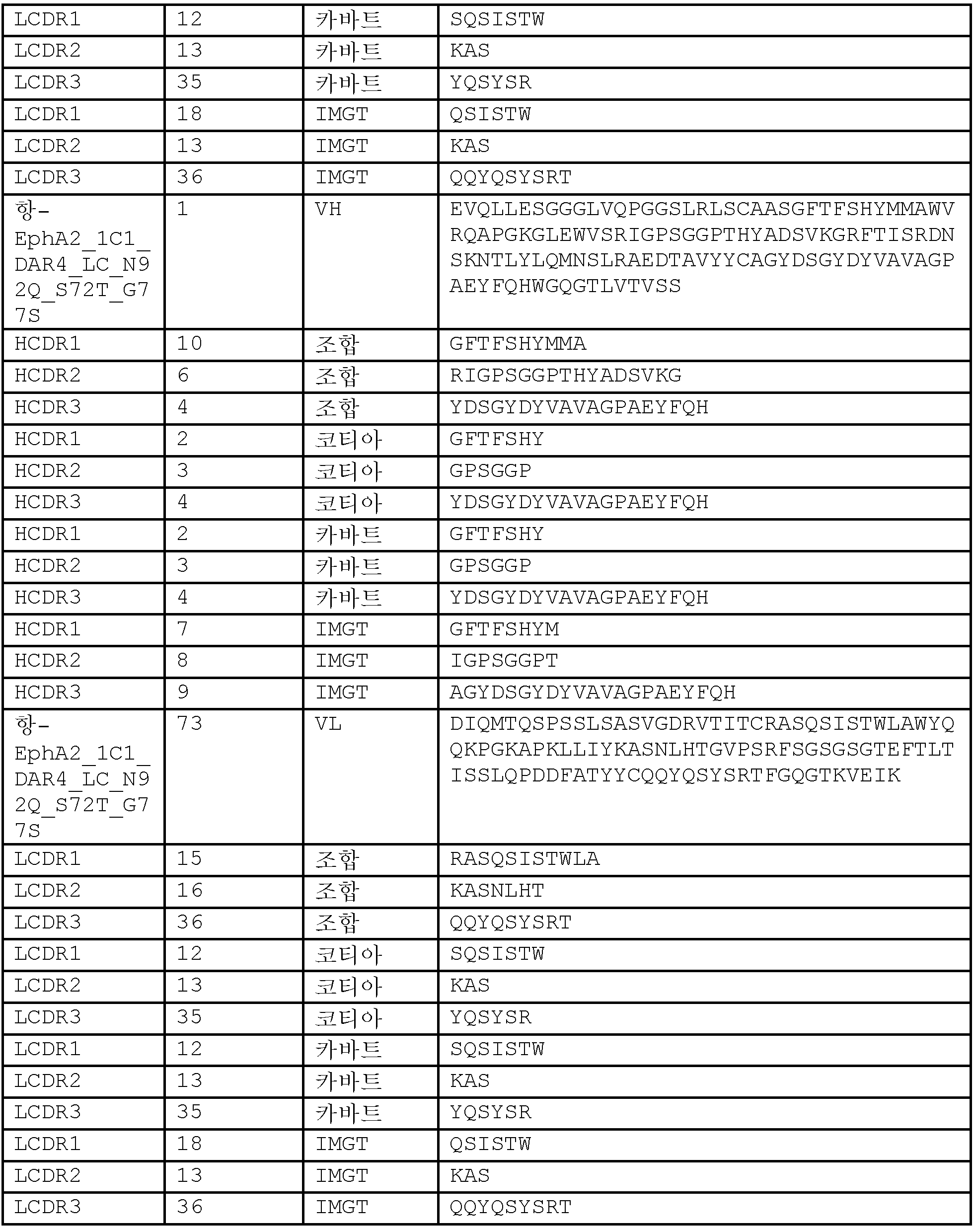
표 D. 전장 mAb IgG 쇄의 아미노산 및 핵산 서열Table D. Amino acid and nucleic acid sequences of full-length mAb IgG chains
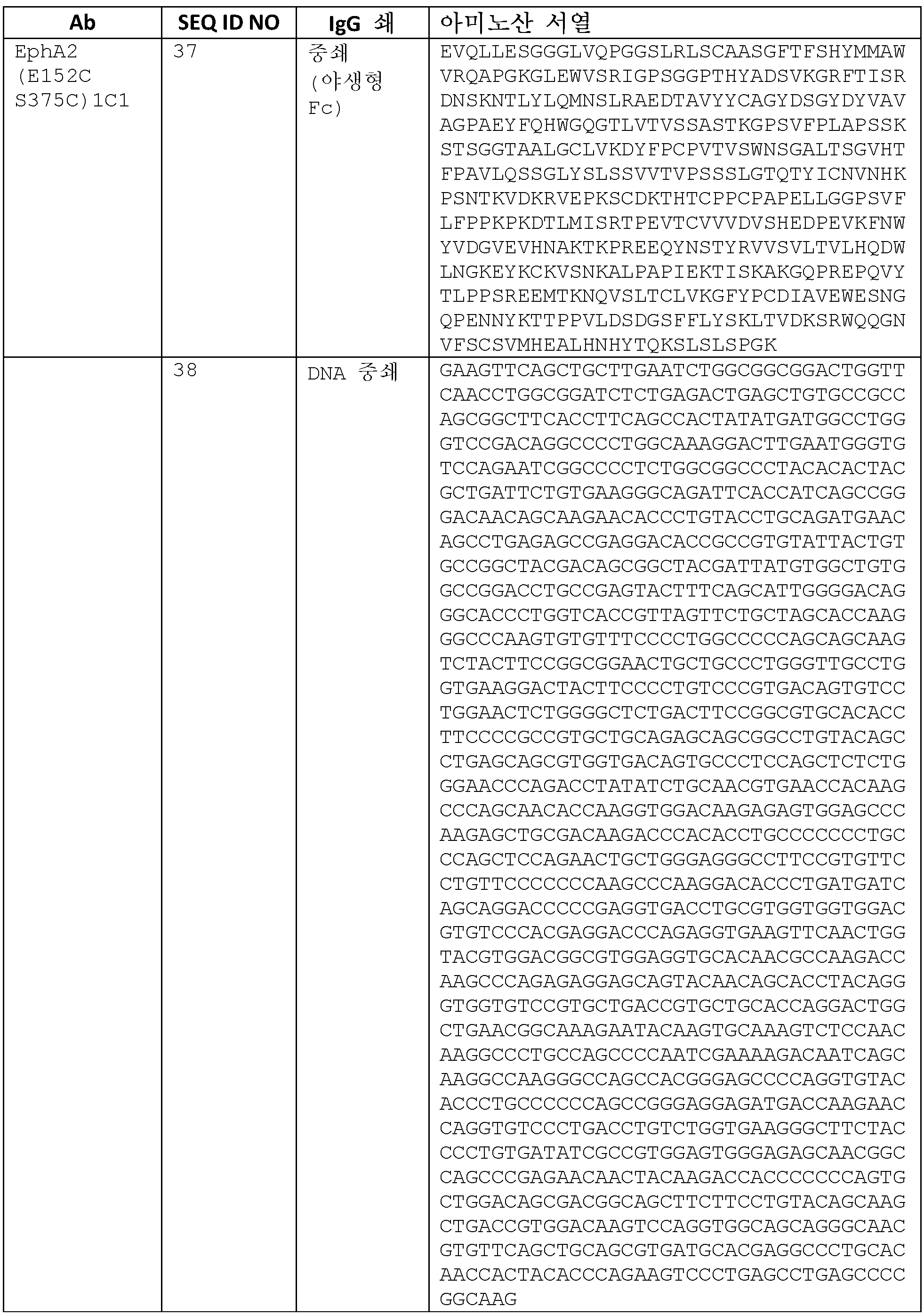


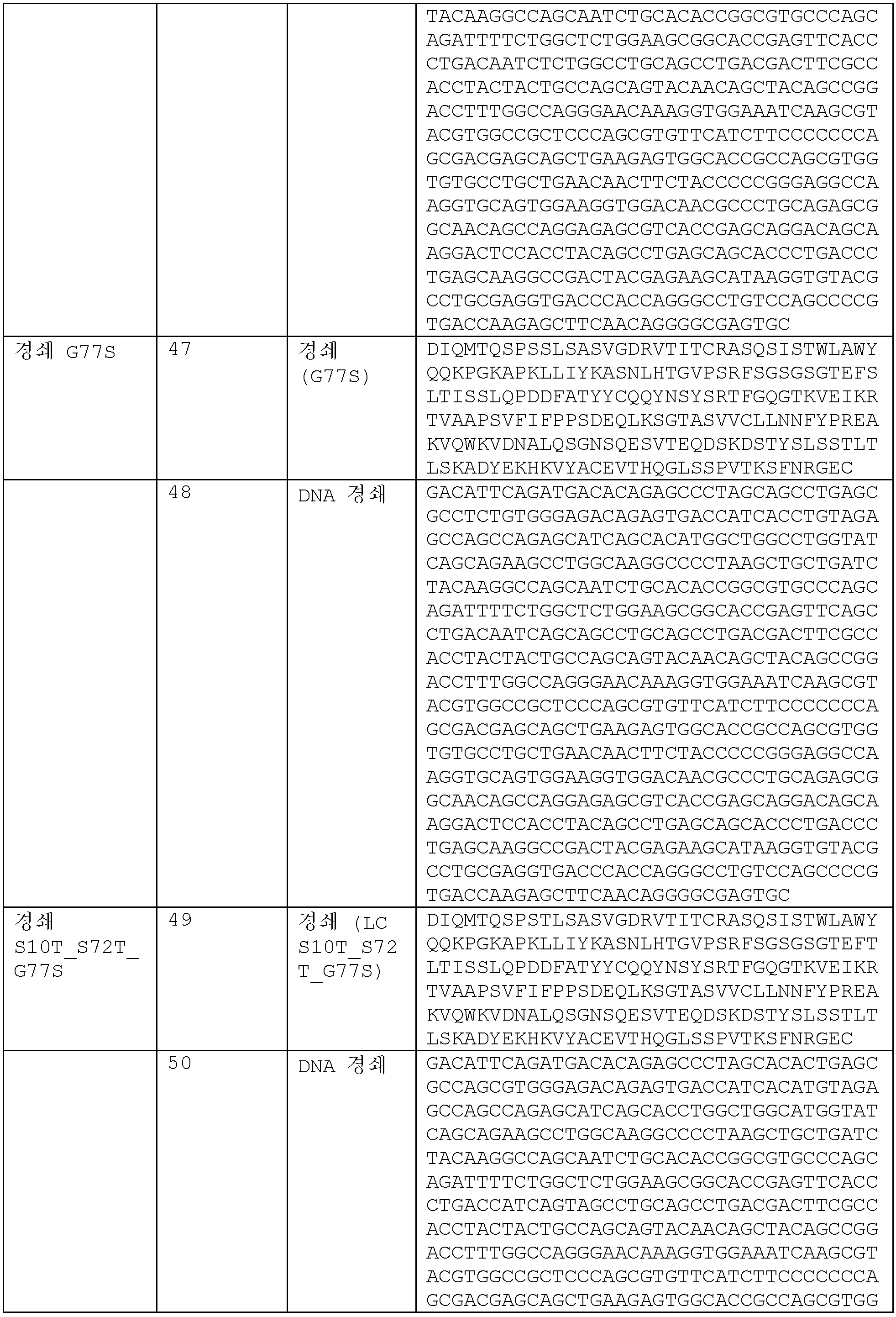


일부 실시양태에서, 본원에 개시된 ADC의 항-EphA2 항체 또는 항원-결합 단편은 상기 표에 열거된 중쇄 및 경쇄 가변 도메인의 임의의 세트 또는 상기 표에 열거된 중쇄 및 경쇄 가변 도메인의 임의의 세트로부터의 6개의 CDR의 세트를 포함할 수 있다. 일부 실시양태에서, 본원에 개시된 ADC의 항-EphA2 항체 또는 항원-결합 단편은, ADC가 그의 표적 암 항원에 결합하는 능력 (예를 들어, 1x10⁻⁸ M 미만의 KD로)을 보유하고 본원에 개시된 ADC의 1종 이상의 기능적 특성 (예를 들어, 내재화하거나, 항원 표적, 예를 들어 종양 또는 다른 암 세포 상에서 발현된 항원에 결합하는 능력 등)을 보유하는 한, 상기 표에 열거된 서열에 대해 보존적으로 변형되고/거나 상동인 아미노산 서열을 포함할 수 있다.In some embodiments, the anti-EphA2 antibody or antigen-binding fragment of the ADC disclosed herein can comprise any set of heavy and light chain variable domains listed in the Tables above or a set of 6 CDRs from any set of heavy and light chain variable domains listed in the Tables above. In some embodiments, the anti-EphA2 antibody or antigen-binding fragment of the ADC disclosed herein can comprise an amino acid sequence that is conservatively modified and/or homologous to the sequences listed in the Tables above, so long as the ADC retains the ability to bind its target cancer antigen (e.g., with a K D of less than 1x10 -8 M) and retains one or more functional properties of the ADC disclosed herein (e.g., the ability to internalize, or bind to an antigen target, e.g., an antigen expressed on a tumor or other cancer cell, etc.).
일부 실시양태에서, 본원에 개시된 ADC의 항-EphA2 항체 또는 항원-결합 단편은 인간 중쇄 및 경쇄 불변 도메인 또는 그의 단편을 추가로 포함한다. 예를 들어, 기재된 ADC의 항-EphA2 항체 또는 항원-결합 단편은 인간 IgG 중쇄 불변 도메인 (예컨대 IgG1) 및 인간 카파 또는 람다 경쇄 불변 도메인을 포함할 수 있다. 일부 실시양태에서, 기재된 ADC의 항-EphA2 항체 또는 항원-결합 단편은 인간 Ig 카파 경쇄 불변 도메인을 갖는 인간 이뮤노글로불린 G 하위유형 1 (IgG1) 중쇄 불변 도메인을 포함한다.In some embodiments, the anti-EphA2 antibody or antigen-binding fragment of the ADC disclosed herein further comprises human heavy and light chain constant domains or fragments thereof. For example, the anti-EphA2 antibody or antigen-binding fragment of the described ADC can comprise a human IgG heavy chain constant domain (such as IgG1) and a human kappa or lambda light chain constant domain. In some embodiments, the anti-EphA2 antibody or antigen-binding fragment of the described ADC comprises a human immunoglobulin G subtype 1 (IgG1) heavy chain constant domain having a human Ig kappa light chain constant domain.
일부 실시양태에서, 항-EphA2 항체 또는 그의 항원-결합 단편은 하기와 같은 3개의 중쇄 CDR 및 3개의 경쇄 CDR을 포함한다: 서열식별번호: 2로 이루어진 중쇄 CDR1 (HCDR1), 서열식별번호: 3으로 이루어진 중쇄 CDR2 (HCDR2), 서열식별번호: 4로 이루어진 중쇄 CDR3 (HCDR3); 서열식별번호: 12로 이루어진 경쇄 CDR1 (LCDR1), 서열식별번호: 13으로 이루어진 경쇄 CDR2 (LCDR2) 및 서열식별번호: 14, 서열식별번호: 26, 서열식별번호: 29, 서열식별번호: 32, 서열식별번호: 35 또는 서열식별번호: 70으로 이루어진 경쇄 CDR3 (LCDR3).In some embodiments, the anti-EphA2 antibody or antigen-binding fragment thereof comprises three heavy chain CDRs and three light chain CDRs: a heavy chain CDR1 (HCDR1) consisting of SEQ ID NO: 2, a heavy chain CDR2 (HCDR2) consisting of SEQ ID NO: 3, a heavy chain CDR3 (HCDR3) consisting of SEQ ID NO: 4; a light chain CDR1 (LCDR1) consisting of SEQ ID NO: 12, a light chain CDR2 (LCDR2) consisting of SEQ ID NO: 13, and a light chain CDR3 (LCDR3) consisting of SEQ ID NO: 14, SEQ ID NO: 26, SEQ ID NO: 29, SEQ ID NO: 32, SEQ ID NO: 35, or SEQ ID NO: 70.
일부 실시양태에서, 항-EphA2 항체 또는 그의 항원-결합 단편은 하기와 같은 3개의 중쇄 CDR 및 3개의 경쇄 CDR을 포함한다: 서열식별번호: 2로 이루어진 중쇄 CDR1 (HCDR1), 서열식별번호: 3으로 이루어진 중쇄 CDR2 (HCDR2), 서열식별번호: 4로 이루어진 중쇄 CDR3 (HCDR3); 서열식별번호: 12로 이루어진 경쇄 CDR1 (LCDR1), 서열식별번호: 13으로 이루어진 경쇄 CDR2 (LCDR2) 및 서열식별번호: 14로 이루어진 경쇄 CDR3 (LCDR3).In some embodiments, the anti-EphA2 antibody or antigen-binding fragment thereof comprises three heavy chain CDRs and three light chain CDRs: a heavy chain CDR1 (HCDR1) consisting of SEQ ID NO: 2, a heavy chain CDR2 (HCDR2) consisting of SEQ ID NO: 3, a heavy chain CDR3 (HCDR3) consisting of SEQ ID NO: 4; a light chain CDR1 (LCDR1) consisting of SEQ ID NO: 12, a light chain CDR2 (LCDR2) consisting of SEQ ID NO: 13, and a light chain CDR3 (LCDR3) consisting of SEQ ID NO: 14.
일부 실시양태에서, 항-EphA2 항체 또는 그의 항원-결합 단편은 하기와 같은 3개의 중쇄 CDR 및 3개의 경쇄 CDR을 포함한다: 서열식별번호: 2로 이루어진 중쇄 CDR1 (HCDR1), 서열식별번호: 3으로 이루어진 중쇄 CDR2 (HCDR2), 서열식별번호: 4로 이루어진 중쇄 CDR3 (HCDR3); 서열식별번호: 12로 이루어진 경쇄 CDR1 (LCDR1), 서열식별번호: 13으로 이루어진 경쇄 CDR2 (LCDR2) 및 서열식별번호: 26으로 이루어진 경쇄 CDR3 (LCDR3).In some embodiments, the anti-EphA2 antibody or antigen-binding fragment thereof comprises three heavy chain CDRs and three light chain CDRs: a heavy chain CDR1 (HCDR1) consisting of SEQ ID NO: 2, a heavy chain CDR2 (HCDR2) consisting of SEQ ID NO: 3, a heavy chain CDR3 (HCDR3) consisting of SEQ ID NO: 4; a light chain CDR1 (LCDR1) consisting of SEQ ID NO: 12, a light chain CDR2 (LCDR2) consisting of SEQ ID NO: 13, and a light chain CDR3 (LCDR3) consisting of SEQ ID NO: 26.
일부 실시양태에서, 항-EphA2 항체 또는 그의 항원-결합 단편은 하기와 같은 3개의 중쇄 CDR 및 3개의 경쇄 CDR을 포함한다: 서열식별번호: 2로 이루어진 중쇄 CDR1 (HCDR1), 서열식별번호: 3으로 이루어진 중쇄 CDR2 (HCDR2), 서열식별번호: 4로 이루어진 중쇄 CDR3 (HCDR3); 서열식별번호: 12로 이루어진 경쇄 CDR1 (LCDR1), 서열식별번호: 13으로 이루어진 경쇄 CDR2 (LCDR2) 및 서열식별번호: 29로 이루어진 경쇄 CDR3 (LCDR3).In some embodiments, the anti-EphA2 antibody or antigen-binding fragment thereof comprises three heavy chain CDRs and three light chain CDRs: a heavy chain CDR1 (HCDR1) consisting of SEQ ID NO: 2, a heavy chain CDR2 (HCDR2) consisting of SEQ ID NO: 3, a heavy chain CDR3 (HCDR3) consisting of SEQ ID NO: 4; a light chain CDR1 (LCDR1) consisting of SEQ ID NO: 12, a light chain CDR2 (LCDR2) consisting of SEQ ID NO: 13, and a light chain CDR3 (LCDR3) consisting of SEQ ID NO: 29.
일부 실시양태에서, 항-EphA2 항체 또는 그의 항원-결합 단편은 하기와 같은 3개의 중쇄 CDR 및 3개의 경쇄 CDR을 포함한다: 서열식별번호: 2로 이루어진 중쇄 CDR1 (HCDR1), 서열식별번호: 3으로 이루어진 중쇄 CDR2 (HCDR2), 서열식별번호: 4로 이루어진 중쇄 CDR3 (HCDR3); 서열식별번호: 12로 이루어진 경쇄 CDR1 (LCDR1), 서열식별번호: 13으로 이루어진 경쇄 CDR2 (LCDR2) 및 서열식별번호: 32로 이루어진 경쇄 CDR3 (LCDR3).In some embodiments, the anti-EphA2 antibody or antigen-binding fragment thereof comprises three heavy chain CDRs and three light chain CDRs: a heavy chain CDR1 (HCDR1) consisting of SEQ ID NO: 2, a heavy chain CDR2 (HCDR2) consisting of SEQ ID NO: 3, a heavy chain CDR3 (HCDR3) consisting of SEQ ID NO: 4; a light chain CDR1 (LCDR1) consisting of SEQ ID NO: 12, a light chain CDR2 (LCDR2) consisting of SEQ ID NO: 13, and a light chain CDR3 (LCDR3) consisting of SEQ ID NO: 32.
일부 실시양태에서, 항-EphA2 항체 또는 그의 항원-결합 단편은 하기와 같은 3개의 중쇄 CDR 및 3개의 경쇄 CDR을 포함한다: 서열식별번호: 2로 이루어진 중쇄 CDR1 (HCDR1), 서열식별번호: 3으로 이루어진 중쇄 CDR2 (HCDR2), 서열식별번호: 4로 이루어진 중쇄 CDR3 (HCDR3); 서열식별번호: 12로 이루어진 경쇄 CDR1 (LCDR1), 서열식별번호: 13으로 이루어진 경쇄 CDR2 (LCDR2) 및 서열식별번호: 35로 이루어진 경쇄 CDR3 (LCDR3).In some embodiments, the anti-EphA2 antibody or antigen-binding fragment thereof comprises three heavy chain CDRs and three light chain CDRs: a heavy chain CDR1 (HCDR1) consisting of SEQ ID NO: 2, a heavy chain CDR2 (HCDR2) consisting of SEQ ID NO: 3, a heavy chain CDR3 (HCDR3) consisting of SEQ ID NO: 4; a light chain CDR1 (LCDR1) consisting of SEQ ID NO: 12, a light chain CDR2 (LCDR2) consisting of SEQ ID NO: 13, and a light chain CDR3 (LCDR3) consisting of SEQ ID NO: 35.
일부 실시양태에서, 항-EphA2 항체 또는 그의 항원-결합 단편은 하기와 같은 3개의 중쇄 CDR 및 3개의 경쇄 CDR을 포함한다: 서열식별번호: 2로 이루어진 중쇄 CDR1 (HCDR1), 서열식별번호: 3으로 이루어진 중쇄 CDR2 (HCDR2), 서열식별번호: 4로 이루어진 중쇄 CDR3 (HCDR3); 서열식별번호: 12로 이루어진 경쇄 CDR1 (LCDR1), 서열식별번호: 13으로 이루어진 경쇄 CDR2 (LCDR2) 및 서열식별번호: 70으로 이루어진 경쇄 CDR3 (LCDR3).In some embodiments, the anti-EphA2 antibody or antigen-binding fragment thereof comprises three heavy chain CDRs and three light chain CDRs: a heavy chain CDR1 (HCDR1) consisting of SEQ ID NO: 2, a heavy chain CDR2 (HCDR2) consisting of SEQ ID NO: 3, a heavy chain CDR3 (HCDR3) consisting of SEQ ID NO: 4; a light chain CDR1 (LCDR1) consisting of SEQ ID NO: 12, a light chain CDR2 (LCDR2) consisting of SEQ ID NO: 13, and a light chain CDR3 (LCDR3) consisting of SEQ ID NO: 70.
일부 실시양태에서, 항-EphA2 항체 또는 그의 항원-결합 단편은 하기와 같은 3개의 중쇄 CDR 및 3개의 경쇄 CDR을 포함한다: 서열식별번호: 5로 이루어진 중쇄 CDR1 (HCDR1), 서열식별번호: 6으로 이루어진 중쇄 CDR2 (HCDR2), 서열식별번호: 4로 이루어진 중쇄 CDR3 (HCDR3); 서열식별번호: 15로 이루어진 경쇄 CDR1 (LCDR1), 서열식별번호: 16으로 이루어진 경쇄 CDR2 (LCDR2) 및 서열식별번호: 17, 서열식별번호: 24, 서열식별번호: 27, 서열식별번호: 30, 서열식별번호: 33 또는 서열식별번호: 36으로 이루어진 경쇄 CDR3 (LCDR3).In some embodiments, the anti-EphA2 antibody or antigen-binding fragment thereof comprises three heavy chain CDRs and three light chain CDRs: a heavy chain CDR1 (HCDR1) consisting of SEQ ID NO: 5, a heavy chain CDR2 (HCDR2) consisting of SEQ ID NO: 6, a heavy chain CDR3 (HCDR3) consisting of SEQ ID NO: 4; a light chain CDR1 (LCDR1) consisting of SEQ ID NO: 15, a light chain CDR2 (LCDR2) consisting of SEQ ID NO: 16, and a light chain CDR3 (LCDR3) consisting of SEQ ID NO: 17, SEQ ID NO: 24, SEQ ID NO: 27, SEQ ID NO: 30, SEQ ID NO: 33, or SEQ ID NO: 36.
일부 실시양태에서, 항-EphA2 항체 또는 그의 항원-결합 단편은 하기와 같은 3개의 중쇄 CDR 및 3개의 경쇄 CDR을 포함한다: 서열식별번호: 5로 이루어진 중쇄 CDR1 (HCDR1), 서열식별번호: 6으로 이루어진 중쇄 CDR2 (HCDR2), 서열식별번호: 4로 이루어진 중쇄 CDR3 (HCDR3); 서열식별번호: 15로 이루어진 경쇄 CDR1 (LCDR1), 서열식별번호: 16으로 이루어진 경쇄 CDR2 (LCDR2) 및 서열식별번호: 17로 이루어진 경쇄 CDR3 (LCDR3).In some embodiments, the anti-EphA2 antibody or antigen-binding fragment thereof comprises three heavy chain CDRs and three light chain CDRs: a heavy chain CDR1 (HCDR1) consisting of SEQ ID NO: 5, a heavy chain CDR2 (HCDR2) consisting of SEQ ID NO: 6, a heavy chain CDR3 (HCDR3) consisting of SEQ ID NO: 4; a light chain CDR1 (LCDR1) consisting of SEQ ID NO: 15, a light chain CDR2 (LCDR2) consisting of SEQ ID NO: 16, and a light chain CDR3 (LCDR3) consisting of SEQ ID NO: 17.
일부 실시양태에서, 항-EphA2 항체 또는 그의 항원-결합 단편은 하기와 같은 3개의 중쇄 CDR 및 3개의 경쇄 CDR을 포함한다: 서열식별번호: 5로 이루어진 중쇄 CDR1 (HCDR1), 서열식별번호: 6으로 이루어진 중쇄 CDR2 (HCDR2), 서열식별번호: 4로 이루어진 중쇄 CDR3 (HCDR3); 서열식별번호: 15로 이루어진 경쇄 CDR1 (LCDR1), 서열식별번호: 16으로 이루어진 경쇄 CDR2 (LCDR2) 및 서열식별번호: 24로 이루어진 경쇄 CDR3 (LCDR3).In some embodiments, the anti-EphA2 antibody or antigen-binding fragment thereof comprises three heavy chain CDRs and three light chain CDRs: a heavy chain CDR1 (HCDR1) consisting of SEQ ID NO: 5, a heavy chain CDR2 (HCDR2) consisting of SEQ ID NO: 6, a heavy chain CDR3 (HCDR3) consisting of SEQ ID NO: 4; a light chain CDR1 (LCDR1) consisting of SEQ ID NO: 15, a light chain CDR2 (LCDR2) consisting of SEQ ID NO: 16, and a light chain CDR3 (LCDR3) consisting of SEQ ID NO: 24.
일부 실시양태에서, 항-EphA2 항체 또는 그의 항원-결합 단편은 하기와 같은 3개의 중쇄 CDR 및 3개의 경쇄 CDR을 포함한다: 서열식별번호: 5로 이루어진 중쇄 CDR1 (HCDR1), 서열식별번호: 6으로 이루어진 중쇄 CDR2 (HCDR2), 서열식별번호: 4로 이루어진 중쇄 CDR3 (HCDR3); 서열식별번호: 15로 이루어진 경쇄 CDR1 (LCDR1), 서열식별번호: 16으로 이루어진 경쇄 CDR2 (LCDR2) 및 서열식별번호: 27로 이루어진 경쇄 CDR3 (LCDR3).In some embodiments, the anti-EphA2 antibody or antigen-binding fragment thereof comprises three heavy chain CDRs and three light chain CDRs: a heavy chain CDR1 (HCDR1) consisting of SEQ ID NO: 5, a heavy chain CDR2 (HCDR2) consisting of SEQ ID NO: 6, a heavy chain CDR3 (HCDR3) consisting of SEQ ID NO: 4; a light chain CDR1 (LCDR1) consisting of SEQ ID NO: 15, a light chain CDR2 (LCDR2) consisting of SEQ ID NO: 16, and a light chain CDR3 (LCDR3) consisting of SEQ ID NO: 27.
일부 실시양태에서, 항-EphA2 항체 또는 그의 항원-결합 단편은 하기와 같은 3개의 중쇄 CDR 및 3개의 경쇄 CDR을 포함한다: 서열식별번호: 5로 이루어진 중쇄 CDR1 (HCDR1), 서열식별번호: 6으로 이루어진 중쇄 CDR2 (HCDR2), 서열식별번호: 4로 이루어진 중쇄 CDR3 (HCDR3); 서열식별번호: 15로 이루어진 경쇄 CDR1 (LCDR1), 서열식별번호: 16으로 이루어진 경쇄 CDR2 (LCDR2) 및 서열식별번호: 30으로 이루어진 경쇄 CDR3 (LCDR3).In some embodiments, the anti-EphA2 antibody or antigen-binding fragment thereof comprises three heavy chain CDRs and three light chain CDRs: a heavy chain CDR1 (HCDR1) consisting of SEQ ID NO: 5, a heavy chain CDR2 (HCDR2) consisting of SEQ ID NO: 6, a heavy chain CDR3 (HCDR3) consisting of SEQ ID NO: 4; a light chain CDR1 (LCDR1) consisting of SEQ ID NO: 15, a light chain CDR2 (LCDR2) consisting of SEQ ID NO: 16, and a light chain CDR3 (LCDR3) consisting of SEQ ID NO: 30.
일부 실시양태에서, 항-EphA2 항체 또는 그의 항원-결합 단편은 하기와 같은 3개의 중쇄 CDR 및 3개의 경쇄 CDR을 포함한다: 서열식별번호: 5로 이루어진 중쇄 CDR1 (HCDR1), 서열식별번호: 6으로 이루어진 중쇄 CDR2 (HCDR2), 서열식별번호: 4로 이루어진 중쇄 CDR3 (HCDR3); 서열식별번호: 15로 이루어진 경쇄 CDR1 (LCDR1), 서열식별번호: 16으로 이루어진 경쇄 CDR2 (LCDR2) 및 서열식별번호: 33으로 이루어진 경쇄 CDR3 (LCDR3).In some embodiments, the anti-EphA2 antibody or antigen-binding fragment thereof comprises three heavy chain CDRs and three light chain CDRs: a heavy chain CDR1 (HCDR1) consisting of SEQ ID NO: 5, a heavy chain CDR2 (HCDR2) consisting of SEQ ID NO: 6, a heavy chain CDR3 (HCDR3) consisting of SEQ ID NO: 4; a light chain CDR1 (LCDR1) consisting of SEQ ID NO: 15, a light chain CDR2 (LCDR2) consisting of SEQ ID NO: 16, and a light chain CDR3 (LCDR3) consisting of SEQ ID NO: 33.
일부 실시양태에서, 항-EphA2 항체 또는 그의 항원-결합 단편은 하기와 같은 3개의 중쇄 CDR 및 3개의 경쇄 CDR을 포함한다: 서열식별번호: 5로 이루어진 중쇄 CDR1 (HCDR1), 서열식별번호: 6으로 이루어진 중쇄 CDR2 (HCDR2), 서열식별번호: 4로 이루어진 중쇄 CDR3 (HCDR3); 서열식별번호: 15로 이루어진 경쇄 CDR1 (LCDR1), 서열식별번호: 16으로 이루어진 경쇄 CDR2 (LCDR2) 및 서열식별번호: 36으로 이루어진 경쇄 CDR3 (LCDR3).In some embodiments, the anti-EphA2 antibody or antigen-binding fragment thereof comprises three heavy chain CDRs and three light chain CDRs: a heavy chain CDR1 (HCDR1) consisting of SEQ ID NO: 5, a heavy chain CDR2 (HCDR2) consisting of SEQ ID NO: 6, a heavy chain CDR3 (HCDR3) consisting of SEQ ID NO: 4; a light chain CDR1 (LCDR1) consisting of SEQ ID NO: 15, a light chain CDR2 (LCDR2) consisting of SEQ ID NO: 16, and a light chain CDR3 (LCDR3) consisting of SEQ ID NO: 36.
일부 실시양태에서, 항-EphA2 항체 또는 그의 항원-결합 단편은 하기와 같은 3개의 중쇄 CDR 및 3개의 경쇄 CDR을 포함한다: 서열식별번호: 7로 이루어진 중쇄 CDR1 (HCDR1), 서열식별번호: 8로 이루어진 중쇄 CDR2 (HCDR2), 서열식별번호: 9로 이루어진 중쇄 CDR3 (HCDR3); 서열식별번호: 18로 이루어진 경쇄 CDR1 (LCDR1), 서열식별번호: 13으로 이루어진 경쇄 CDR2 (LCDR2) 및 서열식별번호: 17, 서열식별번호: 24, 서열식별번호: 27, 서열식별번호: 30, 서열식별번호: 33 또는 서열식별번호: 36으로 이루어진 경쇄 CDR3 (LCDR3).In some embodiments, the anti-EphA2 antibody or antigen-binding fragment thereof comprises three heavy chain CDRs and three light chain CDRs: a heavy chain CDR1 (HCDR1) consisting of SEQ ID NO: 7, a heavy chain CDR2 (HCDR2) consisting of SEQ ID NO: 8, a heavy chain CDR3 (HCDR3) consisting of SEQ ID NO: 9; a light chain CDR1 (LCDR1) consisting of SEQ ID NO: 18, a light chain CDR2 (LCDR2) consisting of SEQ ID NO: 13, and a light chain CDR3 (LCDR3) consisting of SEQ ID NO: 17, SEQ ID NO: 24, SEQ ID NO: 27, SEQ ID NO: 30, SEQ ID NO: 33, or SEQ ID NO: 36.
일부 실시양태에서, 항-EphA2 항체 또는 그의 항원-결합 단편은 하기와 같은 3개의 중쇄 CDR 및 3개의 경쇄 CDR을 포함한다: 서열식별번호: 7로 이루어진 중쇄 CDR1 (HCDR1), 서열식별번호: 8로 이루어진 중쇄 CDR2 (HCDR2), 서열식별번호: 9로 이루어진 중쇄 CDR3 (HCDR3); 서열식별번호: 18로 이루어진 경쇄 CDR1 (LCDR1), 서열식별번호: 13으로 이루어진 경쇄 CDR2 (LCDR2) 및 서열식별번호: 17로 이루어진 경쇄 CDR3 (LCDR3).In some embodiments, the anti-EphA2 antibody or antigen-binding fragment thereof comprises three heavy chain CDRs and three light chain CDRs: a heavy chain CDR1 (HCDR1) consisting of SEQ ID NO: 7, a heavy chain CDR2 (HCDR2) consisting of SEQ ID NO: 8, a heavy chain CDR3 (HCDR3) consisting of SEQ ID NO: 9; a light chain CDR1 (LCDR1) consisting of SEQ ID NO: 18, a light chain CDR2 (LCDR2) consisting of SEQ ID NO: 13, and a light chain CDR3 (LCDR3) consisting of SEQ ID NO: 17.
일부 실시양태에서, 항-EphA2 항체 또는 그의 항원-결합 단편은 하기와 같은 3개의 중쇄 CDR 및 3개의 경쇄 CDR을 포함한다: 서열식별번호: 7로 이루어진 중쇄 CDR1 (HCDR1), 서열식별번호: 8로 이루어진 중쇄 CDR2 (HCDR2), 서열식별번호: 9로 이루어진 중쇄 CDR3 (HCDR3); 서열식별번호: 18로 이루어진 경쇄 CDR1 (LCDR1), 서열식별번호: 13으로 이루어진 경쇄 CDR2 (LCDR2) 및 서열식별번호: 24로 이루어진 경쇄 CDR3 (LCDR3).In some embodiments, the anti-EphA2 antibody or antigen-binding fragment thereof comprises three heavy chain CDRs and three light chain CDRs: a heavy chain CDR1 (HCDR1) consisting of SEQ ID NO: 7, a heavy chain CDR2 (HCDR2) consisting of SEQ ID NO: 8, a heavy chain CDR3 (HCDR3) consisting of SEQ ID NO: 9; a light chain CDR1 (LCDR1) consisting of SEQ ID NO: 18, a light chain CDR2 (LCDR2) consisting of SEQ ID NO: 13, and a light chain CDR3 (LCDR3) consisting of SEQ ID NO: 24.
일부 실시양태에서, 항-EphA2 항체 또는 그의 항원-결합 단편은 하기와 같은 3개의 중쇄 CDR 및 3개의 경쇄 CDR을 포함한다: 서열식별번호: 7로 이루어진 중쇄 CDR1 (HCDR1), 서열식별번호: 8로 이루어진 중쇄 CDR2 (HCDR2), 서열식별번호: 9로 이루어진 중쇄 CDR3 (HCDR3); 서열식별번호: 18로 이루어진 경쇄 CDR1 (LCDR1), 서열식별번호: 13으로 이루어진 경쇄 CDR2 (LCDR2) 및 서열식별번호: 27로 이루어진 경쇄 CDR3 (LCDR3).In some embodiments, the anti-EphA2 antibody or antigen-binding fragment thereof comprises three heavy chain CDRs and three light chain CDRs: a heavy chain CDR1 (HCDR1) consisting of SEQ ID NO: 7, a heavy chain CDR2 (HCDR2) consisting of SEQ ID NO: 8, a heavy chain CDR3 (HCDR3) consisting of SEQ ID NO: 9; a light chain CDR1 (LCDR1) consisting of SEQ ID NO: 18, a light chain CDR2 (LCDR2) consisting of SEQ ID NO: 13, and a light chain CDR3 (LCDR3) consisting of SEQ ID NO: 27.
일부 실시양태에서, 항-EphA2 항체 또는 그의 항원-결합 단편은 하기와 같은 3개의 중쇄 CDR 및 3개의 경쇄 CDR을 포함한다: 서열식별번호: 7로 이루어진 중쇄 CDR1 (HCDR1), 서열식별번호: 8로 이루어진 중쇄 CDR2 (HCDR2), 서열식별번호: 9로 이루어진 중쇄 CDR3 (HCDR3); 서열식별번호: 18로 이루어진 경쇄 CDR1 (LCDR1), 서열식별번호: 13으로 이루어진 경쇄 CDR2 (LCDR2) 및 서열식별번호: 30으로 이루어진 경쇄 CDR3 (LCDR3).In some embodiments, the anti-EphA2 antibody or antigen-binding fragment thereof comprises three heavy chain CDRs and three light chain CDRs: a heavy chain CDR1 (HCDR1) consisting of SEQ ID NO: 7, a heavy chain CDR2 (HCDR2) consisting of SEQ ID NO: 8, a heavy chain CDR3 (HCDR3) consisting of SEQ ID NO: 9; a light chain CDR1 (LCDR1) consisting of SEQ ID NO: 18, a light chain CDR2 (LCDR2) consisting of SEQ ID NO: 13, and a light chain CDR3 (LCDR3) consisting of SEQ ID NO: 30.
일부 실시양태에서, 항-EphA2 항체 또는 그의 항원-결합 단편은 하기와 같은 3개의 중쇄 CDR 및 3개의 경쇄 CDR을 포함한다: 서열식별번호: 7로 이루어진 중쇄 CDR1 (HCDR1), 서열식별번호: 8로 이루어진 중쇄 CDR2 (HCDR2), 서열식별번호: 9로 이루어진 중쇄 CDR3 (HCDR3); 서열식별번호: 18로 이루어진 경쇄 CDR1 (LCDR1), 서열식별번호: 13으로 이루어진 경쇄 CDR2 (LCDR2) 및 서열식별번호: 33으로 이루어진 경쇄 CDR3 (LCDR3).In some embodiments, the anti-EphA2 antibody or antigen-binding fragment thereof comprises three heavy chain CDRs and three light chain CDRs: a heavy chain CDR1 (HCDR1) consisting of SEQ ID NO: 7, a heavy chain CDR2 (HCDR2) consisting of SEQ ID NO: 8, a heavy chain CDR3 (HCDR3) consisting of SEQ ID NO: 9; a light chain CDR1 (LCDR1) consisting of SEQ ID NO: 18, a light chain CDR2 (LCDR2) consisting of SEQ ID NO: 13, and a light chain CDR3 (LCDR3) consisting of SEQ ID NO: 33.
일부 실시양태에서, 항-EphA2 항체 또는 그의 항원-결합 단편은 하기와 같은 3개의 중쇄 CDR 및 3개의 경쇄 CDR을 포함한다: 서열식별번호: 7로 이루어진 중쇄 CDR1 (HCDR1), 서열식별번호: 8로 이루어진 중쇄 CDR2 (HCDR2), 서열식별번호: 9로 이루어진 중쇄 CDR3 (HCDR3); 서열식별번호: 18로 이루어진 경쇄 CDR1 (LCDR1), 서열식별번호: 13으로 이루어진 경쇄 CDR2 (LCDR2) 및 서열식별번호: 36으로 이루어진 경쇄 CDR3 (LCDR3).In some embodiments, the anti-EphA2 antibody or antigen-binding fragment thereof comprises three heavy chain CDRs and three light chain CDRs: a heavy chain CDR1 (HCDR1) consisting of SEQ ID NO: 7, a heavy chain CDR2 (HCDR2) consisting of SEQ ID NO: 8, a heavy chain CDR3 (HCDR3) consisting of SEQ ID NO: 9; a light chain CDR1 (LCDR1) consisting of SEQ ID NO: 18, a light chain CDR2 (LCDR2) consisting of SEQ ID NO: 13, and a light chain CDR3 (LCDR3) consisting of SEQ ID NO: 36.
일부 실시양태에서, 항-EphA2 항체 또는 그의 항원-결합 단편은 하기와 같은 3개의 중쇄 CDR 및 3개의 경쇄 CDR을 포함한다: 서열식별번호: 10으로 이루어진 중쇄 CDR1 (HCDR1), 서열식별번호: 6으로 이루어진 중쇄 CDR2 (HCDR2), 서열식별번호: 4로 이루어진 중쇄 CDR3 (HCDR3); 서열식별번호: 15로 이루어진 경쇄 CDR1 (LCDR1), 서열식별번호: 16으로 이루어진 경쇄 CDR2 (LCDR2) 및 서열식별번호: 17, 서열식별번호: 24, 서열식별번호: 27, 서열식별번호: 30, 서열식별번호: 33 또는 서열식별번호: 36으로 이루어진 경쇄 CDR3 (LCDR3).In some embodiments, the anti-EphA2 antibody or antigen-binding fragment thereof comprises three heavy chain CDRs and three light chain CDRs: a heavy chain CDR1 (HCDR1) consisting of SEQ ID NO: 10, a heavy chain CDR2 (HCDR2) consisting of SEQ ID NO: 6, a heavy chain CDR3 (HCDR3) consisting of SEQ ID NO: 4; a light chain CDR1 (LCDR1) consisting of SEQ ID NO: 15, a light chain CDR2 (LCDR2) consisting of SEQ ID NO: 16, and a light chain CDR3 (LCDR3) consisting of SEQ ID NO: 17, SEQ ID NO: 24, SEQ ID NO: 27, SEQ ID NO: 30, SEQ ID NO: 33, or SEQ ID NO: 36.
일부 실시양태에서, 항-EphA2 항체 또는 그의 항원-결합 단편은 하기와 같은 3개의 중쇄 CDR 및 3개의 경쇄 CDR을 포함한다: 서열식별번호: 10으로 이루어진 중쇄 CDR1 (HCDR1), 서열식별번호: 6으로 이루어진 중쇄 CDR2 (HCDR2), 서열식별번호: 4로 이루어진 중쇄 CDR3 (HCDR3); 서열식별번호: 15로 이루어진 경쇄 CDR1 (LCDR1), 서열식별번호: 16으로 이루어진 경쇄 CDR2 (LCDR2) 및 서열식별번호: 17로 이루어진 경쇄 CDR3 (LCDR3).In some embodiments, the anti-EphA2 antibody or antigen-binding fragment thereof comprises three heavy chain CDRs and three light chain CDRs: a heavy chain CDR1 (HCDR1) consisting of SEQ ID NO: 10, a heavy chain CDR2 (HCDR2) consisting of SEQ ID NO: 6, a heavy chain CDR3 (HCDR3) consisting of SEQ ID NO: 4; a light chain CDR1 (LCDR1) consisting of SEQ ID NO: 15, a light chain CDR2 (LCDR2) consisting of SEQ ID NO: 16, and a light chain CDR3 (LCDR3) consisting of SEQ ID NO: 17.
일부 실시양태에서, 항-EphA2 항체 또는 그의 항원-결합 단편은 하기와 같은 3개의 중쇄 CDR 및 3개의 경쇄 CDR을 포함한다: 서열식별번호: 10으로 이루어진 중쇄 CDR1 (HCDR1), 서열식별번호: 6으로 이루어진 중쇄 CDR2 (HCDR2), 서열식별번호: 4로 이루어진 중쇄 CDR3 (HCDR3); 서열식별번호: 15로 이루어진 경쇄 CDR1 (LCDR1), 서열식별번호: 16으로 이루어진 경쇄 CDR2 (LCDR2) 및 서열식별번호: 24로 이루어진 경쇄 CDR3 (LCDR3).In some embodiments, the anti-EphA2 antibody or antigen-binding fragment thereof comprises three heavy chain CDRs and three light chain CDRs: a heavy chain CDR1 (HCDR1) consisting of SEQ ID NO: 10, a heavy chain CDR2 (HCDR2) consisting of SEQ ID NO: 6, a heavy chain CDR3 (HCDR3) consisting of SEQ ID NO: 4; a light chain CDR1 (LCDR1) consisting of SEQ ID NO: 15, a light chain CDR2 (LCDR2) consisting of SEQ ID NO: 16, and a light chain CDR3 (LCDR3) consisting of SEQ ID NO: 24.
일부 실시양태에서, 항-EphA2 항체 또는 그의 항원-결합 단편은 하기와 같은 3개의 중쇄 CDR 및 3개의 경쇄 CDR을 포함한다: 서열식별번호: 10으로 이루어진 중쇄 CDR1 (HCDR1), 서열식별번호: 6으로 이루어진 중쇄 CDR2 (HCDR2), 서열식별번호: 4로 이루어진 중쇄 CDR3 (HCDR3); 서열식별번호: 15로 이루어진 경쇄 CDR1 (LCDR1), 서열식별번호: 16으로 이루어진 경쇄 CDR2 (LCDR2) 및 서열식별번호: 27로 이루어진 경쇄 CDR3 (LCDR3).In some embodiments, the anti-EphA2 antibody or antigen-binding fragment thereof comprises three heavy chain CDRs and three light chain CDRs: a heavy chain CDR1 (HCDR1) consisting of SEQ ID NO: 10, a heavy chain CDR2 (HCDR2) consisting of SEQ ID NO: 6, a heavy chain CDR3 (HCDR3) consisting of SEQ ID NO: 4; a light chain CDR1 (LCDR1) consisting of SEQ ID NO: 15, a light chain CDR2 (LCDR2) consisting of SEQ ID NO: 16, and a light chain CDR3 (LCDR3) consisting of SEQ ID NO: 27.
일부 실시양태에서, 항-EphA2 항체 또는 그의 항원-결합 단편은 하기와 같은 3개의 중쇄 CDR 및 3개의 경쇄 CDR을 포함한다: 서열식별번호: 10으로 이루어진 중쇄 CDR1 (HCDR1), 서열식별번호: 6으로 이루어진 중쇄 CDR2 (HCDR2), 서열식별번호: 4로 이루어진 중쇄 CDR3 (HCDR3); 서열식별번호: 15로 이루어진 경쇄 CDR1 (LCDR1), 서열식별번호: 16으로 이루어진 경쇄 CDR2 (LCDR2) 및 서열식별번호: 30으로 이루어진 경쇄 CDR3 (LCDR3).In some embodiments, the anti-EphA2 antibody or antigen-binding fragment thereof comprises three heavy chain CDRs and three light chain CDRs: a heavy chain CDR1 (HCDR1) consisting of SEQ ID NO: 10, a heavy chain CDR2 (HCDR2) consisting of SEQ ID NO: 6, a heavy chain CDR3 (HCDR3) consisting of SEQ ID NO: 4; a light chain CDR1 (LCDR1) consisting of SEQ ID NO: 15, a light chain CDR2 (LCDR2) consisting of SEQ ID NO: 16, and a light chain CDR3 (LCDR3) consisting of SEQ ID NO: 30.
일부 실시양태에서, 항-EphA2 항체 또는 그의 항원-결합 단편은 하기와 같은 3개의 중쇄 CDR 및 3개의 경쇄 CDR을 포함한다: 서열식별번호: 10으로 이루어진 중쇄 CDR1 (HCDR1), 서열식별번호: 6으로 이루어진 중쇄 CDR2 (HCDR2), 서열식별번호: 4로 이루어진 중쇄 CDR3 (HCDR3); 서열식별번호: 15로 이루어진 경쇄 CDR1 (LCDR1), 서열식별번호: 16으로 이루어진 경쇄 CDR2 (LCDR2) 및 서열식별번호: 33으로 이루어진 경쇄 CDR3 (LCDR3).In some embodiments, the anti-EphA2 antibody or antigen-binding fragment thereof comprises three heavy chain CDRs and three light chain CDRs: a heavy chain CDR1 (HCDR1) consisting of SEQ ID NO: 10, a heavy chain CDR2 (HCDR2) consisting of SEQ ID NO: 6, a heavy chain CDR3 (HCDR3) consisting of SEQ ID NO: 4; a light chain CDR1 (LCDR1) consisting of SEQ ID NO: 15, a light chain CDR2 (LCDR2) consisting of SEQ ID NO: 16, and a light chain CDR3 (LCDR3) consisting of SEQ ID NO: 33.
일부 실시양태에서, 항-EphA2 항체 또는 그의 항원-결합 단편은 하기와 같은 3개의 중쇄 CDR 및 3개의 경쇄 CDR을 포함한다: 서열식별번호: 10으로 이루어진 중쇄 CDR1 (HCDR1), 서열식별번호: 6으로 이루어진 중쇄 CDR2 (HCDR2), 서열식별번호: 4로 이루어진 중쇄 CDR3 (HCDR3); 서열식별번호: 15로 이루어진 경쇄 CDR1 (LCDR1), 서열식별번호: 16으로 이루어진 경쇄 CDR2 (LCDR2) 및 서열식별번호: 36으로 이루어진 경쇄 CDR3 (LCDR3).In some embodiments, the anti-EphA2 antibody or antigen-binding fragment thereof comprises three heavy chain CDRs and three light chain CDRs: a heavy chain CDR1 (HCDR1) consisting of SEQ ID NO: 10, a heavy chain CDR2 (HCDR2) consisting of SEQ ID NO: 6, a heavy chain CDR3 (HCDR3) consisting of SEQ ID NO: 4; a light chain CDR1 (LCDR1) consisting of SEQ ID NO: 15, a light chain CDR2 (LCDR2) consisting of SEQ ID NO: 16, and a light chain CDR3 (LCDR3) consisting of SEQ ID NO: 36.
일부 실시양태에서, 항-EphA2 항체 또는 그의 항원-결합 단편은 서열식별번호: 1의 중쇄 가변 영역 아미노산 서열 및 서열식별번호: 11의 경쇄 가변 영역 아미노산 서열을 포함한다. 일부 실시양태에서, 항-EphA2 항체 또는 그의 항원-결합 단편은 서열식별번호: 1의 중쇄 가변 영역 아미노산 서열 및 서열식별번호: 11의 경쇄 가변 영역 아미노산 서열 또는 개시된 서열에 대해 적어도 95% 동일한 서열을 포함한다. 일부 실시양태에서, 항-EphA2 항체 또는 그의 항원-결합 단편은 서열식별번호: 1에 대해 적어도 96%, 적어도 97%, 적어도 98% 또는 적어도 99% 동일한 중쇄 가변 영역 아미노산 서열 및/또는 서열식별번호: 11에 대해 적어도 96%, 적어도 97%, 적어도 98% 또는 적어도 99% 동일한 경쇄 가변 영역 아미노산 서열을 갖는다.In some embodiments, the anti-EphA2 antibody or antigen-binding fragment thereof comprises a heavy chain variable region amino acid sequence of SEQ ID NO: 1 and a light chain variable region amino acid sequence of SEQ ID NO: 11. In some embodiments, the anti-EphA2 antibody or antigen-binding fragment thereof comprises a heavy chain variable region amino acid sequence of SEQ ID NO: 1 and a light chain variable region amino acid sequence of SEQ ID NO: 11 or a sequence that is at least 95% identical to the disclosed sequences. In some embodiments, the anti-EphA2 antibody or antigen-binding fragment thereof has a heavy chain variable region amino acid sequence that is at least 96%, at least 97%, at least 98%, or at least 99% identical to SEQ ID NO: 1 and/or a light chain variable region amino acid sequence that is at least 96%, at least 97%, at least 98%, or at least 99% identical to SEQ ID NO: 11.
일부 실시양태에서, 항-EphA2 항체 또는 그의 항원-결합 단편은 서열식별번호: 1의 중쇄 가변 영역 아미노산 서열 및 서열식별번호: 19의 경쇄 가변 영역 아미노산 서열을 포함한다. 일부 실시양태에서, 항-EphA2 항체 또는 그의 항원-결합 단편은 서열식별번호: 1의 중쇄 가변 영역 아미노산 서열 및 서열식별번호: 19의 경쇄 가변 영역 아미노산 서열 또는 개시된 서열에 대해 적어도 95% 동일한 서열을 포함한다. 일부 실시양태에서, 항-EphA2 항체 또는 그의 항원-결합 단편은 서열식별번호: 1에 대해 적어도 96%, 적어도 97%, 적어도 98% 또는 적어도 99% 동일한 중쇄 가변 영역 아미노산 서열 및/또는 서열식별번호: 19에 대해 적어도 96%, 적어도 97%, 적어도 98% 또는 적어도 99% 동일한 경쇄 가변 영역 아미노산 서열을 갖는다.In some embodiments, the anti-EphA2 antibody or antigen-binding fragment thereof comprises a heavy chain variable region amino acid sequence of SEQ ID NO: 1 and a light chain variable region amino acid sequence of SEQ ID NO: 19. In some embodiments, the anti-EphA2 antibody or antigen-binding fragment thereof comprises a heavy chain variable region amino acid sequence of SEQ ID NO: 1 and a light chain variable region amino acid sequence of SEQ ID NO: 19 or a sequence that is at least 95% identical to the disclosed sequences. In some embodiments, the anti-EphA2 antibody or antigen-binding fragment thereof has a heavy chain variable region amino acid sequence that is at least 96%, at least 97%, at least 98%, or at least 99% identical to SEQ ID NO: 1 and/or a light chain variable region amino acid sequence that is at least 96%, at least 97%, at least 98%, or at least 99% identical to SEQ ID NO: 19.
일부 실시양태에서, 항-EphA2 항체 또는 그의 항원-결합 단편은 서열식별번호: 1의 중쇄 가변 영역 아미노산 서열 및 서열식별번호: 20의 경쇄 가변 영역 아미노산 서열을 포함한다. 일부 실시양태에서, 항-EphA2 항체 또는 그의 항원-결합 단편은 서열식별번호: 1의 중쇄 가변 영역 아미노산 서열 및 서열식별번호: 20의 경쇄 가변 영역 아미노산 서열 또는 개시된 서열에 대해 적어도 95% 동일한 서열을 포함한다. 일부 실시양태에서, 항-EphA2 항체 또는 그의 항원-결합 단편은 서열식별번호: 1에 대해 적어도 96%, 적어도 97%, 적어도 98% 또는 적어도 99% 동일한 중쇄 가변 영역 아미노산 서열 및/또는 서열식별번호: 20에 대해 적어도 96%, 적어도 97%, 적어도 98% 또는 적어도 99% 동일한 경쇄 가변 영역 아미노산 서열을 갖는다.In some embodiments, the anti-EphA2 antibody or antigen-binding fragment thereof comprises a heavy chain variable region amino acid sequence of SEQ ID NO: 1 and a light chain variable region amino acid sequence of SEQ ID NO: 20. In some embodiments, the anti-EphA2 antibody or antigen-binding fragment thereof comprises a heavy chain variable region amino acid sequence of SEQ ID NO: 1 and a light chain variable region amino acid sequence of SEQ ID NO: 20 or a sequence that is at least 95% identical to the disclosed sequences. In some embodiments, the anti-EphA2 antibody or antigen-binding fragment thereof has a heavy chain variable region amino acid sequence that is at least 96%, at least 97%, at least 98%, or at least 99% identical to SEQ ID NO: 1 and/or a light chain variable region amino acid sequence that is at least 96%, at least 97%, at least 98%, or at least 99% identical to SEQ ID NO: 20.
일부 실시양태에서, 항-EphA2 항체 또는 그의 항원-결합 단편은 서열식별번호: 1의 중쇄 가변 영역 아미노산 서열 및 서열식별번호: 21의 경쇄 가변 영역 아미노산 서열을 포함한다. 일부 실시양태에서, 항-EphA2 항체 또는 그의 항원-결합 단편은 서열식별번호: 1의 중쇄 가변 영역 아미노산 서열 및 서열식별번호: 21의 경쇄 가변 영역 아미노산 서열 또는 개시된 서열에 대해 적어도 95% 동일한 서열을 포함한다. 일부 실시양태에서, 항-EphA2 항체 또는 그의 항원-결합 단편은 서열식별번호: 1에 대해 적어도 96%, 적어도 97%, 적어도 98% 또는 적어도 99% 동일한 중쇄 가변 영역 아미노산 서열 및/또는 서열식별번호: 21에 대해 적어도 96%, 적어도 97%, 적어도 98% 또는 적어도 99% 동일한 경쇄 가변 영역 아미노산 서열을 갖는다.In some embodiments, the anti-EphA2 antibody or antigen-binding fragment thereof comprises a heavy chain variable region amino acid sequence of SEQ ID NO: 1 and a light chain variable region amino acid sequence of SEQ ID NO: 21. In some embodiments, the anti-EphA2 antibody or antigen-binding fragment thereof comprises a heavy chain variable region amino acid sequence of SEQ ID NO: 1 and a light chain variable region amino acid sequence of SEQ ID NO: 21 or a sequence that is at least 95% identical to the disclosed sequences. In some embodiments, the anti-EphA2 antibody or antigen-binding fragment thereof has a heavy chain variable region amino acid sequence that is at least 96%, at least 97%, at least 98%, or at least 99% identical to SEQ ID NO: 1 and/or a light chain variable region amino acid sequence that is at least 96%, at least 97%, at least 98%, or at least 99% identical to SEQ ID NO: 21.
일부 실시양태에서, 항-EphA2 항체 또는 그의 항원-결합 단편은 서열식별번호: 1의 중쇄 가변 영역 아미노산 서열 및 서열식별번호: 22의 경쇄 가변 영역 아미노산 서열을 포함한다. 일부 실시양태에서, 항-EphA2 항체 또는 그의 항원-결합 단편은 서열식별번호: 1의 중쇄 가변 영역 아미노산 서열 및 서열식별번호: 22의 경쇄 가변 영역 아미노산 서열 또는 개시된 서열에 대해 적어도 95% 동일한 서열을 포함한다. 일부 실시양태에서, 항-EphA2 항체 또는 그의 항원-결합 단편은 서열식별번호: 1에 대해 적어도 96%, 적어도 97%, 적어도 98% 또는 적어도 99% 동일한 중쇄 가변 영역 아미노산 서열 및/또는 서열식별번호: 22에 대해 적어도 96%, 적어도 97%, 적어도 98% 또는 적어도 99% 동일한 경쇄 가변 영역 아미노산 서열을 갖는다.In some embodiments, the anti-EphA2 antibody or antigen-binding fragment thereof comprises a heavy chain variable region amino acid sequence of SEQ ID NO: 1 and a light chain variable region amino acid sequence of SEQ ID NO: 22. In some embodiments, the anti-EphA2 antibody or antigen-binding fragment thereof comprises a heavy chain variable region amino acid sequence of SEQ ID NO: 1 and a light chain variable region amino acid sequence of SEQ ID NO: 22 or a sequence that is at least 95% identical to the disclosed sequences. In some embodiments, the anti-EphA2 antibody or antigen-binding fragment thereof has a heavy chain variable region amino acid sequence that is at least 96%, at least 97%, at least 98%, or at least 99% identical to SEQ ID NO: 1 and/or a light chain variable region amino acid sequence that is at least 96%, at least 97%, at least 98%, or at least 99% identical to SEQ ID NO: 22.
일부 실시양태에서, 항-EphA2 항체 또는 그의 항원-결합 단편은 서열식별번호: 1의 중쇄 가변 영역 아미노산 서열 및 서열식별번호: 23의 경쇄 가변 영역 아미노산 서열을 포함한다. 일부 실시양태에서, 항-EphA2 항체 또는 그의 항원-결합 단편은 서열식별번호: 1의 중쇄 가변 영역 아미노산 서열 및 서열식별번호: 23의 경쇄 가변 영역 아미노산 서열 또는 개시된 서열에 대해 적어도 95% 동일한 서열을 포함한다. 일부 실시양태에서, 항-EphA2 항체 또는 그의 항원-결합 단편은 서열식별번호: 1에 대해 적어도 96%, 적어도 97%, 적어도 98% 또는 적어도 99% 동일한 중쇄 가변 영역 아미노산 서열 및/또는 서열식별번호: 23에 대해 적어도 96%, 적어도 97%, 적어도 98% 또는 적어도 99% 동일한 경쇄 가변 영역 아미노산 서열을 갖는다.In some embodiments, the anti-EphA2 antibody or antigen-binding fragment thereof comprises a heavy chain variable region amino acid sequence of SEQ ID NO: 1 and a light chain variable region amino acid sequence of SEQ ID NO: 23. In some embodiments, the anti-EphA2 antibody or antigen-binding fragment thereof comprises a heavy chain variable region amino acid sequence of SEQ ID NO: 1 and a light chain variable region amino acid sequence of SEQ ID NO: 23 or a sequence that is at least 95% identical to the disclosed sequences. In some embodiments, the anti-EphA2 antibody or antigen-binding fragment thereof has a heavy chain variable region amino acid sequence that is at least 96%, at least 97%, at least 98%, or at least 99% identical to SEQ ID NO: 1 and/or a light chain variable region amino acid sequence that is at least 96%, at least 97%, at least 98%, or at least 99% identical to SEQ ID NO: 23.
일부 실시양태에서, 항-EphA2 항체 또는 그의 항원-결합 단편은 서열식별번호: 1의 중쇄 가변 영역 아미노산 서열 및 서열식별번호: 25의 경쇄 가변 영역 아미노산 서열을 포함한다. 일부 실시양태에서, 항-EphA2 항체 또는 그의 항원-결합 단편은 서열식별번호: 1의 중쇄 가변 영역 아미노산 서열 및 서열식별번호: 25의 경쇄 가변 영역 아미노산 서열 또는 개시된 서열에 대해 적어도 95% 동일한 서열을 포함한다. 일부 실시양태에서, 항-EphA2 항체 또는 그의 항원-결합 단편은 서열식별번호: 1에 대해 적어도 96%, 적어도 97%, 적어도 98% 또는 적어도 99% 동일한 중쇄 가변 영역 아미노산 서열 및/또는 서열식별번호: 25에 대해 적어도 96%, 적어도 97%, 적어도 98% 또는 적어도 99% 동일한 경쇄 가변 영역 아미노산 서열을 갖는다.In some embodiments, the anti-EphA2 antibody or antigen-binding fragment thereof comprises a heavy chain variable region amino acid sequence of SEQ ID NO: 1 and a light chain variable region amino acid sequence of SEQ ID NO: 25. In some embodiments, the anti-EphA2 antibody or antigen-binding fragment thereof comprises a heavy chain variable region amino acid sequence of SEQ ID NO: 1 and a light chain variable region amino acid sequence of SEQ ID NO: 25 or a sequence that is at least 95% identical to the disclosed sequences. In some embodiments, the anti-EphA2 antibody or antigen-binding fragment thereof has a heavy chain variable region amino acid sequence that is at least 96%, at least 97%, at least 98%, or at least 99% identical to SEQ ID NO: 1 and/or a light chain variable region amino acid sequence that is at least 96%, at least 97%, at least 98%, or at least 99% identical to SEQ ID NO: 25.
일부 실시양태에서, 항-EphA2 항체 또는 그의 항원-결합 단편은 서열식별번호: 1의 중쇄 가변 영역 아미노산 서열 및 서열식별번호: 28의 경쇄 가변 영역 아미노산 서열을 포함한다. 일부 실시양태에서, 항-EphA2 항체 또는 그의 항원-결합 단편은 서열식별번호: 1의 중쇄 가변 영역 아미노산 서열 및 서열식별번호: 28의 경쇄 가변 영역 아미노산 서열 또는 개시된 서열에 대해 적어도 95% 동일한 서열을 포함한다. 일부 실시양태에서, 항-EphA2 항체 또는 그의 항원-결합 단편은 서열식별번호: 1에 대해 적어도 96%, 적어도 97%, 적어도 98% 또는 적어도 99% 동일한 중쇄 가변 영역 아미노산 서열 및/또는 서열식별번호: 28에 대해 적어도 96%, 적어도 97%, 적어도 98% 또는 적어도 99% 동일한 경쇄 가변 영역 아미노산 서열을 갖는다.In some embodiments, the anti-EphA2 antibody or antigen-binding fragment thereof comprises a heavy chain variable region amino acid sequence of SEQ ID NO: 1 and a light chain variable region amino acid sequence of SEQ ID NO: 28. In some embodiments, the anti-EphA2 antibody or antigen-binding fragment thereof comprises a heavy chain variable region amino acid sequence of SEQ ID NO: 1 and a light chain variable region amino acid sequence of SEQ ID NO: 28 or a sequence that is at least 95% identical to the disclosed sequences. In some embodiments, the anti-EphA2 antibody or antigen-binding fragment thereof has a heavy chain variable region amino acid sequence that is at least 96%, at least 97%, at least 98%, or at least 99% identical to SEQ ID NO: 1 and/or a light chain variable region amino acid sequence that is at least 96%, at least 97%, at least 98%, or at least 99% identical to SEQ ID NO: 28.
일부 실시양태에서, 항-EphA2 항체 또는 그의 항원-결합 단편은 서열식별번호: 1의 중쇄 가변 영역 아미노산 서열 및 서열식별번호: 31의 경쇄 가변 영역 아미노산 서열을 포함한다. 일부 실시양태에서, 항-EphA2 항체 또는 그의 항원-결합 단편은 서열식별번호: 1의 중쇄 가변 영역 아미노산 서열 및 서열식별번호: 31의 경쇄 가변 영역 아미노산 서열 또는 개시된 서열에 대해 적어도 95% 동일한 서열을 포함한다. 일부 실시양태에서, 항-EphA2 항체 또는 그의 항원-결합 단편은 서열식별번호: 1에 대해 적어도 96%, 적어도 97%, 적어도 98% 또는 적어도 99% 동일한 중쇄 가변 영역 아미노산 서열 및/또는 서열식별번호: 31에 대해 적어도 96%, 적어도 97%, 적어도 98% 또는 적어도 99% 동일한 경쇄 가변 영역 아미노산 서열을 갖는다.In some embodiments, the anti-EphA2 antibody or antigen-binding fragment thereof comprises a heavy chain variable region amino acid sequence of SEQ ID NO: 1 and a light chain variable region amino acid sequence of SEQ ID NO: 31. In some embodiments, the anti-EphA2 antibody or antigen-binding fragment thereof comprises a heavy chain variable region amino acid sequence of SEQ ID NO: 1 and a light chain variable region amino acid sequence of SEQ ID NO: 31 or a sequence that is at least 95% identical to the disclosed sequences. In some embodiments, the anti-EphA2 antibody or antigen-binding fragment thereof has a heavy chain variable region amino acid sequence that is at least 96%, at least 97%, at least 98%, or at least 99% identical to SEQ ID NO: 1 and/or a light chain variable region amino acid sequence that is at least 96%, at least 97%, at least 98%, or at least 99% identical to SEQ ID NO: 31.
일부 실시양태에서, 항-EphA2 항체 또는 그의 항원-결합 단편은 서열식별번호: 1의 중쇄 가변 영역 아미노산 서열 및 서열식별번호: 34의 경쇄 가변 영역 아미노산 서열을 포함한다. 일부 실시양태에서, 항-EphA2 항체 또는 그의 항원-결합 단편은 서열식별번호: 1의 중쇄 가변 영역 아미노산 서열 및 서열식별번호: 34의 경쇄 가변 영역 아미노산 서열 또는 개시된 서열에 대해 적어도 95% 동일한 서열을 포함한다. 일부 실시양태에서, 항-EphA2 항체 또는 그의 항원-결합 단편은 서열식별번호: 1에 대해 적어도 96%, 적어도 97%, 적어도 98% 또는 적어도 99% 동일한 중쇄 가변 영역 아미노산 서열 및/또는 서열식별번호: 34에 대해 적어도 96%, 적어도 97%, 적어도 98% 또는 적어도 99% 동일한 경쇄 가변 영역 아미노산 서열을 갖는다.In some embodiments, the anti-EphA2 antibody or antigen-binding fragment thereof comprises a heavy chain variable region amino acid sequence of SEQ ID NO: 1 and a light chain variable region amino acid sequence of SEQ ID NO: 34. In some embodiments, the anti-EphA2 antibody or antigen-binding fragment thereof comprises a heavy chain variable region amino acid sequence of SEQ ID NO: 1 and a light chain variable region amino acid sequence of SEQ ID NO: 34 or a sequence that is at least 95% identical to the disclosed sequences. In some embodiments, the anti-EphA2 antibody or antigen-binding fragment thereof has a heavy chain variable region amino acid sequence that is at least 96%, at least 97%, at least 98%, or at least 99% identical to SEQ ID NO: 1 and/or a light chain variable region amino acid sequence that is at least 96%, at least 97%, at least 98%, or at least 99% identical to SEQ ID NO: 34.
일부 실시양태에서, 항-EphA2 항체 또는 그의 항원-결합 단편은 서열식별번호: 1의 중쇄 가변 영역 아미노산 서열 및 서열식별번호: 71의 경쇄 가변 영역 아미노산 서열을 포함한다. 일부 실시양태에서, 항-EphA2 항체 또는 그의 항원-결합 단편은 서열식별번호: 1의 중쇄 가변 영역 아미노산 서열 및 서열식별번호: 71의 경쇄 가변 영역 아미노산 서열 또는 개시된 서열에 대해 적어도 95% 동일한 서열을 포함한다. 일부 실시양태에서, 항-EphA2 항체 또는 그의 항원-결합 단편은 서열식별번호: 1에 대해 적어도 96%, 적어도 97%, 적어도 98% 또는 적어도 99% 동일한 중쇄 가변 영역 아미노산 서열 및/또는 서열식별번호: 71에 대해 적어도 96%, 적어도 97%, 적어도 98% 또는 적어도 99% 동일한 경쇄 가변 영역 아미노산 서열을 갖는다.In some embodiments, the anti-EphA2 antibody or antigen-binding fragment thereof comprises a heavy chain variable region amino acid sequence of SEQ ID NO: 1 and a light chain variable region amino acid sequence of SEQ ID NO: 71. In some embodiments, the anti-EphA2 antibody or antigen-binding fragment thereof comprises a heavy chain variable region amino acid sequence of SEQ ID NO: 1 and a light chain variable region amino acid sequence of SEQ ID NO: 71 or a sequence that is at least 95% identical to the disclosed sequences. In some embodiments, the anti-EphA2 antibody or antigen-binding fragment thereof has a heavy chain variable region amino acid sequence that is at least 96%, at least 97%, at least 98%, or at least 99% identical to SEQ ID NO: 1 and/or a light chain variable region amino acid sequence that is at least 96%, at least 97%, at least 98%, or at least 99% identical to SEQ ID NO: 71.
일부 실시양태에서, 항-EphA2 항체 또는 그의 항원-결합 단편은 서열식별번호: 1의 중쇄 가변 영역 아미노산 서열 및 서열식별번호: 72의 경쇄 가변 영역 아미노산 서열을 포함한다. 일부 실시양태에서, 항-EphA2 항체 또는 그의 항원-결합 단편은 서열식별번호: 1의 중쇄 가변 영역 아미노산 서열 및 서열식별번호: 72의 경쇄 가변 영역 아미노산 서열 또는 개시된 서열에 대해 적어도 95% 동일한 서열을 포함한다. 일부 실시양태에서, 항-EphA2 항체 또는 그의 항원-결합 단편은 서열식별번호: 1에 대해 적어도 96%, 적어도 97%, 적어도 98% 또는 적어도 99% 동일한 중쇄 가변 영역 아미노산 서열 및/또는 서열식별번호: 72에 대해 적어도 96%, 적어도 97%, 적어도 98% 또는 적어도 99% 동일한 경쇄 가변 영역 아미노산 서열을 갖는다.In some embodiments, the anti-EphA2 antibody or antigen-binding fragment thereof comprises a heavy chain variable region amino acid sequence of SEQ ID NO: 1 and a light chain variable region amino acid sequence of SEQ ID NO: 72. In some embodiments, the anti-EphA2 antibody or antigen-binding fragment thereof comprises a heavy chain variable region amino acid sequence of SEQ ID NO: 1 and a light chain variable region amino acid sequence of SEQ ID NO: 72 or a sequence that is at least 95% identical to the disclosed sequences. In some embodiments, the anti-EphA2 antibody or antigen-binding fragment thereof has a heavy chain variable region amino acid sequence that is at least 96%, at least 97%, at least 98%, or at least 99% identical to SEQ ID NO: 1 and/or a light chain variable region amino acid sequence that is at least 96%, at least 97%, at least 98%, or at least 99% identical to SEQ ID NO: 72.
일부 실시양태에서, 항-EphA2 항체 또는 그의 항원-결합 단편은 서열식별번호: 1의 중쇄 가변 영역 아미노산 서열 및 서열식별번호: 73의 경쇄 가변 영역 아미노산 서열을 포함한다. 일부 실시양태에서, 항-EphA2 항체 또는 그의 항원-결합 단편은 서열식별번호: 1의 중쇄 가변 영역 아미노산 서열 및 서열식별번호: 73의 경쇄 가변 영역 아미노산 서열 또는 개시된 서열에 대해 적어도 95% 동일한 서열을 포함한다. 일부 실시양태에서, 항-EphA2 항체 또는 그의 항원-결합 단편은 서열식별번호: 1에 대해 적어도 96%, 적어도 97%, 적어도 98% 또는 적어도 99% 동일한 중쇄 가변 영역 아미노산 서열 및/또는 서열식별번호: 73에 대해 적어도 96%, 적어도 97%, 적어도 98% 또는 적어도 99% 동일한 경쇄 가변 영역 아미노산 서열을 갖는다.In some embodiments, the anti-EphA2 antibody or antigen-binding fragment thereof comprises a heavy chain variable region amino acid sequence of SEQ ID NO: 1 and a light chain variable region amino acid sequence of SEQ ID NO: 73. In some embodiments, the anti-EphA2 antibody or antigen-binding fragment thereof comprises a heavy chain variable region amino acid sequence of SEQ ID NO: 1 and a light chain variable region amino acid sequence of SEQ ID NO: 73 or a sequence that is at least 95% identical to the disclosed sequences. In some embodiments, the anti-EphA2 antibody or antigen-binding fragment thereof has a heavy chain variable region amino acid sequence that is at least 96%, at least 97%, at least 98%, or at least 99% identical to SEQ ID NO: 1 and/or a light chain variable region amino acid sequence that is at least 96%, at least 97%, at least 98%, or at least 99% identical to SEQ ID NO: 73.
일부 실시양태에서, 항-EphA2 항체는 서열식별번호: 37의 중쇄 아미노산 서열 또는 서열식별번호: 37에 대해 적어도 95% 동일한 서열 및 서열식별번호: 41, 서열식별번호: 43, 서열식별번호: 45, 서열식별번호: 47, 서열식별번호: 49, 서열식별번호: 51, 서열식별번호: 53, 서열식별번호: 55, 서열식별번호: 57, 서열식별번호: 59, 서열식별번호: 75, 서열식별번호: 76 또는 서열식별번호: 77의 경쇄 아미노산 서열 또는 서열식별번호: 41, 서열식별번호: 43, 서열식별번호: 45, 서열식별번호: 47, 서열식별번호: 49, 서열식별번호: 51, 서열식별번호: 53, 서열식별번호: 55, 서열식별번호: 57, 서열식별번호: 59, 서열식별번호: 75, 서열식별번호: 76 또는 서열식별번호: 77에 대해 적어도 95% 동일한 서열을 포함한다. 일부 실시양태에서, 항-EphA2 항체는 서열식별번호: 37의 중쇄 아미노산 서열 및 서열식별번호: 41, 서열식별번호: 43, 서열식별번호: 45, 서열식별번호: 47, 서열식별번호: 49, 서열식별번호: 51, 서열식별번호: 53, 서열식별번호: 55, 서열식별번호: 57, 서열식별번호: 59, 서열식별번호: 75, 서열식별번호: 76 또는 서열식별번호: 77의 경쇄 아미노산 서열 또는 개시된 서열에 대해 적어도 95% 동일한 서열을 포함한다. 일부 실시양태에서, 항-EphA2 항체는 서열식별번호: 37에 대해 적어도 96%, 적어도 97%, 적어도 98% 또는 적어도 99% 동일한 중쇄 아미노산 서열 및 서열식별번호: 41, 서열식별번호: 43, 서열식별번호: 45, 서열식별번호: 47, 서열식별번호: 49, 서열식별번호: 51, 서열식별번호: 53, 서열식별번호: 55, 서열식별번호: 57, 서열식별번호: 59, 서열식별번호: 75, 서열식별번호: 76 또는 서열식별번호: 77에 대해 적어도 96%, 적어도 97%, 적어도 98% 또는 적어도 99% 동일한 경쇄 아미노산 서열을 갖는다.In some embodiments, the anti-EphA2 antibody comprises a heavy chain amino acid sequence of SEQ ID NO: 37 or a sequence that is at least 95% identical to SEQ ID NO: 37 and a light chain amino acid sequence of SEQ ID NO: 41, SEQ ID NO: 43, SEQ ID NO: 45, SEQ ID NO: 47, SEQ ID NO: 49, SEQ ID NO: 51, SEQ ID NO: 53, SEQ ID NO: 55, SEQ ID NO: 57, SEQ ID NO: 59, SEQ ID NO: 75, SEQ ID NO: 76 or SEQ ID NO: 77 or a light chain amino acid sequence of SEQ ID NO: 41, SEQ ID NO: 43, SEQ ID NO: 45, SEQ ID NO: 47, SEQ ID NO: 49, SEQ ID NO: 51, SEQ ID NO: 53, SEQ ID NO: 55, SEQ ID NO: 57, SEQ ID NO: 59, SEQ ID NO: 75, SEQ ID NO: 76, or SEQ ID NO: 77. In some embodiments, the anti-EphA2 antibody comprises a heavy chain amino acid sequence of SEQ ID NO: 37 and a light chain amino acid sequence of SEQ ID NO: 41, SEQ ID NO: 43, SEQ ID NO: 45, SEQ ID NO: 47, SEQ ID NO: 49, SEQ ID NO: 51, SEQ ID NO: 53, SEQ ID NO: 55, SEQ ID NO: 57, SEQ ID NO: 59, SEQ ID NO: 75, SEQ ID NO: 76, or SEQ ID NO: 77, or a sequence that is at least 95% identical to the disclosed sequences. In some embodiments, the anti-EphA2 antibody has a heavy chain amino acid sequence that is at least 96%, at least 97%, at least 98%, or at least 99% identical to SEQ ID NO: 37 and a light chain amino acid sequence that is at least 96%, at least 97%, at least 98%, or at least 99% identical to SEQ ID NO: 41, SEQ ID NO: 43, SEQ ID NO: 45, SEQ ID NO: 47, SEQ ID NO: 49, SEQ ID NO: 51, SEQ ID NO: 53, SEQ ID NO: 55, SEQ ID NO: 57, SEQ ID NO: 59, SEQ ID NO: 75, SEQ ID NO: 76, or SEQ ID NO: 77.
일부 실시양태에서, 항-EphA2 항체는 서열식별번호: 37의 중쇄 아미노산 서열 또는 서열식별번호: 37에 대해 적어도 95% 동일한 서열 및 서열식별번호: 41의 경쇄 아미노산 서열 또는 서열식별번호: 41에 대해 적어도 95% 동일한 서열을 포함한다. 일부 실시양태에서, 항-EphA2 항체는 서열식별번호: 37의 중쇄 아미노산 서열 및 서열식별번호: 41의 경쇄 아미노산 서열 또는 개시된 서열에 대해 적어도 95% 동일한 서열을 포함한다. 일부 실시양태에서, 항-EphA2 항체는 서열식별번호: 37에 대해 적어도 96%, 적어도 97%, 적어도 98% 또는 적어도 99% 동일한 중쇄 아미노산 서열 및 서열식별번호: 41에 대해 적어도 96%, 적어도 97%, 적어도 98% 또는 적어도 99% 동일한 경쇄 아미노산 서열을 갖는다.In some embodiments, the anti-EphA2 antibody comprises a heavy chain amino acid sequence of SEQ ID NO: 37 or a sequence that is at least 95% identical to SEQ ID NO: 37 and a light chain amino acid sequence of SEQ ID NO: 41 or a sequence that is at least 95% identical to SEQ ID NO: 41. In some embodiments, the anti-EphA2 antibody comprises a heavy chain amino acid sequence of SEQ ID NO: 37 and a light chain amino acid sequence of SEQ ID NO: 41 or a sequence that is at least 95% identical to the disclosed sequences. In some embodiments, the anti-EphA2 antibody has a heavy chain amino acid sequence that is at least 96%, at least 97%, at least 98%, or at least 99% identical to SEQ ID NO: 37 and a light chain amino acid sequence that is at least 96%, at least 97%, at least 98%, or at least 99% identical to SEQ ID NO: 41.
일부 실시양태에서, 항-EphA2 항체는 서열식별번호: 37의 중쇄 아미노산 서열 또는 서열식별번호: 37에 대해 적어도 95% 동일한 서열 및 서열식별번호: 43의 경쇄 아미노산 서열 또는 서열식별번호: 43에 대해 적어도 95% 동일한 서열을 포함한다. 일부 실시양태에서, 항-EphA2 항체는 서열식별번호: 37의 중쇄 아미노산 서열 및 서열식별번호: 43의 경쇄 아미노산 서열 또는 개시된 서열에 대해 적어도 95% 동일한 서열을 포함한다. 일부 실시양태에서, 항-EphA2 항체는 서열식별번호: 37에 대해 적어도 96%, 적어도 97%, 적어도 98% 또는 적어도 99% 동일한 중쇄 아미노산 서열 및 서열식별번호: 43에 대해 적어도 96%, 적어도 97%, 적어도 98% 또는 적어도 99% 동일한 경쇄 아미노산 서열을 갖는다.In some embodiments, the anti-EphA2 antibody comprises a heavy chain amino acid sequence of SEQ ID NO: 37 or a sequence that is at least 95% identical to SEQ ID NO: 37 and a light chain amino acid sequence of SEQ ID NO: 43 or a sequence that is at least 95% identical to SEQ ID NO: 43. In some embodiments, the anti-EphA2 antibody comprises a heavy chain amino acid sequence of SEQ ID NO: 37 and a light chain amino acid sequence of SEQ ID NO: 43 or a sequence that is at least 95% identical to the disclosed sequences. In some embodiments, the anti-EphA2 antibody has a heavy chain amino acid sequence that is at least 96%, at least 97%, at least 98%, or at least 99% identical to SEQ ID NO: 37 and a light chain amino acid sequence that is at least 96%, at least 97%, at least 98%, or at least 99% identical to SEQ ID NO: 43.
일부 실시양태에서, 항-EphA2 항체는 서열식별번호: 37의 중쇄 아미노산 서열 또는 서열식별번호: 37에 대해 적어도 95% 동일한 서열 및 서열식별번호: 45의 경쇄 아미노산 서열 또는 서열식별번호: 45에 대해 적어도 95% 동일한 서열을 포함한다. 일부 실시양태에서, 항-EphA2 항체는 서열식별번호: 37의 중쇄 아미노산 서열 및 서열식별번호: 45의 경쇄 아미노산 서열 또는 개시된 서열에 대해 적어도 95% 동일한 서열을 포함한다. 일부 실시양태에서, 항-EphA2 항체는 서열식별번호: 37에 대해 적어도 96%, 적어도 97%, 적어도 98% 또는 적어도 99% 동일한 중쇄 아미노산 서열 및 서열식별번호: 45에 대해 적어도 96%, 적어도 97%, 적어도 98% 또는 적어도 99% 동일한 경쇄 아미노산 서열을 갖는다.In some embodiments, the anti-EphA2 antibody comprises a heavy chain amino acid sequence of SEQ ID NO: 37 or a sequence that is at least 95% identical to SEQ ID NO: 37 and a light chain amino acid sequence of SEQ ID NO: 45 or a sequence that is at least 95% identical to SEQ ID NO: 45. In some embodiments, the anti-EphA2 antibody comprises a heavy chain amino acid sequence of SEQ ID NO: 37 and a light chain amino acid sequence of SEQ ID NO: 45 or a sequence that is at least 95% identical to the disclosed sequences. In some embodiments, the anti-EphA2 antibody has a heavy chain amino acid sequence that is at least 96%, at least 97%, at least 98%, or at least 99% identical to SEQ ID NO: 37 and a light chain amino acid sequence that is at least 96%, at least 97%, at least 98%, or at least 99% identical to SEQ ID NO: 45.
일부 실시양태에서, 항-EphA2 항체는 서열식별번호: 37의 중쇄 아미노산 서열 또는 서열식별번호: 37에 대해 적어도 95% 동일한 서열 및 서열식별번호: 47의 경쇄 아미노산 서열 또는 서열식별번호: 47에 대해 적어도 95% 동일한 서열을 포함한다. 일부 실시양태에서, 항-EphA2 항체는 서열식별번호: 37의 중쇄 아미노산 서열 및 서열식별번호: 47의 경쇄 아미노산 서열 또는 개시된 서열에 대해 적어도 95% 동일한 서열을 포함한다. 일부 실시양태에서, 항-EphA2 항체는 서열식별번호: 37에 대해 적어도 96%, 적어도 97%, 적어도 98% 또는 적어도 99% 동일한 중쇄 아미노산 서열 및 서열식별번호: 47에 대해 적어도 96%, 적어도 97%, 적어도 98% 또는 적어도 99% 동일한 경쇄 아미노산 서열을 갖는다.In some embodiments, the anti-EphA2 antibody comprises a heavy chain amino acid sequence of SEQ ID NO: 37 or a sequence that is at least 95% identical to SEQ ID NO: 37 and a light chain amino acid sequence of SEQ ID NO: 47 or a sequence that is at least 95% identical to SEQ ID NO: 47. In some embodiments, the anti-EphA2 antibody comprises a heavy chain amino acid sequence of SEQ ID NO: 37 and a light chain amino acid sequence of SEQ ID NO: 47 or a sequence that is at least 95% identical to the disclosed sequences. In some embodiments, the anti-EphA2 antibody has a heavy chain amino acid sequence that is at least 96%, at least 97%, at least 98%, or at least 99% identical to SEQ ID NO: 37 and a light chain amino acid sequence that is at least 96%, at least 97%, at least 98%, or at least 99% identical to SEQ ID NO: 47.
일부 실시양태에서, 항-EphA2 항체는 서열식별번호: 37의 중쇄 아미노산 서열 또는 서열식별번호: 37에 대해 적어도 95% 동일한 서열 및 서열식별번호: 49의 경쇄 아미노산 서열 또는 서열식별번호: 49에 대해 적어도 95% 동일한 서열을 포함한다. 일부 실시양태에서, 항-EphA2 항체는 서열식별번호: 37의 중쇄 아미노산 서열 및 서열식별번호: 49의 경쇄 아미노산 서열 또는 개시된 서열에 대해 적어도 95% 동일한 서열을 포함한다. 일부 실시양태에서, 항-EphA2 항체는 서열식별번호: 37에 대해 적어도 96%, 적어도 97%, 적어도 98% 또는 적어도 99% 동일한 중쇄 아미노산 서열 및 서열식별번호: 49에 대해 적어도 96%, 적어도 97%, 적어도 98% 또는 적어도 99% 동일한 경쇄 아미노산 서열을 갖는다.In some embodiments, the anti-EphA2 antibody comprises a heavy chain amino acid sequence of SEQ ID NO: 37 or a sequence that is at least 95% identical to SEQ ID NO: 37 and a light chain amino acid sequence of SEQ ID NO: 49 or a sequence that is at least 95% identical to SEQ ID NO: 49. In some embodiments, the anti-EphA2 antibody comprises a heavy chain amino acid sequence of SEQ ID NO: 37 and a light chain amino acid sequence of SEQ ID NO: 49 or a sequence that is at least 95% identical to the disclosed sequences. In some embodiments, the anti-EphA2 antibody has a heavy chain amino acid sequence that is at least 96%, at least 97%, at least 98%, or at least 99% identical to SEQ ID NO: 37 and a light chain amino acid sequence that is at least 96%, at least 97%, at least 98%, or at least 99% identical to SEQ ID NO: 49.
일부 실시양태에서, 항-EphA2 항체는 서열식별번호: 37의 중쇄 아미노산 서열 또는 서열식별번호: 37에 대해 적어도 95% 동일한 서열 및 서열식별번호: 51의 경쇄 아미노산 서열 또는 서열식별번호: 51에 대해 적어도 95% 동일한 서열을 포함한다. 일부 실시양태에서, 항-EphA2 항체는 서열식별번호: 37의 중쇄 아미노산 서열 및 서열식별번호: 51의 경쇄 아미노산 서열 또는 개시된 서열에 대해 적어도 95% 동일한 서열을 포함한다. 일부 실시양태에서, 항-EphA2 항체는 서열식별번호: 37에 대해 적어도 96%, 적어도 97%, 적어도 98% 또는 적어도 99% 동일한 중쇄 아미노산 서열 및 서열식별번호: 51에 대해 적어도 96%, 적어도 97%, 적어도 98% 또는 적어도 99% 동일한 경쇄 아미노산 서열을 갖는다.In some embodiments, the anti-EphA2 antibody comprises a heavy chain amino acid sequence of SEQ ID NO: 37 or a sequence that is at least 95% identical to SEQ ID NO: 37 and a light chain amino acid sequence of SEQ ID NO: 51 or a sequence that is at least 95% identical to SEQ ID NO: 51. In some embodiments, the anti-EphA2 antibody comprises a heavy chain amino acid sequence of SEQ ID NO: 37 and a light chain amino acid sequence of SEQ ID NO: 51 or a sequence that is at least 95% identical to the disclosed sequences. In some embodiments, the anti-EphA2 antibody has a heavy chain amino acid sequence that is at least 96%, at least 97%, at least 98%, or at least 99% identical to SEQ ID NO: 37 and a light chain amino acid sequence that is at least 96%, at least 97%, at least 98%, or at least 99% identical to SEQ ID NO: 51.
일부 실시양태에서, 항-EphA2 항체는 서열식별번호: 37의 중쇄 아미노산 서열 또는 서열식별번호: 37에 대해 적어도 95% 동일한 서열 및 서열식별번호: 53의 경쇄 아미노산 서열 또는 서열식별번호: 53에 대해 적어도 95% 동일한 서열을 포함한다. 일부 실시양태에서, 항-EphA2 항체는 서열식별번호: 37의 중쇄 아미노산 서열 및 서열식별번호: 53의 경쇄 아미노산 서열 또는 개시된 서열에 대해 적어도 95% 동일한 서열을 포함한다. 일부 실시양태에서, 항-EphA2 항체는 서열식별번호: 37에 대해 적어도 96%, 적어도 97%, 적어도 98% 또는 적어도 99% 동일한 중쇄 아미노산 서열 및 서열식별번호: 53에 대해 적어도 96%, 적어도 97%, 적어도 98% 또는 적어도 99% 동일한 경쇄 아미노산 서열을 갖는다.In some embodiments, the anti-EphA2 antibody comprises a heavy chain amino acid sequence of SEQ ID NO: 37 or a sequence that is at least 95% identical to SEQ ID NO: 37 and a light chain amino acid sequence of SEQ ID NO: 53 or a sequence that is at least 95% identical to SEQ ID NO: 53. In some embodiments, the anti-EphA2 antibody comprises a heavy chain amino acid sequence of SEQ ID NO: 37 and a light chain amino acid sequence of SEQ ID NO: 53 or a sequence that is at least 95% identical to the disclosed sequences. In some embodiments, the anti-EphA2 antibody has a heavy chain amino acid sequence that is at least 96%, at least 97%, at least 98%, or at least 99% identical to SEQ ID NO: 37 and a light chain amino acid sequence that is at least 96%, at least 97%, at least 98%, or at least 99% identical to SEQ ID NO: 53.
일부 실시양태에서, 항-EphA2 항체는 서열식별번호: 37의 중쇄 아미노산 서열 또는 서열식별번호: 37에 대해 적어도 95% 동일한 서열 및 서열식별번호: 55의 경쇄 아미노산 서열 또는 서열식별번호: 55에 대해 적어도 95% 동일한 서열을 포함한다. 일부 실시양태에서, 항-EphA2 항체는 서열식별번호: 37의 중쇄 아미노산 서열 및 서열식별번호: 55의 경쇄 아미노산 서열 또는 개시된 서열에 대해 적어도 95% 동일한 서열을 포함한다. 일부 실시양태에서, 항-EphA2 항체는 서열식별번호: 37에 대해 적어도 96%, 적어도 97%, 적어도 98% 또는 적어도 99% 동일한 중쇄 아미노산 서열 및 서열식별번호: 55에 대해 적어도 96%, 적어도 97%, 적어도 98% 또는 적어도 99% 동일한 경쇄 아미노산 서열을 갖는다.In some embodiments, the anti-EphA2 antibody comprises a heavy chain amino acid sequence of SEQ ID NO: 37 or a sequence that is at least 95% identical to SEQ ID NO: 37 and a light chain amino acid sequence of SEQ ID NO: 55 or a sequence that is at least 95% identical to SEQ ID NO: 55. In some embodiments, the anti-EphA2 antibody comprises a heavy chain amino acid sequence of SEQ ID NO: 37 and a light chain amino acid sequence of SEQ ID NO: 55 or a sequence that is at least 95% identical to the disclosed sequences. In some embodiments, the anti-EphA2 antibody has a heavy chain amino acid sequence that is at least 96%, at least 97%, at least 98%, or at least 99% identical to SEQ ID NO: 37 and a light chain amino acid sequence that is at least 96%, at least 97%, at least 98%, or at least 99% identical to SEQ ID NO: 55.
일부 실시양태에서, 항-EphA2 항체는 서열식별번호: 37의 중쇄 아미노산 서열 또는 서열식별번호: 37에 대해 적어도 95% 동일한 서열 및 서열식별번호: 57의 경쇄 아미노산 서열 또는 서열식별번호: 57에 대해 적어도 95% 동일한 서열을 포함한다. 일부 실시양태에서, 항-EphA2 항체는 서열식별번호: 37의 중쇄 아미노산 서열 및 서열식별번호: 57의 경쇄 아미노산 서열 또는 개시된 서열에 대해 적어도 95% 동일한 서열을 포함한다. 일부 실시양태에서, 항-EphA2 항체는 서열식별번호: 37에 대해 적어도 96%, 적어도 97%, 적어도 98% 또는 적어도 99% 동일한 중쇄 아미노산 서열 및 서열식별번호: 57에 대해 적어도 96%, 적어도 97%, 적어도 98% 또는 적어도 99% 동일한 경쇄 아미노산 서열을 갖는다.In some embodiments, the anti-EphA2 antibody comprises a heavy chain amino acid sequence of SEQ ID NO: 37 or a sequence that is at least 95% identical to SEQ ID NO: 37 and a light chain amino acid sequence of SEQ ID NO: 57 or a sequence that is at least 95% identical to SEQ ID NO: 57. In some embodiments, the anti-EphA2 antibody comprises a heavy chain amino acid sequence of SEQ ID NO: 37 and a light chain amino acid sequence of SEQ ID NO: 57 or a sequence that is at least 95% identical to the disclosed sequences. In some embodiments, the anti-EphA2 antibody has a heavy chain amino acid sequence that is at least 96%, at least 97%, at least 98%, or at least 99% identical to SEQ ID NO: 37 and a light chain amino acid sequence that is at least 96%, at least 97%, at least 98%, or at least 99% identical to SEQ ID NO: 57.
일부 실시양태에서, 항-EphA2 항체는 서열식별번호: 37의 중쇄 아미노산 서열 또는 서열식별번호: 37에 대해 적어도 95% 동일한 서열 및 서열식별번호: 59의 경쇄 아미노산 서열 또는 서열식별번호: 59에 대해 적어도 95% 동일한 서열을 포함한다. 일부 실시양태에서, 항-EphA2 항체는 서열식별번호: 37의 중쇄 아미노산 서열 및 서열식별번호: 59의 경쇄 아미노산 서열 또는 개시된 서열에 대해 적어도 95% 동일한 서열을 포함한다. 일부 실시양태에서, 항-EphA2 항체는 서열식별번호: 37에 대해 적어도 96%, 적어도 97%, 적어도 98% 또는 적어도 99% 동일한 중쇄 아미노산 서열 및 서열식별번호: 59에 대해 적어도 96%, 적어도 97%, 적어도 98% 또는 적어도 99% 동일한 경쇄 아미노산 서열을 갖는다.In some embodiments, the anti-EphA2 antibody comprises a heavy chain amino acid sequence of SEQ ID NO: 37 or a sequence that is at least 95% identical to SEQ ID NO: 37 and a light chain amino acid sequence of SEQ ID NO: 59 or a sequence that is at least 95% identical to SEQ ID NO: 59. In some embodiments, the anti-EphA2 antibody comprises a heavy chain amino acid sequence of SEQ ID NO: 37 and a light chain amino acid sequence of SEQ ID NO: 59 or a sequence that is at least 95% identical to the disclosed sequences. In some embodiments, the anti-EphA2 antibody has a heavy chain amino acid sequence that is at least 96%, at least 97%, at least 98%, or at least 99% identical to SEQ ID NO: 37 and a light chain amino acid sequence that is at least 96%, at least 97%, at least 98%, or at least 99% identical to SEQ ID NO: 59.
일부 실시양태에서, 항-EphA2 항체는 서열식별번호: 37의 중쇄 아미노산 서열 또는 서열식별번호: 37에 대해 적어도 95% 동일한 서열 및 서열식별번호: 75의 경쇄 아미노산 서열 또는 서열식별번호: 75에 대해 적어도 95% 동일한 서열을 포함한다. 일부 실시양태에서, 항-EphA2 항체는 서열식별번호: 37의 중쇄 아미노산 서열 및 서열식별번호: 75의 경쇄 아미노산 서열 또는 개시된 서열에 대해 적어도 95% 동일한 서열을 포함한다. 일부 실시양태에서, 항-EphA2 항체는 서열식별번호: 37에 대해 적어도 96%, 적어도 97%, 적어도 98% 또는 적어도 99% 동일한 중쇄 아미노산 서열 및 서열식별번호: 75에 대해 적어도 96%, 적어도 97%, 적어도 98% 또는 적어도 99% 동일한 경쇄 아미노산 서열을 갖는다.In some embodiments, the anti-EphA2 antibody comprises a heavy chain amino acid sequence of SEQ ID NO: 37 or a sequence that is at least 95% identical to SEQ ID NO: 37 and a light chain amino acid sequence of SEQ ID NO: 75 or a sequence that is at least 95% identical to SEQ ID NO: 75. In some embodiments, the anti-EphA2 antibody comprises a heavy chain amino acid sequence of SEQ ID NO: 37 and a light chain amino acid sequence of SEQ ID NO: 75 or a sequence that is at least 95% identical to the disclosed sequences. In some embodiments, the anti-EphA2 antibody has a heavy chain amino acid sequence that is at least 96%, at least 97%, at least 98%, or at least 99% identical to SEQ ID NO: 37 and a light chain amino acid sequence that is at least 96%, at least 97%, at least 98%, or at least 99% identical to SEQ ID NO: 75.
일부 실시양태에서, 항-EphA2 항체는 서열식별번호: 37의 중쇄 아미노산 서열 또는 서열식별번호: 37에 대해 적어도 95% 동일한 서열 및 서열식별번호: 76의 경쇄 아미노산 서열 또는 서열식별번호: 76에 대해 적어도 95% 동일한 서열을 포함한다. 일부 실시양태에서, 항-EphA2 항체는 서열식별번호: 37의 중쇄 아미노산 서열 및 서열식별번호: 76의 경쇄 아미노산 서열 또는 개시된 서열에 대해 적어도 95% 동일한 서열을 포함한다. 일부 실시양태에서, 항-EphA2 항체는 서열식별번호: 37에 대해 적어도 96%, 적어도 97%, 적어도 98% 또는 적어도 99% 동일한 중쇄 아미노산 서열 및 서열식별번호: 76에 대해 적어도 96%, 적어도 97%, 적어도 98% 또는 적어도 99% 동일한 경쇄 아미노산 서열을 갖는다.In some embodiments, the anti-EphA2 antibody comprises a heavy chain amino acid sequence of SEQ ID NO: 37 or a sequence that is at least 95% identical to SEQ ID NO: 37 and a light chain amino acid sequence of SEQ ID NO: 76 or a sequence that is at least 95% identical to SEQ ID NO: 76. In some embodiments, the anti-EphA2 antibody comprises a heavy chain amino acid sequence of SEQ ID NO: 37 and a light chain amino acid sequence of SEQ ID NO: 76 or a sequence that is at least 95% identical to the disclosed sequences. In some embodiments, the anti-EphA2 antibody has a heavy chain amino acid sequence that is at least 96%, at least 97%, at least 98%, or at least 99% identical to SEQ ID NO: 37 and a light chain amino acid sequence that is at least 96%, at least 97%, at least 98%, or at least 99% identical to SEQ ID NO: 76.
일부 실시양태에서, 항-EphA2 항체는 서열식별번호: 37의 중쇄 아미노산 서열 또는 서열식별번호: 37에 대해 적어도 95% 동일한 서열 및 서열식별번호: 77의 경쇄 아미노산 서열 또는 서열식별번호: 77에 대해 적어도 95% 동일한 서열을 포함한다. 일부 실시양태에서, 항-EphA2 항체는 서열식별번호: 37의 중쇄 아미노산 서열 및 서열식별번호: 77의 경쇄 아미노산 서열 또는 개시된 서열에 대해 적어도 95% 동일한 서열을 포함한다. 일부 실시양태에서, 항-EphA2 항체는 서열식별번호: 37에 대해 적어도 96%, 적어도 97%, 적어도 98% 또는 적어도 99% 동일한 중쇄 아미노산 서열 및 서열식별번호: 77에 대해 적어도 96%, 적어도 97%, 적어도 98% 또는 적어도 99% 동일한 경쇄 아미노산 서열을 갖는다.In some embodiments, the anti-EphA2 antibody comprises a heavy chain amino acid sequence of SEQ ID NO: 37 or a sequence that is at least 95% identical to SEQ ID NO: 37 and a light chain amino acid sequence of SEQ ID NO: 77 or a sequence that is at least 95% identical to SEQ ID NO: 77. In some embodiments, the anti-EphA2 antibody comprises a heavy chain amino acid sequence of SEQ ID NO: 37 and a light chain amino acid sequence of SEQ ID NO: 77 or a sequence that is at least 95% identical to the disclosed sequences. In some embodiments, the anti-EphA2 antibody has a heavy chain amino acid sequence that is at least 96%, at least 97%, at least 98%, or at least 99% identical to SEQ ID NO: 37 and a light chain amino acid sequence that is at least 96%, at least 97%, at least 98%, or at least 99% identical to SEQ ID NO: 77.
일부 실시양태에서, 항-EphA2 항체는 서열식별번호: 39의 중쇄 아미노산 서열 또는 서열식별번호: 39에 대해 적어도 95% 동일한 서열 및 서열식별번호: 41, 서열식별번호: 43, 서열식별번호: 45, 서열식별번호: 47, 서열식별번호: 49, 서열식별번호: 51, 서열식별번호: 53, 서열식별번호: 55, 서열식별번호: 57, 서열식별번호: 59, 서열식별번호: 75, 서열식별번호: 76 또는 서열식별번호: 77의 경쇄 아미노산 서열 또는 서열식별번호: 41, 서열식별번호: 43, 서열식별번호: 45, 서열식별번호: 47, 서열식별번호: 49, 서열식별번호: 51, 서열식별번호: 53, 서열식별번호: 55, 서열식별번호: 57, 서열식별번호: 59, 서열식별번호: 75, 서열식별번호: 76 또는 서열식별번호: 77에 대해 적어도 95% 동일한 서열을 포함한다. 일부 실시양태에서, 항-EphA2 항체는 서열식별번호: 39의 중쇄 아미노산 서열 및 서열식별번호: 41, 서열식별번호: 43, 서열식별번호: 45, 서열식별번호: 47, 서열식별번호: 49, 서열식별번호: 51, 서열식별번호: 53, 서열식별번호: 55, 서열식별번호: 57, 서열식별번호: 59, 서열식별번호: 75, 서열식별번호: 76 또는 서열식별번호: 77의 경쇄 아미노산 서열 또는 개시된 서열에 대해 적어도 95% 동일한 서열을 포함한다. 일부 실시양태에서, 항-EphA2 항체는 서열식별번호: 39에 대해 적어도 96%, 적어도 97%, 적어도 98% 또는 적어도 99% 동일한 중쇄 아미노산 서열 및 서열식별번호: 41, 서열식별번호: 43, 서열식별번호: 45, 서열식별번호: 47, 서열식별번호: 49, 서열식별번호: 51, 서열식별번호: 53, 서열식별번호: 55, 서열식별번호: 57, 서열식별번호: 59, 서열식별번호: 75, 서열식별번호: 76 또는 서열식별번호: 77에 대해 적어도 96%, 적어도 97%, 적어도 98% 또는 적어도 99% 동일한 경쇄 아미노산 서열을 갖는다.In some embodiments, the anti-EphA2 antibody comprises a heavy chain amino acid sequence of SEQ ID NO: 39 or a sequence that is at least 95% identical to SEQ ID NO: 39 and a light chain amino acid sequence of SEQ ID NO: 41, SEQ ID NO: 43, SEQ ID NO: 45, SEQ ID NO: 47, SEQ ID NO: 49, SEQ ID NO: 51, SEQ ID NO: 53, SEQ ID NO: 55, SEQ ID NO: 57, SEQ ID NO: 59, SEQ ID NO: 75, SEQ ID NO: 76 or SEQ ID NO: 77 or a heavy chain amino acid sequence of SEQ ID NO: 41, SEQ ID NO: 43, SEQ ID NO: 45, SEQ ID NO: 47, SEQ ID NO: 49, SEQ ID NO: 51, SEQ ID NO: 53, SEQ ID NO: 55, SEQ ID NO: 57, SEQ ID NO: 59, SEQ ID NO: 75, SEQ ID NO: 76, or SEQ ID NO: 77. In some embodiments, the anti-EphA2 antibody comprises a heavy chain amino acid sequence of SEQ ID NO: 39 and a light chain amino acid sequence of SEQ ID NO: 41, SEQ ID NO: 43, SEQ ID NO: 45, SEQ ID NO: 47, SEQ ID NO: 49, SEQ ID NO: 51, SEQ ID NO: 53, SEQ ID NO: 55, SEQ ID NO: 57, SEQ ID NO: 59, SEQ ID NO: 75, SEQ ID NO: 76, or SEQ ID NO: 77, or a sequence that is at least 95% identical to the disclosed sequences. In some embodiments, the anti-EphA2 antibody has a heavy chain amino acid sequence that is at least 96%, at least 97%, at least 98%, or at least 99% identical to SEQ ID NO: 39 and a light chain amino acid sequence that is at least 96%, at least 97%, at least 98%, or at least 99% identical to SEQ ID NO: 41, SEQ ID NO: 43, SEQ ID NO: 45, SEQ ID NO: 47, SEQ ID NO: 49, SEQ ID NO: 51, SEQ ID NO: 53, SEQ ID NO: 55, SEQ ID NO: 57, SEQ ID NO: 59, SEQ ID NO: 75, SEQ ID NO: 76, or SEQ ID NO: 77.
일부 실시양태에서, 항-EphA2 항체는 서열식별번호: 39의 중쇄 아미노산 서열 또는 서열식별번호: 39에 대해 적어도 95% 동일한 서열 및 서열식별번호: 41의 경쇄 아미노산 서열 또는 서열식별번호: 41에 대해 적어도 95% 동일한 서열을 포함한다. 일부 실시양태에서, 항-EphA2 항체는 서열식별번호: 39의 중쇄 아미노산 서열 및 서열식별번호: 41의 경쇄 아미노산 서열 또는 개시된 서열에 대해 적어도 95% 동일한 서열을 포함한다. 일부 실시양태에서, 항-EphA2 항체는 서열식별번호: 39에 대해 적어도 96%, 적어도 97%, 적어도 98% 또는 적어도 99% 동일한 중쇄 아미노산 서열 및 서열식별번호: 41에 대해 적어도 96%, 적어도 97%, 적어도 98% 또는 적어도 99% 동일한 경쇄 아미노산 서열을 갖는다.In some embodiments, the anti-EphA2 antibody comprises a heavy chain amino acid sequence of SEQ ID NO: 39 or a sequence that is at least 95% identical to SEQ ID NO: 39 and a light chain amino acid sequence of SEQ ID NO: 41 or a sequence that is at least 95% identical to SEQ ID NO: 41. In some embodiments, the anti-EphA2 antibody comprises a heavy chain amino acid sequence of SEQ ID NO: 39 and a light chain amino acid sequence of SEQ ID NO: 41 or a sequence that is at least 95% identical to the disclosed sequences. In some embodiments, the anti-EphA2 antibody has a heavy chain amino acid sequence that is at least 96%, at least 97%, at least 98%, or at least 99% identical to SEQ ID NO: 39 and a light chain amino acid sequence that is at least 96%, at least 97%, at least 98%, or at least 99% identical to SEQ ID NO: 41.
일부 실시양태에서, 항-EphA2 항체는 서열식별번호: 74의 중쇄 아미노산 서열 또는 서열식별번호: 74에 대해 적어도 95% 동일한 서열 및 서열식별번호: 41, 서열식별번호: 43, 서열식별번호: 45, 서열식별번호: 47, 서열식별번호: 49, 서열식별번호: 51, 서열식별번호: 53, 서열식별번호: 55, 서열식별번호: 57, 서열식별번호: 59, 서열식별번호: 75, 서열식별번호: 76 또는 서열식별번호: 77의 경쇄 아미노산 서열 또는 서열식별번호: 41, 서열식별번호: 43, 서열식별번호: 45, 서열식별번호: 47, 서열식별번호: 49, 서열식별번호: 51, 서열식별번호: 53, 서열식별번호: 55, 서열식별번호: 57, 서열식별번호: 59, 서열식별번호: 75, 서열식별번호: 76 또는 서열식별번호: 77에 대해 적어도 95% 동일한 서열을 포함한다. 일부 실시양태에서, 항-EphA2 항체는 서열식별번호: 74의 중쇄 아미노산 서열 및 서열식별번호: 41, 서열식별번호: 43, 서열식별번호: 45, 서열식별번호: 47, 서열식별번호: 49, 서열식별번호: 51, 서열식별번호: 53, 서열식별번호: 55, 서열식별번호: 57, 서열식별번호: 59, 서열식별번호: 75, 서열식별번호: 76 또는 서열식별번호: 77의 경쇄 아미노산 서열 또는 개시된 서열에 대해 적어도 95% 동일한 서열을 포함한다. 일부 실시양태에서, 항-EphA2 항체는 서열식별번호: 74에 대해 적어도 96%, 적어도 97%, 적어도 98% 또는 적어도 99% 동일한 중쇄 아미노산 서열 및 서열식별번호: 41, 서열식별번호: 43, 서열식별번호: 45, 서열식별번호: 47, 서열식별번호: 49, 서열식별번호: 51, 서열식별번호: 53, 서열식별번호: 55, 서열식별번호: 57, 서열식별번호: 59, 서열식별번호: 75, 서열식별번호: 76 또는 서열식별번호: 77에 대해 적어도 96%, 적어도 97%, 적어도 98% 또는 적어도 99% 동일한 경쇄 아미노산 서열을 갖는다.In some embodiments, the anti-EphA2 antibody comprises a heavy chain amino acid sequence of SEQ ID NO: 74 or a sequence that is at least 95% identical to SEQ ID NO: 74 and a light chain amino acid sequence of SEQ ID NO: 41, SEQ ID NO: 43, SEQ ID NO: 45, SEQ ID NO: 47, SEQ ID NO: 49, SEQ ID NO: 51, SEQ ID NO: 53, SEQ ID NO: 55, SEQ ID NO: 57, SEQ ID NO: 59, SEQ ID NO: 75, SEQ ID NO: 76 or SEQ ID NO: 77 or a light chain amino acid sequence of SEQ ID NO: 41, SEQ ID NO: 43, SEQ ID NO: 45, SEQ ID NO: 47, SEQ ID NO: 49, SEQ ID NO: 51, SEQ ID NO: 53, SEQ ID NO: 55, SEQ ID NO: 57, SEQ ID NO: 59, SEQ ID NO: 75, SEQ ID NO: 76, or SEQ ID NO: 77. In some embodiments, the anti-EphA2 antibody comprises a heavy chain amino acid sequence of SEQ ID NO: 74 and a light chain amino acid sequence of SEQ ID NO: 41, SEQ ID NO: 43, SEQ ID NO: 45, SEQ ID NO: 47, SEQ ID NO: 49, SEQ ID NO: 51, SEQ ID NO: 53, SEQ ID NO: 55, SEQ ID NO: 57, SEQ ID NO: 59, SEQ ID NO: 75, SEQ ID NO: 76, or SEQ ID NO: 77, or a sequence that is at least 95% identical to the disclosed sequences. In some embodiments, the anti-EphA2 antibody has a heavy chain amino acid sequence that is at least 96%, at least 97%, at least 98%, or at least 99% identical to SEQ ID NO: 74 and a light chain amino acid sequence that is at least 96%, at least 97%, at least 98%, or at least 99% identical to SEQ ID NO: 41, SEQ ID NO: 43, SEQ ID NO: 45, SEQ ID NO: 47, SEQ ID NO: 49, SEQ ID NO: 51, SEQ ID NO: 53, SEQ ID NO: 55, SEQ ID NO: 57, SEQ ID NO: 59, SEQ ID NO: 75, SEQ ID NO: 76, or SEQ ID NO: 77.
일부 실시양태에서, 항-EphA2 항체는 서열식별번호: 74의 중쇄 아미노산 서열 또는 서열식별번호: 74에 대해 적어도 95% 동일한 서열 및 서열식별번호: 41의 경쇄 아미노산 서열 또는 서열식별번호: 41에 대해 적어도 95% 동일한 서열을 포함한다. 일부 실시양태에서, 항-EphA2 항체는 서열식별번호: 74의 중쇄 아미노산 서열 및 서열식별번호: 41의 경쇄 아미노산 서열 또는 개시된 서열에 대해 적어도 95% 동일한 서열을 포함한다. 일부 실시양태에서, 항-EphA2 항체는 서열식별번호: 74에 대해 적어도 96%, 적어도 97%, 적어도 98% 또는 적어도 99% 동일한 중쇄 아미노산 서열 및 서열식별번호: 41에 대해 적어도 96%, 적어도 97%, 적어도 98% 또는 적어도 99% 동일한 경쇄 아미노산 서열을 갖는다.In some embodiments, the anti-EphA2 antibody comprises a heavy chain amino acid sequence of SEQ ID NO: 74 or a sequence that is at least 95% identical to SEQ ID NO: 74 and a light chain amino acid sequence of SEQ ID NO: 41 or a sequence that is at least 95% identical to SEQ ID NO: 41. In some embodiments, the anti-EphA2 antibody comprises a heavy chain amino acid sequence of SEQ ID NO: 74 and a light chain amino acid sequence of SEQ ID NO: 41 or a sequence that is at least 95% identical to the disclosed sequences. In some embodiments, the anti-EphA2 antibody has a heavy chain amino acid sequence that is at least 96%, at least 97%, at least 98%, or at least 99% identical to SEQ ID NO: 74 and a light chain amino acid sequence that is at least 96%, at least 97%, at least 98%, or at least 99% identical to SEQ ID NO: 41.
2개 이상의 폴리펩티드 내의 잔기는 잔기가 폴리펩티드 구조에서 유사한 위치를 점유하는 경우에 "상응하는" 것으로 언급된다. 2개 이상의 폴리펩티드 내의 유사한 위치는 아미노산 서열 또는 구조적 유사성에 기초하여 폴리펩티드 서열을 정렬함으로써 결정될 수 있다. 관련 기술분야의 통상의 기술자는 만족스러운 정렬을 생성하기 위해 각각의 서열에 갭을 도입하는 것이 필요할 수 있다는 것을 이해한다.Residues in two or more polypeptides are said to be "corresponding" if the residues occupy similar positions in the polypeptide structures. Similar positions in two or more polypeptides can be determined by aligning the polypeptide sequences based on amino acid sequence or structural similarity. Those skilled in the art will appreciate that it may be necessary to introduce gaps into each sequence to produce a satisfactory alignment.
일부 실시양태에서, 아미노산 치환은 단일 잔기의 치환이다. 삽입은 통상적으로 대략 약 1 내지 약 20개 아미노산 잔기일 것이지만, 생물학적 기능 (예를 들어, 표적 항원에 대한 결합)이 유지되는 한 상당히 더 큰 삽입이 허용될 수 있다. 결실은 통상적으로 약 1 내지 약 20개 아미노산 잔기의 범위이지만, 일부 경우에는 결실이 훨씬 더 클 수 있다. 치환, 결실, 삽입 또는 그의 임의의 조합이 최종 유도체 또는 변이체에 도달하는 데 사용될 수 있다. 일반적으로, 이들 변화는 분자의 변경, 특히 항원 결합 단백질의 면역원성 및 특이성을 최소화하기 위해 몇몇 아미노산에 대해 수행된다. 그러나, 보다 큰 변화가 특정 상황에서 허용될 수 있다. 보존적 치환은 표 2로서 도시된 하기 차트에 따라 이루어질 수 있다.In some embodiments, the amino acid substitution is a single residue substitution. Insertions will typically be about 1 to about 20 amino acid residues, although significantly larger insertions may be tolerated as long as biological function (e.g., binding to a target antigen) is maintained. Deletions will typically range from about 1 to about 20 amino acid residues, although in some cases the deletions may be much larger. Substitutions, deletions, insertions, or any combination thereof may be used to arrive at the final derivative or variant. Generally, these changes are made to a few amino acids to minimize alterations in the molecule, particularly the immunogenicity and specificity of the antigen binding protein. However, larger changes may be tolerated in certain circumstances. Conservative substitutions may be made according to the chart below, which is shown in Table 2.
표 2Table 2
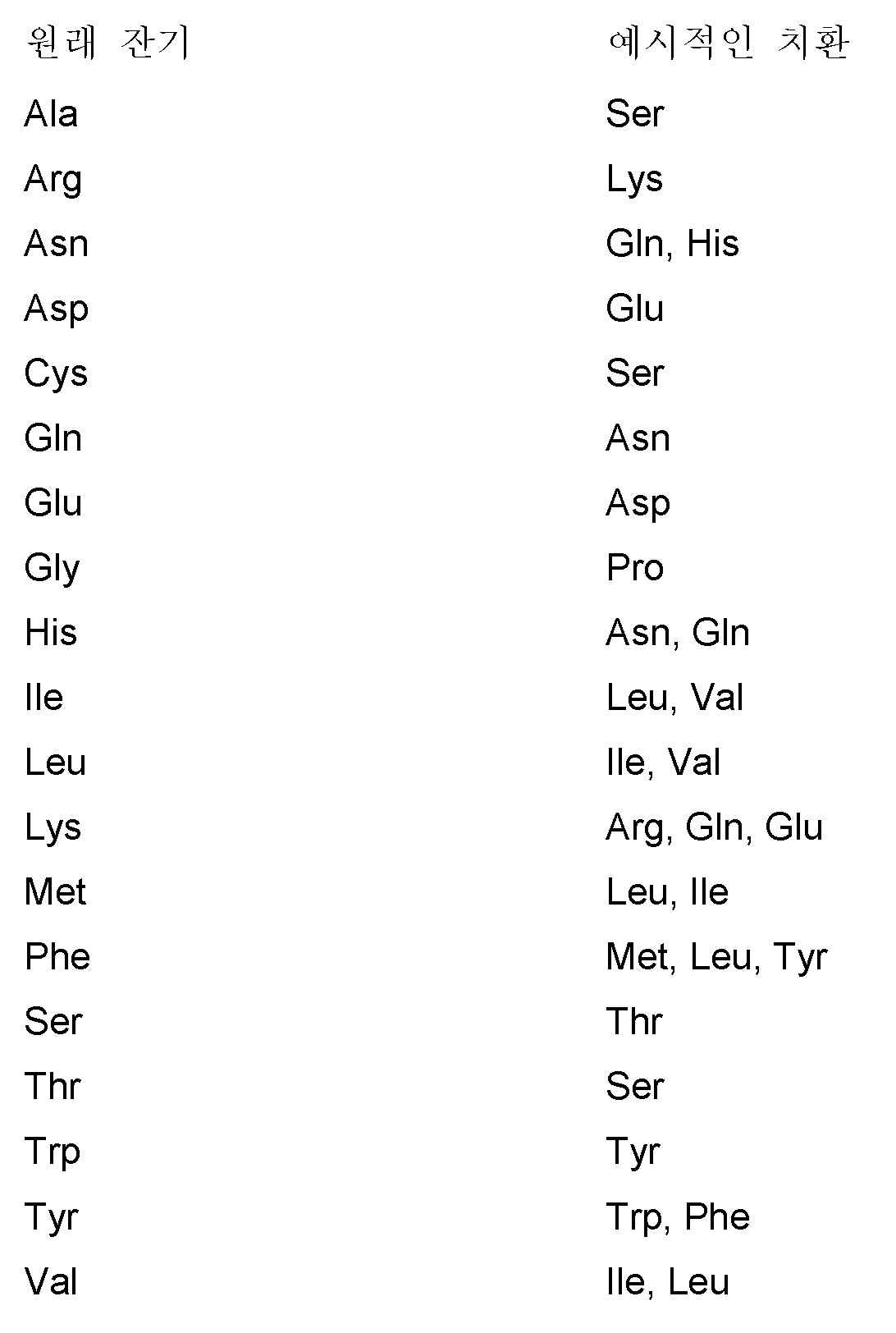
변이체 항체 서열이 ADC에 사용되는 일부 실시양태에서, 변이체는 전형적으로 동일한 정성적 생물학적 활성을 나타내고, 동일한 면역 반응을 도출할 것이지만, 변이체는 또한 필요에 따라 항원 결합 단백질의 특징을 변형시키기 위해 선택될 수 있다. 대안적으로, 변이체는 항원 결합 단백질의 생물학적 활성이 변경되도록 설계될 수 있다. 예를 들어, 글리코실화 부위는 변경 또는 제거될 수 있다.In some embodiments where variant antibody sequences are used in ADCs, the variants will typically exhibit the same qualitative biological activity and elicit the same immune response, but the variants can also be selected to alter characteristics of the antigen binding protein, as desired. Alternatively, the variants can be designed to alter the biological activity of the antigen binding protein. For example, glycosylation sites can be altered or removed.
다양한 항체가 암 세포를 표적화하기 위해 본원에 사용된 ADC와 함께 사용될 수 있다. 하기 제시된 바와 같이, 본원에 개시된 ADC에서의 링커-페이로드는 놀랍게도 상이한 종양 항원-표적화 항체에 효과적이다. 암 세포 상에서 발현되지만 건강한 세포 상에서는 발현되지 않거나 또는 건강한 세포 상에서보다 더 높은 수준으로 암 세포 상에서 발현되는 적합한 항원이 관련 기술분야에 공지되어 있고, 이에 대해 지시된 항체도 그러하다. 이들 항원 표적에 대한 추가의 항체는 관련 기술분야의 통상의 기술자에 의해 제조될 수 있다. 이들 항체는 본원에 개시된 링커 및 Bcl-xL 억제제 페이로드와 함께 사용될 수 있다. 일부 실시양태에서, 항체 또는 항원-결합 단편은 EphA2를 표적화하여, 특히 개선된 약물:항체 비, 응집 수준, 안정성 (즉, 시험관내 및 생체내 안정성), 종양 표적화 (즉, 세포독성, 효력), 최소화된 오프-타겟 사멸 및/또는 치료 효능을 제공하였다. 개선된 치료 효능은 시험관내 또는 생체내에서 측정될 수 있고, 감소된 종양 성장 속도 및/또는 감소된 종양 부피를 포함할 수 있다.A variety of antibodies can be used in conjunction with the ADCs disclosed herein to target cancer cells. As set forth below, the linker-payloads in the ADCs disclosed herein are surprisingly effective for a variety of tumor antigen-targeting antibodies. Suitable antigens that are expressed on cancer cells but not on healthy cells or are expressed on cancer cells at higher levels than on healthy cells are known in the art, as are antibodies directed against them. Additional antibodies to these antigen targets can be prepared by those skilled in the art. These antibodies can be used in conjunction with the linkers and Bcl-xL inhibitor payloads disclosed herein. In some embodiments, the antibodies or antigen-binding fragments target EphA2, providing, inter alia, improved drug:antibody ratios, aggregation levels, stability (i.e., in vitro and in vivo stability), tumor targeting (i.e., cytotoxicity, potency), minimized off-target killing, and/or therapeutic efficacy. Improved therapeutic efficacy can be measured in vitro or in vivo and may include reduced tumor growth rate and/or reduced tumor volume.
일부 실시양태에서, 동일한 표적에 대한 대안적 항체 또는 상이한 항원 표적에 대한 항체가 사용되고, 이는 상기 기재된 유리한 기능적 특성 (예를 들어, 개선된 안정성, 개선된 종양 표적화, 개선된 치료 효능 등) 중 적어도 일부를 제공한다.In some embodiments, alternative antibodies to the same target or antibodies to different antigenic targets are used, which provide at least some of the advantageous functional properties described above (e.g., improved stability, improved tumor targeting, improved therapeutic efficacy, etc.).
링커Linker
일부 실시양태에서, ADC 내의 링커는 치료상 유효하기에 충분한 방식으로 세포외에서 안정하다. 일부 실시양태에서, 링커는 세포 외부에서 안정하여, ADC가 세포외 조건에 존재하는 경우에 (예를 들어, 세포 내로의 수송 또는 전달 전에) 무손상으로 남아있도록 한다. ADC와 관련하여 사용된 용어 "무손상"은 항체 또는 항원-결합 단편이 약물 모이어티 (예를 들어, Bcl-xL 억제제)에 부착되어 남아있는 것을 의미한다.In some embodiments, the linker within the ADC is stable extracellularly in a manner sufficient to be therapeutically effective. In some embodiments, the linker is stable extracellularly such that the ADC remains intact when present in extracellular conditions (e.g., prior to transport or delivery into a cell). The term "intact" as used in relation to an ADC means that the antibody or antigen-binding fragment remains attached to a drug moiety (e.g., a Bcl-xL inhibitor).
링커 또는 링커를 포함하는 ADC와 관련하여 본원에 사용된 "안정한"은 ADC가 세포외 조건에 존재하는 경우에 ADC의 샘플에서 20% 이하, 약 15% 이하, 약 10% 이하, 약 5% 이하, 약 3% 이하 또는 약 1% 이하 (또는 그 사이의 임의의 백분율)의 링커가 절단되는 것 (또는 전체 ADC의 경우 그렇지 않으면 무손상이 아님)을 의미한다. 일부 실시양태에서, 본원에 개시된 링커 및/또는 ADC는 대안적 링커 및/또는 대안적 링커 및/또는 Bcl-xL 억제제 페이로드를 갖는 ADC와 비교하여 안정하다. 일부 실시양태에서, 본원에 개시된 ADC는 약 48시간 초과, 60시간 초과, 약 72시간 초과, 약 84시간 초과 또는 약 96시간 초과 동안 무손상으로 남아있을 수 있다.As used herein, "stable" with respect to a linker or an ADC comprising a linker means that no more than 20%, no more than about 15%, no more than about 10%, no more than about 5%, no more than about 3%, or no more than about 1% (or any percentage therebetween) of the linker is cleaved (or, for the entire ADC, is otherwise intact) in a sample of the ADC when the ADC is present under extracellular conditions. In some embodiments, the linkers and/or ADCs disclosed herein are stable as compared to alternative linkers and/or ADCs having alternative linkers and/or Bcl-xL inhibitor payloads. In some embodiments, the ADCs disclosed herein can remain intact for greater than about 48 hours, greater than about 60 hours, greater than about 72 hours, greater than about 84 hours, or greater than about 96 hours.
링커가 세포외에서 안정한지 여부는, 예를 들어 ADC를 혈장에 미리 결정된 기간 (예를 들어, 2, 4, 6, 8, 16, 24, 48 또는 72시간) 동안 포함시킨 다음, 혈장에 존재하는 유리 약물 모이어티의 양을 정량화함으로써 결정될 수 있다. 안정성은 ADC가 표적 암 세포에 국재화될 시간을 허용하여, 정상 및 암 조직 둘 다를 무차별적으로 손상시킴으로써 ADC의 치료 지수를 낮출 수 있는 약물 모이어티의 조기 방출을 방지할 수 있다. 일부 실시양태에서, 링커는 표적 세포 외부에서 안정하고, 세포 내부에 있을 때 ADC로부터 약물 모이어티를 방출하여, 약물이 그의 표적에 결합할 수 있도록 한다. 따라서, 효과적인 링커는 (i) 항체 또는 항원-결합 단편의 특이적 결합 특성을 유지하고; (ii) 항체 또는 항원-결합 단편에 대한 안정한 부착을 통해 약물 모이어티의 전달, 예를 들어 세포내 전달을 허용하고; (iii) ADC가 그의 표적 부위로 수송 또는 전달될 때까지 안정하게 무손상으로 남아있고; (iv) 절단 또는 대안적 방출 메카니즘 후에 약물 모이어티의 치료 효과, 예를 들어 세포독성 효과를 허용할 것이다.Whether a linker is stable extracellularly can be determined, for example, by incorporating the ADC into plasma for a predetermined period of time (e.g., 2, 4, 6, 8, 16, 24, 48 or 72 hours) and then quantifying the amount of free drug moiety present in the plasma. Stability allows time for the ADC to localize to the target cancer cells, thereby preventing premature release of the drug moiety, which could lower the therapeutic index of the ADC by indiscriminately damaging both normal and cancer tissues. In some embodiments, the linker is stable outside the target cell and releases the drug moiety from the ADC when inside the cell, allowing the drug to bind to its target. Thus, an effective linker (i) maintains the specific binding properties of the antibody or antigen-binding fragment; (ii) allows delivery of the drug moiety, e.g., intracellular delivery, via stable attachment to the antibody or antigen-binding fragment; (iii) remain stably intact until the ADC is transported or delivered to its target site; and (iv) allow the therapeutic effect of the drug moiety, e.g., cytotoxic effect, to persist after cleavage or alternative release mechanism.
링커는 ADC의 물리-화학적 특성에 영향을 미칠 수 있다. 많은 세포독성제가 사실상 소수성이기 때문에, 이들을 추가의 소수성 모이어티를 갖는 항체에 연결시키는 것은 응집으로 이어질 수 있다. ADC 응집체는 불용성이고, 종종 항체 상으로의 달성가능한 약물 로딩을 제한하며, 이는 ADC의 효력에 부정적인 영향을 미칠 수 있다. 일반적으로, 생물제제의 단백질 응집체는 또한 증가된 면역원성과 연관되었다. 하기 제시된 바와 같이, 본원에 개시된 링커는 낮은 응집 수준 및 바람직한 약물 로딩 수준을 갖는 ADC를 생성한다.Linkers can affect the physicochemical properties of ADCs. Since many cytotoxic agents are hydrophobic in nature, linking them to antibodies with additional hydrophobic moieties can lead to aggregation. ADC aggregates are insoluble and often limit the achievable drug loading onto the antibody, which can negatively impact the efficacy of the ADC. In general, protein aggregates of biologics have also been associated with increased immunogenicity. As shown below, the linkers disclosed herein produce ADCs with low aggregation levels and desirable drug loading levels.
링커는 "절단가능한" 또는 "비-절단가능한" 것일 수 있다 (Ducry and Stump (2010) Bioconjugate Chem. 21:5-13). 절단가능한 링커는 특정 환경 인자에 적용된 경우에, 예를 들어 표적 세포 내로 내재화되된 경우에, 약물 모이어티 (예를 들어, Bcl-xL 억제제)를 방출하도록 설계되는 반면, 비-절단가능한 링커는 일반적으로 항체 또는 항원-결합 단편 자체의 분해에 의존한다.Linkers may be “cleavable” or “non-cleavable” (Ducry and Stump (2010) Bioconjugate Chem. 21:5-13). Cleavable linkers are designed to release the drug moiety (e.g., a Bcl-xL inhibitor) when subjected to a particular environmental factor, for example, when internalized into a target cell, whereas non-cleavable linkers generally rely on cleavage of the antibody or antigen-binding fragment itself.
본원에 사용된 용어 "알킬"은 불포화를 함유하지 않는, 탄소 및 수소 원자만으로 이루어진 직쇄형 또는 분지형 탄화수소 쇄 라디칼을 지칭한다. 본원에 사용된 용어 "C1-C6알킬"은 탄소 및 수소 원자만으로 이루어지고, 불포화를 함유하지 않고, 1 내지 6개의 탄소 원자를 갖고, 단일 결합에 의해 분자의 나머지에 부착된 직쇄형 또는 분지형 탄화수소 쇄 라디칼을 지칭한다. "C1-C6알킬" 기의 비제한적 예는 메틸 (C1알킬), 에틸 (C2알킬), 1-메틸에틸 (C3알킬), n-프로필 (C3알킬), 이소프로필 (C3알킬), n-부틸 (C4알킬), 이소부틸 (C4알킬), sec-부틸 (C4알킬), tert-부틸 (C4알킬), n-펜틸 (C5알킬), 이소펜틸 (C5알킬), 네오펜틸 (C5알킬) 및 헥실 (C6알킬)을 포함한다.The term "alkyl" as used herein refers to a straight or branched hydrocarbon chain radical consisting solely of carbon and hydrogen atoms, containing no unsaturation. The term "C 1 -C 6 alkyl" as used herein refers to a straight or branched hydrocarbon chain radical consisting solely of carbon and hydrogen atoms, containing no unsaturation, having from 1 to 6 carbon atoms, and attached to the remainder of the molecule by a single bond. Non-limiting examples of "C 1 -C 6 alkyl" groups include methyl (C 1 alkyl), ethyl (C 2 alkyl), 1-methylethyl (C 3 alkyl), n-propyl (C 3 alkyl), isopropyl (C 3 alkyl), n-butyl (C 4 alkyl), isobutyl (C 4 alkyl), sec-butyl (C 4 alkyl), tert-butyl (C 4 alkyl), n-pentyl (C 5 alkyl), isopentyl (C 5 alkyl), neopentyl (C 5 alkyl), and hexyl (C 6 alkyl).
본원에 사용된 용어 "알케닐"은 적어도 1개의 이중 결합을 함유하는, 탄소 및 수소 원자만으로 이루어진 직쇄형 또는 분지형 탄화수소 쇄 라디칼 기를 지칭한다. 본원에 사용된 용어 "C2-C6알케닐"은 탄소 및 수소 원자만으로 이루어지고, 적어도 1개의 이중 결합을 함유하고, 2 내지 6개의 탄소 원자를 갖고, 단일 결합에 의해 분자의 나머지에 부착된 직쇄형 또는 분지형 탄화수소 쇄 라디칼 기를 지칭한다. "C2-C6알케닐" 기의 비제한적 예는 에테닐 (C2알케닐), 프로프-1-에닐 (C3알케닐), 부트-1-에닐 (C4알케닐), 펜트-1-에닐 (C5알케닐), 펜트-4-에닐 (C5알케닐), 펜타-1,4-디에닐 (C5알케닐), 헥사-1-에닐 (C6알케닐), 헥사-2-에닐 (C6알케닐), 헥사-3-에닐 (C6알케닐), 헥사-1,4-디에닐 (C6알케닐), 헥사-1-,5-디에닐 (C6알케닐) 및 헥사-2,4-디에닐 (C6알케닐)을 포함한다. 본원에 사용된 용어 "C2-C3알케닐"은 탄소 및 수소 원자만으로 이루어지고, 적어도 1개의 이중 결합을 함유하고, 2 내지 3개의 탄소 원자를 갖고, 단일 결합에 의해 분자의 나머지에 부착된 직쇄형 또는 분지형 탄화수소 쇄 라디칼 기를 지칭한다. "C2-C3알케닐" 기의 비제한적 예는 에테닐 (C2알케닐) 및 프로프-1-에닐 (C3알케닐)을 포함한다.The term "alkenyl" as used herein refers to a straight or branched hydrocarbon chain radical group consisting solely of carbon and hydrogen atoms, containing at least one double bond. The term "C 2 -C 6 alkenyl" as used herein refers to a straight or branched hydrocarbon chain radical group consisting solely of carbon and hydrogen atoms, containing at least one double bond, having from 2 to 6 carbon atoms, and attached to the remainder of the molecule by a single bond. Non-limiting examples of "C 2 -C 6 alkenyl" groups include ethenyl (C 2 alkenyl), prop-1-enyl (C 3 alkenyl), but-1-enyl (C 4 alkenyl), pent-1-enyl (C 5 alkenyl), pent-4-enyl (C 5 alkenyl), penta-1,4-dienyl (C 5 alkenyl), hexa-1-enyl (C 6 alkenyl), hexa-2-enyl (C 6 alkenyl), hexa-3-enyl (C 6 alkenyl), hexa-1,4-dienyl (C 6 alkenyl), hexa-1-,5-dienyl (C 6 alkenyl), and hexa-2,4-dienyl (C 6 alkenyl). The term "C 2 -C 3 alkenyl" as used herein refers to a straight or branched hydrocarbon chain radical group consisting solely of carbon and hydrogen atoms, containing at least one double bond, having 2 to 3 carbon atoms, and attached to the remainder of the molecule by single bonds. Non-limiting examples of "C 2 -C 3 alkenyl" groups include ethenyl (C 2 alkenyl) and prop-1-enyl (C 3 alkenyl).
본원에 사용된 용어 "알킬렌"은 탄소 및 수소 원자만으로 이루어지고, 불포화를 함유하지 않는 2가 직쇄형 또는 분지형 탄화수소 쇄 라디칼을 지칭한다. 본원에 사용된 용어 "C1-C6알킬렌"은 탄소 및 수소 원자만으로 이루어지고, 불포화를 함유하지 않고, 1 내지 6개의 탄소 원자를 갖는 2가 직쇄형 또는 분지형 탄화수소 쇄 라디칼을 지칭한다. "C1-C6알킬렌" 기의 비제한적 예는 메틸렌 (C1알킬렌), 에틸렌 (C2알킬렌), 1-메틸에틸렌 (C3알킬렌), n-프로필렌 (C3알킬렌), 이소프로필렌 (C3알킬렌), n-부틸렌 (C4알킬렌), 이소부틸렌 (C4알킬렌), sec-부틸렌 (C4알킬렌), tert-부틸렌 (C4알킬렌), n-펜틸렌 (C5알킬렌), 이소펜틸렌 (C5알킬렌), 네오펜틸렌 (C5알킬렌) 및 헥실렌 (C6알킬렌)을 포함한다.The term "alkylene" as used herein refers to a divalent straight or branched hydrocarbon chain radical consisting solely of carbon and hydrogen atoms and containing no unsaturation. The term "C 1 -C 6 alkylene" as used herein refers to a divalent straight or branched hydrocarbon chain radical consisting solely of carbon and hydrogen atoms, containing no unsaturation, and having from 1 to 6 carbon atoms. Non-limiting examples of "C 1 -C 6 alkylene" groups include methylene (C 1 alkylene), ethylene (C 2 alkylene), 1-methylethylene (C 3 alkylene), n-propylene (C 3 alkylene), isopropylene (C 3 alkylene), n-butylene (C 4 alkylene), isobutylene (C 4 alkylene), sec-butylene (C 4 alkylene), tert-butylene (C 4 alkylene), n-pentylene (C 5 alkylene), isopentylene (C 5 alkylene), neopentylene (C 5 alkylene), and hexylene (C 6 alkylene).
본원에 사용된 용어 "알케닐렌"은 탄소 및 수소 원자만으로 이루어지고, 적어도 1개의 이중 결합을 함유하는 2가 직쇄형 또는 분지형 탄화수소 쇄 라디칼을 지칭한다. 본원에 사용된 용어 "C2-C6알케닐렌"은 탄소 및 수소 원자만으로 이루어지고, 적어도 1개의 이중 결합을 함유하고, 2 내지 6개의 탄소 원자를 갖는 2가 직쇄형 또는 분지형 탄화수소 쇄 라디칼 기를 지칭한다. "C2-C6알케닐렌" 기의 비제한적 예는 에테닐렌 (C2알케닐렌), 프로프-1-에닐렌 (C3알케닐렌), 부트-1-에닐렌 (C4알케닐렌), 펜트-1-에닐렌 (C5알케닐렌), 펜트-4-에닐렌 (C5알케닐렌), 펜타-1,4-디에닐렌 (C5알케닐렌), 헥사-1-에닐렌 (C6알케닐렌), 헥사-2-에닐렌 (C6알케닐렌), 헥사-3-에닐렌 (C6알케닐렌), 헥사-1,4-디에닐렌 (C6알케닐렌), 헥사-1,5-디에닐렌 (C6알케닐렌) 및 헥사-2,4-디에닐렌 (C6알케닐렌)을 포함한다. 본원에 사용된 용어 "C2-C6알케닐렌"은 탄소 및 수소 원자만으로 이루어지고, 적어도 1개의 이중 결합을 함유하고, 2 내지 3개의 탄소 원자를 갖는 2가 직쇄형 또는 분지형 탄화수소 쇄 라디칼 기를 지칭한다. "C2-C3알케닐렌" 기의 비제한적 예는 에테닐렌 (C2알케닐렌) 및 프로프-1-에닐렌 (C3알케닐렌)을 포함한다.The term "alkenylene" as used herein refers to a divalent straight or branched hydrocarbon chain radical consisting solely of carbon and hydrogen atoms, containing at least one double bond. The term "C 2 -C 6 alkenylene" as used herein refers to a divalent straight or branched hydrocarbon chain radical group consisting solely of carbon and hydrogen atoms, containing at least one double bond, and having from 2 to 6 carbon atoms. Non-limiting examples of "C 2 -C 6 alkenylene" groups include ethenylene (C 2 alkenylene), prop-1-enylene (C 3 alkenylene), but-1-enylene (C 4 alkenylene), pent-1-enylene (C 5 alkenylene), pent-4-enylene (C 5 alkenylene), penta-1,4-dienylene (C 5 alkenylene), hexa-1-enylene (C 6 alkenylene), hexa-2-enylene (C 6 alkenylene), hexa-3-enylene (C 6 alkenylene), hexa-1,4-dienylene (C 6 alkenylene), hexa-1,5-dienylene (C 6 alkenylene), and hexa-2,4-dienylene (C 6 alkenylene). The term "C 2 -C 6 alkenylene" as used herein refers to a divalent straight or branched hydrocarbon chain radical group consisting solely of carbon and hydrogen atoms, containing at least one double bond, and having 2 to 3 carbon atoms. Non-limiting examples of "C 2 -C 3 alkenylene" groups include ethenylene (C 2 alkenylene) and prop-1-enylene (C 3 alkenylene).
본원에 사용된 용어 "시클로알킬" 또는 "C3-C8 시클로알킬"은 포화, 모노시클릭, 융합된 비시클릭, 융합된 트리시클릭 또는 가교된 폴리시클릭 고리계를 지칭한다. 융합된 비시클릭 또는 가교된 폴리시클릭 고리계의 비제한적 예는 비시클로[1.1.1]펜탄, 비시클로[2.1.1]헥산, 비시클로[2.2.1]헵탄, 비시클로[3.1.1]헵탄, 비시클로[3.2.1]옥탄, 비시클로[2.2.2]옥탄 및 아다만타닐을 포함한다. 모노시클릭 C3-C8 시클로알킬 기의 비제한적 예는 시클로프로필, 시클로부틸, 시클로펜틸, 시클로헥실, 시클로헵틸 및 시클로옥틸 기를 포함한다.The term "cycloalkyl" or "C 3 -C 8 cycloalkyl" as used herein refers to a saturated, monocyclic, fused bicyclic, fused tricyclic or bridged polycyclic ring system. Non-limiting examples of fused bicyclic or bridged polycyclic ring systems include bicyclo[1.1.1]pentane, bicyclo[2.1.1]hexane, bicyclo[2.2.1]heptane, bicyclo[3.1.1]heptane, bicyclo[3.2.1]octane, bicyclo[2.2.2]octane and adamantanyl. Non-limiting examples of monocyclic C 3 -C 8 cycloalkyl groups include cyclopropyl, cyclobutyl, cyclopentyl, cyclohexyl, cycloheptyl and cyclooctyl groups.
본원에 사용된 용어 "아릴"은 페닐, 나프틸, 비페닐 또는 인데닐 기를 지칭한다.The term “aryl” as used herein refers to a phenyl, naphthyl, biphenyl or indenyl group.
본원에 사용된 용어 "헤테로아릴"은 적어도 1개의 방향족 모이어티를 갖고 산소, 황 및 질소 (4급 질소 포함)로부터 선택된 1 내지 4개의 헤테로 원자를 함유하는, 5 내지 10개의 고리원으로 구성된 임의의 모노- 또는 비-시클릭 기를 지칭한다.The term "heteroaryl" as used herein refers to any mono- or bicyclic group consisting of 5 to 10 ring members, having at least one aromatic moiety and containing 1 to 4 heteroatoms selected from oxygen, sulfur and nitrogen (including quaternary nitrogen).
본원에 사용된 용어 "시클로알킬"은 융합된, 가교된 또는 스피로 고리계를 포함할 수 있는, 3 내지 10개의 고리원을 함유하는 임의의 모노- 또는 비-시클릭 비-방향족 카르보시클릭 기를 지칭한다. 융합된 비시클릭 또는 가교된 고리계의 비제한적 예는 비시클로[1.1.1]펜탄, 비시클로[2.1.1]헥산, 비시클로[2.2.1]헵탄, 비시클로[3.1.1]헵탄, 비시클로[3.2.1]옥탄 및 비시클로[2.2.2]옥탄을 포함한다. 모노시클릭 C3-C8 시클로알킬 기의 비제한적 예는 시클로프로필, 시클로부틸, 시클로펜틸, 시클로헥실, 시클로헵틸 및 시클로옥틸 기를 포함한다.The term "cycloalkyl" as used herein refers to any mono- or bicyclic non-aromatic carbocyclic group containing from 3 to 10 ring members, which may include fused, bridged, or spiro ring systems. Non-limiting examples of fused bicyclic or bridged ring systems include bicyclo[1.1.1]pentane, bicyclo[2.1.1]hexane, bicyclo[2.2.1]heptane, bicyclo[3.1.1]heptane, bicyclo[3.2.1]octane, and bicyclo[2.2.2]octane. Non-limiting examples of monocyclic C 3 -C 8 cycloalkyl groups include cyclopropyl, cyclobutyl, cyclopentyl, cyclohexyl, cycloheptyl, and cyclooctyl groups.
용어 "헤테로시클로알킬"은 3 내지 10개의 고리원으로 구성되고 산소, 황, SO, SO2 및 질소로부터 선택된 1 내지 3개의 헤테로 원자를 함유하는 임의의 모노- 또는 비-시클릭 비-방향족 카르보시클릭 기를 의미하며, 비시클릭 기는 융합된 또는 스피로 유형일 수 있는 것으로 이해된다. C3-C8헤테로시클로알킬은 3 내지 8개의 고리 탄소 원자를 갖는 헤테로시클로알킬을 지칭한다. 헤테로시클로알킬은 4 내지 10개의 고리원을 가질 수 있다.The term "heterocycloalkyl" means any mono- or bicyclic non-aromatic carbocyclic group consisting of 3 to 10 ring members and containing 1 to 3 heteroatoms selected from oxygen, sulfur, SO, SO 2 and nitrogen, it being understood that the bicyclic group may be of the fused or spiro type. C 3 -C 8 heterocycloalkyl refers to a heterocycloalkyl having 3 to 8 ring carbon atoms. The heterocycloalkyl may have 4 to 10 ring members.
용어 헤테로아릴렌, 시클로알킬렌, 헤테로시클로알킬렌은 2가 헤테로아릴, 시클로알킬 및 헤테로시클로알킬을 의미한다.The terms heteroarylene, cycloalkylene, and heterocycloalkylene refer to divalent heteroaryls, cycloalkyls, and heterocycloalkyls.
본원에 사용된 용어 "할로알킬"은 탄화수소 쇄를 따라 수소 대신에 1개 이상의 할로겐 기로 치환된 선형 또는 분지형 알킬 쇄를 지칭한다. 할로알킬 기 내의 치환에 적합한 할로겐 기의 예는 플루오린, 브로민, 염소 및 아이오딘을 포함한다. 할로알킬 기는 알킬 쇄 내의 수소 대신에 다수의 할로겐 기로의 치환을 포함할 수 있으며, 여기서 상기 할로겐 기는 알킬 쇄 내의 동일한 탄소에 또는 또 다른 탄소에 부착될 수 있다.The term "haloalkyl" as used herein refers to a linear or branched alkyl chain having one or more halogen groups substituted for hydrogen along the hydrocarbon chain. Examples of halogen groups suitable for substitution within a haloalkyl group include fluorine, bromine, chlorine, and iodine. A haloalkyl group can include substitution of multiple halogen groups for hydrogen within the alkyl chain, wherein the halogen groups can be attached to the same carbon or to different carbons within the alkyl chain.
본원에 사용된 알킬, 알케닐, 알키닐, 알콕시, 아미노, 아릴, 헤테로아릴, 시클로알킬 및 헤테로시클로알킬 기는 임의로 치환된 선형 또는 분지형 (C1-C6)알킬, 임의로 치환된 선형 또는 분지형 (C2-C6)알케닐 기, 임의로 치환된 선형 또는 분지형 (C2-C6)알키닐 기, 임의로 치환된 선형 또는 분지형 (C1-C6)알콕시, 임의로 치환된 (C1-C6)알킬-S-, 히드록시, 옥소 (또는 적절한 경우 N-옥시드), 니트로, 시아노, -C(O)-OR0', -O-C(O)-R0', -C(O)-NR0'R0", -NR0'R0", -(C=NR0')-OR0", 선형 또는 분지형 (C1-C6) 할로알킬, 트리플루오로메톡시 또는 할로겐으로부터 선택된 1 내지 4개의 기에 의해 임의로 치환될 수 있으면, 여기서 R0' 및 R0"는 각각 독립적으로 수소 원자 또는 임의로 치환된 선형 또는 분지형 (C1-C6)알킬 기이고, 여기서 선형 또는 분지형 (C1-C6)알킬 기의 탄소 원자 중 1개 이상은 임의로 중수소화된다.As used herein, the alkyl, alkenyl, alkynyl, alkoxy, amino, aryl, heteroaryl, cycloalkyl and heterocycloalkyl groups are optionally substituted linear or branched (C 1 -C 6 )alkyl, optionally substituted linear or branched (C 2 -C 6 )alkenyl groups, optionally substituted linear or branched (C 2 -C 6 )alkynyl groups, optionally substituted linear or branched (C 1 -C 6 )alkoxy, optionally substituted (C 1 -C 6 )alkyl-S-, hydroxy, oxo (or N-oxide, where appropriate), nitro, cyano, -C(O)-OR 0 ', -OC(O)-R 0 ', -C(O)-NR 0 'R 0 ", -NR 0 'R 0 ", -(C=NR 0 ')-OR 0 ", linear or branched (C 1 -C 6 ) may be optionally substituted by 1 to 4 groups selected from haloalkyl, trifluoromethoxy or halogen, wherein R 0 ' and R 0 " are each independently a hydrogen atom or an optionally substituted linear or branched (C 1 -C 6 )alkyl group, wherein at least one of the carbon atoms of the linear or branched (C 1 -C 6 )alkyl group is optionally deuterated.
본원에 사용된 용어 "폴리옥시에틸렌", "폴리에틸렌 글리콜" 또는 "PEG"는 (OCH2CH2) 기로 구성된 선형 쇄, 분지형 쇄 또는 별 형상의 구성을 지칭한다. 특정 실시양태에서, 폴리에틸렌 또는 PEG 기는 -(OCH2CH2)t*-이며, 여기서 t는 1-40 또는 4-40이고, 여기서 "-"는 자기 희생적 스페이서를 향해 있는 단부를 나타내고, "*-"는 말단 단부 기 R'에 대한 부착 지점을 나타내고, 여기서 R'는 OH, OCH3 또는 OCH2CH2C(=O)OH이다. 다른 실시양태에서, 폴리에틸렌 또는 PEG 기는 -(CH2CH2O)t*-이며, 여기서 t는 1-40 또는 4-40이고, 여기서 "-"는 자기 희생적 스페이서를 향해 있는 단부를 나타내고, "*-"는 말단 단부 기 R"에 대한 부착 지점을 나타내고, 여기서 R"는 H, CH3 또는 CH2CH2C(=O)OH이다. 예를 들어, 본원에 사용된 용어 "PEG12"는 t가 12임을 의미한다.The terms "polyoxyethylene", "polyethylene glycol" or "PEG" as used herein refer to a linear, branched or star-shaped configuration comprised of (OCH 2 CH 2 ) groups. In certain embodiments, the polyethylene or PEG groups are -(OCH 2 CH 2 ) t *-, wherein t is 1-40 or 4-40, wherein "-" designates the end facing the self-immolative spacer and "*-" designates the point of attachment to the terminal end group R', wherein R' is OH, OCH 3 or OCH 2 CH 2 C(=O)OH. In another embodiment, the polyethylene or PEG group is -(CH 2 CH 2 O) t *-, wherein t is 1-40 or 4-40, wherein "-" indicates the end facing the self-immolative spacer, and "*-" indicates the point of attachment to the terminal end group R", wherein R" is H, CH 3 or CH 2 CH 2 C(=O)OH. For example, the term "PEG12" as used herein means t is 12.
본원에 사용된 용어 "폴리알킬렌 글리콜"은 (O(CH2)m)n 기로 구성된 선형 쇄, 분지형 쇄 또는 별 형상의 구성을 지칭한다. 특정 실시양태에서, 폴리에틸렌 또는 PEG 기는 -(O(CH2)m)t*-이며, 여기서 m은 1-10이고, t는 1-40 또는 4-40이고, 여기서 "-"는 자기 희생적 스페이서를 향해 있는 단부를 나타내고, "*-"는 말단 단부 기 R'에 대한 부착 지점을 나타내고, 여기서 R'는 OH, OCH3 또는 OCH2CH2C(=O)OH이다. 다른 실시양태에서, 폴리에틸렌 또는 PEG 기는 -((CH2)mO)t*-이며, 여기서 m은 1-10이고, t는 1-40 또는 4-40이고, 여기서 "-"는 자기 희생적 스페이서를 향해 있는 단부를 나타내고, "*-"는 말단 단부 기 R"에 대한 부착 지점을 나타내고, 여기서 R"는 H, CH3 또는 CH2CH2C(=O)OH이다.The term "polyalkylene glycol" as used herein refers to a linear, branched or star-shaped configuration comprised of (O(CH 2 ) m ) n groups. In certain embodiments, the polyethylene or PEG groups are -(O(CH 2 ) m ) t *-, wherein m is 1-10 and t is 1-40 or 4-40, wherein "-" designates the end facing the self-immolative spacer and "*-" designates the point of attachment to the terminal end group R', wherein R' is OH, OCH 3 or OCH 2 CH 2 C(=O)OH. In another embodiment, the polyethylene or PEG group is -((CH 2 ) m O) t *-, wherein m is 1-10, t is 1-40 or 4-40, wherein "-" indicates the end facing the self-immolative spacer, and "*-" indicates the point of attachment to the terminal end group R", wherein R" is H, CH 3 or CH 2 CH 2 C(=O)OH.
본원에 사용된 용어 "반응성 기"는 항체, 항체 단편, 또는 항체 또는 항체 단편에 부착된 또 다른 반응성 기의 관능기와 공유 결합을 형성할 수 있는 관능기이다. 이러한 관능기의 비제한적 예는 본원에 제공된 표 3의 반응성 기를 포함한다.The term "reactive group" as used herein is a functional group capable of forming a covalent bond with a functional group of an antibody, antibody fragment, or another reactive group attached to the antibody or antibody fragment. Non-limiting examples of such functional groups include the reactive groups set forth in Table 3 provided herein.
본원에 사용된 용어 "부착 기" 또는 "커플링 기"는 가교 스페이서를 항체 또는 그의 단편에 연결하는 2가 모이어티를 지칭한다. 부착 또는 커플링 기는 반응 기와 항체 또는 그의 단편 상의 관능기 사이의 반응에 의해 형성된 2가 모이어티이다. 이러한 2가 모이어티의 비제한적 예는 본원에 제공된 표 3 및 표 4에 주어진 2가 화학적 모이어티를 포함한다.The term "attachment group" or "coupling group" as used herein refers to a bivalent moiety that links a crosslinking spacer to an antibody or fragment thereof. An attachment or coupling group is a bivalent moiety formed by a reaction between a reactive group and a functional group on an antibody or fragment thereof. Non-limiting examples of such bivalent moieties include the bivalent chemical moieties given in Tables 3 and 4 provided herein.
본원에 사용된 용어 "가교 스페이서"는 2가 펩티드 스페이서를 반응성 기에 연결하거나, 2가 펩티드 공간을 커플링 기에 연결하거나 또는 부착 기를 적어도 1개의 절단가능한 기에 연결하는 2가 모이어티를 형성하도록 함께 공유 부착된 1개 이상의 링커 성분을 지칭한다. 특정 실시양태에서, "가교 스페이서"는 아미드 결합을 통해 2가 펩티드 스페이서의 N-말단에 부착된 카르복실 기를 포함한다.The term "bridge spacer" as used herein refers to one or more linker moieties covalently attached together to form a bivalent moiety that links a bivalent peptide spacer to a reactive group, links a bivalent peptide spacer to a coupling group, or links an attachment group to at least one cleavable group. In certain embodiments, a "bridge spacer" comprises a carboxyl group attached to the N-terminus of a bivalent peptide spacer via an amide bond.
본원에 사용된 용어 "스페이서 모이어티"는 자기 희생적 스페이서를 친수성 모이어티에 연결하는 모이어티를 형성하도록 함께 공유 부착된 1개 이상의 링커 성분을 지칭한다.The term "spacer moiety" as used herein refers to one or more linker moieties covalently attached together to form a moiety that connects a self-immolative spacer to a hydrophilic moiety.
본원에 사용된 용어 "2가 펩티드 스페이서"는 가교 스페이서를 자기 희생적 스페이서에 연결하는 모이어티를 형성하도록 함께 공유 부착된 1개 이상의 아미노산 잔기를 포함하는 2가 링커를 지칭한다. 1개 이상의 아미노산 잔기는 알라닌 (Ala), 시스테인 (Cys), 아스파르트산 (Asp), 글루탐산 (Glu), 페닐알라닌 (Phe), 글리신 (Gly), 히스티딘 (His), 이소류신 (Ile), 리신 (Lys), 류신 (Leu), 메티오닌 (Met), 아스파라긴 (Asn), 프롤린 (Pro), 글루타민 (Gln), 아르기닌 (Arg), 세린 (Ser), 트레오닌 (Thr), 발린 (Val), 트립토판 (Trp), 티로신 (Tyr), 시트룰린 (Cit), 노르발린 (Nva), 노르류신 (Nle), 셀레노시스테인 (Sec), 피롤리신 (Pyl), 호모세린, 호모시스테인 및 데스메틸 피롤리신으로부터 선택된 아미노산의 잔기일 수 있다.The term "bivalent peptide spacer" as used herein refers to a bivalent linker comprising one or more amino acid residues covalently attached together to form a moiety linking a bridging spacer to a self-immolative spacer. The one or more amino acid residues can be residues of an amino acid selected from alanine (Ala), cysteine (Cys), aspartic acid (Asp), glutamic acid (Glu), phenylalanine (Phe), glycine (Gly), histidine (His), isoleucine (Ile), lysine (Lys), leucine (Leu), methionine (Met), asparagine (Asn), proline (Pro), glutamine (Gln), arginine (Arg), serine (Ser), threonine (Thr), valine (Val), tryptophan (Trp), tyrosine (Tyr), citrulline (Cit), norvaline (Nva), norleucine (Nle), selenocysteine (Sec), pyrrolysine (Pyl), homoserine, homocysteine and desmethyl pyrrolysine.
특정 실시양태에서, "2가 펩티드 스페이서"는 각각의 잔기가 알라닌 (Ala), 시스테인 (Cys), 아스파르트산 (Asp), 글루탐산 (Glu), 페닐알라닌 (Phe), 글리신 (Gly), 히스티딘 (His), 이소류신 (Ile), 리신 (Lys), 류신 (Leu), 메티오닌 (Met), 아스파라긴 (Asn), 프롤린 (Pro), 글루타민 (Gln), 아르기닌 (Arg), 세린 (Ser), 트레오닌 (Thr), 발린 (Val), 트립토판 (Trp), 티로신 (Tyr), 시트룰린 (Cit), 노르발린 (Nva), 노르류신 (Nle), 셀레노시스테인 (Sec), 피롤리신 (Pyl), 호모세린, 호모시스테인 및 데스메틸 피롤리신으로부터 선택된 아미노산의 잔기로부터 독립적으로 선택된 것인 2 내지 4개의 아미노산 잔기의 조합, 예를 들어 -ValCit*; -CitVal*; -AlaAla*; -AlaCit*; -CitAla*; -AsnCit*; -CitAsn*; -CitCit*; -ValGlu*; -GluVal*; -SerCit*; -CitSer*; -LysCit*; -CitLys*; -AspCit*; -CitAsp*; -AlaVal*; -ValAla*; -PheAla*; -AlaPhe*; -PheLys*; -LysPhe*; -ValLys*; -LysVal*; -AlaLys*; -LysAla*; -PheCit*; -CitPhe*; -LeuCit*; -CitLeu*; -IleCit*; -CitIle*; -PheArg*; -ArgPhe*; -CitTrp*; -TrpCit*; -PhePheLys*; -LysPhePhe*; -DPhePheLys*; -DLysPhePhe*; -GlyPheLys*; -LysPheGly*; -GlyPheLeuGly- [서열식별번호: 62]; -GlyLeuPheGly- [서열식별번호: 63]; -AlaLeuAlaLeu- [서열식별번호: 64], -GlyGlyGly*; -GlyGlyGlyGly- [서열식별번호: 65]; -GlyPheValGly- [서열식별번호: 66]; 및 -GlyValPheGly- [서열식별번호: 67]이고, 여기서 "-"는 가교 스페이서에 대한 부착 지점을 나타내고, "*"는 자기 희생적 스페이서에 대한 부착 지점을 나타낸다.In certain embodiments, a "bipeptide spacer" is a combination of two to four amino acid residues, wherein each residue is independently selected from alanine (Ala), cysteine (Cys), aspartic acid (Asp), glutamic acid (Glu), phenylalanine (Phe), glycine (Gly), histidine (His), isoleucine (Ile), lysine (Lys), leucine (Leu), methionine (Met), asparagine (Asn), proline (Pro), glutamine (Gln), arginine (Arg), serine (Ser), threonine (Thr), valine (Val), tryptophan (Trp), tyrosine (Tyr), citrulline (Cit), norvaline (Nva), norleucine (Nle), selenocysteine (Sec), pyrrolysine (Pyl), homoserine, homocysteine and desmethyl pyrrolysine. For -ValCit*; -CitVal*; -AlaAla*; -AlaCit*; -CitAla*; -AsnCit*; -CitAsn*; -CitCit*; -ValGlu*; -GluVal*; -SerCit*; -CitSer*; -LysCit*; -CitLys*; -AspCit*; -CitAsp*; -AlaVal*; -ValAla*; -PheAla*; -AlaPhe*; -PheLys*; -LysPhe*; -ValLys*; -LysVal*; -AlaLys*; -LysAla*; -PheCit*; -CitPhe*; -LeuCit*; -CitLeu*; -IleCit*; -CitIle*; -PheArg*; -ArgPhe*; -CitTrp*; -TrpCit*; -PhePheLys*; -LysPhePhe*; -DPhePheLys*; -DLysPhePhe*; -GlyPheLys*; -LysPheGly*; -GlyPheLeuGly- [SEQ ID NO: 62]; -GlyLeuPheGly- [SEQ ID NO: 63]; -AlaLeuAlaLeu- [SEQ ID NO: 64], -GlyGlyGly*; -GlyGlyGlyGly- [SEQ ID NO: 65]; -GlyPheValGly- [SEQ ID NO: 66]; and -GlyValPheGly- [SEQ ID NO: 67], wherein "-" indicates an attachment point to a bridging spacer and "*" indicates an attachment point to a self-immolative spacer.
본원에 사용된 용어 "링커 성분"은 링커의 일부인 화학적 모이어티를 지칭한다. 링커 성분의 예는 다음을 포함한다: 알킬렌 기: -(CH2)n- (이는 선형 또는 분지형일 수 있음) (여기서 이 경우에 n은 1-18임); 알케닐렌 기; 알키닐렌 기; 알케닐 기; 알키닐 기; 에틸렌 글리콜 단위: -OCH2CH2- 또는 -CH2CH2O-; 폴리에틸렌 글리콜 단위: (-CH2CH2O-)x (여기서 이 경우에 x는 2-20임); -O-; -S-; 카르보닐: -C(=O); 에스테르: C(=O)-O 또는 O-C(=O); 카르보네이트: -OC(=O)O-; 아민: -NH-; 3급 아민; 아미드: -C(=O)-NH-, -NH-C(=O)- 또는 -C(=O)N(C1-6알킬); 카르바메이트: -OC(=O)NH- 또는 -NHC(=O)O; 우레아: -NHC(=O)NH; 술폰아미드: -S(O)2NH- 또는 -NHS(O)2; 에테르: -CH2O- 또는 -OCH2; 카르복시, 술포네이트, 히드록실, 아민, 아미노산, 사카라이드, 포스페이트 및 포스포네이트로부터 독립적으로 선택된 1개 이상의 기로 치환된 알킬렌; 카르복시, 술포네이트, 히드록실, 아민, 아미노산, 사카라이드, 포스페이트 및 포스포네이트로부터 독립적으로 선택된 1개 이상의 기로 치환된 알케닐렌; 카르복시, 술포네이트, 히드록실, 아민, 아미노산, 사카라이드, 포스페이트 및 포스포네이트로부터 독립적으로 선택된 1개 이상의 기로 치환된 알키닐렌; 1개 이상의 메틸렌 기가 1개 이상의 -S-, -NH- 또는 -O- 모이어티에 의해 대체된 C1-C10알킬렌; 2개의 이용가능한 부착 지점을 갖는 고리계, 예컨대 페닐 (1,2- 1,3- 및 1,4- 이치환된 페닐 포함), C5-C6 헤테로아릴, C3-C8 시클로알킬 (1,1-이치환된 시클로프로필, 시클로부틸, 시클로펜틸 또는 시클로헥실 및 1,4-이치환된 시클로헥실 포함) 및 C4-C8 헤테로시클로알킬로부터 선택된 2가 고리; 알라닌 (Ala), 시스테인 (Cys), 아스파르트산 (Asp), 글루탐산 (Glu), 페닐알라닌 (Phe), 글리신 (Gly), 히스티딘 (His), 이소류신 (Ile), 리신 (Lys), 류신 (Leu),메티오닌 (Met), 아스파라긴 (Asn), 프롤린 (Pro), 글루타민 (Gln), 아르기닌 (Arg), 세린 (Ser), 트레오닌 (Thr), 발린 (Val), 트립토판 (Trp), 티로신 (Tyr), 시트룰린 (Cit), 노르발린 (Nva), 노르류신 (Nle), 셀레노시스테인 (Sec), 피롤리신 (Pyl), 호모세린, 호모시스테인 및 데스메틸 피롤리신으로부터 선택된 아미노산의 잔기; 각각의 잔기가 독립적으로 알라닌 (Ala), 시스테인 (Cys), 아스파르트산 (Asp), 글루탐산 (Glu), 페닐알라닌 (Phe), 글리신 (Gly), 히스티딘 (His), 이소류신 (Ile), 리신 (Lys), 류신 (Leu),메티오닌 (Met), 아스파라긴 (Asn), 프롤린 (Pro), 글루타민 (Gln), 아르기닌 (Arg), 세린 (Ser), 트레오닌 (Thr), 발린 (Val), 트립토판 (Trp), 티로신 (Tyr), 시트룰린 (Cit), 노르발린 (Nva), 노르류신 (Nle), 셀레노시스테인 (Sec), 피롤리신 (Pyl), 호모세린, 호모시스테인 및 데스메틸 피롤리신으로부터 선택된 아미노산의 잔기로부터 독립적으로 선택된 것인 2개 이상의 아미노산 잔기의 조합, 예를 들어 Val-Cit; Cit-Val; Ala-Ala; Ala-Cit; Cit-Ala; Asn-Cit; Cit-Asn; Cit-Cit; Val-Glu; Glu-Val; Ser-Cit; Cit-Ser; Lys-Cit; Cit-Lys; Asp-Cit; Cit-Asp; Ala-Val; Val-Ala; Phe-Lys; Lys-Phe; Val-Lys; Lys-Val; Ala-Lys; Lys-Ala; Phe-Cit; Cit-Phe; Leu-Cit; Cit-Leu; Ile-Cit; Cit-Ile; Phe-Arg; Arg-Phe; Cit-Trp; 및 Trp-Cit; 및 자기 희생적 스페이서로서, 여기서 산-유도된 절단, 펩티다제-유도된 절단, 에스테라제-유도된 절단, 글리코시다제 유도된 절단, 포스포디에스테라제 유도된 절단, 포스파타제 유도된 절단, 프로테아제 유도된 절단, 리파제 유도된 절단 또는 디술피드 결합 절단에 감수성인 1개 이상의 보호 (촉발) 기를 포함하는 자기 희생적 스페이서.The term "linker moiety" as used herein refers to a chemical moiety that is part of a linker. Examples of linker moieties include: an alkylene group: -(CH 2 ) n - (which may be linear or branched) (wherein n is 1-18); an alkenylene group; an alkynylene group; an alkenyl group; an alkynyl group; an ethylene glycol unit: -OCH 2 CH 2 - or -CH 2 CH 2 O-; a polyethylene glycol unit: (-CH 2 CH 2 O-) x (wherein x is 2-20); -O-; -S-; a carbonyl: -C(=O); an ester: C(=O)-O or OC(=O); a carbonate: -OC(=O)O-; an amine: -NH-; a tertiary amine; Amide: -C(=O)-NH-, -NH-C(=O)- or -C(=O)N(C 1-6 alkyl); Carbamate: -OC(=O)NH- or -NHC(=O)O; Urea: -NHC(=O)NH; Sulphonamide: -S(O) 2 NH- or -NHS(O) 2 ; Ether: -CH 2 O- or -OCH 2 ; Alkylene substituted with one or more groups independently selected from carboxy, sulfonate, hydroxyl, amine, amino acid, saccharide, phosphate and phosphonate; Alkenylene substituted with one or more groups independently selected from carboxy, sulfonate, hydroxyl, amine, amino acid, saccharide, phosphate and phosphonate; Alkynylene substituted with one or more groups independently selected from carboxy, sulfonate, hydroxyl, amine, amino acid, saccharide, phosphate and phosphonate; C 1 -C 10 alkylene wherein one or more methylene groups are replaced by one or more -S-, -NH- or -O- moieties; a divalent ring selected from ring systems having two available points of attachment, such as phenyl (including 1,2-, 1,3- and 1,4-disubstituted phenyl), C 5 -C 6 heteroaryl, C 3 -C 8 cycloalkyl (including 1,1-disubstituted cyclopropyl, cyclobutyl, cyclopentyl or cyclohexyl and 1,4-disubstituted cyclohexyl) and C 4 -C 8 heterocycloalkyl; A residue of an amino acid selected from alanine (Ala), cysteine (Cys), aspartic acid (Asp), glutamic acid (Glu), phenylalanine (Phe), glycine (Gly), histidine (His), isoleucine (Ile), lysine (Lys), leucine (Leu), methionine (Met), asparagine (Asn), proline (Pro), glutamine (Gln), arginine (Arg), serine (Ser), threonine (Thr), valine (Val), tryptophan (Trp), tyrosine (Tyr), citrulline (Cit), norvaline (Nva), norleucine (Nle), selenocysteine (Sec), pyrrolysine (Pyl), homoserine, homocysteine and desmethylpyrrolysine; A combination of two or more amino acid residues, wherein each residue is independently selected from residues of amino acids selected from alanine (Ala), cysteine (Cys), aspartic acid (Asp), glutamic acid (Glu), phenylalanine (Phe), glycine (Gly), histidine (His), isoleucine (Ile), lysine (Lys), leucine (Leu), methionine (Met), asparagine (Asn), proline (Pro), glutamine (Gln), arginine (Arg), serine (Ser), threonine (Thr), valine (Val), tryptophan (Trp), tyrosine (Tyr), citrulline (Cit), norvaline (Nva), norleucine (Nle), selenocysteine (Sec), pyrrolysine (Pyl), homoserine, homocysteine and desmethyl pyrrolysine, for example, Val-Cit; Cit-Val; Ala-Ala; Ala-Cit; Cit-Ala; Asn-Cit; Cit-Asn; Cit-Cit; Val-Glu; Glu-Val; Ser-Cit; Cit-Ser; Lys-Cit; Cit-Lys; Asp-Cit; Cit-Asp; Ala-Val; Val-Ala; Phe-Lys; Lys-Phe; Val-Lys; Lys-Val; Ala-Lys; Lys-Ala; Phe-Cit; Cit-Phe; Leu-Cit; Cit-Leu; Ile-Cit; Cit-Ile; Phe-Arg; Arg-Phe; Cit-Trp; and Trp-Cit; and a self-immolative spacer, wherein the self-immolative spacer comprises at least one protecting (triggering) group which is susceptible to acid-induced cleavage, peptidase-induced cleavage, esterase-induced cleavage, glycosidase-induced cleavage, phosphodiesterase-induced cleavage, phosphatase-induced cleavage, protease-induced cleavage, lipase-induced cleavage or disulfide bond cleavage.
이러한 자기 희생적 스페이서의 비제한적 예는 하기를 포함한다:Non-limiting examples of such self-sacrificing spacers include:

여기서Here
PG는 보호 (촉발) 기이고;PG is a protective (triggering) group;
Xa는 O, NH 또는 S이고;X a is O, NH or S;
Xb는 O, NH, NCH3 또는 S이고;X b is O, NH, NCH 3 or S;
Xc는 O 또는 NH이고;X c is O or NH;
Ya는 CH2, CH2O 또는 CH2NH이고;Y a is CH 2 , CH 2 O or CH 2 NH;
Yb는 CH2, O 또는 NH이고;Y b is CH 2 , O or NH;
Yc는 결합, CH2, O 또는 NH이고,Y c is a bond, CH 2 , O or NH,
LG는 이탈기, 예컨대 본 발명의 링커-약물 기의 약물 모이어티 (D)이다.LG is a leaving group, for example, a drug moiety (D) of the linker-drug group of the present invention.
이러한 자기 희생적 스페이서의 추가의 비제한적 예는 문헌 [Angew. Chem. Int. Ed. 2015, 54, 7492 - 7509]에 기재되어 있다.Additional non-limiting examples of such self-sacrificial spacers are described in the literature [Angew. Chem. Int. Ed. 2015, 54, 7492 - 7509].
추가로, 링커 성분은 2개의 반응성 기 사이의 반응에 의해 용이하게 형성되는 화학적 모이어티일 수 있다. 이러한 화학적 모이어티의 비제한적 예는 표 3에 제공된다.Additionally, the linker component may be a chemical moiety readily formed by a reaction between two reactive groups. Non-limiting examples of such chemical moieties are provided in Table 3.
표 3Table 3

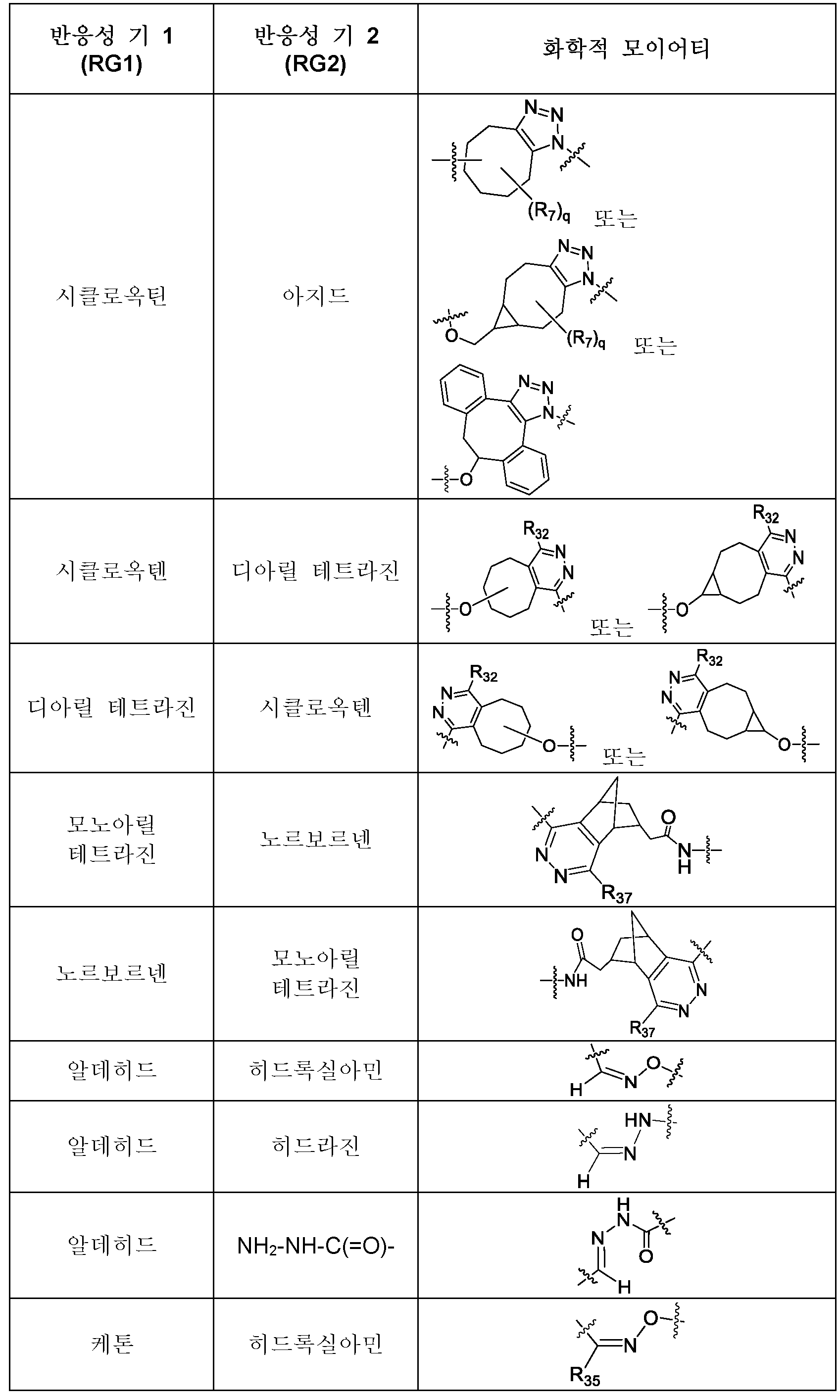


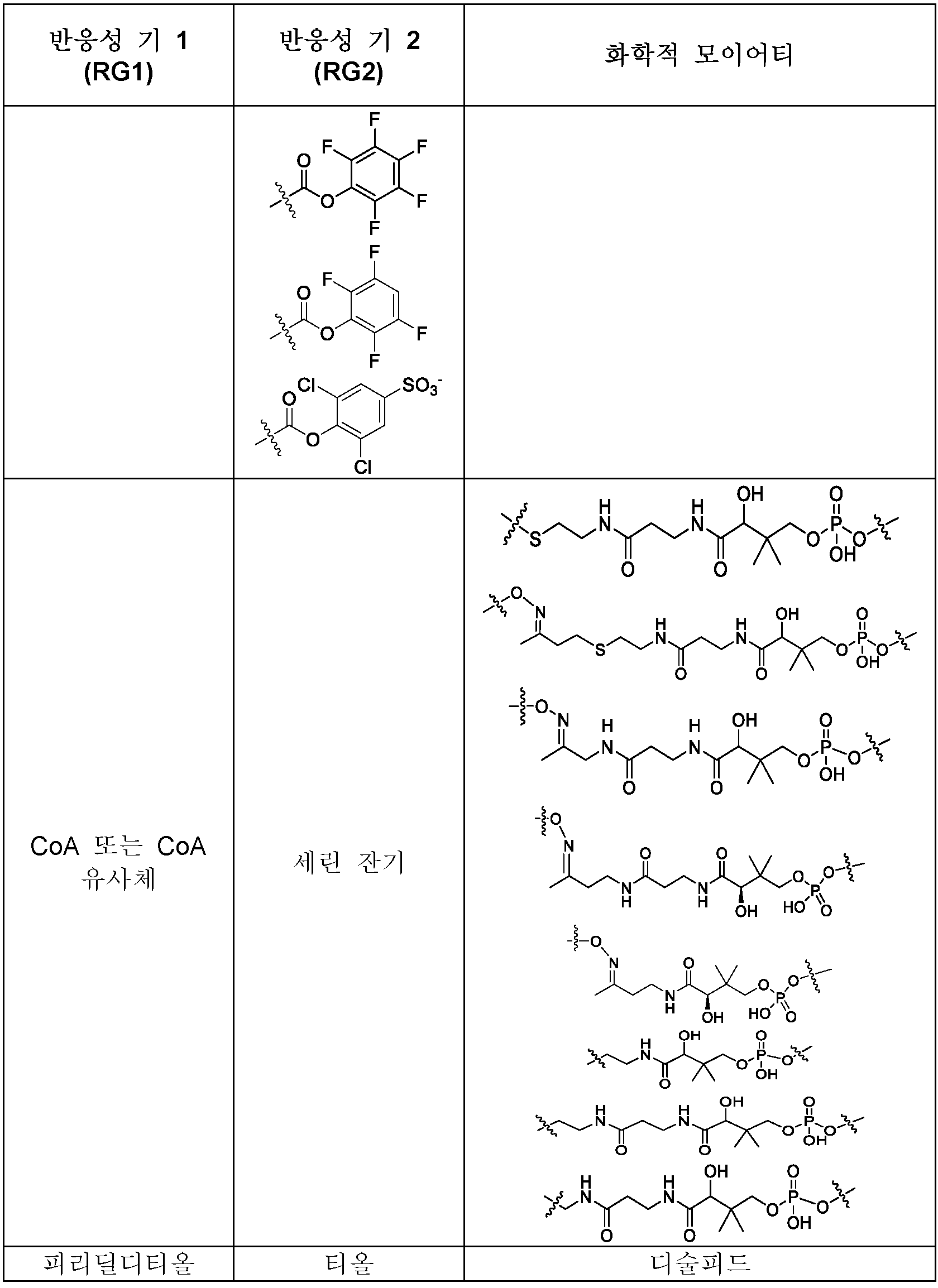
여기서 표 3에서의 R32는 H, C1-4 알킬, 페닐, 피리미딘 또는 피리딘이고; 표 3에서의 R35는 H, C1-6알킬, 페닐 또는 1 내지 3개의 -OH 기로 치환된 C1-4알킬이고; 표 3에서의 각각의 R7은 독립적으로 H, C1-6알킬, 플루오로, -C(=O)OH로 치환된 벤질옥시, -C(=O)OH로 치환된 벤질, -C(=O)OH로 치환된 C1-4알콕시 및 -C(=O)OH로 치환된 C1-4알킬로부터 선택되고; 표 3에서의 R37은 독립적으로 H, 페닐 및 피리딘으로부터 선택되고; 표 3에서의 q는 0, 1, 2 또는 3이고; 표 3에서의 R8 및 R13은 H 또는 메틸이고; 표 3에서의 R9 및 R14는 H, -CH3 또는 페닐이고; 표 3에서의 R은 H 또는 임의의 적합한 치환기이고; 표 3에서의 R50은 H이다.wherein R 32 in Table 3 is H, C 1-4 alkyl, phenyl, pyrimidine or pyridine; R 35 in Table 3 is H, C 1-6 alkyl, phenyl or C 1-4 alkyl substituted with 1 to 3 -OH groups; each R 7 in Table 3 is independently selected from H, C 1-6 alkyl, fluoro, benzyloxy substituted with -C(=O)OH, benzyl substituted with -C(=O)OH, C 1-4 alkoxy substituted with -C(=O)OH and C 1-4 alkyl substituted with -C(=O)OH; R 37 in Table 3 is independently selected from H, phenyl and pyridine; q in Table 3 is 0, 1, 2 or 3; R 8 and R 13 in Table 3 are H or methyl; R 9 and R 14 in Table 3 are H, -CH 3 or phenyl; R in Table 3 is H or any suitable substituent; R 50 in Table 3 is H.
추가로, 링커 성분은 하기 표 4에 열거된 기일 수 있다.Additionally, the linker component may be a group listed in Table 4 below.
표 4.Table 4.


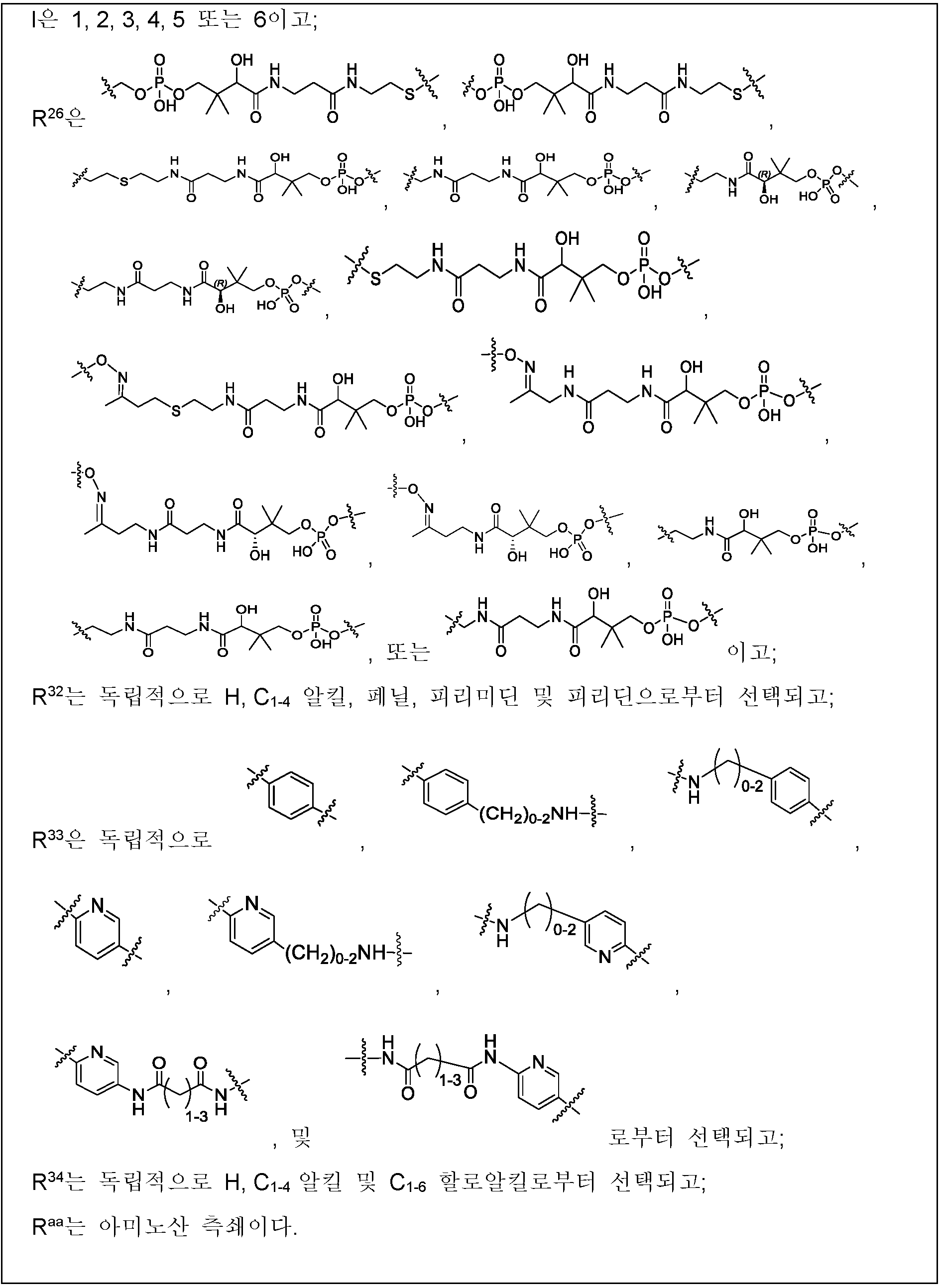
본원에 사용된 바와 같이, 화합물의 부분적 구조가 예시되는 경우에, 파상선 (
본원에 사용된 용어 "자기 희생적 스페이서" 및 "자기 희생적 기"는 산-유도된 절단, 펩티다제-유도된 절단, 에스테라제-유도된 절단, 글리코시다제 유도된 절단, 포스포디에스테라제 유도된 절단, 포스파타제 유도된 절단, 프로테아제 유도된 절단, 리파제 유도된 절단 또는 디술피드 결합 절단에 의해 활성화되고, 활성화 후에 보호기가 제거되어, 이탈기의 일시적인 순차적 방출을 유도하는 해체 반응의 캐스케이드를 생성하는 1개 이상의 촉발 기 (TG)를 포함하는 모이어티를 지칭한다. 이러한 반응 캐스케이드는 1,4-, 1,6- 또는 1,8-제거 반응일 수 있으나 이에 제한되지는 않는다.The terms "self-immolative spacer" and "self-immolative group" as used herein refer to a moiety comprising one or more triggering groups (TGs) that are activated by acid-induced cleavage, peptidase-induced cleavage, esterase-induced cleavage, glycosidase-induced cleavage, phosphodiesterase-induced cleavage, phosphatase-induced cleavage, protease-induced cleavage, lipase-induced cleavage or disulfide bond cleavage, and that, following activation, remove the protecting group, thereby generating a cascade of dissociation reactions leading to the transient sequential release of a leaving group. Such reaction cascades may be, but are not limited to, 1,4-, 1,6- or 1,8-elimination reactions.
자기 희생적 스페이서 또는 기의 비제한적 예는 하기를 포함한다:Non-limiting examples of self-sacrificial spacers or ki include:

여기서Here
TG는 촉발 기이고;TG is the trigger;
Xa는 O, NH 또는 S이고;X a is O, NH or S;
Xb는 O, NH, NCH3 또는 S이고;X b is O, NH, NCH 3 or S;
Xc는 O 또는 NH이고;X c is O or NH;
Ya는 CH2, CH2O 또는 CH2NH이고;Y a is CH 2 , CH 2 O or CH 2 NH;
Yb는 CH2, O 또는 NH이고;Y b is CH 2 , O or NH;
Yc는 결합, CH2, O 또는 NH이고,Y c is a bond, CH 2 , O or NH,
LG는 이탈기, 예컨대 본 발명의 링커-약물 기의 약물 모이어티 (D)이다.LG is a leaving group, for example, a drug moiety (D) of the linker-drug group of the present invention.
자기 희생적 스페이서의 추가의 비제한적 예는 문헌 [Angew. Chem. Int. Ed. 2015, 54, 7492 - 7509]에 기재되어 있다.Additional non-limiting examples of self-immolative spacers are described in the literature [Angew. Chem. Int. Ed. 2015, 54, 7492 - 7509].
특정 실시양태에서, 자기 희생적 스페이서는 하기 구조를 갖는 모이어티이며:In certain embodiments, the self-immolative spacer is a moiety having the structure:

바람직한 실시양태에서, 자기 희생적 스페이서는 하기 구조를 갖는 모이어티이며:In a preferred embodiment, the self-immolative spacer is a moiety having the structure:

다른 바람직한 실시양태에서, 자기 희생적 스페이서는 하기 구조를 갖는 모이어티이며:In another preferred embodiment, the self-immolative spacer is a moiety having the structure:

본원에 사용된 용어 "친수성 모이어티"는 약물 모이어티 (D)가 본 발명의 링커 기에 부착되는 경우에 약물 모이어티 (D)의 수용해도를 증가시키는 친수성 특성을 갖는 모이어티를 지칭한다. 이러한 친수성 기의 예는 폴리에틸렌 글리콜, 폴리알킬렌 글리콜, 당, 올리고사카라이드, 폴리펩티드, 1 내지 3개의 
약물 모이어티Drug Moiety
일부 실시양태에서, 링커 모이어티의 전구체인 중간체는 적절한 조건 하에 약물 모이어티 (예를 들어, Bcl-xL 억제제)와 반응한다. 일부 실시양태에서, 반응성 기가 약물 및/또는 중간체 또는 링커에 사용된다. 약물과 중간체 또는 유도체화된 약물 (약물 플러스 링커) 사이의 반응 생성물은 후속적으로 항체 또는 항원-결합 단편과, 약물 및 중간체 또는 유도체화된 약물 및 항체 또는 항원-결합 단편의 접합을 용이하게 하는 조건 하에 반응한다. 대안적으로, 중간체 또는 링커가 먼저 항체 또는 항원-결합 단편 또는 유도체화된 항체 또는 항원-결합 단편과 반응한 다음, 약물 또는 유도체화된 약물과 반응할 수 있다.In some embodiments, an intermediate that is a precursor of a linker moiety is reacted with a drug moiety (e.g., a Bcl-xL inhibitor) under appropriate conditions. In some embodiments, a reactive group is used in the drug and/or the intermediate or linker. The reaction product between the drug and the intermediate or derivatized drug (drug plus linker) is subsequently reacted with the antibody or antigen-binding fragment under conditions that facilitate conjugation of the drug and the intermediate or derivatized drug and the antibody or antigen-binding fragment. Alternatively, the intermediate or linker can first be reacted with the antibody or antigen-binding fragment or derivatized antibody or antigen-binding fragment and then reacted with the drug or derivatized drug.
항체 또는 항원-결합 단편에 대한 약물 모이어티 및/또는 링커 모이어티의 공유 부착을 위해 다수의 상이한 반응이 이용가능하다. 이는 종종 리신의 아민 기, 글루탐산 및 아스파르트산의 유리 카르복실산 기, 시스테인의 술프히드릴 기 및 방향족 아미노산의 다양한 모이어티를 포함한, 항체 또는 항원-결합 단편의 1개 이상의 아미노산 잔기의 반응에 의해 달성된다. 예를 들어, 비-특이적 공유 부착은 약물 모이어티 상의 카르복시 (또는 아미노) 기를 항체 또는 항원-결합 단편 상의 아미노 (또는 카르복시) 기에 연결하는 카르보디이미드 반응을 사용하여 수행될 수 있다. 추가적으로, 이관능성 작용제, 예컨대 디알데히드 또는 이미도에스테르가 또한 약물 모이어티 상의 아미노 기를 항체 또는 항원-결합 단편 상의 아미노 기에 연결하는 데 사용될 수 있다. 쉬프 염기 반응이 약물 (예를 들어, Bcl-xL 억제제)을 결합제에 부착시키는 데 또한 이용가능하다. 이 방법은 글리콜 또는 히드록시 기를 함유하는 약물의 퍼아이오데이트 산화를 수반하여, 알데히드를 형성하고, 이는 이어서 결합제와 반응한다. 부착은 결합제의 아미노 기와의 쉬프 염기의 형성을 통해 발생한다. 이소티오시아네이트는 또한 약물을 결합제에 공유 부착시키기 위한 커플링제로서 사용될 수 있다. 다른 기술이 통상의 기술자에게 공지되어 있고, 본 개시내용의 범주 내에 있다. 관련 기술분야에 공지된 다양한 화학을 사용하여 생성되고 항체 또는 항원-결합 단편에 연결될 수 있는 약물 모이어티의 예는 Bcl-xL 억제제, 예를 들어 본원에 기재되고 예시된 Bcl-xL 억제제를 포함한다.A number of different reactions are available for covalent attachment of drug moieties and/or linker moieties to antibodies or antigen-binding fragments. This is often accomplished by reaction of one or more amino acid residues of the antibody or antigen-binding fragment, including the amine group of lysine, the free carboxylic acid groups of glutamic acid and aspartic acid, the sulfhydryl group of cysteine, and various moieties of aromatic amino acids. For example, non-specific covalent attachment can be accomplished using a carbodiimide reaction to link a carboxyl (or amino) group on the drug moiety to an amino (or carboxyl) group on the antibody or antigen-binding fragment. Additionally, bifunctional agents, such as dialdehydes or imidoesters, can also be used to link an amino group on the drug moiety to an amino group on the antibody or antigen-binding fragment. Schiff base reactions are also available to attach drugs (e.g., Bcl-xL inhibitors) to binding agents. This method involves periodate oxidation of a drug containing a glycol or hydroxy group to form an aldehyde, which then reacts with a coupling agent. Attachment occurs via formation of a Schiff base with the amino group of the coupling agent. Isothiocyanates can also be used as coupling agents to covalently attach the drug to the coupling agent. Other techniques are known to those of ordinary skill in the art and are within the scope of the present disclosure. Examples of drug moieties that can be formed using a variety of chemistries known in the art and linked to antibodies or antigen-binding fragments include Bcl-xL inhibitors, such as the Bcl-xL inhibitors described and exemplified herein.
적합한 약물 모이어티는 화학식 (I), (IA), (IB), (IC), (II), (IIA), (IIB) 또는 (IIC)의 화합물 또는 그의 거울상이성질체, 부분입체이성질체 및/또는 제약상 허용되는 산 또는 염기와의 부가염을 포함할 수 있다. 추가적으로, 약물 모이어티는 본원에 기재된 Bcl-xL 억제제 (D)의 임의의 화합물을 포함할 수 있다.Suitable drug moieties can include compounds of formula (I), (IA), (IB), (IC), (II), (IIA), (IIB) or (IIC) or enantiomers, diastereomers and/or addition salts with pharmaceutically acceptable acids or bases thereof. Additionally, the drug moiety can include any of the compounds of the Bcl-xL inhibitors (D) described herein.
일부 실시양태에서, 약물 모이어티 (D)는 표 A2로부터 선택된 화학식을 포함한다.In some embodiments, the drug moiety (D) comprises a formula selected from Table A2.
일부 실시양태에서, 약물 모이어티 (D)는 관련 기술분야에 공지된 Bcl-xL 억제제, 예를 들어 ABT-737 및 ABT-263을 포함한다.In some embodiments, the drug moiety (D) comprises a Bcl-xL inhibitor known in the art, such as ABT-737 and ABT-263.
일부 실시양태에서, 약물 모이어티 (D)는 하기로부터 선택된 Bcl-xL 억제제를 포함한다:In some embodiments, the drug moiety (D) comprises a Bcl-xL inhibitor selected from:

일부 실시양태에서, 링커-약물 (또는 "링커-페이로드") 모이어티 -(L-D)는 표 B에서의 화합물 또는 상기 중 어느 것의 거울상이성질체, 부분입체이성질체, 중수소화 유도체 및/또는 제약상 허용되는 염을 포함할 수 있다.In some embodiments, the linker-drug (or “linker-payload”) moiety -(L-D) can comprise a compound in Table B or an enantiomer, diastereomer, deuterated derivative and/or pharmaceutically acceptable salt of any of the above.
약물 로딩Drug loading
약물 로딩은 p에 의해 나타내어지고, 또한 본원에서 약물-대-항체 비 (DAR)로 지칭된다. 약물 로딩은 항체 또는 항원-결합 단편당 1 내지 16개의 약물 모이어티의 범위일 수 있다. 일부 실시양태에서, p는 1 내지 16의 정수이다. 일부 실시양태에서, p는 1 내지 16, 1 내지 15, 1 내지 14, 1 내지 13, 1 내지 12, 1 내지 11, 1 내지 10, 1 내지 9, 1 내지 8, 1 내지 7, 1 내지 6, 1 내지 5, 1 내지 4, 1 내지 3 또는 1 내지 2의 정수이다. 일부 실시양태에서, p는 2 내지 10, 2 내지 9, 2 내지 8, 2 내지 7, 2 내지 6, 2 내지 5, 2 내지 4 또는 2 내지 3의 정수이다. 일부 실시양태에서, p는 1 내지 16의 정수이다. 일부 실시양태에서, p는 1 내지 8의 정수이다. 일부 실시양태에서, p는 1 내지 5의 정수이다. 일부 실시양태에서, p는 2 내지 4의 정수이다. 일부 실시양태에서, p는 1, 2, 3, 4, 5, 6, 7 또는 8이다. 일부 실시양태에서, p는 2이다. 일부 실시양태에서, p는 4이다.Drug loading is represented by p and is also referred to herein as drug-to-antibody ratio (DAR). Drug loading can range from 1 to 16 drug moieties per antibody or antigen-binding fragment. In some embodiments, p is an integer from 1 to 16. In some embodiments, p is an integer from 1 to 16, 1 to 15, 1 to 14, 1 to 13, 1 to 12, 1 to 11, 1 to 10, 1 to 9, 1 to 8, 1 to 7, 1 to 6, 1 to 5, 1 to 4, 1 to 3, or 1 to 2. In some embodiments, p is an integer from 2 to 10, 2 to 9, 2 to 8, 2 to 7, 2 to 6, 2 to 5, 2 to 4, or 2 to 3. In some embodiments, p is an integer from 1 to 16. In some embodiments, p is an integer from 1 to 8. In some embodiments, p is an integer from 1 to 5. In some embodiments, p is an integer from 2 to 4. In some embodiments, p is 1, 2, 3, 4, 5, 6, 7, or 8. In some embodiments, p is 2. In some embodiments, p is 4.
약물 로딩은 항체 또는 항원-결합 단편 상의 부착 부위의 수에 의해 제한될 수 있다. 일부 실시양태에서, ADC의 링커 모이어티 (L)는 항체 또는 항원-결합 단편 상의 1개 이상의 아미노산 잔기 상의 화학적 활성 기를 통해 항체 또는 항원-결합 단편에 부착된다. 예를 들어, 링커는 유리 아미노, 이미노, 히드록실, 티올 또는 카르복실 기를 통해 항체 또는 항원-결합 단편에 (예를 들어, N- 또는 C-말단에, 1개 이상의 리신 잔기의 엡실론 아미노 기에, 1개 이상의 글루탐산 또는 아스파르트산 잔기의 유리 카르복실산 기에 또는 1개 이상의 시스테인 잔기의 술프히드릴 기에) 부착될 수 있다. 링커가 부착되는 부위는 항체 또는 항원-결합 단편의 아미노산 서열 내의 천연 잔기일 수 있거나 또는 예를 들어 DNA 재조합 기술에 의해 (예를 들어, 시스테인 잔기를 아미노산 서열 내로 도입함으로써) 또는 단백질 생화학에 의해 (예를 들어, 환원, pH 조정 또는 가수분해에 의해) 항체 또는 항원-결합 단편 내로 도입될 수 있다.Drug loading may be limited by the number of attachment sites on the antibody or antigen-binding fragment. In some embodiments, the linker moiety (L) of the ADC is attached to the antibody or antigen-binding fragment via a chemically active group on one or more amino acid residues on the antibody or antigen-binding fragment. For example, the linker may be attached to the antibody or antigen-binding fragment (e.g., at the N- or C-terminus, to the epsilon amino group of one or more lysine residues, to the free carboxylic acid group of one or more glutamic acid or aspartic acid residues, or to the sulfhydryl group of one or more cysteine residues) via a free amino, imino, hydroxyl, thiol or carboxyl group. The site of attachment of the linker may be a natural residue within the amino acid sequence of the antibody or antigen-binding fragment, or may be introduced into the antibody or antigen-binding fragment, for example, by DNA recombinant techniques (for example, by introducing a cysteine residue into the amino acid sequence) or by protein biochemistry (for example, by reduction, pH adjustment or hydrolysis).
일부 실시양태에서, 항체 또는 항원-결합 단편에 접합될 수 있는 약물 모이어티의 수는 유리 시스테인 잔기의 수에 의해 제한된다. 예를 들어, 부착부가 시스테인 티올 기인 경우에, 항체는 단지 1개 또는 몇몇개의 시스테인 티올 기를 가질 수 있거나 또는 링커가 부착될 수 있는 충분히 반응성인 티올 기를 단지 1개 또는 몇몇개 가질 수 있다. 일반적으로, 항체는 약물 모이어티에 연결될 수 있는 많은 유리 및 반응성 시스테인 티올 기를 함유하지는 않는다. 실제로, 항체 내의 대부분의 시스테인 티올 잔기는 쇄간 또는 쇄내 디술피드 결합에 수반된다. 따라서, 시스테인에 대한 접합은 일부 실시양태에서 항체의 적어도 부분적인 환원을 요구할 수 있다. 항체에 대한 링커-독소의 과다-부착은 디술피드 결합을 형성하는 데 이용가능한 시스테인 잔기를 환원시킴으로써 항체를 탈안정화시킬 수 있다. 따라서, 최적의 약물:항체 비는 항체 또는 항원-결합 단편을 탈안정화시키지 않으면서 (항체당 부착된 약물 모이어티의 수를 증가시킴으로써) ADC의 효력을 증가시켜야 한다. 일부 실시양태에서, 최적 비는 2, 4, 6 또는 8일 수 있다. 일부 실시양태에서, 최적 비는 2 또는 4일 수 있다.In some embodiments, the number of drug moieties that can be conjugated to an antibody or antigen-binding fragment is limited by the number of free cysteine residues. For example, where the attachment moiety is a cysteine thiol group, the antibody may have only one or a few cysteine thiol groups, or may have only one or a few sufficiently reactive thiol groups to which a linker can be attached. In general, antibodies do not contain many free and reactive cysteine thiol groups that can be linked to drug moieties. In fact, most cysteine thiol residues in antibodies are involved in interchain or intrachain disulfide bonds. Therefore, conjugation to cysteine may require at least partial reduction of the antibody in some embodiments. Over-attachment of linker-toxin to an antibody may destabilize the antibody by reducing the cysteine residues available to form disulfide bonds. Therefore, the optimal drug:antibody ratio should increase the potency of the ADC (by increasing the number of drug moieties attached per antibody) without destabilizing the antibody or antigen-binding fragment. In some embodiments, the optimal ratio can be 2, 4, 6 or 8. In some embodiments, the optimal ratio can be 2 or 4.
일부 실시양태에서, 항체 또는 항원-결합 단편은 1개 이상의 유리 시스테인 잔기를 생성하기 위해 접합 전에 환원 조건에 노출된다. 일부 실시양태에서, 항체는 부분 또는 총 환원 조건 하에 환원제, 예컨대 디티오트레이톨 (DTT) 또는 트리스(2-카르복시에틸)포스핀 (TCEP)으로 환원되어 반응성 시스테인 티올 기를 생성할 수 있다. 쌍형성되지 않은 시스테인은 제한된 몰 당량의 TCEP로의 부분 환원을 통해 생성될 수 있으며, 이는 경쇄와 중쇄 (H-L 쌍형성당 1개의 쌍) 및 힌지 영역 내의 2개의 중쇄 (인간 IgG1의 경우에 H-H 쌍형성당 2개의 쌍)를 연결하는 쇄간 디술피드 결합을 환원시키면서 쇄내 디술피드 결합을 무손상 상태로 남길 수 있다 (Stefano et al. (2013) Methods Mol Biol. 1045:145-71). 실시양태에서, 항체 내의 디술피드 결합은, 예를 들어 교대 환원 및 산화 전압을 적용하는 작업 전극을 사용함으로써 전기화학적으로 환원된다. 이러한 접근법은 분석 장치 (예를 들어, 전기화학적 검출 장치, NMR 분광계 또는 질량 분광계) 또는 화학적 분리 장치 (예를 들어, 액체 크로마토그래프 (예를 들어, HPLC) 또는 전기영동 장치 (예를 들어, US 2014/0069822 참조))에 대한 디술피드 결합 환원의 온-라인 커플링을 가능하게 할 수 있다. 일부 실시양태에서, 항체는 변성 조건에 적용되어 아미노산 잔기, 예컨대 시스테인 상의 반응성 친핵성 기를 드러낸다.In some embodiments, the antibody or antigen-binding fragment is exposed to reducing conditions prior to conjugation to generate one or more free cysteine residues. In some embodiments, the antibody can be reduced with a reducing agent such as dithiothreitol (DTT) or tris(2-carboxyethyl)phosphine (TCEP) under partial or total reducing conditions to generate reactive cysteine thiol groups. Unpaired cysteines can be generated through partial reduction with limited molar equivalents of TCEP, which can reduce the interchain disulfide bonds linking the light and heavy chains (one pair per H-L pairing) and the two heavy chains within the hinge region (two pairs per H-H pairing in the case of human IgG1) while leaving the intrachain disulfide bonds intact (Stefano et al. (2013) Methods Mol Biol. 1045:145-71). In embodiments, disulfide bonds within the antibody are reduced electrochemically, for example, by using a working electrode that applies alternating reduction and oxidation voltages. This approach can enable on-line coupling of disulfide bond reduction to an analytical device (e.g., an electrochemical detection device, an NMR spectrometer, or a mass spectrometer) or a chemical separation device (e.g., a liquid chromatograph (e.g., HPLC) or an electrophoresis device (see, e.g., US 2014/0069822)). In some embodiments, the antibody is subjected to denaturing conditions to reveal reactive nucleophilic groups on amino acid residues, such as cysteine.
ADC의 약물 로딩은 상이한 방식으로, 예를 들어 (i) 항체에 비해 몰 과량의 약물-링커 중간체 또는 링커 시약을 제한하고/거나; (ii) 접합 반응 시간 또는 온도를 제한하고/거나; (iii) 시스테인 티올 변형을 위한 환원 조건을 부분적으로 제한하고/거나; (iv) 링커-약물 부착의 수 및/또는 위치의 제어를 위해 시스테인 잔기의 수 및 위치가 변형되도록 재조합 기술에 의해 항체의 아미노산 서열을 조작함으로써 제어될 수 있다.Drug loading of ADCs can be controlled in different ways, for example, by (i) limiting the molar excess of drug-linker intermediate or linker reagent relative to the antibody; (ii) limiting the conjugation reaction time or temperature; (iii) partially limiting the reducing conditions for cysteine thiol modification; and/or (iv) manipulating the amino acid sequence of the antibody by recombinant techniques to modify the number and/or positions of cysteine residues to control the number and/or positions of linker-drug attachments.
일부 실시양태에서, 유리 시스테인 잔기가 항체 또는 항원-결합 단편의 아미노산 서열 내로 도입된다. 예를 들어, 모 항체의 1개 이상의 아미노산이 시스테인 아미노산으로 대체된 시스테인 조작된 항체가 제조될 수 있다. 임의의 형태의 항체가 그렇게 조작, 즉 돌연변이될 수 있다. 예를 들어, 모 Fab 항체 단편은 "티오Fab"로 지칭되는 시스테인 조작된 Fab를 형성하도록 조작될 수 있다. 유사하게, 모 모노클로날 항체는 "티오Mab"를 형성하도록 조작될 수 있다. 단일 부위 돌연변이는 티오Fab에서 단일의 조작된 시스테인 잔기를 생성하는 반면, 단일 부위 돌연변이는 IgG 항체의 이량체 성질로 인해 티오Mab에서 2개의 조작된 시스테인 잔기를 생성한다. 모 폴리펩티드의 아미노산 서열 변이체를 코딩하는 DNA는 관련 기술분야에 공지된 다양한 방법에 의해 제조될 수 있다 (예를 들어, WO 2006/034488에 기재된 방법 참조). 이들 방법은 폴리펩티드를 코딩하는 앞서 제조된 DNA의 부위-지정 (또는 올리고뉴클레오티드-매개) 돌연변이유발, PCR 돌연변이유발 및 카세트 돌연변이유발에 의한 제조를 포함하나 이에 제한되지는 않는다. 재조합 항체의 변이체는 또한 제한 단편 조작에 의해 또는 합성 올리고뉴클레오티드를 사용한 중첩 연장 PCR에 의해 구축될 수 있다. 화학식 (1)의 ADC는 1, 2, 3 또는 4개의 조작된 시스테인 아미노산을 갖는 항체를 포함하나 이에 제한되지는 않는다 (Lyon et al. (2012) Methods Enzymol. 502:123-38). 일부 실시양태에서, 1개 이상의 유리 시스테인 잔기는 조작의 사용 없이 항체 또는 항원-결합 단편에 이미 존재하고, 이 경우에 존재하는 유리 시스테인 잔기는 항체 또는 항원-결합 단편을 약물 모이어티에 접합시키는 데 사용될 수 있다.In some embodiments, a free cysteine residue is introduced into the amino acid sequence of the antibody or antigen-binding fragment. For example, a cysteine engineered antibody can be prepared in which one or more amino acids of the parent antibody are replaced with cysteine amino acids. Any form of the antibody can be so engineered, i.e., mutated. For example, a parent Fab antibody fragment can be engineered to form a cysteine engineered Fab, referred to as a "ThioFab." Similarly, a parent monoclonal antibody can be engineered to form a "ThioMab." A single site mutation produces a single engineered cysteine residue in a ThioFab, whereas a single site mutation produces two engineered cysteine residues in a ThioMab due to the dimeric nature of IgG antibodies. DNA encoding amino acid sequence variants of a parent polypeptide can be prepared by a variety of methods known in the art (see, e.g., the methods described in WO 2006/034488). These methods include, but are not limited to, site-directed (or oligonucleotide-mediated) mutagenesis, PCR mutagenesis, and cassette mutagenesis of previously prepared DNA encoding the polypeptide. Variants of the recombinant antibody can also be constructed by restriction fragment engineering or by overlap extension PCR using synthetic oligonucleotides. ADCs of formula (1) include, but are not limited to, antibodies having one, two, three, or four engineered cysteine amino acids (Lyon et al. (2012) Methods Enzymol. 502:123-38). In some embodiments, one or more free cysteine residues are already present in the antibody or antigen-binding fragment without the use of engineering, in which case the free cysteine residues present can be used to conjugate the antibody or antigen-binding fragment to a drug moiety.
항체 또는 항원-결합 단편 및 링커 모이어티의 다중 카피를 포함하는 반응 혼합물에서 1개 초과의 친핵성 기가 약물-링커 중간체 또는 링커 모이어티 시약에 이어서 약물 모이어티 시약과 반응하는 경우에, 이때 생성된 생성물은 혼합물에서 항체 또는 항원-결합 단편의 각각의 카피에 부착된 1개 이상의 약물 모이어티의 분포를 갖는 ADC 화합물의 혼합물일 수 있다. 일부 실시양태에서, 접합 반응으로부터 생성된 ADC의 혼합물 내의 약물 로딩은 항체 또는 항원-결합 단편당 부착된 1 내지 16개의 약물 모이어티의 범위이다. 항체 또는 항원-결합 단편당 약물 모이어티의 평균 수 (즉, 평균 약물 로딩 또는 평균 p)는 관련 기술분야에 공지된 임의의 통상적인 방법에 의해, 예를 들어 질량 분광측정법 (예를 들어, 액체 크로마토그래피-질량 분광측정법 (LC-MS)) 및/또는 고성능 액체 크로마토그래피 (예를 들어, HIC-HPLC)에 의해 계산될 수 있다. 일부 실시양태에서, 항체 또는 항원-결합 단편당 약물 모이어티의 평균 수는 액체 크로마토그래피-질량 분광측정법 (LC-MS)에 의해 결정된다. 일부 실시양태에서, 항체 또는 항원-결합 단편당 약물 모이어티의 평균 수는 약 1.5 내지 약 3.5, 약 2.5 내지 약 4.5, 약 3.5 내지 약 5.5, 약 4.5 내지 약 6.5, 약 5.5 내지 약 7.5, 약 6.5 내지 약 8.5 또는 약 7.5 내지 약 9.5개이다. 일부 실시양태에서, 항체 또는 항원-결합 단편당 약물 모이어티의 평균 수는 약 2 내지 약 4, 약 3 내지 약 5, 약 4 내지 약 6, 약 5 내지 약 7, 약 6 내지 약 8, 약 7 내지 약 9, 약 2 내지 약 8 또는 약 4 내지 약 8개이다.When more than one nucleophilic group reacts with a drug-linker intermediate or linker moiety reagent followed by a drug moiety reagent in a reaction mixture comprising multiple copies of an antibody or antigen-binding fragment and a linker moiety, then the resulting product can be a mixture of ADC compounds having a distribution of one or more drug moieties attached to each copy of the antibody or antigen-binding fragment in the mixture. In some embodiments, the drug loading within the mixture of ADCs resulting from the conjugation reaction ranges from 1 to 16 drug moieties attached per antibody or antigen-binding fragment. The average number of drug moieties per antibody or antigen-binding fragment (i.e., average drug loading or average p) can be calculated by any conventional method known in the art, such as by mass spectrometry (e.g., liquid chromatography-mass spectrometry (LC-MS)) and/or high performance liquid chromatography (e.g., HIC-HPLC). In some embodiments, the average number of drug moieties per antibody or antigen-binding fragment is determined by liquid chromatography-mass spectrometry (LC-MS). In some embodiments, the average number of drug moieties per antibody or antigen-binding fragment is about 1.5 to about 3.5, about 2.5 to about 4.5, about 3.5 to about 5.5, about 4.5 to about 6.5, about 5.5 to about 7.5, about 6.5 to about 8.5, or about 7.5 to about 9.5. In some embodiments, the average number of drug moieties per antibody or antigen-binding fragment is about 2 to about 4, about 3 to about 5, about 4 to about 6, about 5 to about 7, about 6 to about 8, about 7 to about 9, about 2 to about 8, or about 4 to about 8.
일부 실시양태에서, 항체 또는 항원-결합 단편당 약물 모이어티의 평균 수는 약 2개이다. 일부 실시양태에서, 항체 또는 항원-결합 단편당 약물 모이어티의 평균 수는 약 1.5, 약 1.6, 약 1.7, 약 1.8, 약 1.9, 약 2, 약 2.1, 약 2.2, 약 2.3, 약 2.4 또는 약 2.5개이다. 일부 실시양태에서, 항체 또는 항원-결합 단편당 약물 모이어티의 평균 수는 2개이다.In some embodiments, the average number of drug moieties per antibody or antigen-binding fragment is about 2. In some embodiments, the average number of drug moieties per antibody or antigen-binding fragment is about 1.5, about 1.6, about 1.7, about 1.8, about 1.9, about 2, about 2.1, about 2.2, about 2.3, about 2.4, or about 2.5. In some embodiments, the average number of drug moieties per antibody or antigen-binding fragment is 2.
일부 실시양태에서, 항체 또는 항원-결합 단편당 약물 모이어티의 평균 수는 약 4개이다. 일부 실시양태에서, 항체 또는 항원-결합 단편당 약물 모이어티의 평균 수는 약 3.5, 약 3.6, 약 3.7, 약 3.8, 약 3.9, 약 4, 약 4.1, 약 4.2, 약 4.3, 약 4.4 또는 약 4.5개이다. 일부 실시양태에서, 항체 또는 항원-결합 단편당 약물 모이어티의 평균 수는 4개이다.In some embodiments, the average number of drug moieties per antibody or antigen-binding fragment is about 4. In some embodiments, the average number of drug moieties per antibody or antigen-binding fragment is about 3.5, about 3.6, about 3.7, about 3.8, about 3.9, about 4, about 4.1, about 4.2, about 4.3, about 4.4, or about 4.5. In some embodiments, the average number of drug moieties per antibody or antigen-binding fragment is 4.
일부 실시양태에서, 항체 또는 항원-결합 단편당 약물 모이어티의 평균 수에 관하여 사용된 용어 "약"은 플러스 또는 마이너스 20%, 15%, 10%, 5% 또는 1%를 의미한다. 한 실시양태에서, 용어 "약"은 명시된 값보다 10% 더 크거나 더 작은 값의 범위를 지칭한다. 또 다른 실시양태에서, 용어 "약"은 명시된 값보다 5% 더 크거나 더 작은 값의 범위를 지칭한다. 또 다른 실시양태에서, 용어 "약"은 명시된 값보다 1% 더 크거나 더 작은 값의 범위를 지칭한다.In some embodiments, the term "about" as used in reference to the average number of drug moieties per antibody or antigen-binding fragment means plus or minus 20%, 15%, 10%, 5%, or 1%. In one embodiment, the term "about" refers to a range of values that are 10% greater or less than a stated value. In another embodiment, the term "about" refers to a range of values that are 5% greater or less than a stated value. In another embodiment, the term "about" refers to a range of values that are 1% greater or less than a stated value.
개별 ADC 화합물 또는 "종"은 질량 분광분석법에 의해 혼합물에서 확인되고, 예를 들어 UPLC 또는 HPLC, 예를 들어 소수성 상호작용 크로마토그래피 (HIC-HPLC)에 의해 분리될 수 있다. 일부 실시양태에서, 단일 로딩 값을 갖는 균질한 또는 거의 균질한 ADC 생성물은, 예를 들어 전기영동 또는 크로마토그래피에 의해 접합 혼합물로부터 단리될 수 있다.Individual ADC compounds or "species" can be identified in the mixture by mass spectrometry and separated, for example, by UPLC or HPLC, for example, hydrophobic interaction chromatography (HIC-HPLC). In some embodiments, a homogeneous or nearly homogeneous ADC product having a single loading value can be isolated from the conjugation mixture, for example, by electrophoresis or chromatography.
일부 실시양태에서, 보다 높은 약물 로딩 (예를 들어, p > 16)은 특정 항체-약물 접합체의 응집, 불용성, 독성 또는 세포 투과성의 손실을 유발할 수 있다. 보다 높은 약물 로딩은 또한 특정 ADC의 약동학 (예를 들어, 클리어런스)에 부정적인 영향을 미칠 수 있다. 일부 실시양태에서, 보다 낮은 약물 로딩 (예를 들어, p < 2)은 표적-발현 세포에 대한 특정 ADC의 효력을 감소시킬 수 있다. 일부 실시양태에서, 본 개시내용의 ADC에 대한 약물 로딩은 약 2 내지 약 16, 약 2 내지 약 10, 약 2 내지 약 8; 약 2 내지 약 6; 약 2 내지 약 5; 약 3 내지 약 5; 약 2 내지 약 4; 또는 약 4 내지 약 8의 범위이다.In some embodiments, higher drug loadings (e.g., p > 16) may cause aggregation, insolubility, toxicity, or loss of cell permeability of certain antibody-drug conjugates. Higher drug loadings may also negatively affect the pharmacokinetics (e.g., clearance) of certain ADCs. In some embodiments, lower drug loadings (e.g., p < 2) may decrease the potency of certain ADCs against target-expressing cells. In some embodiments, the drug loading for the ADCs of the present disclosure is in the range of about 2 to about 16, about 2 to about 10, about 2 to about 8; about 2 to about 6; about 2 to about 5; about 3 to about 5; about 2 to about 4; or about 4 to about 8.
일부 실시양태에서, 약 2의 약물 로딩 및/또는 평균 약물 로딩은, 예를 들어 항체 또는 항원-결합 단편 상의 쇄내 디술피드의 부분적 환원을 사용하여 달성되고, 유익한 특성을 제공한다. 일부 실시양태에서, 약 4 또는 약 6 또는 약 8의 약물 로딩 및/또는 평균 약물 로딩은, 예를 들어 항체 또는 항원-결합 단편 상의 쇄내 디술피드의 부분적 환원을 사용하여 달성되고, 유익한 특성을 제공한다. 일부 실시양태에서, 약 2 미만의 약물 로딩 및/또는 평균 약물 로딩은 표적 항원에의 결합에 대해 ADC와 경쟁하고/거나 감소된 치료 효능을 제공할 수 있는, 허용되지 않게 높은 수준의 비접합된 항체 종을 유발할 수 있다. 일부 실시양태에서, 약 16 초과의 약물 로딩 및/또는 평균 약물 로딩은 허용되지 않게 높은 수준의 생성물 불균질성 및/또는 ADC 응집을 유발할 수 있다. 약 16 초과의 약물 로딩 및/또는 평균 약물 로딩은 또한 항체 또는 항원-결합 단편을 안정화시키는 데 요구되는 1개 이상의 화학 결합의 손실로 인해 ADC의 안정성에 영향을 미칠 수 있다.In some embodiments, a drug loading and/or average drug loading of about 2 is achieved, for example, using partial reduction of intrachain disulfides on the antibody or antigen-binding fragment, and provides beneficial properties. In some embodiments, a drug loading and/or average drug loading of about 4 or about 6 or about 8 is achieved, for example, using partial reduction of intrachain disulfides on the antibody or antigen-binding fragment, and provides beneficial properties. In some embodiments, a drug loading and/or average drug loading of less than about 2 may result in unacceptably high levels of unconjugated antibody species, which may compete with the ADC for binding to the target antigen and/or provide reduced therapeutic efficacy. In some embodiments, a drug loading and/or average drug loading of greater than about 16 may result in unacceptably high levels of product heterogeneity and/or ADC aggregation. A drug loading and/or average drug loading of greater than about 16 may also affect the stability of the ADC due to the loss of one or more chemical bonds required to stabilize the antibody or antigen-binding fragment.
본 개시내용은 기재된 ADC를 생산하는 방법을 포함한다. 간략하게, ADC는 항체 또는 항원-결합 단편으로서의 항체 또는 항원-결합 단편, 약물 모이어티 (예를 들어, Bcl-xL 억제제) 및 약물 모이어티와 항체 또는 항원-결합 단편을 연결하는 링커를 포함한다. 일부 실시양태에서, ADC는 약물 모이어티에 및 항체 또는 항원-결합 단편에 공유 부착하기 위한 반응성 관능기를 갖는 링커를 사용하여 제조될 수 있다. 일부 실시양태에서, 항체 또는 항원-결합 단편은 링커 또는 약물-링커 중간체와 반응성인 관능기를 제조하도록 관능화된다. 예를 들어, 일부 실시양태에서, 항체 또는 항원-결합 단편의 시스테인 티올은 링커 또는 약물-링커 중간체의 반응성 관능기와 결합을 형성하여 ADC를 만들 수 있다. 일부 실시양태에서, 항체 또는 항원-결합 단편은 박테리아 트랜스글루타미나제 (BTG) - 아민 함유 시클로옥틴 BCN (N-[(1R,8S,9s)-비시클로[6.1.0]논-4-인-9-일메틸옥시카르보닐]-1,8-디아미노-3,6-디옥사옥탄) 모이어티로 특이적으로 관능화된 반응성 글루타민을 사용하여 제조된다. 일부 실시양태에서, 항체 또는 항원-결합 단편의 BCN 모이어티에 대한 링커 또는 약물-링커 중간체의 부위-특이적 접합은, 예를 들어 본원에 기재되고 예시된 바와 같이 수행된다. ADC의 생성은 통상의 기술자에게 공지된 기술에 의해 달성될 수 있다.The present disclosure encompasses methods for producing the described ADCs. Briefly, the ADCs comprise an antibody or antigen-binding fragment as an antibody or antigen-binding fragment, a drug moiety (e.g., a Bcl-xL inhibitor), and a linker connecting the drug moiety and the antibody or antigen-binding fragment. In some embodiments, the ADCs can be prepared using a linker having a reactive functional group for covalent attachment to the drug moiety and the antibody or antigen-binding fragment. In some embodiments, the antibody or antigen-binding fragment is functionalized to produce a functional group that is reactive with the linker or drug-linker intermediate. For example, in some embodiments, a cysteine thiol of the antibody or antigen-binding fragment can form a bond with a reactive functional group of the linker or drug-linker intermediate to produce the ADC. In some embodiments, the antibody or antigen-binding fragment is prepared using a reactive glutamine specifically functionalized with a bacterial transglutaminase (BTG) - amine-containing cyclooctyne BCN (N-[(1R,8S,9s)-bicyclo[6.1.0]non-4-yn-9-ylmethyloxycarbonyl]-1,8-diamino-3,6-dioxaoctane) moiety. In some embodiments, site-specific conjugation of a linker or drug-linker intermediate to the BCN moiety of the antibody or antigen-binding fragment is carried out, e.g., as described and exemplified herein. Production of ADCs can be accomplished by techniques known to those of ordinary skill in the art.
일부 실시양태에서, ADC는 항체 또는 항원-결합 단편을 링커 및 약물 모이어티 (예를 들어, Bcl-xL 억제제)와 순차적 방식으로 접촉시켜, 항체 또는 항원-결합 단편이 먼저 링커에 공유 연결된 다음, 사전-형성된 항체-링커 중간체가 약물 모이어티와 반응하도록 함으로써 생산된다. 항체-링커 중간체는 약물 모이어티를 접촉시키기 전에 정제 단계에 적용될 수 있거나 또는 적용되지 않을 수 있다. 다른 실시양태에서, ADC는 링커를 약물 모이어티와 반응시킴으로써 사전-형성된 링커-약물 화합물과 항체 또는 항원-결합 단편을 접촉시킴으로써 생산된다. 사전-형성된 링커-약물 화합물은 항체 또는 항원-결합 단편을 접촉시키기 전에 정제 단계에 적용될 수 있거나 또는 적용되지 않을 수 있다. 다른 실시양태에서, 항체 또는 항원-결합 단편은 하나의 반응 혼합물에서 링커 및 약물 모이어티와 접촉하여, 항체 또는 항원-결합 단편과 링커 사이 및 링커와 약물 모이어티 사이의 공유 결합의 동시 형성을 가능하게 한다. ADC를 생산하는 이 방법은 항체 또는 항원-결합 단편이 반응 혼합물에 링커를 첨가하기 전에 항체 또는 항원-결합 단편과 접촉하는 것인 반응 및 그 반대의 경우를 포함할 수 있다. 일부 실시양태에서, ADC는 항체 또는 항원-결합 단편을 약물 모이어티, 예컨대 Bcl-xL 억제제에 연결된 링커와 접합을 허용하는 조건 하에 반응시킴으로써 생산된다.In some embodiments, the ADC is produced by sequentially contacting the antibody or antigen-binding fragment with a linker and a drug moiety (e.g., a Bcl-xL inhibitor), such that the antibody or antigen-binding fragment is first covalently linked to the linker, followed by reaction of a pre-formed antibody-linker intermediate with the drug moiety. The antibody-linker intermediate may or may not be subjected to a purification step prior to contacting the drug moiety. In other embodiments, the ADC is produced by contacting the antibody or antigen-binding fragment with a pre-formed linker-drug compound by reacting the linker with the drug moiety. The pre-formed linker-drug compound may or may not be subjected to a purification step prior to contacting the antibody or antigen-binding fragment. In other embodiments, the antibody or antigen-binding fragment is contacted with the linker and the drug moiety in a single reaction mixture, thereby allowing simultaneous formation of covalent bonds between the antibody or antigen-binding fragment and the linker, and between the linker and the drug moiety. The method for producing an ADC may include a reaction in which the antibody or antigen-binding fragment is contacted with the antibody or antigen-binding fragment prior to adding the linker to the reaction mixture, and vice versa. In some embodiments, the ADC is produced by reacting the antibody or antigen-binding fragment under conditions that permit conjugation with a linker linked to a drug moiety, such as a Bcl-xL inhibitor.
상기 기재된 방법에 따라 제조된 ADC는 정제 단계에 적용될 수 있다. 정제 단계는 단백질을 정제하기 위한 관련 기술분야에 공지된 임의의 생화학적 방법 또는 그의 방법의 임의의 조합을 수반할 수 있다. 이들은 접선 유동 여과 (TFF), 친화성 크로마토그래피, 이온 교환 크로마토그래피, 임의의 전하 또는 등전점-기반 크로마토그래피, 혼합 모드 크로마토그래피, 예를 들어 CHT (세라믹 히드록시아파타이트), 소수성 상호작용 크로마토그래피, 크기 배제 크로마토그래피, 투석, 여과, 선택적 침전 또는 그의 임의의 조합을 포함하나 이에 제한되지는 않는다.The ADC prepared according to the method described above may be subjected to a purification step. The purification step may involve any biochemical method known in the art for purifying proteins, or any combination of methods thereof. These include, but are not limited to, tangential flow filtration (TFF), affinity chromatography, ion exchange chromatography, any charge or isoelectric point-based chromatography, mixed mode chromatography, e.g., CHT (ceramic hydroxyapatite), hydrophobic interaction chromatography, size exclusion chromatography, dialysis, filtration, selective precipitation, or any combination thereof.
치료 용도 및 조성물Therapeutic uses and compositions
장애, 예를 들어 암에 대해 대상체를 치료하는 데 있어서 본원에 기재된 조성물, 예를 들어 개시된 ADC 화합물 및 조성물을 사용하는 방법이 본원에 개시된다. 조성물, 예를 들어 ADC는 단독으로 또는 적어도 1종의 추가의 불활성제 및/또는 활성제, 예를 들어 적어도 1종의 추가의 치료제와 조합되어 투여될 수 있고, 임의의 제약상 허용되는 제제, 투여량 및 투여 요법으로 투여될 수 있다. 치료 효능은 독성뿐만 아니라 효능의 지표에 대해 평가되고, 그에 따라 조정될 수 있다. 효능 척도는 시험관내 또는 생체내에서 관찰되는 세포증식억제 및/또는 세포독성 효과, 감소된 종양 부피, 종양 성장 억제 및/또는 연장된 생존을 포함하나 이에 제한되지는 않는다.Disclosed herein are methods of using the compositions, e.g., the disclosed ADC compounds and compositions, described herein for treating a subject for a disorder, e.g., cancer. The compositions, e.g., the ADCs, can be administered alone or in combination with at least one additional inactive agent and/or activator, e.g., at least one additional therapeutic agent, and can be administered in any pharmaceutically acceptable formulation, dosage, and administration regimen. Therapeutic efficacy can be assessed for indicators of efficacy as well as toxicity, and adjusted accordingly. Measures of efficacy include, but are not limited to, cytostatic and/or cytotoxic effects observed in vitro or in vivo, reduced tumor volume, inhibition of tumor growth, and/or prolonged survival.
ADC가 세포에 대해 세포증식억제 및/또는 세포독성 효과를 발휘하는지 여부를 결정하는 방법은 공지되어 있다. 예를 들어, ADC의 세포독성 또는 세포증식억제 활성은, 예를 들어 세포 배양 배지 중 ADC의 표적 항원을 발현하는 포유동물 세포를 노출시키고; 세포를 약 6시간 내지 약 6일의 기간 동안 배양하고; 세포 생존율을 측정함으로써 (예를 들어, 셀타이터-글로(CellTiter-Glo)® (CTG) 또는 MTT 세포 생존율 검정을 사용하여) 측정될 수 있다. 세포-기반 시험관내 검정은 또한 ADC의 생존율 (증식), 세포독성 및 아폽토시스의 유도 (카스파제 활성화)를 측정하는 데 사용될 수 있다.Methods for determining whether an ADC exerts a cytostatic and/or cytotoxic effect on a cell are known. For example, the cytotoxic or cytostatic activity of an ADC can be measured, for example, by exposing mammalian cells expressing the target antigen of the ADC in cell culture medium; culturing the cells for a period of about 6 hours to about 6 days; and measuring cell viability (e.g., using CellTiter-Glo® (CTG) or MTT cell viability assays). Cell-based in vitro assays can also be used to measure viability (proliferation), cytotoxicity, and induction of apoptosis (caspase activation) of an ADC.
세포독성을 결정하기 위해, 괴사 또는 아폽토시스 (프로그램화된 세포 사멸)가 측정될 수 있다. 괴사는 전형적으로 형질 막의 증가된 투과성, 세포의 팽윤 및 형질 막의 파열을 동반한다. 아폽토시스는, 예를 들어 DNA 단편화를 측정함으로써 정량화될 수 있다. DNA 단편화의 정량적 시험관내 결정을 위한 상업적 광도측정 방법이 이용가능하다. TUNEL (단편화된 DNA에서 표지된 뉴클레오티드의 혼입을 검출함) 및 ELISA-기반 검정을 포함한 이러한 검정의 예는 문헌 [Biochemica (1999) 2:34-7 (Roche Molecular Biochemicals)]에 기재되어 있다.To determine cytotoxicity, necrosis or apoptosis (programmed cell death) can be measured. Necrosis is typically accompanied by increased permeability of the plasma membrane, swelling of cells, and rupture of the plasma membrane. Apoptosis can be quantified, for example, by measuring DNA fragmentation. Commercial photometric methods for quantitative in vitro determination of DNA fragmentation are available. Examples of such assays, including TUNEL (which detects incorporation of labeled nucleotides into fragmented DNA) and ELISA-based assays, are described in the literature [Biochemica (1999) 2:34-7 (Roche Molecular Biochemicals)].
아폽토시스는 또한 세포에서 형태학적 변화를 측정함으로써 결정될 수 있다. 예를 들어, 괴사에서와 같이, 형질 막 완전성의 상실은 특정 염료 (예를 들어, 형광 염료, 예컨대, 예를 들어 아크리딘 오렌지 또는 브로민화에티듐)의 흡수를 측정함으로써 결정될 수 있다. 아폽토시스 세포 수를 측정하는 방법은 문헌 [Duke and Cohen, Current Protocols in Immunology (Coligan et al., eds. (1992) pp. 3.17.1-3.17.16)]에 기재되어 있다. 세포는 또한 DNA 염료 (예를 들어, 아크리딘 오렌지, 브로민화에티듐 또는 아이오딘화프로피듐)로 표지될 수 있고, 세포는 내부 핵막을 따라 염색질 응축 및 주변화에 대해 관찰될 수 있다. 아폽토시스는 또한 일부 실시양태에서 카스파제 활성에 대해 스크리닝함으로써 결정될 수 있다. 일부 실시양태에서, 카스파제-글로(Caspase-Glo)® 검정은 카스파제-3 및 카스파제-7의 활성을 측정하는 데 사용될 수 있다. 일부 실시양태에서, 검정은 카스파제 활성, 루시페라제 활성 및 세포 용해에 최적화된 시약 중 발광생성 카스파제-3/7 기질을 제공한다. 일부 실시양태에서, "첨가-혼합-측정" 포맷으로 카스파제-글로® 3/7 시약을 첨가하는 것은 세포 용해, 이어서 기질의 카스파제 절단 및 루시페라제에 의해 생산된 "글로우-유형" 발광 신호의 생성을 유발할 수 있다. 일부 실시양태에서, 발광은 존재하는 카스파제 활성의 양에 비례할 수 있고, 아폽토시스의 지표로서의 역할을 할 수 있다. 아폽토시스를 결정하기 위해 측정될 수 있는 다른 형태학적 변화는, 예를 들어 세포질 응축, 증가된 막 수포화 및 세포 수축을 포함한다. 암 세포에 대한 임의의 이들 효과의 결정은 ADC가 암의 치료에 유용하다는 것을 나타낸다.Apoptosis can also be determined by measuring morphological changes in cells. For example, loss of plasma membrane integrity, as in necrosis, can be determined by measuring uptake of certain dyes (e.g., fluorescent dyes such as acridine orange or ethidium bromide). Methods for determining the number of apoptotic cells are described in Duke and Cohen, Current Protocols in Immunology (Coligan et al., eds. (1992) pp. 3.17.1-3.17.16). Cells can also be labeled with DNA dyes (e.g., acridine orange, ethidium bromide, or propidium iodide), and cells can be observed for chromatin condensation and peripheralization along the inner nuclear membrane. Apoptosis can also be determined, in some embodiments, by screening for caspase activity. In some embodiments, the Caspase-Glo® assay can be used to measure the activity of caspase-3 and caspase-7. In some embodiments, the assay provides a luminogenic caspase-3/7 substrate in a reagent optimized for caspase activity, luciferase activity, and cell lysis. In some embodiments, addition of the Caspase-Glo® 3/7 reagent in an "add-mix-measure" format can result in cell lysis, followed by caspase cleavage of the substrate and generation of a "glow-type" luminescence signal produced by luciferase. In some embodiments, luminescence can be proportional to the amount of caspase activity present and can serve as an indicator of apoptosis. Other morphological changes that can be measured to determine apoptosis include, for example, cytoplasmic condensation, increased membrane blebbing, and cell shrinkage. Determination of any of these effects on cancer cells indicates that the ADC is useful in the treatment of cancer.
세포 생존율은, 예를 들어 세포에서 염료, 예컨대 뉴트럴 레드, 트리판 블루, 크리스탈 바이올렛 또는 알라마르(ALAMAR)™ 블루의 흡수를 결정함으로써 측정될 수 있다 (예를 들어, 문헌 [Page et al. (1993) Intl J Oncology 3:473-6] 참조). 이러한 검정에서, 세포를 염료 함유 배지에서 인큐베이션하고, 세포를 세척하고, 염료의 세포 흡수를 반영하는 나머지 염료를 분광광도계로 측정한다.Cell viability can be measured, for example, by determining the uptake of a dye, such as neutral red, trypan blue, crystal violet or ALAMAR™ blue, by the cells (see, e.g., Page et al. (1993) Intl J Oncology 3:473-6). In such assays, cells are incubated in dye-containing medium, the cells are washed, and the remaining dye, which reflects cellular uptake of the dye, is measured spectrophotometrically.
세포 생존율은 또한, 예를 들어 대사 활성 세포의 지표인 ATP를 정량화함으로써 측정될 수 있다. 일부 실시양태에서, 제조된 ADC 또는 Bcl-xL 억제제 화합물의 시험관내 효력 및/또는 세포 생존율은 본원에 제공된 실시예에 기재된 바와 같이 셀타이터-글로® (CTG) 세포 생존율 검정을 사용하여 평가될 수 있다. 이 검정에서, 일부 실시양태에서, 단일 시약 (셀타이터-글로® 시약)을 혈청-보충 배지에서 배양된 세포에 직접 첨가한다. 시약의 첨가는 세포 용해 및 존재하는 ATP의 양에 비례하는 발광 신호의 생성을 유발한다. ATP의 양은 배양물에 존재하는 세포의 수에 정비례한다.Cell viability can also be measured, for example, by quantifying ATP, an indicator of metabolically active cells. In some embodiments, the in vitro potency and/or cell viability of the prepared ADC or Bcl-xL inhibitor compound can be assessed using the CellTiter-Glo® (CTG) Cell Viability Assay, as described in the Examples provided herein. In this assay, in some embodiments, a single reagent (CellTiter-Glo® reagent) is added directly to cells cultured in serum-supplemented medium. The addition of the reagent causes cell lysis and the generation of a luminescent signal proportional to the amount of ATP present. The amount of ATP is directly proportional to the number of cells present in the culture.
세포 생존율은 또한, 예를 들어 테트라졸륨 염의 환원을 측정함으로써 측정될 수 있다. 일부 실시양태에서, 제조된 ADC 또는 Bcl-xL 억제제 화합물의 시험관내 효력 및/또는 세포 생존율은 본원에 제공된 실시예에 기재된 바와 같이 MTT 세포 생존율 검정을 사용하여 평가될 수 있다. 이 검정에서, 일부 실시양태에서, 황색 테트라졸륨 MTT (3-(4,5-디메틸티아졸릴-2)-2,5-디페닐테트라졸륨 브로마이드)를 대사 활성 세포에 의해, 부분적으로 데히드로게나제 효소의 작용에 의해 환원시켜, NADH 및 NADPH와 같은 환원 등가물을 생성한다. 이어서, 생성된 세포내 자주색 포르마잔을 가용화시키고, 분광광도측정 수단에 의해 정량화할 수 있다.Cell viability can also be measured, for example, by measuring reduction of a tetrazolium salt. In some embodiments, the in vitro potency and/or cell viability of the prepared ADC or Bcl-xL inhibitor compound can be assessed using the MTT cell viability assay, as described in the Examples provided herein. In this assay, in some embodiments, the yellow tetrazolium salt MTT (3-(4,5-dimethylthiazolyl-2)-2,5-diphenyltetrazolium bromide) is reduced by metabolically active cells, in part by the action of dehydrogenase enzymes, to produce reducing equivalents such as NADH and NADPH. The resulting intracellular purple formazan can then be solubilized and quantified by spectrophotometric means.
특정 측면에서, 본 개시내용은 Bcl-xL 및/또는 그의 1종 이상의 상류 조정제 또는 하류 표적의 발현 및/또는 활성을 파괴함으로써 암 세포 또는 조직을 사멸시키거나, 억제하거나 또는 그의 성장을 조정하는 방법을 특색으로 한다. 방법은 Bcl-xL 발현 및/또는 활성의 파괴가 치료 이익을 제공하는 임의의 대상체와 함께 사용될 수 있다. Bcl-xL 발현 및/또는 활성을 파괴하는 것으로부터 이익을 얻을 수 있는 대상체는 암, 예컨대 종양 또는 혈액암을 갖거나 가질 위험이 있는 대상체를 포함하나 이에 제한되지는 않는다. 일부 실시양태에서, 암은 유방암, 다발성 골수종, 형질 세포 골수종, 백혈병, 림프종, 육종, 위암, 방광암, 뇌암, 골수암, 자궁경부암, 만성 림프구성 백혈병, 결장직장암, 식도암, 간세포성암, 림프모구성 백혈병, 예컨대 급성 림프모구성 백혈병, 여포성 림프종, T-세포 또는 B-세포 기원의 림프성 악성종양, 흑색종, 골수 백혈병, 골수종, 구강암, 난소암, 비소세포 폐암, 전립선암, 소세포 폐암, 비장암 또는 두경부암이다. 일부 실시양태에서, 암은 림프종 또는 위암이다.In certain aspects, the present disclosure features a method of killing, inhibiting, or modulating the growth of a cancer cell or tissue by disrupting the expression and/or activity of Bcl-xL and/or one or more of its upstream regulators or downstream targets. The method can be used with any subject in which disruption of Bcl-xL expression and/or activity provides a therapeutic benefit. Subjects that may benefit from disrupting Bcl-xL expression and/or activity include, but are not limited to, subjects having or at risk for having a cancer, such as a tumor or a hematological malignancy. In some embodiments, the cancer is breast cancer, multiple myeloma, plasma cell myeloma, leukemia, lymphoma, sarcoma, gastric cancer, bladder cancer, brain cancer, bone marrow cancer, cervical cancer, chronic lymphocytic leukemia, colorectal cancer, esophageal cancer, hepatocellular cancer, lymphoblastic leukemia such as acute lymphoblastic leukemia, follicular lymphoma, lymphoid malignancy of T-cell or B-cell origin, melanoma, myeloid leukemia, myeloma, oral cancer, ovarian cancer, non-small cell lung cancer, prostate cancer, small cell lung cancer, spleen cancer, or head and neck cancer. In some embodiments, the cancer is lymphoma or gastric cancer.
일부 실시양태에서, 개시된 ADC는 EphA2를 발현하는 임의의 세포 또는 조직, 예컨대 EphA2-발현 암 세포 또는 조직에 투여될 수 있다. 예시적인 실시양태는 EphA2-발현 암 세포 또는 조직을 사멸시키는 방법을 포함한다. 방법은 EphA2를 발현하는 임의의 세포 또는 조직, 예컨대 암성 세포 또는 전이성 병변에 사용될 수 있다. EphA2-발현 암의 비제한적 예는 유방암, 비소세포 폐암, 췌장암, 식도암, 두경부암, 위암, 방광암 및 결장암을 포함한다. EphA2-발현 세포의 비제한적 예는 EBC-1 세포 및 EphA2 또는 그의 부분을 코딩하는 재조합 핵산을 포함하는 세포를 포함한다.In some embodiments, the disclosed ADCs can be administered to any cell or tissue that expresses EphA2, such as an EphA2-expressing cancer cell or tissue. Exemplary embodiments include methods of killing EphA2-expressing cancer cells or tissues. The methods can be used for any cell or tissue that expresses EphA2, such as a cancerous cell or a metastatic lesion. Non-limiting examples of EphA2-expressing cancers include breast cancer, non-small cell lung cancer, pancreatic cancer, esophageal cancer, head and neck cancer, gastric cancer, bladder cancer, and colon cancer. Non-limiting examples of EphA2-expressing cells include EBC-1 cells and cells comprising a recombinant nucleic acid encoding EphA2 or a portion thereof.
예시적인 방법은 세포를 본원에 기재된 바와 같은 ADC와 유효량, 즉 세포를 사멸시키기에 충분한 양으로 접촉시키는 단계를 포함한다. 방법은, 예를 들어 시험관내, 생체내, 생체외 또는 계내에서 배양물 중 세포에 사용될 수 있다. 예를 들어, EphA2를 발현하는 세포 (예를 들어, 종양 또는 전이성 병변의 생검에 의해 수집된 세포; 확립된 암 세포주로부터의 세포; 또는 재조합 세포)는 시험관내에서 배양 배지 중 배양될 수 있고, 접촉 단계는 ADC를 배양 배지에 첨가함으로써 영향을 받을 수 있다. 방법은 특히 EphA2를 발현하는 암 세포를 포함한 EphA2를 발현하는 세포의 사멸을 유발할 것이다. 대안적으로, ADC는 생체내에서 효과를 갖도록 임의의 적합한 투여 경로 (예를 들어, 정맥내, 피하 또는 종양 조직과의 직접 접촉)에 의해 대상체에게 투여될 수 있다.An exemplary method comprises contacting a cell with an ADC as described herein in an effective amount, i.e., an amount sufficient to kill the cell. The method can be used, for example, on cells in culture, in vitro, in vivo, ex vivo, or in situ. For example, cells expressing EphA2 (e.g., cells collected by biopsy of a tumor or metastatic lesion; cells from an established cancer cell line; or recombinant cells) can be cultured in culture medium in vitro, and the contacting step can be effected by adding the ADC to the culture medium. The method will cause death of cells expressing EphA2, including cancer cells expressing EphA2 in particular. Alternatively, the ADC can be administered to a subject by any suitable route of administration (e.g., intravenously, subcutaneously, or by direct contact with tumor tissue) so as to be effective in vivo.
개시된 ADC 치료 조성물의 생체내 효과는 적합한 동물 모델에서 평가될 수 있다. 예를 들어, 이종 암 모델이 사용될 수 있으며, 여기서 암 체외이식편 또는 계대된 이종이식편 조직은 면역 손상된 동물, 예컨대 누드 또는 SCID 마우스 내로 도입된다 (Klein et al. (1997) Nature Med. 3:402-8). 효능은 종양 형성의 억제, 종양 퇴행 또는 전이 등을 측정하는 검정을 사용하여 예측될 수 있다.The in vivo efficacy of the disclosed ADC therapeutic compositions can be assessed in suitable animal models. For example, xenograft cancer models can be used, wherein cancer explants or passaged xenograft tissues are introduced into immunocompromised animals, such as nude or SCID mice (Klein et al. (1997) Nature Med. 3:402-8). Efficacy can be predicted using assays that measure inhibition of tumor formation, tumor regression, or metastasis.
아폽토시스와 같은 메카니즘에 의한 종양 사멸의 촉진을 평가하는 생체내 검정이 또한 사용될 수 있다. 일부 실시양태에서, 치료 조성물로 처리된 종양 보유 마우스로부터의 이종이식편을 아폽토시스 부위의 존재에 대해 검사하고, 비처리 대조군 이종이식편-보유 마우스와 비교할 수 있다. 처리된 마우스의 종양에서 아폽토시스 부위가 발견되는 정도는 조성물의 치료 효능의 지표를 제공한다.In vivo assays assessing the promotion of tumor death by mechanisms such as apoptosis may also be used. In some embodiments, xenografts from tumor-bearing mice treated with the therapeutic composition are examined for the presence of apoptotic foci and compared to untreated control xenograft-bearing mice. The extent to which apoptotic foci are found in the tumors of treated mice provides an indication of the therapeutic efficacy of the composition.
장애, 예를 들어 암을 치료하는 방법이 본원에 추가로 제공된다. 본원에 기재된 조성물, 예를 들어 본원에 개시된 ADC는 치료 목적을 위해 비-인간 포유동물 또는 인간 대상체에게 투여될 수 있다. 치료 방법은 암을 갖거나 갖는 것으로 의심되는 대상체에게 치료 유효량의 Bcl-xL 억제제, 예를 들어 ADC를 포함하는 조성물을 투여하는 것을 포함하며, 여기서 억제제는 (1) 암 세포 상에서 발현된 항원, (2) 결합에 접근가능한 항원 및/또는 (3) 비-암 세포와 비교하여 암 세포 표면 상에 국재화되거나 우세하게 발현된 항원에 결합하는 표적화 항체에 연결된다.Further provided herein are methods of treating a disorder, e.g., cancer. The compositions described herein, e.g., the ADCs disclosed herein, can be administered to a non-human mammal or a human subject for therapeutic purposes. The method of treatment comprises administering to a subject having or suspected of having cancer a composition comprising a therapeutically effective amount of a Bcl-xL inhibitor, e.g., an ADC, wherein the inhibitor is linked to a targeting antibody that binds to (1) an antigen expressed on a cancer cell, (2) an antigen accessible to binding, and/or (3) an antigen localized or preferentially expressed on the surface of the cancer cell as compared to a non-cancerous cell.
예시적인 실시양태는 암을 갖거나 갖는 것으로 의심되는 대상체를 치료하는 방법으로서, 대상체에게 치료 유효량의 본원에 개시된 조성물, 예를 들어 ADC, 조성물 또는 제약 조성물 (예를 들어, 본원에 개시된 임의의 예시적인 ADC, 조성물 또는 제약 조성물)을 투여하는 것을 포함하는 방법이다. 일부 실시양태에서, 암은 표적 항원을 발현한다. 일부 실시양태에서, 암은 종양 또는 혈액암이다. 일부 실시양태에서, 암은 유방암, 다발성 골수종, 형질 세포 골수종, 백혈병, 림프종, 육종, 위암, 급성 골수성 백혈병, 방광암, 뇌암, 골수암, 자궁경부암, 만성 림프구성 백혈병, 결장직장암, 식도암, 간세포성암, 림프모구성 백혈병, 예컨대 급성 림프모구성 백혈병, 여포성 림프종, T-세포 또는 B-세포 기원의 림프성 악성종양, 흑색종, 골수 백혈병, 골수종, 구강암, 난소암, 비소세포 폐암, 전립선암, 소세포 폐암, 비장암, 췌장암, 위암, 결장암 또는 두경부암이다. 일부 실시양태에서, 암은 림프종 또는 위암이다. 일부 실시양태에서, 암은 유방암, 비소세포 폐암, 췌장암, 식도암, 두경부암, 위암, 방광암 또는 결장암이다. 일부 실시양태에서, 암은 유방암 또는 비소세포 폐암이다.An exemplary embodiment is a method of treating a subject having or suspected of having cancer, comprising administering to the subject a therapeutically effective amount of a composition disclosed herein, e.g., an ADC, composition or pharmaceutical composition (e.g., any of the exemplary ADCs, compositions or pharmaceutical compositions disclosed herein). In some embodiments, the cancer expresses a target antigen. In some embodiments, the cancer is a tumor or a hematological cancer. In some embodiments, the cancer is breast cancer, multiple myeloma, plasma cell myeloma, leukemia, lymphoma, sarcoma, gastric cancer, acute myeloid leukemia, bladder cancer, brain cancer, bone marrow cancer, cervical cancer, chronic lymphocytic leukemia, colorectal cancer, esophageal cancer, hepatocellular cancer, lymphoblastic leukemia such as acute lymphoblastic leukemia, follicular lymphoma, lymphoid malignancy of T-cell or B-cell origin, melanoma, myeloid leukemia, myeloma, oral cancer, ovarian cancer, non-small cell lung cancer, prostate cancer, small cell lung cancer, spleen cancer, pancreatic cancer, stomach cancer, colon cancer, or head and neck cancer. In some embodiments, the cancer is lymphoma or stomach cancer. In some embodiments, the cancer is breast cancer, non-small cell lung cancer, pancreatic cancer, esophageal cancer, head and neck cancer, stomach cancer, bladder cancer, or colon cancer. In some embodiments, the cancer is breast cancer or non-small cell lung cancer.
또 다른 예시적인 실시양태는 Bcl-xL 억제제를 EphA2 에피토프에 면역특이적으로 결합하는 항체에 접합시키고, 세포를 ADC에 노출시키는 것을 포함하는, Bcl-xL 억제제를 EphA2를 발현하는 세포에 전달하는 방법이다. 본 개시내용의 ADC가 지시되는 EphA2를 발현하는 예시적인 암 세포는 유방암 세포, 비소세포 폐암 세포, 췌장암 세포, 식도암 세포, 두경부암 세포, 위암 세포, 방광암 세포 또는 결장암 세포를 포함한다.Another exemplary embodiment is a method of delivering a Bcl-xL inhibitor to a cell expressing EphA2, comprising conjugating the Bcl-xL inhibitor to an antibody that immunospecifically binds to an EphA2 epitope and exposing the cell to the ADC. Exemplary cancer cells expressing EphA2 to which the ADC of the present disclosure is directed include breast cancer cells, non-small cell lung cancer cells, pancreatic cancer cells, esophageal cancer cells, head and neck cancer cells, gastric cancer cells, bladder cancer cells, or colon cancer cells.
특정 측면에서, 본 개시내용은 치료 유효량의 ADC 또는 ADC를 포함하는 조성물을 투여하는 것을 포함하는, 종양 (예를 들어, EphA2-발현 종양)의 성장을 감소시키거나 억제하는 방법을 추가로 제공한다. 일부 실시양태에서, 치료는 환자의 종양의 성장을 감소시키거나 억제하고/거나, 전이성 병변의 수 또는 크기를 감소시키고/거나, 종양 부하를 감소시키고/거나, 원발성 종양 부하를 감소시키고/거나, 침습성을 감소시키고/거나, 생존 시간을 연장시키고/거나, 삶의 질을 유지하거나 개선시키기에 충분하다. 일부 실시양태에서, 종양은 ADC의 항체 또는 항원-결합 단편 (예를 들어, 항-EphA2 항체)을 사용한 치료가 단독으로 투여되는 경우에 그에 대해 저항성 또는 불응성이고/거나, 종양은 Bcl-xL 억제제 약물 모이어티를 사용한 치료가 단독으로 투여되는 경우에 그에 대해 저항성 또는 불응성이다.In certain aspects, the present disclosure further provides a method of reducing or inhibiting the growth of a tumor (e.g., an EphA2-expressing tumor), comprising administering a therapeutically effective amount of an ADC or a composition comprising an ADC. In some embodiments, the treatment is sufficient to reduce or inhibit the growth of the tumor, reduce the number or size of metastatic lesions, reduce the tumor burden, reduce the primary tumor burden, reduce invasiveness, prolong survival time, and/or maintain or improve the quality of life of the patient. In some embodiments, the tumor is resistant or refractory to treatment with an antibody or antigen-binding fragment of the ADC (e.g., an anti-EphA2 antibody) when administered alone, and/or the tumor is resistant or refractory to treatment with a Bcl-xL inhibitor drug moiety when administered alone.
예시적인 실시양태는 대상체에서 종양의 성장을 감소시키거나 억제하는 방법으로서, 대상체에게 치료 유효량의 ADC, 조성물 또는 제약 조성물 (예를 들어, 본원에 개시된 임의의 예시적인 ADC, 조성물 또는 제약 조성물)을 투여하는 것을 포함하는 방법이다. 일부 실시양태에서, 종양은 표적 항원을 발현한다. 일부 실시양태에서, 종양은 유방암, 위암, 방광암, 뇌암, 자궁경부암, 결장직장암, 식도암, 간세포성암, 흑색종, 구강암, 난소암, 비소세포 폐암, 전립선암, 소세포 폐암, 췌장암, 위암, 결장암 또는 비장암이다. 일부 실시양태에서, 종양은 위암이다. 일부 실시양태에서, 종양은 유방암, 비소세포 폐암, 췌장암, 식도암, 두경부암, 위암, 방광암 또는 결장암이다. 일부 실시양태에서, 종양은 유방암 또는 비소세포 폐암이다. 일부 실시양태에서, ADC, 조성물 또는 제약 조성물의 투여는 치료 부재 하의 성장과 비교하여 적어도 약 10%, 적어도 약 20%, 적어도 약 30%, 적어도 약 40%, 적어도 약 50%, 적어도 약 60%, 적어도 약 70%, 적어도 약 80%, 적어도 약 90%, 적어도 약 95% 또는 적어도 약 99%만큼 종양의 성장을 감소시키거나 억제한다.An exemplary embodiment is a method of reducing or inhibiting the growth of a tumor in a subject, comprising administering to the subject a therapeutically effective amount of an ADC, composition, or pharmaceutical composition (e.g., any of the exemplary ADCs, compositions, or pharmaceutical compositions disclosed herein). In some embodiments, the tumor expresses a target antigen. In some embodiments, the tumor is breast cancer, gastric cancer, bladder cancer, brain cancer, cervical cancer, colorectal cancer, esophageal cancer, hepatocellular cancer, melanoma, oral cancer, ovarian cancer, non-small cell lung cancer, prostate cancer, small cell lung cancer, pancreatic cancer, gastric cancer, colon cancer, or spleen cancer. In some embodiments, the tumor is gastric cancer. In some embodiments, the tumor is breast cancer, non-small cell lung cancer, pancreatic cancer, esophageal cancer, head and neck cancer, gastric cancer, bladder cancer, or colon cancer. In some embodiments, the tumor is breast cancer or non-small cell lung cancer. In some embodiments, administration of the ADC, composition or pharmaceutical composition reduces or inhibits tumor growth by at least about 10%, at least about 20%, at least about 30%, at least about 40%, at least about 50%, at least about 60%, at least about 70%, at least about 80%, at least about 90%, at least about 95% or at least about 99% compared to growth in the absence of treatment.
또 다른 예시적인 실시양태는 대상체에서 종양의 성장을 지연시키거나 둔화시키는 방법으로서, 대상체에게 치료 유효량의 ADC, 조성물 또는 제약 조성물 (예를 들어, 본원에 개시된 임의의 예시적인 ADC, 조성물 또는 제약 조성물)을 투여하는 것을 포함하는 방법이다. 일부 실시양태에서, 종양은 표적 항원을 발현한다. 일부 실시양태에서, 종양은 유방암, 위암, 방광암, 뇌암, 자궁경부암, 결장직장암, 식도암, 간세포성암, 흑색종, 구강암, 난소암, 비소세포 폐암, 전립선암, 소세포 폐암 또는 비장암이다. 일부 실시양태에서, 종양은 위암이다. 일부 실시양태에서, ADC, 조성물 또는 제약 조성물의 투여는 치료 부재 하의 성장과 비교하여 종양의 성장을 적어도 약 10%, 적어도 약 20%, 적어도 약 30%, 적어도 약 40%, 적어도 약 50%, 적어도 약 60%, 적어도 약 70%, 적어도 약 80%, 적어도 약 90%, 적어도 약 95% 또는 적어도 약 99%만큼 지연시키거나 둔화시킨다.Another exemplary embodiment is a method of delaying or slowing the growth of a tumor in a subject, comprising administering to the subject a therapeutically effective amount of an ADC, composition, or pharmaceutical composition (e.g., any of the exemplary ADCs, compositions, or pharmaceutical compositions disclosed herein). In some embodiments, the tumor expresses a target antigen. In some embodiments, the tumor is breast cancer, gastric cancer, bladder cancer, brain cancer, cervical cancer, colorectal cancer, esophageal cancer, hepatocellular cancer, melanoma, oral cancer, ovarian cancer, non-small cell lung cancer, prostate cancer, small cell lung cancer, or spleen cancer. In some embodiments, the tumor is gastric cancer. In some embodiments, administration of the ADC, composition or pharmaceutical composition delays or slows tumor growth by at least about 10%, at least about 20%, at least about 30%, at least about 40%, at least about 50%, at least about 60%, at least about 70%, at least about 80%, at least about 90%, at least about 95% or at least about 99% compared to growth in the absence of treatment.
특정 측면에서, 본 개시내용은 치료 유효량의 ADC 또는 ADC를 포함하는 조성물을 투여하는 것을 포함하는, 암 세포 집단 (예를 들어, EphA2-발현 암 세포 집단)의 확장을 감소시키거나 둔화시키는 방법을 추가로 제공한다.In certain aspects, the present disclosure further provides a method of reducing or slowing the expansion of a cancer cell population (e.g., an EphA2-expressing cancer cell population), comprising administering a therapeutically effective amount of an ADC or a composition comprising an ADC.
예시적인 실시양태는 대상체에서 암 세포 집단의 확장을 감소시키거나 둔화시키는 방법으로서, 대상체에게 치료 유효량의 ADC, 조성물 또는 제약 조성물 (예를 들어, 본원에 개시된 임의의 예시적인 ADC, 조성물 또는 제약 조성물)을 투여하는 것을 포함하는 방법이다. 일부 실시양태에서, 암 세포 집단은 표적 항원을 발현한다. 일부 실시양태에서, 암 세포 집단은 종양 또는 혈액암으로부터의 것이다. 일부 실시양태에서, 암 세포 집단은 유방암, 다발성 골수종, 형질 세포 골수종, 백혈병, 림프종, 육종, 위암, 급성 골수성 백혈병, 방광암, 뇌암, 골수암, 자궁경부암, 만성 림프구성 백혈병, 결장직장암, 식도암, 간세포성암, 림프모구성 백혈병, 예컨대 급성 림프모구성 백혈병, 여포성 림프종, T-세포 또는 B-세포 기원의 림프성 악성종양, 흑색종, 골수 백혈병, 골수종, 구강암, 난소암, 비소세포 폐암, 전립선암, 소세포 폐암, 비장암 또는 두경부암으로부터의 것이다. 일부 실시양태에서, 암 세포 집단은 림프종 또는 위암으로부터의 것이다. 일부 실시양태에서, ADC, 조성물 또는 제약 조성물의 투여는 암 세포 집단을 치료 부재 하의 집단과 비교하여 적어도 약 10%, 적어도 약 20%, 적어도 약 30%, 적어도 약 40%, 적어도 약 50%, 적어도 약 60%, 적어도 약 70%, 적어도 약 80%, 적어도 약 90%, 적어도 약 95% 또는 적어도 약 99%만큼 감소시킨다. 일부 실시양태에서, ADC, 조성물 또는 제약 조성물의 투여는 암 세포 집단의 확장을 치료 부재 하의 확장과 비교하여 적어도 약 10%, 적어도 약 20%, 적어도 약 30%, 적어도 약 40%, 적어도 약 50%, 적어도 약 60%, 적어도 약 70%, 적어도 약 80%, 적어도 약 90%, 적어도 약 95% 또는 적어도 약 99%만큼 둔화시킨다.An exemplary embodiment is a method of reducing or slowing the expansion of a cancer cell population in a subject, comprising administering to the subject a therapeutically effective amount of an ADC, composition or pharmaceutical composition (e.g., any of the exemplary ADCs, compositions or pharmaceutical compositions disclosed herein). In some embodiments, the cancer cell population expresses a target antigen. In some embodiments, the cancer cell population is from a tumor or a hematological malignancy. In some embodiments, the cancer cell population is from breast cancer, multiple myeloma, plasma cell myeloma, leukemia, lymphoma, sarcoma, gastric cancer, acute myeloid leukemia, bladder cancer, brain cancer, bone marrow cancer, cervical cancer, chronic lymphocytic leukemia, colorectal cancer, esophageal cancer, hepatocellular cancer, lymphoblastic leukemia such as acute lymphoblastic leukemia, follicular lymphoma, lymphoid malignancy of T-cell or B-cell origin, melanoma, myeloid leukemia, myeloma, oral cancer, ovarian cancer, non-small cell lung cancer, prostate cancer, small cell lung cancer, spleen cancer, or head and neck cancer. In some embodiments, the cancer cell population is from lymphoma or gastric cancer. In some embodiments, administration of the ADC, composition or pharmaceutical composition reduces the cancer cell population by at least about 10%, at least about 20%, at least about 30%, at least about 40%, at least about 50%, at least about 60%, at least about 70%, at least about 80%, at least about 90%, at least about 95%, or at least about 99% compared to the population in the absence of treatment. In some embodiments, administration of the ADC, composition or pharmaceutical composition slows the expansion of the cancer cell population by at least about 10%, at least about 20%, at least about 30%, at least about 40%, at least about 50%, at least about 60%, at least about 70%, at least about 80%, at least about 90%, at least about 95%, or at least about 99% compared to the expansion in the absence of treatment.
암을 갖거나 갖는 것으로 의심되는 대상체가 개시된 ADC 및 조성물을 사용한 치료에 대해 반응성일지 여부를 결정하는 방법이 또한 본원에 제공된다. 예시적인 실시양태는 암을 갖거나 갖는 것으로 의심되는 대상체로부터의 생물학적 샘플을 제공하고; 샘플을 ADC와 접촉시키고; 샘플에서 암 세포에 대한 ADC의 결합을 검출함으로써, 상기 대상체가 ADC, 조성물 또는 제약 조성물 (예를 들어, 본원에 개시된 임의의 예시적인 ADC, 조성물 또는 제약 조성물)을 사용한 치료에 대해 반응성일지 여부를 결정하는 방법이다. 일부 실시양태에서, 샘플은 조직 생검 샘플, 혈액 샘플 또는 골수 샘플이다. 일부 실시양태에서, 방법은 대상체로부터의 생물학적 샘플을 제공하고; 샘플을 ADC와 접촉시키고; 샘플에서 암 세포 사멸의 1종 이상의 마커 (예를 들어, 1종 이상의 아폽토시스 마커의 증가된 발현, 배양물 중 암 세포 집단의 감소된 확장 등)를 검출하는 것을 포함한다.Also provided herein are methods of determining whether a subject having or suspected of having cancer will be responsive to treatment with the disclosed ADCs and compositions. An exemplary embodiment is a method of determining whether the subject will be responsive to treatment with an ADC, composition, or pharmaceutical composition (e.g., any of the exemplary ADCs, compositions, or pharmaceutical compositions disclosed herein) by providing a biological sample from a subject having or suspected of having cancer; contacting the sample with an ADC; and detecting binding of the ADC to cancer cells in the sample. In some embodiments, the sample is a tissue biopsy sample, a blood sample, or a bone marrow sample. In some embodiments, the method comprises providing a biological sample from the subject; contacting the sample with an ADC; and detecting in the sample one or more markers of cancer cell death (e.g., increased expression of one or more apoptosis markers, decreased expansion of a cancer cell population in culture, etc.).
개시된 ADC 및 조성물의 치료 용도가 본원에 추가로 제공된다. 예시적인 실시양태는 암 (예를 들어, EphA2-발현 암)을 갖거나 갖는 것으로 의심되는 대상체를 치료하는 데 사용하기 위한 ADC, 조성물 또는 제약 조성물 (예를 들어, 본원에 개시된 임의의 예시적인 ADC, 조성물 또는 제약 조성물)이다. 또 다른 예시적인 실시양태는 암 (예를 들어, EphA2-발현 암)을 갖거나 갖는 것으로 의심되는 대상체를 치료하는 데 있어서의 ADC, 조성물 또는 제약 조성물 (예를 들어, 본원에 개시된 임의의 예시적인 ADC, 조성물 또는 제약 조성물)의 용도이다. 또 다른 예시적인 실시양태는 암 (예를 들어, EphA2-발현 암)을 갖거나 갖는 것으로 의심되는 대상체를 치료하기 위한 의약을 제조하는 방법에 있어서의 ADC, 조성물 또는 제약 조성물 (예를 들어, 본원에 개시된 임의의 예시적인 ADC, 조성물 또는 제약 조성물)의 용도이다. 표적 항원 (예를 들어, EphA2)을 발현하는 암을 갖는 대상체를 확인하는 방법은 관련 기술분야에 공지되어 있고, 개시된 ADC 화합물 또는 조성물을 사용한 치료에 적합한 환자를 확인하는 데 사용될 수 있다.Further provided herein are therapeutic uses of the disclosed ADCs and compositions. An exemplary embodiment is an ADC, composition, or pharmaceutical composition (e.g., any of the exemplary ADCs, compositions, or pharmaceutical compositions disclosed herein) for use in treating a subject having or suspected of having cancer (e.g., an EphA2-expressing cancer). Another exemplary embodiment is a use of an ADC, composition, or pharmaceutical composition (e.g., any of the exemplary ADCs, compositions, or pharmaceutical compositions disclosed herein) in treating a subject having or suspected of having cancer (e.g., an EphA2-expressing cancer). Another exemplary embodiment is a use of an ADC, composition, or pharmaceutical composition (e.g., any of the exemplary ADCs, compositions, or pharmaceutical compositions disclosed herein) in a method of preparing a medicament for treating a subject having or suspected of having cancer (e.g., an EphA2-expressing cancer). Methods for identifying subjects having cancer expressing a target antigen (e.g., EphA2) are known in the art and can be used to identify patients suitable for treatment with the disclosed ADC compounds or compositions.
더욱이, 본 개시내용의 ADC는 수의학적 목적을 위해 또는 인간 질환의 동물 모델로서 ADC가 결합할 수 있는 항원을 발현하는 비-인간 포유동물에게 투여될 수 있다. 후자와 관련하여, 이러한 동물 모델은 개시된 ADC의 치료 효능을 평가하는 데 (예를 들어, 투여량 및 투여의 시간 경과를 시험하는 데) 유용할 수 있다.Furthermore, the ADCs of the present disclosure may be administered to non-human mammals expressing an antigen to which the ADC can bind, either for veterinary purposes or as animal models of human diseases. In the latter regard, such animal models may be useful for assessing the therapeutic efficacy of the disclosed ADCs (e.g., for testing dosage and time course of administration).
상기 방법의 실시에 사용되는 치료 조성물은 목적하는 전달 방법에 적합한 제약상 허용되는 담체를 포함하는 제약 조성물로 제제화될 수 있다. 예시적인 실시양태는 본 개시내용의 ADC 및 제약상 허용되는 담체, 예를 들어 선택된 투여 수단, 예를 들어 정맥내 투여에 적합한 것을 포함하는 제약 조성물이다. 제약 조성물은 또한, 예를 들어 암을 치료 또는 예방하는 데 적합한 1종 이상의 추가의 불활성제 및/또는 치료제 (예를 들어, 표준 관리 작용제 등)를 포함할 수 있다. 제약 조성물은 또한 1종 이상의 담체, 부형제 및/또는 안정화제 성분 등을 포함할 수 있다. 이러한 제약 조성물 및 적합한 제제를 제제화하는 방법은 관련 기술분야에 공지되어 있다 (예를 들어, 문헌 ["Remington's Pharmaceutical Sciences," Mack Publishing Co., Easton, PA] 참조).The therapeutic compositions used in practicing the methods can be formulated as a pharmaceutical composition comprising a pharmaceutically acceptable carrier suitable for the intended delivery method. An exemplary embodiment is a pharmaceutical composition comprising an ADC of the present disclosure and a pharmaceutically acceptable carrier, e.g., one suitable for a selected means of administration, e.g., intravenous administration. The pharmaceutical composition may also include one or more additional inactive agents and/or therapeutic agents (e.g., standard of care agents, etc.), suitable for, e.g., treating or preventing cancer. The pharmaceutical composition may also include one or more carrier, excipient, and/or stabilizer components, and the like. Methods of formulating such pharmaceutical compositions and suitable formulations are known in the art (see, e.g., "Remington's Pharmaceutical Sciences," Mack Publishing Co., Easton, Pa.).
적합한 담체는 치료 조성물과 조합되는 경우에 치료 조성물의 항종양 기능을 보유하고 일반적으로 환자의 면역계와 비반응성인 임의의 물질을 포함한다. 제약상 허용되는 담체는 생리학상 상용성인 임의의 및 모든 용매, 분산 매질, 코팅, 항박테리아제 및 항진균제, 등장화제 및 흡수 지연제 등을 포함한다. 제약상 허용되는 담체의 예는 물, 염수, 포스페이트 완충 염수, 덱스트로스, 글리세롤, 에탄올, 메실레이트 염 등, 뿐만 아니라 그의 조합 중 1종 이상을 포함한다. 많은 경우에, 등장화제, 예를 들어 당, 폴리알콜, 예컨대 만니톨, 소르비톨 또는 염화나트륨이 조성물에 포함된다. 제약상 허용되는 담체는 ADC의 보관 수명 또는 유효성을 증진시키는 미량의 보조 물질, 예컨대 습윤제 또는 유화제, 보존제 또는 완충제를 추가로 포함할 수 있다.Suitable carriers include any substance that, when combined with the therapeutic composition, retains the antitumor properties of the therapeutic composition and is generally non-reactive with the immune system of the patient. Pharmaceutically acceptable carriers include any and all solvents, dispersion media, coatings, antibacterial and antifungal agents, isotonic and absorption delaying agents, and the like, which are physiologically compatible. Examples of pharmaceutically acceptable carriers include one or more of water, saline, phosphate buffered saline, dextrose, glycerol, ethanol, mesylate salts, and the like, as well as combinations thereof. In many cases, isotonic agents, for example, sugars, polyalcohols such as mannitol, sorbitol, or sodium chloride, are included in the composition. The pharmaceutically acceptable carrier may additionally include minor amounts of auxiliary substances, such as wetting or emulsifying agents, preservatives, or buffers, which enhance the shelf life or effectiveness of the ADC.
본 개시내용의 제약 조성물은 관련 기술분야에 공지된 다양한 방법에 의해 투여될 수 있다. 투여 경로 및/또는 방식은 목적하는 결과에 따라 달라질 수 있다. 일부 실시양태에서, 치료 제제는 가용화되고, 치료 조성물을 암 부위에 전달할 수 있는 임의의 경로를 통해 투여된다. 잠재적으로 유효한 투여 경로는 비경구 (예를 들어, 정맥내, 피하), 복강내, 근육내, 종양내, 피내, 기관내, 동소 등을 포함하나 이에 제한되지는 않는다. 일부 실시양태에서, 투여는 정맥내, 피하, 복강내 또는 근육내이다. 제약상 허용되는 담체는 투여 경로, 예를 들어 정맥내 또는 피하 투여 (예를 들어, 주사 또는 주입에 의함)에 적합해야 한다. 투여 경로에 따라, 활성 화합물(들), 즉 ADC 및/또는 임의의 추가의 치료제는 화합물(들)을 불활성화시킬 수 있는 산 및 다른 천연 조건의 작용으로부터 화합물(들)을 보호하는 물질로 코팅될 수 있다. 투여는 전신 또는 국부일 수 있다.The pharmaceutical compositions of the present disclosure can be administered by a variety of methods known in the art. The route and/or manner of administration can vary depending on the desired results. In some embodiments, the therapeutic agent is solubilized and administered via any route that can deliver the therapeutic composition to the cancer site. Potentially effective routes of administration include, but are not limited to, parenteral (e.g., intravenous, subcutaneous), intraperitoneal, intramuscular, intratumoral, intradermal, intratracheal, orthotopic, etc. In some embodiments, the administration is intravenous, subcutaneous, intraperitoneal, or intramuscular. The pharmaceutically acceptable carrier should be compatible with the route of administration, e.g., intravenous or subcutaneous administration (e.g., by injection or infusion). Depending on the route of administration, the active compound(s), i.e., ADC and/or any additional therapeutic agent, can be coated with a material that protects the compound(s) from the action of acids and other natural conditions that can inactivate the compound(s). Administration can be systemic or local.
본원에 개시된 치료 조성물은 제조 및 저장 조건 하에 멸균되고 안정할 수 있으며, 다양한 형태일 수 있다. 이들은, 예를 들어 액체, 반고체 및 고체 투여 형태, 예컨대 액체 용액 (예를 들어, 주사가능한 및 주입가능한 용액), 분산액 또는 현탁액, 정제, 환제, 분말, 리포솜 및 좌제를 포함한다. 형태는 의도된 투여 방식 및 치료 용도에 좌우된다. 일부 실시양태에서, 개시된 ADC는 비경구 투여에 적합한 제약 조성물 내로 혼입될 수 있다. 주사가능한 용액은 플린트 또는 앰버 바이알, 앰플 또는 사전-충전된 시린지 또는 다른 공지된 전달 또는 저장 장치 내의 액체 또는 동결건조 투여 형태로 구성될 수 있다. 일부 실시양태에서, ADC 또는 제약 조성물 중 1종 이상은 기밀 밀봉된 용기 내의 건조 멸균된 동결건조 분말 또는 무수 농축물로서 공급되고, 대상체에게 투여하기에 적절한 농도로 (예를 들어, 물 또는 염수로) 재구성될 수 있다.The therapeutic compositions disclosed herein can be sterilized and stable under the conditions of manufacture and storage, and can be in a variety of forms. These include, for example, liquid, semisolid, and solid dosage forms, such as liquid solutions (e.g., injectable and infusible solutions), dispersions or suspensions, tablets, pills, powders, liposomes, and suppositories. The form will depend on the intended mode of administration and therapeutic use. In some embodiments, the disclosed ADCs can be incorporated into pharmaceutical compositions suitable for parenteral administration. Injectable solutions can be comprised of liquid or lyophilized dosage forms in flint or amber vials, ampoules, or pre-filled syringes, or other known delivery or storage devices. In some embodiments, one or more of the ADCs or pharmaceutical compositions are supplied as dry sterilized lyophilized powders or anhydrous concentrates in hermetically sealed containers, which can be reconstituted (e.g., with water or saline) in a concentration appropriate for administration to a subject.
전형적으로, 치료 유효량 또는 유효량의 개시된 조성물, 예를 들어 개시된 ADC가 본 개시내용의 제약 조성물에 사용된다. 조성물, 예를 들어 ADC를 포함하는 조성물은 관련 기술분야에 공지된 통상적인 방법에 의해 제약상 허용되는 투여 형태로 제제화될 수 있다. 상기 방법을 사용한 암의 치료를 위한 투여량 및 투여 프로토콜은 방법 및 표적 암에 따라 달라질 것이고, 일반적으로 관련 기술분야에서 인지되는 다수의 다른 인자에 좌우될 것이다.Typically, a therapeutically effective amount or amounts of a disclosed composition, e.g., a disclosed ADC, are used in the pharmaceutical compositions of the present disclosure. The composition, e.g., a composition comprising an ADC, can be formulated into a pharmaceutically acceptable dosage form by conventional methods known in the art. The dosage and administration protocol for treating cancer using the methods will vary depending on the method and the targeted cancer, and will generally depend on a number of other factors recognized in the art.
본원에 개시된 조성물, 예를 들어 ADC를 단독으로 또는 적어도 1종의 추가의 불활성 및/또는 활성 치료제와 조합하여 포함하는 조성물에 대한 투여 요법은 최적의 목적 반응 (예를 들어, 치료 반응)을 제공하도록 조정될 수 있다. 예를 들어, 하나 또는 둘 다의 작용제의 단일 볼루스가 한 번에 투여될 수 있거나, 여러 분할 용량이 미리 결정된 기간에 걸쳐 투여될 수 있거나, 또는 하나 또는 둘 다의 작용제의 용량이 치료 상황의 위급성에 의해 지시되는 바와 같이 비례적으로 증가 또는 감소될 수 있다. 일부 실시양태에서, 치료는 허용되는 투여 경로를 통한 ADC 제제의 단일 볼루스 또는 반복 투여를 수반한다. 일부 실시양태에서, ADC는 환자에게 매일, 매주, 매월 또는 그 사이의 임의의 기간에 투여된다. 임의의 특정한 대상체에 대해, 구체적 투여 요법은 개체의 필요 및 치료 임상의의 전문적 판단에 따라 시간에 걸쳐 조정될 수 있다. 비경구 조성물은 투여의 용이성 및 투여량의 균일성을 위해 투여 단위 형태로 제제화될 수 있다. 본원에 사용된 투여 단위 형태는 치료될 대상체에 대한 단일 투여량으로서 적합한 물리적 이산 단위를 지칭하며; 각각의 단위는 요구되는 제약 담체와 함께 목적하는 치료 효과를 생성하도록 계산된 미리 결정된 양의 활성 화합물을 함유한다.The dosage regimen for the compositions disclosed herein, e.g., compositions comprising an ADC alone or in combination with at least one additional inactive and/or active therapeutic agent, can be adjusted to provide the optimal desired response (e.g., therapeutic response). For example, a single bolus of one or both agents may be administered at one time, several divided doses may be administered over a predetermined period of time, or the dose of one or both agents may be proportionally increased or decreased as indicated by the exigencies of the therapeutic situation. In some embodiments, treatment involves a single bolus or repeated administration of the ADC formulation via an acceptable route of administration. In some embodiments, the ADC is administered to the patient daily, weekly, monthly, or any period in between. For any particular subject, the specific dosage regimen may be adjusted over time according to the individual need and the professional judgment of the treating clinician. Parenteral compositions can be formulated in dosage unit form for ease of administration and uniformity of dosage. Dosage unit form, as used herein, refers to physically discrete units suited as unitary dosages for the subject to be treated; Each unit contains a predetermined quantity of active compound calculated to produce the desired therapeutic effect together with the required pharmaceutical carrier.
ADC 및/또는 임의의 추가의 치료제(들)를 포함하는 조성물에 대한 투여량 값은 활성 화합물(들)의 고유한 특징 및 달성될 특정한 치료 효과에 기초하여 선택될 수 있다. 의사 또는 수의사는 제약 조성물에 사용되는 ADC의 용량을 목적하는 치료 효과를 달성하는 데 요구되는 것보다 더 낮은 수준에서 시작하고, 목적하는 효과가 달성될 때까지 투여량을 점진적으로 증가시킬 수 있다. 일반적으로, 암의 치료를 위한 본 개시내용의 조성물의 유효 용량은 투여 수단, 표적 부위, 환자의 생리학적 상태, 환자가 인간인지 또는 동물인지의 여부, 투여되는 다른 의약 및 치료가 예방적인지 또는 치료적인지의 여부를 포함한 많은 상이한 인자에 따라 달라질 수 있다. 선택된 투여량 수준은 또한 사용되는 본 개시내용의 특정한 조성물 또는 그의 에스테르, 염 또는 아미드의 활성, 투여 경로, 투여 시간, 사용되는 특정한 화합물의 배출 속도, 치료 지속기간, 사용되는 특정한 조성물과 조합되어 사용되는 다른 약물, 화합물 및/또는 물질, 치료되는 환자의 연령, 성별, 체중, 상태, 전반적 건강 및 과거 병력 등의 인자를 포함한 다양한 약동학적 인자에 좌우될 수 있다. 치료 투여량은 안전성 및 효능을 최적화하기 위해 적정될 수 있다.The dosage values for the compositions comprising the ADC and/or any additional therapeutic agent(s) can be selected based on the unique characteristics of the active compound(s) and the particular therapeutic effect to be achieved. The physician or veterinarian can start the dosage of the ADC used in the pharmaceutical composition at a level lower than that required to achieve the desired therapeutic effect and can gradually increase the dosage until the desired effect is achieved. In general, the effective dosage of the compositions of the present disclosure for the treatment of cancer can vary depending on many different factors, including the means of administration, the target site, the physiological condition of the patient, whether the patient is human or animal, the other medications administered, and whether the treatment is prophylactic or therapeutic. The selected dosage level can also depend on a variety of pharmacodynamic factors, including the activity of the particular composition of the present disclosure or its ester, salt or amide employed, the route of administration, the time of administration, the rate of excretion of the particular compound employed, the duration of the treatment, other drugs, compounds and/or substances employed in combination with the particular composition employed, the age, sex, weight, condition, general health and past medical history of the patient being treated. Therapeutic dosage may be titrated to optimize safety and efficacy.
본원에 제공된 화합물의 독성 및 치료 효능은 세포 배양물 또는 동물 모델에서 표준 제약 절차에 의해 결정될 수 있다. 예를 들어, LD50, ED50, EC50 및 IC50이 결정될 수 있고, 독성과 치료 효과 사이의 용량 비 (LD50/ED50)가 치료 지수로서 계산될 수 있다. 시험관내 및 생체내 검정으로부터 수득된 데이터는 인간에서 사용하기 위한 투여량 범위를 추정 또는 공식화하는 데 사용될 수 있다. 예를 들어, 본원에 개시된 조성물 및 방법은 이종 암 모델에서 초기에 평가될 수 있다.The toxicity and therapeutic efficacy of the compounds provided herein can be determined by standard pharmaceutical procedures in cell cultures or animal models. For example, the LD50, ED50, EC50, and IC50 can be determined, and the dose ratio between toxic and therapeutic effects (LD50/ED50) can be calculated as the therapeutic index. Data obtained from in vitro and in vivo assays can be used to estimate or formulate a range of dosages for use in humans. For example, the compositions and methods disclosed herein can be initially evaluated in xenograft cancer models.
일부 실시양태에서, ADC 또는 ADC를 포함하는 조성물은 단일회 투여된다. 다른 실시양태에서, ADC 또는 ADC를 포함하는 조성물은 다수회 투여된다. 단일 투여량 사이의 간격은, 예를 들어 매일, 매주, 매월 또는 매년일 수 있다. 간격은 또한, 작용제의 비교적 일관된 혈장 농도를 유지하기 위해 환자에서 투여된 작용제 (예를 들어, ADC)의 혈액 수준을 측정하는 것에 기초하여, 불규칙적일 수 있다. ADC 또는 ADC를 포함하는 조성물의 투여량 및 투여 빈도는 또한 치료가 예방적인지 또는 치료적인지의 여부에 따라 달라질 수 있다. 예방 용도에서, 비교적 낮은 투여량은 장기간에 걸쳐 비교적 드문 간격으로 투여될 수 있다. 일부 환자는 그의 여생 동안 계속 치료를 받는다. 치료 용도에서, 질환의 진행이 감소되거나 종결될 때까지, 바람직하게는 환자가 질환의 1종 이상의 증상의 부분적 또는 완전한 호전을 나타낼 때까지, 비교적 더 짧은 간격으로의 비교적 더 높은 투여량이 때때로 요구된다. 그 후, 환자에게 더 낮은, 예를 들어 예방적 요법이 투여될 수 있다.In some embodiments, the ADC or composition comprising the ADC is administered as a single dose. In other embodiments, the ADC or composition comprising the ADC is administered as multiple doses. The interval between single doses can be, for example, daily, weekly, monthly, or yearly. The interval can also be irregular, based on measuring blood levels of the administered agent (e.g., ADC) in the patient to maintain a relatively consistent plasma concentration of the agent. The dosage and frequency of administration of the ADC or composition comprising the ADC can also vary depending on whether the treatment is prophylactic or therapeutic. In prophylactic applications, relatively low doses can be administered at relatively infrequent intervals over a long period of time. Some patients continue to receive treatment for the rest of their lives. In therapeutic applications, relatively higher doses at relatively shorter intervals are sometimes required until the progression of the disease is reduced or terminated, preferably until the patient exhibits partial or complete improvement in one or more symptoms of the disease. The patient can then be administered a lower, for example, prophylactic, regimen.
상기 치료 접근법은 매우 다양한 추가의 수술, 화학요법 또는 방사선 요법 중 어느 하나의 요법과 조합될 수 있다. 일부 실시양태에서, 본원에 개시된 ADC 또는 조성물은 치료될 특정한 상태에 대해 1종 이상의 추가의 치료제, 예를 들어 1종 이상의 화학요법제, 1종 이상의 표준 관리 작용제와 공동-제제화되고/거나 공동-투여된다.The above treatment approaches may be combined with any one of a wide variety of additional surgical, chemotherapy or radiotherapy regimens. In some embodiments, the ADCs or compositions disclosed herein are co-formulated and/or co-administered with one or more additional therapeutic agents, e.g., one or more chemotherapeutic agents, one or more standard of care agents, for the particular condition being treated.
본원에 기재된 치료 및/또는 진단 용도에 사용하기 위한 키트가 또한 제공된다. 이러한 키트는 1개 이상의 용기, 예컨대 바이알, 튜브 등을 수용하도록 구획화된 담체, 패키지 또는 용기를 포함할 수 있으며, 각각의 용기(들)는 본원에 개시된 방법에 사용될 별개의 요소 중 하나를 포함한다. 라벨이 용기(들) 상에 또는 그와 함께 존재하여, 키트 내의 ADC 또는 조성물이 특정 요법 또는 비-치료 용도, 예컨대 예후, 예방, 진단 또는 실험실 용도에 사용된다는 것을 표시할 수 있다. 라벨은 또한 본원에 기재된 것과 같은 생체내 또는 시험관내 사용을 위한 지침을 나타낼 수 있다. 지침 및/또는 다른 정보는 또한 키트와 함께 또는 그 상에 포함된 삽입물(들) 또는 라벨(들) 상에 포함될 수 있다. 라벨은 용기 상에 있거나 그와 회합될 수 있다. 라벨은 라벨을 형성하는 문자, 숫자 또는 다른 글자가 용기 자체로 성형 또는 에칭되는 경우에 용기 상에 있을 수 있다. 라벨은, 예를 들어 패키지 삽입물로서 용기를 또한 보유하는 리셉터클 또는 캐리어 내에 존재하는 경우에 용기와 회합될 수 있다. 라벨은 키트 내의 ADC 또는 조성물이 상태, 예컨대 본원에 기재된 암을 진단 또는 치료하는 데 사용된다는 것을 표시할 수 있다.Kits for use in the therapeutic and/or diagnostic applications described herein are also provided. Such kits may include a carrier, package or container that is compartmentalized to receive one or more containers, such as vials, tubes, etc., each of which contains one of the distinct elements to be used in the methods disclosed herein. A label may be present on or with the container(s) to indicate that the ADC or composition in the kit is used for a particular therapeutic or non-therapeutic application, such as prognostic, prophylactic, diagnostic or laboratory applications. The label may also indicate directions for in vivo or in vitro use as described herein. Directions and/or other information may also be included on an insert(s) or label(s) included with or on the kit. The label may be on or associated with the container. The label may be on the container when the letters, numbers or other characters forming the label are molded or etched into the container itself. The label may be associated with the container when it is present in a receptacle or carrier that also holds the container, for example as a package insert. The label may indicate that the ADC or composition within the kit is used to diagnose or treat a condition, such as a cancer described herein.
일부 실시양태에서, 키트는 ADC 또는 ADC를 포함하는 조성물을 포함한다. 일부 실시양태에서, 키트는 사용에 대한 지침서; 다른 시약, 예를 들어 치료제 (예를 들어, 표준 관리 작용제); 투여용 ADC를 제조하기 위한 장치, 용기 또는 다른 물질; 제약상 허용되는 담체; 및 대상체에게 ADC를 투여하기 위한 장치, 용기 또는 다른 물질을 포함하나 이에 제한되지는 않는 1종 이상의 추가의 성분을 추가로 포함한다. 사용에 대한 지침서는, 예를 들어 암을 갖거나 갖는 것으로 의심되는 환자에서의 제안된 투여량 및/또는 투여 방식을 포함한 치료 용도에 대한 안내를 포함할 수 있다. 일부 실시양태에서, 키트는 ADC 및 암을 치료, 예방 및/또는 진단하는 데 있어서 ADC의 사용에 대한 지침서를 포함한다.In some embodiments, the kit comprises an ADC or a composition comprising an ADC. In some embodiments, the kit further comprises one or more additional components, including but not limited to instructions for use; other reagents, e.g., therapeutic agents (e.g., standard of care agents); a device, container or other material for preparing the ADC for administration; a pharmaceutically acceptable carrier; and a device, container or other material for administering the ADC to a subject. The instructions for use may include guidance for therapeutic uses, including, for example, suggested dosages and/or regimens of administration in patients having or suspected of having cancer. In some embodiments, the kit comprises the ADC and instructions for use of the ADC in treating, preventing and/or diagnosing cancer.
상승된 Bcl-xL 발현은 방사선 요법 및 화학요법에 대한 저항성과 상관관계가 있는 것으로 공지되어 있다. 암을 치료하는 데 단독요법으로서 충분히 효과적이지 않을 수 있는 항체-약물 접합체 (ADC)는 치료 이익을 제공하기 위해 다른 치료제 (비-표적화 및 표적화 치료제 포함) 또는 방사선 요법 (방사성리간드 요법 포함)과 조합되어 투여될 수 있다. 이론에 얽매이는 것을 원하지는 않지만, 본원에 기재된 ADC는 다른 치료제 (종양 세포가 저항성을 발생시킬 수 있는 표준 관리 화학요법제 포함) 및/또는 방사선 요법을 사용한 치료에 대해 종양 세포를 감작화시키는 것으로 여겨진다. 일부 실시양태에서, 본원에 기재된 항체 약물 접합체는 종양 세포를 감작화시키는 데 효과적인 양으로 암을 갖는 대상체에게 투여된다. 본원에 사용된 용어 "감작화시키다"는 ADC로의 치료가 종양 세포에 대한 다른 치료제 및/또는 방사선 요법으로의 치료의 효력 또는 효능을 증가시키는 것을 의미한다.Elevated Bcl-xL expression is known to correlate with resistance to radiotherapy and chemotherapy. Antibody-drug conjugates (ADCs), which may not be sufficiently effective as monotherapy for treating cancer, may be administered in combination with other therapeutics (including non-targeted and targeted therapeutics) or radiotherapy (including radioligand therapy) to provide a therapeutic benefit. Without wishing to be bound by theory, it is believed that the ADCs described herein sensitize tumor cells to treatment with other therapeutics (including standard-of-care chemotherapeutics to which the tumor cells may develop resistance) and/or radiotherapy. In some embodiments, the antibody drug conjugates described herein are administered to a subject having cancer in an amount effective to sensitize the tumor cells. The term "sensitize" as used herein means that treatment with the ADC increases the potency or efficacy of treatment with other therapeutics and/or radiotherapy against the tumor cells.
조합 요법combination therapy
일부 실시양태에서, 본 개시내용은 본원에 개시된 항체-약물 접합체를 1종 이상 (예를 들어, 1 또는 2종)의 추가의 치료제와 조합하여 투여하는 치료 방법을 제공한다. 예시적인 조합 파트너가 본원에 개시된다.In some embodiments, the present disclosure provides a method of treatment comprising administering an antibody-drug conjugate disclosed herein in combination with one or more (e.g., one or two) additional therapeutic agents. Exemplary combination partners are disclosed herein.
특정 실시양태에서, 본원에 기재된 조합물은 PD-1 억제제를 포함한다. 일부 실시양태에서, PD-1 억제제는 PDR001 (노파르티스(Novartis)), 니볼루맙 (브리스톨-마이어스 스큅(Bristol-Myers Squibb)), 펨브롤리주맙 (머크 & 캄파니(Merck & Co)), 피딜리주맙 (큐어테크(CureTech)), MEDI0680 (메드이뮨(Medimmune)), REGN2810 (레게네론(Regeneron)), TSR-042 (테사로(Tesaro)), PF-06801591 (화이자(Pfizer)), BGB-A317 (베이진(Beigene)), BGB-108 (베이진), INCSHR1210 (인사이트(Incyte)) 또는 AMP-224 (암플리뮨(Amplimmune))로부터 선택된다. 일부 실시양태에서, PD-1 억제제는 PDR001이다. PDR001은 스파르탈리주맙으로도 공지되어 있다.In certain embodiments, the combinations described herein comprise a PD-1 inhibitor. In some embodiments, the PD-1 inhibitor is selected from PDR001 (Novartis), nivolumab (Bristol-Myers Squibb), pembrolizumab (Merck & Co), pidilizumab (CureTech), MEDI0680 (Medimmune), REGN2810 (Regeneron), TSR-042 (Tesaro), PF-06801591 (Pfizer), BGB-A317 (Beigene), BGB-108 (Beigene), INCSHR1210 (Incyte), or AMP-224 (Amplimmune). In some embodiments, the PD-1 inhibitor is PDR001. PDR001 is also known as spartalizumab.
특정 실시양태에서, 본원에 기재된 조합물은 LAG-3 억제제를 포함한다. 일부 실시양태에서, LAG-3 억제제는 LAG525 (노파르티스), BMS-986016 (브리스톨-마이어스 스큅) 또는 TSR-033 (테사로)으로부터 선택된다.In certain embodiments, the combinations described herein comprise a LAG-3 inhibitor. In some embodiments, the LAG-3 inhibitor is selected from LAG525 (Nofartis), BMS-986016 (Bristol-Myers Squibb), or TSR-033 (Tesaro).
특정 실시양태에서, 본원에 기재된 조합물은 TIM-3 억제제를 포함한다. 일부 실시양태에서, TIM-3 억제제는 MBG453 (노파르티스), TSR-022 (테사로), LY-3321367 (일라이 릴리(Eli Lily)), Sym23 (심포겐(Symphogen)), BGB-A425 (베이진), INCAGN-2390 (아제누스(Agenus)), BMS-986258 (BMS), RO-7121661 (로슈(Roche)) 또는 LY-3415244 (일라이 릴리)이다.In certain embodiments, the combinations described herein comprise a TIM-3 inhibitor. In some embodiments, the TIM-3 inhibitor is MBG453 (Nofartis), TSR-022 (Tesaro), LY-3321367 (Eli Lily), Sym23 (Symphogen), BGB-A425 (Beigene), INCAGN-2390 (Agenus), BMS-986258 (BMS), RO-7121661 (Roche), or LY-3415244 (Eli Lilly).
특정 실시양태에서, 본원에 기재된 조합물은 PDL1 억제제를 포함한다. 한 실시양태에서, PDL1 억제제는 FAZ053 (노파르티스), 아테졸리주맙 (제넨테크(Genentech)), 두르발루맙 (아스트라 제네카(Astra Zeneca)) 또는 아벨루맙 (화이자)으로부터 선택된다.In certain embodiments, the combinations described herein comprise a PDL1 inhibitor. In one embodiment, the PDL1 inhibitor is selected from FAZ053 (Nopartis), atezolizumab (Genentech), durvalumab (Astra Zeneca), or avelumab (Pfizer).
특정 실시양태에서, 본원에 기재된 조합물은 GITR 효능제를 포함한다. 일부 실시양태에서, GITR 효능제는 GWN323 (NVS), BMS-986156, MK-4166 또는 MK-1248 (머크), TRX518 (리프 테라퓨틱스(Leap Therapeutics)), INCAGN1876 (인사이트/아제누스), AMG 228 (암젠(Amgen)) 또는 INBRX-110 (인히브릭스(Inhibrx))으로부터 선택된다.In certain embodiments, the combinations described herein comprise a GITR agonist. In some embodiments, the GITR agonist is selected from GWN323 (NVS), BMS-986156, MK-4166 or MK-1248 (Merck), TRX518 (Leap Therapeutics), INCAGN1876 (Incyte/Azenus), AMG 228 (Amgen), or INBRX-110 (Inhibrx).
일부 실시양태에서, 본원에 기재된 조합물은 IAP 억제제를 포함한다. 일부 실시양태에서, IAP 억제제는 LCL161 또는 국제 출원 공개 번호 WO 2008/016893에 개시된 화합물을 포함한다.In some embodiments, the combinations described herein comprise an IAP inhibitor. In some embodiments, the IAP inhibitor comprises LCL161 or a compound disclosed in International Application Publication No. WO 2008/016893.
한 실시양태에서, 조합물은 mTOR 억제제, 예를 들어 RAD001 (에베롤리무스로도 공지됨)을 포함한다.In one embodiment, the combination comprises an mTOR inhibitor, e.g., RAD001 (also known as everolimus).
한 실시양태에서, 조합물은 HDAC 억제제, 예를 들어 LBH589를 포함한다. LBH589는 파노비노스타트로도 공지되어 있다.In one embodiment, the combination comprises an HDAC inhibitor, such as LBH589. LBH589 is also known as panobinostat.
한 실시양태에서, 조합물은 IL-17 억제제, 예를 들어 CJM112를 포함한다.In one embodiment, the combination comprises an IL-17 inhibitor, e.g., CJM112.
특정 실시양태에서, 본원에 기재된 조합물은 에스트로겐 수용체 (ER) 길항제를 포함한다. 일부 실시양태에서, 에스트로겐 수용체 길항제는 PD-1 억제제, CDK4/6 억제제 또는 둘 다와 조합되어 사용된다. 일부 실시양태에서, 조합은 ER 양성 (ER+) 암 또는 유방암 (예를 들어, ER+ 유방암)을 치료하는 데 사용된다.In certain embodiments, the combinations described herein comprise an estrogen receptor (ER) antagonist. In some embodiments, the estrogen receptor antagonist is used in combination with a PD-1 inhibitor, a CDK4/6 inhibitor, or both. In some embodiments, the combination is used to treat ER positive (ER+) cancer or breast cancer (e.g., ER+ breast cancer).
일부 실시양태에서, 에스트로겐 수용체 길항제는 선택적 에스트로겐 수용체 분해제 (SERD)이다. SERD는 수용체에 결합하고, 예를 들어 수용체의 분해 또는 하향-조절을 유발하는 에스트로겐 수용체 길항제이다 (Boer K. et al., (2017) Therapeutic Advances in Medical Oncology 9(7): 465-479). ER은, 예를 들어 인간 생식기계의 성장, 발생 및 생리학에 중요한 호르몬-활성화 전사 인자이다. ER은, 예를 들어 호르몬 에스트로겐 (17베타 에스트라디올)에 의해 활성화된다. ER 발현 및 신호전달은 암 (예를 들어, 유방암), 예를 들어 ER 양성 (ER+) 유방암에 연루된다. 일부 실시양태에서, SERD는 LSZ102, 풀베스트란트, 브릴라네스트란트 또는 엘라세스트란트로부터 선택된다.In some embodiments, the estrogen receptor antagonist is a selective estrogen receptor degrader (SERD). SERDs are estrogen receptor antagonists that bind to the receptor and, for example, cause degradation or down-regulation of the receptor (Boer K. et al., (2017) Therapeutic Advances in Medical Oncology 9(7): 465-479). ER is a hormone-activated transcription factor that is important, for example, in the growth, development, and physiology of the human reproductive system. ER is activated, for example, by the hormone estrogen (17beta estradiol). ER expression and signaling are implicated in cancer (e.g., breast cancer), for example, ER positive (ER+) breast cancer. In some embodiments, the SERD is selected from LSZ102, fulvestrant, brilanestrant, or elacestrant.
일부 실시양태에서, SERD는 국제 출원 공개 번호 WO 2014/130310 (이는 그 전문이 본원에 참조로 포함됨)에 개시된 화합물을 포함한다.In some embodiments, the SERD comprises a compound disclosed in International Application Publication No. WO 2014/130310, which is incorporated herein by reference in its entirety.
일부 실시양태에서, SERD는 LSZ102를 포함한다. LSZ102는 화학 명칭: (E)-3-(4-((2-(2-(1,1-디플루오로에틸)-4-플루오로페닐)-6-히드록시벤조[b]티오펜-3-일)옥시)페닐)아크릴산을 갖는다. 일부 실시양태에서, SERD는 풀베스트란트 (CAS 등록 번호: 129453-61-8) 또는 국제 출원 공개 번호 WO 2001/051056 (이는 그 전문이 본원에 참조로 포함됨)에 개시된 화합물을 포함한다. 일부 실시양태에서, SERD는 엘라세스트란트 (CAS 등록 번호: 722533-56-4) 또는 미국 특허 번호 7,612,114 (이는 그 전문이 참조로 포함됨)에 개시된 화합물을 포함한다. 엘라세스트란트는 RAD1901, ER-306323 또는 (6R)-6-{2-[에틸({4-[2-(에틸아미노)에틸]페닐}메틸)아미노]-4-메톡시페닐}-5,6,7,8-테트라히드로나프탈렌-2-올로도 공지되어 있다. 엘라세스트란트는 경구로 생체이용가능한 비-스테로이드성의 조합된 선택적 에스트로겐 수용체 조정제 (SERM) 및 SERD이다. 엘라세스트란트는 또한, 예를 들어 문헌 [Garner F et al., (2015) Anticancer Drugs 26(9):948-56]에 개시되어 있다. 일부 실시양태에서, SERD는 브릴라네스트란트 (CAS 등록 번호: 1365888-06-7) 또는 국제 출원 공개 번호 WO 2015/136017 (이는 그 전문이 참조로 포함됨)에 개시된 화합물이다.In some embodiments, the SERD comprises LSZ102. LSZ102 has the chemical name: (E)-3-(4-((2-(2-(1,1-difluoroethyl)-4-fluorophenyl)-6-hydroxybenzo[b]thiophen-3-yl)oxy)phenyl)acrylic acid. In some embodiments, the SERD comprises fulvestrant (CAS Reg. No.: 129453-61-8) or a compound disclosed in International Application Publication No. WO 2001/051056, which is incorporated herein by reference in its entirety. In some embodiments, the SERD comprises elacestrant (CAS Reg. No.: 722533-56-4) or a compound disclosed in U.S. Pat. No. 7,612,114, which is incorporated herein by reference in its entirety. Elacestrant is also known as RAD1901, ER-306323 or (6R)-6-{2-[ethyl({4-[2-(ethylamino)ethyl]phenyl}methyl)amino]-4-methoxyphenyl}-5,6,7,8-tetrahydronaphthalen-2-ol. Elacestrant is an orally bioavailable, non-steroidal, combined selective estrogen receptor modulator (SERM) and SERD. Elacestrant is also disclosed, for example, in Garner F et al., (2015) Anticancer Drugs 26(9):948-56. In some embodiments, the SERD is brilanestrant (CAS Registry Number: 1365888-06-7) or a compound disclosed in International Application Publication No. WO 2015/136017, which is incorporated by reference in its entirety.
일부 실시양태에서, SERD는, 예를 들어 문헌 [McDonell et al. (2015) Journal of Medicinal Chemistry 58(12) 4883-4887]에 개시된 바와 같은 RU 58668, GW7604, AZD9496, 바제독시펜, 피펜독시펜, 아르족시펜, OP-1074 또는 아콜비펜으로부터 선택된다.In some embodiments, the SERD is selected from RU 58668, GW7604, AZD9496, bazedoxifene, pipendoxifene, arzoxifene, OP-1074 or acolbifene, as disclosed in, for example, McDonell et al. (2015) Journal of Medicinal Chemistry 58(12) 4883-4887.
다른 예시적인 에스트로겐 수용체 길항제는, 예를 들어 WO 2011/156518, WO 2011/159769, WO 2012/037410, WO 2012/037411 및 US 2012/0071535에 개시되어 있으며, 이들 모두는 그 전문이 본원에 참조로 포함된다.Other exemplary estrogen receptor antagonists are disclosed, for example, in WO 2011/156518, WO 2011/159769, WO 2012/037410, WO 2012/037411, and US 2012/0071535, all of which are incorporated herein by reference in their entireties.
특정 실시양태에서, 본원에 기재된 조합물은 시클린-의존성 키나제 4 또는 6 (CDK4/6)의 억제제를 포함한다. 일부 실시양태에서, CDK4/6 억제제는 PD-1 억제제, 에스트로겐 수용체 (ER) 길항제 또는 둘 다와 조합되어 사용된다. 일부 실시양태에서, 조합은 ER 양성 (ER+) 암 또는 유방암 (예를 들어, ER+ 유방암)을 치료하는 데 사용된다. 일부 실시양태에서, CDK4/6 억제제는 리보시클립, 아베마시클립 (일라이 릴리) 또는 팔보시클립으로부터 선택된다.In certain embodiments, the combinations described herein comprise an inhibitor of cyclin-
일부 실시양태에서, CDK4/6 억제제는 리보시클립 (CAS 등록 번호: 1211441-98-3) 또는 미국 특허 번호 8,415,355 및 8,685,980 (이는 그 전문이 참조로 포함됨)에 개시된 화합물을 포함한다.In some embodiments, the CDK4/6 inhibitor comprises ribociclib (CAS Registry Number: 1211441-98-3) or a compound disclosed in U.S. Patent Nos. 8,415,355 and 8,685,980, which are incorporated by reference in their entireties.
일부 실시양태에서, CDK4/6 억제제는 국제 출원 공개 번호 WO 2010/020675 및 미국 특허 번호 8,415,355 및 8,685,980 (이들은 그 전문이 참조로 포함됨)에 개시된 화합물을 포함한다.In some embodiments, the CDK4/6 inhibitor comprises a compound disclosed in International Application Publication No. WO 2010/020675 and U.S. Patent Nos. 8,415,355 and 8,685,980, which are incorporated by reference in their entireties.
일부 실시양태에서, CDK4/6 억제제는 리보시클립 (CAS 등록 번호: 1211441-98-3)을 포함한다. 리보시클립은 LEE011, 키스칼리(KISQALI)® 또는 7-시클로펜틸-N,N-디메틸-2-((5-(피페라진-1-일)피리딘-2-일)아미노)-7H-피롤로[2,3-d]피리미딘-6-카르복스아미드로도 공지되어 있다.In some embodiments, the CDK4/6 inhibitor comprises ribociclib (CAS reg. number: 1211441-98-3). Ribociclib is also known as LEE011, KISQALI® or 7-cyclopentyl-N,N-dimethyl-2-((5-(piperazin-1-yl)pyridin-2-yl)amino)-7H-pyrrolo[2,3-d]pyrimidine-6-carboxamide.
일부 실시양태에서, CDK4/6 억제제는 아베마시클립 (CAS 등록 번호: 1231929-97-7)을 포함한다. 아베마시클립은 LY835219 또는 N-[5-[(4-에틸-1-피페라지닐)메틸]-2-피리디닐]-5-플루오로-4-[4-플루오로-2-메틸-1-(1-메틸에틸)-1H-벤즈이미다졸-6-일]-2-피리미딘아민으로도 공지되어 있다. 아베마시클립은 CDK4 및 CDK6에 대해 선택적인 CDK 억제제이고, 예를 들어 문헌 [Torres-Guzman R et al. (2017) Oncotarget 10.18632/oncotarget.17778]에 개시되어 있다.In some embodiments, the CDK4/6 inhibitor comprises abemaciclib (CAS reg. number: 1231929-97-7). Abemaciclib is also known as LY835219 or N-[5-[(4-ethyl-1-piperazinyl)methyl]-2-pyridinyl]-5-fluoro-4-[4-fluoro-2-methyl-1-(1-methylethyl)-1H-benzimidazol-6-yl]-2-pyrimidinamine. Abemaciclib is a CDK inhibitor that is selective for CDK4 and CDK6 and is disclosed, e.g., in Torres-Guzman R et al. (2017) Oncotarget 10.18632/oncotarget.17778.
일부 실시양태에서, CDK4/6 억제제는 팔보시클립 (CAS 등록 번호: 571190-30-2)을 포함한다. 팔보시클립은 PD-0332991, 이브런스(IBRANCE)® 또는 6-아세틸-8-시클로펜틸-5-메틸-2-{[5-(1-피페라지닐)-2-피리디닐]아미노}피리도[2,3-d]피리미딘-7(8H)-온으로도 공지되어 있다. 팔보시클립은 CDK4를 11nM의 IC50으로 억제하고, CDK6을 16nM의 IC50으로 억제하며, 예를 들어 문헌 [Finn et al. (2009) Breast Cancer Research 11(5):R77]에 개시되어 있다.In some embodiments, the CDK4/6 inhibitor comprises palbociclib (CAS reg. number: 571190-30-2). Palbociclib is also known as PD-0332991, IBRANCE®, or 6-acetyl-8-cyclopentyl-5-methyl-2-{[5-(1-piperazinyl)-2-pyridinyl]amino}pyrido[2,3-d]pyrimidin-7(8H)-one. Palbociclib inhibits CDK4 with an IC50 of 11 nM and CDK6 with an IC50 of 16 nM and is disclosed, e.g., in Finn et al. (2009) Breast Cancer Research 11(5):R77.
특정 실시양태에서, 본원에 기재된 조합물은 케모카인 (C-X-C 모티프) 수용체 2 (CXCR2)의 억제제를 포함한다. 일부 실시양태에서, CXCR2 억제제는 6-클로로-3-((3,4-디옥소-2-(펜탄-3-일아미노)시클로부트-1-엔-1-일)아미노)-2-히드록시-N-메톡시-N-메틸벤젠술폰아미드, 다니릭신, 레파릭신 또는 나바릭신으로부터 선택된다.In certain embodiments, the combinations described herein comprise an inhibitor of chemokine (C-X-C motif) receptor 2 (CXCR2). In some embodiments, the CXCR2 inhibitor is selected from 6-chloro-3-((3,4-dioxo-2-(pentan-3-ylamino)cyclobut-1-en-1-yl)amino)-2-hydroxy-N-methoxy-N-methylbenzenesulfonamide, danirixin, reparixin, or navarixin.
일부 실시양태에서, CSF-1/1R 결합제는 대식세포 콜로니-자극 인자 (M-CSF)의 억제제, 예를 들어 M-CSF에 대한 모노클로날 항체 또는 Fab (예를 들어, MCS110), CSF-1R 티로신 키나제 억제제 (예를 들어, 4-((2-(((1R,2R)-2-히드록시시클로헥실)아미노)벤조[d]티아졸-6-일)옥시)-N-메틸피콜린아미드 또는 BLZ945), 수용체 티로신 키나제 억제제 (RTK) (예를 들어, 펙시다르티닙) 또는 CSF-1R을 표적화하는 항체 (예를 들어, 에막투주맙 또는 FPA008)로부터 선택된다. 일부 실시양태에서, CSF-1/1R 억제제는 BLZ945이다. 일부 실시양태에서, CSF-1/1R 결합제는 MCS110이다. 다른 실시양태에서, CSF-1/1R 결합제는 펙시다르티닙이다.In some embodiments, the CSF-1/1R binding agent is chosen from an inhibitor of macrophage colony-stimulating factor (M-CSF), e.g., a monoclonal antibody or Fab against M-CSF (e.g., MCS110), a CSF-1R tyrosine kinase inhibitor (e.g., 4-((2-(((1R,2R)-2-hydroxycyclohexyl)amino)benzo[d]thiazol-6-yl)oxy)-N-methylpicolinamide or BLZ945), a receptor tyrosine kinase inhibitor (RTK) (e.g., pexidartinib) or an antibody that targets CSF-1R (e.g., emactuzumab or FPA008). In some embodiments, the CSF-1/1R inhibitor is BLZ945. In some embodiments, the CSF-1/1R binding agent is MCS110. In another embodiment, the CSF-1/1R binding agent is pexidartinib.
특정 실시양태에서, 본원에 기재된 조합물은 c-MET 억제제를 포함한다. 많은 종양 세포 유형에서 과다발현되거나 돌연변이되는 수용체 티로신 키나제인 c-MET는 종양 세포 증식, 생존, 침습, 전이 및 종양 혈관신생에서 중요한 역할을 한다. c-MET의 억제는 c-MET 단백질을 과다발현하거나 또는 구성적으로 활성화된 c-MET 단백질을 발현하는 종양 세포에서 세포 사멸을 유도할 수 있다. 일부 실시양태에서, c-MET 억제제는 캅마티닙 (INC280), JNJ-3887605, AMG 337, LY2801653, MSC2156119J, 크리조티닙, 티반티닙 또는 골바티닙으로부터 선택된다.In certain embodiments, the combinations described herein comprise a c-MET inhibitor. c-MET, a receptor tyrosine kinase that is overexpressed or mutated in many tumor cell types, plays a critical role in tumor cell proliferation, survival, invasion, metastasis, and tumor angiogenesis. Inhibition of c-MET can induce cell death in tumor cells that overexpress c-MET protein or express constitutively activated c-MET protein. In some embodiments, the c-MET inhibitor is selected from capmatinib (INC280), JNJ-3887605, AMG 337, LY2801653, MSC2156119J, crizotinib, tivantinib, or golvatinib.
특정 실시양태에서, 본원에 기재된 조합물은 형질전환 성장 인자 베타 (TGF-β, TGFβ, TGFb 또는 TGF-베타로도 공지되며, 본원에서 상호교환가능하게 사용됨) 억제제를 포함한다. 일부 실시양태에서, TGF-β 억제제는 프레솔리무맙 또는 XOMA 089로부터 선택된다.In certain embodiments, the combinations described herein comprise a transforming growth factor beta (also known as TGF-β, TGFβ, TGFb or TGF-beta, used interchangeably herein) inhibitor. In some embodiments, the TGF-β inhibitor is selected from fresolimumab or XOMA 089.
특정 실시양태에서, 본원에 기재된 조합물은 아데노신 A2a 수용체 (A2aR) 길항제 (예를 들어, A2aR 경로의 억제제, 예를 들어 아데노신 억제제, 예를 들어 A2aR 또는 CD-73의 억제제)를 포함한다. 일부 실시양태에서, A2aR 길항제는 PD-1 억제제, 및 CXCR2 억제제, CSF-1/1R 결합제, LAG-3 억제제, GITR 효능제, c-MET 억제제 또는 IDO 억제제 중 1종 이상 (예를 들어, 2, 3, 4, 5종 또는 모두)과 조합되어 사용된다. 일부 실시양태에서, 조합은 췌장암, 결장직장암, 위암 또는 흑색종 (예를 들어, 불응성 흑색종)을 치료하는 데 사용된다. 일부 실시양태에서, A2aR 길항제는 PBF509 (NIR178) (팔로비오파마(Palobiofarma)/노파르티스), CPI444/V81444 (코르부스(Corvus)/제넨테크), AZD4635/HTL-1071 (아스트라제네카/헵타레스(Heptares)), 비파데난트 (레독스(Redox)/주노(Juno)), GBV-2034 (글로바비르(Globavir)), AB928 (아르쿠스 바이오사이언시스(Arcus Biosciences)), 테오필린, 이스트라데필린 (교와 핫코 고교(Kyowa Hakko Kogyo)), 토자데난트/SYN-115 (아코다(Acorda)), KW-6356 (교와 하꼬 고교), ST-4206 (레디안트 바이오사이언시스(Leadiant Biosciences)) 또는 프렐라데난트/SCH 420814 (머크/쉐링(Schering))로부터 선택된다. 이론에 얽매이는 것을 원하지는 않지만, 일부 실시양태에서, A2aR의 억제는 IL-1b의 상향조절로 이어지는 것으로 여겨진다.In certain embodiments, the combinations described herein comprise an adenosine A2a receptor (A2aR) antagonist (e.g., an inhibitor of the A2aR pathway, e.g., an adenosine inhibitor, e.g., an inhibitor of A2aR or CD-73). In some embodiments, the A2aR antagonist is used in combination with a PD-1 inhibitor, and one or more (e.g., two, three, four, five, or all) of a CXCR2 inhibitor, a CSF-1/1R binding agent, a LAG-3 inhibitor, a GITR agonist, a c-MET inhibitor, or an IDO inhibitor. In some embodiments, the combination is used to treat pancreatic cancer, colorectal cancer, gastric cancer, or melanoma (e.g., refractory melanoma). In some embodiments, the A2aR antagonist is PBF509 (NIR178) (Palobiofarma/Nopartis), CPI444/V81444 (Corvus/Genentech), AZD4635/HTL-1071 (AstraZeneca/Heptares), bifadenant (Redox/Juno), GBV-2034 (Globavir), AB928 (Arcus Biosciences), theophylline, istradefylline (Kyowa Hakko Kogyo), tozadenant/SYN-115 (Acorda), KW-6356 (Kyowa Hakko Kogyo), ST-4206 (Radiant Without wishing to be bound by theory, it is believed that in some embodiments, inhibition of A2aR leads to upregulation of IL-1b.
특정 실시양태에서, 본원에 기재된 조합물은 인돌아민 2,3-디옥시게나제 (IDO) 및/또는 트립토판 2,3-디옥시게나제 (TDO)의 억제제를 포함한다. 일부 실시양태에서, IDO 억제제는 PD-1 억제제 및 TGF-β 억제제, A2aR 길항제, CSF-1/1R 결합제, c-MET 억제제 또는 GITR 효능제 중 1종 이상 (예를 들어, 2, 3, 4종 또는 모두)과 조합되어 사용된다. 일부 실시양태에서, 조합은 췌장암, 결장직장암, 위암 또는 흑색종 (예를 들어, 불응성 흑색종)을 치료하는 데 사용된다. 일부 실시양태에서, IDO 억제제는 (4E)-4-[(3-클로로-4-플루오로아닐리노)-니트로소메틸리덴]-1,2,5-옥사디아졸-3-아민 (에파카도스타트 또는 INCB24360으로도 공지됨), 인독시모드 (NLG8189), (1-메틸-D-트립토판), α-시클로헥실-5H-이미다조[5,1-a]이소인돌-5-에탄올 (NLG919로도 공지됨), 인독시모드, BMS-986205 (이전에 F001287)로부터 선택된다.In certain embodiments, the combinations described herein comprise an inhibitor of
특정 실시양태에서, 본원에 기재된 조합물은 갈렉틴, 예를 들어 갈렉틴-1 또는 갈렉틴-3 억제제를 포함한다. 일부 실시양태에서, 조합물은 갈렉틴-1 억제제 및 갈렉틴-3 억제제를 포함한다. 일부 실시양태에서, 조합물은 갈렉틴-1 및 갈렉틴-3 둘 다를 표적화하는 이중특이적 억제제 (예를 들어, 이중특이적 항체 분자)를 포함한다. 일부 실시양태에서, 갈렉틴 억제제는 본원에 기재된 1개 이상의 치료제와 조합되어 사용된다. 일부 실시양태에서, 갈렉틴 억제제 는 항-갈렉틴 항체 분자, GR-MD-02 (갈렉틴 테라퓨틱스(Galectin Therapeutics)), 갈렉틴-3C (만달 메드(Mandal Med)), 안지넥스, 또는 OTX-008 (온코에틱스(OncoEthix), 머크)로부터 선택된다.In certain embodiments, the combinations described herein comprise a galectin, e.g., a galectin-1 or galectin-3 inhibitor. In some embodiments, the combination comprises a galectin-1 inhibitor and a galectin-3 inhibitor. In some embodiments, the combination comprises a bispecific inhibitor (e.g., a bispecific antibody molecule) that targets both galectin-1 and galectin-3. In some embodiments, the galectin inhibitor is used in combination with one or more therapeutic agents described herein. In some embodiments, the galectin inhibitor is selected from an anti-galectin antibody molecule, GR-MD-02 (Galectin Therapeutics), Galectin-3C (Mandal Med), Anginex, or OTX-008 (OncoEthix, Merck).
일부 실시양태에서, 본원에 기재된 조합물은 ERK 억제제, MEK 억제제 및 RAF 억제제를 포함한 MAP 키나제 경로의 억제제를 포함한다.In some embodiments, the combinations described herein comprise inhibitors of the MAP kinase pathway, including ERK inhibitors, MEK inhibitors, and RAF inhibitors.
일부 실시양태에서, 본원에 기재된 조합물은 MEK 억제제를 포함한다. 일부 실시양태에서, MEK 억제제는 트라메티닙, 셀루메티닙, AS703026, BIX 02189, BIX 02188, CI-1040, PD0325901, PD98059, U0126, XL-518, G-38963 또는 G02443714로부터 선택된다.In some embodiments, the combinations described herein comprise a MEK inhibitor. In some embodiments, the MEK inhibitor is selected from trametinib, selumetinib, AS703026, BIX 02189, BIX 02188, CI-1040, PD0325901, PD98059, U0126, XL-518, G-38963, or G02443714.
일부 실시양태에서, MEK 억제제는 트라메티닙이다. 트라메티닙은 JTP-74057, TMT212, CFF272, N-(3-{3-시클로프로필-5-[(2-플루오로-4-아이오도페닐)아미노]-6,8-디메틸-2,4,7-트리옥소-3,4,6,7-테트라히드로피리도[4,3-d]피리미딘-1(2H)-일}페닐)아세트아미드 또는 메키니스트 (CAS 번호 871700-17-3)로도 공지되어 있다.In some embodiments, the MEK inhibitor is trametinib. Trametinib is also known as JTP-74057, TMT212, CFF272, N-(3-{3-cyclopropyl-5-[(2-fluoro-4-iodophenyl)amino]-6,8-dimethyl-2,4,7-trioxo-3,4,6,7-tetrahydropyrido[4,3-d]pyrimidin-1(2H)-yl}phenyl)acetamide or mekinist (CAS number 871700-17-3).
일부 실시양태에서, MEK 억제제는 화학 명칭: (5-[(4-브로모-2-클로로페닐)아미노]-4-플루오로-N-(2-히드록시에톡시)-1-메틸-1H-벤즈이미다졸-6-카르복스아미드를 갖는 셀루메티닙을 포함한다. 셀루메티닙은, 예를 들어 PCT 공개 번호 WO2003077914에 기재된 바와 같은 AZD6244 또는 ARRY 142886으로도 공지되어 있다.In some embodiments, the MEK inhibitor comprises selumetinib having the chemical name: (5-[(4-bromo-2-chlorophenyl)amino]-4-fluoro-N-(2-hydroxyethoxy)-1-methyl-1H-benzimidazole-6-carboxamide. Selumetinib is also known as AZD6244 or ARRY 142886, e.g., as described in PCT Publication No. WO2003077914.
일부 실시양태에서, MEK 억제제는 AS703026, BIX 02189 또는 BIX 02188을 포함한다.In some embodiments, the MEK inhibitor comprises AS703026, BIX 02189, or BIX 02188.
일부 실시양태에서, MEK 억제제는, 예를 들어 PCT 공개 번호 WO2000035436에 기재된 바와 같은 2-[(2-클로로-4-아이오도페닐)아미노]-N-(시클로프로필메톡시)-3,4-디플루오로-벤즈아미드 (CI-1040 또는 PD184352로도 공지됨)를 포함한다.In some embodiments, the MEK inhibitor comprises 2-[(2-chloro-4-iodophenyl)amino]-N-(cyclopropylmethoxy)-3,4-difluoro-benzamide (also known as CI-1040 or PD184352), for example, as described in PCT Publication No. WO2000035436.
일부 실시양태에서, MEK 억제제는, 예를 들어 PCT 공개 번호 WO2002006213에 기재된 바와 같은 N-[(2R)-2,3-디히드록시프로폭시]-3,4-디플루오로-2-[(2-플루오로-4-아이오도페닐)아미노]-벤즈아미드 (PD0325901로도 공지됨)를 포함한다.In some embodiments, the MEK inhibitor comprises N-[(2R)-2,3-dihydroxypropoxy]-3,4-difluoro-2-[(2-fluoro-4-iodophenyl)amino]-benzamide (also known as PD0325901), for example as described in PCT Publication No. WO2002006213.
일부 실시양태에서, MEK 억제제는 독일 비아핀 게엠베하 운트 코., 카게(Biaffin GmbH & Co., KG)로부터 입수가능한 2'-아미노-3'-메톡시플라본 (PD98059로도 공지됨)을 포함한다.In some embodiments, the MEK inhibitor comprises 2'-amino-3'-methoxyflavone (also known as PD98059) available from Biaffin GmbH & Co., KG, Germany.
일부 실시양태에서, MEK 억제제는, 예를 들어 미국 특허 번호 2,779,780에 기재된 바와 같은 2,3-비스[아미노[(2-아미노페닐)티오]메틸렌]-부탄디니트릴 (U0126으로도 공지됨)을 포함한다.In some embodiments, the MEK inhibitor comprises 2,3-bis[amino[(2-aminophenyl)thio]methylene]-butandinitrile (also known as U0126), as described, for example, in U.S. Patent No. 2,779,780.
일부 실시양태에서, MEK 억제제는 CAS 번호 1029872-29-4를 갖고 ACC 코포레이션으로부터 입수가능한 XL-518 (GDC-0973으로도 공지됨)을 포함한다.In some embodiments, the MEK inhibitor comprises XL-518 (also known as GDC-0973) having CAS number 1029872-29-4 and available from ACC Corporation.
일부 실시양태에서, MEK 억제제는 G-38963을 포함한다.In some embodiments, the MEK inhibitor comprises G-38963.
일부 실시양태에서, MEK 억제제는 G02443714 (AS703206으로도 공지됨)를 포함한다.In some embodiments, the MEK inhibitor comprises G02443714 (also known as AS703206).
MEK 억제제의 추가의 예는 WO 2013/019906, WO 03/077914, WO 2005/121142, WO 2007/04415, WO 2008/024725 및 WO 2009/085983에 개시되어 있으며, 이들의 내용은 본원에 참조로 포함된다. MEK 억제제의 추가의 예는 2,3-비스[아미노[(2-아미노페닐)티오]메틸렌]-부탄디니트릴 (U0126으로도 공지되고, 미국 특허 번호 2,779,780에 기재됨); (3S,4R,5Z,8S,9S,11E)-14-(에틸아미노)-8,9,16-트리히드록시-3,4-디메틸-3,4,9,19-테트라히드로-1H-2-벤족사시클로테트라데신-1,7(8H)-디온] (E6201로도 공지되고, PCT 공개 번호 WO2003076424에 기재됨); 베무라페닙 (PLX-4032, CAS 918504-65-1); (R)-3-(2,3-디히드록시프로필)-6-플루오로-5-(2-플루오로-4-아이오도페닐아미노)-8-메틸피리도[2,3-d]피리미딘-4,7(3H,8H)-디온 (TAK-733, CAS 1035555-63-5); 피마세르팁 (AS-703026, CAS 1204531-26-9); 2-(2-플루오로-4-아이오도페닐아미노)-N-(2-히드록시에톡시)-1,5-디메틸-6-옥소-1,6-디히드로피리딘-3-카르복스아미드 (AZD 8330); 및 3,4-디플루오로-2-[(2-플루오로-4-아이오도페닐)아미노]-N-(2-히드록시에톡시)-5-[(3-옥소-[1,2]옥사지난-2-일)메틸]벤즈아미드 (CH 4987655 또는 Ro 4987655)를 포함하나 이에 제한되지는 않는다.Additional examples of MEK inhibitors are disclosed in WO 2013/019906, WO 03/077914, WO 2005/121142, WO 2007/04415, WO 2008/024725, and WO 2009/085983, the contents of which are incorporated herein by reference. Additional examples of MEK inhibitors include 2,3-bis[amino[(2-aminophenyl)thio]methylene]-butandinitrile (also known as U0126 and described in U.S. Pat. No. 2,779,780); (3S,4R,5Z,8S,9S,11E)-14-(ethylamino)-8,9,16-trihydroxy-3,4-dimethyl-3,4,9,19-tetrahydro-1H-2-benzoxacyclotetradecin-1,7(8H)-dione] (also known as E6201 and described in PCT Publication No. WO2003076424); Vemurafenib (PLX-4032, CAS 918504-65-1); (R)-3-(2,3-dihydroxypropyl)-6-fluoro-5-(2-fluoro-4-iodophenylamino)-8-methylpyrido[2,3-d]pyrimidine-4,7(3H,8H)-dione (TAK-733, CAS 1035555-63-5); pimasertib (AS-703026, CAS 1204531-26-9); 2-(2-fluoro-4-iodophenylamino)-N-(2-hydroxyethoxy)-1,5-dimethyl-6-oxo-1,6-dihydropyridine-3-carboxamide (AZD 8330); and 3,4-difluoro-2-[(2-fluoro-4-iodophenyl)amino]-N-(2-hydroxyethoxy)-5-[(3-oxo-[1,2]oxazinan-2-yl)methyl]benzamide (CH 4987655 or Ro 4987655).
일부 실시양태에서, 본원에 기재된 조합물은 RAF 억제제를 포함한다.In some embodiments, the combinations described herein comprise a RAF inhibitor.
RAF 억제제는 베무라페닙 (또는 젤보라프(Zelboraf)®, PLX-4032, CAS 918504-65-1), GDC-0879, PLX-4720 (시만시스(Symansis)로부터 입수가능함), 다브라페닙 (또는 GSK2118436), LGX 818, CEP-32496, UI-152, RAF 265, 레고라페닙 (BAY 73-4506), CCT239065 또는 소라페닙 (또는 소라페닙 토실레이트 또는 넥사바르(Nexavar)®)을 포함하나 이에 제한되지는 않는다.RAF inhibitors include but are not limited to vemurafenib (or Zelboraf®, PLX-4032, CAS 918504-65-1), GDC-0879, PLX-4720 (available from Symansis), dabrafenib (or GSK2118436), LGX 818, CEP-32496, UI-152, RAF 265, regorafenib (BAY 73-4506), CCT239065 or sorafenib (or sorafenib tosylate or Nexavar®).
일부 실시양태에서, RAF 억제제는 다브라페닙이다.In some embodiments, the RAF inhibitor is dabrafenib.
일부 실시양태에서, RAF 억제제는 LXH254이다.In some embodiments, the RAF inhibitor is LXH254.
일부 실시양태에서, 본원에 기재된 조합물은 ERK 억제제를 포함한다.In some embodiments, the combinations described herein comprise an ERK inhibitor.
ERK 억제제는 LTT462, 울리세르티닙 (BVD-523), LY3214996, GDC-0994, KO-947 및 MK-8353을 포함하나 이에 제한되지는 않는다.ERK inhibitors include but are not limited to LTT462, ulicertinib (BVD-523), LY3214996, GDC-0994, KO-947, and MK-8353.
일부 실시양태에서, ERK 억제제는 LTT462이다. LTT462는 4-(3-아미노-6-((1S,3S,4S)-3-플루오로-4-히드록시시클로헥실)피라진-2-일)-N-((S)-1-(3-브로모-5-플루오로페닐)-2-(메틸아미노)에틸)-2-플루오로벤즈아미드이고, 하기 구조의 화합물이다:In some embodiments, the ERK inhibitor is LTT462. LTT462 is 4-(3-amino-6-((1S,3S,4S)-3-fluoro-4-hydroxycyclohexyl)pyrazin-2-yl)-N-((S)-1-(3-bromo-5-fluorophenyl)-2-(methylamino)ethyl)-2-fluorobenzamide and is a compound of the following structure:
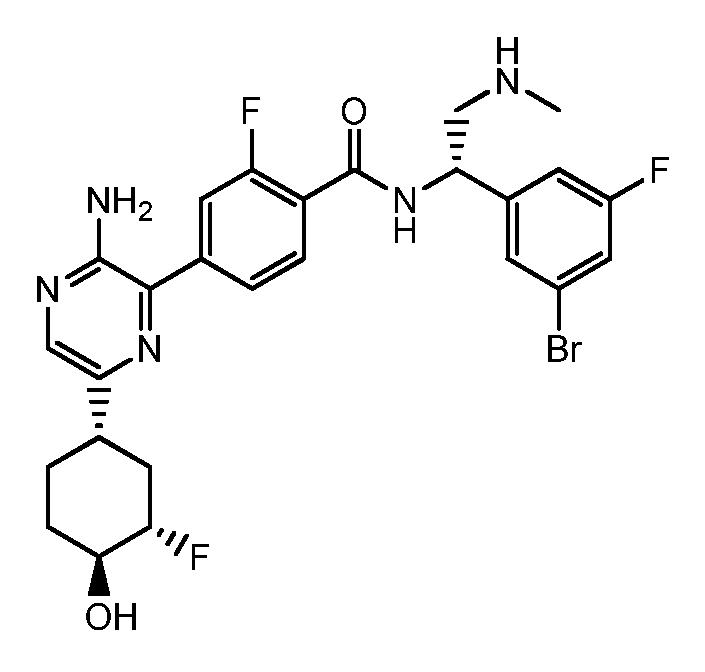
LTT462의 제조는 PCT 특허 출원 공개 WO2015/066188에 기재되어 있다. LTT462는 세포외 신호-조절 키나제 1 및 2 (ERK 1/2)의 억제제이다.The manufacture of LTT462 is described in PCT Patent Application Publication No. WO2015/066188. LTT462 is an inhibitor of extracellular signal-regulated
일부 실시양태에서, 본원에 기재된 조합물은 탁산, 빈카 알칼로이드, MEK 억제제, ERK 억제제 또는 RAF 억제제를 포함한다.In some embodiments, the combinations described herein comprise a taxane, a vinca alkaloid, a MEK inhibitor, an ERK inhibitor, or a RAF inhibitor.
일부 실시양태에서, 본원에 기재된 조합물은 MEK 억제제, ERK 억제제 및 RAF 억제제로부터 독립적으로 선택된 적어도 2종의 억제제를 포함한다.In some embodiments, the combinations described herein comprise at least two inhibitors independently selected from a MEK inhibitor, an ERK inhibitor and a RAF inhibitor.
일부 실시양태에서, 본원에 기재된 조합물은 항유사분열 약물을 포함한다.In some embodiments, the combinations described herein comprise an antimitotic drug.
일부 실시양태에서, 본원에 기재된 조합물은 탁산을 포함한다.In some embodiments, the combinations described herein comprise a taxane.
탁산은 도세탁셀, 파클리탁셀 또는 카바지탁셀을 포함하나 이에 제한되지는 않는다. 일부 실시양태에서, 탁산은 도세탁셀이다.Taxanes include, but are not limited to, docetaxel, paclitaxel, or cabazitaxel. In some embodiments, the taxane is docetaxel.
일부 실시양태에서, 본원에 기재된 조합물은 빈카 알칼로이드를 포함한다.In some embodiments, the combinations described herein comprise a vinca alkaloid.
빈카 알칼로이드는 빈크리스틴, 빈블라스틴 및 류로신을 포함하나 이에 제한되지는 않는다.Vinca alkaloids include, but are not limited to, vincristine, vinblastine, and leurosine.
일부 실시양태에서, 본원에 기재된 조합물은 토포이소머라제 억제제를 포함한다.In some embodiments, the combinations described herein comprise a topoisomerase inhibitor.
토포이소머라제 억제제는 토포테칸, 이리노테칸, 캄프토테신, 디플로모테칸, 라멜라린 D, 엘립티신, 에토포시드 (VP-16), 테니포시드, 독소루비신, 다우노루비신, 미톡산트론, 암사크린, 아우린트리카르복실산 및 HU-331을 포함하나 이에 제한되지는 않는다.Topoisomerase inhibitors include, but are not limited to, topotecan, irinotecan, camptothecin, diplomotecan, lamellarin D, ellipticine, etoposide (VP-16), teniposide, doxorubicin, daunorubicin, mitoxantrone, amsacrine, aurintricarboxylic acid, and HU-331.
한 실시양태에서, 본원에 기재된 조합물은 인터류킨-1 베타 (IL-1β) 억제제를 포함한다. 일부 실시양태에서, IL-1β 억제제는 카나키누맙, 게보키주맙, 아나킨라 또는 릴로나셉트로부터 선택된다.In one embodiment, the combination described herein comprises an interleukin-1 beta (IL-1β) inhibitor. In some embodiments, the IL-1β inhibitor is selected from canakinumab, gevokizumab, anakinra, or rilonacept.
특정 실시양태에서, 본원에 기재된 조합물은 IL-15/IL-15Ra 복합체를 포함한다. 일부 실시양태에서, IL-15/IL-15Ra 복합체는 NIZ985 (노파르티스), ATL-803 (알토르(Altor)) 또는 CYP0150 (사이튠(Cytune))으로부터 선택된다.In certain embodiments, the combinations described herein comprise an IL-15/IL-15Ra complex. In some embodiments, the IL-15/IL-15Ra complex is selected from NIZ985 (Nofartis), ATL-803 (Altor), or CYP0150 (Cytune).
특정 실시양태에서, 본원에 기재된 조합물은 마우스 이중 미세염색체 2 상동체 (MDM2) 억제제를 포함한다. MDM2의 인간 상동체는 HDM2로도 공지되어 있다. 일부 실시양태에서, 본원에 기재된 MDM2 억제제는 HDM2 억제제로도 공지되어 있다. 일부 실시양태에서, MDM2 억제제는 HDM201 또는 CGM097로부터 선택된다.In certain embodiments, the combinations described herein comprise a mouse
한 실시양태에서, MDM2 억제제는 장애, 예를 들어 본원에 기재된 장애를 치료하기 위한 (S)-1-(4-클로로페닐)-7-이소프로폭시-6-메톡시-2-(4-(메틸(((1r,4S)-4-(4-메틸-3-옥소피페라진-1-일)시클로헥실)메틸)아미노)페닐)-1,2-디히드로이소퀴놀린-3(4H)-온 (CGM097로도 공지됨) 또는 PCT 공개 번호 WO 2011/076786에 개시된 화합물을 포함한다. 한 실시양태에서, 본원에 개시된 치료제는 CGM097과 조합되어 사용된다.In one embodiment, the MDM2 inhibitor comprises (S)-1-(4-chlorophenyl)-7-isopropoxy-6-methoxy-2-(4-(methyl(((1r,4S)-4-(4-methyl-3-oxopiperazin-1-yl)cyclohexyl)methyl)amino)phenyl)-1,2-dihydroisoquinolin-3(4H)-one (also known as CGM097) or a compound disclosed in PCT Publication No. WO 2011/076786 for treating a disorder, e.g., a disorder described herein. In one embodiment, a therapeutic disclosed herein is used in combination with CGM097.
일부 실시양태에서, 본원에 기재된 조합물은 저메틸화제 (HMA)를 포함한다. 일부 실시양태에서, HMA는 데시타빈 또는 아자시티딘으로부터 선택된다.In some embodiments, the combinations described herein comprise a hypomethylating agent (HMA). In some embodiments, the HMA is selected from decitabine or azacitidine.
일부 실시양태에서, 본원에 기재된 조합물은 글루코코르티코이드를 포함한다. 일부 실시양태에서, 글루코코르티코이드는 덱사메타손이다.In some embodiments, the combinations described herein comprise a glucocorticoid. In some embodiments, the glucocorticoid is dexamethasone.
일부 실시양태에서, 본원에 기재된 조합물은 뉴클레오시드 유사체를 포함한다. 일부 실시양태에서, 뉴클레오시드 유사체는 겜시타빈이다.In some embodiments, the combinations described herein comprise a nucleoside analog. In some embodiments, the nucleoside analog is gemcitabine.
일부 실시양태에서, 본원에 기재된 조합물은 아스파라기나제를 포함한다.In some embodiments, the combinations described herein comprise asparaginase.
특정 실시양태에서, 본원에 기재된 조합물은 Bcl2 패밀리의 임의의 생존촉진 단백질에 작용하는 억제제를 포함한다. 특정 실시양태에서, 본원에 기재된 조합물은 Bcl-2 억제제를 포함한다. 일부 실시양태에서, Bcl-2 억제제는 베네토클락스 (ABT-199로도 공지됨)이다:In certain embodiments, the combinations described herein comprise an inhibitor that acts on any pro-survival protein of the Bcl2 family. In certain embodiments, the combinations described herein comprise a Bcl-2 inhibitor. In some embodiments, the Bcl-2 inhibitor is venetoclax (also known as ABT-199):
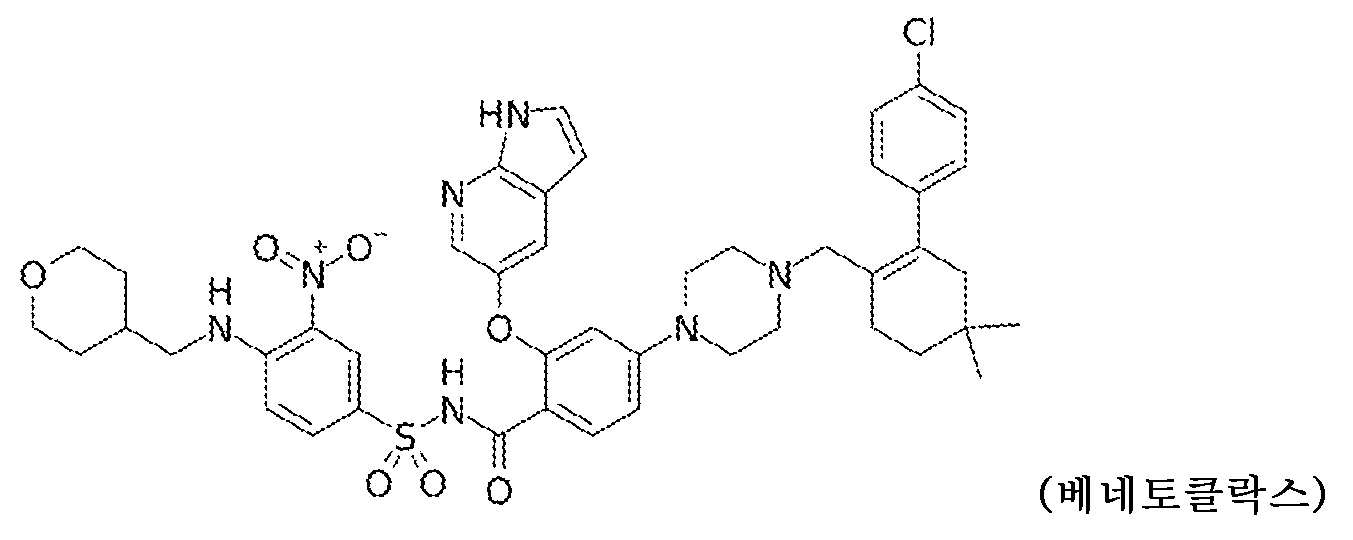
한 실시양태에서, Bcl-2 억제제는 WO 2013/110890 및 WO 2015/011400에 기재된 화합물로부터 선택된다. 일부 실시양태에서, Bcl-2 억제제는 나비토클락스 (ABT-263), ABT-737, BP1002, SPC2996, APG-1252, 오바토클락스 메실레이트 (GX15-070MS), PNT2258, Zn-d5, BGB-11417 또는 오블리메르센 (G3139)을 포함한다. 일부 실시양태에서, Bcl-2 억제제는 N-(4-히드록시페닐)-3-[6-[(3S)-3-(모르폴리노메틸)-3,4-디히드로-1H-이소퀴놀린-2-카르보닐]-1,3-벤조디옥솔-5-일]-N-페닐-5,6,7,8-테트라히드로인돌리진-1-카르복스아미드, 화합물 A1이다:In one embodiment, the Bcl-2 inhibitor is selected from a compound described in WO 2013/110890 and WO 2015/011400. In some embodiments, the Bcl-2 inhibitor comprises navitoclax (ABT-263), ABT-737, BP1002, SPC2996, APG-1252, obatoclax mesylate (GX15-070MS), PNT2258, Zn-d5, BGB-11417, or oblimersen (G3139). In some embodiments, the Bcl-2 inhibitor is N-(4-hydroxyphenyl)-3-[6-[(3S)-3-(morpholinomethyl)-3,4-dihydro-1H-isoquinoline-2-carbonyl]-1,3-benzodioxol-5-yl]-N-phenyl-5,6,7,8-tetrahydroindolizine-1-carboxamide, Compound A1:

일부 실시양태에서, Bcl-2 억제제는 (S)-5-(5-클로로-2-(3-(모르폴리노메틸)-1,2,3,4-테트라히드로이소퀴놀린-2-카르보닐)페닐)-N-(5-시아노-1,2-디메틸-1H-피롤-3-일)-N-(4-히드록시페닐)-1,2-디메틸-1H-피롤-3-카르복스아미드), 화합물 A2이다:In some embodiments, the Bcl-2 inhibitor is (S)-5-(5-chloro-2-(3-(morpholinomethyl)-1,2,3,4-tetrahydroisoquinoline-2-carbonyl)phenyl)-N-(5-cyano-1,2-dimethyl-1H-pyrrol-3-yl)-N-(4-hydroxyphenyl)-1,2-dimethyl-1H-pyrrole-3-carboxamide), compound A2:

한 실시양태에서, 본원에 개시된 항체-약물 접합체 또는 조합물은 생체내 암의 치료에 적합하다. 예를 들어, 조합물은 암성 종양의 성장을 억제하는 데 사용될 수 있다. 조합물은 또한 본원의 장애를 치료하기 위한 표준 관리 치료 (예를 들어, 암 또는 감염성 장애용), 백신 (예를 들어, 치료 암 백신), 세포 요법, 호르몬 요법 (예를 들어, 항에스트로겐 또는 항안드로겐 사용), 방사선 요법, 수술 또는 임의의 다른 치료제 또는 양식 중 1종 이상과 조합되어 사용될 수 있다. 예를 들어, 면역의 항원-특이적 증진을 달성하기 위해, 조합물은 관심 항원과 함께 투여될 수 있다. 본원에 개시된 조합물은 어느 순서로나 또는 동시에 투여될 수 있다.In one embodiment, the antibody-drug conjugates or combinations disclosed herein are suitable for the treatment of cancer in vivo. For example, the combinations can be used to inhibit the growth of cancerous tumors. The combinations can also be used in combination with one or more of standard of care treatments (e.g., for cancer or infectious disorders), vaccines (e.g., therapeutic cancer vaccines), cell therapy, hormonal therapy (e.g., using anti-estrogens or anti-androgens), radiation therapy, surgery, or any other therapeutic or modality for treating the disorder herein. For example, the combinations can be administered with an antigen of interest to achieve antigen-specific enhancement of immunity. The combinations disclosed herein can be administered in either order or simultaneously.
추가의 실시양태Additional embodiments
본 개시내용은 링커-약물 기, 항체-약물 접합체, 링커 기 및 접합 방법에 대한 하기 추가의 실시양태를 제공한다.The present disclosure provides the following additional embodiments of linker-drug groups, antibody-drug conjugates, linker groups and conjugation methods.
링커-약물 기Linker-drug base
일부 실시양태에서, 본 발명의 링커-약물 기는 화학식 (A')의 구조를 갖는 화합물 또는 그의 제약상 허용되는 염일 수 있다:In some embodiments, the linker-drug group of the present invention can be a compound having the structure of Formula (A'): or a pharmaceutically acceptable salt thereof.

여기서Here
R1은 반응성 기이고;R 1 is a reactive group;
L1은 가교 스페이서이고;L 1 is a crosslinking spacer;
Lp는 2가 펩티드 스페이서이고;Lp is a divalent peptide spacer;
G-L2-A는 자기 희생적 스페이서이고;GL 2 -A is a self-immolative spacer;
R2는 친수성 모이어티이고;R 2 is a hydrophilic moiety;
L2는 결합, 메틸렌, 네오펜틸렌 또는 C2-C3알케닐렌이고;L 2 is a bond, methylene, neopentylene or C 2 -C 3 alkenylene;
A는 결합, -OC(=O)-*,A is a bond, -OC(=O)-*,

L3은 스페이서 모이어티이고;L 3 is a spacer moiety;
D는, 예를 들어 본원에 개시된 항체 약물 접합체 또는 면역접합체로부터 방출되는 경우에 Bcl-xL 단백질의 활성을 억제할 수 있는 약물 모이어티이다.D is a drug moiety capable of inhibiting the activity of Bcl-xL protein, for example, when released from an antibody drug conjugate or immunoconjugate disclosed herein.
본 발명의 링커-약물 기의 특정 측면 및 예는 하기 열거된 실시양태의 목록에 제공된다. 각각의 실시양태에 명시된 특색은 다른 명시된 특색과 조합되어 본 발명의 추가 실시양태를 제공할 수 있는 것으로 인식될 것이다.Certain aspects and examples of the linker-drug group of the present invention are provided in the list of embodiments listed below. It will be appreciated that the features specified in each embodiment may be combined with other specified features to provide additional embodiments of the present invention.
실시양태 1. 하기인 화학식 (A')의 화합물 또는 그의 제약상 허용되는 염:
R1은 반응성 기이고;R 1 is a reactive group;
L1은 가교 스페이서이고;L 1 is a crosslinking spacer;
Lp는 2 내지 4개의 아미노산 잔기를 포함하는 2가 펩티드 스페이서이고;Lp is a bivalent peptide spacer containing two to four amino acid residues;
G-L2-A는 자기 희생적 스페이서이고;GL 2 -A is a self-immolative spacer;
R2는 친수성 모이어티이고;R 2 is a hydrophilic moiety;
L2는 결합, 메틸렌, 네오펜틸렌 또는 C2-C3알케닐렌이고;L 2 is a bond, methylene, neopentylene or C 2 -C 3 alkenylene;
A는 결합, -OC(=O)-*,A is a bond, -OC(=O)-*,

L3은 스페이서 모이어티이고;L 3 is a spacer moiety;
D는 본원에 정의된 바와 같은 약물 모이어티, 예를 들어 Bcl-xL 억제제이다.D is a drug moiety as defined herein, e.g., a Bcl-xL inhibitor.
실시양태 2. 하기인 화학식 (A')의 화합물 또는 그의 제약상 허용되는 염:
R1은 반응성 기이고;R 1 is a reactive group;
L1은 가교 스페이서이고;L 1 is a crosslinking spacer;
Lp는 2 내지 4개의 아미노산 잔기를 포함하는 2가 펩티드 스페이서이고;Lp is a bivalent peptide spacer containing two to four amino acid residues;


R2는 친수성 모이어티이고;R 2 is a hydrophilic moiety;
L2는 결합, 메틸렌, 네오펜틸렌 또는 C2-C3알케닐렌이고;L 2 is a bond, methylene, neopentylene or C 2 -C 3 alkenylene;
A는 결합, -OC(=O)-*,A is a bond, -OC(=O)-*,

L3은 스페이서 모이어티이고;L 3 is a spacer moiety;
D는 본원에 정의된 바와 같은 약물 모이어티, 예를 들어 Bcl-xL 억제제이다.D is a drug moiety as defined herein, e.g., a Bcl-xL inhibitor.
실시양태 3. 하기 화학식 (B')의 구조를 갖는 화학식 (A')의 화합물 또는 그의 제약상 허용되는 염:Embodiment 3. A compound of formula (A') having a structure of formula (B') below, or a pharmaceutically acceptable salt thereof:

여기서Here
R1은 반응성 기이고;R 1 is a reactive group;
L1은 가교 스페이서이고;L 1 is a crosslinking spacer;
Lp는 2 내지 4개의 아미노산 잔기를 포함하는 2가 펩티드 스페이서이고;Lp is a bivalent peptide spacer containing two to four amino acid residues;
R2는 친수성 모이어티이고;R 2 is a hydrophilic moiety;
A는 결합, -OC(=O)-*,A is a bond, -OC(=O)-*,

L3은 스페이서 모이어티이고;L 3 is a spacer moiety;
D는 N을 포함하는 본원에 정의된 바와 같은 약물 모이어티이고, 여기서 D는 약물 모이어티의 N에 대한 A로부터의 직접 결합을 통해 A에 연결된다.D is a drug moiety as defined herein comprising N, wherein D is linked to A via a direct bond from A to N of the drug moiety.
실시양태 4. 실시양태 1 내지 3 중 어느 하나에 있어서, 하기인 화학식 (A')의 화합물 또는 그의 제약상 허용되는 염:
R1은 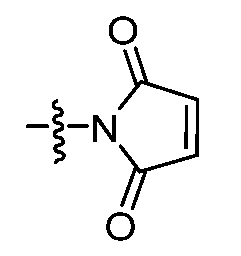


L1은 *-C(=O)(CH2)mO(CH2)m-**; *-C(=O)((CH2)mO)t(CH2)n-**; *-C(=O)(CH2)m-**; *-C(=O)NH((CH2)mO)t(CH2)n-**; *-C(=O)O(CH2)mSSC(R3)2(CH2)mC(=O)NR3(CH2)mNR3C(=O)(CH2)m-**; *-C(=O)O(CH2)mC(=O)NH(CH2)m-**; *-C(=O)(CH2)mNH(CH2)m-**; *-C(=O)(CH2)mNH(CH2)nC(=O)-**; *-C(=O)(CH2)mX1(CH2)m-**; *-C(=O)((CH2)mO)t(CH2)nX1(CH2)n-**; *-C(=O)(CH2)mNHC(=O)(CH2)n-**; *-C(=O)((CH2)mO)t(CH2)nNHC(=O)(CH2)n-**; *-C(=O)(CH2)mNHC(=O)(CH2)nX1(CH2)n-**; *-C(=O)((CH2)mO)t(CH2)nNHC(=O)(CH2)nX1(CH2)n-**; *-C(=O)((CH2)mO)t(CH2)nC(=O)NH(CH2)m-**; *-C(=O)(CH2)mC(R3)2-**; 또는 *-C(=O)(CH2)mC(=O)NH(CH2)m-**이고,L 1 is *-C(=O)(CH 2 ) m O(CH 2 ) m -**; *-C(=O)((CH 2 ) m O) t (CH 2 ) n -**; *-C(=O)(CH 2 ) m -**; *-C(=O)NH((CH 2 ) m O) t (CH 2 ) n -**; *-C(=O)O(CH 2 ) m SSC(R 3 ) 2 (CH 2 ) m C(=O)NR 3 (CH 2 ) m NR 3 C(=O)(CH 2 ) m -**; *-C(=O)O(CH 2 ) m C(=O)NH(CH 2 ) m -**; *-C(=O)(CH 2 ) m NH(CH 2 ) m -**; *-C(=O)(CH 2 ) m NH(CH 2 ) n C(=O)-**; *-C(=O) ( CH 2 ) m *-C(=O) ( (CH 2 ) m O) t ( CH 2 ) n *-C(=O)(CH 2 ) m NHC(=O)(CH 2 ) n -**; *-C(=O)((CH 2 ) m O) t (CH 2 ) n NHC(=O)(CH 2 ) n -**; *-C(=O) ( CH 2 ) m NHC(=O ) ( CH 2 ) n *-C(=O) ( (CH 2 ) m O) t (CH 2 ) n NHC(=O ) ( CH 2 ) n *-C(=O)((CH 2 ) m O) t (CH 2 ) n C(=O)NH(CH 2 ) m -**; *-C(=O)(CH 2 ) m C(R 3 ) 2 -**; or *-C(=O)(CH 2 ) m C(=O)NH(CH 2 ) m -**,
여기서 L1의 *는 Lp에 대한 부착 지점을 나타내고, L1의 **는 R1에 대한 부착 지점을 나타내고;Here, * of L 1 indicates an attachment point to Lp, and ** of L 1 indicates an attachment point to R 1 ;
R2는 폴리에틸렌 글리콜, 폴리알킬렌 글리콜, 당, 올리고사카라이드, 폴리펩티드 또는 1 내지 3개의 
각각의 R3은 독립적으로 H 및 C1-C6알킬로부터 선택되고;Each R 3 is independently selected from H and C 1 -C 6 alkyl;
R4는 2-피리딜 또는 4-피리딜이고;R 4 is 2-pyridyl or 4-pyridyl;
각각의 R5는 독립적으로 H, C1-C6알킬, F, Cl 및 -OH로부터 선택되고;Each R 5 is independently selected from H, C1-C 6 alkyl, F, Cl and -OH;
각각의 R6은 독립적으로 H, C1-C6알킬, F, Cl, -NH2, -OCH3, -OCH2CH3, -N(CH3)2, -CN, -NO2 및 -OH로부터 선택되고;each R 6 is independently selected from H, C 1 -C 6 alkyl, F, Cl, -NH 2 , -OCH 3 , -OCH 2 CH 3 , -N(CH 3 ) 2 , -CN, -NO 2 and -OH;
각각의 R7은 독립적으로 H, C1-6알킬, 플루오로, -C(=O)OH로 치환된 벤질옥시, -C(=O)OH로 치환된 벤질, -C(=O)OH로 치환된 C1-4알콕시 및 -C(=O)OH로 치환된 C1-4알킬로부터 선택되고;Each R 7 is independently selected from H, C 1-6 alkyl, fluoro, benzyloxy substituted with -C(=O)OH, benzyl substituted with -C(=O)OH, C 1-4 alkoxy substituted with -C(=O)OH, and C 1-4 alkyl substituted with -C(=O)OH;
X1은 
각각의 m은 독립적으로 1, 2, 3, 4, 5, 6, 7, 8, 9 및 10으로부터 선택되고;Each m is independently selected from 1, 2, 3, 4, 5, 6, 7, 8, 9, and 10;
각각의 n은 독립적으로 1, 2, 3, 4, 5, 6, 7, 8, 9 및 10으로부터 선택되고;Each n is independently selected from 1, 2, 3, 4, 5, 6, 7, 8, 9, and 10;
각각의 t는 독립적으로 1, 2, 3, 4, 5, 6, 7, 8, 9, 10, 11, 12, 13, 14, 15, 16, 17, 18, 19, 20, 21, 22, 23, 24, 25, 26, 27, 28, 29 및 30으로부터 선택되고;Each t is independently selected from 1, 2, 3, 4, 5, 6, 7, 8, 9, 10, 11, 12, 13, 14, 15, 16, 17, 18, 19, 20, 21, 22, 23, 24, 25, 26, 27, 28, 29 and 30;
Lp는 글리신, 발린, 시트룰린, 리신, 이소류신, 페닐알라닌, 메티오닌, 아스파라긴, 프롤린, 알라닌, 류신, 트립토판 및 티로신으로부터 선택된 아미노산 잔기를 포함하는 2가 펩티드 스페이서이고;Lp is a bivalent peptide spacer comprising amino acid residues selected from glycine, valine, citrulline, lysine, isoleucine, phenylalanine, methionine, asparagine, proline, alanine, leucine, tryptophan and tyrosine;
A는 결합, -OC(=O)-*,A is a bond, -OC(=O)-*,

L3은 구조 
여기서Here
W는 -CH2O-**, -CH2N(Rb)C(=O)O-**, -NHC(=O)C(Rb)2NHC(=O)O-**, -NHC(=O)C(Rb)2NH-**, -NHC(=O)C(Rb)2NHC(=O)-**, -CH2N(X-R2)C(=O)O-**, -C(=O)N(X-R2)-**, -CH2N(X-R2)C(=O)-**, -C(=O)NRb-**, -C(=O)NH-**, -CH2NRbC(=O)-**, -CH2NRbC(=O)NH-**, -CH2NRbC(=O)NRb-**, -NHC(=O)-**, -NHC(=O)O-**, -NHC(=O)NH-**, -OC(=O)NH-**, -S(O)2NH-**, -NHS(O)2-**, -C(=O)-, -C(=O)O-** 또는 -NH-이고, 여기서 각각의 Rb는 독립적으로 H, C1-C6알킬 또는 C3-C8 시클로알킬로부터 선택되고, 여기서 W의 **는 X에 대한 부착 지점을 나타내고;W is -CH 2 O-**, -CH 2 N(R b )C(=O)O-**, -NHC(=O)C(R b ) 2 NHC(=O)O-**, -NHC(=O)C(R b ) 2 NH-**, -NHC(=O)C(R b ) 2 NHC(=O)-**, -CH 2 N(XR 2 )C(=O)O-**, -C(=O)N(XR 2 )-**, -CH 2 N(XR 2 )C(=O)-**, -C(=O)NR b -**, -C(=O)NH-**, -CH 2 NR b C(=O)-**, -CH 2 NR b C(=O)NH-**, -CH 2 NR b C(=O)NR b -**, -NHC(=O)-**, -NHC(=O)O-**, -NHC(=O)NH-**, -OC(=O)NH-**, -S(O) 2 NH-**, -NHS(O) 2 -**, -C(=O)-, -C(=O)O-** or -NH-, wherein each R b is independently selected from H, C 1 -C 6 alkyl or C 3 -C 8 cycloalkyl, wherein ** of W represents the point of attachment to X;
X는 결합, 트리아졸릴 또는 ***-CH2-트리아졸릴-*이고, 여기서 X의 ***는 W에 대한 부착 지점을 나타내고, X의 *는 R2에 대한 부착 지점을 나타내고;X is a bond, triazolyl or ***-CH 2 -triazolyl-*, wherein the *** of X indicates the point of attachment to W and the * of X indicates the point of attachment to R 2 ;
L3의 *는 R2에 대한 부착 지점을 나타내고;* in L 3 indicates the attachment point to R 2 ;
D는 N 또는 O를 포함하는 본원에 정의된 바와 같은 약물 모이어티이고, 여기서 D는 약물 모이어티의 N 또는 O에 대한 A로부터의 직접 결합을 통해 A에 연결된다.D is a drug moiety as defined herein comprising N or O, wherein D is linked to A via a direct bond from A to N or O of the drug moiety.
실시양태 5. 실시양태 1 내지 4 중 어느 하나에 있어서, 하기인 화학식 (A')의 화합물 또는 그의 제약상 허용되는 염:
R1은 
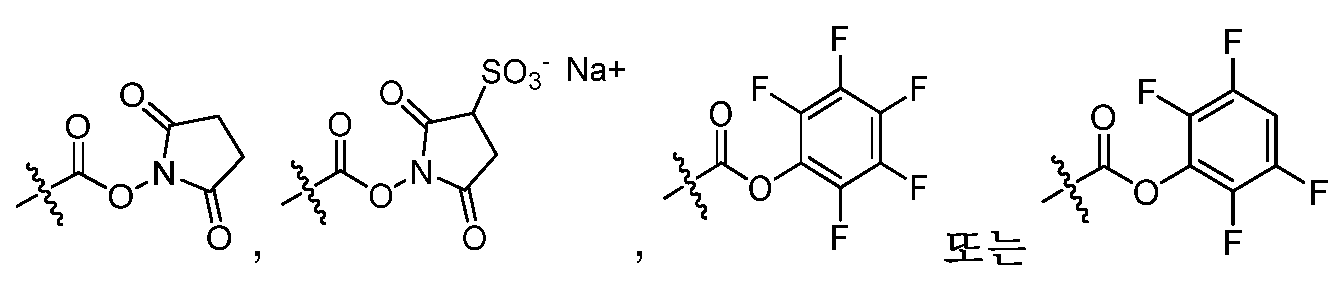
L1은 *-C(=O)(CH2)mO(CH2)m-**; *-C(=O)((CH2)mO)t(CH2)n-**; *-C(=O)(CH2)m-**; 또는 *-C(=O)NH((CH2)mO)t(CH2)n-이고, 여기서 L1의 *는 Lp에 대한 부착 지점을 나타내고, L1의 **는 R1에 대한 부착 지점을 나타내고;L 1 is *-C(=O)(CH 2 ) m O(CH 2 ) m -**; *-C(=O)((CH 2 ) m O) t (CH 2 ) n -**; *-C(=O)(CH 2 ) m -**; or *-C(=O)NH((CH 2 ) m O) t (CH 2 ) n -, wherein the * in L 1 indicates the point of attachment to Lp, and the ** in L 1 indicates the point of attachment to R 1 ;
각각의 m은 독립적으로 1, 2, 3, 4, 5, 6, 7, 8, 9 및 10으로부터 선택되고;Each m is independently selected from 1, 2, 3, 4, 5, 6, 7, 8, 9, and 10;
각각의 n은 독립적으로 1, 2, 3, 4, 5, 6, 7, 8, 9 및 10으로부터 선택되고;Each n is independently selected from 1, 2, 3, 4, 5, 6, 7, 8, 9, and 10;
각각의 t는 독립적으로 1, 2, 3, 4, 5, 6, 7, 8, 9, 10, 11, 12, 13, 14, 15, 16, 17, 18, 19, 20, 21, 22, 23, 24, 25, 26, 27, 28, 29 및 30으로부터 선택되고;Each t is independently selected from 1, 2, 3, 4, 5, 6, 7, 8, 9, 10, 11, 12, 13, 14, 15, 16, 17, 18, 19, 20, 21, 22, 23, 24, 25, 26, 27, 28, 29 and 30;
Lp는 

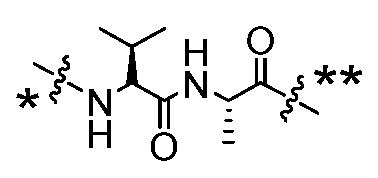


L3은 구조 
여기서Here
W는 -CH2O-**, -CH2N(Rb)C(=O)O-**, -NHC(=O)CH2NHC(=O)O-**, -NHC(=O)CH2NH-**, -NHC(=O)CH2NHC(=O)-**, -CH2N(X-R2)C(=O)O-**, -C(=O)N(X-R2)-**, -CH2N(X-R2)C(=O)-**, -C(=O)NRb-**, -C(=O)NH-**, -CH2NRbC(=O)-**, -CH2NRbC(=O)NH-**, -CH2NRbC(=O)NRb-**, -NHC(=O)-**, -NHC(=O)O-**, -NHC(=O)NH-**, -OC(=O)NH-**, -S(O)2NH-**, -NHS(O)2-**, -C(=O)-, -C(=O)O-** 또는 -NH-이고, 여기서 각각의 Rb는 독립적으로 H, C1-C6알킬 또는 C3-C8 시클로알킬로부터 선택되고, 여기서 W의 **는 X에 대한 부착 지점을 나타내고;W is -CH 2 O-**, -CH 2 N(R b )C(=O)O-**, -NHC(=O)CH 2 NHC(=O)O-**, -NHC(=O)CH 2 NH-**, -NHC(=O)CH 2 NHC(=O)-**, -CH 2 N(XR 2 )C(=O)O-**, -C(=O)N(XR 2 )-**, -CH 2 N(XR 2 )C(=O)-**, -C(=O)NR b -**, -C(=O)NH-**, -CH 2 NR b C(=O)-**, -CH 2 NR b C(=O)NH-**, -CH 2 NR b C(=O)NR b -**, -NHC(=O)-**, -NHC(=O)O-**, -NHC(=O)NH-**, -OC(=O)NH-**, -S(O) 2 NH-**, -NHS(O) 2 -**, -C(=O)-, -C(=O)O-** or -NH-, wherein each R b is independently selected from H, C 1 -C 6 alkyl or C 3 -C 8 cycloalkyl, wherein ** of W represents the point of attachment to X;
X는 결합, 트리아졸릴 또는 ***-CH2-트리아졸릴-*이고, 여기서 X의 ***는 W에 대한 부착 지점을 나타내고, X의 *는 R2에 대한 부착 지점을 나타내고;X is a bond, triazolyl or ***-CH2-triazolyl-*, wherein the *** of X represents the point of attachment to W and the * of X represents the point of attachment to R 2 ;
L3의 *는 R2에 대한 부착 지점을 나타내고;* in L 3 indicates the attachment point to R 2 ;
R2는 폴리에틸렌 글리콜, 폴리알킬렌 글리콜, 당, 올리고사카라이드, 폴리펩티드, 1 내지 3개의 
A는 결합, -OC(=O)-*,A is a bond, -OC(=O)-*,

D는 N 또는 O를 포함하는 본원에 정의된 바와 같은 약물 모이어티이고, 여기서 D는 약물 모이어티의 N 또는 O에 대한 A로부터의 직접 결합을 통해 A에 연결된다.D is a drug moiety as defined herein comprising N or O, wherein D is linked to A via a direct bond from A to N or O of the drug moiety.
실시양태 6. 실시양태 1 내지 5 중 어느 하나에 있어서, 하기인 화학식 (A')의 화합물 또는 그의 제약상 허용되는 염:Embodiment 6. In any one of
R1은 
L1은 *-C(=O)(CH2)mO(CH2)m-**; *-C(=O)((CH2)mO)t(CH2)n-**; *-C(=O)(CH2)m-**; 또는 *-C(=O)NH((CH2)mO)t(CH2)n-이고, 여기서 L1의 *는 Lp에 대한 부착 지점을 나타내고, L1의 **는 R1에 대한 부착 지점을 나타내고;L 1 is *-C(=O)(CH 2 ) m O(CH 2 ) m -**; *-C(=O)((CH 2 ) m O) t (CH 2 ) n -**; *-C(=O)(CH 2 ) m -**; or *-C(=O)NH((CH 2 ) m O) t (CH 2 ) n -, wherein the * in L 1 indicates the point of attachment to Lp, and the ** in L 1 indicates the point of attachment to R 1 ;
각각의 m은 독립적으로 1, 2, 3, 4, 5, 6, 7, 8, 9 및 10으로부터 선택되고;Each m is independently selected from 1, 2, 3, 4, 5, 6, 7, 8, 9, and 10;
각각의 n은 독립적으로 1, 2, 3, 4, 5, 6, 7, 8, 9 및 10으로부터 선택되고;Each n is independently selected from 1, 2, 3, 4, 5, 6, 7, 8, 9, and 10;
각각의 t는 독립적으로 1, 2, 3, 4, 5, 6, 7, 8, 9, 10, 11, 12, 13, 14, 15, 16, 17, 18, 19, 20, 21, 22, 23, 24, 25, 26, 27, 28, 29 및 30으로부터 선택되고;Each t is independently selected from 1, 2, 3, 4, 5, 6, 7, 8, 9, 10, 11, 12, 13, 14, 15, 16, 17, 18, 19, 20, 21, 22, 23, 24, 25, 26, 27, 28, 29 and 30;
Lp는 
L3은 구조 
여기서Here
W는 -CH2O-**, -CH2N(Rb)C(=O)O-**, -NHC(=O)CH2NHC(=O)O-**, -CH2N(X-R2)C(=O)O-**, -C(=O)N(X-R2)-**, -CH2N(X-R2)C(=O)-**, -C(=O)NRb-**, -C(=O)NH-**, -CH2NRbC(=O)-**, -CH2NRbC(=O)NH-**, -CH2NRbC(=O)NRb-**, -NHC(=O)-**, -NHC(=O)O-**, -NHC(=O)NH-**, -OC(=O)NH-**, -S(O)2NH-**, -NHS(O)2-**, -C(=O)-, -C(=O)O-** 또는 -NH-이고, 여기서 각각의 Rb는 독립적으로 H, C1-C6알킬 또는 C3-C8 시클로알킬로부터 선택되고, 여기서 W의 **는 X에 대한 부착 지점을 나타내고;W is -CH 2 O-**, -CH 2 N(R b )C(=O)O-**, -NHC(=O)CH 2 NHC(=O)O-**, -CH 2 N(XR 2 )C(=O)O-**, -C(=O)N(XR 2 )-**, -CH 2 N(XR 2 )C(=O)-**, -C(=O)NR b -**, -C(=O)NH-**, -CH 2 NR b C(=O)-**, -CH 2 NR b C(=O)NH-**, -CH 2 NR b C(=O)NR b -**, -NHC(=O)-**, -NHC(=O)O-**, -NHC(=O)NH-**, -OC(=O)NH-**, -S(O) 2 NH-**, -NHS(O) 2 -**, -C(=O)-, -C(=O)O-** or -NH-, wherein each R b is independently selected from H, C 1 -C 6 alkyl or C 3 -C 8 cycloalkyl, wherein ** of W represents the point of attachment to X;
X는 결합, 트리아졸릴 또는 ***-CH2-트리아졸릴-*이고, 여기서 X의 ***는 W에 대한 부착 지점을 나타내고, X의 *는 R2에 대한 부착 지점을 나타내고;X is a bond, triazolyl or ***-CH 2 -triazolyl-*, wherein the *** of X indicates the point of attachment to W and the * of X indicates the point of attachment to R 2 ;
L3의 *는 R2에 대한 부착 지점을 나타내고;* in L 3 indicates the attachment point to R 2 ;
R2는 폴리에틸렌 글리콜, 폴리알킬렌 글리콜, 당, 올리고사카라이드, 폴리펩티드, 1 내지 3개의 
A는 결합, -OC(=O)-*,A is a bond, -OC(=O)-*,

D는 N 또는 O를 포함하는 본원에 정의된 바와 같은 약물 모이어티이고, 여기서 D는 약물 모이어티의 N 또는 O에 대한 A로부터의 직접 결합을 통해 A에 연결된다.D is a drug moiety as defined herein comprising N or O, wherein D is linked to A via a direct bond from A to N or O of the drug moiety.
실시양태 7. 실시양태 1 내지 6 중 어느 하나에 있어서, 하기인 화학식 (A')의 화합물 또는 그의 제약상 허용되는 염:Embodiment 7. In any one of
R1은 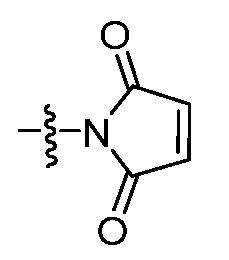
L1은 *-C(=O)(CH2)mO(CH2)m-**; *-C(=O)((CH2)mO)t(CH2)n-**; *-C(=O)(CH2)m-**; 또는 *-C(=O)NH((CH2)mO)t(CH2)n-이고, 여기서 L1의 *는 Lp에 대한 부착 지점을 나타내고, L1의 **는 R1에 대한 부착 지점을 나타내고;L 1 is *-C(=O)(CH 2 ) m O(CH 2 ) m -**; *-C(=O)((CH 2 ) m O) t (CH 2 ) n -**; *-C(=O)(CH 2 ) m -**; or *-C(=O)NH((CH 2 ) m O) t (CH 2 ) n -, wherein the * in L 1 indicates the point of attachment to Lp, and the ** in L 1 indicates the point of attachment to R 1 ;
각각의 m은 독립적으로 1, 2, 3, 4, 5, 6, 7, 8, 9 및 10으로부터 선택되고;Each m is independently selected from 1, 2, 3, 4, 5, 6, 7, 8, 9, and 10;
각각의 n은 독립적으로 1, 2, 3, 4, 5, 6, 7, 8, 9 및 10으로부터 선택되고;Each n is independently selected from 1, 2, 3, 4, 5, 6, 7, 8, 9, and 10;
각각의 t는 독립적으로 1, 2, 3, 4, 5, 6, 7, 8, 9, 10, 11, 12, 13, 14, 15, 16, 17, 18, 19, 20, 21, 22, 23, 24, 25, 26, 27, 28, 29 및 30으로부터 선택되고;Each t is independently selected from 1, 2, 3, 4, 5, 6, 7, 8, 9, 10, 11, 12, 13, 14, 15, 16, 17, 18, 19, 20, 21, 22, 23, 24, 25, 26, 27, 28, 29 and 30;
Lp는 
L3은 구조 
여기서Here
W는 -CH2O-**, -CH2N(Rb)C(=O)O-**, -NHC(=O)CH2NHC(=O)O-**, -CH2N(X-R2)C(=O)O-**, -C(=O)N(X-R2)-**, -C(=O)NRb-**, -C(=O)NH-**, -CH2NRbC(=O)-**, -CH2NRbC(=O)NH-**, -CH2NRbC(=O)NRb-**, -NHC(=O)-**, -NHC(=O)O-** 또는 -NHC(=O)NH-**이고, 여기서 각각의 Rb는 독립적으로 H, C1-C6알킬 또는 C3-C8 시클로알킬로부터 선택되고, 여기서 W의 **는 X에 대한 부착 지점을 나타내고;W is -CH 2 O-**, -CH 2 N(R b )C(=O)O-**, -NHC(=O)CH 2 NHC(=O)O-**, -CH 2 N(XR 2 )C(=O)O-**, -C(=O)N(XR 2 )-**, -C(=O)NR b -**, -C(=O)NH-**, -CH 2 NR b C(=O)-**, -CH 2 NR b C(=O)NH-**, -CH 2 NR b C(=O)NR b -**, -NHC(=O)-**, -NHC(=O)O-** or -NHC(=O)NH-**, wherein each R b is independently selected from H, C 1 -C 6 alkyl or C 3 -C 8 cycloalkyl, wherein ** of W represents the point of attachment to X;
X는 결합, 트리아졸릴 또는 ***-CH2-트리아졸릴-*이고, 여기서 X의 ***는 W에 대한 부착 지점을 나타내고, X의 *는 R2에 대한 부착 지점을 나타내고;X is a bond, triazolyl or ***-CH2-triazolyl-*, wherein the *** of X represents the point of attachment to W and the * of X represents the point of attachment to R 2 ;
L3의 *는 R2에 대한 부착 지점을 나타내고;* in L 3 indicates the attachment point to R 2 ;
R2는 폴리에틸렌 글리콜, 폴리알킬렌 글리콜, 당, 올리고사카라이드, 폴리펩티드, 1 내지 3개의 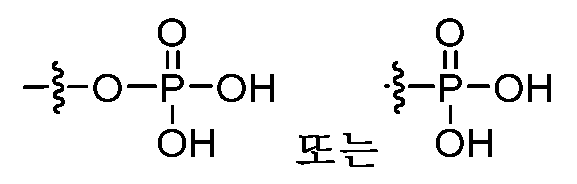
A는 결합 또는 -OC(=O)*이고, 여기서 *는 D에 대한 부착 지점을 나타내고;A is a bond or -OC(=O)*, where * indicates the point of attachment to D;
D는 N 또는 O를 포함하는 본원에 정의된 바와 같은 약물 모이어티이고, 여기서 D는 약물 모이어티의 N 또는 O에 대한 A로부터의 직접 결합을 통해 A에 연결된다.D is a drug moiety as defined herein comprising N or O, wherein D is linked to A via a direct bond from A to N or O of the drug moiety.
실시양태 8. 실시양태 1 내지 7 중 어느 하나에 있어서, 하기인 화학식 (A')의 화합물 또는 그의 제약상 허용되는 염:
R1은 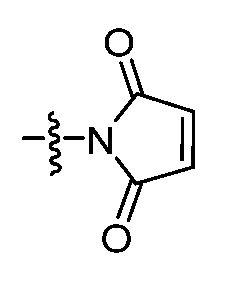
L1은 *-C(=O)(CH2)mO(CH2)m-**; *-C(=O)((CH2)mO)t(CH2)n-**; *-C(=O)(CH2)m-**; 또는 *-C(=O)NH((CH2)mO)t(CH2)n-이고, 여기서 L1의 *는 Lp에 대한 부착 지점을 나타내고, L1의 **는 R1에 대한 부착 지점을 나타내고;L 1 is *-C(=O)(CH 2 ) m O(CH 2 ) m -**; *-C(=O)((CH 2 ) m O) t (CH 2 ) n -**; *-C(=O)(CH 2 ) m -**; or *-C(=O)NH((CH 2 ) m O) t (CH 2 ) n -, wherein the * in L 1 indicates the point of attachment to Lp, and the ** in L 1 indicates the point of attachment to R 1 ;
각각의 m은 독립적으로 1, 2, 3, 4, 5, 6, 7, 8, 9 및 10으로부터 선택되고;Each m is independently selected from 1, 2, 3, 4, 5, 6, 7, 8, 9, and 10;
각각의 n은 독립적으로 1, 2, 3, 4, 5, 6, 7, 8, 9 및 10으로부터 선택되고;Each n is independently selected from 1, 2, 3, 4, 5, 6, 7, 8, 9, and 10;
각각의 t는 독립적으로 1, 2, 3, 4, 5, 6, 7, 8, 9, 10, 11, 12, 13, 14, 15, 16, 17, 18, 19, 20, 21, 22, 23, 24, 25, 26, 27, 28, 29 및 30으로부터 선택되고;Each t is independently selected from 1, 2, 3, 4, 5, 6, 7, 8, 9, 10, 11, 12, 13, 14, 15, 16, 17, 18, 19, 20, 21, 22, 23, 24, 25, 26, 27, 28, 29 and 30;
Lp는 
L3은 구조 
여기서Here
W는 -CH2O-**, -CH2N(Rb)C(=O)O-**, -NHC(=O)CH2NHC(=O)O-**, -CH2N(X-R2)C(=O)O-** 또는 -C(=O)N(X-R2)-**이고, 여기서 각각의 Rb는 독립적으로 H, C1-C6알킬 또는 C3-C8 시클로알킬로부터 선택되고, 여기서 W의 **는 X에 대한 부착 지점을 나타내고;W is -CH 2 O-**, -CH 2 N(R b )C(=O)O-**, -NHC(=O)CH 2 NHC(=O)O-**, -CH 2 N(XR 2 )C(=O)O-** or -C(=O)N(XR 2 )-**, wherein each R b is independently selected from H, C 1 -C 6 alkyl or C 3 -C 8 cycloalkyl, wherein ** of W represents the point of attachment to X;
X는 ***-CH2-트리아졸릴-*이고, 여기서 X의 ***는 W에 대한 부착 지점을 나타내고, X의 *는 R2에 대한 부착 지점을 나타내고;X is ***-CH 2 -triazolyl-*, wherein the *** of X indicates the point of attachment to W, and the * of X indicates the point of attachment to R 2 ;
L3의 *는 R2에 대한 부착 지점을 나타내고;* in L 3 indicates the attachment point to R 2 ;
R2는 폴리에틸렌 글리콜, 폴리알킬렌 글리콜, 당, 올리고사카라이드, 폴리펩티드 또는 1 내지 3개의 
A는 결합 또는 -OC(=O)*이고, 여기서 *는 D에 대한 부착 지점을 나타내고;A is a bond or -OC(=O)*, where * indicates the point of attachment to D;
D는 N 또는 O를 포함하는 본원에 정의된 바와 같은 약물 모이어티이고, 여기서 D는 약물 모이어티의 N 또는 O에 대한 A로부터의 직접 결합을 통해 A에 연결된다.D is a drug moiety as defined herein comprising N or O, wherein D is linked to A via a direct bond from A to N or O of the drug moiety.
실시양태 9. 실시양태 1 내지 8 중 어느 하나에 있어서, R1이 표 3으로부터 선택된 반응성 기인 화학식 (A')의 화합물 또는 그의 제약상 허용되는 염.
실시양태 10. 실시양태 1 내지 9 중 어느 하나에 있어서, R1이 


실시양태 11. 실시양태 1 내지 9 중 어느 하나에 있어서, R1이 


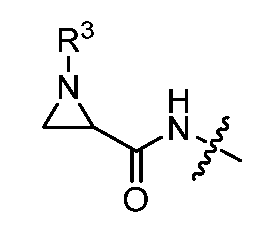

실시양태 12. 실시양태 1 내지 9 중 어느 하나에 있어서, R1이 

실시양태 13. 실시양태 1 내지 9 중 어느 하나에 있어서, R1이 

실시양태 14. 실시양태 1 내지 9 중 어느 하나에 있어서, R1이 
실시양태 15. 실시양태 1 내지 9 중 어느 하나에 있어서, R1이 -ONH2인 화학식 (A')의 화합물 또는 그의 제약상 허용되는 염.
실시양태 16. 실시양태 1 내지 9 중 어느 하나에 있어서, R1이 
실시양태 17. 실시양태 1 내지 9 중 어느 하나에 있어서, R1이 
실시양태 18. 실시양태 1 내지 9 중 어느 하나에 있어서, 하기 구조를 갖는 화학식 (A')의 화합물 또는 그의 제약상 허용되는 염:Embodiment 18. In any one of
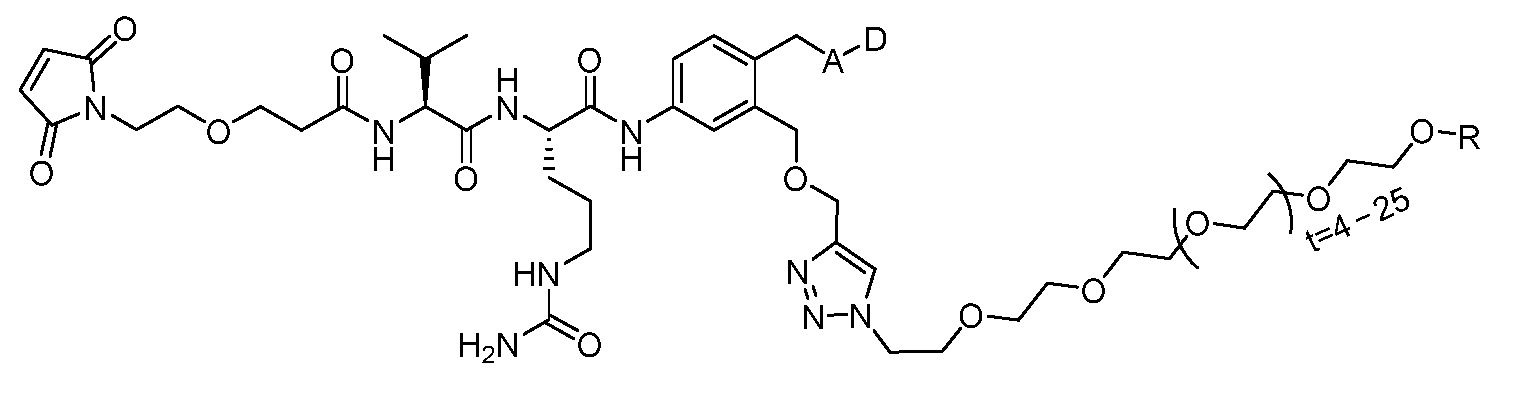
R은 H, -CH3 또는 -CH2CH2C(=O)OH이다.R is H, -CH 3 , or -CH 2 CH 2 C(=O)OH.
실시양태 19. 실시양태 1 내지 9 중 어느 하나에 있어서, 하기 구조를 갖는 화학식 (A')의 화합물 또는 그의 제약상 허용되는 염:Embodiment 19. In any one of

R은 H, -CH3 또는 -CH2CH2C(=O)OH이다.R is H, -CH 3 , or -CH 2 CH 2 C(=O)OH.
실시양태 20. 실시양태 1 내지 9 중 어느 하나에 있어서, 하기 구조를 갖는 화학식 (A')의 화합물 또는 그의 제약상 허용되는 염:

R은 H, -CH3 또는 -CH2CH2C(=O)OH이다.R is H, -CH 3 , or -CH 2 CH 2 C(=O)OH.
실시양태 21. 실시양태 1 내지 9 중 어느 하나에 있어서, 하기 구조를 갖는 화학식 (A')의 화합물 또는 그의 제약상 허용되는 염:Embodiment 21. In any one of

각각의 R은 독립적으로 H, -CH3 또는 -CH2CH2C(=O)OH로부터 선택된다.Each R is independently selected from H, -CH 3 or -CH 2 CH 2 C(=O)OH.
실시양태 22. 실시양태 1 내지 9 중 어느 하나에 있어서, 하기 구조를 갖는 화학식 (A')의 화합물 또는 그의 제약상 허용되는 염:Embodiment 22. In any one of

각각의 R은 독립적으로 H, -CH3 또는 -CH2CH2C(=O)OH로부터 선택된다.Each R is independently selected from H, -CH 3 or -CH 2 CH 2 C(=O)OH.
실시양태 23. 실시양태 1 내지 9 중 어느 하나에 있어서, 하기 구조를 갖는 화학식 (A')의 화합물 또는 그의 제약상 허용되는 염:Embodiment 23. In any one of

Xa는 -CH2-, -OCH2-, -NHCH2- 또는 -NRCH2-이고, 각각의 R은 독립적으로 H, -CH3 또는 -CH2CH2C(=O)OH이다.Xa is -CH 2 -, -OCH 2 -, -NHCH 2 -, or -NRCH 2 -, and each R is independently H, -CH 3 , or -CH 2 CH 2 C(=O)OH.
실시양태 24. 실시양태 1 내지 9 중 어느 하나에 있어서, 하기 구조를 갖는 화학식 (A')의 화합물 또는 그의 제약상 허용되는 염:Embodiment 24. In any one of

R은 H, -CH3 또는 -CH2CH2C(=O)OH이다.R is H, -CH 3 , or -CH 2 CH 2 C(=O)OH.
실시양태 25. 실시양태 1 내지 9 중 어느 하나에 있어서, 하기 구조를 갖는 화학식 (A')의 화합물 또는 그의 제약상 허용되는 염:

Xb는 -CH2-, -OCH2-, -NHCH2- 또는 -NRCH2-이고, 각각의 R은 독립적으로 H, -CH3 또는 -CH2CH2C(=O)OH이다.Xb is -CH 2 -, -OCH 2 -, -NHCH 2 -, or -NRCH 2 -, and each R is independently H, -CH 3 , or -CH 2 CH 2 C(=O)OH.
실시양태 26. 실시양태 1 내지 9 중 어느 하나에 있어서, 하기 구조를 갖는 화학식 (A')의 화합물 또는 그의 제약상 허용되는 염:Embodiment 26. In any one of

실시양태 27. 실시양태 1 내지 9 중 어느 하나에 있어서, 하기 구조를 갖는 화학식 (A')의 화합물 또는 그의 제약상 허용되는 염:Embodiment 27. In any one of

실시양태 28. 실시양태 1 내지 9 중 어느 하나에 있어서, 하기 구조를 갖는 화학식 (A')의 화합물 또는 그의 제약상 허용되는 염:Embodiment 28. In any one of
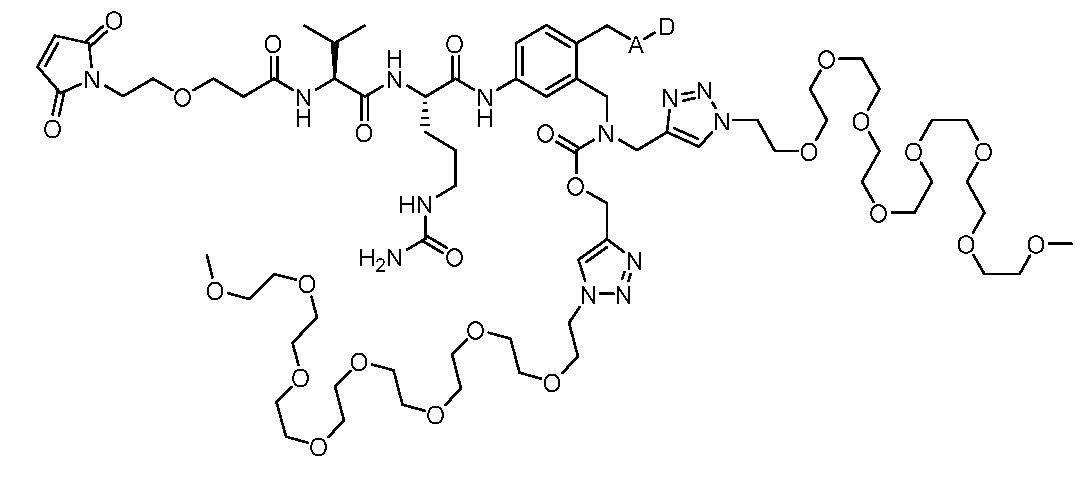
실시양태 29. 실시양태 1 내지 9 중 어느 하나에 있어서, 하기 구조를 갖는 화학식 (A')의 화합물 또는 그의 제약상 허용되는 염:Embodiment 29. In any one of

실시양태 30. 실시양태 1 내지 9 중 어느 하나에 있어서, 하기 구조를 갖는 화학식 (A')의 화합물 또는 그의 제약상 허용되는 염:

실시양태 31. 실시양태 1 내지 9 중 어느 하나에 있어서, 하기 구조를 갖는 화학식 (A')의 화합물 또는 그의 제약상 허용되는 염:Embodiment 31. In any one of

실시양태 32. 실시양태 1 내지 9 중 어느 하나에 있어서, 표 B에서의 화합물의 구조를 갖는 화학식 (A')의 화합물 또는 그의 제약상 허용되는 염.Embodiment 32. A compound of formula (A') having the structure of the compound in Table B in any one of
실시양태 33. 하기 화학식 (C')의 구조를 갖는 화학식 (A')의 링커-약물 기의 링커:Embodiment 33. A linker-drug group linker of formula (A') having the structure of the following formula (C'):

여기서Here
L1은 가교 스페이서이고;L 1 is a crosslinking spacer;
Lp는 2가 펩티드 스페이서이고;Lp is a divalent peptide spacer;
G-L2-A는 자기 희생적 스페이서이고;GL 2 -A is a self-immolative spacer;
R2는 친수성 모이어티이고;R 2 is a hydrophilic moiety;
L2는 결합, 메틸렌, 네오펜틸렌 또는 C2-C3알케닐렌이고;L 2 is a bond, methylene, neopentylene or C 2 -C 3 alkenylene;
A는 결합, -OC(=O)-*,A is a bond, -OC(=O)-*,

L3은 스페이서 모이어티이다.L 3 is a spacer moiety.
실시양태 34. 실시양태 33에 있어서, 하기인 링커:Embodiment 34. In embodiment 33, the following linker:
L1은 가교 스페이서이고;L 1 is a crosslinking spacer;
Lp는 2 내지 4개의 아미노산 잔기를 포함하는 2가 펩티드 스페이서이고;Lp is a bivalent peptide spacer containing two to four amino acid residues;
G-L2-A는 자기 희생적 스페이서이고;GL 2 -A is a self-immolative spacer;
R2는 친수성 모이어티이고;R 2 is a hydrophilic moiety;
L2는 결합, 메틸렌, 네오펜틸렌 또는 C2-C3알케닐렌이고;L 2 is a bond, methylene, neopentylene or C 2 -C 3 alkenylene;
A는 결합, -OC(=O)-*,A is a bond, -OC(=O)-*,

L3은 스페이서 모이어티이다.L 3 is a spacer moiety.
실시양태 35. 실시양태 33 또는 34에 있어서, 하기인 링커:
L1은 가교 스페이서이고;L 1 is a crosslinking spacer;
Lp는 2 내지 4개의 아미노산 잔기를 포함하는 2가 펩티드 스페이서이고;Lp is a bivalent peptide spacer containing two to four amino acid residues;


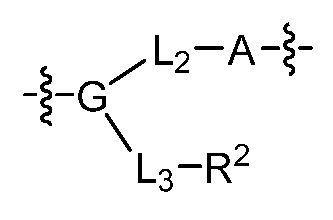
R2는 친수성 모이어티이고;R 2 is a hydrophilic moiety;
L2는 결합, 메틸렌, 네오펜틸렌 또는 C2-C3알케닐렌이고;L 2 is a bond, methylene, neopentylene or C 2 -C 3 alkenylene;
A는 결합, -OC(=O)-*,A is a bond, -OC(=O)-*,

L3은 스페이서 모이어티이다.L 3 is a spacer moiety.
실시양태 36. 실시양태 33 내지 35 중 어느 하나에 있어서, 하기인 링커:Embodiment 36. In any one of embodiments 33 to 35, the linker:
L1은 *-C(=O)(CH2)mO(CH2)m-**; *-C(=O)((CH2)mO)t(CH2)n-**; *-C(=O)(CH2)m-**; *-C(=O)NH((CH2)mO)t(CH2)n-**; *-C(=O)O(CH2)mSSC(R3)2(CH2)mC(=O)NR3(CH2)mNR3C(=O)(CH2)m-**; *-C(=O)O(CH2)mC(=O)NH(CH2)m-**; *-C(=O)(CH2)mNH(CH2)m-**; *-C(=O)(CH2)mNH(CH2)nC(=O)-**; *-C(=O)(CH2)mX1(CH2)m-**; *-C(=O)((CH2)mO)t(CH2)nX1(CH2)n-**; *-C(=O)(CH2)mNHC(=O)(CH2)n-**; *-C(=O)((CH2)mO)t(CH2)nNHC(=O)(CH2)n-**; *-C(=O)(CH2)mNHC(=O)(CH2)nX1(CH2)n-**; *-C(=O)((CH2)mO)t(CH2)nNHC(=O)(CH2)nX1(CH2)n-**; *-C(=O)((CH2)mO)t(CH2)nC(=O)NH(CH2)m-**; *-C(=O)(CH2)mC(R3)2-** 또는 *-C(=O)(CH2)mC(=O)NH(CH2)m-**이고, 여기서 L1의 *는 Lp에 대한 부착 지점을 나타내고;L 1 is *-C(=O)(CH 2 ) m O(CH 2 ) m -**; *-C(=O)((CH 2 ) m O) t (CH 2 ) n -**; *-C(=O)(CH 2 ) m -**; *-C(=O)NH((CH 2 ) m O) t (CH 2 ) n -**; *-C(=O)O(CH 2 ) m SSC(R 3 ) 2 (CH 2 ) m C(=O)NR 3 (CH 2 ) m NR 3 C(=O)(CH 2 ) m -**; *-C(=O)O(CH 2 ) m C(=O)NH(CH 2 ) m -**; *-C(=O)(CH 2 ) m NH(CH 2 ) m -**; *-C(=O)(CH 2 ) m NH(CH 2 ) n C(=O)-**; *-C(=O) ( CH 2 ) m *-C(=O) ( (CH 2 ) m O) t ( CH 2 ) n *-C(=O)(CH 2 ) m NHC(=O)(CH 2 ) n -**; *-C(=O)((CH 2 ) m O) t (CH 2 ) n NHC(=O)(CH 2 ) n -**; *-C(=O) ( CH 2 ) m NHC(=O ) ( CH 2 ) n *-C(=O)((CH 2 ) m O) t (CH 2 ) n NHC(=O)(CH 2 ) n X 1 (CH 2 ) n -**; *-C(=O)((CH 2 ) m O) t (CH 2 ) n C(=O)NH(CH 2 ) m -**; *-C(=O)(CH 2 ) m C(R 3 ) 2 -** or *-C(=O)(CH 2 ) m C(=O)NH(CH 2 ) m -**, where * in L 1 indicates the point of attachment to Lp;
R2는 폴리에틸렌 글리콜, 폴리알킬렌 글리콜, 당, 올리고사카라이드, 폴리펩티드 또는 1 내지 3개의 
각각의 R3은 독립적으로 H 및 C1-C6알킬로부터 선택되고;Each R 3 is independently selected from H and C 1 -C 6 alkyl;
X1은 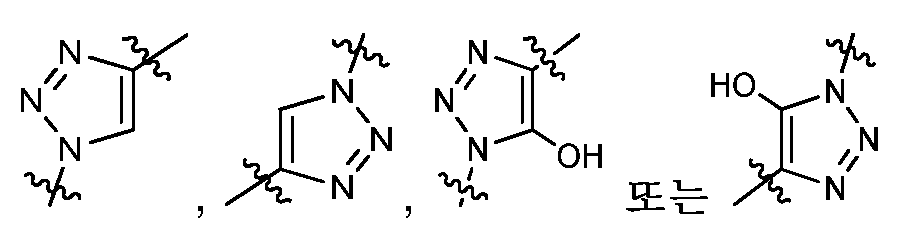
각각의 m은 독립적으로 1, 2, 3, 4, 5, 6, 7, 8, 9 및 10으로부터 선택되고;Each m is independently selected from 1, 2, 3, 4, 5, 6, 7, 8, 9, and 10;
각각의 n은 독립적으로 1, 2, 3, 4, 5, 6, 7, 8, 9 및 10으로부터 선택되고;Each n is independently selected from 1, 2, 3, 4, 5, 6, 7, 8, 9, and 10;
각각의 t는 독립적으로 1, 2, 3, 4, 5, 6, 7, 8, 9, 10, 11, 12, 13, 14, 15, 16, 17, 18, 19, 20, 21, 22, 23, 24, 25, 26, 27, 28, 29 및 30으로부터 선택되고;Each t is independently selected from 1, 2, 3, 4, 5, 6, 7, 8, 9, 10, 11, 12, 13, 14, 15, 16, 17, 18, 19, 20, 21, 22, 23, 24, 25, 26, 27, 28, 29 and 30;
Lp는 글리신, 발린, 시트룰린, 리신, 이소류신, 페닐알라닌, 메티오닌, 아스파라긴, 프롤린, 알라닌, 류신, 트립토판 및 티로신으로부터 선택된 아미노산 잔기를 포함하는 2가 펩티드 스페이서이고;Lp is a bivalent peptide spacer comprising amino acid residues selected from glycine, valine, citrulline, lysine, isoleucine, phenylalanine, methionine, asparagine, proline, alanine, leucine, tryptophan and tyrosine;
A는 결합, -OC(=O)-*,A is a bond, -OC(=O)-*,

L3은 구조 
여기서Here
W는 -CH2O-**, -CH2N(Rb)C(=O)O-**, -NHC(=O)C(Rb)2NHC(=O)O-**, -NHC(=O)C(Rb)2NH-**, -NHC(=O)C(Rb)2NHC(=O)-**, -CH2N(X-R2)C(=O)O-**, -C(=O)N(X-R2)-**, -CH2N(X-R2)C(=O)-**, -C(=O)NRb-**, -C(=O)NH-**, -CH2NRbC(=O)-**, -CH2NRbC(=O)NH-**, -CH2NRbC(=O)NRb-**, -NHC(=O)-**, -NHC(=O)O-**, -NHC(=O)NH-**, -OC(=O)NH-**, -S(O)2NH-**, -NHS(O)2-**, -C(=O)-, -C(=O)O-** 또는 -NH-이고, 여기서 각각의 Rb는 독립적으로 H, C1-C6알킬 또는 C3-C8 시클로알킬로부터 선택되고, 여기서 W의 **는 X에 대한 부착 지점을 나타내고;W is -CH 2 O-**, -CH 2 N(R b )C(=O)O-**, -NHC(=O)C(R b ) 2 NHC(=O)O-**, -NHC(=O)C(R b ) 2 NH-**, -NHC(=O)C(R b ) 2 NHC(=O)-**, -CH 2 N(XR 2 )C(=O)O-**, -C(=O)N(XR 2 )-**, -CH 2 N(XR 2 )C(=O)-**, -C(=O)NR b -**, -C(=O)NH-**, -CH 2 NR b C(=O)-**, -CH 2 NR b C(=O)NH-**, -CH 2 NR b C(=O)NR b -**, -NHC(=O)-**, -NHC(=O)O-**, -NHC(=O)NH-**, -OC(=O)NH-**, -S(O) 2 NH-**, -NHS(O) 2 -**, -C(=O)-, -C(=O)O-** or -NH-, wherein each R b is independently selected from H, C 1 -C 6 alkyl or C 3 -C 8 cycloalkyl, wherein ** of W represents the point of attachment to X;
X는 결합, 트리아졸릴 또는 ***-CH2-트리아졸릴-*이고, 여기서 X의 ***는 W에 대한 부착 지점을 나타내고, X의 *는 R2에 대한 부착 지점을 나타내고;X is a bond, triazolyl or ***-CH 2 -triazolyl-*, wherein the *** of X indicates the point of attachment to W and the * of X indicates the point of attachment to R 2 ;
L3의 *는 R2에 대한 부착 지점을 나타낸다.The * in L 3 indicates the attachment point to R 2 .
실시양태 37. 실시양태 33 내지 36 중 어느 하나에 있어서, 하기인 링커:Embodiment 37. In any one of embodiments 33 to 36, the linker:
L1은 *-C(=O)(CH2)mO(CH2)m-**; *-C(=O)((CH2)mO)t(CH2)n-**; *-C(=O)(CH2)m-**; 또는 *-C(=O)NH((CH2)mO)t(CH2)n-이고, 여기서 L1의 *는 Lp에 대한 부착 지점을 나타내고;L 1 is *-C(=O)(CH 2 ) m O(CH 2 ) m -**; *-C(=O)((CH 2 ) m O) t (CH 2 ) n -**; *-C(=O)(CH 2 ) m -**; or *-C(=O)NH((CH 2 ) m O) t (CH 2 ) n -, where * in L 1 indicates the point of attachment to Lp;
각각의 m은 독립적으로 1, 2, 3, 4, 5, 6, 7, 8, 9 및 10으로부터 선택되고;Each m is independently selected from 1, 2, 3, 4, 5, 6, 7, 8, 9, and 10;
각각의 n은 독립적으로 1, 2, 3, 4, 5, 6, 7, 8, 9 및 10으로부터 선택되고;Each n is independently selected from 1, 2, 3, 4, 5, 6, 7, 8, 9, and 10;
각각의 t는 독립적으로 1, 2, 3, 4, 5, 6, 7, 8, 9, 10, 11, 12, 13, 14, 15, 16, 17, 18, 19, 20, 21, 22, 23, 24, 25, 26, 27, 28, 29 및 30으로부터 선택되고;Each t is independently selected from 1, 2, 3, 4, 5, 6, 7, 8, 9, 10, 11, 12, 13, 14, 15, 16, 17, 18, 19, 20, 21, 22, 23, 24, 25, 26, 27, 28, 29 and 30;
Lp는 


L3은 구조 
여기서Here
W는 -CH2O-**, -CH2N(Rb)C(=O)O-**, -NHC(=O)CH2NHC(=O)O-**, -NHC(=O)CH2NH-**, -NHC(=O)CH2NHC(=O)-**, -CH2N(X-R2)C(=O)O-**, -C(=O)N(X-R2)-**, -CH2N(X-R2)C(=O)-**, -C(=O)NRb-**, -C(=O)NH-**, -CH2NRbC(=O)-**, -CH2NRbC(=O)NH-**, -CH2NRbC(=O)NRb-**, -NHC(=O)-**, -NHC(=O)O-**, -NHC(=O)NH-**, -OC(=O)NH-**, -S(O)2NH-**, -NHS(O)2-**, -C(=O)-, -C(=O)O-** 또는 -NH-이고, 여기서 각각의 Rb는 독립적으로 H, C1-C6알킬 또는 C3-C8 시클로알킬로부터 선택되고, 여기서 W의 **는 X에 대한 부착 지점을 나타내고;W is -CH 2 O-**, -CH 2 N(R b )C(=O)O-**, -NHC(=O)CH 2 NHC(=O)O-**, -NHC(=O)CH 2 NH-**, -NHC(=O)CH 2 NHC(=O)-**, -CH 2 N(XR 2 )C(=O)O-**, -C(=O)N(XR 2 )-**, -CH 2 N(XR 2 )C(=O)-**, -C(=O)NR b -**, -C(=O)NH-**, -CH 2 NR b C(=O)-**, -CH 2 NR b C(=O)NH-**, -CH 2 NR b C(=O)NR b -**, -NHC(=O)-**, -NHC(=O)O-**, -NHC(=O)NH-**, -OC(=O)NH-**, -S(O) 2 NH-**, -NHS(O) 2 -**, -C(=O)-, -C(=O)O-** or -NH-, wherein each R b is independently selected from H, C 1 -C 6 alkyl or C 3 -C 8 cycloalkyl, wherein ** of W represents the point of attachment to X;
X는 결합, 트리아졸릴 또는 ***-CH2-트리아졸릴-*이고, 여기서 X의 ***는 W에 대한 부착 지점을 나타내고, X의 *는 R2에 대한 부착 지점을 나타내고;X is a bond, triazolyl or ***-CH 2 -triazolyl-*, wherein the *** of X indicates the point of attachment to W and the * of X indicates the point of attachment to R 2 ;
L3의 *는 R2에 대한 부착 지점을 나타내고;* in L 3 indicates the attachment point to R 2 ;
R2는 폴리에틸렌 글리콜, 폴리알킬렌 글리콜, 당, 올리고사카라이드, 폴리펩티드 또는 1 내지 3개의 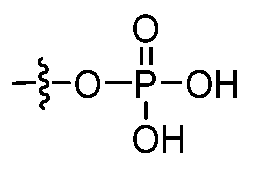
A는 결합, -OC(=O)-*,A is a bond, -OC(=O)-*,

실시양태 38. 실시양태 33 내지 37 중 어느 하나에 있어서, 하기인 링커:Embodiment 38. In any one of embodiments 33 to 37, the linker:
L1은 *-C(=O)(CH2)mO(CH2)m-**; *-C(=O)((CH2)mO)t(CH2)n-**; *-C(=O)(CH2)m-**; 또는 *-C(=O)NH((CH2)mO)t(CH2)n-이고, 여기서 L1의 *는 Lp에 대한 부착 지점을 나타내고;L 1 is *-C(=O)(CH 2 ) m O(CH 2 ) m -**; *-C(=O)((CH 2 ) m O) t (CH 2 ) n -**; *-C(=O)(CH 2 ) m -**; or *-C(=O)NH((CH 2 ) m O) t (CH 2 ) n -, where * in L 1 indicates the point of attachment to Lp;
각각의 m은 독립적으로 1, 2, 3, 4, 5, 6, 7, 8, 9 및 10으로부터 선택되고;Each m is independently selected from 1, 2, 3, 4, 5, 6, 7, 8, 9, and 10;
각각의 n은 독립적으로 1, 2, 3, 4, 5, 6, 7, 8, 9 및 10으로부터 선택되고;Each n is independently selected from 1, 2, 3, 4, 5, 6, 7, 8, 9, and 10;
각각의 t는 독립적으로 1, 2, 3, 4, 5, 6, 7, 8, 9, 10, 11, 12, 13, 14, 15, 16, 17, 18, 19, 20, 21, 22, 23, 24, 25, 26, 27, 28, 29 및 30으로부터 선택되고;Each t is independently selected from 1, 2, 3, 4, 5, 6, 7, 8, 9, 10, 11, 12, 13, 14, 15, 16, 17, 18, 19, 20, 21, 22, 23, 24, 25, 26, 27, 28, 29 and 30;
Lp는 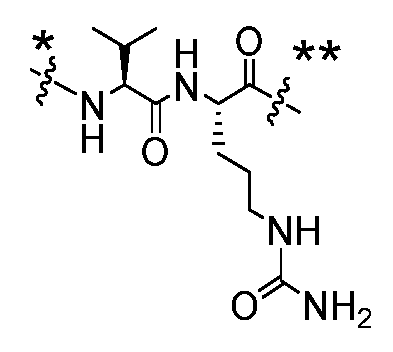
L3은 구조 
여기서Here
W는 -CH2O-**, -CH2N(Rb)C(=O)O-**, -NHC(=O)CH2NHC(=O)O-**, -CH2N(X-R2)C(=O)O-**, -C(=O)N(X-R2)-**, -CH2N(X-R2)C(=O)-**, -C(=O)NRb-**, -C(=O)NH-**, -CH2NRbC(=O)-**, -CH2NRbC(=O)NH-**, -CH2NRbC(=O)NRb-**, -NHC(=O)-**, -NHC(=O)O-**, -NHC(=O)NH-**, -OC(=O)NH-**, -S(O)2NH-**, -NHS(O)2-**, -C(=O)-, -C(=O)O-** 또는 -NH-이고, 여기서 각각의 Rb는 독립적으로 H, C1-C6알킬 또는 C3-C8 시클로알킬로부터 선택되고, 여기서 W의 **는 X에 대한 부착 지점을 나타내고;W is -CH 2 O-**, -CH2N(Rb)C(=O)O-**, -NHC(=O)CH 2 NHC(=O)O-**, -CH 2 N(XR 2 )C(=O)O-**, -C(=O)N(XR 2 )-**, -CH 2 N(XR 2 )C(=O)-**, -C(=O)NR b -**, -C(=O)NH-**, -CH 2 NR b C(=O)-**, -CH 2 NR b C(=O)NH-**, -CH 2 NR b C(=O)NR b -**, -NHC(=O)-**, -NHC(=O)O-**, -NHC(=O)NH-**, -OC(=O)NH-**, -S(O) 2 NH-**, -NHS(O) 2 -**, -C(=O)-, -C(=O)O-** or -NH-, wherein each R b is independently selected from H, C 1 -C 6 alkyl or C 3 -C 8 cycloalkyl, wherein ** of W represents the point of attachment to X;
X는 결합, 트리아졸릴 또는 ***-CH2-트리아졸릴-*이고, 여기서 X의 ***는 W에 대한 부착 지점을 나타내고, X의 *는 R2에 대한 부착 지점을 나타내고;X is a bond, triazolyl or ***-CH 2 -triazolyl-*, wherein the *** of X indicates the point of attachment to W and the * of X indicates the point of attachment to R 2 ;
L3의 *는 R2에 대한 부착 지점을 나타내고;* in L 3 indicates the attachment point to R 2 ;
R2는 폴리에틸렌 글리콜, 폴리알킬렌 글리콜, 당, 올리고사카라이드, 폴리펩티드 또는 1 내지 3개의 
A는 결합, -OC(=O)-*,A is a bond, -OC(=O)-*,

실시양태 39. 실시양태 33 내지 38 중 어느 하나에 있어서, 하기인 링커:Embodiment 39. In any one of embodiments 33 to 38, the linker:
L1은 *-C(=O)(CH2)mO(CH2)m-**; *-C(=O)((CH2)mO)t(CH2)n-**; *-C(=O)(CH2)m-**; 또는 *-C(=O)NH((CH2)mO)t(CH2)n-이고, 여기서 L1의 *는 Lp에 대한 부착 지점을 나타내고;L 1 is *-C(=O)(CH 2 ) m O(CH 2 ) m -**; *-C(=O)((CH 2 ) m O) t (CH 2 ) n -**; *-C(=O)(CH 2 ) m -**; or *-C(=O)NH((CH 2 ) m O) t (CH 2 ) n -, where * in L 1 indicates the point of attachment to Lp;
각각의 m은 독립적으로 1, 2, 3, 4, 5, 6, 7, 8, 9 및 10으로부터 선택되고;Each m is independently selected from 1, 2, 3, 4, 5, 6, 7, 8, 9, and 10;
각각의 n은 독립적으로 1, 2, 3, 4, 5, 6, 7, 8, 9 및 10으로부터 선택되고;Each n is independently selected from 1, 2, 3, 4, 5, 6, 7, 8, 9, and 10;
각각의 t는 독립적으로 1, 2, 3, 4, 5, 6, 7, 8, 9, 10, 11, 12, 13, 14, 15, 16, 17, 18, 19, 20, 21, 22, 23, 24, 25, 26, 27, 28, 29 및 30으로부터 선택되고;Each t is independently selected from 1, 2, 3, 4, 5, 6, 7, 8, 9, 10, 11, 12, 13, 14, 15, 16, 17, 18, 19, 20, 21, 22, 23, 24, 25, 26, 27, 28, 29 and 30;
Lp는 
L3은 구조 
여기서Here
W는 -CH2O-**, -CH2N(Rb)C(=O)O-**, -NHC(=O)CH2NHC(=O)O-**, -CH2N(X-R2)C(=O)O-**, -C(=O)N(X-R2)-**, -C(=O)NRb-**, -C(=O)NH-**, -CH2NRbC(=O)-**, -CH2NRbC(=O)NH-**, -CH2NRbC(=O)NRb-**, -NHC(=O)-**, -NHC(=O)O-** 또는 -NHC(=O)NH-**이고, 여기서 각각의 Rb는 독립적으로 H, C1-C6알킬 또는 C3-C8 시클로알킬로부터 선택되고, 여기서 W의 **는 X에 대한 부착 지점을 나타내고;W is -CH 2 O-**, -CH2N(Rb)C(=O)O-**, -NHC(=O)CH 2 NHC(=O)O-**, -CH 2 N(XR 2 )C(=O)O-**, -C(=O)N(XR 2 )-**, -C(=O)NR b -**, -C(=O)NH-**, -CH 2 NR b C(=O)-**, -CH 2 NR b C(=O)NH-**, -CH 2 NR b C(=O)NR b -**, -NHC(=O)-**, -NHC(=O)O-** or -NHC(=O)NH-**, wherein each R b is independently selected from H, C 1 -C 6 alkyl or C 3 -C 8 cycloalkyl, wherein ** of W represents the point of attachment to X;
X는 결합, 트리아졸릴 또는 ***-CH2-트리아졸릴-*이고, 여기서 X의 ***는 W에 대한 부착 지점을 나타내고, X의 *는 R2에 대한 부착 지점을 나타내고;X is a bond, triazolyl or ***-CH 2 -triazolyl-*, wherein the *** of X represents the point of attachment to W and the * of X represents the point of attachment to R 2 ;
L3의 *는 R2에 대한 부착 지점을 나타내고;* in L 3 indicates the attachment point to R 2 ;
R2는 폴리에틸렌 글리콜, 폴리알킬렌 글리콜, 당, 올리고사카라이드, 폴리펩티드 또는 1 내지 3개의 
A는 결합 또는 -OC(=O)*이고, 여기서 *는 D에 대한 부착 지점을 나타낸다.A is a bond or -OC(=O)*, where * indicates the point of attachment to D.
실시양태 40. 실시양태 33 내지 39 중 어느 하나에 있어서, 하기인 링커:
L1은 *-C(=O)(CH2)mO(CH2)m-**; *-C(=O)((CH2)mO)t(CH2)n-**; *-C(=O)(CH2)m-**; 또는 *-C(=O)NH((CH2)mO)t(CH2)n-이고, 여기서 L1의 *는 Lp에 대한 부착 지점을 나타내고;L 1 is *-C(=O)(CH 2 ) m O(CH 2 ) m -**; *-C(=O)((CH 2 ) m O) t (CH 2 ) n -**; *-C(=O)(CH 2 ) m -**; or *-C(=O)NH((CH 2 ) m O) t (CH 2 ) n -, where * in L 1 indicates the point of attachment to Lp;
각각의 m은 독립적으로 1, 2, 3, 4, 5, 6, 7, 8, 9 및 10으로부터 선택되고;Each m is independently selected from 1, 2, 3, 4, 5, 6, 7, 8, 9, and 10;
각각의 n은 독립적으로 1, 2, 3, 4, 5, 6, 7, 8, 9 및 10으로부터 선택되고;Each n is independently selected from 1, 2, 3, 4, 5, 6, 7, 8, 9, and 10;
각각의 t는 독립적으로 1, 2, 3, 4, 5, 6, 7, 8, 9, 10, 11, 12, 13, 14, 15, 16, 17, 18, 19, 20, 21, 22, 23, 24, 25, 26, 27, 28, 29 및 30으로부터 선택되고;Each t is independently selected from 1, 2, 3, 4, 5, 6, 7, 8, 9, 10, 11, 12, 13, 14, 15, 16, 17, 18, 19, 20, 21, 22, 23, 24, 25, 26, 27, 28, 29 and 30;
Lp는 
L3은 구조 
여기서Here
W는 -CH2O-**, -CH2N(Rb)C(=O)O-**, -NHC(=O)CH2NHC(=O)O-**, -CH2N(X-R2)C(=O)O-** 또는 -C(=O)N(X-R2)-**이고, 여기서 각각의 Rb는 독립적으로 H, C1-C6알킬 또는 C3-C8 시클로알킬로부터 선택되고, 여기서 W의 **는 X에 대한 부착 지점을 나타내고;W is -CH 2 O-**, -CH2N(Rb)C(=O)O-**, -NHC(=O)CH 2 NHC(=O)O-**, -CH 2 N(XR 2 )C(=O)O-** or -C(=O)N(XR 2 )-**, wherein each R b is independently selected from H, C 1 -C 6 alkyl or C 3 -C 8 cycloalkyl, wherein ** of W represents the point of attachment to X;
X는 ***-CH2-트리아졸릴-*이고, 여기서 X의 ***는 W에 대한 부착 지점을 나타내고, X의 *는 R2에 대한 부착 지점을 나타내고;X is ***-CH 2 -triazolyl-*, wherein the *** of X indicates the point of attachment to W, and the * of X indicates the point of attachment to R 2 ;
L3의 *는 R2에 대한 부착 지점을 나타내고;* in L 3 indicates the attachment point to R 2 ;
R2는 폴리에틸렌 글리콜, 폴리알킬렌 글리콜, 당, 올리고사카라이드, 폴리펩티드 또는 1 내지 3개의 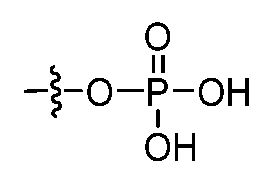
A는 결합 또는 -OC(=O)*이고, 여기서 *는 D에 대한 부착 지점을 나타낸다.A is a bond or -OC(=O)*, where * indicates the point of attachment to D.
실시양태 41. 하기 화학식 (D')의 구조를 갖는 구조를 갖는 화학식 (C')의 링커:Embodiment 41. A linker of formula (C') having a structure having the structure of formula (D') below:

여기서Here
L1은 가교 스페이서이고;L 1 is a crosslinking spacer;
Lp는 2가 펩티드 스페이서이고;Lp is a divalent peptide spacer;
R2는 친수성 모이어티이고;R 2 is a hydrophilic moiety;
A는 결합, -OC(=O)-*,A is a bond, -OC(=O)-*,

L3은 스페이서 모이어티이다.L 3 is a spacer moiety.
실시양태 42. 실시양태 41에 있어서, 하기인 링커:Embodiment 42. In embodiment 41, the following linker:
L1은 가교 스페이서이고;L 1 is a crosslinking spacer;
Lp는 2 내지 4개의 아미노산 잔기를 포함하는 2가 펩티드 스페이서이고;Lp is a bivalent peptide spacer containing two to four amino acid residues;
R2는 친수성 모이어티이고;R 2 is a hydrophilic moiety;
A는 결합, -OC(=O)-*,A is a bond, -OC(=O)-*,

L3은 스페이서 모이어티이다.L 3 is a spacer moiety.
실시양태 43. 실시양태 41 또는 42에 있어서, 하기인 링커:Embodiment 43. In embodiment 41 or 42, the linker:
L1은 *-C(=O)(CH2)mO(CH2)m-**; *-C(=O)((CH2)mO)t(CH2)n-**; *-C(=O)(CH2)m-**; *-C(=O)NH((CH2)mO)t(CH2)n-**; *-C(=O)O(CH2)mSSC(R3)2(CH2)mC(=O)NR3(CH2)mNR3C(=O)(CH2)m-**; *-C(=O)O(CH2)mC(=O)NH(CH2)m-**; *-C(=O)(CH2)mNH(CH2)m-**; *-C(=O)(CH2)mNH(CH2)nC(=O)-**; *-C(=O)(CH2)mX1(CH2)m-**; *-C(=O)((CH2)mO)t(CH2)nX1(CH2)n-**; *-C(=O)(CH2)mNHC(=O)(CH2)n-**; *-C(=O)((CH2)mO)t(CH2)nNHC(=O)(CH2)n-**; *-C(=O)(CH2)mNHC(=O)(CH2)nX1(CH2)n-**; *-C(=O)((CH2)mO)t(CH2)nNHC(=O)(CH2)nX1(CH2)n-**; *-C(=O)((CH2)mO)t(CH2)nC(=O)NH(CH2)m-**; *-C(=O)(CH2)mC(R3)2-** 또는 *-C(=O)(CH2)mC(=O)NH(CH2)m-**이고, 여기서 L1의 *는 Lp에 대한 부착 지점을 나타내고;L 1 is *-C(=O)(CH 2 ) m O(CH 2 ) m -**; *-C(=O)((CH 2 ) m O) t (CH 2 ) n -**; *-C(=O)(CH 2 ) m -**; *-C(=O)NH((CH 2 ) m O) t (CH 2 ) n -**; *-C(=O)O(CH 2 ) m SSC(R 3 ) 2 (CH 2 ) m C(=O)NR 3 (CH 2 ) m NR 3 C(=O)(CH 2 ) m -**; *-C(=O)O(CH 2 ) m C(=O)NH(CH 2 ) m -**; *-C(=O)(CH 2 ) m NH(CH 2 ) m -**; *-C(=O)(CH 2 ) m NH(CH 2 ) n C(=O)-**; *-C(=O) ( CH 2 ) m *-C(=O) ( (CH 2 ) m O) t ( CH 2 ) n *-C(=O)(CH 2 ) m NHC(=O)(CH 2 ) n -**; *-C(=O)((CH 2 ) m O) t (CH 2 ) n NHC(=O)(CH 2 ) n -**; *-C(=O) ( CH 2 ) m NHC(=O ) ( CH 2 ) n *-C(=O)((CH 2 ) m O) t (CH 2 ) n NHC(=O)(CH 2 ) n X 1 (CH 2 ) n -**; *-C(=O)((CH 2 ) m O) t (CH 2 ) n C(=O)NH(CH 2 ) m -**; *-C(=O)(CH 2 ) m C(R 3 ) 2 -** or *-C(=O)(CH 2 ) m C(=O)NH(CH 2 ) m -**, where * in L 1 indicates the point of attachment to Lp;
R2는 폴리에틸렌 글리콜, 폴리알킬렌 글리콜, 당, 올리고사카라이드, 폴리펩티드 또는 1 내지 3개의 
각각의 R3은 독립적으로 H 및 C1-C6알킬로부터 선택되고;Each R 3 is independently selected from H and C 1 -C 6 alkyl;
X1은 
각각의 m은 독립적으로 1, 2, 3, 4, 5, 6, 7, 8, 9 및 10으로부터 선택되고;Each m is independently selected from 1, 2, 3, 4, 5, 6, 7, 8, 9, and 10;
각각의 n은 독립적으로 1, 2, 3, 4, 5, 6, 7, 8, 9 및 10으로부터 선택되고;Each n is independently selected from 1, 2, 3, 4, 5, 6, 7, 8, 9, and 10;
각각의 t는 독립적으로 1, 2, 3, 4, 5, 6, 7, 8, 9, 10, 11, 12, 13, 14, 15, 16, 17, 18, 19, 20, 21, 22, 23, 24, 25, 26, 27, 28, 29 및 30으로부터 선택되고;Each t is independently selected from 1, 2, 3, 4, 5, 6, 7, 8, 9, 10, 11, 12, 13, 14, 15, 16, 17, 18, 19, 20, 21, 22, 23, 24, 25, 26, 27, 28, 29 and 30;
Lp는 글리신, 발린, 시트룰린, 리신, 이소류신, 페닐알라닌, 메티오닌, 아스파라긴, 프롤린, 알라닌, 류신, 트립토판 및 티로신으로부터 선택된 아미노산 잔기를 포함하는 2가 펩티드 스페이서이고;Lp is a bivalent peptide spacer comprising amino acid residues selected from glycine, valine, citrulline, lysine, isoleucine, phenylalanine, methionine, asparagine, proline, alanine, leucine, tryptophan and tyrosine;
A는 결합, -OC(=O)-*,A is a bond, -OC(=O)-*,

L3은 구조 
여기서Here
W는 -CH2O-**, -CH2N(Rb)C(=O)O-**, -NHC(=O)CH2NHC(=O)O-**, -CH2N(X-R2)C(=O)O-**, -C(=O)N(X-R2)-**, -CH2N(X-R2)C(=O)-**, -C(=O)NRb-**, -C(=O)NH-**, -CH2NRbC(=O)-**, -CH2NRbC(=O)NH-**, -CH2NRbC(=O)NRb-**, -NHC(=O)-**, -NHC(=O)O-**, -NHC(=O)NH-**, -OC(=O)NH-**, -S(O)2NH-**, -NHS(O)2-**, -C(=O)-, -C(=O)O-** 또는 -NH-이고, 여기서 각각의 Rb는 독립적으로 H, C1-C6알킬 또는 C3-C8 시클로알킬로부터 선택되고, 여기서 W의 **는 X에 대한 부착 지점을 나타내고;W is -CH 2 O-**, -CH2N(Rb)C(=O)O-**, -NHC(=O)CH 2 NHC(=O)O-**, -CH 2 N(XR 2 )C(=O)O-**, -C(=O)N(XR 2 )-**, -CH 2 N(XR 2 )C(=O)-**, -C(=O)NR b -**, -C(=O)NH-**, -CH 2 NR b C(=O)-**, -CH 2 NR b C(=O)NH-**, -CH 2 NR b C(=O)NR b -**, -NHC(=O)-**, -NHC(=O)O-**, -NHC(=O)NH-**, -OC(=O)NH-**, -S(O) 2 NH-**, -NHS(O) 2 -**, -C(=O)-, -C(=O)O-** or -NH-, wherein each R b is independently selected from H, C 1 -C 6 alkyl or C 3 -C 8 cycloalkyl, wherein ** of W represents the point of attachment to X;
X는 결합, 트리아졸릴 또는 ***-CH2-트리아졸릴-*이고, 여기서 X의 ***는 W에 대한 부착 지점을 나타내고, X의 *는 R2에 대한 부착 지점을 나타내고;X is a bond, triazolyl or ***-CH 2 -triazolyl-*, wherein the *** of X indicates the point of attachment to W and the * of X indicates the point of attachment to R 2 ;
L3의 *는 R2에 대한 부착 지점을 나타낸다.The * in L 3 indicates the attachment point to R 2 .
실시양태 44. 실시양태 41 내지 43 중 어느 하나에 있어서, 하기인 링커:Embodiment 44. In any one of embodiments 41 to 43, the linker:
L1은 *-C(=O)(CH2)mO(CH2)m-**; *-C(=O)((CH2)mO)t(CH2)n-**; *-C(=O)(CH2)m-**; 또는 *-C(=O)NH((CH2)mO)t(CH2)n-이고, 여기서 L1의 *는 Lp에 대한 부착 지점을 나타내고;L 1 is *-C(=O)(CH 2 ) m O(CH 2 ) m -**; *-C(=O)((CH 2 ) m O) t (CH 2 ) n -**; *-C(=O)(CH 2 ) m -**; or *-C(=O)NH((CH 2 ) m O) t (CH 2 ) n -, where * in L 1 indicates the point of attachment to Lp;
각각의 m은 독립적으로 1, 2, 3, 4, 5, 6, 7, 8, 9 및 10으로부터 선택되고;Each m is independently selected from 1, 2, 3, 4, 5, 6, 7, 8, 9, and 10;
각각의 n은 독립적으로 1, 2, 3, 4, 5, 6, 7, 8, 9 및 10으로부터 선택되고;Each n is independently selected from 1, 2, 3, 4, 5, 6, 7, 8, 9, and 10;
각각의 t는 독립적으로 1, 2, 3, 4, 5, 6, 7, 8, 9, 10, 11, 12, 13, 14, 15, 16, 17, 18, 19, 20, 21, 22, 23, 24, 25, 26, 27, 28, 29 및 30으로부터 선택되고;Each t is independently selected from 1, 2, 3, 4, 5, 6, 7, 8, 9, 10, 11, 12, 13, 14, 15, 16, 17, 18, 19, 20, 21, 22, 23, 24, 25, 26, 27, 28, 29 and 30;
Lp는 


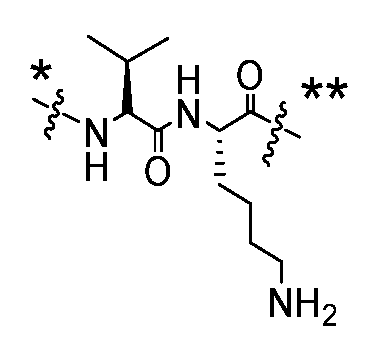

L3은 구조 
여기서Here
W는 -CH2O-**, -CH2N(Rb)C(=O)O-**, -NHC(=O)CH2NHC(=O)O-**, -CH2N(X-R2)C(=O)O-**, -C(=O)N(X-R2)-**, -CH2N(X-R2)C(=O)-**, -C(=O)NRb-**, -C(=O)NH-**, -CH2NRbC(=O)-**, -CH2NRbC(=O)NH-**, -CH2NRbC(=O)NRb-**, -NHC(=O)-**, -NHC(=O)O-**, -NHC(=O)NH-**, -OC(=O)NH-**, -S(O)2NH-**, -NHS(O)2-**, -C(=O)-, -C(=O)O-** 또는 -NH-이고, 여기서 각각의 Rb는 독립적으로 H, C1-C6알킬 또는 C3-C8 시클로알킬로부터 선택되고, 여기서 W의 **는 X에 대한 부착 지점을 나타내고;W is -CH 2 O-**, -CH2N(Rb)C(=O)O-**, -NHC(=O)CH 2 NHC(=O)O-**, -CH 2 N(XR 2 )C(=O)O-**, -C(=O)N(XR 2 )-**, -CH 2 N(XR 2 )C(=O)-**, -C(=O)NR b -**, -C(=O)NH-**, -CH 2 NR b C(=O)-**, -CH 2 NR b C(=O)NH-**, -CH 2 NR b C(=O)NR b -**, -NHC(=O)-**, -NHC(=O)O-**, -NHC(=O)NH-**, -OC(=O)NH-**, -S(O) 2 NH-**, -NHS(O) 2 -**, -C(=O)-, -C(=O)O-** or -NH-, wherein each R b is independently selected from H, C 1 -C 6 alkyl or C 3 -C 8 cycloalkyl, wherein ** of W represents the point of attachment to X;
X는 결합, 트리아졸릴 또는 ***-CH2-트리아졸릴-*이고, 여기서 X의 ***는 W에 대한 부착 지점을 나타내고, X의 *는 R2에 대한 부착 지점을 나타내고;X is a bond, triazolyl or ***-CH 2 -triazolyl-*, wherein the *** of X indicates the point of attachment to W and the * of X indicates the point of attachment to R 2 ;
L3의 *는 R2에 대한 부착 지점을 나타내고;* in L 3 indicates the attachment point to R 2 ;
R2는 폴리에틸렌 글리콜, 폴리알킬렌 글리콜, 당, 올리고사카라이드, 폴리펩티드 또는 1 내지 3개의 
A는 결합, -OC(=O)-*,A is a bond, -OC(=O)-*,

실시양태 45. 실시양태 41 내지 44 중 어느 하나에 있어서, 하기인 링커:Embodiment 45. In any one of embodiments 41 to 44, the linker:
L1은 *-C(=O)(CH2)mO(CH2)m-**; *-C(=O)((CH2)mO)t(CH2)n-**; *-C(=O)(CH2)m-**; 또는 *-C(=O)NH((CH2)mO)t(CH2)n-이고, 여기서 L1의 *는 Lp에 대한 부착 지점을 나타내고;L 1 is *-C(=O)(CH 2 ) m O(CH 2 ) m -**; *-C(=O)((CH 2 ) m O) t (CH 2 ) n -**; *-C(=O)(CH 2 ) m -**; or *-C(=O)NH((CH 2 ) m O) t (CH 2 ) n -, where * in L 1 indicates the point of attachment to Lp;
각각의 m은 독립적으로 1, 2, 3, 4, 5, 6, 7, 8, 9 및 10으로부터 선택되고;Each m is independently selected from 1, 2, 3, 4, 5, 6, 7, 8, 9, and 10;
각각의 n은 독립적으로 1, 2, 3, 4, 5, 6, 7, 8, 9 및 10으로부터 선택되고;Each n is independently selected from 1, 2, 3, 4, 5, 6, 7, 8, 9, and 10;
각각의 t는 독립적으로 1, 2, 3, 4, 5, 6, 7, 8, 9, 10, 11, 12, 13, 14, 15, 16, 17, 18, 19, 20, 21, 22, 23, 24, 25, 26, 27, 28, 29 및 30으로부터 선택되고;Each t is independently selected from 1, 2, 3, 4, 5, 6, 7, 8, 9, 10, 11, 12, 13, 14, 15, 16, 17, 18, 19, 20, 21, 22, 23, 24, 25, 26, 27, 28, 29 and 30;
Lp는 
L3은 구조 
여기서Here
W는 -CH2O-**, -CH2N(Rb)C(=O)O-**, -NHC(=O)CH2NHC(=O)O-**, -CH2N(X-R2)C(=O)O-**, -C(=O)N(X-R2)-**, -CH2N(X-R2)C(=O)-**, -C(=O)NRb-**, -C(=O)NH-**, -CH2NRbC(=O)-**, -CH2NRbC(=O)NH-**, -CH2NRbC(=O)NRb-**, -NHC(=O)-**, -NHC(=O)O-**, -NHC(=O)NH-**, -OC(=O)NH-**, -S(O)2NH-**, -NHS(O)2-**, -C(=O)-, -C(=O)O-** 또는 -NH-이고, 여기서 각각의 Rb는 독립적으로 H, C1-C6알킬 또는 C3-C8 시클로알킬로부터 선택되고, 여기서 W의 **는 X에 대한 부착 지점을 나타내고;W is -CH 2 O-**, -CH 2 N(Rb)C(=O)O-**, -NHC(=O)CH 2 NHC(=O)O-**, -CH 2 N(XR 2 )C(=O)O-**, -C(=O)N(XR 2 )-**, -CH 2 N(XR 2 )C(=O)-**, -C(=O)NR b -**, -C(=O)NH-**, -CH 2 NR b C(=O)-**, -CH 2 NR b C(=O)NH-**, -CH 2 NR b C(=O)NR b -**, -NHC(=O)-**, -NHC(=O)O-**, -NHC(=O)NH-**, -OC(=O)NH-**, -S(O) 2 NH-**, -NHS(O) 2 -**, -C(=O)-, -C(=O)O-** or -NH-, wherein each R b is independently selected from H, C 1 -C 6 alkyl or C 3 -C 8 cycloalkyl, wherein ** of W represents the point of attachment to X;
X는 결합, 트리아졸릴 또는 ***-CH2-트리아졸릴-*이고, 여기서 X의 ***는 W에 대한 부착 지점을 나타내고, X의 *는 R2에 대한 부착 지점을 나타내고;X is a bond, triazolyl or ***-CH2-triazolyl-*, wherein the *** of X represents the point of attachment to W and the * of X represents the point of attachment to R 2 ;
L3의 *는 R2에 대한 부착 지점을 나타내고;* in L 3 indicates the attachment point to R 2 ;
R2는 폴리에틸렌 글리콜, 폴리알킬렌 글리콜, 당, 올리고사카라이드, 폴리펩티드 또는 1 내지 3개의 
A는 결합, -OC(=O)-*,A is a bond, -OC(=O)-*,

실시양태 46. 실시양태 41 내지 45 중 어느 하나에 있어서, 하기인 링커:Embodiment 46. In any one of embodiments 41 to 45, the linker:
L1은 *-C(=O)(CH2)mO(CH2)m-**; *-C(=O)((CH2)mO)t(CH2)n-**; *-C(=O)(CH2)m-**; 또는 *-C(=O)NH((CH2)mO)t(CH2)n-이고, 여기서 L1의 *는 Lp에 대한 부착 지점을 나타내고;L 1 is *-C(=O)(CH 2 ) m O(CH 2 ) m -**; *-C(=O)((CH 2 ) m O) t (CH 2 ) n -**; *-C(=O)(CH 2 ) m -**; or *-C(=O)NH((CH 2 ) m O) t (CH 2 ) n -, where * in L 1 indicates the point of attachment to Lp;
각각의 m은 독립적으로 1, 2, 3, 4, 5, 6, 7, 8, 9 및 10으로부터 선택되고;Each m is independently selected from 1, 2, 3, 4, 5, 6, 7, 8, 9, and 10;
각각의 n은 독립적으로 1, 2, 3, 4, 5, 6, 7, 8, 9 및 10으로부터 선택되고;Each n is independently selected from 1, 2, 3, 4, 5, 6, 7, 8, 9, and 10;
각각의 t는 독립적으로 1, 2, 3, 4, 5, 6, 7, 8, 9, 10, 11, 12, 13, 14, 15, 16, 17, 18, 19, 20, 21, 22, 23, 24, 25, 26, 27, 28, 29 및 30으로부터 선택되고;Each t is independently selected from 1, 2, 3, 4, 5, 6, 7, 8, 9, 10, 11, 12, 13, 14, 15, 16, 17, 18, 19, 20, 21, 22, 23, 24, 25, 26, 27, 28, 29 and 30;
Lp는 
L3은 구조 
여기서Here
W는 -CH2O-**, -CH2N(Rb)C(=O)O-**, -NHC(=O)CH2NHC(=O)O-**, -CH2N(X-R2)C(=O)O-**, -C(=O)N(X-R2)-**, -C(=O)NRb-**, -C(=O)NH-**, -CH2NRbC(=O)-**, -CH2NRbC(=O)NH-**, -CH2NRbC(=O)NRb-**, -NHC(=O)-**, -NHC(=O)O-** 또는 -NHC(=O)NH-**이고, 여기서 각각의 Rb는 독립적으로 H, C1-C6알킬 또는 C3-C8 시클로알킬로부터 선택되고, 여기서 W의 **는 X에 대한 부착 지점을 나타내고;W is -CH 2 O-**, -CH 2 N(Rb)C(=O)O-**, -NHC(=O)CH 2 NHC(=O)O-**, -CH 2 N(XR 2 )C(=O)O-**, -C(=O)N(XR 2 )-**, -C(=O)NR b -**, -C(=O)NH-**, -CH 2 NR b C(=O)-**, -CH 2 NR b C(=O)NH-**, -CH 2 NR b C(=O)NR b -**, -NHC(=O)-**, -NHC(=O)O-** or -NHC(=O)NH-**, wherein each R b is independently selected from H, C 1 -C 6 alkyl or C 3 -C 8 cycloalkyl, wherein ** of W represents the point of attachment to X;
X는 결합, 트리아졸릴 또는 ***-CH2-트리아졸릴-*이고, 여기서 X의 ***는 W에 대한 부착 지점을 나타내고, X의 *는 R2에 대한 부착 지점을 나타내고;X is a bond, triazolyl or ***-CH 2 -triazolyl-*, wherein the *** of X indicates the point of attachment to W and the * of X indicates the point of attachment to R 2 ;
L3의 *는 R2에 대한 부착 지점을 나타내고;* in L 3 indicates the attachment point to R 2 ;
R2는 폴리에틸렌 글리콜, 폴리알킬렌 글리콜, 당, 올리고사카라이드, 폴리펩티드 또는 1 내지 3개의 
A는 결합 또는 -OC(=O)*이고, 여기서 *는 D에 대한 부착 지점을 나타낸다.A is a bond or -OC(=O)*, where * indicates the point of attachment to D.
실시양태 47. 실시양태 41 내지 46 중 어느 하나에 있어서, 하기인 링커:
L1은 *-C(=O)(CH2)mO(CH2)m-**; *-C(=O)((CH2)mO)t(CH2)n-**; *-C(=O)(CH2)m-**; 또는 *-C(=O)NH((CH2)mO)t(CH2)n-이고, 여기서 L1의 *는 Lp에 대한 부착 지점을 나타내고;L 1 is *-C(=O)(CH 2 ) m O(CH 2 ) m -**; *-C(=O)((CH 2 ) m O) t (CH 2 ) n -**; *-C(=O)(CH 2 ) m -**; or *-C(=O)NH((CH 2 ) m O) t (CH 2 ) n -, where * in L 1 indicates the point of attachment to Lp;
각각의 m은 독립적으로 1, 2, 3, 4, 5, 6, 7, 8, 9 및 10으로부터 선택되고;Each m is independently selected from 1, 2, 3, 4, 5, 6, 7, 8, 9, and 10;
각각의 n은 독립적으로 1, 2, 3, 4, 5, 6, 7, 8, 9 및 10으로부터 선택되고;Each n is independently selected from 1, 2, 3, 4, 5, 6, 7, 8, 9, and 10;
각각의 t는 독립적으로 1, 2, 3, 4, 5, 6, 7, 8, 9, 10, 11, 12, 13, 14, 15, 16, 17, 18, 19, 20, 21, 22, 23, 24, 25, 26, 27, 28, 29 및 30으로부터 선택되고;Each t is independently selected from 1, 2, 3, 4, 5, 6, 7, 8, 9, 10, 11, 12, 13, 14, 15, 16, 17, 18, 19, 20, 21, 22, 23, 24, 25, 26, 27, 28, 29 and 30;
Lp는 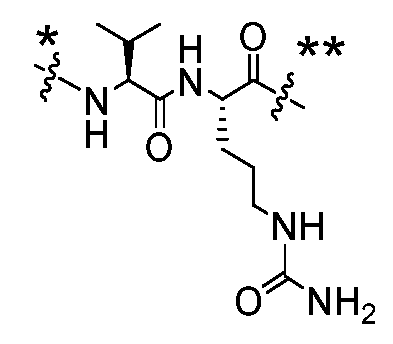
L3은 구조 
여기서Here
W는 -CH2O-**, -CH2N(Rb)C(=O)O-**, -NHC(=O)CH2NHC(=O)O-**, -CH2N(X-R2)C(=O)O-** 또는 -C(=O)N(X-R2)-**이고, 여기서 각각의 Rb는 독립적으로 H, C1-C6알킬 또는 C3-C8 시클로알킬로부터 선택되고, 여기서 W의 **는 X에 대한 부착 지점을 나타내고;W is -CH 2 O-**, -CH 2 N(Rb)C(=O)O-**, -NHC(=O)CH 2 NHC(=O)O-**, -CH 2 N(XR 2 )C(=O)O-** or -C(=O)N(XR 2 )-**, wherein each R b is independently selected from H, C 1 -C 6 alkyl or C 3 -C 8 cycloalkyl, wherein ** of W represents the point of attachment to X;
X는 ***-CH2-트리아졸릴-*이고, 여기서 X의 ***는 W에 대한 부착 지점을 나타내고, X의 *는 R2에 대한 부착 지점을 나타내고;X is ***-CH 2 -triazolyl-*, wherein the *** of X indicates the point of attachment to W, and the * of X indicates the point of attachment to R 2 ;
L3의 *는 R2에 대한 부착 지점을 나타내고;* in L 3 indicates the attachment point to R 2 ;
R2는 폴리에틸렌 글리콜, 폴리알킬렌 글리콜, 당, 올리고사카라이드, 폴리펩티드 또는 1 내지 3개의 
A는 결합 또는 -OC(=O)*이고, 여기서 *는 D에 대한 부착 지점을 나타낸다.A is a bond or -OC(=O)*, where * indicates the point of attachment to D.
실시양태 48. 실시양태 33 내지 47 중 어느 하나에 있어서, 하기 구조를 갖는 링커:Embodiment 48. In any one of embodiments 33 to 47, a linker having the following structure:

R은 H, -CH3 또는 -CH2CH2C(=O)OH이다.R is H, -CH 3 , or -CH 2 CH 2 C(=O)OH.
실시양태 49. 실시양태 33 내지 47 중 어느 하나에 있어서, 하기 구조를 갖는 링커:Embodiment 49. In any one of embodiments 33 to 47, a linker having the following structure:

R은 H, -CH3 또는 -CH2CH2C(=O)OH이다.R is H, -CH 3 , or -CH 2 CH 2 C(=O)OH.
실시양태 50. 실시양태 33 내지 47 중 어느 하나에 있어서, 하기 구조를 갖는 링커:

R은 H, -CH3 또는 -CH2CH2C(=O)OH이다.R is H, -CH 3 , or -CH 2 CH 2 C(=O)OH.
실시양태 51. 실시양태 33 내지 47 중 어느 하나에 있어서, 하기 구조를 갖는 링커:Embodiment 51. In any one of embodiments 33 to 47, a linker having the following structure:

각각의 R은 독립적으로 H, -CH3 또는 -CH2CH2C(=O)OH로부터 선택된다.Each R is independently selected from H, -CH 3 or -CH 2 CH 2 C(=O)OH.
실시양태 52. 실시양태 37 내지 47 중 어느 하나에 있어서, 하기 구조를 갖는 링커:Embodiment 52. In any one of embodiments 37 to 47, a linker having the following structure:

각각의 R은 독립적으로 H, -CH3 또는 -CH2CH2C(=O)OH로부터 선택된다.Each R is independently selected from H, -CH 3 or -CH 2 CH 2 C(=O)OH.
실시양태 53. 실시양태 33 내지 47 중 어느 하나에 있어서, 하기 구조를 갖는 링커:Embodiment 53. In any one of embodiments 33 to 47, a linker having the following structure:

Xa는 -CH2-, -OCH2-, -NHCH2- 또는 -NRCH2-이고, 각각의 R은 독립적으로 H, -CH3 또는 -CH2CH2C(=O)OH이다.Xa is -CH 2 -, -OCH 2 -, -NHCH 2 -, or -NRCH 2 -, and each R is independently H, -CH 3 , or -CH 2 CH 2 C(=O)OH.
실시양태 54. 실시양태 33 내지 47 중 어느 하나에 있어서, 하기 구조를 갖는 링커:Embodiment 54. In any one of embodiments 33 to 47, a linker having the following structure:

R은 H, -CH3 또는 -CH2CH2C(=O)OH이다.R is H, -CH 3 , or -CH 2 CH 2 C(=O)OH.
실시양태 55. 실시양태 33 내지 47 중 어느 하나에 있어서, 하기 구조를 갖는 링커:Embodiment 55. In any one of embodiments 33 to 47, a linker having the following structure:

Xb는 -CH2-, -OCH2-, -NHCH2- 또는 -NRCH2-이고, 각각의 R은 독립적으로 H, -CH3 또는 -CH2CH2C(=O)OH이다.Xb is -CH 2 -, -OCH 2 -, -NHCH 2 -, or -NRCH 2 -, and each R is independently H, -CH 3 , or -CH 2 CH 2 C(=O)OH.
실시양태 56. 실시양태 33 내지 47 중 어느 하나에 있어서, 하기 구조를 갖는 링커:Embodiment 56. In any one of embodiments 33 to 47, a linker having the following structure:

실시양태 57. 실시양태 33 내지 47 중 어느 하나에 있어서, 하기 구조를 갖는 링커:Embodiment 57. In any one of embodiments 33 to 47, a linker having the following structure:

실시양태 58. 실시양태 37 내지 47 중 어느 하나에 있어서, 하기 구조를 갖는 링커:Embodiment 58. In any one of embodiments 37 to 47, a linker having the following structure:

실시양태 59. 실시양태 33 내지 47 중 어느 하나에 있어서, 하기 구조를 갖는 링커:Embodiment 59. In any one of embodiments 33 to 47, a linker having the following structure:
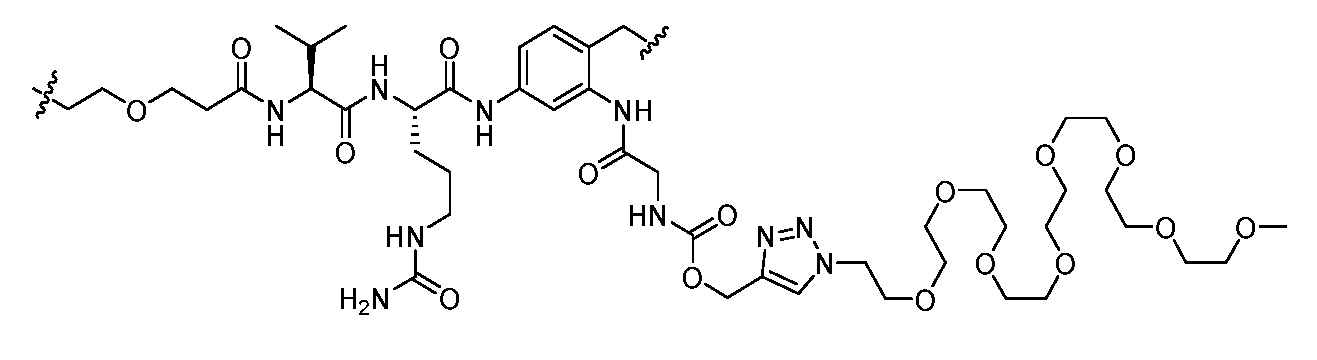
실시양태 60. 실시양태 33 내지 47 중 어느 하나에 있어서, 하기 구조를 갖는 링커:

실시양태 61. 실시양태 33 내지 47 중 어느 하나에 있어서, 하기 구조를 갖는 링커:Embodiment 61. In any one of embodiments 33 to 47, a linker having the following structure:

예시적 목적을 위해, 본원에 도시된 일반적 반응식은 본 발명의 화합물 뿐만 아니라 주요 중간체를 합성하기 위한 잠재적 경로를 제공한다. 개별 반응 단계의 보다 상세한 설명에 대해서는, 하기 실시예 섹션을 참조한다. 구체적인 출발 물질 및 시약이 하기 반응식에 도시되고 논의되지만, 다른 출발 물질 및 시약으로 용이하게 대체하여 다양한 유도체 및/또는 반응 조건을 제공할 수 있다. 추가로, 하기 기재된 방법에 의해 제조된 많은 화합물은 관련 기술분야의 통상의 기술자에게 널리 공지된 통상적인 화학을 사용하여 본 개시내용에 비추어 추가로 변형될 수 있다.For illustrative purposes, the general reaction schemes depicted herein provide potential routes for synthesizing the compounds of the present invention as well as key intermediates. For more detailed descriptions of individual reaction steps, see the Examples section below. While specific starting materials and reagents are depicted and discussed in the reaction schemes below, other starting materials and reagents may be readily substituted to provide a variety of derivatives and/or reaction conditions. Additionally, many of the compounds prepared by the methods described below can be further modified in light of the present disclosure using conventional chemistry well known to those skilled in the art.
예로서, 화학식 (B')의 화합물에 대한 일반적 합성은 하기 반응식 1에 제시된다.As an example, a general synthesis for a compound of formula (B') is presented in
반응식 1

본 발명의 항체 약물 접합체Antibody drug conjugate of the present invention
본 발명은 1개 이상의 친수성 모이어티를 포함하는 링커를 포함하는, 본원에서 면역접합체로도 지칭되는 항체 약물 접합체를 제공한다.The present invention provides antibody drug conjugates, also referred to herein as immunoconjugates, comprising a linker comprising one or more hydrophilic moieties.
본 발명의 항체 약물 접합체는 하기 화학식 (E')의 구조를 갖는다:The antibody drug conjugate of the present invention has a structure represented by the following chemical formula (E'):

여기서Here
Ab는 항-EphA2 항체 또는 그의 단편이고;Ab is an anti-EphA2 antibody or a fragment thereof;
R100은 커플링 기이고;R 100 is a coupling group;
L1은 가교 스페이서이고;L 1 is a crosslinking spacer;
Lp는 2가 펩티드 스페이서이고;Lp is a divalent peptide spacer;
G-L2-A는 자기 희생적 스페이서이고;GL 2 -A is a self-immolative spacer;
R2는 친수성 모이어티이고;R 2 is a hydrophilic moiety;
L2는 결합, 메틸렌, 네오펜틸렌 또는 C2-C3알케닐렌이고;L 2 is a bond, methylene, neopentylene or C 2 -C 3 alkenylene;
A는 결합, -OC(=O)-*,A is a bond, -OC(=O)-*,

L3은 스페이서 모이어티이고;L 3 is a spacer moiety;
D는 본원에 정의된 바와 같은 약물 모이어티, 예를 들어 Bcl-xL 억제제이고, N을 포함할 수 있으며, 여기서 D는 약물 모이어티의 N에 대한 A로부터의 직접 결합을 통해 A에 연결될 수 있고,D is a drug moiety as defined herein, for example a Bcl-xL inhibitor, and may comprise N, wherein D may be linked to A via a direct bond from A to N of the drug moiety,
y는 1, 2, 3, 4, 5, 6, 7, 8, 9, 10, 11, 12, 13, 14, 15 또는 16이다.y is 1, 2, 3, 4, 5, 6, 7, 8, 9, 10, 11, 12, 13, 14, 15, or 16.
본 발명의 항체 약물 접합체의 특정 측면 및 예는 하기 열거된 실시양태의 목록에 제공된다. 각각의 실시양태에 명시된 특색은 다른 명시된 특색과 조합되어 본 발명의 추가 실시양태를 제공할 수 있는 것으로 인식될 것이다.Certain aspects and examples of antibody drug conjugates of the present invention are provided in the list of embodiments listed below. It will be appreciated that the features specified in each embodiment may be combined with other specified features to provide additional embodiments of the present invention.
실시양태 62. 하기인 화학식 (E')의 면역접합체:Embodiment 62. An immunoconjugate of the following chemical formula (E'):
Ab는 항-EphA2 항체 또는 그의 단편이고;Ab is an anti-EphA2 antibody or a fragment thereof;
R100은 커플링 기이고;R 100 is a coupling group;
L1은 가교 스페이서이고;L 1 is a crosslinking spacer;
Lp는 2 내지 4개의 아미노산 잔기를 포함하는 2가 펩티드 스페이서이고;Lp is a bivalent peptide spacer containing two to four amino acid residues;
G-L2-A는 자기 희생적 스페이서이고;GL 2 -A is a self-immolative spacer;
R2는 친수성 모이어티이고;R 2 is a hydrophilic moiety;
L2는 결합, 메틸렌, 네오펜틸렌 또는 C2-C3알케닐렌이고;L 2 is a bond, methylene, neopentylene or C 2 -C 3 alkenylene;
A는 결합, -OC(=O)-*,A is a bond, -OC(=O)-*,

L3은 스페이서 모이어티이고;L 3 is a spacer moiety;
D는 본원에 정의된 바와 같은 약물 모이어티이고, 여기서 D는 D (예를 들어, 약물 모이어티의 N)에 대한 A로부터의 직접 결합을 통해 A에 연결되고,D is a drug moiety as defined herein, wherein D is linked to A via a direct bond from A to D (e.g., N of the drug moiety),
y는 1, 2, 3, 4, 5, 6, 7, 8, 9, 10, 11, 12, 13, 14, 15 또는 16이다.y is 1, 2, 3, 4, 5, 6, 7, 8, 9, 10, 11, 12, 13, 14, 15, or 16.
실시양태 63. 실시양태 62에 있어서, 하기인 화학식 (E')의 면역접합체:Embodiment 63. In embodiment 62, an immunoconjugate of the following chemical formula (E'):
Ab는 항-EphA2 항체 또는 그의 단편이고;Ab is an anti-EphA2 antibody or a fragment thereof;
R100은 커플링 기이고;R 100 is a coupling group;
L1은 가교 스페이서이고;L 1 is a crosslinking spacer;
Lp는 2 내지 4개의 아미노산 잔기를 포함하는 2가 펩티드 스페이서이고;Lp is a bivalent peptide spacer containing two to four amino acid residues;


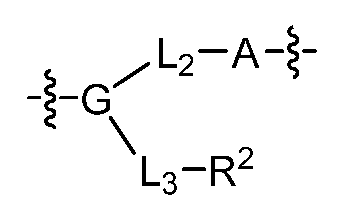
R2는 친수성 모이어티이고;R 2 is a hydrophilic moiety;
L2는 결합, 메틸렌, 네오펜틸렌 또는 C2-C3알케닐렌이고;L 2 is a bond, methylene, neopentylene or C 2 -C 3 alkenylene;
A는 결합, -OC(=O)-*,A is a bond, -OC(=O)-*,

L3은 스페이서 모이어티이고;L 3 is a spacer moiety;
D는 N을 포함하는 본원에 정의된 바와 같은 약물 모이어티이고, 여기서 D는 약물 모이어티의 N에 대한 A로부터의 직접 결합을 통해 A에 연결되고,D is a drug moiety as defined herein comprising N, wherein D is linked to A via a direct bond from A to N of the drug moiety,
y는 1, 2, 3, 4, 5, 6, 7, 8, 9, 10, 11, 12, 13, 14, 15 또는 16이다.y is 1, 2, 3, 4, 5, 6, 7, 8, 9, 10, 11, 12, 13, 14, 15, or 16.
실시양태 64. 실시양태 62 내지 63 중 어느 하나에 있어서, 하기 화학식 (F')의 구조를 갖는 화학식 (E')의 면역접합체:Embodiment 64. An immunoconjugate of formula (E') having a structure of formula (F') according to any one of embodiments 62 to 63:

여기서Here
Ab는 항-EphA2 항체 또는 그의 단편이고;Ab is an anti-EphA2 antibody or a fragment thereof;
R100은 커플링 기이고;R 100 is a coupling group;
L1은 가교 스페이서이고;L 1 is a crosslinking spacer;
Lp는 2 내지 4개의 아미노산 잔기를 포함하는 2가 펩티드 스페이서이고;Lp is a bivalent peptide spacer containing two to four amino acid residues;
R2는 친수성 모이어티이고;R 2 is a hydrophilic moiety;
A는 결합, -OC(=O)-*,A is a bond, -OC(=O)-*,

L3은 스페이서 모이어티이고;L 3 is a spacer moiety;
D는 N을 포함하는 본원에 정의된 바와 같은 약물 모이어티이고, 여기서 D는 약물 모이어티의 N에 대한 A로부터의 직접 결합을 통해 A에 연결되고,D is a drug moiety as defined herein comprising N, wherein D is linked to A via a direct bond from A to N of the drug moiety,
y는 1, 2, 3, 4, 5, 6, 7, 8, 9, 10, 11, 12, 13, 14, 15 또는 16이다.y is 1, 2, 3, 4, 5, 6, 7, 8, 9, 10, 11, 12, 13, 14, 15, or 16.
실시양태 65. 실시양태 62 내지 64 중 어느 하나에 있어서, 하기인 화학식 (D')의 면역접합체:Embodiment 65. An immunoconjugate of any one of embodiments 62 to 64, wherein:
Ab는 항-EphA2 항체 또는 그의 단편이고;Ab is an anti-EphA2 antibody or a fragment thereof;
R100은 


L1은 *-C(=O)(CH2)mO(CH2)m-**; *-C(=O)((CH2)mO)t(CH2)n-**; *-C(=O)(CH2)m-**; *-C(=O)NH((CH2)mO)t(CH2)n-**; *-C(=O)O(CH2)mSSC(R3)2(CH2)mC(=O)NR3(CH2)mNR3C(=O)(CH2)m-**; *-C(=O)O(CH2)mC(=O)NH(CH2)m-**; *-C(=O)(CH2)mNH(CH2)m-**; *-C(=O)(CH2)mNH(CH2)nC(=O)-**; *-C(=O)(CH2)mX1(CH2)m-**; *-C(=O)((CH2)mO)t(CH2)nX1(CH2)n-**; *-C(=O)(CH2)mNHC(=O)(CH2)n-**; *-C(=O)((CH2)mO)t(CH2)nNHC(=O)(CH2)n-**; *-C(=O)(CH2)mNHC(=O)(CH2)nX1(CH2)n-**; *-C(=O)((CH2)mO)t(CH2)nNHC(=O)(CH2)nX1(CH2)n-**; *-C(=O)((CH2)mO)t(CH2)nC(=O)NH(CH2)m-**; *-C(=O)(CH2)mC(R3)2-** 또는 *-C(=O)(CH2)mC(=O)NH(CH2)m-**이고, 여기서 L1의 *는 Lp에 대한 부착 지점을 나타내고, L1의 **는 R100에 대한 부착 지점을 나타내고;L 1 is *-C(=O)(CH 2 ) m O(CH 2 ) m -**; *-C(=O)((CH 2 ) m O) t (CH 2 ) n -**; *-C(=O)(CH 2 ) m -**; *-C(=O)NH((CH 2 ) m O) t (CH 2 ) n -**; *-C(=O)O(CH 2 ) m SSC(R 3 ) 2 (CH 2 ) m C(=O)NR 3 (CH 2 ) m NR 3 C(=O)(CH 2 ) m -**; *-C(=O)O(CH 2 ) m C(=O)NH(CH 2 ) m -**; *-C(=O)(CH 2 ) m NH(CH 2 ) m -**; *-C(=O)(CH 2 ) m NH(CH 2 ) n C(=O)-**; *-C(=O) ( CH 2 ) m *-C(=O) ( (CH 2 ) m O) t ( CH 2 ) n *-C(=O)(CH 2 ) m NHC(=O)(CH 2 ) n -**; *-C(=O)((CH 2 ) m O) t (CH 2 ) n NHC(=O)(CH 2 ) n -**; *-C(=O) ( CH 2 ) m NHC(=O ) ( CH 2 ) n *-C(=O)((CH 2 ) m O) t (CH 2 ) n NHC(=O)(CH 2 ) n X 1 (CH 2 ) n -**; *-C(=O)((CH 2 ) m O) t (CH 2 ) n C(=O)NH(CH 2 ) m -**; *-C(=O)(CH 2 ) m C(R 3 ) 2 -** or *-C(=O)(CH 2 ) m C(=O)NH(CH 2 ) m -**, wherein * in L 1 indicates the point of attachment to Lp, and ** in L 1 indicates the point of attachment to R 100 ;
R2는 폴리에틸렌 글리콜, 폴리알킬렌 글리콜, 당, 올리고사카라이드, 폴리펩티드 또는 1 내지 3개의 
각각의 R3은 독립적으로 H 및 C1-C6알킬로부터 선택되고;Each R 3 is independently selected from H and C 1 -C 6 alkyl;
R4는 2-피리딜 또는 4-피리딜이고;R 4 is 2-pyridyl or 4-pyridyl;
각각의 R5는 독립적으로 H, C1-C6알킬, F, Cl 및 -OH로부터 선택되고;Each R 5 is independently selected from H, C1-C 6 alkyl, F, Cl and -OH;
각각의 R6은 독립적으로 H, C1-C6알킬, F, Cl, -NH2, -OCH3, -OCH2CH3, -N(CH3)2, -CN, -NO2 및 -OH로부터 선택되고;each R 6 is independently selected from H, C 1 -C 6 alkyl, F, Cl, -NH 2 , -OCH 3 , -OCH 2 CH 3 , -N(CH 3 ) 2 , -CN, -NO 2 and -OH;
각각의 R7은 독립적으로 H, C1-6알킬, 플루오로, -C(=O)OH로 치환된 벤질옥시, -C(=O)OH로 치환된 벤질, -C(=O)OH로 치환된 C1-4알콕시 및 -C(=O)OH로 치환된 C1-4알킬로부터 선택되고;Each R 7 is independently selected from H, C 1-6 alkyl, fluoro, benzyloxy substituted with -C(=O)OH, benzyl substituted with -C(=O)OH, C 1-4 alkoxy substituted with -C(=O)OH, and C 1-4 alkyl substituted with -C(=O)OH;
X1은 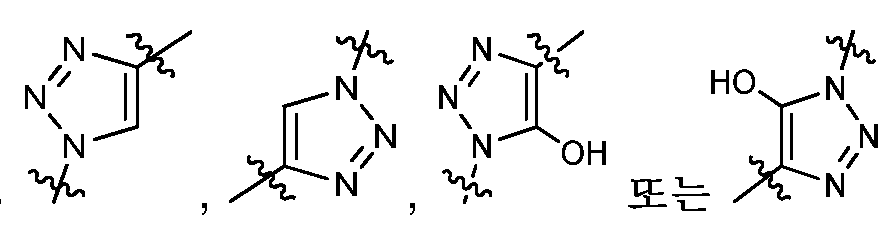
각각의 m은 독립적으로 1, 2, 3, 4, 5, 6, 7, 8, 9 및 10으로부터 선택되고;Each m is independently selected from 1, 2, 3, 4, 5, 6, 7, 8, 9, and 10;
각각의 n은 독립적으로 1, 2, 3, 4, 5, 6, 7, 8, 9 및 10으로부터 선택되고;Each n is independently selected from 1, 2, 3, 4, 5, 6, 7, 8, 9, and 10;
각각의 t는 독립적으로 1, 2, 3, 4, 5, 6, 7, 8, 9, 10, 11, 12, 13, 14, 15, 16, 17, 18, 19, 20, 21, 22, 23, 24, 25, 26, 27, 28, 29 및 30으로부터 선택되고;Each t is independently selected from 1, 2, 3, 4, 5, 6, 7, 8, 9, 10, 11, 12, 13, 14, 15, 16, 17, 18, 19, 20, 21, 22, 23, 24, 25, 26, 27, 28, 29 and 30;
Lp는 발린, 시트룰린, 리신, 이소류신, 페닐알라닌, 메티오닌, 아스파라긴, 프롤린, 알라닌, 류신, 트립토판 및 티로신으로부터 선택된 아미노산 잔기를 포함하는 2가 펩티드 스페이서이고;Lp is a bivalent peptide spacer comprising amino acid residues selected from valine, citrulline, lysine, isoleucine, phenylalanine, methionine, asparagine, proline, alanine, leucine, tryptophan and tyrosine;
A는 결합, -OC(=O)-*,A is a bond, -OC(=O)-*,

L3은 구조 
여기서Here
W는 -CH2O-**, -CH2N(Rb)C(=O)O-**, -NHC(=O)C(Rb)2NHC(=O)O-**, -NHC(=O)C(Rb)2NH-**, -NHC(=O)C(Rb)2NHC(=O)-**, -CH2N(X-R2)C(=O)O-**, -C(=O)N(X-R2)-**, -CH2N(X-R2)C(=O)-**, -C(=O)NRb-**, -C(=O)NH-**, -CH2NRbC(=O)-**, -CH2NRbC(=O)NH-**, -CH2NRbC(=O)NRb-**, -NHC(=O)-**, -NHC(=O)O-**, -NHC(=O)NH-**, -OC(=O)NH-**, -S(O)2NH-**, -NHS(O)2-**, -C(=O)-, -C(=O)O-** 또는 -NH-이고, 여기서 각각의 Rb는 독립적으로 H, C1-C6알킬 또는 C3-C8시클로알킬로부터 선택되고, 여기서 W의 **는 X에 대한 부착 지점을 나타내고;W is -CH 2 O-**, -CH 2 N(Rb)C(=O)O-**, -NHC(=O)C(R b ) 2 NHC(=O)O-**, -NHC(=O)C(R b ) 2 NH-**, -NHC(=O)C(R b ) 2 NHC(=O)-**, -CH 2 N(XR 2 )C(=O)O-**, -C(=O)N(XR 2 )-**, -CH 2 N(XR 2 )C(=O)-**, -C(=O)NR b -**, -C(=O)NH-**, -CH 2 NR b C(=O)-**, -CH 2 NR b C(=O)NH-**, -CH 2 NR b C(=O)NR b -**, -NHC(=O)-**, -NHC(=O)O-**, -NHC(=O)NH-**, -OC(=O)NH-**, -S(O) 2 NH-**, -NHS(O) 2 -**, -C(=O)-, -C(=O)O-** or -NH-, wherein each R b is independently selected from H, C 1 -C 6 alkyl or C 3 -C 8 cycloalkyl, wherein ** of W represents the point of attachment to X;
X는 결합, 트리아졸릴 또는 ***-CH2-트리아졸릴-*이고, 여기서 X의 ***는 W에 대한 부착 지점을 나타내고, X의 *는 R2에 대한 부착 지점을 나타내고;X is a bond, triazolyl or ***-CH 2 -triazolyl-*, wherein the *** of X represents the point of attachment to W and the * of X represents the point of attachment to R 2 ;
L3의 *는 R2에 대한 부착 지점을 나타내고;* in L 3 indicates the attachment point to R 2 ;
D는 N을 포함하는 본원에 정의된 바와 같은 약물 모이어티이고, 여기서 D는 약물 모이어티의 N에 대한 A로부터의 직접 결합을 통해 A에 연결되고,D is a drug moiety as defined herein comprising N, wherein D is linked to A via a direct bond from A to N of the drug moiety,
y는 1, 2, 3, 4, 5, 6, 7, 8, 9, 10, 11, 12, 13, 14, 15 또는 16이다.y is 1, 2, 3, 4, 5, 6, 7, 8, 9, 10, 11, 12, 13, 14, 15, or 16.
실시양태 66. 실시양태 62 내지 65 중 어느 하나에 있어서, 하기인 화학식 (D')의 면역접합체:Embodiment 66. An immunoconjugate of any one of embodiments 62 to 65, wherein:
Ab는 항-EphA2 항체 또는 그의 단편이고;Ab is an anti-EphA2 antibody or a fragment thereof;
R100은 
L1은 *-C(=O)(CH2)mO(CH2)m-**; *-C(=O)((CH2)mO)t(CH2)n-**; *-C(=O)(CH2)m-**; 또는 *-C(=O)NH((CH2)mO)t(CH2)n-이고, 여기서 L1의 *는 Lp에 대한 부착 지점을 나타내고, L1의 **는 R100에 대한 부착 지점을 나타내고;L 1 is *-C(=O)(CH 2 ) m O(CH 2 ) m -**; *-C(=O)((CH 2 ) m O) t (CH 2 ) n -**; *-C(=O)(CH 2 ) m -**; or *-C(=O)NH((CH 2 ) m O) t (CH 2 ) n -, wherein * in L 1 indicates the point of attachment to Lp, and ** in L 1 indicates the point of attachment to R 100 ;
각각의 m은 독립적으로 1, 2, 3, 4, 5, 6, 7, 8, 9 및 10으로부터 선택되고;Each m is independently selected from 1, 2, 3, 4, 5, 6, 7, 8, 9, and 10;
각각의 n은 독립적으로 1, 2, 3, 4, 5, 6, 7, 8, 9 및 10으로부터 선택되고;Each n is independently selected from 1, 2, 3, 4, 5, 6, 7, 8, 9, and 10;
각각의 t는 독립적으로 1, 2, 3, 4, 5, 6, 7, 8, 9, 10, 11, 12, 13, 14, 15, 16, 17, 18, 19, 20, 21, 22, 23, 24, 25, 26, 27, 28, 29 및 30으로부터 선택되고;Each t is independently selected from 1, 2, 3, 4, 5, 6, 7, 8, 9, 10, 11, 12, 13, 14, 15, 16, 17, 18, 19, 20, 21, 22, 23, 24, 25, 26, 27, 28, 29 and 30;
Lp는 


L3은 구조 
여기서Here
W는 -CH2O-**, -CH2N(Rb)C(=O)O-**, -NHC(=O)CH2NHC(=O)O-**, -NHC(=O)CH2NH-**, -NHC(=O)CH2NHC(=O)-**, -CH2N(X-R2)C(=O)O-**, -C(=O)N(X-R2)-**, -CH2N(X-R2)C(=O)-**, -C(=O)NRb-**, -C(=O)NH-**, -CH2NRbC(=O)-**, -CH2NRbC(=O)NH-**, -CH2NRbC(=O)NRb-**, -NHC(=O)-**, -NHC(=O)O-**, -NHC(=O)NH-**, -OC(=O)NH-**, -S(O)2NH-**, -NHS(O)2-**, -C(=O)-, -C(=O)O-** 또는 -NH-이고, 여기서 각각의 Rb는 독립적으로 H, C1-C6알킬 또는 C3-C8시클로알킬로부터 선택되고, 여기서 W의 **는 X에 대한 부착 지점을 나타내고;W is -CH 2 O-**, -CH 2 N(Rb)C(=O)O-**, -NHC(=O)CH 2 NHC(=O)O-**, -NHC(=O)CH 2 NH-**, -NHC(=O)CH 2 NHC(=O)-**, -CH 2 N(XR 2 )C(=O)O-**, -C(=O)N(XR 2 )-**, -CH 2 N(XR 2 )C(=O)-**, -C(=O)NR b -**, -C(=O)NH-**, -CH 2 NR b C(=O)-**, -CH 2 NR b C(=O)NH-**, -CH 2 NR b C(=O)NR b -**, -NHC(=O)-**, -NHC(=O)O-**, -NHC(=O)NH-**, -OC(=O)NH-**, -S(O) 2 NH-**, -NHS(O) 2 -**, -C(=O)-, -C(=O)O-** or -NH-, wherein each R b is independently selected from H, C 1 -C 6 alkyl or C 3 -C 8 cycloalkyl, wherein ** of W represents the point of attachment to X;
X는 결합, 트리아졸릴 또는 ***-CH2-트리아졸릴-*이고, 여기서 X의 ***는 W에 대한 부착 지점을 나타내고, X의 *는 R2에 대한 부착 지점을 나타내고;X is a bond, triazolyl or ***-CH 2 -triazolyl-*, wherein the *** of X indicates the point of attachment to W and the * of X indicates the point of attachment to R 2 ;
L3의 *는 R2에 대한 부착 지점을 나타내고;* in L 3 indicates the attachment point to R 2 ;
R2는 폴리에틸렌 글리콜, 폴리알킬렌 글리콜, 당, 올리고사카라이드, 폴리펩티드 또는 1 내지 3개의 
A는 결합, -OC(=O)-*,A is a bond, -OC(=O)-*,

D는 N 또는 O를 포함하는 본원에 정의된 바와 같은 약물 모이어티이고, 여기서 D는 약물 모이어티의 N 또는 O에 대한 A로부터의 직접 결합을 통해 A에 연결되고,D is a drug moiety as defined herein comprising N or O, wherein D is linked to A via a direct bond from A to N or O of the drug moiety,
y는 1, 2, 3, 4, 5, 6, 7, 8, 9, 10, 11, 12, 13, 14, 15 또는 16이다.y is 1, 2, 3, 4, 5, 6, 7, 8, 9, 10, 11, 12, 13, 14, 15, or 16.
실시양태 67. 실시양태 62 내지 66 중 어느 하나에 있어서, 하기인 화학식 (E')의 면역접합체:Embodiment 67. An immunoconjugate of any one of embodiments 62 to 66, wherein:
Ab는 항-EphA2 항체 또는 그의 단편이고;Ab is an anti-EphA2 antibody or a fragment thereof;
R100은 
L1은 *-C(=O)(CH2)mO(CH2)m-**; *-C(=O)((CH2)mO)t(CH2)n-**; *-C(=O)(CH2)m-**; 또는 *-C(=O)NH((CH2)mO)t(CH2)n-이고, 여기서 L1의 *는 Lp에 대한 부착 지점을 나타내고, L1의 **는 R100에 대한 부착 지점을 나타내고;L 1 is *-C(=O)(CH 2 ) m O(CH 2 ) m -**; *-C(=O)((CH 2 ) m O) t (CH 2 ) n -**; *-C(=O)(CH 2 ) m -**; or *-C(=O)NH((CH 2 ) m O) t (CH 2 ) n -, wherein * in L 1 indicates the point of attachment to Lp, and ** in L 1 indicates the point of attachment to R 100 ;
각각의 m은 독립적으로 1, 2, 3, 4, 5, 6, 7, 8, 9 및 10으로부터 선택되고;Each m is independently selected from 1, 2, 3, 4, 5, 6, 7, 8, 9, and 10;
각각의 n은 독립적으로 1, 2, 3, 4, 5, 6, 7, 8, 9 및 10으로부터 선택되고;Each n is independently selected from 1, 2, 3, 4, 5, 6, 7, 8, 9, and 10;
각각의 t는 독립적으로 1, 2, 3, 4, 5, 6, 7, 8, 9, 10, 11, 12, 13, 14, 15, 16, 17, 18, 19, 20, 21, 22, 23, 24, 25, 26, 27, 28, 29 및 30으로부터 선택되고;Each t is independently selected from 1, 2, 3, 4, 5, 6, 7, 8, 9, 10, 11, 12, 13, 14, 15, 16, 17, 18, 19, 20, 21, 22, 23, 24, 25, 26, 27, 28, 29 and 30;
Lp는 
L3은 구조 
여기서Here
W는 -CH2O-**, -CH2N(Rb)C(=O)O-**, -NHC(=O)CH2NHC(=O)O-**, -CH2N(X-R2)C(=O)O-**, -C(=O)N(X-R2)-**, -CH2N(X-R2)C(=O)-**, -C(=O)NRb-**, -C(=O)NH-**, -CH2NRbC(=O)-**, -CH2NRbC(=O)NH-**, -CH2NRbC(=O)NRb-**, -NHC(=O)-**, -NHC(=O)O-**, -NHC(=O)NH-**, -OC(=O)NH-**, -S(O)2NH-**, -NHS(O)2-**, -C(=O)-, -C(=O)O-** 또는 -NH-이고, 여기서 각각의 Rb는 독립적으로 H, C1-C6알킬 또는 C3-C8 시클로알킬로부터 선택되고, 여기서 W의 **는 X에 대한 부착 지점을 나타내고;W is -CH 2 O-**, -CH 2 N(Rb)C(=O)O-**, -NHC(=O)CH 2 NHC(=O)O-**, -CH 2 N(XR 2 )C(=O)O-**, -C(=O)N(XR 2 )-**, -CH 2 N(XR 2 )C(=O)-**, -C(=O)NR b -**, -C(=O)NH-**, -CH 2 NR b C(=O)-**, -CH 2 NR b C(=O)NH-**, -CH 2 NR b C(=O)NR b -**, -NHC(=O)-**, -NHC(=O)O-**, -NHC(=O)NH-**, -OC(=O)NH-**, -S(O) 2 NH-**, -NHS(O) 2 -**, -C(=O)-, -C(=O)O-** or -NH-, wherein each R b is independently selected from H, C 1 -C 6 alkyl or C 3 -C 8 cycloalkyl, wherein ** of W represents the point of attachment to X;
X는 결합, 트리아졸릴 또는 ***-CH2-트리아졸릴-*이고, 여기서 X의 ***는 W에 대한 부착 지점을 나타내고, X의 *는 R2에 대한 부착 지점을 나타내고;X is a bond, triazolyl or ***-CH 2 -triazolyl-*, wherein the *** of X indicates the point of attachment to W and the * of X indicates the point of attachment to R 2 ;
L3의 *는 R2에 대한 부착 지점을 나타내고;* in L 3 indicates the attachment point to R 2 ;
R2는 폴리에틸렌 글리콜, 폴리알킬렌 글리콜, 당, 올리고사카라이드, 폴리펩티드 또는 1 내지 3개로 치환된 C2-C6알킬로부터 선택된 친수성 모이어티이고; A는 결합, -OC(=O)-*,R 2 is a hydrophilic moiety selected from polyethylene glycol, polyalkylene glycol, sugar, oligosaccharide, polypeptide or C 2 -C 6 alkyl substituted with 1 to 3 groups; A is a bond, -OC(=O)-*,

D는 N 또는 O를 포함하는 본원에 정의된 바와 같은 약물 모이어티이고, 여기서 D는 약물 모이어티의 N 또는 O에 대한 A로부터의 직접 결합을 통해 A에 연결되고,D is a drug moiety as defined herein comprising N or O, wherein D is linked to A via a direct bond from A to N or O of the drug moiety,
y는 1, 2, 3, 4, 5, 6, 7, 8, 9, 10, 11, 12, 13, 14, 15 또는 16이다.y is 1, 2, 3, 4, 5, 6, 7, 8, 9, 10, 11, 12, 13, 14, 15, or 16.
실시양태 68. 실시양태 62 내지 67 중 어느 하나에 있어서, 하기인 화학식 (E')의 면역접합체:Embodiment 68. An immunoconjugate of any one of embodiments 62 to 67, wherein:
Ab는 항-EphA2 항체 또는 그의 단편이고;Ab is an anti-EphA2 antibody or a fragment thereof;
R100은 
L1은 *-C(=O)(CH2)mO(CH2)m-**; *-C(=O)((CH2)mO)t(CH2)n-**; *-C(=O)(CH2)m-**; 또는 *-C(=O)NH((CH2)mO)t(CH2)n-이고, 여기서 L1의 *는 Lp에 대한 부착 지점을 나타내고, L1의 **는 R100에 대한 부착 지점을 나타내고;L 1 is *-C(=O)(CH 2 ) m O(CH 2 ) m -**; *-C(=O)((CH 2 ) m O) t (CH 2 ) n -**; *-C(=O)(CH 2 ) m -**; or *-C(=O)NH((CH 2 ) m O) t (CH 2 ) n -, wherein * in L 1 indicates the point of attachment to Lp, and ** in L 1 indicates the point of attachment to R 100 ;
각각의 m은 독립적으로 1, 2, 3, 4, 5, 6, 7, 8, 9 및 10으로부터 선택되고;Each m is independently selected from 1, 2, 3, 4, 5, 6, 7, 8, 9, and 10;
각각의 n은 독립적으로 1, 2, 3, 4, 5, 6, 7, 8, 9 및 10으로부터 선택되고;Each n is independently selected from 1, 2, 3, 4, 5, 6, 7, 8, 9, and 10;
각각의 t는 독립적으로 2, 3, 4, 5, 6, 7, 8, 9, 10, 11, 12, 13, 14, 15, 16, 17, 18, 19, 20, 21, 22, 23, 24, 25, 26, 27, 28, 29 및 30으로부터 선택되고;Each t is independently selected from 2, 3, 4, 5, 6, 7, 8, 9, 10, 11, 12, 13, 14, 15, 16, 17, 18, 19, 20, 21, 22, 23, 24, 25, 26, 27, 28, 29 and 30;
Lp는 
L3은 구조 
여기서Here
W는 -CH2O-**, -CH2N(Rb)C(=O)O-**, -NHC(=O)CH2NHC(=O)O-**, -CH2N(X-R2)C(=O)O-**, -C(=O)N(X-R2)-**, -C(=O)NRb-**, -C(=O)NH-**, -CH2NRbC(=O)-**, -CH2NRbC(=O)NH-**, -CH2NRbC(=O)NRb-**, -NHC(=O)-**, -NHC(=O)O-** 또는 -NHC(=O)NH-**이고, 여기서 각각의 Rb는 독립적으로 H, C1-C6알킬 또는 C3-C8 시클로알킬로부터 선택되고, 여기서 W의 **는 X에 대한 부착 지점을 나타내고;W is -CH 2 O-**, -CH 2 N(Rb)C(=O)O-**, -NHC(=O)CH 2 NHC(=O)O-**, -CH 2 N(XR 2 )C(=O)O-**, -C(=O)N(XR 2 )-**, -C(=O)NR b -**, -C(=O)NH-**, -CH 2 NR b C(=O)-**, -CH 2 NR b C(=O)NH-**, -CH 2 NR b C(=O)NR b -**, -NHC(=O)-**, -NHC(=O)O-** or -NHC(=O)NH-**, wherein each R b is independently selected from H, C 1 -C 6 alkyl or C 3 -C 8 cycloalkyl, wherein ** of W represents the point of attachment to X;
X는 결합, 트리아졸릴 또는 ***-CH2-트리아졸릴-*이고, 여기서 X의 ***는 W에 대한 부착 지점을 나타내고, X의 *는 R2에 대한 부착 지점을 나타내고;X is a bond, triazolyl or ***-CH 2 -triazolyl-*, wherein the *** of X represents the point of attachment to W and the * of X represents the point of attachment to R 2 ;
L3의 *는 R2에 대한 부착 지점을 나타내고;* in L 3 indicates the attachment point to R 2 ;
R2는 폴리에틸렌 글리콜, 폴리알킬렌 글리콜, 당, 올리고사카라이드, 폴리펩티드 또는 1 내지 3개의 
A는 결합 또는 -OC(=O)*이고, 여기서 *는 D에 대한 부착 지점을 나타내고;A is a bond or -OC(=O)*, where * indicates the point of attachment to D;
D는 N 또는 O를 포함하는 본원에 정의된 바와 같은 약물 모이어티이고, 여기서 D는 약물 모이어티의 N 또는 O에 대한 A로부터의 직접 결합을 통해 A에 연결되고,D is a drug moiety as defined herein comprising N or O, wherein D is linked to A via a direct bond from A to N or O of the drug moiety,
y는 1, 2, 3, 4, 5, 6, 7, 8, 9, 10, 11, 12, 13, 14, 15 또는 16이다.y is 1, 2, 3, 4, 5, 6, 7, 8, 9, 10, 11, 12, 13, 14, 15, or 16.
실시양태 69. 실시양태 62 내지 68 중 어느 하나에 있어서, 하기인 화학식 (E')의 면역접합체:Embodiment 69. An immunoconjugate of any one of embodiments 62 to 68, wherein:
Ab는 항-EphA2 항체 또는 그의 단편이고;Ab is an anti-EphA2 antibody or a fragment thereof;
R100은 
L1은 *-C(=O)(CH2)mO(CH2)m-**; *-C(=O)((CH2)mO)t(CH2)n-**; *-C(=O)(CH2)m-**; 또는 *-C(=O)NH((CH2)mO)t(CH2)n-이고, 여기서 L1의 *는 Lp에 대한 부착 지점을 나타내고, L1의 **는 R100에 대한 부착 지점을 나타내고;L 1 is *-C(=O)(CH 2 ) m O(CH 2 ) m -**; *-C(=O)((CH 2 ) m O) t (CH 2 ) n -**; *-C(=O)(CH 2 ) m -**; or *-C(=O)NH((CH 2 ) m O) t (CH 2 ) n -, wherein * in L 1 indicates the point of attachment to Lp, and ** in L 1 indicates the point of attachment to R 100 ;
각각의 m은 독립적으로 1, 2, 3, 4, 5, 6, 7, 8, 9 및 10으로부터 선택되고;Each m is independently selected from 1, 2, 3, 4, 5, 6, 7, 8, 9, and 10;
각각의 n은 독립적으로 1, 2, 3, 4, 5, 6, 7, 8, 9 및 10으로부터 선택되고;Each n is independently selected from 1, 2, 3, 4, 5, 6, 7, 8, 9, and 10;
각각의 t는 독립적으로 2, 3, 4, 5, 6, 7, 8, 9, 10, 11, 12, 13, 14, 15, 16, 17, 18, 19, 20, 21, 22, 23, 24, 25, 26, 27, 28, 29 및 30으로부터 선택되고;Each t is independently selected from 2, 3, 4, 5, 6, 7, 8, 9, 10, 11, 12, 13, 14, 15, 16, 17, 18, 19, 20, 21, 22, 23, 24, 25, 26, 27, 28, 29 and 30;
Lp는 
L3은 구조 
여기서Here
W는 -CH2O-**, -CH2N(Rb)C(=O)O-**, -NHC(=O)CH2NHC(=O)O-**, -CH2N(X-R2)C(=O)O-** 또는 -C(=O)N(X-R2)-**이고, 여기서 각각의 Rb는 독립적으로 H, C1-C6알킬 또는 C3-C8 시클로알킬로부터 선택되고, 여기서 W의 **는 X에 대한 부착 지점을 나타내고;W is -CH 2 O-**, -CH 2 N(Rb)C(=O)O-**, -NHC(=O)CH 2 NHC(=O)O-**, -CH 2 N(XR 2 )C(=O)O-** or -C(=O)N(XR 2 )-**, wherein each R b is independently selected from H, C 1 -C 6 alkyl or C 3 -C 8 cycloalkyl, wherein ** of W represents the point of attachment to X;
X는 ***-CH2-트리아졸릴-*이고, 여기서 X의 ***는 W에 대한 부착 지점을 나타내고, X의 *는 R2에 대한 부착 지점을 나타내고;X is ***-CH 2 -triazolyl-*, wherein the *** of X indicates the point of attachment to W, and the * of X indicates the point of attachment to R 2 ;
L3의 *는 R2에 대한 부착 지점을 나타내고;* in L 3 indicates the attachment point to R 2 ;
R2는 폴리에틸렌 글리콜, 폴리알킬렌 글리콜, 당, 올리고사카라이드, 폴리펩티드 또는 1 내지 3개의 
A는 결합 또는 -OC(=O)*이고, 여기서 *는 D에 대한 부착 지점을 나타내고;A is a bond or -OC(=O)*, where * indicates the point of attachment to D;
D는 N 또는 O를 포함하는 본원에 정의된 바와 같은 약물 모이어티이고, 여기서 D는 약물 모이어티의 N 또는 O에 대한 A로부터의 직접 결합을 통해 A에 연결되고,D is a drug moiety as defined herein comprising N or O, wherein D is linked to A via a direct bond from A to N or O of the drug moiety,
y는 1, 2, 3, 4, 5, 6, 7, 8, 9, 10, 11, 12, 13, 14, 15 또는 16이다.y is 1, 2, 3, 4, 5, 6, 7, 8, 9, 10, 11, 12, 13, 14, 15, or 16.
실시양태 70. 실시양태 62 내지 65 중 어느 하나에 있어서, 하기인 화학식 (E')의 면역접합체:Embodiment 70. An immunoconjugate of any one of embodiments 62 to 65, wherein:
R100은 

실시양태 71. 실시양태 60 내지 63 중 어느 하나에 있어서, 하기인 화학식 (E')의 면역접합체:Embodiment 71. An immunoconjugate of any one of
R100은 
실시양태 72. 실시양태 62 내지 65 중 어느 하나에 있어서, 하기인 화학식 (E')의 면역접합체:Embodiment 72. An immunoconjugate of any one of embodiments 62 to 65, wherein:
R100은 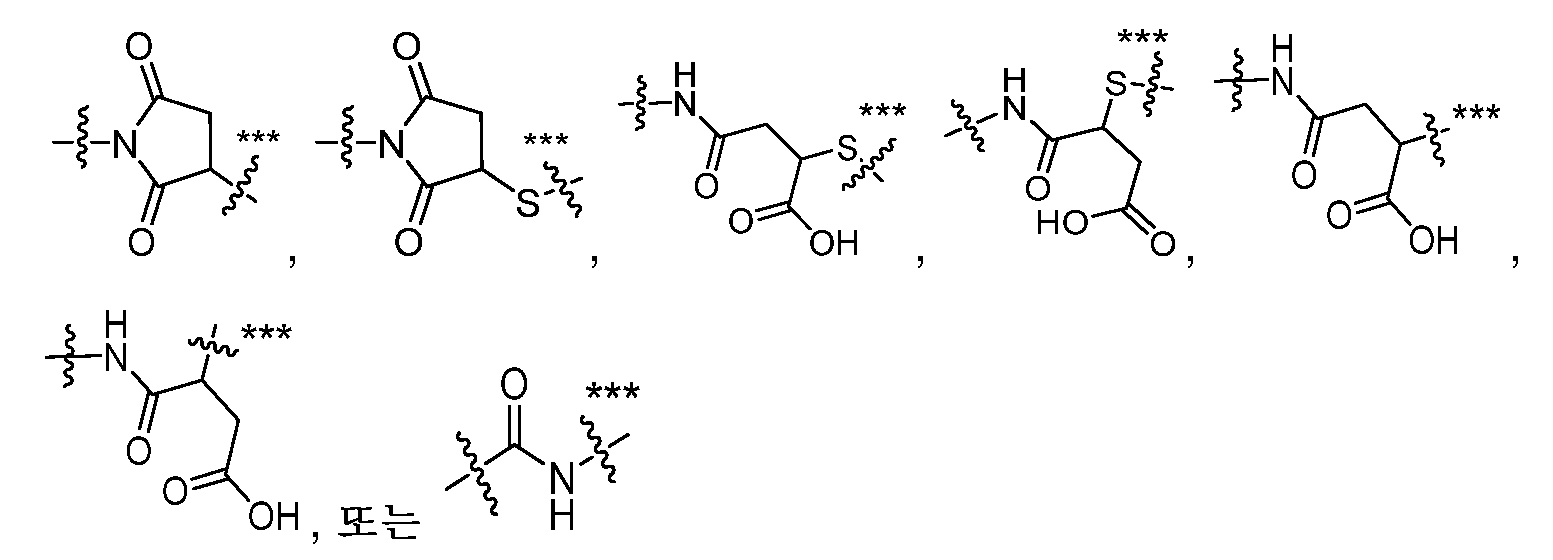
실시양태 73. 실시양태 62 내지 72 중 어느 하나에 있어서, 하기 구조를 갖는 화학식 (E')의 면역접합체:Embodiment 73. An immunoconjugate of formula (E') having the following structure in any one of embodiments 62 to 72:

R은 H, -CH3 또는 -CH2CH2C(=O)OH이고, y는 1, 2, 3, 4, 5, 6, 7, 8, 9, 10, 11, 12, 13, 14, 15 또는 16이다.R is H, -CH 3 , or -CH 2 CH 2 C(=O)OH, and y is 1, 2, 3, 4, 5, 6, 7, 8, 9, 10, 11, 12, 13, 14, 15, or 16.
실시양태 74. 실시양태 62 내지 72 중 어느 하나에 있어서, 하기 구조를 갖는 화학식 (E')의 면역접합체:Embodiment 74. An immunoconjugate of formula (E') having the following structure in any one of embodiments 62 to 72:

R은 H, -CH3 또는 -CH2CH2C(=O)OH이고, y는 1, 2, 3, 4, 5, 6, 7, 8, 9, 10, 11, 12, 13, 14, 15 또는 16이다.R is H, -CH 3 , or -CH 2 CH 2 C(=O)OH, and y is 1, 2, 3, 4, 5, 6, 7, 8, 9, 10, 11, 12, 13, 14, 15, or 16.
실시양태 75. 실시양태 62 내지 72 중 어느 하나에 있어서, 하기 구조를 갖는 화학식 (E')의 면역접합체:Embodiment 75. An immunoconjugate of formula (E') having the structure: in any one of embodiments 62 to 72:

R은 H, -CH3 또는 -CH2CH2C(=O)OH이고, y는 1, 2, 3, 4, 5, 6, 7, 8, 9, 10, 11, 12, 13, 14, 15 또는 16이다.R is H, -CH 3 , or -CH 2 CH 2 C(=O)OH, and y is 1, 2, 3, 4, 5, 6, 7, 8, 9, 10, 11, 12, 13, 14, 15, or 16.
실시양태 76. 실시양태 62 내지 72 중 어느 하나에 있어서, 하기 구조를 갖는 화학식 (E')의 면역접합체:Embodiment 76. An immunoconjugate of formula (E') having the following structure in any one of embodiments 62 to 72:

각각의 R은 독립적으로 H, -CH3 또는 -CH2CH2C(=O)OH로부터 선택되고, y는 1, 2, 3, 4, 5, 6, 7, 8, 9, 10, 11, 12, 13, 14, 15 또는 16이다.Each R is independently selected from H, -CH 3 or -CH 2 CH 2 C(=O)OH, and y is 1, 2, 3, 4, 5, 6, 7, 8, 9, 10, 11, 12, 13, 14, 15 or 16.
실시양태 77. 실시양태 62 내지 72 중 어느 하나에 있어서, 하기 구조를 갖는 화학식 (E')의 면역접합체:Embodiment 77. An immunoconjugate of formula (E') having the following structure in any one of embodiments 62 to 72:

각각의 R은 독립적으로 H, -CH3 또는 -CH2CH2C(=O)OH로부터 선택되고, y는 1, 2, 3, 4, 5, 6, 7, 8, 9, 10, 11, 12, 13, 14, 15 또는 16이다.Each R is independently selected from H, -CH 3 or -CH 2 CH 2 C(=O)OH, and y is 1, 2, 3, 4, 5, 6, 7, 8, 9, 10, 11, 12, 13, 14, 15 or 16.
실시양태 78. 실시양태 62 내지 72 중 어느 하나에 있어서, 하기 구조를 갖는 화학식 (E')의 면역접합체:Embodiment 78. An immunoconjugate of formula (E') having the following structure in any one of embodiments 62 to 72:

Xa는 -CH2-, -OCH2-, -NHCH2- 또는 -NRCH2-이고, 각각의 R은 독립적으로 H, -CH3 또는 -CH2CH2C(=O)OH이고, y는 1, 2, 3, 4, 5, 6, 7, 8, 9, 10, 11, 12, 13, 14, 15 또는 16이다.Xa is -CH 2 -, -OCH 2 -, -NHCH 2 -, or -NRCH 2 -, each R is independently H, -CH 3 , or -CH 2 CH 2 C(=O)OH, and y is 1, 2, 3, 4, 5, 6, 7, 8, 9, 10, 11, 12, 13, 14, 15, or 16.
실시양태 79. 실시양태 62 내지 72 중 어느 하나에 있어서, 하기 구조를 갖는 화학식 (E')의 면역접합체:Embodiment 79. An immunoconjugate of formula (E') having the following structure in any one of embodiments 62 to 72:

R은 H, -CH3 또는 -CH2CH2C(=O)OH이고, y는 1, 2, 3, 4, 5, 6, 7, 8, 9, 10, 11, 12, 13, 14, 15 또는 16이다.R is H, -CH 3 , or -CH 2 CH 2 C(=O)OH, and y is 1, 2, 3, 4, 5, 6, 7, 8, 9, 10, 11, 12, 13, 14, 15, or 16.
실시양태 80. 실시양태 62 내지 72 중 어느 하나에 있어서, 하기 구조를 갖는 화학식 (E')의 면역접합체:

Xb는 -CH2-, -OCH2-, -NHCH2- 또는 -NRCH2-이고, 각각의 R은 독립적으로 H, -CH3 또는 -CH2CH2C(=O)OH이고, y는 1, 2, 3, 4, 5, 6, 7, 8, 9, 10, 11, 12, 13, 14, 15 또는 16이다.Xb is -CH 2 -, -OCH 2 -, -NHCH 2 -, or -NRCH 2 -, each R is independently H, -CH 3 , or -CH 2 CH 2 C(=O)OH, and y is 1, 2, 3, 4, 5, 6, 7, 8, 9, 10, 11, 12, 13, 14, 15, or 16.
실시양태 81. 실시양태 62 내지 72 중 어느 하나에 있어서, 하기 구조를 갖는 화학식 (E')의 면역접합체:Embodiment 81. An immunoconjugate of formula (E') having the following structure in any one of embodiments 62 to 72:

실시양태 82. 실시양태 62 내지 72 중 어느 하나에 있어서, 하기 구조를 갖는 화학식 (E')의 면역접합체:Embodiment 82. An immunoconjugate of formula (E') having the following structure in any one of embodiments 62 to 72:

실시양태 83. 실시양태 62 내지 72 중 어느 하나에 있어서, 하기 구조를 갖는 화학식 (E')의 면역접합체:Embodiment 83. An immunoconjugate of formula (E') having the following structure in any one of embodiments 62 to 72:

실시양태 84. 실시양태 62 내지 72 중 어느 하나에 있어서, 하기 구조를 갖는 화학식 (E')의 면역접합체:Embodiment 84. An immunoconjugate of formula (E') having the following structure in any one of embodiments 62 to 72:

실시양태 85. 실시양태 62 내지 72 중 어느 하나에 있어서, 하기 구조를 갖는 화학식 (E')의 면역접합체:Embodiment 85. An immunoconjugate of formula (E') having the following structure in any one of embodiments 62 to 72:

실시양태 86. 실시양태 62 내지 72 중 어느 하나에 있어서, 하기 구조를 갖는 화학식 (E')의 면역접합체:Embodiment 86. An immunoconjugate of formula (E') having the structure: in any one of embodiments 62 to 72:

본 발명의 링커-약물 기, 링커 및 항체 약물 접합체의 특정 측면 및 예는 하기 추가의 열거된 실시양태의 목록에 제공된다. 각각의 실시양태에 명시된 특색은 다른 명시된 특색과 조합되어 본 발명의 추가 실시양태를 제공할 수 있는 것으로 인식될 것이다.Certain aspects and examples of the linker-drug groups, linkers and antibody drug conjugates of the present invention are provided in the list of additional enumerated embodiments below. It will be appreciated that the features set forth in each embodiment may be combined with other specified features to provide additional embodiments of the present invention.
실시양태 87. 실시양태 1 내지 2 중 어느 하나의 화학식 (A')의 화합물 또는 그의 제약상 허용되는 염, 실시양태 33 내지 40 중 어느 하나의 화학식 (C')의 링커 및 실시양태 62 내지 63 중 어느 하나의 화학식 (E')의 면역접합체로서, 여기서Embodiment 87. A compound of formula (A') of any one of
G는 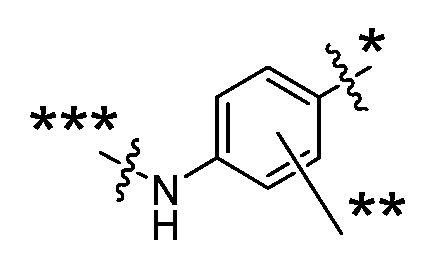
실시양태 88. 실시양태 1 내지 2 중 어느 하나의 화학식 (A')의 화합물 또는 그의 제약상 허용되는 염, 실시양태 33 내지 40 중 어느 하나의 화학식 (C')의 링커 및 실시양태 62 내지 63 중 어느 하나의 화학식 (E')의 면역접합체로서, 여기서Embodiment 88. A compound of formula (A') of any one of
G는 
실시양태 89. 하기인 실시양태 1 내지 17 중 어느 하나의 화학식 (A')의 화합물 또는 그의 제약상 허용되는 염, 실시양태 33 내지 47 중 어느 하나의 화학식 (C')의 링커 및 실시양태 62 내지 72 중 어느 하나의 화학식 (E')의 면역접합체:Embodiment 89. A compound of formula (A') of any one of
L1은 *-C(=O)(CH2)mO(CH2)m-**; *-C(=O)((CH2)mO)t(CH2)n-**; *-C(=O)(CH2)m-**; *-C(=O)NH((CH2)mO)t(CH2)n-**; *-C(=O)O(CH2)mSSC(R3)2(CH2)mC(=O)NR3(CH2)mNR3C(=O)(CH2)m-**; *-C(=O)O(CH2)mC(=O)NH(CH2)m-**; *-C(=O)(CH2)mNH(CH2)m-**; *-C(=O)(CH2)mNH(CH2)nC(=O)-**; *-C(=O)(CH2)mX1(CH2)m-**; *-C(=O)((CH2)mO)t(CH2)nX1(CH2)n-**; *-C(=O)(CH2)mNHC(=O)(CH2)n-**; *-C(=O)((CH2)mO)t(CH2)nNHC(=O)(CH2)n-**; *-C(=O)(CH2)mNHC(=O)(CH2)nX1(CH2)n-**; *-C(=O)((CH2)mO)t(CH2)nNHC(=O)(CH2)nX1(CH2)n-**; *-C(=O)((CH2)mO)t(CH2)nC(=O)NH(CH2)m-**; *-C(=O)(CH2)mC(R3)2-** 또는 *-C(=O)(CH2)mC(=O)NH(CH2)m-**이고, 여기서 L1의 *는 Lp에 대한 부착 지점을 나타내고, L1의 **는 존재하는 경우 R1에 대한 부착 지점을 나타내거나 또는 L1의 **는 존재하는 경우 R100에 대한 부착 지점을 나타낸다.L 1 is *-C(=O)(CH 2 ) m O(CH 2 ) m -**; *-C(=O)((CH 2 ) m O) t (CH 2 ) n -**; *-C(=O)(CH 2 ) m -**; *-C(=O)NH((CH 2 ) m O) t (CH 2 ) n -**; *-C(=O)O(CH 2 ) m SSC(R 3 ) 2 (CH 2 ) m C(=O)NR 3 (CH 2 ) m NR 3 C(=O)(CH 2 ) m -**; *-C(=O)O(CH 2 ) m C(=O)NH(CH 2 ) m -**; *-C(=O)(CH 2 ) m NH(CH 2 ) m -**; *-C(=O)(CH 2 ) m NH(CH 2 ) n C(=O)-**; *-C(=O) ( CH 2 ) m *-C(=O) ( (CH 2 ) m O) t ( CH 2 ) n *-C(=O)(CH 2 ) m NHC(=O)(CH 2 ) n -**; *-C(=O)((CH 2 ) m O) t (CH 2 ) n NHC(=O)(CH 2 ) n -**; *-C(=O) ( CH 2 ) m NHC(=O ) ( CH 2 ) n *-C(=O)((CH 2 ) m O) t (CH 2 ) n NHC(=O)(CH 2 ) n X 1 (CH 2 ) n -**; *-C(=O)((CH 2 ) m O) t (CH 2 ) n C(=O)NH(CH 2 ) m -**; *-C(=O)(CH 2 ) m C(R 3 ) 2 -** or *-C(=O)(CH 2 ) m C(=O)NH(CH 2 ) m -**, wherein the * in L 1 indicates the point of attachment to Lp, and the ** in L 1 indicates the point of attachment to R 1 if present or the ** in L 1 indicates the point of attachment to R 100 if present.
실시양태 90. 하기인 실시양태 1 내지 17 중 어느 하나의 화학식 (A')의 화합물 또는 그의 제약상 허용되는 염, 실시양태 33 내지 47 중 어느 하나의 화학식 (C')의 링커 및 실시양태 62 내지 72 중 어느 하나의 화학식 (E')의 면역접합체:Embodiment 90. A compound of formula (A') of any one of
L1은 *-C(=O)(CH2)mO(CH2)m-**; *-C(=O)((CH2)mO)t(CH2)n-**; *-C(=O)(CH2)m-**; *-C(=O)NH((CH2)mO)t(CH2)n-**; *-C(=O)(CH2)mNH(CH2)m-**; *-C(=O)(CH2)mNH(CH2)nC(=O)-**; *-C(=O)(CH2)mNHC(=O)(CH2)n-**; *-C(=O)((CH2)mO)t(CH2)nNHC(=O)(CH2)n-**; *-C(=O)((CH2)mO)t(CH2)nC(=O)NH(CH2)m-**; *-C(=O)(CH2)mC(R3)2-** 또는 *-C(=O)(CH2)mC(=O)NH(CH2)m-**이고, 여기서 L1의 *는 Lp에 대한 부착 지점을 나타내고, L1의 **는 존재하는 경우 R1에 대한 부착 지점을 나타내거나 또는 L1의 **는 존재하는 경우 R100에 대한 부착 지점을 나타낸다.L 1 is *-C(=O)(CH 2 ) m O(CH 2 ) m -**; *-C(=O)((CH 2 ) m O) t (CH 2 ) n -**; *-C(=O)(CH 2 ) m -**; *-C(=O)NH((CH 2 ) m O) t (CH 2 ) n -**; *-C(=O)(CH 2 ) m NH(CH 2 ) m -**; *-C(=O)(CH 2 ) m NH(CH 2 ) n C(=O)-**; *-C(=O)(CH 2 ) m NHC(=O)(CH 2 ) n -**; *-C(=O)((CH 2 ) m O) t (CH 2 ) n NHC(=O)(CH 2 ) n -**; *-C(=O)((CH 2 ) m O) t (CH 2 ) n C(=O)NH(CH 2 ) m -**; *-C(=O)(CH 2 ) m C(R 3 ) 2 -** or *-C(=O)(CH 2 ) m C(=O)NH(CH 2 ) m -**, wherein the * of L 1 indicates the point of attachment to Lp, and the ** of L 1 indicates the point of attachment to R 1 if present or the ** of L 1 indicates the point of attachment to R 100 if present.
실시양태 91. 하기인 실시양태 1 내지 17 중 어느 하나의 화학식 (A')의 화합물 또는 그의 제약상 허용되는 염, 실시양태 33 내지 47 중 어느 하나의 화학식 (C')의 링커 및 실시양태 62 내지 72 중 어느 하나의 화학식 (E')의 면역접합체:Embodiment 91. A compound of formula (A') of any one of
L1은 *-C(=O)(CH2)mO(CH2)m-**; *-C(=O)((CH2)mO)t(CH2)n-**; *-C(=O)(CH2)m-**; *-C(=O)NH((CH2)mO)t(CH2)n-**; *-C(=O)(CH2)mNH(CH2)m-**; *-C(=O)(CH2)mNH(CH2)nC(=O)-**; 또는 *-C(=O)(CH2)mNHC(=O)(CH2)n-**이고, 여기서 L1의 *는 Lp에 대한 부착 지점을 나타내고, L1의 **는 존재하는 경우 R1에 대한 부착 지점을 나타내거나 또는 L1의 **는 존재하는 경우 R100에 대한 부착 지점을 나타낸다.L 1 is *-C(=O)(CH 2 ) m O(CH 2 ) m -**; *-C(=O)((CH 2 ) m O) t (CH 2 ) n -**; *-C(=O)(CH 2 ) m -**; *-C(=O)NH((CH 2 ) m O) t (CH 2 ) n -**; *-C(=O)(CH 2 ) m NH(CH 2 ) m -**; *-C(=O)(CH 2 ) m NH(CH 2 ) n C(=O)-**; or *-C(=O)(CH 2 ) m NHC(=O)(CH 2 ) n -**, wherein * of L 1 indicates the point of attachment to Lp and ** of L 1 indicates the point of attachment to R 1 , if present, or ** of L 1 indicates the point of attachment to R 100 , if present.
실시양태 92. 하기인 실시양태 1 내지 17 중 어느 하나의 화학식 (A')의 화합물 또는 그의 제약상 허용되는 염, 실시양태 33 내지 47 중 어느 하나의 화학식 (C')의 링커 및 실시양태 62 내지 72 중 어느 하나의 화학식 (E')의 면역접합체:Embodiment 92. A compound of formula (A') of any one of
L1은 *-C(=O)(CH2)mO(CH2)m-**; *-C(=O)((CH2)mO)t(CH2)n-**; *-C(=O)(CH2)m-** 또는 *-C(=O)NH((CH2)mO)t(CH2)n-**이고, 여기서 L1의 *는 Lp에 대한 부착 지점을 나타내고, L1의 **는 존재하는 경우 R1에 대한 부착 지점을 나타내거나 또는 L1의 **는 존재하는 경우 R100에 대한 부착 지점을 나타낸다.L 1 is *-C(=O)(CH 2 ) m O(CH 2 ) m -**; *-C(=O)((CH 2 ) m O) t (CH 2 ) n -**; *-C(=O)(CH 2 ) m -** or *-C(=O)NH((CH 2 ) m O) t (CH 2 ) n -**, wherein the * in L 1 indicates the point of attachment to Lp and the ** in L 1 indicates the point of attachment to R 1 , if present or the ** in L 1 indicates the point of attachment to R 100 , if present.
실시양태 93. 실시양태 1 내지 17 중 어느 하나의 화학식 (A')의 화합물 또는 그의 제약상 허용되는 염, 실시양태 33 내지 47 중 어느 하나의 화학식 (C')의 링커 및 실시양태 62 내지 72 중 어느 하나의 화학식 (E')의 면역접합체로서, 여기서 L1은 *-C(=O)(CH2)mO(CH2)m-**이고, 여기서 L1의 *는 Lp에 대한 부착 지점을 나타내고, L1의 **는 존재하는 경우 R1에 대한 부착 지점을 나타내거나 또는 L1의 **는 존재하는 경우 R100에 대한 부착 지점을 나타내는 것인 화합물 또는 그의 제약상 허용되는 염, 링커 및 면역접합체.Embodiment 93. A compound of formula (A') of any one of
실시양태 94. 실시양태 1 내지 17 중 어느 하나의 화학식 (A')의 화합물 또는 그의 제약상 허용되는 염, 실시양태 33 내지 47 중 어느 하나의 화학식 (C')의 링커 및 실시양태 62 내지 72 중 어느 하나의 화학식 (E')의 면역접합체로서, 여기서 L1은 *-C(=O)((CH2)mO)t(CH2)n-**이고, 여기서 L1의 *는 Lp에 대한 부착 지점을 나타내고, L1의 **는 존재하는 경우 R1에 대한 부착 지점을 나타내거나 또는 L1의 **는 존재하는 경우 R100에 대한 부착 지점을 나타내는 것인 화합물 또는 그의 제약상 허용되는 염, 링커 및 면역접합체.Embodiment 94. A compound of formula (A') of any one of
실시양태 95. 실시양태 1 내지 17 중 어느 하나의 화학식 (A')의 화합물 또는 그의 제약상 허용되는 염, 실시양태 33 내지 47 중 어느 하나의 화학식 (C')의 링커 및 실시양태 62 내지 72 중 어느 하나의 화학식 (E')의 면역접합체로서, 여기서 L1은 *-C(=O)(CH2)m-**이고, 여기서 L1의 *는 Lp에 대한 부착 지점을 나타내고, L1의 **는 존재하는 경우 R1에 대한 부착 지점을 나타내거나 또는 L1의 **는 존재하는 경우 R100에 대한 부착 지점을 나타내는 것인 화합물 또는 그의 제약상 허용되는 염, 링커 및 면역접합체.Embodiment 95. A compound of formula (A') of any one of
실시양태 96. 실시양태 1 내지 17 중 어느 하나의 화학식 (A')의 화합물 또는 그의 제약상 허용되는 염, 실시양태 32 내지 46 중 어느 하나의 화학식 (C')의 링커 및 실시양태 60 내지 70 중 어느 하나의 화학식 (E')의 면역접합체로서, 여기서 L1은 *-C(=O)NH((CH2)mO)t(CH2)n-**이고, 여기서 L1의 *는 Lp에 대한 부착 지점을 나타내고, L1의 **는 존재하는 경우 R1에 대한 부착 지점을 나타내거나 또는 L1의 **는 존재하는 경우 R100에 대한 부착 지점을 나타내는 것인 화합물 또는 그의 제약상 허용되는 염, 링커 및 면역접합체.Embodiment 96. A compound of formula (A') of any one of
실시양태 97. 실시양태 1 내지 17 중 어느 하나의 화학식 (A')의 화합물 또는 그의 제약상 허용되는 염, 실시양태 33 내지 47 중 어느 하나의 화학식 (C')의 링커 및 실시양태 62 내지 72 중 어느 하나 또는 실시양태 84 내지 93 중 어느 하나의 화학식 (E')의 면역접합체로서, 여기서 Lp는 효소적으로 절단가능한 2가 펩티드 스페이서인 화합물 또는 그의 제약상 허용되는 염, 링커 및 면역접합체.Embodiment 97. A compound of formula (A') of any one of
실시양태 98. 실시양태 1 내지 17 중 어느 하나의 화학식 (A')의 화합물 또는 그의 제약상 허용되는 염, 실시양태 32 내지 46 중 어느 하나의 화학식 (C')의 링커 및 실시양태 60 내지 70 중 어느 하나 또는 실시양태 87 내지 97 중 어느 하나의 화학식 (E')의 면역접합체로서, 여기서 Lp는 글리신, 발린, 시트룰린, 리신, 이소류신, 페닐알라닌, 메티오닌, 아스파라긴, 프롤린, 알라닌, 류신, 트립토판 및 티로신으로부터 선택된 아미노산 잔기를 포함하는 2가 펩티드 스페이서인 화합물 또는 그의 제약상 허용되는 염, 링커 및 면역접합체.Embodiment 98. A compound of formula (A') of any one of
실시양태 99. 실시양태 1 내지 17 중 어느 하나의 화학식 (A')의 화합물 또는 그의 제약상 허용되는 염, 실시양태 33 내지 47 중 어느 하나의 화학식 (C')의 링커 및 실시양태 62 내지 72 중 어느 하나 또는 실시양태 87 내지 98 중 어느 하나의 화학식 (E')의 면역접합체로서, 여기서 Lp는 2 내지 4개의 아미노산 잔기를 포함하는 2가 펩티드 스페이서인 화합물 또는 그의 제약상 허용되는 염, 링커 및 면역접합체.
실시양태 100. 실시양태 1 내지 17 중 어느 하나의 화학식 (A')의 화합물 또는 그의 제약상 허용되는 염, 실시양태 33 내지 47 중 어느 하나의 화학식 (C')의 링커 및 실시양태 62 내지 72 중 어느 하나 또는 실시양태 87 내지 99 중 어느 하나의 화학식 (E')의 면역접합체로서, 여기서 Lp는 글리신, 발린, 시트룰린, 리신, 이소류신, 페닐알라닌, 메티오닌, 아스파라긴, 프롤린, 알라닌, 류신, 트립토판 및 티로신으로부터 각각 독립적으로 선택된 2 내지 4개의 아미노산 잔기를 포함하는 2가 펩티드 스페이서인 화합물 또는 그의 제약상 허용되는 염, 링커 및 면역접합체.
실시양태 101. 실시양태 1 내지 17 중 어느 하나의 화학식 (A')의 화합물 또는 그의 제약상 허용되는 염, 실시양태 33 내지 47 중 어느 하나의 화학식 (C')의 링커 및 실시양태 62 내지 72 중 어느 하나 또는 실시양태 87 내지 100 중 어느 하나의 화학식 (E')의 면역접합체로서, 여기서Embodiment 101. A compound of formula (A') of any one of
Lp는 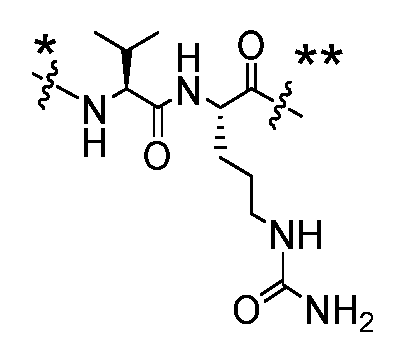
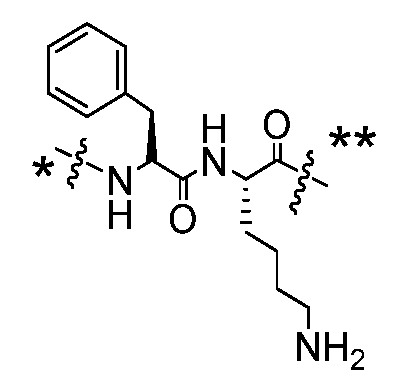


실시양태 102. 실시양태 1 내지 17 중 어느 하나의 화학식 (A')의 화합물 또는 그의 제약상 허용되는 염, 실시양태 33 내지 47 중 어느 하나의 화학식 (C')의 링커 및 실시양태 62 내지 72 중 어느 하나 또는 실시양태 87 내지 101 중 어느 하나의 화학식 (E')의 면역접합체로서, 여기서Embodiment 102. A compound of formula (A') of any one of
Lp는 
실시양태 103. 실시양태 1 내지 17 중 어느 하나의 화학식 (A')의 화합물 또는 그의 제약상 허용되는 염, 실시양태 33 내지 47 중 어느 하나의 화학식 (C')의 링커 및 실시양태 62 내지 72 중 어느 하나 또는 실시양태 87 내지 101 중 어느 하나의 화학식 (E')의 면역접합체로서, 여기서Embodiment 103. A compound of formula (A') of any one of
Lp는 
실시양태 104. 실시양태 1 내지 17 중 어느 하나의 화학식 (A')의 화합물 또는 그의 제약상 허용되는 염, 실시양태 33 내지 47 중 어느 하나의 화학식 (C')의 링커 및 실시양태 62 내지 72 중 어느 하나 또는 실시양태 87 내지 101 중 어느 하나의 화학식 (E')의 면역접합체로서, 여기서Embodiment 104. A compound of formula (A') of any one of
Lp는 
실시양태 105. 실시양태 1 내지 17 중 어느 하나의 화학식 (A')의 화합물 또는 그의 제약상 허용되는 염, 실시양태 33 내지 47 중 어느 하나의 화학식 (C')의 링커 및 실시양태 62 내지 72 중 어느 하나 또는 실시양태 87 내지 101 중 어느 하나의 화학식 (E')의 면역접합체로서, 여기서Embodiment 105. A compound of formula (A') of any one of
Lp는 
실시양태 106. 실시양태 1 내지 17 중 어느 하나의 화학식 (A')의 화합물 또는 그의 제약상 허용되는 염, 실시양태 33 내지 47 중 어느 하나의 화학식 (C')의 링커 및 실시양태 62 내지 72 중 어느 하나 또는 실시양태 87 내지 101 중 어느 하나의 화학식 (E')의 면역접합체로서, 여기서Embodiment 106. A compound of formula (A') of any one of
Lp는 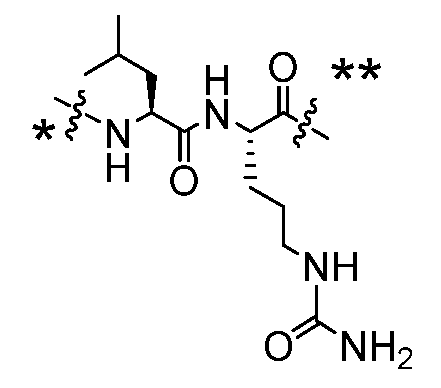
실시양태 107. 실시양태 1 내지 17 중 어느 하나의 화학식 (A')의 화합물 또는 그의 제약상 허용되는 염, 실시양태 33 내지 47 중 어느 하나의 화학식 (C')의 링커 및 실시양태 62 내지 72 중 어느 하나 또는 실시양태 87 내지 106 중 어느 하나의 화학식 (E')의 면역접합체로서, 여기서 L2는 결합, 메틸렌 또는 C2-C3알케닐렌인 화합물 또는 그의 제약상 허용되는 염, 링커 및 면역접합체.Embodiment 107. A compound of formula (A') of any one of
실시양태 108. 실시양태 1 내지 17 중 어느 하나의 화학식 (A')의 화합물 또는 그의 제약상 허용되는 염, 실시양태 33 내지 47 중 어느 하나의 화학식 (C')의 링커 및 실시양태 62 내지 72 중 어느 하나 또는 실시양태 87 내지 107 중 어느 하나의 화학식 (E')의 면역접합체로서, 여기서 L2는 결합, 메틸렌인 화합물 또는 그의 제약상 허용되는 염, 링커 및 면역접합체.Embodiment 108. A compound of formula (A') of any one of
실시양태 109. 실시양태 1 내지 17 중 어느 하나의 화학식 (A')의 화합물 또는 그의 제약상 허용되는 염, 실시양태 33 내지 47 중 어느 하나의 화학식 (C')의 링커 및 실시양태 62 내지 72 중 어느 하나 또는 실시양태 87 내지 108 중 어느 하나의 화학식 (E')의 면역접합체로서, 여기서 L2는 결합인 화합물 또는 그의 제약상 허용되는 염, 링커 및 면역접합체.Embodiment 109. A compound of formula (A') of any one of
실시양태 110. 실시양태 1 내지 17 중 어느 하나의 화학식 (A')의 화합물 또는 그의 제약상 허용되는 염, 실시양태 33 내지 47 중 어느 하나의 화학식 (C')의 링커 및 실시양태 62 내지 72 중 어느 하나 또는 실시양태 87 내지 108 중 어느 하나의 화학식 (E')의 면역접합체로서, 여기서 L2는 메틸렌인 화합물 또는 그의 제약상 허용되는 염, 링커 및 면역접합체.Embodiment 110. A compound of formula (A') of any one of
실시양태 111. 실시양태 1 내지 30 중 어느 하나의 화학식 (A')의 화합물 또는 그의 제약상 허용되는 염, 실시양태 33 내지 47 중 어느 하나의 화학식 (C')의 링커 및 실시양태 62 내지 85 중 어느 하나 또는 실시양태 87 내지 110 중 어느 하나의 화학식 (E')의 면역접합체로서, 여기서 A는 결합, -OC(=O)-, -OC(=O)N(CH3)CH2CH2N(CH3)C(=O)- 또는 -OC(=O)N(CH3)C(Ra)2C(Ra)2N(CH3)C(=O)-이고, 여기서 각각의 Ra는 독립적으로 H, C1-C6알킬 또는 C3-C8시클로알킬로부터 선택된 것인 화합물 또는 그의 제약상 허용되는 염, 링커 및 면역접합체.Embodiment 111. A compound of formula (A') of any one of
실시양태 112. 실시양태 1 내지 32 중 어느 하나의 화학식 (A')의 화합물 또는 그의 제약상 허용되는 염, 실시양태 33 내지 61 중 어느 하나의 화학식 (C')의 링커 및 실시양태 62 내지 86 중 어느 하나 또는 실시양태 87 내지 111 중 어느 하나의 화학식 (E')의 면역접합체로서, 여기서 A는 결합 또는 -OC(=O)인 화합물 또는 그의 제약상 허용되는 염, 링커 및 면역접합체.Embodiment 112. A compound of formula (A') of any one of
실시양태 113. 실시양태 1 내지 32 중 어느 하나의 화학식 (A')의 화합물 또는 그의 제약상 허용되는 염, 실시양태 33 내지 61 중 어느 하나의 화학식 (C')의 링커 및 실시양태 62 내지 86 중 어느 하나 또는 실시양태 87 내지 112 중 어느 하나의 화학식 (E')의 면역접합체로서, 여기서 A는 결합인 화합물 또는 그의 제약상 허용되는 염, 링커 및 면역접합체.Embodiment 113. A compound of formula (A') of any one of
실시양태 114. 실시양태 1 내지 32 중 어느 하나의 화학식 (A')의 화합물 또는 그의 제약상 허용되는 염, 실시양태 33 내지 61 중 어느 하나의 화학식 (C')의 링커 및 실시양태 62 내지 86 중 어느 하나 또는 실시양태 87 내지 112 중 어느 하나의 화학식 (E')의 면역접합체로서, 여기서 A는 -OC(=O)인 화합물 또는 그의 제약상 허용되는 염, 링커 및 면역접합체.Embodiment 114. A compound of formula (A') of any one of
실시양태 115. 실시양태 1 내지 32 중 어느 하나의 화학식 (A')의 화합물 또는 그의 제약상 허용되는 염, 실시양태 33 내지 61 중 어느 하나의 화학식 (C')의 링커 및 실시양태 62 내지 86 중 어느 하나 또는 실시양태 87 내지 110 중 어느 하나의 화학식 (E')의 면역접합체로서, 여기서Embodiment 115. A compound of formula (A') of any one of
A는 
실시양태 116. 실시양태 1 내지 32 중 어느 하나의 화학식 (A')의 화합물 또는 그의 제약상 허용되는 염, 실시양태 33 내지 61 중 어느 하나의 화학식 (C')의 링커 및 실시양태 62 내지 85 중 어느 하나 또는 실시양태 86 내지 110 중 어느 하나의 화학식 (E')의 면역접합체로서, 여기서 A는 -OC(=O)N(CH3)CH2CH2N(CH3)C(=O)- 또는 -OC(=O)N(CH3)C(Ra)2C(Ra)2N(CH3)C(=O)-이고, 여기서 각각의 Ra는 독립적으로 H, C1-C6알킬 또는 C3-C8시클로알킬로부터 선택된 것인 화합물 또는 그의 제약상 허용되는 염, 링커 및 면역접합체.Embodiment 116. A compound of formula (A') of any one of
실시양태 117. 실시양태 1 내지 17 중 어느 하나의 화학식 (A')의 화합물 또는 그의 제약상 허용되는 염, 실시양태 33 내지 49 중 어느 하나의 화학식 (C')의 링커 및 실시양태 62 내지 72 중 어느 하나 또는 실시양태 87 내지 116 중 어느 하나의 화학식 (E')의 면역접합체로서, 여기서Embodiment 117. A compound of formula (A') of any one of
L3은 구조 
여기서Here
W는 -CH2O-**, -CH2N(Rb)C(=O)O-**, -NHC(=O)C(Rb)2NHC(=O)O-**, -NHC(=O)C(Rb)2NH-**, -NHC(=O)C(Rb)2NHC(=O)-**, -CH2N(X-R2)C(=O)O-**, -C(=O)N(X-R2)-**, -CH2N(X-R2)C(=O)-**, -C(=O)NRb-**, -C(=O)NH-**, -CH2NRbC(=O)-**, -CH2NRbC(=O)NH-**, -CH2NRbC(=O)NRb-**, -NHC(=O)-**, -NHC(=O)O-**, -NHC(=O)NH-**, -OC(=O)NH-**, -S(O)2NH-**, -NHS(O)2-**, -C(=O)-, -C(=O)O-** 또는 -NH-이고, 여기서 각각의 Rb는 독립적으로 H, C1-C6알킬 또는 C3-C8 시클로알킬로부터 선택되고, 여기서 W의 **는 X에 대한 부착 지점을 나타내고;W is -CH 2 O-**, -CH 2 N(R b )C(=O)O-**, -NHC(=O)C(R b ) 2 NHC(=O)O-**, -NHC(=O)C(R b ) 2 NH-**, -NHC(=O)C(R b ) 2 NHC(=O)-**, -CH 2 N(XR 2 )C(=O)O-**, -C(=O)N(XR 2 )-**, -CH 2 N(XR 2 )C(=O)-**, -C(=O)NR b -**, -C(=O)NH-**, -CH 2 NR b C(=O)-**, -CH 2 NR b C(=O)NH-**, -CH 2 NR b C(=O)NR b -**, -NHC(=O)-**, -NHC(=O)O-**, -NHC(=O)NH-**, -OC(=O)NH-**, -S(O) 2 NH-**, -NHS(O) 2 -**, -C(=O)-, -C(=O)O-** or -NH-, wherein each R b is independently selected from H, C 1 -C 6 alkyl or C 3 -C 8 cycloalkyl, wherein ** of W represents the point of attachment to X;
X는 결합, 트리아졸릴 또는 ***-CH2-트리아졸릴-*이고, 여기서 X의 ***는 W에 대한 부착 지점을 나타내고, X의 *는 R2에 대한 부착 지점을 나타내고;X is a bond, triazolyl or ***-CH 2 -triazolyl-*, wherein the *** of X indicates the point of attachment to W and the * of X indicates the point of attachment to R 2 ;
L3의 *는 R2에 대한 부착 지점을 나타내는 것인The * in L 3 indicates the attachment point to R 2 .
화합물 또는 그의 제약상 허용되는 염, 링커 및 면역접합체.A compound or a pharmaceutically acceptable salt, linker or immunoconjugate thereof.
실시양태 118. 실시양태 1 내지 17 중 어느 하나의 화학식 (A')의 화합물 또는 그의 제약상 허용되는 염, 실시양태 33 내지 47 중 어느 하나의 화학식 (C')의 링커 및 실시양태 62 내지 72 중 어느 하나 또는 실시양태 87 내지 117 중 어느 하나의 화학식 (E')의 면역접합체로서, 여기서Embodiment 118. A compound of formula (A') of any one of
L3은 구조 
여기서Here
W는 -CH2O-**, -CH2N(Rb)C(=O)O-**, -NHC(=O)CH2NHC(=O)O-**, -NHC(=O)CH2NH-**, -NHC(=O)CH2NHC(=O)-**, -CH2N(X-R2)C(=O)O-**, -C(=O)N(X-R2)-**, -CH2N(X-R2)C(=O)-**, -C(=O)NRb-**, -C(=O)NH-**, -CH2NRbC(=O)-**, -CH2NRbC(=O)NH-**, -CH2NRbC(=O)NRb-**, -NHC(=O)-**, -NHC(=O)O-**, -NHC(=O)NH-**, -OC(=O)NH-**, -S(O)2NH-**, -NHS(O)2-**, -C(=O)-, -C(=O)O-** 또는 -NH-이고, 여기서 각각의 Rb는 독립적으로 H, C1-C6알킬 또는 C3-C8 시클로알킬로부터 선택되고, 여기서 W의 **는 X에 대한 부착 지점을 나타내고;W is -CH 2 O-**, -CH 2 N(R b )C(=O)O-**, -NHC(=O)CH 2 NHC(=O)O-**, -NHC(=O)CH 2 NH-**, -NHC(=O)CH 2 NHC(=O)-**, -CH 2 N(XR 2 )C(=O)O-**, -C(=O)N(XR 2 )-**, -CH 2 N(XR 2 )C(=O)-**, -C(=O)NR b -**, -C(=O)NH-**, -CH 2 NR b C(=O)-**, -CH 2 NR b C(=O)NH-**, -CH 2 NR b C(=O)NR b -**, -NHC(=O)-**, -NHC(=O)O-**, -NHC(=O)NH-**, -OC(=O)NH-**, -S(O) 2 NH-**, -NHS(O) 2 -**, -C(=O)-, -C(=O)O-** or -NH-, wherein each R b is independently selected from H, C 1 -C 6 alkyl or C 3 -C 8 cycloalkyl, wherein ** of W represents the point of attachment to X;
X는 결합이고;X is a bond;
L3의 *는 R2에 대한 부착 지점을 나타내는 것인The * in L 3 indicates the attachment point to R 2 .
화합물 또는 그의 제약상 허용되는 염, 링커 및 면역접합체.A compound or a pharmaceutically acceptable salt, linker or immunoconjugate thereof.
실시양태 119. 실시양태 1 내지 17 중 어느 하나의 화학식 (A')의 화합물 또는 그의 제약상 허용되는 염, 실시양태 33 내지 47 중 어느 하나의 화학식 (C')의 링커 및 실시양태 62 내지 72 중 어느 하나 또는 실시양태 87 내지 118 중 어느 하나의 화학식 (E')의 면역접합체로서, 여기서Embodiment 119. A compound of formula (A') of any one of
L3은 구조 
여기서Here
W는 -CH2O-**, -CH2N(Rb)C(=O)O-**, -NHC(=O)CH2NHC(=O)O-**, -NHC(=O)CH2NH-**, -NHC(=O)CH2NHC(=O)-**, -CH2N(X-R2)C(=O)O-**, -C(=O)N(X-R2)-**, -CH2N(X-R2)C(=O)-**, -C(=O)NRb-**, -C(=O)NH-**, -CH2NRbC(=O)-**, -CH2NRbC(=O)NH-**, -CH2NRbC(=O)NRb-**, -NHC(=O)-**, -NHC(=O)O-**, -NHC(=O)NH-**, -OC(=O)NH-**, -S(O)2NH-**, -NHS(O)2-**, -C(=O)-, -C(=O)O-** 또는 -NH-이고, 여기서 각각의 Rb는 독립적으로 H, C1-C6알킬 또는 C3-C8 시클로알킬로부터 선택되고, 여기서 W의 **는 X에 대한 부착 지점을 나타내고;W is -CH 2 O-**, -CH 2 N(R b )C(=O)O-**, -NHC(=O)CH 2 NHC(=O)O-**, -NHC(=O)CH 2 NH-**, -NHC(=O)CH 2 NHC(=O)-**, -CH 2 N(XR 2 )C(=O)O-**, -C(=O)N(XR 2 )-**, -CH 2 N(XR 2 )C(=O)-**, -C(=O)NR b -**, -C(=O)NH-**, -CH 2 NR b C(=O)-**, -CH 2 NR b C(=O)NH-**, -CH 2 NR b C(=O)NR b -**, -NHC(=O)-**, -NHC(=O)O-**, -NHC(=O)NH-**, -OC(=O)NH-**, -S(O) 2 NH-**, -NHS(O) 2 -**, -C(=O)-, -C(=O)O-** or -NH-, wherein each R b is independently selected from H, C 1 -C 6 alkyl or C 3 -C 8 cycloalkyl, wherein ** of W represents the point of attachment to X;
X는 트리아졸릴이고, 여기서 X의 ***는 W에 대한 부착 지점을 나타내고, X의 *는 R2에 대한 부착 지점을 나타내고;X is triazolyl, wherein *** of X indicates the point of attachment to W and * of X indicates the point of attachment to R 2 ;
L3의 *는 R2에 대한 부착 지점을 나타내는 것인The * in L 3 indicates the attachment point to R 2 .
화합물 또는 그의 제약상 허용되는 염, 링커 및 면역접합체.A compound or a pharmaceutically acceptable salt, linker or immunoconjugate thereof.
실시양태 120. 실시양태 1 내지 17 중 어느 하나의 화학식 (A')의 화합물 또는 그의 제약상 허용되는 염, 실시양태 33 내지 47 중 어느 하나의 화학식 (C')의 링커 및 실시양태 62 내지 72 중 어느 하나 또는 실시양태 87 내지 118 중 어느 하나의 화학식 (E')의 면역접합체로서, 여기서
L3은 구조 
여기서Here
W는 -CH2O-**, -CH2N(Rb)C(=O)O-**, -NHC(=O)CH2NHC(=O)O-**, -NHC(=O)CH2NH-**, -NHC(=O)CH2NHC(=O)-**, -CH2N(X-R2)C(=O)O-**, -C(=O)N(X-R2)-**, -CH2N(X-R2)C(=O)-**, -C(=O)NRb-**, -C(=O)NH-**, -CH2NRbC(=O)-**, -CH2NRbC(=O)NH-**, -CH2NRbC(=O)NRb-**, -NHC(=O)-**, -NHC(=O)O-**, -NHC(=O)NH-**, -OC(=O)NH-**, -S(O)2NH-**, -NHS(O)2-**, -C(=O)-, -C(=O)O-** 또는 -NH-이고, 여기서 각각의 Rb는 독립적으로 H, C1-C6알킬 또는 C3-C8 시클로알킬로부터 선택되고, 여기서 W의 **는 X에 대한 부착 지점을 나타내고;W is -CH 2 O-**, -CH 2 N(R b )C(=O)O-**, -NHC(=O)CH 2 NHC(=O)O-**, -NHC(=O)CH 2 NH-**, -NHC(=O)CH 2 NHC(=O)-**, -CH 2 N(XR 2 )C(=O)O-**, -C(=O)N(XR 2 )-**, -CH 2 N(XR 2 )C(=O)-**, -C(=O)NR b -**, -C(=O)NH-**, -CH 2 NR b C(=O)-**, -CH 2 NR b C(=O)NH-**, -CH 2 NR b C(=O)NR b -**, -NHC(=O)-**, -NHC(=O)O-**, -NHC(=O)NH-**, -OC(=O)NH-**, -S(O) 2 NH-**, -NHS(O) 2 -**, -C(=O)-, -C(=O)O-** or -NH-, wherein each R b is independently selected from H, C 1 -C 6 alkyl or C 3 -C 8 cycloalkyl, wherein ** of W represents the point of attachment to X;
X는 ***-CH2-트리아졸릴-*이고, 여기서 X의 ***는 W에 대한 부착 지점을 나타내고, X의 *는 R2에 대한 부착 지점을 나타내고;X is ***-CH 2 -triazolyl-*, wherein the *** of X indicates the point of attachment to W, and the * of X indicates the point of attachment to R 2 ;
L3의 *는 R2에 대한 부착 지점을 나타내는 것인The * in L 3 indicates the attachment point to R 2 .
화합물 또는 그의 제약상 허용되는 염, 링커 및 면역접합체.A compound or a pharmaceutically acceptable salt, linker or immunoconjugate thereof.
실시양태 121. 실시양태 1 내지 17 중 어느 하나의 화학식 (A')의 화합물 또는 그의 제약상 허용되는 염, 실시양태 33 내지 47 중 어느 하나의 화학식 (C')의 링커 및 실시양태 62 내지 72 중 어느 하나 또는 실시양태 87 내지 118 중 어느 하나의 화학식 (E')의 면역접합체로서, 여기서Embodiment 121. A compound of formula (A') of any one of
L3은 구조 
여기서Here
W는 -CH2O-**, -CH2N(Rb)C(=O)O-**, -NHC(=O)CH2NHC(=O)O-**, -CH2N(X-R2)C(=O)O-**, -C(=O)N(X-R2)-**이고, 여기서 각각의 Rb는 독립적으로 H, C1-C6알킬 또는 C3-C8시클로알킬로부터 선택되고, 여기서 W의 **는 X에 대한 부착 지점을 나타내고;W is -CH 2 O-**, -CH 2 N(R b )C(=O)O-**, -NHC(=O)CH 2 NHC(=O)O-**, -CH 2 N(XR 2 )C(=O)O-**, -C(=O)N(XR 2 )-**, wherein each R b is independently selected from H, C 1 -C 6 alkyl or C 3 -C 8 cycloalkyl, wherein ** of W represents the point of attachment to X;
X는 결합, 트리아졸릴 또는 ***-CH2-트리아졸릴-*이고, 여기서 X의 ***는 W에 대한 부착 지점을 나타내고, X의 *는 R2에 대한 부착 지점을 나타내고;X is a bond, triazolyl or ***-CH 2 -triazolyl-*, wherein the *** of X represents the point of attachment to W and the * of X represents the point of attachment to R 2 ;
L3의 *는 R2에 대한 부착 지점을 나타내는 것인The * in L 3 indicates the attachment point to R 2 .
화합물 또는 그의 제약상 허용되는 염, 링커 및 면역접합체.A compound or a pharmaceutically acceptable salt, linker or immunoconjugate thereof.
실시양태 122. 실시양태 1 내지 17 중 어느 하나의 화학식 (A')의 화합물 또는 그의 제약상 허용되는 염, 실시양태 33 내지 47 중 어느 하나의 화학식 (C')의 링커 및 실시양태 62 내지 72 중 어느 하나 또는 실시양태 87 내지 118 중 어느 하나의 화학식 (E')의 면역접합체로서, 여기서Embodiment 122. A compound of formula (A') of any one of
L3은 구조 
여기서Here
W는 -CH2O-**, -CH2N(Rb)C(=O)O-**, -NHC(=O)CH2NHC(=O)O-**, -CH2N(X-R2)C(=O)O-**, -C(=O)N(X-R2)-**이고, 여기서 각각의 Rb는 독립적으로 H, C1-C6알킬 또는 C3-C8시클로알킬로부터 선택되고, 여기서 W의 **는 X에 대한 부착 지점을 나타내고;W is -CH 2 O-**, -CH 2 N(R b )C(=O)O-**, -NHC(=O)CH 2 NHC(=O)O-**, -CH 2 N(XR 2 )C(=O)O-**, -C(=O)N(XR 2 )-**, wherein each R b is independently selected from H, C 1 -C 6 alkyl or C 3 -C 8 cycloalkyl, wherein ** of W represents the point of attachment to X;
X는 결합이고;X is a bond;
L3의 *는 R2에 대한 부착 지점을 나타내는 것인The * in L 3 indicates the attachment point to R 2 .
화합물 또는 그의 제약상 허용되는 염, 링커 및 면역접합체.A compound or a pharmaceutically acceptable salt, linker or immunoconjugate thereof.
실시양태 123. 실시양태 1 내지 17 중 어느 하나의 화학식 (A')의 화합물 또는 그의 제약상 허용되는 염, 실시양태 33 내지 47 중 어느 하나의 화학식 (C')의 링커 및 실시양태 62 내지 72 중 어느 하나 또는 실시양태 83 내지 118 중 어느 하나의 화학식 (E')의 면역접합체로서, 여기서Embodiment 123. A compound of formula (A') of any one of
L3은 구조 
여기서Here
W는 -CH2O-**, -CH2N(Rb)C(=O)O-**, -NHC(=O)CH2NHC(=O)O-**, -CH2N(X-R2)C(=O)O-**, -C(=O)N(X-R2)-**이고, 여기서 각각의 Rb는 독립적으로 H, C1-C6알킬 또는 C3-C8시클로알킬로부터 선택되고, 여기서 W의 **는 X에 대한 부착 지점을 나타내고;W is -CH 2 O-**, -CH 2 N(R b )C(=O)O-**, -NHC(=O)CH 2 NHC(=O)O-**, -CH 2 N(XR 2 )C(=O)O-**, -C(=O)N(XR 2 )-**, wherein each R b is independently selected from H, C 1 -C 6 alkyl or C 3 -C 8 cycloalkyl, wherein ** of W represents the point of attachment to X;
X는 트리아졸릴이고, 여기서 X의 ***는 W에 대한 부착 지점을 나타내고, X의 *는 R2에 대한 부착 지점을 나타내고;X is triazolyl, wherein *** of X indicates the point of attachment to W and * of X indicates the point of attachment to R 2 ;
L3의 *는 R2에 대한 부착 지점을 나타내는 것인The * in L 3 indicates the attachment point to R 2 .
화합물 또는 그의 제약상 허용되는 염, 링커 및 면역접합체.A compound or a pharmaceutically acceptable salt, linker or immunoconjugate thereof.
실시양태 124. 실시양태 1 내지 17 중 어느 하나의 화학식 (A')의 화합물 또는 그의 제약상 허용되는 염, 실시양태 33 내지 47 중 어느 하나의 화학식 (C')의 링커 및 실시양태 62 내지 72 중 어느 하나 또는 실시양태 87 내지 118 중 어느 하나의 화학식 (E')의 면역접합체로서, 여기서Embodiment 124. A compound of formula (A') of any one of
L3은 구조 
여기서Here
W는 -CH2O-**, -CH2N(Rb)C(=O)O-**, -NHC(=O)CH2NHC(=O)O-**, -CH2N(X-R2)C(=O)O-**, -C(=O)N(X-R2)-**이고, 여기서 각각의 Rb는 독립적으로 H, C1-C6알킬 또는 C3-C8시클로알킬로부터 선택되고, 여기서 W의 **는 X에 대한 부착 지점을 나타내고;W is -CH 2 O-**, -CH 2 N(R b )C(=O)O-**, -NHC(=O)CH 2 NHC(=O)O-**, -CH 2 N(XR 2 )C(=O)O-**, -C(=O)N(XR 2 )-**, wherein each R b is independently selected from H, C 1 -C 6 alkyl or C 3 -C 8 cycloalkyl, wherein ** of W represents the point of attachment to X;
X는 ***-CH2-트리아졸릴-*이고, 여기서 X의 ***는 W에 대한 부착 지점을 나타내고, X의 *는 R2에 대한 부착 지점을 나타내고;X is ***-CH 2 -triazolyl-*, wherein the *** of X indicates the point of attachment to W, and the * of X indicates the point of attachment to R 2 ;
L3의 *는 R2에 대한 부착 지점을 나타내는 것인The * in L 3 indicates the attachment point to R 2 .
화합물 또는 그의 제약상 허용되는 염, 링커 및 면역접합체.A compound or a pharmaceutically acceptable salt, linker or immunoconjugate thereof.
실시양태 125. 실시양태 1 내지 17 중 어느 하나의 화학식 (A')의 화합물 또는 그의 제약상 허용되는 염, 실시양태 33 내지 47 중 어느 하나의 화학식 (C')의 링커 및 실시양태 62 내지 72 중 어느 하나 또는 실시양태 86 내지 124 중 어느 하나의 화학식 (E')의 면역접합체로서, 여기서 R2는 폴리에틸렌 글리콜, 폴리알킬렌 글리콜, 당, 올리고사카라이드, 폴리펩티드 또는 1 내지 3개의 
실시양태 126. 실시양태 1 내지 17 중 어느 하나의 화학식 (A')의 화합물 또는 그의 제약상 허용되는 염, 실시양태 33 내지 47 중 어느 하나의 화학식 (C')의 링커 및 실시양태 62 내지 72 중 어느 하나 또는 실시양태 87 내지 125 중 어느 하나의 화학식 (E')의 면역접합체로서, 여기서 R2는 당인 화합물 또는 그의 제약상 허용되는 염, 링커 및 면역접합체.Embodiment 126. A compound of formula (A') of any one of
실시양태 127. 실시양태 1 내지 17 중 어느 하나의 화학식 (A')의 화합물 또는 그의 제약상 허용되는 염, 실시양태 33 내지 47 중 어느 하나의 화학식 (C')의 링커 및 실시양태 62 내지 72 중 어느 하나 또는 실시양태 87 내지 125 중 어느 하나의 화학식 (E')의 면역접합체로서, 여기서 R2는 올리고사카라이드인 화합물 또는 그의 제약상 허용되는 염, 링커 및 면역접합체.Embodiment 127. A compound of formula (A') of any one of
실시양태 128. 실시양태 1 내지 17 중 어느 하나의 화학식 (A')의 화합물 또는 그의 제약상 허용되는 염, 실시양태 33 내지 47 중 어느 하나의 화학식 (C')의 링커 및 실시양태 62 내지 72 중 어느 하나 또는 실시양태 87 내지 125 중 어느 하나의 화학식 (E')의 면역접합체로서, 여기서 R2는 폴리펩티드인 화합물 또는 그의 제약상 허용되는 염, 링커 및 면역접합체.Embodiment 128. A compound of formula (A') of any one of
실시양태 129. 실시양태 1 내지 17 중 어느 하나의 화학식 (A')의 화합물 또는 그의 제약상 허용되는 염, 실시양태 33 내지 47 중 어느 하나의 화학식 (C')의 링커 및 실시양태 62 내지 72 중 어느 하나 또는 실시양태 87 내지 125 중 어느 하나의 화학식 (E')의 면역접합체로서, 여기서 R2는 폴리알킬렌 글리콜인 화합물 또는 그의 제약상 허용되는 염, 링커 및 면역접합체.Embodiment 129. A compound of formula (A') of any one of
실시양태 130. 실시양태 1 내지 17 중 어느 하나의 화학식 (A')의 화합물 또는 그의 제약상 허용되는 염, 실시양태 33 내지 47 중 어느 하나의 화학식 (C')의 링커 및 실시양태 62 내지 72 중 어느 하나 또는 실시양태 87 내지 125 중 어느 하나의 화학식 (E')의 면역접합체로서, 여기서 R2는 구조 -(O(CH2)m)tR'를 갖는 폴리알킬렌 글리콜이고, 여기서 R'는 OH, OCH3 또는 OCH2CH2C(=O)OH이고, m은 1-10이고, t는 4-40인 화합물 또는 그의 제약상 허용되는 염, 링커 및 면역접합체.Embodiment 130. A compound of formula (A') of any one of
실시양태 131. 실시양태 1 내지 17 중 어느 하나의 화학식 (A')의 화합물 또는 그의 제약상 허용되는 염, 실시양태 33 내지 47 중 어느 하나의 화학식 (C')의 링커 및 실시양태 62 내지 72 중 어느 하나 또는 실시양태 87 내지 125 중 어느 하나의 화학식 (E')의 면역접합체로서, 여기서 R2는 구조 -((CH2)mO)tR"-를 갖는 폴리알킬렌 글리콜이고, 여기서 R"는 H, CH3 또는 CH2CH2C(=O)OH이고, m은 1-10이고, t는 4-40인 화합물 또는 그의 제약상 허용되는 염, 링커 및 면역접합체.Embodiment 131. A compound of formula (A') of any one of
실시양태 132. 실시양태 1 내지 17 중 어느 하나의 화학식 (A')의 화합물 또는 그의 제약상 허용되는 염, 실시양태 33 내지 47 중 어느 하나의 화학식 (C')의 링커 및 실시양태 62 내지 72 중 어느 하나 또는 실시양태 87 내지 125 중 어느 하나의 화학식 (E')의 면역접합체로서, 여기서 R2는 폴리에틸렌 글리콜인 화합물 또는 그의 제약상 허용되는 염, 링커 및 면역접합체.Embodiment 132. A compound of formula (A') of any one of
실시양태 133. 실시양태 1 내지 17 중 어느 하나의 화학식 (A')의 화합물 또는 그의 제약상 허용되는 염, 실시양태 33 내지 47 중 어느 하나의 화학식 (C')의 링커 및 실시양태 62 내지 72 중 어느 하나 또는 실시양태 87 내지 125 중 어느 하나의 화학식 (E')의 면역접합체로서, 여기서 R2는 구조 -(OCH2CH2)tR'를 갖는 폴리에틸렌 글리콜이고, 여기서 R'는 OH, OCH3 또는 OCH2CH2C(=O)OH이고, t는 4-40인 화합물 또는 그의 제약상 허용되는 염, 링커 및 면역접합체.Embodiment 133. A compound of formula (A') of any one of
실시양태 134. 실시양태 1 내지 17 중 어느 하나의 화학식 (A')의 화합물 또는 그의 제약상 허용되는 염, 실시양태 33 내지 47 중 어느 하나의 화학식 (C')의 링커 및 실시양태 62 내지 72 중 어느 하나 또는 실시양태 87 내지 125 중 어느 하나의 화학식 (E')의 면역접합체로서, 여기서 R2는 구조 -(CH2CH2O)tR"-를 갖는 폴리에틸렌 글리콜이고, 여기서 R"는 H, CH3 또는 CH2CH2C(=O)OH이고, t는 4-40인 화합물 또는 그의 제약상 허용되는 염, 링커 및 면역접합체.Embodiment 134. A compound of formula (A') of any one of
실시양태 135. 실시양태 1 내지 17 중 어느 하나의 화학식 (A')의 화합물 또는 그의 제약상 허용되는 염, 실시양태 33 내지 47 중 어느 하나의 화학식 (C')의 링커 및 실시양태 62 내지 72 중 어느 하나 또는 실시양태 87 내지 125 중 어느 하나의 화학식 (E')의 면역접합체로서, 여기서Embodiment 135. A compound of formula (A') of any one of
R2는R 2 is

실시양태 136. 실시양태 1 내지 17 중 어느 하나의 화학식 (A')의 화합물 또는 그의 제약상 허용되는 염, 실시양태 33 내지 47 중 어느 하나의 화학식 (C')의 링커 및 실시양태 62 내지 72 중 어느 하나 또는 실시양태 87 내지 125 중 어느 하나의 화학식 (E')의 면역접합체로서, 여기서Embodiment 136. A compound of formula (A') of any one of
R2는R 2 is

실시양태 137. 실시양태 1 내지 17 중 어느 하나의 화학식 (A')의 화합물 또는 그의 제약상 허용되는 염, 실시양태 33 내지 47 중 어느 하나의 화학식 (C')의 링커 및 실시양태 62 내지 72 중 어느 하나 또는 실시양태 87 내지 125 중 어느 하나의 화학식 (E')의 면역접합체로서, 여기서Embodiment 137. A compound of formula (A') of any one of
R2는 
실시양태 138. 실시양태 1 내지 17 중 어느 하나의 화학식 (A')의 화합물 또는 그의 제약상 허용되는 염, 실시양태 33 내지 47 중 어느 하나의 화학식 (C')의 링커 및 실시양태 62 내지 72 중 어느 하나 또는 실시양태 87 내지 125 중 어느 하나의 화학식 (E')의 면역접합체로서, 여기서Embodiment 138. A compound of formula (A') of any one of
R2는 
실시양태 139. 실시양태 1 내지 17 중 어느 하나의 화학식 (A')의 화합물 또는 그의 제약상 허용되는 염, 실시양태 33 내지 47 중 어느 하나의 화학식 (C')의 링커 및 실시양태 62 내지 72 중 어느 하나 또는 실시양태 87 내지 138 중 어느 하나의 화학식 (E')의 면역접합체로서, 여기서Embodiment 139. A compound of formula (A') of any one of
X1은 
실시양태 140. 실시양태 1 내지 17 중 어느 하나의 화학식 (A')의 화합물 또는 그의 제약상 허용되는 염, 실시양태 33 내지 47 중 어느 하나의 화학식 (C')의 링커 및 실시양태 62 내지 72 중 어느 하나 또는 실시양태 87 내지 138 중 어느 하나의 화학식 (E')의 면역접합체로서, 여기서Embodiment 140. A compound of formula (A') of any one of
X1은 
실시양태 141. 실시양태 1 내지 17 중 어느 하나의 화학식 (A')의 화합물 또는 그의 제약상 허용되는 염, 실시양태 33 내지 47 중 어느 하나의 화학식 (C')의 링커 및 실시양태 62 내지 72 중 어느 하나 또는 실시양태 87 내지 140 중 어느 하나의 화학식 (E')의 면역접합체로서, 여기서 각각의 m은 독립적으로 1, 2, 3, 4 및 5로부터 선택된 것인 화합물 또는 그의 제약상 허용되는 염, 링커 및 면역접합체.Embodiment 141. A compound of formula (A') of any one of
실시양태 142. 실시양태 1 내지 17 중 어느 하나의 화학식 (A')의 화합물 또는 그의 제약상 허용되는 염, 실시양태 33 내지 47 중 어느 하나의 화학식 (C')의 링커 및 실시양태 62 내지 72 중 어느 하나 또는 실시양태 87 내지 140 중 어느 하나의 화학식 (E')의 면역접합체로서, 여기서 각각의 m은 독립적으로 1, 2 및 3으로부터 선택된 것인 화합물 또는 그의 제약상 허용되는 염, 링커 및 면역접합체.Embodiment 142. A compound of formula (A') of any one of
실시양태 143. 실시양태 1 내지 17 중 어느 하나의 화학식 (A')의 화합물 또는 그의 제약상 허용되는 염, 실시양태 33 내지 47 중 어느 하나의 화학식 (C')의 링커 및 실시양태 62 내지 72 중 어느 하나 또는 실시양태 87 내지 142 중 어느 하나의 화학식 (E')의 면역접합체로서, 여기서 각각의 n은 독립적으로 1, 2, 3, 4 및 5로부터 선택된 것인 화합물 또는 그의 제약상 허용되는 염, 링커 및 면역접합체.Embodiment 143. A compound of formula (A') of any one of
실시양태 144. 실시양태 1 내지 17 중 어느 하나의 화학식 (A')의 화합물 또는 그의 제약상 허용되는 염, 실시양태 33 내지 47 중 어느 하나의 화학식 (C')의 링커 및 실시양태 62 내지 72 중 어느 하나 또는 실시양태 87 내지 142 중 어느 하나의 화학식 (E')의 면역접합체로서, 여기서 각각의 n은 독립적으로 1, 2 및 3으로부터 선택된 것인 화합물 또는 그의 제약상 허용되는 염, 링커 및 면역접합체.Embodiment 144. A compound of formula (A') of any one of
실시양태 145. 실시양태 1 내지 17 중 어느 하나의 화학식 (A')의 화합물 또는 그의 제약상 허용되는 염, 실시양태 33 내지 47 중 어느 하나의 화학식 (C')의 링커 및 실시양태 62 내지 72 중 어느 하나 또는 실시양태 87 내지 144 중 어느 하나의 화학식 (E')의 면역접합체로서, 여기서 각각의 t는 독립적으로 2, 3, 4, 5, 6, 7, 8, 9, 10, 11, 12, 13, 14, 15, 16, 17, 18, 19, 20, 21, 22, 23, 24, 25, 26, 27, 28, 29 및 30으로부터 선택된 것인 화합물 또는 그의 제약상 허용되는 염, 링커 및 면역접합체.Embodiment 145. A compound of formula (A') of any one of
실시양태 146. 실시양태 1 내지 17 중 어느 하나의 화학식 (A')의 화합물 또는 그의 제약상 허용되는 염, 실시양태 33 내지 47 중 어느 하나의 화학식 (C')의 링커 및 실시양태 62 내지 72 중 어느 하나 또는 실시양태 87 내지 144 중 어느 하나의 화학식 (E')의 면역접합체로서, 여기서 각각의 t는 독립적으로 4, 5, 6, 7, 8, 9, 10, 11, 12, 13, 14, 15, 16, 17, 18, 19, 20, 21, 22, 23, 24 또는 25로부터 선택된 것인 화합물 또는 그의 제약상 허용되는 염, 링커 및 면역접합체.Embodiment 146. A compound of formula (A') of any one of
실시양태 147. 실시양태 1 내지 17 중 어느 하나의 화학식 (A')의 화합물 또는 그의 제약상 허용되는 염, 실시양태 33 내지 47 중 어느 하나의 화학식 (C')의 링커 및 실시양태 62 내지 72 중 어느 하나 또는 실시양태 87 내지 144 중 어느 하나의 화학식 (E')의 면역접합체로서, 여기서 각각의 t는 독립적으로 1, 2, 3, 4, 5, 6, 7, 8, 9, 10, 11, 12, 13, 14, 15, 16, 17 및 18로부터 선택된 것인 화합물 또는 그의 제약상 허용되는 염, 링커 및 면역접합체.Embodiment 147. A compound of formula (A') of any one of
실시양태 148. 실시양태 62 내지 72 중 어느 하나 또는 실시양태 87 내지 147 중 어느 하나에 있어서, y가 1, 2, 3, 4, 5, 6, 7, 8, 9, 10, 11, 12, 13 또는 14인 화학식 (E')의 면역접합체.Embodiment 148. An immunoconjugate of formula (E') according to any one of embodiments 62 to 72 or any one of embodiments 87 to 147, wherein y is 1, 2, 3, 4, 5, 6, 7, 8, 9, 10, 11, 12, 13 or 14.
실시양태 149. 실시양태 62 내지 72 중 어느 하나 또는 실시양태 87 내지 147 중 어느 하나에 있어서, y가 1, 2, 3, 4, 5, 6, 7, 8, 9, 10, 11 또는 12인 화학식 (E')의 면역접합체.Embodiment 149. An immunoconjugate of formula (E') according to any one of embodiments 62 to 72 or any one of embodiments 87 to 147, wherein y is 1, 2, 3, 4, 5, 6, 7, 8, 9, 10, 11 or 12.
실시양태 150. 실시양태 62 내지 72 중 어느 하나 또는 실시양태 87 내지 147 중 어느 하나에 있어서, y가 1, 2, 3, 4, 5, 6, 7, 8, 9 또는 10인 화학식 (E')의 면역접합체.
실시양태 151. 실시양태 62 내지 72 중 어느 하나 또는 실시양태 87 내지 147 중 어느 하나에 있어서, y가 1, 2, 3, 4, 5, 6, 7 또는 8인 화학식 (E')의 면역접합체.Embodiment 151. An immunoconjugate of formula (E') according to any one of embodiments 62 to 72 or any one of embodiments 87 to 147, wherein y is 1, 2, 3, 4, 5, 6, 7 or 8.
실시양태 152. 실시양태 62 내지 72 중 어느 하나 또는 실시양태 87 내지 147 중 어느 하나에 있어서, y가 1, 2, 3, 4, 5 또는 6인 화학식 (E')의 면역접합체.Embodiment 152. An immunoconjugate of formula (E') according to any one of embodiments 62 to 72 or any one of embodiments 87 to 147, wherein y is 1, 2, 3, 4, 5 or 6.
실시양태 153. 실시양태 62 내지 72 중 어느 하나 또는 실시양태 87 내지 147 중 어느 하나에 있어서, y가 1, 2, 3 또는 4인 화학식 (E')의 면역접합체.Embodiment 153. An immunoconjugate of formula (E') according to any one of embodiments 62 to 72 or any one of embodiments 87 to 147, wherein y is 1, 2, 3 or 4.
실시양태 154. 실시양태 62 내지 72 중 어느 하나 또는 실시양태 87 내지 147 중 어느 하나에 있어서, y가 1 또는 2인 화학식 (E')의 면역접합체.Embodiment 154. An immunoconjugate of formula (E') according to any one of embodiments 62 to 72 or any one of embodiments 87 to 147, wherein y is 1 or 2.
실시양태 155. 실시양태 62 내지 72 중 어느 하나 또는 실시양태 87 내지 147 중 어느 하나에 있어서, y가 2인 화학식 (E')의 면역접합체.Embodiment 155. An immunoconjugate of formula (E') according to any one of embodiments 62 to 72 or any one of embodiments 87 to 147, wherein y is 2.
실시양태 156. 실시양태 62 내지 72 중 어느 하나 또는 실시양태 87 내지 147 중 어느 하나에 있어서, y가 4인 화학식 (E')의 면역접합체.Embodiment 156. An immunoconjugate of formula (E') according to any one of embodiments 62 to 72 or any one of embodiments 87 to 147, wherein y is 4.
실시양태 157. 실시양태 62 내지 72 중 어느 하나 또는 실시양태 87 내지 147 중 어느 하나에 있어서, y가 6인 화학식 (E')의 면역접합체.Embodiment 157. An immunoconjugate of formula (E') according to any one of embodiments 62 to 72 or any one of embodiments 87 to 147, wherein y is 6.
실시양태 158. 실시양태 62 내지 72 중 어느 하나 또는 실시양태 87 내지 147 중 어느 하나에 있어서, y가 8인 화학식 (E')의 면역접합체.Embodiment 158. An immunoconjugate of formula (E') according to any one of embodiments 62 to 72 or any one of embodiments 87 to 147, wherein y is 8.
실시양태 159. 실시양태 1 내지 31 중 어느 하나의 화학식 (A')의 화합물 또는 그의 제약상 허용되는 염, 실시양태 62 내지 72 중 어느 하나 또는 실시양태 87 내지 158 중 어느 하나의 화학식 (E')의 면역접합체로서, 여기서 D는 면역접합체로부터 방출되는 경우에 Bcl-xL 억제제인 화합물 또는 그의 제약상 허용되는 염 및 면역접합체.Embodiment 159. A compound of formula (A') of any one of
다른 링커 기Other linker devices
본원에 개시된 Bcl-xL 억제제의 ADC 또는 면역접합체를 제조하는 데 적합한 링커 기의 다른 예는 국제 출원 공개, 예컨대 WO2018200812, WO2017214456, WO2017214458, WO2017214462, WO2017214233, WO2017214282, WO2017214301, WO2017214322, WO2017214335, WO2017214339, WO2016094509, WO2016094517 및 WO2016094505에 개시된 것을 포함하며, 이들 각각의 내용은 그 전문이 참조로 포함된다.Other examples of linker groups suitable for preparing ADCs or immunoconjugates of the Bcl-xL inhibitors disclosed herein include those disclosed in international patent publications, such as WO2018200812, WO2017214456, WO2017214458, WO2017214462, WO2017214233, WO2017214282, WO2017214301, WO2017214322, WO2017214335, WO2017214339, WO2016094509, WO2016094517, and WO2016094505, the contents of each of which are incorporated by reference in their entireties.
예를 들어, 본원에 개시된 Bcl-xL 억제제의 면역접합체는 하기로부터 선택된 링커-페이로드 ("-L-D") 구조를 가질 수 있다:For example, immunoconjugates of Bcl-xL inhibitors disclosed herein can have a linker-payload (“-L-D”) structure selected from:

여기서Here
Lc는 링커 성분이고, 각각의 Lc는 독립적으로 본원에 개시된 바와 같은 링커 성분으로부터 선택되고;Lc is a linker component, and each Lc is independently selected from a linker component as disclosed herein;
x는 1, 2, 3, 4, 5, 6, 7, 8, 9, 10, 11, 12, 13, 14, 15, 16, 17, 18, 19 및 20으로부터 선택된 정수이고;x is an integer chosen from 1, 2, 3, 4, 5, 6, 7, 8, 9, 10, 11, 12, 13, 14, 15, 16, 17, 18, 19, and 20;
y는 1, 2, 3, 4, 5, 6, 7, 8, 9, 10, 11, 12, 13, 14, 15, 16, 17, 18, 19 및 20으로부터 선택된 정수이고;y is an integer chosen from 1, 2, 3, 4, 5, 6, 7, 8, 9, 10, 11, 12, 13, 14, 15, 16, 17, 18, 19, and 20;
p는 1, 2, 3, 4, 5, 6, 7, 8, 9 및 10으로부터 선택된 정수이고;p is an integer chosen from 1, 2, 3, 4, 5, 6, 7, 8, 9, and 10;
D는 본원에 개시된 Bcl-xL 억제제이고;D is a Bcl-xL inhibitor disclosed herein;
각각의 절단 요소 (CE)는 독립적으로 자기 희생적 스페이서 및 산-유도된 절단, 펩티다제-유도된 절단, 에스테라제-유도된 절단, 글리코시다제 유도된 절단, 포스포디에스테라제 유도된 절단, 포스파타제 유도된 절단, 프로테아제 유도된 절단, 리파제 유도된 절단 또는 디술피드 결합 절단으로부터 선택된 절단에 감수성인 기로부터 선택된다.Each cleavage element (C E ) is independently selected from a self-immolative spacer and a group susceptible to a cleavage selected from acid-induced cleavage, peptidase-induced cleavage, esterase-induced cleavage, glycosidase-induced cleavage, phosphodiesterase-induced cleavage, phosphatase-induced cleavage, protease-induced cleavage, lipase-induced cleavage or disulfide bond cleavage.
일부 실시양태에서, L은 하기로부터 선택된 구조를 갖거나 또는 L은 하기로부터 선택된 구조적 성분을 포함한다:In some embodiments, L has a structure selected from or L comprises a structural component selected from:


일부 실시양태에서, Lc는 링커 성분이고, 각각의 Lc는 독립적으로 하기로부터 선택된다:In some embodiments, Lc is a linker component, and each Lc is independently selected from:
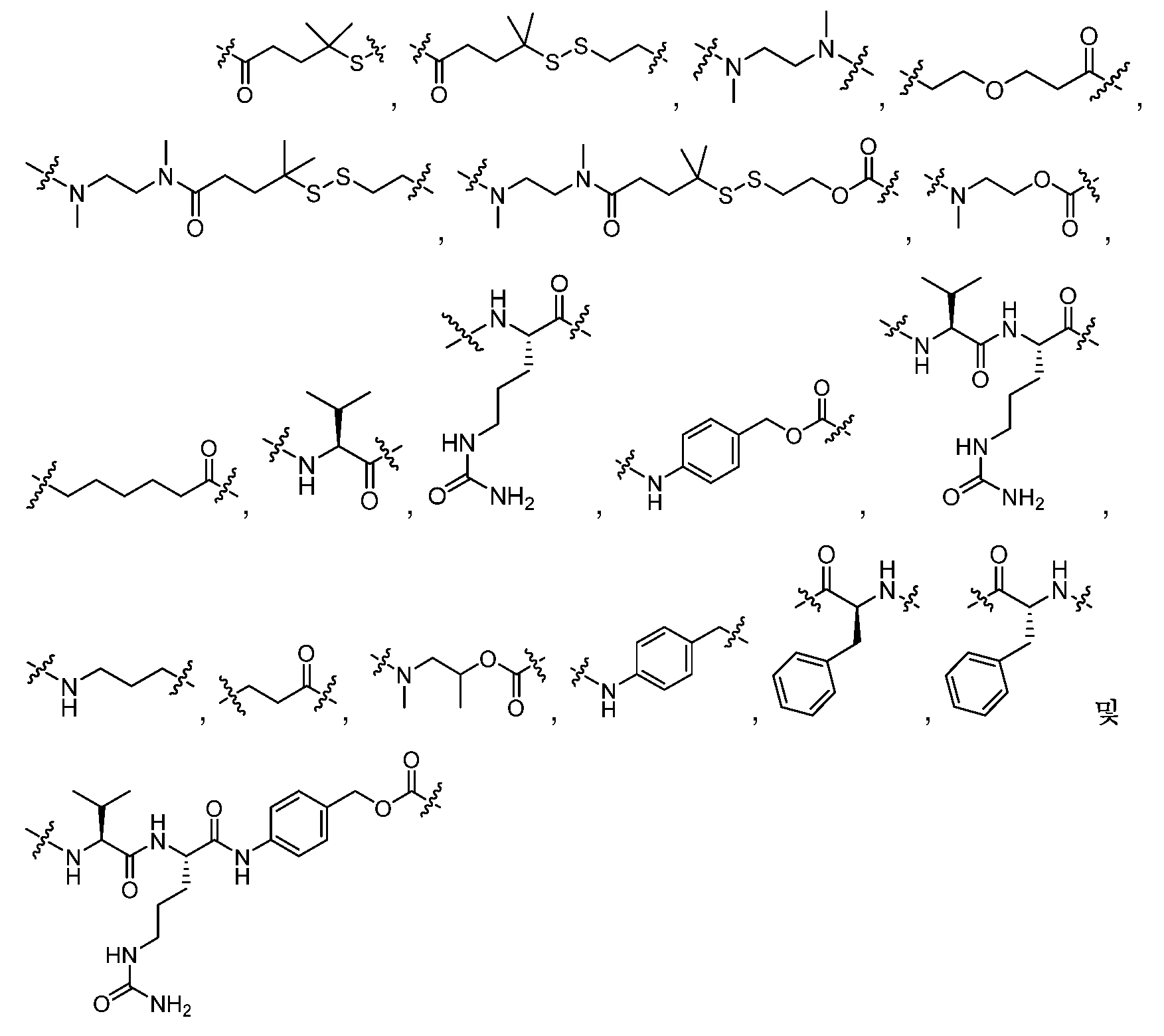
일부 실시양태에서, 링커 L은 하기로부터 선택된 링커 성분을 포함한다:In some embodiments, linker L comprises a linker component selected from:
-**C(=O)O(CH2)mNR11C(=O)(CH2)m-; -**C(=O)O(CH2)mNR11C(=O)(CH2)mO(CH2)m-;-**C(=O)O(CH 2 ) m NR 11 C(=O)(CH 2 ) m -; -**C(=O)O(CH 2 ) m NR 11 C(=O)(CH 2 ) m O(CH 2 ) m -;
-**C(=O)O(CH2)mNR11C(=O)X1aX2aC(=O)(CH2)m-;-**C(=O)O(CH 2 ) m NR 11 C (= O ) X 1a
-**C(=O)OC(R12)2(CH2)mNR11C(=O)X1aX2aC(=O)(CH2)m-;-**C(=O)OC(R 12 ) 2 (CH 2 ) m NR 11 C (= O ) X 1a
-**C(=O)O(CH2)mNR11C(=O)X1aX2aC(=O)(CH2)mO(CH2)m-; - **C(=O)O(CH 2 ) m NR 11 C (= O ) X 1a
-**C(=O)O(CH2)mNR11C(=O)X1aX2aC(=O)(CH2)mO(CH2)mC(=O)-;-**C(=O)O(CH 2 ) m NR 11 C ( = O ) X 1a
-**C(=O)O(CH2)mNR11C(=O)X4C(=O)NR11(CH2)mNR11C(=O)(CH2)mO(CH2)m-;-**C(=O)O(CH 2 ) m NR 11 C(=O)X 4 C(=O)NR 11 (CH 2 ) m NR 11 C(=O)(CH 2 ) m O(CH 2 ) m -;
-**C(=O)O(CH2)mNR11C(=O)X5C(=O)(CH2)mNR11C(=O)(CH2)m-;-**C(=O)O(CH 2 ) m NR 11 C(=O)X 5 C(=O)(CH 2 ) m NR 11 C(=O)(CH 2 ) m -;
-**C(=O)X4C(=O)NR11(CH2)mNR11C(=O)(CH2)mO(CH2)m-;-**C(=O)X 4 C(=O)NR 11 (CH 2 ) m NR 11 C(=O)(CH 2 ) m O(CH 2 ) m -;
-**C(=O)(CH2)mNR11C(=O)X1aX2aC(=O)(CH2)m-;-**C(=O)(CH 2 ) m NR 11 C (= O ) X 1a
-**C(=O)O(CH2)mX6C(=O)X1aX2aC(=O)(CH2)m-;-**C ( =O) O ( CH 2 ) m
-**C(=O)(CH2)mNR11C(=O)((CH2)mO)n(CH2)m--**C(=O)(CH 2 ) m NR 11 C(=O)((CH 2 ) m O) n (CH 2 ) m -
-**C(=O)O(CH2)mX6C(=O)(CH2)m-; -**C(=O)O(CH2)mX6C(=O)(CH2)mO(CH2)m-;-**C(= O ) O (CH 2 ) m - **C ( =O) O ( CH 2 ) m
-**C(=O)O(CH2)mX6C(=O)X1aX2aC(=O)(CH2)m-;-**C ( =O) O ( CH 2 ) m
-**C(=O)O(CH2)mX6C(=O)X1aX2aC(=O)(CH2)mO(CH2)m-;-**C ( = O ) O ( CH 2 ) m
-**C(=O)O(CH2)mX6C(=O)X1aX2aC(=O)(CH2)mO(CH2)mC(=O)-;-**C ( = O ) O ( CH 2 ) m
-**C(=O)O(CH2)mX6C(=O)X4C(=O)NR11(CH2)mNR11C(=O)(CH2)mO(CH2)m-; - ** C ( = O ) O ( CH 2 ) m
-**C(=O)X4C(=O)X6(CH2)mNR11C(=O)(CH2)mO(CH2)m-;-**C(=O)X 4 C(=O)X 6 (CH 2 ) m NR 11 C(=O)(CH 2 ) m O(CH 2 ) m -;
-**C(=O)(CH2)mX6C(=O)X1aX2aC(=O)(CH2)m-; - **C ( = O) ( CH 2 ) m
-**C(=O)O((CH2)mO)n(CH2)mNR11C(=O)X5C(=O)(CH2)m-;-**C(=O)O((CH 2 ) m O) n (CH 2 ) m NR 11 C(=O)X 5 C(=O)(CH 2 ) m -;
-**C(=O)O((CH2)mO)n(CH2)mNR11C(=O)X5C(=O)(CH2)mNR11C(=O)(CH2)m-;-**C(=O)O((CH 2 ) m O) n (CH 2 ) m NR 11 C(=O)X 5 C(=O)(CH 2 ) m NR 11 C(=O)(CH 2 ) m -;
-**C(=O)O((CH2)mO)n(CH2)mNR11C(=O)X5C(=O)(CH2)mX3(CH2)m-;-** C (=O)O((CH 2 ) m O) n (CH 2 ) m NR 11 C(=O)X 5 C ( =O)(CH 2 ) m
-**C(=O)O((CH2)mO)n(CH2)mNR11C(=O)X5C(=O)((CH2)mO)n(CH2)m-;-**C(=O)O((CH 2 ) m O) n (CH 2 ) m NR 11 C(=O)X 5 C(=O)((CH 2 ) m O) n (CH 2 ) m -;
-**C(=O)O((CH2)mO)n(CH2)mNR11C(=O)X5C(=O)((CH2)mO)n(CH2)mNR11C(=O)(CH2)m-;-**C(=O)O((CH 2 ) m O) n (CH 2 ) m NR 11 C(=O)X 5 C(=O)((CH 2 ) m O) n (CH 2 ) m NR 11 C(=O)(CH 2 ) m -;
-**C(=O)O((CH2)mO)n(CH2)mNR11C(=O)X5C(=O)((CH2)mO)n(CH2)mNR11C(=O)(CH2)mX3(CH2)m-;-**C(=O)O((CH 2 ) m O) n (CH 2 ) m NR 11 C(=O)X 5 C(=O)((CH 2 ) m O) n (CH 2 ) m NR 11 C(= O ) ( CH 2 ) m
-**C(=O)O((CH2)mO)n(CH2)mNR11C(=O))X5C(=O)((CH2)mO)n(CH2)mX3(CH2)m-;-**C(=O)O((CH 2 ) m O) n (CH 2 ) m NR 11 C(=O))X 5 C(=O)((CH 2 ) m O ) n (CH 2 ) m
-**C(=O)O((CH2)mO)n(CH2)mNR11C(=O)X5C(=O)(CH2)mNR11C(=O)((CH2)mO)n(CH2)m-;-**C(=O)O((CH 2 ) m O) n (CH 2 ) m NR 11 C(=O)X 5 C(=O)(CH 2 ) m NR 11 C(=O)((CH 2 ) m O) n (CH 2 ) m -;
-**C(=O)O((CH2)mO)n(CH2)mNR11C(=O)X5C(=O)(CH2)mNR11C(=O)((CH2)mO)n(CH2)mX3(CH2)m-;-**C(=O)O((CH 2 ) m O) n (CH 2 ) m NR 11 C(=O)X 5 C(=O)(CH 2 ) m NR 11 C(=O)( ( CH 2 ) m O ) n (CH 2 ) m
-**C(=O)O((CH2)mO)n(CH2)mNR11C(=O)X5(CH2)mX3(CH2)m-;-**C(=O)O((CH 2 ) m O) n (CH 2 ) m NR 11 C (=O) X 5 ( CH 2 ) m
-**C(=O)O((CH2)mO)n(CH2)mNR11C(=O)X5((CH2)mO)n(CH2)m-;-**C(=O)O((CH 2 ) m O) n (CH 2 ) m NR 11 C(=O)X 5 ((CH 2 ) m O) n (CH 2 ) m -;
-**C(=O)O((CH2)mO)n(CH2)mNR11C(=O)X5((CH2)mO)n(CH2)mNR11C(=O)(CH2)m-;-**C(=O)O((CH 2 ) m O) n (CH 2 ) m NR 11 C(=O)X 5 ((CH 2 ) m O) n (CH 2 ) m NR 11 C(=O)(CH 2 ) m -;
-**C(=O)O((CH2)mO)n(CH2)mNR11C(=O)X5((CH2)mO)n(CH2)mNR11C(=O)(CH2)mX3(CH2)m-;-**C(=O)O((CH 2 ) m O) n (CH 2 ) m NR 11 C(=O)X 5 ((CH 2 ) m O) n (CH 2 ) m NR 11 C (=O ) (CH 2 ) m
-**C(=O)O((CH2)mO)n(CH2)mNR11C(=O)X5((CH2)mO)n(CH2)mX3(CH2)m-;-**C(=O)O((CH 2 ) m O) n (CH 2 ) m NR 11 C(=O)X 5 ( ( CH 2 ) m O) n ( CH 2 ) m
-**C(=O)O((CH2)mO)n(CH2)mNR11C(=O)X5(CH2)mNR11((CH2)mO)n(CH2)m-;-**C(=O)O((CH 2 ) m O) n (CH 2 ) m NR 11 C(=O)X 5 (CH 2 ) m NR 11 ((CH 2 ) m O) n (CH 2 ) m -;
-**C(=O)O((CH2)mO)n(CH2)mNR11C(=O)X5C(=O)(CH2)mNR11((CH2)mO)n(CH2)mX3(CH2)m-;-**C(=O)O((CH 2 ) m O) n (CH 2 ) m NR 11 C(=O)X 5 C(=O)(CH 2 ) m NR 11 ((CH 2 ) m O ) n (CH 2 ) m
-**C(=O)O((CH2)mO)n(CH2)mNR11C(=O)X5(CH2)m-;-**C(=O)O((CH 2 ) m O) n (CH 2 ) m NR 11 C(=O)X 5 (CH 2 ) m -;
-**C(=O)O((CH2)mO)n(CH2)mNR11C(=O)X5C(=O)((CH2)mO)n(CH2)m-;-**C(=O)O((CH 2 ) m O) n (CH 2 ) m NR 11 C(=O)X 5 C(=O)((CH 2 ) m O) n (CH 2 ) m -;
-**C(=O)O((CH2)mO)n(CH2)mNR11C(=O)X5(CH2)mX3(CH2)m-; -**C(=O)O(CH2)m-;-**C(=O)O((CH 2 ) m O) n (CH 2 ) m NR 11 C (=O) X 5 ( CH 2 ) m -**C(=O)O(CH 2 ) m -;
-**C(=O)O((CH2)mO)n(CH2)m-; -**C(=O)O(CH2)mNR11(CH2)m-;-**C(=O)O((CH 2 ) m O) n (CH 2 ) m -; -**C(=O)O(CH 2 ) m NR 11 (CH 2 ) m -;
-**C(=O)O(CH2)mNR11(CH2)mC(=O)X2aX1aC(=O)-;-**C(=O)O(CH 2 ) m NR 11 (CH 2 ) m C(=O) X 2a
-**C(=O)O(CH2)mX3(CH2)m-; -**C(=O)O((CH2)mO)n(CH2)mX3(CH2)m-;-**C ( = O ) O (CH 2 ) m -**C(=O) O ( ( CH 2 ) m O) n (CH 2 ) m
-**C(=O)O((CH2)mO)n(CH2)mNR11C(=O)(CH2)m-; -**C(=O)O(CH2)mNR11C(=O(CH2)mX3(CH2)m-;-**C(=O)O((CH 2 ) m O) n (CH 2 ) m NR 11 C(=O)(CH 2 ) m -; - **C(=O)O(CH 2 ) m NR 11 C (= O (CH 2 ) m
-**C(=O)O((CH2)mO)n(CH2)mNR11C(=O)(CH2)mX3(CH2)m-;-** C (=O)O((CH 2 ) m O) n ( CH 2 ) m NR 11 C(=O) ( CH 2 ) m
-**C(=O)O((CH2)mO)nX3(CH2)m-; -**C(=O)O((CH2)mO)n(CH2)mX3(CH2)m-;-**C(=O)O ( ( CH 2 ) m O ) n -**C(=O) O ( ( CH 2 ) m O) n (CH 2 ) m
-**C(=O)O((CH2)mO)n(CH2)mC(=O)NR11(CH2)m-; -**C(=O)O(CH2)mC(R12)2-;-**C(=O)O((CH 2 ) m O) n (CH 2 ) m C(=O)NR 11 (CH 2 ) m -; -**C(=O)O(CH 2 ) m C(R 12 ) 2 -;
-**C(=O)OCH2)mC(R12)2SS(CH2)mNR11C(=O)(CH2)m- 및-**C(=O)OCH 2 ) m C(R 12 ) 2 SS(CH 2 ) m NR 11 C(=O)(CH 2 ) m - and
-**C(=O)O(CH2)mC(=O)NR11(CH2)m-, 여기서 **는 약물 모이어티 (D)에 대한 부착 지점을 나타내고, 다른 단부는 R100, 즉 본원에 기재된 바와 같은 커플링 기에 연결될 수 있음;-**C(=O)O(CH 2 ) m C(=O)NR 11 (CH 2 ) m -, where ** represents the point of attachment to the drug moiety (D), and the other end can be linked to R 100 , i.e. a coupling group as described herein;
여기서Here
X1a는 
X2a는X 2a is

X3은 
X4는 -O(CH2)nSSC(R12)2(CH2)n- 또는 -(CH2)nC(R12)2SS(CH2)nO-이고;X 4 is -O(CH 2 ) n SSC(R 12 ) 2 (CH 2 ) n - or -(CH 2 ) n C(R 12 ) 2 SS(CH 2 ) n O-;
X5는 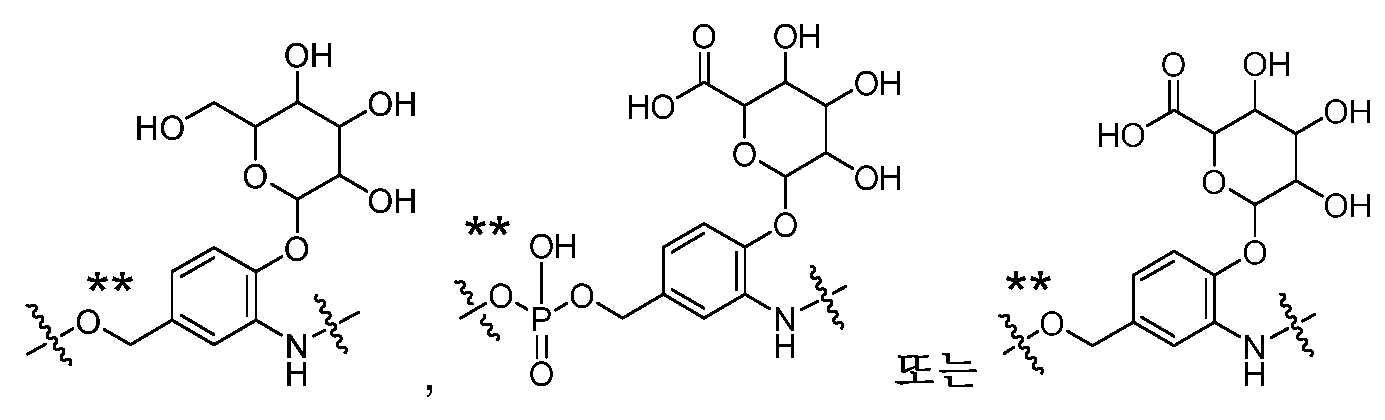
X6은 
각각의 R11은 독립적으로 H 및 C1-C6알킬로부터 선택되고;Each R 11 is independently selected from H and C 1 -C 6 alkyl;
각각의 R12는 독립적으로 H 및 C1-C6알킬로부터 선택되고;Each R 12 is independently selected from H and C 1 -C 6 alkyl;
각각의 m은 독립적으로 1, 2, 3, 4, 5, 6, 7, 8, 9 및 10으로부터 선택되고,Each m is independently selected from 1, 2, 3, 4, 5, 6, 7, 8, 9 and 10,
각각의 n은 독립적으로 1, 2, 3, 4, 5, 6, 7, 8, 9, 10, 11, 12, 13, 14, 15, 16, 17 및 18로부터 선택된다.Each n is independently selected from 1, 2, 3, 4, 5, 6, 7, 8, 9, 10, 11, 12, 13, 14, 15, 16, 17, and 18.
접합 방법Joining method
본 발명은 본 발명의 링커-약물 기를 항체 또는 항체 단편에 접합시켜 1개 이상의 친수성 모이어티를 갖는 링커를 포함하는 항체 약물 접합체를 생산하는 다양한 방법을 제공한다.The present invention provides various methods for producing antibody drug conjugates comprising a linker having one or more hydrophilic moieties by conjugating a linker-drug group of the present invention to an antibody or antibody fragment.
화학식 (E')의 항체 약물 접합체의 형성을 위한 일반적 반응식이 하기 반응식 2에 제시된다:A general reaction scheme for the formation of an antibody drug conjugate of formula (E') is presented in
반응식 2

여기서 RG2는 상용성 R1 기와 반응하여 상응하는 R100 기를 형성하는 반응성 기이다 (이러한 기는 표 3 및 표 4에 예시됨). D, R1, L1, Lp, L2, L3, R2, A, G, Ab, y 및 R100은 본원에 정의된 바와 같다.Here, RG 2 is a reactive group which reacts with a compatible R 1 group to form the corresponding R 100 group (such groups are exemplified in Tables 3 and 4). D, R 1 , L 1 , Lp, L 2 , L 3 , R 2 , A, G, Ab, y and R 100 are as defined herein.
반응식 3은 화학식 (E')의 항체 약물 접합체의 형성을 위한 이러한 일반적 접근법을 추가로 예시하며, 여기서 항체는 반응성 기 (RG2)를 포함하고, 이는 R1 기 (본원에 정의된 바와 같음)와 반응하여 링커-약물 기를 R100 기 (본원에 정의된 바와 같음)를 통해 항체에 공유 부착시킨다. 예시적 목적을 위해, 반응식 3만이 4개의 RG2 기를 갖는 항체를 보여준다.Scheme 3 further illustrates this general approach to the formation of antibody drug conjugates of formula (E'), wherein the antibody comprises a reactive group (RG 2 ) that reacts with an R 1 group (as defined herein) to covalently attach a linker-drug group to the antibody via an R 100 group (as defined herein). For illustrative purposes, Scheme 3 only shows an antibody having four RG 2 groups.
반응식 3Reaction formula 3

한 측면에서, 링커-약물 기는 항체 내의 변형된 시스테인 잔기를 통해 항체에 접합된다 (예를 들어, WO2014/124316 참조). 반응식 4는 화학식 (E')의 항체 약물 접합체의 형성을 위한 이러한 접근법을 예시하며, 여기서 항체 내의 조작된 시스테인 잔기로부터 생성된 유리 티올 기는 R1 기 (여기서 R1은 말레이미드임)와 반응하여 링커-약물 기를 R100 기 (여기서 R100은 숙신이미드 고리임)를 통해 항체에 공유 부착시킨다. 예시적 목적을 위해, 반응식 4만이 4개의 유리 티올 기를 갖는 항체를 보여준다.In one aspect, the linker-drug moiety is conjugated to the antibody via a modified cysteine residue in the antibody (see, e.g., WO2014/124316).
반응식 4
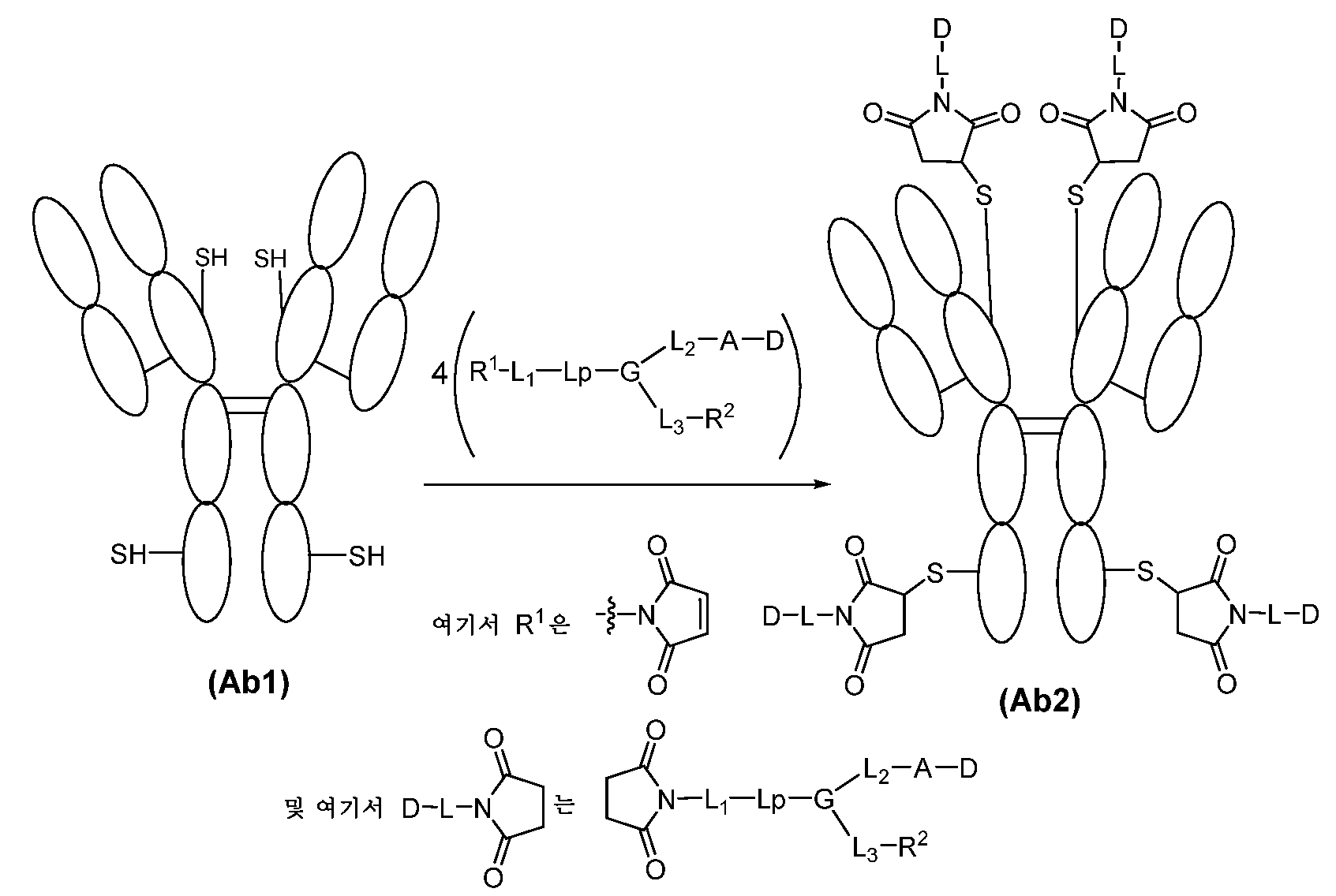
또 다른 측면에서, 링커-약물 기는 항체 내의 리신 잔기를 통해 항체에 접합된다. 반응식 5는 화학식 (E')의 항체 약물 접합체의 형성을 위한 이러한 접근법을 예시하며, 여기서 항체 내의 리신 잔기로부터의 유리 아민 기는 R1 기 (여기서 R1은 NHS 에스테르, 펜타플루오로페닐 또는 테트라플루오로페닐임)와 반응하여 링커-약물 기를 R100 기 (여기서 R100은 아미드임)를 통해 항체에 공유 부착킨다. 예시적 목적을 위해, 반응식 5만이 4개의 아민 기를 갖는 항체를 보여준다.In another aspect, the linker-drug moiety is conjugated to the antibody via a lysine residue in the antibody.
반응식 5

또 다른 측면에서, 링커-약물 기는 항체의 자연 발생 디술피드 가교에서의 옥심 가교의 형성을 통해 항체에 접합된다. 옥심 가교는 초기에 항체의 쇄간 디술피드 가교의 환원 및 1,3-디할로아세톤 (예를 들어, 1,3-디클로로아세톤)을 사용한 재가교에 의해 케톤 가교를 생성함으로써 형성된다. 히드록실 아민을 포함하는 링커-약물 기와의 후속 반응은 이에 의해 링커-약물 기를 항체에 부착시키는 옥심 연결 (옥심 가교)을 형성한다 (예를 들어, WO2014/083505 참조). 반응식 6은 화학식 (E')의 항체 약물 접합체의 형성을 위한 이러한 접근법을 예시한다.In another aspect, the linker-drug group is conjugated to the antibody via the formation of an oxime bridge in the naturally occurring disulfide bridges of the antibody. The oxime bridge is initially formed by reduction of the interchain disulfide bridges of the antibody and re-crosslinking with a 1,3-dihaloacetone (e.g., 1,3-dichloroacetone) to generate a ketone bridge. Subsequent reaction with the linker-drug group comprising a hydroxyl amine forms an oxime linkage (oxime bridge) thereby attaching the linker-drug group to the antibody (see, e.g., WO2014/083505). Scheme 6 illustrates this approach for the formation of antibody drug conjugates of formula (E').
반응식 6Reaction formula 6

화학식 (F')의 항체 약물 접합체의 형성을 위한 일반적 반응식이 하기 반응식 7에 제시된다:A general reaction scheme for the formation of antibody drug conjugates of formula (F') is presented in Scheme 7 below:
반응식 7Reaction formula 7

여기서 RG2는 상용성 R1 기와 반응하여 상응하는 R100 기를 형성하는 반응성 기이다 (이러한 기는 표 3 및 표 4에 예시됨). D, R1, L1, Lp, Ab, y 및 R100은 본원에 정의된 바와 같다.Here, RG 2 is a reactive group that reacts with a compatible R 1 group to form the corresponding R 100 group (such groups are exemplified in Tables 3 and 4). D, R 1 , L 1 , Lp, Ab, y and R 100 are as defined herein.
반응식 8은 화학식 (F')의 항체 약물 접합체의 형성을 위한 이러한 일반적 접근법을 추가로 예시하며, 여기서 항체는 반응성 기 (RG2)를 포함하고, 이는 R1 기 (본원에 정의된 바와 같음)와 반응하여 링커-약물 기를 R100 기 (본원에 정의된 바와 같음)를 통해 항체에 공유 부착시킨다. 예시적 목적을 위해, 반응식 8만이 4개의 RG2 기를 갖는 항체를 보여준다.
반응식 8

한 측면에서, 링커-약물 기는 항체 내의 변형된 시스테인 잔기를 통해 항체에 접합된다 (예를 들어, WO2014/124316 참조). 반응식 9는 화학식 (F')의 항체 약물 접합체의 형성을 위한 이러한 접근법을 예시하며, 여기서 항체 내의 조작된 시스테인 잔기로부터 생성된 유리 티올 기는 R1 기 (여기서 R1은 말레이미드임)와 반응하여 링커-약물 기를 R100 기 (여기서 R100은 숙신이미드 고리임)를 통해 항체에 공유 부착시킨다. 예시적 목적을 위해, 반응식 9만이 4개의 유리 티올 기를 갖는 항체를 보여준다.In one aspect, the linker-drug moiety is conjugated to the antibody via a modified cysteine residue in the antibody (see, e.g., WO2014/124316).
반응식 9
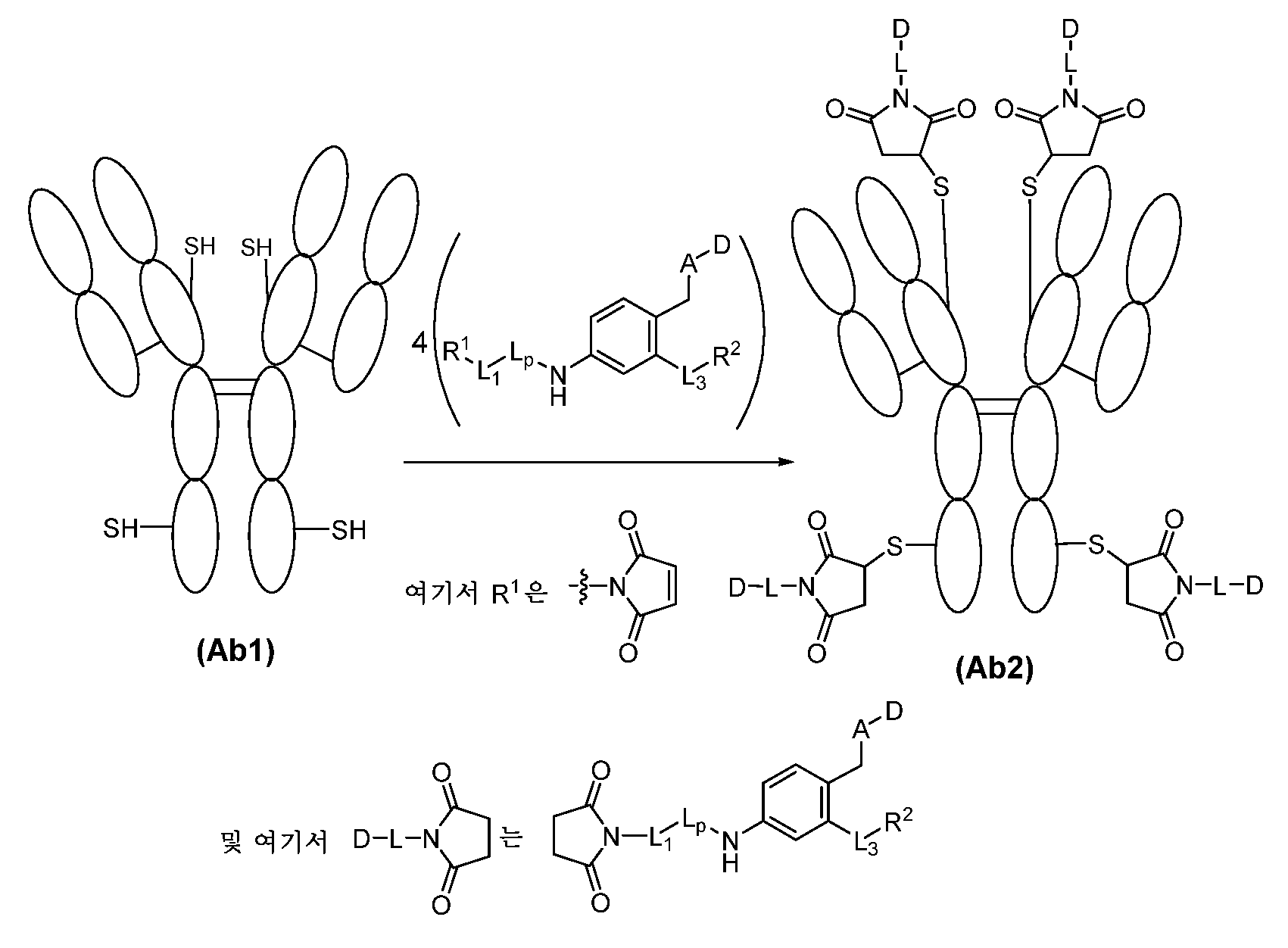
또 다른 측면에서, 링커-약물 기는 항체 내의 리신 잔기를 통해 항체에 접합된다. 반응식 10은 화학식 (F')의 항체 약물 접합체의 형성을 위한 이러한 접근법을 예시하며, 여기서 항체 내의 리신 잔기로부터의 유리 아민 기는 R1 기 (여기서 R1은 NHS 에스테르, 펜타플루오로페닐 또는 테트라플루오로페닐임)와 반응하여 링커-약물 기를 R100 기 (여기서 R100은 아미드임)를 통해 항체에 공유 부착킨다. 예시적 목적을 위해, 반응식 10만이 4개의 아민 기를 갖는 항체를 보여준다.In another aspect, the linker-drug moiety is conjugated to the antibody via a lysine residue in the antibody.
반응식 10

또 다른 측면에서, 링커-약물 기는 항체의 자연 발생 디술피드 가교에서의 옥심 가교의 형성을 통해 항체에 접합된다. 옥심 가교는 초기에 항체의 쇄간 디술피드 가교의 환원 및 1,3-디할로아세톤 (예를 들어, 1,3-디클로로아세톤)을 사용한 재가교에 의해 케톤 가교를 생성함으로써 형성된다. 히드록실 아민을 포함하는 링커-약물 기와의 후속 반응은 이에 의해 링커-약물 기를 항체에 부착시키는 옥심 연결 (옥심 가교)을 형성한다 (예를 들어, WO2014/083505 참조). 반응식 11은 화학식 (F')의 항체 약물 접합체의 형성을 위한 이러한 접근법을 예시한다.In another aspect, the linker-drug group is conjugated to the antibody via the formation of an oxime bridge in the naturally occurring disulfide bridges of the antibody. The oxime bridge is initially formed by reduction of the interchain disulfide bridges of the antibody and re-crosslinking with a 1,3-dihaloacetone (e.g., 1,3-dichloroacetone) to generate a ketone bridge. Subsequent reaction with the linker-drug group comprising a hydroxyl amine forms an oxime linkage (oxime bridge) thereby attaching the linker-drug group to the antibody (see, e.g., WO2014/083505). Scheme 11 illustrates this approach for the formation of antibody drug conjugates of formula (F').
반응식 11Reaction formula 11

본 발명의 항체 접합체를 평가하기 위한 분석 방법론의 일부 측면에 대한 프로토콜이 또한 제공된다. 이러한 분석 방법론 및 결과는 접합체가 유리한 특성, 예를 들어 이들을 제조하기에 보다 용이하게 하고/거나 환자에게 투여하기에 보다 용이하게 하고/거나 환자에게 보다 효과적이고/거나 잠재적으로 보다 안전하게 할 특성을 갖는다는 것을 입증할 수 있다. 한 예는 크기 배제 크로마토그래피 (SEC)에 의한 분자 크기의 결정이며, 여기서 샘플 중 목적하는 항체 종의 양은 샘플에 존재하는 고분자량 오염물 (예를 들어, 이량체, 다량체 또는 응집된 항체) 또는 저분자량 오염물 (예를 들어, 항체 단편, 분해 생성물 또는 개별 항체 쇄)의 양에 비해 결정된다. 일반적으로, 예를 들어 응집체가 항체 샘플의 다른 특성, 예컨대 비제한적으로 클리어런스율, 면역원성 및 독성에 미치는 영향으로 인해 보다 많은 양의 단량체 및 보다 적은 양의, 예를 들어 응집된 항체를 갖는 것이 바람직하다. 추가의 예는 소수성 상호작용 크로마토그래피 (HIC)에 의한 소수성의 결정이며, 여기서 샘플의 소수성은 공지된 특성의 표준 항체의 세트에 비해 평가된다. 일반적으로, 항체 샘플의 다른 특성, 예컨대 비제한적으로 응집, 시간에 걸친 응집, 표면에 대한 부착, 간독성, 클리어런스율 및 약동학적 노출에 대한 소수성의 영향으로 인해 낮은 소수성을 갖는 것이 바람직하다. 문헌 [Damle, N.K., Nat Biotechnol. 2008; 26(8):884-885; Singh, S.K., Pharm Res. 2015; 32(11):3541-71]을 참조한다. 소수성 상호작용 크로마토그래피에 의해 측정된 경우에, 보다 높은 소수성 지수 점수 (즉, HIC 칼럼으로부터의 보다 빠른 용리)는 접합체의 보다 낮은 소수성을 반영한다. 하기 실시예에 제시된 바와 같이, 대다수의 시험된 항체 접합체는 0.8 초과의 소수성 지수를 나타냈다. 일부 실시양태에서, 소수성 상호작용 크로마토그래피에 의해 결정 시 0.8 이상의 소수성 지수를 갖는 항체 접합체가 제공된다.Protocols for certain aspects of the analytical methodologies for evaluating antibody conjugates of the present invention are also provided. Such analytical methodologies and results may demonstrate that the conjugates have advantageous properties, such as properties that make them easier to manufacture and/or easier to administer to a patient and/or more efficacious and/or potentially safer for the patient. One example is the determination of molecular size by size exclusion chromatography (SEC), wherein the amount of a desired antibody species in a sample is determined relative to the amount of high molecular weight contaminants (e.g., dimers, multimers, or aggregated antibodies) or low molecular weight contaminants (e.g., antibody fragments, degradation products, or individual antibody chains) present in the sample. In general, it is desirable to have a greater amount of monomers and a lower amount of, e.g., aggregated antibodies, for example, due to the effect of aggregates on other properties of the antibody sample, such as, but not limited to, clearance rate, immunogenicity, and toxicity. A further example is the determination of hydrophobicity by hydrophobic interaction chromatography (HIC), wherein the hydrophobicity of a sample is assessed relative to a set of standard antibodies of known properties. In general, lower hydrophobicity is desirable due to the impact of hydrophobicity on other properties of the antibody sample, such as but not limited to aggregation, aggregation over time, adhesion to surfaces, hepatotoxicity, clearance rate, and pharmacokinetic exposure. See Damle, N.K., Nat Biotechnol. 2008; 26(8):884-885; Singh, S.K., Pharm Res. 2015; 32(11):3541-71. When measured by hydrophobic interaction chromatography, a higher hydrophobicity index score (i.e., faster elution from the HIC column) reflects lower hydrophobicity of the conjugate. As shown in the Examples below, the majority of the tested antibody conjugates exhibited a hydrophobicity index greater than 0.8. In some embodiments, antibody conjugates are provided having a hydrophobicity index of at least 0.8 as determined by hydrophobic interaction chromatography.
실시예Example
하기 실시예는 본 개시내용의 예시적 실시양태를 제공한다. 관련 기술분야의 통상의 기술자는 본 개시내용의 취지 또는 범주를 변경시키지 않으면서 수행될 수 있는 수많은 변형 및 변경을 인식할 것이다. 이러한 변형 및 변경은 본 개시내용의 범주 내에 포괄된다. 제공된 실시예는 어떠한 방식으로도 본 개시내용을 제한하지 않는다.The following examples provide illustrative embodiments of the present disclosure. Those skilled in the art will recognize that numerous modifications and variations can be made without altering the spirit or scope of the present disclosure. Such modifications and variations are encompassed within the scope of the present disclosure. The provided examples do not limit the present disclosure in any way.
실시예 1. Bcl-xL 페이로드의 합성 및 특징화Example 1. Synthesis and characterization of Bcl-xL payload
예시적인 페이로드를 이 실시예에 기재된 예시적인 방법을 사용하여 합성하였다. 상업적 공급원으로부터 수득된 모든 시약을 추가 정제 없이 사용하였다. 무수 용매를 상업적 공급원으로부터 입수하고, 추가 건조 없이 사용하였다.Exemplary payloads were synthesized using the exemplary methods described in this Example. All reagents were obtained from commercial sources and used without further purification. Anhydrous solvents were obtained from commercial sources and used without further drying.
칼럼 크로마토그래피: 이스코 콤비플래쉬(ISCO CombiFlash)® Rf 200 또는 콤비플래쉬® Rf + 루멘(Lumen)™ 상에서 레디셉(RediSep)® Rf 정상 실리카 플래쉬 칼럼 (35-70μm, 60 Å), 레디셉 Rf 골드(Gold)® 정상 실리카 고성능 칼럼 (20-40μm, 60 Å), 레디셉® Rf 역상 C18 칼럼 (40-63 μm, 60 Å) 또는 레디셉 Rf 골드® 역상 C18 고성능 칼럼 (20-40 μm, 100 Å)을 사용하여 자동화 플래쉬 칼럼 크로마토그래피를 수행하였다.Column chromatography: Automated flash column chromatography was performed on an ISCO
TLC: 머크 유형 60 F254 실리카-겔로 코팅된 5 x 10 cm 플레이트로 박층 크로마토그래피를 수행하였다.TLC: Thin layer chromatography was performed using 5 x 10 cm plates coated with Merck type 60 F 254 silica gel.
마이크로웨이브 반응: CEM 디스커버(Discover)® SP 또는 안톤 파르 모노웨이브(Anton Paar Monowave) 마이크로웨이브 반응기를 사용하여 마이크로웨이브 가열을 수행하였다.Microwave reactions: Microwave heating was performed using a CEM Discover® SP or Anton Paar Monowave microwave reactor.
NMR: 브루커 아반스(Bruker Avance) III 500 MHz 분광계, 브루커 아반스 III 400 MHz 분광계 또는 브루커 DPX-400 분광계 상에서 용매로서 DMSO-d6 또는 CDCl3을 사용하여 1H-NMR 측정을 수행하였다. 1H NMR 데이터는 내부 표준으로서 용매의 잔류 피크 (DMSO-d6에 대해 2.50 ppm 및 CDCl3에 대해 7.26 ppm)를 사용하여 백만분율 (ppm)로 주어진 델타 값의 형태이다. 분할 패턴은 s (단일선), d (이중선), t (삼중선), q (사중선), quint (오중선), sept (칠중선), m (다중선), br s (넓은 단일선), dd (이중선의 이중선), td (이중선의 삼중선), dt (삼중선의 이중선), ddd (이중선의 이중선의 이중선)로서 지정된다.NMR: 1H-NMR measurements were performed on a
분석용 LC-MS: 양이온 또는 음이온 전기분무 이온화 모드로 작동하는 애질런트(Agilent) 6140 사중극자 LC/MS를 사용한 애질런트 HP1200 상의 고성능 액체 크로마토그래피-질량 분광분석법 (HPLC-MS)에 의해 본 발명의 특정 화합물을 특징화하였다. 분자량 스캔 범위는 100 내지 1350이다. 210 nm 및 254 nm에서 평행 UV 검출을 수행하였다. 샘플을 5 μL 루프 주입으로 ACN 중 또는 THF/H2O (1:1) 중 1 mM 용액으로서 공급하였다. LCMS 분석을 2개의 기기 상에서 수행하였으며, 이들 중 하나는 염기성 용리액으로 작동시키고, 다른 하나는 산성 용리액으로 작동시켰다.Analytical LC-MS: Certain compounds of the invention were characterized by high-performance liquid chromatography-mass spectrometry (HPLC-MS) on an Agilent HP1200 using an Agilent 6140 quadrupole LC/MS operating in positive or negative ion electrospray ionization mode. The molecular weight scan range was 100 to 1350. Parallel UV detection was performed at 210 nm and 254 nm. Samples were fed as 1 mM solutions in ACN or in THF/H 2 O (1:1) by 5 μL loop injection. LCMS analyses were performed on two instruments, one operated with basic eluent and the other with acidic eluent.
염기성 LCMS: 제미니(Gemini)-NX, 3 μm, C18, 50 mm x 3.00 mm i.d. 칼럼, 23℃, 유량 1 mL 분-1, 5 mM 중탄산암모늄 (용매 A) 및 아세토니트릴 (용매 B) 사용, 구배는 100% 용매 A로부터 출발하여 다양한/특정 지속기간에 걸쳐 100% 용매 B에서 종료.Basic LCMS: Gemini-NX, 3 μm, C18, 50 mm x 3.00 mm i.d. column, 23 °C, flow
산성 LCMS: 키나텍스(KINATEX) XB-C18-100A, 2.6 μm, 50 mm*2.1 mm 칼럼, 40℃, 유량 1 mL 분-1, 아세토니트릴 중 0.02% v/v 수성 포름산 (용매 A) 및 0.02% v/v 포름산 (용매 B) 사용, 구배는 100% 용매 A로부터 출발하여 다양한/특정 지속기간에 걸쳐 100% 용매 B에서 종료.Acid LCMS: KINATEX XB-C18-100A, 2.6 μm, 50 mm*2.1 mm column, 40°C, flow
본 발명의 특정의 다른 화합물을 하기와 같은 구체적으로 명명된 방법 하의 HPLC-MS에 의해 특징화하였다. 이들 방법 모두에 대해, UV 검출은 230, 254 및 270 nm에서의 다이오드 어레이 검출기에 의하였다. 샘플 주입 부피는 1 μL였다. HPLC-등급 용매를 사용하여 하기 이동상의 유량 및 백분율 혼합물 정의에 의해 구배 용리를 실행하였다:Certain other compounds of the present invention were characterized by HPLC-MS under the specifically named methods below. For all of these methods, UV detection was by a diode array detector at 230, 254 and 270 nm. The sample injection volume was 1 μL. Gradient elution was performed using HPLC-grade solvents with the following mobile phase flow rates and percent mixture definitions:
용매 A: 10 mM 수성 포름산암모늄 + 0.04% (v/v) 포름산Solvent A: 10 mM aqueous ammonium formate + 0.04% (v/v) formic acid
용매 B: 아세토니트릴 + 5.3% (v/v) 용매 A + 0.04% (v/v) 포름산.Solvent B: Acetonitrile + 5.3% (v/v) Solvent A + 0.04% (v/v) formic acid.
이들 명명된 방법에 대한 체류 시간 (RT)은 분으로 보고된다. 이온화는 양성 모드, 음성 모드 또는 양성-음성 스위칭 모드로 기록된다. 개별 방법에 대한 구체적인 세부사항은 하기와 같다.The retention time (RT) for these named methods is reported in minutes. Ionization is recorded in positive mode, negative mode, or positive-negative switching mode. Specific details for the individual methods are given below.
LCMS-V-B 방법: ESI-APCI 다중모드 공급원을 갖는 애질런트 MSD 6140 단일 사중극자에 연결된 애질런트 1200 SL 시리즈 기기를 사용하거나 (방법 LCMS-V-B1 및 LCMS-V-B2) 또는 ESI-제트 스트림 공급원을 갖는 애질런트 TOF 6230에 연결된 애질런트 1290 인피니티 II 시리즈 기기를 사용 (방법 LCMS-V-B1); 칼럼: 써모 아큐코어 2.6 μm, C18, 50 mm x 2.1 mm, 55℃. 방법 LCMS-V-B1 및 LCMS-V-B2에 대한 구배 세부사항은 하기 표 5에 제시된다:LCMS-V-B Method: Using an
표 5. 방법 LCMS-V-B1 및 LCMS-V-B2에 대한 구배 세부사항Table 5. Gradient details for methods LCMS-V-B1 and LCMS-V-B2

LCMS-V-C 방법: ESI-APCI 다중모드 공급원을 갖는 애질런트 MSD 6140 단일 사중극자에 연결된 애질런트 1200 SL 시리즈 기기를 사용; 칼럼: 애질런트 조르박스 이클립스 플러스 3.5 μm, C18(2), 30 mm x 2.1 mm, 35℃. 방법 LCMS-V-C에 대한 구배 세부사항은 하기 표 6에 제시된다:LCMS-V-C Method:
표 6. 방법 LCMS-V-C에 대한 구배 세부사항Table 6. Gradient details for method LCMS-V-C

정제용 HPLC: 용리액으로서 25 mM 수성 NH4HCO3 용액 및 MeCN 또는 물 중 0.1% TFA 및 MeCN을 사용하여, UV 다이오드 어레이 검출 (210 - 400 nm)을 동반한, 118 mL 분-1의 유량으로 실행되는 제미니-NX® 10 μM C18, 250 mm x 50 mm i.d. 칼럼을 갖는 아르멘 스팟(Armen Spot) 액체 크로마토그래피 또는 텔레다인(Teledyne) EZ 시스템 상에서의 고성능 액체 크로마토그래피 (HPLC)에 의해 본 발명의 특정 화합물을 정제하였다.Preparative HPLC: Certain compounds of the present invention were purified by high performance liquid chromatography (HPLC) on an Armen Spot liquid chromatography or Teledyne EZ system with a Gemini- NX® 10 μM C18, 250 mm x 50 mm id column running at a flow rate of 118 mL min-1, with UV diode array detection (210 - 400 nm), using 25 mM aqueous NH4HCO3 solution and 0.1% TFA and MeCN in MeCN or water as eluent.
본 발명의 특정의 다른 화합물을 하기와 같은 구체적으로 명명된 방법 하의 HPLC에 의해 정제하였다:Certain other compounds of the present invention were purified by HPLC under the specifically named method as follows:
HPLC-V-A 방법: UV 다이오드 어레이 검출 (210-400 nm) 및 질량-지정 수집을 동반한, 20 cm3분-1의 유량으로 실행되는 페노메넥스(Phenomenex)로부터의 제미니® 5 μm C18(2), 100 mm x 20 mm i.d. 칼럼을 갖는 워터스 프랙션링스(Waters FractionLynx) MS 자동정제 시스템 상에서 이들을 수행하였다. 질량 분광계는 150 내지 1000의 분자량 스캔 범위를 갖는, 양이온 또는 음이온 전기분무 이온화 모드로 작동하는 워터스 마이크로매스 ZQ2000분광계였다.HPLC-VA method: These were performed on a Waters FractionLynx MS automated purification system with a
방법 HPLC-V-A1 (pH 4): 용매 A: 10 mM 수성 아세트산암모늄 + 0.08% (v/v) 포름산; 용매 B: 아세토니트릴 + 5% (v/v) 용매 A + 0.08% (v/v) 포름산Method HPLC-V-A1 (pH 4): Solvent A: 10 mM aqueous ammonium acetate + 0.08% (v/v) formic acid; Solvent B: Acetonitrile + 5% (v/v) solvent A + 0.08% (v/v) formic acid
방법 HPLC-V-A2 (pH 9): 용매 A: 10 mM 수성 아세트산암모늄 + 0.08% (v/v) 진한 암모니아; 용매 B: 아세토니트릴 + 5% (v/v) 용매 A + 0.08% (v/v) 진한 암모니아Method HPLC-V-A2 (pH 9): Solvent A: 10 mM aqueous ammonium acetate + 0.08% (v/v) concentrated ammonia; Solvent B: Acetonitrile + 5% (v/v) solvent A + 0.08% (v/v) concentrated ammonia
HPLC-V-B 방법: UV (214 및 254 nm) 및 ELS 검출을 동반한, 20 cm3분-1의 유량으로 실행되는 페노메넥스로부터의 제미니® NX 5 μm C18(2), 150 mm x 21.2 mm i.d. 칼럼을 갖는 AccQPrep HP125 (텔레다인 이스코) 시스템 상에서 수행하였다.HPLC-VB method: was performed on an AccQPrep HP125 (Teledyne Isco) system with a
방법 HPLC-V-B1 (pH 4): 용매 A: 물 + 0.08% (v/v) 포름산; 용매 B: 아세토니트릴 + 0.08% (v/v) 포름산.Method HPLC-V-B1 (pH 4): Solvent A: water + 0.08% (v/v) formic acid; Solvent B: acetonitrile + 0.08% (v/v) formic acid.
방법 HPLC-V-B2 (pH 9): 용매 A: 물 + 0.08% (v/v) 진한 암모니아; 용매 B: 아세토니트릴 + 0.08% (v/v) 진한 암모니아.Method HPLC-V-B2 (pH 9): Solvent A: water + 0.08% (v/v) concentrated ammonia; Solvent B: acetonitrile + 0.08% (v/v) concentrated ammonia.
방법 HPLC-V-B3 (중성): 용매 A: 물; 용매 B: 아세토니트릴.Method HPLC-V-B3 (neutral): Solvent A: water; Solvent B: acetonitrile.
분석용 GC-MS: 조합 기체 크로마토그래피 및 저해상도 질량 분광측정법 (GC-MS)을 0.25 μm HP-5MS 코팅 및 운반 기체로서의 헬륨을 갖는 15 m x 0.25 mm 칼럼을 사용하여 애질런트 6850 기체 크로마토그래프 및 애질런트 5975C 질량 분광계 상에서 수행하였다. 이온 공급원: EI+, 70 eV, 230℃, 사중극자: 150℃, 계면: 300℃.Analytical GC-MS: Combination gas chromatography and low-resolution mass spectrometry (GC-MS) was performed on an Agilent 6850 gas chromatograph and an Agilent 5975C mass spectrometer using a 15 m × 0.25 mm column with a 0.25 μm HP-5MS coating and helium as carrier gas. Ion source: EI+, 70 eV, 230 °C, Quadrupole: 150 °C, Interface: 300 °C.
고해상도 MS: 고해상도 질량 스펙트럼을 양이온 모드의 제트 스트림 전기분무 이온 공급원이 장착된 애질런트 6230 비행 시간 질량 분광계 상에서 획득하였다. 0.5μl의 주입을 애질런트 1290 인피니티 HPLC 시스템을 사용하여 유량 1.5 ml/분 (물 중 5mM 포름산암모늄 및 아세토니트릴 구배 프로그램)으로 질량 분광계로 보냈다. 제트 스트림 파라미터: 건조 기체 (N2) 유량 및 온도: 각각 8.0 l/분 및 325℃; 네뷸라이저 기체 (N2) 압력: 30 psi; 모세관 전압: 3000 V; 시스 기체 유량 및 온도: 325℃ 및 10.0 l/분; TOFMS 파라미터: 프래그멘터 전압: 100 V; 스키머 전위: 60 V; OCT 1 RF Vpp:750 V. 풀-스캔 질량 스펙트럼을 995.6 ms/스펙트럼의 획득 속도로 m/z 범위 105-1700에 걸쳐 획득하고, 애질런트 매스헌터 B.04.00 소프트웨어에 의해 프로세싱하였다.High Resolution MS: High resolution mass spectra were acquired on an Agilent 6230 time-of-flight mass spectrometer equipped with a jet stream electrospray ion source in positive ion mode. Injections of 0.5 μl were sent to the mass spectrometer at a flow rate of 1.5 ml/min (
화학적 명명: 마빈스케치(MarvinSketch) 또는 엑셀용 제이켐(JChem for Excel) (제이켐 버전 16.6.13 - 18.22.3) 내의 켐액손(ChemAxon)의 '구조에서 명칭으로(Structure to Name)' (s2n) 기능을 사용하거나 또는 바이오비아(Biovia)® 드로우(Draw) 4.2에 의해 제공된 화학적 명명 기능을 사용하여 IUPAC-선호 명칭을 생성하였다.Chemical Naming: IUPAC-Preferred Names were generated using the ChemAxon 'Structure to Name' (s2n) feature in MarvinSketch or JChem for Excel (JChem versions 16.6.13 - 18.22.3) or using the chemical naming functionality provided by Biovia® Draw 4.2.
약어abbreviation
Ahx 6-헥산산 단량체Ahx 6-hexanoic acid monomer
Boc tert-부틸옥시카르보닐Boc tert-butyloxycarbonyl
Boc2O 디-tert-부틸 디카르보네이트Boc 2 O di-tert-butyl dicarbonate
AgOTf 은 트리플루오로메탄술포네이트AgOTf is trifluoromethanesulfonate
tBuOH tert-부탄올 t BuOH tert-butanol
cc. 또는 conc. 진한cc. or conc. bold
CyOH 시클로헥산올CyOH Cyclohexanol
dba (1E,4E)-1,5-디페닐펜타-1,4-디엔-3-온, 디벤질리덴아세톤dba (1E,4E)-1,5-diphenylpenta-1,4-dien-3-one, dibenzylideneacetone
DCM 디클로로메탄DCM Dichloromethane
DEA 디에탄올아민DEA diethanolamine
DIAD 디이소프로필아조디카르복실레이트DIAD Diisopropylazodicarboxylate
DIBAL-H 디이소부틸알루미늄 히드라이드DIBAL-H Diisobutyl aluminum hydride
DIPA N-이소프로필프로판-2-아민, 디이소프로필아민DIPA N-isopropylpropan-2-amine, diisopropylamine
DIPEA N-에틸-N-이소프로필-프로판-2-아민, 디이소프로필에틸아민DIPEA N-ethyl-N-isopropyl-propan-2-amine, diisopropylethylamine
DMAP 4-디메틸아미노피리딘DMAP 4-Dimethylaminopyridine
ee. 거울상이성질체 과잉률ee. Enantiomeric excess
eq. 당량eq. equivalent
EtO2 디에틸 에테르EtO 2 Diethyl ether
EtOAc 에틸 아세테이트EtOAc ethyl acetate
HFxPyr 히드로겐 플루오라이드 피리딘HFxPyr hydrogen fluoride pyridine
hs 호모 사피엔스hs homo sapiens
LDA 리튬 디이소프로필아미드LDA lithium diisopropylamide
MeCN 아세토니트릴MeCN Acetonitrile
MeOH 메탄올MeOH Methanol
MTBE 메틸 tert-부틸 에테르MTBE methyl tert-butyl ether
NMP N-메틸-2-피롤리돈NMP N-methyl-2-pyrrolidone
Pd(AtaPhos)2Cl2 비스(디-tert-부틸(4-디메틸아미노페닐)포스핀)디클로로팔라듐(II)Pd(AtaPhos) 2 Cl 2 Bis(di-tert-butyl(4-dimethylaminophenyl)phosphine)dichloropalladium(II)
PPh3 트리페닐포스핀PPh 3 Triphenylphosphine
rt 실온rt room temperature
RT 체류 시간 (분)RT dwell time (min)
on 밤새on all night
Pd/C 탄소 상 팔라듐Pd/C Palladium on Carbon
TBAF 테트라부틸암모늄 플루오라이드TBAF Tetrabutylammonium Fluoride
TBAOH 테트라부틸암모늄 히드록시드TBAOH Tetrabutylammonium hydroxide
TBDPS-Cl tert-부틸-클로로-디페닐-실란TBDPS-Cl tert-butyl-chloro-diphenyl-silane
TBSCl tert-부틸-클로로-디메틸-실란TBSCl tert-butyl-chloro-dimethyl-silane
TEA N,N-디에틸에탄아민TEA N,N-Diethylethanamine
TFA 2,2,2-트리플루오로아세트산
pTSA 4-메틸벤젠술폰산pTSA 4-methylbenzenesulfonic acid
THF 테트라히드로푸란THF Tetrahydrofuran
TIPSCl 클로로(트리이소프로필)실란TIPSCl Chloro(triisopropyl)silane
TMP-MgCl 2,2,6,6-테트라메틸피페리디닐마그네슘 클로라이드 염화리튬 착물 용액TMP-
DIAD 디이소프로필아조디카르복실레이트DIAD Diisopropylazodicarboxylate
Xantphos 4,5-비스(디페닐포스피노)-9,9-디메틸크산텐
BrettPhos 2-(디시클로헥실포스피노)-3,6-디메톡시-2',4',6'-트리이소프로필-1,1'-비페닐BrettPhos 2-(dicyclohexylphosphino)-3,6-dimethoxy-2',4',6'-triisopropyl-1,1'-biphenyl
JosiPhos (2R)-1-[(1R)-1-(디시클로헥실포스피노)에틸]-2-(디페닐포스피노)페로센JosiPhos (2R)-1-[(1R)-1-(dicyclohexylphosphino)ethyl]-2-(diphenylphosphino)ferrocene
JosiPhos Pd G3 {(R)-1-[(Sp)-2-(디시클로헥실포스피노)페로세닐]에틸디-tert-부틸포스핀}[2-(2'-아미노-1,1'-비페닐)]팔라듐(II) 메탄술포네이트JosiPhos Pd G3 {(R)-1-[(Sp)-2-(dicyclohexylphosphino)ferrocenyl]ethyldi-tert-butylphosphine}[2-(2'-amino-1,1'-biphenyl)]palladium(II) methanesulfonate
Xantphos Pd G3 [(4,5-비스(디페닐포스피노)-9,9-디메틸크산텐)-2-(2'-아미노-1,1'-비페닐)]팔라듐(II) 메탄술포네이트Xantphos Pd G3 [(4,5-bis(diphenylphosphino)-9,9-dimethylxanthene)-2-(2'-amino-1,1'-biphenyl)]palladium(II) methanesulfonate
BINAP 2,2'-비스(디페닐포스피노)-1,1'-비나프틸
rac-BINAP Pd G3 [(2,2'-비스(디페닐포스피노)-1,1'-비나프틸)-2-(2'-아미노-1,1'-비페닐)]팔라듐(II) 메탄술포네이트rac-BINAP Pd G3 [(2,2'-bis(diphenylphosphino)-1,1'-binaphthyl)-2-(2'-amino-1,1'-biphenyl)]palladium(II) methanesulfonate
Pd(dppf)Cl2.CH2Cl2 [1,1'-비스(디페닐포스피노)페로센]디클로로팔라듐(II)Pd(dppf)Cl 2 .CH 2 Cl 2 [1,1'-Bis(diphenylphosphino)ferrocene]dichloropalladium(II)
Pd2(dba)3 트리스(디벤질리덴아세톤)디팔라듐(0)Pd 2 (dba) 3 tris(dibenzylideneacetone)dipalladium(0)
Pd(PPh3)2Cl2 비스(트리페닐포스핀)팔라듐 클로라이드Pd(PPh 3 ) 2 Cl 2 Bis(triphenylphosphine)palladium chloride
Pd(AtaPhos)2Cl2 비스(디-tert-부틸(4-디메틸아미노페닐)포스핀)디클로로팔라듐(II)Pd(AtaPhos) 2 Cl 2 Bis(di-tert-butyl(4-dimethylaminophenyl)phosphine)dichloropalladium(II)
명명된 일반적 절차Named general procedure
하기는 후속 제조예에서 명칭별로 언급되는 대표적인 실험 절차이다.The following are representative experimental procedures that are mentioned by name in subsequent manufacturing examples.
소노가시라 일반적 절차General procedures for Sonogashira
THF (5 mL/mmol) 중 1 당량의 아릴 할로게나이드, 2 당량의 아세틸렌, 0.05 당량의 Pd(PPh3)2Cl2, 0.05 당량의 CuI 및 DIPA (1 mL/mmol)의 혼합물을 60℃에서 보관하였다. 적절한 전환에 도달한 후, 휘발성 물질을 감압 하에 제거하고, 조 중간체를 플래쉬 크로마토그래피에 의해 용리액으로서 헵탄 / EtOAc를 사용하여 정제하였다.A mixture of 1 equivalent of aryl halide, 2 equivalents of acetylene, 0.05 equivalents of Pd(PPh 3 ) 2 Cl 2 , 0.05 equivalents of CuI and DIPA (1 mL/mmol) in THF (5 mL/mmol) was stored at 60 °C. After reaching appropriate conversion, the volatiles were removed under reduced pressure and the crude intermediate was purified by flash chromatography using heptane/EtOAc as eluent.
HFIP에 의한 탈보호 일반적 절차General procedure for deprotection by HFIP
HFIP (10 mL/mmol) 중 기질을 100-120℃에서 압력 병에 보관하였다. 적절한 전환에 도달한 후, 휘발성 물질을 감압 하에 제거하고, 조 중간체를 플래쉬 크로마토그래피에 의해 용리액으로서 헵탄 / EtOAc를 사용하여 정제하였다.The substrate in HFIP (10 mL/mmol) was stored in a pressure bottle at 100-120°C. After reaching the appropriate conversion, the volatiles were removed under reduced pressure and the crude intermediate was purified by flash chromatography using heptane/EtOAc as eluent.
탈보호 및 가수분해 일반적 절차General procedure for deprotection and hydrolysis
MeCN (15 mL/mmol) 중 1 당량의 기질 및 100 당량의 HFxPyr의 혼합물을 60℃에서 교반하였다. 적절한 전환에 도달한 후, 휘발성 물질을 감압 하에 제거하고, 잔류물을 THF - 물의 1:1 혼합물 (30 mL/mmol) 중에 현탁시키고, 150 당량의 LiOH x H2O를 첨가하고, 혼합물을 실온에서 교반하였다. 적절한 전환에 도달한 후, 휘발성 물질을 감압 하에 제거하고; 조 생성물을 플래쉬 크로마토그래피에 의해 용리액으로서 DCM 및 MeOH (1.2% NH3 함유)를 사용하여 정제하였다. 일부 대안적 절차에서, THF - 물의 1:1 혼합물을 1,4-디옥산 - 물의 1:1 혼합물로 대체하였다.A mixture of 1 equivalent of substrate and 100 equivalents of HFxPyr in MeCN (15 mL/mmol) was stirred at 60 °C. After reaching appropriate conversion, the volatiles were removed under reduced pressure, the residue was suspended in a 1:1 mixture of THF - water (30 mL/mmol), 150 equivalents of LiOH x H 2 O were added, and the mixture was stirred at room temperature. After reaching appropriate conversion, the volatiles were removed under reduced pressure; the crude product was purified by flash chromatography using DCM and MeOH (containing 1.2% NH3) as eluent. In some alternative procedures, the 1:1 mixture of THF - water was replaced by a 1:1 mixture of 1,4-dioxane - water.
알킬화 일반적 절차General procedure for alkylation
아세톤 (5 mL/mmol) 중 1 당량의 페놀/카르바메이트, 1-2 당량의 알킬 아이오다이드/브로마이드 및 2-3 당량의 Cs2CO3의 혼합물을 페놀의 경우 실온에서, 카르바메이트의 경우 55℃에서 교반하였다. 적절한 전환에 도달한 후, 휘발성 물질을 감압 하에 제거하고, 조 중간체를 플래쉬 크로마토그래피 (예를 들어, 용리액으로서 헵탄 / EtOAc 사용) 또는 역상 플래쉬 칼럼 크로마토그래피에 의해 정제하였다.A mixture of 1 equivalent of phenol/carbamate, 1-2 equivalents of alkyl iodide/bromide and 2-3 equivalents of Cs 2 CO 3 in acetone (5 mL/mmol) was stirred at room temperature for phenol and at 55 °C for carbamate. After reaching appropriate conversion, the volatiles were removed under reduced pressure and the crude intermediate was purified by flash chromatography (e.g., using heptane/EtOAc as eluent) or reverse-phase flash column chromatography.
토실레이트에 의한 알킬화 일반적 절차General procedure for alkylation with tosylate
오븐-건조된 바이알에 PTFE-코팅된 자기 교반 막대를 장착하고, MeCN (5 mL/mmol) 중에 현탁된 1 당량의 토실레이트 및 5 당량의 적절한 아민을 충전하였다. 이어서, 반응 혼합물을 50℃로 가온하고, 추가 전환이 관찰되지 않을 때까지 그 온도에서 교반하였다. 반응 혼합물을 DCM으로 희석한 다음, 이를 DCM 사전컨디셔닝된 실리카 겔 칼럼 상에 주입하였다. 이어서, 이를 플래쉬 크로마토그래피에 의해 용리액으로서 DCM 및 MeOH (1.2% NH3)를 사용하여 정제하였다.An oven-dried vial fitted with a PTFE-coated magnetic stir bar was charged with 1 equivalent of tosylate and 5 equivalents of the appropriate amine suspended in MeCN (5 mL/mmol). The reaction mixture was then warmed to 50 °C and stirred at that temperature until no further conversion was observed. The reaction mixture was diluted with DCM and injected onto a DCM-preconditioned silica gel column. It was then purified by flash chromatography using DCM and MeOH (1.2% NH3) as eluents.
부흐발트 일반적 절차 IBuchwald General Procedure I
CyOH (5 mL/mmol) 중 1 당량의 클로로-기질, 2 당량의 1,3-벤조티아졸-2-아민, 0.1 당량의 Pd2(dba)3, 0.2 당량의 XantPhos 및 3 당량의 DIPEA의 혼합물을 140℃에서 유지하였다. 적절한 전환에 도달한 후, 반응 혼합물을 DCM (10 mL/mmol)으로 희석하고, 사전컨디셔닝된 실리카 겔 칼럼 상에 주입하고, 플래쉬 크로마토그래피 (예를 들어, 용리액으로서 헵탄 / EtOAc 사용)에 의해 정제하였다.A mixture of 1 equivalent of chloro-substrate, 2 equivalents of 1,3-benzothiazol-2-amine, 0.1 equivalent of Pd 2 (dba) 3 , 0.2 equivalents of XantPhos and 3 equivalents of DIPEA in CyOH (5 mL/mmol) was maintained at 140 °C. After reaching appropriate conversion, the reaction mixture was diluted with DCM (10 mL/mmol), injected onto a preconditioned silica gel column and purified by flash chromatography (e.g., using heptane/EtOAc as eluent).
부흐발트 일반적 절차 IIBuchwald General Procedure II
1,4-디옥산 (5 mL/mmol) 중에 현탁시킨 클로로 화합물, 2 당량의 1,3-벤조티아졸-2-아민, 10 mol%의 JosiPhos Pd (G3) 및 3 당량의 DIPEA의 혼합물을 추가 전환이 관찰되지 않을 때까지 환류 하에 교반하였다. 셀라이트를 반응 혼합물에 첨가하고, 휘발성 물질을 감압 하에 제거하였다. 이어서, 이를 120 g 실리카 겔 칼럼 상의 플래쉬 크로마토그래피에 의해 용리액으로서 헵탄-EtOAc 또는 DCM-MeOH (1.2% NH3)를 사용하여 정제하였다.A mixture of the chloro compound, 2 equivalents of 1,3-benzothiazol-2-amine, 10 mol % of JosiPhos Pd (G3) and 3 equivalents of DIPEA suspended in 1,4-dioxane (5 mL/mmol) was stirred under reflux until no further conversion was observed. Celite was added to the reaction mixture and the volatiles were removed under reduced pressure. It was then purified by flash chromatography on a 120 g silica gel column using heptane-EtOAc or DCM-MeOH (1.2% NH 3 ) as eluent.
부흐발트 일반적 절차 IIIBuchwald General Procedure III
1,4-디옥산 (5 mL/mmol) 중 1 당량의 티아졸 아민, 1.2-1.5 당량의 (Z)-N-(6-클로로-4-메틸-피리다진-3-일)-3-(2-트리메틸실릴에톡시메틸)-1,3-벤조티아졸-2-이민, 3 당량의 Cs2CO3, 0.1 당량의 Pd2(dba)3, 0.2 당량의 XantPhos 및 3 당량의 DIPEA의 혼합물을 환류 하에 유지하였다. 적절한 전환에 도달한 후, 휘발성 물질을 감압 하에 제거하고, 조 중간체를 플래쉬 칼럼 크로마토그래피에 의해 정제하였다.A mixture of 1 equivalent of thiazol amine, 1.2-1.5 equivalents of (Z)-N-(6-chloro-4-methyl-pyridazin-3-yl)-3-(2-trimethylsilylethoxymethyl)-1,3-benzothiazol-2-imine, 3 equivalents of Cs 2 CO 3 , 0.1 equivalent of Pd 2 (dba) 3 , 0.2 equivalents of XantPhos and 3 equivalents of DIPEA in 1,4-dioxane (5 mL/mmol) was maintained under reflux. After reaching appropriate conversion, the volatiles were removed under reduced pressure and the crude intermediate was purified by flash column chromatography.
미츠노부 일반적 절차 IMitsunobu General Procedure I
톨루엔 (5 mL/mmol) 중 1 당량의 지방족 알콜, 1 당량의 카르바메이트/페놀 및 1 당량의 트리페닐포스핀의 혼합물에 1 당량의 디-tert-부틸 아조디카르복실레이트를 첨가하였다. 혼합물을 카르바메이트에 대해 50℃에서 및 페놀에 대해 실온에서 교반하였다. 적절한 전환에 도달한 후, 휘발성 물질을 감압 하에 제거하고, 조 중간체를 플래쉬 크로마토그래피에 의해 용리액으로서 헵탄 / EtOAc를 사용하여 정제하였다.To a mixture of 1 equivalent of aliphatic alcohol, 1 equivalent of carbamate/phenol and 1 equivalent of triphenylphosphine in toluene (5 mL/mmol) was added 1 equivalent of di-tert-butyl azodicarboxylate. The mixture was stirred at 50 °C for the carbamate and at room temperature for the phenol. After reaching appropriate conversion, the volatiles were removed under reduced pressure and the crude intermediate was purified by flash chromatography using heptane/EtOAc as eluent.
미츠노부 일반적 절차 IIMitsunobu General Procedure II
THF 또는 톨루엔 (5 mL/mmol) 중 1.0-1.5 당량의 지방족 알콜, 1 당량의 카르바메이트/페놀 및 1-2 당량의 트리페닐포스핀의 혼합물에 1-3 당량의 디tert부틸 아조디카르복실레이트 / 디이소프로필 아조디카르복실레이트를 1 부분으로 첨가하였다. 혼합물을 카르바메이트의 경우 실온 또는 필요한 경우 50℃에서 및 페놀의 경우 실온에서 교반하였다. 적절한 전환에 도달한 후, 휘발성 물질을 감압 하에 제거하고, 조 중간체를 플래쉬 칼럼 크로마토그래피에 의해 정제하였다.To a mixture of 1.0-1.5 equivalents of an aliphatic alcohol, 1 equivalent of a carbamate/phenol and 1-2 equivalents of triphenylphosphine in THF or toluene (5 mL/mmol) was added 1-3 equivalents of di-tert-butyl azodicarboxylate/diisopropyl azodicarboxylate in one portion. The mixture was stirred at room temperature or, if necessary, 50 °C for the carbamate and at room temperature for the phenol. After reaching the appropriate conversion, the volatiles were removed under reduced pressure and the crude intermediate was purified by flash column chromatography.
4급 염 탈보호 일반적 절차General Procedure for
적절한 4급 염의 THF (5 mL/mmol) 용액에 3 당량의 TBAF를 첨가한 다음, 이를 추가 전환이 관찰되지 않을 때까지 실온에서 교반하였다. 반응 혼합물을 감압 하에 증발 건조시켰다. 건조 MeCN (15 mL/mmol) 중 1 당량의 탈실릴화 4급 염의 현탁액에 100 당량의 HF x Pyr을 첨가한 다음, 60℃에서 교반하였다. 적절한 전환에 도달한 후, 휘발성 물질을 감압 하에 제거하고, 잔류물을 THF - 물의 1:1 혼합물 (30 mL/mmol) 중에 현탁시키고, 150 당량의 LiOH x H2O를 첨가하고, 혼합물을 실온에서 교반하였다. 적절한 전환에 도달한 후, 휘발성 물질을 감압 하에 제거하였다. 조 생성물을 플래쉬 크로마토그래피에 의해 용리액으로서 DCM 및 MeOH (1.2% NH3 함유)를 사용하여 정제하였다.To a THF (5 mL/mmol) solution of the appropriate quaternary salt was added 3 equivalents of TBAF and the mixture was stirred at room temperature until no further conversion was observed. The reaction mixture was evaporated to dryness under reduced pressure. To a suspension of 1 equivalent of the desilylated quaternary salt in dry MeCN (15 mL/mmol) was added 100 equivalents of HF x Pyr and the mixture was stirred at 60 °C. After appropriate conversion was reached, the volatiles were removed under reduced pressure and the residue was suspended in a 1:1 mixture of THF - water (30 mL/mmol) and 150 equivalents of LiOH x H 2 O were added and the mixture was stirred at room temperature. After appropriate conversion was reached, the volatiles were removed under reduced pressure. The crude product was purified by flash chromatography using DCM and MeOH (containing 1.2% NH 3 ) as eluent.
프로파르길 아민 제조 일반적 절차General procedure for producing propargyl amine
오븐-건조된 바이알에 PTFE-코팅된 자기 교반 막대를 장착하고, 여기에 2 당량의 PPh3 및 2 당량의 이미다졸을 충전한 다음, DCM (5 mL/mmol)을 첨가하였다. 생성된 혼합물에 2 당량의 아이오딘을 조금씩 첨가한 다음, 실온에서 15분 동안 교반하였다. 생성된 혼합물에 1 당량의 적절한 알콜을 첨가하고, DCM 중에 용해시키고, 추가 전환이 관찰되지 않을 때까지 실온에서 교반하였다. 생성된 아이오도 화합물에 20 당량의 적절한 아민을 첨가한 다음, 완전한 전환이 관찰될 때까지 실온에서 30분 동안 교반하였다. 셀라이트를 반응 혼합물에 첨가하고, 휘발성 물질을 감압 하에 제거하였다. 이어서, 이를 플래쉬 크로마토그래피에 의해 DCM 및 MeOH (1.2% NH3) 용리액을 사용하여 정제하였다.An oven-dried vial equipped with a PTFE-coated magnetic stir bar was charged with 2 equivalents of PPh3 and 2 equivalents of imidazole, followed by addition of DCM (5 mL/mmol). To the resulting mixture, 2 equivalents of iodine were added little by little and stirred at room temperature for 15 min. To the resulting mixture, 1 equivalent of the appropriate alcohol was added, dissolved in DCM, and stirred at room temperature until no further conversion was observed. To the resulting iodo compound, 20 equivalents of the appropriate amine were added and stirred at room temperature for 30 min until complete conversion was observed. Celite was added to the reaction mixture, and the volatiles were removed under reduced pressure. It was then purified by flash chromatography using DCM and MeOH (1.2% NH 3 ) as the eluent.
은 촉매된 프로파르길 아민 제조 일반적 절차General procedure for the preparation of silver-catalyzed propargyl amine
24 ml 바이알에 교반용 막대를 장착하고, 1 당량의 2-[3-(1,3-벤조티아졸-2-일아미노)-4-메틸-6,7-디히드로-5H-피리도[2,3-c]피리다진-8-일]-5-[3-(4-에티닐-2-플루오로-페녹시)프로필]티아졸-4-카르복실산, 20 당량의 파라포름알데히드/아세톤 및 20 당량의 적절한 아민을 충전하고, 20 mol%는 토실레이트의 존재 하에 80℃에서 추가 전환이 관찰되지 않을 때까지 건조 에탄올 (5 ml/mmol) 중에서 교반하였다. 셀라이트를 반응 혼합물에 첨가하고, 휘발성 물질을 감압 하에 제거하였다. 이어서, 이를 플래쉬 크로마토그래피에 의해 용리액으로서 DCM 및 MeOH (1.2% NH3)를 사용하여 정제하였다.A 24 ml vial fitted with a stir bar was charged with 1 equivalent of 2-[3-(1,3-benzothiazol-2-ylamino)-4-methyl-6,7-dihydro-5H-pyrido[2,3-c]pyridazin-8-yl]-5-[3-(4-ethynyl-2-fluoro-phenoxy)propyl]thiazole-4-carboxylic acid, 20 equivalents of paraformaldehyde/acetone and 20 equivalents of the appropriate amine, and 20 mol % of tosylate was stirred in dry ethanol (5 ml/mmol) at 80 °C until no further conversion was observed. Celite was added to the reaction mixture and the volatiles were removed under reduced pressure. It was then purified by flash chromatography using DCM and MeOH (1.2% NH 3 ) as eluent.
가수분해 일반적 절차General procedure for hydrolysis
적절한 메틸 에스테르를 THF - 물의 1:1 혼합물 (5 mL/mmol) 중에 현탁시키고, 10 당량의 LiOH x H2O를 첨가하고, 혼합물을 50℃에서 교반하였다. 적절한 전환에 도달한 후, 휘발성 물질을 감압 하에 제거하고; 조 생성물을 플래쉬 크로마토그래피에 의해 용리액으로서 DCM 및 MeOH (1.2% NH3 함유)를 사용하여 정제하였다.The appropriate methyl ester was suspended in a 1:1 mixture of THF - water (5 mL/mmol), 10 equivalents of LiOH x H 2 O were added, and the mixture was stirred at 50 °C. After reaching the appropriate conversion, the volatiles were removed under reduced pressure; the crude product was purified by flash chromatography using DCM and MeOH (containing 1.2% NH 3 ) as eluent.
아민 치환 및 가수분해 일반적 절차 IGeneral procedure for amine substitution and hydrolysis I
아세토니트릴 및 N-메틸-2-피롤리돈의 1:1 혼합물 (10 ml/mmol) 중 제조예 12 및 13 중 어느 것으로부터의 생성물에 적절한 아민 (3-10 당량)을 첨가하고, 반응 혼합물을 50℃에서 2-24시간 동안 교반하였다. 치환 생성물을 칼럼 크로마토그래피 (실리카 겔, 용리액으로서 DCM 및 MeOH 사용)에 의해 정제한 후, 생성물을 THF (10 ml/mmol) 중에 용해시키고, 물 (2 ml/mmol) 및 LiOHxH2O (3-5 당량)를 첨가하였다. 이어서, 반응 혼합물을 20-40℃에서 1-4시간 동안 교반하였다. 가수분해된 생성물을 정제용 HPLC (용리액으로서 아세토니트릴 및 5mM 수성 NH4HCO3 용액 사용)에 의해 정제하여 목적 생성물을 수득하였다.To the product from any of Preparations 12 and 13 was added the appropriate amine (3-10 equiv.) in a 1:1 mixture of acetonitrile and N-methyl-2-pyrrolidone (10 ml/mmol), and the reaction mixture was stirred at 50 °C for 2-24 h. The substitution product was purified by column chromatography (silica gel, using DCM and MeOH as eluents), then the product was dissolved in THF (10 ml/mmol), and water (2 ml/mmol) and LiOHxH 2 O (3-5 equiv.) were added. The reaction mixture was then stirred at 20-40 °C for 1-4 h. The hydrolyzed product was purified by preparative HPLC (using acetonitrile and 5 mM aqueous NH 4 HCO 3 solution as eluents) to give the desired product.
아민 치환 및 가수분해 일반적 절차 IIGeneral procedure for amine substitution and hydrolysis II
아세토니트릴 및 N-메틸-2-피롤리돈의 1:1 혼합물 (10 ml/mmol) 중 제조예 14_01로부터의 생성물에 적절한 아민 (3-10 당량)을 첨가하고, 혼합물을 50℃에서 2-24시간 동안 교반하였다. 실온에서 피리딘 중 70% HF (50-100 당량)를 첨가한 후, 혼합물을 4-18시간 동안 교반하였다. 치환 생성물을 칼럼 크로마토그래피 (실리카 겔, 용리액으로서 DCM 및 MeOH 사용)에 의해 정제한 후, 생성물을 THF (8 ml/mmol) 중에 용해시키고, 물 (2 ml/mmol) 및 LiOHxH2O (5 당량)를 첨가하고, 20-40℃에서 1-4시간 동안 교반하였다. 가수분해된 생성물을 정제용 HPLC (용리액으로서 아세토니트릴 및 5 mM 수성 NH4HCO3 용액 사용)에 의해 정제하여 목적 생성물을 수득하였다.To the product from Preparation 14_01 in a 1:1 mixture of acetonitrile and N-methyl-2-pyrrolidone (10 ml/mmol) was added the appropriate amine (3-10 equiv) and the mixture was stirred at 50°C for 2-24 h. After addition of 70% HF in pyridine (50-100 equiv) at room temperature, the mixture was stirred for 4-18 h. The substitution product was purified by column chromatography (silica gel, using DCM and MeOH as eluents), after which the product was dissolved in THF (8 ml/mmol) and water (2 ml/mmol) and LiOHxH 2 O (5 equiv) were added and stirred at 20-40°C for 1-4 h. The hydrolyzed product was purified by preparative HPLC (using acetonitrile and 5 mM aqueous NH 4 HCO 3 solution as eluent) to obtain the desired product.
아민 치환 및 가수분해 일반적 절차 IIIGeneral procedure for amine substitution and hydrolysis III
아세토니트릴 (13 ml/mmol) 중 제조예 13 또는 제조예 16으로부터의 생성물에 적절한 아민 (3 당량) 및 Na2CO3 (12 당량)을 첨가하고, 반응 혼합물을 마이크로웨이브 반응기 내 120℃에서 1.5-3시간 동안 교반하였다. KOH (3 당량)의 첨가 후, 반응 혼합물을 120℃에서 0.75-1시간 동안 교반하였다. 가수분해된 생성물을 정제용 HPLC 또는 HILIC 크로마토그래피 (용리액으로서 아세토니트릴 및 5mM 수성 NH4HCO3 용액 사용)에 의해 정제하여 목적 생성물을 수득하였다.To the product from Preparation Example 13 or Preparation Example 16 in acetonitrile (13 ml/mmol) were added the appropriate amine (3 equiv.) and Na 2 CO 3 (12 equiv.), and the reaction mixture was stirred in a microwave reactor at 120 °C for 1.5-3 h. After addition of KOH (3 equiv.), the reaction mixture was stirred at 120 °C for 0.75-1 h. The hydrolyzed product was purified by preparative HPLC or HILIC chromatography (using acetonitrile and 5 mM aqueous NH 4 HCO 3 solution as eluent) to give the desired product.
알킬화, 탈보호 및 가수분해 일반적 절차General procedures for alkylation, deprotection and hydrolysis
아세토니트릴 (3 mL/mmol) 중 3급 아민 (1 당량) 및 알킬화제 (10 당량)의 혼합물을 실온에서 교반하였다. 적절한 전환에 도달한 후, 휘발성 물질을 감압 하에 제거하고, 역상 플래쉬 칼럼 크로마토그래피에 의해 정제하고, 필요한 경우에, 달리 잔류물을 아세토니트릴 (3 mL/mmol) 중에 직접 용해시키고, HFxPyr (100 당량)을 첨가하고, 혼합물을 60℃에서 교반하였다. 적절한 전환에 도달한 후, 휘발성 물질을 감압 하에 제거하고, 잔류물을 1,4-디옥산 - 물의 1:1 혼합물 (10 mL/mmol) 중에 현탁시키고, LiOHxH2O (150 당량)를 첨가하고, 혼합물을 60℃에서 교반하였다. 목적 생성물로의 적절한 전환에 도달한 후, 휘발성 물질을 감압 하에 제거하고, 조 생성물을 역상 플래쉬 칼럼 크로마토그래피에 의해 정제하였다.A mixture of tertiary amine (1 equiv) and alkylating agent (10 equiv) in acetonitrile (3 mL/mmol) was stirred at room temperature. After reaching appropriate conversion, the volatiles were removed under reduced pressure and purified by reverse-phase flash column chromatography, if necessary, otherwise the residue was dissolved directly in acetonitrile (3 mL/mmol), HFxPyr (100 equiv) was added and the mixture was stirred at 60 °C. After reaching appropriate conversion, the volatiles were removed under reduced pressure and the residue was suspended in a 1:1 mixture of 1,4-dioxane - water (10 mL/mmol), LiOHxH 2 O (150 equiv) was added and the mixture was stirred at 60 °C. After reaching appropriate conversion to the desired product, the volatiles were removed under reduced pressure and the crude product was purified by reverse-phase flash column chromatography.
제조예 1a: 메틸 2-(tert-부톡시카르보닐아미노)-5-[3-(2-플루오로-4-아이오도-페녹시)프로필]티아졸-4-카르복실레이트Manufacturing Example 1a: Methyl 2-(tert-butoxycarbonylamino)-5-[3-(2-fluoro-4-iodo-phenoxy)propyl]thiazole-4-carboxylate
단계 A: 메틸 2-(tert-부톡시카르보닐아미노)-5-아이오도-티아졸-4-카르복실레이트Step A: Methyl 2-(tert-butoxycarbonylamino)-5-iodo-thiazole-4-carboxylate
50.00 g 메틸 2-(tert-부톡시카르보닐아미노)티아졸-4-카르복실레이트 (193.55 mmol, 1 당량)를 600 mL 건조 MeCN 중에 현탁시켰다. 52.25 g N-아이오도 숙신이미드 (232.30 mmol, )를 첨가하고, 생성된 혼합물을 실온에서 밤새 교반하였다.50.00 g methyl 2-(tert-butoxycarbonylamino)thiazole-4-carboxylate (193.55 mmol, 1 eq) was suspended in 600 mL dry MeCN. 52.25 g N-iodosuccinimide (232.30 mmol, ) was added, and the resulting mixture was stirred at room temperature overnight.
반응 혼합물을 포화 염수로 희석한 다음, 이를 EtOAc로 추출하였다. 합한 유기 층을 1 M Na2S2O3, 이어서 염수로 다시 추출하였다. 이어서, Na2SO4 상에서 건조시키고, 여과하고, 여과물을 감압 하에 농축시켰다. 조 생성물을 플래쉬 크로마토그래피에 의해 용리액으로서 헵탄을 사용하여 정제함으로써 목적 생성물 60 g (156 mmol, 80% 수율)을 수득하였다. 1H NMR (400 MHz, DMSO-d6): δ ppm 12.03/11.06 (br s), 3.78 (s, 3H), 1.47 (s, 9H); 13C NMR (100 MHz, DMSO-d6) δ ppm 153.8, 82.5, 77.7, 52.3, 28.3; HRMS-ESI (m/z): [M+H]+ C10H14IN2O4S에 대한 계산치: 384.9713; 실측치 384.9708.The reaction mixture was diluted with saturated brine, and then extracted with EtOAc. The combined organic layers were extracted again with 1 M Na 2 S 2 O 3 , followed by brine. It was then dried over Na 2 SO 4 , filtered, and the filtrate was concentrated under reduced pressure. The crude product was purified by flash chromatography using heptane as the eluent to give 60 g (156 mmol, 80% yield) of the desired product. 1 H NMR (400 MHz, DMSO-d 6 ): δ ppm 12.03/11.06 (br s), 3.78 (s, 3H), 1.47 (s, 9H); 13 C NMR (100 MHz, DMSO-d 6 ) δ ppm 153.8, 82.5, 77.7, 52.3, 28.3; HRMS-ESI (m/z): [M+H] + calcd for C 10 H 14 IN 2 O 4 S: 384.9713; found 384.9708.
단계 B: 메틸 2-(tert-부톡시카르보닐아미노)-5-(3-히드록시프로프-1-이닐)티아졸-4-카르복실레이트Step B: Methyl 2-(tert-butoxycarbonylamino)-5-(3-hydroxyprop-1-ynyl)thiazole-4-carboxylate
500 mL의 오븐-건조된 1구 둥근 바닥 플라스크에 PTFE-코팅된 자기 교반 막대를 장착하고, 환류 응축기를 장착하였다. 여기에 9.6 g의 단계 A로부터의 생성물 (25 mmol, 1 당량), 2.80 g 프로프-2-인-1-올 (2.91 mL, 50 mmol, 2 당량) 및 36.10 g DIPA (50 mL, 356.8 mmol, 14.27 당량)를 충전한 다음, 125 mL 건조 THF를 첨가하고, 시스템을 아르곤으로 플러싱하였다. 불활성 분위기 하에 5분 동안 교반한 후, 549 mg Pd(PPh3)2Cl2 (1.25 mmol, 0.05 당량) 및 238 mg CuI (1.25 mmol, 0.05 당량)를 첨가하였다. 이어서, 생성된 혼합물을 60℃로 가온하고, 추가 전환이 관찰되지 않을 때까지 그 온도에서 교반하였다. 셀라이트를 반응 혼합물에 첨가하고, 휘발성 물질을 감압 하에 제거하였다. 이어서, 이를 플래쉬 크로마토그래피에 의해 용리액으로서 헵탄 및 EtOAc를 사용하여 정제함으로써 목적 생성물 7.30 g (23 mmol, 93% 수율)을 황색 고체로서 수득하였다. 1H NMR (400 MHz, DMSO-d6): δ ppm 12.1 (br s, 1H), 5.45 (t, 1H), 4.36 (d, 2H), 3.79 (s, 3H), 1.48 (s, 9H); 13C NMR (100 MHz, DMSO-d6) δ ppm 12.1 (br s, 1H), 5.45 (t, 1H), 4.36 (d, 2H), 3.79 (s, 3H), 1.48 (s, 9H); HRMS-ESI (m/z): [M+H]+ C13H17N2O5S에 대한 계산치: 313.0852, 실측치 313.0866.A 500 mL oven-dried, single-necked round-bottom flask was fitted with a PTFE-coated magnetic stir bar and equipped with a reflux condenser. It was charged with 9.6 g of the product from Step A (25 mmol, 1 equiv), 2.80 g prop-2-yn-1-ol (2.91 mL, 50 mmol, 2 equiv) and 36.10 g DIPA (50 mL, 356.8 mmol, 14.27 equiv), then 125 mL dry THF was added and the system was flushed with argon. After stirring for 5 min under an inert atmosphere, 549 mg Pd(PPh3) 2 Cl 2 (1.25 mmol, 0.05 equiv) and 238 mg CuI (1.25 mmol, 0.05 equiv) were added. The resulting mixture was then warmed to 60 °C and stirred at that temperature until no further conversion was observed. Celite was added to the reaction mixture and the volatiles were removed under reduced pressure. It was then purified by flash chromatography using heptane and EtOAc as eluent to afford 7.30 g (23 mmol, 93% yield) of the desired product as a yellow solid. 1 H NMR (400 MHz, DMSO-d 6 ): δ ppm 12.1 (br s, 1H), 5.45 (t, 1H), 4.36 (d, 2H), 3.79 (s, 3H), 1.48 (s, 9H); 13 C NMR (100 MHz, DMSO-d 6 ) δ ppm 12.1 (br s, 1H), 5.45 (t, 1H), 4.36 (d, 2H), 3.79 (s, 3H), 1.48 (s, 9H); HRMS-ESI (m/z): [M+H] + calcd for C 13 H 17 N 2 O 5 S: 313.0852, found 313.0866.
단계 C: 메틸 2-(tert-부톡시카르보닐아미노)-5-(3-히드록시프로필)티아졸-4-카르복실레이트Step C: Methyl 2-(tert-butoxycarbonylamino)-5-(3-hydroxypropyl)thiazole-4-carboxylate
PTFE-코팅된 자기 교반 막대가 장착된 1 L 오븐-건조된 압력 병에 340 mL 에탄올 중 44.75 g의 단계 B로부터의 생성물 (143.3 mmol, 1 당량), 7.62 Pd/C (7.17 mmol, 0.05 당량)를 충전한 다음, 수소화 시스템을 사용하여 질소 분위기 하에 놓았다. 그 후, 여기에 4 bar H2 기체를 충전하고, 실온에서 밤새 교반하였다. 완전한 전환이 관찰되었지만, 올레핀 생성물만이 형성되었다. 촉매를 셀라이트 패드를 통해 여과한 후, 전체 절차를 5 mol%의 새로운 촉매로 반복하였다. 생성된 혼합물을 밤새 교반하여 완전한 전환을 얻었다. 셀라이트를 반응 혼합물에 첨가하고, 휘발성 물질을 감압 하에 제거하였다. 이어서, 이를 플래쉬 크로마토그래피 칼럼에 의해 용리액으로서 헵탄 및 EtOAc를 사용하여 정제함으로써 목적 생성물 31.9 g (101 mmol, 70.4% 수율)을 담황색 결정으로서 수득하였다. 1H NMR (500 MHz, DMSO-d6): δ ppm 11.61 (br s, 1H), 4.54 (t, 1H), 3.76 (s, 3H), 3.43 (m, 2H), 3.09 (t, 2H), 1.74 (m, 2H), 1.46 (s, 9H); 13C NMR (125 MHz, DMSO-d6) δ ppm 162.8, 143.1, 135.4, 60.3, 51.9, 34.5, 28.3, 23.4; HRMS-ESI (m/z): [M+H]+ C13H21N2O5S에 대한 계산치: 317.1165, 실측치 317.1164 (M+H).A 1 L oven-dried pressure bottle equipped with a PTFE-coated magnetic stir bar was charged with 44.75 g of the product from Step B (143.3 mmol, 1 equiv), 7.62 Pd/C (7.17 mmol, 0.05 equiv) in 340 mL ethanol and placed under nitrogen atmosphere using a hydrogenation system. It was then charged with 4 bar H 2 gas and stirred at room temperature overnight. Complete conversion was observed, but only olefin products were formed. The catalyst was filtered through a pad of celite and the entire procedure was repeated with 5 mol % of fresh catalyst. The resulting mixture was stirred overnight to obtain complete conversion. Celite was added to the reaction mixture and the volatiles were removed under reduced pressure. Then, it was purified by flash chromatography column using heptane and EtOAc as eluent to obtain 31.9 g (101 mmol, 70.4% yield) of the desired product as pale yellow crystals. 1 H NMR (500 MHz, DMSO-d 6 ): δ ppm 11.61 (br s, 1H), 4.54 (t, 1H), 3.76 (s, 3H), 3.43 (m, 2H), 3.09 (t, 2H), 1.74 (m, 2H), 1.46 (s, 9H); 13 C NMR (125 MHz, DMSO-d 6 ) δ ppm 162.8, 143.1, 135.4, 60.3, 51.9, 34.5, 28.3, 23.4; HRMS-ESI (m/z): [M+H] + calcd for C 13 H 21 N 2 O 5 S: 317.1165, found 317.1164 (M+H).
단계 D: 메틸 2-(tert-부톡시카르보닐아미노)-5-[3-(2-플루오로-4-아이오도-페녹시)프로필]티아졸-4-카르복실레이트Step D: Methyl 2-(tert-butoxycarbonylamino)-5-[3-(2-fluoro-4-iodo-phenoxy)propyl]thiazole-4-carboxylate
PTFE-코팅된 자기 교반 막대가 장착된 250 mL 오븐-건조된 1구 둥근 바닥 플라스크에 71 mL 건조 톨루엔 중에 용해시킨 3.40 g 2-플루오로-4-아이오도-페놀 (14 mmol, 1 당량), 5.00 g의 단계 C로부터의 생성물 (16 mmol, 1.1 당량) 및 4.10 g PPh3 (16 mmol, 1.1 당량)을 충전하였다. 질소 분위기 하에 5분 동안 교반한 후, 3.10 mL DIAD (3.20 g, 16 mmol, 1.1 당량)를 반응 혼합물을 가온하면서 1 부분으로 첨가하였다. 이어서, 반응 혼합물을 50℃까지 가열하고, 그 온도에서 30분 동안 교반하였으며, 이때 반응은 완전한 전환에 도달하였다. 반응 혼합물을 사전컨디셔닝된 실리카 겔 칼럼 상에 직접 주입한 다음, 이를 플래쉬 크로마토그래피에 의해 용리액으로서 헵탄 및 EtOAc를 사용하여 정제하였다. 조 생성물을 MeOH로부터 결정화하여 목적 생성물 4.64 g (9.24 mmol, 66% 수율)을 수득하였다. 1H NMR (500 MHz, DMSO-d6) δ ppm 11.64 (br s, 1H), 7.59 (dd, 1H), 7.45 (dd, 1H), 6.98 (t, 1H), 4.06 (t, 2H), 3.73 (s, 3H), 3.22 (t, 2H), 2.06 (m, 2H), 1.46 (s, 9H); 13C NMR (125 MHz, DMSO-d6) δ ppm 134, 124.9, 117.6, 68.2, 51.9, 30.5, 28.3, 23.2; HRMS-ESI (m/z): [M+H]+ C19H23N2O5FSI에 대한 계산치: 537.0350; 실측치 537.0348.A 250 mL oven-dried, single-necked round-bottom flask fitted with a PTFE-coated magnetic stir bar was charged with 3.40 g of 2-fluoro-4-iodo-phenol (14 mmol, 1 equiv), 5.00 g of the product from Step C (16 mmol, 1.1 equiv) dissolved in 71 mL dry toluene, and 4.10 g PPh 3 (16 mmol, 1.1 equiv). After stirring for 5 min under nitrogen, 3.10 mL DIAD (3.20 g, 16 mmol, 1.1 equiv) was added in one portion while warming the reaction mixture. The reaction mixture was then heated to 50 °C and stirred at that temperature for 30 min, at which time the reaction reached complete conversion. The reaction mixture was directly injected onto a preconditioned silica gel column and then purified by flash chromatography using heptane and EtOAc as eluent. The crude product was crystallized from MeOH to afford 4.64 g (9.24 mmol, 66% yield) of the desired product. 1 H NMR (500 MHz, DMSO-d 6 ) δ ppm 11.64 (br s, 1H), 7.59 (dd, 1H), 7.45 (dd, 1H), 6.98 (t, 1H), 4.06 (t, 2H), 3.73 (s, 3H), 3.22 (t, 2H), 2.06 (m, 2H), 1.46 (s, 9H); 13 C NMR (125 MHz, DMSO-d 6 ) δ ppm 134, 124.9, 117.6, 68.2, 51.9, 30.5, 28.3, 23.2; HRMS-ESI (m/z): [M+H] + C 19 H 23 N 2 O 5 calcd for FSI: 537.0350; found 537.0348.
제조예 1c: 메틸 2-(tert-부톡시카르보닐아미노)-5-[3-[4-[3-(디메틸아미노)프로프-1-이닐]-2-플루오로-페녹시]프로필]티아졸-4-카르복실레이트Manufacturing Example 1c: Methyl 2-(tert-butoxycarbonylamino)-5-[3-[4-[3-(dimethylamino)prop-1-ynyl]-2-fluoro-phenoxy]propyl]thiazole-4-carboxylate
250 mL 오븐-건조된 1구 둥근 바닥 플라스크에 PTFE-코팅된 자기 교반 막대를 장착하고, 환류 응축기를 장착하였다. 여기에 5.36 g 제조예 1a (10 mmol, 1 당량), 1.66 g N,N-디메틸프로프-2-인-1-아민 (20 mmol, 2 당량) 및 20 mL DIPA (142.7 mmol, 14.27 당량)를 충전한 다음, 50 mL 건조 THF를 첨가하고, 시스템을 아르곤으로 플러싱하였다. 불활성 분위기 하에 5분 동안 교반한 후, 220 mg Pd(PPh3)2Cl2 (0.5 mmol, 0.05 당량) 및 95 CuI (0.5 mmol, 0.05 당량)를 첨가하였다. 이어서, 생성된 혼합물을 60℃로 가온하고, 추가 전환이 관찰되지 않을 때까지 그 온도에서 교반하였다. 셀라이트를 반응 혼합물에 첨가하고, 휘발성 물질을 감압 하에 제거하였다. 이어서, 이를 플래쉬 크로마토그래피에 의해 용리액으로서 DCM 및 MeOH (1.2% NH3)를 사용하여 정제함으로써 목적 생성물 4.5 g (7.8 mmol, 78% 수율)을 수득하였다. 1H NMR (500 MHz, DMSO-d6) δ ppm 11.66 (s, 1H), 7.29 (dd, 1H), 7.19 (m, 1H), 7.12 (t, 1H), 4.09 (t, 2H), 3.73 (s, 3H), 3.44 (s, 2H), 3.23 (t, 2H), 2.24 (s, 6H), 2.07 (m, 2H), 1.45 (s, 9H); 13C NMR (125 MHz, DMSO-d6) δ ppm 162.8, 147.3, 129, 119.2, 115.4, 84.3, 68, 51.9, 48.1, 44.2, 30.6, 28.3, 23.2; HRMS-ESI (m/z): [M+H]+ C24H31FN3O5S에 대한 계산치: 492.1962; 실측치 492.1956 (M+H).A 250 mL oven-dried, single-necked round-bottom flask was fitted with a PTFE-coated magnetic stir bar and equipped with a reflux condenser. It was charged with 5.36 g of Preparation 1a (10 mmol, 1 equiv), 1.66 g of N,N-dimethylprop-2-yn-1-amine (20 mmol, 2 equiv) and 20 mL of DIPA (142.7 mmol, 14.27 equiv), then 50 mL of dry THF was added and the system was flushed with argon. After stirring for 5 min under an inert atmosphere, 220 mg of Pd(PPh 3 ) 2 Cl 2 (0.5 mmol, 0.05 equiv) and 95 CuI (0.5 mmol, 0.05 equiv) were added. The resulting mixture was then warmed to 60 °C and stirred at that temperature until no further conversion was observed. Celite was added to the reaction mixture and the volatiles were removed under reduced pressure. It was then purified by flash chromatography using DCM and MeOH (1.2% NH 3 ) as eluent to obtain 4.5 g (7.8 mmol, 78% yield) of the desired product. 1 H NMR (500 MHz, DMSO-d 6 ) δ ppm 11.66 (s, 1H), 7.29 (dd, 1H), 7.19 (m, 1H), 7.12 (t, 1H), 4.09 (t, 2H), 3.73 (s, 3H), 3.44 (s, 2H), 3.23 (t, 2H), 2.24 (s, 6H), 2.07 (m, 2H), 1.45 (s, 9H); 13 C NMR (125 MHz, DMSO-d 6 ) δ ppm 162.8, 147.3, 129, 119.2, 115.4, 84.3, 68, 51.9, 48.1, 44.2, 30.6, 28.3, 23.2; HRMS-ESI (m/z): [M+H] + calcd for C 24 H 31 FN 3 O 5 S: 492.1962; found 492.1956 (M+H).
제조예 2a: 3-(3,6-디클로로-5-메틸-피리다진-4-일)프로판-1-올Manufacturing example 2a: 3-(3,6-dichloro-5-methyl-pyridazin-4-yl)propan-1-ol
단계 A: [(펜트-4-인-1-일옥시)메틸]벤젠Step A: [(pent-4-yn-1-yloxy)methyl]benzene
오븐-건조된 플라스크에 THF (100 mL) 중 4-펜틴-1-올 (11.1 mL, 119 mmol, 1 당량)을 첨가하고, 용액을 0℃로 냉각시켰다. 수소화나트륨 (60% 분산액; 7.13 g, 178 mmol, 1.5 당량)을 조금씩 첨가하고, 혼합물을 0℃에서 30분 동안 교반되도록 한 후, 벤질 브로마이드 (15.6 mL, 131 mmol, 1.1 당량)를 적가하였다. 혼합물을 주위 온도로 가온되도록 하고, 16시간 동안 교반한 다음, 0℃로 냉각시키고, 포화 수성 염화암모늄 (30 mL)으로 켄칭하고, 물 (30 mL)로 희석하였다. 혼합물을 에틸 아세테이트 (2 x 150 mL)로 추출하고, 합한 유기 추출물을 묽은 수성 수산화암모늄 수산화암모늄 (150 mL) 및 염수 (100 mL)로 연속적으로 세척하고, 건조 (황산마그네슘)시키고, 진공 하에 농축시켰다. 자동화 플래쉬 칼럼 크로마토그래피 (콤비플래쉬 Rf, 330 g 레디셉™ 실리카 카트리지)에 의해 이소-헵탄 중 0 - 10% 에틸 아세테이트의 구배로 용리시키면서 정제하여 목적 생성물을 황색 액체 (19.5 g, 112 mmol, 94%)로서 수득하였다. LC/MS (C12H14O) 175 [M+H]+; RT 1.28 (LCMS-V-B1). 1H NMR (400 MHz, 클로로포름-d) δ 7.37 - 7.32 (m, 4H), 7.31 - 7.27 (m, 1H), 4.52 (s, 2H), 3.58 (t, J = 6.1 Hz, 2H), 2.32 (td, J = 7.1, 2.6 Hz, 2H), 1.95 (t, J = 2.7 Hz, 1H), 1.83 (tt, J = 7.1, 6.2 Hz, 2H).To an oven-dried flask was added 4-Pentyn-1-ol (11.1 mL, 119 mmol, 1 equiv) in THF (100 mL) and the solution was cooled to 0 °C. Sodium hydride (60% dispersion; 7.13 g, 178 mmol, 1.5 equiv) was added portionwise and the mixture was stirred at 0 °C for 30 min before benzyl bromide (15.6 mL, 131 mmol, 1.1 equiv) was added dropwise. The mixture was allowed to warm to ambient temperature and stirred for 16 h, cooled to 0 °C, quenched with saturated aqueous ammonium chloride (30 mL) and diluted with water (30 mL). The mixture was extracted with ethyl acetate (2 x 150 mL) and the combined organic extracts were washed successively with dilute aqueous ammonium hydroxide (150 mL) and brine (100 mL), dried (magnesium sulfate) and concentrated in vacuo. The residue was purified by automated flash column chromatography (Combiflash Rf, 330 g RediSep™ Silica cartridge) eluting with a gradient of 0 - 10% ethyl acetate in iso-heptane to give the desired product as a yellow liquid (19.5 g, 112 mmol, 94%). LC/MS (C 12 H 14 O) 175 [M+H] + ; RT 1.28 (LCMS-V-B1). 1 H NMR (400 MHz, chloroform-d) δ 7.37 - 7.32 (m, 4H), 7.31 - 7.27 (m, 1H), 4.52 (s, 2H), 3.58 (t, J = 6.1 Hz, 2H), 2.32 (td, J = 7.1, 2.6 Hz, 2H), 1.95 (t, J = 2.7 Hz, 1H), 1.83 (tt, J = 7.1, 6.2 Hz, 2H).
단계 B: [(헥스-4-인-1-일옥시)메틸]벤젠Step B: [(hex-4-yn-1-yloxy)methyl]benzene
오븐-건조된 플라스크에 단계 A로부터의 생성물 (19.5 g, 112 mmol, 1 당량) 및 테트라히드로푸란 (200 mL)을 첨가하고, 용액을 -78℃로 냉각시켰다. n-부틸리튬 (66.9 mL, 135 mmol, 1.2 당량)을 30분에 걸쳐 적가하고, 반응물을 1시간 동안 교반한 다음, 아이오도메탄 (10.5 mL, 168 mmol, 1.5 당량)을 적가하고, 혼합물을 1시간에 걸쳐 0℃로 가온되도록 하였다. 반응물을 포화 수성 염화암모늄 (40 mL)의 첨가에 의해 켄칭하고, 물 (40 mL)로 희석하고, 에틸 아세테이트 (3 x 100 mL)로 추출하고, 합한 유기 추출물을 2M 수성 티오황산나트륨 (200 mL) 및 염수 (200 mL)로 연속적으로 세척하고, 건조 (황산마그네슘)시키고, 진공 하에 농축시켰다. 자동화 플래쉬 칼럼 크로마토그래피 (콤비플래쉬 Rf, 330 g 레디셉™ 실리카 카트리지)에 의해 이소-헵탄 중 0 - 10% 에틸 아세테이트의 구배로 용리시키면서 정제하여 목적 생성물을 황색 액체 (19.2 g, 0.1 mol, 91%)로서 수득하였다. LC/MS (C13H16O) 189 [M+H]+; RT 1.34 (LCMS-V-B1). 1H NMR (400 MHz, DMSO-d6) δ 7.41 - 7.23 (m, 5H), 4.46 (s, 2H), 3.48 (t, J = 6.3 Hz, 2H), 2.23 - 2.14 (m, 2H), 1.72 (s, 3H), 1.70 - 1.65 (m, 2H).To an oven-dried flask was added the product from Step A (19.5 g, 112 mmol, 1 equiv) and tetrahydrofuran (200 mL), and the solution was cooled to -78 °C. n-Butyllithium (66.9 mL, 135 mmol, 1.2 equiv) was added dropwise over 30 min, and the reaction was stirred for 1 h, then iodomethane (10.5 mL, 168 mmol, 1.5 equiv) was added dropwise, and the mixture was allowed to warm to 0 °C over 1 h. The reaction was quenched by the addition of saturated aqueous ammonium chloride (40 mL), diluted with water (40 mL), extracted with ethyl acetate (3 x 100 mL) and the combined organic extracts were washed successively with 2 M aqueous sodium thiosulfate (200 mL) and brine (200 mL), dried (magnesium sulfate), and concentrated in vacuo. The residue was purified by automated flash column chromatography (Combiflash Rf, 330 g RediSep™ silica cartridge) eluting with a gradient of 0 - 10% ethyl acetate in iso-heptane to give the desired product as a yellow liquid (19.2 g, 0.1 mol, 91%). LC/MS (C 13 H 16 O) 189 [M+H] + ; RT 1.34 (LCMS-V-B1). 1 H NMR (400 MHz, DMSO-d6) δ 7.41 - 7.23 (m, 5H), 4.46 (s, 2H), 3.48 (t, J = 6.3 Hz, 2H), 2.23 - 2.14 (m, 2H), 1.72 (s, 3H), 1.70 - 1.65 (m, 2H).
단계 C: 4-[3-(벤질옥시)프로필]-3,6-디클로로-5-메틸피리다진Step C: 4-[3-(benzyloxy)propyl]-3,6-dichloro-5-methylpyridazine
테트라히드로푸란 (30 mL) 중 3,6-디클로로-1,2,4,5-테트라진 (5 g, 33.1 mmol, 1 당량) 및 단계 B로부터의 생성물 (7.48 g, 39.8 mmol, 1.2 당량)의 용액을 밀봉된 플라스크에 넣어 160℃에서 19시간 동안 가열하였다. 반응물을 주위 온도로 냉각되도록 한 다음, 진공 하에 농축시켰다. 자동화 플래쉬 칼럼 크로마토그래피 (콤비플래쉬 Rf, 220 g 레디셉™ 실리카 카트리지)에 의해 이소-헵탄 중 0 - 30% 에틸 아세테이트의 구배로 용리시키면서 정제하여 목적 생성물을 오렌지색 오일 (7.32 g, 23.5 mmol, 71%)로서 수득하였다. LC/MS (C15H16Cl2N2O) 311 [M+H]+; RT 1.35 (LCMS-V-B1). 1H NMR (400 MHz, DMSO-d6) δ 7.45 - 7.18 (m, 5H), 4.48 (s, 2H), 3.53 (t, J = 5.9 Hz, 2H), 2.96 - 2.83 (m, 2H), 2.42 (s, 3H), 1.88 - 1.69 (m, 2H).A solution of 3,6-dichloro-1,2,4,5-tetrazine (5 g, 33.1 mmol, 1 equiv) and the product from Step B (7.48 g, 39.8 mmol, 1.2 equiv) in tetrahydrofuran (30 mL) was placed in a sealed flask and heated at 160 °C for 19 h. The reaction was allowed to cool to ambient temperature and then concentrated in vacuo. The residue was purified by automated flash column chromatography (Combiflash Rf, 220 g RediSep™ Silica cartridge), eluting with a gradient of 0 - 30% ethyl acetate in iso-heptane, to give the desired product as an orange oil (7.32 g, 23.5 mmol, 71%). LC/MS (C 15 H 16 Cl 2 N 2 O) 311 [M+H] + ; RT 1.35 (LCMS-V-B1). 1 H NMR (400 MHz, DMSO-d6) δ 7.45 - 7.18 (m, 5H), 4.48 (s, 2H), 3.53 (t, J = 5.9 Hz, 2H), 2.96 - 2.83 (m, 2H), 2.42 (s, 3H), 1.88 - 1.69 (m, 2H).
단계 D: 3-(3,6-디클로로-5-메틸피리다진-4-일)프로판-1-올Step D: 3-(3,6-dichloro-5-methylpyridazin-4-yl)propan-1-ol
디클로로메탄 (100 mL) 중 단계 C로부터의 생성물 (7.32 g, 23.5 mmol, 1 당량)의 냉각된 용액에 삼염화붕소 용액 (디클로로메탄 중 1 M; 58.8 mL, 58.8 mmol, 2.5 당량)을 적가하고, 혼합물을 주위 온도에서 1시간 동안 교반되도록 하였다. 반응물을 메탄올의 첨가에 의해 켄칭하고, 진공 하에 농축시켰다. 잔류물을 디클로로메탄 (100 mL)과 포화 수성 중탄산나트륨 (150 mL) 사이에 분배하고, 유기 상을 염수 (150 mL)로 세척하고, 건조 (황산마그네슘)시키고, 진공 하에 농축시켰다. 자동화 플래쉬 칼럼 크로마토그래피 (콤비플래쉬 Rf, 80 g 레디셉™ 실리카 카트리지)에 의해 이소-헵탄 중 0 - 80% 에틸 아세테이트의 구배로 용리시키면서 정제하여 목적 생성물을 황색 오일 (4.19 g, 19 mmol, 81%)로서 수득하였다. LC/MS (C8H10Cl2N2O) 221 [M+H]+; RT 0.84 (LCMS-V-B1). 1H NMR (400 MHz, DMSO-d6) δ 4.67 (t, J = 5.1 Hz, 1H), 3.49 (td, J = 6.0, 5.1 Hz, 2H), 2.91 - 2.80 (m, 2H), 2.43 (s, 3H), 1.72 - 1.59 (m, 2H).To a cooled solution of the product from step C (7.32 g, 23.5 mmol, 1 equiv) in dichloromethane (100 mL) was added boron trichloride solution (1 M in dichloromethane; 58.8 mL, 58.8 mmol, 2.5 equiv) dropwise and the mixture was allowed to stir at ambient temperature for 1 h. The reaction was quenched by the addition of methanol and concentrated in vacuo. The residue was partitioned between dichloromethane (100 mL) and saturated aqueous sodium bicarbonate (150 mL), and the organic phase was washed with brine (150 mL), dried (magnesium sulfate), and concentrated in vacuo. The residue was purified by automated flash column chromatography (CombiFlash Rf, 80 g RediSep™ silica cartridge) eluting with a gradient of 0 - 80% ethyl acetate in iso-heptane to give the desired product as a yellow oil (4.19 g, 19 mmol, 81%). LC/MS (C 8 H 10 Cl 2 N 2 O) 221 [M+H] + ; RT 0.84 (LCMS-V-B1). 1H NMR (400 MHz, DMSO-d6) δ 4.67 (t, J = 5.1 Hz, 1H), 3.49 (td, J = 6.0, 5.1 Hz, 2H), 2.91 - 2.80 (m, 2H), 2.43 (s, 3H), 1.72 - 1.59 (m, 2H).
제조예 2ab: 3,6-디클로로-4-(3-아이오도프로필)-5-메틸-피리다진Manufacturing example 2ab: 3,6-dichloro-4-(3-iodopropyl)-5-methyl-pyridazine
560 mL의 DCM 중 PPh3 (59.3 g, 2 당량), 이미다졸 (15.4 g, 2 당량) 및 아이오딘 (57.4 g, 2 당량)을 15분 동안 교반한 후, 25.0 g의 제조예 2a (113 mmol)를 첨가하고, 2시간 동안 교반하였다. 생성물을 플래쉬 크로마토그래피에 의해 용리액으로서 헵탄 및 EtOAc를 사용하여 정제함으로써 목적 생성물 34.7 g (92%)을 수득하였다. 1H NMR (500 MHz, DMSO-d6) δ ppm 3.41 (t, 2H), 2.89 (m, 2H), 2.43 (s, 3H), 1.97 (m, 2H); 13C NMR (125 MHz, DMSO-d6) δ ppm 157.7, 156.8, 141.5, 140.2, 31.4, 31.1, 16.7, 7.8; HRMS (ESI) [M]+ C8H9Cl2IN2에 대한 계산치: 330.9266, 실측치 330.9255.PPh 3 (59.3 g, 2 equiv.), imidazole (15.4 g, 2 equiv.) and iodine (57.4 g, 2 equiv.) in 560 mL of DCM were stirred for 15 min, then 25.0 g of preparation 2a (113 mmol) was added, and the mixture was stirred for 2 h. The product was purified by flash chromatography using heptane and EtOAc as eluents to obtain 34.7 g (92%) of the desired product. 1 H NMR (500 MHz, DMSO-d 6 ) δ ppm 3.41 (t, 2H), 2.89 (m, 2H), 2.43 (s, 3H), 1.97 (m, 2H); 13 C NMR (125 MHz, DMSO-d 6 ) δ ppm 157.7, 156.8, 141.5, 140.2, 31.4, 31.1, 16.7, 7.8; HRMS (ESI) [M] + calcd for C 8 H 9 Cl 2 IN 2 : 330.9266, found 330.9255.
제조예 3a: 메틸 2-(3-클로로-4-메틸-6,7-디히드로-5H-피리도[2,3-c]피리다진-8-일)-5-[3-(2-플루오로-4-아이오도-페녹시)프로필]티아졸-4-카르복실레이트Manufacturing example 3a: Methyl 2-(3-chloro-4-methyl-6,7-dihydro-5H-pyrido[2,3-c]pyridazin-8-yl)-5-[3-(2-fluoro-4-iodo-phenoxy)propyl]thiazole-4-carboxylate
단계 A: 메틸 2-{[(tert-부톡시)카르보닐][3-(3,6-디클로로-5-메틸피리다진-4-일)프로필]아미노}-5-[3-(2-플루오로-4-아이오도페녹시)프로필]-1,3-티아졸-4-카르복실레이트Step A: Methyl 2-{[(tert-butoxy)carbonyl][3-(3,6-dichloro-5-methylpyridazin-4-yl)propyl]amino}-5-[3-(2-fluoro-4-iodophenoxy)propyl]-1,3-thiazole-4-carboxylate
적절한 카르바메이트로서의 4.85 g 제조예 1a (9.04 mmol, 1 당량) 및 적절한 알콜로서의 2 g 제조예 2a (9.04 mmol, 1 당량)로부터 출발하는 미츠노부 일반적 절차 I을 사용하여, 목적 생성물 4.6 g (69% 수율)을 수득하였다. 1H NMR (500 MHz, DMSO-d6) δ ppm 7.56 (dd, 1H), 7.44 (dm, 1H), 7.08 (m, 2H), 6.96 (t, 1H), 4.05 (t, 2H), 3.75 (s, 3H), 3.21 (t, 2H), 2.82 (m, 2H), 2.4 (s, 3H), 2.06 (m, 2H), 1.88 (m, 2H), 1.48 (s, 9H); 13C NMR (125 MHz, DMSO-d6) δ ppm 162.7, 157.6, 156.7, 156.5/153.2, 152.2, 147, 142.1, 139.8, 134, 124.9, 117.6, 84, 82.4, 68.1, 52.1, 46.1, 30.4, 28.1, 27.5, 25.8, 23.1, 16.4; HRMS-ESI (m/z): [M+H]+ C27H31Cl2FIN4O5S에 대한 계산치: 739.0415, 실측치 739.0395.Using Mitsunobu General Procedure I starting from 4.85 g of Preparation 1a (9.04 mmol, 1 equiv) as the appropriate carbamate and 2 g of Preparation 2a (9.04 mmol, 1 equiv) as the appropriate alcohol, 4.6 g (69% yield) of the desired product was obtained. 1 H NMR (500 MHz, DMSO-d 6 ) δ ppm 7.56 (dd, 1H), 7.44 (dm, 1H), 7.08 (m, 2H), 6.96 (t, 1H), 4.05 (t, 2H), 3.75 (s, 3H), 3.21 (t, 2H), 2.82 (m, 2H), 2.4 (s, 3H), 2.06 (m, 2H), 1.88 (m, 2H), 1.48 (s, 9H); 13 C NMR (125 MHz, DMSO-d 6 ) δ ppm 162.7, 157.6, 156.7, 156.5/153.2, 152.2, 147, 142.1, 139.8, 134, 124.9, 117.6, 84, 82.4, 68.1, 52.1, 46.1, 30.4, 28.1, 27.5, 25.8, 23.1, 16.4; HRMS-ESI (m/z): [M+H] + calcd for C 27 H 31 Cl 2 FIN 4 O 5 S: 739.0415, found 739.0395.
단계 B: 메틸 2-[3-(3,6-디클로로-5-메틸-피리다진-4-일)프로필아미노]-5-[3-(2-플루오로-4-아이오도-페녹시)프로필]티아졸-4-카르복실레이트Step B: Methyl 2-[3-(3,6-dichloro-5-methyl-pyridazin-4-yl)propylamino]-5-[3-(2-fluoro-4-iodo-phenoxy)propyl]thiazole-4-carboxylate
적절한 카르바메이트로서의 단계 A로부터의 생성물로부터 출발하는 HFIPA 일반적 절차에 의한 탈보호를 사용하여, 목적 생성물 3.70 g (97% 수율)을 수득하였다. 1H NMR (500 MHz, DMSO-d6) δ ppm 7.71 (t, 1 H), 7.59 (dd, 1 H), 7.44 (dm, 1 H), 6.96 (t, 1 H), 4.03 (t, 2 H), 3.7 (s, 3 H), 3.29 (m, 2 H), 3.11 (t, 2 H), 2.84 (m, 2 H), 2.39 (s, 3 H), 2 (m, 2 H), 1.76 (m, 2 H); 13C NMR (125 MHz, DMSO-d6) δ ppm 164.6, 163, 152.3, 147.1, 134.1, 124.8, 117.6, 82.4, 68.1, 51.9, 44, 30.7, 28, 26.9, 23.3, 16.4; HRMS-ESI (m/z): [M+H]+ C22H23Cl2FIN4O3S에 대한 계산치: 638.9891, 실측치 638.9888.Using deprotection by the HFIPA general procedure starting from the product from Step A as the appropriate carbamate, 3.70 g (97% yield) of the desired product was obtained. 1 H NMR (500 MHz, DMSO-d 6 ) δ ppm 7.71 (t, 1 H), 7.59 (dd, 1 H), 7.44 (dm, 1 H), 6.96 (t, 1 H), 4.03 (t, 2 H), 3.7 (s, 3 H), 3.29 (m, 2 H), 3.11 (t, 2 H), 2.84 (m, 2 H), 2.39 (s, 3 H), 2 (m, 2 H), 1.76 (m, 2 H); 13 C NMR (125 MHz, DMSO-d 6 ) δ ppm 164.6, 163, 152.3, 147.1, 134.1, 124.8, 117.6, 82.4, 68.1, 51.9, 44, 30.7, 28, 26.9, 23.3, 16.4; HRMS-ESI (m/z): [M+H] + calcd for C 22 H 23 Cl 2 FIN 4 O 3 S: 638.9891, found 638.9888.
단계 C: 메틸 2-(3-클로로-4-메틸-6,7-디히드로-5H-피리도[2,3-c]피리다진-8-일)-5-[3-(2-플루오로-4-아이오도-페녹시)프로필]티아졸-4-카르복실레이트Step C: Methyl 2-(3-chloro-4-methyl-6,7-dihydro-5H-pyrido[2,3-c]pyridazin-8-yl)-5-[3-(2-fluoro-4-iodo-phenoxy)propyl]thiazole-4-carboxylate
3 g의 단계 B로부터의 생성물 (4.69 mmol, 1 당량) 및 1.81 g 탄산세슘 (9.3853 mmol, 2 당량)의 현탁액을 25 mL 건조 1,4-디옥산 중에서 80℃에서 3시간 동안 교반하여 완전한 전환에 도달하였다. 반응 혼합물을 셀라이트로 직접 증발시킨 다음, 플래쉬 크로마토그래피에 의해 용리액으로서 DCM-MeOH를 사용하여 정제함으로써 표제 화합물 2.67 g (94% 수율)을 수득하였다. 1H NMR (500 MHz, DMSO-d6) δ ppm 7.57 (dd, 1H), 7.43 (dm, 1H), 6.97 (t, 1H), 4.23 (t, 2 H), 4.08 (t, 2 H), 3.77 (s, 3 H), 3.22 (t, 2 H), 2.86 (t, 2 H), 2.29 (s, 3 H), 2.08 (m, 2 H), 2.03 (m, 2 H); 13C NMR (125 MHz, DMSO-d6) δ ppm 163.1, 155.4, 152.2, 151.6, 151.2, 147, 142.5, 136, 134.8, 134, 128.9, 124.9, 117.6, 82.3, 68.4, 51.9, 46.3, 30.7, 24.2, 23, 19.7, 15.7; HRMS-ESI (m/z): [M+H]+ C22H22ClFIN4O3S에 대한 계산치: 603.0124, 실측치 603.0108.A suspension of 3 g of the product from Step B (4.69 mmol, 1 eq.) and 1.81 g of cesium carbonate (9.3853 mmol, 2 eq.) was stirred in 25 mL of dry 1,4-dioxane at 80 °C for 3 h to reach complete conversion. The reaction mixture was evaporated directly over celite and then purified by flash chromatography using DCM-MeOH as eluent to give 2.67 g (94% yield) of the title compound. 1 H NMR (500 MHz, DMSO-d 6 ) δ ppm 7.57 (dd, 1H), 7.43 (dm, 1H), 6.97 (t, 1H), 4.23 (t, 2H), 4.08 (t, 2H), 3.77 (s, 3H), 3.22 (t, 2H), 2.86 (t, 2 H), 2.29 (s, 3 H), 2.08 (m, 2 H), 2.03 (m, 2 H); 13 C NMR (125 MHz, DMSO-d 6 ) δ ppm 163.1, 155.4, 152.2, 151.6, 151.2, 147, 142.5, 136, 134.8, 134, 128.9, 124.9, 117.6, 82.3, 68.4, 51.9, 46.3, 30.7, 24.2, 23, 19.7, 15.7; HRMS-ESI (m/z): [M+H] + calcd for C 22 H 22 Cl FIN 4 O 3 S: 603.0124, found 603.0108.
제조예 3c: 2-[3-(1,3-벤조티아졸-2-일아미노)-4-메틸-6,7-디히드로-5H-피리도[2,3-c]피리다진-8-일]-5-[3-(4-에티닐-2-플루오로-페녹시)프로필]티아졸-4-카르복실산Manufacturing example 3c: 2-[3-(1,3-benzothiazol-2-ylamino)-4-methyl-6,7-dihydro-5H-pyrido[2,3-c]pyridazin-8-yl]-5-[3-(4-ethynyl-2-fluoro-phenoxy)propyl]thiazole-4-carboxylic acid
단계 A: 메틸 2-(3-클로로-4-메틸-6,7-디히드로-5H-피리도[2,3-c]피리다진-8-일)-5-[3-[2-플루오로-4-(2-트리메틸실릴에티닐)페녹시]프로필]티아졸-4-카르복실레이트Step A: Methyl 2-(3-chloro-4-methyl-6,7-dihydro-5H-pyrido[2,3-c]pyridazin-8-yl)-5-[3-[2-fluoro-4-(2-trimethylsilylethynyl)phenoxy]propyl]thiazole-4-carboxylate
250 mL 오븐-건조된 1구 둥근 바닥 플라스크에 PTFE-코팅된 자기 교반 막대를 장착하고, 환류 응축기를 장착하였다. 여기에 5 g 제조예 3a (8.29 mmol, 1 당량), 2.34 mL 에티닐(트리메틸)실란 (16.58 mmol, 2 당량) 및 10 mL DIPEA를 충전한 다음, 40 mL 건조 THF를 첨가하고, 시스템을 아르곤으로 플러싱하였다. 불활성 분위기 하에 5분 동안 교반한 후, 182 mg Pd(PPh3)2Cl2 (0.41 mmol, 0.05 당량) 및 79 mg (0.41 mmol, 0.05 당량)을 첨가하였다. 이어서, 생성된 혼합물을 60℃로 가온하고, 그 온도에서 2시간 동안 교반하여 완전한 전환에 도달하였다. 셀라이트를 반응 혼합물에 첨가하고, 휘발성 물질을 감압 하에 제거하였다. 이어서, 이를 플래쉬 크로마토그래피에 의해 용리액으로서 헵탄-EtOAc를 사용하여 정제함으로써 목적 생성물 4.26 g (89% 수율)을 수득하였다. 1H NMR (500 MHz, DMSO-d6) δ ppm 7.31 (dd, 1H), 7.23 (dn, 1H), 7.13 (t, 1H), 4.25 (t, 2H), 4.12 (t, 2H), 3.77 (s, 3H), 3.24 (t, 2H), 2.87 (t, 2H), 2.31 (s, 3H), 2.1 (m, 2H), 2.03 (m, 2H), 0.21 (s, 9H); 13C NMR (125 MHz, DMSO-d6) δ ppm 163.0, 155.3, 151.7, 151.3, 136.1, 129.4, 129.0, 119.4, 115.3, 104.6, 93.7, 68.2, 51.9, 46.3, 30.7, 24.1, 23.0, 19.7, 15.7, 0.4; HRMS-ESI (m/z): [M+H]+ C27H30ClFN4O3SSi에 대한 계산치: 573.1553, 실측치 573.1549.A 250 mL oven-dried, single-necked round-bottom flask was fitted with a PTFE-coated magnetic stir bar and equipped with a reflux condenser. It was charged with 5 g of Preparation 3a (8.29 mmol, 1 equiv), 2.34 mL of ethynyl(trimethyl)silane (16.58 mmol, 2 equiv) and 10 mL of DIPEA, then 40 mL of dry THF was added and the system was flushed with argon. After stirring for 5 min under an inert atmosphere, 182 mg of Pd(PPh 3 ) 2 Cl 2 (0.41 mmol, 0.05 equiv) and 79 mg (0.41 mmol, 0.05 equiv) were added. The resulting mixture was then warmed to 60 °C and stirred at that temperature for 2 h to reach complete conversion. Celite was added to the reaction mixture and the volatiles were removed under reduced pressure. Then, it was purified by flash chromatography using heptane-EtOAc as an eluent to obtain 4.26 g (89% yield) of the desired product. 1 H NMR (500 MHz, DMSO-d 6 ) δ ppm 7.31 (dd, 1H), 7.23 (dn, 1H), 7.13 (t, 1H), 4.25 (t, 2H), 4.12 (t, 2H), 3.77 (s, 3H), 3.24 (t, 2H), 2.87 (t, 2H), 2.31 (s, 3H), 2.1 (m, 2H), 2.03 (m, 2H), 0.21 (s, 9H); 13 C NMR (125 MHz, DMSO-d 6 ) δ ppm 163.0, 155.3, 151.7, 151.3, 136.1, 129.4, 129.0, 119.4, 115.3, 104.6, 93.7, 68.2, 51.9, 46.3, 30.7, 24.1, 23.0, 19.7, 15.7, 0.4; HRMS-ESI (m/z): [M+H] + C 27 H 30 ClFN 4 O 3 calcd for SSi: 573.1553, found 573.1549.
단계 B: 메틸 2-[3-(1,3-벤조티아졸-2-일아미노)-4-메틸-6,7-디히드로-5H-피리도[2,3-c]피리다진-8-일]-5-[3-[2-플루오로-4-(2-트리메틸실릴에티닐)페녹시]프로필]티아졸-4-카르복실레이트Step B: Methyl 2-[3-(1,3-benzothiazol-2-ylamino)-4-methyl-6,7-dihydro-5H-pyrido[2,3-c]pyridazin-8-yl]-5-[3-[2-fluoro-4-(2-trimethylsilylethynyl)phenoxy]propyl]thiazole-4-carboxylate
PTFE-코팅된 자기 교반 막대가 구비된 100 mL 오븐-건조된 1구 둥근 바닥 플라스크에 4.25 g의 단계 A로부터의 생성물 (7.4 mmol, 1.0 당량), 2.23 g 1,3-벤조티아졸-2-아민 (14.8 mmol, 2.0 당량) 및 3.87 mL DIPEA (2.87 mg, 22.2 mmol, 3.0 당량)를 충전한 다음, 40 mL 시클로헥산올을 첨가하고, 시스템을 아르곤으로 플러싱하였다. 불활성 분위기 하에 5분 동안 교반한 후, 679 mg Pd2(dba)3 (0.74 mmol, 0.10 당량) 및 858 mg XantPhos (1.48 mmol, 0.20 당량)를 첨가하였다. 이어서, 생성된 혼합물을 140℃로 가온하고, 그 온도에서 30분 동안 교반하여 완전한 전환에 도달하였다. 반응 혼합물을 DCM으로 희석하고, 사전컨디셔닝된 실리카 겔 칼럼 상에 직접 주입한 다음, 이를 플래쉬 크로마토그래피에 의해 용리액으로서 헵탄 및 EtOAc를 사용하여 정제하였다. 순수한 분획을 합하고, 감압 하에 농축시켜 목적 생성물 3.90 g (77% 수율)을 수득하였다. 1H NMR (500 MHz, DMSO-d6) δ ppm 12.27/10.91 (brs, 1H), 8.1-7.1 (brm, 4H), 7.34 (dd, 1H), 7.24 (dm, 1H), 7.16 (t, 1H), 4.25 (t, 2H), 4.15 (t, 2H), 3.78 (s, 3H), 3.28 (t, 2H), 2.87 (t, 2H), 2.34 (s, 3H), 2.13 (m, 2H), 2.04 (m, 2H), 0.19 (s, 9H); HRMS-ESI (m/z): [M+H]+ C34H36FN6O3S2Si에 대한 계산치: 687.2038, 실측치 687.2020.A 100 mL oven-dried, single-necked round-bottom flask equipped with a PTFE-coated magnetic stir bar was charged with 4.25 g of the product from Step A (7.4 mmol, 1.0 equiv), 2.23
단계 C: 2-[3-(1,3-벤조티아졸-2-일아미노)-4-메틸-6,7-디히드로-5H-피리도[2,3-c]피리다진-8-일]-5-[3-(4-에티닐-2-플루오로-페녹시)프로필]티아졸-4-카르복실산Step C: 2-[3-(1,3-benzothiazol-2-ylamino)-4-methyl-6,7-dihydro-5H-pyrido[2,3-c]pyridazin-8-yl]-5-[3-(4-ethynyl-2-fluoro-phenoxy)propyl]thiazole-4-carboxylic acid
10 mL 오븐-건조된 1구 둥근 바닥 플라스크에 PTFE-코팅된 자기 교반 막대를 장착하고, 환류 응축기를 장착하였다. 여기에 2.5 mL THF/H2O (4:1) 중에 용해시킨 343 mg의 단계 B로부터의 생성물 (0.5 mmol, 1.0 당량)을 충전하였다. 이어서, 105 mg LiOH x H2O (2.50 mmol, 5.0 당량)를 첨가하고, 생성된 혼합물을 60℃로 가열하고, 이 온도에서 4시간 동안 교반하였다. 반응은 완전한 전환에 도달하였다. 셀라이트 겔을 반응 혼합물에 첨가하고, 휘발성 물질을 감압 하에 제거하였다. 이어서, 이를 플래쉬 크로마토그래피에 의해 용리액으로서 DCM 및 MeOH (1.2% NH3)를 사용하여 정제함으로써 표제 화합물 200 mg (66% 수율)을 수득하였다. 1H NMR (500 MHz, DMSO-d6) δ ppm 7.88 (d, 1H), 7.49 (br., 1H), 7.37 (t, 1H), 7.36 (dd, 1H), 7.25 (dm, 1H), 7.19 (t, 1H), 7.16 (t, 1H), 4.27 (t, 2H), 4.15 (t, 2H), 4.11 (s, 1H), 3.27 (t, 2H), 2.87 (t, 2H), 2.33 (s, 3H), 2.14 (m, 2H), 2.04 (m, 2H); 13C NMR (125 MHz, DMSO-d6) δ ppm 164.2, 151.5, 147.9, 129.4, 126.5, 122.5, 122.3, 119.5, 115.5, 114.5, 82.9, 80.5, 68.5, 46.2, 31.0, 23.9, 23.1, 20.3, 12.9; HRMS-ESI (m/z): [M+H]+ C30H26FN6O3S2에 대한 계산치: 601.1486, 실측치 601.1498.A 10 mL oven-dried, single-necked round bottom flask was fitted with a PTFE-coated magnetic stir bar and equipped with a reflux condenser. It was charged with 343 mg of the product from Step B (0.5 mmol, 1.0 equiv) dissolved in 2.5 mL THF/H 2 O (4:1). Then 105 mg LiOH x H 2 O (2.50 mmol, 5.0 equiv) were added, and the resulting mixture was heated to 60 °C and stirred at this temperature for 4 h. The reaction reached complete conversion. Celite gel was added to the reaction mixture and the volatiles were removed under reduced pressure. It was then purified by flash chromatography using DCM and MeOH (1.2% NH 3 ) as eluent to give 200 mg (66% yield) of the title compound. 1 H NMR (500 MHz, DMSO-d 6 ) δ ppm 7.88 (d, 1H), 7.49 (br., 1H), 7.37 (t, 1H), 7.36 (dd, 1H), 7.25 (dm, 1H), 7.19 (t, 1H), 7.16 (t, 1H), 4.27 (t, 2H), 4.15 (t, 2H), 4.11 (s, 1H), 3.27 (t, 2H), 2.87 (t, 2H), 2.33 (s, 3H), 2.14 (m, 2H), 2.04 (m, 2H); 13 C NMR (125 MHz, DMSO-d 6 ) δ ppm 164.2, 151.5, 147.9, 129.4, 126.5, 122.5, 122.3, 119.5, 115.5, 114.5, 82.9, 80.5, 68.5, 46.2, 31.0, 23.9, 23.1, 20.3, 12.9; HRMS-ESI (m/z): [M+H]+ calcd for C 30 H 26 FN 6 O 3 S 2 : 601.1486, found 601.1498.
제조예 3d: 메틸 2-[3-(1,3-벤조티아졸-2-일아미노)-4-메틸-6,7-디히드로-5H-피리도[2,3-c]피리다진-8-일]-5-[3-[2-플루오로-4-(3-히드록시프로프-1-이닐)페녹시]프로필]티아졸-4-카르복실레이트Manufacturing example 3d: Methyl 2-[3-(1,3-benzothiazol-2-ylamino)-4-methyl-6,7-dihydro-5H-pyrido[2,3-c]pyridazin-8-yl]-5-[3-[2-fluoro-4-(3-hydroxyprop-1-ynyl)phenoxy]propyl]thiazole-4-carboxylate
단계 A: 메틸 5-[3-[4-[3-[tert-부틸(디메틸)실릴]옥시프로프-1-이닐]-2-플루오로-페녹시]프로필]-2-(3-클로로-4-메틸-6,7-디히드로-5H-피리도[2,3-c]피리다진-8-일)티아졸-4-카르복실레이트Step A: Methyl 5-[3-[4-[3-[tert-butyl(dimethyl)silyl]oxyprop-1-ynyl]-2-fluoro-phenoxy]propyl]-2-(3-chloro-4-methyl-6,7-dihydro-5H-pyrido[2,3-c]pyridazin-8-yl)thiazole-4-carboxylate
4.00 g의 제조예 3a (6.63 mmol, 1.0 당량) 및 적절한 아세틸렌으로서의 2.26 g의 tert-부틸-디메틸-프로프-2-인옥시-실란 (13.27 mmol, 2 당량)으로부터 출발하는 소노가시라 일반적 절차를 사용하여, 2.80 g의 목적 생성물 (65% 수율)을 수득하였다. 1H NMR (500 MHz, DMSO-d6) δ ppm 7.27 (dd, 1H), 7.19 (dd, 1H), 7.14 (t, 1H), 4.51 (s, 1H), 4.25 (m, 2H), 4.12 (t, 2H), 3.77 (s, 3H), 3.24 (t, 2H), 2.87 (t, 2H), 2.3 (s, 3H), 2.1 (quint., 2H), 2.03 (m, 2H), 0.88 (s, 9H), 0.12 (s, 6H); 13C NMR (125 MHz, DMSO-d6) δ ppm 163.0, 128.9, 119.1, 115.5, 68.3, 52.1, 51.9, 46.3, 30.7, 26.2, 24.2, 23.0, 19.7, 15.7, -4.6; HRMS-ESI (m/z): [M+H]+ C31H39ClFN4O4SSi에 대한 계산치: 645.2128, 실측치 645.2120.Using the Sonogashira general procedure starting from 4.00 g of preparation 3a (6.63 mmol, 1.0 equiv) and 2.26 g of tert-butyl-dimethyl-prop-2-ynoxy-silane (13.27 mmol, 2 equiv) as the appropriate acetylene, 2.80 g of the desired product (65% yield) was obtained. 1 H NMR (500 MHz, DMSO-d 6 ) δ ppm 7.27 (dd, 1H), 7.19 (dd, 1H), 7.14 (t, 1H), 4.51 (s, 1H), 4.25 (m, 2H), 4.12 (t, 2H), 3.77 (s, 3H), 3.24 (t, 2H), 2.87 (t, 2H), 2.3 (s, 3H), 2.1 (quint., 2H), 2.03 (m, 2H), 0.88 (s, 9H), 0.12 (s, 6H); 13 C NMR (125 MHz, DMSO-d 6 ) δ ppm 163.0, 128.9, 119.1, 115.5, 68.3, 52.1, 51.9, 46.3, 30.7, 26.2, 24.2, 23.0, 19.7, 15.7, -4.6; HRMS-ESI (m/z): [M+H]+ C 31 H 39 ClFN 4 O 4 SSi 645.2128, found 645.2120.
단계 B: 메틸 2-[3-(1,3-벤조티아졸-2-일아미노)-4-메틸-6,7-디히드로-5H-피리도[2,3-c]피리다진-8-일]-5-[3-[4-[3-[tert-부틸(디메틸)실릴]옥시프로프-1-이닐]-2-플루오로-페녹시]프로필]티아졸-4-카르복실레이트Step B: Methyl 2-[3-(1,3-benzothiazol-2-ylamino)-4-methyl-6,7-dihydro-5H-pyrido[2,3-c]pyridazin-8-yl]-5-[3-[4-[3-[tert-butyl(dimethyl)silyl]oxyprop-1-ynyl]-2-fluoro-phenoxy]propyl]thiazole-4-carboxylate
2.8 g의 단계 A로부터의 생성물 (4.34 mmol, 1.0 당량) 및 1.30 g 1,3-벤조티아졸-2-아민 (8.67 mmol, 2.0 당량)으로부터 출발하는 부흐발트 일반적 절차 II를 사용하여, 2.1 g의 목적 생성물 (64% 수율)을 수득하였다. 1H NMR (500 MHz, DMSO-d6) δ ppm 12.25/10.91 (brs 1H), 7.88 (br, 1H), 7.51 (br, 1H), 7.37 (t, 1H), 7.29 (dd, 1H), 7.2 (t, 1H), 7.2 (dd, 1H), 7.17 (t, 1H), 4.49 (s, 2H), 4.25 (t, 2H), 4.14 (t, 2H), 3.77 (s, 3H), 3.27 (t, 2H), 2.86 (t, 2H), 2.32 (s, 3H), 2.13 (qn, 2H), 2.04 (qn, 2H), 0.87 (s, 9H), 0.1 (s, 6H); 13C NMR (125 MHz, DMSO-d6) δ ppm 163.2, 155.7, 151.6, 148.5, 147.6, 141.5, 128.9, 127.6, 126.5, 122.5, 122.3, 119.1, 116.9, 115.5, 114.8, 88.2, 84, 68.4, 52.1, 51.9, 46.4, 31, 26.2, 24, 23.1, 20.4, 12.9, -4.6; HRMS-ESI (m/z): [M+H]+ C38H4FN6O4S2Si에 대한 계산치: 759.2613, 실측치 759.2609.Using the Buchwald general procedure II starting from 2.8 g of the product from step A (4.34 mmol, 1.0 equiv) and 1.30 g of 1,3-benzothiazol-2-amine (8.67 mmol, 2.0 equiv) 2.1 g of the desired product was obtained (64% yield). 1 H NMR (500 MHz, DMSO-d 6 ) δ ppm 12.25/10.91 (brs 1H), 7.88 (br, 1H), 7.51 (br, 1H), 7.37 (t, 1H), 7.29 (dd, 1H), 7.2 (t, 1H), 7.2 (dd, 1H), 7.17 (t, 1H), 4.49 (s, 2H), 4.25 (t, 2H), 4.14 (t, 2H), 3.77 (s, 3H), 3.27 (t, 2H), 2.86 (t, 2H), 2.32 (s, 3H), 2.13 (qn, 2H), 2.04 (qn, 2H), 0.87 (s, 9H), 0.1 (s, 6H); 13 C NMR (125 MHz, DMSO-d 6 ) δ ppm 163.2, 155.7, 151.6, 148.5, 147.6, 141.5, 128.9, 127.6, 126.5, 122.5, 122.3, 119.1, 116.9, 115.5, 114.8, 88.2, 84, 68.4, 52.1, 51.9, 46.4, 31, 26.2, 24, 23.1, 20.4, 12.9, -4.6; HRMS-ESI (m/z): [M+H]+ Calculated for C 38 H 4 FN 6 O 4 S 2 Si: 759.2613, found 759.2609.
단계 C: 메틸 2-[3-(1,3-벤조티아졸-2-일아미노)-4-메틸-6,7-디히드로-5H-피리도[2,3-c]피리다진-8-일]-5-[3-[2-플루오로-4-(3-히드록시프로프-1-이닐)페녹시]프로필] 티아졸-4-카르복실레이트Step C: Methyl 2-[3-(1,3-benzothiazol-2-ylamino)-4-methyl-6,7-dihydro-5H-pyrido[2,3-c]pyridazin-8-yl]-5-[3-[2-fluoro-4-(3-hydroxyprop-1-ynyl)phenoxy]propyl] thiazole-4-carboxylate
100 mL 오븐-건조된 1구 둥근 바닥 플라스크에 PTFE-코팅된 자기 교반 막대를 장착하고, 환류 응축기를 장착하였다. 여기에 15 mL THF 중에 용해시킨 2.10 g의 단계 B로부터의 생성물 (2.76 mmol, 1.0 당량)을 충전하였다. 이어서, 3.32 mL TBAF (3.32 mmol, 1.2 당량, THF 중 1 M)를 시린지를 통해 2분의 기간에 걸쳐 적가하고, 그 온도에서 30분 동안 교반하였다. 반응 혼합물을 포화 NH4Cl로 켄칭한 다음, 셀라이트로 직접 증발시키고, 이를 플래쉬 크로마토그래피에 의해 용리액으로서 헵탄-EtOAc를 사용하여 정제함으로써 목적 생성물 1.6 g (90% 수율)을 수득하였다. 1H NMR (500 MHz, DMSO-d6) δ ppm 11.14 (brs, 1H), 7.83 (brd, 1H), 7.49 (brs, 1H), 7.36 (m, 1H), 7.24 (dd, 1H), 7.19 (m, 1H), 7.18 (dm, 1H), 7.15 (t, 1H), 5.08 (t, 1H), 4.28 (m, 2H), 4.27 (d, 2H), 4.17 (t, 2H), 3.8 (s, 3H), 3.29 (m, 2H), 2.89 (m, 2H), 2.35 (s, 3H), 2.15 (m, 2H), 2.07 (m, 2H); HRMS-ESI (m/z): [M+H]+ C32H30FN6O4S2에 대한 계산치: 645.1748, 실측치 645.1738.A 100 mL oven-dried, single-necked round bottom flask was fitted with a PTFE-coated magnetic stir bar and equipped with a reflux condenser. It was charged with 2.10 g of the product from Step B (2.76 mmol, 1.0 equiv) dissolved in 15 mL THF. Then 3.32 mL TBAF (3.32 mmol, 1.2 equiv, 1 M in THF) was added dropwise via syringe over a period of 2 min and stirred at that temperature for 30 min. The reaction mixture was quenched with saturated NH 4 Cl, then evaporated directly over Celite, and purified by flash chromatography using heptane-EtOAc as the eluent to give 1.6 g (90% yield) of the desired product. 1 H NMR (500 MHz, DMSO-d 6 ) δ ppm 11.14 (brs, 1H), 7.83 (brd, 1H), 7.49 (brs, 1H), 7.36 (m, 1H), 7.24 (dd, 1H), 7.19 (m, 1H), 7.18 (dm, 1H), 7.15 (t, 1H), 5.08 (t, 1H), 4.28 (m, 2H), 4.27 (d, 2H), 4.17 (t, 2H), 3.8 (s, 3H), 3.29 (m, 2H), 2.89 (m, 2H), 2.35 (s, 3H), 2.15 (m, 2H), 2.07 (m, 2H); HRMS-ESI (m/z): [M+H]+ Calculated for C 32 H 30 FN 6 O 4 S 2 : 645.1748, found 645.1738.
제조예 3f: 에틸 2-{3-[(1,3-벤조티아졸-2-일)아미노]-4-메틸-5H,6H,7H,8H-피리도[2,3-c]피리다진-8-일}-1,3-티아졸-4-카르복실레이트Manufacturing example 3f: Ethyl 2-{3-[(1,3-benzothiazol-2-yl)amino]-4-methyl-5H,6H,7H,8H-pyrido[2,3-c]pyridazin-8-yl}-1,3-thiazole-4-carboxylate
단계 A: 에틸 2-[(헥스-4-인-1-일)아미노]-1,3-티아졸-4-카르복실레이트Step A: Ethyl 2-[(hex-4-yn-1-yl)amino]-1,3-thiazole-4-carboxylate
아세토니트릴 (16 mL) 중 에틸 2-브로모-1,3-티아졸-4-카르복실레이트 (1.17 g, 4.97 mmol, 1 당량)의 용액에 헥스-4-인-1-아민 (725 mg, 7.46 mmol, 1.5 당량) 및 트리에틸아민 (1.04 mL, 7.46 mmol, 1.5 당량)을 첨가하고, 혼합물을 마이크로웨이브 조사 하에 150℃에서 4시간 동안 가열하였다. 반응물을 에틸 아세테이트와 염수 사이에 분배하고, 유기 상을 건조 (황산마그네슘)시키고, 진공 하에 농축시켰다. 자동화 플래쉬 칼럼 크로마토그래피 (콤비플래쉬 Rf, 40 g 레디셉™ 실리카 카트리지)에 의해 이소-헵탄 중 0 - 60% 에틸 아세테이트의 구배로 용리시키면서 정제하여 목적 생성물을 베이지색 고체 (741 mg, 2.94 mmol, 59%)로서 수득하였다. LC/MS (C12H16N2O2S) 253 [M+H]+; RT 2.32 (LCMS-V-C).To a solution of ethyl 2-bromo-1,3-thiazole-4-carboxylate (1.17 g, 4.97 mmol, 1 equiv) in acetonitrile (16 mL) were added hexa-4-yn-1-amine (725 mg, 7.46 mmol, 1.5 equiv) and triethylamine (1.04 mL, 7.46 mmol, 1.5 equiv), and the mixture was heated at 150 °C under microwave irradiation for 4 h. The reaction was partitioned between ethyl acetate and brine, and the organic phase was dried (magnesium sulfate) and concentrated in vacuo. The residue was purified by automated flash column chromatography (CombiFlash Rf, 40 g RediSep™ silica cartridge) eluting with a gradient of 0 - 60% ethyl acetate in iso-heptane to give the desired product as a beige solid (741 mg, 2.94 mmol, 59%). LC/MS (C 12 H 16 N 2 O 2 S) 253 [M+H] + ; RT 2.32 (LCMS-VC).
단계 B: 에틸 2-{3-클로로-4-메틸-5H,6H,7H,8H-피리도[2,3-c]피리다진-8-일}-1,3-티아졸-4-카르복실레이트Step B: Ethyl 2-{3-chloro-4-methyl-5H,6H,7H,8H-pyrido[2,3-c]pyridazin-8-yl}-1,3-thiazole-4-carboxylate
테트라히드로푸란 (15 mL) 중 3,6-디클로로-1,2,4,5-테트라진 (443 mg, 2.94 mmol, 1 당량)의 용액에 단계 A로부터의 생성물 (741 mg, 2.94 mmol, 1 당량)을 첨가하고, 혼합물을 밀봉된 튜브 내 110℃에서 밤새 가열하였다. 반응물을 진공 하에 농축시키고, 잔류물을 메탄올로 연화처리하고, 여과하고, 진공 하에 건조시켜 목적 생성물을 베이지색 고체 (607 mg, 1.79 mmol, 61%)로서 수득하였다. LC/MS (C14H15ClN4O2S) 339 [M+H]+; RT 2.41 (LCMS-V-C). 1H NMR (400 MHz, DMSO-d6) δ 8.06 (s, 1H), 4.38 - 4.25 (m, 4H), 2.92 (t, J = 6.3 Hz, 2H), 2.34 (s, 3H), 2.14 - 2.01(m, 2H), 1.31 (t, J = 7.1 Hz, 3H).To a solution of 3,6-dichloro-1,2,4,5-tetrazine (443 mg, 2.94 mmol, 1 equiv) in tetrahydrofuran (15 mL) was added the product from Step A (741 mg, 2.94 mmol, 1 equiv) and the mixture was heated in a sealed tube at 110 °C overnight. The reaction was concentrated in vacuo and the residue was triturated with methanol, filtered and dried in vacuo to afford the desired product as a beige solid (607 mg, 1.79 mmol, 61%). LC/MS (C 14 H 15 ClN 4 O 2 S) 339 [M+H] + ; RT 2.41 (LCMS-VC). 1 H NMR (400 MHz, DMSO-d6) δ 8.06 (s, 1H), 4.38 - 4.25 (m, 4H), 2.92 (t, J = 6.3 Hz, 2H), 2.34 (s, 3H), 2.14 - 2.01 (m, 2H), 1.31 (t, J = 7.1 Hz, 3H).
단계 C: 에틸 2-{3-[(1,3-벤조티아졸-2-일)아미노]-4-메틸-5H,6H,7H,8H-피리도[2,3-c]피리다진-8-일}-1,3-티아졸-4-카르복실레이트Step C: Ethyl 2-{3-[(1,3-benzothiazol-2-yl)amino]-4-methyl-5H,6H,7H,8H-pyrido[2,3-c]pyridazin-8-yl}-1,3-thiazole-4-carboxylate
오븐-건조된 마이크로웨이브 바이알에 단계 B로부터의 생성물 (607 mg, 1.79 mmol, 1 당량), 2-아미노벤조티아졸 (404 mg, 2.69 mmol, 1.5 당량), XantPhos (207 mg, 0.36 mmol, 0.2 당량), 탄산세슘 (1.17 g, 3.58 mmol, 2 당량) 및 1,4-디옥산 (36 mL)을 첨가하고, 용기를 배기시키고, 질소로 플러싱한 다음, 트리스(디벤질리덴아세톤)디팔라듐(0) (164 mg, 0.18 mmol, 0.1 당량)을 첨가하고, 혼합물을 질소로 폭기 (10분)한 다음, 마이크로웨이브 조사 하에 150℃에서 4시간 동안 가열하였다. 반응물을 에틸 아세테이트로 희석하고, 셀라이트를 통해 여과한 다음, 염수로 세척하고, 건조 (황산마그네슘)시키고, 진공 하에 농축시켰다. 자동화 플래쉬 칼럼 크로마토그래피 (콤비플래쉬 Rf, 24 g 레디셉™ 실리카 카트리지)에 의해 이소-헵탄 중 0 - 100% 에틸 아세테이트의 구배로 용리시키면서 정제하여 고체를 수득하였으며, 이를 디에틸 에테르로 연화처리하고, 여과하고, 진공 하에 건조시켜 목적 생성물을 황색 고체 (329 mg, 0.73 mmol, 41%)로서 수득하였다. LC/MS (C21H20N6O2S2) 453 [M+H]+; RT 2.73 (LCMS-V-C). 1H NMR (400 MHz, DMSO-d6) δ 7.99 (br s + s, 2H), 7.65 (br s, 1H), 7.43 - 7.31 (m, 1H), 7.28 - 7.15 (m, 1H), 4.35 - 4.25 (m, 4H), 2.96 - 2.85 (m, 2H), 2.36 (s, 3H), 2.15 - 2.00 (m, 2H), 1.32 (t, J = 7.1 Hz, 3H).To an oven-dried microwave vial was added the product from step B (607 mg, 1.79 mmol, 1 equiv), 2-aminobenzothiazole (404 mg, 2.69 mmol, 1.5 equiv), XantPhos (207 mg, 0.36 mmol, 0.2 equiv), cesium carbonate (1.17 g, 3.58 mmol, 2 equiv) and 1,4-dioxane (36 mL), the vessel was evacuated and flushed with nitrogen, tris(dibenzylideneacetone)dipalladium(0) (164 mg, 0.18 mmol, 0.1 equiv) was added, the mixture was sparged with nitrogen (10 min) and then heated at 150 °C under microwave irradiation for 4 h. The reaction was diluted with ethyl acetate, filtered through celite, washed with brine, dried (magnesium sulfate) and concentrated in vacuo. The residue was purified by automated flash column chromatography (CombiFlash Rf, 24 g RediSep™ Silica cartridge) eluting with a gradient of 0 - 100% ethyl acetate in iso-heptane to give a solid which was triturated with diethyl ether, filtered and dried in vacuo to give the desired product as a yellow solid (329 mg, 0.73 mmol, 41%). LC/MS (C 21 H 20 N 6 O 2 S 2 ) 453 [M+H] + ; RT 2.73 (LCMS-VC). 1 H NMR (400 MHz, DMSO-d6) δ 7.99 (br s + s, 2H), 7.65 (br s, 1H), 7.43 - 7.31 (m, 1H), 7.28 - 7.15 (m, 1H), 4.35 - 4.25 (m, 4H), 2.96 - 2.85 (m, 2H), 2.36 (s, 3H), 2.15 - 2.00 (m, 2H), 1.32 (t, J = 7.1 Hz, 3H).
제조예 3g: 에틸 5-(3-히드록시프로필)-2-(4-메틸-3-{[(2Z)-3-{[2-(트리메틸실릴)에톡시]메틸}-2,3-디히드로-1,3-벤조티아졸-2-일리덴]아미노}-5H,6H,7H,8H-피리도[2,3-c]피리다진-8-일)-1,3-티아졸-4-카르복실레이트Manufacturing example 3g: Ethyl 5-(3-hydroxypropyl)-2-(4-methyl-3-{[(2Z)-3-{[2-(trimethylsilyl)ethoxy]methyl}-2,3-dihydro-1,3-benzothiazol-2-ylidene]amino}-5H,6H,7H,8H-pyrido[2,3-c]pyridazin-8-yl)-1,3-thiazole-4-carboxylate
단계 A: 에틸 2-(4-메틸-3-{[(2Z)-3-{[2-(트리메틸실릴)에톡시]메틸}-2,3-디히드로-1,3-벤조티아졸-2-일리덴]아미노}-5H,6H,7H,8H-피리도[2,3-c]피리다진-8-일)-1,3-티아졸-4-카르복실레이트Step A: Ethyl 2-(4-methyl-3-{[(2Z)-3-{[2-(trimethylsilyl)ethoxy]methyl}-2,3-dihydro-1,3-benzothiazol-2-ylidene]amino}-5H,6H,7H,8H-pyrido[2,3-c]pyridazin-8-yl)-1,3-thiazole-4-carboxylate
디메틸포름아미드 (700 mL) 중 제조예 3f로부터의 생성물 (11.7 g, 25.8 mmol, 1 당량)의 용액에 N,N-디이소프로필에틸아민 (13.5 mL, 77.4 mmol, 3 당량)을 첨가하였다. 5분 후, 혼합물을 0℃로 냉각시키고, 4-(디메틸아미노)피리딘 (630 mg, 5.16 mmol, 0.2 당량) 및 2-(트리메틸실릴)에톡시메틸 클로라이드 (13.6 mL, 77.4 mmol, 3 당량)를 첨가하고, 혼합물을 주위 온도에서 밤새 교반하였다. 반응물을 진공 하에 농축시킨 다음, 디클로로메탄과 염수 사이에 분배하고, 유기 상을 건조 (황산마그네슘)시키고, 진공 하에 농축시켰다. 자동화 플래쉬 칼럼 크로마토그래피 (콤비플래쉬 Rf, 330 g 레디셉™ 실리카 카트리지)에 의해 이소-헵탄 중 0 - 40% 에틸 아세테이트의 구배로 용리시키면서 정제하여 목적 생성물을 황색 고체 (9.61 g, 16.5 mmol, 64%)로서 수득하였다. LC/MS (C27H34N6O3SiS2) 583 [M+H]+; RT 2.90 (LCMS-V-C). 1H NMR (400 MHz, DMSO-d6) δ 7.99 (s, 1H), 7.82 (dd, J = 7.7, 1.1 Hz, 1H), 7.49 - 7.38 (m, 2H), 7.28 - 7.19 (m, 1H), 5.86 (s, 2H), 4.38 - 4.23 (m, 4H), 3.77 - 3.67 (m, 2H), 2.89 (t, J = 6.2 Hz, 2H), 2.38 (s, 3H), 2.13 - 2.01 (m, 2H), 1.31 (t, J = 7.1 Hz, 3H), 0.91 (dd, J = 8.5, 7.4 Hz, 2H), -0.11 (s, 9H).To a solution of the product from Preparation 3f (11.7 g, 25.8 mmol, 1 equiv) in dimethylformamide (700 mL) was added N,N-diisopropylethylamine (13.5 mL, 77.4 mmol, 3 equiv). After 5 min, the mixture was cooled to 0 °C, 4-(dimethylamino)pyridine (630 mg, 5.16 mmol, 0.2 equiv) and 2-(trimethylsilyl)ethoxymethyl chloride (13.6 mL, 77.4 mmol, 3 equiv) were added, and the mixture was stirred at ambient temperature overnight. The reaction was concentrated in vacuo, then partitioned between dichloromethane and brine, and the organic phase was dried (magnesium sulfate) and concentrated in vacuo. The residue was purified by automated flash column chromatography (CombiFlash Rf, 330 g RediSep™ silica cartridge) eluting with a gradient of 0 - 40% ethyl acetate in iso-heptane to give the desired product as a yellow solid (9.61 g, 16.5 mmol, 64%). LC/MS (C 27 H 34 N 6 O 3 SiS 2 ) 583 [M+H] + ; RT 2.90 (LCMS-VC). 1H NMR (400 MHz, DMSO-d6) δ 7.99 (s, 1H), 7.82 (dd, J = 7.7, 1.1 Hz, 1H), 7.49 - 7.38 (m, 2H), 7.28 - 7.19 (m, 1H), 5.86 (s, 2H), 4.38 - 4.23 (m, 4H), 3.77 - 3.67 (m, 2H), 2.89 (t, J = 6.2 Hz, 2H), 2.38 (s, 3H), 2.13 - 2.01 (m, 2H), 1.31 (t, J = 7.1 Hz, 3H), 0.91 (dd, J = 8.5, 7.4 Hz, 2H), -0.11 (s, 9H).
단계 B: 에틸 5-브로모-2-(4-메틸-3-{[(2Z)-3-{[2-(트리메틸실릴)에톡시]메틸}-2,3-디히드로-1,3-벤조티아졸-2-일리덴]아미노}-5H,6H,7H,8H-피리도[2,3-c]피리다진-8-일)-1,3-티아졸-4-카르복실레이트Step B: Ethyl 5-bromo-2-(4-methyl-3-{[(2Z)-3-{[2-(trimethylsilyl)ethoxy]methyl}-2,3-dihydro-1,3-benzothiazol-2-ylidene]amino}-5H,6H,7H,8H-pyrido[2,3-c]pyridazin-8-yl)-1,3-thiazole-4-carboxylate
디클로로메탄 (400 mL) 중 단계 A의 생성물 (9.61 g, 16.5 mmol, 1 당량)의 용액에 N-브로모숙신이미드 (3.52 g, 19.8 mmol, 1.2 당량)를 첨가하고, 혼합물을 주위 온도에서 밤새 교반하였다. 반응물을 디클로로메탄과 물 사이에 분배하고, 유기 상을 염수로 세척하고, 건조 (PTFE 상 분리기)시키고, 진공 하에 농축시켰다. 자동화 플래쉬 칼럼 크로마토그래피 (콤비플래쉬 Rf, 220 g 레디셉™ 실리카 카트리지)에 의해 이소-헵탄 중 0 - 40% 에틸 아세테이트의 구배로 용리시키면서 정제하여 목적 생성물을 황색 고체 (9.66 g, 14.6 mmol, 89%)로서 수득하였다. LC/MS (C27H33BrN6O3SiS2) 663 [M+H]+; RT 3.13 (LCMS-V-C). 1H NMR (400 MHz, DMSO-d6) δ 7.84 (dd, J = 7.5, 1.1 Hz, 1H), 7.59 - 7.38 (m, 2H), 7.24 (ddd, J = 8.3, 6.7, 1.7 Hz, 1H), 5.85 (s, 2H), 4.37 - 4.23 (m, 4H), 3.72 (dd, J = 8.5, 7.4 Hz, 2H), 2.87 (t, J = 6.2 Hz, 2H), 2.38 (s, 3H), 2.13 - 2.00 (m, 2H), 1.32 (t, 3H), 0.95 - 0.81 (m, 2H), -0.12 (s, 9H).To a solution of the product of Step A (9.61 g, 16.5 mmol, 1 equiv) in dichloromethane (400 mL) was added N-bromosuccinimide (3.52 g, 19.8 mmol, 1.2 equiv) and the mixture was stirred at ambient temperature overnight. The reaction was partitioned between dichloromethane and water, and the organic phase was washed with brine, dried (PTFE phase separator), and concentrated in vacuo. The residue was purified by automated flash column chromatography (Combiflash Rf, 220 g RediSep™ Silica cartridge) eluting with a gradient of 0 - 40% ethyl acetate in iso-heptane to give the desired product as a yellow solid (9.66 g, 14.6 mmol, 89%). LC/MS (C 27 H 33 BrN 6 O 3 SiS 2 ) 663 [M+H] + ; RT 3.13 (LCMS-VC). 1H NMR (400 MHz, DMSO-d6) δ 7.84 (dd, J = 7.5, 1.1 Hz, 1H), 7.59 - 7.38 (m, 2H), 7.24 (ddd, J = 8.3, 6.7, 1.7 Hz, 1H), 5.85 (s, 2H), 4.37 - 4.23 (m, 4H), 3.72 (dd, J = 8.5, 7.4 Hz, 2H), 2.87 (t, J = 6.2 Hz, 2H), 2.38 (s, 3H), 2.13 - 2.00 (m, 2H), 1.32 (t, 3H), 0.95 - 0.81 (m, 2H), -0.12 (s, 9H).
단계 C: 에틸 5-[(1E)-3-[(tert-부틸디메틸실릴)옥시]프로프-1-엔-1-일]-2-(4-메틸-3-{[(2Z)-3-{[2-(트리메틸실릴)에톡시]메틸}-2,3-디히드로-1,3-벤조티아졸-2-일리덴]아미노}-5H,6H,7H,8H-피리도[2,3-c]피리다진-8-일)-1,3-티아졸-4-카르복실레이트Step C: Ethyl 5-[(1E)-3-[(tert-butyldimethylsilyl)oxy]prop-1-en-1-yl]-2-(4-methyl-3-{[(2Z)-3-{[2-(trimethylsilyl)ethoxy]methyl}-2,3-dihydro-1,3-benzothiazol-2-ylidene]amino}-5H,6H,7H,8H-pyrido[2,3-c]pyridazin-8-yl)-1,3-thiazole-4-carboxylate
오븐-건조된 밀봉된 플라스크에 단계 B로부터의 생성물 (9.66 g, 14.6 mmol, 1 당량), (E)-3-(tert-부틸디메틸실릴옥시)프로펜-1-일-보론산 피나콜 에스테르 (5.74 mL, 17.5 mmol, 1.2 당량), 탄산칼륨 (6.05 g, 43.8 mmol, 3 당량), [1,1'-비스(디페닐포스피노)페로센]디클로로팔라듐(II) (1.19 g, 1.46 mmol, 0.1 당량), 테트라히드로푸란 (360 mL) 및 물 (120 mL)을 첨가하고, 혼합물을 질소로 폭기 (10분)한 다음, 120℃에서 2시간 동안 가열하였다. 반응물을 에틸 아세테이트와 물 사이에 분배하고, 유기 층을 염수로 세척하고, 건조 (황산마그네슘)시키고, 진공 하에 농축시켰다. 자동화 플래쉬 칼럼 크로마토그래피 (콤비플래쉬 Rf, 220 g 레디셉™ 실리카 카트리지)에 의해 이소-헵탄 중 0 - 30% 에틸 아세테이트의 구배로 용리시키면서 정제하여 목적 생성물을 황색 고체 (6.46 g, 8.58 mmol, 59%)로서 수득하였다. LC/MS (C36H52N6O4Si2S2) 753 [M+H]+; RT 1.62 (LCMS-V-B2). 1H NMR (400 MHz, DMSO-d6) δ 7.80 (dd, J = 7.6, 1.0 Hz, 1H), 7.51 - 7.38 (m, 3H), 7.24 (ddd, J = 8.3, 6.8, 1.8 Hz, 1H), 6.28 (dt, J = 16.0, 4.3 Hz, 1H), 5.85 (s, 2H), 4.37 (dd, J = 4.4, 2.1 Hz, 2H), 4.35 - 4.25 (m, 4H), 3.72 (dd, J = 8.5, 7.4 Hz, 2H), 2.88 (t, J = 6.3 Hz, 2H), 2.37 (s, 3H), 2.09 - 1.99 (m, 2H), 1.31 (t, J = 7.1 Hz, 3H), 0.93 (s, 9H), 0.92 - 0.83 (m, 2H), 0.11 ((s, 6H), -0.11 (s, 9H).To an oven-dried sealed flask was added the product from step B (9.66 g, 14.6 mmol, 1 equiv), (E)-3-(tert-Butyldimethylsilyloxy)propen-1-yl-boronic acid pinacol ester (5.74 mL, 17.5 mmol, 1.2 equiv), potassium carbonate (6.05 g, 43.8 mmol, 3 equiv), [1,1'-bis(diphenylphosphino)ferrocene]dichloropalladium(II) (1.19 g, 1.46 mmol, 0.1 equiv), tetrahydrofuran (360 mL), and water (120 mL), and the mixture was fumed with nitrogen (10 min) and then heated at 120 °C for 2 h. The reaction was partitioned between ethyl acetate and water, and the organic layer was washed with brine, dried (magnesium sulfate), and concentrated in vacuo. The residue was purified by automated flash column chromatography (CombiFlash Rf, 220 g RediSep™ silica cartridge) eluting with a gradient of 0 - 30% ethyl acetate in iso-heptane to give the desired product as a yellow solid (6.46 g, 8.58 mmol, 59%). LC/MS (C 36 H 52 N 6 O 4 Si 2 S 2 ) 753 [M+H] + ; RT 1.62 (LCMS-V-B2). 1H NMR (400 MHz, DMSO-d6) δ 7.80 (dd, J = 7.6, 1.0 Hz, 1H), 7.51 - 7.38 (m, 3H), 7.24 (ddd, J = 8.3, 6.8, 1.8 Hz, 1H), 6.28 (dt, J = 16.0, 4.3 Hz, 1H), 5.85 (s, 2H), 4.37 (dd, J = 4.4, 2.1 Hz, 2H), 4.35 - 4.25 (m, 4H), 3.72 (dd, J = 8.5, 7.4 Hz, 2H), 2.88 (t, J = 6.3 Hz, 2H), 2.37 (s, 3H), 2.09 - 1.99 (m, 2H), 1.31 (t, J = 7.1 Hz, 3H), 0.93 (s, 9H), 0.92 - 0.83 (m, 2H), 0.11 ((s, 6H), -0.11 (s, 9H).
단계 D: 에틸 5-{3-[(tert-부틸디메틸실릴)옥시]프로필}-2-(4-메틸-3-{[(2Z)-3-{[2-(트리메틸실릴)에톡시]메틸}-2,3-디히드로-1,3-벤조티아졸-2-일리덴]아미노}-5H,6H,7H,8H-피리도[2,3-c]피리다진-8-일)-1,3-티아졸-4-카르복실레이트Step D: Ethyl 5-{3-[(tert-butyldimethylsilyl)oxy]propyl}-2-(4-methyl-3-{[(2Z)-3-{[2-(trimethylsilyl)ethoxy]methyl}-2,3-dihydro-1,3-benzothiazol-2-ylidene]amino}-5H,6H,7H,8H-pyrido[2,3-c]pyridazin-8-yl)-1,3-thiazole-4-carboxylate
에틸 아세테이트 (300 mL) 중 단계 C로부터의 생성물 (6.46 g, 8.58 mmol, 1 당량)의 용액에 질소 분위기 하에 산화백금 (IV) (390 mg, 1.72 mmol, 0.2 당량)을 첨가하였다. 용기를 배기시키고, 질소 (x3)로 재충전한 다음, 배기시키고, 수소의 분위기 하에 놓고, 주위 온도에서 3일 동안 진탕시켰다. 반응물을 셀라이트를 통해 여과하고, 에틸 아세테이트로 용리시키고, 진공 하에 농축시켜 목적 생성물을 갈색 검 (6.72 g, 8.9 mmol, >100%)으로서 수득하였다. LC/MS (C36H54N6O4Si2S2) 755 [M+H]+; RT 1.67 (LCMS-V-B2). 1H NMR (400 MHz, DMSO-d6) δ 7.76 (d, 1H), 7.48 - 7.35 (m, 2H), 7.24 (ddd, J = 8.2, 6.5, 1.9 Hz, 1H), 5.84 (s, 2H), 4.33 - 4.22 (m, 4H), 3.76 - 3.62 (m, 4H), 3.15 (t, J = 7.5 Hz, 2H), 2.87 (t, J = 6.4 Hz, 2H), 2.37 (s, 3H), 2.10 - 1.98 (m, 3H), 1.91 - 1.79 (m, 2H), 1.31 (t, J = 7.1 Hz, 3H), 0.95 - 0.85 (m, 11H), 0.06 (s, 6H), -0.12 (s, 9H).To a solution of the product from Step C (6.46 g, 8.58 mmol, 1 equiv) in ethyl acetate (300 mL) was added platinum (IV) oxide (390 mg, 1.72 mmol, 0.2 equiv) under nitrogen. The vessel was evacuated and backfilled with nitrogen (x3), then evacuated, placed under an atmosphere of hydrogen, and shaken at ambient temperature for 3 days. The reaction was filtered through celite, eluted with ethyl acetate, and concentrated in vacuo to afford the desired product as a brown gum (6.72 g, 8.9 mmol, >100%). LC/MS (C 36 H 54 N 6 O 4 Si 2 S 2 ) 755 [M+H] + ; RT 1.67 (LCMS-V-B2). 1H NMR (400 MHz, DMSO-d6) δ 7.76 (d, 1H), 7.48 - 7.35 (m, 2H), 7.24 (ddd, J = 8.2, 6.5, 1.9 Hz, 1H), 5.84 (s, 2H), 4.33 - 4.22 (m, 4H), 3.76 - 3.62 (m, 4H), 3.15 (t, J = 7.5 Hz, 2H), 2.87 (t, J = 6.4 Hz, 2H), 2.37 (s, 3H), 2.10 - 1.98 (m, 3H), 1.91 - 1.79 (m, 2H), 1.31 (t, J = 7.1 Hz, 3H), 0.95 - 0.85 (m, 11H), 0.06 (s, 6H), -0.12 (s, 9H).
단계 E: 에틸 5-(3-히드록시프로필)-2-(4-메틸-3-{[(2Z)-3-{[2-(트리메틸실릴)에톡시]메틸}-2,3-디히드로-1,3-벤조티아졸-2-일리덴]아미노}-5H,6H,7H,8H-피리도[2,3-c]피리다진-8-일)-1,3-티아졸-4-카르복실레이트Step E: Ethyl 5-(3-hydroxypropyl)-2-(4-methyl-3-{[(2Z)-3-{[2-(trimethylsilyl)ethoxy]methyl}-2,3-dihydro-1,3-benzothiazol-2-ylidene]amino}-5H,6H,7H,8H-pyrido[2,3-c]pyridazin-8-yl)-1,3-thiazole-4-carboxylate
1,4-디옥산 (400 mL) 중 단계 D로부터의 생성물 (6.72 g, 8.9 mmol, 1 당량)의 용액에 염산 (디옥산 중 4M; 67 mL, 267 mmol, 30 당량)을 첨가하고, 혼합물을 주위 온도에서 1시간 동안 교반하였다. 반응물을 0℃로 냉각시키고, 1N 수성 수산화나트륨 (300 mL)으로 중화시킨 다음, 에틸 아세테이트와 물 사이에 분배하고, 유기 상을 건조 (황산마그네슘)시키고, 진공 하에 농축시켰다. 자동화 플래쉬 칼럼 크로마토그래피 (콤비플래쉬 Rf, 120 g 레디셉™ 실리카 카트리지)에 의해 이소-헵탄 중 0 - 80% 에틸 아세테이트의 구배로 용리시키면서 정제하여 고체를 수득하였으며, 이를 디에틸 에테르로 연화처리하고, 여과하고, 진공 하에 건조시켜 목적 생성물을 백색 고체 (3.87 g, 6.04 mmol, 68%)로서 수득하였다. LC/MS (C30H40N6O4SiS2) 641 [M+H]+; RT 2.80 (LCMS-V-C). 1H NMR (400 MHz, DMSO-d6) δ 7.83 (dd, J = 7.6, 1.1 Hz, 1H), 7.48 - 7.37 (m, 2H), 7.23 (ddd, J = 8.3, 6.7, 1.8 Hz, 1H), 5.85 (s, 2H), 4.56 (t, J = 5.1 Hz, 1H), 4.33 - 4.22 (m, 4H), 3.72 (dd, J = 8.6, 7.3 Hz, 2H), 3.48 (td, J = 6.3, 5.1 Hz, 2H), 3.17 - 3.08 (m, 2H), 2.88 (t, J = 6.4 Hz, 2H), 2.38 (s, 3H), 2.11 - 1.99 (m, 2H), 1.87 - 1.75 (m, 2H), 1.31 (t, J = 7.1 Hz, 3H), 0.96 - 0.86 (m, 2H), -0.11 (s, 9H).To a solution of the product from Step D (6.72 g, 8.9 mmol, 1 equiv) in 1,4-dioxane (400 mL) was added hydrochloric acid (4 M in dioxane; 67 mL, 267 mmol, 30 equiv), and the mixture was stirred at ambient temperature for 1 h. The reaction was cooled to 0 °C, neutralized with 1 N aqueous sodium hydroxide (300 mL), partitioned between ethyl acetate and water, and the organic phase was dried (magnesium sulfate) and concentrated in vacuo. The residue was purified by automated flash column chromatography (CombiFlash Rf, 120 g RediSep™ silica cartridge) eluting with a gradient of 0 - 80% ethyl acetate in iso-heptane to give a solid, which was triturated with diethyl ether, filtered and dried in vacuo to give the desired product as a white solid (3.87 g, 6.04 mmol, 68%). LC/MS (C 30 H 40 N 6 O 4 SiS 2 ) 641 [M+H] + ; RT 2.80 (LCMS-VC). 1H NMR (400 MHz, DMSO-d6) δ 7.83 (dd, J = 7.6, 1.1 Hz, 1H), 7.48 - 7.37 (m, 2H), 7.23 (ddd, J = 8.3, 6.7, 1.8 Hz, 1H), 5.85 (s, 2H), 4.56 (t, J = 5.1 Hz, 1H), 4.33 - 4.22 (m, 4H), 3.72 (dd, J = 8.6, 7.3 Hz, 2H), 3.48 (td, J = 6.3, 5.1 Hz, 2H), 3.17 - 3.08 (m, 2H), 2.88 (t, J = 6.4 Hz, 2H), 2.38 (s, 3H), 2.11 - 1.99 (m, 2H), 1.87 - 1.75 (m, 2H), 1.31 (t, J = 7.1 Hz, 3H), 0.96 - 0.86 (m, 2H), -0.11 (s, 9H).
제조예 4c: tert-부틸 N-[3-(3-플루오로-4-히드록시-페닐)프로프-2-이닐]-N-메틸-카르바메이트Preparation Example 4c: tert-Butyl N-[3-(3-fluoro-4-hydroxy-phenyl)prop-2-ynyl]-N-methyl-carbamate
적절한 페놀로서의 10.00 g의 2-플루오로-4-아이오도-페놀 (42.0 mmol, 1 당량) 및 알킨으로서의 10.67 g의 tert-부틸 N-메틸-N-프로프-2-이닐-카르바메이트 (63.1 mmol, 1.5 당량)로부터 출발하는 소노가시라 일반적 절차를 사용하여, 목적 생성물 10.8 g (92%)을 수득하였다. 1H NMR (500 MHz, DMSO-d6) δ ppm 10.32 (s, 1 H), 7.22 (brd, 1H), 7.08 (dm, 1H), 6.92 (dd, 1H), 4.21 (s, 2H), 2.85 (s, 3H), 1.41 (s, 9H); 13C NMR (125 MHz, DMSO-d6) δ ppm 150.8, 146.4, 129.0, 119.6, 118.4, 113.2, 84.4, 82.7, 38.5, 33.8, 28.5; HRMS-ESI (m/z): [M-C4H8+H]+ C11H11FNO3에 대한 계산치: 224.0717, 실측치 224.0720.Starting from 10.00 g of 2-fluoro-4-iodo-phenol (42.0 mmol, 1 eq) as the proper phenol and 10.67 g of tert-butyl N-methyl-N-prop-2-ynyl-carbamate (63.1 mmol, 1.5 eq) as the alkyne, 10.8 g (92%) of the desired product was obtained. 1 H NMR (500 MHz, DMSO-d 6 ) δ ppm 10.32 (s, 1 H), 7.22 (brd, 1 H), 7.08 (dm, 1 H), 6.92 (dd, 1 H), 4.21 (s, 2 H), 2.85 (s, 3 H), 1.41 (s, 9 H); 13 C NMR (125 MHz, DMSO-d 6 ) δ ppm 150.8, 146.4, 129.0, 119.6, 118.4, 113.2, 84.4, 82.7, 38.5, 33.8, 28.5; HRMS-ESI (m/z): calcd for [MC 4 H 8 +H] + C 11 H 11 FNO 3 : 224.0717, found 224.0720.
제조예 7: tert-부틸-디페닐-[2-[[3,5-디메틸-7-[[5-메틸-4-(4,4,5,5-테트라메틸-1,3,2-디옥사보롤란-2-일)피라졸-1-일]메틸]-1-아다만틸]옥시]에톡시]실란Manufacturing Example 7: tert-Butyl-diphenyl-[2-[[3,5-dimethyl-7-[[5-methyl-4-(4,4,5,5-tetramethyl-1,3,2-dioxaborolan-2-yl)pyrazol-1-yl]methyl]-1-adamantyl]oxy]ethoxy]silane
단계 A: 3-브로모-5,7-디메틸아다만탄-1-카르복실산Step A: 3-Bromo-5,7-dimethyladamantane-1-carboxylic acid
브로민 (30.7 mL, 600 mmol, 5 당량) 중 철 (6.7 g, 120 mmol)을 0℃에서 1시간 동안 교반한 후, 3,5-디메틸아다만탄-1-카르복실산 (25 g, 1 당량)을 첨가하고, 반응 혼합물을 실온에서 2일 동안 교반하였다. EtOAc의 첨가 후, 반응 혼합물을 0℃에서 티오황산나트륨의 포화 용액으로 조심스럽게 처리하고, 15분 동안 교반하였다. 셀라이트 패드를 통해 여과하고, EtOAc로 헹군 후, 유기 상을 분리하고, 티오황산나트륨의 포화 용액 및 염수로 세척하고, 건조시키고, 농축시켜 목적 생성물 (34.28 g, 74.6%)을 수득하였으며, 이를 추가 정제 없이 사용하였다. 1H NMR (400 MHz, DMSO-d6): δ ppm 12.33 (br., 1H), 2.21 (s, 2H), 1.96/1.91 (d+d, 4H), 1.50/1.43 (d+d, 4H), 1.21/1.14 (dm+dm, 2H), 0.86 (s, 6H); 13C NMR (100 MHz, DMSO-d6) δ ppm 176.8, 66.8, 54.0, 48.7, 48.5, 45.7, 43.3, 35.5, 29.4; HRMS-ESI (m/z): [M-H]- C13H18BrO2에 대한 계산치: 285.0496; 실측치 285.0498.Bromine (30.7 mL, 600 mmol, 5 equiv) in iron (6.7 g, 120 mmol) was stirred at 0 °C for 1 h, then 3,5-dimethyladamantane-1-carboxylic acid (25 g, 1 equiv) was added and the reaction mixture was stirred at room temperature for 2 days. After addition of EtOAc, the reaction mixture was carefully treated with a saturated solution of sodium thiosulfate at 0 °C and stirred for 15 min. After filtering through a pad of Celite, rinsing with EtOAc, the organic phase was separated, washed with a saturated solution of sodium thiosulfate and brine, dried and concentrated to give the desired product (34.28 g, 74.6%) which was used without further purification. 1 H NMR (400 MHz, DMSO-d 6 ): δ ppm 12.33 (br., 1H), 2.21 (s, 2H), 1.96/1.91 (d+d, 4H), 1.50/1.43 (d+d, 4H), 1.21/1.14 (dm+dm, 2H), 0.86 (s, 6H); 13 C NMR (100 MHz, DMSO-d 6 ) δ ppm 176.8, 66.8, 54.0, 48.7, 48.5, 45.7, 43.3, 35.5, 29.4; HRMS-ESI (m/z): [MH]-calcd for C 13 H 18 BrO 2 : 285.0496; Actual value: 285.0498.
단계 B: 3-브로모-5,7-디메틸-1-아다만틸-메탄올Step B: 3-Bromo-5,7-dimethyl-1-adamantyl-methanol
THF (77.6 mL) 중 단계 A로부터의 생성물 (34.3 g, 119 mmol)에 THF 중 BH3-THF의 1 M 용액 (358 mL, 3 당량)을 천천히 첨가하고, 반응 혼합물을 18시간 동안 교반하였다. 메탄올을 첨가하고 30분 동안 교반한 후, 칼럼 크로마토그래피 (실리카 겔, 용리액으로서 헵탄 및 MTBE)에 의해 정제하여 목적 생성물 (16.19 g, 49.6%)을 수득하였다. 1H NMR (400 MHz, DMSO-d6): δ ppm 4.51 (t, 1H), 3.05 (d, 2H), 1.91 (s, 2H), 1.91 (s, 4H), 1.19/1.09 (d+d, 2H), 1.19/1.05 (d+d, 4H), 0.85 (s, 6H) 13C NMR (100 MHz, DMSO-d6) δ ppm 70.4, 68.9, 54.9, 49.8, 49.3, 43.8, 41.4, 35.7, 29.7; HRMS-ESI (m/z): [M-Br]- C13H21O에 대한 계산치: 193.1598 실측치: 193.1589.To the product from Step A (34.3 g, 119 mmol) in THF (77.6 mL) was slowly added a 1 M solution of BH 3 -THF in THF (358 mL, 3 equiv), and the reaction mixture was stirred for 18 h. Methanol was added, stirred for 30 min, and purified by column chromatography (silica gel, heptane and MTBE as eluents) to give the desired product (16.19 g, 49.6%). 1 H NMR (400 MHz, DMSO-d 6 ): δ ppm 4.51 (t, 1H), 3.05 (d, 2H), 1.91 (s, 2H), 1.91 (s, 4H), 1.19/1.09 (d+d, 2H), 1.19/1.05 (d+d, 4H), 0.85 (s, 6H) 13 C NMR (100 MHz, DMSO-d 6 ) δ ppm 70.4, 68.9, 54.9, 49.8, 49.3, 43.8, 41.4, 35.7, 29.7; HRMS-ESI (m/z): [M-Br]- Calculated for C 13 H 21 O: 193.1598 Found: 193.1589.
단계 C: 1-[3-브로모-5,7-디메틸-1-아다만틸]메틸]피라졸Step C: 1-[3-bromo-5,7-dimethyl-1-adamantyl]methyl]pyrazole
톨루엔 (178 mL) 중 단계 B로부터의 생성물 (16.19 g, 59.26 mmol) 및 1H-피라졸 (4.841 g, 1.2 당량)에 시아노메틸렌트리부틸포스포란 (18.64 mL, 1.2 당량)을 1 부분으로 첨가하고, 반응 혼합물을 90℃에서 2시간 동안 교반하였다. 칼럼 크로마토그래피 (실리카 겔, 용리액으로서 헵탄 및 MTBE)에 의해 정제하여 목적 생성물 (17.88 g, 93%)을 수득하였다. 1H NMR (400 MHz, DMSO-d6): δ ppm 7.63 (d, 1H), 7.43 (d, 1H), 6.23 (t, 1H), 3.90 (s, 2H), 1.92-1.02 (m, 12H), 0.83 (s, 6H); 13C NMR (100 MHz, DMSO-d6) δ ppm 139.0, 131.8, 105.2, 67.7, 61.4, 54.4/48.8/44.6, 50.4, 35.7, 29.6; HRMS-ESI (m/z): [M]+ C16H23BrN2에 대한 계산치: 322.1045 실측치: 322.1014.To the product from step B (16.19 g, 59.26 mmol) and 1H-pyrazole (4.841 g, 1.2 equiv) in toluene (178 mL) was added cyanomethylenetributylphosphorane (18.64 mL, 1.2 equiv) in one portion, and the reaction mixture was stirred at 90 °C for 2 h. Column chromatography (silica gel, heptane and MTBE as eluents) gave the desired product (17.88 g, 93%). 1 H NMR (400 MHz, DMSO-d 6 ): δ ppm 7.63 (d, 1H), 7.43 (d, 1H), 6.23 (t, 1H), 3.90 (s, 2H), 1.92-1.02 (m, 12H), 0.83 (s, 6H); 13 C NMR (100 MHz, DMSO-d 6 ) δ ppm 139.0, 131.8, 105.2, 67.7, 61.4, 54.4/48.8/44.6, 50.4, 35.7, 29.6; HRMS-ESI (m/z): Calculated for [M] + C 16 H 23 BrN 2 : 322.1045 Found: 322.1014.
단계 D: 5-메틸-1-[[-3-브로모-5,7-디메틸-1-아다만틸]메틸]피라졸Step D: 5-Methyl-1-[[-3-bromo-5,7-dimethyl-1-adamantyl]methyl]pyrazole
THF (277 mL) 중 단계 C로부터의 생성물 (17.88 g, 55.3 mmol)의 용액에 부틸리튬 (THF 중 2.5 M, 66 mL, 3 당량)을 -78℃에서 첨가한 다음, 1시간 후, 아이오도메탄 (17.2 mL, 5 당량)을 첨가하였다. 10분 후, 반응 혼합물을 NH4Cl의 포화 용액으로 켄칭하고, EtOAc로 추출하고, 합한 유기 층을 건조시키고, 농축시켜 목적 생성물 (18.7 g, 100%)을 수득하였으며, 이를 후속 단계에 추가 정제 없이 사용하였다. 1H NMR (400 MHz, DMSO-d6): δ ppm 7.31 (d, 1H), 6.00 (d, 1H), 3.79 (s, 2H), 2.23 (s, 3H), 2.01 (s, 2H), 1.89/1.85 (d+d, 4H), 1.23/1.15 (d+d, 4H), 1.16/1.05 (d+d, 2H), 0.83 (s, 6H); 13C NMR (100 MHz, DMSO-d6) δ ppm 139.2, 138.0, 105.2, 67.8, 57.8, 54.4, 50.6, 48.8, 44.8, 41.5, 35.7, 29.6, 11.8; HRMS-ESI (m/z): [M+H]+ C17H26BrN2에 대한 계산치: 337.1279 실측치: 337.1289.To a solution of the product from step C (17.88 g, 55.3 mmol) in THF (277 mL) was added butyllithium (2.5 M in THF, 66 mL, 3 equiv) at -78 °C, followed by the addition of iodomethane (17.2 mL, 5 equiv) after 1 h. After 10 min, the reaction mixture was quenched with a saturated solution of NH 4 Cl, extracted with EtOAc, and the combined organic layers were dried and concentrated to give the desired product (18.7 g, 100%) which was used in the next step without further purification. 1 H NMR (400 MHz, DMSO-d 6 ): δ ppm 7.31 (d, 1H), 6.00 (d, 1H), 3.79 (s, 2H), 2.23 (s, 3H), 2.01 (s, 2H), 1.89/1.85 (d+d, 4H), 1.23/1.15 (d+d, 4H), 1.16/1.05 (d+d, 2H), 0.83 (s, 6H); 13 C NMR (100 MHz, DMSO-d 6 ) δ ppm 139.2, 138.0, 105.2, 67.8, 57.8, 54.4, 50.6, 48.8, 44.8, 41.5, 35.7, 29.6, 11.8; HRMS-ESI (m/z): [M+H] + calcd for C 17 H 26 BrN 2 : 337.1279 Found: 337.1289.
단계 E: 2-[[-3,5-디메틸-7-[(5-메틸피라졸-1-일)메틸]-1-아다만틸]옥시]에탄올Step E: 2-[[-3,5-dimethyl-7-[(5-methylpyrazol-1-yl)methyl]-1-adamantyl]oxy]ethanol
단계 D로부터의 생성물 (18.7 g, 55.3 mmol), 에틸렌 글리콜 (123 mL, 40 당량) 및 DIPEA (48.2 mL, 5 당량)의 혼합물을 120℃에서 6시간 동안 교반하였다. 반응 혼합물을 물로 희석하고, EtOAc로 추출한 후, 합한 유기 층을 건조시키고, 농축시켜 목적 생성물 (18.5 g, 105%)을 수득하였으며, 이를 후속 단계에 추가 정제 없이 사용하였다. 1H NMR (400 MHz, DMSO-d6): δ ppm 7.29 (d, 1H), 5.99 (d, 1H), 4.45 (t, 1H), 3.78 (s, 2H), 3.39 (q, 2H), 3.32 (t, 2H), 2.23 (s, 3H), 1.34 (s, 2H), 1.27/1.21 (d+d, 4H), 1.13/1.07 (d+d, 4H), 1.04/0.97 (d+d, 2H), 0.84 (s, 6H); 13C NMR (100 MHz, DMSO-d6) δ ppm 139.0, 137.8, 105.1, 74.0, 62.1, 61.5, 58.5, 50.1, 47.0, 46.1, 43.3, 39.7, 33.5, 30.2, 11.9; HRMS-ESI (m/z): [M+H]+ C19H31N2O2에 대한 계산치: 319.2386 실측치: 319.2387.A mixture of the product from Step D (18.7 g, 55.3 mmol), ethylene glycol (123 mL, 40 equiv) and DIPEA (48.2 mL, 5 equiv) was stirred at 120 °C for 6 h. The reaction mixture was diluted with water, extracted with EtOAc, and the combined organic layers were dried and concentrated to give the desired product (18.5 g, 105%), which was used in the next step without further purification. 1 H NMR (400 MHz, DMSO-d 6 ): δ ppm 7.29 (d, 1H), 5.99 (d, 1H), 4.45 (t, 1H), 3.78 (s, 2H), 3.39 (q, 2H), 3.32 (t, 2H), 2.23 (s, 3H), 1.34 (s, 2H), 1.27/1.21 (d+d, 4H), 1.13/1.07 (d+d, 4H), 1.04/0.97 (d+d, 2H), 0.84 (s, 6H); 13 C NMR (100 MHz, DMSO-d 6 ) δ ppm 139.0, 137.8, 105.1, 74.0, 62.1, 61.5, 58.5, 50.1, 47.0, 46.1, 43.3, 39.7, 33.5, 30.2, 11.9; HRMS-ESI (m/z): [M+H] + calcd for C 19 H 31 N 2 O 2 : 319.2386 Found: 319.2387.
단계 F: tert-부틸-디페닐-[2-[[-3,5-디메틸-7-[(5-메틸피라졸-1-일)메틸]-1-아다만틸]옥시]에톡시]실란Step F: tert-Butyl-diphenyl-[2-[[-3,5-dimethyl-7-[(5-methylpyrazol-1-yl)methyl]-1-adamantyl]oxy]ethoxy]silane
DCM (150 ml) 중 단계 E로부터의 생성물 (17.6 g, 55.3 mmol) 및 이미다졸 (5.65 g, 1.5 당량)의 혼합물에 tert-부틸-클로로-디페닐-실란 (18.6 g, 1.2 당량)을 첨가하고, 반응 혼합물을 1시간 동안 교반하였다. 칼럼 크로마토그래피 (실리카 겔, 용리액으로서 헵탄 및 MTBE)에 의해 정제하여 목적 생성물 (27.0 g, 87.8%)을 수득하였다. 1H NMR (400 MHz, DMSO-d6): δ ppm 7.72-7.34 (m, 10H), 7.29 (d, 1H), 5.99 (br., 1H), 3.78 (s, 2H), 3.67 (t, 2H), 3.44 (t, 2H), 2.21 (s, 3H), 1.33 (s, 2H), 1.26/1.18 (d+d, 4H), 1.12/1.06 (d+d, 4H), 1.03/0.96 (d+d, 2H), 0.98 (s, 9H), 0.82 (s, 6H); 13C NMR (100 MHz, DMSO-d6) δ ppm 139.0, 137.8, 105.1, 74.2, 64.4, 61.7, 58.5, 50.0, 46.9, 46.0, 43.4, 39.6, 33.5, 30.1, 27.1, 19.3, 11.9; HRMS-ESI (m/z): [M+H]+ C35H49N2O2Si에 대한 계산치: 557.3563 실측치: 557.3564.To a mixture of the product from step E (17.6 g, 55.3 mmol) and imidazole (5.65 g, 1.5 equiv) in DCM (150 ml) was added tert-Butyl-chloro-diphenyl-silane (18.6 g, 1.2 equiv), and the reaction mixture was stirred for 1 h. Purification by column chromatography (silica gel, heptane and MTBE as eluents) gave the desired product (27.0 g, 87.8%). 1 H NMR (400 MHz, DMSO-d 6 ): δ ppm 7.72-7.34 (m, 10H), 7.29 (d, 1H), 5.99 (br., 1H), 3.78 (s, 2H), 3.67 (t, 2H), 3.44 (t, 2H), 2.21 (s, 3H), 1.33 (s, 2H), 1.26/1.18 (d+d, 4H), 1.12/1.06 (d+d, 4H), 1.03/0.96 (d+d, 2H), 0.98 (s, 9H), 0.82 (s, 6H); 13 C NMR (100 MHz, DMSO-d 6 ) δ ppm 139.0, 137.8, 105.1, 74.2, 64.4, 61.7, 58.5, 50.0, 46.9, 46.0, 43.4, 39.6, 33.5, 30.1, 27.1, 19.3, 11.9; HRMS-ESI (m/z): [M+H] + C 35 H 49 N 2 O 2 Si calcd: 557.3563 found: 557.3564.
단계 G: tert-부틸-디페닐-[2-[[3-[(4-아이오도-5-메틸-피라졸-1-일)메틸]-5,7-디메틸-1-아다만틸]옥시]에톡시]실란Step G: tert-Butyl-diphenyl-[2-[[3-[(4-iodo-5-methyl-pyrazol-1-yl)methyl]-5,7-dimethyl-1-adamantyl]oxy]ethoxy]silane
DMF (243 mL) 중 단계 F로부터의 생성물 (27.0 g, 48.56 mmol)의 용액에 N-아이오도숙신이미드 (13.6 g, 1.25 당량)를 첨가하고, 반응 혼합물을 2시간 동안 교반하였다. 물로 희석한 후, 혼합물을 DCM으로 추출하였다. 합한 유기 층을 티오황산나트륨의 포화 용액 및 염수로 세척하고, 건조시키고, 농축시켜 목적 생성물 (30.1g, 90%)을 수득하였다. 1H NMR (400 MHz, DMSO-d6): δ ppm 7.68-7.37 (m, 10H), 7.45 (s, 1H), 3.89 (s, 2H), 3.67 (t, 2H), 3.44 (t, 2H), 2.23 (s, 3H), 1.30 (s, 2H), 1.26/1.17 (d+d, 4H), 1.12/1.05 (d+d, 4H), 1.00/0.96 (d+d, 2H), 0.98 (s, 9H), 0.82 (s, 6H); 13C NMR (100 MHz, DMSO-d6) δ ppm 142.5, 140.8, 133.7, 64.4, 61.7, 60.3, 59.9, 49.9, 46.8, 45.9, 43.2, 39.7, 33.5, 30.1, 27.1, 19.3, 12.2; HRMS-ESI (m/z): [M+H]+ C35H48IN2O2Si에 대한 계산치: 683.2530 실측치: 683.2533.To a solution of the product from step F (27.0 g, 48.56 mmol) in DMF (243 mL) was added N-iodosuccinimide (13.6 g, 1.25 equiv), and the reaction mixture was stirred for 2 h. After diluting with water, the mixture was extracted with DCM. The combined organic layers were washed with a saturated solution of sodium thiosulfate and brine, dried, and concentrated to give the desired product (30.1 g, 90%). 1 H NMR (400 MHz, DMSO-d 6 ): δ ppm 7.68-7.37 (m, 10H), 7.45 (s, 1H), 3.89 (s, 2H), 3.67 (t, 2H), 3.44 (t, 2H), 2.23 (s, 3H), 1.30 (s, 2H), 1.26/1.17 (d+d, 4H), 1.12/1.05 (d+d, 4H), 1.00/0.96 (d+d, 2H), 0.98 (s, 9H), 0.82 (s, 6H); 13 C NMR (100 MHz, DMSO-d 6 ) δ ppm 142.5, 140.8, 133.7, 64.4, 61.7, 60.3, 59.9, 49.9, 46.8, 45.9, 43.2, 39.7, 33.5, 30.1, 27.1, 19.3, 12.2; HRMS-ESI (m/z): [M+H] + C 35 H 48 IN 2 O 2 Si calcd: 683.2530 found: 683.2533.
단계 H: tert-부틸-디페닐-[2-[[3,5-디메틸-7-[[5-메틸-4-(4,4,5,5-테트라메틸-1,3,2-디옥사보롤란-2-일)피라졸-1-일]메틸]-1-아다만틸]옥시]에톡시]실란Step H: tert-Butyl-diphenyl-[2-[[3,5-dimethyl-7-[[5-methyl-4-(4,4,5,5-tetramethyl-1,3,2-dioxaborolan-2-yl)pyrazol-1-yl]methyl]-1-adamantyl]oxy]ethoxy]silane
THF (128 mL) 중 단계 G로부터의 생성물 (17.5 g, 25.6 mmol)에 클로로(이소프로필)마그네슘-LiCl (THF 중 1.3 M, 24 mL, 1.2 당량)을 0℃에서 첨가하고, 40분 동안 교반하고, 2-이소프로폭시-4,4,5,5-테트라메틸-1,3,2-디옥사보롤란 (15.7 mL, 3 당량)으로 처리하고, 반응 혼합물을 10분 동안 교반하였다. 포화 용액 NH4Cl로 희석하고, EtOAc로 추출한 후, 합한 유기 상을 농축시키고, 칼럼 크로마토그래피 (실리카 겔, 용리액으로서 헵탄 및 MTBE)에 의해 정제하여 목적 생성물 (15.2g, 86.9%)을 수득하였다. 1H NMR (400 MHz, DMSO-d6): δ ppm 7.65 (dm, 4H), 7.47 (s, 1H), 7.45 (tm, 2H), 7.40 (tm, 4H), 3.80 (s, 2H), 3.66 (t, 2 H), 3.44 (t, 2H), 2.35 (s, 3H), 1.35-0.94 (m, 12H), 1.24 (s, 12H), 0.97 (s, 9H), 0.83 (s, 6H); 13C NMR (100 MHz, DMSO-d6) δ ppm 146.9, 144.3, 135.6, 130.2, 128.2, 104.7, 83.0, 74.2, 64.4, 61.7, 58.4, 30.1, 27.1, 25.2, 19.3, 12.0; HRMS-ESI (m/z): [M+H]+ C41H60BN2O4Si에 대한 계산치: 683.4415 실측치: 683.4423.To the product from step G (17.5 g, 25.6 mmol) in THF (128 mL) was added chloro(isopropyl)magnesium-LiCl (1.3 M in THF, 24 mL, 1.2 equiv) at 0 °C, stirred for 40 min, treated with 2-isopropoxy-4,4,5,5-tetramethyl-1,3,2-dioxaborolane (15.7 mL, 3 equiv), and the reaction mixture was stirred for 10 min. Diluted with saturated solution NH 4 Cl, extracted with EtOAc, the combined organic phases were concentrated and purified by column chromatography (silica gel, heptane and MTBE as eluent) to give the desired product (15.2 g, 86.9%). 1H NMR (400 MHz, DMSO-d 6 ): δ ppm 7.65 (dm, 4H), 7.47 (s, 1H), 7.45 (tm, 2H), 7.40 (tm, 4H), 3.80 (s, 2H), 3.66 (t, 2H), 3.44 (t, 2H), 2.35 (s, 3H), 1.35-0.94 (m, 12H), 1.24 (s, 12H), 0.97 (s, 9H), 0.83 (s, 6H); 13 C NMR (100 MHz, DMSO-d 6 ) δ ppm 146.9, 144.3, 135.6, 130.2, 128.2, 104.7, 83.0, 74.2, 64.4, 61.7, 58.4, 30.1, 27.1, 25.2, 19.3, 12.0; HRMS-ESI (m/z): [M+H] + calcd for C 41 H 60 BN 2 O 4 Si: 683.4415 Found: 683.4423.
제조예 8: tert-부틸-[3-[3,5-디메틸-7-[[5-메틸-4-(4,4,5,5-테트라메틸-1,3,2-디옥사보롤란-2-일)피라졸-1-일]메틸]-1-아다만틸]프로폭시]-디페닐-실란Manufacturing Example 8: tert-Butyl-[3-[3,5-dimethyl-7-[[5-methyl-4-(4,4,5,5-tetramethyl-1,3,2-dioxaborolan-2-yl)pyrazol-1-yl]methyl]-1-adamantyl]propoxy]-diphenyl-silane
단계 A: 1-[[3-알릴-5,7-디메틸-1-아다만틸]메틸]-5-메틸-피라졸Step A: 1-[[3-allyl-5,7-dimethyl-1-adamantyl]methyl]-5-methyl-pyrazole
THF (232 mL) 중 제조예 7의 단계 D의 생성물 (15.66 g, 46.43 mmol) 및 AgOTf (597 mg, 0.05 당량)에 THF 중 알릴-Mg-Cl의 2 M 용액 (46.4 mL, 2 당량)을 첨가하고, 반응 혼합물을 0.5시간 동안 교반하였다. NH4Cl의 포화 용액으로 켄칭하고, EtOAc로 추출한 후, 합한 유기 상을 농축시키고, 칼럼 크로마토그래피 (실리카 겔, 용리액으로서 헵탄 및 MTBE)에 의해 정제하여 목적 생성물 (11.32 g, 81.7%)을 수득하였다. 1H NMR (400 MHz, DMSO-d6): δ ppm 7.27 (d, 1H), 5.98 (m, 1H), 5.76 (m, 1H), 5.01/4.96 (dm+dm, 2H), 3.73 (s, 2H), 2.22 (s, 3H), 1.83 (d, 2H), 1.15-0.93 (m, 12H), 0.78 (s, 6H); 13C NMR (100 MHz, DMSO-d6) δ ppm 139.0, 137.7, 135.0, 117.7, 105.0, 59.0, 47.8, 44.2, 35.0, 31.8, 30.6, 11.9; HRMS-ESI (m/z): [M+H]+ C20H31N2에 대한 계산치: 299.2487 실측치: 299.2485.To the product of Step D of Preparation 7 (15.66 g, 46.43 mmol) and AgOTf (597 mg, 0.05 equiv) in THF (232 mL) was added a 2 M solution of allyl-Mg-Cl in THF (46.4 mL, 2 equiv), and the reaction mixture was stirred for 0.5 h. After quenching with a saturated solution of NH 4 Cl, extracting with EtOAc, the combined organic phases were concentrated and purified by column chromatography (silica gel, heptane and MTBE as eluents) to give the desired product (11.32 g, 81.7%). 1 H NMR (400 MHz, DMSO-d 6 ): δ ppm 7.27 (d, 1H), 5.98 (m, 1H), 5.76 (m, 1H), 5.01/4.96 (dm+dm, 2H), 3.73 (s, 2H), 2.22 (s, 3H), 1.83 (d, 2H), 1.15-0.93 (m, 12H), 0.78 (s, 6H); 13 C NMR (100 MHz, DMSO-d 6 ) δ ppm 139.0, 137.7, 135.0, 117.7, 105.0, 59.0, 47.8, 44.2, 35.0, 31.8, 30.6, 11.9; HRMS-ESI (m/z): [M+H] + calcd for C 20 H 31 N 2 : 299.2487 Found: 299.2485.
단계 B: 3-[3,5-디메틸-7-[(5-메틸피라졸-1-일)메틸]-1-아다만틸]프로판-1-올Step B: 3-[3,5-dimethyl-7-[(5-methylpyrazol-1-yl)methyl]-1-adamantyl]propan-1-ol
THF (85 mL) 중 단계 A의 생성물 (10.2 g, 34.17 mmol)에 THF 중 BH3-THF의 1 M 용액 (85.4 mL, 2 당량)을 첨가하고, 반응 혼합물을 1시간 동안 교반하였다. 0℃에서 NaOH의 10 M 용액 (24 mL, 7 당량) 및 과산화수소의 33% 용액 (73 mL, 25 당량)을 사용한 처리 후, 반응물을 실온에서 1시간 동안 교반하였다. 이어서, 이를 수성 HCl 용액으로 켄칭하고, EtOAc로 추출하고, 칼럼 크로마토그래피 (실리카 겔, 용리액으로서 헵탄 및 MTBE)에 의해 정제하여 목적 생성물 (9.75 g, 90%)을 수득하였다. 1H NMR (400 MHz, DMSO-d6): δ ppm 7.28 (d, 1H), 5.98 (m, 1H), 4.33 (t, 1H), 3.73 (s, 2H), 3.32 (m, 2H), 2.22 (brs, 3H), 1.32 (m, 2H), 1.12-0.92 (m, 12H), 1.06 (m, 2H), 0.78 (s, 6H); 13C NMR (100 MHz, DMSO-d6) δ ppm 137.7, 105.0, 62.1, 59.1, 39.7, 30.7, 26.5, 11.9, HRMS-ESI (m/z): [M+H]+ C20H33N2O에 대한 계산치: 317.2593 실측치: 317.2590To the product of Step A (10.2 g, 34.17 mmol) in THF (85 mL) was added a 1 M solution of BH 3 -THF in THF (85.4 mL, 2 equiv), and the reaction mixture was stirred for 1 h. After treatment with a 10 M solution of NaOH (24 mL, 7 equiv) and a 33% solution of hydrogen peroxide (73 mL, 25 equiv) at 0 °C, the reaction was stirred at room temperature for 1 h. It was then quenched with aqueous HCl solution, extracted with EtOAc, and purified by column chromatography (silica gel, heptane and MTBE as eluents) to give the desired product (9.75 g, 90%). 1 H NMR (400 MHz, DMSO-d 6 ): δ ppm 7.28 (d, 1H), 5.98 (m, 1H), 4.33 (t, 1H), 3.73 (s, 2H), 3.32 (m, 2H), 2.22 (brs, 3H), 1.32 (m, 2H), 1.12-0.92 (m, 12H), 1.06 (m, 2H), 0.78 (s, 6H); 13 C NMR (100 MHz, DMSO-d 6 ) δ ppm 137.7, 105.0, 62.1, 59.1, 39.7, 30.7, 26.5, 11.9, HRMS-ESI (m/z): [M+H] + C 20 H 33 N 2 O Calculated for: 317.2593 Found: 317.2590
단계 C: tert-부틸-[3-[3,5-디메틸-7-[(5-메틸피라졸-1-일)메틸]-1-아다만틸]프로폭시]-디페닐-실란Step C: tert-Butyl-[3-[3,5-dimethyl-7-[(5-methylpyrazol-1-yl)methyl]-1-adamantyl]propoxy]-diphenyl-silane
DCM (92 ml) 중 단계 B의 생성물 (9.75 g, 30.8 mmol) 및 이미다졸 (3.1 g, 1.5 당량)에 tert-부틸-클로로-디페닐-실란 (9.45 mL, 1.2 당량)을 첨가하고, 반응 혼합물을 1시간 동안 교반하였다. 칼럼 크로마토그래피 (실리카 겔, 용리액으로서 헵탄 및 MTBE)에 의해 정제하여 목적 생성물 (12.5 g, 73%)을 수득하였다. 1H NMR (400 MHz, DMSO-d6): δ ppm 7.63-7.39 (m, 10H), 7.27 (d, 1H), 5.98 (d, 1H), 3.72 (s, 2H), 3.59 (t, 2H), 2.21 (s, 3H), 1.42 (m, 2H), 1.1-0.92 (br., 12H), 1.09 (m, 2H), 0.98 (s, 9H), 0.77 (s, 6H); 13C NMR (100 MHz, DMSO-d6) δ ppm 137.7, 105.0, 64.8, 59.1, 39.3, 38.0, 34.2, 31.8, 30.6, 27.2, 26.1, 19.2, 11.9; HRMS-ESI (m/z): [M+H]+ C36H51N2OSi에 대한 계산치: 555.3771 실측치: 555.3770.To the product of Step B (9.75 g, 30.8 mmol) and imidazole (3.1 g, 1.5 equiv) in DCM (92 ml) was added tert-Butyl-chloro-diphenyl-silane (9.45 mL, 1.2 equiv), and the reaction mixture was stirred for 1 h. Purification by column chromatography (silica gel, heptane and MTBE as eluent) gave the desired product (12.5 g, 73%). 1 H NMR (400 MHz, DMSO-d 6 ): δ ppm 7.63-7.39 (m, 10H), 7.27 (d, 1H), 5.98 (d, 1H), 3.72 (s, 2H), 3.59 (t, 2H), 2.21 (s, 3H), 1.42 (m, 2H), 1.1-0.92 (br., 12H), 1.09 (m, 2H), 0.98 (s, 9H), 0.77 (s, 6H); 13 C NMR (100 MHz, DMSO-d 6 ) δ ppm 137.7, 105.0, 64.8, 59.1, 39.3, 38.0, 34.2, 31.8, 30.6, 27.2, 26.1, 19.2, 11.9; HRMS-ESI (m/z): [M+H] + C 36 H 51 N 2 Calculated for OSi: 555.3771 Found: 555.3770.
단계 D: tert-부틸-[3-[3-[(4-아이오도-5-메틸-피라졸-1-일)메틸]-5,7-디메틸-1-아다만틸]프로폭시]-디페닐-실란Step D: tert-Butyl-[3-[3-[(4-iodo-5-methyl-pyrazol-1-yl)methyl]-5,7-dimethyl-1-adamantyl]propoxy]-diphenyl-silane
DMF (112 mL) 중 단계 C의 생성물 (12.5 g, 22.54 mmol)에 N-아이오도숙신이미드 (6.34 g, 1.25 당량)를 첨가하고, 반응 혼합물을 2시간 동안 교반하였다. 티오황산나트륨의 포화 용액으로 켄칭하고, DCM으로 추출한 후, 합한 유기 상을 포화 티오황산나트륨 및 염수로 세척하고, 건조시키고, 증발시켜 목적 생성물 (16.3 g, 105%)을 수득하였다. LC/MS (C36H50IN2OSi) 681 [M+H]+.To the product of Step C (12.5 g, 22.54 mmol) in DMF (112 mL) was added N-iodosuccinimide (6.34 g, 1.25 equiv), and the reaction mixture was stirred for 2 h. Quenched with a saturated solution of sodium thiosulfate, extracted with DCM, and the combined organic phases were washed with saturated sodium thiosulfate and brine, dried, and evaporated to give the desired product (16.3 g, 105%). LC/MS (C 36 H 50 IN 2 OSi) 681 [M+H] + .
단계 E: tert-부틸-[3-[3,5-디메틸-7-[[5-메틸-4-(4,4,5,5-테트라메틸-1,3,2-디옥사보롤란-2-일)피라졸-1-일]메틸]-1-아다만틸]프로폭시]-디페닐-실란Step E: tert-Butyl-[3-[3,5-dimethyl-7-[[5-methyl-4-(4,4,5,5-tetramethyl-1,3,2-dioxaborolan-2-yl)pyrazol-1-yl]methyl]-1-adamantyl]propoxy]-diphenyl-silane
THF (119 mL) 중 단계 D의 생성물 (16.25 g, 23.9 mmol)에 0℃에서 클로로(이소프로필)마그네슘-LiCl (THF 중 1.3 M, 22 mL, 1.2 당량)을 첨가하고, 혼합물을 40분 동안 교반하고, 2-이소프로폭시-4,4,5,5-테트라메틸-1,3,2-디옥사보롤란 (14.6 mL, 3 당량)으로 처리하고, 10분 동안 교반하였다. 포화 용액 NH4Cl로 희석하고, EtOAc로 추출한 후, 합한 유기 상을 농축시키고, 칼럼 크로마토그래피 (실리카 겔, 용리액으로서 헵탄 및 MTBE)에 의해 정제하여 목적 생성물 (11.4 g, 70%)을 수득하였다. 1H NMR (400 MHz, DMSO-d6): δ ppm 7.59 (d, 4H), 7.46 (s, 1H), 7.45 (t, 2H), 7.43 (t, 4H), 3.74 (s, 2H), 3.59 (t, 2H), 2.35 (s, 3H), 1.41 (qn, 2H), 1.24 (s, 12H), 1.09 (m, 2H), 1.08 (s, 4H), 1.05 (s, 2H), 0.98 (s, 9H), 0.98 (s, 2H), 0.94 (s, 4H), 0.78 (s, 6H); 13C NMR (100 MHz, DMSO-d6) δ ppm 146.9, 144.2, 135.5, 133.8, 130.3, 128.3, 104.6, 83.0, 64.7, 64.7, 59.0, 50.6, 48.2, 46.5, 44.1, 39.2, 37.9, 31.8, 30.7, 27.2, 26.1, 25.2, 19.2, 12.0; HRMS-ESI (m/z): [M+H]+ C42H62BN2O3Si에 대한 계산치: 681.4623 실측치: 681.4631.To the product of Step D (16.25 g, 23.9 mmol) in THF (119 mL) at 0 °C was added chloro(isopropyl)magnesium-LiCl (1.3 M in THF, 22 mL, 1.2 equiv), the mixture was stirred for 40 min, treated with 2-isopropoxy-4,4,5,5-tetramethyl-1,3,2-dioxaborolane (14.6 mL, 3 equiv) and stirred for 10 min. Diluted with saturated solution NH 4 Cl, extracted with EtOAc, the combined organic phases were concentrated and purified by column chromatography (silica gel, heptane and MTBE as eluents) to give the desired product (11.4 g, 70%). 1 H NMR (400 MHz, DMSO-d 6 ): δ ppm 7.59 (d, 4H), 7.46 (s, 1H), 7.45 (t, 2H), 7.43 (t, 4H), 3.74 (s, 2H), 3.59 (t, 2H), 2.35 (s, 3H), 1.41 (qn, 2H), 1.24 (s, 12H), 1.09 (m, 2H), 1.08 (s, 4H), 1.05 (s, 2H), 0.98 (s, 9H), 0.98 (s, 2H), 0.94 (s, 4H), 0.78 (s, 6H); 13 C NMR (100 MHz, DMSO-d 6 ) δ ppm 146.9, 144.2, 135.5, 133.8, 130.3, 128.3, 104.6, 83.0, 64.7, 64.7, 59.0, 50.6, 48.2, 46.5, 44.1, 39.2, 37.9, 31.8, 30.7, 27.2, 26.1, 25.2, 19.2, 12.0; HRMS-ESI (m/z): [M+H] + calcd for C 42 H 62 BN 2 O 3 Si: 681.4623 Found: 681.4631.
제조예 10: 메틸 3-브로모-6-[3-(3,6-디클로로-5-메틸-피리다진-4-l)프로필아미노]피리딘-2-카르복실레이트Manufacturing Example 10: Methyl 3-bromo-6-[3-(3,6-dichloro-5-methyl-pyridazine-4-l)propylamino]pyridine-2-carboxylate
단계 A: 메틸 6-[비스(tert-부톡시카르보닐)아미노]-3-브로모-피리딘-2-카르복실레이트Step A: Methyl 6-[bis(tert-butoxycarbonyl)amino]-3-bromo-pyridine-2-carboxylate
DCM (541 mL) 중 메틸 6-아미노-3-브로모-피리딘-2-카르복실레이트 (25.0 g, 108.2 mmol) 및 DMAP (1.3 g, 0.1 당량)에 0℃에서 Boc2O (59.0 g, 2.5 당량)를 첨가하고, 반응 혼합물을 2.5시간 동안 교반하였다. NaHCO3의 포화 용액을 첨가하고, DCM으로 추출한 후, 합한 유기 상을 건조시키고, 농축시켜 목적 생성물 (45.0 g, 72.3%)을 수득하였다. LC/MS (C17H23BrN2O6Na) 453 [M+Na]+.To a solution of methyl 6-amino-3-bromo-pyridine-2-carboxylate (25.0 g, 108.2 mmol) and DMAP (1.3 g, 0.1 equiv) in DCM (541 mL) was added Boc2O (59.0 g, 2.5 equiv) at 0 °C, and the reaction mixture was stirred for 2.5 h. A saturated solution of NaHCO 3 was added, extracted with DCM, and the combined organic phases were dried and concentrated to give the desired product (45.0 g, 72.3%). LC/MS (C 17 H 23 BrN 2 O 6 Na) 453 [M+Na] + .
단계 B: 메틸 3-브로모-6-(tert-부톡시카르보닐아미노)피리딘-2-카르복실레이트Step B: Methyl 3-bromo-6-(tert-butoxycarbonylamino)pyridine-2-carboxylate
DCM (370 mL) 중 단계 A로부터의 생성물 (42.7 g, 74.34 mmol)에 0℃에서 TFA (17.1 mL, 3 당량)를 첨가하고, 반응 혼합물을 18시간 동안 교반하였다. NaHCO3의 포화 용액 및 염수로 세척한 후, 합한 유기 상을 건조시키고, 농축시키고, 칼럼 크로마토그래피 (실리카 겔, 용리액으로서 헵탄 및 EtOAc)에 의해 정제하여 목적 생성물 (28.3 g, 115.2%)을 수득하였다. 1H NMR (400 MHz, DMSO-d6): δ ppm 10.29 (s, 1H), 8.11 (d, 1H), 7.88 (d, 1H), 3.87 (s, 3H), 1.46 (s, 9H) 13C NMR (100 MHz, DMSO-d6) δ ppm 165.6, 153.1, 151.8/148.3, 143.5, 116.3, 109.2, 53.2, 28.4. LC/MS (C12H15BrN2O4Na) 353 [M+Na]+.To the product from Step A (42.7 g, 74.34 mmol) in DCM (370 mL) at 0 °C was added TFA (17.1 mL, 3 equiv), and the reaction mixture was stirred for 18 h. After washing with a saturated solution of NaHCO 3 and brine, the combined organic phases were dried, concentrated and purified by column chromatography (silica gel, heptane and EtOAc as eluent) to give the desired product (28.3 g, 115.2%). 1 H NMR (400 MHz, DMSO-d 6 ): δ ppm 10.29 (s, 1H), 8.11 (d, 1H), 7.88 (d, 1H), 3.87 (s, 3H), 1.46 (s, 9H) 13 C NMR (100 MHz, DMSO-d 6 ) δ ppm 165.6, 153.1, 151.8/148.3, 143.5, 116.3, 109.2, 53.2, 28.4. LC/MS (C 12 H 15 BrN 2 O 4 Na) 353 [M+Na] + .
단계 C: 메틸 3-브로모-6-[tert-부톡시카르보닐-[3-(3,6-디클로로-5-메틸-피리다진-4-일)프로필]아미노]피리딘-2-카르복실레이트Step C: Methyl 3-bromo-6-[tert-butoxycarbonyl-[3-(3,6-dichloro-5-methyl-pyridazin-4-yl)propyl]amino]pyridine-2-carboxylate
아세톤 (150 mL) 중 단계 B로부터의 생성물 (10.0 g, 30.1967 mmol)에 Cs2CO3 (29.5 g, 3 당량) 및 3,6-디클로로-4-(3-아이오도프로필)-5-메틸-피리다진 (제조예 2ab, 9.9 g, 1 당량)을 첨가하고, 반응 혼합물을 18시간 동안 교반하였다. 물로 희석하고, EtOAc로 추출한 후, 합한 유기 상을 염수로 세척하고, 건조시키고, 농축시켜 목적 생성물 (17.5 g, 108%)을 수득하였다. 1H NMR (400 MHz, DMSO-d6): δ ppm 8.13 (d, 1H), 7.78 (d, 1H), 3.91 (t, 2H), 3.89 (s, 3H), 2.79 (m, 2H), 2.38 (s, 3H), 1.82 (m, 2H), 1.46 (s, 9H); 13C NMR (100 MHz, DMSO-d6) δ ppm 165.3, 157.6, 156.6, 153.2, 152.9, 147.2, 143.1, 142.2, 139.7, 122.6, 111.8, 82.2, 53.3, 46.4, 28.1, 27.7, 26.5, 16.3; HRMS-ESI (m/z): [M+Na]+ C20H23BrCl2N4NaO4에 대한 계산치: 555.0177 실측치: 555.0172.To the product from Step B (10.0 g, 30.1967 mmol) in acetone (150 mL) were added Cs 2 CO 3 (29.5 g, 3 equiv) and 3,6-dichloro-4-(3-iodopropyl)-5-methyl-pyridazine (Preparation 2ab, 9.9 g, 1 equiv), and the reaction mixture was stirred for 18 h. After diluting with water and extracting with EtOAc, the combined organic phases were washed with brine, dried and concentrated to give the desired product (17.5 g, 108%). 1 H NMR (400 MHz, DMSO-d 6 ): δ ppm 8.13 (d, 1H), 7.78 (d, 1H), 3.91 (t, 2H), 3.89 (s, 3H), 2.79 (m, 2H), 2.38 (s, 3H), 1.82 (m, 2H), 1.46 (s, 9H); 13 C NMR (100 MHz, DMSO-d 6 ) δ ppm 165.3, 157.6, 156.6, 153.2, 152.9, 147.2, 143.1, 142.2, 139.7, 122.6, 111.8, 82.2, 53.3, 46.4, 28.1, 27.7, 26.5, 16.3; HRMS-ESI (m/z): [M+Na] + C 20 H 23 BrCl 2 N 4 NaO 4 : 555.0177 Found: 555.0172.
단계 D: 메틸 3-브로모-6-[3-(3,6-디클로로-5-메틸-피리다진-4-l)프로필아미노]피리딘-2-카르복실레이트Step D: Methyl 3-bromo-6-[3-(3,6-dichloro-5-methyl-pyridazine-4-l)propylamino]pyridine-2-carboxylate
1,1,1,3,3,3-헥사플루오로이소프로판올 (330 mL) 중 단계 C로부터의 생성물 (17.5 g, 32.7 mmol)을 110℃에서 18시간 동안 교반하였다. 칼럼 크로마토그래피 (실리카 겔, 용리액으로서 헵탄 및 EtOAc)에 의해 정제하여 목적 생성물 (9.9 g, 70%)을 수득하였다. 1H NMR (400 MHz, DMSO-d6): δ ppm 7.63 (d, 1H), 7.22 (t, 1H), 6.57 (d, 1H), 3.83 (s, 3H), 3.30 (m, 2H), 2.83 (m, 2H), 2.37 (s, 3H), 1.74 (m, 2H) 13C NMR (100 MHz, DMSO-d6) δ ppm 166.5, 141.5, 112.6, 52.9, 40.9, 28.0, 27.0, 16.4.The product from step C (17.5 g, 32.7 mmol) in 1,1,1,3,3,3-hexafluoroisopropanol (330 mL) was stirred at 110 °C for 18 h. Column chromatography (silica gel, heptane and EtOAc as eluent) gave the desired product (9.9 g, 70%). 1 H NMR (400 MHz, DMSO-d 6 ): δ ppm 7.63 (d, 1H), 7.22 (t, 1H), 6.57 (d, 1H), 3.83 (s, 3H), 3.30 (m, 2H), 2.83 (m, 2H), 2.37 (s, 3H), 1.74 (m, 2H) 13 C NMR (100 MHz, DMSO-d 6 ) δ ppm 166.5, 141.5, 112.6, 52.9, 40.9, 28.0, 27.0, 16.4.
제조예 11: (4-메톡시페닐)메틸 3-브로모-6-[3-(3,6-디클로로-5-메틸-피리다진-4-일)프로필아미노]피리딘-2-카르복실레이트Manufacturing Example 11: (4-Methoxyphenyl)methyl 3-bromo-6-[3-(3,6-dichloro-5-methyl-pyridazin-4-yl)propylamino]pyridine-2-carboxylate
단계 A: 3-브로모-6-[3-(3,6-디클로로-5-메틸-피리다진-4-일)프로필아미노]피리딘-2-카르복실산Step A: 3-Bromo-6-[3-(3,6-dichloro-5-methyl-pyridazin-4-yl)propylamino]pyridine-2-carboxylic acid
1,4-디옥산 (408 mL) 및 물 (82 mL) 중 제조예 10으로부터의 생성물 (35.39 g, 81.52 mmol) 및 LiOHxH2O (13.68 g, 4 당량)의 혼합물을 60℃에서 1시간 동안 교반하였다. HCl의 1 M 용액으로 켄칭하고, EtOAc로 추출한 후, 합한 유기 상을 건조시키고, 농축시키고, 플래쉬 크로마토그래피 (실리카 겔, 용리액으로서 DCM 및 MeOH 사용)에 의해 정제하여 목적 생성물 (27.74 g, 81%)을 수득하였다. LC/MS (C14H14BrCl2N4O2) 421 [M+H]+.A mixture of the product from Preparation 10 (35.39 g, 81.52 mmol) and LiOHxH 2 O (13.68 g, 4 equiv) in 1,4-dioxane (408 mL) and water (82 mL) was stirred at 60 °C for 1 h. Quenched with 1 M solution of HCl, extracted with EtOAc, the combined organic phases were dried, concentrated and purified by flash chromatography (silica gel, using DCM and MeOH as eluents) to give the desired product (27.74 g, 81%). LC/MS (C 14 H 14 BrCl 2 N 4 O 2 ) 421 [M+H] + .
단계 B: (4-메톡시페닐)메틸 3-브로모-6-[3-(3,6-디클로로-5-메틸-피리다진-4-일)프로필아미노]피리딘-2-카르복실레이트Step B: (4-methoxyphenyl)methyl 3-bromo-6-[3-(3,6-dichloro-5-methyl-pyridazin-4-yl)propylamino]pyridine-2-carboxylate
톨루엔 (660 mL) 및 THF (20 ml) 중 단계 A의 생성물 (27.7 g, 65.9 mmol), (4-메톡시페닐)메탄올 (16.4 mL, 2 당량) 및 PPh3 (34.6 g, 2 당량)에 디이소프로필 아조디카르복실레이트 (26 mL, 2 당량)를 적가하고, 반응 혼합물을 50℃에서 1시간 동안 교반하였다. 플래쉬 크로마토그래피 (실리카 겔, 용리액으로서 헵탄 및 EtOAc 사용)에 의해 정제하여 목적 생성물 (23.65 g, 66.4%)을 수득하였다. 1H NMR (500 MHz, dmso-d6) δ ppm 7.62 (d, 1H), 7.37 (dn, 2H), 7.21 (t, 1H), 6.91 (dm, 2H), 6.56 (d, 1H), 5.25 (s, 2H), 3.74 (s, 3H), 3.30 (q, 2H), 2.81 (m, 2H), 2.33 (s, 3H), 1.73 (m, 2H); 13C NMR (500 MHz, dmso-d6) δ ppm 165.9, 159.7, 157.6, 157.5, 156.8, 148.0, 142.7, 141.5, 139.7, 130.6, 127.8, 114.3, 112.6, 101.6, 67.0, 55.6, 40.9, 28.0, 27.1, 16.4; HRMS-ESI (m/z): [M+H]+ C22H22BrCl2N4O3에 대한 계산치: 539.0252, 실측치: 539.0246.To the product of Step A (27.7 g, 65.9 mmol), (4-methoxyphenyl)methanol (16.4 mL, 2 equiv) and PPh 3 (34.6 g, 2 equiv) in toluene (660 mL) and THF (20 ml) was added diisopropyl azodicarboxylate (26 mL, 2 equiv), and the reaction mixture was stirred at 50 °C for 1 h. Flash chromatography (silica gel, heptane and EtOAc as eluents) gave the desired product (23.65 g, 66.4%). 1H NMR (500 MHz, dmso-d6) δ ppm 7.62 (d, 1H), 7.37 (dn, 2H), 7.21 (t, 1H), 6.91 (dm, 2H), 6.56 (d, 1H), 5.25 (s, 2H), 3.74 (s, 3H), 3.30 (q, 2H), 2.81 (m, 2H), 2.33 (s, 3H), 1.73 (m, 2H); 13 C NMR (500 MHz, dmso-d6) δ ppm 165.9, 159.7, 157.6, 157.5, 156.8, 148.0, 142.7, 141.5, 139.7, 130.6, 127.8, 114.3, 112.6, 101.6, 67.0, 55.6, 40.9, 28.0, 27.1, 16.4; HRMS-ESI (m/z): [M+H] + calcd for C 22 H 22 BrCl 2 N 4 O 3 : 539.0252, found: 539.0246.
제조예 12: 메틸 6-[3-(1,3-벤조티아졸-2-일아미노)-4-메틸-6,7-디히드로-5H-피리도[2,3-c]피리다진-8-일]-3-[1-[[3,5-디메틸-7-[2-(p-톨릴술포닐옥시)에톡시]-1-아다만틸]메틸]-5-메틸-피라졸-4-일]피리딘-2-카르복실레이트Manufacturing Example 12: Methyl 6-[3-(1,3-benzothiazol-2-ylamino)-4-methyl-6,7-dihydro-5H-pyrido[2,3-c]pyridazin-8-yl]-3-[1-[[3,5-dimethyl-7-[2-(p-tolylsulfonyloxy)ethoxy]-1-adamantyl]methyl]-5-methyl-pyrazol-4-yl]pyridine-2-carboxylate
단계 A: 메틸 6-[3-(3,6-디클로로-5-메틸-피리다진-4-일)프로필아미노]-3-[5-메틸-1-[[3-[2-[tert-부틸(디페닐)실릴]옥시에톡시]-5,7-디메틸-1-아다만틸]메틸]피라졸-4-일]피리딘-2-카르복실레이트Step A: Methyl 6-[3-(3,6-dichloro-5-methyl-pyridazin-4-yl)propylamino]-3-[5-methyl-1-[[3-[2-[tert-butyl(diphenyl)silyl]oxyethoxy]-5,7-dimethyl-1-adamantyl]methyl]pyrazol-4-yl]pyridine-2-carboxylate
1,4-디옥산 (207 mL) 및 H2O (34.5 mL) 중 제조예 10으로부터의 생성물 (15.0 g, 34.55 mmol), 제조예 7로부터의 생성물 (30.7 g, 1.3 당량), Cs2CO3 (33.8 g, 3.0 당량) 및 Pd(AtaPhos)2Cl2 (1.53 g, 0.1 당량)의 혼합물을 80℃에서 1.5시간 동안 교반하였다. 칼럼 크로마토그래피 (실리카 겔, 용리액으로서 헵탄 및 EtOAc)에 의해 정제하여 목적 생성물 (18.5 g, 58%)을 수득하였다. 1H NMR (400 MHz, DMSO-d6): δ ppm 7.69-7.37 (m, 10H), 7.32 (d, 1H), 7.23 (s, 1H), 6.98 (t, 1H), 6.63 (d, 1H), 3.82 (s, 2H), 3.67 (t, 2H), 3.58 (s, 3H), 3.46 (t, 2H), 3.35 (m, 2H), 2.86 (m, 2H), 2.40 (s, 3H), 2.06 (s, 3H), 1.78 (m, 2H), 1.35 (s, 2H), 1.27/1.2 (m+m, 4H), 1.15/1.09 (m+m, 4H), 1.05/0.97 (m+m, 2H), 0.97 (s, 9H), 0.84 (s, 6H); HRMS-ESI (m/z): [M+H]+ C50H63Cl2N6O4Si에 대한 계산치: 909.4057 실측치: 909.4053.A mixture of the product from Preparation 10 (15.0 g, 34.55 mmol), the product from Preparation 7 (30.7 g, 1.3 equiv), Cs 2 CO 3 (33.8 g, 3.0 equiv) and Pd(AtaPhos) 2 Cl 2 ( 1.53 g, 0.1 equiv) in 1,4-dioxane (207 mL) and H 2 O (34.5 mL) was stirred at 80 °C for 1.5 h. Column chromatography (silica gel, heptane and EtOAc as eluent) gave the desired product (18.5 g, 58%). 1 H NMR (400 MHz, DMSO-d 6 ): δ ppm 7.69-7.37 (m, 10H), 7.32 (d, 1H), 7.23 (s, 1H), 6.98 (t, 1H), 6.63 (d, 1H), 3.82 (s, 2H), 3.67 (t, 2H), 3.58 (s, 3H), 3.46 (t, 2H), 3.35 (m, 2H), 2.86 (m, 2H), 2.40 (s, 3H), 2.06 (s, 3H), 1.78 (m, 2H), 1.35 (s, 2H), 1.27/1.2 (m+m, 4H), 1.15/1.09 (m+m, 4H), 1.05/0.97 (m+m, 2H), 0.97 (s, 9H), 0.84 (s, 6H); HRMS-ESI (m/z): [M+H] + Calculated for C 50 H 63 Cl 2 N 6 O 4 Si: 909.4057 Found: 909.4053.
단계 B: 메틸 6-(3-클로로-4-메틸-6,7-디히드로-5H-피리도[2,3-c]피리다진-8-일)-3-[5-메틸-1-[[3-[2-[tert-부틸(디페닐)실릴]옥시에톡시]-5,7-디메틸-1-아다만틸]메틸]피라졸-4-일]피리딘-2-카르복실레이트Step B: Methyl 6-(3-chloro-4-methyl-6,7-dihydro-5H-pyrido[2,3-c]pyridazin-8-yl)-3-[5-methyl-1-[[3-[2-[tert-butyl(diphenyl)silyl]oxyethoxy]-5,7-dimethyl-1-adamantyl]methyl]pyrazol-4-yl]pyridine-2-carboxylate
1,4-디옥산 (102 mL) 중 단계 A로부터의 생성물 (18.5 g, 20.3 mmol), Cs2CO3 (13.2 g, 2 당량), DIPEA (7.1 mL, 2 당량) 및 Pd(Ataphos)2Cl2 (900 mg, 0.1 당량)의 혼합물을 110℃에서 18시간 동안 교반하였다. 여과 및 농축 후, 잔류물을 DCM으로 녹이고, 물로 세척하고, 칼럼 크로마토그래피 (실리카 겔, 용리액으로서 DCM 및 EtOAc)에 의해 정제하여 목적 생성물 (12.6 g, 71%)을 수득하였다. 1H NMR (400 MHz, DMSO-d6): δ ppm 7.85 (d, 1H), 7.69 (d, 1H), 7.66 (dm, 4H), 7.47-7.36 (m, 6H), 7.38 (s, 1H), 3.97 (t, 2H), 3.87 (s, 2H), 3.68 (t, 2H), 3.66 (s, 3H), 3.47 (t, 2H), 2.87 (t, 2H), 2.30 (s, 3H), 2.14 (s, 3H), 1.99 (br., 2H), 1.38 (s, 2H), 1.32-0.96 (br., 10H), 0.98 (s, 9H), 0.85 (s, 6H); 13C NMR (100 MHz, DMSO-d6) δ ppm 139.9, 137.6, 120.5, 64.4, 61.7, 58.9, 52.3, 46.0, 43.4, 30.2, 27.1, 24.6, 21.0, 15.5, 10.9; HRMS-ESI (m/z): [M+H]+ C50H62ClN6O4Si에 대한 계산치: 873.4290 실측치: 873.4291.A mixture of the product from step A (18.5 g, 20.3 mmol), Cs 2 CO 3 (13.2 g, 2 equiv), DIPEA (7.1 mL, 2 equiv) and Pd(Ataphos) 2 Cl 2 (900 mg, 0.1 equiv) in 1,4-dioxane (102 mL) was stirred at 110 °C for 18 h. After filtration and concentration, the residue was taken up with DCM, washed with water and purified by column chromatography (silica gel, DCM and EtOAc as eluent) to give the desired product (12.6 g, 71%). 1 H NMR (400 MHz, DMSO-d 6 ): δ ppm 7.85 (d, 1H), 7.69 (d, 1H), 7.66 (dm, 4H), 7.47-7.36 (m, 6H), 7.38 (s, 1H), 3.97 (t, 2H), 3.87 (s, 2H), 3.68 (t, 2H), 3.66 (s, 3H), 3.47 (t, 2H), 2.87 (t, 2H), 2.30 (s, 3H), 2.14 (s, 3H), 1.99 (br., 2H), 1.38 (s, 2H), 1.32-0.96 (br., 10H), 0.98 (s, 9H), 0.85 (s, 6H); 13 C NMR (100 MHz, DMSO-d 6 ) δ ppm 139.9, 137.6, 120.5, 64.4, 61.7, 58.9, 52.3, 46.0, 43.4, 30.2, 27.1, 24.6, 21.0, 15.5, 10.9; HRMS-ESI (m/z): [M+H] + calcd for C 50 H 62 ClN 6 O 4 Si: 873.4290 Found: 873.4291.
단계 C: 메틸 6-(3-클로로-4-메틸-6,7-디히드로-5H-피리도[2,3-c]피리다진-8-일)-3-[1-[[3-(2-히드록시에톡시)-5,7-디메틸-1-아다만틸]메틸]-5-메틸-피라졸-4-일]피리딘-2-카르복실레이트Step C: Methyl 6-(3-chloro-4-methyl-6,7-dihydro-5H-pyrido[2,3-c]pyridazin-8-yl)-3-[1-[[3-(2-hydroxyethoxy)-5,7-dimethyl-1-adamantyl]methyl]-5-methyl-pyrazol-4-yl]pyridine-2-carboxylate
THF (95 mL) 중 단계 B로부터의 생성물 (8.46 g, 9.68 mmol)에 0℃에서 THF 중 TBAF의 1 M 용액 (10.6 mL, 1.1 당량)을 첨가하고, 반응 혼합물을 2시간 동안 교반하였다. NH4Cl의 포화 용액으로 켄칭하고, EtOAc로 추출한 후, 합한 유기 상을 염수로 세척하고, 건조시키고, 칼럼 크로마토그래피 (실리카 겔, 용리액으로서 DCM 및 MeOH)에 의해 정제하여 목적 생성물 (5.38g, 88%)을 수득하였다. 1H NMR (400 MHz, DMSO-d6): δ ppm 7.86 (d, 1H), 7.71 (d, 1H), 7.38 (s, 1H), 4.46 (t, 1H), 3.97 (t, 2H), 3.87 (s, 2H), 3.70 (s, 3H), 3.40 (m, 2H), 3.35 (t, 2H), 2.87 (t, 2H), 2.30 (s, 3H), 2.15 (s, 3H), 1.99 (m, 2H), 1.42-0.95 (m, 12H), 0.87 (s, 6H); HRMS-ESI (m/z): [M+H]+ C34H44ClN6O4에 대한 계산치: 635.3113 실측치: 635.3112.To the product from step B (8.46 g, 9.68 mmol) in THF (95 mL) was added a 1 M solution of TBAF in THF (10.6 mL, 1.1 equiv) at 0 °C, and the reaction mixture was stirred for 2 h. Quenched with a saturated solution of NH 4 Cl, extracted with EtOAc, the combined organic phases were washed with brine, dried and purified by column chromatography (silica gel, DCM and MeOH as eluent) to give the desired product (5.38 g, 88%). 1 H NMR (400 MHz, DMSO-d 6 ): δ ppm 7.86 (d, 1H), 7.71 (d, 1H), 7.38 (s, 1H), 4.46 (t, 1H), 3.97 (t, 2H), 3.87 (s, 2H), 3.70 (s, 3H), 3.40 (m, 2H), 3.35 (t, 2H), 2.87 (t, 2H), 2.30 (s, 3H), 2.15 (s, 3H), 1.99 (m, 2H), 1.42-0.95 (m, 12H), 0.87 (s, 6H); HRMS-ESI (m/z): [M+H] + C 34 H 44 ClN 6 O 4 Calculated: 635.3113 Found: 635.3112.
단계 D: 메틸 6-[3-(1,3-벤조티아졸-2-일아미노)-4-메틸-6,7-디히드로-5H-피리도[2,3-c]피리다진-8-일]-3-[1-[[3-(2-히드록시에톡시)-5,7-디메틸-1-아다만틸]메틸]-5-메틸-피라졸-4-일]피리딘-2-카르복실레이트Step D: Methyl 6-[3-(1,3-benzothiazol-2-ylamino)-4-methyl-6,7-dihydro-5H-pyrido[2,3-c]pyridazin-8-yl]-3-[1-[[3-(2-hydroxyethoxy)-5,7-dimethyl-1-adamantyl]methyl]-5-methyl-pyrazol-4-yl]pyridine-2-carboxylate
3.7 g의 단계 C로부터의 생성물 (5.78 mmol) 및 1.74 g의 1,3-벤조티아졸-2-아민 (2 당량)으로부터 출발하는 부흐발트 일반적 절차 I을 130℃에서 1시간 동안 사용하여, 3.1 g의 목적 생성물 (72% 수율)을 수득하였다. 1H NMR (400 MHz, DMSO-d6): δ ppm 7.96 (d, 1H), 7.82 (br., 1H), 7.70 (d, 1H), 7.50 (br., 1H), 7.38 (s, 1H), 7.35 (t, 1H), 7.17 (t, 1H), 4.46 (br., 1H), 4.00 (t, 2H), 3.88 (s, 2H), 3.70 (s, 3H), 3.40 (brt., 2H), 3.35 (t, 2H), 2.86 (t, 2H), 2.32 (s, 3H), 2.16 (s, 3H), 2.03-1.94 (m, 2H), 1.42-0.96 (m, 12H), 0.87 (s, 6H); 13C NMR (100 MHz, DMSO-d6) δ ppm 139.8, 137.5, 126.4, 122.4, 122.1, 119.0, 62.1, 61.5, 59.0, 52.6, 45.4, 30.2, 24.3, 21.7, 12.6, 10.9; HRMS-ESI (m/z): [M+H]+ C41H49N8O4S에 대한 계산치: 749.3597 실측치: 749.3595.Using the Buchwald general procedure I starting from 3.7 g of product from step C (5.78 mmol) and 1.74 g of 1,3-benzothiazol-2-amine (2 equiv) at 130 °C for 1 h, 3.1 g of the desired product (72% yield) was obtained. 1 H NMR (400 MHz, DMSO-d 6 ): δ ppm 7.96 (d, 1H), 7.82 (br., 1H), 7.70 (d, 1H), 7.50 (br., 1H), 7.38 (s, 1H), 7.35 (t, 1H), 7.17 (t, 1H), 4.46 (br., 1H), 4.00 (t, 2H), 3.88 (s, 2H), 3.70 (s, 3H), 3.40 (brt., 2H), 3.35 (t, 2H), 2.86 (t, 2H), 2.32 (s, 3H), 2.16 (s, 3H), 2.03-1.94 (m, 2H), 1.42-0.96 (m, 12H), 0.87 (s, 6H); 13 C NMR (100 MHz, DMSO-d 6 ) δ ppm 139.8, 137.5, 126.4, 122.4, 122.1, 119.0, 62.1, 61.5, 59.0, 52.6, 45.4, 30.2, 24.3, 21.7, 12.6, 10.9; HRMS-ESI (m/z): [M+H] + calcd for C 41 H 49 N 8 O 4 S: 749.3597 Found: 749.3595.
단계 E: 메틸 6-[3-(1,3-벤조티아졸-2-일아미노)-4-메틸-6,7-디히드로-5H-피리도[2,3-c]피리다진-8-일]-3-[1-[[3,5-디메틸-7-[2-(p-톨릴술포닐옥시)에톡시]-1-아다만틸]메틸]-5-메틸-피라졸-4-일]피리딘-2-카르복실레이트Step E: Methyl 6-[3-(1,3-benzothiazol-2-ylamino)-4-methyl-6,7-dihydro-5H-pyrido[2,3-c]pyridazin-8-yl]-3-[1-[[3,5-dimethyl-7-[2-(p-tolylsulfonyloxy)ethoxy]-1-adamantyl]methyl]-5-methyl-pyrazol-4-yl]pyridine-2-carboxylate
DCM (50 mL) 중 단계 D로부터의 생성물 (3.85 g, 5.14 mmol) 및 트리에틸아민 (2.15 mL, 3 당량)에 p-톨릴술포닐 4-메틸벤젠술포네이트 (2.51 g, 1.5 당량)를 첨가하고, 반응 혼합물을 1시간 동안 교반하였다. 칼럼 크로마토그래피 (실리카 겔, 용리액으로서 헵탄 및 EtOAc)에 의해 정제하여 목적 생성물 (3.2 g, 69%)을 수득하였다. 1H NMR (400 MHz, DMSO-d6): δ ppm 7.96 (d, 1H), 7.81 (br., 1H), 7.77 (d, 2H), 7.70 (d, 1H), 7.50 (br., 1H), 7.46 (d, 2H), 7.39 (s, 1H), 7.35 (t, 1H), 7.17 (t, 1H), 4.06 (t, 2H), 4.00 (t, 2H), 3.85 (s, 2H), 3.69 (s, 3H), 3.49 (t, 2H), 2.86 (t, 2H), 2.40 (s, 3H), 2.32 (s, 3H), 2.15 (s, 3H), 1.99 (m, 2H), 1.32-0.93 (m, 12H), 0.84 (s, 6H); 13C NMR (100 MHz, DMSO-d6) δ ppm 139.8, 137.6, 130.6, 128.1, 126.4, 122.4, 122.1, 119, 71.5, 58.8, 58.4, 52.6, 45.4, 30.1, 24.3, 21.7, 21.6, 12.6, 10.9; HRMS-ESI (m/z): [M+H]+ C48H55N8O6S2에 대한 계산치: 903.3686 실측치: 903.3685.To the product from Step D (3.85 g, 5.14 mmol) and triethylamine (2.15 mL, 3 equiv) in DCM (50 mL) was added p-Tolylsulfonyl 4-methylbenzenesulfonate (2.51 g, 1.5 equiv), and the reaction mixture was stirred for 1 h. Purification by column chromatography (silica gel, heptane and EtOAc as eluent) gave the desired product (3.2 g, 69%). 1 H NMR (400 MHz, DMSO-d 6 ): δ ppm 7.96 (d, 1H), 7.81 (br., 1H), 7.77 (d, 2H), 7.70 (d, 1H), 7.50 (br., 1H), 7.46 (d, 2H), 7.39 (s, 1H), 7.35 (t, 1H), 7.17 (t, 1H), 4.06 (t, 2H), 4.00 (t, 2H), 3.85 (s, 2H), 3.69 (s, 3H), 3.49 (t, 2H), 2.86 (t, 2H), 2.40 (s, 3H), 2.32 (s, 3H), 2.15 (s, 3H), 1.99 (m, 2H), 1.32-0.93 (m, 12H), 0.84 (s, 6H); 13 C NMR (100 MHz, DMSO-d 6 ) δ ppm 139.8, 137.6, 130.6, 128.1, 126.4, 122.4, 122.1, 119, 71.5, 58.8, 58.4, 52.6, 45.4, 30.1, 24.3, 21.7, 21.6, 12.6, 10.9; HRMS-ESI (m/z): Calculated for [M+H] + C 48 H 55 N 8 O 6 S 2 : 903.3686 Found: 903.3685.
제조예 13: (4-메톡시페닐)메틸 6-[3-(1,3-벤조티아졸-2-일아미노)-4-메틸-6,7-디히드로-5H-피리도[2,3-c]피리다진-8-일]-3-[1-[[3,5-디메틸-7-[3-(p-톨릴술포닐옥시)프로필]-1-아다만틸]메틸]-5-메틸-피라졸-4-일]피리딘-2-카르복실레이트Manufacturing Example 13: (4-Methoxyphenyl)methyl 6-[3-(1,3-benzothiazol-2-ylamino)-4-methyl-6,7-dihydro-5H-pyrido[2,3-c]pyridazin-8-yl]-3-[1-[[3,5-dimethyl-7-[3-(p-tolylsulfonyloxy)propyl]-1-adamantyl]methyl]-5-methyl-pyrazol-4-yl]pyridine-2-carboxylate
단계 A: (4-메톡시페닐)메틸 3-[1-[[3-[3-[tert-부틸(디페닐)실릴]옥시프로필]-5,7-디메틸-1-아다만틸]메틸]-5-메틸-피라졸-4-일]-6-[3-(3,6-디클로로-5-메틸-피리다진-4-일)프로필아미노]피리딘-2-카르복실레이트Step A: (4-methoxyphenyl)methyl 3-[1-[[3-[3-[tert-butyl(diphenyl)silyl]oxypropyl]-5,7-dimethyl-1-adamantyl]methyl]-5-methyl-pyrazol-4-yl]-6-[3-(3,6-dichloro-5-methyl-pyridazin-4-yl)propylamino]pyridine-2-carboxylate
1,4-디옥산 (41 mL) 및 H2O (6.8 mL) 중 제조예 11로부터의 생성물 (3.67 g, 6.79 mmol), 제조예 8로부터의 생성물 (5.09 g, 1.1 당량), Pd(AtaPhos)2Cl2 (301 mg, 0.1 당량) 및 Cs2CO3 (6.64 g, 3 당량)의 혼합물을 80℃에서 18시간 동안 교반하였다. 칼럼 크로마토그래피 (실리카 겔, 용리액으로서 헵탄 및 EtOAc)에 의해 정제하여 목적 생성물 (4.43 g, 64%)을 수득하였다. 1H NMR (400 MHz, DMSO-d6): δ ppm 7.62-7.38 (m, 10H), 7.32 (d, 1H), 7.26 (s, 1H), 7.10 (m, 2H), 6.98 (t, 1H), 6.83 (m, 2H), 6.63 (d, 1H), 4.98 (s, 2H), 3.74 (s, 2H), 3.70 (s, 3H), 3.58 (t, 2H), 3.35 (m, 2H), 2.84 (m, 2H), 2.34 (s, 3H), 2.02 (s, 3H), 1.77 (m, 2H), 1.43 (m, 2H), 1.18-0.85 (m, 12H), 1.09 (t, 2H), 0.97 (s, 9H), 0.77 (s, 6H); HRMS-ESI (m/z): [M+H]+ C58H71Cl2N6O4Si에 대한 계산치: 1013.4683; 실측치: 1013.4683;A mixture of the product from Preparation 11 (3.67 g, 6.79 mmol), the product from Preparation 8 (5.09 g, 1.1 equiv), Pd(AtaPhos) 2 Cl 2 (301 mg, 0.1 equiv) and Cs 2 CO 3 (6.64 g, 3 equiv) in 1,4-dioxane (41 mL) and H 2 O (6.8 mL) was stirred at 80 °C for 18 h. Column chromatography (silica gel, heptane and EtOAc as eluent) gave the desired product (4.43 g, 64%). 1 H NMR (400 MHz, DMSO-d 6 ): δ ppm 7.62-7.38 (m, 10H), 7.32 (d, 1H), 7.26 (s, 1H), 7.10 (m, 2H), 6.98 (t, 1H), 6.83 (m, 2H), 6.63 (d, 1H), 4.98 (s, 2H), 3.74 (s, 2H), 3.70 (s, 3H), 3.58 (t, 2H), 3.35 (m, 2H), 2.84 (m, 2H), 2.34 (s, 3H), 2.02 (s, 3H), 1.77 (m, 2H), 1.43 (m, 2H), 1.18-0.85 (m, 12H), 1.09 (t, 2H), 0.97 (s, 9H), 0.77 (s, 6H); HRMS-ESI (m/z): [M+H] + calcd for C 58 H 71 Cl 2 N 6 O 4 Si: 1013.4683; Found: 1013.4683;
단계 B: (4-메톡시페닐)메틸 3-[1-[[3-[3-[tert-부틸(디페닐)실릴]옥시프로필]-5,7-디메틸-1-아다만틸]메틸]-5-메틸-피라졸-4-일]-6-(3-클로로-4-메틸-6,7-디히드로-5H-피리도[2,3-c]피리다진-8-일)피리딘-2-카르복실레이트Step B: (4-methoxyphenyl)methyl 3-[1-[[3-[3-[tert-butyl(diphenyl)silyl]oxypropyl]-5,7-dimethyl-1-adamantyl]methyl]-5-methyl-pyrazol-4-yl]-6-(3-chloro-4-methyl-6,7-dihydro-5H-pyrido[2,3-c]pyridazin-8-yl)pyridine-2-carboxylate
1,4-디옥산 (22 mL) 중 단계 A로부터의 생성물 (4.43 g, 4.37 mmol), Cs2CO3 (2.84 g, 2 당량), DIPEA (1.5 mL, 2 당량) 및 Pd(Ataphos)2Cl2 (193 mg, 0.1 당량)의 혼합물을 110℃에서 18시간 동안 교반하였다. 물로 켄칭하고, EtOAc로 추출한 후, 합한 유기 상을 건조시키고, 농축시키고, 칼럼 크로마토그래피 (실리카 겔, 용리액으로서 DCM 및 EtOAc)에 의해 정제하여 목적 생성물 (2.83 g, 66%)을 수득하였다. 1H NMR (400 MHz, DMSO-d6): δ ppm 7.84 (d, 1H), 7.68 (d, 1H), 7.59 (d, 4H), 7.44 (t, 2H), 7.42 (t, 4H), 7.38 (s, 1H), 7.14 (d, 2H), 6.87 (d, 2H), 5.07 (s, 2H), 3.96 (t, 2H), 3.78 (s, 2H), 3.71 (s, 3H), 3.59 (t, 2H), 2.86 (t, 2H), 2.29 (s, 3H), 2.08 (s, 3H), 1.97 (qn, 2H), 1.43 (qn, 2H), 1.12 (s, 4H), 1.10 (s, 2H), 1.09 (t, 2H), 0.97 (s, 9H), 0.95 (s, 2H), 0.94/0.91 (d+d, 4H), 0.78 (s, 6H); 13C NMR (100 MHz, DMSO-d6) δ ppm 166.9, 159.6, 156.3, 153.6, 150.8, 147.7, 140.1, 137.5, 137.3, 136.0, 135.5, 133.8, 130.3, 130.1, 129.1, 128.3, 127.6, 123.1, 120.5, 115.5, 114.3, 66.8, 64.8, 64.8, 59.6, 55.6, 50.5, 48.1, 46.4, 46.0, 44.2, 39.3, 38.1, 31.7, 30.6, 27.2, 26.1, 24.6, 21.0, 19.3, 15.5, 10.9; HRMS-ESI (m/z): [M+H]+ C58H70ClN6O4Si에 대한 계산치: 977.4916 실측치: 977.4915.A mixture of the product from step A (4.43 g, 4.37 mmol), Cs 2 CO 3 (2.84 g, 2 equiv), DIPEA (1.5 mL, 2 equiv) and Pd(Ataphos) 2 Cl 2 (193 mg, 0.1 equiv) in 1,4-dioxane (22 mL) was stirred at 110 °C for 18 h. Quenched with water and extracted with EtOAc, the combined organic phases were dried, concentrated and purified by column chromatography (silica gel, DCM and EtOAc as eluent) to give the desired product (2.83 g, 66%). 1 H NMR (400 MHz, DMSO-d 6 ): δ ppm 7.84 (d, 1H), 7.68 (d, 1H), 7.59 (d, 4H), 7.44 (t, 2H), 7.42 (t, 4H), 7.38 (s, 1H), 7.14 (d, 2H), 6.87 (d, 2H), 5.07 (s, 2H), 3.96 (t, 2H), 3.78 (s, 2H), 3.71 (s, 3H), 3.59 (t, 2H), 2.86 (t, 2H), 2.29 (s, 3H), 2.08 (s, 3H), 1.97 (qn, 2H), 1.43 (qn, 2H), 1.12 (s, 4H), 1.10 (s, 2H), 1.09 (t, 2H), 0.97 (s, 9H), 0.95 (s, 2H), 0.94/0.91 (d+d, 4H), 0.78 (s, 6H); 13 C NMR (100 MHz, DMSO-d 6 ) δ ppm 166.9, 159.6, 156.3, 153.6, 150.8, 147.7, 140.1, 137.5, 137.3, 136.0, 135.5, 133.8, 130.3, 130.1, 129.1, 128.3, 127.6, 123.1, 120.5, 115.5, 114.3, 66.8, 64.8, 64.8, 59.6, 55.6, 50.5, 48.1, 46.4, 46.0, 44.2, 39.3, 38.1, 31.7, 30.6, 27.2, 26.1, 24.6, 21.0, 19.3, 15.5, 10.9; HRMS-ESI (m/z): [M+H] + C 58 H 70 ClN 6 O 4 Si calcd: 977.4916 found: 977.4915.
단계 C: (4-메톡시페닐)메틸 6-(3-클로로-4-메틸-6,7-디히드로-5H-피리도[2,3-c]피리다진-8-일)-3-[1-[[3-(3-히드록시프로필)-5,7-디메틸-1-아다만틸]메틸]-5-메틸-피라졸-4-일]피리딘-2-카르복실레이트Step C: (4-methoxyphenyl)methyl 6-(3-chloro-4-methyl-6,7-dihydro-5H-pyrido[2,3-c]pyridazin-8-yl)-3-[1-[[3-(3-hydroxypropyl)-5,7-dimethyl-1-adamantyl]methyl]-5-methyl-pyrazol-4-yl]pyridine-2-carboxylate
THF (95 mL) 중 단계 B로부터의 생성물 (2.83 g, 2.89 mmol)에 0℃에서 THF 중 TBAF의 1 M 용액 (3.2 mL, 1.1 당량)을 첨가하고, 반응 혼합물을 2시간 동안 교반하였다. NH4Cl의 포화 용액으로 켄칭하고, EtOAc로 추출한 후, 합한 유기 상을 염수로 세척하고, 건조시키고, 농축시키고, 칼럼 크로마토그래피 (실리카 겔, 용리액으로서 DCM 및 MeOH)에 의해 정제하여 목적 생성물 (2.21 g, 103%)을 수득하였다. 1H NMR (400 MHz, DMSO-d6): δ ppm 7.85 (d, 1H), 7.70 (d, 1H), 7.39 (s, 1H), 7.17 (d, 2H), 6.90 (d, 2H), 5.09 (s, 2H), 4.34 (t, 1H), 3.96 (t, 2H), 3.79 (s, 2H), 3.74 (s, 3H), 3.32 (q, 2H), 2.86 (t, 2H), 2.29 (s, 3H), 2.09 (s, 3H), 1.98 (qn, 2H), 1.34 (qn, 2H), 1.13 (s, 2H), 1.13 (s, 4H), 1.06 (t, 2H), 0.99/0.95 (d+d, 4H), 0.97 (s, 2H), 0.78 (s, 6H); 13C NMR (100 MHz, DMSO-d6) δ ppm 166.9, 159.7, 156.4, 153.6, 150.8, 147.7, 140.2, 137.5, 137.3, 136.0, 130.2, 129.1, 127.6, 123.1, 120.4, 115.5, 114.3, 66.8, 66.8, 62.1, 59.7, 55.6, 50.6, 48.2, 46.5, 46.0, 44.3, 39.7, 38.1, 31.8, 30.6, 26.5, 24.6, 21.0, 15.5, 10.9; HRMS-ESI (m/z): [M+H]+ C42H52ClN6O4에 대한 계산치: 739.3739 실측치: 739.3739.To the product from step B (2.83 g, 2.89 mmol) in THF (95 mL) was added a 1 M solution of TBAF in THF (3.2 mL, 1.1 eq) at 0 °C, and the reaction mixture was stirred for 2 h. Quenched with a saturated solution of NH 4 Cl, extracted with EtOAc, the combined organic phases were washed with brine, dried, concentrated and purified by column chromatography (silica gel, DCM and MeOH as eluent) to give the desired product (2.21 g, 103%). 1 H NMR (400 MHz, DMSO-d 6 ): δ ppm 7.85 (d, 1H), 7.70 (d, 1H), 7.39 (s, 1H), 7.17 (d, 2H), 6.90 (d, 2H), 5.09 (s, 2H), 4.34 (t, 1H), 3.96 (t, 2H), 3.79 (s, 2H), 3.74 (s, 3H), 3.32 (q, 2H), 2.86 (t, 2H), 2.29 (s, 3H), 2.09 (s, 3H), 1.98 (qn, 2H), 1.34 (qn, 2H), 1.13 (s, 2H), 1.13 (s, 4H), 1.06 (t, 2H), 0.99/0.95 (d+d, 4H), 0.97 (s, 2H), 0.78 (s, 6H); 13 C NMR (100 MHz, DMSO-d 6 ) δ ppm 166.9, 159.7, 156.4, 153.6, 150.8, 147.7, 140.2, 137.5, 137.3, 136.0, 130.2, 129.1, 127.6, 123.1, 120.4, 115.5, 114.3, 66.8, 66.8, 62.1, 59.7, 55.6, 50.6, 48.2, 46.5, 46.0, 44.3, 39.7, 38.1, 31.8, 30.6, 26.5, 24.6, 21.0, 15.5, 10.9; HRMS-ESI (m/z): [M+H] + Calculated for C 42 H 52 ClN 6 O 4 : 739.3739 Found: 739.3739.
단계 D: (4-메톡시페닐)메틸 6-[3-(1,3-벤조티아졸-2-일아미노)-4-메틸-6,7-디히드로-5H-피리도[2,3-c]피리다진-8-일]-3-[1-[[3-(3-히드록시프로필)-5,7-디메틸-1-아다만틸]메틸]-5-메틸-피라졸-4-일]피리딘-2-카르복실레이트Step D: (4-Methoxyphenyl)methyl 6-[3-(1,3-benzothiazol-2-ylamino)-4-methyl-6,7-dihydro-5H-pyrido[2,3-c]pyridazin-8-yl]-3-[1-[[3-(3-hydroxypropyl)-5,7-dimethyl-1-adamantyl]methyl]-5-methyl-pyrazol-4-yl]pyridine-2-carboxylate
시클로헥산올 (14 mL) 중 단계 C로부터의 생성물 (1.71 g, 2.31 mmol), 1,3-벤조티아졸-2-아민 (695 mg, 2 당량), Pd2dba3 (212 mg, 0.1 당량), XantPhos (268 mg, 0.2 당량) 및 DIPEA (1.2 mL, 3 당량)의 혼합물을 130℃에서 1시간 동안 교반하였다. 칼럼 크로마토그래피 (실리카 겔, 용리액으로서 헵탄, DCM 및 MeCN)에 의해 정제하여 목적 생성물 (1.25g, 63%)을 수득하였다. 1H NMR (400 MHz, DMSO-d6): δ ppm 12.08/10.87 (brs/brs, 1H), 7.95 (d, 1H), 7.81 (br, 1H), 7.68 (d, 1H), 7.50 (br, 1H), 7.39 (s, 1H), 7.35 (t, 1H), 7.18 (d, 2H), 7.17 (t, 1H), 6.90 (d, 2H), 5.10 (s, 2H), 4.34 (t, 1H), 3.99 (t, 2H), 3.79 (s, 2H), 3.74 (s, 3H), 3.33 (q, 2H), 2.85 (t, 2H), 2.32 (s, 3H), 2.11 (s, 3H), 1.98 (qn, 2H), 1.34 (qn, 2H), 1.14 (s, 4H), 1.14 (s, 2H), 1.07 (t, 2H), 1.00/0.95 (d+d, 2H), 0.99/0.95 (d+d, 4H), 0.79 (s, 6H); 13C NMR (100 MHz, DMSO-d6) δ ppm 140.0, 137.6, 130.2, 126.4, 122.4, 122.0, 119.0, 114.3, 66.7, 62.1, 59.6, 55.6, 50.6, 48.2, 46.5, 45.4, 44.3, 39.7, 30.6, 26.5, 24.3, 21.7, 12.6, 11.0; HRMS-ESI (m/z): [M+H]+ C49H57N8O4S에 대한 계산치: 853.4223 실측치: 853.4229.A mixture of the product from step C (1.71 g, 2.31 mmol), 1,3-benzothiazol-2-amine (695 mg, 2 equiv), Pd 2 dba 3 (212 mg, 0.1 equiv), XantPhos (268 mg, 0.2 equiv) and DIPEA (1.2 mL, 3 equiv) in cyclohexanol (14 mL) was stirred at 130 °C for 1 h. Purification by column chromatography (silica gel, heptane, DCM and MeCN as eluent) gave the desired product (1.25 g, 63%). 1 H NMR (400 MHz, DMSO-d 6 ): δ ppm 12.08/10.87 (brs/brs, 1H), 7.95 (d, 1H), 7.81 (br, 1H), 7.68 (d, 1H), 7.50 (br, 1H), 7.39 (s, 1H), 7.35 (t, 1H), 7.18 (d, 2H), 7.17 (t, 1H), 6.90 (d, 2H), 5.10 (s, 2H), 4.34 (t, 1H), 3.99 (t, 2H), 3.79 (s, 2H), 3.74 (s, 3H), 3.33 (q, 2H), 2.85 (t, 2H), 2.32 (s, 3H), 2.11 (s, 3H), 1.98 (qn, 2H), 1.34 (qn, 2H), 1.14 (s, 4H), 1.14 (s, 2H), 1.07 (t, 2H), 1.00/0.95 (d+d, 2H), 0.99/0.95 (d+d, 4H), 0.79 (s, 6H); 13 C NMR (100 MHz, DMSO-d 6 ) δ ppm 140.0, 137.6, 130.2, 126.4, 122.4, 122.0, 119.0, 114.3, 66.7, 62.1, 59.6, 55.6, 50.6, 48.2, 46.5, 45.4, 44.3, 39.7, 30.6, 26.5, 24.3, 21.7, 12.6, 11.0; HRMS-ESI (m/z): [M+H] + calcd for C 49 H 57 N 8 O 4 S: 853.4223 Found: 853.4229.
단계 E: (4-메톡시페닐)메틸 6-[3-(1,3-벤조티아졸-2-일아미노)-4-메틸-6,7-디히드로-5H-피리도[2,3-c]피리다진-8-일]-3-[1-[[3,5-디메틸-7-[3-(p-톨릴술포닐옥시)프로필]-1-아다만틸]메틸]-5-메틸-피라졸-4-일]피리딘-2-카르복실레이트Step E: (4-Methoxyphenyl)methyl 6-[3-(1,3-benzothiazol-2-ylamino)-4-methyl-6,7-dihydro-5H-pyrido[2,3-c]pyridazin-8-yl]-3-[1-[[3,5-dimethyl-7-[3-(p-tolylsulfonyloxy)propyl]-1-adamantyl]methyl]-5-methyl-pyrazol-4-yl]pyridine-2-carboxylate
DCM (15 mL) 중 단계 D로부터의 생성물 (1.25 g, 1.47 mmol) 및 트리에틸아민 (0.61 mL, 3 당량)에 p-톨릴술포닐 4-메틸벤젠술포네이트 (717 mg, 1.5 당량)를 첨가하고, 반응 혼합물을 1시간 동안 교반하였다. 칼럼 크로마토그래피 (실리카 겔, 용리액으로서 헵탄 및 EtOAc)에 의해 정제하여 목적 생성물 800 mg (54%)을 수득하였다. 1H NMR (400 MHz, DMSO-d6): δ ppm 7.95 (d, 1H), 7.88 (brs, 1H), 7.77 (m, 2H), 7.68 (d, 1H), 7.62 (brs, 1H), 7.47 (m, 2H), 7.39 (s, 1H), 7.35 (brs, 1H), 7.17 (brs, 1H), 7.10 (m, 2H), 6.90 (m, 2H), 5.09 (s, 2H), 4.00 (m, 2H), 3.98 (t, 2H), 3.77 (s, 2H), 3.74 (s, 3H), 2.85 (t, 2H), 2.40 (s, 3H), 2.32 (s, 3H), 2.09 (s, 3H), 1.98 (m, 2H), 1.45 (m, 2H), 1.17-0.8 (m, 12H), 0.98 (m, 2H), 0.77 (s, 6H); HRMS-ESI (m/z): [M+H]+ C56H63N8O6S2에 대한 계산치: 1007.4312 실측치: 1007.4318.To the product from Step D (1.25 g, 1.47 mmol) and triethylamine (0.61 mL, 3 equiv) in DCM (15 mL) was added p-Tolylsulfonyl 4-methylbenzenesulfonate (717 mg, 1.5 equiv), and the reaction mixture was stirred for 1 h. Purification by column chromatography (silica gel, heptane and EtOAc as eluent) gave 800 mg (54%) of the desired product. 1 H NMR (400 MHz, DMSO-d 6 ): δ ppm 7.95 (d, 1H), 7.88 (brs, 1H), 7.77 (m, 2H), 7.68 (d, 1H), 7.62 (brs, 1H), 7.47 (m, 2H), 7.39 (s, 1H), 7.35 (brs, 1H), 7.17 (brs, 1H), 7.10 (m, 2H), 6.90 (m, 2H), 5.09 (s, 2H), 4.00 (m, 2H), 3.98 (t, 2H), 3.77 (s, 2H), 3.74 (s, 3H), 2.85 (t, 2H), 2.40 (s, 3H), 2.32 (s, 3H), 2.09 (s, 3H), 1.98 (m, 2H), 1.45 (m, 2H), 1.17-0.8 (m, 12H), 0.98 (m, 2H), 0.77 (s, 6H); HRMS-ESI (m/z): [M+H] + calcd for C 56 H 63 N 8 O 6 S 2 : 1007.4312 Found: 1007.4318.
제조예 15: 에틸 2-(3-클로로-4-메틸-6,7-디히드로-5H-피리도[2,3-c]피리다진-8-일)-5-[3-(2-플루오로-4-아이오도-페녹시)프로필]티아졸-4-카르복실레이트Manufacturing Example 15: Ethyl 2-(3-chloro-4-methyl-6,7-dihydro-5H-pyrido[2,3-c]pyridazin-8-yl)-5-[3-(2-fluoro-4-iodo-phenoxy)propyl]thiazole-4-carboxylate
단계 A: 2-(3-클로로-4-메틸-6,7-디히드로-5H-피리도[2,3-c]피리다진-8-일)-5-[3-(2-플루오로-4-아이오도-페녹시)프로필]티아졸-4-카르복실산Step A: 2-(3-chloro-4-methyl-6,7-dihydro-5H-pyrido[2,3-c]pyridazin-8-yl)-5-[3-(2-fluoro-4-iodo-phenoxy)propyl]thiazole-4-carboxylic acid
1,4-디옥산 (408 mL) 및 물 (82 mL) 중 제조예 3a로부터의 생성물 (35.39 g, 81.52 mmol) 및 LiOHxH2O (4 당량)의 혼합물을 60℃에서 1시간 동안 교반하였다. HCl의 1 M 용액으로 켄칭하고, EtOAc로 추출한 후, 합한 유기 상을 건조시키고, 농축시키고, 플래쉬 크로마토그래피 (실리카 겔, 용리액으로서 DCM 및 MeOH 사용)에 의해 정제하여 목적 생성물 (27.7 g, 81%)을 수득하였다. 1H NMR (500 MHz, dmso-d6) δ ppm 7.56 (dd, 1H), 7.43 (brd., 1H), 6.96 (t, 1H), 4.18 (t, 2H), 4.05 (t, 2H), 3.28 (t, 2H), 2.84 (t, 2H), 2.29 (s, 3H), 2.07 (m, 2H), 1.97 (m, 2H); 13C NMR (500 MHz, dmso-d6) δ ppm 166.4, 154.8, 152.1, 151.8, 151.1, 147.1, 143.9, 135.7, 134.0, 133.8, 129.0, 124.9, 117.6, 82.3, 68.8, 46.3, 31.0, 24.0, 22.5, 19.8, 15.7; HRMS-ESI (m/z): [M+H]+ C21H20ClFIN4O3S에 대한 계산치: 588.9973 실측치: 588.9969.A mixture of the product from Preparation 3a (35.39 g, 81.52 mmol) and LiOHxH 2 O (4 equiv) in 1,4-dioxane (408 mL) and water (82 mL) was stirred at 60 °C for 1 h. Quenched with 1 M solution of HCl, extracted with EtOAc, the combined organic phases were dried, concentrated and purified by flash chromatography (silica gel, using DCM and MeOH as eluents) to give the desired product (27.7 g, 81%). 1 H NMR (500 MHz, dmso-d6) δ ppm 7.56 (dd, 1H), 7.43 (brd., 1H), 6.96 (t, 1H), 4.18 (t, 2H), 4.05 (t, 2H), 3.28 (t, 2H), 2.84 (t, 2H), 2.29 (s, 3H), 2.07 (m, 2H), 1.97 (m, 2H); 13 C NMR (500 MHz, dmso-d6) δ ppm 166.4, 154.8, 152.1, 151.8, 151.1, 147.1, 143.9, 135.7, 134.0, 133.8, 129.0, 124.9, 117.6, 82.3, 68.8, 46.3, 31.0, 24.0, 22.5, 19.8, 15.7; HRMS-ESI (m/z): [M+H] + calcd for C 21 H 20 Cl FIN 4 O 3 S: 588.9973 Found: 588.9969.
단계 B: 에틸 2-(3-클로로-4-메틸-6,7-디히드로-5H-피리도[2,3-c]피리다진-8-일)-5-[3-(2-플루오로-4-아이오도-페녹시)프로필]티아졸-4-카르복실레이트Step B: Ethyl 2-(3-chloro-4-methyl-6,7-dihydro-5H-pyrido[2,3-c]pyridazin-8-yl)-5-[3-(2-fluoro-4-iodo-phenoxy)propyl]thiazole-4-carboxylate
톨루엔 (660 mL) 및 THF (20 ml) 중 단계 A의 생성물 (27.7 g, 65.9 mmol), 에탄올 (2 당량) 및 PPh3 (2 당량)의 혼합물에 디이소프로필 아조디카르복실레이트 (2 당량)를 적가하고, 반응물을 50℃에서 1시간 동안 교반하였다. 플래쉬 크로마토그래피 (실리카 겔, 용리액으로서 헵탄 및 EtOAc 사용)에 의해 정제하여 목적 생성물 (23.65 g, 66.4%)을 수득하였다. 1H NMR (500 MHz, dmso-d6) δ ppm 7.59 (dd, 1H), 7.44 (dm, 1H), 6.98 (t, 1H), 4.29 (m, 2H), 4.25 (q, 2H), 4.08 (t, 2H), 3.24 (t, 2H), 2.89 (t, 2H), 2.32 (s, 3H), 2.09 (m, 2H), 2.04 (m, 2H), 1.28 (t, 3H); 13C NMR (500 MHz, dmso-d6) δ ppm 162.6, 155.4, 152.2, 151.7, 151.3, 147.0, 134.0, 124.9, 117.6, 82.4, 68.3, 60.7, 46.3, 30.8, 24.1, 23.1, 19.7, 15.7, 14.6; HRMS-ESI (m/z): [M+H]+ C23H24ClFIN4O3S에 대한 계산치: 617.0286, 실측치: 617.0282.To a mixture of the product of Step A (27.7 g, 65.9 mmol), ethanol (2 equiv) and PPh 3 (2 equiv) in toluene (660 mL) and THF (20 ml) was added diisopropyl azodicarboxylate (2 equiv) dropwise, and the reaction was stirred at 50 °C for 1 h. Flash chromatography (silica gel, using heptane and EtOAc as eluents) gave the desired product (23.65 g, 66.4%). 1H NMR (500 MHz, dmso-d6) δ ppm 7.59 (dd, 1H), 7.44 (dm, 1H), 6.98 (t, 1H), 4.29 (m, 2H), 4.25 (q, 2H), 4.08 (t, 2H), 3.24 (t, 2H), 2.89 (t, 2H), 2.32 (s, 3H), 2.09 (m, 2H), 2.04 (m, 2H), 1.28 (t, 3H); 13 C NMR (500 MHz, dmso-d6) δ ppm 162.6, 155.4, 152.2, 151.7, 151.3, 147.0, 134.0, 124.9, 117.6, 82.4, 68.3, 60.7, 46.3, 30.8, 24.1, 23.1, 19.7, 15.7, 14.6; HRMS-ESI (m/z): [M+H] + calcd for C 23 H 24 Cl FIN 4 O 3 S: 617.0286, found: 617.0282.
제조예 16: (4-메톡시페닐)메틸 6-[3-(1,3-벤조티아졸-2-일아미노)-4-메틸-6,7-디히드로-5H-피리도[2,3-c]피리다진-8-일]-3-[1-[[3,5-디메틸-7-[2-(p-톨릴술포닐옥시)에톡시]-1-아다만틸]메틸]-5-메틸-피라졸-4-일]피리딘-2-카르복실레이트Manufacturing Example 16: (4-Methoxyphenyl)methyl 6-[3-(1,3-benzothiazol-2-ylamino)-4-methyl-6,7-dihydro-5H-pyrido[2,3-c]pyridazin-8-yl]-3-[1-[[3,5-dimethyl-7-[2-(p-tolylsulfonyloxy)ethoxy]-1-adamantyl]methyl]-5-methyl-pyrazol-4-yl]pyridine-2-carboxylate
단계 A: 3-[1-[[3-[2-[tert-부틸(디페닐)실릴]옥시에톡시]-5,7-디메틸-1-아다만틸]메틸]-5-메틸-피라졸-4-일]-6-(3-클로로-4-메틸-6,7-디히드로-5H-피리도[2,3-c]피리다진-8-일)피리딘-2-카르복실산Step A: 3-[1-[[3-[2-[tert-butyl(diphenyl)silyl]oxyethoxy]-5,7-dimethyl-1-adamantyl]methyl]-5-methyl-pyrazol-4-yl]-6-(3-chloro-4-methyl-6,7-dihydro-5H-pyrido[2,3-c]pyridazin-8-yl)pyridine-2-carboxylic acid
THF 및 물의 4:1 혼합물 17 mL 중 제조예 12, 단계 B의 생성물 1.5 g (1.72 mmol), LiOH 290 mg (4 당량)의 혼합물을 60℃에서 교반하여 완전한 전환에 도달하였다. 반응물을 1M 수성 HCl 용액의 첨가에 의해 켄칭한 후, 혼합물을 EtOAc로 추출하고, 유기 상을 건조시키고, 농축시키고, 칼럼 크로마토그래피 (실리카 겔, 용리액으로서 DCM 및 MeOH 사용)에 의해 정제하여 목적 생성물 1.23 g (83%)을 수득하였다. 1H NMR (500 MHz, dmso-d6) δ ppm 13.11 (s, 1H), 7.80 (d, 1H), 7.66 (d, 4H), 7.65 (d, 1H), 7.44 (t, 2H), 7.41 (s, 1H), 7.40 (t, 4H), 3.99 (t, 2H), 3.86 (s, 2H), 3.68 (t, 2H), 3.47 (t, 2H), 2.87 (t, 2H), 2.29 (s, 3H), 2.17 (s, 3H), 1.99 (qn, 2H), 1.39 (s, 2H), 1.27/1.22 (d+d, 4H), 1.17/1.12 (d+d, 4H), 1.05/0.99 (d+d, 2H), 0.98 (s, 9H), 0.85 (s, 6H); 13C NMR (500 MHz, dmso-d6) δ ppm 168.5, 156.5, 153.2, 150.7, 148.9, 139.8, 137.7, 137.3, 136.0, 135.6, 133.8, 130.2, 129.0, 128.3, 122.1, 119.9, 115.7, 74.3, 64.4, 61.7, 59.0, 50.1, 46.9, 46.0, 46.0, 43.4, 39.7, 33.6, 30.2, 27.1, 24.6, 21.0, 19.2, 15.5, 11.1; HRMS-ESI (m/z): [M+H]+ C49H60ClN6O4Si에 대한 계산치: 859.4134 실측치: 859.4130.A mixture of 1.5 g (1.72 mmol) of the product of Preparation 12, Step B, and 290 mg (4 eq) of LiOH in 17 mL of a 4:1 mixture of THF and water was stirred at 60 °C to reach complete conversion. The reaction was quenched by the addition of 1 M aqueous HCl solution, then the mixture was extracted with EtOAc, and the organic phase was dried, concentrated and purified by column chromatography (silica gel, using DCM and MeOH as eluents) to afford 1.23 g (83%) of the desired product. 1H NMR (500 MHz, dmso-d6) δ ppm 13.11 (s, 1H), 7.80 (d, 1H), 7.66 (d, 4H), 7.65 (d, 1H), 7.44 (t, 2H), 7.41 (s, 1H), 7.40 (t, 4H), 3.99 (t, 2H), 3.86 (s, 2H), 3.68 (t, 2H), 3.47 (t, 2H), 2.87 (t, 2H), 2.29 (s, 3H), 2.17 (s, 3H), 1.99 (qn, 2H), 1.39 (s, 2H), 1.27/1.22 (d+d, 4H), 1.17/1.12 (d+d, 4H), 1.05/0.99 (d+d, 2H), 0.98 (s, 9H), 0.85 (s, 6H); 13 C NMR (500 MHz, dmso-d6) δ ppm 168.5, 156.5, 153.2, 150.7, 148.9, 139.8, 137.7, 137.3, 136.0, 135.6, 133.8, 130.2, 129.0, 128.3, 122.1, 119.9, 115.7, 74.3, 64.4, 61.7, 59.0, 50.1, 46.9, 46.0, 46.0, 43.4, 39.7, 33.6, 30.2, 27.1, 24.6, 21.0, 19.2; 15.5, 11.1; HRMS-ESI (m/z): [M+H] + C 49 H 60 ClN 6 O 4 Si, calculated: 859.4134; found: 859.4130.
단계 B: (4-메톡시페닐)메틸 3-[1-[[3-[2-[tert-부틸(디페닐)실릴]옥시에톡시]-5,7-디메틸-1-아다만틸]메틸]-5-메틸-피라졸-4-일]-6-(3-클로로-4-메틸-6,7-디히드로-5H-피리도[2,3-c]피리다진-8-일)피리딘-2-카르복실레이트Step B: (4-methoxyphenyl)methyl 3-[1-[[3-[2-[tert-butyl(diphenyl)silyl]oxyethoxy]-5,7-dimethyl-1-adamantyl]methyl]-5-methyl-pyrazol-4-yl]-6-(3-chloro-4-methyl-6,7-dihydro-5H-pyrido[2,3-c]pyridazin-8-yl)pyridine-2-carboxylate
7 mL의 톨루엔 중 1.23 g (1.43 mmol)의 단계 A로부터의 생성물, 0.35 mL (2 당량)의 (4-메톡시페닐)메탄올, 748 mg (2 당량)의 PPh3에 0.56 mL (2 당량)의 DIAD를 적가하고, 혼합물을 완전한 전환까지 50℃에서 교반하였다. 생성물을 칼럼 크로마토그래피 (실리카 겔, 용리액으로서 DCM 및 EtOAc 사용)에 의해 정제하여 목적 생성물 1.11 g (79%)을 수득하였다. 1H NMR (500 MHz, dmso-d6) δ ppm 7.84 (d, 1H), 7.67 (d, 1H), 7.65 (d, 4H), 7.44 (t, 2H), 7.41 (s, 1H), 7.40 (t, 4H), 7.15 (d, 2H), 6.87 (d, 2H), 5.07 (s, 2H), 3.96 (t, 2H), 3.83 (s, 2H), 3.71 (s, 3H), 3.66 (t, 2H), 3.45 (t, 2H), 2.86 (t, 2H), 2.29 (s, 3H), 2.08 (s, 3H), 1.97 (qn, 2H), 1.38 (s, 2H), 1.25/1.18 (d+d, 4H), 1.18/1.12 (d+d, 4H), 1.01/0.93 (d+d, 2H), 0.97 (s, 9H), 0.82 (s, 6H); 13C NMR (500 MHz, dmso-d6) δ ppm 166.8, 159.7, 156.3, 153.6, 150.8, 147.7, 140.1, 137.6, 137.3, 136.0, 135.6, 133.8, 130.2, 130.2, 129.1, 128.2, 127.7, 123.0, 120.4, 115.6, 114.3, 74.2, 66.8, 64.4, 61.7, 59.3, 55.6, 49.9, 46.8, 46.0, 46.0, 43.3, 39.7, 33.6, 30.1, 27.1, 24.6, 21.0, 19.3, 15.5, 10.8; HRMS-ESI (m/z): [M+H]+ C57H68ClN6O5Si에 대한 계산치: 979.4709 실측치: 979.4710.To 1.23 g (1.43 mmol) of the product from Step A, 0.35 mL (2 eq.) of (4-methoxyphenyl)methanol, 748 mg (2 eq.) of PPh 3 in 7 mL of toluene, 0.56 mL (2 eq.) of DIAD were added dropwise, and the mixture was stirred at 50 °C until complete conversion. The product was purified by column chromatography (silica gel, using DCM and EtOAc as eluent) to afford 1.11 g (79%) of the desired product. 1H NMR (500 MHz, dmso-d6) δ ppm 7.84 (d, 1H), 7.67 (d, 1H), 7.65 (d, 4H), 7.44 (t, 2H), 7.41 (s, 1H), 7.40 (t, 4H), 7.15 (d, 2H), 6.87 (d, 2H), 5.07 (s, 2H), 3.96 (t, 2H), 3.83 (s, 2H), 3.71 (s, 3H), 3.66 (t, 2H), 3.45 (t, 2H), 2.86 (t, 2H), 2.29 (s, 3H), 2.08 (s, 3H), 1.97 (qn, 2H), 1.38 (s, 2H), 1.25/1.18 (d+d, 4H), 1.18/1.12 (d+d, 4H), 1.01/0.93 (d+d, 2H), 0.97 (s, 9H), 0.82 (s, 6H); 13 C NMR (500 MHz, dmso-d6) δ ppm 166.8, 159.7, 156.3, 153.6, 150.8, 147.7, 140.1, 137.6, 137.3, 136.0, 135.6, 133.8, 130.2, 130.2, 129.1, 128.2, 127.7, 123.0, 120.4, 115.6, 114.3, 74.2, 66.8, 64.4, 61.7, 59.3, 55.6, 49.9, 46.8, 46.0, 46.0, 43.3, 39.7, 33.6, 30.1, 27.1, 24.6, 21.0, 19.3, 15.5, 10.8; HRMS-ESI (m/z): [M+H] + Calculated for C 57 H 68 ClN 6 O 5 Si: 979.4709 Found: 979.4710.
단계 C: (4-메톡시페닐)메틸 6-(3-클로로-4-메틸-6,7-디히드로-5H-피리도[2,3-c]피리다진-8-일)-3-[1-[[3-(2-히드록시에톡시)-5,7-디메틸-1-아다만틸]메틸]-5-메틸-피라졸-4-일]피리딘-2-카르복실레이트Step C: (4-methoxyphenyl)methyl 6-(3-chloro-4-methyl-6,7-dihydro-5H-pyrido[2,3-c]pyridazin-8-yl)-3-[1-[[3-(2-hydroxyethoxy)-5,7-dimethyl-1-adamantyl]methyl]-5-methyl-pyrazol-4-yl]pyridine-2-carboxylate
470 mL의 THF 중 45.4 g (46.3 mmol)의 단계 B로부터의 생성물에 THF 중 TBAF의 1 M 용액 51 mL (1.1 당량)를 첨가하고, 혼합물을 2시간 동안 교반하였다. 포화 NH4Cl 용액으로 켄칭한 후, 혼합물을 EtOAc로 추출하고, 유기 상을 건조시키고, 칼럼 크로마토그래피 (실리카 겔, 용리액으로서 DCM 및 MeOH 사용)에 의해 정제하여 목적 생성물 21.6 g (63%)을 수득하였다. 1H NMR (500 MHz, dmso-d6) δ ppm 7.85 (d, 1H), 7.70 (d, 1H), 7.39 (s, 1H), 7.18 (d, 2H), 6.90 (d, 2H), 5.10 (s, 2H), 4.45 (t, 1H), 3.96 (t, 2H), 3.84 (s, 2H), 3.74 (s, 3H), 3.40 (q, 2H), 3.33 (t, 2H), 2.86 (t, 2H), 2.29 (s, 3H), 2.09 (s, 3H), 1.98 (qn, 2H), 1.39 (s, 2H), 1.27/1.21 (d+d, 4H), 1.18/1.12 (d+d, 4H), 1.03/0.94 (d+d, 2H), 0.84 (s, 6H); 13C NMR (500 MHz, dmso-d6) δ ppm 166.8, 159.7, 156.3, 153.6, 150.8, 147.8, 140.2, 137.6, 137.3, 136, 130.2, 129.1, 127.7, 123.0, 120.4, 115.6, 114.3, 74.0, 66.8, 62.2, 61.5, 59.0, 55.6, 50.0, 46.9, 46.0, 46.0, 43.3, 39.7, 33.5, 30.1, 24.6, 21.0, 15.5, 10.9; HRMS-ESI (m/z): [M+H]+ C41H50ClN6O5에 대한 계산치: 741.3531 실측치: 741.3530.To 45.4 g (46.3 mmol) of the product from Step B in 470 mL of THF was added 51 mL (1.1 eq) of a 1 M solution of TBAF in THF, and the mixture was stirred for 2 h. After quenching with saturated NH 4 Cl solution, the mixture was extracted with EtOAc, and the organic phase was dried and purified by column chromatography (silica gel, using DCM and MeOH as eluents) to afford 21.6 g (63%) of the desired product. 1H NMR (500 MHz, dmso-d6) δ ppm 7.85 (d, 1H), 7.70 (d, 1H), 7.39 (s, 1H), 7.18 (d, 2H), 6.90 (d, 2H), 5.10 (s, 2H), 4.45 (t, 1H), 3.96 (t, 2H), 3.84 (s, 2H), 3.74 (s, 3H), 3.40 (q, 2H), 3.33 (t, 2H), 2.86 (t, 2H), 2.29 (s, 3H), 2.09 (s, 3H), 1.98 (qn, 2H), 1.39 (s, 2H), 1.27/1.21 (d+d, 4H), 1.18/1.12 (d+d, 4H), 1.03/0.94 (d+d, 2H), 0.84 (s, 6H); 13 C NMR (500 MHz, dmso-d6) δ ppm 166.8, 159.7, 156.3, 153.6, 150.8, 147.8, 140.2, 137.6, 137.3, 136, 130.2, 129.1, 127.7, 123.0, 120.4, 115.6, 114.3, 74.0, 66.8, 62.2, 61.5, 59.0, 55.6, 50.0, 46.9, 46.0, 46.0, 43.3, 39.7, 33.5, 30.1, 24.6, 21.0, 15.5, 10.9; HRMS-ESI (m/z): [M+H] + Calculated for C 41 H 50 ClN 6 O 5 : 741.3531 Found: 741.3530.
단계 D: (4-메톡시페닐)메틸 6-[3-(1,3-벤조티아졸-2-일아미노)-4-메틸-6,7-디히드로-5H-피리도[2,3-c]피리다진-8-일]-3-[1-[[3-(2-히드록시에톡시)-5,7-디메틸-1-아다만틸]메틸]-5-메틸-피라졸-4-일]피리딘-2-카르복실레이트Step D: (4-Methoxyphenyl)methyl 6-[3-(1,3-benzothiazol-2-ylamino)-4-methyl-6,7-dihydro-5H-pyrido[2,3-c]pyridazin-8-yl]-3-[1-[[3-(2-hydroxyethoxy)-5,7-dimethyl-1-adamantyl]methyl]-5-methyl-pyrazol-4-yl]pyridine-2-carboxylate
66 mL의 시클로헥산올 중 7.1 g (9.6 mmol)의 단계 C로부터의 생성물, 2.8 g (19 mmol)의 1,3-벤조티아졸-2-아민, 4.8 mL (28 mmol)의 N-에틸-N-이소프로필-프로판-2-아민, 861 mg (0.94 mmol)의 Pd2(dba)3 및 1.1 g (1.9 mmol)의 XantPhos의 혼합물을 130℃에서 2시간 동안 교반하였다. 생성물을 칼럼 크로마토그래피 (실리카 겔, 용리액으로서 DCM 및 MeOH 사용)에 의해 정제하여 목적 생성물 5.71 g (63%)을 수득하였다. 1H NMR (500 MHz, dmso-d6) δ ppm 7.95 (d, 1H), 7.81 (brd, 1H), 7.69 (d, 1H), 7.49 (brs, 1H), 7.39 (s, 1H), 7.35 (m, 1H), 7.19 (m, 2H), 7.16 (m, 1H), 6.91 (m, 2H), 5.10 (s, 2H), 4.46 (t, 1H), 3.99 (m, 2H), 3.85 (s, 2H), 3.75 (s, 3H), 3.40 (m, 2H), 3.34 (t, 2H), 2.85 (t, 2H), 2.32 (s, 3H), 2.11 (s, 3H), 1.99 (m, 2H), 1.45-0.9 (m, 12H), 0.84 (s, 6H); HRMS-ESI (m/z): [M+H]+ C48H55N8O5S에 대한 계산치: 855.4016 실측치: 855.4011.A mixture of 7.1 g (9.6 mmol) of the product from Step C, 2.8 g (19 mmol) of 1,3-benzothiazol-2-amine, 4.8 mL (28 mmol) of N-ethyl-N-isopropyl-propan-2-amine, 861 mg (0.94 mmol) of Pd 2 (dba) 3 and 1.1 g (1.9 mmol) of XantPhos in 66 mL of cyclohexanol was stirred at 130 °C for 2 h. The product was purified by column chromatography (silica gel, using DCM and MeOH as eluent) to afford 5.71 g (63%) of the desired product. 1H NMR (500 MHz, dmso-d6) δ ppm 7.95 (d, 1H), 7.81 (brd, 1H), 7.69 (d, 1H), 7.49 (brs, 1H), 7.39 (s, 1H), 7.35 (m, 1H), 7.19 (m, 2H), 7.16 (m, 1H), 6.91 (m, 2H), 5.10 (s, 2H), 4.46 (t, 1H), 3.99 (m, 2H), 3.85 (s, 2H), 3.75 (s, 3H), 3.40 (m, 2H), 3.34 (t, 2H), 2.85 (t, 2H), 2.32 (s, 3H), 2.11 (s, 3H), 1.99 (m, 2H), 1.45-0.9 (m, 12H), 0.84 (s, 6H); HRMS-ESI (m/z): [M+H] + Calculated for C 48 H 55 N 8 O 5 S: 855.4016 Found: 855.4011.
단계 E: (4-메톡시페닐)메틸 6-[3-(1,3-벤조티아졸-2-일아미노)-4-메틸-6,7-디히드로-5H-피리도[2,3-c]피리다진-8-일]-3-[1-[[3,5-디메틸-7-[2-(p-톨릴술포닐옥시)에톡시]-1-아다만틸]메틸]-5-메틸-피라졸-4-일]피리딘-2-카르복실레이트Step E: (4-Methoxyphenyl)methyl 6-[3-(1,3-benzothiazol-2-ylamino)-4-methyl-6,7-dihydro-5H-pyrido[2,3-c]pyridazin-8-yl]-3-[1-[[3,5-dimethyl-7-[2-(p-tolylsulfonyloxy)ethoxy]-1-adamantyl]methyl]-5-methyl-pyrazol-4-yl]pyridine-2-carboxylate
50 mL의 디클로로메탄 중 5.0 g (5.8 mmol)의 단계 D로부터의 생성물에 2.5 mL (3.1 당량)의 N,N-디에틸에탄아민 및 2.9 g (1.5 당량)의 p-톨릴술포닐 4-메틸벤젠술포네이트를 첨가한 다음, 혼합물을 18시간 동안 교반하였다. 생성물을 칼럼 크로마토그래피 (실리카 겔, 용리액으로서 DCM 및 EtOAc 사용)에 의해 정제하여 목적 생성물 2.95 g (50%)을 수득하였다. 1H NMR (500 MHz, dmso-d6) δ ppm 7.95 (d, 1H), 7.81 (brs, 1H), 7.76 (m, 2H), 7.45 (brs, 1H), 7.45 (m, 2H), 7.40 (s, 1H), 7.35 (m, 1H), 7.18 (m, 2H), 7.17 (m, 1H), 6.97 (d, 1H), 6.90 (m, 2H), 5.10 (s, 2H), 4.05 (m, 2H), 4.00 (m, 2H), 3.82 (s, 2H), 3.74 (s, 3H), 3.47 (m, 2H), 2.85 (m, 2H), 2.40 (s, 3H), 2.32 (s, 3H), 2.10 (s, 3H), 1.98 (m, 2H), 1.87-1.34 (m, 12H), 0.81 (s, 6H); HRMS-ESI (m/z): [M+Na]+ C55H61N8O7S2에 대한 계산치: 1009.4105 실측치: 1009.4102.To 5.0 g (5.8 mmol) of the product from Step D in 50 mL of dichloromethane were added 2.5 mL (3.1 eq) of N,N-diethylethanamine and 2.9 g (1.5 eq) of p-tolylsulfonyl 4-methylbenzenesulfonate, and the mixture was stirred for 18 h. The product was purified by column chromatography (silica gel, using DCM and EtOAc as eluent) to afford 2.95 g (50%) of the desired product. 1H NMR (500 MHz, dmso-d6) δ ppm 7.95 (d, 1H), 7.81 (brs, 1H), 7.76 (m, 2H), 7.45 (brs, 1H), 7.45 (m, 2H), 7.40 (s, 1H), 7.35 (m, 1H), 7.18 (m, 2H), 7.17 (m, 1H), 6.97 (d, 1H), 6.90 (m, 2H), 5.10 (s, 2H), 4.05 (m, 2H), 4.00 (m, 2H), 3.82 (s, 2H), 3.74 (s, 3H), 3.47 (m, 2H), 2.85 (m, 2H), 2.40 (s, 3H), 2.32 (s, 3H), 2.10 (s, 3H), 1.98 (m, 2H), 1.87-1.34 (m, 12H), 0.81 (s, 6H); HRMS-ESI (m/z): calcd for [M+Na] + C 55 H 61 N 8 O 7 S 2 : 1009.4105 Found: 1009.4102.
제조예 17: tert-부틸-[2-[[3-[[5-메틸-4-(4,4,5,5-테트라메틸-1,3,2-디옥사보롤란-2-일)피라졸-1-일]메틸]-1-아다만틸]옥시]에톡시]-디페닐-실란Manufacturing Example 17: tert-Butyl-[2-[[3-[[5-methyl-4-(4,4,5,5-tetramethyl-1,3,2-dioxaborolan-2-yl)pyrazol-1-yl]methyl]-1-adamantyl]oxy]ethoxy]-diphenyl-silane
단계 A: (3-브로모-1-아다만틸)메탄올Step A: (3-bromo-1-adamantyl)methanol
THF (25 mL) 중 3-브로모아다만탄-1-카르복실산 (10.0 g, 38.6 mmol)에 THF 중 BH3-THF의 1 M 용액 (115 mL, 3 당량)을 천천히 첨가하고, 혼합물을 48시간 동안 교반하였다. 메탄올을 첨가하고, 30분 동안 교반한 후, 칼럼 크로마토그래피 (실리카 겔, 용리액으로서 헵탄 및 MTBE)에 의해 정제하여 목적 생성물 (8.37 g, 88%)을 수득하였다. 1H NMR (400 MHz, DMSO-d6): δ ppm 4.50 (t, 1H), 3.02 (d, 2H), 2.28/2.21 (dm+dm, 4H), 2.11 (m, 2H), 2.07 (s, 2H), 1.66/1.56 (dm+dm, 2H), 1.48/1.39 (dm+dm, 4H); 13C NMR (100 MHz, DMSO-d6) δ ppm 70.9, 69.3, 51.3, 49.0, 40.6, 37.3, 35.1, 32.3.To 3-bromoadamantane-1-carboxylic acid (10.0 g, 38.6 mmol) in THF (25 mL) was slowly added a 1 M solution of BH3-THF in THF (115 mL, 3 equiv), and the mixture was stirred for 48 h. Methanol was added, stirred for 30 min, and purified by column chromatography (silica gel, heptane and MTBE as eluents) to give the desired product (8.37 g, 88%). 1 H NMR (400 MHz, DMSO-d 6 ): δ ppm 4.50 (t, 1H), 3.02 (d, 2H), 2.28/2.21 (dm+dm, 4H), 2.11 (m, 2H), 2.07 (s, 2H), 1.66/1.56 (dm+dm, 2H), 1.48/1.39 (dm+dm, 4H); 13 C NMR (100 MHz, DMSO-d 6 ) δ ppm 70.9, 69.3, 51.3, 49.0, 40.6, 37.3, 35.1, 32.3.
단계 B: 1-[(3-브로모-1-아다만틸)메틸]피라졸Step B: 1-[(3-bromo-1-adamantyl)methyl]pyrazole
톨루엔 (100 mL) 중 단계 A로부터의 생성물 (8.37 g, 34.1 mmol), 1H-피라졸 (2.79 g, 1.2 당량)에 (시아노메틸렌)트리부틸포스포란 (10.7 mL, 1.2 당량)을 첨가하고, 반응 혼합물을 90℃에서 2시간 동안 교반하였다. 칼럼 크로마토그래피 (실리카 겔, 용리액으로서 헵탄 및 MTBE)에 의해 정제하여 목적 생성물 (8.50 g, 84%)을 수득하였다. 1H NMR (400 MHz, DMSO-d6): δ ppm 7.63 (dd, 1H), 7.43 (dd, 1H), 6.23 (t, 1H), 3.87 (s, 2H), 2.24/2.13 (m+m, 4H), 2.10 (m, 2H), 2.07 (s, 2H), 1.63/1.50 (m+m, 2H), 1.47/1.43 (m+m, 4H); 13C NMR (100 MHz, DMSO-d6) δ ppm 138.9, 131.7, 105.1, 68.0, 61.8, 51.8, 48.5, 39.8, 38.3, 34.6, 32.1; HRMS-ESI (m/z): [M+H]+ C14H20BrN2에 대한 계산치: 295.0810 실측치: 295.0804.To the product from Step A (8.37 g, 34.1 mmol), 1H-pyrazole (2.79 g, 1.2 equiv) in toluene (100 mL) was added (cyanomethylene)tributylphosphorane (10.7 mL, 1.2 equiv), and the reaction mixture was stirred at 90 °C for 2 h. Column chromatography (silica gel, heptane and MTBE as eluents) gave the desired product (8.50 g, 84%). 1 H NMR (400 MHz, DMSO-d 6 ): δ ppm 7.63 (dd, 1H), 7.43 (dd, 1H), 6.23 (t, 1H), 3.87 (s, 2H), 2.24/2.13 (m+m, 4H), 2.10 (m, 2H), 2.07 (s, 2H), 1.63/1.50 (m+m, 2H), 1.47/1.43 (m+m, 4H); 13 C NMR (100 MHz, DMSO-d 6 ) δ ppm 138.9, 131.7, 105.1, 68.0, 61.8, 51.8, 48.5, 39.8, 38.3, 34.6, 32.1; HRMS-ESI (m/z): [M+H] + calcd for C 14 H 20 BrN 2 : 295.0810 Found: 295.0804.
단계 C: 1-[(3-브로모-1-아다만틸)메틸]-5-메틸-피라졸Step C: 1-[(3-bromo-1-adamantyl)methyl]-5-methyl-pyrazole
THF (30 mL) 중 단계 B로부터의 생성물 (1.70 g, 5.76 mmol)에 -78℃에서 부틸리튬 (THF 중 2.5 M, 12 mL, 5 당량)을 첨가하였다. 1시간 후, 아이오도메탄 (7.2 mL, 5 당량)을 혼합물에 첨가하였다. 10분 후, 반응 혼합물을 NH4Cl의 포화 용액으로 켄칭하고, EtOAc로 추출하고, 합한 유기 층을 건조시키고, 농축시켜 목적 생성물 (2.0 g, 112%)을 수득하였으며, 이를 후속 단계에 추가 정제 없이 사용하였다. 1H NMR (400 MHz, DMSO-d6): δ ppm 7.31 (d, 1H), 6.01 (d, 1H), 3.76 (s, 2H), 2.25/2.15 (d+d, 4H), 2.24 (s, 3H), 2.16 (s, 2H), 2.10 (m, 2H), 1.63/1.52 (d+d, 2H), 1.52/1.49 (d+d, 4H); 13C NMR (100 MHz, DMSO-d6) δ ppm 139.2, 138.0, 105.2, 68.2, 58.3, 52.1, 48.5, 40.5, 38.4, 34.5, 32.2, 11.8; HRMS-ESI (m/z): [M+H]+ C15H22BrN2에 대한 계산치: 309.0966 실측치: 309.0962.To the product from Step B (1.70 g, 5.76 mmol) in THF (30 mL) was added butyllithium (2.5 M in THF, 12 mL, 5 equiv) at -78 °C. After 1 h, iodomethane (7.2 mL, 5 equiv) was added to the mixture. After 10 min, the reaction mixture was quenched with a saturated solution of NH 4 Cl, extracted with EtOAc, and the combined organic layers were dried and concentrated to give the desired product (2.0 g, 112%), which was used in the next step without further purification. 1 H NMR (400 MHz, DMSO-d 6 ): δ ppm 7.31 (d, 1H), 6.01 (d, 1H), 3.76 (s, 2H), 2.25/2.15 (d+d, 4H), 2.24 (s, 3H), 2.16 (s, 2H), 2.10 (m, 2H), 1.63/1.52 (d+d, 2H), 1.52/1.49 (d+d, 4H); 13 C NMR (100 MHz, DMSO-d 6 ) δ ppm 139.2, 138.0, 105.2, 68.2, 58.3, 52.1, 48.5, 40.5, 38.4, 34.5, 32.2, 11.8; HRMS-ESI (m/z): [M+H] + calcd for C 15 H 22 BrN 2 : 309.0966 Found: 309.0962.
단계 D: 2-[[3-[(5-메틸피라졸-1-일)메틸]-1-아다만틸]옥시]에탄올Step D: 2-[[3-[(5-methylpyrazol-1-yl)methyl]-1-adamantyl]oxy]ethanol
단계 C로부터의 생성물 (2.00 g, 6.47 mmol), 에틸렌 글리콜 (14.4 mL, 40 당량) 및 DIPEA (5.6 mL, 5 당량)의 혼합물을 120℃에서 6시간 동안 교반하였다. 물로 희석하고, EtOAc로 추출한 후, 합한 유기 상을 칼럼 크로마토그래피 (실리카 겔, 용리액으로서 헵탄 및 MTBE)에 의해 정제하여 목적 생성물 (1.62 g, 86.6%)을 수득하였다. 1H NMR (400 MHz, DMSO-d6): δ ppm 7.28 (d, 1H), 5.99 (m, 1H), 4.46 (t, 1H), 3.75 (s, 2H), 3.40 (m, 2H), 3.32 (m, 2H), 2.23 (brs, 3H), 2.13 (m, 2H), 1.61/1.52 (m+m, 4H), 1.47/1.43 (m+m, 2H), 1.45 (s, 2H), 1.44-1.35 (m, 4H); 13C NMR (100 MHz, DMSO-d6) δ ppm 137.8, 105.1, 61.8, 61.5, 59.0, 44.6, 40.8, 39.6, 35.7, 30.0, 11.9; HRMS-ESI (m/z): [M+H]+ C17H27N2O2에 대한 계산치: 291.2073 실측치: 291.2069.A mixture of the product from Step C (2.00 g, 6.47 mmol), ethylene glycol (14.4 mL, 40 equiv) and DIPEA (5.6 mL, 5 equiv) was stirred at 120 °C for 6 h. After diluting with water and extracting with EtOAc, the combined organic phases were purified by column chromatography (silica gel, heptane and MTBE as eluents) to give the desired product (1.62 g, 86.6%). 1 H NMR (400 MHz, DMSO-d 6 ): δ ppm 7.28 (d, 1H), 5.99 (m, 1H), 4.46 (t, 1H), 3.75 (s, 2H), 3.40 (m, 2H), 3.32 (m, 2H), 2.23 (brs, 3H), 2.13 (m, 2H), 1.61/1.52 (m+m, 4H), 1.47/1.43 (m+m, 2H), 1.45 (s, 2H), 1.44-1.35 (m, 4H); 13 C NMR (100 MHz, DMSO-d 6 ) δ ppm 137.8, 105.1, 61.8, 61.5, 59.0, 44.6, 40.8, 39.6, 35.7, 30.0, 11.9; HRMS-ESI (m/z): [M+H] + calcd for C 17 H 27 N 2 O 2 : 291.2073 Found: 291.2069.
단계 E: tert-부틸-[2-[[3-[(5-메틸피라졸-1-일)메틸]-1-아다만틸]옥시]에톡시]-디페닐-실란Step E: tert-Butyl-[2-[[3-[(5-methylpyrazol-1-yl)methyl]-1-adamantyl]oxy]ethoxy]-diphenyl-silane
DCM (67 ml) 중 단계 D로부터의 생성물 (6.52 g, 22.5 mmol) 및 이미다졸 (2.29 g, 1.5 당량)에 tert-부틸-클로로-디페닐-실란 (6.9 mL, 1.2 당량)을 첨가하고, 반응 혼합물을 1시간 동안 교반하였다. 칼럼 크로마토그래피 (실리카 겔, 용리액으로서 헵탄 및 MTBE)에 의해 정제하여 목적 생성물 (11.0 g, 92.7%)을 수득하였다. LC/MS (C33H45N2O2Si) 529 [M+H]+.To the product from Step D (6.52 g, 22.5 mmol) and imidazole (2.29 g, 1.5 equiv) in DCM (67 ml) was added tert-Butyl-chloro-diphenyl-silane (6.9 mL, 1.2 equiv), and the reaction mixture was stirred for 1 h. The desired product was purified by column chromatography (silica gel, heptane and MTBE as eluent) to give (11.0 g, 92.7%). LC/MS (C 33 H 45 N 2 O 2 Si) 529 [M+H] + .
단계 F: tert-부틸-[2-[[3-[(4-아이오도-5-메틸-피라졸-1-일)메틸]-1-아다만틸]옥시]에톡시]-디페닐-실란Step F: tert-Butyl-[2-[[3-[(4-iodo-5-methyl-pyrazol-1-yl)methyl]-1-adamantyl]oxy]ethoxy]-diphenyl-silane
DMF (105 mL) 중 단계 E로부터의 생성물 (11.0 g, 20.8 mmol)에 N-아이오도숙신이미드 (5.85 g, 1.25 당량)를 첨가하고, 반응 혼합물을 3시간 동안 교반하였다. 반응 혼합물을 물로 희석하고, DCM으로 추출한 후, 합한 유기 상을 포화 티오황산나트륨 및 염수로 세척하고, 건조시키고, 증발시켜 목적 생성물 (11.0 g, 81%)을 얻었다. 1H NMR (400 MHz, DMSO-d6): δ ppm 7.70-7.36 (m, 10H), 7.44 (s, 1H), 3.86 (s, 2H), 3.67 (t, 2H), 3.45 (t, 2H), 2.24 (s, 3H), 2.12 (m, 2H), 1.66-1.32 (m, 12H), 0.98 (s, 9H) 13C NMR (100 MHz, DMSO-d6) δ ppm 142.4, 140.9, 64.4, 61.4, 60.4, 60.3, 30.0, 27.1, 12.2; HRMS-ESI (m/z): [M+H]+ C33H44IN2O2Si에 대한 계산치: 655.2217 실측치: 655.2217.To the product from Step E (11.0 g, 20.8 mmol) in DMF (105 mL) was added N-iodosuccinimide (5.85 g, 1.25 equiv), and the reaction mixture was stirred for 3 h. The reaction mixture was diluted with water, extracted with DCM, and the combined organic phases were washed with saturated sodium thiosulfate and brine, dried, and evaporated to give the desired product (11.0 g, 81%). 1 H NMR (400 MHz, DMSO-d 6 ): δ ppm 7.70-7.36 (m, 10H), 7.44 (s, 1H), 3.86 (s, 2H), 3.67 (t, 2H), 3.45 (t, 2H), 2.24 (s, 3H), 2.12 (m, 2H), 1.66-1.32 (m, 12H), 0.98 (s, 9H) 13 C NMR (100 MHz, DMSO-d 6 ) δ ppm 142.4, 140.9, 64.4, 61.4, 60.4, 60.3, 30.0, 27.1, 12.2; HRMS-ESI (m/z): [M+H] + C 33 H 44 IN 2 O 2 Si Calculated: 655.2217 Found: 655.2217.
단계 G: tert-부틸-[2-[[3-[[5-메틸-4-(4,4,5,5-테트라메틸-1,3,2-디옥사보롤란-2-일)피라졸-1-일]메틸]-1-아다만틸]옥시]에톡시]-디페닐-실란Step G: tert-Butyl-[2-[[3-[[5-methyl-4-(4,4,5,5-tetramethyl-1,3,2-dioxaborolan-2-yl)pyrazol-1-yl]methyl]-1-adamantyl]oxy]ethoxy]-diphenyl-silane
THF (84 mL) 중 단계 F로부터의 생성물 (11.0 g, 16.8 mmol)에 0℃에서 클로로(이소프로필)마그네슘-LiCl (THF 중 1.3 M, 17 mL, 1.2 당량)을 첨가하고, 반응 혼합물을 40분 동안 교반하고, 2-이소프로폭시-4,4,5,5-테트라메틸-1,3,2-디옥사보롤란 (10.3 mL, 3 당량)으로 처리하고, 10분 동안 교반하였다. 포화 용액 NH4Cl로 희석하고, EtOAc로 추출한 후, 합한 유기 상을 농축시키고, 칼럼 크로마토그래피 (실리카 겔, 용리액으로서 헵탄 및 MTBE)에 의해 정제하여 목적 생성물 (9.0 g, 82%)을 수득하였다. 1H NMR (400 MHz, DMSO-d6): δ ppm 7.66 (d, 4H), 7.47 (s, 1H), 7.45 (t, 2H), 7.40 (t, 4H), 3.77 (s, 2H), 3.67 (t, 2H), 3.44 (t, 2H), 2.36 (s, 3H), 2.11 (br, 2H), 1.60/1.48 (d+d, 4H), 1.44 (d, 2H), 1.44 (s, 2H), 1.40 (d, 4H), 1.23 (s, 12H), 0.97 (s, 9H); 13C NMR (100 MHz, DMSO-d6) δ ppm 146.9, 144.2, 133.8, 130.2, 128.3, 125.7, 104.6, 83.0, 72.5, 64.4, 61.4, 58.9, 44.6, 40.7, 39.6, 38.7, 35.6, 30.0, 27.1, 25.2, 19.3, 12.1; HRMS-ESI (m/z): [M+H]+ C39H56BN2O4Si에 대한 계산치: 655.4102 실측치: 655.4108.To the product from step F (11.0 g, 16.8 mmol) in THF (84 mL) at 0 °C was added chloro(isopropyl)magnesium-LiCl (1.3 M in THF, 17 mL, 1.2 equiv), the reaction mixture was stirred for 40 min, treated with 2-isopropoxy-4,4,5,5-tetramethyl-1,3,2-dioxaborolane (10.3 mL, 3 equiv) and stirred for 10 min. Diluted with saturated solution NH 4 Cl, extracted with EtOAc, the combined organic phases were concentrated and purified by column chromatography (silica gel, heptane and MTBE as eluents) to give the desired product (9.0 g, 82%). 1 H NMR (400 MHz, DMSO-d 6 ): δ ppm 7.66 (d, 4H), 7.47 (s, 1H), 7.45 (t, 2H), 7.40 (t, 4H), 3.77 (s, 2H), 3.67 (t, 2H), 3.44 (t, 2H), 2.36 (s, 3H), 2.11 (br, 2H), 1.60/1.48 (d+d, 4H), 1.44 (d, 2H), 1.44 (s, 2H), 1.40 (d, 4H), 1.23 (s, 12H), 0.97 (s, 9H); 13 C NMR (100 MHz, DMSO-d 6 ) δ ppm 146.9, 144.2, 133.8, 130.2, 128.3, 125.7, 104.6, 83.0, 72.5, 64.4, 61.4, 58.9, 44.6, 40.7, 39.6, 38.7, 35.6, 30.0, 27.1, 25.2, 19.3, 12.1; HRMS-ESI (m/z): [M+H] + calcd for C 39 H 56 BN 2 O 4 Si: 655.4102 Found: 655.4108.
제조예 18: (4-메톡시페닐)메틸 6-[3-(1,3-벤조티아졸-2-일아미노)-4-메틸-6,7-디히드로-5H-피리도[2,3-c]피리다진-8-일]-3-[5-메틸-1-[[3-[2-(p-톨릴술포닐옥시)에톡시]-1-아다만틸]메틸]피라졸-4-일]피리딘-2-카르복실레이트Manufacturing Example 18: (4-Methoxyphenyl)methyl 6-[3-(1,3-benzothiazol-2-ylamino)-4-methyl-6,7-dihydro-5H-pyrido[2,3-c]pyridazin-8-yl]-3-[5-methyl-1-[[3-[2-(p-tolylsulfonyloxy)ethoxy]-1-adamantyl]methyl]pyrazol-4-yl]pyridine-2-carboxylate
단계 A: (4-메톡시페닐)메틸 3-[1-[[3-[2-[tert-부틸(디페닐)실릴]옥시에톡시]-1-아다만틸]메틸]-5-메틸-피라졸-4-일]-6-[3-(3,6-디클로로-5-메틸-피리다진-4-일)프로필아미노]피리딘-2-카르복실레이트Step A: (4-methoxyphenyl)methyl 3-[1-[[3-[2-[tert-butyl(diphenyl)silyl]oxyethoxy]-1-adamantyl]methyl]-5-methyl-pyrazol-4-yl]-6-[3-(3,6-dichloro-5-methyl-pyridazin-4-yl)propylamino]pyridine-2-carboxylate
1,4-디옥산 (41 mL) 및 H2O (6.8 mL) 중 제조예 11로부터의 생성물 (3.67 g, 6.79 mmol), 제조예 17로부터의 생성물 (4.89 g, 1.1 당량), Pd(AtaPhos)2Cl2 (301 mg, 0.1 당량) 및 Cs2CO3 (6.64 g, 3 당량)의 혼합물을 80℃에서 12시간 동안 교반하였다. 칼럼 크로마토그래피 (실리카 겔, 용리액으로서 헵탄 및 EtOAc)에 의해 정제하여 목적 생성물 (3.0 g, 45%)을 수득하였다. 1H NMR (400 MHz, DMSO-d6): δ ppm 7.69-7.37 (m, 10H), 7.31 (d, 1H), 7.24 (s, 1H), 7.12 (m, 2H), 6.98 (t, 1H), 6.83 (m, 2H), 6.62 (d, 1H), 4.99 (s, 2H), 3.76 (s, 2H), 3.70 (s, 3H), 3.66 (t, 2H), 3.45 (t, 2H), 3.35 (m, 2H), 2.85 (m, 2H), 2.34 (s, 3H), 2.12 (m, 2H), 2.02 (s, 3H), 1.77 (m, 2H), 1.65-1.33 (m, 12H), 0.97 (s, 9H); HRMS-ESI (m/z): [M+H]+ C55H65Cl2N6O5Si에 대한 계산치: 987.4163 실측치: 987.4158.A mixture of the product from Preparation 11 (3.67 g, 6.79 mmol), the product from Preparation 17 (4.89 g, 1.1 equiv), Pd(AtaPhos) 2 Cl 2 (301 mg, 0.1 equiv) and Cs 2 CO 3 (6.64 g, 3 equiv) in 1,4-dioxane (41 mL) and H 2 O (6.8 mL) was stirred at 80 °C for 12 h. Column chromatography (silica gel, heptane and EtOAc as eluent) gave the desired product (3.0 g, 45%). 1 H NMR (400 MHz, DMSO-d 6 ): δ ppm 7.69-7.37 (m, 10H), 7.31 (d, 1H), 7.24 (s, 1H), 7.12 (m, 2H), 6.98 (t, 1H), 6.83 (m, 2H), 6.62 (d, 1H), 4.99 (s, 2H), 3.76 (s, 2H), 3.70 (s, 3H), 3.66 (t, 2H), 3.45 (t, 2H), 3.35 (m, 2H), 2.85 (m, 2H), 2.34 (s, 3H), 2.12 (m, 2H), 2.02 (s, 3H), 1.77 (m, 2H), 1.65-1.33 (m, 12H), 0.97 (s, 9H); HRMS-ESI (m/z): [M+H] + C 55 H 65 Cl 2 N 6 O 5 Si, calculated: 987.4163; found: 987.4158.
단계 B: (4-메톡시페닐)메틸 3-[1-[[3-[2-[tert-부틸(디페닐)실릴]옥시에톡시]-1-아다만틸]메틸]-5-메틸-피라졸-4-일]-6-(3-클로로-4-메틸-6,7-디히드로-5H-피리도[2,3-c]피리다진-8-일)피리딘-2-카르복실레이트Step B: (4-methoxyphenyl)methyl 3-[1-[[3-[2-[tert-butyl(diphenyl)silyl]oxyethoxy]-1-adamantyl]methyl]-5-methyl-pyrazol-4-yl]-6-(3-chloro-4-methyl-6,7-dihydro-5H-pyrido[2,3-c]pyridazin-8-yl)pyridine-2-carboxylate
1,4-디옥산 (15 mL) 중 단계 A로부터의 생성물 (3.00 g, 3.00 mmol), Cs2CO3 (1.95 g, 2 당량), DIPEA (1.0 mL, 2 당량) 및 Pd(Ataphos)2Cl2 (212 mg, 0.1 당량)의 혼합물을 110℃에서 18시간 동안 교반하였다. 칼럼 크로마토그래피 (실리카 겔, 용리액으로서 DCM 및 MeOH)에 의해 정제하여 목적 생성물 (1.74 g, 60%)을 수득하였다. 1H NMR (400 MHz, DMSO-d6): δ ppm 7.84 (d, 1H), 7.68 (d, 1H), 7.68-7.37 (m, 10H), 7.36 (s, 1H), 7.16 (m, 2H), 6.87 (m, 2H), 5.08 (s, 2H), 3.96 (m, 2H), 3.81 (s, 2H), 3.72 (s, 3H), 3.67 (t, 2H), 3.46 (t, 2H), 2.87 (t, 2H), 2.29 (s, 3H), 2.13 (m, 2H), 2.09 (s, 3H), 1.98 (m, 2H), 1.65-1.37 (m, 12H), 0.97 (s, 9H); HRMS-ESI (m/z): [M+H]+ C55H64ClN6O5Si에 대한 계산치: 951.4396 실측치: 951.4397.A mixture of the product from step A (3.00 g, 3.00 mmol), Cs 2 CO 3 (1.95 g, 2 equiv), DIPEA (1.0 mL, 2 equiv) and Pd(Ataphos) 2 Cl 2 (212 mg, 0.1 equiv) in 1,4-dioxane (15 mL) was stirred at 110 °C for 18 h. Column chromatography (silica gel, DCM and MeOH as eluent) gave the desired product (1.74 g, 60%). 1 H NMR (400 MHz, DMSO-d 6 ): δ ppm 7.84 (d, 1H), 7.68 (d, 1H), 7.68-7.37 (m, 10H), 7.36 (s, 1H), 7.16 (m, 2H), 6.87 (m, 2H), 5.08 (s, 2H), 3.96 (m, 2H), 3.81 (s, 2H), 3.72 (s, 3H), 3.67 (t, 2H), 3.46 (t, 2H), 2.87 (t, 2H), 2.29 (s, 3H), 2.13 (m, 2H), 2.09 (s, 3H), 1.98 (m, 2H), 1.65-1.37 (m, 12H), 0.97 (s, 9H); HRMS-ESI (m/z): [M+H]+ Calculated for C 55 H 64 ClN 6 O 5 Si: 951.4396 Found: 951.4397.
단계 C: (4-메톡시페닐)메틸 6-(3-클로로-4-메틸-6,7-디히드로-5H-피리도[2,3-c]피리다진-8-일)-3-[1-[[3-(2-히드록시에톡시)-1-아다만틸]메틸]-5-메틸-피라졸-4-일]피리딘-2-카르복실레이트Step C: (4-methoxyphenyl)methyl 6-(3-chloro-4-methyl-6,7-dihydro-5H-pyrido[2,3-c]pyridazin-8-yl)-3-[1-[[3-(2-hydroxyethoxy)-1-adamantyl]methyl]-5-methyl-pyrazol-4-yl]pyridine-2-carboxylate
THF (20 mL) 중 단계 B로부터의 생성물 (1.73 g, 1.82 mmol)에 0℃에서 THF 중 TBAF의 1 M 용액 (2.0 mL, 1.1 당량)을 첨가하고, 반응 혼합물을 2시간 동안 교반하였다. 칼럼 크로마토그래피 (실리카 겔, 용리액으로서 DCM 및 MeOH)에 의해 정제하여 목적 생성물 (1.06 g, 82%)을 수득하였다. 1H NMR (400 MHz, DMSO-d6): δ ppm 7.85 (d, 1H), 7.71 (d, 1H), 7.36 (s, 1H), 7.19 (m, 2H), 6.90 (m, 2H), 5.10 (s, 2H), 4.47 (t, 1H), 3.96 (m, 2H), 3.81 (s, 2H), 3.75 (s, 3H), 3.40 (m, 2H), 3.34 (t, 2H), 2.87 (t, 2H), 2.29 (s, 3H), 2.14 (m, 2H), 2.10 (s, 3H), 1.98 (m, 2H), 1.67-1.36 (m, 12H); HRMS-ESI (m/z): [M+H]+ C39H46ClN6O5에 대한 계산치: 713.3218 실측치: 713.3217.To the product from step B (1.73 g, 1.82 mmol) in THF (20 mL) at 0 °C was added a 1 M solution of TBAF in THF (2.0 mL, 1.1 equiv), and the reaction mixture was stirred for 2 h. Purification by column chromatography (silica gel, DCM and MeOH as eluent) gave the desired product (1.06 g, 82%). 1 H NMR (400 MHz, DMSO-d 6 ): δ ppm 7.85 (d, 1H), 7.71 (d, 1H), 7.36 (s, 1H), 7.19 (m, 2H), 6.90 (m, 2H), 5.10 (s, 2H), 4.47 (t, 1H), 3.96 (m, 2H), 3.81 (s, 2H), 3.75 (s, 3H), 3.40 (m, 2H), 3.34 (t, 2H), 2.87 (t, 2H), 2.29 (s, 3H), 2.14 (m, 2H), 2.10 (s, 3H), 1.98 (m, 2H), 1.67-1.36 (m, 12H); HRMS-ESI (m/z): Calculated for [M+H] + C 39 H 46 ClN 6 O 5 : 713.3218 Found: 713.3217.
단계 D: (4-메톡시페닐)메틸 6-[3-(1,3-벤조티아졸-2-일아미노)-4-메틸-6,7-디히드로-5H-피리도[2,3-c]피리다진-8-일]-3-[1-[[3-(2-히드록시에톡시)-1-아다만틸]메틸]-5-메틸-피라졸-4-일]피리딘-2-카르복실레이트Step D: (4-Methoxyphenyl)methyl 6-[3-(1,3-benzothiazol-2-ylamino)-4-methyl-6,7-dihydro-5H-pyrido[2,3-c]pyridazin-8-yl]-3-[1-[[3-(2-hydroxyethoxy)-1-adamantyl]methyl]-5-methyl-pyrazol-4-yl]pyridine-2-carboxylate
시클로헥산올 (10 mL) 중 단계 C로부터의 생성물 (1.00 g, 1.40 mmol), 1,3-벤조티아졸-2-아민 (421 mg, 2 당량), Pd2(dba)3 (128 mg, 0.1 당량), XantPhos (162 mg, 0.2 당량) 및 DIPEA (0.72 mL, 3 당량)의 혼합물을 130℃에서 1시간 동안 교반하였다. 칼럼 크로마토그래피 (실리카 겔, 용리액으로서 헵탄에 이어서 DCM 및 MeOH)에 의해 정제하여 목적 생성물 (600 mg, 53%)을 수득하였다. 1H NMR (400 MHz, DMSO-d6): δ ppm 12.18/10.84 (brs/brs, 1H), 7.94 (d, 1H), 7.83 (br, 1H), 7.69 (d, 1H), 7.57 (br, 1H), 7.36 (s, 1H), 7.35 (brt, 1H), 7.20 (d, 2H), 7.17 (brt, 1H), 6.91 (d, 2H), 5.11 (s, 2H), 4.47 (brt, 1H), 4.00 (t, 2H), 3.81 (s, 2H), 3.75 (s, 3H), 3.41 (brq, 2H), 3.35 (t, 2H), 2.85 (t, 2H), 2.32 (s, 3H), 2.14 (m, 2H), 2.12 (s, 3H), 1.99 (qn, 2H), 1.62/1.53 (d+d, 4H), 1.53 (s, 2H), 1.49/1.44 (d+d, 2H), 1.44 (s, 4H); 13C NMR (100 MHz, DMSO-d6) δ ppm 139.9, 137.6, 130.1, 126.4, 122.4, 122.0, 118.9, 114.2, 66.7, 61.9, 61.5, 59.5, 55.6, 45.4, 44.7, 40.8, 39.5, 35.6, 30.1, 24.3, 21.7, 12.6, 10.8; HRMS-ESI (m/z): [M+H]+ C46H51N8O5S에 대한 계산치: 827.3703 실측치: 827.3709.A mixture of the product from step C (1.00 g, 1.40 mmol), 1,3-benzothiazol-2-amine (421 mg, 2 equiv), Pd 2 (dba) 3 (128 mg, 0.1 equiv), XantPhos (162 mg, 0.2 equiv) and DIPEA (0.72 mL, 3 equiv) in cyclohexanol (10 mL) was stirred at 130 °C for 1 h. Purification by column chromatography (silica gel, eluent using heptane, then DCM and MeOH) gave the desired product (600 mg, 53%). 1 H NMR (400 MHz, DMSO-d 6 ): δ ppm 12.18/10.84 (brs/brs, 1H), 7.94 (d, 1H), 7.83 (br, 1H), 7.69 (d, 1H), 7.57 (br, 1H), 7.36 (s, 1H), 7.35 (brt, 1H), 7.20 (d, 2H), 7.17 (brt, 1H), 6.91 (d, 2H), 5.11 (s, 2H), 4.47 (brt, 1H), 4.00 (t, 2H), 3.81 (s, 2H), 3.75 (s, 3H), 3.41 (brq, 2H), 3.35 (t, 2H), 2.85 (t, 2H), 2.32 (s, 3H), 2.14 (m, 2H), 2.12 (s, 3H), 1.99 (qn, 2H), 1.62/1.53 (d+d, 4H), 1.53 (s, 2H), 1.49/1.44 (d+d, 2H), 1.44 (s, 4H); 13 C NMR (100 MHz, DMSO-d 6 ) δ ppm 139.9, 137.6, 130.1, 126.4, 122.4, 122.0, 118.9, 114.2, 66.7, 61.9, 61.5, 59.5, 55.6, 45.4, 44.7, 40.8, 39.5, 35.6, 30.1, 24.3, 21.7, 12.6, 10.8; HRMS-ESI (m/z): [M+H] + calcd for C 46 H 51 N 8 O 5 S: 827.3703 Found: 827.3709.
단계 E: (4-메톡시페닐)메틸 6-[3-(1,3-벤조티아졸-2-일아미노)-4-메틸-6,7-디히드로-5H-피리도[2,3-c]피리다진-8-일]-3-[5-메틸-1-[[3-[2-(p-톨릴술포닐옥시)에톡시]-1-아다만틸]메틸]피라졸-4-일]피리딘-2-카르복실레이트Step E: (4-methoxyphenyl)methyl 6-[3-(1,3-benzothiazol-2-ylamino)-4-methyl-6,7-dihydro-5H-pyrido[2,3-c]pyridazin-8-yl]-3-[5-methyl-1-[[3-[2-(p-tolylsulfonyloxy)ethoxy]-1-adamantyl]methyl]pyrazol-4-yl]pyridine-2-carboxylate
디클로로메탄 (7 mL) 중 단계 D로부터의 생성물 (600 mg, 0.726 mmol) 및 N,N-디에틸에탄아민 (0.31 mL, 3 당량)에 p-톨릴술포닐 4-메틸벤젠술포네이트 (357 mg, 1.5 당량)를 첨가하고, 반응 혼합물을 18시간 동안 교반하였다. 플래쉬 크로마토그래피 (실리카 겔, 용리액으로서 DCM 및 MeOH 사용)에 의해 정제하여 목적 생성물 354 mg (50%)을 수득하였다. 1H NMR (500 MHz, dmso-d6) δ ppm 12.22/10.85 (brs/brs, 1H), 7.94 (d, 1H), 7.81 (br, 1H), 7.77 (d, 2H), 7.70 (d, 1H), 7.52 (br, 1H), 7.45 (d, 2H), 7.37 (s, 1H), 7.35 (t, 1H), 7.19 (d, 2H), 7.17 (t, 1H), 6.89 (d, 2H), 5.10 (s, 2H), 4.05 (t, 2 H), 4.00 (t, 2H), 3.79 (s, 2H), 3.74 (s, 3H), 3.49 (t, 2H), 2.86 (t, 2H), 2.40 (s, 3H), 2.32 (s, 3H), 2.11 (m, 2H), 2.11 (s, 3H), 1.99 (qn, 2H), 1.55-1.36 (m, 12H); 13C NMR (500 MHz, dmso-d6) δ ppm 139.9, 137.6, 130.5, 130.3, 128.1, 126.4, 122.4, 122.0, 118.9, 114.2, 71.4, 66.8, 59.4, 58.2, 55.6, 45.4, 30.0, 24.2, 21.6, 21.6, 12.6, 10.9; HRMS-ESI (m/z): [M+H]+ C53H57N8O7S2에 대한 계산치: 981.3792 실측치: 981.3795.To the product from step D (600 mg, 0.726 mmol) and N,N-diethylethanamine (0.31 mL, 3 equiv) in dichloromethane (7 mL) was added p-Tolylsulfonyl 4-methylbenzenesulfonate (357 mg, 1.5 equiv), and the reaction mixture was stirred for 18 h. Flash chromatography (silica gel, using DCM and MeOH as eluent) gave 354 mg (50%) of the desired product. 1 H NMR (500 MHz, dmso-d6) δ ppm 12.22/10.85 (brs/brs, 1H), 7.94 (d, 1H), 7.81 (br, 1H), 7.77 (d, 2H), 7.70 (d, 1H), 7.52 (br, 1H), 7.45 (d, 2H), 7.37 (s, 1H), 7.35 (t, 1H), 7.19 (d, 2H), 7.17 (t, 1H), 6.89 (d, 2H), 5.10 (s, 2H), 4.05 (t, 2H), 4.00 (t, 2H), 3.79 (s, 2H), 3.74 (s, 3H), 3.49 (t, 2H), 2.86 (t, 2H), 2.40 (s, 3H), 2.32 (s, 3H), 2.11 (m, 2H), 2.11 (s, 3H), 1.99 (qn, 2H), 1.55-1.36 (m, 12H); 13 C NMR (500 MHz, dmso-d6) δ ppm 139.9, 137.6, 130.5, 130.3, 128.1, 126.4, 122.4, 122.0, 118.9, 114.2, 71.4, 66.8, 59.4, 58.2, 55.6, 45.4, 30.0, 24.2, 21.6, 21.6, 12.6, 10.9; HRMS-ESI (m/z): [M+H] + calcd for C 53 H 57 N 8 O 7 S 2 : 981.3792 Found: 981.3795.
제조예 1b_01: 메틸 2-(tert-부톡시카르보닐아미노)-5-[3-[4-[3-[tert-부톡시카르보닐(메틸)아미노]프로프-1-이닐]-2-플루오로-페녹시]프로필]티아졸-4-카르복실레이트Manufacturing Example 1b_01: Methyl 2-(tert-butoxycarbonylamino)-5-[3-[4-[3-[tert-butoxycarbonyl(methyl)amino]prop-1-ynyl]-2-fluoro-phenoxy]propyl]thiazole-4-carboxylate
500 mL의 오븐-건조된 1구 둥근 바닥 플라스크에 PTFE-코팅된 자기 교반 막대를 장착하고, 환류 응축기를 장착하였다. 여기에 13.41 g의 제조예 1a (25 mmol, 1 당량), 8.46 g의 tert-부틸 N-메틸-N-프로프-2-이닐-카르바메이트 (50 mmol, 2 당량) 및 50 mL의 DIPA (36.10 g, 50 mL, 356.8 mmol, 14.27 당량)를 충전한 다음, 125 mL의 건조 THF를 첨가하고, 시스템을 아르곤으로 플러싱하였다. 불활성 분위기 하에 5분 동안 교반한 후, 549 mg의 Pd(PPh3)2Cl2 (1.25 mmol, 0.05 당량) 및 238 mg의 CuI (1.25 mmol, 0.05 당량)를 첨가하였다. 이어서, 생성된 혼합물을 60℃로 가온하고, 추가 전환이 관찰되지 않을 때까지 그 온도에서 교반하였다. 셀라이트를 반응 혼합물에 첨가하고, 휘발성 물질을 감압 하에 제거하였다. 이어서, 이를 플래쉬 칼럼 크로마토그래피에 의해 용리액으로서 헵탄 및 EtOAc를 사용하여 정제함으로써 목적 생성물 10.5 g (18.2 mmol, 73%)을 수득하였다. 1H NMR (500 MHz, DMSO-d6) δ ppm 11.65 (br s, 1H), 7.31 (br d, 1H), 7.21 (br d, 1H), 7.14 (t, 1H), 4.23 (s, 2H), 4.10 (t, 2H), 3.73 (s, 3H), 3.23 (t, 2H), 2.86 (s, 3H), 2.07 (m, 2H), 1.46/1.41 (s, 18H); 13C NMR (125 MHz, DMSO-d6) δ ppm 129.1, 119.2, 115.4, 68.1, 51.9, 38.6, 33.8, 30.5, 23.2; HRMS-ESI (m/z): [M+H]+ C28H37FN3O7S에 대한 계산치: 578.2331, 실측치 578.2331.A 500 mL oven-dried, single-necked round-bottom flask was fitted with a PTFE-coated magnetic stir bar and equipped with a reflux condenser. It was charged with 13.41 g of Preparation 1a (25 mmol, 1 equiv), 8.46 g of tert-butyl N-methyl-N-prop-2-ynyl-carbamate (50 mmol, 2 equiv) and 50 mL of DIPA (36.10 g, 50 mL, 356.8 mmol, 14.27 equiv), then 125 mL of dry THF was added, and the system was flushed with argon. After stirring for 5 min under inert atmosphere, 549 mg of Pd(PPh 3 ) 2 Cl 2 (1.25 mmol, 0.05 equiv) and 238 mg of CuI (1.25 mmol, 0.05 equiv) were added. The resulting mixture was then warmed to 60 °C and stirred at that temperature until no further conversion was observed. Celite was added to the reaction mixture and the volatiles were removed under reduced pressure. This was then purified by flash column chromatography using heptane and EtOAc as eluent to give 10.5 g (18.2 mmol, 73%) of the desired product. 1H NMR (500 MHz, DMSO-d 6 ) δ ppm 11.65 (br s, 1H), 7.31 (br d, 1H), 7.21 (br d, 1H), 7.14 (t, 1H), 4.23 (s, 2H), 4.10 (t, 2H), 3.73 (s, 3H), 3.23 (t, 2H), 2.86 (s, 3H), 2.07 (m, 2H), 1.46/1.41 (s, 18H); 13 C NMR (125 MHz, DMSO-d 6 ) δ ppm 129.1, 119.2, 115.4, 68.1, 51.9, 38.6, 33.8, 30.5, 23.2; HRMS-ESI (m/z): [M+H] + calcd for C 28 H 37 FN 3 O 7 S: 578.2331, found 578.2331.
제조예 2a_01: 5-[tert-부틸(디메틸)실릴]옥시-4-[tert-부틸(디페닐)실릴]옥시-펜탄-1-올Manufacturing Example 2a_01: 5-[tert-butyl(dimethyl)silyl]oxy-4-[tert-butyl(diphenyl)silyl]oxy-pentan-1-ol
단계 A: 펜트-4-에닐 벤조에이트Step A: Pent-4-enyl benzoate
30.00 g의 펜트-4-엔-1-올 (0.35 mol, 1 당량) 및 58.5 mL의 N,N-디에틸에탄아민 (0.42 mol, 1.2 당량)을 200 mL의 DCM 중에서 혼합한 다음, 0℃로 냉각시켰다. 48.5 mL의 벤조일 클로라이드 (0.42 mol, 1.2 당량)를 0℃에서 불활성 분위기 하에 적하 깔때기를 통해 혼합물에 첨가하였다. 첨가 후, 혼합물을 0℃에서 30분 동안 추가로 교반한 다음, 실온에서 계속 교반하였다. 혼합물을 100 mL의 DCM으로 희석한 다음, 유기 상을 각각 물, 1 M NaOH, 1 M HCl, 염수로 세척하였다. 유기 상을 MgSO4 상에서 건조시키고, 여과하고, 농축시키고, 플래쉬 칼럼 크로마토그래피에 의해 용리액으로서 헵탄 및 EtOAc를 사용하여 정제함으로써 목적 생성물 63.19 g (95%)을 무색 액체로서 수득하였다. 1H NMR (500 MHz, DMSO-d6) δ ppm 7.97 (dd, 2H), 7.66 (t, 1H), 7.53 (t, 2H), 5.91-5.81 (m, 1H), 5.09-4.97 (m, 2H), 4.27 (t, 2H), 2.17 (q, 2H), 1.81 (qv, 2H); 13C NMR (125 MHz, DMSO-d6) δ ppm 166.2, 138.2, 133.8, 130.3, 129.6, 129.2, 115.8, 64.5, 30.1, 27.8; GC-MS-EI (m/z): [M]+ C12H14O2에 대한 계산치: 190.1, 실측치 190.30.00 g of pent-4-en-1-ol (0.35 mol, 1 equiv) and 58.5 mL of N,N-diethylethanamine (0.42 mol, 1.2 equiv) were mixed in 200 mL of DCM and then cooled to 0 °C. 48.5 mL of benzoyl chloride (0.42 mol, 1.2 equiv) was added to the mixture through a dropping funnel at 0 °C under inert atmosphere. After the addition, the mixture was stirred for additional 30 min at 0 °C and then continued to stir at room temperature. The mixture was diluted with 100 mL of DCM and the organic phases were washed with water, 1 M NaOH, 1 M HCl and brine, respectively. The organic phase was dried over MgSO 4 , filtered, concentrated and purified by flash column chromatography using heptane and EtOAc as eluent to obtain 63.19 g (95%) of the desired product as a colorless liquid. 1 H NMR (500 MHz, DMSO-d 6 ) δ ppm 7.97 (dd, 2H), 7.66 (t, 1H), 7.53 (t, 2H), 5.91-5.81 (m, 1H), 5.09-4.97 (m, 2H), 4.27 (t, 2H), 2.17 (q, 2H), 1.81 (qv, 2H); 13 C NMR (125 MHz, DMSO-d 6 ) δ ppm 166.2, 138.2, 133.8, 130.3, 129.6, 129.2, 115.8, 64.5, 30.1, 27.8; GC-MS-EI (m/z): [M] + calcd for C 12 H 14 O 2 : 190.1, found 190.
단계 B: 4,5-디히드록시펜틸 벤조에이트Step B: 4,5-Dihydroxypentyl benzoate
42.22 g의 단계 A로부터의 생성물 (0.26 mol, 1.0 당량), 50.40 g의 4-메틸-4-옥시도-모르폴린-4-윰 수화물 (0.37 mol, 1.7 당량)을 360 mL의 2-메틸프로판-2-올 및 40 mL의 물 중에서 혼합한 다음, 6.57 g의 테트라옥소오스뮴 (2-메틸프로판-2-올 중 2.5 w%, 0.64 mmol, 0.002 당량)을 첨가하고, 혼합물을 60℃에서 24시간 동안 교반하였다. 완전한 전환이 관찰되었다. 혼합물을 실온으로 냉각시키고, 1 M Na2S2O3을 첨가한 다음, 실온에서 추가로 10분 동안 교반하였다. DCM을 첨가하고, 유기 상을 분리하고, 각각 물, 염수로 세척하였다. 용액을 MgSO4 상에서 건조시키고, 여과하고, 농축시키고, 플래쉬 칼럼 크로마토그래피에 의해 용리액으로서 헵탄 및 EtOAc를 사용하여 정제함으로써 목적 생성물 36.9 g (63%)을 백색 고체로서 수득하였다. 1H NMR (500 MHz, DMSO-d6) δ ppm 7.99-7.50 (m, 5H), 4.50 (m, 2H), 4.28 (m, 2H), 3.45 (m, 1H), 3.30-3.24 (m+m, 2H), 1.85-1.72 (m+m, 2H), 1.59-1.33 (m+m, 2H); 13C NMR (125 MHz, DMSO-d6) δ ppm 166.2, 133.8-129.1, 71.2, 66.3, 65.5, 30.3, 25.2; HRMS-ESI (m/z): [M+Na]+ C12H16NaO4에 대한 계산치: 247.0941, 실측치 247.0941.42.22 g of the product from Step A (0.26 mol, 1.0 equiv) and 50.40 g of 4-methyl-4-oxido-morpholin-4-ium hydrate (0.37 mol, 1.7 equiv) were mixed in 360 mL of 2-methylpropan-2-ol and 40 mL of water, then 6.57 g of tetraoxosmium (2.5 w % in 2-methylpropan-2-ol, 0.64 mmol, 0.002 equiv) was added, and the mixture was stirred at 60 °C for 24 h. Complete conversion was observed. The mixture was cooled to room temperature, 1 M Na 2 S 2 O 3 was added, and stirred at room temperature for an additional 10 min. DCM was added, and the organic phase was separated and washed with water and brine, respectively. The solution was dried over MgSO 4 , filtered, concentrated and purified by flash column chromatography using heptane and EtOAc as eluent to give 36.9 g (63%) of the desired product as a white solid. 1 H NMR (500 MHz, DMSO-d 6 ) δ ppm 7.99-7.50 (m, 5H), 4.50 (m, 2H), 4.28 (m, 2H), 3.45 (m, 1H), 3.30-3.24 (m+m, 2H), 1.85-1.72 (m+m, 2H), 1.59-1.33 (m+m, 2H); 13 C NMR (125 MHz, DMSO-d 6 ) δ ppm 166.2, 133.8-129.1, 71.2, 66.3, 65.5, 30.3, 25.2; HRMS-ESI (m/z): calcd for [M+Na] + C 12 H 16 NaO 4 : 247.0941, found 247.0941.
단계 C: 5-[tert-부틸(디메틸)실릴]옥시-4-히드록시-펜틸] 벤조에이트Step C: 5-[tert-butyl(dimethyl)silyl]oxy-4-hydroxy-pentyl]benzoate
24.86 g의 단계 B로부터의 생성물 (0.11 mol, 1 당량) 및 15.09 g의 이미다졸 (0.22 mol, 2 당량)을 120 mL의 N,N-디메틸포름아미드 중에서 혼합한 다음, 불활성 분위기 하에 -20℃로 냉각시켰다. 40 mL의 N,N-디메틸포름아미드 중 16.71 g의 tert-부틸-클로로-디메틸-실란 (0.11 mol, 1 당량)을 30분의 기간에 걸쳐 느린 속도로 첨가하고, 10 mL의 DCM으로 지지한 다음, 실온으로 가온되도록 두고, 추가로 계속 교반하였다. 완전한 전환이 관찰되었다. 진한 NH4Cl로 켄칭한 다음, 대부분의 휘발성 물질을 증발시켰다. EtOAc 및 물을 잔류물에 첨가하고, 유기 상을 분리한 다음, 물 및 염수로 세척하고, MgSO4 상에서 건조시키고, 여과하고, 농축시키고, 플래쉬 칼럼 크로마토그래피에 의해 용리액으로서 헵탄 및 EtOAc를 사용하여 정제함으로써 목적 생성물 33.71 g (90%)을 무색 오일로서 수득하였다. 1H NMR (500 MHz, DMSO-d6) δ ppm 7.95 (m, 2H), 7.66 (m, 1H), 7.52 (m, 2H), 4.58 (d, 1H), 4.29 (m, 2H), 3.51-3.35 (dd+dd, 2H), 3.48 (m, 1H), 1.86-1.74 (m+m, 2H), 1.67-1.34 (m+m, 2H), 0.83 (s, 9H), 0.01 (s, 6H); 13C NMR (125 MHz, DMSO-d6) δ ppm 166.2, 133.7, 130.4, 129.5, 129.2, 70.6, 67.7, 65.3, 30.2, 26.3, 24.9, -4.9.24.86 g of the product from Step B (0.11 mol, 1 equiv) and 15.09 g of imidazole (0.22 mol, 2 equiv) were mixed in 120 mL of N,N-dimethylformamide and cooled to -20 °C under an inert atmosphere. 16.71 g of tert-butyl-chloro-dimethyl-silane (0.11 mol, 1 equiv) in 40 mL of N,N-dimethylformamide was added slowly over a period of 30 min, supported by 10 mL of DCM, and allowed to warm to room temperature and stirring was continued. Complete conversion was observed. Quenched with concentrated NH 4 Cl and most of the volatiles were evaporated. EtOAc and water were added to the residue, the organic phase was separated, washed with water and brine, dried over MgSO 4 , filtered, concentrated and purified by flash column chromatography using heptane and EtOAc as eluent to afford 33.71 g (90%) of the desired product as a colorless oil. 1 H NMR (500 MHz, DMSO-d 6 ) δ ppm 7.95 (m, 2H), 7.66 (m, 1H), 7.52 (m, 2H), 4.58 (d, 1H), 4.29 (m, 2H), 3.51-3.35 (dd+dd, 2H), 3.48 (m, 1H), 1.86-1.74 (m+m, 2H), 1.67-1.34 (m+m, 2H), 0.83 (s, 9H), 0.01 (s, 6H); 13 C NMR (125 MHz, DMSO-d 6 ) δ ppm 166.2, 133.7, 130.4, 129.5, 129.2, 70.6, 67.7, 65.3, 30.2, 26.3, 24.9, -4.9.
단계 D: [5-[tert-부틸(디메틸)실릴]옥시-4-[tert-부틸(디페닐)실릴]옥시-펜틸] 벤조에이트Step D: [5-[tert-butyl(dimethyl)silyl]oxy-4-[tert-butyl(diphenyl)silyl]oxy-pentyl]benzoate
33.51 g의 단계 C로부터의 생성물 (0.10 mol, 1 당량), 16.85 g의 이미다졸 (0.25 mol, 2.5 당량) 및 1.21 g의 N,N-디메틸피리딘-4-아민 (0.01, 0.1 당량)을 230 mL의 N,N-디메틸포름아미드 중에서 혼합한 다음, 38 mL의 tert-부틸-클로로-디페닐-실란 (0.15 mol, 1.5 당량)을 느린 속도로 첨가하고, 20 mL의 N,N-디메틸포름아미드로 지지한 다음, 50℃에서 밤새 교반하였다. 완전한 전환이 관찰되었다. 혼합물을 실온으로 냉각시키고, 진한 NH4Cl로 켄칭한 다음, 대부분의 휘발성 물질을 증발시켰다. EtOAc 및 물을 잔류물에 첨가하고, 유기 상을 분리한 다음, 물 및 염수로 세척하고, MgSO4 상에서 건조시키고, 여과하고, 농축시키고, 플래쉬 칼럼 크로마토그래피에 의해 용리액으로서 헵탄 및 EtOAc를 사용하여 정제함으로써 목적 생성물 56.43 g (99%)을 무색 농후한 오일로서 수득하였다. 1H NMR (500 MHz, DMSO-d6) δ ppm 7.91-7.37 (m, 15H), 4.17 (m, 2 H), 3.76 (m, 1 H), 3.45 (m, 2H), 1.72 (m, 2H), 1.66-1.57 (m+m, 2H), 0.99 (s, 9H), 0.74 (s, 9H), -0.12/-0.16 (s+s, 6H); 13C NMR (125 MHz, DMSO-d6) δ ppm 166.1, 136.0-128.0, 73.3, 66.0, 65.1, 30.3, 27.3, 26.1, 24.0, -5.1; HRMS-ESI (m/z): [M+Na]+ C34H48NaO4Si2에 대한 계산치: 599.2983, 실측치 599.2981.33.51 g of the product from Step C (0.10 mol, 1 equiv), 16.85 g of imidazole (0.25 mol, 2.5 equiv) and 1.21 g of N,N-dimethylpyridin-4-amine (0.01, 0.1 equiv) were mixed in 230 mL of N,N-dimethylformamide, then 38 mL of tert-butyl-chloro-diphenyl-silane (0.15 mol, 1.5 equiv) was added slowly, supported by 20 mL of N,N-dimethylformamide, and stirred at 50 °C overnight. Complete conversion was observed. The mixture was cooled to room temperature, quenched with concentrated NH 4 Cl, and most of the volatiles were evaporated. EtOAc and water were added to the residue, the organic phase was separated, washed with water and brine, dried over MgSO 4 , filtered, concentrated and purified by flash column chromatography using heptane and EtOAc as eluent to obtain 56.43 g (99%) of the desired product as a colorless thick oil. 1 H NMR (500 MHz, DMSO-d 6 ) δ ppm 7.91-7.37 (m, 15H), 4.17 (m, 2 H), 3.76 (m, 1 H), 3.45 (m, 2H), 1.72 (m, 2H), 1.66-1.57 (m+m, 2H), 0.99 (s, 9H), 0.74 (s, 9H), -0.12/-0.16 (s+s, 6H); 13 C NMR (125 MHz, DMSO-d 6 ) δ ppm 166.1, 136.0-128.0, 73.3, 66.0, 65.1, 30.3, 27.3, 26.1, 24.0, -5.1; HRMS-ESI (m/z): calcd for [M+Na] + C 34 H 48 NaO 4 Si 2 : 599.2983, found 599.2981.
단계 E: 5-[tert-부틸(디메틸)실릴]옥시-4-[tert-부틸(디페닐)실릴]옥시-펜탄-1-올Step E: 5-[tert-butyl(dimethyl)silyl]oxy-4-[tert-butyl(diphenyl)silyl]oxy-pentan-1-ol
46.10 g의 단계 D로부터의 생성물 (0.08 mol, 1 당량)을 227 mL의 MeOH 및 117 mL의 THF 중에 용해시킨 다음, 85 mL의 물 중 12.79 g의 NaOH (0.32 mol, 4.0 당량)를 천천히 첨가하면서 혼합물을 얼음으로 냉각시켰다. 첨가 후, 혼합물을 완전한 전환이 관찰될 때까지 (약 4시간) 실온에서 교반되도록 두었다. EtOAc 및 물을 첨가한 다음, 분리하고, 유기 상을 염수로 세척하고, MgSO4 상에서 건조시키고, 여과하고, 농축시키고, 플래쉬 칼럼 크로마토그래피에 의해 용리액으로서 헵탄 및 EtOAc를 사용하여 정제함으로써 목적 생성물 29.32 g (78%)을 무색 오일로서 수득하였다. 1H NMR (500 MHz, DMSO-d6) δ ppm 7.65-7.37 (m, 10H), 4.34 (t, 1H), 3.71 (m, 1H), 3.42 (m, 2H), 3.26 (m, 2H), 1.52 (m, 2H), 1.42 (m, 2H), 0.99 (s, 9H), 0.77 (s, 9H), -0.13 (s, 6H); 13C NMR (125 MHz, DMSO-d6) δ ppm 135.8, 135.8, 134.3, 134.0, 130.3, 130.2, 128.2, 128.0, 74.0, 66.4, 61.4, 30.4, 28.3, 27.3, 26.2, -5.1; HRMS-ESI (m/z): [M+Na]+ C27H44NaO3Si2에 대한 계산치: 495.2721, 실측치 495.2706.46.10 g of the product from Step D (0.08 mol, 1 equiv) was dissolved in 227 mL of MeOH and 117 mL of THF, then 12.79 g of NaOH (0.32 mol, 4.0 equiv) in 85 mL of water was slowly added while cooling the mixture with ice. After the addition, the mixture was allowed to stir at room temperature until complete conversion was observed (ca. 4 h). EtOAc and water were added, then separated, and the organic phase was washed with brine, dried over MgSO 4 , filtered, concentrated and purified by flash column chromatography using heptane and EtOAc as eluents to afford 29.32 g (78%) of the desired product as a colorless oil. 1H NMR (500 MHz, DMSO-d 6 ) δ ppm 7.65-7.37 (m, 10H), 4.34 (t, 1H), 3.71 (m, 1H), 3.42 (m, 2H), 3.26 (m, 2H), 1.52 (m, 2H), 1.42 (m, 2H), 0.99 (s, 9H), 0.77 (s, 9H), -0.13 (s, 6H); 13 C NMR (125 MHz, DMSO-d 6 ) δ ppm 135.8, 135.8, 134.3, 134.0, 130.3, 130.2, 128.2, 128.0, 74.0, 66.4, 61.4, 30.4, 28.3, 27.3, 26.2, -5.1; HRMS-ESI (m/z): calcd for [M+Na] + C 27 H 44 NaO 3 Si 2 : 495.2721, found 495.2706.
제조예 3a_01: 메틸 5-[3-[4-[3-[tert-부톡시카르보닐(메틸)아미노]프로프-1-이닐]-2-플루오로-페녹시]프로필]-2-[[5-[tert-부틸(디메틸)실릴]옥시-4-[tert-부틸(디페닐)실릴]옥시-펜틸]아미노]티아졸-4-카르복실레이트Manufacturing Example 3a_01: Methyl 5-[3-[4-[3-[tert-butoxycarbonyl(methyl)amino]prop-1-ynyl]-2-fluoro-phenoxy]propyl]-2-[[5-[tert-butyl(dimethyl)silyl]oxy-4-[tert-butyl(diphenyl)silyl]oxy-pentyl]amino]thiazole-4-carboxylate
단계 A: 메틸 2-[tert-부톡시카르보닐-[5-[tert-부틸(디메틸)실릴]옥시-4-[tert-부틸(디페닐)실릴]옥시-펜틸]아미노]-5-[3-[4-[3-[tert-부톡시카르보닐(메틸)아미노]프로프-1-이닐]-2-플루오로-페녹시]프로필]티아졸-4-카르복실레이트Step A: Methyl 2-[tert-butoxycarbonyl-[5-[tert-butyl(dimethyl)silyl]oxy-4-[tert-butyl(diphenyl)silyl]oxy-pentyl]amino]-5-[3-[4-[3-[tert-butoxycarbonyl(methyl)amino]prop-1-ynyl]-2-fluoro-phenoxy]propyl]thiazole-4-carboxylate
적절한 카르바메이트로서의 제조예 1b_01 및 적절한 알콜로서의 제조예 2a_01로부터 출발하는 미츠노부 일반적 절차 II를 사용하여, 목적 생성물 2.5 g (61%)을 수득하였다. 1H NMR (500 MHz, DMSO-d6) δ ppm 7.60-7.33 (m, 10H), 7.28 (dd, 1H), 7.17 (m, 1H), 7.1 (t, 1H), 4.22 (s, 2H), 4.09 (t, 2H), 3.94 (m, 2H), 3.71 (s, 3H), 3.67 (m, 1H), 3.38 (m, 2H), 3.22 (t, 2H), 2.85 (s, 3H), 2.07 (m, 2H), 1.65 (m, 2H), 1.48 (m, 2H), 1.45/1.40 (s+s, 18H), 0.93 (s, 9H), 0.71 (s, 9H), -0.17/-0.22 (s+s, 6H); 13C NMR (125 MHz, DMSO-d6) δ ppm 147.4, 129, 119.3, 115.4, 85.1, 82.3, 73.3, 68.1, 65.6, 51.9, 46.5, 38.4, 33.8, 30.5, 30.5, 28.5/28, 27.2, 26.0, 23.1, 23.0, -5.3; HRMS-ESI (m/z): [M+H]+ C55H79FN3O9SSi2에 대한 계산치: 1032.5054, 실측치 1032.5060.Using Mitsunobu General Procedure II starting from Preparation Example 1b_01 as a suitable carbamate and Preparation Example 2a_01 as a suitable alcohol, 2.5 g (61%) of the desired product was obtained. 1 H NMR (500 MHz, DMSO-d 6 ) δ ppm 7.60-7.33 (m, 10H), 7.28 (dd, 1H), 7.17 (m, 1H), 7.1 (t, 1H), 4.22 (s, 2H), 4.09 (t, 2H), 3.94 (m, 2H), 3.71 (s, 3H), 3.67 (m, 1H), 3.38 (m, 2H), 3.22 (t, 2H), 2.85 (s, 3H), 2.07 (m, 2H), 1.65 (m, 2H), 1.48 (m, 2H), 1.45/1.40 (s+s, 18H), 0.93 (s, 9H), 0.71 (s, 9H), -0.17/-0.22 (s+s, 6H); 13 C NMR (125 MHz, DMSO-d 6 ) δ ppm 147.4, 129, 119.3, 115.4, 85.1, 82.3, 73.3, 68.1, 65.6, 51.9, 46.5, 38.4, 33.8, 30.5, 30.5, 28.5/28, 27.2, 26.0, 23.1, 23.0, -5.3; HRMS-ESI (m/z): [M+H] + C 55 H 79 FN 3 O 9 SSi 2 calcd: 1032.5054, found 1032.5060.
단계 B: 메틸 5-[3-[4-[3-[tert-부톡시카르보닐(메틸)아미노]프로프-1-이닐]-2-플루오로-페녹시]프로필]-2-[[5-[tert-부틸(디메틸)실릴]옥시-4-[tert-부틸(디페닐)실릴]옥시-펜틸]아미노]티아졸-4-카르복실레이트Step B: Methyl 5-[3-[4-[3-[tert-butoxycarbonyl(methyl)amino]prop-1-ynyl]-2-fluoro-phenoxy]propyl]-2-[[5-[tert-butyl(dimethyl)silyl]oxy-4-[tert-butyl(diphenyl)silyl]oxy-pentyl]amino]thiazole-4-carboxylate
적절한 카르바메이트로서의 단계 A로부터의 생성물로부터 출발하는 HFIP에 의한 탈보호 일반적 절차를 사용하여, 목적 생성물 1.2 g (53%)을 수득하였다. 1H NMR (500 MHz, DMSO-d6) δ ppm 7.68-7.35 (m, 10H), 7.56 (t, 1H), 7.30 (d, 1H), 7.20 (d, 1H), 7.11 (t, 1H), 4.22 (br., 2H), 4.07 (t, 2H), 3.70 (m, 1H), 3.68 (s, 3H), 3.42/3.38 (dd+dd, 2H), 3.11 (t, 2H), 3.04 (brq., 2H), 2.86 (br., 3H), 1.99 (quint., 2H), 1.54 (m, 2H), 1.53/1.45 (m+m, 2H), 1.41 (s, 9H), 0.97 (s, 9H), 0.74 (s, 9H), -0.14/-0.18 (s+s, 6H); 13C NMR (125 MHz, DMSO-d6) δ ppm 164.6, 163.0, 154.9, 151.4, 147.5, 136.9, 136.0, 129.1, 119.3, 115.4, 114.8, 85.2, 82.3, 79.8, 73.6, 68.0, 66.2, 51.7, 44.7, 38.5, 33.8, 31.1, 30.6, 28.5, 27.2, 26.2, 24.3, 23.3, 19.4, 18.3, -5.2; HRMS-ESI (m/z): [M+H]+ C50H71FN3O7SSi2에 대한 계산치: 932.4530, 실측치 932.4526.Using the general procedure for deprotection with HFIP starting from the product from step A as the appropriate carbamate, 1.2 g (53%) of the desired product was obtained. 1 H NMR (500 MHz, DMSO-d 6 ) δ ppm 7.68-7.35 (m, 10H), 7.56 (t, 1H), 7.30 (d, 1H), 7.20 (d, 1H), 7.11 (t, 1H), 4.22 (br., 2H), 4.07 (t, 2H), 3.70 (m, 1H), 3.68 (s, 3H), 3.42/3.38 (dd+dd, 2H), 3.11 (t, 2H), 3.04 (brq., 2H), 2.86 (br., 3H), 1.99 (quint., 2H), 1.54 (m, 2H), 1.53/1.45 (m+m, 2H), 1.41 (s, 9H), 0.97 (s, 9H), 0.74 (s, 9H), -0.14/-0.18 (s+s, 6H); 13 C NMR (125 MHz, DMSO-d 6 ) δ ppm 164.6, 163.0, 154.9, 151.4, 147.5, 136.9, 136.0, 129.1, 119.3, 115.4, 114.8, 85.2, 82.3, 79.8, 73.6, 68.0, 66.2, 51.7, 44.7, 38.5, 33.8, 31.1, 30.6, 28.5, 27.2, 26.2, 24.3, 23.3, 19.4, 18.3, -5.2; HRMS-ESI (m/z): [M+H] + C 50 H 71 FN 3 O 7 SSi 2 calcd: 932.4530, found 932.4526.
제조예 3e_01: 에틸 5-(3-클로로프로필)-2-(메틸아미노)티아졸-4-카르복실레이트Manufacturing Example 3e_01: Ethyl 5-(3-chloropropyl)-2-(methylamino)thiazole-4-carboxylate
100 mL의 에탄올 중 2.25 g의 메틸티오우레아 (25.0 mmol, 1 당량)의 현탁액을 0℃로 냉각시킨 다음, 7.46 g의 에틸 3-브로모-6-클로로-2-옥소-헥사노에이트 (27.5 mmol, 1.1 당량)를 이 온도에서 적가하였다. 0℃에서 15분 동안 교반한 후, 7 mL의 TEA (5.06 g, 50 mmol, 2 당량)를 첨가하였다. 생성된 혼합물을 실온에서 밤새 교반하였다. 완전한 전환이 관찰되었다. 휘발성 물질을 진공 하에 제거한 다음, 생성된 잔류물을 EtOAc와 물 사이에 분배하였다. 층을 분리한 다음, 유기 층을 물에 이어서 염수로 세척하였다. 합한 유기 층을 Na2SO4 상에서 건조시키고, 여과하고, 여과물을 감압 하에 농축시켰다. 이어서, 이를 플래쉬 칼럼 크로마토그래피에 의해 용리액으로서 헵탄 및 EtOAc를 사용하여 정제함으로써 목적 생성물 5 g (76%)을 수득하였다. 1H NMR (400 MHz, DMSO-d6) δ ppm 7.55 (q, 1H), 4.21 (q, 2H), 3.65 (t, 2H), 3.09 (m, 2H), 2.78 (d, 3H), 1.98 (m, 2H), 1.26 (t, 3H); 13C NMR (125 MHz, DMSO-d6) δ ppm 165.6, 162.5, 137.4, 135.5, 60.5, 45.0, 34.1, 31.2, 24.4, 14.7; HRMS-ESI (m/z): [M+H]+ C10H16ClN2O2S에 대한 계산치: 263.0616, 실측치 263.0615.A suspension of 2.25 g of methylthiourea (25.0 mmol, 1 equiv) in 100 mL of ethanol was cooled to 0 °C, and 7.46 g of ethyl 3-bromo-6-chloro-2-oxo-hexanoate (27.5 mmol, 1.1 equiv) was added dropwise at this temperature. After stirring at 0 °C for 15 min, 7 mL of TEA (5.06 g, 50 mmol, 2 equiv) was added. The resulting mixture was stirred at room temperature overnight. Complete conversion was observed. The volatiles were removed under vacuum, and the resulting residue was partitioned between EtOAc and water. The layers were separated, and the organic layer was washed with water and then with brine. The combined organic layers were dried over Na 2 SO 4 , filtered, and the filtrate was concentrated under reduced pressure. Then, it was purified by flash column chromatography using heptane and EtOAc as eluent to obtain 5 g (76%) of the desired product. 1 H NMR (400 MHz, DMSO-d 6 ) δ ppm 7.55 (q, 1H), 4.21 (q, 2H), 3.65 (t, 2H), 3.09 (m, 2H), 2.78 (d, 3H), 1.98 (m, 2H), 1.26 (t, 3H); 13 C NMR (125 MHz, DMSO-d 6 ) δ ppm 165.6, 162.5, 137.4, 135.5, 60.5, 45.0, 34.1, 31.2, 24.4, 14.7; HRMS-ESI (m/z): [M+H] + C 10 H 16 ClN 2 O 2 S calcd: 263.0616, found 263.0615.
제조예 3h_01: 메틸 5-[3-[4-[3-[tert-부톡시카르보닐(메틸)아미노]프로프-1-이닐]-2-플루오로-페녹시]프로필]-2-[2-(2,2-디메틸-1,3-디옥솔란-4-일)에틸아미노]티아졸-4-카르복실레이트Manufacturing Example 3h_01: Methyl 5-[3-[4-[3-[tert-butoxycarbonyl(methyl)amino]prop-1-ynyl]-2-fluoro-phenoxy]propyl]-2-[2-(2,2-dimethyl-1,3-dioxolan-4-yl)ethylamino]thiazole-4-carboxylate
단계 A: 메틸 2-[tert-부톡시카르보닐-[2-(2,2-디메틸-1,3-디옥솔란-4-일)에틸]아미노]-5-[3-(2-플루오로-4-아이오도-페녹시)프로필]티아졸-4-카르복실레이트Step A: Methyl 2-[tert-butoxycarbonyl-[2-(2,2-dimethyl-1,3-dioxolan-4-yl)ethyl]amino]-5-[3-(2-fluoro-4-iodo-phenoxy)propyl]thiazole-4-carboxylate
2.68 g의 제조예 1a (5 mmol, 1 당량) 및 적절한 알콜로서의 1.46 g의 2-(2,2-디메틸-1,3-디옥솔란-4-일)에탄올 (1.42 mL, 10 mmol, 2 당량)으로부터 출발하는 미츠노부 일반적 절차 II를 사용하여, 목적 생성물 2.8 g (84%)을 수득하였다. 1H NMR (500 MHz, DMSO-d6) δ ppm 7.57 (dd, 1H), 7.44 (dm, 1H), 6.96 (t, 1H), 4.12/4.02 (m+m, 2H), 4.07 (m, 1H), 4.05 (t, 2H), 4.02/3.54 (dd+dd, 2H), 3.75 (s, 3H), 3.21 (t, 2H), 2.06 (m, 2H), 1.86/1.82 (m+m, 2H), 1.51 (s, 9H), 1.29 (s, 3H), 1.22 (s, 3H); 13C NMR (125 MHz, DMSO-d6) δ ppm 134.0, 124.9, 117.6, 73.8, 68.9, 68.1, 52.0, 44.0, 32.2, 30.5, 28.1, 27.3, 25.9, 23.1; HRMS-ESI (m/z): [M+H]+ C26H35FIN2O7S에 대한 계산치: 665.1188, 실측치 665.1175.Using Mitsunobu General Procedure II starting from 2.68 g of Preparation 1a (5 mmol, 1 equiv) and 1.46 g of 2-(2,2-dimethyl-1,3-dioxolan-4-yl)ethanol (1.42 mL, 10 mmol, 2 equiv) as the appropriate alcohol, 2.8 g (84%) of the desired product was obtained. 1 H NMR (500 MHz, DMSO-d 6 ) δ ppm 7.57 (dd, 1H), 7.44 (dm, 1H), 6.96 (t, 1H), 4.12/4.02 (m+m, 2H), 4.07 (m, 1H), 4.05 (t, 2H), 4.02/3.54 (dd+dd, 2H), 3.75 (s, 3H), 3.21 (t, 2H), 2.06 (m, 2H), 1.86/1.82 (m+m, 2H), 1.51 (s, 9H), 1.29 (s, 3H), 1.22 (s, 3H); 13 C NMR (125 MHz, DMSO-d 6 ) δ ppm 134.0, 124.9, 117.6, 73.8, 68.9, 68.1, 52.0, 44.0, 32.2, 30.5, 28.1, 27.3, 25.9, 23.1; HRMS-ESI (m/z): [M+H] + calcd for C 26 H 35 FIN 2 O 7 S: 665.1188, found 665.1175.
단계 B: 메틸 2-[2-(2,2-디메틸-1,3-디옥솔란-4-일)에틸아미노]-5-[3-(2-플루오로-4-아이오도-페녹시)프로필]티아졸-4-카르복실레이트Step B: Methyl 2-[2-(2,2-dimethyl-1,3-dioxolan-4-yl)ethylamino]-5-[3-(2-fluoro-4-iodo-phenoxy)propyl]thiazole-4-carboxylate
적절한 카르바메이트로서의 2.5 g의 단계 A로부터의 생성물 (3.80 mmol)으로부터 출발하는 HFIP에 의한 탈보호 일반적 절차를 사용하여, 목적 생성물 1.6 g (75%)을 수득하였다. 1H NMR (500 MHz, DMSO-d6) δ ppm 7.6 (t, 1H), 7.59 (dd, 1H), 7.45 (dm, 1H), 6.97 (dd, 1H), 4.10 (m, 1H), 4.03 (t, 2H), 4.01/3.48 (dd+dd, 2H), 3.69 (s, 3H), 3.27/3.19 (m+m, 2H), 3.11 (t, 2H), 1.99 (m, 2H), 1.76/1.72 (m+m, 2H), 1.31 (s, 3H), 1.25 (s, 3 H); HRMS-ESI (m/z): [M+H]+ C21H27FIN2O5S에 대한 계산치: 565.0663, 실측치 565.0642.Using the general procedure for deprotection with HFIP starting from 2.5 g of the product from step A (3.80 mmol) as the appropriate carbamate, 1.6 g (75%) of the desired product was obtained. 1 H NMR (500 MHz, DMSO-d 6 ) δ ppm 7.6 (t, 1H), 7.59 (dd, 1H), 7.45 (dm, 1H), 6.97 (dd, 1H), 4.10 (m, 1H), 4.03 (t, 2H), 4.01/3.48 (dd+dd, 2H), 3.69 (s, 3H), 3.27/3.19 (m+m, 2H), 3.11 (t, 2H), 1.99 (m, 2H), 1.76/1.72 (m+m, 2H), 1.31 (s, 3H), 1.25 (s, 3 H); HRMS-ESI (m/z): [M+H] + C 21 H 27 FIN 2 O 5 S calcd: 565.0663, found 565.0642.
단계 C: 메틸 5-[3-[4-[3-[tert-부톡시카르보닐(메틸)아미노]프로프-1-이닐]-2-플루오로-페녹시]프로필]-2-[2-(2,2-디메틸-1,3-디옥솔란-4-일)에틸아미노]티아졸-4-카르복실레이트Step C: Methyl 5-[3-[4-[3-[tert-butoxycarbonyl(methyl)amino]prop-1-ynyl]-2-fluoro-phenoxy]propyl]-2-[2-(2,2-dimethyl-1,3-dioxolan-4-yl)ethylamino]thiazole-4-carboxylate
400 mg의 단계 B로부터의 생성물 (0.71 mmol, 1 당량) 및 240 mg의 적절한 아세틸렌으로서의 tert-부틸 N-메틸-N-프로프-2-이닐-카르바메이트 (1.42 mmol, 2 당량)로부터 출발하는 소노가시라 일반적 절차를 사용하여, 목적 생성물 300 mg (70%)을 수득하였다. 1H NMR (500 MHz, DMSO-d6) δ ppm 7.60 (t, 1H), 7.31 (brd, 1H), 7.21 (dd, 1H), 7.13 (t, 1H), 4.23 (brs, 2H), 4.09 (m, 1H), 4.07 (t, 2H), 4.00/3.48 (dd+dd, 2H), 3.69 (s, 3H), 3.27/3.19 (m+m, 2H), 3.12 (t, 2H), 2.86 (brs, 3H), 2.00 (m, 2H), 1.74 (m, 2H), 1.41 (s, 9H), 1.31 (s, 3H), 1.25 (s, 3H); 13C NMR (125 MHz, DMSO-d6) δ ppm 164.5, 136.9, 136.4, 129.1, 119.3, 115.4, 85.2, 82.3, 73.8, 69.0, 68.0, 51.7, 41.4, 38.4, 33.8, 33.2, 30.6, 28.5, 27.3, 26.1, 23.3; HRMS-ESI (m/z): [M+H]+ C30H41FN3O7S에 대한 계산치: 606.2644, 실측치 606.2650.Using the Sonogashira general procedure starting from 400 mg of the product from step B (0.71 mmol, 1 eq.) and 240 mg of tert-butyl N-methyl-N-prop-2-ynyl-carbamate (1.42 mmol, 2 eq.) as the appropriate acetylene, 300 mg (70%) of the desired product were obtained. 1 H NMR (500 MHz, DMSO-d 6 ) δ ppm 7.60 (t, 1H), 7.31 (brd, 1H), 7.21 (dd, 1H), 7.13 (t, 1H), 4.23 (brs, 2H), 4.09 (m, 1H), 4.07 (t, 2H), 4.00/3.48 (dd+dd, 2H), 3.69 (s, 3H), 3.27/3.19 (m+m, 2H), 3.12 (t, 2H), 2.86 (brs, 3H), 2.00 (m, 2H), 1.74 (m, 2H), 1.41 (s, 9H), 1.31 (s, 3H), 1.25 (s, 3H); 13 C NMR (125 MHz, DMSO-d 6 ) δ ppm 164.5, 136.9, 136.4, 129.1, 119.3, 115.4, 85.2, 82.3, 73.8, 69.0, 68.0, 51.7, 41.4, 38.4, 33.8, 33.2, 30.6, 28.5, 27.3, 26.1, 23.3; HRMS-ESI (m/z): [M+H] + calcd for C 30 H 41 FN 3 O 7 S: 606.2644, found 606.2650.
제조예 3n_01: 메틸 5-[3-[4-[3-[tert-부톡시카르보닐(메틸)아미노]프로프-1-이닐]-2-플루오로-페녹시]프로필]-2-[3-[tert-부틸(디메틸)실릴]옥시프로필아미노]티아졸-4-카르복실레이트Manufacturing Example 3n_01: Methyl 5-[3-[4-[3-[tert-butoxycarbonyl(methyl)amino]prop-1-ynyl]-2-fluoro-phenoxy]propyl]-2-[3-[tert-butyl(dimethyl)silyl]oxypropylamino]thiazole-4-carboxylate
단계 A: 메틸 2-[tert-부톡시카르보닐-[3-[tert-부틸(디메틸)실릴]옥시프로필]아미노]-5-[3-[4-[3-[tert-부톡시카르보닐(메틸)아미노]프로프-1-이닐]-2-플루오로-페녹시]프로필]티아졸-4-카르복실레이트Step A: Methyl 2-[tert-butoxycarbonyl-[3-[tert-butyl(dimethyl)silyl]oxypropyl]amino]-5-[3-[4-[3-[tert-butoxycarbonyl(methyl)amino]prop-1-ynyl]-2-fluoro-phenoxy]propyl]thiazole-4-carboxylate
적절한 카르바메이트로서의 577 mg의 제조예 1b_01 (1 mmol, 1 당량) 및 적절한 알콜로서의 380 mg의 3-[tert-부틸(디메틸)실릴]옥시프로판-1-올 (2 mmol, 2 당량)로부터 출발하는 미츠노부 일반적 절차 II를 사용하여, 목적 생성물 600 mg (80%)을 수득하였다.Using Mitsunobu General Procedure II starting from 577 mg of preparation 1b_01 (1 mmol, 1 equiv) as the appropriate carbamate and 380 mg of 3-[tert-butyl(dimethyl)silyl]oxypropan-1-ol (2 mmol, 2 equiv) as the appropriate alcohol, 600 mg (80%) of the desired product were obtained.
단계 B: 메틸 5-[3-[4-[3-[tert-부톡시카르보닐(메틸)아미노]프로프-1-이닐]-2-플루오로-페녹시]프로필]-2-[3-[tert-부틸(디메틸)실릴]옥시프로필아미노]티아졸-4-카르복실레이트Step B: Methyl 5-[3-[4-[3-[tert-butoxycarbonyl(methyl)amino]prop-1-ynyl]-2-fluoro-phenoxy]propyl]-2-[3-[tert-butyl(dimethyl)silyl]oxypropylamino]thiazole-4-carboxylate
적절한 카르바메이트로서의 단계 A로부터의 생성물로부터 출발하는 HFIP에 의한 탈보호 일반적 절차를 사용하여, 목적 생성물 310 mg (47%)을 수득하였다. 1H NMR (400 MHz, DMSO-d6) δ ppm 7.50 (t, 1H), 7.30 (d, 1H), 7.20 (d, 1H), 7.11 (t, 1H), 4.21 (bs, 2H), 4.05 (t, 2H), 3.62 (t, 2H), 3.67 (s, 3H), 3.19 (q, 2H), 3.10 (t, 2H), 2.84 (brs, 3H), 2.04-1.94 (m, 2H), 1.74-1.63 (m, 2H), 1.40 (s, 9H), 0.84 (s, 9H), 0.00 (s, 6H).Using the general procedure for deprotection with HFIP starting from the product from step A as the appropriate carbamate, 310 mg (47%) of the desired product was obtained. 1 H NMR (400 MHz, DMSO-d 6 ) δ ppm 7.50 (t, 1H), 7.30 (d, 1H), 7.20 (d, 1H), 7.11 (t, 1H), 4.21 (bs, 2H), 4.05 (t, 2H), 3.62 (t, 2H), 3.67 (s, 3H), 3.19 (q, 2H), 3.10 (t, 2H), 2.84 (brs, 3H), 2.04-1.94 (m, 2H), 1.74-1.63 (m, 2H), 1.40 (s, 9H), 0.84 (s, 9H), 0.00 (s, 6H).
제조예 4a_01: N-(6-클로로-4-메틸-피리다진-3-일)-3-(2-트리메틸실릴에톡시메틸)-1,3-벤조티아졸-2-이민Manufacturing Example 4a_01: N-(6-chloro-4-methyl-pyridazin-3-yl)-3-(2-trimethylsilylethoxymethyl)-1,3-benzothiazol-2-imine
단계 A: N-(6-클로로-4-메틸-피리다진-3-일)-1,3-벤조티아졸-2-아민Step A: N-(6-chloro-4-methyl-pyridazin-3-yl)-1,3-benzothiazol-2-amine
2 L 오븐-건조된 1구 둥근 바닥 플라스크에 PTFE-코팅된 자기 교반 막대를 장착하고, 환류 응축기를 장착하였다. 여기에 34.0 g의 6-클로로-4-메틸-피리다진-3-아민 (237 mmol, 1 당량), 34 mL의 2-클로로-1,3-벤조티아졸 (44.2 g, 260 mmol, 1.1 당량), 124 mL의 DIPEA (91.8 g, 710 mmol, 3 당량) 및 137 g의 Cs2CO3 (710 mmol, 3 당량)을 충전한 다음, 1 L의 DMF를 첨가하고, 시스템을 아르곤으로 플러싱하였다. 불활성 분위기 하에 5분 동안 교반한 후, 2.01 g의 Pd2(dba)3 (5.9 mmol, 0.025 당량) 및 6.85 g의 XantPhos (11.8 mmol, 0.05 당량)를 첨가하였다. 이어서, 생성된 혼합물을 75℃로 가온하고, 그 온도에서 4시간 동안 교반하여 완전한 전환에 도달하였다. 반응 혼합물을 실온으로 냉각되도록 둔 다음, 이를 강력하게 교반하면서 3L의 물에 부었다. 30분 후, 침전된 생성물을 여과에 의해 제거한 다음, 이를 물로 2회 (2x2 L) 세척하였다. 생성물을 고진공 하에 밤새 건조시켰다. 건조된 조 생성물을 1 L의 헵탄 : Et2O (3:2) 중에서 30분 동안 교반한 다음, 여과하여 목적 생성물 64.5 g (98%)을 녹색 분말로서 수득하였다. 1H NMR (500 MHz, DMSO-d6) δ ppm 11.96 (brs, 1H), 7.86 (d, 1H), 7.65 (s, 1H), 7.51 (d, 1H), 7.38 (t, 1H), 7.21 (t, 1H), 2.37 (s, 3H); 13C NMR (125 MHz, DMSO-d6) δ ppm 130.3, 129.5, 126.6, 122.8, 122.3, 17.2; HRMS-ESI (m/z): [M+H]+ C12H10ClN4S에 대한 계산치: 277.0309, 실측치 277.0305.A 2 L oven-dried, single-necked round-bottom flask was fitted with a PTFE-coated magnetic stir bar and equipped with a reflux condenser. It was charged with 34.0 g of 6-chloro-4-methyl-pyridazin-3-amine (237 mmol, 1 equiv), 34 mL of 2-chloro-1,3-benzothiazole (44.2 g, 260 mmol, 1.1 equiv), 124 mL of DIPEA (91.8 g, 710 mmol, 3 equiv), and 137 g of Cs 2 CO 3 (710 mmol, 3 equiv), then 1 L of DMF was added, and the system was flushed with argon. After stirring for 5 min under inert atmosphere, 2.01 g of Pd 2 (dba) 3 (5.9 mmol, 0.025 equiv) and 6.85 g of XantPhos (11.8 mmol, 0.05 equiv) were added. The resulting mixture was then warmed to 75 °C and stirred at that temperature for 4 h to reach complete conversion. The reaction mixture was allowed to cool to room temperature and then poured into 3 L of water with vigorous stirring. After 30 min, the precipitated product was removed by filtration and then washed twice with water (2x2 L). The product was dried under high vacuum overnight. The dried crude product was stirred in 1 L of heptane: Et 2 O (3:2) for 30 min and then filtered to yield 64.5 g (98%) of the desired product as a green powder. 1 H NMR (500 MHz, DMSO-d 6 ) δ ppm 11.96 (brs, 1H), 7.86 (d, 1H), 7.65 (s, 1H), 7.51 (d, 1H), 7.38 (t, 1H), 7.21 (t, 1H), 2.37 (s, 3H); 13 C NMR (125 MHz, DMSO-d 6 ) δ ppm 130.3, 129.5, 126.6, 122.8, 122.3, 17.2; HRMS-ESI (m/z): [M+H] + calcd for C 12 H 10 ClN 4 S: 277.0309, found 277.0305.
단계 B: N-(6-클로로-4-메틸-피리다진-3-일)-3-(2-트리메틸실릴에톡시메틸)-1,3-벤조티아졸-2-이민Step B: N-(6-chloro-4-methyl-pyridazin-3-yl)-3-(2-trimethylsilylethoxymethyl)-1,3-benzothiazol-2-imine
PTFE-코팅된 자기 교반 막대가 장착된 2 L 오븐-건조된 1구 둥근 바닥 플라스크에 1 L의 건조 DCM 중 64.5 g의 단계 A로부터의 생성물 (236 mmol, 1 당량), 123 mL의 DIPEA (9.16 g, 708 mmol, 3 당량), 14.43 g의 N,N-디메틸피리딘-4-아민 (11.81 mmol, 0.05 당량)을 충전하고, N2 하에 0℃로 냉각시켰다. 그리고 강력한 기계적 교반 동안 46.00 mL의 2-(클로로메톡시)에틸-트리메틸-실란 (43.32 g, 259 mmol, 1.1 eq.)을 5분 기간에 걸쳐 혼합물에 적가하였다. 반응이 완전한 전환에 도달하였을 때 이를 0℃에서 30분 동안 교반하였다. 24.5 mL의 물을 반응 혼합물에 첨가한 다음, 셀라이트를 반응 혼합물에 첨가하고, 휘발성 물질을 감압 하에 제거하였다. 이를 플래쉬 칼럼 크로마토그래피에 의해 용리액으로서 헵탄 및 EtOAc를 사용하여 정제함으로써 목적 생성물 46.62 g (48%)을 수득하였다. 1H NMR (500 MHz, DMSO-d6) δ ppm 7.85 (dm, 1H), 7.72 (q, 1H), 7.53 (dm, 1H), 7.47 (m, 1H), 7.29 (m, 1H), 5.89 (s, 2H), 3.70 (m, 2H), 2.39 (d, 3H), 0.90 (m, 2H), -0.12 (s, 9H); 13C NMR (125 MHz, DMSO-d6) δ ppm 159.5, 158.5, 150.0, 138.1, 137.4, 129.5, 127.4, 125.5, 123.8, 123.2, 112.4, 73.0, 66.8, 17.7, 17.1, -1.0; HRMS-ESI (m/z): [M+H]+ C18H24ClN4OSSi에 대한 계산치: 407.1123, 실측치 407.1120.A 2 L oven-dried, single-necked round-bottom flask fitted with a PTFE-coated magnetic stir bar was charged with 64.5 g of the product from Step A (236 mmol, 1 equiv), 123 mL of DIPEA (9.16 g, 708 mmol, 3 equiv), 14.43 g of N,N-dimethylpyridin-4-amine (11.81 mmol, 0.05 equiv) in 1 L of dry DCM and cooled to 0 °C under N 2 . Then 46.00 mL of 2-(chloromethoxy)ethyl-trimethyl-silane (43.32 g, 259 mmol, 1.1 eq.) was added dropwise to the mixture over a period of 5 min while vigorous mechanical stirring. When the reaction reached complete conversion, it was stirred at 0 °C for 30 min. 24.5 mL of water was added to the reaction mixture, then celite was added to the reaction mixture, and the volatiles were removed under reduced pressure. This was purified by flash column chromatography using heptane and EtOAc as eluent to obtain 46.62 g (48%) of the desired product. 1 H NMR (500 MHz, DMSO-d 6 ) δ ppm 7.85 (dm, 1H), 7.72 (q, 1H), 7.53 (dm, 1H), 7.47 (m, 1H), 7.29 (m, 1H), 5.89 (s, 2H), 3.70 (m, 2H), 2.39 (d, 3H), 0.90 (m, 2H), -0.12 (s, 9H); 13 C NMR (125 MHz, DMSO-d6) δ ppm 159.5, 158.5, 150.0, 138.1, 137.4, 129.5, 127.4, 125.5, 123.8, 123.2, 112.4, 73.0, 66.8, 17.7, 17.1, -1.0; HRMS-ESI (m/z): [M+H] + calcd for C 18 H 24 ClN 4 OSSi: 407.1123, found 407.1120.
제조예 5a_01: 메틸 5-[3-[4-[3-[tert-부톡시카르보닐(메틸)아미노]프로프-1-이닐]-2-플루오로-페녹시]프로필]-2-[[4-[tert-부틸(디페닐)실릴]옥시-5-(p-톨릴술포닐옥시)펜틸]-[5-메틸-6-[(Z)-[3-(2-트리메틸실릴에톡시메틸)-1,3-벤조티아졸-2-일리덴]아미노]피리다진-3-일]아미노]티아졸-4-카르복실레이트Manufacturing Example 5a_01: Methyl 5-[3-[4-[3-[tert-butoxycarbonyl(methyl)amino]prop-1-ynyl]-2-fluoro-phenoxy]propyl]-2-[[4-[tert-butyl(diphenyl)silyl]oxy-5-(p-tolylsulfonyloxy)pentyl]-[5-methyl-6-[(Z)-[3-(2-trimethylsilylethoxymethyl)-1,3-benzothiazol-2-ylidene]amino]pyridazin-3-yl]amino]thiazole-4-carboxylate
단계 A: 메틸 5-[3-[4-[3-[tert-부톡시카르보닐(메틸)아미노]프로프-1-이닐]-2-플루오로-페녹시]프로필]-2-[[5-[tert-부틸(디메틸)실릴]옥시-4-[tert-부틸(디페닐실릴]옥시-펜틸]-[5-메틸-6-[(Z)-[3-(2-트리메틸실릴에톡시메틸)-1,3-벤조티아졸-2-일리덴]아미노]피리다진-3-일]아미노]티아졸-4-카르복실레이트Step A: Methyl 5-[3-[4-[3-[tert-butoxycarbonyl(methyl)amino]prop-1-ynyl]-2-fluoro-phenoxy]propyl]-2-[[5-[tert-butyl(dimethyl)silyl]oxy-4-[tert-butyl(diphenylsilyl]oxy-pentyl]-[5-methyl-6-[(Z)-[3-(2-trimethylsilylethoxymethyl)-1,3-benzothiazol-2-ylidene]amino]pyridazin-3-yl]amino]thiazole-4-carboxylate
12 g의 제조예 3a_01 (13 mmol) 및 적절한 할라이드로서의 6.30 g의 제조예 4a_01 (15.6 mmol)로부터 출발하는 부흐발트 일반적 절차 III를 사용하여, 목적 생성물 14 g (83%)을 수득하였다. 1H NMR (500 MHz, DMSO-d6) δ ppm 7.85-7.23 (m, 14H), 7.58 (s, 1H), 7.31 (t, 1H), 7.19 (m, 1H), 7.14 (t, 1H), 5.86 (s, 2H), 4.37 (t, 2H), 4.20 (s, 2H), 4.15 (t, 2H), 3.73 (s, 3H), 3.71 (t, 2H), 3.67 (m, 1H), 3.39 (m, 2H), 3.27 (t, 2H), 2.83 (s, 3H), 2.41 (s, 3H), 2.12 (m, 2H), 1.72 (m, 2H), 1.52 (m, 2H), 1.40 (s, 9H), 0.90 (t, 2H), 0.89 (s, 9H), 0.69 (s, 9H), -0.14 (s, 9H), -0.19/-0.23 (s+s, 6H); 13C NMR (125 MHz, DMSO-d6) δ ppm 147.5, 129.1, 119.3, 117.5, 115.4, 73.4, 72.3, 68.4, 66.8, 65.8, 51.8, 46.6, 38.5, 33.8, 31.0, 30.5, 28.5, 27.1, 26.1, 23.0, 22.6, 17.9, 17.8, -1.0, -5.3; HRMS-ESI (m/z): [M+H]+ C68H93FN7O8S2Si3에 대한 계산치: 1302.5813, 실측치 1302.5819.Using the Buchwald general procedure III starting from 12 g of preparation 3a_01 (13 mmol) and 6.30 g of preparation 4a_01 (15.6 mmol) as the appropriate halide, 14 g (83%) of the desired product was obtained. 1H NMR (500 MHz, DMSO-d 6 ) δ ppm 7.85-7.23 (m, 14H), 7.58 (s, 1H), 7.31 (t, 1H), 7.19 (m, 1H), 7.14 (t, 1H), 5.86 (s, 2H), 4.37 (t, 2H), 4.20 (s, 2H), 4.15 (t, 2H), 3.73 (s, 3H), 3.71 (t, 2H), 3.67 (m, 1H), 3.39 (m, 2H), 3.27 (t, 2H), 2.83 (s, 3H), 2.41 (s, 3H), 2.12 (m, 2H), 1.72 (m, 2H), 1.52 (m, 2H), 1.40 (s, 9H), 0.90 (t, 2H), 0.89 (s, 9H), 0.69 (s, 9H), -0.14 (s, 9H), -0.19/-0.23 (s+s, 6H); 13 C NMR (125 MHz, DMSO-d 6 ) δ ppm 147.5, 129.1, 119.3, 117.5, 115.4, 73.4, 72.3, 68.4, 66.8, 65.8, 51.8, 46.6, 38.5, 33.8, 31.0, 30.5, 28.5, 27.1, 26.1, 23.0, 22.6, 17.9, 17.8, -1.0, -5.3; HRMS-ESI (m/z): [M+H] + C 68 H 93 FN 7 O 8 S 2 Si 3 calculated for 1302.5813, found 1302.5819.
단계 B: 메틸 5-[3-[4-[3-[tert-부톡시카르보닐(메틸)아미노]프로프-1-이닐]-2-플루오로-페녹시]프로필]-2-[[4-[tert-부틸(디페닐)실릴]옥시-5-히드록시-펜틸]-[5-메틸-6-[(Z)-[3-(2-트리메틸실릴에톡시메틸)-1,3-벤조티아졸-2-일리덴]아미노]피리다진-3-일]아미노]티아졸-4-카르복실레이트Step B: Methyl 5-[3-[4-[3-[tert-butoxycarbonyl(methyl)amino]prop-1-ynyl]-2-fluoro-phenoxy]propyl]-2-[[4-[tert-butyl(diphenyl)silyl]oxy-5-hydroxy-pentyl]-[5-methyl-6-[(Z)-[3-(2-trimethylsilylethoxymethyl)-1,3-benzothiazol-2-ylidene]amino]pyridazin-3-yl]amino]thiazole-4-carboxylate
100 mL 오븐-건조된 1구 둥근 바닥 플라스크에 PTFE-코팅된 자기 교반 막대를 장착하고, 환류 응축기를 장착하였다. 여기에 1.40 g의 단계 A로부터의 생성물 (1.1 mmol, 1 당량) 및 12 mg의 캄포르 술폰산 (0.054 mmol, 0.05 당량), 5 mL의 DCM 및 1 mL의 MeOH를 충전하였다. 생성된 혼합물을 실온에서 밤새 교반하여 완전한 전환에 도달하였다. 반응 혼합물을 셀라이트로 직접 농축시킨 다음, 플래쉬 칼럼 크로마토그래피에 의해 용리액으로서 헵탄 및 EtOAc를 사용하여 정제함으로써 목적 생성물 700 mg (55%)을 황색 고체로서 수득하였다. 1H NMR (500 MHz, DMSO-d6) δ ppm 7.85-7.14 (m, 14H), 7.56 (s, 1H), 7.32 (dd, 1H), 7.20 (m, 1H), 7.15 (t, 1H), 5.86 (s, 2H), 4.56 (t, 1H), 4.33 (m, 2H), 4.20 (s, 2H), 4.15 (t, 2H), 3.74 (s, 3H), 3.72 (t, 2H), 3.65 (m, 1H), 3.27 (t, 2H), 3.27 (t, 2H), 2.83 (s, 3H), 2.41 (s, 3H), 2.13 (m, 2H), 1.73/1.64 (m+m, 2H), 1.52 (m, 2H), 1.40 (s, 9H), 0.90 (t, 2H), 0.86 (s, 9H), -0.13 (s, 9H); 13C NMR (125 MHz, DMSO-d6) δ ppm 154.9, 147.6, 129.1, 119.4, 117.5, 115.4, 82.4, 73.7, 72.9, 68.4, 66.8, 64.5, 51.9, 46.8, 38.5, 33.8, 31.0, 30.6, 28.5, 27.2, 23.1, 22.5, 17.9, 17.8, -1.0; HRMS-ESI (m/z): [M+H]+ C62H79FN7O8S2Si2에 대한 계산치: 1188.4949, 실측치 1188.4938.A 100 mL oven-dried, single-necked round bottom flask was fitted with a PTFE-coated magnetic stir bar and equipped with a reflux condenser. It was charged with 1.40 g of the product from Step A (1.1 mmol, 1 eq) and 12 mg of camphor sulfonic acid (0.054 mmol, 0.05 eq), 5 mL of DCM and 1 mL of MeOH. The resulting mixture was stirred at room temperature overnight to reach complete conversion. The reaction mixture was concentrated directly over celite and then purified by flash column chromatography using heptane and EtOAc as eluents to afford 700 mg (55%) of the desired product as a yellow solid. 1H NMR (500 MHz, DMSO-d 6 ) δ ppm 7.85-7.14 (m, 14H), 7.56 (s, 1H), 7.32 (dd, 1H), 7.20 (m, 1H), 7.15 (t, 1H), 5.86 (s, 2H), 4.56 (t, 1H), 4.33 (m, 2H), 4.20 (s, 2H), 4.15 (t, 2H), 3.74 (s, 3H), 3.72 (t, 2H), 3.65 (m, 1H), 3.27 (t, 2H), 3.27 (t, 2H), 2.83 (s, 3H), 2.41 (s, 3H), 2.13 (m, 2H), 1.73/1.64 (m+m, 2H), 1.52 (m, 2H), 1.40 (s, 9H), 0.90 (t, 2H), 0.86 (s, 9H), -0.13 (s, 9H); 13 C NMR (125 MHz, DMSO-d 6 ) δ ppm 154.9, 147.6, 129.1, 119.4, 117.5, 115.4, 82.4, 73.7, 72.9, 68.4, 66.8, 64.5, 51.9, 46.8, 38.5, 33.8, 31.0, 30.6, 28.5, 27.2, 23.1, 22.5, 17.9, 17.8, -1.0; HRMS-ESI (m/z): [M+H] + C 62 H 79 FN 7 O 8 S 2 Si 2 calcd: 1188.4949, found 1188.4938.
단계 C: 메틸 5-[3-[4-[3-[tert-부톡시카르보닐(메틸)아미노]프로프-1-이닐]-2-플루오로-페녹시]프로필]-2-[[4-[tert-부틸(디페닐)실릴]옥시-5-(p-톨릴술포닐옥시)펜틸]-[5-메틸-6-[(Z)-[3-(2-트리메틸실릴에톡시메틸)-1,3-벤조티아졸-2-일리덴]아미노]피리다진-3-일]아미노]티아졸-4-카르복실레이트Step C: Methyl 5-[3-[4-[3-[tert-butoxycarbonyl(methyl)amino]prop-1-ynyl]-2-fluoro-phenoxy]propyl]-2-[[4-[tert-butyl(diphenyl)silyl]oxy-5-(p-tolylsulfonyloxy)pentyl]-[5-methyl-6-[(Z)-[3-(2-trimethylsilylethoxymethyl)-1,3-benzothiazol-2-ylidene]amino]pyridazin-3-yl]amino]thiazole-4-carboxylate
PTFE-코팅된 자기 교반 막대가 장착된 100 mL 오븐-건조된, 1구 둥근 바닥 플라스크에 700 mg의 단계 B로부터의 생성물 (0.58 mmol, 1 당량)을 충전하고, 907 mg의 N,N-디메틸-1-(p-톨릴술포닐)피리딘-1-윰-4-아민 클로라이드 (2.9 mmol, 5 당량; 예를 들어, 문헌 [Tetrahedron Lett. 2016, 57, 4620] 참조)을 35 mL의 DCM 중에 용해시키고, 실온에서 밤새 교반하였다. 반응은 완전한 전환에 도달하였다. 반응 혼합물을 직접 셀라이트 상에서 농축시킨 다음, 플래쉬 칼럼 크로마토그래피에 의해 용리액으로서 헵탄 및 EtOAc를 사용하여 정제함으로써 목적 생성물 450 mg (56%)을 수득하였다. 1H NMR (500 MHz, DMSO-d6) δ ppm 7.88-7.23 (m, 14H), 7.58 (m, 2H), 7.53 (s, 1H), 7.31 (m, 2H), 7.31 (dd, 1H), 7.19 (m, 1H), 7.15 (t, 1H), 5.86 (s, 2H), 4.20 (s, 2H), 4.16 (t, 2H), 4.15 (t, 2H), 3.92 (m, 2H), 3.84 (m, 1H), 3.72 (t, 2H), 3.70 (s, 3H), 3.27 (t, 2H), 2.83 (s, 3H), 2.41 (s, 3H), 2.33 (s, 3H), 2.13 (m, 2H), 1.47 (m, 2H), 1.47 (m, 2H), 1.40 (s, 9H), 0.91 (t, 2H), 0.86 (s, 9H), -0.13 (s, 9H); 13C NMR (125 MHz, DMSO-d6) δ ppm 147.5, 145.3, 130.4, 129.1, 128.0, 119.3, 117.4, 115.5, 72.9, 72.6, 70.4, 68.4, 66.8, 51.8, 46.2, 38.6, 33.8, 31.0, 30.1, 28.5, 27.0, 23.1, 22.4, 21.5, 17.8, 17.8, -1.0; HRMS-ESI (m/z): [M+H]+ C69H85FN7O10S3Si2에 대한 계산치: 1342.5037, 실측치 1342.5039.A 100 mL oven-dried, single-necked round-bottom flask equipped with a PTFE-coated magnetic stir bar was charged with 700 mg of the product from Step B (0.58 mmol, 1 eq) and 907 mg of N,N-dimethyl-1-(p-tolylsulfonyl)pyridin-1-ium-4-amine chloride (2.9 mmol, 5 eq; see, e.g., Tetrahedron Lett. 2016, 57, 4620) was dissolved in 35 mL of DCM and stirred at room temperature overnight. The reaction reached complete conversion. The reaction mixture was concentrated directly onto celite and then purified by flash column chromatography using heptane and EtOAc as eluent to yield 450 mg (56%) of the desired product. 1 H NMR (500 MHz, DMSO-d 6 ) δ ppm 7.88-7.23 (m, 14H), 7.58 (m, 2H), 7.53 (s, 1H), 7.31 (m, 2H), 7.31 (dd, 1H), 7.19 (m, 1H), 7.15 (t, 1H), 5.86 (s, 2H), 4.20 (s, 2H), 4.16 (t, 2H), 4.15 (t, 2H), 3.92 (m, 2H), 3.84 (m, 1H), 3.72 (t, 2H), 3.70 (s, 3H), 3.27 (t, 2H), 2.83 (s, 3H), 2.41 (s, 3H), 2.33 (s, 3H), 2.13 (m, 2H), 1.47 (m, 2H), 1.47 (m, 2H), 1.40 (s, 9H), 0.91 (t, 2H), 0.86 (s, 9H), -0.13 (s, 9H); 13 C NMR (125 MHz, DMSO-d 6 ) δ ppm 147.5, 145.3, 130.4, 129.1, 128.0, 119.3, 117.4, 115.5, 72.9, 72.6, 70.4, 68.4, 66.8, 51.8, 46.2, 38.6, 33.8, 31.0, 30.1, 28.5, 27.0, 23.1, 22.4, 21.5, 17.8, 17.8, -1.0; HRMS-ESI (m/z): [M+H] + C 69 H 85 FN 7 O 10 S 3 Si 2 calcd: 1342.5037, found 1342.5039.
제조예 5g_01: 에틸 5-(3-아이오도프로필)-2-[메틸-[5-메틸-6-[(Z)-[3-(2-트리메틸실릴에톡시메틸)-1,3-벤조티아졸-2-일리덴]아미노]피리다진-3-일]아미노]티아졸-4-카르복실레이트Manufacturing Example 5g_01: Ethyl 5-(3-iodopropyl)-2-[methyl-[5-methyl-6-[(Z)-[3-(2-trimethylsilylethoxymethyl)-1,3-benzothiazol-2-ylidene]amino]pyridazin-3-yl]amino]thiazole-4-carboxylate
단계 A: 에틸 5-(3-클로로프로필)-2-[메틸-[5-메틸-6-[(Z)-[3-(2-트리메틸실릴에톡시메틸)-1,3-벤조티아졸-2-일리덴]아미노]피리다진-3-일]아미노]티아졸-4-카르복실레이트Step A: Ethyl 5-(3-chloropropyl)-2-[methyl-[5-methyl-6-[(Z)-[3-(2-trimethylsilylethoxymethyl)-1,3-benzothiazol-2-ylidene]amino]pyridazin-3-yl]amino]thiazole-4-carboxylate
3.15 g의 제조예 3e_01 (12 mmol, 1.2 당량) 및 적절한 할라이드로서의 4.07 g의 제조예 4a_01 (10 mmol, 1 당량)로부터 출발하는 부흐발트 일반적 절차 III를 사용하여, 목적 생성물 2.6 g (41%)을 수득하였다. 1H NMR (500 MHz, DMSO-d6) δ ppm 7.84 (d, 1H), 7.65 (s, 1H), 7.45 (d, 1H), 7.43 (tm, 1H), 7.25 (tm, 1H), 5.85 (s, 2H), 4.30 (q, 2H), 3.77 (s, 3H), 3.71 (t, 2H), 3.71 (t, 2H), 3.22 (t, 2H), 2.48 (s, 3H), 2.10 (quin, 2H), 1.31 (t, 3H), 0.92 (t, 2H), -0.11 (s, 9H); 13C NMR (125 MHz, DMSO-d6) δ ppm 162.6, 157.4, 156.8, 155.1, 151.7, 140.5, 137.6, 137.1, 135.3, 125.6, 123.5, 123.2, 123.1, 117.6, 111.9, 72.9, 66.7, 60.7, 45.3, 35.4, 34.4, 24.3, 18.0, 17.8, 14.7, -1.0; HRMS-ESI (m/z): [M+H]+ C28H38ClN6O3S2Si에 대한 계산치: 633.1899, 실측치 633.1891.Using the Buchwald general procedure III starting from 3.15 g of preparation 3e_01 (12 mmol, 1.2 equiv) and 4.07 g of preparation 4a_01 (10 mmol, 1 equiv) as the appropriate halide, 2.6 g (41%) of the desired product was obtained. 1 H NMR (500 MHz, DMSO-d 6 ) δ ppm 7.84 (d, 1H), 7.65 (s, 1H), 7.45 (d, 1H), 7.43 (tm, 1H), 7.25 (tm, 1H), 5.85 (s, 2H), 4.30 (q, 2H), 3.77 (s, 3H), 3.71 (t, 2H), 3.71 (t, 2H), 3.22 (t, 2H), 2.48 (s, 3H), 2.10 (quin, 2H), 1.31 (t, 3H), 0.92 (t, 2H), -0.11 (s, 9H); 13 C NMR (125 MHz, DMSO-d 6 ) δ ppm 162.6, 157.4, 156.8, 155.1, 151.7, 140.5, 137.6, 137.1, 135.3, 125.6, 123.5, 123.2, 123.1, 117.6, 111.9, 72.9, 66.7, 60.7, 45.3, 35.4, 34.4, 24.3, 18.0, 17.8, 14.7, -1.0; HRMS-ESI (m/z): [M+H] + C 28 H 38 ClN 6 O 3 S 2 Si calcd: 633.1899, found 633.1891.
단계 B: 에틸 5-(3-아이오도프로필)-2-[메틸-[5-메틸-6-[(Z)-[3-(2-트리메틸실릴에톡시메틸)-1,3-벤조티아졸-2-일리덴]아미노]피리다진-3-일]아미노]티아졸-4-카르복실레이트Step B: Ethyl 5-(3-iodopropyl)-2-[methyl-[5-methyl-6-[(Z)-[3-(2-trimethylsilylethoxymethyl)-1,3-benzothiazol-2-ylidene]amino]pyridazin-3-yl]amino]thiazole-4-carboxylate
100 mL 1구 둥근 바닥 플라스크에 PTFE-코팅된 자기 교반 막대를 장착하고, 환류 응축기를 장착하였다. 여기에 2.6 g의 단계 A로부터의 생성물 (4.10 mmol, 1 당량), 1.23 g의 NaI (8.2 mmol, 2 당량) 및 20 mL의 건조 아세톤을 충전하였다. 반응 혼합물을 60℃로 가온하고, 그 온도에서 3일 동안 교반하였으며, 이때 반응은 완전한 전환에 도달하였다. 반응 혼합물을 물의 첨가에 의해 희석한 다음, 침전된 생성물을 여과에 의해 수집하고, 물로 세척한 다음, 고진공 하에 건조시켜 목적 생성물 2.5 g (84%)을 수득하였다. 1H NMR (500 MHz, DMSO-d6) δ 7.82 (d, 1H), 7.61 (s, 1H), 7.47-7.39 (m, 1H), 7.47-7.39 (m, 1H), 7.23 (t, 1H), 5.83 (s, 2H), 4.29 (q, 2H), 3.75 (s, 3H), 3.71 (t, 2H), 3.33 (t, 2H), 3.16 (t, 2H), 2.42 (s, 3H), 2.13 (quint., 2H), 1.33 (t, 3H), 0.91 (t, 2H), -0.12 (s, 9H); 13C NMR (125 MHz, DMSO-d6) δ ppm 162.6, 157.3, 156.7, 155.1, 151.6, 140.2, 137.6, 137.1, 135.2, 127.1, 125.4, 123.4, 123.2, 117.5, 111.9, 72.8, 66.7, 60.7, 35.2, 35.2, 27.6, 17.8, 17.8, 14.8, 7.8, -1.0; HRMS-ESI (m/z): [M+H]+ C28H38I N6O3S2Si에 대한 계산치: 725.1255, 실측치 725.1248.A 100 mL single-necked round bottom flask was fitted with a PTFE-coated magnetic stir bar and equipped with a reflux condenser. It was charged with 2.6 g of the product from Step A (4.10 mmol, 1 eq.), 1.23 g of NaI (8.2 mmol, 2 eq.) and 20 mL of dry acetone. The reaction mixture was warmed to 60 °C and stirred at that temperature for 3 days, at which time the reaction reached complete conversion. The reaction mixture was diluted by addition of water, and the precipitated product was collected by filtration, washed with water and dried under high vacuum to give 2.5 g (84%) of the desired product. 1H NMR (500 MHz, DMSO-d 6 ) δ 7.82 (d, 1H), 7.61 (s, 1H), 7.47-7.39 (m, 1H), 7.47-7.39 (m, 1H), 7.23 (t, 1H), 5.83 (s, 2H), 4.29 (q, 2H), 3.75 (s, 3H), 3.71 (t, 2H), 3.33 (t, 2H), 3.16 (t, 2H), 2.42 (s, 3H), 2.13 (quint., 2H), 1.33 (t, 3H), 0.91 (t, 2H), -0.12 (s, 9H); 13 C NMR (125 MHz, DMSO-d 6 ) δ ppm 162.6, 157.3, 156.7, 155.1, 151.6, 140.2, 137.6, 137.1, 135.2, 127.1, 125.4, 123.4, 123.2, 117.5, 111.9, 72.8, 66.7, 60.7, 35.2, 35.2, 27.6, 17.8, 17.8, 14.8, 7.8, -1.0; HRMS-ESI (m/z): [M+H] + C 28 H 38 IN 6 O 3 S 2 Si calcd: 725.1255, found 725.1248.
제조예 5j_01: 에틸 5-(3-{2-플루오로-4-[3-(메틸아미노)프로프-1-인-1-일]페녹시}프로필)-2-[메틸(5-메틸-6-{[(2Z)-3-{[2-(트리메틸실릴)에톡시]메틸}-2,3-디히드로-1,3-벤조티아졸-2-일리덴]아미노}피리다진-3-일)아미노]-1,3-티아졸-4-카르복실레이트Manufacturing example 5j_01: Ethyl 5-(3-{2-fluoro-4-[3-(methylamino)prop-1-yn-1-yl]phenoxy}propyl)-2-[methyl(5-methyl-6-{[(2Z)-3-{[2-(trimethylsilyl)ethoxy]methyl}-2,3-dihydro-1,3-benzothiazol-2-ylidene]amino}pyridazin-3-yl)amino]-1,3-thiazole-4-carboxylate
단계 A: 에틸 5-{3-[4-(3-{[(tert-부톡시)카르보닐](메틸)아미노}프로프-1-인-1-일)-2-플루오로페녹시]프로필}-2-[메틸(5-메틸-6-{[(2Z)-3-{[2-(트리메틸실릴)에톡시]메틸}-2,3-디히드로-1,3-벤조티아졸-2-일리덴]아미노}피리다진-3-일)아미노]-1,3-티아졸-4-카르복실레이트Step A: Ethyl 5-{3-[4-(3-{[(tert-butoxy)carbonyl](methyl)amino}prop-1-yn-1-yl)-2-fluorophenoxy]propyl}-2-[methyl(5-methyl-6-{[(2Z)-3-{[2-(trimethylsilyl)ethoxy]methyl}-2,3-dihydro-1,3-benzothiazol-2-ylidene]amino}pyridazin-3-yl)amino]-1,3-thiazole-4-carboxylate
디메틸포름아미드 (50 mL) 중 제조예 5g_01로부터의 생성물 (1.75 g, 2.41 mmol, 1 당량)에 디메틸포름아미드 (10 mL) 중 제조예 6a_01로부터의 생성물 (877 mg, 3.14 mmol, 1.3 당량) 및 탄산세슘 (2.36 g, 7.24 mmol, 3 당량)을 첨가하고, 혼합물을 80℃에서 16시간 동안 가열하였다. 반응물을 진공 하에 농축시킨 다음, 에틸 아세테이트와 염수 사이에 분배하고, 유기 상을 건조 (황산마그네슘)시키고, 진공 하에 농축시켰다. 자동화 플래쉬 칼럼 크로마토그래피 (콤비플래쉬 Rf, 40 g 레디셉™ 실리카 카트리지)에 의해 이소-헵탄 중 0 - 50% 에틸 아세테이트의 구배로 용리시키면서 정제하여 목적 생성물을 황색 오일 (1.75 g, 2 mmol, 83%)로서 수득하였다. LC/MS (C43H54FN7O6SiS2) 876 [M+H]+; RT 1.46 (LCMS-V-B2). 1H NMR (400 MHz, DMSO-d6) δ 7.83 (dd, 1H), 7.65 (d, J = 1.1 Hz, 1H), 7.49 - 7.39 (m, 2H), 7.35 - 7.28 (m, 1H), 7.27 - 7.12 (m, 3H), 5.86 (s, 2H), 4.25 (q, J = 7.1 Hz, 2H), 4.19 (s, 2H), 4.14 (t, J = 6.1 Hz, 2H), 3.77 (s, 3H), 3.76 - 3.68 (m, 2H), 3.26 (t, J = 7.7 Hz, 2H), 2.84 (s, 3H), 2.45 (s, 3H), 2.19 - 2.05 (m, 1H), 1.41 (s, 9H), 1.30 (t, 3H), 0.97 - 0.88 (m, 2H), -0.12 (s, 9H).To the product from Preparation 5g_01 (1.75 g, 2.41 mmol, 1 equiv) in dimethylformamide (50 mL) were added the product from Preparation 6a_01 (877 mg, 3.14 mmol, 1.3 equiv) and cesium carbonate (2.36 g, 7.24 mmol, 3 equiv) in dimethylformamide (10 mL) and the mixture was heated at 80 °C for 16 h. The reaction was concentrated in vacuo, then partitioned between ethyl acetate and brine, and the organic phase was dried (magnesium sulfate) and concentrated in vacuo. The residue was purified by automated flash column chromatography (Combiflash Rf, 40 g RediSep™ Silica cartridge), eluting with a gradient of 0 - 50% ethyl acetate in iso-heptane, to give the desired product as a yellow oil (1.75 g, 2 mmol, 83%). LC/MS (C 43 H 54 FN 7 O 6 SiS 2 ) 876 [M+H] + ; RT 1.46 (LCMS-V-B2). 1 H NMR (400 MHz, DMSO-d6) δ 7.83 (dd, 1H), 7.65 (d, J = 1.1 Hz, 1H), 7.49 - 7.39 (m, 2H), 7.35 - 7.28 (m, 1H), 7.27 - 7.12 (m, 3H), 5.86 (s, 2H), 4.25 (q, J = 7.1 Hz, 2H), 4.19 (s, 2H), 4.14 (t, J = 6.1 Hz, 2H), 3.77 (s, 3H), 3.76 - 3.68 (m, 2H), 3.26 (t, J = 7.7 Hz, 2H), 2.84 (s, 3H), 2.45 (s, 3H), 2.19 - 2.05 (m, 1H), 1.41 (s, 9H), 1.30 (t, 3H), 0.97 - 0.88 (m, 2H), -0.12 (s, 9H).
단계 B: 에틸 5-(3-{2-플루오로-4-[3-(메틸아미노)프로프-1-인-1-일]페녹시}프로필)-2-[메틸(5-메틸-6-{[(2Z)-3-{[2-(트리메틸실릴)에톡시]메틸}-2,3-디히드로-1,3-벤조티아졸-2-일리덴]아미노}피리다진-3-일)아미노]-1,3-티아졸-4-카르복실레이트Step B: Ethyl 5-(3-{2-fluoro-4-[3-(methylamino)prop-1-yn-1-yl]phenoxy}propyl)-2-[methyl(5-methyl-6-{[(2Z)-3-{[2-(trimethylsilyl)ethoxy]methyl}-2,3-dihydro-1,3-benzothiazol-2-ylidene]amino}pyridazin-3-yl)amino]-1,3-thiazole-4-carboxylate
트리플루오로아세트산 (20 mL)을 디클로로메탄 (60 mL) 중 단계 A로부터의 생성물 (1.5 g, 1.71 mmol, 1 당량)의 교반 용액에 첨가하고, 혼합물을 주위 온도에서 5시간 동안 교반하였다. 반응물을 디클로로메탄으로 희석하고, 0℃로 냉각시키고, 2N 수성 수산화나트륨의 첨가에 의해 염기성화시켰다. 유기 상을 건조 (황산마그네슘)시키고, 진공 하에 농축시켰다. 자동화 플래쉬 칼럼 크로마토그래피 (콤비플래쉬 Rf, 40 g 레디셉™ 실리카 카트리지)에 의해 디클로로메탄 중 0 - 10% 메탄올의 구배로 용리시키면서 정제하여 목적 생성물을 황색 검 (329 mg, 0.42 mmol, 25%)으로서 수득하였다. LC/MS (C38H46FN7O4SiS2) 776 [M+H]+; RT 2.58 (LCMS-V-C). 1H NMR (400 MHz, DMSO-d6) δ 7.84 (dd, 1H), 7.67 (d, J = 1.0 Hz, 1H), 7.49 - 7.40 (m, 2H), 7.31 - 7.22 (m, 2H), 7.21 - 7.11 (m, 2H), 5.86 (s, 2H), 4.26 (q, J = 7.1 Hz, 2H), 4.15 (t, J = 6.1 Hz, 2H), 3.76 (s, 3H), 3.76 - 3.67 (m, 2H), 3.45 (s, 2H), 3.33 - 3.22 (m, 2H), 2.46 (d, J = 1.0 Hz, 3H), 2.30 (s, 3H), 2.18 - 2.06 (m, 2H), 1.29 (t, J = 7.1 Hz, 3H), 0.97 - 0.88 (m, 2H), -0.11 (s, 9H).Trifluoroacetic acid (20 mL) was added to a stirred solution of the product from Step A (1.5 g, 1.71 mmol, 1 eq) in dichloromethane (60 mL) and the mixture was stirred at ambient temperature for 5 h. The reaction was diluted with dichloromethane, cooled to 0 °C and basified by the addition of 2N aqueous sodium hydroxide. The organic phase was dried (magnesium sulfate) and concentrated in vacuo. The residue was purified by automated flash column chromatography (CombiFlash Rf, 40 g RediSep™ Silica cartridge), eluting with a gradient of 0 - 10% methanol in dichloromethane, to give the desired product as a yellow gum (329 mg, 0.42 mmol, 25%). LC/MS (C 38 H 46 FN 7 O 4 SiS 2 ) 776 [M+H] + ; RT 2.58 (LCMS-VC). 1 H NMR (400 MHz, DMSO-d6) δ 7.84 (dd, 1H), 7.67 (d, J = 1.0 Hz, 1H), 7.49 - 7.40 (m, 2H), 7.31 - 7.22 (m, 2H), 7.21 - 7.11 (m, 2H), 5.86 (s, 2H), 4.26 (q, J = 7.1 Hz, 2H), 4.15 (t, J = 6.1 Hz, 2H), 3.76 (s, 3H), 3.76 - 3.67 (m, 2H), 3.45 (s, 2H), 3.33 - 3.22 (m, 2H), 2.46 (d, J = 1.0 Hz, 3H), 2.30 (s, 3H), 2.18 - 2.06 (m, 2H), 1.29 (t, J = 7.1 Hz, 3H), 0.97 - 0.88 (m, 2H), -0.11 (s, 9H).
제조예 6a_01: tert-부틸 N-[3-(3-플루오로-4-히드록시-페닐)프로프-2-이닐]-N-메틸-카르바메이트Manufacturing example 6a_01: tert-Butyl N-[3-(3-fluoro-4-hydroxy-phenyl)prop-2-ynyl]-N-methyl-carbamate
적절한 페놀로서의 10.00 g의 2-플루오로-4-아이오도-페놀 (42.0 mmol, 1 당량) 및 알킨 반응물로서의 10.67 g의 tert-부틸 N-메틸-N-프로프-2-이닐-카르바메이트 (63.1 mmol, 1.5 당량)로부터 출발하는 소노가시라 일반적 절차를 사용하여, 목적 생성물 10.8 g (92%)을 수득하였다. 1H NMR (500 MHz, DMSO-d6) δ ppm 10.32 (s, 1 H), 7.22 (brd, 1H), 7.08 (dm, 1H), 6.92 (dd, 1H), 4.21 (s, 2H), 2.85 (s, 3H), 1.41 (s, 9H); 13C NMR (125 MHz, DMSO-d6) δ ppm 150.8, 146.4, 129.0, 119.6, 118.4, 113.2, 84.4, 82.7, 38.5, 33.8, 28.5; HRMS-ESI (m/z): [M-C4H8+H]+ C11H11FNO3에 대한 계산치: 224.0717, 실측치 224.0720.Using the Sonogashira general procedure starting from 10.00 g of 2-fluoro-4-iodo-phenol (42.0 mmol, 1 equiv) as the appropriate phenol and 10.67 g of tert-butyl N-methyl-N-prop-2-ynyl-carbamate (63.1 mmol, 1.5 equiv) as the alkyne reactant, 10.8 g (92%) of the desired product was obtained. 1 H NMR (500 MHz, DMSO-d 6 ) δ ppm 10.32 (s, 1 H), 7.22 (brd, 1 H), 7.08 (dm, 1 H), 6.92 (dd, 1 H), 4.21 (s, 2 H), 2.85 (s, 3 H), 1.41 (s, 9 H); 13 C NMR (125 MHz, DMSO-d 6 ) δ ppm 150.8, 146.4, 129.0, 119.6, 118.4, 113.2, 84.4, 82.7, 38.5, 33.8, 28.5; HRMS-ESI (m/z): calcd for [MC 4 H 8 +H] + C 11 H 11 FNO 3 : 224.0717, found 224.0720.
제조예 6b_01: 4-[3-(디메틸아미노)프로프-1-이닐]-2-플루오로-페놀Manufacturing example 6b_01: 4-[3-(dimethylamino)prop-1-ynyl]-2-fluoro-phenol
적절한 페놀로서의 10.00 g의 2-플루오로-4-아이오도-페놀 (42.0 mmol, 1 당량) 및 알킨 반응물로서의 5.24 g의 N,N-디메틸프로프-2-인-1-아민 (63 mmol, 1.5 당량)으로부터 출발하는 소노가시라 일반적 절차를 사용하여, 목적 생성물 7.30 g (90%)을 수득하였다. 1H NMR (500 MHz, DMSO-d6) δ ppm 7.20 (dd, 1H), 7.07 (dm, 1H), 6.91 (m, 1H), 3.39 (m, 2H), 2.21 (m, 3H); 13C NMR (125 MHz, DMSO-d6) δ ppm 150.9, 146.2, 128.9, 119.5, 118.4, 113.6, 84.5, 84.2, 48.2, 44.3; HRMS-ESI (m/z): [M+H]+ C11H13FNO에 대한 계산치: 194.0976, 실측치 194.0981.Using the Sonogashira general procedure starting from 10.00 g of 2-fluoro-4-iodo-phenol (42.0 mmol, 1 equiv) as the appropriate phenol and 5.24 g of N,N-dimethylprop-2-yn-1-amine (63 mmol, 1.5 equiv) as the alkyne reactant, 7.30 g (90%) of the desired product was obtained. 1 H NMR (500 MHz, DMSO-d 6 ) δ ppm 7.20 (dd, 1H), 7.07 (dm, 1H), 6.91 (m, 1H), 3.39 (m, 2H), 2.21 (m, 3H); 13 C NMR (125 MHz, DMSO-d 6 ) δ ppm 150.9, 146.2, 128.9, 119.5, 118.4, 113.6, 84.5, 84.2, 48.2, 44.3; HRMS-ESI (m/z): [M+H] + C 11 H 13 Calculated for FNO: 194.0976, Found 194.0981.
제조예 6f_01: 4-[3-(디메틸아미노)부트-1-이닐]-2-플루오로-페놀Manufacturing example 6f_01: 4-[3-(dimethylamino)but-1-ynyl]-2-fluoro-phenol
단계 A: 4-(3-플루오로-4-트리이소프로필실릴옥시-페닐)부트-3-인-2-올Step A: 4-(3-fluoro-4-triisopropylsilyloxy-phenyl)but-3-yn-2-ol
500 mL 오븐-건조된 1구 둥근 바닥 플라스크에 PTFE-코팅된 자기 교반 막대를 장착하였다. 여기에 4.76 g의 2-플루오로-4-아이오도-페놀 (20 mmol, 1 당량) 및 3.96 g의 K2CO3 (40 mmol, 2 당량)을 충전한 다음, 100 mL의 건조 MeCN을 첨가하였다. 생성된 혼합물에 5.13 mL의 TIPSCl (4.62 g, 24 mmol, 1.2 당량)을 실온에서 거의 강력한 교반 하에 적가하였다. 생성된 혼합물을 실온에서 30분 동안 교반하였으며, 그 동안 반응은 완전한 전환에 도달하였다. 반응 혼합물을 셀라이트 패드를 통해 여과하여 고체 입자를 제거한 다음, 여과물에 3.10 mL의 부트-3-인-2-올 (2.81 g, 40 mmol, 2 당량) 및 20 mL의 DIPA를 첨가하고, 기체 유입구를 통해 질소 분위기 하에 놓았다. 702 mg의 Pd(PPh3)2Cl2 (1 mmol, 0.05 당량) 및 190 mg의 CuI (1 mmol, 0.05 당량)의 첨가 후, 생성된 혼합물을 실온에서 30분 동안 교반하였으며, 그 동안 반응은 완전한 전환에 도달하였다. 셀라이트를 반응 혼합물에 첨가하고, 휘발성 물질을 감압 하에 제거하였다. 이어서, 이를 플래쉬 칼럼 크로마토그래피에 의해 용리액으로서 헵탄 및 EtOAc를 사용하여 정제함으로써 목적 생성물 6.2 g (92%)을 황색 오일로서 수득하였다. 1H NMR (400 MHz, DMSO-d6) δ ppm 7.26 (dd, 1H), 7.12 (dm, 1H), 6.98 (t, 1H), 5.44 (d, 1H), 4.55 (m, 1H), 1.36 (d, 3H), 1.24 (sp, 1H), 1.05 (d, 18H); 13C NMR (100 MHz, DMSO-d6) δ ppm 153.2, 144.1, 128.8, 122.3, 119.6, 116.5, 93.4, 81.4, 57.1, 25.0, 18.0, 12.5; HRMS-ESI (m/z): [M+H]+ C19H30FO2Si에 대한 계산치: 337.1994, 실측치 337.1994.A 500 mL oven-dried, single-necked round-bottom flask was fitted with a PTFE-coated magnetic stir bar. It was charged with 4.76 g of 2-fluoro-4-iodo-phenol (20 mmol, 1 equiv) and 3.96 g of K 2 CO 3 (40 mmol, 2 equiv), followed by the addition of 100 mL of dry MeCN. To the resulting mixture was added 5.13 mL of TIPSCl (4.62 g, 24 mmol, 1.2 equiv) dropwise at room temperature under almost vigorous stirring. The resulting mixture was stirred at room temperature for 30 min, during which time the reaction reached complete conversion. The reaction mixture was filtered through a pad of celite to remove solid particles, and then 3.10 mL of but-3-yn-2-ol (2.81 g, 40 mmol, 2 equiv) and 20 mL of DIPA were added to the filtrate, and placed under a nitrogen atmosphere through a gas inlet. After the addition of 702 mg of Pd(PPh 3 ) 2 Cl 2 (1 mmol, 0.05 equiv) and 190 mg of CuI (1 mmol, 0.05 equiv), the resulting mixture was stirred at room temperature for 30 min, during which time the reaction reached complete conversion. Celite was added to the reaction mixture, and the volatiles were removed under reduced pressure. It was then purified by flash column chromatography using heptane and EtOAc as eluent to obtain 6.2 g (92%) of the desired product as a yellow oil. 1H NMR (400 MHz, DMSO-d 6 ) δ ppm 7.26 (dd, 1H), 7.12 (dm, 1H), 6.98 (t, 1H), 5.44 (d, 1H), 4.55 (m, 1H), 1.36 (d, 3H), 1.24 (sp, 1H), 1.05 (d, 18H); 13 C NMR (100 MHz, DMSO-d 6 ) δ ppm 153.2, 144.1, 128.8, 122.3, 119.6, 116.5, 93.4, 81.4, 57.1, 25.0, 18.0, 12.5; HRMS-ESI (m/z): [M+H] + C 19 H 30 FO 2 Si calcd: 337.1994, found 337.1994.
단계 B: 4-(3-플루오로-4-트리이소프로필실릴옥시-페닐)-N,N-디메틸-부트-3-인-2-아민Step B: 4-(3-Fluoro-4-triisopropylsilyloxy-phenyl)-N,N-dimethyl-but-3-yn-2-amine
적절한 알콜로서의 644 mg의 단계 A로부터의 생성물 (2 mmol, 1 당량) 및 5 mL의 N-메틸메탄아민 (10 mmol, 5 당량, MeOH 중 2 M 용액)로부터 출발하는 계내 생성된 아이오딘에 의한 알킬화 일반적 절차를 사용하여, 목적 생성물 360 mg (50%)을 수득하였다. 1H NMR (500 MHz, DMSO-d6) δ ppm 7.28 (dd, 1H), 7.14 (dm, 1H), 6.97 (t, 1H), 3.67 (q, 1H), 2.19 (s, 6H), 1.27 (d, 3H), 1.25 (m, 3H), 1.05 (d, 18H); 13C NMR (500 MHz, dmso-d6) δ ppm 153.1, 144.0, 129.0, 122.3, 119.8, 116.6, 88.2, 84.1, 52.3, 41.3, 20.1, 18.0, 12.5; HRMS-ESI (m/z): [M+H]+ C21H35FNOSi에 대한 계산치: 364.2466, 실측치 364.2470.Using the general procedure for alkylation with in situ generated iodine starting from 644 mg of the product from Step A as the appropriate alcohol (2 mmol, 1 eq) and 5 mL of N-methylmethanamine (10 mmol, 5 eq, 2 M solution in MeOH), 360 mg (50%) of the desired product were obtained. 1 H NMR (500 MHz, DMSO-d 6 ) δ ppm 7.28 (dd, 1H), 7.14 (dm, 1H), 6.97 (t, 1H), 3.67 (q, 1H), 2.19 (s, 6H), 1.27 (d, 3H), 1.25 (m, 3H), 1.05 (d, 18H); 13 C NMR (500 MHz, dmso-d6) δ ppm 153.1, 144.0, 129.0, 122.3, 119.8, 116.6, 88.2, 84.1, 52.3, 41.3, 20.1, 18.0, 12.5; HRMS-ESI (m/z): [M+H] + C 21 H 35 Calcd for FNOSi: 364.2466, found 364.2470.
단계 C: 4-[3-(디메틸아미노)부트-1-이닐]-2-플루오로-페놀Step C: 4-[3-(dimethylamino)but-1-ynyl]-2-fluoro-phenol
PTFE-코팅된 자기 교반 막대가 장착된 4 mL 오븐-건조된 바이알에 3.0 mL의 건조 THF 중에 용해시킨 200 mg의 단계 B로부터의 생성물 (0.55 mmol, 1 당량)을 충전한 다음, 660 μL의 TBAF (THF 중 1 M, 0.66 mmol, 1.1 당량)를 실온에서 적가하였다. 생성된 혼합물을 실온에서 15분 동안 교반하였으며, 이때 반응은 완전한 전환에 도달하였다. 반응 혼합물을 200 μL의 진한 NH4Cl의 첨가에 의해 켄칭한 다음, 셀라이트를 반응 혼합물에 첨가하고, 휘발성 물질을 감압 하에 제거하였다. 이어서, 이를 플래쉬 칼럼 크로마토그래피에 의해 용리액으로서 DCM 및 MeOH (1.2% NH3)를 사용하여 정제함으로써 목적 생성물 80 mg (70%)을 수득하였다.A 4 mL oven-dried vial fitted with a PTFE-coated magnetic stir bar was charged with 200 mg of the product from Step B (0.55 mmol, 1 equiv) dissolved in 3.0 mL of dry THF, followed by the dropwise addition of 660 μL of TBAF (1 M in THF, 0.66 mmol, 1.1 equiv) at room temperature. The resulting mixture was stirred at room temperature for 15 min, at which time the reaction reached complete conversion. The reaction mixture was quenched by the addition of 200 μL of concentrated NH 4 Cl, then celite was added to the reaction mixture and the volatiles were removed under reduced pressure. This was then purified by flash column chromatography using DCM and MeOH (1.2% NH 3 ) as eluent to give 80 mg (70%) of the desired product.
제조예 13_01: 메틸 3-브로모-6-(메틸아미노)피리딘-2-카르복실레이트Manufacturing Example 13_01: Methyl 3-bromo-6-(methylamino)pyridine-2-carboxylate
단계 A: 메틸 6-[비스(tert-부톡시카르보닐)아미노]-3-브로모-피리딘-2-카르복실레이트Step A: Methyl 6-[bis(tert-butoxycarbonyl)amino]-3-bromo-pyridine-2-carboxylate
DCM (541 mL) 중 메틸 6-아미노-3-브로모-피리딘-2-카르복실레이트 (25.0 g, 108.2 mmol) 및 DMAP (1.3 g, 0.1 당량)에 0℃에서 Boc2O (59.0 g, 2.5 당량)를 첨가하고, 반응 혼합물을 2.5시간 동안 교반하였다. NaHCO3의 포화 용액을 첨가하고, DCM으로 추출한 후, 합한 유기 상을 건조시키고, 농축시켜 목적 생성물 (45.0 g, 72.3%)을 얻었다. LC/MS (C17H23BrN2O6Na) 453 [M+H]+.To a solution of methyl 6-amino-3-bromo-pyridine-2-carboxylate (25.0 g, 108.2 mmol) and DMAP (1.3 g, 0.1 equiv) in DCM (541 mL) was added Boc 2 O (59.0 g, 2.5 equiv) at 0 °C, and the reaction mixture was stirred for 2.5 h. A saturated solution of NaHCO 3 was added, and after extraction with DCM, the combined organic phases were dried and concentrated to give the desired product (45.0 g, 72.3%). LC/MS (C 17 H 23 BrN 2 O 6 Na) 453 [M+H] + .
단계 B: 메틸 3-브로모-6-(tert-부톡시카르보닐아미노)피리딘-2-카르복실레이트Step B: Methyl 3-bromo-6-(tert-butoxycarbonylamino)pyridine-2-carboxylate
DCM (370 mL) 중 단계 A로부터의 생성물 (42.7 g, 74.34 mmol)에 0℃에서 TFA (17.1 mL, 3 당량)를 첨가하고, 반응 혼합물을 18시간 동안 교반하였다. NaHCO3의 포화 용액 및 염수로 세척한 후, 합한 유기 상을 건조시키고, 농축시키고, 칼럼 크로마토그래피 (실리카 겔, 용리액으로서 헵탄 및 EtOAc)에 의해 정제하여 목적 생성물 (28.3 g, 115.2%)을 수득하였다. 1H NMR (400 MHz, DMSO-d6): δ ppm 10.29 (s, 1H), 8.11 (d, 1H), 7.88 (d, 1H), 3.87 (s, 3H), 1.46 (s, 9H) 13C NMR (100 MHz, DMSO-d6) δ ppm 165.6, 153.1, 151.8/148.3, 143.5, 116.3, 109.2, 53.2, 28.4. LC/MS (C12H15BrN2O4Na) 353 [M+H]+.To the product from Step A (42.7 g, 74.34 mmol) in DCM (370 mL) at 0 °C was added TFA (17.1 mL, 3 equiv), and the reaction mixture was stirred for 18 h. After washing with a saturated solution of NaHCO 3 and brine, the combined organic phases were dried, concentrated and purified by column chromatography (silica gel, heptane and EtOAc as eluent) to give the desired product (28.3 g, 115.2%). 1 H NMR (400 MHz, DMSO-d 6 ): δ ppm 10.29 (s, 1H), 8.11 (d, 1H), 7.88 (d, 1H), 3.87 (s, 3H), 1.46 (s, 9H) 13 C NMR (100 MHz, DMSO-d 6 ) δ ppm 165.6, 153.1, 151.8/148.3, 143.5, 116.3, 109.2, 53.2, 28.4. LC/MS (C 12 H 15 BrN 2 O 4 Na) 353 [M+H] + .
단계 C: 메틸 3-브로모-6-[tert-부톡시카르보닐(메틸)아미노]피리딘-2-카르복실레이트Step C: Methyl 3-bromo-6-[tert-butoxycarbonyl(methyl)amino]pyridine-2-carboxylate
아세톤 (45 mL) 중 단계 B로부터의 생성물 (2.96 g, 8.93 mmol)에 Cs2CO3 (8.7 g, 3 당량) 및 아이오도메탄 (0.67 mL, 1.2 당량)을 첨가하고, 반응 혼합물을 3시간 동안 교반하였다. 물로 희석하고, EtOAc로 추출한 후, 합한 유기 상을 염수로 세척하고, 건조시키고, 농축시켜 목적 생성물 (3.5 g, 112%)을 수득하였다. 1H NMR (400 MHz, DMSO-d6): δ ppm 8.13 (d, 1H), 7.78 (d, 1H), 3.90 (s, 3H), 3.27 (s, 3H), 1.47 (s, 9H); 13C NMR (100 MHz, DMSO-d6) δ ppm 165.5, 153.6, 153.6, 147.5, 142.8, 122.5, 111.3, 82.0, 53.3, 34.3, 28.2; HRMS-ESI (m/z): [M+H]+ C13H18BrN2O4에 대한 계산치: 345.0450 실측치: 345.0429.To the product from step B (2.96 g, 8.93 mmol) in acetone (45 mL) were added Cs 2 CO 3 (8.7 g, 3 equiv) and iodomethane (0.67 mL, 1.2 equiv), and the reaction mixture was stirred for 3 h. Diluted with water, extracted with EtOAc, and the combined organic phases were washed with brine, dried, and concentrated to give the desired product (3.5 g, 112%). 1 H NMR (400 MHz, DMSO-d 6 ): δ ppm 8.13 (d, 1H), 7.78 (d, 1H), 3.90 (s, 3H), 3.27 (s, 3H), 1.47 (s, 9H); 13 C NMR (100 MHz, DMSO-d 6 ) δ ppm 165.5, 153.6, 153.6, 147.5, 142.8, 122.5, 111.3, 82.0, 53.3, 34.3, 28.2; HRMS-ESI (m/z): [M+H]+ calcd for C 13 H 18 BrN 2 O 4 : 345.0450 Found: 345.0429.
단계 D: 메틸 3-브로모-6-(메틸아미노)피리딘-2-카르복실레이트Step D: Methyl 3-bromo-6-(methylamino)pyridine-2-carboxylate
1,1,1,3,3,3-헥사플루오로이소프로판올 (90 mL) 중 단계 C로부터의 생성물 (3.0 g, 8.9 mmol)을 100℃에서 18시간 동안 교반하였다. 칼럼 크로마토그래피 (실리카 겔, 용리액으로서 헵탄 및 EtOAc)에 의해 정제하여 목적 생성물 (2.1 g, 96%)을 수득하였다. 1H NMR (400 MHz, DMSO-d6): δ ppm 7.63 (d, 1H), 7.04 (q, 1H), 6.53 (d, 1H), 3.83 (s, 3H), 2.73 (d, 3H); 13C NMR (100 MHz, DMSO-d6) δ ppm 166.6, 158.2, 148.2, 141.3, 112.1, 101.3, 52.9, 28.3; HRMS-ESI (m/z): [M]+ C8H9BrN2O2에 대한 계산치: 243.9847 실측치: 243.9843.The product from step C (3.0 g, 8.9 mmol) in 1,1,1,3,3,3-hexafluoroisopropanol (90 mL) was stirred at 100 °C for 18 h. Column chromatography (silica gel, heptane and EtOAc as eluent) gave the desired product (2.1 g, 96%). 1 H NMR (400 MHz, DMSO-d 6 ): δ ppm 7.63 (d, 1H), 7.04 (q, 1H), 6.53 (d, 1H), 3.83 (s, 3H), 2.73 (d, 3H); 13 C NMR (100 MHz, DMSO-d 6 ) δ ppm 166.6, 158.2, 148.2, 141.3, 112.1, 101.3, 52.9, 28.3; HRMS-ESI (m/z): [M]+ calcd for C 8 H 9 BrN 2 O 2 : 243.9847 Found: 243.9843.
제조예 14_01: 메틸 3-[1-[[3,5-디메틸-7-[2-(p-톨릴술포닐옥시)에톡시]-1-아다만틸]메틸]-5-메틸-피라졸-4-일]-6-[메틸-[5-메틸-6-[(Z)-[3-(2-트리메틸실릴에톡시메틸)-1,3-벤조티아졸-2-일리덴]아미노]피리다진-3-일]아미노]피리딘-2-카르복실레이트Manufacturing Example 14_01: Methyl 3-[1-[[3,5-dimethyl-7-[2-(p-tolylsulfonyloxy)ethoxy]-1-adamantyl]methyl]-5-methyl-pyrazol-4-yl]-6-[methyl-[5-methyl-6-[(Z)-[3-(2-trimethylsilylethoxymethyl)-1,3-benzothiazol-2-ylidene]amino]pyridazin-3-yl]amino]pyridine-2-carboxylate
단계 A: 메틸 3-[1-[[3-[2-[tert-부틸(디페닐)실릴]옥시에톡시]-5,7-디메틸-1-아다만틸]메틸]-5-메틸-피라졸-4-일]-6-(메틸아미노)피리딘-2-카르복실레이트Step A: Methyl 3-[1-[[3-[2-[tert-butyl(diphenyl)silyl]oxyethoxy]-5,7-dimethyl-1-adamantyl]methyl]-5-methyl-pyrazol-4-yl]-6-(methylamino)pyridine-2-carboxylate
1,4-디옥산 (51 mL) 및 물 (8.5 mL) 중 제조예 13_01로부터의 생성물 (2.07 g, 8.45 mmol), 제조예 7로부터의 생성물 (6.9 g, 1.2 당량), Cs2CO3 (8.26 g, 3 당량) 및 Pd(AtaPhos)2Cl2 (374 mg, 0.1 당량)의 혼합물을 80℃에서 1시간 동안 교반하였다. 칼럼 크로마토그래피 (실리카 겔, 용리액으로서 헵탄 및 EtOAc)에 의해 정제하여 목적 생성물 (4.5 g, 74%)을 수득하였다. 1H NMR (400 MHz, DMSO-d6): δ ppm 7.66 (dm, 4H), 7.47-7.38 (m, 6H), 7.31 (d, 1H), 7.23 (s, 1H), 6.78 (q, 1H), 6.59 (d, 1H), 3.82 (s, 2H), 3.67 (t, 2H), 3.58 (s, 3H), 3.46 (t, 2H), 2.77 (d, 3H), 2.06 (s, 3H), 1.35 (s, 2H), 1.27/1.20 (d+d, 4H), 1.14/1.09 (d+d, 4H), 1.05/0.97 (d+d, 2H), 0.98 (s, 9H), 0.84 (s, 6H); 13C NMR (100 MHz, DMSO-d6) δ ppm 140.1, 137.4, 135.6, 130.2/128.3, 109.8, 74.2, 64.4, 61.7, 58.9, 52.2, 50.0, 46.9, 46.0, 43.4, 39.8, 33.5, 30.1, 28.4, 27.1, 10.8; HRMS-ESI (m/z): [M+H]+ C43H57N4O4Si에 대한 계산치: 721.4149 실측치: 721.4148.A mixture of the product from Preparation 13_01 (2.07 g, 8.45 mmol), the product from Preparation 7 (6.9 g, 1.2 equiv), Cs 2 CO 3 (8.26 g, 3 equiv) and Pd(AtaPhos) 2 Cl 2 (374 mg, 0.1 equiv) in 1,4-dioxane (51 mL) and water (8.5 mL) was stirred at 80 °C for 1 h. The desired product (4.5 g, 74%) was purified by column chromatography (silica gel, heptane and EtOAc as eluent). 1 H NMR (400 MHz, DMSO-d 6 ): δ ppm 7.66 (dm, 4H), 7.47-7.38 (m, 6H), 7.31 (d, 1H), 7.23 (s, 1H), 6.78 (q, 1H), 6.59 (d, 1H), 3.82 (s, 2H), 3.67 (t, 2H), 3.58 (s, 3H), 3.46 (t, 2H), 2.77 (d, 3H), 2.06 (s, 3H), 1.35 (s, 2H), 1.27/1.20 (d+d, 4H), 1.14/1.09 (d+d, 4H), 1.05/0.97 (d+d, 2H), 0.98 (s, 9H), 0.84 (s, 6H); 13 C NMR (100 MHz, DMSO-d 6 ) δ ppm 140.1, 137.4, 135.6, 130.2/128.3, 109.8, 74.2, 64.4, 61.7, 58.9, 52.2, 50.0, 46.9, 46.0, 43.4, 39.8, 33.5, 30.1, 28.4, 27.1, 10.8; HRMS-ESI (m/z): [M+H] + calcd for C 43 H 57 N 4 O 4 Si: 721.4149 Found: 721.4148.
단계 B: 메틸 3-[1-[[3-[2-[tert-부틸(디페닐)실릴]옥시에톡시]-5,7-디메틸-1-아다만틸]메틸]-5-메틸-피라졸-4-일]-6-[메틸-[5-메틸-6-[(Z)-[3-(2-트리메틸실릴에톡시메틸)-1,3-벤조티아졸-2-일리덴]아미노]피리다진-3-일]아미노]피리딘-2-카르복실레이트Step B: Methyl 3-[1-[[3-[2-[tert-butyl(diphenyl)silyl]oxyethoxy]-5,7-dimethyl-1-adamantyl]methyl]-5-methyl-pyrazol-4-yl]-6-[methyl-[5-methyl-6-[(Z)-[3-(2-trimethylsilylethoxymethyl)-1,3-benzothiazol-2-ylidene]amino]pyridazin-3-yl]amino]pyridine-2-carboxylate
18시간 동안 환류 하에 단계 A로부터의 생성물로부터 출발하는 부흐발트 일반적 절차 III를 사용하여, 목적 생성물 4.7 g (86%)을 수득하였다. 1H NMR (400 MHz, DMSO-d6): δ ppm 7.78 (dm, 1H), 7.69-7.36 (m, 10H), 7.63 (q, 1H), 7.63 (d, 1H), 7.47 (dm, 1H), 7.44 (m, 1H), 7.35 (s, 1H), 7.31 (d, 1H), 7.24 (m, 1H), 5.86 (s, 2H), 3.86 (s, 2H), 3.72 (m, 2H), 3.67 (t, 2H), 3.64 (s, 3H), 3.61 (s, 3H), 3.46 (t, 2H), 2.36 (d, 3H), 2.13 (s, 3H), 1.40-0.94 (m, 12H), 0.97 (s, 9H), 0.92 (m, 2H), 0.85 (s, 6H), -0.11 (s, 9H); HRMS-ESI (m/z): [M+H]+ C61H79N8O5SSi2에 대한 계산치: 1091.5433 실측치: 1091.5426.Using the Buchwald general procedure III starting from the product from step A under reflux for 18 h, 4.7 g (86%) of the desired product was obtained. 1 H NMR (400 MHz, DMSO-d 6 ): δ ppm 7.78 (dm, 1H), 7.69-7.36 (m, 10H), 7.63 (q, 1H), 7.63 (d, 1H), 7.47 (dm, 1H), 7.44 (m, 1H), 7.35 (s, 1H), 7.31 (d, 1H), 7.24 (m, 1H), 5.86 (s, 2H), 3.86 (s, 2H), 3.72 (m, 2H), 3.67 (t, 2H), 3.64 (s, 3H), 3.61 (s, 3H), 3.46 (t, 2H), 2.36 (d, 3H), 2.13 (s, 3H), 1.40-0.94 (m, 12H), 0.97 (s, 9H), 0.92 (m, 2H), 0.85 (s, 6H), -0.11 (s, 9H); HRMS-ESI (m/z): [M+H] + C 61 H 79 N 8 O 5 SSi 2 Calculated for: 1091.5433 Found: 1091.5426.
단계 C: 메틸 3-[1-[[3-(2-히드록시에톡시)-5,7-디메틸-1-아다만틸]메틸]-5-메틸-피라졸-4-일]-6-[메틸-[5-메틸-6-[(Z)-[3-(2-트리메틸실릴에톡시메틸)-1,3-벤조티아졸-2-일리덴]아미노]피리다진-3-일]아미노]피리딘-2-카르복실레이트Step C: Methyl 3-[1-[[3-(2-hydroxyethoxy)-5,7-dimethyl-1-adamantyl]methyl]-5-methyl-pyrazol-4-yl]-6-[methyl-[5-methyl-6-[(Z)-[3-(2-trimethylsilylethoxymethyl)-1,3-benzothiazol-2-ylidene]amino]pyridazin-3-yl]amino]pyridine-2-carboxylate
THF (9 mL) 중 단계 B로부터의 생성물 (1.0 g, 0.916 mmol)에 0℃에서 THF 중 TBAF의 1 M 용액 (1.0 mL, 1.1 당량)을 첨가하고, 반응 혼합물을 1시간 동안 교반하였다. NH4Cl의 포화 용액으로 켄칭하고, EtOAc로 추출한 후, 합한 유기 상을 건조시키고, 농축시키고, 칼럼 크로마토그래피 (실리카 겔, 용리액으로서 DCM 및 MeOH)에 의해 정제하여 목적 생성물 (752 mg, 96%)을 수득하였다. 1H NMR (500 MHz, dmso-d6) δ ppm 7.79 (dm, 1H), 7.66 (d, 1H), 7.64 (s, 1H), 7.47 (dm, 1H), 7.43 (m, 1H), 7.36 (s, 1H), 7.33 (d, 1H), 7.25 (m, 1H), 5.87 (s, 2H), 4.46 (t, 1H), 3.86 (s, 2H), 3.73 (m, 2H), 3.68 (s, 3H), 3.62 (s, 3H), 3.40 (m, 2H), 3.35 (t, 2H), 2.37 (s, 3H), 2.14 (s, 3H), 1.42-0.96 (m, 12H), 0.92 (m, 2H), 0.86 (s, 6H), -0.10 (s, 9H); HRMS-ESI (m/z): [M+H]+ C45H61N8O5SSi에 대한 계산치: 853.4255 실측치: 853.4256.To the product from step B (1.0 g, 0.916 mmol) in THF (9 mL) at 0 °C was added a 1 M solution of TBAF in THF (1.0 mL, 1.1 equiv), and the reaction mixture was stirred for 1 h. Quenched with a saturated solution of NH 4 Cl, extracted with EtOAc, the combined organic phases were dried, concentrated and purified by column chromatography (silica gel, DCM and MeOH as eluent) to give the desired product (752 mg, 96%). 1H NMR (500 MHz, dmso-d6) δ ppm 7.79 (dm, 1H), 7.66 (d, 1H), 7.64 (s, 1H), 7.47 (dm, 1H), 7.43 (m, 1H), 7.36 (s, 1H), 7.33 (d, 1H), 7.25 (m, 1H), 5.87 (s, 2H), 4.46 (t, 1H), 3.86 (s, 2H), 3.73 (m, 2H), 3.68 (s, 3H), 3.62 (s, 3H), 3.40 (m, 2H), 3.35 (t, 2H), 2.37 (s, 3H), 2.14 (s, 3H), 1.42-0.96 (m, 12H), 0.92 (m, 2H), 0.86 (s, 6H), -0.10 (s, 9H); HRMS-ESI (m/z): [M+H] + C 45 H 61 N 8 O 5 Calculated for SSi: 853.4255 Found: 853.4256.
단계 D: 메틸 3-[1-[[3,5-디메틸-7-[2-(p-톨릴술포닐옥시)에톡시]-1-아다만틸]메틸]-5-메틸-피라졸-4-일]-6-[메틸-[5-메틸-6-[(Z)-[3-(2-트리메틸실릴에톡시메틸)-1,3-벤조티아졸-2-일리덴]아미노]피리다진-3-일]아미노]피리딘-2-카르복실레이트Step D: Methyl 3-[1-[[3,5-dimethyl-7-[2-(p-tolylsulfonyloxy)ethoxy]-1-adamantyl]methyl]-5-methyl-pyrazol-4-yl]-6-[methyl-[5-methyl-6-[(Z)-[3-(2-trimethylsilylethoxymethyl)-1,3-benzothiazol-2-ylidene]amino]pyridazin-3-yl]amino]pyridine-2-carboxylate
DCM (4.4 mL) 중 단계 C로부터의 생성물 (752 mg, 0.88 mmol) 및 트리에틸아민 (0.5 mL, 4 당량)에 p-톨릴술포닐-4-메틸벤젠술포네이트 (575.4 mg, 1.76 mmol, 2 당량)를 첨가하고, 반응 혼합물을 1시간 동안 교반하였다. 칼럼 크로마토그래피 (실리카 겔, 용리액으로서 헵탄 및 EtOAc)에 의해 정제하여 목적 생성물 (722 mg, 81%)을 수득하였다. 1H NMR (400 MHz, DMSO-d6): δ ppm 7.79 (dm, 1H), 7.76 (dm, 2H), 7.68 (d, 1H), 7.64 (s, 1H), 7.47 (m, 1H), 7.46 (dm, 2H), 7.43 (td, 1H), 7.36 (s, 1H), 7.33 (d, 1H), 7.25 (td, 1H), 5.87 (s, 2H), 4.06 (m, 2H), 3.84 (s, 2H), 3.73 (t, 2H), 3.66 (s, 3H), 3.62 (s, 3H), 3.48 (m, 2H), 2.40 (s, 3H), 2.37 (s, 3H), 2.13 (s, 3H), 1.31-0.94 (m, 12H), 0.92 (t, 2H), 0.83 (s, 6H), -0.10 (s, 9H); 13C NMR (100 MHz, DMSO-d6) δ ppm 141.2, 137.5, 130.6, 128.1, 127.2, 123.4, 123.4, 123.1, 114.7, 112.0, 72.9, 71.5, 66.7, 58.8, 58.4, 52.6, 36.6, 30.1, 21.6, 17.8, 17.4, 10.8, -0.9; HRMS-ESI (m/z): [M+H]+ C52H67N8O7S2Si에 대한 계산치: 1007.4343 실측치: 1007.4344.To the product from Step C (752 mg, 0.88 mmol) and triethylamine (0.5 mL, 4 equiv) in DCM (4.4 mL) was added p-Tolylsulfonyl-4-methylbenzenesulfonate (575.4 mg, 1.76 mmol, 2 equiv), and the reaction mixture was stirred for 1 h. Purification by column chromatography (silica gel, heptane and EtOAc as eluent) gave the desired product (722 mg, 81%). 1 H NMR (400 MHz, DMSO-d 6 ): δ ppm 7.79 (dm, 1H), 7.76 (dm, 2H), 7.68 (d, 1H), 7.64 (s, 1H), 7.47 (m, 1H), 7.46 (dm, 2H), 7.43 (td, 1H), 7.36 (s, 1H), 7.33 (d, 1H), 7.25 (td, 1H), 5.87 (s, 2H), 4.06 (m, 2H), 3.84 (s, 2H), 3.73 (t, 2H), 3.66 (s, 3H), 3.62 (s, 3H), 3.48 (m, 2H), 2.40 (s, 3H), 2.37 (s, 3H), 2.13 (s, 3H), 1.31-0.94 (m, 12H), 0.92 (t, 2H), 0.83 (s, 6H), -0.10 (s, 9H); 13 C NMR (100 MHz, DMSO-d 6 ) δ ppm 141.2, 137.5, 130.6, 128.1, 127.2, 123.4, 123.4, 123.1, 114.7, 112.0, 72.9, 71.5, 66.7, 58.8, 58.4, 52.6, 36.6, 30.1, 21.6, 17.8, 17.4, 10.8, -0.9; HRMS-ESI (m/z): [M+H] + calcd for C 52 H 67 N 8 O 7 S 2 Si: 1007.4343 Found: 1007.4344.
P1의 제조: 2-[3-(1,3-벤조티아졸-2-일아미노)-4-메틸-6,7-디히드로-5H-피리도[2,3-c]피리다진-8-일]-5-[3-[4-[3-(디메틸아미노)프로프-1-이닐]-2-플루오로-페녹시]프로필]티아졸-4-카르복실산Preparation of P1: 2-[3-(1,3-benzothiazol-2-ylamino)-4-methyl-6,7-dihydro-5H-pyrido[2,3-c]pyridazin-8-yl]-5-[3-[4-[3-(dimethylamino)prop-1-ynyl]-2-fluoro-phenoxy]propyl]thiazole-4-carboxylic acid

제조예 3d 및 적절한 아민으로서의 디메틸아민로부터 출발하는 프로파르길 아민 제조 일반적 절차를 사용하였다. 이어서, 적절한 메틸 에스테르로부터 출발하는 가수분해 일반적 절차를 사용하여, 목적 생성물을 수득하였다. HRMS-ESI (m/z): [M+H]+ C34H35FN7O3S2에 대한 계산치: 672.2221, 실측치 672.2205.The general procedure for the preparation of propargyl amines starting from dimethylamine as the appropriate amine and Example 3d was used. Then, the general procedure for hydrolysis starting from the appropriate methyl ester was used to give the desired product. HRMS-ESI (m/z): [M+H] + Calcd for C 34 H 35 FN 7 O 3 S 2 : 672.2221, found 672.2205.
P2의 제조: 2-[[6-(1,3-벤조티아졸-2-일아미노)-5-메틸-피리다진-3-일]-메틸-아미노]-5-[3-[4-[3-(디메틸아미노)프로프-1-이닐]-2-플루오로-페녹시]프로필]티아졸-4-카르복실산Preparation of P2: 2-[[6-(1,3-benzothiazol-2-ylamino)-5-methyl-pyridazin-3-yl]-methyl-amino]-5-[3-[4-[3-(dimethylamino)prop-1-ynyl]-2-fluoro-phenoxy]propyl]thiazole-4-carboxylic acid

단계 A: 에틸 5-[3-[4-[3-(디메틸아미노)프로프-1-이닐]-2-플루오로-페녹시]프로필]-2-[메틸-[5-메틸-6-[(Z)-[3-(2-트리메틸실릴에톡시메틸)-1,3-벤조티아졸-2-일리덴]아미노]피리다진-3-일]아미노]티아졸-4-카르복실레이트Step A: Ethyl 5-[3-[4-[3-(dimethylamino)prop-1-ynyl]-2-fluoro-phenoxy]propyl]-2-[methyl-[5-methyl-6-[(Z)-[3-(2-trimethylsilylethoxymethyl)-1,3-benzothiazol-2-ylidene]amino]pyridazin-3-yl]amino]thiazole-4-carboxylate
제조예 5g_01 및 적절한 페놀로서의 제조예 6b_01로부터 출발하는 알킬화 일반적 절차를 사용하여, 목적 생성물을 수득하였다. 1H NMR (500 MHz, DMSO-d6) δ ppm 7.84 (d, 1H), 7.67 (s, 1H), 7.47 (d, 1H), 7.44 (t, 1H), 7.33 (dd, 1H), 7.25 (t, 1H), 7.22 (dd, 1H), 7.16 (t, 1H), 5.86 (s, 2H), 4.26 (q, 2H), 4.15 (t, 2H), 3.77 (s, 3H), 3.72 (t, 2H), 3.49 (brs, 2H), 3.27 (t, 2H), 2.46 (s, 3H), 2.27 (s, 6H), 2.13 (qn, 2H), 1.29 (t, 3H), 0.92 (t, 2H), -0.11 (s, 9H); 13C NMR (125 MHz, DMSO-d6) δ ppm 129.0, 127.2, 123.5, 123.2, 119.2, 117.7, 115.5, 111.9, 72.8, 68.5, 66.7, 60.7, 48.2, 44.0, 35.3, 31.1, 23.2, 17.9, 17.8, 14.6, -0.9; HRMS-ESI (m/z): [M+H]+ C39H49FN7O4S2Si에 대한 계산치: 790.3035, 실측치 790.3023.Using the general procedure for alkylation starting from Preparation Example 5g_01 and Preparation Example 6b_01 as the appropriate phenol, the desired product was obtained. 1H NMR (500 MHz, DMSO-d 6 ) δ ppm 7.84 (d, 1H), 7.67 (s, 1H), 7.47 (d, 1H), 7.44 (t, 1H), 7.33 (dd, 1H), 7.25 (t, 1H), 7.22 (dd, 1H), 7.16 (t, 1H), 5.86 (s, 2H), 4.26 (q, 2H), 4.15 (t, 2H), 3.77 (s, 3H), 3.72 (t, 2H), 3.49 (brs, 2H), 3.27 (t, 2H), 2.46 (s, 3H), 2.27 (s, 6H), 2.13 (qn, 2H), 1.29 (t, 3H), 0.92 (t, 2H), -0.11 (s, 9H); 13 C NMR (125 MHz, DMSO-d 6 ) δ ppm 129.0, 127.2, 123.5, 123.2, 119.2, 117.7, 115.5, 111.9, 72.8, 68.5, 66.7, 60.7, 48.2, 44.0, 35.3, 31.1, 23.2, 17.9, 17.8, 14.6, -0.9; HRMS-ESI (m/z): [M+H] + C 39 H 49 FN 7 O 4 S 2 Si calcd: 790.3035, found 790.3023.
단계 B: 2-[[6-(1,3-벤조티아졸-2-일아미노)-5-메틸-피리다진-3-일]-메틸-아미노]-5-[3-[4-[3-(디메틸아미노)프로프-1-이닐]-2-플루오로-페녹시]프로필]티아졸-4-카르복실산Step B: 2-[[6-(1,3-benzothiazol-2-ylamino)-5-methyl-pyridazin-3-yl]-methyl-amino]-5-[3-[4-[3-(dimethylamino)prop-1-ynyl]-2-fluoro-phenoxy]propyl]thiazole-4-carboxylic acid
적절한 에틸 에스테르로서의 단계 A로부터의 생성물로부터 출발하는 탈보호 및 가수분해 일반적 절차를 사용하여, 목적 생성물을 수득하였다. HRMS-ESI (m/z): [M+H]+ C31H31FN7O3S2에 대한 계산치: 632.1908, 실측치 632.1913.Using the general procedure for deprotection and hydrolysis starting from the product from Step A as the appropriate ethyl ester, the desired product was obtained. HRMS-ESI (m/z): [M+H] + Calcd for C 31 H 31 FN 7 O 3 S 2 : 632.1908, found 632.1913.
P3의 제조: 2-{3-[(1,3-벤조티아졸-2-일)아미노]-4-메틸-5H,6H,7H,8H-피리도[2,3-c]피리다진-8-일}-5-(3-{2-플루오로-4-[3-(메틸아미노)프로프-1-인-1-일]페녹시}프로필)-1,3-티아졸-4-카르복실산Preparation of P3: 2-{3-[(1,3-benzothiazol-2-yl)amino]-4-methyl-5H,6H,7H,8H-pyrido[2,3-c]pyridazin-8-yl}-5-(3-{2-fluoro-4-[3-(methylamino)prop-1-yn-1-yl]phenoxy}propyl)-1,3-thiazole-4-carboxylic acid
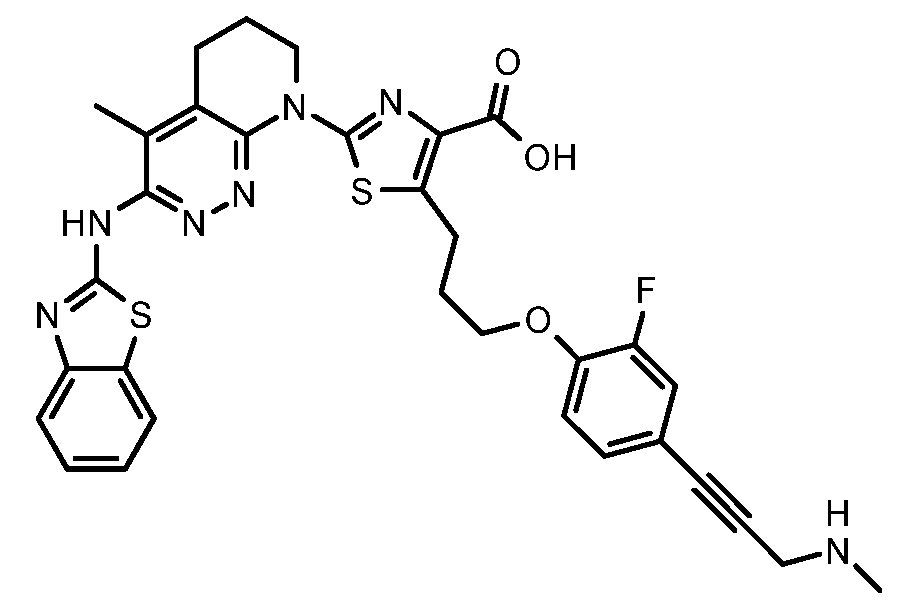
단계 A: 에틸 5-{3-[4-(3-{[(tert-부톡시)카르보닐](메틸)아미노}프로프-1-인-1-일)-2-플루오로페녹시]프로필}-2-(4-메틸-3-{[(2Z)-3-{[2-(트리메틸실릴)에톡시]메틸}-2,3-디히드로-1,3-벤조티아졸-2-일리덴]아미노}-5H,6H,7H,8H-피리도[2,3-c]피리다진-8-일)-1,3-티아졸-4-카르복실레이트Step A: Ethyl 5-{3-[4-(3-{[(tert-butoxy)carbonyl](methyl)amino}prop-1-yn-1-yl)-2-fluorophenoxy]propyl}-2-(4-methyl-3-{[(2Z)-3-{[2-(trimethylsilyl)ethoxy]methyl}-2,3-dihydro-1,3-benzothiazol-2-ylidene]amino}-5H,6H,7H,8H-pyrido[2,3-c]pyridazin-8-yl)-1,3-thiazole-4-carboxylate
톨루엔 (15 mL) 중 제조예 3g로부터의 생성물 (500 mg, 0.78 mmol, 1 당량)의 용액에 제조예 4c로부터의 생성물 (327 mg, 1.17 mmol, 1.5 당량)에 이어서 트리페닐포스핀 (307 mg, 1.17 mmol, 1.5 당량) 및 디이소프로필 아조디카르복실레이트 (230 μL, 1.17 mmol, 1.5 당량)를 첨가하고, 혼합물을 환류 하에 밤새 가열하였다. 반응물을 디클로로메탄과 물 사이에 분배하고, 유기 상을 건조 (PTFE 상 분리기)시키고, 진공 하에 농축시켰다. 자동화 플래쉬 칼럼 크로마토그래피 (콤비플래쉬 Rf, 24 g 레디셉™ 실리카 카트리지)에 의해 이소-헵탄 중 0 - 50% 에틸 아세테이트의 구배로 용리시키면서 정제하여 목적 생성물을 회백색 발포체 (715 mg, 0.79 mmol, >100%)로서 수득하였다. LC/MS (C45H56FN7O6SiS2) 902 [M+H]+; RT 1.46 (LCMS-V-B2). 1H NMR (400 MHz, DMSO-d6) δ 7.82 (dt, J = 7.6, 0.9 Hz, 1H), 7.48 - 7.37 (m, 2H), 7.33 (d, J = 11.6 Hz, 1H), 7.28 - 7.13 (m, 3H), 5.84 (s, 2H), 4.32 - 4.17 (m, 6H), 4.15 (t, J = 6.1 Hz, 2H), 3.72 (dd, J = 8.5, 7.4 Hz, 2H), 3.27 (d, J = 15.4 Hz, 2H), 2.93 - 2.75 (m, 5H), 2.36 (s, 3H), 2.19 - 2.10 (m, 2H), 2.10 - 1.98 (m, 2H), 1.40 (s, 9H), 1.28 (t, 3H), 0.96 - 0.89 (m, 2H), -0.11 (s, 9H).To a solution of the product from Preparation 3g (500 mg, 0.78 mmol, 1 equiv) in toluene (15 mL) was added the product from Preparation 4c (327 mg, 1.17 mmol, 1.5 equiv) followed by triphenylphosphine (307 mg, 1.17 mmol, 1.5 equiv) and diisopropyl azodicarboxylate (230 μL, 1.17 mmol, 1.5 equiv), and the mixture was heated under reflux overnight. The reaction was partitioned between dichloromethane and water, and the organic phase was dried (PTFE phase separator) and concentrated in vacuo. The residue was purified by automated flash column chromatography (CombiFlash Rf, 24 g RediSep™ silica cartridge) eluting with a gradient of 0 - 50% ethyl acetate in iso-heptane to give the desired product as an off-white foam (715 mg, 0.79 mmol, >100%). LC/MS (C 45 H 56 FN 7 O 6 SiS 2 ) 902 [M+H] + ; RT 1.46 (LCMS-V-B2). 1H NMR (400 MHz, DMSO-d6) δ 7.82 (dt, J = 7.6, 0.9 Hz, 1H), 7.48 - 7.37 (m, 2H), 7.33 (d, J = 11.6 Hz, 1H), 7.28 - 7.13 (m, 3H), 5.84 (s, 2H), 4.32 - 4.17 (m, 6H), 4.15 (t, J = 6.1 Hz, 2H), 3.72 (dd, J = 8.5, 7.4 Hz, 2H), 3.27 (d, J = 15.4 Hz, 2H), 2.93 - 2.75 (m, 5H), 2.36 (s, 3H), 2.19 - 2.10 (m, 2H), 2.10 - 1.98 (m, 2H), 1.40 (s, 9H), 1.28 (t, 3H), 0.96 - 0.89 (m, 2H), -0.11 (s, 9H).
단계 B: 에틸 2-{3-[(1,3-벤조티아졸-2-일)아미노]-4-메틸-5H,6H,7H,8H-피리도[2,3-c]피리다진-8-일}-5-(3-{2-플루오로-4-[3-(메틸아미노)프로프-1-인-1-일]페녹시}프로필)-1,3-티아졸-4-카르복실레이트Step B: Ethyl 2-{3-[(1,3-benzothiazol-2-yl)amino]-4-methyl-5H,6H,7H,8H-pyrido[2,3-c]pyridazin-8-yl}-5-(3-{2-fluoro-4-[3-(methylamino)prop-1-yn-1-yl]phenoxy}propyl)-1,3-thiazole-4-carboxylate
아세토니트릴 (17 mL) 중 단계 A로부터의 생성물 (1.67 g, 1.85 mmol, 1 당량)의 용액에 히드로겐 플루오라이드-피리딘 (3.22 mL, 37 mmol, 20 당량)을 첨가하고, 혼합물을 60℃에서 2시간 동안 가열하였다. 반응물을 3:1 디클로로메탄 / 이소프로판올과 2N 수성 수산화나트륨 사이에 분배하고, 유기 상을 염수로 세척하고, 건조 (PTFE 상 분리기)시키고, 진공 하에 농축시켰다. 자동화 플래쉬 칼럼 크로마토그래피 (콤비플래쉬 Rf, 80 g 레디셉™ 실리카 카트리지)에 의해 디클로로메탄 중 0 - 7% 메탄올의 구배로 용리시키면서 정제하여 목적 생성물을 황색 고체 (1.02 g, 1.52 mmol, 82%)로서 수득하였다. LC/MS (C34H34FN7O3S2) 672 [M+H]+; RT 2.06 (LCMS-V-C). 1H NMR (400 MHz, DMSO-d6) δ 7.89 (dd, J = 7.8, 1.2 Hz, 1H), 7.50 (d, J = 8.1 Hz, 1H), 7.38 (ddd, J = 8.2, 7.3, 1.2 Hz, 1H), 7.32 - 7.25 (m, 1H), 7.23 - 7.12 (m, 3H), 4.32 - 4.21 (m, 4H), 4.15 (t, J = 6.1 Hz, 2H), 3.45 (s, 2H), 3.32 - 3.23 (m, 2H), 2.89 (t, J = 6.4 Hz, 2H), 2.35 (s, 3H), 2.31 (s, 3H), 2.20 - 2.10 (m, 2H), 2.09 - 1.97 (m, 2H), 1.30 (t, J = 7.1 Hz, 3H).To a solution of the product from step A (1.67 g, 1.85 mmol, 1 equiv) in acetonitrile (17 mL) was added hydrogen fluoride-pyridine (3.22 mL, 37 mmol, 20 equiv) and the mixture was heated at 60 °C for 2 h. The reaction was partitioned between 3:1 dichloromethane/isopropanol and 2N aqueous sodium hydroxide, and the organic phase was washed with brine, dried (PTFE phase separator), and concentrated in vacuo. The residue was purified by automated flash column chromatography (CombiFlash Rf, 80 g RediSep™ silica cartridge), eluting with a gradient of 0 - 7% methanol in dichloromethane, to give the desired product as a yellow solid (1.02 g, 1.52 mmol, 82%). LC/MS (C 34 H 34 FN 7 O 3 S 2 ) 672 [M+H] + ; RT 2.06 (LCMS-VC). 1H NMR (400 MHz, DMSO-d6) δ 7.89 (dd, J = 7.8, 1.2 Hz, 1H), 7.50 (d, J = 8.1 Hz, 1H), 7.38 (ddd, J = 8.2, 7.3, 1.2 Hz, 1H), 7.32 - 7.25 (m, 1H), 7.23 - 7.12 (m, 3H), 4.32 - 4.21 (m, 4H), 4.15 (t, J = 6.1 Hz, 2H), 3.45 (s, 2H), 3.32 - 3.23 (m, 2H), 2.89 (t, J = 6.4 Hz, 2H), 2.35 (s, 3H), 2.31 (s, 3H), 2.20 - 2.10 (m, 2H), 2.09 - 1.97 (m, 2H), 1.30 (t, J = 7.1 Hz, 3H).
단계 C: 2-{3-[(1,3-벤조티아졸-2-일)아미노]-4-메틸-5H,6H,7H,8H-피리도[2,3-c]피리다진-8-일}-5-(3-{2-플루오로-4-[3-(메틸아미노)프로프-1-인-1-일]페녹시}프로필)-1,3-티아졸-4-카르복실산Step C: 2-{3-[(1,3-Benzothiazol-2-yl)amino]-4-methyl-5H,6H,7H,8H-pyrido[2,3-c]pyridazin-8-yl}-5-(3-{2-fluoro-4-[3-(methylamino)prop-1-yn-1-yl]phenoxy}propyl)-1,3-thiazole-4-carboxylic acid
1,4-디옥산 (50 mL) 중 단계 B로부터의 생성물 (1.02 g, 1.52 mmol, 1 당량)의 용액에 수산화리튬 1수화물 (637 mg, 15.2 mmol, 10 당량)을 첨가하고, 혼합물을 110℃에서 밤새 가열하였다. 자동화 플래쉬 칼럼 크로마토그래피 (콤비플래쉬 Rf, 80 g 레디셉™ 실리카 카트리지)에 의해 디클로로메탄 중 0 - 70% 0.7N 메탄올성 암모니아의 구배로 용리시키면서 정제하여 고체를 수득하였으며, 이를 아세토니트릴로 연화처리하고, 여과하고, 진공 하에 건조시켜 목적 생성물을 황색 고체 (657 mg, 1.02 mmol, 67%)로서 수득하였다. HRMS-ESI (m/z) [M+H]+ C32H31FN7O3S2에 대한 계산치: 644.1914, 실측치 644.1930.To a solution of the product from step B (1.02 g, 1.52 mmol, 1 equiv) in 1,4-dioxane (50 mL) was added lithium hydroxide monohydrate (637 mg, 15.2 mmol, 10 equiv) and the mixture was heated at 110 °C overnight. The mixture was purified by automated flash column chromatography (CombiFlash Rf, 80 g RediSep™ silica cartridge) eluting with a gradient of 0 - 70% 0.7N methanolic ammonia in dichloromethane to give a solid which was triturated with acetonitrile, filtered and dried in vacuo to give the desired product as a yellow solid (657 mg, 1.02 mmol, 67%). HRMS-ESI (m/z) [M+H] + C 32 H 31 FN 7 O 3 S 2 calculated: 644.1914, found 644.1930.
P4의 제조: 3-[[5-[[6-(1,3-벤조티아졸-2-일아미노)-5-메틸-피리다진-3-일]-[4-카르복시-5-[3-[2-플루오로-4-[3-(메틸아미노)프로프-1-이닐]페녹시]프로필]티아졸-2-일]아미노]-2-히드록시-펜틸]-디메틸-암모니오]프로판-1-술포네이트Preparation of P4: 3-[[5-[[6-(1,3-benzothiazol-2-ylamino)-5-methyl-pyridazin-3-yl]-[4-carboxy-5-[3-[2-fluoro-4-[3-(methylamino)prop-1-ynyl]phenoxy]propyl]thiazol-2-yl]amino]-2-hydroxy-pentyl]-dimethyl-ammonio]propane-1-sulfonate

단계 A: 메틸 5-[3-[4-[3-[tert-부톡시카르보닐(메틸)아미노]프로프-1-이닐]-2-플루오로-페녹시]프로필]-2-[[4-[tert-부틸(디페닐)실릴]옥시-5-(디메틸아미노)펜틸]-[5-메틸-6-[(Z)-[3-(2-트리메틸실릴에톡시메틸)-1,3-벤조티아졸-2-일리덴]아미노]피리다진-3-일]아미노]티아졸-4-카르복실레이트Step A: Methyl 5-[3-[4-[3-[tert-butoxycarbonyl(methyl)amino]prop-1-ynyl]-2-fluoro-phenoxy]propyl]-2-[[4-[tert-butyl(diphenyl)silyl]oxy-5-(dimethylamino)pentyl]-[5-methyl-6-[(Z)-[3-(2-trimethylsilylethoxymethyl)-1,3-benzothiazol-2-ylidene]amino]pyridazin-3-yl]amino]thiazole-4-carboxylate
제조예 5a_01 및 적절한 아민으로서의 N-메틸메탄아민로부터 출발하는 토실레이트에 의한 알킬화 일반적 절차를 사용하여, 목적 생성물을 수득하였다.Using the general procedure for alkylation with tosylate starting from N-methylmethanamine as the appropriate amine and Preparation Example 5a_01, the desired product was obtained.
HRMS-ESI (m/z): [M+H]+ C64H84FN8O7S2Si2에 대한 계산치: 1215.5421, 실측치 1215.5389.HRMS-ESI (m/z): [M+H] + C 64 H 84 FN 8 O 7 S 2 Si 2 calculated: 1215.5421, found 1215.5389.
단계 B: 3-[[5-[[6-(1,3-벤조티아졸-2-일아미노)-5-메틸-피리다진-3-일]-[4-카르복시-5-[3-[2-플루오로-4-[3-(메틸아미노)프로프-1-이닐]페녹시]프로필]티아졸-2-일]아미노]-2-히드록시-펜틸]-디메틸-암모니오]프로판-1-술포네이트Step B: 3-[[5-[[6-(1,3-benzothiazol-2-ylamino)-5-methyl-pyridazin-3-yl]-[4-carboxy-5-[3-[2-fluoro-4-[3-(methylamino)prop-1-ynyl]phenoxy]propyl]thiazol-2-yl]amino]-2-hydroxy-pentyl]-dimethyl-ammonio]propane-1-sulfonate
단계 A로부터의 생성물을 MeCN (5 mL/mmol) 중에 현탁시킨 다음, 옥사티올란 2,2-디옥시드 (10 당량)를 첨가하고, 60℃에서 계속 교반하였다 (완전한 전환이 관찰됨). 반응 혼합물을 농축시켰다. 3-[[5-[[5-[3-[4-[3-[tert-부톡시카르보닐(메틸)아미노]프로프-1-이닐]-2-플루오로-페녹시]프로필]-4-메톡시카르보닐-티아졸-2-일]-[5-메틸-6-[(Z)-[3-(2-트리메틸실릴에톡시메틸)-1,3-벤조티아졸-2-일리덴]아미노]피리다진-3-일]아미노]-2-[tert-부틸(디페닐)실릴]옥시-펜틸]-디메틸-암모니오]프로판-1-술포네이트 (LC-MS-ESI (m/z): [M+H]+ C67H90FN8O10S3Si2에 대한 계산치: 1337.5, 실측치 1337.6)를 함유한 조 혼합물을 4급 염 탈보호 일반적 절차를 사용하는 후속 반응으로 직접 옮겨 목적 생성물을 수득하였다. HRMS-ESI (m/z): [M+H]+ C39H48FN8O7S3에 대한 계산치: 855.2787, 실측치 855.2786.The product from Step A was suspended in MeCN (5 mL/mmol), then oxathiolane 2,2-dioxide (10 equiv) was added and stirring was continued at 60 °C (complete conversion was observed). The reaction mixture was concentrated. A crude mixture containing 3-[[5-[[5-[3-[4-[3-[tert-butoxycarbonyl(methyl)amino]prop-1-ynyl]-2-fluoro-phenoxy]propyl]-4-methoxycarbonyl-thiazol-2-yl]-[5-methyl-6-[(Z)-[3-(2-trimethylsilylethoxymethyl)-1,3-benzothiazol-2-ylidene]amino]pyridazin-3-yl]amino]-2-[tert-butyl(diphenyl)silyl]oxy-pentyl]-dimethyl-ammonio]propane-1-sulfonate (LC-MS-ESI (m/z): [M+H] + calcd for C 67 H 90 FN 8 O 10 S 3 Si 2 : 1337.5, found 1337.6) was subjected to the general procedure for quaternary salt deprotection. The resulting product was directly transferred to the subsequent reaction to obtain the desired product. HRMS-ESI (m/z): [M+H] + C 39 H 48 FN 8 O 7 S 3 , calculated for: 855.2787, found 855.2786.
P5의 제조: 2-[[6-(1,3-벤조티아졸-2-일아미노)-5-메틸-피리다진-3-일]-[4-히드록시-5-(트리메틸암모니오)펜틸]아미노]-5-[3-[2-플루오로-4-[3-(메틸아미노)프로프-1-이닐]페녹시]프로필]티아졸-4-카르복실레이트Preparation of P5: 2-[[6-(1,3-benzothiazol-2-ylamino)-5-methyl-pyridazin-3-yl]-[4-hydroxy-5-(trimethylammonio)pentyl]amino]-5-[3-[2-fluoro-4-[3-(methylamino)prop-1-ynyl]phenoxy]propyl]thiazole-4-carboxylate

단계 A: 메틸 5-[3-[4-[3-[tert-부톡시카르보닐(메틸)아미노]프로프-1-이닐]-2-플루오로-페녹시]프로필]-2-[[4-[tert-부틸(디페닐)실릴]옥시-5-(디메틸아미노)펜틸]-[5-메틸-6-[(Z)-[3-(2-트리메틸실릴에톡시메틸)-1,3-벤조티아졸-2-일리덴]아미노]피리다진-3-일]아미노]티아졸-4-카르복실레이트Step A: Methyl 5-[3-[4-[3-[tert-butoxycarbonyl(methyl)amino]prop-1-ynyl]-2-fluoro-phenoxy]propyl]-2-[[4-[tert-butyl(diphenyl)silyl]oxy-5-(dimethylamino)pentyl]-[5-methyl-6-[(Z)-[3-(2-trimethylsilylethoxymethyl)-1,3-benzothiazol-2-ylidene]amino]pyridazin-3-yl]amino]thiazole-4-carboxylate
제조예 5a_01 및 적절한 아민으로서의 N-메틸메탄아민로부터 출발하는 토실레이트에 의한 알킬화 일반적 절차를 사용하여, 목적 생성물을 수득하였다. HRMS-ESI (m/z): [M+H]+ C64H84FN8O7S2Si2에 대한 계산치: 1215.5421, 실측치 1215.5389.Using the general procedure for alkylation with tosylate starting from N-methylmethanamine as the appropriate amine and Preparation 5a_01, the desired product was obtained. HRMS-ESI (m/z): [M+H] + C 64 H 84 FN 8 O 7 S 2 Si 2 1215.5421, found 1215.5389.
단계 B: 2-[[6-(1,3-벤조티아졸-2-일아미노)-5-메틸-피리다진-3-일]-[4-히드록시-5-(트리메틸암모니오)펜틸]아미노]-5-[3-[2-플루오로-4-[3-(메틸아미노)프로프-1-이닐]페녹시]프로필]티아졸-4-카르복실레이트Step B: 2-[[6-(1,3-benzothiazol-2-ylamino)-5-methyl-pyridazin-3-yl]-[4-hydroxy-5-(trimethylammonio)pentyl]amino]-5-[3-[2-fluoro-4-[3-(methylamino)prop-1-ynyl]phenoxy]propyl]thiazole-4-carboxylate
단계 A로부터의 생성물을 아세토니트릴 (4 mL/mmol) 및 N,N-디메틸포름아미드 (1 mL/mmol)의 혼합물 중에 용해시킨 다음, 아이오도메탄 (5 당량)을 첨가하고, 완전한 전환이 관찰될 때까지 (약 1시간) 실온에서 교반하였다. 반응 혼합물을 농축시켰다. [5-[[5-[3-[4-[3-[tert-부톡시카르보닐(메틸)아미노]프로프-1-이닐]-2-플루오로-페녹시]프로필]-4-메톡시카르보닐-티아졸-2-일]-[5-메틸-6-[(Z)-[3-(2-트리메틸실릴에톡시메틸)-1,3-벤조티아졸-2-일리덴]아미노]피리다진-3-일]아미노]-2-[tert-부틸(디페닐)실릴]옥시-펜틸]-트리메틸-암모늄 (LC-MS-ESI (m/z): [M]+ C65H86FN8O7S2Si2에 대한 계산치: 1229.6, 실측치 1229.4)을 함유한 조 혼합물을 4급 염 탈보호 일반적 절차를 사용하는 후속 반응으로 옮겨 목적 생성물을 수득하였다. HRMS-ESI (m/z): [M+H]+ C37H44FN8O4S2에 대한 계산치: 747.2905, 실측치 747.2900.The product from Step A was dissolved in a mixture of acetonitrile (4 mL/mmol) and N,N-dimethylformamide (1 mL/mmol), then iodomethane (5 equiv) was added and stirred at room temperature until complete conversion was observed (about 1 h). The reaction mixture was concentrated. The crude mixture containing [5-[[5-[3-[4-[3-[tert-butoxycarbonyl(methyl)amino]prop-1-ynyl]-2-fluoro-phenoxy]propyl]-4-methoxycarbonyl-thiazol-2-yl]-[5-methyl-6-[(Z)-[3-(2-trimethylsilylethoxymethyl)-1,3-benzothiazol-2-ylidene]amino]pyridazin-3-yl]amino]-2-[tert-butyl(diphenyl)silyl]oxy-pentyl]-trimethyl-ammonium (LC-MS-ESI (m/z): [M] + calcd for C 65 H 86 FN 8 O 7 S 2 Si 2 : 1229.6, found 1229.4) was carried forward to the subsequent reaction using the general procedure for quaternary salt deprotection to give the desired product. HRMS-ESI (m/z): [M+H] + C 37 H 44 FN 8 O 4 S 2 calcd: 747.2905, found 747.2900.
P6의 제조: 2-[[6-(1,3-벤조티아졸-2-일아미노)-5-메틸-피리다진-3-일]-[3-(디메틸아미노)프로필]아미노]-5-[3-[2-플루오로-4-[3-(메틸아미노)프로프-1-이닐]페녹시]프로필]티아졸-4-카르복실산Preparation of P6: 2-[[6-(1,3-benzothiazol-2-ylamino)-5-methyl-pyridazin-3-yl]-[3-(dimethylamino)propyl]amino]-5-[3-[2-fluoro-4-[3-(methylamino)prop-1-ynyl]phenoxy]propyl]thiazole-4-carboxylic acid

단계 A: 메틸 2-[tert-부톡시카르보닐-[3-(디메틸아미노)프로필]아미노]-5-[3-[4-[3-[tert-부톡시카르보닐(메틸)아미노]프로프-1-이닐]-2-플루오로-페녹시]프로필]티아졸-4-카르복실레이트Step A: Methyl 2-[tert-butoxycarbonyl-[3-(dimethylamino)propyl]amino]-5-[3-[4-[3-[tert-butoxycarbonyl(methyl)amino]prop-1-ynyl]-2-fluoro-phenoxy]propyl]thiazole-4-carboxylate
제조예 1b_01 및 3-(디메틸아미노)프로판-1-올로부터 출발하는 미츠노부 일반적 절차 II를 사용하여, 목적 생성물 1.40 g (정량적, 샘플은 대략 35 n/n% DIAD-2H를 함유함)을 수득하였다. 1H NMR (400 MHz, DMSO-d6) δ ppm 7.30 (dd, 1H), 7.21 (dm, 1H), 7.13 (t, 1H), 4.23 (s, 2H), 4.10 (t, 2H), 4.01 (t, 2H), 3.74 (s, 3H), 3.22 (t, 2H), 2.86 (s, 3H), 2.24 (t, 2H), 2.12 (s, 6H), 2.08 (m, 2H), 1.74 (m, 2H), 1.51/1.41 (s, 18H); HRMS-ESI (m/z): [M+H]+ C33H48FN4O7S에 대한 계산치: 663.3228, 실측치 663.3218.Using Mitsunobu General Procedure II starting from Preparation 1b_01 and 3-(dimethylamino)propan-1-ol, 1.40 g of the desired product was obtained (quantitative, the sample contained approximately 35 n/n% DIAD-2H). 1 H NMR (400 MHz, DMSO-d 6 ) δ ppm 7.30 (dd, 1H), 7.21 (dm, 1H), 7.13 (t, 1H), 4.23 (s, 2H), 4.10 (t, 2H), 4.01 (t, 2H), 3.74 (s, 3H), 3.22 (t, 2H), 2.86 (s, 3H), 2.24 (t, 2H), 2.12 (s, 6H), 2.08 (m, 2H), 1.74 (m, 2H), 1.51/1.41 (s, 18H); HRMS-ESI (m/z): [M+H] + C 33 H 48 FN 4 O 7 S calcd: 663.3228, found 663.3218.
단계 B: 메틸 5-[3-[4-[3-[tert-부톡시카르보닐(메틸)아미노]프로프-1-이닐]-2-플루오로-페녹시]프로필]-2-[3-(디메틸아미노)프로필아미노]티아졸-4-카르복실레이트Step B: Methyl 5-[3-[4-[3-[tert-butoxycarbonyl(methyl)amino]prop-1-ynyl]-2-fluoro-phenoxy]propyl]-2-[3-(dimethylamino)propylamino]thiazole-4-carboxylate
단계 A로부터의 생성물로부터 출발하는 HFIP에 의한 탈보호 일반적 절차를 사용하여, 목적 생성물 0.95 g (80%)을 생산하였다. 1H NMR (500 MHz, DMSO-d6) δ ppm 7.57 (t, 1H), 7.31 (d, 1H), 7.21 (d, 1H), 7.13 (t, 1H), 4.23 (br., 2H), 4.07 (t, 2H), 3.69 (s, 3H), 3.17 (q, 2H), 3.12 (t, 2H), 2.86 (br., 3H), 2.24 (t, 2H), 2.11 (s, 6H), 2.00 (quint., 2H), 1.63 (m, 2H), 1.41 (s, 9H); 13C NMR (125 MHz, DMSO-d6) δ ppm 129.1, 119.3, 115.4, 68, 57.0, 51.7, 45.6, 42.8, 38.6, 33.8, 30.6, 28.5, 27.0, 23.3; HRMS-ESI (m/z): [M+H]+ C28H40FN4O5S에 대한 계산치: 563.2703, 실측치 563.2694.Using the general procedure for deprotection by HFIP starting from the product from Step A, 0.95 g (80%) of the desired product was produced. 1 H NMR (500 MHz, DMSO-d 6 ) δ ppm 7.57 (t, 1H), 7.31 (d, 1H), 7.21 (d, 1H), 7.13 (t, 1H), 4.23 (br., 2H), 4.07 (t, 2H), 3.69 (s, 3H), 3.17 (q, 2H), 3.12 (t, 2H), 2.86 (br., 3H), 2.24 (t, 2H), 2.11 (s, 6H), 2.00 (quint., 2H), 1.63 (m, 2H), 1.41 (s, 9H); 13 C NMR (125 MHz, DMSO-d 6 ) δ ppm 129.1, 119.3, 115.4, 68, 57.0, 51.7, 45.6, 42.8, 38.6, 33.8, 30.6, 28.5, 27.0, 23.3; HRMS-ESI (m/z): [M+H] + calcd for C 28 H 40 FN 4 O 5 S: 563.2703, found 563.2694.
단계 C: 메틸 5-[3-[4-[3-[tert-부톡시카르보닐(메틸)아미노]프로프-1-이닐]-2-플루오로-페녹시]프로필]-2-[3-(디메틸아미노)프로필-[5-메틸-6-[(Z)-[3-(2-트리메틸실릴에톡시메틸)-1,3-벤조티아졸-2-일리덴]아미노]피리다진-3-일]아미노]티아졸-4-카르복실레이트Step C: Methyl 5-[3-[4-[3-[tert-butoxycarbonyl(methyl)amino]prop-1-ynyl]-2-fluoro-phenoxy]propyl]-2-[3-(dimethylamino)propyl-[5-methyl-6-[(Z)-[3-(2-trimethylsilylethoxymethyl)-1,3-benzothiazol-2-ylidene]amino]pyridazin-3-yl]amino]thiazole-4-carboxylate
단계 B로부터의 생성물 및 제조예 4a_01로부터 출발하는 부흐발트 일반적 절차 III를 사용하여, 목적 생성물 0.79 g (51%)을 수득하였다. 1H NMR (500 MHz, DMSO-d6) δ ppm 7.84 (d, 1H), 7.73 (s, 1H), 7.46 (dd, 1H), 7.43 (td, 1H), 7.31 (brd., 1H), 7.25 (td, 1H), 7.21 (d, 1H), 7.16 (t, 1H), 5.86 (s, 2H), 4.35 (t, 2H), 4.20 (br., 2H), 4.15 (t, 2H), 3.76 (s, 3H), 3.72 (t, 2H), 3.27 (t, 2H), 2.84 (br., 3H), 2.45 (s, 3H), 2.32 (t, 2H), 2.18 (s, 6H), 2.13 (m, 2H), 1.86 (m, 2H), 1.40 (s, 9H), 0.92 (t, 2H), -0.11 (s, 9H); 13C NMR (125 MHz, DMSO-d6) δ ppm 129.1, 127.2, 123.4, 123.2, 119.3, 117.6, 115.4, 111.9, 72.8, 68.4, 66.7, 56.4, 51.9, 45.7, 45.5, 38.5, 33.8, 31.0, 28.5, 25.0, 23.1, 17.9, 17.8, -1.0; HRMS-ESI (m/z): [M+H]+ C46H62FN8O6S2Si에 대한 계산치: 933.3987, 실측치 933.3990.Using the Buchwald general procedure III starting from step B and preparation example 4a_01, 0.79 g (51%) of the desired product was obtained. 1 H NMR (500 MHz, DMSO-d 6 ) δ ppm 7.84 (d, 1H), 7.73 (s, 1H), 7.46 (dd, 1H), 7.43 (td, 1H), 7.31 (brd., 1H), 7.25 (td, 1H), 7.21 (d, 1H), 7.16 (t, 1H), 5.86 (s, 2H), 4.35 (t, 2H), 4.20 (br., 2H), 4.15 (t, 2H), 3.76 (s, 3H), 3.72 (t, 2H), 3.27 (t, 2H), 2.84 (br., 3H), 2.45 (s, 3H), 2.32 (t, 2H), 2.18 (s, 6H), 2.13 (m, 2H), 1.86 (m, 2H), 1.40 (s, 9H), 0.92 (t, 2H), -0.11 (s, 9H); 13 C NMR (125 MHz, DMSO-d 6 ) δ ppm 129.1, 127.2, 123.4, 123.2, 119.3, 117.6, 115.4, 111.9, 72.8, 68.4, 66.7, 56.4, 51.9, 45.7, 45.5, 38.5, 33.8, 31.0, 28.5, 25.0, 23.1, 17.9, 17.8, -1.0; HRMS-ESI (m/z): [M+H] + calcd for C 46 H 62 FN 8 O 6 S 2 Si: 933.3987, found 933.3990.
단계 D: 2-[[6-(1,3-벤조티아졸-2-일아미노)-5-메틸-피리다진-3-일]-[3-(디메틸아미노)프로필]아미노]-5-[3-[2-플루오로-4-[3-(메틸아미노)프로프-1-이닐]페녹시]프로필]티아졸-4-카르복실산Step D: 2-[[6-(1,3-benzothiazol-2-ylamino)-5-methyl-pyridazin-3-yl]-[3-(dimethylamino)propyl]amino]-5-[3-[2-fluoro-4-[3-(methylamino)prop-1-ynyl]phenoxy]propyl]thiazole-4-carboxylic acid
단계 C로부터의 생성물로부터 출발하는 탈보호 및 가수분해 일반적 절차에 이은 역상 정제용 크로마토그래피 (C18, 물 중 0.1% TFA: MeCN)를 통한 재정제를 사용하여, 목적 생성물의 TFA-염을 수득하였다. HRMS-ESI (m/z): [M+2H]2+ C34H39FN8O3S2에 대한 계산치: 345.1280, 실측치 345.1265.Using the general procedure for deprotection and hydrolysis starting from the product from Step C, followed by repurification via reverse-phase chromatography (C18, 0.1% TFA in water: MeCN), the TFA salt of the desired product was obtained. HRMS-ESI (m/z): [M+2H] 2+ calcd for C 34 H 39 FN 8 O 3 S 2 : 345.1280, found 345.1265.
P7의 제조: 2-({6-[(1,3-벤조티아졸-2-일)아미노]-5-메틸피리다진-3-일}(메틸)아미노)-5-(3-{2-플루오로-4-[3-(메틸아미노)프로프-1-인-1-일]페녹시}프로필)-1,3-티아졸-4-카르복실산Preparation of P7: 2-({6-[(1,3-Benzothiazol-2-yl)amino]-5-methylpyridazin-3-yl}(methyl)amino)-5-(3-{2-fluoro-4-[3-(methylamino)prop-1-yn-1-yl]phenoxy}propyl)-1,3-thiazole-4-carboxylic acid

단계 A: 에틸 2-({6-[(1,3-벤조티아졸-2-일)아미노]-5-메틸피리다진-3-일}(메틸)아미노)-5-(3-{2-플루오로-4-[3-(메틸아미노)프로프-1-인-1-일]페녹시}프로필)-1,3-티아졸-4-카르복실레이트Step A: Ethyl 2-({6-[(1,3-benzothiazol-2-yl)amino]-5-methylpyridazin-3-yl}(methyl)amino)-5-(3-{2-fluoro-4-[3-(methylamino)prop-1-yn-1-yl]phenoxy}propyl)-1,3-thiazole-4-carboxylate
트리플루오로아세트산 (20 mL)을 디클로로메탄 (60 mL) 중 제조예 5j_01, 단계 A로부터의 생성물 (1.5 g, 1.71 mmol, 1 당량)의 교반 용액에 첨가하고, 혼합물을 주위 온도에서 밤새 교반하였다. 반응물을 디클로로메탄으로 희석하고, 0℃로 냉각시킨 다음, 2N 수성 수산화나트륨을 첨가하여 염기성화시키고, 유기 상을 건조 (황산마그네슘)시키고, 진공 하에 농축시켰다. 자동화 플래쉬 칼럼 크로마토그래피 (콤비플래쉬 Rf, 40 g 레디셉™ 실리카 카트리지)에 의해 디클로로메탄 중 0 - 10% 메탄올의 구배로 용리시키면서 정제하여 목적 생성물을 황색 고체 (361 mg, 0.56 mmol, 33%)로서 수득하였다. LC/MS (C32H32FN7O3S2) 646 [M+H]+; RT 1.98 (LCMS-V-C). 1H NMR (400 MHz, DMSO-d6) δ 7.91 (d, 1H), 7.68 (d, J = 1.2 Hz, 1H), 7.53 (d, J = 7.9 Hz, 1H), 7.39 (ddd, J = 8.2, 7.2, 1.3 Hz, 1H), 7.32 - 7.11 (m, 4H), 4.25 (q, J = 7.1 Hz, 2H), 4.15 (t, J = 6.2 Hz, 2H), 3.77 (s, 3H), 3.46 (s, 2H), 3.27 (t, J = 7.7 Hz, 2H), 2.47 (d, J = 1.0 Hz, 3H), 2.31 (s, 3H), 2.19 - 2.07 (m, 2H), 2.23 (s, 1H), 1.30 (t, J = 7.1 Hz, 3H).Trifluoroacetic acid (20 mL) was added to a stirred solution of the product from Preparation 5j_01, Step A (1.5 g, 1.71 mmol, 1 eq) in dichloromethane (60 mL) and the mixture was stirred at ambient temperature overnight. The reaction was diluted with dichloromethane, cooled to 0 °C, basified by the addition of 2N aqueous sodium hydroxide, the organic phase was dried (magnesium sulfate) and concentrated in vacuo. The residue was purified by automated flash column chromatography (CombiFlash Rf, 40 g RediSep™ silica cartridge), eluting with a gradient of 0 - 10% methanol in dichloromethane, to give the desired product as a yellow solid (361 mg, 0.56 mmol, 33%). LC/MS (C 32 H 32 FN 7 O 3 S 2 ) 646 [M+H] + ; RT 1.98 (LCMS-VC). 1H NMR (400 MHz, DMSO-d6) δ 7.91 (d, 1H), 7.68 (d, J = 1.2 Hz, 1H), 7.53 (d, J = 7.9 Hz, 1H), 7.39 (ddd, J = 8.2, 7.2, 1.3 Hz, 1H), 7.32 - 7.11 (m, 4H), 4.25 (q, J = 7.1 Hz, 2H), 4.15 (t, J = 6.2 Hz, 2H), 3.77 (s, 3H), 3.46 (s, 2H), 3.27 (t, J = 7.7 Hz, 2H), 2.47 (d, J = 1.0 Hz, 3H), 2.31 (s, 3H), 2.19 - 2.07 (m, 2H), 2.23 (s, 1H), 1.30 (t, J = 7.1 Hz, 3H).
단계 B: 2-({6-[(1,3-벤조티아졸-2-일)아미노]-5-메틸피리다진-3-일}(메틸)아미노)-5-(3-{2-플루오로-4-[3-(메틸아미노)프로프-1-인-1-일]페녹시}프로필)-1,3-티아졸-4-카르복실산Step B: 2-({6-[(1,3-Benzothiazol-2-yl)amino]-5-methylpyridazin-3-yl}(methyl)amino)-5-(3-{2-fluoro-4-[3-(methylamino)prop-1-yn-1-yl]phenoxy}propyl)-1,3-thiazole-4-carboxylic acid
1,4-디옥산 (15 mL) 중 단계 B로부터의 생성물 (361 mg, 0.56 mmol, 1 당량)의 용액에 수산화리튬 1수화물 (352 mg, 8.39 mmol, 15 당량)을 첨가하고, 혼합물을 100℃에서 밤새 가열하였다. 반응물을 주위 온도로 냉각되도록 하고, 진공 하에 농축시켰다. 잔류물을 물로 연화처리하고, 여과하고, 물에 이어서 디에틸 에테르로 세척하고, 진공 하에 건조시켜 목적 생성물을 황색 고체 (286 mg, 0.46 mmol, 83%) [리튬 염으로서]로서 수득하였다. HRMS-ESI (m/z) [M+H]+ C30H29FN7O3S2에 대한 계산치: 618.1752, 실측치 618.1767.To a solution of the product from Step B (361 mg, 0.56 mmol, 1 equiv) in 1,4-dioxane (15 mL) was added lithium hydroxide monohydrate (352 mg, 8.39 mmol, 15 equiv) and the mixture was heated at 100 °C overnight. The reaction was allowed to cool to ambient temperature and concentrated in vacuo. The residue was triturated with water, filtered, washed with water followed by diethyl ether and dried in vacuo to afford the desired product as a yellow solid (286 mg, 0.46 mmol, 83%) [as lithium salt]. HRMS-ESI (m/z) [M+H]+ calcd for C 30 H 29 FN 7 O 3 S 2 : 618.1752, found 618.1767.
P8의 제조: 2-[3-(1,3-벤조티아졸-2-일아미노)-4-메틸-6,7-디히드로-5H-피리도[2,3-c]피리다진-8-일]-5-[3-[2-플루오로-4-[3-(4-메틸피페라진-1-일)부트-1-이닐]페녹시]프로필]티아졸-4-카르복실산Preparation of P8: 2-[3-(1,3-benzothiazol-2-ylamino)-4-methyl-6,7-dihydro-5H-pyrido[2,3-c]pyridazin-8-yl]-5-[3-[2-fluoro-4-[3-(4-methylpiperazin-1-yl)but-1-ynyl]phenoxy]propyl]thiazole-4-carboxylic acid

단계 A: 메틸 2-(3-클로로-4-메틸-6,7-디히드로-5H-피리도[2,3-c]피리다진-8-일)-5-[3-[2-플루오로-4-[3-(4-메틸피페라진-1-일)부트-1-이닐]페녹시]프로필]티아졸-4-카르복실레이트Step A: Methyl 2-(3-chloro-4-methyl-6,7-dihydro-5H-pyrido[2,3-c]pyridazin-8-yl)-5-[3-[2-fluoro-4-[3-(4-methylpiperazin-1-yl)but-1-ynyl]phenoxy]propyl]thiazole-4-carboxylate
24 mL 오븐-건조 바이알에 PTFE-코팅된 자기 교반 막대를 장착하고, 2.5 mL 건조 THF 중에 용해시킨 250 mg 1-메틸피페라진 (2.5 mmol, 5.0 당량)을 충전한 다음, 133 mg 3-브로모부트-1-인 (1.0 mmol, 2.0 당량)을 시린지를 통해 5분의 기간에 걸쳐 적가하고, 그 온도에서 30분 동안 교반하였다. 생성된 혼합물에 301 mg의 제조예 3a (0.50 mmol, 1.0 당량), 18.15 mg Pd(PPh3)2Cl2 (0.025 mmol, 0.05 당량) 및 4.76 CuI (0.025 mmol, 0.05 당량)를 첨가한 다음, 이것을 60℃로 가열하고, 그 온도에서 2시간 동안 교반하였다. 반응은 완전한 전환에 도달하였다. 셀라이트를 반응 혼합물에 첨가하고, 휘발성 물질을 감압 하에 제거하였다. 이어서, 이를 플래쉬 크로마토그래피에 의해 용리액으로서 DCM 및 MeOH (1.2% NH3)를 사용하여 정제함으로써 목적 생성물 300 mg (95% 수율)을 수득하였다.A 24 mL oven-dried vial fitted with a PTFE-coated magnetic stir bar was charged with 250 mg 1-methylpiperazine (2.5 mmol, 5.0 equiv) dissolved in 2.5 mL dry THF, 133 mg 3-bromobut-1-yne (1.0 mmol, 2.0 equiv) was added dropwise via syringe over a period of 5 min and stirred at that temperature for 30 min. To the resulting mixture were added 301 mg of preparation 3a (0.50 mmol, 1.0 equiv), 18.15 mg Pd(PPh 3 ) 2 Cl 2 (0.025 mmol, 0.05 equiv) and 4.76 CuI (0.025 mmol, 0.05 equiv), which was then heated to 60 °C and stirred at that temperature for 2 h. The reaction reached complete conversion. Celite was added to the reaction mixture, and the volatiles were removed under reduced pressure. Then, it was purified by flash chromatography using DCM and MeOH (1.2% NH 3 ) as eluent to obtain 300 mg (95% yield) of the desired product.
단계 B: 메틸 2-[3-(1,3-벤조티아졸-2-일아미노)-4-메틸-6,7-디히드로-5H-피리도[2,3-c]피리다진-8-일]-5-[3-[2-플루오로-4-[3-(4-메틸피페라진-1-일)부트-1-이닐]페녹시]프로필]티아졸-4-카르복실레이트Step B: Methyl 2-[3-(1,3-benzothiazol-2-ylamino)-4-methyl-6,7-dihydro-5H-pyrido[2,3-c]pyridazin-8-yl]-5-[3-[2-fluoro-4-[3-(4-methylpiperazin-1-yl)but-1-ynyl]phenoxy]propyl]thiazole-4-carboxylate
300 mg의 단계 A로부터의 생성물 (0.47 mmol, 1.0 당량) 및 140 mg 1,3-벤조티아졸-2-아민 (0.94 mmol, 2.0 당량)으로부터 출발하는 부흐발트 일반적 절차 II를 사용하여, 목적 생성물 150 mg (42%)을 수득하였다.Using the Buchwald general procedure II starting from 300 mg of the product from step A (0.47 mmol, 1.0 equiv) and 140 mg of 1,3-benzothiazol-2-amine (0.94 mmol, 2.0 equiv) 150 mg (42%) of the desired product were obtained.
단계 C: 2-[3-(1,3-벤조티아졸-2-일아미노)-4-메틸-6,7-디히드로-5H-피리도[2,3-c]피리다진-8-일]-5-[3-[2-플루오로-4-[3-(4-메틸피페라진-1-일)부트-1-이닐]페녹시]프로필]티아졸-4-카르복실산Step C: 2-[3-(1,3-benzothiazol-2-ylamino)-4-methyl-6,7-dihydro-5H-pyrido[2,3-c]pyridazin-8-yl]-5-[3-[2-fluoro-4-[3-(4-methylpiperazin-1-yl)but-1-ynyl]phenoxy]propyl]thiazole-4-carboxylic acid
적절한 메틸 에스테르로서의 단계 B로부터의 생성물로부터 출발하는 가수분해 일반적 절차를 사용하여, 목적 생성물을 수득하였다. 1H NMR (500 MHz, DMSO-d6) δ ppm 7.87 (d, 1H), 7.49 (d, 1H), 7.36 (t, 1H), 7.26 (dd, 1H), 7.2 (t, 1H), 7.16 (dd, 1H), 7.13 (t, 1H), 4.27 (t, 2H), 4.12 (t, 2H), 3.65 (q, 1H), 3.27 (t, 2H), 2.87 (t, 2H), 2.62-2.21 (brm, 8H), 2.14 (s, 3H), 2.13 (qn, 2H), 2.04 (qn, 2H), 1.33 (s, 3H), 1.25 (d, 3H); 13C NMR (125 MHz, DMSO-d6) δ ppm 164.3, 155.4, 151.5, 151.4, 148.6, 147.2, 145.1, 140.2, 136.3, 130.2, 129.0, 129.0, 127.6, 126.5, 122.5, 122.3, 119.2, 116.4, 115.5, 115.4, 88.4, 84.1, 68.5, 51.7, 46.3, 46.1, 31, 23.9, 23.0, 20.3, 19.6, 12.9; HRMS-ESI (m/z) [M+H]+ C37H40FN8O3S2에 대한 계산치: 727.2649, 실측치 727.2630Using the general procedure for hydrolysis starting from the product from step B as the appropriate methyl ester, the desired product was obtained. 1 H NMR (500 MHz, DMSO-d 6 ) δ ppm 7.87 (d, 1H), 7.49 (d, 1H), 7.36 (t, 1H), 7.26 (dd, 1H), 7.2 (t, 1H), 7.16 (dd, 1H), 7.13 (t, 1H), 4.27 (t, 2H), 4.12 (t, 2H), 3.65 (q, 1H), 3.27 (t, 2H), 2.87 (t, 2H), 2.62-2.21 (brm, 8H), 2.14 (s, 3H), 2.13 (qn, 2H), 2.04 (qn, 2H), 1.33 (s, 3H), 1.25 (d, 3H); 13 C NMR (125 MHz, DMSO-d 6 ) δ ppm 164.3, 155.4, 151.5, 151.4, 148.6, 147.2, 145.1, 140.2, 136.3, 130.2, 129.0, 129.0, 127.6, 126.5, 122.5, 122.3, 119.2, 116.4, 115.5, 115.4, 88.4, 84.1, 68.5, 51.7, 46.3, 46.1, 31, 23.9, 23.0, 20.3, 19.6, 12.9; HRMS-ESI (m/z) [M+H] + C 37 H 40 FN 8 O 3 S 2 Calculated: 727.2649, Found 727.2630
P9의 제조: 2-[3-(1,3-벤조티아졸-2-일아미노)-4-메틸-6,7-디히드로-5H-피리도[2,3-c]피리다진-8-일]-5-[3-[2-플루오로-4-(3-피롤리딘-1-일프로프-1-이닐)페녹시]프로필]티아졸-4-카르복실산Preparation of P9: 2-[3-(1,3-benzothiazol-2-ylamino)-4-methyl-6,7-dihydro-5H-pyrido[2,3-c]pyridazin-8-yl]-5-[3-[2-fluoro-4-(3-pyrrolidin-1-ylprop-1-ynyl)phenoxy]propyl]thiazole-4-carboxylic acid

단계 A: 메틸 2-[3-(1,3-벤조티아졸-2-일아미노)-4-메틸-6,7-디히드로-5H-피리도[2,3-c]피리다진-8-일]-5-[3-[2-플루오로-4-(3-피롤리딘-1-일프로프-1-이닐)페녹시]프로필]티아졸-4-카르복실레이트Step A: Methyl 2-[3-(1,3-benzothiazol-2-ylamino)-4-methyl-6,7-dihydro-5H-pyrido[2,3-c]pyridazin-8-yl]-5-[3-[2-fluoro-4-(3-pyrrolidin-1-ylprop-1-ynyl)phenoxy]propyl]thiazole-4-carboxylate
적절한 프로파르길 알콜로서의 258 mg의 제조예 3d (0.40 mmol, 1당량) 및 피롤리딘 (20 당량, 670 mg)으로부터 출발하는 프로파르길 아민 제조 일반적 절차를 사용하여, 목적 생성물 120 mg (43%)을 수득하였다.Using the general procedure for the preparation of propargyl amine starting from 3d (0.40 mmol, 1 eq) as the appropriate propargyl alcohol and pyrrolidine (20 eq, 670 mg), 120 mg (43%) of the desired product were obtained.
단계 B: 2-[3-(1,3-벤조티아졸-2-일아미노)-4-메틸-6,7-디히드로-5H-피리도[2,3-c]피리다진-8-일]-5-[3-[2-플루오로-4-(3-피롤리딘-1-일프로프-1-이닐)페녹시]프로필]티아졸-4-카르복실산Step B: 2-[3-(1,3-benzothiazol-2-ylamino)-4-methyl-6,7-dihydro-5H-pyrido[2,3-c]pyridazin-8-yl]-5-[3-[2-fluoro-4-(3-pyrrolidin-1-ylprop-1-ynyl)phenoxy]propyl]thiazole-4-carboxylic acid
적절한 메틸 에스테르로서의 단계 A로부터의 생성물로부터 출발하는 가수분해 일반적 절차를 사용하여, 목적 생성물을 수득하였다. 1H NMR (500 MHz, DMSO-d6) δ ppm 7.88 (d, 1H), 7.49 (d, 1H), 7.37 (t, 1H), 7.29 (dd, 1H), 7.2 (dd, 1H), 7.19 (t, 1H), 7.14 (t, 1H), 4.27 (t, 2H), 4.14 (t, 2H), 3.52 (s, 2H), 3.27 (t, 2H), 2.88 (t, 2H), 2.52 (t, 4H), 2.34 (s, 3H), 2.13 (qn, 2H), 2.04 (qn, 2H), 1.69 (t, 4H); 13C NMR (125 MHz, DMSO-d6) δ ppm 151.5, 151.4, 148.6, 147.3, 145.1, 140.1, 136.7, 130.2, 129.0, 129.0, 127.5, 126.5, 122.5, 122.3, 119.2, 116.5, 115.5, 115.4, 85.9, 83.3, 68.6, 52.3, 46.3, 43.3, 31.1, 23.8, 23.8, 23.0, 20.4, 12.9; HRMS-ESI (m/z): [M+H]+ C35H35FN7O3S2에 대한 계산치: 684.2221, 실측치 684.2209.Using the general procedure for hydrolysis starting from the product from step A as the appropriate methyl ester, the desired product was obtained. 1H NMR (500 MHz, DMSO-d 6 ) δ ppm 7.88 (d, 1H), 7.49 (d, 1H), 7.37 (t, 1H), 7.29 (dd, 1H), 7.2 (dd, 1H), 7.19 (t, 1H), 7.14 (t, 1H), 4.27 (t, 2H), 4.14 (t, 2H), 3.52 (s, 2H), 3.27 (t, 2H), 2.88 (t, 2H), 2.52 (t, 4H), 2.34 (s, 3H), 2.13 (qn, 2H), 2.04 (qn, 2H), 1.69 (t, 4H); 13 C NMR (125 MHz, DMSO-d 6 ) δ ppm 151.5, 151.4, 148.6, 147.3, 145.1, 140.1, 136.7, 130.2, 129.0, 129.0, 127.5, 126.5, 122.5, 122.3, 119.2, 116.5, 115.5, 115.4, 85.9, 83.3, 68.6, 52.3, 46.3, 43.3, 31.1, 23.8, 23.8, 23.0, 20.4, 12.9; HRMS-ESI (m/z): [M+H] + C 35 H 35 FN 7 O 3 S 2 calcd: 684.2221, found 684.2209.
P10의 제조: 2-[3-(1,3-벤조티아졸-2-일아미노)-4-메틸-6,7-디히드로-5H-피리도[2,3-c]피리다진-8-일]-5-[3-[2-플루오로-4-[3-(4-메틸피페라진-1-일)프로프-1-이닐]페녹시]프로필] 티아졸-4-카르복실산Preparation of P10: 2-[3-(1,3-benzothiazol-2-ylamino)-4-methyl-6,7-dihydro-5H-pyrido[2,3-c]pyridazin-8-yl]-5-[3-[2-fluoro-4-[3-(4-methylpiperazin-1-yl)prop-1-ynyl]phenoxy]propyl]thiazole-4-carboxylic acid

단계 A: 메틸 2-[3-(1,3-벤조티아졸-2-일아미노)-4-메틸-6,7-디히드로-5H-피리도[2,3-c]피리다진-8-일]-5-[3-[2-플루오로-4-[3-(4-메틸피페라진-1-일)프로프-1-이닐]페녹시]프로필]티아졸-4-카르복실레이트Step A: Methyl 2-[3-(1,3-benzothiazol-2-ylamino)-4-methyl-6,7-dihydro-5H-pyrido[2,3-c]pyridazin-8-yl]-5-[3-[2-fluoro-4-[3-(4-methylpiperazin-1-yl)prop-1-ynyl]phenoxy]propyl]thiazole-4-carboxylate
적절한 프로파르길 알콜로서의 100 mg의 제조예 3d (0.155 mmol, 1당량) 및 1-메틸피페라진 (310.7 mg, 20 당량)으로부터 출발하는 프로파르길 아민 제조 일반적 절차를 사용하여, 목적 생성물 150 mg (79%)을 수득하였다.Using the general procedure for the preparation of propargyl amine starting from 3d (0.155 mmol, 1 eq) and 1-methylpiperazine (310.7 mg, 20 eq) as the appropriate propargyl alcohol, 150 mg (79%) of the desired product were obtained.
단계 B: 2-[3-(1,3-벤조티아졸-2-일아미노)-4-메틸-6,7-디히드로-5H-피리도[2,3-c]피리다진-8-일]-5-[3-[2-플루오로-4-[3-(4-메틸피페라진-1-일)프로프-1-이닐]페녹시]프로필] 티아졸-4-카르복실산Step B: 2-[3-(1,3-benzothiazol-2-ylamino)-4-methyl-6,7-dihydro-5H-pyrido[2,3-c]pyridazin-8-yl]-5-[3-[2-fluoro-4-[3-(4-methylpiperazin-1-yl)prop-1-ynyl]phenoxy]propyl]thiazole-4-carboxylic acid
적절한 메틸 에스테르로서의 단계 A로부터의 생성물로부터 출발하는 가수분해 일반적 절차를 사용하여, 목적 생성물을 수득하였다. HRMS-ESI (m/z): [M+H]+ C36H38FN8O3S2에 대한 계산치: 713.2486, 실측치 713.2474.Using the general procedure for hydrolysis starting from the product from Step A as the appropriate methyl ester, the desired product was obtained. HRMS-ESI (m/z): [M+H] + Calcd for C 36 H 38 FN 8 O 3 S 2 : 713.2486, found 713.2474.
P11의 제조: 2-[[6-(1,3-벤조티아졸-2-일아미노)-5-메틸-피리다진-3-일]-메틸-아미노]-5-[3-[4-[3-(디메틸아미노)부트-1-이닐]-2-플루오로-페녹시]프로필]티아졸-4-카르복실산Preparation of P11: 2-[[6-(1,3-benzothiazol-2-ylamino)-5-methyl-pyridazin-3-yl]-methyl-amino]-5-[3-[4-[3-(dimethylamino)but-1-ynyl]-2-fluoro-phenoxy]propyl]thiazole-4-carboxylic acid
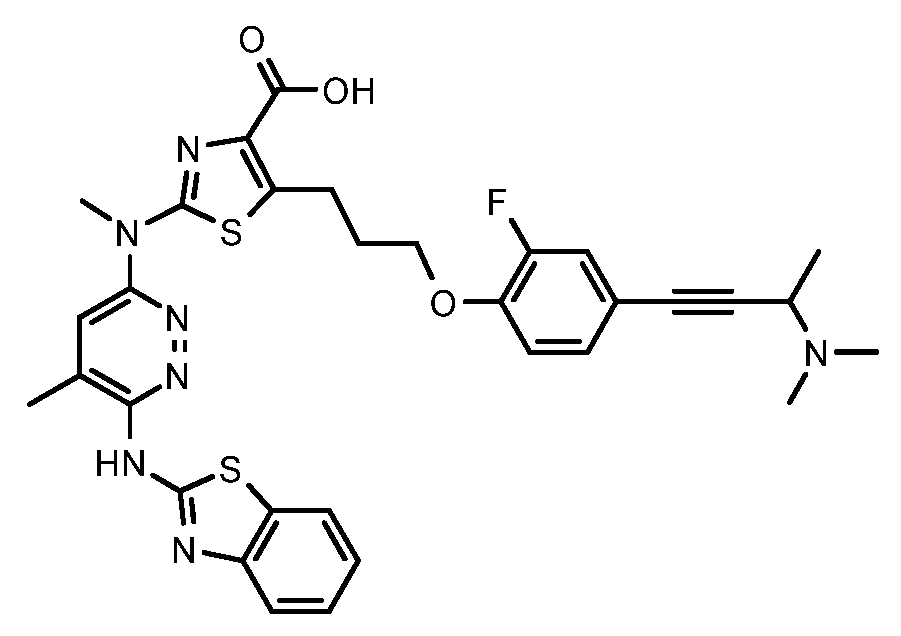
단계 A: 에틸 5-[3-[4-[3-(디메틸아미노)부트-1-이닐]-2-플루오로-페녹시]프로필]-2-[메틸-[5-메틸-6-[(Z)-[3-(2-트리메틸실릴에톡시메틸)-1,3-벤조티아졸-2-일리덴]아미노]피리다진-3-일]아미노]티아졸-4-카르복실레이트Step A: Ethyl 5-[3-[4-[3-(dimethylamino)but-1-ynyl]-2-fluoro-phenoxy]propyl]-2-[methyl-[5-methyl-6-[(Z)-[3-(2-trimethylsilylethoxymethyl)-1,3-benzothiazol-2-ylidene]amino]pyridazin-3-yl]amino]thiazole-4-carboxylate
제조예 5g_01 및 적절한 페놀로서의 제조예 6f_01로부터 출발하는 알킬화 일반적 절차를 사용하여, 목적 생성물을 수득하였다.Using the general procedure for alkylation starting from Preparation Example 5g_01 and Preparation Example 6f_01 as the appropriate phenol, the desired product was obtained.
단계 B: 2-[[6-(1,3-벤조티아졸-2-일아미노)-5-메틸-피리다진-3-일]-메틸-아미노]-5-[3-[4-[3-(디메틸아미노)부트-1-이닐]-2-플루오로-페녹시]프로필]티아졸-4-카르복실산Step B: 2-[[6-(1,3-benzothiazol-2-ylamino)-5-methyl-pyridazin-3-yl]-methyl-amino]-5-[3-[4-[3-(dimethylamino)but-1-ynyl]-2-fluoro-phenoxy]propyl]thiazole-4-carboxylic acid
적절한 에틸 에스테르로서의 단계 A로부터의 생성물로부터 출발하는 탈보호 및 가수분해 일반적 절차를 사용하여, 목적 생성물을 수득하였다. HRMS-ESI (m/z): [M+H]+ C32H33FN7O3S2에 대한 계산치: 646.2065, 실측치 646.2057.Using the general procedure for deprotection and hydrolysis starting from the product from Step A as the appropriate ethyl ester, the desired product was obtained. HRMS-ESI (m/z): [M+H] + calcd for C 32 H 33 FN 7 O 3 S 2 : 646.2065, found 646.2057.
P12의 제조: 2-[3-(1,3-벤조티아졸-2-일아미노)-4-메틸-6,7-디히드로-5H-피리도[2,3-c]피리다진-8-일]-5-[3-[4-[3-[2-(디메틸아미노)에틸아미노]프로프-1-이닐]-2-플루오로-페녹시]프로필]티아졸-4-카르복실산Preparation of P12: 2-[3-(1,3-benzothiazol-2-ylamino)-4-methyl-6,7-dihydro-5H-pyrido[2,3-c]pyridazin-8-yl]-5-[3-[4-[3-[2-(dimethylamino)ethylamino]prop-1-ynyl]-2-fluoro-phenoxy]propyl]thiazole-4-carboxylic acid
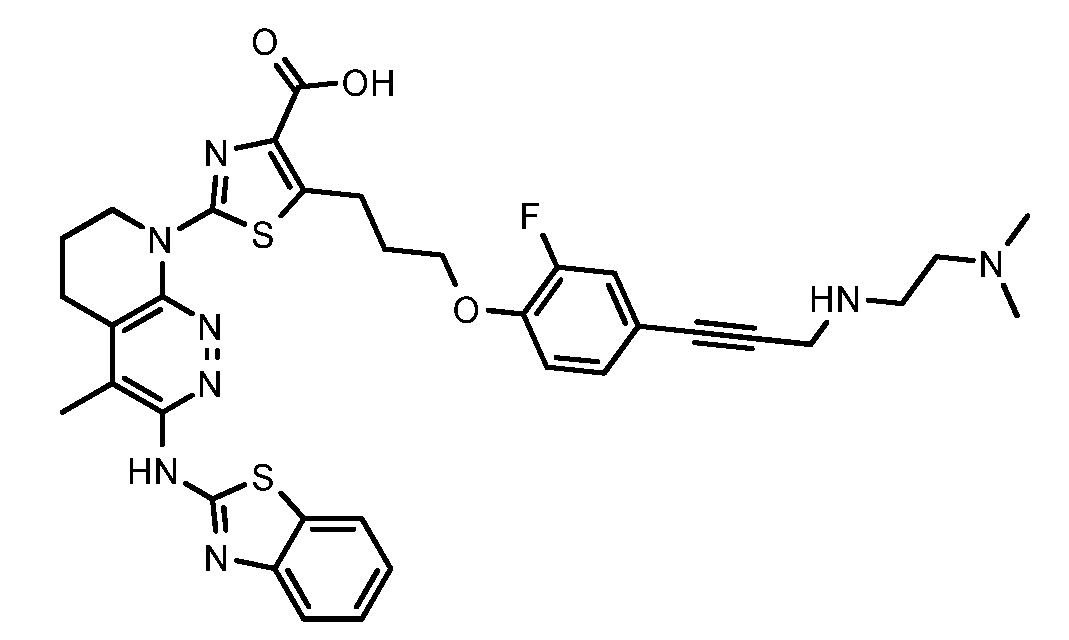
단계 A: 메틸 5-[3-[4-[3-[tert-부톡시카르보닐-[2-(디메틸아미노)에틸]아미노]프로프-1-이닐]-2-플루오로-페녹시]프로필]-2-(3-클로로-4-메틸-6,7-디히드로-5H-피리도[2,3-c]피리다진-8-일)티아졸-4-카르복실레이트Step A: Methyl 5-[3-[4-[3-[tert-butoxycarbonyl-[2-(dimethylamino)ethyl]amino]prop-1-ynyl]-2-fluoro-phenoxy]propyl]-2-(3-chloro-4-methyl-6,7-dihydro-5H-pyrido[2,3-c]pyridazin-8-yl)thiazole-4-carboxylate
1.00 g의 제조예 3a (1.66 mmol, 1 당량) 및 적절한 알킨으로서의 413 mg의 tert-부틸 N-[2-(디메틸아미노)에틸]-N-프로프-2-이닐-카르바메이트 (1.83 mmol, 1.1 당량)로부터 출발하는 소노가시라 일반적 절차를 사용하여, 목적 생성물을 황색 고체로서 단리시켰다. 1H NMR (500 MHz, DMSO-d6) δ ppm 7.30 (d, 1H), 7.21 (d, 1H), 7.15 (t, 1H), 4.27 (brt, 2H), 4.26 (t, 2H), 4.12 (t, 2H), 3.77 (s, 3H), 3.47 (brt, 2H), 3.26 (t, 2H), 2.89 (t, 2H), 2.82 (brs, 2H), 2.45 (brs, 6H), 2.32 (s, 3H), 2.11 (qn, 2H), 2.04 (qn, 2H), 1.43 (s, 9H); 13C NMR (125 MHz, DMSO-d6) δ ppm 163.1, 155.4, 151.8, 151.4, 151.4, 147.5, 142.4, 136.2, 135, 129.1, 129.1, 119.2, 115.5, 114.8, 82.3, 80.3, 68.3, 56.3, 52.0, 46.4, 46.4, 44.6, 43.1, 30.7, 28.5, 24.2, 23, 19.7, 15.7; HRMS-ESI (m/z): [M+H]+ C34H43ClFN6O5S에 대한 계산치: 701.2683, 실측치 701.2678.Using the Sonogashira general procedure starting from 1.00 g of preparation 3a (1.66 mmol, 1 equiv) and 413 mg of tert-butyl N-[2-(dimethylamino)ethyl]-N-prop-2-ynyl-carbamate (1.83 mmol, 1.1 equiv) as the appropriate alkyne, the desired product was isolated as a yellow solid. 1 H NMR (500 MHz, DMSO-d 6 ) δ ppm 7.30 (d, 1H), 7.21 (d, 1H), 7.15 (t, 1H), 4.27 (brt, 2H), 4.26 (t, 2H), 4.12 (t, 2H), 3.77 (s, 3H), 3.47 (brt, 2H), 3.26 (t, 2H), 2.89 (t, 2H), 2.82 (brs, 2H), 2.45 (brs, 6H), 2.32 (s, 3H), 2.11 (qn, 2H), 2.04 (qn, 2H), 1.43 (s, 9H); 13 C NMR (125 MHz, DMSO-d 6 ) δ ppm 163.1, 155.4, 151.8, 151.4, 151.4, 147.5, 142.4, 136.2, 135, 129.1, 129.1, 119.2, 115.5, 114.8, 82.3, 80.3, 68.3, 56.3, 52.0, 46.4, 46.4, 44.6, 43.1, 30.7, 28.5, 24.2, 23, 19.7, 15.7; HRMS-ESI (m/z): [M+H] + C 34 H 43 ClFN 6 O 5 S calcd: 701.2683, found 701.2678.
단계 B: 메틸 2-[3-(1,3-벤조티아졸-2-일아미노)-4-메틸-6,7-디히드로-5H-피리도[2,3-c]피리다진-8-일]-5-[3-[4-[3-[tert-부톡시카르보닐-[2-(디메틸아미노)에틸]아미노]프로프-1-이닐]-2-플루오로-페녹시]프로필]티아졸-4-카르복실레이트Step B: Methyl 2-[3-(1,3-benzothiazol-2-ylamino)-4-methyl-6,7-dihydro-5H-pyrido[2,3-c]pyridazin-8-yl]-5-[3-[4-[3-[tert-butoxycarbonyl-[2-(dimethylamino)ethyl]amino]prop-1-ynyl]-2-fluoro-phenoxy]propyl]thiazole-4-carboxylate
단계 A로부터의 생성물 및 1,3-벤조티아졸-2-아민으로부터 출발하는 부흐발트 일반적 절차 II를 사용하여, 목적 생성물을 수득하였다. LC-MS-ESI (m/z): [M+H]+ C41H48FN8O5S2에 대한 계산치: 815.3, 실측치 815.4.Using the Buchwald general procedure II starting from the product from step A and 1,3-benzothiazol-2-amine the desired product was obtained. LC-MS-ESI (m/z): [M+H] + C 41 H 48 FN 8 O 5 S 2 815.3, found 815.4.
단계 C: 2-[3-(1,3-벤조티아졸-2-일아미노)-4-메틸-6,7-디히드로-5H-피리도[2,3-c]피리다진-8-일]-5-[3-[4-[3-[2-(디메틸아미노)에틸아미노]프로프-1-이닐]-2-플루오로-페녹시]프로필]티아졸-4-카르복실산Step C: 2-[3-(1,3-benzothiazol-2-ylamino)-4-methyl-6,7-dihydro-5H-pyrido[2,3-c]pyridazin-8-yl]-5-[3-[4-[3-[2-(dimethylamino)ethylamino]prop-1-ynyl]-2-fluoro-phenoxy]propyl]thiazole-4-carboxylic acid
단계 B로부터의 생성물로부터 출발하는 탈보호 및 가수분해 일반적 절차에 이은 역상 정제용 크로마토그래피 (C18, 물 중 25 mM NH4HCO3: MeCN)를 통한 재정제를 사용하여, 목적 생성물을 수득하였다. HRMS-ESI (m/z): [M+H]+ C35H38FN8O3S2에 대한 계산치: 701.2487, 실측치 701.2483.Using the general procedure for deprotection and hydrolysis starting from the product from Step B, followed by repurification via reverse-phase chromatography (C18, 25 mM NH 4 HCO 3 in water: MeCN), the desired product was obtained. HRMS-ESI (m/z): [M+H] + calcd for C 35 H 38 FN 8 O 3 S 2 : 701.2487, found 701.2483.
P13의 제조: 2-[3-(1,3-벤조티아졸-2-일아미노)-4-메틸-6,7-디히드로-5H-피리도[2,3-c]피리다진-8-일]-5-[3-[4-[3-[에틸(메틸)아미노]프로프-1-이닐]-2-플루오로-페녹시]프로필]티아졸-4-카르복실산Preparation of P13: 2-[3-(1,3-benzothiazol-2-ylamino)-4-methyl-6,7-dihydro-5H-pyrido[2,3-c]pyridazin-8-yl]-5-[3-[4-[3-[ethyl(methyl)amino]prop-1-ynyl]-2-fluoro-phenoxy]propyl]thiazole-4-carboxylic acid

제조예 3c, 알데히드로서의 파라포름알데히드 및 적절한 2급 아민으로서의 N-메틸에탄아민로부터 출발하는 은 촉매된 프로파르길 아민 제조 일반적 절차를 사용하여, 목적 생성물을 수득하였다. HRMS-ESI (m/z): [M+H]+ C34H35FN7O3S2에 대한 계산치: 672.2221, 실측치 672.2206.Using the general procedure for the preparation of silver-catalyzed propargyl amines starting from paraformaldehyde as the aldehyde and N-methylethanamine as the appropriate secondary amine, the desired product was obtained. HRMS-ESI (m/z): [M+H] + C 34 H 35 FN 7 O 3 S 2 , calcd: 672.2221, found 672.2206.
P14의 제조: 2-[3-(1,3-벤조티아졸-2-일아미노)-4-메틸-6,7-디히드로-5H-피리도[2,3-c]피리다진-8-일]-5-[3-[4-[3-(디에틸아미노)프로프-1-이닐]-2-플루오로-페녹시]프로필]티아졸-4-카르복실산Preparation of P14: 2-[3-(1,3-benzothiazol-2-ylamino)-4-methyl-6,7-dihydro-5H-pyrido[2,3-c]pyridazin-8-yl]-5-[3-[4-[3-(diethylamino)prop-1-ynyl]-2-fluoro-phenoxy]propyl]thiazole-4-carboxylic acid

제조예 3c, 알데히드로서의 파라포름알데히드 및 적절한 2급 아민으로서의 디에틸 아민으로부터 출발하는 은 촉매된 프로파르길 아민 제조 일반적 절차를 사용하여, 목적 생성물을 수득하였다. HRMS-ESI (m/z): [M+H]+ C35H37FN7O3S2에 대한 계산치: 686.2377, 실측치 686.2386.Using the general procedure for the preparation of silver-catalyzed propargyl amine starting from paraformaldehyde as the aldehyde and diethyl amine as the appropriate secondary amine, the desired product was obtained. HRMS-ESI (m/z): [M+H] + calcd for C 35 H 37 FN 7 O 3 S 2 : 686.2377, found 686.2386.
P15의 제조: 2-{3-[(1,3-벤조티아졸-2-일)아미노]-4-메틸-5H,6H,7H,8H-피리도[2,3-c]피리다진-8-일}-5-(3-{4-[3-(4,4-디플루오로피페리딘-1-일)프로프-1-인-1-일]-2-플루오로페녹시}프로필)-1,3-티아졸-4-카르복실산Preparation of P15: 2-{3-[(1,3-benzothiazol-2-yl)amino]-4-methyl-5H,6H,7H,8H-pyrido[2,3-c]pyridazin-8-yl}-5-(3-{4-[3-(4,4-difluoropiperidin-1-yl)prop-1-yn-1-yl]-2-fluorophenoxy}propyl)-1,3-thiazole-4-carboxylic acid

단계 A: 메틸 2-[3-(1,3-벤조티아졸-2-일아미노)-4-메틸-6,7-디히드로-5H-피리도[2,3-c]피리다진-8-일]-5-[3-[4-[3-(4,4-디플루오로-1-피페리딜)프로프-1-이닐]-2-플루오로-페녹시]프로필]티아졸-4-카르복실레이트Step A: Methyl 2-[3-(1,3-benzothiazol-2-ylamino)-4-methyl-6,7-dihydro-5H-pyrido[2,3-c]pyridazin-8-yl]-5-[3-[4-[3-(4,4-difluoro-1-piperidyl)prop-1-ynyl]-2-fluoro-phenoxy]propyl]thiazole-4-carboxylate
적절한 프로파르길 알콜로서의 100 mg의 제조예 3d (0.155 mmol, 1당량) 및 4,4-디플루오로피페리딘 (20 당량)으로부터 출발하는 프로파르길 아민 제조 일반적 절차를 사용하여, 목적 생성물 120 mg (72%)을 수득하였다.Using the general procedure for the preparation of propargyl amine starting from 3d (0.155 mmol, 1 eq) as the appropriate propargyl alcohol and 4,4-difluoropiperidine (20 eq), 120 mg (72%) of the desired product were obtained.
단계 B: 2-{3-[(1,3-벤조티아졸-2-일)아미노]-4-메틸-5H,6H,7H,8H-피리도[2,3-c]피리다진-8-일}-5-(3-{4-[3-(4,4-디플루오로피페리딘-1-일)프로프-1-인-1-일]-2-플루오로페녹시}프로필)-1,3-티아졸-4-카르복실산Step B: 2-{3-[(1,3-Benzothiazol-2-yl)amino]-4-methyl-5H,6H,7H,8H-pyrido[2,3-c]pyridazin-8-yl}-5-(3-{4-[3-(4,4-difluoropiperidin-1-yl)prop-1-yn-1-yl]-2-fluorophenoxy}propyl)-1,3-thiazole-4-carboxylic acid
적절한 메틸 에스테르로서의 단계 A로부터의 생성물로부터 출발하는 가수분해 일반적 절차를 사용하여, 목적 생성물을 수득하였다. HRMS-ESI (m/z): [M+H]+ C36H35F3N7O3S2 계산치: 734.2189, 실측치 734.2185.Using the general procedure for hydrolysis starting from the product from Step A as the appropriate methyl ester, the desired product was obtained. HRMS-ESI (m/z): [M+H] + C 36 H 35 F 3 N 7 O 3 S 2 Calculated: 734.2189, found 734.2185.
P16의 제조: 2-{3-[(1,3-벤조티아졸-2-일)아미노]-4-메틸-6-[2-(메틸아미노)에톡시]-5H,6H,7H,8H-피리도[2,3-c]피리다진-8-일}-5-(3-{4-[3-(디메틸아미노)프로프-1-인-1-일]-2-플루오로페녹시}프로필)-1,3-티아졸-4-카르복실산Preparation of P16: 2-{3-[(1,3-benzothiazol-2-yl)amino]-4-methyl-6-[2-(methylamino)ethoxy]-5H,6H,7H,8H-pyrido[2,3-c]pyridazin-8-yl}-5-(3-{4-[3-(dimethylamino)prop-1-yn-1-yl]-2-fluorophenoxy}propyl)-1,3-thiazole-4-carboxylic acid

단계 A: 4-메틸모르폴린-3-온Step A: 4-Methylmorpholin-3-one
에탄올 (100 mL) 및 35% 수성 수산화나트륨 (6.25 mL) 중 2-(메틸아미노)에탄올 (5.32 mL, 66.6 mmol, 1 당량)의 용액을 15-20℃로 냉각시키고, 클로로아세틸 클로라이드 (13.3 mL, 166 mmol, 2.5 당량) 및 35% 수성 수산화나트륨 (22 mL)을 1시간에 걸쳐 격렬한 교반 하에 동시에 첨가하였다. 혼합물을 20분 동안 교반한 다음, 수성 염산으로 중화시키고, 디클로로메탄 (3 x 100 mL)으로 추출하였다. 합한 유기 추출물을 물로 세척하고, 건조시키고 (PTFE 상 분리기), 진공 하에 농축시켰다. 자동화 플래쉬 칼럼 크로마토그래피 (콤비플래쉬 Rf, 80 g 레디셉™ 실리카 카트리지)에 의해 이소-헵탄 중 0 - 100% 에틸 아세테이트의 구배로 용리시키면서 정제하여 목적 생성물을 무색 오일 (4.4 g, 38.2 mmol, 58%)로서 수득하였다. 1H NMR (400 MHz, DMSO-d6) δ 4.00 (s, 2H), 3.84 - 3.78 (m, 2H), 3.36 - 3.29 (m, 2H), 2.86 (s, 3H).A solution of 2-(methylamino)ethanol (5.32 mL, 66.6 mmol, 1 equiv) in ethanol (100 mL) and 35% aqueous sodium hydroxide (6.25 mL) was cooled to 15-20 °C and chloroacetyl chloride (13.3 mL, 166 mmol, 2.5 equiv) and 35% aqueous sodium hydroxide (22 mL) were added simultaneously with vigorous stirring over 1 h. The mixture was stirred for 20 min, then neutralized with aqueous hydrochloric acid and extracted with dichloromethane (3 x 100 mL). The combined organic extracts were washed with water, dried (PTFE phase separator) and concentrated in vacuo. The residue was purified by automated flash column chromatography (CombiFlash Rf, 80 g RediSep™ silica cartridge) eluting with a gradient of 0 - 100% ethyl acetate in iso-heptane to give the desired product as a colorless oil (4.4 g, 38.2 mmol, 58%). 1 H NMR (400 MHz, DMSO-d6) δ 4.00 (s, 2H), 3.84 - 3.78 (m, 2H), 3.36 - 3.29 (m, 2H), 2.86 (s, 3H).
단계 B: 2-(부트-2-인-1-일)-4-메틸모르폴린-3-온Step B: 2-(but-2-in-1-yl)-4-methylmorpholin-3-one
-78℃로 냉각시킨 테트라히드로푸란 (130 mL) 중 디이소프로필아민 (6.45 mL, 45.9 mmol, 1.2 당량)의 용액에 n-부틸리튬 (헥산 중 2.06 M; 20.4 mL, 42 mmol, 1.1 당량)을 적가하였다. 1분 후, 테트라히드로푸란 (30 mL) 중 단계 A로부터의 생성물 (4.4 g, 38.2 mmol, 1 당량)의 용액을 적가하였다. 15분 후, 테트라히드로푸란 (15 mL) 중 1-브로모-2-부틴 (4.02 mL, 45.9 mmol, 1.2 당량)의 용액을 적가하고, 혼합물을 -78℃에서 1시간 동안 교반한 다음, 주위 온도로 가온되도록 하였다. 포화 수성 염화암모늄을 첨가하고, 혼합물을 에틸 아세테이트 (x3)로 추출하고, 합한 유기 추출물을 건조 (황산마그네슘)시키고, 진공 하에 농축시켰다. 자동화 플래쉬 칼럼 크로마토그래피 (콤비플래쉬 Rf, 80 g 레디셉™ 실리카 카트리지)에 의해 이소-헵탄 중 0 - 100% 에틸 아세테이트의 구배로 용리시키면서 정제하여 목적 생성물을 황색 오일 (5.15 g, 30.8 mmol, 81%)로서 수득하였다. 1H NMR (400 MHz, DMSO-d6) δ 4.09 (dd, J = 7.6, 3.5 Hz, 1H), 4.01 - 3.94 (m, 1H), 3.76 (ddd, J = 11.9, 10.0, 3.6 Hz, 1H), 3.52 - 3.41 (m, 1H), 3.26 - 3.18 (m, 1H), 2.86 (s, 3H), 2.67 - 2.58 (m, 1H), 2.57 - 2.44 (m, 1H), 1.73 (t, J = 2.6 Hz, 3H).To a solution of diisopropylamine (6.45 mL, 45.9 mmol, 1.2 equiv) in tetrahydrofuran (130 mL), which was cooled to -78 °C, was added n-Butyllithium (2.06 M in hexanes; 20.4 mL, 42 mmol, 1.1 equiv). After 1 min, a solution of the product from step A (4.4 g, 38.2 mmol, 1 equiv) in tetrahydrofuran (30 mL) was added dropwise. After 15 min, a solution of 1-bromo-2-butyne (4.02 mL, 45.9 mmol, 1.2 equiv) in tetrahydrofuran (15 mL) was added dropwise, and the mixture was stirred at -78 °C for 1 h and then allowed to warm to ambient temperature. Saturated aqueous ammonium chloride was added and the mixture was extracted with ethyl acetate (x3), the combined organic extracts were dried (magnesium sulfate) and concentrated in vacuo. The residue was purified by automated flash column chromatography (Combiflash Rf, 80 g RediSep™ silica cartridge), eluting with a gradient of 0 - 100% ethyl acetate in iso-heptane, to give the desired product as a yellow oil (5.15 g, 30.8 mmol, 81%). 1H NMR (400 MHz, DMSO-d6) δ 4.09 (dd, J = 7.6, 3.5 Hz, 1H), 4.01 - 3.94 (m, 1H), 3.76 (ddd, J = 11.9, 10.0, 3.6 Hz, 1H), 3.52 - 3.41 (m, 1H), 3.26 - 3.18 (m, 1H), 2.86 (s, 3H), 2.67 - 2.58 (m, 1H), 2.57 - 2.44 (m, 1H), 1.73 (t, J = 2.6 Hz, 3H).
단계 C: 2-[2-(메틸아미노)에톡시]헥스-4-인산Step C: 2-[2-(methylamino)ethoxy]hex-4-phosphate
메탄올 (110 mL) 중 단계 B로부터의 생성물 (3.25 g, 19.4 mmol, 1 당량)의 용액에 1M 수성 수산화리튬 (60.3 mL, 60.3 mmol, 3.1 당량)을 첨가하고, 혼합물을 환류 하에 밤새 가열하였다. 반응물을 진공 하에 농축시켜 목적 생성물을 오렌지색 검 (5.15 g, 27.8 mmol, 100%)으로서 수득하였으며, 이를 직접 후속 단계에 추가 특징화 없이 사용하였다.To a solution of the product from Step B (3.25 g, 19.4 mmol, 1 equiv) in methanol (110 mL) was added 1 M aqueous lithium hydroxide (60.3 mL, 60.3 mmol, 3.1 equiv) and the mixture was heated under reflux overnight. The reaction was concentrated in vacuo to give the desired product as an orange gum (5.15 g, 27.8 mmol, 100%) which was used directly in the next step without further characterization.
단계 D: 2-[2-({[(9H-플루오렌-9-일)메톡시]카르보닐}(메틸)아미노)에톡시]헥스-4-인산Step D: 2-[2-({[(9H-fluoren-9-yl)methoxy]carbonyl}(methyl)amino)ethoxy]hex-4-phosphate
1,4-디옥산 (45 mL) 및 물 (160 mL) 중 단계 C로부터의 생성물 (5.15 g, 27.8 mmol, 1 당량)의 용액에 0℃에서 탄산칼륨 (15.4 g, 111 mmol, 4 당량)에 이어서 9H-플루오렌-9-일-메틸 클로로포르메이트 (7.19 g, 27.8 mmol, 1 당량)를 첨가하고, 혼합물을 주위 온도로 가온되도록 하고, 2시간 동안 교반하였다. 반응물을 물과 에틸 아세테이트 사이에 분배하고, 수성 상을 수성 염산을 사용하여 pH 2-3으로 산성화시키고, 에틸 아세테이트 (3 x 300 mL)로 추출하였다. 합한 유기 추출물을 염수로 세척하고, 건조 (황산마그네슘)시키고, 진공 하에 농축시켰다. 자동화 플래쉬 칼럼 크로마토그래피 (콤비플래쉬 Rf, 120 g 레디셉™ 실리카 카트리지)에 의해 디클로로메탄 중 0 - 20% 메탄올의 구배로 용리시키면서 정제하여 목적 생성물을 암황색 검 (7.06 g, 17.3 mmol, 62%)으로서 수득하였다. LC/MS (C24H25NO5) 408 [M+H]+; RT 0.74 (LCMS-V-B2). 1H NMR (400 MHz, DMSO-d6) δ 7.90 (t, J = 6.8 Hz, 2H), 7.65 (dd, J = 7.5, 1.1 Hz, 2H), 7.42 (td, J = 7.4, 3.0 Hz, 2H), 7.34 (td, J = 7.4, 1.3 Hz, 2H), 4.43 - 4.22 (m, 3H), 3.50 - 3.42 (m, 1H), 3.39 - 3.28 (m, 1H), 3.26 - 3.15 (m, 3H), 2.90 - 2.82 (m, 3H), 2.51 - 2.44 (m, 2H), 1.71 (dt, J = 13.8, 2.5 Hz, 3H).To a solution of the product from step C (5.15 g, 27.8 mmol, 1 equiv) in 1,4-dioxane (45 mL) and water (160 mL) at 0 °C was added potassium carbonate (15.4 g, 111 mmol, 4 equiv) followed by 9H-fluoren-9-yl-methyl chloroformate (7.19 g, 27.8 mmol, 1 equiv) and the mixture was allowed to warm to ambient temperature and stirred for 2 h. The reaction was partitioned between water and ethyl acetate and the aqueous phase was acidified to pH 2-3 with aqueous hydrochloric acid and extracted with ethyl acetate (3 x 300 mL). The combined organic extracts were washed with brine, dried (magnesium sulfate), and concentrated in vacuo. The residue was purified by automated flash column chromatography (CombiFlash Rf, 120 g RediSep™ silica cartridge) eluting with a gradient of 0 - 20% methanol in dichloromethane to give the desired product as a dark yellow gum (7.06 g, 17.3 mmol, 62%). LC/MS (C 24 H 25 NO 5 ) 408 [M+H] + ; RT 0.74 (LCMS-V-B2). 1H NMR (400 MHz, DMSO-d6) δ 7.90 (t, J = 6.8 Hz, 2H), 7.65 (dd, J = 7.5, 1.1 Hz, 2H), 7.42 (td, J = 7.4, 3.0 Hz, 2H), 7.34 (td, J = 7.4, 1.3) Hz, 2H), 4.43 - 4.22 (m, 3H), 3.50 - 3.42 (m, 1H), 3.39 - 3.28 (m, 1H), 3.26 - 3.15 (m, 3H), 2.90 - 2.82 (m, 3H), 2.51 - 2.44 (m, 2H), 1.71 (dt, J = 13.8, 2.5 Hz, 3H).
단계 E: (9H-플루오렌-9-일)메틸 N-{2-[(1-히드록시헥스-4-인-2-일)옥시]에틸}-N-메틸카르바메이트Step E: (9H-fluoren-9-yl)methyl N-{2-[(1-hydroxyhex-4-yn-2-yl)oxy]ethyl}-N-methylcarbamate
테트라히드로푸란 (120 mL) 중 단계 D로부터의 생성물 (7.06 g, 17.33 mmol, 1 당량)의 용액을 -10℃로 냉각시킨 다음, THF (40 mL) 중 트리에틸아민 (2.65 mL, 19.1 mmol, 1.1 당량) 및 이소부틸 클로로포르메이트 (2.7 mL, 20.8 mmol, 1.2 당량)를 적가하였다. 침전물을 여과에 의해 제거하고, 용액을 -10℃로 냉각시켰다. 물 (40 mL) 중 수소화붕소나트륨 (2.62 g, 69.3 mmol, 4 당량)을 적가하고, 혼합물을 -10℃에서 1시간 동안 교반하였다. 용액의 pH를 1N 수성 염산을 사용하여 pH 5로 조정한 다음, 포화 수성 중탄산나트륨을 사용하여 pH 10으로 조정하였다. 층을 분리하고, 유기 상을 물 (100 mL) 및 염수 (50 mL)로 연속적으로 세척하고, 건조 (황산마그네슘)시키고, 진공 하에 농축시켰다. 자동화 플래쉬 칼럼 크로마토그래피 (콤비플래쉬 Rf, 80 g 레디셉™ 실리카 카트리지)에 의해 이소-헵탄 중 0 - 100% 에틸 아세테이트의 구배로 용리시키면서 정제하여 목적 생성물을 무색 검 (4.64 g, 11.8 mmol, 68%)으로서 수득하였다. LC/MS (C24H27NO4) 394 [M+H]+; RT 0.77 (LCMS-V-B2). 1H NMR (400 MHz, DMSO-d6) δ 7.90 (d, J = 7.5 Hz, 2H), 7.65 (dt, J = 7.4, 0.9 Hz, 2H), 7.43 (t, J = 7.4 Hz, 2H), 7.35 (td, J = 7.4, 1.2 Hz, 2H), 4.68 - 4.60 (m, 1H), 4.39 (d, J = 6.0 Hz, 1H), 4.34 (d, J = 6.7 Hz, 1H), 4.28 (t, J = 6.4 Hz, 1H), 3.60 - 3.51 (m, 1H), 3.46 - 3.36 (m, 2H), 3.34 - 3.28 (m, 2H), 3.19 (dd, J = 16.6, 5.5 Hz, 2H), 2.84 (d, J = 10.8 Hz, 3H), 2.38 - 2.15 (m, 2H), 1.71 (t, J = 2.5 Hz, 3H).A solution of the product from step D (7.06 g, 17.33 mmol, 1 equiv) in tetrahydrofuran (120 mL) was cooled to -10 °C, then triethylamine (2.65 mL, 19.1 mmol, 1.1 equiv) and isobutyl chloroformate (2.7 mL, 20.8 mmol, 1.2 equiv) in THF (40 mL) were added dropwise. The precipitate was removed by filtration, and the solution was cooled to -10 °C. Sodium borohydride (2.62 g, 69.3 mmol, 4 equiv) in water (40 mL) was added dropwise, and the mixture was stirred at -10 °C for 1 h. The pH of the solution was adjusted to
단계 F: (9H-플루오렌-9-일)메틸 N-[2-({1-[(tert-부틸디페닐실릴)옥시]헥스-4-인-2-일}옥시)에틸]-N-메틸카르바메이트Step F: (9H-fluoren-9-yl)methyl N-[2-({1-[(tert-butyldiphenylsilyl)oxy]hex-4-yn-2-yl}oxy)ethyl]-N-methylcarbamate
디클로로메탄 (200 mL) 중 단계 E로부터의 생성물 (4.64 g, 11.8 mmol, 1 당량) 및 이미다졸 (1.56 mL, 23.6 mmol, 2 당량)의 냉각된 용액에 tert-부틸(클로로)디페닐실란 (6.13 mL, 23.6 mmol, 2 당량)을 적가하고, 혼합물을 주위 온도로 가온되도록 하고, 밤새 교반하였다. 반응물을 2M 수성 염화암모늄으로 켄칭하고, 혼합물을 디클로로메탄 (3 x 200 mL)으로 추출하였다. 합한 유기 추출물을 염수로 세척하고, 건조 (PTFE 상 분리기)시키고, 진공 하에 농축시켰다. 자동화 플래쉬 칼럼 크로마토그래피 (콤비플래쉬 Rf, 120 g 레디셉™ 실리카 카트리지)에 의해 이소-헵탄 중 0 - 25% 에틸 아세테이트의 구배로 용리시키면서 정제하여 목적 생성물을 무색 검 (5.86 g, 9.27 mmol, 79%)으로서 수득하였다. LC/MS (C40H45NO4Si) 632 [M+H]+; RT 1.38 (LCMS-V-B2). 1H NMR (400 MHz, DMSO-d6) δ 7.87 (dd, J = 20.0, 7.5 Hz, 2H), 7.67 - 7.56 (m, 6H), 7.53 - 7.39 (m, 7H), 7.39 - 7.22 (m, 3H), 4.38 (t, J = 4.8 Hz, 1H), 4.31 (s, 1H), 4.24 (t, J = 5.7 Hz, 1H), 3.73 - 3.61 (m, 1H), 3.60 - 3.44 (m, 2H), 3.34 - 3.29 (m, 2H), 3.29 - 3.18 (m, 1H), 3.16 - 3.06 (m, 1H), 2.81 (d, J = 14.1 Hz, 3H), 2.43 - 2.26 (m, 2H), 1.69 (t, J = 2.4 Hz, 3H), 0.98 (s, 9H).To a cooled solution of the product from Step E (4.64 g, 11.8 mmol, 1 equiv) and imidazole (1.56 mL, 23.6 mmol, 2 equiv) in dichloromethane (200 mL) was added tert-Butyl(chloro)diphenylsilane (6.13 mL, 23.6 mmol, 2 equiv) dropwise and the mixture was allowed to warm to ambient temperature and stirred overnight. The reaction was quenched with 2 M aqueous ammonium chloride and the mixture was extracted with dichloromethane (3 x 200 mL). The combined organic extracts were washed with brine, dried (PTFE phase separator), and concentrated in vacuo. The residue was purified by automated flash column chromatography (CombiFlash Rf, 120 g RediSep™ silica cartridge) eluting with a gradient of 0 - 25% ethyl acetate in iso-heptane to give the desired product as a colorless gum (5.86 g, 9.27 mmol, 79%). LC/MS (C 40 H 45 NO 4 Si) 632 [M+H] + ; RT 1.38 (LCMS-V-B2). 1 H NMR (400 MHz, DMSO-d6) δ 7.87 (dd, J = 20.0, 7.5 Hz, 2H), 7.67 - 7.56 (m, 6H), 7.53 - 7.39 (m, 7H), 7.39 - 7.22 (m, 3H), 4.38 (t, J = 4.8 Hz, 1H), 4.31 (s, 1H), 4.24 (t, J = 5.7 Hz, 1H), 3.73 - 3.61 (m, 1H), 3.60 - 3.44 (m, 2H), 3.34 - 3.29 (m, 2H), 3.29 - 3.18 (m, 1H), 3.16 - 3.06 (m, 1H), 2.81 (d, J = 14.1 Hz, 3H), 2.43 - 2.26 (m, 2H), 1.69 (t, J = 2.4 Hz, 3H), 0.98 (s, 9H).
단계 G: (9H-플루오렌-9-일)메틸 N-[2-({1-[(tert-부틸디페닐실릴)옥시]-3-(3,6-디클로로-5-메틸피리다진-4-일)프로판-2-일}옥시)에틸]-N-메틸카르바메이트Step G: (9H-fluoren-9-yl)methyl N-[2-({1-[(tert-butyldiphenylsilyl)oxy]-3-(3,6-dichloro-5-methylpyridazin-4-yl)propan-2-yl}oxy)ethyl]-N-methylcarbamate
톨루엔 (130 mL) 중 단계 F로부터의 생성물 (5.86 g, 9.27 mmol, 1 당량) 및 3,6-디클로로-1,2,4,5-테트라진 (5.6 g, 37.1 mmol, 4 당량)의 용액을 밀봉된 플라스크에서 150℃에서 밤새 가열하였다. 반응물을 진공 하에 농축시키고, 자동화 플래쉬 칼럼 크로마토그래피 (콤비플래쉬 Rf, 120 g 레디셉™ 실리카 카트리지)에 의해 이소-헵탄 중 0 - 30% 에틸 아세테이트의 구배로 용리시키면서 정제하여 목적 생성물을 분홍색 발포체 (2.99 g, 3.97 mmol, 43%)로서 수득하였다. LC/MS (C42H45Cl2N3O4Si) 754 [M+H]+; RT 1.37 (LCMS-V-B2). 1H NMR (400 MHz, DMSO-d6) δ 7.90 (d, J = 7.7 Hz, 1H), 7.78 (d, J = 7.4 Hz, 1H), 7.68 - 7.59 (m, 5H), 7.57 - 7.50 (m, 1H), 7.47 - 7.41 (m, 6H), 7.45 - 7.37 (m, 1H), 7.36 - 7.28 (m, 2H), 7.23 (t, J = 7.5 Hz, 1H), 4.30 (d, J = 5.7 Hz, 1H), 4.27 - 4.11 (m, 2H), 3.81 - 3.60 (m, 3H), 3.55 - 3.45 (m 1H), 3.20 - 2.98 (m, 4H), 2.89 - 2.77 (m, 1H), 2.58 (d, J = 23.0 Hz, 3H), 2.39 (d, J = 13.1 Hz, 3H), 1.01 (s, 9H).A solution of the product from Step F (5.86 g, 9.27 mmol, 1 equiv) and 3,6-dichloro-1,2,4,5-tetrazine (5.6 g, 37.1 mmol, 4 equiv) in toluene (130 mL) was heated in a sealed flask at 150 °C overnight. The reaction was concentrated in vacuo and purified by automated flash column chromatography (Combiflash Rf, 120 g RediSep™ Silica cartridge) eluting with a gradient of 0 - 30% ethyl acetate in iso-heptane to afford the desired product as a pink foam (2.99 g, 3.97 mmol, 43%). LC/MS (C 42 H 45 Cl 2 N 3 O 4 Si) 754 [M+H] + ; RT 1.37 (LCMS-V-B2). 1H NMR (400 MHz, DMSO-d6) δ 7.90 (d, J = 7.7 Hz, 1H), 7.78 (d, J = 7.4 Hz, 1H), 7.68 - 7.59 (m, 5H), 7.57 - 7.50 (m, 1H), 7.47 - 7.41 (m, 6H), 7.45 - 7.37 (m, 1H), 7.36 - 7.28 (m, 2H), 7.23 (t, J = 7.5 Hz, 1H), 4.30 (d, J = 5.7 Hz, 1H), 4.27 - 4.11 (m, 2H), 3.81 - 3.60 (m, 3H), 3.55 - 3.45 (m 1H), 3.20 - 2.98 (m, 4H), 2.89 - 2.77 (m, 1H), 2.58 (d, J = 23.0 Hz, 3H), 2.39 (d, J = 13.1 Hz, 3H), 1.01 (s, 9H).
단계 H: 4-{3-[(tert-부틸디페닐실릴)옥시]-2-[2-(메틸아미노)에톡시]프로필}-3,6-디클로로-5-메틸피리다진Step H: 4-{3-[(tert-butyldiphenylsilyl)oxy]-2-[2-(methylamino)ethoxy]propyl}-3,6-dichloro-5-methylpyridazine
아세토니트릴 (60 mL) 중 단계 G로부터의 생성물 (2.79 g, 3.7 mmol, 1 당량) 및 디에틸아민 (0.77 mL, 7.39 mmol, 2 당량)의 용액을 주위 온도에서 밤새 교반하였다. 물을 첨가하고, 혼합물을 에틸 아세테이트 (3 x 70 mL)로 추출하였다. 합한 유기 추출물을 염수 (100 mL)로 세척하고, 건조 (황산마그네슘)시키고, 진공 하에 농축시켰다. 자동화 플래쉬 칼럼 크로마토그래피 (콤비플래쉬 Rf, 40 g 레디셉™ 실리카 카트리지)에 의해 디클로로메탄 중 0 - 16% 메탄올의 구배로 용리시키면서 정제하여 목적 생성물을 오렌지색/ 분홍색 검 (1.9 g, 3.57 mmol, 96%)으로서 수득하였다. LC/MS (C27H35Cl2N3O2Si) 532 [M+H]+; RT 0.84 (LCMS-V-B2). 1H NMR (400 MHz, DMSO-d6) δ 7.69 - 7.62 (m, 4H), 7.54 - 7.41 (m, 6H), 3.83 - 3.60 (m, 3H), 3.42 - 3.36 (m, 1H), 3.16 - 2.97 (m, 3H), 2.45 (s, 3H), 2.39 - 2.23 (m, 2H), 2.06 (s, 3H), 1.02 (s, 9H).A solution of the product from step G (2.79 g, 3.7 mmol, 1 equiv) and diethylamine (0.77 mL, 7.39 mmol, 2 equiv) in acetonitrile (60 mL) was stirred at ambient temperature overnight. Water was added and the mixture was extracted with ethyl acetate (3 x 70 mL). The combined organic extracts were washed with brine (100 mL), dried (magnesium sulfate), and concentrated in vacuo. The residue was purified by automated flash column chromatography (Combiflash Rf, 40 g RediSep™ silica cartridge), eluting with a gradient of 0 - 16% methanol in dichloromethane, to give the desired product as an orange/pink gum (1.9 g, 3.57 mmol, 96%). LC/MS (C 27 H 35 Cl 2 N 3 O 2 Si) 532 [M+H] + ; RT 0.84 (LCMS-V-B2). 1 H NMR (400 MHz, DMSO-d6) δ 7.69 - 7.62 (m, 4H), 7.54 - 7.41 (m, 6H), 3.83 - 3.60 (m, 3H), 3.42 - 3.36 (m, 1H), 3.16 - 2.97 (m, 3H), 2.45 (s, 3H), 2.39 - 2.23 (m, 2H), 2.06 (s, 3H), 1.02 (s, 9H).
단계 I: tert-부틸 N-[2-({1-[(tert-부틸디페닐실릴)옥시]-3-(3,6-디클로로-5-메틸피리다진-4-일)프로판-2-일}옥시)에틸]-N-메틸카르바메이트Step I: tert-Butyl N-[2-({1-[(tert-butyldiphenylsilyl)oxy]-3-(3,6-dichloro-5-methylpyridazin-4-yl)propan-2-yl}oxy)ethyl]-N-methylcarbamate
디클로로메탄 (100 mL) 중 단계 H로부터의 생성물 (1.9 g, 3.57 mmol, 1 당량)의 용액에 디-tert-부틸 디카르보네이트 (1.53 mL, 7.14 mmol, 2 당량)에 이어서 트리에틸아민 (1.99 mL, 14.3 mmol, 4 당량)을 첨가하고, 혼합물을 주위 온도에서 4시간 동안 교반하였다. 반응물을 디클로로메탄과 물 사이에 분배하고, 수성 상을 pH 4로 산성화시키고, 디클로로메탄 (3 x 80 mL)으로 추출하였다. 합한 유기 추출물을 염수로 세척하고, 건조 (PTFE 상 분리기)시키고, 진공 하에 농축시켰다. 자동화 플래쉬 칼럼 크로마토그래피 (콤비플래쉬 Rf, 40 g 레디셉™ 실리카 카트리지)에 의해 이소-헵탄 중 0 - 25% 에틸 아세테이트의 구배로 용리시키면서 정제하여 목적 생성물을 무색 검 (1.83 g, 2.9 mmol, 81%)으로서 수득하였다. LC/MS (C32H43Cl2N3O4Si) 532 [M-Boc+H]+; RT 1.33 (LCMS-V-B2). 1H NMR (400 MHz, DMSO-d6) δ 7.69 - 7.62 (m, 4H), 7.54 - 7.41 (m, 6H), 3.76 (qd, J = 10.7, 4.7 Hz, 2H), 3.66 (d, J = 5.5 Hz, 1H), 3.44 (q, J = 7.9, 6.3 Hz, 1H), 3.20 - 3.10 (m, 3H), 3.04 (dd, J = 14.0, 4.1 Hz, 2H), 2.58 (s, 3H), 2.44 (s, 3H), 1.31 (d, J = 22.6 Hz, 9H), 1.02 (s, 9H).To a solution of the product from step H (1.9 g, 3.57 mmol, 1 equiv) in dichloromethane (100 mL) was added di-tert-butyl dicarbonate (1.53 mL, 7.14 mmol, 2 equiv) followed by triethylamine (1.99 mL, 14.3 mmol, 4 equiv) and the mixture was stirred at ambient temperature for 4 h. The reaction was partitioned between dichloromethane and water, and the aqueous phase was acidified to
단계 J: tert-부틸 N-(2-{[1-(3,6-디클로로-5-메틸피리다진-4-일)-3-히드록시프로판-2-일]옥시}에틸)-N-메틸카르바메이트Step J: tert-Butyl N-(2-{[1-(3,6-dichloro-5-methylpyridazin-4-yl)-3-hydroxypropan-2-yl]oxy}ethyl)-N-methylcarbamate
테트라히드로푸란 (75 mL) 중 단계 I로부터의 생성물 (1.83 g, 2.9 mmol, 1 당량)의 용액을 0℃로 냉각시킨 후, 테트라부틸암모늄 플루오라이드 (테트라히드로푸란 중 1M; 2.9 mL, 2.9 mmol, 1 당량)를 첨가하고, 0℃에서 30분 동안 교반한 다음, 주위 온도에서 1시간 동안 교반하였다. 반응물을 디클로로메탄과 물 사이에 분배하고, 수성 상을 디클로로메탄 (x2)으로 추출하였다. 합한 유기 추출물을 염수로 세척하고, 건조 (PTFE 상 분리기)시키고, 진공 하에 농축시켰다. 자동화 플래쉬 칼럼 크로마토그래피 (콤비플래쉬 Rf, 24 g 레디셉™ 실리카 카트리지)에 의해 이소-헵탄 중 0 - 100% 에틸 아세테이트의 구배로 용리시키면서 정제하여 목적 생성물을 연오렌지색 검 (0.73 g, 1.86 mmol, 64%)으로서 수득하였다. 1H NMR (400 MHz, DMSO-d6) δ 4.93 (t, J = 5.5 Hz, 1H), 3.62 - 3.44 (m, 4H), 3.23 (dt, J = 9.6, 6.0 Hz, 1H), 3.11 (d, J = 23.9 Hz, 2H), 3.02 (dd, J = 6.5, 2.0 Hz, 2H), 2.60 (d, J = 8.1 Hz, 3H), 2.45 (s, 3H), 1.35 (d, J = 13.0 Hz, 9H).A solution of the product from step I (1.83 g, 2.9 mmol, 1 equiv) in tetrahydrofuran (75 mL) was cooled to 0 °C, tetrabutylammonium fluoride (1 M in tetrahydrofuran; 2.9 mL, 2.9 mmol, 1 equiv) was added and stirred at 0 °C for 30 min and then at ambient temperature for 1 h. The reaction was partitioned between dichloromethane and water, and the aqueous phase was extracted with dichloromethane (x2). The combined organic extracts were washed with brine, dried (PTFE phase separator), and concentrated in vacuo. The residue was purified by automated flash column chromatography (CombiFlash Rf, 24 g RediSep™ silica cartridge) eluting with a gradient of 0 - 100% ethyl acetate in iso-heptane to give the desired product as a pale orange gum (0.73 g, 1.86 mmol, 64%). 1H NMR (400 MHz, DMSO-d6) δ 4.93 (t, J = 5.5 Hz, 1H), 3.62 - 3.44 (m, 4H), 3.23 (dt, J = 9.6, 6.0 Hz, 1H), 3.11 (d, J = 23.9 Hz, 2H), 3.02 (dd, J = 6.5, 2.0 Hz, 2H), 2.60 (d, J = 8.1 Hz, 3H), 2.45 (s, 3H), 1.35 (d, J = 13.0 Hz, 9H).
단계 K: 메틸 2-{[(tert-부톡시)카르보닐][2-(2-{[(tert-부톡시)카르보닐](메틸)아미노}에톡시)-3-(3,6-디클로로-5-메틸피리다진-4-일)프로필]아미노}-5-(3-{4-[3-(디메틸아미노)프로프-1-인-1-일]-2-플루오로페녹시}프로필)-1,3-티아졸-4-카르복실레이트Step K: Methyl 2-{[(tert-butoxy)carbonyl][2-(2-{[(tert-butoxy)carbonyl](methyl)amino}ethoxy)-3-(3,6-dichloro-5-methylpyridazin-4-yl)propyl]amino}-5-(3-{4-[3-(dimethylamino)prop-1-yn-1-yl]-2-fluorophenoxy}propyl)-1,3-thiazole-4-carboxylate
톨루엔 (20 mL) 중 단계 J로부터의 생성물 (125 mg, 0.32 mmol, 1 당량)의 용액에 제조예 1c로부터의 생성물 (171 mg, 0.35 mmol, 1.1 당량), 디-tert-부틸 아조디카르복실레이트 (146 mg, 0.63 mmol, 2 당량) 및 트리페닐포스핀 (166 mg, 0.63 mmol, 2 당량)을 첨가하고, 혼합물을 50℃에서 1시간 동안 교반하였다. 반응물을 디클로로메탄과 물 사이에 분배하고, 수성 상을 디클로로메탄 (x2)으로 추출하고, 합한 유기 추출물을 염수로 세척하고, 건조 (황산마그네슘)시키고, 진공 하에 농축시켰다. 자동화 플래쉬 칼럼 크로마토그래피 (콤비플래쉬 Rf, 12 g 레디셉™ 실리카 카트리지)에 의해 이소-헵탄 중 0 - 100% 에틸 아세테이트의 구배로 용리시키면서 정제하여 목적 생성물을 연황색 검 (282 mg, 0.32 mmol, 102%)으로서 수득하였다. LC/MS (C40H53Cl2FN6O8S) 867 [M+H]+; RT 0.97 (LCMS-V-B2). 1H NMR (400 MHz, DMSO-d6) δ 7.30 (dd, 1H), 7.23 - 7.17 (m, 1H), 7.12 (t, 1H), 4.29 (dd, J = 13.9, 5.7 Hz, 1H), 4.10 (t, J = 6.0 Hz, 2H), 3.96 - 3.87 (m, 1H), 3.74 (s, 3H), 3.61 - 3.48 (m, 1H), 3.42 (s, 3H), 3.32 (s, 2H), 3.25 (dt, J = 7.1, 3.9 Hz, 3H), 3.16 - 2.99 (m, 2H), 2.97 - 2.89 (m, 1H), 2.58 (d, J = 11.6 Hz, 2H), 2.45 (s, 3H), 2.23 (s, 6H), 2.10 (t, J = 6.9 Hz, 2H), 1.52 (s, 9H), 1.31 (d, J = 39.6 Hz, 9H).To a solution of the product from step J (125 mg, 0.32 mmol, 1 equiv) in toluene (20 mL) was added the product from Preparation 1c (171 mg, 0.35 mmol, 1.1 equiv), di-tert-butyl azodicarboxylate (146 mg, 0.63 mmol, 2 equiv) and triphenylphosphine (166 mg, 0.63 mmol, 2 equiv) and the mixture was stirred at 50 °C for 1 h. The reaction was partitioned between dichloromethane and water, the aqueous phase was extracted with dichloromethane (x2) and the combined organic extracts were washed with brine, dried (magnesium sulfate) and concentrated in vacuo. The residue was purified by automated flash column chromatography (CombiFlash Rf, 12 g RediSep™ silica cartridge) eluting with a gradient of 0 - 100% ethyl acetate in iso-heptane to give the desired product as a pale yellow gum (282 mg, 0.32 mmol, 102%). LC/MS (C 40 H 53 Cl 2 FN 6 O 8 S) 867 [M+H] + ; RT 0.97 (LCMS-V-B2). 1H NMR (400 MHz, DMSO-d6) δ 7.30 (dd, 1H), 7.23 - 7.17 (m, 1H), 7.12 (t, 1H), 4.29 (dd, J = 13.9, 5.7 Hz, 1H), 4.10 (t, J = 6.0 Hz, 2H), 3.96 - 3.87 (m, 1H), 3.74 (s, 3H), 3.61 - 3.48 (m, 1H), 3.42 (s, 3H), 3.32 (s, 2H), 3.25 (dt, J = 7.1, 3.9 Hz, 3H), 3.16 - 2.99 (m, 2H), 2.97 - 2.89 (m, 1H), 2.58 (d, J = 11.6 Hz, 2H), 2.45 (s, 3H), 2.23 (s, 6H), 2.10 (t, J = 6.9 Hz, 2H), 1.52 (s, 9H), 1.31 (d, J = 39.6 Hz, 9H).
단계 L: 메틸 2-{[2-(2-{[(tert-부톡시)카르보닐](메틸)아미노}에톡시)-3-(3,6-디클로로-5-메틸피리다진-4-일)프로필]아미노}-5-(3-{4-[3-(디메틸아미노)프로프-1-인-1-일]-2-플루오로페녹시}프로필)-1,3-티아졸-4-카르복실레이트Step L: Methyl 2-{[2-(2-{[(tert-butoxy)carbonyl](methyl)amino}ethoxy)-3-(3,6-dichloro-5-methylpyridazin-4-yl)propyl]amino}-5-(3-{4-[3-(dimethylamino)prop-1-yn-1-yl]-2-fluorophenoxy}propyl)-1,3-thiazole-4-carboxylate
1,1,1,3,3,3-헥사플루오로-2-프로판올 (2.5 mL, 23.7 mmol, 74.7 당량) 중 단계 K로부터의 생성물 (275 mg, 0.32 mmol, 1 당량)의 용액을 마이크로웨이브 조사 하에 100℃에서 60분 동안 가열하였다. 반응물을 진공 하에 농축시키고, 자동화 플래쉬 칼럼 크로마토그래피 (콤비플래쉬 Rf, 12 g 레디셉™ 실리카 카트리지)에 의해 디클로로메탄 중 0 - 7% 메탄올의 구배로 용리시키면서 정제하여 목적 생성물을 백색 고체 (154 mg, 0.2 mmol, 63%)로서 수득하였다. LC/MS (C35H45Cl2FN6O6S) 767 [M+H]+; RT 0.70 (LCMS-V-B2). 1H NMR (400 MHz, DMSO-d6) δ 7.83 (br s, 1H), 7.30 (dd, J = 11.9, 2.0 Hz, 1H), 7.24 - 7.17 (m, 1H), 7.12 (t, J = 8.7 Hz, 1H), 4.08 (t, J = 6.1 Hz, 2H), 3.82 (dt, J = 9.0, 4.5 Hz, 1H), 3.70 (s, 3H), 3.60 - 3.49 (m, 1H), 3.46 - 3.39 (m, 4H), 3.33 (s, 2H), 3.29 - 3.18 (m, 1H), 3.14 (t, 2H), 3.10 - 3.02 (m, 2H), 2.98 (dd, J = 13.9, 3.8 Hz, 1H), 2.64 - 2.53 (m, 2H), 2.44 (s, 3H), 2.23 (s, 6H), 2.07 - 1.95 (m, 2H), 1.32 (d, J = 30.8 Hz, 9H).A solution of the product from step K (275 mg, 0.32 mmol, 1 equiv) in 1,1,1,3,3,3-hexafluoro-2-propanol (2.5 mL, 23.7 mmol, 74.7 equiv) was heated at 100 °C under microwave irradiation for 60 min. The reaction was concentrated in vacuo and purified by automated flash column chromatography (CombiFlash Rf, 12 g RediSep™ Silica cartridge) eluting with a gradient of 0 - 7% methanol in dichloromethane to afford the desired product as a white solid (154 mg, 0.2 mmol, 63%). LC/MS (C 35 H 45 Cl 2 FN 6 O 6 S) 767 [M+H] + ; RT 0.70 (LCMS-V-B2). 1H NMR (400 MHz, DMSO-d6) δ 7.83 (br s, 1H), 7.30 (dd, J = 11.9, 2.0 Hz, 1H), 7.24 - 7.17 (m, 1H), 7.12 (t, J = 8.7 Hz, 1H), 4.08 (t, J = 6.1 Hz, 2H), 3.82 (dt, J = 9.0, 4.5 Hz, 1H), 3.70 (s, 3H), 3.60 - 3.49 (m, 1H), 3.46 - 3.39 (m, 4H), 3.33 (s, 2H), 3.29 - 3.18 (m, 1H), 3.14 (t, 2H), 3.10 - 3.02 (m, 2H), 2.98 (dd, J = 13.9, 3.8 Hz, 1H), 2.64 - 2.53 (m, 2H), 2.44 (s, 3H), 2.23 (s, 6H), 2.07 - 1.95 (m, 2H), 1.32 (d, J = 30.8 Hz, 9H).
단계 M: 메틸 2-[6-(2-{[(tert-부톡시)카르보닐](메틸)아미노}에톡시)-3-클로로-4-메틸-5H,6H,7H,8H-피리도[2,3-c]피리다진-8-일]-5-(3-{4-[3-(디메틸아미노)프로프-1-인-1-일]-2-플루오로페녹시}프로필)-1,3-티아졸-4-카르복실레이트Step M: Methyl 2-[6-(2-{[(tert-butoxy)carbonyl](methyl)amino}ethoxy)-3-chloro-4-methyl-5H,6H,7H,8H-pyrido[2,3-c]pyridazin-8-yl]-5-(3-{4-[3-(dimethylamino)prop-1-yn-1-yl]-2-fluorophenoxy}propyl)-1,3-thiazole-4-carboxylate
1,4-디옥산 (14 mL) 중 단계 L로부터의 생성물 (154 mg, 0.2 mmol, 1 당량)의 용액에 탄산세슘 (131 mg, 0.4 mmol, 2 당량), N,N-디이소프로필에틸아민 (0.07 mL, 0.4 mmol, 2 당량) 및 비스(디-tert-부틸(4-디메틸아미노페닐)포스핀) 디클로로팔라듐(II) (14.2 mg, 0.02 mmol, 0.1 당량)을 첨가하고, 혼합물을 80℃에서 45분 동안 가열하였다. 반응물을 디클로로메탄과 물 사이에 분배하고, 수성 상을 디클로로메탄 (x2)으로 추출하였다. 합한 유기 추출물을 염수로 세척하고, 건조 (황산마그네슘)시키고, 진공 하에 농축시켰다. 자동화 플래쉬 칼럼 크로마토그래피 (콤비플래쉬 Rf, 12 g 레디셉™ 실리카 카트리지)에 의해 디클로로메탄 중 0 - 8% 메탄올의 구배로 용리시키면서 정제하여 목적 생성물을 크림색 고체 (136 mg, 0.19 mmol, 93%)로서 수득하였다. LC/MS (C35H44ClFN6O6S) 731 [M+H]+; RT 0.75 (LCMS-V-B2). 1H NMR (400 MHz, DMSO-d6) δ 7.31 (dt, J = 12.0, 1.9 Hz, 1H), 7.25 - 7.19 (m, 1H), 7.14 (t, 1H), 4.86 (dd, 1H), 4.25 (s, 1H), 4.13 (t, J = 6.2 Hz, 2H), 3.93 (d, J = 13.5 Hz, 1H), 3.78 (s, 3H), 3.56 (t, J = 5.6 Hz, 2H), 3.42 (s, 3H), 3.32 (s, 2H), 3.30 - 3.23 (m, 2H), 3.21 - 3.09 (m, 2H), 3.08 - 3.00 (m, 1H), 2.58 - 2.52 (m, 1H), 2.34 (s, 3H), 2.23 (s, 6H), 2.12 (p, J = 6.7 Hz, 2H), 1.27 (d, J = 28.5 Hz, 9H).To a solution of the product from step L (154 mg, 0.2 mmol, 1 equiv) in 1,4-dioxane (14 mL) were added cesium carbonate (131 mg, 0.4 mmol, 2 equiv), N,N-diisopropylethylamine (0.07 mL, 0.4 mmol, 2 equiv) and bis(di-tert-butyl(4-dimethylaminophenyl)phosphine)dichloropalladium(II) (14.2 mg, 0.02 mmol, 0.1 equiv), and the mixture was heated at 80 °C for 45 min. The reaction was partitioned between dichloromethane and water, and the aqueous phase was extracted with dichloromethane (x2). The combined organic extracts were washed with brine, dried (magnesium sulfate), and concentrated in vacuo. The residue was purified by automated flash column chromatography (CombiFlash Rf, 12 g RediSep™ silica cartridge) eluting with a gradient of 0 - 8% methanol in dichloromethane to give the desired product as a cream solid (136 mg, 0.19 mmol, 93%). LC/MS (C 35 H 44 ClFN 6 O 6 S) 731 [M+H] + ; RT 0.75 (LCMS-V-B2). 1H NMR (400 MHz, DMSO-d6) δ 7.31 (dt, J = 12.0, 1.9 Hz, 1H), 7.25 - 7.19 (m, 1H), 7.14 (t, 1H), 4.86 (dd, 1H), 4.25 (s, 1H), 4.13 (t, J = 6.2 Hz, 2H), 3.93 (d, J = 13.5 Hz, 1H), 3.78 (s, 3H), 3.56 (t, J = 5.6 Hz, 2H), 3.42 (s, 3H), 3.32 (s, 2H), 3.30 - 3.23 (m, 2H), 3.21 - 3.09 (m, 2H), 3.08 - 3.00 (m, 1H), 2.58 - 2.52 (m, 1H), 2.34 (s, 3H), 2.23 (s, 6H), 2.12 (p, J = 6.7 Hz, 2H), 1.27 (d, J = 28.5 Hz, 9H).
단계 N: 메틸 2-{3-[(1,3-벤조티아졸-2-일)아미노]-6-(2-{[(tert-부톡시)카르보닐](메틸)아미노}에톡시)-4-메틸-5H,6H,7H,8H-피리도[2,3-c]피리다진-8-일}-5-(3-{4-[3-(디메틸아미노)프로프-1-인-1-일]-2-플루오로페녹시}프로필)-1,3-티아졸-4-카르복실레이트Step N: Methyl 2-{3-[(1,3-benzothiazol-2-yl)amino]-6-(2-{[(tert-butoxy)carbonyl](methyl)amino}ethoxy)-4-methyl-5H,6H,7H,8H-pyrido[2,3-c]pyridazin-8-yl}-5-(3-{4-[3-(dimethylamino)prop-1-yn-1-yl]-2-fluorophenoxy}propyl)-1,3-thiazole-4-carboxylate
시클로헥산올 (4.5 mL) 중 단계 M으로부터의 생성물 (136 mg, 0.19 mmol, 1 당량)의 용액에 2-아미노벤조티아졸 (55.7 mg, 0.37 mmol, 2 당량) 및 N,N-디이소프로필에틸아민 (0.1 mL, 0.56 mmol, 3 당량)을 첨가하고, 혼합물을 질소 (10분)로 폭기하였다. Xantphos (21.5 mg, 0.04 mmol, 0.2 당량) 및 트리스(디벤질리덴아세톤)디팔라듐(0) (17 mg, 0.02 mmol, 0.1 당량)을 첨가하고, 혼합물을 마이크로웨이브 조사 하에 140℃에서1시간 동안 가열하였다. 반응물을 디클로로메탄과 물 사이에 분배하고, 수성 상을 디클로로메탄 (3 x 40 mL)으로 추출하였다. 합한 유기 추출물을 염수로 세척하고, 건조 (PTFE 상 분리기)시키고, 진공 하에 농축시켰다. 역상 자동화 플래쉬 크로마토그래피 (콤비플래쉬 Rf, C18 15.5g 골드 레디셉 칼럼)에 의해 물 중 5 - 95% 아세토니트릴의 구배로 용리시키면서 정제하여 목적 생성물을 황색 고체 (70.8 mg, 0.08 mmol, 45%)로서 수득하였다. LC/MS (C42H49FN8O6S2) 845 [M+H]+; RT 0.86 (LCMS-V-B2). 1H NMR (400 MHz, DMSO-d6) δ 11.52 (br s, 1H), 7.88 (d, J = 7.8 Hz, 1H), 7.49 (d, J = 8.1 Hz, 1H), 7.37 (ddd, J = 8.2, 7.3, 1.3 Hz, 1H), 7.31 (dd, J = 11.9, 1.9 Hz, 1H), 7.24 - 7.12 (m, 3H), 4.80 (dd, 1H), 4.22 (s, 1H), 4.15 (t, J = 6.2 Hz, 2H), 3.94 (d, J = 13.4 Hz, 1H), 3.78 (s, 3H), 3.56 (t, J = 5.7 Hz, 2H), 3.44 - 3.37 (m, 1H), 3.31 (s, 2H), 3.28 (d, 1H), 3.24 - 3.14 (m, 2H), 3.12 - 2.97 (m, 2H), 2.58 (d, J = 12.3 Hz, 3H), 2.33 (s, 3H), 2.19 (s, 6H), 2.14 (q, J = 7.0 Hz, 2H), 1.27 (d, 9H).To a solution of the product from step M (136 mg, 0.19 mmol, 1 equiv) in cyclohexanol (4.5 mL) were added 2-aminobenzothiazole (55.7 mg, 0.37 mmol, 2 equiv) and N,N-diisopropylethylamine (0.1 mL, 0.56 mmol, 3 equiv), and the mixture was sparged with nitrogen (10 min). Xantphos (21.5 mg, 0.04 mmol, 0.2 equiv) and tris(dibenzylideneacetone)dipalladium(0) (17 mg, 0.02 mmol, 0.1 equiv) were added, and the mixture was heated at 140 °C under microwave irradiation for 1 h. The reaction was partitioned between dichloromethane and water, and the aqueous phase was extracted with dichloromethane (3 x 40 mL). The combined organic extracts were washed with brine, dried (PTFE phase separator) and concentrated in vacuo. The residue was purified by reverse-phase automated flash chromatography (CombiFlash Rf, C18 15.5 g Gold RediSep column) eluting with a gradient of 5 - 95% acetonitrile in water to give the desired product as a yellow solid (70.8 mg, 0.08 mmol, 45%). LC/MS (C 42 H 49 FN 8 O 6 S 2 ) 845 [M+H] + ; RT 0.86 (LCMS-V-B2). 1H NMR (400 MHz, DMSO-d6) δ 11.52 (br s, 1H), 7.88 (d, J = 7.8 Hz, 1H), 7.49 (d, J = 8.1 Hz, 1H), 7.37 (ddd, J = 8.2, 7.3, 1.3 Hz, 1H), 7.31 (dd, J = 11.9, 1.9 Hz, 1H), 7.24 - 7.12 (m, 3H), 4.80 (dd, 1H), 4.22 (s, 1H), 4.15 (t, J = 6.2 Hz, 2H), 3.94 (d, J = 13.4 Hz, 1H), 3.78 (s, 3H), 3.56 (t, J = 5.7 Hz, 2H), 3.44 - 3.37 (m, 1H), 3.31 (s, 2H), 3.28 (d, 1H), 3.24 - 3.14 (m, 2H), 3.12 - 2.97 (m, 2H), 2.58 (d, J = 12.3 Hz, 3H), 2.33 (s, 3H), 2.19 (s, 6H), 2.14 (q, J = 7.0 Hz, 2H), 1.27 (d, 9H).
단계 O: 메틸 2-{3-[(1,3-벤조티아졸-2-일)아미노]-4-메틸-6-[2-(메틸아미노)에톡시]-5H,6H,7H,8H-피리도[2,3-c]피리다진-8-일}-5-(3-{4-[3-(디메틸아미노)프로프-1-인-1-일]-2-플루오로페녹시}프로필)-1,3-티아졸-4-카르복실레이트Step O: Methyl 2-{3-[(1,3-benzothiazol-2-yl)amino]-4-methyl-6-[2-(methylamino)ethoxy]-5H,6H,7H,8H-pyrido[2,3-c]pyridazin-8-yl}-5-(3-{4-[3-(dimethylamino)prop-1-yn-1-yl]-2-fluorophenoxy}propyl)-1,3-thiazole-4-carboxylate
디클로로메탄 (5 mL) 중 단계 N으로부터의 생성물 (70.8 mg, 0.08 mmol, 1 당량)의 용액에 트리플루오로아세트산 (1 mL)을 천천히 첨가하고, 혼합물을 주위 온도에서 1시간 동안 교반하였다. 반응물을 디클로로메탄과 포화 수성 중탄산나트륨 사이에 분배하고, 수성 상을 디클로로메탄 (3 x 30 mL)으로 추출하였다. 합한 유기 추출물을 염수로 세척하고, 건조시키고 (PTFE 상 분리기), 진공 하에 농축시켜 목적 생성물을 밝은 황색 고체 (59.8 mg, 0.08 mmol, 96%)로서 수득하였다. LC/MS (C37H41FN8O4S2) 745 [M+H]+; RT 1.07 (LCMS-V-B1). 1H NMR (400 MHz, DMSO-d6) δ 7.88 (dd, J = 7.8, 1.2 Hz, 1H), 7.49 (d, J = 8.1 Hz, 1H), 7.37 (ddd, J = 8.2, 7.2, 1.3 Hz, 1H), 7.32 (dd, J = 11.9, 1.9 Hz, 1H), 7.24 - 7.12 (m, 3H), 4.79 - 4.69 (m, 1H), 4.26 - 4.19 (m, 1H), 4.15 (t, J = 6.2 Hz, 2H), 4.03 (dd, J = 13.5, 2.4 Hz, 1H), 3.78 (s, 3H), 3.60 (t, J = 5.5 Hz, 2H), 3.39 (s, 2H), 3.32 - 3.27 (m, 2H), 3.15 (d, J = 14.6 Hz, 1H), 3.08 - 2.99 (m, 1H), 2.70 (t, J = 5.5 Hz, 2H), 2.38 (s, 3H), 2.29 (s, 3H), 2.22 (s, 6H), 2.17 - 2.08 (m, 2H).To a solution of the product from step N (70.8 mg, 0.08 mmol, 1 equiv) in dichloromethane (5 mL) was slowly added trifluoroacetic acid (1 mL) and the mixture was stirred at ambient temperature for 1 h. The reaction was partitioned between dichloromethane and saturated aqueous sodium bicarbonate, and the aqueous phase was extracted with dichloromethane (3 x 30 mL). The combined organic extracts were washed with brine, dried (PTFE phase separator) and concentrated in vacuo to give the desired product as a light yellow solid (59.8 mg, 0.08 mmol, 96%). LC/MS (C 37 H 41 FN 8 O 4 S 2 ) 745 [M+H] + ; RT 1.07 (LCMS-V-B1). 1H NMR (400 MHz, DMSO-d6) δ 7.88 (dd, J = 7.8, 1.2 Hz, 1H), 7.49 (d, J = 8.1 Hz, 1H), 7.37 (ddd, J = 8.2, 7.2, 1.3 Hz, 1H), 7.32 (dd, J = 11.9, 1.9 Hz, 1H), 7.24 - 7.12 (m, 3H), 4.79 - 4.69 (m, 1H), 4.26 - 4.19 (m, 1H), 4.15 (t, J = 6.2 Hz, 2H), 4.03 (dd, J = 13.5, 2.4 Hz, 1H), 3.78 (s, 3H), 3.60 (t, J = 5.5 Hz, 2H), 3.39 (s, 2H), 3.32 - 3.27 (m, 2H), 3.15 (d, J = 14.6 Hz, 1H), 3.08 - 2.99 (m, 1H), 2.70 (t, J = 5.5 Hz, 2H), 2.38 (s, 3H), 2.29 (s, 3H), 2.22 (s, 6H), 2.17 - 2.08 (m, 2H).
단계 P: 2-{3-[(1,3-벤조티아졸-2-일)아미노]-4-메틸-6-[2-(메틸아미노)에톡시]-5H,6H,7H,8H-피리도[2,3-c]피리다진-8-일}-5-(3-{4-[3-(디메틸아미노)프로프-1-인-1-일]-2-플루오로페녹시}프로필)-1,3-티아졸-4-카르복실산Step P: 2-{3-[(1,3-benzothiazol-2-yl)amino]-4-methyl-6-[2-(methylamino)ethoxy]-5H,6H,7H,8H-pyrido[2,3-c]pyridazin-8-yl}-5-(3-{4-[3-(dimethylamino)prop-1-yn-1-yl]-2-fluorophenoxy}propyl)-1,3-thiazole-4-carboxylic acid
1,4-디옥산 (2 mL) 중 단계 O로부터의 생성물 (59.8 mg, 0.08 mmol, 1 당량)의 용액에 1M 수성 수산화리튬 (0.24 mL, 0.24 mmol, 3 당량)을 첨가하고, 혼합물을 50℃에서 2시간 동안 가열하였다. 고체를 여과에 의해 수집하고, 진공 하에 건조시켜 목적 생성물을 리튬 염으로서 밝은 황색 고체 (43 mg, 0.06 mmol, 73%)로서 수득하였다. HRMS-ESI (m/z) [M+H]+ C36H40FN8O4S2에 대한 계산치: 731.2598, 실측치 731.2623.To a solution of the product from step O (59.8 mg, 0.08 mmol, 1 equiv) in 1,4-dioxane (2 mL) was added 1 M aqueous lithium hydroxide (0.24 mL, 0.24 mmol, 3 equiv) and the mixture was heated at 50 °C for 2 h. The solid was collected by filtration and dried in vacuo to afford the desired product as a light yellow solid (43 mg, 0.06 mmol, 73%) as a lithium salt. HRMS-ESI (m/z) [M+H]+ calcd for C 36 H 40 FN 8 O 4 S 2 : 731.2598, found 731.2623.
P17의 제조: 2-[3-(1,3-벤조티아졸-2-일아미노)-4-메틸-6,7-디히드로-5H-피리도[2,3-c]피리다진-8-일]-5-[3-[2-플루오로-4-(3-피페라진-1-일프로프-1-이닐)페녹시]프로필]티아졸-4-카르복실산Preparation of P17: 2-[3-(1,3-benzothiazol-2-ylamino)-4-methyl-6,7-dihydro-5H-pyrido[2,3-c]pyridazin-8-yl]-5-[3-[2-fluoro-4-(3-piperazin-1-ylprop-1-ynyl)phenoxy]propyl]thiazole-4-carboxylic acid

단계 A: 2-[3-(1,3-벤조티아졸-2-일아미노)-4-메틸-6,7-디히드로-5H-피리도[2,3-c]피리다진-8-일]-5-[3-[4-[3-(4-tert-부톡시카르보닐피페라진-1-일)프로프-1-이닐]-2-플루오로-페녹시]프로필]티아졸-4-카르복실산Step A: 2-[3-(1,3-benzothiazol-2-ylamino)-4-methyl-6,7-dihydro-5H-pyrido[2,3-c]pyridazin-8-yl]-5-[3-[4-[3-(4-tert-butoxycarbonylpiperazin-1-yl)prop-1-ynyl]-2-fluoro-phenoxy]propyl]thiazole-4-carboxylic acid
제조예 3c, 알데히드로서의 파라포름알데히드 및 적절한 2급 아민으로서의 tert-부틸 피페라진-1-카르복실레이트로부터 출발하는 은 촉매된 프로파르길 아민 제조 일반적 절차를 사용하여, 목적 생성물을 수득하였다.Using the general procedure for the preparation of silver-catalyzed propargyl amines starting from paraformaldehyde as aldehyde and tert-butyl piperazine-1-carboxylate as appropriate secondary amine, the desired product was obtained, as in Preparation Example 3c.
단계 B: 2-[3-(1,3-벤조티아졸-2-일아미노)-4-메틸-6,7-디히드로-5H-피리도[2,3-c]피리다진-8-일]-5-[3-[2-플루오로-4-(3-피페라진-1-일프로프-1-이닐)페녹시]프로필]티아졸-4-카르복실산Step B: 2-[3-(1,3-benzothiazol-2-ylamino)-4-methyl-6,7-dihydro-5H-pyrido[2,3-c]pyridazin-8-yl]-5-[3-[2-fluoro-4-(3-piperazin-1-ylprop-1-ynyl)phenoxy]propyl]thiazole-4-carboxylic acid
아세토니트릴 (4.3 mL) 중 단계 A로부터의 생성물 (207 mg, 0.25 mmol) 및 HFxPyr (2.5 mmol, 10 당량)의 혼합물을 60℃에서 2.5시간 동안 교반하였다. 생성물을 24 g 실리카 겔 칼럼 상의 플래쉬 크로마토그래피에 의해 용리액으로서 DCM 및 MeOH (NH3)를 사용하여 정제함으로써 목적 생성물 143 mg (79%)을 수득하였다. HRMS-ESI (m/z): [M+H]+ C35H36FN8O3S2에 대한 계산치: 699.2330, 실측치 699.2322.A mixture of the product from step A (207 mg, 0.25 mmol) and HFxPyr (2.5 mmol, 10 equiv) in acetonitrile (4.3 mL) was stirred at 60 °C for 2.5 h. The product was purified by flash chromatography on a 24 g silica gel column using DCM and MeOH (NH 3 ) as eluent to yield 143 mg (79%) of the desired product. HRMS-ESI (m/z): [M+H] + calcd for C 35 H 36 FN 8 O 3 S 2 : 699.2330, found 699.2322.
P18의 제조: 2-[3-(1,3-벤조티아졸-2-일아미노)-4-메틸-6,7-디히드로-5H-피리도[2,3-c]피리다진-8-일]-5-[3-[2-플루오로-4-[3-(1-피페리딜)프로프-1-이닐]페녹시]프로필]티아졸-4-카르복실산Preparation of P18: 2-[3-(1,3-benzothiazol-2-ylamino)-4-methyl-6,7-dihydro-5H-pyrido[2,3-c]pyridazin-8-yl]-5-[3-[2-fluoro-4-[3-(1-piperidyl)prop-1-ynyl]phenoxy]propyl]thiazole-4-carboxylic acid

단계 A: 메틸 2-[3-(1,3-벤조티아졸-2-일아미노)-4-메틸-6,7-디히드로-5H-피리도[2,3-c]피리다진-8-일]-5-[3-[2-플루오로-4-[3-(1-피페리딜)프로프-1-이닐]페녹시]프로필]티아졸-4-카르복실레이트Step A: Methyl 2-[3-(1,3-benzothiazol-2-ylamino)-4-methyl-6,7-dihydro-5H-pyrido[2,3-c]pyridazin-8-yl]-5-[3-[2-fluoro-4-[3-(1-piperidyl)prop-1-ynyl]phenoxy]propyl]thiazole-4-carboxylate
적절한 프로파르길 알콜로서의 제조예 3d 100 mg (0.155 mmol, 1당량) 및 피페리딘 (264.2 mg, 20 당량)으로부터 출발하는 프로파르길 아민 제조 일반적 절차를 사용하여, 목적 생성물 55 mg (50%)을 수득하였다.Using the general procedure for the preparation of propargyl amine starting from 100 mg (0.155 mmol, 1 eq) of suitable propargyl alcohol and piperidine (264.2 mg, 20 eq), 55 mg (50%) of the desired product were obtained.
단계 B: 2-[3-(1,3-벤조티아졸-2-일아미노)-4-메틸-6,7-디히드로-5H-피리도[2,3-c]피리다진-8-일]-5-[3-[2-플루오로-4-[3-(1-피페리딜)프로프-1-이닐]페녹시]프로필]티아졸-4-카르복실산Step B: 2-[3-(1,3-benzothiazol-2-ylamino)-4-methyl-6,7-dihydro-5H-pyrido[2,3-c]pyridazin-8-yl]-5-[3-[2-fluoro-4-[3-(1-piperidyl)prop-1-ynyl]phenoxy]propyl]thiazole-4-carboxylic acid
적절한 메틸 에스테르로서의 단계 A의 생성물로부터 출발하는 가수분해 일반적 절차를 사용하여, 목적 생성물을 수득하였다. HRMS-ESI (m/z): [M+H]+ C36H37FN7O3S2에 대한 계산치: 698.2377, 실측치 698.2373.Using the general procedure for hydrolysis starting from the product of Step A as the appropriate methyl ester, the desired product was obtained. HRMS-ESI (m/z): [M+H] + Calcd for C 36 H 37 FN 7 O 3 S 2 : 698.2377, found 698.2373.
P19의 제조: 6-{3-[(1,3-벤조티아졸-2-일)아미노]-4-메틸-6,7-디히드로피리도[2,3-c]피리다진-8(5H)-일}-3-(1-{[3-(2-{[(3S)-3,4-디히드록시부틸]아미노}에톡시)-5,7-디메틸아다만탄-1-일]메틸}-5-메틸-1H-피라졸-4-일)피리딘-2-카르복실산Preparation of P19: 6-{3-[(1,3-benzothiazol-2-yl)amino]-4-methyl-6,7-dihydropyrido[2,3-c]pyridazin-8(5H)-yl}-3-(1-{[3-(2-{[(3S)-3,4-dihydroxybutyl]amino}ethoxy)-5,7-dimethyladamantan-1-yl]methyl}-5-methyl-1H-pyrazol-4-yl)pyridine-2-carboxylic acid

제조예 12 및 적절한 아민으로서의 2-[(4S)-2,2-디메틸-1,3-디옥솔란-4-일]에탄아민으로부터 출발하는 아민 치환 및 가수분해 일반적 절차 I을 사용하여, 디히드록시 보호된 아민을 갖는 화합물을 수득하였다. 10% HCl 용액 (실온, 1시간)으로 가수분해하고, 정제용 HPLC (용리액으로서 아세토니트릴 및 5mM 수성 NH4HCO3 용액을 사용함)에 의해 정제하여 목적 생성물을 수득하였다. HRMS-ESI (m/z): [M+H]+ C44H55N9O5에 대한 계산치: 822.4125, 실측치: 822.4120.Using the general procedure I for amine substitution and hydrolysis starting from 2-[(4S)-2,2-dimethyl-1,3-dioxolan-4-yl]ethanamine as Preparation 12 and the appropriate amine, the compound with a dihydroxy protected amine was obtained. Hydrolysis with 10% HCl solution (room temperature, 1 h) and purification by preparative HPLC (acetonitrile and 5 mM aqueous NH 4 HCO 3 solution as eluent) gave the desired product. HRMS-ESI (m/z): [M+H]+ calcd for C 44 H 55 N 9 O 5 : 822.4125, found: 822.4120.
P20의 제조: 6-[3-(1,3-벤조티아졸-2-일아미노)-4-메틸-6,7-디히드로-5H-피리도[2,3-c]피리다진-8-일]-3-[1-[[3,5-디메틸-7-[2-(4-메틸피페라진-1-일)에톡시]-1-아다만틸]메틸]-5-메틸-피라졸-4-일]피리딘-2-카르복실산Preparation of P20: 6-[3-(1,3-benzothiazol-2-ylamino)-4-methyl-6,7-dihydro-5H-pyrido[2,3-c]pyridazin-8-yl]-3-[1-[[3,5-dimethyl-7-[2-(4-methylpiperazin-1-yl)ethoxy]-1-adamantyl]methyl]-5-methyl-pyrazol-4-yl]pyridine-2-carboxylic acid

제조예 12 및 적절한 아민으로서의 1-메틸피페라진으로부터 출발하는 아민 치환 및 가수분해 일반적 절차 I을 사용하여, 목적 생성물을 수득하였다. HRMS-ESI (m/z): [M+2H]2+ C45H58N10O3S에 대한 계산치: 409.2207, 실측치: 409.2208.Using the general procedure I for amine substitution and hydrolysis starting from 1-methylpiperazine as the appropriate amine and Preparation Example 12, the desired product was obtained. HRMS-ESI (m/z): [M+2H]2+ C 45 H 58 N 10 O 3 S: 409.2207, found: 409.2208.
P21의 제조: 6-[3-(1,3-벤조티아졸-2-일아미노)-4-메틸-6,7-디히드로-5H-피리도[2,3-c]피리다진-8-일]-3-[1-[[3,5-디메틸-7-(2-피롤리딘-1-일에톡시)-1-아다만틸]메틸]-5-메틸-피라졸-4-일]피리딘-2-카르복실산Preparation of P21: 6-[3-(1,3-benzothiazol-2-ylamino)-4-methyl-6,7-dihydro-5H-pyrido[2,3-c]pyridazin-8-yl]-3-[1-[[3,5-dimethyl-7-(2-pyrrolidin-1-ylethoxy)-1-adamantyl]methyl]-5-methyl-pyrazol-4-yl]pyridine-2-carboxylic acid

제조예 12 및 적절한 아민으로서의 피롤리딘으로부터 출발하는 아민 치환 및 가수분해 일반적 절차 I을 사용하여, 목적 생성물을 수득하였다. HRMS-ESI (m/z): [M+H]+ C44H54N9O3S에 대한 계산치: 788,4070, 실측치: 788.4068.Using the general procedure I for amine substitution and hydrolysis starting from pyrrolidine as the appropriate amine and Preparation Example 12, the desired product was obtained. HRMS-ESI (m/z): [M+H]+ calcd for C 44 H 54 N 9 O 3 S: 788,4070, found: 788.4068.
P22의 제조: 6-[3-(1,3-벤조티아졸-2-일아미노)-4-메틸-6,7-디히드로-5H-피리도[2,3-c]피리다진-8-일]-3-[1-[[3-[2-(4-히드록시부틸아미노)에톡시]-5,7-디메틸-1-아다만틸]메틸]-5-메틸-피라졸-4-일]피리딘-2-카르복실산Preparation of P22: 6-[3-(1,3-benzothiazol-2-ylamino)-4-methyl-6,7-dihydro-5H-pyrido[2,3-c]pyridazin-8-yl]-3-[1-[[3-[2-(4-hydroxybutylamino)ethoxy]-5,7-dimethyl-1-adamantyl]methyl]-5-methyl-pyrazol-4-yl]pyridine-2-carboxylic acid

제조예 12 및 적절한 아민으로서의 4-아미노부탄-1-올로부터 출발하는 아민 치환 및 가수분해 일반적 절차 I을 사용하여, 목적 생성물을 수득하였다. HRMS-ESI (m/z): [M+H]+ C44H56N9O4S에 대한 계산치: 806.4176, 실측치: 806.4174.Using the general procedure I for amine substitution and hydrolysis starting from 4-aminobutan-1-ol as the appropriate amine and Preparation Example 12, the desired product was obtained. HRMS-ESI (m/z): [M+H]+ calcd for C 44 H 56 N 9 O 4 S: 806.4176, found: 806.4174.
P23의 제조: 6-[3-(1,3-벤조티아졸-2-일아미노)-4-메틸-6,7-디히드로-5H-피리도[2,3-c]피리다진-8-일]-3-[1-[[3-[2-[[3-히드록시-2-(히드록시메틸)프로필]아미노]에톡시]-5,7-디메틸-1-아다만틸]메틸]-5-메틸-피라졸-4-일]피리딘-2-카르복실산Preparation of P23: 6-[3-(1,3-benzothiazol-2-ylamino)-4-methyl-6,7-dihydro-5H-pyrido[2,3-c]pyridazin-8-yl]-3-[1-[[3-[2-[[3-hydroxy-2-(hydroxymethyl)propyl]amino]ethoxy]-5,7-dimethyl-1-adamantyl]methyl]-5-methyl-pyrazol-4-yl]pyridine-2-carboxylic acid

제조예 12 및 적절한 아민으로서의 (2,2-디메틸-1,3-디옥산-5-일)메탄아민으로부터 출발하는 아민 치환 및 가수분해 일반적 절차 I을 사용하여, 디히드록시 보호된 아민을 갖는 화합물을 수득하였다. 10% HCl 용액 (실온, 1시간)으로 가수분해하고, 정제용 HPLC (용리액으로서 아세토니트릴 및 5mM 수성 NH4HCO3 용액을 사용함)에 의해 정제하여 목적 생성물을 수득하였다. HRMS-ESI (m/z): [M+H]+ C44H56N9O5S에 대한 계산치: 822,4125, 실측치: 822.4099.Using the general procedure I for amine substitution and hydrolysis starting from (2,2-dimethyl-1,3-dioxan-5-yl)methanamine as Preparation 12 and the appropriate amine, the compound with the dihydroxy protected amine was obtained. Hydrolysis with 10% HCl solution (room temperature, 1 h) and purification by preparative HPLC (acetonitrile and 5 mM aqueous NH 4 HCO 3 solution as eluent) gave the desired product. HRMS-ESI (m/z): [M+H] + calcd for C 44 H 56 N 9 O 5 S: 822,4125, found: 822.4099.
P24의 제조: 6-[3-(1,3-벤조티아졸-2-일아미노)-4-메틸-6,7-디히드로-5H-피리도[2,3-c]피리다진-8-일]-3-[1-[[3-[2-[[2-히드록시-1-(히드록시메틸)에틸]아미노]에톡시]-5,7-디메틸-1-아다만틸]메틸]-5-메틸-피라졸-4-일]피리딘-2-카르복실산Preparation of P24: 6-[3-(1,3-benzothiazol-2-ylamino)-4-methyl-6,7-dihydro-5H-pyrido[2,3-c]pyridazin-8-yl]-3-[1-[[3-[2-[[2-hydroxy-1-(hydroxymethyl)ethyl]amino]ethoxy]-5,7-dimethyl-1-adamantyl]methyl]-5-methyl-pyrazol-4-yl]pyridine-2-carboxylic acid

제조예 12 및 적절한 아민으로서의 2-아미노프로판-1,3-디올로부터 출발하는 아민 치환 및 가수분해 일반적 절차 I을 사용하여, 목적 생성물을 수득하였다. HRMS-ESI (m/z): [M+H]+ C43H54N9O5S에 대한 계산치: 808.3969, 실측치: 808.3965.Using the general procedure I for amine substitution and hydrolysis starting from 2-aminopropane-1,3-diol as Preparation 12 and the appropriate amine, the desired product was obtained. HRMS-ESI (m/z): [M+H] + C 43 H 54 N 9 O 5 S, calcd: 808.3969, found: 808.3965.
P25의 제조: 6-[3-(1,3-벤조티아졸-2-일아미노)-4-메틸-6,7-디히드로-5H-피리도[2,3-c]피리다진-8-일]-3-[1-[[3-[2-(3-히드록시프로필아미노)에톡시]-5,7-디메틸-1-아다만틸]메틸]-5-메틸-피라졸-4-일]피리딘-2-카르복실산Preparation of P25: 6-[3-(1,3-benzothiazol-2-ylamino)-4-methyl-6,7-dihydro-5H-pyrido[2,3-c]pyridazin-8-yl]-3-[1-[[3-[2-(3-hydroxypropylamino)ethoxy]-5,7-dimethyl-1-adamantyl]methyl]-5-methyl-pyrazol-4-yl]pyridine-2-carboxylic acid
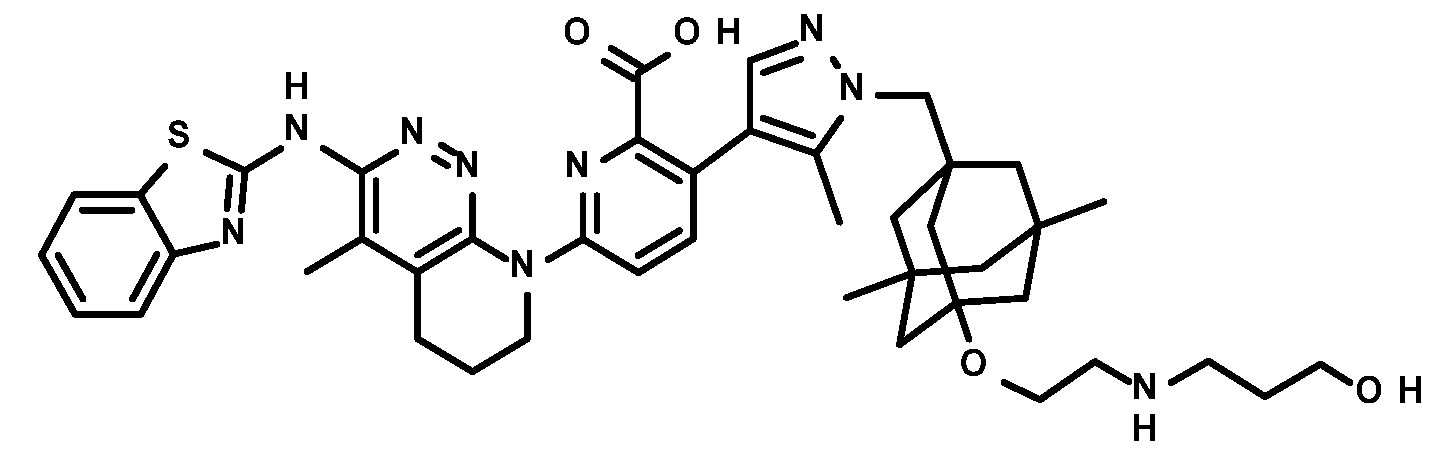
제조예 12 및 적절한 아민으로서의 3-아미노프로판-1-올로부터 출발하는 아민 치환 및 가수분해 일반적 절차 I을 사용하여, 목적 생성물을 수득하였다. HRMS-ESI (m/z): [M+H]+ C43H54N9O4S에 대한 계산치: 792.4019, 실측치: 792.4012.Using the general procedure I for amine substitution and hydrolysis starting from 3-aminopropan-1-ol as the appropriate amine and Preparation Example 12, the desired product was obtained. HRMS-ESI (m/z): [M+H] + C 43 H 54 N 9 O 4 S: 792.4019, found: 792.4012.
P26의 제조: 6-[[6-(1,3-벤조티아졸-2-일아미노)-5-메틸-피리다진-3-일]-메틸-아미노]-3-[1-[[3-[2-(3-히드록시프로필아미노)에톡시]-5,7-디메틸-1-아다만틸]메틸]-5-메틸-피라졸-4-일]피리딘-2-카르복실산Preparation of P26: 6-[[6-(1,3-benzothiazol-2-ylamino)-5-methyl-pyridazin-3-yl]-methyl-amino]-3-[1-[[3-[2-(3-hydroxypropylamino)ethoxy]-5,7-dimethyl-1-adamantyl]methyl]-5-methyl-pyrazol-4-yl]pyridine-2-carboxylic acid

제조예 14_01 및 적절한 아민으로서의 3-아미노프로판-1-올로부터 출발하는 아민 치환 및 가수분해 일반적 절차 II를 사용하여, 목적 생성물을 수득하였다. HRMS-ESI (m/z): [M+H]+ C41H52N9O4S에 대한 계산치: 766.3863, 실측치: 766.3860.Using the general procedure II for amine substitution and hydrolysis starting from 3-aminopropan-1-ol as the appropriate amine and Preparation 14_01, the desired product was obtained. HRMS-ESI (m/z): [M+H] + C 41 H 52 N 9 O 4 S: 766.3863, found: 766.3860.
P27의 제조: 6-{3-[(1,3-벤조티아졸-2-일)아미노]-4-메틸-6,7-디히드로피리도[2,3-c]피리다진-8(5H)-일}-3-[1-({3-[2-(디메틸아미노)에톡시]-5,7-디메틸아다만탄-1-일}메틸)-5-메틸-1H-피라졸-4-일]피리딘-2-카르복실산Preparation of P27: 6-{3-[(1,3-benzothiazol-2-yl)amino]-4-methyl-6,7-dihydropyrido[2,3-c]pyridazin-8(5H)-yl}-3-[1-({3-[2-(dimethylamino)ethoxy]-5,7-dimethyladamantan-1-yl}methyl)-5-methyl-1H-pyrazol-4-yl]pyridine-2-carboxylic acid

제조예 12 및 적절한 아민으로서의 디메틸아민으로부터 출발하는 아민 치환 및 가수분해 일반적 절차 I을 사용하여, 목적 생성물을 수득하였다. HRMS-ESI (m/z): [M+H]+ C42H52N9O3S에 대한 계산치: 762.3914, 실측치: 762.3912.Using the general procedure I for amine substitution and hydrolysis starting from dimethylamine as the appropriate amine and Preparation Example 12, the desired product was obtained. HRMS-ESI (m/z): [M+H]+ calcd for C 42 H 52 N 9 O 3 S: 762.3914, found: 762.3912.
P28의 제조: 2-[3-(1,3-벤조티아졸-2-일아미노)-4-메틸-6,7-디히드로-5H-피리도[2,3-c]피리다진-8-일]-5-[3-[4-[3-(디메틸아미노)프로프-1-이닐]페녹시]프로필]티아졸-4-카르복실산Preparation of P28: 2-[3-(1,3-benzothiazol-2-ylamino)-4-methyl-6,7-dihydro-5H-pyrido[2,3-c]pyridazin-8-yl]-5-[3-[4-[3-(dimethylamino)prop-1-ynyl]phenoxy]propyl]thiazole-4-carboxylic acid

단계 A: 4-[3-(디메틸아미노)프로프-1-이닐]페놀Step A: 4-[3-(dimethylamino)prop-1-ynyl]phenol
10.0 g의 4-아이오도페놀 (45.45 mmol) 및 4.91 g (1.3 당량)의 N,N-디메틸프로프-2-인-1-아민으로부터 출발하는 소노가시라 일반적 절차를 사용하여, 목적 생성물 3.29 g (41%)을 수득하였다. 1H NMR (400 MHz, DMSO-d6) δ ppm 9.83 (brs, 1H), 7.25 (d, 2H), 6.74 (d,2H), 3.44 (s, 2H), 2.26 (s, 6H); LC/MS (C11H14NO) 176[M+H]+.Using the Sonogashira general procedure starting from 10.0 g of 4-iodophenol (45.45 mmol) and 4.91 g (1.3 eq) of N,N-dimethylprop-2-yn-1-amine, 3.29 g (41%) of the desired product was obtained. 1 H NMR (400 MHz, DMSO-d 6 ) δ ppm 9.83 (brs, 1H), 7.25 (d, 2H), 6.74 (d,2H), 3.44 (s, 2H), 2.26 (s, 6H); LC/MS (C 11 H 14 NO) 176[M+H] + .
단계 B: 메틸 2-(tert-부톡시카르보닐아미노)-5-[3-[tert-부틸(디페닐)실릴]옥시프로필]티아졸-4-카르복실레이트Step B: Methyl 2-(tert-butoxycarbonylamino)-5-[3-[tert-butyl(diphenyl)silyl]oxypropyl]thiazole-4-carboxylate
DMF (973 mL) 중 제조예 1a, 단계 C의 생성물 (77.0 g, 243.7 mmol), 이미다졸 (33.14 g, 2 당량) 및 DMAP (1.49 g, 0.05 당량)에 tert-부틸(클로로)디페닐실란 (93.5 mL, 1.5 당량)을 적가하고, 반응 혼합물을 실온에서 16시간 동안 교반하였다. 휘발성 물질을 제거한 후, 칼럼 크로마토그래피 (실리카 겔, 용리액으로서 헵탄 및 EtOAc 사용)에 의해 정제하여 목적 생성물 13.56 g (99%)을 수득하였다. 1H NMR (500 MHz, DMSO-d6) δ ppm 11.63 (s, 1H), 7.60 (d, 4H), 7.45 (t, 2H), 7.42 (t, 4H), 3.74 (s, 3H), 3.67 (t, 2H), 3.20 (t, 2H), 1.87 (qn, 2H), 1.47 (s, 9H), 0.99 (s, 9H); 13C NMR (125 MHz, DMSO-d6) δ ppm 162.8, 156.0, 142.6, 135.6, 135.5, 133.5, 130.3, 128.3, 81.8, 62.9, 51.9, 34.0, 28.3, 27.1, 23.2, 19.2; HRMS-ESI (m/z): [M+H]+ C29H39N2O5SSi에 대한 계산치: 555.2349, 실측치: 555.2336.To the product of Preparation 1a, Step C (77.0 g, 243.7 mmol), imidazole (33.14 g, 2 equiv) and DMAP (1.49 g, 0.05 equiv) in DMF (973 mL) was added tert-Butyl(chloro)diphenylsilane (93.5 mL, 1.5 equiv), and the reaction mixture was stirred at room temperature for 16 h. After removal of volatile substances, the residue was purified by column chromatography (silica gel, using heptane and EtOAc as eluents) to yield 13.56 g (99%) of the desired product. 1 H NMR (500 MHz, DMSO-d 6 ) δ ppm 11.63 (s, 1H), 7.60 (d, 4H), 7.45 (t, 2H), 7.42 (t, 4H), 3.74 (s, 3H), 3.67 (t, 2H), 3.20 (t, 2H), 1.87 (qn, 2H), 1.47 (s, 9H), 0.99 (s, 9H); 13 C NMR (125 MHz, DMSO-d 6 ) δ ppm 162.8, 156.0, 142.6, 135.6, 135.5, 133.5, 130.3, 128.3, 81.8, 62.9, 51.9, 34.0, 28.3, 27.1, 23.2, 19.2; HRMS-ESI (m/z): [M+H] + C 29 H 39 N 2 O 5 calcd for SSi: 555.2349, found: 555.2336.
단계 C: 메틸 2-[tert-부톡시카르보닐-[3-(3,6-디클로로-5-메틸-피리다진-4-일)프로필]아미노]-5-[3-[tert-부틸(디페닐)실릴]옥시프로필]티아졸-4-카르복실레이트Step C: Methyl 2-[tert-butoxycarbonyl-[3-(3,6-dichloro-5-methyl-pyridazin-4-yl)propyl]amino]-5-[3-[tert-butyl(diphenyl)silyl]oxypropyl]thiazole-4-carboxylate
34.95 g (63 mmol)의 단계 B로부터의 생성물 및 적절한 아이오딘 화합물로서의 25.0 g (1.2 당량)의 3,6-디클로로-4-(3-아이오도프로필)-5-메틸-피리다진으로부터 출발하는 알킬화 일반적 절차를 사용하여, 목적 생성물 51.0 g (정량적 수율)을 수득하였다. 1H NMR (500 MHz, DMSO-d6) δ ppm 7.63-7.37 (m, 10H), 4.09 (t, 2H), 3.75 (s, 3H), 3.67 (t, 2H), 3.20 (t, 2H), 2.82 (m, 2H), 2.40 (s, 3H), 1.87 (m, 2H), 1.87 (m, 2H), 1.50 (s, 9H), 0.97 (s, 9H); 13C NMR (125 MHz, DMSO-d6) δ ppm 62.9, 52.0, 46.1, 33.9, 28.1, 27.5, 27.1, 25.9, 23.8, 16.4; HRMS-ESI (m/z): [M+H]+ C37H47Cl2N4O5SSi에 대한 계산치: 757.2413, 실측치: 757.2395.Using the general procedure for alkylation starting from 34.95 g (63 mmol) of the product from Step B and 25.0 g (1.2 eq.) of 3,6-dichloro-4-(3-iodopropyl)-5-methyl-pyridazine as the appropriate iodine compound, 51.0 g (quantitative yield) of the desired product was obtained. 1 H NMR (500 MHz, DMSO-d 6 ) δ ppm 7.63-7.37 (m, 10H), 4.09 (t, 2H), 3.75 (s, 3H), 3.67 (t, 2H), 3.20 (t, 2H), 2.82 (m, 2H), 2.40 (s, 3H), 1.87 (m, 2H), 1.87 (m, 2H), 1.50 (s, 9H), 0.97 (s, 9H); 13 C NMR (125 MHz, DMSO-d 6 ) δ ppm 62.9, 52.0, 46.1, 33.9, 28.1, 27.5, 27.1, 25.9, 23.8, 16.4; HRMS-ESI (m/z): [M+H] + C 37 H 47 C l2 N 4 O 5 calcd for SSi: 757.2413, found: 757.2395.
단계 D: 메틸 5-[3-[tert-부틸(디페닐)실릴]옥시프로필]-2-[3-(3,6-디클로로-5-메틸-피리다진-4-일)프로필아미노]티아졸-4-카르복실레이트Step D: Methyl 5-[3-[tert-butyl(diphenyl)silyl]oxypropyl]-2-[3-(3,6-dichloro-5-methyl-pyridazin-4-yl)propylamino]thiazole-4-carboxylate
51.70 g (68 mmol)의 단계 C로부터의 생성물로부터 출발하는 HFIP에 의한 탈보호 일반적 절차를 사용하여, 목적 생성물 36.32 g (81%)을 수득하였다. 1H NMR (500 MHz, DMSO-d6) δ ppm 7.71 (t, 1H), 7.63-7.37 (m, 10H), 3.69 (s, 3H), 3.67 (t, 2H), 3.30 (m, 2H), 3.10 (t, 2H), 2.85 (m, 2H), 2.83 (s, 3H), 1.79 (m, 2H), 1.78 (m, 2H), 0.98 (s, 9H); 13C NMR (125 MHz, DMSO-d6) δ ppm 62.9, 51.7, 44.1, 34.2, 28.0, 27.1, 27.0, 23.4, 16.4; HRMS-ESI (m/z): [M+H]+ C32H39Cl2N4O3SSi에 대한 계산치: 657.1889, 실측치: 657.1875.Using the general procedure for deprotection with HFIP starting from 51.70 g (68 mmol) of the product from Step C, 36.32 g (81%) of the desired product was obtained. 1 H NMR (500 MHz, DMSO-d 6 ) δ ppm 7.71 (t, 1H), 7.63-7.37 (m, 10H), 3.69 (s, 3H), 3.67 (t, 2H), 3.30 (m, 2H), 3.10 (t, 2H), 2.85 (m, 2H), 2.83 (s, 3H), 1.79 (m, 2H), 1.78 (m, 2H), 0.98 (s, 9H); 13 C NMR (125 MHz, DMSO-d 6 ) δ ppm 62.9, 51.7, 44.1, 34.2, 28.0, 27.1, 27.0, 23.4, 16.4; HRMS-ESI (m/z): [M+H] + C 32 H 39 Cl 2 N 4 O 3 calcd for SSi: 657.1889, found: 657.1875.
단계 E: 메틸 5-[3-[tert-부틸(디페닐)실릴]옥시프로필]-2-(3-클로로-4-메틸-6,7-디히드로-5H-피리도[2,3-c]피리다진-8-일)티아졸-4-카르복실레이트Step E: Methyl 5-[3-[tert-butyl(diphenyl)silyl]oxypropyl]-2-(3-chloro-4-methyl-6,7-dihydro-5H-pyrido[2,3-c]pyridazin-8-yl)thiazole-4-carboxylate
1,4-디옥산 (383 mL) 중 36.0 g (54.7 mmol)의 단계 D로부터의 생성물 및 35.7 g (2 당량)의 Cs2CO3의 혼합물을 90℃에서 18시간 동안 교반하였다. 물로 희석한 후, 침전된 고체를 여과하고, 디에틸에테르로 세척하고, 건조시켜 목적 생성물 34.0 g (99%)을 수득하였다. 1H NMR (500 MHz, DMSO-d6) δ ppm 7.61 (d, 4H), 7.43 (t, 2H), 7.42 (t, 4H), 4.26 (t, 2H), 3.77 (s, 3H), 3.70 (t, 2H), 3.23 (t, 2H), 2.90 (t, 2H), 2.33 (s, 3H), 2.04 (qn, 2H), 1.90 (qn, 2H), 1.00 (s, 9H); 13C NMR (125 MHz, DMSO-d6) δ ppm 163.1, 155.3, 151.8, 151.4, 143.2, 136.2, 135.5, 134.7, 133.6, 130.3, 129.0, 128.3, 63.1, 51.9, 46.3, 34.1, 27.1, 24.2, 23.1, 19.8, 19.2, 15.7; HRMS-ESI (m/z): [M+H]+ C32H38ClN4O3SSi에 대한 계산치: 621.2122, 실측치: 621.2097.A mixture of 36.0 g (54.7 mmol) of the product from Step D and 35.7 g (2 equiv) of Cs 2 CO 3 in 1,4-dioxane (383 mL) was stirred at 90 °C for 18 h. After dilution with water, the precipitated solid was filtered, washed with diethyl ether and dried to give 34.0 g (99%) of the desired product. 1 H NMR (500 MHz, DMSO-d 6 ) δ ppm 7.61 (d, 4H), 7.43 (t, 2H), 7.42 (t, 4H), 4.26 (t, 2H), 3.77 (s, 3H), 3.70 (t, 2H), 3.23 (t, 2H), 2.90 (t, 2H), 2.33 (s, 3H), 2.04 (qn, 2H), 1.90 (qn, 2H), 1.00 (s, 9H); 13 C NMR (125 MHz, DMSO-d 6 ) δ ppm 163.1, 155.3, 151.8, 151.4, 143.2, 136.2, 135.5, 134.7, 133.6, 130.3, 129.0, 128.3, 63.1, 51.9, 46.3, 34.1, 27.1, 24.2, 23.1, 19.8, 19.2, 15.7; HRMS-ESI (m/z): [M+H] + C 32 H 38 ClN 4 O 3 calcd for SSi: 621.2122, found: 621.2097.
단계 F: 메틸 2-(3-클로로-4-메틸-6,7-디히드로-5H-피리도[2,3-c]피리다진-8-일)-5-(3-히드록시프로필)티아졸-4-카르복실레이트Step F: Methyl 2-(3-chloro-4-methyl-6,7-dihydro-5H-pyrido[2,3-c]pyridazin-8-yl)-5-(3-hydroxypropyl)thiazole-4-carboxylate
THF (5 mL/mmol) 중 23.36 g (37.6 mmol)의 단계 E로부터의 생성물 및 45 mL (1.2 당량)의 1 M TBAF 용액의 혼합물을 실온에서 2시간 동안 교반하였다. 휘발성 물질을 제거한 후, 칼럼 크로마토그래피 (실리카 겔, 용리액으로서 EtOAc 및 MeOH/NH3 사용)에 의해 정제하여 목적 생성물 12.88 g (89%)을 수득하였다. 1H NMR (500 MHz, DMSO-d6) δ ppm 4.54 (br., 1H), 4.25 (m, 2H), 3.80 (s, 3H), 3.45 (t, 2H), 3.11 (m, 2H), 2.88 (t, 2H), 2.31 (s, 3H), 2.04 (m, 2H), 1.77 (m, 2H); 13C NMR (125 MHz, DMSO-d6) δ ppm 163.1, 155.2, 151.2, 143.8, 136.1, 134.5, 129.0, 60.5, 52.0, 46.3, 34.6, 24.2, 23.2, 19.7, 15.7; HRMS-ESI (m/z): [M+H]+ C16H20ClN4O3S에 대한 계산치: 383.0945, 실측치: 383.0937.A mixture of 23.36 g (37.6 mmol) of the product from Step E and 45 mL (1.2 eq) of 1 M TBAF solution in THF (5 mL/mmol) was stirred at room temperature for 2 h. After removal of volatiles, the residue was purified by column chromatography (silica gel, using EtOAc and MeOH/NH 3 as eluent) to afford 12.88 g (89%) of the desired product. 1 H NMR (500 MHz, DMSO-d 6 ) δ ppm 4.54 (br., 1H), 4.25 (m, 2H), 3.80 (s, 3H), 3.45 (t, 2H), 3.11 (m, 2H), 2.88 (t, 2H), 2.31 (s, 3H), 2.04 (m, 2H), 1.77 (m, 2H); 13 C NMR (125 MHz, DMSO-d 6 ) δ ppm 163.1, 155.2, 151.2, 143.8, 136.1, 134.5, 129.0, 60.5, 52.0, 46.3, 34.6, 24.2, 23.2, 19.7, 15.7; HRMS-ESI (m/z): [M+H] + calcd for C 16 H 20 ClN 4 O 3 S: 383.0945, found: 383.0937.
단계 G: 메틸 2-(3-클로로-4-메틸-6,7-디히드로-5H-피리도[2,3-c]피리다진-8-일)-5-[3-[4-[3-(디메틸아미노)프로프-1-이닐]페녹시]프로필]티아졸-4-카르복실레이트Step G: Methyl 2-(3-chloro-4-methyl-6,7-dihydro-5H-pyrido[2,3-c]pyridazin-8-yl)-5-[3-[4-[3-(dimethylamino)prop-1-ynyl]phenoxy]propyl]thiazole-4-carboxylate
THF (9 mL/mmol) 중 0.65 g (1.2 당량)의 단계 F로부터의 생성물 및 250 mg (1.43 mmol)의 4-[3-(디메틸아미노)프로프-1-이닐]페놀로부터 출발하는 미츠노부 일반적 절차 I을 사용하여, 목적 생성물 0.28 g (37%)을 수득하였다. 1H NMR (500 MHz, DMSO-d6) δ ppm 7.34 (d, 2H), 6.91 (d, 2H), 4.26 (t, 2H), 4.03 (t, 2H), 3.78 (s, 3H), 3.40 (s, 2H), 3.25 (t, 2H), 2.88 (t, 2H), 2.31 (s, 3H), 2.22 (s, 6H), 2.08 (qn, 2H), 2.03 (qn, 2H); 13C NMR (125 MHz, DMSO-d6) δ ppm 163.1, 158.9, 155.3, 151.7, 151.3, 142.7, 136.2, 134.9, 133.3, 129.0, 115.2, 115.0, 85.2, 84.1, 67.1, 52.0, 48.3, 46.3, 44.3, 30.8, 24.1, 23.1, 19.7, 15.7; HRMS-ESI (m/z): [M+H]+ C27H31ClN5O3S에 대한 계산치: 540.1836, 실측치: 540.1834.Using Mitsunobu General Procedure I starting from 0.65 g (1.2 eq) of the product from step F and 250 mg (1.43 mmol) of 4-[3-(dimethylamino)prop-1-ynyl]phenol in THF (9 mL/mmol) gave 0.28 g (37%) of the desired product. 1 H NMR (500 MHz, DMSO-d 6 ) δ ppm 7.34 (d, 2H), 6.91 (d, 2H), 4.26 (t, 2H), 4.03 (t, 2H), 3.78 (s, 3H), 3.40 (s, 2H), 3.25 (t, 2H), 2.88 (t, 2H), 2.31 (s, 3H), 2.22 (s, 6H), 2.08 (qn, 2H), 2.03 (qn, 2H); 13 C NMR (125 MHz, DMSO-d 6 ) δ ppm 163.1, 158.9, 155.3, 151.7, 151.3, 142.7, 136.2, 134.9, 133.3, 129.0, 115.2, 115.0, 85.2, 84.1, 67.1, 52.0, 48.3, 46.3, 44.3, 30.8, 24.1, 23.1, 19.7, 15.7; HRMS-ESI (m/z): [M+H] + calcd for C 27 H 31 ClN 5 O 3 S: 540.1836, found: 540.1834.
단계 H: 메틸 2-[3-(1,3-벤조티아졸-2-일아미노)-4-메틸-6,7-디히드로-5H-피리도[2,3-c]피리다진-8-일]-5-[3-[4-[3-(디메틸아미노)프로프-1-이닐]페녹시]프로필]티아졸-4-카르복실레이트Step H: Methyl 2-[3-(1,3-benzothiazol-2-ylamino)-4-methyl-6,7-dihydro-5H-pyrido[2,3-c]pyridazin-8-yl]-5-[3-[4-[3-(dimethylamino)prop-1-ynyl]phenoxy]propyl]thiazole-4-carboxylate
0.27 g의 단계 G로부터의 생성물 (0.5 mmol)로부터 출발하는 부흐발트 일반적 절차 I을 사용하여, 목적 생성물 0.29 g (89%)을 수득하였다. 1H NMR (500 MHz, DMSO-d6) δ ppm 7.83 (dm, 1H), 7.50 (dm, 1H), 7.36 (m, 1H), 7.35 (m, 2H), 7.18 (m, 1H), 6.94 (m, 2H), 4.28 (m, 2H), 4.09 (t, 2H), 3.80 (s, 3H), 3.39 (s, 2H), 3.29 (t, 2H), 2.88 (t, 2H), 2.35 (s, 3H), 2.23 (s, 6H), 2.13 (m, 2H), 2.07 (m, 2H); HRMS-ESI (m/z): [M+H]+ C34H36N7O3S2에 대한 계산치: 654.2321, 실측치: 654.2322.Using the Buchwald general procedure I starting from 0.27 g of product from step G (0.5 mmol), 0.29 g (89%) of the desired product was obtained. 1 H NMR (500 MHz, DMSO-d 6 ) δ ppm 7.83 (dm, 1H), 7.50 (dm, 1H), 7.36 (m, 1H), 7.35 (m, 2H), 7.18 (m, 1H), 6.94 (m, 2H), 4.28 (m, 2H), 4.09 (t, 2H), 3.80 (s, 3H), 3.39 (s, 2H), 3.29 (t, 2H), 2.88 (t, 2H), 2.35 (s, 3H), 2.23 (s, 6H), 2.13 (m, 2H), 2.07 (m, 2H); HRMS-ESI (m/z): Calculated for [M+H] + C 34 H 36 N 7 O 3 S 2 : 654.2321, Found: 654.2322.
단계 I: 2-[3-(1,3-벤조티아졸-2-일아미노)-4-메틸-6,7-디히드로-5H-피리도[2,3-c]피리다진-8-일]-5-[3-[4-[3-(디메틸아미노)프로프-1-이닐]페녹시]프로필]티아졸-4-카르복실산Step I: 2-[3-(1,3-benzothiazol-2-ylamino)-4-methyl-6,7-dihydro-5H-pyrido[2,3-c]pyridazin-8-yl]-5-[3-[4-[3-(dimethylamino)prop-1-ynyl]phenoxy]propyl]thiazole-4-carboxylic acid
THF 및 물의 1:1 혼합물 (10 mL/mmol) 중 단계 H로부터의 생성물 (280 mg, 0.43 mmol)에 90 mg (5 당량)의 LiOHxH2O를 첨가하고, 반응 혼합물을 50℃에서 18시간 동안 교반하였다. 휘발성 물질을 제거한 후, 역상 정제용 크로마토그래피 (C18, 용리액으로서 물 중 0.1% TFA 및 MeCN)에 의해 정제하여 목적 화합물 132 mg (48%)을 수득하였다. HRMS-ESI (m/z): [M+H]+ C33H34N7O3S2에 대한 계산치: 640.2165, 실측치: 640.2160.To the product from step H (280 mg, 0.43 mmol) in a 1:1 mixture of THF and water (10 mL/mmol) was added 90 mg (5 eq.) of LiOHxH 2 O, and the reaction mixture was stirred at 50 °C for 18 h. After removal of volatiles, the residue was purified by reverse-phase preparative chromatography (C18, 0.1% TFA and MeCN in water as eluent) to afford 132 mg (48%) of the title compound. HRMS-ESI (m/z): [M+H] + calcd for C 33 H 34 N 7 O 3 S 2 : 640.2165, found: 640.2160.
P29의 제조: 6-[[6-(1,3-벤조티아졸-2-일아미노)-5-메틸-피리다진-3-일]-메틸-아미노]-3-[1-[[3-[2-(3-메톡시프로필아미노)에톡시]-5,7-디메틸-1-아다만틸]메틸]-5-메틸-피라졸-4-일]피리딘-2-카르복실산Preparation of P29: 6-[[6-(1,3-benzothiazol-2-ylamino)-5-methyl-pyridazin-3-yl]-methyl-amino]-3-[1-[[3-[2-(3-methoxypropylamino)ethoxy]-5,7-dimethyl-1-adamantyl]methyl]-5-methyl-pyrazol-4-yl]pyridine-2-carboxylic acid
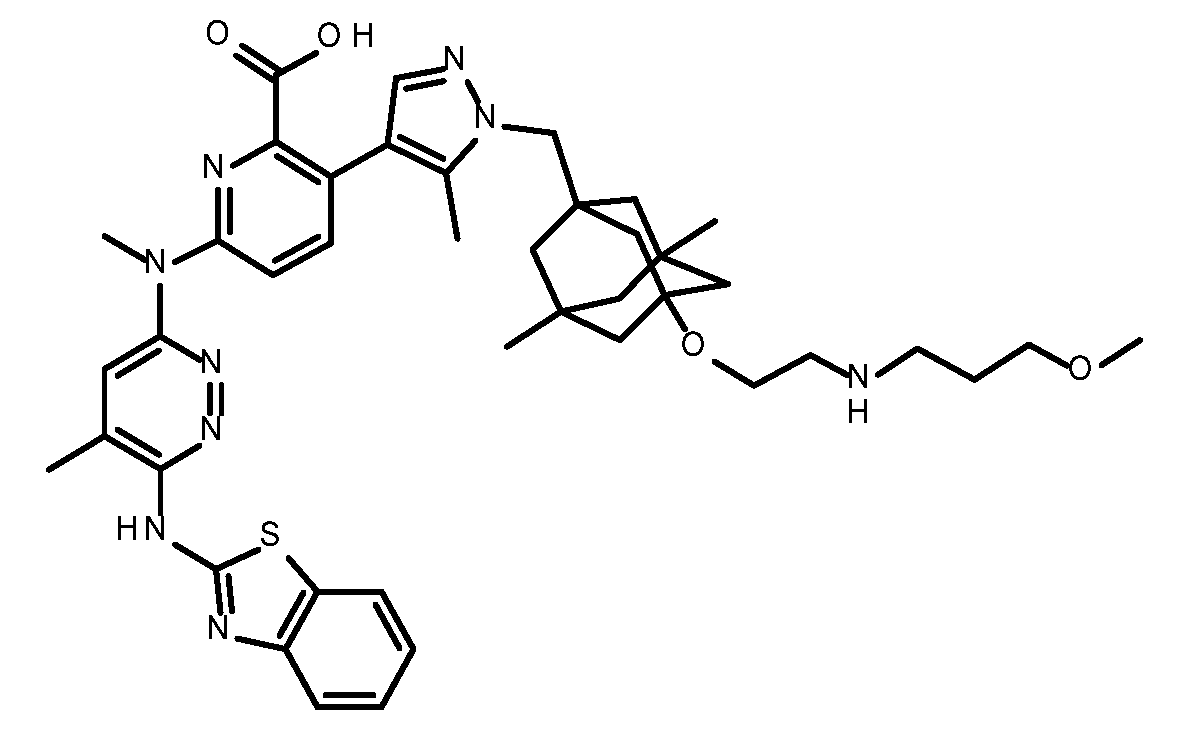
제조예 14_01 및 적절한 아민으로서의 3-메톡시프로판-1-아민으로부터 출발하는 아민 치환 및 가수분해 일반적 절차 II를 사용하여, 목적 생성물을 수득하였다. HRMS-ESI (m/z): [M+H]+ C42H54N9O4S에 대한 계산치: 780.4019, 실측치: 780.4019.Using the general procedure for amine substitution and hydrolysis II starting from Preparation 14_01 and 3-methoxypropan-1-amine as the appropriate amine, the desired product was obtained. HRMS-ESI (m/z): [M+H] + calcd for C 42 H 54 N 9 O 4 S: 780.4019, found: 780.4019.
P30의 제조: 6-[{6-[(1,3-벤조티아졸-2-일)아미노]-5-메틸피리다진-3-일}(메틸)아미노]-3-[1-({3-[2-(디메틸아미노)에톡시]-5,7-디메틸아다만탄-1-일}메틸)-5-메틸-1H-피라졸-4-일]피리딘-2-카르복실산Preparation of P30: 6-[{6-[(1,3-Benzothiazol-2-yl)amino]-5-methylpyridazin-3-yl}(methyl)amino]-3-[1-({3-[2-(dimethylamino)ethoxy]-5,7-dimethyladamantan-1-yl}methyl)-5-methyl-1H-pyrazol-4-yl]pyridine-2-carboxylic acid

제조예 14_01 및 적절한 아민으로서의 디메틸아민으로부터 출발하는 아민 치환 및 가수분해 일반적 절차 II를 사용하여, 목적 생성물을 수득하였다. HRMS-ESI (m/z): [M+H]+ C40H50N9O3S에 대한 계산치: 736.3757, 실측치: 736.3751.Using the general procedure II for amine substitution and hydrolysis starting from Example 14_01 and dimethylamine as the appropriate amine, the desired product was obtained. HRMS-ESI (m/z): [M+H] + C 40 H 50 N 9 O 3 S: 736.3757, found: 736.3751.
P31의 제조: 6-[3-(1,3-벤조티아졸-2-일아미노)-4-메틸-6,7-디히드로-5H-피리도[2,3-c]피리다진-8-일]-3-[1-[[3,5-디메틸-7-(2-피페라진-1-일에톡시)-1-아다만틸]메틸]-5-메틸-피라졸-4-일]피리딘-2-카르복실산Preparation of P31: 6-[3-(1,3-benzothiazol-2-ylamino)-4-methyl-6,7-dihydro-5H-pyrido[2,3-c]pyridazin-8-yl]-3-[1-[[3,5-dimethyl-7-(2-piperazin-1-ylethoxy)-1-adamantyl]methyl]-5-methyl-pyrazol-4-yl]pyridine-2-carboxylic acid

제조예 12 및 적절한 아민으로서의 피페라진으로부터 출발하는 아민 치환 및 가수분해 일반적 절차 I을 사용하여, 목적 생성물을 수득하였다. HRMS-ESI (m/z): [M+H]+ C44H55N10O3S에 대한 계산치: 803.4179, 실측치: 803.4177.Using the general procedure I for amine substitution and hydrolysis starting from piperazine as the appropriate amine and Preparation Example 12, the desired product was obtained. HRMS-ESI (m/z): [M+H] + C 44 H 55 N 10 O 3 S: 803.4179, found: 803.4177.
P32의 제조: 6-[3-(1,3-벤조티아졸-2-일아미노)-4-메틸-6,7-디히드로-5H-피리도[2,3-c]피리다진-8-일]-3-[1-[[3-[2-(4-이소프로필피페라진-1-일)에톡시]-5,7-디메틸-1-아다만틸]메틸]-5-메틸-피라졸-4-일]피리딘-2-카르복실산Preparation of P32: 6-[3-(1,3-benzothiazol-2-ylamino)-4-methyl-6,7-dihydro-5H-pyrido[2,3-c]pyridazin-8-yl]-3-[1-[[3-[2-(4-isopropylpiperazin-1-yl)ethoxy]-5,7-dimethyl-1-adamantyl]methyl]-5-methyl-pyrazol-4-yl]pyridine-2-carboxylic acid
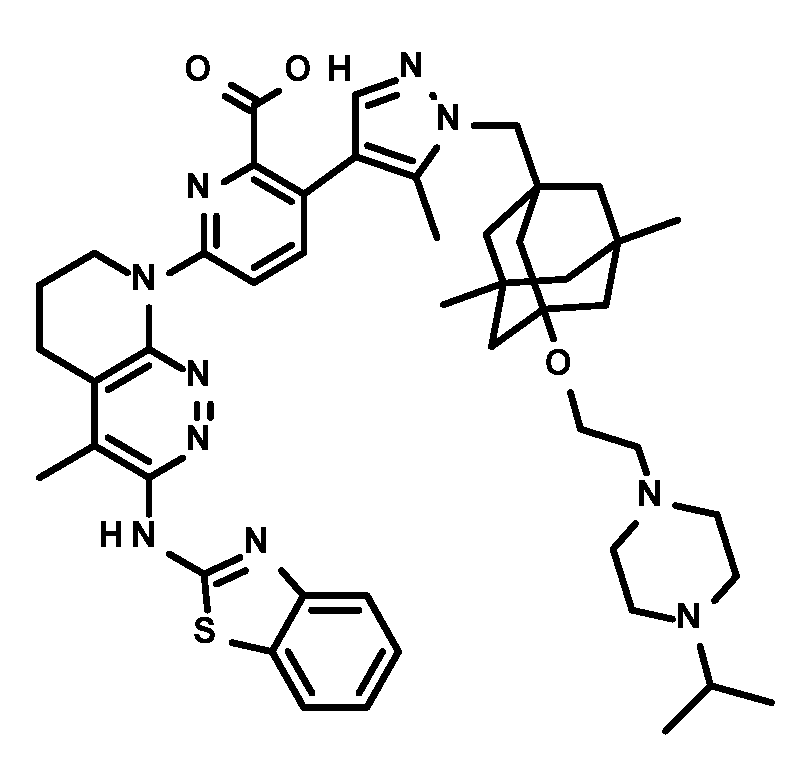
제조예 12 및 적절한 아민으로서의 1-이소프로필피페라진으로부터 출발하는 아민 치환 및 가수분해 일반적 절차 I을 사용하여, 목적 생성물을 수득하였다. HRMS-ESI (m/z): [M+H]+ C47H61N10O3S에 대한 계산치: 845.4649, 실측치: 845.4646.Using the general procedure I for amine substitution and hydrolysis starting from 1-isopropylpiperazine as the appropriate amine and Preparation Example 12, the desired product was obtained. HRMS-ESI (m/z): [M+H] + calcd for C 47 H 61 N 10 O 3 S: 845.4649, found: 845.4646.
P33의 제조: 3-[1-[[3-[2-(아제판-1-일)에톡시]-5,7-디메틸-1-아다만틸]메틸]-5-메틸-피라졸-4-일]-6-[3-(1,3-벤조티아졸-2-일아미노)-4-메틸-6,7-디히드로-5H-피리도[2,3-c]피리다진-8-일]피리딘-2-카르복실산Preparation of P33: 3-[1-[[3-[2-(azepan-1-yl)ethoxy]-5,7-dimethyl-1-adamantyl]methyl]-5-methyl-pyrazol-4-yl]-6-[3-(1,3-benzothiazol-2-ylamino)-4-methyl-6,7-dihydro-5H-pyrido[2,3-c]pyridazin-8-yl]pyridine-2-carboxylic acid

제조예 12로부터 출발하는 아민 치환 및 가수분해 일반적 절차 I 및 적절한 아민으로서의 아제판을 사용하여, 목적 생성물을 수득하였다. HRMS-ESI (m/z): [M+H]+ C46H58N9O3S에 대한 계산치: 816.4383, 실측치: 816.4379.Using the general procedure for amine substitution and hydrolysis I starting from Preparation 12 and azepane as the appropriate amine, the desired product was obtained. HRMS-ESI (m/z): [M+H] + calcd for C 46 H 58 N 9 O 3 S: 816.4383, found: 816.4379.
P34의 제조: 2-[3-(1,3-벤조티아졸-2-일아미노)-4-메틸-6,7-디히드로-5H-피리도[2,3-c]피리다진-8-일]-5-[3-[4-[3-[[(3S)-3,4-디히드록시부틸]-메틸-아미노]프로프-1-이닐]-2-플루오로-페녹시]프로필]티아졸-4-카르복실산Preparation of P34: 2-[3-(1,3-benzothiazol-2-ylamino)-4-methyl-6,7-dihydro-5H-pyrido[2,3-c]pyridazin-8-yl]-5-[3-[4-[3-[[(3S)-3,4-dihydroxybutyl]-methyl-amino]prop-1-ynyl]-2-fluoro-phenoxy]propyl]thiazole-4-carboxylic acid

단계 A: 2-[(4S)-2,2-디메틸-1,3-디옥솔란-4-일]에틸 4-메틸벤젠술포네이트Step A: 2-[(4S)-2,2-dimethyl-1,3-dioxolan-4-yl]ethyl 4-methylbenzenesulfonate
34 mL의 DCM 중 1.0 g (6.8 mmol)의 2-[(4S)-2,2-디메틸-1,3-디옥솔란-4-일]에탄올 및 3.8 mL (4 당량)의 트리에틸아민에 0℃에서 4.5 g (2 당량)의 p-톨릴술포닐 4-메틸벤젠술포네이트를 첨가하였다. 반응 혼합물을 추가 전환이 관찰되지 않을 때까지 교반하고, 농축시키고, 디이소프로필 에테르로 처리하였다. 이어서, 침전된 염산 염을 여과하고, 모액을 농축시키고, 플래쉬 크로마토그래피 (실리카 겔, 용리액으로서 헵탄 및 EtOAc 사용)를 통해 정제하여 목적 생성물 1.6 g (81%)을 수득하였다. 1H NMR (500 MHz, dmso-d6) δ ppm 7.79 (dm, 2H), 7.49 (dm, 2H), 4.08 (m, 2H), 4.00 (m, 1H), 3.91/3.44 (dd+dd, 2H), 2.42 (s, 3H), 1.83/1.77 (m+m, 2H), 1.24/1.20 (s+s, 6H); 13C NMR (500 MHz, dmso-d6) δ ppm 132.7, 132.7, 130.7, 128.1, 108.6, 72.3, 68.7, 68.4, 32.9, 27.2/25.9, 21.6; HRMS-ESI (m/z): [M+H]+ C14H21O5S에 대한 계산치: 301.1110, 실측치: 301.1107.To 1.0 g (6.8 mmol) of 2-[(4S)-2,2-dimethyl-1,3-dioxolan-4-yl]ethanol and 3.8 mL (4 eq) of triethylamine in 34 mL of DCM was added 4.5 g (2 eq) of p-tolylsulfonyl 4-methylbenzenesulfonate at 0 °C. The reaction mixture was stirred until no further conversion was observed, concentrated and treated with diisopropyl ether. The precipitated hydrochloric acid salt was then filtered off, and the mother liquor was concentrated and purified by flash chromatography (silica gel, eluents using heptane and EtOAc) to afford 1.6 g (81%) of the desired product. 1 H NMR (500 MHz, dmso-d6) δ ppm 7.79 (dm, 2H), 7.49 (dm, 2H), 4.08 (m, 2H), 4.00 (m, 1H), 3.91/3.44 (dd+dd, 2H), 2.42 (s, 3H), 1.83/1.77 (m+m, 2H), 1.24/1.20 (s+s, 6H); 13 C NMR (500 MHz, dmso-d6) δ ppm 132.7, 132.7, 130.7, 128.1, 108.6, 72.3, 68.7, 68.4, 32.9, 27.2/25.9, 21.6; HRMS-ESI (m/z): Calculated for [M+H] + C14H21O5S: 301.1110, Found: 301.1107.
단계 B: N-[2-[(4S)-2,2-디메틸-1,3-디옥솔란-4-일]에틸]프로프-2-인-1-아민Step B: N-[2-[(4S)-2,2-dimethyl-1,3-dioxolan-4-yl]ethyl]prop-2-yn-1-amine
127 mL의 MeCN 중 단계 A로부터의 생성물 (7.6 g, 25.3 mmol), 프로프-2-인-1-아민 (16 mL, 10 당량) 및 DIPEA (13.22 mL, 3 당량)의 혼합물을 50℃에서 16시간 동안 교반하였다. 농축시킨 후, DCM에 녹이고, 진한 NaHCO3 용액 및 염수로 추출하고, 합한 유기 층을 건조시키고, 농축시켜 목적 생성물 5.0 g (107%)을 수득하였으며, 이를 임의의 추가 정제 없이 사용하였다. 1H NMR (500 MHz, dmso-d6) δ ppm 4.07 (m, 1H), 3.98/3.43 (dd+t, 2H), 3.28 (m, 2H), 3.05 (t, 1H), 2.62/2.55 (m+m, 2H), 2.23 (brs, 1H), 1.63/1.59 (m+m, 2H), 1.30 (s, 3H), 1.25 (s, 3H); 13C NMR (500 MHz, dmso-d6) δ ppm 108.2, 83.4, 74.6, 74.1, 69.2, 45.1, 37.8, 33.6, 27.3, 26.2; HRMS (EI) (m/z): [M]+ C10H17NO2에 대한 계산치: 183.1259, 실측치: 183.1260.A mixture of the product from Step A (7.6 g, 25.3 mmol), prop-2-yn-1-amine (16 mL, 10 equiv) and DIPEA (13.22 mL, 3 equiv) in 127 mL of MeCN was stirred at 50 °C for 16 h. After concentration, dissolved in DCM, extracted with concentrated NaHCO 3 solution and brine, the combined organic layers were dried and concentrated to give 5.0 g (107%) of the desired product, which was used without any further purification. 1 H NMR (500 MHz, dmso-d6) δ ppm 4.07 (m, 1H), 3.98/3.43 (dd+t, 2H), 3.28 (m, 2H), 3.05 (t, 1H), 2.62/2.55 (m+m, 2H), 2.23 (brs, 1H), 1.63/1.59 (m+m, 2H), 1.30 (s, 3H), 1.25 (s, 3H); 13 C NMR (500 MHz, dmso-d6) δ ppm 108.2, 83.4, 74.6, 74.1, 69.2, 45.1, 37.8, 33.6, 27.3, 26.2; HRMS (EI) (m/z): Calculated for [M]+ C 10 H 17 NO 2 : 183.1259, Found: 183.1260.
단계 C: N-[2-[(4S)-2,2-디메틸-1,3-디옥솔란-4-일]에틸]-N-메틸-프로프-2-인-1-아민Step C: N-[2-[(4S)-2,2-dimethyl-1,3-dioxolan-4-yl]ethyl]-N-methyl-prop-2-yn-1-amine
N,N-디메틸포름아미드 (14 mL) 중 단계 B로부터의 생성물 (500 mg, 2.73 mmol)에 0℃에서 수소화나트륨 (120 mg, 1.1 당량)을 조금씩 첨가하였다. 0℃에서 0.5시간 동안 교반한 후, 혼합물을 아이오도메탄 (0.17 mL, 1 당량)으로 처리하고, 실온에서 18시간 동안 교반하였다. NH4Cl 및 물의 포화 용액으로 켄칭한 후, 혼합물을 Et2O로 추출하였다. 합한 유기 상을 건조시키고, 농축시켜 목적 생성물 (362 mg, 67%)을 수득하였다. GC/MS (C11H19NO2) 197 [M+].To the product from step B (500 mg, 2.73 mmol) in N,N-dimethylformamide (14 mL) was added sodium hydride (120 mg, 1.1 equiv) in portions at 0 °C. After stirring at 0 °C for 0.5 h, the mixture was treated with iodomethane (0.17 mL, 1 equiv) and stirred at room temperature for 18 h. After quenching with a saturated solution of NH 4 Cl and water, the mixture was extracted with Et 2 O. The combined organic phases were dried and concentrated to give the desired product (362 mg, 67%). GC/MS (C 11 H 19 NO 2 ) 197 [M + ].
단계 D: 에틸 2-(3-클로로-4-메틸-6,7-디히드로-5H-피리도[2,3-c]피리다진-8-일)-5-[3-[4-[3-[2-[(4S)-2,2-디메틸-1,3-디옥솔란-4-일]에틸-메틸-아미노]프로프-1-이닐]-2-플루오로-페녹시]프로필]티아졸-4-카르복실레이트Step D: Ethyl 2-(3-chloro-4-methyl-6,7-dihydro-5H-pyrido[2,3-c]pyridazin-8-yl)-5-[3-[4-[3-[2-[(4S)-2,2-dimethyl-1,3-dioxolan-4-yl]ethyl-methyl-amino]prop-1-ynyl]-2-fluoro-phenoxy]propyl]thiazole-4-carboxylate
적절한 아세틸렌으로서의 0.548 g (0.89 mmol)의 제조예 15의 생성물 및 350 mg (2 당량)의 단계 C로부터의 생성물로부터 출발하는 소노가시라 일반적 절차를 사용하여, 목적 생성물 510 mg (82%)을 수득하였다. LC/MS (C34H42ClFN5O5S) 686 [M+H]+.Using the Sonogashira general procedure starting from 0.548 g (0.89 mmol) of the product of Preparation 15 as the appropriate acetylene and 350 mg (2 eq.) of the product from Step C, 510 mg (82%) of the desired product were obtained. LC/MS (C 34 H 42 ClFN 5 O 5 S) 686 [M+H] + .
단계 E: 에틸 2-[3-(1,3-벤조티아졸-2-일아미노)-4-메틸-6,7-디히드로-5H-피리도[2,3-c]피리다진-8-일]-5-[3-[4-[3-[2-[(4S)-2,2-디메틸-1,3-디옥솔란-4-일]에틸-메틸-아미노]프로프-1-이닐]-2-플루오로-페녹시]프로필]티아졸-4-카르복실레이트Step E: Ethyl 2-[3-(1,3-benzothiazol-2-ylamino)-4-methyl-6,7-dihydro-5H-pyrido[2,3-c]pyridazin-8-yl]-5-[3-[4-[3-[2-[(4S)-2,2-dimethyl-1,3-dioxolan-4-yl]ethyl-methyl-amino]prop-1-ynyl]-2-fluoro-phenoxy]propyl]thiazole-4-carboxylate
510 mg (0.52 mmol)의 단계 D로부터의 생성물 및 234 mg (3 당량)의 1,3-벤조티아졸-2-아민으로부터 출발하는 부흐발트 일반적 절차 I을 사용하여, 목적 생성물 200 mg (48%)을 수득하였다. 1H NMR (500 MHz, dmso-d6) δ ppm 7.88 (dm, 1H), 7.49 (brd, 1H), 7.37 (m, 1H), 7.3 (dd, 1H), 7.20 (dm, 1H), 7.19 (m, 1H), 7.16 (t, 1H), 4.26 (m, 2H), 4.25 (q, 2H), 4.14 (t, 2H), 4.04 (m, 1H), 3.98/3.45 (dd+dd, 2H), 3.46 (s, 2H), 3.28 (m, 2H), 2.87 (t, 2H), 2.45/2.39 (m+m, 2H), 2.34 (s, 3H), 2.21 (s, 3H), 2.13 (m, 2H), 2.04 (m, 2H), 1.63 (m, 2H), 1.29 (t, 3H), 1.29 (s, 3H), 1.24 (s, 3H); HRMS (ESI) (m/z): [M+H]+ C41H47FN7O5S2에 대한 계산치: 800.3064, 실측치: 800.3064.Using the Buchwald general procedure I starting from 510 mg (0.52 mmol) of product from step D and 234 mg (3 eq.) of 1,3-benzothiazol-2-amine, 200 mg (48%) of the desired product were obtained. 1H NMR (500 MHz, dmso-d6) δ ppm 7.88 (dm, 1H), 7.49 (brd, 1H), 7.37 (m, 1H), 7.3 (dd, 1H), 7.20 (dm, 1H), 7.19 (m, 1H), 7.16 (t, 1H), 4.26 (m, 2H), 4.25 (q, 2H), 4.14 (t, 2H), 4.04 (m, 1H), 3.98/3.45 (dd+dd, 2H), 3.46 (s, 2H), 3.28 (m, 2H), 2.87 (t, 2H), 2.45/2.39 (m+m, 2H), 2.34 (s, for 3H), 2.21 (s, 3H), 2.13 (m, 2H), 2.04 (m, 2H), 1.63 (m, 2H), 1.29 (t, 3H), 1.29 (s, 3H), 1.24 (s, 3H); HRMS (ESI) (m/z): [M+H] + C 41 H 47 FN 7 O 5 S 2 calcd: 800.3064, found: 800.3064.
단계 F: 2-[3-(1,3-벤조티아졸-2-일아미노)-4-메틸-6,7-디히드로-5H-피리도[2,3-c]피리다진-8-일]-5-[3-[4-[3-[[(3S)-3,4-디히드록시부틸]-메틸-아미노]프로프-1-이닐]-2-플루오로-페녹시]프로필]티아졸-4-카르복실산Step F: 2-[3-(1,3-benzothiazol-2-ylamino)-4-methyl-6,7-dihydro-5H-pyrido[2,3-c]pyridazin-8-yl]-5-[3-[4-[3-[[(3S)-3,4-dihydroxybutyl]-methyl-amino]prop-1-ynyl]-2-fluoro-phenoxy]propyl]thiazole-4-carboxylic acid
5 mL의 THF / 물 (1:1) 중 200 mg (0.25 mmol)의 단계 E로부터의 생성물 및 53 mg의 LiOHxH2O (5 당량)의 혼합물을 60℃에서 18시간 동안 교반하였다. 반응 혼합물을 0℃에서 0.125 mL (6 당량)의 진한 염화수소로 처리하고 (pH = 2-3), 실온에서 교반한 다음, 60℃에서 0.5시간 동안 교반하였다. 반응 혼합물을 농축시켜 THF를 제거하고, 동결건조시킨 후, 고체를 MeOH 중 6 N NH3 용액 중에 용해시키고, 역상 크로마토그래피 (용리액으로서 5 mM NH4HCO3 및 MeCN 사용)에 의해 정제하여 목적 생성물 47 mg (25%)을 수득하였다. HRMS (ESI) (m/z): [M+H]+ C36H39FN7O5S2에 대한 계산치: 732.2438, 실측치: 732.2441.A mixture of 200 mg (0.25 mmol) of the product from Step E and 53 mg of LiOHxH 2 O (5 equiv) in 5 mL of THF/water (1:1) was stirred at 60 °C for 18 h. The reaction mixture was treated with 0.125 mL (6 equiv) of concentrated hydrogen chloride (pH = 2-3) at 0 °C, stirred at room temperature, and then stirred at 60 °C for 0.5 h. The reaction mixture was concentrated to remove THF, lyophilized, and the solid was dissolved in 6 N NH 3 solution in MeOH and purified by reverse phase chromatography (using 5 mM NH 4 HCO 3 and MeCN as eluent) to give 47 mg (25%) of the desired product. HRMS (ESI) (m/z): [M+H] + C 36 H 39 FN 7 O 5 S 2 Calculated: 732.2438, Found: 732.2441.
P35의 제조: 6-[3-(1,3-벤조티아졸-2-일아미노)-4-메틸-6,7-디히드로-5H-피리도[2,3-c]피리다진-8-일]-3-[1-[[3-[2-[2-히드록시에틸(메틸)아미노]에톡시]-5,7-디메틸-1-아다만틸]메틸]-5-메틸-피라졸-4-일]피리딘-2-카르복실산Preparation of P35: 6-[3-(1,3-benzothiazol-2-ylamino)-4-methyl-6,7-dihydro-5H-pyrido[2,3-c]pyridazin-8-yl]-3-[1-[[3-[2-[2-hydroxyethyl(methyl)amino]ethoxy]-5,7-dimethyl-1-adamantyl]methyl]-5-methyl-pyrazol-4-yl]pyridine-2-carboxylic acid

제조예 12 및 적절한 아민으로서의 2-(메틸아미노)에탄올로부터 출발하는 아민 치환 및 가수분해 일반적 절차 I을 사용하여, 목적 생성물을 수득하였다. HRMS-ESI (m/z): [M+H]+ C43H54N9O4S에 대한 계산치: 792.4019, 실측치: 792.4019.Using the general procedure I for amine substitution and hydrolysis starting from 2-(methylamino)ethanol as a suitable amine and Preparation Example 12, the desired product was obtained. HRMS-ESI (m/z): [M+H] + C 43 H 54 N 9 O 4 S: 792.4019, found: 792.4019.
P36의 제조: 6-[3-(1,3-벤조티아졸-2-일아미노)-4-메틸-6,7-디히드로-5H-피리도[2,3-c]피리다진-8-일]-3-[1-[[3-[2-[3-메톡시프로필(메틸)아미노]에톡시]-5,7-디메틸-1-아다만틸]메틸]-5-메틸-피라졸-4-일]피리딘-2-카르복실산Preparation of P36: 6-[3-(1,3-benzothiazol-2-ylamino)-4-methyl-6,7-dihydro-5H-pyrido[2,3-c]pyridazin-8-yl]-3-[1-[[3-[2-[3-methoxypropyl(methyl)amino]ethoxy]-5,7-dimethyl-1-adamantyl]methyl]-5-methyl-pyrazol-4-yl]pyridine-2-carboxylic acid

제조예 12 및 적절한 아민으로서의 3-메톡시-N-메틸-프로판-1-아민으로부터 출발하는 아민 치환 및 가수분해 일반적 절차 I을 사용하여, 목적 생성물을 수득하였다. HRMS-ESI (m/z): [M+H]+ C45H58N9O4S에 대한 계산치: 820.4332, 실측치: 820.4328.Using the general procedure I for amine substitution and hydrolysis starting from 3-methoxy-N-methyl-propan-1-amine as Preparation 12 and the appropriate amine, the desired product was obtained. HRMS-ESI (m/z): [M+H] + calcd for C 45 H 58 N 9 O 4 S: 820.4332, found: 820.4328.
P37의 제조: 6-[3-(1,3-벤조티아졸-2-일아미노)-4-메틸-6,7-디히드로-5H-피리도[2,3-c]피리다진-8-일]-3-[1-[[3-[2-[4-히드록시부틸(메틸)아미노]에톡시]-5,7-디메틸-1-아다만틸]메틸]-5-메틸-피라졸-4-일]피리딘-2-카르복실산Preparation of P37: 6-[3-(1,3-benzothiazol-2-ylamino)-4-methyl-6,7-dihydro-5H-pyrido[2,3-c]pyridazin-8-yl]-3-[1-[[3-[2-[4-hydroxybutyl(methyl)amino]ethoxy]-5,7-dimethyl-1-adamantyl]methyl]-5-methyl-pyrazol-4-yl]pyridine-2-carboxylic acid

제조예 12 및 적절한 아민으로서의 4-(메틸아미노)부탄-1-올로부터 출발하는 아민 치환 및 가수분해 일반적 절차 I을 사용하여, 목적 생성물을 수득하였다. HRMS-ESI (m/z): [M+H]+ C45H58N9O4S에 대한 계산치: 820.4332, 실측치: 820.4339.Using the general procedure I for amine substitution and hydrolysis starting from 4-(methylamino)butan-1-ol as the appropriate amine and Preparation Example 12, the desired product was obtained. HRMS-ESI (m/z): [M+H] + calcd for C 45 H 58 N 9 O 4 S: 820.4332, found: 820.4339.
P38의 제조: 6-[3-(1,3-벤조티아졸-2-일아미노)-4-메틸-6,7-디히드로-5H-피리도[2,3-c]피리다진-8-일]-3-[1-[[3,5-디메틸-7-[2-(1-피페리딜)에톡시]-1-아다만틸]메틸]-5-메틸-피라졸-4-일]피리딘-2-카르복실산Preparation of P38: 6-[3-(1,3-benzothiazol-2-ylamino)-4-methyl-6,7-dihydro-5H-pyrido[2,3-c]pyridazin-8-yl]-3-[1-[[3,5-dimethyl-7-[2-(1-piperidyl)ethoxy]-1-adamantyl]methyl]-5-methyl-pyrazol-4-yl]pyridine-2-carboxylic acid

제조예 12 및 적절한 아민으로서의 피페리딘으로부터 출발하는 아민 치환 및 가수분해 일반적 절차 I을 사용하여, 목적 생성물을 수득하였다. HRMS-ESI (m/z): [M+H]+ C45H56N9O3S에 대한 계산치: 802.4227, 실측치: 802.4223.Using the general procedure I for amine substitution and hydrolysis starting from piperidine as the appropriate amine and Preparation Example 12, the desired product was obtained. HRMS-ESI (m/z): [M+H] + calcd for C 45 H 56 N 9 O 3 S: 802.4227, found: 802.4223.
P39의 제조: 6-[3-(1,3-벤조티아졸-2-일아미노)-4-메틸-6,7-디히드로-5H-피리도[2,3-c]피리다진-8-일]-3-[1-[[3,5-디메틸-7-(2-모르폴리노에톡시)-1-아다만틸]메틸]-5-메틸-피라졸-4-일]피리딘-2-카르복실산Preparation of P39: 6-[3-(1,3-benzothiazol-2-ylamino)-4-methyl-6,7-dihydro-5H-pyrido[2,3-c]pyridazin-8-yl]-3-[1-[[3,5-dimethyl-7-(2-morpholinoethoxy)-1-adamantyl]methyl]-5-methyl-pyrazol-4-yl]pyridine-2-carboxylic acid

제조예 12 및 적절한 아민으로서의 모르폴린으로부터 출발하는 아민 치환 및 가수분해 일반적 절차 I을 사용하여, 목적 생성물을 수득하였다. HRMS-ESI (m/z): [M+H]+ C44H54N9O4S에 대한 계산치: 804.4019, 실측치: 804.4012.Using the general procedure I for amine substitution and hydrolysis starting from morpholine as the appropriate amine and Preparation Example 12, the desired product was obtained. HRMS-ESI (m/z): [M+H] + calcd for C 44 H 54 N 9 O 4 S: 804.4019, found: 804.4012.
P40의 제조: 6-[3-(1,3-벤조티아졸-2-일아미노)-4-메틸-6,7-디히드로-5H-피리도[2,3-c]피리다진-8-일]-3-[1-[[3-[3-(3-히드록시프로필아미노)프로필]-5,7-디메틸-1-아다만틸]메틸]-5-메틸-피라졸-4-일]피리딘-2-카르복실산Preparation of P40: 6-[3-(1,3-benzothiazol-2-ylamino)-4-methyl-6,7-dihydro-5H-pyrido[2,3-c]pyridazin-8-yl]-3-[1-[[3-[3-(3-hydroxypropylamino)propyl]-5,7-dimethyl-1-adamantyl]methyl]-5-methyl-pyrazol-4-yl]pyridine-2-carboxylic acid

제조예 13 및 적절한 아민으로서의 3-아미노프로판-1-올로부터 출발하는 아민 치환 및 가수분해 일반적 절차 I을 사용하여, 목적 생성물을 수득하였다. HRMS-ESI (m/z): [M+H]+ C44H56N9O3S에 대한 계산치: 790.4227, 실측치: 790.4220.Using the general procedure I for amine substitution and hydrolysis starting from 3-aminopropan-1-ol as the appropriate amine and Preparation Example 13, the desired product was obtained. HRMS-ESI (m/z): [M+H] + C 44 H 56 N 9 O 3 S, calcd: 790.4227, found: 790.4220.
P41의 제조: 6-[3-(1,3-벤조티아졸-2-일아미노)-4-메틸-6,7-디히드로-5H-피리도[2,3-c]피리다진-8-일]-3-[1-[[3,5-디메틸-7-(3-피롤리딘-1-일프로필)-1-아다만틸]메틸]-5-메틸-피라졸-4-일]피리딘-2-카르복실산Preparation of P41: 6-[3-(1,3-benzothiazol-2-ylamino)-4-methyl-6,7-dihydro-5H-pyrido[2,3-c]pyridazin-8-yl]-3-[1-[[3,5-dimethyl-7-(3-pyrrolidin-1-ylpropyl)-1-adamantyl]methyl]-5-methyl-pyrazol-4-yl]pyridine-2-carboxylic acid

제조예 13 및 적절한 아민으로서의 피롤리딘으로부터 출발하는 아민 치환 및 가수분해 일반적 절차 I을 사용하여, 목적 생성물을 수득하였다. HRMS-ESI (m/z): [M+H]+ C45H56N9O2S에 대한 계산치: 786.4278, 실측치: 786.4273.Using the general procedure I for amine substitution and hydrolysis starting from pyrrolidine as the appropriate amine and Preparation Example 13, the desired product was obtained. HRMS-ESI (m/z): [M+H] + calcd for C 45 H 56 N 9 O 2 S: 786.4278, found: 786.4273.
P42의 제조: 3-[1-[[3,5-디메틸-7-(2-피롤리딘-1-일에톡시)-1-아다만틸]메틸]-5-메틸-피라졸-4-일]-6-[4-메틸-3-[(5-메틸-1,3-벤조티아졸-2-일)아미노]-6,7-디히드로-5H-피리도[2,3-c]피리다진-8-일]피리딘-2-카르복실산Preparation of P42: 3-[1-[[3,5-dimethyl-7-(2-pyrrolidin-1-ylethoxy)-1-adamantyl]methyl]-5-methyl-pyrazol-4-yl]-6-[4-methyl-3-[(5-methyl-1,3-benzothiazol-2-yl)amino]-6,7-dihydro-5H-pyrido[2,3-c]pyridazin-8-yl]pyridine-2-carboxylic acid

단계 A: 메틸 3-[1-[[3-(2-히드록시에톡시)-5,7-디메틸-1-아다만틸]메틸]-5-메틸-피라졸-4-일]-6-[4-메틸-3-[(5-메틸-1,3-벤조티아졸-2-일)아미노]-6,7-디히드로-5H-피리도[2,3-c]피리다진-8-일]피리딘-2-카르복실레이트Step A: Methyl 3-[1-[[3-(2-hydroxyethoxy)-5,7-dimethyl-1-adamantyl]methyl]-5-methyl-pyrazol-4-yl]-6-[4-methyl-3-[(5-methyl-1,3-benzothiazol-2-yl)amino]-6,7-dihydro-5H-pyrido[2,3-c]pyridazin-8-yl]pyridine-2-carboxylate
140 mg (0.22 mmol)의 제조예 12, 단계 C로부터의 생성물 및 54.3 mg (1.5 당량)의 5-메틸-1,3-벤조티아졸-2-아민으로부터 출발하는 부흐발트 일반적 절차 I을 130℃에서 1.5시간 동안 사용하여, 목적 생성물 126 mg (75%)을 수득하였다. 1H NMR (500 MHz, dmso-d6) δ ppm 12.08/10.89 (brs/brs, 1H), 7.95 (d, 1H), 7.69 (d, 1H), 7.67 (br, 1H), 7.38 (s, 1H), 7.30 (br, 1H), 7.00 (d, 1H), 4.46 (brs, 1H), 4.00 (t, 2H), 3.88 (s, 2H), 3.70 (s, 3H), 3.41 (t, 2H), 3.35 (t, 2H), 2.85 (t, 2H), 2.39 (s, 3H), 2.32 (s, 3H), 2.16 (s, 3H), 1.98 (qn, 2H), 1.39 (s, 2H), 1.30/1.25 (d+d, 4H), 1.18/1.12 (d+d, 4H), 1.08/1.02 (d+d, 2H), 0.87 (s, 6H); 13C NMR (500 MHz, dmso-d6) δ ppm 139.8, 137.5, 123.6, 121.6, 119.0, 62.1, 61.5, 59.0, 52.7, 50.1, 47.0, 46.0, 45.4, 43.3, 30.2, 24.3, 21.7, 21.6, 12.6, 10.9; HRMS-ESI (m/z): [M+H]+ C42H51N8O4S에 대한 계산치: 763.3760, 실측치: 763.3754.Starting from 140 mg (0.22 mmol) of the product from Preparation 12, Step C and 54.3 mg (1.5 eq) of 5-methyl-1,3-benzothiazol-2-amine, using Buchwald general procedure I at 130 °C for 1.5 h, 126 mg (75%) of the desired product were obtained. 1 H NMR (500 MHz, dmso-d6) δ ppm 12.08/10.89 (brs/brs, 1H), 7.95 (d, 1H), 7.69 (d, 1H), 7.67 (br, 1H), 7.38 (s, 1H), 7.30 (br, 1H), 7.00 (d, 1H), 4.46 (brs, 1H), 4.00 (t, 2H), 3.88 (s, 2H), 3.70 (s, 3H), 3.41 (t, 2H), 3.35 (t, 2H), 2.85 (t, 2H), 2.39 (s, 3H), 2.32 (s, 3H), 2.16 (s, 3H), 1.98 (qn, 2H), 1.39 (s, 2H), 1.30/1.25 (d+d, 4H), 1.18/1.12 (d+d, 4H), 1.08/1.02 (d+d, 2H), 0.87 (s, 6H); 13 C NMR (500 MHz, dmso-d6) δ ppm 139.8, 137.5, 123.6, 121.6, 119.0, 62.1, 61.5, 59.0, 52.7, 50.1, 47.0, 46.0, 45.4, 43.3, 30.2, 24.3, 21.7, 21.6, 12.6, 10.9; HRMS-ESI (m/z): [M+H] + C 42 H 51 N 8 O 4 S calcd: 763.3760, found: 763.3754.
단계 B: 메틸 3-[1-[[3,5-디메틸-7-[2-(p-톨릴술포닐옥시)에톡시]-1-아다만틸]메틸]-5-메틸-피라졸-4-일]-6-[4-메틸-3-[(5-메틸-1,3-벤조티아졸-2-일)아미노]-6,7-디히드로-5H-피리도[2,3-c]피리다진-8-일]피리딘-2-카르복실레이트Step B: Methyl 3-[1-[[3,5-dimethyl-7-[2-(p-tolylsulfonyloxy)ethoxy]-1-adamantyl]methyl]-5-methyl-pyrazol-4-yl]-6-[4-methyl-3-[(5-methyl-1,3-benzothiazol-2-yl)amino]-6,7-dihydro-5H-pyrido[2,3-c]pyridazin-8-yl]pyridine-2-carboxylate
DCM (2 mL) 중 단계 A로부터의 생성물 (119 mg, 0.16 mmol) 및 트리에틸아민 (0.066 mL, 3 당량)에 p-톨릴술포닐 4-메틸벤젠술포네이트 (76 mg, 1.5 당량)를 첨가하고, 반응 혼합물을 1시간 동안 교반하였다. 칼럼 크로마토그래피 (실리카 겔, 용리액으로서 DCM 및 EtOAc)에 의해 정제하여 목적 생성물 (93 mg, 65%)을 수득하였다. 1H NMR (500 MHz, dmso-d6) δ ppm 12.17/10.83 (brs/brs, 1H), 7.95 (d, 1H), 7.77 (d, 2H), 7.7 (d, 1H), 7.69 (br, 1H), 7.46 (d, 2H), 7.42 (br, 1H), 7.39 (s, 1H), 7.00 (d, 1H), 4.07 (t, 2H), 4 (t, 2H), 3.96 (s, 3H), 3.85 (s, 2H), 3.49 (t, 2H), 2.85 (t, 2H), 2.40 (s, 3H), 2.39 (s, 3H), 2.32 (s, 3H), 2.15 (s, 3H), 1.99 (qn, 2H), 1.29 (s, 2H), 1.17/1.1 (d+d, 4H), 1.12/1.1 (d+d, 4H), 1.02/0.97 (d+d, 2H), 0.84 (s, 6H); 13C NMR (500 MHz, dmso-d6) δ ppm 139.8, 137.6, 130.6, 128.1, 123.6, 119.0, 71.5, 58.8, 58.4, 52.7, 49.9, 46.6, 45.9, 45.4, 43.0, 30.1, 24.3, 21.6, 21.6, 21.6, 12.6, 10.9; HRMS-ESI (m/z): [M+H]+ C49H57N8O6S2에 대한 계산치: 917.3842, 실측치: 917.3840.To the product from Step A (119 mg, 0.16 mmol) and triethylamine (0.066 mL, 3 equiv) in DCM (2 mL) was added p-Tolylsulfonyl 4-methylbenzenesulfonate (76 mg, 1.5 equiv), and the reaction mixture was stirred for 1 h. Purification by column chromatography (silica gel, DCM and EtOAc as eluent) gave the desired product (93 mg, 65%). 1 H NMR (500 MHz, dmso-d6) δ ppm 12.17/10.83 (brs/brs, 1H), 7.95 (d, 1H), 7.77 (d, 2H), 7.7 (d, 1H), 7.69 (br, 1H), 7.46 (d, 2H), 7.42 (br, 1H), 7.39 (s, 1H), 7.00 (d, 1H), 4.07 (t, 2H), 4 (t, 2H), 3.96 (s, 3H), 3.85 (s, 2H), 3.49 (t, 2H), 2.85 (t, 2H), 2.40 (s, 3H), 2.39 (s, 3H), 2.32 (s, 3H), 2.15 (s, 3H), 1.99 (qn, 2H), 1.29 (s, 2H), 1.17/1.1 (d+d, 4H), 1.12/1.1 (d+d, 4H), 1.02/0.97 (d+d, 2H), 0.84 (s, 6H); 13 C NMR (500 MHz, dmso-d6) δ ppm 139.8, 137.6, 130.6, 128.1, 123.6, 119.0, 71.5, 58.8, 58.4, 52.7, 49.9, 46.6, 45.9, 45.4, 43.0, 30.1, 24.3, 21.6, 21.6, 21.6, 12.6, 10.9; HRMS-ESI (m/z): [M+H] + calcd for C 49 H 57 N 8 O 6 S 2 : 917.3842, found: 917.3840.
단계 C: 3-[1-[[3,5-디메틸-7-(2-피롤리딘-1-일에톡시)-1-아다만틸]메틸]-5-메틸-피라졸-4-일]-6-[4-메틸-3-[(5-메틸-1,3-벤조티아졸-2-일)아미노]-6,7-디히드로-5H-피리도[2,3-c]피리다진-8-일]피리딘-2-카르복실산Step C: 3-[1-[[3,5-dimethyl-7-(2-pyrrolidin-1-ylethoxy)-1-adamantyl]methyl]-5-methyl-pyrazol-4-yl]-6-[4-methyl-3-[(5-methyl-1,3-benzothiazol-2-yl)amino]-6,7-dihydro-5H-pyrido[2,3-c]pyridazin-8-yl]pyridine-2-carboxylic acid
단계 B로부터의 생성물 및 적절한 아민으로서의 피롤리딘으로부터 출발하는 아민 치환 및 가수분해 일반적 절차 I을 사용하여, 목적 생성물을 수득하였다. HRMS-ESI (m/z): [M+H]+ C45H56N9O3S에 대한 계산치: 802.4227, 실측치: 802.4220.Using the general procedure for amine substitution and hydrolysis I starting from the product from Step B and pyrrolidine as the appropriate amine, the desired product was obtained. HRMS-ESI (m/z): [M+H]+ calcd for C 45 H 56 N 9 O 3 S: 802.4227, found: 802.4220.
P43의 제조: 3-[1-[[3,5-디메틸-7-(2-피롤리딘-1-일에톡시)-1-아다만틸]메틸]-5-메틸-피라졸-4-일]-6-[3-[(5-메톡시-1,3-벤조티아졸-2-일)아미노]-4-메틸-6,7-디히드로-5H-피리도[2,3-c]피리다진-8-일]피리딘-2-카르복실산Preparation of P43: 3-[1-[[3,5-dimethyl-7-(2-pyrrolidin-1-ylethoxy)-1-adamantyl]methyl]-5-methyl-pyrazol-4-yl]-6-[3-[(5-methoxy-1,3-benzothiazol-2-yl)amino]-4-methyl-6,7-dihydro-5H-pyrido[2,3-c]pyridazin-8-yl]pyridine-2-carboxylic acid

단계 A: 메틸 3-[1-[[3-(2-히드록시에톡시)-5,7-디메틸-1-아다만틸]메틸]-5-메틸-피라졸-4-일]-6-[3-[(5-메톡시-1,3-벤조티아졸-2-일)아미노]-4-메틸-6,7-디히드로-5H-피리도[2,3-c]피리다진-8-일]피리딘-2-카르복실레이트Step A: Methyl 3-[1-[[3-(2-hydroxyethoxy)-5,7-dimethyl-1-adamantyl]methyl]-5-methyl-pyrazol-4-yl]-6-[3-[(5-methoxy-1,3-benzothiazol-2-yl)amino]-4-methyl-6,7-dihydro-5H-pyrido[2,3-c]pyridazin-8-yl]pyridine-2-carboxylate
140 mg (0.22 mmol)의 제조예 12, 단계 C로부터의 생성물 및 60 mg (1.5 당량)의 5-메틸-1,3-벤조티아졸-2-아민으로부터 출발하는 부흐발트 일반적 절차 I을 130℃에서 2.5시간 동안 사용하여, 목적 생성물 129 mg (75%)을 수득하였다. 1H NMR (500 MHz, dmso-d6) δ ppm 7.95 (d, 1H), 7.69 (d, 1H), 7.67 (br., 1H), 7.38 (s, 1H), 7.02 (br., 1H), 6.80 (dd, 1H), 4.46 (br., 1H), 4.00 (t, 2H), 3.88 (s, 2H), 3.80 (s, 3H), 3.70 (s, 3H), 3.41 (t, 2H), 3.35 (t, 2H), 2.85 (t, 2H), 2.32 (s, 3H), 2.16 (s, 3H), 1.98 (m, 2H), 1.39 (s, 2H), 1.30/1.25 (d+d, 4H), 1.18/1.12 (d+d, 4H), 1.08/1 (d+d, 2H), 0.87 (s, 6H); 13C NMR (500 MHz, dmso-d6) δ ppm 139.8, 137.5, 122.6, 119.0, 110.5, 62.1, 61.5, 58.9, 55.8, 52.6, 50.1, 47.0, 46.0, 45.4, 43.3, 30.2, 24.3, 21.7, 12.6, 10.9; HRMS-ESI (m/z): [M+H]+ C42H51N8O5S에 대한 계산치: 779.3703, 실측치: 779.3687.Starting from 140 mg (0.22 mmol) of the product from Step C of Preparation 12 and 60 mg (1.5 eq) of 5-methyl-1,3-benzothiazol-2-amine, using Buchwald general procedure I at 130 °C for 2.5 h, 129 mg (75%) of the desired product were obtained. 1H NMR (500 MHz, dmso-d6) δ ppm 7.95 (d, 1H), 7.69 (d, 1H), 7.67 (br., 1H), 7.38 (s, 1H), 7.02 (br., 1H), 6.80 (dd, 1H), 4.46 (br., 1H), 4.00 (t, 2H), 3.88 (s, 2H), 3.80 (s, 3H), 3.70 (s, 3H), 3.41 (t, 2H), 3.35 (t, 2H), 2.85 (t, 2H), 2.32 (s, 3H), 2.16 (s, 3H), 1.98 (m, 2H), 1.39 (s, 2H), 1.30/1.25 (d+d, 4H), 1.18/1.12 (d+d, 4H), 1.08/1 (d+d, 2H), 0.87 (s, 6H); 13 C NMR (500 MHz, dmso-d6) δ ppm 139.8, 137.5, 122.6, 119.0, 110.5, 62.1, 61.5, 58.9, 55.8, 52.6, 50.1, 47.0, 46.0, 45.4, 43.3, 30.2, 24.3, 21.7, 12.6, 10.9; HRMS-ESI (m/z): [M+H] + C 42 H 51 N 8 O 5 S calcd: 779.3703, found: 779.3687.
단계 B: 메틸 3-[1-[[3,5-디메틸-7-[2-(p-톨릴술포닐옥시)에톡시]-1-아다만틸]메틸]-5-메틸-피라졸-4-일]-6-[3-[(5-메톡시-1,3-벤조티아졸-2-일)아미노]-4-메틸-6,7-디히드로-5H-피리도[2,3-c]피리다진-8-일]피리딘-2-카르복실레이트Step B: Methyl 3-[1-[[3,5-dimethyl-7-[2-(p-tolylsulfonyloxy)ethoxy]-1-adamantyl]methyl]-5-methyl-pyrazol-4-yl]-6-[3-[(5-methoxy-1,3-benzothiazol-2-yl)amino]-4-methyl-6,7-dihydro-5H-pyrido[2,3-c]pyridazin-8-yl]pyridine-2-carboxylate
DCM (2 mL) 중 단계 A로부터의 생성물 (122 mg, 0.16 mmol) 및 트리에틸아민 (0.066 mL, 3 당량)에 p-톨릴술포닐 4-메틸벤젠술포네이트 (77 mg, 1.5 당량)를 첨가하고, 반응 혼합물을 1시간 동안 교반하였다. 칼럼 크로마토그래피 (실리카 겔, 용리액으로서 DCM 및 EtOAc)에 의해 정제하여 목적 생성물 (79 mg, 54%)을 수득하였다. 1H NMR (500 MHz, dmso-d6) δ ppm 12.17/10.83 (brs/brs, 1H), 7.95 (d, 1H), 7.77 (d, 2H), 7.72 (d, 1H), 7.67 (brd, 1H), 7.46 (d, 2H), 7.39 (s, 1H), 7.02 (br, 1H), 6.80 (d, 1H), 4.07 (t, 2H), 4.00 (t, 2H), 3.86 (s, 2H), 3.80 (s, 3H), 3.69 (s, 3H), 3.49 (t, 2H), 2.86 (t, 2H), 2.41 (s, 3H), 2.33 (s, 3H), 2.15 (s, 3H), 1.99 (qn, 2H), 1.29 (s, 2H), 1.17/1.1 (d+d, 4H), 1.12/1.10 (d+d, 4H), 1.02/0.97 (d+d, 2H), 0.84 (s, 6H); 13C NMR (500 MHz, dmso-d6) δ ppm 139.9, 137.6, 130.6, 128.1, 119.0, 110.6, 71.5, 58.8, 58.4, 55.9, 52.6, 49.9, 46.6, 45.9, 45.8, 43.0, 30.1, 24.3, 21.6, 21.6, 12.7, 10.9; HRMS-ESI (m/z): [M+H]+ C49H57N8O7S2에 대한 계산치: 933.3792, 실측치: 933.3794.To the product from Step A (122 mg, 0.16 mmol) and triethylamine (0.066 mL, 3 equiv) in DCM (2 mL) was added p-Tolylsulfonyl 4-methylbenzenesulfonate (77 mg, 1.5 equiv), and the reaction mixture was stirred for 1 h. Purification by column chromatography (silica gel, DCM and EtOAc as eluent) gave the desired product (79 mg, 54%). 1 H NMR (500 MHz, dmso-d6) δ ppm 12.17/10.83 (brs/brs, 1H), 7.95 (d, 1H), 7.77 (d, 2H), 7.72 (d, 1H), 7.67 (brd, 1H), 7.46 (d, 2H), 7.39 (s, 1H), 7.02 (br, 1H), 6.80 (d, 1H), 4.07 (t, 2H), 4.00 (t, 2H), 3.86 (s, 2H), 3.80 (s, 3H), 3.69 (s, 3H), 3.49 (t, 2H), 2.86 (t, 2H), 2.41 (s, 3H), 2.33 (s, 3H), 2.15 (s, 3H), 1.99 (qn, 2H), 1.29 (s, 2H), 1.17/1.1 (d+d, 4H), 1.12/1.10 (d+d, 4H), 1.02/0.97 (d+d, 2H), 0.84 (s, 6H); 13 C NMR (500 MHz, dmso-d6) δ ppm 139.9, 137.6, 130.6, 128.1, 119.0, 110.6, 71.5, 58.8, 58.4, 55.9, 52.6, 49.9, 46.6, 45.9, 45.8, 43.0, 30.1, 24.3, 21.6, 21.6, 12.7, 10.9; HRMS-ESI (m/z): [M+H] + calcd for C 49 H 57 N 8 O 7 S 2 : 933.3792, found: 933.3794.
단계 C: 3-[1-[[3,5-디메틸-7-(2-피롤리딘-1-일에톡시)-1-아다만틸]메틸]-5-메틸-피라졸-4-일]-6-[3-[(5-메톡시-1,3-벤조티아졸-2-일)아미노]-4-메틸-6,7-디히드로-5H-피리도[2,3-c]피리다진-8-일]피리딘-2-카르복실산Step C: 3-[1-[[3,5-dimethyl-7-(2-pyrrolidin-1-ylethoxy)-1-adamantyl]methyl]-5-methyl-pyrazol-4-yl]-6-[3-[(5-methoxy-1,3-benzothiazol-2-yl)amino]-4-methyl-6,7-dihydro-5H-pyrido[2,3-c]pyridazin-8-yl]pyridine-2-carboxylic acid
단계 B로부터의 생성물 및 적절한 아민으로서의 피롤리딘으로부터 출발하는 아민 치환 및 가수분해 일반적 절차 I을 사용하여, 목적 생성물을 수득하였다. HRMS-ESI (m/z): [M+H]+ C45H57N9O4S에 대한 계산치: 818.4176, 실측치: 818.4172.Using the general procedure for amine substitution and hydrolysis I starting from the product from Step B and pyrrolidine as the appropriate amine, the desired product was obtained. HRMS-ESI (m/z): [M+H]+ calcd for C 45 H 57 N 9 O 4 S: 818.4176, found: 818.4172.
P44의 제조: 2-[[6-(1,3-벤조티아졸-2-일아미노)-5-메틸-피리다진-3-일]-(3,4-디히드록시부틸)아미노]-5-[3-[2-플루오로-4-[3-(메틸아미노)프로프-1-이닐]페녹시]프로필]티아졸-4-카르복실산Preparation of P44: 2-[[6-(1,3-benzothiazol-2-ylamino)-5-methyl-pyridazin-3-yl]-(3,4-dihydroxybutyl)amino]-5-[3-[2-fluoro-4-[3-(methylamino)prop-1-ynyl]phenoxy]propyl]thiazole-4-carboxylic acid

단계 A: 메틸 5-[3-[4-[3-[tert-부톡시카르보닐(메틸)아미노]프로프-1-이닐]-2-플루오로-페녹시]프로필]-2-[2-(2,2-디메틸-1,3-디옥솔란-4-일)에틸-[5-메틸-6-[(Z)-[3-(2-트리메틸실릴에톡시메틸)-1,3-벤조티아졸-2-일리덴]아미노]피리다진-3-일]아미노]티아졸-4-카르복실레이트Step A: Methyl 5-[3-[4-[3-[tert-butoxycarbonyl(methyl)amino]prop-1-ynyl]-2-fluoro-phenoxy]propyl]-2-[2-(2,2-dimethyl-1,3-dioxolan-4-yl)ethyl-[5-methyl-6-[(Z)-[3-(2-trimethylsilylethoxymethyl)-1,3-benzothiazol-2-ylidene]amino]pyridazin-3-yl]amino]thiazole-4-carboxylate
350 mg의 제조예 3h_01 (0.57 mmol, 1 당량) 및 235 mg의 적절한 할라이드로서의 제조예 4a_01 (0.57 mmol, 1 당량)로부터 출발하는 부흐발트 일반적 절차 III를 사용하여, 목적 생성물 490 mg (87%)을 수득하였다. 1H NMR (500 MHz, DMSO-d6) δ ppm 7.84 (d, 1H), 7.68 (s, 1H), 7.47 (d, 1H), 7.44 (td, 1H), 7.32 (brd., 1H), 7.25 (td, 1H), 7.22 (d, 1H), 7.16 (t, 1H), 5.86 (s, 2H), 4.49/4.33 (m+m, 2H), 4.20 (br., 2H), 4.17 (m, 1H), 4.15 (t, 2H), 4.04/3.63 (dd+dd, 2H), 3.77 (s, 3H), 3.72 (t, 2H), 3.27 (t, 2H), 2.84 (br., 3H), 2.45 (s, 3H), 2.13 (m, 2H), 1.75 (m, 2H), 1.40 (s, 9H), 1.37/1.24 (s+s, 6H), 0.92 (t, 2H), -0.11 (s, 9H); 13C NMR (125 MHz, DMSO-d6) δ ppm 129.1, 127.2, 123.5, 123.2, 119.3, 117.5, 115.5, 112.0, 108.6, 73.7, 72.8, 68.9, 68.4, 66.7, 51.9, 44.4, 38.5, 33.8, 30.9, 28.5, 27.3/26.0, 23.3, 23.1, 17.9, 17.8, -1.0; HRMS-ESI (m/z): [M+H]+ C48H63FN7O8S2Si에 대한 계산치: 976.3927, 실측치 976.3916.Using the Buchwald general procedure III starting from 350 mg of preparation 3h_01 (0.57 mmol, 1 eq) and 235 mg of preparation 4a_01 (0.57 mmol, 1 eq) as the appropriate halide, 490 mg (87%) of the desired product were obtained. 1 H NMR (500 MHz, DMSO-d 6 ) δ ppm 7.84 (d, 1H), 7.68 (s, 1H), 7.47 (d, 1H), 7.44 (td, 1H), 7.32 (brd., 1H), 7.25 (td, 1H), 7.22 (d, 1H), 7.16 (t, 1H), 5.86 (s, 2H), 4.49/4.33 (m+m, 2H), 4.20 (br., 2H), 4.17 (m, 1H), 4.15 (t, 2H), 4.04/3.63 (dd+dd, 2H), 3.77 (s, 3H), 3.72 (t, 2H), 3.27 (t, 2H), 2.84 (br., 3H), 2.45 (s, 3H), 2.13 (m, 2H), 1.75 (m, 2H), 1.40 (s, 9H), 1.37/1.24 (s+s, 6H), 0.92 (t, 2H), -0.11 (s, 9H); 13 C NMR (125 MHz, DMSO-d 6 ) δ ppm 129.1, 127.2, 123.5, 123.2, 119.3, 117.5, 115.5, 112.0, 108.6, 73.7, 72.8, 68.9, 68.4, 66.7, 51.9, 44.4, 38.5, 33.8, 30.9, 28.5, 27.3/26.0, 23.3, 23.1, 17.9, 17.8, -1.0; HRMS-ESI (m/z): [M+H] + C 48 H 63 FN 7 O 8 S 2 Si calcd: 976.3927, found 976.3916.
단계 B: 2-[[6-(1,3-벤조티아졸-2-일아미노)-5-메틸-피리다진-3-일]-(3,4-디히드록시부틸)아미노]-5-[3-[2-플루오로-4-[3-(메틸아미노)프로프-1-이닐]페녹시]프로필]티아졸-4-카르복실산Step B: 2-[[6-(1,3-benzothiazol-2-ylamino)-5-methyl-pyridazin-3-yl]-(3,4-dihydroxybutyl)amino]-5-[3-[2-fluoro-4-[3-(methylamino)prop-1-ynyl]phenoxy]propyl]thiazole-4-carboxylic acid
적절한 메틸 에스테르로서의 단계 A로부터의 생성물로부터 출발하는 탈보호 및 가수분해 일반적 절차를 사용하여, 목적 생성물을 수득하였다. HRMS-ESI (m/z): [M+H]+ C33H35FN7O5S2에 대한 계산치: 692.2120, 실측치 692.2114.Using the general procedure for deprotection and hydrolysis starting from the product from Step A as the appropriate methyl ester, the desired product was obtained. HRMS-ESI (m/z): [M+H] + calcd for C 33 H 35 FN 7 O 5 S 2 : 692.2120, found 692.2114.
P45의 제조: 2-[[6-(1,3-벤조티아졸-2-일아미노)-5-메틸-피리다진-3-일]-(3-히드록시프로필)아미노]-5-[3-[2-플루오로-4-[3-(메틸아미노)프로프-1-이닐]페녹시]프로필]티아졸-4-카르복실산Preparation of P45: 2-[[6-(1,3-benzothiazol-2-ylamino)-5-methyl-pyridazin-3-yl]-(3-hydroxypropyl)amino]-5-[3-[2-fluoro-4-[3-(methylamino)prop-1-ynyl]phenoxy]propyl]thiazole-4-carboxylic acid

단계 A: 메틸 5-[3-[4-[3-[tert-부톡시카르보닐(메틸)아미노]프로프-1-이닐]-2-플루오로-페녹시]프로필]-2-[3-[tert-부틸(디메틸)실릴]옥시프로필-[5-메틸-6-[(Z)-[3-(2-트리메틸실릴에톡시메틸)-1,3-벤조티아졸-2-일리덴]아미노]피리다진-3-일]아미노]티아졸-4-카르복실레이트Step A: Methyl 5-[3-[4-[3-[tert-butoxycarbonyl(methyl)amino]prop-1-ynyl]-2-fluoro-phenoxy]propyl]-2-[3-[tert-butyl(dimethyl)silyl]oxypropyl-[5-methyl-6-[(Z)-[3-(2-trimethylsilylethoxymethyl)-1,3-benzothiazol-2-ylidene]amino]pyridazin-3-yl]amino]thiazole-4-carboxylate
300 mg의 제조예 3n_01 (0.46 mmol, 1 당량) 및 적절한 할라이드로서의 187 mg의 제조예 4a_01 (0.46 mmol, 1 당량)로부터 출발하는 부흐발트 일반적 절차 III를 사용하여, 목적 생성물 395 mg (83%)을 수득하였다. 1H NMR (500 MHz, DMSO-d6) δ ppm 7.82 (dd, 1H), 7.60 (s, 1H), 7.44 (m, 1H), 7.44 (dd, 1H), 7.31 (dd, 1H), 7.24 (m, 1H), 7.20 (m, 1H), 7.15 (t, 1H), 5.84 (s, 2H), 4.39 (t, 2H), 4.20 (s, 2H), 4.14 (t, 2H), 3.76 (s, 3H), 3.70 (t, 2H), 3.70 (t, 2H), 3.25 (t, 2H), 2.84 (s, 3H), 2.42 (s, 3H), 2.11 (m, 2H), 1.91 (m, 2H), 1.40 (s, 9H), 0.91 (t, 2H), 0.85 (s, 9H), 0.01 (s, 6H), -0.12 (s, 9H); 13C NMR (125 MHz, DMSO-d6) δ ppm 162.2, 147.5, 137.6, 129.1, 127.2, 123.4, 123.2, 119.3, 117.5, 115.4, 112.0, 79.7, 72.8, 68.4, 66.7, 60.5, 51.9, 44.6, 38.1, 33.8, 30.9, 30.4, 28.6, 26.3, 23.1, 17.9, 17.8, -0.9, -5.0; HRMS-ESI (m/z): [M+H]+ C50H71FN7O7S2Si2에 대한 계산치: 1020.4373, 실측치 1020.4365.Using the Buchwald general procedure III starting from 300 mg of preparation 3n_01 (0.46 mmol, 1 eq) and 187 mg of preparation 4a_01 (0.46 mmol, 1 eq) as the appropriate halide, 395 mg (83%) of the desired product were obtained. 1 H NMR (500 MHz, DMSO-d 6 ) δ ppm 7.82 (dd, 1H), 7.60 (s, 1H), 7.44 (m, 1H), 7.44 (dd, 1H), 7.31 (dd, 1H), 7.24 (m, 1H), 7.20 (m, 1H), 7.15 (t, 1H), 5.84 (s, 2H), 4.39 (t, 2H), 4.20 (s, 2H), 4.14 (t, 2H), 3.76 (s, 3H), 3.70 (t, 2H), 3.70 (t, 2H), 3.25 (t, 2H), 2.84 (s, 3H), 2.42 (s, 3H), 2.11 (m, 2H), 1.91 (m, 2H), 1.40 (s, 9H), 0.91 (t, 2H), 0.85 (s, 9H), 0.01 (s, 6H), -0.12 (s, 9H); 13 C NMR (125 MHz, DMSO-d 6 ) δ ppm 162.2, 147.5, 137.6, 129.1, 127.2, 123.4, 123.2, 119.3, 117.5, 115.4, 112.0, 79.7, 72.8, 68.4, 66.7, 60.5, 51.9, 44.6, 38.1, 33.8, 30.9, 30.4, 28.6, 26.3, 23.1, 17.9, 17.8, -0.9, -5.0; HRMS-ESI (m/z): [M+H] + C 50 H 71 FN 7 O 7 S 2 Si 2 calculated: 1020.4373, found 1020.4365.
단계 B: 2-[[6-(1,3-벤조티아졸-2-일아미노)-5-메틸-피리다진-3-일]-(3-히드록시프로필)아미노]-5-[3-[2-플루오로-4-[3-(메틸아미노)프로프-1-이닐]페녹시]프로필]티아졸-4-카르복실산Step B: 2-[[6-(1,3-benzothiazol-2-ylamino)-5-methyl-pyridazin-3-yl]-(3-hydroxypropyl)amino]-5-[3-[2-fluoro-4-[3-(methylamino)prop-1-ynyl]phenoxy]propyl]thiazole-4-carboxylic acid
적절한 메틸 에스테르로서의 단계 A로부터의 생성물로부터 출발하는 탈보호 및 가수분해 일반적 절차를 사용하여, 목적 생성물을 수득하였다. HRMS-ESI (m/z): [M+H]+ C32H33FN7O4S2에 대한 계산치: 662.2014, 실측치 662.2016.Using the general procedure for deprotection and hydrolysis starting from the product from Step A as the appropriate methyl ester, the desired product was obtained. HRMS-ESI (m/z): [M+H] + Calcd for C 32 H 33 FN 7 O 4 S 2 : 662.2014, found 662.2016.
P46의 제조: 2-[[6-(1,3-벤조티아졸-2-일아미노)-5-메틸-피리다진-3-일]-(4,5-디히드록시펜틸)아미노]-5-[3-[2-플루오로-4-[3-(메틸아미노)프로프-1-이닐]페녹시]프로필]티아졸-4-카르복실산Preparation of P46: 2-[[6-(1,3-benzothiazol-2-ylamino)-5-methyl-pyridazin-3-yl]-(4,5-dihydroxypentyl)amino]-5-[3-[2-fluoro-4-[3-(methylamino)prop-1-ynyl]phenoxy]propyl]thiazole-4-carboxylic acid

적절한 메틸 에스테르로서의 제조예 5a_01, 단계 A로부터의 생성물로부터 출발하는 탈보호 및 가수분해 일반적 절차를 사용하여, 목적 생성물을 수득하였다. HRMS-ESI (m/z): [M+H]+ C34H37FN7O5S2에 대한 계산치: 706.2276, 실측치 706.2274.Using the general procedure for deprotection and hydrolysis starting from the product from Step A, Preparation Example 5a_01 as the appropriate methyl ester, the desired product was obtained. HRMS-ESI (m/z): [M+H] + calcd for C 34 H 37 FN 7 O 5 S 2 : 706.2276, found 706.2274.
P47의 제조: 6-[3-(1,3-벤조티아졸-2-일아미노)-4-메틸-6,7-디히드로-5H-피리도[2,3-c]피리다진-8-일]-3-[1-[[3-[2-(카르복시메틸아미노)에톡시]-5,7-디메틸-1-아다만틸]메틸]-5-메틸-피라졸-4-일]피리딘-2-카르복실산Preparation of P47: 6-[3-(1,3-benzothiazol-2-ylamino)-4-methyl-6,7-dihydro-5H-pyrido[2,3-c]pyridazin-8-yl]-3-[1-[[3-[2-(carboxymethylamino)ethoxy]-5,7-dimethyl-1-adamantyl]methyl]-5-methyl-pyrazol-4-yl]pyridine-2-carboxylic acid

제조예 16 및 적절한 아민으로서의 메틸 2-아미노아세테이트, 염화수소 (1:1)로부터 출발하는 아민 치환 및 가수분해 일반적 절차 III을 사용하여, 목적 생성물을 수득하였다. HRMS-ESI (m/z): [M+H]+ C42H50N9O5S에 대한 계산치: 792.3656, 실측치: 792.3651.Using General Procedure III for Amine Substitution and Hydrolysis starting from Methyl 2-aminoacetate, hydrogen chloride (1:1) as the appropriate amine and Preparation Example 16, the desired product was obtained. HRMS-ESI (m/z): [M+H] + Calcd for C 42 H 50 N 9 O 5 S: 792.3656, Found: 792.3651.
P48의 제조: 6-[3-(1,3-벤조티아졸-2-일아미노)-4-메틸-6,7-디히드로-5H-피리도[2,3-c]피리다진-8-일]-3-[1-[[3-[2-[카르복시메틸(메틸)아미노]에톡시]-5,7-디메틸-1-아다만틸]메틸]-5-메틸-피라졸-4-일]피리딘-2-카르복실산Preparation of P48: 6-[3-(1,3-benzothiazol-2-ylamino)-4-methyl-6,7-dihydro-5H-pyrido[2,3-c]pyridazin-8-yl]-3-[1-[[3-[2-[carboxymethyl(methyl)amino]ethoxy]-5,7-dimethyl-1-adamantyl]methyl]-5-methyl-pyrazol-4-yl]pyridine-2-carboxylic acid

제조예 16 및 적절한 아민으로서의 메틸 2-(메틸아미노)아세테이트, 염화수소 (1:1)로부터 출발하는 아민 치환 및 가수분해 일반적 절차 III을 사용하여, 목적 생성물을 수득하였다. HRMS-ESI (m/z): [M+H]+ C43H52N9O5S에 대한 계산치: 806.3812, 실측치: 806.3807.Using General Procedure III for Amine Substitution and Hydrolysis starting from Methyl 2-(methylamino)acetate as Preparation 16 and the appropriate amine, hydrogen chloride (1:1), the desired product was obtained. HRMS-ESI (m/z): [M+H] + C 43 H 52 N 9 O 5 S, 806.3812, found: 806.3807.
P49의 제조: 6-[3-(1,3-벤조티아졸-2-일아미노)-4-메틸-6,7-디히드로-5H-피리도[2,3-c]피리다진-8-일]-3-[1-[[3-[3-[2-히드록시에틸(메틸)아미노]프로필]-5,7-디메틸-1-아다만틸]메틸]-5-메틸-피라졸-4-일]피리딘-2-카르복실산Preparation of P49: 6-[3-(1,3-benzothiazol-2-ylamino)-4-methyl-6,7-dihydro-5H-pyrido[2,3-c]pyridazin-8-yl]-3-[1-[[3-[3-[2-hydroxyethyl(methyl)amino]propyl]-5,7-dimethyl-1-adamantyl]methyl]-5-methyl-pyrazol-4-yl]pyridine-2-carboxylic acid

제조예 13 및 적절한 아민으로서의 2-(메틸아미노)에탄올로부터 출발하는 아민 치환 및 가수분해 일반적 절차 I을 사용하여, 목적 생성물을 수득하였다. HRMS-ESI (m/z): [M+H]+ C44H56N9O3S에 대한 계산치: 790.4227, 실측치: 790.4227.Using the general procedure I for amine substitution and hydrolysis starting from 2-(methylamino)ethanol as a suitable amine and Preparation Example 13, the desired product was obtained. HRMS-ESI (m/z): [M+H] + C 44 H 56 N 9 O 3 S, calcd: 790.4227, found: 790.4227.
P50의 제조: 6-[3-(1,3-벤조티아졸-2-일아미노)-4-메틸-6,7-디히드로-5H-피리도[2,3-c]피리다진-8-일]-3-[1-[[3-[3-[3-메톡시프로필(메틸)아미노]프로필]-5,7-디메틸-1-아다만틸]메틸]-5-메틸-피라졸-4-일]피리딘-2-카르복실산Preparation of P50: 6-[3-(1,3-benzothiazol-2-ylamino)-4-methyl-6,7-dihydro-5H-pyrido[2,3-c]pyridazin-8-yl]-3-[1-[[3-[3-[3-methoxypropyl(methyl)amino]propyl]-5,7-dimethyl-1-adamantyl]methyl]-5-methyl-pyrazol-4-yl]pyridine-2-carboxylic acid

제조예 13 및 적절한 아민으로서의 3-메톡시-N-메틸-프로판-1-아민으로부터 출발하는 아민 치환 및 가수분해 일반적 절차 I을 사용하여, 목적 생성물을 수득하였다. HRMS-ESI (m/z): [M+H]+ C46H60N9O3S에 대한 계산치: 818.4540, 실측치: 818.4537.Using the general procedure I for amine substitution and hydrolysis starting from 3-methoxy-N-methyl-propan-1-amine as the appropriate amine and Preparation 13, the desired product was obtained. HRMS-ESI (m/z): [M+H] + C 46 H 60 N 9 O 3 S, calcd: 818.4540, found: 818.4537.
P51의 제조: 6-[3-(1,3-벤조티아졸-2-일아미노)-4-메틸-6,7-디히드로-5H-피리도[2,3-c]피리다진-8-일]-3-[1-[[3-[3-(3-메톡시프로필아미노)프로필]-5,7-디메틸-1-아다만틸]메틸]-5-메틸-피라졸-4-일]피리딘-2-카르복실산Preparation of P51: 6-[3-(1,3-benzothiazol-2-ylamino)-4-methyl-6,7-dihydro-5H-pyrido[2,3-c]pyridazin-8-yl]-3-[1-[[3-[3-(3-methoxypropylamino)propyl]-5,7-dimethyl-1-adamantyl]methyl]-5-methyl-pyrazol-4-yl]pyridine-2-carboxylic acid

제조예 13으로부터 출발하는 아민 치환 및 가수분해 일반적 절차 I 및 적절한 아민으로서의 3-메톡시프로판-1-아민을 사용하여, 목적 생성물을 수득하였다. HRMS-ESI (m/z): [M+H]+ C45H58N9O3S에 대한 계산치: 804.4383, 실측치: 804.4380.Using the general procedure for amine substitution and hydrolysis I starting from Preparation 13 and 3-methoxypropan-1-amine as the appropriate amine, the desired product was obtained. HRMS-ESI (m/z): [M+H] + calcd for C 45 H 58 N 9 O 3 S: 804.4383, found: 804.4380.
P52의 제조: 3-[1-[[3-[3-(아제판-1-일)프로필]-5,7-디메틸-1-아다만틸]메틸]-5-메틸-피라졸-4-일]-6-[3-(1,3-벤조티아졸-2-일아미노)-4-메틸-6,7-디히드로-5H-피리도[2,3-c]피리다진-8-일]피리딘-2-카르복실산Preparation of P52: 3-[1-[[3-[3-(azepan-1-yl)propyl]-5,7-dimethyl-1-adamantyl]methyl]-5-methyl-pyrazol-4-yl]-6-[3-(1,3-benzothiazol-2-ylamino)-4-methyl-6,7-dihydro-5H-pyrido[2,3-c]pyridazin-8-yl]pyridine-2-carboxylic acid

제조예 13 및 적절한 아민으로서의 아제판으로부터 출발하는 아민 치환 및 가수분해 일반적 절차 I을 사용하여, 목적 생성물을 수득하였다. HRMS-ESI (m/z): [M+H]+ C47H60N9O2S에 대한 계산치: 814.4591, 실측치: 814.4588.Using the general procedure I for amine substitution and hydrolysis starting from azepane as the appropriate amine and Preparation Example 13, the desired product was obtained. HRMS-ESI (m/z): [M+H] + calcd for C 47 H 60 N 9 O 2 S: 814.4591, found: 814.4588.
P53의 제조: 6-[3-(1,3-벤조티아졸-2-일아미노)-4-메틸-6,7-디히드로-5H-피리도[2,3-c]피리다진-8-일]-3-[1-[[3-[3-(카르복시메틸아미노)프로필]-5,7-디메틸-1-아다만틸]메틸]-5-메틸-피라졸-4-일]피리딘-2-카르복실산Preparation of P53: 6-[3-(1,3-benzothiazol-2-ylamino)-4-methyl-6,7-dihydro-5H-pyrido[2,3-c]pyridazin-8-yl]-3-[1-[[3-[3-(carboxymethylamino)propyl]-5,7-dimethyl-1-adamantyl]methyl]-5-methyl-pyrazol-4-yl]pyridine-2-carboxylic acid

제조예 13 및 적절한 아민으로서의 메틸 2-아미노아세테이트, 염화수소 (1:1)로부터 출발하는 아민 치환 및 가수분해 일반적 절차 III을 사용하여, 목적 생성물을 수득하였다. HRMS-ESI (m/z): [M+H]+ C43H52N9O4S에 대한 계산치: 790.3863, 실측치: 790.3855.Using General Procedure III for Amine Substitution and Hydrolysis starting from Methyl 2-aminoacetate, hydrogen chloride (1:1) as the appropriate amine and Preparation Example 13, the desired product was obtained. HRMS-ESI (m/z): [M+H] + C 43 H 52 N 9 O 4 S, calcd: 790.3863, found: 790.3855.
P54의 제조: 6-[3-(1,3-벤조티아졸-2-일아미노)-4-메틸-6,7-디히드로-5H-피리도[2,3-c]피리다진-8-일]-3-[1-[[3-[3-(2-카르복시에틸아미노)프로필]-5,7-디메틸-1-아다만틸]메틸]-5-메틸-피라졸-4-일]피리딘-2-카르복실산Preparation of P54: 6-[3-(1,3-benzothiazol-2-ylamino)-4-methyl-6,7-dihydro-5H-pyrido[2,3-c]pyridazin-8-yl]-3-[1-[[3-[3-(2-carboxyethylamino)propyl]-5,7-dimethyl-1-adamantyl]methyl]-5-methyl-pyrazol-4-yl]pyridine-2-carboxylic acid

제조예 13 및 적절한 아민으로서의 메틸 3-아미노프로파노에이트로부터 출발하는 아민 치환 및 가수분해 일반적 절차 III을 사용하여, 목적 생성물을 수득하였다. HRMS-ESI (m/z): [M+H]+ C44H54N9O4S에 대한 계산치: 804.4019, 실측치: 804.4015.Using the General Procedure III for Amine Substitution and Hydrolysis starting from Methyl 3-aminopropanoate as the Appropriate Amine and Preparation Example 13, the desired product was obtained. HRMS-ESI (m/z): [M+H] + Calcd for C 44 H 54 N 9 O 4 S: 804.4019, Found: 804.4015.
P55의 제조: 6-[3-(1,3-벤조티아졸-2-일아미노)-4-메틸-6,7-디히드로-5H-피리도[2,3-c]피리다진-8-일]-3-[1-[[3-[3-[카르복시메틸(메틸)아미노]프로필]-5,7-디메틸-1-아다만틸]메틸]-5-메틸-피라졸-4-일]피리딘-2-카르복실산Preparation of P55: 6-[3-(1,3-benzothiazol-2-ylamino)-4-methyl-6,7-dihydro-5H-pyrido[2,3-c]pyridazin-8-yl]-3-[1-[[3-[3-[carboxymethyl(methyl)amino]propyl]-5,7-dimethyl-1-adamantyl]methyl]-5-methyl-pyrazol-4-yl]pyridine-2-carboxylic acid

제조예 13 및 적절한 아민으로서의 메틸 2-(메틸아미노)아세테이트, 염화수소 (1:1)로부터 출발하는 아민 치환 및 가수분해 일반적 절차 III을 사용하여, 목적 생성물을 수득하였다. HRMS-ESI (m/z): [M+H]+ C44H54N9O4S에 대한 계산치: 804.4019, 실측치: 804.4014.Using General Procedure III for Amine Substitution and Hydrolysis starting from Methyl 2-(methylamino)acetate as Preparation 13 and appropriate amine, hydrogen chloride (1:1), the desired product was obtained. HRMS-ESI (m/z): [M+H] + Calcd for C 44 H 54 N 9 O 4 S: 804.4019, Found: 804.4014.
P56의 제조: 6-[3-(1,3-벤조티아졸-2-일아미노)-4-메틸-6,7-디히드로-5H-피리도[2,3-c]피리다진-8-일]-3-[1-[[3-[3-[2-카르복시에틸(메틸)아미노]프로필]-5,7-디메틸-1-아다만틸]메틸]-5-메틸-피라졸-4-일]피리딘-2-카르복실산Preparation of P56: 6-[3-(1,3-benzothiazol-2-ylamino)-4-methyl-6,7-dihydro-5H-pyrido[2,3-c]pyridazin-8-yl]-3-[1-[[3-[3-[2-carboxyethyl(methyl)amino]propyl]-5,7-dimethyl-1-adamantyl]methyl]-5-methyl-pyrazol-4-yl]pyridine-2-carboxylic acid

제조예 13 및 적절한 아민으로서의 에틸 3-(메틸아미노)프로파노에이트, 염화수소 (1:1)로부터 출발하는 아민 치환 및 가수분해 일반적 절차 III을 사용하여, 목적 생성물을 수득하였다. HRMS-ESI (m/z): [M+H]+ C45H56N9O4S에 대한 계산치: 818.4176, 실측치: 818.4167.Using General Procedure III for Amine Substitution and Hydrolysis starting from ethyl 3-(methylamino)propanoate as Preparation 13 and appropriate amine, hydrogen chloride (1:1), the desired product was obtained. HRMS-ESI (m/z): [M+H] + calcd for C 45 H 56 N 9 O 4 S: 818.4176, found: 818.4167.
P57의 제조: 6-[3-(1,3-벤조티아졸-2-일아미노)-4-메틸-6,7-디히드로-5H-피리도[2,3-c]피리다진-8-일]-3-[1-[[3-[2-[3-카르복시프로필(메틸)아미노]에톡시]-5,7-디메틸-1-아다만틸]메틸]-5-메틸-피라졸-4-일]피리딘-2-카르복실산Preparation of P57: 6-[3-(1,3-benzothiazol-2-ylamino)-4-methyl-6,7-dihydro-5H-pyrido[2,3-c]pyridazin-8-yl]-3-[1-[[3-[2-[3-carboxypropyl(methyl)amino]ethoxy]-5,7-dimethyl-1-adamantyl]methyl]-5-methyl-pyrazol-4-yl]pyridine-2-carboxylic acid
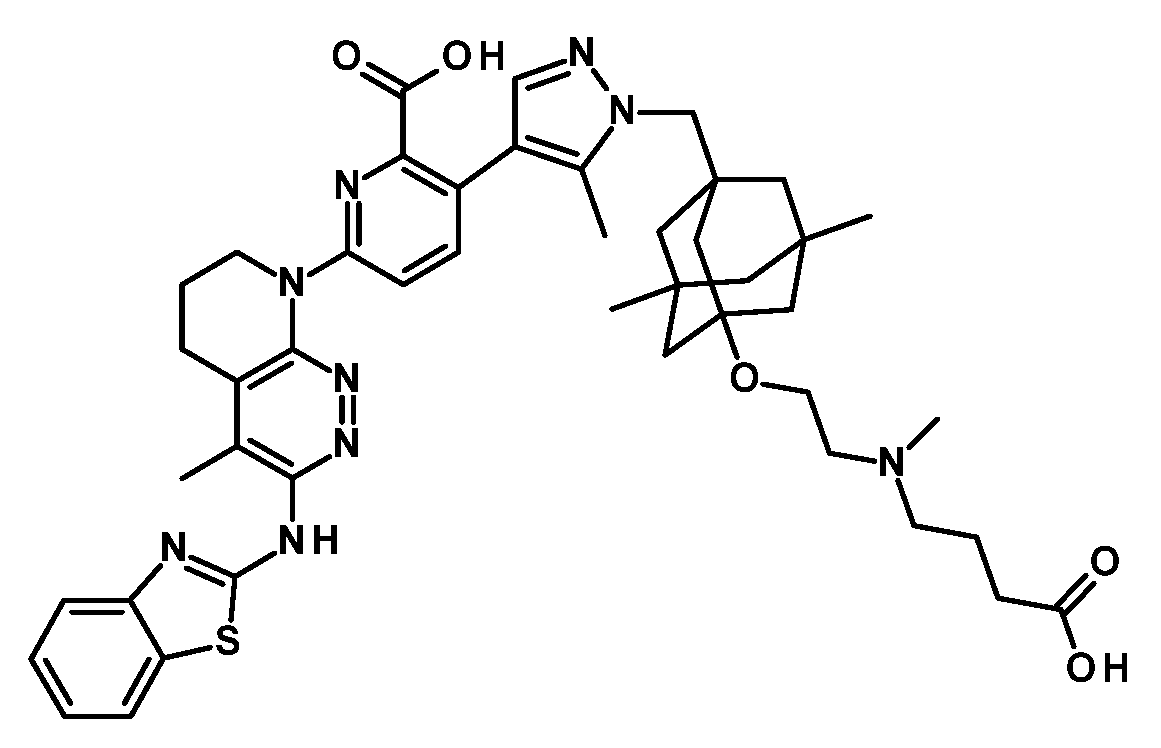
제조예 16 및 적절한 아민으로서의 메틸 4-(메틸아미노)부타노에이트, 염화수소 (1:1)로부터 출발하는 아민 치환 및 가수분해 일반적 절차 III을 사용하여, 목적 생성물을 수득하였다. HRMS-ESI (m/z): [M+H]+ C45H56N9O5S에 대한 계산치: 834.4125, 실측치: 834.4115.Using General Procedure III for Amine Substitution and Hydrolysis starting from Methyl 4-(methylamino)butanoate as Preparation 16 and appropriate amine, hydrogen chloride (1:1), the desired product was obtained. HRMS-ESI (m/z): [M+H] + calcd for C 45 H 56 N 9 O 5 S: 834.4125, found: 834.4115.
P58의 제조: 6-[3-(1,3-벤조티아졸-2-일아미노)-4-메틸-6,7-디히드로-5H-피리도[2,3-c]피리다진-8-일]-3-[1-[[3-[3-[3-카르복시프로필(메틸)아미노]프로필]-5,7-디메틸-1-아다만틸]메틸]-5-메틸-피라졸-4-일]피리딘-2-카르복실산Preparation of P58: 6-[3-(1,3-benzothiazol-2-ylamino)-4-methyl-6,7-dihydro-5H-pyrido[2,3-c]pyridazin-8-yl]-3-[1-[[3-[3-[3-carboxypropyl(methyl)amino]propyl]-5,7-dimethyl-1-adamantyl]methyl]-5-methyl-pyrazol-4-yl]pyridine-2-carboxylic acid

제조예 13 및 적절한 아민으로서의 메틸 4-(메틸아미노)부타노에이트, 염화수소 (1:1)로부터 출발하는 아민 치환 및 가수분해 일반적 절차 III을 사용하여, 목적 생성물을 수득하였다. HRMS-ESI (m/z): [M+H]+ C46H58N9O4S에 대한 계산치: 832.4332, 실측치: 832.4324.Using General Procedure III for Amine Substitution and Hydrolysis starting from Methyl 4-(methylamino)butanoate as Preparation 13 and appropriate amine, hydrogen chloride (1:1), the desired product was obtained. HRMS-ESI (m/z): [M+H] + Calcd for C 46 H 58 N 9 O 4 S: 832.4332, Found: 832.4324.
P59의 제조: 2-[3-(1,3-벤조티아졸-2-일아미노)-4-메틸-6,7-디히드로-5H-피리도[2,3-c]피리다진-8-일]-5-[3-[2-플루오로-4-[3-(3-히드록시프로필아미노)프로프-1-이닐]페녹시]프로필]티아졸-4-카르복실산Preparation of P59: 2-[3-(1,3-benzothiazol-2-ylamino)-4-methyl-6,7-dihydro-5H-pyrido[2,3-c]pyridazin-8-yl]-5-[3-[2-fluoro-4-[3-(3-hydroxypropylamino)prop-1-ynyl]phenoxy]propyl]thiazole-4-carboxylic acid

단계 A: 3-[tert-부틸(디메틸)실릴]옥시-N-프로프-2-이닐-프로판-1-아민Step A: 3-[tert-butyl(dimethyl)silyl]oxy-N-prop-2-ynyl-propan-1-amine
아세토니트릴 (15 mL) 중 0.70 mL (3.0 mmol)의 3-브로모프로폭시-tert-부틸-디메틸-실란, 1.9 mL (10 당량)의 프로파르길 아민 및 1.6 mL (3 당량)의 DIPEA의 혼합물을 추가 전환이 관찰되지 않을 때까지 50℃에서 교반하였다. 반응 혼합물을 농축시키고, DCM으로 희석하고, 포화 NaHCO3 및 염수로 추출하였다. 합한 유기 층을 건조시키고, 농축시켜 목적 생성물을 정량적 수율로 수득하였다. 1H NMR (500 MHz, dmso-d6) δ ppm 3.62 (t, 2H), 3.27 (d, 2H), 3.02 (t, 1H), 2.59 (t, 2H), 2.19 (brs, 1H), 1.57 (m, 2H), 0.86 (s, 9H), 0.02 (s, 6H); 13C NMR (500 MHz, dmso-d6) δ ppm 73.9, 61.5, 45.2, 37.9, 32.7, 26.3, -4.8; HRMS (EI) (m/z): [M-CH3]+ C11H22NOSi에 대한 계산치: 212.1471, 실측치: 212.1467.A mixture of 0.70 mL (3.0 mmol) of 3-bromopropoxy-tert-butyl-dimethyl-silane, 1.9 mL (10 equiv) of propargyl amine and 1.6 mL (3 equiv) of DIPEA in acetonitrile (15 mL) was stirred at 50 °C until no further conversion was observed. The reaction mixture was concentrated, diluted with DCM and extracted with saturated NaHCO 3 and brine. The combined organic layers were dried and concentrated to give the desired product in quantitative yield. 1 H NMR (500 MHz, dmso-d6) δ ppm 3.62 (t, 2H), 3.27 (d, 2H), 3.02 (t, 1H), 2.59 (t, 2H), 2.19 (brs, 1H), 1.57 (m, 2H), 0.86 (s, 9H), 0.02 (s, 6H); 13 C NMR (500 MHz, dmso-d6) δ ppm 73.9, 61.5, 45.2, 37.9, 32.7, 26.3, -4.8; HRMS (EI) (m/z): [M-CH3]+ C 11 H 22 NOSi calcd: 212.1471, found: 212.1467.
단계 B: 에틸 5-[3-[4-[3-[3-[tert-부틸(디메틸)실릴]옥시프로필아미노]프로프-1-이닐]-2-플루오로-페녹시]프로필]-2-(3-클로로-4-메틸-6,7-디히드로-5H-피리도[2,3-c]피리다진-8-일)티아졸-4-카르복실레이트Step B: Ethyl 5-[3-[4-[3-[3-[tert-butyl(dimethyl)silyl]oxypropylamino]prop-1-ynyl]-2-fluoro-phenoxy]propyl]-2-(3-chloro-4-methyl-6,7-dihydro-5H-pyrido[2,3-c]pyridazin-8-yl)thiazole-4-carboxylate
1.0 g (1.64 mmol)의 제조예 15의 생성물 및 적절한 아세틸렌으로서의 737 mg (2 당량)의 단계 A로부터의 생성물로부터 출발하는 소노가시라 일반적 절차를 사용하여, 목적 생성물 1.16 g (96%)을 수득하였다. 1H NMR (500 MHz, dmso-d6) δ ppm 45.2 (t, 2H), 7.24 (dd, 1H), 7.17 (dd, 1H), 7.14 (t, 1H), 4.27 (br., 2H), 4.25 (q, 2H), 4.12 (t, 2H), 3.65 (t, 2H), 3.6 (s, 2H), 3.25 (t, 2H), 2.89 (t, 2H), 2.32 (s, 3H), 2.11 (m, 2H), 2.04 (m, 2H), 1.63 (m, 2H), 1.28 (t, 3H), 0.84 (s, 9H), 0.02 (s, 6H); 13C NMR (500 MHz, dmso-d6) δ ppm 128.8, 119.1, 115.4, 68.3, 61.3, 60.7, 46.3, 45.2, 38.4, 32.4, 30.8, 26.3, 24.2, 23.1, 19.7, 15.7, 14.6, -4.8; HRMS-ESI (m/z): [M+H]+ C35H48ClFN5O4SSi에 대한 계산치: 716.2869, 실측치: 716.2868.Using the Sonogashira general procedure starting from 1.0 g (1.64 mmol) of the product of
단계 C: 에틸 2-[3-(1,3-벤조티아졸-2-일아미노)-4-메틸-6,7-디히드로-5H-피리도[2,3-c]피리다진-8-일]-5-[3-[4-[3-[3-[tert-부틸(디메틸)실릴]옥시프로필아미노]프로프-1-이닐]-2-플루오로-페녹시]프로필]티아졸-4-카르복실레이트Step C: Ethyl 2-[3-(1,3-benzothiazol-2-ylamino)-4-methyl-6,7-dihydro-5H-pyrido[2,3-c]pyridazin-8-yl]-5-[3-[4-[3-[3-[tert-butyl(dimethyl)silyl]oxypropylamino]prop-1-ynyl]-2-fluoro-phenoxy]propyl]thiazole-4-carboxylate
1.16 g (1.57 mmol)의 단계 B로부터의 생성물 및 730 mg (2 당량)의 1,3-벤조티아졸-2-아민으로부터 출발하는 부흐발트 일반적 절차 I을 사용하여, 목적 생성물 598 mg (45%)을 수득하였다. 1H NMR (500 MHz, dmso-d6) δ ppm 7.87 (d, 1H), 7.49 (d, 1H), 7.37 (td, 1H), 7.25 (dd, 1H), 7.19 (t, 1H), 7.17 (t, 1H), 7.17 (m, 1H), 4.26 (br., 2H), 4.25 (q, 2H), 4.14 (t, 2H), 3.63 (t, 2H), 3.57 (s, 2H), 3.27 (t, 2H), 2.87 (t, 2H), 2.69 (t, 2H), 2.34 (s, 3H), 2.13 (m, 2H), 2.04 (m, 2H), 1.61 (m, 2H), 1.28 (t, 3H), 0.84 (s, 9H), 0.02 (s, 6H); 13C NMR (500 MHz, dmso-d6) δ ppm 128.9, 126.5, 122.5, 122.3, 119.1, 116.3, 115.5, 68.4, 61.3, 60.6, 46.3, 45.2, 38.4, 32.4, 31.1, 26.3, 23.9, 23.2, 20.3, 14.6, 12.9, -4.9; HRMS-ESI (m/z): [M+H]+ C42H53FN7O4S2Si에 대한 계산치: 830.3354, 실측치: 830.3347.Using the Buchwald general procedure I starting from 1.16 g (1.57 mmol) of product from step B and 730 mg (2 eq.) of 1,3-benzothiazol-2-amine, 598 mg (45%) of the desired product were obtained. 1H NMR (500 MHz, dmso-d6) δ ppm 7.87 (d, 1H), 7.49 (d, 1H), 7.37 (td, 1H), 7.25 (dd, 1H), 7.19 (t, 1H), 7.17 (t, 1H), 7.17 (m, 1H), 4.26 (br., 2H), 4.25 (q, 2H), 4.14 (t, 2H), 3.63 (t, 2H), 3.57 (s, 2H), 3.27 (t, 2H), 2.87 (t, 2H), 2.69 (t, 2H), 2.34 (s, 3H), 2.13 (m, 2H), 2.04 (m, 2H), 1.61 (m, 2H), 1.28 (t, 3H), 0.84 (s, 9H), 0.02 (s, 6H); 13 C NMR (500 MHz, dmso-d6) δ ppm 128.9, 126.5, 122.5, 122.3, 119.1, 116.3, 115.5, 68.4, 61.3, 60.6, 46.3, 45.2, 38.4, 32.4, 31.1, 26.3, 23.9, 23.2, 20.3, 14.6, 12.9, -4.9; HRMS-ESI (m/z): [M+H] + C 42 H 53 FN 7 O 4 S 2 Si calcd: 830.3354, found: 830.3347.
단계 D: 2-[3-(1,3-벤조티아졸-2-일아미노)-4-메틸-6,7-디히드로-5H-피리도[2,3-c]피리다진-8-일]-5-[3-[2-플루오로-4-[3-(3-히드록시프로필아미노)프로프-1-이닐]페녹시]프로필]티아졸-4-카르복실산Step D: 2-[3-(1,3-benzothiazol-2-ylamino)-4-methyl-6,7-dihydro-5H-pyrido[2,3-c]pyridazin-8-yl]-5-[3-[2-fluoro-4-[3-(3-hydroxypropylamino)prop-1-ynyl]phenoxy]propyl]thiazole-4-carboxylic acid
7 mL의 THF / 물 (1:1) 중 590 mg (0.71 mmol)의 단계 C로부터의 생성물 및 298 mg의 LiOHxH2O (10 당량)의 혼합물을 추가 전환이 관찰되지 않을 때까지 60℃에서 교반하였다. 반응 혼합물을 0℃에서 0.71 mL (12 당량)의 진한 염화수소로 처리하고 (pH = 2-3), 추가 전환이 관찰되지 않을 때까지 교반하였다. 반응 혼합물을 농축시켜 THF를 제거하고, 동결건조시킨 후, 고체를 MeOH 중 6N NH3 용액 중에 용해시키고, 역상 크로마토그래피 (용리액으로서 25 mM NH4HCO3 및 MeCN 사용)에 의해 정제하여 목적 생성물 100 mg (21%)을 수득하였다. HRMS-ESI (m/z): [M+H]+ C34H35FN7O4S2에 대한 계산치: 688.2176, 실측치: 688.2179.A mixture of 590 mg (0.71 mmol) of the product from Step C and 298 mg of LiOHxH 2 O (10 equiv) in 7 mL of THF/water (1:1) was stirred at 60 °C until no further conversion was observed. The reaction mixture was treated with 0.71 mL (12 equiv) of concentrated hydrogen chloride (pH = 2-3) at 0 °C and stirred until no further conversion was observed. The reaction mixture was concentrated to remove THF, lyophilized, and the solid was dissolved in 6 N NH 3 solution in MeOH and purified by reverse phase chromatography (using 25 mM NH 4 HCO 3 and MeCN as eluent) to afford 100 mg (21%) of the desired product. HRMS-ESI (m/z): [M+H] + C 34 H 35 FN 7 O 4 S 2 Calculated: 688.2176, Found: 688.2179.
P60의 제조: 6-[3-(1,3-벤조티아졸-2-일아미노)-4-메틸-6,7-디히드로-5H-피리도[2,3-c]피리다진-8-일]-3-[1-[[3-[2-[[(3S)-3,4-디히드록시부틸]아미노]에톡시]-1-아다만틸]메틸]-5-메틸-피라졸-4-일]피리딘-2-카르복실산Preparation of P60: 6-[3-(1,3-benzothiazol-2-ylamino)-4-methyl-6,7-dihydro-5H-pyrido[2,3-c]pyridazin-8-yl]-3-[1-[[3-[2-[[(3S)-3,4-dihydroxybutyl]amino]ethoxy]-1-adamantyl]methyl]-5-methyl-pyrazol-4-yl]pyridine-2-carboxylic acid

아세토니트릴 (30 ml/mmol) 중 제조예 18로부터의 생성물 (0.066 mmol)에 2-[(4S)-2,2-디메틸-1,3-디옥솔란-4-일]에탄아민, 염화수소 (1:1) (3 당량)를 첨가하고, 반응 혼합물을 60℃에서 48시간 동안 교반하였다. KOH 용액 (5 당량)의 첨가 후, 반응 혼합물을 60℃에서 1시간 동안 교반하였다. HCl 용액 (10 당량)을 첨가한 후, 반응 혼합물을 60℃에서 1시간 동안 교반하였다. 생성물을 정제용 HPLC 크로마토그래피 (용리액으로서 아세토니트릴 및 5mM 수성 NH4HCO3 용액 사용)에 의해 정제하여 목적 생성물을 수득하였다. HRMS-ESI (m/z): [M+H]+ C42H52N9O5S에 대한 계산치: 794.3812, 실측치: 794.3807.To the product from Preparation 18 (0.066 mmol) in acetonitrile (30 ml/mmol) was added 2-[(4S)-2,2-dimethyl-1,3-dioxolan-4-yl]ethanamine, hydrogen chloride (1:1) (3 equiv.), and the reaction mixture was stirred at 60 °C for 48 h. After addition of KOH solution (5 equiv.), the reaction mixture was stirred at 60 °C for 1 h. After addition of HCl solution (10 equiv.), the reaction mixture was stirred at 60 °C for 1 h. The product was purified by preparative HPLC chromatography (using acetonitrile and 5 mM aqueous NH 4 HCO 3 solution as eluent) to give the desired product. HRMS-ESI (m/z): [M+H] + C 42 H 52 N 9 O 5 S calcd: 794.3812, found: 794.3807.
P61의 제조: 6-[3-(1,3-벤조티아졸-2-일아미노)-4-메틸-6,7-디히드로-5H-피리도[2,3-c]피리다진-8-일]-3-[5-메틸-1-[[3-(2-피롤리딘-1-일에톡시)-1-아다만틸]메틸]피라졸-4-일]피리딘-2-카르복실산Preparation of P61: 6-[3-(1,3-benzothiazol-2-ylamino)-4-methyl-6,7-dihydro-5H-pyrido[2,3-c]pyridazin-8-yl]-3-[5-methyl-1-[[3-(2-pyrrolidin-1-ylethoxy)-1-adamantyl]methyl]pyrazol-4-yl]pyridine-2-carboxylic acid

제조예 18 및 적절한 아민으로서의 피롤리딘아민으로부터 출발하는 아민 치환 및 가수분해 일반적 절차 I을 사용하여, 목적 생성물을 수득하였다. HRMS-ESI (m/z): [M+H]+ C42H50N9O3S에 대한 계산치: 760.3757, 실측치: 760.3753.Using the general procedure I for amine substitution and hydrolysis starting from pyrrolidineamine as the appropriate amine and Preparation Example 18, the desired product was obtained. HRMS-ESI (m/z): [M+H] + calcd for C 42 H 50 N 9 O 3 S: 760.3757, found: 760.3753.
P62의 제조: 6-[3-(1,3-벤조티아졸-2-일아미노)-4-메틸-6,7-디히드로-5H-피리도[2,3-c]피리다진-8-일]-3-[1-[[3-[2-[3-히드록시프로필(메틸)아미노]에톡시]-5,7-디메틸-1-아다만틸]메틸]-5-메틸-피라졸-4-일]피리딘-2-카르복실산Preparation of P62: 6-[3-(1,3-benzothiazol-2-ylamino)-4-methyl-6,7-dihydro-5H-pyrido[2,3-c]pyridazin-8-yl]-3-[1-[[3-[2-[3-hydroxypropyl(methyl)amino]ethoxy]-5,7-dimethyl-1-adamantyl]methyl]-5-methyl-pyrazol-4-yl]pyridine-2-carboxylic acid

제조예 16 및 적절한 아민으로서의 3-(메틸아미노)프로판-1-올로부터 출발하는 아민 치환 및 가수분해 일반적 절차 I을 사용하여, 목적 생성물을 수득하였다. HRMS-ESI (m/z): [M+2H]2+ C44H56N9O4S에 대한 계산치: 403.7127, 실측치: 403.7126.Using the general procedure I for amine substitution and hydrolysis starting from 3-(methylamino)propan-1-ol as the appropriate amine and Preparation 16, the desired product was obtained. HRMS-ESI (m/z): [M+2H]2+ Calcd for C 44 H 56 N 9 O 4 S: 403.7127, Found: 403.7126.
P63의 제조: 3-[1-[[3,5-디메틸-7-(2-피롤리딘-1-일에톡시)-1-아다만틸]메틸]-5-메틸-피라졸-4-일]-6-[3-[(5-플루오로-1,3-벤조티아졸-2-일)아미노]-4-메틸-6,7-디히드로-5H-피리도[2,3-c]피리다진-8-일]피리딘-2-카르복실산Preparation of P63: 3-[1-[[3,5-dimethyl-7-(2-pyrrolidin-1-ylethoxy)-1-adamantyl]methyl]-5-methyl-pyrazol-4-yl]-6-[3-[(5-fluoro-1,3-benzothiazol-2-yl)amino]-4-methyl-6,7-dihydro-5H-pyrido[2,3-c]pyridazin-8-yl]pyridine-2-carboxylic acid
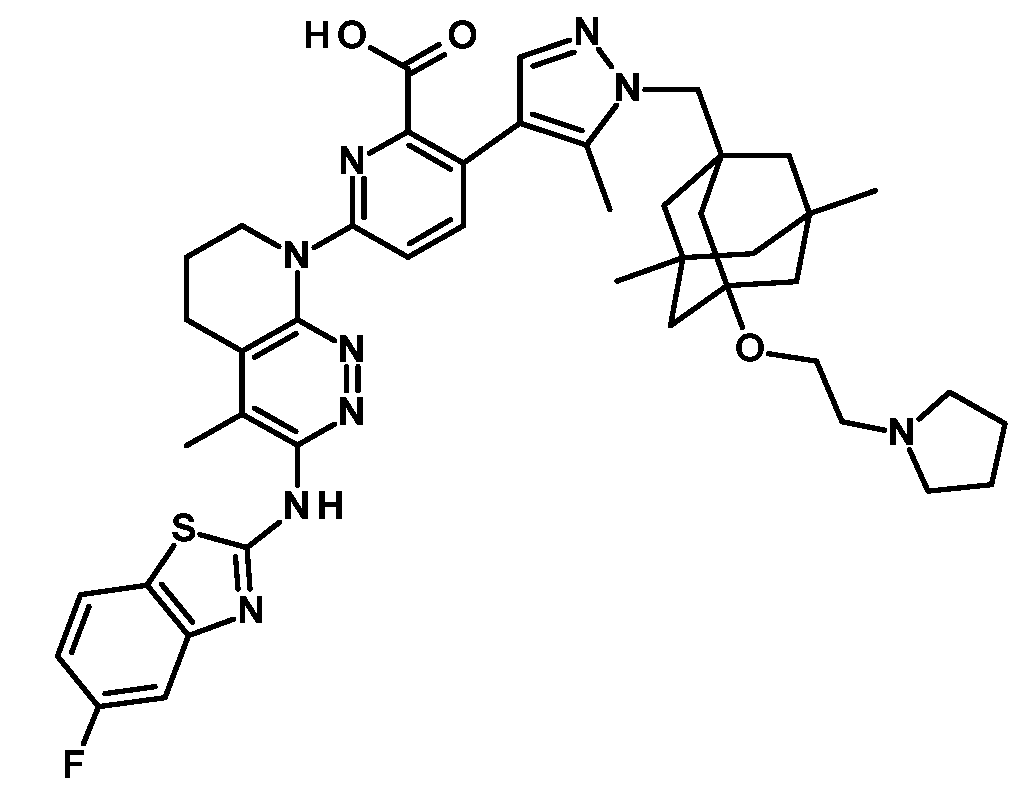
단계 A: (4-메톡시페닐)메틸 6-(3-클로로-4-메틸-6,7-디히드로-5H-피리도[2,3-c]피리다진-8-일)-3-[1-[[3,5-디메틸-7-[2-(p-톨릴술포닐옥시)에톡시]-1-아다만틸]메틸]-5-메틸-피라졸-4-일]피리딘-2-카르복실레이트Step A: (4-methoxyphenyl)methyl 6-(3-chloro-4-methyl-6,7-dihydro-5H-pyrido[2,3-c]pyridazin-8-yl)-3-[1-[[3,5-dimethyl-7-[2-(p-tolylsulfonyloxy)ethoxy]-1-adamantyl]methyl]-5-methyl-pyrazol-4-yl]pyridine-2-carboxylate
2 mL의 디클로로메탄 중 260 mg (0.35 mmol)의 제조예 16, 단계 C 생성물에 0.5 mL (10 당량)의 N,N-디에틸에탄아민 및 457 mg (4 당량)의 p-톨릴술포닐 4-메틸벤젠술포네이트를 첨가한 다음, 혼합물을 0.5시간 동안 교반하였다. 생성물을 칼럼 크로마토그래피 (실리카 겔, 용리액으로서 DCM 및 EtOAc 사용)에 의해 정제하여 목적 생성물 259 mg (85%)을 수득하였다. 1H NMR (500 MHz, dmso-d6) δ ppm 7.85 (d, 1H), 7.76 (d, 2H), 7.71 (d, 1H), 7.45 (d, 2H), 7.40 (s, 1H), 7.16 (d, 2H), 6.89 (d, 2H), 5.09 (s, 2H), 4.05 (t, 2H), 3.96 (t, 2H), 3.81 (s, 2H), 3.74 (s, 3H), 3.46 (t, 2H), 2.87 (t, 2H), 2.40 (s, 3H), 2.29 (s, 3H), 2.08 (s, 3H), 1.98 (qn, 2H), 1.29 (s, 2H), 1.13/1.11 (d+d, 4H), 1.11/1.06 (d+d, 4H), 0.98/0.90 (d+d, 2H), 0.81 (s, 6H); 13C NMR (500 MHz, dmso-d6) δ ppm 140.1, 137.7, 130.6, 130.2, 128.2, 120.5, 114.3, 71.4, 66.8, 58.9, 58.4, 55.6, 49.8, 46.5, 46.0, 45.8, 42.9, 30.0, 24.6, 21.6, 21.0, 15.5, 10.8; HRMS-ESI (m/z): [M+H]+ C48H56ClN6O7S에 대한 계산치: 895.3620, 실측치: 895.3619.To 260 mg (0.35 mmol) of the product of Preparation 16, Step C in 2 mL of dichloromethane were added 0.5 mL (10 eq) of N,N-diethylethanamine and 457 mg (4 eq) of p-tolylsulfonyl 4-methylbenzenesulfonate, and the mixture was stirred for 0.5 h. The product was purified by column chromatography (silica gel, using DCM and EtOAc as eluent) to give 259 mg (85%) of the desired product. 1H NMR (500 MHz, dmso-d6) δ ppm 7.85 (d, 1H), 7.76 (d, 2H), 7.71 (d, 1H), 7.45 (d, 2H), 7.40 (s, 1H), 7.16 (d, 2H), 6.89 (d, 2H), 5.09 (s, 2H), 4.05 (t, 2H), 3.96 (t, 2H), 3.81 (s, 2H), 3.74 (s, 3H), 3.46 (t, 2H), 2.87 (t, 2H), 2.40 (s, 3H), 2.29 (s, 3H), 2.08 (s, 3H), 1.98 (qn, 2H), 1.29 (s, 2H), 1.13/1.11 (d+d, 4H), 1.11/1.06 (d+d, 4H), 0.98/0.90 (d+d, 2H), 0.81 (s, 6H); 13 C NMR (500 MHz, dmso-d6) δ ppm 140.1, 137.7, 130.6, 130.2, 128.2, 120.5, 114.3, 71.4, 66.8, 58.9, 58.4, 55.6, 49.8, 46.5, 46.0, 45.8, 42.9, 30.0, 24.6, 21.6, 21.0, 15.5, 10.8; HRMS-ESI (m/z): [M+H] + calcd for C 48 H 56 ClN 6 O 7 S: 895.3620, found: 895.3619.
단계 B: (4-메톡시페닐)메틸 6-(3-클로로-4-메틸-6,7-디히드로-5H-피리도[2,3-c]피리다진-8-일)-3-[1-[[3,5-디메틸-7-(2-피롤리딘-1-일에톡시)-1-아다만틸]메틸]-5-메틸-피라졸-4-일]피리딘-2-카르복실레이트Step B: (4-methoxyphenyl)methyl 6-(3-chloro-4-methyl-6,7-dihydro-5H-pyrido[2,3-c]pyridazin-8-yl)-3-[1-[[3,5-dimethyl-7-(2-pyrrolidin-1-ylethoxy)-1-adamantyl]methyl]-5-methyl-pyrazol-4-yl]pyridine-2-carboxylate
3 mL 아세토니트릴 중 259 mg (0.29 mmol)의 단계 A로부터의 생성물에 피롤리딘 (3 당량)을 첨가하고, 반응 혼합물을 55℃에서 18시간 동안 교반하였다. 생성물을 칼럼 크로마토그래피 (실리카 겔, 용리액으로서 DCM 및 MeOH 사용)에 의해 정제하여 목적 생성물 221 mg (98%)을 수득하였다. 1H NMR (500 MHz, dmso-d6) δ ppm 7.85 (d, 1H), 7.70 (d, 1H), 7.40 (s, 1H), 7.18 (m, 2H), 6.91 (m, 2H), 5.10 (s, 2H), 3.96 (m, 2H), 3.86 (s, 2H), 3.75 (s, 3H), 3.60-2.90 (brs, 6H), 3.59 (brt, 2H), 2.87 (t, 2H), 2.29 (s, 3H), 2.11 (s, 3H), 2.10-1.70 (brs, 4H), 1.98 (m, 2H), 1.48-0.94 (m, 12H), 0.86 (s, 6H); 13C NMR (500 MHz, dmso-d6) δ ppm 140.1, 137.7, 130.2, 120.5, 114.3, 66.8, 58.9, 56.9, 55.6, 46.0, 30.0, 24.6, 21.0, 15.5, 10.9; HRMS-ESI (m/z): [M+H]+ C45H57ClN7O4에 대한 계산치: 794.4161, 실측치: 794.4160.To 259 mg (0.29 mmol) of the product from Step A in 3 mL acetonitrile was added pyrrolidine (3 eq.), and the reaction mixture was stirred at 55 °C for 18 h. The product was purified by column chromatography (silica gel, using DCM and MeOH as eluents) to give 221 mg (98%) of the desired product. 1H NMR (500 MHz, dmso-d6) δ ppm 7.85 (d, 1H), 7.70 (d, 1H), 7.40 (s, 1H), 7.18 (m, 2H), 6.91 (m, 2H), 5.10 (s, 2H), 3.96 (m, 2H), 3.86 (s, 2H), 3.75 (s, 3H), 3.60-2.90 (brs, 6H), 3.59 (brt, 2H), 2.87 (t, 2H), 2.29 (s, 3H), 2.11 (s, 3H), 2.10-1.70 (brs, 4H), 1.98 (m, 2H), 1.48-0.94 (m, 12H), 0.86 (s, 6H); 13C NMR (500 MHz, dmso-d6) δ ppm 140.1, 137.7, 130.2, 120.5, 114.3, 66.8, 58.9, 56.9, 55.6, 46.0, 30.0, 24.6, 21.0, 15.5, 10.9; HRMS-ESI (m/z): [M+H] + calcd for C 45 H 57 ClN 7 O 4 : 794.4161, found: 794.4160.
단계 C: 3-[1-[[3,5-디메틸-7-(2-피롤리딘-1-일에톡시)-1-아다만틸]메틸]-5-메틸-피라졸-4-일]-6-[3-[(5-플루오로-1,3-벤조티아졸-2-일)아미노]-4-메틸-6,7-디히드로-5H-피리도[2,3-c]피리다진-8-일]피리딘-2-카르복실산Step C: 3-[1-[[3,5-dimethyl-7-(2-pyrrolidin-1-ylethoxy)-1-adamantyl]methyl]-5-methyl-pyrazol-4-yl]-6-[3-[(5-fluoro-1,3-benzothiazol-2-yl)amino]-4-methyl-6,7-dihydro-5H-pyrido[2,3-c]pyridazin-8-yl]pyridine-2-carboxylic acid
2 mL의 부탄-2-올 중 0.22 g (0.28 mmol)의 단계 B로부터의 생성물, 93.5 mg (2 당량)의 5-플루오로-1,3-벤조티아졸-2-아민, 25 mg (0.1 당량)의 Pd2(dba)3, 32 mg (0.2 당량)의 XantPhos 및 0.14 mL (3 당량)의 DIPEA의 혼합물을 100℃에서 1시간 동안 마이크로웨이브 반응기에서 유지하였다. 생성물을 칼럼 크로마토그래피 (용리액으로서 DCM / MeOH 사용)에 의해 정제하여 커플링된 생성물을 수득하였으며, 이를 2 mL의 아세토니트릴 중 3 당량의 KOH로 50℃에서 18시간 동안 처리하였다. 가수분해된 생성물을 정제용 HPLC 크로마토그래피 (용리액으로서 아세토니트릴 및 5mM 수성 NH4HCO3 용액 사용)에 의해 정제하여 목적 생성물을 수득하였다. HRMS-ESI (m/z): [M+H]+ C44H53FN9O3S에 대한 계산치: 806.3976, 실측치: 806.3971.A mixture of 0.22 g (0.28 mmol) of the product from Step B, 93.5 mg (2 eq) of 5-fluoro-1,3-benzothiazol-2-amine, 25 mg (0.1 eq) of Pd 2 (dba) 3 , 32 mg (0.2 eq) of XantPhos and 0.14 mL (3 eq) of DIPEA in 2 mL of butan-2-ol was maintained in a microwave reactor at 100 °C for 1 h. The product was purified by column chromatography (using DCM/MeOH as eluent) to give the coupled product, which was treated with 3 eq. of KOH in 2 mL of acetonitrile at 50 °C for 18 h. The hydrolyzed product was purified by preparative HPLC chromatography (using acetonitrile and 5 mM aqueous NH 4 HCO 3 solution as eluent) to give the desired product. HRMS-ESI (m/z): [M+H] + C 44 H 53 FN 9 O 3 S, calcd: 806.3976, found: 806.3971.
P64의 제조: 3-[1-[[3,5-디메틸-7-(2-피롤리딘-1-일에톡시)-1-아다만틸]메틸]-5-메틸-피라졸-4-일]-6-[4-메틸-3-[(6-메틸-1,3-벤조티아졸-2-일)아미노]-6,7-디히드로-5H-피리도[2,3-c]피리다진-8-일]피리딘-2-카르복실산Preparation of P64: 3-[1-[[3,5-dimethyl-7-(2-pyrrolidin-1-ylethoxy)-1-adamantyl]methyl]-5-methyl-pyrazol-4-yl]-6-[4-methyl-3-[(6-methyl-1,3-benzothiazol-2-yl)amino]-6,7-dihydro-5H-pyrido[2,3-c]pyridazin-8-yl]pyridine-2-carboxylic acid

단계 A: (4-메톡시페닐)메틸 3-[1-[[3-(2-히드록시에톡시)-5,7-디메틸-1-아다만틸]메틸]-5-메틸-피라졸-4-일]-6-[4-메틸-3-[(6-메틸-1,3-벤조티아졸-2-일)아미노]-6,7-디히드로-5H-피리도[2,3-c]피리다진-8-일]피리딘-2-카르복실레이트Step A: (4-methoxyphenyl)methyl 3-[1-[[3-(2-hydroxyethoxy)-5,7-dimethyl-1-adamantyl]methyl]-5-methyl-pyrazol-4-yl]-6-[4-methyl-3-[(6-methyl-1,3-benzothiazol-2-yl)amino]-6,7-dihydro-5H-pyrido[2,3-c]pyridazin-8-yl]pyridine-2-carboxylate
2.5 mL의 시클로헥산올 중 250 mg (0.34 mmol)의 제조예 16, 단계 C 생성물, 112 mg (2 당량)의 6-메틸-1,3-벤조티아졸-2-아민, 31 mg (0.1 당량)의 Pd2(dba)3, 39 mg (0.2 당량)의 XantPhos 및 0.17 mL (3 당량)의 DIPEA의 혼합물을 130℃에서 2시간 동안 유지하였다. 생성물을 칼럼 크로마토그래피 (용리액으로서 DCM / MeOH 사용)에 의해 정제하여 목적 생성물 206 mg (71%)을 수득하였다. 1H NMR (300 MHz, dmso-d6) δ ppm 7.93 (d, 1H), 7.69 (d, 1H), 7.62 (brs, 1H), 7.45 (brs, 1H), 7.39 (s, 1H), 7.19 (m, 2H), 7.16 (brd, 1H), 6.91 (m, 2H), 5.10 (s, 2H), 4.45 (brs, 1H), 3.99 (m, 2H), 3.85 (s, 2H), 3.75 (s, 3H), 3.40 (t, 2H), 3.34 (t, 2H), 2.85 (t, 2H), 2.37 (s, 3H), 2.31 (s, 3H), 2.11 (s, 3H), 1.98 (m, 2H), 1.43-0.9 (m, 12H), 0.84 (s, 6H); 13C NMR (300 MHz, dmso-d6) δ ppm 140.0, 137.6, 130.2, 127.5, 121.7, 118.9, 114.3, 66.7, 62.1, 61.5, 59.0, 55.6, 45.4, 30.1, 24.2, 21.7, 21.4, 12.6, 10.9; HRMS-ESI (m/z): [M+H]+ C49H57N8O5S에 대한 계산치: 869.4173, 실측치: 869.4167.A mixture of 250 mg (0.34 mmol) of the product of Preparation 16, Step C, 112 mg (2 eq.) of 6-methyl-1,3-benzothiazol-2-amine, 31 mg (0.1 eq.) of Pd 2 (dba) 3 , 39 mg (0.2 eq.) of XantPhos and 0.17 mL (3 eq.) of DIPEA in 2.5 mL of cyclohexanol was maintained at 130 °C for 2 h. The product was purified by column chromatography (using DCM/MeOH as eluent) to give 206 mg (71%) of the desired product. 1H NMR (300 MHz, dmso-d6) δ ppm 7.93 (d, 1H), 7.69 (d, 1H), 7.62 (brs, 1H), 7.45 (brs, 1H), 7.39 (s, 1H), 7.19 (m, 2H), 7.16 (brd, 1H), 6.91 (m, 2H), 5.10 (s, 2H), 4.45 (brs, 1H), 3.99 (m, 2H), 3.85 (s, 2H), 3.75 (s, 3H), 3.40 (t, 2H), 3.34 (t, 2H), 2.85 (t, 2H), 2.37 (s, 3H), 2.31 (s, 3H), 2.11 (s, 3H), 1.98 (m, 2H), 1.43-0.9 (m, 12H), 0.84 (s, 6H); 13 C NMR (300 MHz, dmso-d6) δ ppm 140.0, 137.6, 130.2, 127.5, 121.7, 118.9, 114.3, 66.7, 62.1, 61.5, 59.0, 55.6, 45.4, 30.1, 24.2, 21.7, 21.4, 12.6, 10.9; HRMS-ESI (m/z): [M+H] + C 49 H 57 N 8 O 5 S calcd: 869.4173, found: 869.4167.
단계 B: (4-메톡시페닐)메틸 3-[1-[[3,5-디메틸-7-[2-(p-톨릴술포닐옥시)에톡시]-1-아다만틸]메틸]-5-메틸-피라졸-4-일]-6-[4-메틸-3-[(6-메틸-1,3-벤조티아졸-2-일)아미노]-6,7-디히드로-5H-피리도[2,3-c]피리다진-8-일]피리딘-2-카르복실레이트Step B: (4-methoxyphenyl)methyl 3-[1-[[3,5-dimethyl-7-[2-(p-tolylsulfonyloxy)ethoxy]-1-adamantyl]methyl]-5-methyl-pyrazol-4-yl]-6-[4-methyl-3-[(6-methyl-1,3-benzothiazol-2-yl)amino]-6,7-dihydro-5H-pyrido[2,3-c]pyridazin-8-yl]pyridine-2-carboxylate
2 mL의 디클로로메탄 중 203 mg (0.23 mmol)의 단계 A로부터의 생성물에 0.16 mL (5 당량)의 N,N-디에틸에탄아민 및 150 mg (2 당량)의 p-톨릴술포닐 4-메틸벤젠술포네이트를 첨가한 다음, 혼합물을 18시간 동안 교반하였다. 생성물을 칼럼 크로마토그래피 (실리카 겔, 용리액으로서 DCM 및 EtOAc 사용)에 의해 정제하여 목적 생성물 84 mg (38%)을 수득하였다. 1H NMR (500 MHz, dmso-d6) δ ppm 10.74 (br., 1H), 7.94 (d, 1H), 7.76 (dm, 2H), 7.69 (d, 1H), 7.61 (br., 1H), 7.45 (dm, 2H), 7.44 (br., 1H), 7.40 (s, 1H), 7.18 (dm, 2H), 7.17 (brd., 1H), 6.90 (dm, 2H), 5.09 (s, 2H), 4.05 (t, 2H), 3.99 (t, 2H), 3.82 (s, 2H), 3.74 (s, 3H), 3.47 (t, 2H), 2.84 (t, 2H), 2.40 (s, 3H), 2.37 (brs., 3H), 2.31 (s, 3H), 2.10 (s, 3H), 1.98 (m, 2H), 1.35-0.87 (m, 12H), 0.81 (s, 6H); 13C NMR (500 MHz, dmso-d6) δ ppm 140.0, 137.7, 130.6, 130.1, 128.1, 127.5, 121.8, 118.9, 114.3, 71.5, 66.7, 58.9, 58.4, 55.6, 45.4, 30.0, 24.3, 21.6, 21.6, 21.4, 12.5, 10.9; HRMS-ESI (m/z): [M+H]+ C56H63N8O7S2에 대한 계산치: 1023.4261, 실측치: 1023.4265.To 203 mg (0.23 mmol) of the product from Step A in 2 mL of dichloromethane were added 0.16 mL (5 eq.) of N,N-diethylethanamine and 150 mg (2 eq.) of p-tolylsulfonyl 4-methylbenzenesulfonate, and the mixture was stirred for 18 h. The product was purified by column chromatography (silica gel, using DCM and EtOAc as eluent) to give 84 mg (38%) of the desired product. 1 H NMR (500 MHz, dmso-d6) δ ppm 10.74 (br., 1H), 7.94 (d, 1H), 7.76 (dm, 2H), 7.69 (d, 1H), 7.61 (br., 1H), 7.45 (dm, 2H), 7.44 (br., 1H), 7.40 (s, 1H), 7.18 (dm, 2H), 7.17 (brd., 1H), 6.90 (dm, 2H), 5.09 (s, 2H), 4.05 (t, 2H), 3.99 (t, 2H), 3.82 (s, 2H), 3.74 (s, 3H), 3.47 (t, 2H), 2.84 (t, 2H), 2.40 (s, 3H), 2.37 (brs., 3H), 2.31 (s, 3H), 2.10 (s, 3H), 1.98 (m, 2H), 1.35-0.87 (m, 12H), 0.81 (s, 6H); 13 C NMR (500 MHz, dmso-d6) δ ppm 140.0, 137.7, 130.6, 130.1, 128.1, 127.5, 121.8, 118.9, 114.3, 71.5, 66.7, 58.9, 58.4, 55.6, 45.4, 30.0, 24.3, 21.6, 21.6, 21.4, 12.5, 10.9; HRMS-ESI (m/z): [M+H] + calcd for C 56 H 63 N 8 O 7 S 2 : 1023.4261, found: 1023.4265.
단계 C: 3-[1-[[3,5-디메틸-7-(2-피롤리딘-1-일에톡시)-1-아다만틸]메틸]-5-메틸-피라졸-4-일]-6-[4-메틸-3-[(6-메틸-1,3-벤조티아졸-2-일)아미노]-6,7-디히드로-5H-피리도[2,3-c]피리다진-8-일]피리딘-2-카르복실산Step C: 3-[1-[[3,5-dimethyl-7-(2-pyrrolidin-1-ylethoxy)-1-adamantyl]methyl]-5-methyl-pyrazol-4-yl]-6-[4-methyl-3-[(6-methyl-1,3-benzothiazol-2-yl)amino]-6,7-dihydro-5H-pyrido[2,3-c]pyridazin-8-yl]pyridine-2-carboxylic acid
1 mL 아세토니트릴 중 84 mg (0.082 mmol)의 단계 B로부터의 생성물에 피롤리딘 (3 당량)을 첨가하고, 반응 혼합물을 55℃에서 18시간 동안 교반하였다. 5 당량의 KOH를 사용한 처리 후, 혼합물을 55℃에서 1시간 동안 교반하고, 생성물을 정제용 HPLC 크로마토그래피 (용리액으로서 아세토니트릴 및 5mM 수성 NH4HCO3 용액 사용)에 의해 정제하여 목적 생성물을 수득하였다. HRMS-ESI (m/z): [M+H]+ C45H56N9O3S에 대한 계산치: 802.4227, 실측치: 802.4227.To 84 mg (0.082 mmol) of the product from Step B in 1 mL acetonitrile was added pyrrolidine (3 eq.), and the reaction mixture was stirred at 55 °C for 18 h. After treatment with 5 eq. of KOH, the mixture was stirred at 55 °C for 1 h, and the product was purified by preparative HPLC chromatography (using acetonitrile and 5 mM aqueous NH 4 HCO 3 solution as eluent) to give the desired product. HRMS-ESI (m/z): [M+H] + calcd for C 45 H 56 N 9 O 3 S: 802.4227, found: 802.4227.
P65의 제조: 3-[1-[[3,5-디메틸-7-(2-피롤리딘-1-일에톡시)-1-아다만틸]메틸]-5-메틸-피라졸-4-일]-6-[3-[(6-플루오로-1,3-벤조티아졸-2-일)아미노]-4-메틸-6,7-디히드로-5H-피리도[2,3-c]피리다진-8-일]피리딘-2-카르복실산Preparation of P65: 3-[1-[[3,5-dimethyl-7-(2-pyrrolidin-1-ylethoxy)-1-adamantyl]methyl]-5-methyl-pyrazol-4-yl]-6-[3-[(6-fluoro-1,3-benzothiazol-2-yl)amino]-4-methyl-6,7-dihydro-5H-pyrido[2,3-c]pyridazin-8-yl]pyridine-2-carboxylic acid

단계 A: (4-메톡시페닐)메틸 6-[3-[(6-플루오로-1,3-벤조티아졸-2-일)아미노]-4-메틸-6,7-디히드로-5H-피리도[2,3-c]피리다진-8-일]-3-[1-[[3-(2-히드록시에톡시)-5,7-디메틸-1-아다만틸]메틸]-5-메틸-피라졸-4-일]피리딘-2-카르복실레이트Step A: (4-Methoxyphenyl)methyl 6-[3-[(6-fluoro-1,3-benzothiazol-2-yl)amino]-4-methyl-6,7-dihydro-5H-pyrido[2,3-c]pyridazin-8-yl]-3-[1-[[3-(2-hydroxyethoxy)-5,7-dimethyl-1-adamantyl]methyl]-5-methyl-pyrazol-4-yl]pyridine-2-carboxylate
2.5 mL의 시클로헥산올 중 250 mg (0.34 mmol)의 제조예 16, 단계 C 생성물, 114 mg (2 당량)의 6-플루오로-1,3-벤조티아졸-2-아민, 31 mg (0.1 당량)의 Pd2(dba)3, 39 mg (0.2 당량)의 XantPhos 및 0.17 mL (3 당량)의 DIPEA의 혼합물을 130℃에서 2시간 동안 유지하였다. 생성물을 칼럼 크로마토그래피 (용리액으로서 DCM/MeOH 사용)에 의해 정제하여 158 mg (55%)의 목적 생성물을 수득하였다. 1H NMR (500 MHz, dmso-d6) δ ppm 10.87 (brs, 1H), 7.94 (d, 1H), 7.77 (brd, 1H), 7.69 (d, 1H), 7.57 (brs, 1H), 7.39 (s, 1H), 7.20 (m, 1H), 7.19 (m, 2H), 6.91 (m, 2H), 5.10 (s, 2H), 4.45 (brs, 1H), 3.99 (m, 2H), 3.85 (s, 2H), 3.75 (s, 3H), 3.40 (t, 2H), 3.34 (t, 2H), 2.85 (t, 2H), 2.31 (s, 3H), 2.11 (s, 3H), 1.98 (m, 2H), 1.43-0.91 (m, 12H), 0.84 (s, 6H); 13C NMR (500 MHz, dmso-d6) δ ppm 140.0, 137.7, 130.2, 118.9, 114.3, 114.0, 108.4, 66.7, 62.1, 61.5, 59.0, 55.6, 45.4, 30.1, 24.3, 21.6, 12.5, 10.9; HRMS-ESI (m/z): [M+H]+ C48H54FN8O5S에 대한 계산치: 873.3922, 실측치: 873.3917.A mixture of 250 mg (0.34 mmol) of the product of Preparation 16, Step C, 114 mg (2 eq.) of 6-fluoro-1,3-benzothiazol-2-amine, 31 mg (0.1 eq.) of Pd 2 (dba) 3 , 39 mg (0.2 eq.) of XantPhos and 0.17 mL (3 eq.) of DIPEA in 2.5 mL of cyclohexanol was maintained at 130 °C for 2 h. The product was purified by column chromatography (using DCM/MeOH as eluent) to give 158 mg (55%) of the desired product. 1H NMR (500 MHz, dmso-d6) δ ppm 10.87 (brs, 1H), 7.94 (d, 1H), 7.77 (brd, 1H), 7.69 (d, 1H), 7.57 (brs, 1H), 7.39 (s, 1H), 7.20 (m, 1H), 7.19 (m, 2H), 6.91 (m, 2H), 5.10 (s, 2H), 4.45 (brs, 1H), 3.99 (m, 2H), 3.85 (s, 2H), 3.75 (s, 3H), 3.40 (t, 2H), 3.34 (t, 2H), 2.85 (t, 2H), 2.31 (s, 3H), 2.11 (s, 3H), 1.98 (m, 2H), 1.43-0.91 (m, 12H), 0.84 (s, 6H); 13 C NMR (500 MHz, dmso-d6) δ ppm 140.0, 137.7, 130.2, 118.9, 114.3, 114.0, 108.4, 66.7, 62.1, 61.5, 59.0, 55.6, 45.4, 30.1, 24.3, 21.6, 12.5, 10.9; HRMS-ESI (m/z): [M+H] + C 48 H 54 FN 8 O 5 S calcd: 873.3922, found: 873.3917.
단계 B: (4-메톡시페닐)메틸 3-[1-[[3,5-디메틸-7-[2-(p-톨릴술포닐옥시)에톡시]-1-아다만틸]메틸]-5-메틸-피라졸-4-일]-6-[3-[(6-플루오로-1,3-벤조티아졸-2-일)아미노]-4-메틸-6,7-디히드로-5H-피리도[2,3-c]피리다진-8-일]피리딘-2-카르복실레이트Step B: (4-Methoxyphenyl)methyl 3-[1-[[3,5-dimethyl-7-[2-(p-tolylsulfonyloxy)ethoxy]-1-adamantyl]methyl]-5-methyl-pyrazol-4-yl]-6-[3-[(6-fluoro-1,3-benzothiazol-2-yl)amino]-4-methyl-6,7-dihydro-5H-pyrido[2,3-c]pyridazin-8-yl]pyridine-2-carboxylate
2 mL의 디클로로메탄 중 158 mg (0.23 mmol)의 단계 A로부터의 생성물에 0.125 mL (5 당량)의 N,N-디에틸에탄아민 및 117 mg (2 당량)의 p-톨릴술포닐 4-메틸벤젠술포네이트를 첨가한 다음, 혼합물을 18시간 동안 교반하였다. 생성물을 칼럼 크로마토그래피 (실리카 겔, 용리액으로서 DCM 및 EtOAc 사용)에 의해 정제하여 목적 생성물 71 mg (41%)을 수득하였다. 1H NMR (500 MHz, dmso-d6) δ ppm 10.88 (brs, 1H), 7.94 (d, 1H), 7.77 (br., 1H), 7.76 (dm, 2H), 7.69 (d, 1H), 7.59 (br., 1H), 7.45 (dm, 2H), 7.40 (s, 1H), 7.21 (t, 1H), 7.17 (dm, 2H), 6.90 (dm, 2H), 5.09 (s, 2H), 4.05 (t, 2H), 4.00 (m, 2H), 3.82 (s, 2H), 3.74 (s, 3H), 3.47 (t, 2H), 2.85 (t, 2H), 2.40 (s, 3H), 2.32 (s, 3H), 2.10 (s, 3H), 1.98 (m, 2H), 1.35-0.87 (m, 12H), 0.81 (s, 6H); 13C NMR (500 MHz, dmso-d6) δ ppm 140.0, 137.7, 130.6, 130.1, 128.1, 118.9, 114.3, 114.0, 108.4, 71.5, 66.7, 58.9, 58.4, 55.6, 45.4, 30.0, 24.3, 21.6, 21.6, 12.5, 10.9; HRMS-ESI (m/z): [M+H]+ C55H6FN8O7S2에 대한 계산치: 1027.4010, 실측치: 1027.4003.To 158 mg (0.23 mmol) of the product from Step A in 2 mL of dichloromethane were added 0.125 mL (5 eq.) of N,N-diethylethanamine and 117 mg (2 eq.) of p-tolylsulfonyl 4-methylbenzenesulfonate, and the mixture was stirred for 18 h. The product was purified by column chromatography (silica gel, using DCM and EtOAc as eluent) to give 71 mg (41%) of the desired product. 1 H NMR (500 MHz, dmso-d6) δ ppm 10.88 (brs, 1H), 7.94 (d, 1H), 7.77 (br., 1H), 7.76 (dm, 2H), 7.69 (d, 1H), 7.59 (br., 1H), 7.45 (dm, 2H), 7.40 (s, 1H), 7.21 (t, 1H), 7.17 (dm, 2H), 6.90 (dm, 2H), 5.09 (s, 2H), 4.05 (t, 2H), 4.00 (m, 2H), 3.82 (s, 2H), 3.74 (s, 3H), 3.47 (t, 2H), 2.85 (t, 2H), 2.40 (s, 3H), 2.32 (s, 3H), 2.10 (s, 3H), 1.98 (m, 2H), 1.35-0.87 (m, 12H), 0.81 (s, 6H); 13 C NMR (500 MHz, dmso-d6) δ ppm 140.0, 137.7, 130.6, 130.1, 128.1, 118.9, 114.3, 114.0, 108.4, 71.5, 66.7, 58.9, 58.4, 55.6, 45.4, 30.0, 24.3, 21.6, 21.6, 12.5, 10.9; HRMS-ESI (m/z): [M+H] + C 55 H 6 FN 8 O 7 S 2 Calculated: 1027.4010, Found: 1027.4003.
단계 C: 3-[1-[[3,5-디메틸-7-(2-피롤리딘-1-일에톡시)-1-아다만틸]메틸]-5-메틸-피라졸-4-일]-6-[3-[(6-플루오로-1,3-벤조티아졸-2-일)아미노]-4-메틸-6,7-디히드로-5H-피리도[2,3-c]피리다진-8-일]피리딘-2-카르복실산Step C: 3-[1-[[3,5-dimethyl-7-(2-pyrrolidin-1-ylethoxy)-1-adamantyl]methyl]-5-methyl-pyrazol-4-yl]-6-[3-[(6-fluoro-1,3-benzothiazol-2-yl)amino]-4-methyl-6,7-dihydro-5H-pyrido[2,3-c]pyridazin-8-yl]pyridine-2-carboxylic acid
1 mL 아세토니트릴 중 71 mg (0.069 mmol)의 단계 B로부터의 생성물에 피롤리딘 (3 당량)을 첨가하고, 반응 혼합물을 55℃에서 18시간 동안 교반하였다. 5 당량의 KOH를 사용한 처리 후, 혼합물을 55℃에서 1시간 동안 교반하고, 생성물을 정제용 HPLC 크로마토그래피 (용리액으로서 아세토니트릴 및 5 mM 수성 NH4HCO3 용액 사용)에 의해 정제하여 목적 생성물을 수득하였다. HRMS-ESI (m/z): [M+H]+ C44H53FN9O3S에 대한 계산치: 806.3976, 실측치: 806.3969.To 71 mg (0.069 mmol) of the product from Step B in 1 mL acetonitrile was added pyrrolidine (3 eq.), and the reaction mixture was stirred at 55 °C for 18 h. After treatment with 5 eq. of KOH, the mixture was stirred at 55 °C for 1 h, and the product was purified by preparative HPLC chromatography (using acetonitrile and 5 mM aqueous NH 4 HCO 3 solution as eluent) to give the desired product. HRMS-ESI (m/z): [M+H] + C 44 H 53 FN 9 O 3 S calcd: 806.3976, found: 806.3969.
P66의 제조: 6-[3-(1,3-벤조티아졸-2-일아미노)-4-메틸-6,7-디히드로-5H-피리도[2,3-c]피리다진-8-일]-3-[1-[[3-[3-(디메틸아미노)프로필]-5,7-디메틸-1-아다만틸]메틸]-5-메틸-피라졸-4-일]피리딘-2-카르복실산Preparation of P66: 6-[3-(1,3-benzothiazol-2-ylamino)-4-methyl-6,7-dihydro-5H-pyrido[2,3-c]pyridazin-8-yl]-3-[1-[[3-[3-(dimethylamino)propyl]-5,7-dimethyl-1-adamantyl]methyl]-5-methyl-pyrazol-4-yl]pyridine-2-carboxylic acid
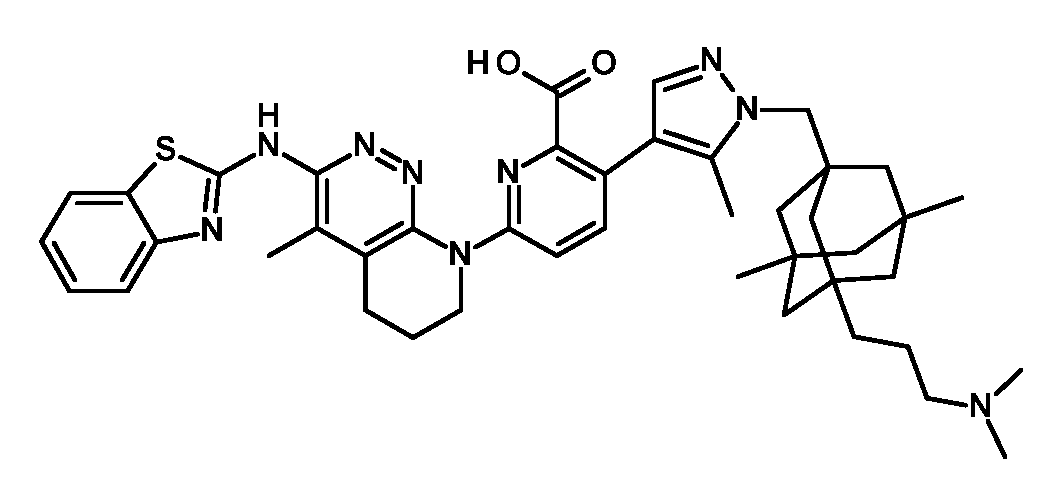
제조예 13 및 적절한 아민으로서의 N-메틸메탄아민으로부터 출발하는 아민 치환 및 가수분해 일반적 절차 I을 사용하여, 목적 생성물을 수득하였다. HRMS-ESI (m/z): [M+H]+ C43H54N9O2S에 대한 계산치: 760.4121, 실측치: 760.4114.Using the general procedure I for amine substitution and hydrolysis starting from N-methylmethanamine as the appropriate amine and Preparation Example 13, the desired product was obtained. HRMS-ESI (m/z): [M+H] + C 43 H 54 N 9 O 2 S, calcd: 760.4121, found: 760.4114.
P67의 제조: 6-[3-(1,3-벤조티아졸-2-일아미노)-4-메틸-6,7-디히드로-5H-피리도[2,3-c]피리다진-8-일]-3-[5-메틸-1-[[3-[2-(4-메틸피페라진-1-일)에톡시]-1-아다만틸]메틸]피라졸-4-일]피리딘-2-카르복실산Preparation of P67: 6-[3-(1,3-benzothiazol-2-ylamino)-4-methyl-6,7-dihydro-5H-pyrido[2,3-c]pyridazin-8-yl]-3-[5-methyl-1-[[3-[2-(4-methylpiperazin-1-yl)ethoxy]-1-adamantyl]methyl]pyrazol-4-yl]pyridine-2-carboxylic acid

제조예 18 및 적절한 아민으로서의 1-메틸피페라진으로부터 출발하는 아민 치환 및 가수분해 일반적 절차 I을 사용하여, 목적 생성물을 수득하였다. HRMS-ESI (m/z): [M+H]+ C43H53N10O3S에 대한 계산치: 789.4022, 실측치: 789.4014.Using the general procedure I for amine substitution and hydrolysis starting from 1-methylpiperazine as the appropriate amine and Preparation 18, the desired product was obtained. HRMS-ESI (m/z): [M+H] + C 43 H 53 N 10 O 3 S: 789.4022, found: 789.4014.
P68의 제조: 6-[3-(1,3-벤조티아졸-2-일아미노)-4-메틸-6,7-디히드로-5H-피리도[2,3-c]피리다진-8-일]-3-[1-[[3-[3-[3-히드록시프로필(메틸)아미노]프로필]-5,7-디메틸-1-아다만틸]메틸]-5-메틸-피라졸-4-일]피리딘-2-카르복실산Preparation of P68: 6-[3-(1,3-benzothiazol-2-ylamino)-4-methyl-6,7-dihydro-5H-pyrido[2,3-c]pyridazin-8-yl]-3-[1-[[3-[3-[3-hydroxypropyl(methyl)amino]propyl]-5,7-dimethyl-1-adamantyl]methyl]-5-methyl-pyrazol-4-yl]pyridine-2-carboxylic acid
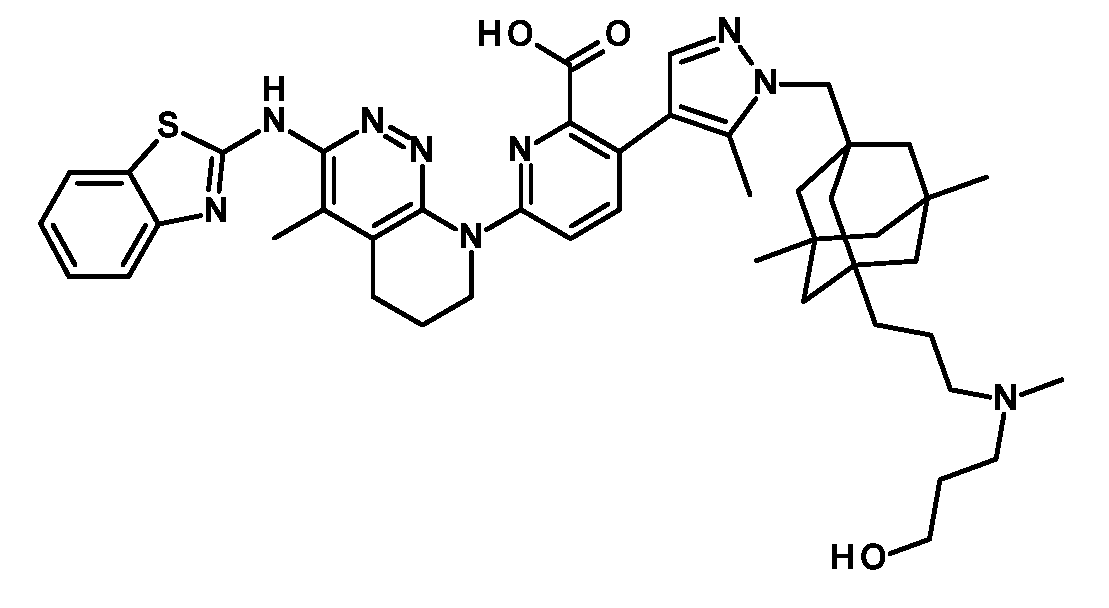
제조예 13 및 적절한 아민으로서의 3-(메틸아미노)프로판-1-올로부터 출발하는 아민 치환 및 가수분해 일반적 절차 I을 사용하여, 목적 생성물을 수득하였다. HRMS-ESI (m/z): [M+H]+ C45H58N9O3S에 대한 계산치: 804.4383, 실측치: 804.4375.Using the general procedure I for amine substitution and hydrolysis starting from 3-(methylamino)propan-1-ol as the appropriate amine and Preparation 13, the desired product was obtained. HRMS-ESI (m/z): [M+H] + C 45 H 58 N 9 O 3 S, calcd: 804.4383, found: 804.4375.
P69의 제조: 6-[3-(1,3-벤조티아졸-2-일아미노)-4-메틸-6,7-디히드로-5H-피리도[2,3-c]피리다진-8-일]-3-[1-[[3-[3-[[(3S)-3,4-디히드록시부틸]아미노]프로필]-5,7-디메틸-1-아다만틸]메틸]-5-메틸-피라졸-4-일]피리딘-2-카르복실산Preparation of P69: 6-[3-(1,3-benzothiazol-2-ylamino)-4-methyl-6,7-dihydro-5H-pyrido[2,3-c]pyridazin-8-yl]-3-[1-[[3-[3-[[(3S)-3,4-dihydroxybutyl]amino]propyl]-5,7-dimethyl-1-adamantyl]methyl]-5-methyl-pyrazol-4-yl]pyridine-2-carboxylic acid

2 mL의 아세토니트릴 중 제조예 13으로부터의 생성물 (0.074 mmol)에 2-[(4S)-2,2-디메틸-1,3-디옥솔란-4-일]에탄아민, 염화수소 (1:1) (4 당량)를 첨가하고, 반응 혼합물을 60℃에서 18시간 동안 교반하였다. KOH 용액 (5 당량)의 첨가 후, 반응 혼합물을 60℃에서 1시간 동안 교반하였다. HCl 용액 (10 당량)의 첨가 후, 반응 혼합물을 60℃에서 0.5시간 동안 교반하였다. 생성물을 정제용 HPLC 크로마토그래피 (용리액으로서 아세토니트릴 및 5mM 수성 NH4HCO3 용액 사용)에 의해 정제하여 목적 생성물을 수득하였다. HRMS-ESI (m/z): [M+H]+ C45H58N9O4S에 대한 계산치: 820.4332, 실측치: 820.4323.To the product from Preparation 13 (0.074 mmol) in 2 mL of acetonitrile was added 2-[(4S)-2,2-dimethyl-1,3-dioxolan-4-yl]ethanamine, hydrogen chloride (1:1) (4 equiv.), and the reaction mixture was stirred at 60 °C for 18 h. After addition of KOH solution (5 equiv.), the reaction mixture was stirred at 60 °C for 1 h. After addition of HCl solution (10 equiv.), the reaction mixture was stirred at 60 °C for 0.5 h. The product was purified by preparative HPLC chromatography (using acetonitrile and 5 mM aqueous NH 4 HCO 3 solution as eluent) to give the desired product. HRMS-ESI (m/z): [M+H] + C 45 H 58 N 9 O 4 S calcd: 820.4332, found: 820.4323.
P70의 제조: 6-[3-(1,3-벤조티아졸-2-일아미노)-4-메틸-6,7-디히드로-5H-피리도[2,3-c]피리다진-8-일]-3-[1-[[3-[2-[2-카르복시에틸(메틸)아미노]에톡시]-5,7-디메틸-1-아다만틸]메틸]-5-메틸-피라졸-4-일]피리딘-2-카르복실산Preparation of P70: 6-[3-(1,3-benzothiazol-2-ylamino)-4-methyl-6,7-dihydro-5H-pyrido[2,3-c]pyridazin-8-yl]-3-[1-[[3-[2-[2-carboxyethyl(methyl)amino]ethoxy]-5,7-dimethyl-1-adamantyl]methyl]-5-methyl-pyrazol-4-yl]pyridine-2-carboxylic acid

제조예 16 및 적절한 아민으로서의 에틸 3-(메틸아미노)프로파노에이트, 염화수소 (1:1)로부터 출발하는 아민 치환 및 가수분해 일반적 절차 III을 사용하여, 목적 생성물을 수득하였다. HRMS-ESI (m/z): [M+H]+ C44H54N9O5S에 대한 계산치: 820.3968, 실측치: 820.3962.Using General Procedure III for Amine Substitution and Hydrolysis starting from Example 16 and ethyl 3-(methylamino)propanoate as the appropriate amine, hydrogen chloride (1:1), the desired product was obtained. HRMS-ESI (m/z): [M+H] + calcd for C 44 H 54 N 9 O 5 S: 820.3968, found: 820.3962.
P71의 제조: 6-[3-(1,3-벤조티아졸-2-일아미노)-4-메틸-6,7-디히드로-5H-피리도[2,3-c]피리다진-8-일]-3-[1-[[3-[2-(2-카르복시에틸아미노)에톡시]-5,7-디메틸-1-아다만틸]메틸]-5-메틸-피라졸-4-일]피리딘-2-카르복실산Preparation of P71: 6-[3-(1,3-benzothiazol-2-ylamino)-4-methyl-6,7-dihydro-5H-pyrido[2,3-c]pyridazin-8-yl]-3-[1-[[3-[2-(2-carboxyethylamino)ethoxy]-5,7-dimethyl-1-adamantyl]methyl]-5-methyl-pyrazol-4-yl]pyridine-2-carboxylic acid

제조예 16 및 적절한 아민으로서의 메틸 3-아미노프로파노에이트로부터 출발하는 아민 치환 및 가수분해 일반적 절차 III을 사용하여, 목적 생성물을 수득하였다. HRMS-ESI (m/z): [M+H]+ C43H52N9O5S에 대한 계산치: 806.3812, 실측치: 806.3793.Using the General Procedure III for Amine Substitution and Hydrolysis starting from Example 16 and methyl 3-aminopropanoate as the appropriate amine, the desired product was obtained. HRMS-ESI (m/z): [M+H] + C 43 H 52 N 9 O 5 S: 806.3812, found: 806.3793.
P72의 제조: 6-[3-(1,3-벤조티아졸-2-일아미노)-4-메틸-6,7-디히드로-5H-피리도[2,3-c]피리다진-8-일]-3-[1-[[3-[3-(4-히드록시부틸아미노)프로필]-5,7-디메틸-1-아다만틸]메틸]-5-메틸-피라졸-4-일]피리딘-2-카르복실산Preparation of P72: 6-[3-(1,3-benzothiazol-2-ylamino)-4-methyl-6,7-dihydro-5H-pyrido[2,3-c]pyridazin-8-yl]-3-[1-[[3-[3-(4-hydroxybutylamino)propyl]-5,7-dimethyl-1-adamantyl]methyl]-5-methyl-pyrazol-4-yl]pyridine-2-carboxylic acid

제조예 13 및 적절한 아민으로서의 4-아미노부탄-1-올로부터 출발하는 아민 치환 및 가수분해 일반적 절차 I을 사용하여, 목적 생성물을 수득하였다. HRMS-ESI (m/z): [M+H]+ C45H58N9O3S에 대한 계산치: 804.4383, 실측치: 804.4383.Using the general procedure I for amine substitution and hydrolysis starting from 4-aminobutan-1-ol as the appropriate amine and Preparation 13, the desired product was obtained. HRMS-ESI (m/z): [M+H] + calcd for C 45 H 58 N 9 O 3 S: 804.4383, found: 804.4383.
P73의 제조: [6-[3-(1,3-벤조티아졸-2-일아미노)-4-메틸-6,7-디히드로-5H-피리도[2,3-c]피리다진-8-일]-3-[1-[[3,5-디메틸-7-(2-피롤리딘-1-일에톡시)-1-아다만틸]메틸]-5-메틸-피라졸-4-일]-2-피리딜]메탄올Preparation of P73: [6-[3-(1,3-benzothiazol-2-ylamino)-4-methyl-6,7-dihydro-5H-pyrido[2,3-c]pyridazin-8-yl]-3-[1-[[3,5-dimethyl-7-(2-pyrrolidin-1-ylethoxy)-1-adamantyl]methyl]-5-methyl-pyrazol-4-yl]-2-pyridyl]methanol

단계 A: (4-메톡시페닐)메틸 6-[3-(1,3-벤조티아졸-2-일아미노)-4-메틸-6,7-디히드로-5H-피리도[2,3-c]피리다진-8-일]-3-[1-[[3,5-디메틸-7-(2-피롤리딘-1-일에톡시)-1-아다만틸]메틸]-5-메틸-피라졸-4-일]피리딘-2-카르복실레이트Step A: (4-Methoxyphenyl)methyl 6-[3-(1,3-benzothiazol-2-ylamino)-4-methyl-6,7-dihydro-5H-pyrido[2,3-c]pyridazin-8-yl]-3-[1-[[3,5-dimethyl-7-(2-pyrrolidin-1-ylethoxy)-1-adamantyl]methyl]-5-methyl-pyrazol-4-yl]pyridine-2-carboxylate
제조예 16 및 적절한 아민으로서의 피롤리딘으로부터 출발하는 아민 치환 및 가수분해 일반적 절차 I (가수분해 단계 없음)을 사용하여, 목적 생성물 190 mg을 수득하였다. 1H NMR (500 MHz, dmso-d6) δ ppm 7.95 (d, 1H), 7.81 (d, 1H), 7.68 (d, 1H), 7.50 (brd., 1H), 7.39 (s, 1H), 7.35 (t, 1H), 7.19 (dm, 2H), 7.16 (t, 1H), 6.91 (dm, 2H), 5.10 (s, 2H), 3.99 (t, 2H), 3.85 (s, 2H), 3.74 (s, 3H), 3.41 (t, 2H), 2.85 (t, 2H), 2.46 (t, 2H), 2.41 (br., 4H), 2.32 (s, 3H), 2.11 (s, 3H), 1.98 (m, 2H), 1.62 (m, 4H), 1.40 (s, 2H), 1.28/1.22 (d+d, 4H), 1.19/1.13 (d+d, 4H), 1.03/0.94 (d+d, 2H), 0.84 (s, 6H); 13C NMR (500 MHz, dmso-d6) δ ppm 140.0, 137.7, 130.2, 126.4, 122.4, 122.1, 118.9, 114.3, 66.7, 59.5, 59.0, 56.6, 55.6, 54.5, 50.0, 46.9, 46.0, 45.4, 43.2, 30.1, 24.3, 23.6, 21.7, 12.6, 10.9; HRMS-ESI (m/z): [M+H]+ C52H62N9O4S에 대한 계산치: 908.4645, 실측치: 908.4633.Using the general procedure for amine substitution and hydrolysis starting from pyrrolidine as the appropriate amine (no hydrolysis step) as in Preparation Example 16, 190 mg of the desired product were obtained. 1H NMR (500 MHz, dmso-d6) δ ppm 7.95 (d, 1H), 7.81 (d, 1H), 7.68 (d, 1H), 7.50 (brd., 1H), 7.39 (s, 1H), 7.35 (t, 1H), 7.19 (dm, 2H), 7.16 (t, 1H), 6.91 (dm, 2H), 5.10 (s, 2H), 3.99 (t, 2H), 3.85 (s, 2H), 3.74 (s, 3H), 3.41 (t, 2H), 2.85 (t, 2H), 2.46 (t, 2H), 2.41 (br., 4H), 2.32 (s, 3H), 2.11 (s, 3H), 1.98 (m, 2H), 1.62 (m, 4H), 1.40 (s, 2H), 1.28/1.22 (d+d, 4H), 1.19/1.13 (d+d, 4H), 1.03/0.94 (d+d, 2H), 0.84 (s, 6H); 13 C NMR (500 MHz, dmso-d6) δ ppm 140.0, 137.7, 130.2, 126.4, 122.4, 122.1, 118.9, 114.3, 66.7, 59.5, 59.0, 56.6, 55.6, 54.5, 50.0, 46.9, 46.0, 45.4, 43.2, 30.1, 24.3, 23.6, 21.7, 12.6, 10.9; HRMS-ESI (m/z): [M+H] + calcd for C 52 H 62 N 9 O 4 S: 908.4645, found: 908.4633.
단계 B: [6-[3-(1,3-벤조티아졸-2-일아미노)-4-메틸-6,7-디히드로-5H-피리도[2,3-c]피리다진-8-일]-3-[1-[[3,5-디메틸-7-(2-피롤리딘-1-일에톡시)-1-아다만틸]메틸]-5-메틸-피라졸-4-일]-2-피리딜]메탄올Step B: [6-[3-(1,3-benzothiazol-2-ylamino)-4-methyl-6,7-dihydro-5H-pyrido[2,3-c]pyridazin-8-yl]-3-[1-[[3,5-dimethyl-7-(2-pyrrolidin-1-ylethoxy)-1-adamantyl]methyl]-5-methyl-pyrazol-4-yl]-2-pyridyl]methanol
4.2 mL의 테트라히드로푸란 중 190 mg (0.21 mmol)의 단계 A로부터의 생성물에 24 mg (3 당량)의 LiAlH4를 첨가하고, 혼합물을 40분 동안 교반하였다. MeOH 중 0.1% TFA로 켄칭하고, 여과한 후, 생성물을 정제용 HPLC (용리액으로서 MeCN 및 0.1% TFA 용액)에 의해 정제하여 목적 생성물 110 mg (67%)을 수득하였다. HRMS-ESI (m/z): [M+H]+ C44H56N9O2S에 대한 계산치: 774.4277, 실측치: 774.4269.To 190 mg (0.21 mmol) of the product from Step A in 4.2 mL of tetrahydrofuran was added 24 mg (3 eq.) of LiAlH 4 , and the mixture was stirred for 40 min. Quenched with 0.1% TFA in MeOH, filtered, and the product was purified by preparative HPLC (MeCN and 0.1% TFA solution as eluent) to afford 110 mg (67%) of the desired product. HRMS-ESI (m/z): [M+H] + calcd for C 44 H 56 N 9 O 2 S: 774.4277, found: 774.4269.
P74의 제조: [6-[3-(1,3-벤조티아졸-2-일아미노)-4-메틸-6,7-디히드로-5H-피리도[2,3-c]피리다진-8-일]-3-[1-[[3,5-디메틸-7-(2-피롤리딘-1-일에톡시)-1-아다만틸]메틸]-5-메틸-피라졸-4-일]-2-피리딜]-피롤리딘-1-일-메타논Preparation of P74: [6-[3-(1,3-benzothiazol-2-ylamino)-4-methyl-6,7-dihydro-5H-pyrido[2,3-c]pyridazin-8-yl]-3-[1-[[3,5-dimethyl-7-(2-pyrrolidin-1-ylethoxy)-1-adamantyl]methyl]-5-methyl-pyrazol-4-yl]-2-pyridyl]-pyrrolidin-1-yl-methanone
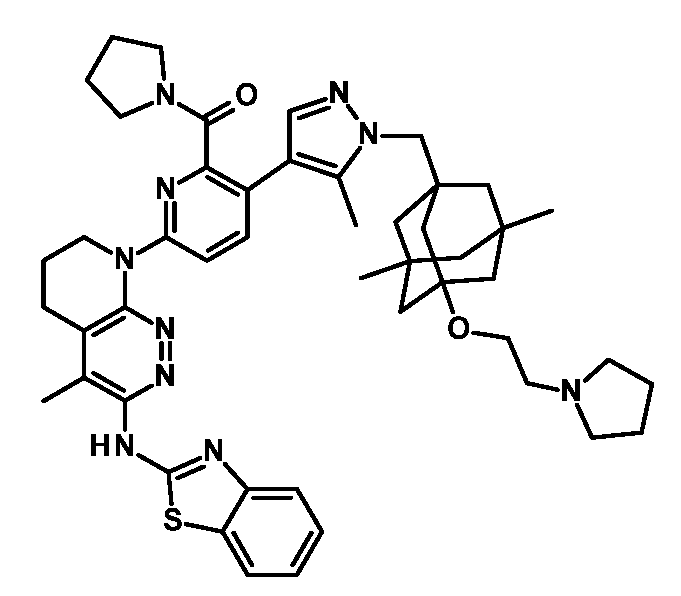
0.5 mL의 DMF 중 50 mg (0.063 mmol)의 P21, 9.37 mg (2.1 당량)의 피롤리딘 및 0.032 mL (3 당량)의 DIPEA에 36 mg (1.5 당량)의 HATU를 0℃에서 첨가한 다음, 혼합물을 실온에서 18시간 동안 교반하였다. 반응 혼합물을 물에 부는 후, 침전된 고체를 여과하고, 물로 세척하고, 건조시켰다. 생성물을 칼럼 크로마토그래피 (아미노 칼럼, 용리액으로서 DCM 및 MeOH 사용)에 의해 정제하여 목적 생성물 29 mg (65%)을 수득하였다. HRMS-ESI (m/z): [M+H]+ C48H61N10O2S에 대한 계산치: 841.4699, 실측치: 841.4698.To 50 mg (0.063 mmol) of P21, 9.37 mg (2.1 eq) of pyrrolidine and 0.032 mL (3 eq) of DIPEA in 0.5 mL of DMF was added 36 mg (1.5 eq) of HATU at 0 °C, and the mixture was stirred at room temperature for 18 h. After the reaction mixture was poured into water, the precipitated solid was filtered, washed with water and dried. The product was purified by column chromatography (amino column, DCM and MeOH as eluent) to give 29 mg (65%) of the desired product. HRMS-ESI (m/z): [M+H] + calcd for C 48 H 61 N 10 O 2 S: 841.4699, found: 841.4698.
P75의 제조: 6-[3-(1,3-벤조티아졸-2-일아미노)-4-메틸-6,7-디히드로-5H-피리도[2,3-c]피리다진-8-일]-3-[1-[[3,5-디메틸-7-(2-피롤리딘-1-일에톡시)-1-아다만틸]메틸]-5-메틸-피라졸-4-일]-N-이소프로필-피리딘-2-카르복스아미드Preparation of P75: 6-[3-(1,3-benzothiazol-2-ylamino)-4-methyl-6,7-dihydro-5H-pyrido[2,3-c]pyridazin-8-yl]-3-[1-[[3,5-dimethyl-7-(2-pyrrolidin-1-ylethoxy)-1-adamantyl]methyl]-5-methyl-pyrazol-4-yl]-N-isopropyl-pyridine-2-carboxamide

0.5 mL의 DMF 중 50 mg (0.063 mmol)의 P21, 9.37 mg (2 당량)의 프로판-2-아민 및 0.032 mL (3 당량)의 DIPEA에 36 mg (1.5 당량)의 HATU를 0℃에서 첨가한 다음, 혼합물을 실온에서 18시간 동안 교반하였다. 반응 혼합물을 물에 부는 후, 침전된 고체를 여과하고, 물로 세척하고, 건조시켰다. 생성물을 칼럼 크로마토그래피 (아미노 칼럼, 용리액으로서 DCM 및 MeOH 사용)에 의해 정제하여 목적 생성물 34 mg (76%)을 수득하였다. HRMS-ESI (m/z): [M+H]+ C47H61N10O2S에 대한 계산치: 829.4699, 실측치: 829.4694.To 50 mg (0.063 mmol) of P21, 9.37 mg (2 eq) of propan-2-amine and 0.032 mL (3 eq) of DIPEA in 0.5 mL of DMF were added 36 mg (1.5 eq) of HATU at 0 °C, and the mixture was stirred at room temperature for 18 h. After the reaction mixture was poured into water, the precipitated solid was filtered, washed with water and dried. The product was purified by column chromatography (amino column, DCM and MeOH as eluent) to give 34 mg (76%) of the desired product. HRMS-ESI (m/z): [M+H] + calcd for C 47 H 61 N 10 O 2 S: 829.4699, found: 829.4694.
P76의 제조: 6-[3-(1,3-벤조티아졸-2-일아미노)-4-메틸-6,7-디히드로-5H-피리도[2,3-c]피리다진-8-일]-3-[1-[[3,5-디메틸-7-(2-피롤리딘-1-일에톡시)-1-아다만틸]메틸]-5-메틸-피라졸-4-일]피리딘-2-카르복스아미드Preparation of P76: 6-[3-(1,3-benzothiazol-2-ylamino)-4-methyl-6,7-dihydro-5H-pyrido[2,3-c]pyridazin-8-yl]-3-[1-[[3,5-dimethyl-7-(2-pyrrolidin-1-ylethoxy)-1-adamantyl]methyl]-5-methyl-pyrazol-4-yl]pyridine-2-carboxamide

0.5 mL의 디옥산 중 50 mg (0.063 mmol)의 P21 및 18 mg (1.3 당량)의 tert-부톡시카르보닐 tert-부틸 카르보네이트에 0.006 mL의 피리딘을 첨가한 다음, 혼합물을 10분 동안 교반하였다. 혼합물을 6.5 mg (1.3 당량)의 NH4HCO3으로 처리한 후, 반응물을 5일 동안 교반하였다. 생성물을 칼럼 크로마토그래피 (아미노 칼럼, 용리액으로서 DCM 및 MeOH 사용)에 의해 정제하여 목적 생성물 17 mg (47%)을 수득하였다. HRMS-ESI (m/z): [M+H]+ C44H55N10O2S에 대한 계산치: 787.4230, 실측치: 787.4226.To 50 mg (0.063 mmol) of P21 and 18 mg (1.3 eq) of tert-butoxycarbonyl tert-butyl carbonate in 0.5 mL of dioxane was added 0.006 mL of pyridine, and the mixture was stirred for 10 min. The mixture was treated with 6.5 mg (1.3 eq) of NH 4 HCO 3 , and the reaction was stirred for 5 days. The product was purified by column chromatography (amino column, using DCM and MeOH as eluent) to yield 17 mg (47%) of the desired product. HRMS-ESI (m/z): [M+H] + C 44 H 55 N 10 O 2 S calcd: 787.4230, found: 787.4226.
실시예 2. 페이로드 전구체의 합성 및 특징화Example 2. Synthesis and characterization of payload precursors
"PMB-보호된 페이로드"는 또한 링커/페이로드의 제조의 목적을 위해 고려되는 페이로드의 전구체로서 지칭된다.“PMB-protected payload” is also referred to as a precursor of a payload considered for the purpose of manufacturing a linker/payload.
전구체를 위한 제조예 A: (4-메톡시페닐)메틸 6-[3-(1,3-벤조티아졸-2-일아미노)-4-메틸-6,7-디히드로-5H-피리도[2,3-c]피리다진-8-일]-3-[1-[[3,5-디메틸-7-[2-(p-톨릴술포닐옥시)에톡시]-1-아다만틸]메틸]-5-메틸-피라졸-4-일]피리딘-2-카르복실레이트Preparation Example A for Precursor: (4-Methoxyphenyl)methyl 6-[3-(1,3-benzothiazol-2-ylamino)-4-methyl-6,7-dihydro-5H-pyrido[2,3-c]pyridazin-8-yl]-3-[1-[[3,5-dimethyl-7-[2-(p-tolylsulfonyloxy)ethoxy]-1-adamantyl]methyl]-5-methyl-pyrazol-4-yl]pyridine-2-carboxylate
단계 A: (4-메톡시페닐)메틸 3-[1-[[3-[2-[tert-부틸(디페닐)실릴]옥시에톡시]-5,7-디메틸-1-아다만틸]메틸]-5-메틸-피라졸-4-일]-6-[3-(3,6-디클로로-5-메틸-피리다진-4-일)프로필아미노]피리딘-2-카르복실레이트Step A: (4-methoxyphenyl)methyl 3-[1-[[3-[2-[tert-butyl(diphenyl)silyl]oxyethoxy]-5,7-dimethyl-1-adamantyl]methyl]-5-methyl-pyrazol-4-yl]-6-[3-(3,6-dichloro-5-methyl-pyridazin-4-yl)propylamino]pyridine-2-carboxylate
1,4-디옥산 (109 mL) 및 H2O (18 mL) 중 제조예 11로부터의 생성물 (9.78 g, 18.1 mmol), 제조예 7로부터의 생성물 (13.6 g, 1.1 당량), Pd(AtaPhos)2Cl2 (801 mg, 0.1 당량) 및 Cs2CO3 (17.7 g, 3 당량)의 혼합물을 80℃에서 8시간 동안 교반하였다. 냉각된 반응물을 염수로 켄칭한 후, 혼합물을 EtOAc로 추출하고, 합한 유기 층을 건조시키고, 농축시켜 목적 생성물 (21.9 g, 119%)을 수득하였으며, 이를 후속 단계에 추가 정제 없이 사용하였다. 1H NMR (400 MHz, DMSO-d6): δ ppm 7.68-7.35 (m, 10H), 7.31 (d, 1H), 7.27 (s, 1H), 7.11 (dm, 2H), 6.98 (t, 1H), 6.83 (dm, 2H), 6.62 (d, 1H), 4.99 (s, 2H), 3.80 (s, 2H), 3.70 (s, 3H), 3.65 (t, 2H), 3.44 (t, 2H), 3.34 (q, 2H), 2.84 (m, 2H), 2.34 (s, 3H), 2.01 (s, 3H), 1.77 (m, 2H), 1.38-0.89 (m, 12H), 0.97 (s, 9H), 0.82 (s, 6H); 13C NMR (500 MHz, dmso-d6) δ ppm 140.4, 137.6, 130.1, 114.2, 110.3, 66.3, 64.4, 61.7, 59.0, 55.5, 40.9, 30.1, 28.1, 27.3, 27.1, 16.4, 10.8; HRMS-ESI (m/z): [M+H]+ C57H69Cl2N6O5Si에 대한 계산치: 1015.4475 실측치: 1015.4474.A mixture of the product from Preparation 11 (9.78 g, 18.1 mmol), the product from Preparation 7 (13.6 g, 1.1 equiv), Pd(AtaPhos) 2 Cl 2 (801 mg, 0.1 equiv) and Cs 2 CO 3 (17.7 g, 3 equiv) in 1,4-dioxane (109 mL) and H 2 O (18 mL) was stirred at 80 °C for 8 h. After the cooled reaction was quenched with brine, the mixture was extracted with EtOAc and the combined organic layers were dried and concentrated to give the desired product (21.9 g, 119%) which was used in the next step without further purification. 1 H NMR (400 MHz, DMSO-d 6 ): δ ppm 7.68-7.35 (m, 10H), 7.31 (d, 1H), 7.27 (s, 1H), 7.11 (dm, 2H), 6.98 (t, 1H), 6.83 (dm, 2H), 6.62 (d, 1H), 4.99 (s, 2H), 3.80 (s, 2H), 3.70 (s, 3H), 3.65 (t, 2H), 3.44 (t, 2H), 3.34 (q, 2H), 2.84 (m, 2H), 2.34 (s, 3H), 2.01 (s, 3H), 1.77 (m, 2H), 1.38-0.89 (m, 12H), 0.97 (s, 9H), 0.82 (s, 6H); 13 C NMR (500 MHz, dmso-d6) δ ppm 140.4, 137.6, 130.1, 114.2, 110.3, 66.3, 64.4, 61.7, 59.0, 55.5, 40.9, 30.1, 28.1, 27.3, 27.1, 16.4, 10.8; HRMS-ESI (m/z): [M+H] + calcd for C 57 H 69 Cl 2 N 6 O 5 Si: 1015.4475 Found: 1015.4474.
단계 B: (4-메톡시페닐)메틸 3-[1-[[3-[2-[tert-부틸(디페닐)실릴]옥시에톡시]-5,7-디메틸-1-아다만틸]메틸]-5-메틸-피라졸-4-일]-6-(3-클로로-4-메틸-6,7-디히드로-5H-피리도[2,3-c]피리다진-8-일)피리딘-2-카르복실레이트Step B: (4-methoxyphenyl)methyl 3-[1-[[3-[2-[tert-butyl(diphenyl)silyl]oxyethoxy]-5,7-dimethyl-1-adamantyl]methyl]-5-methyl-pyrazol-4-yl]-6-(3-chloro-4-methyl-6,7-dihydro-5H-pyrido[2,3-c]pyridazin-8-yl)pyridine-2-carboxylate
1,4-디옥산 (108 mL) 중 단계 A로부터의 생성물 (21.9 g, 21.6 mmol), Cs2CO3 (14 g, 2 당량), DIPEA (7.5 mL, 2 당량) 및 Pd(Ataphos)2Cl2 (954 mg, 0.1 당량)의 혼합물을 110℃에서 18시간 동안 교반하였다. 물로 켄칭하고, EtOAc로 추출한 후, 합한 유기 상을 건조시키고, 농축시키고, 칼럼 크로마토그래피 (실리카 겔, 용리액으로서 DCM 및 EtOAc)에 의해 정제하여 목적 생성물 (8.4 g, 40%)을 수득하였다. 1H NMR (400 MHz, DMSO-d6): δ ppm 7.84 (d, 1H), 7.67 (d, 1H), 7.65 (d, 4H), 7.44 (t, 2H), 7.41 (s, 1H), 7.40 (t, 4H), 7.15 (d, 2H), 6.87 (d, 2H), 5.07 (s, 2H), 3.96 (t, 2H), 3.83 (s, 2H), 3.71 (s, 3H), 3.66 (t, 2H), 3.45 (t, 2H), 2.86 (t, 2H), 2.29 (s, 3H), 2.08 (s, 3H), 1.97 (qn, 2H), 1.38 (s, 2H), 1.25/1.18 (d+d, 4H), 1.18/1.12 (d+d, 4H), 1.01/0.93 (d+d, 2H), 0.97 (s, 9H), 0.82 (s, 6H); 13C NMR (100 MHz, DMSO-d6) δ ppm 166.8, 159.7, 156.3, 153.6, 150.8, 147.7, 140.1, 137.6, 137.3, 136.0, 135.6, 133.8, 130.2, 130.2, 129.1, 128.2, 127.7, 123.0, 120.4, 115.6, 114.3, 74.2, 66.8, 64.4, 61.7, 59.3, 55.6, 49.9, 46.8, 46.0, 46.0, 43.3, 39.7, 33.6, 30.1, 27.1, 24.6, 21.0, 19.3, 15.5, 10.8; HRMS-ESI (m/z): [M+H]+ C57H68ClN6O5Si에 대한 계산치: 979.4709 실측치: 979.4710.A mixture of the product from step A (21.9 g, 21.6 mmol), Cs 2 CO 3 (14 g, 2 equiv), DIPEA (7.5 mL, 2 equiv) and Pd(Ataphos) 2 Cl 2 (954 mg, 0.1 equiv) in 1,4-dioxane (108 mL) was stirred at 110 °C for 18 h. Quenched with water and extracted with EtOAc, the combined organic phases were dried, concentrated and purified by column chromatography (silica gel, DCM and EtOAc as eluent) to give the desired product (8.4 g, 40%). 1 H NMR (400 MHz, DMSO-d 6 ): δ ppm 7.84 (d, 1H), 7.67 (d, 1H), 7.65 (d, 4H), 7.44 (t, 2H), 7.41 (s, 1H), 7.40 (t, 4H), 7.15 (d, 2H), 6.87 (d, 2H), 5.07 (s, 2H), 3.96 (t, 2H), 3.83 (s, 2H), 3.71 (s, 3H), 3.66 (t, 2H), 3.45 (t, 2H), 2.86 (t, 2H), 2.29 (s, 3H), 2.08 (s, 3H), 1.97 (qn, 2H), 1.38 (s, 2H), 1.25/1.18 (d+d, 4H), 1.18/1.12 (d+d, 4H), 1.01/0.93 (d+d, 2H), 0.97 (s, 9H), 0.82 (s, 6H); 13 C NMR (100 MHz, DMSO-d 6 ) δ ppm 166.8, 159.7, 156.3, 153.6, 150.8, 147.7, 140.1, 137.6, 137.3, 136.0, 135.6, 133.8, 130.2, 130.2, 129.1, 128.2, 127.7, 123.0, 120.4, 115.6, 114.3, 74.2, 66.8, 64.4, 61.7, 59.3, 55.6, 49.9, 46.8, 46.0, 46.0, 43.3, 39.7, 33.6, 30.1, 27.1, 24.6, 21.0, 19.3, 15.5, 10.8; HRMS-ESI (m/z): [M+H] + Calculated for C 57 H 68 ClN 6 O 5 Si: 979.4709 Found: 979.4710.
단계 C: (4-메톡시페닐)메틸 6-(3-클로로-4-메틸-6,7-디히드로-5H-피리도[2,3-c]피리다진-8-일)-3-[1-[[3-(2-히드록시에톡시)-5,7-디메틸-1-아다만틸]메틸]-5-메틸-피라졸-4-일]피리딘-2-카르복실레이트Step C: (4-methoxyphenyl)methyl 6-(3-chloro-4-methyl-6,7-dihydro-5H-pyrido[2,3-c]pyridazin-8-yl)-3-[1-[[3-(2-hydroxyethoxy)-5,7-dimethyl-1-adamantyl]methyl]-5-methyl-pyrazol-4-yl]pyridine-2-carboxylate
THF (86 mL) 중 단계 B로부터의 생성물 (8.4 g, 8.6 mmol)에 0℃에서 THF 중 TBAF의 1 M 용액 (9.4 mL, 1.1 당량)을 첨가하고, 반응 혼합물을 실온에서 1.5시간 동안 교반하였다. NH4Cl의 포화 용액으로 켄칭하고, EtOAc로 추출한 후, 합한 유기 상을 염수로 세척하고, 건조시키고, 농축시키고, 칼럼 크로마토그래피 (실리카 겔, 용리액으로서 DCM 및 MeOH)에 의해 정제하여 목적 생성물 (4.7 g, 74%)을 수득하였다. 1H NMR (400 MHz, DMSO-d6): δ ppm 7.85 (d, 1H), 7.70 (d, 1H), 7.39 (s, 1H), 7.18 (d, 2H), 6.90 (d, 2H), 5.10 (s, 2H), 4.45 (t, 1H), 3.96 (t, 2H), 3.84 (s, 2H), 3.74 (s, 3H), 3.40 (q, 2H), 3.33 (t, 2H), 2.86 (t, 2H), 2.29 (s, 3H), 2.09 (s, 3H), 1.98 (qn, 2H), 1.39 (s, 2H), 1.27/1.21 (d+d, 4H), 1.18/1.12 (d+d, 4H), 1.03/0.94 (d+d, 2H), 0.84 (s, 6H); 13C NMR (100 MHz, DMSO-d6) δ ppm 166.8, 159.7, 156.3, 153.6, 150.8, 147.8, 140.2, 137.6, 137.3, 136.0, 130.2, 129.1, 127.7, 123.0, 120.4, 115.6, 114.3, 74.0, 66.8, 62.2, 61.5, 59.0, 55.6, 50.0, 46.9, 46.0, 46.0, 43.3, 39.7, 33.5, 30.1, 24.6, 21.0, 15.5, 10.9; HRMS-ESI (m/z): [M+H]+ C41H50ClN6O5에 대한 계산치: 741.3531 실측치: 741.3530.To the product from step B (8.4 g, 8.6 mmol) in THF (86 mL) at 0 °C was added a 1 M solution of TBAF in THF (9.4 mL, 1.1 eq), and the reaction mixture was stirred at room temperature for 1.5 h. Quenched with a saturated solution of NH 4 Cl, extracted with EtOAc, the combined organic phases were washed with brine, dried, concentrated and purified by column chromatography (silica gel, DCM and MeOH as eluent) to give the desired product (4.7 g, 74%). 1 H NMR (400 MHz, DMSO-d 6 ): δ ppm 7.85 (d, 1H), 7.70 (d, 1H), 7.39 (s, 1H), 7.18 (d, 2H), 6.90 (d, 2H), 5.10 (s, 2H), 4.45 (t, 1H), 3.96 (t, 2H), 3.84 (s, 2H), 3.74 (s, 3H), 3.40 (q, 2H), 3.33 (t, 2H), 2.86 (t, 2H), 2.29 (s, 3H), 2.09 (s, 3H), 1.98 (qn, 2H), 1.39 (s, 2H), 1.27/1.21 (d+d, 4H), 1.18/1.12 (d+d, 4H), 1.03/0.94 (d+d, 2H), 0.84 (s, 6H); 13 C NMR (100 MHz, DMSO-d 6 ) δ ppm 166.8, 159.7, 156.3, 153.6, 150.8, 147.8, 140.2, 137.6, 137.3, 136.0, 130.2, 129.1, 127.7, 123.0, 120.4, 115.6, 114.3, 74.0, 66.8, 62.2, 61.5, 59.0, 55.6, 50.0, 46.9, 46.0, 46.0, 43.3, 39.7, 33.5, 30.1, 24.6, 21.0, 15.5, 10.9; HRMS-ESI (m/z): [M+H] + Calculated for C 41 H 50 ClN 6 O 5 : 741.3531 Found: 741.3530.
단계 D: (4-메톡시페닐)메틸 6-[3-(1,3-벤조티아졸-2-일아미노)-4-메틸-6,7-디히드로-5H-피리도[2,3-c]피리다진-8-일]-3-[1-[[3-(2-히드록시에톡시)-5,7-디메틸-1-아다만틸]메틸]-5-메틸-피라졸-4-일]피리딘-2-카르복실레이트Step D: (4-Methoxyphenyl)methyl 6-[3-(1,3-benzothiazol-2-ylamino)-4-methyl-6,7-dihydro-5H-pyrido[2,3-c]pyridazin-8-yl]-3-[1-[[3-(2-hydroxyethoxy)-5,7-dimethyl-1-adamantyl]methyl]-5-methyl-pyrazol-4-yl]pyridine-2-carboxylate
시클로헥산올 (38 mL) 중 단계 C로부터의 생성물 (4.7 g, 6.3 mmol), 1,3-벤조티아졸-2-아민 (1.9 g, 2 당량), Pd2dba3 (580 mg, 0.1 당량), XantPhos (730 mg, 0.2 당량) 및 DIPEA (3.3 mL, 3 당량)의 혼합물을 130℃에서 2시간 동안 교반하였다. 칼럼 크로마토그래피 (실리카 겔, 용리액으로서 헵탄, EtOAc 및 MeCN)에 의해 정제하여 목적 생성물 (3.83 g, 71%)을 수득하였다. 1H NMR (400 MHz, DMSO-d6): δ ppm 7.95 (d, 1H), 7.81 (brd, 1H), 7.69 (d, 1H), 7.49 (brs, 1H), 7.39 (s, 1H), 7.35 (m, 1H), 7.19 (m, 2H), 7.16 (m, 1H), 6.91 (m, 2H), 5.10 (s, 2H), 4.46 (t, 1H), 3.99 (m, 2H), 3.85 (s, 2H), 3.75 (s, 3H), 3.40 (m, 2H), 3.34 (t, 2H), 2.85 (t, 2H), 2.32 (s, 3H), 2.11 (s, 3H), 1.99 (m, 2H), 1.45-0.9 (m, 12H), 0.84 (s, 6H); HRMS-ESI (m/z): [M+H]+ C48H5N8O5S에 대한 계산치: 855.4016 실측치: 855.4011.A mixture of the product from step C (4.7 g, 6.3 mmol), 1,3-benzothiazol- 2 -amine (1.9 g, 2 equiv) in cyclohexanol (38 mL) was stirred at 130 °C for 2 h. Purification by column chromatography (silica gel, heptane, EtOAc and MeCN as eluent) gave the desired product (3.83 g, 71%). 1 H NMR (400 MHz, DMSO-d 6 ): δ ppm 7.95 (d, 1H), 7.81 (brd, 1H), 7.69 (d, 1H), 7.49 (brs, 1H), 7.39 (s, 1H), 7.35 (m, 1H), 7.19 (m, 2H), 7.16 (m, 1H), 6.91 (m, 2H), 5.10 (s, 2H), 4.46 (t, 1H), 3.99 (m, 2H), 3.85 (s, 2H), 3.75 (s, 3H), 3.40 (m, 2H), 3.34 (t, 2H), 2.85 (t, 2H), 2.32 (s, 3H), 2.11 (s, 3H), 1.99 (m, 2H), 1.45-0.9 (m, 12H), 0.84 (s, 6H); HRMS-ESI (m/z): [M+H] + Calculated for C 48 H 5 N 8 O 5 S: 855.4016 Found: 855.4011.
단계 E: (4-메톡시페닐)메틸 6-[3-(1,3-벤조티아졸-2-일아미노)-4-메틸-6,7-디히드로-5H-피리도[2,3-c]피리다진-8-일]-3-[1-[[3,5-디메틸-7-[2-(p-톨릴술포닐옥시)에톡시]-1-아다만틸]메틸]-5-메틸-피라졸-4-일]피리딘-2-카르복실레이트Step E: (4-Methoxyphenyl)methyl 6-[3-(1,3-benzothiazol-2-ylamino)-4-methyl-6,7-dihydro-5H-pyrido[2,3-c]pyridazin-8-yl]-3-[1-[[3,5-dimethyl-7-[2-(p-tolylsulfonyloxy)ethoxy]-1-adamantyl]methyl]-5-methyl-pyrazol-4-yl]pyridine-2-carboxylate
DCM (45 mL) 중 단계 D로부터의 생성물 (3.83 g, 4.48 mmol) 및 트리에틸아민 (1.87 mL, 3 당량)에 p-톨릴술포닐 4-메틸벤젠술포네이트 (2.19 g, 1.5 당량)를 첨가하고, 반응 혼합물을 2시간 동안 교반하였다. 칼럼 크로마토그래피 (실리카 겔, 용리액으로서 헵탄 및 EtOAc)에 의해 정제하여 목적 생성물 2.5 g (55%)을 수득하였다. 1H NMR (400 MHz, DMSO-d6): δ ppm 7.95 (d, 1H), 7.81 (brs, 1H), 7.76 (m, 2H), 7.45 (brs, 1H), 7.45 (m, 2H), 7.40 (s, 1H), 7.35 (m, 1H), 7.18 (m, 2H), 7.17 (m, 1H), 6.97 (d, 1H), 6.90 (m, 2H), 5.10 (s, 2H), 4.05 (m, 2H), 4.00 (m, 2H), 3.82 (s, 2H), 3.74 (s, 3H), 3.47 (m, 2H), 2.85 (m, 2H), 2.40 (s, 3H), 2.32 (s, 3H), 2.10 (s, 3H), 1.98 (m, 2H), 1.87-1.34 (m, 12H), 0.81 (s, 6H); HRMS-ESI (m/z): [M+H]+ C55H61N8O7S2에 대한 계산치: 1009.4104 실측치: 1009.4102.To the product from Step D (3.83 g, 4.48 mmol) and triethylamine (1.87 mL, 3 equiv) in DCM (45 mL) was added p-Tolylsulfonyl 4-methylbenzenesulfonate (2.19 g, 1.5 equiv), and the reaction mixture was stirred for 2 h. Purification by column chromatography (silica gel, heptane and EtOAc as eluent) gave 2.5 g (55%) of the desired product. 1 H NMR (400 MHz, DMSO-d 6 ): δ ppm 7.95 (d, 1H), 7.81 (brs, 1H), 7.76 (m, 2H), 7.45 (brs, 1H), 7.45 (m, 2H), 7.40 (s, 1H), 7.35 (m, 1H), 7.18 (m, 2H), 7.17 (m, 1H), 6.97 (d, 1H), 6.90 (m, 2H), 5.10 (s, 2H), 4.05 (m, 2H), 4.00 (m, 2H), 3.82 (s, 2H), 3.74 (s, 3H), 3.47 (m, 2H), 2.85 (m, 2H), 2.40 (s, 3H), 2.32 (s, 3H), 2.10 (s, 3H), 1.98 (m, 2H), 1.87-1.34 (m, 12H), 0.81 (s, 6H); HRMS-ESI (m/z): [M+H] + Calculated for C 55 H 61 N 8 O 7 S 2 : 1009.4104 Found: 1009.4102.
아민 치환 절차 IIIAmine Substitution Procedure III
아세토니트릴 및 N-메틸-2-피롤리돈의 1:1 혼합물 (10 ml/mmol) 중 전구체를 위한 제조예 A로부터의 생성물에 적절한 아민 (3-10 당량)을 첨가하고, 반응 혼합물을 50℃에서 2-24시간 동안 교반하였다. 생성물을 정제용 역상 크로마토그래피에 의해 정제한 후, 목적 생성물을 수득하였다.To the product from Preparation A for the precursor in a 1:1 mixture of acetonitrile and N-methyl-2-pyrrolidone (10 ml/mmol) was added the appropriate amine (3-10 eq.), and the reaction mixture was stirred at 50°C for 2-24 h. The product was purified by preparative reverse-phase chromatography to give the desired product.
P37의 전구체: (4-메톡시페닐)메틸 6-[3-(1,3-벤조티아졸-2-일아미노)-4-메틸-6,7-디히드로-5H-피리도[2,3-c]피리다진-8-일]-3-[1-[[3-[2-[4-히드록시부틸(메틸)아미노]에톡시]-5,7-디메틸-1-아다만틸]메틸]-5-메틸-피라졸-4-일]피리딘-2-카르복실레이트Precursor of P37: (4-methoxyphenyl)methyl 6-[3-(1,3-benzothiazol-2-ylamino)-4-methyl-6,7-dihydro-5H-pyrido[2,3-c]pyridazin-8-yl]-3-[1-[[3-[2-[4-hydroxybutyl(methyl)amino]ethoxy]-5,7-dimethyl-1-adamantyl]methyl]-5-methyl-pyrazol-4-yl]pyridine-2-carboxylate
아민 치환 절차 III 및 적절한 아민으로서의 4-(메틸아미노)부탄-1-올을 사용하여, 목적 생성물을 수득하였다. HRMS-ESI (m/z): [M+H]+ C53H66N9O5S에 대한 계산치: 940.4907 실측치 940.4906.Using amine substitution procedure III and 4-(methylamino)butan-1-ol as the appropriate amine, the desired product was obtained. HRMS-ESI (m/z): [M+H] + C 53 H 66 N 9 O 5 S: 940.4907 Found 940.4906.
P36의 전구체: (4-메톡시페닐)메틸 6-[3-(1,3-벤조티아졸-2-일아미노)-4-메틸-6,7-디히드로-5H-피리도[2,3-c]피리다진-8-일]-3-[1-[[3-[2-[3-메톡시프로필(메틸)아미노]에톡시]-5,7-디메틸-1-아다만틸]메틸]-5-메틸-피라졸-4-일]피리딘-2-카르복실레이트Precursor of P36: (4-methoxyphenyl)methyl 6-[3-(1,3-benzothiazol-2-ylamino)-4-methyl-6,7-dihydro-5H-pyrido[2,3-c]pyridazin-8-yl]-3-[1-[[3-[2-[3-methoxypropyl(methyl)amino]ethoxy]-5,7-dimethyl-1-adamantyl]methyl]-5-methyl-pyrazol-4-yl]pyridine-2-carboxylate
아민 치환 절차 III 및 적절한 아민으로서의 3-메톡시-N-메틸-프로판-1-아민을 사용하여, 목적 생성물을 수득하였다. HRMS-ESI (m/z): [M+H]+ C53H66N9O5S에 대한 계산치: 940.4907 실측치 940.4904.Using amine substitution procedure III and 3-methoxy-N-methyl-propan-1-amine as the appropriate amine, the desired product was obtained. HRMS-ESI (m/z): [M+H] + C 53 H 66 N 9 O 5 S: 940.4907 Found 940.4904.
P35의 전구체: (4-메톡시페닐)메틸 6-[3-(1,3-벤조티아졸-2-일아미노)-4-메틸-6,7-디히드로-5H-피리도[2,3-c]피리다진-8-일]-3-[1-[[3-[2-[2-히드록시에틸(메틸)아미노]에톡시]-5,7-디메틸-1-아다만틸]메틸]-5-메틸-피라졸-4-일]피리딘-2-카르복실레이트Precursor of P35: (4-methoxyphenyl)methyl 6-[3-(1,3-benzothiazol-2-ylamino)-4-methyl-6,7-dihydro-5H-pyrido[2,3-c]pyridazin-8-yl]-3-[1-[[3-[2-[2-hydroxyethyl(methyl)amino]ethoxy]-5,7-dimethyl-1-adamantyl]methyl]-5-methyl-pyrazol-4-yl]pyridine-2-carboxylate
아민 치환 절차 III 및 적절한 아민으로서의 2-(메틸아미노)에탄올을 사용하여, 목적 생성물을 수득하였다. HRMS-ESI (m/z): [M+H]+ C51H62N9O5S에 대한 계산치: 912.4594 실측치 912.4592.Using amine substitution procedure III and 2-(methylamino)ethanol as the appropriate amine, the desired product was obtained. HRMS-ESI (m/z): [M+H] + C 51 H 62 N 9 O 5 S: 912.4594 Found 912.4592.
P27의 전구체: (4-메톡시페닐)메틸 6-[3-(1,3-벤조티아졸-2-일아미노)-4-메틸-6,7-디히드로-5H-피리도[2,3-c]피리다진-8-일]-3-[1-[[3-[2-(디메틸아미노)에톡시]-5,7-디메틸-1-아다만틸]메틸]-5-메틸-피라졸-4-일]피리딘-2-카르복실레이트Precursor of P27: (4-methoxyphenyl)methyl 6-[3-(1,3-benzothiazol-2-ylamino)-4-methyl-6,7-dihydro-5H-pyrido[2,3-c]pyridazin-8-yl]-3-[1-[[3-[2-(dimethylamino)ethoxy]-5,7-dimethyl-1-adamantyl]methyl]-5-methyl-pyrazol-4-yl]pyridine-2-carboxylate
아민 치환 절차 III 및 적절한 아민으로서의 디메틸아민을 사용하여, 목적 생성물을 수득하였다. HRMS-ESI (m/z): [M+H]+ C50H60N9O4S에 대한 계산치: 882.4489 실측치 882.4490.Using amine substitution procedure III and dimethylamine as the appropriate amine, the desired product was obtained. HRMS-ESI (m/z): [M+H] + C 50 H 60 N 9 O 4 S: 882.4489 Found 882.4490.
P21의 전구체: (4-메톡시페닐)메틸 6-[3-(1,3-벤조티아졸-2-일아미노)-4-메틸-6,7-디히드로-5H-피리도[2,3-c]피리다진-8-일]-3-[1-[[3,5-디메틸-7-(2-피롤리딘-1-일에톡시)-1-아다만틸]메틸]-5-메틸-피라졸-4-일]피리딘-2-카르복실레이트Precursor of P21: (4-methoxyphenyl)methyl 6-[3-(1,3-benzothiazol-2-ylamino)-4-methyl-6,7-dihydro-5H-pyrido[2,3-c]pyridazin-8-yl]-3-[1-[[3,5-dimethyl-7-(2-pyrrolidin-1-ylethoxy)-1-adamantyl]methyl]-5-methyl-pyrazol-4-yl]pyridine-2-carboxylate
아민 치환 절차 III 및 적절한 아민으로서의 피롤리딘을 사용하여, 목적 생성물을 수득하였다. HRMS-ESI (m/z): [M+2H]2+ C52H62N9O4S에 대한 계산치: 454.7362 실측치 454.7365.Using amine substitution procedure III and pyrrolidine as the appropriate amine, the desired product was obtained. HRMS-ESI (m/z): [M+2H]2+ Calculated for C 52 H 62 N 9 O 4 S: 454.7362 Found 454.7365.
P25의 전구체: (4-메톡시페닐)메틸 6-[3-(1,3-벤조티아졸-2-일아미노)-4-메틸-6,7-디히드로-5H-피리도[2,3-c]피리다진-8-일]-3-[1-[[3-[2-(3-히드록시프로필아미노)에톡시]-5,7-디메틸-1-아다만틸]메틸]-5-메틸-피라졸-4-일]피리딘-2-카르복실레이트Precursor of P25: (4-methoxyphenyl)methyl 6-[3-(1,3-benzothiazol-2-ylamino)-4-methyl-6,7-dihydro-5H-pyrido[2,3-c]pyridazin-8-yl]-3-[1-[[3-[2-(3-hydroxypropylamino)ethoxy]-5,7-dimethyl-1-adamantyl]methyl]-5-methyl-pyrazol-4-yl]pyridine-2-carboxylate
아민 치환 절차 III 및 적절한 아민으로서의 3-아미노프로판-1-올을 사용하여, 목적 생성물을 수득하였다. HRMS-ESI (m/z): [M+H]+ C51H62N9O5S에 대한 계산치: 912.4591, 실측치 912.4581.Using amine substitution procedure III and 3-aminopropan-1-ol as the appropriate amine, the desired product was obtained. HRMS-ESI (m/z): [M+H] + C 51 H 62 N 9 O 5 S 912.4591, found 912.4581.
P19의 전구체: (4-메톡시페닐)메틸 6-[3-(1,3-벤조티아졸-2-일아미노)-4-메틸-6,7-디히드로-5H-피리도[2,3-c]피리다진-8-일]-3-[1-[[3-[2-[2-[(4S)-2,2-디메틸-1,3-디옥솔란-4-일]에틸아미노]에톡시]-5,7-디메틸-1-아다만틸]메틸]-5-메틸-피라졸-4-일]피리딘-2-카르복실레이트Precursor of P19: (4-methoxyphenyl)methyl 6-[3-(1,3-benzothiazol-2-ylamino)-4-methyl-6,7-dihydro-5H-pyrido[2,3-c]pyridazin-8-yl]-3-[1-[[3-[2-[2-[(4S)-2,2-dimethyl-1,3-dioxolan-4-yl]ethylamino]ethoxy]-5,7-dimethyl-1-adamantyl]methyl]-5-methyl-pyrazol-4-yl]pyridine-2-carboxylate
아민 치환 절차 III 및 적절한 아민으로서의 2-[(4S)-2,2-디메틸-1,3-디옥솔란-4-일]에탄아민을 사용하여, 목적 생성물을 수득하였다. HRMS-ESI (m/z): [M+H]+ C55H68N9O6S에 대한 계산치: 982.5013, 실측치 982.5000.Using amine substitution procedure III and 2-[(4S)-2,2-dimethyl-1,3-dioxolan-4-yl]ethanamine as the appropriate amine, the desired product was obtained. HRMS-ESI (m/z): [M+H] + C 55 H 68 N 9 O 6 S 982.5013, found 982.5000.
실시예 3. 링커, 링커-페이로드 및 그의 전구체의 합성 및 특징화Example 3. Synthesis and characterization of linkers, linker-payloads and their precursors
예시적인 링커, 링커-페이로드 및 그의 전구체를 이 실시예에 기재된 예시적인 방법을 사용하여 합성하였다.Exemplary linkers, linker-payloads and precursors thereof were synthesized using the exemplary methods described in this Example.
약어:abbreviation:
CuI 아이오딘화구리 (I)CuI Copper (I) Iodide
DCC 디시클로헥실 카르보디이미드DCC Dicyclohexyl carbodiimide
DCM 디클로로메탄DCM Dichloromethane
DEA N-에틸에탄아민DEA N-ethylethanamine
DIPEA N,N-디이소프로필에틸아민DIPEA N,N-Diisopropylethylamine
DMF 디메틸포름아미드DMF Dimethylformamide
DMSO 디메틸 술폭시드DMSO Dimethyl Sulfoxide
EDC N-에틸,N'-디메틸아미노-프로필카르보디이미드EDC N-Ethyl,N'-Dimethylamino-propylcarbodiimide
EEDQ 에틸 2-에톡시-2H-퀴놀린-1-카르복실레이트EEDQ Ethyl 2-ethoxy-2H-quinoline-1-carboxylate
Fmoc 플루오레닐메틸옥시카르보닐Fmoc fluorenylmethyloxycarbonyl
Fmoc-Cit-OH (2S)-2-(9H-플루오렌-9-일메톡시카르보닐아미노)-5-우레이도-펜탄산Fmoc-Cit-OH (2S)-2-(9H-fluoren-9-ylmethoxycarbonylamino)-5-ureido-pentanoic acid
HBTU (2-(1H-벤조트리아졸-1-일)-1,1,3,3-테트라메틸우로늄 헥사플루오로포스페이트HBTU (2-(1H-benzotriazol-1-yl)-1,1,3,3-tetramethyluronium hexafluorophosphate
HOAt 1-히드록시-7-아자벤조트리아졸HOAt 1-hydroxy-7-azabenzotriazole
MgSO4 황산마그네슘MgSO 4 Magnesium sulfate
MMAE (2S)-N-[(1S)-1-[[(1S,2R)-4-[(2S)-2-[(1R,2R)-3-[[(1R,2S)-2-히드록시-1-메틸-2-페닐-에틸]아미노]-1-메톡시-2-메틸-3-옥소-프로필]피롤리딘-1-일]-2-메톡시-1-[(1S)-1-메틸프로필]-4-옥소-부틸]-메틸-카르바모일]-2-메틸-프로필]-3-메틸-2-(메틸아미노)부탄아미드 (MMAE)MMAE (2S)-N-[(1S)-1-[[(1S,2R)-4-[(2S)-2-[(1R,2R)-3-[[(1R,2S)-2-hydroxy-1-methyl-2-phenyl-ethyl]amino]-1-methoxy-2-methyl-3-oxo-propyl]pyrrolidin-1-yl]-2-methoxy-1-[(1S)-1-methylpropyl]-4-oxo-butyl]-methyl-carbamoyl]-2-methyl-propyl]-3-methyl-2-(methylamino)butanamide (MMAE)
Na2SO4 황산나트륨Na 2 SO 4 sodium sulfate
NH4Cl 염화암모늄NH 4 Cl ammonium chloride
NMP N-메틸피롤리돈NMP N-methylpyrrolidone
Pd(PPh3)2Cl2 디클로로-트리(트리페닐포스핀)팔라듐Pd(PPh 3 ) 2 Cl 2 dichloro-tri(triphenylphosphine)palladium
PBr3 트리브로모포스판PBr 3 Tribromophosphane
Pt/C 10% 탄소 상 백금 10%Pt/
RT 실온RT room temperature
SOCl2 티오닐 클로라이드SOCl 2 Thionyl chloride
THF 테트라히드로푸란THF Tetrahydrofuran
TBAF 테트라부틸암모늄, 플루오라이드TBAF Tetrabutylammonium Fluoride
TBAI 테트라부틸암모늄, 아이오다이드TBAI Tetrabutylammonium Iodide
TFA 트리플루오로아세트산TFA trifluoroacetic acid
TSTU [디메틸아미노-(2,5-디옥소피롤리딘-1-일)옥시-메틸렌]-디메틸-암모늄;TSTU [dimethylamino-(2,5-dioxopyrrolidin-1-yl)oxy-methylene]-dimethyl-ammonium;
테트라플루오로보레이트Tetrafluoroborate
화학적 명명Chemical name
바이오비아(Biovia)® 드로우(Draw) 2018 (버전 18.1.NET)에 의해 제공된 화학적 명명 기능을 사용하여 IUPAC-선호 명칭을 생성하였다.IUPAC-preferred names were generated using the chemical naming functionality provided by Biovia® Draw 2018 (version 18.1.NET).
물질, 방법 및 일반적 절차Materials, Methods and General Procedures
상업적 공급원으로부터 수득된 모든 시약을 추가 정제 없이 사용하였다. 무수 용매를 상업적 공급원으로부터 입수하고, 추가 건조 없이 사용하였다. 사전-패킹된 실리카-겔 카트리지 (마슈레-나겔 크로마본드 플래쉬(Macherey-Nagel Chromabond Flash))를 사용한 콤비플래쉬 Rf (텔레다인 이스코) 상에서 플래쉬 크로마토그래피를 수행하였다. 머크 유형 60 F254 실리카-겔로 코팅된 5 x 10 cm 플레이트로 박층 크로마토그래피를 수행하였다. CEM 디스커버® 기기에서 마이크로웨이브 가열을 수행하였다.All reagents were obtained from commercial sources and used without further purification. Anhydrous solvents were obtained from commercial sources and used without further drying. Flash chromatography was performed on a Combiflash Rf (Teledyne Isco) using pre-packed silica-gel cartridges (Macherey-Nagel Chromabond Flash). Thin layer chromatography was performed with 5 x 10 cm plates coated with
400 MHz 브루커 아반스(Bruker Avance) 또는 500 MHz 아반스 네오(Avance Neo) 분광계 상에서 용매로서 DMSO-d6 또는 CDCl3을 사용하여 1H-NMR 측정을 수행하였다. 1H NMR 데이터는 내부 표준으로서 용매의 잔류 피크 (DMSO-d6에 대해 2.50 ppm 및 CDCl3에 대해 7.26 ppm)를 사용하여 백만분율 (ppm)로 주어진 화학적 이동 값의 형태이다. 분할 패턴은 s (단일선), d (이중선), t (삼중선), q (사중선), quint (오중선), m (다중선), br s (넓은 단일선), br t (넓은 삼중선), dd (이중선의 이중선), td (이중선의 삼중선), dt (삼중선의 이중선), ddd (이중선의 이중선의 이중선)로서 지정된다. ATR 골든 게이트 장치 (SPECAC)가 장착된 브루커 텐서(Bruker Tensor) 27 상에서 IR 측정을 수행하였다. LTQ 오르비트랩 벨로스 프로(OrbiTrap Velos Pro) 질량 분광계 (써모피셔 사이언티픽(ThermoFisher Scientific)) 상에서 HRMS 측정을 수행하였다. 샘플을 CH3CN/H2O (2/1:v/v) 중에 대략 0.01 내지 0.05 mg/mL의 농도 범위로 용해시키고, 0.1 mL/분의 유량으로 2 μL의 주입에 의해 공급원에 도입하였다. ESI 이온화 파라미터는 하기와 같았다: 3.5 kV 및 350℃ 전달 이온 모세관. 모든 스펙트럼을 고정 질량을 사용하여 30,000 또는 60,000의 분해력으로 양이온 모드에서 획득하였다. 1H -NMR measurements were performed on a 400 MHz Bruker Avance or 500 MHz Avance Neo spectrometer using DMSO-d 6 or CDCl 3 as solvent. 1H NMR data are given in parts per million (ppm) as chemical shift values using the residual peak of the solvent (2.50 ppm for DMSO-d 6 and 7.26 ppm for CDCl 3 ) as internal standard. The fragmentation patterns are designated as s (singlet), d (doublet), t (triplet), q (quartet), quint (quintet), m (multiplet), br s (broad singlet), br t (broad triplet), dd (doublet of a doublet), td (triplet of a doublet), dt (doublet of triplets), ddd (doublet of a doublet). IR measurements were performed on a Bruker Tensor 27 equipped with an ATR Golden Gate instrument (SPECAC). HRMS measurements were performed on an LTQ OrbiTrap Velos Pro mass spectrometer (ThermoFisher Scientific). Samples were dissolved in CH 3 CN/H 2 O (2/1: v/v) at concentrations ranging from approximately 0.01 to 0.05 mg/mL and introduced into the source by an injection of 2 μL at a flow rate of 0.1 mL/min. ESI ionization parameters were as follows: 3.5 kV and 350 °C transfer ion capillary. All spectra were acquired in positive ion mode at a resolution of 30,000 or 60,000 using a fixed mass.
LTQ 오르비트랩 벨로스 프로 질량 분광계 (써모피셔 사이언티픽 게엠베하, 독일 브레멘) 상에서 HRMS 측정을 수행하였다. 샘플을 CH3CN/H2O (2/1:v/v) 중에 대략 0.01 내지 0.05 mg/mL의 농도 범위로 용해시키고, 0.1 mL/분의 유량으로 2 μL의 주입에 의해 공급원에 도입하였다. ESI 이온화 파라미터는 하기와 같았다: 3.5 kV 및 350℃ 전달 이온 모세관. 모든 스펙트럼을 고정 질량을 사용하여 30,000 또는 60,000의 분해력으로 양이온 모드에서 획득하였다.HRMS measurements were performed on an LTQ Orbitrap Veloth Pro mass spectrometer (ThermoFisher Scientific GmbH, Bremen, Germany). Samples were dissolved in CH 3 CN/H 2 O (2/1:v/v) at a concentration range of approximately 0.01 to 0.05 mg/mL and introduced into the source by an injection of 2 μL at a flow rate of 0.1 mL/min. ESI ionization parameters were as follows: 3.5 kV and 350°C transfer ion capillary. All spectra were acquired in positive ion mode at a resolution of 30,000 or 60,000 using a fixed mass.
UPLC®-MS:UPLC®-MS:
UPLC®-MS 데이터를 하기 파라미터를 갖는 기기를 사용하여 획득하였다 (표 7):UPLC®-MS data were acquired using an instrument with the following parameters (Table 7):
표 7. UPLC®-MS 파라미터Table 7. UPLC®-MS parameters

정제용-HPLC:Purification-HPLC:
정제용-HPLC ("정제용-HPLC") 데이터를 하기 파라미터를 갖는 기기를 사용하여 획득하였다 (표 8):Purification-HPLC (“Purification-HPLC”) data were obtained using an instrument with the following parameters (Table 8):
표 8. 정제용-HPLC 파라미터Table 8. Purification-HPLC parameters

3가지 정제용 HPLC 방법을 사용하였다:Three purification HPLC methods were used:
a. TFA 방법: 용매: A = 물 + 0.05% TFA, B = 아세토니트릴 + 0.05% TFA, 구배: 15 내지 30 CV로 5에서 100% Ba. TFA method: Solvent: A = water + 0.05% TFA, B = acetonitrile + 0.05% TFA, Gradient: 5 to 100% B in 15 to 30 CV.
b. NH4HCO3 방법: 용매: A = 물 + 0.02 M NH4HCO3, B = 아세토니트릴/물 80/20 + 0.02 M NH4HCO3, 구배: 15 내지 30 CV로 5에서 100% Bb. NH 4 HCO 3 Method: Solvent: A = water + 0.02 M NH 4 HCO 3 , B = acetonitrile/
c. 중성 방법: 용매: A = 물, B = 아세토니트릴, 구배: 15 내지 30 CV로 5에서 100% Bc. Neutral method: Solvent: A = water, B = acetonitrile, Gradient: 5 to 100% B in 15 to 30 CV.
순수한 화합물을 함유하는 모든 분획을 합하고, 직접 동결-건조시켜 화합물을 무정형 분말로서 수득하였다.All fractions containing the pure compound were combined and directly freeze-dried to obtain the compound as an amorphous powder.
방법 AMethod A
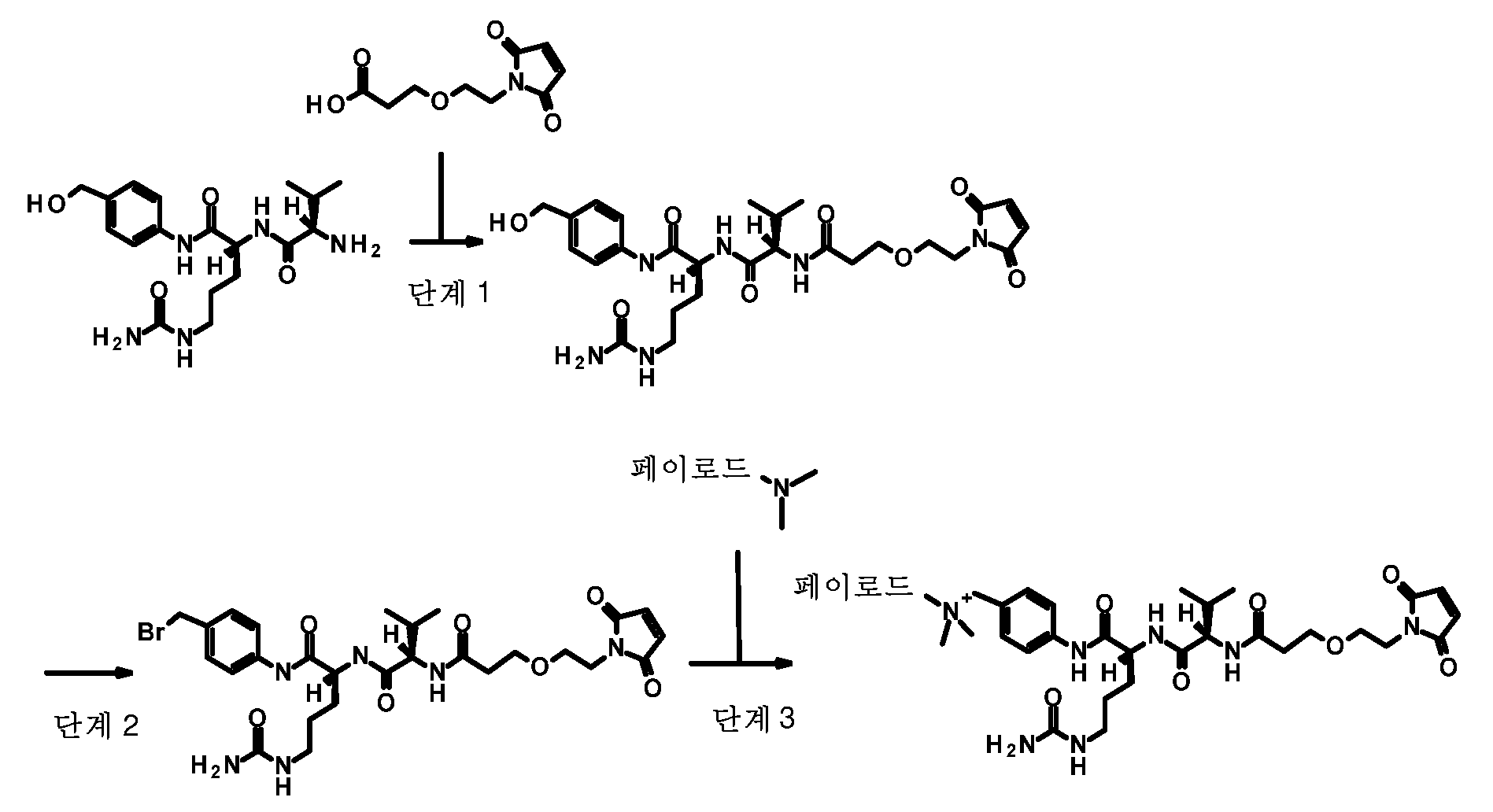
단계 1: (2S)-2-[[(2S)-2-[3-[2-(2,5-디옥소피롤-1-일)에톡시]프로파노일아미노]-3-메틸-부타노일]아미노]-N-[4-(히드록시메틸)페닐]-5-우레이도-펜탄아미드Step 1: (2S)-2-[[(2S)-2-[3-[2-(2,5-dioxopyrrol-1-yl)ethoxy]propanoylamino]-3-methyl-butanoyl]amino]-N-[4-(hydroxymethyl)phenyl]-5-ureido-pentanamide
THF (42 mL) 중 3-[2-(2,5-디옥소피롤-1-일)에톡시]프로판산 (855 mg, 4.01 mmol)의 용액에 N,N'-디시클로헥실메탄디이민 (1.05 g, 5.08 mmol) 및 1-히드록시피롤리딘-2,5-디온 (510 mg, 4.43 mmol)을 첨가하였다. 반응 혼합물을 실온에서 20시간 동안 교반하였다. 침전물을 여과에 의해 제거하고, 여과물을 DMF (42 mL) 중 (2S)-2-[[(2S)-2-아미노-3-메틸-부타노일]아미노]-N-[4-(히드록시메틸)페닐]-5-우레이도-펜탄아미드 (1.27 g, 3.35 mmol)의 용액에 첨가하였다. 반응 혼합물을 실온에서 20시간 동안 교반하고, 디에틸 에테르 (250 mL)로 희석하였다. 고체를 여과에 의해 회수하여 (2S)-2-[[(2S)-2-[3-[2-(2,5-디옥소피롤-1-일)에톡시]프로파노일아미노]-3-메틸-부타노일]아미노]-N-[4-(히드록시메틸)페닐]-5-우레이도-펜탄아미드 (1.81 g)를 수득하였다. 1H NMR (400 MHz, dmso-d6): δ 9.87 (s, 1H), 8.05 (d, 1H), 7.82 (d, 1H), 7.53 (d, 2H), 7.21 (d, 2H), 7.00 (s, 2H), 5.95 (t, 1H), 5.39 (s, 2H), 5.07 (t, 1H), 4.41 (d, 2H), 4.34-4.40 (m, 1H), 4.18-4.22 (m, 1H), 3.42-3.65 (m, 4H), 2.88-3.02 (m, 2H), 2.73 (s, 2H), 2.28-2.45 (m, 2H), 1.91-1.99 (m, 1H), 1.53-1.75 (m, 2H), 1.30-1.147 (m, 2H), 0.85 (d, 3H), 0.81 (d, 3H). 13C NMR (125 MHz, dmso-d6): δ 171.05, 170.83, 170.32, 170.09, 158.82, 137.49, 137.37, 134.50, 126.88, 118.81, 66.66, 66.53, 62.57, 57.49, 53.06, 36.74, 35.76, 30.51, 29.31, 26.79, 25.20, 19.16, 18.07. MS (ESI) m/z [M + H]+ = 575.2.To a solution of 3-[2-(2,5-dioxopyrrol-1-yl)ethoxy]propanoic acid (855 mg, 4.01 mmol) in THF (42 mL) was added N,N'-dicyclohexylmethanediimine (1.05 g, 5.08 mmol) and 1-hydroxypyrrolidine-2,5-dione (510 mg, 4.43 mmol). The reaction mixture was stirred at room temperature for 20 h. The precipitate was removed by filtration, and the filtrate was added to a solution of (2S)-2-[[(2S)-2-amino-3-methyl-butanoyl]amino]-N-[4-(hydroxymethyl)phenyl]-5-ureido-pentanamide (1.27 g, 3.35 mmol) in DMF (42 mL). The reaction mixture was stirred at room temperature for 20 h and diluted with diethyl ether (250 mL). The solid was collected by filtration to afford (2S)-2-[[(2S)-2-[3-[2-(2,5-dioxopyrrol-1-yl)ethoxy]propanoylamino]-3-methyl-butanoyl]amino]-N-[4-(hydroxymethyl)phenyl]-5-ureido-pentanamide (1.81 g). 1H NMR (400 MHz, dmso-d6): δ 9.87 (s, 1H), 8.05 (d, 1H), 7.82 (d, 1H), 7.53 (d, 2H), 7.21 (d, 2H), 7.00 (s, 2H), 5.95 (t, 1H), 5.39 (s, 2H), 5.07 (t, 1H), 4.41 (d, 2H), 4.34-4.40 (m, 1H), 4.18-4.22 (m, 1H), 3.42-3.65 (m, 4H), 2.88-3.02 (m, 2H), 2.73 (s, 2H), 2.28-2.45 (m, 2H), 1.91-1.99 (m, 1H), 1.53-1.75 (m, 2H), 1.30-1.147 (m, 2H), 0.85 (d, 3H), 0.81 (d, 3H). 13 C NMR (125 MHz, dmso-d6): δ 171.05, 170.83, 170.32, 170.09, 158.82, 137.49, 137.37, 134.50, 126.88, 118.81, 66.66, 66.53, 62.57, 57.49, 53.06, 36.74, 35.76, 30.51, 29.31, 26.79, 25.20, 19.16, 18.07. MS (ESI) m/z [M + H] + = 575.2.
단계 2: (2S)-N-[4-(브로모메틸)페닐]-2-[[(2S)-2-[3-[2-(2,5-디옥소피롤-1-일)에톡시]프로파노일아미노]-3-메틸-부타노일]아미노]-5-우레이도-펜탄아미드Step 2: (2S)-N-[4-(bromomethyl)phenyl]-2-[[(2S)-2-[3-[2-(2,5-dioxopyrrol-1-yl)ethoxy]propanoylamino]-3-methyl-butanoyl]amino]-5-ureido-pentanamide
THF (1 mL) 중 (2S)-2-[[(2S)-2-[3-[2-(2,5-디옥소피롤-1-일)에톡시]프로파노일아미노]-3-메틸-부타노일]아미노]-N-[4-(히드록시메틸)페닐]-5-우레이도-펜탄아미드 (37.2 mg, 65 μmol)의 용액에 아르곤 하에 0℃에서 삼브로민화인 (45 μL, 97 mmol)을 적가하였다. 반응물을 0℃에서 1시간 동안 교반하고, 실온에서 2시간 동안 교반하였다. 반응의 진행을 UPLC-MS에 의해 추적하였다: 분취물을 아세토니트릴 중 과량의 모르폴린으로 처리한 후, 상응하는 모르폴린 부가물이 형성되었다. 반응물을 THF (3 mL)로 희석하고, NaHCO3의 포화 용액 2 방울을 첨가하여 켄칭하고, 실온에서 5분 동안 교반하고, 황산마그네슘 상에서 건조시키고, 여과하였다. 조 (2S)-N-[4-(브로모메틸)페닐]-2-[[(2S)-2-[3-[2-(2,5-디옥소피롤-1-일)에톡시]프로파노일아미노]-3-메틸-부타노일]아미노]-5-우레이도-펜탄아미드 (45 mg)를 함유하는 잔류물을 즉시 후속 단계에 사용하였다. MS (ESI) m/z [M + H]+ = 662.62 (모르폴린 부가물).To a solution of (2S)-2-[[(2S)-2-[3-[2-(2,5-dioxopyrrol-1-yl)ethoxy]propanoylamino]-3-methyl-butanoyl]amino]-N-[4-(hydroxymethyl)phenyl]-5-ureido-pentanamide (37.2 mg, 65 μmol) in THF (1 mL) was added phosphorus tribromide (45 μL, 97 mmol) dropwise at 0 °C under argon. The reaction was stirred at 0 °C for 1 h and then at room temperature for 2 h. The progress of the reaction was tracked by UPLC-MS: an aliquot was treated with excess morpholine in acetonitrile, after which the corresponding morpholine adduct was formed. The reaction was diluted with THF (3 mL), quenched by the addition of 2 drops of a saturated solution of NaHCO 3 , stirred at room temperature for 5 min, dried over magnesium sulfate, and filtered. The residue containing crude (2S)-N-[4-(bromomethyl)phenyl]-2-[[(2S)-2-[3-[2-(2,5-dioxopyrrol-1-yl)ethoxy]propanoylamino]-3-methyl-butanoyl]amino]-5-ureido-pentanamide (45 mg) was used immediately in the next step. MS (ESI) m / z [M + H] + = 662.62 (morpholine adduct).
단계 3: 링커 도입을 위한 일반적 절차Step 3: General procedure for linker introduction
DMF (30 mL/mmol) 중 페이로드 (19.6 μmol)의 현탁액에 THF (50 mL/mmol) 중 단계 2의 생성물 (1.2 당량)의 용액 및 DIPEA (3 당량)를 첨가하였다. 반응물을 실온에서 2시간 동안 교반하였다. 조 생성물을 엑스브리지(Xbridge)® 칼럼 상의 반응 혼합물의 직접 침착에 의한 C18 역상 정제용-HPLC를 사용하여 및 TFA 방법을 사용하여 정제함으로써 목적 화합물을 수득하였다.To a suspension of payload (19.6 μmol) in DMF (30 mL/mmol) was added a solution of the product of step 2 (1.2 equiv) in THF (50 mL/mmol) and DIPEA (3 equiv). The reaction was stirred at room temperature for 2 h. The crude product was purified using C18 reverse phase preparative-HPLC by direct deposition of the reaction mixture on an Xbridge® column and using the TFA method to obtain the title compound.
L9A-P27의 제조: 2-[[(5R,7S)-3-[[4-[6-[3-(1,3-벤조티아졸-2-일아미노)-4-메틸-6,7-디히드로-5H-피리도[2,3-c]피리다진-8-일]-2-카르복시-3-피리딜]-5-메틸-피라졸-1-일]메틸]-5,7-디메틸-1-아다만틸]옥시]에틸-[[4-[[(2S)-2-[[(2S)-2-[3-[2-(2,5-디옥소피롤-1-일)에톡시]프로파노일아미노]-3-메틸-부타노일]아미노]-5-우레이도-펜타노일]아미노]페닐]메틸]-디메틸-암모늄;2,2,2-트리플루오로아세테이트Preparation of L9A-P27: 2-[[(5R,7S)-3-[[4-[6-[3-(1,3-benzothiazol-2-ylamino)-4-methyl-6,7-dihydro-5H-pyrido[2,3-c]pyridazin-8-yl]-2-carboxy-3-pyridyl]-5-methyl-pyrazol-1-yl]methyl]-5,7-dimethyl-1-adamantyl]oxy]ethyl-[[4-[[(2S)-2-[[(2S)-2-[3-[2-(2,5-dioxopyrrol-1-yl)ethoxy]propanoylamino]-3-methyl-butanoyl]amino]-5-ureido-pentanoyl]amino]phenyl]methyl]-dimethyl-ammonium; 2,2,2-trifluoroacetate
방법 A 및 적절한 페이로드로서의 P27을 사용하여, 목적 생성물을 수득하였다. HRMS (ESI) [M-CF3CO2]+=1318.6557 (δ=0.2 ppm)Using Method A and P27 as an appropriate payload, the desired product was obtained. HRMS (ESI) [M-CF 3 CO 2 ] + = 1318.6557 (δ = 0.2 ppm)
L9A-P30의 제조: 2-[[(5RS,7SR)-3-[[4-[6-[[6-(1,3-벤조티아졸-2-일아미노)-5-메틸-피리다진-3-일]-메틸-아미노]-2-카르복시-3-피리딜]-5-메틸-피라졸-1-일]메틸]-5,7-디메틸-1-아다만틸]옥시]에틸-[[4-[[(2S)-2-[[(2S)-2-[3-[2-(2,5-디옥소피롤-1-일)에톡시]프로파노일아미노]-3-메틸-부타노일]아미노]-5-우레이도-펜타노일]아미노]페닐]메틸]-디메틸-암모늄;2,2,2-트리플루오로아세트산Preparation of L9A-P30: 2-[[(5RS,7SR)-3-[[4-[6-[[6-(1,3-benzothiazol-2-ylamino)-5-methyl-pyridazin-3-yl]-methyl-amino]-2-carboxy-3-pyridyl]-5-methyl-pyrazol-1-yl]methyl]-5,7-dimethyl-1-adamantyl]oxy]ethyl-[[4-[[(2S)-2-[[(2S)-2-[3-[2-(2,5-dioxopyrrol-1-yl)ethoxy]propanoylamino]-3-methyl-butanoyl]amino]-5-ureido-pentanoyl]amino]phenyl]methyl]-dimethyl-ammonium; 2,2,2-trifluoroacetic acid
방법 A 및 적절한 페이로드로서의 P30을 사용하여, 목적 생성물을 수득하였다. HRMS (ESI) [M-CF3CO2]+=1292.6386 (δ=-0.9 ppm).Using Method A and P30 as an appropriate payload, the desired product was obtained. HRMS (ESI) [M-CF 3 CO 2 ] + =1292.6386 (δ=-0.9 ppm).
L9A-P33의 제조: 6-[3-(1,3-벤조티아졸-2-일아미노)-4-메틸-6,7-디히드로-5H-피리도[2,3-c]피리다진-8-일]-3-[1-[[(5RS,7SR)-3-[2-[1-[[4-[[(2S)-2-[[(2S)-2-[3-[2-(2,5-디옥소피롤-1-일)에톡시]프로파노일아미노]-3-메틸-부타노일]아미노]-5-우레이도-펜타노일]아미노]페닐]메틸]아제판-1-윰-1-일]에톡시]-5,7-디메틸-1-아다만틸]메틸]-5-메틸-피라졸-4-일]피리딘-2-카르복실산;2,2,2-트리플루오로아세트산Preparation of L9A-P33: 6-[3-(1,3-benzothiazol-2-ylamino)-4-methyl-6,7-dihydro-5H-pyrido[2,3-c]pyridazin-8-yl]-3-[1-[[(5RS,7SR)-3-[2-[1-[[4-[[(2S)-2-[[(2S)-2-[3-[2-(2,5-dioxopyrrol-1-yl)ethoxy]propanoylamino]-3-methyl-butanoyl]amino]-5-ureido-pentanoyl]amino]phenyl]methyl]azepan-1-ium-1-yl]ethoxy]-5,7-dimethyl-1-adamantyl]methyl]-5-methyl-pyrazol-4-yl]pyridine-2-carboxylic acid; 2,2,2-trifluoroacetic acid
방법 A 및 적절한 페이로드로서의 P33을 사용하여, 목적 생성물을 수득하였다. HRMS (ESI) [M-CF3CO2]+ 실측치 = 1372.7019 (δ = -0.3 ppm).Using Method A and P33 as an appropriate payload, the desired product was obtained. HRMS (ESI) [M-CF 3 CO 2 ] + found = 1372.7019 (δ = -0.3 ppm).
L9A-P32의 제조: 6-[3-(1,3-벤조티아졸-2-일아미노)-4-메틸-6,7-디히드로-5H-피리도[2,3-c]피리다진-8-일]-3-[1-[[(5RS,7SR)-3-[2-[4-[[4-[[(2S)-2-[[(2S)-2-[3-[2-(2,5-디옥소피롤-1-일)에톡시]프로파노일아미노]-3-메틸-부타노일]아미노]-5-우레이도-펜타노일]아미노]페닐]메틸]-4-이소프로필-피페라진-4-윰-1-일]에톡시]-5,7-디메틸-1-아다만틸]메틸]-5-메틸-피라졸-4-일]피리딘-2-카르복실산;2,2,2-트리플루오로아세트산Manufacturing of L9A-P32: 6-[3-(1,3-Benzothiazol-2-ylamino)-4-methyl-6,7-dihydro-5H-pyrido[2,3-c]pyridazin-8-yl]-3-[1-[[(5RS,7SR)-3-[2-[4-[[4-[[(2S)-2-[[(2S)-2-[3-[2-(2,5-dioxopyrrol-1-yl)ethoxy]propanoylamino]-3-methyl-butanoyl]amino]-5-ureido-pentanoyl]amino]phenyl]methyl]-4-isopropyl-piperazin-4-ium-1-yl]ethoxy]-5,7-dimethyl-1-adamantyl]methyl]-5-methyl-pyrazol-4-yl]pyridine-2-carboxylic acid; 2,2,2-trifluoroacetic acid
방법 A 및 적절한 페이로드로서의 P32를 사용하여, 목적 생성물을 수득하였다. HRMS (ESI) [M-CF3CO2]+=1401.7287 (δ = -0.1 ppm).Using Method A and P32 as an appropriate payload, the desired product was obtained. HRMS (ESI) [M-CF 3 CO 2 ] + = 1401.7287 (δ = -0.1 ppm).
L9A-P38의 제조: 6-[3-(1,3-벤조티아졸-2-일아미노)-4-메틸-6,7-디히드로-5H-피리도[2,3-c]피리다진-8-일]-3-[1-[[(5RS,7SR)-3-[2-[1-[[4-[[(2S)-2-[[(2S)-2-[3-[2-(2,5-디옥소피롤-1-일)에톡시]프로파노일아미노]-3-메틸-부타노일]아미노]-5-우레이도-펜타노일]아미노]페닐]메틸]피페리딘-1-윰-1-일]에톡시]-5,7-디메틸-1-아다만틸]메틸]-5-메틸-피라졸-4-일]피리딘-2-카르복실산;2,2,2-트리플루오로아세트산Manufacturing of L9A-P38: 6-[3-(1,3-Benzothiazol-2-ylamino)-4-methyl-6,7-dihydro-5H-pyrido[2,3-c]pyridazin-8-yl]-3-[1-[[(5RS,7SR)-3-[2-[1-[[4-[[(2S)-2-[[(2S)-2-[3-[2-(2,5-dioxopyrrol-1-yl)ethoxy]propanoylamino]-3-methyl-butanoyl]amino]-5-ureido-pentanoyl]amino]phenyl]methyl]piperidin-1-ium-1-yl]ethoxy]-5,7-dimethyl-1-adamantyl]methyl]-5-methyl-pyrazol-4-yl]pyridine-2-carboxylic acid; 2,2,2-trifluoroacetic acid
방법 A 및 적절한 페이로드로서의 P38을 사용하여, 목적 생성물을 수득하였다. HRMS (ESI) [M-CF3CO2]+=1358.6803 (δ = -4.7 ppm).Using Method A and P38 as an appropriate payload, the desired product was obtained. HRMS (ESI) [M-CF 3 CO 2 ] + =1358.6803 (δ = -4.7 ppm).
L9A-P39의 제조: 6-[3-(1,3-벤조티아졸-2-일아미노)-4-메틸-6,7-디히드로-5H-피리도[2,3-c]피리다진-8-일]-3-[1-[[(5SR,7RS)-3-[2-[4-[[4-[[(2S)-2-[[(2S)-2-[3-[2-(2,5-디옥소피롤-1-일)에톡시]프로파노일아미노]-3-메틸-부타노일]아미노]-5-우레이도-펜타노일]아미노]페닐]메틸]모르폴린-4-윰-4-일]에톡시]-5,7-디메틸-1-아다만틸]메틸]-5-메틸-피라졸-4-일]피리딘-2-카르복실레이트;2,2,2-트리플루오로아세트산Manufacturing of L9A-P39: 6-[3-(1,3-benzothiazol-2-ylamino)-4-methyl-6,7-dihydro-5H-pyrido[2,3-c]pyridazin-8-yl]-3-[1-[[(5SR,7RS)-3-[2-[4-[[4-[[(2S)-2-[[(2S)-2-[3-[2-(2,5-dioxopyrrol-1-yl)ethoxy]propanoylamino]-3-methyl-butanoyl]amino]-5-ureido-pentanoyl]amino]phenyl]methyl]morpholin-4-ium-4-yl]ethoxy]-5,7-dimethyl-1-adamantyl]methyl]-5-methyl-pyrazol-4-yl]pyridine-2-carboxylate; 2,2,2-trifluoroacetic acid
방법 A 및 적절한 페이로드로서의 P39를 사용하여, 목적 생성물을 수득하였다.Using Method A and P39 as an appropriate payload, the desired product was obtained.
HRMS (ESI) [M+H]+ 실측치 = 1360.6634 (δ = -1.9 ppm).HRMS (ESI) [M+H] + found = 1360.6634 (δ = -1.9 ppm).
L9A-P41의 제조: 6-[3-(1,3-벤조티아졸-2-일아미노)-4-메틸-6,7-디히드로-5H-피리도[2,3-c]피리다진-8-일]-3-[1-[[(5SR,7RS)-3-[3-[1-[[4-[[(2S)-2-[[(2S)-2-[3-[2-(2,5-디옥소피롤-1-일)에톡시]프로파노일아미노]-3-메틸-부타노일]아미노]-5-우레이도-펜타노일]아미노]페닐]메틸]피롤리딘-1-윰-1-일]프로필]-5,7-디메틸-1-아다만틸]메틸]-5-메틸-피라졸-4-일]피리딘-2-카르복실산;2,2,2-트리플루오로아세트산Preparation of L9A-P41: 6-[3-(1,3-benzothiazol-2-ylamino)-4-methyl-6,7-dihydro-5H-pyrido[2,3-c]pyridazin-8-yl]-3-[1-[[(5SR,7RS)-3-[3-[1-[[4-[[(2S)-2-[[(2S)-2-[3-[2-(2,5-dioxopyrrol-1-yl)ethoxy]propanoylamino]-3-methyl-butanoyl]amino]-5-ureido-pentanoyl]amino]phenyl]methyl]pyrrolidin-1-ium-1-yl]propyl]-5,7-dimethyl-1-adamantyl]methyl]-5-methyl-pyrazol-4-yl]pyridine-2-carboxylic acid; 2,2,2-trifluoroacetic acid
방법 A 및 적절한 페이로드로서의 P41을 사용하여, 목적 생성물을 수득하였다. HRMS (ESI) [M-CF3CO2]+ 실측치 = 1342.6844 (δ = -5.5 ppm).Using Method A and P41 as an appropriate payload, the desired product was obtained. HRMS (ESI) [M-CF 3 CO 2 ] + found = 1342.6844 (δ = -5.5 ppm).
L9A-P42의 제조: 3-[1-[[(5RS,7SR)-3-[2-[1-[[4-[[(2S)-2-[[(2S)-2-[3-[2-(2,5-디옥소피롤-1-일)에톡시]프로파노일아미노]-3-메틸-부타노일]아미노]-5-우레이도-펜타노일]아미노]페닐]메틸]피롤리딘-1-윰-1-일]에톡시]-5,7-디메틸-1-아다만틸]메틸]-5-메틸-피라졸-4-일]-6-[4-메틸-3-[(5-메틸-1,3-벤조티아졸-2-일)아미노]-6,7-디히드로-5H-피리도[2,3-c]피리다진-8-일]피리딘-2-카르복실산;2,2,2-트리플루오로아세트산Manufacturing of L9A-P42: 3-[1-[[(5RS,7SR)-3-[2-[1-[[4-[[(2S)-2-[[(2S)-2-[3-[2-(2,5-dioxopyrrol-1-yl)ethoxy]propanoylamino]-3-methyl-butanoyl]amino]-5-ureido-pentanoyl]amino]phenyl]methyl]pyrrolidin-1-ium-1-yl]ethoxy]-5,7-dimethyl-1-adamantyl]methyl]-5-methyl-pyrazol-4-yl]-6-[4-methyl-3-[(5-methyl-1,3-benzothiazol-2-yl)amino]-6,7-dihydro-5H-pyrido[2,3-c]pyridazin-8-yl]pyridine-2-carboxylic acid; 2,2,2-trifluoroacetic acid
방법 A 및 적절한 페이로드로서의 P42를 사용하여, 목적 생성물을 수득하였다. HRMS (ESI) [M-CF3CO2]+ 실측치 = 1358.6807 (δ = -4.4ppm).Using Method A and P42 as an appropriate payload, the desired product was obtained. HRMS (ESI) [M-CF 3 CO 2 ] + found = 1358.6807 (δ = -4.4 ppm).
방법 BMethod B
단계 1:Step 1:
DMF (0.4 mL) 중 파라 메톡시 벤질 (PMB)-보호된 페이로드 (11.3 μmol)의 현탁액에 THF (0.2 mL) 중 (2S)-N-[4-(브로모메틸)페닐]-2-[[(2S)-2-[3-[2-(2,5-디옥소피롤-1-일)에톡시]프로파노일아미노]-3-메틸-부타노일]아미노]-5-우레이도-펜탄아미드 (12.4 mg, 13.6 μmol)의 용액 및 DIPEA (9.8 μL, 56.7 μmol)를 첨가하였다. 반응물을 실온에서 4시간 동안 교반하였다. 조 생성물을 엑스브리지® 칼럼 상의 반응 혼합물의 직접 침착에 의한 C18 역상 정제용-HPLC를 사용하여 및 TFA 방법을 사용하여 정제함으로써 목적 화합물을 수득하였으며, 이를 단계 2에 직접 사용하였다.To a suspension of para methoxy benzyl (PMB)-protected payload (11.3 μmol) in DMF (0.4 mL) was added a solution of (2S)-N-[4-(bromomethyl)phenyl]-2-[[(2S)-2-[3-[2-(2,5-dioxopyrrol-1-yl)ethoxy]propanoylamino]-3-methyl-butanoyl]amino]-5-ureido-pentanamide (12.4 mg, 13.6 μmol) in THF (0.2 mL) and DIPEA (9.8 μL, 56.7 μmol). The reaction was stirred at room temperature for 4 h. The crude product was purified using C18 reverse phase preparative-HPLC by direct deposition of the reaction mixture on an XBridge® column and using the TFA method to obtain the title compound, which was used directly in
단계 2:Step 2:
DCM (3.2 mL) 중 단계 1로부터의 생성물의 현탁액에 TFA (320 μL, 4.18 mmol)를 첨가하였다. 반응물을 실온에서 1시간 동안 교반하였다. 용매를 증발시키고, 잔류물을 DMF (500 μL) 중에 용해시켰다. 이 조 용액을 엑스브리지® 칼럼 상의 반응 혼합물의 직접 침착에 의한 C18 역상 정제용-HPLC를 사용하여 및 TFA 방법을 사용하여 정제함으로써 목적 생성물을 수득하였다.To a suspension of the product from
L9A-P35의 제조: 2-[[(5RS,7SR)-3-[[4-[6-[3-(1,3-벤조티아졸-2-일아미노)-4-메틸-6,7-디히드로-5H-피리도[2,3-c]피리다진-8-일]-2-카르복시-3-피리딜]-5-메틸-피라졸-1-일]메틸]-5,7-디메틸-1-아다만틸]옥시]에틸-[[4-[[(2S)-2-[[(2S)-2-[3-[2-(2,5-디옥소피롤-1-일)에톡시]프로파노일아미노]-3-메틸-부타노일]아미노]-5-우레이도-펜타노일]아미노]페닐]메틸]-(2-히드록시에틸)-메틸-암모늄;2,2,2-트리플루오로아세트산Preparation of L9A-P35: 2-[[(5RS,7SR)-3-[[4-[6-[3-(1,3-benzothiazol-2-ylamino)-4-methyl-6,7-dihydro-5H-pyrido[2,3-c]pyridazin-8-yl]-2-carboxy-3-pyridyl]-5-methyl-pyrazol-1-yl]methyl]-5,7-dimethyl-1-adamantyl]oxy]ethyl-[[4-[[(2S)-2-[[(2S)-2-[3-[2-(2,5-dioxopyrrol-1-yl)ethoxy]propanoylamino]-3-methyl-butanoyl]amino]-5-ureido-pentanoyl]amino]phenyl]methyl]-(2-hydroxyethyl)-methyl-ammonium; 2,2,2-trifluoroacetic acid
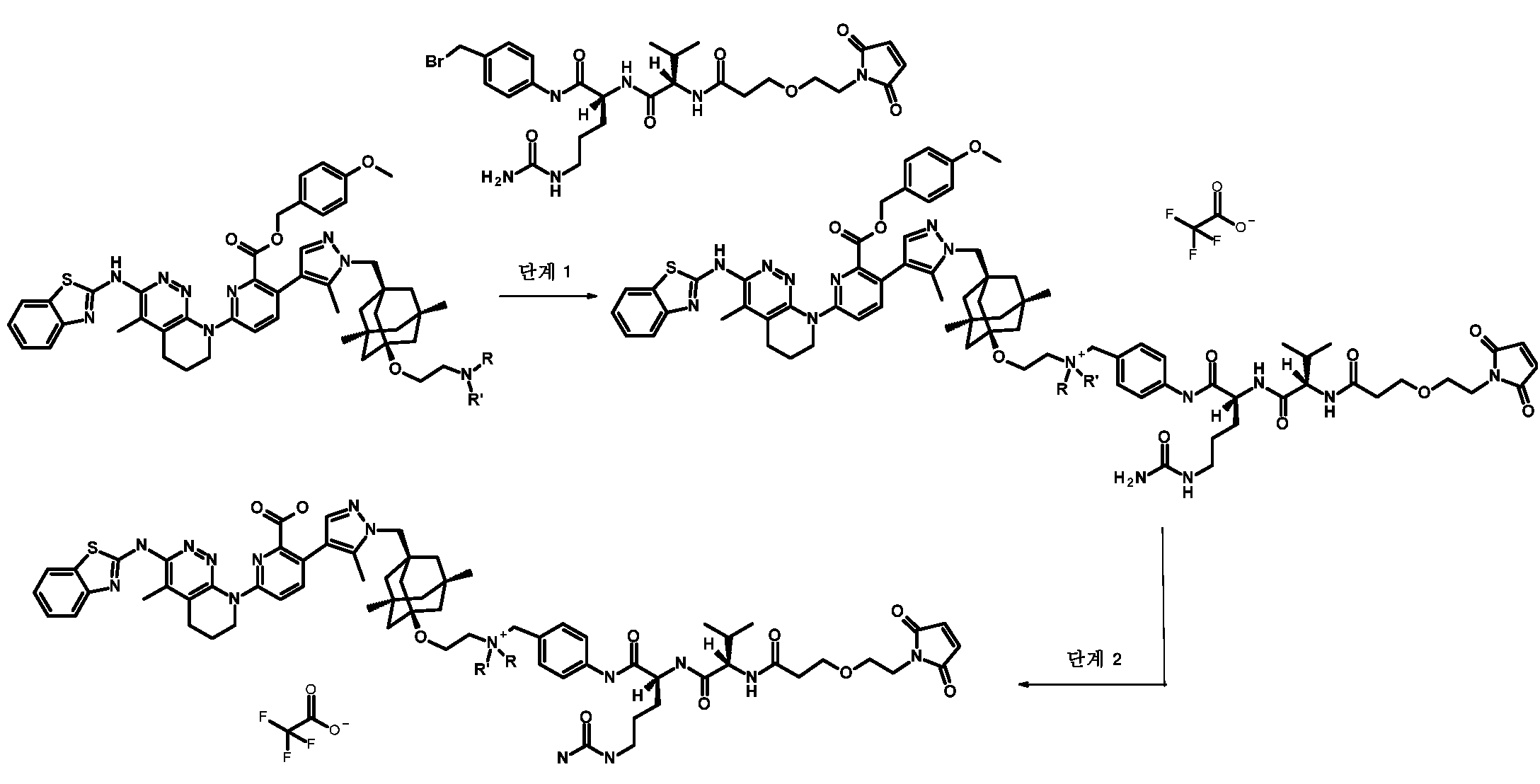
방법 B 및 적절한 PMB-보호된 페이로드로서의 P35의 전구체를 사용하여, 목적 생성물을 수득하였다. HRMS (ESI) [M-CF3CO2]+ 실측치 = 1318.6531 (δ = -1.7 ppm).Using Method B and the precursor of P35 as an appropriate PMB-protected payload, the desired product was obtained. HRMS (ESI) [M-CF 3 CO 2 ] + found = 1318.6531 (δ = -1.7 ppm).
L9A-P36의 제조: 2-[[(5RS,7SR)-3-[[4-[6-[3-(1,3-벤조티아졸-2-일아미노)-4-메틸-6,7-디히드로-5H-피리도[2,3-c]피리다진-8-일]-2-카르복시-3-피리딜]-5-메틸-피라졸-1-일]메틸]-5,7-디메틸-1-아다만틸]옥시]에틸-[[4-[[(2S)-2-[[(2S)-2-[3-[2-(2,5-디옥소피롤-1-일)에톡시]프로파노일아미노]-3-메틸-부타노일]아미노]-5-우레이도-펜타노일]아미노]페닐]메틸]-(3-메톡시프로필)-메틸-암모늄;2,2,2-트리플루오로아세트산Preparation of L9A-P36: 2-[[(5RS,7SR)-3-[[4-[6-[3-(1,3-benzothiazol-2-ylamino)-4-methyl-6,7-dihydro-5H-pyrido[2,3-c]pyridazin-8-yl]-2-carboxy-3-pyridyl]-5-methyl-pyrazol-1-yl]methyl]-5,7-dimethyl-1-adamantyl]oxy]ethyl-[[4-[[(2S)-2-[[(2S)-2-[3-[2-(2,5-dioxopyrrol-1-yl)ethoxy]propanoylamino]-3-methyl-butanoyl]amino]-5-ureido-pentanoyl]amino]phenyl]methyl]-(3-methoxypropyl)-methyl-ammonium; 2,2,2-trifluoroacetic acid
방법 B 및 적절한 PMB-보호된 페이로드로서의 P36의 전구체를 사용하여, 목적 생성물을 수득하였다. HRMS (ESI) [M-CF3CO2]+ 실측치 = 1376.6930 (δ = -3.1 ppm).Using Method B and the precursor of P36 as an appropriate PMB-protected payload, the desired product was obtained. HRMS (ESI) [M-CF 3 CO 2 ] + found = 1376.6930 (δ = -3.1 ppm).
L9A-P37의 제조: 2-[[(5SR,7RS)-3-[[4-[6-[3-(1,3-벤조티아졸-2-일아미노)-4-메틸-6,7-디히드로-5H-피리도[2,3-c]피리다진-8-일]-2-카르복시-3-피리딜]-5-메틸-피라졸-1-일]메틸]-5,7-디메틸-1-아다만틸]옥시]에틸-[[4-[[(2S)-2-[[(2S)-2-[3-[2-(2,5-디옥소피롤-1-일)에톡시]프로파노일아미노]-3-메틸-부타노일]아미노]-5-우레이도-펜타노일]아미노]페닐]메틸]-(4-히드록시부틸)-메틸-암모늄;2,2,2-트리플루오로아세트산Manufacturing of L9A-P37: 2-[[(5SR,7RS)-3-[[4-[6-[3-(1,3-benzothiazol-2-ylamino)-4-methyl-6,7-dihydro-5H-pyrido[2,3-c]pyridazin-8-yl]-2-carboxy-3-pyridyl]-5-methyl-pyrazol-1-yl]methyl]-5,7-dimethyl-1-adamantyl]oxy]ethyl-[[4-[[(2S)-2-[[(2S)-2-[3-[2-(2,5-dioxopyrrol-1-yl)ethoxy]propanoylamino]-3-methyl-butanoyl]amino]-5-ureido-pentanoyl]amino]phenyl]methyl]-(4-hydroxybutyl)-methyl-ammonium; 2,2,2-trifluoroacetic acid
방법 B 및 적절한 PMB-보호된 페이로드로서의 P37의 전구체를 사용하여, 목적 생성물을 수득하였다. HRMS (ESI) [M-CF3CO2]+ 실측치 = 1376.6918 (δ= -3.9 ppm).Using Method B and the precursor of P37 as an appropriate PMB-protected payload, the desired product was obtained. HRMS (ESI) [M-CF 3 CO 2 ] + found = 1376.6918 (δ= -3.9 ppm).
방법 CMethod C
L9C-P19의 제조: 6-[3-(1,3-벤조티아졸-2-일아미노)-4-메틸-6,7-디히드로-5H-피리도[2,3-c]피리다진-8-일]-3-[1-[[(5SR,7RS)-3-[2-[[(3S)-3,4-디히드록시부틸]-[[4-[[(2S)-2-[[(2S)-2-[3-[2-(2,5-디옥소피롤-1-일)에톡시]프로파노일아미노]-3-메틸-부타노일]아미노]-5-우레이도-펜타노일]아미노]페닐]메톡시카르보닐]아미노]에톡시]-5,7-디메틸-1-아다만틸]메틸]-5-메틸-피라졸-4-일]피리딘-2-카르복실산Preparation of L9C-P19: 6-[3-(1,3-benzothiazol-2-ylamino)-4-methyl-6,7-dihydro-5H-pyrido[2,3-c]pyridazin-8-yl]-3-[1-[[(5SR,7RS)-3-[2-[[(3S)-3,4-dihydroxybutyl]-[[4-[[(2S)-2-[[(2S)-2-[3-[2-(2,5-dioxopyrrol-1-yl)ethoxy]propanoylamino]-3-methyl-butanoyl]amino]-5-ureido-pentanoyl]amino]phenyl]methoxycarbonyl]amino]ethoxy]-5,7-dimethyl-1-adamantyl]methyl]-5-methyl-pyrazol-4-yl]pyridine-2-carboxylic acid

단계 1: [4-[[(2S)-2-[[(2S)-2-[3-[2-(2,5-디옥소피롤-1-일)에톡시]프로파노일아미노]-3-메틸-부타노일]아미노]-5-우레이도-펜타노일]아미노]페닐]메틸 (4-니트로페닐) 카르보네이트Step 1: [4-[[(2S)-2-[[(2S)-2-[3-[2-(2,5-dioxopyrrol-1-yl)ethoxy]propanoylamino]-3-methyl-butanoyl]amino]-5-ureido-pentanoyl]amino]phenyl]methyl (4-nitrophenyl) carbonate
건조 DMF 중 (2S)-2-[[(2S)-2-[3-[2-(2,5-디옥소피롤-1-일)에톡시]프로파노일아미노]-3-메틸-부타노일]아미노]-N-[4-(히드록시메틸)페닐]-5-우레이도-펜탄아미드 (방법 A, 단계 1로부터) (580 mg; 1.0 mmol)의 용액에 DIPEA (0.5 mL; 3.025 mmol; 3 당량) 및 비스(4-니트로페닐)카르보네이트 (615 mg; 2.02 mmol; 2 당량)를 첨가하였다. 반응 혼합물을 실온에서 68시간 동안 교반하였다. 반응 혼합물을 디에틸 에테르 (15 mL)로 희석하고, 고체를 여과하여 표제 화합물 (589 mg; 79%)을 수득하였다. 1H NMR (dmso-d6): 0.82 (d, 3H, J = 6.8 Hz), 0.85 (d, 3H, J = 6.8 Hz), 1.47-1.33 (m, 2H), 1.74-1.54 (m, 2H), 1.92 -2.00 (m, 1H), 2.32-2.45 (m, 2H), 2.90-3.06 (m, 2H), 3.49-3.46 (m, 2H), 3.60-3.52 (m, 4H), 4.21 (dd, 1H, J = 8.7 및 6.8 Hz), 4.39 (m, 1H), 5.24 (s, 2H), 5.39 (s, 2H), 5.96 (t, 1H, J = 5.6 Hz), 7.00 (s, 2H), 7.41 (d, 2H, J = 8.8 Hz), 7.57 (dd, 2H, J = 6.8 및 2.4Hz), 7.65 (d, 2H, J = 8.4 Hz), 7.83 (d, 1H, J = 8.8 Hz), 8.10 (d, 1H, J = 7.6 Hz), 8.31 (dd, 2H, J = 6.8 및 2.4 Hz), 10.03 (s, 1H). LCMS 양성 모드 740.14 검출 (M+H+).To a solution of (2S)-2-[[(2S)-2-[3-[2-(2,5-dioxopyrrol-1-yl)ethoxy]propanoylamino]-3-methyl-butanoyl]amino]-N-[4-(hydroxymethyl)phenyl]-5-ureido-pentanamide (from Method A, Step 1) (580 mg; 1.0 mmol) in dry DMF was added DIPEA (0.5 mL; 3.025 mmol; 3 equiv) and bis(4-nitrophenyl)carbonate (615 mg; 2.02 mmol; 2 equiv). The reaction mixture was stirred at room temperature for 68 h. The reaction mixture was diluted with diethyl ether (15 mL) and the solid was filtered to give the title compound (589 mg; 79%). 1H NMR (dmso-d 6 ): 0.82 (d, 3H, J = 6.8 Hz), 0.85 (d, 3H, J = 6.8 Hz), 1.47-1.33 (m, 2H), 1.74-1.54 (m, 2H), 1.92 -2.00 (m, 1H), 2.32-2.45 (m, 2H), 2.90-3.06 (m, 2H), 3.49-3.46 (m, 2H), 3.60-3.52 (m, 4H), 4.21 (dd, 1H, J = 8.7 and 6.8 Hz), 4.39 (m, 1H), 5.24 (s, 2H), 5.39 (s, 2H), 5.96 (t, 1H, J = 5.6 Hz), 7.00 (s, 2H), 7.41 (d, 2H, J = 8.8 Hz), 7.57 (dd, 2H, J = 6.8 and 2.4 Hz), 7.65 (d, 2H, J = 8.4 Hz), 7.83 (d, 1H, J = 8.8 Hz), 8.10 (d, 1H, J = 7.6 Hz), 8.31 (dd, 2H, J = 6.8 and 2.4 Hz), 10.03 (s, 1H). LCMS positive mode 740.14 detected (M+H + ).
단계 2: 6-[3-(1,3-벤조티아졸-2-일아미노)-4-메틸-6,7-디히드로-5H-피리도[2,3-c]피리다진-8-일]-3-[1-[[(5SR,7RS)-3-[2-[[(3S)-3,4-디히드록시부틸]-[[4-[[(2S)-2-[[(2S)-2-[3-[2-(2,5-디옥소피롤-1-일)에톡시]프로파노일아미노]-3-메틸-부타노일]아미노]-5-우레이도-펜타노일]아미노]페닐]메톡시카르보닐]아미노]에톡시]-5,7-디메틸-1-아다만틸]메틸]-5-메틸-피라졸-4-일]피리딘-2-카르복실산.Step 2: 6-[3-(1,3-Benzothiazol-2-ylamino)-4-methyl-6,7-dihydro-5H-pyrido[2,3-c]pyridazin-8-yl]-3-[1-[[(5SR,7RS)-3-[2-[[(3S)-3,4-dihydroxybutyl]-[[4-[[(2S)-2-[[(2S)-2-[3-[2-(2,5-dioxopyrrol-1-yl)ethoxy]propanoylamino]-3-methyl-butanoyl]amino]-5-ureido-pentanoyl]amino]phenyl]methoxycarbonyl]amino]ethoxy]-5,7-dimethyl-1-adamantyl]methyl]-5-methyl-pyrazol-4-yl]pyridine-2-carboxylic acid.
DMF (0.5 mL) 중 P19 (15 mg, 0.016 mmol)의 현탁액에 DIPEA (14 μL, 0.0801 mmol) 및 단계 1의 카르보네이트 (14.2 mg, 0.0192 mmol)를 첨가하고, 혼합물을 실온에서 18시간 동안 교반하였다. 조 생성물을 엑스브리지® 칼럼 상의 반응 혼합물의 직접 침착에 의한 C18 역상 정제용-HPLC를 사용하여 및 TFA 방법을 사용하여 정제함으로써 표제 화합물 (6.9 mg, 수율 30%)을 수득하였다. 1H NMR (500 MHz, dmso-d6) δ ppm (m, 2 H), (m, 4 H), (m, 10 H), (m, 2 H), 9.98 (s), 8.08 (d), 7.9 (d, 1 H), 7.82 (d), 7.8 (큰, 1 H), 7.79 (큰NC, 1 H), 7.6 (m, 2 H), 7.49 (큰NC, 1 H), 7.43 (br s, 1 H), 7.37 (t, 1 H), 7.28 (d, 2 H), 7.19 (t, 1 H), 7 (s, 2 H), 5.97 (br s), 5.42 (큰), 4.99 (s, 2 H), 4.38 (m, 1 H), 4.22 (t, 1 H), 4.03 (t, 2 H), 3.86 (m, 2 H), 3.57/3.46/3.28/3.21 (m, 6 H), 3.53 (m, 2 H), 3.42 (m, 2 H), 3.38 (m, 1 H), 3.01/2.94 (2m, 2 H), 2.89 (t, 2 H), 2.43/2.32 (2m, 2 H), 2.37 (s, 3 H), 2.2 (s, 3 H), 2.03 (m, 2 H), 1.95 (m, 1 H), 1.7/1.38 (2m, 2 H), 0.84 (m, 6 H), 0.84 (m, 6 H). 13C NMR (500 MHz, dmso-d6) δ ppm 137.6, 135.5, 128.7, 126.8, 122.7, 122.1, 119.1, 118.4, 69.7, 66.9, 66.2, 58.9, 58.4, 58.3, 53.7, 50.5/47.1/43.5, 48.3/46, 46, 39, 36.9, 36.6, 32.8, 30.9, 30.5, 30, 27.7, 24.4, 21.3, 19.8, 13.5, 10.8. HRMS (ESI) [M+H]+ 실측치 = 1422.6688 (δ = 1.6 ppm).To a suspension of P19 (15 mg, 0.016 mmol) in DMF (0.5 mL) were added DIPEA (14 μL, 0.0801 mmol) and the carbonate of step 1 (14.2 mg, 0.0192 mmol), and the mixture was stirred at room temperature for 18 h. The crude product was purified using C18 reverse phase preparative-HPLC by direct deposition of the reaction mixture on an XBridge® column and using the TFA method to give the title compound (6.9 mg, yield 30%). 1 H NMR (500 MHz, dmso-d6) δ ppm (m, 2 H), (m, 4 H), (m, 10 H), (m, 2 H), 9.98 (s), 8.08 (d), 7.9 (d, 1 H), 7.82 (d), 7.8 (large, 1 H), 7.79 (large NC, 1 H), 7.6 (m, 2 H), 7.49 (largeNC, 1 H), 7.43 (br s, 1 H), 7.37 (t, 1 H), 7.28 (d, 2 H), 7.19 (t, 1 H), 7 (s, 2 H), 5.97 (br s), 5.42 (large), 4.99 (s, 2 H), 4.38 (m, 1 H), 4.22 (t, 1 H), 4.03 (t, 2 H), 3.86 (m, 2 H), 3.57/3.46/3.28/3.21 (m, 6 H), 3.53 (m, 2 H), 3.42 (m, 2 H), 3.38 (m, 1 H), 3.01/2.94 (2m, 2) H), 2.89 (t, 2 H), 2.43/2.32 (2m, 2 H), 2.37 (s, 3 H), 2.2 (s, 3 H), 2.03 (m, 2 H), 1.95 (m, 1 H), 1.7/1.38 (2m, 2 H), 0.84 (m, 6 H), 0.84 (m, 6 H). 13 C NMR (500 MHz, dmso-d6) δ ppm 137.6, 135.5, 128.7, 126.8, 122.7, 122.1, 119.1, 118.4, 69.7, 66.9, 66.2, 58.9, 58.4, 58.3, 53.7, 50.5/47.1/43.5, 48.3/46, 46, 39, 36.9, 36.6, 32.8, 30.9, 30.5, 30, 27.7, 24.4, 21.3, 19.8, 13.5, 10.8. HRMS (ESI) [M+H] + found = 1422.6688 (δ = 1.6 ppm).
L9C-P22의 제조: 6-[3-(1,3-벤조티아졸-2-일아미노)-4-메틸-6,7-디히드로-5H-피리도[2,3-c]피리다진-8-일]-3-[1-[[(5RS,7SR)-3-[2-[[4-[[(2S)-2-[[(2S)-2-[3-[2-(2,5-디옥소피롤-1-일)에톡시]프로파노일아미노]-3-메틸-부타노일]아미노]-5-우레이도-펜타노일]아미노]페닐]메톡시카르보닐-(4-히드록시부틸)아미노]에톡시]-5,7-디메틸-1-아다만틸]메틸]-5-메틸-피라졸-4-일]피리딘-2-카르복실산;2,2,2-트리플루오로아세트산Preparation of L9C-P22: 6-[3-(1,3-benzothiazol-2-ylamino)-4-methyl-6,7-dihydro-5H-pyrido[2,3-c]pyridazin-8-yl]-3-[1-[[(5RS,7SR)-3-[2-[[4-[[(2S)-2-[[(2S)-2-[3-[2-(2,5-dioxopyrrol-1-yl)ethoxy]propanoylamino]-3-methyl-butanoyl]amino]-5-ureido-pentanoyl]amino]phenyl]methoxycarbonyl-(4-hydroxybutyl)amino]ethoxy]-5,7-dimethyl-1-adamantyl]methyl]-5-methyl-pyrazol-4-yl]pyridine-2-carboxylic acid; 2,2,2-trifluoroacetic acid
방법 C 및 적절한 페이로드로서의 P22를 사용하여, 목적 생성물을 수득하였다. HRMS (ESI) [M+H]+ 실측치 =1406.6728 (δ=1.0 ppm).Using Method C and P22 as an appropriate payload, the desired product was obtained. HRMS (ESI) [M+H] + found = 1406.6728 (δ=1.0 ppm).
L9C-P23의 제조: 6-[3-(1,3-벤조티아졸-2-일아미노)-4-메틸-6,7-디히드로-5H-피리도[2,3-c]피리다진-8-일]-3-[1-[[(5SR,7RS)-3-[2-[[4-[[(2S)-2-[[(2S)-2-[3-[2-(2,5-디옥소피롤-1-일)에톡시]프로파노일아미노]-3-메틸-부타노일]아미노]-5-우레이도-펜타노일]아미노]페닐]메톡시카르보닐-[3-히드록시-2-(히드록시메틸)프로필]아미노]에톡시]-5,7-디메틸-1-아다만틸]메틸]-5-메틸-피라졸-4-일]피리딘-2-카르복실산;2,2,2-트리플루오로아세트산Manufacturing of L9C-P23: 6-[3-(1,3-Benzothiazol-2-ylamino)-4-methyl-6,7-dihydro-5H-pyrido[2,3-c]pyridazin-8-yl]-3-[1-[[(5SR,7RS)-3-[2-[[4-[[(2S)-2-[[(2S)-2-[3-[2-(2,5-dioxopyrrol-1-yl)ethoxy]propanoylamino]-3-methyl-butanoyl]amino]-5-ureido-pentanoyl]amino]phenyl]methoxycarbonyl-[3-hydroxy-2-(hydroxymethyl)propyl]amino]ethoxy]-5,7-dimethyl-1-adamantyl]methyl]-5-methyl-pyrazol-4-yl]pyridine-2-carboxylic acid; 2,2,2-trifluoroacetic acid
방법 C 및 적절한 페이로드로서의 P23을 사용하여, 목적 생성물을 수득하였다. HRMS (ESI) [M+H]+ 실측치 = 1422.6670 (δ = 0.5 ppm).Using Method C and P23 as an appropriate payload, the desired product was obtained. HRMS (ESI) [M+H] + found = 1422.6670 (δ = 0.5 ppm).
L9C-P24의 제조: 6-[3-(1,3-벤조티아졸-2-일아미노)-4-메틸-6,7-디히드로-5H-피리도[2,3-c]피리다진-8-일]-3-[1-[[(5RS,7SR)-3-[2-[[4-[[(2S)-2-[[(2S)-2-[3-[2-(2,5-디옥소피롤-1-일)에톡시]프로파노일아미노]-3-메틸-부타노일]아미노]-5-우레이도-펜타노일]아미노]페닐]메톡시카르보닐-[2-히드록시-1-(히드록시메틸)에틸]아미노]에톡시]-5,7-디메틸-1-아다만틸]메틸]-5-메틸-피라졸-4-일]피리딘-2-카르복실산;2,2,2-트리플루오로아세트산Manufacturing of L9C-P24: 6-[3-(1,3-Benzothiazol-2-ylamino)-4-methyl-6,7-dihydro-5H-pyrido[2,3-c]pyridazin-8-yl]-3-[1-[[(5RS,7SR)-3-[2-[[4-[[(2S)-2-[[(2S)-2-[3-[2-(2,5-dioxopyrrol-1-yl)ethoxy]propanoylamino]-3-methyl-butanoyl]amino]-5-ureido-pentanoyl]amino]phenyl]methoxycarbonyl-[2-hydroxy-1-(hydroxymethyl)ethyl]amino]ethoxy]-5,7-dimethyl-1-adamantyl]methyl]-5-methyl-pyrazol-4-yl]pyridine-2-carboxylic acid; 2,2,2-trifluoroacetic acid
방법 C 및 적절한 페이로드로서의 P24를 사용하여, 목적 생성물을 수득하였다. HRMS (ESI) [M+H]+ 실측치 = 1408.6518 (δ = 0.8 ppm).Using Method C and P24 as an appropriate payload, the desired product was obtained. HRMS (ESI) [M+H] + found = 1408.6518 (δ = 0.8 ppm).
L9C-P25의 제조: 6-[3-(1,3-벤조티아졸-2-일아미노)-4-메틸-6,7-디히드로-5H-피리도[2,3-c]피리다진-8-일]-3-[1-[[(5SR,7RS)-3-[2-[[4-[[(2S)-2-[[(2S)-2-[3-[2-(2,5-디옥소피롤-1-일)에톡시]프로파노일아미노]-3-메틸-부타노일]아미노]-5-우레이도-펜타노일]아미노]페닐]메톡시카르보닐-(3-히드록시프로필)아미노]에톡시]-5,7-디메틸-1-아다만틸]메틸]-5-메틸-피라졸-4-일]피리딘-2-카르복실산;2,2,2-트리플루오로아세트산Preparation of L9C-P25: 6-[3-(1,3-benzothiazol-2-ylamino)-4-methyl-6,7-dihydro-5H-pyrido[2,3-c]pyridazin-8-yl]-3-[1-[[(5SR,7RS)-3-[2-[[4-[[(2S)-2-[[(2S)-2-[3-[2-(2,5-dioxopyrrol-1-yl)ethoxy]propanoylamino]-3-methyl-butanoyl]amino]-5-ureido-pentanoyl]amino]phenyl]methoxycarbonyl-(3-hydroxypropyl)amino]ethoxy]-5,7-dimethyl-1-adamantyl]methyl]-5-methyl-pyrazol-4-yl]pyridine-2-carboxylic acid; 2,2,2-trifluoroacetic acid
방법 C 및 적절한 페이로드로서의 P25를 사용하여, 목적 생성물을 수득하였다. HRMS (ESI) [M+H]+ 실측치 =1366.6396 (δ=-0.4 ppm).Using Method C and P25 as an appropriate payload, the desired product was obtained. HRMS (ESI) [M+H] + found = 1366.6396 (δ=-0.4 ppm).
L9C-P26의 제조: 6-[[6-(1,3-벤조티아졸-2-일아미노)-5-메틸-피리다진-3-일]-메틸-아미노]-3-[1-[[(5SR,7RS)-3-[2-[[4-[[(2S)-2-[[(2S)-2-[3-[2-(2,5-디옥소피롤-1-일)에톡시]프로파노일아미노]-3-메틸-부타노일]아미노]-5-우레이도-펜타노일]아미노]페닐]메톡시카르보닐-(3-히드록시프로필)아미노]에톡시]-5,7-디메틸-1-아다만틸]메틸]-5-메틸-피라졸-4-일]피리딘-2-카르복실산;2,2,2-트리플루오로아세트산Preparation of L9C-P26: 6-[[6-(1,3-benzothiazol-2-ylamino)-5-methyl-pyridazin-3-yl]-methyl-amino]-3-[1-[[(5SR,7RS)-3-[2-[[4-[[(2S)-2-[[(2S)-2-[3-[2-(2,5-dioxopyrrol-1-yl)ethoxy]propanoylamino]-3-methyl-butanoyl]amino]-5-ureido-pentanoyl]amino]phenyl]methoxycarbonyl-(3-hydroxypropyl)amino]ethoxy]-5,7-dimethyl-1-adamantyl]methyl]-5-methyl-pyrazol-4-yl]pyridine-2-carboxylic acid; 2,2,2-trifluoroacetic acid
방법 C 및 적절한 페이로드로서의 P26을 사용하여, 목적 생성물을 수득하였다. HRMS (ESI) [M+H]+ 실측치 =1366.6396 (δ=-0.4 ppm).Using Method C and P26 as an appropriate payload, the desired product was obtained. HRMS (ESI) [M+H] + found = 1366.6396 (δ=-0.4 ppm).
L9C-P29의 제조: 6-[[6-(1,3-벤조티아졸-2-일아미노)-5-메틸-피리다진-3-일]-메틸-아미노]-3-[1-[[(5RS,7SR)-3-[2-[[4-[[(2S)-2-[[(2S)-2-[3-[2-(2,5-디옥소피롤-1-일)에톡시]프로파노일아미노]-3-메틸-부타노일]아미노]-5-우레이도-펜타노일]아미노]페닐]메톡시카르보닐-(3-메톡시프로필)아미노]에톡시]-5,7-디메틸-1-아다만틸]메틸]-5-메틸-피라졸-4-일]피리딘-2-카르복실산;2,2,2-트리플루오로아세트산Preparation of L9C-P29: 6-[[6-(1,3-benzothiazol-2-ylamino)-5-methyl-pyridazin-3-yl]-methyl-amino]-3-[1-[[(5RS,7SR)-3-[2-[[4-[[(2S)-2-[[(2S)-2-[3-[2-(2,5-dioxopyrrol-1-yl)ethoxy]propanoylamino]-3-methyl-butanoyl]amino]-5-ureido-pentanoyl]amino]phenyl]methoxycarbonyl-(3-methoxypropyl)amino]ethoxy]-5,7-dimethyl-1-adamantyl]methyl]-5-methyl-pyrazol-4-yl]pyridine-2-carboxylic acid; 2,2,2-trifluoroacetic acid
방법 C 및 적절한 페이로드로서의 P29를 사용하여, 목적 생성물을 수득하였다. HRMS (ESI) [M+H]+ 실측치 =1380.6575 (δ = 1.2 ppm).Using Method C and P29 as an appropriate payload, the desired product was obtained. HRMS (ESI) [M+H] + found = 1380.6575 (δ = 1.2 ppm).
L9C-P31의 제조: 6-[3-(1,3-벤조티아졸-2-일아미노)-4-메틸-6,7-디히드로-5H-피리도[2,3-c]피리다진-8-일]-3-[1-[[(5RS,7SR)-3-[2-[4-[[4-[[(2S)-2-[[(2S)-2-[3-[2-(2,5-디옥소피롤-1-일)에톡시]프로파노일아미노]-3-메틸-부타노일]아미노]-5-우레이도-펜타노일]아미노]페닐]메톡시카르보닐]피페라진-1-일]에톡시]-5,7-디메틸-1-아다만틸]메틸]-5-메틸-피라졸-4-일]피리딘-2-카르복실산;2,2,2-트리플루오로아세트산Preparation of L9C-P31: 6-[3-(1,3-benzothiazol-2-ylamino)-4-methyl-6,7-dihydro-5H-pyrido[2,3-c]pyridazin-8-yl]-3-[1-[[(5RS,7SR)-3-[2-[4-[[4-[[(2S)-2-[[(2S)-2-[3-[2-(2,5-dioxopyrrol-1-yl)ethoxy]propanoylamino]-3-methyl-butanoyl]amino]-5-ureido-pentanoyl]amino]phenyl]methoxycarbonyl]piperazin-1-yl]ethoxy]-5,7-dimethyl-1-adamantyl]methyl]-5-methyl-pyrazol-4-yl]pyridine-2-carboxylic acid; 2,2,2-trifluoroacetic acid
방법 C 및 적절한 페이로드로서의 P31을 사용하여, 목적 생성물을 수득하였다. HRMS (ESI) [M+H]+ 실측치 = 1403.6694 (δ = 1.7 ppm).Using Method C and P31 as an appropriate payload, the desired product was obtained. HRMS (ESI) [M+H] + found = 1403.6694 (δ = 1.7 ppm).
L9C-P40의 제조: 6-[3-(1,3-벤조티아졸-2-일아미노)-4-메틸-6,7-디히드로-5H-피리도[2,3-c]피리다진-8-일]-3-[1-[[(5RS,7SR)-3-[3-[[4-[[(2S)-2-[[(2S)-2-[3-[2-(2,5-디옥소피롤-1-일)에톡시]프로파노일아미노]-3-메틸-부타노일]아미노]-5-우레이도-펜타노일]아미노]페닐]메톡시카르보닐-(3-히드록시프로필)아미노]프로필]-5,7-디메틸-1-아다만틸]메틸]-5-메틸-피라졸-4-일]피리딘-2-카르복실산;2,2,2-트리플루오로아세트산Preparation of L9C-P40: 6-[3-(1,3-benzothiazol-2-ylamino)-4-methyl-6,7-dihydro-5H-pyrido[2,3-c]pyridazin-8-yl]-3-[1-[[(5RS,7SR)-3-[3-[[4-[[(2S)-2-[[(2S)-2-[3-[2-(2,5-dioxopyrrol-1-yl)ethoxy]propanoylamino]-3-methyl-butanoyl]amino]-5-ureido-pentanoyl]amino]phenyl]methoxycarbonyl-(3-hydroxypropyl)amino]propyl]-5,7-dimethyl-1-adamantyl]methyl]-5-methyl-pyrazol-4-yl]pyridine-2-carboxylic acid; 2,2,2-trifluoroacetic acid
방법 C 및 적절한 페이로드로서의 P40을 사용하여, 목적 생성물을 수득하였다. HRMS (ESI) [M+H]+ 실측치 = 1390.6775 (δ = 0.7 ppm).Using Method C and P40 as an appropriate payload, the desired product was obtained. HRMS (ESI) [M+H] + found = 1390.6775 (δ = 0.7 ppm).
L9A-P43의 제조: 3-[1-[[(5RS,7SR)-3-[2-[1-[[4-[[(2S)-2-[[(2S)-2-[3-[2-(2,5-디옥소피롤-1-일)에톡시]프로파노일아미노]-3-메틸-부타노일]아미노]-5-우레이도-펜타노일]아미노]페닐]메틸]피롤리딘-1-윰-1-일]에톡시]-5,7-디메틸-1-아다만틸]메틸]-5-메틸-피라졸-4-일]-6-[3-[(5-메톡시-1,3-벤조티아졸-2-일)아미노]-4-메틸-6,7-디히드로-5H-피리도[2,3-c]피리다진-8-일]피리딘-2-카르복실산;2,2,2-트리플루오로아세트산Manufacturing of L9A-P43: 3-[1-[[(5RS,7SR)-3-[2-[1-[[4-[[(2S)-2-[[(2S)-2-[3-[2-(2,5-dioxopyrrol-1-yl)ethoxy]propanoylamino]-3-methyl-butanoyl]amino]-5-ureido-pentanoyl]amino]phenyl]methyl]pyrrolidin-1-ium-1-yl]ethoxy]-5,7-dimethyl-1-adamantyl]methyl]-5-methyl-pyrazol-4-yl]-6-[3-[(5-methoxy-1,3-benzothiazol-2-yl)amino]-4-methyl-6,7-dihydro-5H-pyrido[2,3-c]pyridazin-8-yl]pyridine-2-carboxylic acid; 2,2,2-trifluoroacetic acid
방법 A 및 적절한 페이로드로서의 P43을 사용하여, 목적 생성물을 수득하였다. HRMS (ESI) [M-CF3CO2]+ 실측치 = 1374.6754 (δ = -4.5 ppm).Using Method A and P43 as an appropriate payload, the desired product was obtained. HRMS (ESI) [M-CF 3 CO 2 ] + found = 1374.6754 (δ = -4.5 ppm).
방법 DMethod D
L9A-P20의 제조: 6-[3-(1,3-벤조티아졸-2-일아미노)-4-메틸-6,7-디히드로-5H-피리도[2,3-c]피리다진-8-일]-3-[1-[[(5RS,7SR)-3-[2-[4-[[4-[[(2S)-2-[[(2S)-2-[3-[2-(2,5-디옥소피롤-1-일)에톡시]프로파노일아미노]-3-메틸-부타노일]아미노]-5-우레이도-펜타노일]아미노]페닐]메틸]-4-메틸-피페라진-4-윰-1-일]에톡시]-5,7-디메틸-1-아다만틸]메틸]-5-메틸-피라졸-4-일]피리딘-2-카르복실산;2,2,2-트리플루오로아세트산Manufacturing of L9A-P20: 6-[3-(1,3-Benzothiazol-2-ylamino)-4-methyl-6,7-dihydro-5H-pyrido[2,3-c]pyridazin-8-yl]-3-[1-[[(5RS,7SR)-3-[2-[4-[[4-[[(2S)-2-[[(2S)-2-[3-[2-(2,5-dioxopyrrol-1-yl)ethoxy]propanoylamino]-3-methyl-butanoyl]amino]-5-ureido-pentanoyl]amino]phenyl]methyl]-4-methyl-piperazin-4-ium-1-yl]ethoxy]-5,7-dimethyl-1-adamantyl]methyl]-5-methyl-pyrazol-4-yl]pyridine-2-carboxylic acid; 2,2,2-trifluoroacetic acid

단계 1: (2S)-N-[4-(클로로메틸)페닐]-2-[[(2S)-2-[3-[2-(2,5-디옥소피롤-1-일)에톡시]프로파노일아미노]-3-메틸-부타노일]아미노]-5-우레이도-펜탄아미드Step 1: (2S)-N-[4-(chloromethyl)phenyl]-2-[[(2S)-2-[3-[2-(2,5-dioxopyrrol-1-yl)ethoxy]propanoylamino]-3-methyl-butanoyl]amino]-5-ureido-pentanamide
THF (8 ml) 중 SOCl2 (102 μL, 1.39 mmol)의 용액을 용액 A로서 제조하였다. THF (4 ml) 중 (2S)-2-[[(2S)-2-[3-[2-(2,5-디옥소피롤-1-일)에톡시]프로파노일아미노]-3-메틸-부타노일]아미노]-N-[4-(히드록시메틸)페닐]-5-우레이도-펜탄아미드 (방법 A, 단계 1로부터) (100 mg, 0.174 mmol)의 용액을 용액 B로서 제조하였다. 이어서, 500 μl의 용액 A를 10분마다 용액 B에 첨가하였다. 샘플에 모르폴린을 첨가한 후 반응을 UPLC-MS에 의해 추적하였다. 반응의 완결 후, 혼합물을 감압 하에 실온에서 증발시키고, 후속 단계에 직접 사용하였다 (105 mg, 0.177 mmol). 1H NMR (400 MHz, dmso-d6) δ ppm 10.00 (s, 1H), 8.10 (d, 1H), 7.85 (d, 1H), 7.60 (d, 2H), 7.35 (d, 2H), 7.00 (s, 2H), 6.05 (m, 1H), 5.25 (m, 2H), 4.70 (s, 2H), 4.40 (m, 1H), 4.20 (m, 1H), 3.65-3.40 (m, 6H), 3.00 (2m, 2H), 2.4/2.3 (2m, 2H), 2.00 (m, 1H), 1.7/1.6 (2m, 2H), 1.40 (2m, 2H), 0.80 (2d, 6H). IR: (ν cm-1) 3288, 1703, 1643. HR-ESI+: [M+H]+ = 실측치 593.2499 (δ = 2.4 ppm).A solution of SOCl 2 (102 μL, 1.39 mmol) in THF (8 ml) was prepared as solution A. A solution of (2S)-2-[[(2S)-2-[3-[2-(2,5-dioxopyrrol-1-yl)ethoxy]propanoylamino]-3-methyl-butanoyl]amino]-N-[4-(hydroxymethyl)phenyl]-5-ureido-pentanamide (from method A, step 1) (100 mg, 0.174 mmol) in THF (4 ml) was prepared as solution B. Then, 500 μL of solution A was added to solution B every 10 min. The reaction was followed by UPLC-MS after addition of morpholine to the sample. After completion of the reaction, the mixture was evaporated under reduced pressure at room temperature and used directly in the next step (105 mg, 0.177 mmol). 1H NMR (400 MHz, dmso-d6) δ ppm 10.00 (s, 1H), 8.10 (d, 1H), 7.85 (d, 1H), 7.60 (d, 2H), 7.35 (d, 2H), 7.00 (s, 2H), 6.05 (m, 1H), 5.25 (m, 2H), 4.70 (s, 2H), 4.40 (m, 1H), 4.20 (m, 1H), 3.65-3.40 (m, 6H), 3.00 (2m, 2H), 2.4/2.3 (2m, 2H), 2.00 (m, 1H), 1.7/1.6 (2m, 2H), 1.40 (2m, 2H), 0.80 (2d, 6H). IR: (ν cm -1 ) 3288, 1703, 1643. HR-ESI+: [M+H] + = found 593.2499 (δ = 2.4 ppm).
단계 2: 6-[3-(1,3-벤조티아졸-2-일아미노)-4-메틸-6,7-디히드로-5H-피리도[2,3-c]피리다진-8-일]-3-[1-[[(5RS,7SR)-3-[2-[4-[[4-[[(2S)-2-[[(2S)-2-[3-[2-(2,5-디옥소피롤-1-일)에톡시]프로파노일아미노]-3-메틸-부타노일]아미노]-5-우레이도-펜타노일]아미노]페닐]메틸]-4-메틸-피페라진-4-윰-1-일]에톡시]-5,7-디메틸-1-아다만틸]메틸]-5-메틸-피라졸-4-일]피리딘-2-카르복실산;2,2,2-트리플루오로아세트산Step 2: 6-[3-(1,3-benzothiazol-2-ylamino)-4-methyl-6,7-dihydro-5H-pyrido[2,3-c]pyridazin-8-yl]-3-[1-[[(5RS,7SR)-3-[2-[4-[[4-[[(2S)-2-[[(2S)-2-[3-[2-(2,5-dioxopyrrol-1-yl)ethoxy]propanoylamino]-3-methyl-butanoyl]amino]-5-ureido-pentanoyl]amino]phenyl]methyl]-4-methyl-piperazin-4-ium-1-yl]ethoxy]-5,7-dimethyl-1-adamantyl]methyl]-5-methyl-pyrazol-4-yl]pyridine-2-carboxylic acid; 2,2,2-trifluoroacetic acid
DMF (0.5 mL) 중 P20 (15 mg, 14.4 μmol)의 용액에 단계 1로부터의 생성물 (14.6 mg, 17.2 μmol) 및 DIPEA (8 μL, 43.1 μmol)의 용액을 첨가하였다. 반응물을 80℃에서 18시간 동안 교반하였다. 조 생성물을 C18 역상 정제용-HPLC를 사용하여 칼럼 상의 반응 혼합물의 직접 침착에 의해 및 TFA 방법을 사용하여 정제함으로써 표제 화합물 (19.0 mg, 수율 96%)을 수득하였다. HRMS (ESI) [M]+ 실측치 = 1373.6974 (δ = -0.1 ppm).To a solution of P20 (15 mg, 14.4 μmol) in DMF (0.5 mL) was added the product from step 1 (14.6 mg, 17.2 μmol) and a solution of DIPEA (8 μL, 43.1 μmol). The reaction was stirred at 80 °C for 18 h. The crude product was purified by direct deposition of the reaction mixture on a column using C18 reverse-phase preparative-HPLC and by using the TFA method to give the title compound (19.0 mg, yield 96%). HRMS (ESI) [M] + found = 1373.6974 (δ = -0.1 ppm).
L9A-P21의 제조: 6-[3-(1,3-벤조티아졸-2-일아미노)-4-메틸-6,7-디히드로-5H-피리도[2,3-c]피리다진-8-일]-3-[1-[[(5RS,7SR)-3-[2-[1-[[4-[[(2S)-2-[[(2S)-2-[3-[2-(2,5-디옥소피롤-1-일)에톡시]프로파노일아미노]-3-메틸-부타노일]아미노]-5-우레이도-펜타노일]아미노]페닐]메틸]피롤리딘-1-윰-1-일]에톡시]-5,7-디메틸-1-아다만틸]메틸]-5-메틸-피라졸-4-일]피리딘-2-카르복실산;2,2,2-트리플루오로아세트산Manufacturing of L9A-P21: 6-[3-(1,3-Benzothiazol-2-ylamino)-4-methyl-6,7-dihydro-5H-pyrido[2,3-c]pyridazin-8-yl]-3-[1-[[(5RS,7SR)-3-[2-[1-[[4-[[(2S)-2-[[(2S)-2-[3-[2-(2,5-dioxopyrrol-1-yl)ethoxy]propanoylamino]-3-methyl-butanoyl]amino]-5-ureido-pentanoyl]amino]phenyl]methyl]pyrrolidin-1-ium-1-yl]ethoxy]-5,7-dimethyl-1-adamantyl]methyl]-5-methyl-pyrazol-4-yl]pyridine-2-carboxylic acid; 2,2,2-trifluoroacetic acid
방법 D 및 적절한 페이로드로서의 P21을 사용하여, 목적 생성물을 수득하였다. HRMS (ESI) [M]+ 실측치 = 1344.6688 (δ = -1.7 ppm).Using Method D and P21 as an appropriate payload, the desired product was obtained. HRMS (ESI) [M] + found = 1344.6688 (δ = -1.7 ppm).
L9A-P2의 제조: 2-[[6-(1,3-벤조티아졸-2-일아미노)-5-메틸-피리다진-3-일]-메틸-아미노]-5-[3-[4-[3-[[4-[[(2S)-2-[[(2S)-2-[3-[2-(2,5-디옥소피롤-1-일)에톡시]프로파노일아미노]-3-메틸-부타노일]아미노]-5-우레이도-펜타노일]아미노]페닐]메틸-디메틸-암모니오]프로프-1-이닐]-2-플루오로-페녹시]프로필]티아졸-4-카르복실레이트;2,2,2-트리플루오로아세트산Preparation of L9A-P2: 2-[[6-(1,3-benzothiazol-2-ylamino)-5-methyl-pyridazin-3-yl]-methyl-amino]-5-[3-[4-[3-[[4-[[(2S)-2-[[(2S)-2-[3-[2-(2,5-dioxopyrrol-1-yl)ethoxy]propanoylamino]-3-methyl-butanoyl]amino]-5-ureido-pentanoyl]amino]phenyl]methyl-dimethyl-ammonio]prop-1-ynyl]-2-fluoro-phenoxy]propyl]thiazole-4-carboxylate; 2,2,2-trifluoroacetic acid
방법 A 및 적절한 페이로드로서의 P2를 사용하여, 목적 생성물을 수득하였다. HRMS (ESI) [M+H]+=1188.4561 (δ=0.6 ppm).Using Method A and P2 as an appropriate payload, the desired product was obtained. HRMS (ESI) [M+H] + = 1188.4561 (δ=0.6 ppm).
L9A-P1의 제조: 3-[4-[3-[2-[3-(1,3-벤조티아졸-2-일아미노)-4-메틸-6,7-디히드로-5H-피리도[2,3-c]피리다진-8-일]-4-카르복시-티아졸-5-일]프로폭시]-3-플루오로-페닐]프로프-2-이닐-[[4-[[(2S)-2-[[(2S)-2-[3-[2-(2,5-디옥소피롤-1-일)에톡시]프로파노일아미노]-3-메틸-부타노일]아미노]-5-우레이도-펜타노일]아미노]페닐]메틸]-디메틸-암모늄;2,2,2-트리플루오로아세트산Preparation of L9A-P1: 3-[4-[3-[2-[3-(1,3-benzothiazol-2-ylamino)-4-methyl-6,7-dihydro-5H-pyrido[2,3-c]pyridazin-8-yl]-4-carboxy-thiazol-5-yl]propoxy]-3-fluoro-phenyl]prop-2-ynyl-[[4-[[(2S)-2-[[(2S)-2-[3-[2-(2,5-dioxopyrrol-1-yl)ethoxy]propanoylamino]-3-methyl-butanoyl]amino]-5-ureido-pentanoyl]amino]phenyl]methyl]-dimethyl-ammonium; 2,2,2-trifluoroacetic acid
방법 A 및 적절한 페이로드로서의 P1을 사용하여, 목적 생성물을 수득하였다. HRMS (ESI) [M+H]+=1232.4802 (δ= -1.1 ppm).Using Method A and P1 as an appropriate payload, the desired product was obtained. HRMS (ESI) [M+H] + = 1232.4802 (δ= -1.1 ppm).
L9A-P10의 제조: 2-[3-(1,3-벤조티아졸-2-일아미노)-4-메틸-6,7-디히드로-5H-피리도[2,3-c]피리다진-8-일]-5-[3-[4-[3-[4-[[4-[[(2S)-2-[[(2S)-2-[3-[2-(2,5-디옥소피롤-1-일)에톡시]프로파노일아미노]-3-메틸-부타노일]아미노]-5-우레이도-펜타노일]아미노]페닐]메틸]-4-메틸-피페라진-4-윰-1-일]프로프-1-이닐]-2-플루오로-페녹시]프로필]티아졸-4-카르복실레이트;2,2,2-트리플루오로아세트산Preparation of L9A-P10: 2-[3-(1,3-benzothiazol-2-ylamino)-4-methyl-6,7-dihydro-5H-pyrido[2,3-c]pyridazin-8-yl]-5-[3-[4-[[4-[[(2S)-2-[[(2S)-2-[3-[2-(2,5-dioxopyrrol-1-yl)ethoxy]propanoylamino]-3-methyl-butanoyl]amino]-5-ureido-pentanoyl]amino]phenyl]methyl]-4-methyl-piperazin-4-ium-1-yl]prop-1-ynyl]-2-fluoro-phenoxy]propyl]thiazole-4-carboxylate; 2,2,2-trifluoroacetic acid
방법 A 및 적절한 페이로드로서의 P10을 사용하여, 목적 생성물을 수득하였다. HRMS (ESI) [M+H]+ 실측치 = 1269.5176 (δ = 3.4 ppm).Using Method A and P10 as an appropriate payload, the desired product was obtained. HRMS (ESI) [M+H] + found = 1269.5176 (δ = 3.4 ppm).
L9A-P9의 제조: 2-[3-(1,3-벤조티아졸-2-일아미노)-4-메틸-6,7-디히드로-5H-피리도[2,3-c]피리다진-8-일]-5-[3-[4-[3-[1-[[4-[[(2S)-2-[[(2S)-2-[3-[2-(2,5-디옥소피롤-1-일)에톡시]프로파노일아미노]-3-메틸-부타노일]아미노]-5-우레이도-펜타노일]아미노]페닐]메틸]피롤리딘-1-윰-1-일]프로프-1-이닐]-2-플루오로-페녹시]프로필]티아졸-4-카르복실레이트;2,2,2-트리플루오로아세트산Preparation of L9A-P9: 2-[3-(1,3-benzothiazol-2-ylamino)-4-methyl-6,7-dihydro-5H-pyrido[2,3-c]pyridazin-8-yl]-5-[3-[4-[3-[1-[[4-[[(2S)-2-[[(2S)-2-[3-[2-(2,5-dioxopyrrol-1-yl)ethoxy]propanoylamino]-3-methyl-butanoyl]amino]-5-ureido-pentanoyl]amino]phenyl]methyl]pyrrolidin-1-ium-1-yl]prop-1-ynyl]-2-fluoro-phenoxy]propyl]thiazole-4-carboxylate; 2,2,2-trifluoroacetic acid
방법 A 및 적절한 페이로드로서의 P9를 사용하여, 목적 생성물을 수득하였다. HRMS (ESI) [M+H]+ 실측치 = 1240.4887 (δ =1.6 ppm).Using Method A and P9 as an appropriate payload, the desired product was obtained. HRMS (ESI) [M+H] + found = 1240.4887 (δ =1.6 ppm).
L9A-P15의 제조: 2-[3-(1,3-벤조티아졸-2-일아미노)-4-메틸-6,7-디히드로-5H-피리도[2,3-c]피리다진-8-일]-5-[3-[4-[3-[1-[[4-[[(2S)-2-[[(2S)-2-[3-[2-(2,5-디옥소피롤-1-일)에톡시]프로파노일아미노]-3-메틸-부타노일]아미노]-5-우레이도-펜타노일]아미노]페닐]메틸]-4,4-디플루오로-피페리딘-1-윰-1-일]프로프-1-이닐]-2-플루오로-페녹시]프로필]티아졸-4-카르복실레이트;2,2,2-트리플루오로아세트산Preparation of L9A-P15: 2-[3-(1,3-benzothiazol-2-ylamino)-4-methyl-6,7-dihydro-5H-pyrido[2,3-c]pyridazin-8-yl]-5-[3-[4-[3-[1-[[4-[[(2S)-2-[[(2S)-2-[3-[2-(2,5-dioxopyrrol-1-yl)ethoxy]propanoylamino]-3-methyl-butanoyl]amino]-5-ureido-pentanoyl]amino]phenyl]methyl]-4,4-difluoro-piperidin-1-ium-1-yl]prop-1-ynyl]-2-fluoro-phenoxy]propyl]thiazole-4-carboxylate; 2,2,2-trifluoroacetic acid
방법 A 및 적절한 페이로드로서의 P15를 사용하여, 목적 생성물을 수득하였다. HRMS (ESI) [M+H]+ 실측치 = 1290.4831 (δ = -0.3 ppm).Using Method A and P15 as an appropriate payload, the desired product was obtained. HRMS (ESI) [M+H] + found = 1290.4831 (δ = -0.3 ppm).
L9A-P18의 제조: 2-[3-(1,3-벤조티아졸-2-일아미노)-4-메틸-6,7-디히드로-5H-피리도[2,3-c]피리다진-8-일]-5-[3-[4-[3-[1-[[4-[[(2S)-2-[[(2S)-2-[3-[2-(2,5-디옥소피롤-1-일)에톡시]프로파노일아미노]-3-메틸-부타노일]아미노]-5-우레이도-펜타노일]아미노]페닐]메틸]피페리딘-1-윰-1-일]프로프-1-이닐]-2-플루오로-페녹시]프로필]티아졸-4-카르복실레이트; 2,2,2-트리플루오로아세트산Preparation of L9A-P18: 2-[3-(1,3-benzothiazol-2-ylamino)-4-methyl-6,7-dihydro-5H-pyrido[2,3-c]pyridazin-8-yl]-5-[3-[4-[3-[1-[[4-[[(2S)-2-[[(2S)-2-[3-[2-(2,5-dioxopyrrol-1-yl)ethoxy]propanoylamino]-3-methyl-butanoyl]amino]-5-ureido-pentanoyl]amino]phenyl]methyl]piperidin-1-ium-1-yl]prop-1-ynyl]-2-fluoro-phenoxy]propyl]thiazole-4-carboxylate; 2,2,2-trifluoroacetic acid
방법 A 및 적절한 페이로드로서의 P18을 사용하여, 목적 생성물을 수득하였다. HRMS (ESI) [M+H]+ 실측치 = 1254.4990 (δ = -1.8 ppm).Using Method A and P18 as an appropriate payload, the desired product was obtained. HRMS (ESI) [M+H] + found = 1254.4990 (δ = -1.8 ppm).
L9A-P28의 제조: 3-[4-[3-[2-[3-(1,3-벤조티아졸-2-일아미노)-4-메틸-6,7-디히드로-5H-피리도[2,3-c]피리다진-8-일]-4-카르복시-티아졸-5-일]프로폭시]페닐]프로프-2-이닐-[[4-[[(2S)-2-[[(2S)-2-[3-[2-(2,5-디옥소피롤-1-일)에톡시]프로파노일아미노]-3-메틸-부타노일]아미노]-5-우레이도-펜타노일]아미노]페닐]메틸]-디메틸-암모늄; 2,2,2-트리플루오로아세트산Preparation of L9A-P28: 3-[4-[3-[2-[3-(1,3-benzothiazol-2-ylamino)-4-methyl-6,7-dihydro-5H-pyrido[2,3-c]pyridazin-8-yl]-4-carboxy-thiazol-5-yl]propoxy]phenyl]prop-2-ynyl-[[4-[[(2S)-2-[[(2S)-2-[3-[2-(2,5-dioxopyrrol-1-yl)ethoxy]propanoylamino]-3-methyl-butanoyl]amino]-5-ureido-pentanoyl]amino]phenyl]methyl]-dimethyl-ammonium; 2,2,2-trifluoroacetic acid
방법 A 및 적절한 페이로드로서의 P28을 사용하여, 목적 생성물을 수득하였다. HRMS (ESI) [M-CF3CO2]+=1196.4827 (δ=1.9 ppm).Using Method A and P28 as an appropriate payload, the desired product was obtained. HRMS (ESI) [M-CF 3 CO 2 ] + =1196.4827 (δ=1.9 ppm).
L9C-P16의 제조: 2-[3-(1,3-벤조티아졸-2-일아미노)-6-[2-[[4-[[(2S)-2-[[(2S)-2-[3-[2-(2,5-디옥소피롤-1-일)에톡시]프로파노일아미노]-3-메틸-부타노일]아미노]-5-우레이도-펜타노일]아미노]페닐]메톡시카르보닐-메틸-아미노]에톡시]-4-메틸-6,7-디히드로-5H-피리도[2,3-c]피리다진-8-일]-5-[3-[4-[3-(디메틸아미노)프로프-1-이닐]-2-플루오로-페녹시]프로필]티아졸-4-카르복실산Preparation of L9C-P16: 2-[3-(1,3-benzothiazol-2-ylamino)-6-[2-[[4-[[(2S)-2-[[(2S)-2-[3-[2-(2,5-dioxopyrrol-1-yl)ethoxy]propanoylamino]-3-methyl-butanoyl]amino]-5-ureido-pentanoyl]amino]phenyl]methoxycarbonyl-methyl-amino]ethoxy]-4-methyl-6,7-dihydro-5H-pyrido[2,3-c]pyridazin-8-yl]-5-[3-[4-[3-(dimethylamino)prop-1-ynyl]-2-fluoro-phenoxy]propyl]thiazole-4-carboxylic acid
방법 C 및 적절한 페이로드로서의 P16을 사용하여, 목적 생성물을 수득하였다. HRMS (ESI) [M+H]+ 실측치 = 1331.5131 (δ = -0.4 ppm).Using Method C and P16 as an appropriate payload, the desired product was obtained. HRMS (ESI) [M+H] + found = 1331.5131 (δ = -0.4 ppm).
L9C-P12의 제조: 2-[3-(1,3-벤조티아졸-2-일아미노)-4-메틸-6,7-디히드로-5H-피리도[2,3-c]피리다진-8-일]-5-[3-[4-[3-[2-(디메틸아미노)에틸-[[4-[[(2S)-2-[[(2S)-2-[3-[2-(2,5-디옥소피롤-1-일)에톡시]프로파노일아미노]-3-메틸-부타노일]아미노]-5-우레이도-펜타노일]아미노]페닐]메톡시카르보닐]아미노]프로프-1-이닐]-2-플루오로-페녹시]프로필]티아졸-4-카르복실산Preparation of L9C-P12: 2-[3-(1,3-benzothiazol-2-ylamino)-4-methyl-6,7-dihydro-5H-pyrido[2,3-c]pyridazin-8-yl]-5-[3-[4-[3-[2-(dimethylamino)ethyl-[[4-[[(2S)-2-[[(2S)-2-[3-[2-(2,5-dioxopyrrol-1-yl)ethoxy]propanoylamino]-3-methyl-butanoyl]amino]-5-ureido-pentanoyl]amino]phenyl]methoxycarbonyl]amino]prop-1-ynyl]-2-fluoro-phenoxy]propyl]thiazole-4-carboxylic acid
방법 C 및 적절한 페이로드로서의 P12를 사용하여, 목적 생성물을 수득하였다. HRMS (ESI) [M+H]+ 실측치 = 1301.5034 (δ = -0.3 ppm).Using Method C and P12 as an appropriate payload, the desired product was obtained. HRMS (ESI) [M+H] + found = 1301.5034 (δ = -0.3 ppm).
L9C-P44의 제조: 2-[[6-(1,3-벤조티아졸-2-일아미노)-5-메틸-피리다진-3-일]-(3,4-디히드록시부틸)아미노]-5-[3-[4-[3-[[4-[[(2S)-2-[[(2S)-2-[3-[2-(2,5-디옥소피롤-1-일)에톡시]프로파노일아미노]-3-메틸-부타노일]아미노]-5-우레이도-펜타노일]아미노]페닐]메톡시카르보닐-메틸-아미노]프로프-1-이닐]-2-플루오로-페녹시]프로필]티아졸-4-카르복실산Preparation of L9C-P44: 2-[[6-(1,3-benzothiazol-2-ylamino)-5-methyl-pyridazin-3-yl]-(3,4-dihydroxybutyl)amino]-5-[3-[4-[3-[[4-[[(2S)-2-[[(2S)-2-[3-[2-(2,5-dioxopyrrol-1-yl)ethoxy]propanoylamino]-3-methyl-butanoyl]amino]-5-ureido-pentanoyl]amino]phenyl]methoxycarbonyl-methyl-amino]prop-1-ynyl]-2-fluoro-phenoxy]propyl]thiazole-4-carboxylic acid
방법 C 및 적절한 페이로드로서의 P44를 사용하여, 목적 생성물을 수득하였다. HRMS (ESI) [M+H]+ 실측치 = 1262.4527 (δ =-0.1 ppm).Using Method C and P44 as an appropriate payload, the desired product was obtained. HRMS (ESI) [M+H] + found = 1262.4527 (δ =-0.1 ppm).
L9C-P45의 제조: 2-[[6-(1,3-벤조티아졸-2-일아미노)-5-메틸-피리다진-3-일]-(3-히드록시프로필)아미노]-5-[3-[4-[3-[[4-[[(2S)-2-[[(2S)-2-[3-[2-(2,5-디옥소피롤-1-일)에톡시]프로파노일아미노]-3-메틸-부타노일]아미노]-5-우레이도-펜타노일]아미노]페닐]메톡시카르보닐-메틸-아미노]프로프-1-이닐]-2-플루오로-페녹시]프로필]티아졸-4-카르복실산Preparation of L9C-P45: 2-[[6-(1,3-benzothiazol-2-ylamino)-5-methyl-pyridazin-3-yl]-(3-hydroxypropyl)amino]-5-[3-[4-[3-[[4-[[(2S)-2-[[(2S)-2-[3-[2-(2,5-dioxopyrrol-1-yl)ethoxy]propanoylamino]-3-methyl-butanoyl]amino]-5-ureido-pentanoyl]amino]phenyl]methoxycarbonyl-methyl-amino]prop-1-ynyl]-2-fluoro-phenoxy]propyl]thiazole-4-carboxylic acid
방법 C 및 적절한 페이로드로서의 P45를 사용하여, NH4HCO3 방법 (정제용-HPLC, 일반적 절차)에 기초한 정제 단계 후에 목적 생성물을 수득하였다. HRMS (ESI) [M+H]+ 실측치 = 1262.4527 (δ = 0.4 ppm).Using Method C and P45 as an appropriate payload, the desired product was obtained after a purification step based on the NH 4 HCO 3 method (Prep-HPLC, General Procedure). HRMS (ESI) [M+H] + found = 1262.4527 (δ = 0.4 ppm).
L9C-P46의 제조: 2-[[6-(1,3-벤조티아졸-2-일아미노)-5-메틸-피리다진-3-일]-(4,5-디히드록시펜틸)아미노]-5-[3-[4-[3-[[4-[[(2S)-2-[[(2S)-2-[3-[2-(2,5-디옥소피롤-1-일)에톡시]프로파노일아미노]-3-메틸-부타노일]아미노]-5-우레이도-펜타노일]아미노]페닐]메톡시카르보닐-메틸-아미노]프로프-1-이닐]-2-플루오로-페녹시]프로필]티아졸-4-카르복실산Preparation of L9C-P46: 2-[[6-(1,3-benzothiazol-2-ylamino)-5-methyl-pyridazin-3-yl]-(4,5-dihydroxypentyl)amino]-5-[3-[4-[3-[[4-[[(2S)-2-[[(2S)-2-[3-[2-(2,5-dioxopyrrol-1-yl)ethoxy]propanoylamino]-3-methyl-butanoyl]amino]-5-ureido-pentanoyl]amino]phenyl]methoxycarbonyl-methyl-amino]prop-1-ynyl]-2-fluoro-phenoxy]propyl]thiazole-4-carboxylic acid
방법 C 및 적절한 페이로드로서의 P46을 사용하여, NH4HCO3 방법 (정제용-HPLC, 일반적 절차)에 기초한 정제 단계 후에 목적 생성물을 수득하였다. HRMS (ESI) [M+H]+ = 1324.4903 (δ=-1.7 ppm).Using Method C and P46 as an appropriate payload, the desired product was obtained after a purification step based on NH 4 HCO 3 method (Prep-HPLC, General Procedure). HRMS (ESI) [M+H] + = 1324.4903 (δ=-1.7 ppm).
L9C-P17의 제조: 2-[3-(1,3-벤조티아졸-2-일아미노)-4-메틸-6,7-디히드로-5H-피리도[2,3-c]피리다진-8-일]-5-[3-[4-[3-[4-[[4-[[(2S)-2-[[(2S)-2-[3-[2-(2,5-디옥소피롤-1-일)에톡시]프로파노일아미노]-3-메틸-부타노일]아미노]-5-우레이도-펜타노일]아미노]페닐]메톡시카르보닐]피페라진-1-일]프로프-1-이닐]-2-플루오로-페녹시]프로필]티아졸-4-카르복실산Preparation of L9C-P17: 2-[3-(1,3-benzothiazol-2-ylamino)-4-methyl-6,7-dihydro-5H-pyrido[2,3-c]pyridazin-8-yl]-5-[3-[4-[[4-[[(2S)-2-[[(2S)-2-[3-[2-(2,5-dioxopyrrol-1-yl)ethoxy]propanoylamino]-3-methyl-butanoyl]amino]-5-ureido-pentanoyl]amino]phenyl]methoxycarbonyl]piperazin-1-yl]prop-1-ynyl]-2-fluoro-phenoxy]propyl]thiazole-4-carboxylic acid
방법 C 및 적절한 페이로드로서의 P17을 사용하여, 목적 생성물을 수득하였다. HRMS (ESI) [M+H]+ 실측치 = 1299.4880 (δ =0.5 ppm).Using Method C and P17 as an appropriate payload, the desired product was obtained. HRMS (ESI) [M+H] + found = 1299.4880 (δ =0.5 ppm).
L9A-P11의 제조: [3-[4-[3-[2-[[6-(1,3-벤조티아졸-2-일아미노)-5-메틸-피리다진-3-일]-메틸-아미노]-4-카르복시-티아졸-5-일]프로폭시]-3-플루오로-페닐]-1-메틸-프로프-2-이닐]-[[4-[[(2S)-2-[[(2S)-2-[3-[2-(2,5-디옥소피롤-1-일)에톡시]프로파노일아미노]-3-메틸-부타노일]아미노]-5-우레이도-펜타노일]아미노]페닐]메틸]-디메틸-암모늄;2,2,2-트리플루오로아세트산Preparation of L9A-P11: [3-[4-[3-[2-[[6-(1,3-Benzothiazol-2-ylamino)-5-methyl-pyridazin-3-yl]-methyl-amino]-4-carboxy-thiazol-5-yl]propoxy]-3-fluoro-phenyl]-1-methyl-prop-2-ynyl]-[[4-[[(2S)-2-[[(2S)-2-[3-[2-(2,5-dioxopyrrol-1-yl)ethoxy]propanoylamino]-3-methyl-butanoyl]amino]-5-ureido-pentanoyl]amino]phenyl]methyl]-dimethyl-ammonium; 2,2,2-trifluoroacetic acid
방법 A 및 적절한 페이로드로서의 P11을 사용하여, 목적 생성물을 수득하였다. HRMS (ESI) [M+H]+ 실측치 = 1202.4722 (δ = 0.5 ppm).Using Method A and P11 as an appropriate payload, the desired product was obtained. HRMS (ESI) [M+H] + found = 1202.4722 (δ = 0.5 ppm).
L9A-P8의 제조: 2-[3-(1,3-벤조티아졸-2-일아미노)-4-메틸-6,7-디히드로-5H-피리도[2,3-c]피리다진-8-일]-5-[3-[4-[3-[4-[[4-[[(2S)-2-[[(2S)-2-[3-[2-(2,5-디옥소피롤-1-일)에톡시]프로파노일아미노]-3-메틸-부타노일]아미노]-5-우레이도-펜타노일]아미노]페닐]메틸]-4-메틸-피페라진-4-윰-1-일]부트-1-이닐]-2-플루오로-페녹시]프로필]티아졸-4-카르복실산;2,2,2-트리플루오로아세트산Preparation of L9A-P8: 2-[3-(1,3-benzothiazol-2-ylamino)-4-methyl-6,7-dihydro-5H-pyrido[2,3-c]pyridazin-8-yl]-5-[3-[4-[3-[4-[[[(2S)-2-[[(2S)-2-[3-[2-(2,5-dioxopyrrol-1-yl)ethoxy]propanoylamino]-3-methyl-butanoyl]amino]-5-ureido-pentanoyl]amino]phenyl]methyl]-4-methyl-piperazin-4-ium-1-yl]but-1-ynyl]-2-fluoro-phenoxy]propyl]thiazole-4-carboxylic acid; 2,2,2-trifluoroacetic acid
방법 D 및 적절한 페이로드로서의 P8을 사용하여, 목적 생성물을 수득하였다. HRMS (ESI) [M+H]+ 실측치 = 1 284.5343 (δ = -1.9 ppm).Using Method D and P8 as an appropriate payload, the desired product was obtained. HRMS (ESI) [M+H] + found = 1 284.5343 (δ = -1.9 ppm).
L9A-P14의 제조: 2-[3-(1,3-벤조티아졸-2-일아미노)-4-메틸-6,7-디히드로-5H-피리도[2,3-c]피리다진-8-일]-5-[3-[4-[3-[[4-[[(2S)-2-[[(2S)-2-[3-[2-(2,5-디옥소피롤-1-일)에톡시]프로파노일아미노]-3-메틸-부타노일]아미노]-5-우레이도-펜타노일]아미노]페닐]메틸-디에틸-암모니오]프로프-1-이닐]-2-플루오로-페녹시]프로필]티아졸-4-카르복실레이트Preparation of L9A-P14: 2-[3-(1,3-benzothiazol-2-ylamino)-4-methyl-6,7-dihydro-5H-pyrido[2,3-c]pyridazin-8-yl]-5-[3-[4-[3-[[4-[[(2S)-2-[[(2S)-2-[3-[2-(2,5-dioxopyrrol-1-yl)ethoxy]propanoylamino]-3-methyl-butanoyl]amino]-5-ureido-pentanoyl]amino]phenyl]methyl-diethyl-ammonio]prop-1-ynyl]-2-fluoro-phenoxy]propyl]thiazole-4-carboxylate
방법 D 및 적절한 페이로드로서의 P14를 사용하여, NH4HCO3 방법 (정제용-HPLC, 일반적 절차)에 기초한 정제 단계 후에 목적 생성물을 수득하였다. HRMS (ESI) [M+H]+ 실측치 = 1242.5021 (δ = -0.2ppm).Using Method D and P14 as appropriate payload, the desired product was obtained after a purification step based on NH 4 HCO 3 method (Prep-HPLC, General Procedure). HRMS (ESI) [M+H] + found = 1242.5021 (δ = -0.2 ppm).
L9A-P13의 제조: 2-[3-(1,3-벤조티아졸-2-일아미노)-4-메틸-6,7-디히드로-5H-피리도[2,3-c]피리다진-8-일]-5-[3-[4-[3-[[4-[[(2S)-2-[[(2S)-2-[3-[2-(2,5-디옥소피롤-1-일)에톡시]프로파노일아미노]-3-메틸-부타노일]아미노]-5-우레이도-펜타노일]아미노]페닐]메틸-에틸-메틸-암모니오]프로프-1-이닐]-2-플루오로-페녹시]프로필]티아졸-4-카르복실레이트Preparation of L9A-P13: 2-[3-(1,3-benzothiazol-2-ylamino)-4-methyl-6,7-dihydro-5H-pyrido[2,3-c]pyridazin-8-yl]-5-[3-[4-[3-[[4-[[(2S)-2-[[(2S)-2-[3-[2-(2,5-dioxopyrrol-1-yl)ethoxy]propanoylamino]-3-methyl-butanoyl]amino]-5-ureido-pentanoyl]amino]phenyl]methyl-ethyl-methyl-ammonio]prop-1-ynyl]-2-fluoro-phenoxy]propyl]thiazole-4-carboxylate
방법 D 및 적절한 페이로드로서의 P13을 사용하여, NH4HCO3 방법 (정제용-HPLC, 일반적 절차)에 기초한 정제 단계 후에 목적 생성물을 수득하였다. HRMS (ESI) [M+H]+ 실측치 = 1228.4855 (δ = -1.0 ppm).Using Method D and P13 as appropriate payload, the desired product was obtained after a purification step based on NH 4 HCO 3 method (Prep-HPLC, General Procedure). HRMS (ESI) [M+H] + found = 1228.4855 (δ = -1.0 ppm).
L9A-P34의 제조: 3-[4-[3-[2-[3-(1,3-벤조티아졸-2-일아미노)-4-메틸-6,7-디히드로-5H-피리도[2,3-c]피리다진-8-일]-4-카르복시-티아졸-5-일]프로폭시]-3-플루오로-페닐]프로프-2-이닐-[(3S)-3,4-디히드록시부틸]-[[4-[[(2S)-2-[[(2S)-2-[3-[2-(2,5-디옥소피롤-1-일)에톡시]프로파노일아미노]-3-메틸-부타노일]아미노]-5-우레이도-펜타노일]아미노]페닐]메틸]-메틸-암모늄;2,2,2-트리플루오로아세트산Preparation of L9A-P34: 3-[4-[3-[2-[3-(1,3-benzothiazol-2-ylamino)-4-methyl-6,7-dihydro-5H-pyrido[2,3-c]pyridazin-8-yl]-4-carboxy-thiazol-5-yl]propoxy]-3-fluoro-phenyl]prop-2-ynyl-[(3S)-3,4-dihydroxybutyl]-[[4-[[(2S)-2-[[(2S)-2-[3-[2-(2,5-dioxopyrrol-1-yl)ethoxy]propanoylamino]-3-methyl-butanoyl]amino]-5-ureido-pentanoyl]amino]phenyl]methyl]-methyl-ammonium; 2,2,2-trifluoroacetic acid
방법 D 및 적절한 페이로드로서의 P34를 사용하여, 목적 생성물을 수득하였다. HRMS (ESI) [M-CF3CO2]+ 실측치 = 1288.5086 (δ = 0.6 ppm).Using Method D and P34 as an appropriate payload, the desired product was obtained. HRMS (ESI) [M-CF 3 CO 2 ] + found = 1288.5086 (δ = 0.6 ppm).
방법 FMethod F
L13A-P2의 제조: [4-[[(2S)-2-[[(2S)-2-[3-[2-[2-[2-[2-[2-[2-[2-[2-[2-[2-[2-(2-아지도에톡시)에톡시]에톡시]에톡시]에톡시]에톡시]에톡시]에톡시]에톡시]에톡시]에톡시]에톡시]프로파노일아미노]-3-메틸-부타노일]아미노]프로파노일]아미노]페닐]메틸-[3-[4-[3-[2-[[6-(1,3-벤조티아졸-2-일아미노)-5-메틸-피리다진-3-일]-메틸-아미노]-4-카르복시-티아졸-5-일]프로폭시]-3-플루오로-페닐]프로프-2-이닐]-디메틸-암모늄;2,2,2-트리플루오로아세테이트Manufacturing of L13A-P2: [4-[[(2S)-2-[[(2S)-2-[3-[2-[2-[2-[2-[2-[2-[2-[2-[2-[2-(2-azidoethoxy)ethoxy]ethoxy]ethoxy]ethoxy]ethoxy]ethoxy]ethoxy]ethoxy]ethoxy]ethoxy]ethoxy]ethoxy]ethoxy]ethoxy]ethoxy]ethoxy]propanoylamino]-3-methyl-butanoyl]amino]propanoyl]amino]phenyl]methyl-[3-[4-[3-[2-[[6-(1,3-benzothiazol-2-ylamino)-5-methyl-pyridazin-3-yl]-methyl-amino]-4-carboxy-thiazol-5-yl]propoxy]-3-fluoro-phenyl]prop-2-ynyl]-dimethyl-ammonium; 2,2,2-trifluoroacetate

단계 1: (2S)-2-[3-[2-[2-[2-[2-[2-[2-[2-[2-[2-[2-[2-(2-아지도에톡시)에톡시]에톡시]에톡시]에톡시]에톡시]에톡시]에톡시]에톡시]에톡시]에톡시]에톡시]프로파노일아미노]-N-[(1S)-2-[4-(히드록시메틸)아닐리노]-1-메틸-2-옥소-에틸]-3-메틸-부탄아미드Step 1: (2S)-2-[3-[2-[2-[2-[2-[2-[2-[2-[2-[2-[2-(2-azidoethoxy)ethoxy]ethoxy]ethoxy]ethoxy]ethoxy]ethoxy]ethoxy]ethoxy]ethoxy]ethoxy]ethoxy]ethoxy]ethoxy]ethoxy]ethoxy]ethoxy]propanoylamino]-N-[(1S)-2-[4-(hydroxymethyl)anilino]-1-methyl-2-oxo-ethyl]-3-methyl-butanamide
DMF (10 mL) 중 (2S)-2-아미노-N-[(1S)-2-[4-(히드록시메틸)아닐리노]-1-메틸-2-옥소-에틸]-3-메틸-부탄아미드 (900 mg, 3.07 μmol)의 현탁액에 DMF (10 mL) 중 3-[2-[2-[2-[2-[2-[2-[2-[2-[2-[2-[2-(2-아지도에톡시)에톡시]에톡시]에톡시]에톡시]에톡시]에톡시]에톡시]에톡시]에톡시]에톡시]에톡시]프로판산 (2.00 g, 3.07 mmol)의 용액, 분말로서의 EDC (650 mg, 3.38 mmol) 및 DIPEA (1.00 mL, 6.14 mmol)를 연속적으로 첨가하였다. 반응물을 실온에서 16시간 동안 교반하였다. 조 생성물을 엑스브리지® 칼럼 상의 반응 혼합물의 직접 침착에 의한 C18 역상 정제용-HPLC를 사용하여 및 NH4HCO3 방법을 사용하여 정제함으로써 목적 생성물 (1.64 g, 1.78 mmol)을 수득하였다. IR: (ν cm-1) 3600-3200, 3287, 2106, 1668, 1630, 1100. 1H NMR (400 MHz, dmso-d6) δ ppm 9.82 (m, 1H), 8.14 (d, 1H), 7.87 (d, 1H), 7.54 (d, 2H), 7.23 (d, 2H), 5.08 (t, 1H), 4.43 (d, 2H), 4.39 (m, 1H), 4.20 (m, 1H), 3.65-3.44 (m, 48H), 3.39 (t, 2H), 2.5-2.3 (m, 2H), 1.97 (m, 1H), 1.31 (d, 3H), 0.87/0.84 (2d, 6H). HRMS (ESI) [M+H]+ 실측치: 919.5234 (δ = 3.4 ppm).To a suspension of (2S)-2-amino-N-[(1S)-2-[4-(hydroxymethyl)anilino]-1-methyl-2-oxo-ethyl]-3-methyl-butanamide (900 mg, 3.07 μmol) in DMF (10 mL) was added successively a solution of 3-[2-[2-[2-[2-[2-[2-[2-[2-[2-[2-(2-azidoethoxy)ethoxy]ethoxy]ethoxy]ethoxy]ethoxy]ethoxy]ethoxy]ethoxy]ethoxy]ethoxy]ethoxy]ethoxy]propanoic acid (2.00 g, 3.07 mmol) in DMF (10 mL), EDC (650 mg, 3.38 mmol) as a powder, and DIPEA (1.00 mL, 6.14 mmol) were added. The reaction was stirred at room temperature for 16 h. The crude product was purified using C18 reverse phase preparative-HPLC by direct deposition of the reaction mixture on an Xbridge® column and using the NH 4 HCO 3 method to give the desired product (1.64 g, 1.78 mmol). IR: (ν cm -1 ) 3600-3200, 3287, 2106, 1668, 1630, 1100. 1 H NMR (400 MHz, dmso-d6) δ ppm 9.82 (m, 1H), 8.14 (d, 1H), 7.87 (d, 1H), 7.54 (d, 2H), 7.23 (d, 2H), 5.08 (t, 1H), 4.43 (d, 2H), 4.39 (m, 1H), 4.20 (m, 1H), 3.65-3.44 (m, 48H), 3.39 (t, 2H), 2.5-2.3 (m, 2H), 1.97 (m, 1H), 1.31 (d, 3H), 0.87/0.84 (2d, 6H). HRMS (ESI) [M+H] + found: 919.5234 (δ = 3.4 ppm).
단계 2: (2S)-2-[3-[2-[2-[2-[2-[2-[2-[2-[2-[2-[2-[2-(2-아지도에톡시)에톡시]에톡시]에톡시]에톡시]에톡시]에톡시]에톡시]에톡시]에톡시]에톡시]에톡시]프로파노일아미노]-N-[(1S)-2-[4-(브로모메틸)아닐리노]-1-메틸-2-옥소-에틸]-3-메틸-부탄아미드Step 2: (2S)-2-[3-[2-[2-[2-[2-[2-[2-[2-[2-[2-(2-azidoethoxy)ethoxy]ethoxy]ethoxy]ethoxy]ethoxy]ethoxy]ethoxy]ethoxy]ethoxy]ethoxy]ethoxy]ethoxy]ethoxy]ethoxy]ethoxy]ethoxy]propanoylamino]-N-[(1S)-2-[4-(bromomethyl)anilino]-1-methyl-2-oxo-ethyl]-3-methyl-butanamide
THF (5 mL) 중 단계 1로부터의 생성물 (72 mg, 7.83 μmol)의 용액에 0℃에서 THF 중 PBr3의 1M 용액 (157 μL, 157 μmol)을 첨가하고, 반응 혼합물을 0℃에서 1시간 동안 및 실온에서 1시간 동안 교반하였다. 반응 혼합물을 AcOEt (5 mL)로 희석하고, NaHCO3의 수성 포화 용액 (0.5 mL)으로 처리하고, MgSO4 상에서 건조시키고, 후속 단계에 추가 처리 없이 사용하였다. IR: (ν cm-1) 3700-3100, 1658, 2106. HRMS (ESI) [M+H]+ 실측치: 981.4390 (δ = 1.3 ppm).To a solution of the product from step 1 (72 mg, 7.83 μmol) in THF (5 mL) at 0 °C was added 1 M solution of PBr 3 in THF (157 μL, 157 μmol), and the reaction mixture was stirred at 0 °C for 1 h and at room temperature for 1 h. The reaction mixture was diluted with AcOEt (5 mL), treated with an aqueous saturated solution of NaHCO 3 (0.5 mL), dried over MgSO 4 , and used in the subsequent step without further treatment. IR: (ν cm -1 ) 3700-3100, 1658, 2106. HRMS (ESI) [M+H] + found: 981.4390 (δ = 1.3 ppm).
단계 3: [4-[[(2S)-2-[[(2S)-2-[3-[2-[2-[2-[2-[2-[2-[2-[2-[2-[2-[2-(2-아지도에톡시)에톡시]에톡시]에톡시]에톡시]에톡시]에톡시]에톡시]에톡시]에톡시]에톡시]에톡시]프로파노일아미노]-3-메틸-부타노일]아미노]프로파노일]아미노]페닐]메틸-[3-[4-[3-[2-[[6-(1,3-벤조티아졸-2-일아미노)-5-메틸-피리다진-3-일]-메틸-아미노]-4-카르복시-티아졸-5-일]프로폭시]-3-플루오로-페닐]프로프-2-이닐]-디메틸-암모늄;2,2,2-트리플루오로아세테이트Step 3: [4-[[(2S)-2-[[(2S)-2-[3-[2-[2-[2-[2-[2-[2-[2-[2-[2-[2-(2-azidoethoxy)ethoxy]ethoxy]ethoxy]ethoxy]ethoxy]ethoxy]ethoxy]ethoxy]ethoxy]ethoxy]ethoxy]ethoxy]ethoxy]ethoxy]ethoxy]ethoxy]propanoylamino]-3-methyl-butanoyl]amino]propanoyl]amino]phenyl]methyl-[3-[4-[3-[2-[[6-(1,3-benzothiazol-2-ylamino)-5-methyl-pyridazin-3-yl]-methyl-amino]-4-carboxy-thiazol-5-yl]propoxy]-3-fluoro-phenyl]prop-2-ynyl]-dimethyl-ammonium; 2,2,2-trifluoroacetate
DMF (2 mL) 중 단계 2로부터의 생성물 (21 mg, 2.09 μmol)의 용액에 분말로서의 2-[[6-(1,3-벤조티아졸-2-일아미노)-5-메틸-피리다진-3-일]-메틸-아미노]-5-[3-[4-[3-(디메틸아미노)프로프-1-이닐]-2-플루오로-페녹시]프로필]티아졸-4-카르복실산 (P2) (11.0 mg, 1.74 μmol) 및 DIPEA (8.6 μL, 5.22 μmol)를 연속적으로 첨가하였다. 반응물을 실온에서 8시간 동안 교반하였다. 조 생성물을 엑스브리지® 칼럼 상의 반응 혼합물의 직접 침착에 의한 C18 역상 정제용-HPLC를 사용하여 및 TFA 방법을 사용하여 정제함으로써 목적 생성물 (15 mg, 0.91 mmol)을 수득하였다. IR: (ν cm-1) 3400-3150, 2235, 2105, 1667. 1H NMR (500 MHz, dmso-d6) δ ppm 7.90 (dl, 1H), 7.76 (d, 2H), 7.68 (s, 1H), 7.58 (dd, 1H), 7.51 (m, 1H), 7.51 (d, 2H), 7.41 (m, 1H), 7.38 (t, 1H), 7.25 (m, 1H), 7.20 (t, 1H), 4.55 (s, 2H), 4.42 (s, 2H), 4.39 (m, 1H), 4.21 (m, 1H), 4.19 (t, 2H), 3.77 (s, 3H), 3.60 (m, 4H), 3.54/3.50 (m+m, 44H), 3.38 (t, 2H), 3.29 (m, 2H), 3.05 (s, 6H), 2.47 (s, 3H), 2.46/2.38 (m+m, 1+1H), 2.16 (quint, 2H), 1.96 (m, 1H), 1.32 (d, 3H), 0.88/0.84 (d+d, 3+3H). 13C NMR (500 MHz, dmso-d6) δ ppm 133.9, 129.7, 126.4, 122.6, 122.1, 120.0, 119.3, 118.1, 115.3, 70.5/70.1, 70.1/67.5, 68.7, 66.2, 57.8, 53.7, 50.6, 49.7, 49.5, 36.4, 35.3, 31.0, 30.9, 23.3, 19.5/18.6, 18.4, 17.7. 19F NMR (500 MHz, dmso-d6) δ ppm -133.8. HRMS (ESI) [M+H]+ 실측치: 1532.6964 (δ = 0.6 ppm).To a solution of the product from step 2 (21 mg, 2.09 μmol) in DMF (2 mL) was added 2-[[6-(1,3-Benzothiazol-2-ylamino)-5-methyl-pyridazin-3-yl]-methyl-amino]-5-[3-[4-[3-(dimethylamino)prop-1-ynyl]-2-fluoro-phenoxy]propyl]thiazole-4-carboxylic acid (P2) (11.0 mg, 1.74 μmol) and DIPEA (8.6 μL, 5.22 μmol) as a powder. The reaction was stirred at room temperature for 8 h. The crude product was purified using C18 reverse phase preparative-HPLC by direct deposition of the reaction mixture onto an XBridge® column and using the TFA method to obtain the desired product (15 mg, 0.91 mmol). IR: (ν cm -1 ) 3400-3150, 2235, 2105, 1667. 1 H NMR (500 MHz, dmso-d6) δ ppm 7.90 (dl, 1H), 7.76 (d, 2H), 7.68 (s, 1H), 7.58 (dd, 1H), 7.51 (m, 1H), 7.51 (d, 2H), 7.41 (m, 1H), 7.38 (t, 1H), 7.25 (m, 1H), 7.20 (t, 1H), 4.55 (s, 2H), 4.42 (s, 2H), 4.39 (m, 1H), 4.21 (m, 1H), 4.19 (t, 2H), 3.77 (s, 3H), 3.60 (m, 4H), 3.54/3.50 (m+m, 44H), 3.38 (t, 2H), 3.29 (m, 2H), 3.05 (s, 6H), 2.47 (s, 3H), 2.46/2.38 (m+m, 1+1H), 2.16 (quint, 2H), 1.96 (m, 1H), 1.32 (d, 3H), 0.88/0.84 (d+d, 3+3H). 13 C NMR (500 MHz, dmso-d6) δ ppm 133.9, 129.7, 126.4, 122.6, 122.1, 120.0, 119.3, 118.1, 115.3, 70.5/70.1, 70.1/67.5, 68.7, 66.2, 57.8, 53.7, 50.6, 49.7, 49.5, 36.4, 35.3, 31.0, 30.9, 23.3, 19.5/18.6, 18.4, 17.7. 19 F NMR (500 MHz, dmso-d6) δ ppm -133.8. HRMS (ESI) [M+H] + found: 1532.6964 (δ = 0.6 ppm).
방법 GMethod G
L19C-P7의 제조: 5-[3-[4-[3-[[4-[[(2S)-2-[[(2S)-2-[[2-[2-[2-(2-아지도에톡시)에톡시]에톡시]아세틸]아미노]-3-메틸-부타노일]아미노]프로파노일]아미노]페닐]메톡시카르보닐-메틸-아미노]프로프-1-이닐]-2-플루오로-페녹시]프로필]-2-[[6-(1,3-벤조티아졸-2-일아미노)-5-메틸-피리다진-3-일]-메틸-아미노]티아졸-4-카르복실산Preparation of L19C-P7: 5-[3-[4-[3-[[4-[[(2S)-2-[[(2S)-2-[[2-[2-[2-(2-azidoethoxy)ethoxy]ethoxy]acetyl]amino]-3-methyl-butanoyl]amino]propanoyl]amino]phenyl]methoxycarbonyl-methyl-amino]prop-1-ynyl]-2-fluoro-phenoxy]propyl]-2-[[6-(1,3-benzothiazol-2-ylamino)-5-methyl-pyridazin-3-yl]-methyl-amino]thiazole-4-carboxylic acid

단계 1: [4-[[(2S)-2-[[(2S)-2-(9H-플루오렌-9-일메톡시카르보닐아미노)-3-메틸-부타노일]아미노]프로파노일]아미노]페닐]메틸 (4-니트로페닐) 카르보네이트Step 1: [4-[[(2S)-2-[[(2S)-2-(9H-fluoren-9-ylmethoxycarbonylamino)-3-methyl-butanoyl]amino]propanoyl]amino]phenyl]methyl (4-nitrophenyl) carbonate
THF (20 mL) 및 DCM (10 mL) 중 9H-플루오렌-9-일메틸 N-[(1S)-1-[[(1S)-2-[4-(히드록시메틸)아닐리노]-1-메틸-2-옥소-에틸]카르바모일]-2-메틸-프로필]카르바메이트 (5.0 g, 9.7 mmol)의 용액에 파라니트로페닐 클로로카르보네이트 (4.1 g, 20.1 mmol) 및 피리딘 (1.65 mL, 20.4 mmol)을 연속적으로 첨가하였다. 반응물을 실온에서 15시간 동안 교반하였다. 시트르산의 10% 수용액을 첨가하고, 반응 혼합물을 AcOEt로 2회 추출하였다. 유기 층을 염수로 세척하고, MgSO4 상에서 건조시켰다. 진공 하에 증발시킨 후, 고체를 최소량의 AcOEt 중에 용해시키고, 에테르를 첨가하여 목적 화합물 (5.6 g, 8.22 mmol)을 침전시켰다. IR: (ν cm-1) 3350-3200, 1760;1690;1670;1630, 1523;1290. 1H NMR (400 MHz, dmso-d6) δ ppm 10.07 (m, 1 H), 8.31 (d, 2 H), 8.19 (d, 1 H), 7.89 (d, 2 H), 7.74 (t, 2 H), 7.64 (d, 2 H), 7.57 (d, 2 H), 7.41 (m, 2 H), 7.41 (d, 2 H), 7.4 (m, 1 H), 7.32 (t, 2 H), 5.24 (s, 2 H), 4.43 (m, 1 H), 4.36-4.19 (m, 3 H), 3.92 (dd, 1 H), 2 (m, 1 H), 1.32 (d, 3 H), 0.9/0.87 (2d, 6 H).To a solution of 9H-fluoren-9-ylmethyl N-[(1S)-1-[[(1S)-2-[4-(hydroxymethyl)anilino]-1-methyl-2-oxo-ethyl]carbamoyl]-2-methyl-propyl]carbamate (5.0 g, 9.7 mmol) in THF (20 mL) and DCM (10 mL) were successively added paranitrophenyl chlorocarbonate (4.1 g, 20.1 mmol) and pyridine (1.65 mL, 20.4 mmol). The reaction was stirred at room temperature for 15 h. A 10% aqueous solution of citric acid was added, and the reaction mixture was extracted twice with AcOEt. The organic layer was washed with brine and dried over MgSO 4 . After evaporation under vacuum, the solid was dissolved in the minimum amount of AcOEt and ether was added to precipitate the target compound (5.6 g, 8.22 mmol). IR: (ν cm -1 ) 3350-3200, 1760;1690;1670;1630, 1523;1290. 1 H NMR (400 MHz, dmso-d6) δ ppm 10.07 (m, 1 H), 8.31 (d, 2 H), 8.19 (d, 1 H), 7.89 (d, 2 H), 7.74 (t, 2 H), 7.64 (d, 2 H), 7.57 (d, 2 H), 7.41 (m, 2 H), 7.41 (d, 2 H), 7.4 (m, 1 H), 7.32 (t, 2 H), 5.24 (s, 2 H), 4.43 (m, 1 H), 4.36-4.19 (m, 3 H), 3.92 (dd, 1 H), 2 (m, 1 H), 1.32 (d, 3 H), 0.9/0.87 (2 d, 6 H).
단계 2: 2-[[6-(1,3-벤조티아졸-2-일아미노)-5-메틸-피리다진-3-일]-메틸-아미노]-5-[3-[4-[3-[[4-[[(2S)-2-[[(2S)-2-(9H-플루오렌-9-일메톡시카르보닐아미노)-3-메틸-부타노일]아미노]프로파노일]아미노]페닐]메톡시카르보닐-메틸-아미노]프로프-1-이닐]-2-플루오로-페녹시]프로필]티아졸-4-카르복실산Step 2: 2-[[6-(1,3-benzothiazol-2-ylamino)-5-methyl-pyridazin-3-yl]-methyl-amino]-5-[3-[4-[3-[[4-[[(2S)-2-[[(2S)-2-(9H-fluoren-9-ylmethoxycarbonylamino)-3-methyl-butanoyl]amino]propanoyl]amino]phenyl]methoxycarbonyl-methyl-amino]prop-1-ynyl]-2-fluoro-phenoxy]propyl]thiazole-4-carboxylic acid
DMF (10 mL) 중 2-[[6-(1,3-벤조티아졸-2-일아미노)-5-메틸-피리다진-3-일]-메틸-아미노]-5-[3-[2-플루오로-4-[3-(메틸아미노)프로프-1-이닐]페녹시]프로필]티아졸-4-카르복실산 (P7) (366.0 mg, 559 mmol)의 용액에 단계 1로부터의 생성물 (378 mg, 556 mmol) 및 DIPEA (368 μL, 2.22 mmol)를 연속적으로 첨가하였다. 반응 혼합물을 실온에서 16시간 동안 교반한 다음, 증발 건조시켰다. 조 생성물을 실리카 겔 크로마토그래피 (DCM 중 메탄올의 구배)에 의해 정제하여 목적 화합물 (15.6 mg, 9.64 μmol)을 수득하였다.To a solution of 2-[[6-(1,3-Benzothiazol-2-ylamino)-5-methyl-pyridazin-3-yl]-methyl-amino]-5-[3-[2-fluoro-4-[3-(methylamino)prop-1-ynyl]phenoxy]propyl]thiazole-4-carboxylic acid (P7) (366.0 mg, 559 mmol) in DMF (10 mL) was added the product from step 1 (378 mg, 556 mmol) and DIPEA (368 μL, 2.22 mmol) sequentially. The reaction mixture was stirred at room temperature for 16 h, then evaporated to dryness. The crude product was purified by silica gel chromatography (gradient of methanol in DCM) to give the title compound (15.6 mg, 9.64 μmol).
단계 3: 5-[3-[4-[3-[[4-[[(2S)-2-[[(2S)-2-아미노-3-메틸-부타노일]아미노]프로파노일]아미노]페닐]메톡시카르보닐-메틸-아미노]프로프-1-이닐]-2-플루오로-페녹시]프로필]-2-[[6-(1,3-벤조티아졸-2-일아미노)-5-메틸-피리다진-3-일]-메틸-아미노]티아졸-4-카르복실산Step 3: 5-[3-[4-[3-[[4-[[(2S)-2-[[(2S)-2-amino-3-methyl-butanoyl]amino]propanoyl]amino]phenyl]methoxycarbonyl-methyl-amino]prop-1-ynyl]-2-fluoro-phenoxy]propyl]-2-[[6-(1,3-benzothiazol-2-ylamino)-5-methyl-pyridazin-3-yl]-methyl-amino]thiazole-4-carboxylic acid
DMF (4 mL) 중 단계 2로부터의 생성물 (424 mg, 366 mmol)의 용액에 피페리딘 (90 μL, 914 mmol)을 첨가하고, 반응 혼합물을 실온에서 1시간 동안 교반하였다. 증발 건조시킨 후, 조 생성물을 실리카 겔 크로마토그래피 (DCM 중 2% NH4OH를 함유하는 메탄올의 구배)에 의해 정제하여 목적 화합물을 수득하였다. IR: (ν cm-1) 3270, 3100-2400, 1680, 1520. 1H NMR (400 MHz, dmso-d6) δ ppm 10.58/10.2 (2*s, 1 H), 8.55/8.28 (2*s, 1 H), 7.9 (d, 1 H), 7.65 (s, 1 H), 7.62 (d, 2 H), 7.52 (d, 1 H), 7.39 (m, 1 H), 7.35-7 (massif, 3 H), 7.32 (d, 2 H), 7.2 (m, 1 H), 5.05 (s, 2 H), 4.48 (m, 1 H), 4.26 (s, 2 H), 4.15 (t, 2 H), 3.71 (s, 3 H), 3.3 (t, 2 H), 3.03 (d, 1 H), 2.9 (s, 3 H), 2.45 (s, 3 H), 2.11 (quint, 2 H), 1.91 (m, 1 H), 1.4-0.7 (br s, 2 H), 1.32 (d, 3 H), 0.88/0.78 (2*d, 6 H). 19F NMR (400 MHz, dmso-d6) δ ppm -134.To a solution of the product from step 2 (424 mg, 366 mmol) in DMF (4 mL) was added piperidine (90 μL, 914 mmol), and the reaction mixture was stirred at room temperature for 1 h. After evaporation to dryness, the crude product was purified by silica gel chromatography (gradient of methanol containing 2% NH 4 OH in DCM) to give the desired compound. IR: (ν cm -1 ) 3270, 3100-2400, 1680, 1520. 1 H NMR (400 MHz, dmso-d6) δ ppm 10.58/10.2 (2*s, 1 H), 8.55/8.28 (2*s, 1 H), 7.9 (d, 1 H), 7.65 (s, 1 H), 7.62 (d, 2 H), 7.52 (d, 1 H), 7.39 (m, 1 H), 7.35-7 (massif, 3 H), 7.32 (d, 2 H), 7.2 (m, 1 H), 5.05 (s, 2 H), 4.48 (m, 1) H), 4.26 (s, 2 H), 4.15 (t, 2 H), 3.71 (s, 3 H), 3.3 (t, 2 H), 3.03 (d, 1 H), 2.9 (s, 3 H), 2.45 (s, 3 H), 2.11 (quint, 2 H), 1.91 (m, 1 H), 1.4-0.7 (br s, 2 H), 1.32 (d, 3 H), 0.88/0.78 (2*d, 6 H). 19 F NMR (400 MHz, dmso-d6) δ ppm -134.
단계 4: 5-[3-[4-[3-[[4-[[(2S)-2-[[(2S)-2-[[2-[2-[2-(2-아지도에톡시)에톡시]에톡시]아세틸]아미노]-3-메틸-부타노일]아미노]프로파노일]아미노]페닐]메톡시카르보닐-메틸-아미노]프로프-1-이닐]-2-플루오로-페녹시]프로필]-2-[[6-(1,3-벤조티아졸-2-일아미노)-5-메틸-피리다진-3-일]-메틸-아미노]티아졸-4-카르복실산Step 4: 5-[3-[4-[3-[[4-[[(2S)-2-[[(2S)-2-[[2-[2-[2-(2-azidoethoxy)ethoxy]ethoxy]acetyl]amino]-3-methyl-butanoyl]amino]propanoyl]amino]phenyl]methoxycarbonyl-methyl-amino]prop-1-ynyl]-2-fluoro-phenoxy]propyl]-2-[[6-(1,3-benzothiazol-2-ylamino)-5-methyl-pyridazin-3-yl]-methyl-amino]thiazole-4-carboxylic acid
DMF (1 mL) 중 2-[2-[2-(2-아지도에톡시)에톡시]에톡시]아세트산 (58 mg, 249 μmol)의 용액에 TSTU (77 mg, 255 μmol) 및 DIPEA (190 μL, 1.12 mmol)를 연속적으로 첨가하고, 반응 혼합물을 실온에서 2시간 동안 교반하였다. DMF (1.5 mL) 중 단계 3으로부터의 생성물 (84 mg, 89.6 mmol)을 첨가한 후, 반응 혼합물을 실온에서 2시간 동안 교반하였다. 조 생성물을 엑스브리지® 칼럼 상의 반응 혼합물의 직접 침착에 의한 C18 역상 정제용-HPLC를 사용하여 및 NH4HCO3을 사용하여 정제함으로써 목적 화합물 (64 mg, 55.5 mmol)을 수득하였다. IR: (ν cm-1) 3700-2700, 2104, 1693/1656, 1227/1127. 1H NMR (400 MHz, dmso-d6) δ ppm 9.76 (s, 1H), 8.16 (dl, 1H), 7.83 (d, 1H), 7.62 (s, 1H), 7.56 (d, 2H), 7.51 (d, 1H), 7.36 (d, 1H), 7.35 (t, 1H), 7.29 (d, 2H), 7.24-7.08 (m, 3H), 7.18 (t, 1H), 5.04 (s, 2H), 4.44 (hept, 1H), 4.28 (dd, 1H), 4.26 (s, 2H), 4.16 (t, 2H), 3.94 (s, 2H), 3.75 (s, 3H), 3.58 (m, 10H), 3.35 (t, 2H), 3.27 (t, 2H), 2.91 (s, 3H), 2.45 (s, 3H), 2.13 (quint, 2H), 2.05 (m, 1H), 1.32 (d, 3H), 0.89/0.84 (2d, 6H). 19F NMR (400 MHz, dmso-d6) δ ppm -133.9. HRMS ESI [M+H]+ 실측치 1152.4207 (δ = 1.5 ppm).To a solution of 2-[2-[2-(2-azidoethoxy)ethoxy]ethoxy]acetic acid (58 mg, 249 μmol) in DMF (1 mL) were added TSTU (77 mg, 255 μmol) and DIPEA (190 μL, 1.12 mmol) sequentially, and the reaction mixture was stirred at room temperature for 2 h. After addition of the product from step 3 (84 mg, 89.6 mmol) in DMF (1.5 mL), the reaction mixture was stirred at room temperature for 2 h. The crude product was purified using C18 reverse-phase preparative-HPLC by direct deposition of the reaction mixture on an XBridge® column and using NH 4 HCO 3 to give the title compound (64 mg, 55.5 mmol). IR: (ν cm -1 ) 3700-2700, 2104, 1693/1656, 1227/1127. 1H NMR (400 MHz, dmso-d6) δ ppm 9.76 (s, 1H), 8.16 (dl, 1H), 7.83 (d, 1H), 7.62 (s, 1H), 7.56 (d, 2H), 7.51 (d, 1H), 7.36 (d, 1H), 7.35 (t, 1H), 7.29 (d, 2H), 7.24-7.08 (m, 3H), 7.18 (t, 1H), 5.04 (s, 2H), 4.44 (hept, 1H), 4.28 (dd, 1H), 4.26 (s, 2H), 4.16 (t, 2H), 3.94 (s, 2H), 3.75 (s, 3H), 3.58 (m, 10H), 3.35 (t, 2H), 3.27 (t, 2H), 2.91 (s, 3H), 2.45 (s, 3H), 2.13 (quint, 2H), 2.05 (m, 1H), 1.32 (d, 3H), 0.89/0.84 (2d, 6H). 19 F NMR (400 MHz, dmso-d6) δ ppm -133.9. HRMS ESI [M+H] + found 1152.4207 (δ = 1.5 ppm).
L23C-P7의 제조: 5-[3-[4-[3-[[4-[[(2S)-2-[[(2S)-2-[[2-[2-[2-(2-아지도에톡시)에톡시]에톡시]아세틸]아미노]-3-메틸-부타노일]아미노]-5-우레이도-펜타노일]아미노]페닐]메톡시카르보닐-메틸-아미노]프로프-1-이닐]-2-플루오로-페녹시]프로필]-2-[[6-(1,3-벤조티아졸-2-일아미노)-5-메틸-피리다진-3-일]-메틸-아미노]티아졸-4-카르복실산Preparation of L23C-P7: 5-[3-[4-[3-[[4-[[(2S)-2-[[(2S)-2-[[2-[2-[2-(2-azidoethoxy)ethoxy]ethoxy]acetyl]amino]-3-methyl-butanoyl]amino]-5-ureido-pentanoyl]amino]phenyl]methoxycarbonyl-methyl-amino]prop-1-ynyl]-2-fluoro-phenoxy]propyl]-2-[[6-(1,3-benzothiazol-2-ylamino)-5-methyl-pyridazin-3-yl]-methyl-amino]thiazole-4-carboxylic acid
방법 G에 따라 9H-플루오렌-9-일메틸 N-[(1S)-1-[[(1S)-2-[4-(히드록시메틸)아닐리노]-1-메틸-2-옥소-에틸]카르바모일]-2-메틸-프로필]카르바메이트를 9H-플루오렌-9-일메틸 N-[(1S)-1-[[(1S)-1-[[4-(히드록시메틸)페닐]카르바모일]-4-우레이도-부틸]카르바모일]-2-메틸-프로필]카르바메이트로 대체하여 생성물을 수득하였다. IR: (ν cm-1) 3687-3060, 2104, 매우 넓음 - 1656, 1606, 1515, 754 및 725. 1H NMR (400 MHz, dmso-d6) δ ppm 7.90 (d, 1 H), 7.70 (br s, 1 H), 7.60 (d, 2 H), 7.50 (m, 2 H), 7.40 (t, 1 H), 7.30 (d+m, 3 H), 7.20 (t, 1 H), 7.15 (dd, 1 H), 5.45 (m, 2 H), 4.40 (m, 1 H), 4.30 (m, 1 H), 4.25 (s, 2 H), 4.15 (t, 2 H), 3.95 (s, 2 H), 3.80 (s, 3 H), 3.60/3.30 (2m, 12 H), 3.30 (m, 2 H), 3.00 (2m, 2 H), 2.90 (s, 3 H), 2.45 (s, 3 H), 2.15 (quint, 2 H), 2.00 (m, 1 H), 1.70/1.60 (2m, 2 H), 1.45/1.4 (2m, 2 H), 0.90/0.80 (2d, 6 H). 19F NMR (400 MHz, dmso-d6) δ ppm -134.2. HRMS ESI [M+H]+ 실측치 1238.4675 (δ = 0.4 ppm).The product was obtained by replacing 9H-fluoren-9-ylmethyl N-[(1S)-1-[[(1S)-2-[4-(hydroxymethyl)anilino]-1-methyl-2-oxo-ethyl]carbamoyl]-2-methyl-propyl]carbamate with 9H-fluoren-9-ylmethyl N-[(1S)-1-[[(1S)-1-[[4-(hydroxymethyl)phenyl]carbamoyl]-4-ureido-butyl]carbamoyl]-2-methyl-propyl]carbamate according to method G. IR: (ν cm -1 ) 3687-3060, 2104, very broad - 1656, 1606, 1515, 754 and 725. 1 H NMR (400 MHz, dmso-d6) δ ppm 7.90 (d, 1 H), 7.70 (br s, 1 H), 7.60 (d, 2 H), 7.50 (m, 2 H), 7.40 (t, 1 H), 7.30 (d+m, 3 H), 7.20 (t, 1 H), 7.15 (dd, 1 H), 5.45 (m, 2 H), 4.40 (m, 1 H), 4.30 (m, 1 H), 4.25 (s, 2 H), 4.15 (t, 2 H), 3.95 (s, 2 H), 3.80 (s, 3 H), 3.60/3.30 (2m, 12 H), 3.30 (m, 2 H), 3.00 (2m, 2 H), 2.90 (s, 3 H), 2.45 (s, 3 H), 2.15 (quint, 2 H), 2.00 (m, 1 H), 1.70/1.60 (2m, 2 H), 1.45/1.4 (2m, 2 H), 0.90/0.80 (2d, 6 H). 19 F NMR (400 MHz, dmso-d6) δ ppm -134.2. HRMS ESI [M+H] + found 1238.4675 (δ = 0.4 ppm).
L110C-P7의 제조: 5-[3-[4-[3-[[4-[[(2S)-2-[[(2S)-2-[3-[2-[2-[2-[2-[2-[2-[2-[2-[2-[2-[2-(2-아지도에톡시)에톡시]에톡시]에톡시]에톡시]에톡시]에톡시]에톡시]에톡시]에톡시]에톡시]에톡시]프로파노일아미노]-3-메틸-부타노일]아미노]-5-우레이도-펜타노일]아미노]페닐]메톡시카르보닐-메틸-아미노]프로프-1-이닐]-2-플루오로-페녹시]프로필]-2-[[6-(1,3-벤조티아졸-2-일아미노)-5-메틸-피리다진-3-일]-메틸-아미노]티아졸-4-카르복실산Manufacturing of L110C-P7: 5-[3-[4-[3-[[4-[[(2S)-2-[[(2S)-2-[3-[2-[2-[2-[2-[2-[2-[2-[2-[2-[2-(2-azidoethoxy)ethoxy]ethoxy]ethoxy]ethoxy]ethoxy]ethoxy]ethoxy]ethoxy]ethoxy]ethoxy]ethoxy]ethoxy]ethoxy]ethoxy]propanoylamino]-3-methyl-butanoyl]amino]-5-ureido-pentanoyl]amino]phenyl]methoxycarbonyl-methyl-amino]prop-1-ynyl]-2-fluoro-phenoxy]propyl]-2-[[6-(1,3-benzothiazol-2-ylamino)-5-methyl-pyridazin-3-yl]-methyl-amino]thiazole-4-carboxylic acid
방법 G에 따라 9H-플루오렌-9-일메틸 N-[(1S)-1-[[(1S)-2-[4-(히드록시메틸)아닐리노]-1-메틸-2-옥소-에틸]카르바모일]-2-메틸-프로필]카르바메이트를 9H-플루오렌-9-일메틸 N-[(1S)-1-[[(1S)-1-[[4-(히드록시메틸)페닐]카르바모일]-4-우레이도-부틸]카르바모일]-2-메틸-프로필]카르바메이트로 대체하고, 2-[2-[2-(2-아지도에톡시)에톡시]에톡시]아세트산을 3-[2-[2-[2-[2-[2-[2-[2-[2-[2-[2-[2-(2-아지도에톡시)에톡시]에톡시]에톡시]에톡시]에톡시]에톡시]에톡시]에톡시]에톡시]에톡시]에톡시]프로판산으로 대체하여 생성물을 수득하였다.According to method G, 9H-fluoren-9-ylmethyl N-[(1S)-1-[[(1S)-2-[4-(hydroxymethyl)anilino]-1-methyl-2-oxo-ethyl]carbamoyl]-2-methyl-propyl]carbamate was replaced with 9H-fluoren-9-ylmethyl N-[(1S)-1-[[(1S)-1-[[4-(hydroxymethyl)phenyl]carbamoyl]-4-ureido-butyl]carbamoyl]-2-methyl-propyl]carbamate, and 2-[2-[2-(2-azidoethoxy)ethoxy]ethoxy]acetic acid was The product was obtained by replacing 3-[2-[2-[2-[2-[2-[2-[2-[2-[2-[2-(2-azidoethoxy)ethoxy]ethoxy]ethoxy]ethoxy]ethoxy]ethoxy]ethoxy]ethoxy]ethoxy]ethoxy]ethoxy]ethoxy]ethoxy]ethoxy]ethoxy]ethoxy]propanoic acid.
IR: (ν cm-1) 3560-3063, 2100, 매우 넓음 - 1651, 1608, 1514, 756 및 725. 1H NMR (400 MHz, dmso-d6) δ ppm 7.9 (d, 1 H), 7.7 (br s, 1 H), 7.6 (d, 2 H), 7.5 (m, 1 H), 7.4 (t, 1 H), 7.4-7.1 (m, 3 H), 7.3 (d, 2 H), 7.2 (t, 1 H), 5.4 (m, 2 H), 4.4 (m, 1 H), 4.3 (s, 2 H), 4.25 (m, 1 H), 4.15 (t, 2 H), 3.8 (s, 3 H), 3.65-3.4 (m, 50 H), 3.3 (m, 2 H), 3 (2m, 2 H), 2.9 (s, 3 H), 2.45 (s, 3 H), 2.4 (m, 2 H), 2.1 (quint, 2 H), 2 (m, 1 H), 1.7/1.6 (2m, 2 H), 1.4 (2m, 2 H), 0.85 (2d, 6 H). 19F NMR (400 MHz, dmso-d6) δ ppm -134.4. HRMS (ESI) [M+H]+ 실측치 1648.7209 (δ = 1.4 ppm). IR: (ν cm -1 ) 3560-3063, 2100, very broad - 1651, 1608, 1514, 756 and 725. 1 H NMR (400 MHz, dmso-d6) δ ppm 7.9 (d, 1 H), 7.7 (br s, 1 H), 7.6 (d, 2) H), 7.5 (m, 1 H), 7.4 (t, 1 H), 7.4-7.1 (m, 3 H), 7.3 (d, 2 H), 7.2 (t, 1 H), 5.4 (m, 2 H), 4.4 (m, 1 H), 4.3 (s, 2 H), 4.25 (m, 1 H), 4.15 (t, 2 H), 3.8 (s, 3 H), 3.65-3.4 (m, 50 H), 3.3 (m, 2 H), 3 (2m, 2 H), 2.9 (s, 3 H), 2.45 (s, 3 H), 2.4 (m, 2 H), 2.1 (quint, 2 H), 2 (m, 1 H), 1.7/1.6 (2m, 2 H), 1.4 (2m, 2 H), 0.85 (2d, 6 H). 19 F NMR (400 MHz, dmso-d6) δ ppm -134.4. HRMS (ESI) [M+H] + found 1648.7209 (δ = 1.4 ppm).
방법 HMethod H
L27C-P3의 제조: 2-[3-(1,3-벤조티아졸-2-일아미노)-4-메틸-6,7-디히드로-5H-피리도[2,3-c]피리다진-8-일]-5-[3-[4-[3-[[4-[[(2S)-2-[[(2S)-2-[3-[2-(2,5-디옥소피롤-1-일)에톡시]프로파노일아미노]-3-메틸-부탄이미도일]아미노]-5-우레이도-펜타노일]아미노]-2-술포-페닐]메톡시카르보닐-메틸-아미노]프로프-1-이닐]-2-플루오로-페녹시]프로필]티아졸-4-카르복실산Preparation of L27C-P3: 2-[3-(1,3-benzothiazol-2-ylamino)-4-methyl-6,7-dihydro-5H-pyrido[2,3-c]pyridazin-8-yl]-5-[3-[4-[3-[[4-[[(2S)-2-[[(2S)-2-[3-[2-(2,5-dioxopyrrol-1-yl)ethoxy]propanoylamino]-3-methyl-butanamidoyl]amino]-5-ureido-pentanoyl]amino]-2-sulfo-phenyl]methoxycarbonyl-methyl-amino]prop-1-ynyl]-2-fluoro-phenoxy]propyl]thiazole-4-carboxylic acid


단계 1: 소듐;2-(히드록시메틸)-5-니트로-벤젠술포네이트Step 1: Sodium; 2-(hydroxymethyl)-5-nitro-benzenesulfonate
물 (336 mL) 중 소듐 5-니트로-2-[(E)-2-(4-니트로-2-술포-페닐)비닐]벤젠술포네이트 (25.0 g; 52.7 mmol)의 용액에 1.5시간 동안 오존의 스트림을 도입하였다. 반응의 완결 후, 혼합물을 아르곤으로 30분 동안 퍼징하여 과량의 오존을 제거하였다. 이어서, 탄산나트륨 (39.1 g; 7 당량) 및 수소화붕소나트륨 (3.99 g; 2 당량)을 첨가하고, 오렌지색 용액을 실온에서 16시간 동안 교반하였다. 반응 혼합물을 농축시켜 목적 화합물 (39.9 g; sup 100%)을 고체 (잔류 미량의 보어 염 함유)로서 수득하였다. 1H NMR (dmso): δ 4.99 (d, 2H, J = 3.6 Hz), 5.36 (t, 1H, J = 5.6 Hz), 7.83 (d, 1H, J = 8.4 Hz), 8.21 (d, 1H, J = 8.4 Hz), 8.45 (s, 1H).To a solution of sodium 5-nitro-2-[(E)-2-(4-nitro-2-sulfo-phenyl)vinyl]benzenesulfonate (25.0 g; 52.7 mmol) in water (336 mL) was introduced a stream of ozone for 1.5 h. After completion of the reaction, the mixture was purged with argon for 30 min to remove excess ozone. Then sodium carbonate (39.1 g; 7 equiv) and sodium borohydride (3.99 g; 2 equiv) were added, and the orange solution was stirred at room temperature for 16 h. The reaction mixture was concentrated to give the title compound (39.9 g; sup 100%) as a solid (containing residual traces of Bohr salt). 1H NMR (dmso): δ 4.99 (d, 2H, J = 3.6 Hz), 5.36 (t, 1H, J = 5.6 Hz), 7.83 (d, 1H, J = 8.4 Hz), 8.21 (d, 1H, J = 8.4 Hz), 8.45 (s, 1H).
단계 2: 소듐;5-아미노-2-(히드록시메틸)벤젠술포네이트Step 2: Sodium; 5-amino-2-(hydroxymethyl)benzenesulfonate
소듐 2-(히드록시메틸)-5-니트로-벤젠술포네이트 (26.9 g; 105 mmol)를 물 (403 mL) 중에 가용화시켰다. 이어서, 반응 혼합물을 아르곤으로 플러싱하였다. 탄소 상 팔라듐 10% (2.65 g, 10 중량%)를 첨가한 다음, 흑색 현탁액을 아르곤에 이어서 수소로 플러싱하였다. 반응 혼합물을 수소 분위기 하에 실온에서 3.5일 동안 교반하였다. 셀라이트® 상에서 여과하고, 물 및 메탄올로 세척한 후, 여과물을 농축 건조시키고, 톨루엔과 3회 공증발시켰다. 실리카 겔 상에서의 칼럼 크로마토그래피에 의해 용리액으로서 에틸 아세테이트 / 메탄올 (90/10에서 70/30)을 사용하여 정제함으로써 목적 화합물 (14.29 g; 60%)을 수득하였다. 1H NMR (dmso): δ 4.52 (d, 2H, J = 5.2 Hz), 4.95 (t, 1H, J = 5.2 Hz), 5.04 (s, 2H), 6.42 (d, 1H, J = 7.6 Hz), 6.93 (d, 1H, J = 7.6 Hz), 7.03 (s, 1H).Sodium 2-(hydroxymethyl)-5-nitro-benzenesulfonate (26.9 g; 105 mmol) was dissolved in water (403 mL). The reaction mixture was then flushed with argon. Palladium on
단계 3: 소듐;5-[[(2S)-2-(9H-플루오렌-9-일메톡시카르보닐아미노)-5-우레이도-펜타노일]아미노]-2-(히드록시메틸)벤젠술포네이트Step 3: Sodium; 5-[[(2S)-2-(9H-fluoren-9-ylmethoxycarbonylamino)-5-ureido-pentanoyl]amino]-2-(hydroxymethyl)benzenesulfonate
디메틸포름아미드 (32.5 mL) 중 Fmoc-L-Cit-OH (882 mg; 2.22 mmol)의 용액에 단계 2로부터의 생성물 (500 mg; 2.22 mmol), HBTU (1.01 g; 2.66 mmol) 및 DIPEA (917 μL; 5.55 mmol)를 첨가하였다. 반응 혼합물을 실온에서 16시간 동안 교반한 다음, 농축 건조시키고, 물 (2 x 100 mL)과 공증발시켰다. 조 물질을 C18 상의 칼럼 크로마토그래피에 의해 용리액으로서 아세토니트릴/물 2/8에서 8/2를 사용하여 정제함으로써 목적 화합물 (1.0 g; 63%)을 수득하였다. 1H NMR (dmso): δ 1.25-1.28 (m, 15H, DIPEA),1.36-1.72 (m, 4H), 2.92-3.03 (m, 2H), 3.11-3.18 (m, 2H, DIPEA), 3.5-3.65 (m, 2H, DIPEA), 4.30-4.12 (m, 4H), 4.74 (d, 2H, J = 4.4 Hz), 5.05 (t, 1H, J = 5.6 Hz), 5.37 (s, 2H), 5.97 (t, 1H, J = 4.8 Hz), 7.34-7.42 (m, 4H), 7.62-7.90 (m, 7H), 8.15 (s, 1H), 10.05 (s, 1H).To a solution of Fmoc-L-Cit-OH (882 mg; 2.22 mmol) in dimethylformamide (32.5 mL) was added the product from step 2 (500 mg; 2.22 mmol), HBTU (1.01 g; 2.66 mmol), and DIPEA (917 μL; 5.55 mmol). The reaction mixture was stirred at room temperature for 16 h, then concentrated to dryness and co-evaporated with water (2 x 100 mL). The crude material was purified by column chromatography on C18 using acetonitrile/
단계 4: 소듐;5-[[(2S)-2-아미노-5-우레이도-펜타노일]아미노]-2-(히드록시메틸)벤젠술포네이트Step 4: Sodium; 5-[[(2S)-2-amino-5-ureido-pentanoyl]amino]-2-(hydroxymethyl)benzenesulfonate
DMF (224 mL) 중 단계 3으로부터의 생성물 (11.2 g; 15.73 mmol)의 용액에 피페리딘 (3.1 mL; 2 당량)을 첨가하였다. 반응 혼합물을 실온에서 3시간 동안 교반한 다음, 물 (400 mL)을 첨가하였다. 수성 층을 에틸 아세테이트 (2 x 300 mL) 및 디클로로메탄 (300 mL)으로 추출하였다. 탄산나트륨 (5.01 g;3 당량)을 수성 층에 첨가하고, 혼합물을 실온에서 3시간 동안 교반하였다. 혼합물을 동결건조시켜 목적 화합물 (6.01 g; 100%로 추정됨)을 나트륨 염에 의해 오염된 고체로서 수득하였다. 1H NMR (dmso): δ 1.55-1.64 (m, 4H), 2.99-3.01 (m, 2H), 3.58 (m, 1H), 4.75 (s, 2H), 5.06 (s, 1H), 5.38 (s, 2H), 5.98 (t, 1H, J = 5.6 Hz), 7.38 (d, 1H, J = 8.4 Hz), 7.72 (dd, 1H, J = 8.4 & 2.4 Hz), 7.86 (d, 1H, J = 2.4 Hz,), 10.17 (s, 1H).To a solution of the product from step 3 (11.2 g; 15.73 mmol) in DMF (224 mL) was added piperidine (3.1 mL; 2 equiv). The reaction mixture was stirred at room temperature for 3 h, then water (400 mL) was added. The aqueous layer was extracted with ethyl acetate (2 x 300 mL) and dichloromethane (300 mL). Sodium carbonate (5.01 g; 3 equiv) was added to the aqueous layer, and the mixture was stirred at room temperature for 3 h. The mixture was lyophilized to afford the title compound (6.01 g; estimated 100%) as a solid contaminated with the sodium salt. 1H NMR (dmso): δ 1.55-1.64 (m, 4H), 2.99-3.01 (m, 2H), 3.58 (m, 1H), 4.75 (s, 2H), 5.06 (s, 1H), 5.38 (s, 2H), 5.98 (t, 1H, J = 5.6 Hz), 7.38 (d, 1H, J = 8.4 Hz), 7.72 (dd, 1H, J = 8.4 & 2.4 Hz), 7.86 (d, 1H, J = 2.4 Hz,), 10.17 (s, 1H).
단계 5: 소듐;5-[[(2S)-2-[[(2S)-2-(9H-플루오렌-9-일메톡시카르보닐아미노)-3-메틸-부타노일]아미노]-5-우레이도-펜타노일]아미노]-2-(히드록시메틸)벤젠술포네이트Step 5: Sodium; 5-[[(2S)-2-[[(2S)-2-(9H-fluoren-9-ylmethoxycarbonylamino)-3-methyl-butanoyl]amino]-5-ureido-pentanoyl]amino]-2-(hydroxymethyl)benzenesulfonate
디메틸포름아미드 (150 mL) 중 단계 4로부터의 생성물 (6.01 g, 15.73 mmol)의 용액에 Fmoc-L-Val-OSu (6.85 g, 1 당량)를 첨가하였다. 용액을 실온에서 3시간 동안 교반한 다음, 반응 혼합물을 포화 탄산수소나트륨 (100 mL) 및 물 (100 mL)로 희석하고, 농축 건조시켰다. 잔류물을 실리카 겔 상에서 용리액으로서 에틸 아세테이트/메탄올 90/10에서 50/50을 사용하여 정제함으로써 목적 화합물 (4.44 g, 48%)을 수득하였다. 1H NMR (dmso): 0.85-0.90 (m, 6H), 1.31-1.76 (m, 4H), 1.95-2.06 (m, 1H), 2.91-3.05 (m, 2H), 3.95 (t, 1H, J = 8.4 Hz), 4.24-4.35 (m, 3H), 4.37-4.45 (m, 1H), 4.76 (d, 2H, J = 6 Hz), 5.07 (t, 1H, J = 6.4 Hz,), 5.40 (s, 2H), 6.03 (t, 1H, J = 5.6 Hz), 7.32-7.46 (m, 6H), 7.67 (d, 1H, J = 8 Hz), 7.76 (t, 2H, J = 7.2 Hz), 7.88-7.91 (m, 3H), 8.12 (d, 1H, J = 7.6 Hz), 10.08 (s, 1H). 13C NMR (dmso): 18.25, 19.24, 26.70, 29.56, 30.45, 39.50, 46.67, 53.17, 60.01, 60.96, 65.66, 117.85, 119.15, 120.05, 125.36, 127.06, 127.62, 128.09, 134.39, 136.79, 140.67, 143.89, 145.34, 156.08, 158.82, 170.37, 171.16. LCMS (2-100 ACN/H2O+0.1% AF): 93.85% 체류 시간 = 8.4분, 양성 모드: 682.15 검출 (MH+), 음성 모드: 680.17 검출 (MH-).To a solution of the product from step 4 (6.01 g, 15.73 mmol) in dimethylformamide (150 mL) was added Fmoc-L-Val-OSu (6.85 g, 1 eq). The solution was stirred at room temperature for 3 h, then the reaction mixture was diluted with saturated sodium bicarbonate (100 mL) and water (100 mL), and concentrated to dryness. The residue was purified on silica gel using ethyl acetate/methanol 90/10 to 50/50 as eluent to give the title compound (4.44 g, 48%). 1H NMR (dmso): 0.85-0.90 (m, 6H), 1.31-1.76 (m, 4H), 1.95-2.06 (m, 1H), 2.91-3.05 (m, 2H), 3.95 (t, 1H, J = 8.4 Hz), 4.24-4.35 (m, 3H), 4.37-4.45 (m, 1H), 4.76 (d, 2H, J = 6 Hz), 5.07 (t, 1H, J = 6.4 Hz,), 5.40 (s, 2H), 6.03 (t, 1H, J = 5.6 Hz), 7.32-7.46 (m, 6H), 7.67 (d, 1H, J = 8 Hz), 7.76 (t, 2H, J = 7.2 Hz), 7.88-7.91 (m, 3H), 8.12 (d, 1H, J = 7.6 Hz), 10.08 (s, 1H). 13 C NMR (dmso): 18.25, 19.24, 26.70, 29.56, 30.45, 39.50, 46.67, 53.17, 60.01, 60.96, 65.66, 117.85, 119.15, 120.05, 125.36, 127.06, 127.62, 128.09, 134.39, 136.79, 140.67, 143.89, 145.34, 156.08, 158.82, 170.37, 171.16. LCMS (2-100 ACN/H 2 O+0.1% AF): 93.85% Retention time = 8.4 min, Positive mode: 682.15 detected (MH + ), Negative mode: 680.17 detected (MH - ).
단계 6: 5-[[(2S)-2-[[(2S)-2-(9H-플루오렌-9-일메톡시카르보닐아미노)-3-메틸-부타노일]아미노]-5-우레이도-펜타노일]아미노]-2-[(4-니트로페녹시)카르보닐옥시메틸]벤젠술포네이트Step 6: 5-[[(2S)-2-[[(2S)-2-(9H-fluoren-9-ylmethoxycarbonylamino)-3-methyl-butanoyl]amino]-5-ureido-pentanoyl]amino]-2-[(4-nitrophenoxy)carbonyloxymethyl]benzenesulfonate
DMF (6 mL) 중 단계 5로부터의 생성물 (450 mg, 0.64 mmol)의 용액에 DIPEA (1.34 mL, 7.67 mmol) 및 비스(4-니트로페닐)카르보네이트 (778 mg, 2.56 mmol)를 첨가하였다. 용액을 실온에서 2시간 동안 교반하고, 비스(4-니트로페닐)카르보네이트 (390 mg, 1.28 mmol)를 첨가하였다. 1시간 후, 용액을 감압 하에 농축시키고, 잔류물을 실리카 겔 크로마토그래피 (디클로로메탄 중 메탄올 및 아세트산의 구배)에 의해 정제하여 목적 화합물 (523 mg)을 수득하였다.To a solution of the product from step 5 (450 mg, 0.64 mmol) in DMF (6 mL) was added DIPEA (1.34 mL, 7.67 mmol) and bis(4-nitrophenyl)carbonate (778 mg, 2.56 mmol). The solution was stirred at room temperature for 2 h, and bis(4-nitrophenyl)carbonate (390 mg, 1.28 mmol) was added. After 1 h, the solution was concentrated under reduced pressure, and the residue was purified by silica gel chromatography (gradient of methanol and acetic acid in dichloromethane) to give the title compound (523 mg).
단계 7: 2-[3-(1,3-벤조티아졸-2-일아미노)-4-메틸-6,7-디히드로-5H-피리도[2,3-c]피리다진-8-일]-5-[3-[4-[3-[[4-[[(2S)-2-[[(2S)-2-(9H-플루오렌-9-일메톡시카르보닐아미노)-3-메틸-부탄이미도일]아미노]-5-우레이도-펜타노일]아미노]-2-술포-페닐]메톡시카르보닐-메틸-아미노]프로프-1-이닐]-2-플루오로-페녹시]프로필]티아졸-4-카르복실산Step 7: 2-[3-(1,3-Benzothiazol-2-ylamino)-4-methyl-6,7-dihydro-5H-pyrido[2,3-c]pyridazin-8-yl]-5-[3-[4-[3-[[4-[[(2S)-2-[[(2S)-2-(9H-fluoren-9-ylmethoxycarbonylamino)-3-methyl-butanamidoyl]amino]-5-ureido-pentanoyl]amino]-2-sulfo-phenyl]methoxycarbonyl-methyl-amino]prop-1-ynyl]-2-fluoro-phenoxy]propyl]thiazole-4-carboxylic acid
DMF (550μL) 중 2-[3-(1,3-벤조티아졸-2-일아미노)-4-메틸-6,7-디히드로-5H-피리도[2,3-c]피리다진-8-일]-5-[3-[2-플루오로-4-[3-(메틸아미노)프로프-1-이닐]페녹시]프로필]티아졸-4-카르복실산 (P3) (70 mg, 109 μmol)의 용액에 DIPEA (0.19 mL, 1.39 mmol), 단계 6의 생성물 (111 mg, 131 μmol) 및 DIEPA (95 μL, 544 μmol)를 연속적으로 첨가하였다. 용액을 실온에서 15시간 동안 교반하고, 농축시켜 목적 화합물을 수득하였으며, 이를 임의의 추가 처리 없이 사용하였다.To a solution of 2-[3-(1,3-benzothiazol-2-ylamino)-4-methyl-6,7-dihydro-5H-pyrido[2,3-c]pyridazin-8-yl]-5-[3-[2-fluoro-4-[3-(methylamino)prop-1-ynyl]phenoxy]propyl]thiazole-4-carboxylic acid (P3) (70 mg, 109 μmol) in DMF (550 μL) were added DIPEA (0.19 mL, 1.39 mmol), the product of Step 6 (111 mg, 131 μmol), and DIEPA (95 μL, 544 μmol). The solution was stirred at room temperature for 15 h, and concentrated to give the target compound, which was used without any further treatment.
단계 8: 5-[3-[4-[3-[[4-[[(2S)-2-[[(2S)-2-아미노-3-메틸-부탄이미도일]아미노]-5-우레이도-펜타노일]아미노]-2-술포-페닐]메톡시카르보닐-메틸-아미노]프로프-1-이닐]-2-플루오로-페녹시]프로필]-2-[3-(1,3-벤조티아졸-2-일아미노)-4-메틸-6,7-디히드로-5H-피리도[2,3-c]피리다진-8-일]티아졸-4-카르복실산Step 8: 5-[3-[4-[3-[[4-[[(2S)-2-[[(2S)-2-Amino-3-methyl-butanamidoyl]amino]-5-ureido-pentanoyl]amino]-2-sulfo-phenyl]methoxycarbonyl-methyl-amino]prop-1-ynyl]-2-fluoro-phenoxy]propyl]-2-[3-(1,3-benzothiazol-2-ylamino)-4-methyl-6,7-dihydro-5H-pyrido[2,3-c]pyridazin-8-yl]thiazole-4-carboxylic acid
디옥산 (1.1 mL) 중 단계 7로부터의 생성물 (147 mg, 109 μmol)의 용액에 물 (1.1 mL) 중 LiOHxH2O (13.7 mg, 326 μmol)의 용액을 첨가하였다. 용액을 실온에서 12시간 동안 교반하였다. HCl의 1 M 수용액을 pH 7까지 첨가하였다. 반응 혼합물을 증발 건조시키고, 잔류물을 DCM으로 연화처리하였다. 침전물을 물 및 EtOH로 세척하여 목적 화합물 (120 mg)을 수득하였다.To a solution of the product from step 7 (147 mg, 109 μmol) in dioxane (1.1 mL) was added a solution of LiOHxH 2 O (13.7 mg, 326 μmol) in water (1.1 mL). The solution was stirred at room temperature for 12 h. A 1 M aqueous solution of HCl was added until pH 7. The reaction mixture was evaporated to dryness, and the residue was triturated with DCM. The precipitate was washed with water and EtOH to give the title compound (120 mg).
단계 9: 2-[3-(1,3-벤조티아졸-2-일아미노)-4-메틸-6,7-디히드로-5H-피리도[2,3-c]피리다진-8-일]-5-[3-[4-[3-[[4-[[(2S)-2-[[(2S)-2-[3-[2-(2,5-디옥소피롤-1-일)에톡시]프로파노일아미노]-3-메틸-부탄이미도일]아미노]-5-우레이도-펜타노일]아미노]-2-술포-페닐]메톡시카르보닐-메틸-아미노]프로프-1-이닐]-2-플루오로-페녹시]프로필]티아졸-4-카르복실산Step 9: 2-[3-(1,3-benzothiazol-2-ylamino)-4-methyl-6,7-dihydro-5H-pyrido[2,3-c]pyridazin-8-yl]-5-[3-[4-[3-[[4-[[(2S)-2-[[(2S)-2-[3-[2-(2,5-dioxopyrrol-1-yl)ethoxy]propanoylamino]-3-methyl-butanamidoyl]amino]-5-ureido-pentanoyl]amino]-2-sulfo-phenyl]methoxycarbonyl-methyl-amino]prop-1-ynyl]-2-fluoro-phenoxy]propyl]thiazole-4-carboxylic acid
단계 8로부터의 생성물 (120 mg, 109 μL)의 용액에 (2,5-디옥소피롤리딘-1-일) 3-[2-(2,5-디옥소피롤-1-일)에톡시]프로파노에이트 (37.8 mg, 122 μmol) 및 DIPEA (38.5 μL, 221 μmol)를 연속적으로 첨가하였다. 용액을 실온에서 1.5시간 동안 교반하였다. 조 생성물을 엑스브리지® 칼럼 상의 반응 혼합물의 직접 침착에 의한 C18 역상 정제용-HPLC를 사용하여 및 TFA 방법을 사용하여 정제함으로써 목적 화합물 (9 mg)을 수득하였다. HRMS (ESI) [M+H]+ 1322.3831 (δ=-3.3 ppm).To a solution of the product from step 8 (120 mg, 109 μL) was added (2,5-dioxopyrrolidin-1-yl) 3-[2-(2,5-dioxopyrrol-1-yl)ethoxy]propanoate (37.8 mg, 122 μmol) and DIPEA (38.5 μL, 221 μmol) sequentially. The solution was stirred at room temperature for 1.5 h. The crude product was purified using C18 reverse phase preparative-HPLC by direct deposition of the reaction mixture on an XBridge® column and using the TFA method to obtain the title compound (9 mg). HRMS (ESI) [M+H] + 1322.3831 (δ=-3.3 ppm).
방법 IMethod I
L27A-P1의 제조: 3-[4-[3-[2-[3-(1,3-벤조티아졸-2-일아미노)-4-메틸-6,7-디히드로-5H-피리도[2,3-c]피리다진-8-일]-4-카르복시-티아졸-5-일]프로폭시]-3-플루오로-페닐]프로프-2-이닐-[[4-[[(2S)-2-[[(2S)-2-[3-[2-(2,5-디옥소피롤-1-일)에톡시]프로파노일아미노]-3-메틸-부탄이미도일]아미노]-5-우레이도-펜타노일]아미노]-2-술포-페닐]메틸]-디메틸-암모늄;2,2,2-트리플루오로아세테이트Preparation of L27A-P1: 3-[4-[3-[2-[3-(1,3-benzothiazol-2-ylamino)-4-methyl-6,7-dihydro-5H-pyrido[2,3-c]pyridazin-8-yl]-4-carboxy-thiazol-5-yl]propoxy]-3-fluoro-phenyl]prop-2-ynyl-[[4-[[(2S)-2-[[(2S)-2-[3-[2-(2,5-dioxopyrrol-1-yl)ethoxy]propanoylamino]-3-methyl-butanamidoyl]amino]-5-ureido-pentanoyl]amino]-2-sulfo-phenyl]methyl]-dimethyl-ammonium; 2,2,2-trifluoroacetate

단계 1: 2-(클로로메틸)-5-[[(2S)-2-[[(2S)-2-(9H-플루오렌-9-일메톡시카르보닐아미노)-3-메틸-부타노일]아미노]-5-우레이도-펜타노일]아미노]벤젠술폰산Step 1: 2-(chloromethyl)-5-[[(2S)-2-[[(2S)-2-(9H-fluoren-9-ylmethoxycarbonylamino)-3-methyl-butanoyl]amino]-5-ureido-pentanoyl]amino]benzenesulfonic acid
NMP (6 mL) 중 5-[[(2S)-2-[[(2S)-2-(9H-플루오렌-9-일메톡시카르보닐아미노)-3-메틸-부타노일]아미노]-5-우레이도-펜타노일]아미노]-2-(히드록시메틸)벤젠술포네이트 (300 mg, 426 μmol)의 용액에 NMP (1 mL) 중 SOCl2 (31 μL, 426 μmol)의 용액을 1시간에 걸쳐 7회 첨가하였다. 반응 혼합물을 실온에서 1시간 동안 교반하였다. 생성물을 오아시스(Oasis) 칼럼 상의 반응 혼합물의 직접 침착에 의한 C18 역상 정제용-HPLC를 사용하여 및 TFA 방법을 사용하여 정제함으로써 목적 생성물 (225mg)을 수득하였다. IR: (ν cm-1) 3600-2200, 1657, 1250-1100. 1H NMR (400 MHz, dmso-d6) δ ppm 10.15/8.1/7.42/6 (s+2d+m, 4 H), 7.9 (m, 3 H), 7.75 (m, 3 H), 7.42/7.31 (2m, 5 H), 5.23 (s, 2 H), 4.4 (m, 1 H), 4.3-4.2 (m, 3 H), 3.95 (dd, 1 H), 3 (m, 2 H), 2 (m, 1 H), 1.7/1.6 (2m, 2 H), 1.48/1.37 (2m, 2 H), 0.88 (2d, 6 H). HRMS (ESI) [M+H]+ 700.2199 (δ= -0.5 ppm).To a solution of 5-[[(2S)-2-[[(2S)-2-(9H-fluoren-9-ylmethoxycarbonylamino)-3-methyl-butanoyl]amino]-5-ureido-pentanoyl]amino]-2-(hydroxymethyl)benzenesulfonate (300 mg, 426 μmol) in NMP (6 mL) was added seven times over 1 h a solution of SOCl 2 (31 μL, 426 μmol) in NMP (1 mL). The reaction mixture was stirred at room temperature for 1 h. The product was purified using C18 reverse-phase preparative-HPLC by direct deposition of the reaction mixture on an Oasis column and using the TFA method to obtain the desired product (225 mg). IR: (ν cm -1 ) 3600-2200, 1657, 1250-1100. 1 H NMR (400 MHz, dmso-d6) δ ppm 10.15/8.1/7.42/6 (s+2d+m, 4 H), 7.9 (m, 3 H), 7.75 (m, 3 H), 7.42/7.31 (2m, 5 H), 5.23 (s, 2 H), 4.4 (m, 1 H), 4.3-4.2 (m, 3 H), 3.95 (dd, 1 H), 3 (m, 2 H), 2 (m, 1 H), 1.7/1.6 (2m, 2 H), 1.48/1.37 (2m, 2 H), 0.88 (2d, 6 H). HRMS (ESI) [M+H] + 700.2199 (δ= -0.5 ppm).
단계 2: 3-[4-[3-[2-[3-(1,3-벤조티아졸-2-일아미노)-4-메틸-6,7-디히드로-5H-피리도[2,3-c]피리다진-8-일]-4-카르복시-티아졸-5-일]프로폭시]-3-플루오로-페닐]프로프-2-이닐-[[4-[[(2S)-2-[[(2S)-2-(9H-플루오렌-9-일메톡시카르보닐아미노)-3-메틸-부탄이미도일]아미노]-5-우레이도-펜타노일]아미노]-2-술포-페닐]메틸]-디메틸-암모늄;클로라이드Step 2: 3-[4-[3-[2-[3-(1,3-benzothiazol-2-ylamino)-4-methyl-6,7-dihydro-5H-pyrido[2,3-c]pyridazin-8-yl]-4-carboxy-thiazol-5-yl]propoxy]-3-fluoro-phenyl]prop-2-ynyl-[[4-[[(2S)-2-[[(2S)-2-(9H-fluoren-9-ylmethoxycarbonylamino)-3-methyl-butanamidoyl]amino]-5-ureido-pentanoyl]amino]-2-sulfo-phenyl]methyl]-dimethyl-ammonium; chloride
NMP (0.9 mL) 중 단계 1로부터의 생성물 (55.7 mg, 68.4 μmol)의 용액에 2-[3-(1,3-벤조티아졸-2-일아미노)-4-메틸-6,7-디히드로-5H-피리도[2,3-c]피리다진-8-일]-5-[3-[4-[3-(디메틸아미노)프로프-1-이닐]-2-플루오로-페녹시]프로필]티아졸-4-카르복실산 (P1) (30 mg, 45.6 μmol), DIEPA (63.6 μL, 365 μmol) 및 TBAI (13 mg, 36.5 μmol)를 연속적으로 첨가하였다. 반응 혼합물을 60℃에서 6시간 동안 교반하였다. 목적 화합물을 단계 3에서 용액으로서 직접 사용하였다.To a solution of the product from step 1 (55.7 mg, 68.4 μmol) in NMP (0.9 mL) were added 2-[3-(1,3-benzothiazol-2-ylamino)-4-methyl-6,7-dihydro-5H-pyrido[2,3-c]pyridazin-8-yl]-5-[3-[4-[3-(dimethylamino)prop-1-ynyl]-2-fluoro-phenoxy]propyl]thiazole-4-carboxylic acid (P1) (30 mg, 45.6 μmol), DIEPA (63.6 μL, 365 μmol), and TBAI (13 mg, 36.5 μmol). The reaction mixture was stirred at 60 °C for 6 h. The target compound was used directly as a solution in step 3.
단계 3: [4-[[(2S)-2-[[(2S)-2-아미노-3-메틸-부타노일]아미노]-5-우레이도-펜타노일]아미노]-2-술포-페닐]메틸-[3-[4-[3-[2-[3-(1,3-벤조티아졸-2-일아미노)-4-메틸-6,7-디히드로-5H-피리도[2,3-c]피리다진-8-일]-4-카르복시-티아졸-5-일]프로폭시]-3-플루오로-페닐]프로프-2-이닐]-디메틸-암모늄Step 3: [4-[[(2S)-2-[[(2S)-2-Amino-3-methyl-butanoyl]amino]-5-ureido-pentanoyl]amino]-2-sulfo-phenyl]methyl-[3-[4-[3-[2-[3-(1,3-benzothiazol-2-ylamino)-4-methyl-6,7-dihydro-5H-pyrido[2,3-c]pyridazin-8-yl]-4-carboxy-thiazol-5-yl]propoxy]-3-fluoro-phenyl]prop-2-ynyl]-dimethyl-ammonium
단계 2로부터의 생성물 (26.5 μmol)의 NMP 용액에 디에틸아민 (21.9 μL, 212 μmol)을 첨가하였다. 반응 혼합물을 실온에서 24시간 동안 교반하였다. 조 생성물을 오아시스 칼럼 상의 반응 혼합물의 직접 침착에 의한 C18 역상 정제용-HPLC를 사용하여 및 NH4HCO3 방법을 사용하여 정제함으로써 목적 생성물 (18 mg)을 수득하였다.To a solution of the product (26.5 μmol) from
단계 4: 3-[4-[3-[2-[3-(1,3-벤조티아졸-2-일아미노)-4-메틸-6,7-디히드로-5H-피리도[2,3-c]피리다진-8-일]-4-카르복시-티아졸-5-일]프로폭시]-3-플루오로-페닐]프로프-2-이닐-[[4-[[(2S)-2-[[(2S)-2-[3-[2-(2,5-디옥소피롤-1-일)에톡시]프로파노일아미노]-3-메틸-부탄이미도일]아미노]-5-우레이도-펜타노일]아미노]-2-술포-페닐]메틸]-디메틸-암모늄;2,2,2-트리플루오로아세테이트Step 4: 3-[4-[3-[2-[3-(1,3-benzothiazol-2-ylamino)-4-methyl-6,7-dihydro-5H-pyrido[2,3-c]pyridazin-8-yl]-4-carboxy-thiazol-5-yl]propoxy]-3-fluoro-phenyl]prop-2-ynyl-[[4-[[(2S)-2-[[(2S)-2-[3-[2-(2,5-dioxopyrrol-1-yl)ethoxy]propanoylamino]-3-methyl-butanamidoyl]amino]-5-ureido-pentanoyl]amino]-2-sulfo-phenyl]methyl]-dimethyl-ammonium; 2,2,2-trifluoroacetate
DMF (900 μL) 중 단계 3으로부터의 생성물 (20mg, 18.2 μmol)의 용액에 (2,5-디옥소피롤리딘-1-일) 3-[2-(2,5-디옥소피롤-1-일)에톡시]프로파노에이트 (8.5 mg, 27.3 μmol) 및 DIPEA (9.5 μL, 54.5 μmol)를 연속적으로 첨가하였다. 용액을 실온에서 1.5시간 동안 교반하였다. 조 생성물을 엑스브리지® 칼럼 상의 반응 혼합물의 직접 침착에 의한 C18 역상 정제용-HPLC를 사용하여 및 NH4HCO3 방법을 사용하여 정제함으로써 표제 화합물 (15.7 mg)을 수득하였다. HRMS (ESI) [M+H]+ 1294.4278 δ= 1 ppm.To a solution of the product from step 3 (20 mg, 18.2 μmol) in DMF (900 μL) were added (2,5-dioxopyrrolidin-1-yl) 3-[2-(2,5-dioxopyrrol-1-yl)ethoxy]propanoate (8.5 mg, 27.3 μmol) and DIPEA (9.5 μL, 54.5 μmol) sequentially. The solution was stirred at room temperature for 1.5 h. The crude product was purified using C18 reverse phase preparative-HPLC by direct deposition of the reaction mixture on an XBridge® column and using the NH 4 HCO 3 method to give the title compound (15.7 mg). HRMS (ESI) [M+H] + 1294.4278 δ= 1 ppm.
방법 JMethod J
L21A-P2의 제조: 3-[4-[3-[2-[[6-(1,3-벤조티아졸-2-일아미노)-5-메틸-피리다진-3-일]-메틸-아미노]-4-카르복시-티아졸-5-일]프로폭시]-3-플루오로-페닐]프로프-2-이닐-[[2-[2-[(2S,3R,4R,5S,6S)-6-카르복시-3,4,5-트리히드록시-테트라히드로피란-2-일]에틸]-4-[[(2S)-2-[[(2S)-2-[3-[2-(2,5-디옥소피롤-1-일)에톡시]프로파노일아미노]-3-메틸-부타노일]아미노]-5-우레이도-펜타노일]아미노]페닐]메틸]-디메틸-암모늄;2,2,2-트리플루오로아세테이트Manufacturing of L21A-P2: 3-[4-[3-[2-[[6-(1,3-Benzothiazol-2-ylamino)-5-methyl-pyridazin-3-yl]-methyl-amino]-4-carboxy-thiazol-5-yl]propoxy]-3-fluoro-phenyl]prop-2-ynyl-[[2-[2-[(2S,3R,4R,5S,6S)-6-carboxy-3,4,5-trihydroxy-tetrahydropyran-2-yl]ethyl]-4-[[(2S)-2-[[(2S)-2-[3-[2-(2,5-dioxopyrrol-1-yl)ethoxy]propanoylamino]-3-methyl-butanoyl]amino]-5-ureido-pentanoyl]amino]phenyl]methyl]-dimethyl-ammonium; 2,2,2-trifluoroacetate


단계 1: tert-부틸-[(2-아이오도-4-니트로-페닐)메톡시]-디메틸-실란Step 1: tert-Butyl-[(2-iodo-4-nitro-phenyl)methoxy]-dimethyl-silane
디클로로메탄 (300 mL) 중 (2-아이오도-4-니트로-페닐)메탄올 (172 g, 61.64 mmol)의 용액에 이미다졸 (5.04 g, 73.97 mmol)을 첨가하였다. 혼합물을 0℃로 냉각시킨 후, 디클로로메탄 (300 mL) 중 tert-부틸-클로로-디메틸-실란 (TBDMSCl) (11.15 g, 73.97 mmol)의 용액을 15분 내에 적가하였다. 실온에서 16시간 동안 교반한 후, 반응 혼합물을 메탄올 (20 mL)로 켄칭하고, 농축 건조시켰다. 조 생성물을 실리카 겔 크로마토그래피 (시클로헥산 중 에틸 아세테이트의 구배)에 의해 정제하여 목적 생성물 (19.65 g)을 수득하였다. 1H NMR (400 MHz, dmso-d6): δ 8.57 (s, 1H), 8.31 (d, 1H), 7.66 (d, 1H), 4.67 (s, 2H), 0.92 (s, 9H), 0.14 (s, 6H).To a solution of (2-iodo-4-nitro-phenyl)methanol (172 g, 61.64 mmol) in dichloromethane (300 mL) was added imidazole (5.04 g, 73.97 mmol). After the mixture was cooled to 0 °C, a solution of tert-butyl-chloro-dimethyl-silane (TBDMSCl) (11.15 g, 73.97 mmol) in dichloromethane (300 mL) was added dropwise within 15 min. After stirring at room temperature for 16 h, the reaction mixture was quenched with methanol (20 mL) and concentrated to dryness. The crude product was purified by silica gel chromatography (gradient of ethyl acetate in cyclohexane) to give the desired product (19.65 g). 1H NMR (400 MHz, dmso-d6): δ 8.57 (s, 1H), 8.31 (d, 1H), 7.66 (d, 1H), 4.67 (s, 2H), 0.92 (s, 9H), 0.14 (s, 6H).
단계 2: 메틸 (2S,3S,4R,5S,6S)-3,4,5-트리아세톡시-6-[2-[2-[[tert-부틸(디메틸)실릴] 옥시메틸]-5-니트로-페닐]에티닐]테트라히드로피란-2-카르복실레이트Step 2: Methyl (2S,3S,4R,5S,6S)-3,4,5-triacetoxy-6-[2-[2-[[tert-butyl(dimethyl)silyl]oxymethyl]-5-nitro-phenyl]ethynyl]tetrahydropyran-2-carboxylate
DMF (55 mL) 중 단계 1로부터의 생성물 (3.0 g, 7.63 mmol)의 용액에 메틸 (2S,3S,4R,5S,6S)-3,4,5-트리아세톡시-6-에티닐-테트라히드로피란-2-카르복실레이트 (3.39 g, 9.92 mmol), DIPEA (5.80 mL, 35.09 mmol), 아이오딘화구리 (145 mg, 0.763 mmol) 및 디클로로-비스-(트리페닐포스핀)팔라듐(II) (535 mg, 0.763 mmol)을 연속적으로 첨가하였다. 용액을 아르곤으로 플러싱하고, 실온에서 16시간 동안 교반하였다. 물 (300 mL)로 희석한 후, 수성 층을 에틸 아세테이트 (2 x 300 mL)로 추출하였다. 합한 유기 층을 물 (2 x 300 mL)로 세척하고, 건조시키고, 여과하고, 농축 건조시켰다. 조 생성물을 실리카 겔 크로마토그래피 (시클로헥산 중 에틸 아세테이트의 구배)에 의해 정제하여 목적 생성물 (4.01 g)을 수득하였다. 1H NMR (400 MHz, dmso-d6): δ 8.32 (dd, 1H), 8.19 (d, 1H), 7.75 (d, 1H), 5.45 (t, 1H), 5.16 (t, 1H), 5.02-5.07 (m, 2H), 4.82 (s, 2H), 4.55 (d, 1H), 3.65 (s, 3H), 1.98-2.07 (m, 9H), 0.92 (m,9H), 0.14 (s, 6H).To a solution of the product from step 1 (3.0 g, 7.63 mmol) in DMF (55 mL) were added methyl (2S,3S,4R,5S,6S)-3,4,5-triacetoxy-6-ethynyl-tetrahydropyran-2-carboxylate (3.39 g, 9.92 mmol), DIPEA (5.80 mL, 35.09 mmol), copper iodide (145 mg, 0.763 mmol) and dichloro-bis-(triphenylphosphine)palladium(II) (535 mg, 0.763 mmol) sequentially. The solution was flushed with argon and stirred at room temperature for 16 h. After diluting with water (300 mL), the aqueous layer was extracted with ethyl acetate (2 x 300 mL). The combined organic layers were washed with water (2 x 300 mL), dried, filtered, and concentrated to dryness. The crude product was purified by silica gel chromatography (gradient of ethyl acetate in cyclohexane) to give the desired product (4.01 g). 1H NMR (400 MHz, dmso-d6): δ 8.32 (dd, 1H), 8.19 (d, 1H), 7.75 (d, 1H), 5.45 (t, 1H), 5.16 (t, 1H), 5.02-5.07 (m, 2H), 4.82 (s, 2H), 4.55 (d, 1H), 3.65 (s, 3H), 1.98-2.07 (m, 9H), 0.92 (m,9H), 0.14 (s, 6H).
단계 3: 메틸 (2S,3S,4R,5S,6S)-3,4,5-트리아세톡시-6-[2-[2-(히드록시메틸)-5-니트로-페닐]에티닐]테트라히드로피란-2-카르복실레이트Step 3: Methyl (2S,3S,4R,5S,6S)-3,4,5-triacetoxy-6-[2-[2-(hydroxymethyl)-5-nitro-phenyl]ethynyl]tetrahydropyran-2-carboxylate
THF (48 mL) 및 물 (48 mL) 중 단계 2로부터의 생성물 (4.01 g, 6.60 mmol)의 용액에 아세트산 (193 mL, 3.36 mol)을 첨가하였다. 용액을 실온에서 2일 동안 교반한 다음, 물 (300 mL)로 희석하였다. 수성 층을 디클로로메탄 (2 x 300 mL)으로 추출하였다. 합한 유기 층을 물 (2 x 300 mL) 및 탄산수소나트륨의 포화 수용액 (400 mL)으로 세척하고, 건조시키고, 여과하고, 농축 건조시켰다. 조 생성물을 실리카 겔 크로마토그래피 (시클로헥산 중 에틸 아세테이트의 구배)에 의해 정제하여 목적 생성물 (2.67 g)을 수득하였다. 1H NMR (400 MHz, dmso-d6): δ 8.29 (dd, 1H), 8.15 (d, 1H), 7.79 (d, 1H), 5.68 (t, 1H), 5.45 (t, 1H), 5.16 (t, 1H), 5.02-5.07 (m, 2H), 4.62 (d, 2H), 4.55 (d, 1H), 3.65 (s, 3H), 1.98-2.07 (m, 9H).To a solution of the product from step 2 (4.01 g, 6.60 mmol) in THF (48 mL) and water (48 mL) was added acetic acid (193 mL, 3.36 mol). The solution was stirred at room temperature for 2 days and then diluted with water (300 mL). The aqueous layer was extracted with dichloromethane (2 x 300 mL). The combined organic layers were washed with water (2 x 300 mL) and a saturated aqueous solution of sodium bicarbonate (400 mL), dried, filtered, and concentrated to dryness. The crude product was purified by silica gel chromatography (gradient of ethyl acetate in cyclohexane) to give the desired product (2.67 g). 1H NMR (400 MHz, dmso-d6): δ 8.29 (dd, 1H), 8.15 (d, 1H), 7.79 (d, 1H), 5.68 (t, 1H), 5.45 (t, 1H), 5.16 (t, 1H), 5.02-5.07 (m, 2H), 4.62 (d, 2H), 4.55 (d, 1H), 3.65 (s, 3H), 1.98-2.07 (m, 9H).
단계 4: 메틸 (2S,3S,4R,5S,6S)-3,4,5-트리아세톡시-6-[2-[5-아미노-2-(히드록시메틸)페닐]에틸]테트라히드로피란-2-카르복실레이트Step 4: Methyl (2S,3S,4R,5S,6S)-3,4,5-triacetoxy-6-[2-[5-amino-2-(hydroxymethyl)phenyl]ethyl]tetrahydropyran-2-carboxylate
THF (59 mL) 중 단계 3으로부터의 생성물 (2.67 g, 5.41 mmol)의 용액을 아르곤으로 플러싱하였다. 탄소 상 백금 5% 건조 (1.34 g, 50%w/w)를 첨가한 후, 반응 혼합물을 아르곤 및 H2로 연속적으로 플러싱한 다음, H2 분위기 (1 atm) 하에 실온에서 2일 동안 교반하였다. 반응 혼합물을 셀라이트® 패드를 통해 여과하고, 에틸 아세테이트/메탄올 9/1의 용액 (500 mL)으로 세척하고, 농축 건조시켰다. 모든 순서 (탄소 상 백금 5% 건조 (1.34 g, 50% w/w)의 첨가, H2 (1 atm) 하에 실온에서 16시간 동안 교반 및 셀라이트® 패드를 통한 여과 포함)를 반복하여 완전한 전환을 가능하게 하였다. 조 생성물을 실리카 겔 크로마토그래피 (시클로헥산 중 에틸 아세테이트의 구배)에 의해 정제하여 목적 생성물 (1.12 g)을 수득하였다. 1H NMR (400 MHz, dmso-d6): δ 6.93 (d, 1H), 6.67-6.33 (m, 2H), 5.30 (t, 1H), 4.96 (t, 1H), 4.88 (s, 2H), 4.81 (t, 1H), 4.61 (t, 1H), 4.39 (d, 1H), 4.29-4.24 (m, 2H), 3.78-3.72 (m, 1H), 3.65 (s, 3H), 2.65-2.54 (m, 2H), 2.07-1.98 (m, 9H), 1.79-1.68 (m, 1H), 1.63-1.52 (m, 1H).A solution of the product from step 3 (2.67 g, 5.41 mmol) in THF (59 mL) was flushed with argon. After addition of 5% dry platinum on carbon (1.34 g, 50% w / w ), the reaction mixture was flushed successively with argon and H 2 and then stirred under a H 2 atmosphere (1 atm) at room temperature for 2 days. The reaction mixture was filtered through a pad of Celite®, washed with a solution of 9/1 ethyl acetate/methanol (500 mL) and concentrated to dryness. The entire sequence (including addition of 5% dry platinum on carbon (1.34 g, 50% w / w ), stirring under H 2 (1 atm) at room temperature for 16 h and filtration through a pad of Celite®) was repeated to allow complete conversion. The crude product was purified by silica gel chromatography (gradient of ethyl acetate in cyclohexane) to give the desired product (1.12 g). 1H NMR (400 MHz, dmso-d6): δ 6.93 (d, 1H), 6.67-6.33 (m, 2H), 5.30 (t, 1H), 4.96 (t, 1H), 4.88 (s, 2H), 4.81 (t, 1H), 4.61 (t, 1H), 4.39 (d, 1H), 4.29-4.24 (m, 2H), 3.78-3.72 (m, 1H), 3.65 (s, 3H), 2.65-2.54 (m, 2H), 2.07-1.98 (m, 9H), 1.79-1.68 (m, 1H), 1.63-1.52 (m, 1H).
단계 5: 메틸 (2S,3S,4R,5S,6S)-3,4,5-트리아세톡시-6-[2-[5-[[(2S)-2-(tert-부톡시카르보닐아미노)-5-우레이도-펜타노일]아미노]-2-(히드록시메틸)페닐]에틸]테트라히드로피란-2-카르복실레이트Step 5: Methyl (2S,3S,4R,5S,6S)-3,4,5-triacetoxy-6-[2-[5-[[(2S)-2-(tert-butoxycarbonylamino)-5-ureido-pentanoyl]amino]-2-(hydroxymethyl)phenyl]ethyl]tetrahydropyran-2-carboxylate
DMF (21 mL) 중 단계 4로부터의 생성물 (1.00 g, 2.14 mmol)의 용액에 (2S)-2-(tert-부톡시카르보닐아미노)-5-우레이도-펜탄산 (Boc-Cit-OH) (589 mg, 2.14 mmol), DIPEA (707 μl, 4.28 mmol) 및 HBTU (1.22 g, 3.21 mmol)를 연속적으로 첨가하였다. 반응 혼합물을 실온에서 72시간 동안 교반하였다. 물 (100 mL)로 희석하고, 농축시킨 후, 조 생성물을 실리카 겔 크로마토그래피 (디클로로메탄 중 메탄올의 구배)에 의해 정제하여 목적 생성물 (1.05 g)을 수득하였다. 1H NMR (400 MHz, dmso-d6): δ 9.82 (s, 1H), 7.35-7.42 (m, 2H), 7.24 (d, 1H), 6.95 (d, 1H), 5.94 (t, 1H), 5.37 (s, 2H), 5.30 (t, 1H), 4.91-4.99 (m, 2H), 4.79 (t, 1H), 4.36-4.42 (m, 3H), 4.01-4.08 (m, 1H), 3.76 (t, 1H), 3.65 (s, 3H), 2.95-3.04 (m, 2H), 2.54-2.65 (m, 2H), 1.98-2.07 (m, 9H), 1.68-1.79 (m, 1H), 1.49-1.63 (m, 3H), 1.30-1.42 (m, 11H).To a solution of the product from step 4 (1.00 g, 2.14 mmol) in DMF (21 mL) were added (2S)-2-(tert-Butoxycarbonylamino)-5-ureido-pentanoic acid (Boc-Cit-OH) (589 mg, 2.14 mmol), DIPEA (707 μl, 4.28 mmol) and HBTU (1.22 g, 3.21 mmol) sequentially. The reaction mixture was stirred at room temperature for 72 h. After diluting with water (100 mL) and concentrating, the crude product was purified by silica gel chromatography (gradient of methanol in dichloromethane) to give the desired product (1.05 g). 1H NMR (400 MHz, dmso-d6): δ 9.82 (s, 1H), 7.35-7.42 (m, 2H), 7.24 (d, 1H), 6.95 (d, 1H), 5.94 (t, 1H), 5.37 (s, 2H), 5.30 (t, 1H), 4.91-4.99 (m, 2H), 4.79 (t, 1H), 4.36-4.42 (m, 3H), 4.01-4.08 (m, 1H), 3.76 (t, 1H), 3.65 (s, 3H), 2.95-3.04 (m, 2H), 2.54-2.65 (m, 2H), 1.98-2.07 (m, 9H), 1.68-1.79 (m, 1H), 1.49-1.63 (m, 3H), 1.30-1.42 (m, 11H).
단계 6: 메틸 (2S,3S,4R,5S,6S)-3,4,5-트리아세톡시-6-[2-[5-[[(2S)-2-[[(2S)-2-(9H-플루오렌-9-일메톡시카르보닐아미노)-3-메틸-부타노일]아미노]-5-우레이도-펜타노일]아미노]-2-(히드록시메틸)페닐]에틸]테트라히드로피란-2-카르복실레이트Step 6: Methyl (2S,3S,4R,5S,6S)-3,4,5-triacetoxy-6-[2-[5-[[(2S)-2-[[(2S)-2-(9H-fluoren-9-ylmethoxycarbonylamino)-3-methyl-butanoyl]amino]-5-ureido-pentanoyl]amino]-2-(hydroxymethyl)phenyl]ethyl]tetrahydropyran-2-carboxylate
디클로로메탄 (7.5 mL) 중 단계 5로부터의 생성물 (950 mg, 1.31 mmol)의 용액에 0℃에서 트리플루오로아세트산 (1.9 mL, 25.6 mmol)을 첨가하였다. 반응 혼합물을 실온에서 3시간 동안 교반하였다. 반응 혼합물을 농축 건조시키고, 톨루엔 (2 x 50 mL)과 공증발시켜 조 화합물을 수득하였다. DMF (13 mL) 중 상기 조 물질의 용액에 (2S)-2-(9H-플루오렌-9-일메톡시카르보닐아미노)-3-메틸-부탄산 (Fmoc-Val-OH) (467 mg, 1.38 mmol), DIPEA (867 μl, 5.24 mmol) 및 HBTU (845 mg, 2.23 mmol)를 연속적으로 첨가하였다. 반응 혼합물을 실온에서 16시간 동안 교반하였다. 탄산수소염의 포화 수용액 (20 mL)을 첨가하고, 혼합물을 실온에서 1시간 동안 교반하고, 물 (100 mL)로 희석하고, 농축 건조시켰다. 조 생성물을 실리카 겔 크로마토그래피 (디클로로메탄 중 메탄올의 구배)에 이어서 중성 방법을 사용하는 역상 C18 크로마토그래피에 의해 정제하여 목적 생성물 (680 mg)을 수득하였다. LC-MS : MS (ESI) m/z [M+H]+ = 946.3. 1H NMR (400 MHz, dmso-d6): δ 9.90 (s, 1H), 8.07 (d, 2H), 7.89 (d, 2H), 7.74 (t, 2H), 7.44-7.38 (m, 3H), 7.36-7.28 (m, 3H), 7.24 (d, 1H), 5.94 (t, 1H), 5.37 (s, 2H), 5.30 (t, 1H), 4.99-4.92 (m, 2H), 4.79 (t, 1H), 4.42-4.36 (m, 4H), 4.32-4.19 (m, 3H), 3.94-3.90 (m, 1H), 3.76 (t, 1H), 3.65 (s, 3H), 2.99-2.94 (m, 2H), 2.65-2.54 (m, 2H), 2.07-1.98 (m, 10H), 1.70-1.55 (m, 4H), 1.46-1.36 (m, 2H), 0.89-0.84 (m, 6H). 13C NMR (100 MHz, dmso-d6): δ 171.19, 170.33, 169.58, 169.45, 169.27, 167.77, 158.81, 156.12, 143.89, 143.76, 140.69, 139.48, 137.54, 134.88, 128.44, 127.62, 127.06, 125.35, 120.08, 119.42, 116.65, 75.78, 74.61, 72.65, 71.20, 69.49, 65.68, 60.49, 60.10, 53.14, 52.40, 46.68, 32.32, 30.43, 29.54, 27.19, 26.77, 20.39, 20.34, 20.24, 19.22, 18.25.To a solution of the product from step 5 (950 mg, 1.31 mmol) in dichloromethane (7.5 mL) at 0 °C was added trifluoroacetic acid (1.9 mL, 25.6 mmol). The reaction mixture was stirred at room temperature for 3 h. The reaction mixture was concentrated to dryness and co-evaporated with toluene (2 x 50 mL) to afford the crude compound. To a solution of the above crude material in DMF (13 mL) were added (2S)-2-(9H-fluoren-9-ylmethoxycarbonylamino)-3-methyl-butanoic acid (Fmoc-Val-OH) (467 mg, 1.38 mmol), DIPEA (867 μl, 5.24 mmol) and HBTU (845 mg, 2.23 mmol) sequentially. The reaction mixture was stirred at room temperature for 16 h. A saturated aqueous solution of bicarbonate (20 mL) was added, the mixture was stirred at room temperature for 1 h, diluted with water (100 mL), and concentrated to dryness. The crude product was purified by silica gel chromatography (gradient of methanol in dichloromethane) followed by reverse phase C18 chromatography using the neutral method to give the desired product (680 mg). LC-MS : MS (ESI) m / z [M + H] + = 946.3. 1 H NMR (400 MHz, dmso-d6): δ 9.90 (s, 1H), 8.07 (d, 2H), 7.89 (d, 2H), 7.74 (t, 2H), 7.44-7.38 (m, 3H), 7.36-7.28 (m, 3H), 7.24 (d, 1H), 5.94 (t, 1H), 5.37 (s, 2H), 5.30 (t, 1H), 4.99-4.92 (m, 2H), 4.79 (t, 1H), 4.42-4.36 (m, 4H), 4.32-4.19 (m, 3H), 3.94-3.90 (m, 1H), 3.76 (t, 1H), 3.65 (s, 3H), 2.99-2.94 (m, 2H), 2.65-2.54 (m, 2H), 2.07-1.98 (m, 10H), 1.70-1.55 (m, 4H), 1.46-1.36 (m, 2H), 0.89-0.84 (m, 6H). 13 C NMR (100 MHz, dmso-d6): δ 171.19, 170.33, 169.58, 169.45, 169.27, 167.77, 158.81, 156.12, 143.89, 143.76, 140.69, 139.48, 137.54, 134.88, 128.44, 127.62, 127.06, 125.35, 120.08, 119.42, 116.65, 75.78, 74.61, 72.65, 71.20, 69.49, 65.68, 60.49, 60.10, 53.14, 52.40, 46.68, 32.32, 30.43, 29.54, 27.19, 26.77, 20.39, 20.34, 20.24, 19.22, 18.25.
단계 7: 메틸 (2S,3S,4R,5S,6S)-3,4,5-트리아세톡시-6-[2-[2-(브로모메틸)-5-[[(2S)-2-[[(2S)-2-(9H-플루오렌-9-일메톡시카르보닐아미노)-3-메틸-부타노일]아미노]-5-우레이도-펜타노일]아미노]페닐]에틸]테트라히드로피란-2-카르복실레이트Step 7: Methyl (2S,3S,4R,5S,6S)-3,4,5-triacetoxy-6-[2-[2-(bromomethyl)-5-[[(2S)-2-[[(2S)-2-(9H-fluoren-9-ylmethoxycarbonylamino)-3-methyl-butanoyl]amino]-5-ureido-pentanoyl]amino]phenyl]ethyl]tetrahydropyran-2-carboxylate
THF (8.2 mL) 중 단계 6으로부터의 생성물 (154 mg, 0.163 mmol)의 용액에 트리페닐포스핀 (85.4 mg, 0.326 mmol) 및 1-브로모피롤리딘-2,5-디온 (58.0 mg, 0.326 mmol)을 연속적으로 첨가하였다. 반응 혼합물을 실온에서 2시간 동안 교반하였다. 5시간 후, 트리페닐포스핀 (85.4 mg, 0.326 mmol) 및 1-브로모피롤리딘-2,5-디온 (58.0 mg, 0.326 mmol)을 혼합물에 첨가하고, 반응물을 실온에서 15시간 동안 교반하였다. 그와 같이 하여 수득한 조 생성물을 후속 단계에 사용하였다. UPLC-MS : MS (ESI) m/z [M+OMe-Br+H]+ = 960.7.To a solution of the product from step 6 (154 mg, 0.163 mmol) in THF (8.2 mL) were added triphenylphosphine (85.4 mg, 0.326 mmol) and 1-bromopyrrolidine-2,5-dione (58.0 mg, 0.326 mmol) sequentially. The reaction mixture was stirred at room temperature for 2 h. After 5 h, triphenylphosphine (85.4 mg, 0.326 mmol) and 1-bromopyrrolidine-2,5-dione (58.0 mg, 0.326 mmol) were added to the mixture, and the reaction was stirred at room temperature for 15 h. The crude product thus obtained was used in the subsequent step. UPLC-MS : MS (ESI) m/z [M+OMe-Br+H] + = 960.7.
단계 8: 3-[4-[3-[2-[[6-(1,3-벤조티아졸-2-일아미노)-5-메틸-피리다진-3-일]-메틸-아미노]-4-카르복시-티아졸-5-일]프로폭시]-3-플루오로-페닐]프로프-2-이닐-디메틸-[[4-[[(2S)-2-[[(2S)-2-(9H-플루오렌-9-일메톡시카르보닐아미노)-3-메틸-부타노일]아미노]-5-우레이도-펜타노일]아미노]-2-[2-[(2S,3S,4R,5S,6S)-3,4,5-트리아세톡시-6-메톡시카르보닐-테트라히드로피란-2-일]에틸]페닐]메틸]암모늄; 브로마이드Step 8: 3-[4-[3-[2-[[6-(1,3-Benzothiazol-2-ylamino)-5-methyl-pyridazin-3-yl]-methyl-amino]-4-carboxy-thiazol-5-yl]propoxy]-3-fluoro-phenyl]prop-2-ynyl-dimethyl-[[4-[[(2S)-2-[[(2S)-2-(9H-fluoren-9-ylmethoxycarbonylamino)-3-methyl-butanoyl]amino]-5-ureido-pentanoyl]amino]-2-[2-[(2S,3S,4R,5S,6S)-3,4,5-triacetoxy-6-methoxycarbonyl-tetrahydropyran-2-yl]ethyl]phenyl]methyl]ammonium; bromide
DMF (5 mL) 중 단계 7로부터의 생성물 (207.63 mg, 206 μmol)의 용액에 2-[[6-(1,3-벤조티아졸-2-일아미노)-5-메틸-피리다진-3-일]-메틸-아미노]-5-[3-[4-[3-(디메틸아미노)프로프-1-이닐]-2-플루오로-페녹시]프로필]티아졸-4-카르복실산 (P2) (100 mg, 158 μmol) 및 DIPEA (135 μL, 792 μmol)를 연속적으로 첨가하였다. 반응 혼합물을 실온에서 4시간 동안 교반하였다. 조 생성물을 농축시키고, 후속 단계에 추가 처리 없이 사용하였다 (246 mg).To a solution of the product from step 7 (207.63 mg, 206 μmol) in DMF (5 mL) were added 2-[[6-(1,3-Benzothiazol-2-ylamino)-5-methyl-pyridazin-3-yl]-methyl-amino]-5-[3-[4-[3-(dimethylamino)prop-1-ynyl]-2-fluoro-phenoxy]propyl]thiazole-4-carboxylic acid (P2) (100 mg, 158 μmol) and DIPEA (135 μL, 792 μmol) sequentially. The reaction mixture was stirred at room temperature for 4 h. The crude product was concentrated and used in the subsequent step without further treatment (246 mg).
단계 9: 3-[4-[3-[2-[[6-(1,3-벤조티아졸-2-일아미노)-5-메틸-피리다진-3-일]-메틸-아미노]-4-카르복시-티아졸-5-일]프로폭시]-3-플루오로-페닐]프로프-2-이닐-디메틸-[[2-[2-[(2S,3R,4R,5S,6S)-6-카르복시-3,4,5-트리히드록시-테트라히드로피란-2-일]에틸]-4-[[(2S)-2-[[(2S)-2-아미노-3-메틸-부타노일]아미노]-5-우레이도-펜타노일]아미노]페닐]메틸]암모늄;2,2,2-트리플루오로아세테이트;2,2,2-트리플루오로아세트산Step 9: 3-[4-[3-[2-[[6-(1,3-Benzothiazol-2-ylamino)-5-methyl-pyridazin-3-yl]-methyl-amino]-4-carboxy-thiazol-5-yl]propoxy]-3-fluoro-phenyl]prop-2-ynyl-dimethyl-[[2-[2-[(2S,3R,4R,5S,6S)-6-carboxy-3,4,5-trihydroxy-tetrahydropyran-2-yl]ethyl]-4-[[(2S)-2-[[(2S)-2-amino-3-methyl-butanoyl]amino]-5-ureido-pentanoyl]amino]phenyl]methyl]ammonium; 2,2,2-Trifluoroacetate; 2,2,2-Trifluoroacetic acid
디옥산 (2.0 mL) 중 단계 8로부터의 생성물 (246 mg, 158 μmol)의 용액에 물 (2 ml) 중 수산화리튬 1수화물 (39.7 mg, 946 μmol)의 용액을 첨가하였다. 반응의 완결 후, HCl의 1 M 수용액을 pH 6-7까지 첨가하였다. 조 생성물을 엑스브리지® 칼럼 상의 반응 혼합물의 직접 침착에 의한 C18 역상 정제용-HPLC를 사용하여 및 TFA 방법을 사용하여 정제함으로써 목적 화합물 (68 mg)을 수득하였다.To a solution of the product from step 8 (246 mg, 158 μmol) in dioxane (2.0 mL) was added a solution of lithium hydroxide monohydrate (39.7 mg, 946 μmol) in water (2 ml). After completion of the reaction, a 1 M aqueous solution of HCl was added until pH 6-7. The crude product was purified using C18 reverse phase preparative-HPLC by direct deposition of the reaction mixture on an Xbridge® column and using the TFA method to give the title compound (68 mg).
단계 10: 3-[4-[3-[2-[[6-(1,3-벤조티아졸-2-일아미노)-5-메틸-피리다진-3-일]-메틸-아미노]-4-카르복시-티아졸-5-일]프로폭시]-3-플루오로-페닐]프로프-2-이닐-디메틸-[[2-[2-[(2S,3R,4R,5S,6S)-6-카르복시-3,4,5-트리히드록시-테트라히드로피란-2-일]에틸]-4-[[(2S)-2-[[(2S)-2-[3-[2-(2,5-디옥소피롤-1-일)에톡시]프로파노일아미노]-3-메틸-부타노일]아미노]-5-우레이도-펜타노일]아미노]페닐]메틸]암모늄;2,2,2-트리플루오로아세테이트Step 10: 3-[4-[3-[2-[[6-(1,3-benzothiazol-2-ylamino)-5-methyl-pyridazin-3-yl]-methyl-amino]-4-carboxy-thiazol-5-yl]propoxy]-3-fluoro-phenyl]prop-2-ynyl-dimethyl-[[2-[2-[(2S,3R,4R,5S,6S)-6-carboxy-3,4,5-trihydroxy-tetrahydropyran-2-yl]ethyl]-4-[[(2S)-2-[[(2S)-2-[3-[2-(2,5-dioxopyrrol-1-yl)ethoxy]propanoylamino]-3-methyl-butanoyl]amino]-5-ureido-pentanoyl]amino]phenyl]methyl]ammonium; 2,2,2-trifluoroacetate
DMF (1.2 mL) 중 단계 9로부터의 생성물 (30 mg, 21.0 μmol)의 용액에 DMF (500 μL) 중 (2,5-디옥소피롤리딘-1-일) 3-[2-(2,5-디옥소피롤-1-일)에톡시]프로파노에이트 (12.8 mg, 41.3 μmol)의 용액 및 DIPEA (18.3 μL, 105 μmol)를 연속적으로 첨가하였다. 반응 혼합물을 실온에서 3시간 동안 교반하였다. 조 생성물을 엑스브리지® 칼럼 상의 반응 혼합물의 직접 침착에 의한 C18 역상 정제용-HPLC를 사용하여 및 TFA 방법을 사용하여 정제함으로써 표제 화합물 (6.5 mg)을 수득하였다. HRMS (ESI) [M-CF3COO]+ 실측치 = 1392.5197 (δ= 0.7 ppm).To a solution of the product from step 9 (30 mg, 21.0 μmol) in DMF (1.2 mL) was added successively a solution of (2,5-dioxopyrrolidin-1-yl) 3-[2-(2,5-dioxopyrrol-1-yl)ethoxy]propanoate (12.8 mg, 41.3 μmol) in DMF (500 μL) and DIPEA (18.3 μL, 105 μmol). The reaction mixture was stirred at room temperature for 3 h. The crude product was purified using C18 reverse phase preparative-HPLC by direct deposition of the reaction mixture on an XBridge® column and using the TFA method to give the title compound (6.5 mg). HRMS (ESI) [M-CF3COO] + found = 1392.5197 (δ= 0.7 ppm).
L106A-P2의 제조: 3-[4-[3-[2-[[6-(1,3-벤조티아졸-2-일아미노)-5-메틸-피리다진-3-일]-메틸-아미노]-4-카르복시-티아졸-5-일]프로폭시]-3-플루오로-페닐]프로프-2-이닐-[[2-[2-[(2S,3R,4R,5S,6S)-6-카르복시-3,4,5-트리히드록시-테트라히드로피란-2-일]에틸]-4-[[(2S)-2-[[(2S)-2-[3-[2-(2,5-디옥소피롤-1-일)에톡시]프로파노일아미노]-3-메틸-부타노일]아미노]프로파노일]아미노]페닐]메틸]-디메틸-암모늄;2,2,2-트리플루오로아세테이트Preparation of L106A-P2: 3-[4-[3-[2-[[6-(1,3-Benzothiazol-2-ylamino)-5-methyl-pyridazin-3-yl]-methyl-amino]-4-carboxy-thiazol-5-yl]propoxy]-3-fluoro-phenyl]prop-2-ynyl-[[2-[2-[(2S,3R,4R,5S,6S)-6-carboxy-3,4,5-trihydroxy-tetrahydropyran-2-yl]ethyl]-4-[[(2S)-2-[[(2S)-2-[3-[2-(2,5-dioxopyrrol-1-yl)ethoxy]propanoylamino]-3-methyl-butanoyl]amino]propanoyl]amino]phenyl]methyl]-dimethyl-ammonium; 2,2,2-trifluoroacetate
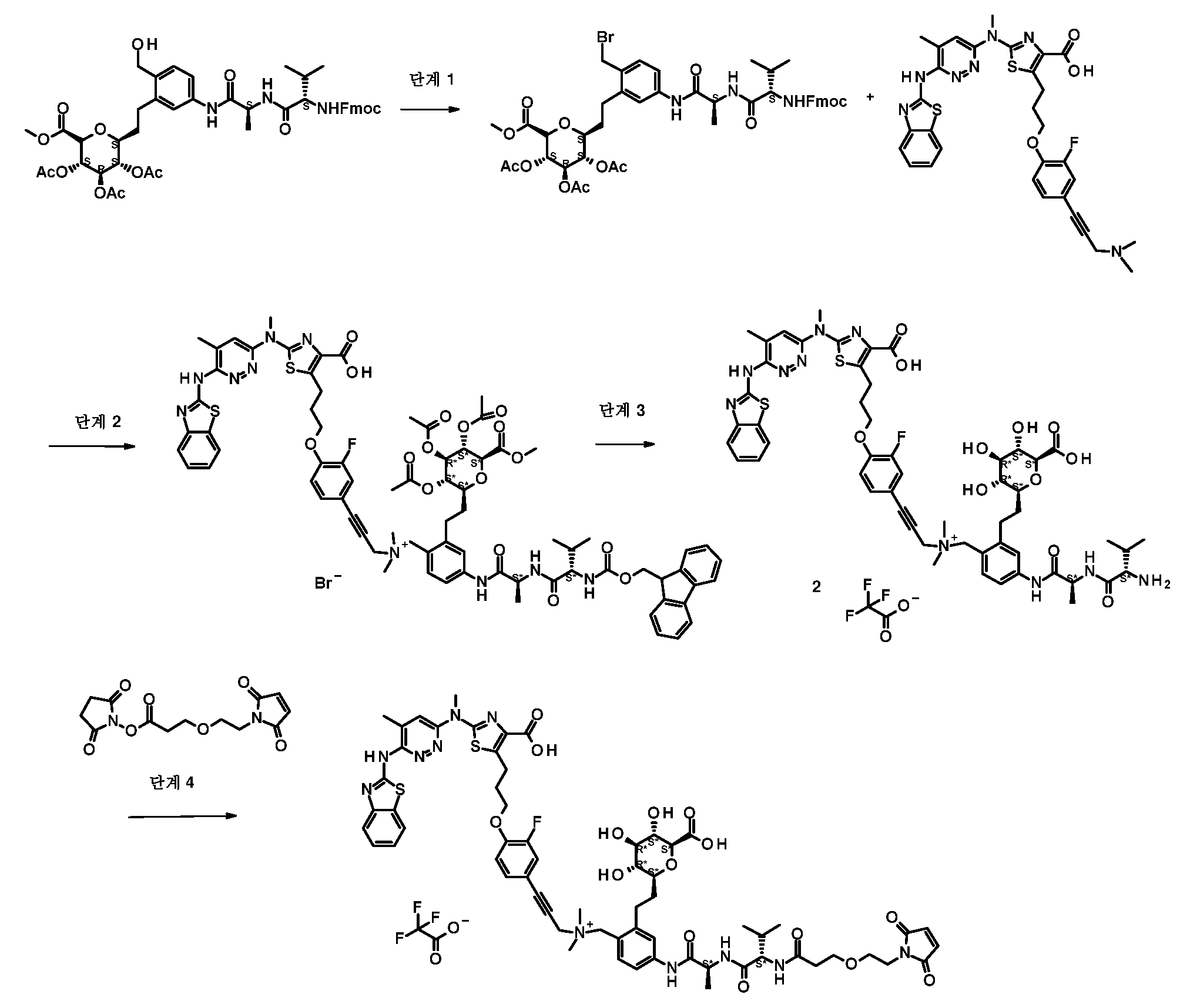
단계 1: 메틸 (3S,4R,5S,6S)-3,4,5-트리아세톡시-6-[2-[2-(브로모메틸)-5-[[(2S)-2-[[(2S)-2-(9H-플루오렌-9-일메톡시카르보닐아미노)-3-메틸-부타노일]아미노]프로파노일]아미노]페닐]에틸]테트라히드로피란-2-카르복실레이트Step 1: Methyl (3S,4R,5S,6S)-3,4,5-triacetoxy-6-[2-[2-(bromomethyl)-5-[[(2S)-2-[[(2S)-2-(9H-fluoren-9-ylmethoxycarbonylamino)-3-methyl-butanoyl]amino]propanoyl]amino]phenyl]ethyl]tetrahydropyran-2-carboxylate
THF (14 mL) 중 메틸 (3S,4R,5S,6S)-3,4,5-트리아세톡시-6-[2-[5-[[(2S)-2-[[(2S)-2-(9H-플루오렌-9-일메톡시카르보닐아미노)-3-메틸-부타노일]아미노]프로파노일]아미노]-2-(히드록시메틸)페닐]에틸]테트라히드로피란-2-카르복실레이트 (L106C-P7, 단계 16의 제조) (255 mg, 297 μmol)의 용액에 트리페닐포스핀 (234 mg, 890 μmol) 및 N-브로모숙신이미드 (158 mg, 890 μmol)를 연속적으로 첨가하였다. 반응 혼합물을 실온에서 15시간 동안 교반하였다. 반응 혼합물을 후속 단계에 임의의 처리 없이 사용하였다.To a solution of methyl (3S,4R,5S,6S)-3,4,5-triacetoxy-6-[2-[5-[[(2S)-2-[[(2S)-2-(9H-fluoren-9-ylmethoxycarbonylamino)-3-methyl-butanoyl]amino]propanoyl]amino]-2-(hydroxymethyl)phenyl]ethyl]tetrahydropyran-2-carboxylate (L106C-P7, prepared in Step 16) (255 mg, 297 μmol) in THF (14 mL) were added triphenylphosphine (234 mg, 890 μmol) and N-bromosuccinimide (158 mg, 890 μmol) sequentially. The reaction mixture was stirred at room temperature for 15 h. The reaction mixture was used in the subsequent step without any treatment.
단계 2: 3-[4-[3-[2-[[6-(1,3-벤조티아졸-2-일아미노)-5-메틸-피리다진-3-일]-메틸-아미노]-4-카르복시-티아졸-5-일]프로폭시]-3-플루오로-페닐]프로프-2-이닐-디메틸-[[4-[[(2S)-2-[[(2S)-2-(9H-플루오렌-9-일메톡시카르보닐아미노)-3-메틸-부타노일]아미노]프로파노일]아미노]-2-[2-[(2S,3S,4R,5S,6S)-3,4,5-트리아세톡시-6-메톡시카르보닐-테트라히드로피란-2-일]에틸]페닐]메틸]암모늄;브로마이드Step 2: 3-[4-[3-[2-[[6-(1,3-benzothiazol-2-ylamino)-5-methyl-pyridazin-3-yl]-methyl-amino]-4-carboxy-thiazol-5-yl]propoxy]-3-fluoro-phenyl]prop-2-ynyl-dimethyl-[[4-[[(2S)-2-[[(2S)-2-(9H-fluoren-9-ylmethoxycarbonylamino)-3-methyl-butanoyl]amino]propanoyl]amino]-2-[2-[(2S,3S,4R,5S,6S)-3,4,5-triacetoxy-6-methoxycarbonyl-tetrahydropyran-2-yl]ethyl]phenyl]methyl]ammonium;bromide
THF 중 단계 1로부터의 생성물 (297 μmol)의 현탁액에 DMF (3 mL) 중 2-[[6-(1,3-벤조티아졸-2-일아미노)-5-메틸-피리다진-3-일]-메틸-아미노]-5-[3-[4-[3-(디메틸아미노)프로프-1-이닐]-2-플루오로-페녹시]프로필]티아졸-4-카르복실산 (P2) (140 mg, 222 μmol)의 용액 및 DIPEA (116 μL, 665 μmol)를 연속적으로 첨가하였다. 반응물을 실온에서 60시간 동안 교반하였다. 반응 혼합물을 증발 건조시키고, 후속 단계에 후처리 없이 사용하였다.To a suspension of the product from step 1 (297 μmol) in THF was added successively a solution of 2-[[6-(1,3-benzothiazol-2-ylamino)-5-methyl-pyridazin-3-yl]-methyl-amino]-5-[3-[4-[3-(dimethylamino)prop-1-ynyl]-2-fluoro-phenoxy]propyl]thiazole-4-carboxylic acid (P2) (140 mg, 222 μmol) in DMF (3 mL) and DIPEA (116 μL, 665 μmol). The reaction was stirred at room temperature for 60 h. The reaction mixture was evaporated to dryness and used in the subsequent step without any work-up.
단계 3: 3-[4-[3-[2-[[6-(1,3-벤조티아졸-2-일아미노)-5-메틸-피리다진-3-일]-메틸-아미노]-4-카르복시-티아졸-5-일]프로폭시]-3-플루오로-페닐]프로프-2-이닐-디메틸-[[2-[2-[(2S,3R,4R,5S,6S)-6-카르복시-3,4,5-트리히드록시-테트라히드로피란-2-일]에틸]-4-[[(2S)-2-[[(2S)-2-아미노-3-메틸-부타노일]아미노]프로파노일]아미노]페닐]메틸]암모늄;2,2,2-트리플루오로아세테이트;2,2,2-트리플루오로아세트산Step 3: 3-[4-[3-[2-[[6-(1,3-Benzothiazol-2-ylamino)-5-methyl-pyridazin-3-yl]-methyl-amino]-4-carboxy-thiazol-5-yl]propoxy]-3-fluoro-phenyl]prop-2-ynyl-dimethyl-[[2-[2-[(2S,3R,4R,5S,6S)-6-carboxy-3,4,5-trihydroxy-tetrahydropyran-2-yl]ethyl]-4-[[(2S)-2-[[(2S)-2-amino-3-methyl-butanoyl]amino]propanoyl]amino]phenyl]methyl]ammonium; 2,2,2-Trifluoroacetate; 2,2,2-Trifluoroacetic acid
디옥산 (2 mL) 중 단계 2로부터의 생성물 (222 μmol)의 용액에 물 (2 mL) 중 LiOH.H2O (218 mg, 5.20 mmol)의 용액을 첨가하였다. 용액을 실온에서 2시간 동안 교반하였다. HCl의 1 M 수용액을 pH 6-7까지 첨가하였다. 반응 혼합물을 증발 건조시키고, 조 생성물을 엑스브리지® 칼럼 상의 반응 혼합물의 직접 침착에 의한 C18 역상 정제용-HPLC를 사용하여 및 TFA 방법을 사용하여 정제함으로써 목적 화합물 (112 mg)을 수득하였다. IR: (ν cm-1) 3500-2500, 2237, 1667, 1197/1180/1130. 1H NMR (400/500 MHz, dmso-d6) δ ppm 12.55 (m), 10.35 (s), 8.65 (d), 8.1 (큰), 7.89 (d, 1 H), 7.67 (s, 1 H), 7.66 (dd, 1 H), 7.53 (df, 1 H), 7.48 (m, 1 H), 7.4 (m, 1 H), 7.38 (m, 1 H), 7.27 (m, 1 H), 7.24 (t, 1 H), 7.2 (dd, 1 H), 7.19 (m, 1 H), 5.3-4.7 (ml), 4.64/4.54 (2d, 2 H), 4.51 (br s, 2 H), 4.5 (m, 1 H), 4.2 (t, 2 H), 3.78 (s, 3 H), 3.6 (m, 1 H), 3.5 (d, 1 H), 3.32 (t, 1 H), 3.28 (t, 1 H), 3.11 (t, 1 H), 3.1-2.9 (m, 4 H), 3.02 (br s, 6 H), 2.98 (m, 1 H), 2.48 (s, 3 H), 2.2-1.5 (m, 5 H), 1.38 (d, 3 H), 0.98 (d, 6 H).To a solution of the product from step 2 (222 μmol) in dioxane (2 mL) was added a solution of LiOH.H 2 O (218 mg, 5.20 mmol) in water (2 mL). The solution was stirred at room temperature for 2 h. A 1 M aqueous solution of HCl was added until pH 6-7. The reaction mixture was evaporated to dryness and the crude product was purified using C18 reverse phase preparative-HPLC by direct deposition of the reaction mixture on an XBridge® column and using the TFA method to give the title compound (112 mg). IR: (ν cm -1 ) 3500-2500, 2237, 1667, 1197/1180/1130. 1 H NMR (400/500 MHz, dmso-d6) δ ppm 12.55 (m), 10.35 (s), 8.65 (d), 8.1 (large), 7.89 (d, 1 H), 7.67 (s, 1 H), 7.66 (dd, 1 H), 7.53 (df, 1 H), 7.48 (m, 1 H), 7.4 (m, 1 H), 7.38 (m, 1 H), 7.27 (m, 1 H), 7.24 (t, 1 H), 7.2 (dd, 1 H), 7.19 (m, 1 H), 5.3-4.7 (ml), 4.64/4.54 (2d, 2) H), 4.51 (br s, 2 H), 4.5 (m, 1 H), 4.2 (t, 2 H), 3.78 (s, 3 H), 3.6 (m, 1 H), 3.5 (d, 1 H), 3.32 (t, 1 H), 3.28 (t, 1 H), 3.11 (t, 1 H), 3.1-2.9 (m, 4 H), 3.02 (br s, 6 H), 2.98 (m, 1 H), 2.48 (s, 3 H), 2.2-1.5 (m, 5 H), 1.38 (d, 3 H), 0.98 (d, 6 H).
단계 4: 3-[4-[3-[2-[[6-(1,3-벤조티아졸-2-일아미노)-5-메틸-피리다진-3-일]-메틸-아미노]-4-카르복시-티아졸-5-일]프로폭시]-3-플루오로-페닐]프로프-2-이닐-디메틸-[[2-[2-[(2S,3R,4R,5S,6S)-6-카르복시-3,4,5-트리히드록시-테트라히드로피란-2-일]에틸]-4-[[(2S)-2-[[(2S)-2-[3-[2-(2,5-디옥소피롤-1-일)에톡시]프로파노일아미노]-3-메틸-부타노일]아미노]프로파노일]아미노]페닐]메틸]암모늄; 2,2,2-트리플루오로아세테이트Step 4: 3-[4-[3-[2-[[6-(1,3-benzothiazol-2-ylamino)-5-methyl-pyridazin-3-yl]-methyl-amino]-4-carboxy-thiazol-5-yl]propoxy]-3-fluoro-phenyl]prop-2-ynyl-dimethyl-[[2-[2-[(2S,3R,4R,5S,6S)-6-carboxy-3,4,5-trihydroxy-tetrahydropyran-2-yl]ethyl]-4-[[(2S)-2-[[(2S)-2-[3-[2-(2,5-dioxopyrrol-1-yl)ethoxy]propanoylamino]-3-methyl-butanoyl]amino]propanoyl]amino]phenyl]methyl]ammonium; 2,2,2-trifluoroacetate
DMF (2.25 mL) 중 단계 3으로부터의 생성물 (60mg, 44.8 μmol) 용액의 용액에 (2,5-디옥소피롤리딘-1-일) 3-[2-(2,5-디옥소피롤-1-일)에톡시]프로파노에이트 (20.9 mg, 67.2 μmol) 및 DIPEA (23.4 μL, 134 μmol)를 연속적으로 첨가하였다. 용액을 실온에서 3시간 동안 교반하였다. 조 생성물을 엑스브리지® 칼럼 상의 반응 혼합물의 직접 침착에 의한 C18 역상 정제용-HPLC를 사용하여 및 TFA 방법을 사용하여 정제함으로써 목적 생성물 (28.5 mg)을 수득하였다. IR: (ν cm-1) 3600-3100, 2800-2200, 2234, 1705+1687+1614, 1537. 1H NMR (400 MHz, dmso-d6) δ ppm 12.5 (m, 2H), 10.5/8.20/7.90 (s+2d, 3H), 7.80 (d, 1H), 7.68 (2s, 2H), 7.60-7.40 (m, 4H), 7.40 (m, 2H), 7.20 (2t, 2H), 7.00 (s, 2H), 5.20-5.00 (m, 3H), 4.62/4.53 (2d, 2H), 4.50 (s, 2H), 4.38 (t, 1H), 4.20 (t, 4H), 3.80(s, 3H), 3.60-3.00 (m, 10H), 3.02 (2s, 6H), 2.81 (m, 2H), 2.45 (s, 3H), 2.42/2.30 (2t, 4H), 2.15 (m, 2H), 2.00 (m, 1H), 1.95 (m, 2H), 1.30 (d, 3H), 0.89/0.82 (2d, 6H). HRMS (ESI) [M-CF3CO2]+=1306.4715 (δ=0.6 ppm).To a solution of the product from step 3 (60 mg, 44.8 μmol) in DMF (2.25 mL) was added (2,5-dioxopyrrolidin-1-yl) 3-[2-(2,5-dioxopyrrol-1-yl)ethoxy]propanoate (20.9 mg, 67.2 μmol) and DIPEA (23.4 μL, 134 μmol) sequentially. The solution was stirred at room temperature for 3 h. The crude product was purified using C18 reverse phase preparative-HPLC by direct deposition of the reaction mixture on an XBridge® column and using the TFA method to obtain the desired product (28.5 mg). IR: (ν cm -1 ) 3600-3100, 2800-2200, 2234, 1705+1687+1614, 1537. 1 H NMR (400 MHz, dmso-d6) δ ppm 12.5 (m, 2H), 10.5/8.20/7.90 (s+2d, 3H), 7.80 (d, 1H), 7.68 (2s, 2H), 7.60-7.40 (m, 4H), 7.40 (m, 2H), 7.20 (2t, 2H), 7.00 (s, 2H), 5.20-5.00 (m, 3H), 4.62/4.53 (2d, 2H), 4.50 (s, 2H), 4.38 (t, 1H), 4.20 (t, 4H), 3.80 (s, 3H), 3.60-3.00 (m, 10H), 3.02 (2s, 6H), 2.81 (m, 2H), 2.45 (s, 3H), 2.42/2.30 (2t, 4H), 2.15 (m, 2H), 2.00 (m, 1H), 1.95 (m, 2H), 1.30 (d, 3H), 0.89/0.82 (2d, 6H). HRMS (ESI) [M-CF 3 CO 2 ] + =1306.4715 (δ=0.6 ppm).
L106C-P7의 제조: 2-[[6-(1,3-벤조티아졸-2-일아미노)-5-메틸-피리다진-3-일]-메틸-아미노]-5-[3-[4-[3-[[2-[2-[(2S,3R,4R,5S,6S)-6-카르복시-3,4,5-트리히드록시-테트라히드로피란-2-일]에틸]-4-[[(2S)-2-[[(2S)-2-[3-[2-(2,5-디옥소피롤-1-일)에톡시]프로파노일아미노]-3-메틸-부타노일]아미노]프로파노일]아미노]페닐]메톡시카르보닐-메틸-아미노]프로프-1-이닐]-2-플루오로-페녹시]프로필]티아졸-4-카르복실산Preparation of L106C-P7: 2-[[6-(1,3-benzothiazol-2-ylamino)-5-methyl-pyridazin-3-yl]-methyl-amino]-5-[3-[4-[3-[[2-[2-[(2S,3R,4R,5S,6S)-6-carboxy-3,4,5-trihydroxy-tetrahydropyran-2-yl]ethyl]-4-[[(2S)-2-[[(2S)-2-[3-[2-(2,5-dioxopyrrol-1-yl)ethoxy]propanoylamino]-3-methyl-butanoyl]amino]propanoyl]amino]phenyl]methoxycarbonyl-methyl-amino]prop-1-ynyl]-2-fluoro-phenoxy]propyl]thiazole-4-carboxylic acid


단계 1: 2-아이오도-4-니트로-벤조산Step 1: 2-Iodo-4-nitro-benzoic acid
아세토니트릴 (280 mL) 중 2-아미노-4-니트로-벤조산 (10.0 g, 54.90 mmol)의 용액에 p-톨루엔술폰산 1수화물 (32.0 g, 168.2 mmol)을 첨가하였다. 혼합물을 실온에서 15분 동안 교반한 다음, 물 (140 mL) 중 아질산나트륨 (8.00 g, 115.9 mmol) 및 아이오딘화칼륨 (24.0 g, 144.6 mmol)을 함유하는 용액을 15분 내에 적가하였다. 반응 혼합물을 19시간 동안 교반하였다. 반응의 완결 후, 혼합물을 티오황산나트륨 (13.02 g, 82.36 mmol)으로 켄칭하고, 염화수소 3 M의 수용액 (25 mL)으로 산성화시켰다. 수성 층을 에틸 아세테이트 (2 x 250 mL)로 추출하고, 합한 유기 층을 염화수소의 1 M 수용액 (100 mL)으로 세척하고, 황산나트륨 상에서 건조시키고, 여과하고, 농축 건조시켰다. 생성된 잔류물을 디클로로메탄 (1 L)에 녹이고, HCl의 1 M 수용액 (100 mL)으로 세척하였다. 유기 층을 황산나트륨 상에서 건조시키고, 여과하고, 농축시켜 목적 생성물 (15.0 g)을 수득하였다. 1H NMR (400 MHz, dmso-d6): δ 13.8 (br s, 1H), 8.64 (s, 1H), 8.27 (d, 1H), 7.86 (d, 1H).To a solution of 2-amino-4-nitro-benzoic acid (10.0 g, 54.90 mmol) in acetonitrile (280 mL) was added p-toluenesulfonic acid monohydrate (32.0 g, 168.2 mmol). The mixture was stirred at room temperature for 15 min, then a solution containing sodium nitrite (8.00 g, 115.9 mmol) and potassium iodide (24.0 g, 144.6 mmol) in water (140 mL) was added dropwise within 15 min. The reaction mixture was stirred for 19 h. After completion of the reaction, the mixture was quenched with sodium thiosulfate (13.02 g, 82.36 mmol) and acidified with an aqueous solution of 3 M hydrogen chloride (25 mL). The aqueous layer was extracted with ethyl acetate (2 x 250 mL) and the combined organic layers were washed with a 1 M aqueous solution of hydrogen chloride (100 mL), dried over sodium sulfate, filtered and concentrated to dryness. The resulting residue was dissolved in dichloromethane (1 L) and washed with a 1 M aqueous solution of HCl (100 mL). The organic layer was dried over sodium sulfate, filtered and concentrated to give the desired product (15.0 g). 1 H NMR (400 MHz, dmso-d6): δ 13.8 (br s, 1H), 8.64 (s, 1H), 8.27 (d, 1H), 7.86 (d, 1H).
단계 2: (2-아이오도-4-니트로-페닐)메탄올Step 2: (2-Iodo-4-nitro-phenyl)methanol
THF (70 mL) 중 단계 1로부터의 생성물 (5.0 g, 17.06 mmol)의 용액에 THF 중 보란의 1 M 용액 (85 mL, 85 mmol)을 첨가하였다. 반응 혼합물을 65℃에서 4시간 동안 교반하였다. 반응 혼합물을 실온으로 냉각시키고, 메탄올 (200 mL)을 첨가하여 켄칭하였다. 혼합물을 실온에서 30분 동안 교반하고, 농축 건조시켰다. 조 생성물을 실리카 겔 크로마토그래피 (시클로헥산 중 에틸 아세테이트의 구배)에 의해 정제하여 목적 생성물 (3.38 g)을 수득하였다. 1H NMR (400 MHz, dmso-d6): δ 8.54 (d, 1H), 8.29 (dd, 1H), 7.70 (d, 1H), 5.82 (t, 1H), 4.47 (d, 2H).To a solution of the product from step 1 (5.0 g, 17.06 mmol) in THF (70 mL) was added a 1 M solution of borane in THF (85 mL, 85 mmol). The reaction mixture was stirred at 65 °C for 4 h. The reaction mixture was cooled to room temperature and quenched by the addition of methanol (200 mL). The mixture was stirred at room temperature for 30 min and concentrated to dryness. The crude product was purified by silica gel chromatography (gradient of ethyl acetate in cyclohexane) to give the desired product (3.38 g). 1 H NMR (400 MHz, dmso-d6): δ 8.54 (d, 1H), 8.29 (dd, 1H), 7.70 (d, 1H), 5.82 (t, 1H), 4.47 (d, 2H).
단계 3: (4-아미노-2-아이오도-페닐)메탄올Step 3: (4-Amino-2-iodo-phenyl)methanol
에탄올 (100 mL) 및 물 (25 mL) 중 단계 2로부터의 생성물 (3.70 g, 13.26 mmol)의 용액에 철 (3.70 g, 66.25 mmol) 및 염화암모늄 (800 mg, 14.96 mmol)을 연속적으로 첨가하였다. 반응 혼합물을 80℃에서 3시간 동안 교반하였다. 반응 혼합물을 셀라이트® 상에서 여과하고, 에탄올로 세척하고, 농축 건조시켰다. 생성된 잔류물을 에틸 아세테이트 (100 mL)에 녹이고, 탄산수소나트륨의 포화 용액 (100 mL)으로 세척하고, 황산나트륨 상에서 건조시키고, 여과하고, 농축 건조시켜 목적 생성물 (2.48 g)을 수득하였다. 1H NMR (400 MHz, dmso-d6): δ 7.02-7.10 (m, 2H), 6.57 (d, 1H), 5.16 (s, 2H), 4.97 (t, 1H), 4.28 (d, 2H).To a solution of the product from step 2 (3.70 g, 13.26 mmol) in ethanol (100 mL) and water (25 mL) were added iron (3.70 g, 66.25 mmol) and ammonium chloride (800 mg, 14.96 mmol) sequentially. The reaction mixture was stirred at 80 °C for 3 h. The reaction mixture was filtered over Celite®, washed with ethanol and concentrated to dryness. The resulting residue was dissolved in ethyl acetate (100 mL), washed with a saturated solution of sodium bicarbonate (100 mL), dried over sodium sulfate, filtered and concentrated to dryness to give the desired product (2.48 g). 1 H NMR (400 MHz, dmso-d6): δ 7.02-7.10 (m, 2H), 6.57 (d, 1H), 5.16 (s, 2H), 4.97 (t, 1H), 4.28 (d, 2H).
단계 4: 4-[[tert-부틸(디메틸)실릴]옥시메틸]-3-아이오도-아닐린Step 4: 4-[[tert-butyl(dimethyl)silyl]oxymethyl]-3-iodo-aniline
디클로로메탄 (150 mL) 중 단계 3으로부터의 생성물 (3.51 g, 13.37 mmol)의 용액에 이미다졸 (0.95 g, 13.95 mmol)을 첨가하였다. 혼합물을 0℃로 냉각시키고, 디클로로메탄 (150 mL) 중 tert-부틸-클로로-디메틸-실란 (2.40 mL, 13.85 mmol)의 용액을 15분에 걸쳐 적가하였다. 실온에서 16시간 동안 교반한 후, 반응 혼합물을 메탄올 (20 mL)로 켄칭하고, 농축시켰다. 조 생성물을 실리카 겔 크로마토그래피 (시클로헥산 중 에틸 아세테이트의 구배)에 의해 정제하여 목적 생성물 (3.64 g75%)을 수득하였다. 1H NMR (400 MHz, dmso-d6): δ 7.05 (s, 1H), 7.03 (d, 1H), 6.55 (d, 1H), 5.24 (s, 2H), 4.46 (s, 2H), 0.88 (s, 9H), 0.06 (s, 6H).To a solution of the product from step 3 (3.51 g, 13.37 mmol) in dichloromethane (150 mL) was added imidazole (0.95 g, 13.95 mmol). The mixture was cooled to 0 °C and a solution of tert-butyl-chloro-dimethyl-silane (2.40 mL, 13.85 mmol) in dichloromethane (150 mL) was added dropwise over 15 min. After stirring at room temperature for 16 h, the reaction mixture was quenched with methanol (20 mL) and concentrated. The crude product was purified by silica gel chromatography (gradient of ethyl acetate in cyclohexane) to afford the desired product (3.64 g75%). 1H NMR (400 MHz, dmso-d6): δ 7.05 (s, 1H), 7.03 (d, 1H), 6.55 (d, 1H), 5.24 (s, 2H), 4.46 (s, 2H), 0.88 (s, 9H), 0.06 (s, 6H).
단계 5: (2S)-2-[[(2S)-2-(9H-플루오렌-9-일메톡시카르보닐아미노)-3-메틸-부타노일]아미노]프로판산Step 5: (2S)-2-[[(2S)-2-(9H-fluoren-9-ylmethoxycarbonylamino)-3-methyl-butanoyl]amino]propanoic acid
물 (90 mL) 중 (2S)-2-아미노프로판산 (3.22 g, 36.09 mmol)의 용액에 탄산나트륨 (7.29 g, 68.74 mmol) 및 디메톡시에탄 (90 mL) 중 (2,5-디옥소피롤리딘-1-일) (2S)-2-(9H-플루오렌-9-일메톡시카르보닐아미노)-3-메틸-부타노에이트 (15.0 g, 34.37 mmol)의 용액을 연속적으로 첨가하였다. 반응 혼합물을 실온에서 16시간 동안 교반하였다. 염화수소의 1 M 수용액을 사용하여 pH=1까지 반응물을 산성화시킨 후, 수성 층을 에틸 아세테이트 (3 x 500 mL)로 추출하였다. 합한 유기 층을 건조시키고, 농축시키고, 디에틸 에테르 (50 mL)로 연화처리하여 목적 생성물 (11.25 g)을 수득하였다. 1H NMR (400 MHz, dmso-d6) δ 12.48 (s, 1H), 8.21 (d, 1H), 7.89 (d, 2H), 7.72-7.79 (m, 2H), 7.28-7.46 (m, 5H), 4.15-4.32 (m, 4H), 3.90 (t, 1H), 1.90-2.02 (m, 1H), 1.28 (d, 3H), 0.86-0.90 (m, 6H).To a solution of (2S)-2-aminopropanoic acid (3.22 g, 36.09 mmol) in water (90 mL) were successively added sodium carbonate (7.29 g, 68.74 mmol) and a solution of (2,5-dioxopyrrolidin-1-yl)(2S)-2-(9H-fluoren-9-ylmethoxycarbonylamino)-3-methyl-butanoate (15.0 g, 34.37 mmol) in dimethoxyethane (90 mL). The reaction mixture was stirred at room temperature for 16 h. The reaction was acidified to pH = 1 with a 1 M aqueous solution of hydrogen chloride, and the aqueous layer was extracted with ethyl acetate (3 x 500 mL). The combined organic layers were dried, concentrated and triturated with diethyl ether (50 mL) to give the desired product (11.25 g). 1H NMR (400 MHz, dmso-d6) δ 12.48 (s, 1H), 8.21 (d, 1H), 7.89 (d, 2H), 7.72-7.79 (m, 2H), 7.28-7.46 (m, 5H), 4.15-4.32 (m, 4H), 3.90 (t, 1H), 1.90-2.02 (m, 1H), 1.28 (d, 3H), 0.86-0.90 (m, 6H).
단계 6: 9H-플루오렌-9-일메틸 N-[(1S)-1-[[(1S)-2-[4-[[tert-부틸(디메틸)실릴]옥시메틸]-3-아이오도-아닐리노]-1-메틸-2-옥소-에틸]카르바모일]-2-메틸-프로필]카르바메이트Step 6: 9H-Fluoren-9-ylmethyl N-[(1S)-1-[[(1S)-2-[4-[[tert-butyl(dimethyl)silyl]oxymethyl]-3-iodo-anilino]-1-methyl-2-oxo-ethyl]carbamoyl]-2-methyl-propyl]carbamate
디클로로메탄 (18 mL) 및 메탄올 (18 mL) 중 단계 5로부터의 생성물 (1.50 g, 3.65 mmol)의 용액에 단계 4로부터의 생성물 (1.33 g, 3.65 mmol) 및 에틸 2-에톡시-2H-퀴놀린-1-카르복실레이트 (EEDQ) (1.36 g, 5.48 mmol)를 연속적으로 첨가하였다. 현탁액을 실온에서 16시간 동안 교반하였다. 농축 후, 조 생성물을 실리카 겔 크로마토그래피 (시클로헥산 중 에틸 아세테이트의 구배)에 이어서 C18 크로마토그래피 (물 중 메탄올의 구배)에 의해 정제하여 목적 생성물 (1.18 g)을 수득하였다. 1H NMR (400 MHz, dmso-d6): δ 10.05 (s, 1H), 8.16-8.24 (m, 2H), 7.88 (d, 2H), 7.71-7.77 (m, 2H), 7.55 (d, 1H), 7.37-7.48 (m, 3H), 7.27-7.37 (m, 3H), 4.56 (s, 2H), 4.38 (t, 1H), 4.18-4.33 (m, 3H), 3.91 (t, 1H), 2.08-2.20 (m, 1H), 1.30 (d, 3H), 0.83-0.95 (m, 15H), 0.06 (s, 6H).To a solution of the product from step 5 (1.50 g, 3.65 mmol) in dichloromethane (18 mL) and methanol (18 mL) were successively added the product from step 4 (1.33 g, 3.65 mmol) and ethyl 2-ethoxy-2H-quinoline-1-carboxylate (EEDQ) (1.36 g, 5.48 mmol). The suspension was stirred at room temperature for 16 h. After concentration, the crude product was purified by silica gel chromatography (gradient of ethyl acetate in cyclohexane) followed by C18 chromatography (gradient of methanol in water) to give the desired product (1.18 g). 1H NMR (400 MHz, dmso-d6): δ 10.05 (s, 1H), 8.16-8.24 (m, 2H), 7.88 (d, 2H), 7.71-7.77 (m, 2H), 7.55 (d, 1H), 7.37-7.48 (m, 3H), 7.27-7.37 (m, 3H), 4.56 (s, 2H), 4.38 (t, 1H), 4.18-4.33 (m, 3H), 3.91 (t, 1H), 2.08-2.20 (m, 1H), 1.30 (d, 3H), 0.83-0.95 (m, 15H), 0.06 (s, 6H).
단계 7: (3R,4S,5R,6R)-3,4,5-트리벤질옥시-6-(벤질옥시메틸)테트라히드로피란-2-온Step 7: (3R,4S,5R,6R)-3,4,5-tribenzyloxy-6-(benzyloxymethyl)tetrahydropyran-2-one
DMSO (120 mL) 중 (3R,4S,5R,6R)-3,4,5-트리벤질옥시-6-(벤질옥시메틸)테트라히드로피란-2-올 (30.0 g, 55.49 mmol)의 현탁액을 실온에서 30분 동안 교반하고, 아세트산 무수물 (90 mL)로 실온에서 15분에 걸쳐 적가 처리하였다. 용액을 16시간 동안 교반하고, 0℃로 냉각시키고, 염화수소의 1 M 수용액 (100 mL)으로 처리하였다. 반응 혼합물을 실온에서 20분 동안 교반하고, 아세트산을 증발시켰다. 생성된 잔류물을 물 (200 mL) 및 에틸 아세테이트 (200 mL)로 희석하였다. 수성 층을 에틸 아세테이트 (2 x 200 mL)로 추출하고, 합한 유기 층을 물 (2 x 500 mL) 및 탄산수소나트륨의 포화 용액 (2 x 500 mL)으로 세척하고, 황산나트륨 상에서 건조시키고, 여과하고, 농축시키고, 실리카 겔 크로마토그래피 (시클로헥산 중 에틸 아세테이트의 구배)에 의해 정제하여 목적 생성물 (25.05 g)을 수득하였다. 1H NMR (400 MHz, dmso-d6): δ 7.19-7.39 (m, 20H), 4.85 (d, 1H), 4.57-4.72 (m, 5H), 4.46-4.56 (m, 3H), 4.36 (d, 1H), 3.98-4.05 (m, 1H), 3.84-3.92 (m, 1H), 3.65-3.76 (m, 2H).A suspension of (3R,4S,5R,6R)-3,4,5-tribenzyloxy-6-(benzyloxymethyl)tetrahydropyran-2-ol (30.0 g, 55.49 mmol) in DMSO (120 mL) was stirred at room temperature for 30 min and treated dropwise with acetic anhydride (90 mL) at room temperature over 15 min. The solution was stirred for 16 h, cooled to 0 °C and treated with a 1 M aqueous solution of hydrogen chloride (100 mL). The reaction mixture was stirred at room temperature for 20 min, and the acetic acid was evaporated. The resulting residue was diluted with water (200 mL) and ethyl acetate (200 mL). The aqueous layer was extracted with ethyl acetate (2 x 200 mL) and the combined organic layers were washed with water (2 x 500 mL) and a saturated solution of sodium bicarbonate (2 x 500 mL), dried over sodium sulfate, filtered, concentrated and purified by silica gel chromatography (gradient of ethyl acetate in cyclohexane) to give the desired product (25.05 g). 1H NMR (400 MHz, dmso-d6): δ 7.19-7.39 (m, 20H), 4.85 (d, 1H), 4.57-4.72 (m, 5H), 4.46-4.56 (m, 3H), 4.36 (d, 1H), 3.98-4.05 (m, 1H), 3.84-3.92 (m, 1H), 3.65-3.76 (m, 2H).
단계 8: (3R,4S,5R,6R)-3,4,5-트리벤질옥시-6-(벤질옥시메틸)-2-(2-트리메틸실릴에티닐)테트라히드로피란-2-올Step 8: (3R,4S,5R,6R)-3,4,5-tribenzyloxy-6-(benzyloxymethyl)-2-(2-trimethylsilylethynyl)tetrahydropyran-2-ol
THF (325 mL) 중 트리메틸실릴아세틸렌 (24 mL, 168.6 mmol)의 용액에 헥산 중 부틸리튬의 2.5 M 용액 (59.41 mL, 148.5 mmol)을 -78℃에서 20분 내에 첨가하였다. 용액을 -78℃에서 45분 동안 교반하고, 0℃에서 45분 동안 교반하였다. 반응 혼합물을 -78℃로 냉각시키고, THF (325 mL) 중 단계 7로부터의 생성물 (25.0 g, 46.41 mmol)의 용액을 45분에 걸쳐 적가하였다. 반응 혼합물을 이 온도에서 4시간 동안 교반하고, 물 (200 mL)로 켄칭하였다. 수성 층을 에틸 아세테이트 (2 x 200 mL)로 추출하였다. 합한 유기 층을 황산나트륨 상에서 건조시키고, 여과하고, 농축 건조시켜 목적 생성물 (29.56 g)을 비 4/6의 2개의 부분입체이성질체의 혼합물로서 수득하였다. 1H NMR (400 MHz, dmso-d6): δ 7.13-7.43 (m, 20H), 4.87-4.99 (m, 1H), 4.65-4.83 (m, 4H), 3.43-3.57 (m, 3H), 3.70-3.85 (m, 2H), 3.55-3.68 (m, 3H), 3.43-3.53 (m, 2H), 0.11-0.22 (m, 9H).To a solution of trimethylsilylacetylene (24 mL, 168.6 mmol) in THF (325 mL) was added a 2.5 M solution of butyllithium in hexane (59.41 mL, 148.5 mmol) at -78 °C within 20 min. The solution was stirred at -78 °C for 45 min and at 0 °C for 45 min. The reaction mixture was cooled to -78 °C and a solution of the product from step 7 (25.0 g, 46.41 mmol) in THF (325 mL) was added dropwise over 45 min. The reaction mixture was stirred at this temperature for 4 h and quenched with water (200 mL). The aqueous layer was extracted with ethyl acetate (2 x 200 mL). The combined organic layers were dried over sodium sulfate, filtered and concentrated to dryness to give the desired product (29.56 g) as a mixture of two diastereomers with a ratio of 4/6. 1 H NMR (400 MHz, dmso-d6): δ 7.13-7.43 (m, 20H), 4.87-4.99 (m, 1H), 4.65-4.83 (m, 4H), 3.43-3.57 (m, 3H), 3.70-3.85 (m, 2H), 3.55-3.68 (m, 3H), 3.43-3.53 (m, 2H), 0.11-0.22 (m, 9H).
단계 9: 트리메틸-[2-[(2S,3S,4R,5R,6R)-3,4,5-트리벤질옥시-6-(벤질옥시메틸)테트라히드로피란-2-일]에티닐]실란Step 9: Trimethyl-[2-[(2S,3S,4R,5R,6R)-3,4,5-tribenzyloxy-6-(benzyloxymethyl)tetrahydropyran-2-yl]ethynyl]silane
아세토니트릴 (83 mL) 및 디클로로메탄 (193 mL) 중 단계 8로부터의 생성물 (29.56 g, 46.42 mmol)의 용액에 아세토니트릴/디클로로메탄 (37 mL/18 mL)의 혼합물 중 트리에틸실란 (44.98 mL, 278.5 mmol)의 용액을 20분 내에 첨가하고, 아세토니트릴 (37 mL) 중 보론 트리플루오라이드 디에틸 에테레이트 (23.53 mL, 185.7 mmol)의 용액을 30분 내에 -15℃에서 첨가하였다. 용액을 동일한 온도에서 5시간 동안 교반하고, 물 (500 mL)로 희석하였다. 수성 층을 에틸 아세테이트 (2 x 500 mL)로 추출하였다. 합한 유기 층을 황산나트륨 상에서 건조시키고, 여과하고, 농축 건조시켜 목적 생성물 (28.82 g)을 수득하였다. 1H NMR (400 MHz, dmso-d6): δ 7.10-7.44 (m, 20H), 4.93 (d, 1H), 4.67-4.86 (m, 4H), 4.43-4.57 (m, 3H), 4.16-4.28 (m, 1H), 3.42-3.68 (m, 6H), 0.15 (s, 9H).To a solution of the product from step 8 (29.56 g, 46.42 mmol) in acetonitrile (83 mL) and dichloromethane (193 mL) was added a solution of triethylsilane (44.98 mL, 278.5 mmol) in a mixture of acetonitrile/dichloromethane (37 mL/18 mL) within 20 min and a solution of boron trifluoride diethyl etherate (23.53 mL, 185.7 mmol) in acetonitrile (37 mL) at -15 °C within 30 min. The solution was stirred at the same temperature for 5 h and diluted with water (500 mL). The aqueous layer was extracted with ethyl acetate (2 x 500 mL). The combined organic layers were dried over sodium sulfate, filtered and concentrated to dryness to give the desired product (28.82 g). 1 H NMR (400 MHz, dmso-d6): δ 7.10-7.44 (m, 20H), 4.93 (d, 1H), 4.67-4.86 (m, 4H), 4.43-4.57 (m, 3H), 4.16-4.28 (m, 1H), 3.42-3.68 (m, 6H), 0.15 (s, 9H).
단계 10: (2R,3R,4R,5S,6S)-3,4,5-트리벤질옥시-2-(벤질옥시메틸)-6-에티닐-테트라히드로피란Step 10: (2R,3R,4R,5S,6S)-3,4,5-tribenzyloxy-2-(benzyloxymethyl)-6-ethynyl-tetrahydropyran
메탄올 (1.12 L) 및 디클로로메탄 (240 mL) 중 단계 9로부터의 생성물 (28.80 g, 46.39 mmol)의 용액에 수산화나트륨의 1 M 수용액 (80 mL)을 첨가하였다. 용액을 실온에서 1시간 동안 교반하고, 염화수소의 1 M 수용액을 사용하여 pH = 1까지 산성화시키고, 물 (500 mL)로 희석하였다. 메탄올을 증발시키고, 수성 층을 에틸 아세테이트 (2 x 1 L)로 추출하였다. 합한 유기 층을 황산나트륨 상에서 건조시키고, 여과하고, 농축시키고, 실리카 겔 크로마토그래피 (시클로헥산 중 에틸 아세테이트의 구배)에 의해 정제하여 목적 생성물 (20.00 g)을 수득하였다. 1H NMR (400 MHz, dmso-d6): δ 3.42-3.67 (m, 7H), 4.17 (d, 1H), 4.44-4.56 (m, 3H), 4.67-4.86 (m, 4H), 4.90 (d, 1H), 7.15-7.40 (m, 20H).To a solution of the product from step 9 (28.80 g, 46.39 mmol) in methanol (1.12 L) and dichloromethane (240 mL) was added a 1 M aqueous solution of sodium hydroxide (80 mL). The solution was stirred at room temperature for 1 h, acidified to pH = 1 with a 1 M aqueous solution of hydrogen chloride, and diluted with water (500 mL). The methanol was evaporated and the aqueous layer was extracted with ethyl acetate (2 x 1 L). The combined organic layers were dried over sodium sulfate, filtered, concentrated and purified by silica gel chromatography (gradient of ethyl acetate in cyclohexane) to give the desired product (20.00 g). 1H NMR (400 MHz, dmso-d6): δ 3.42-3.67 (m, 7H), 4.17 (d, 1H), 4.44-4.56 (m, 3H), 4.67-4.86 (m, 4H), 4.90 (d, 1H), 7.15-7.40 (m, 20H).
단계 11: (2S,3R,4R,5S,6R)-2-에티닐-6-(히드록시메틸)테트라히드로피란-3,4,5-트리올Step 11: (2S,3R,4R,5S,6R)-2-Ethynyl-6-(hydroxymethyl)tetrahydropyran-3,4,5-triol
에탄티올 (400 mL) 중 단계 10으로부터의 생성물 (20.00 g, 36.45 mmol)의 용액에 보론 트리플루오라이드 디에틸 에테레이트 (147.8 mL, 1166 mmol)를 실온에서 5분에 걸쳐 적가하였다. 용액을 실온에서 16시간 동안 교반하고, 0℃로 냉각시키고, 차아염소산나트륨의 포화 수용액을 함유하는 기체 트랩을 장착하고, 탄산수소나트륨의 수성 포화 용액 (500 mL)으로 0℃에서 1시간 내에 적가 처리하였다. 농축 건조시킨 후, 조 생성물을 실리카 겔 크로마토그래피 (디클로로메탄 중 메탄올의 구배)에 의해 정제하여 목적 생성물 (4.05 g)을 수득하였다. 1H NMR (400 MHz, dmso-d6): δ 5.28 (d, 1H), 4.99 (d, 1H), 4.91 (d, 1H), 4.52 (t, 1H), 3.77 (d, 1H), 3.60-3.69 (m, 1H), 3.35-3.43 (m, 1H), 3.32 (s, 1H), 2.97-3.13 (m, 4H).To a solution of the product from step 10 (20.00 g, 36.45 mmol) in ethanethiol (400 mL) was added boron trifluoride diethyl etherate (147.8 mL, 1166 mmol) dropwise at room temperature over 5 min. The solution was stirred at room temperature for 16 h, cooled to 0 °C, fitted with a gas trap containing a saturated aqueous solution of sodium hypochlorite, and treated dropwise with a saturated aqueous solution of sodium bicarbonate (500 mL) at 0 °C within 1 h. After concentration to dryness, the crude product was purified by silica gel chromatography (gradient of methanol in dichloromethane) to give the desired product (4.05 g). 1H NMR (400 MHz, dmso-d6): δ 5.28 (d, 1H), 4.99 (d, 1H), 4.91 (d, 1H), 4.52 (t, 1H), 3.77 (d, 1H), 3.60-3.69 (m, 1H), 3.35-3.43 (m, 1H), 3.32 (s, 1H), 2.97-3.13 (m, 4H).
단계 12: 메틸 (2S,3S,4R,5R,6S)-6-에티닐-3,4,5-트리히드록시-테트라히드로피란-2-카르복실레이트Step 12: Methyl (2S,3S,4R,5R,6S)-6-ethynyl-3,4,5-trihydroxy-tetrahydropyran-2-carboxylate
탄산수소나트륨의 포화 수용액 (81 mL) 및 THF (81 mL) 중 단계 11로부터의 생성물 (4.05 g, 21.52 mmol)의 용액에 (2,2,6,6-테트라메틸피페리딘-1-일)옥실 (TEMPO) (168 mg, 1.08 mmol)을 첨가하였다. 현탁액을 0℃로 냉각시키고, 1,3-디브로모-5,5-디메틸-이미다졸리딘-2,4-디온 (12.31 g, 43.04 mmol)을 30분 내에 조금씩 첨가하였다. 반응 혼합물을 0℃에서 4시간 동안 교반하고, 메탄올 (40 mL)을 첨가하여 켄칭하였다. 이 온도에서 30분 교반한 후, 탄산칼륨의 포화 수용액 (10 mL) 및 디클로로메탄 (100 mL)을 첨가하였다. 유기 층을 물 (2 x 200 mL)로 추출한 후, 합한 수성 층을 염화수소의 3M 수용액을 사용하여 pH = 1까지 산성화시키고, 농축 건조시켰다. 잔류물을 메탄올 (100 mL) 및 염화수소의 3M 수용액 (20 mL)에 녹였다. 혼합물을 농축시키고, 메탄올 (4 x 100 mL)과 수회 공증발시켰다. 조 생성물을 실리카 겔 크로마토그래피 (디클로로메탄 세륨 전개제 중 메탄올의 구배)에 의해 정제하여 목적 생성물 (3.00 g)을 수득하였다. 1H NMR (400 MHz, dmso-d6): δ 5.46 (d, 1H), 5.32 (d, 1H), 5.18 (d, 1H), 3.93-4.00 (m, 1H), 3.75 (dd, 1H), 3.65 (s, 3H), 3.40-3.44 (m, 1H), 3.31 (s, 1H), 3.09-3.19 (m, 2H).To a solution of the product from step 11 (4.05 g, 21.52 mmol) in a saturated aqueous solution of sodium bicarbonate (81 mL) and THF (81 mL) was added (2,2,6,6-Tetramethylpiperidin-1-yl)oxyl (TEMPO) (168 mg, 1.08 mmol). The suspension was cooled to 0 °C and 1,3-dibromo-5,5-dimethyl-imidazolidine-2,4-dione (12.31 g, 43.04 mmol) was added portionwise over 30 min. The reaction mixture was stirred at 0 °C for 4 h and quenched by the addition of methanol (40 mL). After stirring at this temperature for 30 min, a saturated aqueous solution of potassium carbonate (10 mL) and dichloromethane (100 mL) were added. The organic layer was extracted with water (2 x 200 mL), and the combined aqueous layers were acidified to pH = 1 with a 3 M aqueous solution of hydrogen chloride and concentrated to dryness. The residue was dissolved in methanol (100 mL) and a 3 M aqueous solution of hydrogen chloride (20 mL). The mixture was concentrated and co-evaporated several times with methanol (4 x 100 mL). The crude product was purified by silica gel chromatography (gradient of methanol in dichloromethane cerium developing agent) to give the desired product (3.00 g). 1H NMR (400 MHz, dmso-d6): δ 5.46 (d, 1H), 5.32 (d, 1H), 5.18 (d, 1H), 3.93-4.00 (m, 1H), 3.75 (dd, 1H), 3.65 (s, 3H), 3.40-3.44 (m, 1H), 3.31 (s, 1H), 3.09-3.19 (m, 2H).
단계 13: 메틸 (2S,3S,4R,5S,6S)-3,4,5-트리아세톡시-6-에티닐-테트라히드로피란-2-카르복실레이트Step 13: Methyl (2S,3S,4R,5S,6S)-3,4,5-triacetoxy-6-ethynyl-tetrahydropyran-2-carboxylate
DMF (37.5 mL) 및 피리딘 (12.5 mL) 중 단계 12로부터의 생성물 (3.00 g, 13.88 mmol)의 용액에 N,N-디메틸피리딘-4-아민 (DMAP) (84.8 mg, 0.693 mmol)을 첨가하였다. 반응 혼합물을 0℃로 냉각시키고, 아세트산 무수물 (20.0 mL, 213 mmol)로 5분에 걸쳐 적가 처리하였다. 용액을 실온에서 3시간 동안 교반하고, 염화수소의 1 M 수용액 (200 mL)으로 희석하였다. 수성 층을 에틸 아세테이트 (2 x 200 mL)로 추출하였다. 합한 유기 층을 염화수소의 1M 수용액 (2 x 200 mL) 및 탄산칼륨의 포화 수용액 (200 mL)으로 세척하고, 황산나트륨 상에서 건조시키고, 여과하고, 농축시키고, 실리카 겔 크로마토그래피 (시클로헥산 세륨 전개제 중 에틸 아세테이트의 구배)에 의해 정제하여 목적 생성물 (4.60 g)을 수득하였다. 1H NMR (400 MHz, dmso-d6): δ 5.33 (t, 1H), 4.93-5.01 (m, 2H), 4.70 (d, 1H), 4.44 (d, 1H), 3.67 (s, 1H), 3.64 (s, 3H), 2.02 (s, 3H), 1.94-2.01 (m, 6H).To a solution of the product from step 12 (3.00 g, 13.88 mmol) in DMF (37.5 mL) and pyridine (12.5 mL) was added N,N-dimethylpyridin-4-amine (DMAP) (84.8 mg, 0.693 mmol). The reaction mixture was cooled to 0 °C and treated dropwise with acetic anhydride (20.0 mL, 213 mmol) over 5 min. The solution was stirred at room temperature for 3 h and diluted with 1 M aqueous hydrogen chloride solution (200 mL). The aqueous layer was extracted with ethyl acetate (2 x 200 mL). The combined organic layers were washed with a 1 M aqueous solution of hydrogen chloride (2 × 200 mL) and a saturated aqueous solution of potassium carbonate (200 mL), dried over sodium sulfate, filtered, concentrated and purified by silica gel chromatography (gradient of ethyl acetate in cerium cyclohexane developing agent) to give the desired product (4.60 g). 1 H NMR (400 MHz, dmso-d6): δ 5.33 (t, 1H), 4.93-5.01 (m, 2H), 4.70 (d, 1H), 4.44 (d, 1H), 3.67 (s, 1H), 3.64 (s, 3H), 2.02 (s, 3H), 1.94-2.01 (m, 6H).
단계 14: 메틸 (2S,3S,4R,5S,6S)-3,4,5-트리아세톡시-6-[2-[2-[[tert-부틸(디메틸)실릴]옥시메틸]-5-[[(2S)-2-[[(2S)-2-(9H-플루오렌-9-일메톡시카르보닐아미노)-3-메틸-부타노일]아미노]프로파노일]아미노]페닐]에티닐]테트라히드로피란-2-카르복실레이트Step 14: Methyl (2S,3S,4R,5S,6S)-3,4,5-triacetoxy-6-[2-[2-[[tert-butyl(dimethyl)silyl]oxymethyl]-5-[[(2S)-2-[[(2S)-2-(9H-fluoren-9-ylmethoxycarbonylamino)-3-methyl-butanoyl]amino]propanoyl]amino]phenyl]ethynyl]tetrahydropyran-2-carboxylate
DMF (7.3 mL) 중 단계 13으로부터의 생성물 (496 mg, 1.45 mmol)의 용액에 단계 6으로부터의 생성물 (730 mg, 0.966 mmol), DIPEA (738 μL, 4.47 mmol), 아이오딘화구리 (18.4 mg, 96.6 mmol) 및 디클로로-비스-(트리페닐포스핀)팔라듐(II) (67.8 mg, 96.6 mmol)을 연속적으로 첨가하였다. 용액을 아르곤으로 플러싱하고, 실온에서 16시간 동안 교반하였다. 물 (100 mL)로 희석한 후, 수성 층을 에틸 아세테이트 (2 x 100 mL)로 추출하였다. 합한 유기 층을 물 (2 x 200 mL) 및 염화암모늄의 포화 수용액 (2 x 200 mL)으로 세척하고, 황산나트륨 상에서 건조시키고, 여과하고, 농축시키고, 실리카 겔 크로마토그래피 (시클로헥산 중 에틸 아세테이트의 구배)에 의해 정제하여 목적 생성물 (782 mg)을 수득하였다. 1H NMR (400 MHz, dmso-d6): δ 10.09 (s, 1H), 8.20 (d, 1H), 7.89 (d, 2H), 7.70-7.78 (m, 3H), 7.55 (d, 1H), 7.32-7.46 (m, 4H), 7.27-7.32 (m, 2H), 5.41 (t, 1H), 4.96-5.14 (m, 3H), 4.67 (s, 2H), 4.51 (d, 1H), 4.36-4.44 (m, 1H), 4.16-4.32 (m, 3H), 3.88-3.95 (m, 1H), 3.64 (s, 3H), 1.94-2.07 (m, 10H), 1.30 (d, 3H), 0.84-0.93 (m, 15H), 0.08 (s, 6H).To a solution of the product from step 13 (496 mg, 1.45 mmol) in DMF (7.3 mL) were added the product from step 6 (730 mg, 0.966 mmol), DIPEA (738 μL, 4.47 mmol), copper iodide (18.4 mg, 96.6 mmol) and dichloro-bis-(triphenylphosphine)palladium(II) (67.8 mg, 96.6 mmol) sequentially. The solution was flushed with argon and stirred at room temperature for 16 h. After diluting with water (100 mL), the aqueous layer was extracted with ethyl acetate (2 x 100 mL). The combined organic layers were washed with water (2 x 200 mL) and a saturated aqueous solution of ammonium chloride (2 x 200 mL), dried over sodium sulfate, filtered, concentrated and purified by silica gel chromatography (gradient of ethyl acetate in cyclohexane) to give the desired product (782 mg). 1 H NMR (400 MHz, dmso-d6): δ 10.09 (s, 1H), 8.20 (d, 1H), 7.89 (d, 2H), 7.70-7.78 (m, 3H), 7.55 (d, 1H), 7.32-7.46 (m, 4H), 7.27-7.32 (m, 2H), 5.41 (t, 1H), 4.96-5.14 (m, 3H), 4.67 (s, 2H), 4.51 (d, 1H), 4.36-4.44 (m, 1H), 4.16-4.32 (m, 3H), 3.88-3.95 (m, 1H), 3.64 (s, 3H), 1.94-2.07 (m, 10H), 1.30 (d, 3H), 0.84-0.93 (m, 15H), 0.08 (s, 6H).
단계 15: 메틸 (3S,4R,5S,6S)-3,4,5-트리아세톡시-6-[2-[2-[[tert-부틸(디메틸)실릴]옥시메틸]-5-[[(2S)-2-[[(2S)-2-(9H-플루오렌-9-일메톡시카르보닐아미노)-3-메틸-부타노일]아미노]프로파노일]아미노]페닐]에틸]테트라히드로피란-2-카르복실레이트Step 15: Methyl (3S,4R,5S,6S)-3,4,5-triacetoxy-6-[2-[2-[[tert-butyl(dimethyl)silyl]oxymethyl]-5-[[(2S)-2-[[(2S)-2-(9H-fluoren-9-ylmethoxycarbonylamino)-3-methyl-butanoyl]amino]propanoyl]amino]phenyl]ethyl]tetrahydropyran-2-carboxylate
THF (15 mL) 중 단계 14로부터의 생성물 (750 mg, 0.773 mmol)의 용액을 아르곤으로 플러싱하고, 탄소 상 건조 백금 5% (75 mg, 50%w/w)로 처리하고, 아르곤 및 H2로 연속적으로 플러싱하고, H2 분위기 (1 atm) 하에 실온에서 16시간 동안 교반하였다. 반응 혼합물을 셀라이트® 패드를 통해 여과하고, THF로 세척하고, 농축 건조시켰다. 완전한 순서 (탄소 상 건조 백금 5% (75 mg, 50%w/w)의 첨가, H2 분위기 (1 atm) 하에 실온에서 16시간 동안 교반 및 셀라이트® 패드를 통한 여과 포함)를 4회 더 수행하였다. 조 생성물을 실리카 겔 크로마토그래피 (시클로헥산 중 에틸 아세테이트의 구배)에 의해 정제하여 목적 생성물 (470 mg)을 수득하였다. 1H NMR (400 MHz, dmso-d6): δ 9.90 (s, 1H), 8.16 (d, 1H), 7.89 (d, 2H), 7.70-7.78 (m, 2H), 7.37-7.49 (m, 4H), 7.27-7.32 (m, 3H), 7.23 (d, 1H), 5.29 (t, 1H), 4.95 (t, 1H), 4.78 (t, 1H), 4.60 (s, 2H), 4.34-4.44 (m, 2H), 4.16-4.32 (m, 3H), 3.88-3.95 (m, 1H), 3.72-3.79 (m, 1H), 3.64 (s, 3H), 2.69-2.78 (m, 1H), 2.50-2.60 (m, 1H), 1.92-2.03 (m, 10H), 1.55-1.75 (m, 2H), 1.30 (d, 3H), 0.84-0.93 (m, 15H), 0.05 (s, 6H).A solution of the product from step 14 (750 mg, 0.773 mmol) in THF (15 mL) was flushed with argon, treated with 5% platinum on carbon (75 mg, 50% w / w ), flushed successively with argon and H 2 , and stirred under a H 2 atmosphere (1 atm) at room temperature for 16 h. The reaction mixture was filtered through a pad of Celite® , washed with THF, and concentrated to dryness. The complete sequence (including addition of 5% platinum on carbon (75 mg, 50% w / w ), stirring under a H 2 atmosphere (1 atm) at room temperature for 16 h and filtration through a pad of Celite® ) was performed four more times. The crude product was purified by silica gel chromatography (gradient of ethyl acetate in cyclohexane) to give the desired product (470 mg). 1H NMR (400 MHz, dmso-d6): δ 9.90 (s, 1H), 8.16 (d, 1H), 7.89 (d, 2H), 7.70-7.78 (m, 2H), 7.37-7.49 (m, 4H), 7.27-7.32 (m, 3H), 7.23 (d, 1H), 5.29 (t, 1H), 4.95 (t, 1H), 4.78 (t, 1H), 4.60 (s, 2H), 4.34-4.44 (m, 2H), 4.16-4.32 (m, 3H), 3.88-3.95 (m, 1H), 3.72-3.79 (m, 1H), 3.64 (s, 3H), 2.69-2.78 (m, 1H), 2.50-2.60 (m, 1H), 1.92-2.03 (m, 10H), 1.55-1.75 (m, 2H), 1.30 (d, 3H), 0.84-0.93 (m, 15H), 0.05 (s, 6H).
단계 16: 메틸 (3S,4R,5S,6S)-3,4,5-트리아세톡시-6-[2-[5-[[(2S)-2-[[(2S)-2-(9H-플루오렌-9-일메톡시카르보닐아미노)-3-메틸-부타노일]아미노]프로파노일]아미노]-2-(히드록시메틸)페닐]에틸]테트라히드로피란-2-카르복실레이트Step 16: Methyl (3S,4R,5S,6S)-3,4,5-triacetoxy-6-[2-[5-[[(2S)-2-[[(2S)-2-(9H-fluoren-9-ylmethoxycarbonylamino)-3-methyl-butanoyl]amino]propanoyl]amino]-2-(hydroxymethyl)phenyl]ethyl]tetrahydropyran-2-carboxylate
THF (540 μL) 및 물 (540 μL) 중 단계 15로부터의 생성물 (470 mg, 0.483 mmol)의 용액에 아세트산 (1.6 mL, 28.28 mmol)을 첨가하였다. 용액을 실온에서 16시간 동안 교반하고, 물 (100 mL)로 희석하였다. 수성 층을 에틸 아세테이트 (2 x 100 mL)로 추출하였다. 합한 유기 층을 물 (2 x 200 mL) 및 탄산수소나트륨의 포화 수용액 (200 mL)으로 세척하고, 황산나트륨 상에서 건조시키고, 여과하고, 농축시키고, 실리카 겔 크로마토그래피 (시클로헥산 중 에틸 아세테이트의 구배)에 의해 정제하여 목적 생성물 (354 mg)을 수득하였다. 1H NMR (400 MHz, dmso-d6): δ 9.87 (s, 1H), 8.16 (d, 1H), 7.89 (d, 2H), 7.70-7.78 (m, 2H), 7.37-7.50 (m, 4H), 7.27-7.37 (m, 3H), 7.25 (d, 1H), 5.29 (t, 1H), 4.91-4.98 (m, 2H), 4.78 (t, 1H), 4.34-4.44 (m, 4H), 4.16-4.32 (m, 3H), 3.88-3.95 (m, 1H), 3.72-3.79 (m, 1H), 3.64 (s, 3H), 2.64-2.73 (m, 1H), 2.50-2.60 (m, 1H), 1.92-2.03 (m, 10H), 1.69-1.79 (m, 1H), 1.52-1.65 (m, 1H), 1.30 (d, 3H), 0.84-0.93 (m, 6H).To a solution of the product from step 15 (470 mg, 0.483 mmol) in THF (540 μL) and water (540 μL) was added acetic acid (1.6 mL, 28.28 mmol). The solution was stirred at room temperature for 16 h and diluted with water (100 mL). The aqueous layer was extracted with ethyl acetate (2 x 100 mL). The combined organic layers were washed with water (2 x 200 mL) and a saturated aqueous solution of sodium bicarbonate (200 mL), dried over sodium sulfate, filtered, concentrated and purified by silica gel chromatography (gradient of ethyl acetate in cyclohexane) to give the desired product (354 mg). 1H NMR (400 MHz, dmso-d6): δ 9.87 (s, 1H), 8.16 (d, 1H), 7.89 (d, 2H), 7.70-7.78 (m, 2H), 7.37-7.50 (m, 4H), 7.27-7.37 (m, 3H), 7.25 (d, 1H), 5.29 (t, 1H), 4.91-4.98 (m, 2H), 4.78 (t, 1H), 4.34-4.44 (m, 4H), 4.16-4.32 (m, 3H), 3.88-3.95 (m, 1H), 3.72-3.79 (m, 1H), 3.64 (s, 3H), 2.64-2.73 (m, 1H), 2.50-2.60 (m, 1H), 1.92-2.03 (m, 10H), 1.69-1.79 (m, 1H), 1.52-1.65 (m, 1H), 1.30 (d, 3H), 0.84-0.93 (m, 6H).
단계 17: 메틸 (3S,4R,5S,6S)-3,4,5-트리아세톡시-6-[2-[5-[[(2S)-2-[[(2S)-2-(9H-플루오렌-9-일메톡시카르보닐아미노)-3-메틸-부타노일]아미노]프로파노일]아미노]-2-[(4-니트로페녹시)카르보닐옥시메틸]페닐]에틸]테트라히드로피란-2-카르복실레이트Step 17: Methyl (3S,4R,5S,6S)-3,4,5-triacetoxy-6-[2-[5-[[(2S)-2-[[(2S)-2-(9H-fluoren-9-ylmethoxycarbonylamino)-3-methyl-butanoyl]amino]propanoyl]amino]-2-[(4-nitrophenoxy)carbonyloxymethyl]phenyl]ethyl]tetrahydropyran-2-carboxylate
THF (7.75 mL) 중 단계 16으로부터의 생성물 (310 mg, 0.361 mmol)의 용액에 피리딘 (146 μL, 1.80 mmol) 및 4-니트로페닐 클로로카르보네이트 (182 mg, 0.901 mmol)를 연속적으로 첨가하였다. 현탁액을 실온에서 16시간 동안 교반하고, 농축시키고, 실리카 겔 크로마토그래피 (디클로로메탄 중 에틸 아세테이트의 구배)에 의해 정제하여 목적 생성물 (257 mg)을 수득하였다. 1H NMR (400 MHz, dmso-d6): δ 10.04 (s, 1H), 8.31 (d, 2H), 8.20 (d, 1H), 7.89 (d, 2H), 7.66-7.78 (m, 2H), 7.56 (d, 2H), 7.28-7.52 (m, 8H), 5.31 (t, 1H), 5.25 (s, 2H), 4.96 (t, 1H), 4.79 (t, 1H), 4.40 (d, 2H), 4.16-4.32 (m, 3H), 3.88-3.95 (m, 1H), 3.74-3.83 (m, 1H), 3.61 (s, 3H), 2.74-2.84 (m, 1H), 2.60-2.71 (m, 1H), 1.90-2.03 (m, 10H), 1.72-1.83 (m, 1H), 1.58-1.71 (m, 1H), 1.30 (d, 3H), 0.82-0.94 (m, 6H). LC-MS: MS (ESI) m/z [M+Na]+ = 1047.6.To a solution of the product from step 16 (310 mg, 0.361 mmol) in THF (7.75 mL) were successively added pyridine (146 μL, 1.80 mmol) and 4-nitrophenyl chlorocarbonate (182 mg, 0.901 mmol). The suspension was stirred at room temperature for 16 h, concentrated and purified by silica gel chromatography (gradient of ethyl acetate in dichloromethane) to give the desired product (257 mg). 1H NMR (400 MHz, dmso-d6): δ 10.04 (s, 1H), 8.31 (d, 2H), 8.20 (d, 1H), 7.89 (d, 2H), 7.66-7.78 (m, 2H), 7.56 (d, 2H), 7.28-7.52 (m, 8H), 5.31 (t, 1H), 5.25 (s, 2H), 4.96 (t, 1H), 4.79 (t, 1H), 4.40 (d, 2H), 4.16-4.32 (m, 3H), 3.88-3.95 (m, 1H), 3.74-3.83 (m, 1H), 3.61 (s, 3H), 2.74-2.84 (m, 1H), 2.60-2.71 (m, 1H), 1.90-2.03 (m, 10H), 1.72-1.83 (m, 1H), 1.58-1.71 (m, 1H), 1.30 (d, 3H), 0.82-0.94 (m, 6H). LC-MS: MS (ESI) m/z [M+Na] + = 1047.6.
단계 18: 2-[[6-(1,3-벤조티아졸-2-일아미노)-5-메틸-피리다진-3-일]-메틸-아미노]-5-[3-[2-플루오로-4-[3-[메틸-[[4-[[(2S)-2-[[(2S)-2-아미노-3-메틸-부타노일]아미노]프로파노일]아미노]-2-[2-[(2S,3S,4R,5S,6S)-3,4,5-트리아세톡시-6-메톡시카르보닐-테트라히드로피란-2-일]에틸]페닐]메톡시카르보닐]아미노]프로프-1-이닐]페녹시]프로필]티아졸-4-카르복실산Step 18: 2-[[6-(1,3-Benzothiazol-2-ylamino)-5-methyl-pyridazin-3-yl]-methyl-amino]-5-[3-[2-fluoro-4-[3-[methyl-[[4-[[(2S)-2-[[(2S)-2-amino-3-methyl-butanoyl]amino]propanoyl]amino]-2-[2-[(2S,3S,4R,5S,6S)-3,4,5-triacetoxy-6-methoxycarbonyl-tetrahydropyran-2-yl]ethyl]phenyl]methoxycarbonyl]amino]prop-1-ynyl]phenoxy]propyl]thiazole-4-carboxylic acid
DMF (1.5 mL) 중 단계 17로부터의 생성물 (130 mg, 127 μmol)의 용액에 DMF (1.5 mL) 중 2-[[6-(1,3-벤조티아졸-2-일아미노)-5-메틸-피리다진-3-일]-메틸-아미노]-5-[3-[2-플루오로-4-[3-(메틸아미노)프로프-1-이닐]페녹시]프로필]티아졸-4-카르복실산 (P7) (101 mg, 168 μmol)의 용액 및 DIPEA (83 μL, 502 μmol)를 연속적으로 첨가하였다. 반응 혼합물을 실온에서 4시간 동안 교반하였다. 조 생성물을 엑스브리지® 칼럼 상의 반응 혼합물의 직접 침착에 의한 C18 역상 정제용-HPLC를 사용하여 및 NH4HCO3 방법을 사용하여 정제함으로써 목적 생성물 (80 mg)을 수득하였다.To a solution of the product from step 17 (130 mg, 127 μmol) in DMF (1.5 mL) was added 2-[[6-(1,3-benzothiazol-2-ylamino)-5-methyl-pyridazin-3-yl]-methyl-amino]-5-[3-[2-fluoro-4-[3-(methylamino)prop-1-ynyl]phenoxy]propyl]thiazole-4-carboxylic acid (P7) (101 mg, 168 μmol) in DMF (1.5 mL) and DIPEA (83 μL, 502 μmol) sequentially. The reaction mixture was stirred at room temperature for 4 h. The crude product was purified using C18 reverse phase preparative-HPLC by direct deposition of the reaction mixture on an XBridge® column and using the NH 4 HCO 3 method to give the desired product (80 mg).
단계 19: 2-[[6-(1,3-벤조티아졸-2-일아미노)-5-메틸-피리다진-3-일]-메틸-아미노]-5-[3-[2-플루오로-4-[3-[메틸-[[2-[2-[(2S,3R,4R,5S,6S)-6-카르복시-3,4,5-트리히드록시-테트라히드로피란-2-일]에틸]-4-[[(2S)-2-[[(2S)-2-아미노-3-메틸-부타노일]아미노]프로파노일]아미노]페닐]메톡시카르보닐]아미노]프로프-1-이닐]페녹시]프로필]티아졸-4-카르복실산Step 19: 2-[[6-(1,3-Benzothiazol-2-ylamino)-5-methyl-pyridazin-3-yl]-methyl-amino]-5-[3-[2-fluoro-4-[3-[methyl-[[2-[2-[(2S,3R,4R,5S,6S)-6-carboxy-3,4,5-trihydroxy-tetrahydropyran-2-yl]ethyl]-4-[[(2S)-2-[[(2S)-2-amino-3-methyl-butanoyl]amino]propanoyl]amino]phenyl]methoxycarbonyl]amino]prop-1-ynyl]phenoxy]propyl]thiazole-4-carboxylic acid
DMF (2.0 mL) 중 단계 18로부터의 생성물 (80mg, 62.4μmol)의 용액에 물 (500μL) 중 수산화리튬 1수화물 (31.5 mg, 750 μmol)을 첨가하였다. 반응 혼합물을 실온에서 2시간 동안 교반하였다. 조 생성물을 엑스브리지® 칼럼 상의 반응 혼합물의 직접 침착에 의한 C18 역상 정제용-HPLC를 사용하여 및 NH4HCO3 방법을 사용하여 정제함으로써 목적 생성물 (25 mg)을 수득하였다.To a solution of the product from step 18 (80 mg, 62.4 μmol) in DMF (2.0 mL) was added lithium hydroxide monohydrate (31.5 mg, 750 μmol) in water (500 μL). The reaction mixture was stirred at room temperature for 2 h. The crude product was purified using C18 reverse phase preparative-HPLC by direct deposition of the reaction mixture on an XBridge® column and using the NH 4 HCO 3 method to give the desired product (25 mg).
단계 20: 2-[[6-(1,3-벤조티아졸-2-일아미노)-5-메틸-피리다진-3-일]-메틸-아미노]-5-[3-[2-플루오로-4-[3-[메틸-[[2-[2-[(2S,3R,4R,5S,6S)-6-카르복시-3,4,5-트리히드록시-테트라히드로피란-2-일]에틸]-4-[[(2S)-2-[[(2S)-2-[3-[2-(2,5-디옥소피롤-1-일)에톡시]프로파노일아미노]-3-메틸-부타노일]아미노]프로파노일]아미노]페닐]메톡시카르보닐]아미노]프로프-1-이닐]페녹시]프로필]티아졸-4-카르복실산Step 20: 2-[[6-(1,3-benzothiazol-2-ylamino)-5-methyl-pyridazin-3-yl]-methyl-amino]-5-[3-[2-fluoro-4-[3-[methyl-[[2-[2-[(2S,3R,4R,5S,6S)-6-carboxy-3,4,5-trihydroxy-tetrahydropyran-2-yl]ethyl]-4-[[(2S)-2-[[(2S)-2-[3-[2-(2,5-dioxopyrrol-1-yl)ethoxy]propanoylamino]-3-methyl-butanoyl]amino]propanoyl]amino]phenyl]methoxycarbonyl]amino]prop-1-ynyl]phenoxy]propyl]thiazole-4-carboxylic acid
DMF (1mL) 중 단계 19로부터의 생성물 (25mg, 21.9μmol)의 용액에 (2,5-디옥소피롤리딘-1-일) 3-[2-(2,5-디옥소피롤-1-일)에톡시]프로파노에이트 (11.1 mg, 32.9 μmol) 및 DIPEA (5.4 μL, 32.9 μmol)를 연속적으로 첨가하였다. 용액을 실온에서 1시간 동안 교반하였다. 조 생성물을 엑스브리지® 칼럼 상의 반응 혼합물의 직접 침착에 의한 C18 역상 정제용-HPLC를 사용하여 및 TFA 방법을 사용하여 정제함으로써 목적 생성물 (5 mg)을 수득하였다. HRMS (ESI) [M+H]+ 실측치 = 1336.4453 (δ = 0.3ppm).To a solution of the product from step 19 (25 mg, 21.9 μmol) in DMF (1 mL) were added (2,5-dioxopyrrolidin-1-yl) 3-[2-(2,5-dioxopyrrol-1-yl)ethoxy]propanoate (11.1 mg, 32.9 μmol) and DIPEA (5.4 μL, 32.9 μmol) sequentially. The solution was stirred at room temperature for 1 h. The crude product was purified using C18 reverse phase preparative-HPLC by direct deposition of the reaction mixture onto an XBridge® column and using the TFA method to obtain the desired product (5 mg). HRMS (ESI) [M+H] + found = 1336.4453 (δ = 0.3 ppm).
L108A-P2의 제조: 3-[4-[3-[2-[[6-(1,3-벤조티아졸-2-일아미노)-5-메틸-피리다진-3-일]-메틸-아미노]-4-카르복시-티아졸-5-일]프로폭시]-3-플루오로-페닐]프로프-2-이닐-[[4-[(2S,3R,4S,5S,6S)-6-카르복시-3,4,5-트리히드록시-테트라히드로피란-2-일]옥시-3-[3-[3-[2-(2,5-디옥소피롤-1-일)에톡시]프로파노일아미노]프로파노일아미노]페닐]메틸]-디메틸-암모늄;2,2,2-트리플루오로아세테이트Preparation of L108A-P2: 3-[4-[3-[2-[[6-(1,3-Benzothiazol-2-ylamino)-5-methyl-pyridazin-3-yl]-methyl-amino]-4-carboxy-thiazol-5-yl]propoxy]-3-fluoro-phenyl]prop-2-ynyl-[[4-[(2S,3R,4S,5S,6S)-6-carboxy-3,4,5-trihydroxy-tetrahydropyran-2-yl]oxy-3-[3-[3-[2-(2,5-dioxopyrrol-1-yl)ethoxy]propanoylamino]propanoylamino]phenyl]methyl]-dimethyl-ammonium; 2,2,2-trifluoroacetate
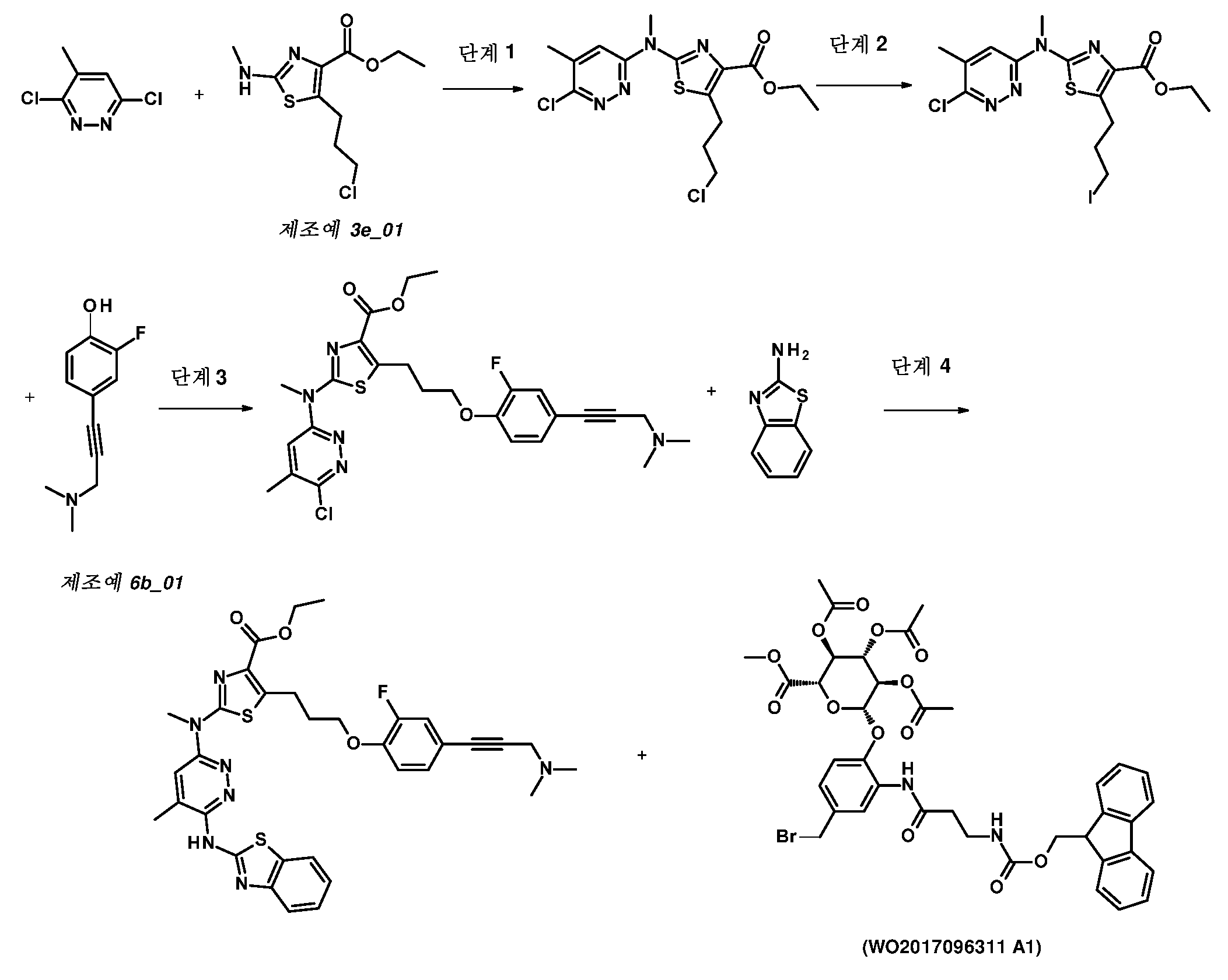

단계 1: 에틸 2-[(6-클로로-5-메틸-피리다진-3-일)-메틸-아미노]-5-(3-클로로프로필)티아졸-4-카르복실레이트Step 1: Ethyl 2-[(6-chloro-5-methyl-pyridazin-3-yl)-methyl-amino]-5-(3-chloropropyl)thiazole-4-carboxylate
0℃로 냉각시킨 THF (600 mL) 중 에틸 5-(3-클로로프로필)-2-(메틸아미노)티아졸-4-카르복실레이트 (제조예 3e_01로부터, 15.44 g, 58.5 mmol)의 용액에 NaH (오일 중 60%) (2.8 g, 70.6 mmol)를 0.5시간 기간에 걸쳐 여러 부분으로 0℃에서 첨가하였다. 현탁액을 0℃에서 0.5시간 동안 교반하였다. 이어서, 이 현탁액에 0℃에서 THF (200 mL) 중 3,6-디클로로-4-메틸-피리다진 (23.0 g, 141 mmol) 용액의 용액을 적가하였다. 반응 혼합물을 실온에서 15시간 동안 교반하고, 0℃로 냉각시킨 다음, 물 (25 mL)을 천천히 첨가하였다. 수성 층을 AcOEt로 3회 추출하고, 유기 층을 MgSO4 상에서 건조시켰다. 조 생성물을 실리카 겔 크로마토그래피 (석유 에테르 중 AcOEt의 구배)에 의해 정제하여 목적 생성물 (7.0 g, 18.0 μmol)을 수득하였다. IR: (ν cm-1) 3450, 1698, 1203. 1H NMR (400 MHz, dmso-d6) δ ppm 7.81 (s, 1 H), 4.3 (quad, 2 H), 3.78 (s, 3 H), 3.31 (t, 2 H), 3.2 (m, 2 H), 2.4 (s, 3 H), 2.12 (quint, 2 H), 1.31 (t, 3 H).To a solution of ethyl 5-(3-chloropropyl)-2-(methylamino)thiazole-4-carboxylate (from Preparation 3e_01, 15.44 g, 58.5 mmol) in THF (600 mL), cooled to 0 °C, was added NaH (60% in oil) (2.8 g, 70.6 mmol) in several portions over a period of 0.5 h at 0 °C. The suspension was stirred at 0 °C for 0.5 h. Then, to this suspension was added dropwise a solution of 3,6-dichloro-4-methyl-pyridazine (23.0 g, 141 mmol) in THF (200 mL) at 0 °C. The reaction mixture was stirred at room temperature for 15 h, cooled to 0 °C, and then water (25 mL) was added slowly. The aqueous layer was extracted three times with AcOEt and the organic layer was dried over MgSO 4 . The crude product was purified by silica gel chromatography (gradient of AcOEt in petroleum ether) to give the desired product (7.0 g, 18.0 μmol). IR: (ν cm -1 ) 3450, 1698, 1203. 1 H NMR (400 MHz, dmso-d6) δ ppm 7.81 (s, 1 H), 4.3 (quad, 2 H), 3.78 (s, 3 H), 3.31 (t, 2 H), 3.2 (m, 2 H), 2.4 (s, 3 H), 2.12 (quint, 2 H), 1.31 (t, 3 H).
단계 2: 에틸 2-[(6-클로로-5-메틸-피리다진-3-일)-메틸-아미노]-5-(3-아이오도프로필)티아졸-4-카르복실레이트Step 2: Ethyl 2-[(6-chloro-5-methyl-pyridazin-3-yl)-methyl-amino]-5-(3-iodopropyl)thiazole-4-carboxylate
아세톤 (120 mL) 중 단계 1로부터의 생성물 (7.0 g, 18.0 mmol)의 용액에 아이오딘화나트륨 (27 g, 178 mmol)을 첨가하고, 현탁액을 환류 (60℃) 하에 15시간 동안 가열하였다. 반응 혼합물을 실온으로 냉각시킨 후, 침전물을 여과하고, 아세톤으로 세척하고, 여과물을 증발 건조시켰다. 생성된 황색 고체를 에테르로 연화처리하고, 여과하고, 오산화인 (P2O5) 상에서 35℃에서 48시간 동안 건조시켜 목적 생성물 (7.6 g, 15.8 mmol)을 갈색 고체로서 수득하였다. IR: (ν cm-1) 1703, 1591. 1H NMR (400 MHz, dmso-d6) δ ppm 7.82 (df, 1 H), 7.28 (dd, 1 H), 7.2 (dd, 1 H), 7.13 (t, 1 H), 4.26 (q, 2 H), 4.12 (t, 2 H), 3.77 (s, 3 H), 3.41 (s, 2 H), 3.26 (t, 2 H), 2.42 (s, 3 H), 2.22 (s, 6 H), 2.11 (m, 2 H), 1.29 (t, 3 H).To a solution of the product from step 1 (7.0 g, 18.0 mmol) in acetone (120 mL) was added sodium iodide (27 g, 178 mmol) and the suspension was heated under reflux (60 °C) for 15 h. After the reaction mixture was cooled to room temperature, the precipitate was filtered, washed with acetone and the filtrate was evaporated to dryness. The resulting yellow solid was triturated with ether, filtered and dried over phosphorus pentoxide (P 2 O 5 ) at 35 °C for 48 h to give the desired product (7.6 g, 15.8 mmol) as a brown solid. IR: (ν cm -1 ) 1703, 1591. 1 H NMR (400 MHz, dmso-d6) δ ppm 7.82 (df, 1 H), 7.28 (dd, 1 H), 7.2 (dd, 1 H), 7.13 (t, 1 H), 4.26 (q, 2 H), 4.12 (t, 2 H), 3.77 (s, 3 H), 3.41 (s, 2 H), 3.26 (t, 2 H), 2.42 (s, 3 H), 2.22 (s, 6 H), 2.11 (m, 2 H), 1.29 (t, 3 H).
단계 3: 에틸 2-[(6-클로로-5-메틸-피리다진-3-일)-메틸-아미노]-5-[3-[4-[3-(디메틸아미노)프로프-1-이닐]-2-플루오로-페녹시]프로필]티아졸-4-카르복실레이트Step 3: Ethyl 2-[(6-chloro-5-methyl-pyridazin-3-yl)-methyl-amino]-5-[3-[4-[3-(dimethylamino)prop-1-ynyl]-2-fluoro-phenoxy]propyl]thiazole-4-carboxylate
THF (400 mL) 중 단계 2로부터의 생성물 (3.5 g, 7.28 mmol)의 용액에 THF (100 mL) 중 4-[3-(디메틸아미노)프로프-1-이닐]-2-플루오로-페놀 (제조예 6b_01로부터, 1.74 g, 8.74 mmol)의 용액 및 탄산세슘 (Cs2CO3) (4.73 g, 8.74 mmol)을 연속적으로 첨가하였다. 반응 혼합물을 환류 (70℃) 하에 15시간 동안 가열하였다. 반응 혼합물을 실온으로 냉각시키고, 물 (100 mL)에 붓고, AcOEt로 3회 추출하였다. 유기 층을 염수로 세척하고, MgSO4 상에서 건조시키고, 증발 건조시켰다. 조 생성물을 실리카 겔 크로마토그래피 (DCM 중 메탄올의 구배)에 의해 정제하여 목적 생성물 (2.40 g, 4.39 mmol)을 수득하였다. IR: (ν cm-1) 1698. 1H NMR (400/500 MHz, dmso-d6) δ ppm 7.8 (s, 1 H), 4.3 (quad, 2 H), 3.8 (s, 3 H), 3.7 (t, 2 H), 3.2 (m, 2 H), 2.4 (s, 3 H), 2.1 (quint, 2 H), 1.3 (t, 3 H).To a solution of the product from step 2 (3.5 g, 7.28 mmol) in THF (400 mL) was added successively a solution of 4-[3-(dimethylamino)prop-1-ynyl]-2-fluoro-phenol (from Preparation 6b_01, 1.74 g, 8.74 mmol) in THF (100 mL) and cesium carbonate (Cs 2 CO 3 ) (4.73 g, 8.74 mmol). The reaction mixture was heated under reflux (70 °C) for 15 h. The reaction mixture was cooled to room temperature, poured into water (100 mL) and extracted three times with AcOEt. The organic layer was washed with brine, dried over MgSO 4 and evaporated to dryness. The crude product was purified by silica gel chromatography (gradient of methanol in DCM) to give the desired product (2.40 g, 4.39 mmol). IR: (ν cm -1 ) 1698. 1 H NMR (400/500 MHz, dmso-d6) δ ppm 7.8 (s, 1 H), 4.3 (quad, 2 H), 3.8 (s, 3 H), 3.7 (t, 2 H), 3.2 (m, 2 H), 2.4 (s, 3 H), 2.1 (quint, 2 H), 1.3 (t, 3 H).
단계 4: 에틸 2-[[6-(1,3-벤조티아졸-2-일아미노)-5-메틸-피리다진-3-일]-메틸-아미노]-5-[3-[4-[3-(디메틸아미노)프로프-1-이닐]-2-플루오로-페녹시]프로필]티아졸-4-카르복실레이트Step 4: Ethyl 2-[[6-(1,3-benzothiazol-2-ylamino)-5-methyl-pyridazin-3-yl]-methyl-amino]-5-[3-[4-[3-(dimethylamino)prop-1-ynyl]-2-fluoro-phenoxy]propyl]thiazole-4-carboxylate
NMP (10 mL) 중 단계 3으로부터의 생성물 (961 mg, 1.76 mmol) 및 1,3-벤조티아졸-2-아민 (317 mg, 2.11 mmol)의 아르곤으로 포화된 용액에 4,5-비스(디페닐포스피노)-9,9-디메틸크산텐 (Xantphos) (509 mg, 0.88 mmol) 및 트리스(디벤질리덴아세톤)디팔라듐(0) (Pd2(dba)3) (12.9 mg, 0.044 mmol)을 연속적으로 첨가하였다. 반응 혼합물을 다시 아르곤으로 15분 동안 포화시키고, DIEPA (1 mL, 5.28 mmol)를 첨가하고, 반응 혼합물을 150℃에서 15시간 동안 교반하였다. 반응 혼합물을 실온으로 냉각시키고, 물을 첨가하고, 수성 상을 DCM으로 수회 추출하였다. 유기 상을 수집하고, 염수로 세척하고, MgSO4 상에서 건조시키고, 증발 건조시켰다. 조 생성물을 실리카 겔 크로마토그래피 (DCM 중 메탄올의 구배)에 의해 정제하여 목적 화합물 (540 mg, 0.818 mmol)을 수득하였다. IR: (ν cm-1) 3700-2300, 1706. 1H NMR (400 MHz, dmso-d6) δ ppm 11.55 (m, 1 H), 7.91 (d, 1 H), 7.68 (s, 1 H), 7.53 (d, 1 H), 7.39 (m, 1 H), 7.3 (dd, 1 H), 7.26-7.13 (m, 3 H), 4.26 (q, 2 H), 4.15 (t, 2 H), 3.77 (s, 3 H), 3.4 (s, 2 H), 3.27 (m, 2 H), 2.46 (s, 3 H), 2.21 (s, 6 H).To an argon-saturated solution of the product from step 3 (961 mg, 1.76 mmol) and 1,3-benzothiazol-2-amine (317 mg, 2.11 mmol) in NMP (10 mL) were added 4,5-bis(diphenylphosphino)-9,9-dimethylxanthene (Xantphos) (509 mg, 0.88 mmol) and tris(dibenzylideneacetone)dipalladium(0) (Pd 2 (dba) 3 ) (12.9 mg, 0.044 mmol) sequentially. The reaction mixture was again saturated with argon for 15 min, DIEPA (1 mL, 5.28 mmol) was added and the reaction mixture was stirred at 150 °C for 15 h. The reaction mixture was cooled to room temperature, water was added and the aqueous phase was extracted several times with DCM. The organic phase was collected, washed with brine, dried over MgSO 4 and evaporated to dryness. The crude product was purified by silica gel chromatography (gradient of methanol in DCM) to give the title compound (540 mg, 0.818 mmol). IR: (ν cm -1 ) 3700-2300, 1706. 1 H NMR (400 MHz, dmso-d6) δ ppm 11.55 (m, 1 H), 7.91 (d, 1 H), 7.68 (s, 1 H), 7.53 (d, 1 H), 7.39 (m, 1 H), 7.3 (dd, 1 H), 7.26-7.13 (m, 3 H), 4.26 (q, 2 H), 4.15 (t, 2 H), 3.77 (s, 3 H), 3.4 (s, 2 H), 3.27 (m, 2 H), 2.46 (s, 3 H), 2.21 (s, 6) H).
단계 5: 3-[4-[3-[2-[[6-(1,3-벤조티아졸-2-일아미노)-5-메틸-피리다진-3-일]-메틸-아미노]-4-카르복시-티아졸-5-일]프로폭시]-3-플루오로-페닐]프로프-2-이닐-[[3-[3-(9H-플루오렌-9-일메톡시카르보닐아미노)프로파노일아미노]-4-[(2S,3R,4S,5S,6S)-3,4,5-트리아세톡시-6-메톡시카르보닐-테트라히드로피란-2-일]옥시-페닐]메틸]-디메틸-암모늄Step 5: 3-[4-[3-[2-[[6-(1,3-Benzothiazol-2-ylamino)-5-methyl-pyridazin-3-yl]-methyl-amino]-4-carboxy-thiazol-5-yl]propoxy]-3-fluoro-phenyl]prop-2-ynyl-[[3-[3-(9H-fluoren-9-ylmethoxycarbonylamino)propanoylamino]-4-[(2S,3R,4S,5S,6S)-3,4,5-triacetoxy-6-methoxycarbonyl-tetrahydropyran-2-yl]oxy-phenyl]methyl]-dimethyl-ammonium
DMF (2 mL) 중 단계 4로부터의 생성물 (75 mg, 0.119 mmol)의 용액에 DIPEA (40 μL, 0.237 mmol) 및 메틸 (2S,3S,4S,5R,6S)-3,4,5-트리아세톡시-6-[4-(브로모메틸)-2-[3-(9H-플루오렌-9-일메톡시카르보닐아미노)프로파노일아미노]페녹시]테트라히드로피란-2-카르복실레이트 (WO2017096311A1, 128 mg, 0.158 mmol)를 첨가하고, 반응물을 실온에서 2시간 동안 교반하였다. 조 생성물을 엑스브리지® 칼럼 상의 반응 혼합물의 직접 침착에 의한 C18 역상 정제용-HPLC를 사용하여 및 TFA 방법을 사용하여 정제함으로써 목적 화합물 (88 mg, 51% 수율)을 수득하였다. 1H NMR (400 MHz, dmso-d6) δ ppm 8.9/8.2/7.35 (2s+m, 3 H), 7.9-7.2 (m, 11 H), 7.88 (d, 2 H), 7.68 (d, 2 H), 7.4/7.3 (2t, 4 H), 5.7 (d, 1 H), 5.52 (t, 1 H), 5.21 (t, 1 H), 5.1 (t, 1 H), 4.78 (d, 1 H), 4.52/4.4 (2s, 4 H), 4.3-4.15 (m, 7 H), 3.78 (s, 3 H), 3.62 (s, 3 H), 3.3 (m, 4 H), 3.08 (s, 6 H), 2.55 (m, 2 H), 2.48 (s, 3 H), 2.15 (m, 2 H), 2.01 (3s, 9 H), 1.3 (t, 3 H). LCMS m/z = 660.To a solution of the product from step 4 (75 mg, 0.119 mmol) in DMF (2 mL) was added DIPEA (40 μL, 0.237 mmol) and methyl (2S,3S,4S,5R,6S)-3,4,5-triacetoxy-6-[4-(bromomethyl)-2-[3-(9H-fluoren-9-ylmethoxycarbonylamino)propanoylamino]phenoxy]tetrahydropyran-2-carboxylate (WO2017096311A1, 128 mg, 0.158 mmol), and the reaction was stirred at room temperature for 2 h. The crude product was purified using C18 reverse phase preparative-HPLC by direct deposition of the reaction mixture on an XBridge® column and using the TFA method to give the title compound (88 mg, 51% yield). 1 H NMR (400 MHz, dmso-d6) δ ppm 8.9/8.2/7.35 (2s+m, 3 H), 7.9-7.2 (m, 11 H), 7.88 (d, 2 H), 7.68 (d, 2 H), 7.4/7.3 (2t, 4 H), 5.7 (d, 1) H), 5.52 (t, 1 H), 5.21 (t, 1 H), 5.1 (t, 1 H), 4.78 (d, 1 H), 4.52/4.4 (2s, 4 H), 4.3-4.15 (m, 7 H), 3.78 (s, 3 H), 3.62 (s, 3 H), 3.3 (m, 4 H), 3.08 (s, 6 H), 2.55 (m, 2 H), 2.48 (s, 3 H), 2.15 (m, 2 H), 2.01 (3s, 9 H), 1.3 (t, 3 H). LCMS m/z = 660.
단계 6: [3-(3-아미노프로파노일아미노)-4-[(2S,3R,4S,5S,6S)-6-카르복시-3,4,5-트리히드록시-테트라히드로피란-2-일]옥시-페닐]메틸-[3-[4-[3-[2-[[6-(1,3-벤조티아졸-2-일아미노)-5-메틸-피리다진-3-일]-메틸-아미노]-4-카르복시-티아졸-5-일]프로폭시]-3-플루오로-페닐]프로프-2-이닐]-디메틸-암모늄Step 6: [3-(3-Aminopropanoylamino)-4-[(2S,3R,4S,5S,6S)-6-carboxy-3,4,5-trihydroxy-tetrahydropyran-2-yl]oxy-phenyl]methyl-[3-[4-[3-[2-[[6-(1,3-benzothiazol-2-ylamino)-5-methyl-pyridazin-3-yl]-methyl-amino]-4-carboxy-thiazol-5-yl]propoxy]-3-fluoro-phenyl]prop-2-ynyl]-dimethyl-ammonium
MeOH (4 mL) 중 단계 5의 생성물 (85 mg, 0.06 mmol)의 용액에 LiOH 2수화물 (64 mg, 1.53 mmol)을 첨가하고, 반응물을 실온에서 5시간 동안 교반하였다. 조 생성물을 포라팩(Porapack)®에 의해 용리액으로서 NH3/MeOH 7N을 사용하여 정제함으로써 목적 화합물 (55 mg, 91% 수율)을 수득하였다.To a solution of the product of step 5 (85 mg, 0.06 mmol) in MeOH (4 mL) was added LiOH dihydrate (64 mg, 1.53 mmol), and the reaction was stirred at room temperature for 5 h. The crude product was purified by Porapak® using NH 3 /MeOH 7N as eluent to give the target compound (55 mg, 91% yield).
단계 7: 3-[4-[3-[2-[[6-(1,3-벤조티아졸-2-일아미노)-5-메틸-피리다진-3-일]-메틸-아미노]-4-카르복시-티아졸-5-일]프로폭시]-3-플루오로-페닐]프로프-2-이닐-[[4-[(2S,3R,4S,5S,6S)-6-카르복시-3,4,5-트리히드록시-테트라히드로피란-2-일]옥시-3-[3-[3-[2-(2,5-디옥소피롤-1-일)에톡시]프로파노일아미노]프로파노일아미노]페닐]메틸]-디메틸-암모늄;2,2,2-트리플루오로아세테이트Step 7: 3-[4-[3-[2-[[6-(1,3-Benzothiazol-2-ylamino)-5-methyl-pyridazin-3-yl]-methyl-amino]-4-carboxy-thiazol-5-yl]propoxy]-3-fluoro-phenyl]prop-2-ynyl-[[4-[(2S,3R,4S,5S,6S)-6-carboxy-3,4,5-trihydroxy-tetrahydropyran-2-yl]oxy-3-[3-[3-[2-(2,5-dioxopyrrol-1-yl)ethoxy]propanoylamino]propanoylamino]phenyl]methyl]-dimethyl-ammonium; 2,2,2-trifluoroacetate
DMF (6 mL) 중 단계 6의 생성물 (50mg, 0.05 mmol)의 용액에 DIPEA (30 μL, 0.179 mmol) 및 (2,5-디옥소피롤리딘-1-일) 3-[2-(2,5-디옥소피롤-1-일)에톡시]프로파노에이트 (28 mg, 0.09 mmol)를 연속적으로 첨가하였다. 용액을 실온에서 1.5시간 동안 교반하였다. 조 생성물을 엑스브리지® 칼럼 상의 반응 혼합물의 직접 침착에 의한 C18 역상 정제용-HPLC를 사용하여 및 TFA 방법을 사용하여 정제함으로써 목적 생성물 (15 mg, 20% 수율)을 수득하였다. 1H NMR (400 MHz, dmso-d6) δ ppm 8.4 (br s, 1 H), 7.9 (m, 1 H), 7.7 (br s, 1 H), 7.6 (dd, 1 H), 7.5 (dl, 1 H), 7.45 (dl, 1 H), 7.4 (td, 1 H), 7.25 (m, 3 H), 7.2 (t, 1 H), 7 (s, 2 H), 5 (d, 1 H), 4.55/4.4 (2 br s, 4 H), 4.2 (t, 2 H), 4 (d, 1 H), 3.8 (s, 3 H), 3.55 (2t, 4 H), 3.45 (m, 2 H), 3.45/3.4 (2m, 3 H), 3.35 (m, 2 H), 3.3 (t, 2 H), 3.1 (br s, 6 H), 2.6 (t, 2 H), 2.45 (s, 3 H), 2.15 (t, 2 H), 2.15 (quint, 2 H). 19F NMR (400 MHz, dmso-d6) δ ppm -133.8. HRMS (ESI) [M-CF3CO2]+ 실측치 = 1195.3690 (δ = 2.5 ppm)To a solution of the product of step 6 (50 mg, 0.05 mmol) in DMF (6 mL) were added DIPEA (30 μL, 0.179 mmol) and (2,5-dioxopyrrolidin-1-yl) 3-[2-(2,5-dioxopyrrol-1-yl)ethoxy]propanoate (28 mg, 0.09 mmol) sequentially. The solution was stirred at room temperature for 1.5 h. The crude product was purified using C18 reverse phase preparative-HPLC by direct deposition of the reaction mixture on an XBridge® column and using the TFA method to give the desired product (15 mg, 20% yield). 1 H NMR (400 MHz, dmso-d6) δ ppm 8.4 (br s, 1 H), 7.9 (m, 1 H), 7.7 (br s, 1 H), 7.6 (dd, 1 H), 7.5 (dl, 1 H), 7.45 (dl, 1 H), 7.4 (td, 1 H), 7.25 (m, 3 H), 7.2 (t, 1 H), 7 (s, 2 H), 5 (d, 1 H), 4.55/4.4 (2 br s, 4 H), 4.2 (t, 2 H), 4 (d, 1 H), 3.8 (s, 3 H), 3.55 (2t, 4 H), 3.45 (m, 2 H), 3.45/3.4 (2m, 3 H), 3.35 (m, 2 H), 3.3 (t, 2 H), 3.1 (br s, 6 H), 2.6 (t, 2 H), 2.45 (s, 3 H), 2.15 (t, 2 H), 2.15 (quint, 2 H). 19 F NMR (400 MHz, dmso-d6) δ ppm -133.8. HRMS (ESI) [M-CF 3 CO 2 ] + found = 1195.3690 (δ = 2.5 ppm)
L107C-P7의 제조: 2-[[6-(1,3-벤조티아졸-2-일아미노)-5-메틸-피리다진-3-일]-메틸-아미노]-5-[3-[4-[3-[[4-[[(2S)-2-[[(2S)-2-[3-[2-[3-(2,5-디옥소피롤-1-일)프로파노일아미노]에톡시]프로파노일아미노]-3-메틸-부타노일]아미노]프로파노일]아미노]페닐]메톡시카르보닐-메틸-아미노]프로프-1-이닐]-2-플루오로-페녹시]프로필]티아졸-4-카르복실산Preparation of L107C-P7: 2-[[6-(1,3-benzothiazol-2-ylamino)-5-methyl-pyridazin-3-yl]-methyl-amino]-5-[3-[4-[3-[[4-[[(2S)-2-[[(2S)-2-[3-[2-[3-(2,5-dioxopyrrol-1-yl)propanoylamino]ethoxy]propanoylamino]-3-methyl-butanoyl]amino]propanoyl]amino]phenyl]methoxycarbonyl-methyl-amino]prop-1-ynyl]-2-fluoro-phenoxy]propyl]thiazole-4-carboxylic acid
방법 G에 따라 2-[2-[2-(2-아지도에톡시)에톡시]에톡시]아세트산을 3-[2-[2-[2-[2-[2-[2-[2-[2-[2-[2-[2-(2-아지도에톡시)에톡시]에톡시]에톡시]에톡시]에톡시]에톡시]에톡시]에톡시]에톡시]에톡시]에톡시]프로판산으로 대체함으로써 생성물을 합성하였다. 1H NMR (400 MHz, dmso-d6) δ ppm 12.55 (br s, 1 H), 11.5-10.8 (diffus, 1 H), 9.92 (s, 1 H), 8.16 (d, 1 H), 7.99 (t, 1 H), 7.9 (diffus, 1 H), 7.86 (d, 1 H), 7.67 (br s, 1 H), 7.64 (diffus, 1 H), 7.58 (d, 2 H), 7.38/7.2 (2m, 3 H), 7.35 (m, 1 H), 7.32 (d, 2 H), 7.15 (t, 1 H), 7 (s, 2 H), 5.03 (s, 2 H), 4.39 (quint, 1 H), 4.28 (s, 2 H), 4.2 (dd, 1 H), 4.15 (t, 2 H), 3.77 (s, 3 H), 3.59 (t, 4 H), 3.5 (m, 44 H), 3.36 (t, 2 H), 3.28 (t, 2 H), 3.14 (quad, 2 H), 2.9 (s, 3 H), 2.49 (s, 3 H), 2.45/2.33 (2t, 4 H), 2.13 (quint, 2 H), 1.96 (oct, 1 H), 1.3 (d, 3 H), 0.87/0.83 (2d, 6 H). HRMS (ESI) [M+H]+ 실측치 = 1 687.7071 (δ = 0).The product was synthesized by replacing 2-[2-[2-(2-azidoethoxy)ethoxy]ethoxy]acetic acid with 3-[2-[2-[2-[2-[2-[2-[2-[2-[2-(2-azidoethoxy)ethoxy]ethoxy]ethoxy]ethoxy]ethoxy]ethoxy]ethoxy]ethoxy]ethoxy]ethoxy]propanoic acid according to Method G. 1 H NMR (400 MHz, dmso-d6) δ ppm 12.55 (br s, 1 H), 11.5-10.8 (diffus, 1 H), 9.92 (s, 1 H), 8.16 (d, 1 H), 7.99 (t, 1 H), 7.9 (diffus, 1 H), 7.86 (d, 1 H), 7.67 (br s, 1 H), 7.64 (diffus, 1 H), 7.58 (d, 2 H), 7.38/7.2 (2m, 3 H), 7.35 (m, 1 H), 7.32 (d, 2 H), 7.15 (t, 1 H), 7 (s, 2 H), 5.03 (s, 2 H), 4.39 (quint, 1 H), 4.28 (s, 2 H), 4.2 (dd, 1 H), 4.15 (t, 2 H), 3.77 (s, 3 H), 3.59 (t, 4 H), 3.5 (m, 44 H), 3.36 (t, 2 H), 3.28 (t, 2 H), 3.14 (quad, 2 H), 2.9 (s, 3 H), 2.49 (s, 3 H), 2.45/2.33 (2t, 4 H), 2.13 (quint, 2 H), 1.96 (oct, 1 H), 1.3 (d, 3 H), 0.87/0.83 (2d, 6 H). HRMS (ESI) [M+H] + found = 1 687.7071 (δ = 0).
L107A-P2의 제조: 3-[4-[3-[2-[[6-(1,3-벤조티아졸-2-일아미노)-5-메틸-피리다진-3-일]-메틸-아미노]-4-카르복시-티아졸-5-일]프로폭시]-3-플루오로-페닐]프로프-2-이닐-[[4-[[(2S)-2-[[(2S)-2-[3-[2-[3-(2,5-디옥소피롤-1-일)프로파노일아미노]에톡시]프로파노일아미노]-3-메틸-부타노일]아미노]프로파노일]아미노]페닐]메틸]-디메틸-암모늄;2,2,2-트리플루오로아세테이트Preparation of L107A-P2: 3-[4-[3-[2-[[6-(1,3-Benzothiazol-2-ylamino)-5-methyl-pyridazin-3-yl]-methyl-amino]-4-carboxy-thiazol-5-yl]propoxy]-3-fluoro-phenyl]prop-2-ynyl-[[4-[[(2S)-2-[[(2S)-2-[3-[2-[3-(2,5-dioxopyrrol-1-yl)propanoylamino]ethoxy]propanoylamino]-3-methyl-butanoyl]amino]propanoyl]amino]phenyl]methyl]-dimethyl-ammonium; 2,2,2-trifluoroacetate
목적 생성물을 방법 A를 사용하여 수득하였다. (2S)-2-아미노-N-[(1S)-2-[4-(히드록시메틸)아닐리노]-1-메틸-2-옥소-에틸]-3-메틸-부탄아미드 및 (2,5-디옥소피롤리딘-1-일) 3-[2-[2-[2-[2-[2-[2-[2-[2-[2-[2-[2-[2-[3-(2,5-디옥소피롤-1-일)프로파노일아미노]에톡시]에톡시]에톡시]에톡시]에톡시]에톡시] 에톡시]에톡시]에톡시]에톡시]에톡시]에톡시]프로파노에이트를 단계 1에서 사용하고, 적절한 페이로드로서 P2를 단계 3에서 사용하였다. 1H NMR (400 MHz, dmso-d6) δ ppm 10.2 (s), 8.23 (d), 7.99 (t), 7.89 (큰, 1 H), 7.85 (d), 7.76 (d, 2 H), 7.67 (s, 1 H), 7.56 (d, 1 H), 7.5 (d, 2 H), 7.4 (t, 1 H), 7.38 (m, 2 H), 7.24 (t, 1 H), 7.2 (t, 1 H), 6.99 (s, 2 H), 4.55 (s, 2 H), 4.41 (s, 2 H), 4.39 (m, 1 H), 4.2 (m, 1 H), 4.19 (m, 2 H), 3.77 (s, 3 H), 3.65-3.33 (m, 24 H), 3.59 (m, 2 H), 3.29 (t, 2 H), 3.14 (quad, 2 H), 3.05 (s, 6 H), 2.46 (s, 3 H), 2.39 (m, 2 H), 2.33 (t, 2 H), 2.15 (m, 2 H), 1.96 (m, 1 H), 1.32 (d, 3 H), 0.89/0.84 (2d, 6 H). 13C NMR (400 MHz, dmso-d6) δ ppm 134.7, 134.2, 126, 122.9, 122.2, 119.8, 119.7, 119.4, 118.3, 115.5, 70.4/69.2/67.2, 69, 66.8, 58.1, 53.9, 49.9, 49.9/40.4, 39, 36.4, 35.4, 34.6, 34.6, 31.1, 31.1, 23.6, 20.1, 18.2, 18.1. HRMS (ESI) [M+H]+ 실측치 = 1 657.7339 (δ = 0.4).The desired product was obtained using Method A. (2S)-2-Amino-N-[(1S)-2-[4-(hydroxymethyl)anilino]-1-methyl-2-oxo-ethyl]-3-methyl-butanamide and (2,5-dioxopyrrolidin-1-yl) 3-[2-[2-[2-[2-[2-[2-[2-[2-[2-[3-(2,5-dioxopyrrol-1-yl)propanoylamino]ethoxy]ethoxy]ethoxy]ethoxy]ethoxy]ethoxy]ethoxy]ethoxy]ethoxy]ethoxy]ethoxy]ethoxy]ethoxy]ethoxy]propanoate were used in
L9C-P59의 제조: 2-[3-(1,3-벤조티아졸-2-일아미노)-4-메틸-6,7-디히드로-5H-피리도[2,3-c]피리다진-8-일]-5-[3-[4-[3-[[4-[[(2S)-2-[[(2S)-2-[3-[2-(2,5-디옥소피롤-1-일)에톡시]프로파노일아미노]-3-메틸-부타노일]아미노]-5-우레이도-펜타노일]아미노]페닐]메톡시카르보닐-(3-히드록시프로필)아미노]프로프-1-이닐]-2-플루오로-페녹시]프로필]티아졸-4-카르복실산Preparation of L9C-P59: 2-[3-(1,3-benzothiazol-2-ylamino)-4-methyl-6,7-dihydro-5H-pyrido[2,3-c]pyridazin-8-yl]-5-[3-[4-[3-[[4-[[(2S)-2-[[(2S)-2-[3-[2-(2,5-dioxopyrrol-1-yl)ethoxy]propanoylamino]-3-methyl-butanoyl]amino]-5-ureido-pentanoyl]amino]phenyl]methoxycarbonyl-(3-hydroxypropyl)amino]prop-1-ynyl]-2-fluoro-phenoxy]propyl]thiazole-4-carboxylic acid
방법 C 및 적절한 페이로드로서의 P59를 사용하여, 목적 생성물을 수득하였다. HRMS (ESI) [M+H]+ 실측치 = 1288.4656 (δ = -4.5 ppm).Using Method C and P59 as an appropriate payload, the desired product was obtained. HRMS (ESI) [M+H] + found = 1288.4656 (δ = -4.5 ppm).
L9C-P3의 제조: 2-[3-(1,3-벤조티아졸-2-일아미노)-4-메틸-6,7-디히드로-5H-피리도[2,3-c]피리다진-8-일]-5-[3-[4-[3-[[4-[[(2S)-2-[[(2S)-2-[3-[2-(2,5-디옥소피롤-1-일)에톡시]프로파노일아미노]-3-메틸-부타노일]아미노]-5-우레이도-펜타노일]아미노]페닐]메톡시카르보닐-메틸-아미노]프로프-1-이닐]-2-플루오로-페녹시]프로필]티아졸-4-카르복실산Preparation of L9C-P3: 2-[3-(1,3-benzothiazol-2-ylamino)-4-methyl-6,7-dihydro-5H-pyrido[2,3-c]pyridazin-8-yl]-5-[3-[4-[3-[[4-[[(2S)-2-[[(2S)-2-[3-[2-(2,5-dioxopyrrol-1-yl)ethoxy]propanoylamino]-3-methyl-butanoyl]amino]-5-ureido-pentanoyl]amino]phenyl]methoxycarbonyl-methyl-amino]prop-1-ynyl]-2-fluoro-phenoxy]propyl]thiazole-4-carboxylic acid
방법 C 및 적절한 페이로드로서의 P3을 사용하여, 목적 생성물을 수득하였다. HRMS (ESI) [M+H]+ 실측치 = 1244.4473 (δ = 1.7 ppm).Using Method C and P3 as an appropriate payload, the desired product was obtained. HRMS (ESI) [M+H] + found = 1244.4473 (δ = 1.7 ppm).
L9C-P60의 제조: 6-[3-(1,3-벤조티아졸-2-일아미노)-4-메틸-6,7-디히드로-5H-피리도[2,3-c]피리다진-8-일]-3-[1-[[(5SR,7RS)-3-[2-[[(3S)-3,4-디히드록시부틸]-[[4-[[(2S)-2-[[(2S)-2-[3-[2-(2,5-디옥소피롤-1-일)에톡시]프로파노일아미노]-3-메틸-부타노일]아미노]-5-우레이도-펜타노일]아미노]페닐]메톡시카르보닐]아미노]에톡시]-1-아다만틸]메틸]-5-메틸-피라졸-4-일]피리딘-2-카르복실산Preparation of L9C-P60: 6-[3-(1,3-benzothiazol-2-ylamino)-4-methyl-6,7-dihydro-5H-pyrido[2,3-c]pyridazin-8-yl]-3-[1-[[(5SR,7RS)-3-[2-[[(3S)-3,4-dihydroxybutyl]-[[4-[[(2S)-2-[[(2S)-2-[3-[2-(2,5-dioxopyrrol-1-yl)ethoxy]propanoylamino]-3-methyl-butanoyl]amino]-5-ureido-pentanoyl]amino]phenyl]methoxycarbonyl]amino]ethoxy]-1-adamantyl]methyl]-5-methyl-pyrazol-4-yl]pyridine-2-carboxylic acid
방법 C 및 적절한 페이로드로서의 P60을 사용하여, 목적 생성물을 수득하였다. HRMS (ESI) [M+H]+ 실측치 = 1394.6300 (δ = -3.6 ppm).Using Method C and P60 as an appropriate payload, the desired product was obtained. HRMS (ESI) [M+H] + found = 1394.6300 (δ = -3.6 ppm).
L9A-P61의 제조: 6-[3-(1,3-벤조티아졸-2-일아미노)-4-메틸-6,7-디히드로-5H-피리도[2,3-c]피리다진-8-일]-3-[1-[[(5RS,7SR)-3-[2-[1-[[4-[[(2S)-2-[[(2S)-2-[3-[2-(2,5-디옥소피롤-1-일)에톡시]프로파노일아미노]-3-메틸-부타노일]아미노]-5-우레이도-펜타노일]아미노]페닐]메틸]피롤리딘-1-윰-1-일]에톡시]-1-아다만틸]메틸]-5-메틸-피라졸-4-일]피리딘-2-카르복실산; 2,2,2-트리플루오로아세테이트Preparation of L9A-P61: 6-[3-(1,3-benzothiazol-2-ylamino)-4-methyl-6,7-dihydro-5H-pyrido[2,3-c]pyridazin-8-yl]-3-[1-[[(5RS,7SR)-3-[2-[1-[[4-[[(2S)-2-[[(2S)-2-[3-[2-(2,5-dioxopyrrol-1-yl)ethoxy]propanoylamino]-3-methyl-butanoyl]amino]-5-ureido-pentanoyl]amino]phenyl]methyl]pyrrolidin-1-ium-1-yl]ethoxy]-1-adamantyl]methyl]-5-methyl-pyrazol-4-yl]pyridine-2-carboxylic acid; 2,2,2-trifluoroacetate
방법 A 및 적절한 페이로드로서의 P61을 사용하여, 목적 생성물을 수득하였다. HRMS (ESI) [M]+ 실측치 = 1316.6347 (δ = -3.8 ppm).Using Method A and P61 as an appropriate payload, the desired product was obtained. HRMS (ESI) [M]+ found = 1316.6347 (δ = -3.8 ppm).
L9A-P62의 제조: 2-[[(5RS,7SR)-3-[[4-[6-[3-(1,3-벤조티아졸-2-일아미노)-4-메틸-6,7-디히드로-5H-피리도[2,3-c]피리다진-8-일]-2-카르복시-3-피리딜]-5-메틸-피라졸-1-일]메틸]-5,7-디메틸-1-아다만틸]옥시]에틸-[[4-[[(2S)-2-[[(2S)-2-[3-[2-(2,5-디옥소피롤-1-일)에톡시]프로파노일아미노]-3-메틸-부타노일]아미노]-5-우레이도-펜타노일]아미노]페닐]메틸]-(3-히드록시프로필)-메틸-암모늄; 2,2,2-트리플루오로아세테이트Preparation of L9A-P62: 2-[[(5RS,7SR)-3-[[4-[6-[3-(1,3-Benzothiazol-2-ylamino)-4-methyl-6,7-dihydro-5H-pyrido[2,3-c]pyridazin-8-yl]-2-carboxy-3-pyridyl]-5-methyl-pyrazol-1-yl]methyl]-5,7-dimethyl-1-adamantyl]oxy]ethyl-[[4-[[(2S)-2-[[(2S)-2-[3-[2-(2,5-dioxopyrrol-1-yl)ethoxy]propanoylamino]-3-methyl-butanoyl]amino]-5-ureido-pentanoyl]amino]phenyl]methyl]-(3-hydroxypropyl)-methyl-ammonium; 2,2,2-Trifluoroacetate
방법 B 및 적절한 페이로드로서의 P62를 사용하여, 목적 생성물을 수득하였다. HRMS (ESI) [M]+ 실측치 = 1362.6748 (δ = -5.0 ppm).Using Method B and P62 as an appropriate payload, the desired product was obtained. HRMS (ESI) [M]+ found = 1362.6748 (δ = -5.0 ppm).
L9A-P63의 제조: 3-[1-[[(5SR,7RS)-3-[2-[1-[[4-[[(2S)-2-[[(2S)-2-[3-[2-(2,5-디옥소피롤-1-일)에톡시]프로파노일아미노]-3-메틸-부타노일]아미노]-5-우레이도-펜타노일]아미노]페닐]메틸]피롤리딘-1-윰-1-일]에톡시]-5,7-디메틸-1-아다만틸]메틸]-5-메틸-피라졸-4-일]-6-[3-[(5-플루오로-1,3-벤조티아졸-2-일)아미노]-4-메틸-6,7-디히드로-5H-피리도[2,3-c]피리다진-8-일]피리딘-2-카르복실산; 2,2,2-트리플루오로아세테이트Preparation of L9A-P63: 3-[1-[[(5SR,7RS)-3-[2-[1-[[4-[[(2S)-2-[[(2S)-2-[3-[2-(2,5-dioxopyrrol-1-yl)ethoxy]propanoylamino]-3-methyl-butanoyl]amino]-5-ureido-pentanoyl]amino]phenyl]methyl]pyrrolidin-1-ium-1-yl]ethoxy]-5,7-dimethyl-1-adamantyl]methyl]-5-methyl-pyrazol-4-yl]-6-[3-[(5-fluoro-1,3-benzothiazol-2-yl)amino]-4-methyl-6,7-dihydro-5H-pyrido[2,3-c]pyridazin-8-yl]pyridine-2-carboxylic acid; 2,2,2-Trifluoroacetate
방법 A 및 적절한 페이로드로서의 P63을 사용하여, 목적 생성물을 수득하였다. HRMS (ESI) [M]+ 실측치 = 1362.6585 (δ = -2.3 ppm).Using Method A and P63 as an appropriate payload, the desired product was obtained. HRMS (ESI) [M]+ found = 1362.6585 (δ = -2.3 ppm).
L9A-P64의 제조: 3-[1-[[(5RS,7SR)-3-[2-[1-[[4-[[(2S)-2-[[(2S)-2-[3-[2-(2,5-디옥소피롤-1-일)에톡시]프로파노일아미노]-3-메틸-부타노일]아미노]-5-우레이도-펜타노일]아미노]페닐]메틸]피롤리딘-1-윰-1-일]에톡시]-5,7-디메틸-1-아다만틸]메틸]-5-메틸-피라졸-4-일]-6-[4-메틸-3-[(6-메틸-1,3-벤조티아졸-2-일)아미노]-6,7-디히드로-5H-피리도[2,3-c]피리다진-8-일]피리딘-2-카르복실산; 2,2,2-트리플루오로아세테이트Preparation of L9A-P64: 3-[1-[[(5RS,7SR)-3-[2-[1-[[4-[[(2S)-2-[[(2S)-2-[3-[2-(2,5-dioxopyrrol-1-yl)ethoxy]propanoylamino]-3-methyl-butanoyl]amino]-5-ureido-pentanoyl]amino]phenyl]methyl]pyrrolidin-1-ium-1-yl]ethoxy]-5,7-dimethyl-1-adamantyl]methyl]-5-methyl-pyrazol-4-yl]-6-[4-methyl-3-[(6-methyl-1,3-benzothiazol-2-yl)amino]-6,7-dihydro-5H-pyrido[2,3-c]pyridazin-8-yl]pyridine-2-carboxylic acid; 2,2,2-Trifluoroacetate
방법 A 및 적절한 페이로드로서의 P64를 사용하여, 목적 생성물을 수득하였다. HRMS (ESI) [M]+ 실측치 = 1358.6809 (δ = -4.3 ppm).Using Method A and P64 as an appropriate payload, the desired product was obtained. HRMS (ESI) [M]+ found = 1358.6809 (δ = -4.3 ppm).
L9A-P65의 제조: 3-[1-[[(5SR,7RS)-3-[2-[1-[[4-[[(2S)-2-[[(2S)-2-[3-[2-(2,5-디옥소피롤-1-일)에톡시]프로파노일아미노]-3-메틸-부타노일]아미노]-5-우레이도-펜타노일]아미노]페닐]메틸]피롤리딘-1-윰-1-일]에톡시]-5,7-디메틸-1-아다만틸]메틸]-5-메틸-피라졸-4-일]-6-[3-[(6-플루오로-1,3-벤조티아졸-2-일)아미노]-4-메틸-6,7-디히드로-5H-피리도[2,3-c]피리다진-8-일]피리딘-2-카르복실산; 2,2,2-트리플루오로아세테이트Preparation of L9A-P65: 3-[1-[[(5SR,7RS)-3-[2-[1-[[4-[[(2S)-2-[[(2S)-2-[3-[2-(2,5-dioxopyrrol-1-yl)ethoxy]propanoylamino]-3-methyl-butanoyl]amino]-5-ureido-pentanoyl]amino]phenyl]methyl]pyrrolidin-1-ium-1-yl]ethoxy]-5,7-dimethyl-1-adamantyl]methyl]-5-methyl-pyrazol-4-yl]-6-[3-[(6-fluoro-1,3-benzothiazol-2-yl)amino]-4-methyl-6,7-dihydro-5H-pyrido[2,3-c]pyridazin-8-yl]pyridine-2-carboxylic acid; 2,2,2-Trifluoroacetate
방법 A 및 적절한 페이로드로서의 P65를 사용하여, 목적 생성물을 수득하였다. HRMS (ESI) [M]+ 실측치 = 1362.6557 (δ = -4.3 ppm).Using Method A and P65 as an appropriate payload, the desired product was obtained. HRMS (ESI) [M]+ found = 1362.6557 (δ = -4.3 ppm).
L9A-P66의 제조: 3-[(5RS,7SR)-3-[[4-[6-[3-(1,3-벤조티아졸-2-일아미노)-4-메틸-6,7-디히드로-5H-피리도[2,3-c]피리다진-8-일]-2-카르복시-3-피리딜]-5-메틸-피라졸-1-일]메틸]-5,7-디메틸-1-아다만틸]프로필-[[4-[[(2S)-2-[[(2S)-2-[3-[2-(2,5-디옥소피롤-1-일)에톡시]프로파노일아미노]-3-메틸-부타노일]아미노]-5-우레이도-펜타노일]아미노]페닐]메틸]-디메틸-암모늄; 2,2,2-트리플루오로아세테이트Preparation of L9A-P66: 3-[(5RS,7SR)-3-[[4-[6-[3-(1,3-benzothiazol-2-ylamino)-4-methyl-6,7-dihydro-5H-pyrido[2,3-c]pyridazin-8-yl]-2-carboxy-3-pyridyl]-5-methyl-pyrazol-1-yl]methyl]-5,7-dimethyl-1-adamantyl]propyl-[[4-[[(2S)-2-[[(2S)-2-[3-[2-(2,5-dioxopyrrol-1-yl)ethoxy]propanoylamino]-3-methyl-butanoyl]amino]-5-ureido-pentanoyl]amino]phenyl]methyl]-dimethyl-ammonium; 2,2,2-trifluoroacetate
방법 A 및 적절한 페이로드로서의 P66을 사용하여, 목적 생성물을 수득하였다. HRMS (ESI) [M]+ 실측치 = 1316.6703 (δ = -4.4 ppm).Using Method A and P66 as an appropriate payload, the desired product was obtained. HRMS (ESI) [M]+ found = 1316.6703 (δ = -4.4 ppm).
L9A-P67의 제조: 6-[3-(1,3-벤조티아졸-2-일아미노)-4-메틸-6,7-디히드로-5H-피리도[2,3-c]피리다진-8-일]-3-[1-[[(5RS,7SR)-3-[2-[4-[[4-[[(2S)-2-[[(2S)-2-[3-[2-(2,5-디옥소피롤-1-일)에톡시]프로파노일아미노]-3-메틸-부타노일]아미노]-5-우레이도-펜타노일]아미노]페닐]메틸]-4-메틸-피페라진-4-윰-1-일]에톡시]-1-아다만틸]메틸]-5-메틸-피라졸-4-일]피리딘-2-카르복실산; 2,2,2-트리플루오로아세테이트Preparation of L9A-P67: 6-[3-(1,3-Benzothiazol-2-ylamino)-4-methyl-6,7-dihydro-5H-pyrido[2,3-c]pyridazin-8-yl]-3-[1-[[(5RS,7SR)-3-[2-[4-[[4-[[(2S)-2-[[(2S)-2-[3-[2-(2,5-dioxopyrrol-1-yl)ethoxy]propanoylamino]-3-methyl-butanoyl]amino]-5-ureido-pentanoyl]amino]phenyl]methyl]-4-methyl-piperazin-4-ium-1-yl]ethoxy]-1-adamantyl]methyl]-5-methyl-pyrazol-4-yl]pyridine-2-carboxylic acid; 2,2,2-Trifluoroacetate
방법 A 및 적절한 페이로드로서의 P67을 사용하여, 목적 생성물을 수득하였다. HRMS (ESI) [M]+ 실측치 = 1345.6582 (δ = -6.0 ppm).Using Method A and P67 as an appropriate payload, the desired product was obtained. HRMS (ESI) [M]+ found = 1345.6582 (δ = -6.0 ppm).
L9A-P68의 제조: 3-[(5RS,7SR)-3-[[4-[6-[3-(1,3-벤조티아졸-2-일아미노)-4-메틸-6,7-디히드로-5H-피리도[2,3-c]피리다진-8-일]-2-카르복시-3-피리딜]-5-메틸-피라졸-1-일]메틸]-5,7-디메틸-1-아다만틸]프로필-[[4-[[(2S)-2-[[(2S)-2-[3-[2-(2,5-디옥소피롤-1-일)에톡시]프로파노일아미노]-3-메틸-부타노일]아미노]-5-우레이도-펜타노일]아미노]페닐]메틸]-(3-히드록시프로필)-메틸-암모늄; 2,2,2-트리플루오로아세테이트Preparation of L9A-P68: 3-[(5RS,7SR)-3-[[4-[6-[3-(1,3-benzothiazol-2-ylamino)-4-methyl-6,7-dihydro-5H-pyrido[2,3-c]pyridazin-8-yl]-2-carboxy-3-pyridyl]-5-methyl-pyrazol-1-yl]methyl]-5,7-dimethyl-1-adamantyl]propyl-[[4-[[(2S)-2-[[(2S)-2-[3-[2-(2,5-dioxopyrrol-1-yl)ethoxy]propanoylamino]-3-methyl-butanoyl]amino]-5-ureido-pentanoyl]amino]phenyl]methyl]-(3-hydroxypropyl)-methyl-ammonium; 2,2,2-trifluoroacetate
방법 A 및 적절한 페이로드로서의 P68을 사용하여, 목적 생성물을 수득하였다. HRMS (ESI) [M]+ 실측치 = 1360.6941 (δ = -6.0 ppm).Using Method A and P68 as an appropriate payload, the desired product was obtained. HRMS (ESI) [M]+ found = 1360.6941 (δ = -6.0 ppm).
L9C-P69의 제조: 6-[3-(1,3-벤조티아졸-2-일아미노)-4-메틸-6,7-디히드로-5H-피리도[2,3-c]피리다진-8-일]-3-[1-[[(5RS,7SR)-3-[3-[[(3S)-3,4-디히드록시부틸]-[[4-[[(2S)-2-[[(2S)-2-[3-[2-(2,5-디옥소피롤-1-일)에톡시]프로파노일아미노]-3-메틸-부타노일]아미노]-5-우레이도-펜타노일]아미노]페닐]메톡시카르보닐]아미노]프로필]-5,7-디메틸-1-아다만틸]메틸]-5-메틸-피라졸-4-일]피리딘-2-카르복실산Preparation of L9C-P69: 6-[3-(1,3-benzothiazol-2-ylamino)-4-methyl-6,7-dihydro-5H-pyrido[2,3-c]pyridazin-8-yl]-3-[1-[[(5RS,7SR)-3-[3-[[(3S)-3,4-dihydroxybutyl]-[[4-[[(2S)-2-[[(2S)-2-[3-[2-(2,5-dioxopyrrol-1-yl)ethoxy]propanoylamino]-3-methyl-butanoyl]amino]-5-ureido-pentanoyl]amino]phenyl]methoxycarbonyl]amino]propyl]-5,7-dimethyl-1-adamantyl]methyl]-5-methyl-pyrazol-4-yl]pyridine-2-carboxylic acid
방법 C 및 적절한 페이로드로서의 P69를 사용하여, 목적 생성물을 수득하였다. HRMS (ESI) [M+H]+ 실측치 = 1420.6913 (δ = 3.0 ppm).Using Method C and P69 as an appropriate payload, the desired product was obtained. HRMS (ESI) [M+H] + found = 1420.6913 (δ = 3.0 ppm).
L9A-P48의 제조: 2-[[(5SR,7RS)-3-[[4-[6-[3-(1,3-벤조티아졸-2-일아미노)-4-메틸-6,7-디히드로-5H-피리도[2,3-c]피리다진-8-일]-2-카르복시-3-피리딜]-5-메틸-피라졸-1-일]메틸]-5,7-디메틸-1-아다만틸]옥시]에틸-(카르복시메틸)-[[4-[[(2S)-2-[[(2S)-2-[3-[2-(2,5-디옥소피롤-1-일)에톡시]프로파노일아미노]-3-메틸-부타노일]아미노]-5-우레이도-펜타노일]아미노]페닐]메틸]-메틸-암모늄; 2,2,2-트리플루오로아세테이트Preparation of L9A-P48: 2-[[(5SR,7RS)-3-[[4-[6-[3-(1,3-benzothiazol-2-ylamino)-4-methyl-6,7-dihydro-5H-pyrido[2,3-c]pyridazin-8-yl]-2-carboxy-3-pyridyl]-5-methyl-pyrazol-1-yl]methyl]-5,7-dimethyl-1-adamantyl]oxy]ethyl-(carboxymethyl)-[[4-[[(2S)-2-[[(2S)-2-[3-[2-(2,5-dioxopyrrol-1-yl)ethoxy]propanoylamino]-3-methyl-butanoyl]amino]-5-ureido-pentanoyl]amino]phenyl]methyl]-methyl-ammonium; 2,2,2-trifluoroacetate
방법 A 및 적절한 페이로드로서의 P48을 사용하여, 목적 생성물을 수득하였다. HRMS (ESI) [M]+ 실측치 = 1362.6399 (δ = -3.9 ppm).Using Method A and P48 as an appropriate payload, the desired product was obtained. HRMS (ESI) [M]+ found = 1362.6399 (δ = -3.9 ppm).
L9A-P70의 제조: 2-[[(5RS,7SR)-3-[[4-[6-[3-(1,3-벤조티아졸-2-일아미노)-4-메틸-6,7-디히드로-5H-피리도[2,3-c]피리다진-8-일]-2-카르복시-3-피리딜]-5-메틸-피라졸-1-일]메틸]-5,7-디메틸-1-아다만틸]옥시]에틸-(2-카르복시에틸)-[[4-[[(2S)-2-[[(2S)-2-[3-[2-(2,5-디옥소피롤-1-일)에톡시]프로파노일아미노]-3-메틸-부타노일]아미노]-5-우레이도-펜타노일]아미노]페닐]메틸]-메틸-암모늄; 2,2,2-트리플루오로아세테이트Preparation of L9A-P70: 2-[[(5RS,7SR)-3-[[4-[6-[3-(1,3-Benzothiazol-2-ylamino)-4-methyl-6,7-dihydro-5H-pyrido[2,3-c]pyridazin-8-yl]-2-carboxy-3-pyridyl]-5-methyl-pyrazol-1-yl]methyl]-5,7-dimethyl-1-adamantyl]oxy]ethyl-(2-carboxyethyl)-[[4-[[(2S)-2-[[(2S)-2-[3-[2-(2,5-dioxopyrrol-1-yl)ethoxy]propanoylamino]-3-methyl-butanoyl]amino]-5-ureido-pentanoyl]amino]phenyl]methyl]-methyl-ammonium; 2,2,2-Trifluoroacetate
방법 A 및 적절한 페이로드로서의 P70을 사용하여, 목적 생성물을 수득하였다. HRMS (ESI) [M]+ 실측치 = 1376.6548 (δ = -4.4 ppm).Using Method A and P70 as an appropriate payload, the desired product was obtained. HRMS (ESI) [M]+ found = 1376.6548 (δ = -4.4 ppm).
L9C-P71의 제조: 6-[3-(1,3-벤조티아졸-2-일아미노)-4-메틸-6,7-디히드로-5H-피리도[2,3-c]피리다진-8-일]-3-[1-[[(5SR,7RS)-3-[2-[2-카르복시에틸-[[4-[[(2S)-2-[[(2S)-2-[3-[2-(2,5-디옥소피롤-1-일)에톡시]프로파노일아미노]-3-메틸-부타노일]아미노]-5-우레이도-펜타노일]아미노]페닐]메톡시카르보닐]아미노]에톡시]-5,7-디메틸-1-아다만틸]메틸]-5-메틸-피라졸-4-일]피리딘-2-카르복실산Preparation of L9C-P71: 6-[3-(1,3-benzothiazol-2-ylamino)-4-methyl-6,7-dihydro-5H-pyrido[2,3-c]pyridazin-8-yl]-3-[1-[[(5SR,7RS)-3-[2-[2-carboxyethyl-[[4-[[(2S)-2-[[(2S)-2-[3-[2-(2,5-dioxopyrrol-1-yl)ethoxy]propanoylamino]-3-methyl-butanoyl]amino]-5-ureido-pentanoyl]amino]phenyl]methoxycarbonyl]amino]ethoxy]-5,7-dimethyl-1-adamantyl]methyl]-5-methyl-pyrazol-4-yl]pyridine-2-carboxylic acid
방법 C 및 적절한 페이로드로서의 P71을 사용하여, 목적 생성물을 수득하였다. HRMS (ESI) [M+H]+ 실측치 = 1406.6280 (δ = -5.0 ppm).Using Method C and P71 as an appropriate payload, the desired product was obtained. HRMS (ESI) [M+H] + found = 1406.6280 (δ = -5.0 ppm).
L9C-P72의 제조: 6-[3-(1,3-벤조티아졸-2-일아미노)-4-메틸-6,7-디히드로-5H-피리도[2,3-c]피리다진-8-일]-3-[1-[[(5RS,7SR)-3-[3-[[4-[[(2S)-2-[[(2S)-2-[3-[2-(2,5-디옥소피롤-1-일)에톡시]프로파노일아미노]-3-메틸-부타노일]아미노]-5-우레이도-펜타노일]아미노]페닐]메톡시카르보닐-(4-히드록시부틸)아미노]프로필]-5,7-디메틸-1-아다만틸]메틸]-5-메틸-피라졸-4-일]피리딘-2-카르복실산Preparation of L9C-P72: 6-[3-(1,3-benzothiazol-2-ylamino)-4-methyl-6,7-dihydro-5H-pyrido[2,3-c]pyridazin-8-yl]-3-[1-[[(5RS,7SR)-3-[3-[[4-[[(2S)-2-[[(2S)-2-[3-[2-(2,5-dioxopyrrol-1-yl)ethoxy]propanoylamino]-3-methyl-butanoyl]amino]-5-ureido-pentanoyl]amino]phenyl]methoxycarbonyl-(4-hydroxybutyl)amino]propyl]-5,7-dimethyl-1-adamantyl]methyl]-5-methyl-pyrazol-4-yl]pyridine-2-carboxylic acid
방법 C 및 적절한 페이로드로서의 P72를 사용하여, 목적 생성물을 수득하였다. HRMS (ESI) [M+H]+ 계산치 = 1404.6927Using Method C and P72 as an appropriate payload, the desired product was obtained. HRMS (ESI) [M+H] + calcd = 1404.6927
L9A-P49의 제조: 3-[(5SR,7RS)-3-[[4-[6-[3-(1,3-벤조티아졸-2-일아미노)-4-메틸-6,7-디히드로-5H-피리도[2,3-c]피리다진-8-일]-2-카르복시-3-피리딜]-5-메틸-피라졸-1-일]메틸]-5,7-디메틸-1-아다만틸]프로필-[[4-[[(2S)-2-[[(2S)-2-[3-[2-(2,5-디옥소피롤-1-일)에톡시]프로파노일아미노]-3-메틸-부타노일]아미노]-5-우레이도-펜타노일]아미노]페닐]메틸]-(2-히드록시에틸)-메틸-암모늄; 2,2,2-트리플루오로아세테이트Preparation of L9A-P49: 3-[(5SR,7RS)-3-[[4-[6-[3-(1,3-benzothiazol-2-ylamino)-4-methyl-6,7-dihydro-5H-pyrido[2,3-c]pyridazin-8-yl]-2-carboxy-3-pyridyl]-5-methyl-pyrazol-1-yl]methyl]-5,7-dimethyl-1-adamantyl]propyl-[[4-[[(2S)-2-[[(2S)-2-[3-[2-(2,5-dioxopyrrol-1-yl)ethoxy]propanoylamino]-3-methyl-butanoyl]amino]-5-ureido-pentanoyl]amino]phenyl]methyl]-(2-hydroxyethyl)-methyl-ammonium; 2,2,2-trifluoroacetate
방법 A 및 적절한 페이로드로서의 P49를 사용하여, 목적 생성물을 수득하였다. HRMS (ESI) [M]+ 실측치 = 1346.6794 (δ = -5.4 ppm).Using Method A and P49 as an appropriate payload, the desired product was obtained. HRMS (ESI) [M]+ found = 1346.6794 (δ = -5.4 ppm).
L9C-P51의 제조: 6-[3-(1,3-벤조티아졸-2-일아미노)-4-메틸-6,7-디히드로-5H-피리도[2,3-c]피리다진-8-일]-3-[1-[[(5SR,7RS)-3-[3-[[4-[[(2S)-2-[[(2S)-2-[3-[2-(2,5-디옥소피롤-1-일)에톡시]프로파노일아미노]-3-메틸-부타노일]아미노]-5-우레이도-펜타노일]아미노]페닐]메톡시카르보닐-(3-메톡시프로필)아미노]프로필]-5,7-디메틸-1-아다만틸]메틸]-5-메틸-피라졸-4-일]피리딘-2-카르복실산Preparation of L9C-P51: 6-[3-(1,3-benzothiazol-2-ylamino)-4-methyl-6,7-dihydro-5H-pyrido[2,3-c]pyridazin-8-yl]-3-[1-[[(5SR,7RS)-3-[3-[[4-[[(2S)-2-[[(2S)-2-[3-[2-(2,5-dioxopyrrol-1-yl)ethoxy]propanoylamino]-3-methyl-butanoyl]amino]-5-ureido-pentanoyl]amino]phenyl]methoxycarbonyl-(3-methoxypropyl)amino]propyl]-5,7-dimethyl-1-adamantyl]methyl]-5-methyl-pyrazol-4-yl]pyridine-2-carboxylic acid
방법 C 및 적절한 페이로드로서의 P51을 사용하여, 목적 생성물을 수득하였다. HRMS (ESI) [M+H]+ 실측치 = 1404.6889 (δ = -2.3 ppm).Using Method C and P51 as an appropriate payload, the desired product was obtained. HRMS (ESI) [M+H] + found = 1404.6889 (δ = -2.3 ppm).
L9A-P50의 제조: 3-[(5SR,7RS)-3-[[4-[6-[3-(1,3-벤조티아졸-2-일아미노)-4-메틸-6,7-디히드로-5H-피리도[2,3-c]피리다진-8-일]-2-카르복시-3-피리딜]-5-메틸-피라졸-1-일]메틸]-5,7-디메틸-1-아다만틸]프로필-[[4-[[(2S)-2-[[(2S)-2-[3-[2-(2,5-디옥소피롤-1-일)에톡시]프로파노일아미노]-3-메틸-부타노일]아미노]-5-우레이도-펜타노일]아미노]페닐]메틸]-(3-메톡시프로필)-메틸-암모늄; 2,2,2-트리플루오로아세테이트Preparation of L9A-P50: 3-[(5SR,7RS)-3-[[4-[6-[3-(1,3-benzothiazol-2-ylamino)-4-methyl-6,7-dihydro-5H-pyrido[2,3-c]pyridazin-8-yl]-2-carboxy-3-pyridyl]-5-methyl-pyrazol-1-yl]methyl]-5,7-dimethyl-1-adamantyl]propyl-[[4-[[(2S)-2-[[(2S)-2-[3-[2-(2,5-dioxopyrrol-1-yl)ethoxy]propanoylamino]-3-methyl-butanoyl]amino]-5-ureido-pentanoyl]amino]phenyl]methyl]-(3-methoxypropyl)-methyl-ammonium; 2,2,2-trifluoroacetate
방법 A 및 적절한 페이로드로서의 P50을 사용하여, 목적 생성물을 수득하였다. HRMS (ESI) [M]+ 실측치 = 1374.7111 (δ = -5.0 ppm).Using Method A and P50 as an appropriate payload, the desired product was obtained. HRMS (ESI) [M] + found = 1374.7111 (δ = -5.0 ppm).
L9A-P52의 제조: 6-[3-(1,3-벤조티아졸-2-일아미노)-4-메틸-6,7-디히드로-5H-피리도[2,3-c]피리다진-8-일]-3-[1-[[(5RS,7SR)-3-[3-[1-[[4-[[(2S)-2-[[(2S)-2-[3-[2-(2,5-디옥소피롤-1-일)에톡시]프로파노일아미노]-3-메틸-부타노일]아미노]-5-우레이도-펜타노일]아미노]페닐]메틸]아제판-1-윰-1-일]프로필]-5,7-디메틸-1-아다만틸]메틸]-5-메틸-피라졸-4-일]피리딘-2-카르복실산; 2,2,2-트리플루오로아세테이트Preparation of L9A-P52: 6-[3-(1,3-benzothiazol-2-ylamino)-4-methyl-6,7-dihydro-5H-pyrido[2,3-c]pyridazin-8-yl]-3-[1-[[(5RS,7SR)-3-[3-[1-[[4-[[(2S)-2-[[(2S)-2-[3-[2-(2,5-dioxopyrrol-1-yl)ethoxy]propanoylamino]-3-methyl-butanoyl]amino]-5-ureido-pentanoyl]amino]phenyl]methyl]azepan-1-ium-1-yl]propyl]-5,7-dimethyl-1-adamantyl]methyl]-5-methyl-pyrazol-4-yl]pyridine-2-carboxylic acid; 2,2,2-trifluoroacetate
방법 A 및 적절한 페이로드로서의 P52를 사용하여, 목적 생성물을 수득하였다. HRMS (ESI) [M]+ 실측치 = 1370.7281 (δ = 3.7 ppm).Using Method A and P52 as an appropriate payload, the desired product was obtained. HRMS (ESI) [M]+ found = 1370.7281 (δ = 3.7 ppm).
L9C-P53의 제조: 6-[3-(1,3-벤조티아졸-2-일아미노)-4-메틸-6,7-디히드로-5H-피리도[2,3-c]피리다진-8-일]-3-[1-[[(5SR,7RS)-3-[3-[카르복시메틸-[[4-[[(2S)-2-[[(2S)-2-[3-[2-(2,5-디옥소피롤-1-일)에톡시]프로파노일아미노]-3-메틸-부타노일]아미노]-5-우레이도-펜타노일]아미노]페닐]메톡시카르보닐]아미노]프로필]-5,7-디메틸-1-아다만틸]메틸]-5-메틸-피라졸-4-일]피리딘-2-카르복실산Preparation of L9C-P53: 6-[3-(1,3-benzothiazol-2-ylamino)-4-methyl-6,7-dihydro-5H-pyrido[2,3-c]pyridazin-8-yl]-3-[1-[[(5SR,7RS)-3-[3-[carboxymethyl-[[4-[[(2S)-2-[[(2S)-2-[3-[2-(2,5-dioxopyrrol-1-yl)ethoxy]propanoylamino]-3-methyl-butanoyl]amino]-5-ureido-pentanoyl]amino]phenyl]methoxycarbonyl]amino]propyl]-5,7-dimethyl-1-adamantyl]methyl]-5-methyl-pyrazol-4-yl]pyridine-2-carboxylic acid
방법 C 및 적절한 페이로드로서의 P53을 사용하여, 목적 생성물을 수득하였다. HRMS (ESI) [M+H]+ 실측치 = 1390.6301 (δ = -7.2 ppm).Using Method C and P53 as an appropriate payload, the desired product was obtained. HRMS (ESI) [M+H] + found = 1390.6301 (δ = -7.2 ppm).
L9A-P55의 제조: 3-[(5RS,7SR)-3-[[4-[6-[3-(1,3-벤조티아졸-2-일아미노)-4-메틸-6,7-디히드로-5H-피리도[2,3-c]피리다진-8-일]-2-카르복시-3-피리딜]-5-메틸-피라졸-1-일]메틸]-5,7-디메틸-1-아다만틸]프로필-(카르복시메틸)-[[4-[[(2S)-2-[[(2S)-2-[3-[2-(2,5-디옥소피롤-1-일)에톡시]프로파노일아미노]-3-메틸-부타노일]아미노]-5-우레이도-펜타노일]아미노]페닐]메틸]-메틸-암모늄; 2,2,2-트리플루오로아세테이트Preparation of L9A-P55: 3-[(5RS,7SR)-3-[[4-[6-[3-(1,3-benzothiazol-2-ylamino)-4-methyl-6,7-dihydro-5H-pyrido[2,3-c]pyridazin-8-yl]-2-carboxy-3-pyridyl]-5-methyl-pyrazol-1-yl]methyl]-5,7-dimethyl-1-adamantyl]propyl-(carboxymethyl)-[[4-[[(2S)-2-[[(2S)-2-[3-[2-(2,5-dioxopyrrol-1-yl)ethoxy]propanoylamino]-3-methyl-butanoyl]amino]-5-ureido-pentanoyl]amino]phenyl]methyl]-methyl-ammonium; 2,2,2-trifluoroacetate
방법 A 및 적절한 페이로드로서의 P55를 사용하여, 목적 생성물을 수득하였다. HRMS (ESI) [M]+ 실측치 = 1360.6561 (δ = -7.2 ppm).Using Method A and P55 as an appropriate payload, the desired product was obtained. HRMS (ESI) [M]+ found = 1360.6561 (δ = -7.2 ppm).
L9C-P54의 제조: 6-[3-(1,3-벤조티아졸-2-일아미노)-4-메틸-6,7-디히드로-5H-피리도[2,3-c]피리다진-8-일]-3-[1-[[(5SR,7RS)-3-[3-[2-카르복시에틸-[[4-[[(2S)-2-[[(2S)-2-[3-[2-(2,5-디옥소피롤-1-일)에톡시]프로파노일아미노]-3-메틸-부타노일]아미노]-5-우레이도-펜타노일]아미노]페닐]메톡시카르보닐]아미노]프로필]-5,7-디메틸-1-아다만틸]메틸]-5-메틸-피라졸-4-일]피리딘-2-카르복실산Preparation of L9C-P54: 6-[3-(1,3-benzothiazol-2-ylamino)-4-methyl-6,7-dihydro-5H-pyrido[2,3-c]pyridazin-8-yl]-3-[1-[[(5SR,7RS)-3-[3-[2-carboxyethyl-[[4-[[(2S)-2-[[(2S)-2-[3-[2-(2,5-dioxopyrrol-1-yl)ethoxy]propanoylamino]-3-methyl-butanoyl]amino]-5-ureido-pentanoyl]amino]phenyl]methoxycarbonyl]amino]propyl]-5,7-dimethyl-1-adamantyl]methyl]-5-methyl-pyrazol-4-yl]pyridine-2-carboxylic acid
방법 C 및 적절한 페이로드로서의 P54를 사용하여, 목적 생성물을 수득하였다. HRMS (ESI) [M+H]+ 실측치 = 1404.6464 (δ = -6.7 ppm).Using Method C and P54 as an appropriate payload, the desired product was obtained. HRMS (ESI) [M+H] + found = 1404.6464 (δ = -6.7 ppm).
L9C-P47의 제조: 6-[3-(1,3-벤조티아졸-2-일아미노)-4-메틸-6,7-디히드로-5H-피리도[2,3-c]피리다진-8-일]-3-[1-[[(5SR,7RS)-3-[2-[카르복시메틸-[[4-[[(2S)-2-[[(2S)-2-[3-[2-(2,5-디옥소피롤-1-일)에톡시]프로파노일아미노]-3-메틸-부타노일]아미노]-5-우레이도-펜타노일]아미노]페닐]메톡시카르보닐]아미노]에톡시]-5,7-디메틸-1-아다만틸]메틸]-5-메틸-피라졸-4-일]피리딘-2-카르복실산Preparation of L9C-P47: 6-[3-(1,3-benzothiazol-2-ylamino)-4-methyl-6,7-dihydro-5H-pyrido[2,3-c]pyridazin-8-yl]-3-[1-[[(5SR,7RS)-3-[2-[carboxymethyl-[[4-[[(2S)-2-[[(2S)-2-[3-[2-(2,5-dioxopyrrol-1-yl)ethoxy]propanoylamino]-3-methyl-butanoyl]amino]-5-ureido-pentanoyl]amino]phenyl]methoxycarbonyl]amino]ethoxy]-5,7-dimethyl-1-adamantyl]methyl]-5-methyl-pyrazol-4-yl]pyridine-2-carboxylic acid
방법 C 및 적절한 페이로드로서의 P47을 사용하여, 목적 생성물을 수득하였다. HRMS (ESI) [M+H]+ 실측치 = 1392.6186 (δ = -0.6 ppm).Using Method C and P47 as an appropriate payload, the desired product was obtained. HRMS (ESI) [M+H] + found = 1392.6186 (δ = -0.6 ppm).
L9A-P56의 제조: 3-[(5RS,7SR)-3-[[4-[6-[3-(1,3-벤조티아졸-2-일아미노)-4-메틸-6,7-디히드로-5H-피리도[2,3-c]피리다진-8-일]-2-카르복시-3-피리딜]-5-메틸-피라졸-1-일]메틸]-5,7-디메틸-1-아다만틸]프로필-(2-카르복시에틸)-[[4-[[(2S)-2-[[(2S)-2-[3-[2-(2,5-디옥소피롤-1-일)에톡시]프로파노일아미노]-3-메틸-부타노일]아미노]-5-우레이도-펜타노일]아미노]페닐]메틸]-메틸-암모늄; 2,2,2-트리플루오로아세테이트Preparation of L9A-P56: 3-[(5RS,7SR)-3-[[4-[6-[3-(1,3-benzothiazol-2-ylamino)-4-methyl-6,7-dihydro-5H-pyrido[2,3-c]pyridazin-8-yl]-2-carboxy-3-pyridyl]-5-methyl-pyrazol-1-yl]methyl]-5,7-dimethyl-1-adamantyl]propyl-(2-carboxyethyl)-[[4-[[(2S)-2-[[(2S)-2-[3-[2-(2,5-dioxopyrrol-1-yl)ethoxy]propanoylamino]-3-methyl-butanoyl]amino]-5-ureido-pentanoyl]amino]phenyl]methyl]-methyl-ammonium; 2,2,2-trifluoroacetate
방법 A 및 적절한 페이로드로서의 P56을 사용하여, 목적 생성물을 수득하였다. HRMS (ESI) [M]+ 실측치 = 1374.6740 (δ = -5.5 ppm).Using Method A and P56 as an appropriate payload, the desired product was obtained. HRMS (ESI) [M]+ found = 1374.6740 (δ = -5.5 ppm).
L9A-P58의 제조: 3-[(5RS,7SR)-3-[[4-[6-[3-(1,3-벤조티아졸-2-일아미노)-4-메틸-6,7-디히드로-5H-피리도[2,3-c]피리다진-8-일]-2-카르복시-3-피리딜]-5-메틸-피라졸-1-일]메틸]-5,7-디메틸-1-아다만틸]프로필-(3-카르복시프로필)-[[4-[[(2S)-2-[[(2S)-2-[3-[2-(2,5-디옥소피롤-1-일)에톡시]프로파노일아미노]-3-메틸-부타노일]아미노]-5-우레이도-펜타노일]아미노]페닐]메틸]-메틸-암모늄; 2,2,2-트리플루오로아세테이트Preparation of L9A-P58: 3-[(5RS,7SR)-3-[[4-[6-[3-(1,3-benzothiazol-2-ylamino)-4-methyl-6,7-dihydro-5H-pyrido[2,3-c]pyridazin-8-yl]-2-carboxy-3-pyridyl]-5-methyl-pyrazol-1-yl]methyl]-5,7-dimethyl-1-adamantyl]propyl-(3-carboxypropyl)-[[4-[[(2S)-2-[[(2S)-2-[3-[2-(2,5-dioxopyrrol-1-yl)ethoxy]propanoylamino]-3-methyl-butanoyl]amino]-5-ureido-pentanoyl]amino]phenyl]methyl]-methyl-ammonium; 2,2,2-trifluoroacetate
방법 A 및 적절한 페이로드로서의 P58을 사용하여, 목적 생성물을 수득하였다. HRMS (ESI) [M]+ 실측치 = 1388.6891 (δ = -5.9 ppm).Using Method A and P58 as an appropriate payload, the desired product was obtained. HRMS (ESI) [M]+ found = 1388.6891 (δ = -5.9 ppm).
L9A-P57의 제조: 2-[[(5SR,7RS)-3-[[4-[6-[3-(1,3-벤조티아졸-2-일아미노)-4-메틸-6,7-디히드로-5H-피리도[2,3-c]피리다진-8-일]-2-카르복시-3-피리딜]-5-메틸-피라졸-1-일]메틸]-5,7-디메틸-1-아다만틸]옥시]에틸-(3-카르복시프로필)-[[4-[[(2S)-2-[[(2S)-2-[3-[2-(2,5-디옥소피롤-1-일)에톡시]프로파노일아미노]-3-메틸-부타노일]아미노]-5-우레이도-펜타노일]아미노]페닐]메틸]-메틸-암모늄; 2,2,2-트리플루오로아세테이트Preparation of L9A-P57: 2-[[(5SR,7RS)-3-[[4-[6-[3-(1,3-Benzothiazol-2-ylamino)-4-methyl-6,7-dihydro-5H-pyrido[2,3-c]pyridazin-8-yl]-2-carboxy-3-pyridyl]-5-methyl-pyrazol-1-yl]methyl]-5,7-dimethyl-1-adamantyl]oxy]ethyl-(3-carboxypropyl)-[[4-[[(2S)-2-[[(2S)-2-[3-[2-(2,5-dioxopyrrol-1-yl)ethoxy]propanoylamino]-3-methyl-butanoyl]amino]-5-ureido-pentanoyl]amino]phenyl]methyl]-methyl-ammonium; 2,2,2-Trifluoroacetate
방법 A 및 적절한 페이로드로서의 P57을 사용하여, 목적 생성물을 수득하였다. HRMS (ESI) [M]+ 실측치 = 1390.6692 (δ = -5.3 ppm).Using Method A and P57 as an appropriate payload, the desired product was obtained. HRMS (ESI) [M]+ found = 1390.6692 (δ = -5.3 ppm).
L9A-P73의 제조: (2S)-N-[4-[[1-[2-[[3-[[4-[6-[3-(1,3-벤조티아졸-2-일아미노)-4-메틸-6,7-디히드로-5H-피리도[2,3-c]피리다진-8-일]-2-(히드록시메틸)-3-피리딜]-5-메틸-피라졸-1-일]메틸]-5,7-디메틸-1-아다만틸]옥시]에틸]피롤리딘-1-윰-1-일]메틸]페닐]-2-[[(2S)-2-[3-[2-(2,5-디옥소피롤-1-일)에톡시]프로파노일아미노]-3-메틸-부타노일]아미노]-5-우레이도-펜탄아미드; 2,2,2-트리플루오로아세테이트Preparation of L9A-P73: (2S)-N-[4-[[1-[2-[[3-[[4-[6-[3-(1,3-benzothiazol-2-ylamino)-4-methyl-6,7-dihydro-5H-pyrido[2,3-c]pyridazin-8-yl]-2-(hydroxymethyl)-3-pyridyl]-5-methyl-pyrazol-1-yl]methyl]-5,7-dimethyl-1-adamantyl]oxy]ethyl]pyrrolidin-1-ium-1-yl]methyl]phenyl]-2-[[(2S)-2-[3-[2-(2,5-dioxopyrrol-1-yl)ethoxy]propanoylamino]-3-methyl-butanoyl]amino]-5-ureido-pentanamide; 2,2,2-trifluoroacetate
방법 B 및 적절한 페이로드로서의 P73을 사용하여, 목적 생성물을 수득하였다. HRMS (ESI) [M]+ 실측치 = 1330.6754 (δ=-12.3 ppm).Using Method B and P73 as an appropriate payload, the desired product was obtained. HRMS (ESI) [M]+ found = 1330.6754 (δ=-12.3 ppm).
L9A-P74의 제조: (2S)-N-[4-[[1-[2-[[3-[[4-[6-[3-(1,3-벤조티아졸-2-일아미노)-4-메틸-6,7-디히드로-5H-피리도[2,3-c]피리다진-8-일]-2-(피롤리딘-1-카르보닐)-3-피리딜]-5-메틸-피라졸-1-일]메틸]-5,7-디메틸-1-아다만틸]옥시]에틸]피롤리딘-1-윰-1-일]메틸]페닐]-2-[[(2S)-2-[3-[2-(2,5-디옥소피롤-1-일)에톡시]프로파노일아미노]-3-메틸-부타노일]아미노]-5-우레이도-펜탄아미드; 2,2,2-트리플루오로아세테이트Preparation of L9A-P74: (2S)-N-[4-[[1-[2-[[3-[[4-[6-[3-(1,3-Benzothiazol-2-ylamino)-4-methyl-6,7-dihydro-5H-pyrido[2,3-c]pyridazin-8-yl]-2-(pyrrolidine-1-carbonyl)-3-pyridyl]-5-methyl-pyrazol-1-yl]methyl]-5,7-dimethyl-1-adamantyl]oxy]ethyl]pyrrolidin-1-ium-1-yl]methyl]phenyl]-2-[[(2S)-2-[3-[2-(2,5-dioxopyrrol-1-yl)ethoxy]propanoylamino]-3-methyl-butanoyl]amino]-5-ureido-pentanamide; 2,2,2-Trifluoroacetate
방법 B 및 P74를 적절한 페이로드로서 사용하여, 목적 생성물을 수득하였다. HRMS (ESI) [M]+ 실측치 = 1397.7343 (δ=0.2 ppm).Using Method B and P74 as appropriate payloads, the desired product was obtained. HRMS (ESI) [M]+ found = 1397.7343 (δ=0.2 ppm).
L9A-P75의 제조: 6-[3-(1,3-벤조티아졸-2-일아미노)-4-메틸-6,7-디히드로-5H-피리도[2,3-c]피리다진-8-일]-3-[1-[[3-[2-[1-[[4-[[(2S)-2-[[(2S)-2-[3-[2-(2,5-디옥소피롤-1-일)에톡시]프로파노일아미노]-3-메틸-부타노일]아미노]-5-우레이도-펜타노일]아미노]페닐]메틸]피롤리딘-1-윰-1-일]에톡시]-5,7-디메틸-1-아다만틸]메틸]-5-메틸-피라졸-4-일]-N-이소프로필-피리딘-2-카르복스아미드; 2,2,2-트리플루오로아세테이트Preparation of L9A-P75: 6-[3-(1,3-Benzothiazol-2-ylamino)-4-methyl-6,7-dihydro-5H-pyrido[2,3-c]pyridazin-8-yl]-3-[1-[[3-[2-[1-[[4-[[(2S)-2-[[(2S)-2-[3-[2-(2,5-dioxopyrrol-1-yl)ethoxy]propanoylamino]-3-methyl-butanoyl]amino]-5-ureido-pentanoyl]amino]phenyl]methyl]pyrrolidin-1-ium-1-yl]ethoxy]-5,7-dimethyl-1-adamantyl]methyl]-5-methyl-pyrazol-4-yl]-N-isopropyl-pyridine-2-carboxamide; 2,2,2-Trifluoroacetate
방법 B 및 적절한 페이로드로서의 P75를 사용하여, 목적 생성물을 수득하였다. HRMS (ESI) [M]+ 실측치 = 1385.7328 (δ = -0.8 ppm).Using Method B and P75 as an appropriate payload, the desired product was obtained. HRMS (ESI) [M]+ found = 1385.7328 (δ = -0.8 ppm).
L9A-P76의 제조: 6-[3-(1,3-벤조티아졸-2-일아미노)-4-메틸-6,7-디히드로-5H-피리도[2,3-c]피리다진-8-일]-3-[1-[[3-[2-[1-[[4-[[(2S)-2-[[(2S)-2-[3-[2-(2,5-디옥소피롤-1-일)에톡시]프로파노일아미노]-3-메틸-부타노일]아미노]-5-우레이도-펜타노일]아미노]페닐]메틸]피롤리딘-1-윰-1-일]에톡시]-5,7-디메틸-1-아다만틸]메틸]-5-메틸-피라졸-4-일]피리딘-2-카르복스아미드; 2,2,2-트리플루오로아세테이트Preparation of L9A-P76: 6-[3-(1,3-benzothiazol-2-ylamino)-4-methyl-6,7-dihydro-5H-pyrido[2,3-c]pyridazin-8-yl]-3-[1-[[3-[2-[1-[[4-[[(2S)-2-[[(2S)-2-[3-[2-(2,5-dioxopyrrol-1-yl)ethoxy]propanoylamino]-3-methyl-butanoyl]amino]-5-ureido-pentanoyl]amino]phenyl]methyl]pyrrolidin-1-ium-1-yl]ethoxy]-5,7-dimethyl-1-adamantyl]methyl]-5-methyl-pyrazol-4-yl]pyridine-2-carboxamide; 2,2,2-trifluoroacetate
방법 B 및 적절한 페이로드로서의 P76을 사용하여, 목적 생성물을 수득하였다. HRMS (ESI) [M]+ 실측치 = 1343.6874 (δ=0.3 ppm).Using Method B and P76 as an appropriate payload, the desired product was obtained. HRMS (ESI) [M]+ found = 1343.6874 (δ=0.3 ppm).
L112A-P1의 제조: 3-[4-[3-[2-[3-(1,3-벤조티아졸-2-일아미노)-4-메틸-6,7-디히드로-5H-피리도[2,3-c]피리다진-8-일]-4-카르복시-티아졸-5-일]프로폭시]-3-플루오로-페닐]프로프-2-이닐-[[4-[[(2S)-2-[[(2S)-2-[3-[2-(2,5-디옥소피롤-1-일)에톡시]프로파노일아미노]-3-메틸-부타노일]아미노]-5-우레이도-펜타노일]아미노]-2-[3-[2-[2-[2-[2-[2-[2-[2-[2-[2-[2-[2-[2-[2-[2-[2-[2-[2-[2-[2-[2-[2-[2-[2-(2-메톡시에톡시)에톡시]에톡시]에톡시]에톡시]에톡시]에톡시]에톡시]에톡시]에톡시]에톡시]에톡시]에톡시]에톡시]에톡시]에톡시]에톡시]에톡시]에톡시]에톡시]에톡시]에톡시]에톡시]에톡시]프로필]페닐]메틸]-디메틸-암모늄; 2,2,2-트리플루오로아세테이트Preparation of L112A-P1: 3-[4-[3-[2-[3-(1,3-benzothiazol-2-ylamino)-4-methyl-6,7-dihydro-5H-pyrido[2,3-c]pyridazin-8-yl]-4-carboxy-thiazol-5-yl]propoxy]-3-fluoro-phenyl]prop-2-ynyl-[[4-[[(2S)-2-[[(2S)-2-[3-[2-(2,5-dioxopyrrol-1-yl)ethoxy]propanoylamino]-3-methyl-butanoyl]amino]-5-ureido-pentanoyl]amino ]-2-[3-[2-[2-[2-[2-[2-[2-[2-[2-[2-[2-[2-[2-[2-[2-[2-[2-[2-[2-[2-[2-[2-[2-[2-(2-methoxyethoxy)ethoxy]ethoxy]ethoxy]ethoxy]ethoxy]ethoxy]ethoxy]ethoxy]ethoxy]ethoxy]ethoxy]ethoxy]ethoxy]ethoxy]ethoxy]ethoxy]ethoxy]ethoxy]ethoxy]ethoxy]ethoxy]ethoxy]ethoxy]ethoxy]ethoxy]ethoxy]ethoxy]ethoxy]ethoxy]ethoxy]ethoxy]ethoxy]ethoxy]ethoxy]ethoxy]ethoxy]ethoxy]ethoxy]ethoxy]ethoxy]ethoxy]ethoxy]ethoxy]ethoxy]ethoxy]ethoxy]ethoxy]ethoxy]ethoxy]ethoxy]ethoxy]ethoxy]ethoxy]ethoxy]ethoxy]ethoxy]propyl]phenyl]methyl]-dimethyl-ammonium; 2,2,2-trifluoroacetate
단계 A: 9H-플루오렌-9-일메틸 N-[(1S)-1-[[(1S)-1-[[4-(히드록시메틸)-3-[3-[2-[2-[2-[2-[2-[2-[2-[2-[2-[2-[2-[2-[2-[2-[2-[2-[2-[2-[2-[2-[2-[2-[2-(2-메톡시에톡시)에톡시]에톡시]에톡시]에톡시]에톡시]에톡시]에톡시]에톡시]에톡시]에톡시]에톡시]에톡시]에톡시]에톡시]에톡시]에톡시]에톡시]에톡시]에톡시]에톡시]에톡시]에톡시]에톡시]프로필]페닐]카르바모일]-4-우레이도-부틸]카르바모일]-2-메틸-프로필]카르바메이트Step A: 9H-Fluoren-9-ylmethyl N-[(1S)-1-[[(1S)-1-[[4-(Hydroxymethyl)-3-[3-[2-[2-[2-[2-[2-[2-[2-[2-[2-[2-[2-[2-[2-[2-[2-[2-[2-[2-[2-[2-[2-(2-methoxyethoxy)ethoxy]ethoxy]ethoxy]ethoxy]ethoxy]ethoxy]ethoxy]ethoxy]ethoxy]ethoxy]ethoxy]ethoxy]ethoxy]ethoxy]ethoxy]ethoxy]ethoxy]ethoxy]ethoxy]ethoxy]ethoxy]ethoxy]ethoxy]ethoxy]ethoxy]ethoxy]ethoxy]ethoxy]ethoxy]ethoxy]ethoxy]ethoxy]ethoxy]ethoxy]ethoxy]ethoxy]ethoxy]ethoxy]ethoxy]ethoxy]ethoxy]ethoxy]ethoxy]ethoxy]ethoxy]ethoxy]ethoxy]ethoxy]ethoxy]ethoxy]ethoxy]ethoxy]ethoxy]ethoxy]ethoxy]ethoxy]ethoxy]ethoxy]ethoxy]ethoxy]ethoxy]propyl]phenyl]carbamoyl]-4-ureido-butyl]carbamoyl]-2-methyl-propyl]carbamate
표제 화합물을 출발 물질로서 2-[2-[2-[2-[2-[2-[2-[2-[2-[2-[2-[2-[2-[2-[2-[2-[2-[2-[2-[2-[2-[2-[2-(2-메톡시에톡시)에톡시]에톡시]에톡시]에톡시]에톡시]에톡시]에톡시] 에톡시]에톡시]에톡시]에톡시]에톡시]에톡시]에톡시]에톡시]에톡시]에톡시]에톡시]에톡시]에톡시]에톡시]에톡시]에탄올을 사용하여 WO2020/236817A2, L26-P1의 제조에 기재된 실험 절차에 따라 합성하였다. 1H NMR (400 MHz, dmso-d6): δ 9.88 (s, 1H), 8.07 (d, 1H), 7.89 (d, 2H), 7.72-7.76 (m, 2H), 7.37-7.45 (m, 5H), 7.30-7.34 (m, 2H), 7.25 (d, 1H), 5.95 (t, 1H), 5.38 (s, 2H), 4.95 (t, 1H), 4.45 (d, 2H), 4.38-4.42 (m, 1H), 4.20-4.32 (m, 3H), 3.90-3.94 (m,1H), 3.45-3.55 (m, 94H), 3.38-3.43 (m, 4H), 3.23 (s, 3H), 2.89-3.03 (m, 2H), 2.56-2.62 (m, 2H), 1.94-2.04 (m, 1H), 1.54-1.76 (m, 4H), 1.29-1.49 (m, 2H), 0.84-0.89 (m, 6H). UPLC-MS: MS (ESI)m/z [M/2 + Na]+ 실측치 = 888.The title compound was synthesized according to the experimental procedure described in WO2020/236817A2, preparation of L26-P1, using 2-[2-[2-[2-[2-[2-[2-[2-[2-[2-[2-[2-[2-[2-[2-[2-[2-[2-[2-(2-methoxyethoxy)ethoxy]ethoxy]ethoxy]ethoxy]ethoxy]ethoxy]ethoxy]ethoxy]ethoxy]ethoxy]ethoxy]ethoxy]ethoxy]ethoxy]ethoxy]ethoxy]ethoxy]ethoxy]ethoxy]ethoxy]ethoxy]ethoxy]ethoxy]ethoxy]ethoxy]ethoxy]ethoxy]ethoxy]ethoxy]ethoxy]ethoxy]ethoxy]ethoxy]ethoxy]ethoxy]ethoxy]ethoxy]ethoxy]ethoxy]ethoxy]ethoxy]ethoxy]ethoxy]ethoxy]ethoxy]ethoxy]ethoxy]ethoxy]ethoxy]ethanol as a starting material. 1H NMR (400 MHz, dmso-d6): δ 9.88 (s, 1H), 8.07 (d, 1H), 7.89 (d, 2H), 7.72-7.76 (m, 2H), 7.37-7.45 (m, 5H), 7.30-7.34 (m, 2H), 7.25 (d, 1H), 5.95 (t, 1H), 5.38 (s, 2H), 4.95 (t, 1H), 4.45 (d, 2H), 4.38-4.42 (m, 1H), 4.20-4.32 (m, 3H), 3.90-3.94 (m,1H), 3.45-3.55 (m, 94H), 3.38-3.43 (m, 4H), 3.23 (s, 3H), 2.89-3.03 (m, 2H), 2.56-2.62 (m, 2H), 1.94-2.04 (m, 1H), 1.54-1.76 (m, 4H), 1.29-1.49 (m, 2H), 0.84-0.89 (m, 6H). UPLC-MS: MS (ESI) m/z [M/2 + Na]+ found = 888.
단계 B: 9H-플루오렌-9-일메틸 N-[(1S)-1-[[(1S)-1-[[4-(클로로메틸)-3-[3-[2-[2-[2-[2-[2-[2-[2-[2-[2-[2-[2-[2-[2-[2-[2-[2-[2-[2-[2-[2-[2-[2-[2-(2-메톡시에톡시)에톡시]에톡시]에톡시]에톡시] 에톡시]에톡시]에톡시]에톡시]에톡시]에톡시]에톡시]에톡시]에톡시]에톡시]에톡시]에톡시]에톡시]에톡시]에톡시]에톡시]에톡시]에톡시]에톡시]프로필]페닐]카르바모일]-4-우레이도-부틸]카르바모일]-2-메틸-프로필]카르바메이트Step B: 9H-Fluoren-9-ylmethyl N-[(1S)-1-[[(1S)-1-[[4-(chloromethyl)-3-[3-[2-[2-[2-[2-[2-[2-[2-[2-[2-[2-[2-[2-[2-[2-[2-[2-[2-[2-[2-[2-[2-[2-[2-(2-methoxyethoxy)ethoxy]ethoxy]ethoxy]ethoxy]ethoxy] [ethoxy]ethoxy]ethoxy]ethoxy]ethoxy]ethoxy]ethoxy]ethoxy]ethoxy]ethoxy]ethoxy]ethoxy]ethoxy]ethoxy]ethoxy]ethoxy]ethoxy]ethoxy]ethoxy]ethoxy]ethoxy]ethoxy]ethoxy]ethoxy]ethoxy]ethoxy]ethoxy]ethoxy]ethoxy]ethoxy]ethoxy]ethoxy]ethoxy]ethoxy]ethoxy]ethoxy]ethoxy]ethoxy]ethoxy]ethoxy]ethoxy]ethoxy]propyl]phenyl]carbamoyl]-4-ureido-butyl]carbamoyl]-2-methyl-propyl]carbamate
THF (0.7 ml) 중 단계 A로부터의 생성물 (50 mg, 0.0288 mmol)에, 출발 물질이 관찰되지 않을 때까지 등가량의 티오닐 클로라이드 (THF 중 0.35 M 용액)를 10분마다 첨가하였다. 혼합물을 농축시키고, 조 생성물을 후속 단계에 추가 정제 없이 사용하였다.To the product from Step A (50 mg, 0.0288 mmol) in THF (0.7 ml) was added an equivalent amount of thionyl chloride (0.35 M solution in THF) every 10 min until no starting material was observed. The mixture was concentrated and the crude product was used in the next step without further purification.
단계 C: 9H-플루오렌-9-일메틸 N-[(1S)-1-[[(1S)-1-[[4-(아이오도메틸)-3-[3-[2-[2-[2-[2-[2-[2-[2-[2-[2-[2-[2-[2-[2-[2-[2-[2-[2-[2-[2-[2-[2-[2-[2-(2-메톡시에톡시)에톡시]에톡시]에톡시]에톡시] 에톡시]에톡시]에톡시]에톡시]에톡시]에톡시]에톡시]에톡시]에톡시]에톡시]에톡시]에톡시]에톡시]에톡시]에톡시]에톡시]에톡시]에톡시]에톡시]프로필]페닐]카르바모일]-4-우레이도-부틸]카르바모일]-2-메틸-프로필]카르바메이트Step C: 9H-Fluoren-9-ylmethyl N-[(1S)-1-[[(1S)-1-[[4-(iodomethyl)-3-[3-[2-[2-[2-[2-[2-[2-[2-[2-[2-[2-[2-[2-[2-[2-[2-[2-[2-[2-[2-[2-[2-[2-[2-(2-methoxyethoxy)ethoxy]ethoxy]ethoxy]ethoxy]ethoxy] [ethoxy]ethoxy]ethoxy]ethoxy]ethoxy]ethoxy]ethoxy]ethoxy]ethoxy]ethoxy]ethoxy]ethoxy]ethoxy]ethoxy]ethoxy]ethoxy]ethoxy]ethoxy]ethoxy]ethoxy]ethoxy]ethoxy]ethoxy]ethoxy]ethoxy]ethoxy]ethoxy]ethoxy]ethoxy]ethoxy]ethoxy]ethoxy]ethoxy]ethoxy]ethoxy]ethoxy]ethoxy]ethoxy]ethoxy]ethoxy]ethoxy]ethoxy]propyl]phenyl]carbamoyl]-4-ureido-butyl]carbamoyl]-2-methyl-propyl]carbamate
단계 B로부터의 생성물 (44 mg, 0.025mmol) 및 부탄-2-온 (30 mL/mmol) 중 아이오딘화나트륨 (2 당량)의 혼합물을 5시간 동안 교반한 후, 반응물을 농축시키고, 조 생성물을 후속 단계에 추가 정제 없이 사용하였다.A mixture of the product from Step B (44 mg, 0.025 mmol) and sodium iodide (2 equiv) in butan-2-one (30 mL/mmol) was stirred for 5 h, then the reaction was concentrated and the crude product was used in the next step without further purification.
단계 D: 3-[4-[3-[2-[3-(1,3-벤조티아졸-2-일아미노)-4-메틸-6,7-디히드로-5H-피리도[2,3-c]피리다진-8-일]-4-카르복시-티아졸-5-일]프로폭시]-3-플루오로-페닐]프로프-2-이닐-[[4-[[(2S)-2-[[(2S)-2-(9H-플루오렌-9-일메톡시카르보닐아미노)-3-메틸-부타노일]아미노]-5-우레이도-펜타노일]아미노]-2-[3-[2-[2-[2-[2-[2-[2-[2-[2-[2-[2-[2-[2-[2-[2-[2-[2-[2-[2-[2-[2-[2-[2-[2-(2-메톡시에톡시)에톡시]에톡시]에톡시]에톡시]에톡시]에톡시]에톡시]에톡시]에톡시]에톡시]에톡시]에톡시]에톡시]에톡시]에톡시]에톡시]에톡시]에톡시]에톡시]에톡시]에톡시]에톡시]에톡시]프로필]페닐]메틸]-디메틸-암모늄Step D: 3-[4-[3-[2-[3-(1,3-Benzothiazol-2-ylamino)-4-methyl-6,7-dihydro-5H-pyrido[2,3-c]pyridazin-8-yl]-4-carboxy-thiazol-5-yl]propoxy]-3-fluoro-phenyl]prop-2-ynyl-[[4-[[(2S)-2-[[(2S)-2-(9H-fluoren-9-ylmethoxycarbonylamino)-3-methyl-butanoyl]amino]-5-ureido-pentanoyl]amino]-2-[ 3-[2-[2-[2-[2-[2-[2-[2-[2-[2-[2-[2-[2-[2-[2-[2-[2-[2-[2-[2-[2-[2-[2-[2-(2-methoxyethoxy)ethoxy]ethoxy]ethoxy]ethoxy]ethoxy]ethoxy]ethoxy]ethoxy]ethoxy]ethoxy]ethoxy]ethoxy]ethoxy]ethoxy]ethoxy]ethoxy]ethoxy]ethoxy]ethoxy]ethoxy]ethoxy]ethoxy]ethoxy]ethoxy]ethoxy]ethoxy]ethoxy]ethoxy]ethoxy]ethoxy]ethoxy]ethoxy]ethoxy]ethoxy]ethoxy]ethoxy]ethoxy]ethoxy]ethoxy]ethoxy]ethoxy]ethoxy]ethoxy]ethoxy]ethoxy]ethoxy]ethoxy]ethoxy]ethoxy]propyl]phenyl]methyl]-dimethyl-ammonium
DMF (0.7 mL) 중 페이로드 P1 (15 mg, 0.023 mmol), 단계 C로부터의 생성물 (46.18 mg, 0.025 mmol) 및 DIPEA (5 당량)의 혼합물을 44시간 동안 교반한 후, 조 생성물을 농축시키고, 후속 단계에 추가 정제 없이 사용하였다.A mixture of payload P1 (15 mg, 0.023 mmol), the product from step C (46.18 mg, 0.025 mmol) and DIPEA (5 equiv) in DMF (0.7 mL) was stirred for 44 h, then the crude product was concentrated and used in the subsequent step without further purification.
단계 E: [4-[[(2S)-2-[[(2S)-2-아미노-3-메틸-부타노일]아미노]-5-우레이도-펜타노일]아미노]-2-[3-[2-[2-[2-[2-[2-[2-[2-[2-[2-[2-[2-[2-[2-[2-[2-[2-[2-[2-[2-[2-[2-[2-[2-(2-메톡시에톡시)에톡시]에톡시]에톡시]에톡시]에톡시]에톡시]에톡시]에톡시]에톡시]에톡시]에톡시]에톡시]에톡시]에톡시]에톡시]에톡시]에톡시]에톡시]에톡시]에톡시]에톡시]에톡시]에톡시]프로필]페닐]메틸-[3-[4-[3-[2-[3-(1,3-벤조티아졸-2-일아미노)-4-메틸-6,7-디히드로-5H-피리도[2,3-c]피리다진-8-일]-4-카르복시-티아졸-5-일]프로폭시]-3-플루오로-페닐]프로프-2-이닐]-디메틸-암모늄Step E: [4-[[(2S)-2-[[(2S)-2-amino-3-methyl-butanoyl]amino]-5-ureido-pentanoyl]amino]-2-[3-[2-[2-[2-[2-[2-[2-[2-[2-[2-[2-[2-[2-[2-[2-[2-[2-[2-[2-[2-[2-(2-methoxyethoxy)ethoxy]ethoxy]ethoxy]ethoxy]ethoxy]ethoxy]ethoxy]ethoxy]ethoxy]ethoxy]ethoxy]ethoxy]ethoxy]ethoxy]ethoxy]ethoxy] [ethoxy]ethoxy]ethoxy]ethoxy]ethoxy]ethoxy]ethoxy]ethoxy]ethoxy]ethoxy]ethoxy]ethoxy]ethoxy]ethoxy]ethoxy]ethoxy]ethoxy]ethoxy]ethoxy]ethoxy]ethoxy]ethoxy]ethoxy]ethoxy]propyl]phenyl]methyl-[3-[4-[3-[2-[3-(1,3-benzothiazol-2-ylamino)-4-methyl-6,7-dihydro-5H-pyrido[2,3-c]pyridazin-8-yl]-4-carboxy-thiazol-5-yl]propoxy]-3-fluoro-phenyl]prop-2-ynyl]-dimethyl-ammonium
DMF (0.7 mL) 중 단계 D로부터의 생성물 (54 mg, 0.023 mmol) 및 N-에틸에탄아민 (10 당량)의 혼합물을 1시간 동안 교반한 후, 조 생성물을 정제용 HPLC에 의해 정제하여 목적 화합물 (22 mg)을 수득하였다. UPLC-MS: MS (ESI) m/z [(M+2)/2] 실측치 = 1075.A mixture of the product from step D (54 mg, 0.023 mmol) and N-ethylethanamine (10 equiv) in DMF (0.7 mL) was stirred for 1 h, and the crude product was purified by preparative HPLC to give the title compound (22 mg). UPLC-MS: MS (ESI) m/z [(M+2)/2] found = 1075.
단계 F: 3-[4-[3-[2-[3-(1,3-벤조티아졸-2-일아미노)-4-메틸-6,7-디히드로-5H-피리도[2,3-c]피리다진-8-일]-4-카르복시-티아졸-5-일]프로폭시]-3-플루오로-페닐]프로프-2-이닐-[[4-[[(2S)-2-[[(2S)-2-[3-[2-(2,5-디옥소피롤-1-일)에톡시]프로파노일아미노]-3-메틸-부타노일]아미노]-5-우레이도-펜타노일]아미노]-2-[3-[2-[2-[2-[2-[2-[2-[2-[2-[2-[2-[2-[2-[2-[2-[2-[2-[2-[2-[2-[2-[2-[2-[2-(2-메톡시에톡시)에톡시]에톡시]에톡시]에톡시]에톡시]에톡시]에톡시]에톡시]에톡시]에톡시]에톡시]에톡시]에톡시]에톡시]에톡시]에톡시]에톡시]에톡시]에톡시]에톡시]에톡시]에톡시]에톡시]프로필]페닐]메틸]-디메틸-암모늄;2,2,2-트리플루오로아세테이트Step F: 3-[4-[3-[2-[3-(1,3-benzothiazol-2-ylamino)-4-methyl-6,7-dihydro-5H-pyrido[2,3-c]pyridazin-8-yl]-4-carboxy-thiazol-5-yl]propoxy]-3-fluoro-phenyl]prop-2-ynyl-[[4-[[(2S)-2-[[(2S)-2-[3-[2-(2,5-dioxopyrrol-1-yl)ethoxy]propanoylamino]-3-methyl-butanoyl]amino]-5-ureido-pentanoyl]amino]-2-[3-[ 2-[2-[2-[2-[2-[2-[2-[2-[2-[2-[2-[2-[2-[2-[2-[2-[2-[2-[2-[2-[2-[2-[2-(2-methoxyethoxy)ethoxy]ethoxy]ethoxy]ethoxy]ethoxy]ethoxy]ethoxy]ethoxy]ethoxy]ethoxy]ethoxy]ethoxy]ethoxy]ethoxy]ethoxy]ethoxy]ethoxy]ethoxy]ethoxy]ethoxy]ethoxy]ethoxy]ethoxy]ethoxy]ethoxy]ethoxy]ethoxy]ethoxy]ethoxy]ethoxy]ethoxy]ethoxy]ethoxy]ethoxy]ethoxy]ethoxy]ethoxy]ethoxy]ethoxy]ethoxy]ethoxy]ethoxy]ethoxy]ethoxy]ethoxy]ethoxy]ethoxy]ethoxy]ethoxy]ethoxy]ethoxy]ethoxy]propyl]phenyl]methyl]-dimethyl-ammonium; 2,2,2-trifluoroacetate
DMF (0.3 mL) 중 단계 E로부터의 생성물 (22 mg, 0.0097 mmol), DIEA (2 당량) 및 (2,5-디옥소피롤리딘-1-일) 3-[2-(2,5-디옥소피롤-1-일)에톡시]프로파노에이트 (1.1 당량)의 혼합물을 15시간 동안 교반한 후, 조 생성물을 정제용 HPLC를 사용하여 및 TFA 방법을 사용하여 정제함으로써 L112A-P1 (5.5 mg)을 수득하였다. HR-ESI+: m/z [M-CF3COO]+ 실측치 = 2344.A mixture of the product from step E (22 mg, 0.0097 mmol), DIEA (2 equiv.) and (2,5-dioxopyrrolidin-1-yl) 3-[2-(2,5-dioxopyrrol-1-yl)ethoxy]propanoate (1.1 equiv.) in DMF (0.3 mL) was stirred for 15 h, then the crude product was purified using preparative HPLC and using the TFA method to give L112A-P1 (5.5 mg). HR-ESI+: m/z [M-CF3COO]+ found = 2344.
실시예 4. 추가의 링커, 링커-페이로드 및 그의 전구체의 합성 및 특징화.Example 4. Synthesis and characterization of additional linkers, linker-payloads and their precursors.
예시적인 링커, 링커-페이로드 및 그의 전구체를 이 실시예에 기재된 예시적인 방법을 사용하여 합성하였다.Exemplary linkers, linker-payloads and precursors thereof were synthesized using the exemplary methods described in this Example.
2-(브로모메틸)-4-니트로벤조산의 합성Synthesis of 2-(bromomethyl)-4-nitrobenzoic acid

CCl4 (3000 mL) 중 2-메틸-4-니트로벤조산 (300 g, 1.5371 mol)의 교반 용액에 실온에서 NBS (300.93 g, 1.6908 mol) 및 AIBN (37.86 g, 0.2305 mol)을 첨가하였다. 반응 혼합물을 80℃에서 16시간 동안 교반하였다. 반응 혼합물을 TLC 분석에 의해 모니터링하였다. 반응 혼합물을 포화 NaHCO3 용액 (2 L)으로 희석하고, 에틸 아세테이트 (2 x 2 L)로 추출하였다. 합한 유기 층을 무수 황산나트륨 상에서 건조시키고, 감압 하에 농축시켰다. 조 화합물을 실리카 겔 상에서의 칼럼 크로마토그래피에 의해 용리액으로서 석유-에테르 중 에틸 아세테이트 2-3%를 사용하여 정제하고, 2-(브로모메틸)-4-니트로벤조산을 수득하였다. 1H NMR (400 MHz, CDCl3): δ 8.35 (d, J=2.0 Hz, 1H), 8.20 (q, J=8.8, 2.4 Hz, 1H), 8.12 (d, J=8.8 Hz, 1H), 4.97 (s, 2H), 4.00 (s, 3H).To a stirred solution of 2-methyl-4-nitrobenzoic acid (300 g, 1.5371 mol) in CCl 4 (3000 mL) at room temperature were added NBS (300.93 g, 1.6908 mol) and AIBN (37.86 g, 0.2305 mol). The reaction mixture was stirred at 80 °C for 16 h. The reaction mixture was monitored by TLC analysis. The reaction mixture was diluted with saturated NaHCO 3 solution (2 L) and extracted with ethyl acetate (2 x 2 L). The combined organic layers were dried over anhydrous sodium sulfate and concentrated under reduced pressure. The crude compound was purified by column chromatography on silica gel using ethyl acetate 2-3% in petroleum ether as eluent to give 2-(bromomethyl)-4-nitrobenzoic acid. 1 H NMR (400 MHz, CDCl 3 ): δ 8.35 (d, J=2.0 Hz, 1H), 8.20 (q, J=8.8, 2.4 Hz, 1H), 8.12 (d, J=8.8 Hz, 1H), 4.97 (s, 2H), 4.00 (s, 3H).
4-니트로-2-((프로프-2-인-1-일옥시)메틸)벤조산의 합성Synthesis of 4-nitro-2-((prop-2-yn-1-yloxy)methyl)benzoic acid

MeCN (5000 mL) 중 2-(브로모메틸)-4-니트로벤조산 (250 g, 0.9122 mol)의 혼합물에 실온에서 프로프-2-인-1-올 (255.68 g, 265.50 mL, 4.5609 mol, d=0.963 g/mL) 및 Cs2CO3 (743.03 g, 2.2805 mol)을 첨가하였다. 생성된 혼합물을 80℃로 16시간 동안 가열하였다. 반응 혼합물을 셀라이트 패드를 통해 여과하고, 에틸 아세테이트 (2 L)로 세척하였다. 여과물을 감압 하에 농축시켰다. 수득한 조 화합물에 포화 NaHCO3 용액 (1 L)을 첨가하고, 수성 층을 2N HCl (2 L)을 사용하여 pH 2로 산성화시켰다. 여과 진공 건조 후 4-니트로-2-((프로프-2-인-1-일옥시)메틸)벤조산을 수득하였다. 1H NMR (400 MHz, DMSO): δ 13.61 (brs, 1H), 8.37 (d, J=2.4 Hz, 1H), 8.23 (dd, J=2.4, 8.4 Hz, 1H), 8.10 (d, J=8.8 Hz, 1H), 4.95 (s, 2H), 4.37 (d, J=2.4 Hz, 2H), 3.52 (t, J=2.4 Hz, 1H)To a mixture of 2-(bromomethyl)-4-nitrobenzoic acid (250 g, 0.9122 mol) in MeCN (5000 mL) was added prop-2-yn-1-ol (255.68 g, 265.50 mL, 4.5609 mol, d=0.963 g/mL) and Cs 2 CO 3 (743.03 g, 2.2805 mol) at room temperature. The resulting mixture was heated to 80 °C for 16 h. The reaction mixture was filtered through a pad of Celite and washed with ethyl acetate (2 L). The filtrate was concentrated under reduced pressure. To the obtained crude compound was added saturated NaHCO 3 solution (1 L), and the aqueous layer was acidified to
메틸 4-니트로-2-((프로프-2-인-1-일옥시)메틸)벤조에이트의 합성Synthesis of methyl 4-nitro-2-((prop-2-yn-1-yloxy)methyl)benzoate

MeOH (1300 mL) 중 4-니트로-2-((프로프-2-인-1-일옥시)메틸)벤조산 (130 g, 0.5527 mol)의 교반 용액에 SOCl2 (526.08 g, 320.78 mL, 4.4219 mol, d=1.64 g/mL)를 0℃에서 천천히 첨가하였다. 반응물을 70℃에서 4시간 동안 교반하였다. 반응 용매를 감압 하에 증발시켰다. 수득된 잔류물을 에틸 아세테이트 (1000 mL) 중에 용해시키고, 포화 NaHCO3 (600 mL), 물 (500 mL) 및 염수 용액 (500 mL)으로 세척하였다. 분리된 유기 층을 황산나트륨 상에서 건조시키고, 여과하고, 감압 하에 증발시켜 메틸 4-니트로-2-((프로프-2-인-1-일옥시)메틸)벤조에이트를 수득하였다. 1H NMR (400 MHz, CDCl3): δ 8.56 (t, J=0.8 Hz, 1H), 8.18 - 8.09 (m, 2H), 5.03 (s, 2H), 4.35 (d, J=2.4 Hz, 2H), 3.96 (s, 3H), 2.49 (t, J=2.4 Hz, 1H).To a stirred solution of 4-nitro-2-((prop-2-yn-1-yloxy)methyl)benzoic acid (130 g, 0.5527 mol) in MeOH (1300 mL) was slowly added SOCl 2 (526.08 g, 320.78 mL, 4.4219 mol, d=1.64 g/mL) at 0 °C. The reaction was stirred at 70 °C for 4 h. The reaction solvent was evaporated under reduced pressure. The obtained residue was dissolved in ethyl acetate (1000 mL) and washed with saturated NaHCO 3 (600 mL), water (500 mL) and brine solution (500 mL). The separated organic layer was dried over sodium sulfate, filtered and evaporated under reduced pressure to give methyl 4-nitro-2-((prop-2-yn-1-yloxy)methyl)benzoate. 1 H NMR (400 MHz, CDCl 3 ): δ 8.56 (t, J=0.8 Hz, 1H), 8.18 - 8.09 (m, 2H), 5.03 (s, 2H), 4.35 (d, J=2.4 Hz, 2H), 3.96 (s, 3H), 2.49 (t, J=2.4 Hz, 1H).
메틸 4-아미노-2-((프로프-2-인-1-일옥시)메틸)벤조에이트의 합성Synthesis of methyl 4-amino-2-((prop-2-yn-1-yloxy)methyl)benzoate

EtOH (1100 mL) 및 H2O (550 mL)의 혼합물 중 메틸 4-니트로-2-((프로프-2-인-1-일옥시)메틸)벤조에이트 (110 g, 0.4414 mol)의 용액에 실온에서 Fe 분말 (197.21 g, 3.5310 mol) 및 NH4Cl (188.88 g, 3.5310 mol)을 첨가하였다. 생성된 혼합물을 80℃에서 16시간 동안 가열하였다. 반응 혼합물을 실온으로 냉각시키고, 셀라이트®를 통해 여과하고, 에틸 아세테이트 (2 L)로 세척하였다. 여과물을 감압 하에 부피의 절반까지 농축시켰다. 잔류물에, 에틸 아세테이트 (1.5 L)를 첨가하고, 2개의 층을 분리하고, 수성 층을 에틸 아세테이트 (2 L)로 추출하였다. 합한 유기 층을 무수 황산나트륨 상에서 건조시키고, 감압 하에 농축시켜 조 생성물을 수득하였다. SiO2 칼럼 크로마토그래피 (석유-에테르 중 에틸 아세테이트 15-20%)에 의해 정제하여 메틸 4-아미노-2-((프로프-2-인-1-일옥시)메틸)벤조에이트를 수득하였다. 1H NMR (400 MHz, CDCl3): δ 7.67 (d, J=8.8 Hz, 1H), 6.78 (t, J=1.6 Hz, 1H), 6.48 (q, J=8.4, 2.4 Hz, 1H), 4.79 (s, 2H), 4.25 (d, J=2.4 Hz, 2H), 3.70 (d, J=4.0 Hz, 3H), 3.42 (t, J=2.4 Hz, 1H).To a solution of methyl 4-nitro-2-((prop-2-yn-1-yloxy)methyl)benzoate (110 g, 0.4414 mol) in a mixture of EtOH (1100 mL) and H 2 O (550 mL) was added Fe powder (197.21 g, 3.5310 mol) and NH 4 Cl (188.88 g, 3.5310 mol) at room temperature. The resulting mixture was heated at 80 °C for 16 h. The reaction mixture was cooled to room temperature, filtered through Celite®, and washed with ethyl acetate (2 L). The filtrate was concentrated under reduced pressure to half the volume. To the residue, ethyl acetate (1.5 L) was added, the two layers were separated, and the aqueous layer was extracted with ethyl acetate (2 L). The combined organic layers were dried over anhydrous sodium sulfate and concentrated under reduced pressure to give the crude product. The residue was purified by SiO 2 column chromatography (ethyl acetate in petroleum ether 15-20%) to give methyl 4-amino-2-((prop-2-yn-1-yloxy)methyl)benzoate. 1 H NMR (400 MHz, CDCl 3 ): δ 7.67 (d, J=8.8 Hz, 1H), 6.78 (t, J=1.6 Hz, 1H), 6.48 (q, J=8.4, 2.4 Hz, 1H), 4.79 (s, 2H), 4.25 (d, J=2.4 Hz, 2H), 3.70 (d, J=4.0 Hz, 3H), 3.42 (t, J=2.4 Hz, 1H).
(4-아미노-2-((프로프-2-인-1-일옥시)메틸)페닐)메탄올의 합성Synthesis of (4-amino-2-((prop-2-yn-1-yloxy)methyl)phenyl)methanol

THF (1000 mL)의 교반 용액에 LiAlH4 (THF 중 1 M) (21.23 g, 798.2 mmol, 798.2 mL)를 0℃에서 천천히 첨가하였다. THF (800 mL) 중 메틸 4-아미노-2-((프로프-2-인-1-일옥시)메틸)벤조에이트 (70 g, 319.3 mmol)의 용액을 0℃에서 천천히 첨가하였다. 반응물을 실온에서 4시간 동안 교반하였다. 반응 혼합물을 0℃로 냉각시킨 다음, 물 (22 mL)을 매우 천천히 첨가하고, 이어서 20% NaOH (22 mL) 및 물 (66 mL)을 첨가하였다. 반응 혼합물을 0℃에서 30분 동안 교반하였다. 무수 황산나트륨을 첨가하여 과량의 물을 흡수시켰다. 혼합물을 셀라이트®를 통해 여과하였다. 필터 케이크를 에틸 아세테이트 (1000 mL) 및 10% MeOH/DCM (500 mL)으로 세척하였다. 여과물을 감압 하에 농축시켰다. 생성된 조 화합물을 SiO2 칼럼 크로마토그래피 (용리액으로서 석유-에테르 중 에틸 아세테이트 35-40%)에 의해 정제하여 (4-아미노-2-((프로프-2-인-1-일옥시)메틸)페닐)메탄올을 수득하였다. 1H NMR (400 MHz, CDCl3): δ 6.98 (d, J=8.0 Hz, 1H), 6.56 (d, J=2.4 Hz, 1H), 6.43 (dd, J=2.4, 8.0 Hz, 1H), 4.98 (s, 2H), 4.64 (t, J=5.2 Hz, 1H), 4.47 (s, 2H), 4.34 (d, J=5.6 Hz, 2H), 4.15 (d, J=2.4 Hz, 2H), 3.46 (t, J=2.4 Hz, 1H).To a stirred solution of THF (1000 mL) was added LiAlH4 (1 M in THF) (21.23 g, 798.2 mmol, 798.2 mL) slowly at 0 °C. A solution of methyl 4-amino-2-((prop-2-yn-1-yloxy)methyl)benzoate (70 g, 319.3 mmol) in THF (800 mL) was added slowly at 0 °C. The reaction was stirred at room temperature for 4 h. The reaction mixture was cooled to 0 °C and water (22 mL) was added very slowly, followed by 20% NaOH (22 mL) and water (66 mL). The reaction mixture was stirred at 0 °C for 30 min. Anhydrous sodium sulfate was added to absorb the excess water. The mixture was filtered through Celite®. The filter cake was washed with ethyl acetate (1000 mL) and 10% MeOH/DCM (500 mL). The filtrate was concentrated under reduced pressure. The resulting crude compound was purified by SiO 2 column chromatography (ethyl acetate in petroleum ether as eluent 35-40%) to give (4-amino-2-((prop-2-yn-1-yloxy)methyl)phenyl)methanol. 1 H NMR (400 MHz, CDCl 3 ): δ 6.98 (d, J=8.0 Hz, 1H), 6.56 (d, J=2.4 Hz, 1H), 6.43 (dd, J=2.4, 8.0 Hz, 1H), 4.98 (s, 2H), 4.64 (t, J=5.2 Hz, 1H), 4.47 (s, 2H), 4.34 (d, J=5.6 Hz, 2H), 4.15 (d, J=2.4 Hz, 2H), 3.46 (t, J=2.4 Hz, 1H).
(9H-플루오렌-9-일)메틸 (S)-(1-((4-(히드록시메틸)-3-((프로프-2-인-1-일옥시)메틸)페닐)아미노)-1-옥소-5-우레이도펜탄-2-일)카르바메이트의 합성Synthesis of (9H-fluoren-9-yl)methyl (S)-(1-((4-(hydroxymethyl)-3-((prop-2-yn-1-yloxy)methyl)phenyl)amino)-1-oxo-5-ureidopentan-2-yl)carbamate

DMF (10 mL) 중 (4-아미노-2-((프로프-2-인-1-일옥시)메틸)페닐)메탄올 (1.92 g, 10.04 mmol, 1.0 당량), (9H-플루오렌-9-일)메틸 (S)-(1-아미노-1-옥소-5-우레이도펜탄-2-일)카르바메이트 (3.99 g, 10.04 mmol, 1.0 당량) 및 (1-[비스(디메틸아미노)메틸렌]-1H-1,2,3-트리아졸로[4,5-b]피리디늄 3-옥시드 헥사플루오로포스페이트 (4.20 g, 11.04 mmol, 1.1 당량)의 용액에 N,N-디이소프로필에틸아민 (2.62 mL, 15.06 mmol, 1.5 당량)을 첨가하였다. 주위 온도에서 1시간 동안 교반한 후, 혼합물을 물 (200 mL)에 부었다. 생성된 고체를 여과하고, 물로 헹구고, 진공 하에 건조시켜 (9H-플루오렌-9-일)메틸 (S)-(1-((4-(히드록시메틸)-3-((프로프-2-인-1-일옥시)메틸)페닐)아미노)-1-옥소-5-우레이도펜탄-2-일)카르바메이트를 수득하였다. LCMS: MH+=571.5; Rt=0.93분 (2분 산성 방법).To a solution of (4-amino-2-((prop-2-yn-1-yloxy)methyl)phenyl)methanol (1.92 g, 10.04 mmol, 1.0 equiv), (9H-fluoren-9-yl)methyl (S)-(1-amino-1-oxo-5-ureidopentan-2-yl)carbamate (3.99 g, 10.04 mmol, 1.0 equiv) and (1-[bis(dimethylamino)methylene]-1H-1,2,3-triazolo[4,5-b]pyridinium 3-oxide hexafluorophosphate (4.20 g, 11.04 mmol, 1.1 equiv) in DMF (10 mL) was added N,N-diisopropylethylamine (2.62 mL, 15.06 mmol, 1.5 equiv). The mixture was stirred at ambient temperature for 1 h. After that, the mixture was poured into water (200 mL). The resulting solid was filtered, rinsed with water and dried in vacuo to afford (9H-fluoren-9-yl)methyl (S)-(1-((4-(hydroxymethyl)-3-((prop-2-yn-1-yloxy)methyl)phenyl)amino)-1-oxo-5-ureidopentan-2-yl)carbamate. LCMS: MH+=571.5; Rt=0.93 min (2 min acidic method).
(S)-2-아미노-N-(4-(히드록시메틸)-3-((프로프-2-인-1-일옥시)메틸)페닐)-5-우레이도펜탄아미드의 합성Synthesis of (S)-2-amino-N-(4-(hydroxymethyl)-3-((prop-2-yn-1-yloxy)methyl)phenyl)-5-ureidopentanamide

(9H-플루오렌-9-일)메틸 (S)-(1-((4-(히드록시메틸)-3-((프로프-2-인-1-일옥시)메틸)페닐)아미노)-1-옥소-5-우레이도펜탄-2-일)카르바메이트 (6.08 g, 10.65 mmol, 1.0 당량)에 디메틸아민 (THF 중 2 M, 21.31 mL, 42.62 mmol, 4 당량)을 첨가하였다. 주위 온도에서 1.5시간 동안 교반한 후, 상청액을 형성된 검-유사 잔류물로부터 경사분리하였다. 잔류물을 에테르 (3 x 50 mL)로 연화처리하고, 생성된 고체를 여과하고, 에테르로 세척하고, 진공 하에 건조시켰다. (S)-2-아미노-N-(4-(히드록시메틸)-3-((프로프-2-인-1-일옥시)메틸)페닐)-5-우레이도펜탄아미드를 수득하였다. LCMS: MH+ 349.3; Rt=0.42분 (2분 산성 방법).To (9H-fluoren-9-yl)methyl (S)-(1-((4-(hydroxymethyl)-3-((prop-2-yn-1-yloxy)methyl)phenyl)amino)-1-oxo-5-ureidopentan-2-yl)carbamate (6.08 g, 10.65 mmol, 1.0 equiv) was added dimethylamine (2 M in THF, 21.31 mL, 42.62 mmol, 4 equiv). After stirring at ambient temperature for 1.5 h, the supernatant was decanted from the formed gum-like residue. The residue was triturated with ether (3 × 50 mL) and the resulting solid was filtered, washed with ether and dried in vacuo. Obtained (S)-2-Amino-N-(4-(hydroxymethyl)-3-((prop-2-yn-1-yloxy)methyl)phenyl)-5-ureidopentanamide. LCMS: MH+ 349.3; Rt=0.42 min (2 min acidic method).
tert-부틸 ((S)-1-(((S)-1-((4-(히드록시메틸)-3-((프로프-2-인-1-일옥시)메틸)페닐)아미노)-1-옥소-5-우레이도펜탄-2-일)아미노)-3-메틸-1-옥소부탄-2-일)카르바메이트의 합성Synthesis of tert-butyl ((S)-1-(((S)-1-((4-(hydroxymethyl)-3-((prop-2-yn-1-yloxy)methyl)phenyl)amino)-1-oxo-5-ureidopentan-2-yl)amino)-3-methyl-1-oxobutan-2-yl)carbamate
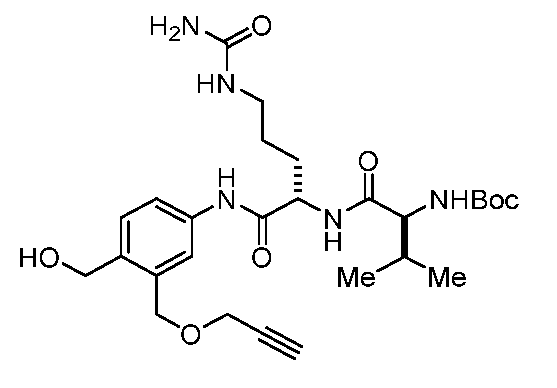
DMF (10 mL) 중 (S)-2-아미노-N-(4-(히드록시메틸)-3-((프로프-2-인-1-일옥시)메틸)페닐)-5-우레이도펜탄아미드 (3.50 g, 10.04 mmol, 1.0 당량), (tert-부톡시카르보닐)-L-발린 (2.62 g, 12.05 mmol, 1.2 당량) 및 (1-[비스(디메틸아미노)메틸렌]-1H-1,2,3-트리아졸로[4,5-b]피리디늄 3-옥시드 헥사플루오로포스페이트 (4.58 g, 12.05 mmol, 1.2 당량)의 용액에 N,N-디이소프로필에틸아민 (3.50 mL, 20.08 mmol, 2.0 당량)을 첨가하였다. 주위 온도에서 2시간 동안 교반한 후, 혼합물을 물 (200 mL)에 붓고, 생성된 현탁액을 EtOAc (3x100 mL)로 추출하였다. 합한 유기 층을 황산나트륨 상에서 건조시키고, 진공 하에 농축시켰다. 이스코 SiO2 크로마토그래피 (0-20% 메탄올 / 디클로로메탄)에 의한 정제 후, tert-부틸 ((S)-1-(((S)-1-((4-(히드록시메틸)-3-((프로프-2-인-1-일옥시)메틸)페닐)아미노)-1-옥소-5-우레이도펜탄-2-일)아미노)-3-메틸-1-옥소부탄-2-일)카르바메이트를 수득하였다. 1H NMR (400 MHz, DMSO-d6) δ 10.00 (s, 1H), 7.96 (d, J = 7.7 Hz, 1H), 7.55 (dq, J = 4.9, 2.2 Hz, 2H, 아릴), 7.32 (d, J = 8.9 Hz, 1H, 아릴), 6.76 (d, J = 8.9 Hz, 1H), 5.95 (t, J = 5.8 Hz, 1H), 5.38 (s, 2H), 5.01 (t, J = 5.5 Hz, 1H), 4.54 (s, 2H), 4.45 (dd, J = 25.2, 5.3 Hz, 3H), 4.20 (d, J = 2.4 Hz, 2H), 3.83 (dd, J = 8.9, 6.7 Hz, 1H), 3.49 (t, J = 2.4 Hz, 1H), 2.97 (dh, J = 26.0, 6.5 Hz, 2H), 1.96 (h, J = 6.6 Hz, 1H), 1.74 - 1.50 (m, 2H), 1.39 (m, 11H), 0.84 (dd, J = 16.2, 6.7 Hz, 6H). LCMS: M+Na 570.5; Rt=0.79분 (2분 산성 방법).To a solution of (S)-2-amino-N-(4-(hydroxymethyl)-3-((prop-2-yn-1-yloxy)methyl)phenyl)-5-ureidopentanamide (3.50 g, 10.04 mmol, 1.0 equiv), (tert-butoxycarbonyl)-L-valine (2.62 g, 12.05 mmol, 1.2 equiv) and (1-[bis(dimethylamino)methylene]-1H-1,2,3-triazolo[4,5-b]pyridinium 3-oxide hexafluorophosphate (4.58 g, 12.05 mmol, 1.2 equiv) in DMF (10 mL) was added N,N-diisopropylethylamine (3.50 mL, 20.08 mmol, 2.0 equiv). After stirring at ambient temperature for 2 h, the mixture was washed with water. (200 mL) and the resulting suspension was extracted with EtOAc (3x100 mL). The combined organic layers were dried over sodium sulfate and concentrated in vacuo. After purification by ISCO SiO 2 chromatography (0-20% methanol/dichloromethane), tert-butyl ((S)-1-(((S)-1-((4-(hydroxymethyl)-3-((prop-2-yn-1-yloxy)methyl)phenyl)amino)-1-oxo-5-ureidopentan-2-yl)amino)-3-methyl-1-oxobutan-2-yl)carbamate was obtained. 1 H NMR (400 MHz, DMSO-d6) δ 10.00 (s, 1H), 7.96 (d, J = 7.7 Hz, 1H), 7.55 (dq, J = 4.9, 2.2 Hz, 2H, aryl), 7.32 (d, J = 8.9 Hz, 1H, aryl), 6.76 (d, J = 8.9 Hz, 1H), 5.95 (t, J = 5.8 Hz, 1H), 5.38 (s, 2H), 5.01 (t, J = 5.5 Hz, 1H), 4.54 (s, 2H), 4.45 (dd, J = 25.2, 5.3 Hz, 3H), 4.20 (d, J = 2.4 Hz, 2H), 3.83 (dd, J = 8.9, 6.7 Hz, 1H), 3.49 (t, J = 2.4 Hz, 1H), 2.97 (dh, J = 26.0, 6.5 Hz, 2H), 1.96 (h, J = 6.6 Hz, 1H), 1.74 - 1.50 (m, 2H), 1.39 (m, 11H), 0.84 (dd, J = 16.2, 6.7 Hz, 6H). LCMS: M+Na 570.5; Rt=0.79 min (2 min. acidic method).
tert-부틸 ((S)-1-(((S)-1-((4-(클로로메틸)-3-((프로프-2-인-1-일옥시)메틸)페닐)아미노)-1-옥소-5-우레이도펜탄-2-일)아미노)-3-메틸-1-옥소부탄-2-일)카르바메이트의 합성Synthesis of tert-butyl ((S)-1-(((S)-1-((4-(chloromethyl)-3-((prop-2-yn-1-yloxy)methyl)phenyl)amino)-1-oxo-5-ureidopentan-2-yl)amino)-3-methyl-1-oxobutan-2-yl)carbamate

0℃에서 아세토니트릴 (13.3 mL) 중 tert-부틸 ((S)-1-(((S)-1-((4-(히드록시메틸)-3-((프로프-2-인-1-일옥시)메틸)페닐)아미노)-1-옥소-5-우레이도펜탄-2-일)아미노)-3-메틸-1-옥소부탄-2-일)카르바메이트 (2.00 그램, 3.65 mmol, 1.0 당량)의 용액에 티오닐 클로라이드 (0.53 mL, 7.30 mmol, 2.0 당량)를 첨가하였다. 빙조에서 1시간 동안 교반한 후, 용액을 물 (40 mL)로 희석하고, 생성된 백색 침전물을 여과, 공기 건조에 의해 수집하고, 고진공 하에 건조시켜 tert-부틸 ((S)-1-(((S)-1-((4-(클로로메틸)-3-((프로프-2-인-1-일옥시)메틸)페닐)아미노)-1-옥소-5-우레이도펜탄-2-일)아미노)-3-메틸-1-옥소부탄-2-일)카르바메이트를 수득하였다. LCMS: M+Na 588.5; Rt=2.17분 (5분 산성 방법).To a solution of tert-butyl ((S)-1-(((S)-1-((4-(hydroxymethyl)-3-((prop-2-yn-1-yloxy)methyl)phenyl)amino)-1-oxo-5-ureidopentan-2-yl)amino)-3-methyl-1-oxobutan-2-yl)carbamate (2.00 grams, 3.65 mmol, 1.0 equiv) in acetonitrile (13.3 mL) at 0 °C was added thionyl chloride (0.53 mL, 7.30 mmol, 2.0 equiv). After stirring in an ice bath for 1 h, the solution was diluted with water (40 mL) and the resulting white precipitate was collected by filtration, air drying and dried under high vacuum to afford tert-butyl ((S)-1-(((S)-1-((4-(chloromethyl)-3-((prop-2-yn-1-yloxy)methyl)phenyl)amino)-1-oxo-5-ureidopentan-2-yl)amino)-3-methyl-1-oxobutan-2-yl)carbamate. LCMS: M+Na 588.5; Rt=2.17 min (5 min acidic method).
2-(((tert-부틸디페닐실릴)옥시)메틸)-5-니트로벤조산의 합성Synthesis of 2-(((tert-butyldiphenylsilyl)oxy)methyl)-5-nitrobenzoic acid
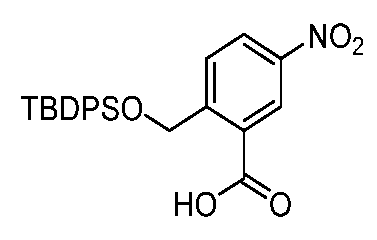
MeOH (1000 mL) 중 6-니트로이소벤조푸란-1(3H)-온 (90 g, 502.43 mmol, 1.00 당량)의 용액에 H2O (150 mL) 중 KOH (28.19 g, 502.43 mmol, 1.00 당량)를 첨가하였다. 갈색 혼합물을 25℃에서 1.5시간 동안 교반하였다. 갈색 혼합물을 감압 하에 농축시켜 잔류물을 수득하고, DCM (2000 mL) 중에 용해시켰다. 혼합물에 tert-부틸디페닐클로로실란 (296.91 g, 1.08 mol, 277.49 mL, 2.15 당량) 및 이미다졸 (171.03 g, 2.51 mol, 5.00 당량)을 첨가하고, 25℃에서 12시간 동안 교반하였다. 혼합물을 감압 하에 농축시켜 잔류물을 수득하였다. 잔류물을 실리카 겔 크로마토그래피 (석유 에테르/에틸 아세테이트=1/0, 1/1)에 의해 정제하고, 2-(((tert-부틸디페닐실릴)옥시)메틸)-5-니트로벤조산을 백색 고체로서 수득하였다. 1H NMR (400 MHz, 메탄올-d4) δ ppm 1.13 (s, 9 H) 5.26 (s, 2 H) 7.34 - 7.48 (m, 6 H) 7.68 (br d, J=8 Hz, 4 H) 8.24 (br d, J=8 Hz, 1 H) 8.46 (br d, J=8 Hz, 1 H) 8.74 (s, 1 H).To a solution of 6-nitroisobenzofuran-1(3H)-one (90 g, 502.43 mmol, 1.00 equiv) in MeOH (1000 mL) was added KOH (28.19 g, 502.43 mmol, 1.00 equiv) in H 2 O (150 mL). The brown mixture was stirred at 25 °C for 1.5 h. The brown mixture was concentrated under reduced pressure to give a residue which was dissolved in DCM (2000 mL). To the mixture were added tert-butyldiphenylchlorosilane (296.91 g, 1.08 mol, 277.49 mL, 2.15 equiv) and imidazole (171.03 g, 2.51 mol, 5.00 equiv) and stirred at 25 °C for 12 h. The mixture was concentrated under reduced pressure to obtain a residue. The residue was purified by silica gel chromatography (petroleum ether/ethyl acetate=1/0, 1/1) to obtain 2-(((tert-butyldiphenylsilyl)oxy)methyl)-5-nitrobenzoic acid as a white solid. 1 H NMR (400 MHz, methanol-d4) δ ppm 1.13 (s, 9 H) 5.26 (s, 2 H) 7.34 - 7.48 (m, 6 H) 7.68 (br d, J=8 Hz, 4 H) 8.24 (br d, J=8 Hz, 1 H) 8.46 (br d, J=8 Hz, 1 H) 8.74 (s, 1 H).
(2-(((tert-부틸디페닐실릴)옥시)메틸)-5-니트로페닐)메탄올의 합성Synthesis of (2-(((tert-butyldiphenylsilyl)oxy)methyl)-5-nitrophenyl)methanol

THF (205 mL) 중 2-(((tert-부틸디페닐실릴)옥시)메틸)-5-니트로벤조산 (41 g, 94.14 mmol, 1 당량)의 혼합물에 BH3.THF (1 M, 470.68 mL, 5 당량)를 첨가하였다. 황색 혼합물을 60℃에서 2시간 동안 교반하였다. 혼합물에 MeOH (400mL)를 첨가하고, 감압 하에 농축시켜 잔류물을 수득하였다. 이어서, H2O (200mL) 및 DCM (300mL)을 첨가하고, DCM (3 x200 mL)으로 추출하고, 염수 (300mL)로 세척하고, 무수 MgSO4 상에서 건조시키고, 여과하고, 감압 하에 농축시켜 잔류물을 수득하였다. 잔류물을 실리카 겔 크로마토그래피 (석유 에테르/에틸 아세테이트=1/0, 1/1)에 의해 정제하였다. (2-(((tert-부틸디페닐실릴)옥시)메틸)-5-니트로페닐)메탄올을 백색 고체로서 수득하였다. 1H NMR (400 MHz, 메탄올-d4) δ ppm 1.10 (s, 9 H) 4.58 (s, 2 H) 4.89 (s, 2 H) 7.32 - 7.51 (m, 6 H) 7.68 (dd, J=8, 1.38 Hz, 4 H) 7.76 (d, J=8 Hz, 1 H) 8.15 (dd, J=8 2.26 Hz, 1 H) 8.30 (d, J=2 Hz, 1 H).To a mixture of 2-(((tert-butyldiphenylsilyl)oxy)methyl)-5-nitrobenzoic acid (41 g, 94.14 mmol, 1 equiv) in THF (205 mL) was added BH 3 .THF (1 M, 470.68 mL, 5 equiv). The yellow mixture was stirred at 60 °C for 2 h. To the mixture was added MeOH (400 mL) and concentrated under reduced pressure to give a residue. Then H 2 O (200 mL) and DCM (300 mL) were added, extracted with DCM (3 x200 mL), washed with brine (300 mL), dried over anhydrous MgSO 4 , filtered and concentrated under reduced pressure to give a residue. The residue was purified by silica gel chromatography (petroleum ether/ethyl acetate = 1/0, 1/1). (2-(((tert-butyldiphenylsilyl)oxy)methyl)-5-nitrophenyl)methanol was obtained as a white solid. 1 H NMR (400 MHz, methanol-d4) δ ppm 1.10 (s, 9 H) 4.58 (s, 2 H) 4.89 (s, 2 H) 7.32 - 7.51 (m, 6 H) 7.68 (dd, J=8, 1.38 Hz, 4 H) 7.76 (d, J=8 Hz, 1 H) 8.15 (dd, J=8 2.26 Hz, 1 H) 8.30 (d, J=2 Hz, 1 H).
2-(((tert-부틸디페닐실릴)옥시)메틸)-5-니트로벤즈알데히드의 합성Synthesis of 2-(((tert-butyldiphenylsilyl)oxy)methyl)-5-nitrobenzaldehyde

DCM (450 mL) 중 (2-(((tert-부틸디페닐실릴)옥시)메틸)-5-니트로페닐)메탄올 (34 g, 80.65 mmol, 1 당량)의 용액에 MnO2 (56.09 g, 645.22 mmol, 8 당량)를 첨가하였다. 흑색 혼합물을 25℃에서 36시간 동안 교반하였다. 혼합물에 MeOH (400mL)를 첨가하고, 감압 하에 농축시켜 잔류물을 수득하였다. 이어서, H2O (200mL) 및 DCM (300mL)을 첨가하고, DCM (3 x200 mL)으로 추출하고, 염수 (300mL)로 세척하고, 무수 MgSO4 상에서 건조시키고, 여과하고, 감압 하에 농축시켜 잔류물을 수득하였다. 잔류물을 실리카 겔 크로마토그래피 (CH2Cl2=100%)에 의해 정제하였다. 2-(((tert-부틸디페닐실릴)옥시)메틸)-5-니트로벤즈알데히드를 백색 고체로서 수득하였다. 1H NMR (400 MHz, 클로로포름-d) δ ppm 1.14 (s, 9 H) 5.26 (s, 2 H) 7.34 - 7.53 (m, 6 H) 7.60 - 7.73 (m, 4 H) 8.13 (d, J=8Hz, 1 H) 8.48 (dd, J=8, 2.51 Hz, 1 H) 8.67 (d, J=2 Hz, 1 H) 10.16 (s, 1 H).To a solution of (2-(((tert-butyldiphenylsilyl)oxy)methyl)-5-nitrophenyl)methanol (34 g, 80.65 mmol, 1 equiv) in DCM (450 mL) was added MnO 2 (56.09 g, 645.22 mmol, 8 equiv). The black mixture was stirred at 25 °C for 36 h. To the mixture was added MeOH (400 mL) and concentrated under reduced pressure to give a residue. Then H 2 O (200 mL) and DCM (300 mL) were added, extracted with DCM (3 x200 mL), washed with brine (300 mL), dried over anhydrous MgSO 4 , filtered and concentrated under reduced pressure to give a residue. The residue was purified by silica gel chromatography (CH 2 Cl 2 =100%). 2-(((tert-Butyldiphenylsilyl)oxy)methyl)-5-nitrobenzaldehyde was obtained as a white solid. 1 H NMR (400 MHz, chloroform-d) δ ppm 1.14 (s, 9 H) 5.26 (s, 2 H) 7.34 - 7.53 (m, 6 H) 7.60 - 7.73 (m, 4 H) 8.13 (d, J=8 Hz, 1 H) 8.48 (dd, J=8, 2.51 Hz, 1 H) 8.67 (d, J=2 Hz, 1 H) 10.16 (s, 1 H).
N-(2-(((tert-부틸디페닐실릴)옥시)메틸)-5-니트로벤질)프로프-2-인-1-아민의 합성Synthesis of N-(2-(((tert-butyldiphenylsilyl)oxy)methyl)-5-nitrobenzyl)prop-2-yn-1-amine

DCM (130 mL) 중 2-(((tert-부틸디페닐실릴)옥시)메틸)-5-니트로벤즈알데히드 (12.6 g, 30.03 mmol, 1 당량)의 용액에 프로프-2-인-1-아민 (4.14 g, 75.08 mmol, 4.81 mL, 2.5 당량) 및 MgSO4 (36.15 g, 300.33 mmol, 10 당량)를 첨가한 다음, 현탁액 혼합물을 25℃에서 24시간 동안 교반하였다. 약간의 반응 용액을 취하고, NaBH4로 처리하면, TLC는 하나의 새로운 스팟이 형성되었다는 것을 나타냈다. 반응 혼합물을 여과하고, 감압 하에 농축시켜 잔류물을 수득하였다. (E)-N-[[2-[[tert-부틸(디페닐)실릴]옥시메틸]-5-니트로-페닐]메틸]프로프-2-인-1-이민을 황색 고체로서 수득하였다. 1H NMR (400 MHz, 클로로포름-d) δ ppm 1.11 (s, 9 H) 2.48 (t, J=2.38 Hz, 1 H) 4.52 (t, J=2.13 Hz, 2 H) 5.09 (s, 2 H) 7.35 - 7.49 (m, 6 H) 7.63 - 7.72 (m, 4 H) 7.79 (d, J=8.53 Hz, 1 H) 8.25 (dd, J=8.53, 2.51 Hz, 1 H) 8.68 (d, J=2.26 Hz, 1 H) 8.84 (t, J=1.88 Hz, 1 H).To a solution of 2-(((tert-butyldiphenylsilyl)oxy)methyl)-5-nitrobenzaldehyde (12.6 g, 30.03 mmol, 1 equiv) in DCM (130 mL) was added prop-2-yn-1-amine (4.14 g, 75.08 mmol, 4.81 mL, 2.5 equiv) and MgSO 4 (36.15 g, 300.33 mmol, 10 equiv), and the suspension mixture was stirred at 25 °C for 24 h. A little reaction solution was taken and treated with NaBH 4 , TLC showed that one new spot was formed. The reaction mixture was filtered and concentrated under reduced pressure to obtain the residue. (E)-N-[[2-[[tert-butyl(diphenyl)silyl]oxymethyl]-5-nitro-phenyl]methyl]prop-2-yn-1-imine was obtained as a yellow solid. 1 H NMR (400 MHz, chloroform-d) δ ppm 1.11 (s, 9 H) 2.48 (t, J=2.38 Hz, 1 H) 4.52 (t, J=2.13 Hz, 2 H) 5.09 (s, 2 H) 7.35 - 7.49 (m, 6 H) 7.63 - 7.72 (m, 4 H) 7.79 (d, J=8.53 Hz, 1 H) 8.25 (dd, J=8.53, 2.51 Hz, 1 H) 8.68 (d, J=2.26 Hz, 1 H) 8.84 (t, J=1.88 Hz, 1 H).
(E)-N-[[2-[[tert-부틸(디페닐)실릴]옥시메틸]-5-니트로-페닐]메틸]프로프-2-인-1-이민 (12 g, 26.28 mmol, 1 당량)을 MeOH (100 mL) 및 THF (50 mL) 중에 용해시킨 다음, NaBH4 (1.49 g, 39.42 mmol, 1.5 당량)를 첨가하고, 황색 혼합물을 -20℃에서 2시간 동안 교반하였다. LCMS는 목적 화합물이 검출되었다는 것을 나타냈다. 반응 혼합물을 -20℃에서 MeOH (200 mL)의 첨가에 의해 켄칭한 다음, 감압 하에 농축시켜 잔류물을 수득하였다. 잔류물을 EtOAc (500 mL)로 용해시키고, 염수 (150 mL)로 세척하고, 무수 Na2SO4 상에서 건조시키고, 여과하고, 감압 하에 농축시켜 잔류물을 수득하였다. 잔류물을 플래쉬 실리카 겔 크로마토그래피 (용리액: 0-10% 에틸 아세테이트/석유 에테르 구배)에 의해 정제하였다. N-(2-(((tert-부틸디페닐실릴)옥시)메틸)-5-니트로벤질)프로프-2-인-1-아민을 연황색 오일로서 수득하였다. 1H NMR (400 MHz, 클로로포름-d) δ ppm 1.12 (s, 9 H) 2.13 (t, J=2.38 Hz, 1 H) 3.33 (d, J=2.51 Hz, 2 H) 3.80 (s, 2 H) 4.93 (s, 2 H) 7.36 - 7.49 (m, 6 H) 7.69 (dd, J=7.91, 1.38 Hz, 4 H) 7.77 (d, J=8.53 Hz, 1 H) 8.16 (dd, J=8.41, 2.38 Hz, 1 H) 8.24 (d, J=2.26 Hz, 1 H).(E)-N-[[2-[[tert-Butyl(diphenyl)silyl]oxymethyl]-5-nitro-phenyl]methyl]prop-2-yn-1-imine (12 g, 26.28 mmol, 1 equiv) was dissolved in MeOH (100 mL) and THF (50 mL), then NaBH 4 (1.49 g, 39.42 mmol, 1.5 equiv) was added and the yellow mixture was stirred at -20 °C for 2 h. LCMS showed that the title compound was detected. The reaction mixture was quenched by the addition of MeOH (200 mL) at -20 °C and concentrated under reduced pressure to give a residue. The residue was dissolved in EtOAc (500 mL), washed with brine (150 mL), dried over anhydrous Na 2 SO 4 , filtered and concentrated under reduced pressure to give a residue. The residue was purified by flash silica gel chromatography (eluent: 0-10% ethyl acetate/petroleum ether gradient). N-(2-(((tert-butyldiphenylsilyl)oxy)methyl)-5-nitrobenzyl)prop-2-yn-1-amine was obtained as a pale yellow oil. 1 H NMR (400 MHz, chloroform-d) δ ppm 1.12 (s, 9 H) 2.13 (t, J=2.38 Hz, 1 H) 3.33 (d, J=2.51 Hz, 2 H) 3.80 (s, 2 H) 4.93 (s, 2 H) 7.36 - 7.49 (m, 6 H) 7.69 (dd, J=7.91, 1.38 Hz, 4 H) 7.77 (d, J=8.53 Hz, 1 H) 8.16 (dd, J=8.41, 2.38 Hz, 1 H) 8.24 (d, J=2.26 Hz, 1 H).
(9H-플루오렌-9-일)메틸 (2-(((tert-부틸디페닐실릴)옥시)메틸)-5-니트로벤질)(프로프-2-인-1-일)카르바메이트의 합성Synthesis of (9H-fluoren-9-yl)methyl (2-(((tert-butyldiphenylsilyl)oxy)methyl)-5-nitrobenzyl)(prop-2-yn-1-yl)carbamate

디옥산 (90 mL) 중 N-(2-(((tert-부틸디페닐실릴)옥시)메틸)-5-니트로벤질)프로프-2-인-1-아민 (9 g, 19.62 mmol, 1 당량) 및 Fmoc-OSu (7.28 g, 21.59 mmol, 1.1 당량)의 용액에 포화 NaHCO3 (90 mL)을 첨가하고, 백색 현탁액을 20℃에서 12시간 동안 교반하였다. 반응 혼합물을 H2O (150 mL)로 희석하고, EtOAc (150 mL x 2)로 추출하였다. 합한 유기 층을 염수 (200 mL)로 세척하고, 무수 Na2SO4 상에서 건조시키고, 여과하고, 감압 하에 농축시켜 잔류물을 수득하였다. 잔류물을 플래쉬 실리카 겔 크로마토그래피 (용리액: 0-30% 에틸 아세테이트/석유 에테르)에 의해 정제하였다. (9H-플루오렌-9-일)메틸 (2-(((tert-부틸디페닐실릴)옥시)메틸)-5-니트로벤질)(프로프-2-인-1-일)카르바메이트 (7.7 g, 11.08 mmol, 56.48% 수율, 98% 순도)를 백색 고체로서 수득하였다. 1H NMR (400 MHz, 클로로포름-d) δ ppm 1.12 (s, 9 H) 2.17 (br d, J=14.31 Hz, 1 H) 3.87 - 4.97 (m, 9 H) 6.98 - 8.28 (m, 21 H).To a solution of N-(2-(((tert-butyldiphenylsilyl)oxy)methyl)-5-nitrobenzyl)prop-2-yn-1-amine (9 g, 19.62 mmol, 1 equiv) and Fmoc-OSu (7.28 g, 21.59 mmol, 1.1 equiv) in dioxane (90 mL) was added saturated NaHCO 3 (90 mL), and the white suspension was stirred at 20 °C for 12 h. The reaction mixture was diluted with H 2 O (150 mL) and extracted with EtOAc (150 mL x 2). The combined organic layers were washed with brine (200 mL), dried over anhydrous Na 2 SO 4 , filtered, and concentrated under reduced pressure to give the residue. The residue was purified by flash silica gel chromatography (eluent: 0-30% ethyl acetate/petroleum ether). (9H-Fluoren-9-yl)methyl (2-(((tert-butyldiphenylsilyl)oxy)methyl)-5-nitrobenzyl)(prop-2-yn-1-yl)carbamate (7.7 g, 11.08 mmol, 56.48% yield, 98% purity) was obtained as a white solid. 1 H NMR (400 MHz, chloroform-d) δ ppm 1.12 (s, 9 H) 2.17 (br d, J=14.31 Hz, 1 H) 3.87 - 4.97 (m, 9 H) 6.98 - 8.28 (m, 21 H).
(9H-플루오렌-9-일)메틸 (5-아미노-2-(((tert-부틸디페닐실릴)옥시)메틸)벤질)(프로프-2-인-1-일)카르바메이트의 합성Synthesis of (9H-fluoren-9-yl)methyl (5-amino-2-(((tert-butyldiphenylsilyl)oxy)methyl)benzyl)(prop-2-yn-1-yl)carbamate

10% AcOH/CH2Cl2 (100 mL) 중 (9H-플루오렌-9-일)메틸 (2-(((tert-부틸디페닐실릴)옥시)메틸)-5-니트로벤질)(프로프-2-인-1-일)카르바메이트 (5.0 g, 7.34 mmol, 1.0 당량)의 빙조 냉각된 용액에 Zn (7.20 g, 110 mmol, 15 당량)을 첨가하였다. 빙조를 제거하고, 생성된 혼합물을 2시간 동안 교반하였으며, 이 때 이를 셀라이트® 패드를 통해 여과하였다. 휘발성 물질을 진공 하에 제거하고, 잔류물을 EtOAc 중에 용해시키고, NaHCO3(포화), NaCl(포화)로 세척하고, MgSO4 상에서 건조시키고, 여과하고, 농축시키고, 이스코 SiO2 크로마토그래피 (0-75% EtOAc/헵탄) 후에 (9H-플루오렌-9-일)메틸 (5-아미노-2-(((tert-부틸디페닐실릴)옥시)메틸)벤질)(프로프-2-인-1-일)카르바메이트를 수득하였다. LCMS: MH+=651.6; Rt=3.77분 (5분 산성 방법).To an ice -bath-cooled solution of (9H-fluoren-9- yl )methyl (2-(((tert-butyldiphenylsilyl)oxy)methyl)-5-nitrobenzyl)(prop-2-yn-1-yl)carbamate (5.0 g, 7.34 mmol, 1.0 equiv) in 10% AcOH/
(9H-플루오렌-9-일)메틸 (5-((S)-2-((S)-2-((tert-부톡시카르보닐)아미노)-3-메틸부탄아미도)-5-우레이도펜탄아미도)-2-(((tert-부틸디페닐실릴)옥시)메틸)벤질)(프로프-2-인-1-일)카르바메이트의 합성Synthesis of (9H-fluoren-9-yl)methyl (5-((S)-2-((S)-2-((tert-butoxycarbonyl)amino)-3-methylbutanamido)-5-ureidopentanamido)-2-(((tert-butyldiphenylsilyl)oxy)methyl)benzyl)(prop-2-yn-1-yl)carbamate

CH2Cl2 (40 mL) 중 (9H-플루오렌-9-일)메틸 (5-아미노-2-(((tert-부틸디페닐실릴)옥시)메틸)벤질)(프로프-2-인-1-일)카르바메이트 (2.99 g, 4.59 mmol, 1.0 당량) 및 (S)-2-((S)-2-((tert-부톡시카르보닐)아미노)-3-메틸부탄아미도)-5-우레이도펜탄산 (1.72 g, 4.59 mmol, 1.0 당량)에 에틸 2-에톡시퀴놀린-1(2H)-카르복실레이트 (2.27 g, 9.18 mmol, 2.0 당량)를 첨가하였다. 10분 동안 교반한 후, MeOH (1 mL)를 첨가하였으며, 용액은 균질해졌다. 반응물을 16시간 동안 교반하고, 휘발성 물질을 진공 하에 제거하고, 이스코 SiO2 크로마토그래피 (0-15% MeOH/CH2Cl2)에 의한 정제 후, (9H-플루오렌-9-일)메틸 (5-((S)-2-((S)-2-((tert-부톡시카르보닐)아미노)-3-메틸부탄아미도)-5-우레이도펜탄아미도)-2-(((tert-부틸디페닐실릴)옥시)메틸)벤질)(프로프-2-인-1-일)카르바메이트를 수득하였다. LCMS: MH+=1008.8; Rt=3.77분 (5분 산성 방법).To a solution of ( 9H -fluoren-9- yl )methyl (5-amino-2-(((tert-butyldiphenylsilyl)oxy)methyl)benzyl)(prop-2-yn-1-yl)carbamate (2.99 g, 4.59 mmol, 1.0 equiv) and (S)-2-((S)-2-((tert-butoxycarbonyl)amino)-3-methylbutanamido)-5-ureidopentanoic acid (1.72 g, 4.59 mmol, 1.0 equiv) in
프로프-2-인-1-일 (5-((S)-2-((S)-2-((tert-부톡시카르보닐)아미노)-3-메틸부탄아미도)-5-우레이도펜탄아미도)-2-(((tert-부틸디페닐실릴)옥시)메틸)벤질)(프로프-2-인-1-일)카르바메이트의 합성Synthesis of prop-2-yn-1-yl (5-((S)-2-((S)-2-((tert-butoxycarbonyl)amino)-3-methylbutanamido)-5-ureidopentanamido)-2-(((tert-butyldiphenylsilyl)oxy)methyl)benzyl)(prop-2-yn-1-yl)carbamate

(9H-플루오렌-9-일)메틸 (5-((S)-2-((S)-2-((tert-부톡시카르보닐)아미노)-3-메틸부탄아미도)-5-우레이도펜탄아미도)-2-(((tert-부틸디페닐실릴)옥시)메틸)벤질)(프로프-2-인-1-일)카르바메이트 (1.60 g, 1.588 mmol, 1.0 당량)에 MeOH 중 2M 디메틸아민 (30 mL, 60 mmol, 37 당량) 및 THF (10 mL)를 첨가하였다. 3시간 동안 정치시킨 후, 휘발성 물질을 진공 하에 제거하고, 잔류물을 Et2O로 연화처리하여 FMOC 탈보호 부산물을 제거하였다. 생성된 고체에 CH2Cl2 (16 mL) 및 피리딘 (4 mL)을 첨가하고, 불균질 용액에 프로파르길 클로로포르메이트 (155 μL, 1.588 mmol, 1.0 당량)를 첨가하였다. 30분 동안 교반한 후, 추가의 프로파르길 클로로포르메이트 (155 μL, 1.588 mmol, 1.0 당량)를 첨가하였다. 추가로 20분 동안 교반한 후, MeOH (1 mL)를 첨가하여 나머지 클로로포르메이트를 켄칭하고, 휘발성 물질을 진공 하에 제거하였다. 이스코 SiO2 크로마토그래피에 의한 정제 시, (0-15% MeOH/CH2Cl2) 프로프-2-인-1-일 (5-((S)-2-((S)-2-((tert-부톡시카르보닐)아미노)-3-메틸부탄아미도)-5-우레이도펜탄아미도)-2-(((tert-부틸디페닐실릴)옥시)메틸)벤질)(프로프-2-인-1-일)카르바메이트를 수득하였다. LCMS: MH+=867.8; Rt=3.40분 (5분 산성 방법).To (9H-fluoren-9-yl)methyl (5-((S)-2-((S)-2-((tert-butoxycarbonyl)amino)-3-methylbutanamido)-5-ureidopentanamido)-2-(((tert-butyldiphenylsilyl)oxy)methyl)benzyl)(prop-2-yn-1-yl)carbamate (1.60 g, 1.588 mmol, 1.0 equiv) was added 2 M dimethylamine in MeOH (30 mL, 60 mmol, 37 equiv) and THF (10 mL). After standing for 3 h, the volatiles were removed under vacuum and the residue was triturated with Et2O to remove FMOC deprotection byproduct. To the resulting solid were added CH 2 Cl 2 (16 mL) and pyridine (4 mL), and to the heterogeneous solution was added propargyl chloroformate (155 μL, 1.588 mmol, 1.0 equiv). After stirring for 30 min, additional propargyl chloroformate (155 μL, 1.588 mmol, 1.0 equiv) was added. After stirring for an additional 20 min, MeOH (1 mL) was added to quench the remaining chloroformate, and the volatiles were removed under vacuum. Purification by ISCO SiO 2 chromatography (0-15% MeOH/CH 2 Cl 2 ) yielded prop-2-yn-1-yl (5-((S)-2-((S)-2-((tert-butoxycarbonyl)amino)-3-methylbutanamido)-5-ureidopentanamido)-2-(((tert-butyldiphenylsilyl)oxy)methyl)benzyl)(prop-2-yn-1-yl)carbamate. LCMS: MH+ = 867.8; Rt = 3.40 min (5 min acidic method).
프로프-2-인-1-일 (5-((S)-2-((S)-2-((tert-부톡시카르보닐)아미노)-3-메틸부탄아미도)-5-우레이도펜탄아미도)-2-(히드록시메틸)벤질)(프로프-2-인-1-일)카르바메이트의 합성Synthesis of prop-2-yn-1-yl (5-((S)-2-((S)-2-((tert-butoxycarbonyl)amino)-3-methylbutanamido)-5-ureidopentanamido)-2-(hydroxymethyl)benzyl)(prop-2-yn-1-yl)carbamate

THF (7.5 mL) 중 프로프-2-인-1-일 (5-((S)-2-((S)-2-((tert-부톡시카르보닐)아미노)-3-메틸부탄아미도)-5-우레이도펜탄아미도)-2-(((tert-부틸디페닐실릴)옥시)메틸)벤질)(프로프-2-인-1-일)카르바메이트 (984 mg, 1.135 mmol, 1.0 당량)의 용액에 THF 중 1.0 M TBAF (2.27 mL, 2.27 mmol, 2.0 당량)를 첨가하였다. 6시간 동안 정치시킨 후, 휘발성 물질을 진공 하에 제거하고, 잔류물을 이스코 SiO2 크로마토그래피 (0-40% MeOH/CH2Cl2)에 의해 정제하고, 프로프-2-인-1-일 (5-((S)-2-((S)-2-((tert-부톡시카르보닐)아미노)-3-메틸부탄아미도)-5-우레이도펜탄아미도)-2-(히드록시메틸)벤질)(프로프-2-인-1-일)카르바메이트를 수득하였다. LCMS: MH+=629.6; Rt=1.74분 (5분 산성 방법).To a solution of prop-2-yn-1-yl (5-((S)-2-((S)-2-((tert-butoxycarbonyl)amino)-3-methylbutanamido)-5-ureidopentanamido)-2-(((tert-butyldiphenylsilyl)oxy)methyl)benzyl)(prop-2-yn-1-yl)carbamate (984 mg, 1.135 mmol, 1.0 equiv) in THF (7.5 mL) was added 1.0 M TBAF in THF (2.27 mL, 2.27 mmol, 2.0 equiv). After stirring for 6 h, the volatiles were removed under vacuum and the residue was purified by ISCO SiO 2 chromatography (0-40% MeOH/CH2Cl2) to afford prop-2-yn-1-yl (5-((S)-2-((S)-2-((tert-butoxycarbonyl)amino)-3-methylbutanamido)-5-ureidopentanamido)-2-(hydroxymethyl)benzyl)(prop-2-yn-1-yl)carbamate. LCMS: MH+=629.6; Rt=1.74 min (5 min acidic method).
프로프-2-인-1-일 (5-((S)-2-((S)-2-((tert-부톡시카르보닐)아미노)-3-메틸부탄아미도)-5-우레이도펜탄아미도)-2-(클로로메틸)벤질)(프로프-2-인-1-일)카르바메이트의 합성Synthesis of prop-2-yn-1-yl (5-((S)-2-((S)-2-((tert-butoxycarbonyl)amino)-3-methylbutanamido)-5-ureidopentanamido)-2-(chloromethyl)benzyl)(prop-2-yn-1-yl)carbamate

CH2Cl2 (10 mL) 중 프로프-2-인-1-일 (5-((S)-2-((S)-2-((tert-부톡시카르보닐)아미노)-3-메틸부탄아미도)-5-우레이도펜탄아미도)-2-(히드록시메틸)벤질)(프로프-2-인-1-일)카르바메이트 (205 mg, 0.326 mmol, 1.0 당량)에 피리딘 (158 μL, 1.96 mmol, 5 당량)을 첨가하였다. 불균질 혼합물을 0℃ 빙조 및 티오닐 클로라이드 (71 μL, 0.98 mmol, 3 당량)에서 냉각시켰다. 빙조에서 3시간 동안 교반한 후, 반응물을 직접 이스코 SiO2 크로마토그래피 (0-30% MeOH/CH2Cl2)에 의해 정제하고, 프로프-2-인-1-일 (5-((S)-2-((S)-2-((tert-부톡시카르보닐)아미노)-3-메틸부탄아미도)-5-우레이도펜탄아미도)-2-(클로로메틸)벤질)(프로프-2-인-1-일)카르바메이트를 수득하였다. LCMS: MH+=647.6; Rt=2.54분 (5분 산성 방법).To a solution of prop- 2 - yn -1-yl (5-((S)-2-((S)-2-((tert-butoxycarbonyl)amino)-3-methylbutanamido)-5-ureidopentanamido)-2-(hydroxymethyl)benzyl)(prop-2-yn-1-yl)carbamate (205 mg, 0.326 mmol, 1.0 equiv) in
2-(히드록시메틸)-N-메틸-5-니트로벤즈아미드의 합성Synthesis of 2-(hydroxymethyl)-N-methyl-5-nitrobenzamide

MeOH (1500 mL) 중 6-니트로이소벤조푸란-1(3H)-온 (500 g, 2.79 mol)의 교반 현탁액에 MeNH2 (3.00 kg, 29.94 mol, 600 mL, 31.0% 순도)를 25℃에서 첨가하고, 1시간 동안 교반하였다. 고체를 여과하고, 물로 2회 (600 mL) 세척하고, 고진공 하에 건조시켜 잔류물을 얻었다. 생성물 2-(히드록시메틸)-N-메틸-5-니트로벤즈아미드를 백색 고체로서 수득하였다. LCMS: Rt = 0.537분, MS m/z = 193.2. 1H NMR: 400 MHz DMSO δ 8.57 (br d, J = 4.4 Hz, 1H), 8.31 (dd, J = 2.4, 8.6 Hz, 1H), 8.21 (d, J = 2.4 Hz, 1H), 7.86 (d, J = 8.8 Hz, 1H), 5.54 (t, J = 5.6 Hz, 1H), 4.72 (d, J = 5.5 Hz, 2H), 2.78 (d, J = 4.4 Hz, 3H).To a stirred suspension of 6-nitroisobenzofuran-1(3H)-one (500 g, 2.79 mol) in MeOH (1500 mL) was added MeNH 2 (3.00 kg, 29.94 mol, 600 mL, 31.0% purity) at 25 °C and stirred for 1 h. The solid was filtered, washed twice with water (600 mL), and dried under high vacuum to obtain the residue. The product 2-(hydroxymethyl)-N-methyl-5-nitrobenzamide was obtained as a white solid. LCMS: Rt = 0.537 min, MS m/z = 193.2. 1H NMR: 400 MHz DMSO δ 8.57 (br d, J = 4.4 Hz, 1H), 8.31 (dd, J = 2.4, 8.6 Hz, 1H), 8.21 (d, J = 2.4 Hz, 1H), 7.86 (d, J = 8.8 Hz, 1H), 5.54 (t, J = 5.6 Hz, 1H), 4.72 (d, J = 5.5 Hz, 2H), 2.78 (d, J = 4.4 Hz, 3H).
(2-((메틸아미노)메틸)-4-니트로페닐)메탄올의 합성Synthesis of (2-((methylamino)methyl)-4-nitrophenyl)methanol
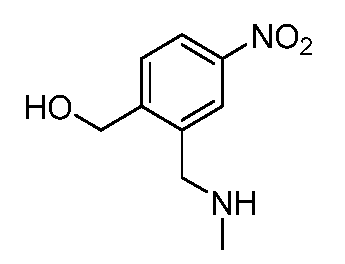
THF (5000 mL) 중 2-(히드록시메틸)-N-메틸-5-니트로벤즈아미드 (560 g, 2.66 mol)의 용액을 0℃로 냉각시킨 다음, BH3-Me2S (506 g, 6.66 mol) (THF 중 2.0 M)를 60분 동안 적가하고, 70℃로 5시간 동안 가열하였다. LCMS는 출발 물질이 소모되었다는 것을 나타냈다. 완결 후, 메탄올 중 4M HCl (1200 mL)을 반응 혼합물에 0℃에서 첨가하고, 65℃에서 8시간 동안 가열하였다. 반응 혼합물을 0℃로 냉각시키고, 고체를 여과하고, 감압 하에 농축시켰다. 생성물 (2-((메틸아미노)메틸)-4-니트로페닐)메탄올 (520 g)을 백색 고체로서 수득하였다. LCMS: Rt = 0.742분, MS m/z = 197.1 [M+H]+. 1H NMR: 400 MHz DMSO δ 9.25 (br s, 2H), 8.37 (d, J = 2.4 Hz, 1H), 8.14 (dd, J = 2.4, 8.5 Hz, 1H), 7.63 (d, J = 8.4 Hz, 1H), 5.72 (br s, 1H), 4.65 (s, 2H), 4.15 (br s, 2H), 2.55 - 2.45 (m, 3H)A solution of 2-(hydroxymethyl)-N-methyl-5-nitrobenzamide (560 g, 2.66 mol) in THF (5000 mL) was cooled to 0 °C, then BH 3 -Me 2 S (506 g, 6.66 mol) (2.0 M in THF) was added dropwise over 60 min and heated to 70 °C for 5 h. LCMS showed that the starting material was consumed. After completion, 4 M HCl in methanol (1200 mL) was added to the reaction mixture at 0 °C and heated at 65 °C for 8 h. The reaction mixture was cooled to 0 °C, the solid was filtered, and concentrated under reduced pressure. The product (2-((methylamino)methyl)-4-nitrophenyl)methanol (520 g) was obtained as a white solid. LCMS: Rt = 0.742 min, MS m/z = 197.1 [M+H] + . 1 H NMR: 400 MHz DMSO δ 9.25 (br s, 2H), 8.37 (d, J = 2.4 Hz, 1H), 8.14 (dd, J = 2.4, 8.5 Hz, 1H), 7.63 (d, J = 8.4 Hz, 1H), 5.72 (br s, 1H), 4.65 (s, 2H), 4.15 (br s, 2H), 2.55 - 2.45 (m, 3H)
1-(2-(((tert-부틸디페닐실릴)옥시)메틸)-5-니트로페닐)-N-메틸메탄아민의 합성Synthesis of 1-(2-(((tert-butyldiphenylsilyl)oxy)methyl)-5-nitrophenyl)-N-methylmethanamine

DCM (2600 mL) 중 (2-((메틸아미노)메틸)-4-니트로페닐)메탄올 (520 g, 2.65 mol) 및 이미다졸 (721 g, 10.6 mol)의 용액을 0℃로 냉각시키고, TBDPS-CL (1.09 kg, 3.98 mol, 1.02 L)을 적가하고, 2시간 동안 교반하였다. 혼합물을 빙냉수 (1000 mL)에 붓고, 에틸 아세테이트로 추출하였다. 합한 유기 층을 염수로 세척하고, Na2SO4 상에서 건조시키고, 여과하고, 진공 하에 증발시켜 조 생성물을 수득하였다. 조 생성물을 실리카 겔 상에서의 크로마토그래피에 의해 에틸 아세테이트: 석유 에테르 (10/1에서 1)로 용리시키면서 정제하여 잔류물을 수득하였다. 생성물 1-(2-(((tert-부틸디페닐실릴)옥시)메틸)-5-니트로페닐)-N-메틸메탄아민을 황색 액체로서 수득하였다. LCMS: 생성물: Rt = 0.910분, MS m/z = 435.2 [M+H]+. 1H NMR: 400 MHz CDCl3 δ 8.23 (d, J=2.4 Hz, 1H), 8.15 (dd, J=2.4, 8.4 Hz, 1H), 7.76 (d, J=8.4 Hz, 1H), 7.71 - 7.66 (m, 4H), 7.50 - 7.37 (m, 6H), 4.88 (s, 2H), 3.65 (s, 2H), 2.39 (s, 3H), 1.12 (s, 9H)A solution of (2-((methylamino)methyl)-4-nitrophenyl)methanol (520 g, 2.65 mol) and imidazole (721 g, 10.6 mol) in DCM (2600 mL) was cooled to 0 °C, TBDPS-CL (1.09 kg, 3.98 mol, 1.02 L) was added dropwise and stirred for 2 h. The mixture was poured into ice-cold water (1000 mL) and extracted with ethyl acetate. The combined organic layers were washed with brine, dried over Na 2 SO 4 , filtered and evaporated in vacuo to give the crude product. The crude product was purified by chromatography on silica gel, eluting with ethyl acetate: petroleum ether (10/1 to 1), to give the residue. The product 1-(2-(((tert-butyldiphenylsilyl)oxy)methyl)-5-nitrophenyl)-N-methylmethanamine was obtained as a yellow liquid. LCMS: Product: Rt = 0.910 min, MS m/z = 435.2 [M+H] + . 1 H NMR: 400 MHz CDCl3 δ 8.23 (d, J=2.4 Hz, 1H), 8.15 (dd, J=2.4, 8.4 Hz, 1H), 7.76 (d, J=8.4 Hz, 1H), 7.71 - 7.66 (m, 4H), 7.50 - 7.37 (m, 6H), 4.88 (s, 2H), 3.65 (s, 2H), 2.39 (s, 3H), 1.12 (s, 9H)
(9H-플루오렌-9-일)메틸 (2-(((tert-부틸디페닐실릴)옥시)메틸)-5-니트로벤질)(메틸)카르바메이트의 합성Synthesis of (9H-fluoren-9-yl)methyl (2-(((tert-butyldiphenylsilyl)oxy)methyl)-5-nitrobenzyl)(methyl)carbamate

THF (4000 mL) 중 1-(2-(((tert-부틸디페닐실릴)옥시)메틸)-5-니트로페닐)-N-메틸메탄아민 (400 g, 920.3 mmol)의 용액에 Fmoc-OSu (341.5 g, 1.01 mol) 및 Et3N (186.2 g, 1.84 mol, 256.2 mL)을 첨가하고, 혼합물을 25℃에서 1시간 동안 교반하였다. 혼합물을 물 (1600 mL)에 붓고, 에틸 아세테이트 (1000 mL x 2)로 추출하였다. 합한 유기 층을 염수로 세척하고, Na2SO4 상에서 건조시키고, 여과하고, 진공 하에 증발시켜 조 생성물을 수득하였다. 조 생성물을 실리카 겔 상에서의 크로마토그래피에 의해 석유 에테르: 에틸 아세테이트 (1/0에서 1/1)로 용리시키면서 정제하여 (9H-플루오렌-9-일)메틸 (2-(((tert-부틸디페닐실릴)옥시)메틸)-5-니트로벤질)(메틸)카르바메이트를 백색 고체로서 수득하였다. LCMS: Rt = 0.931분, MS m/z = 657.2 [M+H]+. 1H NMR: EW16000-26-P1A, 400 MHz CDCl3 δ 8.21 - 7.96 (m, 1H), 7.87 - 7.68 (m, 3H), 7.68 - 7.62 (m, 4H), 7.62 - 7.47 (m, 2H), 7.47 - 7.28 (m, 9H), 7.26 - 7.05 (m, 2H), 4.81 (br s, 1H), 4.62 - 4.37 (m, 4H), 4.31 - 4.19 (m, 1H), 4.08 - 3.95 (m, 1H), 2.87 (br d, J = 5.2 Hz, 3H), 1.12 (s, 9H).To a solution of 1-(2-(((tert-butyldiphenylsilyl)oxy)methyl)-5-nitrophenyl)-N-methylmethanamine (400 g, 920.3 mmol) in THF (4000 mL) were added Fmoc-OSu (341.5 g, 1.01 mol) and Et 3 N (186.2 g, 1.84 mol, 256.2 mL), and the mixture was stirred at 25 °C for 1 h. The mixture was poured into water (1600 mL) and extracted with ethyl acetate (1000 mL x 2). The combined organic layers were washed with brine, dried over Na 2 SO 4 , filtered and evaporated in vacuo to give the crude product. The crude product was purified by chromatography on silica gel eluting with petroleum ether: ethyl acetate (1/0 to 1/1) to afford (9H-fluoren-9-yl)methyl (2-(((tert-butyldiphenylsilyl)oxy)methyl)-5-nitrobenzyl)(methyl)carbamate as a white solid. LCMS: Rt = 0.931 min, MS m/z = 657.2 [M+H] + . 1 H NMR: EW16000-26-P1A, 400 MHz CDCl3 δ 8.21 - 7.96 (m, 1H), 7.87 - 7.68 (m, 3H), 7.68 - 7.62 (m, 4H), 7.62 - 7.47 (m, 2H), 7.47 - 7.28 (m, 9H), 7.26 - 7.05 (m, 2H), 4.81 (br s, 1H), 4.62 - 4.37 (m, 4H), 4.31 - 4.19 (m, 1H), 4.08 - 3.95 (m, 1H), 2.87 (br d, J = 5.2 Hz, 3H), 1.12 (s, 9H).
(9H-플루오렌-9-일)메틸 (5-아미노-2-(((tert-부틸디페닐실릴)옥시)메틸)벤질)(메틸)카르바메이트의 합성Synthesis of (9H-fluoren-9-yl)methyl (5-amino-2-(((tert-butyldiphenylsilyl)oxy)methyl)benzyl)(methyl)carbamate

MeOH (90 mL) 및 EtOAc (30 mL) 중 (9H-플루오렌-9-일)메틸 (2-(((tert-부틸디페닐실릴)옥시)메틸)-5-니트로벤질)(메틸)카르바메이트 (3.0 g, 4.57 mmol, 1.0 당량)의 용액을 탈기하고, 3방 스톱콕을 통해 N2 풍선으로 퍼징하였다. 탈기/N2 퍼징을 2x 반복한 후, 10% Pd/C 데구사 유형 (0.486 g, 0.457 mmol, 0.1 당량)을 첨가하였다. 생성된 혼합물을 탈기하고, 3방 스톱콕을 통해 2 H2의 풍선으로 퍼징하였다. 탈기/H2 퍼징을 2x 반복한 후, 반응물을 H2의 풍선 압력 하에 4시간 동안 교반하였다. 반응물을 탈기하고, N2로 퍼징하고, MeOH로 추가로 용리시키면서 셀라이트 패드를 통해 여과하였다. 휘발성 물질을 진공 하에 제거하고, 고진공 하에 펌핑한 후 (9H-플루오렌-9-일)메틸 (5-아미노-2-(((tert-부틸디페닐실릴)옥시)메틸)벤질)(메틸)카르바메이트를 수득하였다. LCMS: MH+=627.7; Rt=1.59분 (2분 산성 방법).A solution of (9H-fluoren-9-yl)methyl (2-(((tert-butyldiphenylsilyl)oxy)methyl)-5-nitrobenzyl)(methyl)carbamate (3.0 g, 4.57 mmol, 1.0 equiv) in MeOH (90 mL) and EtOAc (30 mL) was degassed and purged with a N 2 balloon through a 3-way stopcock. The degassing/N 2 purging was repeated 2x, after which 10% Pd/C Degussa type (0.486 g, 0.457 mmol, 0.1 equiv) was added. The resulting mixture was degassed and purged with a 2 H 2 balloon through a 3-way stopcock. After the degassing/H 2 purging was repeated 2x, the reaction was stirred under balloon pressure of H 2 for 4 h. The reaction was degassed, purged with N 2 , and filtered through a pad of Celite, eluting further with MeOH. The volatiles were removed in vacuo and the residue was pumped under high vacuum to afford (9H-fluoren-9-yl)methyl (5-amino-2-(((tert-butyldiphenylsilyl)oxy)methyl)benzyl)(methyl)carbamate. LCMS: MH+ = 627.7; Rt = 1.59 min (2 min. acidic method).
(9H-플루오렌-9-일)메틸 (5-((S)-2-((S)-2-((tert-부톡시카르보닐)아미노)-3-메틸부탄아미도)-5-우레이도펜탄아미도)-2-(((tert-부틸디페닐실릴)옥시)메틸)벤질)(메틸)카르바메이트의 합성Synthesis of (9H-fluoren-9-yl)methyl (5-((S)-2-((S)-2-((tert-butoxycarbonyl)amino)-3-methylbutanamido)-5-ureidopentanamido)-2-(((tert-butyldiphenylsilyl)oxy)methyl)benzyl)(methyl)carbamate
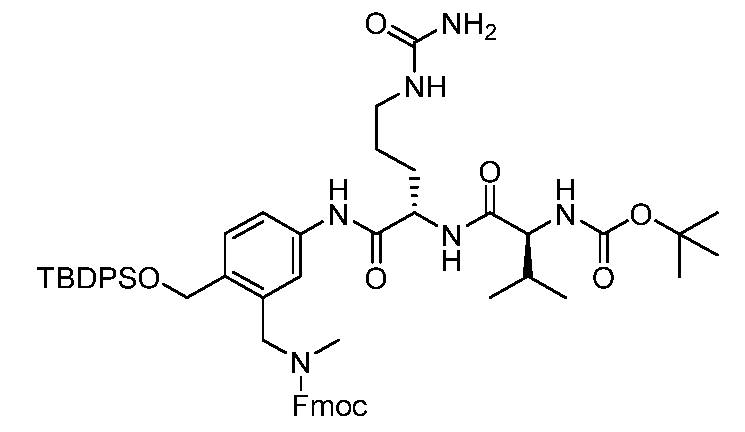
2:1 CH2Cl2/MeOH (60 mL) 중 (9H-플루오렌-9-일)메틸 (5-아미노-2-(((tert-부틸디페닐실릴)옥시)메틸)벤질)(메틸)카르바메이트 (2.86 g, 4.56 mmol, 1.0 당량) 및 (S)-2-((S)-2-((tert-부톡시카르보닐)아미노)-3-메틸부탄아미도)-5-우레이도펜탄산 (1.71 g, 4.56 mmol, 1.0 당량)에 에틸 2-에톡시퀴놀린-1(2H)-카르복실레이트 (2.256 g, 9.12 mmol, 2.0 당량)를 첨가하였다. 균질 용액을 16시간 동안 교반하였으며, 이 때 추가의 (S)-2-((S)-2-((tert-부톡시카르보닐)아미노)-3-메틸부탄아미도)-5-우레이도펜탄산 (0.340 g, 0.2 당량) 및 에틸 2-에톡시퀴놀린-1(2H)-카르복실레이트 (0.452 g, 0.4 당량)를 첨가하여 반응을 완결시키도록 유도하였다. 추가로 5시간 동안 교반한 후, 휘발성 물질을 진공 하에 제거하고, 이스코 SiO2 크로마토그래피에 의한 정제 후, (0-5% MeOH/CH2Cl2) (9H-플루오렌-9-일)메틸 (5-((S)-2-((S)-2-((tert-부톡시카르보닐)아미노)-3-메틸부탄아미도)-5-우레이도펜탄아미도)-2-(((tert-부틸디페닐실릴)옥시)메틸)벤질)(메틸)카르바메이트를 수득하였다. LCMS: MH+=984.1; Rt=1.54분 (2분 산성 방법).To a solution of (9H- fluoren -9-yl)methyl (5-amino-2-(((tert-butyldiphenylsilyl)oxy)methyl)benzyl)(methyl)carbamate (2.86 g, 4.56 mmol, 1.0 equiv) and (S)-2-((S)-2-((tert-butoxycarbonyl)amino)-3-methylbutanamido)-5-ureidopentanoic acid (1.71 g, 4.56 mmol, 1.0 equiv) in 2:1
프로프-2-인-1-일 (5-((S)-2-((S)-2-((tert-부톡시카르보닐)아미노)-3-메틸부탄아미도)-5-우레이도펜탄아미도)-2-(((tert-부틸디페닐실릴)옥시)메틸)벤질)(메틸)카르바메이트의 합성Synthesis of prop-2-yn-1-yl (5-((S)-2-((S)-2-((tert-butoxycarbonyl)amino)-3-methylbutanamido)-5-ureidopentanamido)-2-(((tert-butyldiphenylsilyl)oxy)methyl)benzyl)(methyl)carbamate

THF (10 mL) 중 (9H-플루오렌-9-일)메틸 (5-((S)-2-((S)-2-((tert-부톡시카르보닐)아미노)-3-메틸부탄아미도)-5-우레이도펜탄아미도)-2-(((tert-부틸디페닐실릴)옥시)메틸)벤질)(메틸)카르바메이트 (2.05 g, 2.085 mmol, 1.0 당량)에 MeOH 중 2.0 M 디메틸 아민 (10.42 mL, 20.85 mmol, 10 당량)을 첨가하였다. 16시간 동안 교반한 후, 휘발성 물질을 진공 하에 제거하였다. 잔류물을 CH2Cl2 (20 mL) 중에 용해시키고, DIEA (0.533 mL, 4.17 mmol, 2 당량) 및 프로파르길 클로로포르메이트 (0.264 mL, 2.71 mmol, 1.3 당량)를 첨가하였다. 실온에서 16시간 동안 교반한 후, 반응물을 CH2Cl2 (20 mL)로 희석하고, NaHCO3(포화), NaCl(포화)로 세척하고, MgSO4 상에서 건조시키고, 여과하고, 농축시키고, 이스코 SiO2 크로마토그래피 (0-15% MeOH/CH2Cl2)에 의해 정제하여 프로프-2-인-1-일 (5-((S)-2-((S)-2-((tert-부톡시카르보닐)아미노)-3-메틸부탄아미도)-5-우레이도펜탄아미도)-2-(((tert-부틸디페닐실릴)옥시)메틸)벤질)(메틸)카르바메이트를 수득하였다. LCMS: MH+=843.8; Rt=1.35분 (2분 산성 방법).To a solution of (9H-fluoren-9-yl)methyl (5-((S)-2-((S)-2-((tert-butoxycarbonyl)amino)-3-methylbutanamido)-5-ureidopentanamido)-2-(((tert-butyldiphenylsilyl)oxy)methyl)benzyl)(methyl)carbamate (2.05 g, 2.085 mmol, 1.0 equiv) in THF (10 mL) was added 2.0 M dimethyl amine in MeOH (10.42 mL, 20.85 mmol, 10 equiv). After stirring for 16 h, the volatiles were removed under vacuum. The residue was dissolved in CH 2 Cl 2 (20 mL) and DIEA (0.533 mL, 4.17 mmol, 2 equiv) and propargyl chloroformate (0.264 mL, 2.71 mmol, 1.3 equiv) were added. After stirring at room temperature for 16 h, the reaction was diluted with CH 2 Cl 2 (20 mL), washed with NaHCO 3 (sat.), NaCl (sat.), dried over MgSO 4 , filtered, concentrated and purified by ISCO SiO 2 chromatography (0-15% MeOH/CH 2 Cl 2 ) to afford prop-2-yn-1-yl (5-((S)-2-((S)-2-((tert-butoxycarbonyl)amino)-3-methylbutanamido)-5-ureidopentanamido)-2-(((tert-butyldiphenylsilyl)oxy)methyl)benzyl)(methyl)carbamate. LCMS: MH+=843.8; Rt=1.35 min (2 min acidic method).
프로프-2-인-1-일 (5-((S)-2-((S)-2-((tert-부톡시카르보닐)아미노)-3-메틸부탄아미도)-5-우레이도펜탄아미도)-2-(히드록시메틸)벤질)(메틸)카르바메이트의 합성Synthesis of prop-2-yn-1-yl (5-((S)-2-((S)-2-((tert-butoxycarbonyl)amino)-3-methylbutanamido)-5-ureidopentanamido)-2-(hydroxymethyl)benzyl)(methyl)carbamate
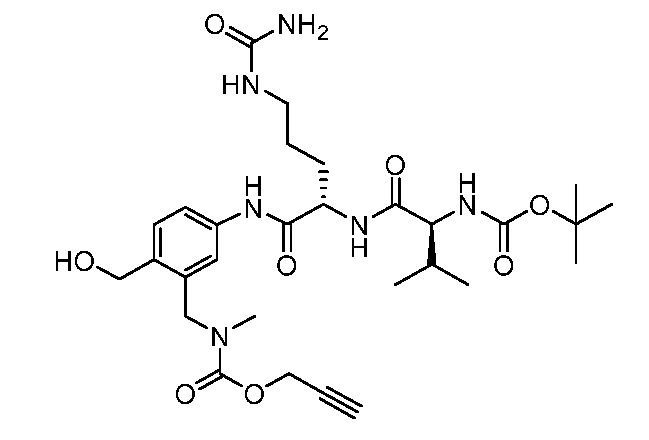
THF (10.0 mL) 중 프로프-2-인-1-일 (5-((S)-2-((S)-2-((tert-부톡시카르보닐)아미노)-3-메틸부탄아미도)-5-우레이도펜탄아미도)-2-(((tert-부틸디페닐실릴)옥시)메틸)벤질)(메틸)카르바메이트 (1.6 g, 1.90 mmol, 1.0 당량)의 0℃ 용액에 THF 중 1.0 M TBAF (3.80 mL, 3.80 mmol, 2.0 당량)를 첨가하였다. 실온으로 가온하고, 16시간 동안 교반한 후, 휘발성 물질을 진공 하에 제거하고, 잔류물을 EtOAc 중에 용해시키고, NaHCO3(포화), NaCl(포화)로 세척하고, MgSO4 상에서 건조시키고, 여과하고, 농축시키고, 잔류물을 이스코 SiO2 크로마토그래피 (0-30% MeOH/CH2Cl2)에 의해 정제하여 프로프-2-인-1-일 (5-((S)-2-((S)-2-((tert-부톡시카르보닐)아미노)-3-메틸부탄아미도)-5-우레이도펜탄아미도)-2-(히드록시메틸)벤질)(메틸)카르바메이트를 수득하였다. LCMS: MH+=605.7; Rt=0.81분 (2분 산성 방법).To a solution of prop-2-yn-1-yl (5-((S)-2-((S)-2-((tert-butoxycarbonyl)amino)-3-methylbutanamido)-5-ureidopentanamido)-2-(((tert-butyldiphenylsilyl)oxy)methyl)benzyl)(methyl)carbamate (1.6 g, 1.90 mmol, 1.0 equiv) in THF (10.0 mL) at 0 °C was added 1.0 M TBAF in THF (3.80 mL, 3.80 mmol, 2.0 equiv). After warming to room temperature and stirring for 16 h, the volatiles were removed in vacuo and the residue was dissolved in EtOAc, washed with NaHCO 3 (sat.), NaCl (sat.), dried over MgSO 4 , filtered, concentrated and the residue was purified by ISCO SiO 2 chromatography (0-30% MeOH/CH2Cl2) to give prop-2-yn-1-yl (5-((S)-2-((S)-2-((tert-butoxycarbonyl)amino)-3-methylbutanamido)-5-ureidopentanamido)-2-(hydroxymethyl)benzyl)(methyl)carbamate. LCMS: MH+ = 605.7; Rt = 0.81 min (2 min acidic method).
프로프-2-인-1-일 (5-((S)-2-((S)-2-((tert-부톡시카르보닐)아미노)-3-메틸부탄아미도)-5-우레이도펜탄아미도)-2-(클로로메틸)벤질)(메틸)카르바메이트의 합성Synthesis of prop-2-yn-1-yl (5-((S)-2-((S)-2-((tert-butoxycarbonyl)amino)-3-methylbutanamido)-5-ureidopentanamido)-2-(chloromethyl)benzyl)(methyl)carbamate

CH2Cl2 (10 mL) 중 프로프-2-인-1-일 (5-((S)-2-((S)-2-((tert-부톡시카르보닐)아미노)-3-메틸부탄아미도)-5-우레이도펜탄아미도)-2-(히드록시메틸)벤질)(메틸)카르바메이트 (350 mg, 0.579 mmol, 1.0 당량)에 피리딘 (0.278 mL, 3.47 mmol, 6 당량)을 첨가하였다. 불균질 혼합물을 0℃ 빙조 및 티오닐 클로라이드 (0.126 mL, 1.73 mmol, 3 당량)에서 냉각시켰다. 빙조에서 3시간 동안 교반한 후, 반응물을 이스코 SiO2 크로마토그래피 (0-30% MeOH/CH2Cl2)에 의해 정제하고, 프로프-2-인-1-일 (5-((S)-2-((S)-2-((tert-부톡시카르보닐)아미노)-3-메틸부탄아미도)-5-우레이도펜탄아미도)-2-(클로로메틸)벤질)(프로프-2-인-1-일)카르바메이트를 수득하였다. LCMS: MH+=623.7; Rt=2.19분 (5분 산성 방법).To a solution of prop- 2 - yn -1-yl (5-((S)-2-((S)-2-((tert-butoxycarbonyl)amino)-3-methylbutanamido)-5-ureidopentanamido)-2-(hydroxymethyl)benzyl)(methyl)carbamate (350 mg, 0.579 mmol, 1.0 equiv) in
(9H-플루오렌-9-일)메틸 (5-((S)-2-((S)-2-((tert-부톡시카르보닐)아미노)-3-메틸부탄아미도)-5-우레이도펜탄아미도)-2-(히드록시메틸)벤질)(메틸)카르바메이트의 합성Synthesis of (9H-fluoren-9-yl)methyl (5-((S)-2-((S)-2-((tert-butoxycarbonyl)amino)-3-methylbutanamido)-5-ureidopentanamido)-2-(hydroxymethyl)benzyl)(methyl)carbamate

THF (20 mL) 중에 용해시킨 (9H-플루오렌-9-일)메틸 (5-((S)-2-((S)-2-((tert-부톡시카르보닐)아미노)-3-메틸부탄아미도)-5-우레이도펜탄아미도)-2-(((tert-부틸디페닐실릴)옥시)메틸)벤질)(메틸)카르바메이트 (2.6 g, 2.64 mmol, 1.0 당량)에 아세트산 (0.757 mL, 13.22 mmol, 5.0 당량) 및 THF 중 1.0 M TBAF (2.91 mL, 2.91 mmol, 1.1 당량)를 첨가하였다. 용액을 72시간 동안 교반하였으며, 이 때 휘발성 물질을 진공 하에 제거하였다. 이스코 SiO2 크로마토그래피에 의한 정제 후 (0-30% MeOH/CH2Cl2) (9H-플루오렌-9-일)메틸 (5-((S)-2-((S)-2-((tert-부톡시카르보닐)아미노)-3-메틸부탄아미도)-5-우레이도펜탄아미도)-2-(히드록시메틸)벤질)(메틸)카르바메이트를 수득하였다. LCMS: MH+=745.5; Rt=1.07분 (2분 산성 방법).To (9H-fluoren-9-yl)methyl (5-((S)-2-((S)-2-((tert-butoxycarbonyl)amino)-3-methylbutanamido)-5-ureidopentanamido)-2-(((tert-butyldiphenylsilyl)oxy)methyl)benzyl)(methyl)carbamate (2.6 g, 2.64 mmol, 1.0 equiv) dissolved in THF (20 mL) was added acetic acid (0.757 mL, 13.22 mmol, 5.0 equiv) and 1.0 M TBAF in THF (2.91 mL, 2.91 mmol, 1.1 equiv). The solution was stirred for 72 h, at which time the volatiles were removed under vacuum. After purification by ISCO SiO 2 chromatography (0-30% MeOH/CH 2 Cl 2 ) (9H-fluoren-9-yl)methyl (5-((S)-2-((S)-2-((tert-butoxycarbonyl)amino)-3-methylbutanamido)-5-ureidopentanamido)-2-(hydroxymethyl)benzyl)(methyl)carbamate was obtained. LCMS: MH+ = 745.5; Rt = 1.07 min (2 min acidic method).
(9H-플루오렌-9-일)메틸 (5-((S)-2-((S)-2-((tert-부톡시카르보닐)아미노)-3-메틸부탄아미도)-5-우레이도펜탄아미도)-2-(클로로메틸)벤질)(메틸)카르바메이트의 합성Synthesis of (9H-fluoren-9-yl)methyl (5-((S)-2-((S)-2-((tert-butoxycarbonyl)amino)-3-methylbutanamido)-5-ureidopentanamido)-2-(chloromethyl)benzyl)(methyl)carbamate

THF (20 mL) 중 (9H-플루오렌-9-일)메틸 (5-((S)-2-((S)-2-((tert-부톡시카르보닐)아미노)-3-메틸부탄아미도)-5-우레이도펜탄아미도)-2-(히드록시메틸)벤질)(메틸)카르바메이트 (1.0 그램, 1.342 mmol)에 NaHCO3 (677 mg, 8.05 mmol) (6 당량)을 첨가한 다음, 빙수조에서 0℃로 냉각시키고, 이어서 티오닐 클로라이드 (0.245 mL, 3.36 mmol) (2.5 당량)를 천천히 첨가하였다. 혼합물을 0℃에서 15분 동안 교반한 다음, 실온에서 1시간 동안 교반하였다. 반응물을 EtOAc와 NaHCO3(포화) 사이에 분배하고, 분리하고, NaCl (포화)로 세척하고, MgSO4 상에서 건조시키고, 휘발성 물질을 진공 하에 제거하였다. 잔류물을 이스코 SiO2 크로마토그래피 (0-30% iPrOH/CH2Cl2)에 의해 정제하여 (9H-플루오렌-9-일)메틸 (5-((S)-2-((S)-2-((tert-부톡시카르보닐)아미노)-3-메틸부탄아미도)-5-우레이도펜탄아미도)-2-(클로로메틸)벤질)(메틸)카르바메이트를 산출 수득하였다. LCMS: MH+=763.2; Rt=1.18분 (2분 산성 방법).To a solution of (9H-fluoren-9-yl)methyl (5-((S)-2-((S)-2-((tert-butoxycarbonyl)amino)-3-methylbutanamido)-5-ureidopentanamido)-2-(hydroxymethyl)benzyl)(methyl)carbamate (1.0 g, 1.342 mmol) in THF (20 mL) was added NaHCO 3 (677 mg, 8.05 mmol) (6 equiv.), then cooled to 0 °C in an ice-water bath, and then thionyl chloride (0.245 mL, 3.36 mmol) (2.5 equiv.) was slowly added. The mixture was stirred at 0 °C for 15 min and then at room temperature for 1 h. The reaction was partitioned between EtOAc and NaHCO 3 (sat.), separated, washed with NaCl (sat.), dried over MgSO 4 and the volatiles were removed in vacuo. The residue was purified by ISCO SiO 2 chromatography (0-30% iPrOH/CH 2 Cl 2 ) to afford (9H-fluoren-9-yl)methyl (5-((S)-2-((S)-2-((tert-butoxycarbonyl)amino)-3-methylbutanamido)-5-ureidopentanamido)-2-(chloromethyl)benzyl)(methyl)carbamate. LCMS: MH+ = 763.2; Rt = 1.18 min (2 min. acidic method).
일반적 절차 1
프로프-2-인-1-일 (5-((S)-2-((S)-2-((tert-부톡시카르보닐)아미노)-3-메틸부탄아미도)-5-우레이도펜탄아미도)-2-((((4-니트로페녹시)카르보닐)옥시)메틸)벤질)(메틸)카르바메이트의 합성Synthesis of prop-2-yn-1-yl (5-((S)-2-((S)-2-((tert-butoxycarbonyl)amino)-3-methylbutanamido)-5-ureidopentanamido)-2-((((4-nitrophenoxy)carbonyl)oxy)methyl)benzyl)(methyl)carbamate

DMF (2 mL) 중 프로프-2-인-1-일 (5-((S)-2-((S)-2-((tert-부톡시카르보닐)아미노)-3-메틸부탄아미도)-5-우레이도펜탄아미도)-2-(히드록시메틸)벤질)(메틸)카르바메이트 (249 mg, 0.412 mmol) 및 비스(4-니트로페닐)카르보네이트 (356 mg, 1.24 mmol, 3.0 당량)의 용액을 균질해질 때까지 와류시키고, 16시간 동안 정치시켰다. 용액을 DMSO (6 mL)로 희석하고, RP-HPLC 이스코 골드 크로마토그래피 (10-100% MeCN/H2O, 개질제 없음)에 의해 정제하였다. 동결건조 시, 프로프-2-인-1-일 (5-((S)-2-((S)-2-((tert-부톡시카르보닐)아미노)-3-메틸부탄아미도)-5-우레이도펜탄아미도)-2-((((4-니트로페녹시)카르보닐)옥시)메틸)벤질)(메틸)카르바메이트를 수득하였다. LC/MS MH+=770.7, Rt=2.45분 (5분 산성 방법).A solution of prop-2-yn-1-yl (5-((S)-2-((S)-2-((tert-butoxycarbonyl)amino)-3-methylbutanamido)-5-ureidopentanamido)-2-(hydroxymethyl)benzyl)(methyl)carbamate (249 mg, 0.412 mmol) and bis(4-nitrophenyl)carbonate (356 mg, 1.24 mmol, 3.0 equiv) in DMF (2 mL) was vortexed until homogeneous and allowed to stand for 16 h. The solution was diluted with DMSO (6 mL) and purified by RP-HPLC ISCO Gold chromatography (10-100% MeCN/H 2 O, no modifier). Upon lyophilization, prop-2-yn-1-yl (5-((S)-2-((S)-2-((tert-butoxycarbonyl)amino)-3-methylbutanamido)-5-ureidopentanamido)-2-((((4-nitrophenoxy)carbonyl)oxy)methyl)benzyl)(methyl)carbamate was obtained. LC/MS MH+=770.7, Rt=2.45 min (5 min acidic method).
tert-부틸 ((S)-1-(((S)-1-((4-(히드록시메틸)페닐)아미노)-1-옥소-5-우레이도펜탄-2-일)아미노)-3-메틸-1-옥소부탄-2-일)카르바메이트의 합성Synthesis of tert-butyl ((S)-1-(((S)-1-((4-(hydroxymethyl)phenyl)amino)-1-oxo-5-ureidopentan-2-yl)amino)-3-methyl-1-oxobutan-2-yl)carbamate

DCM (4.0 mL) 중 (4-아미노페닐)메탄올 (450.0 mg, 3.65 mmol) 및 (S)-2-((S)-2-((tert-부톡시카르보닐)아미노)-3-메틸부탄아미도)-5-우레이도펜탄산 (1368.0 mg, 3.65 mmol, 1.0 당량)의 현탁액에 EEDQ (2259.0 mg, 9.13 mmol, 2.5 당량)를 첨가하였다. 혼합물을 실온에서 16시간 동안 교반하고, 이 후 반응물을 이스코 SiO2 크로마토그래피 (0-30% MeOH/CH2Cl2)에 의해 정제하고, tert-부틸 ((S)-1-(((S)-1-((4-(히드록시메틸)페닐)아미노)-1-옥소-5-우레이도펜탄-2-일)아미노)-3-메틸-1-옥소부탄-2-일)카르바메이트를 수득하였다. LC/MS MH+=480.6, Rt=0.75분 (2분 산성 방법). 1H NMR (400 MHz, DMSO-d6) δ 9.97 (s, 1H), 7.96 (d, J = 7.7 Hz, 1H), 7.60 - 7.48 (m, 2H), 7.29 - 7.19 (m, 2H), 6.76 (d, J = 8.9 Hz, 1H), 5.96 (t, J = 5.8 Hz, 1H), 5.40 (s, 2H), 5.09 (t, J = 5.7 Hz, 1H), 4.43 (d, J = 5.7 Hz, 3H), 3.83 (dd, J = 8.9, 6.7 Hz, 1H), 2.98 (dp, J = 30.3, 6.6 Hz, 2H), 1.95 (p, J = 6.7 Hz, 1H), 1.80 - 1.54 (m, 2H), 1.38 (s, 11H), 0.84 (dd, J = 15.9, 6.8 Hz, 6H).To a suspension of (4-aminophenyl)methanol (450.0 mg, 3.65 mmol) and (S)-2-((S)-2-((tert-butoxycarbonyl)amino)-3-methylbutanamido)-5-ureidopentanoic acid (1368.0 mg, 3.65 mmol, 1.0 equiv) in DCM (4.0 mL) was added EEDQ (2259.0 mg, 9.13 mmol, 2.5 equiv). The mixture was stirred at room temperature for 16 h, after which the reaction was purified by ISCO SiO 2 chromatography (0-30% MeOH/CH 2 Cl 2 ) to afford tert-butyl ((S)-1-(((S)-1-((4-(hydroxymethyl)phenyl)amino)-1-oxo-5-ureidopentan-2-yl)amino)-3-methyl-1-oxobutan-2-yl)carbamate. LC/MS MH+=480.6, Rt=0.75 min (2 min acidic method). 1H NMR (400 MHz, DMSO-d6) δ 9.97 (s, 1H), 7.96 (d, J = 7.7 Hz, 1H), 7.60 - 7.48 (m, 2H), 7.29 - 7.19 (m, 2H), 6.76 (d, J = 8.9 Hz, 1H), 5.96 (t, J = 5.8 Hz, 1H), 5.40 (s, 2H), 5.09 (t, J = 5.7 Hz, 1H), 4.43 (d, J = 5.7 Hz, 3H), 3.83 (dd, J = 8.9, 6.7 Hz, 1H), 2.98 (dp, J = 30.3, 6.6 Hz, 2H), 1.95 (p, J = 6.7 Hz, 1H), 1.80 - 1.54 (m, 2H), 1.38 (s, 11H), 0.84 (dd, J = 15.9, 6.8 Hz, 6H).
tert-부틸 ((S)-1-(((S)-1-((4-(클로로메틸)페닐)아미노)-1-옥소-5-우레이도펜탄-2-일)아미노)-3-메틸-1-옥소부탄-2-일)카르바메이트의 합성Synthesis of tert-butyl ((S)-1-(((S)-1-((4-(chloromethyl)phenyl)amino)-1-oxo-5-ureidopentan-2-yl)amino)-3-methyl-1-oxobutan-2-yl)carbamate

DCM (20.0 mL) 중 tert-부틸 ((S)-1-(((S)-1-((4-(히드록시메틸)페닐)아미노)-1-옥소-5-우레이도펜탄-2-일)아미노)-3-메틸-1-옥소부탄-2-일)카르바메이트 (500.0 mg, 1.043 mmol)에 피리딘 (0.506 mL, 6.26 mmol, 6.0 당량)을 첨가하였다. 불균질 혼합물을 0℃ 빙조에서 냉각시키고, 티오닐 클로라이드 (0.228 mL, 3.13 mmol, 3 당량)를 첨가하였다. 빙조에서 4시간 동안 교반한 후, 혼합물을 실온으로 15분 동안 가온하였다. 반응물을 이스코 SiO2 크로마토그래피 (0-30% MeOH/CH2Cl2)에 의해 정제하고, tert-부틸 ((S)-1-(((S)-1-((4-(클로로메틸)페닐)아미노)-1-옥소-5-우레이도펜탄-2-일)아미노)-3-메틸-1-옥소부탄-2-일)카르바메이트를 수득하였다. LC/MS MH+=498.1, Rt=2.02분 (5분 산성 방법).To tert-butyl ((S)-1-(((S)-1-((4-(hydroxymethyl)phenyl)amino)-1-oxo-5-ureidopentan-2-yl)amino)-3-methyl-1-oxobutan-2-yl)carbamate (500.0 mg, 1.043 mmol) in DCM (20.0 mL) was added pyridine (0.506 mL, 6.26 mmol, 6.0 equiv). The heterogeneous mixture was cooled to 0 °C in an ice bath and thionyl chloride (0.228 mL, 3.13 mmol, 3 equiv) was added. After stirring in the ice bath for 4 h, the mixture was warmed to room temperature for 15 min. The reaction was purified by ISCO SiO2 chromatography (0-30% MeOH/CH2Cl2) to afford tert-butyl ((S)-1-(((S)-1-((4-(chloromethyl)phenyl)amino)-1-oxo-5-ureidopentan-2-yl)amino)-3-methyl-1-oxobutan-2-yl)carbamate. LC/MS MH+=498.1, Rt=2.02 min (5 min acidic method).
(9H-플루오렌-9-일)메틸 (5-((S)-2-((S)-2-((tert-부톡시카르보닐)아미노)-3-메틸부탄아미도)-5-우레이도펜탄아미도)-2-((((4-니트로페녹시)카르보닐)옥시)메틸)벤질)(메틸)카르바메이트의 합성Synthesis of (9H-fluoren-9-yl)methyl (5-((S)-2-((S)-2-((tert-butoxycarbonyl)amino)-3-methylbutanamido)-5-ureidopentanamido)-2-((((4-nitrophenoxy)carbonyl)oxy)methyl)benzyl)(methyl)carbamate
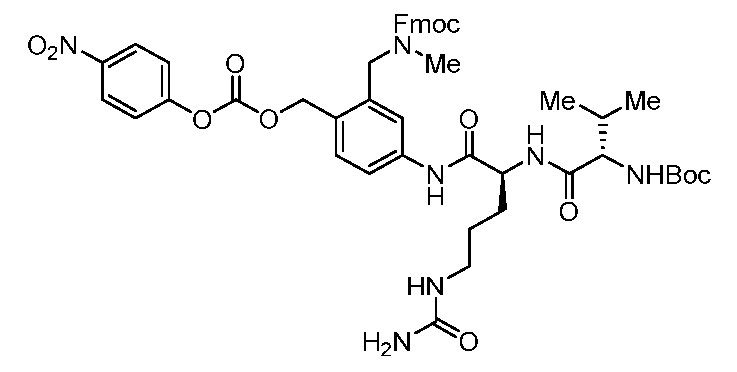
일반적 절차 1에 따라 (9H-플루오렌-9-일)메틸 (5-((S)-2-((S)-2-((tert-부톡시카르보닐)아미노)-3-메틸부탄아미도)-5-우레이도펜탄아미도)-2-(히드록시메틸)벤질)(메틸)카르바메이트 (100.0 mg, 0.134 mmol)를 사용하여, (9H-플루오렌-9-일)메틸 (5-((S)-2-((S)-2-((tert-부톡시카르보닐)아미노)-3-메틸부탄아미도)-5-우레이도펜탄아미도)-2-((((4-니트로페녹시)카르보닐)옥시)메틸)벤질)(메틸)카르바메이트를 수득하였다. LC/MS MH+=910.5, Rt=1.24분 (2분 산성 방법). 1H NMR (400 MHz, DMSO-d6) δ 10.19 (s, 1H), 8.26 (s, 2H), 8.00 (d, J = 7.7 Hz, 1H), 7.93 - 7.58 (m, 4H), 7.42 (td, J = 33.3, 32.9, 13.8 Hz, 9H), 7.14 (s, 1H), 6.72 (d, J = 9.0 Hz, 1H), 6.01 (s, 1H), 5.27 (d, J = 23.7 Hz, 2H), 4.58 (s, 2H), 4.48 - 4.13 (m, 4H), 3.89 - 3.78 (m, 1H), 2.92 (t, J = 35.0 Hz, 5H), 2.00 - 1.86 (m, 1H), 1.54 (s, 3H), 1.37 (m, 11H, Boc 포함), 0.82 (dd, J = 15.4, 6.7 Hz, 6H).According to
(9H-플루오렌-9-일)메틸 ((S)-1-(((S)-1-((4-(히드록시메틸)-3-((프로프-2-인-1-일옥시)메틸)페닐)아미노)-1-옥소-5-우레이도펜탄-2-일)아미노)-3-메틸-1-옥소부탄-2-일)카르바메이트의 합성Synthesis of (9H-fluoren-9-yl)methyl ((S)-1-(((S)-1-((4-(hydroxymethyl)-3-((prop-2-yn-1-yloxy)methyl)phenyl)amino)-1-oxo-5-ureidopentan-2-yl)amino)-3-methyl-1-oxobutan-2-yl)carbamate

DMF (10.0 mL) 중 (S)-2-아미노-N-(4-(히드록시메틸)-3-((프로프-2-인-1-일옥시)메틸)페닐)-5-우레이도펜탄아미드 (3.64 g, 10.45 mmol), (S)-2-((((9H-플루오렌-9-일)메톡시)카르보닐)아미노)-3-메틸부탄산 (3.55 g, 10.54 mmol, 1.0 당량) 및 1-((디메틸아미노)(디메틸이미노)메틸)-1H-[1,2,3]트리아졸로[4,5-b]피리딘 3-옥시드 헥사플루오로포스페이트(V) (3.97 g, 10.54 mmol, 1.0 당량)의 용액에 DIPEA (3.64 mL, 20.90 mmol, 2.0 당량)를 첨가하였다. 혼합물을 실온에서 45분 동안 교반하였다. 100 mL 물로 희석하고, 5분 동안 교반하고, 침전물을 여과하고, 이를 감소된 진공 하에 건조시켰다. 건조시킨 후, (9H-플루오렌-9-일)메틸 ((S)-1-(((S)-1-((4-(히드록시메틸)-3-((프로프-2-인-1-일옥시)메틸)페닐)아미노)-1-옥소-5-우레이도펜탄-2-일)아미노)-3-메틸-1-옥소부탄-2-일)카르바메이트를 수득하였다. LC/MS MH+=670.3, Rt=0.96분 (2분 산성 방법).To a solution of (S)-2-amino-N-(4-(hydroxymethyl)-3-((prop-2-yn-1-yloxy)methyl)phenyl)-5-ureidopentanamide (3.64 g, 10.45 mmol), (S)-2-(((9H-fluoren-9-yl)methoxy)carbonyl)amino)-3-methylbutanoic acid (3.55 g, 10.54 mmol, 1.0 equiv.) and 1-((dimethylamino)(dimethylimino)methyl)-1H-[1,2,3]triazolo[4,5-b]pyridine 3-oxide hexafluorophosphate(V) (3.97 g, 10.54 mmol, 1.0 equiv.) in DMF (10.0 mL) was added DIPEA (3.64 mL, 20.90 mmol, 2.0 (equivalent) was added. The mixture was stirred at room temperature for 45 min. Diluted with 100 mL of water, stirred for 5 min, filtered off the precipitate and dried under reduced vacuum. After drying, (9H-fluoren-9-yl)methyl ((S)-1-(((S)-1-((4-(hydroxymethyl)-3-((prop-2-yn-1-yloxy)methyl)phenyl)amino)-1-oxo-5-ureidopentan-2-yl)amino)-3-methyl-1-oxobutan-2-yl)carbamate was obtained. LC/MS MH+=670.3, Rt=0.96 min (2 min acidic method).
(9H-플루오렌-9-일)메틸 ((S)-3-메틸-1-(((S)-1-((4-((((4-니트로페녹시)카르보닐)옥시)메틸)-3-((프로프-2-인-1-일옥시)메틸)페닐)아미노)-1-옥소-5-우레이도펜탄-2-일)아미노)-1-옥소부탄-2-일)카르바메이트의 합성Synthesis of (9H-fluoren-9-yl)methyl ((S)-3-methyl-1-(((S)-1-((4-(((4-nitrophenoxy)carbonyl)oxy)methyl)-3-((prop-2-yn-1-yloxy)methyl)phenyl)amino)-1-oxo-5-ureidopentan-2-yl)amino)-1-oxobutan-2-yl)carbamate
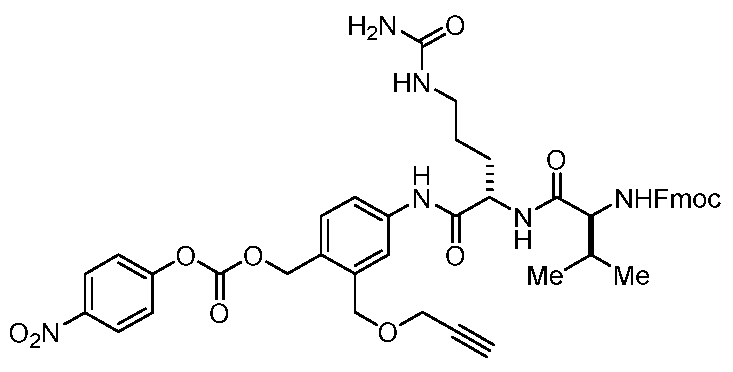
일반적 절차 1에 따라 (9H-플루오렌-9-일)메틸 ((S)-1-(((S)-1-((4-(히드록시메틸)-3-((프로프-2-인-1-일옥시)메틸)페닐)아미노)-1-옥소-5-우레이도펜탄-2-일)아미노)-3-메틸-1-옥소부탄-2-일)카르바메이트 (200.0 mg, 0.299 mmol)를 사용하여, (9H-플루오렌-9-일)메틸 ((S)-3-메틸-1-(((S)-1-((4-((((4-니트로페녹시)카르보닐)옥시)메틸)-3-((프로프-2-인-1-일옥시)메틸)페닐)아미노)-1-옥소-5-우레이도펜탄-2-일)아미노)-1-옥소부탄-2-일)카르바메이트를 수득하였다. LC/MS MH+ = 835.7, Rt=1.19분 (2분 산성 방법).According to
tert-부틸 ((R)-3-메틸-1-(((R)-1-((4-((((4-니트로페녹시)카르보닐)옥시)메틸)-3-((프로프-2-인-1-일옥시)메틸)페닐)아미노)-1-옥소-5-우레이도펜탄-2-일)아미노)-1-옥소부탄-2-일)카르바메이트의 합성Synthesis of tert-butyl ((R)-3-methyl-1-(((R)-1-((4-((((4-nitrophenoxy)carbonyl)oxy)methyl)-3-((prop-2-yn-1-yloxy)methyl)phenyl)amino)-1-oxo-5-ureidopentan-2-yl)amino)-1-oxobutan-2-yl)carbamate

일반적 절차 1에 따라 tert-부틸 ((S)-1-(((S)-1-((4-(히드록시메틸)-3-((프로프-2-인-1-일옥시)메틸)페닐)아미노)-1-옥소-5-우레이도펜탄-2-일)아미노)-3-메틸-1-옥소부탄-2-일)카르바메이트 (200.0 mg, 0.365 mmol)를 사용하여, tert-부틸 ((R)-3-메틸-1-(((R)-1-((4-((((4-니트로페녹시)카르보닐)옥시)메틸)-3-((프로프-2-인-1-일옥시)메틸)페닐)아미노)-1-옥소-5-우레이도펜탄-2-일)아미노)-1-옥소부탄-2-일)카르바메이트를 수득하였다. LC/MS MH+=713.6, Rt=1.08분 (2분 산성 방법).tert-Butyl ((S)-1-(((S)-1-((4-(hydroxymethyl)-3-((prop-2-yn-1-yloxy)methyl)phenyl)amino)-1-oxo-5-ureidopentan-2-yl)amino)-3-methyl-1-oxobutan-2-yl)carbamate (200.0 mg, 0.365 mmol) was obtained according to
프로프-2-인-1-일 5-((S)-2-((S)-2-((((9H-플루오렌-9-일)메톡시)카르보닐)아미노)-3-메틸부탄아미도)-5-우레이도펜탄아미도)-2-(히드록시메틸)벤질(메틸)카르바메이트의 합성Synthesis of prop-2-yn-1-yl 5-((S)-2-((S)-2-(((9H-fluoren-9-yl)methoxy)carbonyl)amino)-3-methylbutanamido)-5-ureidopentanamido)-2-(hydroxymethyl)benzyl(methyl)carbamate

0℃에서 DCM (1.0 mL) 중 프로프-2-인-1-일 5-((S)-2-((S)-2-((tert-부톡시카르보닐)아미노)-3-메틸부탄아미도)-5-우레이도펜탄아미도)-2-(히드록시메틸)벤질(메틸)카르바메이트 (48.0 mg, 0.079 mmol)의 용액에 TFA (0.2 mL)를 첨가하였다. 혼합물을 이 온도에서 1시간 동안 교반하였다. 그 후, 용매를 진공 하에 제거하였다. 잔류물을 DMF (1.0 mL) 중에 용해시키고, 이어서 DIPEA (0.138 mL, 0.794 mmol, 10 당량) 및 (9H-플루오렌-9-일)메틸 (2,5-디옥소피롤리딘-1-일) 카르보네이트 (40.2 mg, 0.119 mmol, 1.5 당량)를 첨가하였다. 혼합물을 실온에서 18시간 동안 교반하였다. 반응물을 RP-HPLC 이스코 골드 크로마토그래피 (0-100% MeCN/H2O, 개질제 없음)에 의해 정제하였다. 동결건조 시, 프로프-2-인-1-일 5-((S)-2-((S)-2-((((9H-플루오렌-9-일)메톡시)카르보닐)아미노)-3-메틸부탄아미도)-5-우레이도펜탄아미도)-2-(히드록시메틸)벤질(메틸)카르바메이트를 수득하였다. LC/MS MH+=727.3, Rt=2.28분 (5분 산성 방법). 1H NMR (400 MHz, DMSO-d6) δ 10.01 (s, 1H), 8.09 (d, J = 7.6 Hz, 1H), 7.89 (d, 2H), 7.74 (t, J = 8.2 Hz, 2H), 7.62 (s, 1H), 7.45 - 7.36 (m, 3H), 7.35 - 7.15 (m, 4H), 5.95 (t, J = 5.9 Hz, 1H), 5.36 (s, 2H), 5.03 (s, 1H), 4.70 (d, J = 14.8 Hz, 2H), 4.54 - 4.36 (m, 5H), 4.35 - 4.19 (m, 3H), 3.96 - 3.87 (m, 1H), 3.50 (d, J = 26.0 Hz, 1H), 2.97 (dp, J = 20.1, 6.6 Hz, 2H), 2.82 (s, 3H), 1.98 (q, J = 6.8 Hz, 1H), 1.73 - 1.50 (m, 2H), 1.51 - 1.30 (m, 2H), 0.86 (dd, J = 10.2, 6.7 Hz, 6H).To a solution of prop-2-yn-1-yl 5-((S)-2-((S)-2-((tert-butoxycarbonyl)amino)-3-methylbutanamido)-5-ureidopentanamido)-2-(hydroxymethyl)benzyl(methyl)carbamate (48.0 mg, 0.079 mmol) in DCM (1.0 mL) at 0 °C was added TFA (0.2 mL). The mixture was stirred at this temperature for 1 h. The solvent was then removed under vacuum. The residue was dissolved in DMF (1.0 mL), followed by addition of DIPEA (0.138 mL, 0.794 mmol, 10 equiv) and (9H-fluoren-9-yl)methyl (2,5-dioxopyrrolidin-1-yl) carbonate (40.2 mg, 0.119 mmol, 1.5 equiv). The mixture was stirred at room temperature for 18 h. The reaction was purified by RP-HPLC ISCO Gold chromatography (0-100% MeCN/H2O, no modifier). Upon lyophilization, prop-2-yn-1-yl 5-((S)-2-((S)-2-(((9H-fluoren-9-yl)methoxy)carbonyl)amino)-3-methylbutanamido)-5-ureidopentanamido)-2-(hydroxymethyl)benzyl(methyl)carbamate was obtained. LC/MS MH+=727.3, Rt=2.28 min (5 min acidic method). 1H NMR (400 MHz, DMSO-d6) δ 10.01 (s, 1H), 8.09 (d, J = 7.6 Hz, 1H), 7.89 (d, 2H), 7.74 (t, J = 8.2 Hz, 2H), 7.62 (s, 1H), 7.45 - 7.36 (m, 3H), 7.35 - 7.15 (m, 4H), 5.95 (t, J = 5.9 Hz, 1H), 5.36 (s, 2H), 5.03 (s, 1H), 4.70 (d, J = 14.8 Hz, 2H), 4.54 - 4.36 (m, 5H), 4.35 - 4.19 (m, 3H), 3.96 - 3.87 (m, 1H), 3.50 (d, J = 26.0 Hz, 1H), 2.97 (dp, J = 20.1, 6.6 Hz, 2H), 2.82 (s, 3H), 1.98 (q, J = 6.8 Hz, 1H), 1.73 - 1.50 (m, 2H), 1.51 - 1.30 (m, 2H), 0.86 (dd, J = 10.2, 6.7 Hz, 6H).
프로프-2-인-1-일 5-((S)-2-((S)-2-((((9H-플루오렌-9-일)메톡시)카르보닐)아미노)-3-메틸부탄아미도)-5-우레이도펜탄아미도)-2-((((4-니트로페녹시)카르보닐)옥시)메틸)벤질(메틸)카르바메이트의 합성Synthesis of prop-2-yn-1-yl 5-((S)-2-((S)-2-(((9H-fluoren-9-yl)methoxy)carbonyl)amino)-3-methylbutanamido)-5-ureidopentanamido)-2-((((4-nitrophenoxy)carbonyl)oxy)methyl)benzyl(methyl)carbamate

일반적 절차 1에 따라 프로프-2-인-1-일 5-((S)-2-((S)-2-((((9H-플루오렌-9-일)메톡시)카르보닐)아미노)-3-메틸부탄아미도)-5-우레이도펜탄아미도)-2-(히드록시메틸)벤질(메틸)카르바메이트 (77.6 mg, 0.107 mmol)를 사용하여, 프로프-2-인-1-일 5-((S)-2-((S)-2-((((9H-플루오렌-9-일)메톡시)카르보닐)아미노)-3-메틸부탄아미도)-5-우레이도펜탄아미도)-2-((((4-니트로페녹시)카르보닐)옥시)메틸)벤질(메틸)카르바메이트를 수득하였다. LC/MS MH+ = 892.4, Rt=1.14분 (2분 산성 방법).Prop-2-yn-1-yl 5-((S)-2-((S)-2-(((9H-fluoren-9-yl)methoxy)carbonyl)amino)-3-methylbutanamido)-5-ureidopentanamido)-2-(hydroxymethyl)benzyl(methyl)carbamate (77.6 mg, 0.107 mmol) was prepared according to
프로프-2-인-1-일 5-((S)-2-((S)-2-((tert-부톡시카르보닐)아미노)-3-메틸부탄아미도)-5-우레이도펜탄아미도)-2-((((4-니트로페녹시)카르보닐)옥시)메틸)벤질(프로프-2-인-1-일)카르바메이트의 합성Synthesis of prop-2-yn-1-yl 5-((S)-2-((S)-2-((tert-butoxycarbonyl)amino)-3-methylbutanamido)-5-ureidopentanamido)-2-((((4-nitrophenoxy)carbonyl)oxy)methyl)benzyl(prop-2-yn-1-yl)carbamate

일반적 절차 1에 따라 프로프-2-인-1-일 5-((S)-2-((S)-2-((tert-부톡시카르보닐)아미노)-3-메틸부탄아미도)-5-우레이도펜탄아미도)-2-(히드록시메틸)벤질(프로프-2-인-1-일)카르바메이트 (250.0 mg, 0.398 mmol)를 사용하여, 프로프-2-인-1-일 5-((S)-2-((S)-2-((tert-부톡시카르보닐)아미노)-3-메틸부탄아미도)-5-우레이도펜탄아미도)-2-((((4-니트로페녹시)카르보닐)옥시)메틸)벤질(프로프-2-인-1-일)카르바메이트를 수득하였다. LC/MS MH+ = 794.9, Rt=1.07분 (2분 산성 방법).Prop-2-yn-1-yl 5-((S)-2-((S)-2-((tert-butoxycarbonyl)amino)-3-methylbutanamido)-5-ureidopentanamido)-2-(hydroxymethyl)benzyl(prop-2-yn-1-yl)carbamate (250.0 mg, 0.398 mmol) was obtained according to
프로프-2-인-1-일 2-(((tert-부틸디페닐실릴)옥시)메틸)-5-니트로벤질(프로프-2-인-1-일)카르바메이트의 합성Synthesis of prop-2-yn-1-yl 2-(((tert-butyldiphenylsilyl)oxy)methyl)-5-nitrobenzyl(prop-2-yn-1-yl)carbamate

DCM (10.0 mL) 중 N-(2-(((tert-부틸디페닐실릴)옥시)메틸)-5-니트로벤질)프로프-2-인-1-아민 (1.348 g, 2.94 mmol)의 용액에 피리딘 (2.0 mL)에 이어서 프로프-2-인-1-일 카르보노클로리데이트 (0.574 mL, 5.88 mmol, 2.0 당량)를 첨가하고, 혼합물을 실온에서 30분 동안 교반하였다. 반응물을 MeOH로 켄칭하고, CH2Cl2 (20 mL)로 희석한 다음, 물, NaCl(포화)로 세척하고, Na2SO4 상에서 건조시키고, 여과하고, 농축시키고, 이스코 SiO2 크로마토그래피 (0-50% EtOAc/헵탄)에 의해 정제하여, 프로프-2-인-1-일 2-(((tert-부틸디페닐실릴)옥시)메틸)-5-니트로벤질(프로프-2-인-1-일)카르바메이트를 수득하였다. LC/MS MH+ = 541.6, Rt=1.47분 (2분 산성 방법). 1H NMR (400 MHz, 클로로포름-d) δ 8.18 (dd, J = 8.4, 2.4 Hz, 1H, Ar), 8.10 (d, J = 2.3 Hz, 1H, Ar), 7.72 - 7.63 (m, 4H, Ph), 7.54 - 7.35 (m, 7H, Ph + Ar), 4.86 (s, 2H), 4.80 - 4.53 (m, 4H), 4.02 (d, J = 22.3 Hz, 2H), 2.76 (d, J = 4.7 Hz, 1H), 2.17 (t, J = 2.4 Hz, 1H), 1.13 (d, J = 3.1 Hz, 9H).To a solution of N-(2-(((tert-butyldiphenylsilyl)oxy)methyl)-5-nitrobenzyl)prop-2-yn-1-amine (1.348 g, 2.94 mmol) in DCM (10.0 mL) was added pyridine (2.0 mL) followed by prop-2-yn-1-yl carbonochloridate (0.574 mL, 5.88 mmol, 2.0 equiv), and the mixture was stirred at room temperature for 30 min. The reaction was quenched with MeOH, diluted with CH 2 Cl 2 (20 mL), washed with water, NaCl (sat.), dried over Na 2 SO 4 , filtered, concentrated and purified by ISCO SiO 2 chromatography (0-50% EtOAc/heptane) to afford prop-2-yn-1-yl 2-(((tert-butyldiphenylsilyl)oxy)methyl)-5-nitrobenzyl(prop-2-yn-1-yl)carbamate. LC/MS MH+ = 541.6, Rt=1.47 min (2 min acidic method). 1 H NMR (400 MHz, chloroform-d) δ 8.18 (dd, J = 8.4, 2.4 Hz, 1H, Ar), 8.10 (d, J = 2.3 Hz, 1H, Ar), 7.72 - 7.63 (m, 4H, Ph), 7.54 - 7.35 (m, 7H, Ph + Ar), 4.86 (s, 2H), 4.80 - 4.53 (m, 4H), 4.02 (d, J = 22.3 Hz, 2H), 2.76 (d, J = 4.7 Hz, 1H), 2.17 (t, J = 2.4 Hz, 1H), 1.13 (d, J = 3.1 Hz, 9H).
프로프-2-인-1-일 5-아미노-2-(((tert-부틸디페닐실릴)옥시)메틸)벤질(프로프-2-인-1-일)카르바메이트의 합성Synthesis of prop-2-yn-1-yl 5-amino-2-(((tert-butyldiphenylsilyl)oxy)methyl)benzyl(prop-2-yn-1-yl)carbamate

0℃에서 DCM (9.0 mL) 및 AcOH (1.0 mL) 중 프로프-2-인-1-일 2-(((tert-부틸디페닐실릴)옥시)메틸)-5-니트로벤질(프로프-2-인-1-일)카르바메이트 (1.66 g, 2.07 mmol)의 용액에 아연 (3.01 g, 46.1 mmol, 15.0 당량)을 첨가하고, 혼합물을 이 온도에서 40분 동안 교반하였다. 반응물을 셀라이트를 통해 여과하고, DCM으로 헹구었다. 여과물을 NaHCO3(포화), 물 및 NaCl(포화)로 세척하고, Na2SO4 상에서 건조시키고, 여과하고, 농축시키고, 이스코 SiO2 크로마토그래피 (0-100% EtOAc/헵탄)에 의해 정제하여, 프로프-2-인-1-일 5-아미노-2-(((tert-부틸디페닐실릴)옥시)메틸)벤질(프로프-2-인-1-일)카르바메이트를 수득하였다. LC/MS M+Na= 533.2, Rt=1.35분 (2분 산성 방법).To a solution of prop-2-yn-1-yl 2-(((tert-butyldiphenylsilyl)oxy)methyl)-5-nitrobenzyl(prop-2-yn-1-yl)carbamate (1.66 g, 2.07 mmol) in DCM (9.0 mL) and AcOH (1.0 mL) at 0 °C was added zinc (3.01 g, 46.1 mmol, 15.0 equiv), and the mixture was stirred at this temperature for 40 min. The reaction was filtered through Celite, rinsing with DCM. The filtrate was washed with NaHCO 3 (sat.), water and NaCl (sat.), dried over Na 2 SO 4 , filtered, concentrated and purified by ISCO SiO 2 chromatography (0-100% EtOAc/heptane) to afford prop-2-yn-1-yl 5-amino-2-(((tert-butyldiphenylsilyl)oxy)methyl)benzyl(prop-2-yn-1-yl)carbamate. LC/MS M+Na= 533.2, Rt=1.35 min (2 min. acidic method).
프로프-2-인-1-일 5-((S)-2-((S)-2-((((9H-플루오렌-9-일)메톡시)카르보닐)아미노)-3-메틸부탄아미도)-5-우레이도펜탄아미도)-2-(((tert-부틸디페닐실릴)옥시)메틸)벤질(프로프-2-인-1-일)카르바메이트의 합성Synthesis of prop-2-yn-1-yl 5-((S)-2-((S)-2-(((9H-fluoren-9-yl)methoxy)carbonyl)amino)-3-methylbutanamido)-5-ureidopentanamido)-2-(((tert-butyldiphenylsilyl)oxy)methyl)benzyl(prop-2-yn-1-yl)carbamate
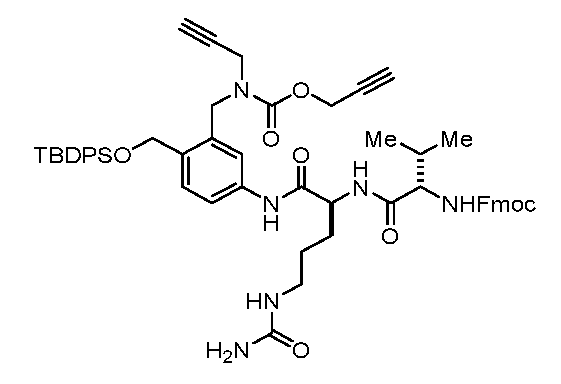
DCM (10.0 mL) 및 MeOH (5.0 mL) 중에 프로프-2-인-1-일 5-아미노-2-(((tert-부틸디페닐실릴)옥시)메틸)벤질(프로프-2-인-1-일)카르바메이트 (1.19 g, 2.33 mmol) 및 (S)-2-((S)-2-((((9H-플루오렌-9-일)메톡시)카르보닐)아미노)-3-메틸부탄아미도)-5-우레이도펜탄산 (1.157 g, 2.33 mmol, 1.0 당량)을 현탁시키고, EEDQ (0.691 g, 2.80 mmol, 1.2 당량)를 첨가하고, 실온에서 3시간 동안 교반하였다. 용매를 진공 하에 제거하고, 잔류물을 DMSO (3.0 mL) 중에 용해시키고, RP-HPLC 이스코 골드 크로마토그래피 (0-100% MeCN/H2O, 0.05% TFA 개질제)에 의해 정제하였다. 동결건조 시, 프로프-2-인-1-일 5-((S)-2-((S)-2-((((9H-플루오렌-9-일)메톡시)카르보닐)아미노)-3-메틸부탄아미도)-5-우레이도펜탄아미도)-2-(((tert-부틸디페닐실릴)옥시)메틸)벤질(프로프-2-인-1-일)카르바메이트를 수득하였다. LC/MS M+H= 990.0, Rt=1.47분 (2분 산성 방법).Prop-2-yn-1-yl 5-amino-2-(((tert-butyldiphenylsilyl)oxy)methyl)benzyl(prop-2-yn-1-yl)carbamate (1.19 g, 2.33 mmol) and (S)-2-((S)-2-(((9H-fluoren-9-yl)methoxy)carbonyl)amino)-3-methylbutanamido)-5-ureidopentanoic acid (1.157 g, 2.33 mmol, 1.0 equiv) were suspended in DCM (10.0 mL) and MeOH (5.0 mL), EEDQ (0.691 g, 2.80 mmol, 1.2 equiv) was added, and the mixture was stirred at room temperature for 3 h. The solvent was removed in vacuo and the residue was dissolved in DMSO (3.0 mL) and purified by RP-HPLC ISCO Gold chromatography (0-100% MeCN/H2O, 0.05% TFA modifier). Upon lyophilization, prop-2-yn-1-yl 5-((S)-2-((S)-2-(((9H-fluoren-9-yl)methoxy)carbonyl)amino)-3-methylbutanamido)-5-ureidopentanamido)-2-(((tert-butyldiphenylsilyl)oxy)methyl)benzyl(prop-2-yn-1-yl)carbamate was obtained. LC/MS M+H= 990.0, Rt=1.47 min (2 min acidic method).
프로프-2-인-1-일 5-((S)-2-((S)-2-((((9H-플루오렌-9-일)메톡시)카르보닐)아미노)-3-메틸부탄아미도)-5-우레이도펜탄아미도)-2-(히드록시메틸)벤질(프로프-2-인-1-일)카르바메이트의 합성Synthesis of prop-2-yn-1-yl 5-((S)-2-((S)-2-(((9H-fluoren-9-yl)methoxy)carbonyl)amino)-3-methylbutanamido)-5-ureidopentanamido)-2-(hydroxymethyl)benzyl(prop-2-yn-1-yl)carbamate

THF (5.0 mL) 중 프로프-2-인-1-일 5-((S)-2-((S)-2-((((9H-플루오렌-9-일)메톡시)카르보닐)아미노)-3-메틸부탄아미도)-5-우레이도펜탄아미도)-2-(((tert-부틸디페닐실릴)옥시)메틸)벤질(프로프-2-인-1-일)카르바메이트 (732.0 mg, 0.740 mmol)의 용액에 아세트산 (0.127 mL, 2.220 mmol, 3.0 당량) 및 THF 중 1.0 M TBAF (1.48 mL, 1.480 mmol, 2.0 당량)를 첨가하였다. 혼합물을 실온에서 20시간 동안 교반하였다. LCMS는 약간의 출발 물질이 남아있다는 것을 나타냈다. THF 중 1.0 M TBAF (0.75 mL, 0.750 mmol, 1.0 당량)를 첨가하고, 실온에서 20시간 동안 교반하였다. 용매를 진공 하에 제거하고, 물질을 이스코 SiO2 크로마토그래피 (0-50% MeOH/CH2Cl2)에 의해 정제하고, 프로프-2-인-1-일 5-((S)-2-((S)-2-((((9H-플루오렌-9-일)메톡시)카르보닐)아미노)-3-메틸부탄아미도)-5-우레이도펜탄아미도)-2-(히드록시메틸)벤질(프로프-2-인-1-일)카르바메이트를 수득하였다. LC/MS M+H= 751.6, Rt=0.99분 (2분 산성 방법).To a solution of prop-2-yn-1-yl 5-((S)-2-((S)-2-(((9H-fluoren-9-yl)methoxy)carbonyl)amino)-3-methylbutanamido)-5-ureidopentanamido)-2-(((tert-butyldiphenylsilyl)oxy)methyl)benzyl(prop-2-yn-1-yl)carbamate (732.0 mg, 0.740 mmol) in THF (5.0 mL) was added acetic acid (0.127 mL, 2.220 mmol, 3.0 equiv) and 1.0 M TBAF in THF (1.48 mL, 1.480 mmol, 2.0 equiv). The mixture was stirred at room temperature for 20 h. LCMS indicated that some starting material remained. 1.0 M TBAF in THF (0.75 mL, 0.750 mmol, 1.0 equiv) was added and stirred at room temperature for 20 h. The solvent was removed in vacuo and the material was purified by ISCO SiO 2 chromatography (0-50% MeOH/CH 2 Cl 2 ) to afford prop-2-yn-1-yl 5-((S)-2-((S)-2-(((9H-fluoren-9-yl)methoxy)carbonyl)amino)-3-methylbutanamido)-5-ureidopentanamido)-2-(hydroxymethyl)benzyl(prop-2-yn-1-yl)carbamate. LC/MS M+H= 751.6, Rt=0.99 min (2 min acidic method).
프로프-2-인-1-일 5-((S)-2-((S)-2-((((9H-플루오렌-9-일)메톡시)카르보닐)아미노)-3-메틸부탄아미도)-5-우레이도펜탄아미도)-2-((((4-니트로페녹시)카르보닐)옥시)메틸)벤질(프로프-2-인-1-일)카르바메이트의 합성Synthesis of prop-2-yn-1-yl 5-((S)-2-((S)-2-(((9H-fluoren-9-yl)methoxy)carbonyl)amino)-3-methylbutanamido)-5-ureidopentanamido)-2-((((4-nitrophenoxy)carbonyl)oxy)methyl)benzyl(prop-2-yn-1-yl)carbamate
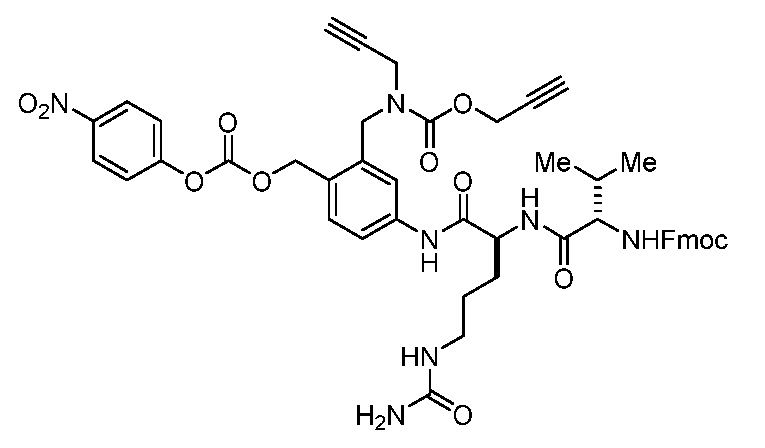
일반적 절차 1에 따라 프로프-2-인-1-일 5-((S)-2-((S)-2-((((9H-플루오렌-9-일)메톡시)카르보닐)아미노)-3-메틸부탄아미도)-5-우레이도펜탄아미도)-2-(히드록시메틸)벤질(프로프-2-인-1-일)카르바메이트 (556.0 mg, 0.740 mmol)를 사용하여, 프로프-2-인-1-일 5-((S)-2-((S)-2-((((9H-플루오렌-9-일)메톡시)카르보닐)아미노)-3-메틸부탄아미도)-5-우레이도펜탄아미도)-2-((((4-니트로페녹시)카르보닐)옥시)메틸)벤질(프로프-2-인-1-일)카르바메이트를 수득하였다. LC/MS M+H= 916.8, Rt=1.16분 (2분 산성 방법).According to
(S)-2-((S)-2-아미노-3-메틸부탄아미도)-N-(4-(히드록시메틸)페닐)-5-우레이도펜탄아미드의 합성Synthesis of (S)-2-((S)-2-amino-3-methylbutanamido)-N-(4-(hydroxymethyl)phenyl)-5-ureidopentanamide

하기 기재된 일반적 절차 4에 따라 tert-부틸 ((S)-1-(((S)-1-((4-(히드록시메틸)페닐)아미노)-1-옥소-5-우레이도펜탄-2-일)아미노)-3-메틸-1-옥소부탄-2-일)카르바메이트 (2.00 g, 4.17 mmol)를 사용하여, (S)-2-((S)-2-아미노-3-메틸부탄아미도)-N-(4-(히드록시메틸)페닐)-5-우레이도펜탄아미드를 수득하였다. LC/MS M+H= 380.6, Rt=0.40분 (2분 산성 방법).Using tert-butyl ((S)-1-(((S)-1-((4-(hydroxymethyl)phenyl)amino)-1-oxo-5-ureidopentan-2-yl)amino)-3-methyl-1-oxobutan-2-yl)carbamate (2.00 g, 4.17 mmol) was obtained (S)-2-((S)-2-amino-3-methylbutanamido)-N-(4-(hydroxymethyl)phenyl)-5-ureidopentanamide according to
(S)-2-((S)-2-(3-(2-(2,5-디옥소-2,5-디히드로-1H-피롤-1-일)에톡시)프로판아미도)-3-메틸부탄아미도)-N-(4-(히드록시메틸)페닐)-5-우레이도펜탄아미드의 합성Synthesis of (S)-2-((S)-2-(3-(2-(2,5-dioxo-2,5-dihydro-1H-pyrrol-1-yl)ethoxy)propanamido)-3-methylbutanamido)-N-(4-(hydroxymethyl)phenyl)-5-ureidopentanamide

하기 기재된 일반적 절차 5에 따라 2,5-디옥소피롤리딘-1-일 3-(2-(2,5-디옥소-2,5-디히드로-1H-피롤-1-일)에톡시)프로파노에이트 (100.0 mg, 0.322 mmol) 및 (S)-2-((S)-2-아미노-3-메틸부탄아미도)-N-(4-(히드록시메틸)페닐)-5-우레이도펜탄아미드 (175.0 mg, 0.355 mmol, 1.1 당량)를 사용하여, (S)-2-((S)-2-(3-(2-(2,5-디옥소-2,5-디히드로-1H-피롤-1-일)에톡시)프로판아미도)-3-메틸부탄아미도)-N-(4-(히드록시메틸)페닐)-5-우레이도펜탄아미드를 수득하였다. LC/MS M+H= 575.4, Rt=0.61분 (2분 염기성 방법).According to the
4-((S)-2-((S)-2-(3-(2-(2,5-디옥소-2,5-디히드로-1H-피롤-1-일)에톡시)프로판아미도)-3-메틸부탄아미도)-5-우레이도펜탄아미도)벤질 (4-니트로페닐) 카르보네이트의 합성Synthesis of 4-((S)-2-((S)-2-(3-(2-(2,5-dioxo-2,5-dihydro-1H-pyrrol-1-yl)ethoxy)propanamido)-3-methylbutanamido)-5-ureidopentanamido)benzyl (4-nitrophenyl) carbonate

일반적 절차 1에 따라 (S)-2-((S)-2-(3-(2-(2,5-디옥소-2,5-디히드로-1H-피롤-1-일)에톡시)프로판아미도)-3-메틸부탄아미도)-N-(4-(히드록시메틸)페닐)-5-우레이도펜탄아미드 (126.0 mg, 0.219 mmol)를 사용하여, 4-((S)-2-((S)-2-(3-(2-(2,5-디옥소-2,5-디히드로-1H-피롤-1-일)에톡시)프로판아미도)-3-메틸부탄아미도)-5-우레이도펜탄아미도)벤질 (4-니트로페닐) 카르보네이트를 수득하였다. LC/MS M+H= 575.4, Rt=0.61분 (2분 염기성 방법).According to
tert-부틸 ((S)-3-메틸-1-(((S)-1-((4-((((4-니트로페녹시)카르보닐)옥시)메틸)페닐)아미노)-1-옥소-5-우레이도펜탄-2-일)아미노)-1-옥소부탄-2-일)카르바메이트의 합성Synthesis of tert-butyl ((S)-3-methyl-1-(((S)-1-((4-((((4-nitrophenoxy)carbonyl)oxy)methyl)phenyl)amino)-1-oxo-5-ureidopentan-2-yl)amino)-1-oxobutan-2-yl)carbamate

일반적 절차 1에 따라 tert-부틸 ((S)-1-(((S)-1-((4-(히드록시메틸)페닐)아미노)-1-옥소-5-우레이도펜탄-2-일)아미노)-3-메틸-1-옥소부탄-2-일)카르바메이트 (200.0 mg, 0.417 mmol)를 사용하여, tert-부틸 ((S)-3-메틸-1-(((S)-1-((4-((((4-니트로페녹시)카르보닐)옥시)메틸)페닐)아미노)-1-옥소-5-우레이도펜탄-2-일)아미노)-1-옥소부탄-2-일)카르바메이트를 수득하였다. LC/MS M+H= 645.5, Rt=1.02분 (2분 산성 방법).tert-Butyl ((S)-1-(((S)-1-((4-(hydroxymethyl)phenyl)amino)-1-oxo-5-ureidopentan-2-yl)amino)-3-methyl-1-oxobutan-2-yl)carbamate (200.0 mg, 0.417 mmol) was obtained according to
일반적 절차 2
2-(((1s,3r,5R,7S)-3-((4-(6-(3-(벤조[d]티아졸-2-일아미노)-4-메틸-6,7-디히드로피리도[2,3-c]피리다진-8(5H)-일)-2-카르복시피리딘-3-일)-5-메틸-1H-피라졸-1-일)메틸)-5,7-디메틸아다만탄-1-일)옥시)-N-(4-((S)-2-((S)-2-((tert-부톡시카르보닐)아미노)-3-메틸부탄아미도)-5-우레이도펜탄아미도)-2-((메틸아미노)메틸)벤질)-N,N-디메틸에탄-1-아미늄의 합성Synthesis of 2-(((1s,3r,5R,7S)-3-((4-(6-(3-(benzo[d]thiazol-2-ylamino)-4-methyl-6,7-dihydropyrido[2,3-c]pyridazin-8(5H)-yl)-2-carboxypyridin-3-yl)-5-methyl-1H-pyrazol-1-yl)methyl)-5,7-dimethyladamantan-1-yl)oxy)-N-(4-((S)-2-((S)-2-((tert-butoxycarbonyl)amino)-3-methylbutanamido)-5-ureidopentanamido)-2-((methylamino)methyl)benzyl)-N,N-dimethylethane-1-aminum
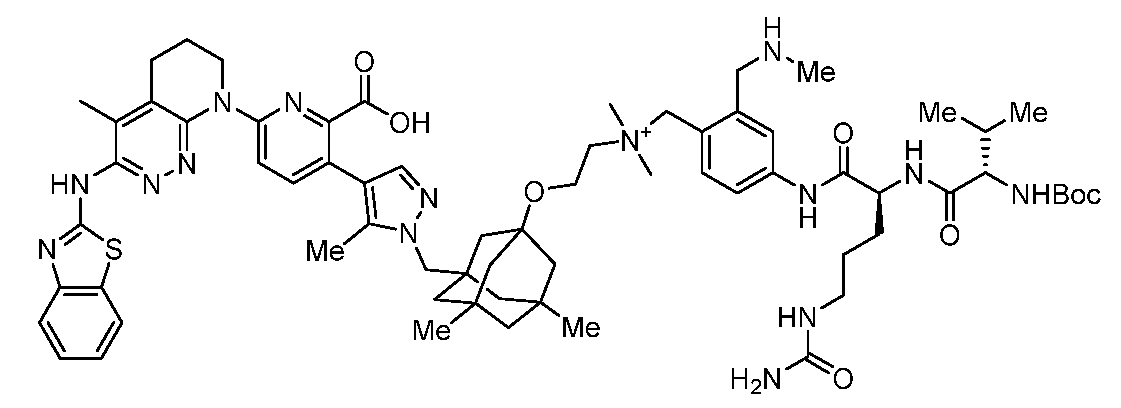
DMSO (1 mL) 중 6-(3-(벤조[d]티아졸-2-일아미노)-4-메틸-6,7-디히드로피리도[2,3-c]피리다진-8(5H)-일)-3-(1-(((1r,3s,5R,7S)-3-(2-(디메틸아미노)에톡시)-5,7-디메틸아다만탄-1-일)메틸)-5-메틸-1H-피라졸-4-일)피콜린산 (25 mg, 0.033 mmol), (9H-플루오렌-9-일)메틸 (5-((S)-2-((S)-2-((tert-부톡시카르보닐)아미노)-3-메틸부탄아미도)-5-우레이도펜탄아미도)-2-(클로로메틸)벤질)(메틸)카르바메이트 (25 mg, 0.033 mmol, 1.0 당량) 및 TBAI (12 mg, 0.033 mmol, 1.0 당량)의 현탁액에 DIPEA (0.03 mL, 0.164 mmol, 5.0 당량)를 첨가하고, 실온에서 16시간 동안 교반하였다. THF 중 2.0 M 디메틸아민 (0.164 mL, 0.328 mmol, 10 당량)을 첨가하였다. 1.5시간 동안 정치시킨 후, 용액을 RP-HPLC 이스코 골드 크로마토그래피 (10-100% MeCN/H2O, 0.1% TFA 개질제)에 의해 정제하였다. 동결건조 시, 2-(((1s,3r,5R,7S)-3-((4-(6-(3-(벤조[d]티아졸-2-일아미노)-4-메틸-6,7-디히드로피리도[2,3-c]피리다진-8(5H)-일)-2-카르복시피리딘-3-일)-5-메틸-1H-피라졸-1-일)메틸)-5,7-디메틸아다만탄-1-일)옥시)-N-(4-((S)-2-((S)-2-((tert-부톡시카르보닐)아미노)-3-메틸부탄아미도)-5-우레이도펜탄아미도)-2-((메틸아미노)메틸)벤질)-N,N-디메틸에탄-1-아미늄을 수득하였다. HRMS: M+= 1266.3000; Rt=1.85분 (5분 산성 방법).6-(3-(benzo[d]thiazol-2-ylamino)-4-methyl-6,7-dihydropyrido[2,3-c]pyridazin-8(5H)-yl)-3-(1-(((1r,3s,5R,7S)-3-(2-(dimethylamino)ethoxy)-5,7-dimethyladamantan-1-yl)methyl)-5-methyl-1H-pyrazol-4-yl)picolinic acid (25 mg, 0.033 mmol), (9H-fluoren-9-yl)methyl (5-((S)-2-((S)-2-((tert-butoxycarbonyl)amino)-3-methylbutanamido)-5-ureidopentanamido)-2-(chloromethyl)benzyl)(methyl)carbamate (25 mg, 0.033 To a suspension of TBAI (12 mg, 0.033 mmol, 1.0 equiv) and TBAI (12 mg, 0.033 mmol, 1.0 equiv) was added DIPEA (0.03 mL, 0.164 mmol, 5.0 equiv) and stirred at room temperature for 16 h. 2.0 M dimethylamine in THF (0.164 mL, 0.328 mmol, 10 equiv) was added. After standing for 1.5 h, the solution was purified by RP-HPLC ISCO Gold chromatography (10-100% MeCN/H2O, 0.1% TFA modifier). Upon lyophilization, 2-(((1s,3r,5R,7S)-3-((4-(6-(3-(Benzo[d]thiazol-2-ylamino)-4-methyl-6,7-dihydropyrido[2,3-c]pyridazin-8(5H)-yl)-2-carboxypyridin-3-yl)-5-methyl-1H-pyrazol-1-yl)methyl)-5,7-dimethyladamantan-1-yl)oxy)-N-(4-((S)-2-((S)-2-((tert-butoxycarbonyl)amino)-3-methylbutanamido)-5-ureidopentanamido)-2-((methylamino)methyl)benzyl)-N,N-dimethylethane-1-aminum was obtained. HRMS: M+ = 1266.3000; Rt=1.85 min (5 min acid method).
일반적 절차 3General procedure 3
2-(((1s,3r,5R,7S)-3-((4-(6-(3-(벤조[d]티아졸-2-일아미노)-4-메틸-6,7-디히드로피리도[2,3-c]피리다진-8(5H)-일)-2-카르복시피리딘-3-일)-5-메틸-1H-피라졸-1-일)메틸)-5,7-디메틸아다만탄-1-일)옥시)-N-(4-((S)-2-((S)-2-((tert-부톡시카르보닐)아미노)-3-메틸부탄아미도)-5-우레이도펜탄아미도)-2-(80-카르복시-2-메틸-3-옥소-6,9,12,15,18,21,24,27,30,33,36,39,42,45,48,51,54,57,60,63,66,69,72,75,78-펜타코사옥사-2-아자옥타콘틸)벤질)-N,N-디메틸에탄-1-아미늄의 합성2-(((1s,3r,5R,7S)-3-((4-(6-(3-(Benzo[d]thiazol-2-ylamino)-4-methyl-6,7-dihydropyrido[2,3-c]pyridazin-8(5H)-yl)-2-carboxypyridin-3-yl)-5-methyl-1H-pyrazol-1-yl)methyl)-5,7-dimethyladamantan-1-yl)oxy)-N-(4-((S)-2-((S)-2-((tert- Synthesis of (butoxycarbonyl)amino)-3-methylbutanamido)-5-ureidopentanamido)-2-(80-carboxy-2-methyl-3-oxo-6,9,12,15,18,21,24,27,30,33,36,39,42,45,48,51,54,57,60,63,66,69,72,75,78-pentacosaoxa-2-azaoctacontyl)benzyl)-N,N-dimethylethane-1-aminum
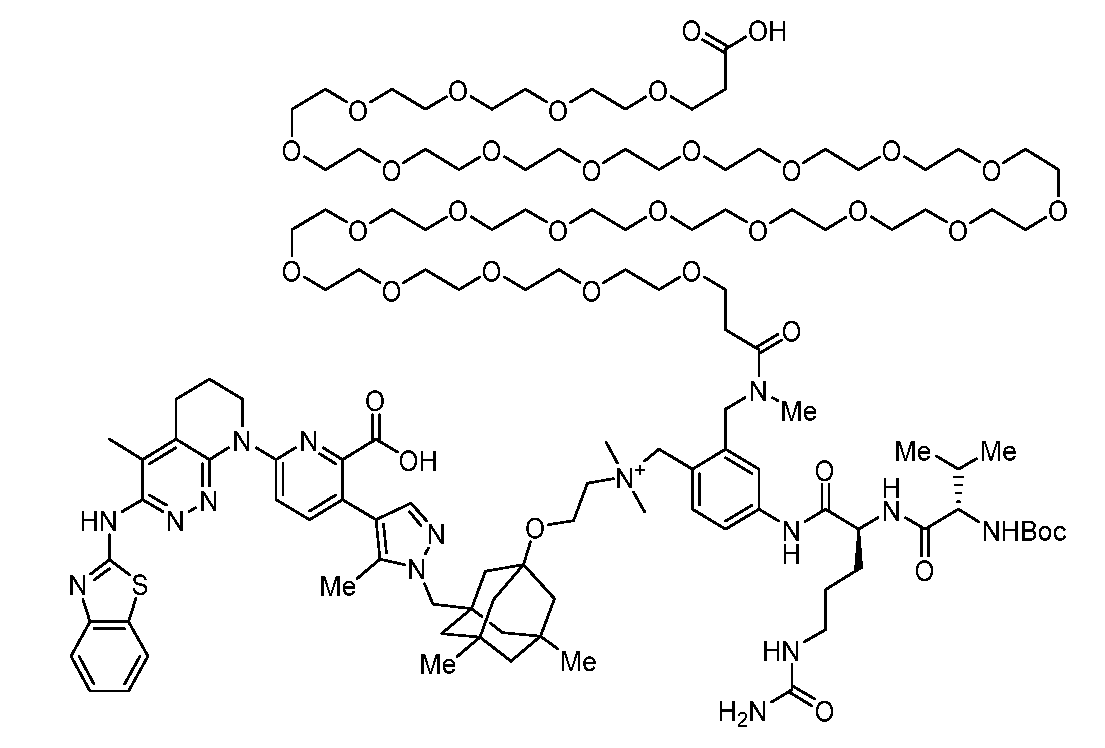
DMF (0.5 mL) 중 2-(((1s,3r,5R,7S)-3-((4-(6-(3-(벤조[d]티아졸-2-일아미노)-4-메틸-6,7-디히드로피리도[2,3-c]피리다진-8(5H)-일)-2-카르복시피리딘-3-일)-5-메틸-1H-피라졸-1-일)메틸)-5,7-디메틸아다만탄-1-일)옥시)-N-(4-((S)-2-((S)-2-((tert-부톡시카르보닐)아미노)-3-메틸부탄아미도)-5-우레이도펜탄아미도)-2-((메틸아미노)메틸)벤질)-N,N-디메틸에탄-1-아미늄 (42 mg, 0.027 mmol) 및 79-((2,5-디옥소피롤리딘-1-일)옥시)-79-옥소-4,7,10,13,16,19,22,25,28,31,34,37,40,43,46,49,52,55,58,61,64,67,70,73,76-펜타코사옥사노나헵타콘탄산 (42 mg, 0.032 mmol, 1.2 당량)의 용액에 DIPEA (0.023 mL, 0.133 mmol, 5.0 당량)를 첨가하고, 실온에서 5시간 동안 교반하였다. DMSO (2 mL)를 첨가하고, 용액을 RP-HPLC 이스코 골드 크로마토그래피 (10-100% MeCN/H2O, 0.1% TFA 개질제)에 의해 정제하였다. 동결건조 시, 2-(((1s,3r,5R,7S)-3-((4-(6-(3-(벤조[d]티아졸-2-일아미노)-4-메틸-6,7-디히드로피리도[2,3-c]피리다진-8(5H)-일)-2-카르복시피리딘-3-일)-5-메틸-1H-피라졸-1-일)메틸)-5,7-디메틸아다만탄-1-일)옥시)-N-(4-((S)-2-((S)-2-((tert-부톡시카르보닐)아미노)-3-메틸부탄아미도)-5-우레이도펜탄아미도)-2-(80-카르복시-2-메틸-3-옥소-6,9,12,15,18,21,24,27,30,33,36,39,42,45,48,51,54,57,60,63,66,69,72,75,78-펜타코사옥사-2-아자옥타콘틸)벤질)-N,N-디메틸에탄-1-아미늄을 수득하였다. HRMS: M+= 2465.7800; Rt=2.15분 (5분 산성 방법).2-(((1s,3r,5R,7S)-3-((4-(6-(3-(benzo[d]thiazol-2-ylamino)-4-methyl-6,7-dihydropyrido[2,3-c]pyridazin-8(5H)-yl)-2-carboxypyridin-3-yl)-5-methyl-1H-pyrazol-1-yl)methyl)-5,7-dimethyladamantan-1-yl)oxy)-N-(4-((S)-2-((S)-2-((tert-butoxycarbonyl)amino)-3-methylbutanamido)-5-ureidopentanamido)-2-((methylamino)methyl)benzyl)-N,N-dimethylethane-1-aminum (42 mg, 0.027 mmol) in DMF (0.5 mL) and To a solution of 79-((2,5-dioxopyrrolidin-1-yl)oxy)-79-oxo-4,7,10,13,16,19,22,25,28,31,34,37,40,43,46,49,52,55,58,61,64,67,70,73,76-pentacosaoxanonaheptaconanoic acid (42 mg, 0.032 mmol, 1.2 equiv) was added DIPEA (0.023 mL, 0.133 mmol, 5.0 equiv) and stirred at room temperature for 5 h. DMSO (2 mL) was added and the solution was purified by RP-HPLC ISCO Gold chromatography (10-100% MeCN/H2O, 0.1% TFA modifier). Upon lyophilization, 2-(((1s,3r,5R,7S)-3-((4-(6-(3-(Benzo[d]thiazol-2-ylamino)-4-methyl-6,7-dihydropyrido[2,3-c]pyridazin-8(5H)-yl)-2-carboxypyridin-3-yl)-5-methyl-1H-pyrazol-1-yl)methyl)-5,7-dimethyladamantan-1-yl)oxy)-N-(4-((S)-2-((S)-2-((tert- Obtained (butoxycarbonyl)amino)-3-methylbutanamido)-5-ureidopentanamido)-2-(80-carboxy-2-methyl-3-oxo-6,9,12,15,18,21,24,27,30,33,36,39,42,45,48,51,54,57,60,63,66,69,72,75,78-pentacosaoxa-2-azaoctacontyl)benzyl)-N,N-dimethylethane-1-aminum. HRMS: M+ = 2465.7800; Rt = 2.15 min (5 min acidic method).
일반적 절차 4
N-(4-((S)-2-((S)-2-아미노-3-메틸부탄아미도)-5-우레이도펜탄아미도)-2-(80-카르복시-2-메틸-3-옥소-6,9,12,15,18,21,24,27,30,33,36,39,42,45,48,51,54,57,60,63,66,69,72,75,78-펜타코사옥사-2-아자옥타콘틸)벤질)-2-(((1s,3r,5R,7S)-3-((4-(6-(3-(벤조[d]티아졸-2-일아미노)-4-메틸-6,7-디히드로피리도[2,3-c]피리다진-8(5H)-일)-2-카르복시피리딘-3-일)-5-메틸-1H-피라졸-1-일)메틸)-5,7-디메틸아다만탄-1-일)옥시)-N,N-디메틸에탄-1-아미늄의 합성N-(4-((S)-2-((S)-2-amino-3-methylbutanamido)-5-ureidopentanamido)-2-(80-carboxy-2-methyl-3-oxo-6,9,12,15,18,21,24,27,30,33,36,39,42,45,48,51,54,57,60,63,66,69,72,75,78-pentacosaoxa-2-azaoctacontyl)benz Synthesis of -2-(((1s,3r,5R,7S)-3-((4-(6-(3-(benzo[d]thiazol-2-ylamino)-4-methyl-6,7-dihydropyrido[2,3-c]pyridazin-8(5H)-yl)-2-carboxypyridin-3-yl)-5-methyl-1H-pyrazol-1-yl)methyl)-5,7-dimethyladamantan-1-yl)oxy)-N,N-dimethylethane-1-aminium
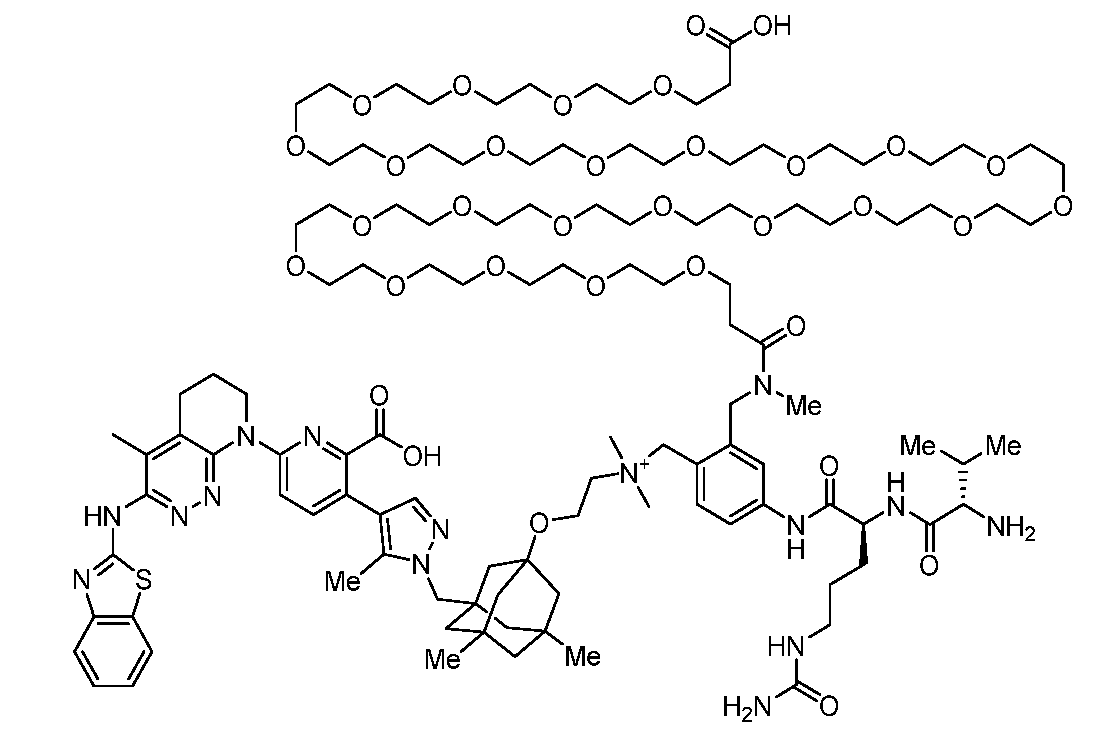
빙조 내 0℃에서 CH2Cl2 (0.75 mL) 중 2-(((1s,3r,5R,7S)-3-((4-(6-(3-(벤조[d]티아졸-2-일아미노)-4-메틸-6,7-디히드로피리도[2,3-c]피리다진-8(5H)-일)-2-카르복시피리딘-3-일)-5-메틸-1H-피라졸-1-일)메틸)-5,7-디메틸아다만탄-1-일)옥시)-N-(4-((S)-2-((S)-2-((tert-부톡시카르보닐)아미노)-3-메틸부탄아미도)-5-우레이도펜탄아미도)-2-(80-카르복시-2-메틸-3-옥소-6,9,12,15,18,21,24,27,30,33,36,39,42,45,48,51,54,57,60,63,66,69,72,75,78-펜타코사옥사-2-아자옥타콘틸)벤질)-N,N-디메틸에탄-1-아미늄 (28 mg, 0.011 mmol)의 용액에 트리플루오로아세트산 (0.25 mL)을 첨가하였다. 혼합물을 빙조에서 1시간 동안 교반하였으며, 이 때 휘발성 물질을 진공 하에 제거하였다. DMSO (1.5 mL)를 첨가하고, 용액을 RP-HPLC 이스코 골드 크로마토그래피 (10-100% MeCN/H2O, 0.1% TFA 개질제)에 의해 정제하였다. 동결건조 시, N-(4-((S)-2-((S)-2-아미노-3-메틸부탄아미도)-5-우레이도펜탄아미도)-2-(80-카르복시-2-메틸-3-옥소-6,9,12,15,18,21,24,27,30,33,36,39,42,45,48,51,54,57,60,63,66,69,72,75,78-펜타코사옥사-2-아자옥타콘틸)벤질)-2-(((1s,3r,5R,7S)-3-((4-(6-(3-(벤조[d]티아졸-2-일아미노)-4-메틸-6,7-디히드로피리도[2,3-c]피리다진-8(5H)-일)-2-카르복시피리딘-3-일)-5-메틸-1H-피라졸-1-일)메틸)-5,7-디메틸아다만탄-1-일)옥시)-N,N-디메틸에탄-1-아미늄을 수득하였다. HRMS: M+= 2367.3101; Rt=1.86분 (5분 산성 방법). 이 일반적 절차를 위해, 일부 경우에 아민을 RP-HPLC 정제 없이 그대로 사용하였다.At 0 °C in an ice bath, in CH 2 Cl 2 (0.75 mL) was added 2-(((1s,3r,5R,7S)-3-((4-(6-(3-(benzo[d]thiazol-2-ylamino)-4-methyl-6,7-dihydropyrido[2,3-c]pyridazin-8(5H)-yl)-2-carboxypyridin-3-yl)-5-methyl-1H-pyrazol-1-yl)methyl)-5,7-dimethyladamantan-1-yl)oxy)-N-(4-((S)-2-((tert- To a solution of (butoxycarbonyl)amino)-3-methylbutanamido)-5-ureidopentanamido)-2-(80-carboxy-2-methyl-3-oxo-6,9,12,15,18,21,24,27,30,33,36,39,42,45,48,51,54,57,60,63,66,69,72,75,78-pentacosaoxa-2-azaoctacontyl)benzyl)-N,N-dimethylethane-1-aminium (28 mg, 0.011 mmol) was added trifluoroacetic acid (0.25 mL). The mixture was stirred in an ice bath for 1 h, at which time the volatiles were removed in vacuo. DMSO (1.5 mL) was added and the solution was purified by RP-HPLC ISCO Gold chromatography (10-100% MeCN/H2O, 0.1% TFA modifier). Upon lyophilization, N-(4-((S)-2-((S)-2-amino-3-methylbutanamido)-5-ureidopentanamido)-2-(80-carboxy-2-methyl-3-oxo-6,9,12,15,18,21,24,27,30,33,36,39,42,45,48,51,54,57,60,63,66,69,72,75,78-pentacosaoxa-2-azaoctacontyl)benzene )-2-(((1s,3r,5R,7S)-3-((4-(6-(3-(benzo[d]thiazol-2-ylamino)-4-methyl-6,7-dihydropyrido[2,3-c]pyridazin-8(5H)-yl)-2-carboxypyridin-3-yl)-5-methyl-1H-pyrazol-1-yl)methyl)-5,7-dimethyladamantan-1-yl)oxy)-N,N-dimethylethane-1-aminium was obtained. HRMS: M+ = 2367.3101; Rt = 1.86 min (5 min acidic method). For this general procedure, in some cases the amine was used as is without RP-HPLC purification.
일반적 절차 5
2-(((1s,3r,5R,7S)-3-((4-(6-(3-(벤조[d]티아졸-2-일아미노)-4-메틸-6,7-디히드로피리도[2,3-c]피리다진-8(5H)-일)-2-카르복시피리딘-3-일)-5-메틸-1H-피라졸-1-일)메틸)-5,7-디메틸아다만탄-1-일)옥시)-N-(2-(80-카르복시-2-메틸-3-옥소-6,9,12,15,18,21,24,27,30,33,36,39,42,45,48,51,54,57,60,63,66,69,72,75,78-펜타코사옥사-2-아자옥타콘틸)-4-((S)-2-((S)-2-(3-(2-(2,5-디옥소-2,5-디히드로-1H-피롤-1-일)에톡시)프로판아미도)-3-메틸부탄아미도)-5-우레이도펜탄아미도)벤질)-N,N-디메틸에탄-1-아미늄 (L11A-P27)의 합성2-(((1s,3r,5R,7S)-3-((4-(6-(3-(Benzo[d]thiazol-2-ylamino)-4-methyl-6,7-dihydropyrido[2,3-c]pyridazin-8(5H)-yl)-2-carboxypyridin-3-yl)-5-methyl-1H-pyrazol-1-yl)methyl)-5,7-dimethyladamantan-1-yl)oxy)-N-(2-(80-carboxy-2-methyl-3-oxo-6,9,12,15,18,21 ,24,27,30,33,36,39,42,45,48,51,54,57,60,63,66,69,72,75,78-Pentacosaoxa-2-azaoctacontyl)-4-((S)-2-((S)-2-(3-(2-(2,5-dioxo-2,5-dihydro-1H-pyrrol-1-yl)ethoxy)propanamido)-3-methylbutanamido)-5-ureidopentanamido)benzyl)-N,N-dimethylethane-1-aminum (L11A-P27)

DMF (0.5 mL) 중 N-(4-((S)-2-((S)-2-아미노-3-메틸부탄아미도)-5-우레이도펜탄아미도)-2-(80-카르복시-2-메틸-3-옥소-6,9,12,15,18,21,24,27,30,33,36,39,42,45,48,51,54,57,60,63,66,69,72,75,78-펜타코사옥사-2-아자옥타콘틸)벤질)-2-(((1s,3r,5R,7S)-3-((4-(6-(3-(벤조[d]티아졸-2-일아미노)-4-메틸-6,7-디히드로피리도[2,3-c]피리다진-8(5H)-일)-2-카르복시피리딘-3-일)-5-메틸-1H-피라졸-1-일)메틸)-5,7-디메틸아다만탄-1-일)옥시)-N,N-디메틸에탄-1-아미늄 (10.0 mg, 0.004 mmol) 및 2,5-디옥소피롤리딘-1-일 3-(2-(2,5-디옥소-2,5-디히드로-1H-피롤-1-일)에톡시)프로파노에이트 (1.4 mg, 0.005 mmol, 1.2 당량)의 용액에 DIPEA (6.7 μL, 0.039 mmol, 10.0 당량)를 첨가하였다. 혼합물을 실온에서 3.5시간 동안 교반하였다. DMSO (1.5 mL)를 첨가하고, 용액을 RP-HPLC 이스코 골드 크로마토그래피 (10-100% MeCN/H2O, 0.1% TFA 개질제)에 의해 정제하였다. 동결건조 시, 2-(((1s,3r,5R,7S)-3-((4-(6-(3-(벤조[d]티아졸-2-일아미노)-4-메틸-6,7-디히드로피리도[2,3-c]피리다진-8(5H)-일)-2-카르복시피리딘-3-일)-5-메틸-1H-피라졸-1-일)메틸)-5,7-디메틸아다만탄-1-일)옥시)-N-(2-(80-카르복시-2-메틸-3-옥소-6,9,12,15,18,21,24,27,30,33,36,39,42,45,48,51,54,57,60,63,66,69,72,75,78-펜타코사옥사-2-아자옥타콘틸)-4-((S)-2-((S)-2-(3-(2-(2,5-디옥소-2,5-디히드로-1H-피롤-1-일)에톡시)프로판아미도)-3-메틸부탄아미도)-5-우레이도펜탄아미도)벤질)-N,N-디메틸에탄-1-아미늄을 수득하였다. HRMS: M+= 2562.3401; Rt=2.04분 (5분 산성 방법).N-(4-((S)-2-((S)-2-amino-3-methylbutanamido)-5-ureidopentanamido)-2-(80-carboxy-2-methyl-3-oxo-6,9,12,15,18,21,24,27,30,33,36,39,42,45,48,51,54,57,60,63,66,69,72,75,78-pentacosaoxa-2-azaoctacontyl)benzene )-2-(((1s,3r,5R,7S)-3-((4-(6-(3-(benzo[d]thiazol-2-ylamino)-4-methyl-6,7-dihydropyrido[2,3-c]pyridazin-8(5H)-yl)-2-carboxypyridin-3-yl)-5-methyl-1H-pyrazol-1-yl)methyl)-5,7-dimethyladamantan-1-yl)oxy)-N,N-dimethylethane-1-aminum (10.0 mg, 0.004 mmol) and 2,5-dioxopyrrolidin-1-yl 3-(2-(2,5-dioxo-2,5-dihydro-1H-pyrrol-1-yl)ethoxy)propanoate (1.4 mg, 0.005 mmol, 1.2 equiv) was added DIPEA (6.7 μL, 0.039 mmol, 10.0 equiv). The mixture was stirred at room temperature for 3.5 h. DMSO (1.5 mL) was added, and the solution was purified by RP-HPLC ISCO Gold chromatography (10-100% MeCN/H2O, 0.1% TFA modifier). Upon lyophilization, 2-(((1s,3r,5R,7S)-3-((4-(6-(3-(Benzo[d]thiazol-2-ylamino)-4-methyl-6,7-dihydropyrido[2,3-c]pyridazin-8(5H)-yl)-2-carboxypyridin-3-yl)-5-methyl-1H-pyrazol-1-yl)methyl)-5,7-dimethyladamantan-1-yl)oxy)-N-(2-(80-carboxy-2-methyl-3-oxo-6,9,12,15,18,21 ,24,27,30,33,36,39,42,45,48,51,54,57,60,63,66,69,72,75,78-Pentacosaoxa-2-azaoctacontyl)-4-((S)-2-((S)-2-(3-(2-(2,5-dioxo-2,5-dihydro-1H-pyrrol-1-yl)ethoxy)propanamido)-3-methylbutanamido)-5-ureidopentanamido)benzyl)-N,N-dimethylethane-1-aminium was obtained. HRMS: M+ = 2562.3401; Rt = 2.04 min (5 min acidic method).
1-(2-(((1s,3r,5R,7S)-3-((4-(6-(3-(벤조[d]티아졸-2-일아미노)-4-메틸-6,7-디히드로피리도[2,3-c]피리다진-8(5H)-일)-2-(((4-메톡시벤질)옥시)카르보닐)피리딘-3-일)-5-메틸-1H-피라졸-1-일)메틸)-5,7-디메틸아다만탄-1-일)옥시)에틸)-1-(4-((S)-2-((S)-2-((tert-부톡시카르보닐)아미노)-3-메틸부탄아미도)-5-우레이도펜탄아미도)-2-((메틸아미노)메틸)벤질)피롤리딘-1-윰의 합성Synthesis of 1-(2-(((1s,3r,5R,7S)-3-((4-(6-(3-(benzo[d]thiazol-2-ylamino)-4-methyl-6,7-dihydropyrido[2,3-c]pyridazin-8(5H)-yl)-2-(((4-methoxybenzyl)oxy)carbonyl)pyridin-3-yl)-5-methyl-1H-pyrazol-1-yl)methyl)-5,7-dimethyladamantan-1-yl)oxy)ethyl)-1-(4-((S)-2-((S)-2-((tert-butoxycarbonyl)amino)-3-methylbutanamido)-5-ureidopentanamido)-2-((methylamino)methyl)benzyl)pyrrolidin-1-ium

일반적 절차 2에 따라 4-메톡시벤질 6-(3-(벤조[d]티아졸-2-일아미노)-4-메틸-6,7-디히드로피리도[2,3-c]피리다진-8(5H)-일)-3-(1-(((1r,3R,5S,7s)-3,5-디메틸-7-(2-(피롤리딘-1-일)에톡시)아다만탄-1-일)메틸)-5-메틸-1H-피라졸-4-일)피콜리네이트 (30.0 mg, 0.033 mmol) 및 (9H-플루오렌-9-일)메틸 (5-((S)-2-((S)-2-((tert-부톡시카르보닐)아미노)-3-메틸부탄아미도)-5-우레이도펜탄아미도)-2-(클로로메틸)벤질)(메틸)카르바메이트 (25.2 mg, 0.033 mmol, 1.0 당량)를 사용하여, 1-(2-(((1s,3r,5R,7S)-3-((4-(6-(3-(벤조[d]티아졸-2-일아미노)-4-메틸-6,7-디히드로피리도[2,3-c]피리다진-8(5H)-일)-2-(((4-메톡시벤질)옥시)카르보닐)피리딘-3-일)-5-메틸-1H-피라졸-1-일)메틸)-5,7-디메틸아다만탄-1-일)옥시)에틸)-1-(4-((S)-2-((S)-2-((tert-부톡시카르보닐)아미노)-3-메틸부탄아미도)-5-우레이도펜탄아미도)-2-((메틸아미노)메틸)벤질)피롤리딘-1-윰을 수득하였다. HRMS: M+= 1412.7600; Rt=2.22분 (5분 산성 방법).According to General Procedure 2, 4-methoxybenzyl 6-(3-(benzo[d]thiazol-2-ylamino)-4-methyl-6,7-dihydropyrido[2,3-c]pyridazin-8(5H)-yl)-3-(1-(((1r,3R,5S,7s)-3,5-dimethyl-7-(2-(pyrrolidin-1-yl)ethoxy)adamantan-1-yl)methyl)-5-methyl-1H-pyrazol-4-yl)picolinate (30.0 mg, 0.033 mmol) and (9H-fluoren-9-yl)methyl Using (5-((S)-2-((S)-2-((tert-butoxycarbonyl)amino)-3-methylbutanamido)-5-ureidopentanamido)-2-(chloromethyl)benzyl)(methyl)carbamate (25.2 mg, 0.033 mmol, 1.0 eq), 1-(2-(((1s,3r,5R,7S)-3-((4-(6-(3-(Benzo[d]thiazol-2-ylamino)-4-methyl-6,7-dihydropyrido[2,3-c]pyridazin-8(5H)-yl)-2-(((4-methoxybenzyl)oxy)carbonyl)pyridin-3-yl)-5-methyl-1H-pyrazol-1-yl)methyl)-5,7-dimethyladamantan-1-yl)oxy)ethyl)-1-(4-((S)-2-((S)-2-((tert-butoxycarbonyl)amino)-3-methylbutanamido)-5-ureidopentanamido)-2-((methylamino)methyl)benzyl)pyrrolidin-1-ium was obtained. HRMS: M+= 1412.7600; Rt=2.22 min (5 min acid method).
1-(2-(((1s,3r,5R,7S)-3-((4-(6-(3-(벤조[d]티아졸-2-일아미노)-4-메틸-6,7-디히드로피리도[2,3-c]피리다진-8(5H)-일)-2-(((4-메톡시벤질)옥시)카르보닐)피리딘-3-일)-5-메틸-1H-피라졸-1-일)메틸)-5,7-디메틸아다만탄-1-일)옥시)에틸)-1-(4-((S)-2-((S)-2-((tert-부톡시카르보닐)아미노)-3-메틸부탄아미도)-5-우레이도펜탄아미도)-2-(80-카르복시-2-메틸-3-옥소-6,9,12,15,18,21,24,27,30,33,36,39,42,45,48,51,54,57,60,63,66,69,72,75,78-펜타코사옥사-2-아자옥타콘틸)벤질)피롤리딘-1-윰의 합성1-(2-(((1s,3r,5R,7S)-3-((4-(6-(3-(Benzo[d]thiazol-2-ylamino)-4-methyl-6,7-dihydropyrido[2,3-c]pyridazin-8(5H)-yl)-2-(((4-methoxybenzyl)oxy)carbonyl)pyridin-3-yl)-5-methyl-1H-pyrazol-1-yl)methyl)-5,7-dimethyladamantan-1-yl)oxy)ethyl)-1-(4-((S)-2- Synthesis of ((S)-2-((tert-butoxycarbonyl)amino)-3-methylbutanamido)-5-ureidopentanamido)-2-(80-carboxy-2-methyl-3-oxo-6,9,12,15,18,21,24,27,30,33,36,39,42,45,48,51,54,57,60,63,66,69,72,75,78-pentacosaoxa-2-azaoctacontyl)benzyl)pyrrolidin-1-ium

일반적 절차 3에 따라 1-(2-(((1s,3r,5R,7S)-3-((4-(6-(3-(벤조[d]티아졸-2-일아미노)-4-메틸-6,7-디히드로피리도[2,3-c]피리다진-8(5H)-일)-2-(((4-메톡시벤질)옥시)카르보닐)피리딘-3-일)-5-메틸-1H-피라졸-1-일)메틸)-5,7-디메틸아다만탄-1-일)옥시)에틸)-1-(4-((S)-2-((S)-2-((tert-부톡시카르보닐)아미노)-3-메틸부탄아미도)-5-우레이도펜탄아미도)-2-((메틸아미노)메틸)벤질)피롤리딘-1-윰 (42.0 mg, 0.026 mmol) 및 79-((2,5-디옥소피롤리딘-1-일)옥시)-79-옥소-4,7,10,13,16,19,22,25,28,31,34,37,40,43,46,49,52,55,58,61,64,67,70,73,76-펜타코사옥사노나헵타콘탄산 (40.4 mg, 0.031 mmol, 1.2 당량)을 사용하여, 1-(2-(((1s,3r,5R,7S)-3-((4-(6-(3-(벤조[d]티아졸-2-일아미노)-4-메틸-6,7-디히드로피리도[2,3-c]피리다진-8(5H)-일)-2-(((4-메톡시벤질)옥시)카르보닐)피리딘-3-일)-5-메틸-1H-피라졸-1-일)메틸)-5,7-디메틸아다만탄-1-일)옥시)에틸)-1-(4-((S)-2-((S)-2-((tert-부톡시카르보닐)아미노)-3-메틸부탄아미도)-5-우레이도펜탄아미도)-2-(80-카르복시-2-메틸-3-옥소-6,9,12,15,18,21,24,27,30,33,36,39,42,45,48,51,54,57,60,63,66,69,72,75,78-펜타코사옥사-2-아자옥타콘틸)벤질)피롤리딘-1-윰을 수득하였다. HRMS: M+= 2613.4199; Rt=2.38분 (5분 산성 방법).According to general procedure 3, 1-(2-(((1s,3r,5R,7S)-3-((4-(6-(3-(benzo[d]thiazol-2-ylamino)-4-methyl-6,7-dihydropyrido[2,3-c]pyridazin-8(5H)-yl)-2-(((4-methoxybenzyl)oxy)carbonyl)pyridin-3-yl)-5-methyl-1H-pyrazol-1-yl)methyl)-5,7-dimethyladamantan-1-yl)oxy)ethyl)-1-(4-((S)-2-((S)-2-((tert-butoxycarbonyl)amino)-3-methylbutanamido)-5-ureidopentanamido)-2-((methylamino)methyl)benzyl)pyrrolidin-1-ium (42.0 mg, Using 79-((2,5-dioxopyrrolidin-1-yl)oxy)-79-oxo-4,7,10,13,16,19,22,25,28,31,34,37,40,43,46,49,52,55,58,61,64,67,70,73,76-pentacosaoxanonaheptaconanoic acid (40.4 mg, 0.031 mmol, 1.2 eq), 1-(2-(((1s,3r,5R,7S)-3-((4-(6-(3-(Benzo[d]thiazol-2-ylamino)-4-methyl-6,7-dihydropyrido[2,3-c]pyridazin-8(5H)-yl)-2-(((4-methoxybenzyl)oxy)carbonyl)pyridin-3-yl)-5-methyl-1H-pyrazol-1-yl)methyl)-5,7-dimethyladamantan-1-yl)oxy)ethyl)-1-(4-((S)-2- Obtained ((S)-2-((tert-butoxycarbonyl)amino)-3-methylbutanamido)-5-ureidopentanamido)-2-(80-carboxy-2-methyl-3-oxo-6,9,12,15,18,21,24,27,30,33,36,39,42,45,48,51,54,57,60,63,66,69,72,75,78-pentacosaoxa-2-azaoctacontyl)benzyl)pyrrolidin-1-ium. HRMS: M+ = 2613.4199; Rt = 2.38 min (5 min acidic method).
1-(4-((S)-2-((S)-2-아미노-3-메틸부탄아미도)-5-우레이도펜탄아미도)-2-(80-카르복시-2-메틸-3-옥소-6,9,12,15,18,21,24,27,30,33,36,39,42,45,48,51,54,57,60,63,66,69,72,75,78-펜타코사옥사-2-아자옥타콘틸)벤질)-1-(2-(((1s,3r,5R,7S)-3-((4-(6-(3-(벤조[d]티아졸-2-일아미노)-4-메틸-6,7-디히드로피리도[2,3-c]피리다진-8(5H)-일)-2-카르복시피리딘-3-일)-5-메틸-1H-피라졸-1-일)메틸)-5,7-디메틸아다만탄-1-일)옥시)에틸)피롤리딘-1-윰의 합성1-(4-((S)-2-((S)-2-amino-3-methylbutanamido)-5-ureidopentanamido)-2-(80-carboxy-2-methyl-3-oxo-6,9,12,15,18,21,24,27,30,33,36,39,42,45,48,51,54,57,60,63,66,69,72,75,78-pentacosaoxa-2-azaoctacontyl) Synthesis of benzyl)-1-(2-(((1s,3r,5R,7S)-3-((4-(6-(3-(benzo[d]thiazol-2-ylamino)-4-methyl-6,7-dihydropyrido[2,3-c]pyridazin-8(5H)-yl)-2-carboxypyridin-3-yl)-5-methyl-1H-pyrazol-1-yl)methyl)-5,7-dimethyladamantan-1-yl)oxy)ethyl)pyrrolidin-1-ium

일반적 절차 4에 따라 1-(2-(((1s,3r,5R,7S)-3-((4-(6-(3-(벤조[d]티아졸-2-일아미노)-4-메틸-6,7-디히드로피리도[2,3-c]피리다진-8(5H)-일)-2-(((4-메톡시벤질)옥시)카르보닐)피리딘-3-일)-5-메틸-1H-피라졸-1-일)메틸)-5,7-디메틸아다만탄-1-일)옥시)에틸)-1-(4-((S)-2-((S)-2-((tert-부톡시카르보닐)아미노)-3-메틸부탄아미도)-5-우레이도펜탄아미도)-2-(80-카르복시-2-메틸-3-옥소-6,9,12,15,18,21,24,27,30,33,36,39,42,45,48,51,54,57,60,63,66,69,72,75,78-펜타코사옥사-2-아자옥타콘틸)벤질)피롤리딘-1-윰 (68.0 mg, 0.26 mmol)을 사용하여, 1-(4-((S)-2-((S)-2-아미노-3-메틸부탄아미도)-5-우레이도펜탄아미도)-2-(80-카르복시-2-메틸-3-옥소-6,9,12,15,18,21,24,27,30,33,36,39,42,45,48,51,54,57,60,63,66,69,72,75,78-펜타코사옥사-2-아자옥타콘틸)벤질)-1-(2-(((1s,3r,5R,7S)-3-((4-(6-(3-(벤조[d]티아졸-2-일아미노)-4-메틸-6,7-디히드로피리도[2,3-c]피리다진-8(5H)-일)-2-카르복시피리딘-3-일)-5-메틸-1H-피라졸-1-일)메틸)-5,7-디메틸아다만탄-1-일)옥시)에틸)피롤리딘-1-윰을 수득하였다. HRMS: M+= 2393.3301; Rt=1.85분 (5분 산성 방법).According to general procedure 4, 1-(2-(((1s,3r,5R,7S)-3-((4-(6-(3-(benzo[d]thiazol-2-ylamino)-4-methyl-6,7-dihydropyrido[2,3-c]pyridazin-8(5H)-yl)-2-(((4-methoxybenzyl)oxy)carbonyl)pyridin-3-yl)-5-methyl-1H-pyrazol-1-yl)methyl)-5,7-dimethyladamantan-1-yl)oxy)ethyl)-1-(4-((S)-2 -((S)-2-((tert-butoxycarbonyl)amino)-3-methylbutanamido)-5-ureidopentanamido)-2-(80-carboxy-2-methyl-3-oxo-6,9,12,15,18,21,24,27,30,33,36,39,42,45,48,51,54,57,60,63,66,69,72,75,78-pentacosaoxa-2-azaoctacontyl)benzyl)pyrrolidin-1-ium (68.0 mg, 0.26 mmol) was used, 1-(4-((S)-2-((S)-2-amino-3-methylbutanamido)-5-ureidopentanamido)-2-(80-carboxy-2-methyl-3-oxo-6,9,12,15,18,21,24,27,30,33,36,39,42,45,48,51,54,57,60,63,66,69,72,75,78-pentacosaoxa-2-azaoctacontyl) Benzyl)-1-(2-(((1s,3r,5R,7S)-3-((4-(6-(3-(Benzo[d]thiazol-2-ylamino)-4-methyl-6,7-dihydropyrido[2,3-c]pyridazin-8(5H)-yl)-2-carboxypyridin-3-yl)-5-methyl-1H-pyrazol-1-yl)methyl)-5,7-dimethyladamantan-1-yl)oxy)ethyl)pyrrolidin-1-ium was obtained. HRMS: M+ = 2393.3301; Rt = 1.85 min (5 min acidic method).
1-(2-(((1s,3r,5R,7S)-3-((4-(6-(3-(벤조[d]티아졸-2-일아미노)-4-메틸-6,7-디히드로피리도[2,3-c]피리다진-8(5H)-일)-2-카르복시피리딘-3-일)-5-메틸-1H-피라졸-1-일)메틸)-5,7-디메틸아다만탄-1-일)옥시)에틸)-1-(2-(80-카르복시-2-메틸-3-옥소-6,9,12,15,18,21,24,27,30,33,36,39,42,45,48,51,54,57,60,63,66,69,72,75,78-펜타코사옥사-2-아자옥타콘틸)-4-((S)-2-((S)-2-(3-(2-(2,5-디옥소-2,5-디히드로-1H-피롤-1-일)에톡시)프로판아미도)-3-메틸부탄아미도)-5-우레이도펜탄아미도)벤질)피롤리딘-1-윰 (L11A-P21)의 합성1-(2-(((1s,3r,5R,7S)-3-((4-(6-(3-(Benzo[d]thiazol-2-ylamino)-4-methyl-6,7-dihydropyrido[2,3-c]pyridazin-8(5H)-yl)-2-carboxypyridin-3-yl)-5-methyl-1H-pyrazol-1-yl)methyl)-5,7-dimethyladamantan-1-yl)oxy)ethyl)-1-(2-(80-carboxy-2-methyl-3-oxo-6,9,12,1 Synthesis of 5,18,21,24,27,30,33,36,39,42,45,48,51,54,57,60,63,66,69,72,75,78-pentacosaoxa-2-azaoctacontyl)-4-((S)-2-((S)-2-(3-(2-(2,5-dioxo-2,5-dihydro-1H-pyrrol-1-yl)ethoxy)propanamido)-3-methylbutanamido)-5-ureidopentanamido)benzyl)pyrrolidin-1-ium (L11A-P21)

일반적 절차 5에 따라 1-(4-((S)-2-((S)-2-아미노-3-메틸부탄아미도)-5-우레이도펜탄아미도)-2-(80-카르복시-2-메틸-3-옥소-6,9,12,15,18,21,24,27,30,33,36,39,42,45,48,51,54,57,60,63,66,69,72,75,78-펜타코사옥사-2-아자옥타콘틸)벤질)-1-(2-(((1s,3r,5R,7S)-3-((4-(6-(3-(벤조[d]티아졸-2-일아미노)-4-메틸-6,7-디히드로피리도[2,3-c]피리다진-8(5H)-일)-2-카르복시피리딘-3-일)-5-메틸-1H-피라졸-1-일)메틸)-5,7-디메틸아다만탄-1-일)옥시)에틸)피롤리딘-1-윰 (26.1 mg, 0.011 mmol) 및 2,5-디옥소피롤리딘-1-일 3-(2-(2,5-디옥소-2,5-디히드로-1H-피롤-1-일)에톡시)프로파노에이트 (5.1 mg, 0.016 mmol, 1.5 당량)를 사용하여, 1-(2-(((1s,3r,5R,7S)-3-((4-(6-(3-(벤조[d]티아졸-2-일아미노)-4-메틸-6,7-디히드로피리도[2,3-c]피리다진-8(5H)-일)-2-카르복시피리딘-3-일)-5-메틸-1H-피라졸-1-일)메틸)-5,7-디메틸아다만탄-1-일)옥시)에틸)-1-(2-(80-카르복시-2-메틸-3-옥소-6,9,12,15,18,21,24,27,30,33,36,39,42,45,48,51,54,57,60,63,66,69,72,75,78-펜타코사옥사-2-아자옥타콘틸)-4-((S)-2-((S)-2-(3-(2-(2,5-디옥소-2,5-디히드로-1H-피롤-1-일)에톡시)프로판아미도)-3-메틸부탄아미도)-5-우레이도펜탄아미도)벤질)피롤리딘-1-윰을 수득하였다. HRMS: M+= 2588.3899; Rt=2.05분 (5분 산성 방법).According to general procedure 5, 1-(4-((S)-2-((S)-2-amino-3-methylbutanamido)-5-ureidopentanamido)-2-(80-carboxy-2-methyl-3-oxo-6,9,12,15,18,21,24,27,30,33,36,39,42,45,48,51,54,57,60,63,66,69,72,75,78-pentacosaoxa-2-azaoctacontyl) Benzyl)-1-(2-(((1s,3r,5R,7S)-3-((4-(6-(3-(benzo[d]thiazol-2-ylamino)-4-methyl-6,7-dihydropyrido[2,3-c]pyridazin-8(5H)-yl)-2-carboxypyridin-3-yl)-5-methyl-1H-pyrazol-1-yl)methyl)-5,7-dimethyladamantan-1-yl)oxy)ethyl)pyrrolidin-1-ium (26.1 mg, 0.011 mmol) and 2,5-dioxopyrrolidin-1-yl 3-(2-(2,5-dioxo-2,5-dihydro-1H-pyrrol-1-yl)ethoxy)propanoate (5.1 mg, 0.016 mmol, 1.5 eq). 1-(2-(((1s,3r,5R,7S)-3-((4-(6-(3-(Benzo[d]thiazol-2-ylamino)-4-methyl-6,7-dihydropyrido[2,3-c]pyridazin-8(5H)-yl)-2-carboxypyridin-3-yl)-5-methyl-1H-pyrazol-1-yl)methyl)-5,7-dimethyladamantan-1-yl)oxy)ethyl)-1-(2-(80-carboxy-2-methyl-3-oxo-6,9,12,1 Obtained 5,18,21,24,27,30,33,36,39,42,45,48,51,54,57,60,63,66,69,72,75,78-Pentacosaoxa-2-azaoctacontyl)-4-((S)-2-((S)-2-(3-(2-(2,5-dioxo-2,5-dihydro-1H-pyrrol-1-yl)ethoxy)propanamido)-3-methylbutanamido)-5-ureidopentanamido)benzyl)pyrrolidin-1-ium. HRMS: M+ = 2588.3899; Rt = 2.05 min (5 min acidic method).
일반적 절차 6General procedure 6
3-(4-(3-(2-(3-(벤조[d]티아졸-2-일아미노)-4-메틸-6,7-디히드로피리도[2,3-c]피리다진-8(5H)-일)-4-카르복시티아졸-5-일)프로폭시)-3-플루오로페닐)-N-(4-((S)-2-((S)-2-((tert-부톡시카르보닐)아미노)-3-메틸부탄아미도)-5-우레이도펜탄아미도)-2-((프로프-2-인-1-일옥시)메틸)벤질)-N,N-디메틸프로프-2-인-1-아미늄의 합성Synthesis of 3-(4-(3-(2-(3-(benzo[d]thiazol-2-ylamino)-4-methyl-6,7-dihydropyrido[2,3-c]pyridazin-8(5H)-yl)-4-carboxythiazol-5-yl)propoxy)-3-fluorophenyl)-N-(4-((S)-2-((S)-2-((tert-butoxycarbonyl)amino)-3-methylbutanamido)-5-ureidopentanamido)-2-((prop-2-yn-1-yloxy)methyl)benzyl)-N,N-dimethylprop-2-yn-1-aminum

DMSO (2.0 ml) 중 2-(3-(벤조[d]티아졸-2-일아미노)-4-메틸-6,7-디히드로피리도[2,3-c]피리다진-8(5H)-일)-5-(3-(4-(3-(디메틸아미노)프로프-1-인-1-일)-2-플루오로페녹시)프로필)티아졸-4-카르복실산 (75.0 mg, 0.114 mmol) 및 tert-부틸 ((S)-1-(((S)-1-((4-(클로로메틸)-3-((프로프-2-인-1-일옥시)메틸)페닐)아미노)-1-옥소-5-우레이도펜탄-2-일)아미노)-3-메틸-1-옥소부탄-2-일)카르바메이트 (103.0 mg, 0.182 mmol, 1.6 당량)의 현탁액에 TBAI (67.4 mg, 0.182 mmol, 1.6 당량) 및 DIPEA (0.16 mL, 0.912 mmol, 9.0 당량)를 첨가하였다. 혼합물은 용액이 되었으며, 이를 실온에서 2시간 동안 교반하였다. 이 시간 후, 용액을 RP-HPLC 이스코 골드 크로마토그래피 (10-70% MeCN/H2O, 0.1% TFA 개질제)에 의해 정제하였다. 동결건조 시, 3-(4-(3-(2-(3-(벤조[d]티아졸-2-일아미노)-4-메틸-6,7-디히드로피리도[2,3-c]피리다진-8(5H)-일)-4-카르복시티아졸-5-일)프로폭시)-3-플루오로페닐)-N-(4-((S)-2-((S)-2-((tert-부톡시카르보닐)아미노)-3-메틸부탄아미도)-5-우레이도펜탄아미도)-2-((프로프-2-인-1-일옥시)메틸)벤질)-N,N-디메틸프로프-2-인-1-아미늄을 수득하였다. LCMS: M+= 1187.6; Rt=0.93분 (2분 산성 방법).A solution of 2-(3-(benzo[d]thiazol-2-ylamino)-4-methyl-6,7-dihydropyrido[2,3-c]pyridazin-8(5H)-yl)-5-(3-(4-(3-(dimethylamino)prop-1-yn-1-yl)-2-fluorophenoxy)propyl)thiazole-4-carboxylic acid (75.0 mg, 0.114 mmol) and tert-butyl ((S)-1-(((S)-1-((4-(chloromethyl)-3-((prop-2-yn-1-yloxy)methyl)phenyl)amino)-1-oxo-5-ureidopentan-2-yl)amino)-3-methyl-1-oxobutan-2-yl)carbamate (103.0 mg, 0.182 mmol, 1.6 eq) in DMSO (2.0 ml) To the suspension were added TBAI (67.4 mg, 0.182 mmol, 1.6 equiv) and DIPEA (0.16 mL, 0.912 mmol, 9.0 equiv). The mixture became a solution and was stirred at room temperature for 2 h. After this time, the solution was purified by RP-HPLC ISCO Gold chromatography (10-70% MeCN/H2O, 0.1% TFA modifier). Upon lyophilization, 3-(4-(3-(2-(3-(Benzo[d]thiazol-2-ylamino)-4-methyl-6,7-dihydropyrido[2,3-c]pyridazin-8(5H)-yl)-4-carboxythiazol-5-yl)propoxy)-3-fluorophenyl)-N-(4-((S)-2-((S)-2-((tert-butoxycarbonyl)amino)-3-methylbutanamido)-5-ureidopentanamido)-2-((prop-2-yn-1-yloxy)methyl)benzyl)-N,N-dimethylprop-2-yn-1-aminium was obtained. LCMS: M+ = 1187.6; Rt = 0.93 min (2 min acidic method).
일반적 절차 7General Procedure 7
N-(2-(((1-(2,5,8,11,14,17,20,23-옥타옥사펜타코산-25-일)-1H-1,2,3-트리아졸-4-일)메톡시)메틸)-4-((S)-2-((S)-2-((tert-부톡시카르보닐)아미노)-3-메틸부탄아미도)-5-우레이도펜탄아미도)벤질)-3-(4-(3-(2-(3-(벤조[d]티아졸-2-일아미노)-4-메틸-6,7-디히드로피리도[2,3-c]피리다진-8(5H)-일)-4-카르복시티아졸-5-일)프로폭시)-3-플루오로페닐)-N,N-디메틸프로프-2-인-1-아미늄의 합성Synthesis of N-(2-(((1-(2,5,8,11,14,17,20,23-octaoxapentacosan-25-yl)-1H-1,2,3-triazol-4-yl)methoxy)methyl)-4-((S)-2-((S)-2-((tert-butoxycarbonyl)amino)-3-methylbutanamido)-5-ureidopentanamido)benzyl)-3-(4-(3-(2-(3-(benzo[d]thiazol-2-ylamino)-4-methyl-6,7-dihydropyrido[2,3-c]pyridazin-8(5H)-yl)-4-carboxythiazol-5-yl)propoxy)-3-fluorophenyl)-N,N-dimethylprop-2-yn-1-aminium

3-(4-(3-(2-(3-(벤조[d]티아졸-2-일아미노)-4-메틸-6,7-디히드로피리도[2,3-c]피리다진-8(5H)-일)-4-카르복시티아졸-5-일)프로폭시)-3-플루오로페닐)-N-(4-((S)-2-((S)-2-((tert-부톡시카르보닐)아미노)-3-메틸부탄아미도)-5-우레이도펜탄아미도)-2-((프로프-2-인-1-일옥시)메틸)벤질)-N,N-디메틸프로프-2-인-1-아미늄 (50.0 mg, 0.042 mmol), 25-아지도-2,5,8,11,14,17,20,23-옥타옥사펜타코산 (34.5 mg, 0.084 mmol, 2.0 당량), 소듐 (R)-2-((S)-1,2-디히드록시에틸)-4-히드록시-5-옥소-2,5-디히드로푸란-3-올레이트 (12.5 mg, 0.63 mmol, 1.5 당량) 및 황산구리 (II) 5수화물 (2.1 mg, 0.008 mmol, 0.2 당량)이 들은 플라스크를 밀봉하고, 배기시키고 / N2로 3x 퍼징한 후, tert.-부탄올 (5.0 mL) 및 물 (0.5 mL)을 시린지를 통해 첨가하였다. 혼합물을 실온에서 2시간 동안 교반하였다. DMSO (1 mL)를 첨가하고, 용액을 RP-HPLC 이스코 골드 크로마토그래피 (0-100% MeCN/H2O, 0.1% TFA 개질제)에 의해 정제하였다. 동결건조 시, N-(2-(((1-(2,5,8,11,14,17,20,23-옥타옥사펜타코산-25-일)-1H-1,2,3-트리아졸-4-일)메톡시)메틸)-4-((S)-2-((S)-2-((tert-부톡시카르보닐)아미노)-3-메틸부탄아미도)-5-우레이도펜탄아미도)벤질)-3-(4-(3-(2-(3-(벤조[d]티아졸-2-일아미노)-4-메틸-6,7-디히드로피리도[2,3-c]피리다진-8(5H)-일)-4-카르복시티아졸-5-일)프로폭시)-3-플루오로페닐)-N,N-디메틸프로프-2-인-1-아미늄을 수득하였다. HRMS: M+= 1596.7531; Rt=1.18분 (2분 산성 방법). 이 일반적 절차를 위해, 일부 경우에 tert.-부탄올 대신에, DMF 또는 DMSO를 사용하였다.3-(4-(3-(2-(3-(Benzo[d]thiazol-2-ylamino)-4-methyl-6,7-dihydropyrido[2,3-c]pyridazin-8(5H)-yl)-4-carboxythiazol-5-yl)propoxy)-3-fluorophenyl)-N-(4-((S)-2-((S)-2-((tert-butoxycarbonyl)amino)-3-methylbutanamido)-5-ureidopentanamido)-2-((prop-2-yn-1-yloxy)methyl)benzyl)-N,N-dimethylprop-2-yn-1-aminum (50.0 mg, 0.042 mmol), 25-azido-2,5,8,11,14,17,20,23-octaoxapentacosane (34.5 mg, A flask containing sodium (R)-2-((S)-1,2-dihydroxyethyl)-4-hydroxy-5-oxo-2,5-dihydrofuran-3-oleate (12.5 mg, 0.63 mmol, 1.5 equiv) and copper (II) sulfate pentahydrate (2.1 mg, 0.008 mmol, 0.2 equiv) was sealed, evacuated and purged 3x with N 2 , then tert.-butanol (5.0 mL) and water (0.5 mL) were added via syringe. The mixture was stirred at room temperature for 2 h. DMSO (1 mL) was added and the solution was purified by RP-HPLC ISCO Gold chromatography (0-100% MeCN/H 2 O, 0.1% TFA modifier). Upon lyophilization, N-(2-(((1-(2,5,8,11,14,17,20,23-octaoxapentacosan-25-yl)-1H-1,2,3-triazol-4-yl)methoxy)methyl)-4-((S)-2-((S)-2-((tert-butoxycarbonyl)amino)-3-methylbutanamido)-5-ureidopentanamido)benzyl)-3-(4-(3-(2-(3-(benzo[d]thiazol-2-ylamino)-4-methyl-6,7-dihydropyrido[2,3-c]pyridazin-8(5H)-yl)-4-carboxythiazol-5-yl)propoxy)-3-fluorophenyl)-N,N-dimethylprop-2-yn-1-aminium was obtained. HRMS: M+= 1596.7531; Rt=1.18 min (2 min acidic method). For this general procedure, in some cases, DMF or DMSO was used instead of tert.-butanol.
N-(2-(((1-(2,5,8,11,14,17,20,23-옥타옥사펜타코산-25-일)-1H-1,2,3-트리아졸-4-일)메톡시)메틸)-4-((S)-2-((S)-2-아미노-3-메틸부탄아미도)-5-우레이도펜탄아미도)벤질)-3-(4-(3-(2-(3-(벤조[d]티아졸-2-일아미노)-4-메틸-6,7-디히드로피리도[2,3-c]피리다진-8(5H)-일)-4-카르복시티아졸-5-일)프로폭시)-3-플루오로페닐)-N,N-디메틸프로프-2-인-1-아미늄의 합성Synthesis of N-(2-(((1-(2,5,8,11,14,17,20,23-octaoxapentacosan-25-yl)-1H-1,2,3-triazol-4-yl)methoxy)methyl)-4-((S)-2-((S)-2-amino-3-methylbutanamido)-5-ureidopentanamido)benzyl)-3-(4-(3-(2-(3-(benzo[d]thiazol-2-ylamino)-4-methyl-6,7-dihydropyrido[2,3-c]pyridazin-8(5H)-yl)-4-carboxythiazol-5-yl)propoxy)-3-fluorophenyl)-N,N-dimethylprop-2-yn-1-aminum

일반적 절차 4에 따라 N-(2-(((1-(2,5,8,11,14,17,20,23-옥타옥사펜타코산-25-일)-1H-1,2,3-트리아졸-4-일)메톡시)메틸)-4-((S)-2-((S)-2-((tert-부톡시카르보닐)아미노)-3-메틸부탄아미도)-5-우레이도펜탄아미도)벤질)-3-(4-(3-(2-(3-(벤조[d]티아졸-2-일아미노)-4-메틸-6,7-디히드로피리도[2,3-c]피리다진-8(5H)-일)-4-카르복시티아졸-5-일)프로폭시)-3-플루오로페닐)-N,N-디메틸프로프-2-인-1-아미늄 (30.0 mg, 0.019 mmol)을 사용하여, N-(2-(((1-(2,5,8,11,14,17,20,23-옥타옥사펜타코산-25-일)-1H-1,2,3-트리아졸-4-일)메톡시)메틸)-4-((S)-2-((S)-2-아미노-3-메틸부탄아미도)-5-우레이도펜탄아미도)벤질)-3-(4-(3-(2-(3-(벤조[d]티아졸-2-일아미노)-4-메틸-6,7-디히드로피리도[2,3-c]피리다진-8(5H)-일)-4-카르복시티아졸-5-일)프로폭시)-3-플루오로페닐)-N,N-디메틸프로프-2-인-1-아미늄을 수득하였다. LCMS: M+= 1497.2; Rt=1.94분 (5분 산성 방법).According to general procedure 4, N-(2-(((1-(2,5,8,11,14,17,20,23-octaoxapentacosan-25-yl)-1H-1,2,3-triazol-4-yl)methoxy)methyl)-4-((S)-2-((S)-2-((tert-butoxycarbonyl)amino)-3-methylbutanamido)-5-ureidopentanamido)benzyl)-3-(4-(3-(2-(3-(benzo[d]thiazol-2-ylamino)-4-methyl-6,7-dihydropyrido[2,3-c]pyridazin-8(5H)-yl)-4-carboxythiazol-5-yl)propoxy)-3-fluorophenyl)-N,N-dimethylprop-2-yn-1-aminum (30.0 mg, 0.019 mmol) was used to obtain N-(2-(((1-(2,5,8,11,14,17,20,23-octaoxapentacosan-25-yl)-1H-1,2,3-triazol-4-yl)methoxy)methyl)-4-((S)-2-((S)-2-amino-3-methylbutanamido)-5-ureidopentanamido)benzyl)-3-(4-(3-(2-(3-(benzo[d]thiazol-2-ylamino)-4-methyl-6,7-dihydropyrido[2,3-c]pyridazin-8(5H)-yl)-4-carboxythiazol-5-yl)propoxy)-3-fluorophenyl)-N,N-dimethylprop-2-yn-1-aminium. LCMS: M+= 1497.2; Rt=1.94 min (5 min acidic method).
N-(2-(((1-(2,5,8,11,14,17,20,23-옥타옥사펜타코산-25-일)-1H-1,2,3-트리아졸-4-일)메톡시)메틸)-4-((R)-2-((R)-2-(3-(2-(2,5-디옥소-2,5-디히드로-1H-피롤-1-일)에톡시)프로판아미도)-3-메틸부탄아미도)-5-우레이도펜탄아미도)벤질)-3-(4-(3-(2-(3-(벤조[d]티아졸-2-일아미노)-4-메틸-6,7-디히드로피리도[2,3-c]피리다진-8(5H)-일)-4-카르복시티아졸-5-일)프로폭시)-3-플루오로페닐)-N,N-디메틸프로프-2-인-1-아미늄 (L8A-P1)의 합성N-(2-(((1-(2,5,8,11,14,17,20,23-octaoxapentacosan-25-yl)-1H-1,2,3-triazol-4-yl)methoxy)methyl)-4-((R)-2-((R)-2-(3-(2-(2,5-dioxo-2,5-dihydro-1H-pyrrol-1-yl)ethoxy)propanamido)-3-methylbutyric acid Synthesis of (((tanaminido)-5-ureidopentanamido)benzyl)-3-(4-(3-(2-(3-(benzo[d]thiazol-2-ylamino)-4-methyl-6,7-dihydropyrido[2,3-c]pyridazin-8(5H)-yl)-4-carboxythiazol-5-yl)propoxy)-3-fluorophenyl)-N,N-dimethylprop-2-yn-1-aminum (L8A-P1)

일반적 절차 5에 따라 N-(2-(((1-(2,5,8,11,14,17,20,23-옥타옥사펜타코산-25-일)-1H-1,2,3-트리아졸-4-일)메톡시)메틸)-4-((S)-2-((S)-2-아미노-3-메틸부탄아미도)-5-우레이도펜탄아미도)벤질)-3-(4-(3-(2-(3-(벤조[d]티아졸-2-일아미노)-4-메틸-6,7-디히드로피리도[2,3-c]피리다진-8(5H)-일)-4-카르복시티아졸-5-일)프로폭시)-3-플루오로페닐)-N,N-디메틸프로프-2-인-1-아미늄 (24.0 mg, 0.016 mmol)을 사용하여, N-(2-(((1-(2,5,8,11,14,17,20,23-옥타옥사펜타코산-25-일)-1H-1,2,3-트리아졸-4-일)메톡시)메틸)-4-((R)-2-((R)-2-(3-(2-(2,5-디옥소-2,5-디히드로-1H-피롤-1-일)에톡시)프로판아미도)-3-메틸부탄아미도)-5-우레이도펜탄아미도)벤질)-3-(4-(3-(2-(3-(벤조[d]티아졸-2-일아미노)-4-메틸-6,7-디히드로피리도[2,3-c]피리다진-8(5H)-일)-4-카르복시티아졸-5-일)프로폭시)-3-플루오로페닐)-N,N-디메틸프로프-2-인-1-아미늄을 수득하였다. HRMS: M+= 1691.7500; Rt=4.35분 (5분 산성 방법).According to General Procedure 5 using N-(2-(((1-(2,5,8,11,14,17,20,23-octaoxapentacosan-25-yl)-1H-1,2,3-triazol-4-yl)methoxy)methyl)-4-((S)-2-((S)-2-amino-3-methylbutanamido)-5-ureidopentanamido)benzyl)-3-(4-(3-(2-(3-(benzo[d]thiazol-2-ylamino)-4-methyl-6,7-dihydropyrido[2,3-c]pyridazin-8(5H)-yl)-4-carboxythiazol-5-yl)propoxy)-3-fluorophenyl)-N,N-dimethylprop-2-yn-1-aminum (24.0 mg, 0.016 mmol), N-(2-(((1-(2,5,8,11,14,17,20,23-octaoxapentacosan-25-yl)-1H-1,2,3-triazol-4-yl)methoxy)methyl)-4-((R)-2-((R)-2-(3-(2-(2,5-dioxo-2,5-dihydro-1H-pyrrol-1-yl)ethoxy)propanamido)-3-methylbutane Obtained (3-(4-(3-(2-(3-(benzo[d]thiazol-2-ylamino)-4-methyl-6,7-dihydropyrido[2,3-c]pyridazin-8(5H)-yl)-4-carboxythiazol-5-yl)propoxy)-3-fluorophenyl)-N,N-dimethylprop-2-yn-1-aminium). HRMS: M+ = 1691.7500; Rt = 4.35 min (5 min acidic method).
3-(4-(3-(2-(3-(벤조[d]티아졸-2-일아미노)-4-메틸-6,7-디히드로피리도[2,3-c]피리다진-8(5H)-일)-4-카르복시티아졸-5-일)프로폭시)-3-플루오로페닐)-N-(4-((S)-2-((S)-2-((tert-부톡시카르보닐)아미노)-3-메틸부탄아미도)-5-우레이도펜탄아미도)-2-(((1-(26-카르복시-3,6,9,12,15,18,21,24-옥타옥사헥사코실)-1H-1,2,3-트리아졸-4-일)메톡시)메틸)벤질)-N,N-디메틸프로프-2-인-1-아미늄의 합성Synthesis of 3-(4-(3-(2-(3-(benzo[d]thiazol-2-ylamino)-4-methyl-6,7-dihydropyrido[2,3-c]pyridazin-8(5H)-yl)-4-carboxythiazol-5-yl)propoxy)-3-fluorophenyl)-N-(4-((S)-2-((S)-2-((tert-butoxycarbonyl)amino)-3-methylbutanamido)-5-ureidopentanamido)-2-(((1-(26-carboxy-3,6,9,12,15,18,21,24-octaoxahexacosyl)-1H-1,2,3-triazol-4-yl)methoxy)methyl)benzyl)-N,N-dimethylprop-2-yn-1-aminum

일반적 절차 7에 따라 3-(4-(3-(2-(3-(벤조[d]티아졸-2-일아미노)-4-메틸-6,7-디히드로피리도[2,3-c]피리다진-8(5H)-일)-4-카르복시티아졸-5-일)프로폭시)-3-플루오로페닐)-N-(4-((S)-2-((S)-2-((tert-부톡시카르보닐)아미노)-3-메틸부탄아미도)-5-우레이도펜탄아미도)-2-((프로프-2-인-1-일옥시)메틸)벤질)-N,N-디메틸프로프-2-인-1-아미늄 (50.0 mg, 0.042 mmol) 및 1-아지도-3,6,9,12,15,18,21,24-옥타옥사헵타코산-27-산 (39.4 mg, 0.084 mmol, 2.0 당량)을 사용하여, 3-(4-(3-(2-(3-(벤조[d]티아졸-2-일아미노)-4-메틸-6,7-디히드로피리도[2,3-c]피리다진-8(5H)-일)-4-카르복시티아졸-5-일)프로폭시)-3-플루오로페닐)-N-(4-((S)-2-((S)-2-((tert-부톡시카르보닐)아미노)-3-메틸부탄아미도)-5-우레이도펜탄아미도)-2-(((1-(26-카르복시-3,6,9,12,15,18,21,24-옥타옥사헥사코실)-1H-1,2,3-트리아졸-4-일)메톡시)메틸)벤질)-N,N-디메틸프로프-2-인-1-아미늄을 수득하였다. LCMS: 1/2M+= 828.1; Rt=0.71분 (2분 산성 방법).According to General Procedure 7, 3-(4-(3-(2-(3-(benzo[d]thiazol-2-ylamino)-4-methyl-6,7-dihydropyrido[2,3-c]pyridazin-8(5H)-yl)-4-carboxythiazol-5-yl)propoxy)-3-fluorophenyl)-N-(4-((S)-2-((S)-2-((tert-butoxycarbonyl)amino)-3-methylbutanamido)-5-ureidopentanamido)-2-((prop-2-yn-1-yloxy)methyl)benzyl)-N,N-dimethylprop-2-yn-1-aminum (50.0 mg, 0.042 mmol) and Using 1-azido-3,6,9,12,15,18,21,24-octaoxaheptacosan-27-acid (39.4 mg, 0.084 mmol, 2.0 eq), 3-(4-(3-(2-(3-(Benzo[d]thiazol-2-ylamino)-4-methyl-6,7-dihydropyrido[2,3-c]pyridazin-8(5H)-yl)-4-carboxythiazol-5-yl)propoxy)-3-fluorophenyl)-N-(4-((S)-2-((S)-2-((tert-butoxycarbonyl)amino)-3-methylbutanamido)-5-ureidopentanamido)-2-(((1-(26-carboxy-3,6,9,12,15,18,21,24-octaoxahexacosyl)-1H-1,2,3-triazol-4-yl)methoxy)methyl)benzyl)-N,N-dimethylprop-2-yn-1-aminium was obtained. LCMS: 1/2M+= 828.1; Rt=0.71 min (2 min acidic method).
일반적 절차 8
3-(4-(3-(2-(3-(벤조[d]티아졸-2-일아미노)-4-메틸-6,7-디히드로피리도[2,3-c]피리다진-8(5H)-일)-4-카르복시티아졸-5-일)프로폭시)-3-플루오로페닐)-N-(2-(((1-(26-카르복시-3,6,9,12,15,18,21,24-옥타옥사헥사코실)-1H-1,2,3-트리아졸-4-일)메톡시)메틸)-4-((S)-2-((S)-2-(3-(2-(2,5-디옥소-2,5-디히드로-1H-피롤-1-일)에톡시)프로판아미도)-3-메틸부탄아미도)-5-우레이도펜탄아미도)벤질)-N,N-디메틸프로프-2-인-1-아미늄 (L7A-P1)의 합성3-(4-(3-(2-(3-(Benzo[d]thiazol-2-ylamino)-4-methyl-6,7-dihydropyrido[2,3-c]pyridazin-8(5H)-yl)-4-carboxythiazol-5-yl)propoxy)-3-fluorophenyl)-N-(2-(((1-(26-carboxy-3,6,9,12,15,18,21,24-octaoc Synthesis of (S)-2-((S)-2-(3-(2-(2,5-dioxo-2,5-dihydro-1H-pyrrol-1-yl)ethoxy)propanamido)-3-methylbutanamido)-5-ureidopentanamido)benzyl)-N,N-dimethylprop-2-yn-1-aminum (L7A-P1)
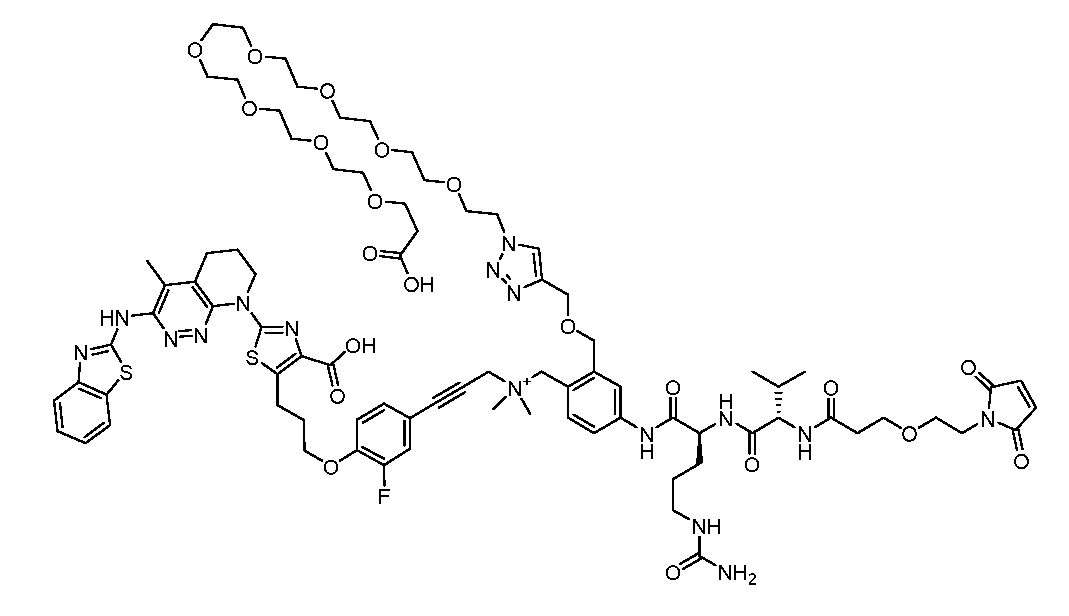
DCM/TFA (3:1, 2.6 mL) 중 3-(4-(3-(2-(3-(벤조[d]티아졸-2-일아미노)-4-메틸-6,7-디히드로피리도[2,3-c]피리다진-8(5H)-일)-4-카르복시티아졸-5-일)프로폭시)-3-플루오로페닐)-N-(4-((S)-2-((S)-2-((tert-부톡시카르보닐)아미노)-3-메틸부탄아미도)-5-우레이도펜탄아미도)-2-(((1-(26-카르복시-3,6,9,12,15,18,21,24-옥타옥사헥사코실)-1H-1,2,3-트리아졸-4-일)메톡시)메틸)벤질)-N,N-디메틸프로프-2-인-1-아미늄 (32.2 mg, 0.019 mmol)의 용액을 0℃로 냉각시키고, 이 온도에서 1시간 동안 교반하였다. 혼합물을 감압 하에 증발시켜 조 탈-Boc 중간체를 수득한 후, 조 물질을 DMF (0.5 mL) 중에 용해시키고, 이어서 2,5-디옥소피롤리딘-1-일 3-(2-(2,5-디옥소-2,5-디히드로-1H-피롤-1-일)에톡시)프로파노에이트 (12.1 mg, 0.039 mmol, 2.0 당량) 및 DIPEA (0.1 mL, 0.584 mmol, 30.0 당량)를 첨가하였다. 혼합물을 실온에서 30분 동안 교반하였다. 용액을 RP-HPLC 이스코 골드 크로마토그래피 (0-100% MeCN/H2O, 0.1% TFA 개질제)에 의해 정제하였다. 동결건조 시, 3-(4-(3-(2-(3-(벤조[d]티아졸-2-일아미노)-4-메틸-6,7-디히드로피리도[2,3-c]피리다진-8(5H)-일)-4-카르복시티아졸-5-일)프로폭시)-3-플루오로페닐)-N-(2-(((1-(26-카르복시-3,6,9,12,15,18,21,24-옥타옥사헥사코실)-1H-1,2,3-트리아졸-4-일)메톡시)메틸)-4-((S)-2-((S)-2-(3-(2-(2,5-디옥소-2,5-디히드로-1H-피롤-1-일)에톡시)프로판아미도)-3-메틸부탄아미도)-5-우레이도펜탄아미도)벤질)-N,N-디메틸프로프-2-인-1-아미늄을 수득하였다. HRMS: M+= 1749.7400; Rt=2.51분 (5분 산성 방법).In DCM/TFA (3:1, 2.6 mL) 3-(4-(3-(2-(3-(Benzo[d]thiazol-2-ylamino)-4-methyl-6,7-dihydropyrido[2,3-c]pyridazin-8(5H)-yl)-4-carboxythiazol-5-yl)propoxy)-3-fluorophenyl)-N-(4-((S)-2-((S)-2-((tert-butoxycarbonyl)amino)-3-methylbutanamido)-5-ureidopentanamido)-2-(((1-(26-carboxy-3,6,9,12,15,18,21,24-octaoxahexacosyl)-1H-1,2,3-triazol-4-yl)methoxy)methyl)benzyl)-N,N-dimethylprop-2-yn-1-aminum (32.2 mg, 0.019 mmol) was cooled to 0 °C and stirred at this temperature for 1 h. The mixture was evaporated under reduced pressure to give the crude Tal-Boc intermediate, which was then dissolved in DMF (0.5 mL) and then 2,5-dioxopyrrolidin-1-yl 3-(2-(2,5-dioxo-2,5-dihydro-1H-pyrrol-1-yl)ethoxy)propanoate (12.1 mg, 0.039 mmol, 2.0 equiv) and DIPEA (0.1 mL, 0.584 mmol, 30.0 equiv) were added. The mixture was stirred at room temperature for 30 min. The solution was purified by RP-HPLC ISCO Gold chromatography (0-100% MeCN/H2O, 0.1% TFA modifier). Upon lyophilization, 3-(4-(3-(2-(3-(Benzo[d]thiazol-2-ylamino)-4-methyl-6,7-dihydropyrido[2,3-c]pyridazin-8(5H)-yl)-4-carboxythiazol-5-yl)propoxy)-3-fluorophenyl)-N-(2-(((1-(26-carboxy-3,6,9,12,15,18,21,24-octaoc Obtained ((S)-2-((S)-2-(3-(2-(2,5-dioxo-2,5-dihydro-1H-pyrrol-1-yl)ethoxy)propanamido)-3-methylbutanamido)-5-ureidopentanamido)benzyl)-N,N-dimethylprop-2-yn-1-aminium. HRMS: M+ = 1749.7400; Rt = 2.51 min (5 min acidic method).
N-(4-((S)-2-((S)-2-아미노-3-메틸부탄아미도)-5-우레이도펜탄아미도)-2-((프로프-2-인-1-일옥시)메틸)벤질)-3-(4-(3-(2-(3-(벤조[d]티아졸-2-일아미노)-4-메틸-6,7-디히드로피리도[2,3-c]피리다진-8(5H)-일)-4-카르복시티아졸-5-일)프로폭시)-3-플루오로페닐)-N,N-디메틸프로프-2-인-1-아미늄의 합성Synthesis of N-(4-((S)-2-((S)-2-amino-3-methylbutanamido)-5-ureidopentanamido)-2-((prop-2-yn-1-yloxy)methyl)benzyl)-3-(4-(3-(2-(3-(benzo[d]thiazol-2-ylamino)-4-methyl-6,7-dihydropyrido[2,3-c]pyridazin-8(5H)-yl)-4-carboxythiazol-5-yl)propoxy)-3-fluorophenyl)-N,N-dimethylprop-2-yn-1-aminum

일반적 절차 4에 따라 3-(4-(3-(2-(3-(벤조[d]티아졸-2-일아미노)-4-메틸-6,7-디히드로피리도[2,3-c]피리다진-8(5H)-일)-4-카르복시티아졸-5-일)프로폭시)-3-플루오로페닐)-N-(4-((S)-2-((S)-2-((tert-부톡시카르보닐)아미노)-3-메틸부탄아미도)-5-우레이도펜탄아미도)-2-((프로프-2-인-1-일옥시)메틸)벤질)-N,N-디메틸프로프-2-인-1-아미늄 (263.0 mg, 0.221 mmol)을 사용하여, N-(4-((S)-2-((S)-2-아미노-3-메틸부탄아미도)-5-우레이도펜탄아미도)-2-((프로프-2-인-1-일옥시)메틸)벤질)-3-(4-(3-(2-(3-(벤조[d]티아졸-2-일아미노)-4-메틸-6,7-디히드로피리도[2,3-c]피리다진-8(5H)-일)-4-카르복시티아졸-5-일)프로폭시)-3-플루오로페닐)-N,N-디메틸프로프-2-인-1-아미늄을 수득하였다. HRMS: M+= 1087.2700; Rt=1.85분 (5분 산성 방법).According to General Procedure 4 using 3-(4-(3-(2-(3-(benzo[d]thiazol-2-ylamino)-4-methyl-6,7-dihydropyrido[2,3-c]pyridazin-8(5H)-yl)-4-carboxythiazol-5-yl)propoxy)-3-fluorophenyl)-N-(4-((S)-2-((S)-2-((tert-butoxycarbonyl)amino)-3-methylbutanamido)-5-ureidopentanamido)-2-((prop-2-yn-1-yloxy)methyl)benzyl)-N,N-dimethylprop-2-yn-1-aminum (263.0 mg, 0.221 mmol), N-(4-((S)-2-((S)-2-amino-3-methylbutanamido)-5-ureidopentanamido)-2-((prop-2-yn-1-yloxy)methyl)benzyl)-3-(4-(3-(2-(3-(benzo[d]thiazol-2-ylamino)-4-methyl-6,7-dihydropyrido[2,3-c]pyridazin-8(5H)-yl)-4-carboxythiazol-5-yl)propoxy)-3-fluorophenyl)-N,N-dimethylprop-2-yn-1-aminium was obtained. HRMS: M+ = 1087.2700; Rt = 1.85 min (5 min acidic method).
3-(4-(3-(2-(3-(벤조[d]티아졸-2-일아미노)-4-메틸-6,7-디히드로피리도[2,3-c]피리다진-8(5H)-일)-4-카르복시티아졸-5-일)프로폭시)-3-플루오로페닐)-N-(4-((S)-2-((S)-2-(3-(2-(2,5-디옥소-2,5-디히드로-1H-피롤-1-일)에톡시)프로판아미도)-3-메틸부탄아미도)-5-우레이도펜탄아미도)-2-((프로프-2-인-1-일옥시)메틸)벤질)-N,N-디메틸프로프-2-인-1-아미늄의 합성Synthesis of 3-(4-(3-(2-(3-(benzo[d]thiazol-2-ylamino)-4-methyl-6,7-dihydropyrido[2,3-c]pyridazin-8(5H)-yl)-4-carboxythiazol-5-yl)propoxy)-3-fluorophenyl)-N-(4-((S)-2-((S)-2-(3-(2-(2,5-dioxo-2,5-dihydro-1H-pyrrol-1-yl)ethoxy)propanamido)-3-methylbutanamido)-5-ureidopentanamido)-2-((prop-2-yn-1-yloxy)methyl)benzyl)-N,N-dimethylprop-2-yn-1-aminum

일반적 절차 5에 따라 N-(4-((S)-2-((S)-2-아미노-3-메틸부탄아미도)-5-우레이도펜탄아미도)-2-((프로프-2-인-1-일옥시)메틸)벤질)-3-(4-(3-(2-(3-(벤조[d]티아졸-2-일아미노)-4-메틸-6,7-디히드로피리도[2,3-c]피리다진-8(5H)-일)-4-카르복시티아졸-5-일)프로폭시)-3-플루오로페닐)-N,N-디메틸프로프-2-인-1-아미늄 (77.0 mg, 0.050 mmol) 및 2,5-디옥소피롤리딘-1-일 3-(2-(2,5-디옥소-2,5-디히드로-1H-피롤-1-일)에톡시)프로파노에이트 (23.2 mg, 0.075 mmol, 1.5 당량)를 사용하여, 3-(4-(3-(2-(3-(벤조[d]티아졸-2-일아미노)-4-메틸-6,7-디히드로피리도[2,3-c]피리다진-8(5H)-일)-4-카르복시티아졸-5-일)프로폭시)-3-플루오로페닐)-N-(4-((S)-2-((S)-2-(3-(2-(2,5-디옥소-2,5-디히드로-1H-피롤-1-일)에톡시)프로판아미도)-3-메틸부탄아미도)-5-우레이도펜탄아미도)-2-((프로프-2-인-1-일옥시)메틸)벤질)-N,N-디메틸프로프-2-인-1-아미늄을 수득하였다. HRMS: M+= 1282.4800; Rt=2.15분 (5분 산성 방법).According to General Procedure 5, N-(4-((S)-2-((S)-2-amino-3-methylbutanamido)-5-ureidopentanamido)-2-((prop-2-yn-1-yloxy)methyl)benzyl)-3-(4-(3-(2-(3-(benzo[d]thiazol-2-ylamino)-4-methyl-6,7-dihydropyrido[2,3-c]pyridazin-8(5H)-yl)-4-carboxythiazol-5-yl)propoxy)-3-fluorophenyl)-N,N-dimethylprop-2-yn-1-aminum (77.0 mg, 0.050 mmol) and 2,5-dioxopyrrolidin-1-yl Using 3-(2-(2,5-dioxo-2,5-dihydro-1H-pyrrol-1-yl)ethoxy)propanoate (23.2 mg, 0.075 mmol, 1.5 eq), 3-(4-(3-(2-(3-(Benzo[d]thiazol-2-ylamino)-4-methyl-6,7-dihydropyrido[2,3-c]pyridazin-8(5H)-yl)-4-carboxythiazol-5-yl)propoxy)-3-fluorophenyl)-N-(4-((S)-2-((S)-2-(3-(2-(2,5-dioxo-2,5-dihydro-1H-pyrrol-1-yl)ethoxy)propanamido)-3-methylbutanamido)-5-ureidopentanamido)-2-((prop-2-yn-1-yloxy)methyl)benzyl)-N,N-dimethylprop-2-yn-1-aminium was obtained. HRMS: M+ = 1282.4800; Rt=2.15 min (5 min acid method).
3-(4-(3-(2-(3-(벤조[d]티아졸-2-일아미노)-4-메틸-6,7-디히드로피리도[2,3-c]피리다진-8(5H)-일)-4-카르복시티아졸-5-일)프로폭시)-3-플루오로페닐)-N-(2-(((1-(74-카르복시-3,6,9,12,15,18,21,24,27,30,33,36,39,42,45,48,51,54,57,60,63,66,69,72-테트라코사옥사테트라헵타콘틸)-1H-1,2,3-트리아졸-4-일)메톡시)메틸)-4-((S)-2-((S)-2-(3-(2-(2,5-디옥소-2,5-디히드로-1H-피롤-1-일)에톡시)프로판아미도)-3-메틸부탄아미도)-5-우레이도펜탄아미도)벤질)-N,N-디메틸프로프-2-인-1-아미늄 (L109A-P1)의 합성3-(4-(3-(2-(3-(Benzo[d]thiazol-2-ylamino)-4-methyl-6,7-dihydropyrido[2,3-c]pyridazin-8(5H)-yl)-4-carboxythiazol-5-yl)propoxy)-3-fluorophenyl)-N-(2-(((1-(74-carboxy-3,6,9,12,15,18,21,24,27,30,33,36,39,42,45,48,51,54, Synthesis of 57,60,63,66,69,72-tetracosaoxatetraheptacontyl)-1H-1,2,3-triazol-4-yl)methoxy)methyl)-4-((S)-2-((S)-2-(3-(2-(2,5-dioxo-2,5-dihydro-1H-pyrrol-1-yl)ethoxy)propanamido)-3-methylbutanamido)-5-ureidopentanamido)benzyl)-N,N-dimethylprop-2-yn-1-aminum (L109A-P1)

일반적 절차 7에 따라 3-(4-(3-(2-(3-(벤조[d]티아졸-2-일아미노)-4-메틸-6,7-디히드로피리도[2,3-c]피리다진-8(5H)-일)-4-카르복시티아졸-5-일)프로폭시)-3-플루오로페닐)-N-(4-((S)-2-((S)-2-(3-(2-(2,5-디옥소-2,5-디히드로-1H-피롤-1-일)에톡시)프로판아미도)-3-메틸부탄아미도)-5-우레이도펜탄아미도)-2-((프로프-2-인-1-일옥시)메틸)벤질)-N,N-디메틸프로프-2-인-1-아미늄 (51.8 mg, 0.037 mmol) 및 1-아지도-3,6,9,12,15,18,21,24,27,30,33,36,39,42,45,48,51,54,57,60,63,66,69,72-테트라코사옥사펜타헵타콘탄-75-산 (87.0 mg, 0.074 mmol, 2.0 당량)을 사용하여 3-(4-(3-(2-(3-(벤조[d]티아졸-2-일아미노)-4-메틸-6,7-디히드로피리도[2,3-c]피리다진-8(5H)-일)-4-카르복시티아졸-5-일)프로폭시)-3-플루오로페닐)-N-(2-(((1-(74-카르복시-3,6,9,12,15,18,21,24,27,30,33,36,39,42,45,48,51,54,57,60,63,66,69,72-테트라코사옥사테트라헵타콘틸)-1H-1,2,3-트리아졸-4-일)메톡시)메틸)-4-((S)-2-((S)-2-(3-(2-(2,5-디옥소-2,5-디히드로-1H-피롤-1-일)에톡시)프로판아미도)-3-메틸부탄아미도)-5-우레이도펜탄아미도)벤질)-N,N-디메틸프로프-2-인-1-아미늄을 수득하였다. HRMS: M+= 2453.8899; Rt=2.17분 (5분 산성 방법).According to General Procedure 7, 3-(4-(3-(2-(3-(benzo[d]thiazol-2-ylamino)-4-methyl-6,7-dihydropyrido[2,3-c]pyridazin-8(5H)-yl)-4-carboxythiazol-5-yl)propoxy)-3-fluorophenyl)-N-(4-((S)-2-((S)-2-(3-(2-(2,5-dioxo-2,5-dihydro-1H-pyrrol-1-yl)ethoxy)propanamido)-3-methylbutanamido)-5-ureidopentanamido)-2-((prop-2-yn-1-yloxy)methyl)benzyl)-N,N-dimethylprop-2-yn-1-aminum (51.8 mg, 0.037 mmol) and Using 1-azido-3,6,9,12,15,18,21,24,27,30,33,36,39,42,45,48,51,54,57,60,63,66,69,72-tetracosaoxapentaheptacontane-75-acid (87.0 mg, 0.074 mmol, 2.0 eq) 3-(4-(3-(2-(3-(Benzo[d]thiazol-2-ylamino)-4-methyl-6,7-dihydropyrido[2,3-c]pyridazin-8(5H)-yl)-4-carboxythiazol-5-yl)propoxy)-3-fluorophenyl)-N-(2-(((1-(74-carboxy-3,6,9,12,15,18,21,24,27,30,33,36,39,42,45,48,51,54, Obtained 57,60,63,66,69,72-Tetracosaoxatertraheptacontyl)-1H-1,2,3-triazol-4-yl)methoxy)methyl)-4-((S)-2-((S)-2-(3-(2-(2,5-dioxo-2,5-dihydro-1H-pyrrol-1-yl)ethoxy)propanamido)-3-methylbutanamido)-5-ureidopentanamido)benzyl)-N,N-dimethylprop-2-yn-1-aminium. HRMS: M+ = 2453.8899; Rt = 2.17 min (5 min acidic method).
3-(4-(3-(2-((6-(벤조[d]티아졸-2-일아미노)-5-메틸피리다진-3-일)(메틸)아미노)-4-카르복시티아졸-5-일)프로폭시)-3-플루오로페닐)-N-(4-((S)-2-((S)-2-((tert-부톡시카르보닐)아미노)-3-메틸부탄아미도)-5-우레이도펜탄아미도)-2-((프로프-2-인-1-일옥시)메틸)벤질)-N,N-디메틸프로프-2-인-1-아미늄의 합성Synthesis of 3-(4-(3-(2-((6-(benzo[d]thiazol-2-ylamino)-5-methylpyridazin-3-yl)(methyl)amino)-4-carboxythiazol-5-yl)propoxy)-3-fluorophenyl)-N-(4-((S)-2-((S)-2-((tert-butoxycarbonyl)amino)-3-methylbutanamido)-5-ureidopentanamido)-2-((prop-2-yn-1-yloxy)methyl)benzyl)-N,N-dimethylprop-2-yn-1-aminum

일반적 절차 6에 따라 2-((6-(벤조[d]티아졸-2-일아미노)-5-메틸피리다진-3-일)(메틸)아미노)-5-(3-(4-(3-(디메틸아미노)프로프-1-인-1-일)-2-플루오로페녹시)프로필)티아졸-4-카르복실산 (50.0 mg, 0.079 mmol) 및 tert-부틸 ((S)-1-(((S)-1-((4-(클로로메틸)-3-((프로프-2-인-1-일옥시)메틸)페닐)아미노)-1-옥소-5-우레이도펜탄-2-일)아미노)-3-메틸-1-옥소부탄-2-일)카르바메이트 (71.7 mg, 0.127 mmol, 1.6 당량)를 사용하여, 3-(4-(3-(2-((6-(벤조[d]티아졸-2-일아미노)-5-메틸피리다진-3-일)(메틸)아미노)-4-카르복시티아졸-5-일)프로폭시)-3-플루오로페닐)-N-(4-((S)-2-((S)-2-((tert-부톡시카르보닐)아미노)-3-메틸부탄아미도)-5-우레이도펜탄아미도)-2-((프로프-2-인-1-일옥시)메틸)벤질)-N,N-디메틸프로프-2-인-1-아미늄을 수득하였다. LCMS: M+= 1162.2; Rt=0.94분 (2분 염기성 방법).According to General Procedure 6 using 2-((6-(benzo[d]thiazol-2-ylamino)-5-methylpyridazin-3-yl)(methyl)amino)-5-(3-(4-(3-(dimethylamino)prop-1-yn-1-yl)-2-fluorophenoxy)propyl)thiazole-4-carboxylic acid (50.0 mg, 0.079 mmol) and tert-butyl ((S)-1-(((S)-1-((4-(chloromethyl)-3-((prop-2-yn-1-yloxy)methyl)phenyl)amino)-1-oxo-5-ureidopentan-2-yl)amino)-3-methyl-1-oxobutan-2-yl)carbamate (71.7 mg, 0.127 mmol, 1.6 equiv), 3-(4-(3-(2-((6-(Benzo[d]thiazol-2-ylamino)-5-methylpyridazin-3-yl)(methyl)amino)-4-carboxythiazol-5-yl)propoxy)-3-fluorophenyl)-N-(4-((S)-2-((S)-2-((tert-butoxycarbonyl)amino)-3-methylbutanamido)-5-ureidopentanamido)-2-((prop-2-yn-1-yloxy)methyl)benzyl)-N,N-dimethylprop-2-yn-1-aminium was obtained. LCMS: M+ = 1162.2; Rt = 0.94 min (2 min. Basic method).
3-(4-(3-(2-((6-(벤조[d]티아졸-2-일아미노)-5-메틸피리다진-3-일)(메틸)아미노)-4-카르복시티아졸-5-일)프로폭시)-3-플루오로페닐)-N-(4-((S)-2-((S)-2-((tert-부톡시카르보닐)아미노)-3-메틸부탄아미도)-5-우레이도펜탄아미도)-2-(((1-(26-카르복시-3,6,9,12,15,18,21,24-옥타옥사헥사코실)-1H-1,2,3-트리아졸-4-일)메톡시)메틸)벤질)-N,N-디메틸프로프-2-인-1-아미늄의 합성Synthesis of 3-(4-(3-(2-((6-(benzo[d]thiazol-2-ylamino)-5-methylpyridazin-3-yl)(methyl)amino)-4-carboxythiazol-5-yl)propoxy)-3-fluorophenyl)-N-(4-((S)-2-((S)-2-((tert-butoxycarbonyl)amino)-3-methylbutanamido)-5-ureidopentanamido)-2-(((1-(26-carboxy-3,6,9,12,15,18,21,24-octaoxahexacosyl)-1H-1,2,3-triazol-4-yl)methoxy)methyl)benzyl)-N,N-dimethylprop-2-yn-1-aminum

일반적 절차 7에 따라 3-(4-(3-(2-((6-(벤조[d]티아졸-2-일아미노)-5-메틸피리다진-3-일)(메틸)아미노)-4-카르복시티아졸-5-일)프로폭시)-3-플루오로페닐)-N-(4-((S)-2-((S)-2-((tert-부톡시카르보닐)아미노)-3-메틸부탄아미도)-5-우레이도펜탄아미도)-2-((프로프-2-인-1-일옥시)메틸)벤질)-N,N-디메틸프로프-2-인-1-아미늄 (40.0 mg, 0.034 mmol) 및 1-아지도-3,6,9,12,15,18,21,24-옥타옥사헵타코산-27-산 (25.8 mg, 0.055 mmol, 1.6 당량)을 사용하여, 3-(4-(3-(2-((6-(벤조[d]티아졸-2-일아미노)-5-메틸피리다진-3-일)(메틸)아미노)-4-카르복시티아졸-5-일)프로폭시)-3-플루오로페닐)-N-(4-((S)-2-((S)-2-((tert-부톡시카르보닐)아미노)-3-메틸부탄아미도)-5-우레이도펜탄아미도)-2-(((1-(26-카르복시-3,6,9,12,15,18,21,24-옥타옥사헥사코실)-1H-1,2,3-트리아졸-4-일)메톡시)메틸)벤질)-N,N-디메틸프로프-2-인-1-아미늄을 수득하였다. LCMS: M/2+= 815.4; Rt=0.99분 (2분 산성 방법).According to General Procedure 7, 3-(4-(3-(2-((6-(benzo[d]thiazol-2-ylamino)-5-methylpyridazin-3-yl)(methyl)amino)-4-carboxythiazol-5-yl)propoxy)-3-fluorophenyl)-N-(4-((S)-2-((S)-2-((tert-butoxycarbonyl)amino)-3-methylbutanamido)-5-ureidopentanamido)-2-((prop-2-yn-1-yloxy)methyl)benzyl)-N,N-dimethylprop-2-yn-1-aminum (40.0 mg, 0.034 mmol) and 1-azido-3,6,9,12,15,18,21,24-octaoxaheptacosan-27-acid (25.8 mg, 0.055 mmol, 1.6 equiv.) was used to obtain 3-(4-(3-(2-((6-(Benzo[d]thiazol-2-ylamino)-5-methylpyridazin-3-yl)(methyl)amino)-4-carboxythiazol-5-yl)propoxy)-3-fluorophenyl)-N-(4-((S)-2-((S)-2-((tert-butoxycarbonyl)amino)-3-methylbutanamido)-5-ureidopentanamido)-2-(((1-(26-carboxy-3,6,9,12,15,18,21,24-octaoxahexacosyl)-1H-1,2,3-triazol-4-yl)methoxy)methyl)benzyl)-N,N-dimethylprop-2-yn-1-aminium. LCMS: M/2+= 815.4; Rt=0.99 min (2 min acidic method).
3-(4-(3-(2-((6-(벤조[d]티아졸-2-일아미노)-5-메틸피리다진-3-일)(메틸)아미노)-4-카르복시티아졸-5-일)프로폭시)-3-플루오로페닐)-N-(2-(((1-(26-카르복시-3,6,9,12,15,18,21,24-옥타옥사헥사코실)-1H-1,2,3-트리아졸-4-일)메톡시)메틸)-4-((S)-2-((S)-2-(3-(2-(2,5-디옥소-2,5-디히드로-1H-피롤-1-일)에톡시)프로판아미도)-3-메틸부탄아미도)-5-우레이도펜탄아미도)벤질)-N,N-디메틸프로프-2-인-1-아미늄 (L7A-P2)의 합성3-(4-(3-(2-((6-(Benzo[d]thiazol-2-ylamino)-5-methylpyridazin-3-yl)(methyl)amino)-4-carboxythiazol-5-yl)propoxy)-3-fluorophenyl)-N-(2-(((1-(26-carboxy-3,6,9,12,15,18,21,24-octaoxahexacosyl)- Synthesis of 1H-1,2,3-triazol-4-yl)methoxy)methyl)-4-((S)-2-((S)-2-(3-(2-(2,5-dioxo-2,5-dihydro-1H-pyrrol-1-yl)ethoxy)propanamido)-3-methylbutanamido)-5-ureidopentanamido)benzyl)-N,N-dimethylprop-2-yn-1-aminum (L7A-P2)
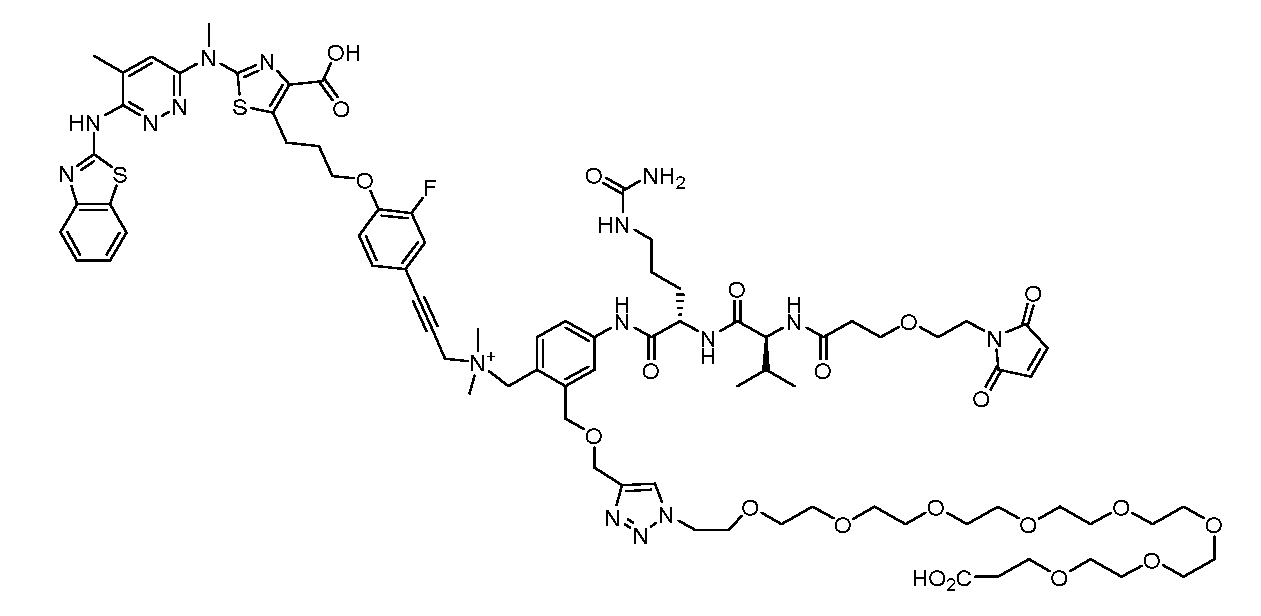
일반적 절차 8에 따라 3-(4-(3-(2-((6-(벤조[d]티아졸-2-일아미노)-5-메틸피리다진-3-일)(메틸)아미노)-4-카르복시티아졸-5-일)프로폭시)-3-플루오로페닐)-N-(4-((S)-2-((S)-2-((tert-부톡시카르보닐)아미노)-3-메틸부탄아미도)-5-우레이도펜탄아미도)-2-(((1-(26-카르복시-3,6,9,12,15,18,21,24-옥타옥사헥사코실)-1H-1,2,3-트리아졸-4-일)메톡시)메틸)벤질)-N,N-디메틸프로프-2-인-1-아미늄 (37.0 mg, 0.023 mmol) 및 2,5-디옥소피롤리딘-1-일 3-(2-(2,5-디옥소-2,5-디히드로-1H-피롤-1-일)에톡시)프로파노에이트 (10.6 mg, 0.034 mmol, 1.5 당량)를 사용하여, 3-(4-(3-(2-((6-(벤조[d]티아졸-2-일아미노)-5-메틸피리다진-3-일)(메틸)아미노)-4-카르복시티아졸-5-일)프로폭시)-3-플루오로페닐)-N-(2-(((1-(26-카르복시-3,6,9,12,15,18,21,24-옥타옥사헥사코실)-1H-1,2,3-트리아졸-4-일)메톡시)메틸)-4-((S)-2-((S)-2-(3-(2-(2,5-디옥소-2,5-디히드로-1H-피롤-1-일)에톡시)프로판아미도)-3-메틸부탄아미도)-5-우레이도펜탄아미도)벤질)-N,N-디메틸프로프-2-인-1-아미늄을 수득하였다. LCMS: M-= 1722.9; Rt=0.91분 (2분 산성 방법).According to General Procedure 8, 3-(4-(3-(2-((6-(benzo[d]thiazol-2-ylamino)-5-methylpyridazin-3-yl)(methyl)amino)-4-carboxythiazol-5-yl)propoxy)-3-fluorophenyl)-N-(4-((S)-2-((S)-2-((tert-butoxycarbonyl)amino)-3-methylbutanamido)-5-ureidopentanamido)-2-(((1-(26-carboxy-3,6,9,12,15,18,21,24-octaoxahexacosyl)-1H-1,2,3-triazol-4-yl)methoxy)methyl)benzyl)-N,N-dimethylprop-2-yn-1-aminum (37.0 mg, 0.023 mmol) and 2,5-dioxopyrrolidin-1-yl 3-(2-(2,5-dioxo-2,5-dihydro-1H-pyrrol-1-yl)ethoxy)propanoate (10.6 mg, 0.034 mmol, 1.5 eq) was used to prepare 3-(4-(3-(2-((6-(benzo[d]thiazol-2-ylamino)-5-methylpyridazin-3-yl)(methyl)amino)-4-carboxythiazol-5-yl)propoxy)-3-fluorophenyl)-N-(2-(((1-(26-carboxy-3,6,9,12,15,18,21,24-octaoxahexacosyl)- Obtained 1H-1,2,3-triazol-4-yl)methoxy)methyl)-4-((S)-2-((S)-2-(3-(2-(2,5-dioxo-2,5-dihydro-1H-pyrrol-1-yl)ethoxy)propanamido)-3-methylbutanamido)-5-ureidopentanamido)benzyl)-N,N-dimethylprop-2-yn-1-aminium. LCMS: M- = 1722.9; Rt = 0.91 min (2 min acidic method).
3-(4-(3-(2-(3-(벤조[d]티아졸-2-일아미노)-4-메틸-6,7-디히드로피리도[2,3-c]피리다진-8(5H)-일)-4-카르복시티아졸-5-일)프로폭시)-3-플루오로페닐)-N-(4-((S)-2-((S)-2-((tert-부톡시카르보닐)아미노)-3-메틸부탄아미도)-5-우레이도펜탄아미도)-2-((메틸((프로프-2-인-1-일옥시)카르보닐)아미노)메틸)벤질)-N,N-디메틸프로프-2-인-1-아미늄의 합성Synthesis of 3-(4-(3-(2-(3-(benzo[d]thiazol-2-ylamino)-4-methyl-6,7-dihydropyrido[2,3-c]pyridazin-8(5H)-yl)-4-carboxythiazol-5-yl)propoxy)-3-fluorophenyl)-N-(4-((S)-2-((S)-2-((tert-butoxycarbonyl)amino)-3-methylbutanamido)-5-ureidopentanamido)-2-((methyl((prop-2-yn-1-yloxy)carbonyl)amino)methyl)benzyl)-N,N-dimethylprop-2-yn-1-aminum

일반적 절차 6에 따라 2-(3-(벤조[d]티아졸-2-일아미노)-4-메틸-6,7-디히드로피리도[2,3-c]피리다진-8(5H)-일)-5-(3-(4-(3-(디메틸아미노)프로프-1-인-1-일)-2-플루오로페녹시)프로필)티아졸-4-카르복실산 (118.0 mg, 0.170 mmol) 및 프로프-2-인-1-일 5-((S)-2-((S)-2-((tert-부톡시카르보닐)아미노)-3-메틸부탄아미도)-5-우레이도펜탄아미도)-2-(클로로메틸)벤질(메틸)카르바메이트 (127.0 mg, 0.204 mmol, 1.2 당량)를 사용하여, 3-(4-(3-(2-(3-(벤조[d]티아졸-2-일아미노)-4-메틸-6,7-디히드로피리도[2,3-c]피리다진-8(5H)-일)-4-카르복시티아졸-5-일)프로폭시)-3-플루오로페닐)-N-(4-((S)-2-((S)-2-((tert-부톡시카르보닐)아미노)-3-메틸부탄아미도)-5-우레이도펜탄아미도)-2-((메틸((프로프-2-인-1-일옥시)카르보닐)아미노)메틸)벤질)-N,N-디메틸프로프-2-인-1-아미늄을 수득하였다. HRMS: M+= 1244.5100; Rt=2.42분 (5분 산성 방법).According to General Procedure 6 using 2-(3-(benzo[d]thiazol-2-ylamino)-4-methyl-6,7-dihydropyrido[2,3-c]pyridazin-8(5H)-yl)-5-(3-(4-(3-(dimethylamino)prop-1-yn-1-yl)-2-fluorophenoxy)propyl)thiazole-4-carboxylic acid (118.0 mg, 0.170 mmol) and prop-2-yn-1-yl 5-((S)-2-((S)-2-((tert-butoxycarbonyl)amino)-3-methylbutanamido)-5-ureidopentanamido)-2-(chloromethyl)benzyl(methyl)carbamate (127.0 mg, 0.204 mmol, 1.2 eq), Obtained 3-(4-(3-(2-(3-(Benzo[d]thiazol-2-ylamino)-4-methyl-6,7-dihydropyrido[2,3-c]pyridazin-8(5H)-yl)-4-carboxythiazol-5-yl)propoxy)-3-fluorophenyl)-N-(4-((S)-2-((S)-2-((tert-butoxycarbonyl)amino)-3-methylbutanamido)-5-ureidopentanamido)-2-((methyl((prop-2-yn-1-yloxy)carbonyl)amino)methyl)benzyl)-N,N-dimethylprop-2-yn-1-aminium. HRMS: M+ = 1244.5100; Rt = 2.42 min (5 min acidic method).
3-(4-(3-(2-(3-(벤조[d]티아졸-2-일아미노)-4-메틸-6,7-디히드로피리도[2,3-c]피리다진-8(5H)-일)-4-카르복시티아졸-5-일)프로폭시)-3-플루오로페닐)-N-(4-((S)-2-((S)-2-(3-(2-(2,5-디옥소-2,5-디히드로-1H-피롤-1-일)에톡시)프로판아미도)-3-메틸부탄아미도)-5-우레이도펜탄아미도)-2-((메틸((프로프-2-인-1-일옥시)카르보닐)아미노)메틸)벤질)-N,N-디메틸프로프-2-인-1-아미늄의 합성Synthesis of 3-(4-(3-(2-(3-(benzo[d]thiazol-2-ylamino)-4-methyl-6,7-dihydropyrido[2,3-c]pyridazin-8(5H)-yl)-4-carboxythiazol-5-yl)propoxy)-3-fluorophenyl)-N-(4-((S)-2-((S)-2-(3-(2-(2,5-dioxo-2,5-dihydro-1H-pyrrol-1-yl)ethoxy)propanamido)-3-methylbutanamido)-5-ureidopentanamido)-2-((methyl((prop-2-yn-1-yloxy)carbonyl)amino)methyl)benzyl)-N,N-dimethylprop-2-yn-1-aminum

일반적 절차 8에 따라 3-(4-(3-(2-(3-(벤조[d]티아졸-2-일아미노)-4-메틸-6,7-디히드로피리도[2,3-c]피리다진-8(5H)-일)-4-카르복시티아졸-5-일)프로폭시)-3-플루오로페닐)-N-(4-((S)-2-((S)-2-((tert-부톡시카르보닐)아미노)-3-메틸부탄아미도)-5-우레이도펜탄아미도)-2-((메틸((프로프-2-인-1-일옥시)카르보닐)아미노)메틸)벤질)-N,N-디메틸프로프-2-인-1-아미늄 (65.0 mg, 0.052 mmol) 및 2,5-디옥소피롤리딘-1-일 3-(2-(2,5-디옥소-2,5-디히드로-1H-피롤-1-일)에톡시)프로파노에이트 (32.4 mg, 0.104 mmol, 2.0 당량)를 사용하여, 3-(4-(3-(2-(3-(벤조[d]티아졸-2-일아미노)-4-메틸-6,7-디히드로피리도[2,3-c]피리다진-8(5H)-일)-4-카르복시티아졸-5-일)프로폭시)-3-플루오로페닐)-N-(4-((S)-2-((S)-2-(3-(2-(2,5-디옥소-2,5-디히드로-1H-피롤-1-일)에톡시)프로판아미도)-3-메틸부탄아미도)-5-우레이도펜탄아미도)-2-((메틸((프로프-2-인-1-일옥시)카르보닐)아미노)메틸)벤질)-N,N-디메틸프로프-2-인-1-아미늄을 수득하였다. LCMS: M+= 1341.1; Rt=2.20분 (5분 산성 방법).According to General Procedure 8, 3-(4-(3-(2-(3-(benzo[d]thiazol-2-ylamino)-4-methyl-6,7-dihydropyrido[2,3-c]pyridazin-8(5H)-yl)-4-carboxythiazol-5-yl)propoxy)-3-fluorophenyl)-N-(4-((S)-2-((S)-2-((tert-butoxycarbonyl)amino)-3-methylbutanamido)-5-ureidopentanamido)-2-((methyl((prop-2-yn-1-yloxy)carbonyl)amino)methyl)benzyl)-N,N-dimethylprop-2-yn-1-aminum (65.0 mg, 0.052 mmol) and 2,5-dioxopyrrolidin-1-yl Using 3-(2-(2,5-dioxo-2,5-dihydro-1H-pyrrol-1-yl)ethoxy)propanoate (32.4 mg, 0.104 mmol, 2.0 eq), 3-(4-(3-(2-(3-(Benzo[d]thiazol-2-ylamino)-4-methyl-6,7-dihydropyrido[2,3-c]pyridazin-8(5H)-yl)-4-carboxythiazol-5-yl)propoxy)-3-fluorophenyl)-N-(4-((S)-2-((S)-2-(3-(2-(2,5-dioxo-2,5-dihydro-1H-pyrrol-1-yl)ethoxy)propanamido)-3-methylbutanamido)-5-ureidopentanamido)-2-((methyl((prop-2-yn-1-yloxy)carbonyl)amino)methyl)benzyl)-N,N-dimethylprop-2-yn-1-aminium was obtained. LCMS: M+ = 1341.1; Rt=2.20 min (5 min acid method).
3-(4-(3-(2-(3-(벤조[d]티아졸-2-일아미노)-4-메틸-6,7-디히드로피리도[2,3-c]피리다진-8(5H)-일)-4-카르복시티아졸-5-일)프로폭시)-3-플루오로페닐)-N-(2-(((((1-(26-카르복시-3,6,9,12,15,18,21,24-옥타옥사헥사코실)-1H-1,2,3-트리아졸-4-일)메톡시)카르보닐)(메틸)아미노)메틸)-4-((S)-2-((S)-2-(3-(2-(2,5-디옥소-2,5-디히드로-1H-피롤-1-일)에톡시)프로판아미도)-3-메틸부탄아미도)-5-우레이도펜탄아미도)벤질)-N,N-디메틸프로프-2-인-1-아미늄 (L3A-P1)의 합성3-(4-(3-(2-(3-(Benzo[d]thiazol-2-ylamino)-4-methyl-6,7-dihydropyrido[2,3-c]pyridazin-8(5H)-yl)-4-carboxythiazol-5-yl)propoxy)-3-fluorophenyl)-N-(2-((((1-(26-carboxy-3,6,9,12,15,18,21,24-octaoxahexacosyl )-1H-1,2,3-triazol-4-yl)methoxy)carbonyl)(methyl)amino)methyl)-4-((S)-2-((S)-2-(3-(2-(2,5-dioxo-2,5-dihydro-1H-pyrrol-1-yl)ethoxy)propanamido)-3-methylbutanamido)-5-ureidopentanamido)benzyl)-N,N-dimethylprop-2-yn-1-aminum (L3A-P1) Synthesis

일반적 절차 7에 따라 3-(4-(3-(2-(3-(벤조[d]티아졸-2-일아미노)-4-메틸-6,7-디히드로피리도[2,3-c]피리다진-8(5H)-일)-4-카르복시티아졸-5-일)프로폭시)-3-플루오로페닐)-N-(4-((S)-2-((S)-2-(3-(2-(2,5-디옥소-2,5-디히드로-1H-피롤-1-일)에톡시)프로판아미도)-3-메틸부탄아미도)-5-우레이도펜탄아미도)-2-((메틸((프로프-2-인-1-일옥시)카르보닐)아미노)메틸)벤질)-N,N-디메틸프로프-2-인-1-아미늄 (65.0 mg, 0.049 mmol) 및 1-아지도-3,6,9,12,15,18,21,24-옥타옥사헵타코산-27-산 (45.4 mg, 0.097 mmol, 2.0 당량)을 사용하여, 3-(4-(3-(2-(3-(벤조[d]티아졸-2-일아미노)-4-메틸-6,7-디히드로피리도[2,3-c]피리다진-8(5H)-일)-4-카르복시티아졸-5-일)프로폭시)-3-플루오로페닐)-N-(2-(((((1-(26-카르복시-3,6,9,12,15,18,21,24-옥타옥사헥사코실)-1H-1,2,3-트리아졸-4-일)메톡시)카르보닐)(메틸)아미노)메틸)-4-((S)-2-((S)-2-(3-(2-(2,5-디옥소-2,5-디히드로-1H-피롤-1-일)에톡시)프로판아미도)-3-메틸부탄아미도)-5-우레이도펜탄아미도)벤질)-N,N-디메틸프로프-2-인-1-아미늄을 수득하였다. HRMS: M+= 1806.7700; Rt=2.05분 (5분 산성 방법).According to General Procedure 7, 3-(4-(3-(2-(3-(benzo[d]thiazol-2-ylamino)-4-methyl-6,7-dihydropyrido[2,3-c]pyridazin-8(5H)-yl)-4-carboxythiazol-5-yl)propoxy)-3-fluorophenyl)-N-(4-((S)-2-((S)-2-(3-(2-(2,5-dioxo-2,5-dihydro-1H-pyrrol-1-yl)ethoxy)propanamido)-3-methylbutanamido)-5-ureidopentanamido)-2-((methyl((prop-2-yn-1-yloxy)carbonyl)amino)methyl)benzyl)-N,N-dimethylprop-2-yn-1-aminum (65.0 mg, 0.049 mmol) and 1-azido-3,6,9,12,15,18,21,24-octaoxaheptacosan-27-acid (45.4 mg, 0.097 mmol, 2.0 eq) were used to prepare 3-(4-(3-(2-(3-(benzo[d]thiazol-2-ylamino)-4-methyl-6,7-dihydropyrido[2,3-c]pyridazin-8(5H)-yl)-4-carboxythiazol-5-yl)propoxy)-3-fluorophenyl)-N-(2-((((1-(26-carboxy-3,6,9,12,15,18,21,24-octaoxahexacosyl) -1H-1,2,3-triazol-4-yl)methoxy)carbonyl)(methyl)amino)methyl)-4-((S)-2-((S)-2-(3-(2-(2,5-dioxo-2,5-dihydro-1H-pyrrol-1-yl)ethoxy)propanamido)-3-methylbutanamido)-5-ureidopentanamido)benzyl)-N,N-dimethylprop-2-yn-1-aminium was obtained. HRMS: M+ = 1806.7700; Rt = 2.05 min (5 min acidic method).
N-(2-(((((1-(2,5,8,11,14,17,20,23-옥타옥사펜타코산-25-일)-1H-1,2,3-트리아졸-4-일)메톡시)카르보닐)(메틸)아미노)메틸)-4-((S)-2-((S)-2-((tert-부톡시카르보닐)아미노)-3-메틸부탄아미도)-5-우레이도펜탄아미도)벤질)-3-(4-(3-(2-(3-(벤조[d]티아졸-2-일아미노)-4-메틸-6,7-디히드로피리도[2,3-c]피리다진-8(5H)-일)-4-카르복시티아졸-5-일)프로폭시)-3-플루오로페닐)-N,N-디메틸프로프-2-인-1-아미늄의 합성Synthesis of N-(2-((((1-(2,5,8,11,14,17,20,23-octaoxapentacosan-25-yl)-1H-1,2,3-triazol-4-yl)methoxy)carbonyl)(methyl)amino)methyl)-4-((S)-2-((S)-2-((tert-butoxycarbonyl)amino)-3-methylbutanamido)-5-ureidopentanamido)benzyl)-3-(4-(3-(2-(3-(benzo[d]thiazol-2-ylamino)-4-methyl-6,7-dihydropyrido[2,3-c]pyridazin-8(5H)-yl)-4-carboxythiazol-5-yl)propoxy)-3-fluorophenyl)-N,N-dimethylprop-2-yn-1-aminium

일반적 절차 7에 따라 3-(4-(3-(2-(3-(벤조[d]티아졸-2-일아미노)-4-메틸-6,7-디히드로피리도[2,3-c]피리다진-8(5H)-일)-4-카르복시티아졸-5-일)프로폭시)-3-플루오로페닐)-N-(4-((S)-2-((S)-2-((tert-부톡시카르보닐)아미노)-3-메틸부탄아미도)-5-우레이도펜탄아미도)-2-((메틸((프로프-2-인-1-일옥시)카르보닐)아미노)메틸)벤질)-N,N-디메틸프로프-2-인-1-아미늄 (36.0 mg, 0.029 mmol) 및 25-아지도-2,5,8,11,14,17,20,23-옥타옥사펜타코산 (23.7 mg, 0.058 mmol, 2.0 당량)을 사용하여, N-(2-(((((1-(2,5,8,11,14,17,20,23-옥타옥사펜타코산-25-일)-1H-1,2,3-트리아졸-4-일)메톡시)카르보닐)(메틸)아미노)메틸)-4-((S)-2-((S)-2-((tert-부톡시카르보닐)아미노)-3-메틸부탄아미도)-5-우레이도펜탄아미도)벤질)-3-(4-(3-(2-(3-(벤조[d]티아졸-2-일아미노)-4-메틸-6,7-디히드로피리도[2,3-c]피리다진-8(5H)-일)-4-카르복시티아졸-5-일)프로폭시)-3-플루오로페닐)-N,N-디메틸프로프-2-인-1-아미늄을 수득하였다. HRMS: M+= 1653.7500; Rt=2.29분 (5분 산성 방법).According to General Procedure 7, 3-(4-(3-(2-(3-(benzo[d]thiazol-2-ylamino)-4-methyl-6,7-dihydropyrido[2,3-c]pyridazin-8(5H)-yl)-4-carboxythiazol-5-yl)propoxy)-3-fluorophenyl)-N-(4-((S)-2-((S)-2-((tert-butoxycarbonyl)amino)-3-methylbutanamido)-5-ureidopentanamido)-2-((methyl((prop-2-yn-1-yloxy)carbonyl)amino)methyl)benzyl)-N,N-dimethylprop-2-yn-1-aminum (36.0 mg, 0.029 mmol) and Using 25-azido-2,5,8,11,14,17,20,23-octaoxapentacosane (23.7 mg, 0.058 mmol, 2.0 eq), N-(2-((((1-(2,5,8,11,14,17,20,23-octaoxapentacosan-25-yl)-1H-1,2,3-triazol-4-yl)methoxy)carbonyl)(methyl)amino)methyl)-4-((S)-2-((S)-2-((tert-butoxycarbonyl)amino)-3-methylbutanamido)-5-ureidopentanamido)benzyl)-3-(4-(3-(2-(3-(benzo[d]thiazol-2-ylamino)-4-methyl-6,7-dihydropyrido[2,3-c]pyridazin-8(5H)-yl)-4-carboxythiazol-5-yl)propoxy)-3-fluorophenyl)-N,N-dimethylprop-2-yn-1-aminum Obtained. HRMS: M+= 1653.7500; Rt=2.29 min (5 min acidic method).
N-(2-(((((1-(2,5,8,11,14,17,20,23-옥타옥사펜타코산-25-일)-1H-1,2,3-트리아졸-4-일)메톡시)카르보닐)(메틸)아미노)메틸)-4-((S)-2-((S)-2-(3-(2-(2,5-디옥소-2,5-디히드로-1H-피롤-1-일)에톡시)프로판아미도)-3-메틸부탄아미도)-5-우레이도펜탄아미도)벤질)-3-(4-(3-(2-(3-(벤조[d]티아졸-2-일아미노)-4-메틸-6,7-디히드로피리도[2,3-c]피리다진-8(5H)-일)-4-카르복시티아졸-5-일)프로폭시)-3-플루오로페닐)-N,N-디메틸프로프-2-인-1-아미늄 (L4A-P1)의 합성N-(2-((((1-(2,5,8,11,14,17,20,23-octaoxapentacosan-25-yl)-1H-1,2,3-triazol-4-yl)methoxy)carbonyl)(methyl)amino)methyl)-4-((S)-2-((S)-2-(3-(2-(2,5-dioxo-2,5-dihydro-1H-pyrrol-1-yl)ethoxy)propanamido )-3-methylbutanamido)-5-ureidopentanamido)benzyl)-3-(4-(3-(2-(3-(benzo[d]thiazol-2-ylamino)-4-methyl-6,7-dihydropyrido[2,3-c]pyridazin-8(5H)-yl)-4-carboxythiazol-5-yl)propoxy)-3-fluorophenyl)-N,N-dimethylprop-2-yn-1-aminum (L4A-P1)

일반적 절차 8에 따라 N-(2-(((((1-(2,5,8,11,14,17,20,23-옥타옥사펜타코산-25-일)-1H-1,2,3-트리아졸-4-일)메톡시)카르보닐)(메틸)아미노)메틸)-4-((S)-2-((S)-2-((tert-부톡시카르보닐)아미노)-3-메틸부탄아미도)-5-우레이도펜탄아미도)벤질)-3-(4-(3-(2-(3-(벤조[d]티아졸-2-일아미노)-4-메틸-6,7-디히드로피리도[2,3-c]피리다진-8(5H)-일)-4-카르복시티아졸-5-일)프로폭시)-3-플루오로페닐)-N,N-디메틸프로프-2-인-1-아미늄 (19.6 mg, 0.012 mmol) 및 2,5-디옥소피롤리딘-1-일 3-(2-(2,5-디옥소-2,5-디히드로-1H-피롤-1-일)에톡시)프로파노에이트 (7.4 mg, 0.024 mmol, 2.0 당량)를 사용하여, N-(2-(((((1-(2,5,8,11,14,17,20,23-옥타옥사펜타코산-25-일)-1H-1,2,3-트리아졸-4-일)메톡시)카르보닐)(메틸)아미노)메틸)-4-((S)-2-((S)-2-(3-(2-(2,5-디옥소-2,5-디히드로-1H-피롤-1-일)에톡시)프로판아미도)-3-메틸부탄아미도)-5-우레이도펜탄아미도)벤질)-3-(4-(3-(2-(3-(벤조[d]티아졸-2-일아미노)-4-메틸-6,7-디히드로피리도[2,3-c]피리다진-8(5H)-일)-4-카르복시티아졸-5-일)프로폭시)-3-플루오로페닐)-N,N-디메틸프로프-2-인-1-아미늄을 수득하였다. HRMS: M+= 1748.7600; Rt=2.15분 (5분 산성 방법).According to general procedure 8 N-(2-((((1-(2,5,8,11,14,17,20,23-octaoxapentacosan-25-yl)-1H-1,2,3-triazol-4-yl)methoxy)carbonyl)(methyl)amino)methyl)-4-((S)-2-((S)-2-((tert-butoxycarbonyl)amino)-3-methylbutanamido)-5-ureidopentanamido)benzyl)-3-(4-(3-(2-(3-(benzo[d]thiazol-2-ylamino)-4-methyl-6,7-dihydropyrido[2,3-c]pyridazin-8(5H)-yl)-4-carboxythiazol-5-yl)propoxy)-3-fluorophenyl)-N,N-dimethylprop-2-yn-1-aminum (19.6 mg, 0.012 mmol) and 2,5-dioxopyrrolidin-1-yl 3-(2-(2,5-dioxo-2,5-dihydro-1H-pyrrol-1-yl)ethoxy)propanoate (7.4 mg, 0.024 mmol, 2.0 eq) were used to prepare N-(2-((((1-(2,5,8,11,14,17,20,23-octaoxapentacosan-25-yl)-1H-1,2,3-triazol-4-yl)methoxy)carbonyl)(methyl)amino)methyl)-4-((S)-2-((S)-2-(3-(2-(2,5-dioxo-2,5-dihydro-1H-pyrrol-1-yl)ethoxy)propanamido )-3-(4-(3-(2-(3-(benzo[d]thiazol-2-ylamino)-4-methyl-6,7-dihydropyrido[2,3-c]pyridazin-8(5H)-yl)-4-carboxythiazol-5-yl)propoxy)-3-fluorophenyl)-N,N-dimethylprop-2-yn-1-aminium was obtained. HRMS: M+ = 1748.7600; Rt = 2.15 min (5 min acidic method).
3-(4-(3-(2-(3-(벤조[d]티아졸-2-일아미노)-4-메틸-6,7-디히드로피리도[2,3-c]피리다진-8(5H)-일)-4-카르복시티아졸-5-일)프로폭시)-3-플루오로페닐)-N-(4-((S)-2-((S)-2-((tert-부톡시카르보닐)아미노)-3-메틸부탄아미도)-5-우레이도펜탄아미도)-2-((프로프-2-인-1-일((프로프-2-인-1-일옥시)카르보닐)아미노)메틸)벤질)-N,N-디메틸프로프-2-인-1-아미늄의 합성Synthesis of 3-(4-(3-(2-(3-(benzo[d]thiazol-2-ylamino)-4-methyl-6,7-dihydropyrido[2,3-c]pyridazin-8(5H)-yl)-4-carboxythiazol-5-yl)propoxy)-3-fluorophenyl)-N-(4-((S)-2-((S)-2-((tert-butoxycarbonyl)amino)-3-methylbutanamido)-5-ureidopentanamido)-2-((prop-2-yn-1-yl((prop-2-yn-1-yloxy)carbonyl)amino)methyl)benzyl)-N,N-dimethylprop-2-yn-1-aminum

일반적 절차 6에 따라 2-(3-(벤조[d]티아졸-2-일아미노)-4-메틸-6,7-디히드로피리도[2,3-c]피리다진-8(5H)-일)-5-(3-(4-(3-(디메틸아미노)프로프-1-인-1-일)-2-플루오로페녹시)프로필)티아졸-4-카르복실산 (50.0 mg, 0.076 mmol) 및 프로프-2-인-1-일 5-((S)-2-((S)-2-((tert-부톡시카르보닐)아미노)-3-메틸부탄아미도)-5-우레이도펜탄아미도)-2-(클로로메틸)벤질(프로프-2-인-1-일)카르바메이트 (73.8 mg, 0.114 mmol, 1.5 당량)를 사용하여, 3-(4-(3-(2-(3-(벤조[d]티아졸-2-일아미노)-4-메틸-6,7-디히드로피리도[2,3-c]피리다진-8(5H)-일)-4-카르복시티아졸-5-일)프로폭시)-3-플루오로페닐)-N-(4-((S)-2-((S)-2-((tert-부톡시카르보닐)아미노)-3-메틸부탄아미도)-5-우레이도펜탄아미도)-2-((프로프-2-인-1-일((프로프-2-인-1-일옥시)카르보닐)아미노)메틸)벤질)-N,N-디메틸프로프-2-인-1-아미늄을 수득하였다. LCMS: M+= 1269.2; Rt=2.24분 (5분 염기성 방법).According to General Procedure 6 using 2-(3-(benzo[d]thiazol-2-ylamino)-4-methyl-6,7-dihydropyrido[2,3-c]pyridazin-8(5H)-yl)-5-(3-(4-(3-(dimethylamino)prop-1-yn-1-yl)-2-fluorophenoxy)propyl)thiazole-4-carboxylic acid (50.0 mg, 0.076 mmol) and prop-2-yn-1-yl 5-((S)-2-((S)-2-((tert-butoxycarbonyl)amino)-3-methylbutanamido)-5-ureidopentanamido)-2-(chloromethyl)benzyl(prop-2-yn-1-yl)carbamate (73.8 mg, 0.114 mmol, 1.5 eq), 3-(4-(3-(2-(3-(Benzo[d]thiazol-2-ylamino)-4-methyl-6,7-dihydropyrido[2,3-c]pyridazin-8(5H)-yl)-4-carboxythiazol-5-yl)propoxy)-3-fluorophenyl)-N-(4-((S)-2-((S)-2-((tert-butoxycarbonyl)amino)-3-methylbutanamido)-5-ureidopentanamido)-2-((prop-2-yn-1-yl((prop-2-yn-1-yloxy)carbonyl)amino)methyl)benzyl)-N,N-dimethylprop-2-yn-1-aminium was obtained. LCMS: M+ = 1269.2; Rt = 2.24 min (5 min. Basic method).
3-(4-(3-(2-(3-(벤조[d]티아졸-2-일아미노)-4-메틸-6,7-디히드로피리도[2,3-c]피리다진-8(5H)-일)-4-카르복시티아졸-5-일)프로폭시)-3-플루오로페닐)-N-(4-((S)-2-((S)-2-(3-(2-(2,5-디옥소-2,5-디히드로-1H-피롤-1-일)에톡시)프로판아미도)-3-메틸부탄아미도)-5-우레이도펜탄아미도)-2-((프로프-2-인-1-일((프로프-2-인-1-일옥시)카르보닐)아미노)메틸)벤질)-N,N-디메틸프로프-2-인-1-아미늄의 합성Synthesis of 3-(4-(3-(2-(3-(benzo[d]thiazol-2-ylamino)-4-methyl-6,7-dihydropyrido[2,3-c]pyridazin-8(5H)-yl)-4-carboxythiazol-5-yl)propoxy)-3-fluorophenyl)-N-(4-((S)-2-((S)-2-(3-(2-(2,5-dioxo-2,5-dihydro-1H-pyrrol-1-yl)ethoxy)propanamido)-3-methylbutanamido)-5-ureidopentanamido)-2-((prop-2-yn-1-yl((prop-2-yn-1-yloxy)carbonyl)amino)methyl)benzyl)-N,N-dimethylprop-2-yn-1-aminum
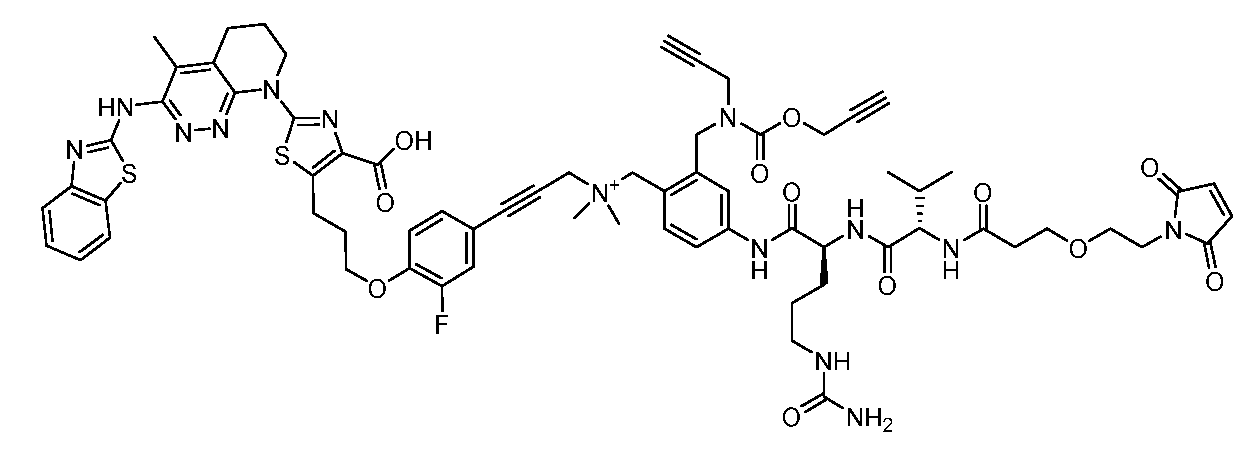
일반적 절차 8에 따라 3-(4-(3-(2-(3-(벤조[d]티아졸-2-일아미노)-4-메틸-6,7-디히드로피리도[2,3-c]피리다진-8(5H)-일)-4-카르복시티아졸-5-일)프로폭시)-3-플루오로페닐)-N-(4-((S)-2-((S)-2-((tert-부톡시카르보닐)아미노)-3-메틸부탄아미도)-5-우레이도펜탄아미도)-2-((프로프-2-인-1-일((프로프-2-인-1-일옥시)카르보닐)아미노)메틸)벤질)-N,N-디메틸프로프-2-인-1-아미늄 (45.9 mg, 0.036 mmol) 및 2,5-디옥소-2,5-디히드로-1H-피롤-1-일 3-(2-(2,5-디옥소-2,5-디히드로-1H-피롤-1-일)에톡시)프로파노에이트 (22.3 mg, 0.072 mmol, 2.0 당량)를 사용하여, 3-(4-(3-(2-(3-(벤조[d]티아졸-2-일아미노)-4-메틸-6,7-디히드로피리도[2,3-c]피리다진-8(5H)-일)-4-카르복시티아졸-5-일)프로폭시)-3-플루오로페닐)-N-(4-((S)-2-((S)-2-(3-(2-(2,5-디옥소-2,5-디히드로-1H-피롤-1-일)에톡시)프로판아미도)-3-메틸부탄아미도)-5-우레이도펜탄아미도)-2-((프로프-2-인-1-일((프로프-2-인-1-일옥시)카르보닐)아미노)메틸)벤질)-N,N-디메틸프로프-2-인-1-아미늄을 수득하였다. HRMS: M+= 1363.5100; Rt=2.26분 (5분 산성 방법).According to General Procedure 8, 3-(4-(3-(2-(3-(benzo[d]thiazol-2-ylamino)-4-methyl-6,7-dihydropyrido[2,3-c]pyridazin-8(5H)-yl)-4-carboxythiazol-5-yl)propoxy)-3-fluorophenyl)-N-(4-((S)-2-((S)-2-((tert-butoxycarbonyl)amino)-3-methylbutanamido)-5-ureidopentanamido)-2-((prop-2-yn-1-yl((prop-2-yn-1-yloxy)carbonyl)amino)methyl)benzyl)-N,N-dimethylprop-2-yn-1-aminum (45.9 mg, 0.036 mmol) and Using 2,5-dioxo-2,5-dihydro-1H-pyrrol-1-yl 3-(2-(2,5-dioxo-2,5-dihydro-1H-pyrrol-1-yl)ethoxy)propanoate (22.3 mg, 0.072 mmol, 2.0 eq), 3-(4-(3-(2-(3-(Benzo[d]thiazol-2-ylamino)-4-methyl-6,7-dihydropyrido[2,3-c]pyridazin-8(5H)-yl)-4-carboxythiazol-5-yl)propoxy)-3-fluorophenyl)-N-(4-((S)-2-((S)-2-(3-(2-(2,5-dioxo-2,5-dihydro-1H-pyrrol-1-yl)ethoxy)propanamido)-3-methylbutanamido)-5-ureidopentanamido)-2-((prop-2-yn-1-yl((prop-2-yn-1-yloxy)carbonyl)amino)methyl)benzyl)-N,N-dimethylprop-2-yn-1-aminium was obtained. HRMS: M+= 1363.5100; Rt=2.26 min (5 min acid method).
N-(2-(((((1-(2,5,8,11,14,17,20,23-옥타옥사펜타코산-25-일)-1H-1,2,3-트리아졸-4-일)메톡시)카르보닐)((1-(2,5,8,11,14,17,20,23-옥타옥사펜타코산-25-일)-1H-1,2,3-트리아졸-4-일)메틸)아미노)메틸)-4-((S)-2-((S)-2-(3-(2-(2,5-디옥소-2,5-디히드로-1H-피롤-1-일)에톡시)프로판아미도)-3-메틸부탄아미도)-5-우레이도펜탄아미도)벤질)-3-(4-(3-(2-(3-(벤조[d]티아졸-2-일아미노)-4-메틸-6,7-디히드로피리도[2,3-c]피리다진-8(5H)-일)-4-카르복시티아졸-5-일)프로폭시)-3-플루오로페닐)-N,N-디메틸프로프-2-인-1-아미늄 (L1A-P1)의 합성N-(2-((((1-(2,5,8,11,14,17,20,23-octaoxapentacosan-25-yl)-1H-1,2,3-triazol-4-yl)methoxy)carbonyl)((1-(2,5,8,11,14,17,20,23-octaoxapentacosan-25-yl)-1H-1,2,3-triazol-4-yl)methyl)amino)methyl)-4-((S)-2-((S)-2-(3-(2-(2,5-dioxo- Synthesis of 2,5-dihydro-1H-pyrrol-1-yl)ethoxy)propanamido)-3-methylbutanamido)-5-ureidopentanamido)benzyl)-3-(4-(3-(2-(3-(benzo[d]thiazol-2-ylamino)-4-methyl-6,7-dihydropyrido[2,3-c]pyridazin-8(5H)-yl)-4-carboxythiazol-5-yl)propoxy)-3-fluorophenyl)-N,N-dimethylprop-2-yn-1-aminum (L1A-P1)

일반적 절차 7에 따라 3-(4-(3-(2-(3-(벤조[d]티아졸-2-일아미노)-4-메틸-6,7-디히드로피리도[2,3-c]피리다진-8(5H)-일)-4-카르복시티아졸-5-일)프로폭시)-3-플루오로페닐)-N-(4-((S)-2-((S)-2-(3-(2-(2,5-디옥소-2,5-디히드로-1H-피롤-1-일)에톡시)프로판아미도)-3-메틸부탄아미도)-5-우레이도펜탄아미도)-2-((프로프-2-인-1-일((프로프-2-인-1-일옥시)카르보닐)아미노)메틸)벤질)-N,N-디메틸프로프-2-인-1-아미늄 (21.9 mg, 0.016 mmol) 및 1-아지도-3,6,9,12,15,18,21,24-옥타옥사헥사코산 (51.0 mg, 0.120 mmol, 7.5 당량)을 사용하여, N-(2-(((((1-(2,5,8,11,14,17,20,23-옥타옥사펜타코산-25-일)-1H-1,2,3-트리아졸-4-일)메톡시)카르보닐)((1-(2,5,8,11,14,17,20,23-옥타옥사펜타코산-25-일)-1H-1,2,3-트리아졸-4-일)메틸)아미노)메틸)-4-((S)-2-((S)-2-(3-(2-(2,5-디옥소-2,5-디히드로-1H-피롤-1-일)에톡시)프로판아미도)-3-메틸부탄아미도)-5-우레이도펜탄아미도)벤질)-3-(4-(3-(2-(3-(벤조[d]티아졸-2-일아미노)-4-메틸-6,7-디히드로피리도[2,3-c]피리다진-8(5H)-일)-4-카르복시티아졸-5-일)프로폭시)-3-플루오로페닐)-N,N-디메틸프로프-2-인-1-아미늄을 수득하였다. HRMS: M+= 2181.9800; Rt=2.31분 (5분 산성 방법).According to General Procedure 7, 3-(4-(3-(2-(3-(benzo[d]thiazol-2-ylamino)-4-methyl-6,7-dihydropyrido[2,3-c]pyridazin-8(5H)-yl)-4-carboxythiazol-5-yl)propoxy)-3-fluorophenyl)-N-(4-((S)-2-((S)-2-(3-(2-(2,5-dioxo-2,5-dihydro-1H-pyrrol-1-yl)ethoxy)propanamido)-3-methylbutanamido)-5-ureidopentanamido)-2-((prop-2-yn-1-yl((prop-2-yn-1-yloxy)carbonyl)amino)methyl)benzyl)-N,N-dimethylprop-2-yn-1-aminum (21.9 mg, 0.016 mmol) and 1-azido-3,6,9,12,15,18,21,24-octaoxahexacosane (51.0 mg, 0.120 mmol, 7.5 equiv) were used to prepare N-(2-(((((1-(2,5,8,11,14,17,20,23-octaoxapentacosan-25-yl)-1H-1,2,3-triazol-4-yl)methoxy)carbonyl)((1-(2,5,8,11,14,17,20,23-octaoxapentacosan-25-yl)-1H-1,2,3-triazol-4-yl)methyl)amino)methyl)-4-((S)-2-((S)-2-(3-(2-(2,5-dioxo- Obtained 2,5-dihydro-1H-pyrrol-1-yl)ethoxy)propanamido)-3-methylbutanamido)-5-ureidopentanamido)benzyl)-3-(4-(3-(2-(3-(benzo[d]thiazol-2-ylamino)-4-methyl-6,7-dihydropyrido[2,3-c]pyridazin-8(5H)-yl)-4-carboxythiazol-5-yl)propoxy)-3-fluorophenyl)-N,N-dimethylprop-2-yn-1-aminium. HRMS: M+ = 2181.9800; Rt = 2.31 min (5 min acidic method).
3-(4-(3-(2-(3-(벤조[d]티아졸-2-일아미노)-4-메틸-6,7-디히드로피리도[2,3-c]피리다진-8(5H)-일)-4-카르복시티아졸-5-일)프로폭시)-3-플루오로페닐)-N-(2-(((((1-(26-카르복시-3,6,9,12,15,18,21,24-옥타옥사헥사코실)-1H-1,2,3-트리아졸-4-일)메톡시)카르보닐)((1-(26-카르복시-3,6,9,12,15,18,21,24-옥타옥사헥사코실)-1H-1,2,3-트리아졸-4-일)메틸)아미노)메틸)-4-((S)-2-((S)-2-(3-(2-(2,5-디옥소-2,5-디히드로-1H-피롤-1-일)에톡시)프로판아미도)-3-메틸부탄아미도)-5-우레이도펜탄아미도)벤질)-N,N-디메틸프로프-2-인-1-아미늄 (L10A-P1)의 합성3-(4-(3-(2-(3-(Benzo[d]thiazol-2-ylamino)-4-methyl-6,7-dihydropyrido[2,3-c]pyridazin-8(5H)-yl)-4-carboxythiazol-5-yl)propoxy)-3-fluorophenyl)-N-(2-((((1-(26-carboxy-3,6,9,12,15,18,21,24-octaoxahexacosyl)-1H-1,2,3-triazol-4-yl)methoxy)carbonyl)(( Synthesis of 1-(26-carboxy-3,6,9,12,15,18,21,24-octaoxahexacosyl)-1H-1,2,3-triazol-4-yl)methyl)amino)methyl)-4-((S)-2-((S)-2-(3-(2-(2,5-dioxo-2,5-dihydro-1H-pyrrol-1-yl)ethoxy)propanamido)-3-methylbutanamido)-5-ureidopentanamido)benzyl)-N,N-dimethylprop-2-yn-1-aminum (L10A-P1)

일반적 절차 7에 따라 3-(4-(3-(2-(3-(벤조[d]티아졸-2-일아미노)-4-메틸-6,7-디히드로피리도[2,3-c]피리다진-8(5H)-일)-4-카르복시티아졸-5-일)프로폭시)-3-플루오로페닐)-N-(4-((S)-2-((S)-2-(3-(2-(2,5-디옥소-2,5-디히드로-1H-피롤-1-일)에톡시)프로판아미도)-3-메틸부탄아미도)-5-우레이도펜탄아미도)-2-((프로프-2-인-1-일((프로프-2-인-1-일옥시)카르보닐)아미노)메틸)벤질)-N,N-디메틸프로프-2-인-1-아미늄 (20.0 mg, 0.015 mmol) 및 1-아지도-3,6,9,12,15,18,21,24-옥타옥사헵타코산-27-산 (51.4 mg, 0.110 mmol, 7.5 당량)을 사용하여, 3-(4-(3-(2-(3-(벤조[d]티아졸-2-일아미노)-4-메틸-6,7-디히드로피리도[2,3-c]피리다진-8(5H)-일)-4-카르복시티아졸-5-일)프로폭시)-3-플루오로페닐)-N-(2-(((((1-(26-카르복시-3,6,9,12,15,18,21,24-옥타옥사헥사코실)-1H-1,2,3-트리아졸-4-일)메톡시)카르보닐)((1-(26-카르복시-3,6,9,12,15,18,21,24-옥타옥사헥사코실)-1H-1,2,3-트리아졸-4-일)메틸)아미노)메틸)-4-((S)-2-((S)-2-(3-(2-(2,5-디옥소-2,5-디히드로-1H-피롤-1-일)에톡시)프로판아미도)-3-메틸부탄아미도)-5-우레이도펜탄아미도)벤질)-N,N-디메틸프로프-2-인-1-아미늄을 수득하였다. HRMS: M+= 2298.0100; Rt=2.44분 (5분 산성 방법).According to General Procedure 7, 3-(4-(3-(2-(3-(benzo[d]thiazol-2-ylamino)-4-methyl-6,7-dihydropyrido[2,3-c]pyridazin-8(5H)-yl)-4-carboxythiazol-5-yl)propoxy)-3-fluorophenyl)-N-(4-((S)-2-((S)-2-(3-(2-(2,5-dioxo-2,5-dihydro-1H-pyrrol-1-yl)ethoxy)propanamido)-3-methylbutanamido)-5-ureidopentanamido)-2-((prop-2-yn-1-yl((prop-2-yn-1-yloxy)carbonyl)amino)methyl)benzyl)-N,N-dimethylprop-2-yn-1-aminum (20.0 mg, 0.015 mmol) and 1-azido-3,6,9,12,15,18,21,24-octaoxaheptacosan-27-acid (51.4 mg, 0.110 mmol, 7.5 eq) were used to prepare 3-(4-(3-(2-(3-(benzo[d]thiazol-2-ylamino)-4-methyl-6,7-dihydropyrido[2,3-c]pyridazin-8(5H)-yl)-4-carboxythiazol-5-yl)propoxy)-3-fluorophenyl)-N-(2-((((1-(26-carboxy-3,6,9,12,15,18,21,24-octaoxaheptacosyl)-1H-1,2,3-triazol-4-yl)methoxy)carbonyl)(( Obtained 1-(26-carboxy-3,6,9,12,15,18,21,24-octaoxahexacosyl)-1H-1,2,3-triazol-4-yl)methyl)amino)methyl)-4-((S)-2-((S)-2-(3-(2-(2,5-dioxo-2,5-dihydro-1H-pyrrol-1-yl)ethoxy)propanamido)-3-methylbutanamido)-5-ureidopentanamido)benzyl)-N,N-dimethylprop-2-yn-1-aminium. HRMS: M+ = 2298.0100; Rt = 2.44 min (5 min acidic method).
2-((6-(벤조[d]티아졸-2-일아미노)-5-메틸피리다진-3-일)(메틸)아미노)-5-(3-(4-(3-((4-((S)-2-((S)-2-((tert-부톡시카르보닐)아미노)-3-메틸부탄아미도)-5-우레이도펜탄아미도)-2-((프로프-2-인-1-일((프로프-2-인-1-일옥시)카르보닐)아미노)메틸)벤질)디메틸암모니오)프로프-1-인-1-일)-2-플루오로페녹시)프로필)티아졸-4-카르복실레이트의 합성Synthesis of 2-((6-(benzo[d]thiazol-2-ylamino)-5-methylpyridazin-3-yl)(methyl)amino)-5-(3-(4-(3-((4-((S)-2-((S)-2-((tert-butoxycarbonyl)amino)-3-methylbutanamido)-5-ureidopentanamido)-2-((prop-2-yn-1-yl((prop-2-yn-1-yloxy)carbonyl)amino)methyl)benzyl)dimethylammonio)prop-1-yn-1-yl)-2-fluorophenoxy)propyl)thiazole-4-carboxylate

일반적 절차 6에 따라 2-((6-(벤조[d]티아졸-2-일아미노)-5-메틸피리다진-3-일)(메틸)아미노)-5-(3-(4-(3-(디메틸아미노)프로프-1-인-1-일)-2-플루오로페녹시)프로필)티아졸-4-카르복실산 (50.0 mg, 0.079 mmol) 및 프로프-2-인-1-일 5-((S)-2-((S)-2-((tert-부톡시카르보닐)아미노)-3-메틸부탄아미도)-5-우레이도펜탄아미도)-2-(클로로메틸)벤질(프로프-2-인-1-일)카르바메이트 (61.5 mg, 0.095 mmol, 1.2 당량)를 사용하여, 2-((6-(벤조[d]티아졸-2-일아미노)-5-메틸피리다진-3-일)(메틸)아미노)-5-(3-(4-(3-((4-((S)-2-((S)-2-((tert-부톡시카르보닐)아미노)-3-메틸부탄아미도)-5-우레이도펜탄아미도)-2-((프로프-2-인-1-일((프로프-2-인-1-일옥시)카르보닐)아미노)메틸)벤질)디메틸암모니오)프로프-1-인-1-일)-2-플루오로페녹시)프로필)티아졸-4-카르복실레이트를 수득하였다. LCMS: M+= 1243.2; Rt=2.27분 (5분 산성 방법).According to General Procedure 6 using 2-((6-(benzo[d]thiazol-2-ylamino)-5-methylpyridazin-3-yl)(methyl)amino)-5-(3-(4-(3-(dimethylamino)prop-1-yn-1-yl)-2-fluorophenoxy)propyl)thiazole-4-carboxylic acid (50.0 mg, 0.079 mmol) and prop-2-yn-1-yl 5-((S)-2-((S)-2-((tert-butoxycarbonyl)amino)-3-methylbutanamido)-5-ureidopentanamido)-2-(chloromethyl)benzyl(prop-2-yn-1-yl)carbamate (61.5 mg, 0.095 mmol, 1.2 eq), Obtained 2-((6-(Benzo[d]thiazol-2-ylamino)-5-methylpyridazin-3-yl)(methyl)amino)-5-(3-(4-(3-((4-((S)-2-((S)-2-((tert-butoxycarbonyl)amino)-3-methylbutanamido)-5-ureidopentanamido)-2-((prop-2-yn-1-yl((prop-2-yn-1-yloxy)carbonyl)amino)methyl)benzyl)dimethylammonio)prop-1-yn-1-yl)-2-fluorophenoxy)propyl)thiazole-4-carboxylate. LCMS: M+ = 1243.2; Rt = 2.27 min (5 min acidic method).
3-(4-(3-(2-((6-(벤조[d]티아졸-2-일아미노)-5-메틸피리다진-3-일)(메틸)아미노)-4-카르복시티아졸-5-일)프로폭시)-3-플루오로페닐)-N-(4-((S)-2-((S)-2-((tert-부톡시카르보닐)아미노)-3-메틸부탄아미도)-5-우레이도펜탄아미도)-2-(((((1-(26-카르복시-3,6,9,12,15,18,21,24-옥타옥사헥사코실)-1H-1,2,3-트리아졸-4-일)메톡시)카르보닐)((1-(26-카르복시-3,6,9,12,15,18,21,24-옥타옥사헥사코실)-1H-1,2,3-트리아졸-4-일)메틸)아미노)메틸)벤질)-N,N-디메틸프로프-2-인-1-아미늄의 합성3-(4-(3-(2-((6-(Benzo[d]thiazol-2-ylamino)-5-methylpyridazin-3-yl)(methyl)amino)-4-carboxythiazol-5-yl)propoxy)-3-fluorophenyl)-N-(4-((S)-2-((S)-2-((tert-butoxycarbonyl)amino)-3-methylbutanamido)-5-ureidopentanamido)-2-((((1-(26 -Carboxy-3,6,9,12,15,18,21,24-octaoxahexacosyl)-1H-1,2,3-triazol-4-yl)methoxy)carbonyl)((1-(26-carboxy-3,6,9,12,15,18,21,24-octaoxahexacosyl)-1H-1,2,3-triazol-4-yl)methyl)amino)methyl)benzyl)-N,N-dimethylprop-2-yn-1-aminium Synthesis

일반적 절차 7에 따라 3-(4-(3-(2-((6-(벤조[d]티아졸-2-일아미노)-5-메틸피리다진-3-일)(메틸)아미노)-4-카르복시티아졸-5-일)프로폭시)-3-플루오로페닐)-N-(4-((S)-2-((S)-2-((tert-부톡시카르보닐)아미노)-3-메틸부탄아미도)-5-우레이도펜탄아미도)-2-((프로프-2-인-1-일((프로프-2-인-1-일옥시)카르보닐)아미노)메틸)벤질)-N,N-디메틸프로프-2-인-1-아미늄 (21.8 mg, 0.018 mmol) 및 1-아지도-3,6,9,12,15,18,21,24-옥타옥사헵타코산-27-산 (32.8 mg, 0.070 mmol, 4.0 당량)을 사용하여, 3-(4-(3-(2-((6-(벤조[d]티아졸-2-일아미노)-5-메틸피리다진-3-일)(메틸)아미노)-4-카르복시티아졸-5-일)프로폭시)-3-플루오로페닐)-N-(4-((S)-2-((S)-2-((tert-부톡시카르보닐)아미노)-3-메틸부탄아미도)-5-우레이도펜탄아미도)-2-(((((1-(26-카르복시-3,6,9,12,15,18,21,24-옥타옥사헥사코실)-1H-1,2,3-트리아졸-4-일)메톡시)카르보닐)((1-(26-카르복시-3,6,9,12,15,18,21,24-옥타옥사헥사코실)-1H-1,2,3-트리아졸-4-일)메틸)아미노)메틸)벤질)-N,N-디메틸프로프-2-인-1-아미늄을 수득하였다. HRMS: M+= 2176.8301; Rt=2.25분 (5분 산성 방법).According to General Procedure 7, 3-(4-(3-(2-((6-(benzo[d]thiazol-2-ylamino)-5-methylpyridazin-3-yl)(methyl)amino)-4-carboxythiazol-5-yl)propoxy)-3-fluorophenyl)-N-(4-((S)-2-((S)-2-((tert-butoxycarbonyl)amino)-3-methylbutanamido)-5-ureidopentanamido)-2-((prop-2-yn-1-yl((prop-2-yn-1-yloxy)carbonyl)amino)methyl)benzyl)-N,N-dimethylprop-2-yn-1-aminum (21.8 mg, 0.018 mmol) and Using 1-azido-3,6,9,12,15,18,21,24-octaoxaheptacosan-27-acid (32.8 mg, 0.070 mmol, 4.0 equiv) 3-(4-(3-(2-((6-(benzo[d]thiazol-2-ylamino)-5-methylpyridazin-3-yl)(methyl)amino)-4-carboxythiazol-5-yl)propoxy)-3-fluorophenyl)-N-(4-((S)-2-((S)-2-((tert-butoxycarbonyl)amino)-3-methylbutanamido)-5-ureidopentanamido)-2-((((1-(26 -Carboxy-3,6,9,12,15,18,21,24-octaoxahexacosyl)-1H-1,2,3-triazol-4-yl)methoxy)carbonyl)((1-(26-carboxy-3,6,9,12,15,18,21,24-octaoxahexacosyl)-1H-1,2,3-triazol-4-yl)methyl)amino)methyl)benzyl)-N,N-dimethylprop-2-yn-1-aminium was obtained. HRMS: M+ = 2176.8301; Rt = 2.25 min (5 min acidic method).
3-(4-(3-(2-((6-(벤조[d]티아졸-2-일아미노)-5-메틸피리다진-3-일)(메틸)아미노)-4-카르복시티아졸-5-일)프로폭시)-3-플루오로페닐)-N-(2-(((((1-(26-카르복시-3,6,9,12,15,18,21,24-옥타옥사헥사코실)-1H-1,2,3-트리아졸-4-일)메톡시)카르보닐)((1-(26-카르복시-3,6,9,12,15,18,21,24-옥타옥사헥사코실)-1H-1,2,3-트리아졸-4-일)메틸)아미노)메틸)-4-((S)-2-((S)-2-(3-(2-(2,5-디옥소-2,5-디히드로-1H-피롤-1-일)에톡시)프로판아미도)-3-메틸부탄아미도)-5-우레이도펜탄아미도)벤질)-N,N-디메틸프로프-2-인-1-아미늄 (L10A-P2)의 합성3-(4-(3-(2-((6-(Benzo[d]thiazol-2-ylamino)-5-methylpyridazin-3-yl)(methyl)amino)-4-carboxythiazol-5-yl)propoxy)-3-fluorophenyl)-N-(2-((((1-(26-carboxy-3,6,9,12,15,18,21,24-octaoxahexacosyl)-1H-1,2,3-triazol-4-yl)methoxy)carbonyl)((1-(26-carboxy Synthesis of (S)-3,6,9,12,15,18,21,24-octaoxahexacosyl)-1H-1,2,3-triazol-4-yl)methyl)amino)methyl)-4-((S)-2-((S)-2-(3-(2-(2,5-dioxo-2,5-dihydro-1H-pyrrol-1-yl)ethoxy)propanamido)-3-methylbutanamido)-5-ureidopentanamido)benzyl)-N,N-dimethylprop-2-yn-1-aminum (L10A-P2)
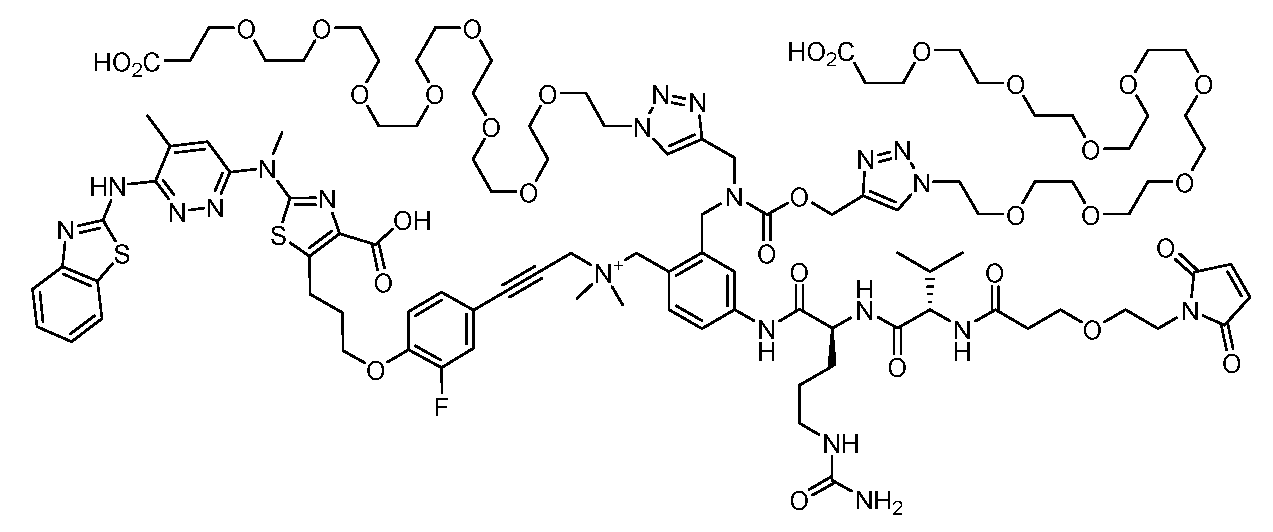
일반적 절차 8에 따라 3-(4-(3-(2-((6-(벤조[d]티아졸-2-일아미노)-5-메틸피리다진-3-일)(메틸)아미노)-4-카르복시티아졸-5-일)프로폭시)-3-플루오로페닐)-N-(4-((S)-2-((S)-2-((tert-부톡시카르보닐)아미노)-3-메틸부탄아미도)-5-우레이도펜탄아미도)-2-(((((1-(26-카르복시-3,6,9,12,15,18,21,24-옥타옥사헥사코실)-1H-1,2,3-트리아졸-4-일)메톡시)카르보닐)((1-(26-카르복시-3,6,9,12,15,18,21,24-옥타옥사헥사코실)-1H-1,2,3-트리아졸-4-일)메틸)아미노)메틸)벤질)-N,N-디메틸프로프-2-인-1-아미늄 (17.8 mg, 0.008 mmol) 및 2,5-디옥소피롤리딘-1-일 3-(2-(2,5-디옥소-2,5-디히드로-1H-피롤-1-일)에톡시)프로파노에이트 (10.2 mg, 0.033 mmol, 4.0 당량)를 사용하여, 3-(4-(3-(2-((6-(벤조[d]티아졸-2-일아미노)-5-메틸피리다진-3-일)(메틸)아미노)-4-카르복시티아졸-5-일)프로폭시)-3-플루오로페닐)-N-(2-(((((1-(26-카르복시-3,6,9,12,15,18,21,24-옥타옥사헥사코실)-1H-1,2,3-트리아졸-4-일)메톡시)카르보닐)((1-(26-카르복시-3,6,9,12,15,18,21,24-옥타옥사헥사코실)-1H-1,2,3-트리아졸-4-일)메틸)아미노)메틸)-4-((S)-2-((S)-2-(3-(2-(2,5-디옥소-2,5-디히드로-1H-피롤-1-일)에톡시)프로판아미도)-3-메틸부탄아미도)-5-우레이도펜탄아미도)벤질)-N,N-디메틸프로프-2-인-1-아미늄을 수득하였다. HRMS: M+= 2271.8186; Rt=2.12분 (5분 산성 방법).According to General Procedure 8, 3-(4-(3-(2-((6-(benzo[d]thiazol-2-ylamino)-5-methylpyridazin-3-yl)(methyl)amino)-4-carboxythiazol-5-yl)propoxy)-3-fluorophenyl)-N-(4-((S)-2-((S)-2-((tert-butoxycarbonyl)amino)-3-methylbutanamido)-5-ureidopentanamido)-2-((((1-(26 -carboxy-3,6,9,12,15,18,21,24-octaoxahexacosyl)-1H-1,2,3-triazol-4-yl)methoxy)carbonyl)((1-(26-carboxy-3,6,9,12,15,18,21,24-octaoxahexacosyl)-1H-1,2,3-triazol-4-yl)methyl)amino)methyl)benzyl)-N,N-dimethylprop-2-yn-1-aminum (17.8 mg, 0.008 mmol) and 2,5-dioxopyrrolidin-1-yl 3-(2-(2,5-dioxo-2,5-dihydro-1H-pyrrol-1-yl)ethoxy)propanoate (10.2 mg, 0.033 mmol, 4.0 eq). 3-(4-(3-(2-((6-(Benzo[d]thiazol-2-ylamino)-5-methylpyridazin-3-yl)(methyl)amino)-4-carboxythiazol-5-yl)propoxy)-3-fluorophenyl)-N-(2-((((1-(26-carboxy-3,6,9,12,15,18,21,24-octaoxahexacosyl)-1H-1,2,3-triazol-4-yl)methoxy)carbonyl)((1-(26-carboxy Obtained ((S)-2-((S)-2-(3-(2-(2,5-dioxo-2,5-dihydro-1H-pyrrol-1-yl)ethoxy)propanamido)-3-methylbutanamido)-5-ureidopentanamido)benzyl)-N,N-dimethylprop-2-yn-1-aminium). HRMS: M+ = 2271.8186; Rt = 2.12 min (5 min acidic method).
N-(2-(((((1-(2,5,8,11,14,17,20,23-옥타옥사펜타코산-25-일)-1H-1,2,3-트리아졸-4-일)메톡시)카르보닐)((1-(2,5,8,11,14,17,20,23-옥타옥사펜타코산-25-일)-1H-1,2,3-트리아졸-4-일)메틸)아미노)메틸)-4-((S)-2-((S)-2-((tert-부톡시카르보닐)아미노)-3-메틸부탄아미도)-5-우레이도펜탄아미도)벤질)-3-(4-(3-(2-((6-(벤조[d]티아졸-2-일아미노)-5-메틸피리다진-3-일)(메틸)아미노)-4-카르복시티아졸-5-일)프로폭시)-3-플루오로페닐)-N,N-디메틸프로프-2-인-1-아미늄의 합성N-(2-((((1-(2,5,8,11,14,17,20,23-octaoxapentacosan-25-yl)-1H-1,2,3-triazol-4-yl)methoxy)carbonyl)((1-(2,5,8,11,14,17,20,23-octaoxapentacosan-25-yl)-1H-1,2,3-triazol-4-yl)methyl)amino)methyl)-4-((S)-2-(( Synthesis of S)-2-((tert-butoxycarbonyl)amino)-3-methylbutanamido)-5-ureidopentanamido)benzyl)-3-(4-(3-(2-((6-(benzo[d]thiazol-2-ylamino)-5-methylpyridazin-3-yl)(methyl)amino)-4-carboxythiazol-5-yl)propoxy)-3-fluorophenyl)-N,N-dimethylprop-2-yn-1-aminum

일반적 절차 7에 따라 3-(4-(3-(2-((6-(벤조[d]티아졸-2-일아미노)-5-메틸피리다진-3-일)(메틸)아미노)-4-카르복시티아졸-5-일)프로폭시)-3-플루오로페닐)-N-(4-((S)-2-((S)-2-((tert-부톡시카르보닐)아미노)-3-메틸부탄아미도)-5-우레이도펜탄아미도)-2-((프로프-2-인-1-일((프로프-2-인-1-일옥시)카르보닐)아미노)메틸)벤질)-N,N-디메틸프로프-2-인-1-아미늄 (22.6 mg, 0.018 mmol) 및 25-아지도-2,5,8,11,14,17,20,23-옥타옥사펜타코산 (29.8 mg, 0.073 mmol, 4.0 당량)을 사용하여, N-(2-(((((1-(2,5,8,11,14,17,20,23-옥타옥사펜타코산-25-일)-1H-1,2,3-트리아졸-4-일)메톡시)카르보닐)((1-(2,5,8,11,14,17,20,23-옥타옥사펜타코산-25-일)-1H-1,2,3-트리아졸-4-일)메틸)아미노)메틸)-4-((S)-2-((tert-부톡시카르보닐)아미노)-3-메틸부탄아미도)-5-우레이도펜탄아미도)벤질)-3-(4-(3-(2-((6-(벤조[d]티아졸-2-일아미노)-5-메틸피리다진-3-일)(메틸)아미노)-4-카르복시티아졸-5-일)프로폭시)-3-플루오로페닐)-N,N-디메틸프로프-2-인-1-아미늄을 수득하였다. LCMS: M/2+= 1032.3; Rt=2.25분 (5분 산성 방법).According to General Procedure 7, 3-(4-(3-(2-((6-(benzo[d]thiazol-2-ylamino)-5-methylpyridazin-3-yl)(methyl)amino)-4-carboxythiazol-5-yl)propoxy)-3-fluorophenyl)-N-(4-((S)-2-((S)-2-((tert-butoxycarbonyl)amino)-3-methylbutanamido)-5-ureidopentanamido)-2-((prop-2-yn-1-yl((prop-2-yn-1-yloxy)carbonyl)amino)methyl)benzyl)-N,N-dimethylprop-2-yn-1-aminum (22.6 mg, 0.018 mmol) and Using 25-azido-2,5,8,11,14,17,20,23-octaoxapentacosane (29.8 mg, 0.073 mmol, 4.0 equiv), N-(2-(((((1-(2,5,8,11,14,17,20,23-octaoxapentacosan-25-yl)-1H-1,2,3-triazol-4-yl)methoxy)carbonyl)((1-(2,5,8,11,14,17,20,23-octaoxapentacosan-25-yl)-1H-1,2,3-triazol-4-yl)methyl)amino)methyl)-4-((S)-2 -((tert-butoxycarbonyl)amino)-3-methylbutanamido)-5-ureidopentanamido)benzyl)-3-(4-(3-(2-((6-(benzo[d]thiazol-2-ylamino)-5-methylpyridazin-3-yl)(methyl)amino)-4-carboxythiazol-5-yl)propoxy)-3-fluorophenyl)-N,N-dimethylprop-2-yn-1-aminium was obtained. LCMS: M/2+ = 1032.3; Rt = 2.25 min (5 min acidic method).
N-(2-(((((1-(2,5,8,11,14,17,20,23-옥타옥사펜타코산-25-일)-1H-1,2,3-트리아졸-4-일)메톡시)카르보닐)((1-(2,5,8,11,14,17,20,23-옥타옥사펜타코산-25-일)-1H-1,2,3-트리아졸-4-일)메틸)아미노)메틸)-4-((S)-2-((S)-2-(3-(2-(2,5-디옥소-2,5-디히드로-1H-피롤-1-일)에톡시)프로판아미도)-3-메틸부탄아미도)-5-우레이도펜탄아미도)벤질)-3-(4-(3-(2-((6-(벤조[d]티아졸-2-일아미노)-5-메틸피리다진-3-일)(메틸)아미노)-4-카르복시티아졸-5-일)프로폭시)-3-플루오로페닐)-N,N-디메틸프로프-2-인-1-아미늄 (L1A-P2)의 합성N-(2-((((1-(2,5,8,11,14,17,20,23-octaoxapentacosan-25-yl)-1H-1,2,3-triazol-4-yl)methoxy)carbonyl)((1-(2,5,8,11,14,17,20,23-octaoxapentacosan-25-yl)-1H-1,2,3-triazol-4-yl)methyl)amino)methyl)-4-((S)-2-((S)-2-(3-(2-(2 Synthesis of ,5-dioxo-2,5-dihydro-1H-pyrrol-1-yl)ethoxy)propanamido)-3-methylbutanamido)-5-ureidopentanamido)benzyl)-3-(4-(3-(2-((6-(benzo[d]thiazol-2-ylamino)-5-methylpyridazin-3-yl)(methyl)amino)-4-carboxythiazol-5-yl)propoxy)-3-fluorophenyl)-N,N-dimethylprop-2-yn-1-aminum (L1A-P2)

일반적 절차 8에 따라 N-(2-(((((1-(2,5,8,11,14,17,20,23-옥타옥사펜타코산-25-일)-1H-1,2,3-트리아졸-4-일)메톡시)카르보닐)((1-(2,5,8,11,14,17,20,23-옥타옥사펜타코산-25-일)-1H-1,2,3-트리아졸-4-일)메틸)아미노)메틸)-4-((S)-2-((S)-2-((tert-부톡시카르보닐)아미노)-3-메틸부탄아미도)-5-우레이도펜탄아미도)벤질)-3-(4-(3-(2-((6-(벤조[d]티아졸-2-일아미노)-5-메틸피리다진-3-일)(메틸)아미노)-4-카르복시티아졸-5-일)프로폭시)-3-플루오로페닐)-N,N-디메틸프로프-2-인-1-아미늄 (23.0 mg, 0.011 mmol) 및 2,5-디옥소피롤리딘-1-일 3-(2-(2,5-디옥소-2,5-디히드로-1H-피롤-1-일)에톡시)프로파노에이트 (10.4 mg, 0.033 mmol, 3.0 당량)를 사용하여, N-(2-(((((1-(2,5,8,11,14,17,20,23-옥타옥사펜타코산-25-일)-1H-1,2,3-트리아졸-4-일)메톡시)카르보닐)((1-(2,5,8,11,14,17,20,23-옥타옥사펜타코산-25-일)-1H-1,2,3-트리아졸-4-일)메틸)아미노)메틸)-4-((S)-2-((S)-2-(3-(2-(2,5-디옥소-2,5-디히드로-1H-피롤-1-일)에톡시)프로판아미도)-3-메틸부탄아미도)-5-우레이도펜탄아미도)벤질)-3-(4-(3-(2-((6-(벤조[d]티아졸-2-일아미노)-5-메틸피리다진-3-일)(메틸)아미노)-4-카르복시티아졸-5-일)프로폭시)-3-플루오로페닐)-N,N-디메틸프로프-2-인-1-아미늄을 수득하였다. HRMS: M+= 2155.8176; Rt=2.23분 (5분 산성 방법).According to General Procedure 8, N-(2-((((1-(2,5,8,11,14,17,20,23-octaoxapentacosan-25-yl)-1H-1,2,3-triazol-4-yl)methoxy)carbonyl)((1-(2,5,8,11,14,17,20,23-octaoxapentacosan-25-yl)-1H-1,2,3-triazol-4-yl)methyl)amino)methyl)-4-((S)-2-(( Using S)-2-((tert-butoxycarbonyl)amino)-3-methylbutanamido)-5-ureidopentanamido)benzyl)-3-(4-(3-(2-((6-(benzo[d]thiazol-2-ylamino)-5-methylpyridazin-3-yl)(methyl)amino)-4-carboxythiazol-5-yl)propoxy)-3-fluorophenyl)-N,N-dimethylprop-2-yn-1-aminium (23.0 mg, 0.011 mmol) and 2,5-dioxopyrrolidin-1-yl 3-(2-(2,5-dioxo-2,5-dihydro-1H-pyrrol-1-yl)ethoxy)propanoate (10.4 mg, 0.033 mmol, 3.0 equiv), N-(2-((((1-(2,5,8,11,14,17,20,23-octaoxapentacosan-25-yl)-1H-1,2,3-triazol-4-yl)methoxy)carbonyl)((1-(2,5,8,11,14,17,20,23-octaoxapentacosan-25-yl)-1H-1,2,3-triazol-4-yl)methyl)amino)methyl)-4-((S)-2-((S)-2-(3-(2-(2 ,5-dioxo-2,5-dihydro-1H-pyrrol-1-yl)ethoxy)propanamido)-3-methylbutanamido)-5-ureidopentanamido)benzyl)-3-(4-(3-(2-((6-(benzo[d]thiazol-2-ylamino)-5-methylpyridazin-3-yl)(methyl)amino)-4-carboxythiazol-5-yl)propoxy)-3-fluorophenyl)-N,N-dimethylprop-2-yn-1-aminium was obtained. HRMS: M+ = 2155.8176; Rt = 2.23 min (5 min acidic method).
3-(4-(3-(2-(3-(벤조[d]티아졸-2-일아미노)-4-메틸-6,7-디히드로피리도[2,3-c]피리다진-8(5H)-일)-4-카르복시티아졸-5-일)프로폭시)-3-플루오로페닐)-N-(4-((S)-2-((S)-2-((tert-부톡시카르보닐)아미노)-3-메틸부탄아미도)-5-우레이도펜탄아미도)벤질)-N,N-디메틸프로프-2-인-1-아미늄의 합성Synthesis of 3-(4-(3-(2-(3-(benzo[d]thiazol-2-ylamino)-4-methyl-6,7-dihydropyrido[2,3-c]pyridazin-8(5H)-yl)-4-carboxythiazol-5-yl)propoxy)-3-fluorophenyl)-N-(4-((S)-2-((S)-2-((tert-butoxycarbonyl)amino)-3-methylbutanamido)-5-ureidopentanamido)benzyl)-N,N-dimethylprop-2-yn-1-aminum

일반적 절차 6에 따라 2-(3-(벤조[d]티아졸-2-일아미노)-4-메틸-6,7-디히드로피리도[2,3-c]피리다진-8(5H)-일)-5-(3-(4-(3-(디메틸아미노)프로프-1-인-1-일)-2-플루오로페녹시)프로필)티아졸-4-카르복실산 (21.5 mg, 0.033 mmol) 및 tert-부틸 ((S)-1-(((S)-1-((4-(클로로메틸)페닐)아미노)-1-옥소-5-우레이도펜탄-2-일)아미노)-3-메틸-1-옥소부탄-2-일)카르바메이트 (21.2 mg, 0.042 mmol, 1.3 당량)를 사용하여, 3-(4-(3-(2-(3-(벤조[d]티아졸-2-일아미노)-4-메틸-6,7-디히드로피리도[2,3-c]피리다진-8(5H)-일)-4-카르복시티아졸-5-일)프로폭시)-3-플루오로페닐)-N-(4-((S)-2-((S)-2-((tert-부톡시카르보닐)아미노)-3-메틸부탄아미도)-5-우레이도펜탄아미도)벤질)-N,N-디메틸프로프-2-인-1-아미늄을 수득하였다. LCMS: M+= 1119.3; Rt=2.15분 (5분 산성 방법).According to General Procedure 6 using 2-(3-(benzo[d]thiazol-2-ylamino)-4-methyl-6,7-dihydropyrido[2,3-c]pyridazin-8(5H)-yl)-5-(3-(4-(3-(dimethylamino)prop-1-yn-1-yl)-2-fluorophenoxy)propyl)thiazole-4-carboxylic acid (21.5 mg, 0.033 mmol) and tert-butyl ((S)-1-(((S)-1-((4-(chloromethyl)phenyl)amino)-1-oxo-5-ureidopentan-2-yl)amino)-3-methyl-1-oxobutan-2-yl)carbamate (21.2 mg, 0.042 mmol, 1.3 equiv), 3-(4-(3-(2-(3-(Benzo[d]thiazol-2-ylamino)-4-methyl-6,7-dihydropyrido[2,3-c]pyridazin-8(5H)-yl)-4-carboxythiazol-5-yl)propoxy)-3-fluorophenyl)-N-(4-((S)-2-((S)-2-((tert-butoxycarbonyl)amino)-3-methylbutanamido)-5-ureidopentanamido)benzyl)-N,N-dimethylprop-2-yn-1-aminium was obtained. LCMS: M+ = 1119.3; Rt = 2.15 min (5 min acidic method).
3-(4-(3-(2-(3-(벤조[d]티아졸-2-일아미노)-4-메틸-6,7-디히드로피리도[2,3-c]피리다진-8(5H)-일)-4-카르복시티아졸-5-일)프로폭시)-3-플루오로페닐)-N-(4-((S)-2-((S)-2-(3-(2-(2,5-디옥소-2,5-디히드로-1H-피롤-1-일)에톡시)프로판아미도)-3-메틸부탄아미도)-5-우레이도펜탄아미도)벤질)-N,N-디메틸프로프-2-인-1-아미늄 (L9A-P1)의 합성Synthesis of 3-(4-(3-(2-(3-(benzo[d]thiazol-2-ylamino)-4-methyl-6,7-dihydropyrido[2,3-c]pyridazin-8(5H)-yl)-4-carboxythiazol-5-yl)propoxy)-3-fluorophenyl)-N-(4-((S)-2-((S)-2-(3-(2-(2,5-dioxo-2,5-dihydro-1H-pyrrol-1-yl)ethoxy)propanamido)-3-methylbutanamido)-5-ureidopentanamido)benzyl)-N,N-dimethylprop-2-yn-1-aminum (L9A-P1)

일반적 절차 8에 따라 3-(4-(3-(2-(3-(벤조[d]티아졸-2-일아미노)-4-메틸-6,7-디히드로피리도[2,3-c]피리다진-8(5H)-일)-4-카르복시티아졸-5-일)프로폭시)-3-플루오로페닐)-N-(4-((S)-2-((S)-2-((tert-부톡시카르보닐)아미노)-3-메틸부탄아미도)-5-우레이도펜탄아미도)벤질)-N,N-디메틸프로프-2-인-1-아미늄 (36.6 mg, 0.033 mmol) 및 2,5-디옥소피롤리딘-1-일 3-(2-(2,5-디옥소-2,5-디히드로-1H-피롤-1-일)에톡시)프로파노에이트 (20.3 mg, 0.065 mmol, 2.0 당량)를 사용하여, 3-(4-(3-(2-(3-(벤조[d]티아졸-2-일아미노)-4-메틸-6,7-디히드로피리도[2,3-c]피리다진-8(5H)-일)-4-카르복시티아졸-5-일)프로폭시)-3-플루오로페닐)-N-(4-((S)-2-((S)-2-(3-(2-(2,5-디옥소-2,5-디히드로-1H-피롤-1-일)에톡시)프로판아미도)-3-메틸부탄아미도)-5-우레이도펜탄아미도)벤질)-N,N-디메틸프로프-2-인-1-아미늄을 수득하였다. HRMS: M+= 1214.4700; Rt=2.10분 (5분 산성 방법).According to General Procedure 8, 3-(4-(3-(2-(3-(benzo[d]thiazol-2-ylamino)-4-methyl-6,7-dihydropyrido[2,3-c]pyridazin-8(5H)-yl)-4-carboxythiazol-5-yl)propoxy)-3-fluorophenyl)-N-(4-((S)-2-((S)-2-((tert-butoxycarbonyl)amino)-3-methylbutanamido)-5-ureidopentanamido)benzyl)-N,N-dimethylprop-2-yn-1-aminium (36.6 mg, 0.033 mmol) and 2,5-dioxopyrrolidin-1-yl Using 3-(2-(2,5-dioxo-2,5-dihydro-1H-pyrrol-1-yl)ethoxy)propanoate (20.3 mg, 0.065 mmol, 2.0 eq), Obtained 3-(4-(3-(2-(3-(Benzo[d]thiazol-2-ylamino)-4-methyl-6,7-dihydropyrido[2,3-c]pyridazin-8(5H)-yl)-4-carboxythiazol-5-yl)propoxy)-3-fluorophenyl)-N-(4-((S)-2-((S)-2-(3-(2-(2,5-dioxo-2,5-dihydro-1H-pyrrol-1-yl)ethoxy)propanamido)-3-methylbutanamido)-5-ureidopentanamido)benzyl)-N,N-dimethylprop-2-yn-1-aminium. HRMS: M+ = 1214.4700; Rt = 2.10 min (5 min acidic method).
3-(4-(3-(2-((6-(벤조[d]티아졸-2-일아미노)-5-메틸피리다진-3-일)(메틸)아미노)-4-카르복시티아졸-5-일)프로폭시)-3-플루오로페닐)-N-(4-((S)-2-((S)-2-((tert-부톡시카르보닐)아미노)-3-메틸부탄아미도)-5-우레이도펜탄아미도)벤질)-N,N-디메틸프로프-2-인-1-아미늄의 합성Synthesis of 3-(4-(3-(2-((6-(benzo[d]thiazol-2-ylamino)-5-methylpyridazin-3-yl)(methyl)amino)-4-carboxythiazol-5-yl)propoxy)-3-fluorophenyl)-N-(4-((S)-2-((S)-2-((tert-butoxycarbonyl)amino)-3-methylbutanamido)-5-ureidopentanamido)benzyl)-N,N-dimethylprop-2-yn-1-aminum

일반적 절차 6에 따라 2-((6-(벤조[d]티아졸-2-일아미노)-5-메틸피리다진-3-일)(메틸)아미노)-5-(3-(4-(3-(디메틸아미노)프로프-1-인-1-일)-2-플루오로페녹시)프로필)티아졸-4-카르복실산 (25.0 mg, 0.040 mmol) 및 tert-부틸 ((S)-1-(((S)-1-((4-(클로로메틸)페닐)아미노)-1-옥소-5-우레이도펜탄-2-일)아미노)-3-메틸-1-옥소부탄-2-일)카르바메이트 (25.6 mg, 0.051 mmol, 1.3 당량)를 사용하여, 3-(4-(3-(2-((6-(벤조[d]티아졸-2-일아미노)-5-메틸피리다진-3-일)(메틸)아미노)-4-카르복시티아졸-5-일)프로폭시)-3-플루오로페닐)-N-(4-((S)-2-((S)-2-((tert-부톡시카르보닐)아미노)-3-메틸부탄아미도)-5-우레이도펜탄아미도)벤질)-N,N-디메틸프로프-2-인-1-아미늄을 수득하였다. LCMS: M+= 1094.1; Rt=2.14분 (5분 산성 방법).According to General Procedure 6 using 2-((6-(benzo[d]thiazol-2-ylamino)-5-methylpyridazin-3-yl)(methyl)amino)-5-(3-(4-(3-(dimethylamino)prop-1-yn-1-yl)-2-fluorophenoxy)propyl)thiazole-4-carboxylic acid (25.0 mg, 0.040 mmol) and tert-butyl ((S)-1-(((S)-1-((4-(chloromethyl)phenyl)amino)-1-oxo-5-ureidopentan-2-yl)amino)-3-methyl-1-oxobutan-2-yl)carbamate (25.6 mg, 0.051 mmol, 1.3 equiv), 3-(4-(3-(2-((6-(Benzo[d]thiazol-2-ylamino)-5-methylpyridazin-3-yl)(methyl)amino)-4-carboxythiazol-5-yl)propoxy)-3-fluorophenyl)-N-(4-((S)-2-((S)-2-((tert-butoxycarbonyl)amino)-3-methylbutanamido)-5-ureidopentanamido)benzyl)-N,N-dimethylprop-2-yn-1-aminium was obtained. LCMS: M+ = 1094.1; Rt = 2.14 min (5 min acidic method).
3-(4-(3-(2-((6-(벤조[d]티아졸-2-일아미노)-5-메틸피리다진-3-일)(메틸)아미노)-4-카르복시티아졸-5-일)프로폭시)-3-플루오로페닐)-N-(4-((S)-2-((S)-2-(3-(2-(2,5-디옥소-2,5-디히드로-1H-피롤-1-일)에톡시)프로판아미도)-3-메틸부탄아미도)-5-우레이도펜탄아미도)벤질)-N,N-디메틸프로프-2-인-1-아미늄 (L9A-P2)의 합성Synthesis of 3-(4-(3-(2-((6-(benzo[d]thiazol-2-ylamino)-5-methylpyridazin-3-yl)(methyl)amino)-4-carboxythiazol-5-yl)propoxy)-3-fluorophenyl)-N-(4-((S)-2-((S)-2-(3-(2-(2,5-dioxo-2,5-dihydro-1H-pyrrol-1-yl)ethoxy)propanamido)-3-methylbutanamido)-5-ureidopentanamido)benzyl)-N,N-dimethylprop-2-yn-1-aminum (L9A-P2)

일반적 절차 8에 따라 3-(4-(3-(2-((6-(벤조[d]티아졸-2-일아미노)-5-메틸피리다진-3-일)(메틸)아미노)-4-카르복시티아졸-5-일)프로폭시)-3-플루오로페닐)-N-(4-((S)-2-((S)-2-((tert-부톡시카르보닐)아미노)-3-메틸부탄아미도)-5-우레이도펜탄아미도)벤질)-N,N-디메틸프로프-2-인-1-아미늄 (31.6 mg, 0.029 mmol) 및 2,5-디옥소피롤리딘-1-일 3-(2-(2,5-디옥소-2,5-디히드로-1H-피롤-1-일)에톡시)프로파노에이트 (26.9 mg, 0.087 mmol, 3.0 당량)를 사용하여, 3-(4-(3-(2-((6-(벤조[d]티아졸-2-일아미노)-5-메틸피리다진-3-일)(메틸)아미노)-4-카르복시티아졸-5-일)프로폭시)-3-플루오로페닐)-N-(4-((S)-2-((S)-2-(3-(2-(2,5-디옥소-2,5-디히드로-1H-피롤-1-일)에톡시)프로판아미도)-3-메틸부탄아미도)-5-우레이도펜탄아미도)벤질)-N,N-디메틸프로프-2-인-1-아미늄을 수득하였다. HRMS: M+= 1188.4500; Rt=2.07분 (5분 산성 방법).According to General Procedure 8, 3-(4-(3-(2-((6-(benzo[d]thiazol-2-ylamino)-5-methylpyridazin-3-yl)(methyl)amino)-4-carboxythiazol-5-yl)propoxy)-3-fluorophenyl)-N-(4-((S)-2-((S)-2-((tert-butoxycarbonyl)amino)-3-methylbutanamido)-5-ureidopentanamido)benzyl)-N,N-dimethylprop-2-yn-1-aminium (31.6 mg, 0.029 mmol) and 2,5-dioxopyrrolidin-1-yl 3-(2-(2,5-dioxo-2,5-dihydro-1H-pyrrol-1-yl)ethoxy)propanoate (26.9 mg, 0.087 mmol, 3.0 equiv) was used to obtain 3-(4-(3-(2-((6-(benzo[d]thiazol-2-ylamino)-5-methylpyridazin-3-yl)(methyl)amino)-4-carboxythiazol-5-yl)propoxy)-3-fluorophenyl)-N-(4-((S)-2-((S)-2-(3-(2-(2,5-dioxo-2,5-dihydro-1H-pyrrol-1-yl)ethoxy)propanamido)-3-methylbutanamido)-5-ureidopentanamido)benzyl)-N,N-dimethylprop-2-yn-1-aminium. HRMS: M+ = 1188.4500; Rt=2.07 min (5 min acidic method).
일반적 절차 9General Procedure 9
4-메톡시벤질 6-(3-(벤조[d]티아졸-2-일아미노)-4-메틸-6,7-디히드로피리도[2,3-c]피리다진-8(5H)-일)-3-(1-(((1r,3s,5R,7S)-3-(2-((((4-((S)-2-((S)-2-((tert-부톡시카르보닐)아미노)-3-메틸부탄아미도)-5-우레이도펜탄아미도)-2-((메틸아미노)메틸)벤질)옥시)카르보닐)(3-히드록시프로필)아미노)에톡시)-5,7-디메틸아다만탄-1-일)메틸)-5-메틸-1H-피라졸-4-일)피콜리네이트의 합성Synthesis of 4-methoxybenzyl 6-(3-(benzo[d]thiazol-2-ylamino)-4-methyl-6,7-dihydropyrido[2,3-c]pyridazin-8(5H)-yl)-3-(1-(((1R,3s,5R,7S)-3-(2-((((4-((S)-2-((S)-2-((tert-butoxycarbonyl)amino)-3-methylbutanamido)-5-ureidopentanamido)-2-((methylamino)methyl)benzyl)oxy)carbonyl)(3-hydroxypropyl)amino)ethoxy)-5,7-dimethyladamantan-1-yl)methyl)-5-methyl-1H-pyrazol-4-yl)picolinate

DMF (1.0 mL) 중 4-메톡시벤질 6-(3-(벤조[d]티아졸-2-일아미노)-4-메틸-6,7-디히드로피리도[2,3-c]피리다진-8(5H)-일)-3-(1-(((1r,3s,5R,7S)-3-(2-((3-히드록시프로필)아미노)에톡시)-5,7-디메틸아다만탄-1-일)메틸)-5-메틸-1H-피라졸-4-일)피콜리네이트 (30.0 mg, 0.033 mmol) 및 (9H-플루오렌-9-일)메틸 (5-((S)-2-((S)-2-((tert-부톡시카르보닐)아미노)-3-메틸부탄아미도)-5-우레이도펜탄아미도)-2-((((4-니트로페녹시)카르보닐)옥시)메틸)벤질)(메틸)카르바메이트 (35.9 mg, 0.039 mmol, 1.2 당량)의 용액에 DIPEA (0.03 mL, 0.164 mmol, 5.0 당량)를 첨가하고, 혼합물을 실온에서 16시간 동안 교반하였다. 카르바메이트 형성 후, THF 중 2M 디메틸아민 (0.164 mL, 0.329 mmol, 1.0 당량)을 첨가하고, 혼합물을 1.5시간 동안 교반하였다. DMSO (2.0 mL)를 첨가하고, 용액을 RP-HPLC 이스코 골드 크로마토그래피 (10-100% MeCN/H2O, 0.1% TFA 개질제)에 의해 정제하였다. 동결건조 시, 4-메톡시벤질 6-(3-(벤조[d]티아졸-2-일아미노)-4-메틸-6,7-디히드로피리도[2,3-c]피리다진-8(5H)-일)-3-(1-(((1r,3s,5R,7S)-3-(2-((((4-((S)-2-((S)-2-((tert-부톡시카르보닐)아미노)-3-메틸부탄아미도)-5-우레이도펜탄아미도)-2-((메틸아미노)메틸)벤질)옥시)카르보닐)(3-히드록시프로필)아미노)에톡시)-5,7-디메틸아다만탄-1-일)메틸)-5-메틸-1H-피라졸-4-일)피콜리네이트를 수득하였다. HRMS: M+= 1460.7500; Rt=2.31분 (5분 산성 방법).A solution of 4-methoxybenzyl 6-(3-(benzo[d]thiazol-2-ylamino)-4-methyl-6,7-dihydropyrido[2,3-c]pyridazin-8(5H)-yl)-3-(1-(((1r,3s,5R,7S)-3-(2-((3-hydroxypropyl)amino)ethoxy)-5,7-dimethyladamantan-1-yl)methyl)-5-methyl-1H-pyrazol-4-yl)picolinate (30.0 mg, 0.033 mmol) and (9H-fluoren-9-yl)methyl in DMF (1.0 mL) To a solution of (5-((S)-2-((S)-2-((tert-butoxycarbonyl)amino)-3-methylbutanamido)-5-ureidopentanamido)-2-((((4-nitrophenoxy)carbonyl)oxy)methyl)benzyl)(methyl)carbamate (35.9 mg, 0.039 mmol, 1.2 equiv) was added DIPEA (0.03 mL, 0.164 mmol, 5.0 equiv), and the mixture was stirred at room temperature for 16 h. After carbamate formation, 2 M dimethylamine in THF (0.164 mL, 0.329 mmol, 1.0 equiv) was added, and the mixture was stirred for 1.5 h. DMSO (2.0 mL) was added, and the solution was purified by RP-HPLC ISCO Gold chromatography (10-100% MeCN/H2O, 0.1% TFA modifier). Upon lyophilization, 4-methoxybenzyl 6-(3-(benzo[d]thiazol-2-ylamino)-4-methyl-6,7-dihydropyrido[2,3-c]pyridazin-8(5H)-yl)-3-(1-(((1r,3s,5R,7S)-3-(2-((((4-((S)-2-((S)-2-((tert-butoxycarbonyl)amino)-3-methylbutanamido)-5-ureidopentanamido)-2-((methylamino)methyl)benzyl)oxy)carbonyl)(3-hydroxypropyl)amino)ethoxy)-5,7-dimethyladamantan-1-yl)methyl)-5-methyl-1H-pyrazol-4-yl)picolinate was obtained. HRMS: M+ = 1460.7500; Rt=2.31 min (5 min acid method).
1-(2-((((2-(((1s,3r,5R,7S)-3-((4-(6-(3-(벤조[d]티아졸-2-일아미노)-4-메틸-6,7-디히드로피리도[2,3-c]피리다진-8(5H)-일)-2-(((4-메톡시벤질)옥시)카르보닐)피리딘-3-일)-5-메틸-1H-피라졸-1-일)메틸)-5,7-디메틸아다만탄-1-일)옥시)에틸)(3-히드록시프로필)카르바모일)옥시)메틸)-5-((S)-2-((S)-2-((tert-부톡시카르보닐)아미노)-3-메틸부탄아미도)-5-우레이도펜탄아미도)페닐)-2-메틸-3-옥소-6,9,12,15,18,21,24,27,30,33,36,39,42,45,48,51,54,57,60,63,66,69,72,75,78-펜타코사옥사-2-아자헤녹타콘탄-81-산의 합성1-(2-((((2-(((1s,3r,5R,7S)-3-((4-(6-(3-(Benzo[d]thiazol-2-ylamino)-4-methyl-6,7-dihydropyrido[2,3-c]pyridazin-8(5H)-yl)-2-(((4-methoxybenzyl)oxy)carbonyl)pyridin-3-yl)-5-methyl-1H-pyrazol-1-yl)methyl)-5,7-dimethyladamantan-1-yl)oxy)ethyl)(3-hydroxypropyl)carbonyl Synthesis of (S)-2-((S)-2-((tert-butoxycarbonyl)amino)-3-methylbutanamido)-5-ureidopentanamido)phenyl)-2-methyl-3-oxo-6,9,12,15,18,21,24,27,30,33,36,39,42,45,48,51,54,57,60,63,66,69,72,75,78-pentacosaoxa-2-azahenoctacontan-81-acid
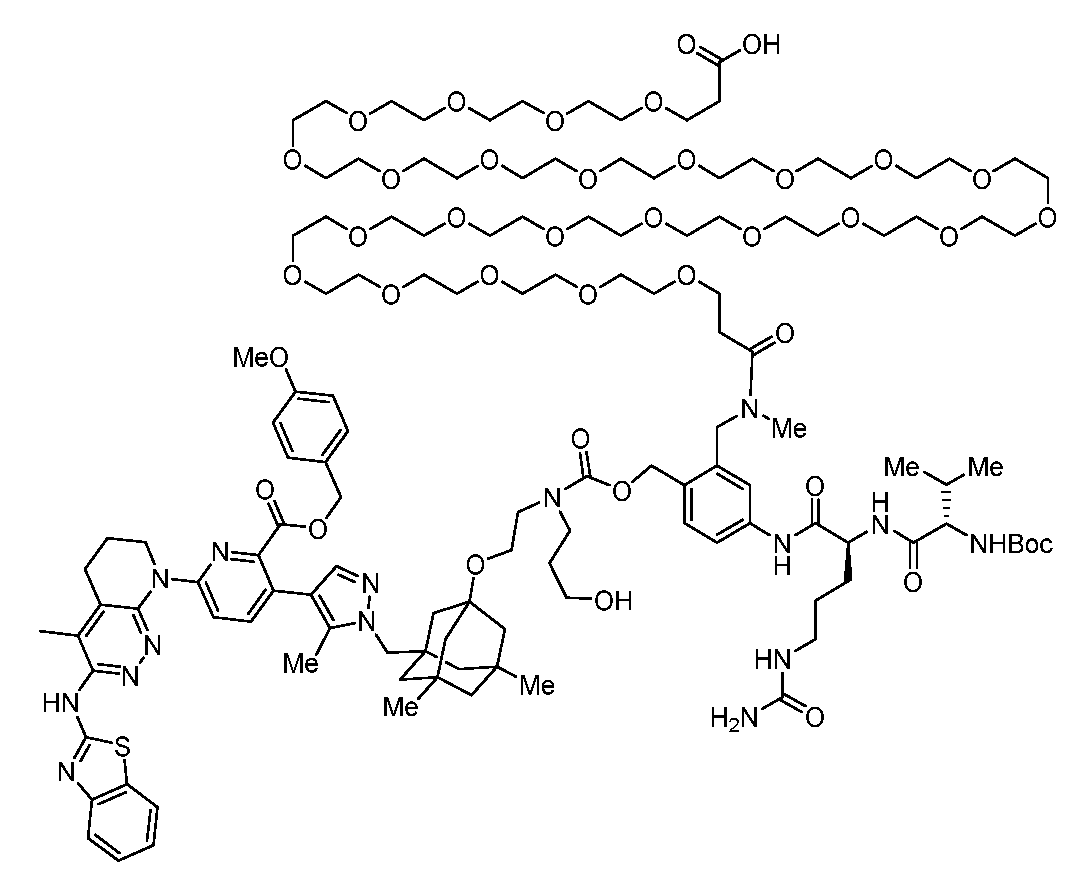
일반적 절차 3에 따라 4-메톡시벤질 6-(3-(벤조[d]티아졸-2-일아미노)-4-메틸-6,7-디히드로피리도[2,3-c]피리다진-8(5H)-일)-3-(1-(((1r,3s,5R,7S)-3-(2-((((4-((S)-2-((S)-2-((tert-부톡시카르보닐)아미노)-3-메틸부탄아미도)-5-우레이도펜탄아미도)-2-((메틸아미노)메틸)벤질)옥시)카르보닐)(3-히드록시프로필)아미노)에톡시)-5,7-디메틸아다만탄-1-일)메틸)-5-메틸-1H-피라졸-4-일)피콜리네이트 (32.0 mg, 0.022 mmol) 및 79-((2,5-디옥소피롤리딘-1-일)옥시)-79-옥소-4,7,10,13,16,19,22,25,28,31,34,37,40,43,46,49,52,55,58,61,64,67,70,73,76-펜타코사옥사노나헵타콘탄산 (43.3 mg, 0.033 mmol, 1.5 당량)을 사용하여, 1-(2-((((2-(((1s,3r,5R,7S)-3-((4-(6-(3-(벤조[d]티아졸-2-일아미노)-4-메틸-6,7-디히드로피리도[2,3-c]피리다진-8(5H)-일)-2-(((4-메톡시벤질)옥시)카르보닐)피리딘-3-일)-5-메틸-1H-피라졸-1-일)메틸)-5,7-디메틸아다만탄-1-일)옥시)에틸)(3-히드록시프로필)카르바모일)옥시)메틸)-5-((S)-2-((S)-2-((tert-부톡시카르보닐)아미노)-3-메틸부탄아미도)-5-우레이도펜탄아미도)페닐)-2-메틸-3-옥소-6,9,12,15,18,21,24,27,30,33,36,39,42,45,48,51,54,57,60,63,66,69,72,75,78-펜타코사옥사-2-아자헤녹타콘탄-81-산을 수득하였다. HRMS: M-H+2Na= 2705.3601; Rt=2.63분 (5분 산성 방법).According to general procedure 3, 4-methoxybenzyl 6-(3-(benzo[d]thiazol-2-ylamino)-4-methyl-6,7-dihydropyrido[2,3-c]pyridazin-8(5H)-yl)-3-(1-(((1r,3s,5R,7S)-3-(2-((((4-((S)-2-((S)-2-((tert-butoxycarbonyl)amino)-3-methylbutanamido)-5-ureidopentanamido)-2-((methylamino)methyl)benzyl)oxy)carbonyl)(3-hydroxypropyl)amino)ethoxy)-5,7-dimethyladamantan-1-yl)methyl)-5-methyl-1H-pyrazol-4-yl)picolinate (32.0 mg, 0.022 mmol) and Using 79-((2,5-dioxopyrrolidin-1-yl)oxy)-79-oxo-4,7,10,13,16,19,22,25,28,31,34,37,40,43,46,49,52,55,58,61,64,67,70,73,76-pentacosaoxanonaheptaconanoic acid (43.3 mg, 0.033 mmol, 1.5 eq), 1-(2-((((2-(((1s,3r,5R,7S)-3-((4-(6-(3-(Benzo[d]thiazol-2-ylamino)-4-methyl-6,7-dihydropyrido[2,3-c]pyridazin-8(5H)-yl)-2-(((4-methoxybenzyl)oxy)carbonyl)pyridin-3-yl)-5-methyl-1H-pyrazol-1-yl)methyl)-5,7-dimethyladamantan-1-yl)oxy)ethyl)(3-hydroxypropyl)carbonyl Obtained ((S)-2-((S)-2-((tert-butoxycarbonyl)amino)-3-methylbutanamido)-5-ureidopentanamido)phenyl)-2-methyl-3-oxo-6,9,12,15,18,21,24,27,30,33,36,39,42,45,48,51,54,57,60,63,66,69,72,75,78-pentacosaoxa-2-azahenoctacontan-81-acid. HRMS: M-H+2Na= 2705.3601; Rt=2.63 min (5 min acidic method).
3-(1-(((1r,3s,5R,7S)-3-(2-((((4-((S)-2-((S)-2-아미노-3-메틸부탄아미도)-5-우레이도펜탄아미도)-2-(80-카르복시-2-메틸-3-옥소-6,9,12,15,18,21,24,27,30,33,36,39,42,45,48,51,54,57,60,63,66,69,72,75,78-펜타코사옥사-2-아자옥타콘틸)벤질)옥시)카르보닐)(3-히드록시프로필)아미노)에톡시)-5,7-디메틸아다만탄-1-일)메틸)-5-메틸-1H-피라졸-4-일)-6-(3-(벤조[d]티아졸-2-일아미노)-4-메틸-6,7-디히드로피리도[2,3-c]피리다진-8(5H)-일)피콜린산의 합성3-(1-(((1r,3s,5R,7S)-3-(2-(((4-((S)-2-((S)-2-amino-3-methylbutanamido)-5-ureidopentanamido)-2-(80-carboxy-2-methyl-3-oxo-6,9,12,15,18,21,24,27,30,33,36,39,42,45,48,51,54,57,60,63,66,69 ,72,75,78-pentacosaoxa-2-azaoctacontyl)benzyl)oxy)carbonyl)(3-hydroxypropyl)amino)ethoxy)-5,7-dimethyladamantan-1-yl)methyl)-5-methyl-1H-pyrazol-4-yl)-6-(3-(benzo[d]thiazol-2-ylamino)-4-methyl-6,7-dihydropyrido[2,3-c]pyridazin-8(5H)-yl)picolinic acid Synthesis

일반적 절차 4에 따라 1-(2-((((2-(((1s,3r,5R,7S)-3-((4-(6-(3-(벤조[d]티아졸-2-일아미노)-4-메틸-6,7-디히드로피리도[2,3-c]피리다진-8(5H)-일)-2-(((4-메톡시벤질)옥시)카르보닐)피리딘-3-일)-5-메틸-1H-피라졸-1-일)메틸)-5,7-디메틸아다만탄-1-일)옥시)에틸)(3-히드록시프로필)카르바모일)옥시)메틸)-5-((S)-2-((S)-2-((tert-부톡시카르보닐)아미노)-3-메틸부탄아미도)-5-우레이도펜탄아미도)페닐)-2-메틸-3-옥소-6,9,12,15,18,21,24,27,30,33,36,39,42,45,48,51,54,57,60,63,66,69,72,75,78-펜타코사옥사-2-아자헤녹타콘탄-81-산 (35.1 mg, 0.013 mmol)을 사용하여, 3-(1-(((1r,3s,5R,7S)-3-(2-((((4-((S)-2-((S)-2-아미노-3-메틸부탄아미도)-5-우레이도펜탄아미도)-2-(80-카르복시-2-메틸-3-옥소-6,9,12,15,18,21,24,27,30,33,36,39,42,45,48,51,54,57,60,63,66,69,72,75,78-펜타코사옥사-2-아자옥타콘틸)벤질)옥시)카르보닐)(3-히드록시프로필)아미노)에톡시)-5,7-디메틸아다만탄-1-일)메틸)-5-메틸-1H-피라졸-4-일)-6-(3-(벤조[d]티아졸-2-일아미노)-4-메틸-6,7-디히드로피리도[2,3-c]피리다진-8(5H)-일)피콜린산을 수득하였다. HRMS: M-H+2Na= 2485.2700; Rt=2.02분 (5분 산성 방법).According to general procedure 4, 1-(2-((((2-(((1s,3r,5R,7S)-3-((4-(6-(3-(benzo[d]thiazol-2-ylamino)-4-methyl-6,7-dihydropyrido[2,3-c]pyridazin-8(5H)-yl)-2-(((4-methoxybenzyl)oxy)carbonyl)pyridin-3-yl)-5-methyl-1H-pyrazol-1-yl)methyl)-5,7-dimethyladamantan-1-yl)oxy)ethyl)(3-hydroxypropyl)carbonyl Using (35.1 mg, 0.013 mmol) of levamoyl)oxy)methyl)-5-((S)-2-((S)-2-((tert-butoxycarbonyl)amino)-3-methylbutanamido)-5-ureidopentanamido)phenyl)-2-methyl-3-oxo-6,9,12,15,18,21,24,27,30,33,36,39,42,45,48,51,54,57,60,63,66,69,72,75,78-pentacosaoxa-2-azahenoctacontan-81-acid, 3-(1-(((1r,3s,5R,7S)-3-(2-(((4-((S)-2-((S)-2-amino-3-methylbutanamido)-5-ureidopentanamido)-2-(80-carboxy-2-methyl-3-oxo-6,9,12,15,18,21,24,27,30,33,36,39,42,45,48,51,54,57,60,63,66,69 ,72,75,78-pentacosaoxa-2-azaoctacontyl)benzyl)oxy)carbonyl)(3-hydroxypropyl)amino)ethoxy)-5,7-dimethyladamantan-1-yl)methyl)-5-methyl-1H-pyrazol-4-yl)-6-(3-(benzo[d]thiazol-2-ylamino)-4-methyl-6,7-dihydropyrido[2,3-c]pyridazin-8(5H)-yl)picolinic acid was obtained. HRMS: M-H+2Na= 2485.2700; Rt=2.02 min (5 min acidic method).
6-(3-(벤조[d]티아졸-2-일아미노)-4-메틸-6,7-디히드로피리도[2,3-c]피리다진-8(5H)-일)-3-(1-(((1r,3s,5R,7S)-3-(2-((((2-(80-카르복시-2-메틸-3-옥소-6,9,12,15,18,21,24,27,30,33,36,39,42,45,48,51,54,57,60,63,66,69,72,75,78-펜타코사옥사-2-아자옥타콘틸)-4-((S)-2-((S)-2-(3-(2-(2,5-디옥소-2,5-디히드로-1H-피롤-1-일)에톡시)프로판아미도)-3-메틸부탄아미도)-5-우레이도펜탄아미도)벤질)옥시)카르보닐)(3-히드록시프로필)아미노)에톡시)-5,7-디메틸아다만탄-1-일)메틸)-5-메틸-1H-피라졸-4-일)피콜린산 (L11C-P25)의 합성6-(3-(Benzo[d]thiazol-2-ylamino)-4-methyl-6,7-dihydropyrido[2,3-c]pyridazin-8(5H)-yl)-3-(1-(((1r,3s,5R,7S)-3-(2-(((2-(80-carboxy-2-methyl-3-oxo-6,9,12,15,18,21,24,27,30,33,36,39,42,45,48,51,54,57,60,63,66,69,72, Synthesis of 75,78-pentacosaoxa-2-azaoctacontyl)-4-((S)-2-((S)-2-(3-(2-(2,5-dioxo-2,5-dihydro-1H-pyrrol-1-yl)ethoxy)propanamido)-3-methylbutanamido)-5-ureidopentanamido)benzyl)oxy)carbonyl)(3-hydroxypropyl)amino)ethoxy)-5,7-dimethyladamantan-1-yl)methyl)-5-methyl-1H-pyrazol-4-yl)picolinic acid (L11C-P25)

일반적 절차 5에 따라 3-(1-(((1r,3s,5R,7S)-3-(2-((((4-((S)-2-((S)-2-아미노-3-메틸부탄아미도)-5-우레이도펜탄아미도)-2-(80-카르복시-2-메틸-3-옥소-6,9,12,15,18,21,24,27,30,33,36,39,42,45,48,51,54,57,60,63,66,69,72,75,78-펜타코사옥사-2-아자옥타콘틸)벤질)옥시)카르보닐)(3-히드록시프로필)아미노)에톡시)-5,7-디메틸아다만탄-1-일)메틸)-5-메틸-1H-피라졸-4-일)-6-(3-(벤조[d]티아졸-2-일아미노)-4-메틸-6,7-디히드로피리도[2,3-c]피리다진-8(5H)-일)피콜린산 (17.3 mg, 0.007 mmol) 및 2,5-디옥소피롤리딘-1-일 3-(2-(2,5-디옥소-2,5-디히드로-1H-피롤-1-일)에톡시)프로파노에이트 (2.6 mg, 0.009 mmol, 1.2 당량)를 사용하여, 6-(3-(벤조[d]티아졸-2-일아미노)-4-메틸-6,7-디히드로피리도[2,3-c]피리다진-8(5H)-일)-3-(1-(((1r,3s,5R,7S)-3-(2-((((2-(80-카르복시-2-메틸-3-옥소-6,9,12,15,18,21,24,27,30,33,36,39,42,45,48,51,54,57,60,63,66,69,72,75,78-펜타코사옥사-2-아자옥타콘틸)-4-((S)-2-((S)-2-(3-(2-(2,5-디옥소-2,5-디히드로-1H-피롤-1-일)에톡시)프로판아미도)-3-메틸부탄아미도)-5-우레이도펜탄아미도)벤질)옥시)카르보닐)(3-히드록시프로필)아미노)에톡시)-5,7-디메틸아다만탄-1-일)메틸)-5-메틸-1H-피라졸-4-일)피콜린산을 수득하였다. HRMS: M+H= 2636.3701; Rt=1.73분 (5분 산성 방법).According to general procedure 5, 3-(1-(((1r,3s,5R,7S)-3-(2-(((4-((S)-2-((S)-2-amino-3-methylbutanamido)-5-ureidopentanamido)-2-(80-carboxy-2-methyl-3-oxo-6,9,12,15,18,21,24,27,30,33,36,39,42,45,48,51,54,57,60,63,66,6 Using 9,72,75,78-pentacosaoxa-2-azaoctacontyl)benzyl)oxy)carbonyl)(3-hydroxypropyl)amino)ethoxy)-5,7-dimethyladamantan-1-yl)methyl)-5-methyl-1H-pyrazol-4-yl)-6-(3-(benzo[d]thiazol-2-ylamino)-4-methyl-6,7-dihydropyrido[2,3-c]pyridazin-8(5H)-yl)picolinic acid (17.3 mg, 0.007 mmol) and 2,5-dioxopyrrolidin-1-yl 3-(2-(2,5-dioxo-2,5-dihydro-1H-pyrrol-1-yl)ethoxy)propanoate (2.6 mg, 0.009 mmol, 1.2 eq), 6-(3-(Benzo[d]thiazol-2-ylamino)-4-methyl-6,7-dihydropyrido[2,3-c]pyridazin-8(5H)-yl)-3-(1-(((1r,3s,5R,7S)-3-(2-(((2-(80-carboxy-2-methyl-3-oxo-6,9,12,15,18,21,24,27,30,33,36,39,42,45,48,51,54,57,60,63,66,69,72,7 Obtained 5,78-pentacosaoxa-2-azaoctacontyl)-4-((S)-2-((S)-2-(3-(2-(2,5-dioxo-2,5-dihydro-1H-pyrrol-1-yl)ethoxy)propanamido)-3-methylbutanamido)-5-ureidopentanamido)benzyl)oxy)carbonyl)(3-hydroxypropyl)amino)ethoxy)-5,7-dimethyladamantan-1-yl)methyl)-5-methyl-1H-pyrazol-4-yl)picolinic acid. HRMS: M+H= 2636.3701; Rt=1.73 min (5 min acidic method).
6-(3-(벤조[d]티아졸-2-일아미노)-4-메틸-6,7-디히드로피리도[2,3-c]피리다진-8(5H)-일)-3-(1-(((1S,3s,5R,7S)-3-(2-((((4-((S)-2-((S)-2-((tert-부톡시카르보닐)아미노)-3-메틸부탄아미도)-5-우레이도펜탄아미도)-2-((메틸아미노)메틸)벤질)옥시)카르보닐)(2-((S)-2,2-디메틸-1,3-디옥솔란-4-일)에틸)아미노)에톡시)-5,7-디메틸아다만탄-1-일)메틸)-5-메틸-1H-피라졸-4-일)피콜린산의 합성Synthesis of 6-(3-(benzo[d]thiazol-2-ylamino)-4-methyl-6,7-dihydropyrido[2,3-c]pyridazin-8(5H)-yl)-3-(1-(((1S,3s,5R,7S)-3-(2-((((4-((S)-2-((S)-2-((tert-butoxycarbonyl)amino)-3-methylbutanamido)-5-ureidopentanamido)-2-((methylamino)methyl)benzyl)oxy)carbonyl)(2-((S)-2,2-dimethyl-1,3-dioxolan-4-yl)ethyl)amino)ethoxy)-5,7-dimethyladamantan-1-yl)methyl)-5-methyl-1H-pyrazol-4-yl)picolinic acid

일반적 절차 9에 따라 6-(3-(벤조[d]티아졸-2-일아미노)-4-메틸-6,7-디히드로피리도[2,3-c]피리다진-8(5H)-일)-3-(1-(((1S,3s,5R,7S)-3-(2-((2-((S)-2,2-디메틸-1,3-디옥솔란-4-일)에틸)아미노)에톡시)-5,7-디메틸아다만탄-1-일)메틸)-5-메틸-1H-피라졸-4-일)피콜린산 (24.0 mg, 0.028 mmol) 및 (9H-플루오렌-9-일)메틸 (5-((S)-2-((S)-2-((tert-부톡시카르보닐)아미노)-3-메틸부탄아미도)-5-우레이도펜탄아미도)-2-((((4-니트로페녹시)카르보닐)옥시)메틸)벤질)(메틸)카르바메이트 (27.9 mg, 0.031 mmol, 1.1 당량)를 사용하여, 6-(3-(벤조[d]티아졸-2-일아미노)-4-메틸-6,7-디히드로피리도[2,3-c]피리다진-8(5H)-일)-3-(1-(((1S,3s,5R,7S)-3-(2-((((4-((S)-2-((S)-2-((tert-부톡시카르보닐)아미노)-3-메틸부탄아미도)-5-우레이도펜탄아미도)-2-((메틸아미노)메틸)벤질)옥시)카르보닐)(2-((S)-2,2-디메틸-1,3-디옥솔란-4-일)에틸)아미노)에톡시)-5,7-디메틸아다만탄-1-일)메틸)-5-메틸-1H-피라졸-4-일)피콜린산을 수득하였다. HRMS: M+H= 1410.7300; Rt=2.24분 (5분 산성 방법).According to General Procedure 9, 6-(3-(benzo[d]thiazol-2-ylamino)-4-methyl-6,7-dihydropyrido[2,3-c]pyridazin-8(5H)-yl)-3-(1-(((1S,3s,5R,7S)-3-(2-((2-((S)-2,2-dimethyl-1,3-dioxolan-4-yl)ethyl)amino)ethoxy)-5,7-dimethyladamantan-1-yl)methyl)-5-methyl-1H-pyrazol-4-yl)picolinic acid (24.0 mg, 0.028 mmol) and (9H-fluoren-9-yl)methyl Using (5-((S)-2-((S)-2-((tert-butoxycarbonyl)amino)-3-methylbutanamido)-5-ureidopentanamido)-2-((((4-nitrophenoxy)carbonyl)oxy)methyl)benzyl)(methyl)carbamate (27.9 mg, 0.031 mmol, 1.1 eq), 6-(3-(Benzo[d]thiazol-2-ylamino)-4-methyl-6,7-dihydropyrido[2,3-c]pyridazin-8(5H)-yl)-3-(1-(((1S,3s,5R,7S)-3-(2-((((4-((S)-2-((S)-2-((tert-butoxycarbonyl)amino)-3-methylbutanamido)-5-ureidopentanamido)-2-((methylamino)methyl)benzyl)oxy)carbonyl)(2-((S)-2,2-dimethyl-1,3-dioxolan-4-yl)ethyl)amino)ethoxy)-5,7-dimethyladamantan-1-yl)methyl)-5-methyl-1H-pyrazol-4-yl)picolinic acid was obtained. HRMS: M+H= 1410.7300; Rt=2.24 min (5 min acid method).
6-(3-(벤조[d]티아졸-2-일아미노)-4-메틸-6,7-디히드로피리도[2,3-c]피리다진-8(5H)-일)-3-(1-(((1S,3s,5R,7S)-3-(2-((((4-((S)-2-((S)-2-((tert-부톡시카르보닐)아미노)-3-메틸부탄아미도)-5-우레이도펜탄아미도)-2-(80-카르복시-2-메틸-3-옥소-6,9,12,15,18,21,24,27,30,33,36,39,42,45,48,51,54,57,60,63,66,69,72,75,78-펜타코사옥사-2-아자옥타콘틸)벤질)옥시)카르보닐)(2-((S)-2,2-디메틸-1,3-디옥솔란-4-일)에틸)아미노)에톡시)-5,7-디메틸아다만탄-1-일)메틸)-5-메틸-1H-피라졸-4-일)피콜린산의 합성6-(3-(Benzo[d]thiazol-2-ylamino)-4-methyl-6,7-dihydropyrido[2,3-c]pyridazin-8(5H)-yl)-3-(1-(((1S,3s,5R,7S)-3-(2-((((4-((S)-2-((S)-2-((tert-butoxycarbonyl)amino)-3-methylbutanamido)-5-ureidopentanamido)-2-(80-carboxy-2-methyl-3-oxo-6,9,1 Synthesis of 2,15,18,21,24,27,30,33,36,39,42,45,48,51,54,57,60,63,66,69,72,75,78-pentacosaoxa-2-azaoctacontyl)benzyl)oxy)carbonyl)(2-((S)-2,2-dimethyl-1,3-dioxolan-4-yl)ethyl)amino)ethoxy)-5,7-dimethyladamantan-1-yl)methyl)-5-methyl-1H-pyrazol-4-yl)picolinic acid

일반적 절차 3에 따라 6-(3-(벤조[d]티아졸-2-일아미노)-4-메틸-6,7-디히드로피리도[2,3-c]피리다진-8(5H)-일)-3-(1-(((1S,3s,5R,7S)-3-(2-((((4-((S)-2-((S)-2-((tert-부톡시카르보닐)아미노)-3-메틸부탄아미도)-5-우레이도펜탄아미도)-2-((메틸아미노)메틸)벤질)옥시)카르보닐)(2-((S)-2,2-디메틸-1,3-디옥솔란-4-일)에틸)아미노)에톡시)-5,7-디메틸아다만탄-1-일)메틸)-5-메틸-1H-피라졸-4-일)피콜린산 (19.0 mg, 0.012 mmol) 및 79-((2,5-디옥소피롤리딘-1-일)옥시)-79-옥소-4,7,10,13,16,19,22,25,28,31,34,37,40,43,46,49,52,55,58,61,64,67,70,73,76-펜타코사옥사노나헵타콘탄산 (24.6 mg, 0.019 mmol, 1.5 당량)을 사용하여, 6-(3-(벤조[d]티아졸-2-일아미노)-4-메틸-6,7-디히드로피리도[2,3-c]피리다진-8(5H)-일)-3-(1-(((1S,3s,5R,7S)-3-(2-((((4-((S)-2-((S)-2-((tert-부톡시카르보닐)아미노)-3-메틸부탄아미도)-5-우레이도펜탄아미도)-2-(80-카르복시-2-메틸-3-옥소-6,9,12,15,18,21,24,27,30,33,36,39,42,45,48,51,54,57,60,63,66,69,72,75,78-펜타코사옥사-2-아자옥타콘틸)벤질)옥시)카르보닐)(2-((S)-2,2-디메틸-1,3-디옥솔란-4-일)에틸)아미노)에톡시)-5,7-디메틸아다만탄-1-일)메틸)-5-메틸-1H-피라졸-4-일)피콜린산을 수득하였다. HRMS: M-H+2Na = 2655.3701; Rt=2.59분 (5분 산성 방법).According to general procedure 3, 6-(3-(benzo[d]thiazol-2-ylamino)-4-methyl-6,7-dihydropyrido[2,3-c]pyridazin-8(5H)-yl)-3-(1-(((1S,3s,5R,7S)-3-(2-((((4-((S)-2-((S)-2-((tert-butoxycarbonyl)amino)-3-methylbutanamido)-5-ureidopentanamido)-2-((methylamino)methyl)benzyl)oxy)carbonyl)(2-((S)-2,2-dimethyl-1,3-dioxolan-4-yl)ethyl)amino)ethoxy)-5,7-dimethyladamantan-1-yl)methyl)-5-methyl-1H-pyrazol-4-yl)picolinic acid (19.0 mg, Using 79-((2,5-dioxopyrrolidin-1-yl)oxy)-79-oxo-4,7,10,13,16,19,22,25,28,31,34,37,40,43,46,49,52,55,58,61,64,67,70,73,76-pentacosaoxanonaheptaconanoic acid (24.6 mg, 0.019 mmol, 1.5 eq), 6-(3-(Benzo[d]thiazol-2-ylamino)-4-methyl-6,7-dihydropyrido[2,3-c]pyridazin-8(5H)-yl)-3-(1-(((1S,3s,5R,7S)-3-(2-((((4-((S)-2-((S)-2-((tert-butoxycarbonyl)amino)-3-methylbutanamido)-5-ureidopentanamido)-2-(80-carboxy-2-methyl-3-oxo-6,9,1 Obtained 2,15,18,21,24,27,30,33,36,39,42,45,48,51,54,57,60,63,66,69,72,75,78-Pentacosaoxa-2-azaoctacontyl)benzyl)oxy)carbonyl)(2-((S)-2,2-dimethyl-1,3-dioxolan-4-yl)ethyl)amino)ethoxy)-5,7-dimethyladamantan-1-yl)methyl)-5-methyl-1H-pyrazol-4-yl)picolinic acid. HRMS: M-H+2Na = 2655.3701; Rt=2.59 min (5 min acidic method).
3-(1-(((1S,3s,5R,7S)-3-(2-((((4-((S)-2-((S)-2-아미노-3-메틸부탄아미도)-5-우레이도펜탄아미도)-2-(80-카르복시-2-메틸-3-옥소-6,9,12,15,18,21,24,27,30,33,36,39,42,45,48,51,54,57,60,63,66,69,72,75,78-펜타코사옥사-2-아자옥타콘틸)벤질)옥시)카르보닐)((S)-3,4-디히드록시부틸)아미노)에톡시)-5,7-디메틸아다만탄-1-일)메틸)-5-메틸-1H-피라졸-4-일)-6-(3-(벤조[d]티아졸-2-일아미노)-4-메틸-6,7-디히드로피리도[2,3-c]피리다진-8(5H)-일)피콜린산의 합성3-(1-(((1S,3s,5R,7S)-3-(2-(((4-((S)-2-((S)-2-amino-3-methylbutanamido)-5-ureidopentanamido)-2-(80-carboxy-2-methyl-3-oxo-6,9,12,15,18,21,24,27,30,33,36,39,42,45,48,51,54,57,60,63,66,69,72 ,75,78-pentacosaoxa-2-azaoctacontyl)benzyl)oxy)carbonyl)((S)-3,4-dihydroxybutyl)amino)ethoxy)-5,7-dimethyladamantan-1-yl)methyl)-5-methyl-1H-pyrazol-4-yl)-6-(3-(benzo[d]thiazol-2-ylamino)-4-methyl-6,7-dihydropyrido[2,3-c]pyridazin-8(5H)-yl)picolinic acid Synthesis

일반적 절차 4에 따라 6-(3-(벤조[d]티아졸-2-일아미노)-4-메틸-6,7-디히드로피리도[2,3-c]피리다진-8(5H)-일)-3-(1-(((1S,3s,5R,7S)-3-(2-((((4-((S)-2-((S)-2-((tert-부톡시카르보닐)아미노)-3-메틸부탄아미도)-5-우레이도펜탄아미도)-2-(80-카르복시-2-메틸-3-옥소-6,9,12,15,18,21,24,27,30,33,36,39,42,45,48,51,54,57,60,63,66,69,72,75,78-펜타코사옥사-2-아자옥타콘틸)벤질)옥시)카르보닐)(2-((S)-2,2-디메틸-1,3-디옥솔란-4-일)에틸)아미노)에톡시)-5,7-디메틸아다만탄-1-일)메틸)-5-메틸-1H-피라졸-4-일)피콜린산 (28.4 mg, 0.011 mmol)을 사용하여, 3-(1-(((1S,3s,5R,7S)-3-(2-((((4-((S)-2-((S)-2-아미노-3-메틸부탄아미도)-5-우레이도펜탄아미도)-2-(80-카르복시-2-메틸-3-옥소-6,9,12,15,18,21,24,27,30,33,36,39,42,45,48,51,54,57,60,63,66,69,72,75,78-펜타코사옥사-2-아자옥타콘틸)벤질)옥시)카르보닐)((S)-3,4-디히드록시부틸)아미노)에톡시)-5,7-디메틸아다만탄-1-일)메틸)-5-메틸-1H-피라졸-4-일)-6-(3-(벤조[d]티아졸-2-일아미노)-4-메틸-6,7-디히드로피리도[2,3-c]피리다진-8(5H)-일)피콜린산을 수득하였다. HRMS: M+H = 2471.3301; Rt=1.97분 (5분 산성 방법).According to general procedure 4, 6-(3-(benzo[d]thiazol-2-ylamino)-4-methyl-6,7-dihydropyrido[2,3-c]pyridazin-8(5H)-yl)-3-(1-(((1S,3s,5R,7S)-3-(2-(((4-((S)-2-((S)-2-((tert-butoxycarbonyl)amino)-3-methylbutanamido)-5-ureidopentanamido)-2-(80-carboxy-2-methyl-3-oxo-6,9,1 Using 2,15,18,21,24,27,30,33,36,39,42,45,48,51,54,57,60,63,66,69,72,75,78-pentacosaoxa-2-azaoctacontyl)benzyl)oxy)carbonyl)(2-((S)-2,2-dimethyl-1,3-dioxolan-4-yl)ethyl)amino)ethoxy)-5,7-dimethyladamantan-1-yl)methyl)-5-methyl-1H-pyrazol-4-yl)picolinic acid (28.4 mg, 0.011 mmol), 3-(1-(((1S,3s,5R,7S)-3-(2-(((4-((S)-2-((S)-2-amino-3-methylbutanamido)-5-ureidopentanamido)-2-(80-carboxy-2-methyl-3-oxo-6,9,12,15,18,21,24,27,30,33,36,39,42,45,48,51,54,57,60,63,66,69,72 ,75,78-pentacosaoxa-2-azaoctacontyl)benzyl)oxy)carbonyl)((S)-3,4-dihydroxybutyl)amino)ethoxy)-5,7-dimethyladamantan-1-yl)methyl)-5-methyl-1H-pyrazol-4-yl)-6-(3-(benzo[d]thiazol-2-ylamino)-4-methyl-6,7-dihydropyrido[2,3-c]pyridazin-8(5H)-yl)picolinic acid was obtained. HRMS: M+H = 2471.3301; Rt=1.97 min (5 min acidic method).
6-(3-(벤조[d]티아졸-2-일아미노)-4-메틸-6,7-디히드로피리도[2,3-c]피리다진-8(5H)-일)-3-(1-(((1S,3s,5R,7S)-3-(2-((((2-(80-카르복시-2-메틸-3-옥소-6,9,12,15,18,21,24,27,30,33,36,39,42,45,48,51,54,57,60,63,66,69,72,75,78-펜타코사옥사-2-아자옥타콘틸)-4-((S)-2-((S)-2-(3-(2-(2,5-디옥소-2,5-디히드로-1H-피롤-1-일)에톡시)프로판아미도)-3-메틸부탄아미도)-5-우레이도펜탄아미도)벤질)옥시)카르보닐)((S)-3,4-디히드록시부틸)아미노)에톡시)-5,7-디메틸아다만탄-1-일)메틸)-5-메틸-1H-피라졸-4-일)피콜린산 (L11C-P19)의 합성6-(3-(Benzo[d]thiazol-2-ylamino)-4-methyl-6,7-dihydropyrido[2,3-c]pyridazin-8(5H)-yl)-3-(1-(((1S,3s,5R,7S)-3-(2-(((2-(80-carboxy-2-methyl-3-oxo-6,9,12,15,18,21,24,27,30,33,36,39,42,45,48,51,54,57,60,63,66,69,72,75, Synthesis of 78-pentacosaoxa-2-azaoctacontyl)-4-((S)-2-((S)-2-(3-(2-(2,5-dioxo-2,5-dihydro-1H-pyrrol-1-yl)ethoxy)propanamido)-3-methylbutanamido)-5-ureidopentanamido)benzyl)oxy)carbonyl)((S)-3,4-dihydroxybutyl)amino)ethoxy)-5,7-dimethyladamantan-1-yl)methyl)-5-methyl-1H-pyrazol-4-yl)picolinic acid (L11C-P19)

일반적 절차 5에 따라 3-(1-(((1S,3s,5R,7S)-3-(2-((((4-((S)-2-((S)-2-아미노-3-메틸부탄아미도)-5-우레이도펜탄아미도)-2-(80-카르복시-2-메틸-3-옥소-6,9,12,15,18,21,24,27,30,33,36,39,42,45,48,51,54,57,60,63,66,69,72,75,78-펜타코사옥사-2-아자옥타콘틸)벤질)옥시)카르보닐)((S)-3,4-디히드록시부틸)아미노)에톡시)-5,7-디메틸아다만탄-1-일)메틸)-5-메틸-1H-피라졸-4-일)-6-(3-(벤조[d]티아졸-2-일아미노)-4-메틸-6,7-디히드로피리도[2,3-c]피리다진-8(5H)-일)피콜린산 (35.6 mg, 0.014 mmol) 및 2,5-디옥소피롤리딘-1-일 3-(2-(2,5-디옥소-2,5-디히드로-1H-피롤-1-일)에톡시)프로파노에이트 (10.7 mg, 0.034 mmol, 2.5 당량)를 사용하여, 6-(3-(벤조[d]티아졸-2-일아미노)-4-메틸-6,7-디히드로피리도[2,3-c]피리다진-8(5H)-일)-3-(1-(((1S,3s,5R,7S)-3-(2-((((2-(80-카르복시-2-메틸-3-옥소-6,9,12,15,18,21,24,27,30,33,36,39,42,45,48,51,54,57,60,63,66,69,72,75,78-펜타코사옥사-2-아자옥타콘틸)-4-((S)-2-((S)-2-(3-(2-(2,5-디옥소-2,5-디히드로-1H-피롤-1-일)에톡시)프로판아미도)-3-메틸부탄아미도)-5-우레이도펜탄아미도)벤질)옥시)카르보닐)((S)-3,4-디히드록시부틸)아미노)에톡시)-5,7-디메틸아다만탄-1-일)메틸)-5-메틸-1H-피라졸-4-일)피콜린산을 수득하였다. HRMS: M+H = 2666.3701; Rt=2.19분 (5분 산성 방법).According to general procedure 5, 3-(1-(((1S,3s,5R,7S)-3-(2-(((4-((S)-2-((S)-2-amino-3-methylbutanamido)-5-ureidopentanamido)-2-(80-carboxy-2-methyl-3-oxo-6,9,12,15,18,21,24,27,30,33,36,39,42,45,48,51,54,57,60,63,66,69,7 2,75,78-pentacosaoxa-2-azaoctacontyl)benzyl)oxy)carbonyl)((S)-3,4-dihydroxybutyl)amino)ethoxy)-5,7-dimethyladamantan-1-yl)methyl)-5-methyl-1H-pyrazol-4-yl)-6-(3-(benzo[d]thiazol-2-ylamino)-4-methyl-6,7-dihydropyrido[2,3-c]pyridazin-8(5H)-yl)picolinic acid (35.6 mg, 0.014 mmol) and 2,5-dioxopyrrolidin-1-yl 3-(2-(2,5-dioxo-2,5-dihydro-1H-pyrrol-1-yl)ethoxy)propanoate (10.7 mg, 0.034 mmol, 2.5 eq). 6-(3-(Benzo[d]thiazol-2-ylamino)-4-methyl-6,7-dihydropyrido[2,3-c]pyridazin-8(5H)-yl)-3-(1-(((1S,3s,5R,7S)-3-(2-(((2-(80-carboxy-2-methyl-3-oxo-6,9,12,15,18,21,24,27,30,33,36,39,42,45,48,51,54,57,60,63,66,69,72,75,7 Obtained 8-pentacosaoxa-2-azaoctacontyl)-4-((S)-2-((S)-2-(3-(2-(2,5-dioxo-2,5-dihydro-1H-pyrrol-1-yl)ethoxy)propanamido)-3-methylbutanamido)-5-ureidopentanamido)benzyl)oxy)carbonyl)((S)-3,4-dihydroxybutyl)amino)ethoxy)-5,7-dimethyladamantan-1-yl)methyl)-5-methyl-1H-pyrazol-4-yl)picolinic acid. HRMS: M+H = 2666.3701; Rt=2.19 min (5 min acidic method).
5-(3-(4-(3-((((4-((S)-2-((S)-2-아미노-3-메틸부탄아미도)-5-우레이도펜탄아미도)-2-((프로프-2-인-1-일옥시)메틸)벤질)옥시)카르보닐)(메틸)아미노)프로프-1-인-1-일)-2-플루오로페녹시)프로필)-2-(3-(벤조[d]티아졸-2-일아미노)-4-메틸-6,7-디히드로피리도[2,3-c]피리다진-8(5H)-일)티아졸-4-카르복실산의 합성Synthesis of 5-(3-(4-(3-((((4-((S)-2-((S)-2-amino-3-methylbutanamido)-5-ureidopentanamido)-2-((prop-2-yn-1-yloxy)methyl)benzyl)oxy)carbonyl)(methyl)amino)prop-1-yn-1-yl)-2-fluorophenoxy)propyl)-2-(3-(benzo[d]thiazol-2-ylamino)-4-methyl-6,7-dihydropyrido[2,3-c]pyridazin-8(5H)-yl)thiazole-4-carboxylic acid

일반적 절차 9에 따라 2-(3-(벤조[d]티아졸-2-일아미노)-4-메틸-6,7-디히드로피리도[2,3-c]피리다진-8(5H)-일)-5-(3-(2-플루오로-4-(3-(메틸아미노)프로프-1-인-1-일)페녹시)프로필)티아졸-4-카르복실산 (40.0 mg, 0.062 mmol) 및 (9H-플루오렌-9-일)메틸 ((S)-3-메틸-1-(((S)-1-((4-((((4-니트로페녹시)카르보닐)옥시)메틸)-3-((프로프-2-인-1-일옥시)메틸)페닐)아미노)-1-옥소-5-우레이도펜탄-2-일)아미노)-1-옥소부탄-2-일)카르바메이트 (57.1 mg, 0.068 mmol, 1.1 당량)를 사용하여, 5-(3-(4-(3-((((4-((S)-2-((S)-2-아미노-3-메틸부탄아미도)-5-우레이도펜탄아미도)-2-((프로프-2-인-1-일옥시)메틸)벤질)옥시)카르보닐)(메틸)아미노)프로프-1-인-1-일)-2-플루오로페녹시)프로필)-2-(3-(벤조[d]티아졸-2-일아미노)-4-메틸-6,7-디히드로피리도[2,3-c]피리다진-8(5H)-일)티아졸-4-카르복실산을 수득하였다. LCMS: M+H = 1117.8; Rt=0.84분 (2분 산성 방법).According to General Procedure 9, 2-(3-(benzo[d]thiazol-2-ylamino)-4-methyl-6,7-dihydropyrido[2,3-c]pyridazin-8(5H)-yl)-5-(3-(2-fluoro-4-(3-(methylamino)prop-1-yn-1-yl)phenoxy)propyl)thiazole-4-carboxylic acid (40.0 mg, 0.062 mmol) and (9H-fluoren-9-yl)methyl ((S)-3-methyl-1-(((S)-1-((4-((((4-nitrophenoxy)carbonyl)oxy)methyl)-3-((prop-2-yn-1-yloxy)methyl)phenyl)amino)-1-oxo-5-ureidopentan-2-yl)amino)-1-oxobutan-2-yl)carbamate (57.1 mg, 0.068 mmol, 1.1 equiv) was used to obtain 5-(3-(4-(3-(((4-((S)-2-((S)-2-amino-3-methylbutanamido)-5-ureidopentanamido)-2-((prop-2-yn-1-yloxy)methyl)benzyl)oxy)carbonyl)(methyl)amino)prop-1-yn-1-yl)-2-fluorophenoxy)propyl)-2-(3-(benzo[d]thiazol-2-ylamino)-4-methyl-6,7-dihydropyrido[2,3-c]pyridazin-8(5H)-yl)thiazole-4-carboxylic acid. LCMS: M+H = 1117.8; Rt=0.84 min (2 min acidic method).
5-(3-(4-(3-((((4-((S)-2-((S)-2-아미노-3-메틸부탄아미도)-5-우레이도펜탄아미도)-2-(((1-(26-카르복시-3,6,9,12,15,18,21,24-옥타옥사헥사코실)-1H-1,2,3-트리아졸-4-일)메톡시)메틸)벤질)옥시)카르보닐)(메틸)아미노)프로프-1-인-1-일)-2-플루오로페녹시)프로필)-2-(3-(벤조[d]티아졸-2-일아미노)-4-메틸-6,7-디히드로피리도[2,3-c]피리다진-8(5H)-일)티아졸-4-카르복실산의 합성Synthesis of 5-(3-(4-(3-(((4-((S)-2-((S)-2-amino-3-methylbutanamido)-5-ureidopentanamido)-2-(((1-(26-carboxy-3,6,9,12,15,18,21,24-octaoxahexacosyl)-1H-1,2,3-triazol-4-yl)methoxy)methyl)benzyl)oxy)carbonyl)(methyl)amino)prop-1-yn-1-yl)-2-fluorophenoxy)propyl)-2-(3-(benzo[d]thiazol-2-ylamino)-4-methyl-6,7-dihydropyrido[2,3-c]pyridazin-8(5H)-yl)thiazole-4-carboxylic acid

일반적 절차 7에 따라 5-(3-(4-(3-((((4-((S)-2-((S)-2-아미노-3-메틸부탄아미도)-5-우레이도펜탄아미도)-2-((프로프-2-인-1-일옥시)메틸)벤질)옥시)카르보닐)(메틸)아미노)프로프-1-인-1-일)-2-플루오로페녹시)프로필)-2-(3-(벤조[d]티아졸-2-일아미노)-4-메틸-6,7-디히드로피리도[2,3-c]피리다진-8(5H)-일)티아졸-4-카르복실산 (18.2 mg, 0.016 mmol) 및 1-아지도-3,6,9,12,15,18,21,24-옥타옥사헵타코산-27-산 (9.1 mg, 0.020 mmol, 1.2 당량)을 사용하여, 5-(3-(4-(3-((((4-((S)-2-((S)-2-아미노-3-메틸부탄아미도)-5-우레이도펜탄아미도)-2-(((1-(26-카르복시-3,6,9,12,15,18,21,24-옥타옥사헥사코실)-1H-1,2,3-트리아졸-4-일)메톡시)메틸)벤질)옥시)카르보닐)(메틸)아미노)프로프-1-인-1-일)-2-플루오로페녹시)프로필)-2-(3-(벤조[d]티아졸-2-일아미노)-4-메틸-6,7-디히드로피리도[2,3-c]피리다진-8(5H)-일)티아졸-4-카르복실산을 수득하였다. LCMS: M/2+H = 793.1; Rt=1.17분 (2분 산성 방법).According to General Procedure 7, 5-(3-(4-(3-((((4-((S)-2-((S)-2-amino-3-methylbutanamido)-5-ureidopentanamido)-2-((prop-2-yn-1-yloxy)methyl)benzyl)oxy)carbonyl)(methyl)amino)prop-1-yn-1-yl)-2-fluorophenoxy)propyl)-2-(3-(benzo[d]thiazol-2-ylamino)-4-methyl-6,7-dihydropyrido[2,3-c]pyridazin-8(5H)-yl)thiazole-4-carboxylic acid (18.2 mg, 0.016 mmol) and 1-azido-3,6,9,12,15,18,21,24-octaoxaheptacosan-27-acid (9.1 mg, 0.020 mmol, 1.2 equiv) was used to give 5-(3-(4-(3-(((4-((S)-2-((S)-2-amino-3-methylbutanamido)-5-ureidopentanamido)-2-(((1-(26-carboxy-3,6,9,12,15,18,21,24-octaoxahexacosyl)-1H-1,2,3-triazol-4-yl)methoxy)methyl)benzyl)oxy)carbonyl)(methyl)amino)prop-1-yn-1-yl)-2-fluorophenoxy)propyl)-2-(3-(benzo[d]thiazol-2-ylamino)-4-methyl-6,7-dihydropyrido[2,3-c]pyridazin-8(5H)-yl)thiazole-4-carboxylic acid. Obtained. LCMS: M/2+H = 793.1; Rt=1.17 min (2 min acidic method).
2-(3-(벤조[d]티아졸-2-일아미노)-4-메틸-6,7-디히드로피리도[2,3-c]피리다진-8(5H)-일)-5-(3-(4-(3-((((2-(((1-(26-카르복시-3,6,9,12,15,18,21,24-옥타옥사헥사코실)-1H-1,2,3-트리아졸-4-일)메톡시)메틸)-4-((S)-2-((S)-2-(3-(2-(2,5-디옥소-2,5-디히드로-1H-피롤-1-일)에톡시)프로판아미도)-3-메틸부탄아미도)-5-우레이도펜탄아미도)벤질)옥시)카르보닐)(메틸)아미노)프로프-1-인-1-일)-2-플루오로페녹시)프로필)티아졸-4-카르복실산 (L7C-P3)의 합성2-(3-(Benzo[d]thiazol-2-ylamino)-4-methyl-6,7-dihydropyrido[2,3-c]pyridazin-8(5H)-yl)-5-(3-(4-(3-(((2-(((1-(26-carboxy-3,6,9,12,15,18,21,24-octaoxahexacosyl)-1H-1,2,3-triazol-4-yl)methoxy)meth Synthesis of (S)-4-((S)-2-((S)-2-(3-(2-(2,5-dioxo-2,5-dihydro-1H-pyrrol-1-yl)ethoxy)propanamido)-3-methylbutanamido)-5-ureidopentanamido)benzyl)oxy)carbonyl)(methyl)amino)prop-1-yn-1-yl)-2-fluorophenoxy)propyl)thiazole-4-carboxylic acid (L7C-P3)

일반적 절차 5에 따라 5-(3-(4-(3-((((4-((S)-2-((S)-2-아미노-3-메틸부탄아미도)-5-우레이도펜탄아미도)-2-(((1-(26-카르복시-3,6,9,12,15,18,21,24-옥타옥사헥사코실)-1H-1,2,3-트리아졸-4-일)메톡시)메틸)벤질)옥시)카르보닐)(메틸)아미노)프로프-1-인-1-일)-2-플루오로페녹시)프로필)-2-(3-(벤조[d]티아졸-2-일아미노)-4-메틸-6,7-디히드로피리도[2,3-c]피리다진-8(5H)-일)티아졸-4-카르복실산 (10.5 mg, 0.007 mmol) 및 2,5-디옥소피롤리딘-1-일 3-(2-(2,5-디옥소-2,5-디히드로-1H-피롤-1-일)에톡시)프로파노에이트 (2.5 mg, 0.08 mmol, 1.2 당량)를 사용하여, 2-(3-(벤조[d]티아졸-2-일아미노)-4-메틸-6,7-디히드로피리도[2,3-c]피리다진-8(5H)-일)-5-(3-(4-(3-((((2-(((1-(26-카르복시-3,6,9,12,15,18,21,24-옥타옥사헥사코실)-1H-1,2,3-트리아졸-4-일)메톡시)메틸)-4-((S)-2-((S)-2-(3-(2-(2,5-디옥소-2,5-디히드로-1H-피롤-1-일)에톡시)프로판아미도)-3-메틸부탄아미도)-5-우레이도펜탄아미도)벤질)옥시)카르보닐)(메틸)아미노)프로프-1-인-1-일)-2-플루오로페녹시)프로필)티아졸-4-카르복실산을 수득하였다. LCMS: M/2+H = 891.2; Rt=2.56분 (5분 산성 방법).According to General Procedure 5, 5-(3-(4-(3-(((4-((S)-2-((S)-2-amino-3-methylbutanamido)-5-ureidopentanamido)-2-(((1-(26-carboxy-3,6,9,12,15,18,21,24-octaoxahexacosyl)-1H-1,2,3-triazol-4-yl)methoxy)methyl)benzyl)oxy)carbonyl)(methyl)amino)prop-1-yn-1-yl)-2-fluorophenoxy)propyl)-2-(3-(benzo[d]thiazol-2-ylamino)-4-methyl-6,7-dihydropyrido[2,3-c]pyridazin-8(5H)-yl)thiazole-4-carboxylic acid (10.5 mg, 0.007 mmol) and 2,5-dioxopyrrolidin-1-yl 3-(2-(2,5-dioxo-2,5-dihydro-1H-pyrrol-1-yl)ethoxy)propanoate (2.5 mg, 0.08 mmol, 1.2 eq) were used to prepare 2-(3-(benzo[d]thiazol-2-ylamino)-4-methyl-6,7-dihydropyrido[2,3-c]pyridazin-8(5H)-yl)-5-(3-(4-(3-(((2-(((1-(26-carboxy-3,6,9,12,15,18,21,24-octaoxahexacosyl)-1H-1,2,3-triazol-4-yl)methoxy)meth Obtained: (S)-4-((S)-2-((S)-2-(3-(2-(2,5-dioxo-2,5-dihydro-1H-pyrrol-1-yl)ethoxy)propanamido)-3-methylbutanamido)-5-ureidopentanamido)benzyl)oxy)carbonyl)(methyl)amino)prop-1-yn-1-yl)-2-fluorophenoxy)propyl)thiazole-4-carboxylic acid. LCMS: M/2+H = 891.2; Rt=2.56 min (5 min acidic method).
일반적 절차 10General Procedure 10
2-((6-(벤조[d]티아졸-2-일아미노)-5-메틸피리다진-3-일)(3-(디메틸아미노)프로필)아미노)-5-(3-(4-(3-((((4-((S)-2-((S)-2-((tert-부톡시카르보닐)아미노)-3-메틸부탄아미도)-5-우레이도펜탄아미도)-2-((프로프-2-인-1-일옥시)메틸)벤질)옥시)카르보닐)(메틸)아미노)프로프-1-인-1-일)-2-플루오로페녹시)프로필)티아졸-4-카르복실산의 합성Synthesis of 2-((6-(benzo[d]thiazol-2-ylamino)-5-methylpyridazin-3-yl)(3-(dimethylamino)propyl)amino)-5-(3-(4-(3-(((4-((S)-2-((S)-2-((tert-butoxycarbonyl)amino)-3-methylbutanamido)-5-ureidopentanamido)-2-((prop-2-yn-1-yloxy)methyl)benzyl)oxy)carbonyl)(methyl)amino)prop-1-yn-1-yl)-2-fluorophenoxy)propyl)thiazole-4-carboxylic acid

DMF (1.0 mL) 중 2-((6-(벤조[d]티아졸-2-일아미노)-5-메틸피리다진-3-일)(3-(디메틸아미노)프로필)아미노)-5-(3-(2-플루오로-4-(3-(메틸아미노)프로프-1-인-1-일)페녹시)프로필)티아졸-4-카르복실산 (30.0 mg, 0.039 mmol) 및 tert-부틸 ((R)-3-메틸-1-(((R)-1-((4-((((4-니트로페녹시)카르보닐)옥시)메틸)-3-((프로프-2-인-1-일옥시)메틸)페닐)아미노)-1-옥소-5-우레이도펜탄-2-일)아미노)-1-옥소부탄-2-일)카르바메이트 (36.5 mg, 0.051 mmol, 1.3 당량)의 용액에 DIPEA (0.034 mL, 0.197 mmol, 5.0 당량)를 첨가하였다. 혼합물을 실온에서 2시간 동안 교반하였다. DMSO (1.0 mL)를 첨가하고, 용액을 RP-HPLC 이스코 골드 크로마토그래피 (0-100% MeCN/H2O, 0.1% TFA 개질제)에 의해 정제하였다. 동결건조 시, 2-((6-(벤조[d]티아졸-2-일아미노)-5-메틸피리다진-3-일)(3-(디메틸아미노)프로필)아미노)-5-(3-(4-(3-((((4-((S)-2-((S)-2-((tert-부톡시카르보닐)아미노)-3-메틸부탄아미도)-5-우레이도펜탄아미도)-2-((프로프-2-인-1-일옥시)메틸)벤질)옥시)카르보닐)(메틸)아미노)프로프-1-인-1-일)-2-플루오로페녹시)프로필)티아졸-4-카르복실산을 수득하였다. HRMS: M+H = 1262.5100; Rt=2.47분 (5분 산성 방법).2-((6-(benzo[d]thiazol-2-ylamino)-5-methylpyridazin-3-yl)(3-(dimethylamino)propyl)amino)-5-(3-(2-fluoro-4-(3-(methylamino)prop-1-yn-1-yl)phenoxy)propyl)thiazole-4-carboxylic acid (30.0 mg, 0.039 mmol) and tert-butyl ((R)-3-methyl-1-(((R)-1-((4-((((4-nitrophenoxy)carbonyl)oxy)methyl)-3-((prop-2-yn-1-yloxy)methyl)phenyl)amino)-1-oxo-5-ureidopentan-2-yl)amino)-1-oxobutan-2-yl)carbamate (36.5 mg, 0.051 mmol, 1.3 DIPEA (0.034 mL, 0.197 mmol, 5.0 equiv) was added to a solution of 1,000 mg ... Upon lyophilization, 2-((6-(benzo[d]thiazol-2-ylamino)-5-methylpyridazin-3-yl)(3-(dimethylamino)propyl)amino)-5-(3-(4-(3-(((4-((S)-2-((S)-2-((tert-butoxycarbonyl)amino)-3-methylbutanamido)-5-ureidopentanamido)-2-((prop-2-yn-1-yloxy)methyl)benzyl)oxy)carbonyl)(methyl)amino)prop-1-yn-1-yl)-2-fluorophenoxy)propyl)thiazole-4-carboxylic acid was obtained. HRMS: M+H = 1262.5100; Rt=2.47 min (5 min acidic method).
2-((6-(벤조[d]티아졸-2-일아미노)-5-메틸피리다진-3-일)(3-(디메틸아미노)프로필)아미노)-5-(3-(4-(3-((((4-((S)-2-((R)-2-(3-(2-(2,5-디옥소-2,5-디히드로-1H-피롤-1-일)에톡시)프로판아미도)-3-메틸부탄아미도)-5-우레이도펜탄아미도)-2-((프로프-2-인-1-일옥시)메틸)벤질)옥시)카르보닐)(메틸)아미노)프로프-1-인-1-일)-2-플루오로페녹시)프로필)티아졸-4-카르복실산의 합성Synthesis of 2-((6-(benzo[d]thiazol-2-ylamino)-5-methylpyridazin-3-yl)(3-(dimethylamino)propyl)amino)-5-(3-(4-(3-(((4-((S)-2-((R)-2-(3-(2-(2,5-dioxo-2,5-dihydro-1H-pyrrol-1-yl)ethoxy)propanamido)-3-methylbutanamido)-5-ureidopentanamido)-2-((prop-2-yn-1-yloxy)methyl)benzyl)oxy)carbonyl)(methyl)amino)prop-1-yn-1-yl)-2-fluorophenoxy)propyl)thiazole-4-carboxylic acid

2-((6-(벤조[d]티아졸-2-일아미노)-5-메틸피리다진-3-일)(3-(디메틸아미노)프로필)아미노)-5-(3-(4-(3-((((4-((S)-2-((S)-2-((tert-부톡시카르보닐)아미노)-3-메틸부탄아미도)-5-우레이도펜탄아미도)-2-((프로프-2-인-1-일옥시)메틸)벤질)옥시)카르보닐)(메틸)아미노)프로프-1-인-1-일)-2-플루오로페녹시)프로필)티아졸-4-카르복실산 (40.0 mg, 0.032 mmol) 및 2,5-디옥소피롤리딘-1-일 3-(2-(2,5-디옥소-2,5-디히드로-1H-피롤-1-일)에톡시)프로파노에이트 (11.8 mg, 0.038 mmol, 1.2 당량)를 사용하여, 일반적 절차 8에 따라, 2-((6-(벤조[d]티아졸-2-일아미노)-5-메틸피리다진-3-일)(3-(디메틸아미노)프로필)아미노)-5-(3-(4-(3-((((4-((S)-2-((R)-2-(3-(2-(2,5-디옥소-2,5-디히드로-1H-피롤-1-일)에톡시)프로판아미도)-3-메틸부탄아미도)-5-우레이도펜탄아미도)-2-((프로프-2-인-1-일옥시)메틸)벤질)옥시)카르보닐)(메틸)아미노)프로프-1-인-1-일)-2-플루오로페녹시)프로필)티아졸-4-카르복실산을 수득하였다. HRMS: M+H = 1357.5262; Rt=1.16분 (2분 산성 방법).2-((6-(benzo[d]thiazol-2-ylamino)-5-methylpyridazin-3-yl)(3-(dimethylamino)propyl)amino)-5-(3-(4-(3-(((4-((S)-2-((S)-2-((tert-butoxycarbonyl)amino)-3-methylbutanamido)-5-ureidopentanamido)-2-((prop-2-yn-1-yloxy)methyl)benzyl)oxy)carbonyl)(methyl)amino)prop-1-yn-1-yl)-2-fluorophenoxy)propyl)thiazole-4-carboxylic acid (40.0 mg, 0.032 mmol) and 2,5-dioxopyrrolidin-1-yl According to General Procedure 8, using 3-(2-(2,5-dioxo-2,5-dihydro-1H-pyrrol-1-yl)ethoxy)propanoate (11.8 mg, 0.038 mmol, 1.2 eq.), Obtained 2-((6-(Benzo[d]thiazol-2-ylamino)-5-methylpyridazin-3-yl)(3-(dimethylamino)propyl)amino)-5-(3-(4-(3-(((4-((S)-2-((R)-2-(3-(2-(2,5-dioxo-2,5-dihydro-1H-pyrrol-1-yl)ethoxy)propanamido)-3-methylbutanamido)-5-ureidopentanamido)-2-((prop-2-yn-1-yloxy)methyl)benzyl)oxy)carbonyl)(methyl)amino)prop-1-yn-1-yl)-2-fluorophenoxy)propyl)thiazole-4-carboxylic acid. HRMS: M+H = 1357.5262; Rt=1.16 min (2 min acidic method).
2-((6-(벤조[d]티아졸-2-일아미노)-5-메틸피리다진-3-일)(3-(디메틸아미노)프로필)아미노)-5-(3-(4-(3-((((2-(((1-(26-카르복시-3,6,9,12,15,18,21,24-옥타옥사헥사코실)-1H-1,2,3-트리아졸-4-일)메톡시)메틸)-4-((S)-2-((S)-2-(3-(2-(2,5-디옥소-2,5-디히드로-1H-피롤-1-일)에톡시)프로판아미도)-3-메틸부탄아미도)-5-우레이도펜탄아미도)벤질)옥시)카르보닐)(메틸)아미노)프로프-1-인-1-일)-2-플루오로페녹시)프로필)티아졸-4-카르복실산 (L7C-P6)의 합성2-((6-(benzo[d]thiazol-2-ylamino)-5-methylpyridazin-3-yl)(3-(dimethylamino)propyl)amino)-5-(3-(4-(3-(((2-(((1-(26-carboxy-3,6,9,12,15,18,21,24-octaoxahexacosyl)-1H-1,2,3-triazol-4-yl)methoxy)methyl )-4-((S)-2-((S)-2-(3-(2-(2,5-dioxo-2,5-dihydro-1H-pyrrol-1-yl)ethoxy)propanamido)-3-methylbutanamido)-5-ureidopentanamido)benzyl)oxy)carbonyl)(methyl)amino)prop-1-yn-1-yl)-2-fluorophenoxy)propyl)thiazole-4-carboxylic acid (L7C-P6) Synthesis
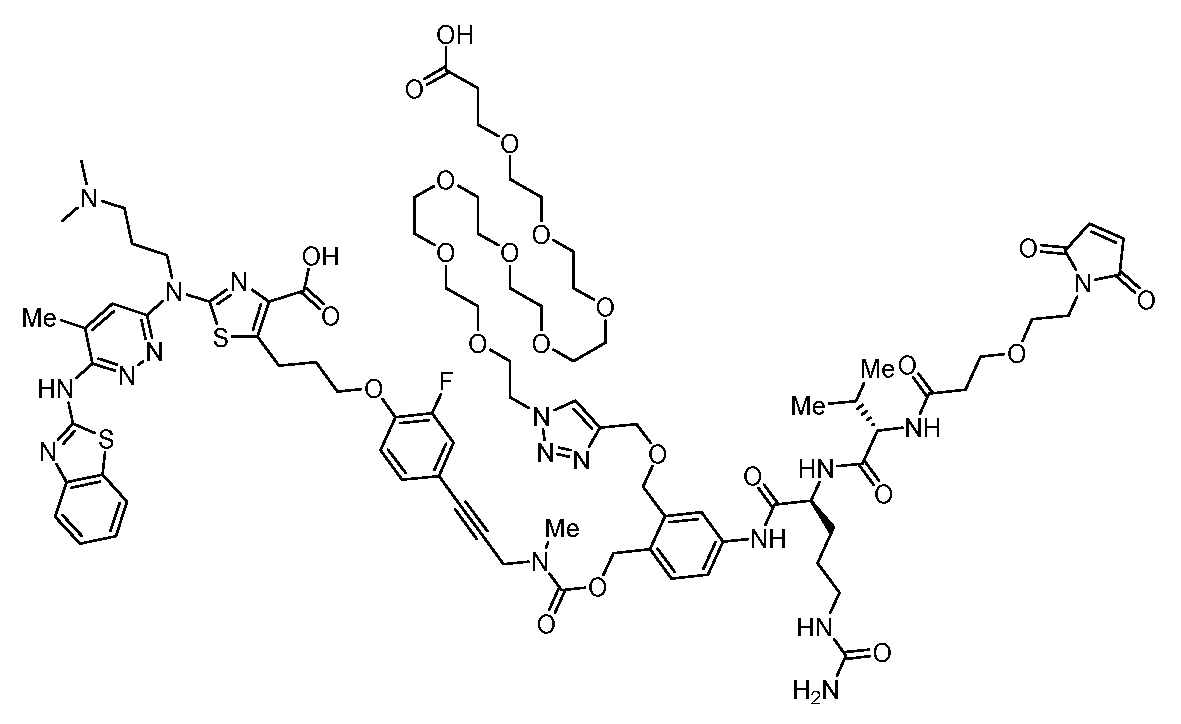
일반적 절차 7에 따라 2-((6-(벤조[d]티아졸-2-일아미노)-5-메틸피리다진-3-일)(3-(디메틸아미노)프로필)아미노)-5-(3-(4-(3-((((4-((S)-2-((R)-2-(3-(2-(2,5-디옥소-2,5-디히드로-1H-피롤-1-일)에톡시)프로판아미도)-3-메틸부탄아미도)-5-우레이도펜탄아미도)-2-((프로프-2-인-1-일옥시)메틸)벤질)옥시)카르보닐)(메틸)아미노)프로프-1-인-1-일)-2-플루오로페녹시)프로필)티아졸-4-카르복실산 (10.0 mg, 0.008 mmol) 및 1-아지도-3,6,9,12,15,18,21,24-옥타옥사헵타코산-27-산 (6.9 mg, 0.015 mmol, 2.0 당량)을 사용하여, 2-((6-(벤조[d]티아졸-2-일아미노)-5-메틸피리다진-3-일)(3-(디메틸아미노)프로필)아미노)-5-(3-(4-(3-((((2-(((1-(26-카르복시-3,6,9,12,15,18,21,24-옥타옥사헥사코실)-1H-1,2,3-트리아졸-4-일)메톡시)메틸)-4-((S)-2-((S)-2-(3-(2-(2,5-디옥소-2,5-디히드로-1H-피롤-1-일)에톡시)프로판아미도)-3-메틸부탄아미도)-5-우레이도펜탄아미도)벤질)옥시)카르보닐)(메틸)아미노)프로프-1-인-1-일)-2-플루오로페녹시)프로필)티아졸-4-카르복실산을 수득하였다. HRMS: M+H = 1824.7700; Rt=2.19분 (5분 산성 방법).According to General Procedure 7 to obtain 2-((6-(benzo[d]thiazol-2-ylamino)-5-methylpyridazin-3-yl)(3-(dimethylamino)propyl)amino)-5-(3-(4-(3-(((4-((S)-2-((R)-2-(3-(2-(2,5-dioxo-2,5-dihydro-1H-pyrrol-1-yl)ethoxy)propanamido)-3-methylbutanamido)-5-ureidopentanamido)-2-((prop-2-yn-1-yloxy)methyl)benzyl)oxy)carbonyl)(methyl)amino)prop-1-yn-1-yl)-2-fluorophenoxy)propyl)thiazole-4-carboxylic acid (10.0 mg, 0.008 mmol) and Using 1-azido-3,6,9,12,15,18,21,24-octaoxaheptacosan-27-acid (6.9 mg, 0.015 mmol, 2.0 equiv) 2-((6-(benzo[d]thiazol-2-ylamino)-5-methylpyridazin-3-yl)(3-(dimethylamino)propyl)amino)-5-(3-(4-(3-(((2-(((1-(26-carboxy-3,6,9,12,15,18,21,24-octaoxahexacosyl)-1H-1,2,3-triazol-4-yl)methoxy)methyl) Obtained -4-((S)-2-((S)-2-(3-(2-(2,5-dioxo-2,5-dihydro-1H-pyrrol-1-yl)ethoxy)propanamido)-3-methylbutanamido)-5-ureidopentanamido)benzyl)oxy)carbonyl)(methyl)amino)prop-1-yn-1-yl)-2-fluorophenoxy)propyl)thiazole-4-carboxylic acid. HRMS: M+H = 1824.7700; Rt=2.19 min (5 min acidic method).
2-((6-(벤조[d]티아졸-2-일아미노)-5-메틸피리다진-3-일)(메틸)아미노)-5-(3-(4-(3-((((4-((S)-2-((S)-2-((tert-부톡시카르보닐)아미노)-3-메틸부탄아미도)-5-우레이도펜탄아미도)-2-((프로프-2-인-1-일옥시)메틸)벤질)옥시)카르보닐)(메틸)아미노)프로프-1-인-1-일)-2-플루오로페녹시)프로필)티아졸-4-카르복실산의 합성Synthesis of 2-((6-(benzo[d]thiazol-2-ylamino)-5-methylpyridazin-3-yl)(methyl)amino)-5-(3-(4-(3-(((4-((S)-2-((S)-2-((tert-butoxycarbonyl)amino)-3-methylbutanamido)-5-ureidopentanamido)-2-((prop-2-yn-1-yloxy)methyl)benzyl)oxy)carbonyl)(methyl)amino)prop-1-yn-1-yl)-2-fluorophenoxy)propyl)thiazole-4-carboxylic acid

일반적 절차 10에 따라 2-((6-(벤조[d]티아졸-2-일아미노)-5-메틸피리다진-3-일)(메틸)아미노)-5-(3-(2-플루오로-4-(3-(메틸아미노)프로프-1-인-1-일)페녹시)프로필)티아졸-4-카르복실산 (50.0 mg, 0.081 mmol) 및 tert-부틸 ((S)-3-메틸-1-(((S)-1-((4-((((4-니트로페녹시)카르보닐)옥시)메틸)-3-((프로프-2-인-1-일옥시)메틸)페닐)아미노)-1-옥소-5-우레이도펜탄-2-일)아미노)-1-옥소부탄-2-일)카르바메이트 (57.7 mg, 0.081 mmol, 1.0 당량)를 사용하여, 2-((6-(벤조[d]티아졸-2-일아미노)-5-메틸피리다진-3-일)(메틸)아미노)-5-(3-(4-(3-((((4-((S)-2-((S)-2-((tert-부톡시카르보닐)아미노)-3-메틸부탄아미도)-5-우레이도펜탄아미도)-2-((프로프-2-인-1-일옥시)메틸)벤질)옥시)카르보닐)(메틸)아미노)프로프-1-인-1-일)-2-플루오로페녹시)프로필)티아졸-4-카르복실산을 수득하였다. LCMS: M+H = 1192.2; Rt=0.88분 (2분 염기성 방법).According to General Procedure 10 using 2-((6-(benzo[d]thiazol-2-ylamino)-5-methylpyridazin-3-yl)(methyl)amino)-5-(3-(2-fluoro-4-(3-(methylamino)prop-1-yn-1-yl)phenoxy)propyl)thiazole-4-carboxylic acid (50.0 mg, 0.081 mmol) and tert-butyl ((S)-3-methyl-1-(((S)-1-((4-((((4-nitrophenoxy)carbonyl)oxy)methyl)-3-((prop-2-yn-1-yloxy)methyl)phenyl)amino)-1-oxo-5-ureidopentan-2-yl)amino)-1-oxobutan-2-yl)carbamate (57.7 mg, 0.081 mmol, 1.0 eq), Obtained 2-((6-(Benzo[d]thiazol-2-ylamino)-5-methylpyridazin-3-yl)(methyl)amino)-5-(3-(4-(3-(((4-((S)-2-((S)-2-((tert-butoxycarbonyl)amino)-3-methylbutanamido)-5-ureidopentanamido)-2-((prop-2-yn-1-yloxy)methyl)benzyl)oxy)carbonyl)(methyl)amino)prop-1-yn-1-yl)-2-fluorophenoxy)propyl)thiazole-4-carboxylic acid. LCMS: M+H = 1192.2; Rt=0.88 min (2 min. Basic method).
2-((6-(벤조[d]티아졸-2-일아미노)-5-메틸피리다진-3-일)(메틸)아미노)-5-(3-(4-(3-((((4-((S)-2-((S)-2-((tert-부톡시카르보닐)아미노)-3-메틸부탄아미도)-5-우레이도펜탄아미도)-2-(((1-(26-카르복시-3,6,9,12,15,18,21,24-옥타옥사헥사코실)-1H-1,2,3-트리아졸-4-일)메톡시)메틸)벤질)옥시)카르보닐)(메틸)아미노)프로프-1-인-1-일)-2-플루오로페녹시)프로필)티아졸-4-카르복실산의 합성Synthesis of 2-((6-(benzo[d]thiazol-2-ylamino)-5-methylpyridazin-3-yl)(methyl)amino)-5-(3-(4-(3-(((4-((S)-2-((S)-2-((tert-butoxycarbonyl)amino)-3-methylbutanamido)-5-ureidopentanamido)-2-(((1-(26-carboxy-3,6,9,12,15,18,21,24-octaoxahexacosyl)-1H-1,2,3-triazol-4-yl)methoxy)methyl)benzyl)oxy)carbonyl)(methyl)amino)prop-1-yn-1-yl)-2-fluorophenoxy)propyl)thiazole-4-carboxylic acid

일반적 절차 7에 따라 2-((6-(벤조[d]티아졸-2-일아미노)-5-메틸피리다진-3-일)(메틸)아미노)-5-(3-(4-(3-((((4-((S)-2-((S)-2-((tert-부톡시카르보닐)아미노)-3-메틸부탄아미도)-5-우레이도펜탄아미도)-2-((프로프-2-인-1-일옥시)메틸)벤질)옥시)카르보닐)(메틸)아미노)프로프-1-인-1-일)-2-플루오로페녹시)프로필)티아졸-4-카르복실산 (38.0 mg, 0.032 mmol) 및 1-아지도-3,6,9,12,15,18,21,24-옥타옥사헵타코산-27-산 (23.9 mg, 0.051 mmol, 1.6 당량)을 사용하여, 2-((6-(벤조[d]티아졸-2-일아미노)-5-메틸피리다진-3-일)(메틸)아미노)-5-(3-(4-(3-((((4-((S)-2-((S)-2-((tert-부톡시카르보닐)아미노)-3-메틸부탄아미도)-5-우레이도펜탄아미도)-2-(((1-(26-카르복시-3,6,9,12,15,18,21,24-옥타옥사헥사코실)-1H-1,2,3-트리아졸-4-일)메톡시)메틸)벤질)옥시)카르보닐)(메틸)아미노)프로프-1-인-1-일)-2-플루오로페녹시)프로필)티아졸-4-카르복실산을 수득하였다. LCMS: M/2+H = 830.6; Rt=0.73분 (2분 염기성 방법).According to General Procedure 7, 2-((6-(benzo[d]thiazol-2-ylamino)-5-methylpyridazin-3-yl)(methyl)amino)-5-(3-(4-(3-(((4-((S)-2-((S)-2-((tert-butoxycarbonyl)amino)-3-methylbutanamido)-5-ureidopentanamido)-2-((prop-2-yn-1-yloxy)methyl)benzyl)oxy)carbonyl)(methyl)amino)prop-1-yn-1-yl)-2-fluorophenoxy)propyl)thiazole-4-carboxylic acid (38.0 mg, 0.032 mmol) and 1-azido-3,6,9,12,15,18,21,24-octaoxaheptacosan-27-acid (23.9 mg, 0.051 mmol, 1.6 equiv.) was used to obtain 2-((6-(Benzo[d]thiazol-2-ylamino)-5-methylpyridazin-3-yl)(methyl)amino)-5-(3-(4-(3-(((4-((S)-2-((S)-2-((tert-butoxycarbonyl)amino)-3-methylbutanamido)-5-ureidopentanamido)-2-(((1-(26-carboxy-3,6,9,12,15,18,21,24-octaoxahexacosyl)-1H-1,2,3-triazol-4-yl)methoxy)methyl)benzyl)oxy)carbonyl)(methyl)amino)prop-1-yn-1-yl)-2-fluorophenoxy)propyl)thiazole-4-carboxylic acid. LCMS: M/2+H = 830.6; Rt=0.73 min (2 min basic method).
2-((6-(벤조[d]티아졸-2-일아미노)-5-메틸피리다진-3-일)(메틸)아미노)-5-(3-(4-(3-((((2-(((1-(26-카르복시-3,6,9,12,15,18,21,24-옥타옥사헥사코실)-1H-1,2,3-트리아졸-4-일)메톡시)메틸)-4-((S)-2-((S)-2-(3-(2-(2,5-디옥소-2,5-디히드로-1H-피롤-1-일)에톡시)프로판아미도)-3-메틸부탄아미도)-5-우레이도펜탄아미도)벤질)옥시)카르보닐)(메틸)아미노)프로프-1-인-1-일)-2-플루오로페녹시)프로필)티아졸-4-카르복실산 (L7C-P7)의 합성2-((6-(benzo[d]thiazol-2-ylamino)-5-methylpyridazin-3-yl)(methyl)amino)-5-(3-(4-(3-((((2-(((1-(26-carboxy-3,6,9,12,15,18,21,24-octaoxahexacosyl)-1H-1,2,3-triazol-4-yl)methoxy)methyl)-4-(( Synthesis of S)-2-((S)-2-(3-(2-(2,5-dioxo-2,5-dihydro-1H-pyrrol-1-yl)ethoxy)propanamido)-3-methylbutanamido)-5-ureidopentanamido)benzyl)oxy)carbonyl)(methyl)amino)prop-1-yn-1-yl)-2-fluorophenoxy)propyl)thiazole-4-carboxylic acid (L7C-P7)

일반적 절차 8에 따라 2-((6-(벤조[d]티아졸-2-일아미노)-5-메틸피리다진-3-일)(메틸)아미노)-5-(3-(4-(3-((((4-((S)-2-((S)-2-((tert-부톡시카르보닐)아미노)-3-메틸부탄아미도)-5-우레이도펜탄아미도)-2-(((1-(26-카르복시-3,6,9,12,15,18,21,24-옥타옥사헥사코실)-1H-1,2,3-트리아졸-4-일)메톡시)메틸)벤질)옥시)카르보닐)(메틸)아미노)프로프-1-인-1-일)-2-플루오로페녹시)프로필)티아졸-4-카르복실산 (25.0 mg, 0.015 mmol) 및 2,5-디옥소피롤리딘-1-일 3-(2-(2,5-디옥소-2,5-디히드로-1H-피롤-1-일)에톡시)프로파노에이트 (7.0 mg, 0.023 mmol, 1.5 당량)를 사용하여, 2-((6-(벤조[d]티아졸-2-일아미노)-5-메틸피리다진-3-일)(메틸)아미노)-5-(3-(4-(3-((((2-(((1-(26-카르복시-3,6,9,12,15,18,21,24-옥타옥사헥사코실)-1H-1,2,3-트리아졸-4-일)메톡시)메틸)-4-((S)-2-((S)-2-(3-(2-(2,5-디옥소-2,5-디히드로-1H-피롤-1-일)에톡시)프로판아미도)-3-메틸부탄아미도)-5-우레이도펜탄아미도)벤질)옥시)카르보닐)(메틸)아미노)프로프-1-인-1-일)-2-플루오로페녹시)프로필)티아졸-4-카르복실산을 수득하였다. LCMS: M/2+H = 877.9; Rt=1.07분 (2분 산성 방법).According to General Procedure 8, 2-((6-(benzo[d]thiazol-2-ylamino)-5-methylpyridazin-3-yl)(methyl)amino)-5-(3-(4-(3-(((4-((S)-2-((S)-2-((tert-butoxycarbonyl)amino)-3-methylbutanamido)-5-ureidopentanamido)-2-(((1-(26-carboxy-3,6,9,12,15,18,21,24-octaoxahexacosyl)-1H-1,2,3-triazol-4-yl)methoxy)methyl)benzyl)oxy)carbonyl)(methyl)amino)prop-1-yn-1-yl)-2-fluorophenoxy)propyl)thiazole-4-carboxylic acid (25.0 mg, 0.015 mmol) and 2,5-dioxopyrrolidin-1-yl 3-(2-(2,5-dioxo-2,5-dihydro-1H-pyrrol-1-yl)ethoxy)propanoate (7.0 mg, 0.023 mmol, 1.5 eq) was used to prepare 2-((6-(benzo[d]thiazol-2-ylamino)-5-methylpyridazin-3-yl)(methyl)amino)-5-(3-(4-(3-(((2-(((1-(26-carboxy-3,6,9,12,15,18,21,24-octaoxahexacosyl)-1H-1,2,3-triazol-4-yl)methoxy)methyl)-4-(( Obtained S)-2-((S)-2-(3-(2-(2,5-dioxo-2,5-dihydro-1H-pyrrol-1-yl)ethoxy)propanamido)-3-methylbutanamido)-5-ureidopentanamido)benzyl)oxy)carbonyl)(methyl)amino)prop-1-yn-1-yl)-2-fluorophenoxy)propyl)thiazole-4-carboxylic acid. LCMS: M/2+H = 877.9; Rt=1.07 min (2 min acidic method).
5-(3-(4-(3-((((2-(((1-(2,5,8,11,14,17,20,23-옥타옥사펜타코산-25-일)-1H-1,2,3-트리아졸-4-일)메톡시)메틸)-4-((S)-2-((S)-2-((tert-부톡시카르보닐)아미노)-3-메틸부탄아미도)-5-우레이도펜탄아미도)벤질)옥시)카르보닐)(메틸)아미노)프로프-1-인-1-일)-2-플루오로페녹시)프로필)-2-((6-(벤조[d]티아졸-2-일아미노)-5-메틸피리다진-3-일)(메틸)아미노)티아졸-4-카르복실산의 합성Synthesis of 5-(3-(4-(3-((((2-((1-(2,5,8,11,14,17,20,23-octaoxapentacosan-25-yl)-1H-1,2,3-triazol-4-yl)methoxy)methyl)-4-((S)-2-((S)-2-((tert-butoxycarbonyl)amino)-3-methylbutanamido)-5-ureidopentanamido)benzyl)oxy)carbonyl)(methyl)amino)prop-1-yn-1-yl)-2-fluorophenoxy)propyl)-2-((6-(benzo[d]thiazol-2-ylamino)-5-methylpyridazin-3-yl)(methyl)amino)thiazole-4-carboxylic acid

일반적 절차 7에 따라 2-((6-(벤조[d]티아졸-2-일아미노)-5-메틸피리다진-3-일)(메틸)아미노)-5-(3-(4-(3-((((4-((S)-2-((S)-2-((tert-부톡시카르보닐)아미노)-3-메틸부탄아미도)-5-우레이도펜탄아미도)-2-((프로프-2-인-1-일옥시)메틸)벤질)옥시)카르보닐)(메틸)아미노)프로프-1-인-1-일)-2-플루오로페녹시)프로필)티아졸-4-카르복실산 (45.0 mg, 0.038 mmol) 및 25-아지도-2,5,8,11,14,17,20,23-옥타옥사펜타코산 (21.7 mg, 0.053 mmol, 1.4 당량)을 사용하여, 5-(3-(4-(3-((((2-(((1-(2,5,8,11,14,17,20,23-옥타옥사펜타코산-25-일)-1H-1,2,3-트리아졸-4-일)메톡시)메틸)-4-((S)-2-((S)-2-((tert-부톡시카르보닐)아미노)-3-메틸부탄아미도)-5-우레이도펜탄아미도)벤질)옥시)카르보닐)(메틸)아미노)프로프-1-인-1-일)-2-플루오로페녹시)프로필)-2-((6-(벤조[d]티아졸-2-일아미노)-5-메틸피리다진-3-일)(메틸)아미노)티아졸-4-카르복실산을 수득하였다. LCMS: M/2+H = 800.9; Rt=1.14분 (2분 산성 방법).According to General Procedure 7, 2-((6-(benzo[d]thiazol-2-ylamino)-5-methylpyridazin-3-yl)(methyl)amino)-5-(3-(4-(3-(((4-((S)-2-((S)-2-((tert-butoxycarbonyl)amino)-3-methylbutanamido)-5-ureidopentanamido)-2-((prop-2-yn-1-yloxy)methyl)benzyl)oxy)carbonyl)(methyl)amino)prop-1-yn-1-yl)-2-fluorophenoxy)propyl)thiazole-4-carboxylic acid (45.0 mg, 0.038 mmol) and 25-azido-2,5,8,11,14,17,20,23-octaoxapentacosane (21.7 mg, 0.053 mmol, 1.4 equivalents) was used to obtain 5-(3-(4-(3-(((2-(((1-(2,5,8,11,14,17,20,23-octaoxapentacosan-25-yl)-1H-1,2,3-triazol-4-yl)methoxy)methyl)-4-((S)-2-((S)-2-((tert-butoxycarbonyl)amino)-3-methylbutanamido)-5-ureidopentanamido)benzyl)oxy)carbonyl)(methyl)amino)prop-1-yn-1-yl)-2-fluorophenoxy)propyl)-2-((6-(benzo[d]thiazol-2-ylamino)-5-methylpyridazin-3-yl)(methyl)amino)thiazole-4-carboxylic acid. LCMS: M/2+H = 800.9; Rt=1.14 min (2 min acidic method).
5-(3-(4-(3-((((2-(((1-(2,5,8,11,14,17,20,23-옥타옥사펜타코산-25-일)-1H-1,2,3-트리아졸-4-일)메톡시)메틸)-4-((S)-2-((S)-2-(3-(2-(2,5-디옥소-2,5-디히드로-1H-피롤-1-일)에톡시)프로판아미도)-3-메틸부탄아미도)-5-우레이도펜탄아미도)벤질)옥시)카르보닐)(메틸)아미노)프로프-1-인-1-일)-2-플루오로페녹시)프로필)-2-((6-(벤조[d]티아졸-2-일아미노)-5-메틸피리다진-3-일)(메틸)아미노)티아졸-4-카르복실산 (L8C-P7)의 합성5-(3-(4-(3-(((2-(((1-(2,5,8,11,14,17,20,23-octaoxapentacosan-25-yl)-1H-1,2,3-triazol-4-yl)methoxy)methyl)-4-((S)-2-((S)-2-(3-(2-(2,5-dioxo-2,5-dihydro-1H-pyrrol-1-yl) Synthesis of ((6-(benzo[d]thiazol-2-ylamino)-5-methylpyridazin-3-yl)(methyl)amino)thiazole-4-carboxylic acid (L8C-P7)
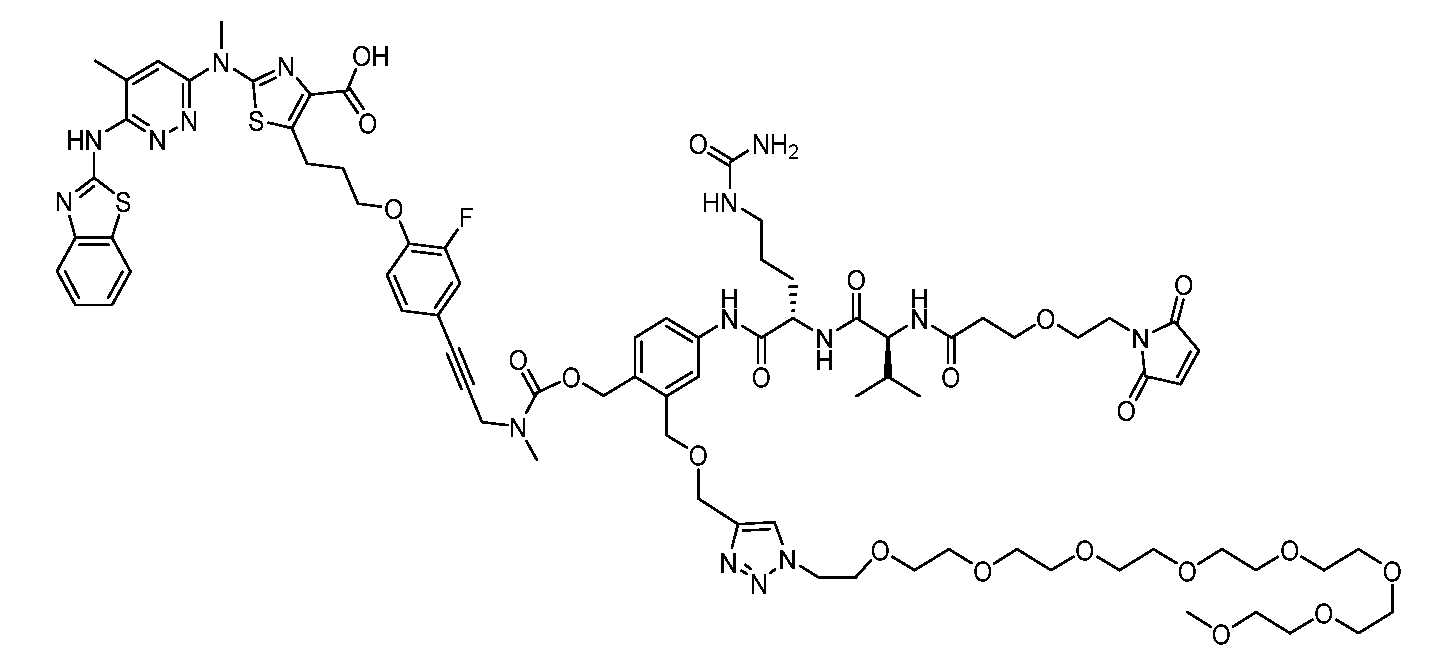
일반적 절차 8에 따라 5-(3-(4-(3-((((2-(((1-(2,5,8,11,14,17,20,23-옥타옥사펜타코산-25-일)-1H-1,2,3-트리아졸-4-일)메톡시)메틸)-4-((S)-2-((S)-2-((tert-부톡시카르보닐)아미노)-3-메틸부탄아미도)-5-우레이도펜탄아미도)벤질)옥시)카르보닐)(메틸)아미노)프로프-1-인-1-일)-2-플루오로페녹시)프로필)-2-((6-(벤조[d]티아졸-2-일아미노)-5-메틸피리다진-3-일)(메틸)아미노)티아졸-4-카르복실산 (49.0 mg, 0.031 mmol) 및 2,5-디옥소피롤리딘-1-일 3-(2-(2,5-디옥소-2,5-디히드로-1H-피롤-1-일)에톡시)프로파노에이트 (14.3 mg, 0.046 mmol, 1.5 당량)를 사용하여, 5-(3-(4-(3-((((2-(((1-(2,5,8,11,14,17,20,23-옥타옥사펜타코산-25-일)-1H-1,2,3-트리아졸-4-일)메톡시)메틸)-4-((S)-2-((S)-2-(3-(2-(2,5-디옥소-2,5-디히드로-1H-피롤-1-일)에톡시)프로판아미도)-3-메틸부탄아미도)-5-우레이도펜탄아미도)벤질)옥시)카르보닐)(메틸)아미노)프로프-1-인-1-일)-2-플루오로페녹시)프로필)-2-((6-(벤조[d]티아졸-2-일아미노)-5-메틸피리다진-3-일)(메틸)아미노)티아졸-4-카르복실산을 수득하였다. LCMS: M/2+H = 848.6; Rt=1.08분 (2분 산성 방법).According to General Procedure 8, 5-(3-(4-(3-((((2-(((1-(2,5,8,11,14,17,20,23-octaoxapentacosan-25-yl)-1H-1,2,3-triazol-4-yl)methoxy)methyl)-4-((S)-2-((S)-2-((tert-butoxycarbonyl)amino)-3-methylbutanamido)-5-ureidopentanamido)benzyl)oxy)carbonyl)(methyl)amino)prop-1-yn-1-yl)-2-fluorophenoxy)propyl)-2-((6-(benzo[d]thiazol-2-ylamino)-5-methylpyridazin-3-yl)(methyl)amino)thiazole-4-carboxylic acid (49.0 mg, 0.031 mmol) and 2,5-dioxopyrrolidin-1-yl 3-(2-(2,5-dioxo-2,5-dihydro-1H-pyrrol-1-yl)ethoxy)propanoate (14.3 mg, 0.046 mmol, 1.5 eq) was used to prepare 5-(3-(4-(3-(((2-(((1-(2,5,8,11,14,17,20,23-octaoxapentacosan-25-yl)-1H-1,2,3-triazol-4-yl)methoxy)methyl)-4-((S)-2-((S)-2-(3-(2-(2,5-dioxo-2,5-dihydro-1H-pyrrol-1-yl)ethoxy)propanoate ((6-(benzo[d]thiazol-2-ylamino)-5-methylpyridazin-3-yl)(methyl)amino)thiazole-4-carboxylic acid was obtained. LCMS: M/2+H = 848.6; Rt=1.08 min (2 min acidic method).
5-(3-(4-(3-((((4-((S)-2-((S)-2-아미노-3-메틸부탄아미도)-5-우레이도펜탄아미도)-2-((메틸((프로프-2-인-1-일옥시)카르보닐)아미노)메틸)벤질)옥시)카르보닐)(메틸)아미노)프로프-1-인-1-일)-2-플루오로페녹시)프로필)-2-(3-(벤조[d]티아졸-2-일아미노)-4-메틸-6,7-디히드로피리도[2,3-c]피리다진-8(5H)-일)티아졸-4-카르복실산의 합성Synthesis of 5-(3-(4-(3-(((4-((S)-2-((S)-2-amino-3-methylbutanamido)-5-ureidopentanamido)-2-((methyl((prop-2-yn-1-yloxy)carbonyl)amino)methyl)benzyl)oxy)carbonyl)(methyl)amino)prop-1-yn-1-yl)-2-fluorophenoxy)propyl)-2-(3-(benzo[d]thiazol-2-ylamino)-4-methyl-6,7-dihydropyrido[2,3-c]pyridazin-8(5H)-yl)thiazole-4-carboxylic acid

일반적 절차 9에 따라 프로프-2-인-1-일 5-((S)-2-((S)-2-((((9H-플루오렌-9-일)메톡시)카르보닐)아미노)-3-메틸부탄아미도)-5-우레이도펜탄아미도)-2-((((4-니트로페녹시)카르보닐)옥시)메틸)벤질(메틸)카르바메이트 (72.0 mg, 0.081 mmol) 및 2-(3-(벤조[d]티아졸-2-일아미노)-4-메틸-6,7-디히드로피리도[2,3-c]피리다진-8(5H)-일)-5-(3-(2-플루오로-4-(3-(메틸아미노)프로프-1-인-1-일)페녹시)프로필)티아졸-4-카르복실산 (52.0 mg, 0.081 mmol, 1.0 당량)을 사용하여, 5-(3-(4-(3-((((4-((S)-2-((S)-2-아미노-3-메틸부탄아미도)-5-우레이도펜탄아미도)-2-((메틸((프로프-2-인-1-일옥시)카르보닐)아미노)메틸)벤질)옥시)카르보닐)(메틸)아미노)프로프-1-인-1-일)-2-플루오로페녹시)프로필)-2-(3-(벤조[d]티아졸-2-일아미노)-4-메틸-6,7-디히드로피리도[2,3-c]피리다진-8(5H)-일)티아졸-4-카르복실산을 수득하였다. LCMS: M+H = 1174.3; Rt=1.12분 (2분 산성 방법).According to General Procedure 9 to obtain prop-2-yn-1-yl 5-((S)-2-((S)-2-(((9H-fluoren-9-yl)methoxy)carbonyl)amino)-3-methylbutanamido)-5-ureidopentanamido)-2-((((4-nitrophenoxy)carbonyl)oxy)methyl)benzyl(methyl)carbamate (72.0 mg, 0.081 mmol) and 2-(3-(benzo[d]thiazol-2-ylamino)-4-methyl-6,7-dihydropyrido[2,3-c]pyridazin-8(5H)-yl)-5-(3-(2-fluoro-4-(3-(methylamino)prop-1-yn-1-yl)phenoxy)propyl)thiazole-4-carboxylic acid (52.0 mg, 0.081 mmol, 1.0 eq.) was used, 5-(3-(4-(3-(((4-((S)-2-((S)-2-amino-3-methylbutanamido)-5-ureidopentanamido)-2-((methyl((prop-2-yn-1-yloxy)carbonyl)amino)methyl)benzyl)oxy)carbonyl)(methyl)amino)prop-1-yn-1-yl)-2-fluorophenoxy)propyl)-2-(3-(benzo[d]thiazol-2-ylamino)-4-methyl-6,7-dihydropyrido[2,3-c]pyridazin-8(5H)-yl)thiazole-4-carboxylic acid was obtained. LCMS: M+H = 1174.3; Rt=1.12 min (2 min acidic method).
5-(3-(4-(3-((((2-(((((1-(2,5,8,11,14,17,20,23-옥타옥사펜타코산-25-일)-1H-1,2,3-트리아졸-4-일)메톡시)카르보닐)(메틸)아미노)메틸)-4-((S)-2-((S)-2-아미노-3-메틸부탄아미도)-5-우레이도펜탄아미도)벤질)옥시)카르보닐)(메틸)아미노)프로프-1-인-1-일)-2-플루오로페녹시)프로필)-2-(3-(벤조[d]티아졸-2-일아미노)-4-메틸-6,7-디히드로피리도[2,3-c]피리다진-8(5H)-일)티아졸-4-카르복실산의 합성Synthesis of 5-(3-(4-(3-((((2-((((1-(2,5,8,11,14,17,20,23-octaoxapentacosan-25-yl)-1H-1,2,3-triazol-4-yl)methoxy)carbonyl)(methyl)amino)methyl)-4-((S)-2-((S)-2-amino-3-methylbutanamido)-5-ureidopentanamido)benzyl)oxy)carbonyl)(methyl)amino)prop-1-yn-1-yl)-2-fluorophenoxy)propyl)-2-(3-(benzo[d]thiazol-2-ylamino)-4-methyl-6,7-dihydropyrido[2,3-c]pyridazin-8(5H)-yl)thiazole-4-carboxylic acid

일반적 절차 7에 따라 5-(3-(4-(3-((((4-((S)-2-((S)-2-아미노-3-메틸부탄아미도)-5-우레이도펜탄아미도)-2-((메틸((프로프-2-인-1-일옥시)카르보닐)아미노)메틸)벤질)옥시)카르보닐)(메틸)아미노)프로프-1-인-1-일)-2-플루오로페녹시)프로필)-2-(3-(벤조[d]티아졸-2-일아미노)-4-메틸-6,7-디히드로피리도[2,3-c]피리다진-8(5H)-일)티아졸-4-카르복실산 (22.0 mg, 0.019 mmol) 및 25-아지도-2,5,8,11,14,17,20,23-옥타옥사펜타코산 (23.0 mg, 0.056 mmol, 3.0 당량)을 사용하여, 5-(3-(4-(3-((((2-(((((1-(2,5,8,11,14,17,20,23-옥타옥사펜타코산-25-일)-1H-1,2,3-트리아졸-4-일)메톡시)카르보닐)(메틸)아미노)메틸)-4-((S)-2-((S)-2-아미노-3-메틸부탄아미도)-5-우레이도펜탄아미도)벤질)옥시)카르보닐)(메틸)아미노)프로프-1-인-1-일)-2-플루오로페녹시)프로필)-2-(3-(벤조[d]티아졸-2-일아미노)-4-메틸-6,7-디히드로피리도[2,3-c]피리다진-8(5H)-일)티아졸-4-카르복실산을 수득하였다. HRMS: M+H = 1583.8199; Rt=2.30분 (5분 산성 방법).According to General Procedure 7, 5-(3-(4-(3-((((4-((S)-2-((S)-2-amino-3-methylbutanamido)-5-ureidopentanamido)-2-((methyl((prop-2-yn-1-yloxy)carbonyl)amino)methyl)benzyl)oxy)carbonyl)(methyl)amino)prop-1-yn-1-yl)-2-fluorophenoxy)propyl)-2-(3-(benzo[d]thiazol-2-ylamino)-4-methyl-6,7-dihydropyrido[2,3-c]pyridazin-8(5H)-yl)thiazole-4-carboxylic acid (22.0 mg, 0.019 mmol) and 25-azido-2,5,8,11,14,17,20,23-octaoxapentacosane (23.0 mg, 0.056 mmol, 3.0 equivalents) was used. 5-(3-(4-(3-((((2-((((1-(2,5,8,11,14,17,20,23-octaoxapentacosan-25-yl)-1H-1,2,3-triazol-4-yl)methoxy)carbonyl)(methyl)amino)methyl)-4-((S)-2-((S)-2-amino-3-methylbutanamido)-5-ureidopentanamido)benzyl)oxy)carbonyl)(methyl)amino)prop-1-yn-1-yl)-2-fluorophenoxy)propyl)-2-(3-(benzo[d]thiazol-2-ylamino)-4-methyl-6,7-dihydropyrido[2,3-c]pyridazin-8(5H)-yl)thiazole-4-carboxylic acid was obtained. HRMS: M+H = 1583.8199; Rt=2.30 min (5 min acid method).
5-(3-(4-(3-((((2-(((((1-(2,5,8,11,14,17,20,23-옥타옥사펜타코산-25-일)-1H-1,2,3-트리아졸-4-일)메톡시)카르보닐)(메틸)아미노)메틸)-4-((S)-2-((S)-2-(3-(2-(2,5-디옥소-2,5-디히드로-1H-피롤-1-일)에톡시)프로판아미도)-3-메틸부탄아미도)-5-우레이도펜탄아미도)벤질)옥시)카르보닐)(메틸)아미노)프로프-1-인-1-일)-2-플루오로페녹시)프로필)-2-(3-(벤조[d]티아졸-2-일아미노)-4-메틸-6,7-디히드로피리도[2,3-c]피리다진-8(5H)-일)티아졸-4-카르복실산 (L8C-P3)의 합성5-(3-(4-(3-((((2-((((1-(2,5,8,11,14,17,20,23-octaoxapentacosan-25-yl)-1H-1,2,3-triazol-4-yl)methoxy)carbonyl)(methyl)amino)methyl)-4-((S)-2-((S)-2-(3-(2-(2,5-dioxo-2,5-dihydro-1H-pyrrol-1-yl) Synthesis of ((methyl)amino)propan-1-yl)-3-methylbutanamido)-5-ureidopentanamido)benzyl)oxy)carbonyl)-2-(3-(benzo[d]thiazol-2-ylamino)-4-methyl-6,7-dihydropyrido[2,3-c]pyridazin-8(5H)-yl)thiazole-4-carboxylic acid (L8C-P3)

일반적 절차 5에 따라 5-(3-(4-(3-((((2-(((((1-(2,5,8,11,14,17,20,23-옥타옥사펜타코산-25-일)-1H-1,2,3-트리아졸-4-일)메톡시)카르보닐)(메틸)아미노)메틸)-4-((S)-2-((S)-2-아미노-3-메틸부탄아미도)-5-우레이도펜탄아미도)벤질)옥시)카르보닐)(메틸)아미노)프로프-1-인-1-일)-2-플루오로페녹시)프로필)-2-(3-(벤조[d]티아졸-2-일아미노)-4-메틸-6,7-디히드로피리도[2,3-c]피리다진-8(5H)-일)티아졸-4-카르복실산 (12.3 mg, 0.008 mmol) 및 2,5-디옥소피롤리딘-1-일 3-(2-(2,5-디옥소-2,5-디히드로-1H-피롤-1-일)에톡시)프로파노에이트 (4.8 mg, 0.016 mmol, 2.0 당량)를 사용하여, 5-(3-(4-(3-((((2-(((((1-(2,5,8,11,14,17,20,23-옥타옥사펜타코산-25-일)-1H-1,2,3-트리아졸-4-일)메톡시)카르보닐)(메틸)아미노)메틸)-4-((S)-2-((S)-2-(3-(2-(2,5-디옥소-2,5-디히드로-1H-피롤-1-일)에톡시)프로판아미도)-3-메틸부탄아미도)-5-우레이도펜탄아미도)벤질)옥시)카르보닐)(메틸)아미노)프로프-1-인-1-일)-2-플루오로페녹시)프로필)-2-(3-(벤조[d]티아졸-2-일아미노)-4-메틸-6,7-디히드로피리도[2,3-c]피리다진-8(5H)-일)티아졸-4-카르복실산을 수득하였다. HRMS: M+H = 1778.6500; Rt=2.67분 (5분 산성 방법).According to general procedure 5, 5-(3-(4-(3-((((2-((((1-(2,5,8,11,14,17,20,23-octaoxapentacosan-25-yl)-1H-1,2,3-triazol-4-yl)methoxy)carbonyl)(methyl)amino)methyl)-4-((S)-2-((S)-2-amino-3-methylbutanamido)-5-ureidopentanamido)benzyl)oxy)carbonyl)(methyl)amino)prop-1-yn-1-yl)-2-fluorophenoxy)propyl)-2-(3-(benzo[d]thiazol-2-ylamino)-4-methyl-6,7-dihydropyrido[2,3-c]pyridazin-8(5H)-yl)thiazole-4-carboxylic acid (12.3 mg, 0.008 mmol) and 2,5-dioxopyrrolidin-1-yl 3-(2-(2,5-dioxo-2,5-dihydro-1H-pyrrol-1-yl)ethoxy)propanoate (4.8 mg, 0.016 mmol, 2.0 eq) were used to prepare 5-(3-(4-(3-(((2-((((1-(2,5,8,11,14,17,20,23-octaoxapentacosan-25-yl)-1H-1,2,3-triazol-4-yl)methoxy)carbonyl)(methyl)amino)methyl)-4-((S)-2-((S)-2-(3-(2-(2,5-dioxo-2,5-dihydro-1H-pyrrol-1-yl) Obtained (methyl)amino)prop-1-yn-1-yl)-2-(3-(benzo[d]thiazol-2-ylamino)-4-methyl-6,7-dihydropyrido[2,3-c]pyridazin-8(5H)-yl)thiazole-4-carboxylic acid. HRMS: M+H = 1778.6500; Rt=2.67 min (5 min acidic method).
5-(3-(4-(3-((((4-((S)-2-((S)-2-아미노-3-메틸부탄아미도)-5-우레이도펜탄아미도)-2-(((((1-(26-카르복시-3,6,9,12,15,18,21,24-옥타옥사헥사코실)-1H-1,2,3-트리아졸-4-일)메톡시)카르보닐)(메틸)아미노)메틸)벤질)옥시)카르보닐)(메틸)아미노)프로프-1-인-1-일)-2-플루오로페녹시)프로필)-2-(3-(벤조[d]티아졸-2-일아미노)-4-메틸-6,7-디히드로피리도[2,3-c]피리다진-8(5H)-일)티아졸-4-카르복실산의 합성Synthesis of 5-(3-(4-(3-(((4-((S)-2-((S)-2-amino-3-methylbutanamido)-5-ureidopentanamido)-2-((((1-(26-carboxy-3,6,9,12,15,18,21,24-octaoxahexacosyl)-1H-1,2,3-triazol-4-yl)methoxy)carbonyl)(methyl)amino)methyl)benzyl)oxy)carbonyl)(methyl)amino)prop-1-yn-1-yl)-2-fluorophenoxy)propyl)-2-(3-(benzo[d]thiazol-2-ylamino)-4-methyl-6,7-dihydropyrido[2,3-c]pyridazin-8(5H)-yl)thiazole-4-carboxylic acid

일반적 절차 7에 따라 5-(3-(4-(3-((((4-((S)-2-((S)-2-아미노-3-메틸부탄아미도)-5-우레이도펜탄아미도)-2-((메틸((프로프-2-인-1-일옥시)카르보닐)아미노)메틸)벤질)옥시)카르보닐)(메틸)아미노)프로프-1-인-1-일)-2-플루오로페녹시)프로필)-2-(3-(벤조[d]티아졸-2-일아미노)-4-메틸-6,7-디히드로피리도[2,3-c]피리다진-8(5H)-일)티아졸-4-카르복실산 (20.0 mg, 0.017 mmol) 및 1-아지도-3,6,9,12,15,18,21,24-옥타옥사헵타코산-27-산 (23.9 mg, 0.051 mmol, 3.0 당량)을 사용하여, 5-(3-(4-(3-((((4-((S)-2-((S)-2-아미노-3-메틸부탄아미도)-5-우레이도펜탄아미도)-2-(((((1-(26-카르복시-3,6,9,12,15,18,21,24-옥타옥사헥사코실)-1H-1,2,3-트리아졸-4-일)메톡시)카르보닐)(메틸)아미노)메틸)벤질)옥시)카르보닐)(메틸)아미노)프로프-1-인-1-일)-2-플루오로페녹시)프로필)-2-(3-(벤조[d]티아졸-2-일아미노)-4-메틸-6,7-디히드로피리도[2,3-c]피리다진-8(5H)-일)티아졸-4-카르복실산을 수득하였다. HRMS: M+H = 1641.8900; Rt=2.24분 (5분 산성 방법).According to General Procedure 7, 5-(3-(4-(3-((((4-((S)-2-((S)-2-amino-3-methylbutanamido)-5-ureidopentanamido)-2-((methyl((prop-2-yn-1-yloxy)carbonyl)amino)methyl)benzyl)oxy)carbonyl)(methyl)amino)prop-1-yn-1-yl)-2-fluorophenoxy)propyl)-2-(3-(benzo[d]thiazol-2-ylamino)-4-methyl-6,7-dihydropyrido[2,3-c]pyridazin-8(5H)-yl)thiazole-4-carboxylic acid (20.0 mg, 0.017 mmol) and Using 1-azido-3,6,9,12,15,18,21,24-octaoxaheptacosan-27-acid (23.9 mg, 0.051 mmol, 3.0 equiv), 5-(3-(4-(3-(((4-((S)-2-((S)-2-amino-3-methylbutanamido)-5-ureidopentanamido)-2-((((1-(26-carboxy-3,6,9,12,15,18,21,24-octaoxahexacosyl)-1H-1,2,3-triazol-4-yl)methoxy)carbonyl)(methyl)amino)methyl)benzyl)oxy)carbonyl)(methyl)amino)prop-1-yn-1-yl)-2-fluorophenoxy)propyl)-2-(3-(benzo[d]thiazol-2-ylamino)-4-methyl-6,7-dihydropyrido[2,3-c]pyridazin-8(5H)-yl)thiazole-4-carboxylic acid was obtained. HRMS: M+H = 1641.8900; Rt=2.24 min (5 min acid method).
2-(3-(벤조[d]티아졸-2-일아미노)-4-메틸-6,7-디히드로피리도[2,3-c]피리다진-8(5H)-일)-5-(3-(4-(3-((((2-(((((1-(26-카르복시-3,6,9,12,15,18,21,24-옥타옥사헥사코실)-1H-1,2,3-트리아졸-4-일)메톡시)카르보닐)(메틸)아미노)메틸)-4-((S)-2-((S)-2-(3-(2-(2,5-디옥소-2,5-디히드로-1H-피롤-1-일)에톡시)프로판아미도)-3-메틸부탄아미도)-5-우레이도펜탄아미도)벤질)옥시)카르보닐)(메틸)아미노)프로프-1-인-1-일)-2-플루오로페녹시)프로필)티아졸-4-카르복실산 (L3C-P3)의 합성2-(3-(Benzo[d]thiazol-2-ylamino)-4-methyl-6,7-dihydropyrido[2,3-c]pyridazin-8(5H)-yl)-5-(3-(4-(3-(((2-((((1-(26-carboxy-3,6,9,12,15,18,21,24-octaoxahexacosyl)-1H-1,2,3-triazol-4-yl)methoxy)carbonyl)( Synthesis of (S)-2-((S)-2-(3-(2-(2,5-dioxo-2,5-dihydro-1H-pyrrol-1-yl)ethoxy)propanamido)-3-methylbutanamido)-5-ureidopentanamido)benzyl)oxy)carbonyl)(methyl)amino)prop-1-yn-1-yl)-2-fluorophenoxy)propyl)thiazole-4-carboxylic acid (L3C-P3)
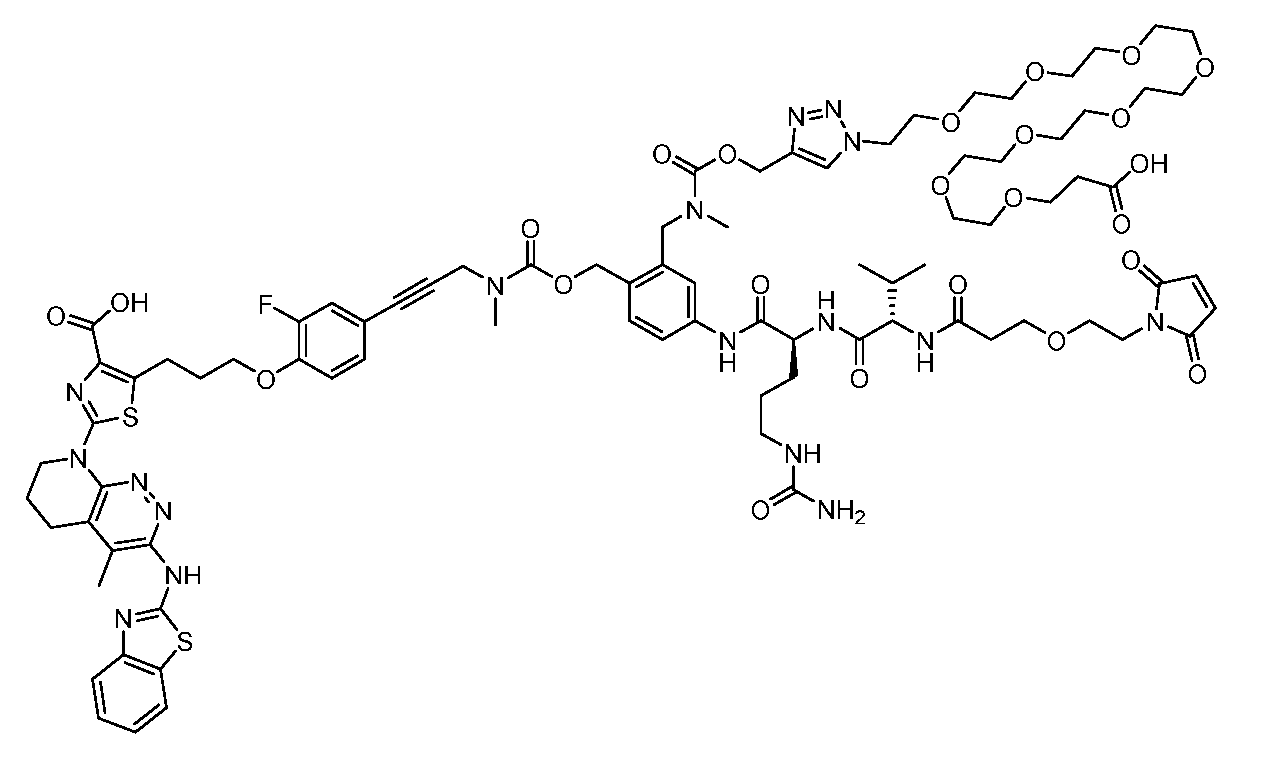
일반적 절차 5에 따라 5-(3-(4-(3-((((4-((S)-2-((S)-2-아미노-3-메틸부탄아미도)-5-우레이도펜탄아미도)-2-(((((1-(26-카르복시-3,6,9,12,15,18,21,24-옥타옥사헥사코실)-1H-1,2,3-트리아졸-4-일)메톡시)카르보닐)(메틸)아미노)메틸)벤질)옥시)카르보닐)(메틸)아미노)프로프-1-인-1-일)-2-플루오로페녹시)프로필)-2-(3-(벤조[d]티아졸-2-일아미노)-4-메틸-6,7-디히드로피리도[2,3-c]피리다진-8(5H)-일)티아졸-4-카르복실산 (5.5 mg, 0.003 mmol) 및 2,5-디옥소피롤리딘-1-일 3-(2-(2,5-디옥소-2,5-디히드로-1H-피롤-1-일)에톡시)프로파노에이트 (2.1 mg, 0.007 mmol, 2.0 당량)를 사용하여, 2-(3-(벤조[d]티아졸-2-일아미노)-4-메틸-6,7-디히드로피리도[2,3-c]피리다진-8(5H)-일)-5-(3-(4-(3-((((2-(((((1-(26-카르복시-3,6,9,12,15,18,21,24-옥타옥사헥사코실)-1H-1,2,3-트리아졸-4-일)메톡시)카르보닐)(메틸)아미노)메틸)-4-((S)-2-((S)-2-(3-(2-(2,5-디옥소-2,5-디히드로-1H-피롤-1-일)에톡시)프로판아미도)-3-메틸부탄아미도)-5-우레이도펜탄아미도)벤질)옥시)카르보닐)(메틸)아미노)프로프-1-인-1-일)-2-플루오로페녹시)프로필)티아졸-4-카르복실산을 수득하였다. HRMS: M+H = 1837.6300; Rt=2.61분 (5분 산성 방법).According to general procedure 5, 5-(3-(4-(3-((((4-((S)-2-((S)-2-amino-3-methylbutanamido)-5-ureidopentanamido)-2-((((1-(26-carboxy-3,6,9,12,15,18,21,24-octaoxahexacosyl)-1H-1,2,3-triazol-4-yl)methoxy)carbonyl)(methyl)amino)methyl)benzyl)oxy)carbonyl)(methyl)amino)prop-1-yn-1-yl)-2-fluorophenoxy)propyl)-2-(3-(benzo[d]thiazol-2-ylamino)-4-methyl-6,7-dihydropyrido[2,3-c]pyridazin-8(5H)-yl)thiazole-4-carboxylic acid (5.5 mg, 0.003 mmol) and 2,5-dioxopyrrolidin-1-yl 3-(2-(2,5-dioxo-2,5-dihydro-1H-pyrrol-1-yl)ethoxy)propanoate (2.1 mg, 0.007 mmol, 2.0 eq) were used to prepare 2-(3-(benzo[d]thiazol-2-ylamino)-4-methyl-6,7-dihydropyrido[2,3-c]pyridazin-8(5H)-yl)-5-(3-(4-(3-(((2-((((1-(26-carboxy-3,6,9,12,15,18,21,24-octaoxahexacosyl)-1H-1,2,3-triazol-4-yl)methoxy)carbonyl)(meth Obtained ((S)-2-((S)-2-(3-(2-(2,5-dioxo-2,5-dihydro-1H-pyrrol-1-yl)ethoxy)propanamido)-3-methylbutanamido)-5-ureidopentanamido)benzyl)oxy)carbonyl)(methyl)amino)prop-1-yn-1-yl)-2-fluorophenoxy)propyl)thiazole-4-carboxylic acid. HRMS: M+H = 1837.6300; Rt=2.61 min (5 min acidic method).
5-((5-(3-(4-(3-((((4-((S)-2-((S)-2-아미노-3-메틸부탄아미도)-5-우레이도펜탄아미도)-2-((메틸((프로프-2-인-1-일옥시)카르보닐)아미노)메틸)벤질)옥시)카르보닐)(메틸)아미노)프로프-1-인-1-일)-2-플루오로페녹시)프로필)-4-카르복시티아졸-2-일)(6-(벤조[d]티아졸-2-일아미노)-5-메틸피리다진-3-일)아미노)-2-히드록시-N,N-디메틸-N-(3-술포프로필)펜탄-1-아미늄의 합성Synthesis of 5-((5-(3-(4-(3-((((4-((S)-2-((S)-2-amino-3-methylbutanamido)-5-ureidopentanamido)-2-((methyl((prop-2-yn-1-yloxy)carbonyl)amino)methyl)benzyl)oxy)carbonyl)(methyl)amino)prop-1-yn-1-yl)-2-fluorophenoxy)propyl)-4-carboxythiazol-2-yl)(6-(benzo[d]thiazol-2-ylamino)-5-methylpyridazin-3-yl)amino)-2-hydroxy-N,N-dimethyl-N-(3-sulfopropyl)pentan-1-aminum

일반적 절차 9에 따라 프로프-2-인-1-일 (5-((S)-2-((S)-2-((((9H-플루오렌-9-일)메톡시)카르보닐)아미노)-3-메틸부탄아미도)-5-우레이도펜탄아미도)-2-((((4-니트로페녹시)카르보닐)옥시)메틸)벤질)(메틸)카르바메이트 (30.0 mg, 0.034 mmol) 및 5-((6-(벤조[d]티아졸-2-일아미노)-5-메틸피리다진-3-일)(4-카르복시-5-(3-(2-플루오로-4-(3-(메틸아미노)프로프-1-인-1-일)페녹시)프로필)티아졸-2-일)아미노)-2-히드록시-N,N-디메틸-N-(3-술포프로필)펜탄-1-아미늄 (28.8 mg, 0.034 mmol, 1.0 당량)을 사용하여, 5-((5-(3-(4-(3-((((4-((S)-2-((S)-2-아미노-3-메틸부탄아미도)-5-우레이도펜탄아미도)-2-((메틸((프로프-2-인-1-일옥시)카르보닐)아미노)메틸)벤질)옥시)카르보닐)(메틸)아미노)프로프-1-인-1-일)-2-플루오로페녹시)프로필)-4-카르복시티아졸-2-일)(6-(벤조[d]티아졸-2-일아미노)-5-메틸피리다진-3-일)아미노)-2-히드록시-N,N-디메틸-N-(3-술포프로필)펜탄-1-아미늄을 수득하였다. LCMS: M+H = 1387.1; Rt=0.98분 (2분 산성 방법).Prop-2-yn-1-yl (5-((S)-2-((S)-2-(((9H-fluoren-9-yl)methoxy)carbonyl)amino)-3-methylbutanamido)-5-ureidopentanamido)-2-((((4-nitrophenoxy)carbonyl)oxy)methyl)benzyl)(methyl)carbamate (30.0 mg, 0.034 mmol) and Using 5-((6-(benzo[d]thiazol-2-ylamino)-5-methylpyridazin-3-yl)(4-carboxy-5-(3-(2-fluoro-4-(3-(methylamino)prop-1-yn-1-yl)phenoxy)propyl)thiazol-2-yl)amino)-2-hydroxy-N,N-dimethyl-N-(3-sulfopropyl)pentan-1-aminum (28.8 mg, 0.034 mmol, 1.0 eq), 5-((5-(3-(4-(3-(((4-((S)-2-((S)-2-amino-3-methylbutanamido)-5-ureidopentanamido)-2-((methyl((prop-2-yn-1-yloxy)carbonyl)amino)methyl)benzyl)oxy)carbonyl)(methyl)amino)prop-1-yn-1-yl)-2-fluorophenoxy)propyl)-4-carboxythiazol-2-yl)(6-(benzo[d]thiazol-2-ylamino)-5-methylpyridazin-3-yl)amino)-2-hydroxy-N,N-dimethyl-N-(3-sulfopropyl)pentan-1-aminum was obtained. LCMS: M+H = 1387.1; Rt=0.98 min (2 min acidic method).
5-((6-(벤조[d]티아졸-2-일아미노)-5-메틸피리다진-3-일)(4-카르복시-5-(3-(4-(3-((((4-((S)-2-((S)-2-(3-(2-(2,5-디옥소-2,5-디히드로-1H-피롤-1-일)에톡시)프로판아미도)-3-메틸부탄아미도)-5-우레이도펜탄아미도)-2-((메틸((프로프-2-인-1-일옥시)카르보닐)아미노)메틸)벤질)옥시)카르보닐)(메틸)아미노)프로프-1-인-1-일)-2-플루오로페녹시)프로필)티아졸-2-일)아미노)-2-히드록시-N,N-디메틸-N-(3-술포프로필)펜탄-1-아미늄의 합성Synthesis of 5-((6-(benzo[d]thiazol-2-ylamino)-5-methylpyridazin-3-yl)(4-carboxy-5-(3-(4-(3-(((4-((S)-2-((S)-2-(3-(2-(2,5-dioxo-2,5-dihydro-1H-pyrrol-1-yl)ethoxy)propanamido)-3-methylbutanamido)-5-ureidopentanamido)-2-((methyl((prop-2-yn-1-yloxy)carbonyl)amino)methyl)benzyl)oxy)carbonyl)(methyl)amino)prop-1-yn-1-yl)-2-fluorophenoxy)propyl)thiazol-2-yl)amino)-2-hydroxy-N,N-dimethyl-N-(3-sulfopropyl)pentan-1-aminum

일반적 절차 5에 따라 5-((5-(3-(4-(3-((((4-((S)-2-((S)-2-아미노-3-메틸부탄아미도)-5-우레이도펜탄아미도)-2-((메틸((프로프-2-인-1-일옥시)카르보닐)아미노)메틸)벤질)옥시)카르보닐)(메틸)아미노)프로프-1-인-1-일)-2-플루오로페녹시)프로필)-4-카르복시티아졸-2-일)(6-(벤조[d]티아졸-2-일아미노)-5-메틸피리다진-3-일)아미노)-2-히드록시-N,N-디메틸-N-(3-술포프로필)펜탄-1-아미늄 (35.6 mg, 0.026 mmol) 및 2,5-디옥소피롤리딘-1-일 3-(2-(2,5-디옥소-2,5-디히드로-1H-피롤-1-일)에톡시)프로파노에이트 (12.0 mg, 0.039 mmol, 1.5 당량)를 사용하여, 5-((6-(벤조[d]티아졸-2-일아미노)-5-메틸피리다진-3-일)(4-카르복시-5-(3-(4-(3-((((4-((S)-2-((S)-2-(3-(2-(2,5-디옥소-2,5-디히드로-1H-피롤-1-일)에톡시)프로판아미도)-3-메틸부탄아미도)-5-우레이도펜탄아미도)-2-((메틸((프로프-2-인-1-일옥시)카르보닐)아미노)메틸)벤질)옥시)카르보닐)(메틸)아미노)프로프-1-인-1-일)-2-플루오로페녹시)프로필)티아졸-2-일)아미노)-2-히드록시-N,N-디메틸-N-(3-술포프로필)펜탄-1-아미늄을 수득하였다. LCMS: M/2+H = 791.2; Rt=1.01분 (2분 산성 방법).According to General Procedure 5, 5-((5-(3-(4-(3-((((4-((S)-2-((S)-2-amino-3-methylbutanamido)-5-ureidopentanamido)-2-((methyl((prop-2-yn-1-yloxy)carbonyl)amino)methyl)benzyl)oxy)carbonyl)(methyl)amino)prop-1-yn-1-yl)-2-fluorophenoxy)propyl)-4-carboxythiazol-2-yl)(6-(benzo[d]thiazol-2-ylamino)-5-methylpyridazin-3-yl)amino)-2-hydroxy-N,N-dimethyl-N-(3-sulfopropyl)pentan-1-aminum (35.6 mg, 0.026 mmol) and 2,5-dioxopyrrolidin-1-yl Using 3-(2-(2,5-dioxo-2,5-dihydro-1H-pyrrol-1-yl)ethoxy)propanoate (12.0 mg, 0.039 mmol, 1.5 eq), 5-((6-(Benzo[d]thiazol-2-ylamino)-5-methylpyridazin-3-yl)(4-carboxy-5-(3-(4-(3-(((4-((S)-2-((S)-2-(3-(2-(2,5-dioxo-2,5-dihydro-1H-pyrrol-1-yl)ethoxy)propanamido)-3-methylbutanamido)-5-ureidopentanamido)-2-((methyl((prop-2-yn-1-yloxy)carbonyl)amino)methyl)benzyl)oxy)carbonyl)(methyl)amino)prop-1-yn-1-yl)-2-fluorophenoxy)propyl)thiazol-2-yl)amino)-2-hydroxy-N,N-dimethyl-N-(3-sulfopropyl)pentan-1-aminum was obtained. LCMS: M/2+H = 791.2; Rt=1.01 min (2 min acidic method).
5-((6-(벤조[d]티아졸-2-일아미노)-5-메틸피리다진-3-일)(4-카르복시-5-(3-(4-(3-((((2-(((((1-(26-카르복시-3,6,9,12,15,18,21,24-옥타옥사헥사코실)-1H-1,2,3-트리아졸-4-일)메톡시)카르보닐)(메틸)아미노)메틸)-4-((S)-2-((S)-2-(3-(2-(2,5-디옥소-2,5-디히드로-1H-피롤-1-일)에톡시)프로판아미도)-3-메틸부탄아미도)-5-우레이도펜탄아미도)벤질)옥시)카르보닐)(메틸)아미노)프로프-1-인-1-일)-2-플루오로페녹시)프로필)티아졸-2-일)아미노)-2-히드록시-N,N-디메틸-N-(3-술포프로필)펜탄-1-아미늄 (L3C-P4)의 합성5-((6-(Benzo[d]thiazol-2-ylamino)-5-methylpyridazin-3-yl)(4-carboxy-5-(3-(4-(3-((((2-((((1-(26-carboxy-3,6,9,12,15,18,21,24-octaoxahexacosyl)-1H-1,2,3-triazol-4-yl)methoxy)carbonyl)(methyl)amino)methyl)-4-((S)-2-((S)-2 Synthesis of -(3-(2-(2,5-dioxo-2,5-dihydro-1H-pyrrol-1-yl)ethoxy)propanamido)-3-methylbutanamido)-5-ureidopentanamido)benzyl)oxy)carbonyl)(methyl)amino)prop-1-yn-1-yl)-2-fluorophenoxy)propyl)thiazol-2-yl)amino)-2-hydroxy-N,N-dimethyl-N-(3-sulfopropyl)pentan-1-aminum (L3C-P4)

일반적 절차 7에 따라 5-((6-(벤조[d]티아졸-2-일아미노)-5-메틸피리다진-3-일)(4-카르복시-5-(3-(4-(3-((((4-((S)-2-((S)-2-(3-(2-(2,5-디옥소-2,5-디히드로-1H-피롤-1-일)에톡시)프로판아미도)-3-메틸부탄아미도)-5-우레이도펜탄아미도)-2-((메틸((프로프-2-인-1-일옥시)카르보닐)아미노)메틸)벤질)옥시)카르보닐)(메틸)아미노)프로프-1-인-1-일)-2-플루오로페녹시)프로필)티아졸-2-일)아미노)-2-히드록시-N,N-디메틸-N-(3-술포프로필)펜탄-1-아미늄 (23.0 mg, 0.015 mmol) 및 1-아지도-3,6,9,12,15,18,21,24-옥타옥사헵타코산-27-산 (20.4 mg, 0.044 mmol, 3.0 당량)을 사용하여, 5-((6-(벤조[d]티아졸-2-일아미노)-5-메틸피리다진-3-일)(4-카르복시-5-(3-(4-(3-((((2-(((((1-(26-카르복시-3,6,9,12,15,18,21,24-옥타옥사헥사코실)-1H-1,2,3-트리아졸-4-일)메톡시)카르보닐)(메틸)아미노)메틸)-4-((S)-2-((S)-2-(3-(2-(2,5-디옥소-2,5-디히드로-1H-피롤-1-일)에톡시)프로판아미도)-3-메틸부탄아미도)-5-우레이도펜탄아미도)벤질)옥시)카르보닐)(메틸)아미노)프로프-1-인-1-일)-2-플루오로페녹시)프로필)티아졸-2-일)아미노)-2-히드록시-N,N-디메틸-N-(3-술포프로필)펜탄-1-아미늄을 수득하였다. HRMS: M+H = 2047.8101; Rt=2.24분 (5분 산성 방법).According to general procedure 7 5-((6-(Benzo[d]thiazol-2-ylamino)-5-methylpyridazin-3-yl)(4-carboxy-5-(3-(4-(3-(((4-((S)-2-((S)-2-(3-(2-(2,5-dioxo-2,5-dihydro-1H-pyrrol-1-yl)ethoxy)propanamido)-3-methylbutanamido)-5-ureidopentanamido)-2-((methyl((prop-2-yn-1-yloxy)carbonyl)amino)methyl)benzyl)oxy)carbonyl)(methyl)amino)prop-1-yn-1-yl)-2-fluorophenoxy)propyl)thiazol-2-yl)amino)-2-hydroxy-N,N-dimethyl-N-(3-sulfopropyl)pentan-1-aminum (23.0 mg, 0.015 mmol) and 1-azido-3,6,9,12,15,18,21,24-octaoxaheptacosan-27-acid (20.4 mg, 0.044 mmol, 3.0 equiv) were used to prepare 5-((6-(benzo[d]thiazol-2-ylamino)-5-methylpyridazin-3-yl)(4-carboxy-5-(3-(4-(3-(((2-((((1-(26-carboxy-3,6,9,12,15,18,21,24-octaoxahexacosyl)-1H-1,2,3-triazol-4-yl)methoxy)carbonyl)(methyl)amino)methyl)-4-((S)-2-((S)-2 Obtained -(3-(2-(2,5-dioxo-2,5-dihydro-1H-pyrrol-1-yl)ethoxy)propanamido)-3-methylbutanamido)-5-ureidopentanamido)benzyl)oxy)carbonyl)(methyl)amino)prop-1-yn-1-yl)-2-fluorophenoxy)propyl)thiazol-2-yl)amino)-2-hydroxy-N,N-dimethyl-N-(3-sulfopropyl)pentan-1-aminum. HRMS: M+H = 2047.8101; Rt=2.24 min (5 min acidic method).
2-((6-(벤조[d]티아졸-2-일아미노)-5-메틸피리다진-3-일)(4-히드록시-5-(트리메틸암모니오)펜틸)아미노)-5-(3-(4-(3-((((4-((S)-2-((S)-2-((tert-부톡시카르보닐)아미노)-3-메틸부탄아미도)-5-우레이도펜탄아미도)-2-((메틸((프로프-2-인-1-일옥시)카르보닐)아미노)메틸)벤질)옥시)카르보닐)(메틸)아미노)프로프-1-인-1-일)-2-플루오로페녹시)프로필)티아졸-4-카르복실레이트의 합성Synthesis of 2-((6-(benzo[d]thiazol-2-ylamino)-5-methylpyridazin-3-yl)(4-hydroxy-5-(trimethylammonio)pentyl)amino)-5-(3-(4-(3-(((4-((S)-2-((S)-2-((tert-butoxycarbonyl)amino)-3-methylbutanamido)-5-ureidopentanamido)-2-((methyl((prop-2-yn-1-yloxy)carbonyl)amino)methyl)benzyl)oxy)carbonyl)(methyl)amino)prop-1-yn-1-yl)-2-fluorophenoxy)propyl)thiazole-4-carboxylate

일반적 절차 10에 따라 2-((6-(벤조[d]티아졸-2-일아미노)-5-메틸피리다진-3-일)(4-히드록시-5-(트리메틸암모니오)펜틸)아미노)-5-(3-(2-플루오로-4-(3-(메틸아미노)프로프-1-인-1-일)페녹시)프로필)티아졸-4-카르복실레이트 (40.0 mg, 0.054 mmol) 및 프로프-2-인-1-일 5-((S)-2-((S)-2-((tert-부톡시카르보닐)아미노)-3-메틸부탄아미도)-5-우레이도펜탄아미도)-2-((((4-니트로페녹시)카르보닐)옥시)메틸)벤질(메틸)카르바메이트 (41.2 mg, 0.054 mmol, 1.0 당량)를 사용하여, 2-((6-(벤조[d]티아졸-2-일아미노)-5-메틸피리다진-3-일)(4-히드록시-5-(트리메틸암모니오)펜틸)아미노)-5-(3-(4-(3-((((4-((S)-2-((S)-2-((tert-부톡시카르보닐)아미노)-3-메틸부탄아미도)-5-우레이도펜탄아미도)-2-((메틸((프로프-2-인-1-일옥시)카르보닐)아미노)메틸)벤질)옥시)카르보닐)(메틸)아미노)프로프-1-인-1-일)-2-플루오로페녹시)프로필)티아졸-4-카르복실레이트를 수득하였다. LCMS: M+H = 1378.1; Rt=1.11분 (2분 산성 방법).According to General Procedure 10, 2-((6-(benzo[d]thiazol-2-ylamino)-5-methylpyridazin-3-yl)(4-hydroxy-5-(trimethylammonio)pentyl)amino)-5-(3-(2-fluoro-4-(3-(methylamino)prop-1-yn-1-yl)phenoxy)propyl)thiazole-4-carboxylate (40.0 mg, 0.054 mmol) and prop-2-yn-1-yl 5-((S)-2-((S)-2-((tert-butoxycarbonyl)amino)-3-methylbutanamido)-5-ureidopentanamido)-2-((((4-nitrophenoxy)carbonyl)oxy)methyl)benzyl(methyl)carbamate (41.2 mg, 0.054 mmol, 1.0 eq.) were prepared. Using this, 2-((6-(benzo[d]thiazol-2-ylamino)-5-methylpyridazin-3-yl)(4-hydroxy-5-(trimethylammonio)pentyl)amino)-5-(3-(4-(3-(((4-((S)-2-((S)-2-((tert-butoxycarbonyl)amino)-3-methylbutanamido)-5-ureidopentanamido)-2-((methyl((prop-2-yn-1-yloxy)carbonyl)amino)methyl)benzyl)oxy)carbonyl)(methyl)amino)prop-1-yn-1-yl)-2-fluorophenoxy)propyl)thiazole-4-carboxylate was obtained. LCMS: M+H = 1378.1; Rt=1.11 min (2 min acidic method).
2-((6-(벤조[d]티아졸-2-일아미노)-5-메틸피리다진-3-일)(4-히드록시-5-(트리메틸암모니오)펜틸)아미노)-5-(3-(4-(3-((((4-((S)-2-((S)-2-((tert-부톡시카르보닐)아미노)-3-메틸부탄아미도)-5-우레이도펜탄아미도)-2-(((((1-(26-카르복시-3,6,9,12,15,18,21,24-옥타옥사헥사코실)-1H-1,2,3-트리아졸-4-일)메톡시)카르보닐)(메틸)아미노)메틸)벤질)옥시)카르보닐)(메틸)아미노)프로프-1-인-1-일)-2-플루오로페녹시)프로필)티아졸-4-카르복실레이트의 합성2-((6-(Benzo[d]thiazol-2-ylamino)-5-methylpyridazin-3-yl)(4-hydroxy-5-(trimethylammonio)pentyl)amino)-5-(3-(4-(3-((((4-((S)-2-((S)-2-((tert-butoxycarbonyl)amino)-3-methylbutanamido)-5-ureidopentanamido)-2-( Synthesis of ((((1-(26-carboxy-3,6,9,12,15,18,21,24-octaoxahexacosyl)-1H-1,2,3-triazol-4-yl)methoxy)carbonyl)(methyl)amino)methyl)benzyl)oxy)carbonyl)(methyl)amino)prop-1-yn-1-yl)-2-fluorophenoxy)propyl)thiazole-4-carboxylate

일반적 절차 7에 따라 2-((6-(벤조[d]티아졸-2-일아미노)-5-메틸피리다진-3-일)(4-히드록시-5-(트리메틸암모니오)펜틸)아미노)-5-(3-(4-(3-((((4-((S)-2-((S)-2-((tert-부톡시카르보닐)아미노)-3-메틸부탄아미도)-5-우레이도펜탄아미도)-2-((메틸((프로프-2-인-1-일옥시)카르보닐)아미노)메틸)벤질)옥시)카르보닐)(메틸)아미노)프로프-1-인-1-일)-2-플루오로페녹시)프로필)티아졸-4-카르복실레이트 (67.0 mg, 0.049 mmol) 및 1-아지도-3,6,9,12,15,18,21,24-옥타옥사헵타코산-27-산 (34.1 mg, 0.073 mmol, 1.5 당량)을 사용하여, 2-((6-(벤조[d]티아졸-2-일아미노)-5-메틸피리다진-3-일)(4-히드록시-5-(트리메틸암모니오)펜틸)아미노)-5-(3-(4-(3-((((4-((S)-2-((S)-2-((tert-부톡시카르보닐)아미노)-3-메틸부탄아미도)-5-우레이도펜탄아미도)-2-(((((1-(26-카르복시-3,6,9,12,15,18,21,24-옥타옥사헥사코실)-1H-1,2,3-트리아졸-4-일)메톡시)카르보닐)(메틸)아미노)메틸)벤질)옥시)카르보닐)(메틸)아미노)프로프-1-인-1-일)-2-플루오로페녹시)프로필)티아졸-4-카르복실레이트를 수득하였다. LCMS: M/2+H = 923.6; Rt=1.06분 (2분 산성 방법).According to General Procedure 7, 2-((6-(benzo[d]thiazol-2-ylamino)-5-methylpyridazin-3-yl)(4-hydroxy-5-(trimethylammonio)pentyl)amino)-5-(3-(4-(3-(((4-((S)-2-((S)-2-((tert-butoxycarbonyl)amino)-3-methylbutanamido)-5-ureidopentanamido)-2-((methyl((prop-2-yn-1-yloxy)carbonyl)amino)methyl)benzyl)oxy)carbonyl)(methyl)amino)prop-1-yn-1-yl)-2-fluorophenoxy)propyl)thiazole-4-carboxylate (67.0 mg, 0.049 mmol) and Using 1-azido-3,6,9,12,15,18,21,24-octaoxaheptacosan-27-acid (34.1 mg, 0.073 mmol, 1.5 eq), 2-((6-(benzo[d]thiazol-2-ylamino)-5-methylpyridazin-3-yl)(4-hydroxy-5-(trimethylammonio)pentyl)amino)-5-(3-(4-(3-(((4-((S)-2-((S)-2-((tert-butoxycarbonyl)amino)-3-methylbutanamido)-5-ureidopentanamido)-2-( Obtained ((((1-(26-carboxy-3,6,9,12,15,18,21,24-octaoxahexacosyl)-1H-1,2,3-triazol-4-yl)methoxy)carbonyl)(methyl)amino)methyl)benzyl)oxy)carbonyl)(methyl)amino)prop-1-yn-1-yl)-2-fluorophenoxy)propyl)thiazole-4-carboxylate. LCMS: M/2+H = 923.6; Rt=1.06 min (2 min acidic method).
5-(3-(4-(3-((((4-((S)-2-((S)-2-아미노-3-메틸부탄아미도)-5-우레이도펜탄아미도)-2-(((((1-(26-카르복시-3,6,9,12,15,18,21,24-옥타옥사헥사코실)-1H-1,2,3-트리아졸-4-일)메톡시)카르보닐)(메틸)아미노)메틸)벤질)옥시)카르보닐)(메틸)아미노)프로프-1-인-1-일)-2-플루오로페녹시)프로필)-2-((6-(벤조[d]티아졸-2-일아미노)-5-메틸피리다진-3-일)(4-히드록시-5-(트리메틸암모니오)펜틸)아미노)티아졸-4-카르복실레이트의 합성Synthesis of 5-(3-(4-(3-(((4-((S)-2-((S)-2-amino-3-methylbutanamido)-5-ureidopentanamido)-2-((((1-(26-carboxy-3,6,9,12,15,18,21,24-octaoxahexacosyl)-1H-1,2,3-triazol-4-yl)methoxy)carbonyl)(methyl)amino)methyl)benzyl)oxy)carbonyl)(methyl)amino)prop-1-yn-1-yl)-2-fluorophenoxy)propyl)-2-((6-(benzo[d]thiazol-2-ylamino)-5-methylpyridazin-3-yl)(4-hydroxy-5-(trimethylammonio)pentyl)amino)thiazole-4-carboxylate

일반적 절차 4에 따라 2-((6-(벤조[d]티아졸-2-일아미노)-5-메틸피리다진-3-일)(4-히드록시-5-(트리메틸암모니오)펜틸)아미노)-5-(3-(4-(3-((((4-((S)-2-((S)-2-((tert-부톡시카르보닐)아미노)-3-메틸부탄아미도)-5-우레이도펜탄아미도)-2-(((((1-(26-카르복시-3,6,9,12,15,18,21,24-옥타옥사헥사코실)-1H-1,2,3-트리아졸-4-일)메톡시)카르보닐)(메틸)아미노)메틸)벤질)옥시)카르보닐)(메틸)아미노)프로프-1-인-1-일)-2-플루오로페녹시)프로필)티아졸-4-카르복실레이트 (53.7 mg, 0.029 mmol)를 사용하여, 5-(3-(4-(3-((((4-((S)-2-((S)-2-아미노-3-메틸부탄아미도)-5-우레이도펜탄아미도)-2-(((((1-(26-카르복시-3,6,9,12,15,18,21,24-옥타옥사헥사코실)-1H-1,2,3-트리아졸-4-일)메톡시)카르보닐)(메틸)아미노)메틸)벤질)옥시)카르보닐)(메틸)아미노)프로프-1-인-1-일)-2-플루오로페녹시)프로필)-2-((6-(벤조[d]티아졸-2-일아미노)-5-메틸피리다진-3-일)(4-히드록시-5-(트리메틸암모니오)펜틸)아미노)티아졸-4-카르복실레이트를 수득하였다. LCMS: M/2+H = 873.5; Rt=1.03분 (2분 산성 방법).According to general procedure 4, 2-((6-(benzo[d]thiazol-2-ylamino)-5-methylpyridazin-3-yl)(4-hydroxy-5-(trimethylammonio)pentyl)amino)-5-(3-(4-(3-((((4-((S)-2-((S)-2-((tert-butoxycarbonyl)amino)-3-methylbutanamido)-5-ureidopentanamido)-2-( Using ((((1-(26-carboxy-3,6,9,12,15,18,21,24-octaoxahexacosyl)-1H-1,2,3-triazol-4-yl)methoxy)carbonyl)(methyl)amino)methyl)benzyl)oxy)carbonyl)(methyl)amino)prop-1-yn-1-yl)-2-fluorophenoxy)propyl)thiazole-4-carboxylate (53.7 mg, 0.029 mmol), 5-(3-(4-(3-(((4-((S)-2-((S)-2-amino-3-methylbutanamido)-5-ureidopentanamido)-2-((((1-(26-carboxy-3,6,9,12,15,18,21,24-octaoxahexacosyl)-1H-1,2,3-triazol-4-yl)methoxy)carbonyl)(methyl)amino)methyl)benzyl)oxy)carbonyl)(methyl)amino)prop-1-yn-1-yl)-2-fluorophenoxy)propyl)-2-((6-(benzo[d]thiazol-2-ylamino)-5-methylpyridazin-3-yl)(4-hydroxy-5-(trimethylammonio)pentyl)amino)thiazole-4-carboxylate was obtained. LCMS: M/2+H = 873.5; Rt=1.03 min (2 min acidic method).
5-((6-(벤조[d]티아졸-2-일아미노)-5-메틸피리다진-3-일)(4-카르복시-5-(3-(4-(3-((((2-(((((1-(26-카르복시-3,6,9,12,15,18,21,24-옥타옥사헥사코실)-1H-1,2,3-트리아졸-4-일)메톡시)카르보닐)(메틸)아미노)메틸)-4-((S)-2-((S)-2-(3-(2-(2,5-디옥소-2,5-디히드로-1H-피롤-1-일)에톡시)프로판아미도)-3-메틸부탄아미도)-5-우레이도펜탄아미도)벤질)옥시)카르보닐)(메틸)아미노)프로프-1-인-1-일)-2-플루오로페녹시)프로필)티아졸-2-일)아미노)-2-히드록시-N,N,N-트리메틸펜탄-1-아미늄 (L3C-P5)의 합성5-((6-(Benzo[d]thiazol-2-ylamino)-5-methylpyridazin-3-yl)(4-carboxy-5-(3-(4-(3-((((2-((((1-(26-carboxy-3,6,9,12,15,18,21,24-octaoxahexacosyl)-1H-1,2,3-triazol-4-yl)methoxy)carbonyl)(methyl)amino)methyl)-4-((S)-2-( Synthesis of (S)-2-(3-(2-(2,5-dioxo-2,5-dihydro-1H-pyrrol-1-yl)ethoxy)propanamido)-3-methylbutanamido)-5-ureidopentanamido)benzyl)oxy)carbonyl)(methyl)amino)prop-1-yn-1-yl)-2-fluorophenoxy)propyl)thiazol-2-yl)amino)-2-hydroxy-N,N,N-trimethylpentan-1-aminum (L3C-P5)

일반적 절차 5에 따라 5-(3-(4-(3-((((4-((S)-2-((S)-2-아미노-3-메틸부탄아미도)-5-우레이도펜탄아미도)-2-(((((1-(26-카르복시-3,6,9,12,15,18,21,24-옥타옥사헥사코실)-1H-1,2,3-트리아졸-4-일)메톡시)카르보닐)(메틸)아미노)메틸)벤질)옥시)카르보닐)(메틸)아미노)프로프-1-인-1-일)-2-플루오로페녹시)프로필)-2-((6-(벤조[d]티아졸-2-일아미노)-5-메틸피리다진-3-일)(4-히드록시-5-(트리메틸암모니오)펜틸)아미노)티아졸-4-카르복실레이트 (50.8 mg, 0.029 mmol) 및 2,5-디옥소피롤리딘-1-일 3-(2-(2,5-디옥소-2,5-디히드로-1H-피롤-1-일)에톡시)프로파노에이트 (13.6 mg, 0.044 mmol, 1.5 당량)를 사용하여, 5-((6-(벤조[d]티아졸-2-일아미노)-5-메틸피리다진-3-일)(4-카르복시-5-(3-(4-(3-((((2-(((((1-(26-카르복시-3,6,9,12,15,18,21,24-옥타옥사헥사코실)-1H-1,2,3-트리아졸-4-일)메톡시)카르보닐)(메틸)아미노)메틸)-4-((S)-2-((S)-2-(3-(2-(2,5-디옥소-2,5-디히드로-1H-피롤-1-일)에톡시)프로판아미도)-3-메틸부탄아미도)-5-우레이도펜탄아미도)벤질)옥시)카르보닐)(메틸)아미노)프로프-1-인-1-일)-2-플루오로페녹시)프로필)티아졸-2-일)아미노)-2-히드록시-N,N,N-트리메틸펜탄-1-아미늄을 수득하였다. HRMS: M+H = 1939.8199; Rt=2.17분 (5분 산성 방법).According to general procedure 5, 5-(3-(4-(3-((((4-((S)-2-((S)-2-amino-3-methylbutanamido)-5-ureidopentanamido)-2-((((1-(26-carboxy-3,6,9,12,15,18,21,24-octaoxahexacosyl)-1H-1,2,3-triazol-4-yl)methoxy)carbonyl)(methyl)amino)methyl)benzyl)oxy)carbonyl)(methyl)amino)prop-1-yn-1-yl)-2-fluorophenoxy)propyl)-2-((6-(benzo[d]thiazol-2-ylamino)-5-methylpyridazin-3-yl)(4-hydroxy-5-(trimethylammonio)pentyl)amino)thiazole-4-carboxylate (50.8 mg, 0.029 mmol) and 2,5-dioxopyrrolidin-1-yl 3-(2-(2,5-dioxo-2,5-dihydro-1H-pyrrol-1-yl)ethoxy)propanoate (13.6 mg, 0.044 mmol, 1.5 eq). 5-((6-(Benzo[d]thiazol-2-ylamino)-5-methylpyridazin-3-yl)(4-carboxy-5-(3-(4-(3-((((2-((((1-(26-carboxy-3,6,9,12,15,18,21,24-octaoxahexacosyl)-1H-1,2,3-triazol-4-yl)methoxy)carbonyl)(methyl)amino)methyl)-4-((S)-2-(( Obtained)-2-(3-(2-(2,5-dioxo-2,5-dihydro-1H-pyrrol-1-yl)ethoxy)propanamido)-3-methylbutanamido)-5-ureidopentanamido)benzyl)oxy)carbonyl)(methyl)amino)prop-1-yn-1-yl)-2-fluorophenoxy)propyl)thiazol-2-yl)amino)-2-hydroxy-N,N,N-trimethylpentan-1-aminum. HRMS: M+H = 1939.8199; Rt=2.17 min (5 min acidic method).
2-(3-(벤조[d]티아졸-2-일아미노)-4-메틸-6,7-디히드로피리도[2,3-c]피리다진-8(5H)-일)-5-(3-(4-(3-((((4-((S)-2-((S)-2-((tert-부톡시카르보닐)아미노)-3-메틸부탄아미도)-5-우레이도펜탄아미도)-2-((프로프-2-인-1-일((프로프-2-인-1-일옥시)카르보닐)아미노)메틸)벤질)옥시)카르보닐)(메틸)아미노)프로프-1-인-1-일)-2-플루오로페녹시)프로필)티아졸-4-카르복실산의 합성Synthesis of 2-(3-(benzo[d]thiazol-2-ylamino)-4-methyl-6,7-dihydropyrido[2,3-c]pyridazin-8(5H)-yl)-5-(3-(4-(3-((((4-((S)-2-((S)-2-((tert-butoxycarbonyl)amino)-3-methylbutanamido)-5-ureidopentanamido)-2-((prop-2-yn-1-yl((prop-2-yn-1-yloxy)carbonyl)amino)methyl)benzyl)oxy)carbonyl)(methyl)amino)prop-1-yn-1-yl)-2-fluorophenoxy)propyl)thiazole-4-carboxylic acid

일반적 절차 10에 따라 프로프-2-인-1-일 5-((S)-2-((S)-2-((tert-부톡시카르보닐)아미노)-3-메틸부탄아미도)-5-우레이도펜탄아미도)-2-((((4-니트로페녹시)카르보닐)옥시)메틸)벤질(프로프-2-인-1-일)카르바메이트 (49.3 mg, 0.062 mmol) 및 2-(3-(벤조[d]티아졸-2-일아미노)-4-메틸-6,7-디히드로피리도[2,3-c]피리다진-8(5H)-일)-5-(3-(2-플루오로-4-(3-(메틸아미노)프로프-1-인-1-일)페녹시)프로필)티아졸-4-카르복실산 (40.0 mg, 0.062 mmol, 1.0 당량)을 사용하여, 2-(3-(벤조[d]티아졸-2-일아미노)-4-메틸-6,7-디히드로피리도[2,3-c]피리다진-8(5H)-일)-5-(3-(4-(3-((((4-((S)-2-((S)-2-((tert-부톡시카르보닐)아미노)-3-메틸부탄아미도)-5-우레이도펜탄아미도)-2-((프로프-2-인-1-일((프로프-2-인-1-일옥시)카르보닐)아미노)메틸)벤질)옥시)카르보닐)(메틸)아미노)프로프-1-인-1-일)-2-플루오로페녹시)프로필)티아졸-4-카르복실산을 수득하였다. LCMS: M+H = 1297.0; Rt=1.28분 (2분 산성 방법).According to General Procedure 10 to give prop-2-yn-1-yl 5-((S)-2-((S)-2-((tert-butoxycarbonyl)amino)-3-methylbutanamido)-5-ureidopentanamido)-2-((((4-nitrophenoxy)carbonyl)oxy)methyl)benzyl(prop-2-yn-1-yl)carbamate (49.3 mg, 0.062 mmol) and 2-(3-(benzo[d]thiazol-2-ylamino)-4-methyl-6,7-dihydropyrido[2,3-c]pyridazin-8(5H)-yl)-5-(3-(2-fluoro-4-(3-(methylamino)prop-1-yn-1-yl)phenoxy)propyl)thiazole-4-carboxylic acid (40.0 mg, 0.062 mmol, 1.0 eq.) was used to obtain 2-(3-(benzo[d]thiazol-2-ylamino)-4-methyl-6,7-dihydropyrido[2,3-c]pyridazin-8(5H)-yl)-5-(3-(4-(3-(((4-((S)-2-((S)-2-((tert-butoxycarbonyl)amino)-3-methylbutanamido)-5-ureidopentanamido)-2-((prop-2-yn-1-yl((prop-2-yn-1-yloxy)carbonyl)amino)methyl)benzyl)oxy)carbonyl)(methyl)amino)prop-1-yn-1-yl)-2-fluorophenoxy)propyl)thiazole-4-carboxylic acid. LCMS: M+H = 1297.0; Rt=1.28 min (2 min acid method).
5-(3-(4-(3-((((2-(((((1-(2,5,8,11,14,17,20,23-옥타옥사펜타코산-25-일)-1H-1,2,3-트리아졸-4-일)메톡시)카르보닐)((1-(2,5,8,11,14,17,20,23-옥타옥사펜타코산-25-일)-1H-1,2,3-트리아졸-4-일)메틸)아미노)메틸)-4-((S)-2-((S)-2-((tert-부톡시카르보닐)아미노)-3-메틸부탄아미도)-5-우레이도펜탄아미도)벤질)옥시)카르보닐)(메틸)아미노)프로프-1-인-1-일)-2-플루오로페녹시)프로필)-2-(3-(벤조[d]티아졸-2-일아미노)-4-메틸-6,7-디히드로피리도[2,3-c]피리다진-8(5H)-일)티아졸-4-카르복실산의 합성5-(3-(4-(3-(((2-((((1-(2,5,8,11,14,17,20,23-octaoxapentacosan-25-yl)-1H-1,2,3-triazol-4-yl)methoxy)carbonyl)((1-(2,5,8,11,14,17,20,23-octaoxapentacosan-25-yl)-1H-1,2,3-triazol-4-yl)methyl)amino)methyl)-4-((S)-2- Synthesis of ((S)-2-((tert-butoxycarbonyl)amino)-3-methylbutanamido)-5-ureidopentanamido)benzyl)oxy)carbonyl)(methyl)amino)prop-1-yn-1-yl)-2-fluorophenoxy)propyl)-2-(3-(benzo[d]thiazol-2-ylamino)-4-methyl-6,7-dihydropyrido[2,3-c]pyridazin-8(5H)-yl)thiazole-4-carboxylic acid
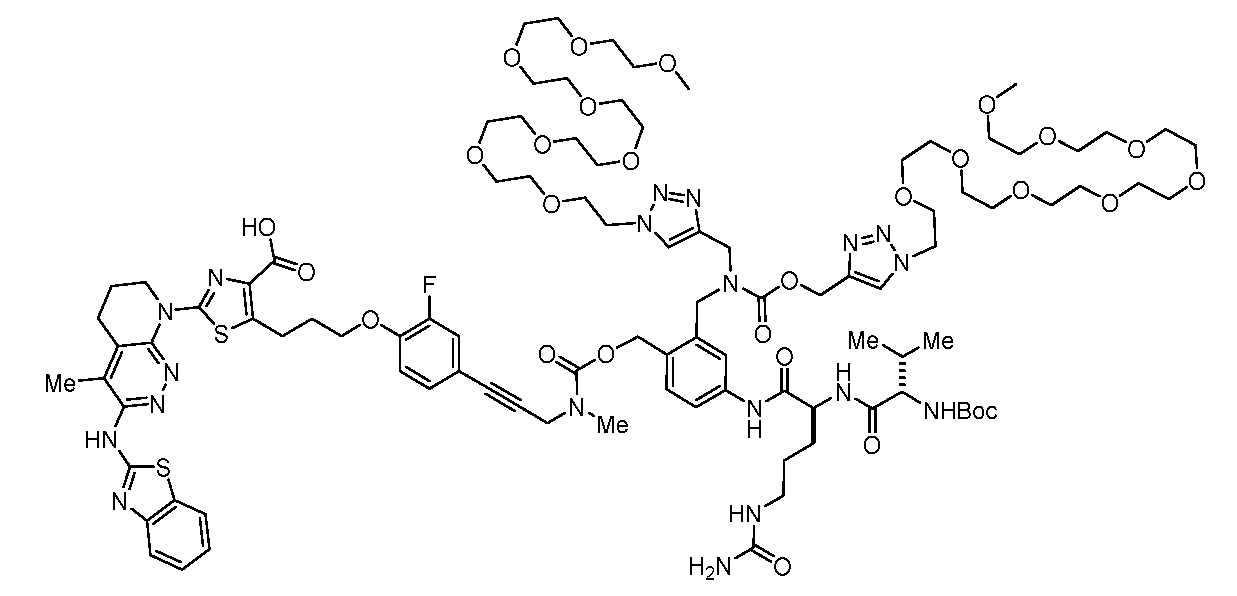
일반적 절차 7에 따라 2-(3-(벤조[d]티아졸-2-일아미노)-4-메틸-6,7-디히드로피리도[2,3-c]피리다진-8(5H)-일)-5-(3-(4-(3-((((4-((S)-2-((S)-2-((tert-부톡시카르보닐)아미노)-3-메틸부탄아미도)-5-우레이도펜탄아미도)-2-((프로프-2-인-1-일((프로프-2-인-1-일옥시)카르보닐)아미노)메틸)벤질)옥시)카르보닐)(메틸)아미노)프로프-1-인-1-일)-2-플루오로페녹시)프로필)티아졸-4-카르복실산 (49.0 mg, 0.038 mmol) 및 25-아지도-2,5,8,11,14,17,20,23-옥타옥사펜타코산 (34.0 mg, 0.083 mmol, 2.2 당량)을 사용하여, 5-(3-(4-(3-((((2-(((((1-(2,5,8,11,14,17,20,23-옥타옥사펜타코산-25-일)-1H-1,2,3-트리아졸-4-일)메톡시)카르보닐)((1-(2,5,8,11,14,17,20,23-옥타옥사펜타코산-25-일)-1H-1,2,3-트리아졸-4-일)메틸)아미노)메틸)-4-((S)-2-((S)-2-((tert-부톡시카르보닐)아미노)-3-메틸부탄아미도)-5-우레이도펜탄아미도)벤질)옥시)카르보닐)(메틸)아미노)프로프-1-인-1-일)-2-플루오로페녹시)프로필)-2-(3-(벤조[d]티아졸-2-일아미노)-4-메틸-6,7-디히드로피리도[2,3-c]피리다진-8(5H)-일)티아졸-4-카르복실산을 수득하였다. LCMS: M/2+H = 1059.4; Rt=1.16분 (2분 산성 방법).According to General Procedure 7, 2-(3-(benzo[d]thiazol-2-ylamino)-4-methyl-6,7-dihydropyrido[2,3-c]pyridazin-8(5H)-yl)-5-(3-(4-(3-((((4-((S)-2-((S)-2-((tert-butoxycarbonyl)amino)-3-methylbutanamido)-5-ureidopentanamido)-2-((prop-2-yn-1-yl((prop-2-yn-1-yloxy)carbonyl)amino)methyl)benzyl)oxy)carbonyl)(methyl)amino)prop-1-yn-1-yl)-2-fluorophenoxy)propyl)thiazole-4-carboxylic acid (49.0 mg, 0.038 mmol) and Using 25-azido-2,5,8,11,14,17,20,23-octaoxapentacosane (34.0 mg, 0.083 mmol, 2.2 equiv) was prepared 5-(3-(4-(3-((((2-((((1-(2,5,8,11,14,17,20,23-octaoxapentacosan-25-yl)-1H-1,2,3-triazol-4-yl)methoxy)carbonyl)((1-(2,5,8,11,14,17,20,23-octaoxapentacosan-25-yl)-1H-1,2,3-triazol-4-yl)methyl)amino)methyl)-4-((S)-2- Obtained ((S)-2-((tert-butoxycarbonyl)amino)-3-methylbutanamido)-5-ureidopentanamido)benzyl)oxy)carbonyl)(methyl)amino)prop-1-yn-1-yl)-2-fluorophenoxy)propyl)-2-(3-(benzo[d]thiazol-2-ylamino)-4-methyl-6,7-dihydropyrido[2,3-c]pyridazin-8(5H)-yl)thiazole-4-carboxylic acid. LCMS: M/2+H = 1059.4; Rt=1.16 min (2 min acidic method).
5-(3-(4-(3-((((2-(((((1-(2,5,8,11,14,17,20,23-옥타옥사펜타코산-25-일)-1H-1,2,3-트리아졸-4-일)메톡시)카르보닐)((1-(2,5,8,11,14,17,20,23-옥타옥사펜타코산-25-일)-1H-1,2,3-트리아졸-4-일)메틸)아미노)메틸)-4-((S)-2-((S)-2-아미노-3-메틸부탄아미도)-5-우레이도펜탄아미도)벤질)옥시)카르보닐)(메틸)아미노)프로프-1-인-1-일)-2-플루오로페녹시)프로필)-2-(3-(벤조[d]티아졸-2-일아미노)-4-메틸-6,7-디히드로피리도[2,3-c]피리다진-8(5H)-일)티아졸-4-카르복실산의 합성5-(3-(4-(3-(((2-((((1-(2,5,8,11,14,17,20,23-octaoxapentacosan-25-yl)-1H-1,2,3-triazol-4-yl)methoxy)carbonyl)((1-(2,5,8,11,14,17,20,23-octaoxapentacosan-25-yl)-1H-1,2,3-triazol-4-yl)methyl)amino)methyl)-4 Synthesis of -((S)-2-((S)-2-amino-3-methylbutanamido)-5-ureidopentanamido)benzyl)oxy)carbonyl)(methyl)amino)prop-1-yn-1-yl)-2-fluorophenoxy)propyl)-2-(3-(benzo[d]thiazol-2-ylamino)-4-methyl-6,7-dihydropyrido[2,3-c]pyridazin-8(5H)-yl)thiazole-4-carboxylic acid

일반적 절차 4에 따라 5-(3-(4-(3-((((2-(((((1-(2,5,8,11,14,17,20,23-옥타옥사펜타코산-25-일)-1H-1,2,3-트리아졸-4-일)메톡시)카르보닐)((1-(2,5,8,11,14,17,20,23-옥타옥사펜타코산-25-일)-1H-1,2,3-트리아졸-4-일)메틸)아미노)메틸)-4-((S)-2-((S)-2-((tert-부톡시카르보닐)아미노)-3-메틸부탄아미도)-5-우레이도펜탄아미도)벤질)옥시)카르보닐)(메틸)아미노)프로프-1-인-1-일)-2-플루오로페녹시)프로필)-2-(3-(벤조[d]티아졸-2-일아미노)-4-메틸-6,7-디히드로피리도[2,3-c]피리다진-8(5H)-일)티아졸-4-카르복실산 (80.0 mg, 0.038 mmol)을 사용하여, 5-(3-(4-(3-((((2-(((((1-(2,5,8,11,14,17,20,23-옥타옥사펜타코산-25-일)-1H-1,2,3-트리아졸-4-일)메톡시)카르보닐)((1-(2,5,8,11,14,17,20,23-옥타옥사펜타코산-25-일)-1H-1,2,3-트리아졸-4-일)메틸)아미노)메틸)-4-((S)-2-((S)-2-아미노-3-메틸부탄아미도)-5-우레이도펜탄아미도)벤질)옥시)카르보닐)(메틸)아미노)프로프-1-인-1-일)-2-플루오로페녹시)프로필)-2-(3-(벤조[d]티아졸-2-일아미노)-4-메틸-6,7-디히드로피리도[2,3-c]피리다진-8(5H)-일)티아졸-4-카르복실산을 수득하였다. LCMS: M/2+H = 1009.2; Rt=1.14분 (2분 산성 방법).According to general procedure 4, 5-(3-(4-(3-(((2-((((1-(2,5,8,11,14,17,20,23-octaoxapentacosan-25-yl)-1H-1,2,3-triazol-4-yl)methoxy)carbonyl)((1-(2,5,8,11,14,17,20,23-octaoxapentacosan-25-yl)-1H-1,2,3-triazol-4-yl)methyl)amino)methyl)-4-((S)-2- Using ((S)-2-((tert-butoxycarbonyl)amino)-3-methylbutanamido)-5-ureidopentanamido)benzyl)oxy)carbonyl)(methyl)amino)prop-1-yn-1-yl)-2-fluorophenoxy)propyl)-2-(3-(benzo[d]thiazol-2-ylamino)-4-methyl-6,7-dihydropyrido[2,3-c]pyridazin-8(5H)-yl)thiazole-4-carboxylic acid (80.0 mg, 0.038 mmol), 5-(3-(4-(3-(((2-((((1-(2,5,8,11,14,17,20,23-octaoxapentacosan-25-yl)-1H-1,2,3-triazol-4-yl)methoxy)carbonyl)((1-(2,5,8,11,14,17,20,23-octaoxapentacosan-25-yl)-1H-1,2,3-triazol-4-yl)methyl)amino)methyl)-4 -((S)-2-((S)-2-amino-3-methylbutanamido)-5-ureidopentanamido)benzyl)oxy)carbonyl)(methyl)amino)prop-1-yn-1-yl)-2-fluorophenoxy)propyl)-2-(3-(benzo[d]thiazol-2-ylamino)-4-methyl-6,7-dihydropyrido[2,3-c]pyridazin-8(5H)-yl)thiazole-4-carboxylic acid. LCMS: M/2+H = 1009.2; Rt=1.14 min (2 min acidic method).
5-(3-(4-(3-((((2-(((((1-(2,5,8,11,14,17,20,23-옥타옥사펜타코산-25-일)-1H-1,2,3-트리아졸-4-일)메톡시)카르보닐)((1-(2,5,8,11,14,17,20,23-옥타옥사펜타코산-25-일)-1H-1,2,3-트리아졸-4-일)메틸)아미노)메틸)-4-((S)-2-((S)-2-(3-(2-(2,5-디옥소-2,5-디히드로-1H-피롤-1-일)에톡시)프로판아미도)-3-메틸부탄아미도)-5-우레이도펜탄아미도)벤질)옥시)카르보닐)(메틸)아미노)프로프-1-인-1-일)-2-플루오로페녹시)프로필)-2-(3-(벤조[d]티아졸-2-일아미노)-4-메틸-6,7-디히드로피리도[2,3-c]피리다진-8(5H)-일)티아졸-4-카르복실산 (L1C-P3)의 합성5-(3-(4-(3-((((2-((((1-(2,5,8,11,14,17,20,23-octaoxapentacosan-25-yl)-1H-1,2,3-triazol-4-yl)methoxy)carbonyl)((1-(2,5,8,11,14,17,20,23-octaoxapentacosan-25-yl)-1H-1,2,3-triazol-4-yl)methyl)amino)methyl)-4-((S)-2-((S)-2-(3-(2- Synthesis of (2,5-dioxo-2,5-dihydro-1H-pyrrol-1-yl)ethoxy)propanamido)-3-methylbutanamido)-5-ureidopentanamido)benzyl)oxy)carbonyl)(methyl)amino)prop-1-yn-1-yl)-2-fluorophenoxy)propyl)-2-(3-(benzo[d]thiazol-2-ylamino)-4-methyl-6,7-dihydropyrido[2,3-c]pyridazin-8(5H)-yl)thiazole-4-carboxylic acid (L1C-P3)

일반적 절차 5에 따라 5-(3-(4-(3-((((2-(((((1-(2,5,8,11,14,17,20,23-옥타옥사펜타코산-25-일)-1H-1,2,3-트리아졸-4-일)메톡시)카르보닐)((1-(2,5,8,11,14,17,20,23-옥타옥사펜타코산-25-일)-1H-1,2,3-트리아졸-4-일)메틸)아미노)메틸)-4-((S)-2-((S)-2-아미노-3-메틸부탄아미도)-5-우레이도펜탄아미도)벤질)옥시)카르보닐)(메틸)아미노)프로프-1-인-1-일)-2-플루오로페녹시)프로필)-2-(3-(벤조[d]티아졸-2-일아미노)-4-메틸-6,7-디히드로피리도[2,3-c]피리다진-8(5H)-일)티아졸-4-카르복실산 (76.0 mg, 0.038 mmol) 및 2,5-디옥소피롤리딘-1-일 3-(2-(2,5-디옥소-2,5-디히드로-1H-피롤-1-일)에톡시)프로파노에이트 (23.4 mg, 0.075 mmol, 2.0 당량)를 사용하여, 5-(3-(4-(3-((((2-(((((1-(2,5,8,11,14,17,20,23-옥타옥사펜타코산-25-일)-1H-1,2,3-트리아졸-4-일)메톡시)카르보닐)((1-(2,5,8,11,14,17,20,23-옥타옥사펜타코산-25-일)-1H-1,2,3-트리아졸-4-일)메틸)아미노)메틸)-4-((S)-2-((S)-2-(3-(2-(2,5-디옥소-2,5-디히드로-1H-피롤-1-일)에톡시)프로판아미도)-3-메틸부탄아미도)-5-우레이도펜탄아미도)벤질)옥시)카르보닐)(메틸)아미노)프로프-1-인-1-일)-2-플루오로페녹시)프로필)-2-(3-(벤조[d]티아졸-2-일아미노)-4-메틸-6,7-디히드로피리도[2,3-c]피리다진-8(5H)-일)티아졸-4-카르복실산을 수득하였다. HRMS: M+H = 2211.9700; Rt=2.56분 (5분 산성 방법).According to general procedure 5, 5-(3-(4-(3-(((2-((((1-(2,5,8,11,14,17,20,23-octaoxapentacosan-25-yl)-1H-1,2,3-triazol-4-yl)methoxy)carbonyl)((1-(2,5,8,11,14,17,20,23-octaoxapentacosan-25-yl)-1H-1,2,3-triazol-4-yl)methyl)amino)methyl)-4 -((S)-2-((S)-2-amino-3-methylbutanamido)-5-ureidopentanamido)benzyl)oxy)carbonyl)(methyl)amino)prop-1-yn-1-yl)-2-fluorophenoxy)propyl)-2-(3-(benzo[d]thiazol-2-ylamino)-4-methyl-6,7-dihydropyrido[2,3-c]pyridazin-8(5H)-yl)thiazole-4-carboxylic acid (76.0 mg, 0.038 mmol) and 2,5-dioxopyrrolidin-1-yl 3-(2-(2,5-dioxo-2,5-dihydro-1H-pyrrol-1-yl)ethoxy)propanoate (23.4 mg, 0.075 mmol, 2.0 equiv). 5-(3-(4-(3-((((2-((((1-(2,5,8,11,14,17,20,23-octaoxapentacosan-25-yl)-1H-1,2,3-triazol-4-yl)methoxy)carbonyl)((1-(2,5,8,11,14,17,20,23-octaoxapentacosan-25-yl)-1H-1,2,3-triazol-4-yl)methyl)amino)methyl)-4-((S)-2-((S)-2-(3-(2- Obtained (2,5-dioxo-2,5-dihydro-1H-pyrrol-1-yl)ethoxy)propanamido)-3-methylbutanamido)-5-ureidopentanamido)benzyl)oxy)carbonyl)(methyl)amino)prop-1-yn-1-yl)-2-fluorophenoxy)propyl)-2-(3-(benzo[d]thiazol-2-ylamino)-4-methyl-6,7-dihydropyrido[2,3-c]pyridazin-8(5H)-yl)thiazole-4-carboxylic acid. HRMS: M+H = 2211.9700; Rt=2.56 min (5 min acidic method).
5-(3-(4-(3-((((4-((S)-2-((S)-2-((((9H-플루오렌-9-일)메톡시)카르보닐)아미노)-3-메틸부탄아미도)-5-우레이도펜탄아미도)-2-((프로프-2-인-1-일((프로프-2-인-1-일옥시)카르보닐)아미노)메틸)벤질)옥시)카르보닐)(메틸)아미노)프로프-1-인-1-일)-2-플루오로페녹시)프로필)-2-(3-(벤조[d]티아졸-2-일아미노)-4-메틸-6,7-디히드로피리도[2,3-c]피리다진-8(5H)-일)티아졸-4-카르복실산의 합성Synthesis of 5-(3-(4-(3-((((4-((S)-2-((S)-2-(((9H-fluoren-9-yl)methoxy)carbonyl)amino)-3-methylbutanamido)-5-ureidopentanamido)-2-((prop-2-yn-1-yl((prop-2-yn-1-yloxy)carbonyl)amino)methyl)benzyl)oxy)carbonyl)(methyl)amino)prop-1-yn-1-yl)-2-fluorophenoxy)propyl)-2-(3-(benzo[d]thiazol-2-ylamino)-4-methyl-6,7-dihydropyrido[2,3-c]pyridazin-8(5H)-yl)thiazole-4-carboxylic acid
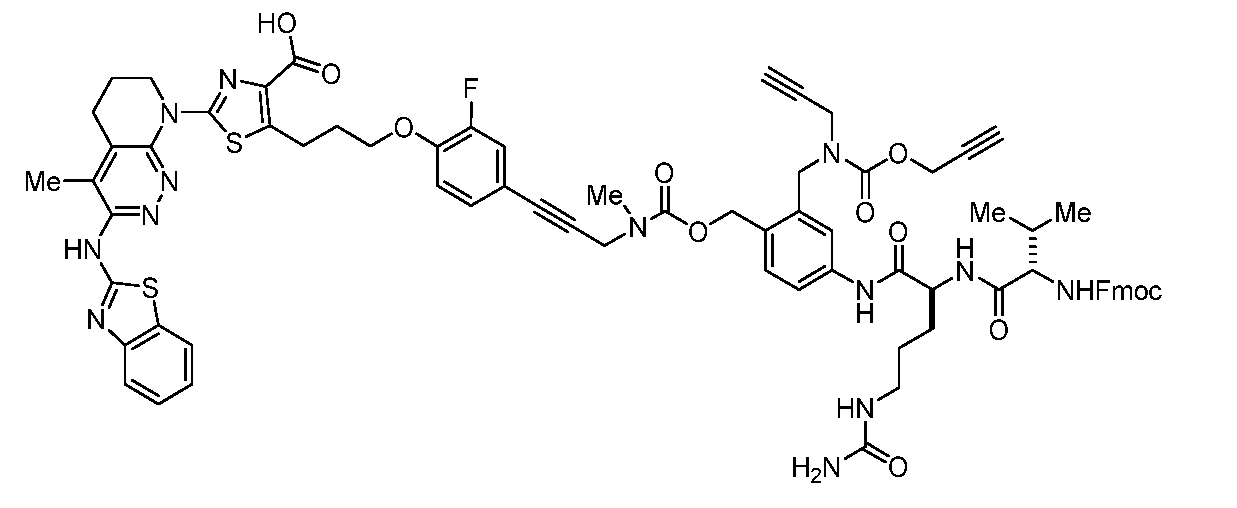
일반적 절차 10에 따라 프로프-2-인-1-일 5-((S)-2-((S)-2-((((9H-플루오렌-9-일)메톡시)카르보닐)아미노)-3-메틸부탄아미도)-5-우레이도펜탄아미도)-2-((((4-니트로페녹시)카르보닐)옥시)메틸)벤질(프로프-2-인-1-일)카르바메이트 (56.9 mg, 0.062 mmol) 및 2-(3-(벤조[d]티아졸-2-일아미노)-4-메틸-6,7-디히드로피리도[2,3-c]피리다진-8(5H)-일)-5-(3-(2-플루오로-4-(3-(메틸아미노)프로프-1-인-1-일)페녹시)프로필)티아졸-4-카르복실산 (40.0 mg, 0.062 mmol, 1.0 당량)을 사용하여, 5-(3-(4-(3-((((4-((S)-2-((S)-2-((((9H-플루오렌-9-일)메톡시)카르보닐)아미노)-3-메틸부탄아미도)-5-우레이도펜탄아미도)-2-((프로프-2-인-1-일((프로프-2-인-1-일옥시)카르보닐)아미노)메틸)벤질)옥시)카르보닐)(메틸)아미노)프로프-1-인-1-일)-2-플루오로페녹시)프로필)-2-(3-(벤조[d]티아졸-2-일아미노)-4-메틸-6,7-디히드로피리도[2,3-c]피리다진-8(5H)-일)티아졸-4-카르복실산을 수득하였다. LCMS: M+H = 1422.6; Rt=1.33분 (2분 산성 방법).According to General Procedure 10 to obtain prop-2-yn-1-yl 5-((S)-2-((S)-2-(((9H-fluoren-9-yl)methoxy)carbonyl)amino)-3-methylbutanamido)-5-ureidopentanamido)-2-((((4-nitrophenoxy)carbonyl)oxy)methyl)benzyl(prop-2-yn-1-yl)carbamate (56.9 mg, 0.062 mmol) and 2-(3-(benzo[d]thiazol-2-ylamino)-4-methyl-6,7-dihydropyrido[2,3-c]pyridazin-8(5H)-yl)-5-(3-(2-fluoro-4-(3-(methylamino)prop-1-yn-1-yl)phenoxy)propyl)thiazole-4-carboxylic acid (40.0 mg, 0.062 mmol, 1.0 equiv) was used to obtain 5-(3-(4-(3-(((4-((S)-2-((S)-2-(((9H-fluoren-9-yl)methoxy)carbonyl)amino)-3-methylbutanamido)-5-ureidopentanamido)-2-((prop-2-yn-1-yl((prop-2-yn-1-yloxy)carbonyl)amino)methyl)benzyl)oxy)carbonyl)(methyl)amino)prop-1-yn-1-yl)-2-fluorophenoxy)propyl)-2-(3-(benzo[d]thiazol-2-ylamino)-4-methyl-6,7-dihydropyrido[2,3-c]pyridazin-8(5H)-yl)thiazole-4-carboxylic acid. LCMS: M+H = 1422.6; Rt=1.33 min (2 min acidic method).
5-(3-(4-(3-((((4-((S)-2-((S)-2-아미노-3-메틸부탄아미도)-5-우레이도펜탄아미도)-2-((프로프-2-인-1-일((프로프-2-인-1-일옥시)카르보닐)아미노)메틸)벤질)옥시)카르보닐)(메틸)아미노)프로프-1-인-1-일)-2-플루오로페녹시)프로필)-2-(3-(벤조[d]티아졸-2-일아미노)-4-메틸-6,7-디히드로피리도[2,3-c]피리다진-8(5H)-일)티아졸-4-카르복실산의 합성Synthesis of 5-(3-(4-(3-(((4-((S)-2-((S)-2-amino-3-methylbutanamido)-5-ureidopentanamido)-2-((prop-2-yn-1-yl((prop-2-yn-1-yloxy)carbonyl)amino)methyl)benzyl)oxy)carbonyl)(methyl)amino)prop-1-yn-1-yl)-2-fluorophenoxy)propyl)-2-(3-(benzo[d]thiazol-2-ylamino)-4-methyl-6,7-dihydropyrido[2,3-c]pyridazin-8(5H)-yl)thiazole-4-carboxylic acid

THF 중 2.0 M 디메틸아민 (3.1 mL, 6.20 mmol, 100.0 당량) 중 5-(3-(4-(3-((((4-((S)-2-((S)-2-((((9H-플루오렌-9-일)메톡시)카르보닐)아미노)-3-메틸부탄아미도)-5-우레이도펜탄아미도)-2-((프로프-2-인-1-일((프로프-2-인-1-일옥시)카르보닐)아미노)메틸)벤질)옥시)카르보닐)(메틸)아미노)프로프-1-인-1-일)-2-플루오로페녹시)프로필)-2-(3-(벤조[d]티아졸-2-일아미노)-4-메틸-6,7-디히드로피리도[2,3-c]피리다진-8(5H)-일)티아졸-4-카르복실산 (88.0 mg, 0.062 mmol)의 용액을 실온에서 80분 동안 교반하였다. 용매를 진공 하에 제거하고, 잔류물을 DMSO (1.0 mL) 중에 희석하고, RP-HPLC 이스코 골드 크로마토그래피 (0-100% MeCN/H2O, 0.05% TFA 개질제)에 의해 정제하였다. 동결건조 시, 5-(3-(4-(3-((((4-((S)-2-((S)-2-아미노-3-메틸부탄아미도)-5-우레이도펜탄아미도)-2-((프로프-2-인-1-일((프로프-2-인-1-일옥시)카르보닐)아미노)메틸)벤질)옥시)카르보닐)(메틸)아미노)프로프-1-인-1-일)-2-플루오로페녹시)프로필)-2-(3-(벤조[d]티아졸-2-일아미노)-4-메틸-6,7-디히드로피리도[2,3-c]피리다진-8(5H)-일)티아졸-4-카르복실산을 수득하였다. LCMS: M+H = 1199.2; Rt=1.06분 (2분 산성 방법).In 2.0 M dimethylamine (3.1 mL, 6.20 mmol, 100.0 eq) in THF A solution of 5-(3-(4-(3-(((4-((S)-2-((S)-2-(((9H-fluoren-9-yl)methoxy)carbonyl)amino)-3-methylbutanamido)-5-ureidopentanamido)-2-((prop-2-yn-1-yl((prop-2-yn-1-yloxy)carbonyl)amino)methyl)benzyl)oxy)carbonyl)(methyl)amino)prop-1-yn-1-yl)-2-fluorophenoxy)propyl)-2-(3-(benzo[d]thiazol-2-ylamino)-4-methyl-6,7-dihydropyrido[2,3-c]pyridazin-8(5H)-yl)thiazole-4-carboxylic acid (88.0 mg, 0.062 mmol) was stirred at room temperature for 80 min. The solvent was removed under vacuum, and the residue was diluted in DMSO (1.0 mL) and purified by RP-HPLC ISCO Gold chromatography (0-100% MeCN/H2O, 0.05% TFA modifier). Upon lyophilization, 5-(3-(4-(3-(((4-((S)-2-((S)-2-amino-3-methylbutanamido)-5-ureidopentanamido)-2-((prop-2-yn-1-yl((prop-2-yn-1-yloxy)carbonyl)amino)methyl)benzyl)oxy)carbonyl)(methyl)amino)prop-1-yn-1-yl)-2-fluorophenoxy)propyl)-2-(3-(benzo[d]thiazol-2-ylamino)-4-methyl-6,7-dihydropyrido[2,3-c]pyridazin-8(5H)-yl)thiazole-4-carboxylic acid was obtained. LCMS: M+H = 1199.2; Rt=1.06 min (2 min acidic method).
5-(3-(4-(3-((((4-((S)-2-((S)-2-아미노-3-메틸부탄아미도)-5-우레이도펜탄아미도)-2-(((((1-(26-카르복시-3,6,9,12,15,18,21,24-옥타옥사헥사코실)-1H-1,2,3-트리아졸-4-일)메톡시)카르보닐)((1-(26-카르복시-3,6,9,12,15,18,21,24-옥타옥사헥사코실)-1H-1,2,3-트리아졸-4-일)메틸)아미노)메틸)벤질)옥시)카르보닐)(메틸)아미노)프로프-1-인-1-일)-2-플루오로페녹시)프로필)-2-(3-(벤조[d]티아졸-2-일아미노)-4-메틸-6,7-디히드로피리도[2,3-c]피리다진-8(5H)-일)티아졸-4-카르복실산의 합성5-(3-(4-(3-((((4-((S)-2-((S)-2-amino-3-methylbutanamido)-5-ureidopentanamido)-2-((((1-(26-carboxy-3,6,9,12,15,18,21,24-octaoxahexacosyl)-1H-1,2,3-triazol-4-yl)methoxy)carbonyl)((1-(26-carboxy-3,6,9,12,15,18 Synthesis of (21,24-octaoxahexacosyl)-1H-1,2,3-triazol-4-yl)methyl)amino)methyl)benzyl)oxy)carbonyl)(methyl)amino)prop-1-yn-1-yl)-2-fluorophenoxy)propyl)-2-(3-(benzo[d]thiazol-2-ylamino)-4-methyl-6,7-dihydropyrido[2,3-c]pyridazin-8(5H)-yl)thiazole-4-carboxylic acid

일반적 절차 7에 따라 5-(3-(4-(3-((((4-((S)-2-((S)-2-아미노-3-메틸부탄아미도)-5-우레이도펜탄아미도)-2-((프로프-2-인-1-일((프로프-2-인-1-일옥시)카르보닐)아미노)메틸)벤질)옥시)카르보닐)(메틸)아미노)프로프-1-인-1-일)-2-플루오로페녹시)프로필)-2-(3-(벤조[d]티아졸-2-일아미노)-4-메틸-6,7-디히드로피리도[2,3-c]피리다진-8(5H)-일)티아졸-4-카르복실산 (20.8 mg, 0.017 mmol) 및 1-아지도-3,6,9,12,15,18,21,24-옥타옥사헵타코산-27-산 (17.9 mg, 0.038 mmol, 2.2 당량)을 사용하여, 5-(3-(4-(3-((((4-((S)-2-((S)-2-아미노-3-메틸부탄아미도)-5-우레이도펜탄아미도)-2-(((((1-(26-카르복시-3,6,9,12,15,18,21,24-옥타옥사헥사코실)-1H-1,2,3-트리아졸-4-일)메톡시)카르보닐)((1-(26-카르복시-3,6,9,12,15,18,21,24-옥타옥사헥사코실)-1H-1,2,3-트리아졸-4-일)메틸)아미노)메틸)벤질)옥시)카르보닐)(메틸)아미노)프로프-1-인-1-일)-2-플루오로페녹시)프로필)-2-(3-(벤조[d]티아졸-2-일아미노)-4-메틸-6,7-디히드로피리도[2,3-c]피리다진-8(5H)-일)티아졸-4-카르복실산을 수득하였다. LCMS: M/2+H = 1068.2; Rt=0.99분 (2분 산성 방법).According to General Procedure 7, 5-(3-(4-(3-((((4-((S)-2-((S)-2-amino-3-methylbutanamido)-5-ureidopentanamido)-2-((prop-2-yn-1-yl((prop-2-yn-1-yloxy)carbonyl)amino)methyl)benzyl)oxy)carbonyl)(methyl)amino)prop-1-yn-1-yl)-2-fluorophenoxy)propyl)-2-(3-(benzo[d]thiazol-2-ylamino)-4-methyl-6,7-dihydropyrido[2,3-c]pyridazin-8(5H)-yl)thiazole-4-carboxylic acid (20.8 mg, 0.017 mmol) and Using 1-azido-3,6,9,12,15,18,21,24-octaoxaheptacosan-27-acid (17.9 mg, 0.038 mmol, 2.2 equiv) was prepared 5-(3-(4-(3-((((4-((S)-2-((S)-2-amino-3-methylbutanamido)-5-ureidopentanamido)-2-((((1-(26-carboxy-3,6,9,12,15,18,21,24-octaoxahexacosyl)-1H-1,2,3-triazol-4-yl)methoxy)carbonyl)((1-(26-carboxy-3,6,9,12,15,18 ,21,24-octaoxahexacosyl)-1H-1,2,3-triazol-4-yl)methyl)amino)methyl)benzyl)oxy)carbonyl)(methyl)amino)prop-1-yn-1-yl)-2-fluorophenoxy)propyl)-2-(3-(benzo[d]thiazol-2-ylamino)-4-methyl-6,7-dihydropyrido[2,3-c]pyridazin-8(5H)-yl)thiazole-4-carboxylic acid. LCMS: M/2+H = 1068.2; Rt=0.99 min (2 min acidic method).
2-(3-(벤조[d]티아졸-2-일아미노)-4-메틸-6,7-디히드로피리도[2,3-c]피리다진-8(5H)-일)-5-(3-(4-(3-((((2-(((((1-(26-카르복시-3,6,9,12,15,18,21,24-옥타옥사헥사코실)-1H-1,2,3-트리아졸-4-일)메톡시)카르보닐)((1-(26-카르복시-3,6,9,12,15,18,21,24-옥타옥사헥사코실)-1H-1,2,3-트리아졸-4-일)메틸)아미노)메틸)-4-((S)-2-((S)-2-(3-(2-(2,5-디옥소-2,5-디히드로-1H-피롤-1-일)에톡시)프로판아미도)-3-메틸부탄아미도)-5-우레이도펜탄아미도)벤질)옥시)카르보닐)(메틸)아미노)프로프-1-인-1-일)-2-플루오로페녹시)프로필)티아졸-4-카르복실산 (L10C-P3)의 합성2-(3-(Benzo[d]thiazol-2-ylamino)-4-methyl-6,7-dihydropyrido[2,3-c]pyridazin-8(5H)-yl)-5-(3-(4-(3-((((2-((((1-(26-carboxy-3,6,9,12,15,18,21,24-octaoxahexacosyl)-1H-1,2,3-triazol-4-yl)methoxy)carbonyl)((1-(26-carboxy-3,6,9,12,15,18,21,2 Synthesis of (4-octaoxahexacosyl)-1H-1,2,3-triazol-4-yl)methyl)amino)methyl)-4-((S)-2-((S)-2-(3-(2-(2,5-dioxo-2,5-dihydro-1H-pyrrol-1-yl)ethoxy)propanamido)-3-methylbutanamido)-5-ureidopentanamido)benzyl)oxy)carbonyl)(methyl)amino)prop-1-yn-1-yl)-2-fluorophenoxy)propyl)thiazole-4-carboxylic acid (L10C-P3)

일반적 절차 5에 따라 5-(3-(4-(3-((((4-((S)-2-((S)-2-아미노-3-메틸부탄아미도)-5-우레이도펜탄아미도)-2-(((((1-(26-카르복시-3,6,9,12,15,18,21,24-옥타옥사헥사코실)-1H-1,2,3-트리아졸-4-일)메톡시)카르보닐)((1-(26-카르복시-3,6,9,12,15,18,21,24-옥타옥사헥사코실)-1H-1,2,3-트리아졸-4-일)메틸)아미노)메틸)벤질)옥시)카르보닐)(메틸)아미노)프로프-1-인-1-일)-2-플루오로페녹시)프로필)-2-(3-(벤조[d]티아졸-2-일아미노)-4-메틸-6,7-디히드로피리도[2,3-c]피리다진-8(5H)-일)티아졸-4-카르복실산 (36.3 mg, 0.017 mmol) 및 2,5-디옥소피롤리딘-1-일 3-(2-(2,5-디옥소-2,5-디히드로-1H-피롤-1-일)에톡시)프로파노에이트 (5.3 mg, 0.017 mmol, 1.0 당량)를 사용하여, 2-(3-(벤조[d]티아졸-2-일아미노)-4-메틸-6,7-디히드로피리도[2,3-c]피리다진-8(5H)-일)-5-(3-(4-(3-((((2-(((((1-(26-카르복시-3,6,9,12,15,18,21,24-옥타옥사헥사코실)-1H-1,2,3-트리아졸-4-일)메톡시)카르보닐)((1-(26-카르복시-3,6,9,12,15,18,21,24-옥타옥사헥사코실)-1H-1,2,3-트리아졸-4-일)메틸)아미노)메틸)-4-((S)-2-((S)-2-(3-(2-(2,5-디옥소-2,5-디히드로-1H-피롤-1-일)에톡시)프로판아미도)-3-메틸부탄아미도)-5-우레이도펜탄아미도)벤질)옥시)카르보닐)(메틸)아미노)프로프-1-인-1-일)-2-플루오로페녹시)프로필)티아졸-4-카르복실산을 수득하였다. HRMS: M+H = 2327.9800; Rt=2.45분 (5분 산성 방법).According to general procedure 5, 5-(3-(4-(3-((((4-((S)-2-((S)-2-amino-3-methylbutanamido)-5-ureidopentanamido)-2-((((1-(26-carboxy-3,6,9,12,15,18,21,24-octaoxahexacosyl)-1H-1,2,3-triazol-4-yl)methoxy)carbonyl)((1-(26-carboxy-3,6,9,12,15,18 ,21,24-octaoxahexacosyl)-1H-1,2,3-triazol-4-yl)methyl)amino)methyl)benzyl)oxy)carbonyl)(methyl)amino)prop-1-yn-1-yl)-2-fluorophenoxy)propyl)-2-(3-(benzo[d]thiazol-2-ylamino)-4-methyl-6,7-dihydropyrido[2,3-c]pyridazin-8(5H)-yl)thiazole-4-carboxylic acid (36.3 mg, 0.017 mmol) and 2,5-dioxopyrrolidin-1-yl 3-(2-(2,5-dioxo-2,5-dihydro-1H-pyrrol-1-yl)ethoxy)propanoate (5.3 mg, 0.017 mmol, 1.0 eq). 2-(3-(Benzo[d]thiazol-2-ylamino)-4-methyl-6,7-dihydropyrido[2,3-c]pyridazin-8(5H)-yl)-5-(3-(4-(3-((((2-((((1-(26-carboxy-3,6,9,12,15,18,21,24-octaoxahexacosyl)-1H-1,2,3-triazol-4-yl)methoxy)carbonyl)((1-(26-carboxy-3,6,9,12,15,18,21,2 Obtained (4-octaoxahexacosyl)-1H-1,2,3-triazol-4-yl)methyl)amino)methyl)-4-((S)-2-((S)-2-(3-(2-(2,5-dioxo-2,5-dihydro-1H-pyrrol-1-yl)ethoxy)propanamido)-3-methylbutanamido)-5-ureidopentanamido)benzyl)oxy)carbonyl)(methyl)amino)prop-1-yn-1-yl)-2-fluorophenoxy)propyl)thiazole-4-carboxylic acid. HRMS: M+H = 2327.9800; Rt=2.45 min (5 min acidic method).
5-((6-(벤조[d]티아졸-2-일아미노)-5-메틸피리다진-3-일)(4-카르복시-5-(3-(4-(3-((((4-((S)-2-((S)-2-(3-(2-(2,5-디옥소-2,5-디히드로-1H-피롤-1-일)에톡시)프로판아미도)-3-메틸부탄아미도)-5-우레이도펜탄아미도)벤질)옥시)카르보닐)(메틸)아미노)프로프-1-인-1-일)-2-플루오로페녹시)프로필)티아졸-2-일)아미노)-2-히드록시-N,N-디메틸-N-(3-술포프로필)펜탄-1-아미늄 (L9C-P4)의 합성Synthesis of 5-((6-(benzo[d]thiazol-2-ylamino)-5-methylpyridazin-3-yl)(4-carboxy-5-(3-(4-(3-(((4-((S)-2-((S)-2-(3-(2-(2,5-dioxo-2,5-dihydro-1H-pyrrol-1-yl)ethoxy)propanamido)-3-methylbutanamido)-5-ureidopentanamido)benzyl)oxy)carbonyl)(methyl)amino)prop-1-yn-1-yl)-2-fluorophenoxy)propyl)thiazol-2-yl)amino)-2-hydroxy-N,N-dimethyl-N-(3-sulfopropyl)pentan-1-aminum (L9C-P4)
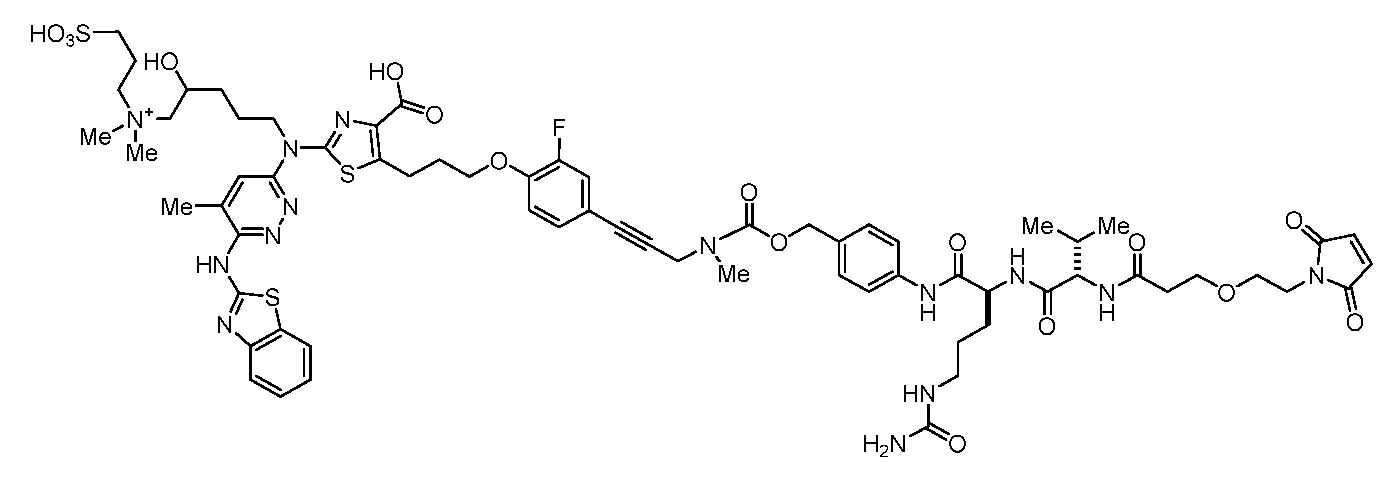
일반적 절차 10에 따라 4-((S)-2-((S)-2-(3-(2-(2,5-디옥소-2,5-디히드로-1H-피롤-1-일)에톡시)프로판아미도)-3-메틸부탄아미도)-5-우레이도펜탄아미도)벤질 (4-니트로페닐) 카르보네이트 (20.0 mg, 0.027 mmol) 및 5-((6-(벤조[d]티아졸-2-일아미노)-5-메틸피리다진-3-일)(4-카르복시-5-(3-(2-플루오로-4-(3-(메틸아미노)프로프-1-인-1-일)페녹시)프로필)티아졸-2-일)아미노)-2-히드록시-N,N-디메틸-N-(3-술포프로필)펜탄-1-아미늄 (23.1 mg, 0.027 mmol, 1.0 당량)을 사용하여, 5-((6-(벤조[d]티아졸-2-일아미노)-5-메틸피리다진-3-일)(4-카르복시-5-(3-(4-(3-((((4-((S)-2-((S)-2-(3-(2-(2,5-디옥소-2,5-디히드로-1H-피롤-1-일)에톡시)프로판아미도)-3-메틸부탄아미도)-5-우레이도펜탄아미도)벤질)옥시)카르보닐)(메틸)아미노)프로프-1-인-1-일)-2-플루오로페녹시)프로필)티아졸-2-일)아미노)-2-히드록시-N,N-디메틸-N-(3-술포프로필)펜탄-1-아미늄을 수득하였다. HRMS: M+H = 1455.5300; Rt=2.31분 (5분 산성 방법).According to General Procedure 10, 4-((S)-2-((S)-2-(3-(2-(2,5-dioxo-2,5-dihydro-1H-pyrrol-1-yl)ethoxy)propanamido)-3-methylbutanamido)-5-ureidopentanamido)benzyl (4-nitrophenyl) carbonate (20.0 mg, 0.027 mmol) and 5-((6-(benzo[d]thiazol-2-ylamino)-5-methylpyridazin-3-yl)(4-carboxy-5-(3-(2-fluoro-4-(3-(methylamino)prop-1-yn-1-yl)phenoxy)propyl)thiazol-2-yl)amino)-2-hydroxy-N,N-dimethyl-N-(3-sulfopropyl)pentan-1-amido)aluminum (23.1 mg, 0.027 mmol, 1.0 equiv) was used to obtain 5-((6-(benzo[d]thiazol-2-ylamino)-5-methylpyridazin-3-yl)(4-carboxy-5-(3-(4-(3-(((4-((S)-2-((S)-2-(3-(2-(2,5-dioxo-2,5-dihydro-1H-pyrrol-1-yl)ethoxy)propanamido)-3-methylbutanamido)-5-ureidopentanamido)benzyl)oxy)carbonyl)(methyl)amino)prop-1-yn-1-yl)-2-fluorophenoxy)propyl)thiazol-2-yl)amino)-2-hydroxy-N,N-dimethyl-N-(3-sulfopropyl)pentan-1-aminum. HRMS: M+H = 1455.5300; Rt=2.31 min (5 min acidic method).
2-((6-(벤조[d]티아졸-2-일아미노)-5-메틸피리다진-3-일)(4-히드록시-5-(트리메틸암모니오)펜틸)아미노)-5-(3-(4-(3-((((4-((S)-2-((S)-2-((tert-부톡시카르보닐)아미노)-3-메틸부탄아미도)-5-우레이도펜탄아미도)벤질)옥시)카르보닐)(메틸)아미노)프로프-1-인-1-일)-2-플루오로페녹시)프로필)티아졸-4-카르복실레이트의 합성Synthesis of 2-((6-(benzo[d]thiazol-2-ylamino)-5-methylpyridazin-3-yl)(4-hydroxy-5-(trimethylammonio)pentyl)amino)-5-(3-(4-(3-((((4-((S)-2-((S)-2-((tert-butoxycarbonyl)amino)-3-methylbutanamido)-5-ureidopentanamido)benzyl)oxy)carbonyl)(methyl)amino)prop-1-yn-1-yl)-2-fluorophenoxy)propyl)thiazole-4-carboxylate
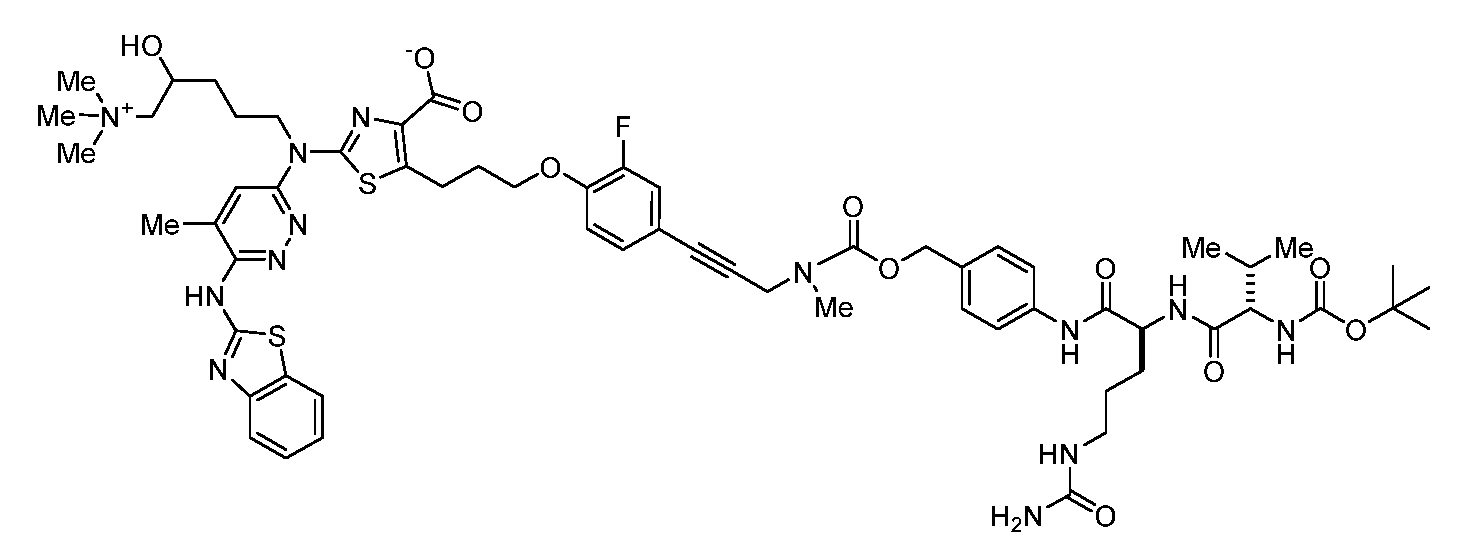
일반적 절차 10에 따라 2-((6-(벤조[d]티아졸-2-일아미노)-5-메틸피리다진-3-일)(4-히드록시-5-(트리메틸암모니오)펜틸)아미노)-5-(3-(2-플루오로-4-(3-(메틸아미노)프로프-1-인-1-일)페녹시)프로필)티아졸-4-카르복실레이트 (40.0 mg, 0.054 mmol) 및 tert-부틸 ((S)-3-메틸-1-(((S)-1-((4-((((4-니트로페녹시)카르보닐)옥시)메틸)페닐)아미노)-1-옥소-5-우레이도펜탄-2-일)아미노)-1-옥소부탄-2-일)카르바메이트 (34.5 mg, 0.054 mmol, 1.0 당량)를 사용하여, 2-((6-(벤조[d]티아졸-2-일아미노)-5-메틸피리다진-3-일)(4-히드록시-5-(트리메틸암모니오)펜틸)아미노)-5-(3-(4-(3-((((4-((S)-2-((S)-2-((tert-부톡시카르보닐)아미노)-3-메틸부탄아미도)-5-우레이도펜탄아미도)벤질)옥시)카르보닐)(메틸)아미노)프로프-1-인-1-일)-2-플루오로페녹시)프로필)티아졸-4-카르복실레이트를 수득하였다. LCMS: M+H = 1253.8; Rt=1.11분 (2분 산성 방법).According to General Procedure 10 using 2-((6-(benzo[d]thiazol-2-ylamino)-5-methylpyridazin-3-yl)(4-hydroxy-5-(trimethylammonio)pentyl)amino)-5-(3-(2-fluoro-4-(3-(methylamino)prop-1-yn-1-yl)phenoxy)propyl)thiazole-4-carboxylate (40.0 mg, 0.054 mmol) and tert-butyl ((S)-3-methyl-1-(((S)-1-((4-((((4-nitrophenoxy)carbonyl)oxy)methyl)phenyl)amino)-1-oxo-5-ureidopentan-2-yl)amino)-1-oxobutan-2-yl)carbamate (34.5 mg, 0.054 mmol, 1.0 eq), Obtained 2-((6-(Benzo[d]thiazol-2-ylamino)-5-methylpyridazin-3-yl)(4-hydroxy-5-(trimethylammonio)pentyl)amino)-5-(3-(4-(3-(((4-((S)-2-((S)-2-((tert-butoxycarbonyl)amino)-3-methylbutanamido)-5-ureidopentanamido)benzyl)oxy)carbonyl)(methyl)amino)prop-1-yn-1-yl)-2-fluorophenoxy)propyl)thiazole-4-carboxylate. LCMS: M+H = 1253.8; Rt=1.11 min (2 min acidic method).
5-(3-(4-(3-((((4-((S)-2-((S)-2-아미노-3-메틸부탄아미도)-5-우레이도펜탄아미도)벤질)옥시)카르보닐)(메틸)아미노)프로프-1-인-1-일)-2-플루오로페녹시)프로필)-2-((6-(벤조[d]티아졸-2-일아미노)-5-메틸피리다진-3-일)(4-히드록시-5-(트리메틸암모니오)펜틸)아미노)티아졸-4-카르복실레이트의 합성Synthesis of 5-(3-(4-(3-((((4-((S)-2-((S)-2-amino-3-methylbutanamido)-5-ureidopentanamido)benzyl)oxy)carbonyl)(methyl)amino)prop-1-yn-1-yl)-2-fluorophenoxy)propyl)-2-((6-(benzo[d]thiazol-2-ylamino)-5-methylpyridazin-3-yl)(4-hydroxy-5-(trimethylammonio)pentyl)amino)thiazole-4-carboxylate

일반적 절차 4에 따라 2-((6-(벤조[d]티아졸-2-일아미노)-5-메틸피리다진-3-일)(4-히드록시-5-(트리메틸암모니오)펜틸)아미노)-5-(3-(4-(3-((((4-((S)-2-((S)-2-((tert-부톡시카르보닐)아미노)-3-메틸부탄아미도)-5-우레이도펜탄아미도)벤질)옥시)카르보닐)(메틸)아미노)프로프-1-인-1-일)-2-플루오로페녹시)프로필)티아졸-4-카르복실레이트 (64.8 mg, 0.052 mmol)를 사용하여, 5-(3-(4-(3-((((4-((S)-2-((S)-2-아미노-3-메틸부탄아미도)-5-우레이도펜탄아미도)벤질)옥시)카르보닐)(메틸)아미노)프로프-1-인-1-일)-2-플루오로페녹시)프로필)-2-((6-(벤조[d]티아졸-2-일아미노)-5-메틸피리다진-3-일)(4-히드록시-5-(트리메틸암모니오)펜틸)아미노)티아졸-4-카르복실레이트를 수득하였다. LCMS: M/2+H = 576.6; Rt=0.99분 (2분 산성 방법).According to General Procedure 4, 2-((6-(benzo[d]thiazol-2-ylamino)-5-methylpyridazin-3-yl)(4-hydroxy-5-(trimethylammonio)pentyl)amino)-5-(3-(4-(3-((((4-((S)-2-((S)-2-((tert-butoxycarbonyl)amino)-3-methylbutanamido)-5-ureidopentanamido)benzyl)oxy)carbonyl)(methyl)amino)prop-1-yn-1-yl)-2-fluorophenoxy)propyl)thiazole-4-carboxylate (64.8 mg, 0.052 mmol) was used, Obtained 5-(3-(4-(3-(((4-((S)-2-((S)-2-amino-3-methylbutanamido)-5-ureidopentanamido)benzyl)oxy)carbonyl)(methyl)amino)prop-1-yn-1-yl)-2-fluorophenoxy)propyl)-2-((6-(benzo[d]thiazol-2-ylamino)-5-methylpyridazin-3-yl)(4-hydroxy-5-(trimethylammonio)pentyl)amino)thiazole-4-carboxylate. LCMS: M/2+H = 576.6; Rt=0.99 min (2 min acidic method).
5-((6-(벤조[d]티아졸-2-일아미노)-5-메틸피리다진-3-일)(4-카르복시-5-(3-(4-(3-((((4-((S)-2-((S)-2-(3-(2-(2,5-디옥소-2,5-디히드로-1H-피롤-1-일)에톡시)프로판아미도)-3-메틸부탄아미도)-5-우레이도펜탄아미도)벤질)옥시)카르보닐)(메틸)아미노)프로프-1-인-1-일)-2-플루오로페녹시)프로필)티아졸-2-일)아미노)-2-히드록시-N,N,N-트리메틸펜탄-1-아미늄 (L9C-P5)의 합성Synthesis of 5-((6-(benzo[d]thiazol-2-ylamino)-5-methylpyridazin-3-yl)(4-carboxy-5-(3-(4-(3-(((4-((S)-2-((S)-2-(3-(2-(2,5-dioxo-2,5-dihydro-1H-pyrrol-1-yl)ethoxy)propanamido)-3-methylbutanamido)-5-ureidopentanamido)benzyl)oxy)carbonyl)(methyl)amino)prop-1-yn-1-yl)-2-fluorophenoxy)propyl)thiazol-2-yl)amino)-2-hydroxy-N,N,N-trimethylpentan-1-aminum (L9C-P5)

일반적 절차 5에 따라 5-(3-(4-(3-((((4-((S)-2-((S)-2-아미노-3-메틸부탄아미도)-5-우레이도펜탄아미도)벤질)옥시)카르보닐)(메틸)아미노)프로프-1-인-1-일)-2-플루오로페녹시)프로필)-2-((6-(벤조[d]티아졸-2-일아미노)-5-메틸피리다진-3-일)(4-히드록시-5-(트리메틸암모니오)펜틸)아미노)티아졸-4-카르복실레이트 (59.0 mg, 0.051 mmol) 및 2,5-디옥소피롤리딘-1-일 3-(2-(2,5-디옥소-2,5-디히드로-1H-피롤-1-일)에톡시)프로파노에이트 (19.1 mg, 0.061 mmol, 1.2 당량)를 사용하여, 5-((6-(벤조[d]티아졸-2-일아미노)-5-메틸피리다진-3-일)(4-카르복시-5-(3-(4-(3-((((4-((S)-2-((S)-2-(3-(2-(2,5-디옥소-2,5-디히드로-1H-피롤-1-일)에톡시)프로판아미도)-3-메틸부탄아미도)-5-우레이도펜탄아미도)벤질)옥시)카르보닐)(메틸)아미노)프로프-1-인-1-일)-2-플루오로페녹시)프로필)티아졸-2-일)아미노)-2-히드록시-N,N,N-트리메틸펜탄-1-아미늄을 수득하였다. HRMS: M+H = 1347.5300; Rt=2.23분 (5분 산성 방법).According to General Procedure 5, 5-(3-(4-(3-((((4-((S)-2-((S)-2-amino-3-methylbutanamido)-5-ureidopentanamido)benzyl)oxy)carbonyl)(methyl)amino)prop-1-yn-1-yl)-2-fluorophenoxy)propyl)-2-((6-(benzo[d]thiazol-2-ylamino)-5-methylpyridazin-3-yl)(4-hydroxy-5-(trimethylammonio)pentyl)amino)thiazole-4-carboxylate (59.0 mg, 0.051 mmol) and 2,5-dioxopyrrolidin-1-yl 3-(2-(2,5-dioxo-2,5-dihydro-1H-pyrrol-1-yl)ethoxy)propanoate (19.1 mg, 0.061 mmol, 1.2 equiv.) was used to obtain 5-((6-(benzo[d]thiazol-2-ylamino)-5-methylpyridazin-3-yl)(4-carboxy-5-(3-(4-(3-(((4-((S)-2-((S)-2-(3-(2-(2,5-dioxo-2,5-dihydro-1H-pyrrol-1-yl)ethoxy)propanamido)-3-methylbutanamido)-5-ureidopentanamido)benzyl)oxy)carbonyl)(methyl)amino)prop-1-yn-1-yl)-2-fluorophenoxy)propyl)thiazol-2-yl)amino)-2-hydroxy-N,N,N-trimethylpentan-1-aminium. HRMS: M+H = 1347.5300; Rt=2.23 min (5 min acid method).
1-(2-(((1s,3r,5R,7S)-3-((4-(6-(3-(벤조[d]티아졸-2-일아미노)-4-메틸-6,7-디히드로피리도[2,3-c]피리다진-8(5H)-일)-2-(((4-메톡시벤질)옥시)카르보닐)피리딘-3-일)-5-메틸-1H-피라졸-1-일)메틸)-5,7-디메틸아다만탄-1-일)옥시)에틸)-1-(4-((S)-2-((S)-2-((tert-부톡시카르보닐)아미노)-3-메틸부탄아미도)-5-우레이도펜탄아미도)-2-(75-메틸-74-옥소-2,5,8,11,14,17,20,23,26,29,32,35,38,41,44,47,50,53,56,59,62,65,68,71-테트라코사옥사-75-아자헥사헵타콘탄-76-일)벤질)피롤리딘-1-윰의 합성1-(2-(((1s,3r,5R,7S)-3-((4-(6-(3-(Benzo[d]thiazol-2-ylamino)-4-methyl-6,7-dihydropyrido[2,3-c]pyridazin-8(5H)-yl)-2-(((4-methoxybenzyl)oxy)carbonyl)pyridin-3-yl)-5-methyl-1H-pyrazol-1-yl)methyl)-5,7-dimethyladamantan-1-yl)oxy)ethyl)-1-(4-((S)-2 Synthesis of -((S)-2-((tert-butoxycarbonyl)amino)-3-methylbutanamido)-5-ureidopentanamido)-2-(75-methyl-74-oxo-2,5,8,11,14,17,20,23,26,29,32,35,38,41,44,47,50,53,56,59,62,65,68,71-tetracosaoxa-75-azahexaheptacontan-76-yl)benzyl)pyrrolidin-1-ium
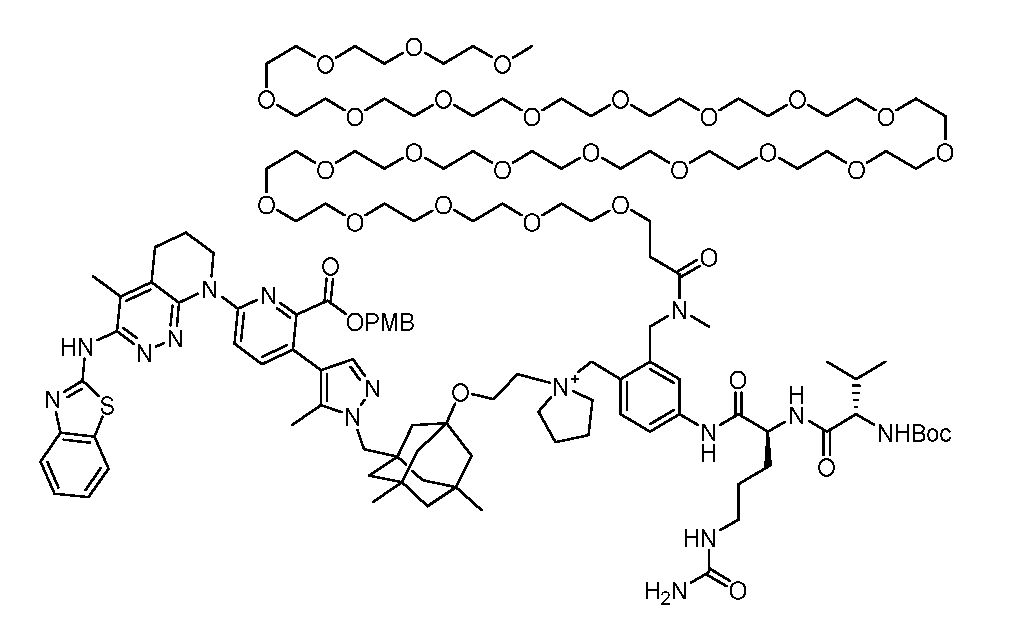
일반적 절차 3에 따라 1-(2-(((1s,3r,5R,7S)-3-((4-(6-(3-(벤조[d]티아졸-2-일아미노)-4-메틸-6,7-디히드로피리도[2,3-c]피리다진-8(5H)-일)-2-(((4-메톡시벤질)옥시)카르보닐)피리딘-3-일)-5-메틸-1H-피라졸-1-일)메틸)-5,7-디메틸아다만탄-1-일)옥시)에틸)-1-(4-((S)-2-((S)-2-((tert-부톡시카르보닐)아미노)-3-메틸부탄아미도)-5-우레이도펜탄아미도)-2-((메틸아미노)메틸)벤질)피롤리딘-1-윰 (40 mg, 0.028 mmol) 및 2,5-디옥소피롤리딘-1-일 2,5,8,11,14,17,20,23,26,29,32,35,38,41,44,47,50,53,56,59,62,65,68,71-테트라코사옥사테트라헵타콘탄-74-오에이트 (51.5 mg, 0.042 mmol, 1.5 당량)를 사용하여, 1-(2-(((1s,3r,5R,7S)-3-((4-(6-(3-(벤조[d]티아졸-2-일아미노)-4-메틸-6,7-디히드로피리도[2,3-c]피리다진-8(5H)-일)-2-(((4-메톡시벤질)옥시)카르보닐)피리딘-3-일)-5-메틸-1H-피라졸-1-일)메틸)-5,7-디메틸아다만탄-1-일)옥시)에틸)-1-(4-((S)-2-((S)-2-((tert-부톡시카르보닐)아미노)-3-메틸부탄아미도)-5-우레이도펜탄아미도)-2-(75-메틸-74-옥소-2,5,8,11,14,17,20,23,26,29,32,35,38,41,44,47,50,53,56,59,62,65,68,71-테트라코사옥사-75-아자헥사헵타콘탄-76-일)벤질)피롤리딘-1-윰을 수득하였다. HRMS: M+= 2511.4099; Rt=2.44분 (5분 산성 방법).According to general procedure 3, 1-(2-(((1s,3r,5R,7S)-3-((4-(6-(3-(benzo[d]thiazol-2-ylamino)-4-methyl-6,7-dihydropyrido[2,3-c]pyridazin-8(5H)-yl)-2-(((4-methoxybenzyl)oxy)carbonyl)pyridin-3-yl)-5-methyl-1H-pyrazol-1-yl)methyl)-5,7-dimethyladamantan-1-yl)oxy)ethyl)-1-(4-((S)-2-((S)-2-((tert-butoxycarbonyl)amino)-3-methylbutanamido)-5-ureidopentanamido)-2-((methylamino)methyl)benzyl)pyrrolidin-1-ium (40 mg, 0.028 mmol) and 2,5-dioxopyrrolidin-1-yl 2,5,8,11,14,17,20,23,26,29,32,35,38,41,44,47,50,53,56,59,62,65,68,71-tetracosaoxatetetacontane-74-oate (51.5 mg, 0.042 mmol, 1.5 eq.) were used. 1-(2-(((1s,3r,5R,7S)-3-((4-(6-(3-(Benzo[d]thiazol-2-ylamino)-4-methyl-6,7-dihydropyrido[2,3-c]pyridazin-8(5H)-yl)-2-(((4-methoxybenzyl)oxy)carbonyl)pyridin-3-yl)-5-methyl-1H-pyrazol-1-yl)methyl)-5,7-dimethyladamantan-1-yl)oxy)ethyl)-1-(4-((S)-2 Obtained -((S)-2-((tert-butoxycarbonyl)amino)-3-methylbutanamido)-5-ureidopentanamido)-2-(75-methyl-74-oxo-2,5,8,11,14,17,20,23,26,29,32,35,38,41,44,47,50,53,56,59,62,65,68,71-tetracosaoxa-75-azahexaheptacontan-76-yl)benzyl)pyrrolidin-1-ium. HRMS: M+ = 2511.4099; Rt = 2.44 min (5 min acidic method).
1-(4-((S)-2-((S)-2-아미노-3-메틸부탄아미도)-5-우레이도펜탄아미도)-2-(75-메틸-74-옥소-2,5,8,11,14,17,20,23,26,29,32,35,38,41,44,47,50,53,56,59,62,65,68,71-테트라코사옥사-75-아자헥사헵타콘탄-76-일)벤질)-1-(2-(((1s,3r,5R,7S)-3-((4-(6-(3-(벤조[d]티아졸-2-일아미노)-4-메틸-6,7-디히드로피리도[2,3-c]피리다진-8(5H)-일)-2-카르복시피리딘-3-일)-5-메틸-1H-피라졸-1-일)메틸)-5,7-디메틸아다만탄-1-일)옥시)에틸)피롤리딘-1-윰의 합성1-(4-((S)-2-((S)-2-amino-3-methylbutanamido)-5-ureidopentanamido)-2-(75-methyl-74-oxo-2,5,8,11,14,17,20,23,26,29,32,35,38,41,44,47,50,53,56,59,62,65,68,71-tetracosaoxa-75-azahexaheptacontan-76-yl)benzene Synthesis of -1-(2-(((1s,3r,5R,7S)-3-((4-(6-(3-(benzo[d]thiazol-2-ylamino)-4-methyl-6,7-dihydropyrido[2,3-c]pyridazin-8(5H)-yl)-2-carboxypyridin-3-yl)-5-methyl-1H-pyrazol-1-yl)methyl)-5,7-dimethyladamantan-1-yl)oxy)ethyl)pyrrolidin-1-ium
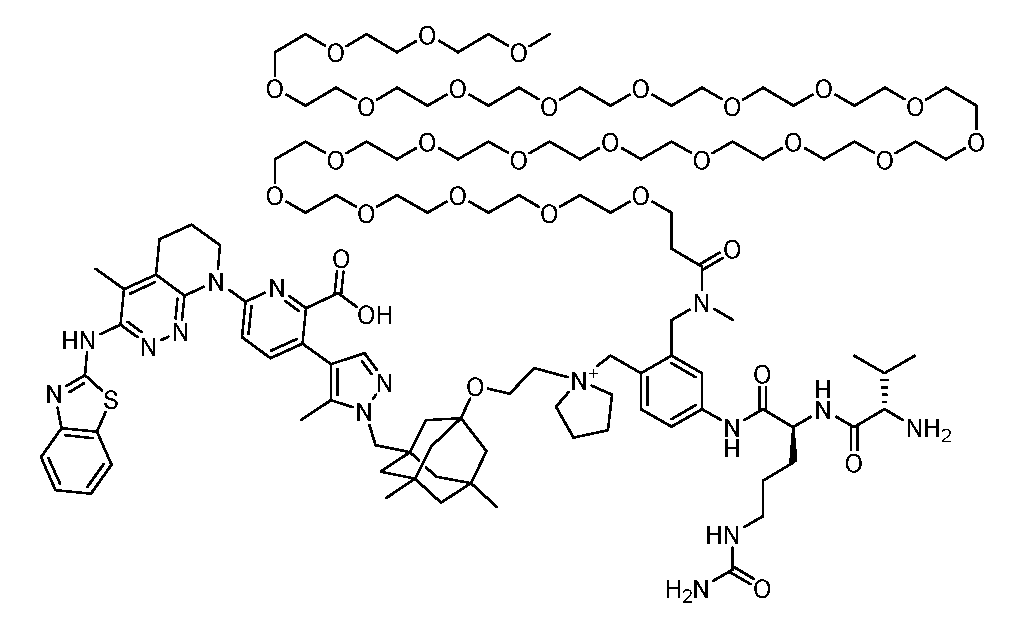
일반적 절차 4에 따라 1-(2-(((1s,3r,5R,7S)-3-((4-(6-(3-(벤조[d]티아졸-2-일아미노)-4-메틸-6,7-디히드로피리도[2,3-c]피리다진-8(5H)-일)-2-(((4-메톡시벤질)옥시)카르보닐)피리딘-3-일)-5-메틸-1H-피라졸-1-일)메틸)-5,7-디메틸아다만탄-1-일)옥시)에틸)-1-(4-((S)-2-((S)-2-((tert-부톡시카르보닐)아미노)-3-메틸부탄아미도)-5-우레이도펜탄아미도)-2-(75-메틸-74-옥소-2,5,8,11,14,17,20,23,26,29,32,35,38,41,44,47,50,53,56,59,62,65,68,71-테트라코사옥사-75-아자헥사헵타콘탄-76-일)벤질)피롤리딘-1-윰 (50 mg, 0.0199 mmol)을 사용하여, 1-(4-((S)-2-((S)-2-아미노-3-메틸부탄아미도)-5-우레이도펜탄아미도)-2-(75-메틸-74-옥소-2,5,8,11,14,17,20,23,26,29,32,35,38,41,44,47,50,53,56,59,62,65,68,71-테트라코사옥사-75-아자헥사헵타콘탄-76-일)벤질)-1-(2-(((1s,3r,5R,7S)-3-((4-(6-(3-(벤조[d]티아졸-2-일아미노)-4-메틸-6,7-디히드로피리도[2,3-c]피리다진-8(5H)-일)-2-카르복시피리딘-3-일)-5-메틸-1H-피라졸-1-일)메틸)-5,7-디메틸아다만탄-1-일)옥시)에틸)피롤리딘-1-윰을 수득하였다. HRMS: M+= 2291.3101; Rt=1.93분 (5분 산성 방법).According to general procedure 4, 1-(2-(((1s,3r,5R,7S)-3-((4-(6-(3-(benzo[d]thiazol-2-ylamino)-4-methyl-6,7-dihydropyrido[2,3-c]pyridazin-8(5H)-yl)-2-(((4-methoxybenzyl)oxy)carbonyl)pyridin-3-yl)-5-methyl-1H-pyrazol-1-yl)methyl)-5,7-dimethyladamantan-1-yl)oxy)ethyl)-1-(4-((S)-2 -((S)-2-((tert-butoxycarbonyl)amino)-3-methylbutanamido)-5-ureidopentanamido)-2-(75-methyl-74-oxo-2,5,8,11,14,17,20,23,26,29,32,35,38,41,44,47,50,53,56,59,62,65,68,71-tetracosaoxa-75-azahexaheptacontan-76-yl)benzyl)pyrrolidin-1-ium (50 mg, 0.0199 mmol) was used, 1-(4-((S)-2-((S)-2-amino-3-methylbutanamido)-5-ureidopentanamido)-2-(75-methyl-74-oxo-2,5,8,11,14,17,20,23,26,29,32,35,38,41,44,47,50,53,56,59,62,65,68,71-tetracosaoxa-75-azahexaheptacontan-76-yl)benzene Obtained 1-(2-(((1s,3r,5R,7S)-3-((4-(6-(3-(benzo[d]thiazol-2-ylamino)-4-methyl-6,7-dihydropyrido[2,3-c]pyridazin-8(5H)-yl)-2-carboxypyridin-3-yl)-5-methyl-1H-pyrazol-1-yl)methyl)-5,7-dimethyladamantan-1-yl)oxy)ethyl)pyrrolidin-1-ium. HRMS: M+ = 2291.3101; Rt = 1.93 min (5 min acidic method).
1-(2-(((1s,3r,5R,7S)-3-((4-(6-(3-(벤조[d]티아졸-2-일아미노)-4-메틸-6,7-디히드로피리도[2,3-c]피리다진-8(5H)-일)-2-카르복시피리딘-3-일)-5-메틸-1H-피라졸-1-일)메틸)-5,7-디메틸아다만탄-1-일)옥시)에틸)-1-(4-((S)-2-((S)-2-(3-(2-(2,5-디옥소-2,5-디히드로-1H-피롤-1-일)에톡시)프로판아미도)-3-메틸부탄아미도)-5-우레이도펜탄아미도)-2-(75-메틸-74-옥소-2,5,8,11,14,17,20,23,26,29,32,35,38,41,44,47,50,53,56,59,62,65,68,71-테트라코사옥사-75-아자헥사헵타콘탄-76-일)벤질)피롤리딘-1-윰 (L30A-P21)의 합성1-(2-(((1s,3r,5R,7S)-3-((4-(6-(3-(Benzo[d]thiazol-2-ylamino)-4-methyl-6,7-dihydropyrido[2,3-c]pyridazin-8(5H)-yl)-2-carboxypyridin-3-yl)-5-methyl-1H-pyrazol-1-yl)methyl)-5,7-dimethyladamantan-1-yl)oxy)ethyl)-1-(4-((S)-2-((S)-2-(3-(2-(2,5-di Synthesis of oxo-2,5-dihydro-1H-pyrrol-1-yl)ethoxy)propanamido)-3-methylbutanamido)-5-ureidopentanamido)-2-(75-methyl-74-oxo-2,5,8,11,14,17,20,23,26,29,32,35,38,41,44,47,50,53,56,59,62,65,68,71-tetracosaoxa-75-azahexaheptacontan-76-yl)benzyl)pyrrolidin-1-ium (L30A-P21)

일반적 절차 5에 따라 1-(4-((S)-2-((S)-2-아미노-3-메틸부탄아미도)-5-우레이도펜탄아미도)-2-(75-메틸-74-옥소-2,5,8,11,14,17,20,23,26,29,32,35,38,41,44,47,50,53,56,59,62,65,68,71-테트라코사옥사-75-아자헥사헵타콘탄-76-일)벤질)-1-(2-(((1s,3r,5R,7S)-3-((4-(6-(3-(벤조[d]티아졸-2-일아미노)-4-메틸-6,7-디히드로피리도[2,3-c]피리다진-8(5H)-일)-2-카르복시피리딘-3-일)-5-메틸-1H-피라졸-1-일)메틸)-5,7-디메틸아다만탄-1-일)옥시)에틸)피롤리딘-1-윰 (37 mg, 0.015 mmol) 및 2,5-디옥소피롤리딘-1-일 3-(2-(2,5-디옥소-2,5-디히드로-1H-피롤-1-일)에톡시)프로파노에이트 (11.4 mg, 0.0367 mmol, 2.5 당량)를 사용하여, 1-(2-(((1s,3r,5R,7S)-3-((4-(6-(3-(벤조[d]티아졸-2-일아미노)-4-메틸-6,7-디히드로피리도[2,3-c]피리다진-8(5H)-일)-2-카르복시피리딘-3-일)-5-메틸-1H-피라졸-1-일)메틸)-5,7-디메틸아다만탄-1-일)옥시)에틸)-1-(4-((S)-2-((S)-2-(3-(2-(2,5-디옥소-2,5-디히드로-1H-피롤-1-일)에톡시)프로판아미도)-3-메틸부탄아미도)-5-우레이도펜탄아미도)-2-(75-메틸-74-옥소-2,5,8,11,14,17,20,23,26,29,32,35,38,41,44,47,50,53,56,59,62,65,68,71-테트라코사옥사-75-아자헥사헵타콘탄-76-일)벤질)피롤리딘-1-윰을 수득하였다. HRMS: M+= 2486.3301; Rt=2.14분 (5분 산성 방법).According to general procedure 5, 1-(4-((S)-2-((S)-2-amino-3-methylbutanamido)-5-ureidopentanamido)-2-(75-methyl-74-oxo-2,5,8,11,14,17,20,23,26,29,32,35,38,41,44,47,50,53,56,59,62,65,68,71-tetracosaoxa-75-azahexaheptacontan-76-yl) Benzyl)-1-(2-(((1s,3r,5R,7S)-3-((4-(6-(3-(benzo[d]thiazol-2-ylamino)-4-methyl-6,7-dihydropyrido[2,3-c]pyridazin-8(5H)-yl)-2-carboxypyridin-3-yl)-5-methyl-1H-pyrazol-1-yl)methyl)-5,7-dimethyladamantan-1-yl)oxy)ethyl)pyrrolidin-1-ium (37 mg, 0.015 mmol) and 2,5-dioxopyrrolidin-1-yl 3-(2-(2,5-dioxo-2,5-dihydro-1H-pyrrol-1-yl)ethoxy)propanoate (11.4 mg, 0.0367 mmol, 2.5 eq). 1-(2-(((1s,3r,5R,7S)-3-((4-(6-(3-(Benzo[d]thiazol-2-ylamino)-4-methyl-6,7-dihydropyrido[2,3-c]pyridazin-8(5H)-yl)-2-carboxypyridin-3-yl)-5-methyl-1H-pyrazol-1-yl)methyl)-5,7-dimethyladamantan-1-yl)oxy)ethyl)-1-(4-((S)-2-((S)-2-(3-(2-(2,5-dioxo Obtained (2,5-dihydro-1H-pyrrol-1-yl)ethoxy)propanamido)-3-methylbutanamido)-5-ureidopentanamido)-2-(75-methyl-74-oxo-2,5,8,11,14,17,20,23,26,29,32,35,38,41,44,47,50,53,56,59,62,65,68,71-tetracosaoxa-75-azahexaheptacontan-76-yl)benzyl)pyrrolidin-1-ium. HRMS: M+ = 2486.3301; Rt = 2.14 min (5 min acidic method).
1-(2-(((1s,3r,5R,7S)-3-((4-(6-(3-(벤조[d]티아졸-2-일아미노)-4-메틸-6,7-디히드로피리도[2,3-c]피리다진-8(5H)-일)-2-(((4-메톡시벤질)옥시)카르보닐)피리딘-3-일)-5-메틸-1H-피라졸-1-일)메틸)-5,7-디메틸아다만탄-1-일)옥시)에틸)-1-(4-((S)-2-((S)-2-((tert-부톡시카르보닐)아미노)-3-메틸부탄아미도)-5-우레이도펜탄아미도)-2-(2,5,8,11,14,17,20,23,26,29,32,35,38,44,44-펜타데카메틸-3,6,9,12,15,18,21,24,27,30,33,36,39,42-테트라데카옥소-43-옥사-2,5,8,11,14,17,20,23,26,29,32,35,38-트리데카아자펜타테트라콘틸)벤질)피롤리딘-1-윰의 합성1-(2-(((1s,3r,5R,7S)-3-((4-(6-(3-(Benzo[d]thiazol-2-ylamino)-4-methyl-6,7-dihydropyrido[2,3-c]pyridazin-8(5H)-yl)-2-(((4-methoxybenzyl)oxy)carbonyl)pyridin-3-yl)-5-methyl-1H-pyrazol-1-yl)methyl)-5,7-dimethyladamantan-1-yl)oxy)ethyl)-1-(4-((S)-2-((S)-2-((tert-butoxycarbonyl) Synthesis of (amino)-3-methylbutanamido)-5-ureidopentanamido)-2-(2,5,8,11,14,17,20,23,26,29,32,35,38,44,44-pentadecamethyl-3,6,9,12,15,18,21,24,27,30,33,36,39,42-tetradecaoxo-43-oxa-2,5,8,11,14,17,20,23,26,29,32,35,38-tridecaazapentatetracontyl)benzyl)pyrrolidin-1-ium

일반적 절차 3에 따라 1-(2-(((1s,3r,5R,7S)-3-((4-(6-(3-(벤조[d]티아졸-2-일아미노)-4-메틸-6,7-디히드로피리도[2,3-c]피리다진-8(5H)-일)-2-(((4-메톡시벤질)옥시)카르보닐)피리딘-3-일)-5-메틸-1H-피라졸-1-일)메틸)-5,7-디메틸아다만탄-1-일)옥시)에틸)-1-(4-((S)-2-((S)-2-((tert-부톡시카르보닐)아미노)-3-메틸부탄아미도)-5-우레이도펜탄아미도)-2-((메틸아미노)메틸)벤질)피롤리딘-1-윰 (35 mg, 0.021 mmol) 및 3,6,9,12,15,18,21,24,27,30,33,36,42,42-테트라데카메틸-4,7,10,13,16,19,22,25,28,31,34,37,40-트리데카옥소-41-옥사-3,6,9,12,15,18,21,24,27,30,33,36-도데카아자트리테트라콘탄산 (21.9 mg, 0.021 mmol, 1.0 당량)을 사용하여, 1-(2-(((1s,3r,5R,7S)-3-((4-(6-(3-(벤조[d]티아졸-2-일아미노)-4-메틸-6,7-디히드로피리도[2,3-c]피리다진-8(5H)-일)-2-(((4-메톡시벤질)옥시)카르보닐)피리딘-3-일)-5-메틸-1H-피라졸-1-일)메틸)-5,7-디메틸아다만탄-1-일)옥시)에틸)-1-(4-((S)-2-((S)-2-((tert-부톡시카르보닐)아미노)-3-메틸부탄아미도)-5-우레이도펜탄아미도)-2-(2,5,8,11,14,17,20,23,26,29,32,35,38,44,44-펜타데카메틸-3,6,9,12,15,18,21,24,27,30,33,36,39,42-테트라데카옥소-43-옥사-2,5,8,11,14,17,20,23,26,29,32,35,38-트리데카아자펜타테트라콘틸)벤질)피롤리딘-1-윰을 수득하였다. HRMS: [(M+)+H+]+2/2=1211.6500; Rt=2.31분 (5분 산성 방법).According to general procedure 3, 1-(2-(((1s,3r,5R,7S)-3-((4-(6-(3-(benzo[d]thiazol-2-ylamino)-4-methyl-6,7-dihydropyrido[2,3-c]pyridazin-8(5H)-yl)-2-(((4-methoxybenzyl)oxy)carbonyl)pyridin-3-yl)-5-methyl-1H-pyrazol-1-yl)methyl)-5,7-dimethyladamantan-1-yl)oxy)ethyl)-1-(4-((S)-2-((S)-2-((tert-butoxycarbonyl)amino)-3-methylbutanamido)-5-ureidopentanamido)-2-((methylamino)methyl)benzyl)pyrrolidin-1-ium (35 mg, Using 3,6,9,12,15,18,21,24,27,30,33,36,42,42-tetradecamethyl-4,7,10,13,16,19,22,25,28,31,34,37,40-tridecaoxo-41-oxa-3,6,9,12,15,18,21,24,27,30,33,36-dodecaazatritetracontanoic acid (21.9 mg, 0.021 mmol, 1.0 eq), 1-(2-(((1s,3r,5R,7S)-3-((4-(6-(3-(Benzo[d]thiazol-2-ylamino)-4-methyl-6,7-dihydropyrido[2,3-c]pyridazin-8(5H)-yl)-2-(((4-methoxybenzyl)oxy)carbonyl)pyridin-3-yl)-5-methyl-1H-pyrazol-1-yl)methyl)-5,7-dimethyladamantan-1-yl)oxy)ethyl)-1-(4-((S)-2-((S)-2-((tert-butoxycarbonyl) Obtained (2,5,8,11,14,17,20,23,26,29,32,35,38,44,44-pentadecamethyl-3,6,9,12,15,18,21,24,27,30,33,36,39,42-tetradecaoxo-43-oxa-2,5,8,11,14,17,20,23,26,29,32,35,38-tridecaazapentatetracontyl)benzyl)pyrrolidin-1-ium. HRMS: [(M+)+H+] +2 /2 = 1211.6500; Rt=2.31 min (5 min acidic method).
1-(2-(((1s,3r,5R,7S)-3-((4-(6-(3-(벤조[d]티아졸-2-일아미노)-4-메틸-6,7-디히드로피리도[2,3-c]피리다진-8(5H)-일)-2-카르복시피리딘-3-일)-5-메틸-1H-피라졸-1-일)메틸)-5,7-디메틸아다만탄-1-일)옥시)에틸)-1-(2-(41-카르복시-2,5,8,11,14,17,20,23,26,29,32,35,38-트리데카메틸-3,6,9,12,15,18,21,24,27,30,33,36,39-트리데카옥소-2,5,8,11,14,17,20,23,26,29,32,35,38-트리데카아자헨테트라콘틸)-4-((S)-2-((S)-2-(3-(2-(2,5-디옥소-2,5-디히드로-1H-피롤-1-일)에톡시)프로판아미도)-3-메틸부탄아미도)-5-우레이도펜탄아미도)벤질)피롤리딘-1-윰 (L35A-P21)의 합성1-(2-(((1s,3r,5R,7S)-3-((4-(6-(3-(Benzo[d]thiazol-2-ylamino)-4-methyl-6,7-dihydropyrido[2,3-c]pyridazin-8(5H)-yl)-2-carboxypyridin-3-yl)-5-methyl-1H-pyrazol-1-yl)methyl)-5,7-dimethyladamantan-1-yl)oxy)ethyl)-1-(2-(41-carboxy-2,5,8,11,14,17,20,23,26,29,32,35,38- Synthesis of tridecamethyl-3,6,9,12,15,18,21,24,27,30,33,36,39-tridecaoxo-2,5,8,11,14,17,20,23,26,29,32,35,38-tridecaazahenetetracontyl)-4-((S)-2-((S)-2-(3-(2-(2,5-dioxo-2,5-dihydro-1H-pyrrol-1-yl)ethoxy)propanamido)-3-methylbutanamido)-5-ureidopentanamido)benzyl)pyrrolidin-1-ium (L35A-P21)

일반적 절차 4에 따라1-(2-(((1s,3r,5R,7S)-3-((4-(6-(3-(벤조[d]티아졸-2-일아미노)-4-메틸-6,7-디히드로피리도[2,3-c]피리다진-8(5H)-일)-2-(((4-메톡시벤질)옥시)카르보닐)피리딘-3-일)-5-메틸-1H-피라졸-1-일)메틸)-5,7-디메틸아다만탄-1-일)옥시)에틸)-1-(4-((S)-2-((S)-2-((tert-부톡시카르보닐)아미노)-3-메틸부탄아미도)-5-우레이도펜탄아미도)-2-(2,5,8,11,14,17,20,23,26,29,32,35,38,44,44-펜타데카메틸-3,6,9,12,15,18,21,24,27,30,33,36,39,42-테트라데카옥소-43-옥사-2,5,8,11,14,17,20,23,26,29,32,35,38-트리데카아자펜타테트라콘틸)벤질)피롤리딘-1-윰 (24 mg, 0.0095 mmol)을 사용한 다음, 조 생성물을 취하고, 일반적 절차 5에 따라 2,5-디옥소피롤리딘-1-일 3-(2-(2,5-디옥소-2,5-디히드로-1H-피롤-1-일)에톡시)프로파노에이트 (5.9 mg, 0.019 mmol, 2 당량)를 사용하여, 1-(2-(((1s,3r,5R,7S)-3-((4-(6-(3-(벤조[d]티아졸-2-일아미노)-4-메틸-6,7-디히드로피리도[2,3-c]피리다진-8(5H)-일)-2-카르복시피리딘-3-일)-5-메틸-1H-피라졸-1-일)메틸)-5,7-디메틸아다만탄-1-일)옥시)에틸)-1-(2-(41-카르복시-2,5,8,11,14,17,20,23,26,29,32,35,38-트리데카메틸-3,6,9,12,15,18,21,24,27,30,33,36,39-트리데카옥소-2,5,8,11,14,17,20,23,26,29,32,35,38-트리데카아자헨테트라콘틸)-4-((S)-2-((S)-2-(3-(2-(2,5-디옥소-2,5-디히드로-1H-피롤-1-일)에톡시)프로판아미도)-3-메틸부탄아미도)-5-우레이도펜탄아미도)벤질)피롤리딘-1-윰을 수득하였다. HRMS: M+= 2340.1699; Rt=1.87분 (5분 산성 방법).According to general procedure 4, 1-(2-(((1s,3r,5R,7S)-3-((4-(6-(3-(benzo[d]thiazol-2-ylamino)-4-methyl-6,7-dihydropyrido[2,3-c]pyridazin-8(5H)-yl)-2-(((4-methoxybenzyl)oxy)carbonyl)pyridin-3-yl)-5-methyl-1H-pyrazol-1-yl)methyl)-5,7-dimethyladamantan-1-yl)oxy)ethyl)-1-(4-((S)-2-((S)-2-((tert-butoxycarbonyl) )amino)-3-methylbutanamido)-5-ureidopentanamido)-2-(2,5,8,11,14,17,20,23,26,29,32,35,38,44,44-pentadecamethyl-3,6,9,12,15,18,21,24,27,30,33,36,39,42-tetradecaoxo-43-oxa-2,5,8,11,14,17,20,23,26,29,32,35,38-tridecaazapentatetracontyl)benzyl)pyrrolidin-1-ium (24 mg, 0.0095 mmol) was used, and then the crude product was taken and 2,5-dioxopyrrolidin-1-yl 3-(2-(2,5-dioxo-2,5-dihydro-1H-pyrrol-1-yl)ethoxy)propanoate (5.9 mg, 0.019 mmol, 2 equivalents) was used according to General Procedure 5. 1-(2-(((1s,3r,5R,7S)-3-((4-(6-(3-(Benzo[d]thiazol-2-ylamino)-4-methyl-6,7-dihydropyrido[2,3-c]pyridazin-8(5H)-yl)-2-carboxypyridin-3-yl)-5-methyl-1H-pyrazol-1-yl)methyl)-5,7-dimethyladamantan-1-yl)oxy)ethyl)-1-(2-(41-carboxy-2,5,8,11,14,17,20,23,26,29,32,35,38- Obtained tridecamethyl-3,6,9,12,15,18,21,24,27,30,33,36,39-tridecaoxo-2,5,8,11,14,17,20,23,26,29,32,35,38-tridecaazahenetetracontyl)-4-((S)-2-((S)-2-(3-(2-(2,5-dioxo-2,5-dihydro-1H-pyrrol-1-yl)ethoxy)propanamido)-3-methylbutanamido)-5-ureidopentanamido)benzyl)pyrrolidin-1-ium. HRMS: M+ = 2340.1699; Rt = 1.87 min (5 min acidic method).
1-(2-(((1s,3r,5R,7S)-3-((4-(6-(3-(벤조[d]티아졸-2-일아미노)-4-메틸-6,7-디히드로피리도[2,3-c]피리다진-8(5H)-일)-2-(((4-메톡시벤질)옥시)카르보닐)피리딘-3-일)-5-메틸-1H-피라졸-1-일)메틸)-5,7-디메틸아다만탄-1-일)옥시)에틸)-1-(4-((S)-2-((S)-2-((tert-부톡시카르보닐)아미노)-3-메틸부탄아미도)-5-우레이도펜탄아미도)-2-(2,5,8,11,14,17,20,23,26,29,32,35,38,41,44,47,50,53,56,62,62-헤니코사메틸-3,6,9,12,15,18,21,24,27,30,33,36,39,42,45,48,51,54,57,60-이코사옥소-61-옥사-2,5,8,11,14,17,20,23,26,29,32,35,38,41,44,47,50,53,56-노나데카아자트리헥사콘틸)벤질)피롤리딘-1-윰의 합성1-(2-(((1s,3r,5R,7S)-3-((4-(6-(3-(Benzo[d]thiazol-2-ylamino)-4-methyl-6,7-dihydropyrido[2,3-c]pyridazin-8(5H)-yl)-2-(((4-methoxybenzyl)oxy)carbonyl)pyridin-3-yl)-5-methyl-1H-pyrazol-1-yl)methyl)-5,7-dimethyladamantan-1-yl)oxy)ethyl)-1-(4-((S)-2-((S)-2-((tert-butoxycarbonyl)amino)-3-methylbutanamido)-5-ureidopentanam Synthesis of -2-(2,5,8,11,14,17,20,23,26,29,32,35,38,41,44,47,50,53,56,62,62-henicosamethyl-3,6,9,12,15,18,21,24,27,30,33,36,39,42,45,48,51,54,57,60-icosaoxo-61-oxa-2,5,8,11,14,17,20,23,26,29,32,35,38,41,44,47,50,53,56-nonadecaazatrihexacontyl)benzyl)pyrrolidin-1-ium

일반적 절차 3에 따라 1-(2-(((1s,3r,5R,7S)-3-((4-(6-(3-(벤조[d]티아졸-2-일아미노)-4-메틸-6,7-디히드로피리도[2,3-c]피리다진-8(5H)-일)-2-(((4-메톡시벤질)옥시)카르보닐)피리딘-3-일)-5-메틸-1H-피라졸-1-일)메틸)-5,7-디메틸아다만탄-1-일)옥시)에틸)-1-(4-((S)-2-((S)-2-((tert-부톡시카르보닐)아미노)-3-메틸부탄아미도)-5-우레이도펜탄아미도)-2-((메틸아미노)메틸)벤질)피롤리딘-1-윰 (47 mg, 0.0286 mmol) 및 3,6,9,12,15,18,21,24,27,30,33,36,39,42,45,48,51,54,60,60-이코사메틸-4,7,10,13,16,19,22,25,28,31,34,37,40,43,46,49,52,55,58-노나데카옥소-59-옥사-3,6,9,12,15,18,21,24,27,30,33,36,39,42,45,48,51,54-옥타데카아자헨헥사콘탄산 (41.6 mg, 0.0286 mmol, 1.0 당량)을 사용하여, 1-(2-(((1s,3r,5R,7S)-3-((4-(6-(3-(벤조[d]티아졸-2-일아미노)-4-메틸-6,7-디히드로피리도[2,3-c]피리다진-8(5H)-일)-2-(((4-메톡시벤질)옥시)카르보닐)피리딘-3-일)-5-메틸-1H-피라졸-1-일)메틸)-5,7-디메틸아다만탄-1-일)옥시)에틸)-1-(4-((S)-2-((S)-2-((tert-부톡시카르보닐)아미노)-3-메틸부탄아미도)-5-우레이도펜탄아미도)-2-(2,5,8,11,14,17,20,23,26,29,32,35,38,41,44,47,50,53,56,62,62-헤니코사메틸-3,6,9,12,15,18,21,24,27,30,33,36,39,42,45,48,51,54,57,60-이코사옥소-61-옥사-2,5,8,11,14,17,20,23,26,29,32,35,38,41,44,47,50,53,56-노나데카아자트리헥사콘틸)벤질)피롤리딘-1-윰을 수득하였다. HRMS: M+= 2487.5400; Rt=2.26분 (5분 산성 방법).According to general procedure 3, 1-(2-(((1s,3r,5R,7S)-3-((4-(6-(3-(benzo[d]thiazol-2-ylamino)-4-methyl-6,7-dihydropyrido[2,3-c]pyridazin-8(5H)-yl)-2-(((4-methoxybenzyl)oxy)carbonyl)pyridin-3-yl)-5-methyl-1H-pyrazol-1-yl)methyl)-5,7-dimethyladamantan-1-yl)oxy)ethyl)-1-(4-((S)-2-((S)-2-((tert-butoxycarbonyl)amino)-3-methylbutanamido)-5-ureidopentanamido)-2-((methylamino)methyl)benzyl)pyrrolidin-1-ium (47 mg, Using 3,6,9,12,15,18,21,24,27,30,33,36,39,42,45,48,51,54,60,60-icosamethyl-4,7,10,13,16,19,22,25,28,31,34,37,40,43,46,49,52,55,58-nonadecaoxo-59-oxa-3,6,9,12,15,18,21,24,27,30,33,36,39,42,45,48,51,54-octadecaazahenehexacontanoic acid (41.6 mg, 0.0286 mmol, 1.0 eq), 1-(2-(((1s,3r,5R,7S)-3-((4-(6-(3-(Benzo[d]thiazol-2-ylamino)-4-methyl-6,7-dihydropyrido[2,3-c]pyridazin-8(5H)-yl)-2-(((4-methoxybenzyl)oxy)carbonyl)pyridin-3-yl)-5-methyl-1H-pyrazol-1-yl)methyl)-5,7-dimethyladamantan-1-yl)oxy)ethyl)-1-(4-((S)-2-((S)-2-((tert-butoxycarbonyl)amino)-3-methylbutanamido)-5-ureidopentanam Obtained (2,5,8,11,14,17,20,23,26,29,32,35,38,41,44,47,50,53,56,62,62-henicosamethyl-3,6,9,12,15,18,21,24,27,30,33,36,39,42,45,48,51,54,57,60-icosaoxo-61-oxa-2,5,8,11,14,17,20,23,26,29,32,35,38,41,44,47,50,53,56-nonadecaazatrihexacontyl)benzyl)pyrrolidin-1-ium. HRMS: M+ = 2487.5400; Rt=2.26 min (5 min acid method).
1-(4-((S)-2-((S)-2-아미노-3-메틸부탄아미도)-5-우레이도펜탄아미도)-2-(59-카르복시-2,5,8,11,14,17,20,23,26,29,32,35,38,41,44,47,50,53,56-노나데카메틸-3,6,9,12,15,18,21,24,27,30,33,36,39,42,45,48,51,54,57-노나데카옥소-2,5,8,11,14,17,20,23,26,29,32,35,38,41,44,47,50,53,56-노나데카아자노나펜타콘틸)벤질)-1-(2-(((1s,3r,5R,7S)-3-((4-(6-(3-(벤조[d]티아졸-2-일아미노)-4-메틸-6,7-디히드로피리도[2,3-c]피리다진-8(5H)-일)-2-카르복시피리딘-3-일)-5-메틸-1H-피라졸-1-일)메틸)-5,7-디메틸아다만탄-1-일)옥시)에틸)피롤리딘-1-윰의 합성1-(4-((S)-2-((S)-2-amino-3-methylbutanamido)-5-ureidopentanamido)-2-(59-carboxy-2,5,8,11,14,17,20,23,26,29,32,35,38,41,44,47,50,53,56-nonadecamethyl-3,6,9,12,15,18,21,24,27,30,33,36,39,42,45,48,51,54,57-nonadecaoxo-2,5,8,11,14,17,20,23,2 Synthesis of 6,29,32,35,38,41,44,47,50,53,56-nonadecaazanonapentacontyl)benzyl)-1-(2-(((1s,3r,5R,7S)-3-((4-(6-(3-(benzo[d]thiazol-2-ylamino)-4-methyl-6,7-dihydropyrido[2,3-c]pyridazin-8(5H)-yl)-2-carboxypyridin-3-yl)-5-methyl-1H-pyrazol-1-yl)methyl)-5,7-dimethyladamantan-1-yl)oxy)ethyl)pyrrolidin-1-ium

일반적 절차 4에 따라 1-(2-(((1s,3r,5R,7S)-3-((4-(6-(3-(벤조[d]티아졸-2-일아미노)-4-메틸-6,7-디히드로피리도[2,3-c]피리다진-8(5H)-일)-2-(((4-메톡시벤질)옥시)카르보닐)피리딘-3-일)-5-메틸-1H-피라졸-1-일)메틸)-5,7-디메틸아다만탄-1-일)옥시)에틸)-1-(4-((S)-2-((S)-2-((tert-부톡시카르보닐)아미노)-3-메틸부탄아미도)-5-우레이도펜탄아미도)-2-(2,5,8,11,14,17,20,23,26,29,32,35,38,41,44,47,50,53,56,62,62-헤니코사메틸-3,6,9,12,15,18,21,24,27,30,33,36,39,42,45,48,51,54,57,60-이코사옥소-61-옥사-2,5,8,11,14,17,20,23,26,29,32,35,38,41,44,47,50,53,56-노나데카아자트리헥사콘틸)벤질)피롤리딘-1-윰 (46 mg, 0.0155 mmol)을 사용하여, 1-(4-((S)-2-((S)-2-아미노-3-메틸부탄아미도)-5-우레이도펜탄아미도)-2-(59-카르복시-2,5,8,11,14,17,20,23,26,29,32,35,38,41,44,47,50,53,56-노나데카메틸-3,6,9,12,15,18,21,24,27,30,33,36,39,42,45,48,51,54,57-노나데카옥소-2,5,8,11,14,17,20,23,26,29,32,35,38,41,44,47,50,53,56-노나데카아자노나펜타콘틸)벤질)-1-(2-(((1s,3r,5R,7S)-3-((4-(6-(3-(벤조[d]티아졸-2-일아미노)-4-메틸-6,7-디히드로피리도[2,3-c]피리다진-8(5H)-일)-2-카르복시피리딘-3-일)-5-메틸-1H-피라졸-1-일)메틸)-5,7-디메틸아다만탄-1-일)옥시)에틸)피롤리딘-1-윰을 수득하였다. HRMS: M+= 2571.3401; Rt=1.60분 (5분 산성 방법).According to general procedure 4, 1-(2-(((1s,3r,5R,7S)-3-((4-(6-(3-(benzo[d]thiazol-2-ylamino)-4-methyl-6,7-dihydropyrido[2,3-c]pyridazin-8(5H)-yl)-2-(((4-methoxybenzyl)oxy)carbonyl)pyridin-3-yl)-5-methyl-1H-pyrazol-1-yl)methyl)-5,7-dimethyladamantan-1-yl)oxy)ethyl)-1-(4-((S)-2-((S)-2-((tert-butoxycarbonyl)amino)-3-methylbutanamido)-5-ureidopentana Using mido)-2-(2,5,8,11,14,17,20,23,26,29,32,35,38,41,44,47,50,53,56,62,62-henicosamethyl-3,6,9,12,15,18,21,24,27,30,33,36,39,42,45,48,51,54,57,60-icosaoxo-61-oxa-2,5,8,11,14,17,20,23,26,29,32,35,38,41,44,47,50,53,56-nonadecaazatrihexacontyl)benzyl)pyrrolidin-1-ium (46 mg, 0.0155 mmol), 1-(4-((S)-2-((S)-2-amino-3-methylbutanamido)-5-ureidopentanamido)-2-(59-carboxy-2,5,8,11,14,17,20,23,26,29,32,35,38,41,44,47,50,53,56-nonadecamethyl-3,6,9,12,15,18,21,24,27,30,33,36,39,42,45,48,51,54,57-nonadecaoxo-2,5,8,11,14,17,20,23,2 Obtained 6,29,32,35,38,41,44,47,50,53,56-Nonadecaazanonapentacontyl)benzyl)-1-(2-(((1s,3r,5R,7S)-3-((4-(6-(3-(Benzo[d]thiazol-2-ylamino)-4-methyl-6,7-dihydropyrido[2,3-c]pyridazin-8(5H)-yl)-2-carboxypyridin-3-yl)-5-methyl-1H-pyrazol-1-yl)methyl)-5,7-dimethyladamantan-1-yl)oxy)ethyl)pyrrolidin-1-ium. HRMS: M+ = 2571.3401; Rt = 1.60 min (5 min acidic method).
1-(2-(((1s,3r,5R,7S)-3-((4-(6-(3-(벤조[d]티아졸-2-일아미노)-4-메틸-6,7-디히드로피리도[2,3-c]피리다진-8(5H)-일)-2-카르복시피리딘-3-일)-5-메틸-1H-피라졸-1-일)메틸)-5,7-디메틸아다만탄-1-일)옥시)에틸)-1-(2-(59-카르복시-2,5,8,11,14,17,20,23,26,29,32,35,38,41,44,47,50,53,56-노나데카메틸-3,6,9,12,15,18,21,24,27,30,33,36,39,42,45,48,51,54,57-노나데카옥소-2,5,8,11,14,17,20,23,26,29,32,35,38,41,44,47,50,53,56-노나데카아자노나펜타콘틸)-4-((S)-2-((S)-2-(3-(2-(2,5-디옥소-2,5-디히드로-1H-피롤-1-일)에톡시)프로판아미도)-3-메틸부탄아미도)-5-우레이도펜탄아미도)벤질)피롤리딘-1-윰 (L36A-P21)의 합성1-(2-(((1s,3r,5R,7S)-3-((4-(6-(3-(Benzo[d]thiazol-2-ylamino)-4-methyl-6,7-dihydropyrido[2,3-c]pyridazin-8(5H)-yl)-2-carboxypyridin-3-yl)-5-methyl-1H-pyrazol-1-yl)methyl)-5,7-dimethyladamantan-1-yl)oxy)ethyl)-1-(2-(59-carboxy-2,5,8,11,14,17,20,23,26,29,32,35,38,41,44,47,50,53,56-nonadecamethyl-3, Synthesis of 6,9,12,15,18,21,24,27,30,33,36,39,42,45,48,51,54,57-nonadecaoxo-2,5,8,11,14,17,20,23,26,29,32,35,38,41,44,47,50,53,56-nonadecaazanonapentacontyl)-4-((S)-2-((S)-2-(3-(2-(2,5-dioxo-2,5-dihydro-1H-pyrrol-1-yl)ethoxy)propanamido)-3-methylbutanamido)-5-ureidopentanamido)benzyl)pyrrolidin-1-ium (L36A-P21)

일반적 절차 5에 따라 1-(4-((S)-2-((S)-2-아미노-3-메틸부탄아미도)-5-우레이도펜탄아미도)-2-(59-카르복시-2,5,8,11,14,17,20,23,26,29,32,35,38,41,44,47,50,53,56-노나데카메틸-3,6,9,12,15,18,21,24,27,30,33,36,39,42,45,48,51,54,57-노나데카옥소-2,5,8,11,14,17,20,23,26,29,32,35,38,41,44,47,50,53,56-노나데카아자노나펜타콘틸)벤질)-1-(2-(((1s,3r,5R,7S)-3-((4-(6-(3-(벤조[d]티아졸-2-일아미노)-4-메틸-6,7-디히드로피리도[2,3-c]피리다진-8(5H)-일)-2-카르복시피리딘-3-일)-5-메틸-1H-피라졸-1-일)메틸)-5,7-디메틸아다만탄-1-일)옥시)에틸)피롤리딘-1-윰 (17.0 mg, 0.0055 mmol) 및 2,5-디옥소피롤리딘-1-일 3-(2-(2,5-디옥소-2,5-디히드로-1H-피롤-1-일)에톡시)프로파노에이트 (2.4 mg, 0.0076 mmol, 1.4 당량)를 사용하여, 1-(2-(((1s,3r,5R,7S)-3-((4-(6-(3-(벤조[d]티아졸-2-일아미노)-4-메틸-6,7-디히드로피리도[2,3-c]피리다진-8(5H)-일)-2-카르복시피리딘-3-일)-5-메틸-1H-피라졸-1-일)메틸)-5,7-디메틸아다만탄-1-일)옥시)에틸)-1-(2-(59-카르복시-2,5,8,11,14,17,20,23,26,29,32,35,38,41,44,47,50,53,56-노나데카메틸-3,6,9,12,15,18,21,24,27,30,33,36,39,42,45,48,51,54,57-노나데카옥소-2,5,8,11,14,17,20,23,26,29,32,35,38,41,44,47,50,53,56-노나데카아자노나펜타콘틸)-4-((S)-2-((S)-2-(3-(2-(2,5-디옥소-2,5-디히드로-1H-피롤-1-일)에톡시)프로판아미도)-3-메틸부탄아미도)-5-우레이도펜탄아미도)벤질)피롤리딘-1-윰을 수득하였다. HRMS: M+= 2766.3899; Rt=1.82분 (5분 산성 방법).According to general procedure 5, 1-(4-((S)-2-((S)-2-amino-3-methylbutanamido)-5-ureidopentanamido)-2-(59-carboxy-2,5,8,11,14,17,20,23,26,29,32,35,38,41,44,47,50,53,56-nonadecamethyl-3,6,9,12,15,18,21,24,27,30,33,36,39,42,45,48,51,54,57-nonadecaoxo-2,5,8,11,14,17,20,23,2 6,29,32,35,38,41,44,47,50,53,56-Nonadecaazanonapentacontyl)benzyl)-1-(2-(((1s,3r,5R,7S)-3-((4-(6-(3-(Benzo[d]thiazol-2-ylamino)-4-methyl-6,7-dihydropyrido[2,3-c]pyridazin-8(5H)-yl)-2-carboxypyridin-3-yl)-5-methyl-1H-pyrazol-1-yl)methyl)-5,7-dimethyladamantan-1-yl)oxy)ethyl)pyrrolidin-1-ium (17.0 mg, 0.0055 mmol) and 2,5-dioxopyrrolidin-1-yl 3-(2-(2,5-dioxo-2,5-dihydro-1H-pyrrol-1-yl)ethoxy)propanoate (2.4 mg, 0.0076 mmol, 1.4 eq). 1-(2-(((1s,3r,5R,7S)-3-((4-(6-(3-(Benzo[d]thiazol-2-ylamino)-4-methyl-6,7-dihydropyrido[2,3-c]pyridazin-8(5H)-yl)-2-carboxypyridin-3-yl)-5-methyl-1H-pyrazol-1-yl)methyl)-5,7-dimethyladamantan-1-yl)oxy)ethyl)-1-(2-(59-carboxy-2,5,8,11,14,17,20,23,26,29,32,35,38,41,44,47,50,53,56-nonadecamethyl-3, Obtained 6,9,12,15,18,21,24,27,30,33,36,39,42,45,48,51,54,57-Nonadecaoxo-2,5,8,11,14,17,20,23,26,29,32,35,38,41,44,47,50,53,56-Nonadecaazanonapentacontyl)-4-((S)-2-((S)-2-(3-(2-(2,5-dioxo-2,5-dihydro-1H-pyrrol-1-yl)ethoxy)propanamido)-3-methylbutanamido)-5-ureidopentanamido)benzyl)pyrrolidin-1-ium. HRMS: M+ = 2766.3899; Rt=1.82 min (5 min acid method).
1-(2-(((1s,3r,5R,7S)-3-((4-(6-(3-(벤조[d]티아졸-2-일아미노)-4-메틸-6,7-디히드로피리도[2,3-c]피리다진-8(5H)-일)-2-(((4-메톡시벤질)옥시)카르보닐)피리딘-3-일)-5-메틸-1H-피라졸-1-일)메틸)-5,7-디메틸아다만탄-1-일)옥시)에틸)-1-(4-((S)-2-((S)-2-((tert-부톡시카르보닐)아미노)-3-메틸부탄아미도)-5-우레이도펜탄아미도)-2-(2,5,8,11,14,17,20,23,26,29,32,35,38,41,44,47,50,53,56,59,62,65,68,71,74,80,80-헵타코사메틸-3,6,9,12,15,18,21,24,27,30,33,36,39,42,45,48,51,54,57,60,63,66,69,72,75,78-헥사코사옥소-79-옥사-2,5,8,11,14,17,20,23,26,29,32,35,38,41,44,47,50,53,56,59,62,65,68,71,74-펜타코사아자헤녹타콘틸)벤질)피롤리딘-1-윰의 합성1-(2-(((1s,3r,5R,7S)-3-((4-(6-(3-(Benzo[d]thiazol-2-ylamino)-4-methyl-6,7-dihydropyrido[2,3-c]pyridazin-8(5H)-yl)-2-(((4-methoxybenzyl)oxy)carbonyl)pyridin-3-yl)-5-methyl-1H-pyrazol-1-yl)methyl)-5,7-dimethyladamantan-1-yl)oxy)ethyl)-1-(4-((S)-2-((S)-2-((tert-butoxycarbonyl)amino)-3-methylbutanamido)-5-ureidopentanamido)-2-(2,5,8,11,14,17,20,23, 26,29,32,35,38,41,44,47,50,53,56,59,62,65,68,71,74,80,80-Heptacosamethyl-3,6,9,12,15,18,21,24,27,30,33,36,39,42,45,48,51,54,57,60,63, Synthesis of 66,69,72,75,78-hexacosaoxo-79-oxa-2,5,8,11,14,17,20,23,26,29,32,35,38,41,44,47,50,53,56,59,62,65,68,71,74-pentacosaazahenoctacontyl)benzyl)pyrrolidin-1-ium

일반적 절차 3에 따라 1-(2-(((1s,3r,5R,7S)-3-((4-(6-(3-(벤조[d]티아졸-2-일아미노)-4-메틸-6,7-디히드로피리도[2,3-c]피리다진-8(5H)-일)-2-(((4-메톡시벤질)옥시)카르보닐)피리딘-3-일)-5-메틸-1H-피라졸-1-일)메틸)-5,7-디메틸아다만탄-1-일)옥시)에틸)-1-(4-((S)-2-((S)-2-((tert-부톡시카르보닐)아미노)-3-메틸부탄아미도)-5-우레이도펜탄아미도)-2-((메틸아미노)메틸)벤질)피롤리딘-1-윰 (40 mg, 0.028 mmol) 및 3,6,9,12,15,18,21,24,27,30,33,36,39,42,45,48,51,54,57,60,63,66,69,72,78,78-헥사코사메틸-4,7,10,13,16,19,22,25,28,31,34,37,40,43,46,49,52,55,58,61,64,67,70,73,76-펜타코사옥소-77-옥사-3,6,9,12,15,18,21,24,27,30,33,36,39,42,45,48,51,54,57,60,63,66,69,72-테트라코사아자노나헵타콘탄산 (58.5 mg, 0.031 mmol, 1.1 당량)을 사용하여, 1-(2-(((1s,3r,5R,7S)-3-((4-(6-(3-(벤조[d]티아졸-2-일아미노)-4-메틸-6,7-디히드로피리도[2,3-c]피리다진-8(5H)-일)-2-(((4-메톡시벤질)옥시)카르보닐)피리딘-3-일)-5-메틸-1H-피라졸-1-일)메틸)-5,7-디메틸아다만탄-1-일)옥시)에틸)-1-(4-((S)-2-((S)-2-((tert-부톡시카르보닐)아미노)-3-메틸부탄아미도)-5-우레이도펜탄아미도)-2-(2,5,8,11,14,17,20,23,26,29,32,35,38,41,44,47,50,53,56,59,62,65,68,71,74,80,80-헵타코사메틸-3,6,9,12,15,18,21,24,27,30,33,36,39,42,45,48,51,54,57,60,63,66,69,72,75,78-헥사코사옥소-79-옥사-2,5,8,11,14,17,20,23,26,29,32,35,38,41,44,47,50,53,56,59,62,65,68,71,74-펜타코사아자헤녹타콘틸)벤질)피롤리딘-1-윰을 수득하였다. HRMS: M+= 3273.7500; Rt=2.24분 (5분 산성 방법).According to general procedure 3, 1-(2-(((1s,3r,5R,7S)-3-((4-(6-(3-(benzo[d]thiazol-2-ylamino)-4-methyl-6,7-dihydropyrido[2,3-c]pyridazin-8(5H)-yl)-2-(((4-methoxybenzyl)oxy)carbonyl)pyridin-3-yl)-5-methyl-1H-pyrazol-1-yl)methyl)-5,7-dimethyladamantan-1-yl)oxy)ethyl)-1-(4-((S)-2-((S)-2-((tert-butoxycarbonyl)amino)-3-methylbutanamido)-5-ureidopentanamido)-2-((methylamino)methyl)benzyl)pyrrolidin-1-ium (40 mg, 0.028 mmol) and 3,6,9,12,15,18,21,24,27,30,33,36,39,42,45,48,51,54,57,60,63,66,69,72,78,78-hexacosamethyl-4,7,10,13,16,19,22,25,28,31,34,37,40,43,46, Using 49,52,55,58,61,64,67,70,73,76-pentacosaoxo-77-oxa-3,6,9,12,15,18,21,24,27,30,33,36,39,42,45,48,51,54,57,60,63,66,69,72-tetracosaazanonaheptaconanoic acid (58.5 mg, 0.031 mmol, 1.1 eq), 1-(2-(((1s,3r,5R,7S)-3-((4-(6-(3-(Benzo[d]thiazol-2-ylamino)-4-methyl-6,7-dihydropyrido[2,3-c]pyridazin-8(5H)-yl)-2-(((4-methoxybenzyl)oxy)carbonyl)pyridin-3-yl)-5-methyl-1H-pyrazol-1-yl)methyl)-5,7-dimethyladamantan-1-yl)oxy)ethyl)-1-(4-((S)-2-((S)-2-((tert-butoxycarbonyl)amino)-3-methylbutanamido)-5-ureidopentanamido)-2-(2,5,8,11,14,17,20,23, 26,29,32,35,38,41,44,47,50,53,56,59,62,65,68,71,74,80,80-Heptacosamethyl-3,6,9,12,15,18,21,24,27,30,33,36,39,42,45,48,51,54,57,60,63, Obtained 66,69,72,75,78-Hexacosaoxo-79-oxa-2,5,8,11,14,17,20,23,26,29,32,35,38,41,44,47,50,53,56,59,62,65,68,71,74-pentacosaazahenoctacontyl)benzyl)pyrrolidin-1-ium. HRMS: M+ = 3273.7500; Rt = 2.24 min (5 min acidic method).
1-(4-((S)-2-((S)-2-아미노-3-메틸부탄아미도)-5-우레이도펜탄아미도)-2-(77-카르복시-2,5,8,11,14,17,20,23,26,29,32,35,38,41,44,47,50,53,56,59,62,65,68,71,74-펜타코사메틸-3,6,9,12,15,18,21,24,27,30,33,36,39,42,45,48,51,54,57,60,63,66,69,72,75-펜타코사옥소-2,5,8,11,14,17,20,23,26,29,32,35,38,41,44,47,50,53,56,59,62,65,68,71,74-펜타코사아자헵타헵타콘틸)벤질)-1-(2-(((1s,3r,5R,7S)-3-((4-(6-(3-(벤조[d]티아졸-2-일아미노)-4-메틸-6,7-디히드로피리도[2,3-c]피리다진-8(5H)-일)-2-카르복시피리딘-3-일)-5-메틸-1H-피라졸-1-일)메틸)-5,7-디메틸아다만탄-1-일)옥시)에틸)피롤리딘-1-윰의 합성1-(4-((S)-2-((S)-2-amino-3-methylbutanamido)-5-ureidopentanamido)-2-(77-carboxy-2,5,8,11,14,17,20,23,26,29,32,35,38,41,44,47,50,53,56,59,62,65,68,71,74-pentacosamethyl-3,6,9,12,15,18,21,24,27,30,33,36,39,42,45,48,51,54,57,60,63,66,69,72,75-pentacosaoxo-2,5,8,11,14,1 Synthesis of 7,20,23,26,29,32,35,38,41,44,47,50,53,56,59,62,65,68,71,74-Pentacosaazaheptaheptacontyl)benzyl)-1-(2-(((1s,3r,5R,7S)-3-((4-(6-(3-(benzo[d]thiazol-2-ylamino)-4-methyl-6,7-dihydropyrido[2,3-c]pyridazin-8(5H)-yl)-2-carboxypyridin-3-yl)-5-methyl-1H-pyrazol-1-yl)methyl)-5,7-dimethyladamantan-1-yl)oxy)ethyl)pyrrolidin-1-ium

일반적 절차 4에 따라 1-(2-(((1s,3r,5R,7S)-3-((4-(6-(3-(벤조[d]티아졸-2-일아미노)-4-메틸-6,7-디히드로피리도[2,3-c]피리다진-8(5H)-일)-2-(((4-메톡시벤질)옥시)카르보닐)피리딘-3-일)-5-메틸-1H-피라졸-1-일)메틸)-5,7-디메틸아다만탄-1-일)옥시)에틸)-1-(4-((S)-2-((S)-2-((tert-부톡시카르보닐)아미노)-3-메틸부탄아미도)-5-우레이도펜탄아미도)-2-(2,5,8,11,14,17,20,23,26,29,32,35,38,41,44,47,50,53,56,59,62,65,68,71,74,80,80-헵타코사메틸-3,6,9,12,15,18,21,24,27,30,33,36,39,42,45,48,51,54,57,60,63,66,69,72,75,78-헥사코사옥소-79-옥사-2,5,8,11,14,17,20,23,26,29,32,35,38,41,44,47,50,53,56,59,62,65,68,71,74-펜타코사아자헤녹타콘틸)벤질)피롤리딘-1-윰 (20 mg, 0.0063 mmol)을 사용하여, 1-(4-((S)-2-((S)-2-아미노-3-메틸부탄아미도)-5-우레이도펜탄아미도)-2-(77-카르복시-2,5,8,11,14,17,20,23,26,29,32,35,38,41,44,47,50,53,56,59,62,65,68,71,74-펜타코사메틸-3,6,9,12,15,18,21,24,27,30,33,36,39,42,45,48,51,54,57,60,63,66,69,72,75-펜타코사옥소-2,5,8,11,14,17,20,23,26,29,32,35,38,41,44,47,50,53,56,59,62,65,68,71,74-펜타코사아자헵타헵타콘틸)벤질)-1-(2-(((1s,3r,5R,7S)-3-((4-(6-(3-(벤조[d]티아졸-2-일아미노)-4-메틸-6,7-디히드로피리도[2,3-c]피리다진-8(5H)-일)-2-카르복시피리딘-3-일)-5-메틸-1H-피라졸-1-일)메틸)-5,7-디메틸아다만탄-1-일)옥시)에틸)피롤리딘-1-윰을 수득하였다. HRMS: M+= 2997.6001; Rt=1.65분 (5분 산성 방법).According to general procedure 4, 1-(2-(((1s,3r,5R,7S)-3-((4-(6-(3-(benzo[d]thiazol-2-ylamino)-4-methyl-6,7-dihydropyrido[2,3-c]pyridazin-8(5H)-yl)-2-(((4-methoxybenzyl)oxy)carbonyl)pyridin-3-yl)-5-methyl-1H-pyrazol-1-yl)methyl)-5,7-dimethyladamantan-1-yl)oxy)ethyl)-1-(4-((S)-2-((S)-2-((tert-butoxycarbonyl)amino)-3-methylbutanamido)-5-ureidopentanamido)-2-(2,5,8,11,14,17,20,23 ,26,29,32,35,38,41,44,47,50,53,56,59,62,65,68,71,74,80,80-Heptacosamethyl-3,6,9,12,15,18,21,24,27,30,33,36,39,42,45,48,51,54,57,60,63 ,66,69,72,75,78-hexacosaoxo-79-oxa-2,5,8,11,14,17,20,23,26,29,32,35,38,41,44,47,50,53,56,59,62,65,68,71,74-pentacosaazahenoctacontyl)benzyl)pyrrolidin-1-ium (20 mg, 0.0063 mmol) was used, 1-(4-((S)-2-((S)-2-amino-3-methylbutanamido)-5-ureidopentanamido)-2-(77-carboxy-2,5,8,11,14,17,20,23,26,29,32,35,38,41,44,47,50,53,56,59,62,65,68,71,74-pentacosamethyl-3,6,9,12,15,18,21,24,27,30,33,36,39,42,45,48,51,54,57,60,63,66,69,72,75-pentacosaoxo-2,5,8,11,14,1 7,20,23,26,29,32,35,38,41,44,47,50,53,56,59,62,65,68,71,74-Pentacosaazaheptaheptacontyl)benzyl)-1-(2-(((1s,3r,5R,7S)-3-((4-(6-(3-(Benzo[d]thiazol-2-ylamino)-4-methyl-6,7-dihydropyrido[2,3-c]pyridazin-8(5H)-yl)-2-carboxypyridin-3-yl)-5-methyl-1H-pyrazol-1-yl)methyl)-5,7-dimethyladamantan-1-yl)oxy)ethyl)pyrrolidin-1-ium was obtained. HRMS: M+ = 2997.6001; Rt=1.65 min (5 min acid method).
1-(2-(((1s,3r,5R,7S)-3-((4-(6-(3-(벤조[d]티아졸-2-일아미노)-4-메틸-6,7-디히드로피리도[2,3-c]피리다진-8(5H)-일)-2-카르복시피리딘-3-일)-5-메틸-1H-피라졸-1-일)메틸)-5,7-디메틸아다만탄-1-일)옥시)에틸)-1-(2-(77-카르복시-2,5,8,11,14,17,20,23,26,29,32,35,38,41,44,47,50,53,56,59,62,65,68,71,74-펜타코사메틸-3,6,9,12,15,18,21,24,27,30,33,36,39,42,45,48,51,54,57,60,63,66,69,72,75-펜타코사옥소-2,5,8,11,14,17,20,23,26,29,32,35,38,41,44,47,50,53,56,59,62,65,68,71,74-펜타코사아자헵타헵타콘틸)-4-((S)-2-((S)-2-(3-(2-(2,5-디옥소-2,5-디히드로-1H-피롤-1-일)에톡시)프로판아미도)-3-메틸부탄아미도)-5-우레이도펜탄아미도)벤질)피롤리딘-1-윰 (L37A-P21)의 합성1-(2-(((1s,3r,5R,7S)-3-((4-(6-(3-(Benzo[d]thiazol-2-ylamino)-4-methyl-6,7-dihydropyrido[2,3-c]pyridazin-8(5H)-yl)-2-carboxypyridin-3-yl)-5-methyl-1H-pyrazol-1-yl)methyl)-5,7-dimethyladamantan-1-yl)oxy)ethyl)-1-(2-(77-carboxy-2,5,8,11,14,17,20,23,26,29,32,35,38,41,44,47,50,53,56,59,62,65,68,71,74-pentacosamethyl-3,6,9,12,15 ,18,21,24,27,30,33,36,39,42,45,48,51,54,57,60,63,66,69,72,75-pentacosaoxo-2,5,8,11,14,17,20,23,26,29,32,35,38,41,44,47,50,53,56,59, Synthesis of 62,65,68,71,74-pentacosaazaheptaheptacontyl)-4-((S)-2-((S)-2-(3-(2-(2,5-dioxo-2,5-dihydro-1H-pyrrol-1-yl)ethoxy)propanamido)-3-methylbutanamido)-5-ureidopentanamido)benzyl)pyrrolidin-1-ium (L37A-P21)

일반적 절차 5에 따라 1-(4-((S)-2-((S)-2-아미노-3-메틸부탄아미도)-5-우레이도펜탄아미도)-2-(77-카르복시-2,5,8,11,14,17,20,23,26,29,32,35,38,41,44,47,50,53,56,59,62,65,68,71,74-펜타코사메틸-3,6,9,12,15,18,21,24,27,30,33,36,39,42,45,48,51,54,57,60,63,66,69,72,75-펜타코사옥소-2,5,8,11,14,17,20,23,26,29,32,35,38,41,44,47,50,53,56,59,62,65,68,71,74-펜타코사아자헵타헵타콘틸)벤질)-1-(2-(((1s,3r,5R,7S)-3-((4-(6-(3-(벤조[d]티아졸-2-일아미노)-4-메틸-6,7-디히드로피리도[2,3-c]피리다진-8(5H)-일)-2-카르복시피리딘-3-일)-5-메틸-1H-피라졸-1-일)메틸)-5,7-디메틸아다만탄-1-일)옥시)에틸)피롤리딘-1-윰 (35 mg, 0.011 mmol) 및 2,5-디옥소피롤리딘-1-일 3-(2-(2,5-디옥소-2,5-디히드로-1H-피롤-1-일)에톡시)프로파노에이트 (4.7 mg, 0.015 mmol, 1.4 당량)를 사용하여, 1-(2-(((1s,3r,5R,7S)-3-((4-(6-(3-(벤조[d]티아졸-2-일아미노)-4-메틸-6,7-디히드로피리도[2,3-c]피리다진-8(5H)-일)-2-카르복시피리딘-3-일)-5-메틸-1H-피라졸-1-일)메틸)-5,7-디메틸아다만탄-1-일)옥시)에틸)-1-(2-(77-카르복시-2,5,8,11,14,17,20,23,26,29,32,35,38,41,44,47,50,53,56,59,62,65,68,71,74-펜타코사메틸-3,6,9,12,15,18,21,24,27,30,33,36,39,42,45,48,51,54,57,60,63,66,69,72,75-펜타코사옥소-2,5,8,11,14,17,20,23,26,29,32,35,38,41,44,47,50,53,56,59,62,65,68,71,74-펜타코사아자헵타헵타콘틸)-4-((S)-2-((S)-2-(3-(2-(2,5-디옥소-2,5-디히드로-1H-피롤-1-일)에톡시)프로판아미도)-3-메틸부탄아미도)-5-우레이도펜탄아미도)벤질)피롤리딘-1-윰을 수득하였다. HRMS: M+= 3192.6399; Rt=1.86분 (5분 산성 방법).According to general procedure 5, 1-(4-((S)-2-((S)-2-amino-3-methylbutanamido)-5-ureidopentanamido)-2-(77-carboxy-2,5,8,11,14,17,20,23,26,29,32,35,38,41,44,47,50,53,56,59,62,65,68,71,74-pentacosamethyl-3,6,9,12,15,18,21,24,27,30,33,36,39,42,45,48,51,54,57,60,63,66,69,72,75-pentacosaoxo-2,5,8,11,14,1 7,20,23,26,29,32,35,38,41,44,47,50,53,56,59,62,65,68,71,74-Pentacosaazaheptaheptacontyl)benzyl)-1-(2-(((1s,3r,5R,7S)-3-((4-(6-(3-(Benzo[d]thiazol-2-ylamino)-4-methyl-6,7-dihydropyrido[2,3-c]pyridazin-8(5H)-yl)-2-carboxypyridin-3-yl)-5-methyl-1H-pyrazol-1-yl)methyl)-5,7-dimethyladamantan-1-yl)oxy)ethyl)pyrrolidin-1-ium (35 mg, 0.011 mmol) and 2,5-dioxopyrrolidin-1-yl 3-(2-(2,5-dioxo-2,5-dihydro-1H-pyrrol-1-yl)ethoxy)propanoate (4.7 mg, 0.015 mmol, 1.4 eq.) were used. 1-(2-(((1s,3r,5R,7S)-3-((4-(6-(3-(Benzo[d]thiazol-2-ylamino)-4-methyl-6,7-dihydropyrido[2,3-c]pyridazin-8(5H)-yl)-2-carboxypyridin-3-yl)-5-methyl-1H-pyrazol-1-yl)methyl)-5,7-dimethyladamantan-1-yl)oxy)ethyl)-1-(2-(77-carboxy-2,5,8,11,14,17,20,23,26,29,32,35,38,41,44,47,50,53,56,59,62,65,68,71,74-pentacosamethyl-3,6,9,12,15 ,18,21,24,27,30,33,36,39,42,45,48,51,54,57,60,63,66,69,72,75-pentacosaoxo-2,5,8,11,14,17,20,23,26,29,32,35,38,41,44,47,50,53,56,59, Obtained 62,65,68,71,74-pentacosaazaheptaheptacontyl)-4-((S)-2-((S)-2-(3-(2-(2,5-dioxo-2,5-dihydro-1H-pyrrol-1-yl)ethoxy)propanamido)-3-methylbutanamido)-5-ureidopentanamido)benzyl)pyrrolidin-1-ium. HRMS: M+ = 3192.6399; Rt = 1.86 min (5 min acidic method).
1-(2-(((1s,3r,5R,7S)-3-((4-(6-(3-(벤조[d]티아졸-2-일아미노)-4-메틸-6,7-디히드로피리도[2,3-c]피리다진-8(5H)-일)-2-(((4-메톡시벤질)옥시)카르보닐)피리딘-3-일)-5-메틸-1H-피라졸-1-일)메틸)-5,7-디메틸아다만탄-1-일)옥시)에틸)-1-(4-((S)-2-((S)-2-((tert-부톡시카르보닐)아미노)-3-메틸부탄아미도)-5-우레이도펜탄아미도)-2-(2,5,8,11,14,17,20,23,26,29,32,35,38-트리데카메틸-3,6,9,12,15,18,21,24,27,30,33,36,39-트리데카옥소-2,5,8,11,14,17,20,23,26,29,32,35,38-트리데카아자테트라콘틸)벤질)피롤리딘-1-윰의 합성1-(2-(((1s,3r,5R,7S)-3-((4-(6-(3-(Benzo[d]thiazol-2-ylamino)-4-methyl-6,7-dihydropyrido[2,3-c]pyridazin-8(5H)-yl)-2-(((4-methoxybenzyl)oxy)carbonyl)pyridin-3-yl)-5-methyl-1H-pyrazol-1-yl)methyl)-5,7-dimethyladamantan-1-yl)oxy)ethyl)-1-(4-((S)-2-((S)-2-((tert - Synthesis of (butoxycarbonyl)amino)-3-methylbutanamido)-5-ureidopentanamido)-2-(2,5,8,11,14,17,20,23,26,29,32,35,38-tridecamethyl-3,6,9,12,15,18,21,24,27,30,33,36,39-tridecaoxo-2,5,8,11,14,17,20,23,26,29,32,35,38-tridecaazatetracontyl)benzyl)pyrrolidin-1-ium

일반적 절차 3에 따라 1-(2-(((1s,3r,5R,7S)-3-((4-(6-(3-(벤조[d]티아졸-2-일아미노)-4-메틸-6,7-디히드로피리도[2,3-c]피리다진-8(5H)-일)-2-(((4-메톡시벤질)옥시)카르보닐)피리딘-3-일)-5-메틸-1H-피라졸-1-일)메틸)-5,7-디메틸아다만탄-1-일)옥시)에틸)-1-(4-((S)-2-((S)-2-((tert-부톡시카르보닐)아미노)-3-메틸부탄아미도)-5-우레이도펜탄아미도)-2-((메틸아미노)메틸)벤질)피롤리딘-1-윰 (70 mg, 0.043 mmol) 및 3,6,9,12,15,18,21,24,27,30,33,36-도데카메틸-4,7,10,13,16,19,22,25,28,31,34,37-도데카옥소-3,6,9,12,15,18,21,24,27,30,33,36-도데카아자옥타트리아콘탄산 (38.9 mg, 0.043 mmol, 1.0 당량)을 사용하여, 1-(2-(((1s,3r,5R,7S)-3-((4-(6-(3-(벤조[d]티아졸-2-일아미노)-4-메틸-6,7-디히드로피리도[2,3-c]피리다진-8(5H)-일)-2-(((4-메톡시벤질)옥시)카르보닐)피리딘-3-일)-5-메틸-1H-피라졸-1-일)메틸)-5,7-디메틸아다만탄-1-일)옥시)에틸)-1-(4-((S)-2-((S)-2-((tert-부톡시카르보닐)아미노)-3-메틸부탄아미도)-5-우레이도펜탄아미도)-2-(2,5,8,11,14,17,20,23,26,29,32,35,38-트리데카메틸-3,6,9,12,15,18,21,24,27,30,33,36,39-트리데카옥소-2,5,8,11,14,17,20,23,26,29,32,35,38-트리데카아자테트라콘틸)벤질)피롤리딘-1-윰을 수득하였다. HRMS: M+= 2307.2300; Rt=2.20분 (5분 산성 방법).According to general procedure 3, 1-(2-(((1s,3r,5R,7S)-3-((4-(6-(3-(benzo[d]thiazol-2-ylamino)-4-methyl-6,7-dihydropyrido[2,3-c]pyridazin-8(5H)-yl)-2-(((4-methoxybenzyl)oxy)carbonyl)pyridin-3-yl)-5-methyl-1H-pyrazol-1-yl)methyl)-5,7-dimethyladamantan-1-yl)oxy)ethyl)-1-(4-((S)-2-((S)-2-((tert-butoxycarbonyl)amino)-3-methylbutanamido)-5-ureidopentanamido)-2-((methylamino)methyl)benzyl)pyrrolidin-1-ium (70 mg, Using 3,6,9,12,15,18,21,24,27,30,33,36-dodecamethyl-4,7,10,13,16,19,22,25,28,31,34,37-dodecaoxo-3,6,9,12,15,18,21,24,27,30,33,36-dodecaazaoctathriacontanoic acid (38.9 mg, 0.043 mmol, 1.0 eq), 1-(2-(((1s,3r,5R,7S)-3-((4-(6-(3-(Benzo[d]thiazol-2-ylamino)-4-methyl-6,7-dihydropyrido[2,3-c]pyridazin-8(5H)-yl)-2-(((4-methoxybenzyl)oxy)carbonyl)pyridin-3-yl)-5-methyl-1H-pyrazol-1-yl)methyl)-5,7-dimethyladamantan-1-yl)oxy)ethyl)-1-(4-((S)-2-((S)-2-((tert -Butoxycarbonyl)amino)-3-methylbutanamido)-5-ureidopentanamido)-2-(2,5,8,11,14,17,20,23,26,29,32,35,38-tridecamethyl-3,6,9,12,15,18,21,24,27,30,33,36,39-tridecaoxo-2,5,8,11,14,17,20,23,26,29,32,35,38-tridecaazatetracontyl)benzyl)pyrrolidin-1-ium was obtained. HRMS: M+ = 2307.2300; Rt = 2.20 min (5 min. acidic method).
1-(2-(((1s,3r,5R,7S)-3-((4-(6-(3-(벤조[d]티아졸-2-일아미노)-4-메틸-6,7-디히드로피리도[2,3-c]피리다진-8(5H)-일)-2-카르복시피리딘-3-일)-5-메틸-1H-피라졸-1-일)메틸)-5,7-디메틸아다만탄-1-일)옥시)에틸)-1-(4-((S)-2-((S)-2-(3-(2-(2,5-디옥소-2,5-디히드로-1H-피롤-1-일)에톡시)프로판아미도)-3-메틸부탄아미도)-5-우레이도펜탄아미도)-2-(2,5,8,11,14,17,20,23,26,29,32,35,38-트리데카메틸-3,6,9,12,15,18,21,24,27,30,33,36,39-트리데카옥소-2,5,8,11,14,17,20,23,26,29,32,35,38-트리데카아자테트라콘틸)벤질)피롤리딘-1-윰 (L38A-P21)의 합성1-(2-(((1s,3r,5R,7S)-3-((4-(6-(3-(Benzo[d]thiazol-2-ylamino)-4-methyl-6,7-dihydropyrido[2,3-c]pyridazin-8(5H)-yl)-2-carboxypyridin-3-yl)-5-methyl-1H-pyrazol-1-yl)methyl)-5,7-dimethyladamantan-1-yl)oxy)ethyl)-1-(4-((S)-2-((S)-2-(3-(2-(2,5-dioxo-2,5-dihydro-1H Synthesis of -pyrrole-1-yl)ethoxy)propanamido)-3-methylbutanamido)-5-ureidopentanamido)-2-(2,5,8,11,14,17,20,23,26,29,32,35,38-tridecamethyl-3,6,9,12,15,18,21,24,27,30,33,36,39-tridecaoxo-2,5,8,11,14,17,20,23,26,29,32,35,38-tridecaazatetracontyl)benzyl)pyrrolidin-1-ium (L38A-P21)

일반적 절차 4에 따라 1-(2-(((1s,3r,5R,7S)-3-((4-(6-(3-(벤조[d]티아졸-2-일아미노)-4-메틸-6,7-디히드로피리도[2,3-c]피리다진-8(5H)-일)-2-(((4-메톡시벤질)옥시)카르보닐)피리딘-3-일)-5-메틸-1H-피라졸-1-일)메틸)-5,7-디메틸아다만탄-1-일)옥시)에틸)-1-(4-((S)-2-((S)-2-((tert-부톡시카르보닐)아미노)-3-메틸부탄아미도)-5-우레이도펜탄아미도)-2-(2,5,8,11,14,17,20,23,26,29,32,35,38-트리데카메틸-3,6,9,12,15,18,21,24,27,30,33,36,39-트리데카옥소-2,5,8,11,14,17,20,23,26,29,32,35,38-트리데카아자테트라콘틸)벤질)피롤리딘-1-윰 (67 mg, 0.029 mmol)을 사용한 다음, 조 반응 생성물을 취하고, 일반적 절차 5에 따라 2,5-디옥소피롤리딘-1-일 3-(2-(2,5-디옥소-2,5-디히드로-1H-피롤-1-일)에톡시)프로파노에이트 (13.5 mg, 0.044 mmol, 1.5 당량)를 사용하여, 1-(2-(((1s,3r,5R,7S)-3-((4-(6-(3-(벤조[d]티아졸-2-일아미노)-4-메틸-6,7-디히드로피리도[2,3-c]피리다진-8(5H)-일)-2-카르복시피리딘-3-일)-5-메틸-1H-피라졸-1-일)메틸)-5,7-디메틸아다만탄-1-일)옥시)에틸)-1-(4-((S)-2-((S)-2-(3-(2-(2,5-디옥소-2,5-디히드로-1H-피롤-1-일)에톡시)프로판아미도)-3-메틸부탄아미도)-5-우레이도펜탄아미도)-2-(2,5,8,11,14,17,20,23,26,29,32,35,38-트리데카메틸-3,6,9,12,15,18,21,24,27,30,33,36,39-트리데카옥소-2,5,8,11,14,17,20,23,26,29,32,35,38-트리데카아자테트라콘틸)벤질)피롤리딘-1-윰을 수득하였다. HRMS: M+= 2282.2500; Rt=1.89분 (5분 산성 방법).According to general procedure 4, 1-(2-(((1s,3r,5R,7S)-3-((4-(6-(3-(benzo[d]thiazol-2-ylamino)-4-methyl-6,7-dihydropyrido[2,3-c]pyridazin-8(5H)-yl)-2-(((4-methoxybenzyl)oxy)carbonyl)pyridin-3-yl)-5-methyl-1H-pyrazol-1-yl)methyl)-5,7-dimethyladamantan-1-yl)oxy)ethyl)-1-(4-((S)-2-((S)-2-((tert -butoxycarbonyl)amino)-3-methylbutanamido)-5-ureidopentanamido)-2-(2,5,8,11,14,17,20,23,26,29,32,35,38-tridecamethyl-3,6,9,12,15,18,21,24,27,30,33,36,39-tridecaoxo-2,5,8,11,14,17,20,23,26,29,32,35,38-tridecaazatetracontyl)benzyl)pyrrolidin-1-ium (67 mg, 0.029 mmol) was used, and then the crude reaction product was taken, and 2,5-dioxopyrrolidin-1-yl 3-(2-(2,5-dioxo-2,5-dihydro-1H-pyrrol-1-yl)ethoxy)propanoate (13.5 mg, 0.044 mmol, 1.5 eq) was used according to General Procedure 5. 1-(2-(((1s,3r,5R,7S)-3-((4-(6-(3-(Benzo[d]thiazol-2-ylamino)-4-methyl-6,7-dihydropyrido[2,3-c]pyridazin-8(5H)-yl)-2-carboxypyridin-3-yl)-5-methyl-1H-pyrazol-1-yl)methyl)-5,7-dimethyladamantan-1-yl)oxy)ethyl)-1-(4-((S)-2-((S)-2-(3-(2-(2,5-dioxo-2,5-dihydro-1H- Obtained (2,5,8,11,14,17,20,23,26,29,32,35,38-tridecamethyl-3,6,9,12,15,18,21,24,27,30,33,36,39-tridecaoxo-2,5,8,11,14,17,20,23,26,29,32,35,38-tridecaazatetracontyl)benzyl)pyrrolidin-1-ium. HRMS: M+ = 2282.2500; Rt = 1.89 min (5 min. acidic method).
1-(2-(((1s,3r,5R,7S)-3-((4-(6-(3-(벤조[d]티아졸-2-일아미노)-4-메틸-6,7-디히드로피리도[2,3-c]피리다진-8(5H)-일)-2-(((4-메톡시벤질)옥시)카르보닐)피리딘-3-일)-5-메틸-1H-피라졸-1-일)메틸)-5,7-디메틸아다만탄-1-일)옥시)에틸)-1-(4-((S)-2-((S)-2-((tert-부톡시카르보닐)아미노)-3-메틸부탄아미도)-5-우레이도펜탄아미도)-2-(78-카르복시-2-메틸-3-옥소-7,10,13,16,19,22,25,28,31,34,37,40,43,46,49,52,55,58,61,64,67,70,73,76-테트라코사옥사-2,4-디아자옥타헵타콘틸)벤질)피롤리딘-1-윰의 합성1-(2-(((1s,3r,5R,7S)-3-((4-(6-(3-(Benzo[d]thiazol-2-ylamino)-4-methyl-6,7-dihydropyrido[2,3-c]pyridazin-8(5H)-yl)-2-(((4-methoxybenzyl)oxy)carbonyl)pyridin-3-yl)-5-methyl-1H-pyrazol-1-yl)methyl)-5,7-dimethyladamantan-1-yl)oxy)ethyl)-1-(4-((S)-2-(( Synthesis of S)-2-((tert-butoxycarbonyl)amino)-3-methylbutanamido)-5-ureidopentanamido)-2-(78-carboxy-2-methyl-3-oxo-7,10,13,16,19,22,25,28,31,34,37,40,43,46,49,52,55,58,61,64,67,70,73,76-tetracosaoxa-2,4-diazaoctaheptacontyl)benzyl)pyrrolidin-1-ium
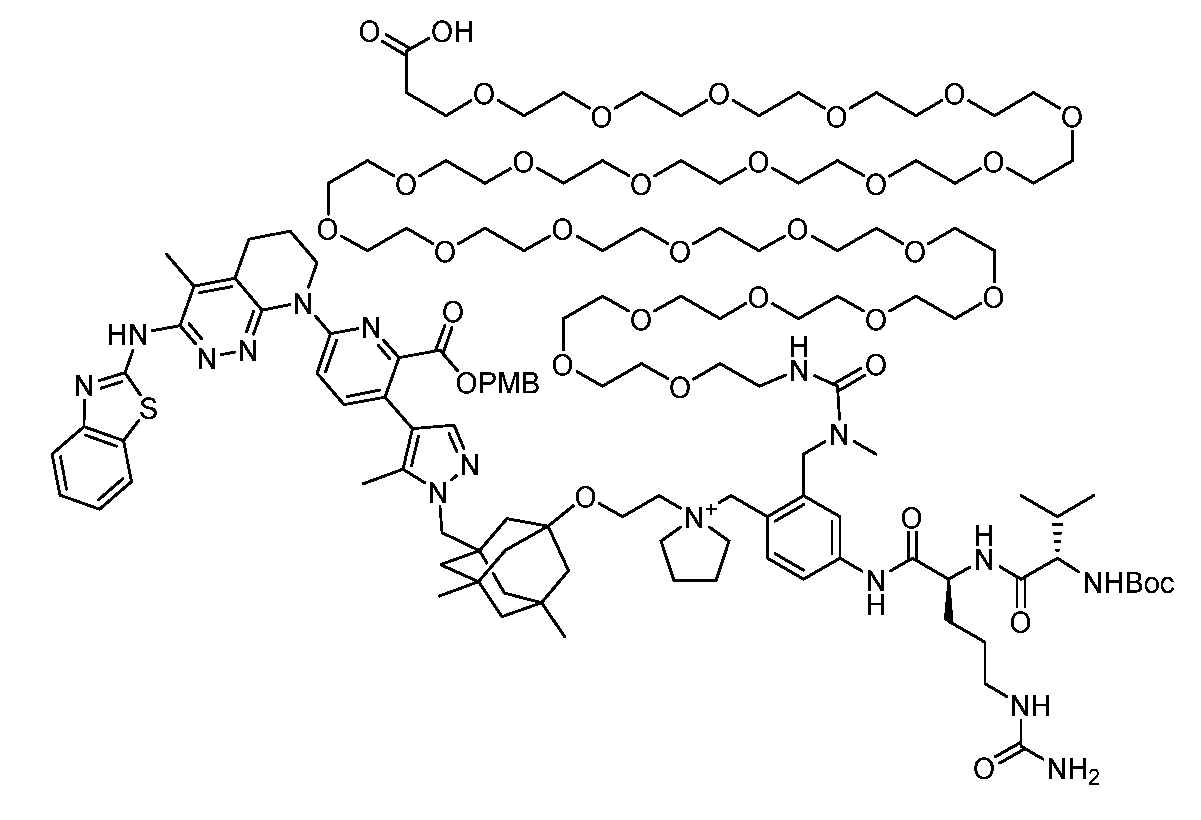
DMF (1 mL) 중 1-아미노-3,6,9,12,15,18,21,24,27,30,33,36,39,42,45,48,51,54,57,60,63,66,69,72-테트라코사옥사펜타헵타콘탄-75-산 (67 mg, 0.059 mmol, 1.28 당량), 비스(4-니트로페닐) 카르보네이트 (17 mg, 0.057 mmol, 1.25 당량) 및 DIPEA (48 μL, 0.28 mmol, 6.0 당량))의 혼합물을 실온에서 1시간 동안 교반하였으며, 이 때 1-(2-(((1s,3r,5R,7S)-3-((4-(6-(3-(벤조[d]티아졸-2-일아미노)-4-메틸-6,7-디히드로피리도[2,3-c]피리다진-8(5H)-일)-2-(((4-메톡시벤질)옥시)카르보닐)피리딘-3-일)-5-메틸-1H-피라졸-1-일)메틸)-5,7-디메틸아다만탄-1-일)옥시)에틸)-1-(4-((S)-2-((S)-2-((tert-부톡시카르보닐)아미노)-3-메틸부탄아미도)-5-우레이도펜탄아미도)-2-((메틸아미노)메틸)벤질)피롤리딘-1-윰 (65 mg, 0.046 mmol, 1.0 당량) 및 추가의 DIEA (80 μL, 0.46 mmol, 10 당량)를 첨가하였다. 1시간 동안 교반한 후, 용액을 DMSO (2.5 mL)로 희석하고, RP-HPLC에 의해 정제하였다. 동결건조 후, 1-(2-(((1s,3r,5R,7S)-3-((4-(6-(3-(벤조[d]티아졸-2-일아미노)-4-메틸-6,7-디히드로피리도[2,3-c]피리다진-8(5H)-일)-2-(((4-메톡시벤질)옥시)카르보닐)피리딘-3-일)-5-메틸-1H-피라졸-1-일)메틸)-5,7-디메틸아다만탄-1-일)옥시)에틸)-1-(4-((S)-2-((S)-2-((tert-부톡시카르보닐)아미노)-3-메틸부탄아미도)-5-우레이도펜탄아미도)-2-(78-카르복시-2-메틸-3-옥소-7,10,13,16,19,22,25,28,31,34,37,40,43,46,49,52,55,58,61,64,67,70,73,76-테트라코사옥사-2,4-디아자옥타헵타콘틸)벤질)피롤리딘-1-윰을 수득하였다. HRMS: M+= 2584.4399; Rt=2.39분 (5분 산성 방법).A mixture of 1-amino-3,6,9,12,15,18,21,24,27,30,33,36,39,42,45,48,51,54,57,60,63,66,69,72-tetracosaoxapentaheptacontan-75-acid (67 mg, 0.059 mmol, 1.28 equiv), bis(4-nitrophenyl) carbonate (17 mg, 0.057 mmol, 1.25 equiv) and DIPEA (48 μL, 0.28 mmol, 6.0 equiv) in DMF (1 mL) was stirred at room temperature for 1 h, at which time 1-(2-(((1s,3r,5R,7S)-3-((4-(6-(3-(Benzo[d]thiazol-2-ylamino)-4-methyl-6,7-dihydropyrido[2,3-c]pyridazin-8(5H)-yl)-2-(((4-methoxybenzyl)oxy)carbonyl)pyridin-3-yl)-5-methyl-1H-pyrazol-1-yl)methyl)-5,7-dimethyladamantan-1-yl)oxy)ethyl)-1-(4-((S)-2-((S)-2-((tert-butoxycarbonyl)amino)-3-methylbutanamido)-5-ureidopentanamido)-2-((methylamino)methyl)benzyl)pyrrolidin-1-ium (65 mg, 0.046 mmol, 1.0 equiv) and additional DIEA (80 μL, 0.46 mmol, 10 equiv) were added. After stirring for 1 h, the solution was diluted with DMSO (2.5 mL) and purified by RP-HPLC. After lyophilization, 1-(2-(((1s,3r,5R,7S)-3-((4-(6-(3-(benzo[d]thiazol-2-ylamino)-4-methyl-6,7-dihydropyrido[2,3-c]pyridazin-8(5H)-yl)-2-(((4-methoxybenzyl)oxy)carbonyl)pyridin-3-yl)-5-methyl-1H-pyrazol-1-yl)methyl)-5,7-dimethyladamantan-1-yl)oxy)ethyl)-1-(4-((S)-2-(( Obtained (S)-2-((tert-butoxycarbonyl)amino)-3-methylbutanamido)-5-ureidopentanamido)-2-(78-carboxy-2-methyl-3-oxo-7,10,13,16,19,22,25,28,31,34,37,40,43,46,49,52,55,58,61,64,67,70,73,76-tetracosaoxa-2,4-diazaoctaheptacontyl)benzyl)pyrrolidin-1-ium. HRMS: M+ = 2584.4399; Rt = 2.39 min (5 min acidic method).
1-(4-((S)-2-((S)-2-아미노-3-메틸부탄아미도)-5-우레이도펜탄아미도)-2-(78-카르복시-2-메틸-3-옥소-7,10,13,16,19,22,25,28,31,34,37,40,43,46,49,52,55,58,61,64,67,70,73,76-테트라코사옥사-2,4-디아자옥타헵타콘틸)벤질)-1-(2-(((1s,3r,5R,7S)-3-((4-(6-(3-(벤조[d]티아졸-2-일아미노)-4-메틸-6,7-디히드로피리도[2,3-c]피리다진-8(5H)-일)-2-카르복시피리딘-3-일)-5-메틸-1H-피라졸-1-일)메틸)-5,7-디메틸아다만탄-1-일)옥시)에틸)피롤리딘-1-윰의 합성1-(4-((S)-2-((S)-2-amino-3-methylbutanamido)-5-ureidopentanamido)-2-(78-carboxy-2-methyl-3-oxo-7,10,13,16,19,22,25,28,31,34,37,40,43,46,49,52,55,58,61,64,67,70,73,76-tetracosaoxa-2,4-diazaoctaheptacone Synthesis of (Til)benzyl)-1-(2-(((1s,3r,5R,7S)-3-((4-(6-(3-(benzo[d]thiazol-2-ylamino)-4-methyl-6,7-dihydropyrido[2,3-c]pyridazin-8(5H)-yl)-2-carboxypyridin-3-yl)-5-methyl-1H-pyrazol-1-yl)methyl)-5,7-dimethyladamantan-1-yl)oxy)ethyl)pyrrolidin-1-ium

일반적 절차 4에 따라 1-(2-(((1s,3r,5R,7S)-3-((4-(6-(3-(벤조[d]티아졸-2-일아미노)-4-메틸-6,7-디히드로피리도[2,3-c]피리다진-8(5H)-일)-2-(((4-메톡시벤질)옥시)카르보닐)피리딘-3-일)-5-메틸-1H-피라졸-1-일)메틸)-5,7-디메틸아다만탄-1-일)옥시)에틸)-1-(4-((S)-2-((S)-2-((tert-부톡시카르보닐)아미노)-3-메틸부탄아미도)-5-우레이도펜탄아미도)-2-(78-카르복시-2-메틸-3-옥소-7,10,13,16,19,22,25,28,31,34,37,40,43,46,49,52,55,58,61,64,67,70,73,76-테트라코사옥사-2,4-디아자옥타헵타콘틸)벤질)피롤리딘-1-윰 (58 mg, 0.021 mmol)을 사용하여, 1-(4-((S)-2-((S)-2-아미노-3-메틸부탄아미도)-5-우레이도펜탄아미도)-2-(78-카르복시-2-메틸-3-옥소-7,10,13,16,19,22,25,28,31,34,37,40,43,46,49,52,55,58,61,64,67,70,73,76-테트라코사옥사-2,4-디아자옥타헵타콘틸)벤질)-1-(2-(((1s,3r,5R,7S)-3-((4-(6-(3-(벤조[d]티아졸-2-일아미노)-4-메틸-6,7-디히드로피리도[2,3-c]피리다진-8(5H)-일)-2-카르복시피리딘-3-일)-5-메틸-1H-피라졸-1-일)메틸)-5,7-디메틸아다만탄-1-일)옥시)에틸)피롤리딘-1-윰을 수득하였다. HRMS: [(M+)+H+)]+2/2= 1183.1700; Rt=1.88분 (5분 산성 방법).According to general procedure 4, 1-(2-(((1s,3r,5R,7S)-3-((4-(6-(3-(benzo[d]thiazol-2-ylamino)-4-methyl-6,7-dihydropyrido[2,3-c]pyridazin-8(5H)-yl)-2-(((4-methoxybenzyl)oxy)carbonyl)pyridin-3-yl)-5-methyl-1H-pyrazol-1-yl)methyl)-5,7-dimethyladamantan-1-yl)oxy)ethyl)-1-(4-((S)-2-( Using (S)-2-((tert-butoxycarbonyl)amino)-3-methylbutanamido)-5-ureidopentanamido)-2-(78-carboxy-2-methyl-3-oxo-7,10,13,16,19,22,25,28,31,34,37,40,43,46,49,52,55,58,61,64,67,70,73,76-tetracosaoxa-2,4-diazaoctaheptacontyl)benzyl)pyrrolidin-1-ium (58 mg, 0.021 mmol), 1-(4-((S)-2-((S)-2-amino-3-methylbutanamido)-5-ureidopentanamido)-2-(78-carboxy-2-methyl-3-oxo-7,10,13,16,19,22,25,28,31,34,37,40,43,46,49,52,55,58,61,64,67,70,73,76-tetracosaoxa-2,4-diazaoctaheptacone (((1s,3r,5R,7S)-3-((4-(6-(3-(Benzo[d]thiazol-2-ylamino)-4-methyl-6,7-dihydropyrido[2,3-c]pyridazin-8(5H)-yl)-2-carboxypyridin-3-yl)-5-methyl-1H-pyrazol-1-yl)methyl)-5,7-dimethyladamantan-1-yl)oxy)ethyl)pyrrolidin-1-ium was obtained. HRMS: [(M+)+H+)] +2 /2= 1183.1700; Rt=1.88 min (5 min acidic method).
1-(2-(((1s,3r,5R,7S)-3-((4-(6-(3-(벤조[d]티아졸-2-일아미노)-4-메틸-6,7-디히드로피리도[2,3-c]피리다진-8(5H)-일)-2-카르복시피리딘-3-일)-5-메틸-1H-피라졸-1-일)메틸)-5,7-디메틸아다만탄-1-일)옥시)에틸)-1-(2-(78-카르복시-2-메틸-3-옥소-7,10,13,16,19,22,25,28,31,34,37,40,43,46,49,52,55,58,61,64,67,70,73,76-테트라코사옥사-2,4-디아자옥타헵타콘틸)-4-((S)-2-((S)-2-(3-(2-(2,5-디옥소-2,5-디히드로-1H-피롤-1-일)에톡시)프로판아미도)-3-메틸부탄아미도)-5-우레이도펜탄아미도)벤질)피롤리딘-1-윰 (L42A-P21)의 합성1-(2-(((1s,3r,5R,7S)-3-((4-(6-(3-(Benzo[d]thiazol-2-ylamino)-4-methyl-6,7-dihydropyrido[2,3-c]pyridazin-8(5H)-yl)-2-carboxypyridin-3-yl)-5-methyl-1H-pyrazol-1-yl)methyl)-5,7-dimethyladamantan-1-yl)oxy)ethyl)-1-(2-(78-carboxy-2-methyl-3-oxo-7,10,13,16 ,19,22,25,28,31,34,37,40,43,46,49,52,55,58,61,64,67,70,73,76-Tetracosaoxa-2,4-diazaoctaheptacontyl)-4-((S)-2-((S)-2-(3-(2-(2,5-dioxo-2,5-dihydro-1H-pyrrol-1-yl)ethoxy)propanamido)-3-methylbutanamido)-5-ureidopentanamido)benzyl)pyrrolidin-1-ium (L42A-P21)

일반적 절차 5에 따라 1-(4-((S)-2-((S)-2-아미노-3-메틸부탄아미도)-5-우레이도펜탄아미도)-2-(78-카르복시-2-메틸-3-옥소-7,10,13,16,19,22,25,28,31,34,37,40,43,46,49,52,55,58,61,64,67,70,73,76-테트라코사옥사-2,4-디아자옥타헵타콘틸)벤질)-1-(2-(((1s,3r,5R,7S)-3-((4-(6-(3-(벤조[d]티아졸-2-일아미노)-4-메틸-6,7-디히드로피리도[2,3-c]피리다진-8(5H)-일)-2-카르복시피리딘-3-일)-5-메틸-1H-피라졸-1-일)메틸)-5,7-디메틸아다만탄-1-일)옥시)에틸)피롤리딘-1-윰 (61 mg, 0.024 mmol) 및 2,5-디옥소피롤리딘-1-일 3-(2-(2,5-디옥소-2,5-디히드로-1H-피롤-1-일)에톡시)프로파노에이트 (10.2 mg, 0.033 mmol, 1.4 당량)를 사용하여, 1-(2-(((1s,3r,5R,7S)-3-((4-(6-(3-(벤조[d]티아졸-2-일아미노)-4-메틸-6,7-디히드로피리도[2,3-c]피리다진-8(5H)-일)-2-카르복시피리딘-3-일)-5-메틸-1H-피라졸-1-일)메틸)-5,7-디메틸아다만탄-1-일)옥시)에틸)-1-(2-(78-카르복시-2-메틸-3-옥소-7,10,13,16,19,22,25,28,31,34,37,40,43,46,49,52,55,58,61,64,67,70,73,76-테트라코사옥사-2,4-디아자옥타헵타콘틸)-4-((S)-2-((S)-2-(3-(2-(2,5-디옥소-2,5-디히드로-1H-피롤-1-일)에톡시)프로판아미도)-3-메틸부탄아미도)-5-우레이도펜탄아미도)벤질)피롤리딘-1-윰을 수득하였다. HRMS: M+= 2559.3701; Rt=2.07분 (5분 산성 방법).According to general procedure 5, 1-(4-((S)-2-((S)-2-amino-3-methylbutanamido)-5-ureidopentanamido)-2-(78-carboxy-2-methyl-3-oxo-7,10,13,16,19,22,25,28,31,34,37,40,43,46,49,52,55,58,61,64,67,70,73,76-tetracosaoxa-2,4-diazaoctaheptacone Til)benzyl)-1-(2-(((1s,3r,5R,7S)-3-((4-(6-(3-(benzo[d]thiazol-2-ylamino)-4-methyl-6,7-dihydropyrido[2,3-c]pyridazin-8(5H)-yl)-2-carboxypyridin-3-yl)-5-methyl-1H-pyrazol-1-yl)methyl)-5,7-dimethyladamantan-1-yl)oxy)ethyl)pyrrolidin-1-ium (61 mg, 0.024 mmol) and 2,5-dioxopyrrolidin-1-yl 3-(2-(2,5-dioxo-2,5-dihydro-1H-pyrrol-1-yl)ethoxy)propanoate (10.2 mg, 0.033 mmol, 1.4 eq). 1-(2-(((1s,3r,5R,7S)-3-((4-(6-(3-(Benzo[d]thiazol-2-ylamino)-4-methyl-6,7-dihydropyrido[2,3-c]pyridazin-8(5H)-yl)-2-carboxypyridin-3-yl)-5-methyl-1H-pyrazol-1-yl)methyl)-5,7-dimethyladamantan-1-yl)oxy)ethyl)-1-(2-(78-carboxy-2-methyl-3-oxo-7,10,13,16 ,19,22,25,28,31,34,37,40,43,46,49,52,55,58,61,64,67,70,73,76-Tetracosaoxa-2,4-diazaoctaheptacontyl)-4-((S)-2-((S)-2-(3-(2-(2,5-dioxo-2,5-dihydro-1H-pyrrol-1-yl)ethoxy)propanamido)-3-methylbutanamido)-5-ureidopentanamido)benzyl)pyrrolidin-1-ium was obtained. HRMS: M+ = 2559.3701; Rt = 2.07 min (5 min acidic method).
1-(2-((((2-(((1s,3r,5R,7S)-3-((4-(6-(3-(벤조[d]티아졸-2-일아미노)-4-메틸-6,7-디히드로피리도[2,3-c]피리다진-8(5H)-일)-2-(((4-메톡시벤질)옥시)카르보닐)피리딘-3-일)-5-메틸-1H-피라졸-1-일)메틸)-5,7-디메틸아다만탄-1-일)옥시)에틸)(3-히드록시프로필)카르바모일)옥시)메틸)-5-((S)-2-((S)-2-((tert-부톡시카르보닐)아미노)-3-메틸부탄아미도)-5-우레이도펜탄아미도)페닐)-2-메틸-3-옥소-7,10,13,16,19,22,25,28,31,34,37,40,43,46,49,52,55,58,61,64,67,70,73,76-테트라코사옥사-2,4-디아자노나헵타콘탄-79-산의 합성1-(2-((((2-(((1s,3r,5R,7S)-3-((4-(6-(3-(Benzo[d]thiazol-2-ylamino)-4-methyl-6,7-dihydropyrido[2,3-c]pyridazin-8(5H)-yl)-2-(((4-methoxybenzyl)oxy)carbonyl)pyridin-3-yl)-5-methyl-1H-pyrazol-1-yl)methyl)-5,7-dimethyladamantan-1-yl)oxy)ethyl)(3-hydroxypropyl)carbamate Synthesis of (S)-2-((S)-2-((tert-butoxycarbonyl)amino)-3-methylbutanamido)-5-ureidopentanamido)phenyl)-2-methyl-3-oxo-7,10,13,16,19,22,25,28,31,34,37,40,43,46,49,52,55,58,61,64,67,70,73,76-tetracosaoxa-2,4-diazanonaheptacontane-79-acid

DMF (1 mL) 중 1-아미노-3,6,9,12,15,18,21,24,27,30,33,36,39,42,45,48,51,54,57,60,63,66,69,72-테트라코사옥사펜타헵타콘탄-75-산 (45.9 mg, 0.040 mmol, 1.3 당량), 비스(4-니트로페닐) 카르보네이트 (12 mg, 0.0394 mmol, 1.28 당량) 및 DIPEA (32 μL, 0.184 mmol, 6.0 당량))의 혼합물을 실온에서 1시간 동안 교반하였으며, 이 때 1-(2-(((1s,3r,5R,7S)-3-((4-(6-(3-(벤조[d]티아졸-2-일아미노)-4-메틸-6,7-디히드로피리도[2,3-c]피리다진-8(5H)-일)-2-(((4-메톡시벤질)옥시)카르보닐)피리딘-3-일)-5-메틸-1H-피라졸-1-일)메틸)-5,7-디메틸아다만탄-1-일)옥시)에틸)-1-(4-((S)-2-((S)-2-((tert-부톡시카르보닐)아미노)-3-메틸부탄아미도)-5-우레이도펜탄아미도)-2-((메틸아미노)메틸)벤질)피롤리딘-1-윰 (50 mg, 0.0308 mmol, 1.0 당량) 및 추가의 DIEA (53.7 μL, 0.308 mmol, 10 당량)를 첨가하였다. 1시간 동안 교반한 후, 용액을 DMSO (2.5 mL)로 희석하고, RP-HPLC에 의해 정제하였다. 동결건조 후, 1-(2-((((2-(((1s,3r,5R,7S)-3-((4-(6-(3-(벤조[d]티아졸-2-일아미노)-4-메틸-6,7-디히드로피리도[2,3-c]피리다진-8(5H)-일)-2-(((4-메톡시벤질)옥시)카르보닐)피리딘-3-일)-5-메틸-1H-피라졸-1-일)메틸)-5,7-디메틸아다만탄-1-일)옥시)에틸)(3-히드록시프로필)카르바모일)옥시)메틸)-5-((S)-2-((S)-2-((tert-부톡시카르보닐)아미노)-3-메틸부탄아미도)-5-우레이도펜탄아미도)페닐)-2-메틸-3-옥소-7,10,13,16,19,22,25,28,31,34,37,40,43,46,49,52,55,58,61,64,67,70,73,76-테트라코사옥사-2,4-디아자노나헵타콘탄-79-산을 수득하였다. HRMS: (M+2H+)+2/2= 1316.7200; Rt=2.64분 (5분 산성 방법).A mixture of 1-amino-3,6,9,12,15,18,21,24,27,30,33,36,39,42,45,48,51,54,57,60,63,66,69,72-tetracosaoxapentaheptacontan-75-acid (45.9 mg, 0.040 mmol, 1.3 equiv), bis(4-nitrophenyl) carbonate (12 mg, 0.0394 mmol, 1.28 equiv) and DIPEA (32 μL, 0.184 mmol, 6.0 equiv) in DMF (1 mL) was stirred at room temperature for 1 h, at which time 1-(2-(((1s,3r,5R,7S)-3-((4-(6-(3-(Benzo[d]thiazol-2-ylamino)-4-methyl-6,7-dihydropyrido[2,3-c]pyridazin-8(5H)-yl)-2-(((4-methoxybenzyl)oxy)carbonyl)pyridin-3-yl)-5-methyl-1H-pyrazol-1-yl)methyl)-5,7-dimethyladamantan-1-yl)oxy)ethyl)-1-(4-((S)-2-((S)-2-((tert-butoxycarbonyl)amino)-3-methylbutanamido)-5-ureidopentanamido)-2-((methylamino)methyl)benzyl)pyrrolidin-1-ium (50 mg, 0.0308 mmol, 1.0 equiv) and additional DIEA (53.7 μL, 0.308 mmol, 10 equiv) were added. After stirring for 1 h, the solution was diluted with DMSO (2.5 mL) and purified by RP-HPLC. After lyophilization, 1-(2-((((2-(((1s,3r,5R,7S)-3-((4-(6-(3-(benzo[d]thiazol-2-ylamino)-4-methyl-6,7-dihydropyrido[2,3-c]pyridazin-8(5H)-yl)-2-(((4-methoxybenzyl)oxy)carbonyl)pyridin-3-yl)-5-methyl-1H-pyrazol-1-yl)methyl)-5,7-dimethyladamantan-1-yl)oxy)ethyl)(3-hydroxypropyl)carbamoyl Obtained (S)-2-((S)-2-((tert-butoxycarbonyl)amino)-3-methylbutanamido)-5-ureidopentanamido)phenyl)-2-methyl-3-oxo-7,10,13,16,19,22,25,28,31,34,37,40,43,46,49,52,55,58,61,64,67,70,73,76-tetracosaoxa-2,4-diazanonaheptacontane-79-acid. HRMS: (M+2H+) +2 /2= 1316.7200; Rt=2.64 min (5 min acidic method).
3-(1-(((1r,3s,5R,7S)-3-(2-((((4-((S)-2-((S)-2-아미노-3-메틸부탄아미도)-5-우레이도펜탄아미도)-2-(78-카르복시-2-메틸-3-옥소-7,10,13,16,19,22,25,28,31,34,37,40,43,46,49,52,55,58,61,64,67,70,73,76-테트라코사옥사-2,4-디아자옥타헵타콘틸)벤질)옥시)카르보닐)(3-히드록시프로필)아미노)에톡시)-5,7-디메틸아다만탄-1-일)메틸)-5-메틸-1H-피라졸-4-일)-6-(3-(벤조[d]티아졸-2-일아미노)-4-메틸-6,7-디히드로피리도[2,3-c]피리다진-8(5H)-일)피콜린산의 합성3-(1-(((1r,3s,5R,7S)-3-(2-(((4-((S)-2-((S)-2-amino-3-methylbutanamido)-5-ureidopentanamido)-2-(78-carboxy-2-methyl-3-oxo-7,10,13,16,19,22,25,28,31,34,37,40,43,46,49,52,55,58,61,64,67,70, Synthesis of 73,76-tetracosaoxa-2,4-diazaoctaheptacontyl)benzyl)oxy)carbonyl)(3-hydroxypropyl)amino)ethoxy)-5,7-dimethyladamantan-1-yl)methyl)-5-methyl-1H-pyrazol-4-yl)-6-(3-(benzo[d]thiazol-2-ylamino)-4-methyl-6,7-dihydropyrido[2,3-c]pyridazin-8(5H)-yl)picolinic acid

일반적 절차 4에 따라 1-(2-((((2-(((1s,3r,5R,7S)-3-((4-(6-(3-(벤조[d]티아졸-2-일아미노)-4-메틸-6,7-디히드로피리도[2,3-c]피리다진-8(5H)-일)-2-(((4-메톡시벤질)옥시)카르보닐)피리딘-3-일)-5-메틸-1H-피라졸-1-일)메틸)-5,7-디메틸아다만탄-1-일)옥시)에틸)(3-히드록시프로필)카르바모일)옥시)메틸)-5-((S)-2-((S)-2-((tert-부톡시카르보닐)아미노)-3-메틸부탄아미도)-5-우레이도펜탄아미도)페닐)-2-메틸-3-옥소-7,10,13,16,19,22,25,28,31,34,37,40,43,46,49,52,55,58,61,64,67,70,73,76-테트라코사옥사-2,4-디아자노나헵타콘탄-79-산 (39 mg, 0.014 mmol)을 사용하여, 3-(1-(((1r,3s,5R,7S)-3-(2-((((4-((S)-2-((S)-2-아미노-3-메틸부탄아미도)-5-우레이도펜탄아미도)-2-(78-카르복시-2-메틸-3-옥소-7,10,13,16,19,22,25,28,31,34,37,40,43,46,49,52,55,58,61,64,67,70,73,76-테트라코사옥사-2,4-디아자옥타헵타콘틸)벤질)옥시)카르보닐)(3-히드록시프로필)아미노)에톡시)-5,7-디메틸아다만탄-1-일)메틸)-5-메틸-1H-피라졸-4-일)-6-(3-(벤조[d]티아졸-2-일아미노)-4-메틸-6,7-디히드로피리도[2,3-c]피리다진-8(5H)-일)피콜린산을 수득하였다. 일반적 절차 4를 변형시켜 1급 히드록실 상에 형성된 소량의 TFA 에스테르를 클립핑하였다. TFA/CH2Cl2의 농축 시, 잔류물을 DMSO (1 mL) 중에 용해시키고, DIEA (125 μL, 50 당량)를 첨가하고, 이어서 MeOH (1 mL)를 첨가하였다. 1시간 동안 정치시킨 후, 에스테르를 클립핑하고, 용액을 정제하였다. HRMS: MH+ = 2412.3101; Rt=2.03분 (5분 산성 방법).According to general procedure 4, 1-(2-((((2-(((1s,3r,5R,7S)-3-((4-(6-(3-(benzo[d]thiazol-2-ylamino)-4-methyl-6,7-dihydropyrido[2,3-c]pyridazin-8(5H)-yl)-2-(((4-methoxybenzyl)oxy)carbonyl)pyridin-3-yl)-5-methyl-1H-pyrazol-1-yl)methyl)-5,7-dimethyladamantan-1-yl)oxy)ethyl)(3-hydroxypropyl)carbaz ...-5,7-dimethyladamantan-1-yl)oxy)ethyl)-5,7-dimethyladamantan-1-yl)oxy)ethyl)-5,7-dimethyladamantan-1-yl)oxy)ethyl)-5,7-dimethyladamantan-1-yl)oxy)ethyl)-5,7-dimethyladamantan-1-yl)oxy)ethyl)-5,7-dimethyladamantan-1-yl)oxy)ethyl)-5,7-dimethyladamantan-1-yl)oxy)ethyl)-5,7-dimethyladaman Using (39 mg, 0.014 mmol) of (S)-2-((S)-2-((tert-butoxycarbonyl)amino)-3-methylbutanamido)-5-ureidopentanamido)phenyl)-2-methyl-3-oxo-7,10,13,16,19,22,25,28,31,34,37,40,43,46,49,52,55,58,61,64,67,70,73,76-tetracosaoxa-2,4-diazanonaheptacontane-79-acid, 3-(1-(((1r,3s,5R,7S)-3-(2-(((4-((S)-2-((S)-2-amino-3-methylbutanamido)-5-ureidopentanamido)-2-(78-carboxy-2-methyl-3-oxo-7,10,13,16,19,22,25,28,31,34,37,40,43,46,49,52,55,58,61,64,67,70, 73,76-Tetracosaoxa-2,4-diazaoctaheptacontyl)benzyl)oxy)carbonyl)(3-hydroxypropyl)amino)ethoxy)-5,7-dimethyladamantane-1-yl)methyl)-5-methyl-1H-pyrazol-4-yl)-6-(3-(benzo[d]thiazol-2-ylamino)-4-methyl-6,7-dihydropyrido[2,3-c]pyridazin-8(5H)-yl)picolinic acid was obtained. General Procedure 4 was modified to clip a small amount of TFA ester formed on the primary hydroxyl. Upon concentration of TFA/CH2Cl2, the residue was dissolved in DMSO (1 mL) and DIEA (125 μL, 50 equiv) was added followed by MeOH (1 mL). After stirring for 1 hour, the ester was clipped and the solution was purified. HRMS: MH+ = 2412.3101; Rt=2.03 min (5 min acidic method).
6-(3-(벤조[d]티아졸-2-일아미노)-4-메틸-6,7-디히드로피리도[2,3-c]피리다진-8(5H)-일)-3-(1-(((1r,3s,5R,7S)-3-(2-((((2-(78-카르복시-2-메틸-3-옥소-7,10,13,16,19,22,25,28,31,34,37,40,43,46,49,52,55,58,61,64,67,70,73,76-테트라코사옥사-2,4-디아자옥타헵타콘틸)-4-((S)-2-((S)-2-(3-(2-(2,5-디옥소-2,5-디히드로-1H-피롤-1-일)에톡시)프로판아미도)-3-메틸부탄아미도)-5-우레이도펜탄아미도)벤질)옥시)카르보닐)(3-히드록시프로필)아미노)에톡시)-5,7-디메틸아다만탄-1-일)메틸)-5-메틸-1H-피라졸-4-일)피콜린산 (L42C-P25)의 합성6-(3-(Benzo[d]thiazol-2-ylamino)-4-methyl-6,7-dihydropyrido[2,3-c]pyridazin-8(5H)-yl)-3-(1-(((1r,3s,5R,7S)-3-(2-(((2-(78-carboxy-2-methyl-3-oxo-7,10,13,16,19,22,25,28,31,34,37,40,43,46,49,52,55,58,61,64,67,70,73,7 Synthesis of 6-tetracosaoxa-2,4-diazaoctaheptacontyl)-4-((S)-2-((S)-2-(3-(2-(2,5-dioxo-2,5-dihydro-1H-pyrrol-1-yl)ethoxy)propanamido)-3-methylbutanamido)-5-ureidopentanamido)benzyl)oxy)carbonyl)(3-hydroxypropyl)amino)ethoxy)-5,7-dimethyladamantan-1-yl)methyl)-5-methyl-1H-pyrazol-4-yl)picolinic acid (L42C-P25)

일반적 절차 5에 따라 3-(1-(((1r,3s,5R,7S)-3-(2-((((4-((S)-2-((S)-2-아미노-3-메틸부탄아미도)-5-우레이도펜탄아미도)-2-(78-카르복시-2-메틸-3-옥소-7,10,13,16,19,22,25,28,31,34,37,40,43,46,49,52,55,58,61,64,67,70,73,76-테트라코사옥사-2,4-디아자옥타헵타콘틸)벤질)옥시)카르보닐)(3-히드록시프로필)아미노)에톡시)-5,7-디메틸아다만탄-1-일)메틸)-5-메틸-1H-피라졸-4-일)-6-(3-(벤조[d]티아졸-2-일아미노)-4-메틸-6,7-디히드로피리도[2,3-c]피리다진-8(5H)-일)피콜린산 (26 mg, 0.010 mmol) 및 2,5-디옥소피롤리딘-1-일 3-(2-(2,5-디옥소-2,5-디히드로-1H-피롤-1-일)에톡시)프로파노에이트 (4.0 mg, 0.013 mmol, 1.25 당량)를 사용하여, 6-(3-(벤조[d]티아졸-2-일아미노)-4-메틸-6,7-디히드로피리도[2,3-c]피리다진-8(5H)-일)-3-(1-(((1r,3s,5R,7S)-3-(2-((((2-(78-카르복시-2-메틸-3-옥소-7,10,13,16,19,22,25,28,31,34,37,40,43,46,49,52,55,58,61,64,67,70,73,76-테트라코사옥사-2,4-디아자옥타헵타콘틸)-4-((S)-2-((S)-2-(3-(2-(2,5-디옥소-2,5-디히드로-1H-피롤-1-일)에톡시)프로판아미도)-3-메틸부탄아미도)-5-우레이도펜탄아미도)벤질)옥시)카르보닐)(3-히드록시프로필)아미노)에톡시)-5,7-디메틸아다만탄-1-일)메틸)-5-메틸-1H-피라졸-4-일)피콜린산을 수득하였다. HRMS: MH+ = 2607.3601; Rt=2.27분 (5분 산성 방법).According to general procedure 5, 3-(1-(((1r,3s,5R,7S)-3-(2-(((4-((S)-2-((S)-2-amino-3-methylbutanamido)-5-ureidopentanamido)-2-(78-carboxy-2-methyl-3-oxo-7,10,13,16,19,22,25,28,31,34,37,40,43,46,49,52,55,58,61,64,67,70 ,73,76-tetracosaoxa-2,4-diazaoctaheptacontyl)benzyl)oxy)carbonyl)(3-hydroxypropyl)amino)ethoxy)-5,7-dimethyladamantan-1-yl)methyl)-5-methyl-1H-pyrazol-4-yl)-6-(3-(benzo[d]thiazol-2-ylamino)-4-methyl-6,7-dihydropyrido[2,3-c]pyridazin-8(5H)-yl)picolinic acid (26 mg, 0.010 mmol) and 2,5-dioxopyrrolidin-1-yl 3-(2-(2,5-dioxo-2,5-dihydro-1H-pyrrol-1-yl)ethoxy)propanoate (4.0 mg, 0.013 mmol, 1.25 equiv). 6-(3-(Benzo[d]thiazol-2-ylamino)-4-methyl-6,7-dihydropyrido[2,3-c]pyridazin-8(5H)-yl)-3-(1-(((1r,3s,5R,7S)-3-(2-(((2-(78-carboxy-2-methyl-3-oxo-7,10,13,16,19,22,25,28,31,34,37,40,43,46,49,52,55,58,61,64,67,70,73,76 - Tetracosaoxa-2,4-diazaoctaheptacontyl)-4-((S)-2-((S)-2-(3-(2-(2,5-dioxo-2,5-dihydro-1H-pyrrol-1-yl)ethoxy)propanamido)-3-methylbutanamido)-5-ureidopentanamido)benzyl)oxy)carbonyl)(3-hydroxypropyl)amino)ethoxy)-5,7-dimethyladamantan-1-yl)methyl)-5-methyl-1H-pyrazol-4-yl)picolinic acid was obtained. HRMS: MH+ = 2607.3601; Rt=2.27 min (5 min acidic method).
하기 화합물을 L38A-P21에 대해 기재된 것과 유사한 절차를 사용하여 제조하였다:The following compounds were prepared using procedures similar to those described for L38A-P21:
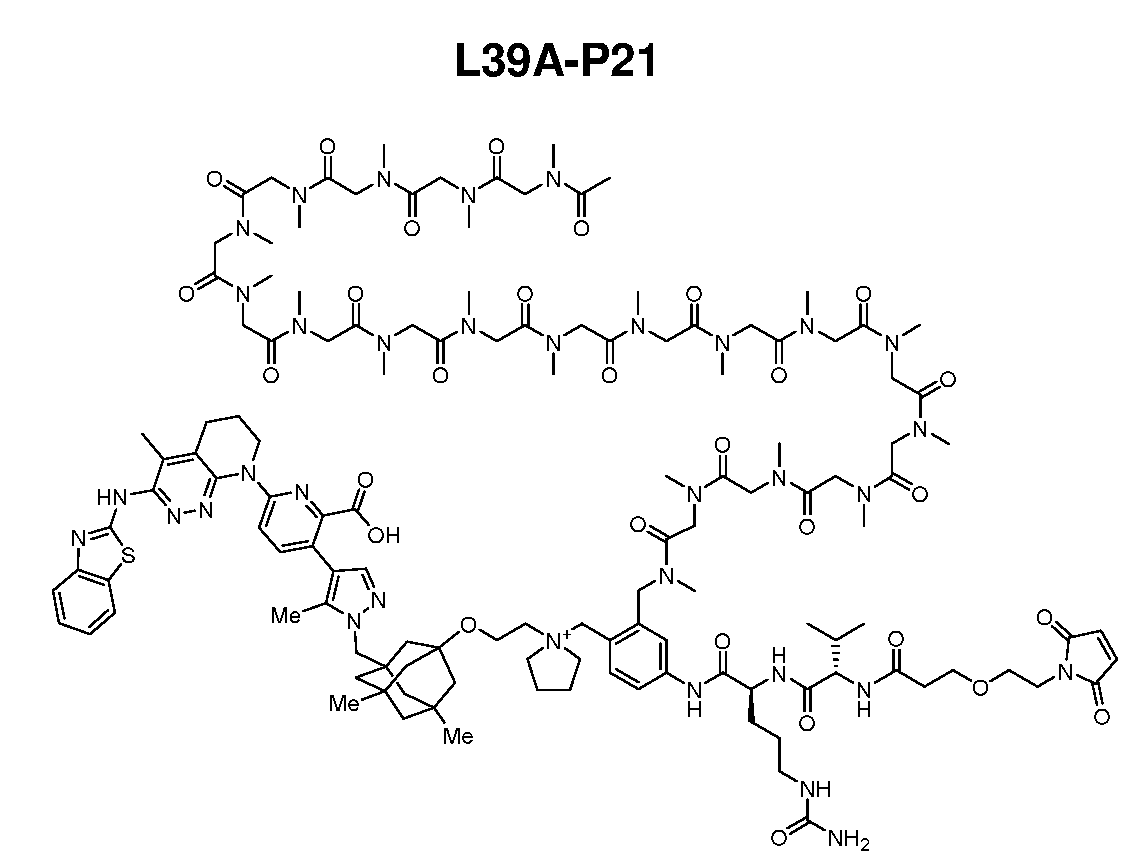
HRMS: M+= 2708.3999; Rt=1.85분 (5분 산성 방법).HRMS: M+= 2708.3999; Rt=1.85 min (5 min acid method).

HRMS: M+= 3134.6201; Rt=1.81분 (5분 산성 방법).HRMS: M+= 3134.6201; Rt=1.81 min (5 min acid method).
하기 화합물을 상기 기재된 것과 유사한 절차를 사용하여 제조할 수 있었다:The following compounds could be prepared using procedures similar to those described above:
L11A-P1, L11A-P21, L11A-P27, L11C-P19, L11C-P25, L30A-P1, L30C-P19, L30A-P21, L30C-P25, L30A-P27, L35A-P1, L35C-P19, L35A-P21, L35C-P25, L35A-P27, L36A-P1, L36C-P19, L36A-P21, L36C-P25, L36A-P27, L37A-P1, L37C-P19, L37A-P21, L37C-P25, L37A-P27, L38A-P1, L38C-P19, L38A-P21, L38C-P25, L38A-P27, L39A-P1, L39C-P19, L39A-P21, L39C-P25, L39A-P27, L40A-P1, L40C-P19, L40A-P21, L40C-P25, L40A-P27, L42A-P1, L42C-P19, L42A-P21, L42C-P25, L42A-P27, L67A-P1, L67C-P19, L67A-P21, L67C-P25, L67A-P27, L100A-P1, L100C-P19, L100A-P21, L100C-P25, L100A-P27, L103A-P1, L103C-P19, L103A-P21, L103C-P25, L103A-P27, L111A-P1, L111C-P19, L111A-P21, L111C-P25 및 L111A-P2. 화합물의 구조가 표 B에 제시된다.L11A-P1, L11A-P21, L11A-P27, L11C-P19, L11C-P25, L30A-P1, L30C-P19, L30A-P21, L30C-P25, L30A-P27, L35A-P1, L35C-P19, L35A-P21, L35C-P25, L35A-P27, L36A-P1, L36C-P19, L36A-P21, L36C-P25, L36A-P27, L37A-P1, L37C-P19, L37A-P21, L37C-P25, L37A-P27, L38A-P1, L38C-P19, L38A-P21, L38C-P25, L38A-P27, L39A-P1, L39C-P19, L39A-P21, L39C-P25, L39A-P27, L40A-P1, L40C-P19, L40A-P21, L40C-P25, L40A-P27, L42A-P1, L42C-P19, L42A-P21, L42C-P25, L42A-P27, L67A-P1, L67C-P19, L67A-P21, L67C-P25, L67A-P27, L100A-P1, L100C-P19, L100A-P21, L100C-P25, L100A-P27, L103A-P1, L103C-P19, L103A-P21, L103C-P25, L103A-P27, L111A-P1, L111C-P19, L111A-P21, L111C-P25, and L111A-P2. The structures of the compounds are presented in Table B.
실시예 5. Bcl-xL 억제제 ADC의 합성 및 특징화Example 5. Synthesis and characterization of Bcl-xL inhibitor ADC
예시적인 항체-약물 접합체 (ADC)를 하기 기재된 예시적인 방법을 사용하여 합성하였다.Exemplary antibody-drug conjugates (ADCs) were synthesized using the exemplary methods described below.
약어:abbreviation:
Ab 항체Ab antibody
ADC 항체-약물 접합체ADC antibody-drug conjugate
BCN (N-[(1R,8S,9S)-비시클로[6.1.0]논-4-인-9-일메틸옥시카르보닐]-1,8-디아미노-3,6-디옥사옥탄)BCN (N-[(1R,8S,9S)-bicyclo[6.1.0]non-4-yn-9-ylmethyloxycarbonyl]-1,8-diamino-3,6-dioxaoctane)
BTG 박테리아 트랜스글루타미나제BTG bacterial transglutaminase
CV 칼럼 부피CV column volume
DAR 약물-대-항체 비DAR drug-to-antibody ratio
DBCO 디벤조 시클로옥틴DBCO dibenzocyclooctyne
DFA 디플루오로아세트산DFA difluoroacetic acid
DMA 디메틸아세트아미드DMA dimethylacetamide
DMF 디메틸포름아미드DMF Dimethylformamide
DMSO 디메틸 술폭시드DMSO Dimethyl Sulfoxide
DTT 디티오트레이톨DTT dithiothreitol
FA 포름산FA formic acid
HIC 소수성 상호작용 크로마토그래피HIC hydrophobic interaction chromatography
LC-MS 액체 크로마토그래피 질량 분광측정법LC-MS liquid chromatography mass spectrometry
L/P 링커-페이로드L/P Linker-Payload
mAb 모노클로날 항체mAb monoclonal antibody
PBS 포스페이트 완충 염수PBS phosphate buffered saline
PES 폴리에테르 술폰PES polyether sulfone
PG 프로필렌 글리콜PG Propylene Glycol
PLRP-s 중합체 역상 칼럼PLRP-s polymer reverse phase column
rmp 환원 변형가능한 단백질rmp reduction modifiable protein
SEC 크기 배제 크로마토그래피SEC size exclusion chromatography
TFA 트리플루오로아세트산TFA trifluoroacetic acid
트리스 트리스(히드록시메틸)아미노메탄tris tris(hydroxymethyl)aminomethane
물질 및 방법: ADC BCL-xL의 접합 및 분석 특징화Materials and Methods: Conjugation and analytical characterization of ADC BCL-xL
항체 설명Antibody Description
예시적인 항체-약물 접합체 (ADC)를 하기 기재된 예시적인 방법을 사용하여 합성하였다. 표 9에 정의된 항-EphA2 항체를 예시적인 ADC의 제조에 사용하였다. 항-EphA2 1C1 항체가 WO2007030642에 처음 기재되었으며, 이는 그 전문이 참조로 포함된다. IgG 항-닭 리소자임 항체 (즉, 3207 DANAPA)를 이소형 대조군 ADC의 제조에 사용하였다.Exemplary antibody-drug conjugates (ADCs) were synthesized using the exemplary methods described below. Anti-EphA2 antibodies defined in Table 9 were used in the preparation of exemplary ADCs. Anti-EphA2 1C1 antibody was first described in WO2007030642, which is incorporated by reference in its entirety. An IgG anti-chicken lysozyme antibody (i.e., 3207 DANAPA) was used in the preparation of isotype control ADCs.
표 9: 예시된 ADC의 합성에 사용된 항체Table 9: Antibodies used in the synthesis of the exemplified ADCs
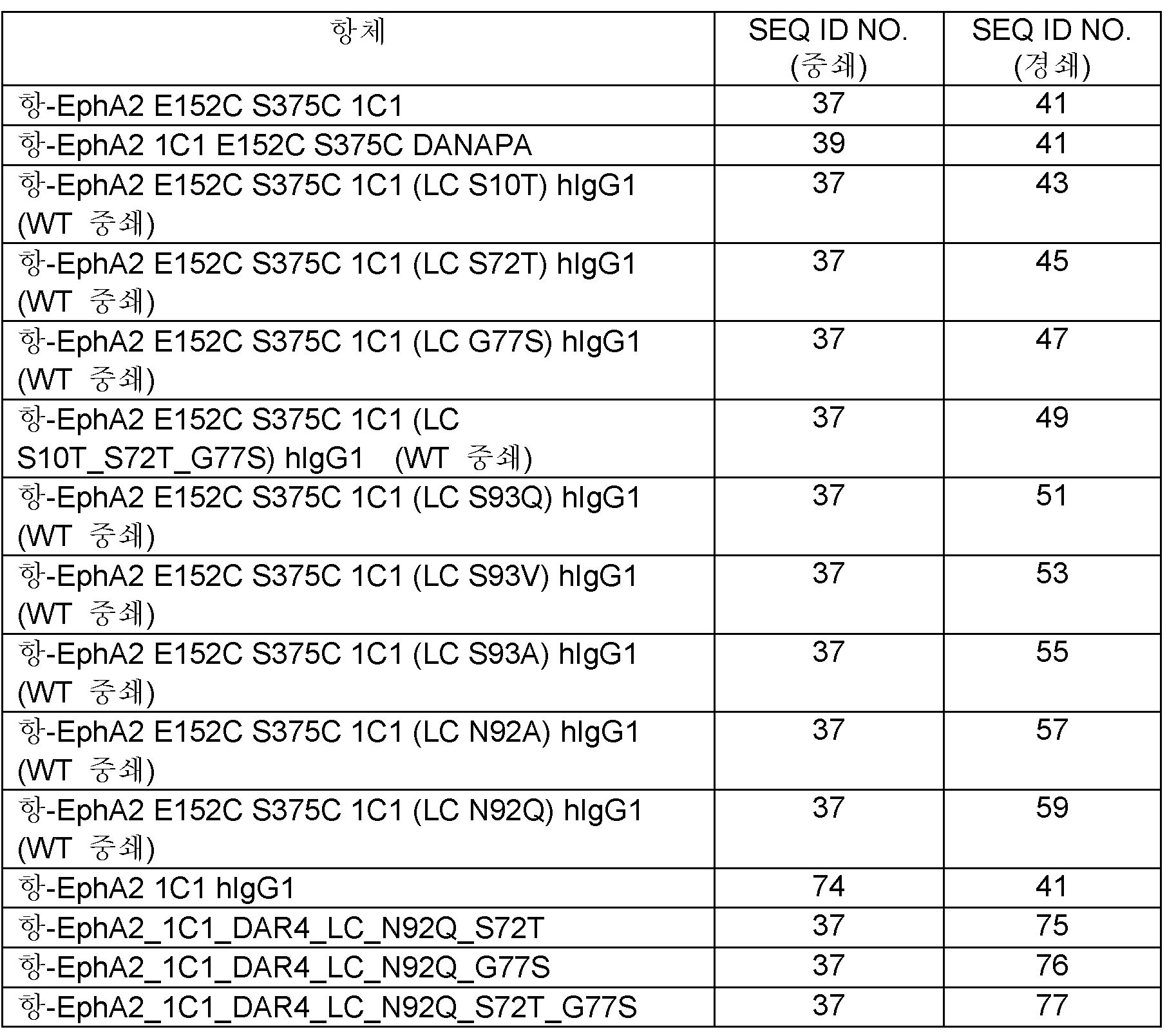
시험관내 Cysmab ADC 제조In vitro manufacturing of Cysmab ADC
항체 (전형적으로 5-10 mg)를 r단백질 A 세파로스 수지 (GE)와 함께 PBS 중 10 mg Ab 대 1 ml 수지의 비로 15분 동안 적절한 크기의 일회용 칼럼에서 혼합하면서 인큐베이션하였다. 시스테인 HCl을 20 mM의 최종 농도로 첨가하고, 실온에서 30분 동안 교반하면서 인큐베이션하여 반응성 시스테인이 탈차단되도록 하였다. 수지를 진공 매니폴드 상에서 50 칼럼 부피의 PBS에 의해 다중 첨가로 신속하게 세척하였다. 이어서, 수지를 250 nM CuCl2를 함유하는 동등 부피 PBS 중에 재현탁시켰다. 항체 쇄간 디술피드의 재형성을 시점을 취함으로써 모니터링하였다. 각각의 시점에, 25 μL의 수지 슬러리를 제거하고, 1 μL의 20 mM MC-valcit-MMAE를 첨가하고, 튜브를 수회 가볍게 쳤다. 수지를 스핀 다운시키고, 상청액을 제거한 다음, 50 μL 항체 용리 완충제 (써모)로 용리시켰다. 수지를 펠릿화하고, 상청액을 애질런트 PLRP-S 4000A 5um, 4.6x50mm 칼럼 (완충제 A는 물, 0.1% TFA, 완충제 B는 아세토니트릴, 0.1% TFA, 칼럼은 80℃에서 유지, 유량 1.5 ml/분; 구배 0분 - 30%B, 5분 - 45%B, 6.5분 - 100%B, 8분 - 100%B, 10분 - 30%)을 사용하여 역상 크로마토그래피에 의해 분석하였다.Antibody (typically 5-10 mg) was incubated with rProtein A Sepharose resin (GE) in a ratio of 10 mg Ab to 1 mL resin in PBS for 15 minutes in an appropriately sized disposable column. Cysteine HCl was added to a final concentration of 20 mM and incubated at room temperature with stirring for 30 minutes to allow deblocking of reactive cysteines. The resin was rapidly washed with multiple additions of 50 column volumes of PBS on a vacuum manifold. The resin was then resuspended in an equal volume of PBS containing 250 nM CuCl 2 . Reformation of antibody interchain disulfides was monitored by taking time points. At each time point, 25 μL of resin slurry was removed, 1 μL of 20 mM MC-valcit-MMAE was added, and the tube was flicked several times. The resin was spun down, the supernatant was removed, and eluted with 50 μL antibody elution buffer (Thermo). The resin was pelleted, and the supernatant was analyzed by reversed-phase chromatography using an Agilent PLRP-S 4000A 5 μm, 4.6 x 50 mm column (Buffer A is water, 0.1% TFA; Buffer B is acetonitrile, 0.1% TFA; column maintained at 80 °C; flow rate 1.5 ml/min; gradient 0 min - 30% B, 5 min - 45% B, 6.5 min - 100% B, 8 min - 100% B, 10 min - 30%).
항체가 그의 쇄간 디술피드 결합을 재형성한 것으로 결정되면, 수지를 10 칼럼 부피의 PBS로 세척하고, 수지를 동등 부피의 PBS 중에 재현탁시키고, DMSO 중 12 당량의 적절한 링커-페이로드 (20 mM)를 첨가한 다음, 실온에서 2시간 동안 인큐베이션하였다. 이어서, 수지를 50 칼럼 부피의 PBS로 세척하여 과량의 링커-페이로드를 제거하였다. ADC를 단백질 A 수지로부터 항체 용리 완충제를 사용하여 용리시켰다. 이어서, ADC를 PBS 내로 투석하였다. 이어서, 물질을 아미콘 울트라(Amicon Ultra)-15, 50KDa, 재생 셀룰로스 (밀리포어(Millipore), UFC0905024)를 사용하는 원심 농축기를 사용하여 4.5 mg/ml로 농축시키고, 0.22 μm 멸균 PVDF 필터, 25mm (밀리포어, SLGV013SL)를 통해 멸균 여과하고, 4℃에서 저장하였다. 하기 분석을 수행하였다 - 분석용 SEC에 의해 퍼센트 단량체를 결정하고, 환원 질량 분광분석법에 의해 DAR을 결정하고, LAL 시험에 의해 내독소 로드를 결정하고, 항체의 흡광 계수 및 분자량을 이용하는 A280에 의해 단백질 농도를 결정하였다. 모든 시험관내 물질은 >90% 단량체였다. 210 및 280 nm에서의 고분자량 피크 흡광도의 면적과 단량체 ADC에 대한 피크 흡광도의 면적의 비교에 의해 퍼센트 응집을 결정하였다. HRMS 데이터 (단백질 방법)는 중쇄+2 종의 우세한 질량을 나타냈으며, DAR1, DAR2 및 DAR3 종에 대한 피크의 MS 강도를 비교함으로써 ~4.0의 DAR을 계산하였다.Once it was determined that the antibody had reformed its interchain disulfide bond, the resin was washed with 10 column volumes of PBS, the resin was resuspended in an equivalent volume of PBS, 12 equivalents of the appropriate linker-payload (20 mM) in DMSO was added, and incubated at room temperature for 2 hours. The resin was then washed with 50 column volumes of PBS to remove excess linker-payload. The ADC was eluted from the Protein A resin using antibody elution buffer. The ADC was then dialyzed into PBS. The material was then concentrated to 4.5 mg/ml using a centrifugal concentrator using Amicon Ultra-15, 50 KDa, regenerated cellulose (Millipore, UFC0905024), sterile filtered through a 0.22 μm sterile PVDF filter, 25 mm (Millipore, SLGV013SL) and stored at 4°C. The following analyses were performed - percent monomer by analytical SEC, DAR by reduction mass spectrometry, endotoxin load by LAL test and protein concentration by A280 using the extinction coefficient and molecular weight of the antibody. All in vitro material was >90% monomer. Percent aggregation was determined by comparing the area of the high molecular weight peak absorbance at 210 and 280 nm with the area of the peak absorbance for the monomeric ADC. HRMS data (protein method) showed a predominant mass of the heavy chain+2 species, and a DAR of ~4.0 was calculated by comparing the MS intensities of peaks for the DAR1, DAR2, and DAR3 species.
일반적 방법론: 예시적인 ADC의 약물-대-항체 비 (DAR)를 하기 방법에 따라 액체 크로마토그래피-질량 분광측정법 (LC/MS)에 의해 결정하였다. 모든 LC 방법에 대해, 이동상 A는 정제된 MS 등급 물 (허니웰(Honeywell), LC015-1)이었고, 이동상 B는 1%의 포름산 (FA) (써모 사이언티픽(Thermo Scientific), 85178)으로 보충된, MS 등급 80% 이소프로판올 (허니웰 LC323-1): 20% 아세토니트릴 (허니웰, LC015-1), LC323-1)이었다. 칼럼 온도를 80℃로 설정하였다. 일반적 MS 방법을 합성된 모든 ADC에 대해 최적화하였다. 분석에 사용된 칼럼은 애질런트 PLRP-S 4000 A; 2.1x150mm, 8μm (애질런트, PL1912-3803)였다. 사용된 유량은 0.3 ml/분이었다. 사용된 구배는 액퀴티 바이오(Acuity Bio) H-부류 사원 UPLC (워터스) 상에서 0-0.75분 95%A, 0.76 -1.9분 75%A, 1.91-11.0분 50%A, 11.01-11.50 10%A, 11.51-13.50분 95%A, 13.51-18분 95%A였다. MS 시스템은 제보(Xevo) G2-XS QToF ESI 질량 분광계 (워터스)였으며, 데이터를 1.5-11분으로부터 획득하고, 질량을 15000-80000 달톤 사이에서 분석하였다. DAR은 디컨볼루션된 스펙트럼 또는 UV 크로마토그램으로부터 비접합된 및 접합된 주어진 종 (mAb 또는 회합된 단편)의 적분된 MS (총 이온 전류) 또는 UV (280 nm) 피크 면적을 합산하여 결정하였으며, 각각의 면적에 부착된 약물의 수를 곱하여 가중하였다. 합산된, 가중된 면적을 총 면적의 합계로 나누어, 결과가 전체 ADC에 대한 최종 평균 DAR 값을 생성하였다.General Methodology: The drug-to-antibody ratio (DAR) of exemplary ADCs was determined by liquid chromatography-mass spectrometry (LC/MS) according to the following method. For all LC methods, mobile phase A was purified MS grade water (Honeywell, LC015-1) and mobile phase B was MS grade 80% isopropanol (Honeywell LC323-1): 20% acetonitrile (Honeywell, LC015-1), LC323-1) supplemented with 1% formic acid (FA) (Thermo Scientific, 85178). The column temperature was set at 80°C. The general MS method was optimized for all ADCs synthesized. The column used for the analysis was Agilent PLRP-S 4000 A; 2.1x150 mm, 8 μm (Agilent, PL1912-3803). The flow rate used was 0.3 ml/min. The gradient used was 0-0.75 min 95% A, 0.76 -1.9 min 75% A, 1.91-11.0 min 50% A, 11.01-11.50 10% A, 11.51-13.50 min 95% A, 13.51-18 min 95% A. The MS system was a Xevo G2-XS QToF ESI mass spectrometer (Waters), data were acquired from 1.5-11 min, and masses were analyzed between 15000-80000 Daltons. DAR was determined by summing the integrated MS (total ion current) or UV (280 nm) peak areas of the unconjugated and conjugated given species (mAb or associated fragments) from the deconvoluted spectra or UV chromatograms, and weighting each area by the number of drug conjugated. The summed, weighted areas were divided by the sum of the total areas, resulting in a final average DAR value for the entire ADC.
크기 배제 크로마토그래피 (SEC): SEC를 수행하여 ADC의 품질 및 정제 후 응집 백분율 (%)을 결정하였다. 8분 동안 등용매 조건 100% PBS pH 7.2 ((하이클론(Hyclone) SH30028.03)), 유량 0.45 ml/분으로 분석 칼럼 슈퍼덱스 200 인크리즈(Superdex 200 Increase) 5/150 GL (지이 헬스케어(GE Healthcare), 28990945) 상에서 분석을 수행하였다. ADC 샘플의 % 응집체 분획을 280 nm에서의 피크 면적 흡광도에 기초하여 정량화하였다. 계산은 280 nm에서의 고분자량 용리액을 고분자량 및 단량체 용리액의 동일한 파장에서의 피크 면적 흡광도의 합계로 나눈 비에 100%를 곱한 것에 기초하였다. 데이터를 와이어트(Wyatt) 미니DAWN 광 산란 및 트레오스(Treos) 굴절률 검출기가 장착된 애질런트 바이오-이너트(Agilent Bio-Inert) 1260 HPLC (와이어트 테크놀로지스(Wyatt Technologies), 캘리포니아주 산타 바바라) 상에서 획득하였다.Size exclusion chromatography (SEC): SEC was performed to determine the quality and percent aggregate (%) of ADC after purification. The analysis was performed on an analytical column Superdex 200 Increase 5/150 GL (GE Healthcare, 28990945) under isocratic conditions of 100% PBS pH 7.2 ((Hyclone SH30028.03)) for 8 minutes at a flow rate of 0.45 ml/min. The % aggregate fraction of ADC samples was quantified based on the peak area absorbance at 280 nm. The calculation was based on the ratio of the high molecular weight eluent at 280 nm divided by the sum of the peak area absorbances of the high molecular weight and monomer eluents at the same wavelength multiplied by 100%. Data were acquired on an Agilent Bio-Inert 1260 HPLC (Wyatt Technologies, Santa Barbara, CA) equipped with a Wyatt miniDAWN light scattering and Treos refractive index detector.
생체내 Cysmab ADC 제조In vivo manufacturing of Cysmab ADC
항체 (25-200 mg)를 r단백질 A 세파로스 수지 (시티바(Cytiva))와 함께 PBS 중 10 mg Ab 대 1 ml 수지의 비로 15분 동안 적절한 크기의 일회용 칼럼에서 혼합하면서 인큐베이션하였다. 시스테인 HCl을 20 mM의 최종 농도로 첨가하고, 실온에서 30분 동안 교반하면서 인큐베이션하여 반응성 시스테인이 탈차단되도록 하였다. 수지를 진공 매니폴드 상에서 50 칼럼 부피의 포스페이트 완충 염수 pH 7.2 (PBS)에 의해 다중 첨가로 신속하게 세척하였다. 이어서, 수지를 250 nM CuCl2를 함유하는 동등 부피 PBS 중에 재현탁시켰다. 항체 쇄간 디술피드의 재형성을 시점을 취함으로써 모니터링하였다. 각각의 시점에, 25 μL의 수지 슬러리를 제거하고, 1 μL의 20 mM MC-valcit-MMAE를 첨가하고, 튜브를 수회 가볍게 쳤다. 수지를 스핀 다운시키고, 상청액을 제거한 다음, 50 μL 항체 용리 완충제 (써모)로 용리시켰다. 수지를 펠릿화하고, 상청액을 애질런트 PLRP-S 4000A 5um, 4.6x50mm 칼럼 (완충제 A는 물, 0.1% TFA, 완충제 B는 아세토니트릴, 0.1% TFA, 칼럼은 80℃에서 유지, 유량 1.5 ml/분; 구배 0분 - 30%B, 5분 - 45%B, 6.5분 - 100%B, 8분 - 100%B, 10분 - 30%)을 사용하여 역상 크로마토그래피에 의해 분석하였다.Antibody (25-200 mg) was incubated with rProtein A Sepharose resin (Cytiva) in a ratio of 10 mg Ab to 1 mL resin in PBS for 15 minutes in an appropriately sized disposable column with mixing. Cysteine HCl was added to a final concentration of 20 mM and incubated at room temperature with stirring for 30 minutes to allow deblocking of reactive cysteines. The resin was rapidly washed with multiple additions of 50 column volumes of phosphate buffered saline pH 7.2 (PBS) on a vacuum manifold. The resin was then resuspended in an equal volume of PBS containing 250 nM CuCl 2 . Reformation of antibody interchain disulfides was monitored by taking time points. At each time point, 25 μL of resin slurry was removed, 1 μL of 20 mM MC-valcit-MMAE was added, and the tube was flicked several times. The resin was spun down, the supernatant was removed, and eluted with 50 μL antibody elution buffer (Thermo). The resin was pelleted, and the supernatant was analyzed by reversed-phase chromatography using an Agilent PLRP-S 4000A 5 μm, 4.6 x 50 mm column (Buffer A is water, 0.1% TFA; Buffer B is acetonitrile, 0.1% TFA; column maintained at 80 °C; flow rate 1.5 ml/min; gradient 0 min - 30% B, 5 min - 45% B, 6.5 min - 100% B, 8 min - 100% B, 10 min - 30%).
항체가 그의 쇄간 디술피드 결합을 재형성한 것으로 결정되면, 수지를 10 칼럼 부피의 PBS로 세척하고, 수지를 동등 부피의 PBS 중에 재현탁시키고, DMSO 중 12 당량의 적절한 링커-페이로드 (20 mM)를 첨가한 다음, 실온에서 2시간 동안 인큐베이션하였다. 이어서, 수지를 50 칼럼 부피의 PBS로 세척하여 과량의 링커-페이로드를 제거하였다. ADC를 단백질 A 수지로부터 항체 용리 완충제를 사용하여 용리시켰다. 이어서, ADC를 PBS 내로 투석하고, 16/60 또는 26/600 S200 인크리즈 pg SEC 칼럼 (지이)을 사용하며 필요한 경우 이동상으로서 PBS를 사용하여 정제용 SEC로 분석하였다. 이어서, 물질을 아미콘 울트라(Amicon Ultra)-15, 50KDa, 재생 셀룰로스 (밀리포어, UFC0905024)를 사용하는 원심 농축기를 사용하여 4.5 mg/ml로 농축시키고, 0.22 μm 멸균 PVDF 필터, 25mm (밀리포어, SLGV013SL)를 통해 멸균 여과하고, 4℃에서 저장하였다. 하기 분석을 수행하였다 - 분석용 SEC에 의해 퍼센트 단량체를 결정하고, 질량 분광분석법에 의해 DAR을 결정하고, LAL 시험에 의해 내독소 로드를 결정하고, 항체의 흡광 계수 및 분자량을 이용하는 A280에 의해 단백질 농도를 결정하였다. 모든 생체내 물질은 >95% 단량체였다. 응집은 전형적으로 <10%였다. 210 및 280 nm에서의 고분자량 피크 흡광도의 면적과 단량체 ADC에 대한 피크 흡광도의 면적의 비교에 의해 퍼센트 응집을 결정하였다. HRMS 데이터 (단백질 방법)는 중쇄+2 종의 우세한 질량을 나타냈으며, DAR1, DAR2 및 DAR3 종에 대한 피크의 MS 강도를 비교함으로써 ~4.0의 DAR을 계산하였다.Once it was determined that the antibody had reformed its interchain disulfide bond, the resin was washed with 10 column volumes of PBS, the resin was resuspended in an equal volume of PBS, 12 equivalents of the appropriate linker-payload (20 mM) in DMSO was added, and incubated at room temperature for 2 hours. The resin was then washed with 50 column volumes of PBS to remove excess linker-payload. The ADC was eluted from the protein A resin using antibody elution buffer. The ADC was then dialyzed into PBS and analyzed by preparative SEC using a 16/60 or 26/600 S200 Increase pg SEC column (GE) using PBS as the mobile phase if necessary. The material was then concentrated to 4.5 mg/ml using a centrifugal concentrator using Amicon Ultra-15, 50 KDa, regenerated cellulose (Millipore, UFC0905024), sterile filtered through a 0.22 μm sterile PVDF filter, 25 mm (Millipore, SLGV013SL) and stored at 4°C. The following analyses were performed - percent monomer by analytical SEC, DAR by mass spectrometry, endotoxin load by LAL test and protein concentration by A280 using the extinction coefficient and molecular weight of the antibody. All in vivo material was >95% monomeric. Aggregation was typically <10%. Percent aggregation was determined by comparing the area of the high molecular weight peak absorbance at 210 and 280 nm with the area of the peak absorbance for the monomeric ADC. HRMS data (protein method) showed a predominant mass of the heavy chain+2 species, and a DAR of ~4.0 was calculated by comparing the MS intensities of peaks for the DAR1, DAR2, and DAR3 species.
일반적 방법론: 예시적인 ADC의 약물-대-항체 비 (DAR)를 하기 방법에 따라 액체 크로마토그래피-질량 분광측정법 (LC/MS)에 의해 결정하였다. 모든 LC 방법에 대해, 이동상 A는 정제된 MS 등급 물 (허니웰, LC015-1)이었고, 이동상 B는 1%의 포름산 (FA) (써모 사이언티픽, 85178)으로 보충된, MS 등급 80% 이소프로판올 (허니웰 LC323-1): 20% 아세토니트릴 (허니웰, LC015-1), LC323-1)이었다. 칼럼 온도를 80℃로 설정하였다. 일반적 MS 방법을 합성된 모든 ADC에 대해 최적화하였다. 분석에 사용된 칼럼은 애질런트 PLRP-S 4000 A; 2.1x150mm, 8μm (애질런트, PL1912-3803)였다. 사용된 유량은 0.3 ml/분이었다. 사용된 구배는 액퀴티 바이오 H-부류 사원 UPLC (워터스) 상에서 0-0.75분 95%A, 0.76 -1.9분 75%A, 1.91-11.0분 50%A, 11.01-11.50 10%A, 11.51-13.50분 95%A, 13.51-18분 95%A였다. MS 시스템은 제보 G2-XS QToF ESI 질량 분광계 (워터스)였으며, 데이터를 1.5-11분으로부터 획득하고, 질량을 15000-80000 달톤 사이에서 분석하였다. DAR은 디컨볼루션된 스펙트럼 또는 UV 크로마토그램으로부터 비접합된 및 접합된 주어진 종 (mAb 또는 회합된 단편)의 적분된 MS (총 이온 전류) 또는 UV (280 nm) 피크 면적을 합산하여 결정하였으며, 각각의 면적에 부착된 약물의 수를 곱하여 가중하였다. 합산된, 가중된 면적을 총 면적의 합계로 나누어, 결과가 전체 ADC에 대한 최종 평균 DAR 값을 생성하였다.General Methodology: The drug-to-antibody ratio (DAR) of exemplary ADCs was determined by liquid chromatography-mass spectrometry (LC/MS) according to the following method. For all LC methods, mobile phase A was purified MS grade water (Honeywell, LC015-1) and mobile phase B was MS grade 80% isopropanol (Honeywell LC323-1): 20% acetonitrile (Honeywell, LC015-1), LC323-1) supplemented with 1% formic acid (FA) (Thermo Scientific, 85178). The column temperature was set at 80°C. The general MS method was optimized for all ADCs synthesized. The column used for the analysis was Agilent PLRP-S 4000 A; 2.1x150 mm, 8 μm (Agilent, PL1912-3803). The flow rate used was 0.3 ml/min. The gradient used was 0-0.75 min 95%A, 0.76 -1.9 min 75%A, 1.91-11.0 min 50%A, 11.01-11.50 10%A, 11.51-13.50 min 95%A, 13.51-18 min 95%A on an Acquity Bio H-Class Temple UPLC (Waters). The MS system was a Zebo G2-XS QToF ESI mass spectrometer (Waters), data were acquired from 1.5-11 min, and masses were analyzed between 15000-80000 Daltons. DAR was determined by summing the integrated MS (total ion current) or UV (280 nm) peak areas of the unconjugated and conjugated given species (mAb or associated fragments) from the deconvoluted spectra or UV chromatograms, and weighting each area by the number of drug conjugated. The summed, weighted areas were divided by the sum of the total areas, resulting in a final average DAR value for the entire ADC.
크기 배제 크로마토그래피 (SEC): SEC를 수행하여 ADC의 품질 및 정제 후 응집 백분율 (%)을 결정하였다. 8분 동안 등용매 조건 100% PBS pH 7.2 ((하이클론 SH30028.03)), 유량 0.45 ml/분으로 분석 칼럼 슈퍼덱스 200 인크리즈 5/150 GL (지이 헬스케어, 28990945) 상에서 분석을 수행하였다. ADC 샘플의 % 응집체 분획을 280 nm에서의 피크 면적 흡광도에 기초하여 정량화하였다. 계산은 280 nm에서의 고분자량 용리액을 고분자량 및 단량체 용리액의 동일한 파장에서의 피크 면적 흡광도의 합계로 나눈 비에 100%를 곱한 것에 기초하였다. 데이터를 와이어트 미니DAWN 광 산란 및 트레오스 굴절률 검출기가 장착된 애질런트 바이오-이너트 1260 HPLC (와이어트 테크놀로지스, 캘리포니아주 산타 바바라) 상에서 획득하였다.Size exclusion chromatography (SEC): SEC was performed to determine the quality and percent aggregate (%) of ADC after purification. The analysis was performed on an analytical column Superdex 200 Increase 5/150 GL (GE Healthcare, 28990945) under isocratic conditions of 100% PBS pH 7.2 ((Hyclone SH30028.03)) for 8 minutes at a flow rate of 0.45 ml/min. The % aggregate fraction of ADC samples was quantified based on the peak area absorbance at 280 nm. The calculation was based on the ratio of the high molecular weight eluent at 280 nm divided by the sum of the peak area absorbances of the high molecular weight and monomer eluents at the same wavelength multiplied by 100%. Data were acquired on an Agilent Bio-Enert 1260 HPLC (Wyatt Technologies, Santa Barbara, CA) equipped with a Wyatt MiniDAWN light scattering and a THREOSS refractive index detector.
실시예 6. 암 세포주들의 패널에서의 페이로드 P21 및 EphA2-L11A-P21 ADC 단독 또는 트라메티닙과의 조합의 시험관내 활성의 평가Example 6. Evaluation of in vitro activity of payload P21 and EphA2-L11A-P21 ADC alone or in combination with trametinib in a panel of cancer cell lines
EphA2-L11A-P21 항체 약물 접합체 (ADC)를 단독으로 또는 트라메티닙과 조합하여, ATCC (아메리칸 타입 컬쳐 콜렉션(American Type Culture Collection))로부터 또는 다른 상업적 세포주 판매업체로부터 수득된 암 세포주에 대해 시험하였다. EphA2-L11A-P21 ADC를 본원에 기재된 임의의 접합 방법에 따라 제조하였다. 세포를 조직 배양 인큐베이터 내 5% CO2, 37℃에서 그의 성장에 최적인 배지에서 배양하였다. 증식 검정을 위한 시딩 전에, 최적 성장 밀도를 보장하기 위해 검정으로부터 적어도 2일 전에 세포를 분할하였다. 시딩 당일에, 0.25% 트립신을 사용하여 조직 배양 플라스크로부터 세포를 들어올렸다. 세포 계수기 (바이-셀 XR 세포 생존율 분석기, 베크만 쿨터)를 사용하여 세포 생존율 및 세포 밀도를 결정하였다. 85% 초과의 생존율을 갖는 세포를 백색 투명 바닥 384-웰 플레이트 (그라이너(Greiner) 카탈로그 # 781098)에 50 μL의 표준 성장 배지 중 웰당 1000개 세포의 밀도로 시딩하였다. 플레이트를 조직 배양 인큐베이터 내 37℃에서 밤새 인큐베이션하였다.EphA2-L11A-P21 antibody drug conjugates (ADCs), alone or in combination with trametinib, were tested against cancer cell lines obtained from the American Type Culture Collection (ATCC) or other commercial cell line vendors. EphA2-L11A-P21 ADCs were prepared according to any of the conjugation methods described herein. Cells were cultured in medium optimal for their growth at 37°C, 5% CO 2 in a tissue culture incubator. Cells were split at least 2 days prior to assay to ensure optimal growth density prior to seeding for proliferation assays. On the day of seeding, cells were lifted from the tissue culture flasks using 0.25% trypsin. Cell viability and cell density were determined using a cell counter (By-Cell XR Cell Viability Analyzer, Beckman Coulter). Cells with greater than 85% viability were seeded at a density of 1000 cells per well in 50 μL of standard growth medium in white, clear-bottom 384-well plates (Greiner catalog # 781098). Plates were incubated overnight at 37°C in a tissue culture incubator.
ADC를 표준 포스페이트 완충 용액 중에서 목적하는 농도로 제조하였다. 각각의 ADC에 대해 일련의 10개의 희석물을 제조하였다. 이어서, 제조된 약물 처리물을 세포에 첨가하여 100 nM 내지 0.005 nM의 최종 농도를 생성하였다. 조합 파트너 트라메티닙 (MEK 억제제)을 고정 농도로 첨가하였다. 음향 전달 장치 (에코525, 에코550, 베크만 쿨터)를 사용하여 ADC 또는 조합 파트너를 세포에 첨가하였다. 각각의 처리물을 삼중 검정 플레이트에서 시험하였다. 플레이트를 조직 배양 인큐베이터 내 37℃에서 밤새 또는 5일 동안 인큐베이션하였다. 세포 증식 및 생존을 억제하는 ADC의 능력을 프로메가 셀타이터-글로(Promega CellTiter-Glo)® 증식 검정을 사용하여 평가하였다. 플레이트를 실온에서 20분 동안 인큐베이션하여 발광 신호를 안정화시킨 후, 다중모드 플레이트 판독기 (페라스타(Pherastar), BMG)를 사용하여 판독하였다. 비처리된 세포의 발광 카운트를 시딩 다음 날 (제0일 판독치) 및 처리 5일 후 (제5일 판독치)에 취하였다. 비처리된 세포의 제5일 판독치를 제0일 판독치와 비교하였다. 인큐베이션 기간 동안 적어도 1회의 세포 배가를 갖는 검정을 유효한 것으로 간주하였다. 약물 처리의 효과를 평가하기 위해, 비처리된 세포를 함유하는 웰로부터의 발광 카운트 (100% 생존율)를 사용하여 처리된 샘플을 정규화하였다. 세포 성장 또는 생존의 50%를 억제하는 데 요구되는 처리 농도 (GI50)를 4 파라미터 로지스틱 회귀 방정식을 사용하여 계산하였다. Amax는 차폐되지 않은 측정된 농도 범위 내에서 피팅된 곡선에 의해 도달된 '최대 생물학적 효과'의 (피팅된) 반응 값이다. 시험 결과가 하기 표 10, 11 및 12에 제시된다.ADCs were prepared in standard phosphate buffer solution at the desired concentration. A series of 10 dilutions were prepared for each ADC. The prepared drug treatments were then added to the cells to generate final concentrations ranging from 100 nM to 0.005 nM. The combination partner trametinib (MEK inhibitor) was added at fixed concentrations. The ADCs or combination partners were added to the cells using an acoustic transducer (Echo525, Echo550, Beckman Coulter). Each treatment was tested in triplicate assay plates. The plates were incubated overnight or for 5 days at 37°C in a tissue culture incubator. The ability of the ADCs to inhibit cell proliferation and viability was assessed using the Promega CellTiter-Glo® proliferation assay. The plates were incubated at room temperature for 20 minutes to stabilize the luminescence signal and then read using a multimode plate reader (Pherastar, BMG). Luminescence counts of untreated cells were taken the day after seeding (day 0 reading) and 5 days after treatment (day 5 reading). Day 5 readings of untreated cells were compared to day 0 readings. Assays with at least one cell doubling during the incubation period were considered valid. To assess the effect of drug treatment, luminescence counts from wells containing untreated cells (100% viability) were normalized to treated samples. The treatment concentration required to inhibit 50% of cell growth or survival (GI50) was calculated using a four-parameter logistic regression equation. Amax is the (fitted) response value of the 'maximum biological effect' reached by the fitted curve within the unmasked measured concentration range. The test results are presented in Tables 10, 11 and 12 below.
표 10. 암 세포주들의 패널에서의 EphA2-L11A-P21 ADC 단독의 GI50 및 GI AmaxTable 10. GI50 and GI Amax of EphA2-L11A-P21 ADC alone in a panel of cancer cell lines
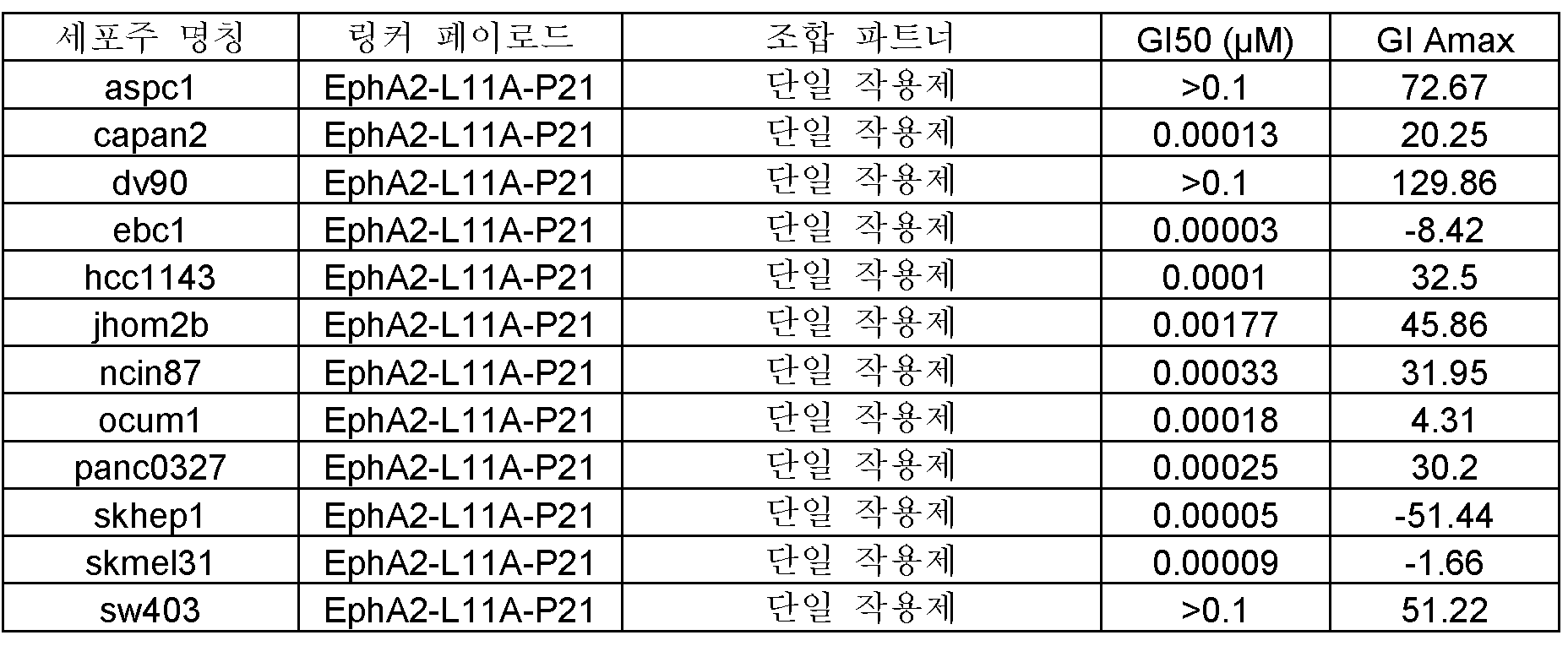
표 11. 암 세포주들의 패널에서의 트라메티닙과 조합된 EphA2-L11A-P21 ADC의 GI50 및 GI AmaxTable 11. GI50 and GI Amax of EphA2-L11A-P21 ADC in combination with trametinib in a panel of cancer cell lines

표 12 암 세포주들의 패널에서의 페이로드 P21의 GI50 및 GI AmaxTable 12 GI50 and GI Amax of payload P21 in a panel of cancer cell lines
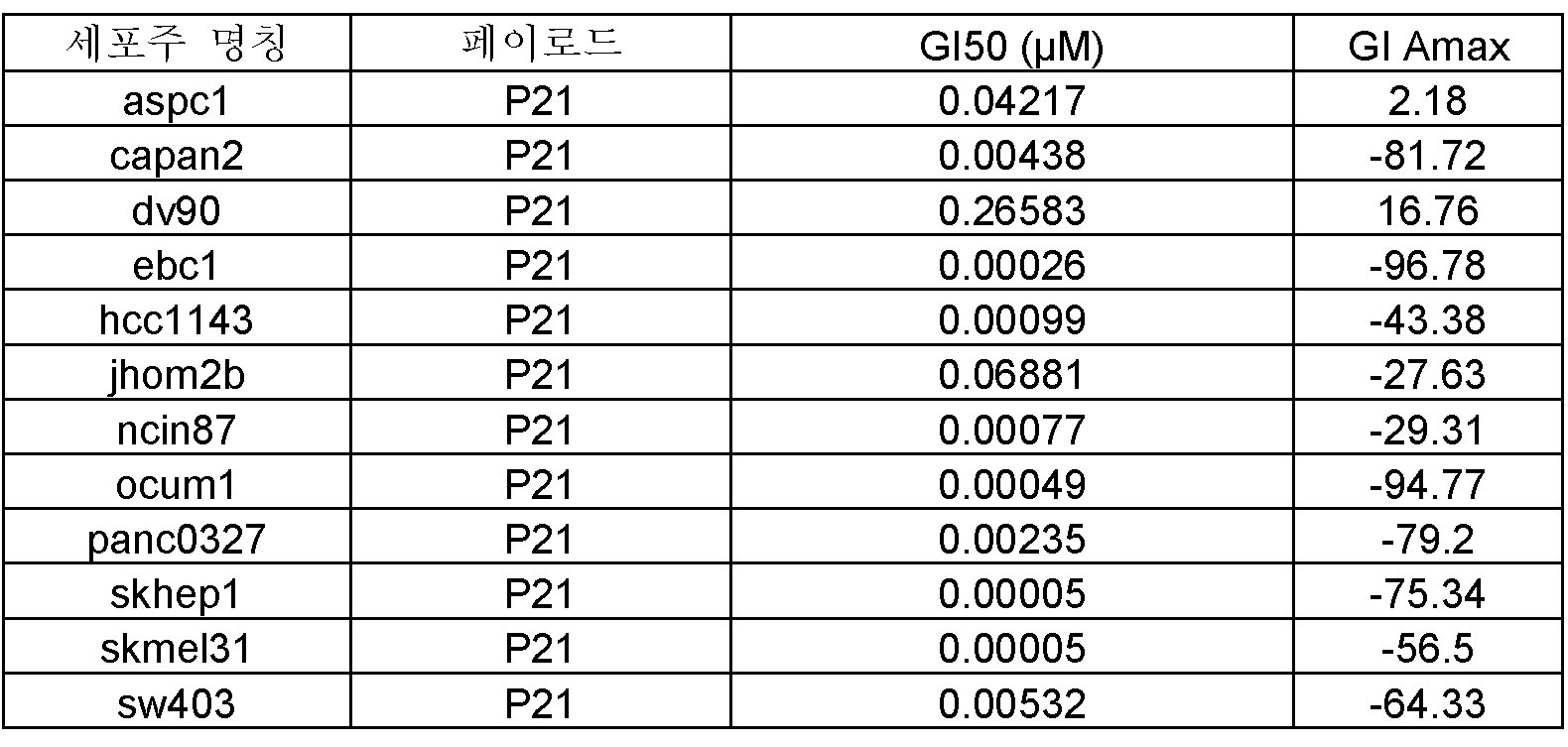
실시예 7. EBC-1 세포에서의 EphA2-DANAPA-L11C-P25 ADC, 3207-DANAPA-L11C-P25 이소형 대조군 ADC 및 EphA2-DANAPA CysMab 대조군 항체의 생체내 효능 연구Example 7. In vivo efficacy study of EphA2-DANAPA-L11C-P25 ADC, 3207-DANAPA-L11C-P25 isotype control ADC and EphA2-DANAPA CysMab control antibody in EBC-1 cells
물질 및 방법Materials and Methods
EBC-1 세포를 10% FBS (HI-FBS #134K19, Tet-무함유)로 보충된 DMEM 배지 (깁코(Gibco) 11965-084) 중에서 37℃ (5% CO2의 분위기)에서 배양하였다. Panc03.27 세포를 15% FBS 및 10 유닛/mL 재조합 인간 인슐린으로 보충된 RPMI-1640 배지 (깁코 11875-085) 중에서 37℃ (5% CO2의 분위기)에서 배양하였다. 0.25% 트립신 (깁코 25200-056)을 사용한 처리를 계대배양에 사용하였다. EBC-1 및 Panc03.27 이종이식편을 확립하기 위해, 세포를 수거하고, 포스페이트 완충 염수 및 매트리겔의 1:1 v/v 혼합물 중에 재현탁시켰다. 총 5 x 10⁶개의 EBC-1 세포 및 10 x 106개의 Panc03.27 세포를 200 μL의 부피로 암컷 누드 마우스 (찰스 리버(Charles River), 미국)의 측복부에 피하로 주사하였다. 종양 성장을 세포 접종 후에 정기적으로 모니터링하고, 동물을 약 200 mm3의 평균 종양 부피를 갖는 처리군 (n = 8)으로 무작위화하였다.EBC-1 cells were cultured at 37°C (in a 5% CO 2 atmosphere) in DMEM medium (Gibco 11965-084) supplemented with 10% FBS (HI-FBS #134K19, Tet-free). Panc03.27 cells were cultured at 37°C (in a 5% CO 2 atmosphere ) in RPMI-1640 medium (Gibco 11875-085) supplemented with 15% FBS and 10 units/mL recombinant human insulin. Treatment with 0.25% trypsin (Gibco 25200-056) was used for passaging. To establish EBC-1 and Panc03.27 xenografts, cells were harvested and resuspended in a 1:1 v/v mixture of phosphate-buffered saline and Matrigel. A total of 5 × 10⁶ EBC-1 cells and 10 × 106 Panc03.27 cells were injected subcutaneously into the flank of female nude mice (Charles River, USA) in a volume of 200 μL. Tumor growth was monitored regularly after cell inoculation, and animals were randomized into treatment groups (n = 8) with a mean tumor volume of approximately 200 mm3 .
EphA2-DANAPA-L11C-P25 ADC 및 3207-DANAPA-L11C-P25 이소형 대조군 ADC는 본원에 개시된 임의의 ADC 제조 방법을 사용하여 합성될 수 있다.EphA2-DANAPA-L11C-P25 ADC and 3207-DANAPA-L11C-P25 isoform control ADC can be synthesized using any of the ADC manufacturing methods disclosed herein.
EBC-1 효능 연구를 위해, 도 1 및 도 2에 나타낸 바와 같이, EphA2-DANAPA-L11C-P25 ADC, 3207-DANAPA-L11C-P25 이소형 대조군 ADC 및 EphA2-DANAPA CysMab 대조군 항체를 모두 파클리탁셀 (LC 래보러토리즈(LC Laboratories), 매사추세츠주 워번, 카탈로그#: P-9600)과 조합하여 투여하였다. Panc03.27 효능 연구를 위해, 각각 도 3 및 도 4에 나타낸 바와 같이, EphA2-DANAPA-L11C-P25 ADC, 3207-DANAPA-L11C-P25 이소형 대조군 ADC 및 EphA2-DANAPA CysMab 대조군 항체를 모두 겜시타빈 (호스피라, NDC 코드 0409-0185-01) 또는 MAPK 억제제 (MAPKi) LXH254 및 CFF272와 조합하여 투여하였다. 파클리탁셀 조합을 시험하는 연구를 위해, EphA2 및 이소형 대조군 ADC 및 EphA2 CysMab 항체를 처리 시작 시에 도 1 및 도 2에 명시된 용량 수준으로 1회 정맥내로 (IV) 투여하고, 이어서 24시간 후에 파클리탁셀을 12.5 mg/kg으로 단일 IV 용량 투여하였다. MAPK 억제제 조합을 시험하는 연구를 위해, EphA2 및 이소형 대조군 ADC 및 EphA2 CysMab 항체를 처리 시작 시에 30 mg/kg으로 1회 정맥내로 (IV) 투여하고, 이어서 24시간 후에 시작하여 LXH254 및 CFF272를 반복 투여하였다. LXH254를 50 mg/kg으로 1일에 2회 경구로 (PO) 투여한 반면, CFF272를 0.03 mg/kg으로 1일에 1회 경구로 투여하였다. 겜시타빈 조합을 시험하는 연구를 위해, EphA2 및 이소형 대조군 ADC 및 EphA2 CysMab 항체를 제0일 및 제14일에 정맥내로 (IV) 투여하였다. 겜시타빈을 제1일, 제4일, 제7일, 제15일, 제18일 및 제21일에 100 mg/kg으로 복강내로 (IP) 투여하였다 (각각의 ADC 또는 CysMab 용량 후 q3Dx3). 모든 시약을 개별 마우스 체중에 기초하여 10 mL/kg으로 투여하였다. ADC 및 CysMab를 처리 당일에 PBS 중에 그에 따라 제제화하였다. 파클리탁셀을 먼저 50% 에탄올 + 50% 크레모포르 EL (콜리포르 EL) 중에 6 mg/mL의 농도로 재구성한 다음, 치료 당일에 투여 전 멸균 염수 (0.9% 염화나트륨)로 1.25 mg/mL로 추가로 하향 희석함으로써 제제화하였다. 겜시타빈을 치료 당일에 투여 전 염수 중 10 mg/mL로 제제화하였다.For EBC-1 efficacy studies, EphA2-DANAPA-L11C-P25 ADC, 3207-DANAPA-L11C-P25 isotype control ADC, and EphA2-DANAPA CysMab control antibody were all administered in combination with paclitaxel (LC Laboratories, Woburn, MA, catalog #: P-9600) as shown in FIGS. 1 and 2 . For the Panc03.27 efficacy study, EphA2-DANAPA-L11C-P25 ADC, 3207-DANAPA-L11C-P25 isotype control ADC and EphA2-DANAPA CysMab control antibody were all administered in combination with gemcitabine (Hospira, NDC code 0409-0185-01) or MAPK inhibitors (MAPKi) LXH254 and CFF272, as shown in Figures 3 and 4, respectively. For the study testing paclitaxel combination, EphA2 and isotype control ADC and EphA2 CysMab antibody were administered intravenously (IV) once at the start of treatment at the dose levels indicated in Figures 1 and 2, followed by a single IV dose of paclitaxel at 12.5 mg/kg 24 hours later. For studies testing MAPK inhibitor combinations, EphA2 and isotype control ADC and EphA2 CysMab antibody were administered intravenously (IV) as a single dose of 30 mg/kg at the start of treatment, followed by repeat doses of LXH254 and CFF272 starting 24 hours later. LXH254 was administered orally (PO) at 50 mg/kg twice daily, whereas CFF272 was administered orally once daily at 0.03 mg/kg. For studies testing gemcitabine combinations, EphA2 and isotype control ADC and EphA2 CysMab antibody were administered intravenously (IV) on days 0 and 14. Gemcitabine was administered intraperitoneally (IP) at 100 mg/kg on days 1, 4, 7, 15, 18, and 21 (q3Dx3 after each ADC or CysMab dose). All reagents were administered at 10 mL/kg based on individual mouse body weight. ADC and CysMab were formulated accordingly in PBS on the day of treatment. Paclitaxel was formulated by first reconstituting in 50% ethanol + 50% Cremophor EL (Cholyphor EL) to a concentration of 6 mg/mL and then further down-diluted to 1.25 mg/mL with sterile saline (0.9% sodium chloride) prior to dosing on the day of treatment. Gemcitabine was formulated at 10 mg/mL in saline prior to dosing on the day of treatment.
종양 부피 데이터를 EphA2-DANAPA-L11C-P25 ADC 조합 군 대비 통계적 유의성에 대해 분석하였다. 독립표본 양측 T-검정을 사용하여 군 사이의 비교를 수행하였다.Tumor volume data were analyzed for statistical significance versus the EphA2-DANAPA-L11C-P25 ADC combination group. Comparisons between groups were performed using an independent-samples two-tailed t-test.
효능의 척도로서, %T/C 값을 하기 식에 따라 계산하였다: (실험군에서의 Δ종양 부피 / 비히클 대조군에서의 Δ종양 부피)*100. 종양 퇴행을 하기 식에 따라 계산하였다: (실험군에서의 Δ종양 부피 / 시작시의 실험군에서의 종양 부피)*100. Δ종양 부피는 측정일의 평균 종양 부피 마이너스 처리 시작 시의 평균 종양 부피를 나타낸다. 결과는 평균 ± SEM으로서 데이터 표에 제시된다.As a measure of efficacy, %T/C values were calculated according to the following formula: (ΔTumor volume in experimental group / ΔTumor volume in vehicle control group)*100. Tumor regression was calculated according to the following formula: (ΔTumor volume in experimental group / Tumor volume in experimental group at baseline)*100. ΔTumor volume represents the mean tumor volume on the measurement day minus the mean tumor volume at the start of treatment. Results are presented in the data tables as mean ± SEM.
결과result
12.5 mg/kg의 파클리탁셀과 조합되어 30 mg/kg으로 투여된 EphA2-DANAPA-L11C-P25 ADC는 비히클 대조군 및 파클리탁셀 단독 군과 비교하여 EBC-1 종양의 성장을 유의하게 (p<0.05) 감소시켰다. 또한, 이러한 ADC는 파클리탁셀과 조합되었을 때 3207-DANAPA-L11C-P25 이소형 대조군 ADC 및 EphA2-DANAPA CysMab 대조군 항체보다 유의하게 더 큰 항종양 활성을 가졌다. EphA2-DANAPA-L11C-P25 ADC는 단독요법으로서보다 파클리탁셀과의 조합에서 유의하게 더 효과적이었다. 조합은 ADC 투여 후 제31일까지 6/8마리 동물에서 완전 반응을 유도하였다. 또한, EphA2-DANAPA-L11C-P25 ADC는, ADC 투여 후 제31일까지 단지 2/8마리 동물에서 퇴행이 관찰되어 비록 덜한 정도이기는 하지만, 단독요법으로서 종양 퇴행을 유도할 수 있었다. 여기서 요약된 모든 결과는 도 1 및 표 13에 제시된다.EphA2-DANAPA-L11C-P25 ADC administered at 30 mg/kg in combination with 12.5 mg/kg paclitaxel significantly (p<0.05) reduced the growth of EBC-1 tumors compared to vehicle control and paclitaxel alone. Furthermore, this ADC had significantly greater antitumor activity than the 3207-DANAPA-L11C-P25 isotype control ADC and the EphA2-DANAPA CysMab control antibody when combined with paclitaxel. EphA2-DANAPA-L11C-P25 ADC was significantly more effective in combination with paclitaxel than as a monotherapy. The combination induced complete responses in 6/8 animals by day 31 after ADC administration. Additionally, EphA2-DANAPA-L11C-P25 ADC was able to induce tumor regression as a monotherapy, albeit to a lesser extent, with regression observed in only 2/8 animals up to day 31 after ADC administration. All results summarized here are presented in Figure 1 and Table 13.
EphA2-DANAPA-L11C-P25 ADC를 단독으로 또는 파클리탁셀과 조합하여 30 mg/kg의 용량으로 투여했을 때 종양 퇴행이 관찰되었다. ADC의 용량을 감소시키는 것은 조합 군과 그의 각각의 용량-매칭된 ADC 단독요법 대응물 사이의 차등 활성을 증대시켰다. ADC가 더 이상 종양을 퇴행시키거나 정체를 유도할 수 없고, 대신에 단지 종양 성장 지연만을 유발하였기 때문에, 용량을 15 mg/kg으로 감소시키는 것은 단독요법 활성을 손상시켰다. ADC 단독요법 용량을 7.5 mg/kg 및 3.75 mg/kg으로 감소시켰을 때 활성이 추가로 감소하였다. 단독요법 활성을 상실함에도 불구하고, EphA2-DANAPA-L11C-P25 ADC를 파클리탁셀과 조합하는 것은 항종양 활성이 심지어 더 낮은 ADC 용량에서도 유지될 수 있다는 것을 입증하였다. 종양은 처리 후 1주 내에 15 mg/kg, 7.5 mg/kg 및 3.75 mg/kg ADC 플러스 파클리탁셀 군에서 30 mg/kg ADC 플러스 파클리탁셀 군과 동일한 정도로 퇴행하였다. 종양 재발이 3.75 mg/kg 용량에서 발생하였지만; 7.5 mg/kg 용량은 투여 후 28일의 기간 동안 파클리탁셀과 조합되어 다소 지속적인 반응을 유도하였다. 이 데이터세트는 ADC 용량이 활성을 희생시키지 않으면서 파클리탁셀과 조합되어 적어도 4배만큼 감소될 수 있다는 것을 시사하며, 이는 개선된 치료 범위에 대한 잠재력을 나타낸다. 여기서 요약된 모든 결과는 도 2 및 표 14에 제시된다.Tumor regression was observed when EphA2-DANAPA-L11C-P25 ADC was administered alone or in combination with paclitaxel at a dose of 30 mg/kg. Decreasing the dose of the ADC enhanced the differential activity between the combination group and its respective dose-matched ADC monotherapy counterpart. Decreasing the dose to 15 mg/kg impaired the monotherapy activity since the ADC was no longer able to induce tumor regression or stasis, but instead only induced tumor growth delay. Activity was further reduced when the ADC monotherapy dose was reduced to 7.5 mg/kg and 3.75 mg/kg. Despite the loss of monotherapy activity, combining EphA2-DANAPA-L11C-P25 ADC with paclitaxel demonstrated that antitumor activity could be maintained even at lower ADC doses. Tumors regressed to the same extent in the 15 mg/kg, 7.5 mg/kg and 3.75 mg/kg ADC plus paclitaxel groups within 1 week of treatment as in the 30 mg/kg ADC plus paclitaxel group. Tumor recurrence occurred at the 3.75 mg/kg dose; however, the 7.5 mg/kg dose induced a somewhat more durable response in combination with paclitaxel over a period of 28 days post-treatment. This dataset suggests that the ADC dose can be reduced by at least 4-fold in combination with paclitaxel without sacrificing activity, indicating the potential for an improved therapeutic window. All results summarized here are presented in Figure 2 and Table 14.
겜시타빈과 조합되어 30 mg/kg으로 투여된 EphA2-DANAPA-L11C-P25 ADC는 비히클 대조군 및 겜시타빈 단독 군과 비교하여 Panc03.27 종양의 성장을 유의하게 (p<0.05) 감소시켰다. 또한, 이러한 ADC는 겜시타빈과 조합되었을 때 3207-DANAPA-L11C-P25 이소형 대조군 ADC 및 EphA2-DANAPA CysMab 대조군 항체보다 유의하게 더 큰 항종양 활성을 가졌다. EphA2-DANAPA-L11C-P25 ADC는 단독요법으로서보다 겜시타빈과의 조합에서 유의하게 더 효과적이었다. 평균 종양 크기는 EphA2-DANAPA-L11C-P25 ADC 플러스 겜시타빈 조합 군에서 약간 감소하였고, 완전한 퇴행은 관찰되지 않았다. EphA2-DANAPA-L11C-P25 ADC 플러스 겜시타빈 군에서의 재발성 종양은 처리 개시 후 제14일에 시작하여 제2 라운드의 투여에 반응할 수 있었다. 후속 ADC 및 겜시타빈 용량 후에 종양 정체가 관찰되었다. 여기서 요약된 모든 결과는 도 3 및 표 15에 제시된다.EphA2-DANAPA-L11C-P25 ADC administered at 30 mg/kg in combination with gemcitabine significantly (p<0.05) reduced the growth of Panc03.27 tumors compared to vehicle control and gemcitabine alone. Furthermore, this ADC had significantly greater antitumor activity than the 3207-DANAPA-L11C-P25 isotype control ADC and the EphA2-DANAPA CysMab control antibody when combined with gemcitabine. EphA2-DANAPA-L11C-P25 ADC was significantly more effective in combination with gemcitabine than as a monotherapy. The mean tumor size was slightly reduced in the EphA2-DANAPA-L11C-P25 ADC plus gemcitabine combination group, and complete regression was not observed. Recurrent tumors in the EphA2-DANAPA-L11C-P25 ADC plus gemcitabine group were able to respond to the second round of administration starting on day 14 after treatment initiation. Tumor stasis was observed after subsequent ADC and gemcitabine doses. All results summarized here are presented in Figure 3 and Table 15.
MAPK 억제제 LXH254 (panRAF) 및 CFF272 (MEK)와 조합되어 30 mg/kg으로 투여된 EphA2-DANAPA-L11C-P25 ADC는 비히클 대조군 및 MAPK 단독 군과 비교하여 Panc03.27 종양의 성장을 유의하게 (p<0.05) 감소시켰다. 또한, 이러한 ADC는 MAPK 억제와 조합되었을 때, 특히 투여 후 처음 2주 내에 3207-DANAPA-L11C-P25 이소형 대조군 ADC 및 EphA2-DANAPA CysMab 대조군 항체보다 유의하게 더 큰 항종양 활성을 가졌다. EphA2-DANAPA-L11C-P25 ADC는 단독요법으로서보다 조합에서 유의하게 더 효과적이었다. 관찰된 최대 반응은 종양 정체였다. 여기서 요약된 모든 결과는 도 4 및 표 16에 제시된다.EphA2-DANAPA-L11C-P25 ADC administered at 30 mg/kg in combination with MAPK inhibitors LXH254 (panRAF) and CFF272 (MEK) significantly (p<0.05) reduced the growth of Panc03.27 tumors compared to vehicle control and MAPK alone. Furthermore, these ADCs had significantly greater antitumor activity than 3207-DANAPA-L11C-P25 isotype control ADC and EphA2-DANAPA CysMab control antibody when combined with MAPK inhibition, particularly within the first 2 weeks after administration. EphA2-DANAPA-L11C-P25 ADC was significantly more effective in combination than as a monotherapy. The maximum response observed was tumor stasis. All results summarized here are presented in Figure 4 and Table 16.
표 13. 파클리탁셀과 조합된 EphA2-DANAPA-L11C-P25 ADC의 항종양 활성의 요약. 모든 Δ종양 부피, %T/C 및 %퇴행 값은 하기 명시된 처리 후 일에 수집된 종양 측정치에 기초하여 평균으로서 제시된다. T/C 및 퇴행 값을 방법에 명시된 식을 사용하여 계산하였다. 완전 반응자는 명시된 시점에 0 mm3으로 퇴행한 종양을 갖는 동물로서 확인되었다. 각각의 처리군을 EphA2-DANAPA-L11C-P25 ADC + 파클리탁셀 조합 군에 비교함으로써 통계적 분석을 수행하였다. 평가 일은 각각의 값 아래 괄호 안에 표시된다.Table 13. Summary of antitumor activity of EphA2-DANAPA-L11C-P25 ADC in combination with paclitaxel. All ΔTumor Volume, %T/C and %Regression values are presented as means based on tumor measurements collected on the indicated post-treatment days. T/C and regression values were calculated using the formulas specified in the Methods. Complete responders were identified as animals with tumors that regressed to 0 mm 3 at the indicated time points. Statistical analysis was performed by comparing each treatment group to the EphA2-DANAPA-L11C-P25 ADC + paclitaxel combination group. The assessment date is indicated in parentheses below each value.

N/A, 적용가능하지 않음N/A, not applicable
표 14. 파클리탁셀과 조합된 EphA2-DANAPA-L11C-P25 ADC의 항종양 활성의 요약. 모든 Δ종양 부피, %T/C 및 %퇴행 값은 하기 명시된 처리 후 일에 수집된 종양 측정치에 기초하여 평균으로서 제시된다. T/C 및 퇴행 값을 방법에 명시된 식을 사용하여 계산하였다. 완전 반응자는 명시된 시점에 0 mm3으로 퇴행한 종양을 갖는 동물로서 확인되었다. 각각의 처리군을 파클리탁셀 단독요법 군에 비교함으로써 통계적 분석을 수행하였다. 각각의 조합 군과 그의 상응하는 ADC 용량-매칭된 단독요법 대응물 사이에서 통계적 유의성을 또한 계산하였다. 평가 일은 각각의 값 아래 괄호 안에 표시된다.Table 14. Summary of antitumor activity of EphA2-DANAPA-L11C-P25 ADC in combination with paclitaxel. All ΔTumor Volume, %T/C and %Regression values are presented as means based on tumor measurements collected on the indicated post-treatment days. T/C and regression values were calculated using the formulas specified in the Methods. Complete responders were identified as animals with tumors that regressed to 0 mm 3 at the indicated time points. Statistical analysis was performed by comparing each treatment group to the paclitaxel monotherapy group. Statistical significance was also calculated between each combination group and its corresponding ADC dose-matched monotherapy counterpart. The assessment date is indicated in parentheses below each value.


N/A, 적용가능하지 않음N/A, not applicable
표 15. 겜시타빈과 조합된 EphA2-DANAPA-L11C-P25 ADC의 항종양 활성의 요약. 모든 Δ종양 부피, %T/C 및 %퇴행 값은 하기 명시된 처리 후 일에 수집된 종양 측정치에 기초하여 평균으로서 제시된다. T/C 및 퇴행 값을 방법에 명시된 식을 사용하여 계산하였다. 완전 반응자는 명시된 시점에 0 mm3으로 퇴행한 종양을 갖는 동물로서 확인되었다. 각각의 처리군을 EphA2-DANAPA-L11C-P25 ADC + 겜시타빈 조합 군에 비교함으로써 통계적 분석을 수행하였다. 평가 일은 각각의 값 아래 괄호 안에 표시된다.Table 15. Summary of antitumor activity of EphA2-DANAPA-L11C-P25 ADC in combination with gemcitabine. All ΔTumor Volume, %T/C and %Regression values are presented as means based on tumor measurements collected on the indicated post-treatment days. T/C and regression values were calculated using the formulas specified in the Methods. Complete responders were identified as animals with tumors that regressed to 0 mm 3 at the indicated time points. Statistical analysis was performed by comparing each treatment group to the EphA2-DANAPA-L11C-P25 ADC + gemcitabine combination group. The assessment date is indicated in parentheses below each value.
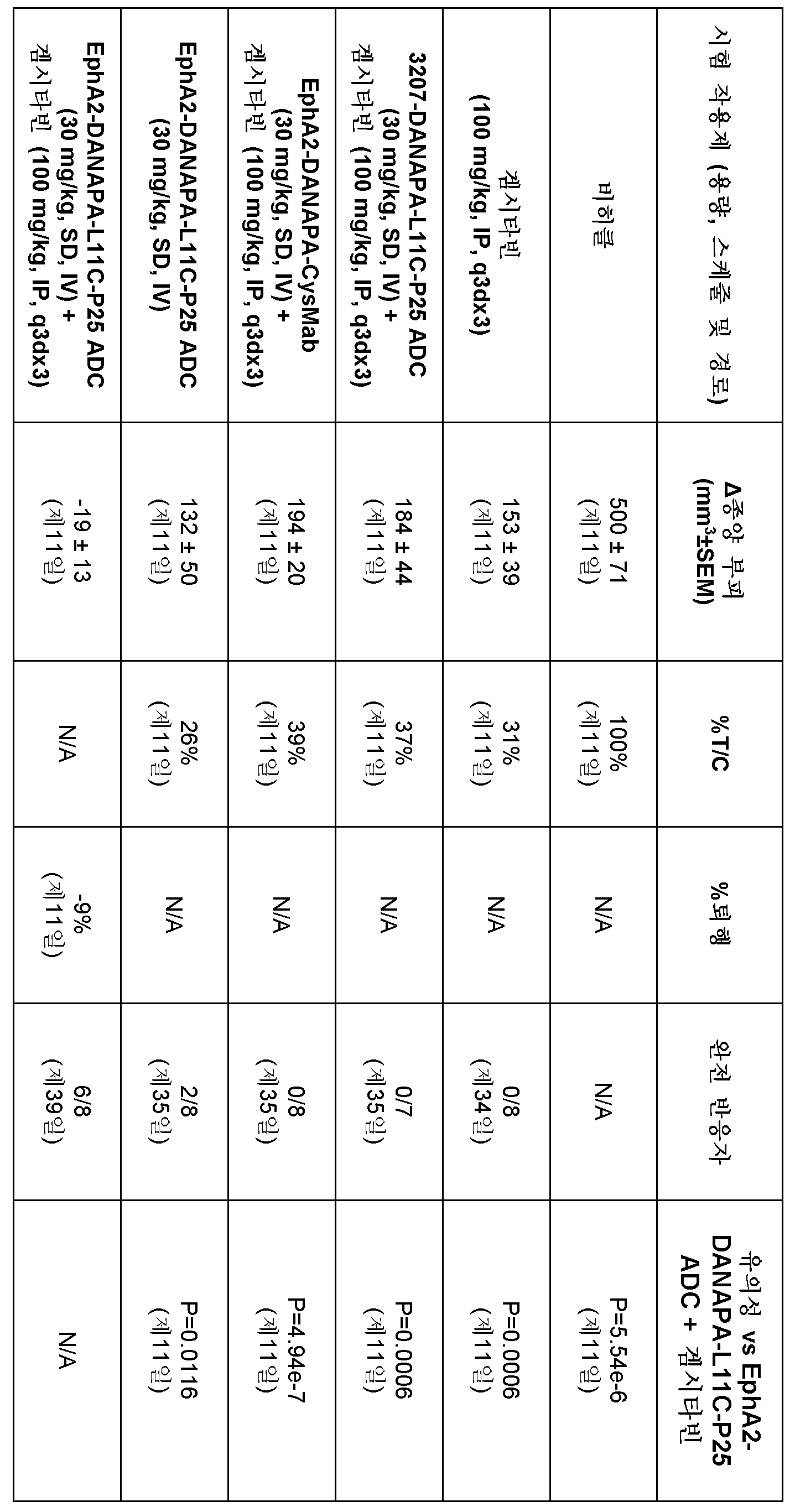
N/A, 적용가능하지 않음N/A, not applicable
표 16. MAPK 억제제 LXH254 및 CFF272와 조합된 EphA2-DANAPA-L11C-P25 ADC의 항종양 활성의 요약. 모든 Δ종양 부피, %T/C 및 %퇴행 값은 하기 명시된 처리 후 일에 수집된 종양 측정치에 기초하여 평균으로서 제시된다. T/C 및 퇴행 값을 방법에 명시된 식을 사용하여 계산하였다. 완전 반응자는 명시된 시점에 0 mm3으로 퇴행한 종양을 갖는 동물로서 확인되었다. 각각의 처리군을 EphA2-DANAPA-L11C-P25 ADC + LXH254 + CFF272 군에 비교함으로써 통계적 분석을 수행하였다. 평가 일은 각각의 값 아래 괄호 안에 표시된다.Table 16. Summary of antitumor activity of EphA2-DANAPA-L11C-P25 ADC in combination with MAPK inhibitors LXH254 and CFF272. All ΔTumor Volume, %T/C and %Regression values are presented as means based on tumor measurements collected on the indicated post-treatment days. T/C and regression values were calculated using the formulas specified in the Methods. Complete responders were identified as animals with tumors that regressed to 0 mm 3 at the indicated time points. Statistical analysis was performed by comparing each treatment group to the EphA2-DANAPA-L11C-P25 ADC + LXH254 + CFF272 group. The day of assessment is indicated in parentheses below each value.

N/A, 적용가능하지 않음N/A, not applicable
일반적 방법론: 예시적인 ADC의 약물-대-항체 비 (DAR)를 하기 방법에 따라 액체 크로마토그래피-질량 분광측정법 (LC/MS)에 의해 결정하였다. 모든 LC 방법에 대해, 이동상 A는 정제된 MS 등급 물 (허니웰, LC015-1)이었고, 이동상 B는 1%의 포름산 (FA) (써모 사이언티픽, 85178)으로 보충된, MS 등급 80% 이소프로판올 (허니웰 LC323-1): 20% 아세토니트릴 (허니웰, LC015-1), LC323-1)이었다. 칼럼 온도를 80℃로 설정하였다. 일반적 MS 방법을 합성된 모든 ADC에 대해 최적화하였다. 분석에 사용된 칼럼은 애질런트 PLRP-S 4000 A; 2.1x150mm, 8um (애질런트, PL1912-3803)였다. 사용된 유량은 0.3 ml/분이었다. 사용된 구배는 액퀴티 바이오 H-클래스 사원 UPLC (워터스) 상에서 0-0.75분 95%A, 0.76 -1.9분 75%A, 1.91-11.0분 50%A, 11.01-11.50 10%A, 11.51-13.50분 95%A, 13.51-18분 95%A였다. MS 시스템은 제보 G2-XS QToF ESI 질량 분광계 (워터스)였으며, 데이터를 1.5-11분으로부터 획득하고, 질량을 15000-80000 달톤 사이에서 분석하였다. DAR은 디컨볼루션된 스펙트럼 또는 UV 크로마토그램으로부터 비접합된 및 접합된 주어진 종 (mAb 또는 회합된 단편)의 적분된 MS (총 이온 전류) 또는 UV (280 nm) 피크 면적을 합산하여 결정하였으며, 각각의 면적에 부착된 약물의 수를 곱하여 가중하였다. 합산된, 가중된 면적을 총 면적의 합계로 나누어, 결과가 전체 ADC에 대한 최종 평균 DAR 값을 생성하였다.General Methodology: The drug-to-antibody ratio (DAR) of exemplary ADCs was determined by liquid chromatography-mass spectrometry (LC/MS) according to the following method. For all LC methods, mobile phase A was purified MS grade water (Honeywell, LC015-1) and mobile phase B was
크기 배제 크로마토그래피 (SEC): SEC를 수행하여 ADC의 품질 및 정제 후 응집 백분율 (%)을 결정하였다. 8분 동안 등용매 조건 100% PBS pH 7.2 ((하이클론 SH30028.03)), 유량 0.45 ml/분으로 분석 칼럼 슈퍼덱스 200 인크리즈 5/150 GL (지이 헬스케어, 28990945) 상에서 분석을 수행하였다. ADC 샘플의 % 응집체 분획을 280 nm에서의 피크 면적 흡광도에 기초하여 정량화하였다. 계산은 280 nm에서의 고분자량 용리액을 고분자량 및 단량체 용리액의 동일한 파장에서의 피크 면적 흡광도의 합계로 나눈 비에 100%를 곱한 것에 기초하였다. 데이터를 와이어트 미니DAWN 광 산란 및 트레오스 굴절률 검출기가 장착된 애질런트 바이오-이너트 1260 HPLC (와이어트 테크놀로지스, 캘리포니아주 산타 바바라) 상에서 획득하였다.Size exclusion chromatography (SEC): SEC was performed to determine the quality and percent aggregate (%) of ADC after purification. The analysis was performed on an analytical column Superdex 200 Increase 5/150 GL (GE Healthcare, 28990945) under isocratic conditions of 100% PBS pH 7.2 ((Hyclone SH30028.03)) for 8 minutes at a flow rate of 0.45 ml/min. The % aggregate fraction of ADC samples was quantified based on the peak area absorbance at 280 nm. The calculation was based on the ratio of the high molecular weight eluent at 280 nm divided by the sum of the peak area absorbances of the high molecular weight and monomer eluents at the same wavelength multiplied by 100%. Data were acquired on an Agilent Bio-Enert 1260 HPLC (Wyatt Technologies, Santa Barbara, CA) equipped with a Wyatt MiniDAWN light scattering and a THREOSS refractive index detector.
실시예 8. EphA2를 과다발현하는 조작된 HKB-11 세포주를 사용한 FACS 결합 연구Example 8. FACS binding studies using engineered HKB-11 cell lines overexpressing EphA2
물질 및 방법Materials and Methods
세포 상에서의 EphA2 항체의 결합 친화도를 유동 세포측정법 (FACS)을 사용하여 평가하였다. 항체의 용량 적정물을 EphA2를 과다발현하도록 형질도입된 HKB-11 세포주 (HKB-11: ATCC, CRL-12568)와 함께 인큐베이션하여, 세포 표면 발현된 EphA2에의 결합에 대한 EC50 값을 결정하였다. 세포주를 조직 배양 인큐베이터 내 5% CO2, 37℃에서 그의 성장에 최적인 배지에서 배양하였다. 세포 계수기 (바이-셀 XR 세포 생존율 분석기, 베크만 쿨터)를 사용하여 세포 생존율 및 세포 밀도를 결정하였다. 세포를 96-웰 U-바닥 플레이트 (코닝(Corning), #3799)에 200,000개 세포/웰로 플레이팅하고, FACS 완충제 (맥스퀀트(MACSQuant)® 구동 완충제, #130-092-747)로 1회 세척하였다. 모든 후속 단계를 얼음 상에서 및 빙냉 FACS 완충제 중에서 수행하여 수용체의 내재화를 방지하였다. 세포를 200 nM - 0.003 nM의 최종 농도로 시험 항체의 11-포인트 연속 희석물을 함유하는 FACS 완충제 100 μL 중에 재현탁시켰다. 세포를 4℃에서 45분 동안 인큐베이션하였다. 인큐베이션 후, 세포를 빙냉 PBS 중에서 1000 rpm으로 5분 동안 200 μL FACS 완충제로 3회 세척하였다. 이어서, 세포를 FACS 완충제 중에 1:250 희석으로 제조된 100 μL의 알렉사 플루오르(Alexa Fluor)® 647 아피니퓨어 염소 항-인간 IgG + IgM (H+L) (잭슨 이뮤노리서치(Jackson ImmunoResearch), #109-605-044)과 함께 인큐베이션하였다. 세포를 암실 내 4℃에서 45분 동안 인큐베이션하였다. 인큐베이션 후, 세포를 빙냉 PBS 중에서 1000 rpm으로 5분 동안 200 μL FACS 완충제로 3회 세척하였다. 이어서, 세포를 DAPI (써모피셔, #D1306) 염색제를 함유하는 100 μL FACS 완충제 중에 재현탁시키고, 이어서 유동 세포측정법 (맥스퀀트® 분석기 10)을 통해 판독하였다. 플로우조(FlowJo) v10.8.1을 사용하여 데이터를 분석하여 살아있는 세포 상에서의 MFI (평균 형광 강도)를 수득하였다. 그래프패드 프리즘 9 소프트웨어를 사용하여 EC50 값을 계산하였다. 3개의 군의 EphA2 항체를 평가하기 위해 3 라운드의 실험을 수행하였다. 이들 라운드를 상이한 날에 수행하였다. 여기서 요약된 모든 결과는 도 5-7 및 표 17에 제시된다.The binding affinity of the EphA2 antibodies on cells was assessed using flow cytometry (FACS). Antibody titers were incubated with HKB-11 cells transduced to overexpress EphA2 (HKB-11: ATCC, CRL-12568) to determine EC 50 values for binding to cell surface expressed EphA2. Cell lines were cultured in medium optimal for their growth at 37°C in a tissue culture incubator with 5% CO 2 . Cell viability and cell density were determined using a cell counter (By-Cell XR Cell Viability Analyzer, Beckman Coulter). Cells were plated at 200,000 cells/well in 96-well U-bottom plates (Corning, #3799) and washed once with FACS buffer (MACSQuant® Running Buffer, #130-092-747). All subsequent steps were performed on ice and in ice-cold FACS buffer to prevent internalization of receptors. Cells were resuspended in 100 μL of FACS buffer containing 11-point serial dilutions of test antibodies to final concentrations from 200 nM to 0.003 nM. Cells were incubated at 4°C for 45 minutes. After incubation, cells were washed three times with 200 μL FACS buffer in ice-cold PBS for 5 minutes at 1000 rpm. Cells were then incubated with 100 μL of
표 17. HKB-11 EphA2+ 세포주에 대한 결합 결과의 요약Table 17. Summary of binding results for HKB-11 EphA2+ cell line.

실시예 9. KinExA 겉보기 평형 KD 결정Example 9. Determination of KinExA apparent equilibrium K D
물질 및 방법Materials and Methods
항-EphA2 IgG 항체 1C1 및 그의 경쇄 점 돌연변이 IgG에 대한 HKB-11 세포 상에서 발현된 인간 EphA2에 대한 결합을 KinExA를 사용하여 강력한 평형 설정에서 평가하였다. 평형 적정 반응에서의 유리 항체를 KinExA 3200, 오토샘플러 (사피다인(Sapidyne))를 사용하여 KinExA에 의해 측정하였다. KinExA Pro 4-5-X (사피다인)를 사용하여 데이터를 분석하였다.Binding of anti-EphA2 IgG antibody 1C1 and its light chain point mutant IgG to human EphA2 expressed on HKB-11 cells was assessed in a robust equilibrium setup using KinExA. Free antibody in equilibrium titration reactions was measured by KinExA using a KinExA 3200, autosampler (Sapidyne). Data were analyzed using KinExA Pro 4-5-X (Sapidyne).
인간 EphA2 발현 HKB-11 세포를 10% 열 불활성화 FBS (HI-FBS, 써모 피셔 카탈로그# 10082) 및 1% Pen/Strep (써모 피셔 카탈로그# 15140)을 함유하는 DMEM (써모 피셔 카탈로그# 11995) 중에서 배양하였다. 세포를 느슨하게 부착시키고, 플라스크 상에서 서서히 두드려 탈착시켰다. 세포를 원심분리 (1,100rpm, 4분, RT)에 의해 펠릿화하고, 10% HI-FBS를 함유하는 PBS 중에, 평형 적정에 필요한 최종 밀도의 2x (전형적으로 4e6개 세포/ml)로 재현탁시켰다. 세포를 완충제 중에서 1부 대 1부 (1:1)로 10회 연속 희석하여 10개의 농도 포인트를 제공하였다.Human EphA2 expressing HKB-11 cells were cultured in DMEM (Thermo Fisher catalog # 11995) containing 10% heat inactivated FBS (HI-FBS, Thermo Fisher catalog # 10082) and 1% Pen/Strep (Thermo Fisher catalog # 15140). Cells were loosely attached and detached by gently tapping on the flask. Cells were pelleted by centrifugation (1,100 rpm, 4 min, RT) and resuspended in PBS containing 10% HI-FBS at 2x the final density required for equilibrium titration (typically 4e6 cells/ml). Cells were serially diluted 1 part to 1 part (1:1) in buffer to provide 10 concentration points.
항-EphA2 항체를 10% HI-FBS 및 0.04% 아지드화나트륨을 함유하는 PBS 중에, 평형 적정에 필요한 결합 부위의 최종 농도의 2x로 희석하였다. 다중곡선 분석을 위해, 각각의 데이터 세트는 3개의 항체 결합 부위 농도를 요구하였다: 1) KD의 <5배 (KD-제어된 곡선); 2) KD의 >15배 (농도-제어된 곡선); 3) (1)과 (2) 사이의 농도, 전형적으로 (1)보다 5배 더 높고 (2)보다 10배 더 낮음. 세포 및 항체를 에펜도르프 튜브에서 1:1로 합하고, 4℃에서 밤새 회전시키면서 인큐베이션하였다. 완충제 및 항체 단독 샘플을 포함시켰다. 세포를 펠릿화하고, 상청액을 뚫을 수 있는 필름으로 덮인 2 ml 96-웰 딥 웰 플레이트로 옮겼다.Anti-EphA2 antibodies were diluted in PBS containing 10% HI-FBS and 0.04% sodium azide to 2x the final concentration of binding site required for equilibrium titration. For multicurve analysis, each data set required three antibody binding site concentrations: 1) <5x K D (K D -controlled curves); 2) >15x K D (concentration-controlled curves); 3) a concentration between (1) and (2), typically 5x higher than (1) and 10x lower than (2). Cells and antibodies were combined 1:1 in Eppendorf tubes and incubated overnight at 4°C with rotation. Buffer and antibody only samples were included. Cells were pelleted and supernatants were transferred to 2 ml 96-well deep well plates covered with pierceable film.
폴리스티렌 비드 (사피다인 카탈로그# 442178)를 4℃에서 밤새 회전시키면서 PBS 중 30 μg/ml 항-인간 IgG Fc 포획 항체 (잭슨 카탈로그# 709-006-098)로 코팅하였다. 비드를 짧은 원심분리에 의해 펠릿화하고, 코팅 완충제를 제거하고, 비드를 10 mg/ml BSA (이엠디 밀리포어(EMD Millipore) 카탈로그# 126575) 및 0.02% 아지드화나트륨을 함유하는 PBS 중에서 실온에서 1시간 동안 회전시키면서 차단하였다. 제조된 비드의 3개의 튜브를 유리 비드 바이알 내 30 ml의 구동 완충제 (PBS, 0.02% 아지드화나트륨)에 첨가하였다.Polystyrene beads (Safidyne catalog # 442178) were coated with 30 μg/ml anti-human IgG Fc capture antibody (Jackson catalog # 709-006-098) in PBS with rotation overnight at 4°C. The beads were pelleted by brief centrifugation, the coating buffer was removed, and the beads were blocked in PBS containing 10 mg/ml BSA (EMD Millipore catalog # 126575) and 0.02% sodium azide for 1 hour at room temperature with rotation. Three tubes of prepared beads were added to 30 ml of running buffer (PBS, 0.02% sodium azide) in glass bead vials.
평형 샘플 주입 부피 및 표지 농도는 표지 (Gt-항-인간 H&L IgG 잭슨 카탈로그# 109-605-003)의 500μl 주입으로 0.5V-2.0V를 달성하도록 미리 결정하였다. 데이터를 n-곡선 분석에 의해 분석하였다. 여기서 요약된 모든 결과는 도 8 및 표 18에 제시된다.The equilibrium sample injection volume and label concentration were predetermined to achieve 0.5 V-2.0 V with a 500 μl injection of label (Gt-anti-human H&L IgG Jackson catalog # 109-605-003). The data were analyzed by n-curve analysis. All results summarized herein are presented in Figure 8 and Table 18.
표 18. KinExA 겉보기 평형 KD 결정의 결과Table 18. Results of KinExA apparent equilibrium K D determination
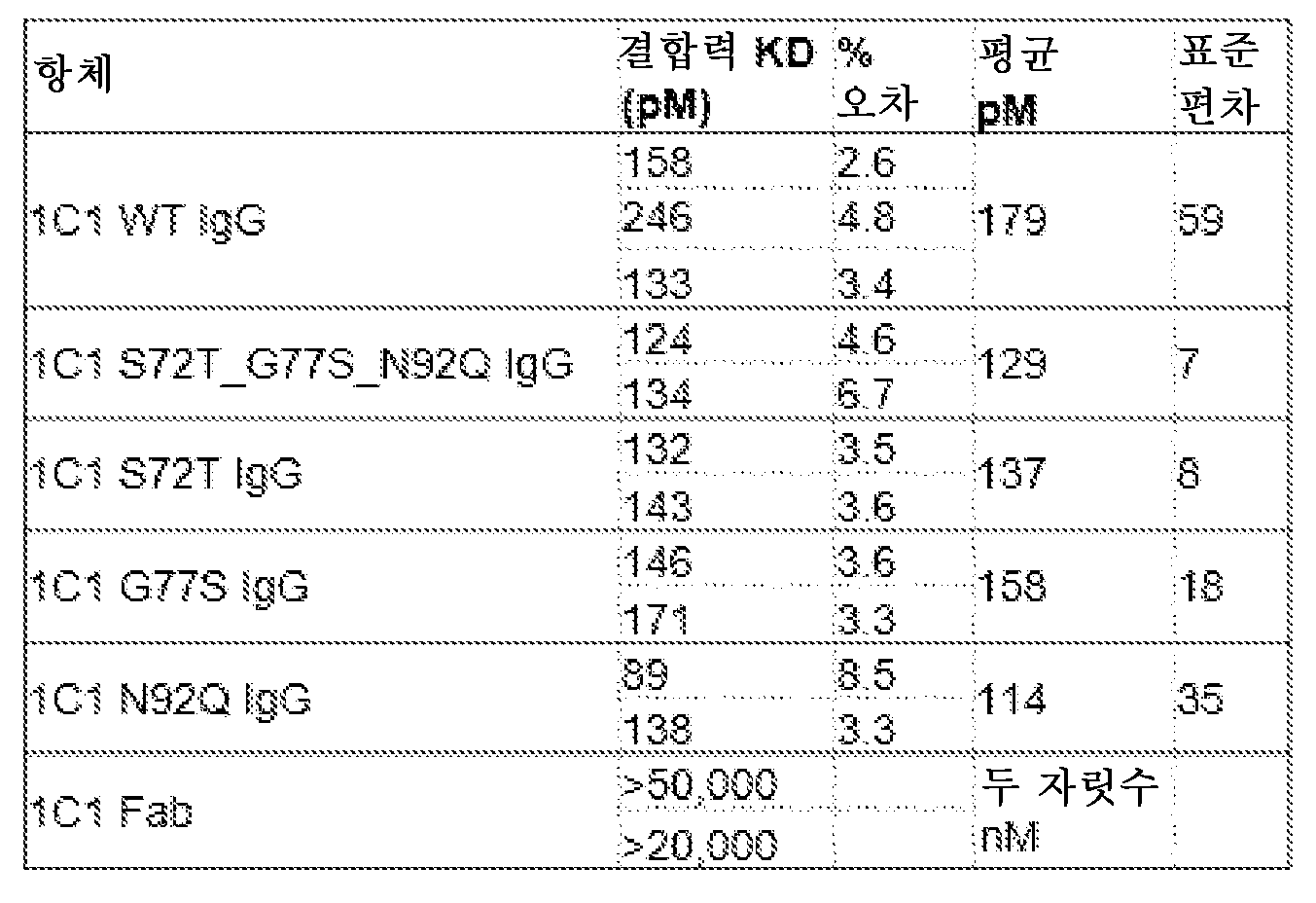
실시예 10. 비아코어 KD 결정Example 10. Determination of Biacore K D
물질 및 방법Materials and Methods
항-EphA2 IgG 항체 1C1 및 그의 경쇄 점 돌연변이 IgG에 대한 인간, 마우스 및 시노 EphA2 엑토도메인에 대한 결합을 비아코어를 사용하여 평가하였다. 하기 기재된 바와 같이 비아코어 8k 기기 (시티바(Cytiva), 이전에 지이 헬스케어 라이프사이언시스(GE Healthcare Lifesciences))를 사용하여 SPR을 통해 동역학적 속도 상수를 결정하였다.Binding of anti-EphA2 IgG antibody 1C1 and its light chain point mutant IgGs to human, mouse, and cyno EphA2 ectodomains was assessed using Biacore. Kinetic rate constants were determined via SPR using a Biacore 8k instrument (Cytiva, formerly GE Healthcare Lifesciences) as described below.
인간 Fab 포획 방법을 이용하여 항체에 대한 동역학을 결정하였다. 사용된 항-Fab 항체를 인간 Fab 포획 키트 (시티바, 카탈로그# 28958325)에 제공하고, 제조업체의 지침서에 따라 CM5 센서 칩의 모든 8개 채널 상에 고정화시켰다. 각각의 채널은 2개의 유동 셀을 갖는다. 참조 유동 셀은 고정화된 항-Fab만을 함유한 반면, 반응 유동 셀은 항-Fab를 통해 항-EphA2 IgG를 포획하였다. HBS-EP+ 완충제, pH 7.6을 구동 완충제로서 사용하였다. 가용성 인간, 마우스 및 시노 EphA2 엑토도메인이 8개 채널 상의 양쪽 유동 셀 상에서 유동하였다. EphA2 엑토도메인 농도는 50 nM에서 시작하였고, 6가지 농도에 대해 구동 완충제 중에 1부 대 1부 (1:1)로 연속적으로 희석하였다. 분석 챔버를 37℃에서 유지하였다. 키트에 제공된 10 mM 글리신-HCl (pH 2.1)의 용액으로 세척하면서 각각의 샘플의 단부에서 재생을 수행하였다.Kinetics for antibodies were determined using the human Fab capture method. Anti-Fab antibodies used were provided in the Human Fab Capture Kit (Citiba, Catalog # 28958325) and immobilized on all eight channels of the CM5 sensor chip according to the manufacturer's instructions. Each channel had two flow cells. The reference flow cell contained only immobilized anti-Fab, while the reaction flow cell captured anti-EphA2 IgG via the anti-Fab. HBS-EP+ buffer, pH 7.6, was used as the running buffer. Soluble human, mouse, and cyno EphA2 ectodomains were flowed on both flow cells across the eight channels. EphA2 ectodomain concentrations were started at 50 nM and serially diluted 1 part to 1 part (1:1) in running buffer for six concentrations. The assay chamber was maintained at 37°C. Regeneration was performed at the end of each sample by washing with a solution of 10 mM glycine-HCl (pH 2.1) provided in the kit.
비아코어 인사이트 평가 소프트웨어를 사용하여 데이터를 분석하였다. 이중 참조 차감을 완료하여 최종 데이터를 생성하였다. 미가공 데이터를 1:1 결합 모델에 피팅하고, 파라미터(들) Rmax를 로컬로 설정하였다. 여기서 요약된 모든 결과는 도 9a, 9b 및 표 19에 제시된다.Data were analyzed using Biacore Insight Evaluation Software. Double reference subtraction was completed to generate the final data. The raw data were fitted to a 1:1 combined model, and the parameter(s) R max were set locally. All results summarized here are presented in Figures 9a, 9b and Table 19.
표 19. 비아코어 Kd 결정의 결과Table 19. Results of Biacore K d determination

서열목록 전자파일 첨부Attach electronic file of sequence list
Claims (96)
Ab-(L-D)p (1)
여기서 Ab는 항-EphA2 항체 또는 그의 항원-결합 단편이고;
L은 Ab를 D에 공유 부착시키는 링커이고;
p는 1 내지 16의 정수이고;
D는 링커 L에 공유 부착된 하기 화학식 (I) 또는 화학식 (II)의 Bcl-xL 억제제 화합물이고:

또는 상기 중 어느 하나의 거울상이성질체, 부분입체이성질체 및/또는 제약상 허용되는 염, 여기서
R1 및 R2는 서로 독립적으로 수소; 히드록실 또는 C1-C6알콕시 기에 의해 임의로 치환된 선형 또는 분지형 C1-C6알킬; C3-C6시클로알킬; 트리플루오로메틸; 선형 또는 분지형 C1-C6알킬렌-헤테로시클로알킬로부터 선택된 기를 나타내고, 여기서 헤테로시클로알킬 기는 선형 또는 분지형 C1-C6알킬 기에 의해 임의로 치환되거나;
또는 R1 및 R2는 이들을 보유하는 탄소 원자와 함께 C3-C6시클로알킬렌 기를 형성하고,
R3은 수소; C3-C6시클로알킬; 선형 또는 분지형 C1-C6알킬; -X1-NRaRb; -X1-N+RaRbRc; -X1-O-Rc; -X1-COORc; -X1-PO(OH)2; -X1-SO2(OH); -X1-N3 및 로부터 선택된 기를 나타내고;
Ra 및 Rb는 서로 독립적으로 수소; 헤테로시클로알킬; -SO2-페닐 (여기서 페닐은 선형 또는 분지형 C1-C6알킬에 의해 치환될 수 있음); 1 또는 2개의 히드록실 기에 의해 임의로 치환된 선형 또는 분지형 C1-C6알킬; C1-C6알킬렌-SO2OH; C1-C6알킬렌-SO2O-; C1-C6알킬렌-COOH; C1-C6알킬렌-PO(OH)2; C1-C6알킬렌-NRdRe; C1-C6알킬렌-N+RdReRf; C1-C6알킬렌-페닐 (여기서 페닐은 C1-C6알콕시 기에 의해 치환될 수 있음) 및 하기 기로부터 선택된 기를 나타내거나:

또는 Ra 및 Rb는 이들을 보유하는 질소 원자와 함께 사이클 B1을 형성하거나;
또는 Ra, Rb 및 Rc는 이들을 보유하는 질소 원자와 함께 가교된 C3-C8헤테로시클로알킬을 형성하고,
Rc, Rd, Re, Rf는 서로 독립적으로 수소 또는 선형 또는 분지형 C1-C6알킬 기를 나타내거나,
또는 Rd 및 Re는 이들을 보유하는 질소 원자와 함께 사이클 B2를 형성하거나,
또는 Rd, Re 및 Rf는 이들을 보유하는 질소 원자와 함께 가교된 C3-C8헤테로시클로알킬을 형성하고,
Het1은 하기로부터 선택된 기를 나타내고:
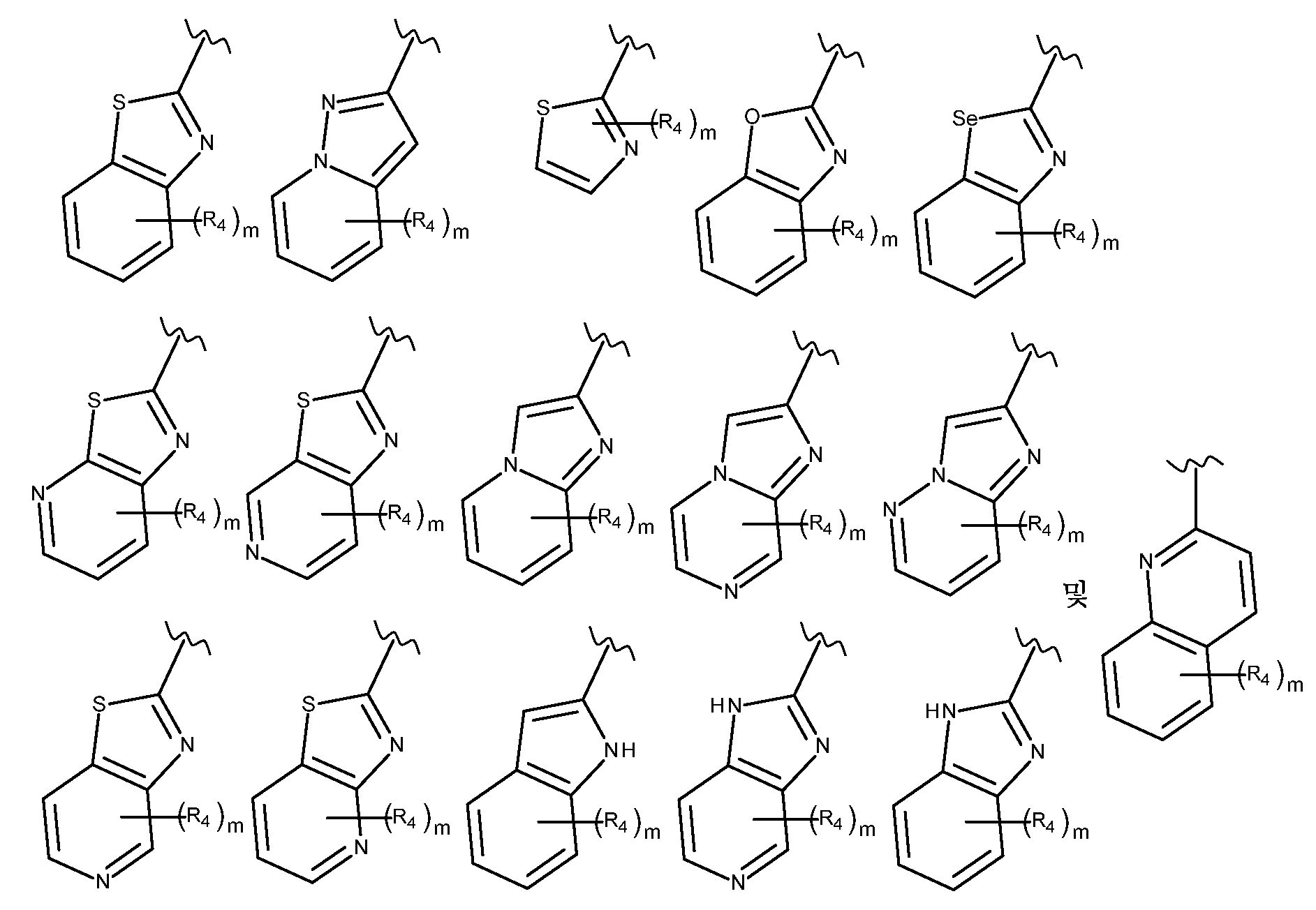
Het2는 하기로부터 선택된 기를 나타내고:
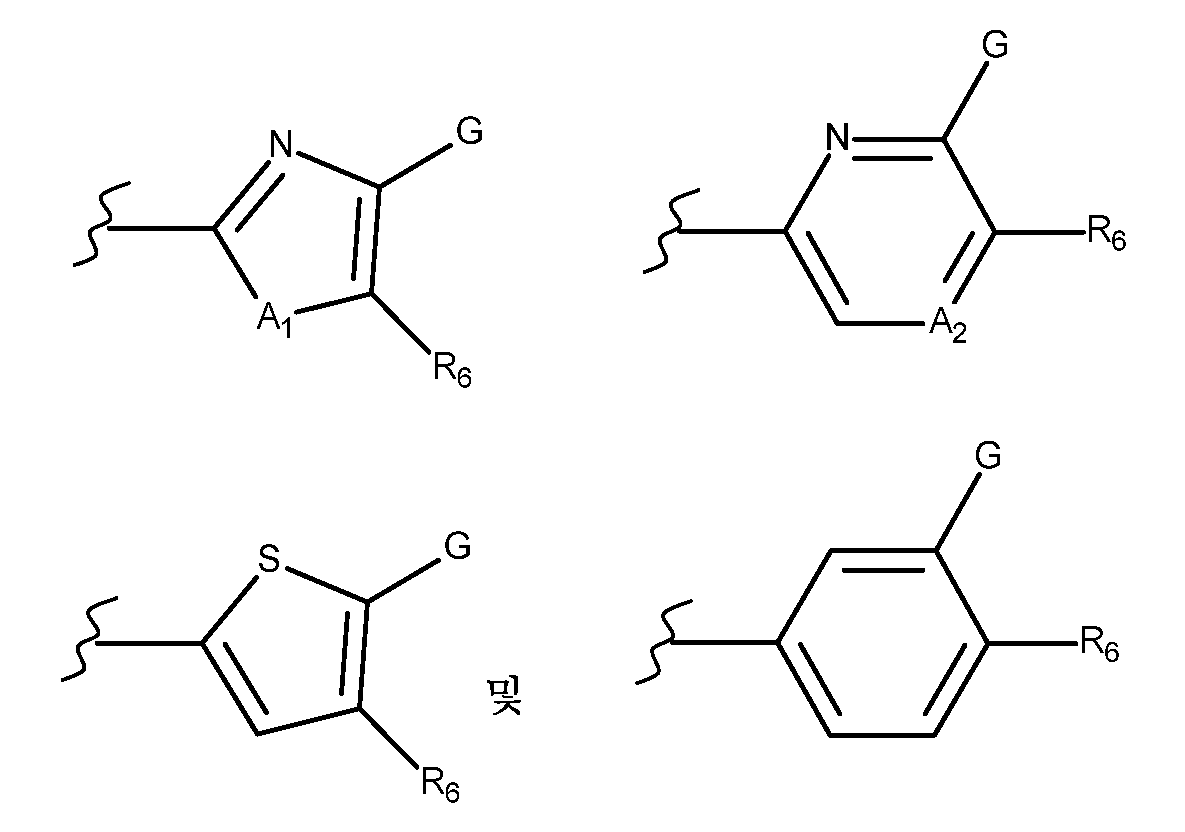
A1은 -NH-, -N(C1-C3알킬), O, S 또는 Se이고,
A2는 N, CH 또는 C(R5)이고,
G는 하기로 이루어진 군으로부터 선택되고;
-C(O)ORG3, -C(O)NRG1RG2, -C(O)RG2, -NRG1C(O)RG2, -NRG1C(O)NRG1RG2, -OC(O)NRG1RG2, -NRG1C(O)ORG3, -C(=NORG1)NRG1RG2, -NRG1C(=NCN)NRG1RG2, -NRG1S(O)2NRG1RG2, -S(O)2RG3, -S(O)2NRG1RG2, -NRG1S(O)2RG2, -NRG1C(=NRG2)NRG1RG2, -C(=S)NRG1RG2, -C(=NRG1)NRG1RG2, 히드록실 기에 의해 임의로 치환된 C1-C6알킬, 할로겐, -NO2 및 -CN, 여기서
- RG1 및 RG2는 각각의 경우에 각각 독립적으로 수소, 1 내지 3개의 할로겐 원자에 의해 임의로 치환된 C1-C6알킬, C2-C6알케닐, C2-C6알키닐, C3-C6시클로알킬, 페닐 및 -(CH2)1-4-페닐로 이루어진 군으로부터 선택되고;
- RG3은 1 내지 3개의 할로겐 원자에 의해 임의로 치환된 C1-C6알킬, C2-C6알케닐, C2-C6알키닐, C3-C6시클로알킬, 페닐 및 -(CH2)1-4-페닐로 이루어진 군으로부터 선택되거나; 또는
RG1 및 RG2는 이들 각각이 부착되어 있는 원자와 함께 조합되어 C3-C8헤테로시클로알킬을 형성하거나; 또는 대안적으로, G는 하기로 이루어진 군으로부터 선택되고:
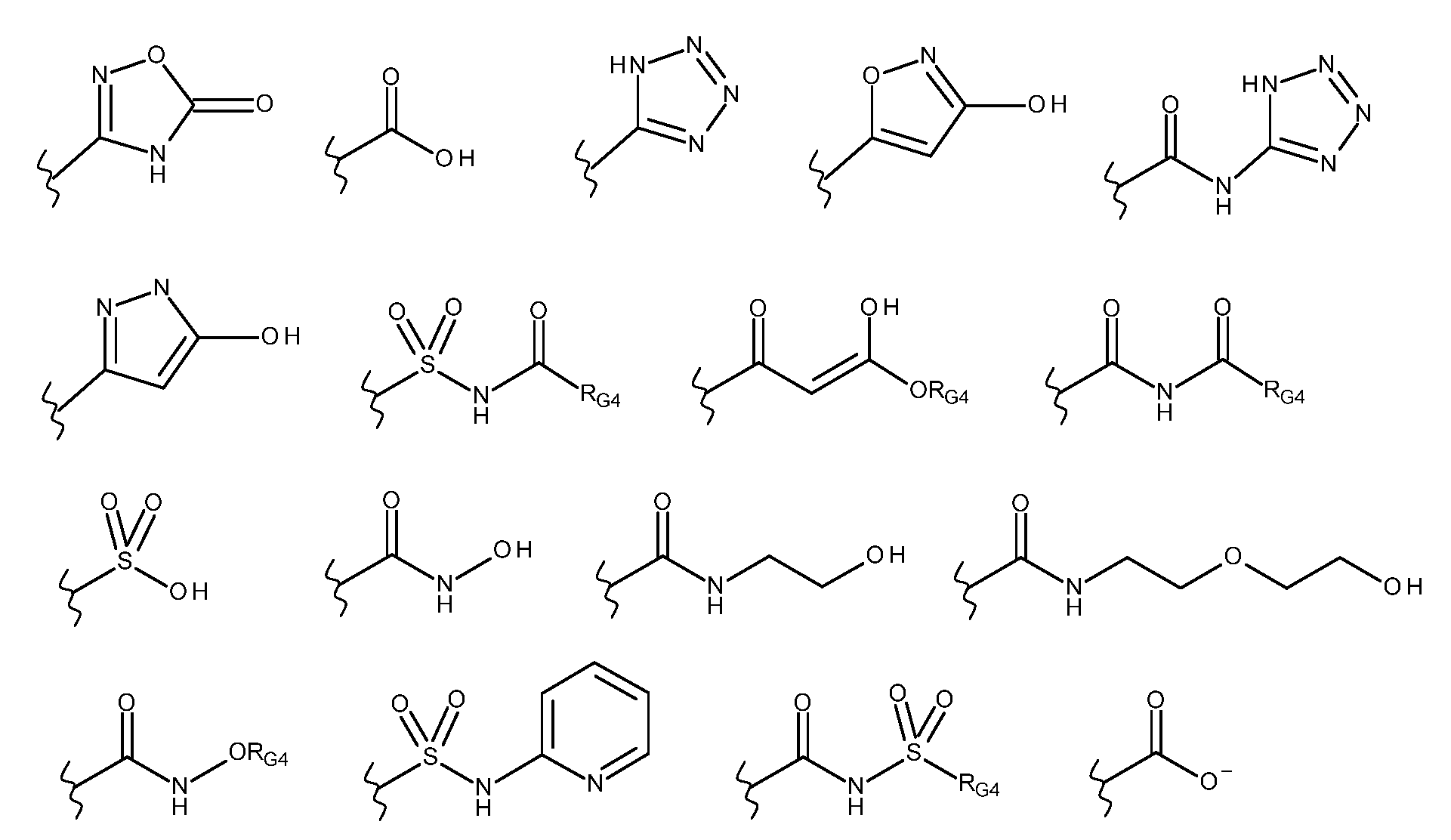
여기서 RG4는 수소, 1 내지 3개의 할로겐 원자에 의해 임의로 치환된 C1-C6알킬, C2-C6알케닐, C2-C6알키닐 및 C3-C6시클로알킬로부터 선택되고,
R4는 수소, 플루오린, 염소 또는 브로민 원자, 메틸, 히드록실 또는 메톡시 기를 나타내고,
R5는 1 내지 3개의 할로겐 원자에 의해 임의로 치환된 C1-C6알킬; C2-C6알케닐; C2-C6알키닐; 할로겐 또는 -CN으로부터 선택된 기를 나타내고,
R6은 하기로부터 선택된 기를 나타내고:
수소;
-C2-C6알케닐;
-X2-O-R7;

-X2-NSO2-R7;
-C=C(R9)-Y1-O-R7;
C3-C6시클로알킬;
히드록실 기에 의해 임의로 치환된 C3-C6헤테로시클로알킬;
C3-C6시클로알킬렌-Y2-R7;
C3-C6헤테로시클로알킬렌-Y2-R7 기;
선형 또는 분지형 C1-C6알킬 기에 의해 임의로 치환된 헤테로아릴렌-R7 기;
R7은 선형 또는 분지형 C1-C6알킬 기; (C3-C6)시클로알킬렌-R8 또는 하기로부터 선택된 기를 나타내고:

여기서 Cy는 C3-C8시클로알킬을 나타내고,
R8은 수소; 선형 또는 분지형 C1-C6알킬, -NR'aR'b; -NR'a-CO-OR'c; -NR'a-CO-R'c; -N+R'aR'bR'c; -O-R'c; -NH-X'2-N+R'aR'bR'c; -O-X'2-NR'aR'b, -X'2-NR'aR'b, -NR'c-X'2-N3 및

R9는 선형 또는 분지형 C1-C6알킬, 트리플루오로메틸, 히드록실, 할로겐, C1-C6알콕시로부터 선택된 기를 나타내고,
R10은 수소, 플루오린, 염소, 브로민, -CF3 및 메틸로부터 선택된 기를 나타내고,
R11은 수소, C1-C3알킬렌-R8, -O-C1-C3알킬렌-R8, -CO-NRhRi 및 -CH=CH-C1-C4알킬렌-NRhRi, -CH=CH-CHO, C3-C8시클로알킬렌-CH2-R8, C3-C8헤테로시클로알킬렌-CH2-R8로부터 선택된 기를 나타내고,
R12 및 R13은 서로 독립적으로 수소 원자 또는 메틸 기를 나타내고,
R14 및 R15는 서로 독립적으로 수소 또는 메틸 기를 나타내거나, 또는 R14 및 R15는 이들을 보유하는 탄소 원자와 함께 시클로헥실을 형성하고,
Rh 및 Ri는 서로 독립적으로 수소 또는 선형 또는 분지형 C1-C6알킬 기를 나타내고,
X1 및 X2는 서로 독립적으로 트리플루오로메틸, 히드록실, 할로겐, C1-C6알콕시로부터 선택된 1 또는 2개의 기에 의해 임의로 치환된 선형 또는 분지형 C1-C6알킬렌 기를 나타내고,
X'2는 선형 또는 분지형 C1-C6알킬렌을 나타내고,
R'a 및 R'b는 서로 독립적으로 수소; 헤테로시클로알킬; -SO2-페닐 (여기서 페닐은 선형 또는 분지형 C1-C6알킬에 의해 치환될 수 있음); 1 또는 2개의 히드록실 또는 C1-C6알콕시 기에 의해 임의로 치환된 선형 또는 분지형 C1-C6알킬; C1-C6알킬렌-SO2OH; C1-C6알킬렌-SO2O-; C1-C6알킬렌-COOH; C1-C6알킬렌-PO(OH)2; C1-C6알킬렌-NR'dR'e; C1-C6알킬렌-N+R'dR'eR'f; C1-C6알킬렌-O-C1-C6알킬렌-OH; C1-C6알킬렌-페닐 (여기서 페닐은 히드록실 또는 C1-C6알콕시 기에 의해 치환될 수 있음) 및 하기 기로부터 선택된 기를 나타내거나:
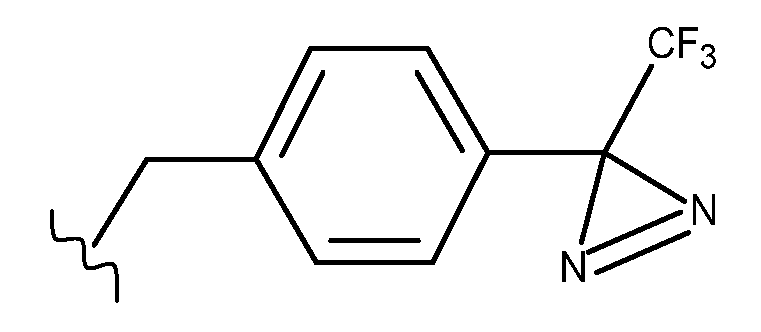
또는 R'a 및 R'b는 이들을 보유하는 질소 원자와 함께 사이클 B3을 형성하거나,
또는 R'a, R'b 및 R'c는 이들을 보유하는 질소 원자와 함께 가교된 C3-C8헤테로시클로알킬을 형성하고,
R'c, R'd, R'e, R'f는 서로 독립적으로 수소 또는 선형 또는 분지형 C1-C6알킬 기를 나타내거나,
또는 R'd 및 R'e는 이들을 보유하는 질소 원자와 함께 사이클 B4를 형성하거나,
또는 R'd, R'e 및 R'f는 이들을 보유하는 질소 원자와 함께 가교된 C3-C8헤테로시클로알킬을 형성하고,
Y1은 선형 또는 분지형 C1-C4알킬렌을 나타내고,
Y2는 결합, -O-, -O-CH2-, -O-CO-, -O-SO2-, -CH2-, -CH2-O, -CH2-CO-, -CH2-SO2-, -C2H5-, -CO-, -CO-O-, -CO-CH2-, -CO-NH-CH2-, -SO2-, -SO2-CH2-, -NH-CO-, -NH-SO2-를 나타내고,
m=0, 1 또는 2이고,
p=1, 2, 3 또는 4이고,
B1, B2, B3 및 B4는 서로 독립적으로 C3-C8헤테로시클로알킬 기를 나타내고, 상기 기는 (i) 모노- 또는 비-시클릭 기일 수 있고 (여기서 비시클릭 기는 융합된, 가교된 또는 스피로 고리계를 포함함), (ii) 질소 원자 이외에도, 산소, 황 및 질소로부터 독립적으로 선택된 1 또는 2개의 헤테로 원자를 함유할 수 있고, (iii) 플루오린, 브로민, 염소, 선형 또는 분지형 C1-C6알킬, 히드록실, -NH2, 옥소 또는 피페리디닐로부터 선택된 1 또는 2개의 기에 의해 치환될 수 있고,
여기서 R3 및 R8 기 중 1개는, 존재하는 경우, 링커에 공유 부착되고, 여기서 원자의 원자가는 그에 결합된 1개 이상의 치환기에 의해 초과되지 않음; 또는

또는 상기 중 어느 하나의 거울상이성질체, 부분입체이성질체 및/또는 제약상 허용되는 염, 여기서
n=0, 1 또는 2이고,
------는 단일 또는 이중 결합을 나타내고,
A4 및 A5는 서로 독립적으로 탄소 또는 질소 원자를 나타내고,
Z1은 결합, -N(R)- 또는 -O-를 나타내고, 여기서 R은 수소 또는 선형 또는 분지형 C1-C6알킬을 나타내고,
R1은 수소; 히드록실 또는 C1-C6알콕시 기에 의해 임의로 치환된 선형 또는 분지형 C1-C6알킬; C3-C6시클로알킬; 트리플루오로메틸; 선형 또는 분지형 C1-C6알킬렌-헤테로시클로알킬로부터 선택된 기를 나타내고, 여기서 헤테로시클로알킬 기는 선형 또는 분지형 C1-C6알킬 기에 의해 임의로 치환되고;
R2는 수소 또는 메틸을 나타내고;
R3은 수소; 선형 또는 분지형 C1-C4알킬; -X1-NRaRb; -X1-N+RaRbRc; -X1-O-Rc; -X1-COORc; -X1-PO(OH)2; -X1-SO2(OH); -X1-N3 및

Ra 및 Rb는 서로 독립적으로 수소; 헤테로시클로알킬; -SO2-페닐 (여기서 페닐은 선형 또는 분지형 C1-C6알킬에 의해 치환될 수 있음); 1 또는 2개의 히드록실 기에 의해 임의로 치환된 선형 또는 분지형 C1-C6알킬; C1-C6알킬렌-SO2OH; C1-C6알킬렌-SO2O-; C1-C6알킬렌-COOH; C1-C6알킬렌-PO(OH)2; C1-C6알킬렌-NRdRe; C1-C6알킬렌-N+RdReRf; C1-C6알킬렌-페닐 (여기서 페닐은 C1-C6알콕시 기에 의해 치환될 수 있음) 및 하기 기로부터 선택된 기를 나타내거나:

또는 Ra 및 Rb는 이들을 보유하는 질소 원자와 함께 사이클 B1을 형성하거나;
또는 Ra, Rb 및 Rc는 이들을 보유하는 질소 원자와 함께 가교된 C3-C8헤테로시클로알킬을 형성하고,
Rc, Rd, Re, Rf는 서로 독립적으로 수소 또는 선형 또는 분지형 C1-C6알킬 기를 나타내거나,
또는 Rd 및 Re는 이들을 보유하는 질소 원자와 함께 사이클 B2를 형성하거나,
또는 Rd, Re 및 Rf는 이들을 보유하는 질소 원자와 함께 가교된 C3-C8헤테로시클로알킬을 형성하고,
Het1은 하기로부터 선택된 기를 나타내고:
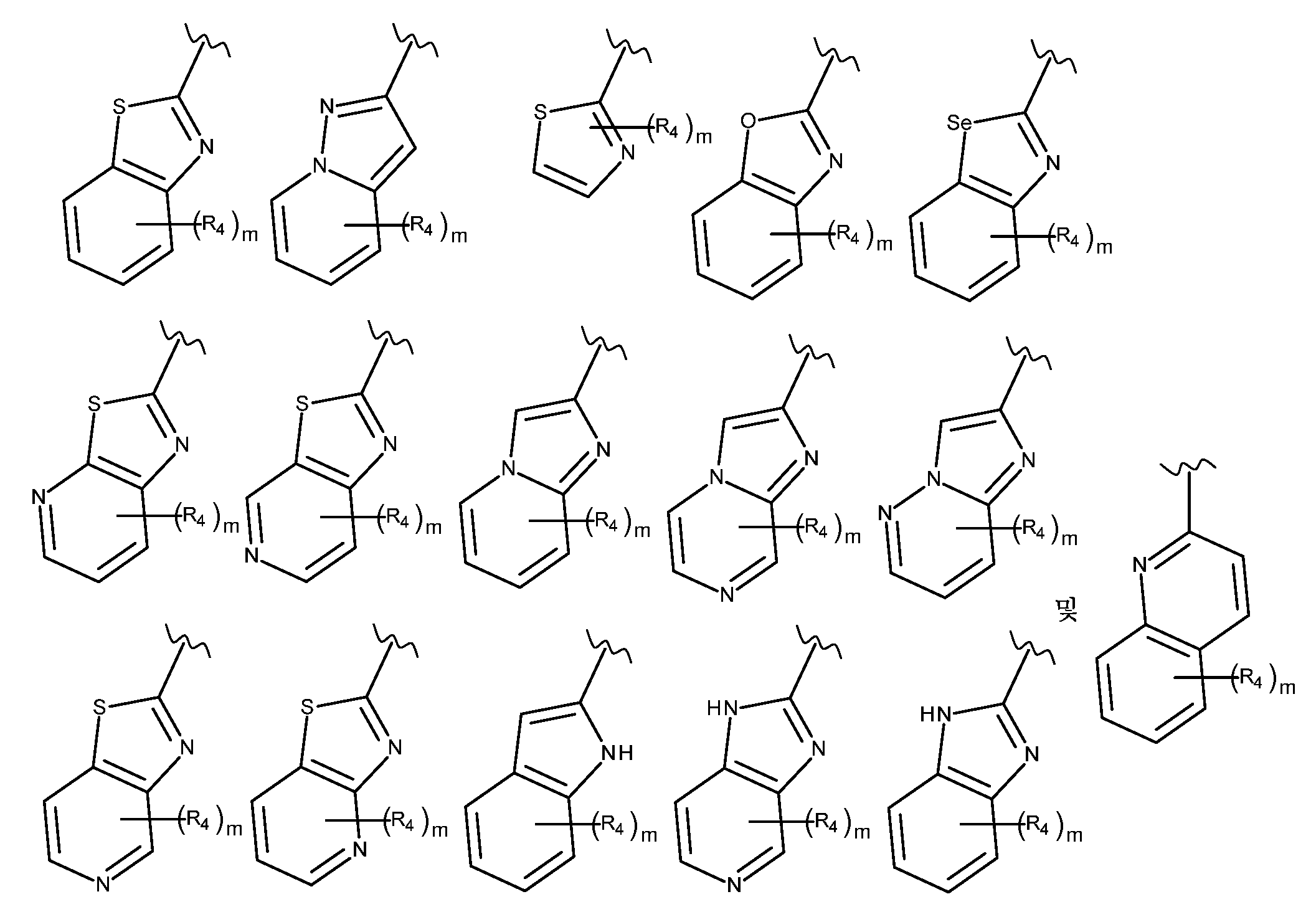
Het2는 하기로부터 선택된 기를 나타내고:

A1은 -NH-, -N(C1-C3알킬), O, S 또는 Se이고,
A2는 N, CH 또는 C(R5)이고,
G는 하기로 이루어진 군으로부터 선택되고;
-C(O)ORG3, -C(O)NRG1RG2, -C(O)RG2, -NRG1C(O)RG2, -NRG1C(O)NRG1RG2, -OC(O)NRG1RG2, -NRG1C(O)ORG3, -C(=NORG1)NRG1RG2, -NRG1C(=NCN)NRG1RG2, -NRG1S(O)2NRG1RG2, -S(O)2RG3, -S(O)2NRG1RG2, -NRG1S(O)2RG2, -NRG1C(=NRG2)NRG1RG2, -C(=S)NRG1RG2, -C(=NRG1)NRG1RG2, 히드록실 기에 의해 임의로 치환된 C1-C6알킬, 할로겐, -NO2 및 -CN, 여기서
- RG1 및 RG2는 각각의 경우에 각각 독립적으로 수소, 1 내지 3개의 할로겐 원자에 의해 임의로 치환된 C1-C6알킬, C2-C6알케닐, C2-C6알키닐, C3-C6시클로알킬, 페닐 및 -(CH2)1-4-페닐로 이루어진 군으로부터 선택되고;
- RG3은 1 내지 3개의 할로겐 원자에 의해 임의로 치환된 C1-C6알킬, C2-C6알케닐, C2-C6알키닐, C3-C6시클로알킬, 페닐 및 -(CH2)1-4-페닐로 이루어진 군으로부터 선택되거나; 또는
RG1 및 RG2는 이들 각각이 부착되어 있는 원자와 함께 조합되어 C3-C8헤테로시클로알킬을 형성하거나; 또는 대안적으로, G는 하기로 이루어진 군으로부터 선택되고:
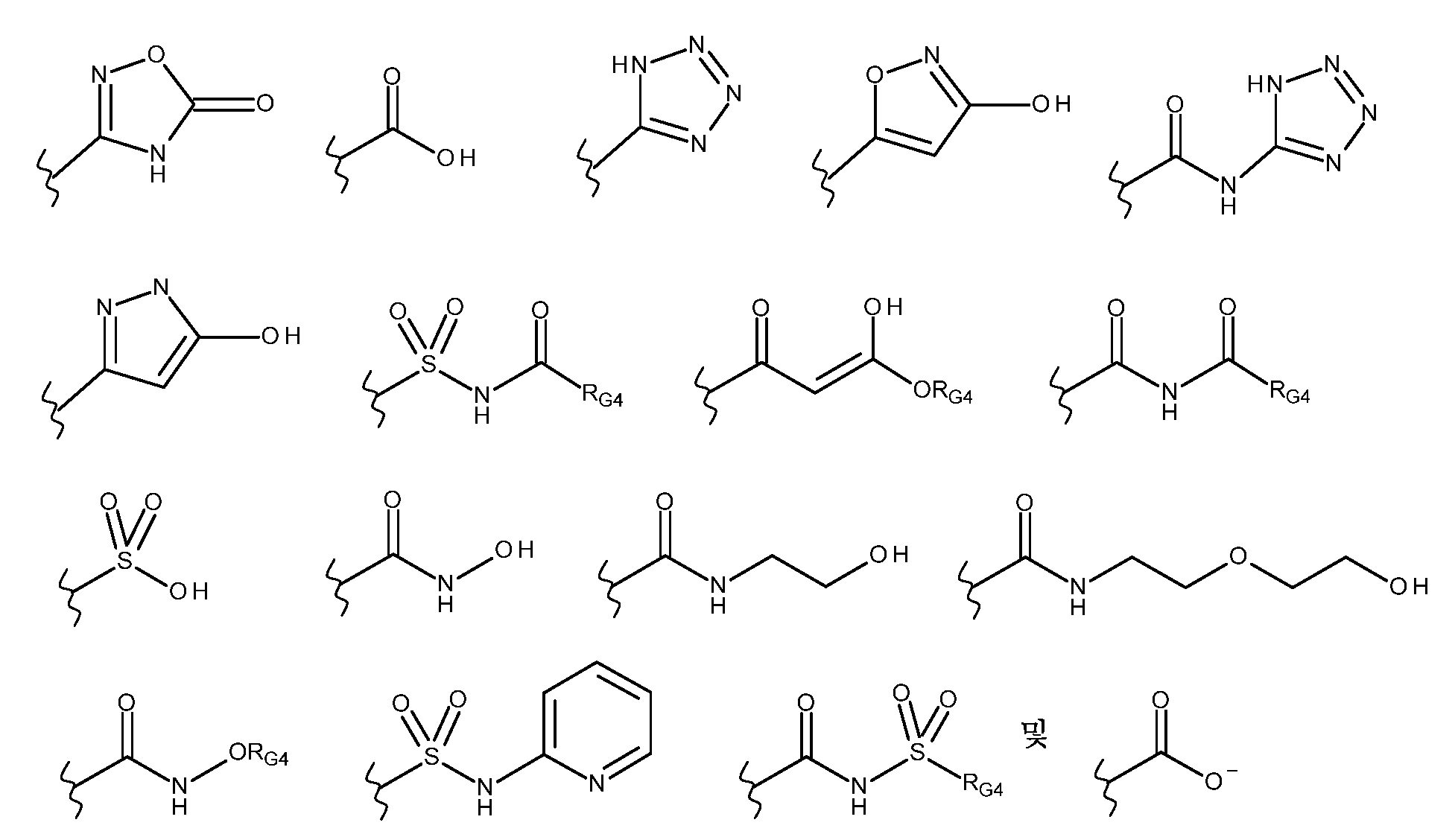
여기서 RG4는 수소, 1 내지 3개의 할로겐 원자에 의해 임의로 치환된 C1-C6알킬, C2-C6알케닐, C2-C6알키닐 및 C3-C6시클로알킬로부터 선택되고,
R4는 수소, 플루오린, 염소 또는 브로민 원자, 메틸, 히드록실 또는 메톡시 기를 나타내고,
R5는 1 내지 3개의 할로겐 원자에 의해 임의로 치환된 C1-C6알킬; C2-C6알케닐; C2-C6알키닐; 할로겐 또는 -CN으로부터 선택된 기를 나타내고,
R6은 하기로부터 선택된 기를 나타내고:
수소;
-C2-C6알케닐;
-X2-O-R7;

-X2-NSO2-R7;
-C=C(R9)-Y1-O-R7;
C3-C6시클로알킬;
히드록실 기에 의해 임의로 치환된 C3-C6헤테로시클로알킬;
C3-C6시클로알킬렌-Y2-R7;
C3-C6헤테로시클로알킬렌-Y2-R7 기;
선형 또는 분지형 C1-C6알킬 기에 의해 임의로 치환된 헤테로아릴렌-R7 기;
R7은 선형 또는 분지형 C1-C6알킬 기; (C3-C6)시클로알킬렌-R8 또는 하기로부터 선택된 기를 나타내고:

여기서 Cy는 C3-C8시클로알킬을 나타내고,
R8은 수소; 선형 또는 분지형 C1-C6알킬, -NR'aR'b; -NR'a-CO-OR'c; -NR'a-CO-R'c; -N+R'aR'bR'c; -O-R'c; -NH-X'2-N+R'aR'bR'c; -O-X'2-NR'aR'b, -X'2-NR'aR'b, -NR'c-X'2-N3 및

R9는 선형 또는 분지형 C1-C6알킬, 트리플루오로메틸, 히드록실, 할로겐, C1-C6알콕시로부터 선택된 기를 나타내고,
R10은 수소, 플루오린, 염소, 브로민, -CF3 및 메틸로부터 선택된 기를 나타내고,
R11은 수소, 할로겐, C1-C3알킬렌-R8, -O-C1-C3알킬렌-R8, -CO-NRhRi 및 -CH=CH-C1-C4알킬렌-NRhRi, -CH=CH-CHO, C3-C8시클로알킬렌-CH2-R8, C3-C8헤테로시클로알킬렌-CH2-R8로부터 선택된 기를 나타내고,
R12 및 R13은 서로 독립적으로 수소 원자 또는 메틸 기를 나타내고,
R14 및 R15는 서로 독립적으로 수소 또는 메틸 기를 나타내거나, 또는 R14 및 R15는 이들을 보유하는 탄소 원자와 함께 시클로헥실을 형성하고,
Rh 및 Ri는 서로 독립적으로 수소 또는 선형 또는 분지형 C1-C6알킬 기를 나타내고,
X1은 트리플루오로메틸, 히드록실, 할로겐, C1-C6알콕시로부터 선택된 1 또는 2개의 기에 의해 임의로 치환된 선형 또는 분지형 C1-C4알킬렌 기를 나타내고,
X2는 트리플루오로메틸, 히드록실, 할로겐, C1-C6알콕시로부터 선택된 1 또는 2개의 기에 의해 임의로 치환된 선형 또는 분지형 C1-C6알킬렌 기를 나타내고,
X'2는 선형 또는 분지형 C1-C6알킬렌을 나타내고,
R'a 및 R'b는 서로 독립적으로 수소; 헤테로시클로알킬; -SO2-페닐 (여기서 페닐은 선형 또는 분지형 C1-C6알킬에 의해 치환될 수 있음); 1 또는 2개의 히드록실 또는 C1-C6알콕시 기에 의해 임의로 치환된 선형 또는 분지형 C1-C6알킬; C1-C6알킬렌-SO2OH; C1-C6알킬렌-SO2O-; C1-C6알킬렌-COOH; C1-C6알킬렌-PO(OH)2; C1-C6알킬렌-NR'dR'e; C1-C6알킬렌-N+R'dR'eR'f; C1-C6알킬렌-O-C1-C6알킬렌-OH; C1-C6알킬렌-페닐 (여기서 페닐은 히드록실 또는 C1-C6알콕시 기에 의해 치환될 수 있음) 및 하기 기로부터 선택된 기를 나타내거나:
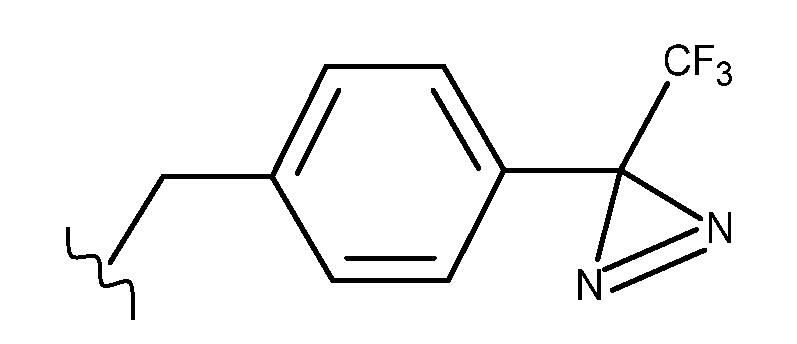
또는 R'a 및 R'b는 이들을 보유하는 질소 원자와 함께 사이클 B3을 형성하거나,
또는 R'a, R'b 및 R'c는 이들을 보유하는 질소 원자와 함께 가교된 C3-C8헤테로시클로알킬을 형성하고,
R'c, R'd, R'e, R'f는 서로 독립적으로 수소 또는 선형 또는 분지형 C1-C6알킬 기를 나타내거나,
또는 R'd 및 R'e는 이들을 보유하는 질소 원자와 함께 사이클 B4를 형성하거나,
또는 R'd, R'e 및 R'f는 이들을 보유하는 질소 원자와 함께 가교된 C3-C8헤테로시클로알킬을 형성하고,
Y1은 선형 또는 분지형 C1-C4알킬렌을 나타내고,
Y2는 결합, -O-, -O-CH2-, -O-CO-, -O-SO2-, -CH2-, -CH2-O, -CH2-CO-, -CH2-SO2-, -C2H5-, -CO-, -CO-O-, -CO-CH2-, -CO-NH-CH2-, -SO2-, -SO2-CH2-, -NH-CO-, -NH-SO2-를 나타내고,
m=0, 1 또는 2이고,
p=1, 2, 3 또는 4이고,
B1, B2, B3 및 B4는 서로 독립적으로 C3-C8헤테로시클로알킬 기를 나타내고, 상기 기는 (i) 모노- 또는 비-시클릭 기일 수 있고 (여기서 비시클릭 기는 융합된, 가교된 또는 스피로 고리계를 포함함), (ii) 질소 원자 이외에도, 산소, 황 및 질소로부터 독립적으로 선택된 1 또는 2개의 헤테로 원자를 함유할 수 있고, (iii) 플루오린, 브로민, 염소, 선형 또는 분지형 C1-C6알킬, 히드록실, -NH2, 옥소 또는 피페리디닐로부터 선택된 1 또는 2개의 기에 의해 치환될 수 있고,
여기서 R3 및 R8 기 중 1개는, 존재하는 경우, 링커에 공유 부착되고, 여기서 원자의 원자가는 그에 결합된 1개 이상의 치환기에 의해 초과되지 않음;
여기서 항-EphA2 항체 또는 항원-결합 단편은 하기를 포함한다:
(a) 서열식별번호: 2 (HCDR1), 서열식별번호: 3 (HCDR2) 및 서열식별번호: 4 (HCDR3)의 아미노산 서열을 포함하는 3개의 중쇄 상보성 결정 영역 (HCDR); 및 서열식별번호: 12 (LCDR1), 서열식별번호: 13 (LCDR2) 및 서열식별번호: 14, 26, 29, 32 또는 35 (LCDR3)의 아미노산 서열을 포함하는 3개의 경쇄 상보성 결정 영역 (LCDR);
(b) 서열식별번호: 5 (HCDR1), 서열식별번호: 6 (HCDR2) 및 서열식별번호: 4 (HCDR3)의 아미노산 서열을 포함하는 3개의 중쇄 상보성 결정 영역 (HCDR); 및 서열식별번호: 15 (LCDR1), 서열식별번호: 16 (LCDR2) 및 서열식별번호: 17, 24, 27, 30, 33 또는 36 (LCDR3)의 아미노산 서열을 포함하는 3개의 경쇄 상보성 결정 영역 (LCDR);
(c) 서열식별번호: 7 (HCDR1), 서열식별번호: 8 (HCDR2) 및 서열식별번호: 9 (HCDR3)의 아미노산 서열을 포함하는 3개의 중쇄 상보성 결정 영역 (HCDR); 및 서열식별번호: 18 (LCDR1), 서열식별번호: 13 (LCDR2) 및 서열식별번호: 17, 24, 27, 30, 33 또는 36 (LCDR3)의 아미노산 서열을 포함하는 3개의 경쇄 상보성 결정 영역 (LCDR); 또는
(d) 서열식별번호: 10 (HCDR1), 서열식별번호: 6 (HCDR2) 및 서열식별번호: 4 (HCDR3)의 아미노산 서열을 포함하는 3개의 중쇄 상보성 결정 영역 (HCDR); 및 서열식별번호: 15 (LCDR1), 서열식별번호: 16 (LCDR2) 및 서열식별번호: 17, 27, 30, 33 또는 36 (LCDR3)의 아미노산 서열을 포함하는 3개의 경쇄 상보성 결정 영역 (LCDR).Antibody-drug conjugate of the following chemical formula (1):
Ab-(LD) p (1)
wherein Ab is an anti-EphA2 antibody or an antigen-binding fragment thereof;
L is a linker that covalently attaches Ab to D;
p is an integer from 1 to 16;
D is a Bcl-xL inhibitor compound of formula (I) or formula (II) covalently attached to linker L:
or an enantiomer, diastereomer and/or pharmaceutically acceptable salt of any of the above, wherein
R 1 and R 2 independently represent a group selected from hydrogen; linear or branched C 1 -C 6 alkyl optionally substituted by hydroxyl or a C 1 -C 6 alkoxy group; C 3 -C 6 cycloalkyl; trifluoromethyl; linear or branched C 1 -C 6 alkylene-heterocycloalkyl, wherein the heterocycloalkyl group is optionally substituted by a linear or branched C 1 -C 6 alkyl group;
or R 1 and R 2 together with the carbon atoms carrying them form a C 3 -C 6 cycloalkylene group,
R 3 is hydrogen; C 3 -C 6 cycloalkyl; linear or branched C 1 -C 6 alkyl; -X 1 -NR a R b ; -X 1 -N + R a R b R c ; -X 1 -OR c ; -X 1 -COOR c ; -X 1 -PO(OH) 2 ; -X 1 -SO 2 (OH); -X 1 -N 3 and Indicates a flag selected from;
R a and R b independently represent hydrogen; heterocycloalkyl; -SO 2 -phenyl (wherein phenyl may be substituted by linear or branched C 1 -C 6 alkyl); linear or branched C 1 -C 6 alkyl optionally substituted by 1 or 2 hydroxyl groups; C 1 -C 6 alkylene-SO 2 OH; C 1 -C 6 alkylene-SO 2 O - ; C 1 -C 6 alkylene-COOH; C 1 -C 6 alkylene-PO(OH) 2 ; C 1 -C 6 alkylene-NR d R e ; C 1 -C 6 alkylene-N + R d R e R f ; C 1 -C 6 alkylene-phenyl (wherein phenyl may be substituted by a C 1 -C 6 alkoxy group) and a group selected from the following groups:
or R a and R b together with the nitrogen atom carrying them form cycle B 1 ;
or R a , R b and R c together with the nitrogen atom carrying them form a bridged C 3 -C 8 heterocycloalkyl,
R c , R d , R e , R f independently represent hydrogen or a linear or branched C 1 -C 6 alkyl group, or
or R d and R e form cycle B 2 together with the nitrogen atom carrying them,
or R d , R e and R f together with the nitrogen atom carrying them form a bridged C 3 -C 8 heterocycloalkyl,
Het 1 represents a group selected from:
Het 2 represents a group selected from the following:
A 1 is -NH-, -N(C 1 -C 3 alkyl), O, S or Se,
A 2 is N, CH or C(R 5 ),
G is selected from the group consisting of;
-C(O)OR G3 , -C(O)NR G1 R G2 , -C(O)R G2 , -NR G1 C(O)R G2 , -NR G1 C(O)NR G1 R G2 , -OC(O)NR G1 R G2 , -NR G1 C(O)OR G3 , -C(=NOR G1 )NR G1 R G2 , -NR G1 C(=NCN)NR G1 R G2 , -NR G1 S(O) 2 NR G1 R G2 , -S(O) 2 R G3 , -S(O) 2 NR G1 R G2 , -NR G1 S(O) 2 R G2 , -NR G1 C(=NR G2 )NR G1 R G2 , -C(=S)NR G1 R G2 , -C(=NR G1 )NR G1 R G2 , Hydroxyl group C 1 -C 6 alkyl, halogen, -NO 2 and -CN, optionally substituted by
- R G1 and R G2 are each independently selected from the group consisting of hydrogen, C 1 -C 6 alkyl, C 2 -C 6 alkenyl, C 2 -C 6 alkynyl, C 3 -C 6 cycloalkyl, phenyl and -(CH 2 ) 1-4 -phenyl, each optionally substituted with 1 to 3 halogen atoms ;
- R G3 is selected from the group consisting of C 1 -C 6 alkyl, C 2 -C 6 alkenyl, C 2 -C 6 alkynyl, C 3 -C 6 cycloalkyl, phenyl and -(CH 2 ) 1-4 -phenyl, optionally substituted by 1 to 3 halogen atoms; or
R G1 and R G2 are combined with the atoms to which they are each attached to form C 3 -C 8 heterocycloalkyl; or alternatively, G is selected from the group consisting of:
wherein R G4 is selected from hydrogen, C 1 -C 6 alkyl, C 2 -C 6 alkenyl, C 2 -C 6 alkynyl and C 3 -C 6 cycloalkyl optionally substituted with 1 to 3 halogen atoms,
R 4 represents a hydrogen, fluorine, chlorine or bromine atom, a methyl, hydroxyl or methoxy group,
R 5 represents a group selected from C 1 -C 6 alkyl, C 2 -C 6 alkenyl, C 2 -C 6 alkynyl, halogen or -CN, optionally substituted with 1 to 3 halogen atoms,
R 6 represents a group selected from the following:
hydrogen;
-C 2 -C 6 alkenyl;
-X 2 -OR 7 ;
-X 2 -NSO 2 -R 7 ;
-C=C(R 9 )-Y 1 -OR 7 ;
C 3 -C 6 cycloalkyl;
C 3 -C 6 heterocycloalkyl optionally substituted by hydroxyl groups;
C 3 -C 6 cycloalkylene-Y 2 -R 7 ;
C 3 -C 6 heterocycloalkylene-Y 2 -R 7 group;
A heteroarylene-R 7 group optionally substituted by a linear or branched C 1 -C 6 alkyl group;
R 7 represents a linear or branched C 1 -C 6 alkyl group; (C 3 -C 6 )cycloalkylene-R 8 or a group selected from the following:
Here, Cy represents C 3 -C 8 cycloalkyl,
R 8 is hydrogen; linear or branched C 1 -C 6 alkyl, -NR' a R'b;-NR' a -CO-OR'c;-NR' a -CO-R'c; -N + R' a R' b R'c;-O-R'c;-NH-X' 2 -N + R' a R' b R'c;-O-X' 2 -NR' a R' b , -X' 2 -NR' a R' b , -NR' c -X' 2 -N 3 and
R 9 represents a group selected from linear or branched C 1 -C 6 alkyl, trifluoromethyl, hydroxyl, halogen, C 1 -C 6 alkoxy,
R 10 represents a group selected from hydrogen, fluorine, chlorine, bromine, -CF 3 and methyl,
R 11 represents a group selected from hydrogen, C 1 -C 3 alkylene-R 8 , -OC 1 -C 3 alkylene-R 8 , -CO-NR h R i and -CH=CH-C 1 -C 4 alkylene-NR h R i , -CH=CH-CHO, C 3 -C 8 cycloalkylene-CH 2 -R 8 , C 3 -C 8 heterocycloalkylene-CH 2 -R 8 ,
R 12 and R 13 independently represent a hydrogen atom or a methyl group,
R 14 and R 15 independently represent hydrogen or a methyl group, or R 14 and R 15 together with the carbon atom carrying them form cyclohexyl,
R h and R i independently represent hydrogen or a linear or branched C 1 -C 6 alkyl group,
X 1 and X 2 independently represent a linear or branched C 1 -C 6 alkylene group optionally substituted by 1 or 2 groups selected from trifluoromethyl, hydroxyl, halogen, C 1 -C 6 alkoxy,
X' 2 represents linear or branched C 1 -C 6 alkylene,
R' a and R' b are independently hydrogen; heterocycloalkyl; -SO 2 -phenyl (wherein phenyl may be substituted by linear or branched C 1 -C 6 alkyl); linear or branched C 1 -C 6 alkyl optionally substituted by one or two hydroxyl or C 1 -C 6 alkoxy groups; C 1 -C 6 alkylene-SO 2 OH; C 1 -C 6 alkylene-SO 2 O - ; C 1 -C 6 alkylene-COOH; C 1 -C 6 alkylene-PO(OH) 2 ; C 1 -C 6 alkylene-NR' d R'e; C 1 -C 6 alkylene-N + R' d R' e R' f ; C 1 -C 6 alkylene-OC 1 -C 6 alkylene-OH; C 1 -C 6 alkylene-phenyl (wherein phenyl may be substituted by hydroxyl or a C 1 -C 6 alkoxy group) and a group selected from the following groups:
or R' a and R' b together with the nitrogen atom carrying them form cycle B 3 ,
or R' a , R' b and R' c together with the nitrogen atom carrying them form a bridged C 3 -C 8 heterocycloalkyl,
R' c , R' d , R' e , R' f independently represent hydrogen or a linear or branched C 1 -C 6 alkyl group, or
or R' d and R' e form cycle B 4 together with the nitrogen atom carrying them, or
or R' d , R' e and R' f together with the nitrogen atom carrying them form a bridged C 3 -C 8 heterocycloalkyl,
Y 1 represents linear or branched C 1 -C 4 alkylene,
Y 2 is a bond, -O-, -O-CH 2 -, -O-CO-, -O-SO 2 -, -CH 2 -, -CH 2 -O, -CH 2 -CO-, -CH 2 -SO 2 -, -C 2 H 5 -, -CO-, -CO-O-, -CO-CH 2 -, -CO-NH-CH 2 -, -SO 2 -, -SO 2 -CH 2 -, -NH-CO-, -NH-SO 2 -,
m=0, 1 or 2,
p=1, 2, 3 or 4,
B 1 , B 2 , B 3 and B 4 independently represent a C 3 -C 8 heterocycloalkyl group, which group (i) may be a mono- or abicyclic group (wherein the abicyclic group comprises a fused, bridged or spiro ring system), (ii) may contain, in addition to the nitrogen atom, 1 or 2 heteroatoms independently selected from oxygen, sulfur and nitrogen, and (iii) may be substituted by 1 or 2 groups selected from fluorine, bromine, chlorine, linear or branched C 1 -C 6 alkyl, hydroxyl, -NH 2 , oxo or piperidinyl,
wherein one of the groups R 3 and R 8 , if present, is covalently attached to the linker, and wherein the valency of the atom is not exceeded by one or more substituents bonded thereto; or
or an enantiomer, diastereomer and/or pharmaceutically acceptable salt of any of the above, wherein
n=0, 1 or 2,
------ indicates a single or double bond,
A 4 and A 5 independently represent carbon or nitrogen atoms,
Z 1 represents a bond, -N(R)- or -O-, where R represents hydrogen or linear or branched C 1 -C 6 alkyl,
R 1 represents a group selected from hydrogen; linear or branched C 1 -C 6 alkyl optionally substituted by hydroxyl or a C 1 -C 6 alkoxy group; C 3 -C 6 cycloalkyl; trifluoromethyl; linear or branched C 1 -C 6 alkylene-heterocycloalkyl, wherein the heterocycloalkyl group is optionally substituted by a linear or branched C 1 -C 6 alkyl group;
R 2 represents hydrogen or methyl;
R 3 is hydrogen; linear or branched C 1 -C 4 alkyl; -X 1 -NR a R b ; -X 1 -N + R a R b R c ; -X 1 -OR c ; -X 1 -COOR c ; -X 1 -PO(OH) 2 ; -X 1 -SO 2 (OH); -X 1 -N 3 and
R a and R b independently represent hydrogen; heterocycloalkyl; -SO 2 -phenyl (wherein phenyl may be substituted by linear or branched C 1 -C 6 alkyl); linear or branched C 1 -C 6 alkyl optionally substituted by 1 or 2 hydroxyl groups; C 1 -C 6 alkylene-SO 2 OH; C 1 -C 6 alkylene-SO 2 O - ; C 1 -C 6 alkylene-COOH; C 1 -C 6 alkylene-PO(OH) 2 ; C 1 -C 6 alkylene-NR d R e ; C 1 -C 6 alkylene-N + R d R e R f ; C 1 -C 6 alkylene-phenyl (wherein phenyl may be substituted by a C 1 -C 6 alkoxy group) and a group selected from the following groups:
or R a and R b together with the nitrogen atom carrying them form cycle B 1 ;
or R a , R b and R c together with the nitrogen atom carrying them form a bridged C 3 -C 8 heterocycloalkyl,
R c , R d , R e , R f independently represent hydrogen or a linear or branched C 1 -C 6 alkyl group, or
or R d and R e form cycle B 2 together with the nitrogen atom carrying them,
or R d , R e and R f together with the nitrogen atom carrying them form a bridged C 3 -C 8 heterocycloalkyl,
Het 1 represents a group selected from:
Het 2 represents a group selected from the following:
A 1 is -NH-, -N(C 1 -C 3 alkyl), O, S or Se,
A 2 is N, CH or C(R 5 ),
G is selected from the group consisting of;
-C(O)OR G3 , -C(O)NR G1 R G2 , -C(O)R G2 , -NR G1 C(O)R G2 , -NR G1 C(O)NR G1 R G2 , -OC(O)NR G1 R G2 , -NR G1 C(O)OR G3 , -C(=NOR G1 )NR G1 R G2 , -NR G1 C(=NCN)NR G1 R G2 , -NR G1 S(O) 2 NR G1 R G2 , -S(O) 2 R G3 , -S(O) 2 NR G1 R G2 , -NR G1 S(O) 2 R G2 , -NR G1 C(=NR G2 )NR G1 R G2 , -C(=S)NR G1 R G2 , -C(=NR G1 )NR G1 R G2 , Hydroxyl group C 1 -C 6 alkyl, halogen, -NO 2 and -CN, optionally substituted by
- R G1 and R G2 are each independently selected from the group consisting of hydrogen, C 1 -C 6 alkyl, C 2 -C 6 alkenyl, C 2 -C 6 alkynyl, C 3 -C 6 cycloalkyl, phenyl and -(CH 2 ) 1-4 -phenyl, each optionally substituted with 1 to 3 halogen atoms ;
- R G3 is selected from the group consisting of C 1 -C 6 alkyl, C 2 -C 6 alkenyl, C 2 -C 6 alkynyl, C 3 -C 6 cycloalkyl, phenyl and -(CH 2 ) 1-4 -phenyl, optionally substituted by 1 to 3 halogen atoms; or
R G1 and R G2 are combined with the atoms to which they are each attached to form C 3 -C 8 heterocycloalkyl; or alternatively, G is selected from the group consisting of:
wherein R G4 is selected from hydrogen, C 1 -C 6 alkyl, C 2 -C 6 alkenyl, C 2 -C 6 alkynyl and C 3 -C 6 cycloalkyl optionally substituted with 1 to 3 halogen atoms,
R 4 represents a hydrogen, fluorine, chlorine or bromine atom, a methyl, hydroxyl or methoxy group,
R 5 represents a group selected from C 1 -C 6 alkyl, C 2 -C 6 alkenyl, C 2 -C 6 alkynyl, halogen or -CN, optionally substituted with 1 to 3 halogen atoms,
R 6 represents a group selected from the following:
hydrogen;
-C 2 -C 6 alkenyl;
-X 2 -OR 7 ;
-X 2 -NSO 2 -R 7 ;
-C=C(R 9 )-Y 1 -OR 7 ;
C 3 -C 6 cycloalkyl;
C 3 -C 6 heterocycloalkyl optionally substituted by hydroxyl groups;
C 3 -C 6 cycloalkylene-Y 2 -R 7 ;
C 3 -C 6 heterocycloalkylene-Y 2 -R 7 group;
A heteroarylene-R 7 group optionally substituted by a linear or branched C 1 -C 6 alkyl group;
R 7 represents a linear or branched C 1 -C 6 alkyl group; (C 3 -C 6 )cycloalkylene-R 8 or a group selected from the following:
Here, Cy represents C 3 -C 8 cycloalkyl,
R 8 is hydrogen; linear or branched C 1 -C 6 alkyl, -NR' a R'b;-NR' a -CO-OR'c;-NR' a -CO-R'c; -N + R' a R' b R'c;-O-R'c;-NH-X' 2 -N + R' a R' b R'c;-O-X' 2 -NR' a R' b , -X' 2 -NR' a R' b , -NR' c -X' 2 -N 3 and
R 9 represents a group selected from linear or branched C 1 -C 6 alkyl, trifluoromethyl, hydroxyl, halogen, C 1 -C 6 alkoxy,
R 10 represents a group selected from hydrogen, fluorine, chlorine, bromine, -CF 3 and methyl,
R 11 represents a group selected from hydrogen, halogen, C 1 -C 3 alkylene-R 8 , -OC 1 -C 3 alkylene-R 8 , -CO-NR h R i and -CH=CH-C 1 -C 4 alkylene-NR h R i , -CH=CH-CHO, C 3 -C 8 cycloalkylene-CH 2 -R 8 , C 3 -C 8 heterocycloalkylene-CH 2 -R 8 ,
R 12 and R 13 independently represent a hydrogen atom or a methyl group,
R 14 and R 15 independently represent hydrogen or a methyl group, or R 14 and R 15 together with the carbon atom carrying them form cyclohexyl,
R h and R i independently represent hydrogen or a linear or branched C 1 -C 6 alkyl group,
X 1 represents a linear or branched C 1 -C 4 alkylene group optionally substituted by 1 or 2 groups selected from trifluoromethyl, hydroxyl, halogen, C 1 -C 6 alkoxy,
X 2 represents a linear or branched C 1 -C 6 alkylene group optionally substituted by 1 or 2 groups selected from trifluoromethyl, hydroxyl, halogen, C 1 -C 6 alkoxy,
X' 2 represents linear or branched C 1 -C 6 alkylene,
R' a and R' b are independently hydrogen; heterocycloalkyl; -SO 2 -phenyl (wherein phenyl may be substituted by linear or branched C 1 -C 6 alkyl); linear or branched C 1 -C 6 alkyl optionally substituted by one or two hydroxyl or C 1 -C 6 alkoxy groups; C 1 -C 6 alkylene-SO 2 OH; C 1 -C 6 alkylene - SO 2 O - ; C 1 -C 6 alkylene-COOH; C 1 -C 6 alkylene-PO(OH) 2 ; C 1 -C 6 alkylene-NR' d R'e; C 1 -C 6 alkylene-N + R' d R' e R'f; C 1 -C 6 alkylene-OC 1 -C 6 alkylene-OH; C 1 -C 6 alkylene-phenyl (wherein phenyl may be substituted by hydroxyl or a C 1 -C 6 alkoxy group) and a group selected from the following groups:
or R' a and R' b together with the nitrogen atom carrying them form cycle B 3 ,
or R' a , R' b and R' c together with the nitrogen atom carrying them form a bridged C 3 -C 8 heterocycloalkyl,
R' c , R' d , R' e , R' f independently represent hydrogen or a linear or branched C 1 -C 6 alkyl group, or
or R' d and R' e form cycle B 4 together with the nitrogen atom carrying them, or
or R' d , R' e and R' f together with the nitrogen atom carrying them form a bridged C 3 -C 8 heterocycloalkyl,
Y 1 represents linear or branched C 1 -C 4 alkylene,
Y 2 is a bond, -O-, -O-CH 2 -, -O-CO-, -O-SO 2 -, -CH 2 -, -CH 2 -O, -CH 2 -CO-, -CH 2 -SO 2 -, -C 2 H 5 -, -CO-, -CO-O-, -CO-CH 2 -, -CO-NH-CH 2 -, -SO 2 -, -SO 2 -CH 2 -, -NH-CO-, -NH-SO 2 -,
m=0, 1 or 2,
p=1, 2, 3 or 4,
B 1 , B 2 , B 3 and B 4 independently represent a C 3 -C 8 heterocycloalkyl group, which group (i) may be a mono- or abicyclic group (wherein the abicyclic group comprises a fused, bridged or spiro ring system), (ii) may contain, in addition to the nitrogen atom, 1 or 2 heteroatoms independently selected from oxygen, sulfur and nitrogen, and (iii) may be substituted by 1 or 2 groups selected from fluorine, bromine, chlorine, linear or branched C 1 -C 6 alkyl, hydroxyl, -NH 2 , oxo or piperidinyl,
wherein one of the groups R 3 and R 8 , if present, is covalently attached to the linker, and wherein the valency of the atom is not exceeded by one or more substituents bonded thereto;
wherein the anti-EphA2 antibody or antigen-binding fragment comprises:
(a) three heavy chain complementarity determining regions (HCDRs) comprising the amino acid sequences of SEQ ID NO: 2 (HCDR1), SEQ ID NO: 3 (HCDR2), and SEQ ID NO: 4 (HCDR3); and three light chain complementarity determining regions (LCDRs) comprising the amino acid sequences of SEQ ID NO: 12 (LCDR1), SEQ ID NO: 13 (LCDR2), and SEQ ID NO: 14, 26, 29, 32, or 35 (LCDR3).
(b) three heavy chain complementarity determining regions (HCDRs) comprising the amino acid sequences of SEQ ID NO: 5 (HCDR1), SEQ ID NO: 6 (HCDR2), and SEQ ID NO: 4 (HCDR3); and three light chain complementarity determining regions (LCDRs) comprising the amino acid sequences of SEQ ID NO: 15 (LCDR1), SEQ ID NO: 16 (LCDR2), and SEQ ID NO: 17, 24, 27, 30, 33, or 36 (LCDR3).
(c) three heavy chain complementarity determining regions (HCDRs) comprising the amino acid sequences of SEQ ID NO: 7 (HCDR1), SEQ ID NO: 8 (HCDR2), and SEQ ID NO: 9 (HCDR3); and three light chain complementarity determining regions (LCDRs) comprising the amino acid sequences of SEQ ID NO: 18 (LCDR1), SEQ ID NO: 13 (LCDR2), and SEQ ID NO: 17, 24, 27, 30, 33, or 36 (LCDR3); or
(d) three heavy chain complementarity determining regions (HCDRs) comprising the amino acid sequences of SEQ ID NO: 10 (HCDR1), SEQ ID NO: 6 (HCDR2), and SEQ ID NO: 4 (HCDR3); and three light chain complementarity determining regions (LCDRs) comprising the amino acid sequences of SEQ ID NO: 15 (LCDR1), SEQ ID NO: 16 (LCDR2), and SEQ ID NO: 17, 27, 30, 33, or 36 (LCDR3).
부착 기;
적어도 1개의 가교 스페이서 기; 및
적어도 1개의 절단가능한 기, 임의로 피로포스페이트 기 및/또는 자기 희생적 기를 포함하는 적어도 1개의 절단가능한 기
를 포함하는 것인 항체-약물 접합체.In claim 1 or 2, L
Attachment;
At least one crosslinking spacer group; and
At least one cleavable group, optionally comprising a pyrophosphate group and/or a self-immolative group
An antibody-drug conjugate comprising:

여기서
R1은 부착 기이고;
L1은 가교 스페이서 기이고;
E는 절단가능한 기이다.In the third paragraph, an antibody-drug conjugate wherein -(LD) has the following chemical formula (A):
Here
R 1 is an attachment group;
L 1 is a crosslinking spacer group;
E is a cuttable element.

(i) 폴리옥시에틸렌 (PEG) 기;
(ii) PEG1, PEG2, PEG3, PEG4, PEG5, PEG6, PEG7, PEG8, PEG9, PEG10, PEG11, PEG12, PEG13, PEG14 및 PEG15로부터 선택된 PEG 기;
(iii) -CO-CH2-CH2-PEG12- 기;
(iv) 부타노일, 펜타노일, 헥사노일, 헵타노일 또는 옥타노일 기; 또는
(v) 헥사노일 기
를 포함하는 것인 항체-약물 접합체.In claim 3 or 4, the crosslinked spacer group
(i) polyoxyethylene (PEG) group;
(ii) a PEG group selected from PEG1, PEG2, PEG3, PEG4, PEG5, PEG6, PEG7, PEG8, PEG9, PEG10, PEG11, PEG12, PEG13, PEG14 and PEG15;
(iii) -CO-CH 2 -CH 2 -PEG12- group;
(iv) a butanoyl, pentanoyl, hexanoyl, heptanoyl or octanoyl group; or
(v) hexanoyl group
An antibody-drug conjugate comprising:
a) 말레이미드 기는 구조:

b) 아지도 기는 구조: -N=N+=N-를 갖거나;
c) 시클로옥틴 기는 구조:


d) 시클로옥틴 기는 구조:


(ii) 부착 기가


항체-약물 접합체.In the sixth paragraph, (i) the attachment group is formed from at least one reactive group selected from a maleimide group, a thiol group, a cyclooctene group and an azido group; optionally, wherein
a) Maleimide group structure:
b) It has the structure of -N=N + =N - or;
c) Cyclooctene group structure:
d) Cyclooctene group structure:
(ii) Attachment giga
Antibody-drug conjugate.

여기서


항체-약물 접합체.In claim 7, the antibody is linked to a linker (L) by an attachment group selected from:
Here
Antibody-drug conjugate.
부착 기,
적어도 1개의 가교 스페이서 기,
펩티드 기 및
적어도 1개의 절단가능한 기
를 포함하는 것인 항체-약물 접합체.In any one of claims 1 to 3, the linker
Attachment,
At least one cross-linking spacer group,
Peptide groups and
At least one cuttable device
An antibody-drug conjugate comprising:

여기서
R1은 부착 기이고;
L1은 가교 스페이서이고;
Lp는 1 내지 6개의 아미노산 잔기를 포함하는 펩티드 기이거나 또는 Lp는

E는 절단가능한 기이고,
L2는 가교 스페이서이고;
m은 0 또는 1이고;
D는 Bcl-xL 억제제이다.In claim 12, an antibody-drug conjugate wherein -(LD) has the following chemical formula (B):
Here
R 1 is an attachment group;
L 1 is a crosslinking spacer;
Lp is a peptide group containing 1 to 6 amino acid residues or Lp is
E is a cuttable element,
L 2 is a crosslinking spacer;
m is 0 or 1;
D is a Bcl-xL inhibitor.
a) 말레이미드 기는 구조:

b) 아지도 기는 구조: -N=N+=N-를 갖거나; 또는
c) 시클로옥틴 기는 구조:


(ii) 부착 기가


항체-약물 접합체.In claim 12 or 13, (i) the attachment group is formed from at least one reactive group comprising a maleimide group, a thiol group, a cyclooctene group and/or an azido group, and optionally wherein
a) Maleimide group structure:
b) has a structure that is similar to the following: -N=N + =N - or;
c) Cyclooctene group structure:
(ii) Attachment giga
Antibody-drug conjugate.
(i) 적어도 1개의 가교 스페이서가 PEG 기를 포함하고, 임의로 PEG 기는 PEG1, PEG2, PEG3, PEG4, PEG5, PEG6, PEG7, PEG8, PEG9, PEG10, PEG11, PEG12, PEG13, PEG14 및 PEG15로부터 선택되거나; 또는
(ii) 적어도 1개의 가교 스페이서가 *-C(O)-CH2-CH2-PEG1-**, *-C(O)-CH2-PEG3-**, *-C(O)-CH2-CH2-PEG12**, *-NH-CH2-CH2-PEG1-**, 폴리히드록시알킬 기, *-C(O)-N(CH3)-CH2-CH2-N(CH3)-C(O)-** 및 *-C(O)-CH2-CH2-PEG12-NH-C(O)CH2-CH2-**로부터 선택되고, 여기서 **는 부착 기에 대한 적어도 1개의 가교 스페이서의 직접 또는 간접 부착 지점을 나타내고, *는 펩티드 기에 대한 적어도 1개의 가교 스페이서의 직접 또는 간접 부착 지점을 나타내는 것인
항체-약물 접합체.In any one of Articles 12 to 14,
(i) at least one crosslinking spacer comprises a PEG group, optionally wherein the PEG group is selected from PEG1, PEG2, PEG3, PEG4, PEG5, PEG6, PEG7, PEG8, PEG9, PEG10, PEG11, PEG12, PEG13, PEG14 and PEG15; or
(ii) at least one crosslinking spacer is selected from *-C(O)-CH 2 -CH 2 -PEG1-**, *-C(O)-CH 2 -PEG3-**, *-C(O)-CH 2 -CH 2 -PEG12**, *-NH-CH 2 -CH 2 -PEG1-**, a polyhydroxyalkyl group, *-C(O)-N(CH 3 )-CH 2 -CH 2 -N(CH 3 )-C(O)-** and *-C(O)-CH 2 -CH 2 -PEG12-NH-C(O)CH 2 -CH 2 -**, wherein ** represents a direct or indirect attachment point of at least one crosslinking spacer to an attachment group, and * represents a direct or indirect attachment point of at least one crosslinking spacer to a peptide group.
Antibody-drug conjugate.
(i) 펩티드 기가 1 내지 6, 1 내지 4, 1 내지 3 또는 1 내지 2개의 아미노산 잔기를 포함하고, 임의로 아미노산 잔기는 글리신 (Gly), L-발린 (Val), L-시트룰린 (Cit), L-시스테산 (술포-Ala), L-리신 (Lys), L-이소류신 (Ile), L-페닐알라닌 (Phe), L-메티오닌 (Met), L-아스파라긴 (Asn), L-프롤린 (Pro), L-알라닌 (Ala), L-류신 (Leu), L-트립토판 (Trp) 및 L-티로신 (Tyr)으로부터 선택되거나;
(ii) 펩티드 기가 Val-Cit, Val-Ala, Val-Lys, 술포-Ala-Val-Cit, 술포-Ala-Val-Ala, Gly-Gly-Gly 및/또는 Gly-Gly-Phe-Gly (서열식별번호: 78)를 포함하거나; 또는
(iii) 펩티드 기가

항체-약물 접합체.In any one of Articles 12 to 17,
(i) the peptide group comprises 1 to 6, 1 to 4, 1 to 3 or 1 to 2 amino acid residues, optionally wherein the amino acid residues are selected from glycine (Gly), L-valine (Val), L-citrulline (Cit), L-cysteic acid (sulfo-Ala), L-lysine (Lys), L-isoleucine (Ile), L-phenylalanine (Phe), L-methionine (Met), L-asparagine (Asn), L-proline (Pro), L-alanine (Ala), L-leucine (Leu), L-tryptophan (Trp) and L-tyrosine (Tyr);
(ii) a peptide group comprising Val-Cit, Val-Ala, Val-Lys, Sulfo-Ala-Val-Cit, Sulfo-Ala-Val-Ala, Gly-Gly-Gly and/or Gly-Gly-Phe-Gly (SEQ ID NO: 78); or
(iii) Peptide group
Antibody-drug conjugate.


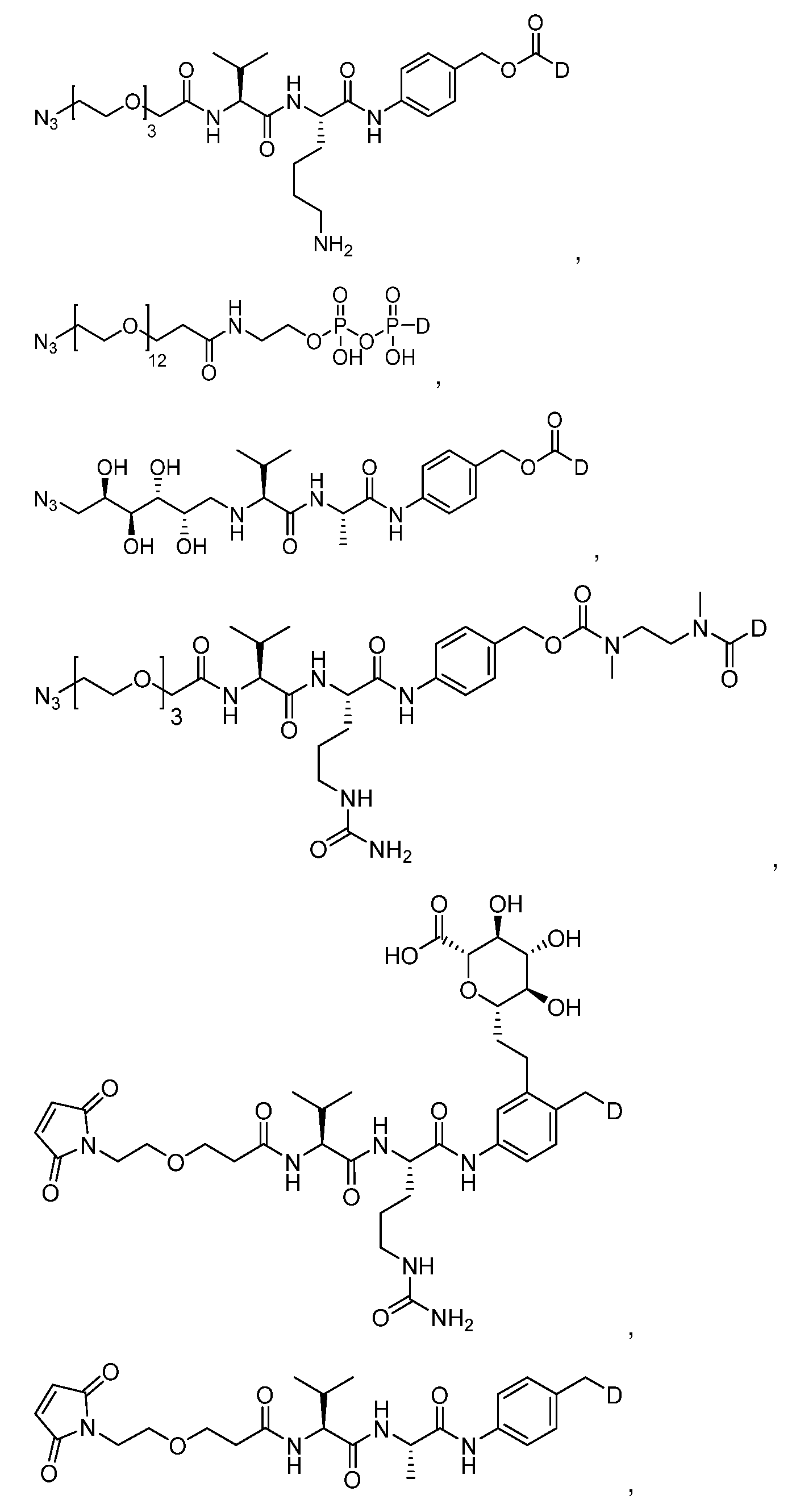


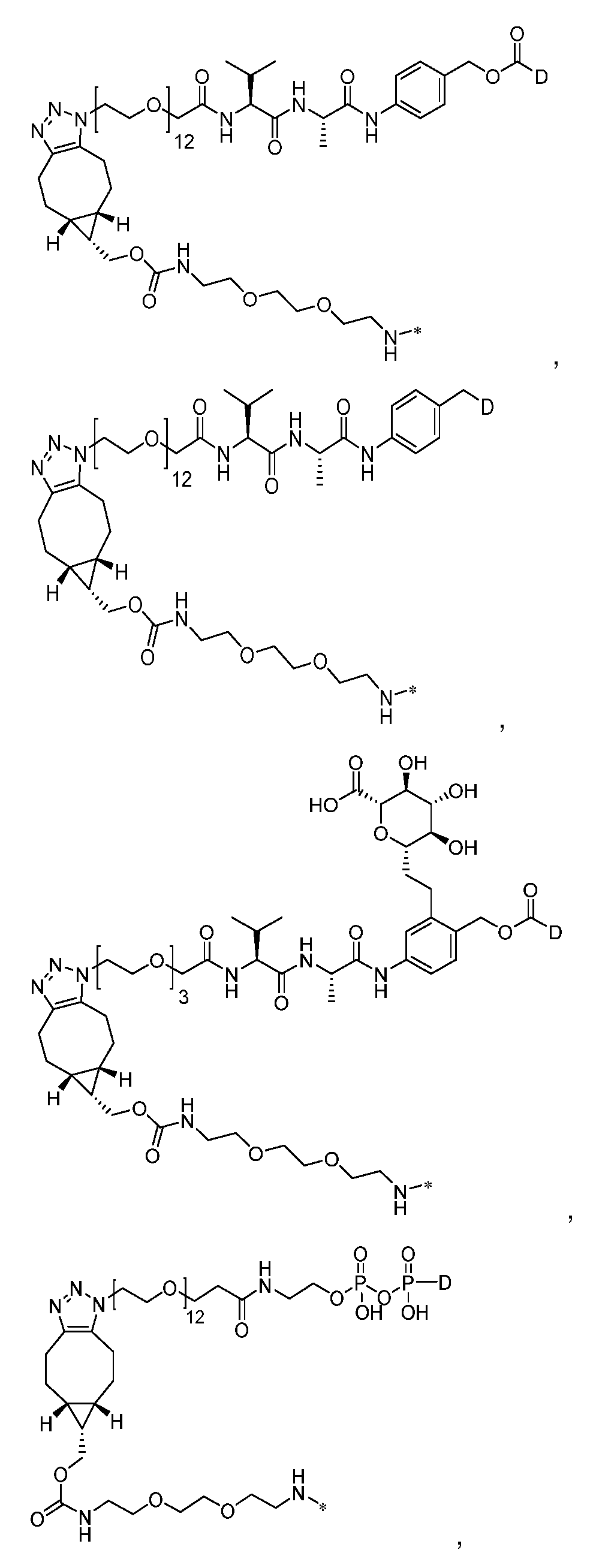


여기서

Here

여기서
R1은 부착 기이고;
L1은 가교 스페이서이고;
Lp는 1 내지 6개의 아미노산을 포함하는 펩티드 기이고;
D는 Bcl-xL 억제제이고;
G1-L2-A는 자기 희생적 스페이서이고;
L2는 결합, 메틸렌, 네오펜틸렌 또는 C2-C3-알케닐렌이고;
A는 결합, -OC(=O)-*,

여기서 각각의 Ra는 독립적으로 H, C1-C6 알킬 및 C3-C8 시클로알킬로부터 선택되고, A의 *는 D에 대한 부착 지점을 나타내고;
L3은 스페이서 모이어티이고;
R2는 친수성 모이어티이다.An antibody-drug conjugate according to claim 1 or 2, wherein -(LD) has the following chemical formula (C):
Here
R 1 is an attachment group;
L 1 is a crosslinking spacer;
L p is a peptide group containing 1 to 6 amino acids;
D is a Bcl-xL inhibitor;
G 1 -L 2 -A is a self-immolative spacer;
L 2 is a bond, methylene, neopentylene or C 2 -C 3 -alkenylene;
A is a bond, -OC(=O)-*,
wherein each R a is independently selected from H, C 1 -C 6 alkyl and C 3 -C 8 cycloalkyl, and the * of A indicates the point of attachment to D;
L 3 is a spacer moiety;
R 2 is a hydrophilic moiety.

여기서
R1은 부착 기이고;
L1은 가교 스페이서이고;
Lp는 1 내지 6개의 아미노산을 포함하는 펩티드 기이고;
A는 결합, -OC(=O)-*,

여기서 각각의 Ra는 독립적으로 H, C1-C6 알킬 및 C3-C8 시클로알킬로부터 선택되고, A의 *는 D에 대한 부착 지점을 나타내고;
L3은 스페이서 모이어티이고;
R2는 친수성 모이어티이다.In claim 23, an antibody-drug conjugate having the following chemical formula (D) or a pharmaceutically acceptable salt thereof:
Here
R 1 is an attachment group;
L 1 is a crosslinking spacer;
Lp is a peptide group containing 1 to 6 amino acids;
A is a bond, -OC(=O)-*,
wherein each R a is independently selected from H, C 1 -C 6 alkyl and C 3 -C 8 cycloalkyl, and the * of A indicates the point of attachment to D;
L 3 is a spacer moiety;
R 2 is a hydrophilic moiety.
(1) L1은

(2) L1은

(3) L1은

(4) L1은

(5) L1은 *-C(=O)(CH2)mO(CH2)m-**; *-C(=O)((CH2)mO)t(CH2)n-**; *-C(=O)(CH2)m-**; *-C(=O)NH((CH2)mO)t(CH2)n-**; *-C(=O)O(CH2)mSSC(R3)2(CH2)mC(=O)NR3(CH2)mNR3C(=O)(CH2)m-**; *-C(=O)O(CH2)mC(=O)NH(CH2)m-**; *-C(=O)(CH2)mNH(CH2)m-**; *-C(=O)(CH2)mNH(CH2)nC(=O)-**; *-C(=O)(CH2)mX1(CH2)m-**; *-C(=O)((CH2)mO)t(CH2)nX1(CH2)n-**; *-C(=O)(CH2)mNHC(=O)(CH2)n-**; *-C(=O)((CH2)mO)t(CH2)nNHC(=O)(CH2)n-**; *-C(=O)(CH2)mNHC(=O)(CH2)nX1(CH2)n-**; *-C(=O)((CH2)mO)t(CH2)nNHC(=O)(CH2)nX1(CH2)n-**; *-C(=O)((CH2)mO)t(CH2)nC(=O)NH(CH2)m-**; *-C(=O)(CH2)mC(R3)2-** 또는 *-C(=O)(CH2)mC(=O)NH(CH2)m-**를 포함하는 가교 스페이서이고, 여기서 L1의 *는 Lp에 대한 직접 또는 간접 부착 지점을 나타내고, L1의 **는 R1에 대한 직접 또는 간접 부착 지점을 나타내고;
X1은

각각의 m은 독립적으로 1, 2, 3, 4, 5, 6, 7, 8, 9 및 10으로부터 선택되고;
각각의 n은 독립적으로 1, 2, 3, 4, 5, 6, 7, 8, 9 및 10으로부터 선택되고;
각각의 t는 독립적으로 1, 2, 3, 4, 5, 6, 7, 8, 9, 10, 11, 12, 13, 14, 15, 16, 17, 18, 19, 20, 21, 22, 23, 24, 25, 26, 27, 28, 29 및 30으로부터 선택되고;
각각의 R3은 독립적으로 H 및 C1-C6알킬로부터 선택된다.In claim 23 or 24, the antibody-drug conjugate:
(1) L 1 is
(2) L 1 is
(3) L 1 is
(4) L 1 is
(5) L 1 is *-C(=O)(CH 2 ) m O(CH 2 ) m -**; *-C(=O)((CH 2 ) m O) t (CH 2 ) n -**; *-C(=O)(CH 2 ) m -**; *-C(=O)NH((CH 2 ) m O) t (CH 2 ) n -**; *-C(=O)O(CH 2 ) m SSC(R 3 ) 2 (CH 2 ) m C(=O)NR 3 (CH 2 ) m NR 3 C(=O)(CH 2 ) m -**; *-C(=O)O(CH 2 ) m C(=O)NH(CH 2 ) m -**; *-C(=O)(CH 2 ) m NH(CH 2 ) m -**; *-C(=O)(CH 2 ) m NH(CH 2 ) n C(=O)-**; *-C(=O) ( CH 2 ) m *-C(=O) ( (CH 2 ) m O) t ( CH 2 ) n *-C(=O)(CH 2 ) m NHC(=O)(CH 2 ) n -**; *-C(=O)((CH 2 ) m O) t (CH 2 ) n NHC(=O)(CH 2 ) n -**; *-C(=O) ( CH 2 ) m NHC(=O ) ( CH 2 ) n *-C(=O)((CH 2 ) m O) t (CH 2 ) n NHC(=O)(CH 2 ) n X 1 (CH 2 ) n -**; *-C(=O)((CH 2 ) m O) t (CH 2 ) n C(=O)NH(CH 2 ) m -**; *-C(=O)(CH 2 ) m C(R 3 ) 2 -** or *-C(=O)(CH 2 ) m C(=O)NH(CH 2 ) m -**, wherein * in L 1 represents a direct or indirect attachment point to Lp, and ** in L 1 represents a direct or indirect attachment point to R 1 ;
X 1 is
Each m is independently selected from 1, 2, 3, 4, 5, 6, 7, 8, 9, and 10;
Each n is independently selected from 1, 2, 3, 4, 5, 6, 7, 8, 9, and 10;
Each t is independently selected from 1, 2, 3, 4, 5, 6, 7, 8, 9, 10, 11, 12, 13, 14, 15, 16, 17, 18, 19, 20, 21, 22, 23, 24, 25, 26, 27, 28, 29 and 30;
Each R 3 is independently selected from H and C 1 -C 6 alkyl.


(i) 하기 모이어티를 갖는 폴리사르코신:

(ii) 화학식

(i) Polysarcosine having the following moieties:
(ii) Chemical formula

(i) L3은 구조

여기서
W는 -CH2-, -CH2O-, -CH2N(Rb)C(=O)O-, -NHC(=O)C(Rb)2NHC(=O)O-, -NHC(=O)C(Rb)2NH-, -NHC(=O)C(Rb)2NHC(=O)-, -CH2N(X-R2)C(=O)O-, -C(=O)N(X-R2)-, -CH2N(X-R2)C(=O)-, -C(=O)NRb-, -C(=O)NH-, -CH2N Rb C(=O)-, -CH2NRb C(=O)NH-, -CH2NRbC(=O)NRb-, -NHC(=O)-, -NHC(=O)O-, -NHC(=O)NH-, -OC(=O)NH-, -S(O)2NH-, -NHS(O)2-, -C(=O)-, -C(=O)O- 또는 -NH-이고, 여기서 각각의 Rb는 독립적으로 H, C1-C6 알킬 및 C3-C8 시클로알킬로부터 선택되고;
X는 결합, 트리아졸릴 또는 -CH2-트리아졸릴-이고,
X는 R2에 연결되거나; 또는
(ii) L3은 구조

여기서
W는 -CH2-, -CH2O-, -CH2N(Rb)C(=O)O-, -NHC(=O)C(Rb)2NHC(=O)O-, -NHC(=O)C(Rb)2NH-, -NHC(=O)C(Rb)2NHC(=O)-, -CH2N(X-R2)C(=O)O-, -C(=O)N(X-R2)-, -CH2N(X-R2)C(=O)-, -C(=O)NRb-, -C(=O)NH-, -CH2NRbC(=O)-, -CH2NRbC(=O)NH-, -CH2NRbC(=O)NRb-, -NHC(=O)-, -NHC(=O)O-, -NHC(=O)NH-, -OC(=O)NH-, -S(O)2NH-, -NHS(O)2-, -C(=O)-, -C(=O)O- 또는 -NH-이고, 여기서 각각의 Rb는 독립적으로 H, C1-C6 알킬 및 C3-C8 시클로알킬로부터 선택되고;
X는 -CH2-트리아졸릴-C1-4 알킬렌-OC(O)NHS(O)2NH-, -C4-6 시클로알킬렌-OC(O)NHS(O)2NH-, -(CH2CH2O)n-C(O)NHS(O)2NH-, -(CH2CH2O)n-C(O)NHS(O)2NH-(CH2CH2O)n-, -CH2-트리아졸릴-C1-4 알킬렌-OC(O)NHS(O)2NH-(CH2CH2O)n-, -C4-6 시클로알킬렌-OC(O)NHS(O)2NH-(CH2CH2O)n-이고, 여기서 각각의 n은 독립적으로 1, 2 또는 3이고,
여기서 X는 R2에 연결된다.An antibody-drug conjugate according to any one of claims 23 to 29, wherein:
(i) L 3 is a structure
Here
W is -CH 2 -, -CH 2 O-, -CH 2 N(R b )C(=O)O-, -NHC(=O)C(R b ) 2 NHC(=O)O-, -NHC(=O)C(R b ) 2 NH-, -NHC(=O)C(R b ) 2 NHC(=O)-, -CH 2 N(XR 2 )C(=O)O-, -C(=O)N(XR 2 )-, -CH 2 N(XR 2 )C(=O)-, -C(=O)NR b -, -C(=O)NH-, -CH 2 NR b C(=O)-, -CH 2 NR b C(=O)NH-, -CH 2 NR b C(=O)NR b -, -NHC(=O)-, -NHC(=O)O-, -NHC(=O)NH-, -OC(=O)NH-, -S(O) 2 NH-, -NHS(O) 2 -, -C(=O)-, -C(=O)O- or -NH-, wherein each R b is independently selected from H, C 1 -C 6 alkyl and C 3 -C 8 cycloalkyl;
X is a bond, triazolyl or -CH 2 -triazolyl-,
X is connected to R 2 ; or
(ii) L 3 is a structure
Here
W is -CH 2 -, -CH 2 O-, -CH 2 N(R b )C(=O)O-, -NHC(=O)C(R b ) 2 NHC(=O)O-, -NHC(=O)C(R b ) 2 NH-, -NHC(=O)C(R b ) 2 NHC(=O)-, -CH 2 N(XR 2 )C(=O)O-, -C(=O)N(XR 2 )-, -CH 2 N(XR 2 )C(=O)-, -C(=O)NR b -, -C(=O)NH-, -CH 2 NR b C(=O)-, -CH 2 NR b C(=O)NH-, -CH 2 NR b C(=O)NR b -, -NHC(=O)-, -NHC(=O)O-, -NHC(=O)NH-, -OC(=O)NH-, -S(O) 2 NH-, -NHS(O) 2 -, -C(=O)-, -C(=O)O- or -NH-, wherein each R b is independently selected from H, C 1 -C 6 alkyl and C 3 -C 8 cycloalkyl;
X is -CH 2 -triazolyl-C 1-4 alkylene-OC(O)NHS(O) 2 NH-, -C 4-6 cycloalkylene-OC(O)NHS(O) 2 NH-, -(CH 2 CH 2 O) n -C(O)NHS(O) 2 NH-, -(CH 2 CH 2 O) n -C(O)NHS(O) 2 NH-(CH 2 CH 2 O) n -, -CH 2 -triazolyl-C 1-4 alkylene-OC(O)NHS(O) 2 NH-(CH 2 CH 2 O) n -, -C 4-6 cycloalkylene-OC(O)NHS(O) 2 NH-(CH 2 CH 2 O) n -, wherein each n is independently 1, 2 or 3,
Here X is connected to R 2 .
링커에 부착된 제1 반응성 기와
항체에 부착되거나 항체의 아미노산 잔기인 제2 반응성 기를
반응시킴으로써 형성된 것인 항체-약물 접합체:
여기서 임의로
(i) 반응성 기 중 적어도 1개는 하기를 포함함:
티올,
말레이미드,
할로아세트아미드,
아지드,
알킨,
시클로옥텐,
트리아릴 포스핀,
옥사노보르나디엔,
시클로옥틴,
디아릴 테트라진,
모노아릴 테트라진,
노르보르넨,
알데히드,
히드록실아민,
히드라진,
NH2-NH-C(=O)-,
케톤,
비닐 술폰,
아지리딘,
아미노산 잔기,
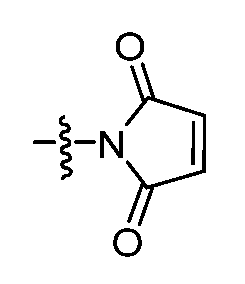
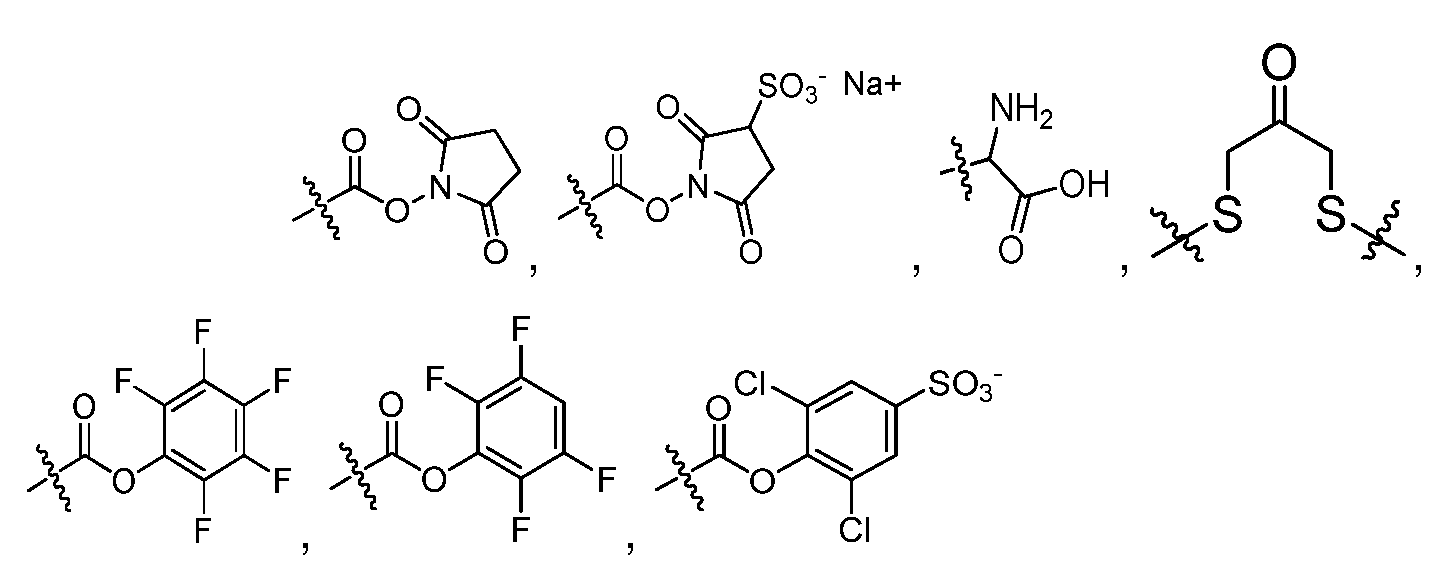


여기서
각각의 R3은 독립적으로 H 및 C1-C6알킬로부터 선택되고;
각각의 R4는 2-피리딜 또는 4-피리딜이고;
각각의 R5는 독립적으로 H, C1-C6알킬, F, Cl 및 -OH로부터 선택되고;
각각의 R6은 독립적으로 H, C1-C6알킬, F, Cl, -NH2, -OCH3, -OCH2CH3, -N(CH3)2, -CN, -NO2 및 -OH로부터 선택되고;
각각의 R7은 독립적으로 H, C1-6알킬, 플루오로, -C(=O)OH로 치환된 벤질옥시, -C(=O)OH로 치환된 벤질, -C(=O)OH로 치환된 C1-4알콕시 및 -C(=O)OH로 치환된 C1-4알킬로부터 선택됨; 및/또는
(ii) 제1 반응성 기 및 제2 반응성 기는 하기를 포함함:
티올 및 말레이미드,
티올 및 할로아세트아미드,
티올 및 비닐 술폰,
티올 및 아지리딘,
아지드 및 알킨,
아지드 및 시클로옥틴,
아지드 및 시클로옥텐,
아지드 및 트리아릴 포스핀,
아지드 및 옥사노보르나디엔,
디아릴 테트라진 및 시클로옥텐,
모노아릴 테트라진 및 노르보르넨,
알데히드 및 히드록실아민,
알데히드 및 히드라진,
알데히드 및 NH2-NH-C(=O)-,
케톤 및 히드록실아민,
케톤 및 히드라진,
케톤 및 NH2-NH-C(=O)-,
히드록실아민 및

아민 및

CoA 또는 CoA 유사체 및 세린 잔기.In any one of claims 3 to 31, the attachment group
First reactive tile attached to the linker
A second reactive group that is attached to an antibody or is an amino acid residue of an antibody.
Antibody-drug conjugate formed by reaction:
Randomly here
(i) at least one of the reactive groups comprises:
thiol,
Maleimide,
Haloacetamide,
Azid,
Alkyne,
cyclooctene,
Triaryl phosphine,
Oxanobornadiene,
cyclooctyne,
Diaryl tetrazine,
Monoaryl tetrazine,
Norbornene,
Aldehyde,
Hydroxylamine,
Hydrazine,
NH 2 -NH-C(=O)-,
Ketones,
vinyl sulfone,
Aziridine,
amino acid residue,
Here
Each R 3 is independently selected from H and C 1 -C 6 alkyl;
Each R 4 is 2-pyridyl or 4-pyridyl;
Each R 5 is independently selected from H, C 1 -C 6 alkyl, F, Cl and -OH;
each R 6 is independently selected from H, C 1 -C 6 alkyl, F, Cl, -NH 2 , -OCH 3 , -OCH 2 CH 3 , -N(CH 3 ) 2 , -CN, -NO 2 and -OH;
Each R 7 is independently selected from H, C 1-6 alkyl, fluoro, benzyloxy substituted with -C(=O)OH, benzyl substituted with -C(=O)OH, C 1-4 alkoxy substituted with -C(=O)OH and C 1-4 alkyl substituted with -C(=O)OH; and/or
(ii) the first reactive group and the second reactive group include:
Thiols and maleimides,
thiols and haloacetamides,
Thiol and vinyl sulfone,
Thiols and aziridines,
Azides and alkynes,
Azide and cyclooctyne,
Azide and cyclooctene,
Azide and triaryl phosphines,
Azide and oxanobornadiene,
Diaryl tetrazine and cyclooctene,
Monoaryl tetrazine and norbornene,
Aldehydes and hydroxylamines,
Aldehydes and hydrazines,
Aldehydes and NH 2 -NH-C(=O)-,
Ketones and hydroxylamines,
Ketones and hydrazines,
Ketones and NH 2 -NH-C(=O)-,
Hydroxylamine and
Amine and
CoA or CoA analogue and a serine residue.


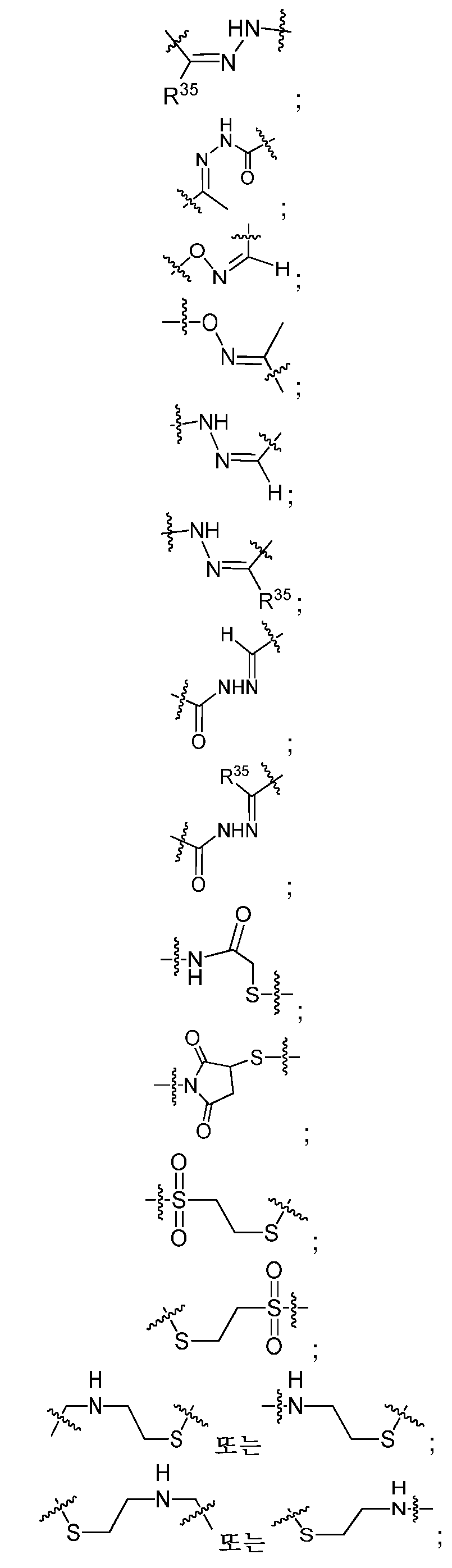

여기서
R32는 H, C1-4 알킬, 페닐, 피리미딘 또는 피리딘이고;
R35는 H, C1-6알킬, 페닐 또는 1 내지 3개의 -OH 기로 치환된 C1-4 알킬이고;
각각의 R7은 독립적으로 H, C1-6알킬, 플루오로, -C(=O)OH로 치환된 벤질옥시, -C(=O)OH로 치환된 벤질, -C(=O)OH로 치환된 C1-4 알콕시 및 -C(=O)OH로 치환된 C1-4 알킬로부터 선택되고;
R37은 독립적으로 H, 페닐 및 피리딘으로부터 선택되고;
q는 0, 1, 2 또는 3이고;
R8은 H 또는 메틸이고;
R9는 H, -CH3 또는 페닐이다.An antibody-drug conjugate according to any one of claims 3 to 32, wherein the attachment group comprises a group selected from the following:
Here
R 32 is H, C 1-4 alkyl, phenyl, pyrimidine or pyridine;
R 35 is H, C 1-6 alkyl, phenyl or C 1-4 alkyl substituted with 1 to 3 -OH groups;
Each R 7 is independently selected from H, C 1-6 alkyl, fluoro, benzyloxy substituted with -C(=O)OH, benzyl substituted with -C(=O)OH, C 1-4 alkoxy substituted with -C(=O)OH, and C 1-4 alkyl substituted with -C(=O)OH;
R 37 is independently selected from H, phenyl and pyridine;
q is 0, 1, 2, or 3;
R 8 is H or methyl;
R 9 is H, -CH 3 or phenyl.

(1)

R은 H, -CH3 또는 -CH2CH2C(=O)OH이고;
A는 결합, -OC(=O)-*,

여기서 각각의 Ra는 독립적으로 H, C1-C6 알킬 및 C3-C8 시클로알킬로부터 선택되고, A의 *는 D에 대한 부착 지점을 나타내고;
D는 Bcl-xL 억제제임;
(2)

R은 H, -CH3 또는 -CH2CH2C(=O)OH이고;
A는 결합, -OC(=O)-*,

여기서 각각의 Ra는 독립적으로 H, C1-C6 알킬 및 C3-C8 시클로알킬로부터 선택되고, A의 *는 D에 대한 부착 지점을 나타내고;
D는 Bcl-xL 억제제임;
(3)
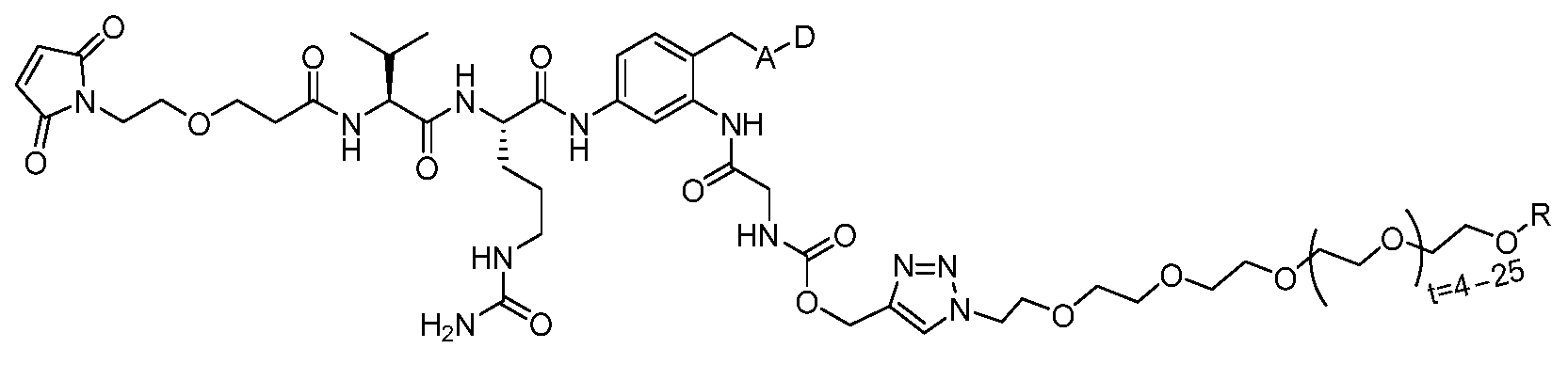
R은 H, -CH3 또는 -CH2CH2C(=O)OH이고;
A는 결합, -OC(=O)-*,

여기서 각각의 Ra는 독립적으로 H, C1-C6 알킬 및 C3-C8 시클로알킬로부터 선택되고, A의 *는 D에 대한 부착 지점을 나타내고;
D는 Bcl-xL 억제제임;
(4)

각각의 R은 독립적으로 H, -CH3 및 -CH2CH2C(=O)OH로부터 선택되고;
A는 결합, -OC(=O)-*,

여기서 각각의 Ra는 독립적으로 H, C1-C6 알킬 및 C3-C8 시클로알킬로부터 선택되고, A의 *는 D에 대한 부착 지점을 나타내고;
D는 Bcl-xL 억제제임;
(5)

각각의 R은 독립적으로 H, -CH3 및 -CH2CH2C(=O)OH로부터 선택되고;
A는 결합, -OC(=O)-*,

여기서 각각의 Ra는 독립적으로 H, C1-C6 알킬 및 C3-C8 시클로알킬로부터 선택되고, A의 *는 D에 대한 부착 지점을 나타내고;
D는 Bcl-xL 억제제임;
(6)

Xa는 -CH2-, -OCH2-, -NHCH2- 또는 -NRCH2-이고, 각각의 R은 독립적으로 H, -CH3 또는 -CH2CH2C(=O)OH이고;
A는 결합, -OC(=O)-*,

여기서 각각의 Ra는 독립적으로 H, C1-C6 알킬 및 C3-C8 시클로알킬로부터 선택되고, A의 *는 D에 대한 부착 지점을 나타내고;
D는 Bcl-xL 억제제임;
(7)

R은 H, -CH3 또는 -CH2CH2C(=O)OH이고;
A는 결합, -OC(=O)-*,

여기서 각각의 Ra는 독립적으로 H, C1-C6 알킬 및 C3-C8 시클로알킬로부터 선택되고, A의 *는 D에 대한 부착 지점을 나타내고;
D는 Bcl-xL 억제제임;
(8)

Xb는 -CH2-, -OCH2-, -NHCH2- 또는 -NRCH2-이고, 각각의 R은 독립적으로 H, -CH3 또는 -CH2CH2C(=O)OH이고;
A는 결합, -OC(=O)-*,

여기서 각각의 Ra는 독립적으로 H, C1-C6 알킬 및 C3-C8 시클로알킬로부터 선택되고, A의 *는 D에 대한 부착 지점을 나타내고;
D는 Bcl-xL 억제제임;
(9)
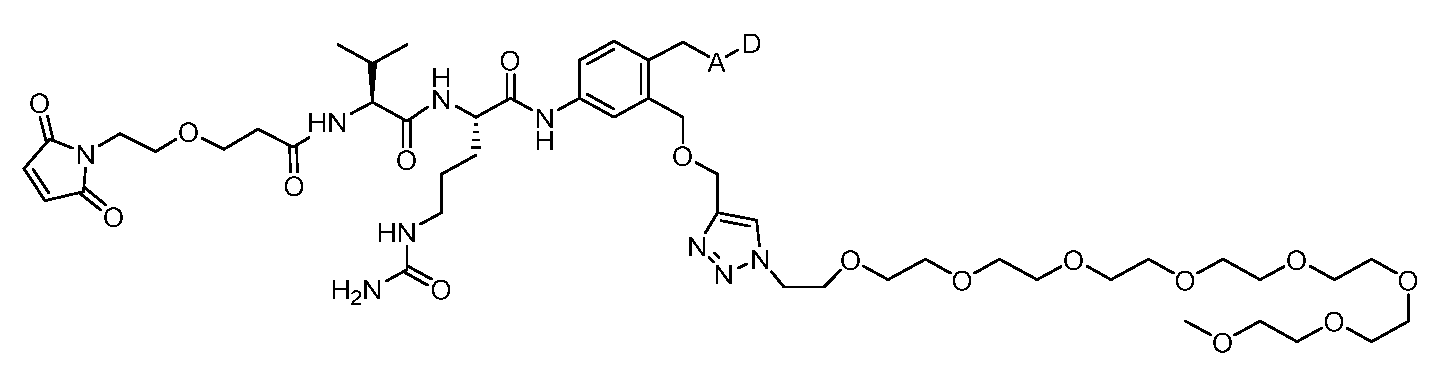
A는 결합, -OC(=O)-*,

여기서 각각의 Ra는 독립적으로 H, C1-C6 알킬 및 C3-C8 시클로알킬로부터 선택되고, A의 *는 D에 대한 부착 지점을 나타내고;
D는 Bcl-xL 억제제임;
(10)

A는 결합, -OC(=O)-*,

여기서 각각의 Ra는 독립적으로 H, C1-C6 알킬 및 C3-C8 시클로알킬로부터 선택되고, A의 *는 D에 대한 부착 지점을 나타내고;
D는 Bcl-xL 억제제임;
(11)

A는 결합, -OC(=O)-*,

여기서 각각의 Ra는 독립적으로 H, C1-C6 알킬 및 C3-C8 시클로알킬로부터 선택되고, A의 *는 D에 대한 부착 지점을 나타내고;
D는 Bcl-xL 억제제임;
(12)

A는 결합, -OC(=O)-*,

여기서 각각의 Ra는 독립적으로 H, C1-C6 알킬 및 C3-C8 시클로알킬로부터 선택되고, A의 *는 D에 대한 부착 지점을 나타내고;
D는 Bcl-xL 억제제임;
(13)
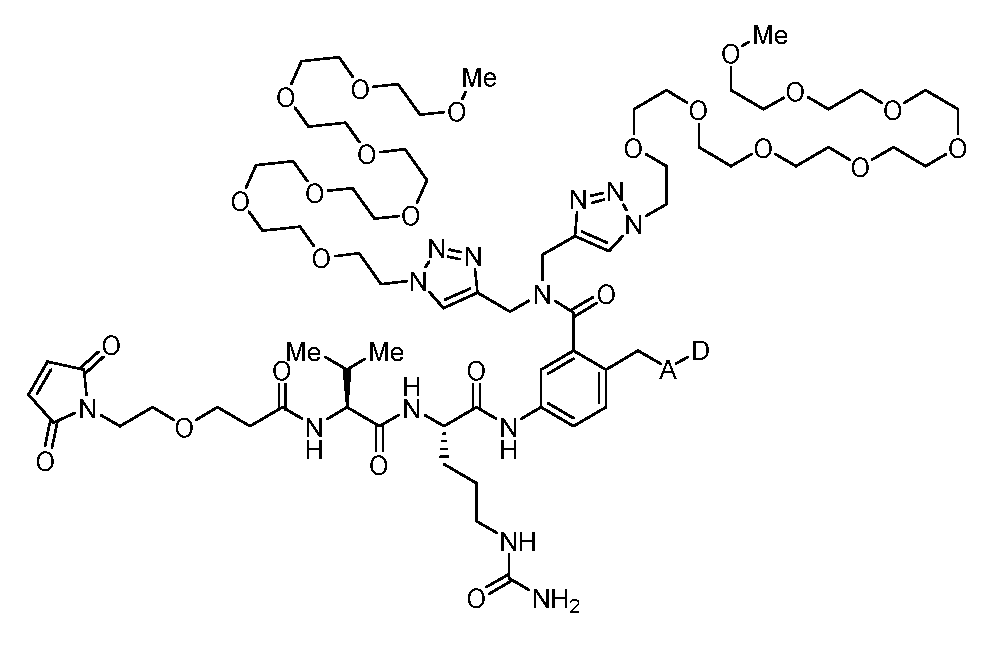
A는 결합, -OC(=O)-*,

여기서 각각의 Ra는 독립적으로 H, C1-C6 알킬 및 C3-C8 시클로알킬로부터 선택되고, A의 *는 D에 대한 부착 지점을 나타내고;
D는 Bcl-xL 억제제임;
(14)

A는 결합, -OC(=O)-*,

여기서 각각의 Ra는 독립적으로 H, C1-C6 알킬 및 C3-C8 시클로알킬로부터 선택되고, A의 *는 D에 대한 부착 지점을 나타내고;
D는 Bcl-xL 억제제임;
(15)

A는 결합, -OC(=O)-*,

여기서 각각의 Ra는 독립적으로 H, C1-C6 알킬 및 C3-C8 시클로알킬로부터 선택되고, A의 *는 D에 대한 부착 지점을 나타내고;
D는 Bcl-xL 억제제임; 또는
(16)

각각의 R은 독립적으로 H, -CH3 또는 -CH2CH2C(=O)OH이고;
A는 결합, -OC(=O)-*,

여기서 각각의 Ra는 독립적으로 H, C1-C6 알킬 및 C3-C8 시클로알킬로부터 선택되고, A의 *는 D에 대한 부착 지점을 나타내고;
D는 Bcl-xL 억제제임; 또는
(17)

각각의 R은 독립적으로 H, -CH3 또는 -CH2CH2C(=O)OH이고;
A는 결합, -OC(=O)-*,

여기서 각각의 Ra는 독립적으로 H, C1-C6 알킬 및 C3-C8 시클로알킬로부터 선택되고, A의 *는 D에 대한 부착 지점을 나타내고;
n은 2 내지 24의 정수이고;
D는 Bcl-xL 억제제임; 또는
(18)

A는 결합, -OC(=O)-*,

여기서 각각의 Ra는 독립적으로 H, C1-C6 알킬 및 C3-C8 시클로알킬로부터 선택되고, A의 *는 D에 대한 부착 지점을 나타내고;
D는 Bcl-xL 억제제임.An antibody-drug conjugate according to any one of claims 23 to 36, wherein -(LD) comprises or is formed from a compound of the following chemical formula:
(1)
R is H, -CH 3 or -CH 2 CH 2 C(=O)OH;
A is a bond, -OC(=O)-*,
wherein each R a is independently selected from H, C 1 -C 6 alkyl and C 3 -C 8 cycloalkyl, and the * of A indicates the point of attachment to D;
D is a Bcl-xL inhibitor;
(2)
R is H, -CH 3 or -CH 2 CH 2 C(=O)OH;
A is a bond, -OC(=O)-*,
wherein each R a is independently selected from H, C 1 -C 6 alkyl and C 3 -C 8 cycloalkyl, and the * of A indicates the point of attachment to D;
D is a Bcl-xL inhibitor;
(3)
R is H, -CH 3 or -CH 2 CH 2 C(=O)OH;
A is a bond, -OC(=O)-*,
wherein each R a is independently selected from H, C 1 -C 6 alkyl and C 3 -C 8 cycloalkyl, and the * of A indicates the point of attachment to D;
D is a Bcl-xL inhibitor;
(4)
Each R is independently selected from H, -CH 3 , and -CH 2 CH 2 C(=O)OH;
A is a bond, -OC(=O)-*,
wherein each R a is independently selected from H, C 1 -C 6 alkyl and C 3 -C 8 cycloalkyl, and the * of A indicates the point of attachment to D;
D is a Bcl-xL inhibitor;
(5)
Each R is independently selected from H, -CH 3 , and -CH 2 CH 2 C(=O)OH;
A is a bond, -OC(=O)-*,
wherein each R a is independently selected from H, C 1 -C 6 alkyl and C 3 -C 8 cycloalkyl, and the * of A indicates the point of attachment to D;
D is a Bcl-xL inhibitor;
(6)
Xa is -CH 2 -, -OCH 2 -, -NHCH 2 -, or -NRCH 2 -, and each R is independently H, -CH 3 , or -CH 2 CH 2 C(=O)OH;
A is a bond, -OC(=O)-*,
wherein each R a is independently selected from H, C 1 -C 6 alkyl and C 3 -C 8 cycloalkyl, and the * of A indicates the point of attachment to D;
D is a Bcl-xL inhibitor;
(7)
R is H, -CH 3 or -CH 2 CH 2 C(=O)OH;
A is a bond, -OC(=O)-*,
wherein each R a is independently selected from H, C 1 -C 6 alkyl and C 3 -C 8 cycloalkyl, and the * of A indicates the point of attachment to D;
D is a Bcl-xL inhibitor;
(8)
Xb is -CH 2 -, -OCH 2 -, -NHCH 2 -, or -NRCH 2 -, and each R is independently H, -CH 3 , or -CH 2 CH 2 C(=O)OH;
A is a bond, -OC(=O)-*,
wherein each R a is independently selected from H, C 1 -C 6 alkyl and C 3 -C 8 cycloalkyl, and the * of A indicates the point of attachment to D;
D is a Bcl-xL inhibitor;
(9)
A is a bond, -OC(=O)-*,
wherein each R a is independently selected from H, C 1 -C 6 alkyl and C 3 -C 8 cycloalkyl, and the * of A indicates the point of attachment to D;
D is a Bcl-xL inhibitor;
(10)
A is a bond, -OC(=O)-*,
wherein each R a is independently selected from H, C 1 -C 6 alkyl and C 3 -C 8 cycloalkyl, and the * of A indicates the point of attachment to D;
D is a Bcl-xL inhibitor;
(11)
A is a bond, -OC(=O)-*,
wherein each R a is independently selected from H, C 1 -C 6 alkyl and C 3 -C 8 cycloalkyl, and the * of A indicates the point of attachment to D;
D is a Bcl-xL inhibitor;
(12)
A is a bond, -OC(=O)-*,
wherein each R a is independently selected from H, C 1 -C 6 alkyl and C 3 -C 8 cycloalkyl, and the * of A indicates the point of attachment to D;
D is a Bcl-xL inhibitor;
(13)
A is a bond, -OC(=O)-*,
wherein each R a is independently selected from H, C 1 -C 6 alkyl and C 3 -C 8 cycloalkyl, and the * of A indicates the point of attachment to D;
D is a Bcl-xL inhibitor;
(14)
A is a bond, -OC(=O)-*,
wherein each R a is independently selected from H, C 1 -C 6 alkyl and C 3 -C 8 cycloalkyl, and the * of A indicates the point of attachment to D;
D is a Bcl-xL inhibitor;
(15)
A is a bond, -OC(=O)-*,
wherein each R a is independently selected from H, C 1 -C 6 alkyl and C 3 -C 8 cycloalkyl, and the * of A indicates the point of attachment to D;
D is a Bcl-xL inhibitor; or
(16)
Each R is independently H, -CH 3 or -CH 2 CH 2 C(=O)OH;
A is a bond, -OC(=O)-*,
wherein each R a is independently selected from H, C 1 -C 6 alkyl and C 3 -C 8 cycloalkyl, and the * of A indicates the point of attachment to D;
D is a Bcl-xL inhibitor; or
(17)
Each R is independently H, -CH 3 or -CH 2 CH 2 C(=O)OH;
A is a bond, -OC(=O)-*,
wherein each R a is independently selected from H, C 1 -C 6 alkyl and C 3 -C 8 cycloalkyl, and the * of A indicates the point of attachment to D;
n is an integer from 2 to 24;
D is a Bcl-xL inhibitor; or
(18)
A is a bond, -OC(=O)-*,
wherein each R a is independently selected from H, C 1 -C 6 alkyl and C 3 -C 8 cycloalkyl, and the * of A indicates the point of attachment to D;
D is a Bcl-xL inhibitor.
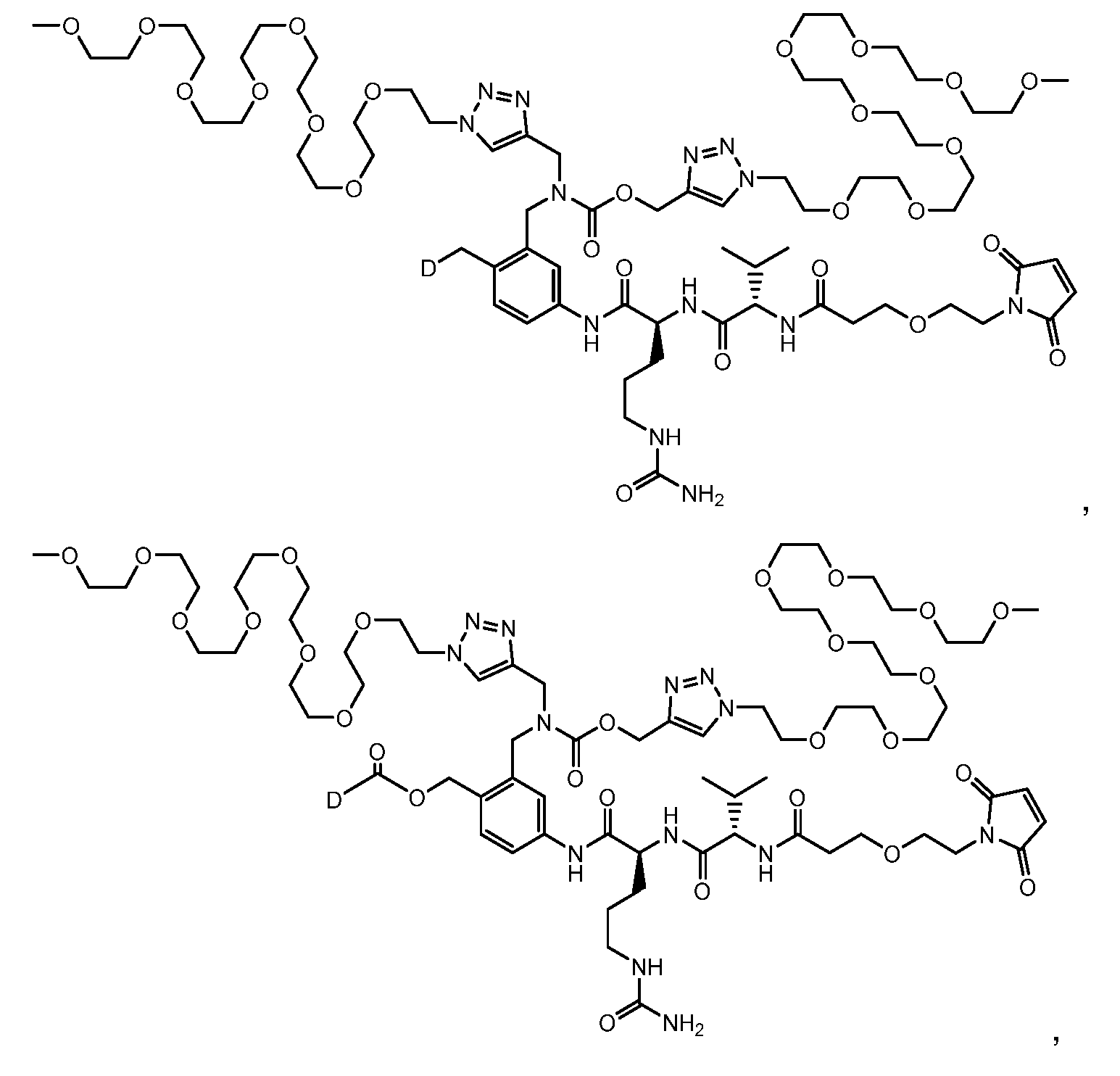


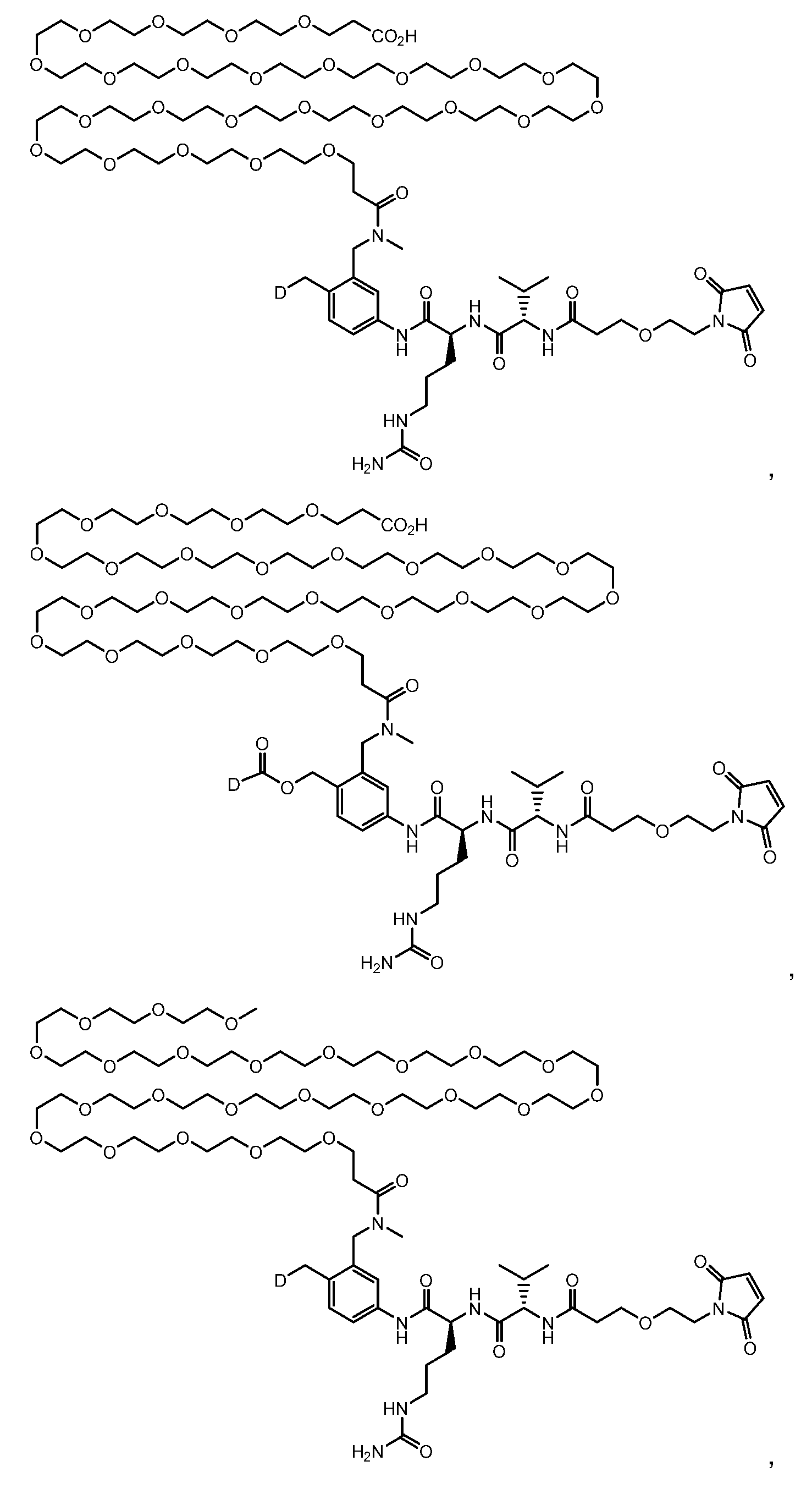


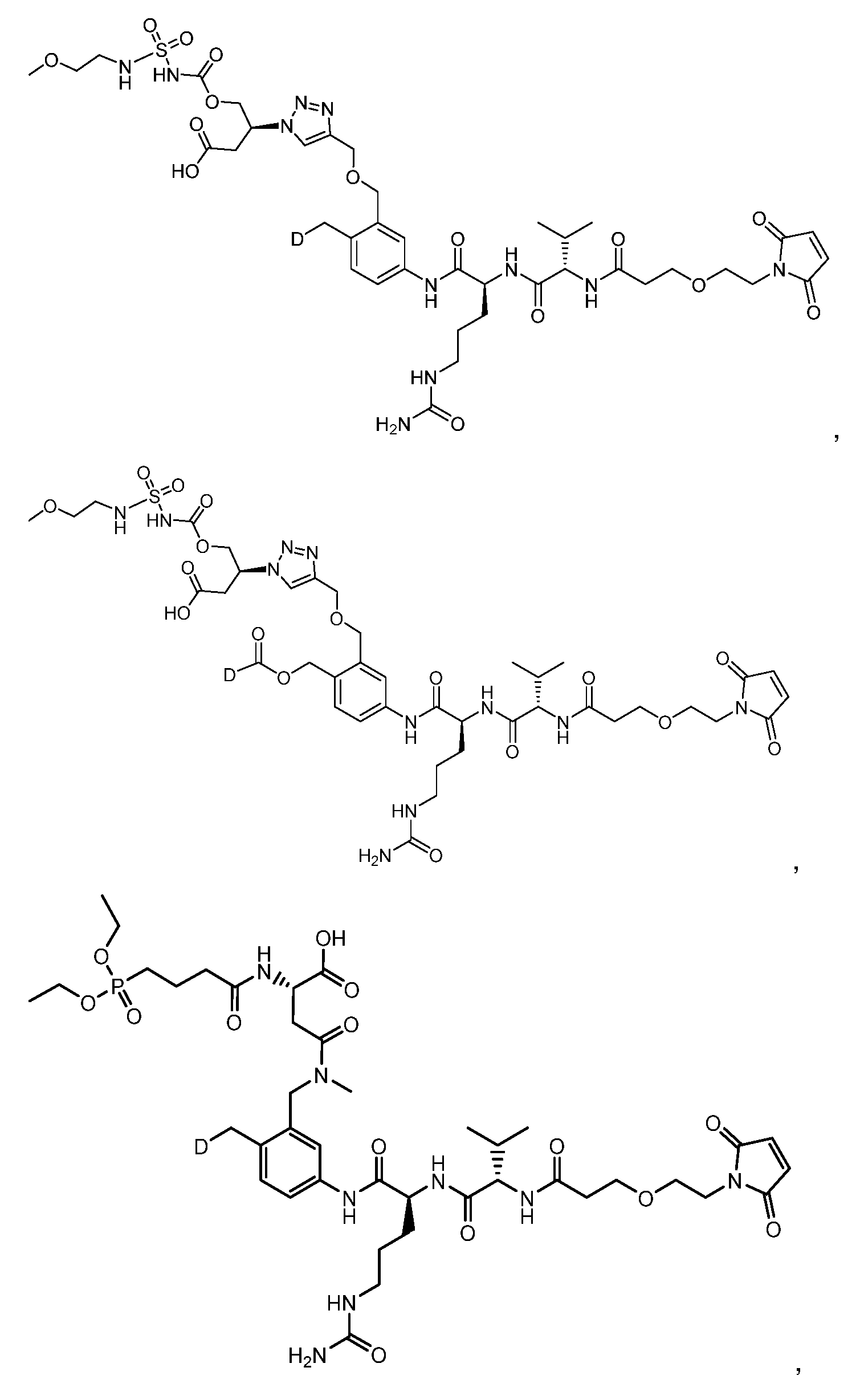
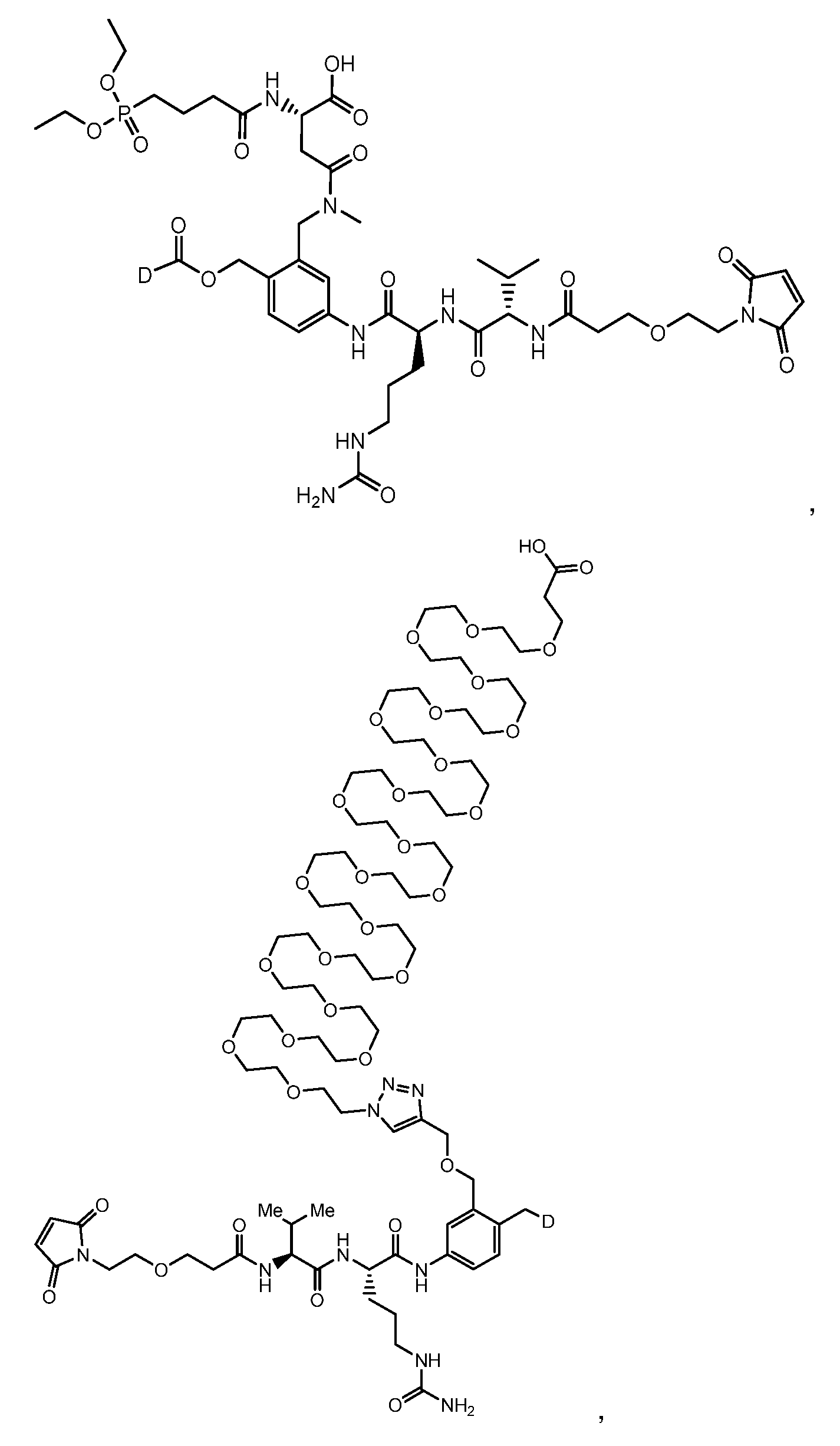


또는 상기 중 어느 하나의 거울상이성질체, 부분입체이성질체 및/또는 제약상 허용되는 염, 여기서
R1 및 R2는 서로 독립적으로 수소; 히드록실 또는 C1-C6알콕시 기에 의해 임의로 치환된 선형 또는 분지형 C1-C6알킬; C3-C6시클로알킬; 트리플루오로메틸; 선형 또는 분지형 C1-C6알킬렌-헤테로시클로알킬로부터 선택된 기를 나타내고, 여기서 헤테로시클로알킬 기는 선형 또는 분지형 C1-C6알킬 기에 의해 임의로 치환되거나;
또는 R1 및 R2는 이들을 보유하는 탄소 원자와 함께 C3-C6시클로알킬렌 기를 형성하고,
R3은 수소; C3-C6시클로알킬; 선형 또는 분지형 C1-C6알킬; -X1-NRaRb; -X1-N+RaRbRc; -X1-O-Rc; -X1-COORc; -X1-PO(OH)2; -X1-SO2(OH); -X1-N3 및

Ra 및 Rb는 서로 독립적으로 수소; 헤테로시클로알킬; -SO2-페닐 (여기서 페닐은 선형 또는 분지형 C1-C6알킬에 의해 치환될 수 있음); 1 또는 2개의 히드록실 기에 의해 임의로 치환된 선형 또는 분지형 C1-C6알킬; C1-C6알킬렌-SO2OH; C1-C6알킬렌-SO2O-; C1-C6알킬렌-COOH; C1-C6알킬렌-PO(OH)2; C1-C6알킬렌-NRdRe; C1-C6알킬렌-N+RdReRf; C1-C6알킬렌-페닐 (여기서 페닐은 C1-C6알콕시 기에 의해 치환될 수 있음) 및 하기 기로부터 선택된 기를 나타내거나:

또는 Ra 및 Rb는 이들을 보유하는 질소 원자와 함께 사이클 B1을 형성하거나;
또는 Ra, Rb 및 Rc는 이들을 보유하는 질소 원자와 함께 가교된 C3-C8헤테로시클로알킬을 형성하고,
Rc, Rd, Re, Rf는 서로 독립적으로 수소 또는 선형 또는 분지형 C1-C6알킬 기를 나타내거나,
또는 Rd 및 Re는 이들을 보유하는 질소 원자와 함께 사이클 B2를 형성하거나,
또는 Rd, Re 및 Rf는 이들을 보유하는 질소 원자와 함께 가교된 C3-C8헤테로시클로알킬을 형성하고,
Het1은 하기로부터 선택된 기를 나타내고:

Het2는 하기로부터 선택된 기를 나타내고:

A1은 -NH-, -N(C1-C3알킬), O, S 또는 Se이고,
A2는 N, CH 또는 C(R5)이고,
G는 하기로 이루어진 군으로부터 선택되고;
-C(O)ORG3, -C(O)NRG1RG2, -C(O)RG2, -NRG1C(O)RG2, -NRG1C(O)NRG1RG2, -OC(O)NRG1RG2, -NRG1C(O)ORG3, -C(=NORG1)NRG1RG2, -NRG1C(=NCN)NRG1RG2, -NRG1S(O)2NRG1RG2, -S(O)2RG3, -S(O)2NRG1RG2, -NRG1S(O)2RG2, -NRG1C(=NRG2)NRG1RG2, -C(=S)NRG1RG2, -C(=NRG1)NRG1RG2, 히드록실 기에 의해 임의로 치환된 C1-C6알킬, 할로겐, -NO2 및 -CN, 여기서
- RG1 및 RG2는 각각의 경우에 각각 독립적으로 수소, 1 내지 3개의 할로겐 원자에 의해 임의로 치환된 C1-C6알킬, C2-C6알케닐, C2-C6알키닐, C3-C6시클로알킬, 페닐 및 -(CH2)1-4-페닐로 이루어진 군으로부터 선택되고;
- RG3은 1 내지 3개의 할로겐 원자에 의해 임의로 치환된 C1-C6알킬, C2-C6알케닐, C2-C6알키닐, C3-C6시클로알킬, 페닐 및 -(CH2)1-4-페닐로 이루어진 군으로부터 선택되거나; 또는
RG1 및 RG2는 이들 각각이 부착되어 있는 원자와 함께 조합되어 C3-C8헤테로시클로알킬을 형성하거나; 또는 대안적으로, G는 하기로 이루어진 군으로부터 선택되고:
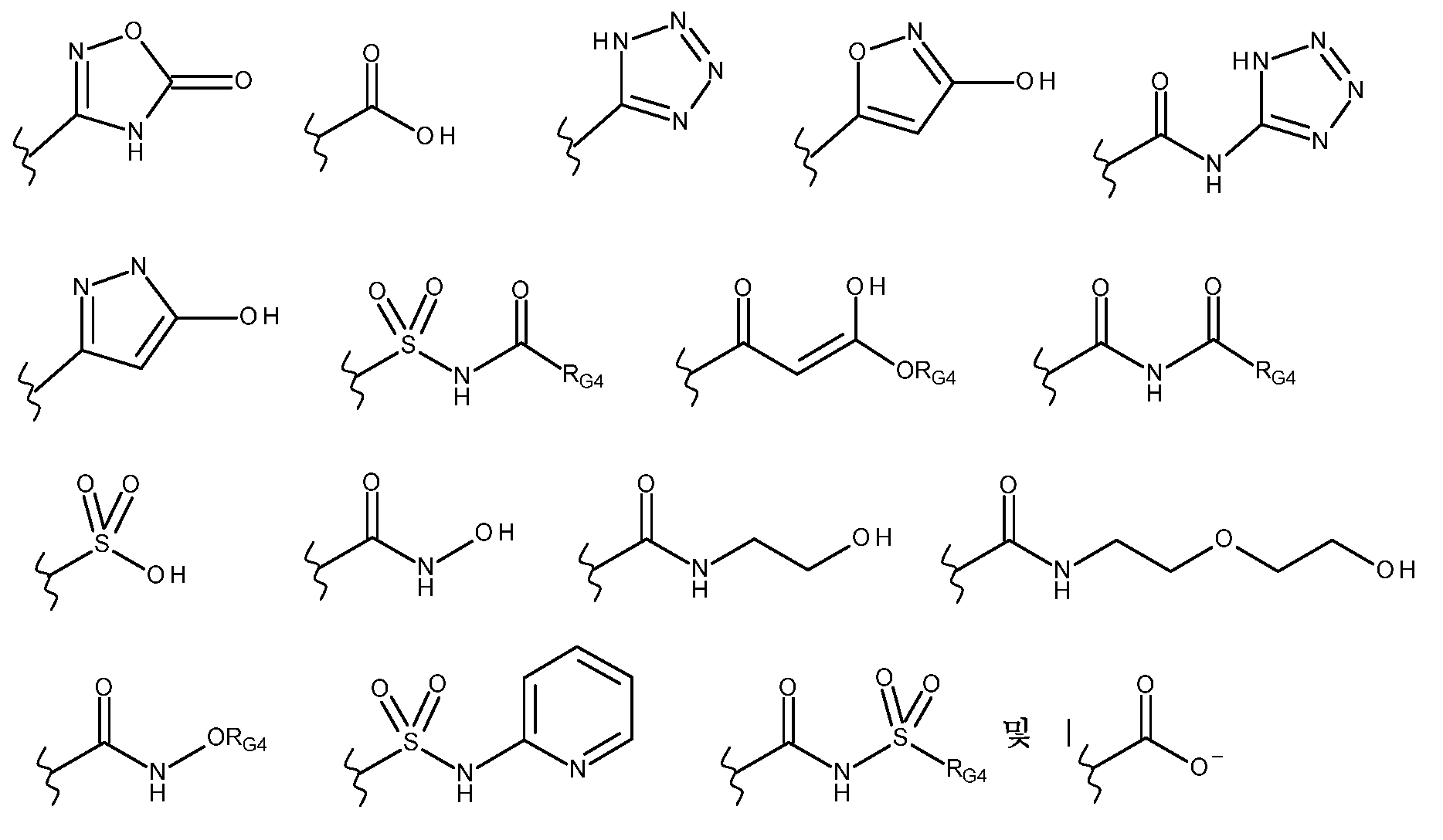
여기서 RG4는 수소, 1 내지 3개의 할로겐 원자에 의해 임의로 치환된 C1-C6알킬, C2-C6알케닐, C2-C6알키닐 및 C3-C6시클로알킬로부터 선택되고,
R4는 수소, 플루오린, 염소 또는 브로민 원자, 메틸, 히드록실 또는 메톡시 기를 나타내고,
R5는 1 내지 3개의 할로겐 원자에 의해 임의로 치환된 C1-C6알킬; C2-C6알케닐; C2-C6알키닐; 할로겐 또는 -CN으로부터 선택된 기를 나타내고,
R6은 하기로부터 선택된 기를 나타내고:
수소;
-C2-C6알케닐;
-X2-O-R7;

-X2-NSO2-R7;
-C=C(R9)-Y1-O-R7;
C3-C6시클로알킬;
히드록실 기에 의해 임의로 치환된 C3-C6헤테로시클로알킬;
C3-C6시클로알킬렌-Y2-R7;
C3-C6헤테로시클로알킬렌-Y2-R7 기;
선형 또는 분지형 C1-C6알킬 기에 의해 임의로 치환된 헤테로아릴렌-R7 기;
R7은 선형 또는 분지형 C1-C6알킬 기; (C3-C6)시클로알킬렌-R8 또는 하기로부터 선택된 기를 나타내고:

여기서 Cy는 C3-C8시클로알킬을 나타내고,
R8은 수소; 선형 또는 분지형 C1-C6알킬, -NR'aR'b; -NR'a-CO-OR'c; -NR'a-CO-R'c; -N+R'aR'bR'c; -O-R'c; -NH-X'2-N+R'aR'bR'c; -O-X'2-NR'aR'b, -X'2-NR'aR'b, -NR'c-X'2-N3 및

R9는 선형 또는 분지형 C1-C6알킬, 트리플루오로메틸, 히드록실, 할로겐, C1-C6알콕시로부터 선택된 기를 나타내고,
R10은 수소, 플루오린, 염소, 브로민, -CF3 및 메틸로부터 선택된 기를 나타내고,
R11은 수소, C1-C3알킬렌-R8, -O-C1-C3알킬렌-R8, -CO-NRhRi 및 -CH=CH-C1-C4알킬렌-NRhRi, -CH=CH-CHO, C3-C8시클로알킬렌-CH2-R8, C3-C8헤테로시클로알킬렌-CH2-R8로부터 선택된 기를 나타내고,
R12 및 R13은 서로 독립적으로 수소 원자 또는 메틸 기를 나타내고,
R14 및 R15는 서로 독립적으로 수소 또는 메틸 기를 나타내거나, 또는 R14 및 R15는 이들을 보유하는 탄소 원자와 함께 시클로헥실을 형성하고,
Rh 및 Ri는 서로 독립적으로 수소 또는 선형 또는 분지형 C1-C6알킬 기를 나타내고,
X1 및 X2는 서로 독립적으로 트리플루오로메틸, 히드록실, 할로겐, C1-C6알콕시로부터 선택된 1 또는 2개의 기에 의해 임의로 치환된 선형 또는 분지형 C1-C6알킬렌 기를 나타내고,
X'2는 선형 또는 분지형 C1-C6알킬렌을 나타내고,
R'a 및 R'b는 서로 독립적으로 수소; 헤테로시클로알킬; -SO2-페닐 (여기서 페닐은 선형 또는 분지형 C1-C6알킬에 의해 치환될 수 있음); 1 또는 2개의 히드록실 또는 C1-C6알콕시 기에 의해 임의로 치환된 선형 또는 분지형 C1-C6알킬; C1-C6알킬렌-SO2OH; C1-C6알킬렌-SO2O-; C1-C6알킬렌-COOH; C1-C6알킬렌-PO(OH)2; C1-C6알킬렌-NR'dR'e; C1-C6알킬렌-N+R'dR'eR'f; C1-C6알킬렌-O-C1-C6알킬렌-OH; C1-C6알킬렌-페닐 (여기서 페닐은 히드록실 또는 C1-C6알콕시 기에 의해 치환될 수 있음) 및 하기 기로부터 선택된 기를 나타내거나:
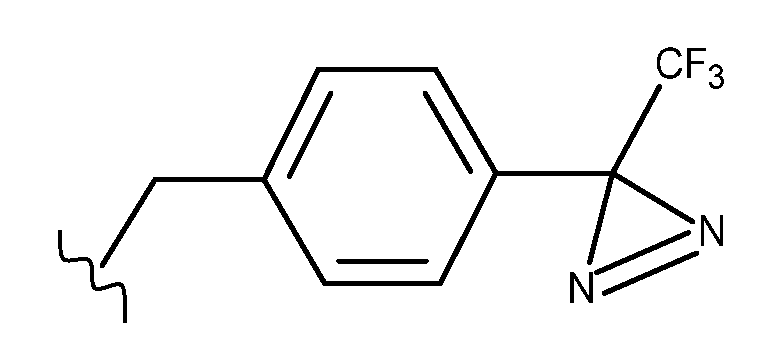
또는 R'a 및 R'b는 이들을 보유하는 질소 원자와 함께 사이클 B3을 형성하거나,
또는 R'a, R'b 및 R'c는 이들을 보유하는 질소 원자와 함께 가교된 C3-C8헤테로시클로알킬을 형성하고,
R'c, R'd, R'e, R'f는 서로 독립적으로 수소 또는 선형 또는 분지형 C1-C6알킬 기를 나타내거나,
또는 R'd 및 R'e는 이들을 보유하는 질소 원자와 함께 사이클 B4를 형성하거나,
또는 R'd, R'e 및 R'f는 이들을 보유하는 질소 원자와 함께 가교된 C3-C8헤테로시클로알킬을 형성하고,
Y1은 선형 또는 분지형 C1-C4알킬렌을 나타내고,
Y2는 결합, -O-, -O-CH2-, -O-CO-, -O-SO2-, -CH2-, -CH2-O, -CH2-CO-, -CH2-SO2-, -C2H5-, -CO-, -CO-O-, -CO-CH2-, -CO-NH-CH2-, -SO2-, -SO2-CH2-, -NH-CO-, -NH-SO2-를 나타내고,
m=0, 1 또는 2이고,
p=1, 2, 3 또는 4이고,
B1, B2, B3 및 B4는 서로 독립적으로 C3-C8헤테로시클로알킬 기를 나타내고, 상기 기는 (i) 모노- 또는 비-시클릭 기일 수 있고 (여기서 비시클릭 기는 융합된, 가교된 또는 스피로 고리계를 포함함), (ii) 질소 원자 이외에도, 산소, 황 및 질소로부터 독립적으로 선택된 1 또는 2개의 헤테로 원자를 함유할 수 있고, (iii) 플루오린, 브로민, 염소, 선형 또는 분지형 C1-C6알킬, 히드록실, -NH2, 옥소 또는 피페리디닐로부터 선택된 1 또는 2개의 기에 의해 치환될 수 있고,
여기서 R3 및 R8 기 중 1개는, 존재하는 경우, 링커에 공유 부착되고, 여기서 원자의 원자가는 그에 결합된 1개 이상의 치환기에 의해 초과되지 않는다.An antibody-drug conjugate according to any one of claims 1 to 40, wherein D comprises a compound of the following formula (I):
or an enantiomer, diastereomer and/or pharmaceutically acceptable salt of any of the above, wherein
R 1 and R 2 independently represent a group selected from hydrogen; linear or branched C 1 -C 6 alkyl optionally substituted by hydroxyl or a C 1 -C 6 alkoxy group; C 3 -C 6 cycloalkyl; trifluoromethyl; linear or branched C 1 -C 6 alkylene-heterocycloalkyl, wherein the heterocycloalkyl group is optionally substituted by a linear or branched C 1 -C 6 alkyl group;
or R 1 and R 2 together with the carbon atoms carrying them form a C 3 -C 6 cycloalkylene group,
R 3 is hydrogen; C 3 -C 6 cycloalkyl; linear or branched C 1 -C 6 alkyl; -X 1 -NR a R b ; -X 1 -N + R a R b R c ; -X 1 -OR c ; -X 1 -COOR c ; -X 1 -PO(OH) 2 ; -X 1 -SO 2 (OH); -X 1 -N 3 and
R a and R b independently represent hydrogen; heterocycloalkyl; -SO 2 -phenyl (wherein phenyl may be substituted by linear or branched C 1 -C 6 alkyl); linear or branched C 1 -C 6 alkyl optionally substituted by 1 or 2 hydroxyl groups; C 1 -C 6 alkylene-SO 2 OH; C 1 -C 6 alkylene-SO 2 O - ; C 1 -C 6 alkylene-COOH; C 1 -C 6 alkylene-PO(OH) 2 ; C 1 -C 6 alkylene-NR d R e ; C 1 -C 6 alkylene-N + R d R e R f ; C 1 -C 6 alkylene-phenyl (wherein phenyl may be substituted by a C 1 -C 6 alkoxy group) and a group selected from the following groups:
or R a and R b together with the nitrogen atom carrying them form cycle B 1 ;
or R a , R b and R c together with the nitrogen atom carrying them form a bridged C 3 -C 8 heterocycloalkyl,
R c , R d , R e , R f independently represent hydrogen or a linear or branched C 1 -C 6 alkyl group, or
or R d and R e form cycle B 2 together with the nitrogen atom carrying them,
or R d , R e and R f together with the nitrogen atom carrying them form a bridged C 3 -C 8 heterocycloalkyl,
Het 1 represents a group selected from:
Het 2 represents a group selected from the following:
A 1 is -NH-, -N(C 1 -C 3 alkyl), O, S or Se,
A 2 is N, CH or C(R 5 ),
G is selected from the group consisting of;
-C(O)OR G3 , -C(O)NR G1 R G2 , -C(O)R G2 , -NR G1 C(O)R G2 , -NR G1 C(O)NR G1 R G2 , -OC(O)NR G1 R G2 , -NR G1 C(O)OR G3 , -C(=NOR G1 )NR G1 R G2 , -NR G1 C(=NCN)NR G1 R G2 , -NR G1 S(O) 2 NR G1 R G2 , -S(O) 2 R G3 , -S(O) 2 NR G1 R G2 , -NR G1 S(O) 2 R G2 , -NR G1 C(=NR G2 )NR G1 R G2 , -C(=S)NR G1 R G2 , -C(=NR G1 )NR G1 R G2 , Hydroxyl group C 1 -C 6 alkyl, halogen, -NO 2 and -CN, optionally substituted by
- R G1 and R G2 are each independently selected from the group consisting of hydrogen, C 1 -C 6 alkyl, C 2 -C 6 alkenyl, C 2 -C 6 alkynyl, C 3 -C 6 cycloalkyl, phenyl and -(CH 2 ) 1-4 -phenyl, each optionally substituted with 1 to 3 halogen atoms ;
- R G3 is selected from the group consisting of C 1 -C 6 alkyl, C 2 -C 6 alkenyl, C 2 -C 6 alkynyl, C 3 -C 6 cycloalkyl, phenyl and -(CH 2 ) 1-4 -phenyl, optionally substituted by 1 to 3 halogen atoms; or
R G1 and R G2 are combined with the atoms to which they are each attached to form C 3 -C 8 heterocycloalkyl; or alternatively, G is selected from the group consisting of:
wherein R G4 is selected from hydrogen, C 1 -C 6 alkyl, C 2 -C 6 alkenyl, C 2 -C 6 alkynyl and C 3 -C 6 cycloalkyl optionally substituted with 1 to 3 halogen atoms,
R 4 represents a hydrogen, fluorine, chlorine or bromine atom, a methyl, hydroxyl or methoxy group,
R 5 represents a group selected from C 1 -C 6 alkyl, C 2 -C 6 alkenyl, C 2 -C 6 alkynyl, halogen or -CN, optionally substituted with 1 to 3 halogen atoms,
R 6 represents a group selected from the following:
hydrogen;
-C 2 -C 6 alkenyl;
-X 2 -OR 7 ;
-X 2 -NSO 2 -R 7 ;
-C=C(R 9 )-Y 1 -OR 7 ;
C 3 -C 6 cycloalkyl;
C 3 -C 6 heterocycloalkyl optionally substituted by hydroxyl groups;
C 3 -C 6 cycloalkylene-Y 2 -R 7 ;
C 3 -C 6 heterocycloalkylene-Y 2 -R 7 group;
A heteroarylene-R 7 group optionally substituted by a linear or branched C 1 -C 6 alkyl group;
R 7 represents a linear or branched C 1 -C 6 alkyl group; (C 3 -C 6 )cycloalkylene-R 8 or a group selected from the following:
Here, Cy represents C 3 -C 8 cycloalkyl,
R 8 is hydrogen; linear or branched C 1 -C 6 alkyl, -NR' a R'b;-NR' a -CO-OR'c;-NR' a -CO-R'c; -N + R' a R' b R'c;-O-R'c;-NH-X' 2 -N + R' a R' b R'c;-O-X' 2 -NR' a R' b , -X' 2 -NR' a R' b , -NR' c -X' 2 -N 3 and
R 9 represents a group selected from linear or branched C 1 -C 6 alkyl, trifluoromethyl, hydroxyl, halogen, C 1 -C 6 alkoxy,
R 10 represents a group selected from hydrogen, fluorine, chlorine, bromine, -CF 3 and methyl,
R 11 represents a group selected from hydrogen, C 1 -C 3 alkylene-R 8 , -OC 1 -C 3 alkylene-R 8 , -CO-NR h R i and -CH=CH-C 1 -C 4 alkylene-NR h R i , -CH=CH-CHO, C 3 -C 8 cycloalkylene-CH 2 -R 8 , C 3 -C 8 heterocycloalkylene-CH 2 -R 8 ,
R 12 and R 13 independently represent a hydrogen atom or a methyl group,
R 14 and R 15 independently represent hydrogen or a methyl group, or R 14 and R 15 together with the carbon atom carrying them form cyclohexyl,
R h and R i independently represent hydrogen or a linear or branched C 1 -C 6 alkyl group,
X 1 and X 2 independently represent a linear or branched C 1 -C 6 alkylene group optionally substituted by 1 or 2 groups selected from trifluoromethyl, hydroxyl, halogen, C 1 -C 6 alkoxy,
X' 2 represents linear or branched C 1 -C 6 alkylene,
R' a and R' b are independently hydrogen; heterocycloalkyl; -SO 2 -phenyl (wherein phenyl may be substituted by linear or branched C 1 -C 6 alkyl); linear or branched C 1 -C 6 alkyl optionally substituted by one or two hydroxyl or C 1 -C 6 alkoxy groups; C 1 -C 6 alkylene-SO 2 OH; C 1 -C 6 alkylene-SO 2 O - ; C 1 -C 6 alkylene-COOH; C 1 -C 6 alkylene-PO(OH) 2 ; C 1 -C 6 alkylene-NR' d R'e; C 1 -C 6 alkylene-N + R' d R' e R' f ; C 1 -C 6 alkylene-OC 1 -C 6 alkylene-OH; C 1 -C 6 alkylene-phenyl (wherein phenyl may be substituted by hydroxyl or a C 1 -C 6 alkoxy group) and a group selected from the following groups:
or R' a and R' b together with the nitrogen atom carrying them form cycle B 3 ,
or R' a , R' b and R' c together with the nitrogen atom carrying them form a bridged C 3 -C 8 heterocycloalkyl,
R' c , R' d , R' e , R' f independently represent hydrogen or a linear or branched C 1 -C 6 alkyl group, or
or R' d and R' e form cycle B 4 together with the nitrogen atom carrying them, or
or R' d , R' e and R' f together with the nitrogen atom carrying them form a bridged C 3 -C 8 heterocycloalkyl,
Y 1 represents linear or branched C 1 -C 4 alkylene,
Y 2 is a bond, -O-, -O-CH 2 -, -O-CO-, -O-SO 2 -, -CH 2 -, -CH 2 -O, -CH 2 -CO-, -CH 2 -SO 2 -, -C 2 H 5 -, -CO-, -CO-O-, -CO-CH 2 -, -CO-NH-CH 2 -, -SO 2 -, -SO 2 -CH 2 -, -NH-CO-, -NH-SO 2 -,
m=0, 1 or 2,
p=1, 2, 3 or 4,
B 1 , B 2 , B 3 and B 4 independently represent a C 3 -C 8 heterocycloalkyl group, which group (i) may be a mono- or abicyclic group (wherein the abicyclic group comprises a fused, bridged or spiro ring system), (ii) may contain, in addition to the nitrogen atom, 1 or 2 heteroatoms independently selected from oxygen, sulfur and nitrogen, and (iii) may be substituted by 1 or 2 groups selected from fluorine, bromine, chlorine, linear or branched C 1 -C 6 alkyl, hydroxyl, -NH 2 , oxo or piperidinyl,
wherein one of the groups R 3 and R 8 , if present, is covalently attached to the linker, and wherein the valency of the atom is not exceeded by one or more substituents bonded thereto.

또는 상기 중 어느 하나의 거울상이성질체, 부분입체이성질체 및/또는 제약상 허용되는 염, 여기서
n=0, 1 또는 2이고,
------는 단일 또는 이중 결합을 나타내고,
A4 및 A5는 서로 독립적으로 탄소 또는 질소 원자를 나타내고,
Z1은 결합, -N(R)- 또는 -O-를 나타내고, 여기서 R은 수소 또는 선형 또는 분지형 C1-C6알킬을 나타내고,
R1은 수소; 히드록실 또는 C1-C6알콕시 기에 의해 임의로 치환된 선형 또는 분지형 C1-C6알킬; C3-C6시클로알킬; 트리플루오로메틸; 선형 또는 분지형 C1-C6알킬렌-헤테로시클로알킬로부터 선택된 기를 나타내고, 여기서 헤테로시클로알킬 기는 선형 또는 분지형 C1-C6알킬 기에 의해 임의로 치환되고;
R2는 수소 또는 메틸을 나타내고;
R3은 수소; 선형 또는 분지형 C1-C4알킬; -X1-NRaRb; -X1-N+RaRbRc; -X1-O-Rc; -X1-COORc; -X1-PO(OH)2; -X1-SO2(OH); -X1-N3 및

Ra 및 Rb는 서로 독립적으로 수소; 헤테로시클로알킬; -SO2-페닐 (여기서 페닐은 선형 또는 분지형 C1-C6알킬에 의해 치환될 수 있음); 1 또는 2개의 히드록실 기에 의해 임의로 치환된 선형 또는 분지형 C1-C6알킬; C1-C6알킬렌-SO2OH; C1-C6알킬렌-SO2O-; C1-C6알킬렌-COOH; C1-C6알킬렌-PO(OH)2; C1-C6알킬렌-NRdRe; C1-C6알킬렌-N+RdReRf; C1-C6알킬렌-페닐 (여기서 페닐은 C1-C6알콕시 기에 의해 치환될 수 있음) 및 하기 기로부터 선택된 기를 나타내거나:

또는 Ra 및 Rb는 이들을 보유하는 질소 원자와 함께 사이클 B1을 형성하거나;
또는 Ra, Rb 및 Rc는 이들을 보유하는 질소 원자와 함께 가교된 C3-C8헤테로시클로알킬을 형성하고,
Rc, Rd, Re, Rf는 서로 독립적으로 수소 또는 선형 또는 분지형 C1-C6알킬 기를 나타내거나,
또는 Rd 및 Re는 이들을 보유하는 질소 원자와 함께 사이클 B2를 형성하거나,
또는 Rd, Re 및 Rf는 이들을 보유하는 질소 원자와 함께 가교된 C3-C8헤테로시클로알킬을 형성하고,
Het1은 하기로부터 선택된 기를 나타내고:

Het2는 하기로부터 선택된 기를 나타내고:

A1은 -NH-, -N(C1-C3알킬), O, S 또는 Se이고,
A2는 N, CH 또는 C(R5)이고,
G는 하기로 이루어진 군으로부터 선택되고;
-C(O)ORG3, -C(O)NRG1RG2, -C(O)RG2, -NRG1C(O)RG2, -NRG1C(O)NRG1RG2, -OC(O)NRG1RG2, -NRG1C(O)ORG3, -C(=NORG1)NRG1RG2, -NRG1C(=NCN)NRG1RG2, -NRG1S(O)2NRG1RG2, -S(O)2RG3, -S(O)2NRG1RG2, -NRG1S(O)2RG2, -NRG1C(=NRG2)NRG1RG2, -C(=S)NRG1RG2, -C(=NRG1)NRG1RG2, 히드록실 기에 의해 임의로 치환된 C1-C6알킬, 할로겐, -NO2 및 -CN, 여기서
- RG1 및 RG2는 각각의 경우에 각각 독립적으로 수소, 1 내지 3개의 할로겐 원자에 의해 임의로 치환된 C1-C6알킬, C2-C6알케닐, C2-C6알키닐, C3-C6시클로알킬, 페닐 및 -(CH2)1-4-페닐로 이루어진 군으로부터 선택되고;
- RG3은 1 내지 3개의 할로겐 원자에 의해 임의로 치환된 C1-C6알킬, C2-C6알케닐, C2-C6알키닐, C3-C6시클로알킬, 페닐 및 -(CH2)1-4-페닐로 이루어진 군으로부터 선택되거나; 또는
RG1 및 RG2는 이들 각각이 부착되어 있는 원자와 함께 조합되어 C3-C8헤테로시클로알킬을 형성하거나; 또는 대안적으로, G는 하기로 이루어진 군으로부터 선택되고:
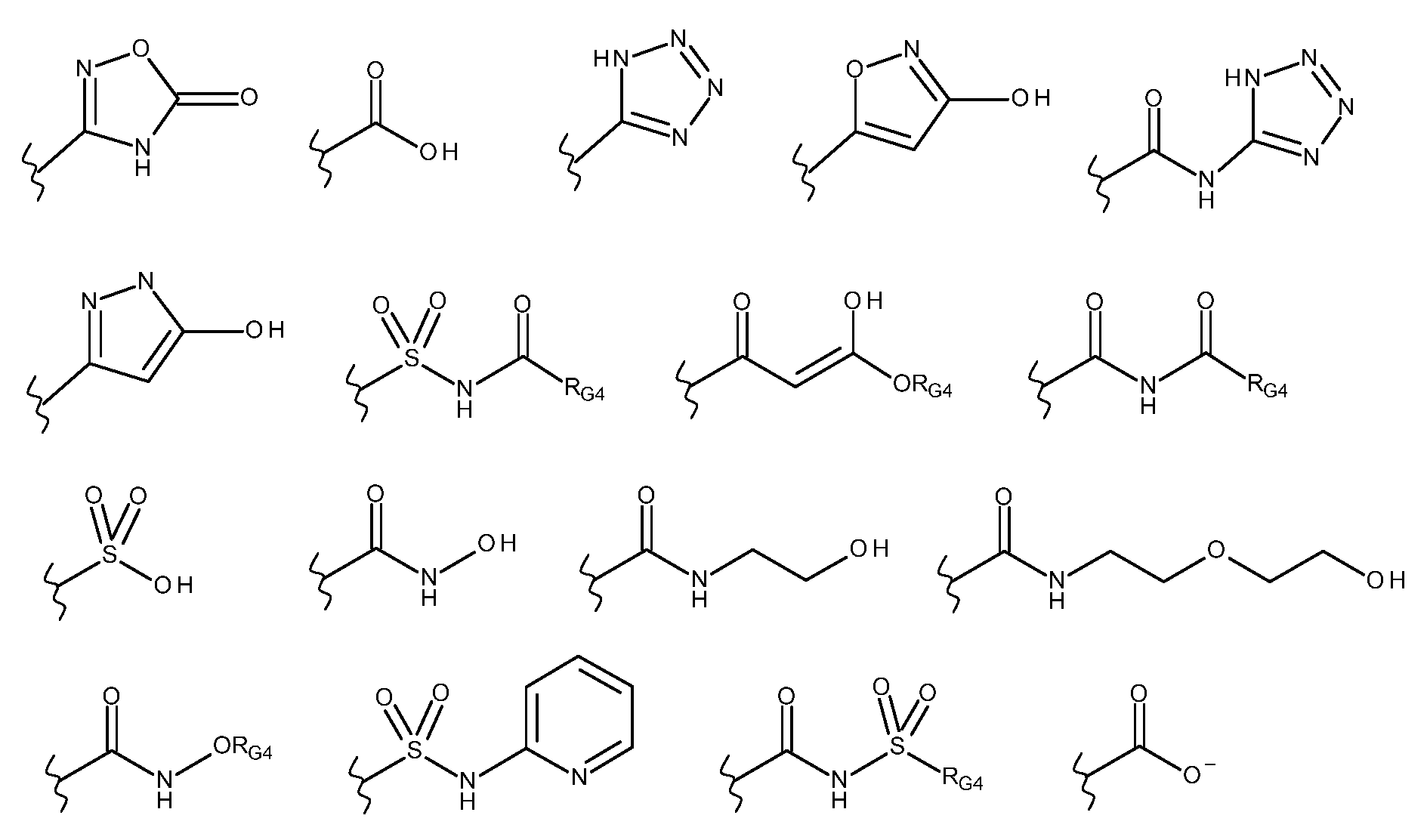
여기서 RG4는 수소, 1 내지 3개의 할로겐 원자에 의해 임의로 치환된 C1-C6알킬, C2-C6알케닐, C2-C6알키닐 및 C3-C6시클로알킬로부터 선택되고,
R4는 수소, 플루오린, 염소 또는 브로민 원자, 메틸, 히드록실 또는 메톡시 기를 나타내고,
R5는 1 내지 3개의 할로겐 원자에 의해 임의로 치환된 C1-C6알킬; C2-C6알케닐; C2-C6알키닐; 할로겐 또는 -CN으로부터 선택된 기를 나타내고,
R6은 하기로부터 선택된 기를 나타내고:
수소;
-C2-C6알케닐;
-X2-O-R7;

-X2-NSO2-R7;
-C=C(R9)-Y1-O-R7;
C3-C6시클로알킬;
히드록실 기에 의해 임의로 치환된 C3-C6헤테로시클로알킬;
C3-C6시클로알킬렌-Y2-R7;
C3-C6헤테로시클로알킬렌-Y2-R7 기;
선형 또는 분지형 C1-C6알킬 기에 의해 임의로 치환된 헤테로아릴렌-R7 기;
R7은 선형 또는 분지형 C1-C6알킬 기; (C3-C6)시클로알킬렌-R8 또는 하기로부터 선택된 기를 나타내고:

여기서 Cy는 C3-C8시클로알킬을 나타내고,
R8은 수소; 선형 또는 분지형 C1-C6알킬, -NR'aR'b; -NR'a-CO-OR'c; -NR'a-CO-R'c; -N+R'aR'bR'c; -O-R'c; -NH-X'2-N+R'aR'bR'c; -O-X'2-NR'aR'b, -X'2-NR'aR'b, -NR'c-X'2-N3 및

R9는 선형 또는 분지형 C1-C6알킬, 트리플루오로메틸, 히드록실, 할로겐, C1-C6알콕시로부터 선택된 기를 나타내고,
R10은 수소, 플루오린, 염소, 브로민, -CF3 및 메틸로부터 선택된 기를 나타내고,
R11은 수소, 할로겐, C1-C3알킬렌-R8, -O-C1-C3알킬렌-R8, -CO-NRhRi 및 -CH=CH-C1-C4알킬렌-NRhRi, -CH=CH-CHO, C3-C8시클로알킬렌-CH2-R8, C3-C8헤테로시클로알킬렌-CH2-R8로부터 선택된 기를 나타내고,
R12 및 R13은 서로 독립적으로 수소 원자 또는 메틸 기를 나타내고,
R14 및 R15는 서로 독립적으로 수소 또는 메틸 기를 나타내거나 또는 R14 및 R15는 이들을 보유하는 탄소 원자와 함께 시클로헥실을 형성하고,
Rh 및 Ri는 서로 독립적으로 수소 또는 선형 또는 분지형 C1-C6알킬 기를 나타내고,
X1은 트리플루오로메틸, 히드록실, 할로겐, C1-C6알콕시로부터 선택된 1 또는 2개의 기에 의해 임의로 치환된 선형 또는 분지형 C1-C4알킬렌 기를 나타내고,
X2는 트리플루오로메틸, 히드록실, 할로겐, C1-C6알콕시로부터 선택된 1 또는 2개의 기에 의해 임의로 치환된 선형 또는 분지형 C1-C6알킬렌 기를 나타내고,
X'2는 선형 또는 분지형 C1-C6알킬렌을 나타내고,
R'a 및 R'b는 서로 독립적으로 수소; 헤테로시클로알킬; -SO2-페닐 (여기서 페닐은 선형 또는 분지형 C1-C6알킬에 의해 치환될 수 있음); 1 또는 2개의 히드록실 또는 C1-C6알콕시 기에 의해 임의로 치환된 선형 또는 분지형 C1-C6알킬; C1-C6알킬렌-SO2OH; C1-C6알킬렌-SO2O-; C1-C6알킬렌-COOH; C1-C6알킬렌-PO(OH)2; C1-C6알킬렌-NR'dR'e; C1-C6알킬렌-N+R'dR'eR'f; C1-C6알킬렌-O-C1-C6알킬렌-OH; C1-C6알킬렌-페닐 (여기서 페닐은 히드록실 또는 C1-C6알콕시 기에 의해 치환될 수 있음) 및 하기 기로부터 선택된 기를 나타내거나:
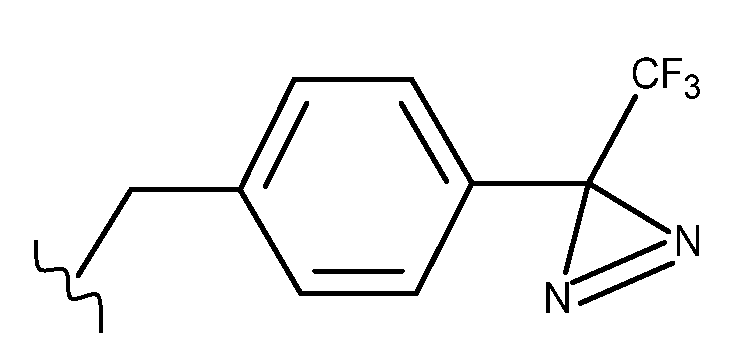
또는 R'a 및 R'b는 이들을 보유하는 질소 원자와 함께 사이클 B3을 형성하거나,
또는 R'a, R'b 및 R'c는 이들을 보유하는 질소 원자와 함께 가교된 C3-C8헤테로시클로알킬을 형성하고,
R'c, R'd, R'e, R'f는 서로 독립적으로 수소 또는 선형 또는 분지형 C1-C6알킬 기를 나타내거나,
또는 R'd 및 R'e는 이들을 보유하는 질소 원자와 함께 사이클 B4를 형성하거나,
또는 R'd, R'e 및 R'f는 이들을 보유하는 질소 원자와 함께 가교된 C3-C8헤테로시클로알킬을 형성하고,
Y1은 선형 또는 분지형 C1-C4알킬렌을 나타내고,
Y2는 결합, -O-, -O-CH2-, -O-CO-, -O-SO2-, -CH2-, -CH2-O, -CH2-CO-, -CH2-SO2-, -C2H5-, -CO-, -CO-O-, -CO-CH2-, -CO-NH-CH2-, -SO2-, -SO2-CH2-, -NH-CO-, -NH-SO2-를 나타내고,
m=0, 1 또는 2이고,
p=1, 2, 3 또는 4이고,
B1, B2, B3 및 B4는 서로 독립적으로 C3-C8헤테로시클로알킬 기를 나타내고, 상기 기는 (i) 모노- 또는 비-시클릭 기일 수 있고 (여기서 비시클릭 기는 융합된, 가교된 또는 스피로 고리계를 포함함), (ii) 질소 원자 이외에도, 산소, 황 및 질소로부터 독립적으로 선택된 1 또는 2개의 헤테로 원자를 함유할 수 있고, (iii) 플루오린, 브로민, 염소, 선형 또는 분지형 C1-C6알킬, 히드록실, -NH2, 옥소 또는 피페리디닐로부터 선택된 1 또는 2개의 기에 의해 치환될 수 있고,
여기서 R3 및 R8 기 중 1개는, 존재하는 경우, 링커에 공유 부착되고, 여기서 원자의 원자가는 그에 결합된 1개 이상의 치환기에 의해 초과되지 않는다.An antibody-drug conjugate according to any one of claims 1 to 40, wherein D comprises a compound of the following formula (II):
or an enantiomer, diastereomer and/or pharmaceutically acceptable salt of any of the above, wherein
n=0, 1 or 2,
------ indicates a single or double bond,
A 4 and A 5 independently represent carbon or nitrogen atoms,
Z 1 represents a bond, -N(R)- or -O-, where R represents hydrogen or linear or branched C 1 -C 6 alkyl,
R 1 represents a group selected from hydrogen; linear or branched C 1 -C 6 alkyl optionally substituted by hydroxyl or a C 1 -C 6 alkoxy group; C 3 -C 6 cycloalkyl; trifluoromethyl; linear or branched C 1 -C 6 alkylene-heterocycloalkyl, wherein the heterocycloalkyl group is optionally substituted by a linear or branched C 1 -C 6 alkyl group;
R 2 represents hydrogen or methyl;
R 3 is hydrogen; linear or branched C 1 -C 4 alkyl; -X 1 -NR a R b ; -X 1 -N + R a R b R c ; -X 1 -OR c ; -X 1 -COOR c ; -X 1 -PO(OH) 2 ; -X 1 -SO 2 (OH); -X 1 -N 3 and
R a and R b independently represent hydrogen; heterocycloalkyl; -SO 2 -phenyl (wherein phenyl may be substituted by linear or branched C 1 -C 6 alkyl); linear or branched C 1 -C 6 alkyl optionally substituted by 1 or 2 hydroxyl groups; C 1 -C 6 alkylene-SO 2 OH; C 1 -C 6 alkylene-SO 2 O - ; C 1 -C 6 alkylene-COOH; C 1 -C 6 alkylene-PO(OH) 2 ; C 1 -C 6 alkylene-NR d R e ; C 1 -C 6 alkylene-N + R d R e R f ; C 1 -C 6 alkylene-phenyl (wherein phenyl may be substituted by a C 1 -C 6 alkoxy group) and a group selected from the following groups:
or R a and R b together with the nitrogen atom carrying them form cycle B 1 ;
or R a , R b and R c together with the nitrogen atom carrying them form a bridged C 3 -C 8 heterocycloalkyl,
R c , R d , R e , R f independently represent hydrogen or a linear or branched C 1 -C 6 alkyl group, or
or R d and R e form cycle B 2 together with the nitrogen atom carrying them,
or R d , R e and R f together with the nitrogen atom carrying them form a bridged C 3 -C 8 heterocycloalkyl,
Het 1 represents a group selected from:
Het 2 represents a group selected from the following:
A 1 is -NH-, -N(C 1 -C 3 alkyl), O, S or Se,
A 2 is N, CH or C(R 5 ),
G is selected from the group consisting of;
-C(O)OR G3 , -C(O)NR G1 R G2 , -C(O)R G2 , -NR G1 C(O)R G2 , -NR G1 C(O)NR G1 R G2 , -OC(O)NR G1 R G2 , -NR G1 C(O)OR G3 , -C(=NOR G1 )NR G1 R G2 , -NR G1 C(=NCN)NR G1 R G2 , -NR G1 S(O) 2 NR G1 R G2 , -S(O) 2 R G3 , -S(O) 2 NR G1 R G2 , -NR G1 S(O) 2 R G2 , -NR G1 C(=NR G2 )NR G1 R G2 , -C(=S)NR G1 R G2 , -C(=NR G1 )NR G1 R G2 , Hydroxyl group C 1 -C 6 alkyl, halogen, -NO 2 and -CN, optionally substituted by
- R G1 and R G2 are each independently selected from the group consisting of hydrogen, C 1 -C 6 alkyl, C 2 -C 6 alkenyl, C 2 -C 6 alkynyl, C 3 -C 6 cycloalkyl, phenyl and -(CH 2 ) 1-4 -phenyl, each optionally substituted with 1 to 3 halogen atoms ;
- R G3 is selected from the group consisting of C 1 -C 6 alkyl, C 2 -C 6 alkenyl, C 2 -C 6 alkynyl, C 3 -C 6 cycloalkyl, phenyl and -(CH 2 ) 1-4 -phenyl, optionally substituted by 1 to 3 halogen atoms; or
R G1 and R G2 are combined with the atoms to which they are each attached to form C 3 -C 8 heterocycloalkyl; or alternatively, G is selected from the group consisting of:
wherein R G4 is selected from hydrogen, C 1 -C 6 alkyl, C 2 -C 6 alkenyl, C 2 -C 6 alkynyl and C 3 -C 6 cycloalkyl optionally substituted with 1 to 3 halogen atoms,
R 4 represents a hydrogen, fluorine, chlorine or bromine atom, a methyl, hydroxyl or methoxy group,
R 5 represents a group selected from C 1 -C 6 alkyl, C 2 -C 6 alkenyl, C 2 -C 6 alkynyl, halogen or -CN, optionally substituted with 1 to 3 halogen atoms,
R 6 represents a group selected from the following:
hydrogen;
-C 2 -C 6 alkenyl;
-X 2 -OR 7 ;
-X 2 -NSO 2 -R 7 ;
-C=C(R 9 )-Y 1 -OR 7 ;
C 3 -C 6 cycloalkyl;
C 3 -C 6 heterocycloalkyl optionally substituted by hydroxyl groups;
C 3 -C 6 cycloalkylene-Y 2 -R 7 ;
C 3 -C 6 heterocycloalkylene-Y 2 -R 7 group;
A heteroarylene-R 7 group optionally substituted by a linear or branched C 1 -C 6 alkyl group;
R 7 represents a linear or branched C 1 -C 6 alkyl group; (C 3 -C 6 )cycloalkylene-R 8 or a group selected from the following:
Here, Cy represents C 3 -C 8 cycloalkyl,
R 8 is hydrogen; linear or branched C 1 -C 6 alkyl, -NR' a R'b;-NR' a -CO-OR'c;-NR' a -CO-R'c; -N + R' a R' b R'c;-O-R'c;-NH-X' 2 -N + R' a R' b R'c;-O-X' 2 -NR' a R' b , -X' 2 -NR' a R' b , -NR' c -X' 2 -N 3 and
R 9 represents a group selected from linear or branched C 1 -C 6 alkyl, trifluoromethyl, hydroxyl, halogen, C 1 -C 6 alkoxy,
R 10 represents a group selected from hydrogen, fluorine, chlorine, bromine, -CF 3 and methyl,
R 11 represents a group selected from hydrogen, halogen, C 1 -C 3 alkylene-R 8 , -OC 1 -C 3 alkylene-R 8 , -CO-NR h R i and -CH=CH-C 1 -C 4 alkylene-NR h R i , -CH=CH-CHO, C 3 -C 8 cycloalkylene-CH 2 -R 8 , C 3 -C 8 heterocycloalkylene-CH 2 -R 8 ,
R 12 and R 13 independently represent a hydrogen atom or a methyl group,
R 14 and R 15 independently represent hydrogen or a methyl group, or R 14 and R 15 together with the carbon atom carrying them form cyclohexyl,
R h and R i independently represent hydrogen or a linear or branched C 1 -C 6 alkyl group,
X 1 represents a linear or branched C 1 -C 4 alkylene group optionally substituted by 1 or 2 groups selected from trifluoromethyl, hydroxyl, halogen, C 1 -C 6 alkoxy,
X 2 represents a linear or branched C 1 -C 6 alkylene group optionally substituted by 1 or 2 groups selected from trifluoromethyl, hydroxyl, halogen, C 1 -C 6 alkoxy,
X' 2 represents linear or branched C 1 -C 6 alkylene,
R' a and R' b are independently hydrogen; heterocycloalkyl; -SO 2 -phenyl (wherein phenyl may be substituted by linear or branched C 1 -C 6 alkyl); linear or branched C 1 -C 6 alkyl optionally substituted by one or two hydroxyl or C 1 -C 6 alkoxy groups; C 1 -C 6 alkylene-SO 2 OH; C 1 -C 6 alkylene - SO 2 O - ; C 1 -C 6 alkylene-COOH; C 1 -C 6 alkylene-PO(OH) 2 ; C 1 -C 6 alkylene-NR' d R'e; C 1 -C 6 alkylene-N + R' d R' e R'f; C 1 -C 6 alkylene-OC 1 -C 6 alkylene-OH; C 1 -C 6 alkylene-phenyl (wherein phenyl may be substituted by hydroxyl or a C 1 -C 6 alkoxy group) and a group selected from the following groups:
or R' a and R' b together with the nitrogen atom carrying them form cycle B 3 ,
or R' a , R' b and R' c together with the nitrogen atom carrying them form a bridged C 3 -C 8 heterocycloalkyl,
R' c , R' d , R' e , R' f independently represent hydrogen or a linear or branched C 1 -C 6 alkyl group, or
or R' d and R' e form cycle B 4 together with the nitrogen atom carrying them, or
or R' d , R' e and R' f together with the nitrogen atom carrying them form a bridged C 3 -C 8 heterocycloalkyl,
Y 1 represents linear or branched C 1 -C 4 alkylene,
Y 2 is a bond, -O-, -O-CH 2 -, -O-CO-, -O-SO 2 -, -CH 2 -, -CH 2 -O, -CH 2 -CO-, -CH 2 -SO 2 -, -C 2 H 5 -, -CO-, -CO-O-, -CO-CH 2 -, -CO-NH-CH 2 -, -SO 2 -, -SO 2 -CH 2 -, -NH-CO-, -NH-SO 2 -,
m=0, 1 or 2,
p=1, 2, 3 or 4,
B 1 , B 2 , B 3 and B 4 independently represent a C 3 -C 8 heterocycloalkyl group, which group (i) may be a mono- or abicyclic group (wherein the abicyclic group comprises a fused, bridged or spiro ring system), (ii) may contain, in addition to the nitrogen atom, 1 or 2 heteroatoms independently selected from oxygen, sulfur and nitrogen, and (iii) may be substituted by 1 or 2 groups selected from fluorine, bromine, chlorine, linear or branched C 1 -C 6 alkyl, hydroxyl, -NH 2 , oxo or piperidinyl,
wherein one of the groups R 3 and R 8 , if present, is covalently attached to the linker, and wherein the valency of the atom is not exceeded by one or more substituents bonded thereto.
- RG1 및 RG2는 각각의 경우에 각각 독립적으로 수소, 1 내지 3개의 할로겐 원자에 의해 임의로 치환된 C1-C6알킬, C2-C6알케닐, C2-C6알키닐, C3-C6시클로알킬, 페닐 및 -(CH2)1-4-페닐로 이루어진 군으로부터 선택되고;
- RG3은 1 내지 3개의 할로겐 원자에 의해 임의로 치환된 C1-C6알킬, C2-C6알케닐, C2-C6알키닐, C3-C6시클로알킬, 페닐 및 -(CH2)1-4-페닐로 이루어진 군으로부터 선택되거나; 또는
RG1 및 RG2는 이들 각각이 부착되어 있는 원자와 함께 조합되어 C3-C8헤테로시클로알킬을 형성하거나; 또는 대안적으로, G는 하기로 이루어진 군으로부터 선택되고:

여기서 RG4는 1 내지 3개의 할로겐 원자에 의해 임의로 치환된 C1-C6알킬, C2-C6알케닐, C2-C6알키닐 및 C3-C6시클로알킬로부터 선택된 것인
항체-약물 접합체.In any one of claims 1 to 44, wherein G is -C(O)OR G3 , -C(O)NR G1 R G2 , -C(O)R G2 , -NR G1 C(O)R G2 , -NR G1 C(O)NR G1 R G2 , -OC(O)NR G1 R G2 , -NR G1 C(O)OR G3 , -C(=NOR G1 )NR G1 R G2 , -NR G1 C(=NCN)NR G1 R G2 , -NR G1 S(O) 2 NR G1 R G2 , -S(O) 2 R G3 , -S(O) 2 NR G1 R G2 , -NR G1 S(O) 2 R G2 , -NR G1 C(=NR G2 )NR G1 R G2 , -C(=S)NR G1 R G2 , -C(=NR G1 )NR G1 R G2 , halogen, -NO 2 and -CN, wherein
- R G1 and R G2 are each independently selected from the group consisting of hydrogen, C 1 -C 6 alkyl, C 2 -C 6 alkenyl, C 2 -C 6 alkynyl, C 3 -C 6 cycloalkyl, phenyl and -(CH 2 ) 1-4 -phenyl, each optionally substituted with 1 to 3 halogen atoms ;
- R G3 is selected from the group consisting of C 1 -C 6 alkyl, C 2 -C 6 alkenyl, C 2 -C 6 alkynyl, C 3 -C 6 cycloalkyl, phenyl and -(CH 2 ) 1-4 -phenyl, optionally substituted by 1 to 3 halogen atoms; or
R G1 and R G2 are combined with the atoms to which they are each attached to form C 3 -C 8 heterocycloalkyl; or alternatively, G is selected from the group consisting of:
wherein R G4 is selected from C 1 -C 6 alkyl, C 2 -C 6 alkenyl, C 2 -C 6 alkynyl and C 3 -C 6 cycloalkyl, optionally substituted by 1 to 3 halogen atoms.
Antibody-drug conjugate.

또는 상기 중 어느 하나의 거울상이성질체, 부분입체이성질체 및/또는 제약상 허용되는 염, 여기서
Z1은 결합 또는 -O-를 나타내고,
R3은 수소; C3-C6시클로알킬; 선형 또는 분지형 C1-C6알킬; -X1-NRaRb; -X1-N+RaRbRc; 및 -X1-O-Rc로부터 선택된 기를 나타내고,
Ra 및 Rb는 서로 독립적으로 수소; 1 또는 2개의 히드록실 기에 의해 임의로 치환된 선형 또는 분지형 C1-C6알킬; 및 C1-C6알킬렌-SO2O-로부터 선택된 기를 나타내고,
Rc는 수소 또는 선형 또는 분지형 C1-C6알킬 기를 나타내고,
Het2는 하기로부터 선택된 기를 나타내고:

A1은 -NH-, -N(C1-C3알킬), O, S 또는 Se이고,
A2는 N, CH 또는 C(R5)이고,
G는 하기로 이루어진 군으로부터 선택되고;
-C(O)OH, -C(O)ORG3, -C(O)NRG1RG2, -C(O)RG2, -NRG1C(O)RG2, -NRG1C(O)NRG1RG2, -OC(O)NRG1RG2, -NRG1C(O)ORG3, -C(=NORG1)NRG1RG2, -NRG1C(=NCN)NRG1RG2, -NRG1S(O)2NRG1RG2, -S(O)2RG3, -S(O)2NRG1RG2, -NRG1S(O)2RG2, -NRG1C(=NRG2)NRG1RG2, -C(=S)NRG1RG2, -C(=NRG1)NRG1RG2, 히드록실 기에 의해 임의로 치환된 C1-C6알킬, 할로겐, -NO2 및 -CN, 여기서
- RG1 및 RG2는 각각의 경우에 각각 독립적으로 수소 및 1 내지 3개의 할로겐 원자에 의해 임의로 치환된 C1-C6알킬로 이루어진 군으로부터 선택되고;
- RG3은 1 내지 3개의 할로겐 원자에 의해 임의로 치환된 C1-C6알킬이거나; 또는
RG1 및 RG2는 이들 각각이 부착되어 있는 원자와 함께 조합되어 C3-C8헤테로시클로알킬을 형성하고;
R4는 수소, 플루오린, 염소 또는 브로민 원자, 메틸, 히드록실 또는 메톡시 기를 나타내고,
R5는 1 내지 3개의 할로겐 원자에 의해 임의로 치환된 C1-C6알킬; 할로겐 또는 -CN으로부터 선택된 기를 나타내고,
R6은 하기로부터 선택된 기를 나타내고:
-X2-O-R7; 및
선형 또는 분지형 C1-C6알킬 기에 의해 임의로 치환된 헤테로아릴렌-R7 기;
R7은 선형 또는 분지형 C1-C6알킬 기; (C3-C6)시클로알킬렌-R8 또는 하기로부터 선택된 기를 나타내고:

여기서 Cy는 C3-C8시클로알킬을 나타내고,
R8은 수소; 선형 또는 분지형 C1-C6알킬, -NR'aR'b; -NR'a-CO-OR'c; -NR'a-CO-R'c; -N+R'aR'bR'c; -O-R'c; -NH-X'2-N+R'aR'bR'c; -O-X'2-NR'aR'b; -X'2-NR'aR'b; -NR'c-X'2-N3 및

R10은 수소, 플루오린, 염소, 브로민, -CF3 및 메틸로부터 선택된 기를 나타내고,
R11은 수소, C1-C3알킬렌-R8, -O-C1-C3알킬렌-R8, -CO-NRhRi 및 -CH=CH-C1-C4알킬렌-NRhRi, -CH=CH-CHO, C3-C8시클로알킬렌-CH2-R8, C3-C8헤테로시클로알킬렌-CH2-R8로부터 선택된 기를 나타내고,
R12 및 R13은 서로 독립적으로 수소 원자 또는 메틸 기를 나타내고,
R14 및 R15는 서로 독립적으로 수소 또는 메틸 기를 나타내거나, 또는 R14 및 R15는 이들을 보유하는 탄소 원자와 함께 시클로헥실을 형성하고,
Rh 및 Ri는 서로 독립적으로 수소 또는 선형 또는 분지형 C1-C6알킬 기를 나타내고,
X1 및 X2는 서로 독립적으로 트리플루오로메틸, 히드록실, 할로겐, C1-C6알콕시로부터 선택된 1 또는 2개의 기에 의해 임의로 치환된 선형 또는 분지형 C1-C6알킬렌 기를 나타내고,
X'2는 선형 또는 분지형 C1-C6알킬렌을 나타내고,
R'a 및 R'b는 서로 독립적으로 수소; 헤테로시클로알킬; -SO2-페닐 (여기서 페닐은 선형 또는 분지형 C1-C6알킬에 의해 치환될 수 있음); 1 또는 2개의 히드록실 또는 C1-C6알콕시 기에 의해 임의로 치환된 선형 또는 분지형 C1-C6알킬; C1-C6알킬렌-SO2OH; C1-C6알킬렌-SO2O-; C1-C6알킬렌-COOH; C1-C6알킬렌-PO(OH)2; C1-C6알킬렌-NR'dR'e; C1-C6알킬렌-N+R'dR'eR'f; C1-C6알킬렌-O-C1-C6알킬렌-OH; C1-C6알킬렌-페닐 (여기서 페닐은 히드록실 또는 C1-C6알콕시 기에 의해 치환될 수 있음) 및 하기 기로부터 선택된 기를 나타내거나:

또는 R'a 및 R'b는 이들을 보유하는 질소 원자와 함께 사이클 B3을 형성하거나,
또는 R'a, R'b 및 R'c는 이들을 보유하는 질소 원자와 함께 가교된 C3-C8헤테로시클로알킬을 형성하고,
R'c, R'd, R'e, R'f는 서로 독립적으로 수소 또는 선형 또는 분지형 C1-C6알킬 기를 나타내거나,
또는 R'd 및 R'e는 이들을 보유하는 질소 원자와 함께 사이클 B4를 형성하거나,
또는 R'd, R'e 및 R'f는 이들을 보유하는 질소 원자와 함께 가교된 C3-C8헤테로시클로알킬을 형성하고,
m=0, 1 또는 2이고,
p=1, 2, 3 또는 4이고,
B3 및 B4는 서로 독립적으로 C3-C8헤테로시클로알킬 기를 나타내고, 상기 기는 (i) 모노- 또는 비-시클릭 기일 수 있고 (여기서 비시클릭 기는 융합된, 가교된 또는 스피로 고리계를 포함함), (ii) 질소 원자 이외에도, 산소, 황 및 질소로부터 독립적으로 선택된 1 또는 2개의 헤테로 원자를 함유할 수 있고, (iii) 플루오린, 브로민, 염소, 선형 또는 분지형 C1-C6알킬, 히드록실, -NH2, 옥소 또는 피페리디닐로부터 선택된 1 또는 2개의 기에 의해 치환될 수 있다.An antibody-drug conjugate according to any one of claims 1 to 40, wherein D comprises a compound of formula (IA) or (IIA):
or an enantiomer, diastereomer and/or pharmaceutically acceptable salt of any of the above, wherein
Z 1 represents a bond or -O-,
R 3 represents a group selected from hydrogen; C 3 -C 6 cycloalkyl; linear or branched C 1 -C 6 alkyl; -X 1 -NR a R b ; -X 1 -N + R a R b R c ; and -X 1 -OR c ,
R a and R b independently represent a group selected from hydrogen; linear or branched C 1 -C 6 alkyl optionally substituted by 1 or 2 hydroxyl groups; and C 1 -C 6 alkylene-SO 2 O - ,
R c represents hydrogen or a linear or branched C 1 -C 6 alkyl group,
Het 2 represents a group selected from the following:
A 1 is -NH-, -N(C 1 -C 3 alkyl), O, S or Se,
A 2 is N, CH or C(R 5 ),
G is selected from the group consisting of;
-C(O)OH, -C(O)OR G3 , -C(O)NR G1 R G2 , -C(O)R G2 , -NR G1 C(O)R G2 , -NR G1 C(O)NR G1 R G2 , -OC(O)NR G1 R G2 , -NR G1 C(O)OR G3 , -C(=NOR G1 )NR G1 R G2 , -NR G1 C(=NCN)NR G1 R G2 , -NR G1 S(O) 2 NR G1 R G2 , -S(O) 2 R G3 , -S(O) 2 NR G1 R G2 , -NR G1 S(O) 2 R G2 , -NR G1 C(=NR G2 )NR G1 R G2 , -C(=S)NR G1 R G2 , -C(=NR G1 )NR G1 R G2 , C 1 -C 6 alkyl optionally substituted by hydroxyl groups, halogen, -NO 2 and -CN, where
- R G1 and R G2 are each independently selected from the group consisting of hydrogen and C 1 -C 6 alkyl optionally substituted by 1 to 3 halogen atoms;
- R G3 is C 1 -C 6 alkyl optionally substituted by 1 to 3 halogen atoms; or
R G1 and R G2 combine with the atoms to which they are each attached to form C 3 -C 8 heterocycloalkyl;
R 4 represents a hydrogen, fluorine, chlorine or bromine atom, a methyl, hydroxyl or methoxy group,
R 5 represents C 1 -C 6 alkyl optionally substituted with 1 to 3 halogen atoms; a group selected from halogen or -CN,
R 6 represents a group selected from the following:
-X 2 -OR 7 ; and
A heteroarylene-R 7 group optionally substituted by a linear or branched C 1 -C 6 alkyl group;
R 7 represents a linear or branched C 1 -C 6 alkyl group; (C 3 -C 6 )cycloalkylene-R 8 or a group selected from the following:
Here, Cy represents C 3 -C 8 cycloalkyl,
R 8 is hydrogen; linear or branched C 1 -C 6 alkyl, -NR' a R'b;-NR' a -CO-OR'c;-NR' a -CO-R'c; -N + R' a R' b R'c;-O-R'c;-NH-X' 2 -N + R' a R' b R'c;-O-X' 2 -NR' a R'b;-X' 2 -NR' a R'b;-NR' c -X' 2 -N 3 and
R 10 represents a group selected from hydrogen, fluorine, chlorine, bromine, -CF 3 and methyl,
R 11 represents a group selected from hydrogen, C 1 -C 3 alkylene-R 8 , -OC 1 -C 3 alkylene-R 8 , -CO-NR h R i and -CH=CH-C 1 -C 4 alkylene-NR h R i , -CH=CH-CHO, C 3 -C 8 cycloalkylene-CH 2 -R 8 , C 3 -C 8 heterocycloalkylene-CH 2 -R 8 ,
R 12 and R 13 independently represent a hydrogen atom or a methyl group,
R 14 and R 15 independently represent hydrogen or a methyl group, or R 14 and R 15 together with the carbon atom carrying them form cyclohexyl,
R h and R i independently represent hydrogen or a linear or branched C 1 -C 6 alkyl group,
X 1 and X 2 independently represent a linear or branched C 1 -C 6 alkylene group optionally substituted by 1 or 2 groups selected from trifluoromethyl, hydroxyl, halogen, C 1 -C 6 alkoxy,
X' 2 represents linear or branched C 1 -C 6 alkylene,
R' a and R' b are independently hydrogen; heterocycloalkyl; -SO 2 -phenyl (wherein phenyl may be substituted by linear or branched C 1 -C 6 alkyl); linear or branched C 1 -C 6 alkyl optionally substituted by one or two hydroxyl or C 1 -C 6 alkoxy groups; C 1 -C 6 alkylene-SO 2 OH; C 1 -C 6 alkylene - SO 2 O - ; C 1 -C 6 alkylene-COOH; C 1 -C 6 alkylene-PO(OH) 2 ; C 1 -C 6 alkylene-NR' d R'e; C 1 -C 6 alkylene-N + R' d R' e R'f; C 1 -C 6 alkylene-OC 1 -C 6 alkylene-OH; C 1 -C 6 alkylene-phenyl (wherein phenyl may be substituted by hydroxyl or a C 1 -C 6 alkoxy group) and a group selected from the following groups:
or R' a and R' b together with the nitrogen atom carrying them form cycle B 3 ,
or R' a , R' b and R' c together with the nitrogen atom carrying them form a bridged C 3 -C 8 heterocycloalkyl,
R' c , R' d , R' e , R' f independently represent hydrogen or a linear or branched C 1 -C 6 alkyl group, or
or R' d and R' e form cycle B 4 together with the nitrogen atom carrying them, or
or R' d , R' e and R' f together with the nitrogen atom carrying them form a bridged C 3 -C 8 heterocycloalkyl,
m=0, 1 or 2,
p=1, 2, 3 or 4,
B 3 and B 4 independently represent a C 3 -C 8 heterocycloalkyl group, which group (i) may be a mono- or a bicyclic group (wherein the bicyclic group comprises a fused, bridged or spiro ring system), (ii) may contain, in addition to the nitrogen atom, 1 or 2 heteroatoms independently selected from oxygen, sulfur and nitrogen, and (iii) may be substituted by 1 or 2 groups selected from fluorine, bromine, chlorine, linear or branched C 1 -C 6 alkyl, hydroxyl, -NH 2 , oxo or piperidinyl.

여기서 Cy는 C3-C8시클로알킬을 나타낸다.An antibody-drug conjugate according to any one of claims 1 to 47, wherein R 7 represents a linear or branched C 1 -C 6 alkyl group; (C 3 -C 6 )cycloalkylene-R 8 ; or a group selected from the following:
Here, Cy represents C 3 -C 8 cycloalkyl.


또는 상기 중 어느 하나의 거울상이성질체, 부분입체이성질체 및/또는 제약상 허용되는 염, 여기서
화학식 (IB) 또는 (IC)의 경우, R3은 수소; 선형 또는 분지형 C1-C6알킬; -X1-NRaRb; -X1-N+RaRbRc; 및 -X1-O-Rc로부터 선택된 기를 나타내고;
화학식 (IIB) 또는 (IIC)의 경우, Z1은 결합을 나타내고, R3은 수소를 나타내거나; 또는 Z1은 -O-를 나타내고, R3은 -X1-NRaRb를 나타내고,
Ra 및 Rb는 서로 독립적으로 수소; 1 또는 2개의 히드록실 기에 의해 임의로 치환된 선형 또는 분지형 C1-C6알킬; 및 C1-C6알킬렌-SO2O-로부터 선택된 기를 나타내고,
Rc는 수소 또는 선형 또는 분지형 C1-C6알킬 기를 나타내고,
R6은 -X2-O-R7 또는 선형 또는 분지형 C1-C6알킬 기에 의해 임의로 치환된 헤테로아릴렌-R7 기를 나타내고,
R7은 하기로부터 선택된 기를 나타내고:

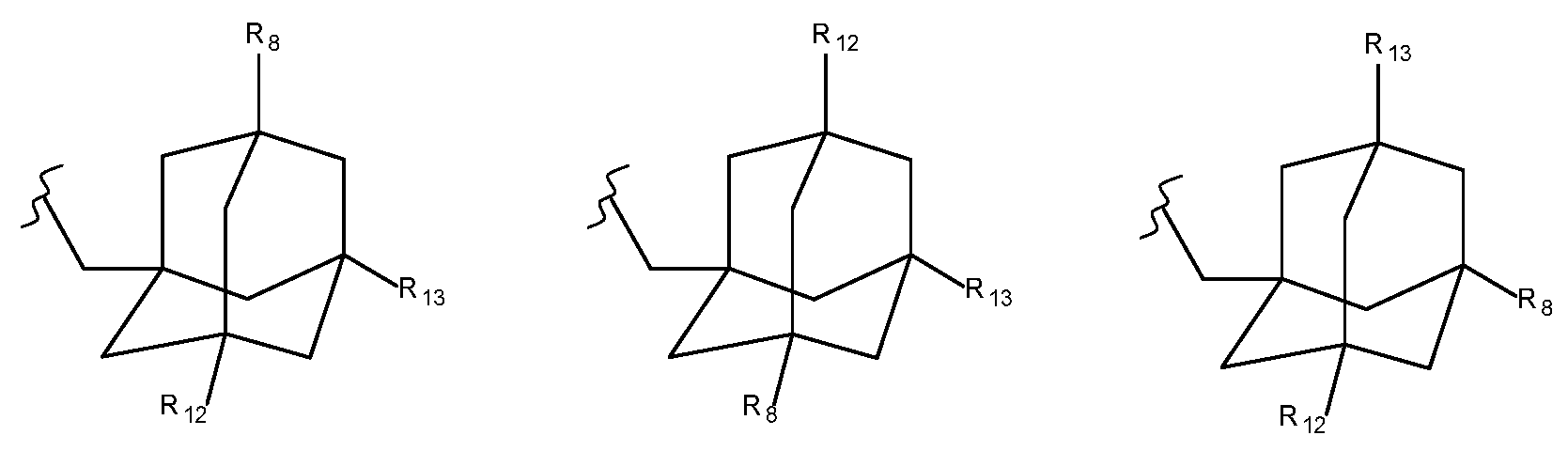
R8은 -NR'aR'b; -O-X'2-NR'aR'b; 및 -X'2-NR'aR'b로부터 선택된 기를 나타내고,
R10은 플루오린을 나타내고,
R12 및 R13은 서로 독립적으로 수소 원자 또는 메틸 기를 나타내고,
R14 및 R15는 서로 독립적으로 수소 또는 메틸 기를 나타내고,
X1 및 X2는 서로 독립적으로 트리플루오로메틸, 히드록실, 할로겐, C1-C6알콕시로부터 선택된 1 또는 2개의 기에 의해 임의로 치환된 선형 또는 분지형 C1-C6알킬렌 기를 나타내고,
X'2는 선형 또는 분지형 C1-C6알킬렌을 나타내고,
R'a 및 R'b는 서로 독립적으로 수소; 1 또는 2개의 히드록실 또는 C1-C6알콕시 기에 의해 임의로 치환된 선형 또는 분지형 C1-C6알킬; C1-C6알킬렌-NR'dR'e로부터 선택된 기를 나타내거나;
또는 R'a 및 R'b는 이들을 보유하는 질소 원자와 함께 사이클 B3을 형성하고,
R'd, R'e는 서로 독립적으로 수소 또는 선형 또는 분지형 C1-C6알킬 기를 나타내고,
B3은 C3-C8헤테로시클로알킬 기를 나타내고, 상기 기는 (i) 모노- 또는 비-시클릭 기일 수 있고 (여기서 비시클릭 기는 융합된, 가교된 또는 스피로 고리계를 포함함), (ii) 질소 원자 이외에도, 산소 및 질소로부터 독립적으로 선택된 1 또는 2개의 헤테로 원자를 함유할 수 있고, (iii) 플루오린, 브로민, 염소, 선형 또는 분지형 C1-C6알킬, 히드록실 및 옥소로부터 선택된 1 또는 2개의 기에 의해 치환될 수 있다.An antibody-drug conjugate according to any one of claims 1 to 40, wherein D comprises a compound of formula (IB), (IC), (IIB) or (IIC):
or an enantiomer, diastereomer and/or pharmaceutically acceptable salt of any of the above, wherein
For formula (IB) or (IC), R 3 represents a group selected from hydrogen; linear or branched C 1 -C 6 alkyl; -X 1 -NR a R b ; -X 1 -N + R a R b R c ; and -X 1 -OR c ;
In the case of chemical formula (IIB) or (IIC), Z 1 represents a bond, R 3 represents hydrogen; or Z 1 represents -O-, R 3 represents -X 1 -NR a R b ,
R a and R b independently represent a group selected from hydrogen; linear or branched C 1 -C 6 alkyl optionally substituted by 1 or 2 hydroxyl groups; and C 1 -C 6 alkylene-SO 2 O - ,
R c represents hydrogen or a linear or branched C 1 -C 6 alkyl group,
R 6 represents -X 2 -OR 7 or a heteroarylene-R 7 group optionally substituted by a linear or branched C 1 -C 6 alkyl group,
R 7 represents a group selected from the following:
R 8 represents a group selected from -NR' a R'b;-O-X' 2 -NR' a R'b; and -X' 2 -NR' a R' b ,
R 10 represents fluorine,
R 12 and R 13 independently represent a hydrogen atom or a methyl group,
R 14 and R 15 independently represent hydrogen or a methyl group,
X 1 and X 2 independently represent a linear or branched C 1 -C 6 alkylene group optionally substituted by 1 or 2 groups selected from trifluoromethyl, hydroxyl, halogen, C 1 -C 6 alkoxy,
X' 2 represents linear or branched C 1 -C 6 alkylene,
R' a and R' b independently represent a group selected from hydrogen; linear or branched C 1 -C 6 alkyl optionally substituted by 1 or 2 hydroxyl or C 1 -C 6 alkoxy groups; C 1 -C 6 alkylene-NR' d R'e;
or R' a and R' b together with the nitrogen atom carrying them form cycle B 3 ,
R' d , R' e independently represent hydrogen or a linear or branched C 1 -C 6 alkyl group,
B 3 represents a C 3 -C 8 heterocycloalkyl group, which group (i) may be a mono- or a bicyclic group (wherein the bicyclic group includes a fused, bridged or spiro ring system), (ii) may contain, in addition to the nitrogen atom, 1 or 2 heteroatoms independently selected from oxygen and nitrogen, and (iii) may be substituted by 1 or 2 groups selected from fluorine, bromine, chlorine, linear or branched C 1 -C 6 alkyl, hydroxyl and oxo.


여기서

Here


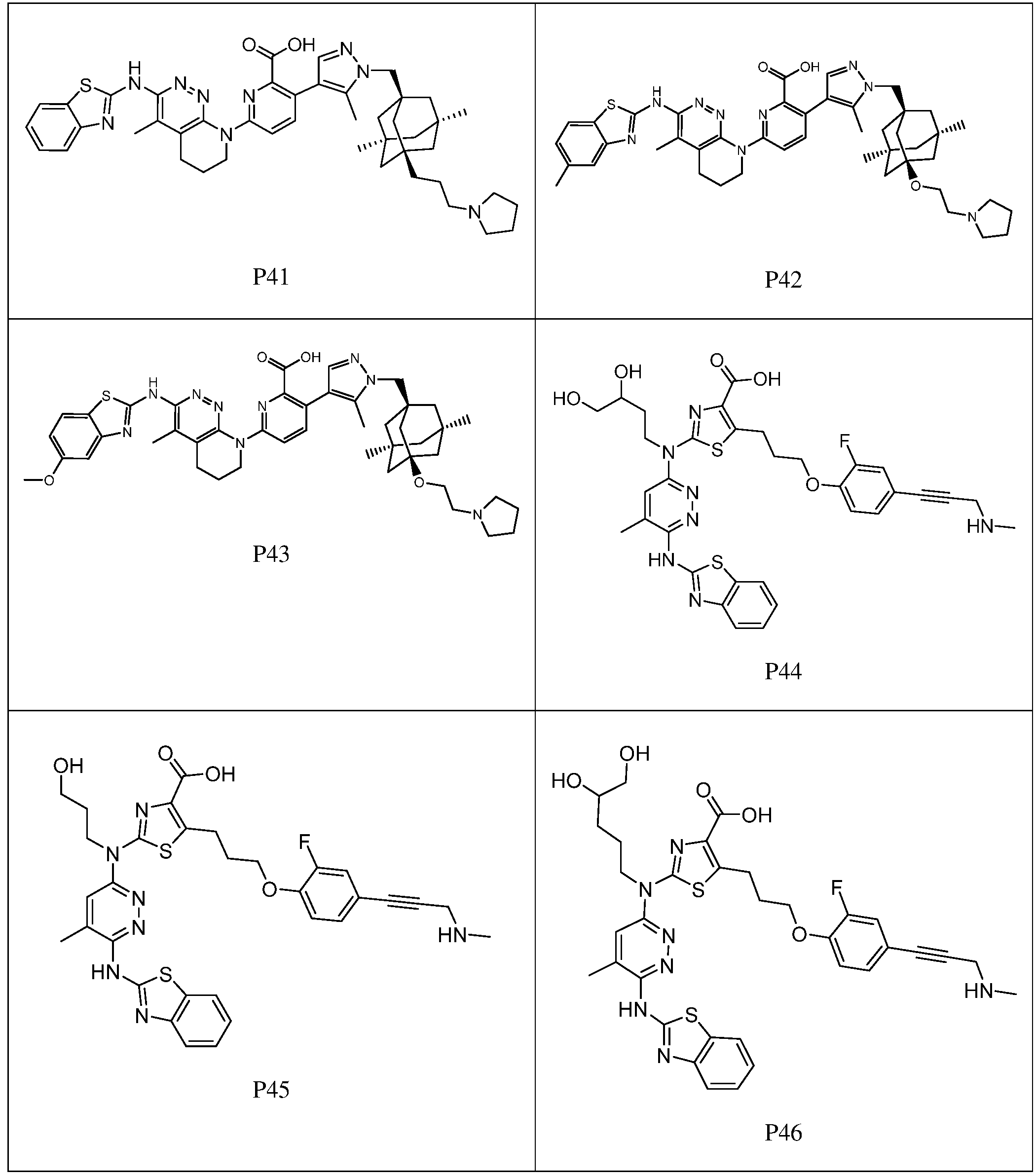
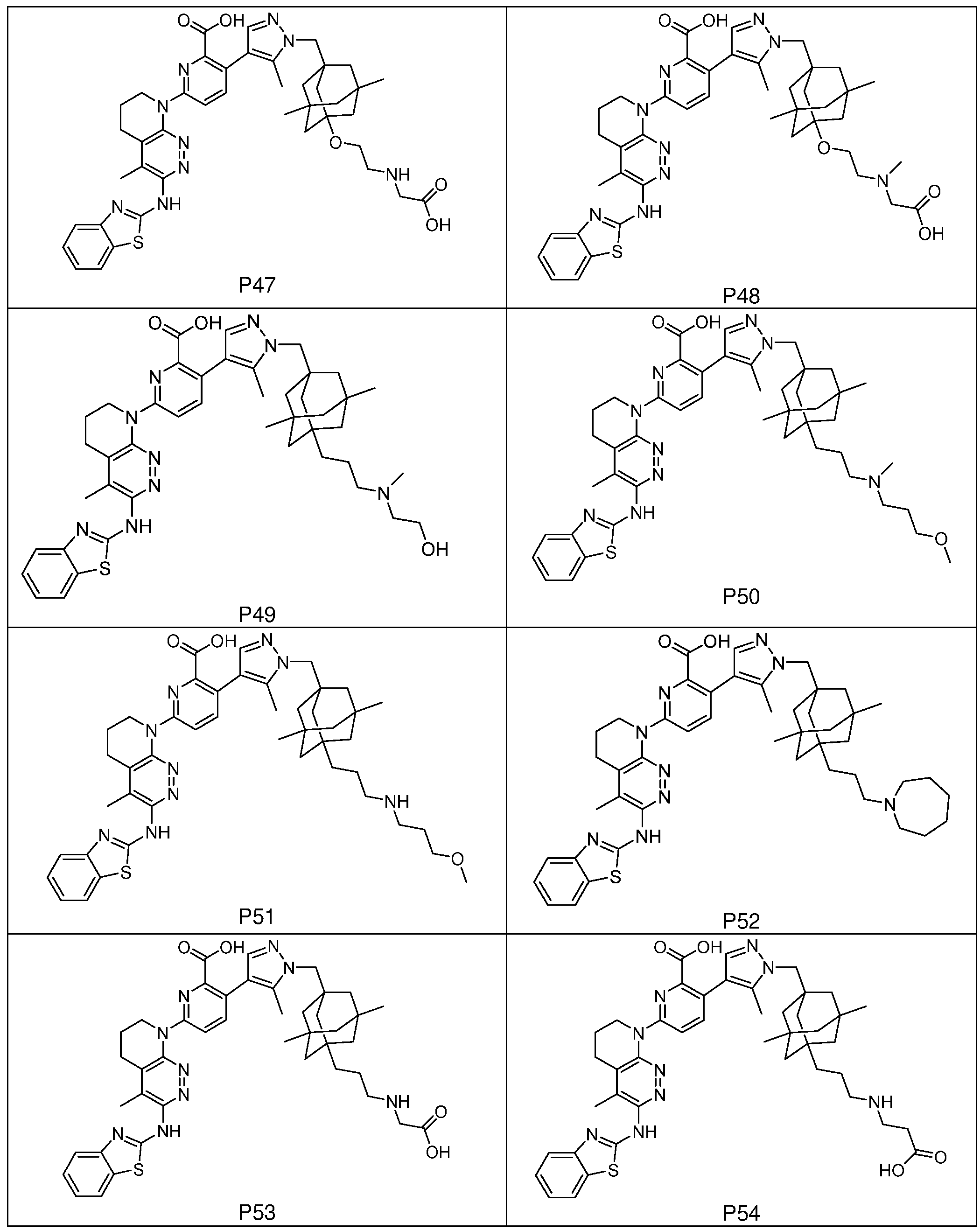


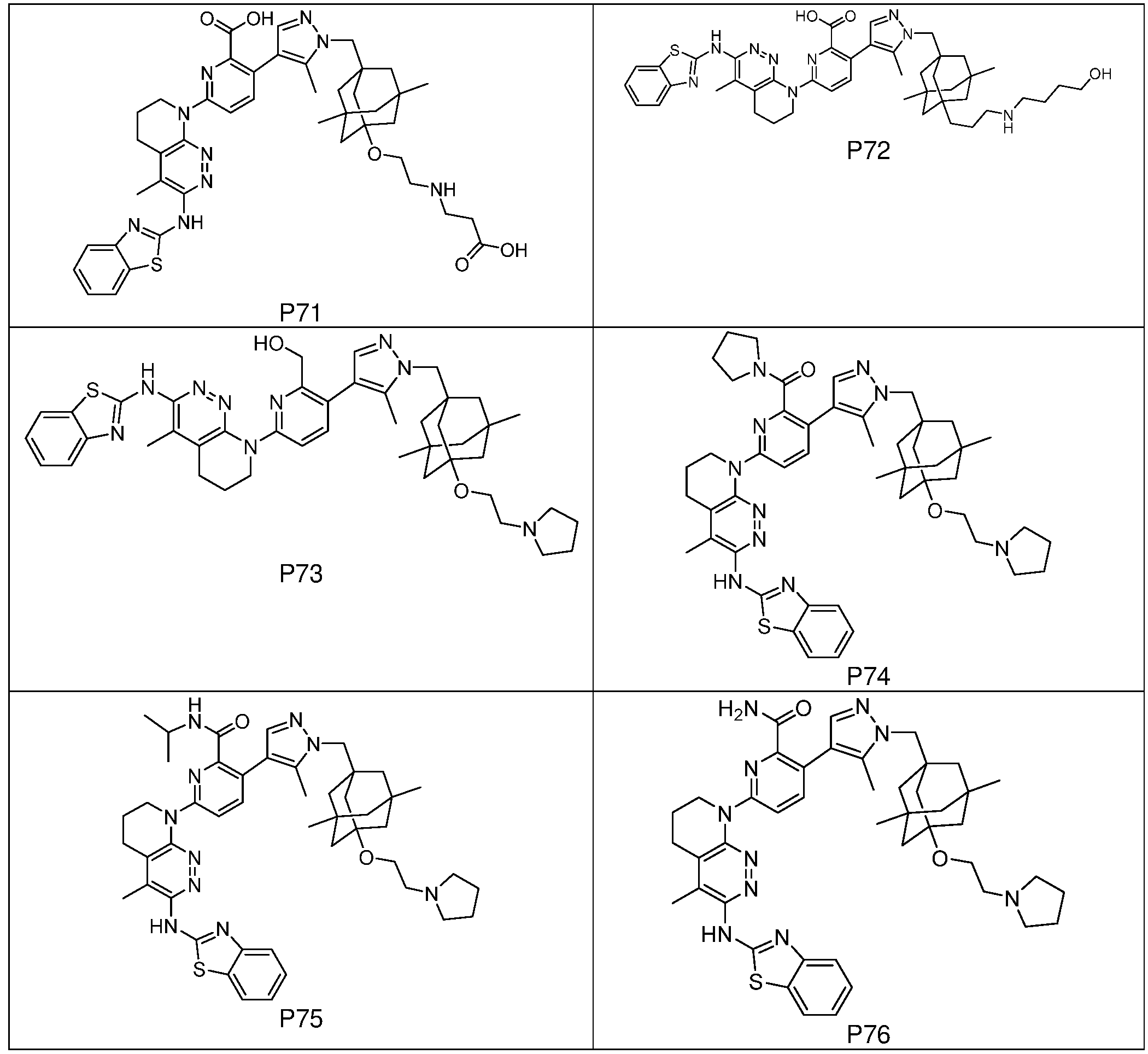
또는 상기 중 어느 하나의 거울상이성질체, 부분입체이성질체 및/또는 제약상 허용되는 염.An antibody-drug conjugate according to any one of claims 1 to 40, wherein D represents any one of the following attached to L:
Or any one of the enantiomers, diastereomers and/or pharmaceutically acceptable salts thereof.
서열식별번호: 39의 아미노산 서열을 포함하는 중쇄 및 서열식별번호: 41의 아미노산 서열을 포함하는 경쇄를 포함하는 것인 항체-약물 접합체.In claim 60, an anti-EphA2 antibody or antigen-binding fragment
An antibody-drug conjugate comprising a heavy chain comprising the amino acid sequence of SEQ ID NO: 39 and a light chain comprising the amino acid sequence of SEQ ID NO: 41.
서열식별번호: 74의 아미노산 서열을 포함하는 중쇄 및 서열식별번호: 41의 아미노산 서열을 포함하는 경쇄를 포함하는 것인 항체-약물 접합체.In claim 61, an anti-EphA2 antibody or antigen-binding fragment
An antibody-drug conjugate comprising a heavy chain comprising the amino acid sequence of SEQ ID NO: 74 and a light chain comprising the amino acid sequence of SEQ ID NO: 41.
Applications Claiming Priority (3)
| Application Number | Priority Date | Filing Date | Title |
|---|---|---|---|
| US202263344454P | 2022-05-20 | 2022-05-20 | |
| US63/344,454 | 2022-05-20 | ||
| PCT/US2023/022937 WO2023225320A1 (en) | 2022-05-20 | 2023-05-19 | Epha2 bcl-xl inhibitor antibody-drug conjugates and methods of use thereof |
Publications (1)
| Publication Number | Publication Date |
|---|---|
| KR20250027281A true KR20250027281A (en) | 2025-02-25 |
Family
ID=86851990
Family Applications (1)
| Application Number | Title | Priority Date | Filing Date |
|---|---|---|---|
| KR1020247041741A Pending KR20250027281A (en) | 2022-05-20 | 2023-05-19 | EPHA2 BCL-XL inhibitor antibody-drug conjugates and methods of use thereof |
Country Status (9)
| Country | Link |
|---|---|
| US (1) | US20260027220A1 (en) |
| EP (1) | EP4525925A1 (en) |
| JP (1) | JP2025517430A (en) |
| KR (1) | KR20250027281A (en) |
| CN (1) | CN119604315A (en) |
| AU (1) | AU2023271885A1 (en) |
| CA (1) | CA3255993A1 (en) |
| IL (1) | IL317102A (en) |
| WO (1) | WO2023225320A1 (en) |
Family Cites Families (43)
| Publication number | Priority date | Publication date | Assignee | Title |
|---|---|---|---|---|
| US2779780A (en) | 1955-03-01 | 1957-01-29 | Du Pont | 1, 4-diamino-2, 3-dicyano-1, 4-bis (substituted mercapto) butadienes and their preparation |
| US4816567A (en) | 1983-04-08 | 1989-03-28 | Genentech, Inc. | Recombinant immunoglobin preparations |
| DE69839147T2 (en) | 1997-06-12 | 2009-02-19 | Novartis International Pharmaceutical Ltd. | ARTIFICIAL ANTIBODY POLYPEPTIDE |
| KR100609800B1 (en) | 1998-12-16 | 2006-08-09 | 워너-램버트 캄파니 엘엘씨 | How to treat arthritis with MEV inhibitor |
| GB0000313D0 (en) | 2000-01-10 | 2000-03-01 | Astrazeneca Uk Ltd | Formulation |
| HU230251B1 (en) | 2000-07-19 | 2015-11-30 | Warner-Lambert Co. | Ester derivatives of 4-iodo phenylamino benzhydroxamic acids and pharmaceutical compositions containing them |
| IL163711A0 (en) | 2002-03-08 | 2005-12-18 | Eisai Co Ltd | Macrocyclic compounds useful as pharmaceuticals |
| SI2275102T1 (en) | 2002-03-13 | 2015-12-31 | Array Biopharma, Inc. | N3 alkylated benzimidazole derivatives as MEK inhibitors |
| AU2003292625B2 (en) | 2002-12-26 | 2008-07-24 | Eisai R & D Management Co., Ltd. | Selective estrogen receptor modulators |
| SI1761528T1 (en) | 2004-06-11 | 2008-06-30 | Japan Tobacco Inc | 5-AMINO-2,4,7-TRIOXO-3,4,7,8-TETRAHYDRO-2H-PYRIDO?á2,3-D?åPYRIMIDINE DERIVATIVES AND RELATED COMPOUNDS FOR THE TREATMENT OF CANCER |
| NZ553500A (en) | 2004-09-23 | 2009-11-27 | Genentech Inc Genentech Inc | Cysteine engineered antibodies and conjugates withCysteine engineered antibodies and conjugates with a free cysteine amino acid in the heavy chain a free cysteine amino acid in the heavy chain |
| WO2007004415A1 (en) | 2005-07-01 | 2007-01-11 | Murata Manufacturing Co., Ltd. | Multilayer ceramic substrate, process for producing the same and composite green sheet for production of multilayer ceramic substrate |
| AU2006287416A1 (en) | 2005-09-07 | 2007-03-15 | Medimmune, Llc | Toxin conjugated Eph receptor antibodies |
| PE20110217A1 (en) | 2006-08-02 | 2011-04-01 | Novartis Ag | DERIVATIVES OF 2-OXO-ETHYL-AMINO-PROPIONAMIDE-PYRROLIDIN-2-IL-SUBSTITUTED AS INHIBITORS OF THE BINDING OF THE PROTEIN Smac TO THE INHIBITOR OF THE PROTEIN OF APOPTOSIS |
| JP5448818B2 (en) | 2006-08-21 | 2014-03-19 | ジェネンテック, インコーポレイテッド | Azabenzofuranyl compounds and methods of use |
| CL2008003810A1 (en) | 2007-12-19 | 2009-05-22 | Genentech Inc | Compounds derived from 5-anilino imidazole [1,5-a] pyridine or pyrazine, inhibitors of mek kinase activity; pharmaceutical compositions containing them; and its use to treat hyperproliferative disorders and an inflammatory disease. |
| PL2331547T3 (en) | 2008-08-22 | 2015-01-30 | Novartis Ag | Pyrrolopyrimidine compounds as cdk inhibitors |
| RU2561109C2 (en) | 2008-12-19 | 2015-08-20 | Дженентек, Инк. | Compounds and methods for using |
| CN102316733B (en) | 2008-12-19 | 2014-01-01 | 健泰科生物技术公司 | Heterocyclic compounds and methods of use |
| AU2010270979B2 (en) | 2009-06-22 | 2015-04-23 | Medimmune, Llc | Engineered Fc regions for site-specific conjugation |
| US8440693B2 (en) | 2009-12-22 | 2013-05-14 | Novartis Ag | Substituted isoquinolinones and quinazolinones |
| MX2012014431A (en) | 2010-06-10 | 2013-02-26 | Aragon Pharmaceuticals Inc | MODULAR RECEPTOR OF STROGENS AND USES OF THE SAME. |
| US8853423B2 (en) | 2010-06-17 | 2014-10-07 | Seragon Pharmaceuticals, Inc. | Indane estrogen receptor modulators and uses thereof |
| GB2483736B (en) | 2010-09-16 | 2012-08-29 | Aragon Pharmaceuticals Inc | Estrogen receptor modulators and uses thereof |
| KR20190133790A (en) | 2011-08-01 | 2019-12-03 | 제넨테크, 인크. | Methods of treating cancer using pd-1 axis binding antagonists and mek inhibitors |
| TWI561521B (en) | 2011-10-14 | 2016-12-11 | Abbvie Inc | Apoptosis-inducing agents for the treatment of cancer and immune and autoimmune diseases |
| TWI571466B (en) | 2011-10-14 | 2017-02-21 | 艾伯維有限公司 | Apoptosis-inducing agent for treating cancer and immune and autoimmune diseases |
| FR2986002B1 (en) | 2012-01-24 | 2014-02-21 | Servier Lab | NOVEL INDOLIZINE DERIVATIVES, PROCESS FOR THEIR PREPARATION AND PHARMACEUTICAL COMPOSITIONS CONTAINING THEM |
| US20140069822A1 (en) | 2012-09-10 | 2014-03-13 | Antec Leyden B.V. | Electrochemical reduction of disulfide bonds in proteinaceous substances and electrochemical cell for carrying out such reduction |
| MX2015010146A (en) | 2013-02-08 | 2016-05-31 | Novartis Ag | Specific sites for modifying antibodies to make immunoconjugates. |
| ES2671516T3 (en) | 2013-02-19 | 2018-06-06 | Novartis Ag | Benzothiophene derivatives and compositions thereof as selective estrogen receptor degraders |
| FR3008975A1 (en) | 2013-07-23 | 2015-01-30 | Servier Lab | NOVEL PYRROLE DERIVATIVES, PROCESS FOR THEIR PREPARATION AND PHARMACEUTICAL COMPOSITIONS CONTAINING THEM |
| TR201811764T4 (en) | 2013-11-01 | 2018-09-21 | Novartis Ag | Aminoheteroaryl benzamides as kinase inhibitors. |
| FR3015483B1 (en) | 2013-12-23 | 2016-01-01 | Servier Lab | NOVEL THIENOPYRIMIDINE DERIVATIVES, PROCESS FOR THEIR PREPARATION AND PHARMACEUTICAL COMPOSITIONS CONTAINING SAME |
| AU2015229463A1 (en) | 2014-03-12 | 2016-09-15 | Novartis Ag | Specific sites for modifying antibodies to make immunoconjugates |
| EP3116496A1 (en) | 2014-03-13 | 2017-01-18 | F. Hoffmann-La Roche AG | Methods and compositions for modulating estrogen receptor mutants |
| CA2969908A1 (en) | 2014-12-09 | 2016-06-16 | Abbvie Inc. | Antibody drug conjugates with cell permeable bcl-xl inhibitors |
| CN111620861A (en) | 2014-12-09 | 2020-09-04 | 艾伯维公司 | BCL-XL inhibitory compound having low cell permeability and antibody drug conjugate including the same |
| CA2970161A1 (en) | 2014-12-09 | 2016-06-16 | Abbvie Inc. | Bcl-xl inhibitory compounds and antibody drug conjugates including the same |
| MX2021005878A (en) * | 2018-12-13 | 2021-07-16 | Eisai R&D Man Co Ltd | HERBOXYDIENE SPLICING MODULATOR OF ANTIBODY-DRUG CONJUGATES AND METHODS OF USE. |
| AR119493A1 (en) | 2019-07-29 | 2021-12-22 | Servier Lab | 3,6-DIAMINO-PYRIDAZIN-3-YL DERIVATIVES, PHARMACEUTICAL COMPOSITIONS CONTAINING THEM AND THEIR USES AS PROAPOPTOTIC AGENTS |
| AR119494A1 (en) | 2019-07-29 | 2021-12-22 | Servier Lab | 6,7-DIHYDRO-5H-PYRIDO[2,3-c]PYRIDAZIN-8-YL DERIVATIVES, PHARMACEUTICAL COMPOSITIONS CONTAINING THEM AND THEIR USES AS PROAPOPTOTIC AGENTS |
| US20240269304A1 (en) * | 2020-11-24 | 2024-08-15 | Novartis Ag | Bcl-xl inhibitor antibody-drug conjugates and methods of use thereof |
-
2023
- 2023-05-19 KR KR1020247041741A patent/KR20250027281A/en active Pending
- 2023-05-19 CN CN202380054763.1A patent/CN119604315A/en active Pending
- 2023-05-19 IL IL317102A patent/IL317102A/en unknown
- 2023-05-19 US US18/866,144 patent/US20260027220A1/en active Pending
- 2023-05-19 JP JP2024568841A patent/JP2025517430A/en active Pending
- 2023-05-19 AU AU2023271885A patent/AU2023271885A1/en active Pending
- 2023-05-19 CA CA3255993A patent/CA3255993A1/en active Pending
- 2023-05-19 EP EP23731870.4A patent/EP4525925A1/en active Pending
- 2023-05-19 WO PCT/US2023/022937 patent/WO2023225320A1/en not_active Ceased
Also Published As
| Publication number | Publication date |
|---|---|
| IL317102A (en) | 2025-01-01 |
| JP2025517430A (en) | 2025-06-05 |
| CN119604315A (en) | 2025-03-11 |
| CA3255993A1 (en) | 2023-11-23 |
| WO2023225320A1 (en) | 2023-11-23 |
| EP4525925A1 (en) | 2025-03-26 |
| US20260027220A1 (en) | 2026-01-29 |
| AU2023271885A1 (en) | 2024-12-12 |
Similar Documents
| Publication | Publication Date | Title |
|---|---|---|
| JP7663514B2 (en) | MCL-1 INHIBITOR ANTIBODY-DRUG CONJUGATES AND METHODS OF USE - Patent application | |
| WO2024189481A1 (en) | Panras inhibitor antibody-drug conjugates and methods of use thereof | |
| US20240269304A1 (en) | Bcl-xl inhibitor antibody-drug conjugates and methods of use thereof | |
| KR20250027285A (en) | Antibody-drug conjugates of antineoplastic compounds and methods of using the same | |
| US20240042051A1 (en) | Mcl-1 inhibitor antibody-drug conjugates and methods of use | |
| US20260027220A1 (en) | Epha2 bcl-xl inhibitor antibody-drug conjugates and methods of use thereof | |
| US20250339547A1 (en) | Met bcl-xl inhibitor antibody-drug conjugates and methods of use thereof | |
| HK40077041A (en) | Mcl-1 inhibitor antibody-drug conjugates and methods of use |
Legal Events
| Date | Code | Title | Description |
|---|---|---|---|
| PA0105 | International application |
Patent event date: 20241217 Patent event code: PA01051R01D Comment text: International Patent Application |
|
| PG1501 | Laying open of application |