KR102697371B1 - Method for displaying contents responding to voice command and electronic device thereof - Google Patents
Method for displaying contents responding to voice command and electronic device thereof Download PDFInfo
- Publication number
- KR102697371B1 KR102697371B1 KR1020180131790A KR20180131790A KR102697371B1 KR 102697371 B1 KR102697371 B1 KR 102697371B1 KR 1020180131790 A KR1020180131790 A KR 1020180131790A KR 20180131790 A KR20180131790 A KR 20180131790A KR 102697371 B1 KR102697371 B1 KR 102697371B1
- Authority
- KR
- South Korea
- Prior art keywords
- content
- speaker
- display
- electronic device
- display device
- Prior art date
- Legal status (The legal status is an assumption and is not a legal conclusion. Google has not performed a legal analysis and makes no representation as to the accuracy of the status listed.)
- Active
Links
Images






Classifications
-
- G—PHYSICS
- G10—MUSICAL INSTRUMENTS; ACOUSTICS
- G10L—SPEECH ANALYSIS TECHNIQUES OR SPEECH SYNTHESIS; SPEECH RECOGNITION; SPEECH OR VOICE PROCESSING TECHNIQUES; SPEECH OR AUDIO CODING OR DECODING
- G10L15/00—Speech recognition
- G10L15/22—Procedures used during a speech recognition process, e.g. man-machine dialogue
-
- G—PHYSICS
- G06—COMPUTING OR CALCULATING; COUNTING
- G06F—ELECTRIC DIGITAL DATA PROCESSING
- G06F3/00—Input arrangements for transferring data to be processed into a form capable of being handled by the computer; Output arrangements for transferring data from processing unit to output unit, e.g. interface arrangements
- G06F3/16—Sound input; Sound output
-
- G—PHYSICS
- G06—COMPUTING OR CALCULATING; COUNTING
- G06F—ELECTRIC DIGITAL DATA PROCESSING
- G06F3/00—Input arrangements for transferring data to be processed into a form capable of being handled by the computer; Output arrangements for transferring data from processing unit to output unit, e.g. interface arrangements
- G06F3/16—Sound input; Sound output
- G06F3/167—Audio in a user interface, e.g. using voice commands for navigating, audio feedback
-
- G—PHYSICS
- G10—MUSICAL INSTRUMENTS; ACOUSTICS
- G10L—SPEECH ANALYSIS TECHNIQUES OR SPEECH SYNTHESIS; SPEECH RECOGNITION; SPEECH OR VOICE PROCESSING TECHNIQUES; SPEECH OR AUDIO CODING OR DECODING
- G10L15/00—Speech recognition
- G10L15/04—Segmentation; Word boundary detection
-
- G—PHYSICS
- G10—MUSICAL INSTRUMENTS; ACOUSTICS
- G10L—SPEECH ANALYSIS TECHNIQUES OR SPEECH SYNTHESIS; SPEECH RECOGNITION; SPEECH OR VOICE PROCESSING TECHNIQUES; SPEECH OR AUDIO CODING OR DECODING
- G10L15/00—Speech recognition
- G10L15/22—Procedures used during a speech recognition process, e.g. man-machine dialogue
- G10L2015/221—Announcement of recognition results
-
- G—PHYSICS
- G10—MUSICAL INSTRUMENTS; ACOUSTICS
- G10L—SPEECH ANALYSIS TECHNIQUES OR SPEECH SYNTHESIS; SPEECH RECOGNITION; SPEECH OR VOICE PROCESSING TECHNIQUES; SPEECH OR AUDIO CODING OR DECODING
- G10L15/00—Speech recognition
- G10L15/22—Procedures used during a speech recognition process, e.g. man-machine dialogue
- G10L2015/223—Execution procedure of a spoken command
-
- G—PHYSICS
- G10—MUSICAL INSTRUMENTS; ACOUSTICS
- G10L—SPEECH ANALYSIS TECHNIQUES OR SPEECH SYNTHESIS; SPEECH RECOGNITION; SPEECH OR VOICE PROCESSING TECHNIQUES; SPEECH OR AUDIO CODING OR DECODING
- G10L15/00—Speech recognition
- G10L15/22—Procedures used during a speech recognition process, e.g. man-machine dialogue
- G10L2015/225—Feedback of the input speech
Landscapes
- Engineering & Computer Science (AREA)
- Physics & Mathematics (AREA)
- Health & Medical Sciences (AREA)
- Audiology, Speech & Language Pathology (AREA)
- Human Computer Interaction (AREA)
- Theoretical Computer Science (AREA)
- Multimedia (AREA)
- Computational Linguistics (AREA)
- Acoustics & Sound (AREA)
- General Health & Medical Sciences (AREA)
- General Engineering & Computer Science (AREA)
- General Physics & Mathematics (AREA)
- User Interface Of Digital Computer (AREA)
Abstract
본 발명의 다양한 실시 예들은 음성 명령에 응답하여 컨텐츠를 표시하기 위한 것으로, 전자 장치는, 통신 모듈, 상기 통신 모듈과 작동적으로 연결된 프로세서, 상기 프로세서와 작동적으로 연결된 메모리를 포함할 수 있다. 상기 메모리는, 실행 시, 상기 프로세서가, 상기 통신 모듈을 통해, 외부 전자 장치에 의해 획득된 발화자의 음성 명령의 내용을 알리는 정보를 수신하고, 상기 음성 명령에 관련된 측정 정보를 이용하여 결정되는 상기 발화자의 위치, 상기 외부 전자 장치의 위치에 기반하여, 상기 발화자 주변의 적어도 하나의 디스플레이 장치를 검색하고, 상기 적어도 하나의 디스플레이 장치 중 상기 음성 명령에 응답하는 컨텐츠를 표시하기 위한 디스플레이 장치를 결정하고, 상기 결정된 디스플레이 장치를 통하여, 상기 컨텐츠가 상기 발화자의 상태, 상기 발화자의 주변 환경의 상태, 또는 상기 컨텐츠의 속성 중 적어도 하나에 기반하여 표시되도록 하는 인스트럭션들을 저장할 수 있다. 그 외에도 다양한 실시 예들이 가능하다.Various embodiments of the present invention are directed to displaying content in response to a voice command, wherein the electronic device may include a communication module, a processor operatively connected to the communication module, and a memory operatively connected to the processor. The memory may store instructions that, when executed, cause the processor to receive, through the communication module, information indicating the content of a voice command of a speaker acquired by an external electronic device, search for at least one display device around the speaker based on a location of the speaker and a location of the external electronic device determined using measurement information related to the voice command, determine a display device for displaying content responsive to the voice command among the at least one display device, and cause the content to be displayed through the determined display device based on at least one of a state of the speaker, a state of an environment surrounding the speaker, or an attribute of the content. Various other embodiments are possible.
Description
본 발명의 다양한 실시 예는 음성 명령에 응답하여 컨텐츠를 표시하기 위한 방법 및 그 장치에 관한 것이다.Various embodiments of the present invention relate to a method and device for displaying content in response to a voice command.
기술의 발전으로 인해 생활의 편의에 도움을 주는 다양한 제품들이 개발되고 있다. 일 예로, 최근 사람의 음성을 인식하고, 인식된 음성에 따라 특정한 기능을 수행하는 장치가 상용화된 바 있다. 예를 들어, 음성 명령에 의해, 특정 음악을 재생하거나, 날씨와 같은 정보를 검색하는 등 다양한 동작들이 제공될 수 있다. 이러한 장치를 이용하여, 사용자는 말을 이용하여 즉각적으로, 빠르게 명령을 전달하고, 원하는 결과를 얻을 수 있다.Due to the advancement of technology, various products that help make life more convenient are being developed. For example, a device that recognizes human voice and performs a specific function according to the recognized voice has recently been commercialized. For example, various actions such as playing specific music or searching for information such as weather can be provided by voice command. Using this device, users can immediately and quickly convey commands using speech and obtain the desired results.
상술한 서비스를 제공하는 장치는 대화 기반으로 설계되는 것이 일반적이다. 따라서, 음성 명령에 대응하는 피드백은 주로 오디오의 형식을 취한다. 이에 따라, 피드백으로서 제공되는 컨텐츠의 제공 방식, 또는 사용 가능한 컨텐츠의 종류에 한계가 존재할 수 있다.Devices that provide the above-described services are usually designed based on conversation. Therefore, feedback corresponding to voice commands is mainly in the form of audio. Accordingly, there may be limitations in the method of providing content as feedback or the types of content available.
종래의 음성 기반의 대화형 응답 서비스는 사용자의 음성 명령의 내용을 분석하고, 이에 상응하는 정보를 출력하는 것에 그치는 것이 일반적이다. 따라서, 사용자의 상태나 사용자가 처한 상황에 따라 최적의 피드백 방식이 달라짐에도 불구하고, 이러한 요소들이 고려되지 아니할 수 있다. Conventional voice-based conversational response services usually only analyze the content of the user's voice command and output corresponding information. Therefore, although the optimal feedback method varies depending on the user's status or situation, these factors may not be taken into consideration.
본 발명의 다양한 실시 예는 사용자의 상태 등 다양한 상황들을 고려하여 보다 최적화된 응답을 제공하기 위한 방법 및 그 전자 장치를 제공할 수 있다.Various embodiments of the present invention can provide a method and an electronic device for providing a more optimized response by taking into account various situations such as the user's status.
본 발명의 다양한 실시 예에 따르면, 전자 장치는, 통신 모듈, 상기 통신 모듈과 작동적으로 연결된 프로세서, 상기 프로세서와 작동적으로 연결된 메모리를 포함할 수 있다. 상기 메모리는, 실행 시, 상기 프로세서가, 상기 통신 모듈을 통해, 외부 전자 장치에 의해 획득된 발화자의 음성 명령의 내용을 알리는 정보를 수신하고, 상기 음성 명령에 관련된 측정 정보를 이용하여 결정되는 상기 발화자의 위치, 상기 외부 전자 장치의 위치에 기반하여, 상기 발화자 주변의 적어도 하나의 디스플레이 장치를 검색하고, 상기 적어도 하나의 디스플레이 장치 중 상기 음성 명령에 응답하는 컨텐츠를 표시하기 위한 디스플레이 장치를 결정하고, 상기 결정된 디스플레이 장치를 통하여, 상기 컨텐츠가 상기 발화자의 상태, 상기 발화자의 주변 환경의 상태, 또는 상기 컨텐츠의 속성 중 적어도 하나에 기반하여 표시되도록 하는 인스트럭션들을 저장할 수 있다.According to various embodiments of the present invention, an electronic device may include a communication module, a processor operatively connected to the communication module, and a memory operatively connected to the processor. The memory may store instructions that, when executed, cause the processor to receive, through the communication module, information indicating the content of a voice command of a speaker acquired by an external electronic device, search for at least one display device around the speaker based on a location of the speaker and a location of the external electronic device determined using measurement information related to the voice command, determine a display device for displaying content responsive to the voice command among the at least one display device, and cause the content to be displayed through the determined display device based on at least one of a state of the speaker, a state of an environment surrounding the speaker, or a property of the content.
본 발명의 다양한 실시 예에 따르면, 전자 장치는, 디스플레이, 통신 모듈, 및 상기 디스플레이 및 상기 통신 모듈과 작동적으로 연결된 프로세서, 상기 프로세서와 작동적으로 연결된 메모리를 포함할 수 있다. 상기 메모리는, 실행 시, 상기 프로세서가, 외부 전자 장치에 의해 획득된 발화자의 음성 명령에 응답하는 컨텐츠의 표시에 대한 지시 메시지 및 상기 컨텐츠를 수신하고, 상기 지시 메시지에 기반하여, 상기 디스플레이를 통하여, 상기 발화자의 상태, 상기 발화자의 주변 환경의 상태, 또는 상기 컨텐츠의 속성 중 적어도 하나에 기반하여 상기 컨텐츠를 표시하도록 하는 인스트럭션들을 저장할 수 있다.According to various embodiments of the present invention, an electronic device may include a display, a communication module, a processor operatively connected to the display and the communication module, and a memory operatively connected to the processor. The memory may store instructions that, when executed, cause the processor to receive an instruction message for displaying content in response to a voice command of a speaker obtained by an external electronic device and the content, and to display the content based on the instruction message through the display based on at least one of a state of the speaker, a state of an environment surrounding the speaker, or a property of the content.
본 발명의 다양한 실시 예에 따르면, 전자 장치의 동작 방법은, 외부 전자 장치에 의해 획득된 발화자의 음성 명령의 내용을 알리는 정보를 수신하는 동작, 상기 음성 명령에 관련된 측정 정보를 이용하여 결정되는 상기 발화자의 위치, 상기 외부 전자 장치의 위치에 기반하여, 상기 발화자 주변의 적어도 하나의 디스플레이 장치를 검색하는 동작, 상기 적어도 하나의 디스플레이 장치 중 상기 음성 명령에 응답하는 컨텐츠를 표시하기 위한 디스플레이 장치를 결정하는 동작, 및 상기 컨텐츠를 표시하도록 상기 결정된 디스플레이 장치를 제어하는 동작을 포함할 수 있다. 여기서, 상기 컨텐츠의 표시 레벨은, 상기 발화자의 상태, 상기 발화자의 주변 환경의 상태, 또는 상기 컨텐츠의 속성 중 적어도 하나에 기반하여 결정될 수 있다.According to various embodiments of the present invention, a method for operating an electronic device may include an operation of receiving information notifying the content of a voice command of a speaker obtained by an external electronic device, an operation of searching for at least one display device around the speaker based on a location of the speaker determined using measurement information related to the voice command and a location of the external electronic device, an operation of determining a display device for displaying content responsive to the voice command among the at least one display device, and an operation of controlling the determined display device to display the content. Here, a display level of the content may be determined based on at least one of a state of the speaker, a state of an environment surrounding the speaker, or a property of the content.
다양한 실시 예에 따른 방법 및 그 전자 장치는, 음성 명령을 제시한 사용자의 상태, 사용자의 위치 또는 컨텐츠의 속성과 같은 다양한 상황들을 고려하여 컨텐츠의 표시 방식을 조절함으로써, 사용자가 원하는 컨텐츠를 보다 효과적으로 제공할 수 있다. The method and the electronic device according to various embodiments can provide content desired by the user more effectively by adjusting the display method of the content by considering various situations such as the status of the user who gave the voice command, the location of the user, or the properties of the content.
도 1은 다양한 실시 예들에 따른, 네트워크 환경 내의 전자 장치의 블록도이다.
도 2a은 일 실시 예에 따른 통합 지능(integrated intelligence) 시스템을 나타낸 블록도이다.
도 2b는 일 실시 예에 따른, 컨셉과 액션의 관계 정보가 데이터베이스에 저장된 형태를 나타낸 도면이다.
도 2c는 일 실시 예에 따라, 지능형 앱을 통해 수신된 음성 입력을 처리하는 화면을 표시하는 사용자 단말을 도시하는 도면이다.
도 3은 다양한 실시 예들에 따른 음성 명령에 응답하여 컨텐츠를 제공하는 환경의 예를 나타낸 도면이다.
도 4는 다양한 실시 예들에 따른 음성 명령에 응답하여 컨텐츠를 제공하는 환경의 다른 예를 나타낸 도면이다.
도 5는 다양한 실시 예들에 따라 음성 명령을 수신하는 음성 수신 장치의 블록도이다.
도 6은 다양한 실시 예들에 따라 음성 명령에 응답하여 컨텐츠를 제공하도록 제어하는 장치 제어 서버의 블록도이다.
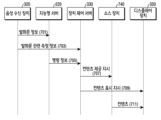
도 7은 다양한 실시 예들에 따라 음성 명령에 응답하여 컨텐츠를 제공하기 위한 신호 교환 절차를 도시하는 도면이다.
도 8은 다양한 실시 예들에 따른 장치 제어 서버에서 음성 명령에 응답하여 컨텐츠를 제공하도록 제어하기 위한 흐름도이다.
도 9는 다양한 실시 예들에 따른 장치 제어 서버에서 발화자의 위치를 추정하기 위한 흐름도이다.
도 10은 다양한 실시 예들에 따른 발화자 및 마이크들의 상대적 위치 관계를 나타내는 도면이다.
도 11은 다양한 실시 예들에 따른 장치 제어 서버에서 디스플레이 장치를 선택하기 위한 흐름도이다.
도 12는 다양한 실시 예들에 따른 장치 제어 서버에서 발화자 주변의 디스플레이 장치들을 확인하기 위한 흐름도이다.
도 13은 다양한 실시 예들에 따른 음성 수신 장치의 주변 장치의 예를 나타내는 도면이다.
도 14는 다양한 실시 예들에 따른 장치 제어 서버에서 발화자의 위치를 추정하기 위한 흐름도이다.
도 15는 다양한 실시 예들에 따른 다수의 음성 수신 장치들이 배치된 예를 나타내는 도면이다.
도 16은 다양한 실시 예들에 따른 장치 제어 서버에서 음성 명령에 대응하는 컨텐츠를 전달하기 위한 흐름도이다.
도 17은 다양한 실시 예들에 따른 장치 제어 서버에서 컨텐츠의 레벨을 결정하기 위한 흐름도이다.
도 18은 다양한 실시 예들에 따라 컨텐츠를 표시하는 디스플레이 장치의 블록도이다.
도 19는 다양한 실시 예들에 따른 디스플레이 장치에서 컨텐츠를 표시하기 위한 흐름도이다.
도 20a 및 도 20b는 다양한 실시 예들에 따른 디스플레이 장치에 표시되는 컨텐츠의 크기 변화의 예를 나타내는 도면이다.
도 21a 및 도 21b는 다양한 실시 예들에 따른 디스플레이 장치에 표시되는 컨텐츠의 크기 변화의 다른 예를 나타내는 도면이다.
도 22a, 도 22b 및 도 22c는 다양한 실시 예들에 따른 디스플레이 장치에 표시되는 컨텐츠의 다양한 표현 방식들의 예를 나타내는 도면이다.
도 23a, 도 23b, 도 23c 및 도 23d는 다양한 실시 예들에 따른 디스플레이 장치에 표시되는 컨텐츠의 다양한 표현 방식들의 다른 예를 나타내는 도면이다.
도 24a 및 도 24b는 다양한 실시 예들에 따른 디스플레이 장치에 표시되는 컨텐츠의 형식 변화의 예를 나타내는 도면이다.
도 25는 다양한 실시 예들에 따른 디스플레이 장치에서 시간을 고려하여 컨텐츠를 표시하기 위한 흐름도이다.
도 26a 및 도 26b는 다양한 실시 예들에 따른 디스플레이 장치에 표시되는 컨텐츠의 시간의 흐름에 따른 변화의 예를 나타내는 도면이다.
도 27a 및 도 27b는 다양한 실시 예들에 따른 디스플레이 장치에 표시되는 컨텐츠의 크기 변화의 또 다른 예를 나타내는 도면이다.
도 28a 및 도 28b는 다양한 실시 예들에 따른 디스플레이 장치에 표시되는 컨텐츠의 표시 여부의 변화의 예를 나타내는 도면이다.
도 29a 및 도 29b는 다양한 실시 예들에 따른 소스에 대한 식별 정보를 포함하는 컨텐츠의 예를 나타내는 도면이다.
도 30a 및 도 30b는 다양한 실시 예들에 따른 발화자와의 각도를 고려한 컨텐츠의 변화의 예를 나타내는 도면이다.FIG. 1 is a block diagram of an electronic device within a network environment according to various embodiments.
FIG. 2a is a block diagram illustrating an integrated intelligence system according to one embodiment.
FIG. 2b is a diagram showing a form in which relationship information between concepts and actions is stored in a database according to one embodiment.
FIG. 2c is a diagram illustrating a user terminal displaying a screen for processing voice input received through an intelligent app according to one embodiment.
FIG. 3 is a diagram illustrating an example of an environment that provides content in response to a voice command according to various embodiments.
FIG. 4 is a diagram illustrating another example of an environment that provides content in response to a voice command according to various embodiments.
FIG. 5 is a block diagram of a voice receiving device that receives voice commands according to various embodiments.
FIG. 6 is a block diagram of a device control server that controls to provide content in response to voice commands according to various embodiments.
FIG. 7 is a diagram illustrating a signal exchange procedure for providing content in response to a voice command according to various embodiments.
FIG. 8 is a flowchart for controlling a device control server to provide content in response to a voice command according to various embodiments.
FIG. 9 is a flowchart for estimating the location of a speaker in a device control server according to various embodiments.
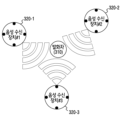
FIG. 10 is a drawing showing the relative positional relationship between a speaker and microphones according to various embodiments.
FIG. 11 is a flowchart for selecting a display device in a device control server according to various embodiments.
FIG. 12 is a flowchart for checking display devices around a speaker in a device control server according to various embodiments.
FIG. 13 is a diagram showing an example of a peripheral device of a voice receiving device according to various embodiments.
FIG. 14 is a flowchart for estimating the location of a speaker in a device control server according to various embodiments.
FIG. 15 is a diagram showing an example of arranging a plurality of voice receiving devices according to various embodiments.
FIG. 16 is a flowchart for delivering content corresponding to a voice command from a device control server according to various embodiments.
FIG. 17 is a flowchart for determining the level of content in a device control server according to various embodiments.
FIG. 18 is a block diagram of a display device displaying content according to various embodiments.
FIG. 19 is a flowchart for displaying content on a display device according to various embodiments.
FIGS. 20A and 20B are diagrams showing examples of changes in the size of content displayed on a display device according to various embodiments.
FIGS. 21A and 21B are diagrams showing other examples of changes in the size of content displayed on a display device according to various embodiments.
FIGS. 22a, 22b, and 22c are drawings showing examples of various expression methods of content displayed on a display device according to various embodiments.
FIGS. 23a, 23b, 23c, and 23d are drawings showing different examples of various expression methods of content displayed on a display device according to various embodiments.
FIGS. 24a and 24b are diagrams showing examples of changes in the format of content displayed on a display device according to various embodiments.
FIG. 25 is a flowchart for displaying content considering time on a display device according to various embodiments.
FIGS. 26A and 26B are diagrams showing examples of changes in content displayed on a display device over time according to various embodiments.
FIGS. 27a and 27b are diagrams illustrating further examples of changes in the size of content displayed on a display device according to various embodiments.
FIGS. 28a and 28b are diagrams showing examples of changes in whether content is displayed on a display device according to various embodiments.
FIGS. 29A and 29B are diagrams illustrating examples of content including identification information for a source according to various embodiments.
FIGS. 30A and 30B are diagrams showing examples of changes in content considering the angle with respect to a speaker according to various embodiments.
이하 다양한 실시 예들이 첨부된 도면을 참고하여 상세히 설명된다.Below, various embodiments are described in detail with reference to the attached drawings.
도 1은 다양한 실시 예들에 따른, 네트워크 환경(100) 내의 전자 장치(101)의 블록도이다. 도 1을 참조하면, 네트워크 환경(100)에서 전자 장치(101)는 제1 네트워크(198)(예: 근거리 무선 통신 네트워크)를 통하여 전자 장치(102)와 통신하거나, 또는 제2 네트워크(199)(예: 원거리 무선 통신 네트워크)를 통하여 전자 장치(104) 또는 서버(108)와 통신할 수 있다. 일 실시 예에 따르면, 전자 장치(101)는 서버(108)를 통하여 전자 장치(104)와 통신할 수 있다. 일 실시 예에 따르면, 전자 장치(101)는 프로세서(120), 메모리(130), 입력 장치(150), 음향 출력 장치(155), 표시 장치(160), 오디오 모듈(170), 센서 모듈(176), 인터페이스(177), 햅틱 모듈(179), 카메라 모듈(180), 전력 관리 모듈(188), 배터리(189), 통신 모듈(190), 가입자 식별 모듈(196), 또는 안테나 모듈(197)을 포함할 수 있다. 어떤 실시 예에서는, 전자 장치(101)에는, 이 구성요소들 중 적어도 하나(예: 표시 장치(160) 또는 카메라 모듈(180))가 생략되거나, 하나 이상의 다른 구성요소가 추가될 수 있다. 어떤 실시 예에서는, 이 구성요소들 중 일부들은 하나의 통합된 회로로 구현될 수 있다. 예를 들면, 센서 모듈(176)(예: 지문 센서, 홍채 센서, 또는 조도 센서)은 표시 장치(160)(예: 디스플레이)에 임베디드된 채 구현될 수 있다FIG. 1 is a block diagram of an electronic device (101) in a network environment (100) according to various embodiments. Referring to FIG. 1, in a network environment (100), an electronic device (101) may communicate with an electronic device (102) through a first network (198) (e.g., a short-range wireless communication network), or may communicate with an electronic device (104) or a server (108) through a second network (199) (e.g., a long-range wireless communication network). According to one embodiment, the electronic device (101) may communicate with the electronic device (104) through the server (108). According to one embodiment, the electronic device (101) may include a processor (120), a memory (130), an input device (150), an audio output device (155), a display device (160), an audio module (170), a sensor module (176), an interface (177), a haptic module (179), a camera module (180), a power management module (188), a battery (189), a communication module (190), a subscriber identification module (196), or an antenna module (197). In some embodiments, the electronic device (101) may omit at least one of these components (e.g., the display device (160) or the camera module (180)), or may include one or more other components. In some embodiments, some of these components may be implemented as a single integrated circuit. For example, a sensor module (176) (e.g., a fingerprint sensor, an iris sensor, or a light sensor) may be implemented embedded in a display device (160) (e.g., a display).
프로세서(120)는, 예를 들면, 소프트웨어(예: 프로그램(140))를 실행하여 프로세서(120)에 연결된 전자 장치(101)의 적어도 하나의 다른 구성요소(예: 하드웨어 또는 소프트웨어 구성요소)를 제어할 수 있고, 다양한 데이터 처리 또는 연산을 수행할 수 있다. 일 실시 예에 따르면, 데이터 처리 또는 연산의 적어도 일부로서, 프로세서(120)는 다른 구성요소(예: 센서 모듈(176) 또는 통신 모듈(190))로부터 수신된 명령 또는 데이터를 휘발성 메모리(132)에 로드하고, 휘발성 메모리(132)에 저장된 명령 또는 데이터를 처리하고, 결과 데이터를 비휘발성 메모리(134)에 저장할 수 있다. 일 실시 예에 따르면, 프로세서(120)는 메인 프로세서(121)(예: 중앙 처리 장치 또는 어플리케이션 프로세서), 및 이와는 독립적으로 또는 함께 운영 가능한 보조 프로세서(123)(예: 그래픽 처리 장치, 이미지 시그널 프로세서, 센서 허브 프로세서, 또는 커뮤니케이션 프로세서)를 포함할 수 있다. 추가적으로 또는 대체적으로, 보조 프로세서(123)는 메인 프로세서(121)보다 저전력을 사용하거나, 또는 지정된 기능에 특화되도록 설정될 수 있다. 보조 프로세서(123)는 메인 프로세서(121)와 별개로, 또는 그 일부로서 구현될 수 있다.The processor (120) may control at least one other component (e.g., a hardware or software component) of the electronic device (101) connected to the processor (120) by executing, for example, software (e.g., a program (140)), and may perform various data processing or calculations. According to one embodiment, as at least a part of the data processing or calculation, the processor (120) may load a command or data received from another component (e.g., a sensor module (176) or a communication module (190)) into a volatile memory (132), process the command or data stored in the volatile memory (132), and store result data in a non-volatile memory (134). According to one embodiment, the processor (120) may include a main processor (121) (e.g., a central processing unit or an application processor), and a secondary processor (123) (e.g., a graphic processing unit, an image signal processor, a sensor hub processor, or a communication processor) that may operate independently or together therewith. Additionally or alternatively, the auxiliary processor (123) may be configured to use less power than the main processor (121), or to be specialized for a given function. The auxiliary processor (123) may be implemented separately from the main processor (121), or as a part thereof.
보조 프로세서(123)는, 예를 들면, 메인 프로세서(121)가 인액티브(예: 슬립) 상태에 있는 동안 메인 프로세서(121)를 대신하여, 또는 메인 프로세서(121)가 액티브(예: 어플리케이션 실행) 상태에 있는 동안 메인 프로세서(121)와 함께, 전자 장치(101)의 구성요소들 중 적어도 하나의 구성요소(예: 표시 장치(160), 센서 모듈(176), 또는 통신 모듈(190))와 관련된 기능 또는 상태들의 적어도 일부를 제어할 수 있다. 일 실시 예에 따르면, 보조 프로세서(123)(예: 이미지 시그널 프로세서 또는 커뮤니케이션 프로세서)는 기능적으로 관련 있는 다른 구성요소(예: 카메라 모듈(180) 또는 통신 모듈(190))의 일부로서 구현될 수 있다. The auxiliary processor (123) may control at least a portion of functions or states associated with at least one of the components of the electronic device (101) (e.g., the display device (160), the sensor module (176), or the communication module (190)), for example, on behalf of the main processor (121) while the main processor (121) is in an inactive (e.g., sleep) state, or together with the main processor (121) while the main processor (121) is in an active (e.g., application execution) state. According to one embodiment, the auxiliary processor (123) (e.g., an image signal processor or a communication processor) may be implemented as a part of another functionally related component (e.g., a camera module (180) or a communication module (190)).
메모리(130)는, 전자 장치(101)의 적어도 하나의 구성요소(예: 프로세서(120) 또는 센서모듈(176))에 의해 사용되는 다양한 데이터를 저장할 수 있다. 데이터는, 예를 들어, 소프트웨어(예: 프로그램(140)) 및, 이와 관련된 명령에 대한 입력 데이터 또는 출력 데이터를 포함할 수 있다. 메모리(130)는, 휘발성 메모리(132) 또는 비휘발성 메모리(134)를 포함할 수 있다. The memory (130) can store various data used by at least one component (e.g., processor (120) or sensor module (176)) of the electronic device (101). The data can include, for example, software (e.g., program (140)) and input data or output data for commands related thereto. The memory (130) can include volatile memory (132) or nonvolatile memory (134).
프로그램(140)은 메모리(130)에 소프트웨어로서 저장될 수 있으며, 예를 들면, 운영 체제(142), 미들 웨어(144) 또는 어플리케이션(146)을 포함할 수 있다. The program (140) may be stored as software in memory (130) and may include, for example, an operating system (142), middleware (144), or an application (146).
입력 장치(150)는, 전자 장치(101)의 구성요소(예: 프로세서(120))에 사용될 명령 또는 데이터를 전자 장치(101)의 외부(예: 사용자)로부터 수신할 수 있다. 입력 장치(150)는, 예를 들면, 마이크, 마우스, 키보드, 또는 디지털 펜(예:스타일러스 펜)을 포함할 수 있다. The input device (150) can receive commands or data to be used in a component of the electronic device (101) (e.g., processor (120)) from an external source (e.g., a user) of the electronic device (101). The input device (150) can include, for example, a microphone, a mouse, a keyboard, or a digital pen (e.g., a stylus pen).
음향 출력 장치(155)는 음향 신호를 전자 장치(101)의 외부로 출력할 수 있다. 음향 출력 장치(155)는, 예를 들면, 스피커 또는 리시버를 포함할 수 있다. 스피커는 멀티미디어 재생 또는 녹음 재생과 같이 일반적인 용도로 사용될 수 있고, 리시버는 착신 전화를 수신하기 위해 사용될 수 있다. 일 실시 예에 따르면, 리시버는 스피커와 별개로, 또는 그 일부로서 구현될 수 있다.The audio output device (155) can output an audio signal to the outside of the electronic device (101). The audio output device (155) can include, for example, a speaker or a receiver. The speaker can be used for general purposes such as multimedia playback or recording playback, and the receiver can be used to receive an incoming call. According to one embodiment, the receiver can be implemented separately from the speaker or as a part thereof.
표시 장치(160)는 전자 장치(101)의 외부(예: 사용자)로 정보를 시각적으로 제공할 수 있다. 표시 장치(160)는, 예를 들면, 디스플레이, 홀로그램 장치, 또는 프로젝터 및 해당 장치를 제어하기 위한 제어 회로를 포함할 수 있다. 일 실시 예에 따르면, 표시 장치(160)는 터치를 감지하도록 설정된 터치 회로(touch circuitry), 또는 상기 터치에 의해 발생되는 힘의 세기를 측정하도록 설정된 센서 회로(예: 압력 센서)를 포함할 수 있다. The display device (160) can visually provide information to an external party (e.g., a user) of the electronic device (101). The display device (160) can include, for example, a display, a holographic device, or a projector and a control circuit for controlling the device. According to one embodiment, the display device (160) can include touch circuitry configured to detect a touch, or a sensor circuitry configured to measure a strength of a force generated by the touch (e.g., a pressure sensor).
오디오 모듈(170)은 소리를 전기 신호로 변환시키거나, 반대로 전기 신호를 소리로 변환시킬 수 있다. 일 실시 예에 따르면, 오디오 모듈(170)은, 입력 장치(150) 를 통해 소리를 획득하거나, 음향 출력 장치(155), 또는 전자 장치(101)와 직접 또는 무선으로 연결된 외부 전자 장치(예: 전자 장치(102)) (예: 스피커 또는 헤드폰))를 통해 소리를 출력할 수 있다.The audio module (170) can convert sound into an electric signal, or vice versa, convert an electric signal into sound. According to one embodiment, the audio module (170) can obtain sound through an input device (150), or output sound through an audio output device (155), or an external electronic device (e.g., an electronic device (102)) (e.g., a speaker or a headphone) directly or wirelessly connected to the electronic device (101).
센서 모듈(176)은 전자 장치(101)의 작동 상태(예: 전력 또는 온도), 또는 외부의 환경 상태(예: 사용자 상태)를 감지하고, 감지된 상태에 대응하는 전기 신호 또는 데이터 값을 생성할 수 있다. 일 실시 예에 따르면, 센서 모듈(176)은, 예를 들면, 제스처 센서, 자이로 센서, 기압 센서, 마그네틱 센서, 가속도 센서, 그립 센서, 근접 센서, 컬러 센서, IR(infrared) 센서, 생체 센서, 온도 센서, 습도 센서, 또는 조도 센서를 포함할 수 있다. The sensor module (176) can detect an operating state (e.g., power or temperature) of the electronic device (101) or an external environmental state (e.g., user state) and generate an electric signal or data value corresponding to the detected state. According to one embodiment, the sensor module (176) can include, for example, a gesture sensor, a gyro sensor, a barometric pressure sensor, a magnetic sensor, an acceleration sensor, a grip sensor, a proximity sensor, a color sensor, an IR (infrared) sensor, a biometric sensor, a temperature sensor, a humidity sensor, or an illuminance sensor.
인터페이스(177)는 전자 장치(101)가 외부 전자 장치(예: 전자 장치(102))와 직접 또는 무선으로 연결되기 위해 사용될 수 있는 하나 이상의 지정된 프로토콜들을 지원할 수 있다. 일 실시 예에 따르면, 인터페이스(177)는, 예를 들면, HDMI(high definition multimedia interface), USB(universal serial bus) 인터페이스, SD카드 인터페이스, 또는 오디오 인터페이스를 포함할 수 있다.The interface (177) may support one or more designated protocols that may be used to directly or wirelessly connect the electronic device (101) with an external electronic device (e.g., the electronic device (102)). In one embodiment, the interface (177) may include, for example, a high definition multimedia interface (HDMI), a universal serial bus (USB) interface, an SD card interface, or an audio interface.
연결 단자(178)는, 그를 통해서 전자 장치(101)가 외부 전자 장치(예: 전자 장치(102))와 물리적으로 연결될 수 있는 커넥터를 포함할 수 있다. 일 실시 예에 따르면, 연결 단자(178)는, 예를 들면, HDMI 커넥터, USB 커넥터, SD 카드 커넥터, 또는 오디오 커넥터(예: 헤드폰 커넥터)를 포함할 수 있다.The connection terminal (178) may include a connector through which the electronic device (101) may be physically connected to an external electronic device (e.g., the electronic device (102)). According to one embodiment, the connection terminal (178) may include, for example, an HDMI connector, a USB connector, an SD card connector, or an audio connector (e.g., a headphone connector).
햅틱 모듈(179)은 전기적 신호를 사용자가 촉각 또는 운동 감각을 통해서 인지할 수 있는 기계적인 자극(예: 진동 또는 움직임) 또는 전기적인 자극으로 변환할 수 있다. 일 실시 예에 따르면, 햅틱 모듈(179)은, 예를 들면, 모터, 압전 소자, 또는 전기 자극 장치를 포함할 수 있다.The haptic module (179) can convert an electrical signal into a mechanical stimulus (e.g., vibration or movement) or an electrical stimulus that a user can perceive through a tactile or kinesthetic sense. According to one embodiment, the haptic module (179) can include, for example, a motor, a piezoelectric element, or an electrical stimulation device.
카메라 모듈(180)은 정지 영상 및 동영상을 촬영할 수 있다. 일 실시 예에 따르면, 카메라 모듈(180)은 하나 이상의 렌즈들, 이미지 센서들, 이미지 시그널 프로세서들, 또는 플래시들을 포함할 수 있다.The camera module (180) can capture still images and moving images. According to one embodiment, the camera module (180) can include one or more lenses, image sensors, image signal processors, or flashes.
전력 관리 모듈(188)은 전자 장치(101)에 공급되는 전력을 관리할 수 있다. 일 실시 예에 따르면, 전력 관리 모듈(188)은, 예를 들면, PMIC(power management integrated circuit)의 적어도 일부로서 구현될 수 있다.The power management module (188) can manage power supplied to the electronic device (101). According to one embodiment, the power management module (188) can be implemented as, for example, at least a part of a power management integrated circuit (PMIC).
배터리(189)는 전자 장치(101)의 적어도 하나의 구성요소에 전력을 공급할 수 있다. 일 실시 예에 따르면, 배터리(189)는, 예를 들면, 재충전 불가능한 1차 전지, 재충전 가능한 2차 전지 또는 연료 전지를 포함할 수 있다.The battery (189) can power at least one component of the electronic device (101). In one embodiment, the battery (189) can include, for example, a non-rechargeable primary battery, a rechargeable secondary battery, or a fuel cell.
통신 모듈(190)은 전자 장치(101)와 외부 전자 장치(예: 전자 장치(102), 전자 장치(104), 또는 서버(108))간의 직접(예: 유선) 통신 채널 또는 무선 통신 채널의 수립, 및 수립된 통신 채널을 통한 통신 수행을 지원할 수 있다. 통신 모듈(190)은 프로세서(120)(예: 어플리케이션 프로세서)와 독립적으로 운영되고, 직접(예: 유선) 통신 또는 무선 통신을 지원하는 하나 이상의 커뮤니케이션 프로세서를 포함할 수 있다. 일 실시 예에 따르면, 통신 모듈(190)은 무선 통신 모듈(192)(예: 셀룰러 통신 모듈, 근거리 무선 통신 모듈, 또는 GNSS(global navigation satellite system) 통신 모듈) 또는 유선 통신 모듈(194)(예: LAN(local area network) 통신 모듈, 또는 전력선 통신 모듈)을 포함할 수 있다. 이들 통신 모듈 중 해당하는 통신 모듈은 제1 네트워크(198)(예: 블루투스, WiFi direct 또는 IrDA(infrared data association) 같은 근거리 통신 네트워크) 또는 제2 네트워크(199)(예: 셀룰러 네트워크, 인터넷, 또는 컴퓨터 네트워크(예: LAN 또는 WAN)와 같은 원거리 통신 네트워크)를 통하여 외부 전자 장치와 통신할 수 있다. 이런 여러 종류의 통신 모듈들은 하나의 구성요소(예: 단일 칩)로 통합되거나, 또는 서로 별도의 복수의 구성요소들(예: 복수 칩들)로 구현될 수 있다. 무선 통신 모듈(192)은 가입자 식별 모듈(196)에 저장된 가입자 정보(예: 국제 모바일 가입자 식별자(IMSI))를 이용하여 제1 네트워크(198) 또는 제2 네트워크(199)와 같은 통신 네트워크 내에서 전자 장치(101)를 확인 및 인증할 수 있다. The communication module (190) may support establishment of a direct (e.g., wired) communication channel or a wireless communication channel between the electronic device (101) and an external electronic device (e.g., the electronic device (102), the electronic device (104), or the server (108)), and performance of communication through the established communication channel. The communication module (190) may operate independently from the processor (120) (e.g., the application processor) and may include one or more communication processors that support direct (e.g., wired) communication or wireless communication. According to one embodiment, the communication module (190) may include a wireless communication module (192) (e.g., a cellular communication module, a short-range wireless communication module, or a GNSS (global navigation satellite system) communication module) or a wired communication module (194) (e.g., a local area network (LAN) communication module or a power line communication module). A corresponding communication module among these communication modules can communicate with an external electronic device via a first network (198) (e.g., a short-range communication network such as Bluetooth, WiFi direct, or IrDA (infrared data association)) or a second network (199) (e.g., a long-range communication network such as a cellular network, the Internet, or a computer network (e.g., a LAN or WAN)). These various types of communication modules can be integrated into a single component (e.g., a single chip) or implemented as multiple separate components (e.g., multiple chips). The wireless communication module (192) can identify and authenticate the electronic device (101) within a communication network such as the first network (198) or the second network (199) by using subscriber information (e.g., an international mobile subscriber identity (IMSI)) stored in the subscriber identification module (196).
안테나 모듈(197)은 신호 또는 전력을 외부(예: 외부 전자 장치)로 송신하거나 외부로부터 수신할 수 있다. 일 실시 예에 따르면, 안테나 모듈(197)은 서브스트레이트(예: PCB) 위에 형성된 도전체 또는 도전성 패턴으로 이루어진 방사체를 포함하는 하나의 안테나를 포함할 수 있다. 일 실시 예에 따르면, 안테나 모듈(197)은 복수의 안테나들을 포함할 수 있다. 이런 경우, 제1 네트워크(198) 또는 제2 네트워크(199)와 같은 통신 네트워크에서 사용되는 통신 방식에 적합한 적어도 하나의 안테나가, 예를 들면, 통신 모듈(190)에 의하여 상기 복수의 안테나들로부터 선택될 수 있다. 신호 또는 전력은 상기 선택된 적어도 하나의 안테나를 통하여 통신 모듈(190)과 외부 전자 장치 간에 송신되거나 수신될 수 있다. 어떤 실시 예에 따르면, 방사체 이외에 다른 부품(예: RFIC)이 추가로 안테나 모듈(197)의 일부로 형성될 수 있다.The antenna module (197) can transmit or receive signals or power to or from an external device (e.g., an external electronic device). According to one embodiment, the antenna module (197) can include one antenna including a radiator formed of a conductor or a conductive pattern formed on a substrate (e.g., a PCB). According to one embodiment, the antenna module (197) can include a plurality of antennas. In this case, at least one antenna suitable for a communication method used in a communication network, such as the first network (198) or the second network (199), can be selected from the plurality of antennas by, for example, the communication module (190). A signal or power can be transmitted or received between the communication module (190) and the external electronic device through the selected at least one antenna. According to some embodiments, in addition to the radiator, another component (e.g., an RFIC) can be additionally formed as a part of the antenna module (197).
상기 구성요소들 중 적어도 일부는 주변 기기들간 통신 방식(예: 버스, GPIO(general purpose input and output), SPI(serial peripheral interface), 또는 MIPI(mobile industry processor interface))을 통해 서로 연결되고 신호(예: 명령 또는 데이터)를 상호간에 교환할 수 있다.At least some of the above components may be connected to each other and exchange signals (e.g., commands or data) with each other via a communication method between peripheral devices (e.g., a bus, a general purpose input and output (GPIO), a serial peripheral interface (SPI), or a mobile industry processor interface (MIPI)).
일 실시 예에 따르면, 명령 또는 데이터는 제2 네트워크(199)에 연결된 서버(108)를 통해서 전자 장치(101)와 외부의 전자 장치(104)간에 송신 또는 수신될 수 있다. 외부 전자 장치(102, 104) 각각은 전자 장치(101)와 동일한 또는 다른 종류의 장치일 수 있다. 일 실시 예에 따르면, 전자 장치(101)에서 실행되는 동작들의 전부 또는 일부는 외부 전자 장치들(102, 104, 또는 108) 중 하나 이상의 외부 전자 장치들에서 실행될 수 있다. 예를 들면, 전자 장치(101)가 어떤 기능이나 서비스를 자동으로, 또는 사용자 또는 다른 장치로부터의 요청에 반응하여 수행해야 할 경우에, 전자 장치(101)는 기능 또는 서비스를 자체적으로 실행시키는 대신에 또는 추가적으로, 하나 이상의 외부 전자 장치들에게 그 기능 또는 그 서비스의 적어도 일부를 수행하라고 요청할 수 있다. 상기 요청을 수신한 하나 이상의 외부 전자 장치들은 요청된 기능 또는 서비스의 적어도 일부, 또는 상기 요청과 관련된 추가 기능 또는 서비스를 실행하고, 그 실행의 결과를 전자 장치(101)로 전달할 수 있다. 전자 장치(101)는 상기 결과를, 그대로 또는 추가적으로 처리하여, 상기 요청에 대한 응답의 적어도 일부로서 제공할 수 있다.. 이를 위하여, 예를 들면, 클라우드 컴퓨팅, 분산 컴퓨팅, 또는 클라이언트-서버 컴퓨팅 기술이 이용될 수 있다.According to one embodiment, a command or data may be transmitted or received between the electronic device (101) and an external electronic device (104) via a server (108) connected to a second network (199). Each of the external electronic devices (102, 104) may be the same or a different type of device as the electronic device (101). According to one embodiment, all or part of the operations executed in the electronic device (101) may be executed in one or more of the external electronic devices (102, 104, or 108). For example, when the electronic device (101) is to perform a certain function or service automatically or in response to a request from a user or another device, the electronic device (101) may, instead of or in addition to executing the function or service by itself, request one or more external electronic devices to perform at least a part of the function or service. One or more external electronic devices that have received the request may execute at least a part of the requested function or service, or an additional function or service related to the request, and transmit the result of the execution to the electronic device (101). The electronic device (101) may process the result as is or additionally and provide it as at least a part of a response to the request. For this purpose, for example, cloud computing, distributed computing, or client-server computing technology may be used.
도 2a는 일 실시 예에 따른 통합 지능화(integrated intelligence) 시스템을 나타낸 블록도이다.FIG. 2a is a block diagram illustrating an integrated intelligence system according to one embodiment.
도 2a를 참조하면, 일 실시 예의 통합 지능화 시스템(200)은 사용자 단말(210), 지능형 서버(220), 및 서비스 서버(230)를 포함할 수 있다. Referring to FIG. 2a, an integrated intelligent system (200) of one embodiment may include a user terminal (210), an intelligent server (220), and a service server (230).
일 실시 예의 사용자 단말(210)은, 인터넷에 연결 가능한 단말 장치(또는, 전자 장치)일 수 있으며, 예를 들어, 휴대폰, 스마트폰, PDA(personal digital assistant), 노트북 컴퓨터, TV, 백색 가전, 웨어러블 장치, HMD, 또는 스마트 스피커일 수 있다.The user terminal (210) of one embodiment may be a terminal device (or electronic device) that can connect to the Internet, and may be, for example, a mobile phone, a smart phone, a personal digital assistant (PDA), a notebook computer, a TV, white goods, a wearable device, an HMD, or a smart speaker.
일 실시 예에 따르면, 사용자 단말(210)은 통신 인터페이스(211), 마이크(212), 스피커(213), 디스플레이(214), 메모리(215), 및 프로세서(216)를 포함할 수 있다. 상기 열거된 구성요소들은 서로 작동적으로 또는 전기적으로 연결될 수 있다.According to one embodiment, the user terminal (210) may include a communication interface (211), a microphone (212), a speaker (213), a display (214), a memory (215), and a processor (216). The above-listed components may be operatively or electrically connected to each other.
일 실시 예에 따르면, 통신 인터페이스(211)는 외부 장치와 연결되어 데이터를 송수신하도록 구성될 수 있다. 일 실시 예에 따르면, 마이크(212)는 소리(예: 사용자 발화)를 수신하여, 전기적 신호로 변환할 수 있다. 일 실시 예에 따르면, 스피커(213)는 전기적 신호를 소리(예: 음성)으로 출력할 수 있다. 일 실시 예에 따르면, 디스플레이(214)는 이미지 또는 비디오를 표시하도록 구성될 수 있다. 일 실시 예에 따르면, 디스플레이(214)는 실행되는 앱(app)(또는, 어플리케이션 프로그램(application program))의 그래픽 사용자 인터페이스(graphic user interface)(GUI)를 표시할 수 있다.According to one embodiment, the communication interface (211) may be configured to be connected to an external device to transmit and receive data. According to one embodiment, the microphone (212) may receive sound (e.g., user speech) and convert it into an electrical signal. According to one embodiment, the speaker (213) may output the electrical signal as sound (e.g., voice). According to one embodiment, the display (214) may be configured to display an image or video. According to one embodiment, the display (214) may display a graphical user interface (GUI) of an app (or, application program) that is being executed.
일 실시 예에 따르면, 메모리(215)는 클라이언트 모듈(215a), SDK(software development kit)(215b), 및 복수의 앱들(215c)을 저장할 수 있다. 상기 클라이언트 모듈(215a), 및 SDK(215b)는 범용적인 기능을 수행하기 위한 프레임워크(framework)(또는, 솔루션 프로그램(solution program))를 구성할 수 있다. 또한, 클라이언트 모듈(215a) 또는 SDK(215b)는 음성 입력을 처리하기 위한 프레임워크를 구성할 수 있다.According to one embodiment, the memory (215) may store a client module (215a), a software development kit (SDK) (215b), and a plurality of apps (215c). The client module (215a) and the SDK (215b) may configure a framework (or, solution program) for performing general-purpose functions. In addition, the client module (215a) or the SDK (215b) may configure a framework for processing voice input.
일 실시 예에 따르면, 메모리(215)는 상기 복수의 앱들(215c)은 지정된 기능을 수행하기 위한 프로그램일 수 있다. 일 실시 예에 따르면, 복수의 앱(215c)은 제1 앱(215c_1), 제2 앱(215c_2)을 포함할 수 있다. 일 실시 예에 따르면, 복수의 앱(215c) 각각은 지정된 기능을 수행하기 위한 복수의 동작들을 포함할 수 있다. 예를 들어, 복수의 앱(215c)은, 알람 앱, 메시지 앱, 및 스케줄 앱 중 적어도 하나를 포함할 수 있다. 일 실시 예에 따르면, 복수의 앱들(215c)은 프로세서(216)에 의해 실행되어 상기 복수의 동작들 중 적어도 일부를 순차적으로 실행할 수 있다. According to one embodiment, the memory (215) may be a program for performing a specified function of the plurality of apps (215c). According to one embodiment, the plurality of apps (215c) may include a first app (215c_1) and a second app (215c_2). According to one embodiment, each of the plurality of apps (215c) may include a plurality of operations for performing a specified function. For example, the plurality of apps (215c) may include at least one of an alarm app, a message app, and a schedule app. According to one embodiment, the plurality of apps (215c) may be executed by the processor (216) to sequentially execute at least some of the plurality of operations.
일 실시 예에 따르면, 프로세서(216)는 사용자 단말(210)의 전반적인 동작을 제어할 수 있다. 예를 들어, 프로세서(216)는 통신 인터페이스(211), 마이크(212), 스피커(213), 디스플레이(214), 및 메모리(215)와 전기적으로 연결되어 연결되어 지정된 동작을 수행할 수 있다.According to one embodiment, the processor (216) can control the overall operation of the user terminal (210). For example, the processor (216) can be electrically connected to a communication interface (211), a microphone (212), a speaker (213), a display (214), and a memory (215) to perform a designated operation.
일 실시 예에 따르면, 프로세서(216)는 또한 상기 메모리(215)에 저장된 프로그램을 실행시켜 지정된 기능을 수행할 수 있다. 예를 들어, 프로세서(216)는 클라이언트 모듈(215a) 또는 SDK(215b) 중 적어도 하나를 실행하여, 음성 입력을 처리하기 위한 이하의 동작을 수행할 수 있다. 프로세서(216)는, 예를 들어, SDK(215b)를 통해 복수의 앱(215c)의 동작을 제어할 수 있다. 클라이언트 모듈(215a) 또는 SDK(215b)의 동작으로 설명된 이하의 동작은 프로세서(216)의 실행에 의한 동작일 수 있다.According to one embodiment, the processor (216) may also execute a program stored in the memory (215) to perform a designated function. For example, the processor (216) may execute at least one of the client module (215a) or the SDK (215b) to perform the following operations for processing voice input. The processor (216) may control the operations of multiple apps (215c) through, for example, the SDK (215b). The following operations described as operations of the client module (215a) or the SDK (215b) may be operations executed by the processor (216).
일 실시 예에 따르면, 클라이언트 모듈(215a)은 음성 입력을 수신할 수 있다. 예를 들어, 클라이언트 모듈(215a)은 마이크(212)를 통해 감지된 사용자 발화에 대응되는 음성 신호를 생성할 수 있다. 클라이언트 모듈(215a)은 수신된 음성 입력을 지능형 서버(220)로 송신할 수 있다. 일 실시 예에 따르면, 클라이언트 모듈(215a)은 수신된 음성 입력과 함께, 사용자 단말(210)의 상태 정보를 지능형 서버(220)로 송신할 수 있다. 상기 상태 정보는, 예를 들어, 앱의 실행 상태 정보일 수 있다.According to one embodiment, the client module (215a) can receive a voice input. For example, the client module (215a) can generate a voice signal corresponding to a user utterance detected through the microphone (212). The client module (215a) can transmit the received voice input to the intelligent server (220). According to one embodiment, the client module (215a) can transmit status information of the user terminal (210) together with the received voice input to the intelligent server (220). The status information can be, for example, execution status information of an app.
일 실시 예에 따르면, 클라이언트 모듈(215a)은 수신된 음성 입력에 대응되는 결과를 수신할 수 있다. 예를 들어, 클라이언트 모듈(215a)은 지능형 서버(220)로부터 음성 입력에 대응되는 결과를 수신할 수 있다. 클라이언트 모듈(215a)은 상기 수신된 결과를 디스플레이(214)에 표시할 수 있다.According to one embodiment, the client module (215a) can receive a result corresponding to the received voice input. For example, the client module (215a) can receive a result corresponding to the voice input from the intelligent server (220). The client module (215a) can display the received result on the display (214).
일 실시 예에 따르면, 클라이언트 모듈(215a)은 수신된 음성 입력에 대응되는 플랜을 수신할 수 있다. 클라이언트 모듈(215a)은 플랜에 따라 앱의 복수의 동작을 실행한 결과를 디스플레이(214)에 표시할 수 있다. 예를 들어, 클라이언트 모듈(215a)은 복수의 동작의 실행 결과를 순차적으로 디스플레이에 표시할 수 있다. 다른 예를 들어, 사용자 단말(210)은 복수의 동작을 실행한 일부 결과(예: 마지막 동작의 결과)만을 디스플레이에 표시할 수 있다.According to one embodiment, the client module (215a) can receive a plan corresponding to the received voice input. The client module (215a) can display the results of executing multiple operations of the app according to the plan on the display (214). For example, the client module (215a) can sequentially display the results of executing multiple operations on the display. For another example, the user terminal (210) can display only some results of executing multiple operations (e.g., the results of the last operation) on the display.
일 실시 예에 따르면, 클라이언트 모듈(215a)은 지능형 서버(220)로부터 음성 입력에 대응되는 결과를 산출하기 위해 필요한 정보를 획득하기 위한 요청을 수신할 수 있다. 상기 결과를 산출하기 위해 필요한 정보는, 예를 들어, 사용자 단말(210)의 상태 정보일 수 있다. 일 실시 예에 따르면, 클라이언트 모듈(215a)은 상기 요청에 대응하여 상기 필요한 정보를 지능형 서버(220)로 송신할 수 있다.According to one embodiment, the client module (215a) may receive a request from the intelligent server (220) to obtain information necessary for producing a result corresponding to a voice input. The information necessary for producing the result may be, for example, status information of the user terminal (210). According to one embodiment, the client module (215a) may transmit the necessary information to the intelligent server (220) in response to the request.
일 실시 예에 따르면, 클라이언트 모듈(215a)은 플랜에 따라 복수의 동작을 실행한 결과 정보를 지능형 서버(220)로 송신할 수 있다. 지능형 서버(220)는 상기 결과 정보를 통해 수신된 음성 입력이 올바르게 처리된 것을 확인할 수 있다.According to one embodiment, the client module (215a) can transmit result information of executing multiple operations according to the plan to the intelligent server (220). The intelligent server (220) can confirm that the received voice input has been processed correctly through the result information.
일 실시 예에 따르면, 클라이언트 모듈(215a)은 음성 인식 모듈을 포함할 수 있다. 일 실시 예에 따르면, 클라이언트 모듈(215a)은 상기 음성 인식 모듈을 통해 제한된 기능을 수행하는 음성 입력을 인식할 수 있다. 예를 들어, 클라이언트 모듈(215a)은 지정된 입력(예: 웨이크 업!)을 통해 유기적인 동작을 수행하기 위한 음성 입력을 처리하기 위한 지능형 앱을 수행할 수 있다.In one embodiment, the client module (215a) may include a voice recognition module. In one embodiment, the client module (215a) may recognize a voice input to perform a limited function through the voice recognition module. For example, the client module (215a) may perform an intelligent app to process a voice input to perform an organic action through a designated input (e.g., wake up!).
일 실시 예에 따르면, 지능형 서버(220)는 통신 망(240)을 통해 사용자 단말(210)로부터 사용자 음성 입력과 관련된 정보를 수신할 수 있다. 일 실시 예에 따르면, 지능형 서버(220)는 수신된 음성 입력과 관련된 데이터를 텍스트 데이터(text data)로 변경할 수 있다. 일 실시 예에 따르면, 지능형 서버(220)는 상기 텍스트 데이터에 기초하여 사용자 음성 입력과 대응되는 태스크(task)를 수행하기 위한 플랜(plan)을 생성할 수 있다According to one embodiment, the intelligent server (220) can receive information related to user voice input from the user terminal (210) through the communication network (240). According to one embodiment, the intelligent server (220) can change data related to the received voice input into text data. According to one embodiment, the intelligent server (220) can generate a plan for performing a task corresponding to the user voice input based on the text data.
일 실시 예에 따르면, 플랜은 인공 지능(artificial intelligent)(AI) 시스템에 의해 생성될 수 있다. 인공 지능 시스템은 룰 베이스 시스템(rule-based system) 일 수도 있고, 신경망 베이스 시스템(neual network-based system)(예: 피드포워드 신경망(feedforward neural network)(FNN)), 순환 신경망(recurrent neural network)(RNN))일 수도 있다. 또는, 전술한 것의 조합 또는 이와 상이한 인공지능 시스템일 수도 있다. 일 실시 예에 따르면, 플랜은 미리 정의된 플랜의 집합에서 선택될 수 있거나, 사용자 요청에 응답하여 실시간으로 생성될 수 있다. 예를 들어, 인공지능 시스템은 미리 정의 된 복수의 플랜 중 적어도 플랜을 선택할 수 있다.In one embodiment, the plan can be generated by an artificial intelligence (AI) system. The AI system can be a rule-based system, a neural network-based system (e.g., a feedforward neural network (FNN)), a recurrent neural network (RNN)), or a combination of the above or a different AI system. In one embodiment, the plan can be selected from a set of predefined plans, or can be generated in real time in response to a user request. For example, the AI system can select at least a plan from a plurality of predefined plans.
일 실시 예에 따르면, 지능형 서버(220)는 생성된 플랜에 따라 산출된 결과를 사용자 단말(210)로 송신하거나, 생성된 플랜을 사용자 단말(210)로 송신할 수 있다. 일 실시 예에 따르면, 사용자 단말(210)은 플랜에 따라 산출된 결과를 디스플레이에 표시할 수 있다. 일 실시 예에 따르면, 사용자 단말(210)은 플랜에 따른 동작을 실행한 결과를 디스플레이에 표시할 수 있다.According to one embodiment, the intelligent server (220) may transmit the result calculated according to the generated plan to the user terminal (210), or transmit the generated plan to the user terminal (210). According to one embodiment, the user terminal (210) may display the result calculated according to the plan on a display. According to one embodiment, the user terminal (210) may display the result of executing an operation according to the plan on a display.
일 실시 예의 지능형 서버(220)는 프론트 엔드(front end)(221), 자연어 플랫폼(natural language platform)(222), 캡슐 데이터베이스(capsule DB)(223), 실행 엔진(execution engine)(224), 엔드 유저 인터페이스(end user interface)(225), 매니지먼트 플랫폼(management platform)(226), 빅 데이터 플랫폼(big data platform)(227), 및 분석 플랫폼(analytic platform)(228)을 포함할 수 있다.An intelligent server (220) of one embodiment may include a front end (221), a natural language platform (222), a capsule DB (223), an execution engine (224), an end user interface (225), a management platform (226), a big data platform (227), and an analytic platform (228).
일 실시 예에 따르면, 프론트 엔드(221)는 사용자 단말(210)로부터 수신된 음성 입력을 수신할 수 있다. 프론트 엔드(221)는 상기 음성 입력에 대응되는 응답을 송신할 수 있다.According to one embodiment, the front end (221) can receive a voice input from a user terminal (210). The front end (221) can transmit a response corresponding to the voice input.
일 실시 예에 따르면, 자연어 플랫폼(222)은 자동 음성 인식 모듈(automatic speech recognition module)(ASR module)(222a), 자연어 이해 모듈(natural language understanding module)(NLU module)(222b), 플래너 모듈(planner module)(222c), 자연어 생성 모듈(natural language generator module)(NLG module)(222d), 및 텍스트 음성 변환 모듈(text to speech module)(TTS module)(222e)를 포함할 수 있다.According to one embodiment, the natural language platform (222) may include an automatic speech recognition module (ASR module) (222a), a natural language understanding module (NLU module) (222b), a planner module (222c), a natural language generator module (NLG module) (222d), and a text to speech module (TTS module) (222e).
일 실시 예에 따르면, 자동 음성 인식 모듈(222a)은 사용자 단말(210)로부터 수신된 음성 입력을 텍스트 데이터로 변환할 수 있다. 일 실시 예에 따르면, 자연어 이해 모듈(222b)은 음성 입력의 텍스트 데이터를 이용하여 사용자의 의도를 파악할 수 있다. 예를 들어, 자연어 이해 모듈(222b)은 문법적 분석(syntactic analyze) 또는 의미적 분석(semantic analyze)을 수행하여 사용자의 의도를 파악할 수 있다. 일 실시 예에 따르면, 자연어 이해 모듈(222b)은 형태소 또는 구의 언어적 특징(예: 문법적 요소)을 이용하여 음성 입력으로부터 추출된 단어의 의미를 파악하고, 상기 파악된 단어의 의미를 의도에 매칭시켜 사용자의 의도를 결정할 수 있다.According to one embodiment, the automatic speech recognition module (222a) can convert a voice input received from the user terminal (210) into text data. According to one embodiment, the natural language understanding module (222b) can use the text data of the voice input to identify the user's intention. For example, the natural language understanding module (222b) can perform syntactic analysis or semantic analysis to identify the user's intention. According to one embodiment, the natural language understanding module (222b) can use linguistic features (e.g., grammatical elements) of morphemes or phrases to identify the meaning of a word extracted from the voice input, and can match the identified meaning of the word to the intention to determine the user's intention.
일 실시 예에 따르면, 플래너 모듈(222c)은 자연어 이해 모듈(222b)에서 결정된 의도 및 파라미터를 이용하여 플랜을 생성할 수 있다. 일 실시 예에 따르면, 플래너 모듈(222c)은 상기 결정된 의도에 기초하여 태스크를 수행하기 위해 필요한 복수의 도메인을 결정할 수 있다. 플래너 모듈(222c)은 상기 의도에 기초하여 결정된 복수의 도메인 각각에 포함된 복수의 동작을 결정할 수 있다. 일 실시 예에 따르면, 플래너 모듈(222c)은 상기 결정된 복수의 동작을 실행하는데 필요한 파라미터나, 상기 복수의 동작의 실행에 의해 출력되는 결과 값을 결정할 수 있다. 상기 파라미터 및 상기 결과 값은 지정된 형식(또는, 클래스)과 관련된 컨셉으로 정의될 수 있다. 이에 따라, 플랜은 사용자의 의도에 의해 결정된 복수의 동작, 및 복수의 컨셉을 포함할 수 있다. 상기 플래너 모듈(222c)은 상기 복수의 동작, 및 상기 복수의 컨셉 사이의 관계를 단계적(또는, 계층적)으로 결정할 수 있다. 예를 들어, 플래너 모듈(222c)은 복수의 컨셉에 기초하여 사용자의 의도에 기초하여 결정된 복수의 동작의 실행 순서를 결정할 수 있다. 다시 말해, 플래너 모듈(222c)은 복수의 동작의 실행에 필요한 파라미터, 및 복수의 동작의 실행에 의해 출력되는 결과에 기초하여, 복수의 동작의 실행 순서를 결정할 수 있다. 이에 따라, 플래너 모듈(222c)는 복수의 동작, 및 복수의 컨셉 사이의 연관 정보(예: 온톨로지(ontology))가 포함된 플랜를 생성할 수 있다. 상기 플래너 모듈(222c)은 컨셉과 동작의 관계들의 집합이 저장된 캡슐 데이터베이스(223)에 저장된 정보를 이용하여 플랜을 생성할 수 있다. According to one embodiment, the planner module (222c) can generate a plan using the intent and parameters determined by the natural language understanding module (222b). According to one embodiment, the planner module (222c) can determine a plurality of domains necessary for performing a task based on the determined intent. The planner module (222c) can determine a plurality of operations included in each of the plurality of domains determined based on the intent. According to one embodiment, the planner module (222c) can determine parameters necessary for executing the determined plurality of operations, or result values output by the execution of the plurality of operations. The parameters and the result values can be defined as concepts related to a specified format (or class). Accordingly, the plan can include a plurality of operations and a plurality of concepts determined by the user's intent. The planner module (222c) can determine the relationship between the plurality of operations and the plurality of concepts in a stepwise (or hierarchical) manner. For example, the planner module (222c) can determine the execution order of a plurality of actions based on the user's intention based on a plurality of concepts. In other words, the planner module (222c) can determine the execution order of a plurality of actions based on parameters required for the execution of the plurality of actions and results output by the execution of the plurality of actions. Accordingly, the planner module (222c) can generate a plan including association information (e.g., ontology) between the plurality of actions and the plurality of concepts. The planner module (222c) can generate the plan using information stored in a capsule database (223) in which a set of relationships between concepts and actions is stored.
일 실시 예에 따르면, 자연어 생성 모듈(222d)은 지정된 정보를 텍스트 형태로 변경할 수 있다. 상기 텍스트 형태로 변경된 정보는 자연어 발화의 형태일 수 있다. 일 실시 예의 텍스트 음성 변환 모듈(222e)은 텍스트 형태의 정보를 음성 형태의 정보로 변경할 수 있다.According to one embodiment, the natural language generation module (222d) can change the specified information into text form. The information changed into text form may be in the form of natural language utterance. The text-to-speech conversion module (222e) of one embodiment can change the information in text form into information in voice form.
일 실시 예에 따르면, 캡슐 데이터베이스(223)는 복수의 도메인에 대응되는 복수의 컨셉과 동작들의 관계에 대한 정보를 저장할 수 있다. 예를 들어, 캡슐 데이터베이스(223)는 플랜의 복수의 동작 오브젝트(action object 또는, 동작 정보) 및 컨셉 오브젝트(concept object 또는 컨셉 정보)를 포함하는 복수의 캡슐을 저장할 수 있다. 일 실시 예에 따르면, 캡슐 데이터베이스(223)는 CAN(concept action network)의 형태로 상기 복수의 캡슐을 저장할 수 있다. 일 실시 예에 따르면, 복수의 캡슐은 캡슐 데이터베이스(223)에 포함된 기능 저장소(function registry)에 저장될 수 있다.According to one embodiment, the capsule database (223) can store information about relationships between a plurality of concepts and actions corresponding to a plurality of domains. For example, the capsule database (223) can store a plurality of capsules including a plurality of action objects (or, action information) and concept objects (or, concept information) of a plan. According to one embodiment, the capsule database (223) can store the plurality of capsules in the form of a CAN (concept action network). According to one embodiment, the plurality of capsules can be stored in a function registry included in the capsule database (223).
일 실시 예에 따르면, 캡슐 데이터베이스(223)는 음성 입력에 대응되는 플랜을 결정할 때 필요한 전략 정보가 저장된 전략 레지스트리(strategy registry)를 포함할 수 있다. 상기 전략 정보는 음성 입력에 대응되는 복수의 플랜이 있는 경우, 하나의 플랜을 결정하기 위한 기준 정보를 포함할 수 있다. 일 실시 예에 따르면, 캡슐 데이터베이스(223)는 지정된 상황에서 사용자에게 후속 동작을 제안하기 위한 후속 동작의 정보가 저장된 후속 동작 레지스트리(follow up registry)를 포함할 수 있다. 상기 후속 동작은, 예를 들어, 후속 발화를 포함할 수 있다. 일 실시 예에 따르면, 캡슐 데이터베이스(223)는 사용자 단말(210)을 통해 출력되는 정보의 레이아웃(layout) 정보를 저장하는 레이아웃 레지스트리(layout registry)를 포함할 수 있다. 일 실시 예에 따르면, 캡슐 데이터베이스(223)는 캡슐 정보에 포함된 어휘(vocabulary) 정보가 저장된 어휘 레지스트리(vocabulary registry)를 포함할 수 있다. 일 실시 예에 따르면, 캡슐 데이터베이스(223)는 사용자와의 대화(dialog)(또는, 인터렉션(interaction)) 정보가 저장된 대화 레지스트리(dialog registry)를 포함할 수 있다. According to one embodiment, the capsule database (223) may include a strategy registry in which strategy information required for determining a plan corresponding to a voice input is stored. The strategy information may include reference information for determining one plan when there are multiple plans corresponding to a voice input. According to one embodiment, the capsule database (223) may include a follow up registry in which information on a follow up action for suggesting a follow up action to a user in a specified situation is stored. The follow up action may include, for example, a follow up utterance. According to one embodiment, the capsule database (223) may include a layout registry in which layout information of information output through the user terminal (210) is stored. According to one embodiment, the capsule database (223) may include a vocabulary registry in which vocabulary information included in capsule information is stored. According to one embodiment, the capsule database (223) may include a dialog registry in which information about a dialog (or interaction) with a user is stored.
일 실시 예에 따르면, 캡슐 데이터베이스(223)는 개발자 툴(developer tool)을 통해 저장된 오브젝트를 업데이트(update)할 수 있다. 상기 개발자 툴은, 예를 들어, 동작 오브젝트 또는 컨셉 오브젝트를 업데이트하기 위한 기능 에디터(function editor)를 포함할 수 있다. 상기 개발자 툴은 어휘를 업데이트하기 위한 어휘 에디터(vocabulary editor)를 포함할 수 있다. 상기 개발자 툴은 플랜을 결정하는 전략을 생성 및 등록 하는 전략 에디터(strategy editor)를 포함할 수 있다. 상기 개발자 툴은 사용자와의 대화를 생성하는 대화 에디터(dialog editor)를 포함할 수 있다. 상기 개발자 툴은 후속 목표를 활성화하고, 힌트를 제공하는 후속 발화를 편집할 수 있는 후속 동작 에디터(follow up editor)를 포함할 수 있다. 상기 후속 목표는 현재 설정된 목표, 사용자의 선호도 또는 환경 조건에 기초하여 결정될 수 있다. According to one embodiment, the capsule database (223) can update stored objects through a developer tool. The developer tool can include, for example, a function editor for updating an action object or a concept object. The developer tool can include a vocabulary editor for updating a vocabulary. The developer tool can include a strategy editor for creating and registering a strategy that determines a plan. The developer tool can include a dialog editor for creating a dialogue with a user. The developer tool can include a follow up editor for activating a follow up goal and editing a follow up utterance that provides a hint. The follow up goal can be determined based on a currently set goal, a user's preference, or environmental conditions.
일 실시 예에 따르면, 캡슐 데이터베이스(223)는 사용자 단말(210) 내에도 구현될 수 있다. 다시 말해, 사용자 단말(210)은 음성 입력에 대응되는 동작을 결정하기 위한 정보를 저장하는 캡슐 데이터베이스(223)를 포함할 수 있다.According to one embodiment, the capsule database (223) may also be implemented within the user terminal (210). In other words, the user terminal (210) may include a capsule database (223) that stores information for determining an action corresponding to a voice input.
일 실시 예에 따르면, 실행 엔진(224)은 상기 생성된 플랜을 이용하여 결과를 산출할 수 있다. 일 실시 예에 따르면, 엔드 유저 인터페이스(225)는 산출된 결과를 사용자 단말(210)로 송신할 수 있다. 이에 따라, 사용자 단말(210)은 상기 결과를 수신하고, 상기 수신된 결과를 사용자에게 제공할 수 있다. 일 실시 예에 따르면, 매니지먼트 플랫폼(226)은 지능형 서버(220)에서 이용되는 정보를 관리할 수 있다. 일 실시 예에 따르면, 빅 데이터 플랫폼(227)은 사용자의 데이터를 수집할 수 있다. 일 실시 예에 따르면, 분석 플랫폼(228)을 지능형 서버(220)의 QoS(quality of service)를 관리할 수 있다. 예를 들어, 분석 플랫폼(228)은 지능형 서버(220)의 구성요소 및 처리 속도(또는, 효율성)를 관리할 수 있다.According to one embodiment, the execution engine (224) can produce a result using the generated plan. According to one embodiment, the end user interface (225) can transmit the produced result to the user terminal (210). Accordingly, the user terminal (210) can receive the result and provide the received result to the user. According to one embodiment, the management platform (226) can manage information used in the intelligent server (220). According to one embodiment, the big data platform (227) can collect user data. According to one embodiment, the analysis platform (228) can manage the QoS (quality of service) of the intelligent server (220). For example, the analysis platform (228) can manage the components and processing speed (or, efficiency) of the intelligent server (220).
일 실시 예에 따르면, 서비스 서버(230)는 사용자 단말(210)에 지정된 서비스(예: 음식 주문 또는 호텔 예약)를 제공할 수 있다. 일 실시 예에 따르면, 서비스 서버(230)는 제3 자에 의해 운영되는 서버일 수 있다. 예를 들어, 서비스 서버(230)는 서로 다른 제3 자에 의해 운영되는 제1 서비스 서버(232a), 제2 서비스 서버(232b), 및 제3 서비스 서버(232c)를 포함할 수 있다. 일 실시 예에 따르면, 서비스 서버(230)는 수신된 음성 입력에 대응되는 플랜을 생성하기 위한 정보를 지능형 서버(220)에 제공할 수 있다. 상기 제공된 정보는, 예를 들어, 캡슐 데이터베이스(223)에 저장될 수 있다. 또한, 서비스 서버(230)는 플랜에 따른 결과 정보를 지능형 서버(220)에 제공할 수 있다. According to one embodiment, the service server (230) may provide a designated service (e.g., food ordering or hotel reservation) to the user terminal (210). According to one embodiment, the service server (230) may be a server operated by a third party. For example, the service server (230) may include a first service server (232a), a second service server (232b), and a third service server (232c) operated by different third parties. According to one embodiment, the service server (230) may provide information for generating a plan corresponding to the received voice input to the intelligent server (220). The provided information may be stored, for example, in the capsule database (223). In addition, the service server (230) may provide result information according to the plan to the intelligent server (220).
상기에 기술된 통합 지능화 시스템(200)에서, 상기 사용자 단말(210)은, 사용자 입력에 응답하여 사용자에게 다양한 인텔리전트 서비스를 제공할 수 있다. 상기 사용자 입력은, 예를 들어, 물리적 버튼을 통한 입력, 터치 입력 또는 음성 입력을 포함할 수 있다.In the integrated intelligence system (200) described above, the user terminal (210) can provide various intelligent services to the user in response to user input. The user input can include, for example, input via a physical button, touch input, or voice input.
일 실시 예에 따르면, 상기 사용자 단말(210)은 내부에 저장된 지능형 앱(또는, 음성 인식 앱)을 통해 음성 인식 서비스를 제공할 수 있다. 이 경우, 예를 들어, 사용자 단말(210)은 상기 마이크를 통해 수신된 사용자 발화(utterance) 또는 음성 입력(voice input)를 인식하고, 인식된 음성 입력에 대응되는 서비스를 사용자에게 제공할 수 있다.According to one embodiment, the user terminal (210) may provide a voice recognition service through an intelligent app (or, voice recognition app) stored internally. In this case, for example, the user terminal (210) may recognize a user utterance or voice input received through the microphone and provide a service corresponding to the recognized voice input to the user.
일 실시 예에 따르면, 사용자 단말(210)은 수신된 음성 입력에 기초하여, 단독으로 또는 상기 지능형 서버 및/또는 서비스 서버와 함께 지정된 동작을 수행할 수 있다. 예를 들어, 사용자 단말(210)은 수신된 음성 입력에 대응되는 앱을 실행시키고, 실행된 앱을 통해 지정된 동작을 수행할 수 있다. According to one embodiment, the user terminal (210) may perform a designated operation, alone or together with the intelligent server and/or service server, based on the received voice input. For example, the user terminal (210) may execute an app corresponding to the received voice input and perform a designated operation through the executed app.
일 실시 예에 따르면, 사용자 단말(210)이 지능형 서버(220) 및/또는 서비스 서버와 함께 서비스를 제공하는 경우에는, 상기 사용자 단말은, 상기 마이크(212)를 이용하여 사용자 발화를 감지하고, 상기 감지된 사용자 발화에 대응되는 신호(또는, 음성 데이터)를 생성할 수 있다. 상기 사용자 단말은, 상기 음성 데이터를 통신 인터페이스(211)를 이용하여 지능형 서버(220)로 송신할 수 있다.According to one embodiment, when a user terminal (210) provides a service together with an intelligent server (220) and/or a service server, the user terminal may detect a user's speech using the microphone (212) and generate a signal (or voice data) corresponding to the detected user's speech. The user terminal may transmit the voice data to the intelligent server (220) using the communication interface (211).
일 실시 예에 따르면, 지능형 서버(220)는 사용자 단말(210)로부터 수신된 음성 입력에 대한 응답으로써, 음성 입력에 대응되는 태스크(task)를 수행하기 위한 플랜, 또는 상기 플랜에 따라 동작을 수행한 결과를 생성할 수 있다. 상기 플랜은, 예를 들어, 사용자의 음성 입력에 대응되는 태스크(task)를 수행하기 위한 복수의 동작, 및 상기 복수의 동작과 관련된 복수의 컨셉을 포함할 수 있다. 상기 컨셉은 상기 복수의 동작의 실행에 입력되는 파라미터나, 복수의 동작의 실행에 의해 출력되는 결과 값을 정의한 것일 수 있다. 상기 플랜은 복수의 동작, 및 복수의 컨셉 사이의 연관 정보를 포함할 수 있다.According to one embodiment, the intelligent server (220) may generate a plan for performing a task corresponding to the voice input received from the user terminal (210), or a result of performing an operation according to the plan. The plan may include, for example, a plurality of operations for performing a task corresponding to the user's voice input, and a plurality of concepts related to the plurality of operations. The concept may define parameters input to the execution of the plurality of operations, or result values output by the execution of the plurality of operations. The plan may include association information between the plurality of operations and the plurality of concepts.
일 실시 예의 사용자 단말(210)은, 통신 인터페이스(211)를 이용하여 상기 응답을 수신할 수 있다. 사용자 단말(210)은 상기 스피커(213)를 이용하여 사용자 단말(210) 내부에서 생성된 음성 신호를 외부로 출력하거나, 디스플레이(214)를 이용하여 사용자 단말(210) 내부에서 생성된 이미지를 외부로 출력할 수 있다. The user terminal (210) of one embodiment can receive the response using the communication interface (211). The user terminal (210) can output a voice signal generated within the user terminal (210) to the outside using the speaker (213), or can output an image generated within the user terminal (210) to the outside using the display (214).
도 2b는 다양한 실시 예에 따른, 컨셉과 동작의 관계 정보가 데이터베이스에 저장된 형태를 나타낸 도면이다.FIG. 2b is a diagram showing a form in which relationship information between concepts and actions is stored in a database according to various embodiments.
상기 지능형 서버(220)의 캡슐 데이터베이스(예: 캡슐 데이터베이스(223))는 CAN(concept action network)(250) 형태로 복수의 캡슐을 저장할 수 있다. 상기 캡슐 데이터베이스는 사용자의 음성 입력에 대응되는 태스크를 처리하기 위한 동작, 및 상기 동작을 위해 필요한 파라미터를 CAN(concept action network) 형태로 저장될 수 있다. 상기 CAN은 동작(action)과 상기 동작을 수행하는데 필요한 파라미터(parameter)를 정의한 컨셉(concept) 사이의 유기적인 관계를 나타낸 것일 수 있다.The capsule database (e.g., capsule database (223)) of the intelligent server (220) may store multiple capsules in the form of a CAN (concept action network) (250). The capsule database may store an action for processing a task corresponding to a user's voice input and parameters required for the action in the form of a CAN (concept action network). The CAN may represent an organic relationship between an action and a concept that defines parameters required to perform the action.
상기 캡슐 데이터베이스는 복수의 도메인(예: 어플리케이션) 각각에 대응되는 복수의 캡슐(예: Capsule A(251a), Capsule B(251b))을 저장할 수 있다. 일 실시 예에 따르면, 하나의 캡슐(예: Capsule A(251a))은 하나의 도메인(예: 어플리케이션)에 대응될 수 있다. 또한, 하나의 캡슐은 캡슐과 관련된 도메인의 기능을 수행하기 위한 적어도 하나의 서비스 제공자(예: CP 1(252a), CP 2 (252b), CP 3(252c), 또는 CP 4(252d))에 대응될 수 있다. 일 실시 예에 따르면, 하나의 캡슐은 지정된 기능을 수행하기 위한 적어도 하나 이상의 동작(261) 및 적어도 하나 이상의 컨셉(262)을 포함할 수 있다. The above capsule database may store a plurality of capsules (e.g., Capsule A (251a), Capsule B (251b)) corresponding to each of a plurality of domains (e.g., applications). According to one embodiment, one capsule (e.g., Capsule A (251a)) may correspond to one domain (e.g., application). In addition, one capsule may correspond to at least one service provider (e.g., CP 1 (252a), CP 2 (252b), CP 3 (252c), or CP 4 (252d)) for performing a function of a domain related to the capsule. According to one embodiment, one capsule may include at least one operation (261) and at least one concept (262) for performing a specified function.
일 실시 예에 따르면, 자연어 플랫폼(222)은 캡슐 데이터베이스에 저장된 캡슐을 이용하여 수신된 음성 입력에 대응하는 태스크를 수행하기 위한 플랜을 생성할 수 있다. 예를 들어, 자연어 플랫폼의 플래너 모듈(222c)은 캡슐 데이터베이스에 저장된 캡슐을 이용하여 플랜을 생성할 수 있다. 예를 들어, Capsule A (251a) 의 동작들(261a, 261b)과 컨셉들(262a, 262b) 및 Capsule B(251b)의 동작(261c)과 컨셉들(262c)을 이용하여 플랜(272)을 생성할 수 있다. According to one embodiment, the natural language platform (222) can generate a plan for performing a task corresponding to a received speech input using a capsule stored in a capsule database. For example, the planner module (222c) of the natural language platform can generate a plan using a capsule stored in a capsule database. For example, a plan (272) can be generated using operations (261a, 261b) and concepts (262a, 262b) of Capsule A (251a) and operations (261c) and concepts (262c) of Capsule B (251b).
도 2c는 다양한 실시 예에 따른 사용자 단말이 지능형 앱을 통해 수신된 음성 입력을 처리하는 화면을 나타낸 도면이다.FIG. 2c is a diagram showing a screen for processing voice input received through an intelligent app by a user terminal according to various embodiments.
사용자 단말(210)은 지능형 서버(220)를 통해 사용자 입력을 처리하기 위해 지능형 앱을 실행할 수 있다.The user terminal (210) can execute an intelligent app to process user input through an intelligent server (220).
일 실시 예에 따르면, 270 화면에서, 사용자 단말(210)은 지정된 음성 입력(예: 웨이크 업!)를 인식하거나 하드웨어 키(예: 전용 하드웨어 키)를 통한 입력을 수신하면, 음성 입력을 처리하기 위한 지능형 앱을 실행할 수 있다. 사용자 단말(210)은, 예를 들어, 스케줄 앱을 실행한 상태에서 지능형 앱을 실행할 수 있다. 일 실시 예에 따르면, 사용자 단말(210)은 지능형 앱에 대응되는 오브젝트(예: 아이콘)(271)를 디스플레이(214)에 표시할 수 있다. 일 실시 예에 따르면, 사용자 단말(210)은 사용자 발화에 의한 음성 입력을 수신할 수 있다. 예를 들어, 사용자 단말(210)은 “이번주 일정 알려줘!”라는 음성 입력을 수신할 수 있다. 일 실시 예에 따르면, 사용자 단말(210)은 수신된 음성 입력의 텍스트 데이터가 표시된 지능형 앱의 UI(user interface)(273)(예: 입력창)를 디스플레이에 표시할 수 있다.According to one embodiment, on screen 270, when the user terminal (210) recognizes a designated voice input (e.g., wake up!) or receives an input via a hardware key (e.g., a dedicated hardware key), the user terminal (210) may execute an intelligent app for processing the voice input. For example, the user terminal (210) may execute the intelligent app while executing a schedule app. According to one embodiment, the user terminal (210) may display an object (e.g., an icon) (271) corresponding to the intelligent app on the display (214). According to one embodiment, the user terminal (210) may receive a voice input by a user's speech. For example, the user terminal (210) may receive a voice input such as "Tell me my schedule this week!" According to one embodiment, the user terminal (210) may display a UI (user interface) (273) (e.g., an input window) of the intelligent app on which text data of the received voice input is displayed on the display.
일 실시 예에 따르면, 280 화면에서, 사용자 단말(210)은 수신된 음성 입력에 대응되는 결과를 디스플레이에 표시할 수 있다. 예를 들어, 사용자 단말(210)은 수신된 사용자 입력에 대응되는 플랜을 수신하고, 플랜에 따라 ‘이번주 일정’을 디스플레이에 표시할 수 있다.According to one embodiment, on the 280 screen, the user terminal (210) can display a result corresponding to the received voice input on the display. For example, the user terminal (210) can receive a plan corresponding to the received user input and display ‘this week’s schedule’ on the display according to the plan.
후술되는 다양한 실시 예들은 NLU를 이용하여 사용자의 음성 명령에 따른 동작을 수행하는 서비스에 대한 것이다. NLU는 일반적으로 검출된 음성을 음성에 해당하는 텍스트로 변경하는 기술이다. 텍스트로 변경된 데이터가 특정 장치에 대한 동작인 경우, 본 발명의 다양한 실시 예들에 따른 장치는 해당 장치에 대한 텍스트에 대응하는 동작을 찾아서, 디바이스에 전달하게 된다. 본 발명은, 이하 도 3 또는 도 4와 같이, 음성 명령을 수신하는 장치, 명령을 결정하는 서버, 명령을 수행하는 장치가 다른 장치들인 경우를 고려한다. The various embodiments described below are about a service that performs an operation according to a user's voice command using NLU. NLU is a technology that generally changes a detected voice into a text corresponding to the voice. If the data changed into text is an operation for a specific device, a device according to various embodiments of the present invention finds an operation corresponding to the text for the device and transmits it to the device. The present invention considers a case where a device that receives a voice command, a server that determines a command, and a device that performs a command are different devices, as shown in FIG. 3 or FIG. 4 below.
도 3은 다양한 실시 예들에 따른 음성 명령에 응답하여 컨텐츠를 제공하는 환경의 예를 나타낸 도면이다.FIG. 3 is a diagram illustrating an example of an environment that provides content in response to a voice command according to various embodiments.
도 3을 참고하면, 주어진 공간(390)(예: 방(room)) 내에 발화자(310)가 위치하며, 공간(390) 내에 음성 수신 장치(320)가 설치될 수 있다. 공간(390) 내에, AP(access point)(340-1), 디스플레이 장치(350) 및/또는 모바일 장치(340-2)(예: 스마트 폰)와 같은 다양한 장치들이 설치될 수 있다. AP(340-1), 디스플레이 장치(350), 모바일 장치(340-2)는 홈 네트워크를 형성할 수 있다. 서버(180)는 공간(390)의 외부에 위치하며, 발화문(312)을 분석하는 지능형 서버(220) 및 공간(390) 내의 장치들을 제어하는 장치 제어 서버(330)를 포함할 수 있다. 서버(180)는 공간(390) 내에 설치된 AP(340-1), 디스플레이 장치(350), 모바일 장치(340-2)와 통신을 수행할 수 있으며, AP(340-1), 디스플레이 장치(350), 모바일 장치(340-2)의 동작을 제어할 수 있다. 예를 들어, 음성 수신 장치(320)가 발화자(310)의 발화문(312)을 수신하면, 서버(180)는 음성 수신 장치(320)로부터 제공되는 음성 명령에 대응하는 응답을 표시하도록 공간(390) 내에 설치된 디스플레이 장치(350)를 제어할 수 있다. Referring to FIG. 3, a speaker (310) is positioned in a given space (390) (e.g., a room), and a voice receiving device (320) may be installed in the space (390). Various devices, such as an access point (AP) (340-1), a display device (350), and/or a mobile device (340-2) (e.g., a smart phone), may be installed in the space (390). The AP (340-1), the display device (350), and the mobile device (340-2) may form a home network. The server (180) may be positioned outside the space (390) and may include an intelligent server (220) that analyzes a speech sentence (312) and a device control server (330) that controls devices in the space (390). The server (180) can communicate with the AP (340-1), the display device (350), and the mobile device (340-2) installed in the space (390), and control the operations of the AP (340-1), the display device (350), and the mobile device (340-2). For example, when the voice receiving device (320) receives a speech sentence (312) of a speaker (310), the server (180) can control the display device (350) installed in the space (390) to display a response corresponding to the voice command provided from the voice receiving device (320).
도 4는 다양한 실시 예들에 따른 음성 명령에 응답하여 컨텐츠를 제공하는 환경의 다른 예를 나타낸 도면이다.FIG. 4 is a diagram illustrating another example of an environment that provides content in response to a voice command according to various embodiments.
도 4를 참고하면, 발화자(310)에 의해 발생된 음성 명령이, 발화자(310) 인근에 설치된 음성 수신 장치(320)에 수신될 수 있다. 이에 앞서, 음성 수신 장치(320)는 전원 오프 또는 저전력 모들 동작 중, 음성 수신 장치(320)를 활성화 또는 웨이크업(wakeup) 시키는 미리 정해진 패턴의 음성을 수신함에 따라 일반적인 음성 명령을 인식할 수 있는 모드로 동작할 수 있다. 따라서, 발화자(310)는 먼저 음성 수신 장치(320)를 활성화시키기 위한 미리 정의된 음성 명령(예: 미리 정의된 단어 또는 문장)을 발화한 후, 실행을 원하는 내용의 음성 명령을 발화할 수 있다.Referring to FIG. 4, a voice command generated by a speaker (310) can be received by a voice receiving device (320) installed near the speaker (310). Prior to this, the voice receiving device (320) can operate in a mode that can recognize a general voice command by receiving a predefined pattern of voice that activates or wakes up the voice receiving device (320) when the power is off or in a low-power mode. Accordingly, the speaker (310) can first utter a predefined voice command (e.g., a predefined word or sentence) to activate the voice receiving device (320) and then utter a voice command of the content to be executed.
음성 수신 장치(320)는 수신된 음성 명령을 지능형 서버(220)로 송신할 수 있다. 음성 명령은 음성의 파형을 표현하는 데이터의 형식으로 송신될 수 있다. 지능형 서버(220)는 음성 명령의 내용을 파악하고, 파악된 음성 명령의 내용을 장치 제어 서버(330)로 송신할 수 있다. 음성 수신 장치(320)는 하우징을 가지는 별도의 상품이거나, 또는 하우징을 포함하지 아니하는 모듈로 구현될 수 있다. 음성 수신 장치(320)가 모듈로 구현되는 경우, 음성 수신 장치(320)는 다른 장치(예: 전화기, TV, 또는 컴퓨터) 또는 다른 제품(예: 가구, 또는 화분) 내에 설치될 수 있다.The voice receiving device (320) can transmit the received voice command to the intelligent server (220). The voice command can be transmitted in the form of data representing the waveform of the voice. The intelligent server (220) can identify the content of the voice command and transmit the identified content of the voice command to the device control server (330). The voice receiving device (320) can be a separate product having a housing, or can be implemented as a module that does not include a housing. When the voice receiving device (320) is implemented as a module, the voice receiving device (320) can be installed in another device (e.g., a telephone, a TV, or a computer) or another product (e.g., furniture or a flower pot).
지능형 서버(220)는 NLU 모듈(222b) 및 명령 생성부(402)를 포함할 수 있다. NLU 모듈(222b)은 텍스트로 변환된 음성 명령의 내용을 파악하고, 명령 생성부(402)는 NLU 모듈(222b)에 의해 파악된 음성 명령의 내용을 기반으로 장치 제어 서버(330)에 의해 해석 가능한 형식을 가지는 명령어를 생성하고, 명령어를 장치 제어 서버(330)로 송신할 수 있다. 예를 들어, 명령어는 명령의 내용을 알리는 적어도 하나의 키워드(예: 날씨, 스케줄, 또는 검색), 컨텐츠의 형식을 알리는 적어도 하나의 키워드(예: 표시, 이미지, 또는 영상)를 포함할 수 있다. 지능형 서버(220)는 '음성 지원(voice assistance) 서버'로 지칭될 수 있다.The intelligent server (220) may include an NLU module (222b) and a command generation unit (402). The NLU module (222b) may identify the content of a voice command converted into text, and the command generation unit (402) may generate a command having a format interpretable by the device control server (330) based on the content of the voice command identified by the NLU module (222b), and transmit the command to the device control server (330). For example, the command may include at least one keyword indicating the content of the command (e.g., weather, schedule, or search), and at least one keyword indicating the format of the content (e.g., display, image, or video). The intelligent server (220) may be referred to as a 'voice assistance server'.
장치 제어 서버(330)는 다양한 장치들(예: 장치#1(440-1), 장치#2(440-2), …, 장치#N(440-N))의 동작을 제어할 수 있다. 장치 제어 서버(330)는 발화자 및 발화자의 주변에 대한 정보를 수집하기 위해, 또는 컨텐츠를 출력하기 위해 장치들을 제어할 수 있다. 장치 제어 서버(330)는 명령 분석부(432) 및 계정 관리부(434)를 포함할 수 있다. 명령 분석부(432)는 지능형 서버(220)로부터 수신되는 명령어를 해석함으로써, 음성 명령의 내용을 확인할 수 있다. 계정 관리부(434)는 제어 가능한 장치들(예: 장치#1(440-1), 장치#2(440-2), …, 장치#N(440-N))에 대한 정보(예: 식별 정보, 능력 정보, 위치 정보, 또는 속성 정보)를 관리할 수 있다. 이에 따라, 장치 제어 서버(330)는 음성 명령에 응답하기 위한 컨텐츠를 표시할 장치를 선택하고, 컨텐츠를 표시하도록 선택된 장치를 제어할 수 있다. The device control server (330) can control the operation of various devices (e.g., device #1 (440-1), device #2 (440-2), ..., device #N (440-N)). The device control server (330) can control the devices to collect information about a speaker and the speaker's surroundings, or to output content. The device control server (330) can include a command analysis unit (432) and an account management unit (434). The command analysis unit (432) can confirm the content of a voice command by interpreting a command received from the intelligent server (220). The account management unit (434) can manage information (e.g., identification information, capability information, location information, or attribute information) about controllable devices (e.g., device #1 (440-1), device #2 (440-2), ..., device #N (440-N)). Accordingly, the device control server (330) can select a device to display content for responding to a voice command and control the device selected to display the content.
추가적으로, 장치 제어 서버(330)는 컨텐츠의 표시에 대한 레벨(level)을 결정하고, 결정된 레벨을 적용하도록 제어할 수 있다. 여기서, 레벨은 컨텐츠에 포함되는 항목(예: 이미지, 텍스트, 또는 동영상)들, 컨텐츠의 크기, 화면 상 컨텐츠의 위치, 또는 컨텐츠의 표시 시간(duration)과 같이 컨텐츠의 표시에 관련된 다양한 측면들을 나타내는 지표일 수 있다. 이하 설명에서, 레벨은 '디스플레이 레벨', 'UI(user interface) 레벨', '표시 레벨', '표시 방식' 또는 이와 동등한 기술적 의미를 가지는 다른 용어로 지칭될 수 있다.Additionally, the device control server (330) can determine a level for displaying content and control to apply the determined level. Here, the level can be an indicator indicating various aspects related to displaying content, such as items included in the content (e.g., images, texts, or videos), the size of the content, the location of the content on the screen, or the display time (duration) of the content. In the following description, the level can be referred to as a 'display level', a 'UI (user interface) level', a 'display level', a 'display method', or other terms having an equivalent technical meaning.
도 5는 다양한 실시 예들에 따라 음성 명령을 수신하는 음성 수신 장치(320)의 블록도(500)이다. FIG. 5 is a block diagram (500) of a voice receiving device (320) that receives voice commands according to various embodiments.
도 5를 참고하면, 음성 수신 장치(320)는 마이크(510)(예: 도 1의 입력 장치(150)), 통신 모듈(520) (예: 도 1의 통신 모듈(190)), 프로세서(530)(예: 도 1의 프로세서(120))를 포함할 수 있다. 열거된 구성요소들은 서로 작동적으로 또는 전기적으로 연결될 수 있다.Referring to FIG. 5, the voice receiving device (320) may include a microphone (510) (e.g., the input device (150) of FIG. 1), a communication module (520) (e.g., the communication module (190) of FIG. 1), and a processor (530) (e.g., the processor (120) of FIG. 1). The listed components may be operatively or electrically connected to each other.
마이크(510)는 음파의 진동에 대응하는 전기 신호를 생성할 수 있다. 일 실시 예에 따라, 마이크(510)는 발화자(310)의 음성 명령을 감지하고, 음성 명령을 전기 신호로 변환할 수 있다. 변환된 전기 신호는 프로세서(530)로 제공될 수 있다. 다양한 실시 예들에 따라, 마이크(510)는 서로 다른 위치에 설치된 둘 이상의 수음부(receiving portion)를 가질 수 있다. 또는, 마이크(510)와 다른 적어도 하나의 마이크(미도시)가 음성 수신 장치(320)에 더 포함될 수 있다.The microphone (510) can generate an electric signal corresponding to the vibration of the sound wave. According to one embodiment, the microphone (510) can detect a voice command of a speaker (310) and convert the voice command into an electric signal. The converted electric signal can be provided to the processor (530). According to various embodiments, the microphone (510) can have two or more receiving portions installed at different locations. Alternatively, at least one microphone (not shown) other than the microphone (510) can be further included in the voice receiving device (320).
통신 모듈(520)은 음성 수신 장치(320)가 다른 장치(예: 지능형 서버(220))와 통신을 수행하기 위한 인터페이스를 제공할 수 있다. 통신 모듈(520)은 음성 수신 장치(320) 및 다른 장치 간 통신을 위한 통신 채널의 수립, 또는 수립된 통신 채널을 통한 통신 수행을 지원할 수 있다. 통신 모듈(520)은 프로세서(530)와 독립적으로 운영되고, 통신을 지원하는 하나 이상의 통신 프로세서(communication processor, CP)를 포함할 수 있다. 통신 모듈(520)은 근거리 통신(예: 블루투스), 무선랜, 또는 셀룰러 통신(예: LTE(long term evolution), NR(new radio)) 중 적어도 하나를 지원할 수 있다. 통신 모듈(520)은 적어도 하나의 프로세서 또는 마이크로 프로세서, 안테나를 포함하도록 구현될 수 있다.The communication module (520) may provide an interface for the voice receiving device (320) to perform communication with another device (e.g., an intelligent server (220)). The communication module (520) may support establishment of a communication channel for communication between the voice receiving device (320) and another device, or performance of communication through the established communication channel. The communication module (520) may operate independently from the processor (530) and may include one or more communication processors (CPs) that support communication. The communication module (520) may support at least one of short-range communication (e.g., Bluetooth), wireless LAN, or cellular communication (e.g., long term evolution (LTE), new radio (NR)). The communication module (520) may be implemented to include at least one processor or microprocessor and an antenna.
프로세서(530)는 음성 수신 장치(320)의 전반적인 동작을 제어할 수 있다. 예를 들어, 프로세서(530)는 마이크(510)에 의해 생성된 음성 명령에 대응하는 전기 신호를 처리할 수 있다. 예를 들어, 프로세서(530)는 통신 모듈(520)을 이용하여 통신을 수행할 수 있다. 다양한 실시 예들에 따라, 프로세서(530)는 음성 수신 장치(320)가 후술하는 본 발명의 다양한 실시 예들에 따른 동작들을 수행하도록 제어할 수 있다.The processor (530) can control the overall operation of the voice receiving device (320). For example, the processor (530) can process an electrical signal corresponding to a voice command generated by the microphone (510). For example, the processor (530) can perform communication using the communication module (520). According to various embodiments, the processor (530) can control the voice receiving device (320) to perform operations according to various embodiments of the present invention described below.
도 6은 다양한 실시 예들에 따라 음성 명령에 응답하여 컨텐츠를 제공하도록 제어하는 장치 제어 서버(330)의 블록도(600)이다.FIG. 6 is a block diagram (600) of a device control server (330) that controls to provide content in response to a voice command according to various embodiments.
도 6을 참고하면, 장치 제어 서버(330)는 메모리(610), 통신 모듈(620), 프로세서(630)를 포함할 수 있다. 열거된 구성요소들은 서로 작동적으로 또는 전기적으로 연결될 수 있다.Referring to FIG. 6, the device control server (330) may include a memory (610), a communication module (620), and a processor (630). The listed components may be operatively or electrically connected to each other.
메모리(610)는 장치 제어 서버(330)의 동작에 필요한 소프트웨어, 마이크로 코드, 또는 설정 정보를 저장할 수 있다. 메모리(610)는 적어도 하나의 고속 랜덤 액세스 메모리, 비휘발성 메모리, 적어도 하나의 광 저장 장치, 또는 플래시 메모리 중 적어도 하나로 구현될 수 있다. The memory (610) can store software, microcode, or configuration information necessary for the operation of the device control server (330). The memory (610) can be implemented with at least one of high-speed random access memory, non-volatile memory, at least one optical storage device, or flash memory.
통신 모듈(620)은 장치 제어 서버(330)가 다른 장치(예: 지능형 서버(220), 음성 수신 장치(320), 장치#1(440-1), 장치#2(440-2), …, 또는 장치#N(440-N))와 통신을 수행하기 위한 인터페이스를 제공할 수 있다. 통신 모듈(620)은 IP(internet protocol) 망에 접속하기 위한 프로토콜 규격에 따라 데이터를 처리할 수 있다. 통신 모듈(620)은 적어도 하나의 프로세서 또는 마이크로 프로세서, 통신 포트를 포함하도록 구현될 수 있다.The communication module (620) can provide an interface for the device control server (330) to communicate with another device (e.g., an intelligent server (220), a voice receiving device (320), device #1 (440-1), device #2 (440-2), ..., or device #N (440-N)). The communication module (620) can process data according to a protocol standard for accessing an IP (internet protocol) network. The communication module (620) can be implemented to include at least one processor or microprocessor, and a communication port.
프로세서(630)는 장치 제어 서버(330)의 전반적인 동작을 제어할 수 있다. 예를 들어, 프로세서(630)는 메모리(610)에 저장된 어플리케이션을 실행하고, 메모리(610)에 필요한 정보를 기록할 수 있다. 예를 들어, 프로세서(630)는 통신 모듈(620)을 이용하여 통신을 수행할 수 있다. 일 실시 예에 따라, 프로세서(630)는 음성 명령의 내용을 확인하는 명령 분석부(432), 발화자(310) 주변의 장치들에 대한 등록 절차를 처리하고, 장치들에 대한 정보를 관리하는 계정 관리부(434)를 포함할 수 있다. 여기서, 명령 분석부(432) 및 계정 관리부(434)는 메모리(610)에 저장된 명령어 집합 또는 코드로서 적어도 일시적으로 프로세서(630)에 상주된(resided) 명령어/코드 또는 명령어/코드를 저장한 저장 공간이거나, 또는, 프로세서(630)를 구성하는 회로(circuitry)의 일부일 수 있다. 다양한 실시 예들에 따라, 프로세서(630)는 장치 제어 서버(330)가 후술하는 본 발명의 다양한 실시 예들에 따른 동작들을 수행하도록 제어할 수 있다.The processor (630) can control the overall operation of the device control server (330). For example, the processor (630) can execute an application stored in the memory (610) and record necessary information in the memory (610). For example, the processor (630) can perform communication using the communication module (620). According to one embodiment, the processor (630) can include a command analysis unit (432) that confirms the content of a voice command, and an account management unit (434) that processes a registration procedure for devices around the speaker (310) and manages information about the devices. Here, the command analysis unit (432) and the account management unit (434) can be a command/code or a storage space that stores a command/code that is temporarily resided in the processor (630) as a set of commands or codes stored in the memory (610), or can be a part of the circuitry that constitutes the processor (630). According to various embodiments, the processor (630) may control the device control server (330) to perform operations according to various embodiments of the present invention described below.
다양한 실시 예들에 따르면, 전자 장치(예: 장치 제어 서버(330))는, 통신 모듈(예: 통신 모듈(620)), 상기 통신 모듈과 작동적으로 연결된 프로세서(예: 프로세서(630)), 및 상기 프로세서와 작동적으로 연결된 메모리(예: 메모리(610))를 포함할 수 있다. 상기 메모리는, 실행 시, 상기 프로세서가, 상기 통신 모듈을 통해 외부 전자 장치(예: 음성 수신 장치(320))에 의해 획득된 발화자(예: 발화자(310))의 음성 명령의 내용을 알리는 정보를 수신하고, 상기 음성 명령에 관련된 측정 정보를 이용하여 결정되는 상기 발화자의 위치, 상기 외부 전자 장치의 위치에 기반하여, 상기 발화자 주변의 적어도 하나의 디스플레이 장치(예: 디스플레이 장치(350))를 검색하고, 상기 적어도 하나의 디스플레이 장치 중 상기 음성 명령에 응답하는 컨텐츠를 표시하기 위한 디스플레이 장치를 결정하고, 상기 결정된 디스플레이 장치를 통하여, 상기 컨텐츠가 상기 발화자의 상태, 상기 발화자의 주변 환경의 상태, 또는 상기 컨텐츠의 속성 중 적어도 하나에 기반하여 표시되도록 하는 인스트럭션들을 저장할 수 있다. According to various embodiments, an electronic device (e.g., a device control server (330)) may include a communication module (e.g., a communication module (620)), a processor (e.g., a processor (630)) operatively connected to the communication module, and a memory (e.g., a memory (610)) operatively connected to the processor. The above memory may store instructions that, when executed, cause the processor to receive information notifying the content of a voice command of a speaker (e.g., the speaker (310)) obtained by an external electronic device (e.g., a voice receiving device (320)) through the communication module, search for at least one display device (e.g., a display device (350)) around the speaker based on a location of the speaker and a location of the external electronic device determined using measurement information related to the voice command, determine a display device for displaying content responsive to the voice command among the at least one display device, and cause the content to be displayed through the determined display device based on at least one of a state of the speaker, a state of an environment surrounding the speaker, or a property of the content.
다양한 실시 예들에 따르면, 상기 메모리(예: 메모리(610))는, 복수의 장치들에 대한 계정 정보를 저장하고, 상기 인스트럭션들은, 상기 프로세서(예: 프로세서(630))가, 상기 계정 정보에 포함된 상기 복수의 장치들의 위치 정보를 이용하여 상기 발화자(예: 발화자(310)) 주변의 상기 적어도 하나의 디스플레이 장치를 검색하도록 할 수 있다.According to various embodiments, the memory (e.g., memory (610)) may store account information for a plurality of devices, and the instructions may cause the processor (e.g., processor (630)) to search for at least one display device around the speaker (e.g., speaker (310)) using location information of the plurality of devices included in the account information.
다양한 실시 예들에 따르면, 상기 인스트럭션들은, 상기 프로세서(예: 프로세서(630))가, 상기 통신 모듈(예: 통신 모듈(620))을 이용하여, 상기 외부 전자 장치로부터 상기 음성 명령의 수신 강도 및 수신 각도에 대한 정보를 수신하고, 상기 수신 강도 및 상기 수신 각도에 기반하여 상기 발화자(예: 발화자(310))의 위치를 추정하도록 할 수 있다.According to various embodiments, the instructions may cause the processor (e.g., processor (630)) to receive, using the communication module (e.g., communication module (620)), information about reception strength and reception angle of the voice command from the external electronic device, and estimate the location of the speaker (e.g., speaker (310)) based on the reception strength and the reception angle.
다양한 실시 예들에 따르면, 상기 인스트럭션들은, 상기 프로세서(예: 프로세서(630))가, 상기 외부 전자 장치의 계정 정보에 포함된 위치 정보에 의해 지시되는 공간과 동일한 공간에 위치함을 지시하는 위치 정보를 포함하는 계정 정보를 가지는 적어도 하나의 장치 중, 표시 기능을 가지는 적어도 하나의 장치를 확인함으로써 상기 적어도 하나의 디스플레이 장치를 검색하도록 할 수 있다.According to various embodiments, the instructions may cause the processor (e.g., processor (630)) to search for at least one display device by identifying at least one device having a display function among at least one device having account information including location information indicating that the at least one device is located in the same space as the space indicated by the location information included in the account information of the external electronic device.
다양한 실시 예들에 따르면, 상기 인스트럭션들은, 상기 프로세서(예: 프로세서(630))가, 상기 적어도 하나의 디스플레이 장치에 대한 무선 신호의 측정 결과, 또는 상기 음성 명령에 관련된 측정 결과 중 하나에 기반하여 상기 컨텐츠를 표시할 디스플레이 장치(예: 디스플레이 장치(350))를 결정하도록 할 수 있다.According to various embodiments, the instructions may cause the processor (e.g., processor (630)) to determine a display device (e.g., display device (350)) on which to display the content based on one of a measurement result of a wireless signal for the at least one display device, or a measurement result related to the voice command.
다양한 실시 예들에 따르면, 상기 인스트럭션들은, 상기 프로세서(예: 프로세서(630))가, 상기 통신 모듈(예: 통신 모듈(620))을 이용하여, 상기 컨텐츠와 관련된 소스 장치로 상기 컨텐츠의 제공에 대한 제1 지시 메시지를 송신하고, 상기 디스플레이 장치(예: 디스플레이 장치(350))로 상기 컨텐츠의 표시에 대한 제2 지시 메시지를 송신 하도록 할 수 있다.According to various embodiments, the instructions may cause the processor (e.g., the processor (630)) to transmit, using the communication module (e.g., the communication module (620)), a first instruction message for providing the content to a source device related to the content, and to transmit a second instruction message for displaying the content to the display device (e.g., the display device (350)).
다양한 실시 예들에 따르면, 상기 인스트럭션들은, 상기 프로세서(예: 프로세서(630))가, 상기 발화자(예: 발화자(310))의 상태, 상기 발화자의 주변 환경의 상태, 또는 상기 컨텐츠의 속성 중 적어도 하나에 기반하여 상기 컨텐츠에 대한 표시 레벨을 결정하고, 상기 표시 레벨에 대한 정보를 상기 디스플레이 장치(예: 디스플레이 장치(350)) 또는 상기 컨텐츠를 가진 소스 장치로 송신하도록 할 수 있다.According to various embodiments, the instructions may cause the processor (e.g., processor (630)) to determine a display level for the content based on at least one of a state of the speaker (e.g., speaker (310)), a state of the surrounding environment of the speaker, or a property of the content, and to transmit information about the display level to the display device (e.g., display device (350)) or a source device having the content.
도 7은 다양한 실시 예들에 따라 음성 명령에 응답하여 컨텐츠를 제공하기 위한 신호 교환 절차를 도시하는 도면이다.FIG. 7 is a diagram illustrating a signal exchange procedure for providing content in response to a voice command according to various embodiments.
도 7을 참고하면, 동작 701에서, 음성 수신 장치(320)는 지능형 서버(220)로 발화문 정보를 송신할 수 있다. 발화문 정보는 음성 수신 장치(320)에 수신된 발화문의 파형을 표현하는 데이터를 포함할 수 있다. 동작 703에서, 음성 수신 장치(320)는 장치 제어 서버(330)로 발화문 관련 측정 정보를 송신할 수 있다. 발화문 관련 측정 정보는 발화문의 수신 세기 또는 발화문의 수신 각도 중 적어도 하나를 포함할 수 있다.Referring to FIG. 7, in operation 701, the voice receiving device (320) may transmit utterance information to the intelligent server (220). The utterance information may include data representing a waveform of the utterance received by the voice receiving device (320). In operation 703, the voice receiving device (320) may transmit utterance-related measurement information to the device control server (330). The utterance-related measurement information may include at least one of the reception intensity of the utterance or the reception angle of the utterance.
동작 705에서, 지능형 서버(220)는 장치 제어 서버(330)로 명령 정보를 송신할 수 있다. 명령 정보는 음성 수신 장치(320)로부터 수신된 발화문 정보에 기반하여 생성된 정보를 포함할 수 있다. 예를 들어, 명령 정보는 명령의 내용을 알리는 정보, 응답으로서 제공될 컨텐츠를 검색하기 위해 필요한 정보, 또는 컨텐츠의 형식을 알리는 정보 중 적어도 하나를 포함할 수 있다.In operation 705, the intelligent server (220) may transmit command information to the device control server (330). The command information may include information generated based on speech information received from the voice receiving device (320). For example, the command information may include at least one of information indicating the content of the command, information required to search for content to be provided as a response, or information indicating the format of the content.
동작 707에서, 장치 제어 서버(330)는 소스 장치(740)로 컨텐츠 제공 지시(indication)를 송신할 수 있다. 소스 장치(740)는 장치 제어 서버(330)에 등록된 장치들(예: 장치#1(440-1), 장치#2(440-2), …, 또는 장치#N(440-N)) 중 하나로서, 발화문 관련 측정 값 및 명령 정보에 기반하여 장치 제어 서버(330)에서 선택될 수 있다. 컨텐츠 제공 지시는 컨텐츠를 특정하기 위해 필요한 정보 또는 컨텐츠를 표시할 장치(예: 디스플레이 장치(350))에 대한 정보 중 적어도 하나를 포함할 수 있다.In
동작 709에서, 장치 제어 서버(330)는 디스플레이 장치(350)로 컨텐츠 표시 지시를 송신할 수 있다. 디스플레이 장치(350)는 장치 제어 서버(330)에 등록된 장치들(예: 장치#1(440-1), 장치#2(440-2), …, 또는 장치#N(440-N)) 중 하나로서, 발화문 관련 측정 값 및 명령 정보에 기반하여 선택될 수 있다. 컨텐츠 표시 지시는 컨텐츠를 제공할 장치에 대한 정보(예: 소스 장치(350)), 발화자(310) 및 발화자(310) 주변 상황에 대한 정보, 또는 컨텐츠의 표시 방식에 대한 정보 중 적어도 하나를 포함할 수 있다. In operation 709, the device control server (330) may transmit a content display instruction to the display device (350). The display device (350) may be one of the devices registered with the device control server (330) (e.g., device #1 (440-1), device #2 (440-2), ..., or device #N (440-N)), and may be selected based on measurement values and command information related to the speech sentence. The content display instruction may include at least one of information about a device to provide the content (e.g., source device (350)), information about the speaker (310) and the surroundings of the speaker (310), or information about a display method of the content.
동작 711에서, 소스 장치(740)는 디스플레이 장치(350)로 컨텐츠를 송신할 수 있다. 컨텐츠는 장치 제어 서버(330)에 의해 송신된 컨텐츠 제공 지시에 의해 특정된 컨텐츠를 포함할 수 있다. 도 7의 예에서, 소스 장치(740) 및 디스플레이 장치(350)는 서로 다른 장치로 예시되었으나, 다른 실시 예에 따라, 디스플레이 장치(350)가 소스 장치(740)의 역할도 수행함으로써, 컨텐츠를 직접 획득할 수 있다. 이 경우, 동작 711은 생략될 수 있다. 또 다른 실시 예에 따라, 장치 제어 서버(330)가 소스 장치(740)의 역할도 수행함으로써, 컨텐츠를 직접 획득할 수 있다. 이 경우, 동작 707은 생략되고, 동작 711은 장치 제어 서버(330)에 의해 수행될 수 있다.In operation 711, the source device (740) can transmit content to the display device (350). The content can include content specified by a content provision instruction transmitted by the device control server (330). In the example of FIG. 7, the source device (740) and the display device (350) are illustrated as different devices, but according to another embodiment, the display device (350) can directly obtain the content by also performing the role of the source device (740). In this case, operation 711 can be omitted. According to another embodiment, the device control server (330) can directly obtain the content by also performing the role of the source device (740). In this case,
이하 본 발명의 다양한 실시 예들이 설명된다. 이하 설명에서 설명되는 다양한 동작들은 장치 제어 서버(330)의 동작으로서 설명된다. 그러나, 다른 실시 예에 따라, 후술되는 동작들 중 적어도 일부 동작은 다른 장치에 의해 수행될 수 있다. 예를 들어, 장치 제어 서버(330)에 수신된 정보 또는 데이터에 대한 처리 중 적어도 일부가 정보 또는 데이터를 송신한 주체에 의해 수행된 후, 장치 제어 서버(330)에 수신되는 것으로 이해될 수 있다.Hereinafter, various embodiments of the present invention will be described. Various operations described in the following description are described as operations of the device control server (330). However, according to other embodiments, at least some of the operations described below may be performed by another device. For example, it may be understood that at least some of the processing of information or data received by the device control server (330) is performed by the entity that transmitted the information or data and then received by the device control server (330).
도 8은 다양한 실시 예들에 따른 장치 제어 서버(330)에서 음성 명령에 응답하여 컨텐츠를 제공하도록 디스플레이 장치를 제어하기 위한 흐름도(800)이다. 도 8에 예시된 흐름도(800)의 동작 주체는 장치 제어 서버(330) 또는 장치 제어 서버(330)의 구성요소(예: 통신 모듈(620) 또는 프로세서(630))로 이해될 수 있다.FIG. 8 is a flowchart (800) for controlling a display device to provide content in response to a voice command from a device control server (330) according to various embodiments. The operating entity of the flowchart (800) illustrated in FIG. 8 may be understood as the device control server (330) or a component of the device control server (330) (e.g., a communication module (620) or a processor (630)).
도 8을 참고하면, 동작 801에서, 장치 제어 서버(330)(예: 프로세서(630))는 발화자(310)의 위치를 추정할 수 있다. 발화자(310)의 위치를 추정함으로써, 장치 제어 서버(330)는 음성 명령에 응답하는 컨텐츠를 표시할 디스플레이 장치(350)를 선택하기 위한 기준을 결정할 수 있다. 예를 들어, 장치 제어 서버(330)는 발화문에 대한 수신 강도 및 수신 각도를 이용하여 발화자(310)의 위치를 추정할 수 있다.Referring to FIG. 8, in
동작 803에서, 장치 제어 서버(330)는 발화자(310) 주변의 디스플레이 장치를 확인 및 선택할 수 있다. 발화자(310)가 인식하기 용이한 위치에 컨텐츠를 표시하기 위해, 장치 제어 서버(330)는 적절한 위치에 배치된 디스플레이 장치를 선택할 수 있다. 예를 들어, 장치 제어 서버(330)는 발화자(310) 주변에 배치된 적어도 하나의 디스플레이 장치를 확인하고, 동작 801에서 추정된 발화자(310)의 위치에 가장 가까운 디스플레이 장치(예: 디스플레이 장치(350))를 선택할 수 있다.In
동작 805에서, 장치 제어 서버(330)는 디스플레이 장치(350)에서 컨텐츠를 표시하도록 제어할 수 있다. 예를 들어, 장치 제어 서버(330)는 동작 803에서 선택된 디스플레이 장치(350)를 통해 발화자(310)의 음성 명령에 대응하는 응답을 제공할 수 있다. 일 실시 예에서, 장치 제어 서버(330)는 발화자(310)의 상태 및 발화자(310) 주변의 상황에 따라 컨텐츠의 표시 방식을 조절할 수 있다.In
도 9는 다양한 실시 예들에 따른 장치 제어 서버(330)에서 발화자의 위치를 추정하기 위한 흐름도(900)이다. 도 10은 다양한 실시 예들에 따른 발화자 및 마이크들의 상대적 위치 관계를 나타내는 도면이다. 도 9에 예시된 흐름도(900)는 도 8의 동작 801의 일 예로서, 동작 주체는 장치 제어 서버(330) 또는 장치 제어 서버(330)의 구성요소(예: 통신 모듈(620) 또는 프로세서(630))로 이해될 수 있다.FIG. 9 is a flowchart (900) for estimating the position of a speaker in a device control server (330) according to various embodiments. FIG. 10 is a diagram showing the relative positional relationship between a speaker and microphones according to various embodiments. The flowchart (900) illustrated in FIG. 9 is an example of
도 9를 참고하면, 동작 901에서, 장치 제어 서버(330)(예: 프로세서(630))는 발화문, 발화문의 수신 강도, 발화자(310)의 방향에 대한 정보를 수신할 수 있다. 발화문의 수신 강도는 음성 수신 장치(320)의 마이크(510)에 의해 생성된 전기 신호의 크기에 대응하는 값(예: 최대 값 또는 평균 값)으로 표현될 수 있다. 발화자(310)의 방향은 음성 수신 장치(320)에 대한 발화문의 상대적인 수신 각도로 표현될 수 있다. 예를 들어, 음성 수신 장치(320)는 2개 이상의 마이크들 또는 수음부들을 포함할 수 있으며, 발화자(310)의 발화문의 강도 및 수신 어레이 마이크(array mic)를 이용하여 발화자(310)의 방향이 추정될 수 있다. 발화자(310)의 방향을 결정하기 위해 사용되는 발화문은 음성 수신 장치(320)를 활성화 또는 웨이크업하기 위한 음성 또는 이후의 실제로 장치를 제어하기 위한 음성 중 적어도 하나를 포함할 수 있다. 발화문의 상대적인 수신 각도는 도 10과 같은 원리에 의해 측정될 수 있다. Referring to FIG. 9, in
도 10을 참고하면, 음성 수신 장치(320)는 일정 거리(예: d) 이격된 음성 검출점들(1022 및 1024)(예: 둘 이상의 마이크들 또는 둘 이상의 수음부들)을 포함할 수 있다. 이에 따라, 음성 소스(1010)(예: 발화자(310))의 위치에 따라, 음성 검출점들(1022 및 1024) 각각 및 음성 소스(1010) 간 거리들에 차이(예: d?cosθ)가 발생하며, 차이만큼의 음성 수신 세기 차이 또는 음성 도달 시간 차이가 발생할 수 있다. 이러한 음성 수신 세기 차이 또는 음성 도달 시간 차이를 이용하여 음성 소스(1010)의 상대적인 각도가 추정될 수 있다. 음성 도달 시간 차이, 즉, 지연 시간(delay)을 이용하는 경우, 음성 검출점들(1022 및 1024) 간 거리(예: d), 시간 차이, 및 음성의 전파 속도를 이용하여 상대적 각도(예: θ)가 계산될 수 있다. Referring to FIG. 10, the voice receiving device (320) may include voice detection points (1022 and 1024) (e.g., two or more microphones or two or more sound receiving units) spaced apart by a certain distance (e.g., d). Accordingly, depending on the position of the voice source (1010) (e.g., the speaker (310)), a difference (e.g., d?cosθ) occurs in the distances between each of the voice detection points (1022 and 1024) and the voice source (1010), and a voice reception intensity difference or voice arrival time difference may occur by the amount of the difference. The relative angle of the voice source (1010) may be estimated by using this voice reception intensity difference or voice arrival time difference. When utilizing the difference in time of arrival of the voice, i.e., the delay time, the relative angle (e.g., θ) can be calculated using the distance (e.g., d) between the voice detection points (1022 and 1024), the time difference, and the propagation speed of the voice.
동작 903에서, 장치 제어 서버(330)는 수신된 발화문의 수신 강도, 발화자(310)의 방향에 대한 정보에 기반하여 발화자(310)의 위치를 추정할 수 있다. 장치 제어 서버(330)는 발화문의 수신 강도를 기반하여 음성 수신 장치(320) 및 발화자(310) 간 거리를 추정할 수 있고, 발화자(310)의 방향에 기반하여 음성 수신 장치(320)에 대한 발화자(310)의 상대적 각도를 확인할 수 있다. 음성 수신 장치(320)는 사전에 등록된 정보를 통해 확인되므로, 장치 제어 서버(330)는 음성 검출점들(1022 및 1024) 간의 거리 및 상대적 각도로부터 발화자(310)의 위치를 추정할 수 있다.In
도 9를 참고하여 설명한 실시 예에서, 장치 제어 서버(330)는 발화자(310)의 방향에 대한 정보를 수신할 수 있다. 즉, 발화자(310)의 방향은 음성 수신 장치(320)에 의해 추정된 후, 장치 제어 서버(330)에 제공될 수 있다. 음성 수신 장치(320)는 음성 신호에 대한 신호 처리를 수행할 수 있는 코덱(codec)을 내장할 수 있으며, 발화문의 강도 및 방향을 계산할 수 있다. 따라서, 위의 음성 소스(1010)의 위치를 추정하는 알고리즘에 따라서 발화자(310)의 위치(예: 거리 및 각도)를 추정하는 동작은 음성 수신 장치(320)에 의해 또는 발화문의 강도 및 각도에 대한 정보를 수신한 장치 제어 서버(330)에 의해 수행될 수 있다.In the embodiment described with reference to FIG. 9, the device control server (330) can receive information about the direction of the speaker (310). That is, the direction of the speaker (310) can be estimated by the voice receiving device (320) and then provided to the device control server (330). The voice receiving device (320) can have a built-in codec capable of performing signal processing on a voice signal and can calculate the intensity and direction of the speech sentence. Therefore, the operation of estimating the position (e.g., distance and angle) of the speaker (310) according to the algorithm for estimating the position of the voice source (1010) above can be performed by the voice receiving device (320) or by the device control server (330) that has received information about the intensity and angle of the speech sentence.
도 11은 다양한 실시 예들에 따른 장치 제어 서버(330)에서 디스플레이 장치를 선택하기 위한 흐름도(1100)이다. 도 11에 예시된 흐름도(1100)는 도 8의 동작 805의 일 예로서, 동작 주체는 장치 제어 서버(330) 또는 장치 제어 서버(330)의 구성요소(예: 통신 모듈(620) 또는 프로세서(630))로 이해될 수 있다.FIG. 11 is a flowchart (1100) for selecting a display device in a device control server (330) according to various embodiments. The flowchart (1100) illustrated in FIG. 11 is an example of
도 11을 참고하면, 동작 1101에서, 장치 제어 서버(330)(예: 프로세서(630))는 발화자(310)의 위치 주변의 적어도 하나의 디스플레이 장치를 확인할 수 있다. 일 실시 예에서, 장치 제어 서버(330)는 등록된 다양한 장치들에 대한 정보를 저장할 수 있다. 예를 들어, 음성 명령을 수신한 음성 수신 장치(320) 역시 장치 제어 서버(330)에 등록될 수 있으며, 이 경우, 장치 제어 서버(330)는 장치 제어 서버(330)의 위치에 대한 정보를 알 수 있다. 따라서, 인접한 위치 또는 동일한 공간에 배치된 적어도 하나의 디스플레이 장치가 확인될 수 있다.Referring to FIG. 11, in operation 1101, the device control server (330) (e.g., processor (630)) can identify at least one display device around the location of the speaker (310). In one embodiment, the device control server (330) can store information about various registered devices. For example, a voice receiving device (320) that has received a voice command can also be registered with the device control server (330), in which case, the device control server (330) can know information about the location of the device control server (330). Accordingly, at least one display device arranged in an adjacent location or in the same space can be identified.
동작 1103에서, 장치 제어 서버(330)는 발화자(310)의 위치, 디스플레이 장치의 위치 및 해상도 정보를 확인할 수 있다. 예를 들어, 장치 제어 서버(330)는 발화자(310) 주변에 배치된 적어도 하나의 디스플레이 장치 중 발화자(310)의 위치에 가장 가까운 디스플레이 장치(예: 디스플레이 장치(350))를 선택할 수 있다. 이를 위해, 장치 제어 서버(330)는 발화자(310)의 위치를 확인하고, 가장 가까운 디스플레이 장치를 확인할 수 있다. 나아가, 장치 제어 서버(330)는 선택된 디스플레이 장치의 속성(예: 해상도)을 확인할 수 있다.In
도 12는 다양한 실시 예들에 따른 장치 제어 서버(330)에서 발화자(310) 주변의 디스플레이 장치들을 확인하기 위한 흐름도(1200)이다. 도 13은 다양한 실시 예들에 따른 음성 수신 장치의 주변 장치의 예를 나타내는 도면이다. 도 12에 예시된 흐름도(1200)는 도 8의 동작 803의 일 예로서, 동작 주체는 장치 제어 서버(330) 또는 장치 제어 서버(330)의 구성요소(예: 통신 모듈(620) 또는 프로세서(630))로 이해될 수 있다.FIG. 12 is a flowchart (1200) for checking display devices around a speaker (310) in a device control server (330) according to various embodiments. FIG. 13 is a diagram showing an example of a peripheral device of a voice receiving device according to various embodiments. The flowchart (1200) illustrated in FIG. 12 is an example of
도 12를 참고하면, 동작 1201에서, 장치 제어 서버(330)(예: 프로세서(630))는 발화문, 발화문의 수신 강도, 발화자(310)의 방향에 대한 정보를 수신할 수 있다. 일 실시 예에서, 장치 제어 서버(330)는 음성 수신 장치(320)로부터 수신된 음성 수신 장치(320)의 식별 정보, 발화문, 발화문의 강도, 및/또는 방향 정보를 전달받을 수 있다. 발화문의 수신 강도는 음성 수신 장치(320)의 마이크(510)에 의해 생성된 전기 신호의 크기에 대응하는 값(예: 최대 값 또는 평균 값)으로 표현될 수 있다. 발화자(310)의 방향은 음성 수신 장치(320)에 대한 발화문의 상대적인 수신 각도로 표현될 수 있다. Referring to FIG. 12, in operation 1201, the device control server (330) (e.g., processor (630)) may receive information about a speech text, a reception intensity of the speech text, and a direction of the speaker (310). In one embodiment, the device control server (330) may receive identification information of the voice receiving device (320), the speech text, the intensity of the speech text, and/or direction information received from the voice receiving device (320). The reception intensity of the speech text may be expressed as a value (e.g., a maximum value or an average value) corresponding to the size of an electric signal generated by a microphone (510) of the voice receiving device (320). The direction of the speaker (310) may be expressed as a relative reception angle of the speech text with respect to the voice receiving device (320).
동작 1203에서, 장치 제어 서버(330)는 음성 수신 장치(320)의 계정 정보에 기반하여 음성 수신 장치(320)의 위치를 확인할 수 있다. 발화자(310)의 위치를 파악하기 위해서, 음성 수신 장치(320)의 위치의 추정이 필요할 수 있다. 예를 들어, 음성 수신 장치(320)의 식별 정보를 이용하여, 장치 제어 서버(330)는 계정 정보로서 기록되어 있는 음성 수신 장치(320)의 위치 정보를 획득할 수 있다. 계정 정보는 장치 제어 서버(330)에 등록된 장치에 대한 정보를 포함하며, 위치, 종류, 능력, 상태, 및/또는 소프트웨어 버전을 포함할 수 있다. 예를 들어, 위치는, 음성 수신 장치(320)를 장치 제어 서버(330)에 등록하는 과정 중, '거실', 또는 '안방'과 같은 장소에 대한 정보로서 기록될 수 있다. 음성 수신 장치(320)의 위치 정보는 발화자(310)의 단말 장치를 통해 등록될 수 있다. 또는, 음성 수신 장치(320)가 GPS(global positioning system)과 같은 LBS(location bases service) 시스템을 구비한 경우, 등록 과정 중 또는 정보(예: 식별 정보, 발화문, 발화문의 강도, 또는 방향 정보)를 제공하는 시점에 음성 수신 장치(320)에 의해 스스로 측정된 위치 정보가 제공될 수 있다. In operation 1203, the device control server (330) can determine the location of the voice receiving device (320) based on the account information of the voice receiving device (320). In order to determine the location of the speaker (310), it may be necessary to estimate the location of the voice receiving device (320). For example, using the identification information of the voice receiving device (320), the device control server (330) can obtain the location information of the voice receiving device (320) recorded as account information. The account information includes information about the device registered with the device control server (330), and may include location, type, capability, status, and/or software version. For example, the location may be recorded as information about a place, such as a 'living room' or a 'bedroom', during the process of registering the voice receiving device (320) with the device control server (330). The location information of the voice receiving device (320) may be registered through the terminal device of the speaker (310). Alternatively, if the voice receiving device (320) is equipped with a location bases service (LBS) system such as a global positioning system (GPS), location information measured by the voice receiving device (320) itself may be provided during the registration process or at the time of providing information (e.g., identification information, speech, intensity of speech, or direction information).
동작 1205에서, 장치 제어 서버(330)는 음성 수신 장치(320)의 위치에 기반하여 주변 장치들의 위치 정보를 확인할 수 있다. 후술되는 동작에서 발화자(310)에 근접한 장치를 선택하기 위해, 장치 제어 서버(330)는 위치 정보를 확인할 수 있다. 장치 제어 서버(330)는 장치 제어 서버(330)에 등록된 복수의 장치들 중 음성 수신 장치(320)와 동일한 공간에 위치하거나, 일정 거리 내에 위치한 주변 장치들을 확인할 수 있다. 예를 들어, TV, 또는 세탁기와 같이 설치 후 이동이 빈번하지 아니한 고정형 장치에 대하여, 장치 제어 서버(330)는 저장된 계정 정보를 이용할 수 있다. 다른 예로, 이동성을 가지는 장치에 대하여, 장치 제어 서버(330)는 LBS 시스템을 이용한 실내 위치(indoor location/indoor localization) 기법을 통해서 위치 정보를 확인할 수 있다. 다른 예로, 장치 제어 서버(330)는 도 13과 같이 소리 신호를 이용할 수 있다. In
도 13을 참고하면, 장치 제어 서버(330)는 음성 수신 장치(320)가 미리 정의된 소리 신호를 출력하도록 제어할 수 있다. 이에 따라, 동일 공간에 위치한 모바일 장치(1340-2)는 소리 신호를 수신하지만, 공간 밖에 위치한 TV(1350)는 소리 신호를 수신하지 못 할 수 있다. 이에 따라, 모바일 장치(1340-2)는 소리 신호를 수신함을 알리는 메시지를 AP(1340-1)를 통해 또는 다른 통신 경로(예: 셀룰러 통신 시스템)을 통해 장치 제어 서버(330)로 송신할 수 있다. 이로 인해, 장치 제어 서버(330)는 모바일 장치(1340-2)는 음성 수신 장치(320)의 주변 장치이나, TV(1350)는 주변 장치가 아닌 것으로 판단할 수 있다. Referring to FIG. 13, the device control server (330) can control the voice receiving device (320) to output a predefined sound signal. Accordingly, the mobile device (1340-2) located in the same space can receive the sound signal, but the TV (1350) located outside the space can not receive the sound signal. Accordingly, the mobile device (1340-2) can transmit a message notifying that it has received the sound signal to the device control server (330) through the AP (1340-1) or another communication path (e.g., a cellular communication system). As a result, the device control server (330) can determine that the mobile device (1340-2) is a peripheral device of the voice receiving device (320), but that the TV (1350) is not a peripheral device.
동작 1207에서, 장치 제어 서버(330)는 발화자(310)의 위치를 추정할 수 있다. 예를 들어, 장치 제어 서버(330)는 동작 1201에서 수신된 발화문의 수신 강도, 및/또는 발화자(310)의 방향에 대한 정보에 기반하여 발화자(310)의 위치를 추정할 수 있다. 다른 실시 예에 따라, 동작 1209는 음성 수신 장치(320)의 주변 장치를 확인하기에 앞서 먼저 수행될 수 있다.In operation 1207, the device control server (330) can estimate the location of the speaker (310). For example, the device control server (330) can estimate the location of the speaker (310) based on the reception strength of the speech received in operation 1201 and/or information about the direction of the speaker (310). According to another embodiment,
동작 1209에서, 장치 제어 서버(330)는 장치 별 능력 정보에 기반하여 표시 동작이 가능한 주변 장치를 확인할 수 있다. 예를 들어, 장치 별 능력 정보는 장치 제어 서버(330)에 등록된 계정 정보의 일부일 수 있다. 장치 제어 서버(330)는 주변 장치들의 계정 정보에서 능력 정보를 확인하고, 능력 정보에 의해 표시 기능이 수행 가능한 것으로 정의된 적어도 하나의 장치를 확인할 수 있다.In
동작 1211에서, 장치 제어 서버(330)는 발화자(310)의 위치를 기반으로 근접 디스플레이 장치의 후보군을 생성할 수 있다. 예를 들어, 장치 제어 서버(330)는 음성 수신 장치(320)의 주변 장치들 중 표시 기능을 가지는 적어도 하나의 디스플레이 장치를 디스플레이 장치의 후보군에 포함시킬 수 있다. 도 12에 도시되지 아니하였으나, 최종적으로 컨텐츠를 표시할 디스플레이 장치로서 후보군에 포함된 적어도 하나의 디스플레이 장치 중 하나가 선택될 수 있다.In operation 1211, the device control server (330) may generate a candidate group of proximity display devices based on the location of the speaker (310). For example, the device control server (330) may include at least one display device having a display function among the peripheral devices of the voice receiving device (320) in the candidate group of display devices. Although not illustrated in FIG. 12, one of at least one display device included in the candidate group may be selected as the display device that will ultimately display the content.
도 12를 참고하여 설명된 실시 예에서, 장치의 위치 정보를 확인하기 위해 계정 정보가 이용될 수 있다. 다른 실시 예에 따라, 계정 정보를 대체하여 또는 계정 정보와 병행하여, OCF(open connectivity foundation) 기반의 리소스 모델(resource model) 정보가 활용될 수 있다. OCF 기반의 리소스 모델 정보는 IoT(internet of things) 장치들 간 통신 시 교환되는 정보로서, 장치 제어 서버(330)는 동기화된 리소스 모델 정보를 보유할 수 있다. 따라서, 장치 제어 서버(330)는 이하 <표 1>과 같은 리소스 모델 정보를 이용하여 장치들의 위치를 확인할 수 있다.In the embodiment described with reference to FIG. 12, account information may be used to check the location information of the device. According to another embodiment, resource model information based on OCF (Open Connectivity Foundation) may be used instead of or in parallel with the account information. The OCF-based resource model information is information exchanged when IoT (Internet of Things) devices communicate, and the device control server (330) may have synchronized resource model information. Accordingly, the device control server (330) may check the locations of the devices using the resource model information as shown in Table 1 below.
유사하게, 장치의 능력 정보 역시, 이하 <표 2>와 같은 리소스 모델 정보로부터 확인될 수 있다.Similarly, the capability information of the device can also be confirmed from the resource model information as shown in Table 2 below.
상술한 다양한 실시 예들에서, 발화자(310)에게 가장 가까운 디스플레이 장치에서 컨텐츠를 표시하기 위해서, 장치 제어 서버(330)는 발화자(310)의 위치와 디스플레이 장치의 위치를 추정할 수 있다. 발화자(310)의 위치는 발화문의 강도와 방향에 기반해서 추정되므로, 음성 수신 장치(320)의 정확한 위치를 알고 있다면, 발화자(310)의 위치가 추정될 수 있다. In the various embodiments described above, in order to display content on the display device closest to the speaker (310), the device control server (330) can estimate the location of the speaker (310) and the location of the display device. Since the location of the speaker (310) is estimated based on the intensity and direction of the speech, if the exact location of the voice receiving device (320) is known, the location of the speaker (310) can be estimated.
다른 실시 예에 따라, 발화자(310)가 위치한 공간에 촬영이 가능한 장치가 존재하는 경우, 장치 제어 서버(330)는 그 장치를 이용하여 촬영된 이미지 또는 동영상을 획득하고, 이미지 또는 동영상을 이용하여 발화자(310)의 위치를 추정할 수 있다.According to another embodiment, if a device capable of taking pictures exists in the space where the speaker (310) is located, the device control server (330) can obtain an image or video taken using the device and estimate the location of the speaker (310) using the image or video.
또 다른 실시 예에 따라, 다수의 음성 수신 장치들이 존재하는 경우, 대표 음성 수신 장치를 이용하여 발화자(310)의 위치가 추정될 수 있다. 대표 음성 수신 장치를 이용하여 발화자(310)의 위치를 추정하는 예가 이하 도 14 및 도 15를 참고하여 설명된다.According to another embodiment, when there are multiple voice receiving devices, the location of the speaker (310) can be estimated using a representative voice receiving device. An example of estimating the location of the speaker (310) using a representative voice receiving device is described below with reference to FIGS. 14 and 15.
도 14는 다양한 실시 예들에 따른 장치 제어 서버(330)에서 발화자(310)의 위치를 추정하기 위한 흐름도(1400)이다. 도 15는 다양한 실시 예들에 따른 다수의 음성 수신 장치들이 배치된 예를 나타내는 도면이다. 도 14에 예시된 흐름도(1400)는 도 8의 동작 801의 일 예로서, 동작 주체는 장치 제어 서버(330) 또는 장치 제어 서버(330)의 구성요소(예: 통신 모듈(620) 또는 프로세서(630))로 이해될 수 있다.FIG. 14 is a flowchart (1400) for estimating the location of a speaker (310) in a device control server (330) according to various embodiments. FIG. 15 is a diagram showing an example in which a plurality of voice receiving devices are arranged according to various embodiments. The flowchart (1400) illustrated in FIG. 14 is an example of
도 14를 참고하면, 동작 1401에서, 장치 제어 서버(330)(예: 프로세서(630))는 발화문의 강도와 방향 값에 기반하여 발화자의 위치를 추정할 수 있다. 발화문의 강도에 의해 음성 수신 장치(320)로부터의 거리가 추정되고, 방향 값에 기반하여 음성 수신 장치(320)에 대한 상대적인 각도가 추정될 수 있다.Referring to FIG. 14, in operation 1401, the device control server (330) (e.g., processor (630)) can estimate the location of the speaker based on the intensity and direction values of the speech sentence. The distance from the voice receiving device (320) can be estimated based on the intensity of the speech sentence, and the relative angle to the voice receiving device (320) can be estimated based on the direction value.
동작 1403에서, 장치 제어 서버(330)는 대표 음성 수신 장치를 확인할 수 있다. 예를 들어, 도 14와 같이 음성 수신 장치#1(320-1), 음성 수신 장치#2(320-2) 또는 음성 수신 장치#3(320-3)이 존재하는 경우, 발화문은 음성 수신 장치#1(320-1), 음성 수신 장치#2(320-2) 또는 음성 수신 장치#3(320-3) 각각에서 모두 수신될 수 있다. 이때, 발화문의 수신 강도가 다를 수 있으며, 발화문의 수신 강도 및/또는 수신 시간 정보에 따라 음성 수신 장치#1(320-1), 음성 수신 장치#2(320-2) 또는 음성 수신 장치#3(320-3) 중 발화자(310)가 어느 음성 수신 장치에 가장 가까이 위치하는지 판단될 수 있다. 장치 제어 서버(330)는 음성 수신 장치#1(320-1), 음성 수신 장치#2(320-2) 또는 음성 수신 장치#3(320-3) 각각에서의 발화문 수신 강도 및/또는 수신 시간에 대한 정보를 수신한 후, 가장 큰 수신 강도 및/또는 가장 빠른 수신 시간을 가진 하나의 음성 수신 장치를 선택할 수 있다.In
동작 1405에서, 장치 제어 서버(330)는 강도 및 방향 값에 의한 추정 및 대표 음성 수신 장치의 위치 중 적어도 하나로 발화자의 위치를 추정할 수 있다. 장치 제어 서버(330)는 동작 1401에서 추정된 발화자의 위치 및 동작 1403에서 확인된 대표 음성 수신 장치의 위치 중 어느 하나 또는 양자의 조합에 기반하여 발화자(310)의 위치를 결정할 수 있다.In
발화자(310)의 위치가 추정되면, 이후 발화자(310)의 주변의 디스플레이 장치가 검색될 수 있다. 디스플레이 장치의 검색을 위한 다양한 동작들은 다음과 같다.Once the location of the speaker (310) is estimated, display devices around the speaker (310) can be searched for. Various operations for searching the display devices are as follows.
디스플레이 장치가 통신 능력을 가지고 있어서 실내 위치 추정(indoor location/indoor localization)이 가능한 경우, 장치 제어 서버(330)는 디스플레이 장치에 대한 위치 정보를 획득할 수 있다. 예를 들어, TV가 2.4/5GHz에서 동작하는 무선랜 기술을 이용하여 AP와 통신이 가능한 경우, AP를 기준으로 TV의 상대적 위치가 추정될 수 있다. 구체적으로, FOT(flight of time) 기반의 FTM(fine time measurement) 프로토콜을 통해서 거리가 확인될 수 있고, 신호의 AOA(angle of arrival) 또는 AOD(angle of departure)를 통해서 각도가 확인될 수 있다. 또는, 60GHz를 이용하는 경우, 빔포밍(beamforming)을 기반으로 정밀한 거리와 정밀한 각도가 확인될 수 있다. If the display device has a communication capability and is capable of indoor location/indoor localization, the device control server (330) can obtain location information about the display device. For example, if the TV can communicate with the AP using a wireless LAN technology operating at 2.4/5GHz, the relative location of the TV can be estimated based on the AP. Specifically, the distance can be confirmed through a fine time measurement (FTM) protocol based on FOT (flight of time), and the angle can be confirmed through the angle of arrival (AOA) or angle of departure (AOD) of the signal. Alternatively, if 60GHz is used, a precise distance and precise angle can be confirmed based on beamforming.
대상 디스플레이 장치의 위치를 구체적으로 확인할 수 없는 경우, 장치 제어 서버(330)는 음성 수신 장치(320)의 위치에 기반하여 대상 디스플레이 장치를 한정할 수 있다. 일 실시 예에서, 장치 제어 서버(330)는 대상 디스플레이 장치를 음성 수신 장치(320)의 근처에 있는 장치로 한정할 수 있다. 예를 들어, 음성 수신 장치(320)가 '거실'에 있다고 확인된 경우 '거실'에 있는 디스플레이 장치가 선택될 수 있다. 또는, 음성 수신 장치(320)와 같은 로컬 네트워크(local network)에 속한 장치가 선택될 될 수도 있다. 또는, 소리 기반하여 음성 수신 장치(320)로부터 출력되는 소리를 수신할 수 있는 장치가 될 수 있다. 또는, 다수의 음성 수신 장치들(예: 음성 수신 장치#1(320-1), 음성 수신 장치#2(320-2) 또는 음성 수신 장치#3(320-3))이 존재하고, 각 음성 수신 장치에 대응하는 대표 장치가 정의되어 있는 경우, 발화문을 수신한 적어도 하나의 음성 수신 장치의 대표 장치들 중 디스플레이 기능을 가진 장치가 선택될 수 있다. If the location of the target display device cannot be specifically identified, the device control server (330) may limit the target display device based on the location of the voice receiving device (320). In one embodiment, the device control server (330) may limit the target display device to a device near the voice receiving device (320). For example, if it is determined that the voice receiving device (320) is in the 'living room', a display device in the 'living room' may be selected. Alternatively, a device belonging to the same local network as the voice receiving device (320) may be selected. Alternatively, a device capable of receiving sound output from the voice receiving device (320) based on sound may be selected. Alternatively, if there are multiple voice receiving devices (e.g., voice receiving device #1 (320-1), voice receiving device #2 (320-2), or voice receiving device #3 (320-3)) and a representative device corresponding to each voice receiving device is defined, a device having a display function may be selected among the representative devices of at least one voice receiving device that has received the speech.
발화자(310)의 위치와 디스플레이 장치가 위치를 비교적 명확하게 확인되는 경우, 가장 가까운 하나의 디스플레이 장치가 컨텐츠를 표시할 장치로서 선택될 수 있다. 위치가 명확하게 확인되지 아니하는 경우, 복수의 디스플레이 장치들이 선택될 수 있다. 이 경우, 복수의 디스플레이 장치들 모두 또는 일부가 컨텐츠를 표시할 수 있다.When the location of the speaker (310) and the location of the display device are relatively clearly identified, the closest display device can be selected as the device to display the content. When the location is not clearly identified, multiple display devices can be selected. In this case, all or some of the multiple display devices can display the content.
발화자(310)의 발화문의 진행 방향을 추정할 수 있다면, 발화문의 진행 방향에 위치한 디스플레이 장치가 선택될 수 있다. 발화하는 진행 방향을 추정할 수 있는 별도의 모듈이 있을 경우, 발화문의 진행 방향이 추정될 수 있다. 예를 들어, 복수의 어레이 마이크(array mic)들이 포함된 음성 수신 장치(320)가 존재하는 경우, 장치 제어 서버(330)는 발화자(310) 및 발화문의 진행 방향을 동시에 확인하고, 그 방향의 디스플레이 장치를 선택할 수 있다. 다른 예를 들어, 발화자(310)의 근처에 위치한 촬영 장치가 있는 경우, 발화자(310)의 이동 방향을 분석하여, 이동 방향에 위치하는 디스플레이 장치를 선택할 수 있다.If the direction of progress of the speech of the speaker (310) can be estimated, a display device located in the direction of progress of the speech can be selected. If there is a separate module capable of estimating the direction of progress of speech, the direction of progress of the speech can be estimated. For example, if there is a voice receiving device (320) including a plurality of array mics, the device control server (330) can simultaneously confirm the direction of progress of the speaker (310) and the speech, and select a display device in that direction. For another example, if there is a photographing device located near the speaker (310), the direction of movement of the speaker (310) can be analyzed, and a display device located in the direction of movement can be selected.
도 15와 같이 다수의 음성 수신 장치들(예: 음성 수신 장치#1(320-1), 음성 수신 장치#2(320-2) 또는 음성 수신 장치#3(320-3))이 배치된 경우, 발화자(310) 주변의 장치들이 각 음성 수신 장치를 기준으로 분류될 수 있다. 이에 따라, 대표 음성 수신 장치가 선택되면, 컨텐츠를 표시할 장치를 결정할 후보 장치들이 대표 음성 수신 장치에 따라 제한될 수 있다. When multiple voice receiving devices (e.g., voice receiving device #1 (320-1), voice receiving device #2 (320-2), or voice receiving device #3 (320-3)) are arranged as in Fig. 15, the devices around the speaker (310) can be classified based on each voice receiving device. Accordingly, when a representative voice receiving device is selected, candidate devices that determine a device to display content can be limited based on the representative voice receiving device.
도 15에 도시된 음성 수신 장치#1(320-1), 음성 수신 장치#2(320-2) 또는 음성 수신 장치#3(320-3) 중 일부는 디스플레이 장치 내에 설치될 수 있다. 이 경우, 마이크는 물론 스피커가 이용 가능하므로, 음성 수신 장치#1(320-1), 음성 수신 장치#2(320-2) 또는 음성 수신 장치#3(320-3)은 소리 신호를 교환함으로써 발화자(310)의 위치에 따라 컨텐츠를 표시할 디스플레이 장치의 위치가 영역별로 나눠서 계산될 수 있다.Some of the voice receiving devices #1 (320-1), #2 (320-2), or #3 (320-3) illustrated in FIG. 15 may be installed within the display device. In this case, since a microphone as well as a speaker are available, the voice receiving device #1 (320-1), #2 (320-2), or #3 (320-3) exchange sound signals, so that the location of the display device for displaying content can be calculated by dividing it into areas according to the location of the speaker (310).
도 16은 다양한 실시 예들에 따른 장치 제어 서버(330)에서 음성 명령에 대응하는 컨텐츠를 전달하기 위한 흐름도(1600)이다. 도 16에 예시된 흐름도(1600)는 도 8의 동작 805의 일 예로서, 동작 주체는 장치 제어 서버(330) 또는 장치 제어 서버(330)의 구성요소(예: 통신 모듈(620) 또는 프로세서(630))로 이해될 수 있다.FIG. 16 is a flowchart (1600) for transmitting content corresponding to a voice command in a device control server (330) according to various embodiments. The flowchart (1600) illustrated in FIG. 16 is an example of
도 16을 참고하면, 동작 1601에서, 장치 제어 서버(330)(예: 프로세서(630))는 발화자의 위치, 디스플레이 장치의 위치 및 해상도에 기반하여 디스플레이 레벨을 결정할 수 있다. 일 실시 예에서, 장치 제어 서버(330)는 디스플레이 장치의 특징에 따라 컨텐츠의 표시 방식을 결정할 수 있다. 예를 들어, 디스플레이 장치의 특징은 화면의 해상도, 출력 가능한 컬러 수, 또는 밝기와 같은 하드웨어적 특징을 포함할 수 있다.Referring to FIG. 16, in
동작 1603에서, 일 실시 예에서, 장치 제어 서버(330)는 발화자(310)의 주변 환경의 상태 및 선호도, 장치의 상황, 및/또는 주변 장치의 상황에 맞게 디스플레이 레벨을 조정할 수 있다. 예를 들어, 장치 제어 서버(330)는 디스플레이 장치의 능력에 따라 결정된 표시 방식을, 발화자(310)의 상태, 또는 주변 환경의 상태에 기반하여 조절할 수 있다.In
동작 1605에서, 장치 제어 서버(330)는 결정된 디스플레이 레벨에 기반하여 디스플레이 장치에 전달할 컨텐츠를 확인하고, 확인된 컨텐츠를 전달할 수 있다. 예를 들어, 장치 제어 서버(330)는 디스플레이 레벨에 따라 컨텐츠를 생성하고, 생성된 컨텐츠를 디스플레이 장치로 송신할 수 있다. 다른 실시 예에 따라, 장치 제어 서버(330)는 결정된 디스플레이 레벨을 컨텐츠를 가진 다른 장치로 통지하고, 다른 장치가 디스플레이 장치로 컨텐츠를 제공하도록 제어할 수 있다. 또 다른 실시 예에 따라, 장치 제어 서버(330)는 결정된 디스플레이 레벨을 디스플레이 장치로 통지하고, 디스플레이 장치에서 결정된 디스플레이 레벨에 따라 컨텐츠가 변경, 가공 또는 생성될 수 있다.In operation 1605, the device control server (330) can check the content to be transmitted to the display device based on the determined display level, and transmit the checked content. For example, the device control server (330) can generate content based on the display level, and transmit the generated content to the display device. According to another embodiment, the device control server (330) can notify another device having the content of the determined display level, and control the other device to provide the content to the display device. According to another embodiment, the device control server (330) can notify the display device of the determined display level, and the content can be changed, processed, or generated in the display device based on the determined display level.
도 17은 다양한 실시 예들에 따른 장치 제어 서버(330)에서 컨텐츠의 레벨을 결정하기 위한 흐름도(1700)이다. 도 17에 예시된 흐름도(1700)는 도 8의 동작 805의 일 예로서, 동작 주체는 장치 제어 서버(330) 또는 장치 제어 서버(330)의 구성요소(예: 통신 모듈(620) 또는 프로세서(630))로 이해될 수 있다.FIG. 17 is a flowchart (1700) for determining a level of content in a device control server (330) according to various embodiments. The flowchart (1700) illustrated in FIG. 17 is an example of
도 17을 참고하면, 동작 1701에서, 장치 제어 서버(330)(예: 프로세서(630))는 발화자(310) 및 디스플레이 장치 사이의 거리를 추정할 수 있다. 예를 들어, 장치 제어 서버(330)는 디스플레이 장치를 선택하기 위해 추정한 발화자(310)의 위치 정보 및 계정 정보를 이용하여 확인된 디스플레이 장치의 거리 중 적어도 하나에 기반하여 발화자(310) 및 디스플레이 장치 사이의 거리를 추정할 수 있다.Referring to FIG. 17, in
동작 1703에서, 장치 제어 서버(330)는 디스플레이 장치의 해상도 및 크기를 확인할 수 있다. 장치 제어 서버(330)는 계정 정보를 이용하여 디스플레이 장치의 표현 가능한 해상도 및 화면 크기를 확인할 수 있다.In
동작 1705에서, 장치 제어 서버(330)는 디스플레이 장치와 발화자(310) 사이의 거리가 커짐에 따라 또는 해상도가 작아짐에 따라 디스플레이 장치에 표현되는 컨텐츠의 레벨을 결정할 수 있다. 발화자(310)의 위치, 디스플레이 장치의 위치가 결정된 경우, 장치 제어 서버(330)는 결정된 위치들을 기반으로 발화자(310) 및 디스플레이 장치 사이의 거리에 비례하여 디스플레이 장치에서 표시될 컨텐츠의 크기를 조절할 수 있다. 예를 들어, 해상도가 낮은 경우, 장치 제어 서버(330)는 컨텐츠의 크기를 크게 할 수 있다. 예를 들어, 음성 명령에 해당하는 컨텐츠의 변경 가능한 레벨이 총 5단계인 경우, 장치 제어 서버(330)는 거리에 따라 표시 레벨을 판단할 수 있다. 디스플레이 장치의 해상도는 이하 <표 3>과 같은 형태로 정의될 수 있다. 다른 예로, 별도의 수식 등을 이용하여 정의되는 규칙(rule)도 사용 가능하다.In
<표 3>은 해상도에 대한 크기를 정의하고 있으나, 추가적으로 화면의 크기 또는 해상도 대비 화면의 크기 비율과 거리와 관계된 규칙이 정의될 수 있다.<Table 3> defines the size for the resolution, but additional rules related to the screen size or the screen size ratio to the resolution and the distance can be defined.
도 18은 다양한 실시 예들에 따라 컨텐츠를 표시하는 디스플레이 장치의 블록도(1800)이다.FIG. 18 is a block diagram (1800) of a display device displaying content according to various embodiments.
도 18을 참고하면, 디스플레이 장치(350)는 메모리(1810)(예: 도 1의 메모리(130)), 통신 모듈(1820)(예: 도 1의 통신 모듈(190)), 디스플레이(1830)(예: 도 1의 표시 장치(160)), 프로세서(1840)(예: 도 1의 프로세서(120))를 포함할 수 있다. 열거된 구성요소들은 서로 작동적으로 또는 전기적으로 연결될 수 있다.Referring to FIG. 18, the display device (350) may include a memory (1810) (e.g., the memory (130) of FIG. 1), a communication module (1820) (e.g., the communication module (190) of FIG. 1), a display (1830) (e.g., the display device (160) of FIG. 1), and a processor (1840) (e.g., the processor (120) of FIG. 1). The listed components may be operatively or electrically connected to each other.
메모리(1810)는 디스플레이 장치(350)의 동작에 필요한 소프트웨어, 마이크로 코드, 및/또는 설정 정보를 저장할 수 있다. 메모리(1810)는 적어도 하나의 고속 랜덤 액세스 메모리, 비휘발성 메모리, 적어도 하나의 광 저장 장치, 또는 플래시 메모리 중 적어도 하나로 구현될 수 있다. The memory (1810) may store software, microcode, and/or configuration information necessary for the operation of the display device (350). The memory (1810) may be implemented with at least one of high-speed random access memory, non-volatile memory, at least one optical storage device, or flash memory.
통신 모듈(1820)은 디스플레이 장치(350)가 다른 장치(예: 장치 제어 서버(330))와 통신을 수행하기 위한 인터페이스를 제공할 수 있다. 통신 모듈(1820)은 IP 망에 접속하기 위한 프로토콜 규격에 따라 데이터를 처리할 수 있다. 통신 모듈(1820)은 적어도 하나의 프로세서(또는 마이크로 프로세서), 및/또는 통신 포트를 포함하도록 구현될 수 있다.The communication module (1820) may provide an interface for the display device (350) to communicate with another device (e.g., the device control server (330)). The communication module (1820) may process data according to a protocol standard for accessing an IP network. The communication module (1820) may be implemented to include at least one processor (or microprocessor) and/or a communication port.
디스플레이(1830)는 영상, 그래픽 및/또는 문자를 시각적으로 표현하기 위한 구성요소일 수 있다. 예를 들면, 디스플레이(1830)는 LCD(liquid crystal display), LED(light emitting diode), LPD(light emitting polymer display), OLED(organic light emitting diode), AMOLED(active matrix organic light emitting diode), 또는 FLED(flexible LED) 중 적어도 하나를 포함할 수 있다.The display (1830) may be a component for visually displaying images, graphics, and/or text. For example, the display (1830) may include at least one of a liquid crystal display (LCD), a light emitting diode (LED), a light emitting polymer display (LPD), an organic light emitting diode (OLED), an active matrix organic light emitting diode (AMOLED), or a flexible LED (FLED).
프로세서(1840)는 디스플레이 장치(350)의 전반적인 동작을 제어할 수 있다. 예를 들어, 프로세서(1840)는 메모리(1810)에 저장된 어플리케이션을 실행하고, 메모리(1810)에 필요한 정보를 기록할 수 있다. 예를 들어, 프로세서(1840)는 통신 모듈(1820)을 이용하여 통신을 수행할 수 있다. 예를 들어, 프로세서(1840)는 디스플레이(1830)를 이용하여 컨텐츠를 표시할 수 있다. 다양한 실시 예들에 따라, 프로세서(1840)는 디스플레이 장치(350)가 후술하는 본 발명의 다양한 실시 예들에 따른 동작들을 수행하도록 제어할 수 있다.The processor (1840) can control the overall operation of the display device (350). For example, the processor (1840) can execute an application stored in the memory (1810) and record necessary information in the memory (1810). For example, the processor (1840) can perform communication using the communication module (1820). For example, the processor (1840) can display content using the display (1830). According to various embodiments, the processor (1840) can control the display device (350) to perform operations according to various embodiments of the present invention described below.
다양한 실시 예들에 따르면, 전자 장치(예: 디스플레이 장치(350))는, 디스플레이(예: 디스플레이(1830)), 통신 모듈(예: 통신 모듈(1820)), 상기 디스플레이 및 상기 통신 모듈과 작동적으로 연결된 프로세서(예: 프로세서(1840)), 및 상기 프로세서와 작동적으로 연결된 메모리(예: 메모리(1810))를 포함할 수 있다. 상기 메모리는, 실행 시, 상기 프로세서가, 외부 전자 장치(예: 음성 수신 장치(320))에 의해 획득된 발화자(예: 발화자(310))의 음성 명령에 응답하는 컨텐츠의 표시에 대한 지시 메시지 및 상기 컨텐츠를 수신하고, 상기 지시 메시지에 기반하여, 상기 디스플레이를 통하여, 상기 발화자의 상태, 상기 발화자의 주변 환경의 상태, 또는 상기 컨텐츠의 속성 중 적어도 하나에 기반하여 상기 컨텐츠를 표시하도록 하는 인스트럭션들을 저장할 수 있다. According to various embodiments, an electronic device (e.g., a display device (350)) may include a display (e.g., a display (1830)), a communication module (e.g., a communication module (1820)), a processor (e.g., a processor (1840)) operatively connected to the display and the communication module, and a memory (e.g., a memory (1810)) operatively connected to the processor. The memory may store instructions that, when executed, cause the processor to receive an instruction message for displaying content in response to a voice command of a speaker (e.g., a speaker (310)) obtained by an external electronic device (e.g., a voice receiving device (320)) and the content, and to display the content based on the instruction message through the display based on at least one of a state of the speaker, a state of an environment surrounding the speaker, or a property of the content.
다양한 실시 예들에 따르면, 상기 인스트럭션들은, 상기 프로세서(예: 프로세서(1840))가, 상기 발화자(예: 발화자(310)) 및 상기 디스플레이 장치(예: 디스플레이 장치(350)) 간 거리에 따라 상기 컨텐츠의 크기를 결정하도록 할 수 있다.According to various embodiments, the instructions may cause the processor (e.g., processor (1840)) to determine a size of the content based on a distance between the speaker (e.g., speaker (310)) and the display device (e.g., display device (350)).
다양한 실시 예들에 따르면, 상기 인스트럭션들은, 상기 프로세서(예: 프로세서(1840))가, 상기 발화자(예: 발화자(310)) 및 상기 디스플레이 장치(예: 디스플레이 장치(350)) 간 거리에 따라 상기 컨텐츠를 구성하는 항목들 간 비율을 결정하도록 할 수 있다.According to various embodiments, the instructions may cause the processor (e.g., processor (1840)) to determine a ratio between items constituting the content based on a distance between the speaker (e.g., speaker (310)) and the display device (e.g., display device (350)).
다양한 실시 예들에 따르면, 상기 인스트럭션들은, 상기 프로세서(예: 프로세서(1840))가, 상기 발화자(예: 발화자(310))의 이동 속도에 따라 상기 컨텐츠의 크기를 결정하도록 할 수 있다.According to various embodiments, the instructions may cause the processor (e.g., processor (1840)) to determine the size of the content based on a movement speed of the speaker (e.g., speaker (310)).
다양한 실시 예들에 따르면, 상기 인스트럭션들은, 상기 프로세서(예: 프로세서(1840))가, 상기 디스플레이 장치(예: 디스플레이 장치(350))에 대한 상기 발화자(예: 발화자(310))의 위치에 따라 상기 컨텐츠를 변형하도록 할 수 있다.According to various embodiments, the instructions may cause the processor (e.g., processor (1840)) to transform the content based on the position of the speaker (e.g., speaker (310)) relative to the display device (e.g., display device (350)).
다양한 실시 예들에 따르면, 상기 인스트럭션들은, 상기 프로세서(예: 프로세서(1840))가, 상기 컨텐츠가 표시된 후 감지되는 상기 발화자(예: 발화자(310))의 피드백에 기반하여, 상기 컨텐츠의 표시 레벨을 변경하도록 할 수 있다.According to various embodiments, the instructions may cause the processor (e.g., processor (1840)) to change the display level of the content based on feedback from a speaker (e.g., speaker (310)) detected after the content is displayed.
도 19는 다양한 실시 예들에 따른 디스플레이 장치(350)에서 컨텐츠를 표시하기 위한 흐름도(1900)이다. 도 19에 예시된 흐름도(1900)의 동작 주체는 디스플레이 장치(350) 또는 디스플레이 장치(350)의 구성요소(예: 통신 모듈(1820), 디스플레이(1830), 또는 프로세서(1840))로 이해될 수 있다.FIG. 19 is a flowchart (1900) for displaying content on a display device (350) according to various embodiments. The operating entity of the flowchart (1900) illustrated in FIG. 19 may be understood as the display device (350) or a component of the display device (350) (e.g., a communication module (1820), a display (1830), or a processor (1840)).
도 19를 참고하면, 동작 1901에서, 디스플레이 장치(350)(예: 프로세서(1840))는 컨텐츠의 표시에 대한 지시를 수신할 수 있다. 디스플레이 장치(350)는 장치 제어 서버(330)로부터 컨텐츠의 표시에 대한 지시를 수신할 수 있다. 컨텐츠의 표시에 대한 지시는 컨텐츠에 대한 정보, 컨텐츠의 표시 레벨에 대한 정보, 또는 컨텐츠의 획득을 위한 정보 중 적어도 하나를 포함할 수 있다.Referring to FIG. 19, in
동작 1903에서, 디스플레이 장치(350)는 컨텐츠를 획득할 수 있다. 디스플레이 장치(350)는 장치 제어 서버(330), 다른 장치, 또는 웹 검색을 통해 요구된 컨텐츠를 획득할 수 있다.In operation 1903, the display device (350) can obtain content. The display device (350) can obtain the requested content from the device control server (330), another device, or through a web search.
동작 1905에서, 디스플레이 장치(350)는 지정된 레벨에 따라 컨텐츠를 표시할 수 있다. 디스플레이 장치(350)는, 장치 제어 서버(330)로부터 수신된 정보에 기반하여, 지정된 레벨에 따라 구성된 컨텐츠를 표시할 수 있다. 예를 들어, 디스플레이 장치(350)는 지정된 레벨에 따라 구성된 컨텐츠를 표시하거나, 컨텐츠를 직접 레벨에 따라 구성한 후 표시할 수 있다.In operation 1905, the display device (350) can display content according to a specified level. The display device (350) can display content configured according to a specified level based on information received from the device control server (330). For example, the display device (350) can display content configured according to a specified level, or can directly configure content according to a level and then display it.
상술한 바와 같이, 장치 제어 서버(330)의 제어에 따라 디스플레이 장치(350)에서 컨텐츠가 표시될 수 있다. 이때, 디스플레이 장치(350)에서 표시되는 컨텐츠는 표시 레벨에 의존하여 구성될 수 있다. 표시 레벨은 발화자(310)의 상태, 주변 환경의 상태, 또는 컨텐츠의 속성 중 적어도 하나에 기반하여 결정될 수 있다. 예를 들어, 발화자(310)의 상태는 발화자(310) 및 디스플레이 장치(350) 간 거리, 발화자(310)의 나이, 발화자(310)의 시력, 발화자(310)의 이동 여부, 발화자(310)의 이동 속도, 또는 발화자(310)의 연령대를 포함할 수 있다. 예를 들어, 주변 환경의 상태는 조도, 시간대, 공공 장소인지 여부, 또는 다른 사람의 존재 여부를 포함할 수 있다. 예를 들어, 컨텐츠의 속성은 개인적인 정보인지 여부, 또는 보안을 요하는지 여부를 포함할 수 있다. 이하 본 발명은 도면을 참고하여 컨텐츠의 표시 레벨에 대한 구체적인 예들을 설명한다.As described above, content can be displayed on the display device (350) according to the control of the device control server (330). At this time, the content displayed on the display device (350) can be configured depending on the display level. The display level can be determined based on at least one of the status of the speaker (310), the status of the surrounding environment, or the properties of the content. For example, the status of the speaker (310) can include the distance between the speaker (310) and the display device (350), the age of the speaker (310), the eyesight of the speaker (310), whether the speaker (310) is moving, the moving speed of the speaker (310), or the age group of the speaker (310). For example, the status of the surrounding environment can include the lighting, the time zone, whether it is a public place, or the presence of other people. For example, the properties of the content can include whether it is personal information or whether it requires security. Below, the present invention describes specific examples of display levels of content with reference to the drawings.
도 20a 및 도 20b는 다양한 실시 예들에 따른 디스플레이 장치에 표시되는 컨텐츠의 크기 변화의 예를 나타내는 도면이다. 도 20a 및 도 20b는 발화자(310) 및 디스플레이 장치(350) 간 거리에 따라 컨텐츠의 크기가 변화하는 상황을 예시한다. 도 20a 및 도 20b를 참고하면, 디스플레이 장치(350)는 이메일이 수신됨을 알리는 컨텐츠를 표시할 수 있다. 도 20a와 같이 디스플레이 장치(350)와 발화자(310) 사이의 거리가 지정된 거리보다 가까운 경우, 작은 크기의 컨텐츠(2002)가 표시될 수 있다. 그러나, 도 20b와 같이 디스플레이 장치(350)와 발화자(310) 사이의 거리가 지정된 거리보다 먼 경우, 큰 크기의 컨텐츠(2004)가 표시될 수 있다. 여기서, 지정된 거리는 다양한 기준에 의해 정의될 수 있다. 예를 들어, 지정된 거리는 디스플레이 장치(350)의 화면 크기 및/또는 표시되는 컨텐츠(예: 컨텐츠(2002) 또는 컨텐츠(2004))의 내용에 따라 정의될 수 있다. 예를 들어, 지정된 거리는 수십 센치미터 또는 수미터로 정의될 수 있다.FIGS. 20A and 20B are diagrams showing examples of changes in the size of content displayed on a display device according to various embodiments. FIGS. 20A and 20B illustrate a situation in which the size of content changes depending on the distance between a speaker (310) and a display device (350). Referring to FIGS. 20A and 20B, the display device (350) may display content notifying that an email has been received. As in FIG. 20A, if the distance between the display device (350) and the speaker (310) is shorter than a specified distance, small-sized content (2002) may be displayed. However, as in FIG. 20B, if the distance between the display device (350) and the speaker (310) is longer than a specified distance, large-sized content (2004) may be displayed. Here, the specified distance may be defined by various criteria. For example, the specified distance may be defined based on the screen size of the display device (350) and/or the content of the displayed content (e.g., content (2002) or content (2004)). For example, the specified distance may be defined as tens of centimeters or several meters.
도 21a 및 도 21b는 다양한 실시 예들에 따른 디스플레이 장치에 표시되는 컨텐츠의 크기 변화의 다른 예를 나타내는 도면이다. 도 21a 및 도 21b는 발화자(310) 및 디스플레이 장치(350) 간 거리에 따라 컨텐츠의 크기 및 레이아웃(layout)이 변화하는 상황을 예시한다. 도 21a 및 도 21b를 참고하면, 복수의 아이콘들의 집합이 표시될 수 있다. 예를 들어, 디스플레이 장치(350)와 발화자(310) 사이의 거리가 지정된 거리보다 가까운 경우, 도 21a와 같이, 2×2 배열로 배치된 상대적으로 작은 크기의 아이콘들(2102a, 2102b, 2102c, 및 2102d)이 표시될 수 있다. 다른 예를 들어, 디스플레이 장치(350)와 발화자(310) 사이의 거리가 지정된 거리보다 먼 경우, 도 21b와 같이, 4×1 배열로 배치된 상대적으로 큰 크기의 아이콘들(2104a, 2104b, 2104c, 및 2104d)이 표시될 수 있다. FIGS. 21A and 21B are diagrams illustrating other examples of changes in the size of content displayed on a display device according to various embodiments. FIGS. 21A and 21B illustrate a situation in which the size and layout of content change depending on the distance between a speaker (310) and a display device (350). Referring to FIGS. 21A and 21B, a set of multiple icons may be displayed. For example, when the distance between the display device (350) and the speaker (310) is closer than a specified distance, relatively small-sized icons (2102a, 2102b, 2102c, and 2102d) arranged in a 2×2 array, as in FIG. 21A, may be displayed. For another example, if the distance between the display device (350) and the speaker (310) is greater than a specified distance, relatively large-sized icons (2104a, 2104b, 2104c, and 2104d) arranged in a 4×1 array may be displayed, as in FIG. 21b.
상술한 바와 같이, 디스플레이 장치(350)와 발화자(310) 사이의 거리에 따라 컨텐츠의 크기를 변경함으로써, 발화자(310)는 먼 거리에서도 컨텐츠를 쉽게 인식하고 이해할 수 있다. 유사하게, 디스플레이 장치(350)와 발화자(310) 사이의 거리가 아닌 다른 기준, 예를 들어, 발화자(310)의 나이 또는 시력에 기반하여 컨텐츠의 크기가 적응적으로 변경될 수 있다. 같은 거리 및 같은 크기의 디스플레이라 하더라도, 사용자의 계정 정보 기반하여 발화자(310)의 나이 및/또는 시력과 같은 정보가 확인되는 경우, 장치 제어 서버(330)는 일정 나이 이상인 경우거나 일정 시력 이하인 발화자(310)를 위해 정해진 크기보다 크게 표시하는 표시 레벨을 적용할 수 있다.As described above, by changing the size of the content according to the distance between the display device (350) and the speaker (310), the speaker (310) can easily recognize and understand the content even from a distance. Similarly, the size of the content can be adaptively changed based on a criterion other than the distance between the display device (350) and the speaker (310), for example, the age or eyesight of the speaker (310). Even for displays of the same distance and size, if information such as the age and/or eyesight of the speaker (310) is confirmed based on the user's account information, the device control server (330) can apply a display level that displays the content larger than a set size for a speaker (310) who is over a certain age or has eyesight below a certain level.
도 22a, 도 22b 및 도 22c는 다양한 실시 예들에 따른 디스플레이 장치에 표시되는 컨텐츠의 다양한 표현 방식들의 예를 나타내는 도면이다. 도 22a, 도 22b 및 도 22c는 발화자(310)의 상태(예: 거리, 나이 및/또는 시력)에 따라 컨텐츠를 구성하는 항목들(예: 이미지 및 텍스트)의 비율이 변화하는 상황을 예시한다. 제1 레벨로 지정된 경우, 도 22a와 같이 이미지(2212)로만 구성된 컨텐츠(2202)가 표시될 수 있다. 제2 레벨로 지정된 경우, 도 22b와 같이 작은 이미지(2214) 및 텍스트(2222)로 구성된 컨텐츠(2204)가 표시될 수 있다. 제3 레벨로 지정된 경우, 도 22c와 같이 텍스트(2224)로만 구성된 컨텐츠(2206)가 표시될 수 있다.FIGS. 22A, 22B, and 22C are diagrams showing examples of various expression methods of content displayed on a display device according to various embodiments. FIGS. 22A, 22B, and 22C illustrate a situation in which the ratio of items (e.g., images and texts) constituting content changes depending on the status (e.g., distance, age, and/or eyesight) of a speaker (310). When designated as a first level, content (2202) composed only of an image (2212) may be displayed, as in FIG. 22A. When designated as a second level, content (2204) composed of a small image (2214) and text (2222) may be displayed, as in FIG. 22B. When designated as a third level, content (2206) composed only of text (2224) may be displayed, as in FIG. 22C.
도 23a, 도 23b, 도 23c 및 도 23d는 다양한 실시 예들에 따른 디스플레이 장치에 표시되는 컨텐츠의 다양한 표현 방식들의 다른 예를 나타내는 도면이다. 도 23a, 도 23b, 도 23c 및 도 24d는 날씨 정보를 포함하는 컨텐츠들의 예들로서, 발화자(310)의 상태(예: 거리, 나이 및/또는 시력)에 따라 컨텐츠를 구성하는 항목들(예: 이미지 및 텍스트) 및 정보의 레벨이 변화하는 상황을 예시한다. 제1 레벨로 지정된 경우, 도 23a와 같이 날씨를 나타내는 그래픽 아이콘들(2311 내지 2316)로 구성된 컨텐츠가 표시될 수 있다. 제2 레벨로 지정된 경우, 도 23b와 같이 날씨를 나타내는 정보들을 텍스트들(2322)로 표현한 컨텐츠가 표시될 수 있다. 제3 레벨로 지정된 경우, 도 23c와 같이 캐릭터 이미지(2332)를 이용한 컨텐츠가 표시될 수 있다. 제4 레벨로 지정된 경우, 도 23d와 같이 강수 여부 및 온도를 나타내는 항목(2342), 날씨를 설명하는 문구(2344), 시간대 별 날씨를 나타내는 항목(2346), 및/또는 위치를 나타내는 항목(2348)을 포함하는 컨텐츠가 표시될 수 있다.FIGS. 23A, 23B, 23C, and 23D are diagrams showing other examples of various expression methods of content displayed on a display device according to various embodiments. FIGS. 23A, 23B, 23C, and 24D are examples of content including weather information, and illustrate a situation in which items (e.g., images and texts) constituting the content and the level of information change depending on the status (e.g., distance, age, and/or eyesight) of a speaker (310). When designated as a first level, content consisting of graphic icons (2311 to 2316) indicating weather may be displayed, as in FIG. 23A. When designated as a second level, content expressing information indicating weather as texts (2322) may be displayed, as in FIG. 23B. When designated as a third level, content using a character image (2332) may be displayed, as in FIG. 23C. When designated as
도 24a 및 도 24b는 다양한 실시 예들에 따른 디스플레이 장치에 표시되는 컨텐츠의 형식 변화의 예를 나타내는 도면이다. 도 24a 및 도 24b는 발화자(310) 및 디스플레이 장치(350) 간 거리에 따라 컨텐츠의 형식이 변화하는 상황을 예시한다. 도 24a 및 도 24b를 참고하면, 디스플레이 장치(350)는 날씨를 알리는 컨텐츠를 표시할 수 있다. 도 24a와 같이 발화자(310)와 디스플레이 장치(350)간 거리가 지정된 거리보다 먼 경우, 상대적으로 이해가 용이한 캐릭터 그래픽을 포함하는 컨텐츠(2402)가 디스플레이 장치(350)에 표시될 수 있다. 그러나, 도 24b와 같이 발화자(310)와 디스플레이 장치(350)간 거리가 지정된 거리보다 가까운 경우, 텍스트와 그래픽이 조합된 보다 상세한 정보를 포함하는 컨텐츠(2404)가 디스플레이 장치(350)에 표시될 수 있다.FIGS. 24A and 24B are diagrams showing examples of changes in the format of content displayed on a display device according to various embodiments. FIGS. 24A and 24B illustrate a situation in which the format of content changes depending on the distance between a speaker (310) and a display device (350). Referring to FIGS. 24A and 24B, the display device (350) may display content that informs the weather. If the distance between the speaker (310) and the display device (350) is further than a specified distance as in FIG. 24A, content (2402) including character graphics that are relatively easy to understand may be displayed on the display device (350). However, if the distance between the speaker (310) and the display device (350) is closer than a specified distance as in FIG. 24B, content (2404) including more detailed information combining text and graphics may be displayed on the display device (350).
상술한 바와 같이, 발화자(310)의 상태에 따라 컨텐츠의 구성이 변화할 수 있다. 상태 및 컨텐츠의 구성에 대한 맵핑은 다양한 실시 예들에 따라 달라질 수 있다. 예를 들어, 거리가 멀어질수록, 그래픽 또는 이미지의 비율이 높아질 수 있다. 예를 들어, 발화자(310)의 나이가 적을수록, 그래픽 또는 이미지의 비율이 높아질 수 있다. 예를 들어, 발화자(310)의 시력이 나쁠수록, 그래픽 또는 이미지의 비율이 높아질 수 있다.As described above, the composition of the content may change depending on the status of the speaker (310). The mapping of the status and the composition of the content may vary depending on various embodiments. For example, as the distance increases, the proportion of graphics or images may increase. For example, as the age of the speaker (310) decreases, the proportion of graphics or images may increase. For example, as the eyesight of the speaker (310) worsens, the proportion of graphics or images may increase.
도 25는 다양한 실시 예들에 따른 디스플레이 장치(350)에서 시간을 고려하여 컨텐츠를 표시하기 위한 흐름도(2500)이다. 도 26a 및 도 26b는 다양한 실시 예들에 따른 디스플레이 장치(350)에 표시되는 컨텐츠의 시간의 흐름에 따른 변화의 예를 나타내는 도면이다. 도 25에 예시된 흐름도(2500)의 동작 주체는 디스플레이 장치(350) 또는 디스플레이 장치(350)의 구성요소(예: 통신 모듈(1820), 디스플레이(1830), 또는 프로세서(1840))로 이해될 수 있다.FIG. 25 is a flowchart (2500) for displaying content considering time on a display device (350) according to various embodiments. FIGS. 26a and 26b are diagrams showing examples of changes in content displayed on a display device (350) according to various embodiments over time. The operating entity of the flowchart (2500) illustrated in FIG. 25 may be understood as the display device (350) or a component of the display device (350) (e.g., a communication module (1820), a display (1830), or a processor (1840)).
도 25를 참고하면, 동작 2501에서, 디스플레이 장치(350)(예: 프로세서(1840))는 발화자(310)의 음성 명령에 기반하여 팝업 메시지를 표시할 수 있다. 디스플레이 장치(350)는 장치 제어 서버(330)의 지시에 따라 컨텐츠를 팝업 메시지의 형식으로 표시할 수 있다. 예를 들어, 도 26a와 같이, 디스플레이 장치(350)는 메일 수신을 알리는 팝업 메시지(2602)를 디스플레이(1830)에 표시할 수 있다.Referring to FIG. 25, in
동작 2503에서, 디스플레이 장치(350)는 UI 레벨을 결정할 수 있다. UI 레벨은 장치 제어 서버(330)에 의해 지시될 수 있다. 동작 2505에서, 디스플레이 장치(350)는 UI 레벨에 따라 컨텐츠의 표시 시간(duration)을 결정할 수 있다. 동작 2507에서, 디스플레이 장치(350)는 프로파일 반영 시간을 조정할 수 있다. 여기서, 프로파일은 컨텐츠의 표시에 대한 제어 정보의 집합을 의미할 수 있다. 프로파일은 표시 시간을 포함할 수 있다. In
동작 2509에서, 디스플레이 장치(350)는 사용자의 입력을 수신할 수 있다. 여기서, 사용자는 발화자(310)와 동일인이거나 아닐 수 있다. 사용자의 입력은 컨텐츠의 표시 방식을 변경시키는 피드백으로서, 디스플레이 장치(350)에 의해 인식되거나, 다른 장치에 의해 인식된 후 장치 제어 서버(330)를 통해 디스플레이 장치(350)에 수신될 수 있다. 예를 들어, 사용자의 입력은 표시 중단을 요구하는 내용의 음성 명령, 제스처, 또는 터치 입력 중 적어도 하나를 포함할 수 있다. 동작 2511에서, 디스플레이 장치(350)는 프로파일 시간을 반영할 수 있다. 디스플레이 장치(350)는 사용자의 입력에 따라 프로파일 내의 표시 시간 정보를 수정하고, 수정된 시간 정보를 적용할 수 있다. 이에 따라, 도 26b와 같이, 도 26a에서 디스플레이 장치(350)에 표시된 팝업 메시지(2602)가 제거될 수 있다.In
도 25를 참고하여 설명한 실시 예에서, 디스플레이 장치(350)는 팝업 메시지를 표시한 후, UI 레벨 및 표시 시간을 결정할 수 있다. 이와 달리, 다른 실시 예에 따라, 동작 2501에서의 표시 동작은 UI 레벨 및 표시 시간을 결정한 후 수행될 수 있다. 예를 들어, 디스플레이 장치(350)는 UI 레벨 및 표시 시간을 결정한 후, 결정된 UI 레벨 및 표시 시간에 따라 팝업 메시지를 표시할 수 있다.In the embodiment described with reference to FIG. 25, the display device (350) may determine the UI level and display time after displaying the pop-up message. Alternatively, according to another embodiment, the display operation in
도 27a 및 도 27b는 다양한 실시 예들에 따른 디스플레이 장치(350)에 표시되는 컨텐츠의 크기 변화의 또 다른 예를 나타내는 도면이다. 도 27a 및 도 27b는 발화자(310)의 이동에 따라 컨텐츠의 크기가 변화하는 상황을 예시한다. 도 27a 및 도 27b를 참고하면, 디스플레이 장치(350)는 이메일이 수신됨을 알리는 컨텐츠를 표시할 수 있다. 도 27a와 같이 발화자(310)가 이동하지 아니하는 경우, 지정된 크기 이하의 컨텐츠(2702)가 표시될 수 있다. 그러나, 도 27b와 같이 발화자(310)가 이동하는 경우, 지정된 크기 이상의 컨텐츠(2704)가 표시될 수 있다. 발화자(310)의 이동 여부는 발화자(310)의 근처에 위치한 촬영 장치(2770)에 의해 인식될 수 있다. 이때, 컨텐츠(2704)의 구체적인 크기는 발화자(310)의 이동 속도에 따라 조절될 수 있다. 예를 들어, 이동 속도가 빠를수록, 컨텐츠의 크기는 더 커질 수 있다.FIGS. 27A and 27B are diagrams showing another example of a change in the size of content displayed on a display device (350) according to various embodiments. FIGS. 27A and 27B illustrate a situation in which the size of content changes according to the movement of a speaker (310). Referring to FIGS. 27A and 27B, the display device (350) may display content notifying that an email has been received. If the speaker (310) does not move as in FIG. 27A, content (2702) smaller than a specified size may be displayed. However, if the speaker (310) moves as in FIG. 27B, content (2704) larger than a specified size may be displayed. Whether or not the speaker (310) moves may be recognized by a photographing device (2770) located near the speaker (310). At this time, the specific size of the content (2704) can be adjusted according to the movement speed of the speaker (310). For example, the faster the movement speed, the larger the size of the content can be.
도 28a 및 도 28b는 다양한 실시 예들에 따른 디스플레이 장치에 표시되는 컨텐츠의 표시 여부의 변화의 예를 나타내는 도면이다. 도 28a 및 도 28b는 공공 장소에서 발화자(310) 및 디스플레이 장치(350) 간 거리에 따라 컨텐츠의 표시 여부가 변화하는 상황을 예시한다. 도 28a 및 도 28b를 참고하면, 디스플레이 장치(350)는 사진을 포함하는 컨텐츠를 표시할 수 있다. 사진은 개인적인 컨텐츠일 수 있으므로, 디스플레이 장치(350)는 디스플레이 장치(350)가 설치된 장소의 특성에 따라 표시 여부를 제어할 수 있다. 도 28a와 같이 디스플레이 장치(350)와 발화자(310) 사이의 거리가 지정된 거리보다 가까운 경우, 컨텐츠(2802)가 표시될 수 있다. 그러나, 도 28b와 같이 디스플레이 장치(350)와 발화자(310) 사이의 거리가 지정된 거리보다 먼 경우, 타인에게 컨텐츠(2802)가 노출되는 상황을 방지하기 위해, 공백 상태의 컨텐츠(2804)가 표시될 수 있다. FIGS. 28A and 28B are diagrams showing examples of changes in whether content is displayed on a display device according to various embodiments. FIGS. 28A and 28B illustrate a situation in which whether content is displayed changes depending on the distance between a speaker (310) and a display device (350) in a public place. Referring to FIGS. 28A and 28B, the display device (350) may display content including a photograph. Since the photograph may be personal content, the display device (350) may control whether to display the content depending on the characteristics of the place where the display device (350) is installed. As shown in FIG. 28A, when the distance between the display device (350) and the speaker (310) is closer than a specified distance, the content (2802) may be displayed. However, if the distance between the display device (350) and the speaker (310) is greater than a specified distance, as in Fig. 28b, blank content (2804) may be displayed to prevent the content (2802) from being exposed to others.
도 29a 및 도 29b는 다양한 실시 예들에 따른 소스에 대한 식별 정보를 포함하는 컨텐츠의 예를 나타내는 도면이다. 도 29a 및 도 29b는 응답에 대한 발화자(310)의 인식을 용이하도록 하기 위해, 컨텐츠의 소스를 나타내는 식별 정보를 포함하는 컨텐츠의 표시를 예시한다. 도 29a는 음성 수신 장치(예: 도 3의 음성 수신 장치(320))에 "세탁 남은 시간이 얼마인지 알려줘"라는 발화문이 수신됨에 따라 디스플레이 장치(350)에 남은 세탁 시간을 알리는 컨텐츠(2902)가 표시된 상태를 도시한다. 이때, 컨텐츠(2902)는 세탁기의 대표되는 아이콘을 포함할 수 있다. 소스 장치를 대표하는 아이콘이 정의되어 있지 아니한 경우, 도 29b와 같이, 예를 들어, 소스 장치에 관련된 알파벳을 포함하는 컨텐츠(2904)가 표시될 수 있다.FIGS. 29A and 29B are diagrams showing examples of content including identification information for a source according to various embodiments. FIGS. 29A and 29B illustrate display of content including identification information for indicating a source of the content to facilitate recognition of a speaker (310) for a response. FIG. 29A illustrates a state in which content (2902) indicating the remaining laundry time is displayed on a display device (350) when a speech phrase “Tell me how much laundry time is left” is received by a voice receiving device (e.g., the voice receiving device (320) of FIG. 3). At this time, the content (2902) may include a representative icon of a washing machine. If an icon representing the source device is not defined, content (2904) including alphabets related to the source device may be displayed, for example, as in FIG. 29B.
도 30a 및 도 30b는 다양한 실시 예들에 따른 발화자와의 각도를 고려한 컨텐츠의 변화의 예를 나타내는 도면이다. 도 30a 및 도 30b는 디스플레이 장치(350)에 대한 발화자(310)의 방향에 따라 컨텐츠의 모양이 변화하는 상황을 예시한다. 도 30a 및 도 30b를 참고하면, 디스플레이 장치(350)는 스케줄을 알리는 컨텐츠를 표시할 수 있다. 도 30a와 같이 발화자(310)가 디스플레이 장치(350)의 정면에 위치한 경우, 변경(transform) 없는 상태의 컨텐츠(3002)가 표시될 수 있다. 그러나, 도 30b와 같이 발화자가 디스플레이 장치(350)의 측면에 위치한 경우, 발화자(310)의 위치에서 관측이 용이하도록 변형된 상태의 컨텐츠(3004)가 표시될 수 있다.FIGS. 30A and 30B are diagrams showing examples of changes in content considering an angle with a speaker according to various embodiments. FIGS. 30A and 30B illustrate a situation in which the shape of content changes depending on the direction of a speaker (310) with respect to a display device (350). Referring to FIGS. 30A and 30B, the display device (350) may display content informing a schedule. If the speaker (310) is positioned in front of the display device (350) as in FIG. 30A, content (3002) in an untransformed state may be displayed. However, if the speaker is positioned at the side of the display device (350) as in FIG. 30B, content (3004) in a transformed state so as to be easily observed from the position of the speaker (310) may be displayed.
도 30a 및 도 30b를 참고하여 설명한 실시 예에서, 발화자(310)의 위치에 따라 컨텐츠가 변형될 수 있다. 다른 실시 예에 따라, 발화자(310)의 위치에 따라 컨텐츠의 모양은 유지되고, 컨텐츠의 표시 위치가 조절될 수 있다. 예를 들어, 디스플레이 장치(350)의 화면에서 발화자(310)에 보다 가까운 위치에서 컨텐츠가 표시될 수 있다. 다른 예로, 디스플레이 장치(350)가 커브드(curved) 디스플레이를 가지는 경우, 디스플레이 장치(350)의 화면에서 발화자(310)가 관측하기 용이한 각도를 가진 위치에서 컨텐츠가 표시될 수 있다(예: 발화자(310)가 왼쪽으로 위치하면, 컨텐츠는 화면의 오른쪽에 표시).In the embodiment described with reference to FIGS. 30A and 30B, the content may be transformed depending on the position of the speaker (310). According to another embodiment, the shape of the content may be maintained and the display position of the content may be adjusted depending on the position of the speaker (310). For example, the content may be displayed at a position closer to the speaker (310) on the screen of the display device (350). As another example, when the display device (350) has a curved display, the content may be displayed at a position having an angle that is easy for the speaker (310) to observe on the screen of the display device (350) (e.g., when the speaker (310) is positioned to the left, the content may be displayed on the right side of the screen).
상술한 다양한 실시 예들과 같이, 디스플레이 장치(350)에 표시되는 컨텐츠는 발화자(310)의 상태, 주변 환경의 상태, 또는 컨텐츠의 속성에 따라 결정되는 표시 방식에 따라 표시될 수 있다. 다양한 실시 예들에 따라, 발화문을 수신한 때의 상태나 조건에 기반한 표시 방식에 따라 컨텐츠가 표시된 후, 이후의 추가적인 액션(action)에 의해 표시 방식이 변경될 수 있다.As in the various embodiments described above, the content displayed on the display device (350) may be displayed according to a display method determined according to the state of the speaker (310), the state of the surrounding environment, or the properties of the content. According to various embodiments, after the content is displayed according to a display method based on the state or condition at the time of receiving the speech, the display method may be changed by a subsequent additional action.
일 실시 예에 따라, 거리를 측정할 수 없는 경우, 디스플레이 장치(350)는 가장 간단한 표시 레벨의 형태로 컨텐츠를 표시하고, 발화자(310)의 추가 액션이 발생하는 때 보다 상세한 표시 레벨로 컨텐츠를 표시할 수 있다. 예를 들어, 발화자(310)와의 거리를 측정할 수 없는 경우, 디스플레이 장치(350)는 인식하기 용이한 이미지 또는 그래픽 위주의 표시 레벨로 컨텐츠를 표시한 후, 발화자(310)의 추가적인 액션에 따라 구체적인 내용, 전체 데이터, 또는 전체 메시지를 추가적으로 표시할 수 있다. 추가적인 액션은 표시를 요청하는 명시적인 음성 명령, 버튼 누름, 또는 터치 입력을 포함할 수 있다.In one embodiment, if the distance cannot be measured, the display device (350) may display the content in the form of the simplest display level, and may display the content in a more detailed display level when an additional action of the speaker (310) occurs. For example, if the distance to the speaker (310) cannot be measured, the display device (350) may display the content in a display level centered on images or graphics that are easy to recognize, and then additionally display specific content, entire data, or entire messages depending on an additional action of the speaker (310). The additional action may include an explicit voice command, button press, or touch input requesting the display.
다른 실시 예에 따라, 컨텐츠를 표시할 디스플레이 장치를 선택할 수 없거나, 멀리 위치한 디스플레이 장치가 선택된 경우, 디스플레이 장치(350)는 인식력 높은 표시 레벨로 우선적으로 컨텐츠를 표시하고, 발화자(310)의 추가적인 액션이 검출되는 경우 전체 컨텐츠를 표시할 수 있다. 즉, 발화자(310)의 위치를 특정할 수 없거나, 복수의 디스플레이 장치들 중 가장 멀리 위치한 디스플레이 장치에서 컨텐츠가 표시되는 경우, 인식하기 용이한 표시 레벨의 UI, 다시 말해, 가장 간단한 표시 레벨로 컨텐츠가 우선 표시되고, 추가적인 액션에 따라 구체적인 내용, 전체 데이터, 또는 전체 메시지가 표시될 수 있다.In another embodiment, when a display device to display content cannot be selected or a display device located far away is selected, the display device (350) may preferentially display content at a highly recognizable display level, and may display the entire content if an additional action of the speaker (310) is detected. That is, when the location of the speaker (310) cannot be determined or the content is displayed on a display device located farthest from among a plurality of display devices, the content may be preferentially displayed at a UI of a display level that is easy to recognize, that is, at the simplest display level, and specific content, entire data, or an entire message may be displayed depending on an additional action.
상술한 다양한 실시 예들과 같이, 다수의 표시 레벨들이 정의될 수 있고, 상태 및 조건에 따라 어느 하나의 표시 레벨에 따른 컨텐츠가 표시될 수 있다. 이를 위해, 일 예로, 레벨 별 컨텐츠가 미리 정의될 수 있다. 이 경우, 레벨 별 컨텐츠는 컨텐츠를 가지는 소스 장치에 미리 저장될 수 있다. 다른 예로, 레벨에 따른 컨텐츠가 필요에 따라 생성될 수 있다, 이 경우, 컨텐츠에 포함되는 항목들 별로 중요도 지표가 할당되며, 소스 장치는 중요도 지표를 이용하여 지정된 표시 레벨에 대응하는 컨텐츠를 생성할 수 있다.As described above in various embodiments, multiple display levels can be defined, and content according to one display level can be displayed depending on the status and conditions. For this purpose, for example, content according to each level can be predefined. In this case, the content according to each level can be pre-stored in a source device having the content. As another example, content according to each level can be generated as needed. In this case, an importance index is assigned to each item included in the content, and the source device can generate content corresponding to the designated display level using the importance index.
다양한 실시 예들에 따라, 표시 레벨을 결정할 때, 주변 상황은 다음과 같이 반영될 수 있다. 예를 들어, 주변 상황에 따라 표시의 여부가 판단되거나, 표시 레벨이 조정될 수 있다. 주변 상황에 대한 컨텍스트(context) 정보는 발화자(310)의 주변 환경, 선호도, 기기의 상황, 또는 주변 기기의 상황과 같은 정보를 포함할 수 있다. 컨텍스트 정보의 반영은 장치 제어 서버(330)에 구현된 컨텍스트 엔진(context engine)을 통하여 획득된 정보에 기반하여 수행될 수 있다.According to various embodiments, when determining the display level, the surrounding situation may be reflected as follows. For example, whether to display or not may be determined or the display level may be adjusted depending on the surrounding situation. The context information about the surrounding situation may include information such as the surrounding environment of the speaker (310), preference, device situation, or surrounding device situation. Reflection of the context information may be performed based on information acquired through the context engine implemented in the device control server (330).
일 실시 예에 따라, 디스플레이 장치(350)가 꺼져 있는 경우, ARC(audio return channel)/프레임 TV를 이용하여, 컨텐츠가 하단에 작게 표시될 수 있다.In one embodiment, when the display device (350) is turned off, content may be displayed in small size at the bottom using ARC (audio return channel)/frame TV.
다른 실시 예에 따라, 정보의 중요도와 사용자의 컨텍스트에 따라서 사용자가 다르게 피드백을 받기를 원할 수 있다. 이를 반영하여, 디스플레이 장치(350)가 TV이고, 켜져 있는 경우, TV 시청에 대한 방해를 최소화하는 방식으로 표시될 수 있다. 반대로, 디스플레이 장치(350)가 꺼져있는 경우, 최대한 알림을 유지할 수 있도록 표시될 수 있다.In another embodiment, the user may want to receive different feedback depending on the importance of the information and the user's context. To reflect this, if the display device (350) is a TV and is turned on, the display may be displayed in a way that minimizes interference with TV viewing. Conversely, if the display device (350) is turned off, the display may be displayed in a way that maintains the notification as much as possible.
또 다른 실시 예에 따라, 야간 시간대에 컨텐츠가 너무 크거나 화려한 것은 바람직하지 아니할 수 있음을 고려하여, 시간대에 따라 컨텐츠의 컬러 분포, 변화 정도, 및/또는 오디오를 포함한 경우 오디오의 출력 여부 및 볼륨이 조절될 수 있다. 일 실시 예에서, 컨텐츠가 중요한 경고 메시지를 포함하는 경우, 심야 시간이더라도 표시될 수 있다. 다른 실시 예에서, 컨텐츠가 일반적인 메시지를 포함하는 경우, 심야 시간이라면 표시되지 아니할 수 있다.In another embodiment, considering that it may not be desirable for content to be too large or flashy during night time, the color distribution, degree of change, and/or audio output and volume of the content may be adjusted depending on the time of day. In one embodiment, if the content includes an important warning message, it may be displayed even during night time. In another embodiment, if the content includes a general message, it may not be displayed during night time.
또 다른 실시 예에 따라, 발화자(310) 인근에 위치한 동행자에 따라 컨텐츠가 제어될 수 있다. 예를 들어, 아기와 같이 소리에 민감한 동행자가 존재하는 경우, 오디오의 출력 여부 및 볼륨이 조절될 수 있다. 다른 예로, 민감한 개인 정보를 포함하는 컨텐츠의 경우, 혼자만 있다고 판단되지 않는 상황(예: 2인 이상의 음성이 검출되는 상황)이라면, 컨텐츠를 표시하지 아니하거나, 경고 문구 표시 후 표시할 수 있다.In another embodiment, the content may be controlled based on the presence of a companion near the speaker (310). For example, if there is a companion who is sensitive to sound, such as a baby, the output and volume of audio may be adjusted. As another example, in the case of content containing sensitive personal information, if it is not determined that the speaker is alone (e.g., if the voices of two or more people are detected), the content may not be displayed or may be displayed after displaying a warning message.
또 다른 실시 예에 따라, 컨텐츠를 표시할 장치가 사용자 또는 발화자의 특징에 기반하여 선택될 수 있다. 예를 들어, 사용자의 설정 또는 사용자의 특성에 기반하여, 표시하고자 하는 컨텐츠를 효과적으로 나타낼 수 있는 디스플레이 장치가 선택될 수 있다. 일 실시 예에 따라, 사용자 또는 발화자가 노인인 경우, 노인은 일반적으로 큰 화면을 선호하거나 이미지가 컨텐츠를 표현하는데 효과적일 수 있다. 이 경우, 가장 가까운 장치(예: 모니터)가 작은 디스플레이를 가지는 경우, 조금 멀더라도 더 큰 디스플레이를 갖는 장치(예: TV)를 통해 컨텐츠가 제공될 수 있다.In another embodiment, the device to display the content may be selected based on the characteristics of the user or the speaker. For example, based on the user's settings or the user's characteristics, a display device that can effectively display the content to be displayed may be selected. In one embodiment, if the user or the speaker is elderly, elderly people generally prefer large screens or images may be effective in expressing the content. In this case, if the closest device (e.g., a monitor) has a small display, the content may be provided through a device (e.g., a TV) that is slightly further away but has a larger display.
상술한 바와 같이, 다양한 주변 상황들(예: 디스플레이 장치(350)의 상태, 정보의 중요도, 사용자의 컨텍스트, 시간대, 동행자 유무 및/또는 동행자의 상태)에 따라 컨텐츠가 제어될 수 있다. 다양한 실시 예들에 따라, 나열된 주변 상황들에 대한 조건들 중 둘 이상의 조건들의 조합이 컨텐츠를 제어하기 위해 적용될 수 있다. 이 경우, 둘 이상의 조건들에 서로 다른 가중치가 부여될 수 있다. 예를 들어, 시간대에 대한 조건 및 동행자에 대한 조건이 조합되는 경우, 시간대에 더 큰 가중치가 부여될 수 있다.As described above, content can be controlled according to various surrounding conditions (e.g., status of the display device (350), importance of information, user context, time zone, presence or absence of a companion, and/or status of the companion). According to various embodiments, a combination of two or more conditions among the conditions for the listed surrounding conditions can be applied to control the content. In this case, different weights can be given to the two or more conditions. For example, when a condition for time zone and a condition for a companion are combined, a greater weight can be given to the time zone.
다양한 실시 예들에 따르면, 전자 장치(예: 장치 제어 서버(330))의 동작 방법은, 외부 전자 장치(예: 음성 수신 장치(320))에 의해 획득된 발화자(예: 발화자(310))의 음성 명령의 내용을 알리는 정보를 수신하는 동작, 상기 음성 명령에 관련된 측정 정보를 이용하여 결정되는 상기 발화자의 위치, 상기 음성 수신 장치의 위치에 기반하여, 상기 발화자 주변의 적어도 하나의 디스플레이 장치를 검색하는 동작, 상기 적어도 하나의 디스플레이 장치 중 상기 음성 명령에 응답하는 컨텐츠를 표시하기 위한 디스플레이 장치(예: 디스플레이 장치(350))를 결정하는 동작, 및 상기 컨텐츠를 표시하도록 상기 결정된 디스플레이 장치를 제어하는 동작을 포함하며, 상기 컨텐츠의 표시 레벨은, 상기 발화자(예: 발화자(310))의 상태, 상기 발화자의 주변 환경의 상태, 상기 컨텐츠의 속성 중 적어도 하나에 기반하여 결정될 수 있다. According to various embodiments, a method of operating an electronic device (e.g., a device control server (330)) includes an operation of receiving information notifying the content of a voice command of a speaker (e.g., the speaker (310)) obtained by an external electronic device (e.g., a voice receiving device (320)), an operation of searching for at least one display device around the speaker based on a location of the speaker determined using measurement information related to the voice command and a location of the voice receiving device, an operation of determining a display device (e.g., a display device (350)) for displaying content responsive to the voice command among the at least one display device, and an operation of controlling the determined display device to display the content, wherein a display level of the content can be determined based on at least one of a state of the speaker (e.g., the speaker (310), a state of an environment surrounding the speaker, and a property of the content.
다양한 실시 예들에 따르면, 상기 발화자(예: 발화자(310)) 주변의 적어도 하나의 디스플레이 장치를 검색하는 동작은, 상기 전자 장치(예: 장치 제어 서버(330))에 저장된 계정 정보에 포함된 복수의 장치들의 위치 정보를 이용하여 상기 발화자 주변의 상기 적어도 하나의 디스플레이 장치를 검색하는 동작을 포함할 수 있다.According to various embodiments, the operation of searching for at least one display device around the speaker (e.g., the speaker (310)) may include an operation of searching for the at least one display device around the speaker using location information of a plurality of devices included in account information stored in the electronic device (e.g., the device control server (330)).
다양한 실시 예들에 따르면, 상기 방법은, 상기 외부 전자 장치(예: 음성 수신 장치(320))로부터 상기 음성 명령의 수신 강도 및 수신 각도에 대한 정보를 수신하는 동작, 및 상기 수신 강도 및 상기 수신 각도에 기반하여 상기 발화자(예: 발화자(310))의 위치를 추정하는 동작을 더 포함할 수 있다.According to various embodiments, the method may further include an operation of receiving information about a reception strength and a reception angle of the voice command from the external electronic device (e.g., a voice receiving device (320)), and an operation of estimating a location of the speaker (e.g., the speaker (310)) based on the reception strength and the reception angle.
다양한 실시 예들에 따르면, 상기 발화자(예: 발화자(310)) 주변의 적어도 하나의 디스플레이 장치를 검색하는 동작은, 상기 외부 전자 장치(예: 음성 수신 장치(320))의 계정 정보에 포함된 위치 정보에 의해 지시되는 공간과 동일한 공간에 위치함을 지시하는 위치 정보를 포함하는 계정 정보를 가지는 적어도 하나의 장치 중, 표시 기능을 가지는 적어도 하나의 장치를 확인함으로써 상기 적어도 하나의 디스플레이 장치를 검색하는 동작을 포함할 수 있다.According to various embodiments, the operation of searching for at least one display device around the speaker (e.g., the speaker (310)) may include an operation of searching for the at least one display device by identifying at least one device having a display function among at least one device having account information including location information indicating that the at least one device is located in the same space as the space indicated by the location information included in the account information of the external electronic device (e.g., the voice receiving device (320)).
다양한 실시 예들에 따르면, 컨텐츠를 표시하기 위한 디스플레이 장치를 결정하는 동작은, 상기 적어도 하나의 디스플레이 장치에 대한 무선 신호의 측정 결과, 또는 상기 음성 명령에 관련된 측정 결과 중 하나에 기반하여 상기 컨텐츠를 표시할 디스플레이 장치를 결정하는 동작을 포함할 수 있다.According to various embodiments, the operation of determining a display device to display the content may include determining the display device to display the content based on one of a measurement result of a wireless signal for the at least one display device, or a measurement result related to the voice command.
다양한 실시 예들에 따르면, 상기 컨텐츠를 표시하도록 상기 디스플레이 장치(예: 디스플레이 장치(350))를 제어하는 동작은, 상기 컨텐츠와 관련된 소스 장치로 상기 컨텐츠의 제공에 대한 제1 지시 메시지를 송신하는 동작, 및 상기 디스플레이 장치로 상기 컨텐츠의 표시에 대한 제2 지시 메시지를 송신하는 동작을 포함할 수 있다.According to various embodiments, the operation of controlling the display device (e.g., the display device (350)) to display the content may include the operation of transmitting a first instruction message for providing the content to a source device related to the content, and the operation of transmitting a second instruction message for displaying the content to the display device.
다양한 실시 예들에 따르면, 상기 컨텐츠를 표시하도록 상기 디스플레이 장치(예: 디스플레이 장치(350))를 제어하는 동작은, 상기 발화자(예: 발화자(310))의 상태, 상기 발화자의 주변 환경의 상태, 또는 상기 컨텐츠의 속성 중 적어도 하나에 기반하여 상기 컨텐츠에 대한 표시 레벨을 결정하는 동작, 및 상기 표시 레벨에 대한 정보를 상기 디스플레이 장치 또는 상기 컨텐츠를 가진 소스 장치로 송신하는 동작을 포함할 수 있다.According to various embodiments, the operation of controlling the display device (e.g., the display device (350)) to display the content may include the operation of determining a display level for the content based on at least one of a state of the speaker (e.g., the speaker (310)), a state of the surrounding environment of the speaker, or a property of the content, and the operation of transmitting information about the display level to the display device or a source device having the content.
본 문서에 개시된 다양한 실시 예들에 따른 전자 장치는 다양한 형태의 장치가 될 수 있다. 전자 장치는, 예를 들면, 휴대용 통신 장치(예: 스마트폰), 컴퓨터 장치, 휴대용 멀티미디어 장치, 휴대용 의료 기기, 카메라, 웨어러블 장치, 또는 가전 장치를 포함할 수 있다. 본 문서의 실시 예에 따른 전자 장치는 전술한 기기들에 한정되지 않는다.Electronic devices according to various embodiments disclosed in this document may be devices of various forms. The electronic devices may include, for example, portable communication devices (e.g., smartphones), computer devices, portable multimedia devices, portable medical devices, cameras, wearable devices, or home appliance devices. Electronic devices according to embodiments of this document are not limited to the above-described devices.
본 문서의 다양한 실시 예들 및 이에 사용된 용어들은 본 문서에 기재된 기술적 특징들을 특정한 실시 예들로 한정하려는 것이 아니며, 해당 실시 예의 다양한 변경, 균등물, 또는 대체물을 포함하는 것으로 이해되어야 한다. 도면의 설명과 관련하여, 유사한 또는 관련된 구성요소에 대해서는 유사한 참조 부호가 사용될 수 있다. 아이템에 대응하는 명사의 단수 형은 관련된 문맥상 명백하게 다르게 지시하지 않는 한, 아이템 한 개 또는 복수 개를 포함할 수 있다. 본 문서에서, "A 또는 B", "A 및 B 중 적어도 하나",“A 또는 B 중 적어도 하나”, "A, B 또는 C", "A, B 및 C 중 적어도 하나” 및 “A, B, 또는 C 중 적어도 하나"와 같은 문구들 각각은 그 문구들 중 해당하는 문구에 함께 나열된 항목들 중 어느 하나, 또는 그들의 모든 가능한 조합을 포함할 수 있다. "제1", "제2", 또는 "첫째" 또는 "둘째"와 같은 용어들은 단순히 해당 구성요소를 다른 해당 구성요소와 구분하기 위해 사용될 수 있으며, 해당 구성요소들을 다른 측면(예: 중요성 또는 순서)에서 한정하지 않는다. 어떤(예: 제1) 구성요소가 다른(예: 제2) 구성요소에, “기능적으로” 또는 “통신적으로”라는 용어와 함께 또는 이런 용어 없이, “커플드” 또는 “커넥티드”라고 언급된 경우, 그것은 어떤 구성요소가 다른 구성요소에 직접적으로(예: 유선으로), 무선으로, 또는 제3 구성요소를 통하여 연결될 수 있다는 것을 의미한다.The various embodiments of this document and the terminology used herein are not intended to limit the technical features described in this document to specific embodiments, but should be understood to include various modifications, equivalents, or substitutes of the embodiments. In connection with the description of the drawings, similar reference numerals may be used for similar or related components. The singular form of a noun corresponding to an item may include one or more items, unless the context clearly indicates otherwise. In this document, each of the phrases "A or B", "at least one of A and B", "at least one of A or B", "A, B, or C", "at least one of A, B, and C" and "at least one of A, B, or C" can include any one of the items listed together in the corresponding phrase, or all possible combinations thereof. Terms such as "first", "second", or "first" or "second" may be used merely to distinguish one component from another, and do not limit the components in any other respect (e.g., importance or order). When a component (e.g., a first component) is referred to as "coupled" or "connected" to another (e.g., a second component), with or without the terms "functionally" or "communicatively," it means that the component can be connected to the other component directly (e.g., wired), wirelessly, or through a third component.
본 문서에서 사용된 용어 "모듈"은 하드웨어, 소프트웨어 또는 펌웨어로 구현된 유닛을 포함할 수 있으며, 예를 들면, 로직, 논리 블록, 부품, 또는 회로와 같은 용어와 상호 호환적으로 사용될 수 있다. 모듈은, 일체로 구성된 부품 또는 하나 또는 그 이상의 기능을 수행하는, 부품의 최소 단위 또는 그 일부가 될 수 있다. 예를 들면, 일 실시 예에 따르면, 모듈은 ASIC(application-specific integrated circuit)의 형태로 구현될 수 있다. The term "module" as used in this document may include a unit implemented in hardware, software or firmware, and may be used interchangeably with terms such as logic, logic block, component, or circuit, for example. A module may be a component that is configured integrally or a minimum unit of a component that performs one or more functions, or a portion thereof. For example, according to one embodiment, a module may be implemented in the form of an application-specific integrated circuit (ASIC).
본 문서의 다양한 실시 예들은 기기(machine)(예: 전자 장치(101)) 의해 읽을 수 있는 저장 매체(storage medium)(예: 내장 메모리(136) 또는 외장 메모리(138))에 저장된 하나 이상의 명령어들을 포함하는 소프트웨어(예: 프로그램(140))로서 구현될 수 있다. 예를 들면, 기기(예: 전자 장치(101))의 프로세서(예: 프로세서(120))는, 저장 매체로부터 저장된 하나 이상의 명령어들 중 적어도 하나의 명령을 호출하고, 그것을 실행할 수 있다. 이것은 기기가 호출된 적어도 하나의 명령어에 따라 적어도 하나의 기능을 수행하도록 운영되는 것을 가능하게 한다. 하나 이상의 명령어들은 컴파일러에 의해 생성된 코드 또는 인터프리터에 의해 실행될 수 있는 코드를 포함할 수 있다. 기기로 읽을 수 있는 저장 매체는, 비일시적(non-transitory) 저장 매체의 형태로 제공될 수 있다. 여기서, '비일시적'은 저장 매체가 실재(tangible)하는 장치이고, 신호(signal)(예: 전자기파)를 포함하지 않는다는 것을 의미할 뿐이며, 이 용어는 데이터가 저장 매체에 반영구적으로 저장되는 경우와 임시적으로 저장되는 경우를 구분하지 않는다.Various embodiments of the present document may be implemented as software (e.g., a program (140)) including one or more instructions stored in a storage medium (e.g., an internal memory (136) or an external memory (138)) readable by a machine (e.g., an electronic device (101)). For example, a processor (e.g., a processor (120)) of the machine (e.g., the electronic device (101)) may call at least one instruction among the one or more instructions stored from the storage medium and execute it. This enables the machine to operate to perform at least one function according to the at least one called instruction. The one or more instructions may include code generated by a compiler or code executable by an interpreter. The machine-readable storage medium may be provided in the form of a non-transitory storage medium. Here, 'non-transitory' simply means that the storage medium is a tangible device and does not contain signals (e.g. electromagnetic waves), and the term does not distinguish between cases where data is stored semi-permanently or temporarily on the storage medium.
일 실시 예에 따르면, 본 문서에 개시된 다양한 실시 예들에 따른 방법은 컴퓨터 프로그램 제품(computer program product)에 포함되어 제공될 수 있다. 컴퓨터 프로그램 제품은 상품으로서 판매자 및 구매자 간에 거래될 수 있다. 컴퓨터 프로그램 제품은 기기로 읽을 수 있는 저장 매체(예: CD-ROM(compact disc read only memory))의 형태로 배포되거나, 또는 어플리케이션 스토어(예: 플레이 스토어TM)를 통해 또는 두개의 사용자 장치들(예: 스마트폰들) 간에 직접, 온라인으로 배포(예: 다운로드 또는 업로드)될 수 있다. 온라인 배포의 경우에, 컴퓨터 프로그램 제품의 적어도 일부는 제조사의 서버, 어플리케이션 스토어의 서버, 또는 중계 서버의 메모리와 같은 기기로 읽을 수 있는 저장 매체에 적어도 일시 저장되거나, 임시적으로 생성될 수 있다.According to one embodiment, the method according to the various embodiments disclosed in the present document may be provided as included in a computer program product. The computer program product may be traded between a seller and a buyer as a commodity. The computer program product may be distributed in the form of a machine-readable storage medium (e.g., a compact disc read only memory (CD-ROM)), or may be distributed online (e.g., downloaded or uploaded) via an application store (e.g., Play StoreTM) or directly between two user devices (e.g., smartphones). In the case of online distribution, at least a part of the computer program product may be at least temporarily stored or temporarily generated in a machine-readable storage medium, such as a memory of a manufacturer's server, a server of an application store, or an intermediary server.
다양한 실시 예들에 따르면, 기술한 구성요소들의 각각의 구성요소(예: 모듈 또는 프로그램)는 단수 또는 복수의 개체를 포함할 수 있다. 다양한 실시 예들에 따르면, 전술한 해당 구성요소들 중 하나 이상의 구성요소들 또는 동작들이 생략되거나, 또는 하나 이상의 다른 구성요소들 또는 동작들이 추가될 수 있다. 대체적으로 또는 추가적으로, 복수의 구성요소들(예: 모듈 또는 프로그램)은 하나의 구성요소로 통합될 수 있다. 이런 경우, 통합된 구성요소는 복수의 구성요소들 각각의 구성요소의 하나 이상의 기능들을 통합 이전에 복수의 구성요소들 중 해당 구성요소에 의해 수행되는 것과 동일 또는 유사하게 수행할 수 있다. 다양한 실시 예들에 따르면, 모듈, 프로그램 또는 다른 구성요소에 의해 수행되는 동작들은 순차적으로, 병렬적으로, 반복적으로, 또는 휴리스틱하게 실행되거나, 동작들 중 하나 이상이 다른 순서로 실행되거나, 생략되거나, 또는 하나 이상의 다른 동작들이 추가될 수 있다.According to various embodiments, each component (e.g., a module or a program) of the described components may include a single or multiple entities. According to various embodiments, one or more of the components or operations of the aforementioned components may be omitted, or one or more other components or operations may be added. Alternatively or additionally, a plurality of components (e.g., a module or a program) may be integrated into a single component. In such a case, the integrated component may perform one or more functions of each of the plurality of components identically or similarly to those performed by the corresponding component among the plurality of components prior to integration. According to various embodiments, the operations performed by the module, program or other component may be performed sequentially, in parallel, repeatedly, or heuristically, or one or more of the operations may be performed in a different order, omitted, or one or more other operations may be added.
Claims (20)
통신 모듈;
프로세서; 및
인스트럭션들을 저장하는 메모리를 포함하고,
상기 인스트럭션들은, 상기 프로세서에 의해 실행될 시, 상기 전자 장치가,
상기 통신 모듈을 통해, 외부 전자 장치에 의해 획득된 발화자의 음성 명령의 내용을 알리는 정보를 수신하고,
상기 음성 명령에 관련된 측정 정보를 이용하여 결정되는 상기 발화자의 위치, 상기 외부 전자 장치의 위치에 기반하여, 상기 발화자 주변의 적어도 하나의 디스플레이 장치를 검색하고,
상기 적어도 하나의 디스플레이 장치 중 상기 음성 명령에 응답하는 컨텐츠를 표시하기 위한 디스플레이 장치를 결정하고,
상기 발화자의 위치, 상기 결정된 디스플레이 장치의 위치 및 상기 결정된 디스플레이 장치의 해상도를 기반으로 상기 컨텐츠의 디스플레이 레벨을 결정하고,
상기 발화자의 상태, 상기 발화자 주변의 상태 또는 상기 컨텐츠의 속성 중 적어도 하나를 기반으로 상기 디스플레이 레벨을 조정하고,
상기 디스플레이 레벨을 기반으로 상기 컨텐츠를 구성하고,
상기 발화자와 상기 디스플레이 장치 사이의 거리가, 상기 디스플레이 장치의 화면 크기 및 상기 컨텐츠의 내용에 따라 정의된 지정된 거리보다 가까운지 여부를 기반으로 상기 컨텐츠의 크기를 결정하고,
상기 결정된 디스플레이 장치를 통하여, 상기 디스플레이 레벨 및 상기 컨텐츠의 크기에 따라 상기 컨텐츠가 표시되도록 하는, 전자 장치.
In electronic devices,
Communication module;
processor; and
Contains memory that stores instructions,
The above instructions, when executed by the processor, cause the electronic device to:
Through the above communication module, information is received informing the content of the speaker's voice command acquired by an external electronic device,
Searching for at least one display device around the speaker based on the position of the speaker and the position of the external electronic device determined using measurement information related to the voice command,
determining a display device for displaying content responsive to the voice command among the at least one display device;
Determine the display level of the content based on the position of the speaker, the position of the determined display device, and the resolution of the determined display device,
Adjusting the display level based on at least one of the state of the speaker, the state of the speaker's surroundings, or the properties of the content;
Organize the content based on the above display level,
Determining the size of the content based on whether the distance between the speaker and the display device is closer than a specified distance defined according to the screen size of the display device and the content of the content,
An electronic device that displays the content according to the display level and the size of the content through the determined display device.
상기 메모리는, 복수의 장치들에 대한 계정 정보를 저장하고,
상기 인스트럭션들은, 상기 프로세서에 의해 실행될 시, 상기 전자 장치가,
상기 계정 정보에 포함된 상기 복수의 장치들의 위치 정보를 이용하여 상기 발화자 주변의 상기 적어도 하나의 디스플레이 장치를 검색하도록 하는 전자 장치.
In the first paragraph,
The above memory stores account information for multiple devices,
The above instructions, when executed by the processor, cause the electronic device to:
An electronic device that searches for at least one display device around the speaker by using location information of the plurality of devices included in the account information.
상기 인스트럭션들은, 상기 프로세서에 의해 실행될 시, 상기 전자 장치가,
상기 통신 모듈을 이용하여, 상기 외부 전자 장치로부터 상기 음성 명령의 수신 강도 및 수신 각도에 대한 정보를 수신하고, 상기 수신 강도 및 상기 수신 각도에 기반하여 상기 발화자의 위치를 추정하도록 하는 전자 장치.
In the first paragraph,
The above instructions, when executed by the processor, cause the electronic device to:
An electronic device that uses the communication module to receive information about the reception strength and reception angle of the voice command from the external electronic device, and estimates the location of the speaker based on the reception strength and the reception angle.
상기 인스트럭션들은, 상기 프로세서에 의해 실행될 시, 상기 전자 장치가,
상기 외부 전자 장치의 계정 정보에 포함된 위치 정보에 의해 지시되는 공간과 동일한 공간에 위치함을 지시하는 위치 정보를 포함하는 계정 정보를 가지는 적어도 하나의 장치 중, 표시 기능을 가지는 적어도 하나의 장치를 확인함으로써 상기 적어도 하나의 디스플레이 장치를 검색하도록 하는 전자 장치.
In the first paragraph,
The above instructions, when executed by the processor, cause the electronic device to:
An electronic device that searches for at least one display device by identifying at least one device having a display function among at least one device having account information including location information indicating that the device is located in the same space as the space indicated by the location information included in the account information of the external electronic device.
상기 인스트럭션들은, 상기 프로세서에 의해 실행될 시, 상기 전자 장치가,
상기 적어도 하나의 디스플레이 장치에 대한 무선 신호의 측정 결과, 또는 상기 음성 명령에 관련된 측정 결과 중 하나에 기반하여 상기 컨텐츠를 표시할 디스플레이 장치를 결정하도록 하는 전자 장치.
In the first paragraph,
The above instructions, when executed by the processor, cause the electronic device to:
An electronic device that determines a display device to display the content based on one of the measurement results of a wireless signal to said at least one display device or the measurement results related to said voice command.
상기 인스트럭션들은, 상기 프로세서에 의해 실행될 시, 상기 전자 장치가,
상기 통신 모듈을 이용하여, 상기 컨텐츠와 관련된 소스 장치로 상기 컨텐츠의 제공에 대한 제1 지시 메시지를 송신하고, 상기 디스플레이 장치로 상기 컨텐츠의 표시에 대한 제2 지시 메시지를 송신하도록 하는 전자 장치.
In the first paragraph,
The above instructions, when executed by the processor, cause the electronic device to:
An electronic device that uses the communication module to transmit a first instruction message for providing the content to a source device related to the content, and transmits a second instruction message for displaying the content to the display device.
상기 인스트럭션들은, 상기 프로세서에 의해 실행될 시, 상기 전자 장치가,
상기 디스플레이 레벨에 대한 정보를 상기 디스플레이 장치 또는 상기 컨텐츠를 가진 소스 장치로 송신하도록 하는 전자 장치.
In the first paragraph,
The above instructions, when executed by the processor, cause the electronic device to:
An electronic device that transmits information about the display level to the display device or a source device having the content.
디스플레이;
통신 모듈;
프로세서; 및
인스트럭션들을 저장하는 메모리를 포함하고,
상기 인스트럭션들은, 상기 프로세서에 의해 실행될 시, 상기 전자 장치가,
외부 전자 장치에 의해 획득된 발화자의 음성 명령에 응답하는 컨텐츠의 표시에 대한 지시 메시지 및 상기 컨텐츠를 수신하고, 상기 지시 메시지는 디스플레이 레벨 및 상기 컨텐츠의 크기를 포함함,
상기 지시 메시지에 포함된 상기 디스플레이 레벨 및 상기 컨텐츠의 크기에 기반하여, 상기 디스플레이를 통하여, 상기 컨텐츠를 표시하도록 하며,
상기 디스플레이 레벨은, 상기 외부 전자 장치에 의해, 상기 발화자의 위치, 상기 전자 장치의 위치 및 상기 디스플레이의 해상도를 기반으로 결정되고, 상기 발화자의 상태, 상기 발화자 주변의 상태 또는 상기 컨텐츠의 속성 중 적어도 하나를 기반으로 조정되며,
상기 컨텐츠의 크기는, 상기 외부 전자 장치에 의해, 상기 발화자와 상기 전자 장치 사이의 거리가, 상기 전자 장치의 화면 크기 및 상기 컨텐츠의 내용에 따라 정의된 지정된 거리보다 가까운지 여부를 기반으로 결정되는 전자 장치.
In electronic devices,
display;
Communication module;
processor; and
Contains memory that stores instructions,
The above instructions, when executed by the processor, cause the electronic device to:
An instruction message for displaying content in response to a voice command of a speaker obtained by an external electronic device and receiving said content, wherein said instruction message includes a display level and a size of said content;
Based on the display level and the size of the content included in the above instruction message, the content is displayed through the display,
The display level is determined by the external electronic device based on the position of the speaker, the position of the electronic device and the resolution of the display, and is adjusted based on at least one of the state of the speaker, the state of the speaker's surroundings or the properties of the content.
An electronic device wherein the size of the content is determined based on whether the distance between the speaker and the electronic device is closer than a specified distance defined by the screen size of the electronic device and the content of the content.
상기 인스트럭션들은, 상기 프로세서에 의해 실행될 시, 상기 전자 장치가,
상기 발화자 및 상기 전자 장치 간 거리에 따라 상기 컨텐츠의 크기를 결정하도록 하는 전자 장치.
In Article 8,
The above instructions, when executed by the processor, cause the electronic device to:
An electronic device that determines the size of the content based on the distance between the speaker and the electronic device.
상기 인스트럭션들은, 상기 프로세서에 의해 실행될 시, 상기 전자 장치가,
상기 발화자 및 상기 전자 장치 간 거리에 따라 상기 컨텐츠를 구성하는 항목들 간 비율을 결정하도록 하는 전자 장치.
In Article 8,
The above instructions, when executed by the processor, cause the electronic device to:
An electronic device that determines a ratio between items constituting said content based on a distance between said speaker and said electronic device.
상기 인스트럭션들은, 상기 프로세서에 의해 실행될 시, 상기 전자 장치가,
상기 발화자의 이동 속도에 따라 상기 컨텐츠의 크기를 결정하도록 하는 전자 장치.
In Article 8,
The above instructions, when executed by the processor, cause the electronic device to:
An electronic device that determines the size of the content based on the movement speed of the speaker.
상기 인스트럭션들은, 상기 프로세서에 의해 실행될 시, 상기 전자 장치가,
상기 전자 장치에 대한 상기 발화자의 위치에 따라 상기 컨텐츠를 변형하도록 하는 전자 장치.
In Article 8,
The above instructions, when executed by the processor, cause the electronic device to:
An electronic device that transforms said content depending on the position of said speaker with respect to said electronic device.
상기 인스트럭션들은, 상기 프로세서에 의해 실행될 시, 상기 전자 장치가,
상기 컨텐츠가 표시된 후 감지되는 상기 발화자의 피드백에 기반하여, 상기 컨텐츠의 디스플레이 레벨을 변경하도록 하는 전자 장치.
In Article 8,
The above instructions, when executed by the processor, cause the electronic device to:
An electronic device that changes the display level of said content based on feedback from said speaker detected after said content is displayed.
외부 전자 장치에 의해 획득된 발화자의 음성 명령의 내용을 알리는 정보를 수신하는 동작;
상기 음성 명령에 관련된 측정 정보를 이용하여 결정되는 상기 발화자의 위치, 상기 외부 전자 장치의 위치에 기반하여, 상기 발화자 주변의 적어도 하나의 디스플레이 장치를 검색하는 동작;
상기 적어도 하나의 디스플레이 장치 중 상기 음성 명령에 응답하는 컨텐츠를 표시하기 위한 디스플레이 장치를 결정하는 동작;
상기 발화자의 위치, 상기 결정된 디스플레이 장치의 위치 및 상기 결정된 디스플레이 장치의 해상도를 기반으로 상기 컨텐츠의 디스플레이 레벨을 결정하는 동작;
상기 발화자의 상태, 상기 발화자 주변의 상태 또는 상기 컨텐츠의 속성 중 적어도 하나를 기반으로 상기 디스플레이 레벨을 조정하는 동작;
상기 디스플레이 레벨을 기반으로 상기 컨텐츠를 구성하는 동작;
상기 발화자와 상기 디스플레이 장치 사이의 거리가, 상기 디스플레이 장치의 화면 크기 및 상기 컨텐츠의 내용에 따라 정의된 지정된 거리보다 가까운지 여부를 기반으로 상기 컨텐츠의 크기를 결정하는 동작; 및
상기 디스플레이 레벨 및 상기 컨텐츠의 크기에 따라 상기 컨텐츠를 표시하도록 상기 결정된 디스플레이 장치를 제어하는 동작을 포함하는 방법.
In a method of operating an electronic device,
An act of receiving information indicating the content of a speaker's voice command acquired by an external electronic device;
An operation of searching for at least one display device around the speaker based on the location of the speaker and the location of the external electronic device determined using measurement information related to the voice command;
An operation of determining a display device for displaying content responsive to the voice command among the at least one display device;
An operation of determining a display level of the content based on the position of the speaker, the position of the determined display device, and the resolution of the determined display device;
An action of adjusting the display level based on at least one of a state of the speaker, a state around the speaker, or a property of the content;
An action to configure the content based on the above display level;
An operation of determining the size of the content based on whether the distance between the speaker and the display device is closer than a specified distance defined according to the screen size of the display device and the content of the content; and
A method comprising an action of controlling the determined display device to display the content according to the display level and the size of the content.
상기 발화자 주변의 적어도 하나의 디스플레이 장치를 검색하는 동작은,
상기 전자 장치에 저장된 계정 정보에 포함된 복수의 장치들의 위치 정보를 이용하여 상기 발화자 주변의 상기 적어도 하나의 디스플레이 장치를 검색하는 동작을 포함하는 방법.
In Article 14,
The action of searching for at least one display device around the speaker is:
A method comprising the action of searching for at least one display device around the speaker by using location information of a plurality of devices included in account information stored in the electronic device.
상기 외부 전자 장치로부터 상기 음성 명령의 수신 강도 및 수신 각도에 대한 정보를 수신하는 동작; 및
상기 수신 강도 및 상기 수신 각도에 기반하여 상기 발화자의 위치를 추정하는 동작을 더 포함하는 방법.
In Article 14,
An operation of receiving information about the reception strength and reception angle of the voice command from the external electronic device; and
A method further comprising the action of estimating the location of the speaker based on the reception strength and the reception angle.
상기 발화자 주변의 적어도 하나의 디스플레이 장치를 검색하는 동작은,
상기 외부 전자 장치의 계정 정보에 포함된 위치 정보에 의해 지시되는 공간과 동일한 공간에 위치함을 지시하는 위치 정보를 포함하는 계정 정보를 가지는 적어도 하나의 장치 중, 표시 기능을 가지는 적어도 하나의 장치를 확인함으로써 상기 적어도 하나의 디스플레이 장치를 검색하는 동작을 포함하는 방법.
In Article 14,
The action of searching for at least one display device around the speaker is:
A method comprising the action of searching for at least one display device by identifying at least one device having a display function among at least one device having account information including location information indicating that the device is located in the same space as the space indicated by the location information included in the account information of the external electronic device.
컨텐츠를 표시하기 위한 디스플레이 장치를 결정하는 동작은,
상기 적어도 하나의 디스플레이 장치에 대한 무선 신호의 측정 결과, 또는 상기 음성 명령에 관련된 측정 결과 중 하나에 기반하여 상기 컨텐츠를 표시할 디스플레이 장치를 결정하는 동작을 포함하는 방법.
In Article 14,
The action of determining the display device to display the content is:
A method comprising the action of determining a display device to display the content based on one of a measurement result of a wireless signal for said at least one display device, or a measurement result related to said voice command.
상기 컨텐츠를 표시하도록 상기 디스플레이 장치를 제어하는 동작은,
상기 컨텐츠와 관련된 소스 장치로 상기 컨텐츠의 제공에 대한 제1 지시 메시지를 송신하는 동작; 및
상기 디스플레이 장치로 상기 컨텐츠의 표시에 대한 제2 지시 메시지를 송신하는 동작을 포함하는 방법.
In Article 14,
The action of controlling the display device to display the above content is:
An operation of transmitting a first instruction message for provision of said content to a source device related to said content; and
A method comprising the action of transmitting a second instruction message for display of said content to said display device.
상기 컨텐츠를 표시하도록 상기 디스플레이 장치를 제어하는 동작은,
상기 디스플레이 레벨에 대한 정보를 상기 디스플레이 장치 또는 상기 컨텐츠를 가진 소스 장치로 송신하는 동작을 포함하는 방법.In Article 14,
The action of controlling the display device to display the above content is:
A method comprising transmitting information about said display level to said display device or to a source device having said content.
Priority Applications (3)
| Application Number | Priority Date | Filing Date | Title |
|---|---|---|---|
| KR1020180131790A KR102697371B1 (en) | 2018-10-31 | 2018-10-31 | Method for displaying contents responding to voice command and electronic device thereof |
| US17/289,797 US20210398528A1 (en) | 2018-10-31 | 2019-10-07 | Method for displaying content in response to speech command, and electronic device therefor |
| PCT/KR2019/013087 WO2020091248A1 (en) | 2018-10-31 | 2019-10-07 | Method for displaying content in response to speech command, and electronic device therefor |
Applications Claiming Priority (1)
| Application Number | Priority Date | Filing Date | Title |
|---|---|---|---|
| KR1020180131790A KR102697371B1 (en) | 2018-10-31 | 2018-10-31 | Method for displaying contents responding to voice command and electronic device thereof |
Publications (2)
| Publication Number | Publication Date |
|---|---|
| KR20200049020A KR20200049020A (en) | 2020-05-08 |
| KR102697371B1 true KR102697371B1 (en) | 2024-08-22 |
Family
ID=70462645
Family Applications (1)
| Application Number | Title | Priority Date | Filing Date |
|---|---|---|---|
| KR1020180131790A Active KR102697371B1 (en) | 2018-10-31 | 2018-10-31 | Method for displaying contents responding to voice command and electronic device thereof |
Country Status (3)
| Country | Link |
|---|---|
| US (1) | US20210398528A1 (en) |
| KR (1) | KR102697371B1 (en) |
| WO (1) | WO2020091248A1 (en) |
Families Citing this family (10)
| Publication number | Priority date | Publication date | Assignee | Title |
|---|---|---|---|---|
| US20210103978A1 (en) | 2019-10-07 | 2021-04-08 | Instant! Communications LLC | Transactive communication network |
| WO2021117953A1 (en) * | 2019-12-13 | 2021-06-17 | 엘지전자 주식회사 | Display apparatus |
| KR102912315B1 (en) | 2020-07-06 | 2026-01-15 | 삼성전자주식회사 | Method for providing screen in artificial intelligence virtual assistant service and user terminal device and server for supporting the same |
| US12087283B2 (en) | 2020-11-12 | 2024-09-10 | Samsung Electronics Co., Ltd. | Electronic apparatus and controlling method thereof |
| KR20220064768A (en) * | 2020-11-12 | 2022-05-19 | 삼성전자주식회사 | Electronic apparatus and control method thereof |
| KR20230000739A (en) * | 2021-06-25 | 2023-01-03 | 삼성전자주식회사 | Electronic devcie and method for outputting an object generated based on a distance between the electronic devcie and a target device |
| US12205590B2 (en) | 2021-06-25 | 2025-01-21 | Samsung Electronics Co., Ltd. | Electronic device and method of outputting object generated based on distance between electronic device and target device |
| CN114035878A (en) * | 2021-11-11 | 2022-02-11 | 阿波罗智联(北京)科技有限公司 | Information display method, information display device, electronic equipment and storage medium |
| TWI821851B (en) * | 2022-01-03 | 2023-11-11 | 和碩聯合科技股份有限公司 | Automatic door voice control system and automatic door voice control method |
| US12493864B2 (en) * | 2022-07-13 | 2025-12-09 | Adeia Guides Inc. | Systems and methods for completing payment transactions initiated through a first device using a second device |
Citations (1)
| Publication number | Priority date | Publication date | Assignee | Title |
|---|---|---|---|---|
| US20150019714A1 (en) * | 2013-07-11 | 2015-01-15 | Neura, Inc. | Physical environment profiling through internet of things integration platform |
Family Cites Families (20)
| Publication number | Priority date | Publication date | Assignee | Title |
|---|---|---|---|---|
| TWI253298B (en) * | 2004-02-09 | 2006-04-11 | Delta Electronics Inc | Video device with voice-assisted system |
| KR20070066574A (en) * | 2005-12-22 | 2007-06-27 | 주식회사 팬택 | How to adjust the display character size according to the distance from the user and the mobile communication terminal using the same |
| US9747417B2 (en) * | 2013-11-14 | 2017-08-29 | Mores, Inc. | Method and apparatus for enhanced personal care |
| KR101640947B1 (en) * | 2010-04-01 | 2016-07-19 | 엘지전자 주식회사 | Display device and viewing-angle control methods inthe same |
| US9525998B2 (en) * | 2012-01-06 | 2016-12-20 | Qualcomm Incorporated | Wireless display with multiscreen service |
| JP2014186372A (en) * | 2013-03-21 | 2014-10-02 | Toshiba Corp | Picture drawing support device, method, and program |
| KR102352764B1 (en) * | 2014-11-04 | 2022-01-19 | 삼성전자주식회사 | User terminal apparatus, display apparatus related to the user terminal apparatus, related system and control methods thereof |
| US9684950B2 (en) * | 2014-12-18 | 2017-06-20 | Qualcomm Incorporated | Vision correction through graphics processing |
| KR102281341B1 (en) * | 2015-01-26 | 2021-07-23 | 엘지전자 주식회사 | Method for controlling source device at sink device and apparatus for the same |
| KR102344045B1 (en) * | 2015-04-21 | 2021-12-28 | 삼성전자주식회사 | Electronic apparatus for displaying screen and method for controlling thereof |
| US9491490B1 (en) * | 2015-06-12 | 2016-11-08 | Intel Corporation | Facilitating environment-based lossy compression of data for efficient rendering of contents at computing devices |
| US11095727B2 (en) * | 2015-12-22 | 2021-08-17 | Samsung Electronics Co., Ltd. | Electronic device and server for providing service related to internet of things device |
| US10360876B1 (en) * | 2016-03-02 | 2019-07-23 | Amazon Technologies, Inc. | Displaying instances of visual content on a curved display |
| US9924238B2 (en) * | 2016-03-21 | 2018-03-20 | Screenovate Technologies Ltd. | Method and a system for using a computerized source device within the virtual environment of a head mounted device |
| KR20180076830A (en) * | 2016-12-28 | 2018-07-06 | 엘지전자 주식회사 | Audio device and method for controlling the same |
| KR101925034B1 (en) * | 2017-03-28 | 2018-12-04 | 엘지전자 주식회사 | Smart controlling device and method for controlling the same |
| KR101972545B1 (en) * | 2018-02-12 | 2019-04-26 | 주식회사 럭스로보 | A Location Based Voice Recognition System Using A Voice Command |
| WO2020032948A1 (en) * | 2018-08-09 | 2020-02-13 | Google Llc | Hotword recognition and passive assistance |
| WO2020072643A1 (en) * | 2018-10-03 | 2020-04-09 | Reald Spark, Llc | Privacy display control apparatus |
| CN111050271B (en) * | 2018-10-12 | 2021-01-29 | 北京微播视界科技有限公司 | Method and apparatus for processing audio signal |
-
2018
- 2018-10-31 KR KR1020180131790A patent/KR102697371B1/en active Active
-
2019
- 2019-10-07 WO PCT/KR2019/013087 patent/WO2020091248A1/en not_active Ceased
- 2019-10-07 US US17/289,797 patent/US20210398528A1/en not_active Abandoned
Patent Citations (1)
| Publication number | Priority date | Publication date | Assignee | Title |
|---|---|---|---|---|
| US20150019714A1 (en) * | 2013-07-11 | 2015-01-15 | Neura, Inc. | Physical environment profiling through internet of things integration platform |
Also Published As
| Publication number | Publication date |
|---|---|
| WO2020091248A1 (en) | 2020-05-07 |
| KR20200049020A (en) | 2020-05-08 |
| US20210398528A1 (en) | 2021-12-23 |
Similar Documents
| Publication | Publication Date | Title |
|---|---|---|
| KR102697371B1 (en) | Method for displaying contents responding to voice command and electronic device thereof | |
| CN112331196B (en) | Electronic device for managing multiple intelligent agents and operating method thereof | |
| KR102748336B1 (en) | Electronic Device and the Method for Operating Task corresponding to Shortened Command | |
| KR102339819B1 (en) | Method and device for generating natural language expression by using framework | |
| KR102912315B1 (en) | Method for providing screen in artificial intelligence virtual assistant service and user terminal device and server for supporting the same | |
| KR102811235B1 (en) | Electronic device for performing speech recognition using microphone selected based on an operation state and operating method thereof | |
| KR102431817B1 (en) | Electronic apparatus and server for processing user utterance | |
| US11474780B2 (en) | Method of providing speech recognition service and electronic device for same | |
| CN111919248A (en) | System for processing user voice and control method thereof | |
| US11749271B2 (en) | Method for controlling external device based on voice and electronic device thereof | |
| KR102464120B1 (en) | Electronic apparatus for processing user utterance | |
| KR102369309B1 (en) | Electronic device for performing an operation for an user input after parital landing | |
| KR102345883B1 (en) | Electronic device for ouputting graphical indication | |
| KR102685417B1 (en) | Electronic device and system for processing user input and method thereof | |
| US20220358907A1 (en) | Method for providing response of voice input and electronic device supporting the same | |
| KR20230136494A (en) | Method and electronic device for processing user utterance based on augmented sentence candidates | |
| KR20200057426A (en) | Electronic Device and the Method for Displaying Image based on Voice Recognition | |
| US20210151040A1 (en) | Electronic device for providing intelligent assistance service and operating method thereof | |
| KR102865668B1 (en) | Electronic device for processing user utterance and method for operating thereof | |
| US11881215B2 (en) | Electronic device and operation method of same | |
| US12400082B2 (en) | Electronic device for providing voice recognition service using user data and operating method thereof | |
| US20250021300A1 (en) | Electronic device and method of processing user utterance in electronic device | |
| US11756575B2 (en) | Electronic device and method for speech recognition processing of electronic device | |
| KR102642268B1 (en) | Apparatus and method for processing shared task | |
| KR20250015591A (en) | Method of controlling display module and electronic device performing the method |
Legal Events
| Date | Code | Title | Description |
|---|---|---|---|
| PA0109 | Patent application |
St.27 status event code: A-0-1-A10-A12-nap-PA0109 |
|
| PG1501 | Laying open of application |
St.27 status event code: A-1-1-Q10-Q12-nap-PG1501 |
|
| A201 | Request for examination | ||
| P11-X000 | Amendment of application requested |
St.27 status event code: A-2-2-P10-P11-nap-X000 |
|
| P13-X000 | Application amended |
St.27 status event code: A-2-2-P10-P13-nap-X000 |
|
| PA0201 | Request for examination |
St.27 status event code: A-1-2-D10-D11-exm-PA0201 |
|
| E902 | Notification of reason for refusal | ||
| PE0902 | Notice of grounds for rejection |
St.27 status event code: A-1-2-D10-D21-exm-PE0902 |
|
| P11-X000 | Amendment of application requested |
St.27 status event code: A-2-2-P10-P11-nap-X000 |
|
| P13-X000 | Application amended |
St.27 status event code: A-2-2-P10-P13-nap-X000 |
|
| E701 | Decision to grant or registration of patent right | ||
| PE0701 | Decision of registration |
St.27 status event code: A-1-2-D10-D22-exm-PE0701 |
|
| PR0701 | Registration of establishment |
St.27 status event code: A-2-4-F10-F11-exm-PR0701 |
|
| PR1002 | Payment of registration fee |
St.27 status event code: A-2-2-U10-U11-oth-PR1002 Fee payment year number: 1 |
|
| PG1601 | Publication of registration |
St.27 status event code: A-4-4-Q10-Q13-nap-PG1601 |