JP7675060B2 - Peptide conjugates of microtubule targeting agents as therapeutic agents - Google Patents
Peptide conjugates of microtubule targeting agents as therapeutic agents Download PDFInfo
- Publication number
- JP7675060B2 JP7675060B2 JP2022501186A JP2022501186A JP7675060B2 JP 7675060 B2 JP7675060 B2 JP 7675060B2 JP 2022501186 A JP2022501186 A JP 2022501186A JP 2022501186 A JP2022501186 A JP 2022501186A JP 7675060 B2 JP7675060 B2 JP 7675060B2
- Authority
- JP
- Japan
- Prior art keywords
- cancer
- compound
- independently selected
- alkyl
- halo
- Prior art date
- Legal status (The legal status is an assumption and is not a legal conclusion. Google has not performed a legal analysis and makes no representation as to the accuracy of the status listed.)
- Active
Links
Images


Classifications
-
- C—CHEMISTRY; METALLURGY
- C07—ORGANIC CHEMISTRY
- C07D—HETEROCYCLIC COMPOUNDS
- C07D265/00—Heterocyclic compounds containing six-membered rings having one nitrogen atom and one oxygen atom as the only ring hetero atoms
- C07D265/04—1,3-Oxazines; Hydrogenated 1,3-oxazines
- C07D265/12—1,3-Oxazines; Hydrogenated 1,3-oxazines condensed with carbocyclic rings or ring systems
-
- A—HUMAN NECESSITIES
- A61—MEDICAL OR VETERINARY SCIENCE; HYGIENE
- A61K—PREPARATIONS FOR MEDICAL, DENTAL OR TOILETRY PURPOSES
- A61K31/00—Medicinal preparations containing organic active ingredients
- A61K31/33—Heterocyclic compounds
- A61K31/395—Heterocyclic compounds having nitrogen as a ring hetero atom, e.g. guanethidine or rifamycins
- A61K31/535—Heterocyclic compounds having nitrogen as a ring hetero atom, e.g. guanethidine or rifamycins having six-membered rings with at least one nitrogen and one oxygen as the ring hetero atoms, e.g. 1,2-oxazines
- A61K31/537—Heterocyclic compounds having nitrogen as a ring hetero atom, e.g. guanethidine or rifamycins having six-membered rings with at least one nitrogen and one oxygen as the ring hetero atoms, e.g. 1,2-oxazines spiro-condensed or forming part of bridged ring systems
-
- A—HUMAN NECESSITIES
- A61—MEDICAL OR VETERINARY SCIENCE; HYGIENE
- A61K—PREPARATIONS FOR MEDICAL, DENTAL OR TOILETRY PURPOSES
- A61K47/00—Medicinal preparations characterised by the non-active ingredients used, e.g. carriers or inert additives; Targeting or modifying agents chemically bound to the active ingredient
- A61K47/50—Medicinal preparations characterised by the non-active ingredients used, e.g. carriers or inert additives; Targeting or modifying agents chemically bound to the active ingredient the non-active ingredient being chemically bound to the active ingredient, e.g. polymer-drug conjugates
- A61K47/51—Medicinal preparations characterised by the non-active ingredients used, e.g. carriers or inert additives; Targeting or modifying agents chemically bound to the active ingredient the non-active ingredient being chemically bound to the active ingredient, e.g. polymer-drug conjugates the non-active ingredient being a modifying agent
- A61K47/62—Medicinal preparations characterised by the non-active ingredients used, e.g. carriers or inert additives; Targeting or modifying agents chemically bound to the active ingredient the non-active ingredient being chemically bound to the active ingredient, e.g. polymer-drug conjugates the non-active ingredient being a modifying agent the modifying agent being a protein, peptide or polyamino acid
- A61K47/64—Drug-peptide, drug-protein or drug-polyamino acid conjugates, i.e. the modifying agent being a peptide, protein or polyamino acid which is covalently bonded or complexed to a therapeutically active agent
-
- A—HUMAN NECESSITIES
- A61—MEDICAL OR VETERINARY SCIENCE; HYGIENE
- A61P—SPECIFIC THERAPEUTIC ACTIVITY OF CHEMICAL COMPOUNDS OR MEDICINAL PREPARATIONS
- A61P35/00—Antineoplastic agents
-
- C—CHEMISTRY; METALLURGY
- C07—ORGANIC CHEMISTRY
- C07D—HETEROCYCLIC COMPOUNDS
- C07D498/00—Heterocyclic compounds containing in the condensed system at least one hetero ring having nitrogen and oxygen atoms as the only ring hetero atoms
- C07D498/12—Heterocyclic compounds containing in the condensed system at least one hetero ring having nitrogen and oxygen atoms as the only ring hetero atoms in which the condensed system contains three hetero rings
- C07D498/18—Bridged systems
Landscapes
- Health & Medical Sciences (AREA)
- Chemical & Material Sciences (AREA)
- Organic Chemistry (AREA)
- Life Sciences & Earth Sciences (AREA)
- Engineering & Computer Science (AREA)
- Bioinformatics & Cheminformatics (AREA)
- Proteomics, Peptides & Aminoacids (AREA)
- Animal Behavior & Ethology (AREA)
- Pharmacology & Pharmacy (AREA)
- Medicinal Chemistry (AREA)
- General Health & Medical Sciences (AREA)
- Public Health (AREA)
- Veterinary Medicine (AREA)
- Epidemiology (AREA)
- Molecular Biology (AREA)
- General Chemical & Material Sciences (AREA)
- Nuclear Medicine, Radiotherapy & Molecular Imaging (AREA)
- Chemical Kinetics & Catalysis (AREA)
- Pharmaceuticals Containing Other Organic And Inorganic Compounds (AREA)
- Peptides Or Proteins (AREA)
- Medicinal Preparation (AREA)
- Medicines That Contain Protein Lipid Enzymes And Other Medicines (AREA)
- Nitrogen And Oxygen Or Sulfur-Condensed Heterocyclic Ring Systems (AREA)
Description
本発明は、がんなどの疾患の治療に有用なマイタンシノイド誘導体などの微小管標的化剤のペプチドコンジュゲートに関する。 The present invention relates to peptide conjugates of microtubule targeting agents, such as maytansinoid derivatives, that are useful in the treatment of diseases such as cancer.
がんは、細胞増殖の異常な制御を特徴とする一群の疾患である。がんの年間発生率は、米国だけで160万人を超えると推定されている。がんの治療には手術、放射線、化学療法、及びホルモンが使用されているが、米国ではがんは依然として2番目に多い死因である。毎年約60万人のアメリカ人ががんで死亡すると推定されている。 Cancer is a group of diseases characterized by abnormal control of cell growth. The annual incidence of cancer is estimated to be over 1.6 million in the United States alone. Although surgery, radiation, chemotherapy, and hormones are used to treat cancer, it remains the second leading cause of death in the United States. It is estimated that approximately 600,000 Americans die from cancer each year.
医薬品の全身投与によるヒトのがんの治療は、がん細胞の特徴である制御されていない複製を遅らせるか終了させることによって機能することがよくある。そのような薬剤の1つのクラスは微小管標的化剤である。細胞分裂は、ランダムな長さの変化を受ける微小管で構成される無傷の有糸分裂紡錘体装置の形成を必要とする。微小管のランダムな長さの変化は、動的不安定性と呼ばれる。微小管の動的不安定性の崩壊は、さらなる細胞分裂の抑制につながる可能性がある。微小管を標的として動的不安定性を抑制する薬剤は、現在、様々ながんに対する効果的な抗がん剤として診療所で使用されている。Lopus,M,Cancer Lett.,2011,307(2):113-118を参照されたい。 Treatment of human cancers with systemic administration of pharmaceutical agents often works by slowing or terminating the uncontrolled replication that is characteristic of cancer cells. One class of such agents is microtubule-targeting agents. Cell division requires the formation of an intact mitotic spindle apparatus composed of microtubules that undergo random length changes. The random length changes of microtubules are called dynamic instability. Disruption of microtubule dynamic instability can lead to the inhibition of further cell division. Agents that target microtubules and inhibit dynamic instability are currently used in the clinic as effective anticancer drugs against a variety of cancers. See Lopus, M, Cancer Lett. , 2011, 307(2):113-118.
マイタンシノイド(例えば、メルタンシン、DM1、またはDM4)は、潜在的な臨床化学療法剤として浮上している微小管標的化剤のクラスである。Lopus,M,Cancer Lett.,2011,307(2):113-118;and Widdison,W.,J.Med.Chem.2006,49:4392-4408を参照されたい。DM1は、リンパ腫や乳癌を含むいくつかの種類のがんの治療に有用であるが、末梢神経障害などの毒性の副作用は、マイタンシノイドなどのチューブリン標的薬の臨床開発を妨げてきた。病組織へのDM1などのマイタンシノイド化合物の優先的送達は、これらの深刻な副作用を回避する可能性がある。したがって、病組織へのマイタンシノイド化合物のより選択的な送達が必要である。 Maytansinoids (e.g., mertansine, DM1, or DM4) are a class of microtubule-targeting agents that have emerged as potential clinical chemotherapeutic agents. See Lopus, M, Cancer Lett. , 2011, 307(2):113-118; and Widdison, W. , J. Med. Chem. 2006, 49:4392-4408. DM1 is useful in treating several types of cancer, including lymphoma and breast cancer, but toxic side effects such as peripheral neuropathy have hindered the clinical development of tubulin-targeting drugs such as maytansinoids. Preferential delivery of maytansinoid compounds such as DM1 to diseased tissues may avoid these serious side effects. Thus, there is a need for more selective delivery of maytansinoid compounds to diseased tissues.
本開示は、とりわけ、式(I)の化合物:

本開示はさらに、本開示の化合物またはその薬学的に許容される塩、及び少なくとも1つの薬学的に許容される担体または賦形剤を含む医薬組成物を提供する。 The present disclosure further provides a pharmaceutical composition comprising a compound of the present disclosure, or a pharma- ceutically acceptable salt thereof, and at least one pharma- ceutically acceptable carrier or excipient.
本開示はまた、そのような治療を必要とするヒトまたは他の哺乳動物に治療有効量の本開示の化合物を投与することによって、疾患または状態(例えば、がん)を治療する方法を提供する。いくつかの実施形態において、疾患または状態は、酸性または低酸素性の病組織によって特徴付けられる。 The present disclosure also provides methods of treating a disease or condition (e.g., cancer) by administering a therapeutically effective amount of a compound of the present disclosure to a human or other mammal in need of such treatment. In some embodiments, the disease or condition is characterized by acidic or hypoxic diseased tissue.
本開示はまた、治療に使用するための薬剤の製造における本明細書に記載の化合物の使用を提供する。本開示はまた、治療に使用するための本明細書に記載の化合物を提供する。 The present disclosure also provides for the use of a compound described herein in the manufacture of a medicament for use in therapy. The present disclosure also provides for a compound described herein for use in therapy.
本開示はまた、本開示の化合物を合成するための方法及びこれらの方法において有用な中間体を提供する。 The present disclosure also provides methods for synthesizing the compounds of the present disclosure and intermediates useful in these methods.
式(I)の化合物:

R1はペプチドであり、
R2は、小分子微小管標的化部分であり、及び
Lは、部分R1及びR2に共有結合されるリンカーである。
Compounds of formula (I):
R1 is a peptide;
R2 is a small molecule microtubule targeting moiety, and L is a linker that covalently attaches moieties R1 and R2 .
式(I)の化合物:

R1は、5~50アミノ酸を有するペプチドであり、
R2は、小分子微小管標的化部分であり、及び
Lは、部分R1及びR2に共有結合されるリンカーである。
Compounds of formula (I):
R1 is a peptide having 5 to 50 amino acids;
R2 is a small molecule microtubule targeting moiety, and L is a linker that covalently attaches moieties R1 and R2 .
式(I)の化合物:

R1は、酸性または低酸素性マントルを有する細胞膜をわたってR2L-を選択的に送達することができるペプチドであり、
R2は、小分子微小管標的化部分であり、及び
Lは、部分R1及びR2に共有結合されるリンカーである。
Compounds of formula (I):
R 1 is a peptide capable of selectively delivering R 2 L- across cell membranes having an acidic or hypoxic mantle;
R2 is a small molecule microtubule targeting moiety, and L is a linker that covalently attaches moieties R1 and R2 .
いくつかの実施形態において、R2は、マイタンシン由来の微小管標的化部分である。 In some embodiments, R2 is a maytansine-derived microtubule targeting moiety.
式(I)の化合物:

R1は、酸性または低酸素性マントルを有する細胞膜をわたってR2L-を選択的に送達することができるペプチドであり、
R2は、


Lは、部分R1及びR2に共有結合されるリンカーである。
Compounds of formula (I):
R 1 is a peptide capable of selectively delivering R 2 L- across cell membranes having an acidic or hypoxic mantle;
R2 is
L is a linker that covalently bonds moieties R1 and R2 .
式(I)の化合物:

R1は、酸性または低酸素性マントルを有する細胞膜をわたってR2L-を選択的に送達することができるペプチドであり、
R2は、


Lは、部分R1及びR2に共有結合されるリンカーである。
Compounds of formula (I):
R 1 is a peptide capable of selectively delivering R 2 L- across cell membranes having an acidic or hypoxic mantle;
R2 is
式(I)の化合物:

R1は、酸性または低酸素性マントルを有する細胞膜をわたってR2L-を選択的に送達することができるペプチドであり、
R2は、


Lは、


式中、
R3、R4、R5、R6、R7、R8、R9、及びR10はそれぞれ、独立して、H、C1-4アルキル、C1-4アルケニル、C6-10アリール、C3-10シクロアルキル、5~10員ヘテロアリール、4~10員ヘテロシクロアルキル、ハロ、CN、NO2、ORa1、SRa1、C(O)Rb1、C(O)NRc1Rd1、C(O)ORa1、OC(O)Rb1、OC(O)NRc1Rd1、NRc1Rd1、NRc1C(O)Rb1、NRc1C(O)ORa1、及びNRC1C(O)NRc1Rd1から選択され、ここで、前記C1-4アルキル、C1-4アルケニル、C6-10アリール、及び5~10員ヘテロアリールはそれぞれ、ハロ、CN、NO2、ORa1、SRa1、C(O)Rb1、C(O)NRc1Rd1、C(O)ORa1、OC(O)Rb1、OC(O)NRc1Rd1、NRc1Rd1、NRc1C(O)Rb1、NRc1C(O)ORa1、及びNRc1C(O)NRc1Rd1から独立して選択される1、2、または3置換基で置換されていてもよく、
または、R3及びR4は、それらが結合している炭素原子と共に、C3-14シクロアルキル基または4~14員ヘテロシクロアルキル基を形成し、それぞれ、C1-4アルキル、ハロ、CN、NO2、ORa1、SRa1、C(O)Rb1、C(O)NRc1Rd1、C(O)ORa1、OC(O)Rb1、OC(O)NRc1Rd1、NRc1Rd1、NRc1C(O)Rb1、NRc1C(O)ORa1、及びNRc1C(O)NRc1Rd1から独立して選択される1、2、または3置換基で置換されていてもよく、
または、R3及びR5は、それらが結合している炭素原子と共に、C3-14シクロアルキル基または4~14員ヘテロシクロアルキル基を形成し、それぞれ、C1-4アルキル、ハロ、CN、NO2、ORa1、SRa1、C(O)Rb1、C(O)NRc1Rd1、C(O)ORa1、OC(O)Rb1、OC(O)NRc1Rd1、NRc1Rd1、NRc1C(O)Rb1、NRc1C(O)ORa1、及びNRc1C(O)NRc1Rd1から独立して選択される1、2、または3置換基で置換されていてもよく、
または、R4及びR6は、それらが結合している炭素原子と共に、C3-14シクロアルキル基または4~14員ヘテロシクロアルキル基を形成し、それぞれ、C1-4アルキル、ハロ、CN、NO2、ORa1、SRa1、C(O)Rb1、C(O)NRc1Rd1、C(O)ORa1、OC(O)Rb1、OC(O)NRc1Rd1、NRc1Rd1、NRc1C(O)Rb1、NRc1C(O)ORa1、及びNRc1C(O)NRc1Rd1から独立して選択される1、2、または3置換基で置換されていてもよく、
または、R5及びR6は、それらが結合している炭素原子と共に、C3-14シクロアルキル基または4~14員ヘテロシクロアルキル基を形成し、それぞれ、C1-4アルキル、ハロ、CN、NO2、ORa1、SRa1、C(O)Rb1、C(O)NRc1Rd1、C(O)ORa1、OC(O)Rb1、OC(O)NRc1Rd1、NRc1Rd1、NRc1C(O)Rb1、NRc1C(O)ORa1、及びNRc1C(O)NRc1Rd1から独立して選択される1、2、または3置換基で置換されていてもよく、
または、R7及びR8は、それらが結合している炭素原子と共に、C3-14シクロアルキル基または4~14員ヘテロシクロアルキル基を形成し、それぞれ、C1-4アルキル、ハロ、CN、NO2、ORa1、SRa1、C(O)Rb1、C(O)NRc1Rd1、C(O)ORa1、OC(O)Rb1、OC(O)NRc1Rd1、NRc1Rd1、NRc1C(O)Rb1、NRc1C(O)ORa1、及びNRc1C(O)NRc1Rd1から独立して選択される1、2、または3置換基で置換されていてもよく、
または、R7及びR9は、それらが結合している炭素原子と共に、C3-14シクロアルキル基または4~14員ヘテロシクロアルキル基を形成し、それぞれ、C1-4アルキル、ハロ、CN、NO2、ORa1、SRa1、C(O)Rb1、C(O)NRc1Rd1、C(O)ORa1、OC(O)Rb1、OC(O)NRc1Rd1、NRc1Rd1、NRc1C(O)Rb1、NRc1C(O)ORa1、及びNRc1C(O)NRc1Rd1から独立して選択される1、2、または3置換基で置換されていてもよく、
または、R8及びR10は、それらが結合している炭素原子と共に、C3-14シクロアルキル基または4~14員ヘテロシクロアルキル基を形成し、それぞれ、C1-4アルキル、ハロ、CN、NO2、ORa1、SRa1、C(O)Rb1、C(O)NRc1Rd1、C(O)ORa1、OC(O)Rb1、OC(O)NRc1Rd1、NRc1Rd1、NRc1C(O)Rb1、NRc1C(O)ORa1、及びNRc1C(O)NRc1Rd1から独立して選択される1、2、または3置換基で置換されていてもよく、
または、R9及びR10は、それらが結合している炭素原子と共に、C3-14シクロアルキル基または4~14員ヘテロシクロアルキル基を形成し、それぞれ、C1-4アルキル、ハロ、CN、NO2、ORa1、SRa1、C(O)Rb1、C(O)NRc1Rd1、C(O)ORa1、OC(O)Rb1、OC(O)NRc1Rd1、NRc1Rd1、NRc1C(O)Rb1、NRc1C(O)ORa1、及びNRc1C(O)NRc1Rd1から独立して選択される1、2、または3置換基で置換されていてもよく、
Zは、C6-10アリールまたは5~10員ヘテロアリールであり、ここで、5~10員ヘテロアリールは、少なくとも1つの環形成炭素原子と、N、O、及びSから独立して選択された1、2、3、または4の環形成ヘテロ原子とを有し、ここで、C6-10アリールまたは5~10員ヘテロアリールはそれぞれ、C1-4アルキル、ハロ、CN、NO2、ORa1、SRa1、C(O)Rb1、C(O)NRc1Rd1、C(O)ORa1、OC(O)Rb1、OC(O)NRc1Rd1、NRc1Rd1、NRc1C(O)Rb1、NRc1C(O)ORa1、及びNRc1C(O)NRc1Rd1から独立して選択される1、2、または3置換基で置換されていてもよく、
Aは、HまたはC1-4アルキルであり、
Ra1、Rb1、Rc1、及びRd1はそれぞれ、独立して、H、C1-6アルキル、C2-6アルケニル、C2-6アルキニル、C1-6ハロアルキル、OH、CN、NO2、及びCO2CH3から選択され、ここで、前記C1-6アルキル及びC2-6アルケニルは、それぞれ、OH、CN、NO2、またはCO2CHで置換されていてもよく、及び
nは、0、1、または2である。
Compounds of formula (I):
R 1 is a peptide capable of selectively delivering R 2 L- across cell membranes having an acidic or hypoxic mantle;
R2 is
L is,
In the formula,
R 3 , R 4 , R 5 , R 6 , R 7 , R 8 , R 9 , and R 10 are each independently H, C 1-4 alkyl, C 1-4 alkenyl, C 6-10 aryl, C 3-10 cycloalkyl, 5-10 membered heteroaryl, 4-10 membered heterocycloalkyl, halo, CN, NO 2 , OR a1 , SR a1 , C(O)R b1 , C(O)NR c1 R d1 , C(O)OR a1 , OC(O)R b1 , OC(O)NR c1 R d1 , NR c1 R d1 , NR c1 C(O)R b1 , NR c1 C(O)OR a1 , and NR c1 C(O)NR c1 R d1 , wherein said C 1-4 alkyl, C 1-4 alkenyl, C 6-10 aryl, and 5-10 membered heteroaryl are each optionally substituted with 1, 2, or 3 substituents independently selected from halo, CN, NO 2 , OR a1 , SR a1 , C(O)R b1 , C(O)NR c1 R d1 , C(O)OR a1 , OC( O )R b1 , OC (O)NR c1 R d1 , NR c1 R d1 , NR c1 C(O)R b1 , NR c1 C(O)OR a1 , and NR c1 C(O)NR c1 R d1 ;
or R 3 and R 4 , together with the carbon atom to which they are attached, form a C 3-14 cycloalkyl group or a 4-14 membered heterocycloalkyl group, each optionally substituted with 1, 2, or 3 substituents independently selected from C 1-4 alkyl, halo, CN, NO 2 , OR a1 , SR a1 , C(O)R b1 , C(O)NR c1 R d1 , C(O)OR a1 , OC(O)R b1 , OC ( O)NR c1 R d1 , NR c1 R d1 , NR c1 C(O)R b1 , NR c1 C(O)OR a1 , and NR c1 C(O)NR c1 R d1 ;
or R 3 and R 5 , together with the carbon atom to which they are attached, form a C 3-14 cycloalkyl group or a 4-14 membered heterocycloalkyl group, each optionally substituted with 1, 2, or 3 substituents independently selected from C 1-4 alkyl, halo, CN, NO 2 , OR a1 , SR a1 , C(O)R b1 , C(O)NR c1 R d1 , C(O)OR a1 , OC(O)R b1 , OC ( O)NR c1 R d1 , NR c1 R d1 , NR c1 C(O)R b1 , NR c1 C(O)OR a1 , and NR c1 C(O)NR c1 R d1 ;
or R 4 and R 6 , together with the carbon atom to which they are attached, form a C 3-14 cycloalkyl group or a 4-14 membered heterocycloalkyl group, each optionally substituted with 1, 2 or 3 substituents independently selected from C 1-4 alkyl, halo, CN, NO 2 , OR a1 , SR a1 , C(O)R b1 , C(O)NR c1 R d1 , C(O)OR a1 , OC(O)R b1 , OC(O)NR c1 R d1 , NR c1 R d1 , NR c1 C(O)R b1 , NR c1 C(O)OR a1 and NR c1 C(O)NR c1 R d1 ;
or R 5 and R 6 , together with the carbon atom to which they are attached, form a C 3-14 cycloalkyl group or a 4-14 membered heterocycloalkyl group, each optionally substituted with 1, 2 or 3 substituents independently selected from C 1-4 alkyl, halo, CN, NO 2 , OR a1 , SR a1 , C(O)R b1 , C(O)NR c1 R d1 , C(O)OR a1 , OC(O)R b1 , OC(O)NR c1 R d1 , NR c1 R d1 , NR c1 C(O)R b1 , NR c1 C(O)OR a1 and NR c1 C(O)NR c1 R d1 ;
or R 7 and R 8 , together with the carbon atom to which they are attached, form a C 3-14 cycloalkyl group or a 4-14 membered heterocycloalkyl group, each optionally substituted with 1, 2, or 3 substituents independently selected from C 1-4 alkyl, halo, CN, NO 2 , OR a1 , SR a1 , C(O)R b1 , C(O)NR c1 R d1 , C(O)OR a1 , OC(O)R b1 , OC ( O)NR c1 R d1 , NR c1 R d1 , NR c1 C(O)R b1 , NR c1 C(O)OR a1 , and NR c1 C(O)NR c1 R d1 ;
or R 7 and R 9 , together with the carbon atom to which they are attached, form a C 3-14 cycloalkyl group or a 4-14 membered heterocycloalkyl group, each optionally substituted with 1, 2, or 3 substituents independently selected from C 1-4 alkyl, halo, CN, NO 2 , OR a1 , SR a1 , C(O)R b1 , C(O)NR c1 R d1 , C(O)OR a1 , OC(O)R b1 , OC ( O)NR c1 R d1 , NR c1 R d1 , NR c1 C(O)R b1 , NR c1 C(O)OR a1 , and NR c1 C(O)NR c1 R d1 ;
or R 8 and R 10 , together with the carbon atom to which they are attached, form a C 3-14 cycloalkyl group or a 4-14 membered heterocycloalkyl group, each optionally substituted with 1, 2, or 3 substituents independently selected from C 1-4 alkyl, halo, CN, NO 2 , OR a1 , SR a1 , C(O)R b1 , C(O)NR c1 R d1 , C(O)OR a1 , OC(O)R b1 , OC ( O)NR c1 R d1 , NR c1 R d1 , NR c1 C(O)R b1 , NR c1 C(O)OR a1 , and NR c1 C(O)NR c1 R d1 ;
or R 9 and R 10 , together with the carbon atom to which they are attached, form a C 3-14 cycloalkyl group or a 4-14 membered heterocycloalkyl group, each optionally substituted with 1, 2, or 3 substituents independently selected from C 1-4 alkyl, halo, CN, NO 2 , OR a1 , SR a1 , C(O)R b1 , C(O)NR c1 R d1 , C(O)OR a1 , OC(O)R b1 , OC ( O)NR c1 R d1 , NR c1 R d1 , NR c1 C(O)R b1 , NR c1 C(O)OR a1 , and NR c1 C(O)NR c1 R d1 ;
Z is a C 6-10 aryl or a 5-10 membered heteroaryl, wherein the 5-10 membered heteroaryl has at least one ring-forming carbon atom and 1, 2, 3, or 4 ring-forming heteroatoms independently selected from N, O, and S, and wherein the C 6-10 aryl or the 5-10 membered heteroaryl each is selected from C 1-4 alkyl, halo, CN, NO 2 , OR a1 , SR a1 , C(O)R b1 , C(O)NR c1 R d1 , C(O)OR a1 , OC(O)R b1 , OC(O)NR c1 R d1 , NR c1 R d1 , NR c1 C (O)R b1 , NR c1 C(O)OR a1 , and NR c1 C(O)NR c1 R optionally substituted with 1, 2, or 3 substituents independently selected from d1 ;
A is H or C 1-4 alkyl;
R a1 , R b1 , R c1 , and R d1 are each independently selected from H, C 1-6 alkyl, C 2-6 alkenyl, C 2-6 alkynyl, C 1-6 haloalkyl, OH, CN, NO 2 , and CO 2 CH 3 , wherein said C 1-6 alkyl and C 2-6 alkenyl are optionally substituted with OH, CN, NO 2 , or CO 2 CH, respectively; and n is 0, 1, or 2.
式(I)の化合物:

R1は、酸性または低酸素性マントルを有する細胞膜をわたってR2L-を選択的に送達することができるペプチドであり、
R2は、


Lは、

R3、R4、R5、R6、R7、R8、R9、及びR10はそれぞれ、独立して、H、C1-4アルキル、C1-4アルケニル、C6-10アリール、5~10員ヘテロアリール、ハロ、CN、NO2、ORa1、SRa1、C(O)Rb1、C(O)NRc1Rd1、C(O)ORa1、OC(O)Rb1、OC(O)NRc1Rd1、NRc1Rd1、NRc1C(O)Rb1、NRc1C(O)ORa1、及びNRc1C(O)NRc1Rd1から選択され、ここで、前記C1-4アルキル、C1-4アルケニル、C6-10アリール、及び5~10員ヘテロアリールはそれぞれ、ハロ、CN、NO2、ORa1、SRa1、C(O)Rb1、C(O)NRc1Rd1、C(O)ORa1、OC(O)Rb1、OC(O)NRc1Rd1、NRc1Rd1、NRc1C(O)Rb1、NRc1C(O)ORa1、及びNRc1C(O)NRc1Rd1から独立して選択される1、2、または3置換基で置換されていてもよく、
または、R3及びR4は、それらが結合している炭素原子と共に、ハロ、CN、NO2、ORa1、SRa1、C(O)Rb1、C(O)NRc1Rd1、C(O)ORa1、OC(O)Rb1、OC(O)NRc1Rd1、NRc1Rd1、NRc1C(O)Rb1、NRc1C(O)ORa1、及びNRc1C(O)NRc1Rd1から独立して選択される1、2、または3置換基で置換されていてもよいC3-7シクロアルキル基を形成し、
または、R3及びR5は、それらが結合している炭素原子と共に、ハロ、CN、NO2、ORa1、SRa1、C(O)Rb1、C(O)NRc1Rd1、C(O)ORa1、OC(O)Rb1、OC(O)NRc1Rd1、NRc1Rd1、NRc1C(O)Rb1、NRc1C(O)ORa1、及びNRc1C(O)NRc1Rd1から独立して選択される1、2、または3置換基で置換されていてもよいC3-7シクロアルキル基を形成し、
または、R4及びR6は、それらが結合している炭素原子と共に、ハロ、CN、NO2、ORa1、SRa1、C(O)Rb1、C(O)NRc1Rd1、C(O)ORa1、OC(O)Rb1、OC(O)NRc1Rd1、NRc1Rd1、NRc1C(O)Rb1、NRc1C(O)ORa1、及びNRc1C(O)NRc1Rd1から独立して選択される1、2、または3置換基で置換されていてもよいC3-7シクロアルキル基を形成し、
または、R5及びR6は、それらが結合している炭素原子と共に、ハロ、CN、NO2、ORa1、SRa1、C(O)Rb1、C(O)NRc1Rd1、C(O)ORa1、OC(O)Rb1、OC(O)NRc1Rd1、NRc1Rd1、NRc1C(O)Rb1、NRc1C(O)ORa1、及びNRc1C(O)NRc1Rd1から独立して選択される1、2、または3置換基で置換されていてもよいC3-7シクロアルキル基を形成し、
または、R7及びR8は、それらが結合している炭素原子と共に、ハロ、CN、NO2、ORa1、SRa1、C(O)Rb1、C(O)NRc1Rd1、C(O)ORa1、OC(O)Rb1、OC(O)NRc1Rd1、NRc1Rd1、NRc1C(O)Rb1、NRc1C(O)ORa1、及びNRc1C(O)NRc1Rd1から独立して選択される1、2、または3置換基で置換されていてもよいC3-7シクロアルキル基を形成し、
または、R7及びR9は、それらが結合している炭素原子と共に、ハロ、CN、NO2、ORa1、SRa1、C(O)Rb1、C(O)NRc1Rd1、C(O)ORa1、OC(O)Rb1、OC(O)NRc1Rd1、NRc1Rd1、NRc1C(O)Rb1、NRc1C(O)ORa1、及びNRc1C(O)NRc1Rd1から独立して選択される1、2、または3置換基で置換されていてもよいC3-7シクロアルキル基を形成し、
または、R8及びR10は、それらが結合している炭素原子と共に、ハロ、CN、NO2、ORa1、SRa1、C(O)Rb1、C(O)NRc1Rd1、C(O)ORa1、OC(O)Rb1、OC(O)NRc1Rd1、NRc1Rd1、NRc1C(O)Rb1、NRc1C(O)ORa1、及びNRc1C(O)NRc1Rd1から独立して選択される1、2、または3置換基で置換されていてもよいC3-7シクロアルキル基を形成し、
または、R9及びR10は、それらが結合している炭素原子と共に、ハロ、CN、NO2、ORa1、SRa1、C(O)Rb1、C(O)NRc1Rd1、C(O)ORa1、OC(O)Rb1、OC(O)NRc1Rd1、NRc1Rd1、NRc1C(O)Rb1、NRc1C(O)ORa1、及びNRc1C(O)NRc1Rd1から独立して選択される1、2、または3置換基で置換されていてもよいC3-7シクロアルキル基を形成し、
Aは、HまたはC1-4アルキルであり、及び
Ra1、Rb1、Rc1、及びRd1はそれぞれ、独立して、H、C1-6アルキル、C2-6アルケニル、C2-6アルキニル、C1-6ハロアルキル、OH、CN、NO2、及びCO2CH3から選択され、ここで、前記C1-6アルキル及びC2-6アルケニルは、それぞれ、OH、CN、NO2、またはCO2CHで置換されていてもよい。
Compounds of formula (I):
R 1 is a peptide capable of selectively delivering R 2 L- across cell membranes having an acidic or hypoxic mantle;
R2 is
L is,
R 3 , R 4 , R 5 , R 6 , R 7 , R 8 , R 9 , and R 10 are each independently selected from H, C 1-4 alkyl, C 1-4 alkenyl, C 6-10 aryl, 5-10 membered heteroaryl, halo, CN, NO 2 , OR a1 , SR a1 , C(O)R b1 , C(O)NR c1 R d1 , C(O)OR a1 , OC(O)R b1 , OC(O)NR c1 R d1 , NR c1 R d1 , NR c1 C(O)R b1 , NR c1 C(O)OR a1 , and NR c1 C(O)NR c1 R d1 , each of the 1-4 alkyl, C 1-4 alkenyl, C 6-10 aryl, and 5-10 membered heteroaryl is optionally substituted by 1 , 2, or 3 substituents independently selected from halo, CN, NO 2 , OR a1 , SR a1 , C(O)R b1 , C(O)NR c1 R d1 , C(O)OR a1 , OC( O ) R b1 , OC(O)NR c1 R d1 , NR c1 R d1 , NR c1 C(O)R b1 , NR c1 C(O)OR a1 , and NR c1 C(O)NR c1 R d1;
or R 3 and R 4 together with the carbon atom to which they are attached form a C 3-7 cycloalkyl group optionally substituted with 1 , 2 or 3 substituents independently selected from halo, CN, NO 2 , OR a1 , SR a1 , C(O)R b1 , C(O)NR c1 R d1 , C(O)OR a1 , OC ( O)R b1 , OC(O)NR c1 R d1 , NR c1 R d1 , NR c1 C(O ) R b1 , NR c1 C(O)OR a1 and NR c1 C(O) NR c1 R d1;
or R 3 and R 5 together with the carbon atom to which they are attached form a C 3-7 cycloalkyl group optionally substituted with 1 , 2 or 3 substituents independently selected from halo, CN, NO 2 , OR a1 , SR a1 , C(O)R b1 , C(O)NR c1 R d1 , C(O)OR a1 , OC ( O)R b1 , OC(O)NR c1 R d1 , NR c1 R d1 , NR c1 C(O ) R b1 , NR c1 C(O)OR a1 and NR c1 C(O) NR c1 R d1;
or R 4 and R 6 together with the carbon atom to which they are attached form a C 3-7 cycloalkyl group optionally substituted by 1 , 2 or 3 substituents independently selected from halo, CN, NO 2 , OR a1 , SR a1 , C(O)R b1 , C(O)NR c1 R d1 , C(O)OR a1 , OC ( O)R b1 , OC(O)NR c1 R d1 , NR c1 R d1 , NR c1 C(O ) R b1 , NR c1 C(O)OR a1 and NR c1 C(O) NR c1 R d1;
or R 5 and R 6 together with the carbon atom to which they are attached form a C 3-7 cycloalkyl group optionally substituted with 1 , 2 or 3 substituents independently selected from halo, CN, NO 2 , OR a1 , SR a1 , C(O)R b1 , C(O)NR c1 R d1 , C(O)OR a1 , OC ( O)R b1 , OC(O)NR c1 R d1 , NR c1 R d1 , NR c1 C(O ) R b1 , NR c1 C(O)OR a1 and NR c1 C(O) NR c1 R d1;
or R 7 and R 8 together with the carbon atom to which they are attached form a C 3-7 cycloalkyl group optionally substituted with 1 , 2 or 3 substituents independently selected from halo, CN, NO 2 , OR a1 , SR a1 , C(O)R b1 , C(O)NR c1 R d1 , C(O)OR a1 , OC ( O)R b1 , OC(O)NR c1 R d1 , NR c1 R d1 , NR c1 C(O ) R b1 , NR c1 C(O)OR a1 and NR c1 C(O) NR c1 R d1;
or R 7 and R 9 together with the carbon atom to which they are attached form a C 3-7 cycloalkyl group optionally substituted by 1 , 2 or 3 substituents independently selected from halo, CN, NO 2 , OR a1 , SR a1 , C(O)R b1 , C(O)NR c1 R d1 , C(O)OR a1 , OC ( O)R b1 , OC(O)NR c1 R d1 , NR c1 R d1 , NR c1 C(O ) R b1 , NR c1 C(O)OR a1 and NR c1 C(O) NR c1 R d1;
or R 8 and R 10 together with the carbon atom to which they are attached form a C 3-7 cycloalkyl group optionally substituted by 1 , 2 or 3 substituents independently selected from halo, CN, NO 2 , OR a1 , SR a1 , C(O)R b1 , C(O)NR c1 R d1 , C(O)OR a1 , OC ( O)R b1 , OC(O)NR c1 R d1 , NR c1 R d1 , NR c1 C(O ) R b1 , NR c1 C(O)OR a1 and NR c1 C(O) NR c1 R d1;
or R 9 and R 10 together with the carbon atom to which they are attached form a C 3-7 cycloalkyl group optionally substituted by 1 , 2 or 3 substituents independently selected from halo, CN, NO 2 , OR a1 , SR a1 , C(O)R b1 , C(O)NR c1 R d1 , C(O)OR a1 , OC ( O)R b1 , OC(O)NR c1 R d1 , NR c1 R d1 , NR c1 C(O ) R b1 , NR c1 C(O)OR a1 and NR c1 C(O) NR c1 R d1;
A is H or C 1-4 alkyl, and R a1 , R b1 , R c1 , and R d1 are each independently selected from H, C 1-6 alkyl, C 2-6 alkenyl, C 2-6 alkynyl, C 1-6 haloalkyl, OH, CN, NO 2 , and CO 2 CH 3 , wherein said C 1-6 alkyl and C 2-6 alkenyl are each optionally substituted with OH, CN, NO 2 , or CO 2 CH.
いくつかの実施形態では、Lの左側はR2に結合し、Lの右側はR1に結合する。 In some embodiments, the left side of L is attached to R2 and the right side of L is attached to R1 .
いくつかの実施形態において、Lのジスルフィド部分の硫黄原子は、R1のシステイン残基の一部である。 In some embodiments, the sulfur atom of the disulfide moiety of L is part of a cysteine residue of R1 .
本明細書で使用される場合、「ペプチド」は、天然に存在するアミノ酸残基及び任意選択で1つ以上の非天然に存在するアミノ酸から構成される、10~50アミノ酸配列を含む標的化部分を指す。いくつかの実施形態において、R1のペプチドは、20から40、20から30アミノ酸、または30から40残基のペプチドである。本発明の化合物での使用に適したペプチドは、環境のpH変化に応答した立体構造の変化または二次構造の変化を介して細胞膜を横切って挿入することができるものである。このようにして、ペプチドは酸性組織を標的とし、細胞外pHの低下に応じて、細胞膜をわたって極性の細胞不透過性分子を選択的に移動させることができる。いくつかの実施形態において、ペプチドは、約6.0未満のpHを有する酸性または低酸素性マントルを有する細胞膜をわたってコンジュゲート部分(例えば、R2L-)を選択的に送達することができる。いくつかの実施形態において、ペプチドは、約6.5未満のpHを有する酸性または低酸素性マントルを有する細胞膜をわたってコンジュゲート部分(例えば、R2L-)を選択的に送達することができる。いくつかの実施形態において、ペプチドは、約5.5未満のpHを有する酸性または低酸素性マントルを有する細胞膜をわたってコンジュゲート部分(例えば、R2L-)を選択的に送達することができる。いくつかの実施形態において、ペプチドは、約5.0から6.0のpHを有する酸性または低酸素性マントルを有する細胞膜をわたってコンジュゲート部分(例えば、R2L-)を選択的に送達することができる。 As used herein, "peptide" refers to a targeting moiety that comprises a 10-50 amino acid sequence composed of naturally occurring amino acid residues and optionally one or more non-naturally occurring amino acids. In some embodiments, the peptide of R 1 is a peptide of 20-40, 20-30 amino acids, or 30-40 residues. Peptides suitable for use in the compounds of the invention are those that can insert across cell membranes via a conformational or secondary structure change in response to a change in the pH of the environment. In this way, the peptides can target acidic tissues and selectively translocate polar cell-impermeable molecules across cell membranes in response to a decrease in extracellular pH. In some embodiments, the peptides can selectively deliver a conjugated moiety (e.g., R 2 L-) across cell membranes that have an acidic or hypoxic mantle with a pH less than about 6.0. In some embodiments, the peptides can selectively deliver a conjugated moiety (e.g., R 2 L-) across cell membranes that have an acidic or hypoxic mantle with a pH less than about 6.5. In some embodiments, the peptides are capable of selectively delivering the conjugated moiety (e.g., R 2 L-) across cell membranes having an acidic or hypoxic mantle with a pH of less than about 5.5. In some embodiments, the peptides are capable of selectively delivering the conjugated moiety (e.g., R 2 L-) across cell membranes having an acidic or hypoxic mantle with a pH of about 5.0 to 6.0.
特定の実施形態において、R1のペプチドは、細胞膜をわたって送達されるペイロード部分(例えば、R2L-)への結合部位を形成することができるシステイン残基を含む。いくつかの実施形態では、R1はR1のシステイン残基を介してLに結合している。いくつかの実施形態において、システイン残基の硫黄原子は、ジスルフィド結合を含むリンカーLのジスルフィド結合の一部を形成することができる。 In certain embodiments, the peptide of R1 includes a cysteine residue that can form a binding site for a payload moiety (e.g., R2L- ) to be delivered across a cell membrane. In some embodiments, R1 is linked to L through the cysteine residue of R1 . In some embodiments, the sulfur atom of the cysteine residue can form part of a disulfide bond of the linker L that includes a disulfide bond.
pHに基づいて立体構造的に変化し、細胞膜を横切って挿入することができる適切なペプチドは、例えば、米国特許第8,076,451号及び第9,289,508号(これらのそれぞれは参照によりその全体が本明細書に組み込まれる)に記載されている。他の適切なペプチドは、例えば、Weerakkody,et al.,PNAS 110(15),5834-5839(2013年4月9日)に記載されており、これも参照によりその全体が本明細書に組み込まれる。 Suitable peptides that undergo conformational changes based on pH and can insert across cell membranes are described, for example, in U.S. Pat. Nos. 8,076,451 and 9,289,508, each of which is incorporated herein by reference in its entirety. Other suitable peptides are described, for example, in Weerakkody, et al., PNAS 110(15), 5834-5839 (April 9, 2013), also incorporated herein by reference in its entirety.
いくつかの実施形態において、R1は、以下の配列:
ADDQNPWRAYLDLLFPTDTLLLDLLWCG(配列番号1;Pv1)、
AEQNPIYWARYADWLFTTPLLLLDLALLVDADECG(配列番号2;Pv2)、及び
ADDQNPWRAYLDLLFPTDTLLLDLLWDADECG(配列番号3;Pv3);
Ac-AAEQNPIYWARYADWLFTTPLLLLDLALLVDADEGTKCG(配列番号4;Pv4);
AAEQNPIYWARYADWLFTTPLLLLDLALLVDADEGTC(配列番号5;Pv5);ならびに
AAEQNPIYWWARYADWLFTTPLLLLDLALLVDADEGTCG(配列番号6;Pv6)のうちの少なくとも1つを含むペプチドであり、
ここで、R1は、R1のシステイン残基を介してLに結合している。
In some embodiments, R1 has the following sequence:
ADDQNPWRAYLDLLFPTDTLLLDLLWCG (SEQ ID NO:1; Pv1),
AEQNPIYWARYADWLFTTPLLLLDLALLVDADECG (SEQ ID NO:2; Pv2), and ADDQNPWRAYLDLLFPTDTLLLDLLWDADECG (SEQ ID NO:3; Pv3);
Ac-AAEQNPIYWARYADWLFTTPLLLLDLALLVDADEGTKCG (SEQ ID NO: 4; Pv4);
AAEQNPIYWARYADWLFTTPLLLLDLALLVDADEGTC (SEQ ID NO:5; Pv5); and AAEQNPIYWWARYADWLFTTPLLLLDLALLVDADEGTCG (SEQ ID NO:6; Pv6),
Here, R1 is linked to L via a cysteine residue in R1 .
いくつかの実施形態において、R1は、以下の配列:
ADDQNPWRAYLDLLFPTDTLLLDLLWCG(配列番号1;Pv1)、
AEQNPIYWARYADWLFTTPLLLLDLALLVDADECG(配列番号2;Pv2)、
ADDQNPWRAYLDLLFPTDTLLLDLLWDADECG(配列番号3;Pv3)、及び
AAEQNPIYWWARYADWLFTTPLLLLDLALLVDADEGTCG(配列番号6;Pv6)のうちの少なくとも1つを含むペプチドであり、
ここで、R1は、R1のシステイン残基を介してLに結合している。
In some embodiments, R1 has the following sequence:
ADDQNPWRAYLDLLFPTDTLLLDLLWCG (SEQ ID NO:1; Pv1),
AEQNPIYWARYADWLFTTPLLLLDLALLVDADECG (SEQ ID NO: 2; Pv2),
A peptide comprising at least one of: ADDQNPWRAYLDLLFPTDTLLLDLLWDADECG (SEQ ID NO: 3; Pv3); and AAEQNPIYWWARYADWLFTTPLLLLDLALLVDADEGTCG (SEQ ID NO: 6; Pv6);
Here, R1 is linked to L via a cysteine residue in R1 .
いくつかの実施形態において、R1は、配列ADDQNPWRAYLDLLFPTDTLLLDLLWCG(配列番号1;Pv1)を含むペプチドである。 In some embodiments, R1 is a peptide comprising the sequence ADDQNPWRAYLDLLFPTDTLLLDLLWCG (SEQ ID NO:1; Pv1).
いくつかの実施形態において、R1は、配列AEQNPIYWARYADWLFTTPLLLLDLALLVDADECG(配列番号2;Pv2)を含むペプチドである。 In some embodiments, R1 is a peptide comprising the sequence AEQNPIYWARYADWLFTTPLLLLDLALLVDADECG (SEQ ID NO:2; Pv2).
いくつかの実施形態において、R1は、配列ADDQNPWRAYLDLLFPTDTLLLDLLWDADECG(配列番号3;Pv3)を含むペプチドである。 In some embodiments, R1 is a peptide comprising the sequence ADDQNPWRAYLDLLFPTDTLLLDLLWDADECG (SEQ ID NO:3; Pv3).
いくつかの実施形態において、R1は、配列Ac-AAEQNPIYWARYADWLFTTPLLLLDLALLVDADEGTKCG(配列番号4;Pv4)を含むペプチドである。 In some embodiments, R1 is a peptide comprising the sequence Ac-AAEQNPIYWARYADWLFTTPLLLLDLALLVDADEGTKCG (SEQ ID NO:4; Pv4).
いくつかの実施形態において、R1は、配列AAEQNPIYWARYADWLFTTPLLLLDLALLVDADEGTC(配列番号5;Pv5)を含むペプチドである。 In some embodiments, R1 is a peptide comprising the sequence AAEQNPIYWARYADWLFTTPLLLLDLALLVDADEGTC (SEQ ID NO:5; Pv5).
いくつかの実施形態において、R1は、配列AAEQNPIYWWARYADWLFTTPLLLLDLALLVDADEGTCG(配列番号6;Pv6)を含むペプチドである。 In some embodiments, R1 is a peptide comprising the sequence AAEQNPIYWWARYADWLFTTPLLLLDLALLVDADEGTCG (SEQ ID NO:6; Pv6).
いくつかの実施形態において、R1は、配列ADDQNPWRAYLDLLFPTDTLLLDLLWCG(配列番号1;Pv1)からなるペプチドである。 In some embodiments, R1 is a peptide consisting of the sequence ADDQNPWRAYLDLLFPTDTLLLDLLWCG (SEQ ID NO:1; Pv1).
いくつかの実施形態において、R1は、配列AEQNPIYWARYADWLFTTPLLLLDLALLVDADECG(配列番号2;Pv2)からなるペプチドである。 In some embodiments, R1 is a peptide consisting of the sequence AEQNPIYWARYADWLFTTPLLLLDLALLVDADECG (SEQ ID NO:2; Pv2).
いくつかの実施形態において、R1は、配列ADDQNPWRAYLDLLFPTDTLLLDLLWDADECG(配列番号3;Pv3)からなるペプチドである。 In some embodiments, R1 is a peptide consisting of the sequence ADDQNPWRAYLDLLFPTDTLLLDLLWDADECG (SEQ ID NO:3; Pv3).
いくつかの実施形態において、R1は、配列Ac-AAEQNPIYWARYADWLFTTPLLLLDLALLVDADEGTKCG(配列番号4;Pv4)からなるペプチドである。 In some embodiments, R1 is a peptide consisting of the sequence Ac-AAEQNPIYWARYADWLFTTPLLLLDLALLVDADEGTKCG (SEQ ID NO:4; Pv4).
いくつかの実施形態において、R1は、配列AAEQNPIYWARYADWLFTTPLLLLDLALLVDADEGTC(配列番号5;Pv5)からなるペプチドである。 In some embodiments, R1 is a peptide consisting of the sequence AAEQNPIYWARYADWLFTTPLLLLDLALLVDADEGTC (SEQ ID NO:5; Pv5).
いくつかの実施形態において、R1は、配列AAEQNPIYWWARYADWLFTTPLLLLDLALLVDADEGTCG(配列番号6;Pv6)からなるペプチドである。 In some embodiments, R1 is a peptide consisting of the sequence AAEQNPIYWWARYADWLFTTPLLLLDLALLVDADEGTCG (SEQ ID NO:6; Pv6).
いくつかの実施形態において、R1は、表1に示されるように、配列番号7から配列番号311から選択される少なくとも1つの配列を含むペプチドである。 In some embodiments, R 1 is a peptide comprising at least one sequence selected from SEQ ID NO:7 to SEQ ID NO:311, as shown in Table 1.
いくつかの実施形態において、R1は、表1に示されるように、配列番号7から配列番号311から選択される1つの配列からなるペプチドである。 In some embodiments, R 1 is a peptide consisting of one sequence selected from SEQ ID NO:7 to SEQ ID NO:311, as shown in Table 1.

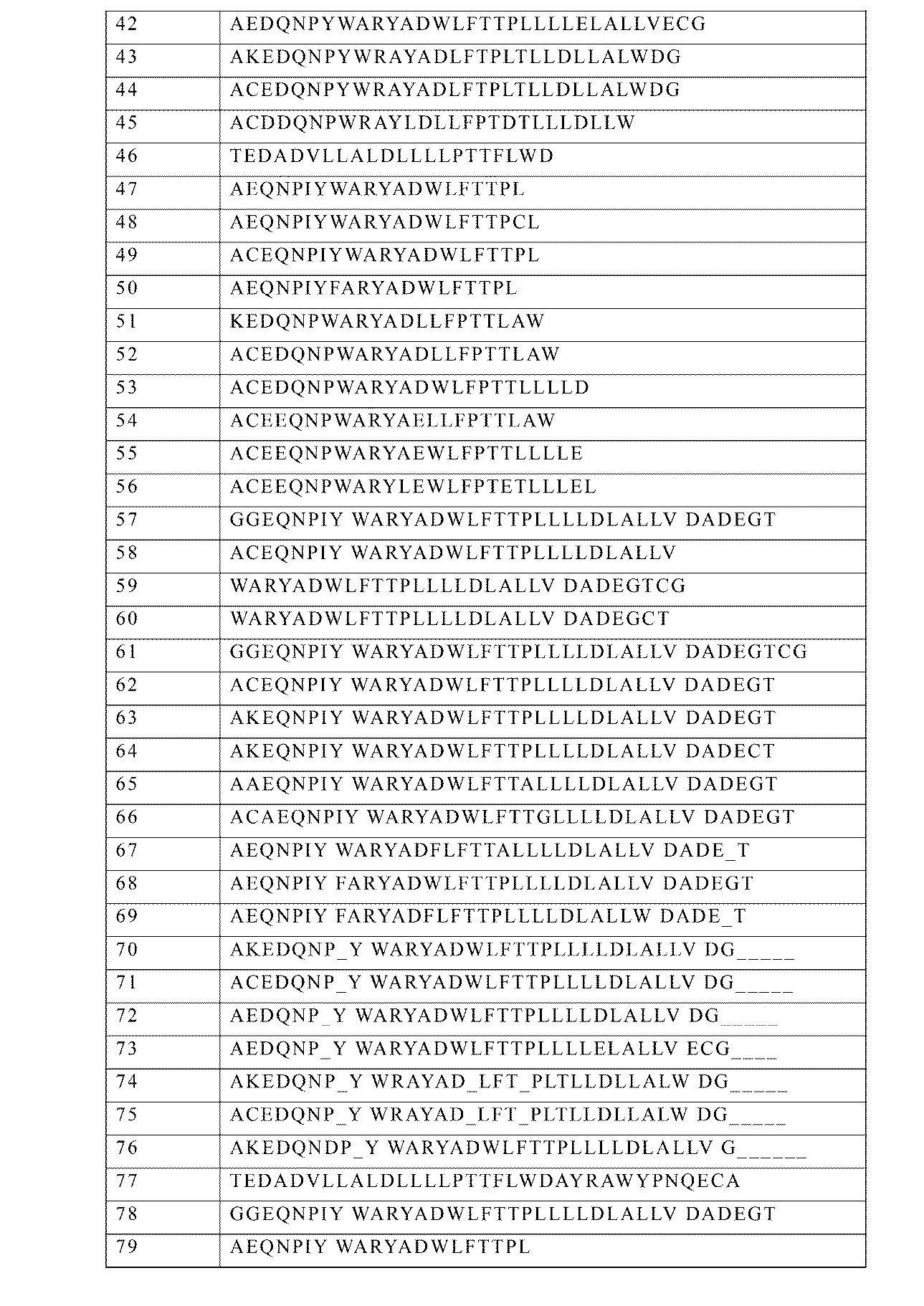


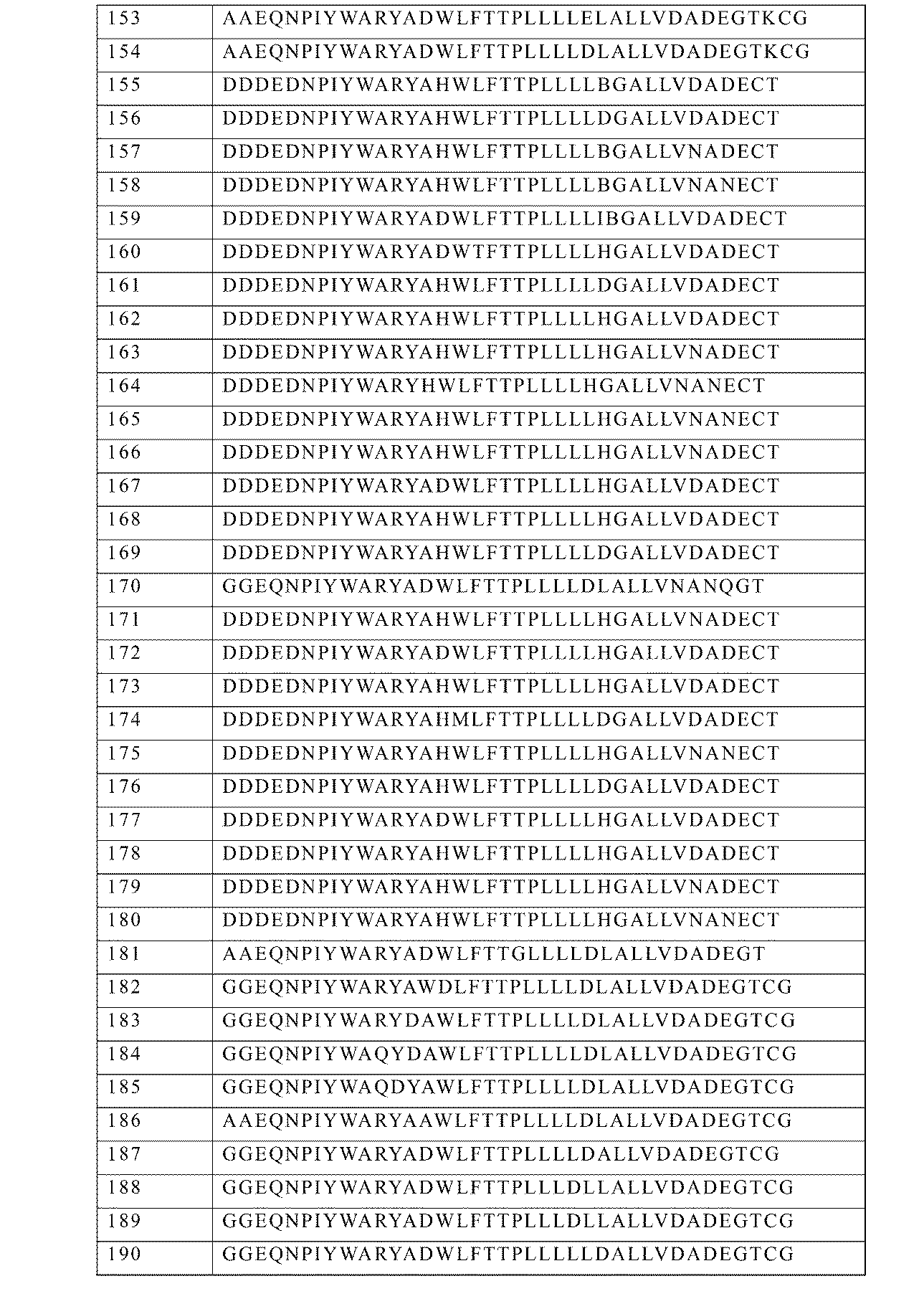


本発明で有用な列挙されたペプチドのいずれも、非システイン残基をシステインで置き換えるか、またはシステイン残基をN末端もしくはC末端のいずれかに付加することによって、システイン残基を含むように修飾することができる。 Any of the recited peptides useful in the present invention can be modified to contain a cysteine residue by replacing a non-cysteine residue with cysteine or by adding a cysteine residue to either the N-terminus or C-terminus.
いくつかの実施形態において、R1のペプチドは、立体構造的に制限されたペプチドである。立体構造的に制限されたペプチドは、例えば、大環状ペプチド及びステープルされたペプチドを含み得る。ステープルされたペプチドは、2つのアミノ酸側鎖間の共有結合によって拘束され、ペプチド大環状化合物を形成するペプチドである。立体構造的に制限されたペプチドは、例えば、Guerlavais et al.,Annual Reports in Medicinal Chemistry 2014,49,331-345;Chang et al.,Proceedings of the National Academy of Sciences of the United States of America(2013),110(36),E3445-E3454;Tesauro et al.,Molecules 2019,24,351-377;Dougherty et al.,Journal of Medicinal Chemistry (2019),62(22),10098-10107;及びDougherty et al., Chemical Reviews(2019),119(17),10241-10287に記載されており、これらのそれぞれは、参照によりその全体が本明細書に組み込まれる。 In some embodiments, the peptide of R1 is a conformationally restricted peptide. Conformationally restricted peptides can include, for example, macrocyclic peptides and stapled peptides. Stapled peptides are peptides that are constrained by a covalent bond between two amino acid side chains to form a peptide macrocycle. Conformationally restricted peptides are described, for example, in Guerlavais et al., Annual Reports in Medicinal Chemistry 2014, 49, 331-345; Chang et al. , Proceedings of the National Academy of Sciences of the United States of America (2013), 110(36), E3445-E3454; Tesauro et al. , Molecules 2019, 24, 351-377; Dougherty et al. , Journal of Medicinal Chemistry (2019), 62(22), 10098-10107; and Dougherty et al. , Chemical Reviews (2019), 119(17), 10241-10287, each of which is incorporated herein by reference in its entirety.
いくつかの実施形態において、R1は、10から50個のアミノ酸を有するペプチドである。いくつかの実施形態において、R1は、20から40個のアミノ酸を有するペプチドである。いくつかの実施形態において、R1は、20から40個のアミノ酸を有するペプチドである。いくつかの実施形態において、R1は、10から20個のアミノ酸を有するペプチドである。いくつかの実施形態において、R1は、20から30個のアミノ酸を有するペプチドである。いくつかの実施形態において、R1は、30から40個のアミノ酸を有するペプチドである。 In some embodiments, R 1 is a peptide having 10 to 50 amino acids. In some embodiments, R 1 is a peptide having 20 to 40 amino acids. In some embodiments, R 1 is a peptide having 20 to 40 amino acids. In some embodiments, R 1 is a peptide having 10 to 20 amino acids. In some embodiments, R 1 is a peptide having 20 to 30 amino acids. In some embodiments, R 1 is a peptide having 30 to 40 amino acids.
適切な小分子微小管標的化部分(例えば、R2)は、マイタンシノイドのような細胞毒性化合物であり得、これは、正常組織に有害な影響を与える可能性があるため、全身に送達されると望ましくない副作用をもたらす可能性がある。小分子微小管標的化剤には、マイタンシノイド、アクリタキセル、ドセタキセル、エポチロン、ジスコデルモリド、ビンカアルカロイド、コルヒチン、コンブレタスタチン、ならびにそれらの誘導体及び類似体が含まれるが、これらに限定されない。微小管標的化剤は、Tangutur,A.D.,Current Topics in Medicinal Chemistry,2017 17(22):2523-2537に記載されている。微小管標的化剤には、マイタンシン(DM1)などのマイタンシノイドならびにその誘導体及び類似体も含まれ、これらは、Lopus,M,Cancer Lett.,2011,307(2):113-118;及びWiddison,W.,J.Med.Chem.2006,49:4392-4408に記載されている。 Suitable small molecule microtubule targeting moieties (e.g., R 2 ) may be cytotoxic compounds such as maytansinoids, which may adversely affect normal tissues and thus may result in undesirable side effects when delivered systemically. Small molecule microtubule targeting agents include, but are not limited to, maytansinoids, aclitaxel, docetaxel, epothilones, discodermolides, vinca alkaloids, colchicine, combretastatins, and derivatives and analogs thereof. Microtubule targeting agents are described in Tangutur, A. D., Current Topics in Medicinal Chemistry, 2017 17(22):2523-2537. Microtubule targeting agents also include maytansinoids, such as maytansine (DM1), and its derivatives and analogs, which are described in Lopus, M, Cancer Lett. , 2011, 307(2):113-118; and Widdison, W., J. Med. Chem. 2006, 49:4392-4408.
いくつかの実施形態において、R2は、次の基:

いくつかの実施形態において、R2は、次の基:
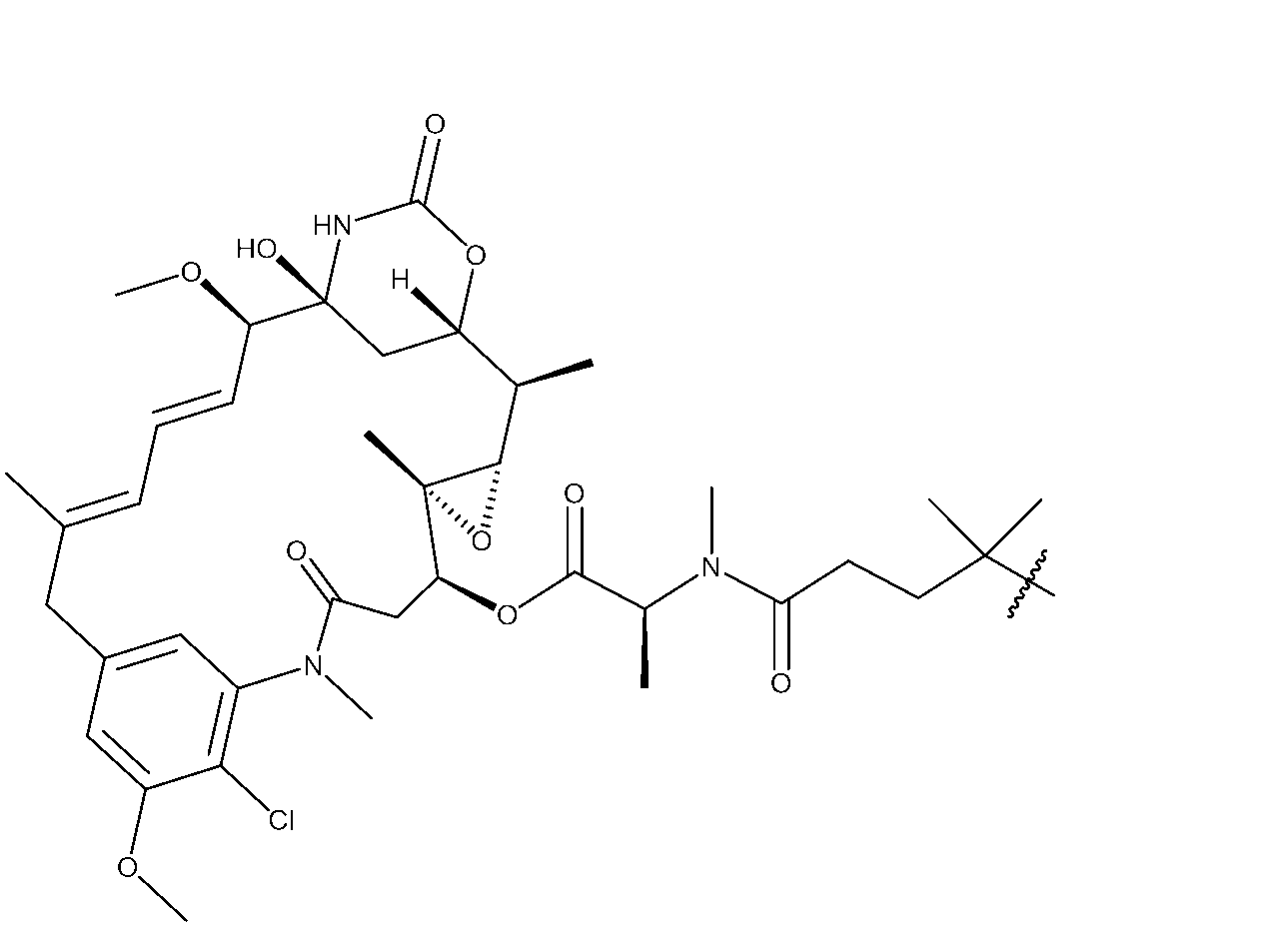
いくつかの実施形態において、R2は、次の基:

いくつかの実施形態において、R2は、次の基:

いくつかの実施形態において、R2は、次の基:

いくつかの実施形態において、R2はマイタンシノイドである。いくつかの実施形態において、R2はDM1またはDM4である。いくつかの実施形態において、R2はDM1である。いくつかの実施形態において、R2はDM4である。 In some embodiments, R2 is a maytansinoid. In some embodiments, R2 is DM1 or DM4. In some embodiments, R2 is DM1. In some embodiments, R2 is DM4.
いくつかの実施形態において、Lは、R1及びR2を共有結合する連結部分であり、病組織の細胞内などの酸性または低酸素組織の近くでR2を含む部分を放出するように機能する。 In some embodiments, L is a linking moiety that covalently bonds R1 and R2 and functions to release the moiety that includes R2 in the vicinity of acidic or hypoxic tissue, such as within cells of diseased tissue.
いくつかの実施形態において、Lは1から40、1から30、1から25、1から20、1から15、1から10、または1から5の鎖原子の鎖(炭素とヘテロ原子の両方を含む)であり、1から10のRq置換基で置換されていてもよく、ここで、Lの1つ以上の鎖炭素原子を酸化してカルボニル(C=O)を形成することができ、1つ以上のN及びS鎖原子は、それぞれ任意選択で酸化されて、アミンオキシド、スルホキシドまたはスルホニル基を形成することができ、ここで、
各Rqは、独立して、OH、CN、-COOH、NH2、ハロ、C1-6ハロアルキル、C1-6アルキル、C1-6アルコキシ、C1-6ハロアルコキシ、C1-6アルキルチオ、フェニル、5~6員のヘテロアリール、4~6員のヘテロシクロアルキル、C3~6シクロアルキル、NH(C1-6アルキル)、及びN(C1-6アルキル)2から選択され、ここで、RqのC1-6アルキル、フェニル、C3-6シクロアルキル、4~6員ヘテロシクロアルキル、及び5~6員のヘテロアリールは、それぞれハロ、OH、CN、-COOH、NH2、C1-4アルキル、C1-4アルコキシ、C1-4ハロアルキル、C1-4ハロアルコキシ、フェニル、C3-10シクロアルキル、5もしくは6員ヘテロアリールまたは4~6員ヘテロシクロアルキルで置換され、及び
2つのRq基は、それらが結合している鎖原子とともに、フェニル、5~6員のヘテロアリール、4~6員のヘテロシクロアルキル、またはC3-6シクロアルキル環を形成できる。
In some embodiments, L is a chain of 1 to 40, 1 to 30, 1 to 25, 1 to 20, 1 to 15, 1 to 10, or 1 to 5 chain atoms (including both carbon and heteroatoms) and is optionally substituted with 1 to 10 R q substituents, where one or more chain carbon atoms of L can be oxidized to form a carbonyl (C═O), and one or more N and S chain atoms can each be optionally oxidized to form an amine oxide, sulfoxide, or sulfonyl group, where
each R q is independently selected from OH, CN, —COOH, NH 2 , halo, C 1-6 haloalkyl, C 1-6 alkyl, C 1-6 alkoxy, C 1-6 haloalkoxy, C 1-6 alkylthio, phenyl, 5-6 membered heteroaryl, 4-6 membered heterocycloalkyl, C 3-6 cycloalkyl, NH(C 1-6 alkyl), and N(C 1-6 alkyl) 2 , wherein the C 1-6 alkyl, phenyl, C 3-6 cycloalkyl, 4-6 membered heterocycloalkyl, and 5-6 membered heteroaryl of R q are each substituted with halo, OH, CN, —COOH, NH 2 , C 1-4 alkyl, C 1-4 alkoxy, C 1-4 haloalkyl, C 1-4 haloalkoxy, phenyl, C 3-10 cycloalkyl, 5- or 6-membered heteroaryl, or 4-6 membered heterocycloalkyl; The q groups, together with the chain atoms to which they are attached, can form a phenyl, 5- to 6-membered heteroaryl, 4- to 6-membered heterocycloalkyl, or C 3-6 cycloalkyl ring.
いくつかの実施形態において、Rqは、独立して、OH、CN、-COOH、NH2、ハロ、C1-6ハロアルキル、C1-6アルキル、C1-6アルコキシ、C1-6ハロアルコキシ、NH(C1-6アルキル)及びN(C1-6アルキル)2から選択される。 In some embodiments, R q is independently selected from OH, CN, -COOH, NH 2 , halo, C 1-6 haloalkyl, C 1-6 alkyl, C 1-6 alkoxy, C 1-6 haloalkoxy, NH(C 1-6 alkyl), and N(C 1-6 alkyl) 2 .
いくつかの実施形態では、Lは、次の基:

いくつかの実施形態において、Lは、次の基:
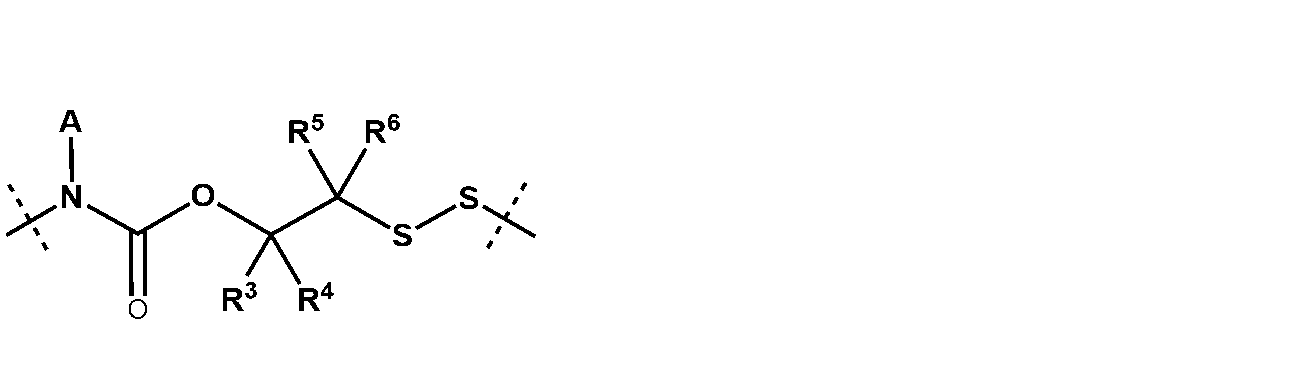
いくつかの実施形態において、Lは、次の基:

いくつかの実施形態において、nは0である。いくつかの実施形態において、nは1である。いくつかの実施形態において、nは2である。 In some embodiments, n is 0. In some embodiments, n is 1. In some embodiments, n is 2.
いくつかの実施形態において、Lは、次の基:

いくつかの実施形態において、Lは、次の基:

いくつかの実施形態において、Lは、次の基:

いくつかの実施形態において、Lは、次の基:

いくつかの実施形態において、R3、R4、R5、R6、R7、R8、R9、及びR10は、それぞれ独立して、H及びC1-4アルキルから選択される。いくつかの実施形態では、R3、R4、R5、R6、R7、R8、R9、及びR10はそれぞれHである。 In some embodiments, R 3 , R 4 , R 5 , R 6 , R 7 , R 8 , R 9 , and R 10 are each independently selected from H and C 1-4 alkyl. In some embodiments, R 3 , R 4 , R 5 , R 6 , R 7 , R 8 , R 9 , and R 10 are each H.
いくつかの実施形態では、R3及びR4は、それぞれ独立して、H及びC1-4アルキルから選択される。いくつかの実施形態では、R3及びR4はそれぞれHである。 In some embodiments, R 3 and R 4 are each independently selected from H and C 1-4 alkyl. In some embodiments, R 3 and R 4 are each H.
いくつかの実施形態では、R5及びR6は、それぞれ独立して、H及びC1-4アルキルから選択される。いくつかの実施形態では、R5及びR6はそれぞれHである。 In some embodiments, R 5 and R 6 are each independently selected from H and C 1-4 alkyl. In some embodiments, R 5 and R 6 are each H.
いくつかの実施形態では、R7及びR8は、それぞれ独立して、H及びC1-4アルキルから選択される。いくつかの実施形態では、R7及びR8はそれぞれHである。 In some embodiments, R 7 and R 8 are each independently selected from H and C 1-4 alkyl. In some embodiments, R 7 and R 8 are each H.
いくつかの実施形態では、R9及びR10は、それぞれ独立して、H及びC1-4アルキルから選択される。いくつかの実施形態では、R9及びR10はそれぞれHである。 In some embodiments, R 9 and R 10 are each independently selected from H and C 1-4 alkyl. In some embodiments, R 9 and R 10 are each H.
いくつかの実施形態において、AはHである。いくつかの実施形態において、AはC1-4アルキルである。いくつかの実施形態において、AはCH3である。 In some embodiments, A is H. In some embodiments, A is C 1-4 alkyl. In some embodiments, A is CH 3 .
いくつかの実施形態において、Zは、C1-4アルキル、ハロ、CN、NO2、ORa1、SRa1、C(O)Rb1、C(O)NRc1Rd1、C(O)ORa1、OC(O)Rb1、OC(O)NRc1Rd1、NRc1Rd1、NRc1C(O)Rb1、NRc1C(O)ORa1、及びNRc1C(O)NRc1Rd1から独立して選択される1、2、または3の置換基で置換されていてもよいC6-10アリールである。 In some embodiments, Z is a C 6-10 aryl optionally substituted with 1 , 2, or 3 substituents independently selected from C 1-4 alkyl, halo, CN, NO 2 , OR a1 , SR a1 , C(O)R b1 , C( O )NR c1 R d1 , C(O) OR a1 , OC(O) R b1 , OC(O)NR c1 R d1 , NR c1 R d1 , NR c1 C(O)R b1 , NR c1 C(O)OR a1 , and NR c1 C(O)NR c1 R d1 .
いくつかの実施形態において、Zは、C1-4アルキル、ハロ、CN、NO2、ORa1、SRa1、C(O)Rb1、C(O)NRc1Rd1、C(O)ORa1、OC(O)Rb1、OC(O)NRc1Rd1、NRc1Rd1、NRc1C(O)Rb1、NRc1C(O)ORa1、及びNRc1C(O)NRc1Rd1から独立して選択される1、2、または3の置換基で置換されていてもよいフェニルである。 In some embodiments, Z is phenyl optionally substituted with 1 , 2, or 3 substituents independently selected from C 1-4 alkyl, halo, CN, NO 2 , OR a1 , SR a1 , C(O)R b1 , C(O)NR c1 R d1 , C(O) OR a1 , OC(O)R b1 , OC(O)NR c1 R d1 , NR c1 R d1 , NR c1 C(O)R b1 , NR c1 C(O)OR a1 , and NR c1 C(O)NR c1 R d1 .
いくつかの実施形態において、Zはフェニルである。 In some embodiments, Z is phenyl.
いくつかの実施形態において、本発明の化合物は、式(II):

R1はペプチドであり、
R2は、小分子微小管標的化部分であり、
Aは、HまたはC1-4アルキルであり、
環Yは、単環式C5-7シクロアルキル環または単環式5~7員ヘテロシクロアルキル環であり、
各RYは独立して、C1-4アルキル、ハロ、CN、NO2、ORa1、SRa1、C(O)Rb1、C(O)NRc1Rd1、C(O)ORa1、OC(O)Rb1、OC(O)NRc1Rd1、NRc1Rd1、NRc1C(O)Rb1、NRc1C(O)ORa1、及びNRc1C(O)NRc1Rd1から選択され、
または2つの隣接するRYは、それらが結合している原子と共に、縮合単環式C5-7シクロアルキル環、縮合単環式5~7員ヘテロシクロアルキル環、縮合C6-10アリール環、または縮合した6~10員のヘテロアリール環を形成し、それぞれが、C1-4アルキル、ハロ、CN、NO2、ORa1、SRa1、C(O)Rb1、C(O)NRc1Rd1、C(O)ORa1、OC(O)Rb1、OC(O)NRc1Rd1、NRc1Rd1、NRc1C(O)Rb1、NRc1C(O)ORa1、及びNRc1C(O)NRc1Rd1から独立して選択された1、2、または3の置換基で置換されていてもよく、
Ra1、Rb1、Rc1、及びRd1は、それぞれ独立して、H、C1-4アルキル、C2-4アルケニル、C2-4アルキニルから選択され、それぞれ、ハロ、OH、CN、及びNO2から独立して選択された1、2、または3の置換基で置換されていてもよく、及び
mは、0、1、2、または3である。
In some embodiments, the compound of the present invention has formula (II):
R1 is a peptide;
R2 is a small molecule microtubule targeting moiety;
A is H or C 1-4 alkyl;
Ring Y is a monocyclic C 5-7 cycloalkyl ring or a monocyclic 5- to 7-membered heterocycloalkyl ring;
each R Y is independently selected from C 1-4 alkyl, halo, CN, NO 2 , OR a1 , SR a1 , C(O)R b1 , C(O)NR c1 R d1 , C(O)OR a1 , OC(O)R b1 , OC(O)NR c1 R d1 , NR c1 R d1 , NR c1 C(O)R b1 , NR c1 C(O)OR a1 , and NR c1 C(O)NR c1 R d1 ;
or two adjacent R Y , together with the atoms to which they are attached, form a fused monocyclic C 5-7 cycloalkyl ring, a fused monocyclic 5-7 membered heterocycloalkyl ring, a fused C 6-10 aryl ring, or a fused 6-10 membered heteroaryl ring, each of which is selected from C 1-4 alkyl, halo, CN, NO 2 , OR a1 , SR a1 , C(O)R b1 , C(O)NR c1 R d1 , C(O)OR a1 , OC(O)R b1 , OC(O)NR c1 R d1 , NR c1 R d1 , NR c1 C(O)R b1 , NR c1 C(O)OR a1 , and NR c1 C(O)NR c1 R Optionally substituted with 1, 2, or 3 substituents independently selected from d1 ;
R a1 , R b1 , R c1 , and R d1 are each independently selected from H, C 1-4 alkyl, C 2-4 alkenyl, C 2-4 alkynyl, each optionally substituted with 1, 2, or 3 substituents independently selected from halo, OH, CN, and NO 2 ; and m is 0, 1, 2, or 3.
式(II)の化合物のいくつかの実施形態において、R1は、配列番号1、配列番号2、配列番号3、配列番号4、または配列番号5の配列を含むペプチドである。 In some embodiments of the compound of formula (II), R 1 is a peptide comprising the sequence of SEQ ID NO:1, SEQ ID NO:2, SEQ ID NO:3, SEQ ID NO:4, or SEQ ID NO:5.
式(II)の化合物のいくつかの実施形態において、R1は、Pv1、PV2、PV3、PV4、またはPV5である。 In some embodiments of the compound of Formula (II), R 1 is Pv1, PV2, PV3, PV4, or PV5.
式(II)の化合物のいくつかの実施形態において、R1は、R1のシステイン残基を介してコアに結合しており、式IIのジスルフィド部分の硫黄原子の1つは、システイン残基から誘導されている。 In some embodiments of the compound of formula (II), R 1 is attached to the core through a cysteine residue in R 1 and one of the sulfur atoms of the disulfide moiety of formula II is derived from a cysteine residue.
式(II)の化合物のいくつかの実施形態において、R2は、マイタンシノイドである。式(II)のいくつかの実施形態において、R2は、DM1またはDM4である。式(II)のいくつかの実施形態において、R2はDM1である。式(II)のいくつかの実施形態において、R2はDM4である。 In some embodiments of the compound of Formula (II), R2 is a maytansinoid. In some embodiments of Formula (II), R2 is DM1 or DM4. In some embodiments of Formula (II), R2 is DM1. In some embodiments of Formula (II), R2 is DM4.
式(II)の化合物のいくつかの実施形態において、R2は、次の基:
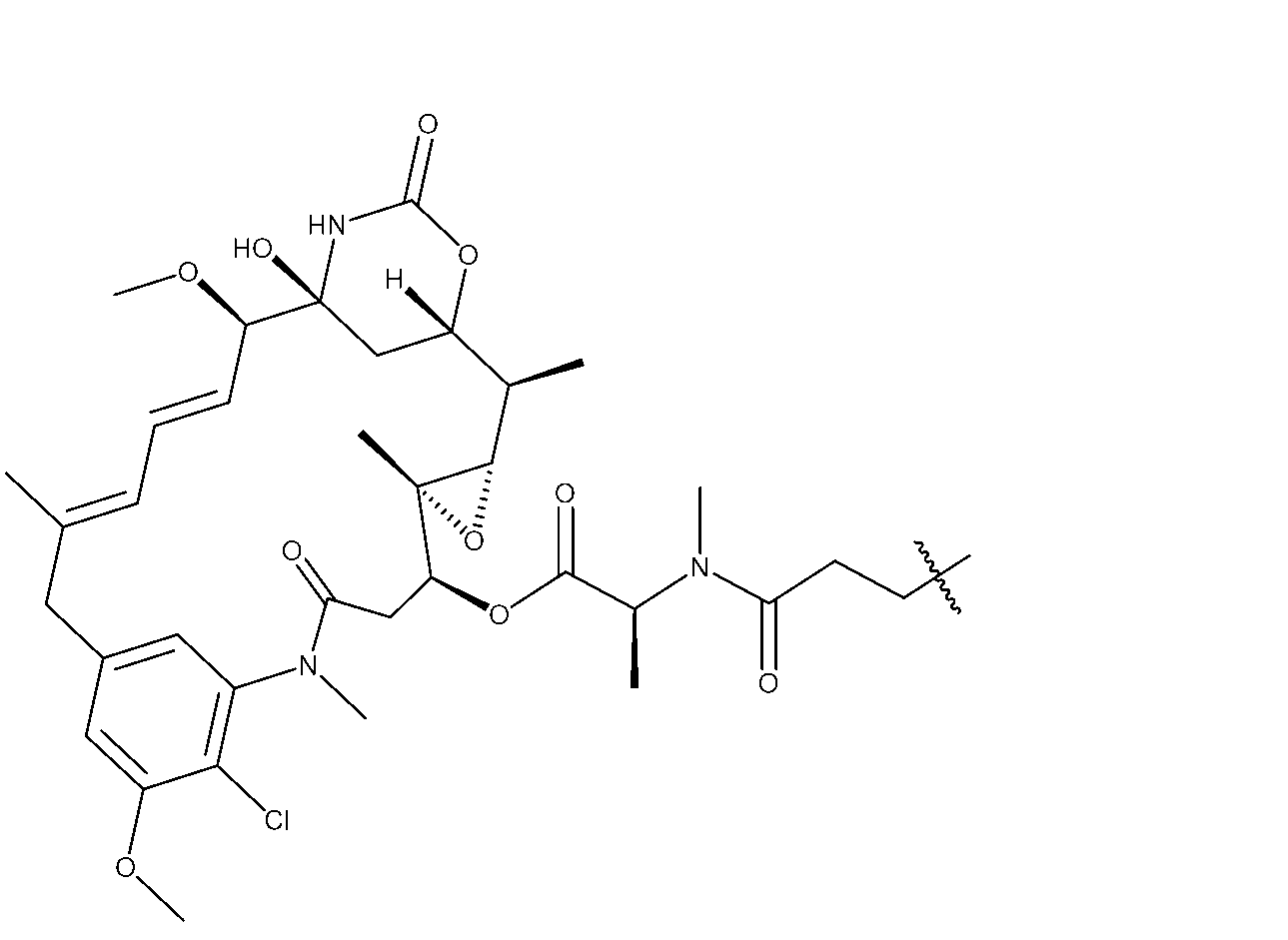
式(II)の化合物のいくつかの実施形態において、R2は、次の基:

式(II)の化合物のいくつかの実施形態において、R2は、次の基:

式(II)の化合物のいくつかの実施形態において、R2は、次の基:
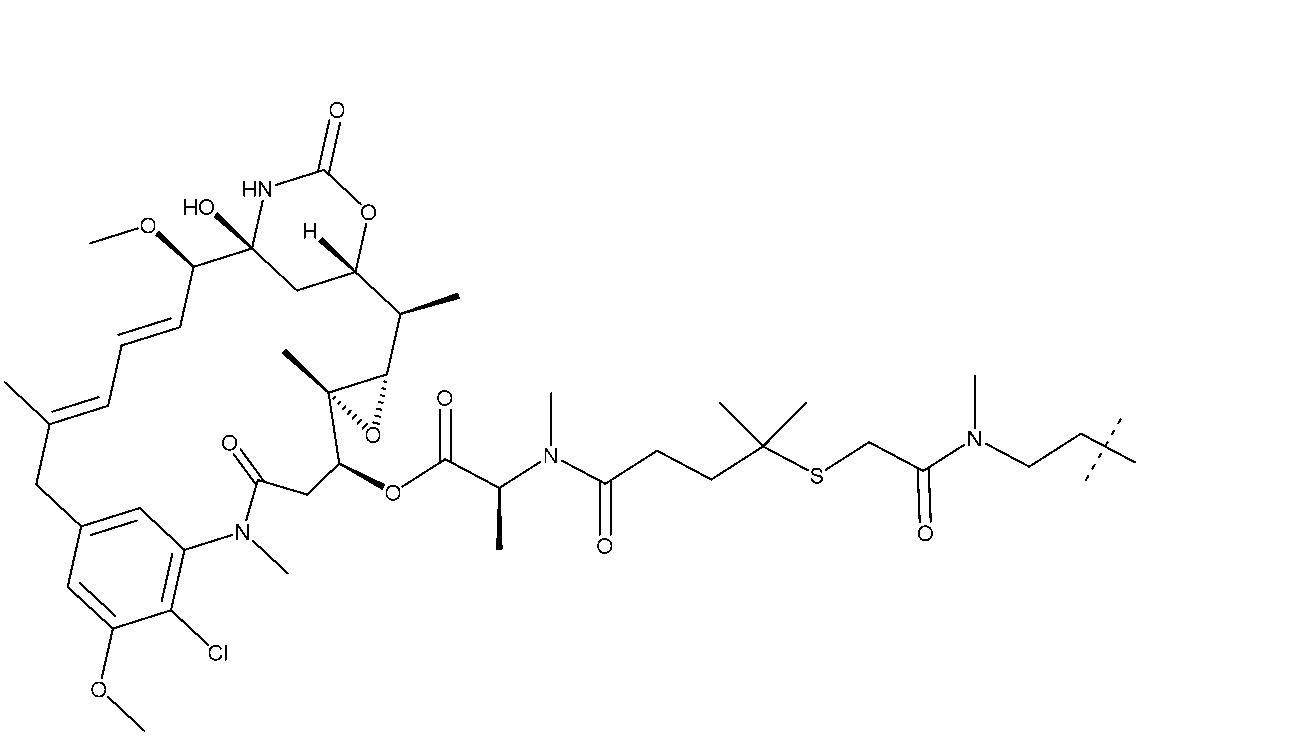
式(II)の化合物のいくつかの実施形態において、AはHである。式(II)の化合物のいくつかの実施形態において、AはC1-4アルキルである。式(II)の化合物のいくつかの実施形態において、AはCH3である。 In some embodiments of the compound of formula (II), A is H. In some embodiments of the compound of formula (II), A is C 1-4 alkyl. In some embodiments of the compound of formula (II), A is CH 3 .
式(II)の化合物のいくつかの実施形態において、環Yは、単環式C5-7シクロアルキル環である。 In some embodiments of the compounds of Formula (II), ring Y is a monocyclic C 5-7 cycloalkyl ring.
式(II)の化合物のいくつかの実施形態では、環Yはシクロペンチル環である。 In some embodiments of the compound of formula (II), ring Y is a cyclopentyl ring.
式(II)の化合物のいくつかの実施形態では、環Yはシクロヘキシル環である。 In some embodiments of the compound of formula (II), ring Y is a cyclohexyl ring.
式(II)の化合物のいくつかの実施形態では、環Yはシクロへプチル環である。 In some embodiments of the compound of formula (II), ring Y is a cycloheptyl ring.
式(II)の化合物のいくつかの実施形態において、環Yは、単環式5~7員ヘテロシクロアルキル環である。 In some embodiments of the compound of formula (II), ring Y is a monocyclic 5- to 7-membered heterocycloalkyl ring.
式(II)の化合物のいくつかの実施形態において、環Yは、5員ヘテロシクロアルキル環である。 In some embodiments of the compound of formula (II), ring Y is a 5-membered heterocycloalkyl ring.
式(II)の化合物のいくつかの実施形態において、環Yは、6員ヘテロシクロアルキル環である。 In some embodiments of the compound of formula (II), ring Y is a 6-membered heterocycloalkyl ring.
式(II)の化合物のいくつかの実施形態において、環Yは、7員ヘテロシクロアルキル環である。 In some embodiments of the compound of formula (II), ring Y is a 7-membered heterocycloalkyl ring.
式(II)の化合物のいくつかの実施形態において、2つの隣接するRYは、それらが結合している原子と共に、縮合単環式C5-7シクロアルキル環、縮合単環式5~7員ヘテロシクロアルキル環、縮合C6-10アリール環、または縮合した6~10員のヘテロアリール環を形成し、それぞれが、C1-4アルキル、ハロ、CN、NO2、ORa1、SRa1、C(O)Rb1、C(O)NRc1Rd1、C(O)ORa1、OC(O)Rb1、OC(O)NRc1Rd1、NRc1Rd1、NRc1C(O)Rb1、NRc1C(O)ORa1、及びNRc1C(O)NRc1Rd1から独立して選択された1、2、または3の置換基で置換されていてもよい。 In some embodiments of a compound of formula (II), two adjacent R Y , together with the atoms to which they are attached, form a fused monocyclic C 5-7 cycloalkyl ring, a fused monocyclic 5-7 membered heterocycloalkyl ring, a fused C 6-10 aryl ring, or a fused 6-10 membered heteroaryl ring, each of which is selected from C 1-4 alkyl, halo, CN, NO 2 , OR a1 , SR a1 , C(O)R b1 , C(O)NR c1 R d1 , C(O)OR a1 , OC(O)R b1 , OC(O)NR c1 R d1 , NR c1 R d1 , NR c1 C(O)R b1 , NR c1 C(O)OR a1 , and NR c1 C(O)NR c1 R It may be substituted with 1, 2, or 3 substituents independently selected from d1 .
式(II)の化合物のいくつかの実施形態では、mは、0である。 In some embodiments of compounds of formula (II), m is 0.
式(II)の化合物のいくつかの実施形態では、mは、1である。 In some embodiments of compounds of formula (II), m is 1.
式(II)の化合物の他の実施形態では、mは、2である。 In other embodiments of the compound of formula (II), m is 2.
式(II)の化合物の他の実施形態では、mは、3である。 In other embodiments of the compound of formula (II), m is 3.
いくつかの実施形態において、本発明の化合物は、式(III)、式(IV)、または式(V)

いくつかの実施形態では、式(I)の化合物は、
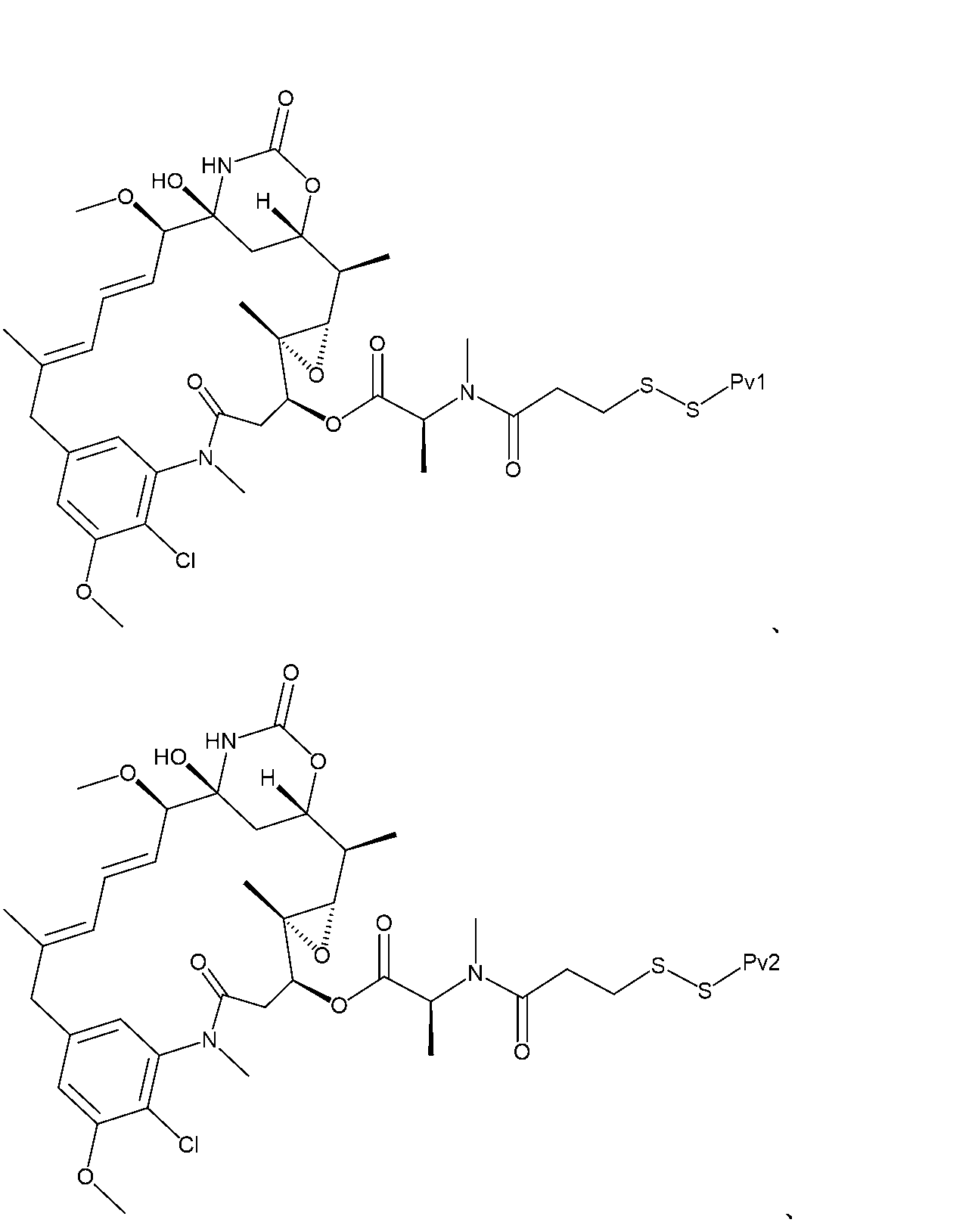


または前述のいずれかの薬学的に許容される塩である。
In some embodiments, the compound of formula (I) is
Or a pharma- ceutically acceptable salt of any of the foregoing.
いくつかの実施形態では、式(I)の化合物は、


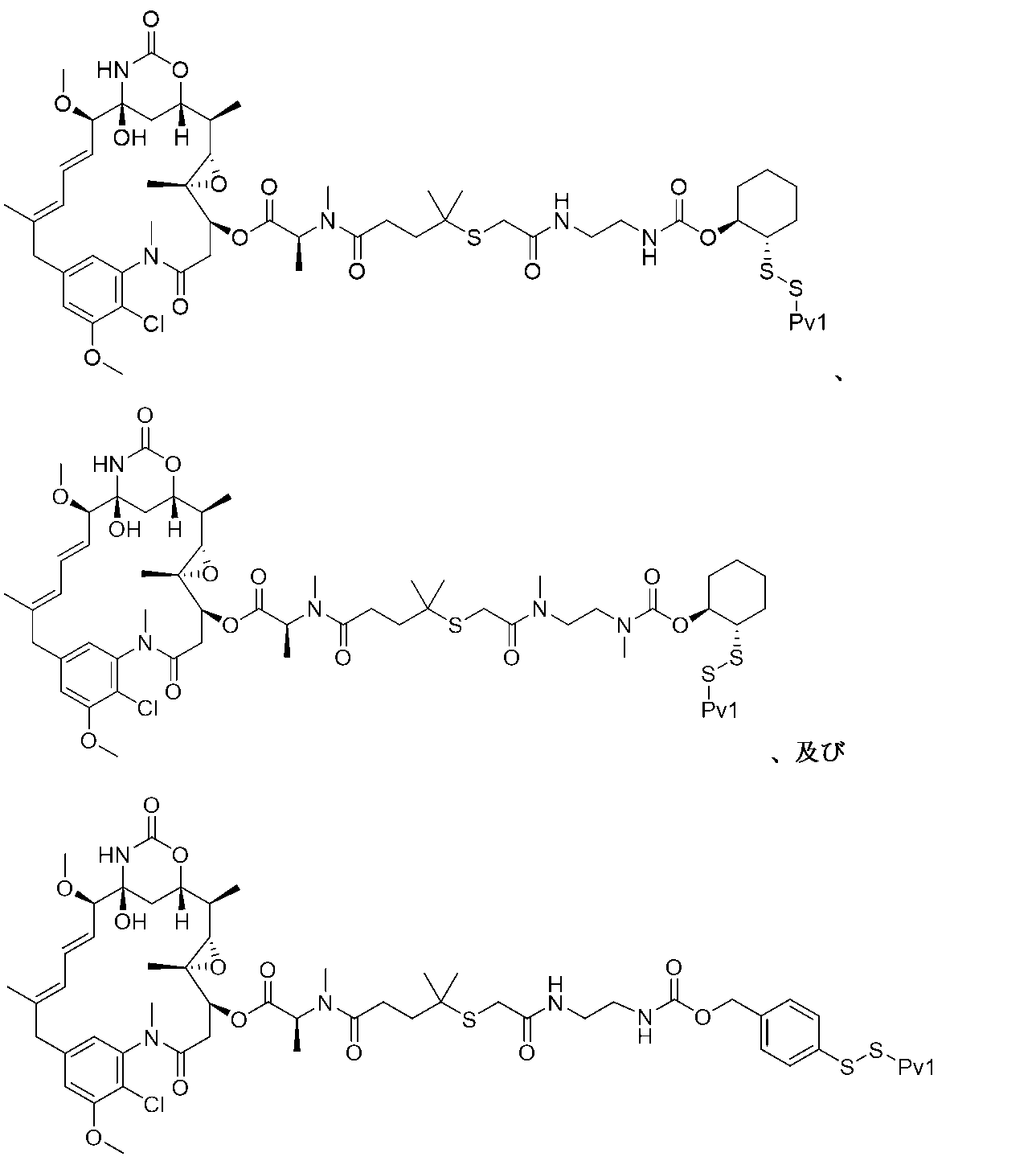
または前述のいずれかの薬学的に許容される塩である。
In some embodiments, the compound of formula (I) is
Or a pharma- ceutically acceptable salt of any of the foregoing.
いくつかの実施形態において、本明細書中提供されるのは、式(I-A)

いくつかの実施形態において、本明細書中提供されるのは、式(I-B)

本発明の分子は、例えば、フルオロフォア、放射性同位元素などのプローブでタグ付けすることができる。いくつかの実施形態では、プローブは、LICORなどの蛍光プローブである。蛍光プローブは、光励起(例えば、フルオロフォア)時に光を再放出することができる任意の部分を含むことができる。 The molecules of the invention can be tagged with a probe, e.g., a fluorophore, a radioisotope, etc. In some embodiments, the probe is a fluorescent probe, such as LICOR. A fluorescent probe can include any moiety that can re-emit light upon light excitation (e.g., a fluorophore).
アミノ酸は、次のようにIUPACの略語:アラニン(Ala;A)、アルギニン(Arg;R)、アスパラギン(Asn;N)、アスパラギン酸(Asp;D)、システイン(Cys;C)、グルタミン(Gln;Q)、グルタミン酸(Glu;E)、グリシン(Gly;G)、ヒスチジン(His;H)、イソロイシン(Ile;I)、ロイシン(Leu;L)、リジン(Lys;K)、メチオニン(Met;M)、フェニルアラニン(Phe;F)、プロリン(Pro;P)、セリン(Ser;S)、スレオニン(Thr;T)、トリプトファン(Trp;W)、チロシン(Tyr;Y)、バリン(ヴァル;V)で表される。 Amino acids are represented by the following IUPAC abbreviations: alanine (Ala; A), arginine (Arg; R), asparagine (Asn; N), aspartic acid (Asp; D), cysteine (Cys; C), glutamine (Gln; Q), glutamic acid (Glu; E), glycine (Gly; G), histidine (His; H), isoleucine (Ile; I), leucine (Leu; L), lysine (Lys; K), methionine (Met; M), phenylalanine (Phe; F), proline (Pro; P), serine (Ser; S), threonine (Thr; T), tryptophan (Trp; W), tyrosine (Tyr; Y), and valine (Val; V).
「Pv1」という用語は、配列番号1のペプチドであるADDQNPWRAYLDLLFPTDTLLLDLLWCGを意味する。 The term "Pv1" refers to the peptide of SEQ ID NO:1, ADDQNPWRAYLDLLFPTDTLLLDLLWCG.
「Pv2」という用語は、配列番号2のペプチドであるAEQNPIYWARYADWLFTTPLLLLDLALLVDADECGを意味する。 The term "Pv2" refers to the peptide of SEQ ID NO:2, AEQNPIYWARYADWLFTTPLLLLDLALLVDADECG.
「Pv3」という用語は、配列番号3のペプチドであるADDQNPWRAYLDLLFPTDTLLLDLLWDADECGを意味する。 The term "Pv3" refers to the peptide of SEQ ID NO:3, ADDQNPWRAYLDLLFPTDTLLLDLLWDADECG.
「Pv4」という用語は、配列番号4のペプチドであるAc-AAEQNPIYWARYADWLFTTPLLLLDLALLVDADEGTKCGを意味する。 The term "Pv4" refers to the peptide of SEQ ID NO: 4, Ac-AAEQNPIYWARYADWLFTTPLLLLDLALLVDADEGTKCG.
「Pv5」という用語は、配列番号5のペプチドであるAAEQNPIYWARYADWLFTTPLLLLDLALLVDADEGTCを意味する。「Pv6」という用語は、配列番号6のペプチドであるAAEQNPIYWWARYADWLFTTPLLLLDLALLVDADEGTCGを意味する。本発明の化合物において、ペプチドR1は、システイン部分によってジスルフィドリンカーに結合している。 The term "Pv5" refers to the peptide AAEQNPIYWARYADWLFTTPLLLLDLALLVDADEGTC of SEQ ID NO: 5. The term "Pv6" refers to the peptide AAEQNPIYWWARYADWLFTTPLLLLDLALLVDADEGTCG of SEQ ID NO: 6. In the compounds of the invention, peptide R1 is linked to the disulfide linker by a cysteine moiety.
「酸性及び/または低酸素マントル」という用語は、7.0より低く、好ましくは6.5より低いpHを有する、問題の病組織における細胞の環境を指す。酸性または低酸素性マントルは、より好ましくは約5.5のpHを有し、最も好ましくは約5.0のpHを有する。式(I)の化合物は、pH依存的に酸性及び/または低酸素性マントルを有する細胞膜を横切って挿入してR2Lを細胞に挿入し、その後、リンカーのジスルフィド結合が切断されて遊離R2L(またはR2L*、ここで、L*は劣化の産物である)を送達する。式(I)の化合物はpH依存性であるので、それらは、細胞を取り巻く酸性または低酸素性マントルの存在下でのみ細胞膜に優先的に挿入し、酸性または低酸素性マントルを有しない「正常な」細胞の細胞膜には挿入しない。 The term "acidic and/or hypoxic mantle" refers to the environment of cells in the diseased tissue in question, which has a pH lower than 7.0, preferably lower than 6.5. The acidic or hypoxic mantle more preferably has a pH of about 5.5, most preferably about 5.0. Compounds of formula (I) insert across cell membranes with acidic and/or hypoxic mantles in a pH-dependent manner to insert R 2 L into cells, after which the disulfide bond of the linker is cleaved to deliver free R 2 L (or R 2 L*, where L* is the product of degradation). Because compounds of formula (I) are pH-dependent, they preferentially insert into cell membranes only in the presence of an acidic or hypoxic mantle surrounding the cells, and not into cell membranes of "normal" cells that do not have an acidic or hypoxic mantle.
ペプチドR1、または細胞膜を横切るペプチドR1もしくは本発明の化合物の挿入の様式を指すために本明細書で使用される「pH感受性」または「pH依存性」という用語は、ペプチドが、中性pHでの膜脂質二重層よりも酸性または低酸素性マントルを有する細胞膜脂質二重層に対してより高い親和性を有することを意味する。したがって、本発明の化合物は、細胞膜脂質二重層が酸性または低酸素性マントル(「病的」細胞)を有する場合、細胞膜を介して優先的に挿入して、R2Lを細胞の内部に挿入する(したがって、上記のようにR2Hを送達する)が、マントル(細胞膜脂質二重層の環境)が酸性または低酸素性(「正常な」細胞)ではない場合、細胞膜を介して挿入されない。この優先的な挿入は、ペプチドR7が、膜の挿入を容易にするらせん構造を形成する結果として達成されると考えられている。 The term "pH-sensitive" or "pH-dependent" as used herein to refer to the mode of insertion of peptide R1 or the compound of the present invention across a cell membrane means that the peptide has a higher affinity for a cell membrane lipid bilayer having an acidic or hypoxic mantle than for a membrane lipid bilayer at neutral pH. Thus, the compound of the present invention will preferentially insert through a cell membrane to insert R2L into the interior of the cell (and thus deliver R2H as described above) when the cell membrane lipid bilayer has an acidic or hypoxic mantle ("pathological" cells), but will not insert through a cell membrane when the mantle (environment of the cell membrane lipid bilayer) is not acidic or hypoxic ("normal" cells). This preferential insertion is believed to be achieved as a result of peptide R7 forming a helical structure that facilitates membrane insertion.
「小分子微小管標的化部分」という用語は、微小管に結合する化学基を指す。小分子微小管標的化部分は、微小管の活性を阻害する化合物に由来する基であり得る。例えば、小分子微小管標的化部分は、微小管の動的安定性を抑制し得る。いくつかの実施形態において、小分子微小管標的化部分は、約100~1500、約100~800、約500~1,000、約600~1,000、約100~500、約700~900、または約250~500の分子量(Da)を有する。 The term "small molecule microtubule targeting moiety" refers to a chemical group that binds to microtubules. A small molecule microtubule targeting moiety can be a group derived from a compound that inhibits the activity of microtubules. For example, a small molecule microtubule targeting moiety can inhibit the dynamic stability of microtubules. In some embodiments, a small molecule microtubule targeting moiety has a molecular weight (Da) of about 100-1500, about 100-800, about 500-1,000, about 600-1,000, about 100-500, about 700-900, or about 250-500.
明確にするために、別個の実施形態の文脈において説明される本発明のある特徴を、単一の実施形態において組み合わせで提供することもできることが更に理解される(一方でこれらの実施形態は、多重従属形態で記述されるかのように組み合わされることが意図される)。逆に、簡潔にするために、単一の実施形態の文脈において説明される本発明の様々な特徴を、別々に、または任意の好適な部分組み合わせで提供することもできる。したがって、式(I)の化合物の実施形態として記載される特徴は、任意の適切な組み合わせで組み合わせることができると考えられる。 It is further understood that certain features of the invention that are described, for clarity, in the context of separate embodiments, can also be provided in combination in a single embodiment (whereas it is intended that these embodiments be combined as if described in multiple dependent forms). Conversely, for brevity, various features of the invention that are described in the context of a single embodiment can also be provided separately or in any suitable subcombination. Thus, it is contemplated that features described as embodiments of compounds of formula (I) can be combined in any suitable combination.
本明細書の様々な場所で、化合物の特定の特徴が群または範囲で開示されている。このような開示が、このような群及び範囲のメンバーのそれぞれ1つ1つの個別の部分的組み合わせを含むことが具体的に意図される。例えば、「C1-6アルキル」という用語は、メチル、エチル、C3アルキル、C4アルキル、C5アルキル及びC6アルキルを個別に(限定されないが)開示することを特に意図している。 At various places in the present specification, certain features of compounds are disclosed in groups or ranges. It is specifically intended that such disclosure include each and every individual subcombination of the members of such groups and ranges. For example, the term "C 1-6 alkyl" is specifically intended to individually (but not exclusively) disclose methyl, ethyl, C 3 alkyl, C 4 alkyl, C 5 alkyl, and C 6 alkyl.
「n員」という用語は、nが整数であり、典型的には、環形成原子の数がnである部分における環形成原子の数を表す。例えば、ピペリジニルは6員のヘテロシクロアルキル環の例であり、ピラゾリルは5員のヘテロアリール環の例であり、ピリジルは6員のヘテロアリール環の例であり、1,2,3,4-テトラヒドロ-ナフタレンは10員のシクロアルキル基の例である。 The term "n-membered" refers to the number of ring-forming atoms in a moiety, where n is an integer and typically the number of ring-forming atoms is n. For example, piperidinyl is an example of a 6-membered heterocycloalkyl ring, pyrazolyl is an example of a 5-membered heteroaryl ring, pyridyl is an example of a 6-membered heteroaryl ring, and 1,2,3,4-tetrahydro-naphthalene is an example of a 10-membered cycloalkyl group.
本明細書の様々な場所で、二価の連結基を定義する変数を記載することがある。各連結置換基が、連結置換基の順方向及び逆方向の両方の形態を含むことが特に意図されている。例えば、-NR(CR’R”)n-は、-NR(CR’R”)n-と-(CR’R”)nNR-との両方を含み、各形態を個別に開示することを意図している。構造に連結基が必要な場合、その基のためにリストされているMarkush変数は連結基であると理解される。例えば、構造が連結基を必要とし、その変数のMarkush基定義が「アルキル」または「アリール」をリストしている場合、「アルキル」または「アリール」は、それぞれ連結アルキレン基またはアリーレン基を表すことが理解される。 At various places herein, variables defining divalent linking groups may be described. It is specifically intended that each linking substituent include both the forward and reverse forms of the linking substituent. For example, -NR(CR'R") n - includes both -NR(CR'R") n - and -(CR'R") n NR-, and is intended to disclose each form individually. When a structure requires a linking group, the Markush variable listed for that group will be understood to be the linking group. For example, when a structure requires a linking group and the Markush group definition for that variable lists "alkyl" or "aryl," it will be understood that "alkyl" or "aryl" represent a linking alkylene or arylene group, respectively.
「置換された」という用語は、原子または原子の群が、別の群に結合した「置換基」として水素を正式に置き換えることを意味する。「置換された」という用語は、別段の記載がない限り、任意のレベルの置換、例えば、そのような置換が許可される場合、一置換、二置換、三置換、四置換、または五置換を指す。置換基は独立して選択され、置換は化学的にアクセス可能な任意の位置にあり得る。所与の原子での置換は原子価によって制限されることを理解されたい。所与の原子での置換は、化学的に安定な分子をもたらすことを理解されたい。「置換されていてもよい」という句は、非置換または置換されたものを意味する。「置換された」という用語は、水素原子が除去され、置換基によって置き換えられることを意味する。単一の二価置換基、例えば、オキソは、2つの水素原子を置き換えることができる。 The term "substituted" means that an atom or group of atoms formally replaces a hydrogen as a "substituent" attached to another group. The term "substituted" refers to any level of substitution, e.g., mono-, di-, tri-, tetra-, or penta-substitution, unless otherwise stated, where such substitution is permitted. The substituents are independently selected, and the substitutions may be at any chemically accessible position. It is understood that substitutions at a given atom are limited by valency. It is understood that substitutions at a given atom result in a chemically stable molecule. The phrase "optionally substituted" means unsubstituted or substituted. The term "substituted" means that a hydrogen atom is removed and replaced by a substituent. A single divalent substituent, e.g., oxo, can replace two hydrogen atoms.
「Cn-m」という用語は、端点を含む範囲を示し、ここで、n及びmは整数であり、炭素の数を示す。例としては、C1-4、C1-6などが挙げられる。 The term "C nm " denotes an inclusive range, where n and m are integers indicating the number of carbons. Examples include C 1-4 , C 1-6 , etc.
単独でまたは他の用語との組み合わせで用いられる「アルキル」という用語は、直鎖または分岐状であり得る飽和炭化水素基を指す。「Cn-mアルキル」という用語は、nからm個の炭素原子を有するアルキル基を指す。アルキル基は、正式には、化合物の残りの部分へのアルキル基の結合点で置き換えられた1つのC-H結合を持つアルカンに対応する。いくつかの実施形態では、アルキル基は、1~6個の炭素原子、1~4個の炭素原子、1~3個の炭素原子、または1~2個の炭素原子を含有する。アルキル部分の例としては、メチル、エチル、n-プロピル、イソプロピル、n-ブチル、tert-ブチル、イソブチル、sec-ブチルなどの化学基、2-メチル-1-ブチル、n-ペンチル、3-ペンチル、n-ヘキシル、1,2,2-トリメチルプロピルなどのより高次の同族体が挙げられるが、これらに限定されない。 The term "alkyl" used alone or in combination with other terms refers to a saturated hydrocarbon group that may be linear or branched. The term "C nm alkyl" refers to an alkyl group having n to m carbon atoms. An alkyl group formally corresponds to an alkane with one C-H bond replaced at the point of attachment of the alkyl group to the remainder of the compound. In some embodiments, an alkyl group contains 1-6 carbon atoms, 1-4 carbon atoms, 1-3 carbon atoms, or 1-2 carbon atoms. Examples of alkyl moieties include, but are not limited to, chemical groups such as methyl, ethyl, n-propyl, isopropyl, n-butyl, tert-butyl, isobutyl, sec-butyl, and higher homologs such as 2-methyl-1-butyl, n-pentyl, 3-pentyl, n-hexyl, and 1,2,2-trimethylpropyl.
単独でまたは他の用語との組み合わせで用いられる「アルケニル」という用語は、1つ以上の二重炭素-炭素結合を有するアルキル基に対応する直鎖または分岐炭化水素基を指す。アルケニル基は、正式には、化合物の残りの部分へのアルケニル基の結合点で置き換えられた1つのC-H結合を持つアルケンに対応する。「Cn-mアルケニル」という用語は、nからm個の炭素を有するアルケニル基を指す。いくつかの実施形態において、アルケニル部分は、2から6、2から4、または2から3個の炭素原子を含む。例示的なアルケニル基は、エテニル、n-プロペニル、イソプロペニル、n-ブテニル、sec-ブテニルなどを含むが、これらに限定されない。 The term "alkenyl," used alone or in combination with other terms, refers to a straight-chain or branched hydrocarbon group corresponding to an alkyl group having one or more double carbon-carbon bonds. An alkenyl group formally corresponds to an alkene with one C-H bond replaced at the point of attachment of the alkenyl group to the remainder of the compound. The term "C nm alkenyl" refers to an alkenyl group having n to m carbons. In some embodiments, the alkenyl moiety contains 2 to 6, 2 to 4, or 2 to 3 carbon atoms. Exemplary alkenyl groups include, but are not limited to, ethenyl, n-propenyl, isopropenyl, n-butenyl, sec-butenyl, and the like.
単独でまたは他の用語との組み合わせで用いられる「アルキニル」という用語は、1つ以上の三重炭素-炭素結合を有するアルキル基に対応する直鎖または分岐炭化水素基を指す。アルキニル基は、正式には、化合物の残りの部分へのアルキル基の結合点で置き換えられた1つのC-H結合を持つアルキンに対応する。「Cn-mアルキニル」という用語は、nからm個の炭素を有するアルキニル基を指す。アルキニル基の例として、エチニル、プロピン-1-イル、プロピン-2-イルなどを含むが、これらに限定されない。いくつかの実施形態において、アルキニル部分は、2から6、2から4、または2から3個の炭素原子を含む。 The term "alkynyl," used alone or in combination with other terms, refers to a straight-chain or branched hydrocarbon group corresponding to an alkyl group having one or more triple carbon-carbon bonds. An alkynyl group formally corresponds to an alkyne with one C-H bond replaced at the point of attachment of the alkyl group to the remainder of the compound. The term "C nm alkynyl" refers to an alkynyl group having n to m carbons. Examples of alkynyl groups include, but are not limited to, ethynyl, propyn-1-yl, propyn-2-yl, and the like. In some embodiments, the alkynyl moiety contains 2 to 6, 2 to 4, or 2 to 3 carbon atoms.
単独でまたは他の用語との組み合わせで用いられる「アルキレン」という用語は、二価のアルキル結合基を指す。アルキレン基は、正式には、化合物の残りの部分へのアルキレン基の結合点で置き換えられた2つのC-H結合を持つアルカンに対応する。「Cn-mアルキレン」という用語は、nからm個の炭素原子を有するアルキレン基を指す。アルキレン基の例としては、エタン-1,2-ジイル、エタン-1,1-ジイル、プロパン-1,3-ジイル、プロパン-1,2-ジイル、プロパン-1,1-ジイル、ブタン-1,4-ジイル、ブタン-1,3-ジイル、ブタン-1,2-ジイル、2-メチル-プロパン-1,3-ジイルなどが挙げられるが、これらに限定されない。 The term "alkylene," used alone or in combination with other terms, refers to a divalent alkyl linking group. An alkylene group formally corresponds to an alkane with two C-H bonds replaced at the point of attachment of the alkylene group to the remainder of the compound. The term "C nm alkylene" refers to an alkylene group having n to m carbon atoms. Examples of alkylene groups include, but are not limited to, ethane-1,2-diyl, ethane-1,1-diyl, propane-1,3-diyl, propane-1,2-diyl, propane-1,1-diyl, butane-1,4-diyl, butane-1,3-diyl, butane-1,2-diyl, 2-methyl-propane-1,3-diyl, and the like.
「アミノ」という用語は、式-NH2の基を指す。 The term "amino" refers to a group of formula -NH2 .
「カルボニル」という用語は、単独で、または他の用語と組み合わせて使用され、-C(=O)-基を指し、これはC(O)と書くこともできる。 The term "carbonyl", used alone or in combination with other terms, refers to the -C(=O)- group, which can also be written as C(O).
「シアノ」または「ニトリル」という用語は、式-C≡Nの基を指し、これは-CNと書くこともできる。 The term "cyano" or "nitrile" refers to a group of formula -C≡N, which can also be written as -CN.
「ハロ」または「ハロゲン」という用語は、単独で、または他の用語と組み合わせて使用され、フルオロ、クロロ、ブロモ、及びヨードを指す。いくつかの実施形態では、「ハロ」は、F、Cl、またはBrから選択されるハロゲン原子を指す。いくつかの実施形態では、ハロ基はFである。 The terms "halo" or "halogen", used alone or in combination with other terms, refer to fluoro, chloro, bromo, and iodo. In some embodiments, "halo" refers to a halogen atom selected from F, Cl, or Br. In some embodiments, the halo group is F.
本明細書で使用される「ハロアルキル」という用語は、1つ以上の水素原子がハロゲン原子で置き換えられているアルキル基を指す。「Cn-mハロアルキル」という用語は、nからm個の炭素原子を有し、少なくとも1から{2(nからm)+1}までのハロゲン原子を有するCn-mアルキル基を指し、これらは同じでも異なっていてもよい。いくつかの実施形態では、ハロゲン原子はフルオロ原子である。いくつかの実施形態では、ハロアルキル基は、1~6個または1~4個の炭素原子を有する。ハロアルキル基の例としては、CF3、C2F5、CHF2、CH2F、CCl3、CHCl2、C2Cl5などが挙げられる。いくつかの実施形態では、ハロアルキル基は、フルオロアルキル基である。 The term "haloalkyl" as used herein refers to an alkyl group in which one or more hydrogen atoms are replaced with a halogen atom. The term "C nm haloalkyl" refers to a C nm alkyl group having n to m carbon atoms and having at least 1 to {2(n to m)+1} halogen atoms, which may be the same or different. In some embodiments, the halogen atom is a fluoro atom. In some embodiments, a haloalkyl group has 1-6 or 1-4 carbon atoms. Examples of haloalkyl groups include CF 3, C 2 F 5 , CHF 2 , CH 2 F, CCl 3 , CHCl 2 , C 2 Cl 5 , and the like. In some embodiments, a haloalkyl group is a fluoroalkyl group.
単独でまたは他の用語との組み合わせで用いられる「ハロアルコキシ」という用語は、式-O-ハロアルキルの基を指し、このアルキル基は、上記で定義された通りである。「Cn-mハロアルコキシ」という用語は、ハロアルコキシ基を指し、そのハロアルキル基は、nからm個の炭素を有する。ハロアルコキシ基の例として、トリフルオロメトキシなどが挙げられる。いくつかの実施形態では、ハロアルコキシ基は、1~6個、1~4個、または1~3個の炭素原子を有する。 The term "haloalkoxy", used alone or in combination with other terms, refers to a group of formula -O-haloalkyl, where the alkyl group is as defined above. The term "C nm haloalkoxy" refers to a haloalkoxy group, where the haloalkyl group has from n to m carbons. Examples of haloalkoxy groups include trifluoromethoxy, and the like. In some embodiments, haloalkoxy groups have 1 to 6, 1 to 4, or 1 to 3 carbon atoms.
「オキソ」という用語は、二価の置換基としての酸素原子を指し、炭素に結合するとカルボニル基を形成するか、またはヘテロ原子に結合してスルホキシドもしくはスルホン基、もしくはN-オキシド基を形成する。いくつかの実施形態において、複素環式基は、1つまたは2つのオキソ(=O)置換基によって置換されていてもよい。 The term "oxo" refers to an oxygen atom as a divalent substituent, which when attached to a carbon forms a carbonyl group, or when attached to a heteroatom forms a sulfoxide or sulfone group, or an N-oxide group. In some embodiments, a heterocyclic group may be substituted with one or two oxo (=O) substituents.
環形成N原子に関する「酸化された」という用語は、環形成N-オキシドを指す。 The term "oxidized" with respect to a ring-forming N atom refers to a ring-forming N-oxide.
環形成S原子に関する「酸化された」という用語は、環形成スルホニルまたは環形成スルフィニルを指す。 The term "oxidized" with respect to a ring-forming S atom refers to a ring-forming sulfonyl or ring-forming sulfinyl.
「芳香族」という用語は、1つ以上の多価不飽和環を含み、芳香族の特徴を有する(すなわち、(4n+2)非局在化π(pi)電子を有し、nは、整数である)、炭素環または複素環を指す。 The term "aromatic" refers to a carbocyclic or heterocyclic ring that contains one or more polyunsaturated rings and has aromatic character (i.e., has (4n+2) delocalized pi electrons, where n is an integer).
単独でまたは他の用語と組み合わせて使用される「アリール」という用語は、単環式または多環式(例えば、2つの縮合環を有する)であり得る芳香族炭化水素基を指す。「Cn-mアリール」という用語は、nからm個の環炭素原子を有するアリール基を指す。アリール基には、例えば、フェニル、ナフチルなどが含まれる。いくつかの実施形態において、アリール基は、6から約10個の炭素原子を有する。いくつかの実施形態において、アリール基は、6個の炭素原子を有する。いくつかの実施形態において、アリール基は、10個の炭素原子を有する。いくつかの実施形態において、アリール基はフェニルである。 The term "aryl," used alone or in combination with other terms, refers to an aromatic hydrocarbon group that can be monocyclic or polycyclic (e.g., having two fused rings). The term "C nm aryl" refers to an aryl group having n to m ring carbon atoms. Aryl groups include, for example, phenyl, naphthyl, and the like. In some embodiments, an aryl group has 6 to about 10 carbon atoms. In some embodiments, an aryl group has 6 carbon atoms. In some embodiments, an aryl group has 10 carbon atoms. In some embodiments, an aryl group is phenyl.
単独でまたは他の用語と組み合わせて使用される「ヘテロアリール」または「ヘテロ芳香族」という用語は、単環式、または硫黄、酸素及び窒素から選択される少なくとも1つのヘテロ原子環員を有する多環式芳香族複素環を指す。いくつかの実施形態において、ヘテロアリール環は、窒素、硫黄及び酸素から独立して選択される1、2、3または4個のヘテロ原子環員を有する。いくつかの実施形態において、ヘテロアリール部分における任意の環形成Nは、N-オキシドであり得る。いくつかの実施形態において、ヘテロアリール環は、炭素原子と、窒素、硫黄及び酸素から独立して選択される1、2、3または4個のヘテロ原子環員とを含む5~14個の環原子を有する。いくつかの実施形態において、ヘテロアリール環は、炭素原子と、窒素、硫黄及び酸素から独立して選択される1、2、3または4個のヘテロ原子環員とを含む5~10個の環原子を有する。いくつかの実施形態において、ヘテロアリール環は、5~6個の環原子と、窒素、硫黄及び酸素から独立して選択される1または2個のヘテロ原子環員とを有する。いくつかの実施形態において、ヘテロアリールは、5員または6員のヘテロアリール環である。他の実施形態では、ヘテロアリールは、8員、9員、または10員の縮合二環式ヘテロアリール環である。 The term "heteroaryl" or "heteroaromatic", used alone or in combination with other terms, refers to a monocyclic or polycyclic aromatic heterocycle having at least one heteroatom ring member selected from sulfur, oxygen, and nitrogen. In some embodiments, the heteroaryl ring has 1, 2, 3, or 4 heteroatom ring members independently selected from nitrogen, sulfur, and oxygen. In some embodiments, any ring-forming N in the heteroaryl moiety can be an N-oxide. In some embodiments, the heteroaryl ring has 5-14 ring atoms, including carbon atoms and 1, 2, 3, or 4 heteroatom ring members independently selected from nitrogen, sulfur, and oxygen. In some embodiments, the heteroaryl ring has 5-10 ring atoms, including carbon atoms and 1, 2, 3, or 4 heteroatom ring members independently selected from nitrogen, sulfur, and oxygen. In some embodiments, the heteroaryl ring has 5-6 ring atoms and 1 or 2 heteroatom ring members independently selected from nitrogen, sulfur, and oxygen. In some embodiments, the heteroaryl is a 5- or 6-membered heteroaryl ring. In other embodiments, the heteroaryl is an 8-, 9-, or 10-membered fused bicyclic heteroaryl ring.
5員ヘテロアリール環は、5つの環原子を有するヘテロアリール基であり、1つ以上(例えば、1、2または3)の環原子が、N、O及びSから独立して選択される。 A 5-membered heteroaryl ring is a heteroaryl group having 5 ring atoms, in which one or more (e.g., 1, 2, or 3) ring atoms are independently selected from N, O, and S.
6員ヘテロアリール環は、6つの環原子を有するヘテロアリール基であり、1つ以上(例えば、1、2または3)の環原子が、N、O及びSから独立して選択される。 A 6-membered heteroaryl ring is a heteroaryl group having 6 ring atoms, in which one or more (e.g., 1, 2, or 3) ring atoms are independently selected from N, O, and S.
「シクロアルキル」という用語は、単独で、または他の用語と組み合わせて使用され、環化アルキル及びアルケニル基を含む非芳香族炭化水素環系(単環式、二環式または多環式)を指す。「Cn-mシクロアルキル」という用語は、nからm個の環員炭素原子を有するシクロアルキルを指す。シクロアルキル基は、単環式または多環式(例えば、2、3、または4個の縮合環を有する)基及び多環式を含み得る。シクロアルキル基は、3、4、5、6、または7個の環形成炭素(C3-7)を有することができる。いくつかの実施形態において、シクロアルキル基は、3から6個の環員、3から5個の環員、または3から4個の環員を有する。いくつかの実施形態では、シクロアルキル基は単環式である。いくつかの実施形態では、シクロアルキル基は単環式または二環式である。いくつかの実施形態において、シクロアルキル基は、C3-6単環式シクロアルキル基である。シクロアルキル基の環形成炭素原子は、オキソまたはスルフィド基を形成するために任意選択で酸化されることができる。シクロアルキル基には、シクロアルキルイデンも含まれる。いくつかの実施形態では、シクロアルキルは、シクロプロピル、シクロブチル、シクロペンチル、またはシクロヘキシルである。シクロアルキルの定義には、ベンゾ、またはシクロペンタンやシクロヘキサンなどのチエニル誘導体など、シクロアルキル環に縮合した(すなわち、それと共有結合を有する)1つ以上の芳香族環を有する部分も含まれる。縮合芳香環を含むシクロアルキル基は、縮合芳香環の環形成原子を含む任意の環形成原子を介して結合することができる。シクロアルキル基の例としては、シクロプロピル、シクロブチル、シクロペンチル、シクロヘキシル、シクロヘプチル、シクロペンテニル、シクロヘキセニル、シクロヘキサジエニルなどが挙げられる。いくつかの実施形態では、シクロアルキル基は、シクロプロピル、シクロブチル、シクロペンチル、またはシクロヘキシルである。 The term "cycloalkyl", used alone or in combination with other terms, refers to a non-aromatic hydrocarbon ring system (monocyclic, bicyclic or polycyclic), including cyclized alkyl and alkenyl groups. The term "C nm cycloalkyl" refers to a cycloalkyl having n to m ring member carbon atoms. Cycloalkyl groups can include monocyclic or polycyclic (e.g., having 2, 3, or 4 fused rings) groups and polycyclics. Cycloalkyl groups can have 3, 4, 5, 6, or 7 ring-forming carbons (C 3-7 ). In some embodiments, cycloalkyl groups have 3 to 6 ring members, 3 to 5 ring members, or 3 to 4 ring members. In some embodiments, cycloalkyl groups are monocyclic. In some embodiments, cycloalkyl groups are monocyclic or bicyclic. In some embodiments, cycloalkyl groups are C 3-6 monocyclic cycloalkyl groups. Ring-forming carbon atoms of cycloalkyl groups can be optionally oxidized to form oxo or sulfido groups. Cycloalkyl groups also include cycloalkylidenes. In some embodiments, cycloalkyl is cyclopropyl, cyclobutyl, cyclopentyl, or cyclohexyl. The definition of cycloalkyl also includes moieties having one or more aromatic rings fused to (i.e., covalently bonded to) the cycloalkyl ring, such as benzo or thienyl derivatives such as cyclopentane and cyclohexane. Cycloalkyl groups containing fused aromatic rings can be bonded through any ring-forming atom, including the ring-forming atoms of the fused aromatic ring. Examples of cycloalkyl groups include cyclopropyl, cyclobutyl, cyclopentyl, cyclohexyl, cycloheptyl, cyclopentenyl, cyclohexenyl, cyclohexadienyl, and the like. In some embodiments, cycloalkyl groups are cyclopropyl, cyclobutyl, cyclopentyl, or cyclohexyl.
単独でまたは他の用語と組み合わせて使用される「ヘテロシクロアルキル」という用語は、非芳香族環または環系を指し、これは、必要に応じて、環構造の一部として1つまたは複数のアルケニレン基を含み得、窒素、硫黄、酸素、及びリンから独立して選択された少なくとも1つのヘテロ原子環員を有し、4~10個の環員、4~7個の環員、または4~6個の環員を有する。「ヘテロシクロアルキル」という用語には、単環式の4、5、6、及び7員のヘテロシクロアルキル基が含まれる。ヘテロシクロアルキル基は、単環式または二環式(例えば、2つの縮合または架橋環を有する)またはスピロ環式環系を含むことができる。いくつかの実施形態において、ヘテロシクロアルキル基は、窒素、硫黄及び酸素から独立して選択される1、2または3個のヘテロ原子を有する単環式基である。ヘテロシクロアルキル基の環形成炭素原子及びヘテロ原子は、必要に応じて酸化されて、オキソもしくはスルフィド基を形成でき、または他の酸化された結合(例えば、C(O)、S(O)、C(S)またはS(O)2、N-オキシドなど)もしくは窒素原子を四級化することができる。ヘテロシクロアルキル基は、環形成炭素原子または環形成ヘテロ原子を介して結合することができる。いくつかの実施形態において、ヘテロシクロアルキル基は、0から3個の二重結合を含む。いくつかの実施形態において、ヘテロシクロアルキル基は、0から2個の二重結合を含む。ヘテロシクロアルキルの定義には、ベンゾ、またはピペリジン、モルホリン、アゼピンなどのチエニル誘導体など、ヘテロシクロアルキル環に縮合した(すなわち、それと共有結合を有する)1つ以上の芳香族環を有する部分も含まれる。縮合芳香環を含むヘテロシクロアルキル基は、縮合芳香環の環形成原子を含む任意の環形成原子を介して結合することができる。ヘテロシクロアルキル基の例としては、2-ピロリジニル、モルホリニル、アゼチジニル、テトラヒドロフラニル、テトラヒドロピラニル、及びピペラジニルが挙げられる。 The term "heterocycloalkyl," used alone or in combination with other terms, refers to a non-aromatic ring or ring system, which may optionally include one or more alkenylene groups as part of the ring structure, has at least one heteroatom ring member independently selected from nitrogen, sulfur, oxygen, and phosphorus, and has 4 to 10 ring members, 4 to 7 ring members, or 4 to 6 ring members. The term "heterocycloalkyl" includes monocyclic 4-, 5-, 6-, and 7-membered heterocycloalkyl groups. Heterocycloalkyl groups can include monocyclic or bicyclic (e.g., having 2 fused or bridged rings) or spirocyclic ring systems. In some embodiments, heterocycloalkyl groups are monocyclic groups having 1, 2, or 3 heteroatoms independently selected from nitrogen, sulfur, and oxygen. Ring-forming carbon atoms and heteroatoms of a heterocycloalkyl group can be optionally oxidized to form oxo or sulfido groups, or other oxidized bonds (e.g., C(O), S(O), C(S) or S(O) 2 , N-oxide, etc.) or nitrogen atoms can be quaternized. A heterocycloalkyl group can be bonded through a ring-forming carbon atom or ring-forming heteroatom. In some embodiments, a heterocycloalkyl group contains 0 to 3 double bonds. In some embodiments, a heterocycloalkyl group contains 0 to 2 double bonds. Also included within the definition of heterocycloalkyl are moieties that have one or more aromatic rings fused to (i.e., covalently bonded to) the heterocycloalkyl ring, such as benzo or thienyl derivatives such as piperidine, morpholine, azepines, etc. Heterocycloalkyl groups containing fused aromatic rings can be bonded through any ring-forming atom, including a ring-forming atom of the fused aromatic ring. Examples of heterocycloalkyl groups include 2-pyrrolidinyl, morpholinyl, azetidinyl, tetrahydrofuranyl, tetrahydropyranyl, and piperazinyl.
特定の場所では、定義または実施形態は、特定の環(例えば、アゼチジン環、ピリジン環など)を指す。特に明記しない限り、これらの環は、原子の原子価を超えない限り、任意の環員に結合することができる。例えば、アゼチジン環は環の任意の位置に結合することができるが、アゼチジン-3-イル環は3位に結合する。 Where specified, the definitions or embodiments refer to specific rings (e.g., azetidine ring, pyridine ring, etc.). Unless otherwise specified, these rings can be attached to any ring member as long as the valence of the atom is not exceeded. For example, an azetidine ring can be attached at any position on the ring, while an azetidin-3-yl ring is attached at the 3 position.
本明細書に記載の化合物は、非対称であり得る(例えば、1つ以上の立体中心を有する)。エナンチオマーやジアステレオマーなどのすべての立体異性体は、特に明記されていない限り意図されている。非対称に置換された炭素原子を含有する本発明の化合物は、光学的活性形態、またはラセミ形態で単離され得る。ラセミ混合物の分解または立体選択的合成などによって、光学的に不活性な出発物質から光学的に活性な形態を調製する方法が当技術分野で知られている。オレフィン、C=N二重結合等の多くの幾何異性体もまた、本明細書に記載される化合物中に存在することができ、すべてのそのような安定した異性体が本発明において企図される。本発明の化合物のシス及びトランス幾何異性体が説明され、異性体の混合として、または分離された異性形態として単離され得る。 The compounds described herein may be asymmetric (e.g., having one or more stereocenters). All stereoisomers, such as enantiomers and diastereomers, are contemplated unless otherwise specified. Compounds of the invention that contain asymmetrically substituted carbon atoms may be isolated in optically active or racemic forms. Methods for preparing optically active forms from optically inactive starting materials, such as by resolution of racemic mixtures or stereoselective synthesis, are known in the art. Many geometric isomers of olefins, C=N double bonds, and the like, may also be present in the compounds described herein, and all such stable isomers are contemplated in the present invention. Cis and trans geometric isomers of the compounds of the invention are described and may be isolated as a mixture of isomers or as separated isomeric forms.
化合物のラセミ混合物の分解は、当技術分野で知られている多くの方法のいずれかによって実施することができる。1つの方法は、光学活性な塩形成有機酸であるキラル分解酸を使用する部分再結晶を含む。部分再結晶化方法のための好適な分解剤は、例えば、酒石酸、ジアセチル酒石酸、ジベンゾイル酒石酸、マンデル酸、リンゴ酸、乳酸、またはα-カンファースルホン酸などの様々な光学活性カンファースルホン酸のD形態及びL形態などの光学活性酸である。部分結晶化法に好適なその他の分解剤としては、α-メチルベンジルアミン、2-フェニルグリシノール、ノルエフェドリン、エフェドリン、N-メチルエフェドリン、シクロヘキシルエチルアミン、1,2-ジアミノシクロヘキサンなどの立体異性的に純粋な形態(例えば、S及びR形態、またはジアステレオマー的に純粋な形態)を含む。 Resolution of a racemic mixture of compounds can be carried out by any of a number of methods known in the art. One method involves partial recrystallization using a chiral resolving acid that is an optically active, salt-forming organic acid. Suitable resolving agents for the partial recrystallization method are optically active acids such as, for example, tartaric acid, diacetyltartaric acid, dibenzoyltartaric acid, mandelic acid, malic acid, lactic acid, or the D and L forms of various optically active camphorsulfonic acids, such as α-camphorsulfonic acid. Other resolving agents suitable for the partial crystallization method include stereoisomerically pure forms (e.g., S and R forms, or diastereomerically pure forms) of α-methylbenzylamine, 2-phenylglycinol, norephedrine, ephedrine, N-methylephedrine, cyclohexylethylamine, 1,2-diaminocyclohexane, and the like.
ラセミ混合物の分解はまた、光学活性分解剤(例えば、ジニトロベンゾイルフェニルグリシン)で充填したカラム上の溶出によって実行され得る。好適な溶出溶媒組成物は、当業者によって決定され得る。 Resolution of racemic mixtures can also be carried out by elution on a column packed with an optically active resolving agent (e.g., dinitrobenzoylphenylglycine). Suitable elution solvent compositions can be determined by one of skill in the art.
いくつかの実施形態において、本発明の化合物は、(R)配置を有する。他の実施形態では、化合物は(S)配置を有する。複数のキラル中心を有する化合物では、特に明記しない限り、化合物中の各キラル中心は独立して(R)または(S)であり得る。 In some embodiments, the compounds of the invention have the (R) configuration. In other embodiments, the compounds have the (S) configuration. In compounds with multiple chiral centers, unless otherwise specified, each chiral center in the compound may independently be (R) or (S).
本発明の化合物はまた、互変異性型を含む。互変異性型は、プロトンの同時移動とともに、隣接する二重結合との単結合の交換から生じる。互変異性型には、同じ実験式と総電荷を持つ異性体のプロトン化状態であるプロトトロピック互変異性体が含まれる。互変異性体の例としては、ケトンーエノール対、アミド-イミド酸対、ラクタム-ラクチム対、エナミン-イミン対、及び環状形態が挙げられ、ここで、プロトンは、例えば、1H-及び3H-イミダゾール、1H-、H2-及び4H-1,2,4-トリアゾール、1H-及び2H-イソインドール、ならびに1H-及び2H-ピラゾールなど、複素環系の2つの以上の位置を占有し得る。互変異性型は、平衡状態にあるか、適切な置換によって1つの形態に立体的に固定されている可能性がある。 The compounds of the invention also include tautomeric forms. Tautomeric forms result from the swapping of a single bond with an adjacent double bond with the concomitant migration of a proton. Tautomeric forms include prototropic tautomers, which are isomeric protonation states with the same empirical formula and total charge. Examples of tautomers include ketone-enol pairs, amide-imidic acid pairs, lactam-lactim pairs, enamine-imine pairs, and cyclic forms where a proton may occupy two or more positions in a heterocyclic ring system, for example, 1H- and 3H-imidazole, 1H-,H2- and 4H-1,2,4-triazole, 1H- and 2H-isoindole, and 1H- and 2H-pyrazole. Tautomeric forms may be in equilibrium or sterically locked into one form by appropriate substitution.
本明細書の化合物はまた、中間体または最終化合物中で発生する原子のすべての同位体を含み得る。同位体は、同じ原子番号であるが、異なる質量数を有する原子を含む。例えば、水素の同位体は、トリチウム及び重水素を含む。本発明の化合物の1個以上の構成原子は、天然または非天然存在度の原子の同位体で交換または置換され得る。いくつかの実施形態では、化合物は、少なくとも1個の重水素原子を含む。例えば、本開示の化合物における1つ以上の水素原子を、重水素で置き換えるか、または置換してもよい。いくつかの実施形態では、化合物は、2個以上の重水素原子を含む。いくつかの実施形態では、化合物は、1、2、3、4、5、6、7、8、9、10、11または12個の重水素原子を含む。有機化合物に同位体を含めるための合成方法は、当技術分野で知られている(Deuterium Labeling in Organic Chemistry by Alan F.Thomas(New York,N.Y.,Appleton-Century-Crofts,1971;The Renaissance of H/D Exchange by Jens Atzrodt,Volker Derdau,Thorsten Fey and Jochen Zimmermann,Angew.Chem.Int.Ed.2007,7744-7765;The Organic Chemistry of Isotopic Labelling by James R.Hanson,Royal Society of Chemistry,2011)。同位体標識された化合物は、NMR分光法、代謝実験、及び/またはアッセイなどの様々な研究で使用できる。 The compounds of the present disclosure may also include all isotopes of atoms occurring in intermediates or final compounds. Isotopes include atoms with the same atomic number but different mass numbers. For example, isotopes of hydrogen include tritium and deuterium. One or more constituent atoms of the compounds of the present disclosure may be replaced or substituted with an isotope of the atom at natural or non-natural abundance. In some embodiments, the compounds include at least one deuterium atom. For example, one or more hydrogen atoms in the compounds of the present disclosure may be replaced or substituted with deuterium. In some embodiments, the compounds include two or more deuterium atoms. In some embodiments, the compounds include 1, 2, 3, 4, 5, 6, 7, 8, 9, 10, 11, or 12 deuterium atoms. Synthetic methods for incorporating isotopes into organic compounds are known in the art (Deuterium Labeling in Organic Chemistry by Alan F. Thomas (New York, N.Y., Appleton-Century-Crofts, 1971; The Renaissance of H/D Exchange by Jens Atzrodt, Volker Derdau, Thorsten Fey and Jochen Zimmermann, Angew. Chem. Int. Ed. 2007, 7744-7765; The Organic Chemistry of Isotopic Labelling by James R. Hanson, Royal Society of Chemistry, 2011). Isotopically labeled compounds can be used in a variety of studies, such as NMR spectroscopy, metabolic experiments, and/or assays.
重水素などのより重い同位体での置換は、より大きな代謝安定性の結果として生じるある特定の治療利益、例えば、インビボでの半減期の増加または必要な投与量の減少をもたらす可能性があり、したがって、場合によっては、好ましい場合がある。(A.Kerekes et.al.J.Med.Chem.2011,54,201-210;R.Xu et.al.J.Label Compd.Radiopharm.2015,58,308-312)。 Substitution with heavier isotopes, such as deuterium, may confer certain therapeutic benefits, such as increased in vivo half-life or reduced dosage requirements, resulting from greater metabolic stability and therefore may be preferred in some cases. (A. Kerekes et.al. J. Med. Chem. 2011, 54, 201-210; R. Xu et.al. J. Label Compd. Radiopharm. 2015, 58, 308-312).
本明細書で使用される「化合物」という用語は、描写された構造のすべての立体異性体、幾何異性体、互変異性体及び同位体を含むことを意味する。この用語はまた、それらがどのように調製されるかに関係なく、例えば、合成的に、生物学的プロセス(例えば、代謝または酵素変換)、またはそれらの組み合わせによって調製されるかに関係なく、本発明の化合物を指すことを意味する。 As used herein, the term "compound" is meant to include all stereoisomers, geometric isomers, tautomers, and isotopes of the depicted structures. The term is also meant to refer to the compounds of the invention regardless of how they are prepared, for example, synthetically, by biological processes (e.g., metabolic or enzymatic transformations), or a combination thereof.
本明細書に記載されるすべての化合物及びその薬学的に許容される塩は、水及び溶媒(例えば、水和物及び溶媒和物)などの他の物質と共に見出され得るか、または単離され得る。固体状態であるとき、本明細書に記載される化合物及びその塩は、様々な形態で発生し得、例えば、水和物を含む溶媒和物の形態をとり得る。化合物は、多形または溶媒和物などの任意の固体形態であり得るので、特に明記しない限り、本明細書における化合物及びその塩への言及は、化合物の任意の固体形態を包含すると理解されるべきである。 All compounds described herein and their pharma- ceutically acceptable salts may be found together with or isolated from other substances such as water and solvents (e.g., hydrates and solvates). When in the solid state, the compounds described herein and their salts may occur in various forms, for example, in the form of solvates, including hydrates. Because the compounds may be in any solid form, such as polymorphs or solvates, unless otherwise specified, references herein to the compounds and their salts should be understood to encompass any solid form of the compounds.
いくつかの実施形態では、本発明の化合物またはその塩は、実質的に単離される。「実質的に単離される」とは、化合物が、それが形成または検出された環境から少なくとも部分的にまたは実質的に分離されることを意味する。部分的な分離は、例えば、本発明の化合物が豊富な組成物を含み得る。実質的な分離は、少なくとも約50重量%、少なくとも約60重量%、少なくとも約70重量%、少なくとも約80重量%、少なくとも約90重量%、少なくとも約95重量%、少なくとも約97重量%、または少なくとも約99重量%の本発明の化合物またはその塩を含有する組成物を含み得る。 In some embodiments, the compound of the invention or a salt thereof is substantially isolated. By "substantially isolated" is meant that the compound is at least partially or substantially separated from the environment in which it was formed or detected. Partial separation can include, for example, a composition enriched in the compound of the invention. Substantial separation can include a composition that contains at least about 50% by weight, at least about 60% by weight, at least about 70% by weight, at least about 80% by weight, at least about 90% by weight, at least about 95% by weight, at least about 97% by weight, or at least about 99% by weight of the compound of the invention or a salt thereof.
本明細書で用いられる「薬学的に許容される」という語句は、過度の毒性、刺激、アレルギー反応、または他の問題もしくは合併症のないヒト及び動物の組織と接触させて使用するのに適した、安全な医学的判断の範囲内にあり、妥当な利益/リスク比に見合う、化合物、材料、組成物及び/または剤形を指す。 As used herein, the phrase "pharmacologically acceptable" refers to compounds, materials, compositions and/or dosage forms that are suitable for use in contact with the tissues of humans and animals without undue toxicity, irritation, allergic response, or other problem or complication, within the bounds of safe medical judgment, and commensurate with a reasonable benefit/risk ratio.
本明細書で使用される「周囲温度」及び「室温」という表現は、当技術分野で理解されており、一般に、反応が行われる部屋の温度とほぼ同じ温度、例えば、約20℃から約30℃の温度である反応温度を指す。 As used herein, the expressions "ambient temperature" and "room temperature" are understood in the art and generally refer to a reaction temperature that is about the same as the temperature of the room in which the reaction is carried out, e.g., a temperature of about 20°C to about 30°C.
本発明の化合物はまた、本明細書に記載の化合物の薬学的に許容される塩を含む。「薬学的に許容される塩」という用語は、親化合物が既存の酸または塩基部分をその塩の形態に変換することによって修飾される、開示された化合物の誘導体を指す。薬学的に許容される塩の例としては、アミンなどの塩基性残基の無機または有機酸性塩、カルボン酸などの酸性残基のアルカリまたは有機塩などが挙げられるが、これらに限定されない。本発明の薬学的に許容される塩には、例えば、非毒性の無機酸または有機酸から形成された親化合物の非毒性の塩が含まれる。本発明の薬学的に許容される塩は、従来の化学的方法によって、塩基性または酸性部分を含む親化合物から合成することができる。一般に、そのような塩は、これらの化合物の遊離酸または塩基形態を、水中または有機溶媒中、あるいは2つの混合物中の化学量論量の適切な塩基または酸と反応させることによって調製することができる。一般に、エーテル、酢酸エチル、アルコール(例えば、メタノール、エタノール、イソプロパノールまたはブタノール)またはアセトニトリル(MeCN)のような非水性媒体が好ましい。適切な塩のリストはRemington’s Pharmaceutical Sciences,17th Ed.,(Mack Publishing Company,Easton,1985),p.1418,Berge et al.,J.Pharm.Sci.,1977,66(1),1-19 and in Stahl et al.,Handbook of Pharmaceutical Salts:Properties,Selection,and Use,(Wiley,2002)にある。いくつかの実施形態において、本明細書に記載される化合物は、N-オキシド形態を含む。 The compounds of the present invention also include pharma- ceutically acceptable salts of the compounds described herein. The term "pharma- ceutically acceptable salts" refers to derivatives of the disclosed compounds in which the parent compound is modified by converting an existing acid or base moiety into its salt form. Examples of pharma- ceutically acceptable salts include, but are not limited to, inorganic or organic acid salts of basic residues such as amines, alkali or organic salts of acidic residues such as carboxylic acids, and the like. The pharma- ceutically acceptable salts of the present invention include non-toxic salts of the parent compound formed, for example, from non-toxic inorganic or organic acids. The pharma- ceutically acceptable salts of the present invention can be synthesized from the parent compound containing a basic or acidic moiety by conventional chemical methods. In general, such salts can be prepared by reacting the free acid or base forms of these compounds with a stoichiometric amount of the appropriate base or acid in water or an organic solvent, or in a mixture of the two. In general, non-aqueous media such as ether, ethyl acetate, alcohol (e.g., methanol, ethanol, isopropanol or butanol) or acetonitrile (MeCN) are preferred. Lists of suitable salts can be found in Remington's Pharmaceutical Sciences, 17th Ed., (Mack Publishing Company, Easton, 1985), p. 1418, Berge et al., J. Pharm. Sci., 1977, 66(1), 1-19 and in Stahl et al., Handbook of Pharmaceutical Salts: Properties, Selection, and Use, (Wiley, 2002). In some embodiments, the compounds described herein include N-oxide forms.
合成
その塩を含む本発明の化合物は、既知の有機合成技術を使用して調製することができ、以下のスキームのような多くの可能な合成経路のいずれかに従って合成することができる。
Synthesis The compounds of the invention, including their salts, can be prepared using known organic synthesis techniques, or can be synthesized according to any of a number of possible synthetic routes, such as the following schemes.
本明細書の化合物を調製するための反応は、有機合成の当業者によって容易に選択され得る好適な溶媒中で実行され得る。好適な溶媒は、反応が実行される温度、すなわち、溶媒の凍結温度から溶媒の沸騰温度の範囲に及び得る温度において、出発物質(反応物質)、中間体、または生成物と実質的に非反応性であり得る。所定の反応は、1つの溶媒または1つを上回る溶媒の混合物中で実行され得る。特定の反応ステップに応じて、その特定の反応ステップに好適な溶媒が当業者によって選択され得る。 The reactions to prepare the compounds herein can be carried out in a suitable solvent, which can be readily selected by one of ordinary skill in the art of organic synthesis. A suitable solvent can be substantially non-reactive with the starting materials (reactants), intermediates, or products at the temperature at which the reaction is carried out, i.e., a temperature that can range from the freezing temperature of the solvent to the boiling temperature of the solvent. A given reaction can be carried out in one solvent or a mixture of more than one solvent. Depending on the particular reaction step, a suitable solvent for that particular reaction step can be selected by one of ordinary skill in the art.
本発明の化合物の調製は、様々な化学基の保護及び脱保護を伴い得る。保護及び脱保護の必要性、ならびに適切な保護基の選択は、当業者によって容易に決定することができる。保護基の化学的性質は、例えば、Kocienski,Protecting Groups,(Thieme,2007);Robertson,Protecting Group Chemistry,(Oxford University Press,2000);Smith et al.,March’s Advanced Organic Chemistry:Reactions,Mechanisms,and Structure,6th Ed.(Wiley,2007);Peturssion et al.,“Protecting Groups in Carbohydrate Chemistry,”J.Chem.Educ.,1997,74(11),1297;及びWuts et al.,Protective Groups in Organic Synthesis,4th Ed.,(Wiley,2006)に記載されている。 Preparation of the compounds of the invention may involve the protection and deprotection of various chemical groups. The need for protection and deprotection, and the selection of appropriate protecting groups, can be readily determined by one of ordinary skill in the art. The chemistry of protecting groups is described, for example, in Kocienski, Protecting Groups, (Thieme, 2007); Robertson, Protecting Group Chemistry, (Oxford University Press, 2000); Smith et al., March's Advanced Organic Chemistry: Reactions, Mechanisms, and Structure, 6th Ed. (Wiley, 2007); Petursion et al., "Protecting Groups in Carbohydrate Chemistry," J. Chem. Educ., 1997, 74(11), 1297; and Wuts et al., Protective Groups in Organic Synthesis, 4th Ed., (Wiley, 2006).
反応は、当技術分野で知られている任意の適切な方法に従って監視することができる。例えば、生成物形成は、核磁気共鳴分光法(例えば、1Hまたは13C)、赤外分光法、分光光度法(例えば、UV-可視)、質量分析などの分光手段、高速液体クロマトグラフィー(HPLC)や薄層クロマトグラフィー(TLC)などのクロマトグラフィー法によって監視することができる。 Reactions can be monitored according to any suitable method known in the art, for example, product formation can be monitored by spectroscopic means, such as nuclear magnetic resonance spectroscopy (e.g., 1 H or 13 C), infrared spectroscopy, spectrophotometry (e.g., UV-visible), mass spectrometry, or chromatographic methods, such as high performance liquid chromatography (HPLC) or thin layer chromatography (TLC).
以下のスキームは、本発明の化合物を調製することに関連する一般的なガイダンスを提供する。当業者は、スキームに示される調製が、本発明の様々な化合物を調製するための有機化学の一般的な知識を使用して修正または最適化され得ることを理解するであろう。 The following schemes provide general guidance relating to preparing compounds of the invention. Those skilled in the art will appreciate that the preparations shown in the schemes may be modified or optimized using general knowledge of organic chemistry to prepare various compounds of the invention.
式(I)の化合物は、例えば、以下のスキームに図示されるようなプロセスを使用して調製され得る。 Compounds of formula (I) can be prepared, for example, using the process illustrated in the following scheme:
スキーム1:直接コンジュゲートの合成

スキーム2:直接コンジュゲートの合成

スキーム3:チオエチルアミンアミドコンジュゲートの合成

スキーム4:チオ酪酸アミドコンジュゲートの合成

ペプチドR1は、MerrifieldによってJ.A.C.S.,Vol.85,pgs.2149-2154(1963)で最初に記載された固相合成法を使用して調製することができるが、他の当技術分野で知られている方法も使用することができる。Merrifield技術はよく理解されており、ペプチドを調製するための一般的な方法である。固相ペプチド合成に有用な技術は、Bodanszky、Springer Verlagによる1984年の「Principles of Peptide Synthesis」というテキストなどのいくつかの本に記載されている。この合成方法は、固体樹脂粒子への共有結合によって結合された成長中のペプチド鎖への保護されたアミノ酸の段階的な付加を含む。この手順により、試薬と副産物が濾過によって除去されるため、中間体を精製する必要がなくなる。この方法の一般的な概念は、共有結合による鎖の最初のアミノ酸の固体ポリマーへの結合と、それに続く後続の保護されたアミノ酸の追加に依存し、これらは、所望の配列が組み立てられるまで1つずつ、段階的に行われる。最後に、保護されたペプチドが固体樹脂支持体から除去され、保護基が切断される。 Peptide R1 can be prepared using the solid phase synthesis method first described by Merrifield in J.A.C.S., Vol. 85, pgs. 2149-2154 (1963), although other methods known in the art can also be used. The Merrifield technique is well understood and is a common method for preparing peptides. Techniques useful for solid phase peptide synthesis are described in several books, such as the 1984 text "Principles of Peptide Synthesis" by Bodanszky, Springer Verlag. This synthesis method involves the stepwise addition of protected amino acids to a growing peptide chain that is covalently attached to solid resin particles. This procedure eliminates the need to purify intermediates, as reagents and by-products are removed by filtration. The general concept of the method relies on the attachment of the first amino acid of the chain to a solid polymer by a covalent bond, followed by the addition of subsequent protected amino acids, one at a time, in a stepwise manner until the desired sequence is assembled. Finally, the protected peptide is removed from the solid resin support and the protecting groups are cleaved.
アミノ酸は、任意の適切なポリマーに結合させることができる。ポリマーは、使用する溶媒に不溶性であり、容易に濾過できる安定した物理的形態を有し、最初の保護されたアミノ酸が共有結合によってしっかりと結合できる官能基を含まなければならない。この目的には、セルロース、ポリビニルアルコール、ポリメチルメタクリレート、ポリスチレンなどの様々なポリマーが適している。 The amino acids can be attached to any suitable polymer. The polymer must be insoluble in the solvent used, have a stable physical form that allows easy filtering, and contain functional groups to which the first protected amino acid can be firmly attached by a covalent bond. A variety of polymers are suitable for this purpose, including cellulose, polyvinyl alcohol, polymethyl methacrylate, and polystyrene.
使用方法
本明細書で提供されるのは、がんまたは神経変性疾患などの疾患の治療における式(I)の化合物の使用である。本発明の別の態様は、がんなどの酸性または低酸素性の病組織が関与する疾患の治療における式(I)の化合物の使用である。低酸素症とアシドーシスは、がんを含む多くの疾患のプロセスの生理学的マーカーである。がんでは、低酸素症は固形腫瘍内の酸性環境の発達に関与する1つのメカニズムである。その結果、セル内の通常のpHを維持するために、水素イオンをセルから(例えば、プロトンポンプによって)除去しなければならない。この水素イオンの輸出の結果として、がん細胞は、正常細胞と比較した場合、細胞膜脂質二重層全体のpH勾配が増加し、細胞外環境のpHが低くなる。細胞毒性剤の有効性と治療指数を改善するための1つのアプローチは、この生理学的特性を活用して、健康な組織上の低酸素細胞に化合物を選択的に送達することである。
Methods of Use Provided herein is the use of a compound of formula (I) in the treatment of a disease, such as cancer or a neurodegenerative disease. Another aspect of the invention is the use of a compound of formula (I) in the treatment of a disease involving acidic or hypoxic diseased tissue, such as cancer. Hypoxia and acidosis are physiological markers of many disease processes, including cancer. In cancer, hypoxia is one mechanism involved in the development of an acidic environment within solid tumors. As a result, hydrogen ions must be removed from the cell (e.g., by proton pumps) to maintain a normal pH within the cell. As a result of this export of hydrogen ions, cancer cells have an increased pH gradient across the cell membrane lipid bilayer and a lower pH in the extracellular environment when compared to normal cells. One approach to improve the efficacy and therapeutic index of cytotoxic agents is to exploit this physiological property to selectively deliver compounds to hypoxic cells over healthy tissue.
これらの治療方法において、治療有効量の式(I)の化合物またはその薬学的に許容される塩は、単剤として、または電離放射線もしくはがんの場合の細胞毒性剤などの他の形態の治療と組み合わせて投与され得る。併用療法において、式(I)の化合物は、当業者によって理解されるように、他の治療法の前に、他の治療法と同時に、または他の治療法の後に投与され得る。いずれかの治療法(単剤または他の治療法との併用)は、複数回の投与または一定期間にわたる治療を含む治療過程として投与することができる。 In these methods of treatment, a therapeutically effective amount of a compound of formula (I) or a pharma- ceutically acceptable salt thereof may be administered as a single agent or in combination with other forms of treatment, such as ionizing radiation or, in the case of cancer, cytotoxic agents. In combination therapy, a compound of formula (I) may be administered prior to, simultaneously with, or after the other therapy, as will be understood by those skilled in the art. Either therapy (single agent or in combination with other therapies) may be administered as a course of treatment, including multiple doses or treatment over a period of time.
本開示の化合物を使用して治療可能ながんの例としては、結腸直腸癌、胃癌、骨癌、膵臓癌、皮膚癌、頭頸部癌、皮膚または眼内悪性黒色腫、子宮癌、卵巣癌、直腸癌、肛門部癌、胃癌、精巣癌、子宮癌、ファロピウス管癌、子宮内膜癌、子宮体癌、子宮頸癌、膣癌、外陰部癌、ホジキン病、非ホジキンリンパ腫、食道癌、小腸癌、内分泌系癌、甲状腺癌、副甲状腺癌、副腎癌、軟組織肉腫、尿道癌、陰茎癌、急性骨髄性白血病、慢性骨髄性白血病、急性リンパ芽球性白血病、慢性リンパ球性白血病を含む慢性または急性白血病、小児固形腫瘍、リンパ球性リンパ腫、膀胱癌、腎臓癌または尿道癌、腎骨盤癌、中枢神経系(CNS)の新生物、原発性CNSリンパ腫、腫瘍血管新生、脊髄軸腫瘍、脳幹神経膠腫、下垂体腺腫、カポジ肉腫、類表皮癌、扁平上皮癌、T細胞リンパ腫、アスベストによって誘発されるものを含む環境誘発癌、及びこれらの癌の組み合わせが挙げられるが、これらに限定されない。 Examples of cancers treatable using the compounds of the present disclosure include colorectal cancer, gastric cancer, bone cancer, pancreatic cancer, skin cancer, head and neck cancer, cutaneous or intraocular malignant melanoma, uterine cancer, ovarian cancer, rectal cancer, anal cancer, stomach cancer, testicular cancer, uterine cancer, fallopian tube cancer, endometrial cancer, uterine cancer, cervical cancer, vaginal cancer, vulvar cancer, Hodgkin's disease, non-Hodgkin's lymphoma, esophageal cancer, small intestine cancer, endocrine system cancer, thyroid cancer, parathyroid cancer, adrenal cancer, soft tissue sarcoma, urethral cancer, penile cancer, acute myeloid leukemia, chronic myeloid leukemia, acute These include, but are not limited to, lymphoblastic leukemia, chronic or acute leukemia including chronic lymphocytic leukemia, childhood solid tumors, lymphocytic lymphoma, bladder cancer, renal or urethral cancer, renal pelvic cancer, neoplasms of the central nervous system (CNS), primary CNS lymphoma, tumor angiogenesis, spinal axis tumor, brain stem glioma, pituitary adenoma, Kaposi's sarcoma, epidermoid carcinoma, squamous cell carcinoma, T-cell lymphoma, environmentally induced cancers including those induced by asbestos, and combinations of these cancers.
いくつかの実施形態において、本開示の化合物で治療可能ながんは、膀胱癌、骨癌、神経膠腫、乳癌(例えば、三重陰性乳癌)、子宮頸癌、結腸癌、結腸直腸癌、子宮内膜癌、上皮癌、食道癌、ユーイング肉腫、膵臓癌、胆嚢癌、胃癌、胃腸腫瘍、頭頸部癌(上部気道消化器癌)、腸癌、カポジ肉腫、腎臓癌、喉頭癌、肝臓癌(例えば、肝細胞癌)、肺癌(例えば、非小細胞肺癌、腺癌)、メラノーマ、前立腺癌、直腸癌、腎明細胞癌、皮膚癌、胃癌、精巣癌、甲状腺癌、及び子宮癌を含む。 In some embodiments, cancers treatable with the compounds of the present disclosure include bladder cancer, bone cancer, glioma, breast cancer (e.g., triple negative breast cancer), cervical cancer, colon cancer, colorectal cancer, endometrial cancer, epithelial cancer, esophageal cancer, Ewing's sarcoma, pancreatic cancer, gallbladder cancer, gastric cancer, gastrointestinal tumors, head and neck cancer (upper aerodigestive cancer), intestinal cancer, Kaposi's sarcoma, kidney cancer, laryngeal cancer, liver cancer (e.g., hepatocellular carcinoma), lung cancer (e.g., non-small cell lung cancer, adenocarcinoma), melanoma, prostate cancer, rectal cancer, renal clear cell carcinoma, skin cancer, stomach cancer, testicular cancer, thyroid cancer, and uterine cancer.
いくつかの実施形態において、本開示の化合物で治療可能ながんは、メラノーマ(例えば、転移性悪性メラノーマ)、腎癌(例えば、明細胞癌)、前立腺癌(例えば、ホルモン抵抗性前立腺腺癌)、乳癌、三重陰性乳癌、結腸癌、及び肺癌(例えば、非小細胞肺癌及び小細胞肺癌)を含む。さらに、本開示は、本開示の化合物を使用して増殖が阻害され得る難治性または再発性の悪性腫瘍を含む。 In some embodiments, cancers treatable with the compounds of the present disclosure include melanoma (e.g., metastatic malignant melanoma), renal cancer (e.g., clear cell carcinoma), prostate cancer (e.g., hormone refractory prostate adenocarcinoma), breast cancer, triple negative breast cancer, colon cancer, and lung cancer (e.g., non-small cell lung cancer and small cell lung cancer). Additionally, the present disclosure includes refractory or recurrent malignancies whose growth may be inhibited using the compounds of the present disclosure.
いくつかの実施形態において、本開示の化合物を使用して治療可能ながんは、固形腫瘍(例えば、前立腺癌、結腸癌、食道癌、子宮内膜癌、卵巣癌、子宮癌、腎癌、肝癌、膵臓癌、胃癌、乳癌、肺癌、頭頸部癌、甲状腺癌、神経膠芽細胞腫、肉腫、膀胱癌など)、血液癌(例えば、リンパ腫、急性リンパ芽球性白血病(ALL)、急性骨髄性白血病(AML)、慢性リンパ球性白血病(CLL)、慢性骨髄性白血病(CML)などの白血病、DLBCL、マントル細胞リンパ腫、非ホジキンリンパ腫(再発または難治性NHL及び再発濾胞を含む)、ホジキンリンパ腫または多発性骨髄腫)、及びこれらの癌の組み合わせを含むが、これらに限定されない。 In some embodiments, cancers treatable using the compounds of the present disclosure include, but are not limited to, solid tumors (e.g., prostate cancer, colon cancer, esophageal cancer, endometrial cancer, ovarian cancer, uterine cancer, renal cancer, liver cancer, pancreatic cancer, gastric cancer, breast cancer, lung cancer, head and neck cancer, thyroid cancer, glioblastoma, sarcoma, bladder cancer, etc.), hematological cancers (e.g., lymphoma, leukemias such as acute lymphoblastic leukemia (ALL), acute myeloid leukemia (AML), chronic lymphocytic leukemia (CLL), chronic myelogenous leukemia (CML), DLBCL, mantle cell lymphoma, non-Hodgkin's lymphoma (including relapsed or refractory NHL and relapsed follicular), Hodgkin's lymphoma, or multiple myeloma), and combinations of these cancers.
特定の実施形態において、式(I)の化合物またはその薬学的に許容される塩は、化学療法剤、標的がん療法、免疫療法または放射線療法と組み合わせて使用され得る。薬剤は、単一の剤形で本化合物と組み合わせることができ、または薬剤は、別個の剤形として同時にまたは連続して投与することができる。いくつかの実施形態において、化学療法剤、標的がん療法、免疫療法または放射線療法は、式(I)の化合物またはその薬学的に許容される塩と一緒に投与された場合、対応する微小管標的化剤(例えば、R2-H)と組み合わせて投与された場合と比較して、骨髄の毒性の低下を示すなど、患者に対する毒性が少ない。 In certain embodiments, the compound of formula (I) or a pharmaceutically acceptable salt thereof may be used in combination with a chemotherapeutic agent, a targeted cancer therapy, an immunotherapy, or a radiation therapy. The agent may be combined with the compound in a single dosage form, or the agents may be administered simultaneously or sequentially as separate dosage forms. In some embodiments, the chemotherapeutic agent, the targeted cancer therapy, the immunotherapy, or the radiation therapy, when administered together with the compound of formula (I) or a pharmaceutically acceptable salt thereof, is less toxic to the patient, such as exhibiting reduced bone marrow toxicity, as compared to when administered in combination with the corresponding microtubule targeting agent (e.g., R 2 -H).
適切な化学療法剤または他の抗がん剤は、例えば、ウラシルマスタード、クロラムスチン、シクロホスファミド(Cytoxan(商標))、イフォスファミド、メルファラン、クロラムブシル、ピポブロマン、トリエチレンメラミン、トリエチレンチオホスホラミン、ブスルファン、カルムスチン、ロムスチン、ストレプトゾシン、ダカルバジン、及びテモゾロミドなどのアルキル化剤(窒素マスタード、エチレンイミン誘導体、アルキルスルホネート、ニトロソ尿素及びトリアゼンを含むがこれらに限定されない)を含む。 Suitable chemotherapeutic or other anti-cancer agents include, for example, alkylating agents (including, but not limited to, nitrogen mustards, ethyleneimine derivatives, alkylsulfonates, nitrosoureas and triazenes) such as uracil mustard, chloramustine, cyclophosphamide (Cytoxan™), ifosfamide, melphalan, chlorambucil, pipobroman, triethylenemelamine, triethylenethiophosphoramine, busulfan, carmustine, lomustine, streptozocin, dacarbazine, and temozolomide.
本発明の化合物と組み合わせて使用するのに適した他の薬剤は、必要に応じて、カルムスチン(BCNU)及びシスプラチンのような他の化学療法剤と一緒のダカルバジン(DTIC);DTIC、BCNU、シスプラチン、及びタモキシフェンで構成される「ダートマス療法」;シスプラチン、ビンブラスチン、及びDTICの組み合わせ;またはテモゾロミドを含む。本発明による化合物はまた、インターフェロンアルファ、インターロイキン2、及び腫瘍壊死因子(TNF)などのサイトカインを含む免疫療法薬と組み合わせることができる。
Other drugs suitable for use in combination with the compounds of the invention include dacarbazine (DTIC), optionally with other chemotherapeutic agents such as carmustine (BCNU) and cisplatin; the "Dartmouth regimen" consisting of DTIC, BCNU, cisplatin, and tamoxifen; a combination of cisplatin, vinblastine, and DTIC; or temozolomide. Compounds according to the invention may also be combined with immunotherapeutic agents, including cytokines such as interferon alpha,
適切な化学療法剤または他の抗がん剤は、例えば、代謝拮抗剤(葉酸拮抗薬、ピリミジン類似体、プリン類似体及びアデノシンデアミナーゼ阻害剤を含むがこれらに限定されない)、例えばメトトレキサート、5-フルオロウラシル、フロクスウリジン、シタラビン、6-メルカプトプリン、6-チオグアニン、リン酸フルダラビン、ペントスタチン、及びゲムシタビンを含む。 Suitable chemotherapeutic or other anti-cancer agents include, for example, antimetabolites (including, but not limited to, folate antagonists, pyrimidine analogs, purine analogs, and adenosine deaminase inhibitors), such as methotrexate, 5-fluorouracil, floxuridine, cytarabine, 6-mercaptopurine, 6-thioguanine, fludarabine phosphate, pentostatin, and gemcitabine.
適切な化学療法剤または他の抗がん剤は、例えば、特定の天然産物及びそれらの誘導体(例えば、ビンカアルカロイド、抗腫瘍抗生物質、酵素、リンホカイン及びエピポドフィロトキシン)、例えば、ビンブラスチン、ビンクリスチン、ビンデシン、ブレオマイシン、ダクチノマイシン、ダウノルビシン、ドキソルビシン、エピルビシン、イダルビシン、ara-C、パクリタキセル(TAXOL(商標))、ミトラマイシン、デオキシコホルマイシン、マイトマイシン-C、L-アスパラギナーゼ、インターフェロン(特にIFN-a)、エトポシド、及びテニポシドをさらに含む。 Suitable chemotherapeutic or other anti-cancer agents further include, for example, certain natural products and their derivatives (e.g., vinca alkaloids, antitumor antibiotics, enzymes, lymphokines and epipodophyllotoxins), such as vinblastine, vincristine, vindesine, bleomycin, dactinomycin, daunorubicin, doxorubicin, epirubicin, idarubicin, ara-C, paclitaxel (TAXOL™), mithramycin, deoxycoformycin, mitomycin-C, L-asparaginase, interferons (especially IFN-a), etoposide, and teniposide.
本発明の化合物と組み合わせて投与することができる他の細胞毒性剤は、例えば、ナベルベン、CPT-11、アナストロゾール、レトラゾール、カペシタビン、レロキサフィン、シクロホスファミド、イホスファミド、及びドロロキサフィンを含む。 Other cytotoxic agents that may be administered in combination with the compounds of the invention include, for example, navelbene, CPT-11, anastrozole, letrazole, capecitabine, reloxafine, cyclophosphamide, ifosfamide, and droloxafine.
例えば、エピドフィロトキシンなどの細胞毒性剤;抗腫瘍酵素;トポイソメラーゼ阻害剤;プロカルバジン;ミトキサントロン;シスプラチンやカルボプラチンなどの白金配位錯体;生物学的反応調整薬;成長阻害剤;抗ホルモン治療薬;ロイコボリン;テガフール;及び造血成長因子も適切である。 For example, cytotoxic agents such as epidophyllotoxins; antitumor enzymes; topoisomerase inhibitors; procarbazine; mitoxantrone; platinum coordination complexes such as cisplatin and carboplatin; biological response modifiers; growth inhibitors; antihormonal therapeutics; leucovorin; tegafur; and hematopoietic growth factors are also suitable.
他の抗がん剤(複数可)は、トラスツズマブ(ハーセプチン)などの抗体治療薬、CTLA-4、4-1BB、PD-1などの共刺激分子に対する抗体、またはサイトカイン(IL-10、TGF-αなど)に対する抗体を含む。 Other anti-cancer drug(s) include antibody therapeutics such as trastuzumab (Herceptin), antibodies against costimulatory molecules such as CTLA-4, 4-1BB, PD-1, or antibodies against cytokines (IL-10, TGF-α, etc.).
他の抗がん剤はまた、CCR2及びCCR4を含むケモカイン受容体に対するアンタゴニストなどの免疫細胞の遊走をブロックするものを含む。 Other anti-cancer drugs also include those that block immune cell migration, such as antagonists against chemokine receptors including CCR2 and CCR4.
他の抗がん剤はまた、アジュバントや養子T細胞移植などの免疫系を増強するものを含む。 Other anti-cancer drugs also include those that boost the immune system, such as adjuvants and adoptive T-cell transfer.
本発明の化合物と組み合わせて投与することができる抗がんワクチンには、例えば、樹状細胞、合成ペプチド、DNAワクチン及び組換えウイルスを含む。 Anti-cancer vaccines that can be administered in combination with the compounds of the invention include, for example, dendritic cells, synthetic peptides, DNA vaccines, and recombinant viruses.
本発明の化合物と組み合わせて使用するための他の適切な薬剤は、肺癌及び他の固形腫瘍で使用されるプラチナベースのダブレット(シスプラチンまたはカルボプラチン+ゲムシタビン;シスプラチンまたはカルボプラチン+ドセタキセル;シスプラチンまたはカルボプラチン+パクリタキセル;シスプラチンまたはカルボプラチン+ペメトレキセド)などの化学療法の組み合わせ、またはゲムシタビン+パクリタキセル結合粒子(Abraxane(登録商標))を含む。 Other suitable agents for use in combination with the compounds of the invention include chemotherapy combinations such as platinum-based doublets used in lung cancer and other solid tumors (cisplatin or carboplatin + gemcitabine; cisplatin or carboplatin + docetaxel; cisplatin or carboplatin + paclitaxel; cisplatin or carboplatin + pemetrexed), or gemcitabine + paclitaxel conjugated particles (Abraxane®).
本発明の化合物は、乳癌及び他の腫瘍の治療のための抗ホルモン剤と組み合わせて有効であり得る。適切な例は、タモキシフェン及びトレミフェンを含むがこれらに限定されない抗エストロゲン剤、レトロゾール、アナストロゾール、及びエキセメスタンを含むがこれらに限定されないアロマターゼ阻害剤、アドレナリンコルチコステロイド(例えば、プレドニソン)、プロゲスチン(例えば、酢酸メガストロール)、及びエストロゲン受容体アンタゴニスト(例えば、フルベストラント)である。前立腺癌及び他のがんの治療に使用される適切な抗ホルモン剤もまた、本発明の化合物と組み合わせることができる。これらは、フルタミド、ビカルタミド、及びニルタミドを含むがこれらに限定されない抗アンドロゲン、リュープロリド、ゴセレリン、トリプトレリン、及びヒストレリンを含む黄体形成ホルモン放出ホルモン(LHRH)類似体、LHRHアンタゴニスト(例えば、デガレリクス)、アンドロゲン受容体遮断薬(例えば、エンザルタミド)、及びアンドロゲン産生を阻害する薬剤(例えば、アビラテロン)を含む。 The compounds of the present invention may be effective in combination with antihormonal agents for the treatment of breast cancer and other tumors. Suitable examples are antiestrogens, including but not limited to tamoxifen and toremifene, aromatase inhibitors, including but not limited to letrozole, anastrozole, and exemestane, adrenergic corticosteroids (e.g., prednisone), progestins (e.g., megastrol acetate), and estrogen receptor antagonists (e.g., fulvestrant). Suitable antihormonal agents used in the treatment of prostate cancer and other cancers may also be combined with the compounds of the present invention. These include antiandrogens, including but not limited to flutamide, bicalutamide, and nilutamide, luteinizing hormone-releasing hormone (LHRH) analogs, including leuprolide, goserelin, triptorelin, and histrelin, LHRH antagonists (e.g., degarelix), androgen receptor blockers (e.g., enzalutamide), and agents that inhibit androgen production (e.g., abiraterone).
本発明の化合物は、特に標的療法に対する一次または後天的耐性を発症した患者のために、膜受容体キナーゼに対する他の薬剤と組み合わせて、またはそれと順番に投与することができる。これらの治療薬は、EGFR、Her2、VEGFR、c-Met、Ret、IGFR1、またはFlt-3に対する阻害剤または抗体、及びBcr-AblやEML4-Alkなどのがん関連融合タンパク質キナーゼに対する阻害剤または抗体を含む。EGFRに対する阻害剤は、ゲフィチニブ及びエルロチニブを含み、EGFR/Her2に対する阻害剤は、ダコミチニブ、アファチニブ、ラピチニブ、及びネラチニブを含むが、これらに限定されない。EGFRに対する抗体は、セツキシマブ、パニツムマブ、及びネシツムマブを含むが、これらに限定されない。c-Metの阻害剤は、本発明の化合物と組み合わせて使用することができる。これらには、オナルツムズマブ(onartumzumab)、チバンチニブ(tivantnib)、及びINC-280が含まれる。Abl(またはBcr-Abl)に対する薬剤は、イマチニブ、ダサチニブ、ニロチニブ、及びポナチニブを含み、Alk(またはEML4-ALK)に対する薬剤は、クリゾチニブを含む。 The compounds of the invention can be administered in combination with or in sequence with other agents against membrane receptor kinases, especially for patients who have developed primary or acquired resistance to targeted therapy. These therapeutic agents include inhibitors or antibodies against EGFR, Her2, VEGFR, c-Met, Ret, IGFR1, or Flt-3, and inhibitors or antibodies against cancer-associated fusion protein kinases such as Bcr-Abl and EML4-Alk. Inhibitors against EGFR include gefitinib and erlotinib, and inhibitors against EGFR/Her2 include, but are not limited to, dacomitinib, afatinib, lapitinib, and neratinib. Antibodies against EGFR include, but are not limited to, cetuximab, panitumumab, and necitumumab. Inhibitors of c-Met can be used in combination with the compounds of the invention. These include onartumzumab, tivantinib, and INC-280. Agents directed against Abl (or Bcr-Abl) include imatinib, dasatinib, nilotinib, and ponatinib, and agents directed against Alk (or EML4-ALK) include crizotinib.
血管新生阻害剤は、本発明の化合物と組み合わせていくつかの腫瘍において有効であり得る。これらには、VEGFもしくはVEGFRに対する抗体またはVEGFRのキナーゼ阻害剤が含まれる。VEGFに対する抗体または他の治療用タンパク質は、ベバシズマブ及びアフリベルセプトを含む。VEGFRキナーゼの阻害剤及び他の抗血管新生阻害剤は、スニチニブ、ソラフェニブ、アキシチニブ、セジラニブ、パゾパニブ、レゴラフェニブ、ブリバニブ、及びバンデタニブを含むが、これらに限定されない。 Angiogenesis inhibitors may be effective in some tumors in combination with the compounds of the invention. These include antibodies to VEGF or VEGFR or kinase inhibitors of VEGFR. Antibodies to VEGF or other therapeutic proteins include bevacizumab and aflibercept. Inhibitors of VEGFR kinase and other anti-angiogenesis inhibitors include, but are not limited to, sunitinib, sorafenib, axitinib, cediranib, pazopanib, regorafenib, brivanib, and vandetanib.
細胞内シグナル伝達経路の活性化はがんで頻繁に起こり、これらの経路の構成要素を標的とする薬剤は、有効性を高め、耐性を低下させるために受容体標的化剤と組み合わされている。本発明の化合物と組み合わせることができる薬剤の例としては、PI3K-AKT-mTOR経路の阻害剤、Raf-MAPK経路の阻害剤、JAK-STAT経路の阻害剤、ならびにタンパク質シャペロン及び細胞周期進行の阻害剤が挙げられる。 Activation of intracellular signaling pathways occurs frequently in cancer, and drugs that target components of these pathways have been combined with receptor targeting agents to increase efficacy and reduce resistance. Examples of drugs that can be combined with the compounds of the invention include inhibitors of the PI3K-AKT-mTOR pathway, inhibitors of the Raf-MAPK pathway, inhibitors of the JAK-STAT pathway, and inhibitors of protein chaperones and cell cycle progression.
PI3キナーゼに対する薬剤は、ピララリシブ、イデラリシブ、ブパルリシブを含むが、これらに限定されない。ラパマイシン、シロリムス、テムシロリムス、及びエベロリムスなどのmTORの阻害剤は、本発明の化合物と組み合わせることができる。他の適切な例には、ベムラフェニブ及びダブラフェニブ(Raf阻害剤)及びトラメチニブ、セルメチニブ及びGDC-0973(MEK阻害剤)が含まれるが、これらに限定されない。1つ以上のJAK(例えば、ルキソリチニブ、バリシチニブ、トファシチニブ)、Hsp90(例えば、タネスピマイシン)、サイクリン依存性キナーゼ(例えば、パルボシクリブ)、HDAC(例えば、パノビノスタット)、PARP(例えば、オラパリブ)、及びプロテアソーム(例えば、ボルテゾミブ、カルフィルゾミブ)の阻害剤も本発明の化合物と組み合わせることができる。本発明の化合物と組み合わせることができるPARP阻害剤の更なる例は、タラゾパリブである。 Agents against PI3 kinase include, but are not limited to, piralalisib, idelalisib, and buparlisib. Inhibitors of mTOR, such as rapamycin, sirolimus, temsirolimus, and everolimus, can be combined with the compounds of the present invention. Other suitable examples include, but are not limited to, vemurafenib and dabrafenib (Raf inhibitors) and trametinib, selumetinib, and GDC-0973 (MEK inhibitors). Inhibitors of one or more JAK (e.g., ruxolitinib, baricitinib, tofacitinib), Hsp90 (e.g., tanespimycin), cyclin-dependent kinases (e.g., palbociclib), HDAC (e.g., panobinostat), PARP (e.g., olaparib), and proteasomes (e.g., bortezomib, carfilzomib) can also be combined with the compounds of the present invention. A further example of a PARP inhibitor that can be combined with the compounds of the present invention is talazoparib.
これらの化学療法剤のほとんどを安全かつ効果的に投与するための方法は、当業者に知られている。さらに、それらの投与は標準的な文献に記載されている。例えば、化学療法剤の多くの投与は、“Physicians’ Desk Reference”(PDR,e.g.,1996 edition,Medical Economics Company,Montvale,NJ)に記載されており、その開示は、あたかもその全体が記載されているかのように参照により本明細書に組み込まれる。 Methods for safely and effectively administering most of these chemotherapeutic agents are known to those of skill in the art. Moreover, their administration is described in the standard literature. For example, the administration of many of the chemotherapeutic agents is described in the "Physicians' Desk Reference" (PDR, e.g., 1996 edition, Medical Economics Company, Montvale, NJ), the disclosure of which is incorporated herein by reference as if set forth in its entirety.
化合物(治療薬、有効成分、薬物など)の「治療有効量」という句は、治療される障害または状態の臨床的に許容可能な基準に従って症状を緩和する、状態を改善する、または、病状の発症を遅らせる療法または治療を必要とする対象に投与される化合物の量を指す。例えば、治療有効量は、インビトロアッセイ、インビボ動物アッセイ、または臨床試験において所望の治療効果を有することが実証されている量であり得る。治療有効量は、他の多くの要因の中でも、特定の剤形、投与方法、治療プロトコル、治療される特定の疾患または状態、利益/リスク比などに基づいて変化する可能性がある。 The phrase "therapeutically effective amount" of a compound (therapeutic agent, active ingredient, drug, etc.) refers to an amount of the compound administered to a subject in need of therapy or treatment that relieves symptoms, ameliorates a condition, or delays the onset of a pathology according to clinically acceptable criteria for the disorder or condition being treated. For example, a therapeutically effective amount can be an amount that has been demonstrated to have the desired therapeutic effect in in vitro assays, in vivo animal assays, or in clinical trials. A therapeutically effective amount can vary based on the particular dosage form, method of administration, treatment protocol, the particular disease or condition being treated, the benefit/risk ratio, etc., among many other factors.
前記治療有効量は、臨床試験、動物モデル、またはインビトロ細胞培養アッセイから得ることができる。ヒトでの使用に適した有効量は、動物モデルまたはインビトロ細胞培養アッセイから決定された有効量から計算できることが当技術分野で知られている。例えば、Reagan-Shaw et al.,FASEB J.2008:22(3)659-61によって報告されているように、「μg/ml」(インビトロ細胞培養アッセイに基づく有効量)は、「mg/kg体重/日」(マウスの有効量)に等しい。さらに、マウスの代謝速度がヒトの6倍速いという事実に基づいて、マウスの有効量からヒトの有効量を計算することができる。 The therapeutically effective amount can be obtained from clinical trials, animal models, or in vitro cell culture assays. It is known in the art that an effective amount suitable for use in humans can be calculated from the effective amount determined from animal models or in vitro cell culture assays. For example, as reported by Reagan-Shaw et al., FASEB J. 2008:22(3)659-61, "μg/ml" (effective amount based on in vitro cell culture assay) is equivalent to "mg/kg body weight/day" (effective amount in mice). Furthermore, based on the fact that mice have a metabolic rate six times faster than humans, an effective amount in humans can be calculated from the effective amount in mice.
式(I)の化合物を細胞毒性剤と組み合わせて使用する治療の例として、治療有効量の式(I)の化合物を、治療有効量の電離放射線または細胞毒性剤も含む治療計画の一部としてがんに罹患している患者に投与することができる。この治療計画の文脈において、「治療的に有効な」量という用語は、併用療法において有効であることを意味すると理解されるべきである。がん治療分野の当業者は、最適な治療結果を達成するために投与量を調整する方法を理解するであろう。 As an example of a treatment using a compound of formula (I) in combination with a cytotoxic agent, a therapeutically effective amount of a compound of formula (I) can be administered to a patient suffering from cancer as part of a treatment regimen that also includes a therapeutically effective amount of ionizing radiation or a cytotoxic agent. In the context of this treatment regimen, the term "therapeutically effective" amount should be understood to mean effective in combination therapy. Those skilled in the art of cancer treatment will understand how to adjust the dosage to achieve optimal therapeutic results.
同様に、非がん性疾患または状態(心血管疾患など)の治療のための本発明の化合物の適切な投与量は、医学技術者によって容易に決定され得る。 Similarly, appropriate dosages of the compounds of the present invention for treating non-cancerous diseases or conditions (such as cardiovascular disease) can be readily determined by medical technicians.
本明細書で使用される「治療」という用語は、化合物または組成物を投与されていない対象と比較して、対象においてがん、脳卒中、心筋梗塞、または長期の神経変性疾患などの酸性または低酸素性の病組織が関与する疾患の頻度を低減し、発症を遅延させ、または進行を低減する化合物または組成物の投与を含む。これは、対象の状態を改善または安定化する方法で、状態の症状、臨床徴候、または基礎となる病状を逆転、軽減、または阻止すること(例えば、がんの場合の腫瘍増殖の退行、または梗塞、脳卒中、または同様の心血管疾患における心筋虚血再灌流傷害の減少または改善)を含む。「阻害する」または「減少する」という用語は、未治療の対照集団と比較して、集団における腫瘍増殖を阻害または低減する(例えば、腫瘍のサイズを減少させる)方法に関するがんに使用される。 As used herein, the term "treatment" includes administration of a compound or composition that reduces the frequency, delays the onset, or reduces the progression of a disease involving acidic or hypoxic diseased tissue, such as cancer, stroke, myocardial infarction, or long-term neurodegenerative disease, in a subject compared to subjects not receiving the compound or composition. This includes reversing, reducing, or arresting the symptoms, clinical signs, or underlying pathology of a condition in a manner that improves or stabilizes the subject's condition (e.g., regression of tumor growth in the case of cancer, or reduction or amelioration of myocardial ischemia-reperfusion injury in infarction, stroke, or similar cardiovascular disease). The terms "inhibit" or "reduce" are used in cancer for methods of inhibiting or reducing tumor growth (e.g., reducing tumor size) in a population compared to an untreated control population.
本明細書に記載のすべての出版物(特許を含む)は、例えば、本明細書に記載の開示に関連して使用され得る、出版物において記述される構成及び手順を記述及び開示する目的で参照することにより、本明細書に組み込まれる。本文全体を通して考察された出版物は、単にそれらの開示が本出願の出願日以前であるために提供される。 All publications mentioned herein, including patents, are incorporated herein by reference for the purpose of describing and disclosing, for example, structures and procedures described in the publications that may be used in connection with the disclosures set forth herein. Publications discussed throughout the text are provided solely for their disclosure prior to the filing date of the present application.
本明細書に開示されるのは、いくつかのタイプの範囲である。任意のタイプの範囲が開示または主張される場合、その意図は、かかる範囲が、その範囲の終点、ならびにその中に包含される任意のサブ範囲及びサブ範囲の組み合わせを含めて、合理的に包含できるように各可能な番号を個別に開示または請求することである。例えば、治療有効量の有効成分の範囲が開示または請求される場合、その意図は、本明細書の開示と一致して、かかる範囲が包含することができるすべての可能な数を個別に開示または請求することである。例えば、化合物の治療有効量は、(対照の体重の)約1mg/kgから約50mg/kgの範囲にあり得るという開示によって開示または請求する。 Disclosed herein are several types of ranges. Whenever any type of range is disclosed or claimed, the intent is to separately disclose or claim each possible number that such range can reasonably encompass, including the endpoints of the range, and any subranges and combinations of subranges encompassed therein. For example, when a range of therapeutically effective amounts of an active ingredient is disclosed or claimed, the intent is to separately disclose or claim all possible numbers that such range can encompass, consistent with the disclosure herein. For example, a therapeutically effective amount of a compound is disclosed or claimed by disclosure that it can range from about 1 mg/kg to about 50 mg/kg (of control body weight).
製剤化、剤形、及び投与
本発明の医薬組成物を調製するために、式(I)の化合物またはその薬学的に許容される塩を、従来の医薬配合技術に従って、医薬担体と密接に混合する有効成分として組み合わせる。この担体は、投与に望まれる調製物の形態に応じて、例えば、経口または非経口など、様々な形態をとることができる。経口剤形で組成物を調製する際に、例えば、懸濁液、秘薬、及び溶液などの経口液体調製物の場合、水、グリコール、油、アルコール、香味剤、防腐剤、着色剤などの通常の医薬媒体のいずれかを使用することができ、または、例えば、粉末、カプセル、及び錠剤などの経口固形製剤の場合、デンプン、糖、希釈剤、造粒剤、潤滑剤、結合剤、崩壊剤などの担体を使用することができる。投与が容易であるため、錠剤及びカプセルは最も有利な経口投与単位形態であり、その場合、固形医薬担体が明らかに使用される。所望される場合、錠剤は、標準技術によって糖コーティングまたは腸溶コーティングされ得る。非経口剤の場合、担体は、通常、滅菌水を含むが、他の成分、例えば、溶解性を助けるか、または保存のための成分が含まれ得る。注射可能な懸濁液も調製することができ、その場合、適切な液体担体、懸濁剤などを使用することができる。製薬及び医療分野の当業者は、治療される特定の疾患または状態に適した本発明の医薬組成物の投与量を容易に決定することができるであろう。
Formulation, Dosage Forms, and Administration To prepare the pharmaceutical composition of the present invention, the compound of formula (I) or its pharma- ceutically acceptable salt is combined as an active ingredient intimately mixed with a pharmaceutical carrier according to conventional pharmaceutical compounding techniques. This carrier can take various forms, for example, oral or parenteral, depending on the form of preparation desired for administration. When preparing the composition in oral dosage form, any of the usual pharmaceutical media, such as water, glycols, oils, alcohols, flavoring agents, preservatives, coloring agents, etc., can be used for oral liquid preparations, such as suspensions, elixirs, and solutions, or carriers such as starches, sugars, diluents, granulating agents, lubricants, binders, disintegrating agents, etc., can be used for oral solid preparations, such as powders, capsules, and tablets. Because of ease of administration, tablets and capsules are the most advantageous oral dosage unit forms, in which case solid pharmaceutical carriers are obviously used. If desired, tablets can be sugar-coated or enteric-coated by standard techniques. For parenteral preparations, the carrier usually comprises sterile water, although other ingredients, for example, ingredients to aid solubility or for preservation, may be included. Injectable suspensions may also be prepared, in which case appropriate liquid carriers, suspending agents, and the like may be used. Those skilled in the pharmaceutical and medical arts will be able to readily determine the dosage of the pharmaceutical composition of the present invention appropriate for the particular disease or condition being treated.
ここで使用されているように、すべての略語、記号、及び規則は、現代の科学文献で使用されているものと一致している。例えば、Janet S.Dodd,ed.,The ACS Style Guide:A Manual for Authors and Editors,2nd Ed.,Washington, D.C.:American Chemical Society,1997を参照されたい。以下の定義は、本明細書に使用される用語及び略語を説明している。 As used herein, all abbreviations, symbols, and conventions are consistent with those used in the contemporary scientific literature. See, e.g., Janet S. Dodd, ed., The ACS Style Guide: A Manual for Authors and Editors, 2nd Ed., Washington, D.C.: American Chemical Society, 1997. The following definitions explain the terms and abbreviations used herein.
ブライン:水中の飽和NaCl溶液
DCM:ジクロロメタン
TFA:トリフルオロ酢酸
DIPEA:ジイソプロピルエチルアミン
DMA:ジメチルアセトアミド
DME:ジメトキシエタン
DMF:ジメチルホルムアミド
DMSO:メチルスルホキシド
DTT:ジチオスレイトール
MSD:質量分析検出器
Et2O:エチルエーテル
EtOAc:酢酸エチル
EtOH:エチルアルコール
HATU:O-(7-アザ-ベンゾトリアゾール-1-イル)-N,N,N’,N’-テトラメチルウロニウムヘキサフルオロホスフェート
HOBt:1-ヒドロキシベンゾトリアゾール
RP:逆相
HPLC:高速液体クロマトグラフィー
IPA:イソプロパノール
LAH:水素化アルミニウムリチウム
N-BuLi:n-ブチルリチウム
LC-MS:液体クロマトグラフィー質量分析
LDA:リチウムジイソプロイルエチルアミド
Me:メチル
MeOH:メタノール
MTBE:メチルt-ブチルエーテル
NMP:N-メチルピロリジン
Ph:フェニル
PNPC:パラ-ニトロフェニルクロロホルメート
RTまたはrt:室温
SFC:超臨界流体クロマトグラフィー
TBAI:ヨウ化テトラブチルアンモニウム
TBME:tert-ブチルメチルエーテル
tBu:ターシャリーブチル
THF:テトラヒドロフラン
TEA:トリエチルアミン
TMEDA:テトラメチルエチレンジアミン
GSH:グルタチオン
GS:硫黄で結合したグルタチオン
LiOH:水酸化リチウム
DPPA:ジフェニルホスホリルアジド
Sn(Bu)2(ラウリン酸)2:ジブチルスズジラウレート
PBS:リン酸緩衝生理食塩水
ACN:アセトニトリル
AcOH:酢酸
EEDQ:N-エトキシカルボニル-2-エトキシ-1,2-ジヒドロキノリン
DMAP:4-ジメチルアミノピリジン
EDC:1-エチル-3-(3-ジメチルアミノプロピル)カルボジイミド
Brine: saturated NaCl solution in water DCM: dichloromethane TFA: trifluoroacetic acid DIPEA: diisopropylethylamine DMA: dimethylacetamide DME: dimethoxyethane DMF: dimethylformamide DMSO: methyl sulfoxide DTT: dithiothreitol MSD: mass spectrometry detector Et 2 O: ethyl ether EtOAc: ethyl acetate EtOH: ethyl alcohol HATU: O-(7-aza-benzotriazol-1-yl)-N,N,N',N'-tetramethyluronium hexafluorophosphate HOBt: 1-hydroxybenzotriazole RP: reverse phase HPLC: high performance liquid chromatography IPA: isopropanol LAH: lithium aluminum hydride N-BuLi: n-butyl lithium LC-MS: liquid chromatography mass spectrometry LDA: lithium diisopropylethylamide Me: methyl MeOH: methanol MTBE: methyl t-butyl ether NMP: N-methylpyrrolidine Ph: phenyl PNPC: para-nitrophenyl chloroformate RT or rt: room temperature SFC: supercritical fluid chromatography TBAI: tetrabutylammonium iodide TBME: tert-butyl methyl ether tBu: tertiary butyl THF: tetrahydrofuran TEA: triethylamine TMEDA: tetramethylethylenediamine GSH: glutathione GS: sulfur-bound glutathione LiOH: lithium hydroxide DPPA: diphenylphosphoryl azide Sn(Bu) 2 (lauric acid) 2 : dibutyltin dilaurate PBS: phosphate buffered saline ACN: acetonitrile AcOH: acetic acid EEDQ: N-ethoxycarbonyl-2-ethoxy-1,2-dihydroquinoline DMAP: 4-dimethylaminopyridine EDC: 1-ethyl-3-(3-dimethylaminopropyl)carbodiimide
使用したHPLC方法を以下に示す。 The HPLC method used is shown below.
HPLC方法
A:SunfireC18 150×4.6mm;H2O/アセトニトリルw/TFA修飾子(0.05%);流量:1ml/分;波長=217nM。
HPLC Method A: Sunfire C18 150 x 4.6 mm; H2O /acetonitrile w/TFA modifier (0.05%); flow rate: 1 ml/min; wavelength = 217 nM.
B:Ace Equivalence250x4.6mm;H2O/アセトニトリルw/TFA修飾子(0.05%);流量:1ml/分;波長=217nM。 B: Ace Equivalence 250x4.6mm; H2O /acetonitrile w/TFA modifier (0.05%); flow rate: 1 ml/min; wavelength = 217 nM.
C:SunfireC18 150×30mm;H2O/アセトニトリルw/TFA修飾子(0.05%);流量:30ml/分;波長=217nM。 C: Sunfire C18 150 x 30 mm; H2O /acetonitrile w/TFA modifier (0.05%); flow rate: 30 ml/min; wavelength = 217 nM.
D:SunfireC18 150×4.6mm;H2O/アセトニトリルw/AcOH修飾子(0.5%);流量:1ml/分;波長=217nM。 D: Sunfire C18 150 x 4.6 mm; H2O /acetonitrile w/AcOH modifier (0.5%); flow rate: 1 ml/min; wavelength = 217 nM.
E:SunfireC18 150×30mm;H2O/アセトニトリルw/AcOH修飾子(0.5%);流量:30ml/分;波長=217nM。 E: Sunfire C18 150 x 30 mm; H2O /acetonitrile w/AcOH modifier (0.5%); flow rate: 30 ml/min; wavelength = 217 nM.
F:Agilent 1100/1200/1260または1290システム(MSと結合または非結合)。 F: Agilent 1100/1200/1260 or 1290 system (coupled or not coupled to MS).

G:Agilent 1100/1200/1260または1290システム(MSと結合または非結合)。 G: Agilent 1100/1200/1260 or 1290 system (coupled or not coupled to MS).

質量分析法
Maldi-TOF(マトリックス支援レーザー 脱離/イオン化-飛行時間;Matrix-assisted laser desorption/ionization-Time of Flight)質量分析は、Applied Biosystems Voyager System6268で測定した。サンプルは、ABサイエンスプレート(部品番号V700666)上でα-シアノヒドロキシ桂皮酸のマトリックスとして調製した。
Mass Spectrometry Maldi-TOF (Matrix-assisted laser desorption/ionization-Time of Flight) mass spectrometry was performed on an Applied Biosystems Voyager System 6268. Samples were prepared in a matrix of α-cyanohydroxycinnamic acid on AB Science plates (part number V700666).
ESI(エレクトロスプレーイオン化)質量分析は、1946MSDを備えたAgilent1100シリーズLC-MSまたはWatersXevoQtof高分解能MSのいずれかで測定され、どちらも質量/電荷種(m/z=3)を提供する。 ESI (electrospray ionization) mass spectrometry was measured on either an Agilent 1100 series LC-MS equipped with a 1946 MSD or a Waters Xevo Qtof high resolution MS, both providing mass/charge species (m/z=3).
実施例で使用される出発物質の供給源は、以下の表に示されている。 The sources of starting materials used in the examples are shown in the table below.


中間体I(R2S-S-Pyr)の合成

Pv3-S-Pyr(中間体II-3)の合成

中間体II-1、II-2、及びII-6を、以下に示すように、Pv1、Pv2、及びPv6を使用して、II-3と同様に調製した。


中間体VI-2の合成
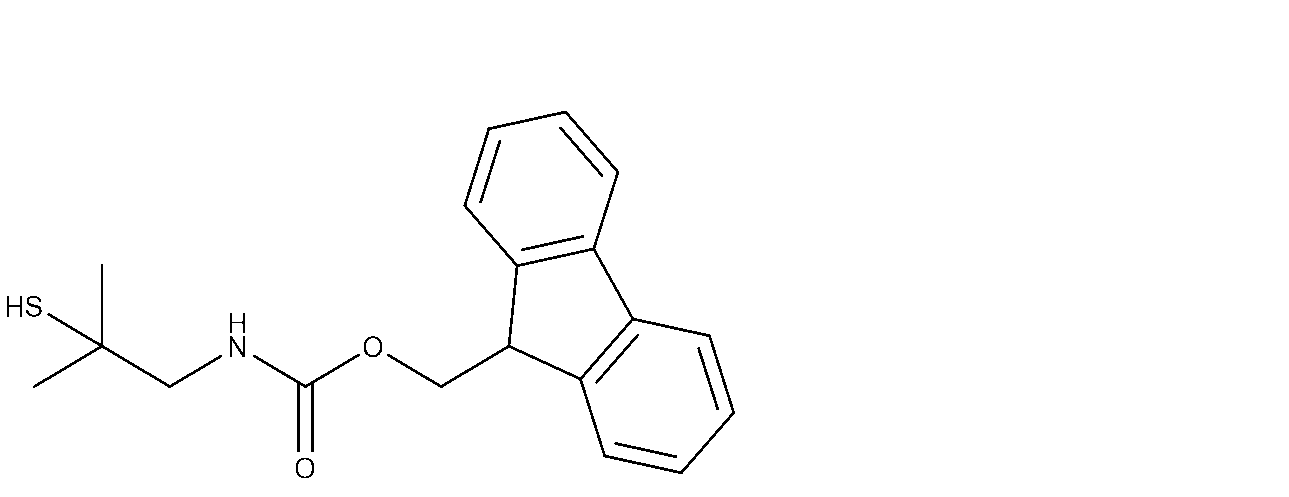
中間体V-1の合成

中間体V-2の合成

中間体VII-1の合成

中間体VII-2の合成
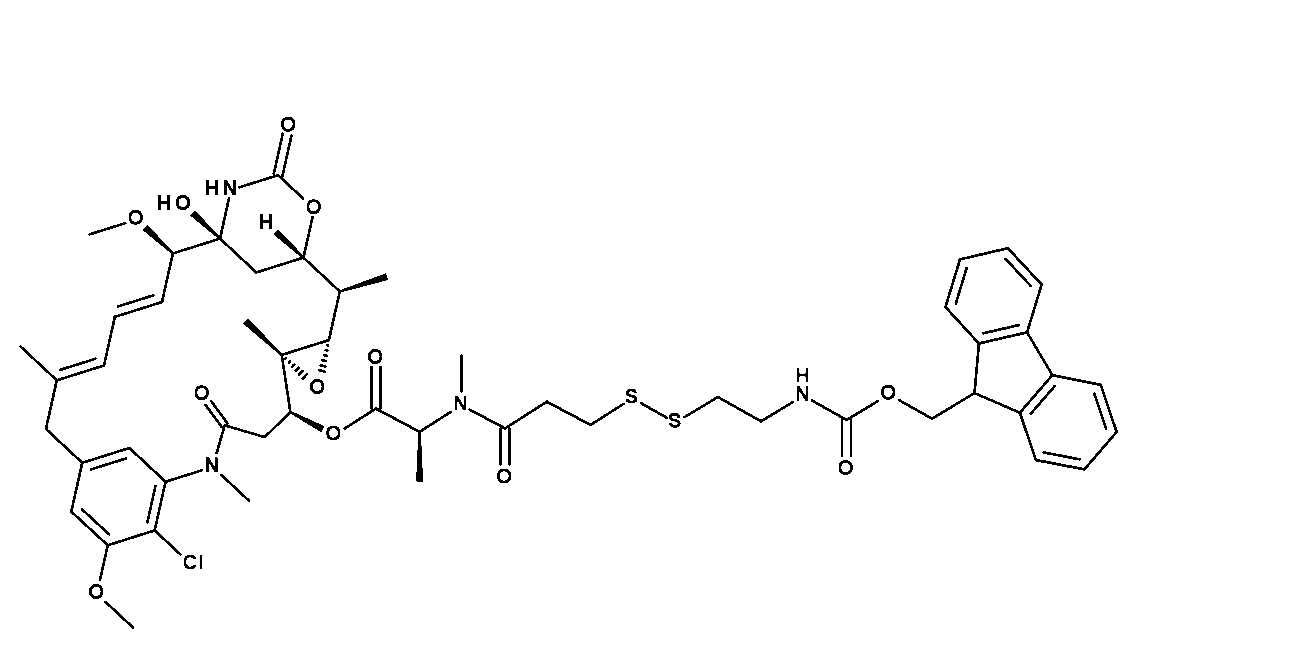
中間体VII-3の合成
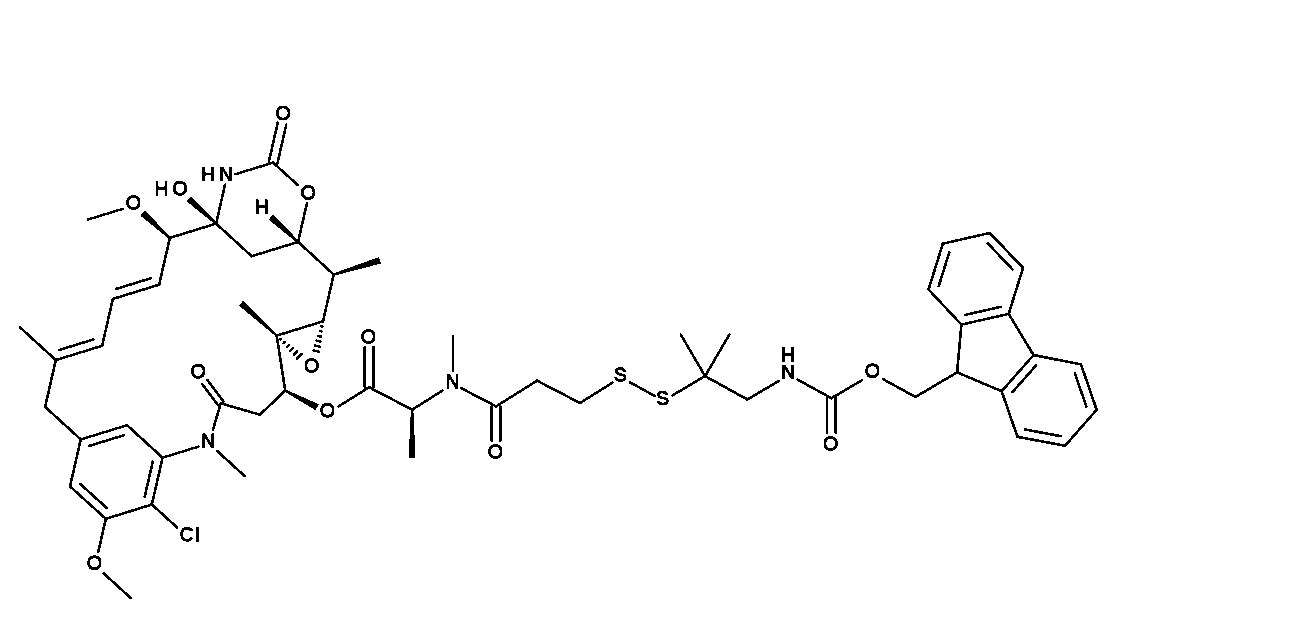
中間体VII-1の合成(BOC脱保護)

中間体VIII-1の代替合成(FMOC脱保護)
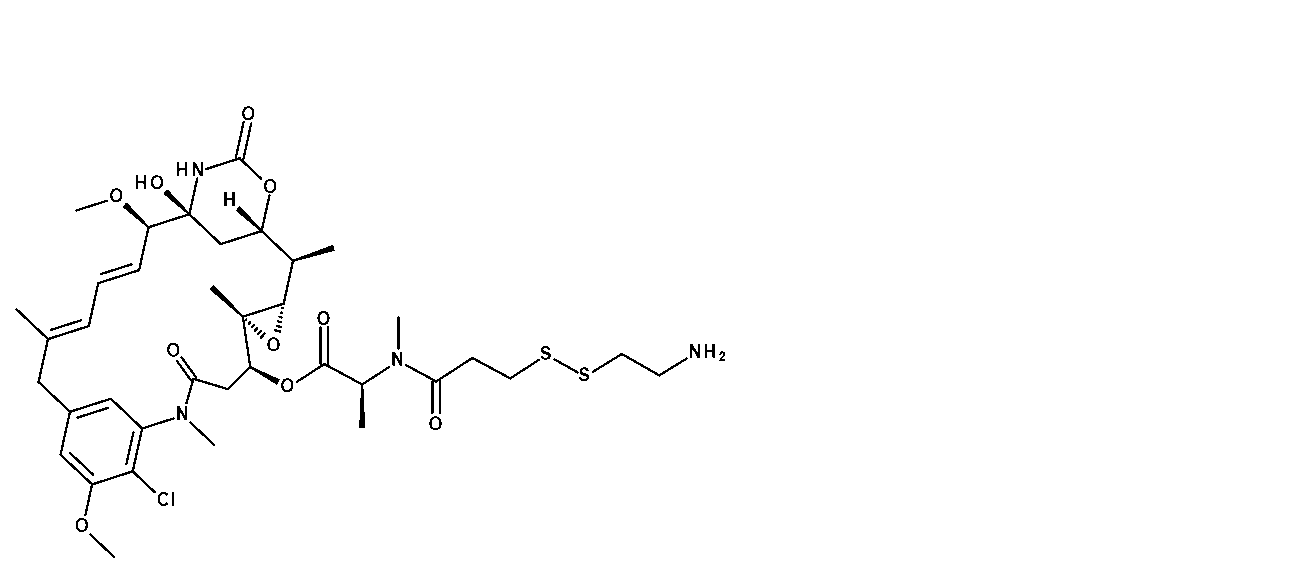
中間体VIII-2の合成

中間体X-1の合成

実施例2:化合物2の合成

実施例6:化合物6の合成

実施例9:化合物9の合成

化合物1、3、及び4は、それぞれPv1、Pv3、及びPv4を使用して、化合物2の化合物と同様に合成した。化合物5、7、及び8は、それぞれ中間体II-1、II-3、及びII-6を使用して、化合物6と同様に合成した。

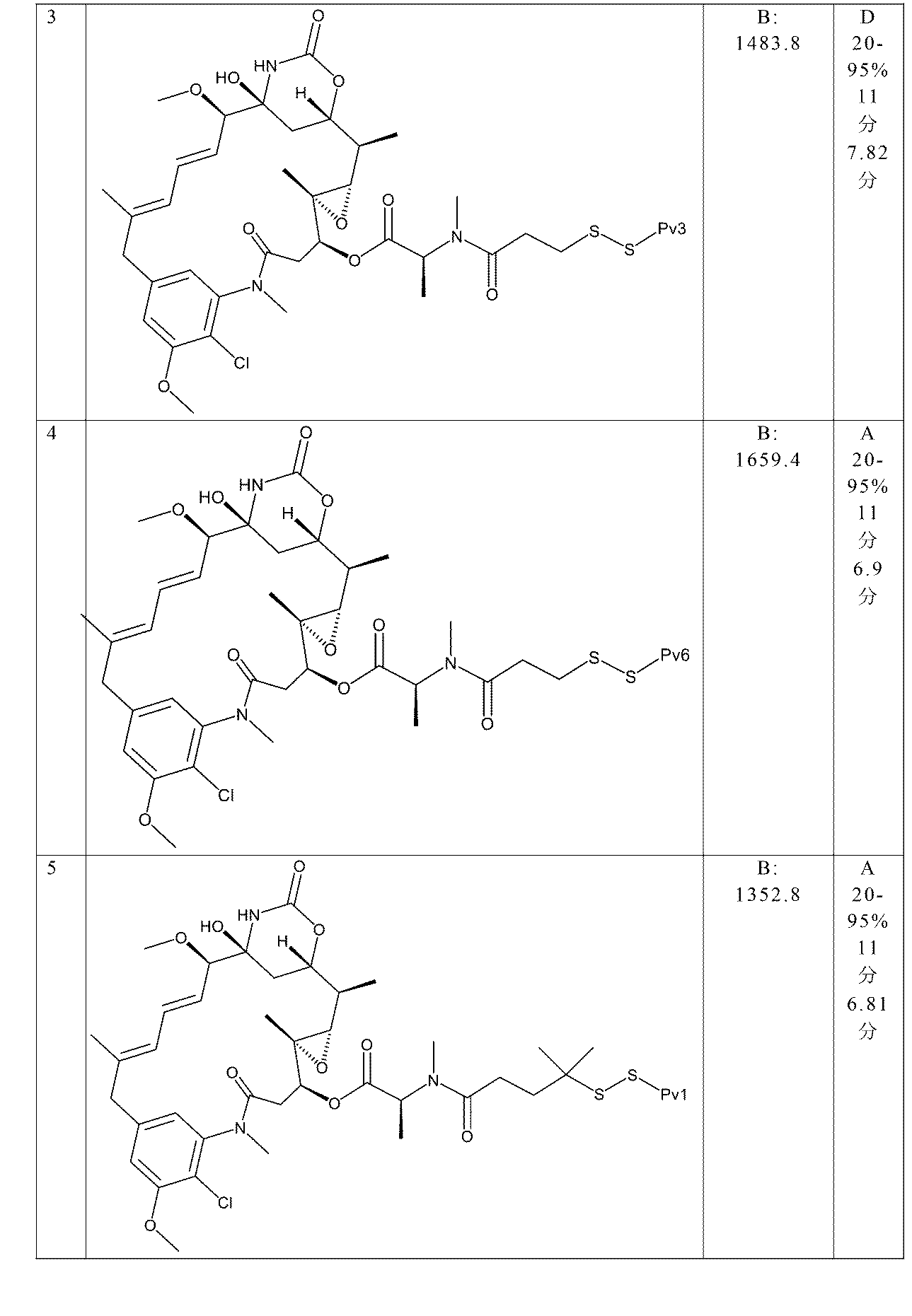


実施例5:化合物5の詳細な合成
3mLの2:1CH3CN/H2O中のPv1(50.0mg、1.48e-5mоl)及び[(1S,2R,3S,6S,16E,18E,20R,21S)-11-クロロ-21-ヒドロキシ-12,20-ジメトキシ-2,5,9,16-テトラメチル-8,23-ジオキソ-4,24-ジオキサ-9,22-ジアザテトラシクロ[19.3.1.110,14.03,5]ヘキサコサ-10,12,14(26),16,18-ペンタエン-6-イル](2S)-2-[メチル-(4-メチル-4-スルファニル-ペンタノイル)アミノ]プロパノエート(0.0150g、1.92e-5mоl)に、N-メチルモルホリン(0.0600mL、0.000546mоl)を加えた。混合物を36時間撹拌した。LC-MS分析は、所望の物質の形成を示した。混合物をGilson分取HPLC(Sunfire C18 30×150mm;20~80%CH3CN/H2O w/0.05%TFA、16分間実行、13.5分)で精製して、目的のコンジュゲートを得た。混合物をGilson分取HPLC(Sunfire C18 30×150mm;20~72%CH3CN/H2O w/0.05%TFA、15分間実行、12.5分;保持時間:6.847分)で精製して、化合物5(0.0322g、7.94e-6mоl、収率:53.8%)を得た。ESI(m/z=3)1352.8。
Example 5: Detailed synthesis of
化合物5a:化合物5の代替合成
ステップ1:Pv1-S-ピリジルの調製
ペプチドPv1及び2,2’-ジピリジルジスルフィドをMeOHに溶解し、反応物を一晩撹拌した。LC-MSは、所望の生成物が形成されたことを示した。反応混合物を濃縮し、残留物をDMSOに取り、逆相カラムクロマトグラフィー(40~75%ACN/H2O(0.5%AcOH)、15分)によって精製して、212mgの所望の生成物を得た。
Compound 5a: Alternative Synthesis of
ステップ2:化合物5の調製
Pv1-SPyr(25.0mg、736e-6mоl)及び[(1S,2R,3S,6S,16E,18E,20R,21S)-11-クロロ-21-ヒドロキシ-12,20-ジメトキシ-2,5,9,16-テトラメチル-8,23-ジオキソ-4,24-ジオキサ-9,22-ジアザテトラシクロ[19.3.1.110,14.03,5]ヘキサコサ-10,12,14(26),16,18-ペンタエン-6-イル](2S)-2-[メチル-(4-メチル-4-スルファニル-ペンタノイル)アミノ]プロパノエート(0.00864g、1.11e-5mоl)を含むバイアルに、1mLの脱気したDMF及び0.5mLの脱気したH2Oを加えた。これにCH3CO2H(0.017mL、0.000295mol)を加えた。混合物を72時間撹拌した。LC-MSは、所望の生成物の形成を示した。混合物をGilson分取HPLC(Sunfire C18 30×150mm;20~80CH3CN/H2Ow/0.5%AcOH、16分間実行、12.9分)で精製し、化合物5(0.00750g、1.85e-6mоl、収率:25.1%)を得た。
Step 2: Preparation of
実施例10:化合物10の合成


ステップ2:(14S,16S,32S,33S,2R,4S,10E,12E,14R)-86-クロロ-1+-ヒドロキシ-85,14-ジメトキシ-33,2,7,10-テトラメチル-12,6-ジオキソ-7-アザ-1(6,4)-オキサジナナ-3(2,3)-オキシラナ-8(1,3)-ベンゼナシクロテトラデカファン-10,12-ジエン-4-イルN-(4-((2-((2-アミノエチル)アミノ)-2-オキソエチル)チオ)-4-メチルペンタノイル)-N-メチル-L-アラニネート

ステップ3:(14S,16S,32S,33S,2R,4S,10E,12E,14R)-86-クロロ-14-ヒドロキシ-85,14-ジメトキシ-33,2,7,10-テトラメチル-12,6-ジオキソ-7-アザ-1(6,4)-オキサジナナ-3(2,3)-オキシラナ-8(1,3)-ベンゼナシクロテトラデカファン-10,12-ジエン-4-イル(2S,18S)-2,3,7,7-テトラメチル-4,10,15-トリオキソ-18-(ピリジン-2-イルジスルファネイル)-16-オキサ-8-チア-3,11,14-トリアザノナデカノエート
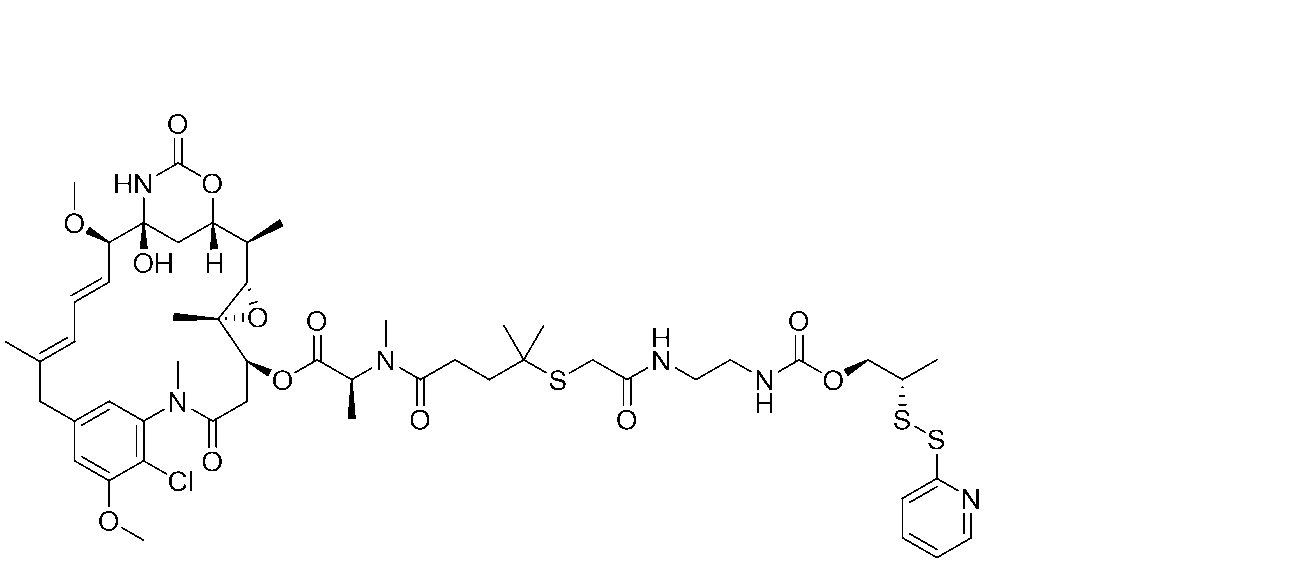
ステップ4:化合物10の合成
DMF(1mL)中の(14S,16S,32S,33S,2R,4S,10E,12E,14R)-86-クロロ-14-ヒドロキシ-85,14-ジメトキシ-33,2,7,10-テトラメチル-12,6-ジオキソ-7-アザ-1(6,4)-オキサジナナ-3(2,3)-オキシラナ-8(1,3)-ベンゼナシクロテトラデカファン-10,12-ジエン-4-イル(2S,18S)-2,3,7,7-テトラメチル-4,10,15-トリオキソ-18-(ピリジン-2-イルジスルファネイル)-16-オキサ-8-チア-3,11,14-トリアザノナデカノエート(17.7mg、0.0857mmоl)の溶液を重炭酸ナトリウム(1.8mg、0.0214mmоl)及び水(50mL)で処理した。得られた溶液をペプチドPv1(31.5mg、0.0899mmol)で処理し、室温で3時間撹拌した後、逆相カラムRediSep C18(15.5g)に適用し、酢酸アンモニウム(10mM)を含む水中のアセトニトリル(30%~70%)の勾配で溶出した。画分を組み合わせて凍結し、凍結乾燥して白色の固体として18.7mg(収率50%)の生成物を得た。254nmでのHPLC純度:99%。保持時間:6.49分(方法G)。LCMS:2138.0(M+2H)/2+,1425.3(M+3H)/3+。
Step 4: Synthesis of Compound 10 (1 4 S,1 6 S,3 2 S,3 3 S,2R,4S,10E,12E,14R)-8 6 -chloro-1 4 -hydroxy-8 5 ,14-dimethoxy-3 3 ,2,7,10-tetramethyl-1 2 A solution of 17.7 mg, 0.0857 mmol) of ,6-dioxo-7-aza-1(6,4)-oxazinana-3(2,3)-oxirana-8(1,3)-benzenacyclotetradecaphane-10,12-dien-4-yl(2S,18S)-2,3,7,7-tetramethyl-4,10,15-trioxo-18-(pyridin-2-yldisulfanayl)-16-oxa-8-thia-3,11,14-triazanonadecanoate was treated with sodium bicarbonate (1.8 mg, 0.0214 mmol) and water (50 mL). The resulting solution was treated with peptide Pv1 (31.5 mg, 0.0899 mmol) and stirred at room temperature for 3 h before being applied to a reversed-phase column RediSep C18 (15.5 g) and eluted with a gradient of acetonitrile (30%-70%) in water containing ammonium acetate (10 mM). Fractions were combined, frozen and lyophilized to give 18.7 mg (50% yield) of product as a white solid. HPLC purity at 254 nm: 99%. Retention time: 6.49 min (Method G). LCMS: 2138.0 (M+2H)/2 + , 1425.3 (M+3H)/3 + .
実施例11:化合物11の合成


ステップ2:化合物11の合成
(14S,16S,32S,33S,2R,4S,10E,12E,14R)-86-クロロ-14-ヒドロキシ-85,14-ジメトキシ-33,2,7,10-テトラメチル-12,6-ジオキソ-7-アザ-1(6,4)-オキサジナナ-3(2,3)-オキシラナ-8(1,3)-ベンゼナシクロテトラデカファン-10,12-ジエン-4-イルN-(4-((4-((2-(2,5-ジオキソ-2,5-ジヒドロ-1H-ピロール-1-イル)エチル)アミノ)-4-オキソブチル)ジスルファネイル)-4-メチルペンタノイル)-N-メチル-L-アラニネート(6mg、0.006mmоl)及びPv1ペプチド(22.3mg、0.006mmоl)の溶液をDMF(0.12mL)に溶解し、トリエチルアミン(0.001mL)で処理した。30分後、反応混合物をRediSEP C8(15.5g)カラムに直接ロードし、TFA(0.05%)を含む水中のアセトニトリル(35%~75%)の勾配で溶出して、16mg(収率64%)の表題化合物を得た。254nmでのHPLC純度:98%。保持時間:6.19分(方法G)。LCMS:2150.2(M+2H)/2+,1433.3(M+3H)/3+。
Step 2: Synthesis of compound 11 ( 14S ,16S, 32S , 33S , 2R ,4S , 10E,12E,14R) -86 -chloro- 14 -hydroxy- 85,14 -dimethoxy-33,2,7,10-tetramethyl- 12 A solution of ,6-dioxo-7-aza-1(6,4)-oxazinana-3(2,3)-oxirana-8(1,3)-benzenacyclotetradecaphane-10,12-dien-4-yl N-(4-((4-((2-(2,5-dioxo-2,5-dihydro-1H-pyrrol-1-yl)ethyl)amino)-4-oxobutyl)disulfanayl)-4-methylpentanoyl)-N-methyl-L-alaninate (6 mg, 0.006 mmol) and Pv1 peptide (22.3 mg, 0.006 mmol) was dissolved in DMF (0.12 mL) and treated with triethylamine (0.001 mL). After 30 min, the reaction mixture was directly loaded onto a RediSEP C8 (15.5 g) column and eluted with a gradient of acetonitrile (35% to 75%) in water containing TFA (0.05%) to give 16 mg (64% yield) of the title compound. HPLC purity at 254 nm: 98%. Retention time: 6.19 min (Method G). LCMS: 2150.2 (M+2H)/2 + , 1433.3 (M+3H)/3 + .
実施例12:化合物12の合成


ステップ2:化合物12の合成
(14S,16S,32S,33S,2R,4S,10E,12E,14R)-86-クロロ-14-ヒドロキシ-85,14-ジメトキシ-33,2,7,10-テトラメチル-12,6-ジオキソ-7-アザ-1(6,4)-オキサジナナ-3(2,3)-オキシラナ-8(1,3)-ベンゼナシクロテトラデカファン-10,12-ジエン-4-イル(S)-1-(2,5-ジオキソ-2,5-ジヒドロ-1H-ピロール-1-イル)-16,16,20,21-テトラメチル-10,19-ジオキソ-3,6-ジオキサ-14,15-ジチア-9,20-ジアザドコサン-22-オエート(15mg、0.014mmоl)及びPv1ペプチド(52mg、0.015mmоl)の溶液をDMF(0.28mL)に溶解し、トリエチルアミン(0.006mL)で処理した。30分後、反応混合物をRediSEP C8(15.5g)カラムに直接ロードし、TFA(0.05%)を含む水中のアセトニトリル(35%~60%)の勾配で溶出して、25mg(収率34%)を得た。254nmでのHPLC純度:98%。保持時間:6.26分(方法G)。LCMS:2194.0(M+2H)/2+,1463.0(M+3H)/3+。
Step 2: Synthesis of compound 12 ( 14S ,16S, 32S , 33S ,2R,4S,10E,12E , 14R) -86 -chloro- 14 -hydroxy- 85,14 -dimethoxy-33,2,7,10-tetramethyl - 12 A solution of 2,6-dioxo-7-aza-1(6,4)-oxazinana-3(2,3)-oxirana-8(1,3)-benzenacyclotetradecaphane-10,12-dien-4-yl(S)-1-(2,5-dioxo-2,5-dihydro-1H-pyrrol-1-yl)-16,16,20,21-tetramethyl-10,19-dioxo-3,6-dioxa-14,15-dithia-9,20-diazadocosane-22-oate (15 mg, 0.014 mmol) and Pv1 peptide (52 mg, 0.015 mmol) was dissolved in DMF (0.28 mL) and treated with triethylamine (0.006 mL). After 30 min, the reaction mixture was directly loaded onto a RediSEP C8 (15.5 g) column and eluted with a gradient of acetonitrile (35% to 60%) in water containing TFA (0.05%) to give 25 mg (34% yield). HPLC purity at 254 nm: 98%. Retention time: 6.26 min (Method G). LCMS: 2194.0 (M+2H)/2 + , 1463.0 (M+3H)/3 + .
実施例13:化合物13の合成


ステップ2:化合物13の合成
14S,16S,32S,33S,2R,4S,10E,12E,14R)-86-クロロ-14-ヒドロキシ-85,14-ジメトキシ-33,2,7,10-テトラメチル-12,6-ジオキソ-7-アザ-1(6,4)-オキサジナナ-3(2,3)-オキシラナ-8(1,3)-ベンゼナシクロテトラデカファン-10,12-ジエン-4-イル(S)-1-(2,5-ジオキソ-2,5-ジヒドロ-1H-ピロール-1-イル)-16,16,20,21-テトラメチル-10,19-ジオキソ-3,6-ジオキサ-14,15-ジチア-9,20-ジアザドコサン-22-オエート(18mg、0.017mmоl)及びPv1ペプチド(63mg、0.019mmоl)の溶液をDMF(0.34mL)に溶解し、トリエチルアミン(0.007mL)で処理した。30分後、反応混合物をRediSEP C8(15.5g)カラムに直接ロードし、TFA(0.05%)を含む水中のアセトニトリル(35%~60%)の勾配で溶出して、25mg(収率34%)の表題生成物を得た。254nmでのHPLC純度:99%。保持時間:6.24分(方法G)。LCMS:2172.0(M+2H)/2+,1448.7(M+3H)/3+。
Step 2: Synthesis of compound 13 (14S,16S,32S,33S,2R,4S,10E,12E,14R)-86-chloro-14-hydroxy-85,14-dimethoxy-33,2,7,10-tetramethyl-12,6-dioxo-7-aza-1(6,4)-oxazinana-3(2,3)-oxirana-8(1,3)-benzenacyclotetradecaphane-10,12-dien-4-yl(S)-1-(2,5-dioxo- A solution of 2,5-dihydro-1H-pyrrol-1-yl)-16,16,20,21-tetramethyl-10,19-dioxo-3,6-dioxa-14,15-dithia-9,20-diazadocosane-22-oate (18 mg, 0.017 mmol) and Pv1 peptide (63 mg, 0.019 mmol) was dissolved in DMF (0.34 mL) and treated with triethylamine (0.007 mL). After 30 min, the reaction mixture was loaded directly onto a RediSEP C8 (15.5 g) column and eluted with a gradient of acetonitrile (35%-60%) in water containing TFA (0.05%) to give 25 mg (34% yield) of the title product. HPLC purity at 254 nm: 99%. Retention time: 6.24 min (Method G). LCMS: 2172.0 (M+2H)/2 + , 1448.7 (M+3H)/3 + .
実施例14:化合物14の合成

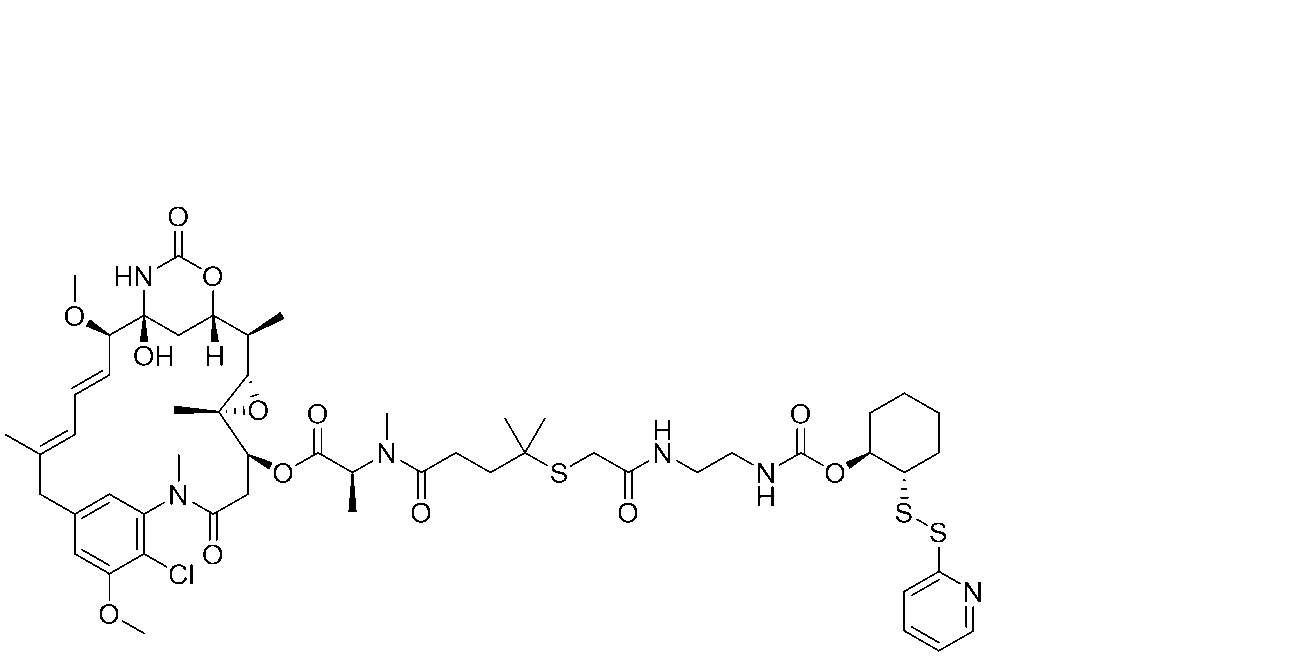
ステップ2:化合物14の合成
(14S,16S,32S,33S,2R,4S,10E,12E,14R)-86-クロロ-14-ヒドロキシ-85,14-ジメトキシ-33,2,7,10-テトラメチル-12,6-ジオキソ-7-アザ-1(6,4)-オキサジナナ-3(2,3)-オキシラナ-8(1,3)-ベンゼナシクロテトラデカファン-10,12-ジエン-4-イル(S)-9,9,13,14-テトラメチル-1,6,12-トリオキソ-1-(((1S,2S)-2-(ピリジン-2-イルジスルファネイル)シクロヘキシル)オキシ)-8-チア-2,5,13-トリアザペンタデカン-15-オエート(17mg、0.015mmоl)及びPv1ペプチド(47mg、0.013mmоl)の溶液をDMF(0.34mL)に溶解し、トリエチルアミン(0.007mL)で処理した。30分後、反応混合物をRediSEP C8(15.5g)カラムに直接ロードし、TFA(0.05%)を含む水中のアセトニトリル(35%~60%)の勾配で溶出して、28mg(収率37%)を得た。254nmでのHPLC純度:99%。保持時間:7.36分(方法G)。LCMS:2158.0(M+2H)/2+,1439.0(M+3H)/3+。
Step 2: Synthesis of compound 14 ( 14S ,16S, 32S , 33S ,2R,4S,10E,12E , 14R) -86 -chloro- 14 -hydroxy- 85,14 -dimethoxy-33,2,7,10-tetramethyl - 12 A solution of 1,6-dioxo-7-aza-1(6,4)-oxazinana-3(2,3)-oxirana-8(1,3)-benzenacyclotetradecaphane-10,12-dien-4-yl(S)-9,9,13,14-tetramethyl-1,6,12-trioxo-1-(((1S,2S)-2-(pyridin-2-yldisulfanayl)cyclohexyl)oxy)-8-thia-2,5,13-triazapentadecane-15-oate (17 mg, 0.015 mmol) and Pv1 peptide (47 mg, 0.013 mmol) was dissolved in DMF (0.34 mL) and treated with triethylamine (0.007 mL). After 30 min, the reaction mixture was directly loaded onto a RediSEP C8 (15.5 g) column and eluted with a gradient of acetonitrile (35% to 60%) in water containing TFA (0.05%) to give 28 mg (37% yield). HPLC purity at 254 nm: 99%. Retention time: 7.36 min (Method G). LCMS: 2158.0 (M+2H)/2 + , 1439.0 (M+3H)/3 + .
実施例15:化合物15の合成

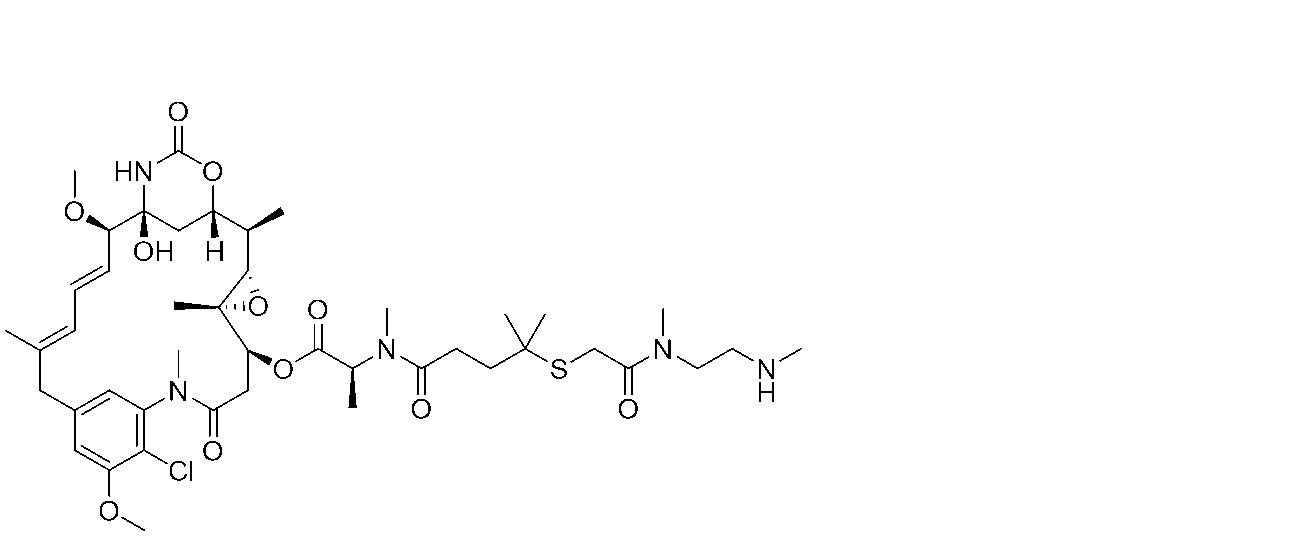
ステップ2:(14S,16S,32S,33S,2R,4S,10E,12E,14R)-86-クロロ-14-ヒドロキシ-85,14-ジメトキシ-33,2,7,10-テトラメチル-12,6-ジオキソ-7-アザ-1(6,4)-オキサジナナ-3(2,3)-オキシラナ-8(1,3)-ベンゼナシクロテトラデカファン-10,12-ジエン-4-イル(S)-2,5,9,9,13,14-ヘキサメチル-1,6,12-トリオキソ-1-(((1S,2S)-2-(ピリジン-2-イルジスルファネイル)シクロヘキシル)オキシ)-8-チア-2,5,13-トリアザペンタデカン-15-オエート

ステップ3:化合物15の合成
(14S,16S,32S,33S,2R,4S,10E,12E,14R)-86-クロロ-14-ヒドロキシ-85,14-ジメトキシ-33,2,7,10-テトラメチル-12,6-ジオキソ-7-アザ-1(6,4)-オキサジナナ-3(2,3)-オキシラナ-8(1,3)-ベンゼナシクロテトラデカファン-10,12-ジエン-4-イル(S)-2,5,9,9,13,14-ヘキサメチル-1,6,12-トリオキソ-1-(((1S,2S)-2-(ピリジン-2-イルジスルファネイル)シクロヘキシル)オキシ)-8-チア-2,5,13-トリアザペンタデカン-15-オエート(16mg、0.014mmоl)及びPv1ペプチド(52mg、0.015mmоl)の溶液をDMF(0.28mL)に溶解し、トリエチルアミン(0.008mL)で処理した。30分後、反応混合物をRediSEP C8(15.5g)カラムに直接ロードし、TFA(0.05%)を含む水中のアセトニトリル(35%~60%)の勾配で溶出して、32mg(収率44%)の表題生成物を得た。254nmでのHPLC純度:99%。保持時間:6.86分(方法G)。LCMS:2172.0(M+2H)/2+,1448.4(M+3H)/3+。
Step 3: Synthesis of compound 15 ( 14S , 16S ,32S, 33S , 2R ,4S , 10E,12E,14R) -86 -chloro- 14 -hydroxy- 85,14 -dimethoxy-33,2,7,10-tetramethyl- 12 A solution of 1,6-dioxo-7-aza-1(6,4)-oxazinana-3(2,3)-oxirana-8(1,3)-benzenacyclotetradecaphane-10,12-dien-4-yl(S)-2,5,9,9,13,14-hexamethyl-1,6,12-trioxo-1-(((1S,2S)-2-(pyridin-2-yldisulfanayl)cyclohexyl)oxy)-8-thia-2,5,13-triazapentadecane-15-oate (16 mg, 0.014 mmol) and Pv1 peptide (52 mg, 0.015 mmol) was dissolved in DMF (0.28 mL) and treated with triethylamine (0.008 mL). After 30 min, the reaction mixture was directly loaded onto a RediSEP C8 (15.5 g) column and eluted with a gradient of acetonitrile (35% to 60%) in water containing TFA (0.05%) to give 32 mg (44% yield) of the title product. HPLC purity at 254 nm: 99%. Retention time: 6.86 min (Method G). LCMS: 2172.0 (M+2H)/2 + , 1448.4 (M+3H)/3 + .
実施例16:化合物16の合成


ステップ2:4-ニトロフェニル(4-((5-ニトロピリジン-2-イル)ジスルファネイル)ベンジル)カーボネート

ステップ3:(14S,16S,32S,33S,2R,4S,10E,12E,14R)-86-クロロ-14-ヒドロキシ-85,14-ジメトキシ-33,2,7,10-テトラメチル-12,6-ジオキソ-7-アザ-1(6,4)-オキサジナナ-3(2,3)-オキシラナ-8(1,3)-ベンゼナシクロテトラデカファン-10,12-ジエン-4-イル(S)-11,11,15,16-テトラメチル-1-(4-((5-ニトロピリジン-2-イル)ジスルファネイル)フェニル)-3,8,14-トリオキソ-2-オキサ-10-チア-4,7,15-トリアザヘプタデカン-17-オエート

ステップ4:化合物16の合成
DMF(1mL)中の(14S,16S,32S,33S,2R,4S,10E,12E,14R)-86-クロロ-14-ヒドロキシ-85,14-ジメトキシ-33,2,7,10-テトラメチル-12,6-ジオキソ-7-アザ-1(6,4)-オキサジナナ-3(2,3)-オキシラナ-8(1,3)-ベンゼナシクロテトラデカファン-10,12-ジエン-4-イル(S)-11,11,15,16-テトラメチル-1-(4-((5-ニトロピリジン-2-イル)ジスルファネイル)フェニル)-3,8,14-トリオキソ-2-オキサ-10-チア-4,7,15-トリアザヘプタデカン-17-オエート(10.3mg、0.00857mmоl)の溶液を重炭酸ナトリウム(1.8mg、0.0214mmоl)及び水(50mL)で処理した。得られた溶液をペプチドPv1(31.5mg、0.0899mmol)で処理し、室温で3時間撹拌した後、逆相カラムRediSep C18(15.5g)に適用し、酢酸アンモニウム(10mM)を含む水中のアセトニトリル(30%~70%)の勾配で溶出した。画分を組み合わせて凍結し、凍結乾燥して白色の固体として18.7mg(収率50%)の生成物を得た。254nmでのHPLC純度:99%。保持時間:6.63分(方法G)。MSデータ,2162.4(M+2H)/2+,1441.8(M+3H)/3+,1082.6(M+4H)/4+,1435.7(M+3H-H2O)/3+。
Step 4: Synthesis of compound 16 (14S,16S,32S,33S,2R,4S,10E,12E,14R)-86-chloro-14-hydroxy-85,14-dimethoxy-33,2,7,10-tetramethyl-12,6-dioxo-7-aza-1(6,4)-oxazinana-3(2,3)-oxirana-8(1,3)-benzenacyclotetradecaphane-10,12-dien-4-yl(S A solution of 1-(4-((5-nitropyridin-2-yl)disulfanayl)phenyl)-3,8,14-trioxo-2-oxa-10-thia-4,7,15-triazaheptadecan-17-oate (10.3 mg, 0.00857 mmol) was treated with sodium bicarbonate (1.8 mg, 0.0214 mmol) and water (50 mL). The resulting solution was treated with peptide Pv1 (31.5 mg, 0.0899 mmol) and stirred at room temperature for 3 h before being applied to a reverse phase column RediSep C18 (15.5 g) and eluted with a gradient of acetonitrile (30% to 70%) in water containing ammonium acetate (10 mM). The fractions were combined, frozen, and lyophilized to give 18.7 mg (50% yield) of product as a white solid. HPLC purity at 254 nm: 99%. Retention time: 6.63 minutes (Method G). MS data, 2162.4 (M+2H)/2 + , 1441.8 (M+3H)/3 + , 1082.6 (M+4H)/4 + , 1435.7 (M+3H-H 2 O)/3 + .
実施例A:成長遅延アッセイ
細胞を96ウェルの黒い壁の透明な底板(Griener)に、ウェルあたり2500個のDLD-1 WT細胞、ウェルあたり5000個のFaDu及びHeLa細胞、ウェルあたり3000個のHCT116で、10%FBS含有増殖培地にプレーティングした。細胞を室温で60分間接着させた後、37℃の5%CO2インキュベーターに戻した。24時間後、培地を除去し、様々な薬物濃度を含む新鮮な増殖培地で置き換えた。各薬物濃度を3回加えた。薬物で処理されていない対照には、増殖培地のみが含まれていた。細胞をインキュベーターに戻した。薬物添加の96時間後、細胞を4%パラホルムアルデヒドで20分間固定し、1μg/mLのヘキストで染色した。プレートをCytation5オートイメージャー(BioTek)で画像化し、CellProfiler(http://cellprofiler.org)を使用して細胞をカウントした。細胞増殖遅延パーセントが計算され、GraphPadPrismを使用してデータがプロットされた。
Example A: Growth Retardation Assay Cells were plated in 96-well black-walled clear bottom plates (Griener) at 2500 DLD-1 WT cells per well, 5000 FaDu and HeLa cells per well, and 3000 HCT116 cells per well in growth medium containing 10% FBS. Cells were allowed to attach for 60 minutes at room temperature and then returned to a 37°

実施例B:インビトロチューブリン重合への効果
蛍光ベースのチューブリン重合アッセイ(細胞骨格カタログ番号BK011P)を実行して、インビトロチューブリン重合に対する非結合DM4及び化合物5の影響を定量化した。DM4及び化合物5は、DMSOで10mMのストックとして調製し、DMSOの最終濃度が0.2%になるように、超純水で10Xから200、50、及び5μMに希釈した。キット試薬を急速に解凍し、早期重合を防ぐために氷上で冷たく保った。チューブリン反応混合物は、精製ブタ脳チューブリン、GTP、及びグリセロール緩衝液をすべて1Xキット緩衝液で混合し、最終濃度が2mg/mLチューブリン、1mM GTP、及び15%グリセロールになるように氷上で調製した。5μLのDM4、化合物5、またはDMSO対照を、事前に温めた黒色のハーフウェル反応プレートに37℃で1分以内で加え、蒸発させないように温めた。50μLのチューブリン反応混合物を各ウェルに迅速に添加し、すぐに事前に温めたCytation 5イメージングリーダー(BioTek)に入れた。動的読み取りは、360励起/450発光で37℃で2時間実行され、重合が発生するときに蛍光レポーターが微小管に組み込まれることによる蛍光の増強を追跡するために、2.5分ごとに読み取りが行われた。
Example B: Effects on in vitro tubulin polymerization A fluorescence-based tubulin polymerization assay (Cytoskeleton Catalog No. BK011P) was performed to quantify the effects of unbound DM4 and
図1は、0.5μM、5μM、及び20μMでのインビトロβ-チューブリン重合(相対蛍光単位において)に対する遊離DM4及び化合物5の効果のプロットを示している。
Figure 1 shows plots of the effect of free DM4 and
実施例C:コンジュゲート結合の動的分析
結合実験は、BiacoreS200機器を使用して実行された。ストレプトアビジンが予め固定化されたシリーズSセンサーチップは、50mM NaOH中の1M NaClでコンディショニングされた。HeLa細胞に由来するビオチン標識ヒトチューブリンを、HBS-P+緩衝液中125μg/mLの濃度で10μl/分の流量でセンサーチップに固定化した。タンパク質の最後の3000RU(応答ユニット)をチップに直接固定した。チューブリンを固定化した後、センサーチップを50%イソプロパノール、50mM NaOH、及び1M NaClで洗浄し、続いてアッセイ緩衝液で4時間平衡化した。ストレプトアビジン-ビオチンキャプチャーブランク(リファレンスFC)を使用して、非特異的結合をモニターした。
Example C: Kinetic analysis of conjugate binding Binding experiments were performed using a Biacore S200 instrument. Series S sensor chips with pre-immobilized streptavidin were conditioned with 1 M NaCl in 50 mM NaOH. Biotin-labeled human tubulin from HeLa cells was immobilized on the sensor chip at a concentration of 125 μg/mL in HBS-P+ buffer at a flow rate of 10 μl/min. The final 3000 RU (response units) of protein were immobilized directly on the chip. After immobilization of tubulin, the sensor chip was washed with 50% isopropanol, 50 mM NaOH, and 1 M NaCl, followed by equilibration with assay buffer for 4 hours. A streptavidin-biotin capture blank (reference FC) was used to monitor non-specific binding.
動的結合データを収集するために、アッセイ緩衝液で希釈した化合物5を、100μMから0.048μM及び50μMから0.024μMの範囲の濃度で、60μL/分の流量及び25℃の温度でフローセルに注入した。複合体を60秒間解離させた。チューブリンへの化合物の結合をリアルタイムでモニターして、オン(Ka)及びオフ(Koff)率を取得した。親和定数(KD)は、定常状態の動力学によって計算された。
To collect kinetic binding data,
図2は、ビアコア表面プラズモン共鳴によって決定された、インビトロでのβ-チューブリンへの化合物5の結合の動的分析を示している。化合物5は、遊離DM4(3.55μM)と同様のKDでβ-チューブリンに結合でき、遊離DM4と比較してオン/オフ速度が遅くなる。
Figure 2 shows the kinetic analysis of the binding of
実施例D:マウス結腸直腸癌モデルにおける化合物5の有効性
6週齢のメスの無胸腺ヌードFoxnnuマウスは、Taconic Labs(カタログ番号NCRNU-F)から入手し、使い捨てケージシステムのAlphaDri寝具にケージごとに5匹収容した。結腸直腸癌に由来するヒトHCT116細胞を、フェノールレッドを含まないマトリゲルで1:1に希釈し、100μLで2.5x10⁶細胞の密度で各マウスの左脇腹に皮下移植した。異種移植片が100~200mm3の平均体積に達したとき、マウスをランダムに群分けをし、以下の表に詳述されているように処理した。マウスに、腹腔内(IP)投与量のビヒクル、または0.21、0.29、0.35、0.42μmоl/kgの化合物5(1.1、1.4、1、7、または2mg/kg化合物5に相当)もしくは0.42μmоl/kgの非抱合体型DM4(0.33mg/kgの非結合DM4に相当)を投与した。用量は、クエン酸緩衝液中の5%マンニトールで0.1mg/μLのDMSOストックを希釈することによって調製し、2回目と3回目の投与の間に2日間隔で12mL/kg(25gマウスあたり300μL)の量でQDX4を投与した。異種移植腫瘍はノギスで測定し、体積は楕円体体積の式:体積=π/6x(長さ)x(幅)2を使用して計算した。動物の体重は、腫瘍体積の評価と同時に測定した。動物は、死亡、腫瘍サイズが2000mm3を超える、または体重減少が20%を超える場合に研究から除外した。カプランマイヤー分析を使用して、死亡または研究からの除外に基づいて生存率を評価した。
Example D: Efficacy of
図3Aは、DM4または化合物5を投与されたHCT116結腸直腸側面腫瘍を有するヌードマウスにおける平均腫瘍体積のプロットを示している。
Figure 3A shows a plot of mean tumor volume in nude mice bearing HCT116 colorectal lateral tumors administered DM4 or
図3Bは、0日目と比較した、DM4または化合物5を投与されたHCT116結腸直腸側面腫瘍を有するヌードマウスの体重の変化率を示している。
Figure 3B shows the percent change in body weight of nude mice bearing HCT116 colorectal lateral tumors administered DM4 or
図4は、DM4または化合物5を投与されたHCT116結腸直腸側面腫瘍を有するヌードマウスのカプランマイヤープロットを示している。動物は、死亡、腫瘍サイズが2000mm3を超える、または体重減少が20%を超える場合に研究から除外した。遊離DM4は、投与後の期間中にDM4群の動物の半分の自然死を誘発した。図4に示すように、化合物5は、インビボで安全量のDM4を送達し、そうでなければ、遊離のDM4として投与された場合に全身毒性及び死をもたらす。
Figure 4 shows Kaplan-Meier plots of nude mice bearing HCT116 colorectal lateral tumors administered DM4 or
実施例E:マウス肺癌モデルにおける肺転移に対する化合物6の効果
マウス乳癌に由来し、近赤外蛍光タンパク質(iRFP)をトランスフェクトしたマウス4T1-iRFPがん細胞を、5%CO2の加湿雰囲気下で37℃で単層として培養した。移植の1及び3日前に細胞を継代し、細胞の生存率を維持するために必要に応じて培地を2~3日ごとに交換した。細胞が80%のコンフルエンシーを超えないようにした。移植の日に、細胞をトリプシン処理し、完全培地で洗浄し、1200rpmで5分間の遠心分離によってペレット化した。上澄みをデカントし、細胞を滅菌PBSで3回洗浄し、遠心分離によりペレット化した。最後の遠心分離中に、トリパンブルー排除を使用して生存率を決定した。細胞を滅菌PBSに再懸濁し、最終濃度を5x10⁵細胞/100μLにした。細胞は27ゲージの針で滅菌1ccツベルクリン注射器に引き込まれた。気泡を取り除き、余分な細胞混合物をコニカルチューブに戻し、各シリンジに100μLの注入量を残した。100μLの細胞を、6週齢のメスの無胸腺ヌードFoxnnuマウス(Taconic Labsカタログ番号NCRNU-F)の内側尾静脈に直接注入した。
Example E: Effect of Compound 6 on Lung Metastasis in a Mouse Lung Cancer Model Mouse 4T1-iRFP cancer cells, derived from mouse breast cancer and transfected with near-infrared fluorescent protein (iRFP), were cultured as monolayers at 37°C in a humidified atmosphere of 5% CO2 . Cells were passaged 1 and 3 days prior to implantation, and medium was changed every 2-3 days as needed to maintain cell viability. Cells were not allowed to exceed 80% confluency. On the day of implantation, cells were trypsinized, washed with complete medium, and pelleted by centrifugation at 1200 rpm for 5 minutes. The supernatant was decanted, and cells were washed 3 times with sterile PBS and pelleted by centrifugation. During the final centrifugation, viability was determined using trypan blue exclusion. Cells were resuspended in sterile PBS to a final concentration of 5x10⁵ cells/100 μL. Cells were drawn into a sterile 1 cc tuberculin syringe with a 27 gauge needle. Air bubbles were removed and excess cell mixture was returned to the conical tube, leaving an injection volume of 100 μL in each syringe. 100 μL of cells were injected directly into the medial tail vein of 6 week old female athymic nude Foxn nu mice (Taconic Labs Cat# NCRNU-F).
細胞注射の3日後、マウスにビヒクルまたは2.5mg/kgの化合物6を1日1回、2日間腹腔内投与し、続いて2日間無治療し、続いて化合物6を単回投与し、合計化合物6を3回投与した。注射の11日後、マウスを安楽死させ、LI-COR PEARL Trilogy小動物イメージャーを使用して画像化のために肺を取り出し、肺転移を視覚化及び定量化し、腫瘍増殖に対する化合物の効果を評価した。 Three days after cell injection, mice were administered vehicle or 2.5 mg/kg compound 6 intraperitoneally once daily for 2 days, followed by 2 days of no treatment followed by a single dose of compound 6, for a total of 3 doses of compound 6. 11 days after injection, mice were euthanized and lungs were removed for imaging using a LI-COR PEARL Trilogy small animal imager to visualize and quantitate lung metastases and evaluate the effect of compounds on tumor growth.
図5Aは、尾静脈注射を介して4T1-RFP蛍光細胞を接種され、接種の11日後及びビヒクルまたは化合物6の3回の投与後に画像化されたヌードマウスの腹側像及び抽出された肺を示している。 Figure 5A shows ventral views and extracted lungs of nude mice inoculated with 4T1-RFP fluorescent cells via tail vein injection and imaged 11 days after inoculation and after three doses of vehicle or compound 6.
図5Bは、ビヒクルまたは化合物6の3回の投与後の4T1-RFP接種マウスの抽出された肺からの蛍光シグナルのグラフを示している。 Figure 5B shows a graph of the fluorescent signal from extracted lungs of 4T1-RFP-inoculated mice after three doses of vehicle or compound 6.
本明細書に説明されるものに加えて、本発明の種々の修正は、前述の説明から当業者には明らかとなるであろう。かかる修正は、添付の特許請求の範囲内に入るようにも意図されている。本出願において引用されるすべての特許、特許出願、及び刊行物を含むが、これらに限定されない各参考文献は、参照によりその全体が本明細書に組み込まれる。
本発明は、以下の態様および実施態様を含む。
[項1]
式(I)

R1は、酸性または低酸素性マントルを有する細胞膜をわたってR2L-を選択的に送達することができるペプチドであり、
R2は、


Lは、

式中、
R3、R4、R5、R6、R7、R8、R9、及びR10はそれぞれ、独立して、H、C1-4アルキル、C1-4アルケニル、C6-10アリール、C3-10シクロアルキル、5~10員ヘテロアリール、4~10員ヘテロシクロアルキル、ハロ、CN、NO2、ORa1、SRa1、C(O)Rb1、C(O)NRc1Rd1、C(O)ORa1、OC(O)Rb1、OC(O)NRc1Rd1、NRc1Rd1、NRc1C(O)Rb1、NRc1C(O)ORa1、及びNRc1C(O)NRc1Rd1から選択され、ここで、前記C1-4アルキル、C1-4アルケニル、C6-10アリール、及び5~10員ヘテロアリールはそれぞれ、ハロ、CN、NO2、ORa1、SRa1、C(O)Rb1、C(O)NRc1Rd1、C(O)ORa1、OC(O)Rb1、OC(O)NRc1Rd1、NRc1Rd1、NRc1C(O)Rb1、NRc1C(O)ORa1、及びNRc1C(O)NRc1Rd1から独立して選択される1、2、または3置換基で置換されていてもよく、
または、R3及びR4は、それらが結合している炭素原子と共に、C3-14シクロアルキル基または4~14員ヘテロシクロアルキル基を形成し、それぞれ、C1-4アルキル、ハロ、CN、NO2、ORa1、SRa1、C(O)Rb1、C(O)NRc1Rd1、C(O)ORa1、OC(O)Rb1、OC(O)NRc1Rd1、NRc1Rd1、NRc1C(O)Rb1、NRc1C(O)ORa1、及びNRc1C(O)NRc1Rd1から独立して選択される1、2、または3置換基で置換されていてもよく、
または、R3及びR5は、それらが結合している炭素原子と共に、C3-14シクロアルキル基または4~14員ヘテロシクロアルキル基を形成し、それぞれ、C1-4アルキル、ハロ、CN、NO2、ORa1、SRa1、C(O)Rb1、C(O)NRc1Rd1、C(O)ORa1、OC(O)Rb1、OC(O)NRc1Rd1、NRc1Rd1、NRc1C(O)Rb1、NRc1C(O)ORa1、及びNRc1C(O)NRc1Rd1から独立して選択される1、2、または3置換基で置換されていてもよく、
または、R4及びR6が、それらが結合している炭素原子と共に、C3-14シクロアルキル基または4~14員ヘテロシクロアルキル基を形成し、それぞれ、C1-4アルキル、ハロ、CN、NO2、ORa1、SRa1、C(O)Rb1、C(O)NRc1Rd1、C(O)ORa1、OC(O)Rb1、OC(O)NRc1Rd1、NRc1Rd1、NRc1C(O)Rb1、NRc1C(O)ORa1、及びNRc1C(O)NRc1Rd1から独立して選択される1、2、または3置換基で置換されていてもよく、
または、R5及びR6は、それらが結合している炭素原子と共に、C3-14シクロアルキル基または4~14員ヘテロシクロアルキル基を形成し、それぞれ、C1-4アルキル、ハロ、CN、NO2、ORa1、SRa1、C(O)Rb1、C(O)NRc1Rd1、C(O)ORa1、OC(O)Rb1、OC(O)NRc1Rd1、NRc1Rd1、NRc1C(O)Rb1、NRc1C(O)ORa1、及びNRc1C(O)NRc1Rd1から独立して選択される1、2、または3置換基で置換されていてもよく、
または、R7及びR8は、それらが結合している炭素原子と共に、C3-14シクロアルキル基または4~14員ヘテロシクロアルキル基を形成し、それぞれ、C1-4アルキル、ハロ、CN、NO2、ORa1、SRa1、C(O)Rb1、C(O)NRc1Rd1、C(O)ORa1、OC(O)Rb1、OC(O)NRc1Rd1、NRc1Rd1、NRc1C(O)Rb1、NRc1C(O)ORa1、及びNRc1C(O)NRc1Rd1から独立して選択される1、2、または3置換基で置換されていてもよく、
または、R7及びR9が、それらが結合している炭素原子と共に、C3-14シクロアルキル基または4~14員ヘテロシクロアルキル基を形成し、それぞれ、C1-4アルキル、ハロ、CN、NO2、ORa1、SRa1、C(O)Rb1、C(O)NRc1Rd1、C(O)ORa1、OC(O)Rb1、OC(O)NRc1Rd1、NRc1Rd1、NRc1C(O)Rb1、NRc1C(O)ORa1、及びNRc1C(O)NRc1Rd1から独立して選択される1、2、または3置換基で置換されていてもよく、
または、R8及びR10は、それらが結合している炭素原子と共に、C3-14シクロアルキル基または4~14員ヘテロシクロアルキル基を形成し、それぞれ、C1-4アルキル、ハロ、CN、NO2、ORa1、SRa1、C(O)Rb1、C(O)NRc1Rd1、C(O)ORa1、OC(O)Rb1、OC(O)NRc1Rd1、NRc1Rd1、NRc1C(O)Rb1、NRc1C(O)ORa1、及びNRc1C(O)NRc1Rd1から独立して選択される1、2、または3置換基で置換されていてもよく、
または、R9及びR10は、それらが結合している炭素原子と共に、C3-14シクロアルキル基または4~14員ヘテロシクロアルキル基を形成し、それぞれ、C1-4アルキル、ハロ、CN、NO2、ORa1、SRa1、C(O)Rb1、C(O)NRc1Rd1、C(O)ORa1、OC(O)Rb1、OC(O)NRc1Rd1、NRc1Rd1、NRc1C(O)Rb1、NRc1C(O)ORa1、及びNRc1C(O)NRc1Rd1から独立して選択される1、2、または3置換基で置換されていてもよく、
Zは、C6-10アリールまたは5~10員ヘテロアリールであり、前記5~10員ヘテロアリールは、少なくとも1つの環形成炭素原子と、N、O、及びSから独立して選択された1、2、3、または4の環形成ヘテロ原子とを有し、前記C6-10アリールまたは5~10員ヘテロアリールはそれぞれ、C1-4アルキル、ハロ、CN、NO2、ORa1、SRa1、C(O)Rb1、C(O)NRc1Rd1、C(O)ORa1、OC(O)Rb1、OC(O)NRc1Rd1、NRc1Rd1、NRc1C(O)Rb1、NRc1C(O)ORa1、及びNRc1C(O)NRc1Rd1から独立して選択される1、2、または3置換基で置換されていてもよく、
Aは、HまたはC1-4アルキルであり、
Ra1、Rb1、Rc1、及びRd1はそれぞれ、独立して、H、C1-6アルキル、C2-6アルケニル、C2-6アルキニル、C1-6ハロアルキル、OH、CN、NO2、及びCO2CH3から選択され、ここで、前記C1-6アルキル及びC2-6アルケニルは、それぞれ、OH、CN、NO2、またはCO2CHで置換されていてもよく、及び
nは、0、1、または2である、前記化合物またはその薬学的に許容される塩。
[項2]
R1は、酸性または低酸素性マントルを有する細胞膜をわたってR2L-を選択的に送達することができるペプチドであり、
R2は、


Lは、

R3、R4、R5、R6、R7、R8、R9、及びR10はそれぞれ、独立して、H、C1-4アルキル、C1-4アルケニル、C6-10アリール、5~10員ヘテロアリール、ハロ、CN、NO2、ORa1、SRa1、C(O)Rb1、C(O)NRc1Rd1、C(O)ORa1、OC(O)Rb1、OC(O)NRc1Rd1、NRc1Rd1、NRc1C(O)Rb1、NRc1C(O)ORa1、及びNRc1C(O)NRc1Rd1から選択され、ここで、前記C1-4アルキル、C1-4アルケニル、C6-10アリール、及び5~10員ヘテロアリールはそれぞれ、ハロ、CN、NO2、ORa1、SRa1、C(O)Rb1、C(O)NRc1Rd1、C(O)ORa1、OC(O)Rb1、OC(O)NRc1Rd1、NRc1Rd1、NRc1C(O)Rb1、NRc1C(O)ORa1、及びNRc1C(O)NRc1Rd1から独立して選択される1、2、または3置換基で置換されていてもよく、
または、R3及びR4は、それらが結合している炭素原子と共に、ハロ、CN、NO2、ORa1、SRa1、C(O)Rb1、C(O)NRc1Rd1、C(O)ORa1、OC(O)Rb1、OC(O)NRc1Rd1、NRc1Rd1、NRc1C(O)Rb1、NRc1C(O)ORa1、及びNRc1C(O)NRc1Rd1から独立して選択される1、2、または3置換基で置換されていてもよいC3-7シクロアルキル基を形成し、
または、R3及びR5は、それらが結合している炭素原子と共に、ハロ、CN、NO2、ORa1、SRa1、C(O)Rb1、C(O)NRc1Rd1、C(O)ORa1、OC(O)Rb1、OC(O)NRc1Rd1、NRc1Rd1、NRc1C(O)Rb1、NRc1C(O)ORa1、及びNRc1C(O)NRc1Rd1から独立して選択される1、2、または3置換基で置換されていてもよいC3-7シクロアルキル基を形成し、
または、R4及びR6は、それらが結合している炭素原子と共に、ハロ、CN、NO2、ORa1、SRa1、C(O)Rb1、C(O)NRc1Rd1、C(O)ORa1、OC(O)Rb1、OC(O)NRc1Rd1、NRc1Rd1、NRc1C(O)Rb1、NRc1C(O)ORa1、及びNRc1C(O)NRc1Rd1から独立して選択される1、2、または3置換基で置換されていてもよいC3-7シクロアルキル基を形成し、
または、R5及びR6は、それらが結合している炭素原子と共に、ハロ、CN、NO2、ORa1、SRa1、C(O)Rb1、C(O)NRc1Rd1、C(O)ORa1、OC(O)Rb1、OC(O)NRc1Rd1、NRc1Rd1、NRc1C(O)Rb1、NRc1C(O)ORa1、及びNRc1C(O)NRc1Rd1から独立して選択される1、2、または3置換基で置換されていてもよいC3-7シクロアルキル基を形成し、
または、R7及びR8は、それらが結合している炭素原子と共に、ハロ、CN、NO2、ORa1、SRa1、C(O)Rb1、C(O)NRc1Rd1、C(O)ORa1、OC(O)Rb1、OC(O)NRc1Rd1、NRc1Rd1、NRc1C(O)Rb1、NRc1C(O)ORa1、及びNRc1C(O)NRc1Rd1から独立して選択される1、2、または3置換基で置換されていてもよいC3-7シクロアルキル基を形成し、
または、R7及びR9は、それらが結合している炭素原子と共に、ハロ、CN、NO2、ORa1、SRa1、C(O)Rb1、C(O)NRc1Rd1、C(O)ORa1、OC(O)Rb1、OC(O)NRc1Rd1、NRc1Rd1、NRc1C(O)Rb1、NRc1C(O)ORa1、及びNRc1C(O)NRc1Rd1から独立して選択される1、2、または3置換基で置換されていてもよいC3-7シクロアルキル基を形成し、
または、R8及びR10は、それらが結合している炭素原子と共に、ハロ、CN、NO2、ORa1、SRa1、C(O)Rb1、C(O)NRc1Rd1、C(O)ORa1、OC(O)Rb1、OC(O)NRc1Rd1、NRc1Rd1、NRc1C(O)Rb1、NRc1C(O)ORa1、及びNRc1C(O)NRc1Rd1から独立して選択される1、2、または3置換基で置換されていてもよいC3-7シクロアルキル基を形成し、
または、R9及びR10は、それらが結合している炭素原子と共に、ハロ、CN、NO2、ORa1、SRa1、C(O)Rb1、C(O)NRc1Rd1、C(O)ORa1、OC(O)Rb1、OC(O)NRc1Rd1、NRc1Rd1、NRc1C(O)Rb1、NRc1C(O)ORa1、及びNRc1C(O)NRc1Rd1から独立して選択される1、2、または3置換基で置換されていてもよいC3-7シクロアルキル基を形成し、
Aは、HまたはC1-4アルキルであり、及び
Ra1、Rb1、Rc1、及びRd1はそれぞれ、H、C1-6アルキル、C2-6アルケニル、C2-6アルキニル、C1-6ハロアルキル、OH、CN、NO2、及びCO2CH3から独立して選択され、ここで、前記C1-6アルキル及びC2-6アルケニルは、それぞれ、OH、CN、NO2、またはCO2CHで置換されていてもよい、項1に記載の化合物、またはその薬学的に許容される塩。
[項3]
前記R7が、約6.0未満のpHを有する酸性または低酸素性マントルを有する細胞膜を横切ってR2L-を選択的に送達することができるペプチドである、項1または2に記載の化合物、またはその薬学的に許容される塩。
[項4]
前記R7が、以下の配列
ADDQNPWRAYLDLLFPTDTLLLDLLWCG(配列番号1;Pv1)、
AEQNPIYWARYADWLFTTPLLLLDLALLVDADECG(配列番号2;Pv2)、及び
ADDQNPWRAYLDLLFPTDTLLLDLLWDADECG(配列番号3;Pv3)、及び
AAEQNPIYWWARYADWLFTTPLLLLDLALLVDADEGTCG(配列番号6;Pv6)のうちの少なくとも1つを含むペプチドであり、
ここで、前記R1が、R1のシステイン残基を介してLに結合している、項1または2に記載の化合物またはその薬学的に許容される塩。
[項5]
前記R1が、少なくとも以下の配列
ADDQNPWRAYLDLLFPTDTLLLDLLWCG(配列番号1;Pv1)、
AEQNPIYWARYADWLFTTPLLLLDLALLVDADECG(配列番号2;Pv2)
を含むペプチドである、項1または2に記載の化合物またはその薬学的に許容される塩。
[項6]
前記R1が、少なくとも以下の配列
AEQNPIYWARYADWLFTTPLLLLDLALLVDADECG(配列番号2、Pv2)
を含むペプチドである、項1または2に記載の化合物またはその薬学的に許容される塩。
[項7]
前記R1が、少なくとも以下の配列
ADDQNPWRAYLDLLFPTDTLLLDLLWDADECG(配列番号3;Pv3)
を含むペプチドである、項1または2に記載の化合物またはその薬学的に許容される塩。
[項8]
前記R1が、少なくとも以下の配列
AAEQNPIYWWARYADWLFTTPLLLLDLALLVDADEGTCG(配列番号6;Pv6)
を含むペプチドである、項1または2に記載の化合物またはその薬学的に許容される塩。
[項9]
前記R2が、

[項10]
前記R2が、

[項11]
前記R2が、

[項12]
前記R2が、

[項13]
前記Lが、

[項14]
前記Lが、

[項15]
前記Lが、

[項16]
前記Lが、

[項17]
前記Lが、

[項18]
前記Lが、

[項19]
前記R3、R4、R5、R6、R7、R8、R9、及びR10がそれぞれ独立して、H及びC1-4アルキルから選択される、項1~18のいずれか一項に記載の化合物またはその薬学的に許容される塩。
[項20]
前記R3、R4、R5、R6、R7、R8、R9、及びR10がそれぞれHである、項1~18のいずれか一項に記載の化合物またはその薬学的に許容される塩。
[項21]
前記AがHである、項1~20のいずれか一項に記載の化合物またはその薬学的に許容される塩。
[項22]
前記AがCH3である、項1~20のいずれか一項に記載の化合物またはその薬学的に許容される塩。
[項23]
前記Zがフェニルである、項1~22のいずれか一項に記載の化合物またはその薬学的に許容される塩。
[項24]
前記nが0である、項1~23のいずれか一項に記載の化合物またはその薬学的に許容される塩。
[項25]
前記nが1である、項1~23のいずれか一項に記載の化合物またはその薬学的に許容される塩。
[項26]
前記nが2である、項1~23のいずれか一項に記載の化合物またはその薬学的に許容される塩。
[項27]


[項28]


[項29]
項1~28のいずれか一項に記載の化合物またはその薬学的に許容される塩を含む医薬組成物。
[項30]
治療有効量の項1~28のいずれか一項に記載の化合物またはその医薬的に許容される塩を患者に投与することを含む、がんの治療を必要とする前記患者のがんを治療する方法。
[項31]
前記がんは、膀胱癌、骨癌、神経膠腫、乳癌、子宮頸癌、結腸癌、結腸直腸癌、子宮内膜癌、上皮癌、食道癌、ユーイング肉腫、膵臓癌、胆嚢癌、胃癌、胃腸腫瘍、頭頸部癌、腸癌、カポジ肉腫、腎臓癌、喉頭癌、肝臓癌、肺癌、メラノーマ、前立腺癌、直腸癌、腎明細胞癌、皮膚癌、胃癌、精巣癌、甲状腺癌、及び子宮癌から選択される、項30に記載の方法。
[項32]
前記がんが、肺癌、結腸直腸癌、及び胃癌から選択される、項30に記載の方法。
In addition to those described herein, various modifications of the present invention will become apparent to those skilled in the art from the foregoing description. Such modifications are also intended to fall within the scope of the appended claims. Each reference cited in this application, including but not limited to all patents, patent applications, and publications, is hereby incorporated by reference in its entirety.
The present invention includes the following aspects and embodiments.
[Item 1]
Formula (I)
R 1 is a peptide capable of selectively delivering R 2 L- across cell membranes having an acidic or hypoxic mantle;
R2 is
L is,
In the formula,
R 3 , R 4 , R 5 , R 6 , R 7 , R 8 , R 9 , and R 10 are each independently H, C 1-4 alkyl, C 1-4 alkenyl, C 6-10 aryl, C 3-10 cycloalkyl, 5-10 membered heteroaryl, 4-10 membered heterocycloalkyl, halo, CN, NO 2 , OR a1 , SR a1 , C(O)R b1 , C(O)NR c1 R d1 , C(O)OR a1 , OC(O)R b1 , OC(O)NR c1 R d1 , NR c1 R d1 , NR c1 C(O)R b1 , NR c1 C(O)OR a1 , and NR c1 C(O)NR c1 R d1 , wherein said C 1-4 alkyl, C 1-4 alkenyl, C 6-10 aryl, and 5-10 membered heteroaryl are each optionally substituted with 1, 2, or 3 substituents independently selected from halo, CN, NO 2 , OR a1 , SR a1 , C(O)R b1 , C(O)NR c1 R d1 , C(O)OR a1 , OC( O )R b1 , OC (O)NR c1 R d1 , NR c1 R d1 , NR c1 C(O)R b1 , NR c1 C(O)OR a1 , and NR c1 C(O)NR c1 R d1 ;
or R 3 and R 4 , together with the carbon atom to which they are attached, form a C 3-14 cycloalkyl group or a 4-14 membered heterocycloalkyl group, each optionally substituted with 1, 2, or 3 substituents independently selected from C 1-4 alkyl, halo, CN, NO 2 , OR a1 , SR a1 , C(O)R b1 , C(O)NR c1 R d1 , C(O)OR a1 , OC(O)R b1 , OC ( O)NR c1 R d1 , NR c1 R d1 , NR c1 C(O)R b1 , NR c1 C(O)OR a1 , and NR c1 C(O)NR c1 R d1 ;
or R 3 and R 5 , together with the carbon atom to which they are attached, form a C 3-14 cycloalkyl group or a 4-14 membered heterocycloalkyl group, each optionally substituted with 1, 2, or 3 substituents independently selected from C 1-4 alkyl, halo, CN, NO 2 , OR a1 , SR a1 , C(O)R b1 , C(O)NR c1 R d1 , C(O)OR a1 , OC(O)R b1 , OC ( O)NR c1 R d1 , NR c1 R d1 , NR c1 C(O)R b1 , NR c1 C(O)OR a1 , and NR c1 C(O)NR c1 R d1 ;
or R 4 and R 6 , together with the carbon atom to which they are attached, form a C 3-14 cycloalkyl group or a 4-14 membered heterocycloalkyl group, each optionally substituted with 1, 2 or 3 substituents independently selected from C 1-4 alkyl, halo, CN, NO 2 , OR a1 , SR a1 , C(O)R b1 , C(O)NR c1 R d1 , C(O)OR a1 , OC(O)R b1 , OC(O)NR c1 R d1 , NR c1 R d1 , NR c1 C(O)R b1 , NR c1 C(O)OR a1 and NR c1 C(O)NR c1 R d1 ;
or R 5 and R 6 , together with the carbon atom to which they are attached, form a C 3-14 cycloalkyl group or a 4-14 membered heterocycloalkyl group, each optionally substituted with 1, 2 or 3 substituents independently selected from C 1-4 alkyl, halo, CN, NO 2 , OR a1 , SR a1 , C(O)R b1 , C(O)NR c1 R d1 , C(O)OR a1 , OC(O)R b1 , OC(O)NR c1 R d1 , NR c1 R d1 , NR c1 C(O)R b1 , NR c1 C(O)OR a1 and NR c1 C(O)NR c1 R d1 ;
or R 7 and R 8 , together with the carbon atom to which they are attached, form a C 3-14 cycloalkyl group or a 4-14 membered heterocycloalkyl group, each optionally substituted with 1, 2, or 3 substituents independently selected from C 1-4 alkyl, halo, CN, NO 2 , OR a1 , SR a1 , C(O)R b1 , C(O)NR c1 R d1 , C(O)OR a1 , OC(O)R b1 , OC ( O)NR c1 R d1 , NR c1 R d1 , NR c1 C(O)R b1 , NR c1 C(O)OR a1 , and NR c1 C(O)NR c1 R d1 ;
or R 7 and R 9 , together with the carbon atom to which they are attached, form a C 3-14 cycloalkyl group or a 4-14 membered heterocycloalkyl group, each optionally substituted with 1, 2, or 3 substituents independently selected from C 1-4 alkyl, halo, CN, NO 2 , OR a1 , SR a1 , C(O)R b1 , C(O)NR c1 R d1 , C(O)OR a1 , OC(O)R b1 , OC ( O)NR c1 R d1 , NR c1 R d1 , NR c1 C(O)R b1 , NR c1 C(O)OR a1 , and NR c1 C(O)NR c1 R d1 ;
or R 8 and R 10 , together with the carbon atom to which they are attached, form a C 3-14 cycloalkyl group or a 4-14 membered heterocycloalkyl group, each optionally substituted with 1, 2, or 3 substituents independently selected from C 1-4 alkyl, halo, CN, NO 2 , OR a1 , SR a1 , C(O)R b1 , C(O)NR c1 R d1 , C(O)OR a1 , OC(O)R b1 , OC ( O)NR c1 R d1 , NR c1 R d1 , NR c1 C(O)R b1 , NR c1 C(O)OR a1 , and NR c1 C(O)NR c1 R d1 ;
or R 9 and R 10 , together with the carbon atom to which they are attached, form a C 3-14 cycloalkyl group or a 4-14 membered heterocycloalkyl group, each optionally substituted with 1, 2, or 3 substituents independently selected from C 1-4 alkyl, halo, CN, NO 2 , OR a1 , SR a1 , C(O)R b1 , C(O)NR c1 R d1 , C(O)OR a1 , OC(O)R b1 , OC ( O)NR c1 R d1 , NR c1 R d1 , NR c1 C(O)R b1 , NR c1 C(O)OR a1 , and NR c1 C(O)NR c1 R d1 ;
Z is a C 6-10 aryl or a 5-10 membered heteroaryl having at least one ring-forming carbon atom and 1, 2, 3, or 4 ring-forming heteroatoms independently selected from N, O, and S, and each of the C 6-10 aryl or 5-10 membered heteroaryl is selected from C 1-4 alkyl, halo, CN, NO 2 , OR a1 , SR a1 , C(O)R b1 , C(O)NR c1 R d1 , C(O)OR a1 , OC(O)R b1 , OC(O)NR c1 R d1 , NR c1 R d1 , NR c1 C(O)R b1 , NR c1 C(O) OR a1 , and NR c1 C(O)NR c1 R optionally substituted with 1, 2, or 3 substituents independently selected from d1 ;
A is H or C 1-4 alkyl;
R a1 , R b1 , R c1 and R d1 are each independently selected from H, C 1-6 alkyl, C 2-6 alkenyl, C 2-6 alkynyl, C 1-6 haloalkyl, OH, CN, NO 2 and CO 2 CH 3 , wherein said C 1-6 alkyl and C 2-6 alkenyl are optionally substituted with OH, CN, NO 2 or CO 2 CH, respectively, and n is 0, 1 or 2, or a pharma- ceutically acceptable salt thereof.
[Item 2]
R 1 is a peptide capable of selectively delivering R 2 L- across cell membranes having an acidic or hypoxic mantle;
R2 is
L is,
R 3 , R 4 , R 5 , R 6 , R 7 , R 8 , R 9 , and R 10 are each independently selected from H, C 1-4 alkyl, C 1-4 alkenyl, C 6-10 aryl, 5-10 membered heteroaryl, halo, CN, NO 2 , OR a1 , SR a1 , C(O)R b1 , C(O)NR c1 R d1 , C(O)OR a1 , OC(O)R b1 , OC(O)NR c1 R d1 , NR c1 R d1 , NR c1 C(O)R b1 , NR c1 C(O)OR a1 , and NR c1 C(O)NR c1 R d1 , each of the 1-4 alkyl, C 1-4 alkenyl, C 6-10 aryl, and 5-10 membered heteroaryl is optionally substituted by 1 , 2, or 3 substituents independently selected from halo, CN, NO 2 , OR a1 , SR a1 , C(O)R b1 , C(O)NR c1 R d1 , C(O)OR a1 , OC( O ) R b1 , OC(O)NR c1 R d1 , NR c1 R d1 , NR c1 C(O)R b1 , NR c1 C(O)OR a1 , and NR c1 C(O)NR c1 R d1;
or R 3 and R 4 together with the carbon atom to which they are attached form a C 3-7 cycloalkyl group optionally substituted with 1 , 2 or 3 substituents independently selected from halo, CN, NO 2 , OR a1 , SR a1 , C(O)R b1 , C(O)NR c1 R d1 , C(O)OR a1 , OC ( O)R b1 , OC(O)NR c1 R d1 , NR c1 R d1 , NR c1 C(O ) R b1 , NR c1 C(O)OR a1 and NR c1 C(O) NR c1 R d1;
or R 3 and R 5 together with the carbon atom to which they are attached form a C 3-7 cycloalkyl group optionally substituted with 1 , 2 or 3 substituents independently selected from halo, CN, NO 2 , OR a1 , SR a1 , C(O)R b1 , C(O)NR c1 R d1 , C(O)OR a1 , OC ( O)R b1 , OC(O)NR c1 R d1 , NR c1 R d1 , NR c1 C(O ) R b1 , NR c1 C(O)OR a1 and NR c1 C(O) NR c1 R d1;
or R 4 and R 6 together with the carbon atom to which they are attached form a C 3-7 cycloalkyl group optionally substituted by 1 , 2 or 3 substituents independently selected from halo, CN, NO 2 , OR a1 , SR a1 , C(O)R b1 , C(O)NR c1 R d1 , C(O)OR a1 , OC ( O)R b1 , OC(O)NR c1 R d1 , NR c1 R d1 , NR c1 C(O ) R b1 , NR c1 C(O)OR a1 and NR c1 C(O) NR c1 R d1;
or R 5 and R 6 together with the carbon atom to which they are attached form a C 3-7 cycloalkyl group optionally substituted with 1 , 2 or 3 substituents independently selected from halo, CN, NO 2 , OR a1 , SR a1 , C(O)R b1 , C(O)NR c1 R d1 , C(O)OR a1 , OC ( O)R b1 , OC(O)NR c1 R d1 , NR c1 R d1 , NR c1 C(O ) R b1 , NR c1 C(O)OR a1 and NR c1 C(O) NR c1 R d1;
or R 7 and R 8 together with the carbon atom to which they are attached form a C 3-7 cycloalkyl group optionally substituted with 1 , 2 or 3 substituents independently selected from halo, CN, NO 2 , OR a1 , SR a1 , C(O)R b1 , C(O)NR c1 R d1 , C(O)OR a1 , OC ( O)R b1 , OC(O)NR c1 R d1 , NR c1 R d1 , NR c1 C(O ) R b1 , NR c1 C(O)OR a1 and NR c1 C(O) NR c1 R d1;
or R 7 and R 9 together with the carbon atom to which they are attached form a C 3-7 cycloalkyl group optionally substituted by 1 , 2 or 3 substituents independently selected from halo, CN, NO 2 , OR a1 , SR a1 , C(O)R b1 , C(O)NR c1 R d1 , C(O)OR a1 , OC ( O)R b1 , OC(O)NR c1 R d1 , NR c1 R d1 , NR c1 C(O ) R b1 , NR c1 C(O)OR a1 and NR c1 C(O) NR c1 R d1;
or R 8 and R 10 together with the carbon atom to which they are attached form a C 3-7 cycloalkyl group optionally substituted by 1 , 2 or 3 substituents independently selected from halo, CN, NO 2 , OR a1 , SR a1 , C(O)R b1 , C(O)NR c1 R d1 , C(O)OR a1 , OC ( O)R b1 , OC(O)NR c1 R d1 , NR c1 R d1 , NR c1 C(O ) R b1 , NR c1 C(O)OR a1 and NR c1 C(O) NR c1 R d1;
or R 9 and R 10 together with the carbon atom to which they are attached form a C 3-7 cycloalkyl group optionally substituted by 1 , 2 or 3 substituents independently selected from halo, CN, NO 2 , OR a1 , SR a1 , C(O)R b1 , C(O)NR c1 R d1 , C(O)OR a1 , OC ( O)R b1 , OC(O)NR c1 R d1 , NR c1 R d1 , NR c1 C(O ) R b1 , NR c1 C(O)OR a1 and NR c1 C(O) NR c1 R d1;
[Item 3]
Item 3. The compound according to
[Item 4]
R7 is the following sequence: ADDQNPWRAYLDLLFPTDTLLLDLLWCG (SEQ ID NO: 1; Pv1);
A peptide comprising at least one of AEQNPIYWARYADWLFTTPLLLLDLALLVDADECG (SEQ ID NO:2; Pv2), ADDQNPWRAYLDLLFPTDTLLLDLLWDADECG (SEQ ID NO:3; Pv3), and AAEQNPIYWWARYADWLFTTPLLLLDLALLVDADEGTCG (SEQ ID NO:6; Pv6),
Item 3. The compound according to
[Item 5]
R1 comprises at least the following sequence: ADDQNPWRAYLDLLFPTDTLLLDLLWCG (SEQ ID NO: 1; Pv1);
AEQNPIYWARYADWLFTTPLLLLDLALLVDADECG (SEQ ID NO: 2; Pv2)
Item 3. The compound according to
[Item 6]
The R1 has at least the following sequence: AEQNPIYWARYADWLFTTPLLLLDLALLVDADECG (SEQ ID NO: 2, Pv2)
Item 3. The compound according to
[Item 7]
The R1 has at least the following sequence: ADDQNPWRAYLDLLFPTDTLLLDLLWDADECG (SEQ ID NO: 3; Pv3)
Item 3. The compound according to
[Item 8]
The R1 has at least the following sequence: AAEQNPIYWWARYADWLFTTPLLLLDLALLVDADEGTCG (SEQ ID NO: 6; Pv6)
Item 3. The compound according to
[Item 9]
The R2 is
[Item 10]
The R2 is
[Item 11]
The R2 is
[Item 12]
The R2 is
[Item 13]
The L is
[Item 14]
The L is
[Item 15]
The L is
[Item 16]
The L is
[Item 17]
The L is
[Item 18]
The L is
[Item 19]
Item 19. The compound according to any one of
[Item 20]
Item 19. The compound according to any one of
[Item 21]
Item 21. The compound according to any one of
[Item 22]
Item 21. The compound according to any one of
[Item 23]
Item 23. The compound according to any one of
[Item 24]
Item 24. The compound according to any one of
[Item 25]
Item 24. The compound according to any one of
[Item 26]
Item 24. The compound according to any one of
[Item 27]
[Item 28]
[Item 29]
Item 29. A pharmaceutical composition comprising the compound according to any one of
[Item 30]
A method for treating cancer in a patient in need of such treatment, comprising administering to the patient a therapeutically effective amount of the compound according to any one of
[Item 31]
31. The method of
[Item 32]
31. The method of
Claims (32)

R1は、以下の配列:
ADDQNPWRAYLDLLFPTDTLLLDLLWCG(配列番号1;Pv1)、
AEQNPIYWARYADWLFTTPLLLLDLALLVDADECG(配列番号2;Pv2)、
ADDQNPWRAYLDLLFPTDTLLLDLLWDADECG(配列番号3;Pv3)、及び
AAEQNPIYWWARYADWLFTTPLLLLDLALLVDADEGTCG(配列番号6;Pv6)のうちの少なくとも1つを含むペプチドであり、
ここで、R 1 が、R 1 のシステイン残基を介してLに結合しており、
R2は、
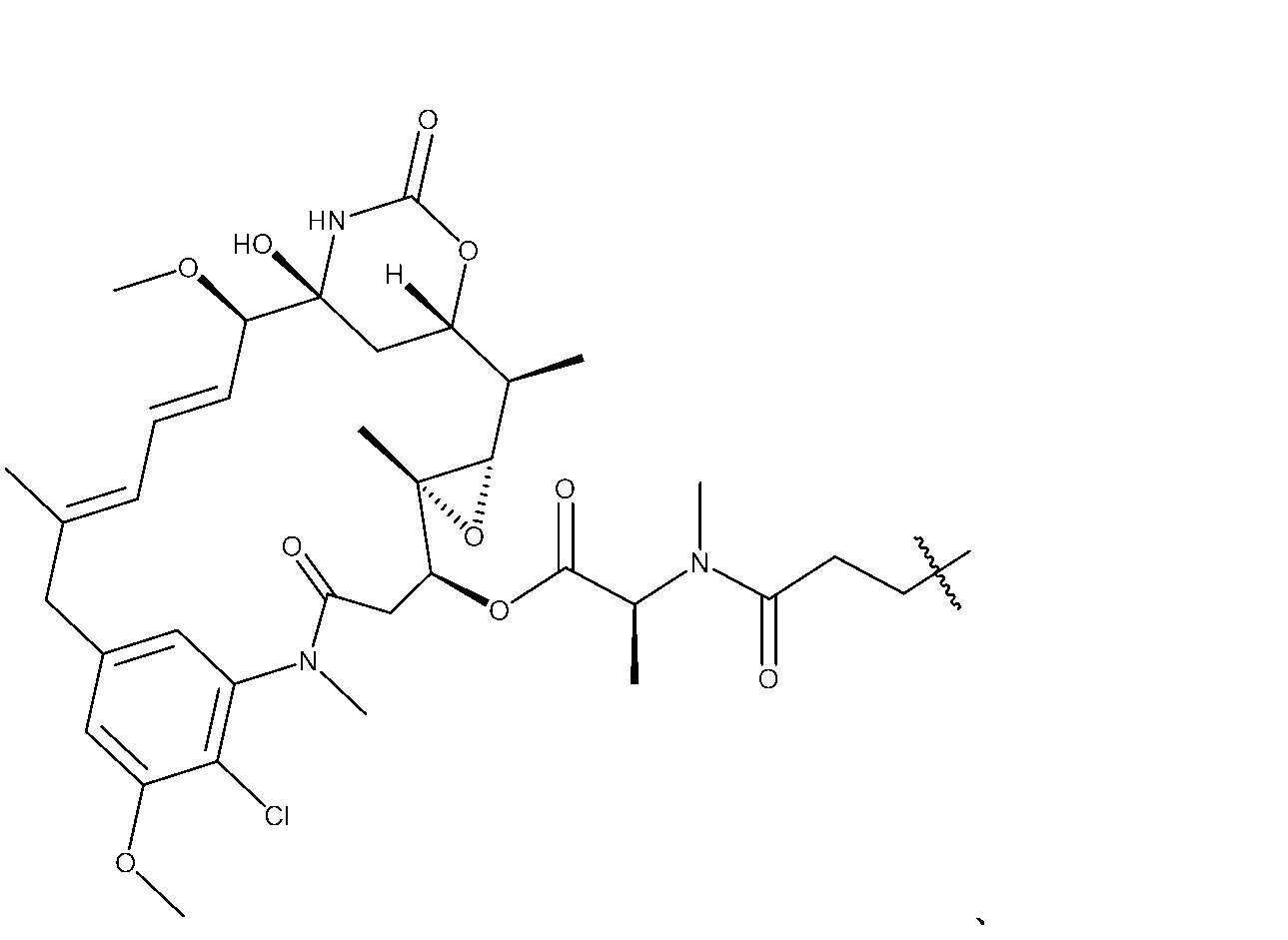


Lは、

式中、
R3、R4、R5、R6、R7、R8、R9、及びR10はそれぞれ、独立して、H、C1-4アルキル、C1-4アルケニル、C6-10アリール、C3-10シクロアルキル、5~10員ヘテロアリール、4~10員ヘテロシクロアルキル、ハロ、CN、NO2、ORa1、SRa1、C(O)Rb1、C(O)NRc1Rd1、C(O)ORa1、OC(O)Rb1、OC(O)NRc1Rd1、NRc1Rd1、NRc1C(O)Rb1、NRc1C(O)ORa1、及びNRc1C(O)NRc1Rd1から選択され、ここで、C1-4アルキル、C1-4アルケニル、C6-10アリール、及び5~10員ヘテロアリールはそれぞれ、ハロ、CN、NO2、ORa1、SRa1、C(O)Rb1、C(O)NRc1Rd1、C(O)ORa1、OC(O)Rb1、OC(O)NRc1Rd1、NRc1Rd1、NRc1C(O)Rb1、NRc1C(O)ORa1、及びNRc1C(O)NRc1Rd1から独立して選択される1、2、または3置換基で置換されていてもよく、
または、R3及びR4は、それらが結合している炭素原子と共に、C3-14シクロアルキル基または4~14員ヘテロシクロアルキル基を形成し、それぞれ、C1-4アルキル、ハロ、CN、NO2、ORa1、SRa1、C(O)Rb1、C(O)NRc1Rd1、C(O)ORa1、OC(O)Rb1、OC(O)NRc1Rd1、NRc1Rd1、NRc1C(O)Rb1、NRc1C(O)ORa1、及びNRc1C(O)NRc1Rd1から独立して選択される1、2、または3置換基で置換されていてもよく、
または、R3及びR5は、それらが結合している炭素原子と共に、C3-14シクロアルキル基または4~14員ヘテロシクロアルキル基を形成し、それぞれ、C1-4アルキル、ハロ、CN、NO2、ORa1、SRa1、C(O)Rb1、C(O)NRc1Rd1、C(O)ORa1、OC(O)Rb1、OC(O)NRc1Rd1、NRc1Rd1、NRc1C(O)Rb1、NRc1C(O)ORa1、及びNRc1C(O)NRc1Rd1から独立して選択される1、2、または3置換基で置換されていてもよく、
または、R4及びR6が、それらが結合している炭素原子と共に、C3-14シクロアルキル基または4~14員ヘテロシクロアルキル基を形成し、それぞれ、C1-4アルキル、ハロ、CN、NO2、ORa1、SRa1、C(O)Rb1、C(O)NRc1Rd1、C(O)ORa1、OC(O)Rb1、OC(O)NRc1Rd1、NRc1Rd1、NRc1C(O)Rb1、NRc1C(O)ORa1、及びNRc1C(O)NRc1Rd1から独立して選択される1、2、または3置換基で置換されていてもよく、
または、R5及びR6は、それらが結合している炭素原子と共に、C3-14シクロアルキル基または4~14員ヘテロシクロアルキル基を形成し、それぞれ、C1-4アルキル、ハロ、CN、NO2、ORa1、SRa1、C(O)Rb1、C(O)NRc1Rd1、C(O)ORa1、OC(O)Rb1、OC(O)NRc1Rd1、NRc1Rd1、NRc1C(O)Rb1、NRc1C(O)ORa1、及びNRc1C(O)NRc1Rd1から独立して選択される1、2、または3置換基で置換されていてもよく、
または、R7及びR8は、それらが結合している炭素原子と共に、C3-14シクロアルキル基または4~14員ヘテロシクロアルキル基を形成し、それぞれ、C1-4アルキル、ハロ、CN、NO2、ORa1、SRa1、C(O)Rb1、C(O)NRc1Rd1、C(O)ORa1、OC(O)Rb1、OC(O)NRc1Rd1、NRc1Rd1、NRc1C(O)Rb1、NRc1C(O)ORa1、及びNRc1C(O)NRc1Rd1から独立して選択される1、2、または3置換基で置換されていてもよく、
または、R7及びR9が、それらが結合している炭素原子と共に、C3-14シクロアルキル基または4~14員ヘテロシクロアルキル基を形成し、それぞれ、C1-4アルキル、ハロ、CN、NO2、ORa1、SRa1、C(O)Rb1、C(O)NRc1Rd1、C(O)ORa1、OC(O)Rb1、OC(O)NRc1Rd1、NRc1Rd1、NRc1C(O)Rb1、NRc1C(O)ORa1、及びNRc1C(O)NRc1Rd1から独立して選択される1、2、または3置換基で置換されていてもよく、
または、R8及びR10は、それらが結合している炭素原子と共に、C3-14シクロアルキル基または4~14員ヘテロシクロアルキル基を形成し、それぞれ、C1-4アルキル、ハロ、CN、NO2、ORa1、SRa1、C(O)Rb1、C(O)NRc1Rd1、C(O)ORa1、OC(O)Rb1、OC(O)NRc1Rd1、NRc1Rd1、NRc1C(O)Rb1、NRc1C(O)ORa1、及びNRc1C(O)NRc1Rd1から独立して選択される1、2、または3置換基で置換されていてもよく、
または、R9及びR10は、それらが結合している炭素原子と共に、C3-14シクロアルキル基または4~14員ヘテロシクロアルキル基を形成し、それぞれ、C1-4アルキル、ハロ、CN、NO2、ORa1、SRa1、C(O)Rb1、C(O)NRc1Rd1、C(O)ORa1、OC(O)Rb1、OC(O)NRc1Rd1、NRc1Rd1、NRc1C(O)Rb1、NRc1C(O)ORa1、及びNRc1C(O)NRc1Rd1から独立して選択される1、2、または3置換基で置換されていてもよく、
Zは、C6-10アリールまたは5~10員ヘテロアリールであり、5~10員ヘテロアリールは、少なくとも1つの環形成炭素原子と、N、O、及びSから独立して選択された1、2、3、または4の環形成ヘテロ原子とを有し、C6-10アリールまたは5~10員ヘテロアリールはそれぞれ、C1-4アルキル、ハロ、CN、NO2、ORa1、SRa1、C(O)Rb1、C(O)NRc1Rd1、C(O)ORa1、OC(O)Rb1、OC(O)NRc1Rd1、NRc1Rd1、NRc1C(O)Rb1、NRc1C(O)ORa1、及びNRc1C(O)NRc1Rd1から独立して選択される1、2、または3置換基で置換されていてもよく、
Aは、HまたはC1-4アルキルであり、
Ra1、Rb1、Rc1、及びRd1はそれぞれ、独立して、H、C1-6アルキル、C2-6アルケニル、C2-6アルキニル、C1-6ハロアルキル、OH、CN、NO2、及びCO2CH3から選択され、ここで、C1-6アルキル及びC2-6アルケニルは、それぞれ、OH、CN、NO2、またはCO2CHで置換されていてもよく、及び
nは、0、1、または2である、化合物またはその薬学的に許容される塩。 Formula (I)
R1 has the following sequence:
ADDQNPWRAYLDLLFPTDTLLLDLLWCG (SEQ ID NO:1; Pv1),
AEQNPIYWARYADWLFTTPLLLLDLALLVDADECG (SEQ ID NO: 2; Pv2),
ADDQNPWRAYLDLLFPTDTLLLDLLWDADECG (SEQ ID NO: 3; Pv3), and
AAEQNPIYWWARYADWLFTTPLLLLDLALLVDADEGTCG (SEQ ID NO: 6; Pv6),
wherein R1 is linked to L via a cysteine residue in R1 ;
R2 is
L is,
In the formula,
R 3 , R 4 , R 5 , R 6 , R 7 , R 8 , R 9 , and R 10 are each independently H, C 1-4 alkyl, C 1-4 alkenyl, C 6-10 aryl, C 3-10 cycloalkyl, 5-10 membered heteroaryl, 4-10 membered heterocycloalkyl, halo, CN, NO 2 , OR a1 , SR a1 , C(O)R b1 , C(O)NR c1 R d1 , C(O)OR a1 , OC(O)R b1 , OC(O)NR c1 R d1 , NR c1 R d1 , NR c1 C(O)R b1 , NR c1 C(O)OR a1 , and NR c1 C(O)NR c1 R d1 , wherein each of C 1-4 alkyl, C 1-4 alkenyl, C 6-10 aryl, and 5-10 membered heteroaryl is optionally substituted by 1, 2, or 3 substituents independently selected from halo, CN, NO 2 , OR a1 , SR a1 , C(O)R b1 , C(O)NR c1 R d1 , C(O)OR a1 , OC(O )R b1 , OC (O)NR c1 R d1 , NR c1 R d1 , NR c1 C(O)R b1 , NR c1 C(O)OR a1 , and NR c1 C(O)NR c1 R d1 ;
or R 3 and R 4 , together with the carbon atom to which they are attached, form a C 3-14 cycloalkyl group or a 4-14 membered heterocycloalkyl group, each optionally substituted with 1, 2, or 3 substituents independently selected from C 1-4 alkyl, halo, CN, NO 2 , OR a1 , SR a1 , C(O)R b1 , C(O)NR c1 R d1 , C(O)OR a1 , OC(O)R b1 , OC ( O)NR c1 R d1 , NR c1 R d1 , NR c1 C(O)R b1 , NR c1 C(O)OR a1 , and NR c1 C(O)NR c1 R d1 ;
or R 3 and R 5 , together with the carbon atom to which they are attached, form a C 3-14 cycloalkyl group or a 4-14 membered heterocycloalkyl group, each optionally substituted with 1, 2, or 3 substituents independently selected from C 1-4 alkyl, halo, CN, NO 2 , OR a1 , SR a1 , C(O)R b1 , C(O)NR c1 R d1 , C(O)OR a1 , OC(O)R b1 , OC ( O)NR c1 R d1 , NR c1 R d1 , NR c1 C(O)R b1 , NR c1 C(O)OR a1 , and NR c1 C(O)NR c1 R d1 ;
or R 4 and R 6 , together with the carbon atom to which they are attached, form a C 3-14 cycloalkyl group or a 4-14 membered heterocycloalkyl group, each optionally substituted with 1, 2 or 3 substituents independently selected from C 1-4 alkyl, halo, CN, NO 2 , OR a1 , SR a1 , C(O)R b1 , C(O)NR c1 R d1 , C(O)OR a1 , OC(O)R b1 , OC(O)NR c1 R d1 , NR c1 R d1 , NR c1 C(O)R b1 , NR c1 C(O)OR a1 and NR c1 C(O)NR c1 R d1 ;
or R 5 and R 6 , together with the carbon atom to which they are attached, form a C 3-14 cycloalkyl group or a 4-14 membered heterocycloalkyl group, each optionally substituted with 1, 2 or 3 substituents independently selected from C 1-4 alkyl, halo, CN, NO 2 , OR a1 , SR a1 , C(O)R b1 , C(O)NR c1 R d1 , C(O)OR a1 , OC(O)R b1 , OC(O)NR c1 R d1 , NR c1 R d1 , NR c1 C(O)R b1 , NR c1 C(O)OR a1 and NR c1 C(O)NR c1 R d1 ;
or R 7 and R 8 , together with the carbon atom to which they are attached, form a C 3-14 cycloalkyl group or a 4-14 membered heterocycloalkyl group, each optionally substituted with 1, 2, or 3 substituents independently selected from C 1-4 alkyl, halo, CN, NO 2 , OR a1 , SR a1 , C(O)R b1 , C(O)NR c1 R d1 , C(O)OR a1 , OC(O)R b1 , OC ( O)NR c1 R d1 , NR c1 R d1 , NR c1 C(O)R b1 , NR c1 C(O)OR a1 , and NR c1 C(O)NR c1 R d1 ;
or R 7 and R 9 , together with the carbon atom to which they are attached, form a C 3-14 cycloalkyl group or a 4-14 membered heterocycloalkyl group, each optionally substituted with 1, 2, or 3 substituents independently selected from C 1-4 alkyl, halo, CN, NO 2 , OR a1 , SR a1 , C(O)R b1 , C(O)NR c1 R d1 , C(O)OR a1 , OC(O)R b1 , OC ( O)NR c1 R d1 , NR c1 R d1 , NR c1 C(O)R b1 , NR c1 C(O)OR a1 , and NR c1 C(O)NR c1 R d1 ;
or R 8 and R 10 , together with the carbon atom to which they are attached, form a C 3-14 cycloalkyl group or a 4-14 membered heterocycloalkyl group, each optionally substituted with 1, 2, or 3 substituents independently selected from C 1-4 alkyl, halo, CN, NO 2 , OR a1 , SR a1 , C(O)R b1 , C(O)NR c1 R d1 , C(O)OR a1 , OC(O)R b1 , OC ( O)NR c1 R d1 , NR c1 R d1 , NR c1 C(O)R b1 , NR c1 C(O)OR a1 , and NR c1 C(O)NR c1 R d1 ;
or R 9 and R 10 , together with the carbon atom to which they are attached, form a C 3-14 cycloalkyl group or a 4-14 membered heterocycloalkyl group, each optionally substituted with 1, 2, or 3 substituents independently selected from C 1-4 alkyl, halo, CN, NO 2 , OR a1 , SR a1 , C(O)R b1 , C(O)NR c1 R d1 , C(O)OR a1 , OC(O)R b1 , OC ( O)NR c1 R d1 , NR c1 R d1 , NR c1 C(O)R b1 , NR c1 C(O)OR a1 , and NR c1 C(O)NR c1 R d1 ;
Z is a C 6-10 aryl or a 5-10 membered heteroaryl having at least one ring-forming carbon atom and 1, 2, 3, or 4 ring-forming heteroatoms independently selected from N, O, and S, and each of the C 6-10 aryl or the 5-10 membered heteroaryl is selected from C 1-4 alkyl, halo, CN, NO 2 , OR a1 , SR a1 , C(O)R b1 , C(O)NR c1 R d1 , C(O)OR a1 , OC(O)R b1 , OC(O)NR c1 R d1 , NR c1 R d1 , NR c1 C(O)R b1 , NR c1 C(O)OR a1 , and NR c1 C(O)NR c1 R optionally substituted with 1, 2, or 3 substituents independently selected from d1 ;
A is H or C 1-4 alkyl;
R a1 , R b1 , R c1 , and R d1 are each independently selected from H, C 1-6 alkyl, C 2-6 alkenyl, C 2-6 alkynyl, C 1-6 haloalkyl, OH, CN, NO 2 , and CO 2 CH 3 , wherein C 1-6 alkyl and C 2-6 alkenyl are optionally substituted with OH, CN, NO 2 , or CO 2 CH, respectively; and n is 0, 1, or 2, or a pharma- ceutically acceptable salt thereof.
ADDQNPWRAYLDLLFPTDTLLLDLLWCG(配列番号1;Pv1)、
AEQNPIYWARYADWLFTTPLLLLDLALLVDADECG(配列番号2;Pv2)、
ADDQNPWRAYLDLLFPTDTLLLDLLWDADECG(配列番号3;Pv3)、及び
AAEQNPIYWWARYADWLFTTPLLLLDLALLVDADEGTCG(配列番号6;Pv6)のうちの少なくとも1つを含むペプチドであり、
ここで、R 1 が、R 1 のシステイン残基を介してLに結合しており、
R2は、


Lは、

R3、R4、R5、R6、R7、R8、R9、及びR10はそれぞれ、独立して、H、C1-4アルキル、C1-4アルケニル、C6-10アリール、5~10員ヘテロアリール、ハロ、CN、NO2、ORa1、SRa1、C(O)Rb1、C(O)NRc1Rd1、C(O)ORa1、OC(O)Rb1、OC(O)NRc1Rd1、NRc1Rd1、NRc1C(O)Rb1、NRc1C(O)ORa1、及びNRc1C(O)NRc1Rd1から選択され、ここで、C1-4アルキル、C1-4アルケニル、C6-10アリール、及び5~10員ヘテロアリールはそれぞれ、ハロ、CN、NO2、ORa1、SRa1、C(O)Rb1、C(O)NRc1Rd1、C(O)ORa1、OC(O)Rb1、OC(O)NRc1Rd1、NRc1Rd1、NRc1C(O)Rb1、NRc1C(O)ORa1、及びNRc1C(O)NRc1Rd1から独立して選択される1、2、または3置換基で置換されていてもよく、
または、R3及びR4は、それらが結合している炭素原子と共に、ハロ、CN、NO2、ORa1、SRa1、C(O)Rb1、C(O)NRc1Rd1、C(O)ORa1、OC(O)Rb1、OC(O)NRc1Rd1、NRc1Rd1、NRc1C(O)Rb1、NRc1C(O)ORa1、及びNRc1C(O)NRc1Rd1から独立して選択される1、2、または3置換基で置換されていてもよいC3-7シクロアルキル基を形成し、
または、R3及びR5は、それらが結合している炭素原子と共に、ハロ、CN、NO2、ORa1、SRa1、C(O)Rb1、C(O)NRc1Rd1、C(O)ORa1、OC(O)Rb1、OC(O)NRc1Rd1、NRc1Rd1、NRc1C(O)Rb1、NRc1C(O)ORa1、及びNRc1C(O)NRc1Rd1から独立して選択される1、2、または3置換基で置換されていてもよいC3-7シクロアルキル基を形成し、
または、R4及びR6は、それらが結合している炭素原子と共に、ハロ、CN、NO2、ORa1、SRa1、C(O)Rb1、C(O)NRc1Rd1、C(O)ORa1、OC(O)Rb1、OC(O)NRc1Rd1、NRc1Rd1、NRc1C(O)Rb1、NRc1C(O)ORa1、及びNRc1C(O)NRc1Rd1から独立して選択される1、2、または3置換基で置換されていてもよいC3-7シクロアルキル基を形成し、
または、R5及びR6は、それらが結合している炭素原子と共に、ハロ、CN、NO2、ORa1、SRa1、C(O)Rb1、C(O)NRc1Rd1、C(O)ORa1、OC(O)Rb1、OC(O)NRc1Rd1、NRc1Rd1、NRc1C(O)Rb1、NRc1C(O)ORa1、及びNRc1C(O)NRc1Rd1から独立して選択される1、2、または3置換基で置換されていてもよいC3-7シクロアルキル基を形成し、
または、R7及びR8は、それらが結合している炭素原子と共に、ハロ、CN、NO2、ORa1、SRa1、C(O)Rb1、C(O)NRc1Rd1、C(O)ORa1、OC(O)Rb1、OC(O)NRc1Rd1、NRc1Rd1、NRc1C(O)Rb1、NRc1C(O)ORa1、及びNRc1C(O)NRc1Rd1から独立して選択される1、2、または3置換基で置換されていてもよいC3-7シクロアルキル基を形成し、
または、R7及びR9は、それらが結合している炭素原子と共に、ハロ、CN、NO2、ORa1、SRa1、C(O)Rb1、C(O)NRc1Rd1、C(O)ORa1、OC(O)Rb1、OC(O)NRc1Rd1、NRc1Rd1、NRc1C(O)Rb1、NRc1C(O)ORa1、及びNRc1C(O)NRc1Rd1から独立して選択される1、2、または3置換基で置換されていてもよいC3-7シクロアルキル基を形成し、
または、R8及びR10は、それらが結合している炭素原子と共に、ハロ、CN、NO2、ORa1、SRa1、C(O)Rb1、C(O)NRc1Rd1、C(O)ORa1、OC(O)Rb1、OC(O)NRc1Rd1、NRc1Rd1、NRc1C(O)Rb1、NRc1C(O)ORa1、及びNRc1C(O)NRc1Rd1から独立して選択される1、2、または3置換基で置換されていてもよいC3-7シクロアルキル基を形成し、
または、R9及びR10は、それらが結合している炭素原子と共に、ハロ、CN、NO2、ORa1、SRa1、C(O)Rb1、C(O)NRc1Rd1、C(O)ORa1、OC(O)Rb1、OC(O)NRc1Rd1、NRc1Rd1、NRc1C(O)Rb1、NRc1C(O)ORa1、及びNRc1C(O)NRc1Rd1から独立して選択される1、2、または3置換基で置換されていてもよいC3-7シクロアルキル基を形成し、
Aは、HまたはC1-4アルキルであり、及び
Ra1、Rb1、Rc1、及びRd1はそれぞれ、H、C1-6アルキル、C2-6アルケニル、C2-6アルキニル、C1-6ハロアルキル、OH、CN、NO2、及びCO2CH3から独立して選択され、ここで、C1-6アルキル及びC2-6アルケニルは、それぞれ、OH、CN、NO2、またはCO2CHで置換されていてもよい、請求項1に記載の化合物、またはその薬学的に許容される塩。 R1 has the following sequence:
ADDQNPWRAYLDLLFPTDTLLLDLLWCG (SEQ ID NO:1; Pv1),
AEQNPIYWARYADWLFTTPLLLLDLALLVDADECG (SEQ ID NO: 2; Pv2),
ADDQNPWRAYLDLLFPTDTLLLDLLWDADECG (SEQ ID NO: 3; Pv3), and
AAEQNPIYWWARYADWLFTTPLLLLDLALLVDADEGTCG (SEQ ID NO: 6; Pv6),
wherein R1 is linked to L via a cysteine residue in R1 ;
R2 is
L is,
R 3 , R 4 , R 5 , R 6 , R 7 , R 8 , R 9 , and R 10 are each independently selected from H, C 1-4 alkyl, C 1-4 alkenyl, C 6-10 aryl, 5-10 membered heteroaryl, halo, CN, NO 2 , OR a1 , SR a1 , C(O)R b1 , C(O)NR c1 R d1 , C(O)OR a1 , OC(O)R b1 , OC(O)NR c1 R d1 , NR c1 R d1 , NR c1 C(O)R b1 , NR c1 C(O)OR a1 , and NR c1 C(O)NR c1 R d1 , where C each of the 1-4 alkyl, C 1-4 alkenyl, C 6-10 aryl, and 5-10 membered heteroaryl is optionally substituted by 1 , 2, or 3 substituents independently selected from halo, CN, NO 2 , OR a1 , SR a1 , C(O)R b1 , C(O)NR c1 R d1 , C(O)OR a1 , OC( O ) R b1 , OC(O)NR c1 R d1 , NR c1 R d1 , NR c1 C(O)R b1 , NR c1 C(O)OR a1 , and NR c1 C(O)NR c1 R d1;
or R 3 and R 4 together with the carbon atom to which they are attached form a C 3-7 cycloalkyl group optionally substituted with 1 , 2 or 3 substituents independently selected from halo, CN, NO 2 , OR a1 , SR a1 , C(O)R b1 , C(O)NR c1 R d1 , C(O)OR a1 , OC ( O)R b1 , OC(O)NR c1 R d1 , NR c1 R d1 , NR c1 C(O ) R b1 , NR c1 C(O)OR a1 and NR c1 C(O) NR c1 R d1;
or R 3 and R 5 together with the carbon atom to which they are attached form a C 3-7 cycloalkyl group optionally substituted with 1 , 2 or 3 substituents independently selected from halo, CN, NO 2 , OR a1 , SR a1 , C(O)R b1 , C(O)NR c1 R d1 , C(O)OR a1 , OC ( O)R b1 , OC(O)NR c1 R d1 , NR c1 R d1 , NR c1 C(O ) R b1 , NR c1 C(O)OR a1 and NR c1 C(O) NR c1 R d1;
or R 4 and R 6 together with the carbon atom to which they are attached form a C 3-7 cycloalkyl group optionally substituted by 1 , 2 or 3 substituents independently selected from halo, CN, NO 2 , OR a1 , SR a1 , C(O)R b1 , C(O)NR c1 R d1 , C(O)OR a1 , OC ( O)R b1 , OC(O)NR c1 R d1 , NR c1 R d1 , NR c1 C(O ) R b1 , NR c1 C(O)OR a1 and NR c1 C(O) NR c1 R d1;
or R 5 and R 6 together with the carbon atom to which they are attached form a C 3-7 cycloalkyl group optionally substituted with 1 , 2 or 3 substituents independently selected from halo, CN, NO 2 , OR a1 , SR a1 , C(O)R b1 , C(O)NR c1 R d1 , C(O)OR a1 , OC ( O)R b1 , OC(O)NR c1 R d1 , NR c1 R d1 , NR c1 C(O ) R b1 , NR c1 C(O)OR a1 and NR c1 C(O) NR c1 R d1;
or R 7 and R 8 together with the carbon atom to which they are attached form a C 3-7 cycloalkyl group optionally substituted with 1 , 2 or 3 substituents independently selected from halo, CN, NO 2 , OR a1 , SR a1 , C(O)R b1 , C(O)NR c1 R d1 , C(O)OR a1 , OC ( O)R b1 , OC(O)NR c1 R d1 , NR c1 R d1 , NR c1 C(O ) R b1 , NR c1 C(O)OR a1 and NR c1 C(O) NR c1 R d1;
or R 7 and R 9 together with the carbon atom to which they are attached form a C 3-7 cycloalkyl group optionally substituted by 1 , 2 or 3 substituents independently selected from halo, CN, NO 2 , OR a1 , SR a1 , C(O)R b1 , C(O)NR c1 R d1 , C(O)OR a1 , OC ( O)R b1 , OC(O)NR c1 R d1 , NR c1 R d1 , NR c1 C(O ) R b1 , NR c1 C(O)OR a1 and NR c1 C(O) NR c1 R d1;
or R 8 and R 10 together with the carbon atom to which they are attached form a C 3-7 cycloalkyl group optionally substituted by 1 , 2 or 3 substituents independently selected from halo, CN, NO 2 , OR a1 , SR a1 , C(O)R b1 , C(O)NR c1 R d1 , C(O)OR a1 , OC ( O)R b1 , OC(O)NR c1 R d1 , NR c1 R d1 , NR c1 C(O ) R b1 , NR c1 C(O)OR a1 and NR c1 C(O) NR c1 R d1;
or R 9 and R 10 together with the carbon atom to which they are attached form a C 3-7 cycloalkyl group optionally substituted by 1 , 2 or 3 substituents independently selected from halo, CN, NO 2 , OR a1 , SR a1 , C(O)R b1 , C(O)NR c1 R d1 , C(O)OR a1 , OC ( O)R b1 , OC(O)NR c1 R d1 , NR c1 R d1 , NR c1 C(O ) R b1 , NR c1 C(O)OR a1 and NR c1 C(O) NR c1 R d1;
The compound of claim 1, or a pharma- ceutically acceptable salt thereof, wherein A is H or C1-4 alkyl, and R a1 , R b1 , R c1 , and R d1 are each independently selected from H , C1-6 alkyl, C2-6 alkenyl, C2-6 alkynyl, C1-6 haloalkyl, OH, CN, NO2 , and CO2CH3 , wherein C1-6 alkyl and C2-6 alkenyl are each optionally substituted with OH, CN, NO2 , or CO2CH .
ADDQNPWRAYLDLLFPTDTLLLDLLWCG(配列番号1;Pv1)
を含むペプチドである、請求項1または2に記載の化合物またはその薬学的に許容される塩。 R1 has at least the following sequence:
ADDQNPWRAYLDLLFPTDTLLLDLLWCG (SEQ ID NO: 1; Pv1)
3. The compound of claim 1 or 2, which is a peptide comprising:
AEQNPIYWARYADWLFTTPLLLLDLALLVDADECG(配列番号2、Pv2)
を含むペプチドである、請求項1または2に記載の化合物またはその薬学的に許容される塩。 R1 has at least the following sequence:
AEQNPIYWARYADWLFTTPLLLLDLALLVDADECG (SEQ ID NO: 2, Pv2)
3. The compound of claim 1 or 2, which is a peptide comprising:
ADDQNPWRAYLDLLFPTDTLLLDLLWDADECG(配列番号3;Pv3)
を含むペプチドである、請求項1または2に記載の化合物またはその薬学的に許容される塩。 R1 has at least the following sequence:
ADDQNPWRAYLDLLFPTDTLLLDLLWDADECG (SEQ ID NO: 3; Pv3)
3. The compound of claim 1 or 2, which is a peptide comprising:
AAEQNPIYWWARYADWLFTTPLLLLDLALLVDADEGTCG(配列番号6;Pv6)
を含むペプチドである、請求項1または2に記載の化合物またはその薬学的に許容される塩。 R1 has at least the following sequence:
AAEQNPIYWWARYADWLFTTPLLLLDLALLVDADEGTCG (SEQ ID NO: 6; Pv6)
3. The compound of claim 1 or 2, which is a peptide comprising:


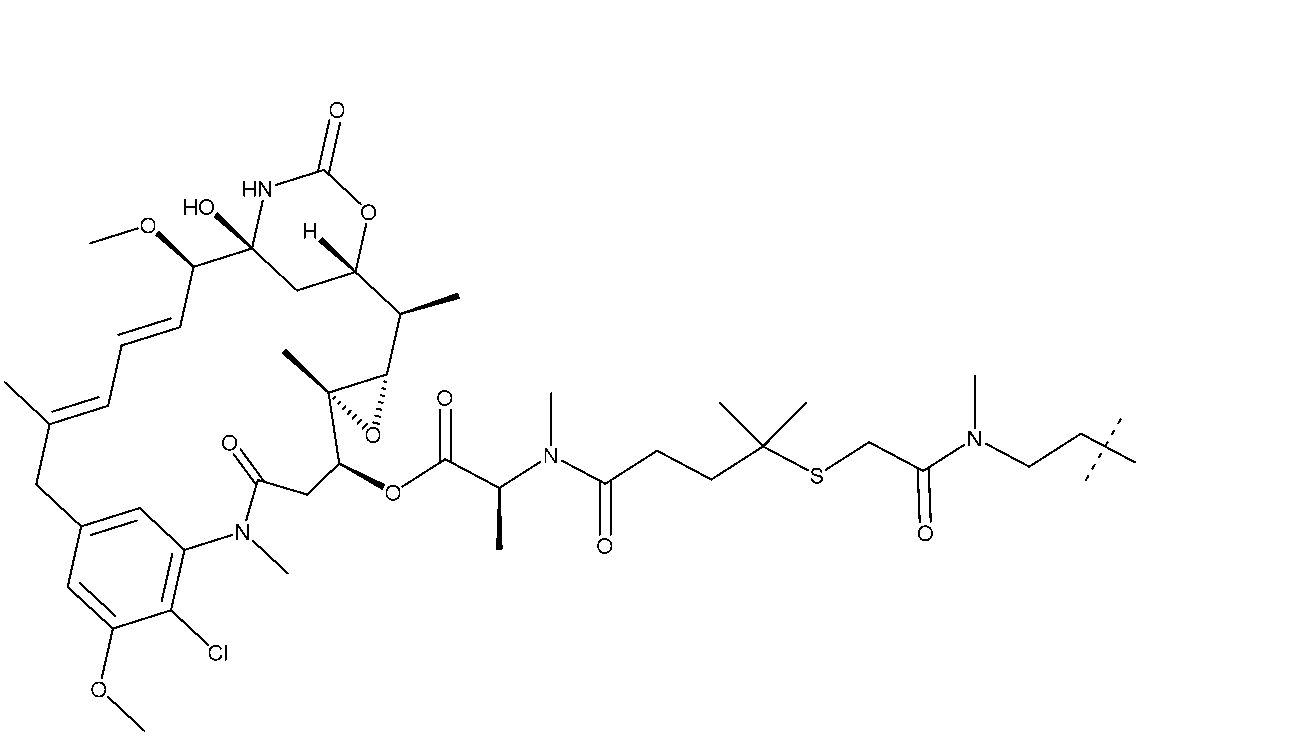


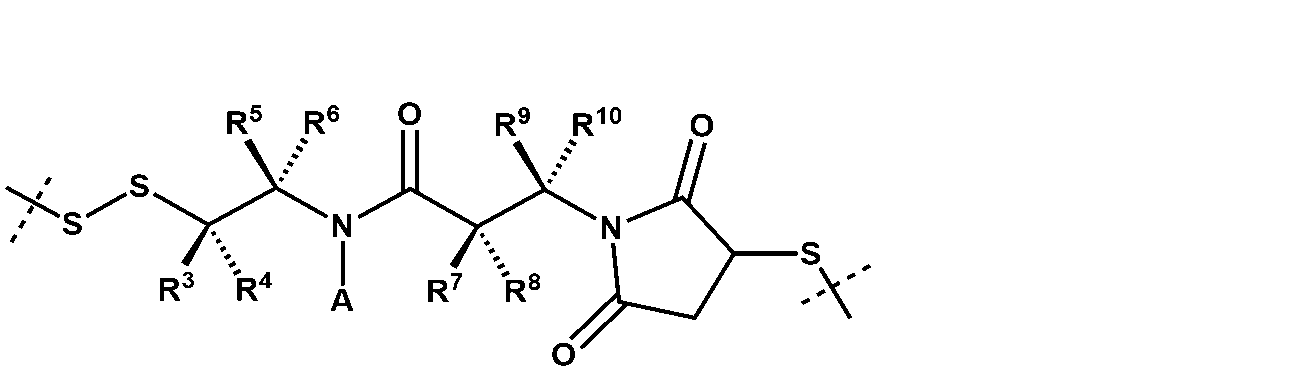

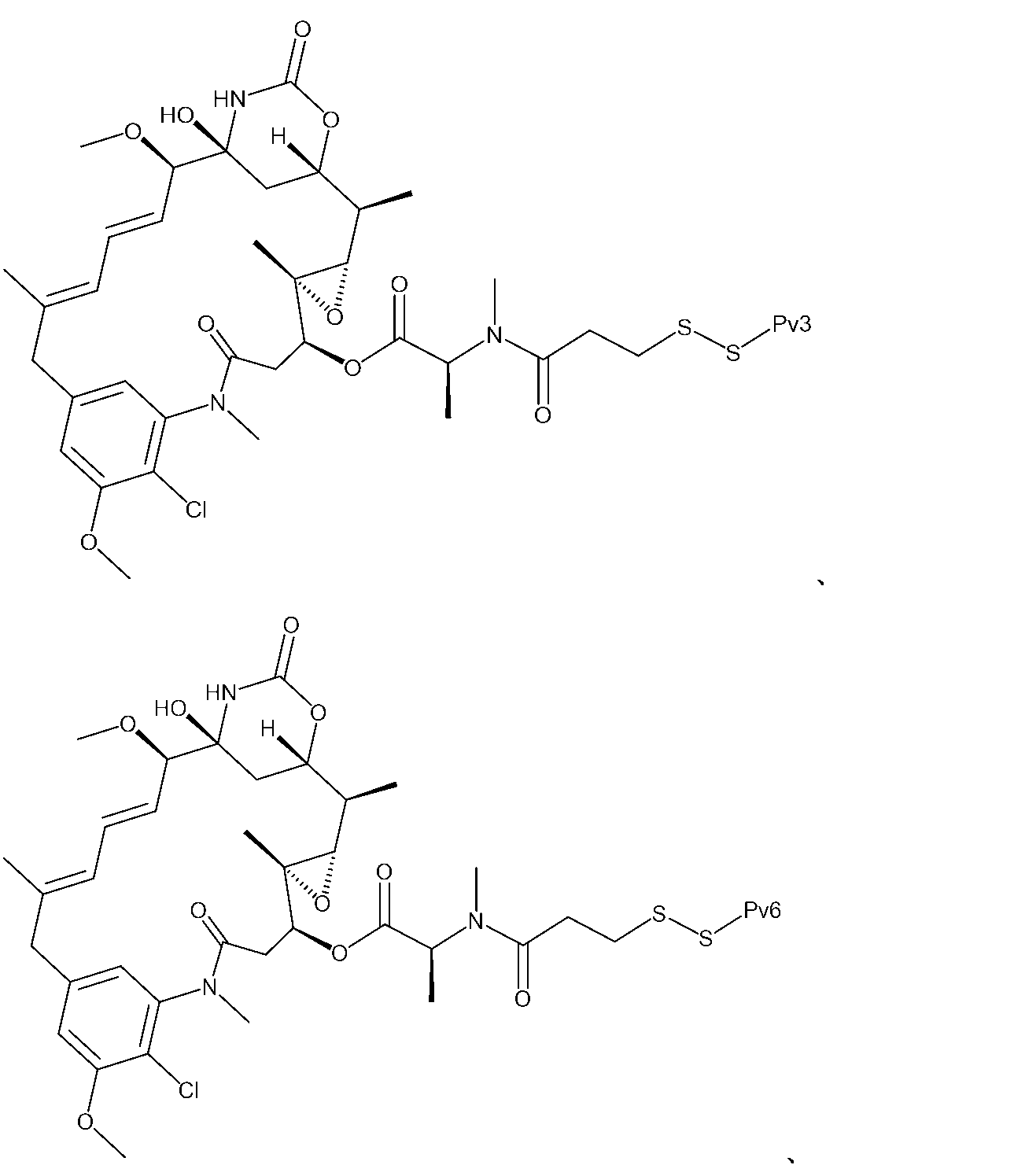
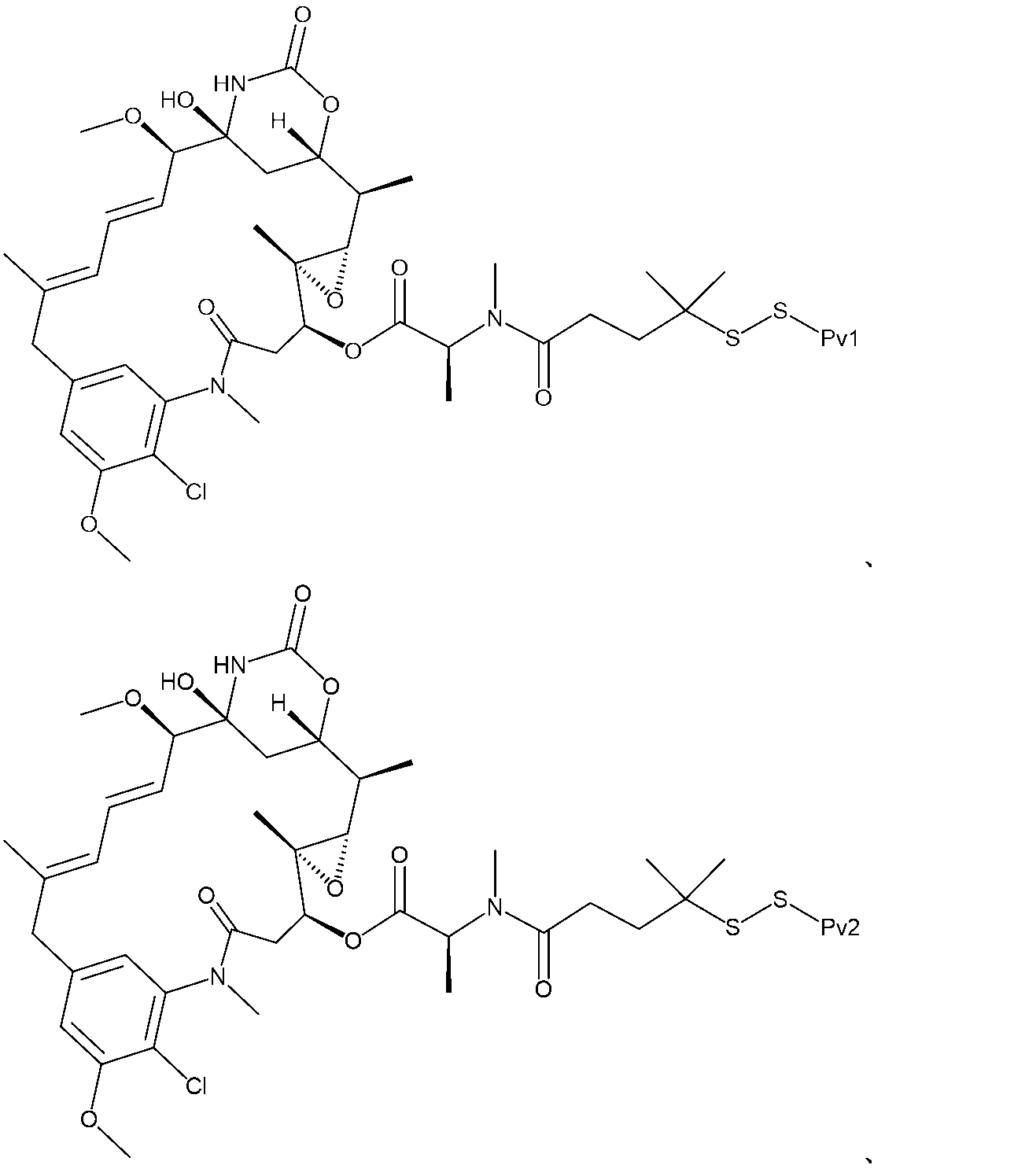


式中、
Pv1が、少なくとも配列:ADDQNPWRAYLDLLFPTDTLLLDLLWCG(配列番号1)を含むペプチドであり、
Pv2が、少なくとも配列:AEQNPIYWARYADWLFTTPLLLLDLALLVDADECG(配列番号2)を含むペプチドであり、
Pv3が、少なくとも配列:ADDQNPWRAYLDLLFPTDTLLLDLLWDADECG(配列番号3)を含むペプチドであり、そして
Pv6が、少なくとも配列:AAEQNPIYWWARYADWLFTTPLLLLDLALLVDADEGTCG(配列番号6)を含むペプチドである、請求項1に記載の化合物、またはそのいずれかの薬学的に許容される塩。
In the formula,
Pv1 is a peptide comprising at least the sequence: ADDQNPWRAYLDLLFPTDTLLLDLLWCG (SEQ ID NO: 1);
Pv2 is a peptide comprising at least the sequence: AEQNPIYWARYADWLFTTPLLLLDLALLVDADECG (SEQ ID NO: 2);
Pv3 is a peptide comprising at least the sequence: ADDQNPWRAYLDLLFPTDTLLLDLLWDADECG (SEQ ID NO:3); and
2. The compound of claim 1, wherein Pv6 is a peptide comprising at least the sequence: AAEQNPIYWWARYADWLFTTPLLLLDLALLVDADEGTCG (SEQ ID NO: 6) , or any pharma- ceutically acceptable salt thereof.


式中、Pv1が、少なくとも配列:ADDQNPWRAYLDLLFPTDTLLLDLLWCG(配列番号1)を含むペプチドである、請求項1に記載の化合物、またはそのいずれかの薬学的に許容される塩。
2. The compound of claim 1, wherein Pv1 is a peptide comprising at least the sequence: ADDQNPWRAYLDLLFPTDTLLLDLLWCG (SEQ ID NO:1) , or any pharma- ceutically acceptable salt thereof.

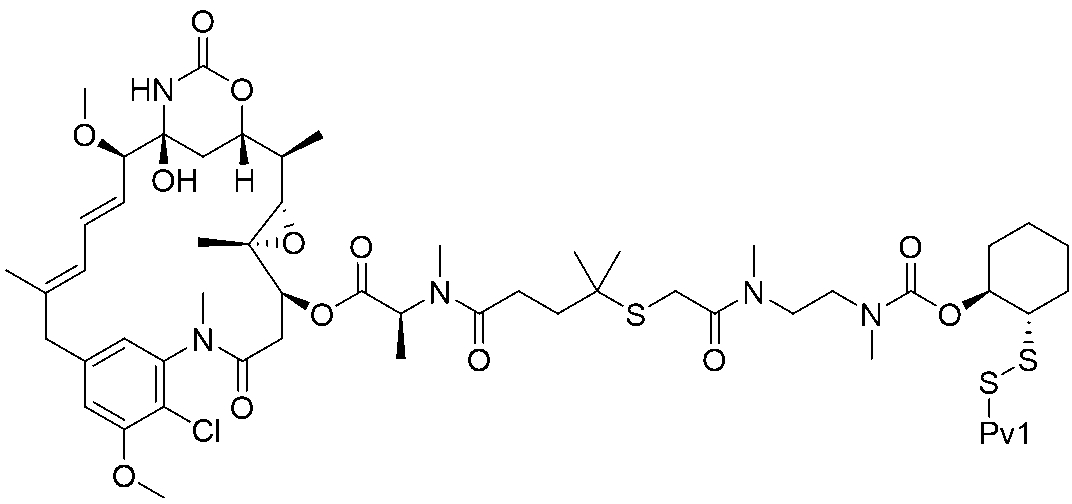
Applications Claiming Priority (5)
| Application Number | Priority Date | Filing Date | Title |
|---|---|---|---|
| US201962872638P | 2019-07-10 | 2019-07-10 | |
| US62/872,638 | 2019-07-10 | ||
| US202063041324P | 2020-06-19 | 2020-06-19 | |
| US63/041,324 | 2020-06-19 | ||
| PCT/US2020/041348 WO2021007402A1 (en) | 2019-07-10 | 2020-07-09 | Peptide conjugates of microtubule-targeting agents as therapeutics |
Publications (3)
| Publication Number | Publication Date |
|---|---|
| JP2022541747A JP2022541747A (en) | 2022-09-27 |
| JPWO2021007402A5 JPWO2021007402A5 (en) | 2023-07-18 |
| JP7675060B2 true JP7675060B2 (en) | 2025-05-12 |
Family
ID=71944331
Family Applications (1)
| Application Number | Title | Priority Date | Filing Date |
|---|---|---|---|
| JP2022501186A Active JP7675060B2 (en) | 2019-07-10 | 2020-07-09 | Peptide conjugates of microtubule targeting agents as therapeutic agents |
Country Status (19)
| Country | Link |
|---|---|
| US (2) | US11555019B2 (en) |
| EP (1) | EP3996749A1 (en) |
| JP (1) | JP7675060B2 (en) |
| KR (1) | KR20220051332A (en) |
| CN (1) | CN114302744B (en) |
| AU (1) | AU2020311925A1 (en) |
| BR (1) | BR112022000297A2 (en) |
| CA (1) | CA3146385A1 (en) |
| CL (1) | CL2022000043A1 (en) |
| CO (1) | CO2022001315A2 (en) |
| CR (1) | CR20220057A (en) |
| EC (1) | ECSP22010121A (en) |
| IL (1) | IL289659B1 (en) |
| MX (1) | MX2022000450A (en) |
| MY (1) | MY209459A (en) |
| PE (1) | PE20220485A1 (en) |
| PH (1) | PH12022550037A1 (en) |
| TW (1) | TW202116356A (en) |
| WO (1) | WO2021007402A1 (en) |
Families Citing this family (5)
| Publication number | Priority date | Publication date | Assignee | Title |
|---|---|---|---|---|
| BR112020013672A2 (en) | 2018-01-05 | 2020-12-01 | Cybrexa 1, Inc. | compounds, compositions, and methods for treating diseases involving tissues affected by acids or hypoxia |
| CA3146560A1 (en) | 2019-07-10 | 2021-01-14 | Cybrexa 2, Inc. | Peptide conjugates of cytotoxins as therapeutics |
| JP7675060B2 (en) | 2019-07-10 | 2025-05-12 | サイブレクサ 3,インコーポレイテッド | Peptide conjugates of microtubule targeting agents as therapeutic agents |
| PE20240119A1 (en) | 2021-01-08 | 2024-01-22 | Cybrexa 2 Inc | PROCESS TO PREPARE A CONJUGATE LINKER REMAIN |
| CN118574642A (en) * | 2021-11-17 | 2024-08-30 | 赛博克萨4公司 | Peptide conjugates of peptide tubulin inhibitors as therapeutic agents |
Citations (4)
| Publication number | Priority date | Publication date | Assignee | Title |
|---|---|---|---|---|
| JP2004520450A (en) | 2001-05-31 | 2004-07-08 | イムノージェン インコーポレーテッド | Method for producing cytotoxic conjugates of maytansinoids and cell binding agents |
| US20170267727A1 (en) | 2016-03-04 | 2017-09-21 | Lehigh University | Conjugates of pH Low Insertion Peptide and Monomethyl Auristatins in the Treatment of Solid Tumors |
| WO2018023098A1 (en) | 2016-07-29 | 2018-02-01 | Memorial Sloan Kettering Cancer Center | Radiolabeled ligands for targeted pet/spect imaging and methods of their use |
| JP2018535212A (en) | 2015-10-28 | 2018-11-29 | ターベダ セラピューティクス インコーポレイテッドTarveda Therapeutics,Inc. | SSTR targeted conjugates and particles and formulations thereof |
Family Cites Families (111)
| Publication number | Priority date | Publication date | Assignee | Title |
|---|---|---|---|---|
| US5637770A (en) | 1991-01-16 | 1997-06-10 | Daiichi Pharmaceutical Co., Ltd. | Hexa-cyclic compound |
| US6504029B1 (en) | 1995-04-10 | 2003-01-07 | Daiichi Pharmaceutical Co., Ltd. | Condensed-hexacyclic compounds and a process therefor |
| CA2225465A1 (en) | 1995-08-02 | 1997-02-13 | Newcastle University Ventures Limited | Benzimidazole compounds |
| DK0897924T3 (en) | 1996-04-26 | 2001-11-19 | Daiichi Seiyaku Co | Process for the preparation of tetrahydroindolizines |
| TW409058B (en) | 1996-06-06 | 2000-10-21 | Daiichi Seiyaku Co | Method for preparation of a drug complex |
| TW527183B (en) | 1996-06-06 | 2003-04-11 | Daiichi Seiyaku Co | Drug complex |
| IN189180B (en) | 1997-07-09 | 2003-01-04 | Chong Kun Dang Corp | |
| MY132496A (en) | 1998-05-11 | 2007-10-31 | Vertex Pharma | Inhibitors of p38 |
| KR100581443B1 (en) | 1998-05-22 | 2006-05-23 | 다이이찌 세이야꾸 가부시기가이샤 | Drug complex |
| CA2348931A1 (en) | 1998-10-30 | 2000-05-11 | Daiichi Pharmaceutical Co., Ltd. | Dds compound and method for measurement thereof |
| JP2002528531A (en) | 1998-11-03 | 2002-09-03 | ビーエーエスエフ アクチェンゲゼルシャフト | Substituted 2-phenylbenzimidazoles, their preparation and use |
| WO2000042040A1 (en) | 1999-01-11 | 2000-07-20 | Agouron Pharmaceuticals, Inc. | Tricyclic inhibitors of poly(adp-ribose) polymerases |
| DE19920936A1 (en) | 1999-05-07 | 2000-11-09 | Basf Ag | Heterocyclically substituted benzimidazoles, their preparation and use |
| ECSP003637A (en) | 1999-08-31 | 2002-03-25 | Agouron Pharma | TRICYCLE POLY INHIBITORS (ADP-RIBOSA) POLYMERASES |
| US6699876B2 (en) | 1999-11-18 | 2004-03-02 | Les Laboratoires Servier | Camptothecin analogue compounds |
| BR0016328A (en) | 1999-12-13 | 2002-08-27 | Lilly Co Eli | Pseudomycin phosphate prodrugs |
| WO2001068145A2 (en) * | 2000-03-15 | 2001-09-20 | Bristol-Myers Squibb Pharma Company | Peptidase-cleavable, targeted antineoplastic drugs and their therapeutic use |
| KR20030023697A (en) | 2000-07-13 | 2003-03-19 | 다이이찌 세이야꾸 가부시기가이샤 | Pharmaceutical compositions containing DDS compounds |
| US7151102B2 (en) | 2000-10-30 | 2006-12-19 | Kudos Pharmaceuticals Limited | Phthalazinone derivatives |
| CA2476182A1 (en) | 2002-03-01 | 2003-09-12 | The Administrators Of The Tulane Educational Fund | Conjugates of therapeutic or cytotoxic agents and biologically active peptides |
| MXPA04008999A (en) | 2002-03-20 | 2004-12-07 | Squibb Bristol Myers Co | Phosphate prodrugs of fluorooxindoles. |
| ES2357057T3 (en) | 2002-04-30 | 2011-04-15 | Kudos Pharmaceuticals Limited | DERIVATIVES OF FTALAZINONA. |
| US7449464B2 (en) | 2003-03-12 | 2008-11-11 | Kudos Pharmaceuticals Limited | Phthalazinone derivatives |
| EP1611137A1 (en) | 2003-03-31 | 2006-01-04 | Pfizer Inc. | Salts of tricyclic inhibitors of poly(adp-ribose) polymerases |
| EP2281577B1 (en) | 2003-05-14 | 2016-11-16 | ImmunoGen, Inc. | Drug conjugate composition |
| US8088387B2 (en) | 2003-10-10 | 2012-01-03 | Immunogen Inc. | Method of targeting specific cell populations using cell-binding agent maytansinoid conjugates linked via a non-cleavable linker, said conjugates, and methods of making said conjugates |
| US7276497B2 (en) | 2003-05-20 | 2007-10-02 | Immunogen Inc. | Cytotoxic agents comprising new maytansinoids |
| CA2525130C (en) | 2003-05-20 | 2014-04-15 | Immunogen, Inc. | Improved cytotoxic agents comprising new maytansinoids |
| PT1660095E (en) | 2003-07-25 | 2010-04-19 | Pfizer | Tricyclic parp inhibitors |
| GB0317466D0 (en) | 2003-07-25 | 2003-08-27 | Univ Sheffield | Use |
| NZ547984A (en) | 2003-12-01 | 2009-03-31 | Kudos Pharm Ltd | DNA damage repair inhibitors for treatment of cancer |
| CA2556752C (en) | 2004-02-23 | 2016-02-02 | Genentech, Inc. | Heterocyclic self-immolative linkers and conjugates |
| US8288557B2 (en) | 2004-07-23 | 2012-10-16 | Endocyte, Inc. | Bivalent linkers and conjugates thereof |
| WO2006033007A2 (en) | 2004-09-22 | 2006-03-30 | Pfizer Inc. | Polymorphic and amorphous forms of the phosphate salt of 8-fluoro-2-{4-[(methylamino)methyl]phenyl}-1,3,4,5-tetrahydro-6h-azepino[5,4,3-cd]indol-6-one |
| WO2006033003A1 (en) | 2004-09-22 | 2006-03-30 | Pfizer, Inc. | Method of preparing poly(adp-ribose) polymerases inhibitors |
| EP1793830A2 (en) | 2004-09-22 | 2007-06-13 | Pfizer, Inc. | Therapeutic combinations comprising poly(adp-ribose) polymerases inhibitor |
| EA013323B1 (en) | 2004-12-09 | 2010-04-30 | Сентокор, Инк. | Anti-integrin immunoconjugates, methods and uses |
| AU2006206428B2 (en) | 2005-01-18 | 2009-07-16 | The Board Of Governors For Higher Education | Selective delivery of molecules into cells or marking of cells in diseased tissue regions using environmentally senstive transmembrane peptide |
| US7301019B2 (en) | 2005-01-21 | 2007-11-27 | Immunogen, Inc. | Method for the preparation of maytansinoid esters |
| EP2468304A3 (en) | 2005-02-11 | 2012-09-26 | ImmunoGen, Inc. | Process for preparing stable drug conjugates |
| US9707302B2 (en) | 2013-07-23 | 2017-07-18 | Immunomedics, Inc. | Combining anti-HLA-DR or anti-Trop-2 antibodies with microtubule inhibitors, PARP inhibitors, bruton kinase inhibitors or phosphoinositide 3-kinase inhibitors significantly improves therapeutic outcome in cancer |
| BRPI0608175A2 (en) | 2005-04-15 | 2009-11-10 | Immunogen Inc | method of eliminating heterogeneous or mixed cell population in tumors as well as maytansinoid compounds |
| CA2893252C (en) | 2005-08-24 | 2018-05-29 | Immunogen, Inc. | Process for preparing antibody maytansinoid conjugates |
| CN101316834A (en) | 2005-09-29 | 2008-12-03 | 艾博特公司 | 1H-benzimidazole-4-carboxamides substituted with a phenyl group in the 2-position are potent PARP inhibitors |
| PL1945647T3 (en) | 2005-11-08 | 2012-04-30 | Immunogen Inc | Processes for preparation of maytansinol |
| RS53082B (en) | 2006-01-17 | 2014-06-30 | Abbvie Bahamas Ltd. | COMBINED THERAPY WITH PARP INHIBITORS |
| WO2007131133A2 (en) | 2006-05-04 | 2007-11-15 | Genentech, Inc. | Methods and compositions relating to zpa polypeptides |
| TWI404716B (en) | 2006-10-17 | 2013-08-11 | Kudos Pharm Ltd | Phthalazinone derivative |
| EP2109608B1 (en) | 2007-01-10 | 2011-03-23 | Istituto di Richerche di Biologia Molecolare P. Angeletti S.p.A. | Amide substituted indazoles as poly(adp-ribose)polymerase (parp) inhibitors |
| WO2008114114A2 (en) | 2007-03-16 | 2008-09-25 | Pfizer Products Inc. | Poly(adp-ribose) polymerases inhibitor for treating ophthalmic condition |
| CA2690943A1 (en) | 2007-06-25 | 2008-12-31 | Endocyte, Inc. | Conjugates containing hydrophilic spacer linkers |
| US8067613B2 (en) | 2007-07-16 | 2011-11-29 | Abbott Laboratories | Benzimidazole poly(ADP ribose)polymerase inhibitors |
| EP3838298B1 (en) | 2007-08-17 | 2025-02-26 | Purdue Research Foundation | Psma binding ligand-linker conjugates and methods for using |
| EP2276506A4 (en) | 2008-04-30 | 2014-05-07 | Immunogen Inc | Potent conjugates and hydrophilic linkers |
| ES2617619T3 (en) | 2008-06-05 | 2017-06-19 | Janssen Pharmaceutica, N.V. | Drug combinations comprising a DGAT inhibitor and a PPAR agonist |
| KR102444399B1 (en) | 2009-06-03 | 2022-09-16 | 이뮤노젠 아이엔씨 | Manufacturing method of maytansinoids |
| US9353140B2 (en) | 2009-11-25 | 2016-05-31 | Academia Sinica | BQC-G, a tumor-selective anti-cancer prodrug |
| JP5745283B2 (en) | 2010-02-12 | 2015-07-08 | ファイザー・インク | 8-Fluoro-2- {4-[(methylamino) methyl] phenyl} -1,3,4,5-tetrahydro-6H-azepino [5,4,3-cd] indol-6-one salts and many Form |
| US20120322741A1 (en) | 2010-02-25 | 2012-12-20 | Purdue Research Foundation | Psma binding ligand-linker conjugates and methods for using |
| MX2012011171A (en) | 2010-03-31 | 2013-02-01 | Gilead Pharmasset Llc | Nucleoside phosphoramidates. |
| EP2566335B1 (en) | 2010-05-05 | 2016-06-29 | Prolynx Llc | Controlled release of active compounds from macromolecular conjugates |
| WO2012047354A2 (en) | 2010-07-13 | 2012-04-12 | Rhode Island Board Of Governors For Higher Education | Environmentally sensitive compositions |
| EP2603201B1 (en) | 2010-08-13 | 2020-03-11 | Rhode Island Board of Governors for Higher Education | Liposome compositions and methods of use thereof |
| MX2013005046A (en) | 2010-11-03 | 2013-12-12 | Immunogen Inc | Cytotoxic agents comprising new ansamitocin derivatives. |
| CN107537040A (en) | 2011-03-29 | 2018-01-05 | 伊缪诺金公司 | Class maytansine antibody conjugates are prepared by one-step method |
| SG193996A1 (en) | 2011-03-29 | 2013-11-29 | Immunogen Inc | Preparation of maytansinoid antibody conjugates by a one-step process |
| DK2750713T3 (en) | 2011-10-14 | 2015-12-21 | Medimmune Ltd | PYRROLOBENZODIAZEPINS AND CONJUGATES THEREOF |
| KR102853456B1 (en) | 2012-10-11 | 2025-09-01 | 다이이찌 산쿄 가부시키가이샤 | Method for producing a glycinamide compound |
| WO2014061277A1 (en) | 2012-10-19 | 2014-04-24 | 第一三共株式会社 | Antibody-drug conjugate produced by binding through linker having hydrophilic structure |
| US9180203B2 (en) | 2012-10-23 | 2015-11-10 | The Johns Hopkins University | Self-assembling drug amphiphiles and methods for synthesis and use |
| WO2014093343A2 (en) | 2012-12-10 | 2014-06-19 | Massachusetts Institute Of Technology | Multistage nanoparticle drug delivery system for the treatment of solid tumors |
| US9814784B2 (en) | 2013-01-03 | 2017-11-14 | Celltrion, Inc. | Antibody-linker-drug conjugate, preparation method therefor, and anticancer drug composition containing same |
| WO2014134483A2 (en) | 2013-02-28 | 2014-09-04 | Immunogen, Inc. | Conjugates comprising cell-binding agents and cytotoxic agents |
| CN111569086B (en) | 2013-12-19 | 2024-06-21 | 西雅图基因公司 | Methylene carbamate linkers for use with target-drug conjugates |
| US20180163271A1 (en) | 2014-01-16 | 2018-06-14 | Clovis Oncology, Inc. | Use of PARP Inhibitors to Treat Breast or Ovarian Cancer Patients Showing a Loss of Heterozygosity |
| JOP20200096A1 (en) | 2014-01-31 | 2017-06-16 | Children’S Medical Center Corp | TIM-3 Antibody Molecules and Their Uses |
| JP2017114763A (en) | 2014-03-26 | 2017-06-29 | 第一三共株式会社 | Anti-CD98 antibody-drug conjugate |
| AU2015245122B2 (en) | 2014-04-10 | 2019-10-24 | Daiichi Sankyo Company, Limited | Anti-HER3 antibody-drug conjugate |
| US11185594B2 (en) | 2014-04-10 | 2021-11-30 | Daiichi Sankyo Company, Limited | (Anti-HER2 antibody)-drug conjugate |
| US20170151339A1 (en) | 2014-06-30 | 2017-06-01 | Tarveda Therapeutics, Inc. | Targeted conjugates and particles and formulations thereof |
| CN113209033A (en) | 2014-08-22 | 2021-08-06 | 克洛维斯肿瘤有限公司 | High dose strength tablets of Rucaparib |
| AU2015318018B2 (en) | 2014-09-16 | 2017-05-11 | Synermore Biologics (Suzhou) Co. Ltd. | Anti-EGFR antibody and uses of same |
| PT3204018T (en) | 2014-10-07 | 2021-11-12 | Immunomedics Inc | Neoadjuvant use of antibody-drug conjugates |
| AU2015349985A1 (en) | 2014-11-19 | 2017-05-25 | Immunogen, Inc. | Process for preparing cell-binding agent-cytotoxic agent conjugates |
| JO3705B1 (en) | 2014-11-26 | 2021-01-31 | Bayer Pharma AG | Novel substituted indazoles, processes for preparation thereof, pharmaceutical preparations comprising them and use thereof for production of medicaments |
| KR102407261B1 (en) | 2015-02-27 | 2022-07-06 | 서울대학교산학협력단 | Nanoformulated Anticancer Drug and Process for Preparing the Same |
| MA43354A (en) | 2015-10-16 | 2018-08-22 | Genentech Inc | CONJUGATE DRUG CONJUGATES WITH CLOUDY DISULPHIDE |
| US10435428B2 (en) | 2015-11-24 | 2019-10-08 | Theravance Biopharma R&D Ip, Llc | Prodrugs of a JAK inhibitor compound for treatment of gastrointestinal inflammatory disease |
| KR102498258B1 (en) | 2016-01-20 | 2023-02-10 | 삼성디스플레이 주식회사 | Display device |
| JP2019510085A (en) | 2016-03-08 | 2019-04-11 | ロス ガトス ファーマスーティカルズ, インク.Los Gatos Pharmaceuticals, Inc. | Nanoparticles and methods and compounds for cancer treatment |
| EP3442592A4 (en) | 2016-04-13 | 2019-11-27 | Tarveda Therapeutics, Inc. | NEUROTENSIN RECEPTOR BINDING CONJUGATES AND ASSOCIATED FORMULATIONS |
| GB201608885D0 (en) | 2016-05-20 | 2016-07-06 | Univ Birmingham | Treatment |
| US20190133980A1 (en) | 2016-06-02 | 2019-05-09 | Yale University | Compositions and methods for targeting and treating homologous recombination-deficient tumors |
| PT3502122T (en) | 2016-08-16 | 2021-11-25 | Aist | Malignant tumor target peptide |
| US11779662B2 (en) * | 2016-09-22 | 2023-10-10 | University Of Rhode Island Board Of Trustees | Fluorescent compound comprising a fluorophore conjugated to a pH-triggered polypeptide |
| JP7058666B2 (en) | 2016-11-25 | 2022-04-22 | マブウェル (シャンハイ) バイオサイエンス カンパニー リミテッド | Bi-substituted maleamide linkers for antibody-drug conjugates and their preparation methods and uses |
| EP3554638B1 (en) | 2016-12-19 | 2022-02-02 | Morehouse School of Medicine | Compositions and methods for treating diseases by inhibiting exosome release |
| EP3634498A4 (en) | 2017-06-09 | 2021-08-25 | Rhode Island Council on Postsecondary Education | CONNECTED AND OTHER PH-RIGIDED CONNECTIONS |
| KR102422860B1 (en) | 2017-08-31 | 2022-07-19 | 다이이찌 산쿄 가부시키가이샤 | Novel method for preparing antibody-drug conjugates |
| BR112020013672A2 (en) | 2018-01-05 | 2020-12-01 | Cybrexa 1, Inc. | compounds, compositions, and methods for treating diseases involving tissues affected by acids or hypoxia |
| KR20200109345A (en) | 2018-01-12 | 2020-09-22 | 프로린크스 엘엘시 | Synergistic cancer treatment |
| HRP20230787T1 (en) | 2018-05-18 | 2023-10-27 | Glycotope Gmbh | Anti-muc1 antibody |
| TWI851577B (en) | 2018-06-07 | 2024-08-11 | 美商思進公司 | Camptothecin conjugates |
| CN109232719B (en) | 2018-09-21 | 2021-06-29 | 中国科学院理化技术研究所 | A pH-responsive antimicrobial peptide and its preparation method and application |
| WO2020160009A1 (en) * | 2019-01-28 | 2020-08-06 | Rhode Island Council On Postsecondary Education | Phlip® targeted delivery of potent cytotoxic compounds |
| KR102679892B1 (en) | 2019-03-29 | 2024-07-02 | 메디뮨 리미티드 | Compounds and conjugates thereof |
| CA3146560A1 (en) | 2019-07-10 | 2021-01-14 | Cybrexa 2, Inc. | Peptide conjugates of cytotoxins as therapeutics |
| JP7675060B2 (en) | 2019-07-10 | 2025-05-12 | サイブレクサ 3,インコーポレイテッド | Peptide conjugates of microtubule targeting agents as therapeutic agents |
| PE20240119A1 (en) | 2021-01-08 | 2024-01-22 | Cybrexa 2 Inc | PROCESS TO PREPARE A CONJUGATE LINKER REMAIN |
| CN117897175A (en) | 2021-04-29 | 2024-04-16 | 美商斯布雷克萨二号公司 | Dosing regimen for peptide conjugates of topoisomerase I inhibitors |
| CN118574642A (en) | 2021-11-17 | 2024-08-30 | 赛博克萨4公司 | Peptide conjugates of peptide tubulin inhibitors as therapeutic agents |
-
2020
- 2020-07-09 JP JP2022501186A patent/JP7675060B2/en active Active
- 2020-07-09 CA CA3146385A patent/CA3146385A1/en active Pending
- 2020-07-09 CN CN202080057629.3A patent/CN114302744B/en active Active
- 2020-07-09 CR CR20220057A patent/CR20220057A/en unknown
- 2020-07-09 KR KR1020227004520A patent/KR20220051332A/en active Pending
- 2020-07-09 PE PE2022000038A patent/PE20220485A1/en unknown
- 2020-07-09 US US16/924,445 patent/US11555019B2/en active Active
- 2020-07-09 EP EP20750936.5A patent/EP3996749A1/en active Pending
- 2020-07-09 BR BR112022000297A patent/BR112022000297A2/en unknown
- 2020-07-09 WO PCT/US2020/041348 patent/WO2021007402A1/en not_active Ceased
- 2020-07-09 MY MYPI2022000121A patent/MY209459A/en unknown
- 2020-07-09 MX MX2022000450A patent/MX2022000450A/en unknown
- 2020-07-09 PH PH1/2022/550037A patent/PH12022550037A1/en unknown
- 2020-07-09 AU AU2020311925A patent/AU2020311925A1/en active Pending
- 2020-07-09 TW TW109123266A patent/TW202116356A/en unknown
-
2022
- 2022-01-06 IL IL289659A patent/IL289659B1/en unknown
- 2022-01-07 CL CL2022000043A patent/CL2022000043A1/en unknown
- 2022-02-09 CO CONC2022/0001315A patent/CO2022001315A2/en unknown
- 2022-02-09 EC ECSENADI202210121A patent/ECSP22010121A/en unknown
-
2023
- 2023-01-11 US US18/152,987 patent/US12234212B2/en active Active
Patent Citations (4)
| Publication number | Priority date | Publication date | Assignee | Title |
|---|---|---|---|---|
| JP2004520450A (en) | 2001-05-31 | 2004-07-08 | イムノージェン インコーポレーテッド | Method for producing cytotoxic conjugates of maytansinoids and cell binding agents |
| JP2018535212A (en) | 2015-10-28 | 2018-11-29 | ターベダ セラピューティクス インコーポレイテッドTarveda Therapeutics,Inc. | SSTR targeted conjugates and particles and formulations thereof |
| US20170267727A1 (en) | 2016-03-04 | 2017-09-21 | Lehigh University | Conjugates of pH Low Insertion Peptide and Monomethyl Auristatins in the Treatment of Solid Tumors |
| WO2018023098A1 (en) | 2016-07-29 | 2018-02-01 | Memorial Sloan Kettering Cancer Center | Radiolabeled ligands for targeted pet/spect imaging and methods of their use |
Non-Patent Citations (4)
| Title |
|---|
| Cancer Letters,2011年,307,pp.113-118 |
| J. Med. Chem.,2019年,62,pp.2708-2719 |
| J.Med. Chem.,2006年,49,pp.4392-4408 |
| PNAS,2018年,115(12),E2811-E2818 |
Also Published As
| Publication number | Publication date |
|---|---|
| PE20220485A1 (en) | 2022-04-04 |
| CA3146385A1 (en) | 2021-01-14 |
| TW202116356A (en) | 2021-05-01 |
| WO2021007402A1 (en) | 2021-01-14 |
| EP3996749A1 (en) | 2022-05-18 |
| ECSP22010121A (en) | 2022-05-31 |
| US12234212B2 (en) | 2025-02-25 |
| MX2022000450A (en) | 2022-04-25 |
| US11555019B2 (en) | 2023-01-17 |
| CN114302744B (en) | 2025-08-26 |
| PH12022550037A1 (en) | 2023-04-12 |
| KR20220051332A (en) | 2022-04-26 |
| US20210009536A1 (en) | 2021-01-14 |
| CR20220057A (en) | 2022-07-19 |
| CL2022000043A1 (en) | 2022-08-19 |
| IL289659B1 (en) | 2026-01-01 |
| BR112022000297A2 (en) | 2022-03-15 |
| JP2022541747A (en) | 2022-09-27 |
| CN114302744A (en) | 2022-04-08 |
| CO2022001315A2 (en) | 2022-05-10 |
| AU2020311925A1 (en) | 2022-02-03 |
| US20240067616A1 (en) | 2024-02-29 |
| MY209459A (en) | 2025-07-09 |
| IL289659A (en) | 2022-03-01 |
Similar Documents
| Publication | Publication Date | Title |
|---|---|---|
| JP7673041B2 (en) | Peptide conjugates of cytotoxins as therapeutic agents | |
| TWI820077B (en) | Compounds, compositions, and methods for treatment of diseases involving acidic or hypoxic diseased tissues | |
| JP7675060B2 (en) | Peptide conjugates of microtubule targeting agents as therapeutic agents | |
| JPWO2021007435A5 (en) | ||
| US20230416331A1 (en) | Peptide conjugates of peptidic tubulin inhibitors as therapeutics | |
| WO2022155172A1 (en) | Peptide conjugates of therapeutics |
Legal Events
| Date | Code | Title | Description |
|---|---|---|---|
| A521 | Request for written amendment filed |
Free format text: JAPANESE INTERMEDIATE CODE: A523 Effective date: 20230707 |
|
| A621 | Written request for application examination |
Free format text: JAPANESE INTERMEDIATE CODE: A621 Effective date: 20230707 |
|
| A977 | Report on retrieval |
Free format text: JAPANESE INTERMEDIATE CODE: A971007 Effective date: 20240610 |
|
| A131 | Notification of reasons for refusal |
Free format text: JAPANESE INTERMEDIATE CODE: A131 Effective date: 20240618 |
|
| A601 | Written request for extension of time |
Free format text: JAPANESE INTERMEDIATE CODE: A601 Effective date: 20240917 |
|
| A601 | Written request for extension of time |
Free format text: JAPANESE INTERMEDIATE CODE: A601 Effective date: 20241114 |
|
| A521 | Request for written amendment filed |
Free format text: JAPANESE INTERMEDIATE CODE: A523 Effective date: 20241217 |
|
| TRDD | Decision of grant or rejection written | ||
| A01 | Written decision to grant a patent or to grant a registration (utility model) |
Free format text: JAPANESE INTERMEDIATE CODE: A01 Effective date: 20250305 |
|
| A601 | Written request for extension of time |
Free format text: JAPANESE INTERMEDIATE CODE: A601 Effective date: 20250403 |
|
| A61 | First payment of annual fees (during grant procedure) |
Free format text: JAPANESE INTERMEDIATE CODE: A61 Effective date: 20250425 |
|
| R150 | Certificate of patent or registration of utility model |
Ref document number: 7675060 Country of ref document: JP Free format text: JAPANESE INTERMEDIATE CODE: R150 |