JP2025081429A - Crystalline form of (s)-7-(1-acryloylpiperidin-4-yl)-2-(4-phenoxyphenyl)-4,5,6,7-tetra-hydropyrazolo[1,5-a]pyrimidine-3-carboxamide, preparation thereof, and uses thereof - Google Patents
Crystalline form of (s)-7-(1-acryloylpiperidin-4-yl)-2-(4-phenoxyphenyl)-4,5,6,7-tetra-hydropyrazolo[1,5-a]pyrimidine-3-carboxamide, preparation thereof, and uses thereof Download PDFInfo
- Publication number
- JP2025081429A JP2025081429A JP2025021657A JP2025021657A JP2025081429A JP 2025081429 A JP2025081429 A JP 2025081429A JP 2025021657 A JP2025021657 A JP 2025021657A JP 2025021657 A JP2025021657 A JP 2025021657A JP 2025081429 A JP2025081429 A JP 2025081429A
- Authority
- JP
- Japan
- Prior art keywords
- compound
- crystalline form
- cell
- mixture
- solution
- Prior art date
- Legal status (The legal status is an assumption and is not a legal conclusion. Google has not performed a legal analysis and makes no representation as to the accuracy of the status listed.)
- Pending
Links
Classifications
-
- C—CHEMISTRY; METALLURGY
- C07—ORGANIC CHEMISTRY
- C07D—HETEROCYCLIC COMPOUNDS
- C07D487/00—Heterocyclic compounds containing nitrogen atoms as the only ring hetero atoms in the condensed system, not provided for by groups C07D451/00 - C07D477/00
- C07D487/02—Heterocyclic compounds containing nitrogen atoms as the only ring hetero atoms in the condensed system, not provided for by groups C07D451/00 - C07D477/00 in which the condensed system contains two hetero rings
- C07D487/04—Ortho-condensed systems
-
- A—HUMAN NECESSITIES
- A61—MEDICAL OR VETERINARY SCIENCE; HYGIENE
- A61K—PREPARATIONS FOR MEDICAL, DENTAL OR TOILETRY PURPOSES
- A61K31/00—Medicinal preparations containing organic active ingredients
- A61K31/33—Heterocyclic compounds
- A61K31/395—Heterocyclic compounds having nitrogen as a ring hetero atom, e.g. guanethidine or rifamycins
- A61K31/495—Heterocyclic compounds having nitrogen as a ring hetero atom, e.g. guanethidine or rifamycins having six-membered rings with two or more nitrogen atoms as the only ring heteroatoms, e.g. piperazine or tetrazines
- A61K31/505—Pyrimidines; Hydrogenated pyrimidines, e.g. trimethoprim
- A61K31/519—Pyrimidines; Hydrogenated pyrimidines, e.g. trimethoprim ortho- or peri-condensed with heterocyclic rings
-
- A—HUMAN NECESSITIES
- A61—MEDICAL OR VETERINARY SCIENCE; HYGIENE
- A61P—SPECIFIC THERAPEUTIC ACTIVITY OF CHEMICAL COMPOUNDS OR MEDICINAL PREPARATIONS
- A61P29/00—Non-central analgesic, antipyretic or antiinflammatory agents, e.g. antirheumatic agents; Non-steroidal antiinflammatory drugs [NSAID]
-
- A—HUMAN NECESSITIES
- A61—MEDICAL OR VETERINARY SCIENCE; HYGIENE
- A61P—SPECIFIC THERAPEUTIC ACTIVITY OF CHEMICAL COMPOUNDS OR MEDICINAL PREPARATIONS
- A61P35/00—Antineoplastic agents
-
- A—HUMAN NECESSITIES
- A61—MEDICAL OR VETERINARY SCIENCE; HYGIENE
- A61P—SPECIFIC THERAPEUTIC ACTIVITY OF CHEMICAL COMPOUNDS OR MEDICINAL PREPARATIONS
- A61P35/00—Antineoplastic agents
- A61P35/02—Antineoplastic agents specific for leukemia
-
- A—HUMAN NECESSITIES
- A61—MEDICAL OR VETERINARY SCIENCE; HYGIENE
- A61P—SPECIFIC THERAPEUTIC ACTIVITY OF CHEMICAL COMPOUNDS OR MEDICINAL PREPARATIONS
- A61P35/00—Antineoplastic agents
- A61P35/04—Antineoplastic agents specific for metastasis
-
- A—HUMAN NECESSITIES
- A61—MEDICAL OR VETERINARY SCIENCE; HYGIENE
- A61P—SPECIFIC THERAPEUTIC ACTIVITY OF CHEMICAL COMPOUNDS OR MEDICINAL PREPARATIONS
- A61P37/00—Drugs for immunological or allergic disorders
-
- A—HUMAN NECESSITIES
- A61—MEDICAL OR VETERINARY SCIENCE; HYGIENE
- A61P—SPECIFIC THERAPEUTIC ACTIVITY OF CHEMICAL COMPOUNDS OR MEDICINAL PREPARATIONS
- A61P37/00—Drugs for immunological or allergic disorders
- A61P37/02—Immunomodulators
-
- A—HUMAN NECESSITIES
- A61—MEDICAL OR VETERINARY SCIENCE; HYGIENE
- A61P—SPECIFIC THERAPEUTIC ACTIVITY OF CHEMICAL COMPOUNDS OR MEDICINAL PREPARATIONS
- A61P37/00—Drugs for immunological or allergic disorders
- A61P37/08—Antiallergic agents
-
- C—CHEMISTRY; METALLURGY
- C07—ORGANIC CHEMISTRY
- C07B—GENERAL METHODS OF ORGANIC CHEMISTRY; APPARATUS THEREFOR
- C07B2200/00—Indexing scheme relating to specific properties of organic compounds
- C07B2200/05—Isotopically modified compounds, e.g. labelled
-
- C—CHEMISTRY; METALLURGY
- C07—ORGANIC CHEMISTRY
- C07B—GENERAL METHODS OF ORGANIC CHEMISTRY; APPARATUS THEREFOR
- C07B2200/00—Indexing scheme relating to specific properties of organic compounds
- C07B2200/07—Optical isomers
-
- C—CHEMISTRY; METALLURGY
- C07—ORGANIC CHEMISTRY
- C07B—GENERAL METHODS OF ORGANIC CHEMISTRY; APPARATUS THEREFOR
- C07B2200/00—Indexing scheme relating to specific properties of organic compounds
- C07B2200/13—Crystalline forms, e.g. polymorphs
-
- Y—GENERAL TAGGING OF NEW TECHNOLOGICAL DEVELOPMENTS; GENERAL TAGGING OF CROSS-SECTIONAL TECHNOLOGIES SPANNING OVER SEVERAL SECTIONS OF THE IPC; TECHNICAL SUBJECTS COVERED BY FORMER USPC CROSS-REFERENCE ART COLLECTIONS [XRACs] AND DIGESTS
- Y02—TECHNOLOGIES OR APPLICATIONS FOR MITIGATION OR ADAPTATION AGAINST CLIMATE CHANGE
- Y02P—CLIMATE CHANGE MITIGATION TECHNOLOGIES IN THE PRODUCTION OR PROCESSING OF GOODS
- Y02P20/00—Technologies relating to chemical industry
- Y02P20/50—Improvements relating to the production of bulk chemicals
- Y02P20/55—Design of synthesis routes, e.g. reducing the use of auxiliary or protecting groups
Landscapes
- Health & Medical Sciences (AREA)
- Chemical & Material Sciences (AREA)
- Organic Chemistry (AREA)
- Public Health (AREA)
- Medicinal Chemistry (AREA)
- Pharmacology & Pharmacy (AREA)
- Life Sciences & Earth Sciences (AREA)
- Animal Behavior & Ethology (AREA)
- General Health & Medical Sciences (AREA)
- Veterinary Medicine (AREA)
- Chemical Kinetics & Catalysis (AREA)
- General Chemical & Material Sciences (AREA)
- Nuclear Medicine, Radiotherapy & Molecular Imaging (AREA)
- Oncology (AREA)
- Hematology (AREA)
- Immunology (AREA)
- Engineering & Computer Science (AREA)
- Bioinformatics & Cheminformatics (AREA)
- Epidemiology (AREA)
- Pain & Pain Management (AREA)
- Rheumatology (AREA)
- Pulmonology (AREA)
- Pharmaceuticals Containing Other Organic And Inorganic Compounds (AREA)
- Nitrogen Condensed Heterocyclic Rings (AREA)
Abstract
Description
本発明は、(S)-7-(1-アクリロイルピペリジン-4-イル)-2-(4-フェノキシフェニル)-4,5
,6,7-テトラヒドロピラゾロ[1,5-a]ピリミジン-3-カルボキサミドの結晶形に関する。本
発明はまた、結晶形を調製する方法、及び結晶形をBtk阻害剤として利用するための方法
に関する。
The present invention relates to a compound comprising (S)-7-(1-acryloylpiperidin-4-yl)-2-(4-phenoxyphenyl)-4,5
The present invention relates to a crystalline form of 1,6,7-tetrahydropyrazolo[1,5-a]pyrimidine-3-carboxamide. The present invention also relates to a method for preparing the crystalline form and a method for utilizing the crystalline form as a Btk inhibitor.
ブルトン(Bruton)のチロシンキナーゼ(Btk)はTecチロシンキナーゼファミリーに属
する(Vetrieet al., Nature 361: 226-233, 1993; Bradshaw, Cell Signal. 22: 1175-
84, 2010)。Btkは主として、B細胞、肥満細胞及びマクロファージ等のほとんどの造血
系細胞において発現しており(Smith et al., J. Immunol. 152: 557-565, 1994)、骨髄
、脾臓及びリンパ節組織にも局在する。BtkはB細胞受容体(BCR)及びFcRシグナル伝達
経路において重要な役割を果たしているが、これらはB細胞の発生、分化に関与する(Kh
an, Immunol.Res. 23: 147, 2001)。Btkは上流のSrcファミリーキナーゼによって活性
化される。一旦活性化されると、Btkは次にPLCガンマをリン酸化し、B細胞の機能及び生
存に対して影響を及ぼす(Humphries et al., J. Biol.Chem. 279: 37651, 2004)。
Bruton's tyrosine kinase (Btk) belongs to the Tec tyrosine kinase family (Vetrie et al., Nature 361: 226-233, 1993; Bradshaw, Cell Signal. 22: 1175-
84, 2010). Btk is mainly expressed in most hematopoietic cells, such as B cells, mast cells, and macrophages (Smith et al., J. Immunol. 152: 557-565, 1994), and is also localized in bone marrow, spleen, and lymph node tissues. Btk plays an important role in the B cell receptor (BCR) and FcR signaling pathways, which are involved in the development and differentiation of B cells (Kh
an, Immunol.Res. 23: 147, 2001). Btk is activated by upstream Src family kinases. Once activated, Btk then phosphorylates PLC gamma, affecting B cell function and survival (Humphries et al., J. Biol.Chem. 279: 37651, 2004).
これらのシグナル伝達経路は正確に調節されなければならないものである。Btkをコー
ドする遺伝子の突然変異は、遺伝性のB細胞特異的免疫不全症をヒトにおいて引き起こす
が、これはX連鎖無ガンマグロブリン血症(XLA)として知られている(Conley et al.,
Annu. Rev.Immunol. 27: 199-227, 2009)。BCR媒介シグナル伝達の異常は、B細胞活性
化の調節に不調をきたし、その結果、多くの自己免疫疾患及び炎症性疾患をもたらす可能
性がある。前臨床研究では、Btk欠損マウスがコラーゲン誘発性関節炎の発症に耐性のあ
ることを示している。さらにリツキサンというCD20抗体であって成熟B細胞をディプリー
ト(deplete)できるものに関する臨床研究によって、B細胞が慢性関節リウマチ、全身
性エリテマトーデス及び多発性硬化症などの多数の炎症性疾患において重要な役割を果た
すことが明らかになった(Gurcan et al., Int. Immunopharmacol. 9: 10-25, 2009)。
このようにBtk阻害剤は自己免疫疾患及び/又は炎症性疾患を治療するために使用するこ
とができる。
These signaling pathways must be precisely regulated. Mutations in the gene encoding Btk cause an inherited B-cell specific immunodeficiency in humans, known as X-linked agammaglobulinemia (XLA) (Conley et al., 2013).
Annu. Rev.Immunol. 27: 199-227, 2009). Abnormalities in BCR-mediated signaling may lead to dysregulation of B cell activation, resulting in many autoimmune and inflammatory diseases. Preclinical studies have shown that Btk-deficient mice are resistant to the development of collagen-induced arthritis. Furthermore, clinical studies of Rituxan, a CD20 antibody that can deplete mature B cells, have revealed that B cells play an important role in many inflammatory diseases, such as rheumatoid arthritis, systemic lupus erythematosus, and multiple sclerosis (Gurcan et al., Int. Immunopharmacol. 9: 10-25, 2009).
Thus, Btk inhibitors can be used to treat autoimmune and/or inflammatory diseases.
さらに、Btkの異常な活性化はB細胞リンパ腫の発病において重要な役割を果たしており
、ここからBtkの阻害が血液悪性腫瘍の治療に有用であることが分かる(Davisら、Nature
463:88-92、2010)。予備的臨床試験の結果から、Btk阻害剤PCI-32765が数種類のB細胞
リンパ腫の治療に有効であることが分かった(例として、54thAmerican Society of Hema
tology (ASH)annual meeting abstract, Dec. 2012: 686 The Bruton's Tyrosine Kinas
e (Btk)Inhibitor, Ibrutinib (PCI- 32765), Has Preferential Activity in the ABC
Subtype ofRelapsed/Refractory De Novo Diffuse Large B-Cell Lymphoma (DLBCL): In
terim Resultsof a Multicenter, Open-Label, Phase I Study)。Btkは複数のシグナル
伝達経路におけるメディエーターとして中心的な役割を果たしていることから、Btkの阻
害剤は抗炎症剤及び/又は抗癌剤として強く関心が寄せられている(Mohamed et al., Im
munol. Rev.228: 58-73, 2009; Pan, Drug News perspect 21: 357-362, 2008; Rokosz
et al., ExpertOpin. Ther. Targets 12: 883-903, 2008; Uckun et al., Anti-cancer
Agents Med.Chem. 7: 624-632, 2007; Lou et al, J. Med. Chem. 55(10): 4539-4550,
2012)。
Furthermore, aberrant activation of Btk plays an important role in the pathogenesis of B-cell lymphomas, suggesting that inhibition of Btk may be useful in the treatment of hematological malignancies (Davis et al., Nature 2010).
463: 88-92, 2010). Preliminary clinical trial results have shown that the Btk inhibitor PCI-32765 is effective in treating several types of B-cell lymphoma (see, for example, the 54th American Society of Hematology).
tology (ASH)annual meeting abstract, Dec. 2012: 686 The Bruton's Tyrosine Kinas
e (Btk)Inhibitor, Ibrutinib (PCI- 32765), Has Preferential Activity in the ABC
Subtype of Relapsed/Refractory De Novo Diffuse Large B-Cell Lymphoma (DLBCL): In
Term Results of a Multicenter, Open-Label, Phase I Study. Because Btk plays a central role as a mediator in multiple signaling pathways, inhibitors of Btk are of great interest as anti-inflammatory and/or anti-cancer drugs (Mohamed et al., 2013).
munol. Rev.228: 58-73, 2009; Pan, Drug News perspect 21: 357-362, 2008; Rokosz
et al., ExpertOpin. Ther. Targets 12: 883-903, 2008; Uckun et al., Anti-cancer
Agents Med. Chem. 7: 624-632, 2007; Lou et al, J. Med. Chem. 55(10): 4539-4550,
2012).
国際出願WO2014173289Aは、Btk阻害剤として一連の縮合複素環式化合物を開示している
。特に、WO2014173289Aは、(S)-7-(1-アクリロイルピペリジン-4-イル)-2-(4-フェノキシ
フェニル)-4,5,6,7-テトラヒドロピラゾロ[1,5-a]ピリミジン-3-カルボキサミドを開示し
ている(以下、化合物1という。)。
化合物1
International Application WO2014173289A discloses a series of fused heterocyclic compounds as Btk inhibitors. In particular, WO2014173289A discloses (S)-7-(1-acryloylpiperidin-4-yl)-2-(4-phenoxyphenyl)-4,5,6,7-tetrahydropyrazolo[1,5-a]pyrimidine-3-carboxamide (hereinafter referred to as Compound 1).
Compound 1
化合物1は強力で特異的でかつ不可逆的なBTKキナーゼ阻害剤である。生化学的研究、
細胞基盤研究及び動物研究による前臨床試験で得られたデータから、B細胞悪性腫瘍にお
ける腫瘍増殖の抑制に関して化合物1によってもたらされる効果が有意なものであること
が示唆された。EGFR、FGR、FRK、HER2、HER4、ITK、JAK3、LCK、及びTECを比較対象とし
た場合にイブルチニブによるBTKの阻害よりも選択的であることが示されたので、化合物
1は臨床においてイブルチニブよりも副作用が少ないと予想される。さらに、化合物1は
ITKに対する阻害能が弱いため、リツキシマブ誘導性・抗原依存性・細胞媒介性の細胞傷
害性(ADCC)に対する阻害の程度がイブルチニブよりも有意に少ないことから、したがっ
て、リツキシマブ又は他のADCC依存性抗体と組み合わせた場合、B細胞悪性腫瘍の治療に
おいて良好な有効である可能性がある。
Compound 1 is a potent, specific and irreversible BTK kinase inhibitor. Biochemical studies.
Preclinical data from cell-based and animal studies suggest that compound 1 exerts significant effects in inhibiting tumor growth in B-cell malignancies. Compound 1 is expected to have fewer side effects than ibrutinib in the clinic, as it has been shown to be more selective than ibrutinib in inhibition of BTK when compared to EGFR, FGR, FRK, HER2, HER4, ITK, JAK3, LCK, and TEC.
Due to its weaker inhibition of ITK, it inhibits rituximab-induced antigen-dependent cell-mediated cytotoxicity (ADCC) to a significantly lesser extent than ibrutinib and therefore may be of better efficacy in the treatment of B-cell malignancies when combined with rituximab or other ADCC-dependent antibodies.
前臨床安全性評価における、ラット及びイヌに対する単回投与と28日までの反復投与
の毒性試験において、全体的な耐性及び重度の毒性に関して、化合物1はイブルチニブよ
りも安全であることが実証された。さらに、化合物1は、イブルチニブについて観察され
るような蓄積の問題がないことから、生物学的利用能がさらに優れていた。これらの化合
物1ならでは特徴が元になって、さらなる評価のために臨床試験が行われる。
In preclinical safety evaluation, compound 1 was demonstrated to be safer than ibrutinib in terms of overall tolerability and severe toxicity in single-dose and repeated-dose toxicity studies up to 28 days in rats and dogs. In addition, compound 1 had better bioavailability, without the accumulation issues observed with ibrutinib. These unique characteristics of compound 1 lead to further evaluation in clinical trials.
しかしながら、国際公開第2014173289号の化合物27の調製方法においては、化合物1は
非晶形であり、これは、図7AのX線粉末回折パターンによってさらに確認された。この
非晶形の化合物1は、図7Bに示すようにガラス転移温度の低いことが示されたことから
、安定性が低い、精製が難しいなど、非晶形の化合物の製剤上の問題点が明らかになった
。このため化合物1の新しい形態を開発することが必要であり、またその特性として融点
が高い、安定性が高いなど、製剤に適したものであることが必要である。
However, in the preparation method of compound 27 in WO2014173289, compound 1 was amorphous, which was further confirmed by the X-ray powder diffraction pattern in FIG. 7A. This amorphous form of compound 1 was shown to have a low glass transition temperature as shown in FIG. 7B, revealing problems in the formulation of amorphous compounds, such as low stability and difficulty in purification. For this reason, it is necessary to develop a new form of compound 1, which must have characteristics such as a high melting point and high stability, making it suitable for formulation.
本発明者らの発見した化合物1の結晶形は、高い融点を有し、25℃/60%RHで24ヶ月
まで貯蔵した場合又は40℃/75%RHの条件で6ヶ月まで貯蔵した場合でも極めて安定な
状態であったが、この発見は予期し得なかったものである。
The crystalline form of Compound 1 discovered by the present inventors has a high melting point and is extremely stable even when stored at 25° C./60% RH for up to 24 months or at 40° C./75% RH for up to 6 months, which was an unexpected discovery.
第1の態様としてここに開示するのは化合物1の結晶形である。
化合物1
Disclosed herein as a first aspect is a crystalline form of Compound 1.
Compound 1
いくつかの実施形態において、化合物1の結晶形は無水結晶である(ここでは「結晶形
A」と呼ぶ)である。
In some embodiments, the crystalline form of Compound 1 is anhydrous crystalline (referred to herein as "crystalline form A").
第2の態様としてここに開示するのは、実質的に図11におけるX線粉末回折パターン
を有する化合物BG-13の結晶形である。
化合物BG-13
Disclosed herein as a second embodiment is a crystalline form of compound BG-13 having an X-ray powder diffraction pattern substantially as shown in FIG.
Compound BG-13
第3の態様としてここに開示するのは化合物1を調製する方法である。 Disclosed herein as a third aspect is a method for preparing compound 1.
さらにここに開示するのは、式Ieの中間体化合物若しくはその塩、又は式If若しく
はその塩であり、これらは化合物1の調製に用いられる。
式Ie 式If
Further disclosed herein are intermediate compounds of formula Ie or a salt thereof, or formula If or a salt thereof, which are used in the preparation of compound 1.
Formula Ie Formula If
第4の態様としてここに開示するのは結晶形Aを調製する方法である。 Disclosed herein as a fourth aspect is a method for preparing crystalline form A.
第5の態様としてここに開示するのは、ここに開示する結晶形Aを治療有効量含有する
医薬組成物である。
In a fifth aspect, disclosed herein is a pharmaceutical composition comprising a therapeutically effective amount of crystalline form A disclosed herein.
第6の態様としてここに開示するのは、ここに開示する結晶形Aを対象に投与すること
によって、対象におけるBtk活性の異常(undesirable Btk activity)に関連する疾患を
治療する方法である。
In a sixth aspect, disclosed herein is a method of treating a disease associated with undesirable Btk activity in a subject by administering crystalline form A disclosed herein to the subject.
第7の態様としてここに開示するのは、対象に結晶形Aを投与することで対象の疾患を
治療する方法であって、疾患はアレルギー性疾患、自己免疫性疾患、炎症性疾患、癌、又
はそれらの2つ以上の組み合わせから選択されるものである。
Disclosed herein in a seventh aspect is a method of treating a disease in a subject by administering crystalline form A to the subject, wherein the disease is selected from an allergic disease, an autoimmune disease, an inflammatory disease, cancer, or a combination of two or more thereof.
第8の態様としてここに開示するのは、ここに開示する結晶形Aを対象に投与すること
によって、対象におけるB細胞悪性腫瘍又は再発性/難治性B細胞悪性腫瘍から選択され
るB細胞増殖性疾患の治療方法である。この観点のいくつかの態様としてここに開示する
のは、ここに開示する結晶形Aを対象に投与することによって、慢性リンパ性のもの、非
ホジキンリンパ腫、びまん性大細胞型B細胞リンパ腫、マントル細胞リンパ腫、濾胞性リ
ンパ腫、慢性リンパ性白血病、小リンパ性リンパ腫、ワルデンストロームマクログロブリ
ン血症、辺縁帯リンパ腫、有毛細胞白血病、バーキット様白血病又はそれらの2つ以上の
組み合わせから選択されるB細胞増殖性疾患の治療方法である。
In an eighth aspect, disclosed herein is a method for treating a B cell proliferative disorder selected from a B cell malignancy or a relapsed/refractory B cell malignancy in a subject by administering to the subject crystalline form A as disclosed herein. In some aspects of this aspect, disclosed herein is a method for treating a B cell proliferative disorder selected from chronic lymphocytic, non-Hodgkin's lymphoma, diffuse large B cell lymphoma, mantle cell lymphoma, follicular lymphoma, chronic lymphocytic leukemia, small lymphocytic lymphoma, Waldenstrom's macroglobulinemia, marginal zone lymphoma, hairy cell leukemia, Burkitt-like leukemia, or a combination of two or more thereof, by administering to the subject crystalline form A as disclosed herein.
第9の態様としてここに開示するのは、対象におけるBtk活性の異常に関連する疾患の
少なくとも1つの治療のための医薬の製造のために、ここに開示する結晶形Aを使用する
ことである。
In a ninth aspect, disclosed herein is the use of crystalline form A as disclosed herein for the manufacture of a medicament for the treatment of at least one disease associated with abnormal Btk activity in a subject.
第10の態様としてここに開示するのは、対象におけるアレルギー性疾患、自己免疫疾
患、炎症性疾患、癌、又はそれらの2つ以上の組み合わせから選択される疾患の治療のた
めの医薬の製造のために、ここに開示する結晶形Aを使用することである。
Disclosed herein as a tenth aspect is the use of crystalline form A as disclosed herein for the manufacture of a medicament for the treatment of a disease selected from an allergic disease, an autoimmune disease, an inflammatory disease, cancer, or a combination of two or more thereof in a subject.
第11の態様としてここに開示するのは、対象におけるB細胞悪性腫瘍又は再発性/難
治性のB細胞悪性腫瘍から選択されるB細胞増殖性疾患の治療のための医薬の製造におけ
る本明細書で開示される結晶形Aの使用である。この観点のいくつかの態様としてここに
開示するのは、対象における、慢性リンパ性のもの、非ホジキンリンパ腫、びまん性大細
胞型B細胞リンパ腫、マントル細胞リンパ腫、濾胞性リンパ腫、慢性リンパ性白血病、小
リンパ性リンパ腫、ワルデンストロームマクログロブリン血症、辺縁帯リンパ腫、有毛細
胞白血病、バーキット様白血病又はそれらの2つ以上の組み合わせの治療のための医薬の
製造における本明細書に開示の結晶形Aの使用である。
Disclosed herein as an eleventh aspect is the use of crystalline form A as disclosed herein in the manufacture of a medicament for the treatment of a B cell proliferative disorder selected from a B cell malignancy or a relapsed/refractory B cell malignancy in a subject. Disclosed herein as some aspects of this aspect is the use of crystalline form A as disclosed herein in the manufacture of a medicament for the treatment of chronic lymphocytic, non-Hodgkin's lymphoma, diffuse large B cell lymphoma, mantle cell lymphoma, follicular lymphoma, chronic lymphocytic leukemia, small lymphocytic lymphoma, Waldenstrom's macroglobulinemia, marginal zone lymphoma, hairy cell leukemia, Burkitt-like leukemia, or a combination of two or more thereof, in a subject.
第12の態様としてここに開示するのは、化合物1の結晶形Aを調製するための方法に
おいて、非晶形の化合物1を下記の溶媒系と混合して透明な溶液とし;溶液を撹拌しなが
ら若しくは撹拌せずに、一定時間室温に保つか又は加熱しながら結晶形Aを沈殿させるも
のであり、ここで溶液系は以下である:
酢酸エチル:ヘキサン=1:0.6-0.7(体積比);
酢酸エチル:ヘプタン=1:0.6-0.7(体積比);
酢酸エチル:シクロヘキサン=1:0.6-1.2(体積比);
酢酸メチル:ヘキサン=1:0.6-1.2(体積比);
トルエン:ヘキサン=1.0:0.2-0.4(体積比);
トルエン:シクロヘキサン=1.0:0.1-0.2(体積比);
酢酸メチル:シクロヘキサン=0.6-0.8:1.0(体積比);
IPAC:シクロヘキサン=1.0:0.2-1.0(体積比);又は
酢酸イソブチル:シクロヘキサン=1.0:0.2-1.0(体積比)。
Disclosed herein as a twelfth aspect is a method for preparing crystalline form A of compound 1, comprising mixing amorphous compound 1 with the following solvent system to form a clear solution; and precipitating crystalline form A by keeping the solution at room temperature or heating for a period of time with or without stirring, wherein the solution system is:
Ethyl acetate:hexane = 1:0.6-0.7 (volume ratio);
Ethyl acetate:heptane=1:0.6-0.7 (volume ratio);
Ethyl acetate:cyclohexane = 1:0.6-1.2 (volume ratio);
Methyl acetate:hexane = 1:0.6-1.2 (volume ratio);
Toluene:Hexane=1.0:0.2-0.4 (volume ratio);
Toluene:cyclohexane = 1.0:0.1-0.2 (volume ratio);
Methyl acetate:cyclohexane = 0.6-0.8:1.0 (volume ratio);
IPAC:cyclohexane = 1.0:0.2-1.0 (volume ratio); or isobutyl acetate:cyclohexane = 1.0:0.2-1.0 (volume ratio).
一実施形態において、非晶形の化合物1のee値は90%を超える。他の実施形態において
、非晶形の化合物1のee値は97%である。
In one embodiment, the ee value of the amorphous form of Compound 1 is greater than 90%. In another embodiment, the ee value of the amorphous form of Compound 1 is 97%.
発明者らの発見した結晶形の化合物1は予想外のもので結晶形Aと命名されたが、出発
材料のee値及び共溶媒の比率などに依拠した特定の条件でしか得られないものであった。
蒸発を、時間をかけて行う、貧溶媒を添加する、冷却を、時間をかけて行う、蒸気拡散す
る、ポリマー誘起結晶化を行うといった方法で多形の研究も行った。ほとんどの実験は結
晶形を得ることができなかったため、これは結晶形Aの取得が簡単ではないことを示して
いる。
The crystalline form of compound 1 discovered by the inventors was unexpected and was named crystalline form A, but it could only be obtained under specific conditions depending on the ee value of the starting material and the ratio of the co-solvent.
Polymorphism was also investigated by slow evaporation, anti-solvent addition, slow cooling, vapor diffusion, polymer-induced crystallization, etc. Most of the experiments failed to obtain crystalline forms, which indicates that obtaining form A is not straightforward.
さらに特徴を調べたところ、結晶形Aが融点139.4±2℃(開始温度)の無水物であるこ
とが明らかになった。安定性を評価するために、結晶形Aのサンプルを80℃で2日間、25
℃/60%RHで24ヶ月間、又は40℃/75%RH条件で6ヶ月間保存し、安定性試験の前、
間及び後にXRPDによって特徴を特定した。結果は、上記の全ての期間に関して結晶形の変
化が観察されなかったことを示すものであり、80℃の結晶形A、又は25℃/60%RHで24
ヶ月間及び40℃/75%RH条件で6ヶ月間貯蔵された結晶形Aの良好な物理的安定性を示
した。
Further characterization revealed that Form A was anhydrous with a melting point of 139.4±2°C (onset temperature). To assess stability, samples of Form A were incubated at 80°C for 2 days, 25°C for 30 days, and 100°C for 40 days.
Store at 40℃/75%RH for 24 months or 40℃/75%RH for 6 months before stability testing.
The crystals were characterized by XRPD during and after the above-mentioned period. The results show that no change in crystal form was observed for all the above-mentioned periods, and the crystal form A at 80° C. or at 25° C./60% RH for 24 h was 0.01 μg/kg.
The results showed good physical stability of crystalline form A stored at room temperature for 12 months and at 40° C./75% RH for 6 months.
ある結晶形Aの実施形態では、そのX線粉末回折パターンに、約14.8±0.2°、16.4±0
.2°及び21.4±0.2°のうちから個別に選択される2θ角度値の回折ピークが含まれてい
る。
In one embodiment of crystalline form A, the X-ray powder diffraction pattern has a lattice constant of about 14.8±0.2°, 16.4±0.
The diffraction peaks include those with 2θ angle values individually selected from 21.4±0.2° and 21.4±0.2°.
ある結晶形Aの実施形態では、そのX線粉末回折パターンに、約14.8±0.2°、15.6±0
.2°、16.4±0.2°及び21.4±0.2°のうちから個別に選択される2θ角度値の回折ピーク
が含まれている。
In one embodiment of crystalline form A, the X-ray powder diffraction pattern has a crystalline structure of about 14.8±0.2°, 15.6±0.
The diffraction peaks include those with 2θ angle values individually selected from among 0.2°, 16.4±0.2° and 21.4±0.2°.
ある結晶形Aの実施形態では、そのX線粉末回折パターンに、約12.2±0.2°、12.9±0
.2°、14.8±0.2°、15.6±0.2°、16.4±0.2°及び21.4±0.2°のうちから個別に選択さ
れる2θ角度値の回折ピークが含まれている。
In one embodiment of crystalline form A, the X-ray powder diffraction pattern has a crystalline structure of about 12.2±0.2°, 12.9±0.
The diffraction peaks include those with 2θ angle values individually selected from among 14.8±0.2°, 14.8±0.2°, 15.6±0.2°, 16.4±0.2° and 21.4±0.2°.
ある結晶形Aの実施形態では、そのX線粉末回折パターンに、約12.2±0.2°、12.9±0
.2°、14.8±0.2°、15.6±0.2°、16.4±0.2°、17.7±0.2°、18.5±0.2°、20.7±0.2
°及び21.4±0.2°のうちから個別に選択される2θ角度値の回折ピークが含まれている
。
In one embodiment of crystalline form A, the X-ray powder diffraction pattern has a crystalline structure of about 12.2±0.2°, 12.9±0.
.2°, 14.8±0.2°, 15.6±0.2°, 16.4±0.2°, 17.7±0.2°, 18.5±0.2°, 20.7±0.2
The diffraction peaks have 2θ angle values individually selected from 21.4±0.2° and 21.4±0.2°.
結晶形Aの実施形態のいくつかでは、実質的に図1のようなX線粉末回折パターンが見
られる。
Some embodiments of crystalline Form A have an X-ray powder diffraction pattern substantially like that of FIG.
結晶形Aの実施形態のいくつかでは、表1に要約されるX線粉末回折パターンが見られ
る。
Some embodiments of crystalline Form A have the X-ray powder diffraction patterns summarized in Table 1.
表1 結晶形AのX線回折パターン
いくつかの好ましい実施形態において、結晶形Aの融点は139±2℃(開始温度)である
。
In some preferred embodiments, the melting point of crystalline form A is 139±2° C. (onset temperature).
いくつかの好ましい実施形態において、結晶形Aは実質的に図2のようなDSCを示す。 In some preferred embodiments, crystalline form A exhibits a DSC substantially similar to that shown in Figure 2.
いくつかの好ましい実施形態において、結晶形Aは実質的に図3のようなTGAを示す。 In some preferred embodiments, crystalline form A exhibits a TGA substantially similar to that shown in Figure 3.
いくつかの実施形態において、結晶形Aはわずかに吸湿性である。いくつかの実施形態
において、結晶形Aは溶媒和となっていない。
In some embodiments, crystalline form A is slightly hygroscopic. In some embodiments, crystalline form A is not solvated.
いくつかの実施形態において、結晶形Aを40℃及び75%RHで6ヶ月間の保存した後で
も実質的に同じX線粉末回折(XRPD)パターンを示す。いくつかの実施形態において、結
晶形Aを25℃及び60%RHで24ヶ月間の保存した後でも実質的に同じX線粉末回折(XRPD
)パターンを示す。
In some embodiments, crystalline form A exhibits substantially the same X-ray powder diffraction (XRPD) pattern after storage at 40° C. and 75% RH for 6 months. In some embodiments, crystalline form A exhibits substantially the same X-ray powder diffraction (XRPD) pattern after storage at 25° C. and 60% RH for 24 months.
) pattern.
また、ここに開示するのは、実質的に図11のようなX線粉末回折パターンを有する化
合物BG-13の結晶形である。
化合物BG-13
Also disclosed herein is a crystalline form of compound BG-13 having an X-ray powder diffraction pattern substantially in accordance with FIG.
Compound BG-13
いくつかの実施形態では、BG-13の結晶形は単結晶であり、a=16.7939(4)Å、b=7.9871(
2)Å、c =23.5438(5)Å、アルファ=90.00°、ベータ=108.0460(10)°、ガンマ= 90.00
°の単位格子寸法を有する。
In some embodiments, the crystalline form of BG-13 is single crystalline and has a = 16.7939(4) Å, b = 7.9871(
2) Å, c = 23.5438(5) Å, alpha = 90.00°, beta = 108.0460(10)°, gamma = 90.00
The unit cell dimensions are 20°.
本発明者らは、中間体BG-13の単結晶X線構造解析から、化合物1の絶対配置がSであ
ると推定した。
The present inventors estimated that the absolute configuration of compound 1 is S from single crystal X-ray structure analysis of intermediate BG-13.
またここに開示するのは、化合物1及び重水素標識された化合物1を調製する方法であ
って、スキーム1に示される手順のとおりのものである。ここに開示する結晶形Aを介し
た化合物1の新規合成方法及び結晶化/再結晶化の手順は、98%を超える光学純度を有
する重要なキラル中間体の調製といった、先に報告された方法に関する多くの問題を克服
するものであり、化合物1の純度を改善することで本明細書に記載する許容水準を満たす
ものであり、化合物1中の不純物をコントロールするものであり、既存の方法と比較した
利点が数多くあるものである。とりわけ、ここに開示する方法は、再現性良く、商業規模
で化合物1を生産するのに特に適しているが、品質を高めかつ良好な収率をもたらすもの
である。他の方法では、スキーム1中のBG-9又はその類似体を、低いエナンチオ選択性か
ら高いエナンチオ選択性にかけて(5%eeから95%ee)非対称的に還元することができた。
他のステップはスキーム1に列挙したものと同様である。
Also disclosed herein are methods for preparing compound 1 and deuterium-labeled compound 1, as shown in the procedure in Scheme 1. The novel synthesis method and crystallization/recrystallization procedure of compound 1 via crystalline form A disclosed herein overcomes many of the problems associated with previously reported methods, such as preparation of key chiral intermediates with optical purity of over 98%, improves the purity of compound 1 to meet the tolerance levels described herein, controls impurities in compound 1, and has many advantages over existing methods. In particular, the method disclosed herein is particularly suitable for producing compound 1 reproducibly and on a commercial scale, while providing improved quality and good yields. In another method, BG-9 or its analogs in Scheme 1 could be asymmetrically reduced with low to high enantioselectivities (5% ee to 95% ee).
The other steps are similar to those listed in Scheme 1.
スキーム1:化合物1及び重水素標識された化合物1の調製
またここに開示するのは式Iaの化合物の調製方法であり、式Iaの化合物を製造する
ための触媒及び/又は還元剤の存在下で式Iの化合物に対する非対称的な還元を行うもの
である。
式I 式Ia
式中、R1は水素又はアミノ保護基である。
Also disclosed herein is a process for preparing a compound of formula Ia, which involves asymmetric reduction of a compound of formula I in the presence of a catalyst and/or reducing agent to produce a compound of formula Ia.
Formula I Formula Ia
In the formula, R 1 is hydrogen or an amino protecting group.
いくつかの実施形態では、アミノ保護基は、アセチル、プロピオニル、ブチリル、フェ
ニルアセチル、ベンゾイル、トルイル、フェノキシアセチル(POA)、メトキシカルボニ
ル、エトキシカルボニル、2,2,2-トリクロロエトキシカルボニル、tert-ブチルオキシカ
ルボニル(BOC)、2-ヨードエトキシカルボニル、カルボベンゾキシ(CBZ)、4-メトキシ
ベンジルオキシカルボニル、(フルオレン-9-イルメトキシ)カルボニル(Fmoc)、4-メ
トキシ-2,3,6-トリメチルベンゼンスルホニル(Mtr)、ベンジル、メチル又は4-メトキシ
ベンジルを含むが、これらに限定されない。
In some embodiments, amino protecting groups include, but are not limited to, acetyl, propionyl, butyryl, phenylacetyl, benzoyl, toluyl, phenoxyacetyl (POA), methoxycarbonyl, ethoxycarbonyl, 2,2,2-trichloroethoxycarbonyl, tert-butyloxycarbonyl (BOC), 2-iodoethoxycarbonyl, carbobenzoxy (CBZ), 4-methoxybenzyloxycarbonyl, (fluoren-9-ylmethoxy)carbonyl (Fmoc), 4-methoxy-2,3,6-trimethylbenzenesulfonyl (Mtr), benzyl, methyl, or 4-methoxybenzyl.
いくつかの実施形態において、触媒は中性触媒系又はカチオン触媒系である。いくつか
の実施形態では触媒が[Ir(COD)Cl]2/(R or S)-MeO-Biphep、[Ir(COD)Cl]2/(R or S)-Bina
p、[Ir(COD)Cl]2/(Ror S)-Tol-Binap、[Ir(COD)Cl]2/(R or S)-xyl-Binap、[Ir(COD)Cl]
2/(S,S orR,R)-Diop、[Ir(COD)Cl]2/(R or S)-P-Phos、[Ir(COD)Cl]2/(R or S)-Tol-P-P
hos、[Ir(COD)Cl]2/(Ror S)-Xyl-P-Phos、[Ir(COD)Cl]2/(R,R or S,S)-Me-DuPhos、[Ir(
COD)Cl]2/(Ror S)-SegPhos、[Ir(μ-Cl)(cod)]2/(R or S)-Ship、[Ir(μ-Cl)(cod)]2/(R
orS)-Siphos、[Ir(μ-Cl)(cod)]2/(R or S)-Siphos-PE、[Ir(μ-Cl)(cod)]2/(Ror S)-
MonoPhos、[Ir(μ-Cl)(cod)]2/(Ror S)-tol-SDP、[Ir(μ-Cl)(cod)]2/(S,S or R,R)-Dio
p、[Ir(μ-Cl)(cod)]2/(S,Ror R,S)-Josiphos、[Ir(μ-Cl)(cod)]2/(R or S)-Binap、[I
r(μ-Cl)(cod)]2/(Ror S)-MeO-Biphep、[Ir(μ-Cl)(cod)]2/(R or S)-Synphos、又は[Ir
(μ-Cl)(cod)]2/(Ror S)-Difluorphosor [Ir(cod)2]+X- (X: e.g. BF4,NO3, OTf, PF6,
SbF6及びBarF)に対して関連する上述のリガンドを付加したものを含むイリジウム触媒系
(Wen-Boet al., J. AM. CHEM. SOC. 125, 10536-10537 2003. Damien et al., J. Org.
Chem. 77,4544-4556, 2012. Milos et al., Org. Process Res. Dev. 16, 1293-1300,
2012.)であるが、これらに限定されず;[Rh(COD)2]BF4に対して上述のリガンドを付加し
たものを含むロジウム触媒系(Xiang-Ping et al.,Top Organomet Chem 36, 313-354,201
1)であるが、これらに限定されず;又はRuCl2(Ror S)-BINAP/(R or S)-DAIPEN、RuCl2(
R orS)-BINAP/(R,R or S,S)-DPEN、RuCl2(S or R)-BINAP (S,S or R,R)-DACH、RuCl2[(R
orS)-Tol-BINAP][(S,S or R,R)-DPEN]、RuCl2(R,R or S,S)-Me-DuPHOS/(R,R orS,S)-D
PEN、RuCl2(R,Ror S,S)-Et-DuPHOS/(R,R or S,S)-DPEN、RuCl2(R,R or S,S)-Et-DuPHOS/
(R,R orS,S)-DACH、RuCl2(S,S or R,R)-i-Pr-DuPHOS/(R,R or S,S)-DPEN、RuCl2(Ror S
)-HexaPHEMP/(R,Ror S,S)-DPEN、RuCl2(R or S)-MeO-BIPHEP/(R,R or S,S)-DPENを含む
ルテニウム触媒系(Christopheret al., Adv. Synth. Catal. 345, 195-201, 2003. Jul
ian et al.,Adv. Synth. Catal. 345, 300-307, 2003.)であるが、これらに限定されな
い。
In some embodiments, the catalyst is a neutral catalyst system or a cationic catalyst system. In some embodiments, the catalyst is [Ir(COD)Cl]2/(R or S)-MeO-Biphep, [Ir(COD)Cl]2/(R or S)-Bina
p, [Ir(COD)Cl]2/(Ror S)-Tol-Binap, [Ir(COD)Cl]2/(R or S)-xyl-Binap, [Ir(COD)Cl]
2/(S,S orR,R)-Diop, [Ir(COD)Cl]2/(R or S)-P-Phos, [Ir(COD)Cl]2/(R or S)-Tol-PP
hos, [Ir(COD)Cl]2/(Ror S)-Xyl-P-Phos, [Ir(COD)Cl] 2 /(R,R or S,S)-Me-DuPhos, [Ir(
COD)Cl] 2 /(Ror S)-SegPhos, [Ir(μ-Cl)(cod)] 2 /(R or S)-Ship, [Ir(μ-Cl)(cod)] 2 /(R
orS)-Siphos, [Ir(μ-Cl)(cod)] 2 /(R or S)-Siphos-PE, [Ir(μ-Cl)(cod)] 2 /(Ror S)-
MonoPhos, [Ir(μ-Cl)(cod)] 2 /(Ror S)-tol-SDP, [Ir(μ-Cl)(cod)] 2 /(S,S or R,R)-Dio
p, [Ir(μ-Cl)(cod)] 2 /(S,Ror R,S)-Josiphos, [Ir(μ-Cl)(cod)] 2 /(R or S)-Binap, [I
r(μ-Cl)(cod)] 2 /(Ror S)-MeO-Biphep, [Ir(μ-Cl)(cod)] 2 /(R or S)-Synphos, or [Ir
(μ-Cl)(cod)] 2 /(Ror S)-Difluorphosor [Ir(cod) 2 ] + X - (X: eg BF 4 ,NO 3 , OTf, PF 6 ,
Iridium catalyst systems including those with the above-mentioned ligands attached to SbF6 and BarF (Wen-Bo et al., J. AM. CHEM. SOC. 125, 10536-10537 2003. Damien et al., J. Org.
Chem. 77,4544-4556, 2012. Milos et al., Org. Process Res. Dev. 16, 1293-1300,
2012.), but is not limited to; rhodium catalyst systems including [Rh(COD) 2 ] BF4 with the above-mentioned ligands (Xiang-Ping et al., Top Organomet Chem 36, 313-354, 2012).
1), but not limited to; or RuCl 2 (R or S)-BINAP/(R or S)-DAIPEN, RuCl 2 (
R orS)-BINAP/(R,R or S,S)-DPEN, RuCl 2 (S or R)-BINAP (S,S or R,R)-DACH, RuCl 2 [(R
orS)-Tol-BINAP][(S,S or R,R)-DPEN], RuCl 2 (R,R or S,S)-Me-DuPHOS/(R,R orS,S)-D
PEN, RuCl 2 (R,Ror S,S)-Et-DuPHOS/(R,R or S,S)-DPEN, RuCl 2 (R,R or S,S)-Et-DuPHOS/
(R,R orS,S)-DACH, RuCl 2 (S,S or R,R)-i-Pr-DuPHOS/(R,R or S,S)-DPEN, RuCl 2 (Ror S
Ruthenium catalyst systems including RuCl2 (R or S)-HexaPHEMP/(R,R or S,S)-DPEN and RuCl2(R or S)-MeO-BIPHEP/(R,R or S,S)-DPEN (Christopher et al., Adv. Synth. Catal. 345, 195-201, July 2003)
ian et al., Adv. Synth. Catal. 345, 300-307, 2003.), but are not limited to these.
上記の方法では、上記の触媒を使用することによって95%eeに達する優れたエナンチオ
選択性を得られることが分かり、特に中性又はカチオン性のイリジウム触媒系で得られる
ことが分かった。
It has been found that in the above process, excellent enantioselectivities of up to 95% ee can be obtained by using the above catalysts, especially with neutral or cationic iridium catalyst systems.
ここに開示するのは式IIbの化合物を生成するか、又は式IIbの化合物のキラル純
度を高めるかするために式IIaの化合物を溶解する方法であり、式IIaのラセミ化合
物をキラル酸で処理するステップを含む。
式IIa 式IIb
ここでR1は水素、メチル、ベンジル、4-メトキシベンジル又は上述したような他の
従来知られるアミノ保護基である。
Disclosed herein is a method for dissolving a compound of formula IIa to produce a compound of formula IIb or to enhance the chiral purity of a compound of formula IIb, comprising treating a racemic compound of formula IIa with a chiral acid.
Formula IIa Formula IIb
where R 1 is hydrogen, methyl, benzyl, 4-methoxybenzyl or other conventional amino protecting groups as described above.
いくつかの実施形態において、キラル酸としてL-リンゴ酸、D-リンゴ酸、L-マンデル酸
、D-マンデル酸、L-カンファースルホン酸、D-カンファースルホン酸、L-酒石酸、D-酒石
酸、L-DBTA、D-DBTA、L-DTTA、又はD-DTTAが挙げられるが、これらに限定されない。
In some embodiments, chiral acids include, but are not limited to, L-malic acid, D-malic acid, L-mandelic acid, D-mandelic acid, L-camphorsulfonic acid, D-camphorsulfonic acid, L-tartaric acid, D-tartaric acid, L-DBTA, D-DBTA, L-DTTA, or D-DTTA.
またここに開示するのは式Idの化合物を生成するか、又は式Idの化合物のキラル純
度を高めるかするために式Icの化合物を溶解する方法であり、式Icのラセミ化合物を
キラル酸で処理するステップを含む。
式Ic 式Id
ここでR1は水素、メチル、ベンジル、4-メトキシベンジル又は上述したような他の
従来知られるアミノ保護基である。
Also disclosed herein is a method for dissolving a compound of formula Ic to produce a compound of formula Id or to increase the chiral purity of a compound of formula Id, comprising treating a racemic compound of formula Ic with a chiral acid.
Formula Ic Formula Id
where R 1 is hydrogen, methyl, benzyl, 4-methoxybenzyl or other conventional amino protecting groups as described above.
いくつかの実施形態において、キラル酸としてL-リンゴ酸、D-リンゴ酸、L-マンデル酸
、D-マンデル酸、L-カンファースルホン酸、D-カンファースルホン酸、L-酒石酸、D-酒石
酸、L-DBTA、D-DBTA、L-DTTA、又はD-DTTAが挙げられるが、これらに限定されない。
In some embodiments, chiral acids include, but are not limited to, L-malic acid, D-malic acid, L-mandelic acid, D-mandelic acid, L-camphorsulfonic acid, D-camphorsulfonic acid, L-tartaric acid, D-tartaric acid, L-DBTA, D-DBTA, L-DTTA, or D-DTTA.
さらにここに開示するのは式Ieの化合物若しくはその塩、又は式Ifの化合物若しく
はその塩であって化合物1の調製に用いられるものである。
式Ie
式If
Further disclosed herein is a compound of formula Ie, or a salt thereof, or a compound of formula If, or a salt thereof, for use in preparing Compound 1.
Formula Ie
Formula If
さらに、結晶形Aを調製する方法も提供する。ここに開示する結晶形は、ここに開示す
る化合物を結晶化することによって少なくとも1種の溶媒を含む適切な溶媒系から調製で
き、溶媒系で過飽和にするために自発的沈殿(蒸発)させる、冷却、及び/又は(ここに
開示された化合物が比較的低い溶解度を有する)貧溶媒(anti-solvent)を添加する方法
によって得られる。結晶化はまた、ここに開示する結晶形を結晶化するのに適した結晶種
を使用することで行うこともでき、また使用しないでも結晶化できる。
Additionally, methods of preparing crystalline form A are provided. The crystalline forms disclosed herein can be prepared by crystallizing the compounds disclosed herein from a suitable solvent system comprising at least one solvent, followed by spontaneous precipitation (evaporation), cooling, and/or addition of an anti-solvent (in which the compounds disclosed herein have relatively low solubility) to achieve supersaturation with the solvent system. Crystallization can also be performed with or without the use of a suitable crystal seed to crystallize the crystalline forms disclosed herein.
いくつかの実施形態において、結晶形Aの調製方法では、(S)-7-(1-アクリロイルピペ
リジン-4-イル)-2-(4-フェノキシフェニル)-4,5,6,7-テトラヒドロピラゾロ[1,5-a]ピリ
ミジン-3-カルボキサミド(化合物1)をDCM中に溶解し、溶媒EAに交換し、EA/MTBEから
再結晶化するステップを通じて、目的の結晶形を得ることを含む。
In some embodiments, the method for preparing crystalline form A includes dissolving (S)-7-(1-acryloylpiperidin-4-yl)-2-(4-phenoxyphenyl)-4,5,6,7-tetrahydropyrazolo[1,5-a]pyrimidine-3-carboxamide (compound 1) in DCM, exchanging into solvent EA, and recrystallizing from EA/MTBE to obtain the desired crystalline form.
いくつかの実施形態において、結晶形Aを調製する方法は、化合物1をEA中に溶解し、
ヘキサンを添加するステップを通じて、目的の結晶形を得ることを含む。
In some embodiments, the method for preparing crystalline form A comprises dissolving compound 1 in EA;
This involves adding hexane to obtain the desired crystalline form.
いくつかの実施形態において、結晶形Aを調製する方法は、貧溶媒(anti-solvent)を
、固形の化合物1又は粗精製形態Aがこれら固形物を溶解するための溶媒中にある溶液に
添加することによって行うところ、貧溶媒としてH2O及びn-ヘプタンが挙げられるが、
これらに限定されず、また固形物を溶解するための溶媒としてアセトン、DMAc、EtOAc、D
CM、トルエン、及び2-MeTHFが挙げられるが、これらに限定されない。
In some embodiments, the method of preparing crystalline form A is carried out by adding an anti-solvent to a solution of solid compound 1 or crude form A in a solvent for dissolving such solids, including H 2 O and n-heptane.
Solvents for dissolving solids include, but are not limited to, acetone, DMAc, EtOAc, D
Examples include, but are not limited to, CM, toluene, and 2-MeTHF.
いくつかの実施形態において、結晶形Aを調製する方法は、固形の化合物1又は粗精製
形態Aが溶媒中にある溶液を貧溶媒(anti-solvent)に添加し、さらに密封された反応器
内で有機蒸気が溶液と相互作用するのに十分な時間をとるところ、溶媒としてアセトン、
及びEtOAcが挙げられるが、これらに限定されず、また貧溶媒としては、n-ヘプタンが
挙げられるが、これに限定されない。
In some embodiments, the method of preparing crystalline Form A comprises adding a solution of solid Compound 1 or crude Form A in a solvent to an anti-solvent and allowing sufficient time for the organic vapor to interact with the solution in a sealed reactor, using acetone as the solvent,
and EtOAc, and anti-solvents include, but are not limited to, n-heptane.
また、ここに開示するのは、治療上有効量の結晶形A及び薬学的に許容される賦形剤を
含む医薬組成物である。いくつかの実施形態では、医薬組成物は経口投与により使用され
る。いくつかの好ましい実施形態では、医薬組成物は1重量%~99重量%の結晶形Aを
含む。いくつかのより好ましい実施形態では、医薬組成物は1重量%~70重量%の結晶
形Aを含む。いくつかの最も好ましい実施形態において、医薬組成物は10重量%から3
0重量%の結晶形Aを含む。
Also disclosed herein is a pharmaceutical composition comprising a therapeutically effective amount of crystalline form A and a pharma- ceutical acceptable excipient. In some embodiments, the pharmaceutical composition is administered orally. In some preferred embodiments, the pharmaceutical composition comprises 1% to 99% by weight of crystalline form A. In some more preferred embodiments, the pharmaceutical composition comprises 1% to 70% by weight of crystalline form A. In some most preferred embodiments, the pharmaceutical composition comprises 10% to 30% by weight of crystalline form A.
0% by weight of crystalline form A.
本発明はまた、対象に結晶形Aを投与することにより、対象におけるBtk活性の異常(u
ndesirable Btkactivity)に関連する疾患を治療又は予防する方法を提供するものであ
る。
The present invention also relates to a method for treating abnormalities in Btk activity in a subject by administering crystalline form A to the subject.
The present invention provides a method for treating or preventing a disease associated with indesirable Btk activity.
本発明はまた、対象に結晶形Aを投与することにより、対象においてアレルギー性疾患
、自己免疫疾患、炎症性疾患、癌、又はそれらの2つ以上の組み合わせから選択される疾
患を治療又は予防する方法を提供するものである。
The present invention also provides a method of treating or preventing a disease selected from an allergic disease, an autoimmune disease, an inflammatory disease, cancer, or a combination of two or more thereof in a subject by administering crystalline form A to the subject.
本発明はまた、結晶形Aを対象に投与することによって、対象におけるB細胞増殖性疾
患を治療又は予防する方法を提供する。
The present invention also provides a method of treating or preventing a B cell proliferative disorder in a subject by administering crystalline form A to the subject.
いくつかの実施形態において、B細胞増殖性疾患として、リンパ腫、非ホジキンリンパ腫
(NHL)、びまん性大細胞型B細胞リンパ腫(DLBCL)、マントル細胞リンパ腫(MCL)、濾
胞性リンパ腫(FL)、慢性リンパ性白血病(CLL)、小リンパ性リンパ腫(SLL)、ワルデ
ンストロームマクログロブリン血症(WM)、辺縁帯リンパ腫(MZL)、有毛細胞白血病(H
CL)、バーキット様白血病(BL)を含むB細胞悪性腫瘍が挙げられるが、これらに限定さ
れない。
In some embodiments, the B cell proliferative disorder is selected from the group consisting of lymphoma, non-Hodgkin's lymphoma (NHL), diffuse large B cell lymphoma (DLBCL), mantle cell lymphoma (MCL), follicular lymphoma (FL), chronic lymphocytic leukemia (CLL), small lymphocytic lymphoma (SLL), Waldenstrom's macroglobulinemia (WM), marginal zone lymphoma (MZL), hairy cell leukemia (HCL), and leukemia-associated lymphoma (LE).
and B-cell malignancies including, but not limited to, B-cell malignancies including leukemia (CL), Burkitt-like leukemia (BL).
いくつかの実施形態において、B細胞増殖性疾患として、R/R MCL、R/R CLL、R/R SLL
、R/R WMを含む再発/難治性(R/R)のB細胞悪性腫瘍が挙げられるが、これらに限定さ
れない。
In some embodiments, the B cell proliferative disorder is R/R MCL, R/R CLL, or R/R SLL.
, relapsed/refractory (R/R) B-cell malignancies including R/R WM.
ここに開示する結晶形Aは、対象におけるBtk活性の異常(undesirable Btk activity
)に関連する少なくとも1つの疾患を治療するための医薬を製造することに使用できる。
The presently disclosed crystalline form A is useful for treating undesirable Btk activity in a subject.
The present invention can be used to manufacture a medicament for treating at least one disease associated with
ここに開示する結晶形Aは、対象におけるアレルギー性疾患、自己免疫疾患、炎症性疾
患、癌、又はそれらの2つ以上の組み合わせから選択される疾患を治療するための医薬を
製造するのに使用できる。
The presently disclosed crystalline form A can be used to manufacture a medicament for treating a disease selected from an allergic disease, an autoimmune disease, an inflammatory disease, cancer, or a combination of two or more thereof in a subject.
ここに開示する結晶形Aは、対象における、B細胞悪性腫瘍、又は再発性/難治性B細
胞悪性腫瘍から選択されるB細胞増殖性疾患の治療のための医薬の製造に使用することが
できる。
The presently disclosed crystalline form A can be used for the manufacture of a medicament for the treatment of a B cell proliferative disorder selected from a B cell malignancy, or a relapsed/refractory B cell malignancy, in a subject.
最新の臨床試験では、化合物1が未治療(TN)及び再発/難治性(R/R)のB細胞悪性
腫瘍において耐性が良い(well tolerated)ことが実証され続けており、例えばWMでは、
評価可能な患者数42人の集団において非常に良好な部分奏効(VGPR)の割合が40%を超え
ており、また評価可能な患者数42人の集団であって追跡期間中央値が12.3カ月のものにお
いて全奏効率(ORR)が90%であり、さらにCLL/SLLでは、有効性評価のための追跡期間の
中央値10.5カ月において、全体的な奏効率が高く(94%)、治療中止率が非常に低い(3
%)。
Current clinical trials continue to demonstrate that compound 1 is well tolerated in treatment-naïve (TN) and relapsed/refractory (R/R) B-cell malignancies, e.g., in WM:
The very good partial response (VGPR) rate was greater than 40% in the 42 evaluable patients population, and the overall response rate (ORR) was 90% in the 42 evaluable patients population with a median follow-up of 12.3 months. In addition, in CLL/SLL, the overall response rate was high (94%) and the treatment discontinuation rate was very low (3.2%) with a median efficacy follow-up of 10.5 months.
%).
定義
本書類の他の箇所で具体的に定義されていない限り、ここで使用される他の全ての技術
用語及び科学用語は、本発明が属する技術分野の当業者によって一般に理解される意味を
有するものとする。
Definitions Unless specifically defined elsewhere in this document, all other technical and scientific terms used herein have the meaning commonly understood by one of ordinary skill in the art to which this invention belongs.
添付の特許請求の範囲を含めて「a」、「an」、及び「the」などの単数形の単語は、文
脈が明らかにそうでないことが示されない限り、それらの対応する複数の参照を含むもの
とする。したがって、例えば、「結晶形」と言う場合は、1つ又は複数の異なる結晶形等
を含んでおり、「方法」と言う場合は、当業者に知られている同等のステップ及び方法を
含んでおり、ここで述べる方法を修飾又は置換することができるものとする。
In the appended claims, including those contained herein, singular words such as "a,""an," and "the" are intended to include their corresponding plural references unless the context clearly dictates otherwise. Thus, for example, reference to a "crystalline form" is intended to include one or more different crystalline forms, and reference to a "method" is intended to include equivalent steps and methods known to those of skill in the art that may modify or substitute for the methods described herein.
ここに開示するように、結晶形はほぼ純粋な結晶である。ここで使用する「ほぼ純粋な
」という用語は、ここで開示する結晶形Aが少なくとも85重量%、好ましくは少なくと
も95重量%、より好ましくは少なくとも99重量%であることを指す。
As disclosed herein, the crystalline form is a substantially pure crystal. As used herein, the term "substantially pure" refers to at least 85% by weight, preferably at least 95% by weight, and more preferably at least 99% by weight, of crystalline form A as disclosed herein.
ここに開示する結晶形に対しては、主要なピーク(すなわち、最も特徴的で、有意で、
独特の及び/又は再現性のあるピーク)のみがまとめられており;通常の方法で付加的な
ピークが回折スペクトルから得られる。上述の主要なピークは、誤差の範囲内で再現可能
である(最後の小数位における±2、又は表示値に対する±0.2)。
For the crystalline forms disclosed herein, the major peak (i.e., the most characteristic, significant,
Only unique and/or reproducible peaks have been summarized; additional peaks are obtained from the diffraction spectra in the usual way. The main peaks mentioned above are reproducible within the margin of error (±2 in the last decimal place or ±0.2 for the stated value).
ここに開示しているように、「図1と実質的に一致するX線粉末回折パターン」とは図
1と同様の主要なピークを示すX線粉末回折パターンを指しており、ここで主要なピーク
とは、図1において最も高いピーク(相対強度が100%とする)に対して10%を超える、好
ましくは20%を超える相対強度を示すピークを指す。
As disclosed herein, an "X-ray powder diffraction pattern substantially in accordance with FIG. 1" refers to an X-ray powder diffraction pattern that exhibits the same major peaks as in FIG. 1, where a major peak is a peak that exhibits a relative intensity of more than 10%, preferably more than 20%, relative to the highest peak in FIG. 1 (which has a relative intensity of 100%).
本明細書及びそれに続く特許請求の範囲の全体を通して、文脈が他に必要としない限り
、単語「comprise」、並びに「comprises」及び「comprising」などの活用は、記載され
た整数若しくはステップ又は整数若しくはステップのグループを包含していることを意味
すると理解されたい。ここで使用するときは、用語「comprising」は、用語「containing
」で置換可能であり、またここで使用するときは時に用語「having」で置換可能である。
Throughout this specification and the claims which follow, unless the context requires otherwise, the word "comprise," and conjugations such as "comprises" and "comprising," will be understood to mean the inclusion of any stated integer or step or group of integers or steps. As used herein, the term "comprising" is intended to be used interchangeably with the term "containing."
" and, when used herein, can sometimes be replaced by the term "having."
ここで使用する「治療有効量(therapeutically effective amount)」という用語は、
化合物の量であって、疾患を治療するために対象に投与した時、又は疾患若しくは障害の
臨床症状の少なくとも1つにおいて、疾患、障害、又は症状に対する治療等に影響を与え
るのに十分なものを指している。「治療有効量」は、化合物、病気、障害、及び/又は疾
患若しくは障害の症状、疾患、障害、及び/若しくは疾患又は障害の症状の重症度、治療
を受ける対象の年齢、及び/又は治療される対象の体重によって変動し得る。所与の例に
おいて適切な量は、当業者に明らかなものでもよく、あるいは通例の実験によって決定し
てもよい。併用療法の場合、「治療有効量」とは、疾患、障害又は状態に対して有効な処
置を行うために併用されるものの合計量をいう。
As used herein, the term "therapeutically effective amount" means
It refers to an amount of a compound that is sufficient when administered to a subject to treat a disease, or at least one of the clinical symptoms of the disease or disorder, to affect the treatment of the disease, disorder, or condition. A "therapeutically effective amount" may vary depending on the compound, the illness, disorder, and/or symptoms of the disease or disorder, the severity of the disease, disorder, and/or symptoms of the disease or disorder, the age of the subject being treated, and/or the weight of the subject being treated. The appropriate amount in a given instance may be apparent to one of skill in the art or may be determined by routine experimentation. In the case of combination therapy, a "therapeutically effective amount" refers to the combined amount of those combined to provide effective treatment for the disease, disorder, or condition.
ここに開示する化合物を含有する医薬組成物は、それを必要とする対象に対して経口投
与、吸入投与、直腸投与、非経口投与又は局所投与によって投与することができる。経口
投与の場合、医薬組成物はタブレット、パウダー、顆粒、カプセルなどのような通常の固
形製剤でもよく、水若しくは油の懸濁液などの液体製剤又はシロップ、溶液、懸濁液など
の他の液体製剤でもよく;非経口投与の場合、医薬組成物は溶液、水溶液、油性懸濁液の
濃縮物、凍結乾燥粉末などでもよい。医薬組成物の製剤は、好ましくは錠剤、コーティン
グ錠、カプセル剤、坐剤、鼻内噴霧剤又は注射剤から選択され、より好ましくは錠剤又は
カプセル剤から選択される。医薬組成物は正確な投与量で投与される単一の単位でもよい
。医薬組成物は活性成分をさらに追加的に含み得る。
The pharmaceutical composition containing the compound disclosed herein can be administered orally, inhaled, rectally, parenterally or topically to a subject in need thereof. For oral administration, the pharmaceutical composition may be a conventional solid formulation such as a tablet, powder, granule, capsule, etc., or a liquid formulation such as a water or oil suspension or other liquid formulation such as a syrup, solution, suspension, etc.; for parenteral administration, the pharmaceutical composition may be a solution, an aqueous solution, a concentrate of an oil suspension, a lyophilized powder, etc. The pharmaceutical composition formulation is preferably selected from a tablet, a coated tablet, a capsule, a suppository, a nasal spray or an injection, and more preferably selected from a tablet or a capsule. The pharmaceutical composition may be a single unit administered in a precise dosage. The pharmaceutical composition may further comprise an active ingredient.
ここに開示される医薬組成物の全ての処方は、製薬分野における通常の方法によって製
造することができる。例えば、活性成分を1つ以上の賦形剤と混合することで所望の製剤
を製造することができる。「薬学的に許容される賦形剤」とは、所望の医薬製剤に適した
通常の製薬用の担体を指しており、例えば:希釈剤、水などのビヒクル、様々な有機溶媒
、デンプン、スクロースなどのフィラー、セルロース誘導体、アルギン酸塩、ゼラチン及
びポリビニルピロリドン(PVP)などのバインダーであり;グリセリンなどの湿潤剤であ
り;寒天、炭酸カルシウム、炭酸水素ナトリウムなどの崩壊剤であり;4級アンモニウム
化合物などの吸収促進剤であり;ヘキサデカノールなどの界面活性剤であり;カオリン、
ソープクレイ(soapclay)などの吸収性担体であり;タルク、ステアリン酸カルシウム
、ステアリン酸マグネシウム、ポリエチレングリコールなどの滑沢剤である。また医薬組
成物は分散剤、安定剤、増粘剤、錯化剤、緩衝剤、浸透促進剤、ポリマー、芳香剤、甘味
料、染料といった他の薬学的に許容される賦形剤をさらに含む。
All formulations of the pharmaceutical compositions disclosed herein can be prepared by conventional methods in the pharmaceutical field. For example, the active ingredient can be mixed with one or more excipients to prepare a desired formulation. The term "pharmaceutical acceptable excipient" refers to a conventional pharmaceutical carrier suitable for the desired pharmaceutical formulation, such as: diluents, vehicles such as water, various organic solvents, fillers such as starch and sucrose, binders such as cellulose derivatives, alginates, gelatin, and polyvinylpyrrolidone (PVP); wetting agents such as glycerin; disintegrants such as agar, calcium carbonate, and sodium bicarbonate; absorption enhancers such as quaternary ammonium compounds; surfactants such as hexadecanol; kaolin,
and lubricants such as talc, calcium stearate, magnesium stearate, polyethylene glycol, etc. The pharmaceutical composition may further comprise other pharma- ceutically acceptable excipients, such as dispersing agents, stabilizers, thickening agents, complexing agents, buffers, permeation enhancers, polymers, flavors, sweeteners, dyes, etc.
「疾患」という用語は、疾患、不快感、病気、症状又は徴候といった任意のものを指し
、「障害」又は「状態」といった用語に置き換え可能なものである。
The term "disease" refers to any illness, ailment, disease, symptom, or symptom, and is interchangeable with the terms "disorder" or "condition."
略語:
AcOH_酢酸
AEs_有害事象
BID_1日に2回
CLL_慢性リンパ性白血病
Con._濃縮(Concentrated)
D-DBTA_(2S,3S)-ジベンゾイル酒石酸
DDQ_2,3-ジクロロ-5,6-ジシアノ-1,4-ベンゾキノン
DCM_ジクロロメタン
DIEA_N,N-ジイソプロピルエチルアミン
DLBCL_びまん性大細胞型B細胞リンパ腫
DMAc_N,N-ジメチルアセトアミド
DMF_N,N-ジメチルホルムアミド
DMF-DMA_N,N-ジメチルホルムアミドジメチルアセタール
DMSO_ジメチルスルホキシド
DSC_示差走査熱量測定
DVS_動的蒸気収着
EA_酢酸エチル,EtOAc
EDCI_1-エチル-3-(3-ジメチルアミノプロピル)カルボジイミド
EtOH_エタノール
FL_濾胞性リンパ腫
GC_ガスクロマトグラフ
GCMS_ガスクロマトグラフィー-質量分析
HOAc_酢酸
HOBt_ヒドロキシベンゾトリアゾール
HPLC_高速液体クロマトグラフィー
IPA_イソプロピルアルコール
IPAc_酢酸イソプロピル
IPC_インプロセス制御
KF_カールフィッシャー
L-DBTA_(2R,3R)-ジベンゾイル酒石酸
LOQ_数量化の限界
MCL_マントル細胞リンパ腫
MeCN又はACN_アセトニトリル
MeMgBr_臭化メチルマグネシウム
MeOH_メタノール
2-MeTHF_2-メチルテトラヒドロフラン
MIBE_4-メチル-2-ペンタノン
MsOH_メタンスルホン酸
MTBE_メチルターシャリーブチルエーテル
NHL_非ホジキンリンパ腫
NLT_以上(not lessthan)
NMP_1-メチル-2-ピロリドン
NMR_核磁気共鳴
NMT_以下(Not morethan)
ORR_総合回答率
Pd_パラジウム
pH_水素イオン濃度
POA_フェノキシアセチル
QD_1日に1回
RH_相対湿度
SLL_小リンパ球性リンパ腫
RT_室温
TEA_トリエチルアミン
TGA_熱重量分析
THF_テトラヒドロフラン
TN_治療未経験
VGPR_非常に良好な部分奏効
XRPD_X線粉末回折
WM_ワルデンストロムマクログロブリン血症
Abbreviation:
AcOH_Acetic acid
AEs - Adverse events
BID_Twice a day
CLL - chronic lymphocytic leukemia
Con. _ Concentrated
D-DBTA_(2S,3S)-Dibenzoyltartaric acid
DDQ - 2,3-dichloro-5,6-dicyano-1,4-benzoquinone
DCM - Dichloromethane
DIEA_N,N-Diisopropylethylamine
DLBCL - Diffuse large B-cell lymphoma
DMAc_N,N-Dimethylacetamide
DMF - N,N-Dimethylformamide
DMF-DMA_N,N-Dimethylformamide Dimethyl Acetal
DMSO - Dimethyl sulfoxide
DSC - Differential Scanning Calorimetry
DVS - Dynamic Vapor Sorption
EA_Ethyl acetate, EtOAc
EDCI - 1-Ethyl-3-(3-dimethylaminopropyl)carbodiimide
EtOH - Ethanol
FL_Follicular lymphoma
GC_Gas chromatograph
GCMS_Gas Chromatography-Mass Spectrometry
HOAc_Acetic acid
HOBt - Hydroxybenzotriazole
HPLC - High performance liquid chromatography
IPA_Isopropyl alcohol
IPAc_Isopropyl acetate
IPC - In-Process Control
KF_Karl Fischer
L-DBTA_(2R,3R)-Dibenzoyltartaric acid
LOQ - Limit of quantification
MCL_Mantle cell lymphoma
MeCN or ACN_Acetonitrile
MeMgBr - Methylmagnesium bromide
MeOH - Methanol
2-MeTHF_2-Methyltetrahydrofuran
MIBE_4-Methyl-2-pentanone
MsOH - Methanesulfonic acid
MTBE - Methyl tertiary butyl ether
NHL - Non-Hodgkin's Lymphoma
NLT__ or more (not lessthan)
NMP_1-Methyl-2-pyrrolidone
NMR_nuclear magnetic resonance
Not more than NMT_
ORR: Overall Response Rate
Pd_Palladium
pH_Hydrogen ion concentration
POA - Phenoxyacetyl
QD_Once a day
RH_Relative humidity
SLL - Small lymphocytic lymphoma
RT_room temperature
TEA - Triethylamine
TGA_Thermogravimetric analysis
THF - Tetrahydrofuran
TN_No experience with treatment
VGPR - Very good partial response
XRPD - X-ray powder diffraction
WM Waldenstrom macroglobulinemia
本発明を説明する以下の実施例によって、本発明をさらに例示するが、本発明を限定す
るものではない。
実施例1(S)-7-(1-アクリロイルピペリジン-4-イル)-2-(4-フェノキシフェニル)-4,5,6,7
-テトラヒドロピラゾロ[1,5-a]ピリミジン-3-カルボキサミド(化合物1)の調製及びそ
の結晶形A
ステップ1:BG-2の合成
Example 1 (S)-7-(1-acryloylpiperidin-4-yl)-2-(4-phenoxyphenyl)-4,5,6,7
Preparation of -tetrahydropyrazolo[1,5-a]pyrimidine-3-carboxamide (compound 1) and its
Crystal form A of
Step 1: Synthesis of BG-2
窒素雰囲気下で、TEA(2.4当量)をEA(5v)、HOBT(1.2当量)、EDCI(1.2当量)、4
-フェノキシ安息香酸(BG-1,80Kg、1.0当量)及びマロノニトリル(1.2当量)の10℃の
溶液に加えた。次いで反応が完了するまで混合物を室温で撹拌した。次いで混合物を遠心
分離し、ケーキ(沈殿物、cake)をEAで洗浄した。ろ液をNaHCO3水溶液で2回洗浄し、さ
らにNH4Cl水溶液で洗浄した。有機相を1.5NのH2SO4で2回洗浄し、撹拌した。濃縮し、メ
タノール及び精製水より沈殿させた。固形物を遠心分離により集め、その後真空乾燥した
。これにより79.9KgのBG-2が得られた。1H NMR (DMSO-d6) δ 7.62 (d, J = 8.6 Hz, 2
H), 7.46-7.38 (m,2H), 7.18 (t, J = 7.4 Hz, 1H), 7.06 (d, J = 8.0 Hz, 2H), 6.94
(d, J = 8.6 Hz,2H)。
Under a nitrogen atmosphere, TEA (2.4 equiv.) was dissolved in EA (5v), HOBT (1.2 equiv.), EDCI (1.2 equiv.), and 4
To a solution of 10°C of 1-phenoxybenzoic acid (BG-1, 80 kg, 1.0 equiv.) and malononitrile (1.2 equiv.), the mixture was stirred at room temperature until the reaction was complete. The mixture was then centrifuged and the cake was washed with EA. The filtrate was washed twice with aqueous NaHCO 3 and then with aqueous NH 4 Cl. The organic phase was washed twice with 1.5N H 2 SO 4 and stirred. It was concentrated and precipitated from methanol and purified water. The solid was collected by centrifugation and then dried in vacuum. This gave 79.9 kg of BG-2. 1 H NMR (DMSO-d 6 ) δ 7.62 (d, J = 8.6 Hz, 2
H), 7.46-7.38 (m,2H), 7.18 (t, J = 7.4 Hz, 1H), 7.06 (d, J = 8.0 Hz, 2H), 6.94
(d, J = 8.6 Hz,2H).
ステップ2:BG-3の合成Step 2: Synthesis of BG-3
窒素雰囲気下、BG-2(79.9kg、1.0当量)のMeCN(5.0 v)の溶液を85℃でトリメトキ
シメタン(12.0v)に添加した。得られた混合物を反応が完了するまで撹拌した。HPLC分
析用にサンプリングした。真空下で濃縮した。残渣をi-PrOH及びヘキサンで沈殿させた。
混合物を遠心分離し、ケーキをヘキサンで洗浄し、真空乾燥した。これにより71.7 Kgの
生成物が得られた。1H NMR (400 MHz, DMSO-d6) δ7.70 (d, J = 8.4 Hz, 2H), 7.52-7.
45 (m, 2H),7.28 (t, J = 7.6 Hz, 1H), 7.22-7.06 (m, 4H), 3.93 (s, 3H)。
Under nitrogen atmosphere, a solution of BG-2 (79.9 kg, 1.0 equiv.) in MeCN (5.0 v) was added to trimethoxymethane (12.0 v) at 85 °C. The resulting mixture was stirred until the reaction was complete. It was sampled for HPLC analysis and concentrated under vacuum. The residue was precipitated with i-PrOH and hexane.
The mixture was centrifuged, the cake washed with hexane and dried under vacuum to give 71.7 Kg of product. 1 H NMR (400 MHz, DMSO-d 6 ) δ7.70 (d, J = 8.4 Hz, 2H), 7.52-7.
45 (m, 2H), 7.28 (t, J = 7.6 Hz, 1H), 7.22-7.06 (m, 4H), 3.93 (s, 3H).
ステップ3:BG-4の合成Step 3: Synthesis of BG-4
窒素雰囲気下、BG-3(71.6kg、1.0当量)のエタノール(2.5 v)の溶液に対し、エタ
ノール(0.6 v)に溶解された水酸化ヒドラジニウム(1.0当量)を15℃未満で反応器に滴
下した。溶液を室温まで加熱し、反応が完了するまで撹拌した。水(4.0 v)を反応器に
加えた。次いで溶液を5℃に冷却し、遠心分離し、ケーキを水(1.0 v)で洗浄した。ケ
ーキを真空乾燥した。これにより66.9 Kgの生成物が得られた。1H NMR (DMSO-d6) δ 12.
11 (br s, 1H),7.80 (d, J = 8.8 Hz, 2H), 7.46-7.39 (m, 2H), 7.18 (t, J = 7.6 Hz,
1H),7.12-7.04 (m, 4H), 6.43 (br s, 2H)。
To a solution of BG-3 (71.6 kg, 1.0 equiv.) in ethanol (2.5 v) under nitrogen atmosphere, hydrazinium hydroxide (1.0 equiv.) dissolved in ethanol (0.6 v) was added dropwise to the reactor at less than 15° C. The solution was heated to room temperature and stirred until the reaction was complete. Water (4.0 v) was added to the reactor. The solution was then cooled to 5° C., centrifuged, and the cake was washed with water (1.0 v). The cake was dried under vacuum. This gave 66.9 Kg of product. 1 H NMR (DMSO-d 6 ) δ 12.
11 (br s, 1H),7.80 (d, J = 8.8 Hz, 2H), 7.46-7.39 (m, 2H), 7.18 (t, J = 7.6 Hz,
1H), 7.12-7.04 (m, 4H), 6.43 (br s, 2H).
ステップ4から6:BG-8の合成Steps 4 to 6: Synthesis of BG-8
DCM(8.0v)、BG-5(80.0 Kg、1.0当量)、N,O-ジメチルヒドロキシルアミン塩酸塩(
1.2当量)、HOBt(1.2当量)及びEDCI(1.2当量)の混合物に、TEA(2.6当量)を15℃以
下で滴下した。反応が完了するまで混合物を室温で撹拌し、遠心分離し、ケーキをDCM(1
.0 v)で2回洗浄した。濾液を20%のNH4Cl水溶液(3×4.0v)で洗浄した。濾液を真空
下で濃縮して粗生成物BG-6を得て、これをさらに精製することなく次のステップに使用し
た。残渣をトルエン(5.0 v)及びTHF(1.0 v)に溶解し、10℃に冷却し、MeMgBr(1.4当
量)を10℃で滴下し、次いで反応が完了するまで室温で撹拌した。溶液を10℃以下に冷却
した。飽和NH4Cl水溶液を10℃以下で滴下した。混合物を遠心分離し、分離し、濾過し
、その後有機相をNaCl水溶液で2回洗浄した。有機相を濃縮して粗生成物を得て、これを
さらに精製することなく次の工程に使用した。DMF(2.5 v)及びDMF-DMA(2.5 v)中の残
渣を、反応が完了するまで110℃で撹拌した。反応混合物を冷却し、濃縮し、次いでDCMを
加えた。最終混合物を飽和NH4Cl水溶液で洗浄した。有機層を濃縮し、ヘキサンを投入す
ることにより沈殿させた。混合物を遠心分離し、ケーキを集めた。ケーキを真空乾燥した
。これにより82.2Kgの所望の生成物が得られた。1H NMR (DMSO-d6) δ 7.49 (d, J = 12
.6 Hz, 1H),5.01 (d, J = 12.6 Hz, 1H), 3.99-3.82 (m, 2H), 3.14-2.94 (m, 2H), 2.8
9-2.61 (m, 6H),2.49-2.37 (m, 1H), 1.66-1.56 (m, 2H), 1.39 (s, 9H), 1.39-1.20 (m
, 2H)。
DCM (8.0v), BG-5 (80.0 Kg, 1.0 equiv.), N,O-dimethylhydroxylamine hydrochloride (
To a mixture of 1.2 eq., HOBt (1.2 eq.) and EDCI (1.2 eq.), TEA (2.6 eq.) was added dropwise at below 15° C. The mixture was stirred at room temperature until the reaction was complete, centrifuged, and the cake was diluted with DCM (1
The organic phase was washed twice with aqueous NaCl (3.0 v). The filtrate was washed with 20% aqueous NH4Cl (3 x 4.0 v). The filtrate was concentrated under vacuum to give the crude product BG-6, which was used in the next step without further purification. The residue was dissolved in toluene (5.0 v) and THF (1.0 v), cooled to 10°C, MeMgBr (1.4 equiv) was added dropwise at 10°C, and then stirred at room temperature until the reaction was complete. The solution was cooled below 10°C. Saturated aqueous NH4Cl was added dropwise below 10°C. The mixture was centrifuged, separated, and filtered, after which the organic phase was washed twice with aqueous NaCl. The organic phase was concentrated to give the crude product, which was used in the next step without further purification. The residue in DMF (2.5 v) and DMF-DMA (2.5 v) was stirred at 110°C until the reaction was complete. The reaction mixture was cooled, concentrated, and then DCM was added. The final mixture was washed with saturated aqueous NH4Cl . The organic layer was concentrated and precipitated by pouring in hexane. The mixture was centrifuged and the cake was collected. The cake was dried under vacuum. This gave 82.2 Kg of the desired product. 1 H NMR (DMSO-d 6 ) δ 7.49 (d, J = 12
.6 Hz, 1H),5.01 (d, J = 12.6 Hz, 1H), 3.99-3.82 (m, 2H), 3.14-2.94 (m, 2H), 2.8
9-2.61 (m, 6H), 2.49-2.37 (m, 1H), 1.66-1.56 (m, 2H), 1.39 (s, 9H), 1.39-1.20 (m
, 2H).
ステップ7:BG-9の合成Step 7: Synthesis of BG-9
窒素雰囲気下で、トルエン(8.0 v)、AcOH(0.5 v)、BG-8(1.2当量)及びBG-4(66.
9 Kg、1.0当量)の混合物を95℃に加熱し、反応が完了するまで撹拌した。混合物を冷却
し、濃縮し、その後メタノールにて沈殿させた。混合物を遠心分離し、ケーキをメタノー
ルで洗浄した。ケーキを真空乾燥した。これにより107.8 Kgの生成物が得られた。1H NMR
(DMSO-d6)δ 8.78 (d, J = 4.6 Hz, 1H), 8.15-8.07 (m, 2H), 7.51-7.41 (m, 2H), 7.
34 (d, J = 4.6Hz, 1H), 7.27-7.19 (m, 3H), 7.17-7.10 (m, 2H), 4.24-4.02 (m, 2H),
3.81-3.69(m, 1H), 3.12-3.82 (m, 2H), 2.15-2.04 (m, 2H), 1.76-1.60 (m, 2H), 1.4
3 (s, 9H)。
Under a nitrogen atmosphere, toluene (8.0 v), AcOH (0.5 v), BG-8 (1.2 equiv.) and BG-4 (66.
A mixture of 107.8 Kg of 1.0 eq. toluene (1.0 eq., 1.9 Kg) was heated to 95° C. and stirred until the reaction was complete. The mixture was cooled, concentrated, and then precipitated with methanol. The mixture was centrifuged and the cake was washed with methanol. The cake was dried under vacuum. This gave 107.8 Kg of product. 1 H NMR
(DMSO-d 6 )δ 8.78 (d, J = 4.6 Hz, 1H), 8.15-8.07 (m, 2H), 7.51-7.41 (m, 2H), 7.
34 (d, J = 4.6Hz, 1H), 7.27-7.19 (m, 3H), 7.17-7.10 (m, 2H), 4.24-4.02 (m, 2H),
3.81-3.69(m, 1H), 3.12-3.82 (m, 2H), 2.15-2.04 (m, 2H), 1.76-1.60 (m, 2H), 1.4
3 (s, 9H).
ステップ8:BG-10の合成Step 8: Synthesis of BG-10
N2下のTHF(10.0v)、BG-9(13.0 Kg、1.0当量)及びD-DBTA(1.0当量)の混合物に水
素ガスをPd/C(10%w/w)で反応器に導入し、水素圧を1.8 MPaに維持した。反応器を、時
間をかけて40℃に加熱し、反応が完了するまで撹拌した。次いで混合物を冷却し、濾過し
、ケーキをTHFで洗浄した。ろ液を集め、その後真空下で濃縮した。DCMを加えた。残渣を
NaHCO3水で洗浄し、濃縮し、MTBE及びヘキサンにて沈殿させ、次いで遠心分離した。ケー
キを集めて真空下で乾燥して所望の化合物を得た(収率:94.8%及び純度:98.5%)。1H
NMR(DMSO-d6) δ 7.82-7.76 (m, 2H), 7.56-7.51 (m, 1H), 7.45-7.37 (m, 2H),7.21-
7.14 (m, 1H),7.12-7.03 (m, 4H), 4.09-3.91 (m, 3H), 3.30-3.22 (m, 2H), 2.82-2.55
(m, 2H),2.18-1.99 (m, 2H), 1.98-1.86 (m, 1H), 1.69-1.58 (m, 1H), 1.56-1.45 (m,
1H), 1.38(s, 9H), 1.32-1.13 (m, 2H)。
To a mixture of THF (10.0v), BG-9 (13.0 Kg, 1.0 equiv.) and D-DBTA (1.0 equiv.) under N2 , hydrogen gas was introduced into the reactor with Pd/C (10% w/w) and hydrogen pressure was maintained at 1.8 MPa. The reactor was heated to 40°C over time and stirred until the reaction was complete. The mixture was then cooled, filtered and the cake was washed with THF. The filtrate was collected and then concentrated under vacuum. DCM was added. The residue was dissolved in 100 ml of ethyl acetate. The mixture was stirred for 1 hour at 37°C for 1 hour. The mixture was cooled and filtered, and the cake was washed with THF. The filtrate was collected and then concentrated under vacuum. DCM was added. The residue was dissolved in ethyl acetate.
The mixture was washed with NaHCO3 water, concentrated, precipitated with MTBE and hexane, and then centrifuged. The cake was collected and dried under vacuum to give the desired compound (yield: 94.8% and purity: 98.5%).
NMR(DMSO-d 6 ) δ 7.82-7.76 (m, 2H), 7.56-7.51 (m, 1H), 7.45-7.37 (m, 2H),7.21-
7.14 (m, 1H),7.12-7.03 (m, 4H), 4.09-3.91 (m, 3H), 3.30-3.22 (m, 2H), 2.82-2.55
(m, 2H),2.18-1.99 (m, 2H), 1.98-1.86 (m, 1H), 1.69-1.58 (m, 1H), 1.56-1.45 (m,
1H), 1.38(s, 9H), 1.32-1.13 (m, 2H).
ステップ9:BG-11の合成Step 9: Synthesis of BG-11
BG-10(100.0Kg、1.0当量)のDCM(6.0 v)の溶液に、窒素雰囲気下、HClを含むEtOH
(20.9%w/w,2.0 v)を滴下した。反応が完了するまで混合物を撹拌する。MTBE(4.0 v
)を溶液に添加し、冷却した。ケーキを遠心分離により集め、ヘキサン(2.0 v)で洗浄
し、次いでケーキをヘキサン(5 v)中でスラリー化し、その後再び遠心分離した。ケー
キをヘキサン(2.0v)で洗浄し、真空乾燥した。これにより85.2 Kgの生成物が得られた
。1H NMR (DMSO-d6) δ 9.25-8.85 (m, 2H), 7.84-7.70 (m, 2H),7.47-7.37 (m, 2H), 7
.18 (t, J = 7.4Hz, 1H), 7.12-7.03 (m, 4H), 5.73 (br s, 2H), 4.12-4.03 (m, 1H),
3.25-3.19 (m,4H), 2.90-2.73 (m, 2H), 2.28-2.12 (m, 1H), 2.10-2.00 (m, 1H), 1.99
-1.86 (m, 1H),1.84-1.52 (m, 4H)。
A solution of BG-10 (100.0 kg, 1.0 equiv.) in DCM (6.0 v) was added to EtOH containing HCl under a nitrogen atmosphere.
(20.9% w/w, 2.0 v) was added dropwise. The mixture was stirred until the reaction was complete. MTBE (4.0 v
) was added to the solution and cooled. The cake was collected by centrifugation and washed with hexane (2.0 v), then the cake was slurried in hexane (5 v) and centrifuged again. The cake was washed with hexane (2.0 v) and dried under vacuum. This gave 85.2 Kg of product. 1 H NMR (DMSO-d 6 ) δ 9.25-8.85 (m, 2H), 7.84-7.70 (m, 2H),7.47-7.37 (m, 2H), 7.06-7.03 (m, 2H), 7.03-7.09 (m, 2H), 7.02 ...
.18 (t, J = 7.4Hz, 1H), 7.12-7.03 (m, 4H), 5.73 (br s, 2H), 4.12-4.03 (m, 1H),
3.25-3.19 (m,4H), 2.90-2.73 (m, 2H), 2.28-2.12 (m, 1H), 2.10-2.00 (m, 1H), 1.99
-1.86 (m, 1H),1.84-1.52 (m, 4H).
ステップ10:BG-11Aの合成Step 10: Synthesis of BG-11A
BG-11(85.0Kg、1.0当量)を含む水(6.0 v)及びNaOH(3.0当量)の混合物を室温で
反応が完了するまで撹拌した。ケーキを集め、その後MTBE(6.0 v)中でスラリーにした
。次に混合物を遠心分離してケーキを集めた。ケーキを真空乾燥した。これにより71.3 K
gの生成物が得られた。1HNMR (DMSO-d6) δ 7.82-7.74 (m, 2H), 7.54-7.49 (m, 1H), 7
.45-7.38 (m,2H), 7.21-7.14 (m, 1H), 7.12-7.04 (m, 4H), 4.03-3.95 (m, 1H), 3.29-
3.21 (m, 2H), 3.00-2.87(m, 2H), 2.46-2.31 (m, 2H), 2.11-1.83 (m, 3H), 1.58-1.12
(m, 4H)。
A mixture of BG-11 (85.0 kg, 1.0 equiv.) in water (6.0 v) and NaOH (3.0 equiv.) was stirred at room temperature until the reaction was complete. The cake was collected and then slurried in MTBE (6.0 v). The mixture was then centrifuged to collect the cake. The cake was dried under vacuum. This resulted in a 71.3 K reaction.
g of product was obtained. 1HNMR (DMSO- d6 ) δ 7.82-7.74 (m, 2H), 7.54-7.49 (m, 1H), 7
.45-7.38 (m,2H), 7.21-7.14 (m, 1H), 7.12-7.04 (m, 4H), 4.03-3.95 (m, 1H), 3.29-
3.21 (m, 2H), 3.00-2.87(m, 2H), 2.46-2.31 (m, 2H), 2.11-1.83 (m, 3H), 1.58-1.12
(m, 4H).
ステップ11:BG-11Bの合成Step 11: Synthesis of BG-11B
反応器中のエタノール/水/酢酸(7:3:1,46 v)とBG-11A(30kg、1.0当量)との混合
物を窒素雰囲気下で70±5℃に加熱し、次いで、D-DBTA(1.20当量)のエタノール/水/
酢酸(7:3:1,4v)の溶液を65℃以上の温度で滴下した。得られた溶液を60~65℃で16
時間撹拌した後、室温に冷却した。固形物を遠心分離により集め、その後エタノール(2.
0 v)で洗浄した。ケーキをエタノール/水/AcOH(7:3:1,20v)の混合溶媒中、55℃で
16時間スラリー化し、室温に冷却した。固形物を遠心分離により集め、エタノール(2.0
v)で洗浄した。ケーキを真空乾燥した(収率:37.9%)。1HNMR (DMSO-d6) δ 8.76 (b
r s, 2H),7.99-7.89 (m, 4H), 7.83-7.75 (m, 2H), 7.66-7.57 (m, 3H), 7.52-7.45 (m,
4H),7.45-7.39 (m, 2H), 7.21-7.14 (m, 1H), 7.13-7.03 (m, 4H), 5.64 (s, 2H), 4.0
8-4.00 (m, 1H),3.29-3.19 (m, 4H), 2.85-2.72 (m, 2H), 2.21-1.40 (m, 7H)。
A mixture of ethanol/water/acetic acid (7:3:1, 46 v) and BG-11A (30 kg, 1.0 equiv.) in a reactor was heated to 70±5° C. under nitrogen atmosphere, followed by addition of D-DBTA (1.20 equiv.) in ethanol/water/acetic acid.
A solution of acetic acid (7:3:1, 4v) was added dropwise at a temperature above 65°C. The resulting solution was heated at 60-65°C for 16 h.
After stirring for 2 hours, the mixture was cooled to room temperature. The solids were collected by centrifugation and then diluted with ethanol (2.
The cake was washed with ethanol/water/AcOH (7:3:1, 20v) at 55°C.
The slurry was allowed to stand for 16 hours and then cooled to room temperature. The solids were collected by centrifugation and diluted with ethanol (2.0
The cake was dried in vacuum (yield: 37.9%). 1HNMR (DMSO- d6 ) δ 8.76 (b
rs, 2H), 7.99-7.89 (m, 4H), 7.83-7.75 (m, 2H), 7.66-7.57 (m, 3H), 7.52-7.45 (m,
4H),7.45-7.39 (m, 2H), 7.21-7.14 (m, 1H), 7.13-7.03 (m, 4H), 5.64 (s, 2H), 4.0
8-4.00 (m, 1H), 3.29-3.19 (m, 4H), 2.85-2.72 (m, 2H), 2.21-1.40 (m, 7H).
ステップ12:BG-11Cの合成Step 12: Synthesis of BG-11C
ジクロロメタン(15.0v)と20.0%KOH水溶液(3.0 v)の混合物に、窒素雰囲気下、室
温で、BG-11B(48.0kg、1.0当量)をバッチ式に添加した。反応が完了した後、有機層を
集め、水層をジクロロメタン(5.0 v)で抽出した。有機層を合わせた。室温でCon. HCl
(0.36 v)を上記有機層に加えた。得られた混合物を反応が完了するまで撹拌した。固形
物を遠心分離によって集め、その後ジクロロメタン(1.0 v)で洗浄した。集めた固形物
をMTBE(6.0v)でスラリー化した。固形物を遠心分離により集め、その後MTBE(1.0 v)
で洗浄し、次いで真空乾燥した。これにより31.5 Kgの生成物が得られた(収率:100%)
。
To a mixture of dichloromethane (15.0 v) and 20.0% aqueous KOH (3.0 v) was added BG-11B (48.0 kg, 1.0 equiv.) batchwise at room temperature under nitrogen atmosphere. After the reaction was completed, the organic layer was collected and the aqueous layer was extracted with dichloromethane (5.0 v). The organic layers were combined. Con. HCl was added at room temperature.
(0.36 v) was added to the organic layer. The resulting mixture was stirred until the reaction was complete. The solid was collected by centrifugation and then washed with dichloromethane (1.0 v). The collected solid was slurried with MTBE (6.0 v). The solid was collected by centrifugation and then washed with MTBE (1.0 v).
and then dried under vacuum. This gave 31.5 Kg of product (yield: 100%).
.
ステップ12:BG-11D(代替中間体)の合成
ACN(5.0v)、軟水(10.0 v)、KOH(5.0当量)を反応器に入れ、少なくとも15分間撹
拌した。BG-11B(1.0当量)を少しずつ反応器に装入した。反応が完了するまで混合物を
撹拌した。ケーキを遠心分離により集め、ACN(1.0 v)及び軟水(5.0 v)中でスラリー
化し、その後真空下で乾燥して生成物を得た。
Step 12: Synthesis of BG-11D (alternative intermediate)
ACN (5.0v), soft water (10.0v), and KOH (5.0eq) were charged to the reactor and stirred for at least 15 minutes. BG-11B (1.0eq) was charged to the reactor in small portions. The mixture was stirred until the reaction was complete. The cake was collected by centrifugation, slurried in ACN (1.0v) and soft water (5.0v), and then dried under vacuum to obtain the product.
ステップ13:BG-12の合成Step 13: Synthesis of BG-12
BG-11C(15.0Kg 1.0当量)のMsOH(2.5 v)の溶液を、反応が完了するまで窒素雰囲気
下85℃で撹拌した。5℃に冷却した後。精製水(4.0v)を系に滴下し、温度を35℃以下に
保った(明らかに温度が上昇した)。得られた溶液を30℃で16時間撹拌した後、DCM(2×
3.0 v)で洗浄した。水相を集めた。DCM(6.0v)を水相に添加し、混合物を5℃に冷却し
た。30℃以下の温度で攪拌しながら、20%NaOH水溶液(明らかに温度が上昇した)でpH値
を11~12に調整した。有機相を分離して集めた。水相をDCM(3.0v)で抽出した。有機層
を合わせて濃縮した。MTBE(4.0 v)を残渣に添加した。次いで混合物を濃縮し、n-ヘプ
タンにて沈殿させた。固形物を遠心分離により集め、その後真空オーブン中で乾燥した。
これにより12.55Kgの生成物が得られた(収率:94.9%)。 1H NMR (DMSO-d6) δ 7.52-
7.46 (m, 2H),7.45-7.38 (m, 2H), 7.21-7.13 (m, 1H), 7.12-7.03 (m, 4H), 6.64 (s,
1H), 3.99-3.90(m, 1H), 3.29-3.22 (m, 2H), 3.03-2.90 (m, 2H), 2.48-2.36 (m, 2H),
2.03 (dd,J = 13.9, 5.6 Hz, 2H), 2.14-1.99 (m, 1H), 1.97-1.85 (m, 1H), 1.65-1.1
5 (m, 3H).
A solution of BG-11C (15.0 Kg 1.0 equiv.) in MsOH (2.5 v) was stirred at 85 °C under nitrogen atmosphere until the reaction was complete. After cooling to 5 °C. purified water (4.0 v) was added dropwise to the system to keep the temperature below 35 °C (the temperature obviously increased). The resulting solution was stirred at 30 °C for 16 h, then DCM (2 ×
The aqueous phase was collected. DCM (6.0 v) was added to the aqueous phase and the mixture was cooled to 5 °C. The pH value was adjusted to 11-12 with 20% aqueous NaOH (temperature increased obviously) while stirring at a temperature below 30 °C. The organic phase was separated and collected. The aqueous phase was extracted with DCM (3.0 v). The organic layers were combined and concentrated. MTBE (4.0 v) was added to the residue. The mixture was then concentrated and precipitated with n-heptane. The solid was collected by centrifugation and then dried in a vacuum oven.
This gave 12.55 kg of product (yield: 94.9%). 1 H NMR (DMSO-d 6 ) δ 7.52-
7.46 (m, 2H),7.45-7.38 (m, 2H), 7.21-7.13 (m, 1H), 7.12-7.03 (m, 4H), 6.64 (s,
1H), 3.99-3.90(m, 1H), 3.29-3.22 (m, 2H), 3.03-2.90 (m, 2H), 2.48-2.36 (m, 2H),
2.03 (dd,J = 13.9, 5.6 Hz, 2H), 2.14-1.99 (m, 1H), 1.97-1.85 (m, 1H), 1.65-1.1
5 (m, 3H).
ステップ14:BG-13の合成Step 14: Synthesis of BG-13
反応器中のMeOH(13.5v)、精製水(4.5 v)及びBG-12(8.5 Kg、1.0当量)の混合物
をN2雰囲気下で50℃に加熱した。温度を50℃に保ちながら、混合物に対してL-DBTA(0.7
当量)のMeOH/精製水(1.5v/0.5v)の溶液を滴下した。添加後、混合物を50℃で少な
くとも2時間撹拌し、次いで室温に冷却し、室温で少なくとも16時間撹拌した。ケーキを
遠心分離により集め、その後MeOH(2.0 v)で洗浄した。ケーキを真空オーブンで乾燥し
た。これにより9.08Kgの生成物が得られた(収率:74.8%、ee値> 98%)。
A mixture of MeOH (13.5v), purified water (4.5v) and BG-12 (8.5 Kg, 1.0 equiv.) in a reactor was heated to 50° C. under N2 atmosphere. L-DBTA (0.7
A solution of 1.5 equiv. of MeOH/purified water (1.5 v/0.5 v) was added dropwise. After addition, the mixture was stirred at 50° C. for at least 2 h, then cooled to room temperature and stirred at room temperature for at least 16 h. The cake was collected by centrifugation and then washed with MeOH (2.0 v). The cake was dried in a vacuum oven. This gave 9.08 Kg of product (yield: 74.8%, ee value >98%).
ステップ15:(S)-7-(1-アクリロイルピペリジン-4-イル)-2-(4-フェノキシフェニル)-4Step 15: (S)-7-(1-acryloylpiperidin-4-yl)-2-(4-phenoxyphenyl)-4
,5,6,7-テトラヒドロピラゾロ[1,5-a]ピリミジン-3-カルボキサミドの合成(化合物1)Synthesis of 1,5,6,7-tetrahydropyrazolo[1,5-a]pyrimidine-3-carboxamide (Compound 1)
N2雰囲気下で、ACN(12.0v)、水(12.5 v)、BG-13(8.0 Kg、1.0当量)、及びNaHCO
3(2.5当量)を反応器に添加した。次いで混合物を-5~0℃に冷却した。混合物に、塩化
アクリロイル(1.1当量)のMeCN(0.5v)の溶液を滴下し、反応が完了するまで攪拌した
。次にEA(6.0v)を反応器に加え、その後撹拌した。有機相を集めた。水層をさらにEA
(3.0 v)で抽出した。有機相を合わせて鹹水(brine)で洗浄した。有機層を集めて濃縮
した。
Under a N2 atmosphere, ACN (12.0v), water (12.5v), BG-13 (8.0 Kg, 1.0 equiv.), and NaHCO
3 (2.5 equiv.) was added to the reactor. The mixture was then cooled to -5 to 0°C. To the mixture, a solution of acryloyl chloride (1.1 equiv.) in MeCN (0.5v) was added dropwise and stirred until the reaction was complete. EA (6.0v) was then added to the reactor followed by stirring. The organic phase was collected. The aqueous layer was further diluted with EA.
(3.0 v). The combined organic phase was washed with brine. The combined organic layer was concentrated.
残渣をシリカゲル(2重量)カラムで精製し、DCM中3% w/wメタノール(21.0 v)で溶
出した。化合物1の溶液を集めその後真空下で濃縮した。残渣をEA/MTBE(2.0 v)にて沈
殿させた。ケーキを遠心分離により生成物として集めた。
The residue was purified on a silica gel (2 wt) column and eluted with 3% w/w methanol in DCM (21.0 v). The solution of compound 1 was collected and then concentrated under vacuum. The residue was precipitated with EA/MTBE (2.0 v). The cake was collected as the product by centrifugation.
ステップ15:(S)-7-(1-アクリロイルピペリジン-4-イル)-2-(4-フェノキシフェニル)-4Step 15: (S)-7-(1-acryloylpiperidin-4-yl)-2-(4-phenoxyphenyl)-4
,5,6,7-テトラヒドロピラゾロ[1,5-a]ピリミジン-3-カルボキサミドの合成(化合物1、Synthesis of ,5,6,7-tetrahydropyrazolo[1,5-a]pyrimidine-3-carboxamide (Compound 1,
代替法)alternative method)
CH3CN(10.0v)、精製水(5.0 v)、NaOH(1.5当量)及びBG-13(1.0当量)の混合物
を撹拌して透明な溶液を得た。次いでEtOAc(6.0 v)を反応物に加え、その後分離した。
有機相を集め、その後15%の鹹水(3.0 v)で2回洗浄した。上記で調製した有機相を濃縮
し、溶媒をCH3CNに交換した(残留量:NMT5.0 v)。CH3CN(7.5 v)及び精製水(12.5 v
)を入れ、その後15~20℃に冷却した。L-(+)-酒石酸(0.5当量)及びNaHCO3(2.5当量)
を反応混合物に加えた。塩化アクリロイル(1.1当量)のCH3CN(0.5 v)溶液を反応混合
物に滴下した。反応が完了した後、EtOAc(6.0 v)を反応混合物に入れ、有機層を集めた
。水相をEA(3.0v)でさらに抽出した。有機層を合わせ、15%の鹹水(5.0 v)で洗浄し
、その後濃縮した。溶媒をDCM(残渣の体積:1.5~2.0 v)に交換し、シリカゲルカラム
(シリカゲル:100~200mush、2.0 w/w;溶出液:3% w/w MeOH(約50 v)を含むDCM)
で精製した。集めた溶液を濃縮しその後EtOAc(4.0 v)と交換した; MTBE(6.4 v)を50
℃で残留物に滴加し、次いで混合物を5℃に冷却しその後ケーキを遠心分離して集めた。
A mixture of CH3CN (10.0 v), purified water (5.0 v), NaOH (1.5 eq.) and BG-13 (1.0 eq.) was stirred to give a clear solution, then EtOAc (6.0 v) was added to the reaction, which was then separated.
The organic phase was collected and then washed twice with 15% brine (3.0 v). The organic phase prepared above was concentrated and solvent exchanged with CH3CN (residual volume: NMT 5.0 v). CH3CN (7.5 v) and purified water (12.5 v) were added.
) and then cooled to 15-20°C. L-(+)-tartaric acid (0.5 equivalents) and NaHCO 3 (2.5 equivalents)
was added to the reaction mixture. A solution of acryloyl chloride (1.1 equiv.) in CH 3 CN (0.5 v) was added dropwise to the reaction mixture. After the reaction was complete, EtOAc (6.0 v) was added to the reaction mixture and the organic layer was collected. The aqueous phase was further extracted with EA (3.0 v). The organic layers were combined and washed with 15% brine (5.0 v) and then concentrated. The solvent was exchanged into DCM (residue volume: 1.5-2.0 v) and purified by silica gel column (silica gel: 100-200 mush, 2.0 w/w; eluent: DCM with 3% w/w MeOH (approx. 50 v)).
The combined solution was concentrated and then exchanged with EtOAc (4.0 v);
C., was added dropwise to the residue, then the mixture was cooled to 5.degree. C. after which the cake was collected by centrifugation.
ステップ16:化合物1の結晶形Aの調製
上記化合物1のケーキを7.0容量のDCMに溶解し、次いで溶媒EAに交換した。EA/MTBEか
ら再結晶した後、ケーキを遠心分離により集め、その後真空下で乾燥した。これにより4.
44 Kgの生成物(収率:70.2%)が得られた。
Step 16: Preparation of crystalline form A of compound 1 The above cake of compound 1 was dissolved in 7.0 volumes of DCM and then exchanged into solvent EA. After recrystallization from EA/MTBE, the cake was collected by centrifugation and then dried under vacuum. This resulted in 4.
44 Kg of product was obtained (yield: 70.2%).
次いで、生成物をX線粉末回折(XRPD)パターン法によって特定したが、以下の通りの
XRPDパラメータを用いてPANalyticalEmpyrean X線粉末回折計で行った:X-Ray wavelen
gth (Cu, kα, Kα1(Å): 1.540598, Kα2(Å): 1.544426; Kα2/Kα1 intensity ratio
: 0.50); X-Raytube setting (45 Kv, 40mA); divergence slit (automatic); scan mod
e (Continuous);scan range (°2TH) (3°-40); step size (°2TH) (0.0131); scan sp
eed (°/min)(about 10)。XRPDの結果、得られた生成物が図1に示す結晶であることが
分かった。
The product was then characterized by X-ray powder diffraction (XRPD) pattern analysis, as follows:
XRPD was performed on a PANalyticalEmpyrean X-ray powder diffractometer using the following parameters: X-Ray wavelen
gth (Cu, kα, Kα1(Å): 1.540598, Kα2(Å): 1.544426; Kα2/Kα1 intensity ratio
: 0.50); X-Raytube setting (45 Kv, 40mA); divergence slit (automatic); scan mod
e (Continuous);scan range (°2TH) (3°-40); step size (°2TH) (0.0131); scan sp
eed (°/min)(about 10). As a result of XRPD, it was found that the obtained product was the crystal shown in FIG.
図2に示す示差走査熱量測定(DSC)曲線は、TA InstrumentsのTA Q2000 DSCで生成し
た。使用されるDSCパラメータは以下のとおり:temperature(25°C-desired temperatur
e); heatingrate (10°C/min) ; method (ramp); sample pan (aluminum, crimped); pu
rge gas (N2)。DSCの結果より、139.4℃(開始温度)におけるシャープな融点が示された
。
The differential scanning calorimetry (DSC) curves shown in Figure 2 were generated on a TA Instruments TA Q2000 DSC. The DSC parameters used were as follows: temperature (25°C - desired temperature
e); heating rate (10°C/min); method (ramp); sample pan (aluminum, crimped); pu
RGE gas (N2). DSC results showed a sharp melting point at 139.4°C (onset temperature).
図3に示す熱重量分析(TGA)曲線は、TA InstrumentsのTA Q5000 TGAで生成した。使
用されるTGAパラメータは以下のとおり:temperature(RT-desired temperature); heati
ng rate(10oC/min); method (ramp); sample pan (platinum, open); purge gas (N2)。
TGAの結果において110℃までは重量減少がなく、無水であることが示された。
The thermogravimetric analysis (TGA) curves shown in Figure 3 were generated on a TA Instruments TA Q5000 TGA. The TGA parameters used were: temperature (RT - desired temperature);
ng rate(10oC/min); method (ramp); sample pan (platinum, open); purge gas (N2).
The TGA results showed no weight loss up to 110°C, indicating that the material was anhydrous.
図4に示すプロトン核磁気共鳴(1H NMR)をBruker 400M NMR分光計によってDMSO-d6中
にて測定した。1H NMR (DMSO-d6) δ 7.50 (d,J = 8.6 Hz, 2H), 7.46-7.38 (m, 2H), 7
.17 (t, J = 7.6Hz, 1H), 7.08 (d, J = 7.6 Hz, 2H), 7.05 (d, J = 8.8 Hz, 2H), 6.8
5-6.72 (m, 1H),6.67 (s, 1H), 6.07 (dd, J = 16.8, 2.2 Hz, 1H), 5.64 (dd, J = 10.
4 Hz, 2.2 Hz,1H), 4.55-4.38 (m, 1H), 4.17-3.94 (m, 2H), 3.33-3.22 (m, 2H), 3.08
-2.88 (m, 1H),2.67-2.51 (m, 1H), 2.36-2.15 (m, 1H), 2.12-1.82 (m, 2H), 1.79-1.6
5 (m, 1H),1.63-1.49 (m, 1H), 1.38-1.08 (m, 2H)。
The proton nuclear magnetic resonance ( 1 H NMR) shown in FIG. 4 was measured in DMSO-d 6 using a Bruker 400M NMR spectrometer. 1 H NMR (DMSO-d 6 ) δ 7.50 (d,J = 8.6 Hz, 2H), 7.46-7.38 (m, 2H), 7
.17 (t, J = 7.6Hz, 1H), 7.08 (d, J = 7.6 Hz, 2H), 7.05 (d, J = 8.8 Hz, 2H), 6.8
5-6.72 (m, 1H),6.67 (s, 1H), 6.07 (dd, J = 16.8, 2.2 Hz, 1H), 5.64 (dd, J = 10.
4 Hz, 2.2 Hz,1H), 4.55-4.38 (m, 1H), 4.17-3.94 (m, 2H), 3.33-3.22 (m, 2H), 3.08
-2.88 (m, 1H),2.67-2.51 (m, 1H), 2.36-2.15 (m, 1H), 2.12-1.82 (m, 2H), 1.79-1.6
5 (m, 1H), 1.63-1.49 (m, 1H), 1.38-1.08 (m, 2H).
図5に示すように炭素核磁気共鳴(13C-NMR)をBruker 400M NMR分光計によってDMSO-d
6中にて測定した。化合物1の結晶形Aの13C-NMRスペクトル。
As shown in Figure 5, carbon nuclear magnetic resonance ( 13C -NMR) was measured using a Bruker 400M NMR spectrometer.
6. 13 C-NMR spectrum of crystalline form A of compound 1.
実施例2 化合物1の結晶形Aの製造
(S)-7-(1-アクリロイルピペリジン-4-イル)-2-(4-フェノキシフェニル)-4,5,6,7-テト
ラヒドロピラゾロ[1,5-a]ピリミジン-3-カルボキサミド(化合物1)は、WO2014173289A
に開示されている方法により調製し、さらに凍結乾燥して、非晶形の化合物1として得た
。化合物1(200mg、ee値>97%)のEA(8 mL)の溶液を50℃に加熱して、上記溶液を得
た。50℃でヘキサン(8mL)を滴下した。混合物を室温に冷却し、16時間撹拌し、次に濾
過して110 mgを白色の固形物として得た。得られた固形物をXRPDによりA型と同定した。
Example 2 Preparation of Crystal Form A of Compound 1
(S)-7-(1-acryloylpiperidin-4-yl)-2-(4-phenoxyphenyl)-4,5,6,7-tetrahydropyrazolo[1,5-a]pyrimidine-3-carboxamide (compound 1) is disclosed in WO2014173289A
Compound 1 was prepared by the method disclosed in and further lyophilized to obtain amorphous compound 1. A solution of compound 1 (200 mg, ee value >97%) in EA (8 mL) was heated to 50° C. to obtain the above solution. Hexane (8 mL) was added dropwise at 50° C. The mixture was cooled to room temperature, stirred for 16 h, and then filtered to obtain 110 mg as a white solid. The obtained solid was identified as Form A by XRPD.
実施例3 化合物1の結晶形Aの調製(貧溶媒添加)
約15 mgのサンプル(結晶形A)を20mLのガラスバイアルに量り取り、続いて0.4~1.2
mLの対応する溶媒(表2参照)を加えて全ての固形物を溶解させた。次いで混合物を800
rpmの速度で磁気的に撹拌して、室温で透明な溶液を得た。続いて、相対的な貧溶媒(表
2参照)を溶液に添加して沈殿を誘導するか、あるいは貧溶媒の総量が15.0 mLに達する
まで添加した。沈殿が起こらない場合は、次に溶液を室温で時間をかけて行う蒸発に移し
た。得られた固形物をXRPDによりA型であると同定した。
Example 3 Preparation of Crystal Form A of Compound 1 (Anti-solvent Addition)
Approximately 15 mg of sample (crystal form A) was weighed into a 20 mL glass vial and then diluted with 0.4 to 1.2 mL of water.
2 mL of the corresponding solvent (see Table 2) was added to dissolve all the solids. The mixture was then diluted with 800 mL of
A clear solution was obtained at room temperature upon magnetic stirring at rpm. The relative anti-solvent (see Table 2) was then added to the solution to induce precipitation or until a total amount of anti-solvent reached 15.0 mL. If no precipitation occurred, the solution was then transferred to slow evaporation at room temperature. The resulting solid was identified as Form A by XRPD.
表2 貧溶媒添加試験
実施例4 化合物1の結晶形Aの調製(溶液蒸気拡散)
約15mgの試料(結晶形A)を0.5~1.5mLの対応する溶媒(アセトン又はEtOAc)に溶解
して、3mLバイアル中の透明な溶液を得た。続いて、溶液を3mLの相対的な貧溶媒(n-ヘプ
タン)を入れた20mLバイアルに入れた。20mLバイアルをキャップで密封し、室温に保ち、
有機蒸気が溶液と相互作用するのに十分な時間を取った。11日目の終わりに、透明な溶液
を室温での蒸発に変えた。得られた固形物をXRPDによりA型と同定した。
Example 4 Preparation of Crystalline Form A of Compound 1 (Solution Vapor Diffusion)
Approximately 15 mg of sample (crystalline form A) was dissolved in 0.5-1.5 mL of the corresponding solvent (acetone or EtOAc) to obtain a clear solution in a 3 mL vial. The solution was then placed in a 20 mL vial containing 3 mL of a relatively poor solvent (n-heptane). The 20 mL vial was sealed with a cap and kept at room temperature.
Sufficient time was allowed for the organic vapor to interact with the solution. At the end of the 11th day, the clear solution was allowed to evaporate at room temperature. The resulting solid was identified as Form A by XRPD.
実施例5 化合物1の結晶形Aの安定性試験及び化合物1の純度
(1)物理的安定性試験
熱安定性試験として化合物1の結晶形Aを80℃で2日間保存したところ、試験前後でXR
PDパターンには結晶形の変化が表れなかった。
Example 5 Stability Test of Crystal Form A of Compound 1 and Purity of Compound 1
(1) Physical stability test In a thermal stability test, crystalline form A of compound 1 was stored at 80°C for 2 days.
PD patterns did not reveal any change in crystal form.
化合物1の結晶形Aの長期安定性試験では、25℃/60%RHで24ヶ月間(%面積:T0=99
.2%及びT12=99.2%)又は40℃/75%RH条件で6ヶ月間(%面積:T0=99.1%及びT6=9
9.4%)貯蔵したときに有意な化学的純度変化が生じないことが示された。さらに、25℃
/60%RHで24ヶ月間又は40℃/75%RHで6ヶ月間貯蔵したとき、結晶形及び光学純度の変
化は観察されなかった。
In a long-term stability test of crystalline form A of Compound 1, the stability was maintained at 25°C/60% RH for 24 months (% area: T0 = 99
.2% and T12 = 99.2%) or 40°C/75% RH for 6 months (% area: T0 = 99.1% and T6 = 9
9.4%) did not result in any significant change in chemical purity when stored at 25°C.
No changes in crystal form and optical purity were observed when stored at 40° C./60% RH for 24 months or at 40° C./75% RH for 6 months.
(2)吸湿試験
図6に示す動的蒸気収着(DVS)プロットは、SMS(表面測定システム)であるDVS Intr
insicによって収集した。使用するDVSパラメータには以下のものがある:temperature(2
5oC); dm/dt(0.002%/min); Min. dm/dt stability duration (10 min); Max. equilibri
um time (180min); RH range (0%RH to 95%RH); RH step size(10%RH from 0%RH to 90%
RH, 5%RH from90%RH to 95%RH)。図6に示すように、80%RHで非常にわずかな質量増加
があり、それは化合物1の結晶形Aに対して約0.8%であった。
(2) Moisture sorption test The dynamic vapor sorption (DVS) plot shown in Figure 6 was obtained by using the DVS Intr
The data was collected by insic. The DVS parameters used were: temperature (2
5oC); dm/dt(0.002%/min); Min. dm/dt stability duration (10 min); Max. equilibri
um time (180min); RH range (0%RH to 95%RH); RH step size(10%RH from 0%RH to 90%
6, there was a very slight mass increase at 80% RH, which was about 0.8% for crystalline form A of Compound 1.
(3)化合物1の純度を向上させるための形態Aによる結晶化/再結晶化。
形態Aによる結晶化/再結晶化は化合物1の純度を向上させ、さらに本明細書の合格基
準を満たすように化合物1中の不純物を抑制するのに効果的な方法である。表3に示す例
を参照。
(3) Crystallization/recrystallization from Form A to improve the purity of Compound 1.
Crystallization/recrystallization from Form A is an effective method to improve the purity of Compound 1 and further suppress impurities in Compound 1 to meet the acceptance criteria herein. See examples shown in Table 3.
表3 形態Aによる結晶化/再結晶化後の純度変化
実施例6 重水素標識した(S)-7-(1-アクリロイルピペリジン-4-イル)-2-(4-フェノキシExample 6 Deuterium-labeled (S)-7-(1-acryloylpiperidin-4-yl)-2-(4-phenoxy)
フェニル)-4,5,6,7-テトラヒドロピラゾロ[1,5-a]ピリミジン-3-カルボキサミドの調製Preparation of (phenyl)-4,5,6,7-tetrahydropyrazolo[1,5-a]pyrimidine-3-carboxamide
(重水素標識化合物1)(Deuterium-labeled compound 1)
アクリル-2,3,3-d3酸(50mg、0.67mmol)及びDMF(1滴)のDCM(20mL)の溶液に対し
て、0~5℃で塩化オキサリル(1.6N、40.9mL、65.5mmol)を滴下し、室温で2時間攪拌
した。混合物を減圧下で濃縮して、粗アクリロイル-d3塩化物を得た。
To a solution of acryloyl-2,3,3-d3 acid (50 mg, 0.67 mmol) and DMF (1 drop) in DCM (20 mL) was added oxalyl chloride (1.6 N, 40.9 mL, 65.5 mmol) dropwise at 0-5° C. and stirred at room temperature for 2 h. The mixture was concentrated under reduced pressure to give crude acryloyl- d3 chloride.
(S)-2-(4-フェノキシフェニル)-7-(ピペリジン-4-イル)-4,5,6,7-テトラヒドロピラゾ
ロ[1,5-a]ピリミジン-3-カルボキサミド(BG-13から解離したもの、ステップ15、化合
物1、代替法を参照;278 mg,0.67 mmol)のDCM(20 mL)及びNaHCO3の水溶液(10 mL)
を上記アクリロイル-d3塩化物のDCM(5mL)の溶液に0~5℃で滴下し、室温で2時間撹
拌した。合わせた有機層を無水硫酸ナトリウムで乾燥し、濾過し、減圧下で濃縮し、分取
TLCにより精製して55 mg(17.5%)の(S)-7-(1-(アクリロイル-d3)ピペリジン-4-イル)-2
-(4-フェノキシフェニル)-4,5,6,7-テトラヒドロピラゾロ[1,5-a]ピリミジン-3-カルボキ
サミドを灰白色の固形物として得た。1H NMR (400 MHz, DMSO) δ 7.50-7.44 (m,2H), 7
.42-7.35 (m,2H), 7.17-7.10 (m, 1H), 7.09-6.99 (m, 4H), 6.64 (s, 1H), 4.52-4.40
(m, 1H),4.10-3.95 (m, 2H), 2.29-3.25 (m, 2H), 3.04-2.86 (m, 1H), 2.63-2.50 (m,
1H), 2.32-2.13(m, 1H), 2.06-1.81 (m, 2H), 1.75-1.45 (m, 2H), 1.35-1.08 (m, 2H)
。MS (ESI,m/e) [M+1]+ 475.2。
(S)-2-(4-phenoxyphenyl)-7-(piperidin-4-yl)-4,5,6,7-tetrahydropyrazolo[1,5-a]pyrimidine-3-carboxamide (dissociated from BG-13, step 15, compound 1, see alternative method; 278 mg, 0.67 mmol) in DCM (20 mL) and aqueous NaHCO3 (10 mL).
The above acryloyl- d3 chloride was added dropwise to a solution of DCM (5 mL) at 0-5° C. and stirred at room temperature for 2 hours. The combined organic layer was dried over anhydrous sodium sulfate, filtered, concentrated under reduced pressure, and separated.
Purification by TLC yielded 55 mg (17.5%) of (S)-7-(1-(acryloyl-d3)piperidin-4-yl)-2
-(4-phenoxyphenyl)-4,5,6,7-tetrahydropyrazolo[1,5-a]pyrimidine-3-carboxamide was obtained as an off-white solid. 1H NMR (400 MHz, DMSO) δ 7.50-7.44 (m,2H), 7
.42-7.35 (m,2H), 7.17-7.10 (m, 1H), 7.09-6.99 (m, 4H), 6.64 (s, 1H), 4.52-4.40
(m, 1H),4.10-3.95 (m, 2H), 2.29-3.25 (m, 2H), 3.04-2.86 (m, 1H), 2.63-2.50 (m,
1H), 2.32-2.13(m, 1H), 2.06-1.81 (m, 2H), 1.75-1.45 (m, 2H), 1.35-1.08 (m, 2H)
. MS (ESI,m/e) [M+1] + 475.2.
実施例7 化合物1の多形の研究
(1)非晶形からの多形の研究-非晶形の化合物1からの形態Aの調製
(S)-7-(1-アクリロイルピペリジン-4-イル)-2-(4-フェノキシフェニル)-4,5,6,7-テト
ラヒドロピラゾロ[1,5-a]ピリミジン-3-カルボキサミドをWO2014173289Aに開示される方
法に従って調製し、さらに凍結乾燥して、非晶形の化合物1を得た。
Example 7 Polymorphic Study of Compound 1
(1) Polymorphic Study from Amorphous Form - Preparation of Form A from Amorphous Compound 1
(S)-7-(1-acryloylpiperidin-4-yl)-2-(4-phenoxyphenyl)-4,5,6,7-tetrahydropyrazolo[1,5-a]pyrimidine-3-carboxamide was prepared according to the method disclosed in WO2014173289A and further lyophilized to obtain compound 1 in amorphous form.
表4a~4k、表5a~5e及び表6の各実験について、非晶形としての化合物1を約
20mg、ガラスバイアルに量り取り、続いて対応する溶媒を加えた。必要な場合は混合
物を加熱して透明な溶液を得た。次いで、混合物を1~2日間攪拌せずに室温に保つこと
で、透明な溶液から生成した固形物が見えるようになった。固形物を偏光顕微鏡により観
察した。
For each experiment in Tables 4a-4k, 5a-5e and 6, about 20 mg of compound 1 in amorphous form was weighed into a glass vial, followed by the addition of the corresponding solvent. If necessary, the mixture was heated to obtain a clear solution. The mixture was then kept at room temperature without stirring for 1-2 days, at which point the formed solid became visible from the clear solution. The solid was observed under a polarizing microscope.
表4 出発物質としての化合物1(ee値=90%)
Y=Yes、及びN=No。
Y=Yes and N=No.
表5 出発物質としての化合物1(ee値=97%)
Y=Yes、及びN=No。
Y=Yes and N=No.
表4a~4k及び表5a~5eの実験は同じスケールで行った(すなわち、出発物質-
非晶質化合物1の量は約20 mgである)。しかしながら、出発材料のee値が、各実験にお
いて形成されるべき固形物の量に有意な影響を及ぼすように思われた。表4a~4kの実
験では90%eeの非晶質化合物1から出発したが、このように形成された固形物は少量であ
る。表5aから5eの実験では非晶質化合物1の97%eeから出発したが、非常に多くの固
形物が得られた。また、90%eeの出発材料から結晶化した時に、表4a~4kの実験にお
いて得られた固形物はee値が低かった。表4aから4kからの固形物のサンプルの一つで
は結晶化の系としてEA/ヘキサンを用いたが、ee値は45%だけであった。
The experiments in Tables 4a-4k and 5a-5e were carried out on the same scale (i.e., starting materials -
The amount of amorphous Compound 1 is approximately 20 mg. However, the ee value of the starting material appeared to have a significant effect on the amount of solids to be formed in each experiment. The experiments in Tables 4a-4k started with 90% ee of amorphous Compound 1, but only a small amount of solids were formed this way. The experiments in Tables 5a-5e started with 97% ee of amorphous Compound 1, but a significantly larger amount of solids were obtained. Also, the solids obtained in the experiments in Tables 4a-4k had lower ee values when crystallized from the 90% ee starting material. One of the solid samples from Tables 4a-4k used EA/Hexane as the crystallization system, but had an ee value of only 45%.
表5aの結果を、実施例2と同様のスケールアップ実験によってさらに確認したところ
、得られた固形物が所望の結晶形(形態A)であることが確認された。
The results in Table 5a were further confirmed by a scale-up experiment similar to Example 2, which confirmed that the resulting solid was the desired crystalline form (Form A).
上記表4a~4k及び表5a~5eに示されるように、結晶性の固形物の形成は、特定
の溶媒、溶媒の比率などに応じて変化し得る。
As shown above in Tables 4a-4k and Tables 5a-5e, the formation of crystalline solids can vary depending on the particular solvent, ratio of solvents, etc.
表6の結果は、結晶性の固形物の形成が特定の溶媒比率に依存することをさらに裏付け
ている。
(2)結晶形からの多形の研究-結晶形からの形態Aの調製
時間をかけて行う蒸発
試料約15 mg(結晶形A)を3mLのガラスバイアルに量り取り、続いて対応する溶媒又
は溶媒混合物(表7参照)を加えて透明な溶液を得た。その後、バイアルを3~4個のピ
ンホールを有するパラフィルムで覆い、室温に保つことで溶液を、時間をかけて蒸発させ
た。固形物をXRPD分析のために単離した。しかしながら、表7にまとめられるように、結
晶形のものは生成されなかった。
(2) Polymorphic Study from Crystalline Forms - Preparation of Form A from Crystalline Forms
Approximately 15 mg of slow evaporation sample (Form A) was weighed into a 3 mL glass vial, followed by addition of the corresponding solvent or solvent mixture (see Table 7) to obtain a clear solution. The solution was then allowed to slow evaporate by covering the vial with parafilm containing 3-4 pinholes and keeping at room temperature. The solid was isolated for XRPD analysis. However, no crystalline form was produced, as summarized in Table 7.
表7 時間をかけて行う蒸発の実験
貧溶媒添加
試料約15mg(結晶形A)を20mLのガラスバイアルに量り取り、続いて0.4~1.2 mLの対
応する溶媒を加えた(表8参照)。次いで混合物を800 rpmの速度で、磁気で撹拌して、
室温で透明な溶液を得た。続いて、相対的な貧溶媒(表8参照)を溶液に添加して沈殿を
誘発させるか、あるいは貧溶媒の総量が15.0 mLに達するまで添加した。沈殿が起こらな
い場合は、次に溶液を室温で時間をかけて蒸発させた。結果を表8にまとめた。
Approximately 15 mg of antisolvent spiked sample (crystal form A) was weighed into a 20 mL glass vial, followed by addition of 0.4-1.2 mL of the corresponding solvent (see Table 8). The mixture was then magnetically stirred at a speed of 800 rpm.
A clear solution was obtained at room temperature. The relative anti-solvent (see Table 8) was then added to the solution to induce precipitation or until a total amount of anti-solvent reached 15.0 mL. If no precipitation occurred, the solution was then allowed to evaporate slowly at room temperature. The results are summarized in Table 8.
表8 貧溶媒添加実験
N/A:固形物は得られなかった。
Table 8 Antisolvent addition experiment
N/A: No solids were obtained.
時間をかけて行う冷却
約20 mgのサンプル(結晶形A)を3mLのガラスバイアル中で、室温にて1.0mLの対応す
る溶媒(表9参照)に懸濁した。懸濁液を、800 rpmの速度で磁気撹拌しながら50℃でス
ラリーに移した。試料を50℃で2時間平衡化し、0.45 μmのナイロンメンブレンを使用し
てろ過した。その後、ろ液を50℃から5℃まで0.1℃/分の速度で時間をかけて冷却した。
XRPD分析のために単離するまでの間、得られた固形物を5℃で等温に保った。表9にまと
めたように、結晶形は得られなかった。
Approximately 20 mg of sample (crystalline form A) was suspended in 1.0 mL of the corresponding solvent (see Table 9) in a 3 mL glass vial at room temperature. The suspension was transferred to a slurry at 50° C. with magnetic stirring at a speed of 800 rpm. The sample was equilibrated at 50° C. for 2 hours and filtered using a 0.45 μm nylon membrane. The filtrate was then cooled slowly from 50° C. to 5° C. at a rate of 0.1° C./min.
The resulting solid was kept isothermal at 5° C. until isolation for XRPD analysis. As summarized in Table 9, no crystalline form was obtained.
表9 時間をかけて行う冷却の実験
N/A:固形物は得られなかった。
*:透明な溶液を移して室温で蒸発させた。
Table 9. Long-term cooling experiments
N/A: No solids were obtained.
*: The clear solution was decanted and evaporated at room temperature.
溶液蒸気拡散
約15 mgの試料(結晶形A)を0.5~1.5mLの対応する溶媒に溶解し(表10参照)、3
mLのバイアル中に透明な溶液を得た。続いて、溶液を3mLの相対的な貧溶媒を含む20 mL
のバイアルに入れた。20 mLのバイアルをキャップで密封し、室温に保ち、有機蒸気が溶
液と相互作用するのに十分な時間を取った。11日目の終わりに、透明な溶液を室温での蒸
発に移した。得られた固形物をXRPDにより同定した。結果を表10にまとめた。
Solution Vapor Diffusion Approximately 15 mg of sample (crystal form A) was dissolved in 0.5-1.5 mL of the corresponding solvent (see Table 10) and 3
A clear solution was obtained in a 20 mL vial. The solution was then diluted with 3 mL of the relative antisolvent.
The 20 mL vials were sealed with caps and kept at room temperature to allow sufficient time for the organic vapors to interact with the solution. At the end of the 11th day, the clear solution was transferred to evaporation at room temperature. The resulting solids were identified by XRPD. The results are summarized in Table 10.
表10 溶液蒸気拡散の実験
N/A:固形物は得られなかった。
*:時間をかけて蒸発させることで固形物が生成した。
Table 10. Solution vapor diffusion experiments
N/A: No solids were obtained.
*: A solid was produced by evaporation over a long period of time.
ポリマー誘起結晶化の実験
約15 mgのサンプル(結晶形A)を1.0mLの対応する溶媒に溶解し(表11参照)、3 m
Lバイアル中の透明な溶液を得た。次いで溶液を0.45μmのナイロン膜を用いて濾過した
。濾液に約2 mgのポリマー混合物を添加した。混合物を室温で撹拌して沈殿を誘導した。
固形物をXRPD分析のために単離した。表11にまとめたように、結晶形は得られなかった
。
Polymer-induced crystallization experiments Approximately 15 mg of sample (crystal form A) was dissolved in 1.0 mL of the corresponding solvent (see Table 11) and 3 ml
A clear solution was obtained in a 1 L vial. The solution was then filtered using a 0.45 μm nylon membrane. Approximately 2 mg of the polymer mixture was added to the filtrate. The mixture was stirred at room temperature to induce precipitation.
The solid was isolated for XRPD analysis. As summarized in Table 11, no crystalline form was obtained.
表11 ポリマー誘起結晶化の実験
ポリマー混合物A:ポリビニルピロリドン(PVP)、ポリビニルアルコール(PVA)、ポリ
塩化ビニル(PVC)、ポリ酢酸ビニル(PVAC)、ヒプロメロース(HPMC)、メチルセルロ
ース(MC)(質量比1:1:1:1:1:1)
ポリマー混合物B:ポリカプロラクトン(PCL)、ポリエチレングリコール(PEG)、ポリ
(メチルメタクリレート)(PMMA)、アルギン酸ナトリウム(SA)、及びヒドロキシエチ
ルセルロース(HEC)(質量比1:1:1:1:1)。
Table 11 Polymer-induced crystallization experiments
Polymer mixture A: polyvinylpyrrolidone (PVP), polyvinyl alcohol (PVA), polyvinyl chloride (PVC), polyvinyl acetate (PVAC), hypromellose (HPMC), methylcellulose (MC) (mass ratio 1:1:1:1:1:1)
Polymer blend B: Polycaprolactone (PCL), polyethylene glycol (PEG), poly(methyl methacrylate) (PMMA), sodium alginate (SA), and hydroxyethyl cellulose (HEC) (mass ratio 1:1:1:1:1).
実施例8 化合物1の絶対配置の決定
BG-13の単結晶の作製
単結晶成長実験(表12参照)を、時間をかけて冷却する方法によって6回行った。Me
OH/H2O(1:1,v/v)中で時間をかけて冷却することによって、望ましい形でBG-13の単結
晶を得た。結晶のデータ及び精密な構造を表13にリストとして示す。
Example 8 Determination of the absolute configuration of compound 1
Preparation of single crystals of BG-13 Single crystal growth experiments (see Table 12) were carried out six times using the slow cooling method.
Single crystals of BG-13 were obtained in the desired form by slow cooling in OH/H 2 O (1:1, v/v). The crystal data and refined structure are listed in Table 13.
表12 単結晶成長実験
表13 BG-13の単結晶のデータと精密な構造
単結晶のデータは、CCD検出器を備えたBruker APEX DUO単結晶回折計で生成した(Cu K
α, λ=1.54178Å, 173.15 K)。
α, λ=1.54178Å, 173.15 K).
BG-13は、(2R,3R)-ジベンゾイル酒石酸(L-DBTA)塩であることが確認され、また遊離
塩基対のL-DBTAに対するモル比は2:1であった。L-DBTA中の両方の炭素(C32とC32’)の
立体配置はRであることが確認された。図8から図10に示すように、遊離塩基中のC6の
立体配置はSであると決定された。また、図11に示すように、粉末X線回折パターン法
を用いて単結晶の構造が同定された。
BG-13 was confirmed to be the (2R,3R)-dibenzoyltartaric acid (L-DBTA) salt, and the molar ratio of the free base to L-DBTA was 2:1. The configuration of both carbons (C32 and C32') in L-DBTA was confirmed to be R. The configuration of C6 in the free base was determined to be S, as shown in Figures 8 to 10. The structure of the single crystal was also identified using powder X-ray diffraction patterning, as shown in Figure 11.
化合物1の絶対配置
化合物1の絶対配置は、中間体BG-13の単結晶X線構造解析からSであると推定された
。
Absolute Configuration of Compound 1 The absolute configuration of Compound 1 was estimated to be S based on the single crystal X-ray structure analysis of intermediate BG-13.
実施例9 BG-11Aのキラル分割Example 9 Chiral Resolution of BG-11A
共通の手順:調製した溶媒系に化合物BG-11Aを含む溶液に、高温でキラル酸を添加した
。この温度で撹拌した後、それを室温まで冷却し、その後室温で一晩撹拌した。固形物を
濾過し、その後、調製した溶媒系で洗浄した。ee値は、関連する塩又はそのBoc誘導体に
て直接キラルHPLCで試験した(表14参照)。他のキラル酸又は溶媒系では、ee値の無い
キラル化合物や、ee値の低いキラル化合物や、又は望ましくないキラル化合物が見られた
。
Common procedure: Chiral acid was added to a solution of compound BG-11A in the prepared solvent system at elevated temperature. After stirring at this temperature, it was cooled to room temperature and then stirred at room temperature overnight. The solid was filtered and then washed with the prepared solvent system. The ee values were tested by chiral HPLC directly on the relevant salts or their Boc derivatives (see Table 14). With other chiral acids or solvent systems, chiral compounds with no ee value, low ee value, or undesired chiral compounds were observed.
表14 BG-11Aのキラル分割
実施例10 BG-12Aのキラル分割及びキラル純度の改善Example 10 Chiral Resolution of BG-12A and Improvement of Chiral Purity
共通の手順:調製した溶媒系中に化合物BG-12Aを含む溶液に、高温でキラル酸を加えた
。この温度で撹拌した後、それを室温に冷却し、その後室温で一晩撹拌した。固形物を濾
過し、その後、調製した溶媒系で洗浄した。キラル純度は、関連する塩又は遊離塩基にて
直接キラルHPLCで試験した(表15参照)。他のキラル酸又は溶媒系では、ee値の無
いキラル化合物や、ee値の低いキラル化合物や、又は望ましくないキラル化合物が見られ
た。
Common procedure: Chiral acid was added to a solution of compound BG-12A in the prepared solvent system at elevated temperature. After stirring at this temperature, it was cooled to room temperature and then stirred at room temperature overnight. The solid was filtered and then washed with the prepared solvent system. Chiral purity was tested by chiral HPLC directly on the relevant salt or free base (see Table 15). With other chiral acids or solvent systems, chiral compounds with no ee, low ee, or undesired chiral compounds were observed.
表15 BG-12Aのキラル分割
得られたL-DBTA塩(31g、85.6% ee)をTHF/H2O(1/1、1034 mL)に加え、懸濁液を70
℃に温め、すべての固形物が溶解するまで撹拌した。次いで517 mLの水を加えた。次に溶
液を40℃にゆっくり冷却し、種結晶(10mg)を加えた。約2時間撹拌した後、溶液を周
囲温度にゆっくり冷却し、その後2日間撹拌した。濾過し、固形物をTHF/H2O=1/1(20 m
L)で洗浄し、減圧下で乾燥して、白色の固形物として生成物を得た(22.5g、収率72%
、>98.5 ee値)。
The obtained L-DBTA salt (31 g, 85.6% ee) was added to THF/H 2 O (1/1, 1034 mL) and the suspension was stirred for 70
The mixture was warmed to 40° C. and stirred until all solids were dissolved. 517 mL of water was then added. The solution was then cooled slowly to 40° C. and seed crystals (10 mg) were added. After stirring for about 2 hours, the solution was cooled slowly to ambient temperature and then stirred for 2 days. The solids were filtered and resuspended in THF/ H2O = 1/1 (20 ml)
L) and dried under reduced pressure to give the product as a white solid (22.5 g, 72% yield).
, >98.5 ee value).
得られた遊離塩基(6.02 g、79.1% ee)を(1g/15mL)でEtOH/H2O(6/1、90mL)に溶解
し、78℃で撹拌してすべての出発物質を溶解させた。次いで、L-DBTA(2.84g、7.9 mmol
、0.55当量)のEtOH/H2O(6/1、7mL)の溶液を加えた。固形物が急速に形成され、混合物
をこの温度で1時間攪拌した後、加熱システムを取り外した。混合物を室温に冷却した。
濾過し、固形物をEtOH/H2O(6/1、10mL)で洗浄した。収集した固形物を、NaOH水溶液及
びDCMを用いて遊離塩基に変換して、白色の泡状物として生成物を得た(4.7g、収率:32.
6%、93% ee)。
The resulting free base (6.02 g, 79.1% ee) was dissolved in EtOH/ H2O (6/1, 90 mL) at (1 g/15 mL) and stirred at 78 °C until all starting material was dissolved. L-DBTA (2.84 g, 7.9 mmol) was then added.
A solution of 0.55 equiv. (0.55 eq.) in EtOH/ H2O (6/1, 7 mL) was added. A solid formed rapidly and the mixture was stirred at this temperature for 1 h before the heating system was removed. The mixture was cooled to room temperature.
Filter and wash the solid with EtOH/ H2O (6/1, 10 mL). The collected solid was converted to the free base using aqueous NaOH and DCM to give the product as a white foam (4.7 g, yield: 32.
6%, 93% ee).
得られた遊離塩基(70.0 g、90.5% ee)のCH3CN/H2O(1/1、700 mL)の懸濁液を60℃に
加熱して透明な溶液を得た。次いで上記の溶液に、L-DBTA(33 g、0.55当量)を添加した
。60℃で約2時間撹拌した後、混合物をゆっくり室温に冷却し、一晩撹拌した。濾過し、
固体をCH3CN/H2O(1/1、50mL)で洗浄し、減圧下で乾燥させ、灰白色の固体として生成
物を得た(80g、収率:80%、ee値>98%)。
A suspension of the resulting free base (70.0 g, 90.5% ee) in CH3CN / H2O (1/1, 700 mL) was heated to 60°C to obtain a clear solution. To the above solution was then added L-DBTA (33 g, 0.55 equiv.). After stirring at 60°C for about 2 hours, the mixture was slowly cooled to room temperature and stirred overnight. It was filtered and
The solid was washed with CH 3 CN/H 2 O (1/1, 50 mL) and dried under reduced pressure to give the product as an off-white solid (80 g, yield: 80%, ee value >98%).
実施例11 効力試験
(S)-7-(1-アクリロイルピペリジン-4-イル)-2-(4-フェノキシフェニル)-4,5,6,7-テト
ラヒドロピラゾロ[1,5-a]ピリミジン-3-カルボキサミドは、以後、その結晶形Aを使用し
て試験した。
Example 11 Efficacy Testing
(S)-7-(1-acryloylpiperidin-4-yl)-2-(4-phenoxyphenyl)-4,5,6,7-tetrahydropyrazolo[1,5-a]pyrimidine-3-carboxamide was subsequently tested using its crystalline form A.
テスト1:キナーゼの阻害と選択性
方法:
(1)BTKキナーゼ酵素試験
化合物1の結晶形AをBTKキナーゼ(aa2-659、Carna Biosciences)の阻害について試
験したが、時間分解蛍光共鳴エネルギー移動(TR-FRET)方法論に基づく試験によるもの
であった。試験は384ウェルの小容量の黒色プレート中で行い、BTKキナーゼ、5μMATP、
2μMペプチド基質及び0~10μMの化合物が含有された反応混合物中で行い、これらは、50
mM Tris pH7.4、10mMMgCl2、2mM MnCl2、0.1mM EDTA、1mM DTT、0.005% Tween-20、20nM
SEB及び0.01%BSAを含有する緩衝液中に含まれるものといた。キナーゼを化合物と共に
室温で60分間インキュベートし、ATP及びペプチド基質を添加することによって反応を開
始させた。室温で60分間反応させた後、製造元の説明書(CisBioBioassays)に従って等
量の停止/検出溶液を加えた。停止/検出溶液は、Eu3+クリプテート結合マウスモノクロ
ーナル抗体(PT66)の抗ホスホチロシンのもの及びXL665結合ストレプトアビジンを
含有しており、50mMHEPES pH 7.0、800mM KF、20mM EDTA及び0.1% BSAを含有する緩衝液
に含まれるものであった。プレートを密封し、その後室温で1時間インキュベートし、そ
の後TR-FRETシグナル(波長337nmでの励起を伴う620 nmでの発光に対する665 nmでの蛍
光発光の比)をPHERStarFSプレートリーダー(BMG Labtech)に記録した。ペプチド基質
のリン酸化により、抗ホスホチロシン抗体がビオチン化ペプチド基質へ結合するが、ここ
で蛍光ドナー(Eu3+クリプテート)をアクセプター(ストレプトアビジン-XL665)にごく
近接して配置させていることから、ドナーフルオロフォア(620nm)からアクセプターフ
ルオロフォア(665nm)に向かって高度の蛍光共鳴エネルギーの移動が行われる。BTKキナ
ーゼ活性の阻害によりTR-FRETシグナルが減少した。Graphpad Prismソフトウェアによっ
てデータを4パラメータロジスティック方程式に当てはめることで化合物1のIC50を導き
出した。
Test 1: Kinase inhibition and selectivity
method:
(1) BTK kinase enzyme assay
Crystalline form A of compound 1 was tested for inhibition of BTK kinase (aa2-659, Carna Biosciences) in a study based on time-resolved fluorescence resonance energy transfer (TR-FRET) methodology. The study was performed in 384-well small volume black plates and included BTK kinase, 5 μM ATP,
The reaction mixture contained 2 μM peptide substrate and 0-10 μM compound.
mM Tris pH7.4, 10mM MnCl2 , 2mM MnCl2 , 0.1mM EDTA, 1mM DTT, 0.005% Tween-20, 20nM
The kinases were incubated with compounds for 60 min at room temperature and the reaction was started by adding ATP and peptide substrate. After 60 min at room temperature, an equal volume of stop/detection solution was added according to the manufacturer's instructions (CisBioBioassays). The stop/detection solution contained Eu 3+ cryptate-conjugated mouse monoclonal antibody (PT66) anti-phosphotyrosine and XL665-conjugated streptavidin in a buffer containing 50 mM HEPES pH 7.0, 800 mM KF, 20 mM EDTA and 0.1% BSA. The plates were sealed and then incubated for 1 h at room temperature, after which the TR-FRET signal (ratio of fluorescence emission at 665 nm to emission at 620 nm with excitation at 337 nm) was recorded on a PHERStarFS plate reader (BMG Labtech). Phosphorylation of the peptide substrate resulted in binding of the anti-phosphotyrosine antibody to the biotinylated peptide substrate, where the fluorescent donor (Eu 3+ cryptate) was placed in close proximity to the acceptor (streptavidin-XL665), resulting in a high degree of fluorescence resonance energy transfer from the donor fluorophore (620 nm) to the acceptor fluorophore (665 nm). Inhibition of BTK kinase activity reduced the TR-FRET signal. The IC50 of compound 1 was derived by fitting the data to a four-parameter logistic equation using Graphpad Prism software.
(2)生化学的キナーゼ選択性
結晶形Aの選択性の特性分析のために、Reaction Biology Corp.で1 μMの342個のキナ
ーゼのパネルを使用した。結晶形Aが329個のキナーゼに対しては70%未満の阻害を、BTK
を含む13個のキナーゼに対しては70%を超える阻害を示していた。結晶形AのIC50(表1
3参照)はBeiGeneの事業所内で行われたが、さらにITK、TEC、JAK3及びEGFRの試験を含
めるものとし、TR-FRET試験及び対応するペプチドを基質として使用することで行った。
(2) Biochemical Kinase Selectivity To characterize the selectivity of crystal form A, a panel of 342 kinases was used at Reaction Biology Corp. at 1 μM. Crystal form A inhibited 329 kinases by less than 70%, BTK by less than 70%, and BTK by less than 70%.
The IC50 of crystal form A (Table 1) was 70% or more inhibition against 13 kinases, including
3) was carried out in-house at BeiGene, but further included testing of ITK, TEC, JAK3 and EGFR, using TR-FRET assays and corresponding peptides as substrates.
ITKのIC50の決定:ITK試験の手順は、以下の変更を除いてBTK試験と同様である:3μM
のATP及び2 μMのTK基質をキナーゼ反応に使用した。
Determination of IC50 of ITK: The procedure for ITK test is similar to that for BTK test, except for the following changes: 3 μM
ATP and 2 μM TK substrate were used in the kinase reaction.
TECのIC50の決定:TEC試験の手順は、以下の変更を除いてBTK試験と同様である:1)2
80μM ATP及び2 nMPoly-GT基質をキナーゼ反応に使用した。2)反応バッファーにSEBが
含まれていない。
Determination of IC50 of TEC: The procedure for the TEC test was similar to that of the BTK test, except for the following modifications: 1) 2
80 μM ATP and 2 nM Poly-GT substrate were used in the kinase reaction. 2) No SEB was included in the reaction buffer.
JAK3のIC50の決定:JAK3試験の手順は、以下の変更を除いてBTK試験と同様である:1
)3.4 μMATP及び3 μMペプチド基質(B-EE-15、ビオチン-EQEDEPEGDYFEWLE)をキナー
ゼ反応に使用した。2)反応緩衝液は50mM Tris pH7.8、10mM MgCl2、5 mM DTT、0.01% T
ritonX-100及び0.01%BSAを含有する。
Determination of IC50 of JAK3: The procedure for JAK3 testing was similar to that for BTK testing, with the following modifications:
) 3.4 μM ATP and 3 μM peptide substrate (B-EE-15, biotin-EQEDEPEGDYFEWLE) were used for the kinase reaction. 2) The reaction buffer was 50 mM Tris pH 7.8, 10 mM MgCl 2 , 5 mM DTT, 0.01% T
Contains riton X-100 and 0.01% BSA.
EGFRのIC50の決定:EGFR試験のプロトコルは、以下の修正を除いてBTK試験と同様であ
る:1)20μMATP、1.44μMTK基質-ビオチン(チロシンキナーゼに共通する基質の一つ
)及び0~1000nMの化合物キナーゼ反応には最終濃度の1%のDMSOを用いた。2)反応緩
衝液は、50 mMHEPES pH7.5、10 mM MgCl2、1 mM EGTA、0.01%Brij-35、2.5 mM DTT及び
0.1% BSAを含む。3)停止/検出溶液緩衝液は25mMのHEPES pH7.5、400mMのKF、50mMの
EDTA、0.01%のTriton-X100及び0.1%のBSAを含む。
Determination of IC50 for EGFR: The protocol for EGFR assay was similar to that for BTK assay with the following modifications: 1) 20 μM ATP, 1.44 μM TK substrate-biotin (a common substrate for tyrosine kinases) and 0-1000 nM compound. 2) The reaction buffer was 50 mM HEPES pH 7.5, 10 mM MgCl2, 1 mM EGTA, 0.01% Brij-35, 2.5 mM DTT and 0.5 mM DMSO.
3) Stop/detection solution buffer is 25 mM HEPES pH 7.5, 400 mM KF, 50 mM
Contains EDTA, 0.01% Triton-X100 and 0.1% BSA.
結果:
結晶形AのBTKキナーゼに対するIC50は0.27nMであった。結晶形Aは強力で、特異的で
、かつ不可逆的なBTKキナーゼ阻害剤であることが分かった。その選択性に関して言えば
、1 μMで、342個のヒトのキナーゼのパネルにて特性分析した場合、結晶形Aが70%以上
阻害したのは、他に13個のキナーゼだけであった。
result:
The IC50 of crystalline form A against BTK kinase was 0.27 nM. Crystal form A was found to be a potent, specific, and irreversible BTK kinase inhibitor. With regard to its selectivity, when characterized on a panel of 342 human kinases at 1 μM, crystal form A inhibited only 13 other kinases by 70% or more.
表16 結晶形Aの酵素阻害活性
注:BTK、EGFR、ITK、TEC及びJAK3試験は、TR-FRET試験及び対応するペプチドを基質とし
て使用することによって実施した。事前に1時間インキュベーションしておいて、結晶形
AのIC50を5つのキナーゼについてのATPのKMで測定した。HER4、BMX、TXK、BLKFGR、LCK
、FRK/PTK5試験は、33P-ATP及びフィルター結合試験を使用して、ReactionBiology Corp
で実施した。事前に1時間インキュベーションしておいて、結晶形AのIC50を1 μMのATP
で測定した。
Table 16. Enzyme inhibitory activity of crystalline form A
Note: BTK, EGFR, ITK, TEC and JAK3 studies were performed by using TR-FRET assay and corresponding peptides as substrates. After 1 hour pre-incubation, IC50 of crystal form A was measured at KM of ATP for five kinases: HER4, BMX, TXK, BLKFGR, LCK
The FRK/PTK5 assay was performed using 33P -ATP and filter binding assays (Reaction Biology Corp.).
After 1 hour of pre-incubation, the IC50 of crystal form A was measured using 1 μM ATP.
was measured.
試験2:結晶形AによるBTKpY223細胞試験
方法:
BTKpY223細胞試験は、BTKTyr223における内因性リン酸化レベルを定量的に決定するこ
とを目的としたHTRFに基づく試験である。リン酸化Tyr223はBTKの完全な活性化に必要で
ある。試験は、BTKpY223試験キット(63IDC000、Cisbio)を用いてRamos細胞(CRL-1596
、ATCC)中で行った。
Test 2: BTKpY223 cell test using crystal form A
method:
The BTKpY223 cell assay is an HTRF-based assay aimed at quantitatively determining the endogenous phosphorylation level at BTKTyr223. Phosphorylated Tyr223 is required for full activation of BTK. The assay was performed using the BTKpY223 assay kit (63IDC000, Cisbio) in Ramos cells (CRL-1596
The experiments were carried out in a lab at ATCC.
簡単に説明すると、Ramos細胞を0.5% FBS含有RPMI1640中で2時間血清飢餓状態にした
。飢餓状態にした後、細胞を結晶形Aと共にインキュベートし、1時間CO2インキュベー
ター内で様々な濃度で検出した。インキュベーション後、細胞を1 mM過バナジウム酸塩(
PV)又はNa3VO4(OV)で20分間刺激した。その後、細胞をスピンダウンし、室温で10分間
、1×溶解緩衝液(キットに付属の4×溶解緩衝液)で溶解した。インキュベーション中
に、検出緩衝液(キットに供給されている)にて抗BTK-d2及び抗pBTK-Kを希釈することに
よって1×抗体混合物を調製した。2 μl/ウェルにて1×抗体混合物をOptiPlate-384試
験プレート(6005620、PerkinElmer)に分配した。その後、18 μLの細胞溶解物を、抗
体溶液を予め添加しておいた試験プレートに移した。穏やかに混合し、短時間スピンした
後、プレートを密封し、そして室温で18時間暗所にて保管した。互換性のあるHTRFリーダ
ー(PHERAstarFS、BMG)を用いて2つの異なる波長(665nm及び620nm)で蛍光発光を測定
した。化合物1の効力は、665nmと620nmのシグナル強度間の比の阻害に基づいて計算した
。シグモイド用量反応関数を用いてGraphPad PrismソフトウェアでIC50値を計算した。
Briefly, Ramos cells were serum-starved for 2 hours in RPMI1640 containing 0.5% FBS. After starvation, cells were incubated with crystalline form A and detected at various concentrations for 1 hour in a CO2 incubator. After incubation, cells were treated with 1 mM pervanadate (
The cells were stimulated with Na3VO4 (PV) or Na3VO4 (OV) for 20 min. Afterwards, the cells were spun down and lysed with 1x lysis buffer (4x lysis buffer provided in the kit) for 10 min at room temperature. During the incubation, a 1x antibody mixture was prepared by diluting anti-BTK-d2 and anti-pBTK-K in detection buffer (supplied in the kit). The 1x antibody mixture was dispensed at 2 μl/well into an OptiPlate-384 test plate (6005620, PerkinElmer). Then, 18 μL of cell lysate was transferred to the test plate where the antibody solution had been added beforehand. After gentle mixing and a short spin, the plate was sealed and stored in the dark at room temperature for 18 h. Fluorescence emission was measured at two different wavelengths (665 nm and 620 nm) using a compatible HTRF reader (PHERAstarFS, BMG). The potency of compound 1 was calculated based on the inhibition of the ratio between the signal intensities at 665 nm and 620 nm. IC50 values were calculated with GraphPad Prism software using a sigmoidal dose-response function.
結果:
結晶形Aは、1.8±0.2nM(n=3)という低い濃度で、B細胞リンパ腫細胞株、Ramosにお
いてBTKのリン酸化を阻害した。
result:
Crystalline form A inhibited phosphorylation of BTK in the B cell lymphoma cell line, Ramos, at concentrations as low as 1.8±0.2 nM (n=3).
試験3:血液癌細胞系における腫瘍細胞増殖に対する結晶形Aの効果(Rec-1、Mino、JEK
O-1及びTMD-8)
方法:
3つのMCL細胞株(Rec-1、Mino及びJEKO-1)及びABC型びまん性大細胞型B細胞リンパ
腫細胞株(TMD8)をこの研究に使用した。細胞株は、10%ウシ胎児血清/FBS(ThermoSc
ientific)を添加したRPMI-1640中で維持した。100単位/mlのペニシリン(Gibco)及び0
.1mg/mlのストレプトマイシン(Gibco)及び空気中5%CO2の加湿雰囲気中で37℃に維持
する。細胞株は、取得した元の細胞から30回継代以内に播種された(laid down)凍結ス
トックから回復した。
Study 3: Effect of crystalline form A on tumor cell proliferation in hematological cancer cell lines (Rec-1, Mino, JEK
O-1 and TMD-8)
method:
Three MCL cell lines (Rec-1, Mino, and JEKO-1) and an ABC type diffuse large B-cell lymphoma cell line (TMD8) were used in this study. The cell lines were cultured in 10% fetal bovine serum/FBS (ThermoSc
The cells were maintained in RPMI-1640 supplemented with 100 units/ml penicillin (Gibco) and 0.1% ethanol.
The cells are maintained at 37° C. in a humidified atmosphere of 0.1 mg/ml streptomycin (Gibco) and 5% CO2 in air. Cell lines were restored from frozen stocks that were laid down within 30 passages of the original cells obtained.
Rec-1、Mino、JEKO-1及びTMD-8細胞における化合物の増殖阻害活性は、CellTiter-Glo
発光細胞生存率試験(Promega)を用いて決定した。96ウェルプレートの1ウェルあた
りに播種した細胞数を各細胞株について最適化して、6日間の処理期間にわたる対数増殖
を確実なものにした。細胞を10点希釈系列で3回処理した。化合物に6日間曝露した後、
各ウェルに存在する細胞培養培地の体積に等しい体積のCellTiter-Glo試薬を加えた。混
合物をオービタルシェーカー上で2分間混合して細胞を溶解させ、続いて室温で10分間
インキュベートすることで、発光シグナルの発生及び安定化を図ったが、発酵シグナルは
ATPの量を表しており、すなわち代謝が活発な細胞の量を表している。発光シグナルは、P
HERAstar FSリーダー(BMGLabtech)を用いて測定した。細胞生存率についてのIC50値は
、GraphPadPrismソフトウェアを用いて決定し、また3つの独立した試験の平均とした。
The growth inhibitory activity of the compounds in Rec-1, Mino, JEKO-1 and TMD-8 cells was determined by CellTiter-Glo
Viability was determined using a luminescent cell viability assay (Promega). The number of cells seeded per well of a 96-well plate was optimized for each cell line to ensure logarithmic growth over the 6-day treatment period. Cells were treated in triplicate with a 10-point dilution series. After 6 days of exposure to compounds,
A volume of CellTiter-Glo reagent equal to the volume of cell culture medium present in each well was added. The mixture was mixed on an orbital shaker for 2 minutes to lyse the cells, and then incubated at room temperature for 10 minutes to allow development and stabilization of the luminescent signal, whereas the luminescent signal was not.
This represents the amount of ATP, and therefore the amount of metabolically active cells.
Measurements were performed using a HERAstar FS reader (BMGLabtech). IC50 values for cell viability were determined using GraphPadPrism software and were the average of three independent experiments.
結果:
化合物1の結晶形Aは、3つのMCL細胞株及びABC型びまん性大細胞型B細胞リンパ腫細
胞株(TMD8)において細胞増殖に対して特異的かつ強力な阻害効果を示した(表17)。
表17 血腫性腫瘍細胞増殖に対する結晶形Aによる阻害
Crystalline form A of compound 1 showed specific and potent inhibitory effects on cell proliferation in three MCL cell lines and an ABC type diffuse large B-cell lymphoma cell line (TMD8) (Table 17).
Table 17. Inhibition of hematoma tumor cell proliferation by crystalline form A
試験4:マウスにおける結晶形Aの薬物動態学的研究
方法:
経時的研究のために、マウスを無作為に7群に分け、1群あたりマウス4匹とした。
マウスを化合物1の結晶形Aの単回投与で処置し、投与後の異なる時点(30分、1、2
、4、12、24時間)で二酸化炭素を使用して安楽死させた。用量依存性試験のために
、マウスを無作為に9群に分け、1群あたりマウス4匹とした。マウスを異なる用量レベ
ルの化合物1の結晶形Aで処置し、そして投薬の4時間後に二酸化炭素を使用して安楽死
させた。処置は経口胃管栄養法(経口)により10 ml/kg体重の容量で投与した。投与直前
に体重を評価し、それに応じて投与量を調整した。
Study 4: Pharmacokinetic study of crystalline form A in mice
method:
For the time course study, mice were randomly divided into seven groups with four mice per group.
Mice were treated with a single dose of crystalline form A of compound 1 and were then incubated at different times after administration (30 minutes, 1 minute, 2 minutes, 4 hours, 1 hour, 2 hours, 3 hours, 4 hours, 5 hours, 6 hours, 8 hours, 9 hours, 10 hours, 15 hours, 20 hours, 16 hours, 20 hours, 30 minutes, 40 minutes, 50 minutes, 60 minutes, 70 minutes, 8
Mice were euthanized using carbon dioxide at 10 min, 4, 12, and 24 h after dosing. For dose-response studies, mice were randomly divided into 9 groups with 4 mice per group. Mice were treated with different dose levels of crystalline form A of compound 1 and euthanized using carbon dioxide 4 h after dosing. Treatments were administered by oral gavage (orally) in a volume of 10 ml/kg body weight. Body weight was assessed immediately prior to dosing and the dose was adjusted accordingly.
PK試料調製:経時的研究のために、投与後15分のイソフルラン/酸素麻酔下で(この
群のマウスも24時間の時点で使用した)、又は他の時点での安楽死後の心臓穿刺下で、
後眼窩洞から血液試料(マウス1匹あたり50 μL)を採取した。用量依存性試験のために
、投与後30分でイソフルラン/酸素麻酔下で眼窩後洞から血液試料を採取した。血漿を3,
000 gで10分間の遠心分離で集め、分析まで-80℃で凍結保存した。
PK sample preparation: For time course studies, mice were either taken under isoflurane/oxygen anesthesia 15 min post-dose (mice from this group were also used at 24 h) or by cardiac puncture after euthanasia at other time points.
Blood samples (50 μL per mouse) were collected from the retro-orbital sinus. For dose-response studies, blood samples were collected from the retro-orbital sinus under isoflurane/oxygen anesthesia 30 min after administration. Plasma was then collected at 3,
000 g for 10 min and stored frozen at −80°C until analysis.
PK分析:最大血漿濃度(Cmax)及びC maxに達するまでの時間(T max)は、血漿濃度
対時間のプロファイルから直接得た。
PK Analysis: Maximum plasma concentrations (Cmax) and time to reach Cmax (Tmax) were obtained directly from the plasma concentration versus time profiles.
結果:
結晶形AはICRマウスにおいて急速に吸収されそして除去された。
result:
Crystalline form A was rapidly absorbed and eliminated in ICR mice.
試験5:TMD-8異種移植モデルにおける結晶形Aの有効性試験
腫瘍移植方法:
動物をシクロホスファミド(生理食塩水に150 mg/kg含有、腹腔内用に調製)及びジス
ルフィラム(0.8%Tween 80を含む生理食塩水に調製し、125 mg/kgを経口投与、シクロ
ホスファミドの各投与後1時間)で2日間に渡り各日に前処置した。次いで、シクロホス
ファミドの2回目の投与の24時間後に、動物にTMD-8細胞を接種した。移植の日に、細胞
培養培地を新鮮な培地と交換した。4時間後、培地を除去し、そして細胞を上記のように
集めた。細胞を冷PBS(4℃)に再懸濁し、同量のマトリゲル(BD、カタログ番号356237
)を添加して最終濃度を2.5×10⁷細胞/mlにした。再懸濁細胞を接種前に氷上に置いた。
各マウスの右腋窩領域を、細胞接種前に75%エタノールで洗浄した。各動物に、26ゲージ
の針を介して右前方の脇腹に5×10⁶細胞を含む200 μlの細胞懸濁液を皮下注射した。
Study 5: Efficacy study of crystalline form A in TMD-8 xenograft model
Tumor implantation method:
Animals were pretreated each day for 2 days with cyclophosphamide (150 mg/kg in saline, prepared intraperitoneally) and disulfiram (125 mg/kg orally, prepared in saline with 0.8% Tween 80, 1 hour after each dose of cyclophosphamide). Animals were then inoculated with TMD-8 cells 24 hours after the second dose of cyclophosphamide. On the day of implantation, the cell culture medium was replaced with fresh medium. After 4 hours, the medium was removed and cells were collected as above. Cells were resuspended in cold PBS (4°C) and overlaid with an equal volume of Matrigel (BD, Cat. No. 356237
) was added to a final concentration of 2.5 x 10⁷ cells/ml. The resuspended cells were kept on ice before inoculation.
The right axillary region of each mouse was washed with 75% ethanol prior to cell inoculation. Each animal was injected subcutaneously with 200 μl of a cell suspension containing 5×10 6 cells via a 26-gauge needle in the right front flank.
in vivoでの有効性試験を細胞接種後3日目から始めるものとし、このために、まず動
物を1群あたり10匹のマウスを有する所望の数の群に無作為に割り当てた。マウスを1日
2回(BID)、ビヒクル(0.5%カルボキシメチルセルロース(CMC)+0.2% Tween 80)
、及び異なる用量レベルの化合物1の結晶形Aで39日間に渡り処置した。処置は経口胃管
栄養法(経口)により10ml/kg体重の容量で投与することで行った。投与直前に体重を測
定し、それに応じて投与量を調整した。キャリパーを使用して腫瘍体積を週2回2次元的
に測定した(この試験では接種後11日目から測定可能であった。)。式:V=0.5 × (a×b
2)を用いて腫瘍体積を計算した。式中、a及びbはそれぞれ腫瘍の長径及び短径である。統
計学的分析はスチューデントT検定を用いて行った。P<0.05を統計学的に有意であるもの
と考慮した。一人の個人が、研究の全期間にわたって腫瘍測定を担当した。体重も週2回
記録した。試験期間中、マウスには毒性の臨床徴候についても毎日モニターした。
In vivo efficacy testing was to begin 3 days after cell inoculation, for which animals were first randomly assigned to the desired number of groups with 10 mice per group. Mice were treated twice daily (BID) with vehicle (0.5% carboxymethylcellulose (CMC) + 0.2% Tween 80).
, and different dose levels of crystalline form A of Compound 1 for 39 days. Treatment was administered by oral gavage (orally) in a volume of 10 ml/kg body weight. Body weight was measured immediately before administration, and the dose was adjusted accordingly. Tumor volumes were measured bidimensionally twice weekly using calipers (measurements were possible from day 11 after inoculation in this study). Formula: V=0.5 × (a×b
Tumor volumes were calculated using the formula : where a and b are the long and short diameters of the tumor, respectively. Statistical analysis was performed using the Student's T-test. P<0.05 was considered statistically significant. One individual was responsible for tumor measurements throughout the entire study. Body weights were also recorded twice weekly. Mice were also monitored daily for clinical signs of toxicity during the study.
結果:
結晶形Aのinvivoでの有効性を、NOD/SCIDマウスの皮下に増殖させたTMD-8 DLBCL異種
移植片にて試験した。1日2回(BID)毎日経口投与したが異なる用量レベルにおいて十
分に耐容性があり、化合物1の結晶形Aは用量依存的に抗腫瘍効果を示した。化合物1の
結晶形Aは最低用量の試験において、すでに強い抗腫瘍活性を示した。全ての処置群にお
いて、試験を通じて動物の体重に有意な影響は見られなかった。
result:
The in vivo efficacy of crystalline form A was tested in TMD-8 DLBCL xenografts grown subcutaneously in NOD/SCID mice. Compound 1 crystalline form A showed a dose-dependent antitumor effect when administered orally twice a day (BID) and was well tolerated at different dose levels. Compound 1 crystalline form A showed strong antitumor activity already at the lowest dose tested. No significant effect on animal body weight was observed throughout the study in all treatment groups.
試験6:全身REC-1異種移植モデルにおける結晶形Aの有効性試験
腫瘍移植方法:
動物をシクロホスファミド(食塩水に150 mpk i.p.で調製)及びジスルフィラム(0.8
% TW-80を含む食塩水にて調整、125mpk p.o.、シクロホスファミドの各投与の1時間後
)で2日間各日とも前処理した。次いで、シクロホスファミドの2回目の投与の24時間後
に、動物にREC-1細胞を接種した。移植の日に、細胞培養培地を新鮮な培地と交換した。
4時間後、培地を除去し、そして細胞を上記のように集めた。細胞を冷(4℃)PBSに再
懸濁して、1×10⁸cells/mlの最終濃度とした。再懸濁細胞を移植前に氷上に置いた。各
動物に、1×10⁷細胞を含む100μlの細胞懸濁液中を、尾静脈を介して静脈内注射した。
Study 6: Efficacy study of crystalline form A in a systemic REC-1 xenograft model
Tumor implantation method:
Animals were treated with cyclophosphamide (150 mpk ip in saline) and disulfiram (0.8
The animals were pretreated for two days with 125 mpk po (1 hour after each dose of cyclophosphamide) containing 100% TW-80 in saline. The animals were then inoculated with REC-1 cells 24 hours after the second dose of cyclophosphamide. On the day of implantation, the cell culture medium was replaced with fresh medium.
After 4 hours, the medium was removed and cells were collected as above. Cells were resuspended in cold (4°C) PBS to a final concentration of 1 x 10⁸ cells/ml. Resuspended cells were placed on ice prior to implantation. Each animal was injected intravenously via the tail vein with 1 x 10⁷ cells in 100 μl of cell suspension.
in vivo有効性試験を細胞接種後8日目から始めるものとし、このために動物を1群あ
たり10匹のマウスを有する所望の数の群に無作為に割り当てた。マウスを、1日2回(BI
D)、ビヒクル(0.5%カルボキシメチルセルロース(CMC)+0.2%Tween 80)と異なる
用量レベルの化合物1の結晶形Aで71日間に渡り処置した。接種後78日目に全ての投与を
中止した。処置は経口胃管栄養法(経口)により10ml/kg体重の容量で投与することで行
った。投与直前に体重を評価し、それに応じて投与量を調整した。体重を週に2回記録し
た(33日目からは週に3回に変更)。試験期間中、マウスの病気の臨床徴候も毎日観察し
た。この試験は全生存期間経過後に終了した。運動の喪失などの重度の毒性作用の見られ
た場合には、マウスを安楽死させ、死亡として記録した。
In vivo efficacy testing was to begin 8 days after cell inoculation, for which animals were randomly assigned to the desired number of groups with 10 mice per group. Mice were administered 2 x BI
D), treated with vehicle (0.5% carboxymethylcellulose (CMC) + 0.2% Tween 80) and crystalline form A of compound 1 at different dose levels for 71 days. All treatments were discontinued on day 78 post-inoculation. Treatments were administered by oral gavage (p.o.) at a volume of 10 ml/kg body weight. Body weights were assessed immediately prior to dosing and doses were adjusted accordingly. Body weights were recorded twice weekly (changed to three times weekly from day 33). Mice were also observed daily for clinical signs of illness during the study. The study was terminated after the overall survival period. In case of severe toxic effects such as loss of movement, mice were euthanized and recorded as dead.
データ分析のために:生存の分析はカプラン-マイヤー法により実施した。生存期間は
、腫瘍細胞接種の日から動物の死亡した日又は安楽死させる日までの時間として定義した
。各群について、生存期間中央値(MST)、95%信頼区間を有する生存期間の範囲(R
ST)及び寿命の延長(ILS)を計算した。生存期間中央値は、マウスの50%が死亡し
た時点として定義したす。ILSは以下の式を用いて計算した:
%ILS=(MST-MST(ビヒクル))/MST(ビヒクル)×100
Gehan-Breslow-Wilcoxon検定を用いて各群間で統計分析を行った。P<0.05であれば統計
的に有意であるものと考慮した。
For data analysis: Survival analysis was performed by the Kaplan-Meier method. Survival time was defined as the time from the date of tumor cell inoculation to the date of death or euthanasia of the animals. For each group, median survival time (MST), range of survival time with 95% confidence interval (R
The median survival time (ST) and extension of life span (ILS) were calculated. Median survival time was defined as the time when 50% of the mice died. ILS was calculated using the following formula:
%ILS = (MST - MST (vehicle)) / MST (vehicle) x 100
Statistical analysis between groups was performed using the Gehan-Breslow-Wilcoxon test, and P<0.05 was considered statistically significant.
結果:
化合物1の結晶形Aは、NOD/SCIDマウスにおいて全身性REC-1 MCL移植片に対して用量
依存的な抗腫瘍活性を示した。化合物1の結晶形Aの有効性はこの異種移植モデルにおい
て有意であった。
result:
Compound 1, crystalline form A, exhibited dose-dependent antitumor activity against systemic REC-1 MCL xenografts in NOD/SCID mice. The efficacy of Compound 1, crystalline form A, was significant in this xenograft model.
テスト7:結晶形Aの毒性
包括的な非臨床毒性試験プログラムを、ラット及びイヌでの28日間のGLP試験及び研究
試験のいくつかを含めて実施し、相異なる投与量での化合物1の結晶形Aの前臨床安全性
を評価した。これらの研究では、抗癌薬の前臨床開発のために利用可能な規制上の指針に
従った。これらの研究において、化合物1の毒物学的かつ安全性薬理学的プロファイルが
好ましいことが示された。試験を通して、どの用量レベルでも試験に供したものに関連す
る死亡は発生しなかった。臨床化学における毒物学的に有意な変化や凝固は試験を通して
認められなかった。回復段階の後においてもこれらの変化のいずれも認められなかった。
Test 7: Toxicity of Crystalline Form A A comprehensive non-clinical toxicology program was conducted, including several 28-day GLP and research studies in rats and dogs, to evaluate the preclinical safety of Crystalline Form A of Compound 1 at different dose levels. These studies followed the regulatory guidelines available for the preclinical development of anticancer drugs. These studies showed a favorable toxicological and safety pharmacological profile of Compound 1. No test-related deaths occurred at any dose level throughout the study. No toxicologically significant changes in clinical chemistry or coagulation were observed throughout the study. None of these changes were observed after the recovery phase.
試験8:結晶形Aの薬物動態
十分に検証済みのLC-MS/MS法を、Sprague-Dawleyラット及びビーグル犬での化合物1の
結晶形Aの単回及び複数回投与後の薬物動態(PK)試験によく使用した。
Study 8: Pharmacokinetics of Crystalline Form A A well-validated LC-MS/MS method was successfully used in single- and multiple-dose pharmacokinetic (PK) studies of crystalline Form A of Compound 1 in Sprague-Dawley rats and beagle dogs.
化合物1の結晶形Aはラットにおいて経口での生物学的利用能が良好である。ラットに
おいて速やかに吸収され、そして血漿クリアランス(CL)が高かった。動態は雌ラットの
用量範囲にわたって線形的であった。雄ラットの線形性はそれほど良くなかった。雄及び
雌ラットの両方において、複数回経口投与後に化合物1の蓄積は統計的に有意なものでは
なかった。イヌへの複数の経口投与後の化合物1の結晶形Aでは、適度なクリアランス(
CL)、適度に良好な生物学的利用能(F%)、用量範囲にわたって線形性のあるPKが見られ
、また化合物1の蓄積が見られなかった。
Form A of Compound 1 has good oral bioavailability in rats. It was rapidly absorbed and had high plasma clearance (CL) in rats. Kinetics were linear across the dose range in female rats. Linearity was less good in male rats. Accumulation of Compound 1 after multiple oral doses was not statistically significant in both male and female rats. Form A of Compound 1 showed moderate clearance (
CL), reasonably good bioavailability (F%), linear PK across the dose range, and no accumulation of Compound 1 were observed.
試験9:結晶形AのADME
化合物1は様々な組織に広く分布していたが、脳組織では少なく、この薬物が血液脳関
門を容易に通過しないことが示されていた。
Test 9: ADME of crystalline form A
Compound 1 was widely distributed in various tissues, but was less abundant in brain tissue, indicating that the drug does not readily cross the blood-brain barrier.
7つの主要な薬物代謝CYPアイソザイム(CYP1A2、CYP2B6、CYP2C8、CYP2C9、CYP2D6、
及びCYP3A)についての化合物1の結晶形AのIC50値は、ヒト肝臓ミクロソームにおいて
決定し、さらに化合物1の主要CYPアイソザイムに対する時間依存的な阻害能力も評価し
た。CYP2C8(IC50=4.03μM)、CYP2C9(IC50=5.69 μM)及びCYP2C19(IC50=7.58 μ
M)に対して弱い阻害が見られたが、他のCYPアイソザイムに対する阻害はさらに低かった
。化合物1が、これら7つの主要なヒトCYPに対する時間依存的なCYP阻害剤である可能性
は低いようである。CYP3Aは、ヒト肝臓ミクロソームにおける代謝に関与する主要なCYPア
イソフォームである。
Seven major drug-metabolizing CYP isoenzymes (CYP1A2, CYP2B6, CYP2C8, CYP2C9, CYP2D6,
The IC50 values of crystalline form A of compound 1 against CYP2C8 (IC50 = 4.03 μM), CYP2C9 ( IC50 = 5.69 μM) and CYP2C19 ( IC50 = 7.58 μM) were determined in human liver microsomes, and the time-dependent inhibitory potency of compound 1 against the major CYP isoenzymes was also evaluated.
Weak inhibition of CYP3A (CYP3A-1) was observed, but the inhibition of other CYP isozymes was even weaker. Compound 1 is unlikely to be a time-dependent CYP inhibitor of these seven major human CYPs. CYP3A is the major CYP isoform involved in metabolism in human liver microsomes.
実施例12:臨床試験研究
(1)進行中の臨床試験第I相進行性B細胞悪性腫瘍患者における化合物1の結果
化合物1の最初の多施設共同非盲検第I相試験はオーストラリアとニュージーランドで
行われており、2つの部分―25人の患者を対象とした用量漸増相と用量拡大相から構成さ
れており、合計100人の患者を登録する予定である。登録された合計39人の患者に、初回
の用量漸増部分からの25人の患者全員及び進行中の用量拡大部分からの14人の患者が含ま
れる。用量漸増相における化合物1の薬物動態、薬力学、安全性及び有効性に基づいて、
320mgで1日1回(QD)及び160mgで1日2回(BID)を、進行中の用量拡大試験において
さらに探求中である。
Example 12: Clinical Trial Study
(1) Ongoing Phase I Clinical Trial Results of Compound 1 in Patients with Advanced B-Cell Malignancies The first multicenter, open-label Phase I study of Compound 1 is being conducted in Australia and New Zealand and consists of two parts - a 25-patient dose escalation phase and a dose expansion phase, with a total of 100 patients planned to be enrolled. The total of 39 patients enrolled includes all 25 patients from the initial dose escalation phase and 14 patients from the ongoing dose expansion phase. Based on the pharmacokinetics, pharmacodynamics, safety, and efficacy of Compound 1 in the dose escalation phase:
Doses of 320 mg once daily (QD) and 160 mg twice daily (BID) are being further explored in ongoing dose-escalation studies.
2015年10月19日がデータ分析の締め切り日であったが、29件の客観的な反応が観察され
たが、この中に3件の完全奏功(CR)、1件の非常に良い部分奏功(VGPR)、及び25件の
部分奏功(PR)が見られた。組織診上の奏功を表18にまとめた。39人の患者のうち31人
が進行中のまま研究治療を続けているが、これには奏功であったこれまでのすべての患者
が含まれている。
Data analysis was cut off on October 19, 2015. Twenty-nine objective responses were observed, including three complete responses (CR), one very good partial response (VGPR), and 25 partial responses (PR). Histologic responses are summarized in Table 18. Thirty-one of the 39 patients remain on study treatment as ongoing, including all patients who responded to date.
表18 患者に対する組織診上の奏功
1 最新の診断でリンパ球増加症と診断された5人の患者を含む;2VGPRであった一人の患
者を含む
注:CR =完全奏功;PR=部分奏功;SD=安定している疾患;PD=進行性疾患;ORR=奏効
率
Table 18. Histological response to patients
1Includes 5 patients with lymphocytosis at latest diagnosis; 2Includes 1 patient with VGPR Note: CR = complete response; PR = partial response; SD = stable disease; PD = progressive disease; ORR = overall response rate
8人の患者が化合物1を中止したが、うち6人は疾患の進行によるものであり、2人は
元の悪性腫瘍に関連する有害事象によるものであった。3人の患者が疾患進行又は疾患進
行の合併症の結果として研究中に死亡した。薬物関連の重篤な有害事象(SAE)は無かっ
た。治療との関係にかかわらず、有害事象の大部分は重症度がグレード1又は2であり、
治療を制限するものではなかった。19件のグレード3以上のAEのうち、4件が薬物に関連
する可能性があるものと研究者によって評価された―いずれも自然治癒した好中球減少症
であったため、治療の中止は必要でなかった。大出血の1症例があり、グレード3以上の
出血事象又は任意のグレードの頭蓋内出血事象:GI管のリンパ腫性浸潤を伴うマントル細
胞リンパ腫患者におけるGI出血として特定されたが;この出血事象はドラッグホールド(
drug hold)中に起こり、化合物1の治療の再開と共に急速に解消したため、薬物に関連
しているとは判断されなかった。6人の患者には心房細動/粗動(AF)についてベースラ
インの履歴があったが、AFの悪化又は新たな事象は報告されなかった。
Eight patients discontinued Compound 1, six due to disease progression and two due to adverse events related to the original malignancy. Three patients died during the study as a result of disease progression or complications of disease progression. There were no drug-related serious adverse events (SAEs). The majority of adverse events were grade 1 or 2 in severity, regardless of relationship to treatment.
None were treatment limiting. Of the 19 grade ≥ 3 AEs, 4 were assessed by the investigators as possibly drug related - all were self-limited neutropenias and did not require treatment discontinuation. There was one case of major bleeding, identified as a grade ≥ 3 hemorrhagic event or any grade intracranial hemorrhagic event: GI hemorrhage in a patient with mantle cell lymphoma with lymphomatous infiltration of the GI tract; this hemorrhagic event was not treated with drug hold (
These events were not considered drug-related because they occurred during drug hold and rapidly resolved with resumption of Compound 1 treatment. Six patients had a baseline history of atrial fibrillation/flutter (AF) but did not report worsening or new events of AF.
(2)ワルデンストロームマクログロブリン血症(WM)患者における化合物1の臨床試験
第I相試験で継続中のものの結果
B細胞悪性腫瘍における化合物1の多施設非盲検第I相試験は、オーストラリア、ニュ
ージーランド、韓国、及び米国で実施されており、疾患特異的コホート内に用量漸増相及
び用量漸増相を設定したが、その中には未治療及び再発性/難治性のワルデンストローム
マクログロブリン血症(R/R WM)を含んでいた。トレイル(Trail)における用量漸増部
分では、1日の総用量を40 mgから320 mgの範囲で試験した一方、進行中の用量拡大相で
は1日2回(BID)160mg又は1日1回(QD)の320 mgの試験用量を試験している。2017
年3月31日現在、WM患者48人がこの研究に登録されていた。奏功は、改訂されたWMに関す
る第6回国際ワークショップ(IWWM)の基準に従って決定した。
(2) Clinical trial of Compound 1 in patients with Waldenstrom's macroglobulinemia (WM)
Ongoing Phase I Results Multicenter, open-label Phase I studies of Compound 1 in B-cell malignancies are being conducted in Australia, New Zealand, South Korea, and the United States with dose-escalation and dose-escalation phases within disease-specific cohorts, including treatment-naïve and relapsed/refractory Waldenström's macroglobulinemia (R/R WM). The dose-escalation portion of Trail has tested total daily doses ranging from 40 mg to 320 mg, while the ongoing dose-expansion phase is testing doses of 160 mg twice daily (BID) or 320 mg once daily (QD). 2017
As of March 31, 48 patients with WM had been enrolled in the study. Response was determined according to the revised 6th International Workshop on Womb (IWWM) criteria.
化合物1は、化合物1に関連した毒性により中断することはなく、耐容性が良好である
ことが今日まで示された。有害事象(AEs)は、一般に重症度が高くなく自然治癒であっ
た。安全性が評価された48人の患者の任意の属性(attribution)中で最もよく表れるAE
(> 10%)は、点状出血/紫斑/挫傷(35%)、上気道感染症(31%)、便秘(25%)、
下痢(19%)、鼻出血(19%)、吐き気(17%)、咳(15%)、貧血(15%)、頭痛(15
%)、好中球減少症(13%)、及び発疹(13%)であったが、グレード3又は4の貧血及
び好中球減少症(各8%)と、グレード3又は4の下痢及び頭痛(各2%)を除いて、い
ずれもグレード1又は2の重症度であった。5件の重篤な有害事象が化合物1と関連があ
ると考えられ;これらには、血胸、心房細動、大腸炎、熱性好中球減少症、及び頭痛の各
症例が含まれていた。特に関心の高いAEsの中には、合計3例の心房細動(いずれもグレ
ード1又は2)、及び1例の重症出血(血胸)であって、グレード3以上の出血又は任意
のグレードの中枢神経系出血として定義されるものがあった。3つの事象:気管支拡張症
、前立腺腺癌、及び幽門腺癌の各1症例では治療中止となった。
Compound 1 has been shown to be well tolerated to date, with no discontinuations due to compound 1-related toxicity. Adverse events (AEs) were generally mild and self-limited. The most common AEs by any attribution in the 48 patients evaluated for safety were:
(>10%) were petechiae/purpura/bruising (35%), upper respiratory tract infection (31%), constipation (25%),
Diarrhea (19%), nosebleeds (19%), nausea (17%), cough (15%), anemia (15%), headache (15%)
%), neutropenia (13%), and rash (13%), all of which were grade 1 or 2 in severity, except for grade 3 or 4 anemia and neutropenia (8% each) and grade 3 or 4 diarrhea and headache (2% each). Five serious adverse events were considered related to compound 1; these included cases of hemothorax, atrial fibrillation, colitis, febrile neutropenia, and headache. Among the AEs of particular interest were a total of three cases of atrial fibrillation (all grade 1 or 2), and one case of severe hemorrhage (hemothorax), defined as grade 3 or greater hemorrhage or central nervous system hemorrhage of any grade. Three events led to treatment discontinuation: one case each of bronchiectasis, prostatic adenocarcinoma, and pyloric adenocarcinoma.
データカットオフ時に、42人の患者の奏功について評価可能であった。効果を評価でき
ない患者の中には、追跡調査期間が12週間未満の2人の患者、ベースライン時のIgMが500
mg/dl未満の3人の患者、及び凍結タンパク質であったためIgMのベースラインが不正確で
あった1人患者がいた。追跡期間中央値12.3ヵ月(4.4~30.5ヵ月)で、ORRは患者中の90
%(38/42患者)であり、主要奏効率は76%(32/42患者)であったが、VGPRは43%(18
/42患者)であり、部分奏効は33%(14/42)であった。
At data cutoff, 42 patients were evaluable for response. Among those not evaluable for response were two patients with less than 12 weeks of follow-up and one patient with baseline IgM > 500.
Three patients had IgM levels below 100 mg/dL, and one patient had inaccurate baseline IgM levels due to frozen protein. With a median follow-up of 12.3 months (range, 4.4-30.5 months), the ORR was 90% in 90 patients.
% (38/42 patients), the major response rate was 76% (32/42 patients), but the VGPR rate was 43% (18/42 patients).
/42 patients), with a partial response rate of 33% (14/42).
(3)慢性リンパ性白血病及び小リンパ球性リンパ腫(CLL/SLL)患者における化合物1
の進行中の臨床試験第I相試験結果
B細胞悪性腫瘍患者に対する化合物1の多施設非盲検第I相試験は、オーストラリア、
ニュージーランド、韓国、及び米国で実施されており、疾患特異的コホート中に用量漸増
相と用量拡大相を設けたが、これには未治療(TN)及び再発/難治性(R/R)のCLL/SLLを含
む。トレイルの用量漸増部分では一日の総用量を40 mg~320 mgの範囲で試験した一方で
、進行中の用量漸増部分では1日2回160 mg(BID)又は1日1回320 mg(QD)の試験用
量としている。2017年3月31日現在、69人のCLL又はSLL患者(18TN、51 R/R)が試験に登
録されている。
(3) Compound 1 in patients with chronic lymphocytic leukemia and small lymphocytic lymphoma (CLL/SLL)
Ongoing Clinical Trials Phase I Study Results A multi-center, open-label Phase I study of Compound 1 in patients with B-cell malignancies is ongoing in Australia,
The trial, conducted in New Zealand, South Korea, and the United States, included dose escalation and dose expansion phases in disease-specific cohorts, including previously untreated (TN) and relapsed/refractory (R/R) CLL/SLL. The dose escalation portion of the trial tested total daily doses ranging from 40 mg to 320 mg, while the ongoing dose escalation portion has tested doses of 160 mg twice daily (BID) or 320 mg once daily (QD). As of March 31, 2017, 69 patients with CLL or SLL (18 TN, 51 R/R) have been enrolled in the trial.
化合物1はCLL/SLLにおいて耐容性が良好であった。任意の属性(attribution)のうち
最もよく表れる有害事象(AEs)(10%以上)は、点状出血/紫斑/挫傷(46%)疲労(2
9%)、上気道感染症(28%)せき(23%)、下痢(22%)、頭痛(19%)、血尿(15%
)、吐き気(13%)、発疹(13%)、関節痛(12%)、筋肉のけいれん(12%)尿路感染
症(12%)であったが、唯一の重大な出血事象であったグレード3の紫斑病(皮下出血)
の1例を除いて、これらのイベントはすべてグレード1又は2であった。注視すべきその
他の有害事象には、グレード2の下痢及びグレード2の心房細動それぞれ1例が含まれて
いた。合計18件の重篤なAEs(SAEs)が13人の患者に発生したが、2人以上の患者で発生し
たSAEはなかった。AEのために治療を中止した患者はグレード2の胸水の1人のみであっ
た。
Compound 1 was well tolerated in CLL/SLL. The most common adverse events (AEs) (≥10%) by any attribution were petechiae/purpura/bruising (46%) and fatigue (2
9%), upper respiratory tract infection (28%), cough (23%), diarrhea (22%), headache (19%), and hematuria (15%)
The most common adverse events were nausea (13%), rash (13%), joint pain (12%), muscle spasms (12%) and urinary tract infection (12%), with the only serious bleeding event being grade 3 purpura (subcutaneous bleeding).
All of these events were grade 1 or 2, with the exception of one case of diarrhea and one case of atrial fibrillation of grade 2. Other adverse events of interest included one case each of diarrhea of grade 2 and atrial fibrillation of grade 2. A total of 18 serious AEs (SAEs) occurred in 13 patients, with no SAE occurring in more than one patient. Only one patient discontinued treatment due to an AE, a grade 2 pleural effusion.
データカットオフ時に、66人の患者(16 TN及び50 R/R)が12週間以上の追跡調査を受
けており、有効性について評価可能であり、他の3人の患者は12週間未満の追跡調査を受
けた。追跡期間中央値10.5ヵ月(2.2~26.8ヵ月)の後、患者のうち、全体的な奏効率(O
RR)は94%(62/66)で、完全奏効(CR)は3%(2/66)、部分奏効(PR)は82%(54/66
)、さらにリンパ球増加症のPRs(PR-Ls)は9%(6/66)であった。安定疾患(SD)が5%
(3/66)の患者で観察された。胸水のある患者は12週より前に治療を中止したので、奏効
は評価できなかった。ホジキンの変化(Hodgkin’s transformation)が一例見られた。T
N CLL/SLLでは、追跡期間中央値7.6カ月(3.7~11.6カ月)で、患者のうち、ORRは100%
(16/16)、CRは6%(1/16)、PRは81%(13/16)、PR-Lは13%(2/16)であった。R/R
CLL/SLLでは、追跡期間中央値14.0カ月(2.2~26.8カ月)で、患者のうち、ORRは92%(4
6/50)、CRは2%(1/50)、PRは82%(41/50)、PR-Lは8%(4/50)であった。安定した
疾患が6%(3/50)の患者に観察された。
At data cutoff, 66 patients (16 TN and 50 R/R) had ≥12 weeks of follow-up and were evaluable for efficacy, and the other 3 patients had <12 weeks of follow-up. After a median follow-up of 10.5 months (range, 2.2-26.8 months), the overall response rate (ORR) was 1.0%.
The RR was 94% (62/66), the CR was 3% (2/66), and the PR was 82% (54/66).
), and the proportion of patients with lymphocytosis with PRs (PR-Ls) was 9% (6/66). Stable disease (SD) was 5%.
This was observed in 3/66 patients. The patient with pleural effusion discontinued treatment before 12 weeks and was therefore not evaluable for response. One case of Hodgkin's transformation was seen.
In N CLL/SLL, with a median follow-up of 7.6 months (range, 3.7–11.6 months), the ORR was 100% among patients.
(16/16), CR was 6% (1/16), PR was 81% (13/16), and PR-L was 13% (2/16).
In CLL/SLL, with a median follow-up of 14.0 months (range, 2.2–26.8 months), the ORR was 92% (4.2%–1.2%) among patients.
The incidence rates were 6% (6/50), CR 2% (1/50), PR 82% (41/50), and PR-L 8% (4/50). Stable disease was observed in 6% (3/50) of patients.
Claims (13)
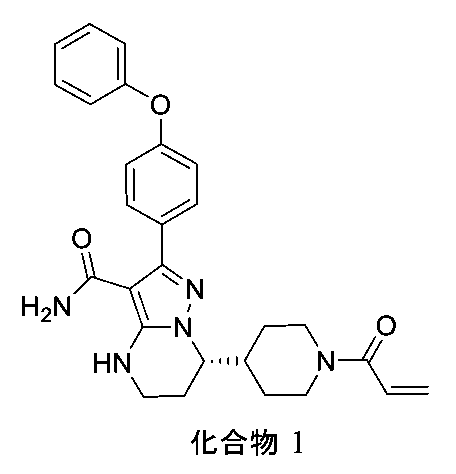
の非晶形であって、前記非晶形が少なくとも90%の鏡像体過剰率の値を有する、非晶形。wherein said amorphous form has an enantiomeric excess value of at least 90%.
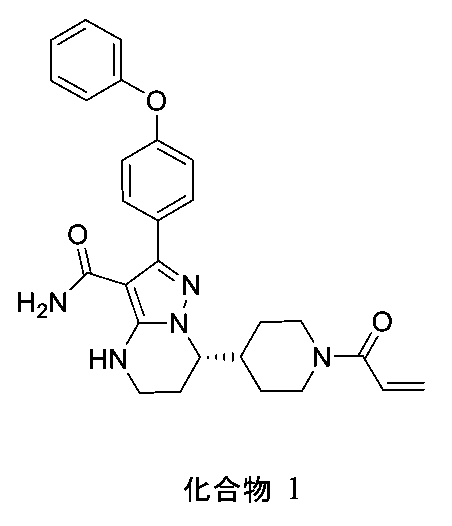
の凍結乾燥非晶形。Lyophilized amorphous form of.
Applications Claiming Priority (6)
| Application Number | Priority Date | Filing Date | Title |
|---|---|---|---|
| CNPCT/CN2016/095510 | 2016-08-16 | ||
| CN2016095510 | 2016-08-16 | ||
| PCT/IB2017/054955 WO2018033853A2 (en) | 2016-08-16 | 2017-08-15 | Crystalline form of (s)-7-(1-acryloylpiperidin-4-yl)-2-(4-phenoxyphenyl)-4,5,6,7-tetra-hydropyrazolo[1,5-a]pyrimidine-3-carboxamide, preparation, and uses thereof |
| JP2019508889A JP7402685B2 (en) | 2016-08-16 | 2017-08-15 | (S)-7-(1-acryloylpiperidin-4-yl)-2-(4-phenoxyphenyl)-4,5,6,7-tetra-hydropyrazolo[1,5-A]pyrimidine-3-carboxamide Crystal forms, their preparation and their uses |
| JP2022030942A JP7413419B2 (en) | 2016-08-16 | 2022-03-01 | (S)-7-(1-acryloylpiperidin-4-yl)-2-(4-phenoxyphenyl)-4,5,6,7-tetra-hydropyrazolo[1,5-A]pyrimidine-3-carboxamide Crystal forms, their preparation and their uses |
| JP2023220256A JP7637459B2 (en) | 2016-08-16 | 2023-12-27 | Crystalline forms of (S)-7-(1-acryloylpiperidin-4-yl)-2-(4-phenoxyphenyl)-4,5,6,7-tetra-hydropyrazolo[1,5-a]pyrimidine-3-carboxamide, their preparation, and uses |
Related Parent Applications (1)
| Application Number | Title | Priority Date | Filing Date |
|---|---|---|---|
| JP2023220256A Division JP7637459B2 (en) | 2016-08-16 | 2023-12-27 | Crystalline forms of (S)-7-(1-acryloylpiperidin-4-yl)-2-(4-phenoxyphenyl)-4,5,6,7-tetra-hydropyrazolo[1,5-a]pyrimidine-3-carboxamide, their preparation, and uses |
Publications (1)
| Publication Number | Publication Date |
|---|---|
| JP2025081429A true JP2025081429A (en) | 2025-05-27 |
Family
ID=61197220
Family Applications (4)
| Application Number | Title | Priority Date | Filing Date |
|---|---|---|---|
| JP2019508889A Active JP7402685B2 (en) | 2016-08-16 | 2017-08-15 | (S)-7-(1-acryloylpiperidin-4-yl)-2-(4-phenoxyphenyl)-4,5,6,7-tetra-hydropyrazolo[1,5-A]pyrimidine-3-carboxamide Crystal forms, their preparation and their uses |
| JP2022030942A Active JP7413419B2 (en) | 2016-08-16 | 2022-03-01 | (S)-7-(1-acryloylpiperidin-4-yl)-2-(4-phenoxyphenyl)-4,5,6,7-tetra-hydropyrazolo[1,5-A]pyrimidine-3-carboxamide Crystal forms, their preparation and their uses |
| JP2023220256A Active JP7637459B2 (en) | 2016-08-16 | 2023-12-27 | Crystalline forms of (S)-7-(1-acryloylpiperidin-4-yl)-2-(4-phenoxyphenyl)-4,5,6,7-tetra-hydropyrazolo[1,5-a]pyrimidine-3-carboxamide, their preparation, and uses |
| JP2025021657A Pending JP2025081429A (en) | 2016-08-16 | 2025-02-13 | Crystalline form of (s)-7-(1-acryloylpiperidin-4-yl)-2-(4-phenoxyphenyl)-4,5,6,7-tetra-hydropyrazolo[1,5-a]pyrimidine-3-carboxamide, preparation thereof, and uses thereof |
Family Applications Before (3)
| Application Number | Title | Priority Date | Filing Date |
|---|---|---|---|
| JP2019508889A Active JP7402685B2 (en) | 2016-08-16 | 2017-08-15 | (S)-7-(1-acryloylpiperidin-4-yl)-2-(4-phenoxyphenyl)-4,5,6,7-tetra-hydropyrazolo[1,5-A]pyrimidine-3-carboxamide Crystal forms, their preparation and their uses |
| JP2022030942A Active JP7413419B2 (en) | 2016-08-16 | 2022-03-01 | (S)-7-(1-acryloylpiperidin-4-yl)-2-(4-phenoxyphenyl)-4,5,6,7-tetra-hydropyrazolo[1,5-A]pyrimidine-3-carboxamide Crystal forms, their preparation and their uses |
| JP2023220256A Active JP7637459B2 (en) | 2016-08-16 | 2023-12-27 | Crystalline forms of (S)-7-(1-acryloylpiperidin-4-yl)-2-(4-phenoxyphenyl)-4,5,6,7-tetra-hydropyrazolo[1,5-a]pyrimidine-3-carboxamide, their preparation, and uses |
Country Status (15)
| Country | Link |
|---|---|
| US (12) | US10927117B2 (en) |
| EP (3) | EP3500575B1 (en) |
| JP (4) | JP7402685B2 (en) |
| KR (3) | KR102793825B1 (en) |
| CN (3) | CN116478165A (en) |
| AU (3) | AU2017314178B2 (en) |
| CA (1) | CA3033827A1 (en) |
| EA (1) | EA201990519A1 (en) |
| IL (3) | IL264784B (en) |
| MX (1) | MX384627B (en) |
| NZ (1) | NZ751418A (en) |
| SG (1) | SG11201901141WA (en) |
| TW (3) | TWI884890B (en) |
| WO (1) | WO2018033853A2 (en) |
| ZA (1) | ZA201900919B (en) |
Families Citing this family (36)
| Publication number | Priority date | Publication date | Assignee | Title |
|---|---|---|---|---|
| DK2989106T3 (en) | 2013-04-25 | 2017-03-20 | Beigene Ltd | CONDENSED HETEROCYCLIC COMPOUNDS AS PROTEINKINASE INHIBITORS |
| PT3702373T (en) | 2013-09-13 | 2022-09-27 | Beigene Switzerland Gmbh | Anti-pd1 antibodies and their use as therapeutics and diagnostics |
| CN110156892B (en) | 2014-07-03 | 2023-05-16 | 百济神州有限公司 | anti-PD-L1 antibodies and their use as therapeutic and diagnostic agents |
| US10864203B2 (en) | 2016-07-05 | 2020-12-15 | Beigene, Ltd. | Combination of a PD-1 antagonist and a RAF inhibitor for treating cancer |
| KR102793825B1 (en) | 2016-08-16 | 2025-04-11 | 베이진 스위찰랜드 게엠베하 | (S)-7-(1-Acryloylpiperidin-4-yl)-2-(4-Phenoxyphenyl)-4,5,6,7-tetra-Hydrazolo[1,5-a]Pyrimidine-3-Carboxamide, Preparation, and Uses Thereof |
| CN110087680B (en) | 2016-08-19 | 2024-03-19 | 百济神州有限公司 | Treating cancer with combination products containing BTK inhibitors |
| TWI774726B (en) | 2017-01-25 | 2022-08-21 | 英屬開曼群島商百濟神州有限公司 | Crystalline forms of (s)-7-(1-(but-2-ynoyl)piperidin-4-yl)-2-(4-phenoxyphenyl)-4,5,6,7-tetrahydropyrazolo[1,5-a]pyrimidine-3-carboxamide, preparation, and uses thereof |
| KR102757960B1 (en) | 2017-06-26 | 2025-01-22 | 베이진 엘티디 | Immunotherapy for hepatocellular carcinoma (HCC) |
| US11377449B2 (en) | 2017-08-12 | 2022-07-05 | Beigene, Ltd. | BTK inhibitors with improved dual selectivity |
| WO2019108795A1 (en) | 2017-11-29 | 2019-06-06 | Beigene Switzerland Gmbh | Treatment of indolent or aggressive b-cell lymphomas using a combination comprising btk inhibitors |
| AU2019245436B2 (en) * | 2018-03-29 | 2024-12-12 | Mati Therapeutics Inc. | Ophthalmic drug sustained release formulation and uses for dry eye syndrome treatment |
| CN111675711A (en) * | 2019-03-11 | 2020-09-18 | 百济神州(苏州)生物科技有限公司 | Single crystal of Btk inhibitor compound and method for producing the same |
| CN111909152B (en) * | 2019-05-08 | 2023-12-15 | 百济神州(苏州)生物科技有限公司 | Preparation method of BTK inhibitor and intermediate thereof |
| MX2021012756A (en) | 2019-05-31 | 2022-04-18 | Haisco Pharmaceuticals Pte Ltd | DERIVED FROM A BTK INHIBITOR RING, METHOD OF PREPARATION OF THIS AND PHARMACEUTICAL APPLICATION FOR IT. |
| CN112057432A (en) * | 2019-06-10 | 2020-12-11 | 百济神州(苏州)生物科技有限公司 | Oral capsule and preparation method thereof |
| CN112057427B (en) * | 2019-06-10 | 2024-09-03 | 百济神州(苏州)生物科技有限公司 | Oral solid tablet containing bruton's tyrosine kinase inhibitor and preparation method thereof |
| WO2020249002A1 (en) * | 2019-06-10 | 2020-12-17 | 百济神州瑞士有限责任公司 | Oral capsule and preparation method therefor |
| TW202446397A (en) * | 2019-06-10 | 2024-12-01 | 瑞士商百濟神州瑞士有限責任公司 | An oral solid tablet containing Brutton's tyrosine kinase inhibitor and a preparation method thereof |
| CN110563733A (en) * | 2019-09-12 | 2019-12-13 | 安帝康(无锡)生物科技有限公司 | Imidazopyrazines as selective BTK inhibitors |
| JP7389905B2 (en) * | 2019-12-04 | 2023-11-30 | 河南知微生物医薬有限公司 | Imidazole carboxamide derivatives as Bruton's tyrosine kinase inhibitors |
| CN110845504A (en) * | 2019-12-19 | 2020-02-28 | 武汉九州钰民医药科技有限公司 | Novel method for synthesizing pratinib |
| CN110922409A (en) * | 2019-12-19 | 2020-03-27 | 武汉九州钰民医药科技有限公司 | Method for preparing BTK inhibitor zebritinib |
| CN110938077B (en) * | 2019-12-25 | 2021-04-27 | 武汉九州钰民医药科技有限公司 | Method for synthesizing Avapritinib |
| CN115175678B (en) * | 2020-02-27 | 2024-12-27 | 百济神州瑞士有限责任公司 | Methods of treating DLBCL using BTK inhibitors and combinations thereof |
| WO2021259732A1 (en) | 2020-06-24 | 2021-12-30 | Sandoz Ag | Multi-component compounds comprising zanubrutinib and a benzoic acid derivative |
| WO2022007824A1 (en) | 2020-07-07 | 2022-01-13 | 四川海思科制药有限公司 | Compound having btk kinase degrading activity, and preparation method and pharmaceutical use therefor |
| WO2022101939A1 (en) * | 2020-11-13 | 2022-05-19 | Msn Laboratories Private Limited, R&D Center | Novel process for the preparation of (s)-7-(1-acryloylpiperidin-4-yl)-2-(4-phenoxyphenyl)-4,5,6,7-tetrahydropyrazolo[1,5-a]pyrimidine-3-carboxamide or its salts thereof |
| JP2023550416A (en) * | 2020-11-20 | 2023-12-01 | ベイジーン スウィッツァーランド ゲーエムベーハー | Methods of treating systemic lupus erythematosus using BTK inhibitors |
| EP4259633A1 (en) | 2020-12-11 | 2023-10-18 | Teva Pharmaceuticals International GmbH | Processes for the preparation of zanubrutinib and intermediates thereof |
| WO2022140246A1 (en) | 2020-12-21 | 2022-06-30 | Hangzhou Jijing Pharmaceutical Technology Limited | Methods and compounds for targeted autophagy |
| WO2023014817A1 (en) | 2021-08-03 | 2023-02-09 | Syros Pharmaceuticals, Inc. | Compositions and methods for treating lymphomas with a cdk7 inhibitor in combination with a btk inhibitor |
| IT202100025997A1 (en) * | 2021-10-11 | 2023-04-11 | Olon Spa | PROCESS FOR THE PREPARATION OF ZANUBRUTINIB |
| IT202200009872A1 (en) * | 2022-05-12 | 2023-11-12 | Olon Spa | Preparation process of Zanubrutinib in amorphous form. |
| IT202200024192A1 (en) * | 2022-11-24 | 2024-05-24 | Olon Spa | Process for the preparation of Zanubrutinib. |
| CN118307541A (en) * | 2023-01-09 | 2024-07-09 | 天津济坤医药科技有限公司 | Deuterated pyrazolopyrimidine derivative, preparation method thereof, pharmaceutical composition, conjugate and application |
| CN117430610A (en) * | 2023-10-11 | 2024-01-23 | 宁夏医科大学 | A deuterated fused heterocyclic compound and its preparation method and application |
Citations (2)
| Publication number | Priority date | Publication date | Assignee | Title |
|---|---|---|---|---|
| JP2016521273A (en) * | 2013-04-25 | 2016-07-21 | ベイジーン,リミテッド | Fused heterocyclic compounds as protein kinase inhibitors |
| JP2024026550A (en) * | 2016-08-16 | 2024-02-28 | ベイジーン スウィッツァーランド ゲーエムベーハー | (S)-7-(1-acryloylpiperidin-4-yl)-2-(4-phenoxyphenyl)-4,5,6,7-tetra-hydropyrazolo[1,5-A]pyrimidine-3-carboxamide Crystal forms, their preparation and their uses |
Family Cites Families (116)
| Publication number | Priority date | Publication date | Assignee | Title |
|---|---|---|---|---|
| BE792533A (en) | 1971-12-09 | 1973-06-08 | Int Chem & Nuclear Corp | NEW PYRAZOLO (1.5A) PYRIMIDINES AND THEIR PREPARATION PROCESS |
| JP2778921B2 (en) | 1994-11-18 | 1998-07-23 | 三共株式会社 | Imidazopyrazole derivatives |
| WO2001016138A1 (en) | 1999-08-27 | 2001-03-08 | Abbott Laboratories | Sulfonylphenylpyrazole compounds useful as cox-2 inhibitors |
| CN1390219A (en) * | 1999-09-17 | 2003-01-08 | 艾博特股份有限两合公司 | Pyrazolopyrimidines as therapeutic agents |
| US7041298B2 (en) | 2000-09-08 | 2006-05-09 | California Institute Of Technology | Proteolysis targeting chimeric pharmaceutical |
| US20020094989A1 (en) * | 2000-10-11 | 2002-07-18 | Hale Jeffrey J. | Pyrrolidine modulators of CCR5 chemokine receptor activity |
| WO2002050071A1 (en) | 2000-12-21 | 2002-06-27 | Bristol-Myers Squibb Company | Thiazolyl inhibitors of tec family tyrosine kinases |
| JP2004516295A (en) * | 2000-12-21 | 2004-06-03 | ワーナー−ランバート・カンパニー、リミテッド、ライアビリティ、カンパニー | Piperidine derivatives as subtype selective N-methyl-D-aspartate antagonists |
| AP2002002460A0 (en) | 2001-03-09 | 2002-06-30 | Pfizer Prod Inc | Novel benzimidazole anti-inflammatory compounds. |
| WO2003004497A1 (en) | 2001-07-05 | 2003-01-16 | Sumitomo Pharmaceuticals Company, Limited | Novel heterocyclic compound |
| US20040132101A1 (en) | 2002-09-27 | 2004-07-08 | Xencor | Optimized Fc variants and methods for their generation |
| NZ538223A (en) | 2002-08-26 | 2008-03-28 | Takeda Pharmaceutical | Calcium receptor modulating compound and use thereof |
| CN1771231B (en) | 2002-08-26 | 2011-05-25 | 武田药品工业株式会社 | Calcium receptor modulating compounds and uses thereof |
| WO2005014599A1 (en) | 2003-06-04 | 2005-02-17 | Cellular Genomics, Inc. | Imidazo[1,2-a]pyrazin-8-ylamines and method of inhibition of bruton’s tyrosine kinase by such compounds |
| US20060183746A1 (en) | 2003-06-04 | 2006-08-17 | Currie Kevin S | Certain imidazo[1,2-a]pyrazin-8-ylamines and method of inhibition of Bruton's tyrosine kinase by such compounds |
| WO2005005429A1 (en) | 2003-06-30 | 2005-01-20 | Cellular Genomics, Inc. | Certain heterocyclic substituted imidazo[1,2-a]pyrazin-8-ylamines and methods of inhibition of bruton’s tyrosine kinase by such compounds |
| MXPA06001098A (en) | 2003-07-29 | 2006-04-24 | Irm Llc | Compounds and compositions as protein kinase inhibitors. |
| WO2005047290A2 (en) | 2003-11-11 | 2005-05-26 | Cellular Genomics Inc. | Imidazo[1,2-a] pyrazin-8-ylamines as kinase inhibitors |
| WO2006053121A2 (en) | 2004-11-10 | 2006-05-18 | Cgi Pharmaceuticals, Inc. | Imidazo[1 , 2-a] pyrazin-8-ylamines useful as modulators of kinase activity |
| RU2423351C2 (en) | 2004-12-16 | 2011-07-10 | Вертекс Фармасьютикалз Инкорпорейтед | Pyrid-2-ones applicable as protein kinase inhibitors of tec family for treating inflammatory, proliferative and immunologically mediated diseases |
| ES2543607T3 (en) | 2005-03-10 | 2015-08-20 | Gilead Connecticut, Inc. | Certain substituted amides, method of obtaining, and method of use |
| CA2620352A1 (en) | 2005-08-29 | 2007-03-08 | Vertex Pharmaceuticals Incorporated | 3, 5-disubstituted pyrid-2-ones useful as inhibitors of tec family of non-receptor tyrosine kinases |
| EP1919891B1 (en) | 2005-08-29 | 2012-03-07 | Vertex Pharmaceuticals Incorporated | 3,5-disubstituted pyrid-2-ones useful as inhibitors of tec family of non-receptor tyrosine kinases |
| WO2007026720A1 (en) * | 2005-08-31 | 2007-03-08 | Taisho Pharmaceutical Co., Ltd. | Ring-fused pyrazole derivative |
| RU2008112290A (en) | 2005-09-01 | 2009-10-10 | Астеллас Фарма Инк. (Jp) | PYRIDAZINONE DERIVATIVES USED FOR TREATING PAIN |
| EP1981888A4 (en) | 2006-01-13 | 2010-10-13 | Pharmacyclics Inc | Inhibitors of tyrosine kinases and uses thereof |
| AU2007254179B2 (en) | 2006-05-18 | 2013-03-21 | Pharmacyclics Llc | Intracellular kinase inhibitors |
| JO3235B1 (en) | 2006-05-26 | 2018-03-08 | Astex Therapeutics Ltd | Pyrrolopyrimidine compounds and their uses |
| AR063946A1 (en) | 2006-09-11 | 2009-03-04 | Cgi Pharmaceuticals Inc | CERTAIN REPLACED PIRIMIDINS, THE USE OF THE SAME FOR THE TREATMENT OF DISEASES MEDIATED BY THE INHIBITION OF THE ACTIVITY OF BTK AND PHARMACEUTICAL COMPOSITIONS THAT UNDERSTAND THEM. |
| AR063707A1 (en) | 2006-09-11 | 2009-02-11 | Cgi Pharmaceuticals Inc | CERTAIN AMIDAS REPLACED, THE USE OF THE SAME FOR THE TREATMENT OF DISEASES MEDIATED BY THE INHIBITION OF THE ACTIVITY OF BTK AND PHARMACEUTICAL COMPOSITIONS THAT UNDERSTAND THEM. |
| WO2008033858A2 (en) | 2006-09-11 | 2008-03-20 | Cgi Pharmaceuticals, Inc. | Kinase inhibitors, and methods of using and identifying kinase inhibitors |
| AR063706A1 (en) | 2006-09-11 | 2009-02-11 | Cgi Pharmaceuticals Inc | CERTAIN AMIDAS REPLACED, THE USE OF THE SAME FOR THE TREATMENT OF DISEASES MEDIATED BY THE INHIBITION OF THE ACTIVITY OF BTK AND PHARMACEUTICAL COMPOSITIONS THAT UNDERSTAND THEM. |
| ES2585902T3 (en) | 2006-09-22 | 2016-10-10 | Pharmacyclics Llc | Bruton tyrosine kinase inhibitors |
| CN101522026A (en) | 2006-10-06 | 2009-09-02 | Irm责任有限公司 | Protein kinase inhibitors and methods for using thereof |
| WO2008054827A2 (en) | 2006-11-03 | 2008-05-08 | Pharmacyclics, Inc. | Bruton's tyrosine kinase activity probe and method of using |
| CN101730699A (en) | 2007-03-21 | 2010-06-09 | 百时美施贵宝公司 | Can be used for treating the condensed heterocyclic compouds of proliferative, allergy, autoimmunity and diseases associated with inflammation |
| WO2008144253A1 (en) | 2007-05-14 | 2008-11-27 | Irm Llc | Protein kinase inhibitors and methods for using thereof |
| CL2008002793A1 (en) | 2007-09-20 | 2009-09-04 | Cgi Pharmaceuticals Inc | Compounds derived from substituted amides, inhibitors of btk activity; pharmaceutical composition comprising them; Useful in the treatment of cancer, bone disorders, autoimmune diseases, among others |
| TWI475996B (en) | 2007-10-19 | 2015-03-11 | Celgene Avilomics Res Inc | Heteroaryl compounds and uses thereof |
| US7989465B2 (en) | 2007-10-19 | 2011-08-02 | Avila Therapeutics, Inc. | 4,6-disubstituted pyrimidines useful as kinase inhibitors |
| CA2701275C (en) | 2007-10-23 | 2016-06-21 | F. Hoffmann-La Roche Ag | Kinase inhibitors |
| ES2462642T3 (en) | 2007-12-14 | 2014-05-26 | F. Hoffmann-La Roche Ag | New derivatives of imidazo [1,2-a] pyridine and imidazo [1,2-b] pyridazine |
| KR101308803B1 (en) | 2008-02-05 | 2013-09-13 | 에프. 호프만-라 로슈 아게 | Novel pyridinones and pyridazinones |
| JP5529852B2 (en) | 2008-05-06 | 2014-06-25 | ジリード コネティカット,インコーポレイティド | Substituted amides, their preparation and use as Btk inhibitors |
| DK2361248T3 (en) | 2008-06-27 | 2019-01-14 | Celgene Car Llc | Heteroberl compounds and uses thereof |
| US8338439B2 (en) | 2008-06-27 | 2012-12-25 | Celgene Avilomics Research, Inc. | 2,4-disubstituted pyrimidines useful as kinase inhibitors |
| AU2009265813B2 (en) | 2008-07-02 | 2014-04-10 | F. Hoffmann-La Roche Ag | Novel phenylpyrazinones as kinase inhibitors |
| CA2726460C (en) | 2008-07-15 | 2017-02-21 | F. Hoffmann-La Roche Ag | Novel phenyl-imidazopyridines and pyridazines |
| CN102159214A (en) | 2008-07-16 | 2011-08-17 | 药品循环公司 | Inhibitors of Bruton's tyrosine kinase for the treatment of solid tumors |
| CN102066377B (en) | 2008-07-18 | 2014-11-19 | 霍夫曼-拉罗奇有限公司 | Novel phenylimidazopyrazines |
| WO2010011837A1 (en) | 2008-07-24 | 2010-01-28 | Bristol-Myers Squibb Company | Fused heterocyclic compounds useful as kinase modulators |
| MY156789A (en) | 2008-09-05 | 2016-03-31 | Celgene Avilomics Res Inc | Algorithm for designing irreversible inhibitors |
| EP2962566A1 (en) | 2008-10-31 | 2016-01-06 | Genentech, Inc. | Pyrazolopyrimidine jak inhibitor compounds and methods |
| US20120028981A1 (en) | 2008-11-05 | 2012-02-02 | Principia Biopharma Inc. | Kinase Knockdown Via Electrophilically Enhanced Inhibitors |
| US8598174B2 (en) | 2008-11-12 | 2013-12-03 | Genetech, Inc. | Pyridazinones, method of making, and method of use thereof |
| US8426428B2 (en) | 2008-12-05 | 2013-04-23 | Principia Biopharma, Inc. | EGFR kinase knockdown via electrophilically enhanced inhibitors |
| WO2010068806A1 (en) | 2008-12-10 | 2010-06-17 | Cgi Pharmaceuticals, Inc. | Amide derivatives as btk inhibitors in the treatment of allergic, autoimmune and inflammatory disorders as well as cancer |
| WO2010068788A1 (en) | 2008-12-10 | 2010-06-17 | Cgi Pharmaceuticals, Inc. | Heterocyclic amides as btk inhibitors |
| WO2010068810A2 (en) | 2008-12-10 | 2010-06-17 | Cgi Pharmaceuticals, Inc. | Certain substituted amides, method of making, and method of use thereof |
| NZ593096A (en) | 2008-12-19 | 2012-11-30 | Bristol Myers Squibb Co | Carbazole carboxamide compounds useful as kinase inhibitors |
| WO2010080712A2 (en) | 2009-01-06 | 2010-07-15 | Dana Farber Cancer Institute | Pyrimido-diazepinone kinase scaffold compounds and methods of treating disorders |
| US8299077B2 (en) | 2009-03-02 | 2012-10-30 | Roche Palo Alto Llc | Inhibitors of Bruton's tyrosine kinase |
| EP2421854B1 (en) | 2009-04-24 | 2014-07-23 | F.Hoffmann-La Roche Ag | Inhibitors of bruton's tyrosine kinase |
| JP5656976B2 (en) | 2009-04-29 | 2015-01-21 | ローカス ファーマシューティカルズ インコーポレイテッド | Pyrrolotriazine compounds |
| ES2444777T3 (en) | 2009-06-12 | 2014-02-26 | Bristol-Myers Squibb Company | Nicotinamide compounds useful as kinase modulators |
| AR077468A1 (en) | 2009-07-09 | 2011-08-31 | Array Biopharma Inc | PIRAZOLO COMPOUNDS (1,5-A) PYRIMIDINE SUBSTITUTED AS TRK-QUINASA INHIBITORS |
| EP2789614B1 (en) | 2009-08-11 | 2017-04-26 | Bristol-Myers Squibb Company | Azaindazoles as Btk kinase modulators and use thereof |
| US8785440B2 (en) | 2009-09-04 | 2014-07-22 | Biogen Idec Ma, Inc. | Bruton's tyrosine kinase inhibitors |
| EP2485589A4 (en) | 2009-09-04 | 2013-02-06 | Biogen Idec Inc | HETEROARYARY INHIBITORS OF BTK |
| US7718662B1 (en) * | 2009-10-12 | 2010-05-18 | Pharmacyclics, Inc. | Pyrazolo-pyrimidine inhibitors of bruton's tyrosine kinase |
| MX2012012975A (en) | 2010-05-07 | 2013-02-26 | Genentech Inc | Pyridone and aza-pyridone compounds and methods of use. |
| CN102918040B (en) | 2010-05-31 | 2015-03-18 | 小野药品工业株式会社 | Purinone derivative |
| NZ702485A (en) | 2010-06-03 | 2016-04-29 | Pharmacyclics Llc | The use of inhibitors of bruton’s tyrosine kinase (btk) |
| US8685969B2 (en) | 2010-06-16 | 2014-04-01 | Bristol-Myers Squibb Company | Carboline carboxamide compounds useful as kinase inhibitors |
| BR122014012788B1 (en) | 2010-06-23 | 2022-04-19 | Hanmi Science Co., Ltd | Fused pyrimidine derivatives, their uses, and pharmaceutical composition for inhibiting tyrosine kinase activity |
| US20120053189A1 (en) | 2010-06-28 | 2012-03-01 | Pharmacyclics, Inc. | Btk inhibitors for the treatment of immune mediated conditions |
| KR20130099040A (en) | 2010-08-10 | 2013-09-05 | 셀진 아빌로믹스 리서치, 인코포레이티드 | Besylate salt of a btk inhibitor |
| AR082590A1 (en) | 2010-08-12 | 2012-12-19 | Hoffmann La Roche | INHIBITORS OF THE TIROSINA-QUINASA DE BRUTON |
| CN106220614B (en) | 2010-09-01 | 2019-07-16 | 吉利德康涅狄格有限公司 | Pyridone/pyrazinones, preparation method and application method |
| CA2809662C (en) | 2010-09-01 | 2019-04-16 | Gilead Connecticut, Inc. | Pyridazinones, method of making, and method of use thereof |
| CN103889962B (en) | 2011-04-01 | 2017-05-03 | 犹他大学研究基金会 | Substituted n-(3-(pyrimidin-4-yl)phenyl)acrylamide analogs as tyrosine receptor kinase BTK inhibitors |
| CA2760174A1 (en) | 2011-12-01 | 2013-06-01 | Pharmascience Inc. | Protein kinase inhibitors and uses thereof |
| CN103596958A (en) | 2011-04-20 | 2014-02-19 | 葛兰素集团有限公司 | Tetrahydropyrazolo [1,5 -a] pyrimidine as anti -tuberculosis compounds |
| PL2710005T3 (en) | 2011-05-17 | 2017-07-31 | Principia Biopharma Inc. | Tyrosine kinase inhibitors |
| KR101585753B1 (en) | 2011-05-17 | 2016-01-14 | 에프. 호프만-라 로슈 아게 | Inhibitors of bruton's tyrosine kinase |
| WO2012158795A1 (en) | 2011-05-17 | 2012-11-22 | Principia Biopharma Inc. | Pyrazolopyrimidine derivatives as tyrosine kinase inhibitors |
| US20140107151A1 (en) | 2011-05-17 | 2014-04-17 | Principia Biophama Inc. | Tyrosine kinase inhibitors |
| KR20190011343A (en) | 2011-06-10 | 2019-02-01 | 메르크 파텐트 게엠베하 | Compositions and Methods for the Production of Pyrimidine and Pyridine Compounds with BTK Inhibitory Activity |
| KR20140058543A (en) | 2011-07-08 | 2014-05-14 | 노파르티스 아게 | Novel pyrrolo pyrimidine derivatives |
| PT3702373T (en) | 2013-09-13 | 2022-09-27 | Beigene Switzerland Gmbh | Anti-pd1 antibodies and their use as therapeutics and diagnostics |
| AU2014339816B2 (en) | 2013-10-25 | 2020-05-28 | Pharmacyclics Llc | Treatment using Bruton's tyrosine kinase inhibitors and immunotherapy |
| CN110156892B (en) | 2014-07-03 | 2023-05-16 | 百济神州有限公司 | anti-PD-L1 antibodies and their use as therapeutic and diagnostic agents |
| TW201607930A (en) * | 2014-07-18 | 2016-03-01 | 百濟神州有限公司 | 5-amino-4-carbamoyl-pyrazole compounds as selective and irreversible T790M over WT EGFR kinase inhibitors and the use thereof |
| US20170239351A1 (en) | 2014-08-11 | 2017-08-24 | Acerta Pharma B.V. | Therapeutic Combinations of a BTK Inhibitor, a PI3K Inhibitor, a JAK-2 Inhibitor, a PD-1 Inhibitor, and/or a PD-L1 Inhibitor |
| EP3180343A1 (en) | 2014-08-14 | 2017-06-21 | Assia Chemical Industries Ltd. | Solid state forms of ibrutinib |
| WO2016087994A1 (en) | 2014-12-05 | 2016-06-09 | Acerta Pharma B.V. | Btk inhibitors to treat solid tumors through modulation of the tumor microenvironment |
| CA2970723C (en) * | 2014-12-18 | 2023-09-05 | Principia Biopharma Inc. | Treatment of pemphigus |
| US20180193274A1 (en) * | 2014-12-24 | 2018-07-12 | Principia Biopharma Inc. | Compositions for ileo-jejunal drug delivery |
| US9717745B2 (en) | 2015-03-19 | 2017-08-01 | Zhejiang DTRM Biopharma Co. Ltd. | Pharmaceutical compositions and their use for treatment of cancer and autoimmune diseases |
| US20190022092A1 (en) | 2015-09-15 | 2019-01-24 | Acerta Pharma B.V. | Therapeutic Combinations of a BTK Inhibitor and a GITR Binding Molecule, a 4-1BB Agonist, or an OX40 Agonist |
| ES2900482T3 (en) | 2015-10-01 | 2022-03-17 | Gilead Sciences Inc | Combination of a Btk inhibitor and a checkpoint inhibitor for cancer treatment |
| EP3417861B1 (en) | 2016-02-19 | 2020-09-23 | Jiangsu Hengrui Medicine Co., Ltd. | Pharmaceutical composition containing jak kinase inhibitor or pharmaceutically acceptable salt thereof |
| CN110087680B (en) | 2016-08-19 | 2024-03-19 | 百济神州有限公司 | Treating cancer with combination products containing BTK inhibitors |
| CN108778281B (en) | 2016-11-25 | 2021-09-03 | 江苏恒瑞医药股份有限公司 | Pyridone derivative pharmaceutical composition and preparation method thereof |
| TWI774726B (en) | 2017-01-25 | 2022-08-21 | 英屬開曼群島商百濟神州有限公司 | Crystalline forms of (s)-7-(1-(but-2-ynoyl)piperidin-4-yl)-2-(4-phenoxyphenyl)-4,5,6,7-tetrahydropyrazolo[1,5-a]pyrimidine-3-carboxamide, preparation, and uses thereof |
| CA3057749A1 (en) | 2017-04-20 | 2018-10-25 | Adc Therapeutics Sa | Combination therapy |
| KR102757960B1 (en) | 2017-06-26 | 2025-01-22 | 베이진 엘티디 | Immunotherapy for hepatocellular carcinoma (HCC) |
| US11377449B2 (en) | 2017-08-12 | 2022-07-05 | Beigene, Ltd. | BTK inhibitors with improved dual selectivity |
| WO2019108795A1 (en) | 2017-11-29 | 2019-06-06 | Beigene Switzerland Gmbh | Treatment of indolent or aggressive b-cell lymphomas using a combination comprising btk inhibitors |
| WO2019183226A1 (en) | 2018-03-21 | 2019-09-26 | Mei Pharma, Inc. | Combination therapy |
| TW202446397A (en) | 2019-06-10 | 2024-12-01 | 瑞士商百濟神州瑞士有限責任公司 | An oral solid tablet containing Brutton's tyrosine kinase inhibitor and a preparation method thereof |
| WO2020249002A1 (en) | 2019-06-10 | 2020-12-17 | 百济神州瑞士有限责任公司 | Oral capsule and preparation method therefor |
| CN114174299B (en) | 2019-07-26 | 2024-10-25 | 百济神州有限公司 | Degradation of Bruton's tyrosine kinase (BTK) by conjugating BTK inhibitors to E3 ligase ligands and methods of use |
| AU2020344757A1 (en) | 2019-09-11 | 2022-03-24 | Beigene, Ltd. | Treatment of cancer using a combination comprising multi-tyrosine kinase inhibitor and immune checkpoint inhibitor |
| EP4061851A4 (en) | 2019-11-21 | 2023-12-20 | BeiGene, Ltd. | METHOD FOR CANCER TREATMENT USING ANTI-OX40 ANTIBODIES IN COMBINATION WITH PI3-KINASE DELTA INHIBITORS |
| CN115175678B (en) | 2020-02-27 | 2024-12-27 | 百济神州瑞士有限责任公司 | Methods of treating DLBCL using BTK inhibitors and combinations thereof |
-
2017
- 2017-08-15 KR KR1020237039678A patent/KR102793825B1/en active Active
- 2017-08-15 SG SG11201901141WA patent/SG11201901141WA/en unknown
- 2017-08-15 CA CA3033827A patent/CA3033827A1/en active Pending
- 2017-08-15 EP EP17841172.4A patent/EP3500575B1/en active Active
- 2017-08-15 AU AU2017314178A patent/AU2017314178B2/en active Active
- 2017-08-15 KR KR1020257011064A patent/KR20250052473A/en not_active Ceased
- 2017-08-15 TW TW113147712A patent/TWI884890B/en active
- 2017-08-15 KR KR1020197007529A patent/KR102604975B1/en active Active
- 2017-08-15 CN CN202310094009.2A patent/CN116478165A/en active Pending
- 2017-08-15 EP EP24217178.3A patent/EP4509183A3/en active Pending
- 2017-08-15 EA EA201990519A patent/EA201990519A1/en unknown
- 2017-08-15 EP EP24160079.0A patent/EP4353322A3/en active Pending
- 2017-08-15 TW TW111117667A patent/TWI865873B/en active
- 2017-08-15 CN CN201780049930.8A patent/CN109563099B/en active Active
- 2017-08-15 JP JP2019508889A patent/JP7402685B2/en active Active
- 2017-08-15 CN CN202310119012.5A patent/CN116478166A/en active Pending
- 2017-08-15 IL IL264784A patent/IL264784B/en unknown
- 2017-08-15 WO PCT/IB2017/054955 patent/WO2018033853A2/en not_active Ceased
- 2017-08-15 NZ NZ751418A patent/NZ751418A/en unknown
- 2017-08-15 US US16/325,447 patent/US10927117B2/en active Active
- 2017-08-15 MX MX2019001900A patent/MX384627B/en unknown
- 2017-08-15 TW TW106127682A patent/TWI760356B/en active
-
2019
- 2019-02-13 ZA ZA2019/00919A patent/ZA201900919B/en unknown
-
2021
- 2021-01-12 US US17/146,855 patent/US20210130363A1/en not_active Abandoned
-
2022
- 2022-01-17 AU AU2022200278A patent/AU2022200278B2/en active Active
- 2022-03-01 JP JP2022030942A patent/JP7413419B2/en active Active
- 2022-05-10 US US17/740,877 patent/US20220274994A1/en not_active Abandoned
- 2022-05-10 US US17/740,882 patent/US11591340B2/en active Active
- 2022-05-24 IL IL293319A patent/IL293319B1/en unknown
- 2022-07-06 US US17/858,827 patent/US11814389B2/en active Active
- 2022-07-06 US US17/858,826 patent/US11884674B2/en active Active
- 2022-09-02 US US17/901,951 patent/US11851437B2/en active Active
-
2023
- 2023-03-07 US US18/118,555 patent/US20230242542A1/en not_active Abandoned
- 2023-10-19 US US18/381,767 patent/US11999743B2/en active Active
- 2023-11-03 US US18/386,777 patent/US12103931B2/en active Active
- 2023-12-01 US US18/526,535 patent/US11970500B1/en active Active
- 2023-12-27 JP JP2023220256A patent/JP7637459B2/en active Active
-
2024
- 2024-01-03 AU AU2024200030A patent/AU2024200030A1/en active Pending
- 2024-08-21 US US18/810,987 patent/US20240409546A1/en active Pending
-
2025
- 2025-02-13 JP JP2025021657A patent/JP2025081429A/en active Pending
- 2025-12-23 IL IL325562A patent/IL325562A/en unknown
Patent Citations (2)
| Publication number | Priority date | Publication date | Assignee | Title |
|---|---|---|---|---|
| JP2016521273A (en) * | 2013-04-25 | 2016-07-21 | ベイジーン,リミテッド | Fused heterocyclic compounds as protein kinase inhibitors |
| JP2024026550A (en) * | 2016-08-16 | 2024-02-28 | ベイジーン スウィッツァーランド ゲーエムベーハー | (S)-7-(1-acryloylpiperidin-4-yl)-2-(4-phenoxyphenyl)-4,5,6,7-tetra-hydropyrazolo[1,5-A]pyrimidine-3-carboxamide Crystal forms, their preparation and their uses |
Non-Patent Citations (1)
| Title |
|---|
| HANCOCK,B. C.,ET AL, JOURNAL OF PHARMACEUTICAL SCIENCES, vol. 86, no. 1, JPN6014008491, 1997, pages 1 - 12, ISSN: 0005667076 * |
Also Published As
Similar Documents
| Publication | Publication Date | Title |
|---|---|---|
| JP7637459B2 (en) | Crystalline forms of (S)-7-(1-acryloylpiperidin-4-yl)-2-(4-phenoxyphenyl)-4,5,6,7-tetra-hydropyrazolo[1,5-a]pyrimidine-3-carboxamide, their preparation, and uses | |
| HK40109095A (en) | Crystalline form of (s)-7-(1-acryloylpiperidin-4-yl)-2-(4-phenoxyphenyl)-4,5,6,7-tetra-hydropyrazolo[1,5-a]pyrimidine-3-carboxamide,preparation, and uses thereof |
Legal Events
| Date | Code | Title | Description |
|---|---|---|---|
| A621 | Written request for application examination |
Free format text: JAPANESE INTERMEDIATE CODE: A621 Effective date: 20250213 |
|
| A871 | Explanation of circumstances concerning accelerated examination |
Free format text: JAPANESE INTERMEDIATE CODE: A871 Effective date: 20250213 |
|
| A131 | Notification of reasons for refusal |
Free format text: JAPANESE INTERMEDIATE CODE: A131 Effective date: 20250328 |
|
| A521 | Request for written amendment filed |
Free format text: JAPANESE INTERMEDIATE CODE: A523 Effective date: 20250626 |
|
| A02 | Decision of refusal |
Free format text: JAPANESE INTERMEDIATE CODE: A02 Effective date: 20250819 |