JP2019536793A - Compositions and methods related to cell lines for penetrating solid tumors - Google Patents
Compositions and methods related to cell lines for penetrating solid tumors Download PDFInfo
- Publication number
- JP2019536793A JP2019536793A JP2019529525A JP2019529525A JP2019536793A JP 2019536793 A JP2019536793 A JP 2019536793A JP 2019529525 A JP2019529525 A JP 2019529525A JP 2019529525 A JP2019529525 A JP 2019529525A JP 2019536793 A JP2019536793 A JP 2019536793A
- Authority
- JP
- Japan
- Prior art keywords
- cells
- tumor
- cell
- antibody
- cancer
- Prior art date
- Legal status (The legal status is an assumption and is not a legal conclusion. Google has not performed a legal analysis and makes no representation as to the accuracy of the status listed.)
- Pending
Links
Images


Classifications
-
- A—HUMAN NECESSITIES
- A61—MEDICAL OR VETERINARY SCIENCE; HYGIENE
- A61K—PREPARATIONS FOR MEDICAL, DENTAL OR TOILETRY PURPOSES
- A61K35/00—Medicinal preparations containing materials or reaction products thereof with undetermined constitution
- A61K35/12—Materials from mammals; Compositions comprising non-specified tissues or cells; Compositions comprising non-embryonic stem cells; Genetically modified cells
- A61K35/14—Blood; Artificial blood
- A61K35/18—Erythrocytes
-
- A—HUMAN NECESSITIES
- A61—MEDICAL OR VETERINARY SCIENCE; HYGIENE
- A61K—PREPARATIONS FOR MEDICAL, DENTAL OR TOILETRY PURPOSES
- A61K39/00—Medicinal preparations containing antigens or antibodies
- A61K39/395—Antibodies; Immunoglobulins; Immune serum, e.g. antilymphocytic serum
- A61K39/39533—Antibodies; Immunoglobulins; Immune serum, e.g. antilymphocytic serum against materials from animals
- A61K39/39558—Antibodies; Immunoglobulins; Immune serum, e.g. antilymphocytic serum against materials from animals against tumor tissues, cells, antigens
-
- A—HUMAN NECESSITIES
- A61—MEDICAL OR VETERINARY SCIENCE; HYGIENE
- A61K—PREPARATIONS FOR MEDICAL, DENTAL OR TOILETRY PURPOSES
- A61K39/00—Medicinal preparations containing antigens or antibodies
- A61K39/395—Antibodies; Immunoglobulins; Immune serum, e.g. antilymphocytic serum
- A61K39/39533—Antibodies; Immunoglobulins; Immune serum, e.g. antilymphocytic serum against materials from animals
-
- A—HUMAN NECESSITIES
- A61—MEDICAL OR VETERINARY SCIENCE; HYGIENE
- A61K—PREPARATIONS FOR MEDICAL, DENTAL OR TOILETRY PURPOSES
- A61K39/00—Medicinal preparations containing antigens or antibodies
- A61K39/0005—Vertebrate antigens
- A61K39/0011—Cancer antigens
-
- A—HUMAN NECESSITIES
- A61—MEDICAL OR VETERINARY SCIENCE; HYGIENE
- A61K—PREPARATIONS FOR MEDICAL, DENTAL OR TOILETRY PURPOSES
- A61K39/00—Medicinal preparations containing antigens or antibodies
- A61K39/0005—Vertebrate antigens
- A61K39/0011—Cancer antigens
- A61K39/001102—Receptors, cell surface antigens or cell surface determinants
- A61K39/001124—CD20
-
- A—HUMAN NECESSITIES
- A61—MEDICAL OR VETERINARY SCIENCE; HYGIENE
- A61K—PREPARATIONS FOR MEDICAL, DENTAL OR TOILETRY PURPOSES
- A61K47/00—Medicinal preparations characterised by the non-active ingredients used, e.g. carriers or inert additives; Targeting or modifying agents chemically bound to the active ingredient
- A61K47/50—Medicinal preparations characterised by the non-active ingredients used, e.g. carriers or inert additives; Targeting or modifying agents chemically bound to the active ingredient the non-active ingredient being chemically bound to the active ingredient, e.g. polymer-drug conjugates
- A61K47/51—Medicinal preparations characterised by the non-active ingredients used, e.g. carriers or inert additives; Targeting or modifying agents chemically bound to the active ingredient the non-active ingredient being chemically bound to the active ingredient, e.g. polymer-drug conjugates the non-active ingredient being a modifying agent
- A61K47/62—Medicinal preparations characterised by the non-active ingredients used, e.g. carriers or inert additives; Targeting or modifying agents chemically bound to the active ingredient the non-active ingredient being chemically bound to the active ingredient, e.g. polymer-drug conjugates the non-active ingredient being a modifying agent the modifying agent being a protein, peptide or polyamino acid
- A61K47/64—Drug-peptide, drug-protein or drug-polyamino acid conjugates, i.e. the modifying agent being a peptide, protein or polyamino acid which is covalently bonded or complexed to a therapeutically active agent
-
- A—HUMAN NECESSITIES
- A61—MEDICAL OR VETERINARY SCIENCE; HYGIENE
- A61K—PREPARATIONS FOR MEDICAL, DENTAL OR TOILETRY PURPOSES
- A61K47/00—Medicinal preparations characterised by the non-active ingredients used, e.g. carriers or inert additives; Targeting or modifying agents chemically bound to the active ingredient
- A61K47/50—Medicinal preparations characterised by the non-active ingredients used, e.g. carriers or inert additives; Targeting or modifying agents chemically bound to the active ingredient the non-active ingredient being chemically bound to the active ingredient, e.g. polymer-drug conjugates
- A61K47/51—Medicinal preparations characterised by the non-active ingredients used, e.g. carriers or inert additives; Targeting or modifying agents chemically bound to the active ingredient the non-active ingredient being chemically bound to the active ingredient, e.g. polymer-drug conjugates the non-active ingredient being a modifying agent
- A61K47/68—Medicinal preparations characterised by the non-active ingredients used, e.g. carriers or inert additives; Targeting or modifying agents chemically bound to the active ingredient the non-active ingredient being chemically bound to the active ingredient, e.g. polymer-drug conjugates the non-active ingredient being a modifying agent the modifying agent being an antibody, an immunoglobulin or a fragment thereof, e.g. an Fc-fragment
- A61K47/6801—Drug-antibody or immunoglobulin conjugates defined by the pharmacologically or therapeutically active agent
- A61K47/6803—Drugs conjugated to an antibody or immunoglobulin, e.g. cisplatin-antibody conjugates
- A61K47/6811—Drugs conjugated to an antibody or immunoglobulin, e.g. cisplatin-antibody conjugates the drug being a protein or peptide, e.g. transferrin or bleomycin
-
- A—HUMAN NECESSITIES
- A61—MEDICAL OR VETERINARY SCIENCE; HYGIENE
- A61P—SPECIFIC THERAPEUTIC ACTIVITY OF CHEMICAL COMPOUNDS OR MEDICINAL PREPARATIONS
- A61P35/00—Antineoplastic agents
-
- C—CHEMISTRY; METALLURGY
- C07—ORGANIC CHEMISTRY
- C07K—PEPTIDES
- C07K16/00—Immunoglobulins [IGs], e.g. monoclonal or polyclonal antibodies
- C07K16/18—Immunoglobulins [IGs], e.g. monoclonal or polyclonal antibodies against material from animals or humans
- C07K16/28—Immunoglobulins [IGs], e.g. monoclonal or polyclonal antibodies against material from animals or humans against receptors, cell surface antigens or cell surface determinants
- C07K16/2887—Immunoglobulins [IGs], e.g. monoclonal or polyclonal antibodies against material from animals or humans against receptors, cell surface antigens or cell surface determinants against CD20
-
- A—HUMAN NECESSITIES
- A61—MEDICAL OR VETERINARY SCIENCE; HYGIENE
- A61K—PREPARATIONS FOR MEDICAL, DENTAL OR TOILETRY PURPOSES
- A61K39/00—Medicinal preparations containing antigens or antibodies
- A61K2039/505—Medicinal preparations containing antigens or antibodies comprising antibodies
-
- A—HUMAN NECESSITIES
- A61—MEDICAL OR VETERINARY SCIENCE; HYGIENE
- A61K—PREPARATIONS FOR MEDICAL, DENTAL OR TOILETRY PURPOSES
- A61K39/00—Medicinal preparations containing antigens or antibodies
- A61K2039/51—Medicinal preparations containing antigens or antibodies comprising whole cells, viruses or DNA/RNA
- A61K2039/515—Animal cells
- A61K2039/5156—Animal cells expressing foreign proteins
-
- A—HUMAN NECESSITIES
- A61—MEDICAL OR VETERINARY SCIENCE; HYGIENE
- A61K—PREPARATIONS FOR MEDICAL, DENTAL OR TOILETRY PURPOSES
- A61K39/00—Medicinal preparations containing antigens or antibodies
- A61K2039/54—Medicinal preparations containing antigens or antibodies characterised by the route of administration
-
- A—HUMAN NECESSITIES
- A61—MEDICAL OR VETERINARY SCIENCE; HYGIENE
- A61K—PREPARATIONS FOR MEDICAL, DENTAL OR TOILETRY PURPOSES
- A61K39/00—Medicinal preparations containing antigens or antibodies
- A61K2039/545—Medicinal preparations containing antigens or antibodies characterised by the dose, timing or administration schedule
-
- A—HUMAN NECESSITIES
- A61—MEDICAL OR VETERINARY SCIENCE; HYGIENE
- A61K—PREPARATIONS FOR MEDICAL, DENTAL OR TOILETRY PURPOSES
- A61K39/00—Medicinal preparations containing antigens or antibodies
- A61K2039/60—Medicinal preparations containing antigens or antibodies characteristics by the carrier linked to the antigen
- A61K2039/6006—Cells
-
- C—CHEMISTRY; METALLURGY
- C07—ORGANIC CHEMISTRY
- C07K—PEPTIDES
- C07K2317/00—Immunoglobulins specific features
- C07K2317/60—Immunoglobulins specific features characterized by non-natural combinations of immunoglobulin fragments
- C07K2317/62—Immunoglobulins specific features characterized by non-natural combinations of immunoglobulin fragments comprising only variable region components
- C07K2317/622—Single chain antibody (scFv)
-
- C—CHEMISTRY; METALLURGY
- C12—BIOCHEMISTRY; BEER; SPIRITS; WINE; VINEGAR; MICROBIOLOGY; ENZYMOLOGY; MUTATION OR GENETIC ENGINEERING
- C12N—MICROORGANISMS OR ENZYMES; COMPOSITIONS THEREOF; PROPAGATING, PRESERVING, OR MAINTAINING MICROORGANISMS; MUTATION OR GENETIC ENGINEERING; CULTURE MEDIA
- C12N5/00—Undifferentiated human, animal or plant cells, e.g. cell lines; Tissues; Cultivation or maintenance thereof; Culture media therefor
- C12N5/06—Animal cells or tissues; Human cells or tissues
- C12N5/0602—Vertebrate cells
- C12N5/0634—Cells from the blood or the immune system
- C12N5/0641—Erythrocytes
-
- C—CHEMISTRY; METALLURGY
- C12—BIOCHEMISTRY; BEER; SPIRITS; WINE; VINEGAR; MICROBIOLOGY; ENZYMOLOGY; MUTATION OR GENETIC ENGINEERING
- C12N—MICROORGANISMS OR ENZYMES; COMPOSITIONS THEREOF; PROPAGATING, PRESERVING, OR MAINTAINING MICROORGANISMS; MUTATION OR GENETIC ENGINEERING; CULTURE MEDIA
- C12N5/00—Undifferentiated human, animal or plant cells, e.g. cell lines; Tissues; Cultivation or maintenance thereof; Culture media therefor
- C12N5/06—Animal cells or tissues; Human cells or tissues
- C12N5/0602—Vertebrate cells
- C12N5/0693—Tumour cells; Cancer cells
- C12N5/0694—Cells of blood, e.g. leukemia cells, myeloma cells
-
- G01N33/575—
Landscapes
- Health & Medical Sciences (AREA)
- Life Sciences & Earth Sciences (AREA)
- Chemical & Material Sciences (AREA)
- Engineering & Computer Science (AREA)
- Medicinal Chemistry (AREA)
- General Health & Medical Sciences (AREA)
- Immunology (AREA)
- Bioinformatics & Cheminformatics (AREA)
- Veterinary Medicine (AREA)
- Public Health (AREA)
- Animal Behavior & Ethology (AREA)
- Pharmacology & Pharmacy (AREA)
- Organic Chemistry (AREA)
- Biomedical Technology (AREA)
- Epidemiology (AREA)
- Zoology (AREA)
- Biotechnology (AREA)
- Genetics & Genomics (AREA)
- Microbiology (AREA)
- Cell Biology (AREA)
- Hematology (AREA)
- Oncology (AREA)
- Molecular Biology (AREA)
- Biochemistry (AREA)
- Proteomics, Peptides & Aminoacids (AREA)
- Wood Science & Technology (AREA)
- Mycology (AREA)
- Nuclear Medicine, Radiotherapy & Molecular Imaging (AREA)
- Chemical Kinetics & Catalysis (AREA)
- General Chemical & Material Sciences (AREA)
- Developmental Biology & Embryology (AREA)
- Virology (AREA)
- Biophysics (AREA)
- General Engineering & Computer Science (AREA)
- Medicines That Contain Protein Lipid Enzymes And Other Medicines (AREA)
- Medicines Containing Material From Animals Or Micro-Organisms (AREA)
- Medicines Containing Antibodies Or Antigens For Use As Internal Diagnostic Agents (AREA)
- Micro-Organisms Or Cultivation Processes Thereof (AREA)
Abstract
本開示は、例えば固形腫瘍などのがんを治療する、組成物および方法を提供する。いくつかの実施形態では、組成物は、例えば赤血球系細胞の固形腫瘍への浸透を促進するポリペプチドなどの外因性ポリペプチドを発現する、赤血球系細胞を含んでなる。The present disclosure provides compositions and methods for treating cancer, for example, a solid tumor. In some embodiments, the composition comprises an erythroid cell that expresses an exogenous polypeptide, such as a polypeptide that facilitates the penetration of the erythroid cell into a solid tumor.
Description
関連出願の相互参照
本出願は、その内容全体が参照により本明細書に援用される、2016年12月2日に出願された米国特許出願第62/429,275号明細書の優先権を主張する。
CROSS REFERENCE TO RELATED APPLICATIONS This application claims priority to US Patent Application No. 62 / 429,275, filed December 2, 2016, the entire contents of which are incorporated herein by reference. I do.
赤血球は、例えば、毒性代謝物を分解するための、または生体異物を不活性化するための、および他の生物医学的用途における、薬物送達系としての使用が検討されている。 Erythrocytes are being considered for use as drug delivery systems, for example, to degrade toxic metabolites or to inactivate xenobiotics, and in other biomedical applications.
配列表
本出願は、その内容全体が参照により援用される、ASCII形式で電子的に提出された配列表を含む。2017年12月1日に作成された前記ASCIIコピーは、R2081−7018WO_SL.txtと命名され、サイズは220,057バイトである。
Sequence Listing The present application includes a sequence listing that has been electronically submitted in ASCII format, the entire contents of which are incorporated by reference. The ASCII copy made on December 1, 2017 is R2081-7018 WO_SL. txt and is 220,057 bytes in size.
本発明は、例えばがん細胞を滅殺することによって、および/またはがんに対する免疫応答を刺激することによって、がんを治療するための細胞系を含む。固形腫瘍の治療における一課題は、治療薬、特に細胞療法のような大型の薬剤が、時に腫瘍塊に浸透できないことである。本開示は、とりわけ、結合剤を含んでなる赤血球系細胞が血管系に送達され得て、次に血管系外に出て固形腫瘍に蓄積することを示す。本開示はまた、抗がん剤(例えば抗体)を含んでなる赤血球系細胞が、抗体単独に耐性のあるがんを治療し得ることも示す。したがって、本開示は、例えば固形腫瘍に浸透させるための細胞系に関連する、組成物および方法を提供する。 The invention includes cell lines for treating cancer, for example, by killing the cancer cells and / or stimulating an immune response to the cancer. One challenge in treating solid tumors is that therapeutic drugs, especially large drugs such as cell therapy, sometimes cannot penetrate the tumor mass. The present disclosure shows, inter alia, that erythroid cells comprising a binding agent can be delivered to the vasculature and then exit the vasculature and accumulate in solid tumors. The present disclosure also shows that erythroid cells comprising an anti-cancer agent (eg, an antibody) can treat cancers that are resistant to the antibody alone. Thus, the present disclosure provides compositions and methods relating to, for example, cell lines for penetrating solid tumors.
いくつかの実施形態では、細胞系は、標的化機能、がん細胞殺滅機能、免疫チェックポイント阻害、および/または同時刺激を有する、1つまたは複数の外因性ポリペプチドを発現する赤血球系細胞に関与する。 In some embodiments, the cell line is an erythroid cell expressing one or more exogenous polypeptides having a targeting function, a cancer cell killing function, an immune checkpoint inhibition, and / or costimulation. Involved in.
本開示は、いくつかの態様では、複数の赤血球系細胞(例えば本明細書に記載の赤血球系細胞)を含んでなる製剤を対象に投与するステップを含んでなる、がん(例えば本明細書に記載のがん)を有する対象を治療する方法を提供し、各赤血球系細胞は、抗がん剤(例えば本明細書に記載の抗がん剤)を含んでなる。抗がん剤は、腫瘍部分に結合する薬剤(例えばポリペプチド、例えば細胞表面腫瘍部分に結合する抗体)および/または例えば免疫賦活性サイトカイン、腫瘍飢餓酵素(例えばアスパラギナーゼ、メチオニンγリアーゼ、またはセリンデヒドロゲナーゼ)、細胞傷害性小分子、放射性核種、化学療法薬、毒素、小分子、タンパク質治療薬、がんワクチン、チェックポイントモジュレーター、アポトーシス促進剤、補体依存細胞傷害性(CDC)刺激因子、またはその断片もしくは変異型などの抗腫瘍効果を有する薬剤であってもよい。いくつかの実施形態では、免疫賦活性サイトカインは、1型サイトカインまたは2型サイトカイン、またはその断片もしくは変異型である。いくつかの実施形態では、1つの薬剤が、腫瘍結合活性および抗腫瘍効果の双方を有し得る。いくつかの実施形態では、複数の各赤血球系細胞は、腫瘍結合剤と、抗腫瘍効果を有する異なる薬剤とを有し、薬剤は別々でありまたは連結していてもよく、例えば別々の薬剤(例えば分離ポリペプチド)または例えば融合体などの連結配列)として発現される。
The present disclosure, in some aspects, comprises administering to a subject a formulation comprising a plurality of erythroid cells (eg, the erythroid cells described herein). Provided, wherein each erythroid cell comprises an anti-cancer agent (eg, an anti-cancer agent described herein). The anti-cancer agent may be an agent that binds to a tumor moiety (eg, a polypeptide, eg, an antibody that binds to a cell surface tumor moiety) and / or, eg, an immunostimulatory cytokine, a tumor-starving enzyme (eg, asparaginase, methionine γ-lyase, or serine dehydrogenase). ), Cytotoxic small molecules, radionuclides, chemotherapeutic agents, toxins, small molecules, protein therapeutics, cancer vaccines, checkpoint modulators, apoptosis promoters, complement dependent cytotoxicity (CDC) stimulators, or It may be an agent having an antitumor effect such as a fragment or a mutant. In some embodiments, the immunostimulatory cytokine is a
本開示は、いくつかの態様では、例えば赤血球系細胞(例えば除核赤血球系細胞)などの複数の細胞を含んでなる製剤を対象に(例えば対象の血流に)投与するステップを含んでなる、例えば難治性または再発性などの耐性のあるがんを有する対象を治療する方法を提供し、
複数の各細胞は、その表面上に、例えば腫瘍細胞抗原に対する抗体などの結合剤を含んでなる外因性ポリペプチドをがんを治療するのに十分な量で含んでなり、それによってがんを治療する。
The disclosure, in some aspects, comprises administering to a subject (eg, into a subject's bloodstream) a formulation comprising a plurality of cells, eg, erythroid cells (eg, enucleated erythroid cells). Providing a method of treating a subject having a refractory or refractory cancer, for example,
Each of the plurality of cells comprises, on its surface, an exogenous polypeptide comprising a binding agent, such as an antibody to a tumor cell antigen, in an amount sufficient to treat the cancer, thereby causing the cancer to develop. treat.
本開示は、いくつかの態様では、例えば赤血球系細胞(例えば除核赤血球系細胞)などの複数の細胞を含んでなる製剤を対象に(例えば対象の血流に)投与するステップを含んでなる、例えば結合剤などの薬剤を、例えば対象の難治性または再発性がんなどの耐性のある細胞に送達する方法を提供し、
複数の各細胞は、その表面上に、例えば腫瘍細胞抗原に対する抗体などの結合剤を含んでなる外因性ポリペプチドを含んでなり、それによって作用因子を耐性のあるがんの細胞に送達する。
The disclosure, in some aspects, comprises administering to a subject (eg, into a subject's bloodstream) a formulation comprising a plurality of cells, eg, erythroid cells (eg, enucleated erythroid cells). Providing a method of delivering an agent, e.g., a binding agent, to a resistant cell, e.g., a refractory or recurrent cancer in a subject,
Each of the plurality of cells comprises, on its surface, an exogenous polypeptide comprising a binding agent, such as an antibody to a tumor cell antigen, thereby delivering the agent to cells of the resistant cancer.
本開示はまた、いくつかの態様では、例えば赤血球系細胞(例えば除核赤血球系細胞)などの複数の細胞を含んでなる製剤を対象に(例えば対象の血流に)投与するステップを含んでなる、未治療耐性がんを有する対象を治療する方法も提供し、
複数の各細胞は、その表面上に、例えば腫瘍細胞抗原に対する抗体などの結合剤を含んでなる外因性ポリペプチドをがんを治療するのに十分な量で含んでなり、それによってがんを治療する。
The present disclosure also includes, in some aspects, administering to a subject (eg, into a subject's bloodstream) a formulation comprising a plurality of cells, eg, erythroid cells (eg, enucleated erythroid cells). Providing a method of treating a subject having an untreated resistant cancer,
Each of the plurality of cells comprises, on its surface, an exogenous polypeptide comprising a binding agent, such as an antibody to a tumor cell antigen, in an amount sufficient to treat the cancer, thereby causing the cancer to develop. treat.
本開示はまた、いくつかの態様では、例えば赤血球系細胞(例えば除核赤血球系細胞)などの複数の細胞を含んでなる製剤を対象に(例えば対象の血流に)投与するステップを含んでなる、例えば結合剤などの薬剤を対象の未治療耐性がんの細胞に送達する方法も提供し、
複数の各細胞は、その表面上に、例えば腫瘍細胞抗原に対する抗体などの結合剤を含んでなる外因性ポリペプチドを含んでなり、それによって薬剤を未治療耐性がんの細胞に送達する。
The present disclosure also includes, in some aspects, administering to a subject (eg, into a subject's bloodstream) a formulation comprising a plurality of cells, eg, erythroid cells (eg, enucleated erythroid cells). A method of delivering an agent, such as a binder, to cells of an untreated resistant cancer in a subject,
Each of the plurality of cells comprises on its surface an exogenous polypeptide comprising a binding agent, such as an antibody to a tumor cell antigen, thereby delivering the agent to cells of the untreated resistant cancer.
本開示はまた、いくつかの態様では、例えば赤血球系細胞(例えば除核赤血球系細胞)などの複数の細胞を含んでなる製剤を対象に(例えば対象の血流に)投与するステップを含んでなる、例えば構成的プロモーターの制御下にある細胞周期遺伝子位置の転座などの発がん性変異を含んでなるがんを有する対象を治療する方法も提供し、
複数の各細胞は、その表面上に、例えば腫瘍細胞抗原に対する抗体などの結合剤を含んでなる外因性ポリペプチドをがんを治療するのに十分な量で含んでなり、それによって薬剤を未治療耐性がんの細胞に送達する。
The present disclosure also includes, in some aspects, administering to a subject (eg, into a subject's bloodstream) a formulation comprising a plurality of cells, eg, erythroid cells (eg, enucleated erythroid cells). A method for treating a subject having a cancer comprising a carcinogenic mutation, such as a translocation of a cell cycle gene position under the control of a constitutive promoter,
Each of the plurality of cells comprises on its surface an exogenous polypeptide comprising a binding agent, such as an antibody to a tumor cell antigen, in an amount sufficient to treat cancer, thereby unloading the drug. Deliver to cells of a treatment-resistant cancer.
本開示はまた、いくつかの態様では、例えば赤血球系細胞(例えば除核赤血球系細胞)などの複数の細胞を含んでなる製剤を対象に(例えば対象の血流に)投与するステップを含んでなる、例えば結合剤などの薬剤を例えば構成的プロモーターの制御下にある細胞周期遺伝子位置の転座などの発がん性変異を含んでなる対象のがん細胞に送達する方法も提供し、
複数の各細胞は、その表面上に、例えば腫瘍細胞抗原に対する抗体などの結合剤を含んでなる外因性ポリペプチドを含んでなり、それによって薬剤をがんの細胞に送達する。
The present disclosure also includes, in some aspects, administering to a subject (eg, into a subject's bloodstream) a formulation comprising a plurality of cells, eg, erythroid cells (eg, enucleated erythroid cells). A method of delivering a drug, such as a binding agent, to a cancer cell of interest comprising a carcinogenic mutation, such as a translocation of a cell cycle gene location under the control of a constitutive promoter, for example.
Each of the plurality of cells comprises on its surface an exogenous polypeptide comprising a binding agent, such as an antibody to a tumor cell antigen, thereby delivering the agent to the cancer cells.
本開示はまた、いくつかの態様では、膜貫通ドメインと腫瘍抗原に結合する結合ドメインと(例えば結合ドメインが抗CD20抗体ドメインである)を含んでなる、融合タンパク質を含んでなる、例えば赤血球系細胞(例えば除核赤血球系細胞)などの細胞製剤を対象に投与するステップを含んでなる、B細胞がんを有する対象を治療する方法、または薬剤を対象のがん性B細胞に送達する方法も提供し、対象は表1から選択される抗体、例えば抗CD20抗体に対する耐性を生じており、
a)操作された赤血球系細胞外面上の融合タンパク質の数は、104を超え、例えば2×10⁴、3×10⁴、4×10⁴、5×10⁴、6×10⁴、7×10⁴、8×10⁴、9×10⁴を超え、または105を超え、例えば2×10⁵、3×10⁵、4×10⁵、5×10⁵、6×10⁵、7×10⁵、8×10⁵、9×10⁵、1×10⁶、2×10⁶、5×10⁶、または1×10⁷を超え(および任意選択的に最大1×10⁷または1×10⁸)、または約1×10⁴−3×10⁴、1×10⁴−5×10⁴、1×10⁴−7×10⁴、1×10⁴−9×10⁴であり、または
b)操作された赤血球系細胞の外面上の融合タンパク質の数は、または腫瘍抗原の結合ドメイン親和性は、
i)例えばB細胞などの標的がん細胞の表面のCD20分子などの、例えば表1の抗原などの、例えば本明細書に記載の抗原などの腫瘍抗原のクラスター形成、
ii)例えばB細胞などの標的がん細胞の表面のCD20などの、例えば表1の抗原などの、例えば本明細書に記載の抗原などの腫瘍抗原の超クラスター形成、
iii)例えばB細胞などの標的がん細胞の表面のCD20などの、例えば表1の抗原などの、例えば本明細書に記載の抗原などの腫瘍抗原の架橋、
iv)例えばB細胞などの標的がん細胞の表面のCD20などの、例えば表1の抗原などの、例えば本明細書に記載の抗原などの腫瘍抗原の超架橋、
v)例えばB細胞などの標的がん細胞の例えばカスパーゼ非依存性アポトーシスおよび/またはカスパーゼ依存性アポトーシスなどのアポトーシス、
vi)例えばB細胞、またはそれらの組み合わせなどの標的がん細胞における、Srcファミリーチロシンキナーゼの活性化、Fas分子のクラスター形性、BCL2の阻害または下方制御、および/またはBCLxlの阻害または下方制御を誘導するのに十分であり、
それによって対象を治療し、または薬剤をがん性B細胞に送達する。
The present disclosure also provides, in some aspects, a fusion protein comprising a transmembrane domain and a binding domain that binds a tumor antigen (eg, the binding domain is an anti-CD20 antibody domain), eg, an erythroid lineage. A method of treating a subject having a B-cell carcinoma, or a method of delivering an agent to a cancerous B-cell of a subject, comprising administering a cell preparation such as a cell (eg, an enucleated erythroid cell) to the subject. Wherein the subject has developed resistance to an antibody selected from Table 1, for example, an anti-CD20 antibody;
a) The number of fusion proteins on the engineered erythroid extracellular surface exceeds 10 4 , for example 2 × 10 4 , 3 × 10 4 , 4 × 10 4 , 5 × 10 4 , 6 × 10 4 , 7 × More than 10 4 , 8 × 10 4 , 9 × 10 4 or more than 10 5 , for example, 2 × 10 5 , 3 × 10 5 , 4 × 10 5 , 5 × 10 5 , 6 × 10 5 , 7 × 10 Greater than 5 , 8 × 10 5 , 9 × 10 5 , 1 × 10 6 , 2 × 10 6 , 5 × 10 6 , or 1 × 10 7 (and optionally up to 1 × 10 7 or 1 × 10 8 ) Or about 1 × 10 4 -3 × 10 4 , 1 × 10 4 -5 × 10 4 , 1 × 10 4 -7 × 10 4 , 1 × 10 4 -9 × 10 4 or b) operation The number of fusion proteins on the outer surface of erythroid cells or the affinity of the tumor antigen binding domain
i) clustering of tumor antigens, such as, for example, the antigens of Table 1, for example, the antigens described herein, such as the CD20 molecule on the surface of a target cancer cell, such as a B cell;
ii) Hyperclustering of tumor antigens, such as CD20 on the surface of target cancer cells, eg, B cells, eg, antigens of Table 1, eg, antigens described herein,
iii) cross-linking of tumor antigens, such as, for example, the antigens of Table 1, such as the antigens of Table 1, such as the antigens described herein, such as CD20 on the surface of a target cancer cell such as a B cell;
iv) hypercrosslinking of a tumor antigen such as CD20 on the surface of a target cancer cell such as a B cell, eg, an antigen of Table 1, eg, an antigen described herein;
v) apoptosis, eg, caspase-independent and / or caspase-dependent apoptosis of target cancer cells, eg, B cells,
vi) Activation of Src family tyrosine kinases, clustering of Fas molecules, inhibition or down-regulation of BCL2, and / or inhibition or down-regulation of BCLxl in a target cancer cell, eg, a B cell, or a combination thereof. Enough to guide,
Thereby treating the subject or delivering the drug to cancerous B cells.
本開示はまた、いくつかの態様では、膜貫通ドメインと、腫瘍抗原に結合する結合ドメインとを含んでなる融合タンパク質を含んでなる、例えば赤血球系細胞(例えば除核赤血球系細胞)などの細胞も提供し(例えば結合ドメインが抗CD20抗体ドメインまたは抗PD−L1抗体ドメインである)、
a)赤血球系細胞外面上の融合タンパク質の数は、104を超え、例えば2×10⁴、3×10⁴、4×10⁴、5×10⁴、6×10⁴、7×10⁴、8×10⁴、9×10⁴を超え、または105を超え、例えば2×10⁵、3×10⁵、4×10⁵、5×10⁵、6×10⁵、7×10⁵、8×10⁵、9×10⁵、1×10⁶、2×10⁶、5×10⁶、または1×10⁷を超え(および任意選択的に最大1×10⁷または1×10⁸)、または約1×10⁴〜3×10⁴、1×10⁴〜5×10⁴、1×10⁴〜7×10⁴、1×10⁴〜9×10⁴であり、または
b)赤血球系細胞の外面上の融合タンパク質の数は、または腫瘍抗原の結合ドメイン親和性は、
i)例えばB細胞などの標的がん細胞の表面のCD20分子などの、例えば表1の抗原などの、例えば本明細書に記載の抗原などの腫瘍抗原のクラスター形性、
ii)例えばB細胞などの標的がん細胞の表面のCD20などの、例えば表1の抗原などの、例えば本明細書に記載の抗原などの腫瘍抗原の超クラスター形成、
iii)例えばB細胞などの標的がん細胞の表面のCD20などの、例えば表1の抗原などの、例えば本明細書に記載の抗原などの腫瘍抗原の架橋、
iv)例えばB細胞などの標的がん細胞の表面のCD20などの、例えば表1の抗原などの、例えば本明細書に記載の抗原などの腫瘍抗原の超架橋、
v)例えばB細胞などの標的がん細胞の例えばカスパーゼ非依存性アポトーシスおよび/またはカスパーゼ依存性アポトーシスなどのアポトーシス、
vi)例えばB細胞、またはそれらの組み合わせなどの標的がん細胞における、Srcファミリーチロシンキナーゼの活性化、Fas分子のクラスター形性、BCL2の阻害または下方制御、および/またはBCLxlの阻害または下方制御を誘導するのに十分である。
The disclosure also provides, in some aspects, a cell, such as an erythroid cell (eg, an enucleated erythroid cell), comprising a fusion protein comprising a transmembrane domain and a binding domain that binds a tumor antigen. (Eg, the binding domain is an anti-CD20 antibody domain or an anti-PD-L1 antibody domain),
a) The number of fusion proteins on the erythroid extracellular surface is greater than 10 4 , for example 2 × 10 4 , 3 × 10 4 , 4 × 10 4 , 5 × 10 4 , 6 × 10 4 , 7 × 10 4 , Exceeds 8 × 10 4 , 9 × 10 4 , or more than 10 5 , for example, 2 × 10 5 , 3 × 10 5 , 4 × 10 5 , 5 × 10 5 , 6 × 10 5 , 7 × 10 5 , 8 More than × 10 5 , 9 × 10 5 , 1 × 10 6 , 2 × 10 6 , 5 × 10 6 , or 1 × 10 7 (and optionally up to 1 × 10 7 or 1 × 10 8 ), or About 1 × 10 4 to 3 × 10 4 , 1 × 10 4 to 5 × 10 4 , 1 × 10 4 to 7 × 10 4 , 1 × 10 4 to 9 × 10 4 or b) of erythroid cells The number of fusion proteins on the outer surface, or the binding domain affinity of the tumor antigen,
i) cluster morphology of tumor antigens, such as, for example, the antigens of Table 1, such as the antigens of Table 1, such as the CD20 molecule on the surface of a target cancer cell, such as a B cell;
ii) Hyperclustering of tumor antigens, such as CD20 on the surface of target cancer cells, eg, B cells, eg, antigens of Table 1, eg, antigens described herein,
iii) cross-linking of tumor antigens, such as, for example, the antigens of Table 1, such as the antigens of Table 1, such as the antigens described herein, such as CD20 on the surface of a target cancer cell such as a B cell;
iv) hypercrosslinking of a tumor antigen such as CD20 on the surface of a target cancer cell such as a B cell, eg, an antigen of Table 1, eg, an antigen described herein;
v) apoptosis, eg, caspase-independent and / or caspase-dependent apoptosis of target cancer cells, eg, B cells,
vi) Activation of Src family tyrosine kinases, clustering of Fas molecules, inhibition or down-regulation of BCL2, and / or inhibition or down-regulation of BCLxl in a target cancer cell, eg, a B cell, or a combination thereof. Sufficient to guide.
本開示はまた、特定の態様では、例えば赤血球系細胞(例えば除核赤血球系細胞)などの複数の細胞を含んでなる製剤を対象の血流に投与するステップを含んでなる、対象において血管化固形腫瘍を治療する方法も提供し、
複数の各細胞は、その表面上に、例えば腫瘍細胞抗原に対する抗体などの結合剤を含んでなる外因性ポリペプチドを血管化固形腫瘍を治療するのに十分な量で含んでなり、それによって血管化固形腫瘍を治療する。
The present disclosure also provides, in certain aspects, vascularization in a subject, comprising administering to the subject's bloodstream a formulation comprising a plurality of cells, such as, for example, erythroid cells (eg, enucleated erythroid cells). It also provides a method for treating solid tumors,
Each of the plurality of cells comprises, on its surface, an exogenous polypeptide comprising a binding agent, such as an antibody to a tumor cell antigen, in an amount sufficient to treat a vascularized solid tumor, thereby producing a vascularized tumor. To treat solid tumors.
本開示はまた、いくつかの態様では、例えば赤血球系細胞(例えば除核赤血球系細胞)などの複数の細胞を含んでなる製剤を対象の血流に投与するステップを含んでなる、例えば結合剤などの薬剤を対象の血管化固形腫瘍の細胞に送達する方法も提供し、
複数の各細胞は、その表面上に、例えば腫瘍細胞抗原に対する抗体などの結合剤を含んでなる外因性ポリペプチドを結合剤を血管化固形腫瘍の腫瘍細胞に送達するのに十分な量で含んでなり、それによって例えば結合剤などの薬剤を血管化固形腫瘍の腫瘍細胞に送達する。
The disclosure also includes, in some aspects, administering a formulation comprising a plurality of cells, eg, erythroid cells (eg, enucleated erythroid cells), to the bloodstream of the subject, eg, a binding agent. Also provided is a method of delivering such an agent to cells of a vascularized solid tumor in a subject,
Each of the plurality of cells comprises on its surface an exogenous polypeptide comprising a binder, such as an antibody to a tumor cell antigen, in an amount sufficient to deliver the binder to the tumor cells of the vascularized solid tumor. Thereby delivering an agent, such as a binder, to the tumor cells of a vascularized solid tumor.
本開示はまた、いくつかの態様では、例えば赤血球系細胞(例えば除核赤血球系細胞)などの複数の細胞を含んでなる製剤を対象の血流に投与するステップを含んでなる、例えば対象の固形腫瘍において抗がん抗体などの抗がん剤を富化する方法、または対象の固形腫瘍を治療する方法も提供し、
複数の各細胞は、抗がん剤を固形腫瘍を治療するのに十分な量で含んでなり、任意選択的に、抗がん剤は、例えば腫瘍細胞抗原に対する抗体などの結合剤を含んでなる外因性ポリペプチドを含んでなり、それによって抗がん剤を富化し、または固形腫瘍を治療する。
The disclosure also includes, in some aspects, administering a formulation comprising a plurality of cells, such as, for example, erythroid cells (eg, enucleated erythroid cells), to the subject's bloodstream, eg, the subject's bloodstream. Also provided is a method of enriching an anti-cancer agent such as an anti-cancer antibody in a solid tumor, or a method of treating a solid tumor in a subject,
Each of the plurality of cells comprises the anti-cancer agent in an amount sufficient to treat a solid tumor, and optionally, the anti-cancer agent comprises a binding agent, such as, for example, an antibody to a tumor cell antigen. Comprising an exogenous polypeptide, thereby enriching the anticancer agent or treating a solid tumor.
本開示はまた、いくつかの態様では、例えば赤血球系細胞などの複数の細胞を含んでなる製剤を対象の血流に投与するステップを含んでなる、例えば対象の固形腫瘍において抗がん抗体などの抗がん剤を富化する方法、または対象の固形腫瘍を治療する方法も提供し、
複数の各細胞は、抗がん剤を固形腫瘍治療するのに十分な量で含んでなり、
抗がん剤は、例えば腫瘍細胞抗原に対する抗体などの結合剤を含んでなる外因性ポリペプチドを含んでなり、
それによって抗がん剤を富化し、または固形腫瘍を治療する。
The present disclosure also comprises, in some aspects, administering a formulation comprising a plurality of cells, such as erythroid cells, to the bloodstream of the subject, e.g., in a solid tumor of the subject, such as an anti-cancer antibody. Also provided is a method of enriching an anticancer agent, or a method of treating a solid tumor in a subject,
Each of the plurality of cells comprises an anticancer agent in an amount sufficient to treat a solid tumor;
The anti-cancer agent comprises an exogenous polypeptide comprising a binding agent, such as an antibody to a tumor cell antigen,
It enriches anticancer drugs or treats solid tumors.
本開示、特定の態様では、例えば赤血球系細胞(例えば除核赤血球系細胞)などの複数の細胞を含んでなる製剤の有効量を対象の血流に投与するステップを含んでなる、赤血球系細胞を対象の血管外部位に送達する方法をさらに提供し、
複数の各細胞は、その表面上に、例えば腫瘍抗原などの血管外部位に存在する抗原に対する抗体などの結合剤を含んでなる、外因性ポリペプチドを含んでなり、
それによって赤血球系細胞を血管外部位に送達する。
The present disclosure, in certain aspects, comprises administering an effective amount of a formulation comprising a plurality of cells, such as erythroid cells (eg, enucleated erythroid cells), to the bloodstream of a subject. Further delivering to the extravascular site of the subject,
Each of the plurality of cells comprises an exogenous polypeptide on its surface, comprising a binding agent, such as an antibody to an antigen present in an extravascular site, such as a tumor antigen,
Thereby, erythroid cells are delivered to extravascular sites.
本開示は、特定の態様では、例えば赤血球系細胞(例えば除核赤血球系細胞)などの複数の細胞を含んでなる製剤の有効量を対象の血流に投与するステップを含んでなる、例えば結合剤などの薬剤を対象の血管外部位に送達する方法をさらに提供し、
複数の各細胞は、その表面上に、例えば腫瘍抗原などの血管外部位に存在する抗原に対する抗体などの結合剤を含んでなる外因性ポリペプチドを含んでなり、
それによって例えば結合剤などの薬剤を血管外部位に送達する。
The present disclosure, in certain embodiments, comprises administering to a subject's bloodstream an effective amount of a formulation comprising a plurality of cells, such as, for example, erythroid cells (eg, enucleated erythroid cells), eg, binding Further providing a method of delivering an agent, such as an agent, to an extravascular location in a subject,
Each of the plurality of cells comprises on its surface an exogenous polypeptide comprising a binding agent, such as an antibody to an antigen present in an extravascular site, such as a tumor antigen,
Thereby, an agent, such as a binder, is delivered to the extravascular site.
本開示はまた、いくつかの態様では、例えば赤血球系細胞(例えば除核赤血球系細胞)などの複数の細胞を含んでなる製剤を対象の血流に投与するステップを含んでなる、例えば対象の前血管化固形腫瘍などの非血管化固形腫瘍を治療する方法も提供し、
複数の各細胞は、その表面上に、例えば腫瘍細胞抗原に対する抗体などの結合剤を含んでなる外因性ポリペプチドを非血管化固形腫瘍を治療するのに十分な量で含んでなり、
それによって前血管化固形腫瘍を治療する。
The disclosure also includes, in some aspects, administering a formulation comprising a plurality of cells, such as, for example, erythroid cells (eg, enucleated erythroid cells), to the subject's bloodstream, eg, the subject's bloodstream. Also provided is a method of treating a non-vascularized solid tumor, such as a pre-vascularized solid tumor,
Each of the plurality of cells comprises on its surface an exogenous polypeptide comprising a binding agent, such as an antibody to a tumor cell antigen, in an amount sufficient to treat a non-vascularized solid tumor;
Thereby treating pre-vascularized solid tumors.
本開示はまた、いくつかの態様では、例えば赤血球系細胞(例えば除核赤血球系細胞)などの複数の細胞を含んでなる製剤を対象の血流に投与するステップを含んでなる、例えば結合剤などの薬剤を例えば対象の前血管化固形腫瘍などの非血管化固形腫瘍の細胞に送達する方法も提供し、
複数の各細胞は、その表面上に、例えば腫瘍細胞抗原に対する抗体などの結合剤を含んでなる外因性ポリペプチドを結合剤を非血管化固形腫瘍の腫瘍細胞に送達するのに十分な量で含んでなり、
それによって薬剤を非血管化固形腫瘍の腫瘍細胞に送達する。
The disclosure also includes, in some aspects, administering a formulation comprising a plurality of cells, eg, erythroid cells (eg, enucleated erythroid cells), to the bloodstream of the subject, eg, a binding agent. Also provided is a method of delivering an agent such as to cells of a non-vascularized solid tumor, such as a pre-vascularized solid tumor in a subject,
Each of the plurality of cells comprises an exogenous polypeptide comprising, on its surface, a binding agent, such as an antibody to a tumor cell antigen, in an amount sufficient to deliver the binding agent to the tumor cells of the non-vascularized solid tumor. Comprising
The drug is thereby delivered to the tumor cells of a non-vascularized solid tumor.
本開示はまた、いくつかの態様では、例えば赤血球系細胞(例えば除核赤血球系細胞)などの複数の細胞を含んでなる製剤を対象に(例えば対象の血流に)投与するステップを含んでなる、がんを有する対象を治療する方法も提供し、
複数の各細胞は、その表面上に、例えば腫瘍細胞抗原に対する抗体などの結合剤を含んでなる外因性ポリペプチドを含んでなり、
赤血球系細胞の表面の結合因子密度は、結合剤が腫瘍細胞抗原と結合すると、腫瘍抗原が脂質ラフト中に蓄積し、抗腫瘍細胞抗原の分布が、腫瘍細胞におけるシグナル伝達を変化させるのに十分に撹乱され、がん細胞の表面の腫瘍抗原密度が顕著に変化し、抗アポトーシス経路(例えばBCL2および/またはBCLxl経路)が抑制され、がん細胞のアポトーシス経路が誘導され、がん細胞の壊死性経路が誘導され、またはがん細胞の膜特性が有意に変化し、またはそれらの組み合わせが生じるのに十分であり、
それによってがんを治療する、方法。
The present disclosure also includes, in some aspects, administering to a subject (eg, into a subject's bloodstream) a formulation comprising a plurality of cells, eg, erythroid cells (eg, enucleated erythroid cells). A method of treating a subject having cancer.
Each of the plurality of cells comprises on its surface an exogenous polypeptide comprising a binding agent, such as an antibody to a tumor cell antigen,
The binding factor density on the surface of erythroid cells is sufficient to allow tumor antigens to accumulate in lipid rafts when the binding agent binds to tumor cell antigens and that the distribution of anti-tumor cell antigens alters signaling in tumor cells. Tumor antigen density on the surface of cancer cells is significantly changed, anti-apoptotic pathways (eg, BCL2 and / or BCLxl pathway) are suppressed, apoptotic pathways of cancer cells are induced, and necrosis of cancer cells is induced. Sufficient to induce a sexual pathway, or to significantly alter the membrane properties of the cancer cells, or a combination thereof,
A way to treat cancer thereby.
本開示はまた、いくつかの態様では、例えば腫瘍細胞抗原に対する抗体などの結合剤を含んでなる外因性ポリペプチドを含んでなる赤血球系細胞(例えば除核赤血球系細胞)などの細胞も提供し、
赤血球系細胞の表面の結合因子密度は、結合剤が腫瘍細胞抗原と結合すると、腫瘍抗原が脂質ラフト中に蓄積し、抗腫瘍細胞抗原の分布が、腫瘍細胞におけるシグナル伝達を変化させるのに十分に撹乱され、がん細胞の表面の腫瘍抗原密度が顕著に変化し、抗アポトーシス経路(例えばBCL2および/またはBCLxl経路)が抑制され、がん細胞のアポトーシス経路が誘導され、がん細胞の壊死性経路が誘導され、またはがん細胞の膜特性が有意に変化し、またはそれらの組み合わせが生じるのに十分である。
The disclosure also provides, in some aspects, cells such as erythroid cells (eg, enucleated erythroid cells) comprising an exogenous polypeptide comprising a binding agent, eg, an antibody to a tumor cell antigen. ,
The binding factor density on the surface of erythroid cells is sufficient to allow tumor antigens to accumulate in lipid rafts when the binding agent binds to tumor cell antigens and that the distribution of anti-tumor cell antigens alters signaling in tumor cells. Tumor antigen density on the surface of cancer cells is significantly changed, anti-apoptotic pathways (eg, BCL2 and / or BCLxl pathway) are suppressed, apoptotic pathways of cancer cells are induced, and necrosis of cancer cells is induced. The sexual pathway is induced or the membrane properties of the cancer cells are significantly altered or a combination thereof is sufficient.
本開示はまた、いくつかの態様では、例えばその表面上に、例えば腫瘍浸潤性リンパ球上で発現される免疫チェックポイント分子などの免疫チェックポイント分子(例えばPD1)に、機能的に結合する免疫チェックポイントリガンド(例えばPD−L1)の能力を妨害する部分を含んでなる、赤血球系細胞(例えば除核赤血球系細胞)を対象に(例えば対象の血流に)投与するステップを含んでなる、例えば対象の血管化腫瘍などの腫瘍を治療する方法も提供し、
その部分が融合タンパク質として発現される場合、
i)赤血球系細胞表面の融合タンパク質の少なくとも50、60、70、80、90、95、または99%は、同一配列を有し、
ii)融合タンパク質の少なくとも50、60、70、80、90、95、または99%は、同一膜貫通領域であり、
iii)融合タンパク質は完全長内因性膜タンパク質を含まず、例えば完全長内因性膜タンパク質のセグメントを含んでなり、このセグメントは、完全長内因性膜タンパク質の少なくとも1、2、3、4、5、10、20、50、100、200、または500個のアミノ酸を欠き;
iv)融合タンパク質の少なくとも50、60、70、80、90、95、または99%は、1、2、3、4、5、10、20、または50個のアミノ酸を超えて互いに異ならず、
v)その部分は、LPXTGなどのソルターゼ転移シグネチャ(すなわち、ソルターゼ反応によって生成され得る配列)を欠いており、
vi)その部分は、1、2、3、4、または5つ未満の配列が異なる融合ポリペプチド上に存在し;
vii)その部分は、単一の融合ポリペプチド上に存在し;
viii)融合タンパク質は、内因性膜貫通タンパク質と部分との接合部にGly−Glyを含有せず;または
ix)融合タンパク質はGly−Glyを含有せず、または細胞外領域にGly−Glyを含有せず、膜貫通部分の1、2、3、4、5、10、20、50、または100個のアミノ酸内の細胞外領域にGly−Glyを含有せず;またはそれらの組み合わせであり、
それによって腫瘍を治療する。
The present disclosure also provides, in some aspects, immunity that operably binds to an immune checkpoint molecule (eg, PD1), eg, on its surface, eg, an immune checkpoint molecule expressed on tumor-infiltrating lymphocytes. Administering to the subject (eg, into the subject's bloodstream) erythroid cells (eg, enucleated erythroid cells) comprising a moiety that interferes with the ability of the checkpoint ligand (eg, PD-L1). Also provided is a method of treating a tumor, such as a vascularized tumor in a subject,
If that part is expressed as a fusion protein,
i) at least 50, 60, 70, 80, 90, 95, or 99% of the erythroid cell surface fusion proteins have the same sequence;
ii) at least 50, 60, 70, 80, 90, 95 or 99% of the fusion proteins are the same transmembrane region;
iii) the fusion protein does not comprise a full-length integral membrane protein, for example comprising a segment of a full-length integral membrane protein, wherein the segment comprises at least 1, 2, 3, 4, 5, Lacking 10, 20, 50, 100, 200, or 500 amino acids;
iv) at least 50, 60, 70, 80, 90, 95, or 99% of the fusion proteins do not differ from each other by more than 1, 2, 3, 4, 5, 10, 20, or 50 amino acids;
v) the part lacks a sortase transfer signature such as LPXTG (ie, a sequence that can be generated by a sortase reaction);
vi) the portion is on a fusion polypeptide that differs by less than 1, 2, 3, 4, or 5 sequences;
vii) the portion is on a single fusion polypeptide;
viii) the fusion protein does not contain Gly-Gly at the junction of the endogenous transmembrane protein and the moiety; or ix) the fusion protein does not contain Gly-Gly, or contains Gly-Gly in the extracellular region. No Gly-Gly in the extracellular region within 1, 2, 3, 4, 5, 10, 20, 50, or 100 amino acids of the transmembrane portion; or a combination thereof;
Thereby treating the tumor.
本開示はまた、いくつかの態様では、例えばその表面上に、例えば腫瘍浸潤性リンパ球上で発現される免疫チェックポイント分子などの免疫チェックポイント分子(例えばPD1)と機能的に結合する、免疫チェックポイントリガンド(例えばPD−L1)の能力を妨害する部分を含んでなる赤血球系細胞も提供し、
その部分が融合タンパク質として発現される場合、
i)赤血球系細胞表面の融合タンパク質の少なくとも50、60、70、80、90、95、または99%は、同一配列を有し、
ii)融合タンパク質の少なくとも50、60、70、80、90、95、または99%は、同一膜貫通領域であり、
iii)融合タンパク質は完全長内因性膜タンパク質を含まず、例えば完全長内因性膜タンパク質のセグメントを含んでなり、このセグメントは、完全長内因性膜タンパク質の少なくとも1、2、3、4、5、10、20、50、100、200、または500個のアミノ酸を欠き;
iv)融合タンパク質の少なくとも50、60、70、80、90、95、または99%は、1、2、3、4、5、10、20、または50個のアミノ酸を超えて互いに異ならず、
v)その部分は、ソルターゼ転移シグネチャを欠いており、
vi)その部分は、1、2、3、4、または5つ未満の配列が異なる融合ポリペプチド上に存在し;
vii)その部分は、単一の融合ポリペプチド上に存在し;
viii)融合タンパク質は、内因性膜貫通タンパク質と部分との接合部にGly−Glyを含有せず;または
ix)融合タンパク質はGly−Glyを含有せず、または細胞外領域にGly−Glyを含有せず、膜貫通部分の1、2、3、4、5、10、20、50、または100個のアミノ酸内の細胞外領域にGly−Glyを含有せず、またはそれらの組み合わせである。
The present disclosure also provides, in some aspects, immunologically functional binding to an immune checkpoint molecule (eg, PD1), eg, on its surface, eg, an immune checkpoint molecule expressed on tumor-infiltrating lymphocytes. Erythroid cells comprising a moiety that interferes with the ability of a checkpoint ligand (eg, PD-L1) are also provided,
If that part is expressed as a fusion protein,
i) at least 50, 60, 70, 80, 90, 95, or 99% of the erythroid cell surface fusion proteins have the same sequence;
ii) at least 50, 60, 70, 80, 90, 95 or 99% of the fusion proteins are the same transmembrane region;
iii) the fusion protein does not comprise a full-length integral membrane protein, for example comprising a segment of a full-length integral membrane protein, wherein the segment comprises at least 1, 2, 3, 4, 5, Lacking 10, 20, 50, 100, 200, or 500 amino acids;
iv) at least 50, 60, 70, 80, 90, 95, or 99% of the fusion proteins do not differ from each other by more than 1, 2, 3, 4, 5, 10, 20, or 50 amino acids;
v) that part lacks a sortase transfer signature,
vi) the portion is on a fusion polypeptide that differs by less than 1, 2, 3, 4, or 5 sequences;
vii) the portion is on a single fusion polypeptide;
viii) the fusion protein does not contain Gly-Gly at the junction of the endogenous transmembrane protein and the moiety; or ix) the fusion protein does not contain Gly-Gly, or contains Gly-Gly in the extracellular region. Without Gly-Gly in the extracellular region within 1, 2, 3, 4, 5, 10, 20, 50, or 100 amino acids of the transmembrane portion, or a combination thereof.
本開示はまた、いくつかの態様では、例えばその表面上に、例えば共刺激分子、例えば4−1BBLまたはその断片などの刺激性分子を含んでなる赤血球系細胞(例えば除核赤血球系細胞)を対象に(例えば対象の血流に)投与するステップを含んでなる、例えば対象の血管化腫瘍などの腫瘍を治療する方法も提供し、
例えば共刺激分子などの刺激分子のレベル、または例えば共刺激分子などの刺激分子の免疫細胞(例えばT細胞)上の結合パートナーに対する親和性は、免疫細胞増殖を誘導し、サイトカイン(例えばIL2またはIFN−γ)の分泌を増加させ、例えば腫瘍浸潤リンパ球および/またはT細胞などの免疫細胞における、活性化誘導性細胞死を減少させるのに十分であり、
その部分が融合タンパク質として発現される場合、
i)赤血球系細胞表面の融合タンパク質の少なくとも50、60、70、80、90、95、または99%は、同一配列を有し、
ii)融合タンパク質の少なくとも50、60、70、80、90、95、または99%は、同一膜貫通領域であり、
iii)融合タンパク質は完全長内因性膜タンパク質を含まず、例えば完全長内因性膜タンパク質のセグメントを含んでなり、このセグメントは、完全長内因性膜タンパク質の少なくとも1、2、3、4、5、10、20、50、100、200、または500個のアミノ酸を欠き;
iv)融合タンパク質の少なくとも50、60、70、80、90、95、または99%は、1、2、3、4、5、10、20、または50個のアミノ酸を超えて互いに異ならず、
v)その部分は、ソルターゼ転移シグネチャを欠いており、
vi)その部分は、1、2、3、4、または5つ未満の配列が異なる融合ポリペプチド上に存在し;
vii)その部分は、単一の融合ポリペプチド上に存在し;
viii)融合タンパク質は、内因性膜貫通タンパク質と部分との接合部にGly−Glyを含有せず;または
ix)融合タンパク質はGly−Glyを含有せず、または融合タンパク質はGly−Glyを含有せず、または細胞外領域にGly−Glyを含有せず、膜貫通部分の1、2、3、4、5、10、20、50、または100個のアミノ酸内の細胞外領域にGly−Glyを含有せず;またはそれらの組み合わせであり、
それによって腫瘍を治療する。
The present disclosure also provides, in some aspects, erythroid cells (eg, enucleated erythroid cells) comprising, for example, on its surface, stimulatory molecules such as, for example, co-stimulatory molecules, eg, 4-1BBL or fragments thereof. Also provided is a method of treating a tumor, such as a vascularized tumor in a subject, comprising administering to a subject (eg, into the subject's bloodstream),
The level of a stimulatory molecule, eg, a costimulatory molecule, or the affinity of a stimulatory molecule, eg, a costimulatory molecule, for a binding partner on an immune cell (eg, a T cell) induces immune cell proliferation and induces cytokines (eg, IL2 or IFN). -Γ) is sufficient to increase the secretion of and reduce activation-induced cell death in immune cells such as, for example, tumor infiltrating lymphocytes and / or T cells;
If that part is expressed as a fusion protein,
i) at least 50, 60, 70, 80, 90, 95, or 99% of the erythroid cell surface fusion proteins have the same sequence;
ii) at least 50, 60, 70, 80, 90, 95 or 99% of the fusion proteins are the same transmembrane region;
iii) the fusion protein does not comprise a full-length integral membrane protein, for example comprising a segment of a full-length integral membrane protein, wherein the segment comprises at least 1, 2, 3, 4, 5, Lacking 10, 20, 50, 100, 200, or 500 amino acids;
iv) at least 50, 60, 70, 80, 90, 95, or 99% of the fusion proteins do not differ from each other by more than 1, 2, 3, 4, 5, 10, 20, or 50 amino acids;
v) that part lacks a sortase transfer signature,
vi) the portion is on a fusion polypeptide that differs by less than 1, 2, 3, 4, or 5 sequences;
vii) the portion is on a single fusion polypeptide;
viii) the fusion protein does not contain Gly-Gly at the junction of the endogenous transmembrane protein and the moiety; or ix) the fusion protein does not contain Gly-Gly, or the fusion protein does not contain Gly-Gly. Gly-Gly is not contained in the extracellular region, and Gly-Gly is contained in the extracellular region within 1, 2, 3, 4, 5, 10, 20, 50, or 100 amino acids of the transmembrane portion. Does not contain; or a combination thereof;
Thereby treating the tumor.
本開示はまた、いくつかの態様では,例えばその表面上に、例えば共刺激分子、例えば4−1BBLまたはその断片などの刺激性分子を含んでなる赤血球系細胞も提供し、例えば共刺激分子などの刺激分子のレベル、または例えば共刺激分子などの刺激分子の免疫細胞(例えばT細胞)上の結合パートナーに対する親和性は、免疫細胞増殖を誘導し、サイトカイン(例えばIL2またはIFN−γ)の分泌を増加させ、例えば腫瘍浸潤リンパ球および/またはT細胞などの免疫細胞における、活性化誘導性細胞死を減少させるのに十分であり、
その部分が融合タンパク質として発現される場合、
i)赤血球系細胞表面の融合タンパク質の少なくとも50、60、70、80、90、95、または99%は、同一配列を有し、
ii)融合タンパク質の少なくとも50、60、70、80、90、95、または99%は、同一膜貫通領域であり、
iii)融合タンパク質は完全長内因性膜タンパク質を含まず、例えば完全長内因性膜タンパク質のセグメントを含んでなり、このセグメントは、完全長内因性膜タンパク質の少なくとも1、2、3、4、5、10、20、50、100、200、または500個のアミノ酸を欠き;
iv)融合タンパク質の少なくとも50、60、70、80、90、95、または99%は、1、2、3、4、5、10、20、または50個のアミノ酸を超えて互いに異ならず、
v)その部分は、ソルターゼ転移シグネチャを欠いており、
vi)その部分は、1、2、3、4、または5つ未満の配列が異なる融合ポリペプチド上に存在し;
vii)その部分は、単一の融合ポリペプチド上に存在し;
viii)融合タンパク質は、内因性膜貫通タンパク質と部分との接合部にGly−Glyを含有せず;
ix)融合タンパク質はGly−Glyを含有せず、または融合タンパク質はGly−Glyを含有せず、または細胞外領域にGly−Glyを含有せず、膜貫通部分の1、2、3、4、5、10、20、50、または100個のアミノ酸内の細胞外領域にGly−Glyを含有せず;またはそれらの組み合わせである。
The present disclosure also provides, in some embodiments, erythroid cells, for example, comprising on its surface a stimulatory molecule, such as, for example, a costimulatory molecule, for example, 4-1BBL or a fragment thereof, such as a costimulatory molecule. Levels of stimulatory molecules, or the affinity of stimulatory molecules, such as costimulatory molecules, for binding partners on immune cells (eg, T cells) induces immune cell proliferation and secretes cytokines (eg, IL2 or IFN-γ). Sufficient to decrease activation-induced cell death, eg, in immune cells such as tumor-infiltrating lymphocytes and / or T cells;
If that part is expressed as a fusion protein,
i) at least 50, 60, 70, 80, 90, 95, or 99% of the erythroid cell surface fusion proteins have the same sequence;
ii) at least 50, 60, 70, 80, 90, 95 or 99% of the fusion proteins are the same transmembrane region;
iii) the fusion protein does not comprise a full-length integral membrane protein, for example comprising a segment of a full-length integral membrane protein, wherein the segment comprises at least 1, 2, 3, 4, 5, Lacking 10, 20, 50, 100, 200, or 500 amino acids;
iv) at least 50, 60, 70, 80, 90, 95, or 99% of the fusion proteins do not differ from each other by more than 1, 2, 3, 4, 5, 10, 20, or 50 amino acids;
v) that part lacks a sortase transfer signature,
vi) the portion is on a fusion polypeptide that differs by less than 1, 2, 3, 4, or 5 sequences;
vii) the portion is on a single fusion polypeptide;
viii) the fusion protein does not contain Gly-Gly at the junction of the endogenous transmembrane protein and the moiety;
ix) The fusion protein does not contain Gly-Gly, or the fusion protein does not contain Gly-Gly, or does not contain Gly-Gly in the extracellular region, and 1,2,3,4, Does not contain Gly-Gly in the extracellular region within 5, 10, 20, 50, or 100 amino acids; or a combination thereof.
本開示はまた、いくつかの態様では、例えば赤血球系細胞(例えば除核赤血球系細胞)などの複数の細胞を含んでなる製剤を対象に(例えば対象の血流に)投与するステップを含んでなる、例えば対象のT細胞などの免疫エフェクター細胞を刺激する方法も提供する。
複数の各細胞は、その表面上に、免疫エフェクター細胞を刺激するのに十分な量で、共刺激分子(例えば4−1BB−L、OX40−L、GITR−L、またはICOS−L)を含んでなる、外因性ポリペプチドを含んでなり、
それによって免疫エフェクター細胞を刺激する。
The present disclosure also includes, in some aspects, administering to a subject (eg, into a subject's bloodstream) a formulation comprising a plurality of cells, eg, erythroid cells (eg, enucleated erythroid cells). Also provided are methods of stimulating immune effector cells, eg, T cells of a subject.
Each of the plurality includes a costimulatory molecule (eg, 4-1BB-L, OX40-L, GITR-L, or ICOS-L) on its surface in an amount sufficient to stimulate immune effector cells. Comprising an exogenous polypeptide,
Thereby stimulating immune effector cells.
本開示はまた、いくつかの態様では、例えば赤血球系細胞(例えば除核赤血球系細胞)などの複数の細胞を含んでなる製剤を対象に(例えば対象の血流に)投与するステップを含んでなる、例えば固形腫瘍などのがんを検出する方法も提供し、
複数の各細胞は、その表面上に、例えば腫瘍細胞抗原に対する抗体などの結合剤を含んでなる外因性ポリペプチドを含んでなり、
複数の各細胞はまた、(例えば細胞内部の細胞表面上に)、例えば放射性核種、フルオロフォア、生物発光剤、またはMRI造影剤などの生体内画像化によって検出可能な標識も含んでなり;
例えばMRIまたは放射線学的検出によって標識を検出し、
それによってがんを検出する。
The present disclosure also includes, in some aspects, administering to a subject (eg, into a subject's bloodstream) a formulation comprising a plurality of cells, eg, erythroid cells (eg, enucleated erythroid cells). Provide, for example, also provide a method of detecting cancer such as a solid tumor,
Each of the plurality of cells comprises on its surface an exogenous polypeptide comprising a binding agent, such as an antibody to a tumor cell antigen,
Each of the plurality of cells also comprises a label detectable by in vivo imaging (e.g., on the cell surface inside the cell), such as a radionuclide, a fluorophore, a bioluminescent agent, or an MRI contrast agent;
Detecting the label, for example by MRI or radiological detection,
Thereby, cancer is detected.
本開示はまた、いくつかの態様では、その表面上に、例えば腫瘍細胞抗原に対する抗体などの結合剤を含んでなる、外因性ポリペプチド、および
例えば放射性核種、フルオロフォア、生物発光剤、またはMRI造影剤などの生体内画像化によって検出可能な標識(例えば細胞内部の細胞表面上の)を含んでなる赤血球系細胞(例えば除核赤血球系細胞)も提供する。
The present disclosure also provides, in some aspects, exogenous polypeptides and, for example, radionuclides, fluorophores, bioluminescent agents, or MRI, comprising on its surface a binding agent, such as an antibody to a tumor cell antigen. Also provided are erythroid cells (eg, enucleated erythroid cells) comprising a label (eg, on the cell surface inside the cell) detectable by in vivo imaging, such as a contrast agent.
いくつかの態様では、本開示は、本明細書に記載の赤血球系細胞を提供するステップを含んでなる、抗がん剤を送達し、提示しまたは発現させる方法を提供する。 In some aspects, the disclosure provides a method of delivering, presenting, or expressing an anti-cancer agent, comprising providing an erythroid cell described herein.
いくつかの態様では、本開示は、赤血球系細胞前駆体を外因性ポリペプチドをコードする1つまたは複数の核酸と接触させること、および除核の発生を可能にする条件に細胞を置くことを提供する、本明細書に記載の赤血球系細胞(例えば除核赤血球系細胞)を製造する方法を提供する。 In some aspects, the disclosure relates to contacting an erythroid cell precursor with one or more nucleic acids encoding an exogenous polypeptide and placing the cells in conditions that allow for enucleation to occur. Provided are methods of producing the erythroid cells described herein (eg, enucleated erythroid cells).
いくつかの態様では、本開示は、例えば本明細書に記載の複数の赤血球系細胞(例えば除核赤血球系細胞など)を例えば少なくとも108、109、1010、1011、または1012個含んでなる、例えば薬品などの調製品を提供する。 In some aspects, the disclosure provides, for example, at least 10 8 , 10 9 , 10 10 , 10 11 , or 10 12 of a plurality of erythroid cells (eg, enucleated erythroid cells, etc.) described herein. A preparation comprising, for example, a drug is provided.
以下の実施形態は、本明細書のあらゆる態様、例えば上記のあらゆる組成物および方法に適用され得る。 The following embodiments may apply to any aspect herein, such as any of the compositions and methods described above.
いくつかの実施形態では、薬剤は、治療薬(例えば抗がん剤)または診断薬(例えば生体内画像化によって検出可能な標識)である。いくつかの実施形態では、薬剤は、T細胞の活性化、刺激、または増殖を促進する。いくつかの実施形態では、薬剤は、がん細胞の増殖または生存を阻害する。いくつかの実施形態では、薬剤は、本明細書に記載の薬剤の2つ以上の特徴を有する。 In some embodiments, the agent is a therapeutic agent (eg, an anticancer agent) or a diagnostic agent (eg, a label detectable by in vivo imaging). In some embodiments, the agent promotes T cell activation, stimulation, or proliferation. In some embodiments, the agent inhibits cancer cell growth or survival. In some embodiments, the medicament has more than one characteristic of the medicament described herein.
いくつかの実施形態では、例えば赤血球系細胞などの細胞は、自己由来である。いくつかの実施形態では、細胞は同種異系である。 In some embodiments, the cells, eg, erythroid cells, are autologous. In some embodiments, the cells are allogeneic.
いくつかの実施形態では、細胞系は、(a)腫瘍サイズの減少、(b)腫瘍増殖速度の低下、(c)腫瘍細胞死の増加、(d)腫瘍進行の減少、(e)転移数の減少、(f)転移率の低下、(g)腫瘍再発の減少、(h)対象の生存率の増加、(i)対象の無増悪生存期間の延長の1つ(または1つ以上、例えば2つ以上、3つ以上、4つ以上)をもたらすのに有効な量および時間で投与される。 In some embodiments, the cell line is (a) reduced tumor size, (b) reduced tumor growth rate, (c) increased tumor cell death, (d) reduced tumor progression, (e) number of metastases. One of (or one or more of, e.g., (f) reduced metastatic rate, (g) reduced tumor recurrence, (h) increased survival of the subject, (2 or more, 3 or more, 4 or more).
いくつかの実施形態では、腫瘍は非転移性である。いくつかの実施形態では、腫瘍は転移性である。いくつかの実施形態では、腫瘍は血管化および非転移性である。いくつかの実施形態では、腫瘍は1つまたは複数の腫瘍血管を含んでなる。いくつかの実施形態では、腫瘍(例えば血管化腫瘍)は、VEGFまたはbFGFを分泌する。いくつかの実施形態では、腫瘍(例えば非血管化腫瘍)はVEGFまたはbFGFを産生しない。いくつかの実施形態では、腫瘍(例えば非血管化腫瘍)は、PGKなどの抗VEGF酵素を産生する。いくつかの実施形態では、腫瘍(例えば血管化腫瘍)、PGKなどの抗VEGF酵素を産生しない。いくつかの実施形態では、腫瘍は壊死性領域を含んでなる。いくつかの実施形態では、腫瘍は血管新生促進因子を発現する。 In some embodiments, the tumor is non-metastatic. In some embodiments, the tumor is metastatic. In some embodiments, the tumor is vascularized and non-metastatic. In some embodiments, the tumor comprises one or more tumor vessels. In some embodiments, the tumor (eg, a vascularized tumor) secretes VEGF or bFGF. In some embodiments, the tumor (eg, a non-vascularized tumor) does not produce VEGF or bFGF. In some embodiments, the tumor (eg, a non-vascularized tumor) produces an anti-VEGF enzyme such as PGK. In some embodiments, tumors (eg, vascularized tumors) do not produce anti-VEGF enzymes such as PGK. In some embodiments, the tumor comprises a necrotic area. In some embodiments, the tumor expresses a pro-angiogenic factor.
いくつかの実施形態では、がんは、例えばCD19、CD20、CD30、CD33、CD52、EGFR、GD2、HER2/neu、またはVEGFなどの本明細書の1つまたは複数の腫瘍抗原、またはそれらの組み合わせを発現する。 In some embodiments, the cancer is one or more tumor antigens herein, such as, for example, CD19, CD20, CD30, CD33, CD52, EGFR, GD2, HER2 / neu, or VEGF, or a combination thereof. Is expressed.
いくつかの実施形態では、がんは表1のがんであり、がん抗原は表1のがん抗原である。いくつかの実施形態では、がんは表3のがんである。いくつかの実施形態では、がんは機能的カスパーゼアポトーシス経路を欠いている。いくつかの実施形態では、固形腫瘍は表3の固形腫瘍である。いくつかの実施形態では、固形腫瘍は原発性腫瘍または転移性腫瘍病変である。いくつかの実施形態では、原発性腫瘍の部位は知られている。いくつかの実施形態では、がんは原発不明がん以外である。 In some embodiments, the cancer is a cancer of Table 1 and the cancer antigen is a cancer antigen of Table 1. In some embodiments, the cancer is a cancer of Table 3. In some embodiments, the cancer lacks a functional caspase apoptotic pathway. In some embodiments, the solid tumor is a solid tumor in Table 3. In some embodiments, the solid tumor is a primary tumor or a metastatic tumor lesion. In some embodiments, the site of the primary tumor is known. In some embodiments, the cancer is other than a cancer of unknown primary.
いくつかの実施形態では、投与後に、赤血球系細胞は、腫瘍の血管外領域、腫瘍の非壊死性領域、または腫瘍の間質性領域に内在しまたは持続する。いくつかの実施形態では、腫瘍内に持続する赤血球系細胞は、腫瘍内に少なくとも3、6、または12時間または1、2、3、4、5、6、7、14、21、または28日間(例えば最大14または28日間)にわたり内在する。 In some embodiments, after administration, the erythroid cells reside or persist in an extravascular area of the tumor, a non-necrotic area of the tumor, or an interstitial area of the tumor. In some embodiments, the erythroid cells that persist in the tumor are at least 3, 6, or 12 hours or 1, 2, 3, 4, 5, 6, 7, 14, 21, or 28 days in the tumor. (Eg, up to 14 or 28 days).
いくつかの実施形態では、赤血球系細胞の表面の結合剤の量は十分であり、またはその標的に対する結合剤の結合親和性は十分であり、または赤血球系細胞は十分な量で対象に投与され、
a)腫瘍内の(または1、2、5、10、20、50、100、200、500、または1000mm3の腫瘍領域中の)腫瘍細胞に対する赤血球系細胞の比率は、少なくとも約100:1、50:1、20:1、10:1、5:1、2:1、1:1、1:2、1:5、1:10、1:20、1:50、または1:100(例えば最大約100:1または10:1)であり;
b)腫瘍内の内在性赤血球系細胞に対する赤血球系細胞の比率は、少なくとも2:1、5:1、10:1、20:1、50:1、100:1、1,000:1、または10,000:1(例えば最大100:1、1,000:1または10,000:1)であり;
c)例えばCD20などのがん細胞表面タンパク質の超架橋を誘導し;
d)対象の血流中の赤血球系細胞数に対する腫瘍内に内在する赤血球系細胞の比率は、例えば細胞の投与の少なくとも1時間または12時間または1日、3、日、5日、または7日後に、または腫瘍内の赤血球系細胞蓄積ピーク時に、1:1、2:1、3:1、4:1、5:1 10:1、20:1、または100:1を超え(任意選択的に最大10:1または100:1);
e)例えば腫瘍内に(または1、2、5、10、20、50、100、200、500、または1000mm3の腫瘍領域中に)内在する抗体などの結合剤の量は、例えば遊離抗体などの赤血球系細胞に会合していない抗体などのその他の点では類似した結合剤の量よりも、少なくとも2、3、4、5、10、20、50、または100倍大きく(および、任意選択的に最大10または100倍大きく);
f)例えば結合剤を欠く類似赤血球系細胞などの参照と比較して、腫瘍内の赤血球系細胞の持続性を(例えば少なくとも2、3、4、5、10、20、50、100、200、または500倍)高め;
g)腫瘍または1、2、5、10、20、50、100、200、500、または1000mm3の腫瘍領域中の赤血球系細胞の濃度は、腫瘍外区画と比較して富化され、例えば細胞の投与の少なくとも1時間または12時間または1日、3、日、5日、または7日後に、または腫瘍内の赤血球系細胞蓄積ピーク時に;対象中の赤血球系細胞の少なくとも10、20、30、40、50、60、70、80、90、または95%(および任意選択的に最大95%または99%)は、腫瘍内に見られ、赤血球系細胞の30、20、10、9、8、7、6、5、4、3、2、または1%未満は、例えば肝臓などの第2の区画内に見られ;
h)腫瘍の血管系隣接領域(例えば1、2、5、10、20、50、100、200、500、または1000mm3の領域)中の赤血球系細胞の濃度は、腫瘍の血管系遠位領域(例えば1、2、5、10、20、50、100、200、500、または1000mm3領域)と比較して富化され、例えば細胞の投与の少なくとも1時間または12時間または1日、3、日、5日、または7日後に、または腫瘍内の赤血球系細胞の蓄積ピーク時に、対象の赤血球系細胞の少なくとも10、20、30、40、50、60、70、80、90、または95%(および任意選択的に最大95%または99%)は、血管系隣接領域に見られ、赤血球系細胞の30、20、10、9、8、7、6、5、4、3、2、または1%未満、または検出不能量は、血管系遠位領域に見られ;任意選択的に、血管隣接領域は血管の0.1、0.2、0.5、1、2、3、4、または5cm以内(例えば最高5cm)であり、腫瘍の血管遠位領域は血管よりも2、3、4、5、または10cm遠く;
j)循環中の赤血球系細胞の数は十分に少なく、その結果、患者は輸液反応、重度の粘膜皮膚反応、B型肝炎ウイルス再活性化、または進行性多巣性白質脳症、またはそれらの組み合わせを経験せず;
k)赤血球系細胞は、対象に投与された後に、少なくとも1、2、3、4、5、6、7、8、9、10、11、または12ヶ月間(および任意選択的に最大6、9または12ヶ月間)にわたり、腫瘍部位に存在しおよび/または活性であり;または
l)がん細胞は、赤血球系細胞の存在下において、赤血球系細胞またはそれらの任意の組み合わせを含まない同一量の同一結合剤の存在下におけるがん細胞よりも高い速度で、細胞死(例えばADCCまたはアポトーシス、例えばカスパーゼ非依存性アポトーシス)を被る。
In some embodiments, the amount of binding agent on the surface of the erythroid cell is sufficient, or the binding affinity of the binding agent for its target is sufficient, or the erythroid cell is administered to the subject in a sufficient amount. ,
a) within the tumor (or 1,2,5,10,20,50,100,200,500 or percentage of erythroid cells to 1000 mm 3 in the tumor region) tumor cells, it is at least about 100: 1, 50: 1, 20: 1, 10: 1, 5: 1, 2: 1, 1: 1, 1: 2, 1: 5, 1:10, 1:20, 1:50, or 1: 100 (eg, Up to about 100: 1 or 10: 1);
b) the ratio of erythroid cells to endogenous erythroid cells in the tumor is at least 2: 1, 5: 1, 10: 1, 20: 1, 50: 1, 100: 1, 1,000: 1, or 10,000: 1 (eg up to 100: 1, 1,000: 1 or 10,000: 1);
c) induce hypercrosslinking of cancer cell surface proteins such as, for example, CD20;
d) The ratio of erythroid cells resident in the tumor to the number of erythroid cells in the bloodstream of the subject is, for example, at least 1 hour or 12 hours or 1 day, 3 days, 5 days, or 7 days of administration of the cells Greater than 1: 1, 2: 1, 3: 1, 4: 1, 5: 1 10: 1, 20: 1, or 100: 1 later or at the time of peak erythroid cell accumulation in the tumor (optional) Up to 10: 1 or 100: 1);
e) the amount of binding agent, eg, antibody, that is internal to the tumor (or in the tumor area of 1, 2, 5, 10, 20, 50, 100, 200, 500, or 1000 mm 3 ) At least 2, 3, 4, 5, 10, 20, 50, or 100 times greater than the amount of an otherwise similar binding agent, such as an antibody that is not associated with any erythroid cell (and optionally Up to 10 or 100 times larger);
f) The persistence of the erythroid cells in the tumor is compared (eg at least 2, 3, 4, 5, 10, 20, 50, 100, 200, Or 500 times) higher;
g) The concentration of erythroid cells in the tumor or tumor area of 1, 2, 5, 10, 20, 50, 100, 200, 500 or 1000 mm 3 is enriched compared to the extra-tumor compartment, eg cells At least 1 hour or 12 hours or 1 day, 3 days, 5 days, or 7 days after administration of or at the peak of erythroid cell accumulation in the tumor; at least 10, 20, 30, 40, 50, 60, 70, 80, 90, or 95% (and optionally up to 95% or 99%) are found in the tumor and 30, 20, 10, 9, 8, 7, 6, 5, 4, 3, 2, or less than 1% are found in a second compartment, such as the liver;
h) the vasculature density of the adjacent regions (for example 1,2,5,10,20,50,100,200,500 or area of 1000 mm 3) erythroid cells in, tumors, tumor vasculature distal region of the (e.g. 1,2,5,10,20,50,100,200,500 or 1000 mm 3 region) compared to the enriched, for example, at least 1 hour or 12 hours, or 1 day of administration of the cells, 3, At least 10, 20, 30, 40, 50, 60, 70, 80, 90, or 95% of the erythroid cells of the subject after 5, 5, or 7 days, or at the peak accumulation of erythroid cells in the tumor (And optionally up to 95% or 99%) are found in areas adjacent to the vasculature, where 30, 20, 10, 9, 8, 7, 6, 5, 4, 3, 2, or Less than 1% or undetectable Is found in the distal vasculature region; optionally, the vascular adjacent region is within 0.1, 0.2, 0.5, 1, 2, 3, 4, or 5 cm of the blood vessel (eg, up to 5 cm) And the vascular distal region of the tumor is 2, 3, 4, 5, or 10 cm farther than the blood vessel;
j) The number of erythroid cells in circulation is sufficiently low so that the patient has a fluid response, severe mucocutaneous reaction, hepatitis B virus reactivation, or progressive multifocal leukoencephalopathy, or a combination thereof Without experiencing;
k) the erythroid cells have been administered to the subject for at least 1, 2, 3, 4, 5, 6, 7, 8, 9, 10, 11, or 12 months (and optionally up to 6, For 9 or 12 months) at the site of the tumor and / or active; or l) the same amount of cancer cells in the presence of erythroid cells without erythroid cells or any combination thereof Undergo cell death (eg, ADCC or apoptosis, eg, caspase-independent apoptosis) at a higher rate than cancer cells in the presence of the same binding agent.
いくつかの実施形態では、循環中の表面上に結合剤を含んでなる赤血球系細胞の数は十分に少なく、その結果、患者は、例えば赤血球系細胞に会合していない抗体などの遊離結合剤に関連する副作用を経験しない。いくつかの実施形態では(例えば結合剤がCD20に結合する場合、例えば結合剤がリツキシマブまたはその断片もしくは変異型を含んでなる場合)、循環中の赤血球系細胞の数は十分に少なく、その結果、患者は、輸液反応、重度の皮膚粘膜反応、B型肝炎ウイルス再活性化、または進行性多巣性白質脳症、またはそれらの組み合わせを経験しない。いくつかの実施形態では(例えば結合剤がCD52に結合する場合、例えば結合剤がアレムツズマブまたはその断片もしくは変異型を含んでなる場合)、循環中の赤血球系細胞の数は十分に少なく、その結果、患者は、血球減少症、輸液反応、感染症、またはそれらの組み合わせを経験しない。いくつかの実施形態では(例えば結合剤がHER2/neuに結合する場合、例えば結合剤がado−トラスツズマブまたはその断片もしくは変異型を含んでなる場合)、循環中の赤血球系細胞の数は十分に少なく、その結果、患者は、肝毒性、肝不全、左心室の駆出率低下、または胚胎児毒性、またはそれらの組み合わせを経験しない。いくつかの実施形態では(例えば結合剤がHER2/neuに結合する場合、例えば結合剤がトラスツズマブまたはその断片もしくは変異型を含んでなる場合)、循環中の赤血球系細胞の数は十分に少なく、その結果、患者は心筋症、輸液反応、肺毒性、または胚胎児毒性、またはそれらの組み合わせを経験しない。いくつかの実施形態では(例えば結合剤がEGFRに結合する場合、例えば結合剤がニモツズマブまたはその断片もしくは変異型を含んでなる場合)、循環中の赤血球系細胞の数は十分に少なく、その結果、患者は、筋痛、傾眠、見当識障害、血尿症、および肝機能酵素の増加、またはそれらの組み合わせを経験しない。いくつかの実施形態では(例えば結合剤がEGFRに結合する場合、例えば結合剤がセツキシマブまたはその断片もしくは変異型を含んでなる場合)、循環中の赤血球系細胞の数は十分に少なく、その結果、患者は、輸液反応または心肺停止、またはそれらの組み合わせを経験しない。いくつかの実施形態では(例えば結合剤がVEGFに結合する場合、例えば結合剤がベバシズマブまたはその断片もしくは変異型を含んでなる場合)、循環中の赤血球系細胞の数は十分に少なく、その結果、患者は、胃腸穿孔、手術と創傷治癒の合併症、出血、またはそれらの組み合わせを経験しない。いくつかの実施形態では(例えば結合剤がCD33に結合する場合、例えば結合剤がゲムツズマブまたはその断片もしくは変異型を含んでなる場合)、循環中の赤血球系細胞の数は十分に少なく、その結果、患者は、アナフィラキシー、輸液反応、肺事象、肝毒性、またはそれらの組み合わせなどの過敏性反応を経験しない。いくつかの実施形態では(例えば結合剤がCD20に結合する場合、例えば結合剤がイブリツモマブまたはその断片もしくは変異型を含んでなる場合)、循環中の赤血球系細胞の数は十分に少なく、その結果、患者は、深刻な輸液反応、(例えば長期のおよび/または重度の)血球減少症、または重度の皮膚および皮膚粘膜反応、またはそれらの組み合わせを経験しない。いくつかの実施形態では(例えば結合剤がCD20に結合する場合、例えば結合剤がトシツモマブまたはその断片もしくは変異型を含んでなる場合)、循環中の赤血球系細胞の数は十分に少なく、その結果、患者は、深刻なアレルギー反応または(例えば長期のおよび/または重度の)血球減少症、またはそれらの組み合わせを経験しない。いくつかの実施形態では(例えば結合剤がEGFRに結合する場合、例えば結合剤がパニツマブまたはその断片もしくは変異型を含んでなる場合)、循環中の赤血球系細胞の数は十分に少なく、その結果、患者は、皮膚科毒性を経験しない。いくつかの実施形態では(例えば結合剤がCD20に結合する場合、例えば結合剤がオファツムマブまたはその断片もしくは変異型を含んでなる場合)、循環中の赤血球系細胞の数は十分に少なく、その結果、患者は、B型肝炎ウイルス再活性化または進行性多巣性白質脳症、またはそれらの組み合わせを経験しない。いくつかの実施形態では(例えば結合剤がCTLA−4に結合する場合、例えば結合剤がイピリムマブまたはその断片もしくは変異型を含んでなる場合)、循環中の赤血球系細胞の数は十分に少なく、その結果、患者は、免疫介在性の有害反応(例えば小腸結腸炎、肝炎、皮膚炎、神経障害、または内分泌障害)またはそれらの組み合わせを経験しない。いくつかの実施形態では(例えば結合剤がCD30に結合する場合、例えば結合剤がブレンツキシマブまたはその断片もしくは変異型を含んでなる場合)、循環中の赤血球系細胞の数は十分に少なく、その結果、患者は、進行性多巣性白質脳症、またはそれらの組み合わせを経験しない。いくつかの実施形態では(例えば結合剤がHer2に結合する場合、例えば結合剤がペルツズマブまたはその断片もしくは変異型を含んでなる場合)、循環中の赤血球系細胞の数は十分に少なく、その結果、患者は、左心室の機能不全または胚胎児毒性、またはそれらの組み合わせを経験しない。いくつかの実施形態では(例えば結合剤がCD20に結合する場合、例えば結合剤がオビヌツズマブまたはその断片もしくは変異型を含んでなる場合)、循環中の赤血球系細胞の数は十分に少なく、その結果、患者は、B型肝炎ウイルス再活性化または進行性多巣性白質脳症、またはそれらの組み合わせを経験しない。いくつかの実施形態では(例えば結合剤がPD−1に結合する場合、例えば結合剤がニボルマブまたはその断片もしくは変異型を含んでなる場合)、循環中の赤血球系細胞の数は十分に少なく、その結果、患者は、免疫介在性事象(例えば間質性肺炎、大腸炎、肝炎、内分泌障害、腎炎および腎機能不全、皮膚有害反応、または脳炎)、輸液反応、同種異系HSCTの合併症、または胚胎児毒性、またはそれらの組み合わせを経験しない。いくつかの実施形態では(例えば結合剤がPD−1に結合する場合、例えば結合剤がペンブロリズマブまたはその断片もしくは変異型を含んでなる場合)、循環中の赤血球系細胞の数は十分に少なく、その結果、患者は、免疫介在性の有害反応(例えば大腸炎、肝炎、下垂体炎、腎炎、甲状腺機能亢進症、甲状腺機能低下症)または胚胎児毒性、またはそれらの組み合わせを経験しない。いくつかの実施形態では(例えば結合剤がPDGF−Rαに結合する場合、例えば結合剤がオララツマブまたはその断片もしくは変異型を含んでなる場合)、循環中の赤血球系細胞の数は十分に少なく、その結果、患者は、輸液関連反応物または胚胎児毒性、またはそれらの組み合わせを経験しない。いくつかの実施形態では(例えば結合剤がPD−L1に結合する場合、例えば結合剤がアテゾリズマブまたはその断片もしくは変異型を含んでなる場合)、循環中の赤血球系細胞の数は十分に少なく、その結果、患者は、免疫関連有害反応(例えば間質性肺炎、肝炎、大腸炎、内分泌障害、筋無力症候群、重症筋無力症、ギラン・バレーまたは髄膜脳炎、膵臓炎)、眼球炎症性毒性、感染症、輸液反応、または胚胎児毒性、またはそれらの組み合わせを経験しない。いくつかの実施形態では(例えば結合剤がSLAMF7に結合する場合、例えば結合剤がエロツズマブまたはその断片もしくは変異型を含んでなる場合)、循環中の赤血球系細胞の数は十分に少なく、その結果、患者は、輸液反応、感染症、第2の原発性悪性腫瘍、肝毒性(hHepatotoxicity)、またはそれらの組み合わせを経験しない。いくつかの実施形態では(例えば結合剤がEGFRに結合する場合、例えば結合剤がネシツムマブまたはその断片もしくは変異型を含んでなる場合)、循環中の赤血球系細胞の数は十分に少なく、その結果、患者は、心肺停止、低マグネシウム血症、またはそれらの組み合わせを経験しない。いくつかの実施形態では(例えば結合剤を結合する場合CD38、例えば結合剤がダラツムマブまたはその断片もしくは変異型を含んでなる場合)、循環中の赤血球系細胞の数は十分に少なく、その結果、患者は、輸液反応、好中球減少症、または血小板減少症、またはそれらの組み合わせを経験しない。いくつかの実施形態では(例えば結合剤がVEGFR2に結合する場合、例えば結合剤がラムシルマブまたはその断片もしくは変異型を含んでなる場合)、循環中の赤血球系細胞の数は十分に少なく、その結果、患者は、出血、動脈血栓塞栓性、高血圧、輸液関連、穿孔、肝硬変を有する患者における臨床的悪化、後部白質脳症症候群、またはそれらの組み合わせを経験しない。いくつかの実施形態では(例えば結合剤がGD2に結合する場合、例えば結合剤がジヌツキシマブまたはその断片もしくは変異型を含んでなる場合)、循環中の赤血球系細胞の数は十分に少なく、その結果、患者は、輸液反応または神経障害、またはそれらの組み合わせを経験しない。いくつかの実施形態では(例えば結合剤がCD19およびCD3に結合する場合、例えば結合剤がブリナツモマブまたはその断片もしくは変異型を含んでなる場合)、循環中の赤血球系細胞の数は十分に少なく、その結果、患者は、サイトカイン放出症候群または神経学的毒性、またはそれらの組み合わせを経験しない。いくつかの実施形態では(例えば結合剤がIL−6に結合する場合、例えば結合剤がシルツキシマブまたはその断片もしくは変異型を含んでなる場合)、循環中の赤血球系細胞の数は十分に少なく、その結果、患者は、輸液関連反応または胃腸穿孔、またはそれらの組み合わせを経験しない。いくつかの実施形態では(例えば結合剤がRANKリガンドに結合する場合、例えば結合剤がデノスマブまたはその断片もしくは変異型を含んでなる場合)、循環中の赤血球系細胞の数は十分に少なく、その結果、患者は、感染症、皮膚科反応、顎の骨壊死、または骨代謝回転の抑制、またはそれらの組み合わせを経験しない。いくつかの実施形態では(例えば結合剤がEpCAMおよびCD3に結合する場合、例えば結合剤がカツマキソマブまたはその断片もしくは変異型を含んでなる場合)、循環中の赤血球系細胞の数は十分に少なく、その結果、患者は、腹痛、発熱、疲労、または悪心/嘔吐、またはそれらの組み合わせを経験しない。 In some embodiments, the number of erythroid cells comprising the binding agent on the circulating surface is sufficiently low so that the patient is free of binding agent, e.g., an antibody that is not associated with the erythroid cells. Do not experience any side effects associated with. In some embodiments (eg, where the binding agent binds CD20, eg, where the binding agent comprises rituximab or a fragment or variant thereof), the number of circulating erythroid cells is sufficiently low that The patient does not experience an infusion response, severe mucocutaneous reaction, hepatitis B virus reactivation, or progressive multifocal leukoencephalopathy, or a combination thereof. In some embodiments (eg, where the binding agent binds CD52, eg, where the binding agent comprises alemtuzumab or a fragment or variant thereof), the number of circulating erythroid cells is sufficiently low that The patient does not experience cytopenia, fluid response, infection, or a combination thereof. In some embodiments (eg, where the binding agent binds HER2 / neu, eg, where the binding agent comprises ado-trastuzumab or a fragment or variant thereof), the number of circulating erythroid cells is sufficient. Less consequently, patients do not experience hepatotoxicity, hepatic failure, reduced left ventricular ejection fraction, or embryo-fetal toxicity, or a combination thereof. In some embodiments (eg, where the binding agent binds HER2 / neu, eg, where the binding agent comprises trastuzumab or a fragment or variant thereof), the number of circulating erythroid cells is sufficiently low; As a result, the patient does not experience cardiomyopathy, fluid response, pulmonary toxicity, or embryo-fetal toxicity, or a combination thereof. In some embodiments (eg, where the binding agent binds to EGFR, eg, where the binding agent comprises nimotuzumab or a fragment or variant thereof), the number of circulating erythroid cells is sufficiently low that The patient does not experience myalgia, somnolence, disorientation, hematuria, and increased liver function enzymes, or a combination thereof. In some embodiments (eg, where the binding agent binds to EGFR, eg, where the binding agent comprises cetuximab or a fragment or variant thereof), the number of circulating erythroid cells is sufficiently low that The patient does not experience a fluid response or cardiopulmonary arrest, or a combination thereof. In some embodiments (eg, where the binding agent binds VEGF, eg, where the binding agent comprises bevacizumab or a fragment or variant thereof), the number of circulating erythroid cells is sufficiently low that The patient does not experience gastrointestinal perforation, complications of surgery and wound healing, bleeding, or a combination thereof. In some embodiments (eg, where the binding agent binds CD33, eg, where the binding agent comprises gemtuzumab or a fragment or variant thereof), the number of circulating erythroid cells is sufficiently low that The patient does not experience a hypersensitivity reaction such as anaphylaxis, infusion response, pulmonary event, hepatotoxicity, or a combination thereof. In some embodiments (eg, where the binding agent binds to CD20, eg, where the binding agent comprises ibritumomab or a fragment or variant thereof), the number of circulating erythroid cells is sufficiently low that The patient does not experience a severe fluid response, (eg, prolonged and / or severe) cytopenia, or severe skin and mucocutaneous reactions, or a combination thereof. In some embodiments (eg, where the binding agent binds to CD20, eg, where the binding agent comprises tositumomab or a fragment or variant thereof), the number of circulating erythroid cells is sufficiently low that The patient does not experience a severe allergic reaction or (eg, prolonged and / or severe) cytopenia, or a combination thereof. In some embodiments (eg, where the binding agent binds to EGFR, eg, where the binding agent comprises panitumab or a fragment or variant thereof), the number of circulating erythroid cells is sufficiently low that However, the patient does not experience dermatological toxicity. In some embodiments (eg, where the binding agent binds to CD20, eg, where the binding agent comprises ofatumumab or a fragment or variant thereof), the number of circulating erythroid cells is sufficiently low that The patient does not experience hepatitis B virus reactivation or progressive multifocal leukoencephalopathy, or a combination thereof. In some embodiments (eg, where the binding agent binds CTLA-4, eg, where the binding agent comprises ipilimumab or a fragment or variant thereof), the number of circulating erythroid cells is sufficiently low; As a result, the patient does not experience an immune-mediated adverse reaction (eg, small bowel colitis, hepatitis, dermatitis, neuropathy, or endocrine disorder) or a combination thereof. In some embodiments (eg, when the binding agent binds to CD30, eg, when the binding agent comprises brentuximab or a fragment or variant thereof), the number of circulating erythroid cells is sufficiently low; As a result, the patient does not experience progressive multifocal leukoencephalopathy, or a combination thereof. In some embodiments (eg, where the binding agent binds Her2, eg, where the binding agent comprises pertuzumab or a fragment or variant thereof), the number of circulating erythroid cells is sufficiently low that However, the patient does not experience left ventricular dysfunction or embryo-fetal toxicity, or a combination thereof. In some embodiments (eg, where the binding agent binds CD20, eg, where the binding agent comprises obinutuzumab or a fragment or variant thereof), the number of circulating erythroid cells is sufficiently low that The patient does not experience hepatitis B virus reactivation or progressive multifocal leukoencephalopathy, or a combination thereof. In some embodiments (eg, where the binding agent binds PD-1, eg, where the binding agent comprises nivolumab or a fragment or variant thereof), the number of circulating erythroid cells is sufficiently low; As a result, patients may have immune-mediated events (eg, interstitial pneumonia, colitis, hepatitis, endocrine disorders, nephritis and renal dysfunction, adverse skin reactions, or encephalitis), infusion reactions, allogeneic HSCT complications, Or does not experience embryo-fetal toxicity, or a combination thereof. In some embodiments (eg, where the binding agent binds PD-1, eg, where the binding agent comprises pembrolizumab or a fragment or variant thereof), the number of circulating erythroid cells is sufficiently low; As a result, the patient does not experience immune-mediated adverse reactions (eg, colitis, hepatitis, hypophysitis, nephritis, hyperthyroidism, hypothyroidism) or embryo-fetal toxicity, or a combination thereof. In some embodiments (e.g., where the binding agent binds to PDGF-Ra, e.g., where the binding agent comprises oraratumab or a fragment or variant thereof), the number of circulating erythroid cells is sufficiently low; As a result, the patient does not experience fluid-related reactants or embryo-fetal toxicity, or a combination thereof. In some embodiments (eg, where the binding agent binds to PD-L1, eg, where the binding agent comprises atezolizumab or a fragment or variant thereof), the number of circulating erythroid cells is sufficiently low; As a result, patients may have immune-related adverse reactions (eg, interstitial pneumonia, hepatitis, colitis, endocrine disorders, myasthenia syndrome, myasthenia gravis, Guillain-Barre or meningoencephalitis, pancreatitis), ocular inflammatory toxicity Experience no infection, fluid response, or embryo-fetal toxicity, or a combination thereof. In some embodiments (eg, where the binding agent binds to SLAMF7, eg, where the binding agent comprises Elotuzumab or a fragment or variant thereof), the number of circulating erythroid cells is sufficiently low that , The patient does not experience a fluid response, an infection, a second primary malignancy, hHepatotoxicity, or a combination thereof. In some embodiments (eg, where the binding agent binds to EGFR, eg, where the binding agent comprises necitumumab or a fragment or variant thereof), the number of circulating erythroid cells is sufficiently low that , The patient does not experience cardiopulmonary arrest, hypomagnesemia, or a combination thereof. In some embodiments (eg, where the binding agent binds CD38, eg, where the binding agent comprises daratumumab or a fragment or variant thereof), the number of circulating erythroid cells is sufficiently low so that The patient does not experience a fluid response, neutropenia, or thrombocytopenia, or a combination thereof. In some embodiments (eg, where the binding agent binds VEGFR2, eg, where the binding agent comprises rhamcilumab or a fragment or variant thereof), the number of circulating erythroid cells is sufficiently low that The patient does not experience clinical exacerbation, posterior leukoencephalopathy syndrome, or a combination thereof in patients with bleeding, arterial thromboembolic, hypertension, fluid-related, perforation, cirrhosis. In some embodiments (eg, when the binding agent binds GD2, eg, when the binding agent comprises dinutuximab or a fragment or variant thereof), the number of circulating erythroid cells is sufficiently low that , The patient does not experience a fluid response or neuropathy, or a combination thereof. In some embodiments (eg, where the binding agent binds to CD19 and CD3, eg, where the binding agent comprises blinatumomab or a fragment or variant thereof), the number of circulating erythroid cells is sufficiently low; As a result, the patient does not experience cytokine release syndrome or neurological toxicity, or a combination thereof. In some embodiments (e.g., where the binding agent binds to IL-6, e.g., where the binding agent comprises siltuximab or a fragment or variant thereof), the number of circulating erythroid cells is sufficiently low; As a result, the patient does not experience fluid-related reactions or gastrointestinal perforations, or a combination thereof. In some embodiments (eg, where the binding agent binds to a RANK ligand, eg, where the binding agent comprises denosumab or a fragment or variant thereof), the number of circulating erythroid cells is sufficiently low that As a result, patients do not experience infections, dermatological reactions, osteonecrosis of the jaw, or suppression of bone turnover, or a combination thereof. In some embodiments (eg, where the binding agent binds to EpCAM and CD3, eg, where the binding agent comprises katumaxomab or a fragment or variant thereof), the number of circulating erythroid cells is sufficiently low; As a result, the patient does not experience abdominal pain, fever, fatigue, or nausea / vomiting, or a combination thereof.
いくつかの実施形態では、少なくとも約1×10¹⁰、2×10¹⁰、5×10¹⁰、1×10¹¹、2×10¹¹、5×10¹¹、(例えば最大1×10¹²)個の赤血球系細胞が対象に投与される。 In some embodiments, at least about 1 × 10 10 , 2 × 10 10 , 5 × 10 10 , 1 × 10 11 , 2 × 10 11 , 5 × 10 11 (eg, up to 1 × 10 12 ) red blood cells. Lineage cells are administered to the subject.
いくつかの実施形態では、結合剤を含んでなる外因性ポリペプチドは、膜貫通ドメインをさらに含んでなる。いくつかの実施形態では,結合剤は、抗体、抗体フラグメント、一本鎖抗体、scFv、またはナノボディである。いくつかの実施形態では、結合剤は、抗CD20抗体または抗PL−L1抗体を含んでなる。 In some embodiments, the exogenous polypeptide comprising the binding agent further comprises a transmembrane domain. In some embodiments, the binding agent is an antibody, antibody fragment, single chain antibody, scFv, or Nanobody. In some embodiments, the binding agent comprises an anti-CD20 antibody or an anti-PL-L1 antibody.
いくつかの実施形態では、結合剤は、抗CD20抗体以外、リツキシマブ以外、またはがん幹細胞抗原(例えばCD44、CD47、MET、EpCam、Her2、EGFR、またはCD19)に対する抗体以外である。いくつかの実施形態では、結合剤は、CD133、CD3、CD、CD16、CD19、CD20、CD56、CD44、CD24、またはCD133に対する抗体以外である。 In some embodiments, the binding agent is other than an anti-CD20 antibody, other than rituximab, or an antibody to a cancer stem cell antigen (eg, CD44, CD47, MET, EpCam, Her2, EGFR, or CD19). In some embodiments, the binding agent is other than an antibody to CD133, CD3, CD, CD16, CD19, CD20, CD56, CD44, CD24, or CD133.
いくつかの実施形態では、腫瘍細胞抗原は、膜リンタンパク質などの膜タンパク質である。 In some embodiments, the tumor cell antigen is a membrane protein, such as a membrane phosphoprotein.
いくつかの実施形態では、赤血球系細胞は、その他の点では類似した遺伝子操作されていない赤血球系細胞よりも大きな親和性で、非壊死性腫瘍細胞に結合し、またはそれと会合し、例えば少なくとも2、5、10、20、50、または100倍(および任意選択的に最大10倍または100倍)低いKdを有する。 In some embodiments, the erythroid cells bind or associate with non-necrotic tumor cells with greater affinity than otherwise similar, non-engineered erythroid cells, for example, at least 2 It has a Kd that is 5, 10, 20, 50, or 100 times (and optionally up to 10 or 100 times) lower.
いくつかの実施形態では、結合剤は、標的化活性を有し(例えば結合剤を欠くその他の点では類似した赤血球系細胞より高いレベルで、腫瘍における赤血球系細胞の蓄積を引き起こす)、抗がん活性を有する(例えば未処置がんと比較して、がん細胞死を引き起こし、または腫瘍増殖を遅延させる)。いくつかの実施形態では、結合剤は標的化活性を有し、抗がん活性を有しない。 In some embodiments, the binding agent has a targeting activity (eg, causes the accumulation of erythroid cells in the tumor at a higher level than otherwise similar erythroid cells lacking the binding agent), and Has cancer activity (eg, causes cancer cell death or slows tumor growth compared to untreated cancer). In some embodiments, the binding agent has targeting activity and no anti-cancer activity.
いくつかの実施形態では、本明細書に記載の抗がん剤は、免疫賦活性サイトカイン、腫瘍飢餓酵素(例えばアスパラギナーゼ、メチオニンγリアーゼ、またはセリンデヒドロゲナーゼ)、細胞傷害性小分子、放射性核種、化学療法薬、毒素、小分子、タンパク質治療薬、チェックポイントモジュレーター、またはアポトーシス促進剤、またはその断片もしくは変異型の1つまたは複数を含んでなる。いくつかの実施形態では、免疫賦活性サイトカインは、1型サイトカインまたは2型サイトカイン、またはその断片もしくは変異型である。いくつかの実施形態では、免疫賦活性サイトカインは、IL−2またはIL−12、またはその断片もしくは変異型である。
In some embodiments, the anti-cancer agent described herein comprises an immunostimulatory cytokine, a tumor starvation enzyme (eg, asparaginase, methionine gamma lyase, or serine dehydrogenase), a small cytotoxic molecule, a radionuclide, A therapeutic agent, toxin, small molecule, protein therapeutic, checkpoint modulator, or proapoptotic agent, or one or more of its fragments or variants. In some embodiments, the immunostimulatory cytokine is a
いくつかの実施形態では、赤血球系細胞は、第2の薬剤をさらに含んでなる。いくつかの実施形態では、第2の薬剤は、抗がん剤(例えば第2の抗がん剤)および/または第2の外因性ポリペプチドである、いくつかの実施形態では、第2の薬剤は、放射性核種、化学療法薬、毒素、小分子、またはタンパク質治療薬を含んでなる。いくつかの実施形態では、第2の外因性ポリペプチドは、チェックポイントモジュレーター、アポトーシス促進剤、または腫瘍飢餓酵素(例えばアスパラギナーゼ)を含んでなる。いくつかの実施形態では、第2の薬剤は免疫機能を促進し、例えば第2の薬剤は、炎症促進性サイトカインまたは免疫チェックポイント分子阻害剤を含んでなる。 In some embodiments, the erythroid cells further comprise a second agent. In some embodiments, the second agent is an anti-cancer agent (eg, a second anti-cancer agent) and / or a second exogenous polypeptide. In some embodiments, the second agent is The drug comprises a radionuclide, a chemotherapeutic, a toxin, a small molecule, or a protein therapeutic. In some embodiments, the second exogenous polypeptide comprises a checkpoint modulator, a pro-apoptotic agent, or a tumor starvation enzyme (eg, asparaginase). In some embodiments, the second agent promotes immune function, eg, the second agent comprises a pro-inflammatory cytokine or an immune checkpoint molecule inhibitor.
いくつかの実施形態では、第2の薬剤は、赤血球系細胞を含んでなる場合、赤血球系細胞を含まないその他の点では類似した第2の薬剤の同一量と比較して、安全性の改善または副作用の低減を示す。 In some embodiments, the second agent has improved safety when comprising erythroid cells, compared to the same amount of an otherwise similar second agent without erythroid cells. Or show a reduction of side effects.
いくつかの実施形態では、結合剤または第2の薬剤は、がん細胞に対する免疫細胞活性を増加させ、がんに向けて免疫細胞を動員し、免疫細胞活性化を増加させ、免疫チェックポイント阻害に対する免疫細胞耐性を増加させ、またはそれらの組み合わせを引き起こす。いくつかの実施形態では、結合剤または第2の薬剤は、アポトーシスを増加させる。いくつかの実施形態では、結合剤または第2の薬剤は、例えばカルシウムレベルを増加させるなど、例えば特定のイオンのレベルを増加させまたは減少させるなど、がん細胞内のイオンレベルを調節する。いくつかの実施形態では、結合剤または第2の薬剤は、腫瘍細胞内のカルシウムチャネル活性を調節する。 In some embodiments, the binding agent or second agent increases immune cell activity against cancer cells, recruits immune cells toward cancer, increases immune cell activation, and inhibits immune checkpoints. Increases immune cell resistance to or causes a combination thereof. In some embodiments, the binding agent or the second agent increases apoptosis. In some embodiments, the binding agent or second agent modulates ionic levels in the cancer cell, eg, increases calcium levels, eg, increases or decreases the level of a particular ion. In some embodiments, the binding agent or the second agent modulates calcium channel activity in tumor cells.
いくつかの実施形態では、耐性のあるがんは、例えば表1の抗体治療薬などの抗体治療薬に対して耐性がある。いくつかの実施形態では、耐性のあるがんは、小分子薬物に対して耐性がある。いくつかの実施形態では、小分子薬物は、例えば本明細書に記載の化学療法薬などの化学療法薬である。いくつかの実施形態では、例えば耐性のある対象に関する実施形態では、対象は表1の抗体による治療に応答できなかった。いくつかの実施形態では、対象は表1の抗体に対して未治療である。いくつかの実施形態では、抗体は、例えばリツキシマブなどの抗CD20抗体である。いくつかの実施形態では、抗体ドメインは、表1の標的に結合する。いくつかの実施形態では、抗体ドメインは、例えばKabatまたはChothiaの定義を使用して、表2からのCDRまたはVRを含んでなる。 In some embodiments, the resistant cancer is resistant to an antibody therapeutic, such as, for example, the antibody therapeutics of Table 1. In some embodiments, the resistant cancer is resistant to small molecule drugs. In some embodiments, the small molecule drug is a chemotherapeutic such as, for example, a chemotherapeutic described herein. In some embodiments, for example, in embodiments involving a resistant subject, the subject failed to respond to treatment with the antibodies of Table 1. In some embodiments, the subject is untreated for the antibodies in Table 1. In some embodiments, the antibody is an anti-CD20 antibody, for example, rituximab. In some embodiments, the antibody domain binds to a target in Table 1. In some embodiments, the antibody domain comprises a CDR or VR from Table 2, for example, using the Kabat or Chothia definition.
いくつかの実施形態では、本明細書の方法(例えば耐性のあるがんを治療する方法)は、膜貫通ドメインと抗体ドメインとを含んでなる融合タンパク質を含んでなる赤血球系細胞製剤を対象に投与するステップを含んでなり、抗体ドメインは腫瘍抗原に結合する。いくつかの実施形態では、がんは、その抗原に結合する抗体に対して耐性になっている。いくつかの実施形態では、赤血球系細胞を構成する抗体ドメインは、がんがそれに対して耐性である抗体治療薬と比較して、同一CDRを有し、または1、2、3、4、または5個以下の変異により異なるCDRを有し、例えば患者はその抗体治療薬による治療後に再発する。 In some embodiments, the methods herein (eg, methods of treating resistant cancer) are directed to an erythroid cell preparation comprising a fusion protein comprising a transmembrane domain and an antibody domain. Administering, wherein the antibody domain binds to a tumor antigen. In some embodiments, the cancer has become resistant to antibodies that bind to its antigen. In some embodiments, the antibody domain comprising the erythroid cell has the same CDRs as compared to an antibody therapeutic to which the cancer is resistant, or has 1,2,3,4, or Up to 5 mutations have different CDRs, for example, patients relapse after treatment with their antibody therapeutics.
いくつかの実施形態では、例えば耐性のある対象に関する実施形態では、患者は抗がん抗体治療薬に対する内因性抗体を含んでなり、例えば患者は、HAMA(ヒト抗マウス抗体)を含んでなる。いくつかの実施形態では、赤血球系細胞による治療後、患者は治療前レベルの抗薬物抗体と比較して、例えばHAMAなどの抗薬物抗体レベルの低減を示す。いくつかの実施形態では、例えば患者は、損なわれたカスパーゼ依存性アポトーシス経路を有し、例えば誘導型または実行型カスパーゼなどのカスパーゼに変異を有する。いくつかの実施形態では、変異は、カスパーゼ2、カスパーゼ8、カスパーゼ9、カスパーゼ10、カスパーゼ3、カスパーゼ6、またはカスパーゼ7にある。いくつかの実施形態では、がん細胞の少なくとも1サブセットは、例えばCD20または表1の標的などの抗がん抗体治療薬によって結合されるタンパク質に影響を及ぼす変異(例えば欠失)を有しない。
In some embodiments, for example, in embodiments involving a resistant subject, the patient comprises endogenous antibodies to the anti-cancer antibody therapeutic, eg, the patient comprises HAMA (human anti-mouse antibody). In some embodiments, after treatment with erythroid cells, the patient exhibits reduced levels of an anti-drug antibody, eg, HAMA, as compared to pre-treatment levels of the anti-drug antibody. In some embodiments, for example, the patient has an impaired caspase-dependent apoptotic pathway and has a mutation in a caspase, such as an inducible or effective caspase. In some embodiments, the mutation is in
いくつかの実施形態では、例えば発がん性変異を有するがんを治療することを伴う実施形態では、方法は、がんが変異を有するという知識を得ることを含む。いくつかの実施形態では、がんは、例えば表8から選択される変異などの第2の発がん性変異を含んでなる。 In some embodiments, for example, in embodiments involving treating a cancer having a carcinogenic mutation, the method comprises obtaining knowledge that the cancer has the mutation. In some embodiments, the cancer comprises a second oncogenic mutation, such as a mutation selected from Table 8.
いくつかの実施形態では、外因性ポリペプチド(例えば共刺激分子)のレベル、または免疫細胞(例えばT細胞)上の結合パートナーに対する外因性ポリペプチドの親和性は、免疫細胞増殖を誘導するのに十分である。 In some embodiments, the level of the exogenous polypeptide (eg, a costimulatory molecule), or the affinity of the exogenous polypeptide for a binding partner on an immune cell (eg, a T cell) is not sufficient to induce immune cell proliferation. It is enough.
いくつかの実施形態では、赤血球系細胞は、0.3%、0.35%、0.4%、0.45%、または0.5%のNaClで、50%未満の細胞溶解の浸透圧脆弱性を有する。いくつかの実施形態では、除核赤血球系細胞は、例えば網状赤血球などの野生型の未処理赤血球系細胞とほぼ同じ直径または体積を有する。いくつかの実施形態では、赤血球系細胞は、1%、2%、3%、4%、5%、6%、7%、8%、9%を超え、または10%を超える胎児ヘモグロビンを含んでなる。いくつかの実施形態では、除核赤血球系細胞は、その細胞膜の細胞表面側の単分子層上に、野生型の未処理赤血球系細胞とほぼ同じホスファチジルセリン含有量を有する。 In some embodiments, the erythroid cells are less than 50% lysed with 0.3%, 0.35%, 0.4%, 0.45%, or 0.5% NaCl. Vulnerable. In some embodiments, the enucleated erythroid cells have about the same diameter or volume as wild-type untreated erythroid cells, such as, for example, reticulocytes. In some embodiments, the erythroid cells comprise more than 1%, 2%, 3%, 4%, 5%, 6%, 7%, 8%, 9%, or more than 10% fetal hemoglobin. It becomes. In some embodiments, the enucleated erythroid cells have about the same phosphatidylserine content on the monolayer on the cell surface side of the cell membrane as wild-type untreated erythroid cells.
いくつかの実施形態では、膜貫通ドメインは、グリコフォリンA(GPA)、グリコフォリンB、グリコフォリンC、グリコフォリンD、kell、バンド3、アクアポリン1、glut 1、kidd抗原タンパク質、またはアカゲザル抗原の膜貫通部分を含んでなる。
In some embodiments, the transmembrane domain is glycophorin A (GPA), glycophorin B, glycophorin C, glycophorin D, kell,
いくつかの実施形態では、免疫チェックポイント調節を伴う実施形態では、その部分は表4の抗体、表4の抗原に結合する抗体である。いくつかの実施形態では、その部分(例えばPD−L1に結合する部分)は、抗PD−L1抗体、またはPD1の細胞外断片である。いくつかの実施形態では、その部分は、免疫チェックポイントリガンド(例えばPD−L1)に結合する。 In some embodiments, in embodiments with immune checkpoint modulation, the portion is an antibody of Table 4, an antibody that binds an antigen of Table 4. In some embodiments, the moiety (eg, a moiety that binds to PD-L1) is an anti-PD-L1 antibody, or an extracellular fragment of PD1. In some embodiments, the moiety binds an immune checkpoint ligand (eg, PD-L1).
いくつかの実施形態では、本明細書の組成物または方法は、例えば外因性ポリペプチドを含んでなる複数の赤血球系細胞と共に混合された、外因性ポリペプチドを欠く赤血球系細胞集団を投与するステップを含んでなる。いくつかの実施形態では、組成物または方法は、100%未満の効率で形質移入または形質導入された細胞集団を投与するステップを含んでなる。 In some embodiments, the compositions or methods herein comprise administering an erythroid cell population lacking the exogenous polypeptide, e.g., mixed with a plurality of erythroid cells comprising the exogenous polypeptide. Comprising. In some embodiments, the composition or method comprises administering the transfected or transduced cell population with less than 100% efficiency.
いくつかの実施形態では、例えば共刺激分子が関与する実施形態では、赤血球系細胞は、例えば結合部分を含んでなる外因性ポリペプチドなどの標的化部分をさらに含んでなる。いくつかの実施形態では、結合部分は、例えばT細胞またはNK細胞などの免疫エフェクター細胞上の抗原に結合する。いくつかの実施形態では、結合部分は、腫瘍細胞上にあるまたは腫瘍微小環境内に存在する、抗原に結合する。いくつかの実施形態では、共刺激分子は、4−1BB−L、OX40−L、GITR−L、またはICOS−Lである。 In some embodiments, for example, in embodiments involving a costimulatory molecule, the erythroid cell further comprises a targeting moiety, such as an exogenous polypeptide comprising a binding moiety. In some embodiments, the binding moiety binds an antigen on an immune effector cell, such as a T cell or NK cell. In some embodiments, the binding moiety binds an antigen that is on a tumor cell or present in a tumor microenvironment. In some embodiments, the costimulatory molecule is 4-1BB-L, OX40-L, GITR-L, or ICOS-L.
いくつかの実施形態では、刺激性分子は、例えばT細胞などの免疫エフェクター細胞を刺激する分子である。いくつかの実施形態では、刺激性分子は、一次刺激剤または共刺激分子である。いくつかの実施形態では、赤血球系細胞は、共刺激分子および一次刺激剤を含んでなる。その他の実施形態では、赤血球系は、共刺激分子を含んでなり、一次刺激剤を含まない。いくつかの実施形態では、赤血球系は、共刺激分子を含んでなり、外因性一次刺激剤を含まない。 In some embodiments, the stimulatory molecule is a molecule that stimulates immune effector cells, such as, for example, T cells. In some embodiments, the stimulatory molecule is a primary stimulant or costimulatory molecule. In some embodiments, the erythroid cell comprises a costimulatory molecule and a primary stimulant. In other embodiments, the erythroid system comprises a costimulatory molecule and is free of a primary stimulant. In some embodiments, the erythroid system comprises a costimulatory molecule and is free of exogenous primary stimulants.
いくつかの実施形態では、例えば耐性のある対象に関与する実施形態では、操作された赤血球系細胞の外面上の融合タンパク質の数、または腫瘍抗原に対する結合ドメインの親和性は、例はB細胞などの標的細胞に対する赤血球系細胞の結合を誘導するのに十分である。 In some embodiments, for example, in embodiments involving a resistant subject, the number of fusion proteins on the outer surface of the engineered erythroid cell, or the affinity of the binding domain for a tumor antigen, such as a B cell Sufficiency to induce erythroid cell binding to the target cell.
いくつかの実施形態では、投与は全身的または局所的である。いくつかの実施形態では、投与は、例えば静脈内投与、例えば静脈内点滴などの血流への投与である。いくつかの実施形態では、投与は腫瘍への投与である。 In some embodiments, administration is systemic or local. In some embodiments, the administration is to the bloodstream, eg, intravenous, eg, intravenously. In some embodiments, the administration is to a tumor.
いくつかの実施形態では、赤血球系細胞はその表面上に、
i)第1の共刺激分子(例えば本明細書に記載の共刺激分子、例えば表5の共刺激分子)と、
ii)第2の共刺激分子(例えば表5の共刺激分子)と、
iii)任意選択的に、第3のまたはそれ以上の共刺激分子(例えば表5の共刺激分子)と、
iv)任意選択的に、腫瘍抗原に結合する標的化部分と
を含んでなる。
In some embodiments, the erythroid cells have on their surface:
i) a first costimulatory molecule (eg, a costimulatory molecule described herein, eg, a costimulatory molecule of Table 5);
ii) a second costimulatory molecule (eg, the costimulatory molecule of Table 5);
iii) optionally, a third or more costimulatory molecule (eg, a costimulatory molecule of Table 5);
iv) optionally, a targeting moiety that binds to a tumor antigen.
いくつかの実施形態では、赤血球系細胞はその表面上に、
i)第1の免疫チェックポイント分子に結合する第1の薬剤(例えば本明細書に記載の免疫チェックポイント分子に結合する薬剤、例えば表4の免疫チェックポイント分子に結合する薬剤、例えば表4の抗体またはその他の結合因子)と、
ii)第2の免疫チェックポイント分子に結合する第2の薬剤(例えば表4の抗体またはその他の結合因子などの表4の免疫チェックポイント分子に結合する薬剤)と、
iii)任意選択的に、免疫チェックポイント分子(例えば表4の免疫チェックポイント分子)に結合する第3のまたはそれ以上の薬剤と、
iv)任意選択的に、腫瘍抗原に結合する標的化部分と
を含んでなる。
In some embodiments, the erythroid cells have on their surface:
i) a first agent that binds to a first immune checkpoint molecule (e.g., an agent that binds to an immune checkpoint molecule described herein, e.g., an agent that binds to an immune checkpoint molecule of Table 4, e.g., Antibodies or other binding factors)
ii) a second agent that binds to the second immune checkpoint molecule (eg, an agent that binds to the immune checkpoint molecule of Table 4, such as an antibody or other binding agent of Table 4);
iii) optionally, a third or more agent that binds to an immune checkpoint molecule (eg, an immune checkpoint molecule of Table 4);
iv) optionally, a targeting moiety that binds to a tumor antigen.
いくつかの実施形態では、赤血球系細胞はその表面上に、
i)共刺激分子(例えば本明細書に記載の共刺激分子、例えば表5の共刺激分子、例えば4−1BBL)と、
ii)免疫チェックポイント分子に結合する薬剤(例えば本明細書に記載の免疫チェックポイント分子に結合する薬剤、例えば表4の免疫チェックポイント分子に結合する薬剤、例えば表4の抗体またはその他の結合因子、例えば抗PD−L1)と、
iii)任意選択的に、腫瘍抗原に結合する標的化部分と
を含んでなる。
In some embodiments, the erythroid cells have on their surface:
i) a costimulatory molecule (eg, a costimulatory molecule described herein, eg, a costimulatory molecule of Table 5, eg, 4-1BBL);
ii) an agent that binds to an immune checkpoint molecule (eg, an agent that binds to an immune checkpoint molecule described herein, such as an agent that binds to an immune checkpoint molecule of Table 4, such as an antibody or other binding agent of Table 4) For example, anti-PD-L1);
iii) optionally, a targeting moiety that binds to a tumor antigen.
いくつかの実施形態では、例えば生体内画像化のための赤血球系細胞が関与する実施形態では、赤血球系細胞は、例えば11C、13N、15O、18F、64Cu、62Cu、124I、76Br、82Rb、89Zr、および68GaなどのPET同位体を含んでなる標識を含んでなる。いくつかの実施形態では、赤血球系細胞は、例えばルシフェラーゼなどの生物発光剤を含んでなる標識を含んでなる。 In some embodiments, for example, in embodiments involving erythroid cells for in vivo imaging, the erythroid cells may be, for example, 11C, 13N, 150, 18F, 64Cu, 62Cu, 124I, 76Br, 82Rb, 89Zr. And a label comprising a PET isotope such as 68Ga. In some embodiments, the erythroid cells comprise a label comprising a bioluminescent agent, such as, for example, luciferase.
いくつかの実施形態では、外因性ポリペプチドは、除核赤血球系細胞によって保持されない1つまたは複数の外因性核酸によってコードされる。 In some embodiments, the exogenous polypeptide is encoded by one or more exogenous nucleic acids that are not retained by enucleated erythroid cells.
いくつかの実施形態では、赤血球系細胞は、例えば実施例5のアッセイなどのPBMC増殖アッセイにより、例えば赤血球系細胞を欠くサンプルと比較して、例えばCD4+T細胞、CD8+T細胞、またはCD4+T細胞およびCD8+T細胞の双方の増殖などのT細胞増殖を、例えば少なくとも約2、3、4、5、6、7、8、または10倍促進する。いくつかの実施形態では、赤血球系細胞は、例えば5日間などの同一時間にわたり、CD8+T細胞の増殖をCD4+T細胞よりも例えば少なくとも2倍または3倍の増加など、より強力に促進する。いくつかの実施形態では、アッセイ開始時の赤血球系細胞とPMBCの比率は約1:1である。 In some embodiments, the erythroid cells are compared to a sample that lacks erythroid cells, eg, CD4 + T cells, CD8 + T cells, or CD4 + T cells and CD8 + T cells by a PBMC proliferation assay, eg, the assay of Example 5. Promotes T cell proliferation, such as proliferation of both, for example, at least about 2, 3, 4, 5, 6, 7, 8, or 10 fold. In some embodiments, the erythroid cells promote proliferation of CD8 + T cells more strongly than CD4 + T cells over the same period of time, such as, for example, 5 days, such as at least a 2-fold or 3-fold increase. In some embodiments, the ratio of erythroid cells to PMBC at the start of the assay is about 1: 1.
いくつかの実施形態では、赤血球系細胞は、例えば実施例5のアッセイなどのフローサイトメトリーアッセイにより、T細胞サンプルにおける、例えばIFNg、TNFaまたはIFNgおよびTNFaの双方の分泌などのサイトカイン分泌を促進する。いくつかの実施形態では、赤血球系細胞は、外因性タンパク質を欠くその他の点では類似した赤血球系細胞で処理されたその他の点では類似した細胞サンプルと比較して、例えば少なくとも2、3、4、または5倍の増加などのサイトカイン分泌の増加を促進する。いくつかの実施形態では、サイトカイン分泌の増加は、少なくとも部分的にはサイトカイン分泌細胞(例えばCD4+T細胞、CD8+T細胞、またはCD4+T細胞およびCD8+T細胞の双方)の増殖の増加に起因する。 In some embodiments, the erythroid cells promote cytokine secretion, eg, secretion of IFNg, TNFa or both IFNg and TNFa, in a T cell sample by a flow cytometry assay, eg, the assay of Example 5. . In some embodiments, the erythroid cells are at least 2, 3, 4, for example, compared to an otherwise similar cell sample treated with an otherwise similar erythroid cell that lacks exogenous proteins. Or an increase in cytokine secretion, such as a 5-fold increase. In some embodiments, the increased cytokine secretion results, at least in part, from an increased proliferation of cytokine-secreting cells (eg, CD4 + T cells, CD8 + T cells, or both CD4 + and CD8 + T cells).
いくつかの実施形態では、赤血球系細胞(例えば抗PD−L1抗体を発現する赤血球系細胞)を使用して、PD−L1を発現するがんが治療される。いくつかの実施形態では、がん細胞は、例えば腫瘍細胞中のPD−L1発現を増加させるのに十分な量で、例えば内在性IFN−γなどのIFN−γに曝露される。いくつかの実施形態では、腫瘍は、細胞当たり、少なくとも100,000、125,000、150,000、200,000、250,000、300,000、350,000、または400,000個のPD−L1のコピーを発現する。 In some embodiments, erythroid cells (eg, erythroid cells expressing an anti-PD-L1 antibody) are used to treat a cancer that expresses PD-L1. In some embodiments, the cancer cells are exposed to IFN-γ, eg, endogenous IFN-γ, in an amount sufficient to increase PD-L1 expression, eg, in tumor cells. In some embodiments, the tumor has at least 100,000, 125,000, 150,000, 200,000, 250,000, 300,000, 350,000, or 400,000 PD- cells per cell. Expresses a copy of L1.
関連する態様では、本開示は、
(a)腫瘍細胞が細胞当たり、例えば100,000、125,000、150,000、200,000、250,000、300,000、350,000、または400,000の1つなどの参照値よりも多いPD−L1ポリペプチド数を有するかどうかなどの、腫瘍上のPD−L1発現の存在またはレベルに関する情報を(直接的または間接的に)取得するステップと、
(b)(a)に対応して、例えばその表面上に抗PD−L1抗体などの抗PD−L1結合剤を含んでなる外因性ポリペプチドを含んでなる除核赤血球系細胞などの本明細書に記載の複数の除核赤血球系細胞を含んでなる、治療法または治療薬投与を選択するステップと
を含んでなる方法を提供する。
In a related aspect, the present disclosure provides:
(A) tumor cells per cell, for example, from a reference value such as one of 100,000, 125,000, 150,000, 200,000, 250,000, 300,000, 350,000, or 400,000; Obtaining (directly or indirectly) information about the presence or level of PD-L1 expression on the tumor, such as whether it has a high PD-L1 polypeptide number;
(B) Corresponding to (a), for example, enucleated erythroid cells such as enucleated erythroid cells comprising an exogenous polypeptide comprising on their surface an anti-PD-L1 binding agent such as an anti-PD-L1 antibody Selecting a therapy or administration of a therapeutic agent comprising a plurality of enucleated erythroid cells described herein.
本明細書に記載の細胞系は、細胞系の一部ではない別の(1つまたは複数の)抗増殖性、抗新生物性または抗腫瘍性の薬物または治療と組み合わせて使用されてもよい。このような薬物または治療としては、例えば、細胞毒性薬(例えば、アルキル化剤、代謝拮抗剤、抗腫瘍抗生物質、トポイソメラーゼ阻害剤、有糸分裂阻害剤、コルチコステロイド)などの化学療法薬;チロシンキナーゼ阻害剤およびプロテアソーム阻害剤などのがん増殖遮断薬;T細胞療法(例えば、CAR−T細胞療法)(例えば、PMID:26611350を参照されたい)、ナチュラルキラー(NK)細胞免疫調節(例えば、PMID:26697006を参照されたい);およびがんワクチン(PMID:26579225);L−アスパラギナーゼおよびボルテゾミブ(Velcade(登録商標))などのその他の化学薬品が挙げられる。例えば、ホルモン感受性がんのために、ホルモン療法(または抗ホルモン療法)が使用され得る。 The cell lines described herein may be used in combination with another anti-proliferative, anti-neoplastic or anti-neoplastic drug or therapy that is not part of the cell line. . Such drugs or treatments include, for example, chemotherapeutic drugs such as cytotoxic drugs (eg, alkylating agents, antimetabolites, antitumor antibiotics, topoisomerase inhibitors, mitotic inhibitors, corticosteroids); Cancer growth blockers such as tyrosine kinase inhibitors and proteasome inhibitors; T cell therapy (eg, CAR-T cell therapy) (see, eg, PMID: 26611350); natural killer (NK) cell immunomodulation (eg, And cancer vaccines (PMID: 26579225); L-asparaginase and other chemicals such as bortezomib (Velcade®). For example, for hormone-sensitive cancers, hormonal therapy (or anti-hormonal therapy) can be used.
本明細書に記載の細胞系は、外科手術、放射線療法、または寒冷療法などのがんのための非薬物治療と組み合わせて使用されてもよい。場合によっては、本発明の治療方法は、2つまたはそれ以上のその他の治療法または薬物と組み合わされた本明細書に記載の細胞系を含んでもよく、例えば、乳がんは、外科手術または放射線療法と組み合わせた本明細書に記載の細胞系と、化学療法カクテルまたは生物学的製剤(例えば、抗HER2抗体)との組み合わせで治療されてもよい。 The cell lines described herein may be used in combination with non-drug treatments for cancer, such as surgery, radiation therapy, or cryotherapy. In some cases, a method of treatment of the invention may comprise a cell line as described herein in combination with two or more other treatments or drugs, for example, breast cancer, surgery or radiation therapy. May be treated with a combination of a cell line described herein in combination with a chemotherapeutic cocktail or biological agent (eg, an anti-HER2 antibody).
本開示は、前述の態様および/または実施形態の任意の1つまたは複数の全ての組み合わせ、ならびに詳細な説明および実施例に記載される実施形態の任意の1つまたは複数との組み合わせを検討する。 This disclosure contemplates all combinations of any one or more of the foregoing aspects and / or embodiments, as well as combinations with any one or more of the embodiments described in the detailed description and examples. .
本明細書に記載されるものと同様のまたは同等の方法および材料が、本発明でまたは本発明の試験で用いられ得るが、適切な方法および材料は下述のとおりである。本明細書で言及される全ての刊行物、特許出願、特許、およびその他の参考文献(例えば、配列データベース参照番号)は、その全体が参照により援用される。例えば、本明細書において、例えば、本明細書中の任意の表において参照される全てのGenBank、Unigene、NCBIおよびEntrez配列は、参照により援用される。別段の指定がない限り、本明細書中の任意の表を含む本明細書で特定される配列受入番号は、2016年12月2日現在のデータベース入力項目を参照する。1つの遺伝子またはタンパク質が複数の配列受入番号を参照する場合、配列変異型の全てが包含される。 Methods and materials similar or equivalent to those described herein can be used in or in the testing of the present invention, but suitable methods and materials are as described below. All publications, patent applications, patents, and other references mentioned herein (eg, sequence database reference numbers) are incorporated by reference in their entirety. For example, herein, for example, all GenBank, Unigene, NCBI and Entrez sequences referred to in any of the tables herein are incorporated by reference. Unless otherwise specified, sequence accession numbers identified herein, including any tables herein, refer to database entries as of December 2, 2016. Where a gene or protein refers to more than one sequence accession number, all of the sequence variants are included.
定義
本明細書の用法では、「抗体」という用語は、例えば、免疫グロブリン鎖または少なくとも1つの免疫グロブリン可変領域配列を含むその断片などのタンパク質またはその一部を指す。「抗体」という用語は、抗体および抗体断片を包含する。一実施形態では、抗体は、例えば、二重特異性抗体などの多特異性抗体である。抗体の例としては、Fab、Fab’、F(ab’)2、Fv断片、scFv抗体断片、ジスルフィド結合Fvs(sdFv)、VHおよびCH1ドメインからなるFd断片、直鎖抗体、sdAb(VLまたはVHのどちらか)などの単一ドメイン抗体、ラクダ科動物VHHドメイン、ヒンジ領域でジスルフィド架橋によって連結する2つのFab断片を含む二価の断片などの抗体断片から形成される多特異性抗体、抗体から単離されたエピトープ結合断片、マキシ抗体、ミニ抗体、ナノボディ、細胞内抗体、二特異性抗体、三特異性抗体、四特異性抗体、v−NAR、およびbis−scFvが挙げられるが、これに限定されるものではない。
Definitions As used herein, the term "antibody" refers to a protein or a portion thereof, such as, for example, an immunoglobulin chain or a fragment thereof comprising at least one immunoglobulin variable region sequence. The term "antibody" includes antibodies and antibody fragments. In one embodiment, the antibody is a multispecific antibody, for example, a bispecific antibody. Examples of antibodies include Fab, Fab ', F (ab') 2, Fv fragment, scFv antibody fragment, disulfide-linked Fvs (sdFv), Fd fragment composed of VH and CH1 domains, linear antibody, sdAb (VL or VH). A multidomain antibody formed from an antibody fragment such as a single domain antibody, such as a single domain antibody, a camelid VHH domain, a bivalent fragment comprising two Fab fragments linked by a disulfide bridge at the hinge region, Isolated epitope binding fragments, maxi antibodies, mini antibodies, Nanobodies, intracellular antibodies, bispecific antibodies, trispecific antibodies, tetraspecific antibodies, v-NAR, and bis-scFv, including It is not limited.
本明細書の用法では、「併用療法」または「組み合わせ投与」は、特定の疾患または病状に対する治療レジメンの一部として、2つ(以上)の異なる薬剤または治療法が対象に投与されることを意味する。治療レジメンは、各薬剤の投与の用量および周期性を含み、その結果、対象に対する別個の薬剤の効果が重複する。いくつかの実施形態では、2つ以上の薬剤の送達は同時でありまたは並行し、薬剤は共配合されてもよい。その他のいくつかの実施形態では、2つ以上の薬剤は共配合されずに、規定レジメンの一部として逐次様式で投与される。いくつかの実施形態では、2つ以上の薬剤または治療法の組み合わせ投与の結果、症状またはその他の障害関連パラメータの低下は、1つの薬剤または治療法が単独で、または他の薬剤の不存在下で与えられる場合に観察されるであろうものを上回る。2つの治療法の効果は、部分的に相加的、完全に相加的であり得て、または相加的を上回り得る(例えば、相乗的)。各治療薬の逐次投与または実質的に同時の投与は、経口経路、静脈内経路、筋肉内経路、および粘膜組織を介する直接吸収をはじめとするが、これに限定されるものではない、任意の適切な経路によってもたらされ得る。治療薬は、同一経路によってまたは異なる経路によって投与され得る。例えば、組み合わせの第1の治療薬が静脈内注射によって投与されてもよい一方で、組み合わせの第2の治療剤は経口的に投与されてもよい。 As used herein, "combination therapy" or "combination administration" refers to the administration of two (or more) different agents or therapies to a subject as part of a treatment regimen for a particular disease or condition. means. A treatment regimen includes the dosage and periodicity of the administration of each drug, such that the effects of the separate drugs on the subject overlap. In some embodiments, the delivery of the two or more agents is simultaneous or parallel, and the agents may be co-formulated. In some other embodiments, the two or more agents are not co-formulated and are administered in a sequential manner as part of a prescribed regimen. In some embodiments, the reduction in symptoms or other disorder-related parameters as a result of the combined administration of two or more agents or therapies is such that one agent or therapies alone or in the absence of the other agent Above what would be observed if given by The effects of the two therapies can be partially additive, completely additive, or even greater than additive (eg, synergistic). Sequential or substantially simultaneous administration of each therapeutic agent can be performed by any route, including, but not limited to, oral, intravenous, intramuscular, and direct absorption through mucosal tissue. It can be provided by an appropriate route. The therapeutic agents can be administered by the same route or by different routes. For example, the first therapeutic agent of the combination may be administered by intravenous injection, while the second therapeutic agent of the combination may be administered orally.
「相補性決定領域」または「CDR」という用語は、本明細書の用法では、抗原特異性および結合親和性をもたらす、抗体可変領域内のアミノ酸の配列を指す。例えば一般に、各重鎖可変領域に3つのCDR(例えばHCDR1、HCDR2、およびHCDR3)と、各軽鎖可変領域に3つのCDR(LCDR1、LCDR2、およびLCDR3)とがある。所与のCDRの正確なアミノ酸配列境界は、Kabat et al.(1991),“Sequences of Proteins of Immunological Interest,”5th Ed.Public Health Service,National Institutes of Health,Bethesda,MD(“Kabat”numbering scheme),Al−Lazikani et al.,(1997)JMB 273,927−948(“Chothia”numbering scheme)によって記載されるものをはじめとするいくつかの周知のスキームのいずれか、またはそれらの組み合わせを使用して判定され得る。 The term "complementarity determining region" or "CDR", as used herein, refers to a sequence of amino acids within an antibody variable region that confers antigen specificity and binding affinity. For example, in general, there are three CDRs (eg, HCDR1, HCDR2, and HCDR3) in each heavy chain variable region and three CDRs (LCDR1, LCDR2, and LCDR3) in each light chain variable region. The exact amino acid sequence boundaries for a given CDR can be found in Kabat et al. (1991), "Sequences of Proteins of Immunological Interest," 5th Ed. Public Health Service, National Institutes of Health, Bethesda, MD (“Kabat” numbering scheme), Al-Lazikani et al. , (1997) JMB 273, 927-948 ("Chothia" numbering scheme), or any of a number of well-known schemes, or combinations thereof.
Kabat番号付けスキームの下では、いくつかの実施形態では、重鎖可変ドメイン(VH)中のCDRアミノ酸残基に、31〜35(HCDR1)、50〜65(HCDR2)、および95〜102(HCDR3)の番号が付けられ、軽鎖可変ドメイン(VL)中のCDRアミノ酸残基に、24〜34(LCDR1)、50〜56(LCDR2)、および89〜97(LCDR3)の番号が付けられる。Chothia番号付けスキームの下では、いくつかの実施形態では、VH中のCDRアミノ酸に、26〜32(HCDR1)、52〜56(HCDR2)、および95〜102(HCDR3)の番号が付けられて、VL中のCDRアミノ酸残基に、26〜32(LCDR1)、50〜52(LCDR2)、および91〜96(LCDR3)の番号が付けられる。KabatとChothiaを組み合わせた番号付けスキームでは、いくつかの実施形態では、CDRはKabat CDR、Chothia CDR、またはその双方の一部であるアミノ酸残基に対応する。例えばいくつかの実施形態では、CDRは、例えば哺乳類VH、例えばヒトVHなどのVH中のアミノ酸残基26〜35(HCDRl)、50〜65(HCDR2)、および95〜102(HCDR3)に対応し;例えば哺乳類VL、例えばヒトVLなどのVL中のアミノ酸残基24〜34(LCDRl)、50〜56(LCDR2)、および89〜97(LCDR3)に対応する。 Under the Kabat numbering scheme, in some embodiments, CDR amino acid residues in the heavy chain variable domain (VH) include 31-35 (HCDR1), 50-65 (HCDR2), and 95-102 (HCDR3 ), And the CDR amino acid residues in the light chain variable domain (VL) are numbered 24-34 (LCDR1), 50-56 (LCDR2), and 89-97 (LCDR3). Under the Chothia numbering scheme, in some embodiments, the CDR amino acids in the VH are numbered 26-32 (HCDR1), 52-56 (HCDR2), and 95-102 (HCDR3), CDR amino acid residues in the VL are numbered 26-32 (LCDR1), 50-52 (LCDR2), and 91-96 (LCDR3). In the combined Kabat and Chothia numbering scheme, in some embodiments, the CDRs correspond to amino acid residues that are part of the Kabat CDR, the Chothia CDR, or both. For example, in some embodiments, the CDRs correspond to amino acid residues 26-35 (HCDR1), 50-65 (HCDR2), and 95-102 (HCDR3) in a VH, eg, a mammalian VH, eg, a human VH. For example, amino acid residues 24-34 (LCDR1), 50-56 (LCDR2), and 89-97 (LCDR3) in a VL such as a mammalian VL, eg, a human VL.
本明細書の用法では、「除核」とは、例えば成熟赤血球への分化によってその核を失った細胞などの核を欠く細胞を指す。 As used herein, "enucleation" refers to a cell that lacks a nucleus, such as a cell that has lost its nucleus due to differentiation into mature red blood cells.
「赤血球系細胞」は、本明細書の用法では、有核赤血球、赤血球前駆体、および除核赤血球を含む。例えば臍帯血幹細胞、CD34+細胞、造血幹細胞(HSC)、脾臓コロニー形成(CFU−S)細胞、共通骨髄系前駆細胞(CMP)細胞、未分化胚芽細胞コロニー成形細胞、赤芽球バースト形成細胞(BFU−E)、巨核球−赤血球系前駆(MEP)細胞、赤血球系コロニー形成単位(CFU−E)、網状赤血球、赤血球、誘導多能性幹細胞(iPSC)、間葉系幹細胞(MSC)、多染性正赤芽球、正染性正赤芽球は、いずれも赤血球系細胞である。赤血球系細胞の製剤は、これらの細胞のいずれかまたはそれらの組み合わせを含み得る。いくつかの実施形態では、赤血球系細胞は、不死胞または不死化細胞である。例えば不死化赤芽球細胞は、Oct4、Sox2、Klf4、cMycを発現してP53を抑制する、CD34+造血前駆細胞のレトロウイルス形質導入によって作製され得る(例えばHuang et al.,Mol Ther 2013,epub ahead of print September 3に記載されるように)。さらに、細胞は、自己由来用途を意図してもよく、または同種異系輸血の供給源を提供してもよい。いくつかの実施形態では、赤血球系細胞は培養される。一実施形態では、赤血球系細胞は除核赤血球である。 "Erythroid cells", as used herein, include nucleated red blood cells, erythroid precursors, and enucleated red blood cells. For example, cord blood stem cells, CD34 + cells, hematopoietic stem cells (HSC), spleen colony forming (CFU-S) cells, common myeloid progenitor cells (CMP) cells, undifferentiated germ cell colony forming cells, erythroid burst forming cells (BFU) -E), megakaryocyte-erythroid progenitor (MEP) cells, erythroid colony forming units (CFU-E), reticulocytes, erythrocytes, induced pluripotent stem cells (iPSCs), mesenchymal stem cells (MSCs), polystaining Both normal erythroblasts and normal erythroblasts are erythroid cells. Formulations of erythroid cells can include any of these cells or a combination thereof. In some embodiments, the erythroid cells are immortalized or immortalized cells. For example, immortalized erythroid cells can be produced by retroviral transduction of CD34 + hematopoietic progenitor cells that express Oct4, Sox2, Klf4, cMyc and suppress P53 (eg, Huang et al., Mol Ther 2013, epub). ahead of print Septmber 3). Further, the cells may be intended for autologous use or may provide a source of allogeneic transfusion. In some embodiments, the erythroid cells are cultured. In one embodiment, the erythroid cells are enucleated erythrocytes.
本明細書の用法では、「外因性ポリペプチド」という用語は、そのタイプの野生型細胞によって産生されず、または外来ポリペプチドを含有する細胞よりも野生型細胞においてより低いレベルで存在するポリペプチドを指す。いくつかの実施形態では、外因性ポリペプチドは、細胞に導入された核酸によってコードされるポリペプチドであり、その核酸は任意選択的に細胞によって保持されない。 As used herein, the term `` exogenous polypeptide '' refers to a polypeptide that is not produced by that type of wild-type cell or that is present at lower levels in wild-type cells than cells that contain the foreign polypeptide Point to. In some embodiments, the exogenous polypeptide is a polypeptide encoded by a nucleic acid introduced into the cell, wherein the nucleic acid is optionally not retained by the cell.
本明細書の用法では、腫瘍抗原の「超架橋」は、その抗原を細胞表面上にクラスター形成させ、または界面活性剤不溶性細胞膜複合体もしくはシグナル伝達プロセシングセンターに再分布させることを指す。この再分布は、例えばPolyak et al.,“Identification of a Cytoplasmic Region of CD20 Required for Its Redistribution to a Detergent−Insoluble Membrane Compartment”The Journal of Immunology,October 1,1998,vol.161 no.7 3242−3248に記載されるようにアッセイされてもよい。超架橋は、腫瘍抗原間の共有結合の形成を必要としない。
As used herein, "supercross-linking" of a tumor antigen refers to the clustering of the antigen on the cell surface or redistribution to a detergent-insoluble cell membrane complex or signal processing center. This redistribution is described, for example, in Polyak et al. , "Identification of a Cytoplasmic Region of CD20 Required for It's Remission to a Detergent-
「内在する」という用語は、本明細書の用法では、薬剤が腫瘍内に存在することに関して、薬剤が腫瘍の境界内、例えば腫瘍細胞間または腫瘍細胞内に存在することを指す。 The term "intrinsic", as used herein, with respect to the presence of an agent in a tumor, refers to the agent being within the boundaries of the tumor, eg, between or within tumor cells.
「持続的」という用語は、本明細書の用法では、薬剤が腫瘍内で持続的であることに関して、薬剤が長期間または所定の時間にわたり腫瘍内に持続的に存在することを指す。例えば薬剤が腫瘍抗原に結合する標的化部分を含んでなる場合、標的化部分を含んでなる薬剤が標的化部分を欠くその他の点では類似した薬剤(例えば未修飾赤血球系細胞)よりも長く腫瘍内に継続的に内在する場合、その薬剤は腫瘍内で持続する。いくつかの実施形態では、腫瘍内に持続する薬剤は、腫瘍内に少なくとも3、6、または12時間または1、2、3、4、5、6、7、14、21、または28日間(例えば最大14または28日間)にわたり内在する。 The term "persistent", as used herein, in reference to the agent being persistent in the tumor, refers to the agent being persistently present in the tumor for an extended period of time or for a predetermined time. For example, if the agent comprises a targeting moiety that binds to a tumor antigen, the agent comprising the targeting moiety may be longer in the tumor than an otherwise similar agent lacking the targeting moiety (eg, unmodified erythroid cells). When persistent within, the drug persists in the tumor. In some embodiments, the agent that persists in the tumor is at least 3, 6, or 12 hours or 1, 2, 3, 4, 5, 6, 7, 14, 21, or 28 days in the tumor (eg, (Up to 14 or 28 days).
本明細書で使用される「耐性の」腫瘍は、治療に反応しない腫瘍を指す。耐性の腫瘍は、治療法で処置された対象の腫瘍であってもよく、腫瘍は治療法に対する応答を示さず、例えば患者は治療に対して難治性であり、例えば患者は応答性期間のない進行性疾患を示した。耐性の腫瘍はまた、治療法で処置されて初期応答(例えば完全寛解または部分寛解)を示したが、その後患者が改善を示さなくなった(例えば患者の応答が頭打ちになった)、または再発した(例えば患者は反応期間の後に進行性の疾患を示した)対象における腫瘍であってもよい。耐性の腫瘍はまた、例えば治療法で処置されていない対象の腫瘍などの未治療耐性の腫瘍、例えば腫瘍生検の生体外アッセイを用いて、または腫瘍配列決定によって、腫瘍が治療法に対して耐性があると判定された腫瘍であってもよい。耐性の腫瘍はまた、例えばそれが治療に耐性であることを示す、変異またはステージなどの特徴を有する腫瘍であってもよい。一実施形態では、本明細書に記載の赤血球系細胞によって送達された治療薬は、本明細書に記載の赤血球系細胞によってでなく自由に送達された同一治療薬よりも有効であり、例えばその治療薬による治療に対して耐性がある腫瘍を治療するのに有用である。一実施形態では、本明細書に記載の赤血球系細胞によって送達される治療薬は、異なる治療薬による治療に対して耐性がある腫瘍を治療するために投与される。一実施形態では、赤血球系細胞による治療は、耐性の前に開始される。一実施形態では、赤血球系細胞による治療は、耐性の後に開始される。 As used herein, "resistant" tumor refers to a tumor that does not respond to treatment. A resistant tumor may be a tumor in a subject treated with a therapy, wherein the tumor does not show a response to the therapy, e.g., the patient is refractory to the therapy, e.g., the patient has no response period Showed progressive disease. Resistant tumors were also treated with therapy and showed an initial response (eg, complete or partial remission), but then the patient showed no improvement (eg, patient's response plateaued) or recurred (Eg, the patient has developed progressive disease after a response period) may be a tumor in the subject. Resistant tumors can also be used to treat untreated therapies, e.g., tumors in subjects who have not been treated with the therapy, using an in vitro assay for tumor biopsy, or by tumor sequencing, for example. The tumor may be determined to be resistant. A resistant tumor may also be a tumor that has characteristics, such as a mutation or stage, indicating that it is resistant to treatment. In one embodiment, the therapeutics delivered by the erythroid cells described herein are more effective than the same therapeutics freely delivered but not by the erythroid cells described herein, e.g., Useful for treating tumors that are resistant to treatment with therapeutic agents. In one embodiment, a therapeutic delivered by an erythroid cell described herein is administered to treat a tumor that is resistant to treatment with a different therapeutic. In one embodiment, treatment with erythroid cells is initiated prior to resistance. In one embodiment, treatment with erythroid cells is initiated after tolerance.
「難治性」腫瘍は、本明細書の用法では、治療法によって治療されたが十分な反応を示さなかった腫瘍を指し、例えば患者は治療後に、応答無し(NR)または進行性疾患(PD)として分類される。一実施形態では、本明細書に記載の赤血球系細胞によって送達された治療薬は、本明細書に記載の赤血球系細胞によってでなく自由に送達された同一治療薬よりも有効であり、例えばその治療薬による治療に対して難治性である、または難治性になった腫瘍を治療するのに有用である。一実施形態では、本明細書に記載の赤血球系細胞によって送達された治療薬は異なる治療薬に対して難治性である、または難治性になった腫瘍を治療するために投与される。一実施形態では、赤血球系細胞による治療は、腫瘍が難治性になる前に開始される。一実施形態では、赤血球系細胞による治療は、腫瘍が難治性になった後に開始される。 A “refractory” tumor, as used herein, refers to a tumor that has been treated by a therapy but has not responded sufficiently, eg, the patient has no response (NR) or a progressive disease (PD) after treatment. Classified as In one embodiment, the therapeutics delivered by the erythroid cells described herein are more effective than the same therapeutics freely delivered but not by the erythroid cells described herein, e.g., Useful for treating tumors that are refractory to, or have become refractory to, treatment with a therapeutic agent. In one embodiment, the therapeutics delivered by the erythroid cells described herein are administered to treat a tumor that is refractory to, or has become refractory to, a different therapeutic. In one embodiment, treatment with erythroid cells is initiated before the tumor becomes refractory. In one embodiment, treatment with erythroid cells is initiated after the tumor has become refractory.
「再発性」腫瘍は、本明細書の用法では、寛解に入り(例えば治療法による治療後の例えば完全寛解または部分寛解)、その後進行した腫瘍を指す。一実施形態では、本明細書に記載の赤血球系細胞によって送達された治療薬は、本明細書に記載の赤血球系細胞によってでなく自由に送達された同一治療薬よりも有効であり、例えばその治療薬による治療後に再発した腫瘍を治療するのに有用である。一実施形態では、本明細書に記載の赤血球系細胞によって送達される治療薬は、異なる治療薬による治療後に再発した腫瘍を治療するために投与される。一実施形態では、赤血球系細胞による治療は、寛解中に開始される。一実施形態では、赤血球系細胞による治療は、再発の後に開始される。 A “recurrent” tumor, as used herein, refers to a tumor that has entered remission (eg, complete or partial remission following treatment with a therapy) and has subsequently progressed. In one embodiment, the therapeutics delivered by the erythroid cells described herein are more effective than the same therapeutics freely delivered but not by the erythroid cells described herein, e.g., It is useful for treating tumors that have recurred after treatment with a therapeutic agent. In one embodiment, the therapeutic delivered by the erythroid cells described herein is administered to treat a tumor that has recurred after treatment with a different therapeutic. In one embodiment, treatment with erythroid cells is initiated during remission. In one embodiment, treatment with erythroid cells is initiated after relapse.
「腫瘍」は、本明細書の用法では、制御されない増殖を有する複数の異常細胞を指す。「腫瘍」および「がん」という用語は、本明細書で同義的に使用され、例えばどちらの用語も、例えばびまん性または循環性などの固形および液体の腫瘍を包含する。一実施形態では、がんまたは腫瘍は前がん性である。一実施形態では、がんまたは腫瘍は悪性である。様々ながんの例が本明細書に記載され、乳がん、前立腺がん、卵巣がん、子宮頸がん、皮膚がん、膵臓がん、結腸直腸がん、腎臓がん、肝臓がん、脳腫瘍、リンパ腫、白血病、肺がんなどが挙げられるが、これに限定されるものではない。 "Tumor", as used herein, refers to a plurality of abnormal cells that have uncontrolled growth. The terms "tumor" and "cancer" are used interchangeably herein, for example, both terms include solid and liquid tumors, e.g., diffuse or circulating. In one embodiment, the cancer or tumor is precancerous. In one embodiment, the cancer or tumor is malignant. Examples of various cancers are described herein, including breast, prostate, ovarian, cervical, skin, pancreatic, colorectal, kidney, liver, Examples include, but are not limited to, brain tumors, lymphomas, leukemias, lung cancers, and the like.
「腫瘍細胞」および「がん細胞」という用語は、本明細書で同義的に使用され、細胞または腫瘍またはがんを指す。 The terms "tumor cell" and "cancer cell" are used interchangeably herein and refer to a cell or tumor or cancer.
本明細書で「がん抗原」と同義的に使用される「腫瘍抗原」は、例えば腫瘍の表面上に存在する、腫瘍細胞を構成する部分(例えばペプチドまたはタンパク質)を指す。いくつかの実施形態では、腫瘍抗原はまた、1つまたは複数の非がん性細胞型(例えばがんを有する対象における非がん性細胞)上にも、例えば同一レベルまたは異なるレベルで存在する。一実施形態では、腫瘍抗原は、非腫瘍細胞上よりも腫瘍細胞上に高い平均数で存在する。いくつかの実施形態では、抗原は、腫瘍細胞上に存在するポリペプチド、またはその部分である。抗原は、例えば抗体または非抗体結合パートナーなどの結合パートナーによって結合されてもよい。 “Tumor antigen”, which is used synonymously with “cancer antigen” herein, refers to a portion (for example, a peptide or protein) present on the surface of a tumor and constituting a tumor cell. In some embodiments, the tumor antigen is also present on one or more non-cancerous cell types (eg, non-cancerous cells in a subject having cancer), eg, at the same or different levels. . In one embodiment, the tumor antigen is present in a higher average number on tumor cells than on non-tumor cells. In some embodiments, the antigen is a polypeptide present on a tumor cell, or a portion thereof. The antigen may be bound by a binding partner such as, for example, an antibody or a non-antibody binding partner.
本明細書の用法では、ポリペプチドの「変異型」という用語は、そのポリペプチドと比較して、例えば、1つまたは複数の置換、挿入または欠失などの少なくとも1つの配列の相違を有するポリペプチドを指す。いくつかの実施形態では、変異型は、そのポリペプチドと、少なくとも70%、80%、85%、90%、95%、96%、97%、98%または99%の同一性を有する。変異型には、断片も含まれる。いくつかの実施形態では、断片は、完全長ポリペプチドと比較して、N末端、C末端、またはその双方で(それぞれ独立して)、1、2、3、4、5、10、20、または100個のアミノ酸を欠く。 As used herein, the term "variant" of a polypeptide refers to a polypeptide having at least one sequence difference, eg, one or more substitutions, insertions or deletions, as compared to the polypeptide. Refers to a peptide. In some embodiments, the variant has at least 70%, 80%, 85%, 90%, 95%, 96%, 97%, 98% or 99% identity to the polypeptide. Mutants also include fragments. In some embodiments, the fragment is 1, 2, 3, 4, 5, 10, 20, at the N-terminus, the C-terminus, or both (each independently) as compared to the full-length polypeptide. Or lack 100 amino acids.
腫瘍に関連して本明細書の用法では、「血管新生」は、血管形成を誘導したおよび/または腫瘍血管を含んでなる腫瘍を指す。腫瘍血管は正常血管とは異なり、組織学によって、例えば不規則な形状および拡張によって区別され得て;腫瘍細胞および内皮細胞を含んでなってもよい。 As used herein in the context of a tumor, "angiogenesis" refers to a tumor that has induced angiogenesis and / or comprises tumor blood vessels. Tumor blood vessels, unlike normal blood vessels, can be distinguished by histology, for example by irregular shape and dilation; they may comprise tumor cells and endothelial cells.
外因性タンパク質
外因性タンパク質の1つまたは複数は、例えば、ヒト細胞である哺乳類細胞などの真核細胞に特徴的な、翻訳後修飾を有してもよい。いくつかの実施形態では、1つまたは複数の外因性タンパク質は、グリコシル化され、リン酸化され、またはその双方である。糖タンパク質の生体外検出は、過ヨウ素酸シッフ(PAS)法の変法を用いて、SDS−PAGEゲルおよびウェスタンブロット上で慣例的に達成される。糖タンパク質の細胞局在化は、当該技術分野で公知のレクチン蛍光コンジュゲートを利用して達成されてもよい。リン酸化は、ホスホ特異的抗体を用いてウェスタンブロットによって評価されてもよい。
Exogenous Protein One or more of the exogenous proteins may have post-translational modifications characteristic of eukaryotic cells, eg, mammalian cells, eg, human cells. In some embodiments, one or more exogenous proteins are glycosylated, phosphorylated, or both. In vitro detection of glycoproteins is routinely achieved on SDS-PAGE gels and Western blots using a modification of the periodate Schiff (PAS) method. Cellular localization of glycoproteins may be achieved utilizing lectin fluorescent conjugates known in the art. Phosphorylation may be assessed by Western blot using a phospho-specific antibody.
翻訳後修飾としてはまた、疎水性基へのコンジュゲーション(例えば、ミリストイル化、パルミトイル化、イソプレニル化、プレニル化、またはGPI化)、補因子へのコンジュゲーション(例えば、リポイル化、フラビン部分(例えば、FMNまたはFAD)、ヘムC、ホスホパンテテイニル化、またはレチニリデンシッフ塩基形成)、ジフタミド形成、エタノールアミンホスホグリセロール付着、ヒプシン形成、アシル化(例えば、O−アシル化、N−アシル化、またはS−アシル化)、ホルミル化、アセチル化、アルキル化(例えば、メチル化またはエチル化)、アミド化、ブチリル化、γ−カルボキシル化、マロニル化、ヒドロキシル化、ヨウ素化、ADP−リボース化などのヌクレオチド付加、酸化、リン酸エステル(O結合型)またはホスホロアミダート(N結合)形成、(例えば、リン酸化またはアデニリル化)、プロピオニル化、ピログルタミン酸形成、S−グルタチオン付加、S−ニトロシル化、スクシニル化、硫酸化、ISG化、SUMO化、ユビキチン化、NEDD化、またはアミノ酸の化学修飾(例えば、シトルリン化、脱アミド、脱離(eliminylation)、またはカルバミル化)、ジスルフィド架橋の形成、ラセミ化(例えば、プロリン、セリン、アラニン、またはメチオニンのラセミ化)も挙げられる。いくつかの実施形態では、グリコシル化としては、糖タンパク質を生じる、アルギニン、アスパラギン、システイン、ヒドロキシリジン、セリン、スレオニン、チロシン、またはトリプトファンへのグリコシル基の付加が挙げられる。いくつかの実施形態では、グリコシル化は、例えば、O結合型グリコシル化またはN結合グリコシル化を含む。 Post-translational modifications also include conjugation to hydrophobic groups (eg, myristoylated, palmitoylated, isoprenylated, prenylated, or GPIylated), conjugation to cofactors (eg, lipoylated, flavin moieties (eg, , FMN or FAD), heme C, phosphopantethenylation, or retinylidene Schiff base formation), diphthamide formation, ethanolamine phosphoglycerol attachment, hypsin formation, acylation (eg, O-acylation, N-acylation) Or S-acylation), formylation, acetylation, alkylation (eg, methylation or ethylation), amidation, butyrylation, gamma-carboxylation, malonylation, hydroxylation, iodination, ADP-ribosylation. Nucleotide addition, oxidation, phosphate ester (O-linked) Or phosphoramidate (N-linked) formation (eg, phosphorylation or adenylylation), propionylation, pyroglutamic acid formation, S-glutathione addition, S-nitrosylation, succinylation, sulphation, ISGylation, SUMOylation , Ubiquitination, NEDDylation, or chemical modification of amino acids (eg, citrullination, deamidation, elimination, or carbamylation), formation of disulfide bridges, racemization (eg, proline, serine, alanine, or methionine) Racemization). In some embodiments, glycosylation includes addition of a glycosyl group to arginine, asparagine, cysteine, hydroxylysine, serine, threonine, tyrosine, or tryptophan, resulting in a glycoprotein. In some embodiments, glycosylation includes, for example, O-linked glycosylation or N-linked glycosylation.
いくつかの実施形態では、本明細書に記載の外因性ポリペプチドは、少なくとも200、300、400、500、600、700、または800アミノ酸長である。いくつかの実施形態では、外因性ポリペプチドは、200〜300、300〜400、400〜500、500〜600、600〜700、または700〜800アミノ酸長である。いくつかの実施形態では、外因性ポリペプチドは、500、450、400、350、または300アミノ酸長未満である。 In some embodiments, an exogenous polypeptide described herein is at least 200, 300, 400, 500, 600, 700, or 800 amino acids long. In some embodiments, the exogenous polypeptide is 200-300, 300-400, 400-500, 500-600, 600-700, or 700-800 amino acids in length. In some embodiments, the exogenous polypeptide is less than 500, 450, 400, 350, or 300 amino acids in length.
いくつかの実施形態では、本明細書に記載の赤血球系細胞は、少なくとも1,000、5,000、10,000、15,000、20,000、25,000、30,000、50,000、100,000、200,000、または500,000コピーの本明細書に記載の外因性ポリペプチドを含んでなる。いくつかの実施形態では、本明細書に記載の赤血球系細胞は、例えば4−1BBLを含んでなる外因性ポリペプチドなどの、約200,000、150,000〜250,000、100,000〜300,000、または200,000〜300,000コピーの本明細書に記載の外因性ポリペプチドを含んでなる。 In some embodiments, the erythroid cells described herein have at least 1,000, 5,000, 10,000, 15,000, 20,000, 25,000, 30,000, 50,000. , 100,000, 200,000, or 500,000 copies of an exogenous polypeptide described herein. In some embodiments, the erythroid cells described herein comprise from about 200,000, 150,000 to 250,000, 100,000 to 100,000, such as, for example, an exogenous polypeptide comprising 4-1BBL. Comprising 300,000, or 200,000 to 300,000 copies of an exogenous polypeptide described herein.
いくつかの実施形態では、本明細書に記載の外因性ポリペプチドは、例えば二量体、三量体、四量体、または六量体などの多量体を形成する。いくつかの実施形態では、(例えば4−1BBLを含んでなる)外因性ポリペプチドは、例えば赤血球系細胞の表面上の三量体などの三量体を形成する。 In some embodiments, the exogenous polypeptides described herein form multimers such as, for example, dimers, trimers, tetramers, or hexamers. In some embodiments, the exogenous polypeptide (eg, comprising 4-1BBL) forms a trimer, eg, a trimer on the surface of erythroid cells.
いくつかの実施形態では、赤血球系細胞は、例えば外因性ポリペプチド、例えば表面露出外因性ポリペプチド、例えば表1の腫瘍抗原などの本明細書に記載の腫瘍抗原に結合する、膜貫通ドメインを含んでなる表面露出ポリペプチドなどの薬剤を含んでなる。いくつかの実施形態では、赤血球系細胞は、例えば表1または表2の抗体もしくはその他の結合因子、またはその断片もしくは変異型を含んでなる、外因性ポリペプチドなどの薬剤を含んでなる。例えば断片または変異型は、表1または表2の抗体に対応する、例えばscFvなどの単一ドメイン抗体であり得る。別の例として、断片または変異型は、例えば軽鎖可変断片、重鎖可変断片、またはその双方などの、表1または表2の抗体の抗原結合断片であり得る。別の例として、断片または変異型は、表1または表2の結合剤の活性断片であり得る。別の例として、断片または変異型は、例えば表1または表2の抗体と、または軽鎖可変断片、重鎖可変断片、またはその双方と、少なくとも70%、75%、80%、95%、96%、97%、98%、99%、または99.5%の同一性を有する抗体などの、表1または表2の抗体と100%未満の配列同一性を有する抗体であり得る。例えば断片または変異型は、表1または表2の抗体と同一CDRを有し得るが、フレームワークおよび/または定常領域に1つまたは複数の変異を有する。別の例として、断片または変異型は、例えば表1または表2の結合剤またはその活性部分と、少なくとも70%、75%、80%、95%、96%、97%、98%、99%、または99.5%の同一性を有する結合剤などの、表1または表2の結合剤と100%未満の配列同一性を有する結合剤であり得る。 In some embodiments, the erythroid cell has a transmembrane domain that binds to an exogenous polypeptide, eg, a surface-exposed exogenous polypeptide, eg, a tumor antigen described herein, such as a tumor antigen in Table 1, for example. Comprising an agent such as a surface-exposed polypeptide. In some embodiments, the erythroid cell comprises an agent, such as an exogenous polypeptide, comprising, for example, an antibody or other binding agent of Table 1 or Table 2, or a fragment or variant thereof. For example, a fragment or variant can be a single domain antibody, such as a scFv, corresponding to the antibody of Table 1 or Table 2. As another example, the fragment or variant can be an antigen-binding fragment of an antibody of Table 1 or Table 2, such as, for example, a light chain variable fragment, a heavy chain variable fragment, or both. As another example, the fragment or variant can be an active fragment of a binding agent of Table 1 or Table 2. As another example, the fragment or variant may be at least 70%, 75%, 80%, 95%, at least 70%, 75%, 80%, 95%, An antibody can have less than 100% sequence identity to the antibodies of Table 1 or Table 2, such as an antibody having 96%, 97%, 98%, 99%, or 99.5% identity. For example, a fragment or variant can have the same CDRs as the antibodies of Table 1 or Table 2, but have one or more mutations in the framework and / or constant region. As another example, a fragment or variant can be, for example, at least 70%, 75%, 80%, 95%, 96%, 97%, 98%, 99% with a binding agent of Table 1 or Table 2, or an active portion thereof. Or a binder having less than 100% sequence identity with the binder of Table 1 or Table 2, such as a binder having 99.5% identity.
いくつかの実施形態では、外因性ポリペプチドの1つまたは複数は、例えば内在性赤血球タンパク質またはその断片との融合体などの融合タンパク質である。いくつかの実施形態では、外因性ポリペプチドは、例えばI型、II型、またはIII型赤血球膜貫通タンパク質などの膜貫通タンパク質またはその膜貫通断片を含んでなる。いくつかの実施形態では、膜貫通タンパク質は、GPAまたはその膜貫通断片である。 In some embodiments, one or more of the exogenous polypeptides is a fusion protein, eg, a fusion with an endogenous erythroid protein or a fragment thereof. In some embodiments, the exogenous polypeptide comprises a transmembrane protein or a transmembrane fragment thereof, such as, for example, a type I, type II, or type III erythrocyte transmembrane protein. In some embodiments, the transmembrane protein is GPA or a transmembrane fragment thereof.
いくつかの実施形態では、膜貫通ドメインは、例えば、本明細書中の配列番号1に記載されるような、またはその膜貫通部分、または前述のいずれかと少なくとも70%、75%、80%、85%、90%、95%、96%、97%、98%、99%の同一性を有するポリペプチドなどである、GPAまたはその膜貫通部分を含む。いくつかの実施形態では、GPAポリペプチドは結合ドメインのC末端である。いくつかの実施形態では、GPAポリペプチドは、
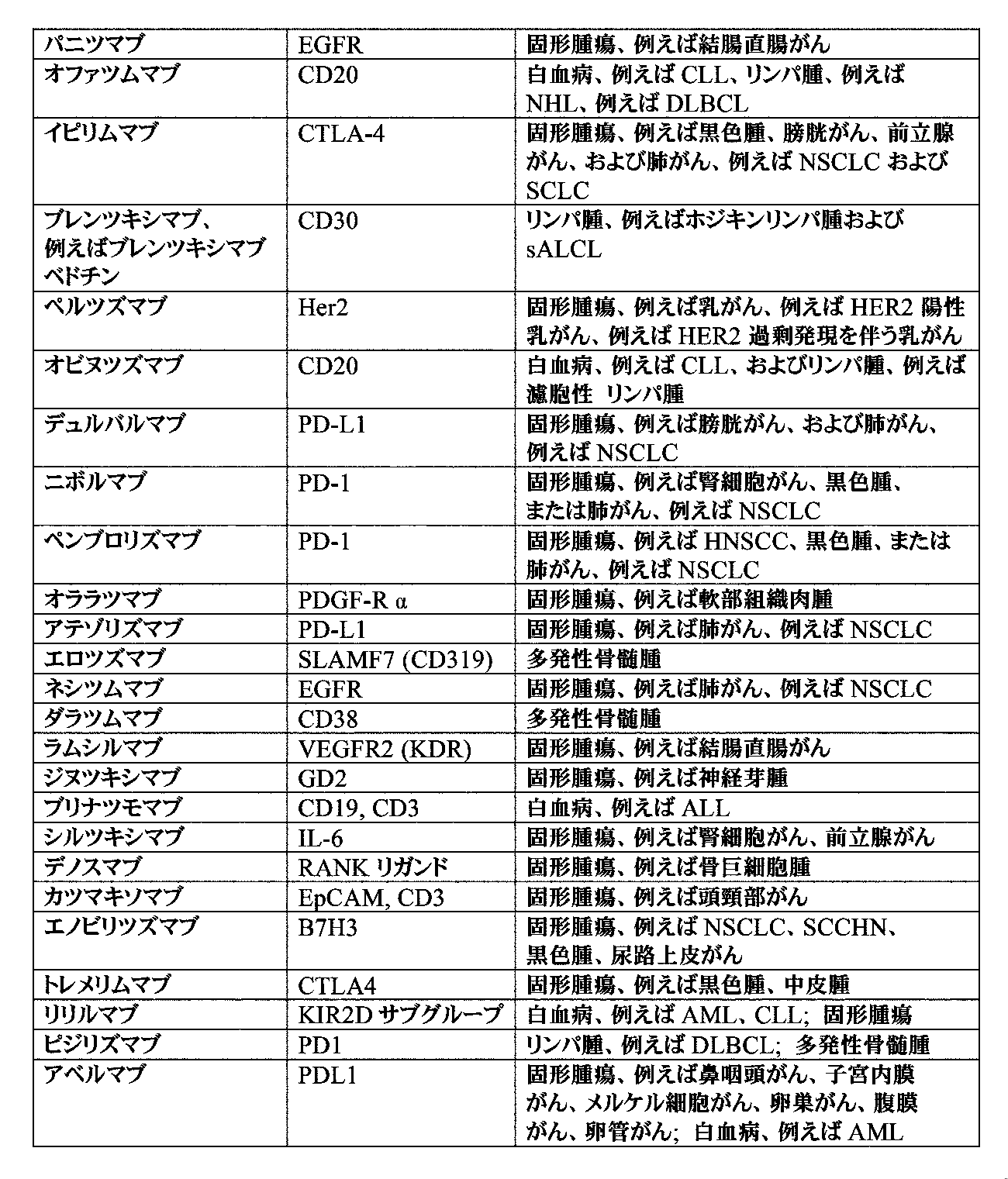
またはその膜貫通部分、または前述のいずれかと、少なくとも70%、75%、80%、85%、90%、95%、96%、97%、98%、99%の同一性を有するポリペプチドの配列を有する。いくつかの実施形態では、GPAポリペプチドは抗体ドメインのC末端である。
In some embodiments, the transmembrane domain is at least 70%, 75%, 80%, as described, for example, as set forth in SEQ ID NO: 1 herein, or a transmembrane portion thereof, or any of the foregoing. GPA or a transmembrane portion thereof, such as a polypeptide having 85%, 90%, 95%, 96%, 97%, 98%, 99% identity. In some embodiments, the GPA polypeptide is C-terminal to the binding domain. In some embodiments, the GPA polypeptide is
Or a transmembrane portion thereof, or a polypeptide having at least 70%, 75%, 80%, 85%, 90%, 95%, 96%, 97%, 98%, 99% identity to any of the foregoing. Has an array. In some embodiments, the GPA polypeptide is C-terminal to the antibody domain.
いくつかの実施形態では、外因性ポリペプチドは、配列番号80または配列番号81のポリペプチド、またはそれと少なくとも70%、75%、80%、85%、90%、95%、96%、97%、98%、99%、または99.5%の同一性を有するアミノ酸配列、またはその機能的断片を含んでなる。いくつかの実施形態では、4−1BBLの機能性断片は4−1BB結合断片である。いくつかの実施形態では、抗PD−L1の機能性断片はPD−L1結合断片である。 In some embodiments, the exogenous polypeptide is the polypeptide of SEQ ID NO: 80 or SEQ ID NO: 81, or at least 70%, 75%, 80%, 85%, 90%, 95%, 96%, 97% thereof. , 98%, 99%, or 99.5% identity, or a functional fragment thereof. In some embodiments, the functional fragment of 4-1BBL is a 4-1BB binding fragment. In some embodiments, the functional fragment of anti-PD-L1 is a PD-L1 binding fragment.
一実施形態では、外因性ポリペプチドは、アポトーシスを媒介する細胞受容体に対するリガンドを含んでなる。一実施形態では、リガンドは、例えば野生型または変異TRAILポリペプチドなどのTRAIL受容体リガンド、またはTRAIL受容体に結合する抗体であり、標的細胞においてアポトーシスを誘発する。いくつかの実施形態では、除核赤血球系細胞は、1つまたは複数の(例えば2つまたは3つの)TRAIL受容体リガンドを含んでなる。いくつかの実施形態では、除核赤血球系細胞は、例えば本明細書に記載の標的化部分などの標的化部分をさらに含んでなる、1つまたは複数のTRAIL受容体リガンドを含んでなる。 In one embodiment, the exogenous polypeptide comprises a ligand for a cellular receptor that mediates apoptosis. In one embodiment, the ligand is a TRAIL receptor ligand, eg, a wild-type or mutant TRAIL polypeptide, or an antibody that binds to the TRAIL receptor, and induces apoptosis in target cells. In some embodiments, enucleated erythroid cells comprise one or more (eg, two or three) TRAIL receptor ligands. In some embodiments, the enucleated erythroid cell comprises one or more TRAIL receptor ligands, further comprising a targeting moiety, eg, a targeting moiety described herein.
TRAIL(TNF関連アポトーシス誘導リガンド)は、アポトーシスを誘導するTNFファミリーのメンバーである。TRAILは、TRAIL R1およびTRAIL R2の少なくとも2つの受容体を有する。TRAIL受容体作動薬、例えば、受容体の1つまたは複数に結合するTRAILの変異体、またはTRAILR1またはTRAILR2の片方または双方に結合する抗体(例えば、Gasparian et al,Apoptosis 2009 Jun 14(6)、Buchsbaum et al.Future Oncol 2007 Aug3(4)を参照されたい)は、広範ながんの臨床療法として開発されている。いくつかの実施形態では、除核赤血球系細胞は、TRAIL R1リガンドおよびTRAIL R2リガンドを含んでなる。 TRAIL (TNF-related apoptosis-inducing ligand) is a member of the TNF family that induces apoptosis. TRAIL has at least two receptors, TRAIL R1 and TRAIL R2. TRAIL receptor agonists, for example, variants of TRAIL that bind to one or more of the receptors, or antibodies that bind to one or both of TRAILR1 or TRAILR2 (eg, Gasparian et al, Apoptosis 2009 Jun 14 (6), Buchsbaum et al. (Future Oncol 2007 Aug3 (4)) is being developed as a clinical therapy for a wide range of cancers. In some embodiments, the enucleated erythroid cell comprises a TRAIL R1 ligand and a TRAIL R2 ligand.
いくつかの実施形態では、1つまたはそれ以上の外因性ポリペプチドは、TNFスーパーファミリーのメンバーまたはその一部を含む。いくつかの実施形態では、外因性ポリペプチドは、細胞死受容体DR4(TRAIL−R1)およびDR5(TRAIL−R2)の片方または双方に結合する。いくつかの実施形態では、外因性ポリペプチドは、TNFRSF10A/TRAILR1、TNFRSF10B/TRAILR2、TNFRSF10C/TRAILR3、TNFRSF10D/TRAILR4、またはTNFRSF11B/OPGの1つまたは複数に結合する。いくつかの実施形態では、外因性ポリペプチドは、MAPK8/JNK、カスパーゼ8、およびカスパーゼ3の1つまたは複数を活性化する。 In some embodiments, the one or more exogenous polypeptides comprises a member of the TNF superfamily or a portion thereof. In some embodiments, the exogenous polypeptide binds to one or both of the death receptors DR4 (TRAIL-R1) and DR5 (TRAIL-R2). In some embodiments, the exogenous polypeptide binds to one or more of TNFRSF10A / TRAILR1, TNFRSF10B / TRAILR2, TNFRSF10C / TRAILR3, TNFRSF10D / TRAILR4, or TNFRSF11B / OPG. In some embodiments, the exogenous polypeptide activates one or more of MAPK8 / JNK, caspase-8, and caspase-3.
いくつかの実施形態では、TRAILポリペプチドは、本明細書の配列番号2〜6のいずれかの配列、またはそれに対して少なくとも70%、80%、85%、90%、95%、96%、97%、98%、または99%の同一性を有する配列を有するTRAIL作動薬である。配列同一性は、例えば、BLAST(基本的局所アライメント検索ツール)によって測定される。配列番号2〜6は、その内容全体が参照により本明細書に援用される、Mohr et al.BMCCancer(2015)15:494)にさらに記載される。 In some embodiments, the TRAIL polypeptide comprises a sequence of any of SEQ ID NOs: 2-6 herein, or at least 70%, 80%, 85%, 90%, 95%, 96%, TRAIL agonists having sequences with 97%, 98%, or 99% identity. Sequence identity is measured, for example, by BLAST (Basic Local Alignment Search Tool). SEQ ID NOs: 2-6 are disclosed in Mohr et al., Incorporated herein by reference in its entirety. BMC Cancer (2015) 15: 494).
配列番号2
可溶性TRAIL変異型DR4−1
配列番号3
可溶性TRAIL変異型DR4−2
配列番号4
可溶性TRAIL変異型DR4−3
配列番号5
可溶性TRAIL変異型DR5−1
配列番号6
可溶性TRAIL変異型DR5−2
Soluble TRAIL mutant DR4-1
SEQ ID NO: 3
Soluble TRAIL mutant DR4-2
SEQ ID NO: 4
Soluble TRAIL mutant DR4-3
SEQ ID NO: 5
Soluble TRAIL mutant DR5-1
SEQ ID NO: 6
Soluble TRAIL mutant DR5-2
いくつかの実施形態では、TRAIL受容体リガンドは、例えば抗体フラグメントなどの抗体を含んでなる。いくつかの実施形態では、抗体は、TRAIL R1およびTRAIL R2の片方または双方を認識する。抗体は、例えばマパツムマブ(ヒト抗DR4mAb)、チガツズマブ(ヒト化抗DR5mAb)、レキサツムマブ(ヒト抗DR5mAb)、コナツムマブ(ヒト抗DR5mAb)、またはアポマブ(ヒト抗DR5mAb)であってもよい。いくつかの実施形態では、赤血球系細胞は、TRAIL受容体に結合する少なくとも1つの抗体と、少なくとも1つのTRAILポリペプチドとを含んでなる。 In some embodiments, the TRAIL receptor ligand comprises an antibody, eg, an antibody fragment. In some embodiments, the antibody recognizes one or both of TRAIL R1 and TRAIL R2. The antibody may be, for example, mapatumumab (human anti-DR4 mAb), tigatumuzumab (humanized anti-DR5 mAb), lexatumumab (human anti-DR5 mAb), conatumumab (human anti-DR5 mAb), or apoumab (human anti-DR5 mAb). In some embodiments, the erythroid cells comprise at least one antibody that binds to a TRAIL receptor and at least one TRAIL polypeptide.
いくつかの実施形態では、赤血球系細胞は、標的化活性を有する結合剤を含んでなる。いくつかの実施形態では、結合剤はまた抗がん活性も有し、例えば同一外因性ポリペプチドが、抗がん剤および標的化剤である。いくつかの実施形態では、赤血球系細胞は、例えば抗がん活性を有する第2の外因性ポリペプチドなどの第2の薬剤を含んでなる。いくつかの実施形態では、標的化剤は、例えば、固形腫瘍細胞などのがん細胞にまたはその近くに結合し、第2の薬剤(例えば、第2のポリペプチド)は抗がん機能を有する。いくつかの実施形態では、作用部位は腫瘍血管系である。いくつかの実施形態では、標的化剤は、血管新生マーカーに結合し、例えば、avB1、avB3、またはavB5、またはa4b1インテグリンなどのインテグリン、例えば、合成ペプチドノッチン(Kim et al,JACS 2016,137(1))、または例えば、エキスタチン、RGD、EETI2.5F、またはVCAM−1などの内因性または天然リガンドに結合し、または血管新生に際しても豊富に見られる前立腺特異的膜抗原に結合する。いくつかの実施形態では、標的化剤は、(例えば、多発性骨髄腫細胞において発現される)CD269、または(例えば、ALM細胞において発現される)CD123、(例えば、T細胞において発現され;CD80/CD86によって結合され得る)CD28、(例えば、卵巣がんにおいて発現される)NY−ESO−1などのがん細胞マーカーに結合する。 In some embodiments, the erythroid cells comprise a binding agent with targeting activity. In some embodiments, the binding agent also has anti-cancer activity, eg, the same exogenous polypeptide is an anti-cancer agent and a targeting agent. In some embodiments, the erythroid cells comprise a second agent, such as a second exogenous polypeptide having anti-cancer activity. In some embodiments, the targeting agent binds to or near a cancer cell, eg, a solid tumor cell, and the second agent (eg, the second polypeptide) has an anti-cancer function . In some embodiments, the site of action is the tumor vasculature. In some embodiments, the targeting agent binds to an angiogenesis marker and, for example, an integrin, such as, for example, avB1, avB3, or avB5, or a4bl integrin, for example, a synthetic peptide knottin (Kim et al, JACS 2016, 137). (1)), or binds to endogenous or natural ligands such as, for example, echistatin, RGD, EETI2.5F, or VCAM-1, or to prostate-specific membrane antigens that are also abundant during angiogenesis. In some embodiments, the targeting agent is CD269 (eg, expressed in multiple myeloma cells), or CD123 (eg, expressed in ALM cells), (eg, expressed in T cells; CD80). Binds to cancer cell markers such as CD28 (which can be bound by / CD86), NY-ESO-1 (eg, expressed in ovarian cancer).
いくつかの実施形態では、抗がん剤は、腫瘍細胞が成長するために選択的に要求する代謝産物を分解する、例えばアスパラギナーゼ、メチオニンγリアーゼ(MGL)、セリンデヒドロゲナーゼなどの酵素、またはその断片もしくは変異型を含んでなる。抗がん剤は、例えば血管増殖を防止するためのアンギオポエチン(アンギオポエチン)の阻害剤、またはVEGFまたはVEGFRの阻害剤などの血管新生の阻害剤であってもよい。抗がん剤は、例えば共刺激分子(例えば表5の共刺激分子)、免疫チェックポイント阻害剤(例えば表4を参照されたい)またはサイトカインまたはT細胞活性化リガンドなどのT細胞を活性化する免疫賦活性分子であってもよい。抗がん剤は、例えば、T細胞または炎症性マクロファージなどの免疫エフェクター細胞に結合し、エフェクター細胞を捕捉して腫瘍の近傍に持ち込んでもよい。抗がん剤は、例えば、TRAILまたはFAS−Lまたは他のデスリガンド、または毒素などの細胞死の直接的なメディエーターであり得る。いくつかの実施形態では、抗がん剤は、例えば、作動性抗体などのTRAIL受容体の作動薬を含んでなる。いくつかの実施形態では、抗がん剤はアポトーシス促進剤である。いくつかの実施形態では、抗がん剤はアジュバントを含んでなる。これらの抗がん剤のいずれについても、最終結果は、腫瘍部位に局在する赤血球治療剤(RCT)であり、したがってその抗腫瘍効果をその効能を高める場所に集中させる。 In some embodiments, the anti-cancer agent degrades metabolites that the tumor cells selectively require for growth, such as enzymes such as asparaginase, methionine gamma lyase (MGL), serine dehydrogenase, or fragments thereof. Alternatively, it comprises a mutant. The anticancer agent may be, for example, an angiopoietin (angiopoietin) inhibitor for preventing vascular growth, or an inhibitor of angiogenesis, such as a VEGF or VEGFR inhibitor. The anti-cancer agent activates a T cell such as, for example, a costimulatory molecule (eg, a costimulatory molecule in Table 5), an immune checkpoint inhibitor (see, eg, Table 4) or a cytokine or T cell activating ligand. It may be an immunostimulatory molecule. The anti-cancer agent may bind to immune effector cells such as T cells or inflammatory macrophages, capture the effector cells, and bring them to the vicinity of the tumor. The anticancer agent can be a direct mediator of cell death, such as, for example, TRAIL or FAS-L or other death ligand, or a toxin. In some embodiments, the anti-cancer agent comprises an agonist of the TRAIL receptor, eg, an agonistic antibody. In some embodiments, the anti-cancer agent is a pro-apoptotic agent. In some embodiments, the anti-cancer agent comprises an adjuvant. For any of these anticancer agents, the end result is an erythrocyte therapeutic (RCT) localized at the tumor site, thus focusing its antitumor effects at places that enhance its efficacy.
いくつかの実施形態では、外因性ポリペプチドは、免疫チェックポイント分子を阻害する。いくつかの実施形態では、外因性ポリペプチドは、(例えば膜貫通部分および表面露出部分を含んでなる)赤血球系細胞の表面上に位置し、免疫チェックポイント分子に結合する。 In some embodiments, the exogenous polypeptide inhibits an immune checkpoint molecule. In some embodiments, the exogenous polypeptide is located on the surface of an erythroid cell (eg, comprising a transmembrane portion and a surface exposed portion) and binds to an immune checkpoint molecule.
いくつかの実施形態では、外因性ポリペプチドは、免疫チェックポイント分子を阻害する。一実施形態では、免疫チェックポイント分子の阻害剤は、阻害抗体(例えば単一特異性抗体、モノクローナル抗体、または一本鎖抗体などの抗体)である。抗体は、例えばヒト化または完全ヒトであってもよい。その他のいくつかの実施形態では、免疫チェックポイント分子の阻害剤は、例えばFc−受容体融合タンパク質などの融合タンパク質である。いくつかの実施形態では、免疫チェックポイント分子の阻害剤は、免疫チェックポイントタンパク質と相互作用する抗体などの薬剤である。いくつかの実施形態では、免疫チェックポイント分子の阻害剤は、免疫チェックポイント受容体のリガンドと相互作用する抗体などの薬剤である。一実施形態では、免疫チェックポイント分子の阻害剤は、CTLA−4(例えばイピリムマブ/ヤーボイまたはトレメリムマブなどの抗CTLA4抗体)の阻害剤(例えば阻害抗体または小分子阻害剤)である。一実施形態では、免疫チェックポイント分子の阻害剤は、PD−1(例えばニボルマブ/Opdivo(登録商標);ペンブロリズマブ/キイトルーダ(登録商標);ピジリズマブ/CT−011)の阻害剤(例えば阻害抗体または小分子阻害剤)である。一実施形態では、免疫チェックポイント分子の阻害剤は、D−L1(例えばMPDL3280A/RG7446;MEDI4736;MSB0010718C;BMS936559)の阻害剤(例えば阻害抗体または小分子阻害剤)である。一実施形態では、免疫チェックポイント分子の阻害剤は、PDL2(例えばAMP224などのPDL2/Ig融合タンパク質)の阻害剤(例えば阻害抗体またはFc融合物または小分子阻害剤)である。一実施形態では、免疫チェックポイント分子の阻害剤は、B7−H3(例えばMGA271)、B7−H4、BTLA、HVEM、TIM3、GAL9、LAG3、VISTA、KIR、2B4、CD160、CGEN−15049、CHK1、CHK2、A2aR、B−7ファミリーリガンド、またはそれらの組み合わせの阻害剤(例えば阻害抗体または小分子阻害剤)である。 In some embodiments, the exogenous polypeptide inhibits an immune checkpoint molecule. In one embodiment, the inhibitor of the immune checkpoint molecule is an inhibitory antibody (eg, an antibody such as a monospecific, monoclonal, or single chain antibody). Antibodies can be, for example, humanized or fully human. In some other embodiments, the inhibitor of the immune checkpoint molecule is a fusion protein, for example, an Fc-receptor fusion protein. In some embodiments, the inhibitor of an immune checkpoint molecule is an agent such as an antibody that interacts with an immune checkpoint protein. In some embodiments, the inhibitor of an immune checkpoint molecule is an agent such as an antibody that interacts with a ligand of an immune checkpoint receptor. In one embodiment, the inhibitor of an immune checkpoint molecule is an inhibitor (eg, an inhibitory antibody or small molecule inhibitor) of CTLA-4 (eg, an anti-CTLA4 antibody such as ipilimumab / yervoy or tremelimumab). In one embodiment, the inhibitor of an immune checkpoint molecule is an inhibitor of PD-1 (eg, nivolumab / Opdivo®; pembrolizumab / Kittruda®; pidizlizumab / CT-011) (eg, an inhibitory antibody or a small antibody). Molecular inhibitors). In one embodiment, the inhibitor of an immune checkpoint molecule is an inhibitor of D-L1 (eg, MPDL3280A / RG7446; MEDI4736; MSB0010718C; BMS936559) (eg, an inhibitory antibody or small molecule inhibitor). In one embodiment, the inhibitor of an immune checkpoint molecule is an inhibitor of PDL2 (eg, a PDL2 / Ig fusion protein such as AMP224) (eg, an inhibitory antibody or Fc fusion or small molecule inhibitor). In one embodiment, the inhibitor of an immune checkpoint molecule is B7-H3 (eg, MGA271), B7-H4, BTLA, HVEM, TIM3, GAL9, LAG3, VISTA, KIR, 2B4, CD160, CGEN-15049, CHK1, An inhibitor (eg, an inhibitory antibody or small molecule inhibitor) of CHK2, A2aR, B-7 family ligand, or a combination thereof.
免疫チェックポイント分子の阻害剤は、少なくとも4つの主要なカテゴリーに分類され得る:i)T細胞またはナチュラルキラー(NK)細胞上で直接、阻害経路を遮断する抗体などの薬剤(例えばニボルマブおよびペンブロリズマブのようなPD−1標的化抗体、TIM−3を標的化する抗体、およびLAG−3、2B4、CD160、A2aR、BTLA、CGEN−15049またはKIRを標的化する抗体)、ii)T細胞またはNK細胞上で直接、刺激経路を活性化する抗体などの薬剤(例えばOX40、GITR、または4−1BBを標的化する抗体)、iii)免疫細胞上で抑制経路を遮断するか、または抗体依存性細胞毒性に頼って免疫細胞の抑制的集団を枯渇させる、抗体などの薬剤(例えばイピリムマブなどのCTLA−4標的化抗体、VISTAを標的化する抗体、およびPD−L2、Gr1、またはLy6Gを標的化する抗体)、およびiv)がん細胞上で直接、抑制経路を遮断するか、または抗体依存性細胞毒性に頼ってがん細胞に対する細胞毒性を増強する、抗体分子などの薬剤(例えばリツキシマブ、PD−L1を標的化する抗体、およびB7−H3、B7−H4、Gal−9、またはMUC1を標的とする抗体)。本明細書に記載されるこのような薬剤は、例えばTempleton,Gene and Cell Therapy,2015;Green and Sambrook,Molecular Cloning,2012に記載されように設計および製造され得る。 Inhibitors of immune checkpoint molecules can be divided into at least four major categories: i) agents such as antibodies that block the inhibitory pathway directly on T cells or natural killer (NK) cells, such as nivolumab and pembrolizumab Antibodies targeting PD-1, such as TIM-3, and antibodies targeting LAG-3, 2B4, CD160, A2aR, BTLA, CGEN-15049 or KIR), ii) T cells or NK cells Agents such as antibodies that activate the stimulation pathway directly (eg, antibodies targeting OX40, GITR, or 4-1BB), iii) block the suppression pathway on immune cells, or antibody-dependent cytotoxicity Drugs such as antibodies (eg CTLA such as ipilimumab) to deplete a suppressive population of immune cells 4 targeting antibodies, antibodies targeting VISTA, and antibodies targeting PD-L2, Gr1, or Ly6G), and iv) blocking the suppression pathway directly on cancer cells, or antibody-dependent cells Drugs such as antibody molecules that rely on toxicity to enhance cytotoxicity to cancer cells (eg, rituximab, antibodies targeting PD-L1, and targeting B7-H3, B7-H4, Gal-9, or MUC1) Antibodies). Such agents described herein can be designed and manufactured as described, for example, in Templeton, Gene and Cell Therapy, 2015; Green and Sambrook, Molecular Cloning, 2012.
いくつかの実施形態では、赤血球系細胞は、例えば外因性ポリペプチド、例えば表面露出外因性ポリペプチド、例えば表4の免疫チェックポイント分子に結合する膜貫通ドメインを含んでなる表面露出ポリペプチドなどの薬剤を含んでなる。いくつかの実施形態では、赤血球系細胞は、例えば表4の抗体もしくはその他の結合因子、またはその断片もしくは変異型を含んでなる、外因性ポリペプチドなどの薬剤を含んでなる。例えば断片または変異型は、表4の抗体に対応する、例えばscFvなどの単一ドメイン抗体であり得る。別の例として、断片または変異型は、例えば軽鎖可変断片、重鎖可変断片、またはその双方などの、表4の抗体の抗原結合断片であり得る。別の例として、断片または変異型は、表4の結合剤の活性断片であり得る。別の例として、断片または変異型は、例えば表4の抗体と、または軽鎖可変断片、重鎖可変断片、またはその双方と、少なくとも70%、75%、80%、95%、96%、97%、98%、99%、または99.5%の同一性を有する抗体などの、表4の抗体と100%未満の配列同一性を有する抗体であり得る。例えば断片または変異型は、表4の抗体と同一CDRを有し得るが、フレームワークおよび/または定常領域に1つまたは複数の変異を有する。別の例として、断片または変異型は、例えば表4の結合剤またはその活性部分と、少なくとも70%、75%、80%、95%、96%、97%、98%、99%、または99.5%の同一性を有する結合剤などの、表4の結合剤と100%未満の配列同一性を有する結合剤であり得る。 In some embodiments, the erythroid cell is an exogenous polypeptide, such as a surface-exposed exogenous polypeptide, such as a surface-exposed polypeptide comprising a transmembrane domain that binds to an immune checkpoint molecule of Table 4. Comprising a drug. In some embodiments, the erythroid cells comprise an agent, such as an exogenous polypeptide, comprising, for example, the antibodies or other binding agents of Table 4, or fragments or variants thereof. For example, a fragment or variant can be a single domain antibody, such as a scFv, corresponding to the antibody of Table 4. As another example, the fragment or variant can be an antigen-binding fragment of an antibody of Table 4, such as, for example, a light chain variable fragment, a heavy chain variable fragment, or both. As another example, the fragment or variant can be an active fragment of the binding agent of Table 4. As another example, a fragment or variant can be, for example, at least 70%, 75%, 80%, 95%, 96%, at least 70%, 75%, 80%, 95%, 96%, An antibody can have less than 100% sequence identity with the antibody of Table 4, such as an antibody having 97%, 98%, 99%, or 99.5% identity. For example, a fragment or variant can have the same CDRs as the antibodies of Table 4, but have one or more mutations in the framework and / or constant regions. As another example, a fragment or variant can be, for example, at least 70%, 75%, 80%, 95%, 96%, 97%, 98%, 99%, or 99% of the binding agent of Table 4 or an active portion thereof. A binder having less than 100% sequence identity with the binder in Table 4, such as a binder having 0.5% identity.
いくつかの実施形態では、赤血球系細胞は、例えば外因性ポリペプチド、例えば表面露出外因性ポリペプチド、例えば表5の共刺激分子を含んでなる膜貫通ドメインを含んでなる表面露出ポリペプチドまたはその断片もしくは変異型などの薬剤を含んでなる。いくつかの実施形態では、赤血球系細胞は、例えば表5の共刺激分子を含んでなる外因性ポリペプチドまたはその断片もしくは変異型などの薬剤を含んでなる。例えば断片または変異型は、例えば共刺激分子と少なくとも70%、75%、80%、95%、96%、97%、98%、99%、または99.5%の同一性を有する共刺激分子などの、表5の共刺激分子と100%未満の配列同一性を有するタンパク質配列であり得る。いくつかの実施形態では、断片または変異型は、例えば表5の共刺激分子の1、2、3、4、または5イソ型などの共刺激分子のイソ型、またはその断片もしくは変異型である。いくつかの実施形態では、断片または変異型は、表5の共刺激分子の成熟形態であり、例えば表5の共刺激分子のプロセスされた形態の配列を有する。 In some embodiments, the erythroid cell is, eg, an exogenous polypeptide, eg, a surface-exposed exogenous polypeptide, eg, a surface-exposed polypeptide comprising a transmembrane domain comprising a costimulatory molecule of Table 5, or a surface-exposed polypeptide thereof. Comprising an agent such as a fragment or variant. In some embodiments, the erythroid cells comprise an agent, such as an exogenous polypeptide comprising a costimulatory molecule of Table 5, or a fragment or variant thereof. For example, a fragment or variant can be, for example, a costimulatory molecule having at least 70%, 75%, 80%, 95%, 96%, 97%, 98%, 99%, or 99.5% identity to the costimulatory molecule. Such protein sequences may have less than 100% sequence identity with the costimulatory molecules of Table 5. In some embodiments, the fragment or variant is an isoform of a costimulatory molecule, such as, for example, the 1, 2, 3, 4, or 5 isoform of a costimulatory molecule of Table 5, or a fragment or variant thereof. . In some embodiments, the fragment or variant is a mature form of the costimulatory molecule of Table 5, eg, has the sequence of the processed form of the costimulatory molecule of Table 5.
いくつかの実施形態では、共刺激分子は、MHCクラスI分子、BTLA、Tollリガンド受容体、OX40、CD27、CD28、CDS、ICAM−1、LFA−1(CD11a/CD18)、ICOS(CD278)、および4−1BB(CD137)、CDS、ICAM−1、GITR、BAFFR、HVEM(LIGHTR)、SLAMF7、NKp80(KLRF1)、NKp44、NKp30、NKp46、CD160、CD19、CD4、CD8alpha、CD8beta、IL2Rβ、IL2Rγ、IL7Rα、ITGA4、VLA1、CD49a、ITGA4、IA4、CD49D、ITGA6、VLA−6、CD49f、ITGAD、CD11d、ITGAE、CD103、ITGAL、CD11a、LFA−1、ITGAM、CD11b、ITGAX、CD11c、ITGB1、CD29、ITGB2、CD18、LFA−1、ITGB7、NKG2D、NKG2C、TNFR2、TRANCE/RANKL、DNAM1(CD226)、SLAMF4(CD244、2B4)、CD84、CD96(Tactile)、CEACAM1、CRTAM、Ly9(CD229)、CD160(BY55)、PSGL1、CD100(SEMA4D)、CD69、SLAMF6(NTB−A、Ly108)、SLAM(SLAMF1、CD150、IPO−3)、BLAME(SLAMF8)、SELPLG(CD162)、LTBR、LAT、GADS、SLP−76、PAG/Cbp、およびCD19a、またはその断片もしくは変異型の1つまたは複数を含んでなる。 In some embodiments, the costimulatory molecule is an MHC class I molecule, BTLA, Toll ligand receptor, OX40, CD27, CD28, CDS, ICAM-1, LFA-1 (CD11a / CD18), ICOS (CD278), And 4-1BB (CD137), CDS, ICAM-1, GITR, BAFFR, HVEM (LIGHTR), SLAMF7, NKp80 (KLRF1), NKp44, NKp30, NKp46, CD160, CD19, CD4, CD8alpha, CD8beta, IL2Rβ, IL2Rγ. IL7Rα, ITGA4, VLA1, CD49a, ITGA4, IA4, CD49D, ITGA6, VLA-6, CD49f, ITGAD, CD11d, ITGAE, CD103, ITGAL, CD11a, LFA-1, TGAM, CD11b, ITGAX, CD11c, ITGB1, CD29, ITGB2, CD18, LFA-1, ITGB7, NKG2D, NKG2C, TNFR2, TRANCE / RANKL, DNAM1 (CD226), SLAMF4 (CD244, 2B4), CD84, CD96 (ac) , CEACAM1, CRTAM, Ly9 (CD229), CD160 (BY55), PSGL1, CD100 (SEMA4D), CD69, SLAMF6 (NTB-A, Ly108), SLAM (SLAMF1, CD150, IPO-3), BLAME (SLAMF8), SELPLG (CD162), LTBR, LAT, GADS, SLP-76, PAG / Cbp, and CD19a, or one or more of fragments or variants thereof. Comprising a.
別の例として、赤血球系細胞は、免疫エフェクター細胞(例えば、T細胞)とがん細胞を互いに近傍に持ち込んで、免疫エフェクター細胞によるがん細胞の殺滅を促進する。したがって、いくつかの実施形態では、第1のポリペプチドはがん細胞の細胞表面マーカーに結合し、第2のポリペプチドは免疫エフェクター細胞の細胞表面マーカーに結合する。第1および第2のポリペプチドは、例えば、抗体を含んでなってもよい。いくつかの実施形態では、がん細胞マーカーは、CD19(例えば、B細胞急性白血病において発現される)、EpCAM(例えば、CTCにおいて発現される)、CD20(例えば、B細胞急性白血病において発現される)、CD45(例えば、CTCにおいて発現される)、EGFR、HER2(例えば、乳がん細胞において発現される)から選択される。いくつかの実施形態では、免疫細胞マーカーはCD3である。 As another example, erythroid cells bring immune effector cells (eg, T cells) and cancer cells into close proximity to each other and promote the killing of cancer cells by immune effector cells. Thus, in some embodiments, the first polypeptide binds to a cell surface marker of a cancer cell and the second polypeptide binds to a cell surface marker of an immune effector cell. The first and second polypeptides may, for example, comprise antibodies. In some embodiments, the cancer cell marker is CD19 (eg, expressed in B cell acute leukemia), EpCAM (eg, expressed in CTC), CD20 (eg, expressed in B cell acute leukemia). ), CD45 (eg, expressed in CTC), EGFR, HER2 (eg, expressed in breast cancer cells). In some embodiments, the immune cell marker is CD3.
本明細書に記載のポリペプチドのビヒクル
本明細書の多くの実施形態では、1つまたは複数の外因性ポリペプチドが赤血球系細胞の上または中に位置する一方で、本明細書に記載の任意の外因性ポリペプチドはまた、別のビヒクルの上または中に位置し得るものと理解される。ビヒクルは、例えば細胞、赤血球系細胞、小体、ナノ粒子、ミセル、リポソーム、またはエキソソームを含んでなり得る。ビヒクルは、例えばナノ粒子または直径が100、200、300、400、500、1,000、1,500、2,000、または2,500nmを超える粒子などの粒子であってもよい。例えばいくつかの態様では、本開示は、例えばその表面上に本明細書に記載の1つまたは複数の薬剤を含んでなる、ビヒクル(例えば細胞、赤血球系細胞、小体、ナノ粒子、ミセル、リポソーム、またはエキソソーム)を提供する。いくつかの実施形態では、1つまたは複数の薬剤は、表2、表4、または表5のいずれかのポリペプチドから選択された薬剤、またはその断片もしくは変異型、またはその作動薬または拮抗薬、またはそれに対する抗体を含んでなる。いくつかの実施形態では、ビヒクルは、例えば本明細書に記載の任意の薬剤対などの本明細書に記載の2つ以上の薬剤を含んでなる。
Vehicles of the Polypeptides Described herein In many embodiments herein, one or more exogenous polypeptides are located on or in erythroid cells while any of the described herein. It is understood that the exogenous polypeptide of can also be located on or in another vehicle. The vehicle can comprise, for example, cells, erythroid cells, bodies, nanoparticles, micelles, liposomes, or exosomes. The vehicle may be, for example, a nanoparticle or a particle, such as a particle having a diameter greater than 100, 200, 300, 400, 500, 1,000, 1,500, 2,000, or 2,500 nm. For example, in some aspects, the present disclosure provides a vehicle (eg, a cell, erythroid cell, body, nanoparticle, nanocell, micelle, etc.) comprising one or more agents described herein, eg, on its surface. Liposomes, or exosomes). In some embodiments, the one or more agents is an agent selected from any of the polypeptides in Table 2, Table 4, or Table 5, or a fragment or variant thereof, or an agonist or antagonist thereof. Or an antibody thereto. In some embodiments, the vehicle comprises two or more agents described herein, eg, any of the agent pairs described herein.
いくつかの実施形態では、ビヒクルは赤血球系細胞を含んでなる。いくつかの実施形態では、赤血球系細胞は、有核赤血球、赤血球前駆体、または除核赤血球である。いくつかの実施形態では、赤血球系細胞は、臍帯血幹細胞、CD34+細胞、造血幹細胞(HSC)、脾臓コロニー形成(CFU−S)細胞、共通骨髄系前駆細胞(CMP)細胞、未分化胚芽細胞コロニー成形細胞、赤芽球バースト形成細胞(BFU−E)、巨核球−赤血球系前駆(MEP)細胞、赤血球系コロニー形成単位(CFU−E)、網状赤血球、赤血球、誘導多能性幹細胞(iPSC)、間葉系幹細胞(MSC)、多染性正赤芽球、正染性正赤芽球、またはそれらの組み合わせである。いくつかの実施形態では、赤血球系細胞は不死胞または不死化細胞である。いくつかの実施形態では、ビヒクルは、例えばB細胞、T細胞、またはNK細胞などの免疫エフェクター細胞を含んでなる。いくつかの実施形態では、細胞は自己由来または同種異系である。 In some embodiments, the vehicle comprises erythroid cells. In some embodiments, the erythroid cells are nucleated red blood cells, erythroid precursors, or enucleated red blood cells. In some embodiments, the erythroid cells are cord blood stem cells, CD34 + cells, hematopoietic stem cells (HSC), spleen colony forming (CFU-S) cells, common myeloid progenitor cells (CMP) cells, undifferentiated germ cell colonies Molded cells, erythroid burst forming cells (BFU-E), megakaryocyte-erythroid progenitor (MEP) cells, erythroid colony forming units (CFU-E), reticulocytes, erythrocytes, induced pluripotent stem cells (iPSCs) , Mesenchymal stem cells (MSCs), polychromatic normoblasts, normochromatic normoblasts, or a combination thereof. In some embodiments, the erythroid cells are immortalized or immortalized cells. In some embodiments, the vehicle comprises an immune effector cell, eg, a B cell, T cell, or NK cell. In some embodiments, the cells are autologous or allogeneic.
異種細胞集団
本明細書の多くの実施形態では、1つまたは複数の(例えば2つ以上の)外因性ポリペプチドが単一細胞上または中に位置する一方で、本明細書に記載の任意のポリペプチドまたはポリペプチドの組み合わせはまた、複数の細胞の上に位置し得るものと理解される。例えばいくつかの態様では、本開示は複数の赤血球系細胞を提供し、複数の第1の細胞は第1の外因性ポリペプチドを含んでなり、複数の第2の細胞は第2の外因性ポリペプチドを含んでなる。いくつかの実施形態では、複数の細胞は、例えば本明細書に記載の任意のポリペプチド一対などの本明細書に記載の2つ以上のポリペプチドを含んでなる。いくつかの実施形態では、集団中の90%、80%、70%、60%、50%、40%、30%、20%、10%、5%、2%、または1%未満の細胞は、第1の外因性ポリペプチドおよび第2の外因性ポリペプチドの双方を含んでなる。
Heterologous Cell Populations In many embodiments herein, one or more (eg, two or more) exogenous polypeptides are located on or in a single cell while any of the herein described It is understood that a polypeptide or combination of polypeptides can also be located on more than one cell. For example, in some aspects, the disclosure provides a plurality of erythroid cells, wherein the plurality of first cells comprises a first exogenous polypeptide, and the plurality of second cells comprises a second exogenous cell. The polypeptide. In some embodiments, the plurality of cells comprises two or more polypeptides described herein, eg, any pair of polypeptides described herein. In some embodiments, less than 90%, 80%, 70%, 60%, 50%, 40%, 30%, 20%, 10%, 5%, 2%, or 1% of the cells in the population are , Both a first exogenous polypeptide and a second exogenous polypeptide.
膜内にカプセル化された細胞
いくつかの実施形態では、本明細書に記載の除核赤血球系細胞またはその他のビヒクルは、例えば半透膜などの膜内にカプセル化される。いくつかの実施形態では、膜は、例えばアニオン性アルギン酸多糖類などの多糖類を含んでなる。いくつかの実施形態では、半透膜は、細胞を通過させないが、例えば代謝産物、タンパク質またはDNAなどの小分子または巨大分子の通過を許す。いくつかの実施形態では、膜は、その内容全体が参照により本明細書に援用される、Lienert et al.,“Synthetic biology in mammalian cells:next generation research tools and therapeutics”Nature Reviews Molecular Cell Biology 15,95−107(2014)に記載されるものである。理論による拘束は望まないが、いくつかの実施形態では、膜は、細胞を免疫系から保護しおよび/または複数の細胞を近接して保持し、互いの相互作用または互いの産物の相互作用を促進する。
Cells Encapsulated in a Membrane In some embodiments, enucleated erythroid cells or other vehicles described herein are encapsulated in a membrane, for example, a semi-permeable membrane. In some embodiments, the membrane comprises a polysaccharide, for example, an anionic alginate polysaccharide. In some embodiments, the semi-permeable membrane does not allow cells to pass, but allows the passage of small or large molecules, such as, for example, metabolites, proteins or DNA. In some embodiments, the membrane is prepared according to Lienert et al., Which is incorporated herein by reference in its entirety. , "Synthetic biology in mammarian cells: next generation research tools and therapeutics", Nature Reviews Molecular Molecular Biology 15, 14, 107-95, which is described in Nature Cellular Biology. While not wishing to be bound by theory, in some embodiments, the membrane protects the cells from the immune system and / or keeps the cells in close proximity and interacts with each other or with each other's products. Facilitate.
除核赤血球系細胞の物理的特性
いくつかの実施形態では、本明細書に記載の除核赤血球系細胞は、例えば、浸透圧脆弱性、細胞サイズ、ヘモグロビン濃度またはホスファチジルセリン含有量などの、本明細書に記載の1つまたは複数(例えば、2、3、4、またはそれ以上)の物理的特徴を有する。理論による拘束は望まないが、いくつかの実施形態では、外因性タンパク質を発現する除核赤血球系細胞は、野生型の未処理赤血球系細胞に似た物理的特性を有する。対照的に、低浸透圧性に負荷された赤血球系細胞は、時には、浸透圧の脆弱性の増加、細胞サイズの変化、ヘモグロビン濃度の減少、または細胞膜の細胞表面側の単分子上のホスファチジルセリンレベルの増加などの異常な物理的特徴を示す。
Physical Properties of Enucleated Erythroid Cells In some embodiments, the enucleated erythroid cells described herein can be used in accordance with the present invention, such as, for example, osmotic fragility, cell size, hemoglobin concentration or phosphatidylserine content. It has one or more (eg, 2, 3, 4, or more) physical characteristics described in the specification. While not wishing to be bound by theory, in some embodiments, enucleated erythroid cells expressing exogenous proteins have physical properties similar to wild-type untreated erythroid cells. In contrast, erythroid cells loaded with hypotonicity sometimes have increased osmotic fragility, altered cell size, decreased hemoglobin concentration, or phosphatidylserine levels on single molecules on the cell surface side of the cell membrane. Exhibit unusual physical characteristics such as an increase in
いくつかの実施形態では、除核赤血球系細胞は、細胞によって保持されないか、精製されていないか、または赤血球系細胞の外部に完全に存在しなかった、外因性核酸によってコードされる外因性タンパク質を含む。いくつかの実施形態では、赤血球系細胞は、安定剤を欠く組成物中にある。 In some embodiments, the enucleated erythroid cell is an exogenous protein encoded by an exogenous nucleic acid that is not retained by the cell, has not been purified, or was not completely present outside of the erythroid cell. including. In some embodiments, the erythroid cells are in a composition lacking a stabilizer.
浸透圧脆弱性
いくつかの実施形態では、除核赤血球系細胞は、外因性ポリペプチドを含まない単離された未培養除核赤血球系細胞と実質的に同じ浸透圧膜脆弱性を示す。いくつかの実施形態では、除核赤血球系細胞の集団は、0.3%、0.35%、0.4%、0.45%、または0.5%のNaClで、50%未満の細胞溶解の浸透圧脆弱性を有する。浸透圧脆弱性は、いくつかの実施形態では、国際公開第2015/073587号パンフレットの実施例59の方法を用いて決定される。
Osmotic Vulnerability In some embodiments, the enucleated erythroid cells exhibit substantially the same osmotic membrane fragility as an isolated uncultured enucleated erythroid cell without an exogenous polypeptide. In some embodiments, the population of enucleated erythroid cells is less than 50% cells at 0.3%, 0.35%, 0.4%, 0.45%, or 0.5% NaCl. Has osmotic fragility of dissolution. Osmotic fragility is determined in some embodiments using the method of Example 59 of WO 2015/073587.
細胞サイズ
いくつかの実施形態では、除核赤血球系細胞は、ほぼ野生型の未処理赤血球系細胞の直径または容積を有する。
Cell Size In some embodiments, the enucleated erythroid cells have a diameter or volume of approximately wild-type untreated erythroid cells.
いくつかの実施形態では、赤血球系細胞の集団は約4、5、6、7、または8ミクロンの平均直径を有し、任意選択的に、集団の標準偏差は1、2、または3ミクロン未満である。いくつかの実施形態では、1つまたは複数の赤血球系細胞は、約4〜8、5〜7、または約6ミクロンの直径を有する。いくつかの実施形態では、赤血球系細胞の直径は、約1ミクロン未満、約20ミクロンを超える、約1ミクロン〜約20ミクロン、約2ミクロン〜約20ミクロン、約3ミクロン〜約20ミクロン、約4ミクロン〜約20ミクロン、約5ミクロン〜約20ミクロン、約6ミクロン〜約20ミクロン、約5ミクロン〜約15ミクロンまたは約10ミクロン〜約30ミクロンである。細胞の直径は、いくつかの実施形態では、Advia 120血液検査システムを用いて測定される。 In some embodiments, the population of erythroid cells has an average diameter of about 4, 5, 6, 7, or 8 microns, and optionally, the standard deviation of the population is less than 1, 2, or 3 microns It is. In some embodiments, the one or more erythroid cells have a diameter of about 4-8, 5-7, or about 6 microns. In some embodiments, the erythroid cells have a diameter of less than about 1 micron, greater than about 20 microns, about 1 micron to about 20 microns, about 2 microns to about 20 microns, about 3 microns to about 20 microns, about 4 microns to about 20 microns, about 5 microns to about 20 microns, about 6 microns to about 20 microns, about 5 microns to about 15 microns, or about 10 microns to about 30 microns. Cell diameter is, in some embodiments, measured using an Advia 120 blood test system.
いくつかの実施形態では、赤血球系細胞の平均赤血球容積の容積(the volume of the mean corpuscular volume)は、10fL、20fL、30fL、40fL、50fL、60fL、70fL、80fL、90fL、100fL、110fL、120fL、130fL、140fL、150fLを超え、または150fLを超える(greater than...or greater than)。一実施形態では、赤血球系細胞の平均赤血球容積は、30fL、40fL、50fL、60fL、70fL、80fL、90fL、100fL、110fL、120fL、130fL、140fL、150fL、160fL、170fL、180fL、190fL、200fL未満であり、または200fL未満である(less than...or less than)。一実施形態では、赤血球系細胞の平均赤血球容積は、80〜100、100〜200、200〜300、300〜400、または400〜500フェムトリットル(fL)である。いくつかの実施形態では、赤血球系細胞の集団は、本段落に記載される平均赤血球容積を有し、集団の標準偏差は、50、40、30、20、10、5、または2fL未満である。平均赤血球容積は、いくつかの実施形態では、例えば、コールターカウンターなどの血液学的分析装置を用いて測定される。 In some embodiments, the volume of the mean corpuscular volume of the erythroid cell is 10 fL, 20 fL, 30 fL, 40 fL, 50 fL, 60 fL, 70 fL, 80 fL, 90 fL, 100 fL, 110 fL, 120 fL. , 130 fL, 140 fL, more than 150 fL, or more than 150 fL (greater tan ... or greater tan). In one embodiment, the average red blood cell volume of the erythroid cell is less than 30 fL, 40 fL, 50 fL, 60 fL, 70 fL, 80 fL, 90 fL, 100 fL, 110 fL, 120 fL, 130 fL, 140 fL, 150 fL, 160 fL, 170 fL, 180 fL, 190 fL, 200 fL. Or less than 200 fL (less than ... or less than). In one embodiment, the average erythrocyte volume of the erythroid cells is 80-100, 100-200, 200-300, 300-400, or 400-500 femtoliters (fL). In some embodiments, the population of erythroid cells has an average red blood cell volume as described in this paragraph, and the standard deviation of the population is less than 50, 40, 30, 20, 10, 5, or 2 fL. . The average red blood cell volume is measured in some embodiments, for example, using a hematology analyzer such as a Coulter counter.
ヘモグロビン濃度
いくつかの実施形態では、除核赤血球系細胞は、野生型未処理赤血球系細胞と同様のヘモグロビン含有量を有する。いくつかの実施形態では、赤血球系細胞は、1%、2%、3%、4%、5%、6%、7%、8%、9%を超え、または10%を超える胎児ヘモグロビンを含む。いくつかの実施形態では、赤血球系細胞は、少なくとも約20、22、24、26、28、または30pgの、任意選択的に、約30pgに至る、総ヘモグロビンを含む。ヘモグロビンレベルは、いくつかの実施形態では、国際公開第2015/073587号パンフレットの実施例33のドラブキン試薬法を用いて判定される。
Hemoglobin concentration In some embodiments, enucleated erythroid cells have a similar hemoglobin content as wild-type untreated erythroid cells. In some embodiments, the erythroid cells comprise more than 1%, 2%, 3%, 4%, 5%, 6%, 7%, 8%, 9%, or more than 10% fetal hemoglobin. . In some embodiments, the erythroid cells comprise at least about 20, 22, 24, 26, 28, or 30 pg, and optionally up to about 30 pg of total hemoglobin. Hemoglobin levels are determined in some embodiments using the Drabkin reagent method of Example 33 of WO 2015/073587.
ホスファチジルセリン含有量
いくつかの実施形態では、除核赤血球系細胞は、その細胞膜の細胞表面側の単分子層上に、野生型の未処理赤血球系細胞とほぼ同じホスファチジルセリン含有量を有する。ホスファチジルセリンは、主に、野生型の未処理赤血球系細胞の細胞膜の細胞質側の単分子層上にあり、低張負荷は、ホスファチジルセリンを細胞表面側の単分子層に分布させ、免疫応答を始動し得る。いくつかの実施形態では、赤血球系細胞の集団は、アネキシンV染色について陽性である約30、25、20、15、10、9、8、6、5、4、3、2、または1%未満の細胞を含む。ホスファチジルセリン曝露は、いくつかの実施形態では、例えば、国際公開第2015/073587号パンフレットの実施例54の方法を用いて、PSに優先的に結合するアネキシン−V−FITCについて染色し、フローサイトメトリーによってFITC蛍光を測定することで評価される。
Phosphatidylserine Content In some embodiments, enucleated erythroid cells have about the same phosphatidylserine content on a monolayer on the cell surface side of their cell membrane as wild-type untreated erythroid cells. Phosphatidylserine is mainly located on the monolayer on the cytoplasmic side of the plasma membrane of wild-type untreated erythroid cells, and hypotonic loading distributes phosphatidylserine on the monolayer on the cell surface, thereby boosting the immune response. Can start. In some embodiments, the population of erythroid cells is less than about 30, 25, 20, 15, 10, 9, 8, 6, 5, 4, 3, 2, or 1% positive for Annexin V staining. Of cells. Phosphatidylserine exposure, in some embodiments, is stained for annexin-V-FITC that binds preferentially to PS, using, for example, the method of Example 54 of WO 2015/073587, using flow cytometry. It is evaluated by measuring FITC fluorescence by means of metrology.
その他の特性
いくつかの実施形態では、赤血球系細胞の集団は、GPAに対して陽性である、少なくとも約50%、60%、70%、80%、90%または95%(任意選択的に、90または100%に至る)の細胞を含む。GPAの存在は、いくつかの実施形態では、FACSを用いて検出される。
Other Properties In some embodiments, the population of erythroid cells is at least about 50%, 60%, 70%, 80%, 90%, or 95% positive for GPA (optionally, (Up to 90 or 100%) cells. The presence of GPA is, in some embodiments, detected using FACS.
いくつかの実施形態では、除核赤血球系細胞は、対象において少なくとも30、45、または90日間の半減期を有する。 In some embodiments, enucleated erythroid cells have a half-life of at least 30, 45, or 90 days in the subject.
いくつかの実施形態では、赤血球系細胞を含む細胞の集団は、約10、5、4、3、2または1%未満の棘状赤血球を含む。 In some embodiments, the population of cells comprising erythroid cells comprises less than about 10, 5, 4, 3, 2, or 1% spiny red blood cells.
いくつかの実施形態では、赤血球系細胞は除核される。いくつかの実施形態では、例えば、赤血球系細胞などの細胞は、例えば、不活性化されている、非機能性核を含有する。 In some embodiments, the erythroid cells are enucleated. In some embodiments, the cells, eg, erythroid cells, contain non-functional nuclei, eg, that have been inactivated.
汎用ドナー赤血球系細胞
いくつかの実施形態では、本明細書に記載の赤血球系細胞は、細胞が投与される対象にとって、自己由来および/または同種異系である。例えば対象にとっての赤血球系細胞同種異系は、1つまたは複数の血液型特異的赤血球系細胞(例えば細胞は、対象と同一血液型であり得る)、または1つまたは複数の汎用ドナー赤血球系細胞を含む。いくつかの実施形態では、本明細書に記載の除核赤血球系細胞は、参照細胞と比較して免疫原性が低下しており、例えば1つまたは複数の血液型抗原のレベルが低下している。
Universal Donor Erythroid Cells In some embodiments, the erythroid cells described herein are autologous and / or allogeneic to the subject to which the cells are administered. For example, an erythroid cell allogeneic for a subject can be one or more blood group-specific erythroid cells (eg, the cells can be the same blood group as the subject), or one or more universal donor erythroid cells. including. In some embodiments, the enucleated erythroid cells described herein have reduced immunogenicity as compared to a reference cell, eg, have reduced levels of one or more blood group antigens. I have.
同種異系細胞が輸血に使用される場合、急性血管内溶血性輸血反応を予防するために、適合性のABO血液型が選択され得る。ABO血液型は、血液型抗原AおよびBの有無、赤血球の表面の糖タンパク質および糖脂質に会合するオリゴ糖鎖末端に見られる単糖炭水化物構造に基づいて定義される(Liu et al.,Nat.Biotech.25:454−464(2007)で概説される)。O型赤血球は、A抗原もB抗原のどちらも含有しないことから、それらは例えばA、B、AB、またはO型レシピエントなどの任意のABO血液型のレシピエントに、安全に輸血され得る。O型赤血球は汎用と考えられており、全ての輸血において使用されてもよい。したがって、いくつかの実施形態では、本明細書に記載される赤血球系細胞はO型である。対照的に、A型赤血球系細胞はA型およびAB型レシピエントに与えられてもよく、B型赤血球系細胞はB型およびAB型レシピエントに与えられてもよく、AB型赤血球系細胞はABレシピエントトに与えられてもよい。 If allogeneic cells are used for transfusion, a compatible ABO blood group can be selected to prevent an acute intravascular hemolytic transfusion response. The ABO blood group is defined based on the presence or absence of blood group antigens A and B, the monosaccharide carbohydrate structure found at the end of oligosaccharide chains associated with glycoproteins and glycolipids on the surface of erythrocytes (Liu et al., Nat. Biotech. 25: 454-464 (2007)). Because type O red blood cells do not contain either A or B antigens, they can be safely transfused into recipients of any ABO blood type, such as, for example, A, B, AB, or O type recipients. Type O erythrocytes are considered universal and may be used in all transfusions. Thus, in some embodiments, the erythroid cells described herein are type O. In contrast, type A erythroid cells may be given to type A and type AB recipients, type B erythroid cells may be given to type B and type AB recipients, and type AB erythroid cells It may be given to AB recipients.
場合によっては、非O型赤血球系細胞を汎用血液型に変換することが有益であり得る。A型およびB型赤血球の表面の免疫優性単糖類の酵素的除去を用いて、O型様赤血球系細胞の集団が作製されてもよい。(例えばLiu et al.,Nat.Biotech.25:454−464(2007)を参照されたい)。B型赤血球系細胞は、生コーヒー豆由来のα−ガラクトシダーゼを使用して変換されてもよい。代案としては、またはこれに加えて、E.メニンゴセプチカム(E.meningosepticum)細菌由来のα−N−アセチルガラクトサミニダーゼおよびα−ガラクトシダーゼ酵素活性を用いて、免疫優性A抗原およびB抗原が赤血球系細胞上に存在する場合、それぞれ除去されもよい(Liu et al.,Nat.Biotech.25:454−464(2007))。一例では、本明細書に記載されるように単離された充填赤血球系細胞が、α−N−アセチルガラクトサミニダーゼおよびα−ガラクトシダーゼのどちらかの存在下で、200mMグリシン(pH6.8)および3mM NaCl中で26℃で60分間にわたり培養される(約300μg/ml充填赤血球系細胞)。処理後、赤血球系細胞は、遠心分離によって生理食塩水中で3〜4回濯いで洗浄され、標準的な血液銀行技術に従ってABO型判定される。 In some cases, it may be beneficial to convert non-O erythroid cells to a universal blood group. Enzymatic removal of immunodominant monosaccharides on the surface of type A and type B red blood cells may be used to generate a population of type O-like erythroid cells. (See, e.g., Liu et al., Nat. Biotech. 25: 454-464 (2007)). Type B erythroid cells may be converted using α-galactosidase from green coffee beans. Alternatively or additionally, E.I. When α-N-acetylgalactosaminidase and α-galactosidase enzyme activities derived from E. meningosepticum bacteria are used, immunodominant A and B antigens are removed when present on erythroid cells, respectively. (Liu et al., Nat. Biotech. 25: 454-464 (2007)). In one example, packed erythroid cells isolated as described herein can be used to prepare 200 mM glycine (pH 6.8) and 200 mM glycine (pH 6.8) in the presence of either α-N-acetylgalactosaminidase and α-galactosidase. Cultured in 3 mM NaCl at 26 ° C. for 60 minutes (approximately 300 μg / ml packed erythroid cells). After processing, the erythroid cells are washed by rinsing 3-4 times in saline by centrifugation and ABO-typed according to standard blood banking techniques.
ABO血液型システムは輸血および移植において最も重要である一方で、いくつかの実施形態では、投与される赤血球系細胞とレシピエントとの間でその他の血液型を一致させること、または1つまたは複数のその他の(例えばマイナー)血液型に汎用的な赤血球系細胞を選択または作製することが有用であり得る。第2の血液型はRhシステムであり、個人はRh+またはRh−であり得る。したがって、いくつかの実施形態では、本明細書に記載の赤血球系細胞はRh−である。いくつかの実施形態では、赤血球系細胞は、O型かつRh−型である。 While the ABO blood group system is most important in transfusion and transplantation, in some embodiments, matching other blood groups between the administered erythroid cells and the recipient, or one or more It may be useful to select or generate erythroid cells that are universal for other (eg, minor) blood types. The second blood type is the Rh system, and the individual can be Rh + or Rh−. Thus, in some embodiments, the erythroid cells described herein are Rh-. In some embodiments, the erythroid cells are O-type and Rh-type.
いくつかの実施形態では、本明細書に記載の赤血球系細胞は、例えばLe(a−b−)(ルイス抗原システム)、Fy(a−b−)(Duffyシステム)、Jk(a−b−)(Kiddシステム)、M−N−(MNSシステム)、K−k−(Kellシステム)、Lu(a−b−)(Lutheranシステム)、およびH抗原陰性(Bombay表現型)などの1つまたは複数のマイナー血液型抗原、またはそれらの任意の組み合わせについて陰性である。いくつかの実施形態では、赤血球系細胞は、O型および/またはRh−型である。マイナー血液型は、例えばそれぞれその内容全体が参照により本明細書に援用される、Agarwal et al“Blood group phenotype frequencies in blood donors from a tertiary care hospital in north India”Blood Res.2013 Mar;48(1):51−54 and Mitra et al“Blood groups systems”Indian J Anaesth.2014 Sep−Oct;58(5):524−528に記載される。 In some embodiments, the erythroid cells described herein are, for example, Le (ab-) (Lewis antigen system), Fy (ab-) (Duffy system), Jk (ab-). ) (Kidd system), MN- (MNS system), Kk- (Kell system), Lu (ab-) (Lutheran system), and H antigen negative (Bombay phenotype) or the like. Negative for multiple minor blood group antigens, or any combination thereof. In some embodiments, the erythroid cells are type O and / or Rh-type. Minor blood types are described, for example, in Agarwal et al, "Blood group phenotype frequencies in blood donors from the territory of the hospital, each of which is incorporated herein by reference in its entirety. 2013 Mar; 48 (1): 51-54 and Mitra et al "Blood groups systems" Indian J Anaesth. 2014 Sep-Oct; 58 (5): 524-528.
除核赤血球系細胞を製造する方法
外因性ポリペプチドを含んでなる除核赤血球系細胞を製造する方法は、それぞれその内容全体が参照により援用される、国際公開第2015/073587号パンフレットおよび国際公開第2015/153102号パンフレットに記載される。
Method for Producing Enucleated Erythroid Cells The methods for producing enucleated erythroid cells comprising an exogenous polypeptide are described in WO 2015/073587 and International Publication, each of which is incorporated by reference in its entirety. No. 2015/153102 pamphlet.
いくつかの実施形態では、例えば、CD34+造血前駆細胞などの造血前駆細胞を、1つまたは複数の外因性ポリペプチドをコードする核酸または核酸群と接触させ、細胞が培養中で増殖して分化できるようにする。 In some embodiments, for example, a hematopoietic progenitor cell, such as a CD34 + hematopoietic progenitor cell, is contacted with a nucleic acid or nucleic acids encoding one or more exogenous polypeptides, and the cells can grow and differentiate in culture. To do.
核酸は、例えば、DNAまたはRNAであってもよい。例えば、レトロウイルス、モロニーマウス白血病ウイルス(MMLV)、アデノウイルス、アデノ随伴ウイルス(AAV)、単純ヘルペスウイルス(HSV)、ヒト免疫不全ウイルス1(HIV1)などのレンチウイルス、および泡沫状ウイルスなどのスプマウイルスをはじめとするいくつかのウイルスが、遺伝子移入ビヒクルとして使用されてもよい。 The nucleic acid can be, for example, DNA or RNA. For example, lentiviruses such as retrovirus, Moloney murine leukemia virus (MMLV), adenovirus, adeno-associated virus (AAV), herpes simplex virus (HSV), human immunodeficiency virus 1 (HIV1), and spumavirus such as foamy virus A number of viruses may be used as gene transfer vehicles, including.
いくつかの実施形態では、細胞は、例えば、それぞれその内容全体が参照により援用される、国際公開第2014/183071号パンフレットまたは国際公開第2014/183066号パンフレットに記載されるような、Sortag技術を用いて作製される。 In some embodiments, the cells are prepared using Sortag technology, for example, as described in WO 2014/183071 or WO 2014/183066, each of which is incorporated by reference in its entirety. It is produced using.
いくつかの実施形態では、赤血球系細胞は、少なくとも1000、2000、5000、10,000、20,000、50,000、または100,000倍に(任意選択的に、100,000、200,000、または500,000倍に至るまで)増殖される。細胞数は、いくつかの実施形態では、自動細胞計数器を使用して測定される。 In some embodiments, the erythroid cells are at least 1000, 2000, 5000, 10,000, 20,000, 50,000, or 100,000-fold (optionally 100,000, 200,000). , Or up to 500,000 fold). Cell number is, in some embodiments, measured using an automatic cell counter.
いくつかの実施形態では、赤血球系細胞の集団は、少なくとも30、35、40、45、50、55、60、65、70、75、80、85、90、95、または98%の(任意選択的に、約80、90、または100%に至る)除核赤血球系細胞を含む。いくつかの実施形態では、赤血球系細胞の集団は、1%未満の生存除核細胞を含有し、例えば、検出可能な生存除核細胞を含有しない。核除去は、いくつかの実施形態では、核染色を用いるFACSによって測定される。いくつかの実施形態では、集団中の少なくとも30、35、40、45、50、55、60、65、70、75、または80%の(任意選択的に、約70、80、90、または100%に至る)赤血球系細胞は、1つまたは複数(例えば、2、3、4またはそれ以上)の外因性ポリペプチドを含む。ポリペプチドの発現は、いくつかの実施形態では、ポリペプチドに対する標識抗体を用いて、FACSによって測定される。いくつかの実施形態では、集団中の少なくとも30、35、40、45、50、55、60、65、70、75、または80%の(任意選択的に、約70、80、90、または100%に至る)赤血球系細胞は核除去され、1つまたは複数の外因性ポリペプチドを含む。いくつかの実施形態では、赤血球系細胞の集団は、約1×109〜2×109、2×109〜5×109、5×109〜1×1010、1×1010〜2×1010、2×1010〜5×1010、5×1010〜1×1011、1×1011〜2×1011、2×1011〜5×1011、5×1011〜1×1012、1×1012〜2×1012、2×1012〜5×1012、または5×1012〜1×1013個の細胞を含む。 In some embodiments, the population of erythroid cells is at least 30, 35, 40, 45, 50, 55, 60, 65, 70, 75, 80, 85, 90, 95, or 98% (optional) Specifically, up to about 80, 90, or 100%) enucleated erythroid cells. In some embodiments, the population of erythroid cells contains less than 1% viable enucleated cells, for example, no detectable viable enucleated cells. Nuclear ablation is, in some embodiments, measured by FACS using nuclear staining. In some embodiments, at least 30, 35, 40, 45, 50, 55, 60, 65, 70, 75, or 80% (optionally about 70, 80, 90, or 100%) of the population. The erythroid cells (up to%) include one or more (eg, 2, 3, 4, or more) exogenous polypeptides. Polypeptide expression is, in some embodiments, measured by FACS, using a labeled antibody against the polypeptide. In some embodiments, at least 30, 35, 40, 45, 50, 55, 60, 65, 70, 75, or 80% (optionally about 70, 80, 90, or 100%) of the population. The erythroid cells (up to%) are enucleated and contain one or more exogenous polypeptides. In some embodiments, the population of erythroid cells is about 1 × 10 9 to 2 × 10 9 , 2 × 10 9 to 5 × 10 9 , 5 × 10 9 to 1 × 10 10 , 1 × 10 10 to 2 × 10 10 , 2 × 10 10 to 5 × 10 10 , 5 × 10 10 to 1 × 10 11 , 1 × 10 11 to 2 × 10 11 , 2 × 10 11 to 5 × 10 11 , 5 × 10 11 to Contains 1 × 10 12 , 1 × 10 12 to 2 × 10 12 , 2 × 10 12 to 5 × 10 12 , or 5 × 10 12 to 1 × 10 13 cells.
例えば、赤血球系細胞などの本明細書中の組成物による治療法
外因性薬剤(例えば、ポリペプチド)を含む(例えば、発現する)赤血球系細胞の投与方法は、例えば、それぞれその内容全体が参照により援用される、国際公開第2015/073587号パンフレットおよび国際公開第2015/153102号パンフレットに記載される。
For example, methods of treatment with the compositions herein, such as erythroid cells, Methods of administering erythroid cells, including (eg, expressing) exogenous agents (eg, polypeptides), for example, see, respectively, the entire contents thereof. Described in WO 2015/073587 and WO 2015/153102.
いくつかの実施形態では、本明細書に記載の赤血球系細胞は、例えば、ヒトなどの哺乳動物などの対象に投与される。治療され得る例示的哺乳類としては、限定されるものではないが、ヒト、飼育動物(例えば、イヌ、ネコなど)、家畜(例えば、ウシ、ヒツジ、ブタ、ウマなど)、および実験動物(例えば、サル、ラット、マウス、ウサギ、モルモットなど)が挙げられる。本明細書に記載の方法は、ヒト治療および獣医学用途の双方に応用可能である。 In some embodiments, the erythroid cells described herein are administered to a subject, eg, a mammal, such as a human. Exemplary mammals that can be treated include, but are not limited to, humans, domestic animals (eg, dogs, cats, etc.), livestock (eg, cows, sheep, pigs, horses, etc.), and laboratory animals (eg, Monkey, rat, mouse, rabbit, guinea pig, etc.). The methods described herein are applicable for both human therapy and veterinary applications.
いくつかの実施形態では、赤血球系細胞は、1、2、3、4、5または6ヶ月毎に患者に投与される。 In some embodiments, the erythroid cells are administered to the patient every 1, 2, 3, 4, 5, or 6 months.
いくつかの実施形態では、赤血球系細胞の1用量は、約1×10⁹〜2×10⁹、2×10⁹〜5×10⁹、5×10⁹〜1×10¹⁰、1×10¹⁰〜2×10¹⁰、2×10¹⁰〜5×10¹⁰、5×10¹⁰〜1×10¹¹、1×10¹¹〜2×10¹¹、2×10¹¹〜5×10¹¹、5×10¹¹〜1×10¹²、1×10¹²〜2×10¹²、2×10¹²〜5×10¹²、または5×10¹²〜1×10¹³個の細胞を含む。 In some embodiments, one dose of erythroid cells is about 1 × 10 9 to 2 × 10 9 , 2 × 10 9 to 5 × 10 9 , 5 × 10 9 to 1 × 10 10 , 1 × 10 10. 2 × 10 10 , 2 × 10 10 to 5 × 10 10 , 5 × 10 10 to 1 × 10 11 , 1 × 10 11 to 2 × 10 11 , 2 × 10 11 to 5 × 10 11 , 5 × 10 11 11 × 10 12 , 1 × 10 12 to 2 × 10 12 , 2 × 10 12 to 5 × 10 12 , or 5 × 10 12 to 1 × 10 13 cells.
いくつかの態様では、本開示は、例えば、本明細書に記載の赤血球系細胞などの本明細書に記載される組成物を、それを必要とする対象に投与するステップを含む、本明細書に記載の疾患または病状を治療する方法を提供する。いくつかの実施形態では、疾患または病状はがん、例えば、本明細書に記載のがんである。いくつかの態様では、本開示は、例えば、がんなどの本明細書に記載の疾患または病状を治療するための、例えば、本明細書に記載の赤血球系細胞の使用を提供する。いくつかの態様では、本開示は、例えば、がんなどの本明細書に記載の疾患または病状を治療する薬剤を製造するための、例えば、本明細書に記載の赤血球系細胞の使用を提供する。 In some aspects, the disclosure includes administering a composition described herein, such as, for example, an erythroid cell described herein, to a subject in need thereof. A method for treating the disease or condition described in 1. In some embodiments, the disease or condition is a cancer, for example, a cancer described herein. In some aspects, the disclosure provides for the use of, for example, the erythroid cells described herein for treating a disease or condition described herein, such as, for example, cancer. In some aspects, the disclosure provides for the use of, for example, an erythroid cell described herein for the manufacture of a medicament for treating a disease or condition described herein, such as, for example, cancer. I do.
がん型としては、急性リンパ芽球性白血病(ALL)、急性骨髄性白血病(AML)、肛門がん、胆管がん、膀胱がん、骨がん、腸がん、脳腫瘍、乳がん、原発不明がん(cancer of unknown primary)、骨転移がん、脳転移がん、肝臓転移がん、肺転移がん、カルチノイド、子宮頸がん、絨毛がん、慢性リンパ球性白血病(CLL)、慢性骨髄性白血病(CML)、結腸がん、結腸直腸がん、子宮内膜がん、眼がん、胆嚢がん、胃がん(gastric cancer)、妊娠性絨毛腫瘍(GTT)、有毛細胞白血病、頭頸部がん、ホジキンリンパ腫、腎臓がん、喉頭がん、白血病、肝臓がん、肺がん、リンパ腫、B細胞リンパ腫、黒色腫皮膚がん、中皮腫、男性がん、奇胎妊娠、口腔および中咽頭がん、骨髄腫、鼻および洞がん、鼻咽頭がん、非ホジキンリンパ腫(NHL)、食道がん、卵巣がん、膵臓がん、陰茎がん、前立腺がん、希少がん、直腸がん、唾液腺がん、二次がん、皮膚がん(非黒色腫)、軟部組織肉腫、胃がん(stomach cancer)、精巣がん、甲状腺がん、原発不明がん(unknown primary cancer)、子宮がん、膣がん、および外陰部がんが挙げられる。 The cancer types include acute lymphoblastic leukemia (ALL), acute myeloid leukemia (AML), anal cancer, bile duct cancer, bladder cancer, bone cancer, intestinal cancer, brain tumor, breast cancer, and primary unknown Cancer (cancer of primary), bone metastasis cancer, brain metastasis cancer, liver metastasis cancer, lung metastasis cancer, carcinoid, cervical cancer, choriocarcinoma, chronic lymphocytic leukemia (CLL), chronic Myeloid leukemia (CML), colon cancer, colorectal cancer, endometrial cancer, eye cancer, gallbladder cancer, gastric cancer, gastric cancer (GTT), hair cell leukemia, head and neck Head cancer, Hodgkin lymphoma, kidney cancer, laryngeal cancer, leukemia, liver cancer, lung cancer, lymphoma, B-cell lymphoma, melanoma skin cancer, mesothelioma, male cancer, mole pregnancy, oral and middle Pharyngeal cancer, myeloma, And sinus, nasopharyngeal, non-Hodgkin's lymphoma (NHL), esophageal, ovarian, pancreatic, penile, prostate, rare, rectal, salivary gland, Secondary cancer, skin cancer (non-melanoma), soft tissue sarcoma, stomach cancer, stomach cancer, thyroid cancer, thyroid cancer, unknown primary cancer, uterine cancer, vaginal cancer, and Vulvar cancer.
いくつかの実施形態では、がんは高度に免疫原性のがんであり、例えばがんは、(例えばがん生検の分析によって判定されるように)以下の特徴の1つまたは複数を有する:(a)腫瘍浸潤性リンパ球(TIL)、例えば1000個の腫瘍細胞当たり少なくとも1、5、10、100個のTIL;(b)変異、例えば腫瘍ゲノムDNAのメガベース当たり0.1以上の体細胞変異;(c)新生抗原、1つまたは複数の内因性T細胞受容体を有する1つまたは複数の新生抗原および/または新生抗原のプロセシングされ提示された部分を認識する、1つまたは複数のイディオタイプクローン;(d)三次リンパ構造;(e)炎症性遺伝子発現の高発現、例えば非がん組織におけるベースライン発現を超えるサイトカインの2倍の発現増加;および(f)免疫抑制表現型を示す免疫細胞、例えばサイトカイン発現を欠く樹状細胞。がんのこれらの特徴を評価する方法は、公知である(例えばClin Cancer Res.2000 May;6(5):1875−81;Nature.2013 Aug 22;500(7463):415−21.doi:10.1038/nature12477.Epub 2013 Aug 14;Nature.2014 Nov 27;515(7528):577−81.doi:10.1038/nature13988;Trends Immunol.2014 Nov;35(11):571−80.doi:10.1016/j.it.2014.09.006.Epub 2014 Oct 22;Front Immunol.2013 Dec 11;4:438.doi:10.3389/fimmu.2013.00438;Eur J Cancer.2009 Jan;45(2):228−47.doi:10.1016/j.ejca.2008.10.026を参照されたい。 In some embodiments, the cancer is a highly immunogenic cancer, for example, the cancer has one or more of the following characteristics (eg, as determined by analysis of a cancer biopsy): : (A) tumor infiltrating lymphocytes (TIL), eg at least 1, 5, 10, 100 TILs per 1000 tumor cells; (b) mutations, eg 0.1 or more bodies per megabase of tumor genomic DNA (C) one or more that recognize a nascent antigen, one or more nascent antigens having one or more endogenous T cell receptors and / or a processed and presented portion of the nascent antigen; (D) tertiary lymphatic structure; (e) high expression of inflammatory gene expression, eg, a two-fold increase in cytokine over baseline expression in non-cancerous tissues; and (F) immune cells exhibit immunosuppressive phenotype, for example dendritic cells lacking cytokine expression. Methods for evaluating these characteristics of cancer are known (eg, Clin Cancer Res. 2000 May; 6 (5): 1875-81; Nature. 2013 August 22; 500 (7463): 415-21.doi: 10.1038 / nature12377.Epub2013Aug14; Nature.2014Nov27; 515 (7528): 577-81.doi: 10.10.38 / nature13988; Trends Immunol.2014 Nov; 35 (11): 571-80.doi. 201.09.006.Epub 2014 Oct 22; Front Immunol. 2013 Dec 11; 4: 438.doi: 10.389 / film.201. .00438; Eur J Cancer.2009 Jan; 45 (2): 228-47.doi: see 10.1016 / j.ejca.2008.10.026.
いくつかの実施形態では、腫瘍細胞は原発性腫瘍内にある。いくつかの実施形態では、腫瘍細胞は循環腫瘍細胞以外である。 In some embodiments, the tumor cells are in a primary tumor. In some embodiments, the tumor cells are other than circulating tumor cells.
いくつかの実施形態では、腫瘍は表8の遺伝子の変異を含んでなる。いくつかの実施形態では、表8の遺伝子の変異は表8の3列目で規定される変異である。いくつかの実施形態では、がんは、例えば表8の遺伝子の変異(例えば表8の3列目で規定される変異)と第2の変異などの少なくとも2つの異なる変異を含んでなる。いくつかの実施形態では、第2の変異は、例えば表8の3列目で規定される変異などの表8の遺伝子の変異である。いくつかの実施形態では、腫瘍内の一部の細胞が変異を含んでなり、その他の細胞は変異を含まない。 In some embodiments, the tumor comprises a mutation in a gene in Table 8. In some embodiments, the mutation of the gene in Table 8 is the mutation defined in the third column of Table 8. In some embodiments, the cancer comprises at least two different mutations, such as, for example, a mutation in the gene in Table 8 (eg, a mutation defined in the third column of Table 8) and a second mutation. In some embodiments, the second mutation is a mutation in the gene of Table 8 such as, for example, the mutation defined in the third column of Table 8. In some embodiments, some cells in the tumor comprise the mutation and other cells do not contain the mutation.
いくつかの実施形態では、腫瘍はp53ヌル細胞を含まない。いくつかの実施形態では、腫瘍を有する患者は、p53ヌル変異についてヘテロ接合性でない。 In some embodiments, the tumor does not contain p53 null cells. In some embodiments, the patient with the tumor is not heterozygous for the p53 null mutation.
腫瘍の変異状態は、PCR、マイクロアレイ、または例えばハイスループットDNA配列決定のような核酸配列決定などのいくつかの方法によって判定され得る。 Tumor mutation status can be determined by several methods, such as PCR, microarray, or nucleic acid sequencing, for example, high-throughput DNA sequencing.
いくつかの実施形態では、腫瘍は、CD19;CD123;CD22;CD30;CD171;CS−1(CD2サブセット1、CRACC、SLAMF7、CD319、および19A24とも称される);C型レクチン様分子−1(CLL−1またはCLECL1);CD33;上皮成長因子受容体変異型III(EGFRvIII);ガングリオシドG2(GD2);ガングリオシドGD3(aNeu5Ac(2−8)aNeu5Ac(2−3)bDGalp(1−4)bDGlcp(1−1)Cer);TNF受容体ファミリーメンバーB細胞成熟(BCMA);Tn抗原((TnAg)または(GalNAcα−Ser/Thr));前立腺特異的膜抗原(PSMA);受容体チロシンキナーゼ様オーファン受容体1(ROR1);Fms様チロシンキナーゼ3(FLT3);腫瘍関連糖タンパク質72(TAG72);CD38;CD44v6;がん胎児性抗原(CEA);上皮性細胞接着分子(EPCAM);B7H3(CD276);KIT(CD117);インターロイキン−13受容体サブユニットα−2(IL−13Ra2またはCD213A2);メソテリン;インターロイキン11受容体α(IL−11Ra);前立腺幹細胞抗原(PSCA);プロテアーゼセリン21(TestisinまたはPRSS21);血管内皮増殖因子受容体2(VEGFR2);ルイス(Y)抗原;CD24;血小板由来成長因子受容体β(PDGFR−β);発生期特異的胚性抗原−4(SSEA−4);CD20;葉酸受容体α;受容体チロシンタンパク質キナーゼERBB2(HER2/neu);ムチン1、細胞表面結合(MUC1);上皮成長因子受容体(EGFR);神経性細胞接着分子(NCAM);プロスターゼ;前立腺酸性ホスファターゼ(PAP);伸長因子2変異(ELF2M);エフリンB2;線維芽細胞活性化タンパク質α(FAP);インスリン様成長因子1受容体(IGF−I受容体)、炭酸脱水酵素IX(CAIX);プロテアソーム(プロサム、マクロペイン)サブユニット、β型、9(LMP2);糖タンパク質100(gp100);切断点クラスター領域(BCR)からなる発がん遺伝子融合タンパク質およびエーベルソンマウス白血病ウイルス発がん遺伝子ホモログ1(Abl)(bcr−abl);チロシナーゼ;エフリンA型受容体2(EphA2);フコシルGM1;シアリルルイス接着分子(sLe);ガングリオシドGM3(aNeu5Ac(2−3)bDGalp(1−4)bDGlcp(1−1)Cer);トランスグルタミナーゼ5(TGS5);高分子量−黒色腫関連抗原(HMWMAA);o−アセチル−GD2ガングリオシド(OAcGD2);葉酸受容体β;腫瘍内皮マーカー1(TEM1/CD248);腫瘍内皮マーカー7関連(TEM7R);クローディン6(CLDN6);甲状腺刺激ホルモン受容体(TSHR);Gタンパク質共役受容体クラスCグループ5、メンバーD(GPRC5D);第X染色体オープンリーディングフレーム61(CXORF61);CD97;CD179a;未分化リンパ腫キナーゼ(ALK);ポリシアル酸;胎盤特異的1(PLAC1);globoH糖セラミド(GloboH)の六糖部分;乳腺分化抗原(NY−BR−1);ウロプラキン2(UPK2);A型肝炎ウイルス細胞受容体1(HAVCR1);アドレナリン受容体β3(ADRB3);パネキシン3(PANX3);Gタンパク質共役受容体20(GPR20);リンパ球抗原6複合体、遺伝子座K9(LY6K);嗅覚受容体51E2(OR51E2);TCRγ Alternate Reading Frame Protein(TARP);ウィルムス腫瘍タンパク質(WT1);がん/精巣抗原1(NY−ESO−1);がん/精巣抗原2(LAGE−1a);黒色腫関連抗原1(MAGE−A1);染色体12p(ETV6−AML)上に位置するETS転座変異型遺伝子6;精子タンパク質17(SPA17);X抗原ファミリー、メンバー1A(XAGE1);アンギオポエチン結合細胞表面受容体2(同点2);黒色腫がん精巣抗原−1(MAD−CT−1);黒色腫がん精巣抗原−2(MAD−CT−2);Fos関連抗原1;腫瘍タンパク質p53(p53);p53変異体;プロステイン;サバイビン;テロメラーゼ;前立腺がん腫瘍抗原−1(PCTA−1またはガレクチン8)、T細胞1によって認識される黒色腫抗原(MelanAまたはMART1);ラット肉腫(Ras)変異体;ヒトテロメラーゼ逆転写酵素(hTERT);肉腫転座切断点;黒色腫のアポトーシス阻害剤(ML−IAP);ERG(膜貫通プロテアーゼ、セリン2(TMPRSS2)ETS融合遺伝子);N−アセチルグルコサミニル−トランスフェラーゼV(NA17);対になってボックスタンパク質Pax−3(PAX3);アンドロゲン受容体;サイクリンB1;v−mycトリ骨髄球腫症ウイルス発がん遺伝子神経芽腫由来ホモログ(MYCN);RasホモログファミリーメンバーC(RhoC);チロシナーゼ関連タンパク質2(TRP−2);チトクロームP450 1B1(CYP1B1);CCCTC結合剤(ジンクフィンガータンパク質)様(BORISまたはBrother of the Regulator of Imprinted Sites)、T細胞3によって認識される扁平上皮がん抗原(SART3);対合ボックスタンパク質Pax−5(PAX5);プロアクロシン結合タンパク質sp32(OY−TES1);リンパ球特異的タンパク質チロシンキナーゼ(LCK);Aキナーゼアンカータンパク質4(AKAP−4);滑膜肉腫、X切断点2(SSX2);終末糖化産物の受容体(RAGE−1);腎臓遍在性1(RU1);腎臓遍在性2(RU2);レグマイン;ヒト乳頭腫ウイルスE6(HPVE6);ヒト乳頭腫ウイルスE7(HPVE7);腸管カルボキシルエステラーゼ;熱ショックタンパク質70−2変異(mut hsp70−2);CD79a;CD79b;CD72;白血球結合免疫グロブリン様受容体1(LAIR1);Fc断片ofIgA受容体(FCARまたはCD89);白血球免疫グロブリン様受容体サブファミリーAメンバー2(LILRA2);CD300分子様ファミリーメンバーf(CD300LF);C型レクチンドメインファミリー12メンバーA(CLEC12A);骨髄間質細胞抗原2(BST2);EGF様モジュール含有ムチン様ホルモン受容体様2(EMR2);リンパ球抗原75(LY75);Glypican−3(GPC3);Fc受容体様5(FCRL5);および免疫グロブリンλ様ポリペプチド1(IGLL1)の1つまたは複数から選択される腫瘍抗原を含んでなる。 In some embodiments, the tumor is CD19; CD123; CD22; CD30; CD171; CS-1 (also referred to as CD2 subset 1, CRAC, SLAMF7, CD319, and 19A24); C-type lectin-like molecule-1 ( CD33; epidermal growth factor receptor mutant III (EGFRvIII); ganglioside G2 (GD2); ganglioside GD3 (aNeu5Ac (2-8) aNeu5Ac (2-3) bDGalp (1-4) bDGlcp ( 1-1) Cer); TNF receptor family member B cell maturation (BCMA); Tn antigen ((TnAg) or (GalNAcα-Ser / Thr)); prostate specific membrane antigen (PSMA); receptor tyrosine kinase-like Fan receptor 1 (ROR1); ms-like tyrosine kinase 3 (FLT3); tumor-associated glycoprotein 72 (TAG72); CD38; CD44v6; carcinoembryonic antigen (CEA); epithelial cell adhesion molecule (EPCAM); B7H3 (CD276); KIT (CD117); Interleukin-13 receptor subunit α-2 (IL-13Ra2 or CD213A2); mesothelin; interleukin-11 receptor α (IL-11Ra); prostate stem cell antigen (PSCA); protease serine 21 (Testisin or PRSS21); Endothelial growth factor receptor 2 (VEGFR2); Lewis (Y) antigen; CD24; platelet-derived growth factor receptor β (PDGFR-β); developmental stage-specific embryonic antigen-4 (SSEA-4); CD20; Body α; receptor tyrosine protein kinase ERB 2 (HER2 / neu); mucin 1, cell surface binding (MUC1); epidermal growth factor receptor (EGFR); neural cell adhesion molecule (NCAM); prostase; prostate acid phosphatase (PAP); elongation factor 2 mutation (ELF2M) Ephrin B2; fibroblast activating protein α (FAP); insulin-like growth factor 1 receptor (IGF-I receptor), carbonic anhydrase IX (CAIX); proteasome (prosum, macropain) subunit, β Type 9 (LMP2); glycoprotein 100 (gp100); oncogene fusion protein consisting of breakpoint cluster region (BCR) and Eberson murine leukemia virus oncogene homolog 1 (Abl) (bcr-abl); tyrosinase; ephrin A Type receptor 2 (EphA2); Fucosyl GM1 Sialyl Lewis adhesion molecule (sLe); ganglioside GM3 (aNeu5Ac (2-3) bDGalp (1-4) bDGlcp (1-1) Cer); transglutaminase 5 (TGS5); high molecular weight-melanoma associated antigen (HMWMAA); -Acetyl-GD2 ganglioside (OAcGD2); folate receptor β; tumor endothelial marker 1 (TEM1 / CD248); tumor endothelial marker 7-related (TEM7R); claudin 6 (CLDN6); thyroid stimulating hormone receptor (TSHR); Protein coupled receptor class C group 5, member D (GPRC5D); chromosome X open reading frame 61 (CXORF61); CD97; CD179a; anaplastic lymphoma kinase (ALK); polysialic acid; placenta-specific 1 (PLAC1); boH sugar ceramide (GloboH) hexasaccharide moiety; mammary gland differentiation antigen (NY-BR-1); uroplakin 2 (UPK2); hepatitis A virus cell receptor 1 (HAVCR1); adrenergic receptor β3 (ADRB3); pannexin 3 (PANX3); G protein-coupled receptor 20 (GPR20); lymphocyte antigen 6 complex, locus K9 (LY6K); olfactory receptor 51E2 (OR51E2); TCRγ Alternate Reading Frame Protein (TARP); Wilms tumor protein (WT1) Cancer / testis antigen 1 (NY-ESO-1); cancer / testis antigen 2 (LAGE-1a); melanoma-associated antigen 1 (MAGE-A1); located on chromosome 12p (ETV6-AML) ETS translocation mutant gene 6; sperm protein 17 (SP 17); X antigen family, member 1A (XAGE1); angiopoietin-binding cell surface receptor 2 (tied 2); melanoma cancer testis antigen-1 (MAD-CT-1); melanoma cancer testis antigen- 2 (MAD-CT-2); Fos-related antigen 1; tumor protein p53 (p53); p53 mutant; prostain; survivin; telomerase; prostate cancer tumor antigen-1 (PCTA-1 or galectin 8), T cells Melanoma antigen (MelanA or MART1) recognized by S.1; rat sarcoma (Ras) mutant; human telomerase reverse transcriptase (hTERT); sarcoma translocation breakpoint; melanoma apoptosis inhibitor (ML-IAP); ERG (Transmembrane protease, serine 2 (TMPRSS2) ETS fusion gene); N-acetylglucosaminyl-transfer Lase V (NA17); paired box protein Pax-3 (PAX3); androgen receptor; cyclin B1; v-myc avian myelocytomatosis virus oncogene homolog from neuroblastoma (MYCN); Ras homolog family member C (RhoC); Tyrosinase-related protein 2 (TRP-2); Cytochrome P450 1B1 (CYP1B1); CCCTC binder (zinc finger protein) -like (BORIS or Broth of the Regulator of Imprinted Sites), recognized by T cells 3 Squamous cell carcinoma antigen (SART3); Matching box protein Pax-5 (PAX5); Proacrosin binding protein sp32 (OY-TES1); Lymphocyte-specific protein tiro Kinase (LCK); A kinase anchor protein 4 (AKAP-4); Synovial sarcoma, X breakpoint 2 (SSX2); Receptor for advanced glycation end product (RAGE-1); Kidney ubiquitous 1 (RU1); Kidney Ubiquitous 2 (RU2); legumain; human papillomavirus E6 (HPVE6); human papillomavirus E7 (HPVE7); intestinal carboxylesterase; heat shock protein 70-2 mutation (mut hsp70-2); CD79a; CD79b; CD72; leukocyte-binding immunoglobulin-like receptor 1 (LAIR1); Fc fragment of IgA receptor (FCAR or CD89); leukocyte immunoglobulin-like receptor subfamily A member 2 (LILRA2); CD300 molecule-like family member f (CD300LF); C-type lectin domain family 12 Member A (CLEC12A); bone marrow stromal cell antigen 2 (BST2); mucin-like hormone receptor-like 2 containing EGF-like module (EMR2); lymphocyte antigen 75 (LY75); Glypican-3 (GPC3); Fc receptor-like 5 (FCRL5); and a tumor antigen selected from one or more of immunoglobulin lambda-like polypeptide 1 (IGLL1).
いくつかの実施形態では、腫瘍は、例えば表1もしくは表2の抗体、またはその断片もしくは変異型を含んでなる治療法によって治療されているが、それに対して耐性であり応答しない。例えば断片または変異型は、表1または表2の抗体に対応する、例えばscFvなどの単一ドメイン抗体であり得る。別の例として、断片または変異型は、例えば軽鎖可変断片、重鎖可変断片、またはその双方などの、表1または表2の抗体の抗原結合断片であり得る。別の例として、断片または変異型は、表1または表2の結合剤の活性断片であり得る。別の例として、断片または変異型は、例えば表1または表2の抗体と、または軽鎖可変断片、重鎖可変断片、またはその双方と、少なくとも70%、75%、80%、95%、96%、97%、98%、99%、または99.5%の同一性を有する抗体などの、表1または表2の抗体と100%未満の配列同一性を有する抗体であり得る。例えば断片または変異型は、表1または表2の抗体と同一CDRを有し得るが、フレームワークおよび/または定常領域に1つまたは複数の変異を有する。別の例として、断片または変異型は、例えば表1または表2の結合剤またはその活性部分と、少なくとも70%、75%、80%、95%、96%、97%、98%、99%、または99.5%の同一性を有する結合剤などの、表1または表2の結合剤と100%未満の配列同一性を有する結合剤であり得る。 In some embodiments, the tumor has been treated by, for example, a therapy comprising an antibody of Table 1 or Table 2, or a fragment or variant thereof, but is resistant and unresponsive. For example, a fragment or variant can be a single domain antibody, such as a scFv, corresponding to the antibody of Table 1 or Table 2. As another example, the fragment or variant can be an antigen-binding fragment of an antibody of Table 1 or Table 2, such as, for example, a light chain variable fragment, a heavy chain variable fragment, or both. As another example, the fragment or variant can be an active fragment of a binding agent of Table 1 or Table 2. As another example, the fragment or variant may be at least 70%, 75%, 80%, 95%, at least 70%, 75%, 80%, 95%, An antibody can have less than 100% sequence identity to the antibodies of Table 1 or Table 2, such as an antibody having 96%, 97%, 98%, 99%, or 99.5% identity. For example, a fragment or variant can have the same CDRs as the antibodies of Table 1 or Table 2, but have one or more mutations in the framework and / or constant region. As another example, a fragment or variant can be, for example, at least 70%, 75%, 80%, 95%, 96%, 97%, 98%, 99% with a binding agent of Table 1 or Table 2, or an active portion thereof. Or a binder having less than 100% sequence identity with the binder of Table 1 or Table 2, such as a binder having 99.5% identity.
いくつかの実施形態では、赤血球系細胞は化学療法薬を含んでなる。いくつかの実施形態では、赤血球系細胞は化学療法薬と組み合わせて投与され、例えば赤血球系細胞は化学療法薬の前、後、またはそれと同時に投与される。いくつかの実施形態では、赤血球系細胞および化学療法薬は混合されており、いくつかの実施形態では、それらは別々の調製物中にある。赤血球系細胞および化学療法薬は、同一投与経路(例えば静脈内)または異なる投与経路(例えば静脈内および経口)によって投与されてもよい。 In some embodiments, the erythroid cells comprise a chemotherapeutic agent. In some embodiments, the erythroid cells are administered in combination with a chemotherapeutic agent, eg, the erythroid cells are administered before, after, or simultaneously with the chemotherapeutic agent. In some embodiments, the erythroid cells and the chemotherapeutic agent are mixed, and in some embodiments, they are in separate preparations. The erythroid cells and the chemotherapeutic agent may be administered by the same route of administration (eg, intravenous) or different routes of administration (eg, intravenous and oral).
いくつかの実施形態では、化学療法薬は、微小管阻害剤、DNA複製阻害剤、光増感剤、または酵素阻害剤である。いくつかの実施形態では、化学療法薬は微小管阻害剤である(例えば微小管集合を遮断するビンカアルカロイド、または微小管脱集合を遮断するタキサンもしくはエポチロン)。いくつかの実施形態では、化学療法薬はDNA複製阻害剤である(例えば葉酸、プリン、ピリミジン、またはDNAの代謝拮抗剤などの代謝拮抗剤;トポイソメラーゼIまたはIIの阻害剤などのトポイソメラーゼ阻害剤;またはアルキル化剤、白金ベース薬剤、非古典的DNA架橋剤、またはインターカレーターなどのDNA架橋剤)。いくつかの実施形態では、光増感剤はポルフィリン誘導体である。 In some embodiments, the chemotherapeutic agent is a microtubule inhibitor, a DNA replication inhibitor, a photosensitizer, or an enzyme inhibitor. In some embodiments, the chemotherapeutic agent is a microtubule inhibitor (eg, a vinca alkaloid that blocks microtubule assembly, or a taxane or epothilone that blocks microtubule disassembly). In some embodiments, the chemotherapeutic agent is a DNA replication inhibitor (eg, an antimetabolite, such as folate, purine, pyrimidine, or an antimetabolite of DNA; a topoisomerase inhibitor, such as an inhibitor of topoisomerase I or II; Or DNA crosslinking agents such as alkylating agents, platinum-based drugs, non-classical DNA crosslinking agents, or intercalators). In some embodiments, the photosensitizer is a porphyrin derivative.
より具体的には、いくつかの実施形態では、ビンカアルカロイドは、ビンブラスチン、ビンクリスチン、ビンフルニン、ビンデシン、またはビノレルビンから選択される。いくつかの実施形態では、タキサンは、カバジタキセ、ドセタキセル、ラロタキセル、オルタタキセル、パクリタキセル、またはテセタキセルから選択される。いくつかの実施形態では、葉酸代謝拮抗剤は、ジヒドロ葉酸レダクターゼ阻害剤(例えばアミノプテリン、メトトレキサート、ペメトレキセド、またはプララトレキサート)またはチミジル酸シンターゼ阻害剤(例えばラルチトレキセドまたはペメトレキセド)から選択される。いくつかの実施形態では、プリン代謝拮抗剤は、アデノシンデアミナーゼ阻害剤(例えばペントスタチン)、ハロゲン化/リボヌクレオチド還元酵素阻害剤(例えばクラドリビン、クロファラビン、フルダラビン)、またはチオプリン(例えばチオグアニンまたはメルカプトプリン)から選択される。いくつかの実施形態では、ピリミジン代謝拮抗剤は、チミジル酸シンターゼ阻害剤(例えばフルオロウラシル、カペシタビン、テガフール、カルモフール、またはフロクスウリジン)、DNAポリメラーゼ阻害剤(例えばシタラビン)、リボヌクレオチド還元酵素阻害剤(例えばゲムシタビン)または低メチル化剤(例えばアザシチジンまたは(of)デシタビン)から選択される。いくつかの実施形態では、デオキシリボヌクレオチド代謝拮抗剤は、リボヌクレオチド還元酵素阻害剤(例えばヒドロキシカルバミド)である。いくつかの実施形態では、トポイソメラーゼ阻害剤は、例えばカンプトテカ化合物、例えばカンプトテシン、コシテカン、ベロテカン、ギマテカン、エキサテカン、イリノテカン、ルルトテカン、シラテカン、トポテカン、またはルビテカンなどのトポイソメラーゼIの阻害剤である。いくつかの実施形態では、トポイソメラーゼ阻害剤は、例えばポドフィルム化合物(例えばエトポシドまたはテニポシド)などのトポイソメラーゼIIの阻害剤である。いくつかの実施形態では、トポイソメラーゼ阻害剤は、例えばアントラサイクリン(例えばアクラルビシン、ダウノルビシン、ドキソルビシン、エピルビシン、イダルビシン、アムルビシン、ピラルビシン、バルルビシン、または(Valrubici,orn)ゾルビシン)またはアントラセンジオン(例えばミトキサントロンまたはピクサントロン)などのインターカレーション活性を有する。 More specifically, in some embodiments, the vinca alkaloid is selected from vinblastine, vincristine, vinflunine, vindesine, or vinorelbine. In some embodiments, the taxane is selected from cabazitaxe, docetaxel, larotaxel, ortataxel, paclitaxel, or tesetaxel. In some embodiments, the antifolate is selected from a dihydrofolate reductase inhibitor (eg, aminopterin, methotrexate, pemetrexed, or pratrexate) or a thymidylate synthase inhibitor (eg, raltitrexed or pemetrexed). In some embodiments, the purine antimetabolite is an adenosine deaminase inhibitor (eg, pentostatin), a halogenated / ribonucleotide reductase inhibitor (eg, cladribine, clofarabin, fludarabine), or a thiopurine (eg, thioguanine or mercaptopurine). Is selected from In some embodiments, the pyrimidine antimetabolite is a thymidylate synthase inhibitor (eg, fluorouracil, capecitabine, tegafur, carmofur, or floxuridine), a DNA polymerase inhibitor (eg, cytarabine), a ribonucleotide reductase inhibitor ( For example, gemcitabine) or a hypomethylating agent (eg, azacitidine or (of) decitabine). In some embodiments, the deoxyribonucleotide antimetabolite is a ribonucleotide reductase inhibitor (eg, hydroxycarbamide). In some embodiments, the topoisomerase inhibitor is an inhibitor of topoisomerase I, such as, for example, a camptotheca compound, for example, camptothecin, cositecan, verotecan, gimatecan, exatecan, irinotecan, lultotecan, silateccan, topotecan, or rubitecan. In some embodiments, the topoisomerase inhibitor is an inhibitor of topoisomerase II, such as, for example, a podofilm compound (eg, etoposide or teniposide). In some embodiments, the topoisomerase inhibitor is, for example, an anthracycline (eg, aclarubicin, daunorubicin, doxorubicin, epirubicin, idarubicin, amrubicin, pirarubicin, valrubicin, or (Valrubici, orn) zorubicin) or an anthracenedione (eg, mitoxantrone or (Pixantrone).
いくつかの実施形態では、アルキル化剤は、例えばメクロレタミン、シクロホスファミド(例えばイホスファミドまたはトロホスファミド)、クロランブシル(例えばメルファランまたはプレドニムスチン)、ベンダムスチン、ウラムスチン、またはエストラムスチンなどのナイトロジェンマスタードである。いくつかの実施形態では、アルキル化剤は、例えばカルムスチン、ロムスチン、フォテムスチン、ニムスチン、ラニムスチン、またはストレプトゾシンなどのニトロソ尿素である。いくつかの実施形態では、アルキル化剤は、例えばブスルファン(例えばマンノスルファンまたはトレオスルファン)などのアルキルスルホネートである。いくつかの実施形態では、アルキル化剤は、例えばカルボコン、チオテパ、トリアジコン、またはトリエチレンメラミンなどのアジリジンである。いくつかの実施形態では、白金ベースの薬剤は、カルボプラチン、シスプラチン、ジシクロプラチン、ネダプラチン、オキサリプラチン、またはサトラプラチンから選択される。いくつかの実施形態では、非古典的DNA架橋剤は、ヒドラジン(例えばプロカルバジン)、トリアゼン(例えばダカルバジンまたはテモゾロマイド)、アルトレタミン、ミトブロニトール、またはピポブロマンである。いくつかの実施形態では、インターカレーターは、例えば(アクチノマイシン、ブレオマイシン、マイトマイシン、またはプリカマイシン)などのストレプトミセス化合物である。 In some embodiments, the alkylating agent is a nitrogen mustard, such as, for example, mechlorethamine, cyclophosphamide (eg, ifosfamide or trophosphamide), chlorambucil (eg, melphalan or prednimustine), bendamustine, uramustine, or estramustine. . In some embodiments, the alkylating agent is a nitrosourea, such as, for example, carmustine, lomustine, fotemustine, nimustine, ranimustine, or streptozocin. In some embodiments, the alkylating agent is an alkyl sulfonate, such as, for example, busulfan (eg, mannosulfan or treosulfan). In some embodiments, the alkylating agent is an aziridine such as, for example, carbone, thiotepa, triadicone, or triethylenemelamine. In some embodiments, the platinum-based agent is selected from carboplatin, cisplatin, dicycloplatin, nedaplatin, oxaliplatin, or satraplatin. In some embodiments, the non-classical DNA crosslinker is hydrazine (eg, procarbazine), triazene (eg, dacarbazine or temozolomide), artretamine, mitobronitol, or pipobroman. In some embodiments, the intercalator is a Streptomyces compound, such as, for example, (actinomycin, bleomycin, mitomycin, or plicamycin).
いくつかの実施形態では、光増感剤は、アミノレブリン酸/アミノレブリン酸メチル、エファプロキシラル、ポルフィリン誘導体(例えばポルフィマーナトリウムタラポルフィン、テモポルフィン、またはベルテポルフィン)から選択される。 In some embodiments, the photosensitizer is selected from aminolevulinic acid / methyl aminolevulinate, efaproxiral, a porphyrin derivative (eg, porfimer sodium talaporfin, temoporfin, or verteporfin).
いくつかの実施形態では、酵素阻害剤は、ファルネシルトランスフェラーゼ阻害剤(例えばティピファニブ)、CDK阻害剤(例えばアルボシジブ、セリシクリブ、またはパルボシクリブ)、プロテアソーム阻害剤(例えば(ボルテゾミブ、カーフィルゾミブ、またはイキサゾミブ)、ホスホジエステラーゼ阻害剤(例えばアナグレリド)、IMPデヒドロゲナーゼ阻害剤(例えばチアゾフリン)、アラキドン酸5−リポキシゲナーゼ阻害剤(例えばマソプロコール)、PARP阻害剤(例えばオラパリブまたはルカパリブ)、HDAC阻害剤(例えばベリノスタット、パノビノスタット、ロミデプシン、またはボリノスタット)またはホスホイノシチド3−キナーゼ阻害剤、例えば(イデラリシブ)から選択される。 In some embodiments, the enzyme inhibitor is a farnesyltransferase inhibitor (eg, tipifanib), a CDK inhibitor (eg, alkocidib, sericyclib, or parvocyclib), a proteasome inhibitor (eg, (bortezomib, carfilzomib, or ixazomib), a phosphodiesterase inhibitor Agents (eg, anagrelide), IMP dehydrogenase inhibitors (eg, thiazofurin), arachidonic acid 5-lipoxygenase inhibitors (eg, masoprocol), PARP inhibitors (eg, olaparib or lucaparib), HDAC inhibitors (eg, verinostat, panobinostat, romidepsin, or vorinostat) ) Or a phosphoinositide 3-kinase inhibitor, such as (idelaric).
いくつかの実施形態では、化学療法薬は受容体拮抗薬である。いくつかの実施形態では、受容体拮抗薬は、エンドセリン受容体拮抗薬(例えばアトラセンタン)、レチノイドX受容体拮抗薬(例えばベキサロテン)、または性ステロイド(例えばテストラクトン)から選択される。いくつかの実施形態では、化学療法薬は、アムサクリン、トラベクテジン、レチノイド(例えばアリトレチノインまたはトレチノイン)、三酸化ヒ素、アスパラギン枯渇(例えばペグアスパラガーゼのアスパラギナーゼ)から選択される。セレコキシブ、デメコルチン、エレスクロモール、エルサミトルシン、エトグルシド、ロニダミン、ルカントン、ミトグアゾン、ミトタン、オブリメルセン、オマセタキシンメペスクシナート、またはエリブリン。 In some embodiments, the chemotherapeutic is a receptor antagonist. In some embodiments, the receptor antagonist is selected from an endothelin receptor antagonist (eg, atrasentan), a retinoid X receptor antagonist (eg, bexarotene), or a sex steroid (eg, test lactone). In some embodiments, the chemotherapeutic agent is selected from amsacrine, travelectin, a retinoid (eg, alitretinoin or tretinoin), arsenic trioxide, asparagine depletion (eg, asparaginase of pegasparagase). Celecoxib, Demecortin, Elesclomol, Elsamitrucin, Etogluside, Lonidamine, Lucanton, Mitoguazone, Mitotane, Obrimersen, Omasetaxin Mepesuccinate, or Eribulin.
表 table
実施例1:腫瘍抗原に対する結合剤を含んでなる外因性ポリペプチドを発現する赤血球系細胞は、腫瘍抗原を発現する細胞に結合してアポトーシスを促進し、固形腫瘍に浸透する
N末端からC末端方向に、リツキシマブCD20 scFvドメイン、HAエピトープ標識、および完全長GPAを含んでなる、融合タンパク質(細胞外、膜貫通、および細胞内ドメインを含む)(RCT−抗CD20)をそれらの表面上に発現する除核赤血球系細胞を作製した。完全長GPAのN末端に融合したHAエピトープ標識(RCT−HA−GPA)のみを表面上に発現する、対照除核赤血球系細胞を作製した。外因性タンパク質を発現する赤血球系細胞を作製する方法は、例えば国際公開第2015/073587号パンフレットに記載される。
Example 1: Erythroid cells expressing an exogenous polypeptide comprising a binding agent for a tumor antigen bind to cells expressing the tumor antigen to promote apoptosis and penetrate solid tumors N-terminal to C-terminal Directly express fusion proteins (including extracellular, transmembrane, and intracellular domains) (RCT-anti-CD20) on their surface, comprising a rituximab CD20 scFv domain, an HA epitope tag, and full-length GPA Enucleated erythroid cells were prepared. Control enucleated erythroid cells expressing only the HA epitope tag fused to the N-terminus of full-length GPA (RCT-HA-GPA) were generated. A method for producing an erythroid cell expressing an exogenous protein is described, for example, in WO 2015/073587.
RCT−抗CD20は、フローサイトメトリーによって示されるように、多数のCD20発現細胞株に結合した(表6を参照されたい)。結合量は、細胞株のCD20のレベルと相関した(データ未掲載)。 RCT-anti-CD20 bound to a number of CD20-expressing cell lines as shown by flow cytometry (see Table 6). The amount of binding correlated with the level of CD20 in the cell line (data not shown).
RCT−抗CD20のRamosCD20−発現細胞への結合もまた、免疫蛍光によって視覚化された。細胞をCD20(例えばRamos細胞上)、HA(αCD20−RCTおよび対照RCT−HA−GPA上のタグ)、およびDNA(DAPIを使用)について染色した。CD20+Ramos細胞とRCT−抗CD20の共培養は、CD20およびHAの広範な共局在を示し、RCTがCD20+細胞に結合してCD20の超架橋を誘導することが示唆された(データ未掲載)。対照的に、CD20+Ramos細胞と対照RCT−HA−GPAの共培養は、CD20およびHAの最小限の共局在を示した。 Binding of RCT-anti-CD20 to RamosCD20-expressing cells was also visualized by immunofluorescence. Cells were stained for CD20 (eg, on Ramos cells), HA (tag on αCD20-RCT and control RCT-HA-GPA), and DNA (using DAPI). Co-culture of RCT-anti-CD20 with CD20 + Ramos cells showed extensive colocalization of CD20 and HA, suggesting that RCT binds to CD20 + cells and induces hypercrosslinking of CD20 (data not shown). In contrast, co-culture of CD20 + Ramos cells with control RCT-HA-GPA showed minimal co-localization of CD20 and HA.
RCT−抗CD20細胞を、様々なリンパ腫亜型に相当するCCD20+ヒトリンパ腫細胞株のパネル;DoHH2(濾胞性リンパ腫)、Ramos(バーキットリンパ腫)、Granta−519(マントル細胞リンパ腫)、およびSU−DHL−4(びまん性大細胞型B細胞リンパ腫)と共培養することによって、RCT−抗CD20細胞とCD20発現細胞との間の相互作用がアポトーシスを誘導し得るかどうかをさらに評価した。全ての場合において、RCT−抗CD20共培養は、RCT−HA−GPAまたは可溶性リツキシマブモノクローナル抗体単独と比較して、アポトーシスの増加をもたらした(図1)。理論による拘束は望まないが、生体外における直接的な腫瘍細胞殺滅は、リンパ腫細胞上のCD20の超架橋のために、モノクローナル抗体単独よりも有効であると仮定された。 RCT-anti-CD20 cells were obtained from a panel of CCD20 + human lymphoma cell lines representing various lymphoma subtypes; DoHH2 (follicular lymphoma), Ramos (Burkitt lymphoma), Granta-519 (mantle cell lymphoma), and SU-DHL. By co-culturing with -4 (diffuse large B-cell lymphoma), it was further evaluated whether the interaction between RCT-anti-CD20 cells and CD20-expressing cells could induce apoptosis. In all cases, RCT-anti-CD20 co-culture resulted in increased apoptosis compared to RCT-HA-GPA or soluble rituximab monoclonal antibody alone (FIG. 1). While not wishing to be bound by theory, it has been postulated that direct tumor cell killing in vitro is more effective than monoclonal antibody alone due to hypercrosslinking of CD20 on lymphoma cells.
可溶性リツキシマブと比較したRCT−抗CD20の性能を定量化した。上述のアポトーシス実験において、RCT−抗CD20上の抗CD20分子の数を定量的フローサイトメトリーによって測定した。RCT−抗CD20とリンパ腫細胞との比が1:1のサンプルでは、誘導アポトーシスの同様のレベルにもかかわらず、可溶性抗体条件におけるよりも約11.6倍少ない抗CD20分子がRCT上にあった。RCT−抗CD20とリンパ腫細胞との比が1:5のサンプルでは、RCT−抗CD20によるアポトーシスの誘導がはるかに強いにもかかわらず、RCT上の抗CD20分子は可溶性抗体条件よりも約2.3倍少なかった。したがって、可溶性抗体が、赤血球系細胞がマウントされた抗体よりも著しく高いレベルで存在していても、赤血球系細胞ははるかにより強い効果を示した。 The performance of RCT-anti-CD20 compared to soluble rituximab was quantified. In the apoptosis experiments described above, the number of anti-CD20 molecules on RCT-anti-CD20 was determined by quantitative flow cytometry. In samples with a 1: 1 ratio of RCT-anti-CD20 to lymphoma cells, about 11.6 times less anti-CD20 molecule was on RCT than in soluble antibody conditions, despite similar levels of induced apoptosis. . In samples where the ratio of RCT-anti-CD20 to lymphoma cells was 1: 5, the induction of apoptosis by RCT-anti-CD20 was much stronger, but the anti-CD20 molecule on RCT was about 2. Three times less. Thus, erythroid cells had a much stronger effect, even though soluble antibodies were present at significantly higher levels than erythroid cells mounted antibodies.
リツキシマブはカスパーゼ媒介アポトーシスを通じてCD20+細胞を滅殺すると考えられているので、抗CD20抗体単独でまたはRCT−抗CD20で処理したCD20+細胞において、この経路を試験した。RCT−抗CD20細胞または対照RCT−HA−GPAを、CD20発現標的細胞に添加した。共培養物を、カスパーゼ媒介アポトーシスの阻害剤であるZ−VAD−FMK、または対照としてのDMSOで処理した。標的細胞のアポトーシスを測定した。図2に示されるように、カスパーゼ媒介アポトーシスの阻害剤の存在下であってさえも、RCT−抗CD20はRamos細胞におけるアポトーシスを強く促進した。この驚くべき結果は、RCT−抗CD20が、対応する抗体単独のそれとは異なる機序を通じて、CD20+がん細胞を殺滅することを示唆する。結果は、例えばカスパーゼ依存性アポトーシス経路の障害のために、抗CD20抗体などの抗体に対して再発性または抵抗性である患者において、それでもなお赤血球上に提示されるその抗体に対して感受性であり得ることを暗示する。 Since rituximab is believed to kill CD20 + cells through caspase-mediated apoptosis, this pathway was tested in anti-CD20 antibody alone or in CD20 + cells treated with RCT-anti-CD20. RCT-anti-CD20 cells or control RCT-HA-GPA were added to CD20 expressing target cells. Co-cultures were treated with Z-VAD-FMK, an inhibitor of caspase-mediated apoptosis, or DMSO as a control. Apoptosis of target cells was measured. As shown in FIG. 2, RCT-anti-CD20 strongly promoted apoptosis in Ramos cells, even in the presence of inhibitors of caspase-mediated apoptosis. This surprising result suggests that RCT-anti-CD20 kills CD20 + cancer cells through a different mechanism than that of the corresponding antibody alone. The result is that in patients who are relapsed or resistant to an antibody, such as an anti-CD20 antibody, for example, due to impairment of the caspase-dependent apoptotic pathway, they are still sensitive to that antibody presented on erythrocytes. I imply that I get it.
RCT−抗CD20が引き起こすアポトーシスの機序をさらに特徴付けるために、BCL−xLおよびBCL−2レベルを調べた。RCT−抗CD20または対照RCT−HA−GPA細胞を3つのがん細胞株(Raji、Ramos、またはDoHH2)のそれぞれと共に培養した。がん細胞上のBCL−xLおよびBCL−2の表面レベルをフローサイトメトリーによって測定した。各株において、RCT−抗CD20はBCL−xLおよびBCL−2レベルを減少させたが、対照RCT−HA−GPAはそうでなかった(表7を参照されたい)。BCL2およびBCLxl抗アポトーシス経路の阻害は、用量依存的であった。 To further characterize the mechanism of RCT-anti-CD20-induced apoptosis, BCL-xL and BCL-2 levels were examined. RCT-anti-CD20 or control RCT-HA-GPA cells were cultured with each of the three cancer cell lines (Raji, Ramos, or DoHH2). Surface levels of BCL-xL and BCL-2 on cancer cells were measured by flow cytometry. In each strain, RCT-anti-CD20 reduced BCL-xL and BCL-2 levels, whereas control RCT-HA-GPA did not (see Table 7). Inhibition of the BCL2 and BCLxl anti-apoptotic pathways was dose-dependent.
RCT−抗CD20はまた、固形腫瘍に浸透する能力についても試験した。赤血球系細胞は抗体よりはるかに大きいことから、赤血球系細胞が固形腫瘍に効率的に浸透できることは予想されなかった。(例えばNewick et al.DOI:10.1146/annurev−med−062315−120245,Thurber et al.doi:10.1016/j.addr.2008.04.012を参照されたい。)免疫不全マウスに、Ramos細胞を皮下注射することによって、異種移植腫瘍を形成した。マウスに、mRBC−抗CD20または対照mRBC−HA−GPAを静脈内投与した。mRBC−抗CD20は、mRBC−HA−GPAと比較して、例えばH&E染色およびHA染色によって、広範な腫瘍浸透を示した(図3)。特に、mRBC−抗CD20が腫瘍の非壊死性領域に侵入したのに対して、mRBC−HA−GPAは、一般に腫瘍の血管系または壊死性領域に限定されていた(図3)。蛍光標識RCT−抗CD20を使用して、対照mRBC−HA−GPAと比較して特異的な腫瘍浸透も示された(図4)。腫瘍内部のmRBC−抗CD20の平均蛍光強度は、対照mRBC−HA−GPAの2倍以上高かった。これらのデータは、抗CD20抗体などの腫瘍結合部分を含んでなる赤血球系細胞の治療用途を支持する。それらはまた、赤血球系細胞を例えばCD20陽性腫瘍などの腫瘍に向けるための標的化ツールとしての、抗CD20抗体などの腫瘍結合部分の使用も支持する。 RCT-anti-CD20 was also tested for its ability to penetrate solid tumors. Because erythroid cells are much larger than antibodies, it was not expected that erythroid cells could efficiently penetrate solid tumors. (See, e.g., Newk et al. DOI: 10.1146 / annurev-med-062315-120245, Thurber et al. Doi: 10.1016 / j.addr. 2008.04.012). Xenograft tumors were formed by subcutaneous injection of Ramos cells. Mice received mRBC-anti-CD20 or control mRBC-HA-GPA intravenously. mRBC-anti-CD20 showed extensive tumor penetration compared to mRBC-HA-GPA, eg, by H & E and HA staining (FIG. 3). In particular, mRBC-anti-CD20 penetrated non-necrotic areas of the tumor, whereas mRBC-HA-GPA was generally restricted to the vasculature or necrotic areas of the tumor (FIG. 3). Specific tumor penetration was also demonstrated using fluorescently labeled RCT-anti-CD20 compared to control mRBC-HA-GPA (FIG. 4). The mean fluorescence intensity of mRBC-anti-CD20 inside the tumor was more than twice as high as control mRBC-HA-GPA. These data support the therapeutic use of erythroid cells comprising tumor binding moieties such as anti-CD20 antibodies. They also support the use of tumor binding moieties, such as anti-CD20 antibodies, as targeting tools to target erythroid cells to tumors, for example, CD20 positive tumors.
実施例2:免疫チェックポイント阻害剤を発現する赤血球系細胞はT細胞のチェックポイント阻害を防止する
それらの表面上に、N末端からC末端方向にscFv抗体ドメイン、エピトープ標識(HAまたはFlagのどちらか)、および完全長GPA(細胞外、膜貫通、および細胞質ドメインを含んでなる融合タンパク質を発現する、除核赤血球系細胞を作製した。scFvドメインは、PD−1(RCT−抗PD1)、PD−L1(RCT−抗PDL1)、またはCTLA4(RCT−抗CTLA4)に対する特異的結合剤であった。抗PD−1抗体ドメインは、ペンブロリズマブベースである。抗PD−L1抗体ドメインは、アテゾリズマブベースである。抗CTLA4抗体ドメインは、イピリムマブベースである。
Example 2 Erythroid Cells Expressing an Immune Checkpoint Inhibitor Prevent Checkpoint Inhibition of T Cells On their surface, from the N-terminus to the C-terminus, the scFv antibody domain, epitope tag (either HA or Flag) ), And full-length GPA (enucleated erythroid cells expressing fusion proteins comprising extracellular, transmembrane, and cytoplasmic domains. The scFv domains were PD-1 (RCT-anti-PD1), Specific binding agent to PD-L1 (RCT-anti-PDL1) or CTLA4 (RCT-anti-CTLA4) The anti-PD-1 antibody domain is pembrolizumab-based. Anti-CTLA4 antibody domain is ipilimumab-based.
抗PD‐L1および抗CTLA4ポリペプチドの強固な発現がフローサイトメトリーアッセイで観察され、抗PD−L1をコードするベクターによる形質移入後に、95.7%を超える細胞が抗PD−L1を発現した。同様に、抗CTLA4をコードするベクターによる形質移入後に、95.2%を超える細胞が抗CTLA4を発現した。 Robust expression of anti-PD-L1 and anti-CTLA4 polypeptides was observed in flow cytometry assays, and after transfection with anti-PD-L1 encoding vector, more than 95.7% of cells expressed anti-PD-L1 . Similarly, after transfection with a vector encoding anti-CTLA4, greater than 95.2% of the cells expressed anti-CTLA4.
細胞をジャーカット/IL−2アッセイで試験した。ジャーカットTリンパ球は典型的にIL−2を分泌し、刺激に際してPD−1、PD−L1、およびCTLA4もまた発現する。ジャーカット細胞とNHL細胞(Z138)との共培養は、PD−1、PD−L1、およびCTLA4シグナル伝達を通じて免疫チェックポイントを誘発し、ジャーカット細胞IL−2分泌の下方制御をもたらす。RCTなどの被検物質を共培養物に添加する。免疫チェックポイントを阻害し、それによってT細胞活性を維持する被検物質の能力は、高いIL−2分泌レベルの維持によって検出される。 Cells were tested in the Jurkat / IL-2 assay. Jurkat T lymphocytes typically secrete IL-2 and also express PD-1, PD-L1, and CTLA4 upon stimulation. Co-culture of Jurkat cells with NHL cells (Z138) induces an immune checkpoint through PD-1, PD-L1, and CTLA4 signaling, resulting in down-regulation of Jurkat cell IL-2 secretion. A test substance such as RCT is added to the co-culture. The ability of the test substance to inhibit immune checkpoints and thereby maintain T cell activity is detected by maintaining high levels of IL-2 secretion.
Z−138(NHL)とジャーカット細胞との共培養時に、IL−2分泌の60%の阻害がジャーカットIL−2アッセイで観察された(図5)。非形質導入対照RCTは、阻害効果をレスキューしない。しかし、RCT−抗PDL1はRCT−抗CTLA4と同様に、T細胞IL−2分泌のレスキューおよび回復を示した(図5)。この実験は、免疫チェックポイント阻害剤を発現するRCTが、T細胞のチェックポイント阻害を防止することによって免疫応答を促進し得ることを示す。 Upon co-culture of Z-138 (NHL) with Jurkat cells, a 60% inhibition of IL-2 secretion was observed in the Jurkat IL-2 assay (FIG. 5). Non-transduced control RCT does not rescue the inhibitory effect. However, RCT-anti-PDL1 showed rescue and restoration of T-cell IL-2 secretion, similar to RCT-anti-CTLA4 (FIG. 5). This experiment shows that RCTs expressing immune checkpoint inhibitors can enhance the immune response by preventing T cell checkpoint inhibition.
RCT−抗PD1およびRCT−抗PD1が、抗原免疫復活アッセイにおいて活性化を引き起こす能力をアッセイした。CMV陽性ドナー由来のPBMCをCMVペプチドで刺激した。免疫チェックポイント阻害に感受性である記憶T細胞を、対照PBMCまたはコントロールRCTと比較して、RCT−抗PD−1またはRCT−抗PD−L1と共培養することで、活性化およびγインターフェロンセクレチン(secretin)について試験した。抗原免疫復活アッセイにおいて、末梢血単核細胞(PBMC)のインターフェロンγ分泌の3〜4倍の増加が実証された(図6)。対照RCT−HA−GPAは、インターフェロン−γレベルを増加させなかった。RCT−抗PDL1は、このアッセイでは、インターフェロン−γ分泌の3〜6倍の増加を示した(データ未掲載)。この実験は、免疫チェックポイント阻害剤を発現するRCTが、T細胞のチェックポイント阻害を防止することによって免疫応答を促進し得ることを示す。 RCT-anti-PD1 and RCT-anti-PD1 were assayed for their ability to cause activation in an antigen immunity reactivation assay. PBMC from a CMV positive donor were stimulated with CMV peptide. Co-culturing memory T cells that are sensitive to immune checkpoint inhibition with RCT-anti-PD-1 or RCT-anti-PD-L1 as compared to control PBMC or control RCT allows activation and gamma interferon secretin ( secretin). A 3-4 fold increase in peripheral blood mononuclear cell (PBMC) interferon-gamma secretion was demonstrated in the antigen immunity reactivation assay (FIG. 6). Control RCT-HA-GPA did not increase interferon-γ levels. RCT-anti-PDL1 showed a 3-6 fold increase in interferon-γ secretion in this assay (data not shown). This experiment shows that RCTs expressing immune checkpoint inhibitors can enhance the immune response by preventing T cell checkpoint inhibition.
PBMC増殖を促進する能力について、RCT−抗PDL1を試験した。PBMCとRCT−抗PDL1との共培養は、PBMC単独と比較して、PBMC細胞の3.6倍の増加をもたらした。PBMCと対照RCT−HA−GPAとの共培養は、2.3倍のみの増加をもたらした。この実験は、免疫チェックポイント阻害剤を発現するRCTが、それによって免疫応答を促進し得る付加機構を示唆する。 RCT-anti-PDL1 was tested for its ability to promote PBMC proliferation. Co-culture of PBMC with RCT-anti-PDL1 resulted in a 3.6-fold increase in PBMC cells compared to PBMC alone. Co-culture of PBMC with control RCT-HA-GPA resulted in only a 2.3-fold increase. This experiment suggests an additional mechanism by which RCT expressing an immune checkpoint inhibitor may enhance the immune response.
実施例3:共刺激分子を発現する赤血球系細胞はT細胞活性を促進する
N末端からC末端方向に、4−1BBLドメイン、エピトープ標識(HAまたはFlag)、および完全長GPA(細胞外、膜貫通、および細胞質ドメイン)(RCT−41BBL)を含んでなる融合タンパク質をそれらの表面上に発現する、除核赤血球系細胞を作製した。41−BB−Lは、抗原提示細胞上で発現されてT細胞上の41−BB受容体に結合する、共刺激タンパク質である。
Example 3 Erythroid Cells Expressing Co-Stimulatory Molecules Promote T Cell Activity From N-terminus to C-terminus, 4-1 BBL domain, epitope tag (HA or Flag), and full-length GPA (extracellular, membrane Enucleated erythroid cells were produced that express on their surface a fusion protein comprising the transmembrane and cytoplasmic domains (RCT-41BBL). 41-BB-L is a costimulatory protein that is expressed on antigen presenting cells and binds to the 41-BB receptor on T cells.
RCT−41−BB−Lの組換え41−BBへの結合をフローサイトメトリーを用いて判定した。 Binding of RCT-41-BB-L to recombinant 41-BB was determined using flow cytometry.
4−1BBおよびNFκB−Luc2P(NFκB制御ルシフェラーゼレポーターコンストラクト)を過剰発現するジャーカットT細胞との共培養によって、RCT−41BBLをアッセイした。4−1BBLが結合すると、T細胞は、一般にNFκBシグナル伝達の増加、増殖の増加、IL−2およびインターフェロン−γ分泌の増加、および活性化誘導細胞死からの保護を示す。アッセイでは、ルシフェラーゼ活性によって測定されるように、RCT−41BBLは、対照と比較してNFκB活性化を30倍刺激した(図7)。非形質導入除核赤血球系細胞は、ルシフェラーゼレベルを上昇させなかった。 RCT-41BBL was assayed by co-culture with Jurkat T cells overexpressing 4-1BB and NFKB-Luc2P (NFKB regulated luciferase reporter construct). When 4-1BBL is bound, T cells generally show increased NFκB signaling, increased proliferation, increased secretion of IL-2 and interferon-γ, and protection from activation-induced cell death. In the assay, RCT-41BBL stimulated NFKB activation 30-fold as compared to controls, as measured by luciferase activity (Figure 7). Non-transduced enucleated erythroid cells did not increase luciferase levels.
さらに、PBMCとRCT−41BBLとの共培養は、PBMC単独と比較してT細胞増殖の1.7倍の増加を示した。 In addition, co-culture of PBMC with RCT-41BBL showed a 1.7-fold increase in T cell proliferation compared to PBMC alone.
これらの実験は、除核赤血球系細胞がPBMC増殖を促進し、免疫細胞活性化に関与するT細胞細胞内シグナル伝達経路を活性化させる様式で、共刺激分子を成功裏に提示し得ることを示す。 These experiments demonstrate that enucleated erythroid cells can successfully present costimulatory molecules in a manner that promotes PBMC proliferation and activates T cell intracellular signaling pathways involved in immune cell activation. Show.
実施例4:腫瘍抗原およびTRAILリガンドに対する結合剤を同時発現する赤血球系細胞は腫瘍抗原を発現するがん細胞におけるアポトーシスを促進する
上述の方法を用いて、赤血球系細胞が抗CD20ならびにTrailリガンド(アポトーシス誘導剤)を同時に発現するように操作された場合、Ramos細胞とRCT−抗CD20、RCT−Trail、およびRCT−抗CD20+Trail(同時発現される)との共培養は、48時間後にそれぞれ32%、47%、および76%のアポトーシスをもたらし、腫瘍細胞殺滅に対する同時発現RCTの相乗効果が示唆される。
Example 4 Erythroid Cells Co-expressing Tumor Antigen and Binders for TRAIL Ligands Promote Apoptosis in Cancer Cells Expressing Tumor Antigens Using the methods described above, erythroid cells can be used as anti-CD20 and Trail ligand ( Co-culture of Ramos cells with RCT-anti-CD20, RCT-Trail, and RCT-anti-CD20 + Trail (co-expressed) each 32% after 48 hours, when engineered to co-express apoptosis inducer). , 47%, and 76% apoptosis, suggesting a synergistic effect of co-expressed RCT on tumor cell killing.
実施例5:共刺激分子を発現する赤血球系細胞はT細胞活性を促進する
本明細書に記載され、以下の表に示されるように、4−1bB−L−HAに対するmRNAの漸増量を成熟期のRCTに電気穿孔することによって、異なる量の4−1bB−L−HAを発現する赤血球系細胞を作製した。発現細胞のパーセントおよび細胞当たりで発現されたコピーとして測定した場合の双方で、電気穿孔されたmRNAの量が多いほど、コードされたタンパク質の発現はより大きかった。表10は、二重反復試験に基づく発現レベルを要約する。
Example 5 Erythroid Cells Expressing Co-Stimulatory Molecules Enhance T Cell Activity Matured Increasing amounts of mRNA for 4-1bB-L-HA as described herein and shown in the table below Erythroid cells expressing different amounts of 4-1bB-L-HA were produced by electroporation of the RCTs in the different phases. The greater the amount of electroporated mRNA, both as a percentage of expressing cells and measured as copies expressed per cell, the greater the expression of the encoded protein. Table 10 summarizes expression levels based on duplicate tests.
電気穿孔後に、NFkBルシフェラーゼアッセイで赤血球系細胞の活性を試験した。手短に述べると、赤血球系細胞をルシフェラーゼプロモーター(Promega)の下で、4−1BBおよびNFkBを発現する市販のジャーカット細胞と共に培養した。このシステムでは、市販のキット(Promega)によって測定される増加したルシフェラーゼ活性は、NFkBの活性化を示唆する。細胞膜上に異なる量の4−1BB−Lを発現する50,000個のRCTと共に、100,000個のジャーカット4−1BB NFkB/Luc細胞を培養した。細胞を6時間培養し、その後、ルシフェラーゼ活性を測定した。図8に提示されるデータは、ルシフェラーゼ活性の強堅固な増加が最初は用量依存的であり、次に、細胞当たりで発現される200,000コピーの4−1BB−Lの後に平坦域になることを示す。このデータは、これらのアッセイ条件下では、細胞当たり200,000コピーの4−1BB−Lで最大ルシフェラーゼ活性に達することを示す。 After electroporation, erythroid cells were tested for activity in the NFkB luciferase assay. Briefly, erythroid cells were cultured under the luciferase promoter (Promega) with commercially available Jurkat cells expressing 4-1BB and NFkB. In this system, increased luciferase activity measured by a commercial kit (Promega) indicates activation of NFkB. 100,000 Jurkat 4-1BB NFkB / Luc cells were cultured with 50,000 RCTs expressing different amounts of 4-1BB-L on the cell membrane. The cells were cultured for 6 hours, after which the luciferase activity was measured. The data presented in FIG. 8 show that a robust increase in luciferase activity was initially dose-dependent, then plateaued after 200,000 copies of 4-1BB-L expressed per cell. It indicates that. This data shows that under these assay conditions, 200,000 copies of 4-1BB-L per cell reach maximal luciferase activity.
別の実験では、T細胞活性を促進する能力について、4−1BB−L RCTを抗4−1BB抗体ウトミルマブと比較した。4−1BB−L RCTまたは対照RCT(非形質導入)の漸増細胞数(12,500、50,000、100,000、200,000、または400,000個)と共に、100,000個のジャーカット4−1BB NFkB/Luc細胞を培養した。ジャーカット4−1BB NFkB/Luc細胞はまた、0.0025nM〜250nMの範囲のウトミルマブを架橋させるために使用した二次抗ヒトIgGの存在下または非存在下で、4−1BB作動薬ウトミルマブの漸増濃度(0.001nM〜100nMの範囲の濃度)と共に培養した。結果は、このアッセイにおいて、ウトミルマブ単独ではNFκB活性は増加せず、試験したいずれの濃度の二次抗体単独でもまたは対照RCTでも増加しなかったことを示す。二次抗ヒトIgG抗体によって架橋された高濃度のウトミルマブ(0.1nM以上)は、ルシフェラーゼ活性の4〜6倍の増加をもたらし、NFkBプロモーター活性化を示唆した。ジャーカット4−1BB NFkB/Luc細胞と4−1BB−L RCTとの培養は、12,500個のRCTで開始して、NFkBのより強い活性化を誘導し、20倍のNFkB活性化をもたらした(図9)。最大活性は、ジャーカット4−1BB NFkB/Luc細胞と共に培養した200,000個のRCTで見られ、ルシフェラーゼ活性、したがってNFkB活性の90倍の増加をもたらした。したがって、4−1BBLを発現する赤血球系細胞は、架橋抗体と比較して劇的に高い(約15倍高い)T細胞活性の誘導をもたらす。理論による拘束は望まないが、赤血球系細胞表面における4−1BBLの三量体化は、その高活性に寄与してもよい。 In another experiment, 4-1BB-L RCT was compared to the anti-4-1BB antibody utmilumab for its ability to promote T cell activity. 100,000 Jurkats with increasing cell numbers (12,500, 50,000, 100,000, 200,000, or 400,000) of 4-1BB-L RCT or control RCT (non-transduced) 4-1BB NFkB / Luc cells were cultured. Jurkat 4-1BB NFkB / Luc cells also recruit 4-1BB agonist utmilumab in the presence or absence of secondary anti-human IgG used to crosslink utmilumab ranging from 0.0025 nM to 250 nM. The cells were cultured together with a concentration (a concentration ranging from 0.001 nM to 100 nM). The results show that utmilumab alone did not increase NFκB activity in this assay, nor did it increase either secondary antibody alone or control RCT at any of the concentrations tested. High concentrations of utmilumab (> 0.1 nM) cross-linked by a secondary anti-human IgG antibody resulted in a 4- to 6-fold increase in luciferase activity, suggesting NFkB promoter activation. Incubation of Jurkat 4-1BB NFkB / Luc cells with 4-1BB-L RCT induces stronger activation of NFkB, starting at 12,500 RCT, resulting in 20-fold NFkB activation (FIG. 9). Maximal activity was seen in 200,000 RCTs cultured with Jurkat 4-1BB NFkB / Luc cells, resulting in a 90-fold increase in luciferase activity, and thus NFkB activity. Thus, erythroid cells expressing 4-1BBL result in dramatically higher (about 15-fold higher) induction of T cell activity compared to cross-linked antibodies. While not wishing to be bound by theory, trimerization of 4-1BBL on the surface of erythroid cells may contribute to its high activity.
4−1BB−L RCTは、PBMC増殖もまた増加させることが示された。3人の異なるドナーからのヒト末梢血単核細胞(PBMC)をAstrate biologicsから入手し、増殖アッセイで分析した。製造業者のプロトコルに従って、PBMCをCell Trace Far Red(CTFR、Thermo−Fisher)で標識した。100000個のCTFR標識PBMCを未処理のままにして、または0.5ug/mLのCD3抗体で刺激した。二次抗ヒトIgG抗体(2.5nM、25nMまたは250nM)の存在下または非存在下で、12,500、25,000または50,000個のRCT(対照または4−1BB−Lを発現する)または漸増用量のウトミルマブ(1nM、10nMまたは100nM)またはアイソタイプ対照抗体と共に、細胞を培養した。細胞を5日間培養し、フローサイトメトリーで分析した。図10に示されるように、架橋抗体を有するウトミルマブは、CD4およびCD8T細胞の増殖のわずかな増加をもたらした。他方、CTFR PBMCとRCT 4−1BB−Lとの培養は、CD4増殖に用量依存的な2〜2.5倍の増加、およびCD8細胞の増殖に用量依存的な4〜7倍の増加をもたらした。データは、3人の異なるヒトドナーからのPBMCの増殖を表し、CD4およびCD8増殖における増加倍数の計算は、CD3抗体と同じドナー由来のPBMCの増殖と比較したものであった。この実験は、RCT 4−1BB−Lが、CD4+T細胞およびCD8+T細胞の双方の増殖を促進し、CD4+細胞よりもCD8+細胞においてより強固な効果を有することを示唆する。 4-1BB-L RCT was shown to also increase PBMC proliferation. Human peripheral blood mononuclear cells (PBMCs) from three different donors were obtained from Astrate biologics and analyzed in a proliferation assay. PBMC were labeled with Cell Trace Far Red (CTFR, Thermo-Fisher) according to the manufacturer's protocol. 100,000 CTFR-labeled PBMCs were left untreated or stimulated with 0.5 ug / mL of the CD3 antibody. 12,500, 25,000 or 50,000 RCTs (control or express 4-1BB-L) in the presence or absence of a secondary anti-human IgG antibody (2.5 nM, 25 nM or 250 nM) Alternatively, cells were cultured with increasing doses of utmilumab (1 nM, 10 nM or 100 nM) or an isotype control antibody. Cells were cultured for 5 days and analyzed by flow cytometry. As shown in FIG. 10, utmilumab with cross-linked antibodies resulted in a slight increase in proliferation of CD4 and CD8 T cells. On the other hand, culture of CTFR PBMC with RCT 4-1BB-L resulted in a dose-dependent 2-2.5-fold increase in CD4 proliferation and a 4- to 7-fold dose-dependent increase in CD8 cell proliferation. Was. The data represents the growth of PBMC from three different human donors, and the calculation of fold increase in CD4 and CD8 expansion was compared to the growth of PBMC from the same donor as the CD3 antibody. This experiment suggests that RCT 4-1BB-L promotes the proliferation of both CD4 + and CD8 + T cells and has a more robust effect on CD8 + cells than on CD4 + cells.
T4−1BB−L RCTはまた、サイトカイン分泌も増加させることが示された。3人の異なるドナーからのヒトPBMCをAstrate biologicsから入手し、そしてサイトカイン分泌アッセイで分析した。100,000個のCTFR標識PBMCを未処理のままにして、または0.5ug/mLのCD3抗体で刺激した。二次抗ヒトIgG抗体(2.5nM、25nM、250nMまたは2.5uM)の存在下または非存在下で、12,500、25,000、50,000または100,000個のRCT(対照または4−1BB−L)、または漸増用量のウトミルマブ(1nM、10nM、100nMまたは1uM)またはアイソタイプ対照と共に、細胞を培養した。細胞を5日間培養し、製造者のプロトコルに従って、フローサイトメトリーに基づくサイトカインパネル(BioLegend legendplexヒト炎症パネル)で、サイトカイン分泌について分析した。図11に提示されたデータは、ウトミルマブ単独では、二次抗体架橋で400pg/mlのIFNgおよび600pg/mLの最大分泌をもたらした一方で、PBMCのRCT−4−1bBとの培養は、1500pg/mlのIFNgをもたらしたことを示唆する。同様の効果はTNFα分泌でも見られ、PBMCをRCT−4−1BB−Lと共に培養するとTNFα分泌の強固な増加がもたらされ、これはウトミルマブ単独でもまたはトミルマブと二次抗体でも見られない。 T4-1BB-L RCT was also shown to increase cytokine secretion. Human PBMCs from three different donors were obtained from Astrate biologicals and analyzed in a cytokine secretion assay. 100,000 CTFR-labeled PBMC were left untreated or stimulated with 0.5 ug / mL CD3 antibody. In the presence or absence of a secondary anti-human IgG antibody (2.5 nM, 25 nM, 250 nM or 2.5 uM), 12,500, 25,000, 50,000 or 100,000 RCTs (control or 4 -1BB-L), or with increasing doses of utmilumab (1 nM, 10 nM, 100 nM or 1 uM) or isotype control. Cells were cultured for 5 days and analyzed for cytokine secretion on a cytokine panel based on flow cytometry (BioLegend legendplex human inflammatory panel) according to the manufacturer's protocol. The data presented in FIG. 11 show that while utmilumab alone resulted in 400 pg / ml IFNg and 600 pg / mL maximum secretion on secondary antibody cross-linking, culture of PBMC with RCT-4-1bB was 1500 pg / ml. Suggests that it resulted in ml IFNg. A similar effect is seen with TNFα secretion, and culturing PBMC with RCT-4-1BB-L resulted in a robust increase in TNFα secretion, neither with utmilumab alone or with tomilumab and secondary antibodies.
実施例6:41BBLを含んでなる赤血球系細胞は生体内で腫瘍増殖を遅延させる
結腸がんのMC38マウスモデル系を用いて、4−1BBLを含んでなる赤血球系細胞の腫瘍増殖に対する効果を試験した。理論により拘束されることなく、41BBLは、先天性および適応性免疫アームの双方で、多様な免疫エフェクター応答を誘発することによって腫瘍増殖を遅延させると考えられている。最も強力な応答は、CD8+細胞傷害性T細胞が増殖し、それらのエフェクター能力が、インターフェロンγ産生の増加と複数のグランザイムの発現を通じて増加するように、刺激する。対照的に、複数の4−1BB作動薬を使用した既報の前臨床データは、MC38またはその他のモデルにおいて、単剤抗腫瘍活性をほとんどまたは全く示さなかった(Chen,et al,2014;Kudo−Saito,et al,2006;Kocak, et al,Canc Res 2006;Tirapu,et al,Int J Cancer 2004;John,et al,Canc Res 2012)。
Example 6: Erythroid Cells Comprising 41BBL Delay Tumor Growth In Vivo Testing the Effect of Erythroid Cells Comprising 4-1BBL on Tumor Growth Using MC38 Mouse Model of Colon Cancer did. Without being bound by theory, it is believed that 41BBL slows tumor growth by eliciting a variety of immune effector responses in both the innate and adaptive immune arms. The strongest response stimulates CD8 + cytotoxic T cells to proliferate and their effector capacity to increase through increased interferon gamma production and expression of multiple granzymes. In contrast, reported preclinical data using multiple 4-1BB agonists showed little or no single agent antitumor activity in MC38 or other models (Chen, et al, 2014; Kudo- Saito, et al, 2006; Kocak, et al, Canc Res 2006; Tirapu, et al, Int J Cancer 2004; John, et al, Canc Res 2012).
細胞を4−1BBLにコンジュゲートさせ、その結果、94.7%の細胞がm4−1BB−Lで標識された。フローサイトメトリーを用いて、細胞当たりの標識された分子の量を定量化した。動物に投与するためには、1用量当たり平均で1.1e9個のm4−1BB−L mRBCを投与し、1用量当たり0.084mg/kgのm4−1BB−Lに相当する細胞当たり平均36,200個のm4−1BB−L分子を投与した。 Cells were conjugated to 4-1BBL, resulting in 94.7% of cells being labeled with m4-1BB-L. Flow cytometry was used to quantify the amount of labeled molecule per cell. For administration to animals, an average of 1.1e9 m4-1BB-L mRBCs per dose was administered, with an average of 36,84 cells / cell corresponding to 0.084 mg / kg m4-1BB-L per dose. 200 m4-1BB-L molecules were administered.
6〜8週齢の14匹のメスC57/B6マウスの左側腹部に、5×105個のMC−38細胞を皮下接種した。動物の体重および状態を毎日記録し、腫瘍を週に3回測定した。 Fourteen female C57 / B6 mice, 6-8 weeks of age, were inoculated subcutaneously in the left flank with 5 × 10 5 MC-38 cells. Animal weight and condition were recorded daily and tumors were measured three times a week.
各腫瘍を2つの寸で測定することにより、腫瘍を週に3回測定した。(L×W2)/2の標準式を用いて、腫瘍体積を計算した。各時点で、各群について平均腫瘍重量および標準誤差を計算した。 Tumors were measured three times a week by measuring each tumor in two dimensions. Tumor volume was calculated using the standard formula of (L × W 2 ) / 2. At each time point, the mean tumor weight and standard error were calculated for each group.
未処置対照と比較したm4−1BB−L mRBCの観察された抗腫瘍活性が図12に示され、m4−1BB−L mRBCで処置したマウスにおける腫瘍増殖の減少が実証される。腫瘍体積分布は、研究の早くも5日目から9日目までに、群間における統計的に有意な差を実証した(P<0.05、T検定)。 The observed anti-tumor activity of m4-1BB-L mRBC compared to untreated control is shown in FIG. 12, demonstrating reduced tumor growth in mice treated with m4-1BB-L mRBC. Tumor volume distribution demonstrated a statistically significant difference between groups as early as days 5-9 of the study (P <0.05, T-test).
体重を毎日記録した。体重の変化を1日目に記録された体重と比較して、各マウスについて計算した。ほとんどのマウスの全体的な体重の増加によって示されるように、治療は良好に耐容された。体重のいくらかの減少を示したマウスでは、研究全体にわたり全身重量の5%を超える体重低下はなかった。
Body weight was recorded daily. The change in body weight was calculated for each mouse by comparing it to the body weight recorded on
これらのデータは、赤血球系細胞を通じた4−1BB−Lの細胞性提示の有意な有効性および効力を支持する。 These data support significant efficacy and efficacy of cellular presentation of 4-1BB-L through erythroid cells.
実施例7:腫瘍抗原に対する結合剤を含んでなる外因性ポリペプチドを発現する赤血球系細胞は固形腫瘍に浸透する
除核赤血球系細胞をそれらの表面で抗PD−L1に結合させ、マウスの腫瘍に浸潤する能力について試験した。
Example 7: Erythroid cells expressing an exogenous polypeptide comprising a binding agent for a tumor antigen penetrate solid tumors Enucleated erythroid cells are bound on their surface to anti-PD-L1 and tumors in mice Were tested for their ability to invade.
マウスにB16F10細胞SCを接種した。投与前に腫瘍を400立方mmまで成長させた。マウスRBCを抗マウスPD−L1由来のフラグメント抗体(Fab)およびアイソタイプ対照にコンジュゲートさせた。コンジュゲートされたマウスRBCを製造元のプロトコルに従ってCTFRで標識した。細胞を動物に注入した。注入の1日後、腫瘍を採取した。腫瘍を切片化し、抗CD31で染色して腫瘍血管系を視覚化し、DAPIで核を視覚化した。染色切片をスキャンし、写真を撮影した。Haloソフトウェアを用いて、腫瘍領域と血管系領域を特定した。これら2つの領域における標識されたRBCの総細胞数を、アイソタイプ対照および抗PD−L1の双方について数えた。腫瘍内に見いだされたRBCと、血管内に見いだされたRBCとの比率を計算した。図13に提示されたデータは、アイソタイプ対照コンジュゲートRBCについて、血管内のRBCと腫瘍内のRBCとの比率が1であることを示唆しており(8匹のマウスからの腫瘍における測定の平均)、腫瘍および血管系における同様の量が示される。血管内のRBCと腫瘍内のRBCとの比率は、抗PD−L1処置マウスについて1.7であり、アイソタイプ対照マウスと比較して、抗PD−L1群における腫瘍内のRBCの富化が示される。2群間の比率の差はP<0.01(スチューデントT検定)であり、統計的に有意であった。 Mice were inoculated with B16F10 cell SC. Prior to administration, tumors were allowed to grow to 400 cubic mm. Mouse RBCs were conjugated to a fragment antibody (Fab) derived from anti-mouse PD-L1 and an isotype control. Conjugated mouse RBCs were labeled with CTFR according to the manufacturer's protocol. Cells were injected into animals. One day after injection, tumors were harvested. Tumors were sectioned and stained with anti-CD31 to visualize tumor vasculature and DAPI to visualize nuclei. The stained sections were scanned and photographed. Tumor and vasculature regions were identified using Halo software. The total cell number of labeled RBC in these two areas was counted for both isotype control and anti-PD-L1. The ratio between the RBC found in the tumor and the RBC found in the blood vessels was calculated. The data presented in FIG. 13 suggest that for the isotype control conjugate RBC, the ratio of RBC in blood vessels to RBC in tumor is 1 (mean of measurements in tumors from 8 mice). ), Similar amounts in tumor and vasculature are indicated. The ratio of RBCs in blood vessels to RBCs in tumors was 1.7 for anti-PD-L1 treated mice, indicating an enrichment of RBCs in tumors in the anti-PD-L1 group compared to isotype control mice. It is. The difference in ratio between the two groups was P <0.01 (Student's T test) and was statistically significant.
理論による拘束は望まないが、より高いレベルのPD−L1を発現する腫瘍は、より低いレベルのPD−L1を発現する腫瘍よりも、抗PD−L1を含んでなるRCTに対してより良好に応答してもよい。10ng/μlのIFN−γで刺激した場合、B16F10細胞は、細胞あたり約300,000コピーのPD−L1を発現した。対照的に、同一条件下で、CT26細胞は1細胞当たり約150,000コピーのPD−L1を発現し、A20細胞は1細胞当たり約100,000コピーのPD−L1を発現した。PD−L1コピー数は、Quantum Simply Cellularキット(Bangs Laboratories)を用いて測定した。それらの表面に抗PD−L1抗体を含んでなる赤血球系細胞は、IFN−γ処理B16F10細胞およびCT26に対して、A20細胞に対するよりも大きな結合を示し、腫瘍細胞上でのより高いレベルのPD−L1発現と一致して、赤血球系細胞の腫瘍細胞への結合の増加をもたらした。 While not wishing to be bound by theory, tumors expressing higher levels of PD-L1 are better for RCTs comprising anti-PD-L1 than tumors expressing lower levels of PD-L1. May respond. When stimulated with 10 ng / μl IFN-γ, B16F10 cells expressed approximately 300,000 copies of PD-L1 per cell. In contrast, under the same conditions, CT26 cells expressed about 150,000 copies of PD-L1 per cell, and A20 cells expressed about 100,000 copies of PD-L1 per cell. PD-L1 copy number was measured using a Quantum Simply Cellular kit (Bangs Laboratories). Erythroid cells comprising anti-PD-L1 antibodies on their surface show greater binding to IFN-γ treated B16F10 cells and CT26 than to A20 cells, and higher levels of PD on tumor cells. -Resulted in increased binding of erythroid cells to tumor cells, consistent with L1 expression.
実施例8:2つの薬剤を発現する赤血球系細胞はどちらのポリペプチドを単独で発現させた場合よりも大きな免疫エフェクター細胞刺激を促進する。
1人のドナーからのヒト末梢血単核細胞(PBMC)をAstrate biologicsから得て、IL−2サイトカイン分泌アッセイで分析した。500,000個のPBMCを5ug/mLのCD3抗体で刺激した。細胞を500,000個のRCT対照細胞と、または抗PD−L1もしくは4−1BB−Lを発現するRCTと共に培養した。並行して、500,000個のRCT−抗PD−L1と、4−1BB−Lを発現する500,000個のRCTとの組み合わせを試験した。また並行して、抗PD−L1および4−1BB−Lの双方を発現する500,000個の細胞を試験した。24時間後、上清を収集し、IL−2ELISAを実施して、RCT−抗PD−L1およびRCT 4−1BB−Lとの培養の結果としての培地へのIL−2分泌を評価した。RCT抗PD−L1は、PBMC単独と比較して、IL−2分泌の4倍の増加をもたらした。RCT 4−1BB−Lが、4−1BB−Lの10倍の分泌増加をもたらしたのに対して、RCT抗PD−L1とRCT−4−1BB−Lとの組み合わせは、IL−2分泌の13倍の増加をもたらした。非重複細胞集団においてPD−L1および4−1BB−Lが発現された場合に、同じ13倍の増加が、RCT上で同時発現された抗PD−L1および4−1BB−Lで測定された;しかし同時発現細胞は、非重複細胞集団(合計1,000,000個の細胞)と比較して、半分の用量(500,000個の細胞)でこの効果を達成した。
Example 8: Erythroid cells expressing two drugs promote greater immune effector cell stimulation than either polypeptide alone.
Human peripheral blood mononuclear cells (PBMCs) from one donor were obtained from Asrate biologics and analyzed in an IL-2 cytokine secretion assay. 500,000 PBMCs were stimulated with 5 ug / mL CD3 antibody. Cells were cultured with 500,000 RCT control cells or with RCT expressing anti-PD-L1 or 4-1BB-L. In parallel, a combination of 500,000 RCT-anti-PD-L1 and 500,000 RCT expressing 4-1BB-L was tested. In parallel, 500,000 cells expressing both anti-PD-L1 and 4-1BB-L were tested. Twenty-four hours later, supernatants were collected and an IL-2 ELISA was performed to assess IL-2 secretion into the medium as a result of culturing with RCT-anti-PD-L1 and RCT4-1BB-L. RCT anti-PD-L1 resulted in a 4-fold increase in IL-2 secretion as compared to PBMC alone. RCT 4-1BB-L caused a 10-fold increase in secretion of 4-1BB-L, whereas the combination of RCT anti-PD-L1 and RCT-4-1BB-L produced a Resulted in a 13-fold increase. When PD-L1 and 4-1BB-L were expressed in a non-overlapping cell population, the same 13-fold increase was measured with anti-PD-L1 and 4-1BB-L co-expressed on RCT; However, co-expressed cells achieved this effect at half the dose (500,000 cells) compared to the non-overlapping cell population (1,000,000 cells total).
この実験は、2つの薬剤を発現する赤血球系細胞が、単独で発現されたどちらかのポリペプチドよりも大きい免疫エフェクター細胞刺激(サイトカイン分泌によって測定される)を生じたことを示唆する。ここで使用された2つの薬剤は、共刺激分子(4−1BBL)、および免疫チェックポイント分子に結合する薬剤(抗PD−L1)であった。さらに、2つの薬剤が異なる細胞集団において発現された場合よりも、2つの薬剤が同一細胞上で発現された場合の方が効果が大きかった。 This experiment suggests that erythroid cells expressing the two drugs produced greater immune effector cell stimulation (as measured by cytokine secretion) than either polypeptide expressed alone. The two drugs used here were a costimulatory molecule (4-1BBL) and a drug that binds to an immune checkpoint molecule (anti-PD-L1). Furthermore, the effect was greater when the two drugs were expressed on the same cell than when they were expressed in different cell populations.
実施例9:抗がん剤を発現するRCTはシグナル伝達、増殖、サイトカイン分泌、および抗原免疫復活を促進する
図14の表は、4−1BB−L、OX40−L、GITR−L、およびICOS−Lを発現するRCTを用いて作成されたデータを要約する。シグナル伝達活性は、4−1BB−L、OX40−L、およびGITR−L(それぞれNFkB/Lucを発現するジャーカット細胞と4−1BB、OX40またはGITRの受容体とを有する)について実施例5に記載のNFkB/Lucアッセイを指す。増殖アッセイおよびサイトカイン分泌アッセイを実施例5に記載されるように実施した。抗原免疫復活アッセイは、2ug/mLのCMV感染細胞(Astarte)の溶解物を使用して刺激した、CMV陽性ドナー(Astarte)由来の200,000個のPBMCを使用して実施した。次に、示される外因性タンパク質を発現する100,000個のRCTと共に、PBMCを4日間培養した。フローサイトメトリーを用いて、記憶T細胞集団の存在について細胞を分析し、CD4+およびCD45RO+である細胞を検出した。これらの実験からの上清を収集し、ELISAを用いてIFNgについて分析した。これらの実験は、様々な共刺激分子を発現する赤血球系細胞がT細胞活性化を誘導することを示す。
Example 9: RCT expressing anticancer drug promotes signal transduction, proliferation, cytokine secretion, and antigen immunity resuscitation Table of FIG. 14 shows 4-1BB-L, OX40-L, GITR-L, and ICOS Summarize data generated using RCT expressing -L. Signaling activity is described in Example 5 for 4-1BB-L, OX40-L, and GITR-L (each having a Jurkat cell expressing NFkB / Luc and a receptor for 4-1BB, OX40 or GITR). Refers to the described NFkB / Luc assay. Proliferation assays and cytokine secretion assays were performed as described in Example 5. Antigen immunity resuscitation assays were performed using 200,000 PBMCs from CMV positive donors (Astarte) stimulated with 2 ug / mL lysates of CMV infected cells (Astarte). PBMC were then cultured for 4 days with 100,000 RCTs expressing the indicated exogenous protein. Cells were analyzed for the presence of the memory T cell population using flow cytometry and cells that were CD4 + and CD45RO + were detected. Supernatants from these experiments were collected and analyzed for IFNg using ELISA. These experiments show that erythroid cells expressing various costimulatory molecules induce T cell activation.
Claims (20)
それによって例えば結合剤などの薬剤を前記血管外部位に送達する、方法。 Administering to the bloodstream of the subject an effective amount of a formulation comprising a plurality of enucleated erythroid cells, a method of delivering an agent, such as a binder, to an extravascular site of the subject, wherein the method comprises: Each of the plurality of cells comprises an exogenous polypeptide on its surface, comprising a binding agent, such as an antibody to an antigen present in the extravascular site, such as a tumor antigen,
A method whereby the agent, such as a binder, is delivered to the extravascular site.
前記複数の各細胞が、その表面上に、例えば腫瘍細胞抗原に対する抗体などの結合剤を含んでなる外因性ポリペプチドを前記がんを治療するのに十分な量で含んでなり、
それによって前記がんを治療する、方法。 Treating a subject having a refractory or refractory or otherwise resistant cancer comprising administering to the subject a formulation comprising a plurality of enucleated erythroid cells (eg, into the subject's bloodstream) The method,
Each of the plurality of cells comprises, on its surface, an exogenous polypeptide comprising a binding agent, such as an antibody to a tumor cell antigen, in an amount sufficient to treat the cancer;
A method of treating said cancer thereby.
複数の各細胞が、その表面上に、例えば腫瘍細胞抗原に対する抗体などの結合剤を含んでなる外因性ポリペプチドを前記血管化固形腫瘍を治療するのに十分な量で含んでなり、
それによって前記血管化固形腫瘍を治療する、方法。 A method of treating a vascularized solid tumor in a subject, comprising administering to the bloodstream of the subject a formulation comprising a plurality of enucleated erythroid cells.
A plurality of each cell comprising an exogenous polypeptide comprising on its surface a binding agent, such as an antibody to a tumor cell antigen, in an amount sufficient to treat said vascularized solid tumor;
A method thereby treating said vascularized solid tumor.
Applications Claiming Priority (3)
| Application Number | Priority Date | Filing Date | Title |
|---|---|---|---|
| US201662429275P | 2016-12-02 | 2016-12-02 | |
| US62/429,275 | 2016-12-02 | ||
| PCT/US2017/064299 WO2018102740A1 (en) | 2016-12-02 | 2017-12-01 | Compositions and methods related to cell systems for penetrating solid tumors |
Publications (2)
| Publication Number | Publication Date |
|---|---|
| JP2019536793A true JP2019536793A (en) | 2019-12-19 |
| JP2019536793A5 JP2019536793A5 (en) | 2021-01-21 |
Family
ID=60937855
Family Applications (1)
| Application Number | Title | Priority Date | Filing Date |
|---|---|---|---|
| JP2019529525A Pending JP2019536793A (en) | 2016-12-02 | 2017-12-01 | Compositions and methods related to cell lines for penetrating solid tumors |
Country Status (13)
| Country | Link |
|---|---|
| US (2) | US20180153989A1 (en) |
| EP (1) | EP3548050A1 (en) |
| JP (1) | JP2019536793A (en) |
| KR (1) | KR20190091497A (en) |
| CN (1) | CN110225756A (en) |
| AU (1) | AU2017366706A1 (en) |
| BR (1) | BR112019011138A2 (en) |
| CA (1) | CA3045331A1 (en) |
| IL (1) | IL266940A (en) |
| MX (1) | MX2019006423A (en) |
| RU (1) | RU2019120400A (en) |
| SG (1) | SG10202105661TA (en) |
| WO (1) | WO2018102740A1 (en) |
Cited By (2)
| Publication number | Priority date | Publication date | Assignee | Title |
|---|---|---|---|---|
| JP2021112216A (en) * | 2016-01-11 | 2021-08-05 | ルビウス セラピューティクス, インコーポレイテッド | Compositions and Methods Related to Multimodal Therapeutic Cell Lines for Immune Indications |
| JP2024508456A (en) * | 2021-02-26 | 2024-02-27 | サイトナス セラピューティクス,インク. | Compositions and methods for therapeutic delivery |
Families Citing this family (71)
| Publication number | Priority date | Publication date | Assignee | Title |
|---|---|---|---|---|
| EP3071515A2 (en) | 2013-11-18 | 2016-09-28 | Rubius Therapeutics, Inc. | Synthetic membrane-receiver complexes |
| HUE054471T2 (en) | 2014-04-01 | 2021-09-28 | Rubius Therapeutics Inc | Methods and compositions for immunomodulation |
| HUE068936T2 (en) | 2016-06-10 | 2025-02-28 | Gadeta B V | Novel method for identifying deltat-cell (or gammat-cell) receptor chains or parts thereof that mediate an anti-tumour or an anti-infective response |
| BR112019016951A2 (en) | 2017-02-17 | 2020-05-26 | Rubius Therapeutics, Inc. | FUNCTIONED ERYTHROID CELLS |
| KR102776166B1 (en) | 2017-08-07 | 2025-03-04 | 더 리전트 오브 더 유니버시티 오브 캘리포니아 | Platform for generating safe cell therapeutics |
| US10960071B2 (en) | 2017-08-07 | 2021-03-30 | The Regents Of The University Of California | Platform for generating safe cell therapeutics |
| WO2019090148A2 (en) * | 2017-11-03 | 2019-05-09 | Rubius Therapeutics, Inc. | Compositions and methods related to therapeutic cell systems for tumor growth inhibition |
| WO2019173283A1 (en) | 2018-03-05 | 2019-09-12 | Marquette University | Method and apparatus for non-invasive hemoglobin level prediction |
| MX2020009359A (en) * | 2018-03-08 | 2021-01-29 | Rubius Therapeutics Inc | THERAPEUTIC CELL SYSTEMS AND METHODS FOR THE TREATMENT OF CANCER AND INFECTIOUS DISEASES. |
| US20220202845A1 (en) * | 2018-07-30 | 2022-06-30 | Fred Hutchinson Cancer Research Center | Methods and compositions for treating cancer |
| US12331320B2 (en) | 2018-10-10 | 2025-06-17 | The Research Foundation For The State University Of New York | Genome edited cancer cell vaccines |
| US11166996B2 (en) | 2018-12-12 | 2021-11-09 | Flagship Pioneering Innovations V, Inc. | Anellovirus compositions and methods of use |
| KR20210151049A (en) | 2019-01-18 | 2021-12-13 | 플래그쉽 파이어니어링, 인크. | TREM compositions and uses thereof |
| BR112021014699A2 (en) * | 2019-01-28 | 2021-11-23 | Sanofi Sa | Multiple myeloma treatment methods |
| US20220143062A1 (en) | 2019-03-04 | 2022-05-12 | Flagship Pioneering Innovations Vi, Llc | Circular polyribonucleotides and pharmaceutical compositions thereof |
| WO2020198403A2 (en) | 2019-03-25 | 2020-10-01 | Flagship Pioneering Innovations Vi, Llc | Compositions comprising modified circular polyribonucleotides and uses thereof |
| CN114269921A (en) | 2019-05-31 | 2022-04-01 | 旗舰创业股份有限公司 | Use of TREM compositions to modulate tRNA cells |
| JP2022537154A (en) | 2019-06-14 | 2022-08-24 | フラッグシップ パイオニアリング イノベーションズ シックス,エルエルシー | circular RNA for cell therapy |
| US20220305128A1 (en) | 2019-06-19 | 2022-09-29 | Flagship Pioneering Innovations Vi, Llc | Compositions comprising circular polyribonucleotides for protein modulation and uses thereof |
| BR112022004073A2 (en) | 2019-09-05 | 2022-05-31 | Hemanext Inc | Methods for the preservation of reagent red blood cells using carbon monoxide |
| CN114555117A (en) * | 2019-10-12 | 2022-05-27 | 百奥泰生物制药股份有限公司 | anti-CD 20 antibody preparation and application of anti-CD 20 antibody in treatment of CD20 positive diseases |
| US20220364075A1 (en) | 2019-11-04 | 2022-11-17 | Flagship Pioneering, Inc. | Methods of modifying a nucleic acid sequence |
| US20220364092A1 (en) | 2019-11-04 | 2022-11-17 | Flagship Pioneering, Inc. | Trem compositions for con-rare codons and related uses |
| CN115279415A (en) | 2020-01-29 | 2022-11-01 | 旗舰创业创新第六有限责任公司 | Compositions comprising linear polyribonucleotides for protein modulation and uses thereof |
| EP4096681A1 (en) | 2020-01-29 | 2022-12-07 | Flagship Pioneering Innovations VI, LLC | Delivery of compositions comprising circular polyribonucleotides |
| WO2021155175A1 (en) | 2020-01-29 | 2021-08-05 | Flagship Pioneering Innovations Vi, Llc | Compositions for translation and methods of use thereof |
| US20230203192A1 (en) | 2020-05-20 | 2023-06-29 | Flagship Pioneering, Inc. | Compositions and methods for producing human polyclonal antibodies |
| MX2022014607A (en) | 2020-05-20 | 2023-03-15 | Flagship Pioneering Innovations Vi Llc | Immunogenic compositions and uses thereof. |
| IL298362A (en) | 2020-05-20 | 2023-01-01 | Flagship Pioneering Innovations Vi Llc | Corona virus antigen compositions and their uses |
| WO2021243301A2 (en) | 2020-05-29 | 2021-12-02 | Flagship Pioneering Innovations Vi, Llc. | Trem compositions and methods relating thereto |
| AU2021278984A1 (en) | 2020-05-29 | 2022-11-17 | Flagship Pioneering Innovations Vi, Llc | Trem compositions and methods relating thereto |
| EP4167984A1 (en) | 2020-06-23 | 2023-04-26 | Flagship Pioneering, Inc. | Anti-viral compounds and methods of using same |
| TW202218669A (en) | 2020-09-03 | 2022-05-16 | 美商旗艦先鋒創新有限責任公司 | Immunogenic compositions and uses thereof |
| US20240175020A1 (en) | 2020-12-23 | 2024-05-30 | Flagship Pioneering Innovations Vi, Llc | Compositions of modified trems and uses thereof |
| AU2022238571A1 (en) * | 2021-03-18 | 2023-09-14 | Seagen Inc. | Selective drug release from internalized conjugates of biologically active compounds |
| JP2024512669A (en) | 2021-03-31 | 2024-03-19 | フラグシップ パイオニアリング イノベーションズ ブイ,インコーポレーテッド | Tanotransmission polypeptides and their use in the treatment of cancer |
| WO2022214707A1 (en) * | 2021-04-09 | 2022-10-13 | Gadeta B.V. | Cellular reporter and methods of using the same |
| WO2023009547A1 (en) | 2021-07-26 | 2023-02-02 | Flagship Pioneering Innovations Vi, Llc | Trem compositions and uses thereof |
| EP4271818B1 (en) | 2021-09-17 | 2024-07-31 | Flagship Pioneering Innovations VI, LLC | Compositions and methods for producing circular polyribonucleotides |
| AU2022370530A1 (en) | 2021-10-18 | 2024-05-02 | Flagship Pioneering Innovations Vi, Llc | Compositions and methods for purifying polyribonucleotides |
| EP4436598A2 (en) | 2021-11-24 | 2024-10-02 | Flagship Pioneering Innovations VI, LLC | Immunogenic compositions and their uses |
| AU2022397292A1 (en) | 2021-11-24 | 2024-05-30 | Flagship Pioneering Innovations Vi, Llc | Varicella-zoster virus immunogen compositions and their uses |
| IL313004A (en) | 2021-11-24 | 2024-07-01 | Flagship Pioneering Innovations Vi Llc | Immunogen compositions of the corona virus and their uses |
| EP4453201A1 (en) | 2021-12-22 | 2024-10-30 | Flagship Pioneering Innovations VI, LLC | Compositions and methods for purifying polyribonucleotides |
| JP2025500358A (en) | 2021-12-23 | 2025-01-09 | フラッグシップ パイオニアリング イノベーションズ シックス,エルエルシー | Circular polyribonucleotides encoding antifusogenic polypeptides |
| WO2023220083A1 (en) | 2022-05-09 | 2023-11-16 | Flagship Pioneering Innovations Vi, Llc | Trem compositions and methods of use for treating proliferative disorders |
| EP4522753A2 (en) | 2022-05-13 | 2025-03-19 | Flagship Pioneering Innovations VII, LLC | Double stranded dna compositions and related methods |
| CA3253436A1 (en) | 2022-05-25 | 2023-11-30 | Flagship Pioneering Innovations Vii, Llc | Compositions and methods for modulation of immune responses |
| CA3254388A1 (en) | 2022-05-25 | 2023-11-30 | Flagship Pioneering Innovations Vii, Llc | Compositions and methods for modulating circulating factors |
| CA3253328A1 (en) | 2022-05-25 | 2023-11-30 | Flagship Pioneering Innovations Vii, Llc | Compositions and methods for modulating genetic drivers |
| EP4532771A2 (en) | 2022-05-25 | 2025-04-09 | Flagship Pioneering Innovations VII, LLC | Compositions and methods for modulation of tumor suppressors and oncogenes |
| US20250319115A1 (en) | 2022-05-25 | 2025-10-16 | Flagship Pioneering Innovations Vii, Llc | Compositions and Methods for Modulating Cytokines |
| EP4544043A1 (en) | 2022-06-22 | 2025-04-30 | Flagship Pioneering Innovations VI, LLC | Compositions of modified trems and uses thereof |
| CN115368462B (en) * | 2022-07-19 | 2026-01-02 | 合肥天港免疫药物有限公司 | Bispecific antibodies and their applications |
| WO2024077191A1 (en) | 2022-10-05 | 2024-04-11 | Flagship Pioneering Innovations V, Inc. | Nucleic acid molecules encoding trif and additionalpolypeptides and their use in treating cancer |
| CN120513299A (en) | 2022-10-31 | 2025-08-19 | 旗舰创业创新第六有限责任公司 | Compositions and methods for purifying polyribonucleotides |
| WO2024097859A1 (en) * | 2022-11-03 | 2024-05-10 | Board Of Regents, The University Of Texas System | An adjuvant and cd47-blockade combination cancer treatment and methods of using the same |
| CN120435298A (en) | 2022-11-08 | 2025-08-05 | 旗舰创业创新第六有限责任公司 | Compositions and methods for producing cyclic polyribonucleotides |
| TW202430215A (en) | 2022-12-14 | 2024-08-01 | 美商旗艦先鋒創新有限責任(Vii)公司 | Compositions and methods for delivery of therapeutic agents to bone |
| US20240252520A1 (en) | 2023-01-09 | 2024-08-01 | Beth Israel Deaconess Medical Center, Inc. | Therapeutic agents and their use for treating chronic wounds |
| WO2024151687A1 (en) | 2023-01-09 | 2024-07-18 | Flagship Pioneering Innovations V, Inc. | Genetic switches and their use in treating cancer |
| US20240238473A1 (en) | 2023-01-09 | 2024-07-18 | Beth Israel Deaconess Medical Center, Inc. | Recombinant nucleic acid molecules and their use in wound healing |
| WO2024173828A1 (en) | 2023-02-17 | 2024-08-22 | Flagship Pioneering Innovations Vii, Llc | Dna compositions comprising modified uracil |
| KR20250153220A (en) | 2023-02-17 | 2025-10-24 | 플래그쉽 파이어니어링 이노베이션스 Vii, 엘엘씨 | DNA composition containing a modified cytosine |
| AU2024235803A1 (en) | 2023-03-15 | 2025-09-25 | Flagship Pioneering Innovations Vi, Llc | Compositions comprising polyribonucleotides and uses thereof |
| CN121358494A (en) | 2023-03-15 | 2026-01-16 | 旗舰创业创新第六有限责任公司 | Immunogenic compositions and their uses |
| CN121219411A (en) | 2023-04-12 | 2025-12-26 | 旗舰先锋创新Vi有限责任公司 | TREM used for the correction of missense mutations |
| WO2025006684A1 (en) | 2023-06-28 | 2025-01-02 | Flagship Pioneering Innovations Vi, Llc | Circular polyribonucleotides encoding antifusogenic polypeptides |
| WO2025042786A1 (en) | 2023-08-18 | 2025-02-27 | Flagship Pioneering Innovations Vi, Llc | Compositions comprising circular polyribonucleotides and uses thereof |
| WO2025096807A2 (en) | 2023-10-31 | 2025-05-08 | Flagship Pioneering Innovations Vii, Llc | Novel therapeutic dna forms |
| US20260000702A1 (en) | 2024-06-26 | 2026-01-01 | Flagship Pioneering Innovations Vii, Llc | Therapeutic circular dna forms |
Citations (4)
| Publication number | Priority date | Publication date | Assignee | Title |
|---|---|---|---|---|
| US20100040546A1 (en) * | 2008-08-13 | 2010-02-18 | Searete Llc, A Limited Liability Corporation Of The State Of Delaware | Biological targeting compositions and methods of using the same |
| JP2011507935A (en) * | 2007-12-24 | 2011-03-10 | エリテシュ ファルマ | Medicament for treating pancreatic cancer |
| US20110300629A1 (en) * | 2010-06-08 | 2011-12-08 | Washington University | TRAIL trimers, methods and uses therefor |
| JP2017517485A (en) * | 2014-04-01 | 2017-06-29 | ルビウス セラピューティクス, インコーポレイテッド | Immunomodulation methods and compositions |
Family Cites Families (5)
| Publication number | Priority date | Publication date | Assignee | Title |
|---|---|---|---|---|
| GB9605709D0 (en) * | 1996-03-19 | 1996-05-22 | Cortecs Ltd | Method |
| US20040229335A1 (en) * | 2003-05-15 | 2004-11-18 | Introgen Therapeutics, Inc. | Methods and compositions for the production of adenoviral vectors |
| AU2014262469B2 (en) | 2013-05-10 | 2019-11-14 | Whitehead Institute For Biomedical Research | Protein modification of living cells using sortase |
| ES2901383T3 (en) | 2013-05-10 | 2022-03-22 | Whitehead Inst Biomedical Res | In vitro production of red blood cells with sortase-markable proteins |
| EP3071515A2 (en) * | 2013-11-18 | 2016-09-28 | Rubius Therapeutics, Inc. | Synthetic membrane-receiver complexes |
-
2017
- 2017-12-01 JP JP2019529525A patent/JP2019536793A/en active Pending
- 2017-12-01 EP EP17825997.4A patent/EP3548050A1/en not_active Withdrawn
- 2017-12-01 RU RU2019120400A patent/RU2019120400A/en unknown
- 2017-12-01 KR KR1020197019135A patent/KR20190091497A/en not_active Withdrawn
- 2017-12-01 AU AU2017366706A patent/AU2017366706A1/en not_active Abandoned
- 2017-12-01 US US15/829,678 patent/US20180153989A1/en not_active Abandoned
- 2017-12-01 MX MX2019006423A patent/MX2019006423A/en unknown
- 2017-12-01 SG SG10202105661TA patent/SG10202105661TA/en unknown
- 2017-12-01 CN CN201780074241.2A patent/CN110225756A/en active Pending
- 2017-12-01 CA CA3045331A patent/CA3045331A1/en active Pending
- 2017-12-01 BR BR112019011138-7A patent/BR112019011138A2/en not_active Application Discontinuation
- 2017-12-01 WO PCT/US2017/064299 patent/WO2018102740A1/en not_active Ceased
-
2019
- 2019-05-28 IL IL266940A patent/IL266940A/en unknown
-
2020
- 2020-04-09 US US16/844,564 patent/US20200345845A1/en not_active Abandoned
Patent Citations (4)
| Publication number | Priority date | Publication date | Assignee | Title |
|---|---|---|---|---|
| JP2011507935A (en) * | 2007-12-24 | 2011-03-10 | エリテシュ ファルマ | Medicament for treating pancreatic cancer |
| US20100040546A1 (en) * | 2008-08-13 | 2010-02-18 | Searete Llc, A Limited Liability Corporation Of The State Of Delaware | Biological targeting compositions and methods of using the same |
| US20110300629A1 (en) * | 2010-06-08 | 2011-12-08 | Washington University | TRAIL trimers, methods and uses therefor |
| JP2017517485A (en) * | 2014-04-01 | 2017-06-29 | ルビウス セラピューティクス, インコーポレイテッド | Immunomodulation methods and compositions |
Non-Patent Citations (3)
| Title |
|---|
| ADV MATERIAL., 2014, VOL.26, P.4794-4802, JPN6021050132, ISSN: 0004885515 * |
| EXPERT OPIN DRUG DELIV., 2010, VOL.7 NO.4, P.403-427, JPN6021050131, ISSN: 0004885516 * |
| J CONTROLLED RELEASE, 2014, VOL.183, P.146-153, JPN6021050133, ISSN: 0004885517 * |
Cited By (2)
| Publication number | Priority date | Publication date | Assignee | Title |
|---|---|---|---|---|
| JP2021112216A (en) * | 2016-01-11 | 2021-08-05 | ルビウス セラピューティクス, インコーポレイテッド | Compositions and Methods Related to Multimodal Therapeutic Cell Lines for Immune Indications |
| JP2024508456A (en) * | 2021-02-26 | 2024-02-27 | サイトナス セラピューティクス,インク. | Compositions and methods for therapeutic delivery |
Also Published As
| Publication number | Publication date |
|---|---|
| BR112019011138A2 (en) | 2019-10-01 |
| IL266940A (en) | 2019-07-31 |
| US20180153989A1 (en) | 2018-06-07 |
| RU2019120400A (en) | 2021-01-11 |
| EP3548050A1 (en) | 2019-10-09 |
| RU2019120400A3 (en) | 2021-04-23 |
| WO2018102740A1 (en) | 2018-06-07 |
| KR20190091497A (en) | 2019-08-06 |
| MX2019006423A (en) | 2019-08-22 |
| CN110225756A (en) | 2019-09-10 |
| CA3045331A1 (en) | 2018-06-07 |
| SG10202105661TA (en) | 2021-07-29 |
| US20200345845A1 (en) | 2020-11-05 |
| AU2017366706A1 (en) | 2019-06-13 |
Similar Documents
| Publication | Publication Date | Title |
|---|---|---|
| JP2019536793A (en) | Compositions and methods related to cell lines for penetrating solid tumors | |
| CN113286879B (en) | Diversified antigen binding domains, novel platforms and other enhancers for cell therapy | |
| JP7717439B2 (en) | Modified T cells and methods of use thereof | |
| JP7450892B2 (en) | Artificial HLA-positive feeder cell line for NK cells and its use | |
| AU2022201744B2 (en) | NKT-cell subset for in vivo persistence and therapeutic activity and propagation of same | |
| JP2023518049A (en) | A novel antigen-binding domain and a synthetic antigen receptor incorporating it | |
| US20230190796A1 (en) | Engineered cells expressing prostate-specific membrane antigen (psma) or a modified form thereof and related methods | |
| CA3090546A1 (en) | Chimeric antigen receptors targeting the tumor microenvironment | |
| KR20190101979A (en) | Synthetic immune receptors and methods of use thereof | |
| CN110248678A (en) | The method for adjusting CAR-T cell | |
| JP7524465B2 (en) | Improved immune cell function | |
| US20200165342A1 (en) | Hla-dr car-t compositions and methods of making and using the same | |
| KR20220166282A (en) | Methods for generating engineered memory-like NK cells and compositions thereof | |
| AU2024267110A1 (en) | Lymphocytes expressing heterologous targeting constructs | |
| CA3209218A1 (en) | Bi-specific car t cells for b cell malignancies | |
| WO2026003364A1 (en) | Chimeric coreceptors | |
| HK40090148A (en) | Nkt-cell subset for in vivo persistence and therapeutic activity and ppropagation of same | |
| HK1252164B (en) | Nkt-cell subset for in vivo persistence and therapeutic activity and ppropagation of same |
Legal Events
| Date | Code | Title | Description |
|---|---|---|---|
| A521 | Request for written amendment filed |
Free format text: JAPANESE INTERMEDIATE CODE: A523 Effective date: 20201130 |
|
| A621 | Written request for application examination |
Free format text: JAPANESE INTERMEDIATE CODE: A621 Effective date: 20201130 |
|
| A131 | Notification of reasons for refusal |
Free format text: JAPANESE INTERMEDIATE CODE: A131 Effective date: 20211217 |
|
| A601 | Written request for extension of time |
Free format text: JAPANESE INTERMEDIATE CODE: A601 Effective date: 20220316 |
|
| A521 | Request for written amendment filed |
Free format text: JAPANESE INTERMEDIATE CODE: A523 Effective date: 20220517 |
|
| A131 | Notification of reasons for refusal |
Free format text: JAPANESE INTERMEDIATE CODE: A131 Effective date: 20221003 |
|
| A02 | Decision of refusal |
Free format text: JAPANESE INTERMEDIATE CODE: A02 Effective date: 20230424 |