EP1295944B1 - GDP dissociation stimulating protein, brain-specific nucleosome assembly protein, skeletal muscle specific ubiquitin-conjugating enzyme, cell proliferation protein, phosphatidylinositolkinase, nel related proteins - Google Patents
GDP dissociation stimulating protein, brain-specific nucleosome assembly protein, skeletal muscle specific ubiquitin-conjugating enzyme, cell proliferation protein, phosphatidylinositolkinase, nel related proteins Download PDFInfo
- Publication number
- EP1295944B1 EP1295944B1 EP02026841A EP02026841A EP1295944B1 EP 1295944 B1 EP1295944 B1 EP 1295944B1 EP 02026841 A EP02026841 A EP 02026841A EP 02026841 A EP02026841 A EP 02026841A EP 1295944 B1 EP1295944 B1 EP 1295944B1
- Authority
- EP
- European Patent Office
- Prior art keywords
- gene
- protein
- human
- sequence
- cdna
- Prior art date
- Legal status (The legal status is an assumption and is not a legal conclusion. Google has not performed a legal analysis and makes no representation as to the accuracy of the status listed.)
- Expired - Lifetime
Links
- 108090000623 proteins and genes Proteins 0.000 title abstract description 132
- 102000004169 proteins and genes Human genes 0.000 title description 24
- 210000004556 brain Anatomy 0.000 title description 9
- 230000004663 cell proliferation Effects 0.000 title description 3
- 238000010494 dissociation reaction Methods 0.000 title description 3
- 230000005593 dissociations Effects 0.000 title description 3
- 210000002027 skeletal muscle Anatomy 0.000 title description 2
- 101710107897 Nucleosome assembly protein Proteins 0.000 title 1
- 108050005377 Phosphatidylinositol kinases Proteins 0.000 title 1
- 102000017343 Phosphatidylinositol kinases Human genes 0.000 title 1
- 101100133168 Rattus norvegicus Nell2 gene Proteins 0.000 title 1
- 102000003431 Ubiquitin-Conjugating Enzyme Human genes 0.000 title 1
- 108060008747 Ubiquitin-Conjugating Enzyme Proteins 0.000 title 1
- 230000004936 stimulating effect Effects 0.000 title 1
- 239000002773 nucleotide Substances 0.000 claims abstract description 36
- 125000003729 nucleotide group Chemical group 0.000 claims abstract description 36
- 125000003275 alpha amino acid group Chemical group 0.000 claims abstract description 15
- 101000730433 Homo sapiens Phosphatidylinositol 4-kinase beta Proteins 0.000 claims description 40
- 201000010099 disease Diseases 0.000 abstract description 13
- 208000037265 diseases, disorders, signs and symptoms Diseases 0.000 abstract description 13
- 238000010353 genetic engineering Methods 0.000 abstract description 5
- 206010028980 Neoplasm Diseases 0.000 abstract description 4
- 201000011510 cancer Diseases 0.000 abstract description 4
- 238000005516 engineering process Methods 0.000 abstract description 4
- 102000003839 Human Proteins Human genes 0.000 abstract description 2
- 108090000144 Human Proteins Proteins 0.000 abstract description 2
- 230000007170 pathology Effects 0.000 abstract description 2
- 208000026350 Inborn Genetic disease Diseases 0.000 abstract 1
- 208000024556 Mendelian disease Diseases 0.000 abstract 1
- 239000002299 complementary DNA Substances 0.000 description 51
- 238000000034 method Methods 0.000 description 46
- 210000004027 cell Anatomy 0.000 description 38
- 108020004414 DNA Proteins 0.000 description 29
- 102100032619 Phosphatidylinositol 4-kinase beta Human genes 0.000 description 22
- 239000000047 product Substances 0.000 description 22
- 238000004458 analytical method Methods 0.000 description 18
- 239000013598 vector Substances 0.000 description 15
- 108091028043 Nucleic acid sequence Proteins 0.000 description 12
- 230000000694 effects Effects 0.000 description 12
- 239000000523 sample Substances 0.000 description 12
- 210000001519 tissue Anatomy 0.000 description 12
- 150000001413 amino acids Chemical class 0.000 description 11
- 108020004999 messenger RNA Proteins 0.000 description 10
- 241000700605 Viruses Species 0.000 description 9
- 238000007796 conventional method Methods 0.000 description 9
- 108091032973 (ribonucleotides)n+m Proteins 0.000 description 8
- 241000588724 Escherichia coli Species 0.000 description 8
- 125000000539 amino acid group Chemical group 0.000 description 8
- 238000006243 chemical reaction Methods 0.000 description 8
- 239000013604 expression vector Substances 0.000 description 8
- 230000001605 fetal effect Effects 0.000 description 8
- 150000003905 phosphatidylinositols Chemical class 0.000 description 8
- 239000000243 solution Substances 0.000 description 8
- 102000004190 Enzymes Human genes 0.000 description 7
- 108090000790 Enzymes Proteins 0.000 description 7
- 238000000636 Northern blotting Methods 0.000 description 7
- 230000003321 amplification Effects 0.000 description 7
- 238000003199 nucleic acid amplification method Methods 0.000 description 7
- 108020004707 nucleic acids Proteins 0.000 description 7
- 102000039446 nucleic acids Human genes 0.000 description 7
- 150000007523 nucleic acids Chemical class 0.000 description 7
- 102000001556 1-Phosphatidylinositol 4-Kinase Human genes 0.000 description 6
- 108010029190 1-Phosphatidylinositol 4-Kinase Proteins 0.000 description 6
- PEDCQBHIVMGVHV-UHFFFAOYSA-N Glycerine Chemical compound OCC(O)CO PEDCQBHIVMGVHV-UHFFFAOYSA-N 0.000 description 6
- 240000004808 Saccharomyces cerevisiae Species 0.000 description 6
- OIRDTQYFTABQOQ-KQYNXXCUSA-N adenosine Chemical compound C1=NC=2C(N)=NC=NC=2N1[C@@H]1O[C@H](CO)[C@@H](O)[C@H]1O OIRDTQYFTABQOQ-KQYNXXCUSA-N 0.000 description 6
- 238000012216 screening Methods 0.000 description 6
- 239000000872 buffer Substances 0.000 description 5
- 210000000349 chromosome Anatomy 0.000 description 5
- 238000009396 hybridization Methods 0.000 description 5
- 239000000203 mixture Substances 0.000 description 5
- 238000011282 treatment Methods 0.000 description 5
- 229920001817 Agar Polymers 0.000 description 4
- HEDRZPFGACZZDS-UHFFFAOYSA-N Chloroform Chemical compound ClC(Cl)Cl HEDRZPFGACZZDS-UHFFFAOYSA-N 0.000 description 4
- ZHNUHDYFZUAESO-UHFFFAOYSA-N Formamide Chemical compound NC=O ZHNUHDYFZUAESO-UHFFFAOYSA-N 0.000 description 4
- NBIIXXVUZAFLBC-UHFFFAOYSA-N Phosphoric acid Chemical compound OP(O)(O)=O NBIIXXVUZAFLBC-UHFFFAOYSA-N 0.000 description 4
- 108091081024 Start codon Proteins 0.000 description 4
- 239000007983 Tris buffer Substances 0.000 description 4
- 229920004890 Triton X-100 Polymers 0.000 description 4
- 239000013504 Triton X-100 Substances 0.000 description 4
- 239000008272 agar Substances 0.000 description 4
- 230000000692 anti-sense effect Effects 0.000 description 4
- 238000003745 diagnosis Methods 0.000 description 4
- 239000012634 fragment Substances 0.000 description 4
- 230000002068 genetic effect Effects 0.000 description 4
- 244000005700 microbiome Species 0.000 description 4
- 239000002002 slurry Substances 0.000 description 4
- 238000002415 sodium dodecyl sulfate polyacrylamide gel electrophoresis Methods 0.000 description 4
- LENZDBCJOHFCAS-UHFFFAOYSA-N tris Chemical compound OCC(N)(CO)CO LENZDBCJOHFCAS-UHFFFAOYSA-N 0.000 description 4
- 241000701447 unidentified baculovirus Species 0.000 description 4
- 239000002126 C01EB10 - Adenosine Substances 0.000 description 3
- 108020004705 Codon Proteins 0.000 description 3
- LFQSCWFLJHTTHZ-UHFFFAOYSA-N Ethanol Chemical compound CCO LFQSCWFLJHTTHZ-UHFFFAOYSA-N 0.000 description 3
- 241000244206 Nematoda Species 0.000 description 3
- 108700026244 Open Reading Frames Proteins 0.000 description 3
- 108091000080 Phosphotransferase Proteins 0.000 description 3
- 102000000113 Ral guanine nucleotide dissociation stimulator Human genes 0.000 description 3
- 108050008437 Ral guanine nucleotide dissociation stimulator Proteins 0.000 description 3
- 108020004511 Recombinant DNA Proteins 0.000 description 3
- 102000007056 Recombinant Fusion Proteins Human genes 0.000 description 3
- 108010008281 Recombinant Fusion Proteins Proteins 0.000 description 3
- 108020005038 Terminator Codon Proteins 0.000 description 3
- 241000251539 Vertebrata <Metazoa> Species 0.000 description 3
- 238000007792 addition Methods 0.000 description 3
- 229960005305 adenosine Drugs 0.000 description 3
- 238000000246 agarose gel electrophoresis Methods 0.000 description 3
- 238000005119 centrifugation Methods 0.000 description 3
- 230000002759 chromosomal effect Effects 0.000 description 3
- 238000012217 deletion Methods 0.000 description 3
- 230000037430 deletion Effects 0.000 description 3
- 238000010369 molecular cloning Methods 0.000 description 3
- 102000020233 phosphotransferase Human genes 0.000 description 3
- 210000002826 placenta Anatomy 0.000 description 3
- 239000013612 plasmid Substances 0.000 description 3
- 230000008488 polyadenylation Effects 0.000 description 3
- 238000011160 research Methods 0.000 description 3
- 238000000926 separation method Methods 0.000 description 3
- 238000012163 sequencing technique Methods 0.000 description 3
- 238000000527 sonication Methods 0.000 description 3
- 239000006228 supernatant Substances 0.000 description 3
- 230000014616 translation Effects 0.000 description 3
- IJGRMHOSHXDMSA-UHFFFAOYSA-N Atomic nitrogen Chemical compound N#N IJGRMHOSHXDMSA-UHFFFAOYSA-N 0.000 description 2
- 108020004635 Complementary DNA Proteins 0.000 description 2
- 102000053602 DNA Human genes 0.000 description 2
- 238000001712 DNA sequencing Methods 0.000 description 2
- KCXVZYZYPLLWCC-UHFFFAOYSA-N EDTA Chemical compound OC(=O)CN(CC(O)=O)CCN(CC(O)=O)CC(O)=O KCXVZYZYPLLWCC-UHFFFAOYSA-N 0.000 description 2
- 241000238631 Hexapoda Species 0.000 description 2
- 241000282412 Homo Species 0.000 description 2
- TWRXJAOTZQYOKJ-UHFFFAOYSA-L Magnesium chloride Chemical compound [Mg+2].[Cl-].[Cl-] TWRXJAOTZQYOKJ-UHFFFAOYSA-L 0.000 description 2
- 241000699666 Mus <mouse, genus> Species 0.000 description 2
- 102000008300 Mutant Proteins Human genes 0.000 description 2
- 108010021466 Mutant Proteins Proteins 0.000 description 2
- 108091034117 Oligonucleotide Proteins 0.000 description 2
- 241000700159 Rattus Species 0.000 description 2
- 238000012300 Sequence Analysis Methods 0.000 description 2
- 108020004682 Single-Stranded DNA Proteins 0.000 description 2
- CDBYLPFSWZWCQE-UHFFFAOYSA-L Sodium Carbonate Chemical compound [Na+].[Na+].[O-]C([O-])=O CDBYLPFSWZWCQE-UHFFFAOYSA-L 0.000 description 2
- UIIMBOGNXHQVGW-UHFFFAOYSA-M Sodium bicarbonate Chemical compound [Na+].OC([O-])=O UIIMBOGNXHQVGW-UHFFFAOYSA-M 0.000 description 2
- XSQUKJJJFZCRTK-UHFFFAOYSA-N Urea Chemical compound NC(N)=O XSQUKJJJFZCRTK-UHFFFAOYSA-N 0.000 description 2
- 101100020289 Xenopus laevis koza gene Proteins 0.000 description 2
- 230000005856 abnormality Effects 0.000 description 2
- 238000001042 affinity chromatography Methods 0.000 description 2
- 229910000147 aluminium phosphate Inorganic materials 0.000 description 2
- 239000011324 bead Substances 0.000 description 2
- 230000027455 binding Effects 0.000 description 2
- 210000004204 blood vessel Anatomy 0.000 description 2
- 230000024245 cell differentiation Effects 0.000 description 2
- 238000003776 cleavage reaction Methods 0.000 description 2
- 238000010367 cloning Methods 0.000 description 2
- 238000012790 confirmation Methods 0.000 description 2
- 210000000805 cytoplasm Anatomy 0.000 description 2
- 239000012973 diazabicyclooctane Substances 0.000 description 2
- 239000012153 distilled water Substances 0.000 description 2
- 229940079593 drug Drugs 0.000 description 2
- 239000003814 drug Substances 0.000 description 2
- MHMNJMPURVTYEJ-UHFFFAOYSA-N fluorescein-5-isothiocyanate Chemical compound O1C(=O)C2=CC(N=C=S)=CC=C2C21C1=CC=C(O)C=C1OC1=CC(O)=CC=C21 MHMNJMPURVTYEJ-UHFFFAOYSA-N 0.000 description 2
- 102000037865 fusion proteins Human genes 0.000 description 2
- 108020001507 fusion proteins Proteins 0.000 description 2
- 238000010348 incorporation Methods 0.000 description 2
- 208000015181 infectious disease Diseases 0.000 description 2
- 238000002372 labelling Methods 0.000 description 2
- 239000012160 loading buffer Substances 0.000 description 2
- 238000004519 manufacturing process Methods 0.000 description 2
- 238000013507 mapping Methods 0.000 description 2
- 239000012528 membrane Substances 0.000 description 2
- 230000002503 metabolic effect Effects 0.000 description 2
- 238000012986 modification Methods 0.000 description 2
- 230000004048 modification Effects 0.000 description 2
- 230000035772 mutation Effects 0.000 description 2
- 102000004196 processed proteins & peptides Human genes 0.000 description 2
- 108090000765 processed proteins & peptides Proteins 0.000 description 2
- 238000000746 purification Methods 0.000 description 2
- 102000005962 receptors Human genes 0.000 description 2
- 108020003175 receptors Proteins 0.000 description 2
- 230000007017 scission Effects 0.000 description 2
- 230000008054 signal transmission Effects 0.000 description 2
- 239000000126 substance Substances 0.000 description 2
- 239000000725 suspension Substances 0.000 description 2
- 238000012360 testing method Methods 0.000 description 2
- 238000004809 thin layer chromatography Methods 0.000 description 2
- 238000001890 transfection Methods 0.000 description 2
- 230000009466 transformation Effects 0.000 description 2
- IMNIMPAHZVJRPE-UHFFFAOYSA-N triethylenediamine Chemical compound C1CN2CCN1CC2 IMNIMPAHZVJRPE-UHFFFAOYSA-N 0.000 description 2
- 238000011144 upstream manufacturing Methods 0.000 description 2
- 238000005406 washing Methods 0.000 description 2
- XLYOFNOQVPJJNP-UHFFFAOYSA-N water Chemical compound O XLYOFNOQVPJJNP-UHFFFAOYSA-N 0.000 description 2
- UBOKASXZHPZFRZ-UHFFFAOYSA-N 2-phenyl-1h-indole-4,6-diamine Chemical compound N1C2=CC(N)=CC(N)=C2C=C1C1=CC=CC=C1 UBOKASXZHPZFRZ-UHFFFAOYSA-N 0.000 description 1
- NKDFYOWSKOHCCO-YPVLXUMRSA-N 20-hydroxyecdysone Chemical compound C1[C@@H](O)[C@@H](O)C[C@]2(C)[C@@H](CC[C@@]3([C@@H]([C@@](C)(O)[C@H](O)CCC(C)(O)C)CC[C@]33O)C)C3=CC(=O)[C@@H]21 NKDFYOWSKOHCCO-YPVLXUMRSA-N 0.000 description 1
- 108020005065 3' Flanking Region Proteins 0.000 description 1
- FWBHETKCLVMNFS-UHFFFAOYSA-N 4',6-Diamino-2-phenylindol Chemical compound C1=CC(C(=N)N)=CC=C1C1=CC2=CC=C(C(N)=N)C=C2N1 FWBHETKCLVMNFS-UHFFFAOYSA-N 0.000 description 1
- 108020005029 5' Flanking Region Proteins 0.000 description 1
- 108091006112 ATPases Proteins 0.000 description 1
- 108010051457 Acid Phosphatase Proteins 0.000 description 1
- 102000057290 Adenosine Triphosphatases Human genes 0.000 description 1
- 206010003591 Ataxia Diseases 0.000 description 1
- 241000972773 Aulopiformes Species 0.000 description 1
- 244000063299 Bacillus subtilis Species 0.000 description 1
- 235000014469 Bacillus subtilis Nutrition 0.000 description 1
- 241000894006 Bacteria Species 0.000 description 1
- 108091026890 Coding region Proteins 0.000 description 1
- 230000033616 DNA repair Effects 0.000 description 1
- 230000004568 DNA-binding Effects 0.000 description 1
- 241000196324 Embryophyta Species 0.000 description 1
- 101000829980 Homo sapiens Ral guanine nucleotide dissociation stimulator Proteins 0.000 description 1
- 108010001127 Insulin Receptor Proteins 0.000 description 1
- 102000003746 Insulin Receptor Human genes 0.000 description 1
- 102100034343 Integrase Human genes 0.000 description 1
- 102100023012 Kallistatin Human genes 0.000 description 1
- QIVBCDIJIAJPQS-VIFPVBQESA-N L-tryptophane Chemical compound C1=CC=C2C(C[C@H](N)C(O)=O)=CNC2=C1 QIVBCDIJIAJPQS-VIFPVBQESA-N 0.000 description 1
- 108010001831 LDL receptors Proteins 0.000 description 1
- 102000000853 LDL receptors Human genes 0.000 description 1
- 241001465754 Metazoa Species 0.000 description 1
- 241000699670 Mus sp. Species 0.000 description 1
- 238000012408 PCR amplification Methods 0.000 description 1
- 102000035195 Peptidases Human genes 0.000 description 1
- 108091005804 Peptidases Proteins 0.000 description 1
- 241001296096 Probles Species 0.000 description 1
- 239000004365 Protease Substances 0.000 description 1
- 102000001253 Protein Kinase Human genes 0.000 description 1
- 108091034057 RNA (poly(A)) Proteins 0.000 description 1
- 108010092799 RNA-directed DNA polymerase Proteins 0.000 description 1
- 101150015043 Ralgds gene Proteins 0.000 description 1
- 102000006382 Ribonucleases Human genes 0.000 description 1
- 108010083644 Ribonucleases Proteins 0.000 description 1
- 241000235070 Saccharomyces Species 0.000 description 1
- 229920002684 Sepharose Polymers 0.000 description 1
- 244000046101 Sophora japonica Species 0.000 description 1
- 101710172711 Structural protein Proteins 0.000 description 1
- 102000019197 Superoxide Dismutase Human genes 0.000 description 1
- 108010012715 Superoxide dismutase Proteins 0.000 description 1
- 108010006785 Taq Polymerase Proteins 0.000 description 1
- 108010022394 Threonine synthase Proteins 0.000 description 1
- QIVBCDIJIAJPQS-UHFFFAOYSA-N Tryptophan Natural products C1=CC=C2C(CC(N)C(O)=O)=CNC2=C1 QIVBCDIJIAJPQS-UHFFFAOYSA-N 0.000 description 1
- 235000010724 Wisteria floribunda Nutrition 0.000 description 1
- 239000002253 acid Substances 0.000 description 1
- 150000007513 acids Chemical class 0.000 description 1
- 238000005377 adsorption chromatography Methods 0.000 description 1
- 239000011543 agarose gel Substances 0.000 description 1
- 230000003466 anti-cipated effect Effects 0.000 description 1
- 239000000427 antigen Substances 0.000 description 1
- 102000036639 antigens Human genes 0.000 description 1
- 108091007433 antigens Proteins 0.000 description 1
- 238000003556 assay Methods 0.000 description 1
- 230000008901 benefit Effects 0.000 description 1
- 230000015572 biosynthetic process Effects 0.000 description 1
- 210000004899 c-terminal region Anatomy 0.000 description 1
- 239000004202 carbamide Substances 0.000 description 1
- 210000000170 cell membrane Anatomy 0.000 description 1
- 210000003855 cell nucleus Anatomy 0.000 description 1
- 239000007795 chemical reaction product Substances 0.000 description 1
- 239000003795 chemical substances by application Substances 0.000 description 1
- 210000004978 chinese hamster ovary cell Anatomy 0.000 description 1
- 238000004587 chromatography analysis Methods 0.000 description 1
- 230000014107 chromosome localization Effects 0.000 description 1
- 238000003200 chromosome mapping Methods 0.000 description 1
- 238000012761 co-transfection Methods 0.000 description 1
- 230000000295 complement effect Effects 0.000 description 1
- 238000010276 construction Methods 0.000 description 1
- 239000000356 contaminant Substances 0.000 description 1
- 239000013601 cosmid vector Substances 0.000 description 1
- 210000004748 cultured cell Anatomy 0.000 description 1
- 125000004122 cyclic group Chemical group 0.000 description 1
- 230000002950 deficient Effects 0.000 description 1
- 229960000633 dextran sulfate Drugs 0.000 description 1
- 238000010586 diagram Methods 0.000 description 1
- 238000000502 dialysis Methods 0.000 description 1
- 102000004419 dihydrofolate reductase Human genes 0.000 description 1
- 238000009509 drug development Methods 0.000 description 1
- 238000001035 drying Methods 0.000 description 1
- 238000002635 electroconvulsive therapy Methods 0.000 description 1
- DEFVIWRASFVYLL-UHFFFAOYSA-N ethylene glycol bis(2-aminoethyl)tetraacetic acid Chemical compound OC(=O)CN(CC(O)=O)CCOCCOCCN(CC(O)=O)CC(O)=O DEFVIWRASFVYLL-UHFFFAOYSA-N 0.000 description 1
- 210000003527 eukaryotic cell Anatomy 0.000 description 1
- 238000002474 experimental method Methods 0.000 description 1
- 238000000605 extraction Methods 0.000 description 1
- 230000004927 fusion Effects 0.000 description 1
- 239000000499 gel Substances 0.000 description 1
- 238000001502 gel electrophoresis Methods 0.000 description 1
- 238000002523 gelfiltration Methods 0.000 description 1
- 238000012215 gene cloning Methods 0.000 description 1
- 102000034356 gene-regulatory proteins Human genes 0.000 description 1
- 108091006104 gene-regulatory proteins Proteins 0.000 description 1
- 238000007429 general method Methods 0.000 description 1
- 239000011521 glass Substances 0.000 description 1
- 230000012010 growth Effects 0.000 description 1
- 238000004128 high performance liquid chromatography Methods 0.000 description 1
- 238000002744 homologous recombination Methods 0.000 description 1
- 230000006801 homologous recombination Effects 0.000 description 1
- 210000003917 human chromosome Anatomy 0.000 description 1
- 230000001900 immune effect Effects 0.000 description 1
- 230000016784 immunoglobulin production Effects 0.000 description 1
- 238000007901 in situ hybridization Methods 0.000 description 1
- 238000001727 in vivo Methods 0.000 description 1
- 210000003000 inclusion body Anatomy 0.000 description 1
- 238000011534 incubation Methods 0.000 description 1
- 230000001524 infective effect Effects 0.000 description 1
- 230000000977 initiatory effect Effects 0.000 description 1
- CDAISMWEOUEBRE-GPIVLXJGSA-N inositol Chemical group O[C@H]1[C@H](O)[C@@H](O)[C@H](O)[C@H](O)[C@@H]1O CDAISMWEOUEBRE-GPIVLXJGSA-N 0.000 description 1
- 238000011835 investigation Methods 0.000 description 1
- 238000004255 ion exchange chromatography Methods 0.000 description 1
- 150000002632 lipids Chemical class 0.000 description 1
- 239000002502 liposome Substances 0.000 description 1
- 238000004811 liquid chromatography Methods 0.000 description 1
- 229910001629 magnesium chloride Inorganic materials 0.000 description 1
- 239000000463 material Substances 0.000 description 1
- 230000031864 metaphase Effects 0.000 description 1
- 239000000693 micelle Substances 0.000 description 1
- 239000002808 molecular sieve Substances 0.000 description 1
- 210000004165 myocardium Anatomy 0.000 description 1
- 229910052757 nitrogen Inorganic materials 0.000 description 1
- 230000005868 ontogenesis Effects 0.000 description 1
- 230000003204 osmotic effect Effects 0.000 description 1
- 239000012188 paraffin wax Substances 0.000 description 1
- 230000008506 pathogenesis Effects 0.000 description 1
- 230000037361 pathway Effects 0.000 description 1
- 230000000865 phosphorylative effect Effects 0.000 description 1
- 239000013600 plasmid vector Substances 0.000 description 1
- 229920002401 polyacrylamide Polymers 0.000 description 1
- 229920002704 polyhistidine Polymers 0.000 description 1
- 238000003752 polymerase chain reaction Methods 0.000 description 1
- 229920001184 polypeptide Polymers 0.000 description 1
- 230000004481 post-translational protein modification Effects 0.000 description 1
- 230000001376 precipitating effect Effects 0.000 description 1
- 238000002360 preparation method Methods 0.000 description 1
- 238000004321 preservation Methods 0.000 description 1
- 230000002265 prevention Effects 0.000 description 1
- 230000037452 priming Effects 0.000 description 1
- 238000007639 printing Methods 0.000 description 1
- 230000008569 process Effects 0.000 description 1
- 238000011321 prophylaxis Methods 0.000 description 1
- 108060006633 protein kinase Proteins 0.000 description 1
- 238000001243 protein synthesis Methods 0.000 description 1
- 238000011002 quantification Methods 0.000 description 1
- 230000001105 regulatory effect Effects 0.000 description 1
- 230000003252 repetitive effect Effects 0.000 description 1
- 230000010076 replication Effects 0.000 description 1
- 230000003362 replicative effect Effects 0.000 description 1
- 238000010839 reverse transcription Methods 0.000 description 1
- 244000195895 saibo Species 0.000 description 1
- 235000019515 salmon Nutrition 0.000 description 1
- 238000005185 salting out Methods 0.000 description 1
- 238000002741 site-directed mutagenesis Methods 0.000 description 1
- URGAHOPLAPQHLN-UHFFFAOYSA-N sodium aluminosilicate Chemical compound [Na+].[Al+3].[O-][Si]([O-])=O.[O-][Si]([O-])=O URGAHOPLAPQHLN-UHFFFAOYSA-N 0.000 description 1
- 229910000030 sodium bicarbonate Inorganic materials 0.000 description 1
- 229910000029 sodium carbonate Inorganic materials 0.000 description 1
- 238000000638 solvent extraction Methods 0.000 description 1
- 241000894007 species Species 0.000 description 1
- 230000002269 spontaneous effect Effects 0.000 description 1
- 238000010186 staining Methods 0.000 description 1
- 239000007858 starting material Substances 0.000 description 1
- 238000006467 substitution reaction Methods 0.000 description 1
- 238000003786 synthesis reaction Methods 0.000 description 1
- 230000002194 synthesizing effect Effects 0.000 description 1
- 238000002560 therapeutic procedure Methods 0.000 description 1
- 238000013518 transcription Methods 0.000 description 1
- 230000035897 transcription Effects 0.000 description 1
- 230000005030 transcription termination Effects 0.000 description 1
- 238000013519 translation Methods 0.000 description 1
- 238000000108 ultra-filtration Methods 0.000 description 1
- 108700026220 vif Genes Proteins 0.000 description 1
- 238000001262 western blot Methods 0.000 description 1
- 210000005253 yeast cell Anatomy 0.000 description 1
Images

Classifications
-
- C—CHEMISTRY; METALLURGY
- C07—ORGANIC CHEMISTRY
- C07K—PEPTIDES
- C07K14/00—Peptides having more than 20 amino acids; Gastrins; Somatostatins; Melanotropins; Derivatives thereof
- C07K14/435—Peptides having more than 20 amino acids; Gastrins; Somatostatins; Melanotropins; Derivatives thereof from animals; from humans
- C07K14/46—Peptides having more than 20 amino acids; Gastrins; Somatostatins; Melanotropins; Derivatives thereof from animals; from humans from vertebrates
- C07K14/47—Peptides having more than 20 amino acids; Gastrins; Somatostatins; Melanotropins; Derivatives thereof from animals; from humans from vertebrates from mammals
-
- C—CHEMISTRY; METALLURGY
- C07—ORGANIC CHEMISTRY
- C07K—PEPTIDES
- C07K14/00—Peptides having more than 20 amino acids; Gastrins; Somatostatins; Melanotropins; Derivatives thereof
- C07K14/435—Peptides having more than 20 amino acids; Gastrins; Somatostatins; Melanotropins; Derivatives thereof from animals; from humans
- C07K14/46—Peptides having more than 20 amino acids; Gastrins; Somatostatins; Melanotropins; Derivatives thereof from animals; from humans from vertebrates
- C07K14/47—Peptides having more than 20 amino acids; Gastrins; Somatostatins; Melanotropins; Derivatives thereof from animals; from humans from vertebrates from mammals
- C07K14/4701—Peptides having more than 20 amino acids; Gastrins; Somatostatins; Melanotropins; Derivatives thereof from animals; from humans from vertebrates from mammals not used
- C07K14/4702—Regulators; Modulating activity
-
- C—CHEMISTRY; METALLURGY
- C07—ORGANIC CHEMISTRY
- C07K—PEPTIDES
- C07K14/00—Peptides having more than 20 amino acids; Gastrins; Somatostatins; Melanotropins; Derivatives thereof
- C07K14/435—Peptides having more than 20 amino acids; Gastrins; Somatostatins; Melanotropins; Derivatives thereof from animals; from humans
- C07K14/46—Peptides having more than 20 amino acids; Gastrins; Somatostatins; Melanotropins; Derivatives thereof from animals; from humans from vertebrates
- C07K14/47—Peptides having more than 20 amino acids; Gastrins; Somatostatins; Melanotropins; Derivatives thereof from animals; from humans from vertebrates from mammals
- C07K14/4701—Peptides having more than 20 amino acids; Gastrins; Somatostatins; Melanotropins; Derivatives thereof from animals; from humans from vertebrates from mammals not used
- C07K14/4702—Regulators; Modulating activity
- C07K14/4705—Regulators; Modulating activity stimulating, promoting or activating activity
-
- C—CHEMISTRY; METALLURGY
- C12—BIOCHEMISTRY; BEER; SPIRITS; WINE; VINEGAR; MICROBIOLOGY; ENZYMOLOGY; MUTATION OR GENETIC ENGINEERING
- C12N—MICROORGANISMS OR ENZYMES; COMPOSITIONS THEREOF; PROPAGATING, PRESERVING, OR MAINTAINING MICROORGANISMS; MUTATION OR GENETIC ENGINEERING; CULTURE MEDIA
- C12N9/00—Enzymes; Proenzymes; Compositions thereof; Processes for preparing, activating, inhibiting, separating or purifying enzymes
- C12N9/10—Transferases (2.)
- C12N9/12—Transferases (2.) transferring phosphorus containing groups, e.g. kinases (2.7)
- C12N9/1205—Phosphotransferases with an alcohol group as acceptor (2.7.1), e.g. protein kinases
-
- C—CHEMISTRY; METALLURGY
- C12—BIOCHEMISTRY; BEER; SPIRITS; WINE; VINEGAR; MICROBIOLOGY; ENZYMOLOGY; MUTATION OR GENETIC ENGINEERING
- C12N—MICROORGANISMS OR ENZYMES; COMPOSITIONS THEREOF; PROPAGATING, PRESERVING, OR MAINTAINING MICROORGANISMS; MUTATION OR GENETIC ENGINEERING; CULTURE MEDIA
- C12N9/00—Enzymes; Proenzymes; Compositions thereof; Processes for preparing, activating, inhibiting, separating or purifying enzymes
- C12N9/14—Hydrolases (3)
- C12N9/48—Hydrolases (3) acting on peptide bonds (3.4)
- C12N9/50—Proteinases, e.g. Endopeptidases (3.4.21-3.4.25)
- C12N9/64—Proteinases, e.g. Endopeptidases (3.4.21-3.4.25) derived from animal tissue
- C12N9/6421—Proteinases, e.g. Endopeptidases (3.4.21-3.4.25) derived from animal tissue from mammals
-
- C—CHEMISTRY; METALLURGY
- C12—BIOCHEMISTRY; BEER; SPIRITS; WINE; VINEGAR; MICROBIOLOGY; ENZYMOLOGY; MUTATION OR GENETIC ENGINEERING
- C12N—MICROORGANISMS OR ENZYMES; COMPOSITIONS THEREOF; PROPAGATING, PRESERVING, OR MAINTAINING MICROORGANISMS; MUTATION OR GENETIC ENGINEERING; CULTURE MEDIA
- C12N9/00—Enzymes; Proenzymes; Compositions thereof; Processes for preparing, activating, inhibiting, separating or purifying enzymes
- C12N9/93—Ligases (6)
Definitions
- the present invention relates to a gene useful as an indicator in the prophylaxis, diagnosis and treatment of diseases in humans. More particularly, it relates to a novel human gene analogous to rat, mouse, yeast, nematode and known human genes, among others, and utilizable, after cDNA analysis thereof, chromosome mapping of cDNA and function analysis of cDNA, in gene diagnosis using said gene and in developing a novel therapeutic method.
- the genetic information of a living thing has been accumulated as sequences (DNA) of four bases, namely A, C, G and T, which exist in cell nuclei. Said genetic information has been preserved for line preservation and ontogeny of each individual living thing.
- the number of said bases is said to be about 3 billion (3 x 10 9 ) and supposedly there are 50 to 100 thousand genes therein.
- Such genetic information serves to maintain biological phenomena in that regulatory proteins, structural proteins and enzymes are produced via such route that mRNA is transcribed from a gene (DNA) and then trans lated into a protein.
- Abnormalities in said route from gene to protein translation are considered to be causative of abnormalities of life supporting systems, for example in cell proliferation and differentiation, hence causative of various diseases.
- genes for various receptors such as insulin receptor and LDL receptor
- genes involved in cell proliferation and differentiation genes involved in cell proliferation and differentiation
- genes for metabolic enzymes such as proteases, ATPase and superoxide dismutases.
- novel human gene as mentioned above can be provided, it will be possible to analyze the level of expression thereof in each cell and the structure and function thereof and, through expression product analysis and other studies, it may become possible to reveal the pathogenesis of a disease associated therewith, for example a genopathy or cancer, or diagnose and treat said disease, for instance. It is an object of the present invention to provide such a novel human gene.
- the present inventors synthesized cDNAs based on mRNAs extracted from various tissues, inclusive of human fetal brain, adult blood vessels and placenta, constructed libraries by inserting them into vectors, allowing colonies of Escherichia coli transformed with said libraries to form on agar medium, picked up colonies at random and transferred to 96-well micro plates and registered a large number of human gene-containing E . coli clones.
- Each clone thus registered was cultivated on a small size, DNA was extracted and purified, the four base-specifically terminating extension reactions were carried out by the dideoxy chain terminator method using the cDNA extracted as a template, and the base sequence of the gene was determined over about 400 bases from the 5' terminus thereof using an automatic DNA sequencer. Based on the thus-obtained base sequence information, a novel family gene analogous to known genes of animal and plant species such as bacteria, yeasts, nematodes, mice and humans was searched for.
- novel receptors there are novel receptors, DNA binding domain-containing transcription regulating factors, signal transmission system factors, metabolic enzymes and so forth.
- the product of the gene hence the function of the protein, can approximately be estimated by analogy.
- functions as enzyme activity and binding ability can be investigated by inserting the candidate gene into an expression vector to give a recombinant.
- a novel human gene characterized by containing a nucleotide sequence coding for an amino acid sequence defined by SEQ ID NO: :28, :31
- a human gene characterized by containing the nucleotide sequence defined by SEQ ID NO: :29, :32, respectively coding for the amino acid sequence mentioned above
- a novel human gene characterized by the nucleotide sequence defined by SEQ ID NO: 30, :33.
- the respective nucleotide sequences are as shown in the sequence listing.
- each human gene of the present invention is analogous to rat, mouse, yeast, nematode and known human genes, among others, and can be utilized in human gene analysis based on the information about the genes analogous thereto and in studying the function of the gene analyzed and the relation between the gene analyzed and a disease. It is possible to use said gene in gene diagnosis of the disease associated therewith and in exploitation studies of said gene for medicinal purposes.
- the gene of the present invention is represented in terms of a single-stranded DNA sequence, as shown under SEQ ID NO:29. It is to be noted, however, that the present invention also includes a DNA sequence complementary to such a single-stranded DNA sequence and a component comprising both.
- the gene of the present invention is not limited thereto but can of course have a DNA sequence in which the codons are arbitrarily selected and combined for the respective amino acid residues.
- the codon selection can be made in the conventional manner, for example taking into consideration the codon utilization frequencies in the host to be used [Nucl. Acids Res., 9 , 43-74 (1981)].
- the gene of the present invention further includes DNA sequences coding for functional equivalents derived from the amino acid sequence mentioned above by partial amino acid or amino acid sequence substitution, deletion or addition.
- These polypeptides may be produced by spontaneous modification (mutation) or may be obtained by posttranslational modification or by modifying the natural gene (of the present invention) by a technique of genetic engineering, for example by site-specific mutagenesis [Methods in Enzymology, 154 , p. 350, 367-382 (1987); ibid ., 100 , p. 468 (1983); Nucleic Acids Research, 12 , p.
- the protein encoded by the gene of the present invention can be expressed readily and stably by utilizing said gene, for example inserting it into a vector for use with a microorganism and cultivating the microorganism thus transformed.
- the protein obtained by utilizing the gene of the present invention can be used in specific antibody production.
- the protein producible in large quantities by the genetic engineering technique mentioned above can be used as the component to serve as an antigen.
- the antibody obtained may be polyclonal or monoclonal and can be advantageously used in the purification, assay, discrimination or identification of the corresponding protein.
- the gene of the present invention can be readily produced based on the sequence information thereof disclosed herein by using general genetic engineering techniques [cf. e.g. Molecular Cloning, 2nd Ed., Cold Spring Harbor Laboratory Press (1989); Zoku Seikagaku Jikken Koza, "Idenshi Kenkyu-ho I, II and III", edited by the Japan Biochemical Society (1986)].
- a desired clone from a human cDNA library (prepared in the conventional manner from appropriate cells of origin in which the gene is expressed) using a probe or antibody specific to the gene of the present invention [e.g. Proc. Natl. Acad. Sci. USA, 78 , 6613 (1981); Science, 222 , 778 (1983)].
- the cells of origin to be used in the above method are, for example, cells or tissues in which the gene in question is expressed, or cultured cells derived therefrom. Separation of total RNA, separation and purification of mRNA, conversion to (synthesis of) cDNA, cloning thereof and so on can be carried out by conventional methods. cDNA libraries are also commercially available and such cDNA libraries, for example various cDNA libraries available from Clontech Lab. Inc. can also be used in the above method.
- Screening of the gene of the present invention from these cDNA libraries can be carried out by the conventional method mentioned above.
- These screening methods include, for example, the method comprising selecting a cDNA clone by immunological screening using an antibody specific to the protein produced by the corresponding cDNA, the technique of plaque or colony hybridization using probes selectively binding to the desired DNA sequence, or a combination of these.
- the probe to be used here a DNA sequence chemically synthesized based on the information about the DNA sequence of the present invention is generally used. It is of course possible to use the gene of the present invention or fragments thereof as the proble.
- a sense primer and an antisense primer designed based on the information about the partial amino acid sequence of a natural extract isolated and purified from cells or a tissue can be used as probes for screening.
- the technique of DNA/RNA amplification by the PCR method [Science, 230, 1350-1354 (1984)] can suitably be employed.
- the RACE method rapid amplification of cDNA ends; Jikken Igaku (Experimental Medicine), 12 (6), 35-38 (1994)]
- the 5'RACE method [Frohman, M. A., et al., Proc. Natl. Acad. Sci. USA, 85, 8998-9002 (1988)] is preferably employed.
- the primers to be used in such PCR method can be appropriately designed based on the sequence information of the gene of the present invention as disclosed herein and can be synthesized by a conventional method.
- the amplified DNA/RNA fragment can be isolated and purified by a conventional method as mentioned above, for example by gel electrophoresis.
- nucleotide sequence of the thus-obtained gene of the present invention or any of various DNA fragments can be determined by a conventional method, for example the dideoxy method [Proc. Natl. Acad. Sci. USA, 74, 5463-5467 (1977)] or the Maxam-Gilbert method [Methods in Enzymology, 65 , 499 (1980)]. Such nucleotide sequence determination can be readily performed using a commercially available sequence kit as well.
- a recombinant protein can be obtained. More detailedly, said protein can be produced by constructing a recombinant DNA enabling the gene of the present invention to be expressed in host cells, introducing it into host cells for transformation thereof and cultivating the resulting transformant.
- the host cells may be eukaryotic or prokaryotic.
- the eukaryotic cells include vertebrate cells, yeast cells and so on, and the vertebrate cells include, but are not limited to, simian cells named COS cells [Cell, 23, 175-182 (1981)], Chinese hamster ovary cells and a dihydrofolate reductase-deficient cell line derived therefrom [Proc. Natl. Acad. Sci. USA, 77, 4216-4220 (1980)] and the like, which are frequently used.
- an expression vector having a promoter located upstream of the gene to be expressed, RNA splicing sites, a polyadenylation site and a transcription termination sequence can be generally used. This may further have an origin of replication as necessary.
- pSV2dhfr Mol. Cell. Biol., 1 , 854 (1981)
- yeasts are generally and frequently used and, among them, yeasts of the genus Saccharomyces can be used with advantage.
- pAM82 Proc. Natl. Acad. Sci. USA, 80 , 1-5 (1983)
- pAM82 which has the acid phosphatase gene promoter, for instance, can be used.
- a prokaryotic gene fused vector can be preferably used as the expression vector for the gene of the present invention.
- said vector there may be mentioned pGEX-2TK and pGEX-4T-2 which have a GST domain (derived from S . japonicum) with a molecular weight of 26,000.
- Escherichia coli and Bacillus subtilis are generally and preferably used as prokaryotic hosts.
- an expression derived from a plasmid vector capable of replicating in said host organisms and provided in this vector with a promoter and the SD (Shine and Dalgarno) sequence upstream of said gene for enabling the expression of the gene of the present invention and further provided with an initiation codon (e.g. ATG) necessary for the initiation of protein synthesis is preferably used.
- the Escherichia coli strain K12 is preferably used as the host Escherichia coli , and pBR322 and modified vectors derived therefrom are generally and preferably used as the vector, while various known strains and vectors can also be used.
- the promoter which can be used are the tryptophan (trp) promoter, 1pp promoter, lac promoter and PL/PR promoter.
- the thus-obtained desired recombinant DNA can be introduced into host cells for transformation by using various general methods.
- the transformant obtained can be cultured by a conventional method and the culture leads to expression and production of the desired protein encoded by the gene of the present invention.
- the medium to be used in said culture can suitably be selected from among various media in conventional use according to the host cells employed.
- the host cells can be cultured under conditions suited for the growth thereof.
- the desired recombinant protein is expressed and produced and accumulated or secreted within the transformant cells or extracellularly or on the cell membrane.
- the recombinant protein can be separated and purified as desired by various separation procedures utilizing the physical, chemical and other properties thereof [cf. e.g. "Seikagaku (Biochemistry) Data Book II", pages 1175-1259, 1st Edition, 1st Printing, published June 23, 1980 by Tokyo Kagaku Dojin; Bio-chemistry, 25 (25), 8274-8277 (1986); Eur. J. Biochem., 163, 313-321 (1987)].
- said procedures include, among others, ordinary reconstitution treatment, treatment with a protein precipitating agent (salting out), centrifugation, osmotic shock treatment, sonication, ultrafiltration, various liquid chromatography techniques such as molecular sieve chromatography (gel filtration), adsorption chromatography, ion exchange chromatography, affinity chromatography and high-performance liquid chromatography (HPLC), dialysis and combinations thereof.
- a protein precipitating agent salting out
- centrifugation osmotic shock treatment
- sonication ultrafiltration
- various liquid chromatography techniques such as molecular sieve chromatography (gel filtration), adsorption chromatography, ion exchange chromatography, affinity chromatography and high-performance liquid chromatography (HPLC), dialysis and combinations thereof.
- affinity chromatography utilizing a column with the desired protein bound thereto is particularly preferred.
- RNA amplification by RT-PCR reverse transcribed-polymerase chain reaction
- RT-PCR reverse transcribed-polymerase chain reaction
- the primers to be used in employing the above-mentioned PCR method are not limited to any particular ones provided that they are specific to the gene of the present invention and enable the gene of the present invention alone to be specifically amplified. They can be designed or selected apropriately based on the gene information provided by the present invention. They can have a partial sequence comprising about 20 to 30 nucleotides according to the established practice. Suitable examples are as shown in the Examples.
- the present invention also provides primers and/or probes useful in specifically detecting such novel gene.
- novel gene provided by the present invention, it is possible to detect the expression of said gene in various tissues, analyze the structure and function thereof and, further, produce the human protein encoded by said gene in the manner of genetic enginnering. These make it possible to analyze the expression product, reveal the pathology of a disease associated therewith, for example a genopathy or cancer, and diagnose and treat the disease.
- Fig. 1 shows the result obtained by testing the PI4 kinase activity of NPIK in Example 9.
- Fig. 2 shows the effect of Triton X-100 and adenosine on NPIK activity.
- mRNAs extracted from the tissues of human fetal brain, adult blood vessels and placenta were purchased from Clontech and used as starting materials.
- cDNA was synthesized from each mRNA and inserted into the vector ⁇ ZAPII (Stratagene) to thereby construct a cDNA library (Otsuka GEN Research Institute, Otsuka Pharmaceutical Co., Ltd.)
- Each of the clones registered was cultured overnight in 1.5 ml of LB medium, and DNA was extracted and purified using a model PI-100 automatic plasmid extractor (Kurabo). Contaminant Escherichia coli RNA was decomposed and removed by RNase treatment. The DNA was dissolved to a final volume of 30 ⁇ l. A 2- ⁇ l portion was used for roughly checking the DNA size and quantity using a minigel, 7 ⁇ l was used for sequencing reactions and the remaining portion (21 ⁇ l) was stored as plasmid DNA at 4°C.
- the dideoxy terminator method of Sanger et al. [Sanger, F., et al., Proc. Natl. Acad. Sci. USA, 74, 5463-5467 (1977)] using T3, T7 or a synthetic oligonucleotide primer or the cycle suquence method [Carothers, A. M., et al., Bio. Techniques, 7 , 494-499 (1989)] comprising the dideoxy chain terminator method plus PCR method was carried out. These are methods of terminating the extension reaction specifically to the four bases using a small amount of plasmid DNA (about 0.1 to 0.5 ⁇ g) as a template.
- sequence primers used were FITC (fluorescein isothiocyanate)-labeled ones. Generally, about 25 cycles of reaction were performed using Taq polymerase. The PCR products were separated on a polyacrylamide urea gel and the fluorescence-labeled DNA fragments were submitted to an automatic DNA sequencer (ALF TM DNA Sequencer; Pharmacia) for determining the sequence of about 400 bases from the 5' terminus side of cDNA.
- ALF TM DNA Sequencer automatic DNA sequencer
- nucleotide sequence information obtained from the DNA sequencer was transferred to a 64-bit DEC 3400 computer for homology analysis by the computer.
- a data base (GenBank, EMBL) was used for searching according to the UMGCG FASTA program [Pearson, W. R. and Lipman, D. J., Proc. Natl. Acad. Sci. USA, 85, 2444-2448 (1988)].
- the expression of the RalGDS protein mRNA in normal human tissues was evaluated by Northern blotting using, as a probe, the human cDNA clone labeled by the random oligonucleotide priming method.
- the Northern blot analysis was carried out with a human MTN blot (Human Multiple Tissue Northern blot; Clontech, Palo Alto, CA, USA) according to the manufacturer's protocol.
- the PCR amplification product from the above GEN-501D08 clone was labeled with [ 32 P]-dCTP (random-primed DNA labeling kit, Boehringer-Mannheim) for use as a probe.
- hybridization was performed overnight at 42°C in a solution comprising 50% formamide/5 x SSC/50 x Denhardt's solution/0.1% SDS (containing 100 ⁇ g/ml denatured salmon sperm DNA). After washing with two portions of 2 x SSC/0.01% SDS at room temperature, the membrane filter was further washed three times with 0.1 x SSC/0.05% SDS at 50°C for 40 minutes. An X-ray film (Kodak) was exposed to the filter at -70°C for 18 hours.
- transcripts differing in size may be due either to alternative splicing or to cross hybridization with homologous genes.
- FISH was performed by screening a library of human chromosomes cloned in the cosmid vector pWE15 using, as a probe, the 0.8-kb insert of the cDNA clone [Sambrook, J., et al., Molecular Cloning, 2nd Ed., pp. 3.1-3.58, Cold Spring Harbor Laboratory Press, Cold Spring Harbor, New York (1989)].
- FISH for chromosome assignment was carried out by the method of Inazawa et al. which comprises G-banding pattern comparison for confirmation [Inazawa, J., et al., Genomics, 17 , 153-162 (1993)].
- the cosmid DNA (0.5 ⁇ g) obtained from chromosome screening and corresponding to GEN-501D08 was labeled with biotin-I6-dUTP by nick translation.
- sonicated human placenta DNA 10 mg/ml was added to 9.5 ⁇ l of the probe solution.
- the mixture was denatured at 80°C for 5 minutes and admixed with an equal volume of 4 x SSC containing 20% dextransulfate.
- a denatured slide was sown with the hybridization mixture and, after covering with paraffin, incubated in a wet chamber at 37°C for 16 to 18 hours. After washing with 50% formamide/2 x SSC at 37°C for 15 minutes, the slide was washed with 2 x SSC for 15 minutes and further with 1 x SSC for 15 minutes.
- the slide was then incubated in 4 x SSC supplemented with "1% Block Ace” (trademark; Dainippon Pharmaceutical) containing avidin-FITC (5 ⁇ g/ml) at 37°C for 40 minutes. Then, the slide was washed with 4 x SSC for 10 minutes and with 4 x SSC containing 0.05% Triton X-100 for 10 minutes and immersed in an antifading PPD solution [prepared by adjusting 100 mg of PPD (Wako Catalog No.
- the gene-specific primer P1 and primer P2 used here were synthesized by the conventional method and their nucleotide sequences are as shown below in Table 1.
- the anchor primer used was the one attached to the commercial kit. Table 1 Primer Nucleotide sequence Primer P1 5'-ACACCAATCCAGTAGCCAGGCTTG-3' Primer P2 5'-CACTCGAGAATCTGTGAGACCTACATACATGACG-3'
- cDNA was obtained by reverse transcription of 0.1 pg of human fetal brain poly(A)+RNA by the random hexamer technique using reverse transcriptase (Superscript TM II, Life Technologies) and the cDNA was amplified by the first PCR using the P1 primer and anchor primer according to Watanabe et al. [Watanabe, T., et al., Cell Genet., in press).
- cDNA clones were arbitrarily selected from a human fetal brain cDNA library and subjected to sequence analysis, and database searches were performed. As a result, two cDNA clones highly homologous to the gene coding for an amino acid sequence conserved in phosphatidylinositol 3 and 4 kinases [Kunz, J., et al., Cell, 73, 585-596 (1993)] were obtained. These were named GEN-428B12cl and GEN-428B12c2 and the entire sequences of these were determined as in the foregoing examples.
- the GEN-428B12c1 cDNA clone and the GEN-428B12c2 clone were found to have coding sequences differing by 12 amino acid residues at the 5' terminus, the GEN-428B12c1 cDNA clone being longer by 12 amino acid residues.
- the GEN-428B12c1 cDNA sequence of the human NPIK gene contained an open reading frame of 2,487 nucleotides, as shown under SEQ ID NO:32, encoding an amino acid sequence comprising 829 amino acid residues, as shown under SEQ ID NO:31.
- the nucleotide sequence of the full-length cDNA clone comprised 3,324 nucleotides as shown under SEQ ID NO:33.
- the estimated initiation codon was located, as shown under SEQ ID NO:33, at nucleotides Nos. 115-117 corresponding to the second ATG triplet of the cDNA clone.
- the termination codon was located at nucleotides Nos. 2602-2604 and the polyadenylation signal (AATAAA) at Nos. 3305-3310.
- the GEN-428B12c2 cDNA sequence of the human NPIK gene contained an open reading frame of 2,451 nucleotides, as shown under SEQ ID NO:29.
- the amino acid sequence encoded thereby comprised 817 amino acid residues, as shown under SEQ ID NO:28.
- the nucleotide sequence of the full-length cDNA clone comprised 3,602 nucleotides, as shown under SEQ ID NO:30.
- the estimated initiation codon was located, as shown under SEQ ID NO:30, at nucleotides Nos. 429-431 corresponding to the 7th ATG triplet of the cDNA clone.
- the termination codon was located at nucleotides Nos. 2880-2882 and the polyadenylation signal (AATAAA) at Nos. 3583-3588.
- Example 1 (2) Northern blot analysis was carried out as described in Example 1 (2).
- the entire sequence of human NPIK was amplified by PCR, the PCR product was purified and labeled with [ 32 P]-dCTP (random-primed DNA labeling kit, Boehringer Mannheim), and normal human tissues were examined for expression of the human NPIK mRNA using the MTN blot membrane with the labeled product as a probe.
- [ 32 P]-dCTP random-primed DNA labeling kit, Boehringer Mannheim
- the expression of the human NPIK gene was observed in 16 various human adult tissues examined and an about 3.8 kb transcript and an about 5 kb one could be detected.
- primer A having the nucleotide sequence shown below in Table 8 and containing the initiation codon of the GEN-428B12c2 cDNA and primer B shown in table 2 and containing the termination codon
- PCR was performed with Human Fetal Brain Marathon-Ready cDNA (Clontech) as a template, and the nucleotide sequence of the PCR product was determined.
- Table 2 Primer Nucleotide sequence Primer A 5'-ATGGGAGATACAGTAGTGGAGC-3' Primer B 5'-TCACATGATGCCGTTGGTGAG-3'
- the human NPIK mRNA expressed included one lacking in nucleotides Nos. 1060-1104 of the GEN-428B12c1 cDNA sequence (SEQ ID NO:33) (amino acids Nos. 316-330 of the amino acid sequence under SEQ ID NO:31) and one lacking in nucleotides Nos. 1897-1911 of the GEN-428B12cl cDNA sequence (SEQ ID NO:33) (amino acids Nos. 595-599 of the amino acid sequence under SEQ ID NO:31).
- the locus of the human NPIK gene is in the chromosomal position 1q21.1-q21.3.
- the human NPIK gene a novel human gene, of the present invention included two cDNAs differing in the 5' region and capable of encoding 829 and 817 amino acid residues, as mentioned above.
- the mRNA corresponding to this gene includes two deletable sites and there occurs polymorphism in a specific region corresponding to amino acid residues Nos. 610-618 of the GEN-428B12c1 amino acid sequence (SEQ ID NO:31), whereby a mutant protein is encoded
- human NPIK includes species resulting from a certain number of combinations, namely human NPIK, deletion-containing human NPIK, human NPIK mutant and/or deletion-containing human NPIK mutant.
- the novel human NPIK gene is provided.
- the use of said gene makes it possible to detect the expression of said gene in various tissues and manufacture the human NPIK protein by the technology of genetic engineering and, through these, it becomes possible to study lipid- or protein-phosphrylating enzymes such as mentioned above, study DNA repairing, study or diagnose diseases in which these are involved, for example cancer, and screen out and evaluate drugs for the treatment or prevention thereof.
- Both of the primers C1 and C2 have a Bgl II site, and primer C2 is an antisense primer.
- cDNA derived from human fetal brain mRNA was amplified by PCR to provide a product having a length of about 2500 bases.
- the amplified cDNA was precipitated from ethanol and inserted into pT7BlueT-Vector (product of Novagen) and subcloning was completed. The entire sequence was determined in the same manner as above in Examples. As a result, it was revealed that this gene had polymorphism shown above in Table 9.
- the above cDNA was cleaved by Bgl II and subjected to agarose gel electrophoresis. The cDNA was then excised from agarose gel and collected using GENECLEAN II KIT (product of Bio 101). The cDNA was inserted into pBlueBacHis2B-Vector (product of Invitrogen) at the Bgl II cleavage site and subcloning was completed.
- the fusion vector thus obtained had a Bgl II cleavage site and was an expression vector for a fusion protein of the contemplated gene product (about 91 kd) and 38 amino acids derived from pBlueBacHis2B-Vector and containing a polyhistidine region and an epitope recognizing Anti-XpressTM antibody (product of Invitrogen).
- the human NPIK gene was expressed according to the Baculovirus expression system.
- Baculovirus is a cyclic double-stranded insect-pathogenic virus and can produce large amounts of inclusion bodies named polyhedrins in the cells of insects.
- Bac-N-Hlue TM Transfection Kit utilizing this characteristic of Baculovirus and developed by Invitrogen, the Baculovirus expression was carried out.
- LacZ gene was incorporated into Bac-N-Blue TM DNA, so that LacZ would be expressed only when homologous recombination took place between the Bac-N-Blue TM DNA and pBlueBacHis2B.
- the plaques of the virus expressing the contemplated gene were easily detected as blue plaques.
- the blue plaques were excised from each agar and suspended in 400 ⁇ l of medium to disperse the virus thereon. The suspension was subjected to centrifugation to give a supernatant containing the virus. Sf-9 cells were infected with the virus again to increase the titre and to obtain a large amount of infective virus solution.
- the expression of the contemplated human NPIK gene was confirmed three days after infection with the virus as follows.
- Sf-9 cells were collected and washed with PBS. The cells were boiled with a SDS-PAGE loading buffer for 5 minutes and SDS-PAGE was performed. According to the western blot technique using Anti-Xpress as an antibody, the contemplated protein was detected at the position of its presumed molecular weight. By contrast, in the case of control cells uninfected with the virus, no band corresponding to human NPIK was observed in the same test.
- NPIK was expected to have the activity of incorporation phosphoric acid at the 4-position of the inositol ring of phosphatidylinositol (PI), namely, PI4 Kinase activity.
- PI4 Kinase activity of NPIK was assayed according to the method of Takenawa, et al. (Yamakawa, A. and Takenawa, T., J. Biol. Chem., 263 , 17555-17560 (1988)) as shown below.
- First prepared was a mixture of 10 ⁇ l of a NPIK slurry (20 mM Tris/HCl (pH 7.5), 1 mM EDTA, 1 mM DTT and 50% protein A beads), 10 ⁇ l of a PI solution (prepared by drying 5 mg of a PI-containing commercial chloroform solution in a stream of nitrogen onto a glass tube wall, adding 1 ml of 20 mM Tris/HCl (pH 7.5) buffer and forming micelles by sonication), 10 ⁇ l of an applied buffer (210 mM Tris/HCl (pH 7.5), 5 mM EGTA and 100 mM MgCl 2 ) and 10 ⁇ l of distilled water.
- a PI solution prepared by drying 5 mg of a PI-containing commercial chloroform solution in a stream of nitrogen onto a glass tube wall, adding 1 ml of 20 mM Tris/HCl (pH 7.5) buffer and forming micelles by sonication
- PI was fractionated by the solvent extraction method and finally re-suspended in chloroform.
- the suspension was developed by thin layer chromatography (TLC) and the radioactivity of the reaction product at the PI4P-position was assayed using an analyzer (trade name: Bio-Image; product of Fuji Photo Film Co., Ltd.).
- Fig. 1 shows the results.
- Fig. 1 is an analytical diagram of the results of assaying the radioactivity based on TLC as mentioned above.
- the right lane (2) is the fraction of Sf-9 cell cytoplasm infected with the NPIK-containing virus, whereas the left lane (1) is the fraction of uninfected Sf-9 cell cytoplasm.
- Fig. 2 shows the results. The results confirmed that NPIK had a typical PI4 Kinaze activity accelarated by Triton X-100 and inhibited by adenosine.
Landscapes
- Health & Medical Sciences (AREA)
- Chemical & Material Sciences (AREA)
- Life Sciences & Earth Sciences (AREA)
- Organic Chemistry (AREA)
- Genetics & Genomics (AREA)
- Zoology (AREA)
- Engineering & Computer Science (AREA)
- Molecular Biology (AREA)
- Bioinformatics & Cheminformatics (AREA)
- Medicinal Chemistry (AREA)
- General Health & Medical Sciences (AREA)
- Wood Science & Technology (AREA)
- Biochemistry (AREA)
- Biomedical Technology (AREA)
- General Engineering & Computer Science (AREA)
- Microbiology (AREA)
- Biotechnology (AREA)
- Toxicology (AREA)
- Gastroenterology & Hepatology (AREA)
- Biophysics (AREA)
- Proteomics, Peptides & Aminoacids (AREA)
- Peptides Or Proteins (AREA)
- Preparation Of Compounds By Using Micro-Organisms (AREA)
- Micro-Organisms Or Cultivation Processes Thereof (AREA)
- Medicines That Contain Protein Lipid Enzymes And Other Medicines (AREA)
- Measuring Or Testing Involving Enzymes Or Micro-Organisms (AREA)
- Enzymes And Modification Thereof (AREA)
- Saccharide Compounds (AREA)
Abstract
Description
- The present invention relates to a gene useful as an indicator in the prophylaxis, diagnosis and treatment of diseases in humans. More particularly, it relates to a novel human gene analogous to rat, mouse, yeast, nematode and known human genes, among others, and utilizable, after cDNA analysis thereof, chromosome mapping of cDNA and function analysis of cDNA, in gene diagnosis using said gene and in developing a novel therapeutic method.
- The genetic information of a living thing has been accumulated as sequences (DNA) of four bases, namely A, C, G and T, which exist in cell nuclei. Said genetic information has been preserved for line preservation and ontogeny of each individual living thing.
- In the case of human being, the number of said bases is said to be about 3 billion (3 x 10⁹) and supposedly there are 50 to 100 thousand genes therein. Such genetic information serves to maintain biological phenomena in that regulatory proteins, structural proteins and enzymes are produced via such route that mRNA is transcribed from a gene (DNA) and then trans lated into a protein. Abnormalities in said route from gene to protein translation are considered to be causative of abnormalities of life supporting systems, for example in cell proliferation and differentiation, hence causative of various diseases.
- As a result of gene analyses so far made, a number of genes which may be expected to serve as useful materials in drug development, have been found, for example genes for various receptors such as insulin receptor and LDL receptor, genes involved in cell proliferation and differentiation and genes for metabolic enzymes such as proteases, ATPase and superoxide dismutases.
- However, analysis of human genes and studies of the functions of the genes analyzed and of the relations between the genes analyzed and various diseases have been just begun and many points remain unknown. Further analysis of novel genes, analysis of the functions thereof, studies of the relations between the genes analyzed and diseases, and studies for applying the genes analyzed to gene diagnosis or for medicinal purposes, for instance, are therefore desired in the relevant art.
- If such a novel human gene as mentioned above can be provided, it will be possible to analyze the level of expression thereof in each cell and the structure and function thereof and, through expression product analysis and other studies, it may become possible to reveal the pathogenesis of a disease associated therewith, for example a genopathy or cancer, or diagnose and treat said disease, for instance. It is an object of the present invention to provide such a novel human gene.
- For attaining the above object, the present inventors made intensive investigations and obtained the findings mentioned below. Based thereon, the present invention has now been completed.
- Thus, the present inventors synthesized cDNAs based on mRNAs extracted from various tissues, inclusive of human fetal brain, adult blood vessels and placenta, constructed libraries by inserting them into vectors, allowing colonies of Escherichia coli transformed with said libraries to form on agar medium, picked up colonies at random and transferred to 96-well micro plates and registered a large number of human gene-containing E. coli clones.
- Each clone thus registered was cultivated on a small size, DNA was extracted and purified, the four base-specifically terminating extension reactions were carried out by the dideoxy chain terminator method using the cDNA extracted as a template, and the base sequence of the gene was determined over about 400 bases from the 5' terminus thereof using an automatic DNA sequencer. Based on the thus-obtained base sequence information, a novel family gene analogous to known genes of animal and plant species such as bacteria, yeasts, nematodes, mice and humans was searched for.
- The method of the above-mentioned cDNA analysis is detailedly described in the literature by Fujiwara, one of the present inventors [Fujiwara, Tsutomu, Saibo Kogaku (Cell Engineering), 14, 645-654 (1995)].
- Among this group, there are novel receptors, DNA binding domain-containing transcription regulating factors, signal transmission system factors, metabolic enzymes and so forth. Based on the homology of the novel gene of the present invention as obtained by gene analysis to the genes analogous thereto, the product of the gene, hence the function of the protein, can approximately be estimated by analogy. Furthermore, such functions as enzyme activity and binding ability can be investigated by inserting the candidate gene into an expression vector to give a recombinant.
- According to the present invention, there are provided a novel human gene characterized by containing a nucleotide sequence coding for an amino acid sequence defined by SEQ ID NO: :28, :31, a human gene characterized by containing the nucleotide sequence defined by SEQ ID NO: :29, :32, respectively coding for the amino acid sequence mentioned above, and a novel human gene characterized by the nucleotide sequence defined by SEQ ID NO: 30, :33.
- The symbols used herein for indicating amino acids, peptides, nucleotides, nucleotide sequences and so on are those recommended by IUPAC and IUB or in "Guideline for drafting specifications etc. including nucleotide sequences or amino acid sequences" (edited by the Japanese Patent Office), or those in conventional use in the relevant field of art.
- As specific examples of such gene of the present invention, there may be mentioned genes deducible from the DNA sequences of the clones designated as "GEN-428B12", shown later herein in Examples 1 to 11. The respective nucleotide sequences are as shown in the sequence listing.
- These clones have an open reading frame comprising nucleotides (nucleic acid) respectively coding for the amino acids shown in the sequence listing. Their molecular weights were calculated at the values shown later herein in the respective examples. Hereinafter, these human genes are sometimes referred to as the designation used in Examples 1, 2 and 9.
- In the following, the human gene of the present invention is described in further detail.
- As mentioned above, each human gene of the present invention is analogous to rat, mouse, yeast, nematode and known human genes, among others, and can be utilized in human gene analysis based on the information about the genes analogous thereto and in studying the function of the gene analyzed and the relation between the gene analyzed and a disease. It is possible to use said gene in gene diagnosis of the disease associated therewith and in exploitation studies of said gene for medicinal purposes.
- The gene of the present invention is represented in terms of a single-stranded DNA sequence, as shown under SEQ ID NO:29. It is to be noted, however, that the present invention also includes a DNA sequence complementary to such a single-stranded DNA sequence and a component comprising both. The gene of the present invention is not limited thereto but can of course have a DNA sequence in which the codons are arbitrarily selected and combined for the respective amino acid residues. The codon selection can be made in the conventional manner, for example taking into consideration the codon utilization frequencies in the host to be used [Nucl. Acids Res., 9, 43-74 (1981)].
- The gene of the present invention further includes DNA sequences coding for functional equivalents derived from the amino acid sequence mentioned above by partial amino acid or amino acid sequence substitution, deletion or addition. These polypeptides may be produced by spontaneous modification (mutation) or may be obtained by posttranslational modification or by modifying the natural gene (of the present invention) by a technique of genetic engineering, for example by site-specific mutagenesis [Methods in Enzymology, 154, p. 350, 367-382 (1987); ibid., 100, p. 468 (1983); Nucleic Acids Research, 12, p. 9441 (1984); Zoku Seikagaku Jikken Koza (Sequel to Experiments in Biochemistry) 1, "Idensi Kenkyu-ho (Methods in Gene Research) II", edited by the Japan Biochemical Society, p. 105 (1986)] or synthesizing mutant DNAs by a chemical synthetic technique such as the phosphotriester method or phosphoamidite method [J. Am. Chem. Soc., 89, p. 4801 (1967); ibid., 91, p. 3350 (1969); Science, 150, p. 178 (1968); Tetrahedron Lett., 22, p. 1859 (1981); ibid., 24, p. 245 (1983)], or by utilizing the techniques mentioned above in combination.
- The protein encoded by the gene of the present invention can be expressed readily and stably by utilizing said gene, for example inserting it into a vector for use with a microorganism and cultivating the microorganism thus transformed.
- The protein obtained by utilizing the gene of the present invention can be used in specific antibody production. In this case, the protein producible in large quantities by the genetic engineering technique mentioned above can be used as the component to serve as an antigen. The antibody obtained may be polyclonal or monoclonal and can be advantageously used in the purification, assay, discrimination or identification of the corresponding protein.
- The gene of the present invention can be readily produced based on the sequence information thereof disclosed herein by using general genetic engineering techniques [cf. e.g. Molecular Cloning, 2nd Ed., Cold Spring Harbor Laboratory Press (1989); Zoku Seikagaku Jikken Koza, "Idenshi Kenkyu-ho I, II and III", edited by the Japan Biochemical Society (1986)].
- This can be achieved, for example, by selecting a desired clone from a human cDNA library (prepared in the conventional manner from appropriate cells of origin in which the gene is expressed) using a probe or antibody specific to the gene of the present invention [e.g. Proc. Natl. Acad. Sci. USA, 78, 6613 (1981); Science, 222, 778 (1983)].
- The cells of origin to be used in the above method are, for example, cells or tissues in which the gene in question is expressed, or cultured cells derived therefrom. Separation of total RNA, separation and purification of mRNA, conversion to (synthesis of) cDNA, cloning thereof and so on can be carried out by conventional methods. cDNA libraries are also commercially available and such cDNA libraries, for example various cDNA libraries available from Clontech Lab. Inc. can also be used in the above method.
- Screening of the gene of the present invention from these cDNA libraries can be carried out by the conventional method mentioned above. These screening methods include, for example, the method comprising selecting a cDNA clone by immunological screening using an antibody specific to the protein produced by the corresponding cDNA, the technique of plaque or colony hybridization using probes selectively binding to the desired DNA sequence, or a combination of these. As regards the probe to be used here, a DNA sequence chemically synthesized based on the information about the DNA sequence of the present invention is generally used. It is of course possible to use the gene of the present invention or fragments thereof as the proble.
- Furthermore, a sense primer and an antisense primer designed based on the information about the partial amino acid sequence of a natural extract isolated and purified from cells or a tissue can be used as probes for screening.
- For obtaining the gene of the present invention, the technique of DNA/RNA amplification by the PCR method [Science, 230, 1350-1354 (1984)] can suitably be employed. Particularly when the full-length cDNA can hardly be obtained from the library, the RACE method (rapid amplification of cDNA ends; Jikken Igaku (Experimental Medicine), 12 (6), 35-38 (1994)], in particular the 5'RACE method [Frohman, M. A., et al., Proc. Natl. Acad. Sci. USA, 85, 8998-9002 (1988)] is preferably employed. The primers to be used in such PCR method can be appropriately designed based on the sequence information of the gene of the present invention as disclosed herein and can be synthesized by a conventional method.
- The amplified DNA/RNA fragment can be isolated and purified by a conventional method as mentioned above, for example by gel electrophoresis.
- The nucleotide sequence of the thus-obtained gene of the present invention or any of various DNA fragments can be determined by a conventional method, for example the dideoxy method [Proc. Natl. Acad. Sci. USA, 74, 5463-5467 (1977)] or the Maxam-Gilbert method [Methods in Enzymology, 65, 499 (1980)]. Such nucleotide sequence determination can be readily performed using a commercially available sequence kit as well.
- When the gene of the present invention is used and conventional techniques of recombinant DNA technology [see e.g. Science, 224, p. 1431 (1984); Biochem. Biophys. Res. Comm., 130, p. 692 (1985); Proc. Natl. Acad. Sci. USA, 80, p. 5990 (1983) and the references cited above] are followed, a recombinant protein can be obtained. More detailedly, said protein can be produced by constructing a recombinant DNA enabling the gene of the present invention to be expressed in host cells, introducing it into host cells for transformation thereof and cultivating the resulting transformant.
- In that case, the host cells may be eukaryotic or prokaryotic. The eukaryotic cells include vertebrate cells, yeast cells and so on, and the vertebrate cells include, but are not limited to, simian cells named COS cells [Cell, 23, 175-182 (1981)], Chinese hamster ovary cells and a dihydrofolate reductase-deficient cell line derived therefrom [Proc. Natl. Acad. Sci. USA, 77, 4216-4220 (1980)] and the like, which are frequently used.
- As regards the expression vector to be used with vertebrate cells, an expression vector having a promoter located upstream of the gene to be expressed, RNA splicing sites, a polyadenylation site and a transcription termination sequence can be generally used. This may further have an origin of replication as necessary. As an example of said expression vector, there may be mentioned pSV2dhfr [Mol. Cell. Biol., 1, 854 (1981)], which has the SV40 early promoter. As for the eukaryotic microorganisms, yeasts are generally and frequently used and, among them, yeasts of the genus Saccharomyces can be used with advantage. As regards the expression vector for use with said yeasts and other eukaryotic microorganisms, pAM82 [Proc. Natl. Acad. Sci. USA, 80, 1-5 (1983)], which has the acid phosphatase gene promoter, for instance, can be used.
- Furthermore, a prokaryotic gene fused vector can be preferably used as the expression vector for the gene of the present invention. As specific examples of said vector, there may be mentioned pGEX-2TK and pGEX-4T-2 which have a GST domain (derived from S. japonicum) with a molecular weight of 26,000.
- Escherichia coli and Bacillus subtilis are generally and preferably used as prokaryotic hosts. When these are used as hosts in the practice of the present invention, an expression derived from a plasmid vector capable of replicating in said host organisms and provided in this vector with a promoter and the SD (Shine and Dalgarno) sequence upstream of said gene for enabling the expression of the gene of the present invention and further provided with an initiation codon (e.g. ATG) necessary for the initiation of protein synthesis is preferably used. The Escherichia coli strain K12, among others, is preferably used as the host Escherichia coli, and pBR322 and modified vectors derived therefrom are generally and preferably used as the vector, while various known strains and vectors can also be used. Examples of the promoter which can be used are the tryptophan (trp) promoter, 1pp promoter, lac promoter and PL/PR promoter.
- The thus-obtained desired recombinant DNA can be introduced into host cells for transformation by using various general methods. The transformant obtained can be cultured by a conventional method and the culture leads to expression and production of the desired protein encoded by the gene of the present invention. The medium to be used in said culture can suitably be selected from among various media in conventional use according to the host cells employed. The host cells can be cultured under conditions suited for the growth thereof.
- In the above manner, the desired recombinant protein is expressed and produced and accumulated or secreted within the transformant cells or extracellularly or on the cell membrane.
- The recombinant protein can be separated and purified as desired by various separation procedures utilizing the physical, chemical and other properties thereof [cf. e.g. "Seikagaku (Biochemistry) Data Book II", pages 1175-1259, 1st Edition, 1st Printing, published June 23, 1980 by Tokyo Kagaku Dojin; Bio-chemistry, 25 (25), 8274-8277 (1986); Eur. J. Biochem., 163, 313-321 (1987)]. Specifically, said procedures include, among others, ordinary reconstitution treatment, treatment with a protein precipitating agent (salting out), centrifugation, osmotic shock treatment, sonication, ultrafiltration, various liquid chromatography techniques such as molecular sieve chromatography (gel filtration), adsorption chromatography, ion exchange chromatography, affinity chromatography and high-performance liquid chromatography (HPLC), dialysis and combinations thereof. Among them, affinity chromatography utilizing a column with the desired protein bound thereto is particularly preferred.
- Furthermore, on the basis of the sequence information about the gene of the present invention as revealed by the present invention, for example by utilizing part or the whole of said gene, it is possible to detect the expression of the gene of the present invention in various human tissues. This can be performed by a conventional method, for example by RNA amplification by RT-PCR (reverse transcribed-polymerase chain reaction) [Kawasaki, E. S., et al., Amplification of RNA, in PCR Protocol, A guide to methods and applications, Academic Press, Inc., San Diego, 21-27 (1991)], or by northern blotting analysis [Molecular Cloning, Cold Spring Harbor Laboratory (1989)], with good results.
- The primers to be used in employing the above-mentioned PCR method are not limited to any particular ones provided that they are specific to the gene of the present invention and enable the gene of the present invention alone to be specifically amplified. They can be designed or selected apropriately based on the gene information provided by the present invention. They can have a partial sequence comprising about 20 to 30 nucleotides according to the established practice. Suitable examples are as shown in the Examples.
- Thus, the present invention also provides primers and/or probes useful in specifically detecting such novel gene.
- By using the novel gene provided by the present invention, it is possible to detect the expression of said gene in various tissues, analyze the structure and function thereof and, further, produce the human protein encoded by said gene in the manner of genetic enginnering. These make it possible to analyze the expression product, reveal the pathology of a disease associated therewith, for example a genopathy or cancer, and diagnose and treat the disease.
- The following drawings are referred to in the
- Fig. 1 shows the result obtained by testing the PI4 kinase activity of NPIK in Example 9. Fig. 2 shows the effect of Triton X-100 and adenosine on NPIK activity.
- The following examples illustrate the present invention in further detail.
- Only technical background of Example 9. GDP dissociation stimulator gene (not part of the invention)
- mRNAs extracted from the tissues of human fetal brain, adult blood vessels and placenta were purchased from Clontech and used as starting materials.
- cDNA was synthesized from each mRNA and inserted into the vector λZAPII (Stratagene) to thereby construct a cDNA library (Otsuka GEN Research Institute, Otsuka Pharmaceutical Co., Ltd.)
- Human gene-containing Escherichia coli colonies were allowed to form on agar medium by the in vivo excision technique [Short, J. M., et al., Nucleic Acids Res., 16, 7583-7600 (1988)]. Colonies were picked up at random and human gene-containing Escherichia coli clones were registered on 96-well micro plates. The clones registered were stored at -80°C.
- Each of the clones registered was cultured overnight in 1.5 ml of LB medium, and DNA was extracted and purified using a model PI-100 automatic plasmid extractor (Kurabo). Contaminant Escherichia coli RNA was decomposed and removed by RNase treatment. The DNA was dissolved to a final volume of 30 µl. A 2-µl portion was used for roughly checking the DNA size and quantity using a minigel, 7 µl was used for sequencing reactions and the remaining portion (21 µl) was stored as plasmid DNA at 4°C.
- This method, after slight changes in the program, enables extraction of the cosmid, which is useful also as a probe for FISH (fluorescence in situ hybridization) shown later in the examples.
- Then, the dideoxy terminator method of Sanger et al. [Sanger, F., et al., Proc. Natl. Acad. Sci. USA, 74, 5463-5467 (1977)] using T3, T7 or a synthetic oligonucleotide primer or the cycle suquence method [Carothers, A. M., et al., Bio. Techniques, 7, 494-499 (1989)] comprising the dideoxy chain terminator method plus PCR method was carried out. These are methods of terminating the extension reaction specifically to the four bases using a small amount of plasmid DNA (about 0.1 to 0.5 µg) as a template.
- The sequence primers used were FITC (fluorescein isothiocyanate)-labeled ones. Generally, about 25 cycles of reaction were performed using Taq polymerase. The PCR products were separated on a polyacrylamide urea gel and the fluorescence-labeled DNA fragments were submitted to an automatic DNA sequencer (ALF™ DNA Sequencer; Pharmacia) for determining the sequence of about 400 bases from the 5' terminus side of cDNA.
- Since the 3' nontranslational region is high in heterogeneity for each gene and therefore suited for discriminating individual genes from one another, sequencing was performed on the 3' side as well depending on the situation.
- The vast sum of nucleotide sequence information obtained from the DNA sequencer was transferred to a 64-bit DEC 3400 computer for homology analysis by the computer. In the homology analysis, a data base (GenBank, EMBL) was used for searching according to the UMGCG FASTA program [Pearson, W. R. and Lipman, D. J., Proc. Natl. Acad. Sci. USA, 85, 2444-2448 (1988)].
- As a result of arbitrary selection by the above method and of cDNA sequence analysis, a clone designated as GEN-501D08 and having a 0.8 kilobase insert was found to show a high level of homology to the C terminal region of the human Ral guanine nucleotide dissociation stimulator (RalGDS) gene. Since RalGDS is considered to play a certain role in signal transmission pathways, the whole nucleotide sequence of the cDNA insert portion providing the human homolog was further determined.
- The expression of the RalGDS protein mRNA in normal human tissues was evaluated by Northern blotting using, as a probe, the human cDNA clone labeled by the random oligonucleotide priming method.
- The Northern blot analysis was carried out with a human MTN blot (Human Multiple Tissue Northern blot; Clontech, Palo Alto, CA, USA) according to the manufacturer's protocol.
- Thus, the PCR amplification product from the above GEN-501D08 clone was labeled with [32P]-dCTP (random-primed DNA labeling kit, Boehringer-Mannheim) for use as a probe.
- For blotting, hybridization was performed overnight at 42°C in a solution comprising 50% formamide/5 x SSC/50 x Denhardt's solution/0.1% SDS (containing 100 µg/ml denatured salmon sperm DNA). After washing with two portions of 2 x SSC/0.01% SDS at room temperature, the membrane filter was further washed three times with 0.1 x SSC/0.05% SDS at 50°C for 40 minutes. An X-ray film (Kodak) was exposed to the filter at -70°C for 18 hours.
- As a result, it was revealed that a 900-bp transcript had been expressed in all the human tissues tested. In addition, a 3.2-kb transcript was observed specifically in the heart and skeletal muscle. The expression of these transcripts differing in size may be due either to alternative splicing or to cross hybridization with homologous genes.
- FISH was performed by screening a library of human chromosomes cloned in the cosmid vector pWE15 using, as a probe, the 0.8-kb insert of the cDNA clone [Sambrook, J., et al., Molecular Cloning, 2nd Ed., pp. 3.1-3.58, Cold Spring Harbor Laboratory Press, Cold Spring Harbor, New York (1989)].
- FISH for chromosome assignment was carried out by the method of Inazawa et al. which comprises G-banding pattern comparison for confirmation [Inazawa, J., et al., Genomics, 17, 153-162 (1993)].
- For use as a probe, the cosmid DNA (0.5 µg) obtained from chromosome screening and corresponding to GEN-501D08 was labeled with biotin-I6-dUTP by nick translation.
- To eliminate the background noise due to repetitive sequences, 0.5 µl of sonicated human placenta DNA (10 mg/ml) was added to 9.5 µl of the probe solution. The mixture was denatured at 80°C for 5 minutes and admixed with an equal volume of 4 x SSC containing 20% dextransulfate. Then, a denatured slide was sown with the hybridization mixture and, after covering with paraffin, incubated in a wet chamber at 37°C for 16 to 18 hours. After washing with 50% formamide/2 x SSC at 37°C for 15 minutes, the slide was washed with 2 x SSC for 15 minutes and further with 1 x SSC for 15 minutes.
- The slide was then incubated in 4 x SSC supplemented with "1% Block Ace" (trademark; Dainippon Pharmaceutical) containing avidin-FITC (5 µg/ml) at 37°C for 40 minutes. Then, the slide was washed with 4 x SSC for 10 minutes and with 4 x SSC containing 0.05% Triton X-100 for 10 minutes and immersed in an antifading PPD solution [prepared by adjusting 100 mg of PPD (Wako Catalog No. 164-015321) and 10 ml of PHS(-) (pH 7.4) to pH 8.0 with 0.5 M·Na2CO3/0.5 M NaHCO3 (9:1, v/v) buffer (pH 9.0) and adding glycerol to make a total volume of 100 ml] containing 1% DABCO [1% DABCO (Sigma) in PHS(-):glycerol 1:9 (v:v)], followed by counter staining with DAPI (4,6-diamino-2-phenylindole; Sigma).
- With more than 100 tested cells in the metaphase, a specific hybridization signal was observed on the chromosome band at 6p21.3, without any signal on other chromosomes. It was thus confirmed that the RalGDS gene is located on the chromosome 6p21.3.
- The technique of 5' RACE [Frohman, M. A., et al., Proc. Natl. Acad. Sci. USA, 85, 8998-9002 (1988)] was used. A cDNA clone containing the 5' portion of the gene of the present invention was isolated for analysis by the 5' RACE technique using a commercial kit (5'-Rapid AmpliFinder RACE kit, Clontech) according to the manufacturer's protocol with minor modifications, as follows.
- The gene-specific primer P1 and primer P2 used here were synthesized by the conventional method and their nucleotide sequences are as shown below in Table 1. The anchor primer used was the one attached to the commercial kit.
Table 1 Primer Nucleotide sequence Primer P1 5'-ACACCAATCCAGTAGCCAGGCTTG-3' Primer P2 5'-CACTCGAGAATCTGTGAGACCTACATACATGACG-3' - cDNA was obtained by reverse transcription of 0.1 pg of human fetal brain poly(A)+RNA by the random hexamer technique using reverse transcriptase (Superscript™ II, Life Technologies) and the cDNA was amplified by the first PCR using the P1 primer and anchor primer according to Watanabe et al. [Watanabe, T., et al., Cell Genet., in press).
- Thus, to 0.1 pg of the above-mentioned cDNA were added 2.5 mM dNTP/1 x Taq buffer (Takara Shuzo)/0.2 µM P1 primer, 0.2 µM adaptor primer/0.25 unit ExTaq enzyme (Takara Shuzo) to make a total volume of 50 µl, followed by addition of the anchor primer. The mixture was subjected to PCR. Thus, 35 cycles of amplification were performed under the conditions: 94°C for 45 seconds, 60°C for 45 seconds, and 72°C for 2 minutes. Finally, the mixture was heated at 72°C for 5 minutes.
- Then, 1 µl of the 50-µl first PCR product was subjected to amplification by the second PCR using the specific nested P2 primer and anchor primer. The second PCR product was analyzed by 1.5% agarose gel electrophoresis.
- Upon agarose gel electrophoresis, a single band, about 650 nucleotides in size, was detected. The product from this band was inserted into a vector (pT7Blue(R)T-Vector, Novagen) and a plurality of clones with an insert having an appropriate size were selected.
- Six of the 5' RACE clones obtained from the PCR product had the same sequence but had different lengths. By sequencing two overlapping cDNA clones, GEN-080G01 and GEN-080G0149, the protein-encoding sequence and 5' and 3' flanking sequences, 1015 nucleotides in total length, were determined.
- Following the procedures of Example 1, cDNA clones were arbitrarily selected from a human fetal brain cDNA library and subjected to sequence analysis, and database searches were performed. As a result, two cDNA clones highly homologous to the gene coding for an amino acid sequence conserved in phosphatidylinositol 3 and 4 kinases [Kunz, J., et al., Cell, 73, 585-596 (1993)] were obtained. These were named GEN-428B12cl and GEN-428B12c2 and the entire sequences of these were determined as in the foregoing examples.
- As a result, the GEN-428B12c1 cDNA clone and the GEN-428B12c2 clone were found to have coding sequences differing by 12 amino acid residues at the 5' terminus, the GEN-428B12c1 cDNA clone being longer by 12 amino acid residues.
- The GEN-428B12c1 cDNA sequence of the human NPIK gene contained an open reading frame of 2,487 nucleotides, as shown under SEQ ID NO:32, encoding an amino acid sequence comprising 829 amino acid residues, as shown under SEQ ID NO:31. The nucleotide sequence of the full-length cDNA clone comprised 3,324 nucleotides as shown under SEQ ID NO:33.
- The estimated initiation codon was located, as shown under SEQ ID NO:33, at nucleotides Nos. 115-117 corresponding to the second ATG triplet of the cDNA clone. The termination codon was located at nucleotides Nos. 2602-2604 and the polyadenylation signal (AATAAA) at Nos. 3305-3310.
- On the other hand, the GEN-428B12c2 cDNA sequence of the human NPIK gene contained an open reading frame of 2,451 nucleotides, as shown under SEQ ID NO:29. The amino acid sequence encoded thereby comprised 817 amino acid residues, as shown under SEQ ID NO:28. The nucleotide sequence of the full-length cDNA clone comprised 3,602 nucleotides, as shown under SEQ ID NO:30.
- The estimated initiation codon was located, as shown under SEQ ID NO:30, at nucleotides Nos. 429-431 corresponding to the 7th ATG triplet of the cDNA clone. The termination codon was located at nucleotides Nos. 2880-2882 and the polyadenylation signal (AATAAA) at Nos. 3583-3588.
- Northern blot analysis was carried out as described in Example 1 (2). Thus, the entire sequence of human NPIK was amplified by PCR, the PCR product was purified and labeled with [32P]-dCTP (random-primed DNA labeling kit, Boehringer Mannheim), and normal human tissues were examined for expression of the human NPIK mRNA using the MTN blot membrane with the labeled product as a probe.
- As a result, the expression of the human NPIK gene was observed in 16 various human adult tissues examined and an about 3.8 kb transcript and an about 5 kb one could be detected.
- Using primer A having the nucleotide sequence shown below in Table 8 and containing the initiation codon of the GEN-428B12c2 cDNA and primer B shown in table 2 and containing the termination codon, PCR was performed with Human Fetal Brain Marathon-Ready cDNA (Clontech) as a template, and the nucleotide sequence of the PCR product was determined.
Table 2 Primer Nucleotide sequence Primer A 5'-ATGGGAGATACAGTAGTGGAGC-3' Primer B 5'-TCACATGATGCCGTTGGTGAG-3' - As a result, it was found that the human NPIK mRNA expressed included one lacking in nucleotides Nos. 1060-1104 of the GEN-428B12c1 cDNA sequence (SEQ ID NO:33) (amino acids Nos. 316-330 of the amino acid sequence under SEQ ID NO:31) and one lacking in nucleotides Nos. 1897-1911 of the GEN-428B12cl cDNA sequence (SEQ ID NO:33) (amino acids Nos. 595-599 of the amino acid sequence under SEQ ID NO:31).
- It was further revealed that polymorphism existed in this gene (428B12cl.fasta), as shown below in Table 3, in the region of bases Nos. 1941-1966 of the GEN-428B12cl cDNA sequence shown under SEQ ID NO:33, whereby a mutant protein was encoded which resulted from the mutation of IQDSCEITT (amino acid residues Nos. 610-618 in the amino acid sequence (SEQ ID NO:31) encoded by GEN-428B12c1) into YKILVISA.

- Chromosomal mapping of the human NPIK gene was carried out by FISH as described in Example 1 (3).
- As a result, it was found that the locus of the human NPIK gene is in the chromosomal position 1q21.1-q21.3.
- The human NPIK gene, a novel human gene, of the present invention included two cDNAs differing in the 5' region and capable of encoding 829 and 817 amino acid residues, as mentioned above. In view of this and further in view of the findings that the mRNA corresponding to this gene includes two deletable sites and there occurs polymorphism in a specific region corresponding to amino acid residues Nos. 610-618 of the GEN-428B12c1 amino acid sequence (SEQ ID NO:31), whereby a mutant protein is encoded, it is conceivable that human NPIK includes species resulting from a certain number of combinations, namely human NPIK, deletion-containing human NPIK, human NPIK mutant and/or deletion-containing human NPIK mutant.
- Recently, several proteins belonging to the family including the above-mentioned PI3 and 4 kinases have protein kinase activity [Dhand, R., et al., EMBO J., 13, 522-533 (1994); Stack, J. H. and Emr, S. D., J. Biol. Chem., 269, 31552-31562 (1994); Hartley, K. O., et al., Cell, 82, 848-856 (1995)].
- It was also revealed that a protein belonging to this family is involved in DNA repair [Hartley, K. O., et al., Cell, 82, 849-856 (1995)] and is a causative gene of ataxia [Savitsky, K., et al., Science, 268, 1749-1753 (1995)].
- It can be anticipated that the human NPIK gene-encoded protein highly homologous to the family of these PI kinases is a novel enzyme phosphorylating lipids or proteins.
- According to this example, the novel human NPIK gene is provided. The use of said gene makes it possible to detect the expression of said gene in various tissues and manufacture the human NPIK protein by the technology of genetic engineering and, through these, it becomes possible to study lipid- or protein-phosphrylating enzymes such as mentioned above, study DNA repairing, study or diagnose diseases in which these are involved, for example cancer, and screen out and evaluate drugs for the treatment or prevention thereof.
- To subclone the coding region for a human NPIK gene (GEN-428B12c2), first of all, two primers, C1 and C2, having the sequences shown below in Table 4 were formed based on the information on the DNA sequences obtained above in (1).
Table 4 Primer Nucleotide sequence Primer C1 5'-CTCAGATCTATGGGAGATACAGTAGTGGAGC-3' Primer C2 5'-TCGAGATCTTCACATGATGCCGTTGGTGAG-3' - Both of the primers C1 and C2 have a BglII site, and primer C2 is an antisense primer.
- Using these two primers, cDNA derived from human fetal brain mRNA was amplified by PCR to provide a product having a length of about 2500 bases. The amplified cDNA was precipitated from ethanol and inserted into pT7BlueT-Vector (product of Novagen) and subcloning was completed. The entire sequence was determined in the same manner as above in Examples. As a result, it was revealed that this gene had polymorphism shown above in Table 9.
- The above cDNA was cleaved by BglII and subjected to agarose gel electrophoresis. The cDNA was then excised from agarose gel and collected using GENECLEAN II KIT (product of Bio 101). The cDNA was inserted into pBlueBacHis2B-Vector (product of Invitrogen) at the BglII cleavage site and subcloning was completed.
- The fusion vector thus obtained had a BglII cleavage site and was an expression vector for a fusion protein of the contemplated gene product (about 91 kd) and 38 amino acids derived from pBlueBacHis2B-Vector and containing a polyhistidine region and an epitope recognizing Anti-Xpress™ antibody (product of Invitrogen).
- The human NPIK gene was expressed according to the Baculovirus expression system. Baculovirus is a cyclic double-stranded insect-pathogenic virus and can produce large amounts of inclusion bodies named polyhedrins in the cells of insects. Using Bac-N-Hlue™ Transfection Kit utilizing this characteristic of Baculovirus and developed by Invitrogen, the Baculovirus expression was carried out.
- Stated more specifically, 4 pg of pBlueBacHis2B containing the region of the human NPIK gene and 1 pg of Bac-N-Blue™ DNA (product of Invitrogen) were co-transfected into Sf-9 cells in the presence of Insectin™ liposomes (product of Invitrogen).
- Prior to co-transfection, LacZ gene was incorporated into Bac-N-Blue™ DNA, so that LacZ would be expressed only when homologous recombination took place between the Bac-N-Blue™ DNA and pBlueBacHis2B. Thus when the co-transfected Sf-9 cells were incubated on agar medium, the plaques of the virus expressing the contemplated gene were easily detected as blue plaques.
- The blue plaques were excised from each agar and suspended in 400 µl of medium to disperse the virus thereon. The suspension was subjected to centrifugation to give a supernatant containing the virus. Sf-9 cells were infected with the virus again to increase the titre and to obtain a large amount of infective virus solution.
- The expression of the contemplated human NPIK gene was confirmed three days after infection with the virus as follows.
- Sf-9 cells were collected and washed with PBS. The cells were boiled with a SDS-PAGE loading buffer for 5 minutes and SDS-PAGE was performed. According to the western blot technique using Anti-Xpress as an antibody, the contemplated protein was detected at the position of its presumed molecular weight. By contrast, in the case of control cells uninfected with the virus, no band corresponding to human NPIK was observed in the same test.
- Stated more specifically, three days after the infection of 15 flasks (175-cm2, FALCON) of semi-confluent Sf-9 cells, the cells were harvested and washed with PBS, followed by resuspension in a buffer (20 mM Tris/HCl (pH 7.5), 1 mM EDTA and 1 mM DTT). The suspended cells were lysed by 4 time-sonications for 30 seconds at 4 °C with 30 seconds intervals. The sonicated cells were subjected to centrifugation and the supernatant was collected. The protein in the supernatant was immunoprecipitated using an Anti-Xpress antibody and obtained as a slurry of protein A-Sepharose beads. The slurry was boiled with a SDS-PAGE loading buffer for 5 minutes. SDS-PAGE was performed for identification and quantification of NPIK. The slurry itself was subjected to the following assaying.
- NPIK was expected to have the activity of incorporation phosphoric acid at the 4-position of the inositol ring of phosphatidylinositol (PI), namely, PI4 Kinase activity.
- PI4 Kinase activity of NPIK was assayed according to the method of Takenawa, et al. (Yamakawa, A. and Takenawa, T., J. Biol. Chem., 263, 17555-17560 (1988)) as shown below.
- First prepared was a mixture of 10 µl of a NPIK slurry (20 mM Tris/HCl (pH 7.5), 1 mM EDTA, 1 mM DTT and 50% protein A beads), 10 µl of a PI solution (prepared by drying 5 mg of a PI-containing commercial chloroform solution in a stream of nitrogen onto a glass tube wall, adding 1 ml of 20 mM Tris/HCl (pH 7.5) buffer and forming micelles by sonication), 10 µl of an applied buffer (210 mM Tris/HCl (pH 7.5), 5 mM EGTA and 100 mM MgCl2) and 10 µl of distilled water. Thereto was added 10 µl of an ATP solution (5 µl of 500 µM ATP, 4.9 µl of distilled water and 0.1 µl of γ-32P ATP (6000 Ci/mmol, product of NEN Co., Ltd.)). The reaction was started at 30°C and continued for 2, 5, 10 and 20 minutes. The time 10 minutes was set as incubation time because a straight-line increase was observed around 10 minutes in incorporation of phosphoric acid into PI in the assaying process described below.
- After completion of the reaction, PI was fractionated by the solvent extraction method and finally re-suspended in chloroform. The suspension was developed by thin layer chromatography (TLC) and the radioactivity of the reaction product at the PI4P-position was assayed using an analyzer (trade name: Bio-Image; product of Fuji Photo Film Co., Ltd.).
- Fig. 1 shows the results. Fig. 1 is an analytical diagram of the results of assaying the radioactivity based on TLC as mentioned above. The right lane (2) is the fraction of Sf-9 cell cytoplasm infected with the NPIK-containing virus, whereas the left lane (1) is the fraction of uninfected Sf-9 cell cytoplasm.
- Also, predetermined amounts of Triton X-100 and adenosine were added to the above reaction system to check how such addition would affect the PI4 Kinase activity. The PI4 Kinase activity was assayed in the same manner as above.
- Fig. 2 shows the results. The results confirmed that NPIK had a typical PI4 Kinaze activity accelarated by Triton X-100 and inhibited by adenosine.
-
- (2) INFORMATION FOR SEQ ID NO:28:
- (i) SEQUENCE CHARACTERISTICS:
- (A) LENGTH: 817 amino acids
- (B) TYPE: amino acid
- (D) TOPOLOGY: linear
- (ii) MOLECULE TYPE: protein
- (xi) SEQUENCE DESCRIPTION: SEQ ID NO:28:


- (i) SEQUENCE CHARACTERISTICS:
- (2) INFORMATION FOR SEQ ID NO:29:
- (i) SEQUENCE CHARACTERISTICS:
- (A) LENGTH: 2451 base pairs
- (B) TYPE: nucleic acid
- (C) STRANDEDNESS: single
- (D) TOPOLOGY: linear
- (ii) MOLECULE TYPE: DNA(genomic)
- (xi) SEQUENCE DESCRIPTION: SEQ ID NO:29:


- (i) SEQUENCE CHARACTERISTICS:
- (2) INFORMATION FOR SEQ ID NO:30:
- (i) SEQUENCE CHARACTERISTICS:
- (A) LENGTH: 3602 base pairs
- (B) TYPE: nucleic acid
- (C) STRANDEDNESS: single
- (D) TOPOLOGY: linear
- (ii) MOLECULE TYPE: DNA(genomic)
- (iii) HYPOTHETICAL: NO
- (iv) ANTI-SENSE: NO
- (vii) IMMEDIATE SOURCE:
- (A) LIBRARY: Human fetal brain cDNA library
- (B) CLONE: GEN-428B12c2
- (ix) FEATURE:
- (A) NAME/KEY: CDS
- (B) LOCATION: 429..2879
- (xi) SEQUENCE DESCRIPTION: SEQ ID NO:30:


- (i) SEQUENCE CHARACTERISTICS:
- (2) INFORMATION FOR SEQ ID NO:31:
- (i) SEQUENCE CHARACTERISTICS:
- (A) LENGTH: 829 amino acids
- (B) TYPE: amino acid
- (D) TOPOLOGY: linear
- (ii) MOLECULE TYPE: protein
- (xi) SEQUENCE DESCRIPTION: SEQ ID NO:31:


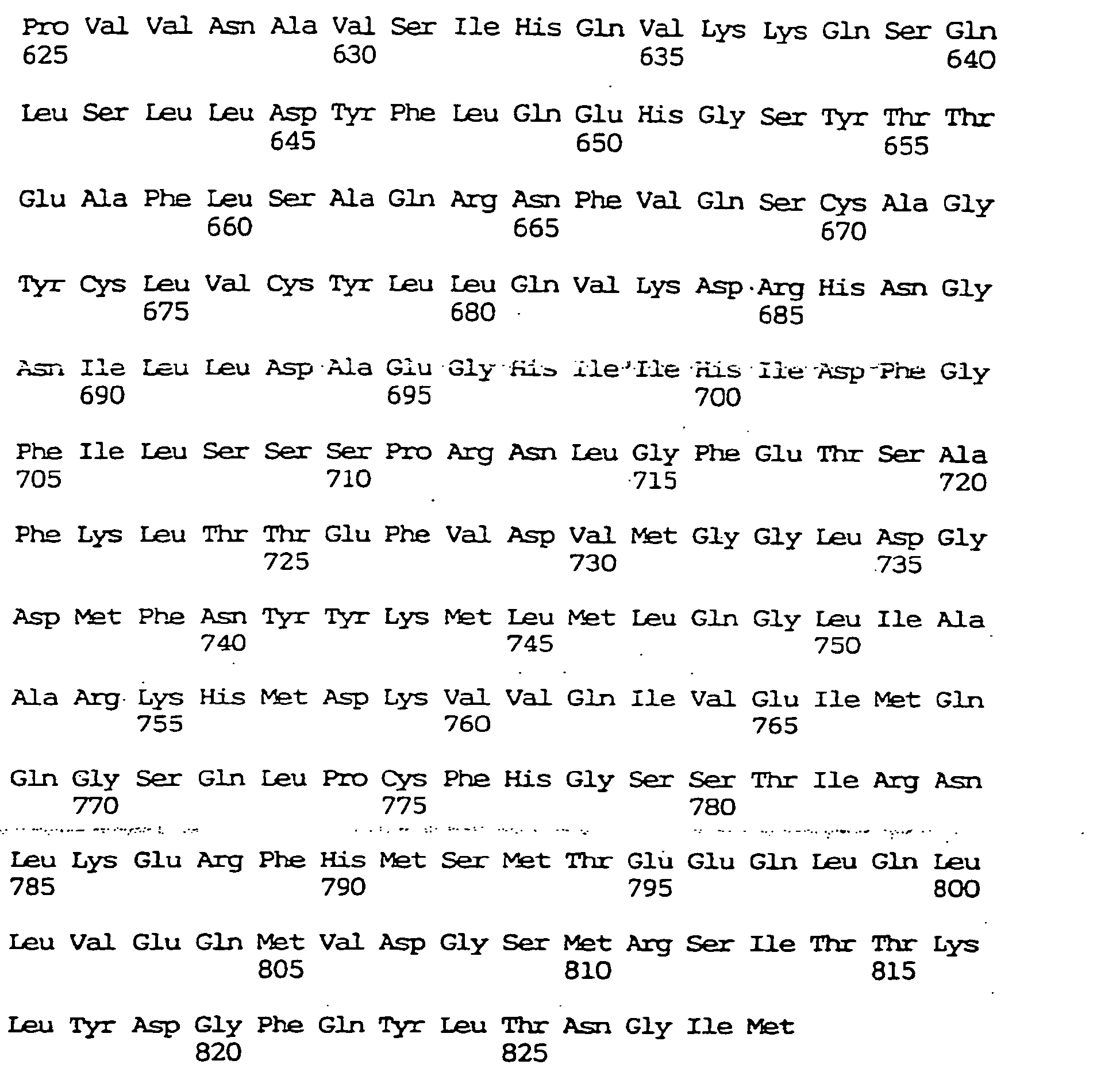
- (i) SEQUENCE CHARACTERISTICS:
- (2) INFORMATION FOR SEQ ID NO:32:
- (i) SEQUENCE CHARACTERISTICS:
- (A) LENGTH: 2487 base pairs
- (B) TYPE: nucleic acid
- (C) STRANDEDNESS: single
- (D) TOPOLOGY: linear
- (ii) MOLECULE TYPE: DNA(genomic)
- (xi) SEQUENCE DESCRIPTION: SEQ ID NO:32:

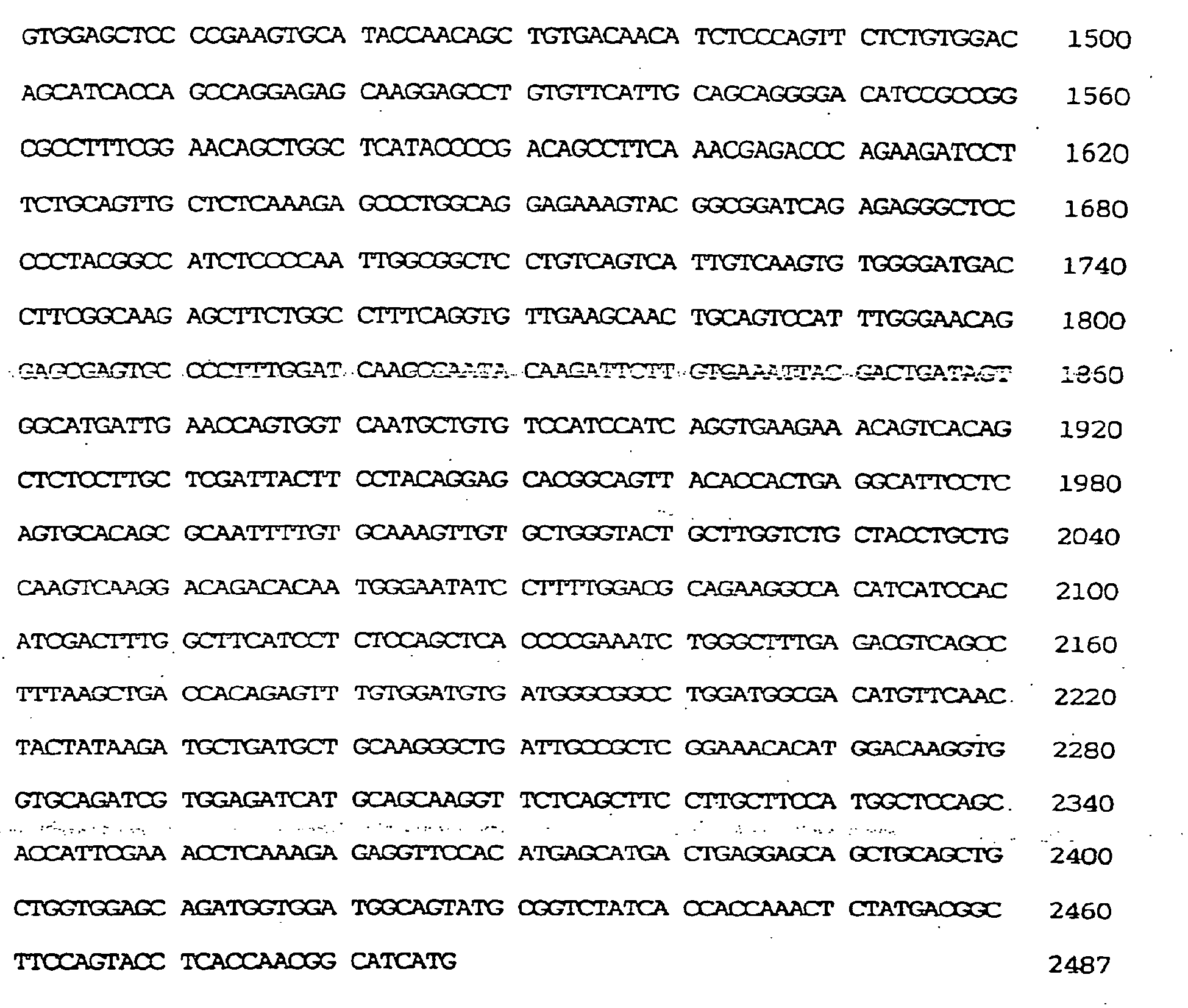
- (i) SEQUENCE CHARACTERISTICS:
- (2) INFORMATION FOR SEQ ID NO:33:
- (i) SEQUENCE CHARACTERISTICS:
- (A) LENGTH: 3324 base pairs
- (B) TYPE: nucleic acid
- (C) STRANDEDNESS: single
- (D) TOPOLOGY: linear
- (ii) MOLECULE TYPE: DNA(genomic)
- (iii) HYPOTHETICAL: NO
- (iv) ANTI-SENSE: NO
- (vii) IMMEDIATE SOURCE:
- (A) LIBRARY: Human fetal brain cDNA library
- (B) CLONE: GEN-428B12c1
- (ix) FEATURE:
- (A) NAME/KEY: CDS
- (B) LOCATION: 115..2601
- (xi) SEQUENCE DESCRIPTION: SEQ ID NO:33:


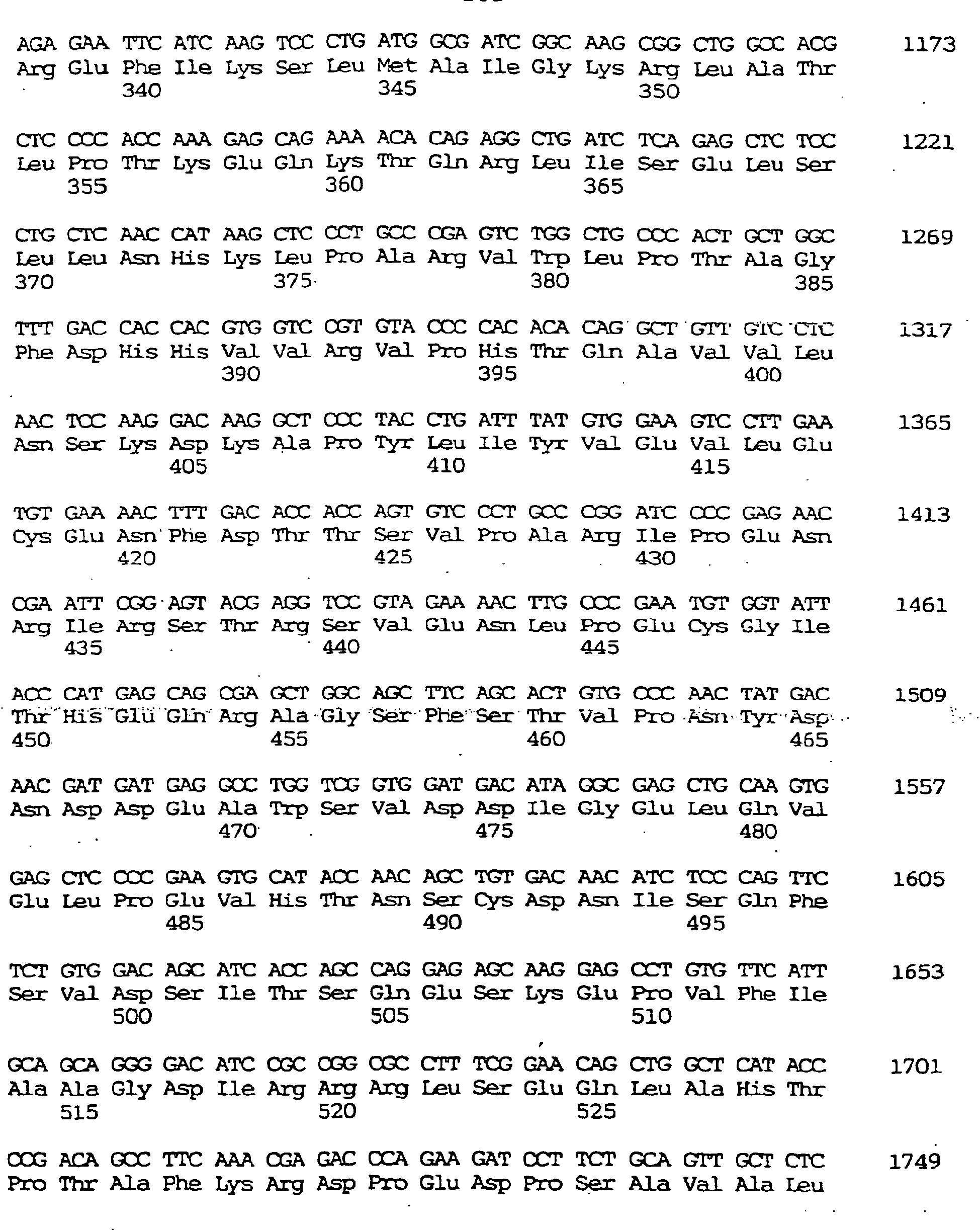


- (i) SEQUENCE CHARACTERISTICS:
Claims (6)
- A human NPIK gene comprising a nucleotide sequence coding for the amino acid sequence shown under SEQ. ID. NO.: 28.
- A human NPIK gene comprising a nucleotide sequence shown under SEQ. ID. NO.: 29.
- A human NPIK gene as defined in claim 2 which has the nucleotide sequence shown under SEQ. ID. NO.: 30.
- A human NPIK gene comprising a nucleotide sequence coding for the amino acid sequence shown under SEQ. ID. NO.: 31.
- A human NPIK gene comprising a nucleotide sequence shown under SEQ. ID. NO.: 32.
- A human NPIK gene as defined in claim 5 which has the nucleotide sequence shown under SEQ. ID. NO.: 33.
Priority Applications (4)
| Application Number | Priority Date | Filing Date | Title |
|---|---|---|---|
| EP10185775A EP2361982A1 (en) | 1996-03-19 | 1997-03-19 | Human gene encoding ubiquitin conjugating enzyme |
| EP04004141A EP1439230A3 (en) | 1996-03-19 | 1997-03-19 | Human transmembrane protein TMP-2 gene |
| EP10182760A EP2272960A1 (en) | 1996-03-19 | 1997-03-19 | Human protein NELL2 gene |
| EP07014998A EP1860189A1 (en) | 1996-03-19 | 1997-03-19 | Human gene |
Applications Claiming Priority (5)
| Application Number | Priority Date | Filing Date | Title |
|---|---|---|---|
| JP6341096 | 1996-03-19 | ||
| JP6341096 | 1996-03-19 | ||
| JP06916397A JP3646191B2 (en) | 1996-03-19 | 1997-03-05 | Human gene |
| JP6916397 | 1997-03-05 | ||
| EP97104842A EP0796913A3 (en) | 1996-03-19 | 1997-03-19 | GDP dissociation stimulating protein, brain-specific nucleosome assembly protein, skeletal muscle specific ubiquitin-conjugating enzyme, cell proliferation protein, phosphatidylinositolkinase, nel related proteins |
Related Parent Applications (1)
| Application Number | Title | Priority Date | Filing Date |
|---|---|---|---|
| EP97104842A Division EP0796913A3 (en) | 1996-03-19 | 1997-03-19 | GDP dissociation stimulating protein, brain-specific nucleosome assembly protein, skeletal muscle specific ubiquitin-conjugating enzyme, cell proliferation protein, phosphatidylinositolkinase, nel related proteins |
Related Child Applications (1)
| Application Number | Title | Priority Date | Filing Date |
|---|---|---|---|
| EP04004141A Division EP1439230A3 (en) | 1996-03-19 | 1997-03-19 | Human transmembrane protein TMP-2 gene |
Publications (3)
| Publication Number | Publication Date |
|---|---|
| EP1295944A2 EP1295944A2 (en) | 2003-03-26 |
| EP1295944A3 EP1295944A3 (en) | 2004-04-21 |
| EP1295944B1 true EP1295944B1 (en) | 2007-05-16 |
Family
ID=26404531
Family Applications (6)
| Application Number | Title | Priority Date | Filing Date |
|---|---|---|---|
| EP10185775A Withdrawn EP2361982A1 (en) | 1996-03-19 | 1997-03-19 | Human gene encoding ubiquitin conjugating enzyme |
| EP02026841A Expired - Lifetime EP1295944B1 (en) | 1996-03-19 | 1997-03-19 | GDP dissociation stimulating protein, brain-specific nucleosome assembly protein, skeletal muscle specific ubiquitin-conjugating enzyme, cell proliferation protein, phosphatidylinositolkinase, nel related proteins |
| EP07014998A Withdrawn EP1860189A1 (en) | 1996-03-19 | 1997-03-19 | Human gene |
| EP10182760A Withdrawn EP2272960A1 (en) | 1996-03-19 | 1997-03-19 | Human protein NELL2 gene |
| EP97104842A Ceased EP0796913A3 (en) | 1996-03-19 | 1997-03-19 | GDP dissociation stimulating protein, brain-specific nucleosome assembly protein, skeletal muscle specific ubiquitin-conjugating enzyme, cell proliferation protein, phosphatidylinositolkinase, nel related proteins |
| EP04004141A Withdrawn EP1439230A3 (en) | 1996-03-19 | 1997-03-19 | Human transmembrane protein TMP-2 gene |
Family Applications Before (1)
| Application Number | Title | Priority Date | Filing Date |
|---|---|---|---|
| EP10185775A Withdrawn EP2361982A1 (en) | 1996-03-19 | 1997-03-19 | Human gene encoding ubiquitin conjugating enzyme |
Family Applications After (4)
| Application Number | Title | Priority Date | Filing Date |
|---|---|---|---|
| EP07014998A Withdrawn EP1860189A1 (en) | 1996-03-19 | 1997-03-19 | Human gene |
| EP10182760A Withdrawn EP2272960A1 (en) | 1996-03-19 | 1997-03-19 | Human protein NELL2 gene |
| EP97104842A Ceased EP0796913A3 (en) | 1996-03-19 | 1997-03-19 | GDP dissociation stimulating protein, brain-specific nucleosome assembly protein, skeletal muscle specific ubiquitin-conjugating enzyme, cell proliferation protein, phosphatidylinositolkinase, nel related proteins |
| EP04004141A Withdrawn EP1439230A3 (en) | 1996-03-19 | 1997-03-19 | Human transmembrane protein TMP-2 gene |
Country Status (8)
| Country | Link |
|---|---|
| US (7) | US5831058A (en) |
| EP (6) | EP2361982A1 (en) |
| JP (1) | JP3646191B2 (en) |
| AT (1) | ATE362536T1 (en) |
| CA (2) | CA2641565C (en) |
| DE (1) | DE69737740T2 (en) |
| DK (1) | DK1295944T3 (en) |
| ES (1) | ES2284770T3 (en) |
Cited By (2)
| Publication number | Priority date | Publication date | Assignee | Title |
|---|---|---|---|---|
| US9562049B2 (en) | 2012-12-21 | 2017-02-07 | Medimmune Limited | Pyrrolobenzodiazepines and conjugates thereof |
| US9567340B2 (en) | 2012-12-21 | 2017-02-14 | Medimmune Limited | Unsymmetrical pyrrolobenzodiazepines-dimers for use in the treatment of proliferative and autoimmune diseases |
Families Citing this family (92)
| Publication number | Priority date | Publication date | Assignee | Title |
|---|---|---|---|---|
| US6410506B1 (en) * | 1995-05-19 | 2002-06-25 | Human Genome Sciences, Inc. | Transforming growth factor α HII |
| US20030170864A1 (en) * | 2000-05-30 | 2003-09-11 | Genentech, Inc. | Secreted and transmembrane polypeptides and nucleic acids encoding the same |
| WO1998027205A2 (en) * | 1996-12-18 | 1998-06-25 | Genetics Institute, Inc. | Secreted proteins and polynucleotides encoding them |
| US5976837A (en) * | 1997-03-14 | 1999-11-02 | Genetics Institute, Inc. | Secreted proteins and polynucleotides encoding them |
| US5863779A (en) * | 1997-08-21 | 1999-01-26 | Incyte Pharmaceuticals, Inc. | UBC7-like ubiquitin-conjugating enzyme |
| AU3045099A (en) * | 1998-03-27 | 1999-10-18 | University Of Leeds, The | Ubiquitin conjugating enzyme |
| US6171790B1 (en) | 1998-05-01 | 2001-01-09 | Incyte Pharmaceuticals, Inc. | Human protease associated proteins |
| JP2000109433A (en) * | 1998-08-05 | 2000-04-18 | Otsuka Pharmaceut Co Ltd | Therapeutic agent for neurodegenerative disease |
| WO2000065052A1 (en) * | 1999-04-22 | 2000-11-02 | Habener Joel F | Bridge-1, a transcription factor |
| US7884066B2 (en) * | 1999-10-05 | 2011-02-08 | The Regents Of The University Of California | NELL-1 enhanced bone mineralization |
| WO2001069261A2 (en) * | 2000-03-15 | 2001-09-20 | Oxford Glycosciences (Uk) Ltd. | Proteins, genes and their use for diagnosis and treatment of vascular dementia |
| US6689877B2 (en) * | 2000-11-06 | 2004-02-10 | The Board Of Regents Of The University Of Nebraska | Methods and compositions for the treatment of human immunodeficiency virus infection |
| US20030039968A1 (en) * | 2001-07-10 | 2003-02-27 | Applera Corporation | Isolated human secreted proteins, nucleic acid molecules encoding human secreted proteins, and uses thereof |
| US20040049024A1 (en) * | 2001-12-07 | 2004-03-11 | Geoff Clark | Compositions and methods related to the minn1 tumor suppressor gene and protein |
| US20050276812A1 (en) | 2004-06-01 | 2005-12-15 | Genentech, Inc. | Antibody-drug conjugates and methods |
| US20060153806A1 (en) | 2002-12-16 | 2006-07-13 | Develogen Aktiengesellschaft Fuer Entwicklungsbiol Ogical Forschung | Proteins involved in the regulation of energy homeostasis |
| CN101018562A (en) | 2003-02-07 | 2007-08-15 | 加州大学董事会 | NELL peptide expression system and bone formation activity of NELL peptide |
| US7691607B2 (en) | 2004-02-09 | 2010-04-06 | The Regents Of The University Of California | Expression system of NELL peptide |
| NZ553500A (en) | 2004-09-23 | 2009-11-27 | Genentech Inc Genentech Inc | Cysteine engineered antibodies and conjugates withCysteine engineered antibodies and conjugates with a free cysteine amino acid in the heavy chain a free cysteine amino acid in the heavy chain |
| US20100111856A1 (en) | 2004-09-23 | 2010-05-06 | Herman Gill | Zirconium-radiolabeled, cysteine engineered antibody conjugates |
| WO2006060533A2 (en) | 2004-12-01 | 2006-06-08 | Genentech, Inc. | Conjugates of 1, 8-bis-naphthalimides with an antibody |
| AU2008312457B2 (en) * | 2007-10-19 | 2014-04-17 | Genentech, Inc. | Cysteine engineered anti-TENB2 antibodies and antibody drug conjugates |
| EP2350286B1 (en) * | 2008-10-07 | 2016-07-20 | The Regents of The University of California | Recombinant nell protein production |
| CA2809819A1 (en) | 2009-09-09 | 2011-03-17 | Centrose, Llc | Extracellular targeted drug conjugates |
| MA34277B1 (en) | 2010-04-15 | 2013-06-01 | Spirogen Developments Sarl | PYRROLOBENZODIAZEPINES AND CONJUGATES THEREOF |
| US9000130B2 (en) | 2010-06-08 | 2015-04-07 | Genentech, Inc. | Cysteine engineered antibodies and conjugates |
| CN103313990B (en) | 2010-11-17 | 2016-07-20 | 基因泰克公司 | Alanyl maytansinol antibody coupling matter |
| ES2567276T3 (en) | 2011-05-12 | 2016-04-21 | Genentech, Inc. | LC-MS / MS method of monitoring multiple reactions to detect therapeutic antibodies in animal samples using frame-changing peptides |
| DK2750713T3 (en) | 2011-10-14 | 2015-12-21 | Medimmune Ltd | PYRROLOBENZODIAZEPINS AND CONJUGATES THEREOF |
| WO2013130093A1 (en) | 2012-03-02 | 2013-09-06 | Genentech, Inc. | Biomarkers for treatment with anti-tubulin chemotherapeutic compounds |
| EP2906296B1 (en) | 2012-10-12 | 2018-03-21 | ADC Therapeutics SA | Pyrrolobenzodiazepine-antibody conjugates |
| JP6270859B2 (en) | 2012-10-12 | 2018-01-31 | エイディーシー・セラピューティクス・エス・アー・エール・エルAdc Therapeutics Sarl | Pyrrolobenzodiazepine-antibody conjugate |
| JP5993093B2 (en) | 2012-10-12 | 2016-09-14 | メドイミューン・リミテッドMedImmune Limited | Pyrrolobenzodiazepines and their complexes |
| US10695433B2 (en) | 2012-10-12 | 2020-06-30 | Medimmune Limited | Pyrrolobenzodiazepine-antibody conjugates |
| WO2014057114A1 (en) | 2012-10-12 | 2014-04-17 | Adc Therapeutics Sàrl | Pyrrolobenzodiazepine-anti-psma antibody conjugates |
| KR101995621B1 (en) | 2012-10-12 | 2019-07-03 | 에이디씨 테라퓨틱스 에스에이 | Pyrrolobenzodiazepine-anti-cd22 antibody conjugates |
| US9931414B2 (en) | 2012-10-12 | 2018-04-03 | Medimmune Limited | Pyrrolobenzodiazepine-antibody conjugates |
| AU2014229529B2 (en) | 2013-03-13 | 2018-02-15 | Medimmune Limited | Pyrrolobenzodiazepines and conjugates thereof |
| AU2014230735B2 (en) | 2013-03-13 | 2018-03-15 | Medimmune Limited | Pyrrolobenzodiazepines and conjugates thereof |
| WO2014159981A2 (en) | 2013-03-13 | 2014-10-02 | Spirogen Sarl | Pyrrolobenzodiazepines and conjugates thereof |
| US10442836B2 (en) | 2013-08-12 | 2019-10-15 | Genentech, Inc. | 1-(chloromethyl)-2,3-dihydro-1H-benzo[E]indole dimer antibody-drug conjugate compounds, and methods of use and treatment |
| US9956299B2 (en) | 2013-10-11 | 2018-05-01 | Medimmune Limited | Pyrrolobenzodiazepine—antibody conjugates |
| EP3054985B1 (en) | 2013-10-11 | 2018-12-26 | Medimmune Limited | Pyrrolobenzodiazepine-antibody conjugates |
| GB201317982D0 (en) | 2013-10-11 | 2013-11-27 | Spirogen Sarl | Pyrrolobenzodiazepines and conjugates thereof |
| US10010624B2 (en) | 2013-10-11 | 2018-07-03 | Medimmune Limited | Pyrrolobenzodiazepine-antibody conjugates |
| WO2015095223A2 (en) | 2013-12-16 | 2015-06-25 | Genentech, Inc. | Peptidomimetic compounds and antibody-drug conjugates thereof |
| BR112016013861A2 (en) | 2013-12-16 | 2017-10-10 | Genentech Inc | drug and antibody conjugates, compounds, treatment method and pharmaceutical composition |
| BR112016013258A2 (en) | 2013-12-16 | 2018-01-16 | Genentech Inc | antibody-drug conjugate, pharmaceutical composition, method for treating cancer and kit |
| CN104189884A (en) * | 2014-08-19 | 2014-12-10 | 承德医学院 | Application of Urantide |
| CN106687141A (en) | 2014-09-10 | 2017-05-17 | 麦迪穆有限责任公司 | Pyrrolobenzodiazepines and conjugates thereof |
| MX2017003123A (en) | 2014-09-12 | 2017-05-12 | Genentech Inc | Cysteine engineered antibodies and conjugates. |
| WO2016040825A1 (en) | 2014-09-12 | 2016-03-17 | Genentech, Inc. | Anthracycline disulfide intermediates, antibody-drug conjugates and methods |
| GB201416112D0 (en) | 2014-09-12 | 2014-10-29 | Medimmune Ltd | Pyrrolobenzodiazepines and conjugates thereof |
| SG11201702079UA (en) | 2014-09-17 | 2017-04-27 | Genentech Inc | Pyrrolobenzodiazepines and antibody disulfide conjugates thereof |
| BR112017011111A2 (en) | 2014-11-25 | 2017-12-26 | Adc Therapeutics Sa | pyrrolobenzodiazepine-antibody conjugates |
| EP3226909A1 (en) | 2014-12-03 | 2017-10-11 | Genentech, Inc. | Quaternary amine compounds and antibody-drug conjugates thereof |
| GB201506411D0 (en) | 2015-04-15 | 2015-05-27 | Bergenbio As | Humanized anti-axl antibodies |
| GB201506402D0 (en) | 2015-04-15 | 2015-05-27 | Berkel Patricius H C Van And Howard Philip W | Site-specific antibody-drug conjugates |
| MA43345A (en) | 2015-10-02 | 2018-08-08 | Hoffmann La Roche | PYRROLOBENZODIAZEPINE ANTIBODY-DRUG CONJUGATES AND METHODS OF USE |
| MA43354A (en) | 2015-10-16 | 2018-08-22 | Genentech Inc | CONJUGATE DRUG CONJUGATES WITH CLOUDY DISULPHIDE |
| MA45326A (en) | 2015-10-20 | 2018-08-29 | Genentech Inc | CALICHEAMICIN-ANTIBODY-DRUG CONJUGATES AND METHODS OF USE |
| GB201601431D0 (en) | 2016-01-26 | 2016-03-09 | Medimmune Ltd | Pyrrolobenzodiazepines |
| GB201602359D0 (en) | 2016-02-10 | 2016-03-23 | Medimmune Ltd | Pyrrolobenzodiazepine Conjugates |
| GB201602356D0 (en) | 2016-02-10 | 2016-03-23 | Medimmune Ltd | Pyrrolobenzodiazepine Conjugates |
| CN121431692A (en) | 2016-03-25 | 2026-01-30 | 豪夫迈·罗氏有限公司 | Multiplex total antibodies and antibody conjugated drug quantification assays |
| GB201607478D0 (en) | 2016-04-29 | 2016-06-15 | Medimmune Ltd | Pyrrolobenzodiazepine Conjugates |
| JP2019522633A (en) | 2016-05-20 | 2019-08-15 | ジェネンテック, インコーポレイテッド | PROTAC antibody conjugates and methods of use |
| JP7022080B2 (en) | 2016-05-27 | 2022-02-17 | ジェネンテック, インコーポレイテッド | Biochemical analytical methods for the characterization of site-specific antibody-drug conjugates |
| EP3464280B1 (en) | 2016-06-06 | 2021-10-06 | F. Hoffmann-La Roche AG | Silvestrol antibody-drug conjugates and methods of use |
| JP7093767B2 (en) | 2016-08-11 | 2022-06-30 | ジェネンテック, インコーポレイテッド | Pyrrolobenzodiazepine prodrug and its antibody conjugate |
| JP7050770B2 (en) | 2016-10-05 | 2022-04-08 | エフ・ホフマン-ラ・ロシュ・アクチェンゲゼルシャフト | Method for preparing antibody drug conjugate |
| GB201617466D0 (en) | 2016-10-14 | 2016-11-30 | Medimmune Ltd | Pyrrolobenzodiazepine conjugates |
| HUE054689T2 (en) | 2017-02-08 | 2021-09-28 | Adc Therapeutics Sa | Pyrrolobenzodiazepine antibody conjugates |
| GB201702031D0 (en) | 2017-02-08 | 2017-03-22 | Medlmmune Ltd | Pyrrolobenzodiazepine-antibody conjugates |
| SI3612537T1 (en) | 2017-04-18 | 2022-10-28 | Medimmune Limited | Pyrrolobenzodiazepine conjugates |
| EP3612234B1 (en) | 2017-04-20 | 2024-03-13 | ADC Therapeutics SA | Combination therapy with an anti-axl antibody-drug conjugate |
| CA3064804A1 (en) | 2017-06-14 | 2018-12-20 | Adc Therapeutics Sa | Dosage regimes for the administration of an anti-cd19 adc |
| SG11202000358YA (en) | 2017-08-18 | 2020-02-27 | Medimmune Ltd | Pyrrolobenzodiazepine conjugates |
| IL273387B2 (en) | 2017-09-20 | 2023-10-01 | Ph Pharma Co Ltd | Thailanstatin analogs |
| GB201803342D0 (en) | 2018-03-01 | 2018-04-18 | Medimmune Ltd | Methods |
| GB201806022D0 (en) | 2018-04-12 | 2018-05-30 | Medimmune Ltd | Pyrrolobenzodiazepines and conjugates thereof |
| GB201814281D0 (en) | 2018-09-03 | 2018-10-17 | Femtogenix Ltd | Cytotoxic agents |
| AU2019365238A1 (en) | 2018-10-24 | 2021-05-13 | F. Hoffmann-La Roche Ag | Conjugated chemical inducers of degradation and methods of use |
| JP2022513198A (en) | 2018-12-10 | 2022-02-07 | ジェネンテック, インコーポレイテッド | Photocrosslinkable peptide for site-specific conjugation to Fc-containing proteins |
| GB201901197D0 (en) | 2019-01-29 | 2019-03-20 | Femtogenix Ltd | G-A Crosslinking cytotoxic agents |
| MX2021010477A (en) | 2019-03-15 | 2021-10-01 | Medimmune Ltd | Azetidobenzodiazepine dimers and conjugates comprising them for use in the treatment of cancer. |
| GB2597532A (en) | 2020-07-28 | 2022-02-02 | Femtogenix Ltd | Cytotoxic compounds |
| AU2021362997A1 (en) | 2021-11-03 | 2024-05-16 | Hangzhou Dac Biotech Co., Ltd. | Specific conjugation of an antibody |
| WO2024138128A2 (en) | 2022-12-23 | 2024-06-27 | Genentech, Inc. | Cereblon degrader conjugates, and uses thereof |
| CN121263210A (en) | 2023-04-17 | 2026-01-02 | 沛科生物公司 | Antibodies and antibody-drug conjugates, as well as their usage, synthesis processes, and intermediates |
| WO2026006689A2 (en) | 2024-06-28 | 2026-01-02 | Firefly Bio, Inc. | Bcl-xl degrader antibody conjugates and uses thereof |
| WO2026006688A2 (en) | 2024-06-28 | 2026-01-02 | Firefly Bio, Inc. | Degrader antibody conjugates and uses thereof |
Family Cites Families (7)
| Publication number | Priority date | Publication date | Assignee | Title |
|---|---|---|---|---|
| JPH05268957A (en) | 1992-03-27 | 1993-10-19 | Bio Material Kenkyusho:Kk | Rat multifunctional protease constituent factor and its dna |
| JP3125235B2 (en) | 1992-04-22 | 2001-01-15 | 株式会社バイオマテリアル研究所 | Human 26S proteasome |
| JPH05317059A (en) | 1992-05-22 | 1993-12-03 | Bio Material Kenkyusho:Kk | Component of rat proteasome and its dna |
| US5470577A (en) * | 1993-07-07 | 1995-11-28 | Trustees Of Boston University | Stimulation of tanning by DNA fragments or single-stranded DNA |
| WO1996036709A1 (en) * | 1995-05-19 | 1996-11-21 | Human Genome Sciences, Inc. | Transforming growth factor alpha hii |
| US5863779A (en) * | 1997-08-21 | 1999-01-26 | Incyte Pharmaceuticals, Inc. | UBC7-like ubiquitin-conjugating enzyme |
| CN101018562A (en) * | 2003-02-07 | 2007-08-15 | 加州大学董事会 | NELL peptide expression system and bone formation activity of NELL peptide |
-
1997
- 1997-03-05 JP JP06916397A patent/JP3646191B2/en not_active Expired - Fee Related
- 1997-03-19 DK DK02026841T patent/DK1295944T3/en active
- 1997-03-19 EP EP10185775A patent/EP2361982A1/en not_active Withdrawn
- 1997-03-19 EP EP02026841A patent/EP1295944B1/en not_active Expired - Lifetime
- 1997-03-19 EP EP07014998A patent/EP1860189A1/en not_active Withdrawn
- 1997-03-19 AT AT02026841T patent/ATE362536T1/en active
- 1997-03-19 EP EP10182760A patent/EP2272960A1/en not_active Withdrawn
- 1997-03-19 DE DE69737740T patent/DE69737740T2/en not_active Expired - Lifetime
- 1997-03-19 EP EP97104842A patent/EP0796913A3/en not_active Ceased
- 1997-03-19 ES ES02026841T patent/ES2284770T3/en not_active Expired - Lifetime
- 1997-03-19 CA CA2641565A patent/CA2641565C/en not_active Expired - Fee Related
- 1997-03-19 EP EP04004141A patent/EP1439230A3/en not_active Withdrawn
- 1997-03-19 US US08/820,170 patent/US5831058A/en not_active Expired - Lifetime
- 1997-03-19 CA CA002200371A patent/CA2200371C/en not_active Expired - Fee Related
-
2004
- 2004-02-20 US US10/781,841 patent/US20060134634A1/en not_active Abandoned
-
2006
- 2006-11-07 US US11/593,525 patent/US7674889B2/en not_active Expired - Fee Related
-
2007
- 2007-07-06 US US11/774,330 patent/US7592438B2/en not_active Expired - Fee Related
-
2009
- 2009-07-27 US US12/510,074 patent/US7858754B2/en not_active Expired - Fee Related
-
2010
- 2010-01-19 US US12/689,917 patent/US8048995B2/en not_active Expired - Fee Related
- 2010-12-23 US US12/977,497 patent/US8106171B2/en not_active Expired - Fee Related
Cited By (2)
| Publication number | Priority date | Publication date | Assignee | Title |
|---|---|---|---|---|
| US9562049B2 (en) | 2012-12-21 | 2017-02-07 | Medimmune Limited | Pyrrolobenzodiazepines and conjugates thereof |
| US9567340B2 (en) | 2012-12-21 | 2017-02-14 | Medimmune Limited | Unsymmetrical pyrrolobenzodiazepines-dimers for use in the treatment of proliferative and autoimmune diseases |
Also Published As
| Publication number | Publication date |
|---|---|
| JP3646191B2 (en) | 2005-05-11 |
| EP0796913A3 (en) | 2001-01-31 |
| CA2641565A1 (en) | 1997-09-19 |
| DK1295944T3 (en) | 2007-09-17 |
| US5831058A (en) | 1998-11-03 |
| US20080032337A1 (en) | 2008-02-07 |
| ATE362536T1 (en) | 2007-06-15 |
| EP1295944A2 (en) | 2003-03-26 |
| US7592438B2 (en) | 2009-09-22 |
| CA2641565C (en) | 2012-11-13 |
| US8048995B2 (en) | 2011-11-01 |
| US7674889B2 (en) | 2010-03-09 |
| US20110105718A1 (en) | 2011-05-05 |
| CA2200371A1 (en) | 1997-09-19 |
| US8106171B2 (en) | 2012-01-31 |
| US20070111285A1 (en) | 2007-05-17 |
| ES2284770T3 (en) | 2007-11-16 |
| US20100160611A1 (en) | 2010-06-24 |
| CA2200371C (en) | 2007-07-10 |
| EP1860189A1 (en) | 2007-11-28 |
| EP1295944A3 (en) | 2004-04-21 |
| EP0796913A2 (en) | 1997-09-24 |
| EP2272960A1 (en) | 2011-01-12 |
| EP2361982A1 (en) | 2011-08-31 |
| EP1439230A3 (en) | 2004-09-22 |
| DE69737740T2 (en) | 2008-01-31 |
| US20100048878A1 (en) | 2010-02-25 |
| US20060134634A1 (en) | 2006-06-22 |
| US7858754B2 (en) | 2010-12-28 |
| DE69737740D1 (en) | 2007-06-28 |
| JPH09308492A (en) | 1997-12-02 |
| EP1439230A2 (en) | 2004-07-21 |
Similar Documents
| Publication | Publication Date | Title |
|---|---|---|
| EP1295944B1 (en) | GDP dissociation stimulating protein, brain-specific nucleosome assembly protein, skeletal muscle specific ubiquitin-conjugating enzyme, cell proliferation protein, phosphatidylinositolkinase, nel related proteins | |
| Hanai et al. | Human TOP3: a single-copy gene encoding DNA topoisomerase III. | |
| Gonzalez et al. | Characterization of gene expression in human trabecular meshwork using single-pass sequencing of 1060 clones | |
| US7420048B2 (en) | Human skeletal muscle-specific ubiquitin-conjugating enzyme | |
| CA2272823A1 (en) | Method for identifying genes encoding novel secreted or membrane-associated proteins | |
| JP3791927B2 (en) | Tumor suppressor genes, proteins encoded by them, and use of those genes and proteins | |
| Pan et al. | Two newly characterized germinal center B-cell-associated genes, GCET1 and GCET2, have differential expression in normal and neoplastic B cells | |
| WO1997006245A1 (en) | Map kinase phosphatase gene and uses thereof | |
| US20090181382A1 (en) | Sphingosine 1-Phosphate Receptor Gene, SPPR | |
| US6566501B1 (en) | Transcription factor regulating TNF-α | |
| JP3619936B2 (en) | Human gene | |
| US5808031A (en) | GRP17 gene | |
| EP1241253A1 (en) | HUMAN PROTEINS BINDING TO HUMAN TYROSINE KINASE Hck AND GENES ENCODING THE SAME | |
| JP3951273B2 (en) | Human gene | |
| JP4022771B2 (en) | Prostate cancer treatment | |
| HK1116215A (en) | Human gene | |
| JP2002534982A (en) | Polypeptides derived from JNK3 | |
| JPH09294588A (en) | Human rch1-associated protein gene |
Legal Events
| Date | Code | Title | Description |
|---|---|---|---|
| PUAI | Public reference made under article 153(3) epc to a published international application that has entered the european phase |
Free format text: ORIGINAL CODE: 0009012 |
|
| 17P | Request for examination filed |
Effective date: 20021129 |
|
| AC | Divisional application: reference to earlier application |
Ref document number: 0796913 Country of ref document: EP Kind code of ref document: P |
|
| AK | Designated contracting states |
Kind code of ref document: A2 Designated state(s): AT BE CH DE DK ES FI FR GB GR IE IT LI LU MC NL PT SE |
|
| PUAL | Search report despatched |
Free format text: ORIGINAL CODE: 0009013 |
|
| AK | Designated contracting states |
Kind code of ref document: A3 Designated state(s): AT BE CH DE DK ES FI FR GB GR IE IT LI LU MC NL PT SE |
|
| AKX | Designation fees paid |
Designated state(s): AT BE CH DE DK ES FI FR GB GR IE IT LI LU MC NL PT SE |
|
| GRAP | Despatch of communication of intention to grant a patent |
Free format text: ORIGINAL CODE: EPIDOSNIGR1 |
|
| GRAS | Grant fee paid |
Free format text: ORIGINAL CODE: EPIDOSNIGR3 |
|
| GRAA | (expected) grant |
Free format text: ORIGINAL CODE: 0009210 |
|
| AC | Divisional application: reference to earlier application |
Ref document number: 0796913 Country of ref document: EP Kind code of ref document: P |
|
| AK | Designated contracting states |
Kind code of ref document: B1 Designated state(s): AT BE CH DE DK ES FI FR GB GR IE IT LI LU MC NL PT SE |
|
| PG25 | Lapsed in a contracting state [announced via postgrant information from national office to epo] |
Ref country code: FI Free format text: LAPSE BECAUSE OF FAILURE TO SUBMIT A TRANSLATION OF THE DESCRIPTION OR TO PAY THE FEE WITHIN THE PRESCRIBED TIME-LIMIT Effective date: 20070516 |
|
| RAP1 | Party data changed (applicant data changed or rights of an application transferred) |
Owner name: OTSUKA PHARMACEUTICAL CO., LTD. |
|
| REG | Reference to a national code |
Ref country code: GB Ref legal event code: FG4D |
|
| REG | Reference to a national code |
Ref country code: CH Ref legal event code: EP Ref country code: CH Ref legal event code: NV Representative=s name: SERVOPATENT GMBH |
|
| REG | Reference to a national code |
Ref country code: IE Ref legal event code: FG4D |
|
| REF | Corresponds to: |
Ref document number: 69737740 Country of ref document: DE Date of ref document: 20070628 Kind code of ref document: P |
|
| REG | Reference to a national code |
Ref country code: SE Ref legal event code: TRGR |
|
| REG | Reference to a national code |
Ref country code: DK Ref legal event code: T3 |
|
| ET | Fr: translation filed | ||
| REG | Reference to a national code |
Ref country code: ES Ref legal event code: FG2A Ref document number: 2284770 Country of ref document: ES Kind code of ref document: T3 |
|
| PG25 | Lapsed in a contracting state [announced via postgrant information from national office to epo] |
Ref country code: BE Free format text: LAPSE BECAUSE OF FAILURE TO SUBMIT A TRANSLATION OF THE DESCRIPTION OR TO PAY THE FEE WITHIN THE PRESCRIBED TIME-LIMIT Effective date: 20070516 |
|
| PG25 | Lapsed in a contracting state [announced via postgrant information from national office to epo] |
Ref country code: PT Free format text: LAPSE BECAUSE OF FAILURE TO SUBMIT A TRANSLATION OF THE DESCRIPTION OR TO PAY THE FEE WITHIN THE PRESCRIBED TIME-LIMIT Effective date: 20071016 |
|
| REG | Reference to a national code |
Ref country code: CH Ref legal event code: PFA Owner name: OTSUKA PHARMACEUTICAL CO., LTD. Free format text: OTSUKA PHARMACEUTICAL CO., LTD.#9, KANDATSUKASACHO 2-CHOME#CHIYODA-KU TOKYO 101 (JP) -TRANSFER TO- OTSUKA PHARMACEUTICAL CO., LTD.#9, KANDATSUKASACHO 2-CHOME#CHIYODA-KU TOKYO 101 (JP) |
|
| PLBE | No opposition filed within time limit |
Free format text: ORIGINAL CODE: 0009261 |
|
| STAA | Information on the status of an ep patent application or granted ep patent |
Free format text: STATUS: NO OPPOSITION FILED WITHIN TIME LIMIT |
|
| 26N | No opposition filed |
Effective date: 20080219 |
|
| PG25 | Lapsed in a contracting state [announced via postgrant information from national office to epo] |
Ref country code: GR Free format text: LAPSE BECAUSE OF FAILURE TO SUBMIT A TRANSLATION OF THE DESCRIPTION OR TO PAY THE FEE WITHIN THE PRESCRIBED TIME-LIMIT Effective date: 20070817 |
|
| PG25 | Lapsed in a contracting state [announced via postgrant information from national office to epo] |
Ref country code: MC Free format text: LAPSE BECAUSE OF NON-PAYMENT OF DUE FEES Effective date: 20080331 |
|
| PG25 | Lapsed in a contracting state [announced via postgrant information from national office to epo] |
Ref country code: IE Free format text: LAPSE BECAUSE OF NON-PAYMENT OF DUE FEES Effective date: 20080319 |
|
| PG25 | Lapsed in a contracting state [announced via postgrant information from national office to epo] |
Ref country code: LU Free format text: LAPSE BECAUSE OF NON-PAYMENT OF DUE FEES Effective date: 20080319 |
|
| PGFP | Annual fee paid to national office [announced via postgrant information from national office to epo] |
Ref country code: SE Payment date: 20140311 Year of fee payment: 18 Ref country code: CH Payment date: 20140312 Year of fee payment: 18 Ref country code: NL Payment date: 20140208 Year of fee payment: 18 Ref country code: DK Payment date: 20140311 Year of fee payment: 18 |
|
| PGFP | Annual fee paid to national office [announced via postgrant information from national office to epo] |
Ref country code: IT Payment date: 20140307 Year of fee payment: 18 Ref country code: AT Payment date: 20140226 Year of fee payment: 18 Ref country code: ES Payment date: 20140211 Year of fee payment: 18 Ref country code: FR Payment date: 20140311 Year of fee payment: 18 |
|
| PGFP | Annual fee paid to national office [announced via postgrant information from national office to epo] |
Ref country code: GB Payment date: 20140319 Year of fee payment: 18 |
|
| PGFP | Annual fee paid to national office [announced via postgrant information from national office to epo] |
Ref country code: DE Payment date: 20140417 Year of fee payment: 18 |
|
| REG | Reference to a national code |
Ref country code: DE Ref legal event code: R119 Ref document number: 69737740 Country of ref document: DE |
|
| REG | Reference to a national code |
Ref country code: DK Ref legal event code: EBP Effective date: 20150331 |
|
| REG | Reference to a national code |
Ref country code: CH Ref legal event code: PL |
|
| REG | Reference to a national code |
Ref country code: AT Ref legal event code: MM01 Ref document number: 362536 Country of ref document: AT Kind code of ref document: T Effective date: 20150319 |
|
| GBPC | Gb: european patent ceased through non-payment of renewal fee |
Effective date: 20150319 |
|
| PG25 | Lapsed in a contracting state [announced via postgrant information from national office to epo] |
Ref country code: SE Free format text: LAPSE BECAUSE OF NON-PAYMENT OF DUE FEES Effective date: 20150320 |
|
| REG | Reference to a national code |
Ref country code: SE Ref legal event code: EUG |
|
| REG | Reference to a national code |
Ref country code: NL Ref legal event code: MM Effective date: 20150401 |
|
| PG25 | Lapsed in a contracting state [announced via postgrant information from national office to epo] |
Ref country code: IT Free format text: LAPSE BECAUSE OF NON-PAYMENT OF DUE FEES Effective date: 20150319 |
|
| REG | Reference to a national code |
Ref country code: FR Ref legal event code: ST Effective date: 20151130 |
|
| PG25 | Lapsed in a contracting state [announced via postgrant information from national office to epo] |
Ref country code: DE Free format text: LAPSE BECAUSE OF NON-PAYMENT OF DUE FEES Effective date: 20151001 Ref country code: CH Free format text: LAPSE BECAUSE OF NON-PAYMENT OF DUE FEES Effective date: 20150331 Ref country code: GB Free format text: LAPSE BECAUSE OF NON-PAYMENT OF DUE FEES Effective date: 20150319 Ref country code: LI Free format text: LAPSE BECAUSE OF NON-PAYMENT OF DUE FEES Effective date: 20150331 |
|
| PG25 | Lapsed in a contracting state [announced via postgrant information from national office to epo] |
Ref country code: FR Free format text: LAPSE BECAUSE OF NON-PAYMENT OF DUE FEES Effective date: 20150331 Ref country code: AT Free format text: LAPSE BECAUSE OF NON-PAYMENT OF DUE FEES Effective date: 20150319 |
|
| REG | Reference to a national code |
Ref country code: ES Ref legal event code: FD2A Effective date: 20160427 |
|
| PG25 | Lapsed in a contracting state [announced via postgrant information from national office to epo] |
Ref country code: DK Free format text: LAPSE BECAUSE OF NON-PAYMENT OF DUE FEES Effective date: 20150331 |
|
| PG25 | Lapsed in a contracting state [announced via postgrant information from national office to epo] |
Ref country code: ES Free format text: LAPSE BECAUSE OF NON-PAYMENT OF DUE FEES Effective date: 20150320 |
|
| PG25 | Lapsed in a contracting state [announced via postgrant information from national office to epo] |
Ref country code: NL Free format text: LAPSE BECAUSE OF NON-PAYMENT OF DUE FEES Effective date: 20150401 |