DE112022003788T5 - NATURAL FIBER PACKAGING FOR SEALED ABSORBENT ARTICLES - Google Patents
NATURAL FIBER PACKAGING FOR SEALED ABSORBENT ARTICLES Download PDFInfo
- Publication number
- DE112022003788T5 DE112022003788T5 DE112022003788.1T DE112022003788T DE112022003788T5 DE 112022003788 T5 DE112022003788 T5 DE 112022003788T5 DE 112022003788 T DE112022003788 T DE 112022003788T DE 112022003788 T5 DE112022003788 T5 DE 112022003788T5
- Authority
- DE
- Germany
- Prior art keywords
- panel
- package
- packaging
- packaging material
- percent
- Prior art date
- Legal status (The legal status is an assumption and is not a legal conclusion. Google has not performed a legal analysis and makes no representation as to the accuracy of the status listed.)
- Pending
Links
- 230000002745 absorbent Effects 0.000 title claims abstract description 290
- 239000002250 absorbent Substances 0.000 title claims abstract description 290
- 239000000835 fiber Substances 0.000 title claims abstract description 97
- 238000004806 packaging method and process Methods 0.000 title claims description 100
- 239000005022 packaging material Substances 0.000 claims abstract description 219
- 238000000034 method Methods 0.000 claims description 77
- 230000004888 barrier function Effects 0.000 claims description 33
- 206010021639 Incontinence Diseases 0.000 claims description 12
- 230000001186 cumulative effect Effects 0.000 claims description 11
- 238000012812 general test Methods 0.000 claims description 2
- 239000000463 material Substances 0.000 description 153
- 238000012360 testing method Methods 0.000 description 101
- 239000010410 layer Substances 0.000 description 68
- 239000000853 adhesive Substances 0.000 description 62
- 230000001070 adhesive effect Effects 0.000 description 62
- 239000000975 dye Substances 0.000 description 57
- 239000000523 sample Substances 0.000 description 40
- 230000008569 process Effects 0.000 description 36
- 239000000047 product Substances 0.000 description 32
- 238000005259 measurement Methods 0.000 description 26
- 238000007906 compression Methods 0.000 description 25
- 230000006835 compression Effects 0.000 description 24
- 210000002414 leg Anatomy 0.000 description 23
- 238000000576 coating method Methods 0.000 description 21
- 238000000322 laser mass spectrometry Methods 0.000 description 18
- 239000007788 liquid Substances 0.000 description 18
- 238000004064 recycling Methods 0.000 description 16
- 229920003023 plastic Polymers 0.000 description 15
- 239000004033 plastic Substances 0.000 description 15
- 239000000758 substrate Substances 0.000 description 14
- XLYOFNOQVPJJNP-UHFFFAOYSA-N water Substances O XLYOFNOQVPJJNP-UHFFFAOYSA-N 0.000 description 14
- 239000000123 paper Substances 0.000 description 13
- 210000000416 exudates and transudate Anatomy 0.000 description 12
- 239000011087 paperboard Substances 0.000 description 12
- 238000010586 diagram Methods 0.000 description 11
- -1 e.g. Substances 0.000 description 11
- 239000012530 fluid Substances 0.000 description 11
- 230000002829 reductive effect Effects 0.000 description 11
- 238000009864 tensile test Methods 0.000 description 11
- 239000011111 cardboard Substances 0.000 description 10
- 238000009826 distribution Methods 0.000 description 10
- 238000012545 processing Methods 0.000 description 10
- 239000002356 single layer Substances 0.000 description 10
- 229920001169 thermoplastic Polymers 0.000 description 10
- 239000004416 thermosoftening plastic Substances 0.000 description 10
- 229920000742 Cotton Polymers 0.000 description 9
- 238000005452 bending Methods 0.000 description 9
- 230000001143 conditioned effect Effects 0.000 description 9
- 238000004519 manufacturing process Methods 0.000 description 9
- 238000010998 test method Methods 0.000 description 9
- 229920001131 Pulp (paper) Polymers 0.000 description 8
- 238000011084 recovery Methods 0.000 description 8
- 238000006798 ring closing metathesis reaction Methods 0.000 description 8
- 230000008901 benefit Effects 0.000 description 7
- 238000010276 construction Methods 0.000 description 7
- 238000006073 displacement reaction Methods 0.000 description 7
- 239000000203 mixture Substances 0.000 description 7
- 239000012209 synthetic fiber Substances 0.000 description 6
- 229920002994 synthetic fiber Polymers 0.000 description 6
- 239000011248 coating agent Substances 0.000 description 5
- 238000012504 compendial method Methods 0.000 description 5
- 239000013068 control sample Substances 0.000 description 5
- 238000013461 design Methods 0.000 description 5
- 230000000694 effects Effects 0.000 description 5
- 238000012858 packaging process Methods 0.000 description 5
- 239000002985 plastic film Substances 0.000 description 5
- 229920006255 plastic film Polymers 0.000 description 5
- 239000007787 solid Substances 0.000 description 5
- 239000002904 solvent Substances 0.000 description 5
- 239000004820 Pressure-sensitive adhesive Substances 0.000 description 4
- 229920000297 Rayon Polymers 0.000 description 4
- 229920002522 Wood fibre Polymers 0.000 description 4
- 238000010521 absorption reaction Methods 0.000 description 4
- 238000004026 adhesive bonding Methods 0.000 description 4
- 239000003086 colorant Substances 0.000 description 4
- 238000011109 contamination Methods 0.000 description 4
- 230000007547 defect Effects 0.000 description 4
- 239000006260 foam Substances 0.000 description 4
- 238000013023 gasketing Methods 0.000 description 4
- 230000002209 hydrophobic effect Effects 0.000 description 4
- 238000012986 modification Methods 0.000 description 4
- 230000004048 modification Effects 0.000 description 4
- 238000004537 pulping Methods 0.000 description 4
- 239000002994 raw material Substances 0.000 description 4
- 230000000007 visual effect Effects 0.000 description 4
- 238000011179 visual inspection Methods 0.000 description 4
- 239000002025 wood fiber Substances 0.000 description 4
- 239000004698 Polyethylene Substances 0.000 description 3
- 229910000831 Steel Inorganic materials 0.000 description 3
- 239000000356 contaminant Substances 0.000 description 3
- 238000004049 embossing Methods 0.000 description 3
- 238000005304 joining Methods 0.000 description 3
- 239000002655 kraft paper Substances 0.000 description 3
- 230000002175 menstrual effect Effects 0.000 description 3
- 230000002093 peripheral effect Effects 0.000 description 3
- 229920000573 polyethylene Polymers 0.000 description 3
- 239000011118 polyvinyl acetate Substances 0.000 description 3
- 229920002689 polyvinyl acetate Polymers 0.000 description 3
- 239000002964 rayon Substances 0.000 description 3
- 239000010959 steel Substances 0.000 description 3
- 239000000126 substance Substances 0.000 description 3
- 210000002700 urine Anatomy 0.000 description 3
- IUVCFHHAEHNCFT-INIZCTEOSA-N 2-[(1s)-1-[4-amino-3-(3-fluoro-4-propan-2-yloxyphenyl)pyrazolo[3,4-d]pyrimidin-1-yl]ethyl]-6-fluoro-3-(3-fluorophenyl)chromen-4-one Chemical compound C1=C(F)C(OC(C)C)=CC=C1C(C1=C(N)N=CN=C11)=NN1[C@@H](C)C1=C(C=2C=C(F)C=CC=2)C(=O)C2=CC(F)=CC=C2O1 IUVCFHHAEHNCFT-INIZCTEOSA-N 0.000 description 2
- 241000609240 Ambelania acida Species 0.000 description 2
- 244000099147 Ananas comosus Species 0.000 description 2
- 235000007119 Ananas comosus Nutrition 0.000 description 2
- 244000025254 Cannabis sativa Species 0.000 description 2
- 235000012766 Cannabis sativa ssp. sativa var. sativa Nutrition 0.000 description 2
- 235000012765 Cannabis sativa ssp. sativa var. spontanea Nutrition 0.000 description 2
- 229920003043 Cellulose fiber Polymers 0.000 description 2
- 240000000491 Corchorus aestuans Species 0.000 description 2
- 235000011777 Corchorus aestuans Nutrition 0.000 description 2
- 235000010862 Corchorus capsularis Nutrition 0.000 description 2
- 241000945868 Eulaliopsis Species 0.000 description 2
- 241000219146 Gossypium Species 0.000 description 2
- 240000000797 Hibiscus cannabinus Species 0.000 description 2
- 240000006240 Linum usitatissimum Species 0.000 description 2
- 235000004431 Linum usitatissimum Nutrition 0.000 description 2
- 241001148717 Lygeum spartum Species 0.000 description 2
- 240000000907 Musa textilis Species 0.000 description 2
- 229920003171 Poly (ethylene oxide) Polymers 0.000 description 2
- 239000004743 Polypropylene Substances 0.000 description 2
- 239000004372 Polyvinyl alcohol Substances 0.000 description 2
- 229920002472 Starch Polymers 0.000 description 2
- LSNNMFCWUKXFEE-UHFFFAOYSA-N Sulfurous acid Chemical compound OS(O)=O LSNNMFCWUKXFEE-UHFFFAOYSA-N 0.000 description 2
- 238000007792 addition Methods 0.000 description 2
- 239000012790 adhesive layer Substances 0.000 description 2
- 239000010905 bagasse Substances 0.000 description 2
- 230000015572 biosynthetic process Effects 0.000 description 2
- 235000009120 camo Nutrition 0.000 description 2
- 229920002678 cellulose Polymers 0.000 description 2
- 239000001913 cellulose Substances 0.000 description 2
- 235000005607 chanvre indien Nutrition 0.000 description 2
- 238000012669 compression test Methods 0.000 description 2
- 230000007613 environmental effect Effects 0.000 description 2
- 230000006353 environmental stress Effects 0.000 description 2
- 239000002657 fibrous material Substances 0.000 description 2
- 238000011049 filling Methods 0.000 description 2
- 238000005755 formation reaction Methods 0.000 description 2
- 239000011521 glass Substances 0.000 description 2
- 239000011487 hemp Substances 0.000 description 2
- 238000007373 indentation Methods 0.000 description 2
- 238000011068 loading method Methods 0.000 description 2
- 239000006210 lotion Substances 0.000 description 2
- 229910052751 metal Inorganic materials 0.000 description 2
- 239000002184 metal Substances 0.000 description 2
- 238000000386 microscopy Methods 0.000 description 2
- 239000012785 packaging film Substances 0.000 description 2
- 229920006280 packaging film Polymers 0.000 description 2
- 230000036961 partial effect Effects 0.000 description 2
- 229920000642 polymer Polymers 0.000 description 2
- 229920001155 polypropylene Polymers 0.000 description 2
- 229920002451 polyvinyl alcohol Polymers 0.000 description 2
- 239000011122 softwood Substances 0.000 description 2
- 239000008107 starch Substances 0.000 description 2
- 235000019698 starch Nutrition 0.000 description 2
- 238000003860 storage Methods 0.000 description 2
- 239000010902 straw Substances 0.000 description 2
- 230000035882 stress Effects 0.000 description 2
- 230000000930 thermomechanical effect Effects 0.000 description 2
- 229920002725 thermoplastic elastomer Polymers 0.000 description 2
- 238000012546 transfer Methods 0.000 description 2
- 230000007704 transition Effects 0.000 description 2
- 238000011282 treatment Methods 0.000 description 2
- 239000011800 void material Substances 0.000 description 2
- 239000002023 wood Substances 0.000 description 2
- 230000037303 wrinkles Effects 0.000 description 2
- BUHVIAUBTBOHAG-FOYDDCNASA-N (2r,3r,4s,5r)-2-[6-[[2-(3,5-dimethoxyphenyl)-2-(2-methylphenyl)ethyl]amino]purin-9-yl]-5-(hydroxymethyl)oxolane-3,4-diol Chemical compound COC1=CC(OC)=CC(C(CNC=2C=3N=CN(C=3N=CN=2)[C@H]2[C@@H]([C@H](O)[C@@H](CO)O2)O)C=2C(=CC=CC=2)C)=C1 BUHVIAUBTBOHAG-FOYDDCNASA-N 0.000 description 1
- 241000208140 Acer Species 0.000 description 1
- 235000017166 Bambusa arundinacea Nutrition 0.000 description 1
- 235000017491 Bambusa tulda Nutrition 0.000 description 1
- 235000018185 Betula X alpestris Nutrition 0.000 description 1
- 235000018212 Betula X uliginosa Nutrition 0.000 description 1
- ZAMOUSCENKQFHK-UHFFFAOYSA-N Chlorine atom Chemical compound [Cl] ZAMOUSCENKQFHK-UHFFFAOYSA-N 0.000 description 1
- 241001050985 Disco Species 0.000 description 1
- 244000004281 Eucalyptus maculata Species 0.000 description 1
- 229920000433 Lyocell Polymers 0.000 description 1
- 244000082204 Phyllostachys viridis Species 0.000 description 1
- 235000015334 Phyllostachys viridis Nutrition 0.000 description 1
- 241000183024 Populus tremula Species 0.000 description 1
- 101100067993 Saccharomyces cerevisiae (strain ATCC 204508 / S288c) ASC1 gene Proteins 0.000 description 1
- 101100067991 Schizosaccharomyces pombe (strain 972 / ATCC 24843) rkp1 gene Proteins 0.000 description 1
- 229910052782 aluminium Inorganic materials 0.000 description 1
- XAGFODPZIPBFFR-UHFFFAOYSA-N aluminium Chemical compound [Al] XAGFODPZIPBFFR-UHFFFAOYSA-N 0.000 description 1
- 238000004458 analytical method Methods 0.000 description 1
- 210000003484 anatomy Anatomy 0.000 description 1
- 238000013459 approach Methods 0.000 description 1
- 239000011425 bamboo Substances 0.000 description 1
- 210000001124 body fluid Anatomy 0.000 description 1
- 239000010839 body fluid Substances 0.000 description 1
- 230000009172 bursting Effects 0.000 description 1
- XGOQVDSNQJJHTN-VRHVFUOLSA-N busam Chemical compound O1C(=O)\C=C/C=C\C(C(O)C)OCC(O)C(C)(OC(C)=O)CC(=O)OCC23CCC(C)=CC2OC2CC1C3(C)C21CO1 XGOQVDSNQJJHTN-VRHVFUOLSA-N 0.000 description 1
- 238000009960 carding Methods 0.000 description 1
- 229910052801 chlorine Inorganic materials 0.000 description 1
- 239000000460 chlorine Substances 0.000 description 1
- 230000015271 coagulation Effects 0.000 description 1
- 238000005345 coagulation Methods 0.000 description 1
- 239000002131 composite material Substances 0.000 description 1
- 230000008602 contraction Effects 0.000 description 1
- 238000012937 correction Methods 0.000 description 1
- 230000000994 depressogenic effect Effects 0.000 description 1
- 238000004090 dissolution Methods 0.000 description 1
- 238000010410 dusting Methods 0.000 description 1
- 210000003608 fece Anatomy 0.000 description 1
- 239000007888 film coating Substances 0.000 description 1
- 238000009501 film coating Methods 0.000 description 1
- 239000011888 foil Substances 0.000 description 1
- 239000003205 fragrance Substances 0.000 description 1
- 239000011121 hardwood Substances 0.000 description 1
- 238000011065 in-situ storage Methods 0.000 description 1
- 239000004615 ingredient Substances 0.000 description 1
- 230000002401 inhibitory effect Effects 0.000 description 1
- 238000013101 initial test Methods 0.000 description 1
- 239000000976 ink Substances 0.000 description 1
- 238000007689 inspection Methods 0.000 description 1
- 230000002452 interceptive effect Effects 0.000 description 1
- 239000004816 latex Substances 0.000 description 1
- 229920000126 latex Polymers 0.000 description 1
- 229920005610 lignin Polymers 0.000 description 1
- 230000000670 limiting effect Effects 0.000 description 1
- 230000014759 maintenance of location Effects 0.000 description 1
- 238000000691 measurement method Methods 0.000 description 1
- 238000013508 migration Methods 0.000 description 1
- 230000005012 migration Effects 0.000 description 1
- 239000005445 natural material Substances 0.000 description 1
- 238000009952 needle felting Methods 0.000 description 1
- 231100000344 non-irritating Toxicity 0.000 description 1
- 238000000399 optical microscopy Methods 0.000 description 1
- 239000012466 permeate Substances 0.000 description 1
- 239000000049 pigment Substances 0.000 description 1
- 238000013001 point bending Methods 0.000 description 1
- 239000002861 polymer material Substances 0.000 description 1
- 238000002360 preparation method Methods 0.000 description 1
- 230000001681 protective effect Effects 0.000 description 1
- 238000005086 pumping Methods 0.000 description 1
- 230000009467 reduction Effects 0.000 description 1
- 230000003362 replicative effect Effects 0.000 description 1
- 239000011347 resin Substances 0.000 description 1
- 229920005989 resin Polymers 0.000 description 1
- 230000000717 retained effect Effects 0.000 description 1
- 238000005096 rolling process Methods 0.000 description 1
- 238000004626 scanning electron microscopy Methods 0.000 description 1
- 238000009987 spinning Methods 0.000 description 1
- 229910001220 stainless steel Inorganic materials 0.000 description 1
- 239000010935 stainless steel Substances 0.000 description 1
- 230000003068 static effect Effects 0.000 description 1
- 229920000247 superabsorbent polymer Polymers 0.000 description 1
- 239000004583 superabsorbent polymers (SAPs) Substances 0.000 description 1
- 238000012549 training Methods 0.000 description 1
- 238000013519 translation Methods 0.000 description 1
- 210000000689 upper leg Anatomy 0.000 description 1
- 239000002966 varnish Substances 0.000 description 1
- 239000012855 volatile organic compound Substances 0.000 description 1
- 239000002699 waste material Substances 0.000 description 1
- 238000009736 wetting Methods 0.000 description 1
Images




Classifications
-
- B—PERFORMING OPERATIONS; TRANSPORTING
- B65—CONVEYING; PACKING; STORING; HANDLING THIN OR FILAMENTARY MATERIAL
- B65D—CONTAINERS FOR STORAGE OR TRANSPORT OF ARTICLES OR MATERIALS, e.g. BAGS, BARRELS, BOTTLES, BOXES, CANS, CARTONS, CRATES, DRUMS, JARS, TANKS, HOPPERS, FORWARDING CONTAINERS; ACCESSORIES, CLOSURES, OR FITTINGS THEREFOR; PACKAGING ELEMENTS; PACKAGES
- B65D85/00—Containers, packaging elements or packages, specially adapted for particular articles or materials
- B65D85/18—Containers, packaging elements or packages, specially adapted for particular articles or materials for wearing apparel, headwear or footwear
-
- A—HUMAN NECESSITIES
- A61—MEDICAL OR VETERINARY SCIENCE; HYGIENE
- A61F—FILTERS IMPLANTABLE INTO BLOOD VESSELS; PROSTHESES; DEVICES PROVIDING PATENCY TO, OR PREVENTING COLLAPSING OF, TUBULAR STRUCTURES OF THE BODY, e.g. STENTS; ORTHOPAEDIC, NURSING OR CONTRACEPTIVE DEVICES; FOMENTATION; TREATMENT OR PROTECTION OF EYES OR EARS; BANDAGES, DRESSINGS OR ABSORBENT PADS; FIRST-AID KITS
- A61F13/00—Bandages or dressings; Absorbent pads
- A61F13/15—Absorbent pads, e.g. sanitary towels, swabs or tampons for external or internal application to the body; Supporting or fastening means therefor; Tampon applicators
- A61F13/551—Packaging before or after use
-
- A—HUMAN NECESSITIES
- A61—MEDICAL OR VETERINARY SCIENCE; HYGIENE
- A61F—FILTERS IMPLANTABLE INTO BLOOD VESSELS; PROSTHESES; DEVICES PROVIDING PATENCY TO, OR PREVENTING COLLAPSING OF, TUBULAR STRUCTURES OF THE BODY, e.g. STENTS; ORTHOPAEDIC, NURSING OR CONTRACEPTIVE DEVICES; FOMENTATION; TREATMENT OR PROTECTION OF EYES OR EARS; BANDAGES, DRESSINGS OR ABSORBENT PADS; FIRST-AID KITS
- A61F13/00—Bandages or dressings; Absorbent pads
- A61F13/15—Absorbent pads, e.g. sanitary towels, swabs or tampons for external or internal application to the body; Supporting or fastening means therefor; Tampon applicators
- A61F13/551—Packaging before or after use
- A61F13/55105—Packaging before or after use packaging of diapers
- A61F13/55115—Packaging before or after use packaging of diapers characterized by the features before use, e.g. how are the diapers folded or arranged in a package
-
- A—HUMAN NECESSITIES
- A61—MEDICAL OR VETERINARY SCIENCE; HYGIENE
- A61F—FILTERS IMPLANTABLE INTO BLOOD VESSELS; PROSTHESES; DEVICES PROVIDING PATENCY TO, OR PREVENTING COLLAPSING OF, TUBULAR STRUCTURES OF THE BODY, e.g. STENTS; ORTHOPAEDIC, NURSING OR CONTRACEPTIVE DEVICES; FOMENTATION; TREATMENT OR PROTECTION OF EYES OR EARS; BANDAGES, DRESSINGS OR ABSORBENT PADS; FIRST-AID KITS
- A61F13/00—Bandages or dressings; Absorbent pads
- A61F13/15—Absorbent pads, e.g. sanitary towels, swabs or tampons for external or internal application to the body; Supporting or fastening means therefor; Tampon applicators
- A61F13/551—Packaging before or after use
- A61F13/5513—Packaging before or after use packaging of feminine sanitary napkins
- A61F13/55135—Packaging before or after use packaging of feminine sanitary napkins before use
- A61F13/55145—Packaging before or after use packaging of feminine sanitary napkins before use multiple packaged items
-
- B—PERFORMING OPERATIONS; TRANSPORTING
- B65—CONVEYING; PACKING; STORING; HANDLING THIN OR FILAMENTARY MATERIAL
- B65D—CONTAINERS FOR STORAGE OR TRANSPORT OF ARTICLES OR MATERIALS, e.g. BAGS, BARRELS, BOTTLES, BOXES, CANS, CARTONS, CRATES, DRUMS, JARS, TANKS, HOPPERS, FORWARDING CONTAINERS; ACCESSORIES, CLOSURES, OR FITTINGS THEREFOR; PACKAGING ELEMENTS; PACKAGES
- B65D75/00—Packages comprising articles or materials partially or wholly enclosed in strips, sheets, blanks, tubes or webs of flexible sheet material, e.g. in folded wrappers
- B65D75/52—Details
- B65D75/58—Opening or contents-removing devices added or incorporated during package manufacture
- B65D75/5827—Tear-lines provided in a wall portion
-
- B—PERFORMING OPERATIONS; TRANSPORTING
- B65—CONVEYING; PACKING; STORING; HANDLING THIN OR FILAMENTARY MATERIAL
- B65D—CONTAINERS FOR STORAGE OR TRANSPORT OF ARTICLES OR MATERIALS, e.g. BAGS, BARRELS, BOTTLES, BOXES, CANS, CARTONS, CRATES, DRUMS, JARS, TANKS, HOPPERS, FORWARDING CONTAINERS; ACCESSORIES, CLOSURES, OR FITTINGS THEREFOR; PACKAGING ELEMENTS; PACKAGES
- B65D85/00—Containers, packaging elements or packages, specially adapted for particular articles or materials
- B65D85/07—Containers, packaging elements or packages, specially adapted for particular articles or materials for compressible or flexible articles
Landscapes
- Health & Medical Sciences (AREA)
- Engineering & Computer Science (AREA)
- Epidemiology (AREA)
- Mechanical Engineering (AREA)
- Vascular Medicine (AREA)
- Heart & Thoracic Surgery (AREA)
- Biomedical Technology (AREA)
- Life Sciences & Earth Sciences (AREA)
- Animal Behavior & Ethology (AREA)
- General Health & Medical Sciences (AREA)
- Public Health (AREA)
- Veterinary Medicine (AREA)
- Packages (AREA)
- Packaging Of Annular Or Rod-Shaped Articles, Wearing Apparel, Cassettes, Or The Like (AREA)
Abstract
Eine Verpackung eines oder mehrerer Absorptionsartikel wird beschrieben, wobei der eine oder die mehreren Absorptionsartikel innerhalb der Verpackung verschlossen sind. Die Verpackung weist eine Mehrzahl von Feldern und eine obere Faltlinie auf. Die Mehrzahl von Feldern schließt ein verbraucherseitiges Feld und ein oberes Feld ein, das mit dem verbraucherseitigen Feld überlagert angeordnet ist. Jedes der Mehrzahl von Feldern weist eine Innenoberfläche und eine Außenoberfläche auf. Die obere Faltlinie ist zwischen dem verbraucherseitigen Feld und dem oberen Feld angeordnet, und die obere Faltlinie ist wenigstens teilweise mit einer Kreuzknicklinie kollinear. Das Verpackungsmaterial weist Naturfasern und ein Basisgewicht von zwischen 60 g/m2 bis 120 g/m2, mehr bevorzugt zwischen 65 g/m2 bis 105 g/m2 oder am meisten bevorzugt zwischen 70 g/m2 bis 90 g/m2 auf, wie durch ISO 536 in der hierin modifizierten Fassung bestimmt.A package of one or more absorbent articles is described, wherein the one or more absorbent articles are sealed within the package. The package has a plurality of panels and a top fold line. The plurality of panels includes a consumer-facing panel and a top panel disposed overlying the consumer-facing panel. Each of the plurality of panels has an interior surface and an exterior surface. The top fold line is disposed between the consumer-facing panel and the top panel, and the top fold line is at least partially collinear with a cross-fold line. The packaging material comprises natural fibers and a basis weight of between 60 g/m2 to 120 g/m2, more preferably between 65 g/m2 to 105 g/m2, or most preferably between 70 g/m2 to 90 g/m2, as determined by ISO 536, as modified herein.
Description
GEBIET DER ERFINDUNGFIELD OF INVENTION
Die vorliegende Erfindung betrifft Einweg-Absorptionsartikel und deren Verpackung, insbesondere Verpackungsmaterial für Einweg-Absorptionsartikel, das Naturfasern umfasst.The present invention relates to disposable absorbent articles and their packaging, in particular to packaging material for disposable absorbent articles comprising natural fibers.
HINTERGRUND DER ERFINDUNGBACKGROUND OF THE INVENTION
Umweltfreundliche Produkte stehen an diesem Punkt unserer Geschichte im Blickpunkt vieler Verbraucher. Produkte aus nachhaltigen Quellen sind verstärkt im Fokus. Zum Beispiel besteht auf dem Markt ein starker Wunsch, Verbraucherprodukte herzustellen, die Naturmaterialien, Materialien biologischer Herkunft und/oder recycelte Materialien umfassen. Am Entsorgungsende stehen verstärkt Produkte im Fokus, die biologisch abbaubar, kompostierbar, recyclingfähig, wiederverwendbar sind und/oder anderweitig minimalen zu entsorgenden Abfall verursachen.Environmentally friendly products are at the forefront of many consumers' minds at this point in our history. There is an increased focus on products from sustainable sources. For example, there is a strong desire in the market to produce consumer products that include natural materials, organically sourced materials and/or recycled materials. At the end of the life cycle, there is an increased focus on products that are biodegradable, compostable, recyclable, reusable and/or otherwise produce minimal waste to be disposed of.
Im Zusammenhang mit Einweg-Absorptionsartikeln, insbesondere der Verpackung für Einweg-Absorptionsartikel, gibt es Verpackungsmaterialien, die bereits eines oder beide dieser Kriterien erfüllen. Zum Beispiel gibt es unzählige Absorptionsartikel, für die Karton als Regalverpackung zur Anwendung kommt. Karton, wie er aus Holzfaserstoff abgeleitet ist, kann sowohl nachhaltig beschafft als auch recyclingfähig sein. Und wenn die Produkte in der Verpackung keine eigenstabile Oberfläche bilden können, ist Karton nützlich.In the context of disposable absorbent articles, particularly packaging for disposable absorbent articles, there are packaging materials that already meet one or both of these criteria. For example, there are countless absorbent articles that use cardboard as shelf packaging. Cardboard, such as that derived from wood pulp, can be both sustainably sourced and recyclable. And when the products in the packaging cannot form an inherently stable surface, cardboard is useful.
Wenn Einweg-Absorptionsartikel komprimiert werden können und/oder eine haltbare Oberfläche in dem Regal bilden können, wird häufig ein flexibleres Material verwendet, d. h. Kunststoff. Kunststoff wird im Allgemeinen gegenüber Karton bevorzugt, da Kunststoff angesichts der Fähigkeit des Kunststoffs, sich zu biegen und zu strecken, den rauen Bedingungen eines Verpackungsprozesses viel besser standhalten kann als Karton. Es besteht jedoch eine wachsende öffentliche Nachfrage nach Alternativen zu kunststoff- und nicht-kunststoffbasierten Materialien. Flexible Verpackungsmaterialien auf natürlicher Basis würden diese Anforderung erfüllen.Where disposable absorbent articles can be compressed and/or form a durable surface on the shelf, a more flexible material is often used, i.e. plastic. Plastic is generally preferred over cardboard because plastic can withstand the harsh conditions of a packaging process much better than cardboard, given the plastic's ability to bend and stretch. However, there is a growing public demand for alternatives to plastic and non-plastic based materials. Flexible, natural-based packaging materials would meet this requirement.
KURZDARSTELLUNG DER ERFINDUNGSUMMARY OF THE INVENTION
Verpackungen der vorliegenden Offenbarung umfassen einen oder mehrere darin befindliche Absorptionsartikel und umfassen ein Verpackungsmaterial, das Naturfasern umfasst. Jede der Verpackungen umfasst eine Mehrzahl von Feldern, einschließlich eines verbraucherseitigen Feldes, und wobei die Verpackung verschlossen ist. Darüber hinaus sind die Verpackungen der vorliegenden Offenbarung recyclingfähig.Packages of the present disclosure include one or more absorbent articles therein and include a packaging material comprising natural fibers. Each of the packages includes a plurality of panels, including a consumer facing panel, and wherein the package is sealed. Furthermore, the packages of the present disclosure are recyclable.
In einem Beispiel umfasst eine Verpackung eines oder mehrerer Absorptionsartikel, wobei der eine oder die mehreren Absorptionsartikel innerhalb der Verpackung verschlossen sind, umfasst die Verpackung: eine Mehrzahl von Feldern, einschließlich eines verbraucherseitigen Feldes und eines oberen Feldes, das mit dem verbraucherseitigen Feld überlagert angeordnet ist, wobei jedes der Mehrzahl von Feldern eine Innenoberfläche und eine Außenoberfläche umfasst; eine obere Faltlinie, die zwischen dem verbraucherseitigen Feld und dem oberen Feld angeordnet ist, wobei die obere Faltlinie wenigstens teilweise mit einer Kreuzknicklinie kollinear ist; und wobei das Verpackungsmaterial Naturfasern und ein Basisgewicht von zwischen 60 g/m2 bis 120 g/m2, mehr bevorzugt zwischen 65 g/m2 bis 105 g/m2 oder am meisten bevorzugt zwischen 70 g/m2 bis 90 g/m2 umfasst, wie durch ISO 536 in der hierin modifizierten Fassung bestimmt.In one example, a package comprises one or more absorbent articles, wherein the one or more absorbent articles are sealed within the package, the package comprises: a plurality of panels including a consumer-facing panel and a top panel disposed overlying the consumer-facing panel, each of the plurality of panels comprising an interior surface and an exterior surface; a top fold line disposed between the consumer-facing panel and the top panel, the top fold line being at least partially collinear with a cross-fold line; and wherein the packaging material comprises natural fibers and a basis weight of between 60 g/m2 to 120 g/m2, more preferably between 65 g/m2 to 105 g/m2, or most preferably between 70 g/m2 to 90 g/m2, as determined by ISO 536, as modified herein.
KURZBESCHREIBUNG DER ZEICHNUNGENBRIEF DESCRIPTION OF THE DRAWINGS
-
1 ist eine schematische Darstellung, die eine Bahn von Verpackungsmaterial gemäß der vorliegenden Beschreibung zeigt, die eine Innenoberfläche des Verpackungsmaterials zeigt.1 is a schematic diagram showing a web of packaging material according to the present specification showing an interior surface of the packaging material. -
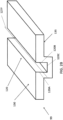
2A ist eine teilweise Querschnittansicht des Verpackungsmaterials von1 entlang einer Linie 2A-2A.2A is a partial cross-sectional view of the packaging material of1 along aline 2A-2A. -
2B ist eine teilweise Querschnittansicht, die eine alternative Konfiguration für eine Knicklinie gemäß der vorliegenden Offenbarung zeigt.2 B is a partial cross-sectional view showing an alternative configuration for a crease line according to the present disclosure. -
3 ist eine schematische Darstellung einer Verpackung gemäß der vorliegenden Offenbarung.3 is a schematic representation of a package according to the present disclosure. -
4 ist eine schematische Darstellung eines Querschnitts einer Verpackung gemäß der vorliegenden Offenbarung.4 is a schematic representation of a cross-section of a package according to the present disclosure. -
5A ist eine schematische Darstellung, die eine Bahn von Verpackungsmaterial gemäß der vorliegenden Beschreibung zeigt, die eine Außenoberfläche des Verpackungsmaterials zeigt.5A is a schematic diagram showing a web of packaging material according to the present description showing an outer surface of the packaging material. -
5B ist eine Querschnittansicht des Verpackungsmaterials von5A entlang einer Linie 5A-5A.5B is a cross-sectional view of the packaging material of5A along a line 5A-5A. -
5C ist eine schematische Darstellung, die ein oberes Feld einer Verpackung der vorliegenden Offenbarung zeigt.5C is a schematic diagram showing a top panel of a package of the present disclosure. -
6 ist eine schematische Darstellung einer Verpackung der vorliegenden Offenbarung, umfasst Verschlüsse in einer Blockbodenkonfiguration.6 is a schematic representation of a package of the present disclosure including closures in a block bottom configuration. -
7 ist eine schematische Darstellung einer Verpackung der vorliegenden Offenbarung zeigt, umfasst Verschlüsse in einer Kreuzbodenkonfiguration.7 is a schematic representation of a package of the present disclosure comprising closures in a cross bottom configuration. -
8 ist eine schematische Darstellung, die eine Verpackung der vorliegenden Offenbarung zeigt, wobei die Verpackung Verschlüsse in einer Quetschbodenkonfiguration umfasst.8th is a schematic diagram showing a package of the present disclosure, the package including closures in a pinch bottom configuration. -
9A ist eine schematische Darstellung, die eine Verpackung gemäß der vorliegenden Offenbarung zeigt, die mit einem Schlauchbeutelprozess konstruiert wurde.9A is a schematic diagram showing a package constructed using a flow wrap process according to the present disclosure. -
9B ist eine schematische Darstellung, die eine weitere Verpackung gemäß der vorliegenden Offenbarung zeigt, die mit einem Schlauchbeutelprozess konstruiert wurde.9B is a schematic diagram showing another package constructed using a flow wrap process according to the present disclosure. -
10A ist eine schematische Darstellung, die eine weitere Verpackung gemäß der vorliegenden Offenbarung zeigt, die gemäß der vorliegenden Offenbarung konstruiert wurde.10A is a schematic diagram showing another package according to the present disclosure constructed in accordance with the present disclosure. -
10B ist eine schematische Darstellung, die eine gedrehte Ansicht der Verpackung von10B is a schematic diagram showing a rotated view of the packaging of -
10A zeigt.10A shows. -
11 ist eine Querschnittansicht einer Verpackung gemäß der vorliegenden Offenbarung, die darin befindliche Absorptionsartikel zeigt.11 is a cross-sectional view of a package according to the present disclosure showing absorbent articles therein. -
12 ist eine schematische Darstellung eines Absorptionsartikels der vorliegenden Offenbarung, die eine teilweise aufgeschnittene Ansicht des Artikels zeigt.12 is a schematic representation of an absorbent article of the present disclosure showing a partially cut-away view of the article. -
13A zeigt eine Draufsicht einer Windel, die gemäß der vorliegenden Offenbarung konstruiert wurde.13A shows a plan view of a diaper constructed in accordance with the present disclosure. -
13B zeigt einen Querschnitt der Windel von13A entlang Linien 35-35.13B shows a cross section of the diaper from13A along lines 35-35. -
13C zeigt einen Querschnitt der Windel von13B in einem expandierten Zustand.13C shows a cross section of the diaper from13B in an expanded state. -
14A bis 14C sind schematische Darstellungen, die eine ultraempfindliche Halterung zeigen, die bei dem Biegeverfahren benutzt wird.14A to 14C are schematic diagrams showing an ultra-sensitive fixture used in the bending process.
AUSFÜHRLICHE BESCHREIBUNG DER ERFINDUNGDETAILED DESCRIPTION OF THE INVENTION
Der Begriff „Absorptionsartikel“, wie hier verwendet, bezeichnet Vorrichtungen, die Ausscheidungen absorbieren und einschließen, und genauer werden damit Vorrichtungen bezeichnet, die am oder nahe am Körper des Trägers/der Trägerin platziert werden, um die verschiedenen vom Körper ausgeschiedenen Substanzen zu absorbieren und einzuschließen. Absorptionsartikel der vorliegenden Offenbarung schließen ein, ohne darauf beschränkt zu sein: Windeln, Inkontinenzslips für Erwachsene, Übungshosen, Windelhalter, Windelaußenmäntel, Absorptionsmitteleinsätze für die Windelaußenmäntel, Menstruationseinlagen, Inkontinenzeinlagen, Einlagen, Slipeinlagen, Tampons, strapazierfähige Menstruationsslips und dergleichen.The term "absorbent articles" as used herein refers to devices that absorb and contain exudates, and more specifically, to devices that are placed on or near the wearer's body to absorb and contain the various substances excreted by the body. Absorbent articles of the present disclosure include, but are not limited to, diapers, adult incontinence briefs, training pants, diaper holders, diaper outers, absorbent inserts for the diaper outers, menstrual pads, incontinence pads, liners, panty liners, tampons, durable menstrual briefs, and the like.
Der Begriff „Knicklinie“ bezieht sich auf ein Merkmal oder Merkmale in einem Bahnmaterial, die eine Achse einer bevorzugten Biegung der Bahn erzeugen. Knicklinien der vorliegenden Offenbarung können geprägte Bereiche, Bereiche mit geringerer Dicke, Bereiche mit geringerer Dichte, Bereiche geringerer Steifigkeit, Bereiche von Materialverschiebung oder Kombinationen davon umfassen. Es ist erwähnenswert, dass Knicklinien vor dem Falten in den Bahnen der vorliegenden Offenbarung vorhanden sind, während Falten erst nach dem Falten der Bahn vorhanden sind.The term "crease line" refers to a feature or features in a web material that create an axis of preferred bending of the web. Crease lines of the present disclosure may include embossed regions, regions of reduced thickness, regions of reduced density, regions of reduced stiffness, regions of material displacement, or combinations thereof. It is worth noting that crease lines are present in the webs of the present disclosure prior to folding, while creases are present only after the web is folded.
Der Begriff „Maschinenquerrichtung“ oder „CD“ (cross-machine direction), wie er hier verwendet wird, bezeichnet den Weg senkrecht zur Maschinenrichtung in der Bahnebene.The term “cross-machine direction” or “CD” as used here refers to the path perpendicular to the machine direction in the web plane.
Der Begriff „Maschinenrichtung“ oder „MD“ (machine direction), wie er hier verwendet wird, bezeichnet den Weg, dem Material, wie zum Beispiel eine Bahn, durch einen Herstellungsprozess folgt.The term “machine direction” or “MD” as used here refers to the path that material, such as a web, follows through a manufacturing process.
Der Begriff „Farbstoff“, wie er hier verwendet wird, bezeichnet Tinten, Färbemittel, Pigmente oder dergleichen, die verwendet werden, um Farbe in einem Substrat zu erzeugen.The term “colorant” as used herein refers to inks, dyes, pigments or the like used to produce color in a substrate.
Der Begriff „Naturfasern“, wie er hier verwendet wird, bezeichnet Fasern, die Fasern auf Cellulosebasis, Fasern auf Holzbasis und dergleichen umfassen. Naturfasern bezeichnen auch nicht holzige Fasern, wie Baumwolle, Abaca, Kenaf, Sabaigras, Flachs, Espartogras, Stroh, Jutehanf, Bagasse, Seidenfadenfasern und Ananasblattfasern; und holzige, Holz- oder Zellstofffasern, wie solche, die von Laub- und Nadelbäumen erhalten werden, einschließlich Weichholzfasern, wie Weichholz-Kraftfasern nördlicher und südlicher Herkunft; Hartholzfasern, wie Eukalyptus, Ahorn, Birke und Espe. Zellstofffasern können in Formen mit hoher oder niedriger Ausbeute hergestellt und nach jedem bekannten Verfahren aufgelöst werden, einschließlich Kraft-, Sulfit-, Hochausbeute-Aufschlussverfahren und anderen bekannten Aufschlussverfahren. Die Naturfasern der vorliegenden Offenbarung können recycelte Naturfasern, reine Naturfasern oder Mischungen davon sein. Außerdem kann es für gute mechanische Eigenschaften bei Naturfasern wünschenswert sein, dass die Naturfasern relativ unbeschädigt und weitgehend unraffiniert oder nur leicht raffiniert sind. Die Fasern können einen Canadian Standard Freeness-Grad von wenigstens 200, spezifischer wenigstens 300, noch spezifischer wenigstens 400 und besonders spezifisch wenigstens 500 aufweisen.The term "natural fibers" as used herein refers to fibers that include cellulosic-based fibers, wood-based fibers, and the like. Natural fibers also refer to non-woody fibers, such as cotton, abaca, kenaf, sabai grass, flax, esparto grass, straw, jute hemp, bagasse, silk thread fibers, and pineapple leaf fibers; and woody, woody, or pulp fibers, such as those obtained from deciduous and coniferous trees, including softwood fibers, such as softwood kraft fibers of northern and southern origin; hardwood fibers, such as eucalyptus, maple, birch, and aspen. Pulp fibers may be produced in high or low yield forms and may be pulped by any known process, including kraft, sulfite, high yield pulping processes, and other known pulping processes. The natural fibers of the present disclosure may be recycled natural fibers, pure natural fibers, or mixtures thereof. In addition, for good mechanical properties in natural fibers it may be desirable for the natural fibers to be relatively undamaged and largely unrefined or only slightly refined. The fibers may have a Canadian Standard Freeness grade of at least 200, more specifically at least 300, even more specifically at least 400 and most specifically at least 500.
Der Begriff „Fasern auf Cellulosebasis“, wie er hierin verwendet wird, kann Cellulosefasern wie Holzfaser, Baumwolle, regenerierte Cellulosefaser, wie Viskose, Lyocell, Kunstseide oder Kupferammoniumkunstseide und Fasern mit hoher Aufschlussausbeute, sofern nicht anders angegeben, einschließen. Der Begriff „Fasern auf Cellulosebasis“ schließt auch chemisch behandelte Naturfasern, wie mercerisierte Zellstoffe, chemisch versteifte oder vernetzte Fasern oder sulfonierte Fasern ein. Darüber hinaus sind mercerisierte Naturfasern, regenerierte Naturcellulosefasern, durch Mikroben, den Rayonprozess, Celluloseauflösungs- und Koagulationsspinnprozesse erzeugte Cellulose und andere Cellulosematerialien oder Cellulosederivate enthalten. Andere Fasern auf Cellulosebasis sind Papierausschuss oder recycelte Fasern und Hochausbeute-Fasern. Hochausbeute-Zellstofffasern sind Fasern, die durch Aufschlussprozesse produziert werden, die eine Ausbeute von etwa 65 % oder mehr, spezifischer etwa 75 % oder mehr, und noch spezifischer etwa 75 % bis etwa 95 % bereitstellen. Ausbeute ist die resultierende Menge an verarbeiteten Fasern, ausgedrückt als Prozentsatz der anfänglichen Holzmasse. Solche Aufschlussprozesse schließen gebleichten chemithermomechanischen Zellstoff (bleached chemithermomechanical pulp, BCTMP), chemithermomechanischen Zellstoff (chemithermomechanical pulp, CTMP), thermomechanischen Druck/Druck-Zellstoff (pressure/pressure thermomechanical pulp, PTMP), thermomechanischen Zellstoff (thermomechanical pulp, TMP), thermomechanischen chemischen Zellstoff (thermomechanical chemical pulp, TMCP), Sulfit-Zellstoffe mit hoher Ausbeute und Kraft-Zellstoffe mit hoher Ausbeute ein, bei denen allen die resultierenden Fasern zwar einen hohen Ligningehalt aufweisen, die aber dennoch als Naturfasern gelten. Hochausbeutefasern sind für ihre Steifigkeit sowohl im trockenen als auch im nassen Zustand im Vergleich zu typischen chemisch aufbereiteten Fasern bekannt.The term "cellulosic fibers" as used herein may include cellulosic fibers such as wood fiber, cotton, regenerated cellulosic fibers such as viscose, lyocell, rayon or cupro-ammonium rayon, and high yield fibers, unless otherwise specified. The term "cellulosic fibers" also includes chemically treated natural fibers such as mercerized pulps, chemically stiffened or cross-linked fibers, or sulfonated fibers. In addition, mercerized natural fibers, regenerated natural cellulosic fibers, cellulose produced by microbes, the rayon process, cellulose dissolution and coagulation spinning processes, and other cellulosic materials or cellulosic derivatives are included. Other cellulosic fibers are paper broke or recycled fibers and high yield fibers. High yield pulp fibers are fibers produced by pulping processes that provide a yield of about 65% or more, more specifically about 75% or more, and even more specifically about 75% to about 95%. Yield is the resulting amount of processed fiber expressed as a percentage of the initial wood mass. Such pulping processes include bleached chemithermomechanical pulp (BCTMP), chemithermomechanical pulp (CTMP), pressure/pressure thermomechanical pulp (PTMP), thermomechanical pulp (TMP), thermomechanical chemical pulp (TMCP), high yield sulfite pulps, and high yield kraft pulps, all of which produce resulting fibers that have a high lignin content but are still considered natural fibers. High yield fibers are known for their stiffness in both the dry and wet states compared to typical chemically processed fibers.
Die Begriffe „nicht recyclingfähiges Material“ oder „Verunreinigung“, wie sie hier verwendet werden, beziehen sich auf Materialien, die für die Verarbeitung im Naturfaserrecycling-Prozess als ungeeignet gelten. Bei alternativen Recyclingströmen können jedoch die mit einer oder beiden dieser Bezeichnungen versehenen Materialien recyclingfähig sein.The terms "non-recyclable material" or "contaminant" as used herein refer to materials that are considered unsuitable for processing in the natural fibre recycling process. However, in alternative recycling streams, materials designated with either or both of these terms may be recyclable.
Das Verpackungsmaterial der vorliegenden Offenbarung kann ein hochwertiges Aussehen für fertige Verpackungen bereitstellen, bei denen das Verpackungsmaterial Naturfasern umfasst. The packaging material of the present disclosure can provide a high quality appearance for finished packages where the packaging material comprises natural fibers.
Das Verpackungsmaterial der vorliegenden Offenbarung kann die Verarbeitung des Verpackungsmaterials erleichtern, indem es engere Toleranzen bezüglich der Faltlinienpositionierung sowie möglicherweise die Reduzierung der Klebstoffnutzung ermöglicht.The packaging material of the present disclosure may facilitate processing of the packaging material by allowing tighter tolerances on fold line positioning as well as potentially reducing adhesive usage.
Das Verpackungsmaterial der vorliegenden Offenbarung umfasst wenigstens eine Knicklinie, um das Falten des Verpackungsmaterials entlang der Knicklinie zu erleichtern. Aus Gründen der Übersichtlichkeit ist eine Knicklinie ein Merkmal, das auf dem Verpackungsmaterial bereitgestellt ist, das ein Falten des Verpackungsmaterials erleichtert, sobald Produkte darin platziert werden oder vor ihrer Platzierung darin. Eine Faltlinie, die der Knicklinie zugeordnet ist, ist allgemein mit der Knicklinie kollinear.The packaging material of the present disclosure includes at least one crease line to facilitate folding of the packaging material along the crease line. For clarity, a crease line is a feature provided on the packaging material that facilitates folding of the packaging material once products are placed therein or prior to their placement therein. A fold line associated with the crease line is generally collinear with the crease line.
Durch jedes geeignete Verfahren können Knicklinien geschaffen werden. In einem Beispiel können die Knicklinien durch Prägen des Verpackungsmaterials erzeugt werden. Bei solchen Prozessen kann das Verpackungsmaterial durch ein Walzenpaar geleitet werden, wobei wenigstens eine der Walzen einen Abschnitt des Verpackungsmaterials komprimiert. Dieser Bereich des komprimierten Verpackungsmaterials kann für die nachfolgende Faltlinie eine Scharnier- oder bevorzugte Biegeachse erschaffen. Ein anderer geeigneter Prozess zum Erschaffen von Knicklinien gemäß der vorliegenden Offenbarung ist eine Verschiebung. Zum Beispiel kann das Verpackungsmaterial einen Materialbereich umfassen, der in einer Dickenrichtung verschoben wird. Das verschobene Material kann die Knicklinie umfassen. In solchen Ausführungen können die Knicklinien im Gegensatz zu den Prägung der Knicklinien einen Bereich geringerer Dichte, z. B. der Unterseite der Knicklinie, umfassen. Diese Knicklinien können eine bevorzugte Biegeachse für eine oder mehrere Faltlinien bereitstellen. Ein weiteres geeignetes Verfahren schließt ein Schälen ein, bei dem die Knicklinien eine verringerte Dicke basierend auf der Entfernung von Material in der Knicklinie umfassen. Auch hier kann jedes geeignete Verfahren zum Schaffen einer oder mehrerer Knicklinien in den Verpackungen der vorliegenden Offenbarung genutzt werden, z. B. Laser oder andere mechanische Behandlungen, chemische Behandlungen und/oder Kombinationen davon.Crease lines may be created by any suitable method. In one example, the crease lines may be created by embossing the packaging material. In such processes, the packaging material may be passed through a pair of rollers, with at least one of the rollers compressing a portion of the packaging material. This region of the compressed packaging material may create a hinge or preferred bend axis for the subsequent fold line. Another suitable process for creating crease lines according to the present disclosure is translation. For example, the packaging material may include a region of material that is translated in a thickness direction. The translated material may comprise the crease line. In such embodiments, as opposed to embossing the crease lines, the crease lines may comprise a region of lower density, e.g., the bottom of the crease line. These crease lines may provide a preferred bend axis for one or more fold lines. Another suitable method includes skiving, where the crease lines comprise a reduced thickness based on the removal of material in the crease line. Again, any suitable method for creating one or more crease lines in the packages of the present disclosure may be used, such as laser or other mechanical treatments, chemical treatments, and/or combinations thereof.
Die Erfinder haben überraschenderweise festgestellt, dass die Platzierung von Knicklinien in bestimmten Bereichen des Verpackungsmaterials eine fertiger aussehende Verpackung bereitstellen kann. Zum Beispiel sind Ränder der Verpackung viel definierter und die Felder der Verpackung erscheinen eher gezielt als ungeordnet. Zusätzlich haben die Erfinder festgestellt, dass es einen verringerten Betrag von Seitenfaltenversatz gibt, wenn die Verpackungen verschlossen werden. Dies kann zu weniger Qualitätsausfällen führen, die mehr Produktionszeit ermöglichen. Außerdem haben die Erfinder überraschenderweise festgestellt, dass bei strategischer Platzierung von Knicklinien Verpackungen, die das Verpackungsmaterial der vorliegenden Offenbarung umfassen, leichter gestapelt werden können.The inventors have surprisingly found that placing crease lines in certain areas of the packaging material can provide a more finished looking package. For example, edges of the package are much more defined and the panels of the package appear targeted rather than disorganized. Additionally, the inventors have found that there is a reduced amount of gusset offset when the packages are sealed. This can result in fewer quality failures allowing for more production time. Additionally, the inventors have surprisingly found that when crease lines are strategically placed, packages comprising the packaging material of the present disclosure can be more easily stacked.
Das Verpackungsmaterial der vorliegenden Offenbarung kann konfiguriert sein, um eine allgemein quaderförmige Form aufzuweisen, d. h. mit einer Mehrzahl von Feldern. Verpackungen in solchen Konfigurationen können das verbraucherseitige Feld umfassen. Wie zuvor erwähnt, ist das verbraucherseitige Feld die Fläche der Verpackung, die dem Verbraucher zugewandt ist. Im Allgemeinen umfasst das verbraucherseitige Feld Markenangaben und/oder Verpackungsinformationen, die hierin jeweils ausführlicher erörtert werden. Jedes der Mehrzahl von Feldern umfasst eine Innenoberfläche und eine Außenoberfläche.The packaging material of the present disclosure may be configured to have a generally cuboid shape, i.e., having a plurality of panels. Packages in such configurations may include the consumer-facing panel. As previously mentioned, the consumer-facing panel is the surface of the package that faces the consumer. Generally, the consumer-facing panel includes branding and/or packaging information, each of which is discussed in more detail herein. Each of the plurality of panels includes an interior surface and an exterior surface.
Die Verpackungen der vorliegenden Offenbarung können zusätzlich zu dem verbraucherseitigen Feld ferner ein Rückseitenfeld, das dem verbraucherseitigen Feld gegenüberliegt, ein linkes Feld, das zwischen dem verbraucherseitigen Feld und dem Rückseitenfeld angeordnet ist, ein rechtes Feld gegenüber dem linken Feld, ein Bodenfeld, das zwischen dem verbraucherseitigen Feld und dem Rückseitenfeld angeordnet ist, und ein gegenüberliegendes oberes Feld umfassen. Das obere Feld kann ein offenes Ende sowie Seitenfalten umfassen. Das offene Ende und die Seitenfalten werden hierin nachstehend ausführlicher erörtert. Zusätzliche Verpackungskonfigurationen werden hierin nachstehend auch offenbart.The packages of the present disclosure may further include, in addition to the consumer-side panel, a back panel opposite the consumer-side panel, a left panel disposed between the consumer-side panel and the back panel, a right panel opposite the left panel, a bottom panel disposed between the consumer-side panel and the back panel, and an opposite top panel. The top panel may include an open end and gussets. The open end and gussets are discussed in more detail hereinafter. Additional package configurations are also disclosed hereinafter.
Zusätzliche Merkmale der Verpackungen der vorliegenden Offenbarung schließen Ränder ein, insbesondere wenn diese Verpackungen eine allgemein quaderförmige Form aufweisen. Zum Beispiel kann ein erster Rand zwischen dem verbraucherseitigen Feld und dem rechten Feld positioniert sein; ein zweiter Rand kann zwischen dem rechten Feld und dem Rückseitenfeld positioniert sein, ein dritter Rand kann zwischen dem Rückseitenfeld und dem linken Feld positioniert sein, und ein vierter Rand kann zwischen dem linken Feld und dem verbraucherseitigen Feld positioniert sein.Additional features of the packages of the present disclosure include edges, particularly when such packages have a generally cuboidal shape. For example, a first edge may be positioned between the consumer-facing panel and the right panel; a second edge may be positioned between the right panel and the back panel; a third edge may be positioned between the back panel and the left panel; and a fourth edge may be positioned between the left panel and the consumer-facing panel.
Das Verpackungsmaterial kann einheitlich sein. Zum Beispiel können mehrere Falten benutzt werden, um die Ränder zwischen der Mehrzahl von Feldern der Verpackung zu bilden. Zur weiteren Erläuterung des Beispiels, bei dem die Verpackung eine Quaderform ist, kann wenigstens eine Falte zwischen jedem der Felder angeordnet sein. Zum Beispiel kann eine obere Faltlinie angrenzend an einen oberen Rand des einen oder der mehreren Absorptionsartikel innerhalb der Verpackung positioniert sein. Die obere Faltlinie kann einen ersten Abschnitt umfassen, der zwischen dem verbraucherseitigen Feld und dem oberen Feld angeordnet ist, einen zweiten Abschnitt zwischen dem rechten Feld und dem oberen Feld, einen dritten Abschnitt zwischen dem Rückseitenfeld und dem oberen Feld und einen vierten Abschnitt zwischen dem linken Feld und dem oberen Feld. Es ist erwähnenswert, dass in einigen Formen das Verpackungsmaterial diskrete Abschnitte umfassen kann. Verpackungsmaterialkonfigurationen werden hierin nachstehend ausführlicher erörtert.The packaging material may be unitary. For example, multiple folds may be used to form the edges between the plurality of panels of the package. To further illustrate the example where the package is a cuboid shape, at least one fold may be disposed between each of the panels. For example, a top fold line may be positioned adjacent to a top edge of the one or more absorbent articles within the package. The top fold line may include a first portion disposed between the consumer-facing panel and the top panel, a second portion between the right panel and the top panel, a third portion between the back panel and the top panel, and a fourth portion between the left panel and the top panel. It is worth noting that in some shapes, the packaging material may include discrete portions. Packaging material configurations are discussed in more detail hereinafter.
Um definiertere Felder der Verpackungen der vorliegenden Offenbarung zu schaffen, kann eine Kreuzknicklinie zwischen einem Paar oder mehreren Paaren von Feldern der Verpackung positioniert sein. Als Beispiel kann die Kreuzknicklinie eine erste Sektion umfassen, die zwischen dem verbraucherseitigen Feld und dem oberen Feld angeordnet ist. Die erste Sektion kann einen ersten Teil und einen zweiten Teil umfassen. Der erste Teil kann sich von dem vierten Rand zu einer Mittellinie des verbraucherseitigen Feldes erstrecken. Der zweite Teil kann sich von dem ersten Rand zu einer Mittellinie des verbraucherseitigen Feldes erstrecken. Die erste Sektion der Kreuzknicklinie und der erste Abschnitt der oberen Faltlinie können kollinear sein.To provide more defined panels of the packages of the present disclosure, a cross crease line may be positioned between a pair or multiple pairs of panels of the package. As an example, the cross crease line may include a first section disposed between the consumer-side panel and the top panel. The first section may include a first portion and a second portion. The first portion may extend from the fourth edge to a centerline of the consumer-side panel. The second portion may extend from the first edge to a centerline of the consumer-side panel. The first section of the cross crease line and the first portion of the top fold line may be collinear.
Die Beziehung des ersten Abschnitts der oberen Faltlinie und der ersten Sektion der Kreuzknicklinie kann variieren. Der erste Abschnitt der oberen Faltlinie kann, um eine nachhaltige Form zu schaffen, vorzugsweise eine Länge aufweisen, welche die Länge der gesamten Verpackung ist. Für die erste Sektion ist es jedoch nicht notwendigerweise erforderlich, sich über die gesamte Länge der Verpackung zu erstrecken. Stattdessen können, da die Kreuzknicklinie bereitgestellt wird, um das Falten um die Kreuzknicklinie zu fördern, der erste Teil und der zweite Teil der Kreuz eine kumulative Länge aufweisen, die kleiner ist als die Länge des ersten Abschnitts der oberen Faltlinie. Zum Beispiel können der erste Teil und der zweite Teil der ersten Sektion der Kreuzknicklinie eine kumulative Länge aufweisen, die wenigstens 10 Prozent der Länge des ersten Abschnitts der oberen Faltlinie, mehr bevorzugt wenigstens 30 Prozent der Länge des ersten Abschnitts der oberen Faltlinie, oder am meisten bevorzugt wenigstens 50 der Länge des ersten Abschnitts der oberen Faltlinie beträgt, und zwar insbesondere unter Angabe aller Werte innerhalb dieser Bereiche und aller dadurch erschaffenen Bereiche. In einem spezifischen Beispiel können der erste Abschnitt der oberen Faltlinie und die erste Sektion der Kreuzknicklinie koextensiv sein. In solchen Beispielen können sich der erste Abschnitt der oberen Faltlinie und die erste Sektion die gesamte Länge der Verpackung erstrecken.The relationship of the first portion of the top fold line and the first section of the cross crease line may vary. The first portion of the top fold line may preferably have a length that is the length of the entire package to provide a sustainable shape. However, the first section is not necessarily required to extend the entire length of the package. Instead, since the cross crease line is provided to promote folding about the cross crease line, the first part and second part of the cross may have a cumulative length that is less than the length of the first portion of the top fold line. For example, the first part and second part of the first section of the cross crease line may have a cumulative length that is at least 10 percent of the length of the first portion of the top fold line, more preferably at least 30 percent of the length of the first portion of the top fold line, or most preferably at least 50 percent of the length of the first portion of the top fold line, particularly specifying all values within these ranges and all ranges created thereby. In a specific example, the first portion of the top fold line and the first section of the cross fold line may be coextensive. In such examples, the first portion of the top fold line and the first section may extend the entire length of the package.
Hinsichtlich des Übergangs zwischen dem rechten Feld und dem oberen Feld kann die obere Faltlinie einen zweiten Abschnitt umfassen, und die Kreuzknicklinie kann eine zweite Sektion umfassen. Der zweite Abschnitt der oberen Faltlinie und die zweite Sektion der Kreuzknicklinie können kollinear sein.With respect to the transition between the right panel and the top panel, the top fold line may comprise a second portion and the cross fold line may comprise a second section. The second portion of the top fold line and the second section of the cross fold line may be collinear.
Die zweite Sektion der Kreuzknicklinie kann einen ersten Teil und einen zweiten Teil umfassen. Der erste Teil kann sich von dem ersten Rand zu einer vertikalen Mittellinie des rechten Feldes erstrecken, und der zweite Teil kann sich von dem zweiten Rand in Richtung der vertikalen Mittellinie des rechten Feldes erstrecken. Der zweite Abschnitt kann eine Länge aufweisen, die gleich der Gesamttiefe der Verpackung ist. Im Gegensatz dazu können der erste Teil und der zweite Teil der zweiten Sektion der Kreuzknicklinie eine kumulative Länge umfassen, die wenigstens 10 Prozent der Länge des zweiten Abschnitts der oberen Faltlinie, mehr bevorzugt wenigstens 30 Prozent der Länge der oberen Faltlinie des zweiten Abschnitts oberen Faltlinie oder am meisten bevorzugt wenigstens 50 der Länge des zweiten Abschnitts der oberen Faltlinie beträgt, und zwar speziell unter Angabe aller Werte innerhalb dieser Bereiche und aller dadurch erschaffenen Bereiche. In einem spezifischen Beispiel können der zweite Abschnitt der oberen Faltlinie und die zweite Sektion der Kreuzknicklinie koextensiv sein. In solchen Beispielen können sich der zweite Abschnitt der oberen Faltlinie und die zweite Sektion der Kreuzknicklinie die gesamte Tiefe der Verpackung erstrecken.The second section of the cross-fold line may include a first portion and a second portion. The first portion may extend from the first edge to a vertical centerline of the right panel, and the second portion may extend from the second edge toward the vertical centerline of the right panel. The second portion may have a length equal to the total depth of the package. In contrast, the first portion and the second portion of the second section of the cross-fold line may include a cumulative length that is at least 10 percent of the length of the second section of the top fold line, more preferably at least 30 percent of the length of the top fold line of the second section of the top fold line, or most preferably at least 50 percent of the length of the second section of the top fold line, specifically specifying all values within these ranges and all areas created thereby. In a specific example, the second section of the top fold line and the second section of the cross-fold line may be coextensive. In such examples, the second section of the top fold line and the second section of the cross-fold line may extend the entire depth of the package.
Der Kürze halber kann die Beziehung zwischen dem linken Feld und dem oberen Feld wie vorstehend hinsichtlich der Beziehung des rechten Feldes und des oberen Feldes beschrieben sein. In dieser Beziehung kann die obere Faltlinie jedoch einen vierten Abschnitt umfassen und die Kreuzknicklinie kann eine vierte Sektion umfassen. Die vierte Sektion kann einen ersten Teil und einen zweiten Teil umfassen, wobei sich der erste Teil von dem dritten Rand zu einer vertikalen Mittellinie des linken Feldes erstrecken kann, und der zweite Teil kann sich von dem vierten Rand zu der vertikalen Mittellinie des linken Feldes erstrecken.For brevity, the relationship between the left panel and the top panel may be as described above with respect to the relationship of the right panel and the top panel. However, in this relationship, the top fold line may include a fourth portion and the cross fold line may include a fourth section. The fourth section may include a first part and a second part, wherein the first part may extend from the third edge to a vertical centerline of the left panel and the second part may extend from the fourth edge to the vertical centerline of the left panel.
In Bezug auf das Rückseitenfeld und das obere Feld kann die obere Faltlinie einen dritten Abschnitt umfassen und eine Kreuzknicklinie kann eine dritte Sektion umfassen. Die dritte Sektion kann einen ersten Teil und einen zweiten Teil umfassen. Der erste Teil kann sich von dem zweiten Rand zu einer vertikalen Mittellinie des Rückseitenfeldes erstrecken, und der zweite Teil kann sich von dem dritten Rand zu der vertikalen Mittellinie des Rückseitenfeldes erstrecken. Der dritte Abschnitt kann eine Länge umfassen, die gleich dem ersten Abschnitt der oberen Faltlinie ist. Die kumulative Länge des ersten Teils und des zweiten Teils der dritten Sektion der Kreuzknicklinie kann wenigstens 10 Prozent der Länge des dritten Abschnitts der oberen Faltlinie, mehr bevorzugt wenigstens 30 Prozent der Länge des dritten Abschnitts oberen Faltlinie oder am meisten bevorzugt wenigstens 50 der Länge des dritten Abschnitts der oberen Faltlinie betragen, und zwar speziell unter Angabe aller Werte innerhalb dieser Bereiche und aller dadurch erschaffenen Bereiche. In einem spezifischen Beispiel können der dritte Abschnitt der oberen Faltlinie und die dritte Sektion der Kreuzknicklinie koextensiv sein. In solchen Beispielen können sich der dritte Abschnitt der oberen Faltlinie und die dritte Sektion der Kreuzknicklinie die gesamte Länge der Verpackung erstrecken.With respect to the back panel and the top panel, the top fold line may include a third portion and a cross fold line may include a third section. The third section may include a first portion and a second portion. The first portion may extend from the second edge to a vertical centerline of the back panel, and the second portion may extend from the third edge to the vertical centerline of the back panel. The third portion may include a length equal to the first portion of the top fold line. The cumulative length of the first portion and the second portion of the third section of the cross fold line may be at least 10 percent of the length of the third portion of the top fold line, more preferably at least 30 percent of the length of the third portion of the top fold line, or most preferably at least 50 percent of the length of the third portion of the top fold line, specifically specifying all values within these ranges and all areas created thereby. In a specific example, the third portion of the top fold line and the third section of the cross crease line may be coextensive. In such examples, the third section of the top fold line and the third section of the cross crease line may extend the entire length of the package.
Die obere Faltlinie und die Kreuzknicklinie sind in dem Maße kollinear, wie die Verpackung Kreuzknicklinien aufweist. Zum Beispiel können einige Verpackungen nur die erste Sektion der Kreuzknicklinie umfassen, um ein definierter aussehendes verbraucherseitiges Feld zu schaffen, und sie stellt möglicherweise die zweite, dritte oder vierte Sektion der Kreuzknicklinie nicht bereit. Oder einige Verpackungen können die erste Sektion, die zweiten Sektionen und vierten Sektionen der Kreuzknicklinie bereitstellen. Jede geeignete unabhängige oder Kombination von Kreuzknickliniensektionen kann genutzt werden.The top fold line and the cross crease line are collinear to the extent that the package has cross crease lines. For example, some packages may only include the first section of the cross crease line to create a more defined looking consumer facing panel and may not provide the second, third or fourth section of the cross crease line. Or, some packages may provide the first section, second sections and fourth sections of the cross crease line. Any suitable independent or combination of cross crease line sections may be utilized.
Die Kreuzknicklinie kann angrenzend an einen oberen Rand des einen oder der mehreren Absorptionsartikel innerhalb der Verpackung angeordnet sein. Zum Beispiel umfassen der eine oder die mehreren Absorptionsartikel innerhalb der Verpackung einen oberen Rand und einen gegenüberliegenden unteren Rand, wobei der untere Rand mehr proximal zu dem Bodenfeld angeordnet ist als der obere Rand. Eine erste Ebene kann die Kreuzknicklinie umfassen, und eine zweite Ebene kann den oberen Rand der Absorptionsartikel umfassen, wobei die erste Ebene und die zweite Ebene allgemein horizontal und parallel zueinander sind. Ein Abstand zwischen der ersten Ebene und der zweiten Ebene kann etwa 5 mm oder weniger, mehr bevorzugt etwa 3 mm oder weniger oder am meisten bevorzugt etwa 2 mm oder weniger betragen, wobei alle Werte innerhalb dieser Bereiche und aller Bereiche, die dadurch erschaffen werden, spezifisch angegeben werden. Es ist erwähnenswert, dass die vorstehenden Abstände zwischen der ersten Ebene und der zweiten Ebene die Absolutwerte des Abstands sind. Somit kann in einigen Fällen die erste Ebene proximaler zu dem Bodenfeld liegen als die zweite Ebene oder umgekehrt.The cross-fold line may be located adjacent to an upper edge of the one or more absorbent articles within the package. For example, the one or more absorbent articles within the package include an upper edge and an opposite lower edge, with the lower edge located more proximal to the bottom panel than the upper edge. A first plane may include the cross-fold line and a second plane may include the upper edge of the absorbent articles, with the first plane and the second plane being generally horizontal and parallel to each other. A distance between the first plane and the second plane may be about 5 mm or less, more preferably about 3 mm or less, or most preferably about 2 mm or less, with all values within these ranges and all ranges created thereby being specifically stated. It is worth noting that the above distances between the first plane and the second plane are the absolute values of the distance. Thus, in some cases, the first plane may be more proximal to the bottom panel than the second plane, or vice versa.
Um eine haltbare Anzeige in einem Regals zu schaffen, bei der Verpackungen der vorliegenden Offenbarung übereinander gestapelt werden, kann eine zusätzliche Knicklinie verwendet werden. Wenn zum Beispiel die Verpackungen der vorliegenden Offenbarung offene Enden (hierin nachstehend beschrieben) umfassen, kann eine zusätzliche Knicklinie - eine offene Knicklinie - verwendet werden. Die offene Knicklinie kann geschaffen werden, um dazu beizutragen, dass das offene Ende flacher liegt. Je flacher das offene Ende, desto stabiler ist eine gestapelter Verpackung darauf.To provide a durable display on a shelf where packages of the present disclosure are stacked on top of one another, an additional crease line may be used. For example, when the packages of the present disclosure include open ends (described hereinafter), an additional crease line - an open crease line - may be used. The open crease line may be created to help the open end lay flatter. The flatter the open end, the more stable a package stacked on it will be.
Um die Wahrscheinlichkeit einer Kontamination des einen oder der mehreren Absorptionsartikel innerhalb der Verpackung zu minimieren, kann offene Ende eine Dichtung umfassen, z. B. über Klebstoff oder Sperrfolie. Das offene Ende umfasst Verpackungsmaterial, das miteinander verschlossen ist, um eine Zugangsdichtung zu bilden. Da das offene Ende mehrere miteinander verbundene Schichten von Verpackungsmaterial umfasst, kann das offene Ende viel steifer sein als eine einzelne Schicht des Verpackungsmaterials. Diese steiferen Enden können dem Falten nach unten widerstehen und neigen dazu, aufrecht zurückzuspringen, wodurch Verpackungen, die sich auf dem offenen Ende befinden, „weggekickt“ werden. Um das „Kicken“ des offenen Endes abzumildern, kann offene Ende und/oder das obere Feld eine Knicklinie umfassen, die das Falten davon, d. h. die offene Knicklinie, erleichtert.To minimize the likelihood of contamination of the one or more absorbent articles within the package, the open end may include a seal, e.g., via adhesive or barrier film. The open end includes packaging material sealed together to form an access seal. Because the open end includes multiple interconnected layers of packaging material, the open end may be much stiffer than a single layer of the packaging material. These stiffer ends may resist folding downward and tend to spring back upright, thereby "kicking away" packages located on the open end. To mitigate "kicking" of the open end, the open end and/or the top panel may include a crease line that facilitates folding thereof, i.e., the open crease line.
Zusätzlich zu dem offenen Ende kann das obere Feld ferner eine Vorderfläche, eine gegenüberliegende Rückfläche, eine rechte Fläche und eine gegenüberliegende linke Fläche umfassen. Einer offene Knicklinie kann an einer Vorderfläche bereitgestellt sein, die das Falten des offenen Endes zu der Rückfläche erleichtert. Formen werden auch in Betracht gezogen, wo die offene Knicklinie an der Rückfläche, der linken Fläche, der rechten Fläche, jeweils unabhängig oder beliebige Kombinationen davon bereitgestellt ist. Außerdem kann die offene Knicklinie, wie die Kreuzknicklinie, eine kumulative Länge aufweisen, die kürzer ist als die der offenen Knicklinie zugeordnete Falte, d. h. einer offenen Falte. Zum Beispiel kann die kumulative Länge der offenen Knicklinie auf einer beliebigen Fläche des offenen Endes wenigstens 10 Prozent der Länge der offenen Falte, mehr bevorzugt wenigstens 30 Prozent des offenen Falte oder am meisten bevorzugt wenigstens 50 der Länge der offenen Falte betragen, und zwar unter Angabe aller Werte innerhalb dieser Bereiche und aller dadurch geschaffenen Bereiche. In einem spezifischen Beispiel können die offene Knicklinie und die offene Faltlinie koextensiv sein. Die offene Faltlinie kann ähnlich der oberen Faltlinie konfiguriert sein, z. B. umfassend einen ersten Abschnitt, einen zweiten Abschnitt usw., und die offene Knicklinie kann ähnlich der Kreuzknicklinie konfiguriert sein, z. B. umfassend eine erste Sektion, eine zweite Sektion usw., wobei jede Sektion einen ersten Teil und einen zweiten Teil umfasst.In addition to the open end, the top panel may further include a front surface, an opposite rear surface, a right surface, and an opposite left surface. An open crease line may be provided on a front surface that facilitates folding of the open end to the rear surface. Formations are also contemplated where the open crease line is provided on the rear surface, the left surface, the right surface, each independently, or any combination thereof. Additionally, the open crease line, such as the cross crease line, may have a cumulative length that is shorter than the fold associated with the open crease line, i.e., an open fold. For example, the cumulative length of the open crease line on any surface of the open end may be at least 10 percent of the length of the open fold, more preferably at least 30 percent of the open fold, or most preferably at least 50 percent of the length of the open fold, specifying all values within these ranges and all areas created thereby. In a specific example, the open crease line and the open fold line may be coextensive. The open fold line may be configured similarly to the top fold line, e.g., comprising a first portion, a second portion, etc., and the open crease line may be configured similarly to the cross crease line, e.g., comprising a first section, a second section, etc., each section comprising a first part and a second part.
Zusätzliche Knicklinien können den Verpackungen der vorliegenden Offenbarung bereitgestellt werden. Zum Beispiel können die linke Fläche und/oder die rechte Fläche Seitenfaltenknicklinien umfassen. Die Seitenfaltenknicklinien können sicherstellen, dass Innenseitenfalten in etwa gleich von der Vorderseitenfläche zu der Rückseitenfläche des oberen Feldes sind. Dies reduziert die Variabilität der Seitenfalten und hilft, sicherzustellen, dass die inneren Seitenfalten symmetrisch aussehen und ein fertigeres Erscheinungsbild der Verpackung bereitstellen.Additional crease lines may be provided to the packages of the present disclosure. For example, the left panel and/or the right panel may include side gusset crease lines. The side gusset crease lines may ensure that inside gussets are approximately equal from the front panel to the back panel of the top panel. This reduces the variability of the side gussets and helps ensure that the inner gussets look symmetrical and provide a more finished appearance to the package.
Es ist erwähnenswert, dass je nach Art der erschaffenen Verpackung zusätzliche Knicklinien zu den hierin beschriebenen gewünscht werden können. Als ein Beispiel, bei dem ein Hersteller von Absorptionsartikeln Beutel erhält, die eine Blockbodenkonfiguration umfassen (hierin ausführlicher erörtert), kann jeder der Beutel vertikale Knicklinien umfassen, die, wenn sie gefaltet sind, den ersten, zweiten, dritten und vierten Rand bilden. Außerdem können diese vertikalen Knicklinien, wenn sie gefaltet sind, äußere Seitenfalten auf der linken und rechten Fläche des oberen Feldes bilden. Und Blockbodenkonfigurations-Beutel können auch eine Bodenknicklinie umfassen, die dazu beiträgt, ein flaches Bodenfeld zu erschaffen.It is worth noting that, depending on the type of package being created, additional crease lines to those described herein may be desired. As an example, where an absorbent article manufacturer receives pouches comprising a block bottom configuration (discussed in more detail herein), each of the pouches may include vertical crease lines that, when folded, form the first, second, third and fourth edges. Additionally, these vertical crease lines, when folded, may form external side gussets on the left and right surfaces of the top panel. And block bottom configuration pouches may also include a bottom crease line that helps create a flat bottom panel.
Zusätzlich können Beutel benutzt werden, die eine Kreuzbodenkonfiguration (hierin ausführlicher erörtert) umfassen. Kreuzbodenkonfigurations-Beutel können vertikale Knicklinien umfassen, die allgemein entlang einer Mittellinie eines Feldes, z. B. des rechten Feldes und/oder des linken Feldes, fallen. In solchen Konfigurationen kann der Hersteller von dem Verpackungsmaterialhersteller anfordern, dass zusätzliche vertikale Knicklinien, die den Blockbodenkonfigurations-Verpackungen ähnlich sind, hinzugefügt werden. Diese zusätzlichen vertikalen Knicklinien können bereitgestellt werden, um den ersten, zweiten, dritten und/oder vierten Rand zu bilden, sobald das Verpackungsmaterial gefaltet ist. Außerdem können Kreuzbodenkonfigurations-Beutel eine Bodenknicklinie umfassen, die ein flaches Bodenfeld erschafft.Additionally, bags comprising a cross bottom configuration (discussed in more detail herein) may be used. Cross bottom configuration bags may include vertical crease lines that fall generally along a centerline of a panel, e.g., the right panel and/or the left panel. In such configurations, the manufacturer may request the packaging material manufacturer to add additional vertical crease lines similar to block bottom configuration packages. These additional vertical crease lines may be provided to form the first, second, third and/or fourth edges once the packaging material is folded. In addition, cross bottom configuration bags may include a bottom crease line that creates a flat bottom panel.
In noch einer anderen Ausführung kann eine Quetschbodenkonfiguration (hierin ausführlicher erörtert) benutzt werden. Solche Verpackungen können eine Knicklinie an dem unteren Feld umfassen, die allgemein die Tiefe des Bodenfeldes halbiert. In solchen Konfigurationen können Hersteller die Bereitstellung vertikaler Knicklinien anstreben, um den ersten, zweiten, dritten und/oder vierten Rand zu bilden. Zusätzlich oder unabhängig davon können Hersteller auch die Bereitstellung einer Bodenknicklinie anstreben, die eine definierteres/flacheres Bodenfeld erschaffen kann. Das Bodenfeld kann ähnlich wie die Kreuzknicklinie konfiguriert sein, z. B. umfassend eine erste Sektion, eine zweite Sektion usw. Und eine untere Falte kann mit der unteren Knicklinie kollinear positioniert sein. Die untere Falte kann ähnlich der oberen Faltlinie konfiguriert sein, z. B. umfassend einen ersten Abschnitt, einen zweiten Abschnitt usw.In yet another embodiment, a pinch bottom configuration (discussed in more detail herein) may be used. Such packages may include a crease line at the bottom panel that generally halves the depth of the bottom panel. In such configurations, manufacturers may seek to provide vertical crease lines to form the first, second, third, and/or fourth edges. Additionally or independently, manufacturers may also seek to provide a bottom crease line that can create a more defined/flat bottom panel. The bottom panel may be configured similarly to the cross crease line, e.g., comprising a first section, a second section, etc. And a bottom fold may be positioned collinear with the bottom crease line. The bottom fold may be configured similarly to the top fold line, e.g., comprising a first section, a second section, etc.
In noch einer anderen Ausführung, aufrechte Taschenkonfiguration, können Dichtungen entlang des Bodenfeldes und der Seitenfelder ausgebildet sein. In solchen Konfigurationen kann der Hersteller von Absorptionsartikeln oder Verpacker davon für diese Beutel anfordern, dass sie vertikale Knicklinien einschließen, die den hierin beschriebenen Rändern entsprechen.In yet another embodiment, upright bag configuration, seals may be formed along the bottom panel and side panels. In such configurations, the absorbent article manufacturer or packager thereof may require such bags to include vertical crease lines corresponding to the edges described herein.
Es sind noch andere Ausführungen möglich. Anstatt vorgeformte Beutel zu empfangen, kann zum Beispiel ein Hersteller für Absorptionsartikel auswählen, die Verpackungen aus einer Bahn von Verpackungsmaterial, z. B. einer Rolle von Verpackungsmaterial, zu bilden. In solchen Fällen kann der Hersteller zu entweder Blockboden-, Kreuzboden-, Quetschboden- oder aufrechte Taschenkonfigurationen für ihre Beutel zu wählen und eine oder mehrere der hierin beschriebenen Knicklinien hinzufügen, um einen definierteres Aussehen unter den Feldern der Verpackung bereitzustellen und um das Stapeln der Verpackungen zu erleichtern.Other designs are possible. For example, instead of receiving preformed pouches, an absorbent article manufacturer may choose to form the packages from a web of packaging material, e.g., a roll of packaging material. In such cases, the manufacturer may choose to use either block bottom, cross bottom, pinch bottom, or upright bag configurations for their pouches and add one or more of the crease lines described herein to provide a more defined appearance among the panels of the package and to facilitate stacking of the packages.
Alternativ kann der Absorptionsartikelhersteller ein Schlauchbeutelverfahren zum Verpacken des einen oder der mehreren Absorptionsartikel benutzen. In solchen Konfigurationen liegt das Verpackungsmaterial in Rollenform vor. Der eine oder die mehreren Absorptionsartikel werden auf eine Bahn des Verpackungsmaterials platziert, und die Verpackung wird dann um den einen oder die mehreren Absorptionsartikel gebildet. Um das Falten der Verpackung und die Schaffung der hierin beschriebenen Felder zu erleichtern, kann der Absorptionsartikelhersteller eine oder mehrere der hierin beschriebenen Knicklinien der Verpackungsmaterialbahn vor der Bildung des Verpackung um den einen oder die mehreren Absorptionsartikel bereitstellen.Alternatively, the absorbent article manufacturer may use a flow wrap process to package the one or more absorbent articles. In such configurations, the packaging material is in roll form. The one or more absorbent articles are placed on a web of packaging material, and the package is then formed around the one or more absorbent articles. To facilitate folding the package and creating the panels described herein, the absorbent article manufacturer may provide one or more of the crease lines described herein to the packaging material web prior to forming the package around the one or more absorbent articles.
Während die vorherige Erörterung Verpackungen betrifft, die allgemein quaderförmig sind, werden außerdem andere Verpackungsformen in Betracht gezogen. Zum Beispiel werden Verpackungsformen in Betracht gezogen, die weniger als sechs Felder umfassen. Basierend auf diesen Beispielen werden Verpackungen in Betracht gezogen, die von einem Bodenfeld aus betrachtet eine kreisförmige oder halbkreisförmige Form aufweisen. Außerdem werden Verpackungen in Betracht gezogen, die von einem Bodenfeld aus betrachtet eine dreieckige Form aufweisen. Unabhängig von der Anzahl von Feldern, die die Verpackungen der vorliegenden Offenbarung umfassen, umfasst die Verpackung ein verbraucherseitiges Feld. Und wie hierin offenbart, kann eine Kreuzknicklinie zwischen dem verbraucherseitigen Feld und dem oberen Feld bereitgestellt werden.Additionally, while the previous discussion relates to packages that are generally cuboid-shaped, other package shapes are contemplated. For example, package shapes that include fewer than six panels are contemplated. Based on these examples, packages that have a circular or semi-circular shape when viewed from a bottom panel are contemplated. Additionally, packages that have a triangular shape when viewed from a bottom panel are contemplated. Regardless of the number of panels that the packages of the present disclosure include, the package includes a consumer-facing panel. And as here rin, a cross-fold line may be provided between the consumer side panel and the upper panel.
In Tabelle 1 bereitgestellte Daten zeigen die Wirksamkeit der Hinzufügung von Knicklinien zu Verpackungsmaterialien der vorliegenden Offenbarung. Alle Messungen in Tabelle 1 wurden über das hierin beschriebene Beutelkompressionsverfahren vorgenommen. Tabelle 1
Die Kompessionsenergie zeigt, dass das Verpackungsmaterial der vorliegenden Offenbarung, d. h. umfassend eine von mehr der hierin beschriebenen Knicklinien, leichter zu komprimieren ist als der Beutel ohne Knicklinien. Der Beutel mit Knicklinien weist eine Rückformungsenergie auf, die geringer ist als der Beutel ohne Falten. Dies bedeutet, dass der Beutel ohne Falten einen größeren Wunsch (und Fähigkeit) aufweist, um im Vergleich zum Beutel mit Knicklinien zurück „nach oben“ zu drücken (der Beutel ohne Knicklinien drückt mit einer größeren Kraft zurück als der Beutel mit Knicklinien). Tabelle 2
Es ist erwähnenswert, dass die Knicklinien der vorliegenden Offenbarung eine bevorzugte Biegerichtung aufweisen. Insbesondere kann das Falten in Richtung der Knicklinie geringere Kräfte für die Faltung/Rückformung bereitstellen. Das Falten gegen die Richtung der Knicklinie kann in ähnlicher Weise geringere Kräfte für die Faltung/Rückformung bereitstellen; die Reduktion ist jedoch nicht so groß wie der erstere. Daten, die dies zeigen, sind in Tabelle 3 gezeigt, in der die Proben mit den Knicklinien gegen die Knicklinie gefaltet wurden. Tabelle 3
Die Daten in sowohl Tabelle 2 als auch 3 wurden unter Verwendung des hierin offenbarten Biegeverfahrens erhalten.The data in both Tables 2 and 3 were obtained using the bending method disclosed herein.
Ferner aufbauend auf ein Falten in Richtung der Knicklinie oder gegen die Richtung der Knicklinie wird hierin der Ausdruck „Bias“ verwendet. Eine Knicklinie, die von der Innenoberfläche in Richtung der Außenoberfläche des Verpackungsmaterials ausgerichtet ist, bedeutet, dass das Verpackungsmaterial innerhalb der Knicklinie von der Innenoberfläche vertieft ist. Im Gegensatz dazu bedeutet eine Knicklinie, die von der Außenoberfläche in Richtung der Innenoberfläche des Verpackungsmaterials ausgerichtet ist, dass das Verpackungsmaterial innerhalb der Knicklinie von der Außenoberfläche vertieft ist. Dies wird im Hinblick auf
Wie in den Tabellen 2 und 3 gezeigt, kann die Kreuzknicklinie eine Spitzenbelastung von etwa 1,8 N oder weniger oder mehr bevorzugt etwa 1,7 N oder weniger aufweisen, wobei alle Werte innerhalb dieser Bereiche und beliebiger Bereiche, die dadurch erschaffen werden, spezifisch angegeben werden. Zum Beispiel kann die Kreuzknicklinie eine Spitzenbelastung von etwa 0,7 N bis etwa 1,8 N oder mehr bevorzugt von etwa 0,8 N bis etwa 1,7 N aufweisen, wobei alle Werte innerhalb dieser Bereiche und beliebiger Bereiche, die dadurch erschaffen werden, spezifisch angegeben werden. Es ist nichts wert, dass die offene Knicklinie ähnliche Spitzenbelastungswerte wie diejenigen Kreuzknicklinie aufweisen kann.As shown in Tables 2 and 3, the cross-buckling line may have a peak load of about 1.8 N or less, or more preferably about 1.7 N or less, with all values within these ranges and any ranges created thereby being specifically indicated. For example, the cross-buckling line may have a peak load of from about 0.7 N to about 1.8 N, or more preferably from about 0.8 N to about 1.7 N, with all values within these ranges and any ranges created thereby being specifically indicated. It is worth noting that the open-buckling line may have similar peak load values to those of the cross-buckling line.
Außerdem kann die Kreuzknicklinie eine Steigung von etwa 2,5 N/mm oder weniger, mehr bevorzugt etwa 2,4 N/mm oder weniger oder am meisten bevorzugt etwa 2,3 N/mm oder weniger aufweisen, wobei alle Werte innerhalb dieser Bereiche und beliebiger Bereiche, die dadurch erschaffen werden, spezifisch angegeben werden. So kann zum Beispiel Kreuzknicklinie eine Steigung von etwa 1,5 N/mm und etwa 2,5 N/mm, mehr bevorzugt von etwa 1,6 N/mm bis etwa 2,4 N/mm oder am meisten bevorzugt von etwa 1,7 N/mm bis etwa 2,3 N/mm aufweisen, wobei alle Werte innerhalb dieser Bereiche und beliebiger Bereiche, die dadurch erschaffen werden, spezifisch angegeben werden. Ähnlich wie das Vorstehende kann die offene Knicklinie eine ähnliche Steigung wie die der Kreuzknicklinie aufweisen.Additionally, the cross-fold line may have a slope of about 2.5 N/mm or less, more preferably about 2.4 N/mm or less, or most preferably about 2.3 N/mm or less, with all values within these ranges and any ranges created thereby being specifically indicated. For example, the cross-fold line may have a slope of about 1.5 N/mm to about 2.5 N/mm, more preferably from about 1.6 N/mm to about 2.4 N/mm, or most preferably from about 1.7 N/mm to about 2.3 N/mm, with all values within these ranges and any ranges created thereby being specifically indicated. Similar to the above, the open fold line may have a similar slope to that of the cross-fold line.
Wie zuvor erwähnt, können die Knicklinien dem Verpackungsmaterial bereitgestellt werden, wie hierin über einen geeigneten Prozess angegeben. Außerdem können die Knicklinien der vorliegenden Offenbarung eine beliebige geeignete Breite aufweisen. Zum Beispiel können die Knicklinien eine Breite von 7 mm oder weniger, vorzugsweise von 5 mm oder weniger, mehr bevorzugt von 3 mm oder weniger oder am meisten bevorzugt von 2 mm oder weniger aufweisen, wobei alle Werte innerhalb dieser Bereiche und beliebiger Bereiche, die dadurch erschaffen werden, spezifisch angegeben werden. In solchen Konfigurationen können die Knicklinien der vorliegenden Offenbarung eine Breite von etwa 0,1 mm bis etwa 7 mm, mehr bevorzugt von etwa 0,1 mm bis etwa 5 mm oder am meisten bevorzugt von etwa 0,1 mm bis etwa 4 mm betragen, wobei alle Werte innerhalb dieser Bereiche und beliebiger Bereiche, die dadurch erschaffen werden, spezifisch angegeben werden. In einem spezifischen Beispiel können die Knicklinien der vorliegenden Offenbarung eine Breite von etwa 0,1 mm bis etwa 3 mm, mehr bevorzugt von etwa 1 mm bis etwa 2 mm oder am meisten bevorzugt von etwa 0,1 mm bis etwa 1 mm umfassen, wobei alle Werte innerhalb dieser Bereiche und beliebiger Bereiche, die dadurch erschaffen werden, spezifisch angegeben werden.As previously mentioned, the crease lines may be provided to the packaging material as set forth herein via any suitable process. In addition, the crease lines of the present disclosure may have any suitable width. For example, the crease lines may have a width of 7 mm or less, preferably 5 mm or less, more preferably 3 mm or less, or most preferably 2 mm or less, with all values within these ranges and any ranges created thereby being specifically specified. In such configurations, the crease lines of the present disclosure may have a width of from about 0.1 mm to about 7 mm, more preferably from about 0.1 mm to about 5 mm, or most preferably from about 0.1 mm to about 4 mm, with all values within these ranges and any ranges created thereby being specifically specified. In a specific example, the crease lines of the present disclosure may have a width of from about 0.1 mm to about 3 mm, more preferably from about 1 mm to about 2 mm, or most preferably most preferably from about 0.1 mm to about 1 mm, with all values within these ranges and any ranges created thereby being specifically stated.
Es ist erwähnenswert, dass die Knicklinien der vorliegenden Offenbarung nicht die gleiche Breite aufweisen müssen. Zum Beispiel kann die Kreuzknicklinie eine erste Breite umfassen, während die offene Knicklinie eine zweite Breite aufweisen kann, wobei die erste Breite und die zweite Breite, wenn auch innerhalb der vorstehenden Bereiche, unterschiedlich sind. In ähnlicher Weise, wenn eine Knicklinie der vorliegenden Offenbarung eine Mehrzahl von Sektionen umfasst, wie hierin beschrieben, kann jede Sektion eine variable Breite aufweisen. Darüber hinaus kann eine bestimmte Sektion einer Knicklinie eine variable Breite aufweisen. Zum Beispiel kann der erste Teil der ersten Sektion der Kreuzknicklinie eine erste Knicklinienbreite angrenzend an den vierte Rand und eine zweite Knicklinienbreite umfassen, wenn sich der erste Teil zu der vertikalen Mittellinie des verbraucherseitigen Feldes erstreckt, wobei sich die erste Knicklinienbreite von der zweiten Knicklinienbreite unterscheidet. Eine beliebige Sektion einer Knicklinie kann auf diese Weise konfiguriert werden.It is worth noting that the crease lines of the present disclosure need not have the same width. For example, the cross crease line may comprise a first width while the open crease line may comprise a second width, where the first width and the second width are different, albeit within the foregoing ranges. Similarly, when a crease line of the present disclosure comprises a plurality of sections as described herein, each section may have a variable width. Moreover, a particular section of a crease line may have a variable width. For example, the first portion of the first section of the cross crease line may comprise a first crease line width adjacent to the fourth edge and a second crease line width as the first portion extends to the vertical centerline of the load-side panel, where the first crease line width is different from the second crease line width. Any section of a crease line may be configured in this manner.
Die Knicklinien der vorliegenden Offenbarung können eine Tiefe von mehr als etwa 0,01 mm, mehr bevorzugt mehr als etwa 0,02 mm oder am stärksten bevorzugt mehr als etwa 0,03 mm umfassen, wobei alle Werte innerhalb dieser Bereiche und beliebiger Bereiche, die dadurch erschaffen werden, spezifisch angegeben werden. Zum Beispiel können die Knicklinien der vorliegenden Offenbarung eine Breite von etwa 0,01 mm bis etwa 0,9 mm, mehr bevorzugt von etwa 0,02 mm bis etwa 0,7 oder am meisten bevorzugt von etwa 0,03 mm bis etwa 0,5 mm betragen, wobei alle Werte innerhalb dieser Bereiche und beliebiger Bereiche, die dadurch erschaffen werden, spezifisch angegeben werden. Die Breite und/oder Tiefe der Knicklinien der vorliegenden Offenbarung kann über die Knicklinienabmessungen unter Verwendung des hierin offenbarten CLSM-Verfahrens gemessen werden.The crease lines of the present disclosure may comprise a depth of greater than about 0.01 mm, more preferably greater than about 0.02 mm, or most preferably greater than about 0.03 mm, with all values within these ranges and any ranges created thereby being specifically indicated. For example, the crease lines of the present disclosure may comprise a width of from about 0.01 mm to about 0.9 mm, more preferably from about 0.02 mm to about 0.7, or most preferably from about 0.03 mm to about 0.5 mm, with all values within these ranges and any ranges created thereby being specifically indicated. The width and/or depth of the crease lines of the present disclosure may be measured via the crease line dimensions using the CLSM method disclosed herein.
VerpackungsmaterialienPackaging materials
Um den rauen Bedingungen eines Fertigungsprozesses standzuhalten, bei dem eine Mehrzahl von Absorptionsartikeln in der Verpackung angeordnet sind, den rauen Bedingungen des Versands standzuhalten, Schutz vor Umweltbelastungen beim Versand und im Verkaufsregal zu bieten und für den Produktschutz im Heim des Verbrauchers zu sorgen, kann das Verpackungsmaterial einen gewissen Grad an Festigkeit, Dehnung und Elastizität aufweisen. Als ein Beispiel kann das Verpackungsmaterial der vorliegenden Offenbarung eine MD-Zugfestigkeit von wenigstens 4,7 kN/m, mehr bevorzugt wenigstens 7 kN/m, oder am meisten bevorzugt wenigstens 8 kN/m aufweisen, womit spezifisch alle Werte innerhalb dieser Bereiche und beliebiger dadurch geschaffener Bereiche genannt sein sollen. Die MD-Zugfestigkeit kann zwischen 4,7 kN/m und 8,5 kN/m oder mehr bevorzugt zwischen 5,2 kN/m und 8,2 kN/m oder am meisten bevorzugt zwischen 5,5 kN/m und 8,0 kN/m betragen, womit spezifisch alle Werte innerhalb dieser Bereiche und beliebiger dadurch geschaffener Bereiche genannt sein sollen. Die MD-Zugfestigkeit wird unter Verwendung von ISO 1924-3 in der hierin modifizierten Fassung gemessen.To withstand the harsh conditions of a manufacturing process in which a plurality of absorbent articles are arranged in the package, to withstand the harsh conditions of shipping, to provide protection from environmental stresses during shipping and on the shelf, and to provide product protection in the consumer's home, the packaging material may have some degree of strength, elongation, and elasticity. As an example, the packaging material of the present disclosure may have a MD tensile strength of at least 4.7 kN/m, more preferably at least 7 kN/m, or most preferably at least 8 kN/m, specifically meaning all values within these ranges and any ranges created thereby. The MD tensile strength may be between 4.7 kN/m and 8.5 kN/m, or more preferably between 5.2 kN/m and 8.2 kN/m, or most preferably between 5.5 kN/m and 8.0 kN/m, specifically meaning all values within these ranges and any ranges created thereby. MD tensile strength is measured using ISO 1924-3 as modified herein.
Als weiteres Beispiel kann das Verpackungsmaterial der vorliegenden Offenbarung eine CD-Zugfestigkeit von wenigstens 2,7 kN/m, mehr bevorzugt wenigstens 4 kN/m, oder am meisten bevorzugt wenigstens 5,5 kN/m aufweisen, womit spezifisch alle Werte innerhalb dieser Bereiche und beliebiger dadurch geschaffener Bereiche genannt sein sollen. Die CD-Zugfestigkeit kann zwischen 2,7 bis 6,5 kN/m, mehr bevorzugt zwischen 2,7 bis 6,2 kN/m, oder am meisten bevorzugt zwischen 2,7 bis 6 kN/m betragen, womit spezifisch alle Werte innerhalb dieser Bereiche und beliebiger dadurch geschaffener Bereiche genannt sein sollen. Die CD-Zugfestigkeit wird unter Verwendung von ISO 1924-3 in der hierin modifizierten Fassung gemessen.As another example, the packaging material of the present disclosure may have a CD tensile strength of at least 2.7 kN/m, more preferably at least 4 kN/m, or most preferably at least 5.5 kN/m, specifically meaning all values within these ranges and any ranges created thereby. The CD tensile strength may be between 2.7 to 6.5 kN/m, more preferably between 2.7 to 6.2 kN/m, or most preferably between 2.7 to 6 kN/m, specifically meaning all values within these ranges and any ranges created thereby. The CD tensile strength is measured using ISO 1924-3, as modified herein.
Als weiteres Beispiel kann das Verpackungsmaterial der vorliegenden Offenbarung eine Berstfestigkeit von wenigstens 185 kPa, mehr bevorzugt wenigstens 250 kPa, oder am meisten bevorzugt wenigstens 550 kPa aufweisen, womit spezifisch alle Werte innerhalb dieser Bereiche und beliebiger dadurch geschaffener Bereiche genannt sein sollen. Die Berstfestigkeit des Verpackungsmaterials der vorliegenden Offenbarung kann zwischen 185 bis 600 kPa, mehr bevorzugt zwischen 220 und 550 kPa, oder am meisten bevorzugt zwischen 250 bis 500 kPa betragen, womit spezifisch alle Werte innerhalb dieser Bereiche und beliebiger dadurch geschaffener Bereiche genannt sein sollen. Die Berstfestigkeit wird unter Verwendung von ISO 2758 in der hierin modifizierten Fassung gemessen.As another example, the packaging material of the present disclosure may have a burst strength of at least 185 kPa, more preferably at least 250 kPa, or most preferably at least 550 kPa, specifically meaning all values within these ranges and any ranges created thereby. The burst strength of the packaging material of the present disclosure may be between 185 to 600 kPa, more preferably between 220 to 550 kPa, or most preferably between 250 to 500 kPa, specifically meaning all values within these ranges and any ranges created thereby. The burst strength is measured using ISO 2758, as modified herein.
Als weiteres Beispiel kann das Verpackungsmaterial der vorliegenden Offenbarung eine MD-Reißdehnung, mehr bevorzugt wenigstens 3 Prozent oder am meisten bevorzugt wenigstens 6 Prozent, aufweisen, womit spezifisch alle Werte innerhalb dieser Bereiche und beliebiger dadurch geschaffener Bereiche genannt sein sollen. Das Verpackungsmaterial der vorliegenden Offenbarung kann eine MD-Reißdehnung von zwischen 3 und 6,5 Prozent, mehr bevorzugt zwischen 3,2 und 6,2 Prozent oder am meisten bevorzugt zwischen 3,5 und 6 Prozent aufweisen, womit spezifisch alle Werte innerhalb dieser Bereiche und beliebiger dadurch geschaffener Bereiche genannt sein sollen. Die MD-Reißdehnung wird unter Verwendung von ISO 1924-3 in der hierin modifizierten Fassung gemessen.As another example, the packaging material of the present disclosure may have an MD elongation at break, more preferably at least 3 percent, or most preferably at least 6 percent, specifically including all values within these ranges and any ranges created thereby The packaging material of the present disclosure may have an MD elongation at break of between 3 and 6.5 percent, more preferably between 3.2 and 6.2 percent, or most preferably between 3.5 and 6 percent, specifically meaning all values within these ranges and any ranges created thereby. MD elongation at break is measured using ISO 1924-3 as modified herein.
Als weiteres Beispiel kann das Verpackungsmaterial der vorliegenden Offenbarung eine CD-Reißdehnung von wenigstens 4 Prozent, mehr bevorzugt von wenigstens 6 Prozent oder am meisten bevorzugt von wenigstens 9 Prozent, aufweisen, womit spezifisch alle Werte innerhalb dieser Bereiche und beliebiger dadurch geschaffener Bereiche genannt sein sollen. Das Verpackungsmaterial der vorliegenden Offenbarung kann eine CD-Reißdehnung von 4 bis 10 Prozent, mehr bevorzugt von 4,5 bis 9,5 Prozent oder am meisten bevorzugt von 5 bis 9 Prozent aufweisen, womit spezifisch alle Werte innerhalb dieser Bereiche und beliebiger dadurch geschaffener Bereiche genannt sein sollen. Die CD-Reißdehnung wird unter Verwendung von ISO 1924-3 in der hierin modifizierten Fassung gemessen.As another example, the packaging material of the present disclosure may have a CD elongation at break of at least 4 percent, more preferably at least 6 percent, or most preferably at least 9 percent, specifically meaning all values within these ranges and any ranges created thereby. The packaging material of the present disclosure may have a CD elongation at break of from 4 to 10 percent, more preferably from 4.5 to 9.5 percent, or most preferably from 5 to 9 percent, specifically meaning all values within these ranges and any ranges created thereby. CD elongation at break is measured using ISO 1924-3, as modified herein.
Als noch ein weiteres Beispiel kann das Basisgewicht des Verpackungsmaterials nicht nur die Festigkeit und Elastizität des Verpackungsmaterials, sondern auch das Griffgefühl der Verpackung für den Verbraucher beeinflussen. Bei einem zu geringen Basisgewicht kann die Verpackung als zu schwach wahrgenommen werden. Wenn es zu hoch ist, kann die Verpackung sich als zu unflexibel anfühlen. Das Verpackungsmaterial der vorliegenden Offenbarung kann ein Basisgewicht von zwischen 50 und 120 g/m2, mehr bevorzugt zwischen 60 bis 105 g/m2 oder am meisten bevorzugt zwischen 70 bis 90 g/m2 aufweisen, womit spezifisch alle Werte innerhalb dieser Bereiche und beliebiger dadurch geschaffener Bereiche genannt sein sollen. Das Basisgewicht kann über ISO 536 in der hierin modifizierten Fassung bestimmt werden.As yet another example, the basis weight of the packaging material can affect not only the strength and elasticity of the packaging material, but also the feel of the package to the consumer. If the basis weight is too low, the package may be perceived as too flimsy. If it is too high, the package may feel too inflexible. The packaging material of the present disclosure may have a basis weight of between 50 and 120 g/m2, more preferably between 60 to 105 g/m2, or most preferably between 70 to 90 g/m2, specifically meaning all values within these ranges and any ranges created thereby. The basis weight can be determined via ISO 536, as modified herein.
Es ist anzumerken, dass das untere Basisgewicht von 50 g/m2 einige Vorsichtsmaßnahmen während der Verarbeitung erfordern kann. Bei Hochgeschwindigkeitsverpackungsprozessen kann ein Basisgewicht von 50 g/m2 den gewünschten Grad an Zuverlässigkeit unter Umständen nicht bereitstellen. Es wird angenommen, dass Hochgeschwindigkeitsverpackungsprozesse eine Belastung in das Verpackungsmaterial einbringen können, die bei langsameren Verpackungsprozessen möglicherweise nicht auftreten kann. Somit kann unter dem Aspekt der Hochgeschwindigkeitsfertigung 60 g/m2 das niedrigste wünschenswerte Basisgewicht des Verpackungsmaterials sein. Wenn manuelle Verpackungsprozesse oder solche mit niedriger Geschwindigkeit verwendet werden, kann 50 g/m2 als das niedrigste Basisgewicht des Verpackungsmaterials ausreichend sein. Oder es können eine spezielle Verarbeitung und/oder Werkzeuge, die in engen Grenzen gesteuert werden, um sicherzustellen, dass eine minimale Belastung auf das Verpackungsmaterial mit 50 g/m2 oder weniger ausgeübt wird, ausreichend sein, um eine Verwendung von Verpackungsmaterial mit 50 g/m2 zu ermöglichen.It should be noted that the lower basis weight of 50 g/m2 may require some precautions during processing. In high speed packaging processes, a basis weight of 50 g/m2 may not provide the desired level of reliability. It is believed that high speed packaging processes may introduce stress into the packaging material that may not occur in slower packaging processes. Thus, from a high speed manufacturing perspective, 60 g/m2 may be the lowest desirable basis weight of the packaging material. When manual or low speed packaging processes are used, 50 g/m2 may be sufficient as the lowest basis weight of the packaging material. Or, special processing and/or tooling controlled within tight limits to ensure that minimal stress is applied to the 50 g/m2 or less packaging material may be sufficient to enable use of 50 g/m2 packaging material.
In Bezug auf die Dicke kann das Verpackungsmaterial der vorliegenden Offenbarung eine Dicke von wenigstens 50 µm, mehr bevorzugt wenigstens 70 µm, oder am meisten bevorzugt wenigstens 90 µm aufweisen, womit spezifisch alle Werte innerhalb dieser Bereiche und beliebiger dadurch geschaffener Bereiche genannt sein sollen. Das Verpackungsmaterial der vorliegenden Offenbarung kann eine Dicke von zwischen 50 und 110 µm, mehr bevorzugt von 55 bis 105 µm oder am meisten bevorzugt von 60 bis 100 µm aufweisen, womit spezifisch alle Werte innerhalb dieser Bereiche und beliebiger dadurch geschaffener Bereiche genannt sein sollen. Die Dicke wird unter Verwendung von ISO 534 in der hierin modifizierten Fassung gemessen.With respect to thickness, the packaging material of the present disclosure may have a thickness of at least 50 µm, more preferably at least 70 µm, or most preferably at least 90 µm, specifically meaning all values within these ranges and any ranges created thereby. The packaging material of the present disclosure may have a thickness of between 50 and 110 µm, more preferably from 55 to 105 µm, or most preferably from 60 to 100 µm, specifically meaning all values within these ranges and any ranges created thereby. Thickness is measured using ISO 534 as modified herein.
Es ist anzumerken, dass sich das Verpackungsmaterial der vorliegenden Offenbarung von Karton, Pappe und braunen Papierbeuteln unterscheidet. Zum Beispiel ist Karton nicht so flexibel wie die Verpackungsmaterialien der vorliegenden Offenbarung. Karton ist auslegungsbedingt und inhärent steifer als die Verpackungsmaterialien der vorliegenden Offenbarung und kann aufgrund seiner Steifigkeit auf Verarbeitungsanlagen schwieriger zu verarbeiten sein. Darüber hinaus weist Karton ein höheres Basisgewicht als die Verpackungsmaterialien der vorliegenden Offenbarung auf.It should be noted that the packaging material of the present disclosure is different from paperboard, cardboard, and brown paper bags. For example, paperboard is not as flexible as the packaging materials of the present disclosure. Paperboard is by design and inherently stiffer than the packaging materials of the present disclosure and may be more difficult to process on processing equipment due to its stiffness. In addition, paperboard has a higher basis weight than the packaging materials of the present disclosure.
In ähnlicher Weise unterscheidet sich Pappe auch von den Verpackungsmaterialien der vorliegenden Offenbarung. Pappe weist ein viel höheres Basisgewicht als die Verpackungsmaterialien der vorliegenden Offenbarung auf. Darüber hinaus ist Pappe viel weniger flexibel als die Verpackungsmaterialien der vorliegenden Offenbarung. Pappematerialien sind üblicherweise gewellt und umfassen drei Lagen eines Papiermaterials und sind als solche strukturell anders als die Verpackungsmaterialien der vorliegenden Offenbarung. Darüber hinaus weist das Verpackungsmaterial der vorliegenden Offenbarung ein viel geringeres Basisgewicht auf als Pappe.Similarly, paperboard is also different from the packaging materials of the present disclosure. Paperboard has a much higher basis weight than the packaging materials of the present disclosure. In addition, paperboard is much less flexible than the packaging materials of the present disclosure. Paperboard materials are typically corrugated and comprise three layers of a paper material and as such are structurally different than the packaging materials of the present disclosure. In addition, the packaging material of the present disclosure has a much lower basis weight than paperboard.
Einige der Vorteile, die das Verpackungsmaterial der vorliegenden Offenbarung gegenüber Karton und Pappe aufweist, schließen die Flexibilität ein, wie hierin erörtert. Ein weiterer Vorteil besteht jedoch darin, dass die Verpackungsmaterialien der vorliegenden Offenbarung weniger Platz einnehmen als ihre eher sperrigen Gegenstücke aus Karton und Pappe. Ein weiterer Vorteil der Verpackungsmaterialien der vorliegenden Offenbarung besteht darin, dass sie es ermöglichen, die darin befindlichen Absorptionsartikel in der Verpackung zu komprimieren. Dadurch können mehr Produkte in ein kleineres Volumen eingepasst werden, was auch Effizienz ermöglicht. Ein zusätzlicher Vorteil besteht darin, dass eine einzelne Schicht (eine Lage) der Verpackungsmaterialien der vorliegenden Offenbarung Verpackungen der vorliegenden Offenbarung bilden kann. Die Erfinder haben festgestellt, dass Verpackungen der vorliegenden Offenbarung, wenigstens teilweise aufgrund der Flexibilität, Festigkeit und Elastizität der Verpackungsmaterialien, aus einer einzelnen Schicht (einer Lage) von Verpackungsmaterialien der vorliegenden Offenbarung gebildet werden können.Some of the advantages that the packaging material of the present disclosure has over paperboard and cardboard include flexibility, as discussed herein. Another advantage, however, is that the packaging materials of the present disclosure take up less space than their more bulky paperboard and cardboard counterparts. Another advantage of the packaging materials of the present disclosure is that they allow the absorbent articles contained therein to be compressed within the package. This allows more products to be fitted into a smaller volume, which also allows for efficiency. An additional advantage is that a single layer (a ply) of the packaging materials of the present disclosure can form packages of the present disclosure. The inventors have found that packages of the present disclosure can be formed from a single layer (a ply) of packaging materials of the present disclosure, at least in part due to the flexibility, strength, and resiliency of the packaging materials.
Die Verpackungen der vorliegenden Offenbarung unterscheiden sich auch von braunen Papierbeuteln, die in Lebensmittelgeschäften zum Tragen von Lebensmitteln vorherrschten. Wie hierin ausführlicher erörtert, wird das Verpackungsmaterial der vorliegenden Offenbarung so verschlossen, dass die Absorptionsartikel durch das Verpackungsmaterial umschlossen und von der äußeren Umgebung geschützt sind. Insbesondere weist die Verpackung von Absorptionsartikeln gemäß der vorliegenden Offenbarung keine Öffnung auf, in die Gegenstände platziert werden können. Stattdessen ist die Verpackung von Absorptionsartikeln gemäß der vorliegenden Offenbarung verschlossen, um die Wahrscheinlichkeit einer Kontamination der Absorptionsartikel während des Versands, der Lagerung und des Liegens in Verkaufsregalen zu verringern.The packages of the present disclosure also differ from brown paper bags that have been prevalent in grocery stores for carrying groceries. As discussed in more detail herein, the packaging material of the present disclosure is sealed such that the absorbent articles are enclosed by the packaging material and protected from the external environment. In particular, the packaging of absorbent articles according to the present disclosure does not have an opening into which items can be placed. Instead, the packaging of absorbent articles according to the present disclosure is sealed to reduce the likelihood of contamination of the absorbent articles during shipping, storage, and while on store shelves.
Die Erfinder haben überraschenderweise festgestellt, dass das Verpackungsmaterial der vorliegenden Offenbarung trotz seiner verringerten Flexibilität verglichen mit Kunststoffverpackung und seines niedrigeren Basisgewichts gegenüber Pappe und Karton sowohl den rauen Bedingungen eines Hochgeschwindigkeitsherstellungsprozesses, bei dem ein oder mehrere Absorptionsartikel in der Verpackung platziert werden, als auch den rauen Bedingungen des Versandes standhalten kann, Schutz vor Umweltbelastungen während des Versands und während des Liegens im Verkaufsregal bereitstellen und in dem Heim des Verbrauchers den Schutz des Produktes bereitstellen kann.The inventors have surprisingly found that the packaging material of the present disclosure, despite its reduced flexibility compared to plastic packaging and its lower basis weight compared to paperboard and cardboard, can withstand both the harsh conditions of a high speed manufacturing process in which one or more absorbent articles are placed in the package and the harsh conditions of shipping, provide protection from environmental stresses during shipping and while on the retail shelf, and provide protection of the product in the consumer's home.
Es ist anzumerken, dass das Verpackungsmaterial der vorliegenden Offenbarung nicht nur nicht die hohen Dehnungseigenschaften herkömmlicher Kunststoffverpackungsfolie aufweist, sondern unter Umständen auch die Barriereeigenschaften einer herkömmlichen Kunststoffverpackungsfolie nicht bereitstellen kann. Zum Beispiel kann das Verpackungsmaterial der vorliegenden Offenbarung unter Umständen keine funktionelle, Sperrschicht, wie eine Schicht aus Folie, Kunststoff oder dergleichen, umfassen. Es werden jedoch Formen in Betracht gezogen, bei denen das Verpackungsmaterial der vorliegenden Offenbarung ein Außenmaterial umfasst, das Naturfasern und eine Sperrschicht aus Material, z. B. Kunststoff auf Polyethylenbasis, umfasst.It should be noted that the packaging material of the present disclosure not only does not have the high stretch properties of conventional plastic packaging film, but may also not provide the barrier properties of conventional plastic packaging film. For example, the packaging material of the present disclosure may not include a functional barrier layer, such as a layer of film, plastic, or the like. However, forms are contemplated in which the packaging material of the present disclosure includes an outer material comprising natural fibers and a barrier layer of material, e.g., polyethylene-based plastic.
Darüber hinaus werden Beispiele in Betracht gezogen, bei denen die Unterschicht des Absorptionsartikels in direktem Kontakt mit der Innenoberfläche des Verpackungsmaterials steht. Auf diese Weise können Verpackungen der vorliegenden Offenbarung, die Windeln umfassen, konfiguriert werden. Damenhygieneeinlagen, einschließlich Menstruationseinlagen, Einlagen, Inkontinenzeinlagen für Erwachsene und dergleichen, können einzeln umhüllt werden, um Klebstoff zur Slipbefestigung auf ihren jeweiligen Unterschichten zu schützen. Bei Verpackungen mit diesen Artikeln kann der einzeln umhüllte Artikel in direktem Kontakt mit der Innenoberfläche des Verpackungsmaterials stehen. Es werden Formen in Betracht gezogen, bei denen die Umhüllung, die die einzelnen Artikel umhüllt, Naturfasern umfassen kann, wie hierin beschrieben. Darüber hinaus können solche Umhüllungen wie hierin beschrieben recyclingfähig sein.Furthermore, examples are contemplated where the backsheet of the absorbent article is in direct contact with the interior surface of the packaging material. In this manner, packages of the present disclosure comprising diapers may be configured. Feminine hygiene pads, including menstrual pads, liners, adult incontinence pads, and the like, may be individually wrapped to protect panty-fastening adhesive on their respective backsheets. In packages containing these articles, the individually wrapped article may be in direct contact with the interior surface of the packaging material. Forms are contemplated where the wrapper encasing the individual articles may comprise natural fibers, as described herein. Furthermore, such wrappers may be recyclable, as described herein.
RecyclingfähigkeitRecyclability
Es gibt derzeit keinen universellen Standard, um zu bestimmen, ob ein Papiermaterial recyclingfähig ist. Im Allgemeinen gilt: je höher der Gehalt an Naturmaterial, z. B. Naturfasern, und je niedriger der Gehalt an nicht recyclingfähigem Material, desto höher ist die Wahrscheinlichkeit, dass es recyclingfähig ist. Einige spezifische Beispiele von Standards, die bei der Bestimmung, ob Verpackungsmaterial recyclingfähig ist, nützlich sein können, schließen das PTS-Verfahren und das Western Michigan-Verfahren ein, und jedes wird nachstehend ausführlicher beschrieben. Diese Verfahren betreffen die Recyclingfähigkeit von Materialien, die Holzfasern und/oder Zellstofffasern umfassen.There is currently no universal standard for determining whether a paper material is recyclable. In general, the higher the content of natural material, such as natural fibers, and the lower the content of non-recyclable material, the more likely it is to be recyclable. Some specific examples of standards that may be useful in determining whether packaging material is recyclable include the PTS method and the Western Michigan method, and each is described in more detail below. These methods address the recyclability of materials that include wood fibers and/or pulp fibers.
Verpackungsmaterialien der vorliegenden Offenbarung können Naturfasern umfassen, die ein Papier bilden. Das Verpackungsmaterial kann zu wenigstens 50 Gew.-% Naturfasern, mehr bevorzugt wenigstens 70 Gew.-% Naturfasern, oder am meisten bevorzugt wenigstens 90 Gew.-% Naturfasern umfassen, womit spezifisch alle Werte innerhalb dieser Bereiche und beliebiger dadurch geschaffener Bereiche genannt sein sollen. Als noch ein weiteres Beispiel kann das Verpackungsmaterial zu 99,9 Gew.-% Naturfasern umfassen. Die Verpackungsmaterialien der vorliegenden Offenbarung können zu zwischen 50 Gew.-% bis 100 Gew.-% Naturfasern, mehr bevorzugt zu zwischen 70 Gew.-% und 99,9 Gew.-%, oder am meisten bevorzugt zu zwischen 90 Gew.-% und 99,9 Gew.-% Naturfasern umfassen. Es ist erwähnenswert, dass, wenn der Gewichtsprozentsatz an Naturfasern weniger als 100 Prozent beträgt, Raum für Beschichtungen, Farbstoffe und/oder Klebstoffe vorhanden ist, falls gewünscht.Packaging materials of the present disclosure may comprise natural fibers forming a paper. The packaging material may comprise at least 50% natural fibers by weight, more preferably at least 70% natural fibers by weight, or most preferably at least 90% natural fibers by weight, specifically including all values within these ranges and any ranges created thereby. As yet another example, the packaging material may comprise 99.9% natural fibers by weight. The packaging materials of the present disclosure may comprise between 50% to 100% natural fibers by weight, more preferably between 70% and 99.9% by weight, or most preferably between 90% and 99.9% natural fibers by weight. It is worth noting that when the weight percentage of natural fibers is less than 100 percent, there is room for coatings, dyes, and/or adhesives if desired.
Um die Wahrscheinlichkeit zu erhöhen, dass das Verpackungsmaterial recyclingfähig ist, kann der Gesamtgewichtsanteil an nicht recyclingfähigem Material, z. B. Klebstoffen, Beschichtungen und/oder Farbstoffen, in dem Verpackungsmaterial der vorliegenden Offenbarung sorgfältig ausgewählt werden. Zum Beispiel kann das Verpackungsmaterial der vorliegenden Offenbarung zu 50 Gew.-% oder weniger, mehr bevorzugt 30 Gew.-% oder weniger, oder am meisten bevorzugt etwa 15 Gew.-% oder weniger nicht recyclingfähiges Material umfassen, womit spezifisch alle Werte innerhalb dieser Bereiche und beliebiger dadurch geschaffener Bereiche eingeschlossen sind. Als weiteres Beispiel können die Verpackungsmaterialien der vorliegenden Offenbarung von zwischen etwa 0,1 Gew.-% und etwa 50 Gew.-%, mehr bevorzugt von etwa 0,1 Gew.-% bis etwa 30 Gew.-% oder am meisten bevorzugt von etwa 0,1 Gew.-% bis etwa 15 Gew.-% nicht recyclingfähiges Material umfassen, womit spezifisch alle Werte innerhalb dieser Bereiche und beliebiger dadurch geschaffener Bereiche eingeschlossen sind. In einem spezifischen Beispiel kann der Gewichtsprozentanteil an nicht recyclingfähigen Materialien 5 Gew.-% oder weniger oder zwischen 0,1 Gew.-% und 5 Gew.-% betragen, womit spezifisch alle Werte innerhalb dieser Bereiche und beliebiger dadurch geschaffener Bereiche genannt sein sollen.To increase the likelihood that the packaging material is recyclable, the total weight percentage of non-recyclable material, e.g., adhesives, coatings, and/or colorants, in the packaging material of the present disclosure may be carefully selected. For example, the packaging material of the present disclosure may comprise 50 wt.% or less, more preferably 30 wt.% or less, or most preferably about 15 wt.% or less of non-recyclable material, specifically including all values within these ranges and any ranges created thereby. As another example, the packaging materials of the present disclosure may comprise from about 0.1 wt.% to about 50 wt.%, more preferably from about 0.1 wt.% to about 30 wt.%, or most preferably from about 0.1 wt.% to about 15 wt.% of non-recyclable material, specifically including all values within these ranges and any ranges created thereby. In a specific example, the weight percentage of non-recyclable materials may be 5 wt.% or less, or between 0.1 wt.% and 5 wt.%, specifically including all values within these ranges and any ranges created thereby.
Die Wirksamkeit des Recyclingprozesses auf dem Verpackungsmaterial der vorliegenden Offenbarung kann über den recyclingfähigen Prozentanteil bestimmt werden. Das Verpackungsmaterial der vorliegenden Offenbarung kann recyclingfähige Prozentanteile von 70 Prozent oder mehr, mehr bevorzugt 80 Prozent oder mehr, oder am meisten bevorzugt 90 Prozent oder mehr aufweisen, womit spezifisch alle Werte innerhalb dieser Bereiche und beliebiger dadurch geschaffener Bereiche genannt sein sollen. Zum Beispiel kann das Verpackungsmaterial der vorliegenden Offenbarung einen recyclingfähigen Prozentanteil von zwischen 70 Prozent und 99,9 Prozent, mehr bevorzugt von etwa 80 Prozent bis 99,9 Prozent oder am meisten bevorzugt von etwa 90 Prozent bis 99,9 Prozent, aufweisen, womit spezifisch alle Werte innerhalb dieser Bereiche und beliebiger dadurch geschaffener Bereiche genannt sein sollen. In einem spezifischen Beispiel kann das Verpackungsmaterial der vorliegenden Offenbarung einen recyclingfähigen Prozentanteil von etwa 95 kPa bis etwa 99,9 kPa, mehr bevorzugt von etwa 97 kPa bis etwa 99,9 kPa oder am meisten bevorzugt von etwa 98 kPa bis etwa 99,9 kPa aufweisen, womit spezifisch alle Werte innerhalb dieser Bereiche und beliebiger dadurch geschaffener Bereiche eingeschlossen sind. Der recyclingfähige prozentuale Anteil des Verpackungsmaterials der vorliegenden Offenbarung kann über den Test PTS-RH:021/97 (Entwurf Okt. 2019) unter Kategorie II bestimmt werden, wie er durch die Papiertechnische Stiftung mit Standort in der Pirnaer Straße 37, 01809 Heidenau, Deutschland, durchgeführt wird.The effectiveness of the recycling process on the packaging material of the present disclosure can be determined by the recyclable percent. The packaging material of the present disclosure can have recyclable percents of 70 percent or more, more preferably 80 percent or more, or most preferably 90 percent or more, specifically meaning all values within these ranges and any ranges created thereby. For example, the packaging material of the present disclosure can have a recyclable percent of between 70 percent and 99.9 percent, more preferably from about 80 percent to 99.9 percent, or most preferably from about 90 percent to 99.9 percent, specifically meaning all values within these ranges and any ranges created thereby. In a specific example, the packaging material of the present disclosure may have a recyclable percent of from about 95 kPa to about 99.9 kPa, more preferably from about 97 kPa to about 99.9 kPa, or most preferably from about 98 kPa to about 99.9 kPa, specifically including all values within these ranges and any ranges created thereby. The recyclable percent of the packaging material of the present disclosure may be determined via test PTS-RH:021/97 (draft Oct. 2019) under Category II as conducted by the Papiertechnische Stiftung located at Pirnaer Straße 37, 01809 Heidenau, Germany.
Neben dem recyclingfähigen prozentualen Anteil kann der Gesamtrückweisungsprozentanteil über den PTS-RH:021/97 (Entwurf Okt. 2019) nach dem Testverfahren unter Kategorie II bestimmt werden. Im Gegensatz zu dem recyclingfähigen Prozentanteil kann jedoch zur Erhöhung der Wahrscheinlichkeit der Recyclingfähigkeit der Gesamtrückweisungsprozentanteil reduziert werden. Zum Beispiel kann der Gesamtrückweisungsprozentanteil des Verpackungsmaterials der vorliegenden Offenbarung etwa 30 Prozent oder weniger, mehr bevorzugt etwa 20 Prozent oder weniger, oder am meisten bevorzugt etwa 10 Prozent oder weniger betragen, womit spezifisch alle Werte innerhalb dieser Bereiche und beliebiger dadurch geschaffener Bereiche eingeschlossen sind. Zum Beispiel kann der Gesamtrückweisungsprozentanteil des Verpackungsmaterials der vorliegenden Offenbarung von 0,1 Prozent bis 30 Prozent, mehr bevorzugt 0,1 Prozent bis 20 Prozent, oder am meisten bevorzugt 0,1 Prozent bis 10 Prozent, betragen, womit spezifisch alle Werte innerhalb dieser Bereiche und beliebiger dadurch geschaffener Bereiche genannt sein sollen. In einem spezifischen Beispiel kann der Gesamtrückweisungsprozentanteil weniger als 5 Prozent oder zwischen 0,1 Prozent und 5 Prozent, mehr bevorzugt 0,1 bis 3 Prozent oder am meisten bevorzugt 0,1 bis 2 Prozent betragen, womit spezifisch alle Werte innerhalb dieser Bereiche und beliebiger dadurch geschaffener Bereiche eingeschlossen sind.In addition to the recyclable percentage, the total rejection percentage can be determined via PTS-RH:021/97 (Draft Oct. 2019) according to the test procedure under Category II. However, unlike the recyclable percentage, the total rejection percentage can be reduced to increase the likelihood of recyclability. For example, the total rejection percentage of the packaging material of the present disclosure can be about 30 percent or less, more preferably about 20 percent or less, or most preferably about 10 percent or less, specifically including all values within these ranges and any ranges created thereby. For example, the total rejection percentage of the packaging material of the present disclosure can be from 0.1 percent to 30 percent, more preferably 0.1 percent to 20 percent, or most preferably 0.1 percent to 10 percent, specifically including all values within these ranges and any ranges created thereby. In a specific example, the overall rejection percentage may be less than 5 percent, or between 0.1 percent and 5 percent, more preferably 0.1 to 3 percent, or most preferably 0.1 to 2 percent, specifically including all values within these ranges and any ranges created thereby.
Es soll klargestellt werden, dass der Prozentanteil an nicht recyclingfähigem Material nicht notwendigerweise eine 1:1 -Korrelation zu dem Gesamtrückweisungsprozentanteil aufweist. Zum Beispiel wird hierin die Verwendung von löslichen Klebstoffen offenbart. Da diese Klebstoffe dazu ausgebildet sind, sich während des Recyclingprozesses aufzulösen, wird theoretisiert, dass diese Klebstoffe den Gesamtrückweisungsprozentanteil nicht beeinflussen würden; sie würden jedoch zu dem Gewichtsprozentanteil an nicht recyclingfähigem Material beitragen.It should be clarified that the percentage of non-recyclable material does not necessarily have a 1:1 correlation to the total rejection percentage. For example, the use of soluble adhesives is disclosed herein. Since these adhesives are designed to dissolve during the recycling process, it is theorized that these adhesives would not affect the total rejection percentage; however, they would contribute to the weight percentage of non-recyclable material.
Es ist anzumerken, dass das Prüfverfahren PTS-RH:021/97 (Entwurf Okt. 2019), unter Kategorie II eine Handmuster-Prüfkomponente umfasst. Geschulte Prüfer inspizieren ein oder mehrere Handmuster aus recyceltem Verpackungsmaterial auf visuelle Mängel und Klebrigkeit. Wenn die Anzahl der visuellen Mängel zu groß oder die Klebrigkeit zu hoch ist, wird das Verpackungsmaterial verworfen. Wenn die Anzahl der visuellen Mängel akzeptabel ist und das Handmuster gemäß dem Verfahren PTS-RH:021/97 (Entwurf Okt. 2019) unter Kategorie II nicht zu klebrig ist, wird das Verpackungsmaterial zur zusätzlichen Verarbeitung zugelassen. Das Verpackungsmaterial der vorliegenden Offenbarung kann während dieses Schritts des PTS-Verfahrens ein akzeptables Niveau an visuellen Mängeln und Klebrigkeit ergeben, sodass eine zusätzliche Verarbeitung zugelassen wird.It should be noted that the test method PTS-RH:021/97 (Draft Oct 2019), under Category II, includes a hand-sample test component. Trained inspectors inspect one or more hand-sample recycled packaging material for visual defects and stickiness. If the number of visual defects is too large or the stickiness is too high, the packaging material is discarded. If the number of visual defects is acceptable and the hand-sample is not too sticky according to the method PTS-RH:021/97 (Draft Oct 2019) under Category II, the packaging material is approved for additional processing. The packaging material of the present disclosure may yield an acceptable level of visual defects and stickiness during this step of the PTS process, thus allowing additional processing.
Das Verpackungsmaterial der vorliegenden Offenbarung kann die zuvor genannten recyclingfähigen Prozentanteile liefern sowie das Handmusterprüfverfahren bestehen. Somit kann das Verpackungsmaterial der vorliegenden Offenbarung ein Gesamtergebnis oder Endergebnis „bestanden“ erreichen, wenn es dem Recyclingprüfverfahren PTS-RH:021/97 (Entwurf Okt. 2019) unter Kategorie II unterzogen wird.The packaging material of the present disclosure can provide the aforementioned recyclable percentages as well as pass the hand sample test procedure. Thus, the packaging material of the present disclosure can achieve an overall or final result of "pass" when subjected to the recycling test procedure PTS-RH:021/97 (Draft Oct. 2019) under Category II.
Es ist auch erwähnenswert, dass es ein alternatives Verfahren zum Bestimmen des recyclingfähigen Prozentanteils des Verpackungsmaterials der vorliegenden Offenbarung gibt. Das Prüfverfahren, das unter der Bezeichnung „Repulpability Test“ (Repulpierbarkeitsprüfung) von der University of Western Michigan durchgeführt wird, kann eine prozentuale Ausbeute an recyclingfähigem Material bereitstellen. Das Verpackungsmaterial der vorliegenden Offenbarung kann in Übereinstimmung mit der Repulpierbarkeitsprüfung eine prozentuale Ausbeute erreichen, die größer als etwa 70 Prozent, mehr bevorzugt größer als etwa 80 Prozent oder am meisten bevorzugt größer als etwa 90 Prozent ist, womit spezifisch alle Werte innerhalb dieser Bereiche und beliebiger dadurch geschaffener Bereiche genannt sein sollen. Zum Beispiel kann das Verpackungsmaterial der vorliegenden Offenbarung eine prozentuale Ausbeute von zwischen 70 Prozent und 99,9 Prozent, mehr bevorzugt von etwa 80 Prozent bis etwa 99,9 Prozent oder am meisten bevorzugt von etwa 90 Prozent bis etwa 99,9 Prozent, aufweisen, womit spezifisch alle Werte innerhalb dieser Bereiche und beliebiger dadurch geschaffener Bereiche genannt sein sollen. In einem spezifischen Beispiel kann das Verpackungsmaterial der vorliegenden Offenbarung eine prozentuale Ausbeute an recyclingfähigem Material aufweisen, die zwischen 80 Prozent und 99,9 Prozent beträgt, womit spezifisch alle Werte innerhalb dieses Bereichs und beliebiger dadurch geschaffener Bereiche eingeschlossen sind. In einem solchen Beispiel kann das Verpackungsmaterial die Grundfarbe Braun umfassen. In einem weiteren spezifischen Beispiel kann das Verpackungsmaterial der vorliegenden Offenbarung eine prozentuale Ausbeute an recyclingfähigem Material aufweisen, die zwischen 85 Prozent und 99,9 Prozent beträgt, womit spezifisch alle Werte innerhalb dieses Bereichs und beliebiger dadurch geschaffener Bereiche eingeschlossen sind. In einem solchen Beispiel kann das Verpackungsmaterial die Grundfarbe Weiß umfassen. Grundfarben von Verpackungsmaterialien werden hierin ausführlicher erörtert.It is also worth noting that there is an alternative method for determining the recyclable percent of the packaging material of the present disclosure. The test method conducted by the University of Western Michigan under the name "Repulpability Test" can provide a percent yield of recyclable material. The packaging material of the present disclosure can achieve a percent yield of greater than about 70 percent, more preferably greater than about 80 percent, or most preferably greater than about 90 percent in accordance with the repulpability test, specifically meaning all values within these ranges and any ranges created thereby. For example, the packaging material of the present disclosure may have a percent yield of between 70 percent and 99.9 percent, more preferably from about 80 percent to about 99.9 percent, or most preferably from about 90 percent to about 99.9 percent, specifically including all values within these ranges and any ranges created thereby. In a specific example, the packaging material of the present disclosure may have a percent yield of recyclable material that is between 80 percent and 99.9 percent, specifically including all values within this range and any ranges created thereby. In such an example, the packaging material may comprise the primary color of brown. In another specific example, the packaging material of the present disclosure may have a percent yield of recyclable material that is between 85 percent and 99.9 percent, specifically including all values within this range and any ranges created thereby. In such an example, the packaging material may comprise the primary color of white. Basic colors of packaging materials are discussed in more detail here.
Es wird in Betracht gezogen, dass das Verpackungsmaterial der vorliegenden Offenbarung, das recyclingfähig sein kann, selbst recyceltes Material umfassen kann. Eine solche Bestimmung kann aus einer Sichtprüfung des Verpackungsmaterials erfolgen. Zum Beispiel geben Hersteller in der Regel die Verwendung recycelter Materialien an, um ihren umweltfreundlichen Verpackungsansatz zu demonstrieren. Um dieses Beispiel weiter zu vertiefen, können einige Hersteller ein Logo, z. B. ein Blatt, zusammen mit einem Wortlaut verwenden, um die Verwendung von recyceltem Material im Verpackungsmaterial anzugeben. Häufig können Hersteller den Prozentsatz des verwendeten recycelten Materials, z. B. über 50 Prozent, über 70 Prozent usw., ebenfalls angeben.It is contemplated that the packaging material of the present disclosure, which may be recyclable, may itself comprise recycled material. Such a determination may be made from a visual inspection of the packaging material. For example, manufacturers typically indicate the use of recycled materials to demonstrate their environmentally friendly packaging approach. To further expand on this example, some manufacturers may use a logo, e.g., a leaf, along with wording to indicate the use of recycled material in the packaging material. Often, manufacturers may also indicate the percentage of recycled material used, e.g., over 50 percent, over 70 percent, etc.
Die Sichtprüfung kann ganz einfach die Verwendung des menschlichen Auges sein, um Verpackungen auf Logos für die Verwendung von recyceltem Material zu prüfen. Darüber hinaus oder alternativ kann die Sichtprüfung Mikroskopieverfahren wie optische Mikroskopie, Rasterelektronenmikroskopie oder andere geeignete Verfahren einschließen, die auf dem Fachgebiet bekannt sind. Zum Beispiel könnte das Verpackungsmaterial, das recycelte Papierfasern umfasst, aufgrund des Vorhandenseins eines viel breiteren Bereichs von Naturfasertypen unter einem Mikroskop anders aussehen, als wenn das Verpackungsmaterial 100 % nicht recyceltes Papier umfasst. Als weiteres Beispiel können unter einem Mikroskop, potenziell einem Rasterelektronenmikroskop, recycelte Fasern aufgrund ihrer Verarbeitung stärker fibrilliert erscheinen als ihre Gegenstücke aus reiner Faser.Visual inspection may simply be the use of the human eye to check packaging for logos for the use of recycled material. In addition, or alternatively, visual inspection may include microscopy techniques such as optical microscopy, scanning electron microscopy or other suitable techniques known in the art. For example, the packaging material comprising recycled paper fibres might look different under a microscope than if the packaging material comprised 100% non-recycled paper due to the presence of a much wider range of natural fibre types. As another example, under a microscope, potentially a scanning electron microscope, recycled fibers appear more fibrillated than their virgin fiber counterparts due to their processing.
Verschlüsse/KlebstoffeClosures/Adhesives
Außerdem umfassen die Verpackungen der vorliegenden Offenbarung eine Mehrzahl von Verschlüssen. Die Verschlüsse der Verpackungen der vorliegenden Offenbarung umfassen Nähte, die aneinander befestigt/miteinander verbunden wurden. Nähte sind Flächen der Verpackung, in denen wenigstens zwei Abschnitte des Verpackungsmaterials in der Lage sind, einander zu überlappen. Verschlüsse werden erstellt, wenn die wenigstens zwei Abschnitte des Verpackungsmaterials in der Naht miteinander zusammengefügt sind. Zum Beispiel kann das Bodenfeld Nähte umfassen, an denen sich die Enden des Verpackungsmaterials überlappen. Ein Klebstoff kann auf einer Innenoberfläche eines ersten Abschnitts des Bodenfeldes und auf einer Außenoberfläche eines zweiten Abschnitts des Bodenfeldes sowie auf einer Außenoberfläche eines Basisabschnitts des Bodenfeldes bereitgestellt sein, um ein oder mehrere Verschlüsse zu erzeugen. Alternativ, insbesondere wenn das Verpackungsmaterial der vorliegenden Offenbarung eine Kunststoffsperrschicht umfasst, kann die Kunststoffschicht anstelle eines Klebstoffs benutzt werden. Beispielsweise kann eine Polyethylenkunststoffschicht mit sich selbst heißversiegelt sein.Additionally, the packages of the present disclosure include a plurality of closures. The closures of the packages of the present disclosure include seams that have been secured/bonded together. Seams are areas of the package in which at least two portions of the packaging material are capable of overlapping each other. Closures are created when the at least two portions of the packaging material are joined together in the seam. For example, the bottom panel may include seams where the ends of the packaging material overlap. An adhesive may be provided on an inner surface of a first portion of the bottom panel and on an outer surface of a second portion of the bottom panel, as well as on an outer surface of a base portion of the bottom panel to create one or more closures. Alternatively, particularly when the packaging material of the present disclosure includes a plastic barrier layer, the plastic layer may be used in place of an adhesive. For example, a polyethylene plastic layer may be heat sealed to itself.
Das obere Feld kann Verschlüsse umfassen, bei denen Enden des Verpackungsmaterials ähnlich den Verschlüssen des Bodenfeldes zusammengefügt sind. Während die Verschlüsse an einem beliebigen Feld der Verpackung bereitgestellt werden können, wird empfohlen, dass das verbraucherseitige Feld keine Nähte oder Verschlüsse einschließt. Nähte und Verschlüsse können für Verbraucher sichtbar nicht ansprechend sein, insbesondere wenn sich die Nähte oder Verschlüsse durch einen Abschnitt des verbraucherseitigen Feldes erstrecken, das Produktinformationen umfasst.The top panel may include closures in which ends of the packaging material are joined together similar to the closures of the bottom panel. While the closures may be provided on any panel of the package, it is recommended that the consumer-facing panel not include seams or closures. Seams and closures may be visually unappealing to consumers, particularly if the seams or closures extend through a portion of the consumer-facing panel that includes product information.
Es ist anzumerken, dass Nähte überlappende Flächen des Verpackungsmaterials umfassen können, wie zuvor beschrieben. Eine Innenoberfläche eines ersten Abschnitts des Verpackungsmaterials und/oder eine Außenoberfläche eines zweiten Abschnitts des Verpackungsmaterials können nämlich zusammengefügt werden, um einen Überlappungsverschluss zu erschaffen. Es können jedoch auch Stoßverschlüsse erstellt werden. Stoßverschlüsse können erzeugt werden, bei denen die Innenoberfläche eines ersten Abschnitts des Verpackungsmaterials und die Innenoberfläche eines zweiten Abschnitts des Verpackungsmaterials zusammengefügt werden. Stoßverschlüsse und Überlappungsverschlüsse werden im Folgenden näher erörtert.It should be noted that seams may include overlapping areas of the packaging material, as previously described. Namely, an inner surface of a first portion of the packaging material and/or an outer surface of a second portion of the packaging material may be joined together to create a lap seal. However, butt seals may also be created. Butt seals may be created in which the inner surface of a first portion of the packaging material and the inner surface of a second portion of the packaging material are joined together. Butt seals and lap seals are discussed in more detail below.
Die Verschlüsse sind wichtig, um die Wahrscheinlichkeit einer Kontamination der Absorptionsartikel innerhalb der Verpackung durch die externe Umgebung zu reduzieren. Die Verwendung von Verschlüssen, wie hierin beschrieben, kann ein angemessenes Verschließen des Verpackungsmaterials bereitstellen, sodass Absorptionsartikel innerhalb der Verpackung nicht der äu-ßeren Umgebung ausgesetzt werden oder wenigstens eine reduzierte Wahrscheinlichkeit eines Aussetzens der äußeren Umgebung aufweisen. Ein einfaches Falten oder Walzen des Verpackungsmaterials bildet keinen Verschluss und ist nicht ausreichend, sofern keine Verschlüsse wie hierin beschrieben geschaffen werden.The closures are important to reduce the likelihood of contamination of the absorbent articles within the package by the external environment. The use of closures as described herein can provide adequate closure of the packaging material so that absorbent articles within the package are not exposed to the external environment or at least have a reduced likelihood of exposure to the external environment. Simply folding or rolling the packaging material does not form a closure and is not sufficient unless closures as described herein are provided.
Bezüglich der Arten von Verschlüssen kann die Mehrzahl von Verschlüssen der Verpackungen der vorliegenden Offenbarung einen Zugangsverschluss, einen Ringverschluss und einen unteren Verschluss umfassen. Der Zugangsverschluss kann als Verschluss bereitgestellt werden, den der Verbraucher öffnet, um auf den einen oder die mehreren Absorptionsartikel in der Verpackung zuzugreifen. Der Ringverschluss kann der anfängliche Verschluss sein, der im Verpackungsherstellungsprozess erstellt wird. Der untere Verschluss kann sich auf dem Bodenfeld befinden. Schlauchbeutelverpackungen können so konfiguriert sein, dass sie auch diese Verschlüsse umfassen. Oder die Schlauchbeutelverpackungen können ein Paar gegenüberliegender Endverschlüsse und einen Ringverschluss zwischen den Endverschlüssen umfassen. In dieser Konfiguration kann in ähnlicher Weise ein Zugangsverschluss bereitgestellt werden. Eine Mehrzahl von Verpackungskonfigurationen und ihre jeweiligen Verschlüsse werden in Bezug auf
Wenn gewünscht ist, dass das Verpackungsmaterial der vorliegenden Offenbarung recyclebar ist, können der Typ sowie die Menge an Klebstoff, die für die Dichtungen benutzt wird, wichtig sein. Als Beispiel können Klebstoffe, die sich während der Wiederaufschlussstufe des Zerfallsschrittes des Recyclingprozesses in Wasser lösen können, für die Verpackung der vorliegenden Offenbarung besonders geeignet sein. Solche Klebstoffe schließen Klebstoffe auf Stärkebasis, Klebstoffe auf Polyvinylalkoholbasis und Klebstoffe auf Polyethylenoxidbasis ein. Ein geeignetes Beispiel für einen stärkebasierten Klebstoff ist von LD Davis mit Sitz in Monroe, North Carolina (USA), unter der Handelsbezeichnung AP0420CR erhältlich. Ein geeignetes Beispiel für einen polyvinlyalkoholbasierten Klebstoff ist von Sekisui Chemical Company mit Sitz in Osaka, Japan, unter der Handelsbezeichnung Selvol 205 erhältlich. Ein geeignetes Beispiel für einen Klebstoff auf Polyethylenoxidbasis ist von Dow Chemicals Co. mit Sitz in Midland, Michigan (USA), unter der Handelsbezeichnung WSR N-80 erhältlich.If it is desired that the packaging material of the present disclosure be recyclable, the type and amount of adhesive used for the seals may be important. As an example, adhesives that can dissolve in water during the repulping stage of the disintegration step of the recycling process may be particularly suitable for the packaging of the present disclosure. Such adhesives include starch-based adhesives, polyvinyl alcohol-based adhesives, and polyethylene oxide-based adhesives. A suitable example of a starch-based adhesive is available from LD Davis of Monroe, North Carolina (USA), under the trade designation AP0420CR. A suitable example of a polyvinyl alcohol based adhesive is available from Sekisui Chemical Company, Osaka, Japan, under the trade designation Selvol 205. A suitable example of a polyethylene oxide based adhesive is available from Dow Chemicals Co., Midland, Michigan (USA), under the trade designation WSR N-80.
Wenn der Klebstoff nicht wasserlöslich ist, können in ähnlicher Weise wasserdispergierbare Klebstoffe verwendet werden. Geeignete Beispiele für wasserdispergierbare Klebstoffe sind Klebstoffe auf Basis von thermoplastischem Elastomer und polyvinylacetatbasierte Klebstoffe. Ein geeignetes Beispiel für einen Klebstoff auf Basis von thermoplastischem Elastomer ist von Actega in Blue Ash, Ohio (USA), unter der Handelsbezeichnung Yunico 491 erhältlich. Ein geeignetes Beispiel für einen Klebstoff auf Polyvinylacetatbasis ist von Bostik mit Sitz in Milwaukee, Wisconsin (USA), unter der Handelsbezeichnung Aquagrip 4419U01 erhältlich. Ein weiteres geeignetes Beispiel für einen Klebstoff auf Polyvinylacetatbasis ist von HB Fuller unter der Handelsbezeichnung PD-0330 erhältlich.Similarly, if the adhesive is not water soluble, water dispersible adhesives may be used. Suitable examples of water dispersible adhesives are thermoplastic elastomer based adhesives and polyvinyl acetate based adhesives. A suitable example of a thermoplastic elastomer based adhesive is available from Actega of Blue Ash, Ohio (USA) under the trade designation Yunico 491. A suitable example of a polyvinyl acetate based adhesive is available from Bostik of Milwaukee, Wisconsin (USA) under the trade designation Aquagrip 4419U01. Another suitable example of a polyvinyl acetate based adhesive is available from HB Fuller under the trade designation PD-0330.
Es können auch beliebige geeignete Haftkleber verwendet werden. Ein geeignetes Beispiel für Haftkleber schließt den von Formulated Polymer Products Ltd. mit Sitz in Bury, Lancashire, England, und unter der Handelsbezeichnung FP2154 vertriebenen ein. Als ein spezifisches Beispiel kann der Zugangsverschluss einen Haftkleber umfassen.Any suitable pressure sensitive adhesive may also be used. A suitable example of pressure sensitive adhesive includes that sold by Formulated Polymer Products Ltd. of Bury, Lancashire, England and under the trade designation FP2154. As a specific example, the access closure may comprise a pressure sensitive adhesive.
Ohne an eine Theorie gebunden sein zu wollen, wird angenommen, dass Verpackungen der vorliegenden Offenbarung, die in Wasser lösliche Klebstoffe verwenden, einen höheren Gewichtsprozentanteil solcher Klebstoffe umfassen können als Klebstoffe, die nur wasserdispergierbar sind. Zum Beispiel können Verpackungen, die wasserlösliche Klebstoffe umfassen, einen ersten Gewichtsprozentanteil an Klebstoff umfassen, während Verpackungen, die wasserdispergierbare Klebstoffe umfassen, einen zweiten Gewichtsprozentanteil an Klebstoff umfassen können. Es wird angenommen, dass der erste Gewichtsprozentanteil zu Zwecken des Recyclings des Verpackungsmaterials größer sein kann als der zweite Gewichtsprozentanteil.Without wishing to be bound by theory, it is believed that packages of the present disclosure that utilize water-soluble adhesives may comprise a higher weight percentage of such adhesives than adhesives that are only water-dispersible. For example, packages that comprise water-soluble adhesives may comprise a first weight percentage of adhesive, while packages that comprise water-dispersible adhesives may comprise a second weight percentage of adhesive. It is believed that the first weight percentage may be greater than the second weight percentage for purposes of recycling the packaging material.
Was den Gewichtsprozentanteil des zulässigen und noch recycelten Klebstoffs betrifft, ist kein einheitlicher Standard. Zum Beispiel werden Klebstoffe (zusammen mit Farbstoffen, Beschichtungen und Folien) als Verunreinigungen in dem Recyclingstrom angesehen. Der zulässige kumulative Gewichtsprozentanteil jedes davon ist daher variabel. Um jedoch einen der strengsten Recyclingstandards zu erfüllen (nachstehend offenbart), wird angenommen, dass der Gewichtsprozentanteil des Klebstoffs 5 Gewichtsprozent des Verpackungsmaterials der Verpackung nicht überschreiten sollte. Das heißt, es wird ferner angenommen, dass, wenn Klebstoffe benutzt werden, die löslich sind, ein höherer Gewichtsprozentanteil benutzt werden kann, wenn der sich auflösende Klebstoff den Recyclingprozess nicht negativ beeinflusst. Während 5 Gewichtsprozent für den strengsten Standard hilfreich sind, können andere Länder bis zu 50 Prozent nicht recycelbares Material oder bis zu 20 Prozent nicht recycelbares Material ermöglichen. In solchen Ländem kann zusätzlicher Klebstoff benutzt werden, falls gewünscht. Wiederum kann in einigen Formen der Bedarf an Klebstoff, um die hierin beschriebenen Verschlüsse zu schaffen, über die Verwendung einer Sperrfolie entfallen.There is no uniform standard regarding the weight percent of adhesive that is allowed and still recycled. For example, adhesives (along with dyes, coatings, and films) are considered contaminants in the recycling stream. The allowable cumulative weight percent of each of these is therefore variable. However, to meet one of the most stringent recycling standards (disclosed below), it is assumed that the weight percent of adhesive should not exceed 5 percent by weight of the packaging material of the package. That is, it is further assumed that when using adhesives that are soluble, a higher weight percent can be used if the dissolving adhesive does not negatively impact the recycling process. While 5 percent by weight is helpful for the most stringent standard, other countries may allow up to 50 percent non-recyclable material or up to 20 percent non-recyclable material. In such countries, additional adhesive may be used if desired. Again, in some forms, the need for adhesive to create the closures described herein may be eliminated through the use of a barrier film.
Beschichtungen und FarbstoffeCoatings and dyes
Jedes der Mehrzahl von Feldern umfasst eine Innenoberfläche und eine Außenoberfläche. Die Außenoberfläche und/oder Innenoberfläche eines oder mehrerer Felder kann/können Farbstoffe und/oder Beschichtungen umfassen, die Markenangaben auf der Verpackung, Verpackungsinformationen und/oder Hintergrundfarbe usw. erschaffen. Die Markenangaben und/oder Verpackungsinformationen können auf einer Außenoberfläche und/oder wenigstens einem Abschnitt der Innenoberfläche wenigstens eines Feldes bereitgestellt werden, z. B. auf dem verbraucherseitigen Feld. Markenangaben können Logos, Handelsbezeichnungen, Marken, Symbole und dergleichen einschließen, die den Absorptionsartikeln in der Verpackung zugeordnet sind. Markenangaben können verwendet werden, um einen Verbraucher über die Marke der Absorptionsartikel in der Verpackung zu informieren. Als Beispiel kann die Markenangabe für eine Verpackung von Damenhygieneeinlagen den Markennamen Always® umfassen.Each of the plurality of panels includes an interior surface and an exterior surface. The exterior surface and/or interior surface of one or more panels may include dyes and/or coatings that create branding indicia on the package, packaging information, and/or background color, etc. The branding indicia and/or packaging information may be provided on an exterior surface and/or at least a portion of the interior surface of at least one panel, e.g., on the consumer-facing panel. Branding indicia may include logos, trade names, trademarks, symbols, and the like associated with the absorbent articles in the package. Branding indicia may be used to inform a consumer of the brand of the absorbent articles in the package. As an example, the branding indicia for a package of feminine hygiene pads may include the Always® brand name.
Verpackungsinformationen können die Größe der Absorptionsartikel, die Anzahl der Absorptionsartikel in der Verpackung, ein beispielhaftes Bild der in der Verpackung enthaltenen Absorptionsartikel, Logos über Recyclingfähigkeit und dergleichen oder jede Kombination davon einschließen, die den Absorptionsartikeln in der Verpackung zugeordnet sind. Darüber hinaus können Verpackungsinformationen Informationen bezüglich des Verpackungsmaterials selbst, z. B. Logos über Recyclingfähigkeit, Zertifizierungen von verschiedenen Organisationen, dergleichen oder jede Kombination davon einschließen. Zum Beispiel können Verpackungsinformationen für eine Verpackung von Damenhygieneeinlagen eine Größenangabe, z. B. „Größe 1“, umfassen. Andere Felder der Verpackung können in ähnlicher Weise Markenangaben, Verpackungsinformationen und/oder Hintergrundfarbe einschließen, zusammen mit denjenigen, die dem verbraucherseitigen Feld zugeordnet sind.Packaging information may include the size of the absorbent articles, the number of absorbent articles in the packaging, an exemplary image of the absorbent articles contained in the packaging, logos about recyclability and the like, or any combination thereof associated with the absorbent articles in the packaging. In addition, packaging information may include information regarding the packaging material itself, e.g. logos about recyclability, certifications from various organizations, the like, or any combination thereof. For example, Packaging information for a package of feminine hygiene pads may include a size indication, e.g., "
Darüber hinaus können ein oder mehrere Felder der Verpackungen der vorliegenden Offenbarung Farbstoffe und/oder Beschichtungen umfassen, um die Verpackungen der vorliegenden Offenbarung mit einer Hintergrundfarbe zu versehen. Zur weiteren Klärung der Hintergrundfarbe ist anzumerken, dass das Verpackungsmaterial eine Grundfarbe umfasst. Eine Grundfarbe des Verpackungsmaterials ist die Farbe des Verpackungsmaterials ohne Farbstoffe und/oder Beschichtungen. Zum Beispiel ist ein gebleichtes Verpackungsmaterial von weißer Farbe, ungebleicht von brauner Farbe, und Verpackungsmaterial, das recycelten Inhalt enthält, ist von grauer Farbe. Eine Hintergrundfarbe ist jede Farbe, die keine Grundfarbe ist, z. B. Blau, Rot, Grün, Gelb, Violett, Orange, Schwarz oder Kombinationen davon. Die Hintergrundfarbe kann jedoch auch Weiß, Braun oder Grau enthalten, wenn die Hintergrundfarbe über Farbstoffe und/oder Beschichtungen erreicht wird.In addition, one or more panels of the packages of the present disclosure may include dyes and/or coatings to provide the packages of the present disclosure with a background color. To further clarify background color, it is noted that the packaging material includes a base color. A base color of the packaging material is the color of the packaging material without dyes and/or coatings. For example, a bleached packaging material is white in color, unbleached is brown in color, and packaging material containing recycled content is gray in color. A background color is any color that is not a base color, e.g., blue, red, green, yellow, purple, orange, black, or combinations thereof. However, the background color may also include white, brown, or gray if the background color is achieved via dyes and/or coatings.
Wie vorstehend angemerkt, kann die Verwendung von Farbstoffen und/oder Beschichtungen als Kontaminanten im Recyclingfähigkeitsstrom betrachtet werden. Somit sollte die Verwendung von Farbstoffen und/oder Beschichtungen sorgfältig überprüft werden.As noted above, the use of dyes and/or coatings can be considered as contaminants in the recyclability stream. Thus, the use of dyes and/or coatings should be carefully reviewed.
Um die Verwendung von Farbstoffen und/oder Beschichtungen zu reduzieren, kann zugunsten des Recyclingprozesses eine Grundfarbe des Verpackungsmaterials verwendet werden. Zum Beispiel werden Verpackungen in Betracht gezogen, bei denen das verbraucherseitige Feld Markenangaben, Verpackungsinformationen und/oder Hintergrundfarbe umfasst, während ein oder mehrere Felder eine Grundfarbe umfassen. In einem spezifischen Beispiel können das Bodenfeld und/oder das Rückseitenfeld die Grundfarbe des Verpackungsmaterials anstelle einer Hintergrundfarbe verwenden. Eines oder mehrere des Bodenfeldes, des oberen Feldes, des linken Feldes, des rechten Feldes, des Rückseitenfeldes oder der beliebigen Kombination davon können die Grundfarbe des Verpackungsmaterials anstelle einer Hintergrundfarbe verwenden. In solchen Beispielen kann die Hintergrundfarbe auf einem oder mehreren Feldern bereitgestellt werden, z. B. dem verbraucherseitigen Feld, während die Grundfarbe auf einem oder mehreren Feldern benutzt werden kann. In einem anderen Beispiel kann das verbraucherseitige Feld unabhängig oder in Verbindung mit anderen Feldern eine Grundfarbe umfassen. Um dieses Beispiel weiterzuführen, kann die Verpackung Absorptionsartikel umfassen, die Bestandteile auf natürlicher Basis umfassen, z. B. eine Baumwolloberschicht und/oder nicht chlorgebleichten Zellstoff in einem Absorptionskern. In solchen Beispielen kann das verbraucherseitige Feld als Grundfarbe Weiß umfassen. In diesem Beispiel kann das verbraucherseitige Feld in Verbindung mit der Grundfarbe ferner Markenangaben, Hintergrundfarbe (den Markenangaben zugeordnet) und/oder Verpackungsinformationen umfassen. In noch einem weiteren Beispiel können ein oder mehrere Felder Verpackungsinformationen umfassen, die teilweise eine Grundfarbe umfassen. Um dieses Beispiel weiterzuführen, kann die Grundfarbe eine erste Farbe sein, z. B. Weiß, und eine Hintergrundfarbe kann mit einem negativen Bild der Verpackungsinformationen auf ein Feld aufgebracht werden, sodass die Verpackungsinformationen oder ein Abschnitt davon nicht von der Hintergrundfarbe bedeckt sind, und die Verpackungsinformationen die erste Farbe umfassen.To reduce the use of dyes and/or coatings, a base color of the packaging material may be used to benefit the recycling process. For example, packaging is contemplated where the consumer-facing panel includes branding, packaging information, and/or background color, while one or more panels include a base color. In a specific example, the bottom panel and/or the back panel may use the base color of the packaging material instead of a background color. One or more of the bottom panel, top panel, left panel, right panel, back panel, or any combination thereof may use the base color of the packaging material instead of a background color. In such examples, the background color may be provided on one or more panels, e.g., the consumer-facing panel, while the base color may be used on one or more panels. In another example, the consumer-facing panel may include a base color independently or in conjunction with other panels. To continue this example, the packaging may include absorbent articles that include naturally-based ingredients, e.g., B. a cotton topsheet and/or non-chlorine-bleached pulp in an absorbent core. In such examples, the consumer-facing panel may comprise white as a base color. In this example, the consumer-facing panel may further comprise branding indicia, background color (associated with the branding indicia), and/or packaging information in association with the base color. In yet another example, one or more panels may comprise packaging information that partially comprises a base color. To continue this example, the base color may be a first color, e.g., white, and a background color may be applied to a panel with a negative image of the packaging information such that the packaging information or a portion thereof is not covered by the background color and the packaging information comprises the first color.
Ein weiteres Verfahren zum Verringern der Verwendung von Farbstoffen und/oder Beschichtungen in den Verpackungsmaterialien der vorliegenden Offenbarung besteht darin, eine variable Bedeckung von Farbstoff und/oder Beschichtung auf eine Vielfalt von Feldern anzuwenden. Zum Beispiel kann ein erstes Feld eine prozentuale Farbstoff- und/oder Beschichtungsbedeckung umfassen, die sich von der eines zweiten Feldes unterscheidet. Um dieses Beispiel weiter zu verdeutlichen, kann das verbraucherseitige Feld eine prozentuale Farbstoff- und/oder Beschichtungsbedeckung aufweisen, die höher als die eines anderen Feldes der Verpackung, z. B. des Bodenfeldes, ist. Wie angemerkt, können sich Absorptionsartikel auf natürlicher Basis, z. B. Baumwolloberschichten oder andere Bestandteile, nicht chlorgebleichte Kerne, ohne zusätzlichen Farbstoff, und/oder ohne zusätzliche Duftstoffe, mehr auf die Grundfarben des Verpackungsmaterials stützen. Als ein Beispiel können solche Verpackungen ein verbraucherseitiges Feld umfassen, das eine Farbstoffbedeckung von 75 Prozent oder weniger, mehr bevorzugt 50 Prozent oder weniger, oder am meisten bevorzugt 40 Prozent oder weniger, umfasst. Ferner kann das verbraucherseitige Feld eine Farbstoffbedeckung zwischen etwa 10 Prozent und etwa 75 Prozent, mehr bevorzugt von etwa 15 Prozent bis etwa 50 Prozent oder am meisten bevorzugt von etwa 20 Prozent bis etwa 40 Prozent umfassen, womit spezifisch alle Werte innerhalb dieser Bereiche und beliebiger dadurch geschaffener Bereiche genannt sein sollen.Another method for reducing the use of dyes and/or coatings in the packaging materials of the present disclosure is to apply variable coverage of dye and/or coating to a variety of panels. For example, a first panel may include a percentage dye and/or coating coverage that is different than that of a second panel. To further illustrate this example, the consumer-facing panel may have a percentage dye and/or coating coverage that is higher than that of another panel of the package, e.g., the bottom panel. As noted, naturally based absorbent articles, e.g., cotton topsheets or other components, non-chlorine bleached cores, no added dye, and/or no added fragrances, may rely more on the base colors of the packaging material. As an example, such packages may include a consumer facing panel comprising a dye coverage of 75 percent or less, more preferably 50 percent or less, or most preferably 40 percent or less. Further, the consumer facing panel may comprise a dye coverage of between about 10 percent and about 75 percent, more preferably from about 15 percent to about 50 percent, or most preferably from about 20 percent to about 40 percent, specifically meaning all values within these ranges and any ranges created thereby.
In solchen Verpackungen können andere Felder mit einem höheren Prozentsatz an Farbstoffbedeckung, einem niedrigeren Prozentsatz oder einer Mischung davon konfiguriert sein. Zum Beispiel kann in solchen Konfigurationen ein Bodenfeld einen geringeren Prozentsatz an Farbstoffbedeckung umfassen. Ein Rückseitenfeld, ein linkes Feld und/oder ein rechtes Feld können einen höheren Prozentsatz an Farbstoffbedeckung umfassen oder mehr bevorzugt einen geringeren Prozentsatz an Farbstoffbedeckung umfassen. Diese gleichen Werte können auch für hierin beschriebene Schlauchbeutelkonfigurationen und/oder aufrechte Taschenkonfigurationen gelten.In such packages, other panels may be configured with a higher percentage of dye coverage, a lower percentage, or a mixture thereof. For example, in such configurations, a bottom panel may comprise a lower percentage of dye coverage. A back panel, a left panel, and/or a right panel may comprise a higher percentage of dye coverage, or more preferably comprise a lower percentage of dye coverage. These same values may also apply to flow pack configurations and/or upright pouch configurations described herein.
Produkte auf natürlicher Basis, wie beschrieben, sind nicht notwendigerweise auf die vorstehenden Farbstoffbedeckungen beschränkt; jedoch kann ein geringerer Prozentsatz an Farbstoff einen geringeren Gewichtsprozentanteil an Farbstoff bedeuten, was unter dem Aspekt der Recyclingfähigkeit vorteilhaft sein kann. In einem anderen Beispiel kann die Verpackung für Absorptionsartikel gemäß der vorliegenden Offenbarung ein verbraucherseitiges Feld mit einer Farbstoffbedeckung von 100 Prozent, bevorzugter 99 Prozent oder weniger oder am meisten bevorzugt 98 Prozent oder weniger umfassen. Zum Beispiel können Verpackungen gemäß der vorliegenden Offenbarung ein verbraucherseitiges Feld mit einem Prozentsatz an Farbstoffbedeckung zwischen 60 Prozent und etwa 100 Prozent, mehr bevorzugt von etwa 60 Prozent bis etwa 99 Prozent oder am meisten bevorzugt von etwa 60 Prozent bis etwa 98 Prozent umfassen. In solchen Konfigurationen können andere Felder den gleichen Prozentsatz an Farbstoffbedeckung umfassen oder können mehr bevorzugt einen niedrigeren Prozentsatz an Farbstoffbedeckung umfassen. Der Prozentsatz an Farbstoffbedeckung wird über das Verfahren zur Messung der prozentualen Farbstoffbedeckung bestimmt.Naturally based products as described are not necessarily limited to the above dye coverages; however, a lower percentage of dye may mean a lower weight percentage of dye, which may be advantageous from a recyclability perspective. In another example, packaging for absorbent articles according to the present disclosure may include a consumer-facing panel having a dye coverage of 100 percent, more preferably 99 percent or less, or most preferably 98 percent or less. For example, packages according to the present disclosure may include a consumer-facing panel having a percentage of dye coverage between 60 percent and about 100 percent, more preferably from about 60 percent to about 99 percent, or most preferably from about 60 percent to about 98 percent. In such configurations, other panels may include the same percentage of dye coverage, or more preferably may include a lower percentage of dye coverage. The percentage of dye coverage is determined via the method for measuring the percentage dye coverage.
Während beliebige geeignete Farbstoffe verwendet werden können, haben die Erfinder überraschenderweise festgestellt, dass wasserbasierte Farbstoffe in der Regel während des Recyclingprozesses leichter in Wasser löslich sind. So können wasserbasierte Farbstoffe den Recyclingprozess für die Verpackungen der vorliegenden Offenbarung erleichtern. Jeder geeignete wasserbasierte Farbstoff kann verwendet werden. Wasserbasierte Farbstoffe sind im Stand der Technik gut bekannt.While any suitable dyes may be used, the inventors have surprisingly found that water-based dyes are generally more readily soluble in water during the recycling process. Thus, water-based dyes may facilitate the recycling process for the packages of the present disclosure. Any suitable water-based dye may be used. Water-based dyes are well known in the art.
Es ist anzumerken, dass auch lösungsmittelbasierte Farbstoffe und/oder energiehärtbare Farbstoffe verwendet werden können. Die Verwendung dieser Arten von Farbstoffen kann jedoch die Fertigung des Verpackungsmaterials zusätzlich verkomplizieren. Zum Beispiel geben Farbstoffe auf Lösungsmittelbasis im Allgemeinen flüchtige organische Verbindungen ab, die aus der Luft entfernt werden müssen. Darüber hinaus können Farbstoffe auf Lösungsmittelbasis Komponenten umfassen, die sich während des Recyclingprozesses nicht leicht in Wasser lösen, was die Recyclingfähigkeit des Verpackungsmaterials negativ beeinflussen könnte.It should be noted that solvent-based dyes and/or energy-curable dyes can also be used. However, the use of these types of dyes can add additional complexity to the manufacturing of the packaging material. For example, solvent-based dyes generally emit volatile organic compounds that must be removed from the air. In addition, solvent-based dyes may include components that do not readily dissolve in water during the recycling process, which could negatively impact the recyclability of the packaging material.
Es können auch energiehärtbare Farbstoffe verwendet werden; jedoch können die energiehärtbaren Farbstoffe, ganz ähnlich wie die Farbstoffe auf Lösungsmittelbasis, die Verarbeitung des Verpackungsmaterials zusätzlich verkomplizieren. Und ganz ähnlich wie die Farbstoffe auf Lösungsmittelbasis können die energiehärtbaren Farbstoffe Komponenten umfassen, die während des Recyclingprozesses nicht ohne Weiteres in Wasser löslich sind, was die Recyclingfähigkeit des Verpackungsmaterials negativ beeinflussen könnte.Energy-curable dyes can also be used; however, much like solvent-based dyes, energy-curable dyes can add additional complexity to the processing of the packaging material. And much like solvent-based dyes, energy-curable dyes can include components that are not readily soluble in water during the recycling process, which could negatively impact the recyclability of the packaging material.
Es kann jede geeignete Beschichtung, die für Verpackungsmaterial verwendet wird, verwendet werden. Es können Beschichtungen verwendet werden, um die Hintergrundfarbe, Markenangaben und/oder Verpackungsinformationen zu schützen. Zusätzlich können Beschichtungen benutzt werden, um Vorteile in Bezug auf antistatisches Verhalten, Reibungskoeffizienten und/oder Aussehen, z. B. glänzend, matt, seidenmatt, hochglänzend usw.) bereitzustellen. Ganz ähnlich wie bei Farbstoffen auf Wasserbasis haben die Erfinder überraschenderweise festgestellt, dass die Verwendung von Beschichtungen auf Wasserbasis den Recyclingprozess des Verpackungsmaterials erleichtern kann. Geeignete Beschichtungen umfassen Lackierungen, die im Stand der Technik gut bekannt sind. Eine beliebige geeignete Beschichtung kann verwendet werden.Any suitable coating used for packaging material may be used. Coatings may be used to protect the background color, branding and/or packaging information. In addition, coatings may be used to provide benefits related to antistatic behavior, coefficient of friction and/or appearance (e.g., glossy, matte, semi-gloss, high gloss, etc.). Much like water-based dyes, the inventors have surprisingly found that the use of water-based coatings can facilitate the recycling process of the packaging material. Suitable coatings include varnishes, which are well known in the art. Any suitable coating may be used.
Wie vorstehend angemerkt, können die Hersteller von Absorptionsartikeln das bereits zu offenen Beuteln vorgeformte Verpackungsmaterial kaufen oder Rollen von Verpackungsmaterial kaufen. Unabhängig davon, ob sich das Verpackungsmaterial auf Rollen befindet oder bis zu einem gewissen Grad vorgeformt ist, beginnen die Verpackungen der vorliegenden Offenbarung mit Papiergrundstoff. Unter Bezugnahme auf
Sobald sie entlang der Faltlinien 127A bis 127E gefaltet sind (die gefaltete Konfiguration der Verpackungen der vorliegenden Offenbarung ist in
Wie zuvor erörtert, kann sich die Kreuzknicklinie 120 von einem Seitenrand 100 zu dem gegenüberliegenden Seitenrand 110 erstrecken. Alternativ kann die Kreuzknicklinie eine Sektion umfassen, die zwischen dem linken Feld 12 und dem oberen Feld 11, zwischen dem verbraucherseitigen Feld 14 und dem oberen Feld 11, zwischen dem rechten Feld 13 und dem oberen Feld 11 und/oder zwischen dem Rückseitenfeld 15 und dem oberen Feld 11 angeordnet ist. Jede dieser Sektionen umfasst einen ersten Teil und einen zweiten Teil. Ein Beispiel für eine solche Konstruktion ist in
Der Rest des linken Feldes 12, des rechten Feldes 13 und/oder des Rückseitenfeldes 15 kann Sektionen der Kreuzknicklinie 120 umfassen. Und ähnlich der ersten Sektion, die in Bezug auf das verbraucherseitige Feld 14 beschrieben ist, können diese anderen Sektionen auch jeweils einen ersten Teil und einen zweiten Teil umfassen. Unter erneuter Bezugnahme auf
Insbesondere unter Bezugnahme auf
Es ist erwähnenswert, dass die Kreuzknicklinie 120 so ausgerichtet sein kann, dass sie von der Außenoberfläche 135 zu der Innenoberfläche 130 ausgerichtet ist. In solchen Konstruktionen würde die Kreuzknicklinie 120 Seiten umfassen, die sich von der Außenoberfläche 135 zu der Innenoberfläche 130 erstrecken. Die Erfinder haben jedoch festgestellt, dass solche Konstruktionen, bei denen die Kreuzknicklinie 120 von der Außenoberfläche 135 zu der Innenoberfläche 130 ausgerichtet ist, sowie auch die erstere Konfiguration nicht funktioniert. Es sei an den Kontrast in den in den Tabellen 3 und 4 dargestellten Daten erinnert. Tabelle 2 zeigt, dass das Falten in Richtung der Knicklinie die Kräfte der Faltung/Rückformung verringert, im Gegensatz zu dem Falten in einer entgegengesetzten Richtung zur Knicklinie.It is worth noting that the
Es ist erwähnenswert, dass der in
Nun Bezug nehmend auf
Nun Bezug nehmend auf
Nun Bezug nehmend auf
Zusätzlich kann das Verpackungsmaterial 99 ferner eine offene Kreuzknicklinie 123 umfassen. Die offene Knicklinie 123 kann sich von einem Seitenrand in Längsrichtung 100 zu dem anderen Seitenrand in Längsrichtung 110 erstrecken. Oder die offene Knicklinie 123 kann wie zuvor in Bezug auf die Kreuzknicklinie 120 beschrieben konfiguriert sein. Zum Beispiel kann die offene Knicklinie 123 nur an einer Vorderfläche 231 des oberen Feldes 11 vorhanden sein. Die Vorderfläche 231 kann mit dem verbraucherseitigen Feld 14 überlagert positioniert sein. Die offene Knicklinie 123 kann nur an einer Rückseitenfläche 241 des oberen Feldes 11 vorhanden sein. Die Rückseitenfläche 241 kann mit dem Rückseitenfeld 15 überlagert positioniert sein. Die Erfinder haben jedoch festgestellt, dass, wenn eine Kombination der Vorderfläche 231, der linken Fläche 251 und der rechten Fläche 261 die offene Knicklinie 123 einschließen, dass ein offenes Ende 265 leichter zu der Rückseitenfläche 241 klappen kann und eine geringere Rückstellkraft als ohne die offene Knicklinie 123 bereitstellen kann. Eine geringere Rückstellkraft in dem offenen Ende 265 kann die Wahrscheinlichkeit reduzieren, dass das offene Ende 265 eine Verpackung wegkickt, die oben auf dem offenen Ende 265 gestapelt ist.In addition, the
Alternativ dazu, wenn das Falten des offenen Endes 265 zu der Vorderfläche 231 erwünscht ist, kann die offene Knicklinie 123 auf der Rückseitenfläche 241, der linken Fläche 251 und auf der rechten Fläche 261 bereitgestellt werden. Und für die größte Menge an Flexibilität, wie das offene Ende 265 gefaltet ist, kann die offene Knicklinie 265 an der Vorderfläche 231, der Rückseitenfläche 251, der linken Fläche 251 und der rechten Fläche 261 bereitgestellt werden.Alternatively, if folding the
Zusätzlich, wenn sowohl die Vorderfläche 231 als auch die Rückseitenfläche 251 die offene Knicklinie 123 umfassen, kann die Knicklinie für jede dieser Flächen unterschiedlich ausgerichtet sein. Zum Beispiel kann die offene Knicklinie 123 eine erste Sektion auf der Vorderfläche 231 umfassen, die von der Innenoberfläche zu der Außenoberfläche ausgerichtet ist. Die Unterseite der Knicklinie kann nämlich von der Innenoberfläche vertieft sein, ähnlich wie die in
In Bezug auf die Seitenfalten sind diese von der linken Fläche 251 und der rechten Fläche 261 umfasst. Außenseitenfalten können durch Faltlinien 127B und 127C für die linke Fläche 251 und Faltlinien 127D und 127E für die rechte Fläche 261 erzeugt werden. Innenseitenfalten sind mit den Seitenfaltenknicklinien 125 kollinear. Die inneren Seitenfalten werden während des Faltens des Verpackungsmaterials geschaffen, wobei Abschnitte des Materials in das offene Ende 265 eingeschlagen werden. Die Seitenfaltenknicklinien 125 können, wie gezeigt, jeweils zwei Schenkel umfassen, wobei sich der eine zu dem verbraucherseitigen Feld 14 erstreckt und sich der andere zu dem Rückseitenfeld 15 erstreckt.With respect to the gussets, these are comprised of the left panel 251 and the
Insbesondere unter Bezugnahme auf
Es wurden zuvor eine Vielfalt von Verpackungskonfigurationen beschrieben, die von einem Absorptionsartikelhersteller benutzt werden könnten. Diese Konfigurationen werden nun hierin nachstehend ausführlicher beschrieben.A variety of packaging configurations that could be used by an absorbent article manufacturer have been previously described. These configurations are now described in more detail hereinafter.
Ein Beispiel für eine Blockkonfiguration ist in
Zusätzliche Felder, z. B. das rechte Feld 13 und das verbraucherseitige Feld 14, sind in
Unter Bezugnahme auf
Kreuzkonfigurationen sind ebenfalls akzeptabel, um Abschnitte des Verpackungsmaterials der vorliegenden Offenbarung zu verschließen. Ein Beispiel für eine Kreuzbodenkonfiguration ist in
Aufgrund der Ausrichtung der Seitenfalten 432b und 433b in der Kreuzkonfiguration kann das Füllen der Verpackung mit einem oder mehreren Absorptionsartikeln weniger Energie zum Expandieren der Verpackung für das Füllen erforderlich machen. Als ein Beispiel würden nach innen ausgerichtete Knicklinien, z. B. Blockkonfiguration, eine Verschiebung der Knicklinien nach außen erfordern, bevor die Verpackung gefüllt wird. Zusätzlich weist die Ausrüstung, die zum Führen des Produkts in die Verpackung benutzt wird, aufgrund ihrer Orientierung nach außen eine verringerte Wahrscheinlichkeit der Interferenz mit den Seitenfalten der Kreuzkonfiguration auf. Dies kann die Wahrscheinlichkeit von Verpackungspannen oder Unterbrechungen des Herstellungsprozesses aufgrund von Qualitätsproblemen reduzieren.Due to the orientation of the
Weiterhin Bezug nehmend auf
Nun Bezug nehmend auf
Noch eine andere Beutelkonfiguration, die zur Verwendung als Verpackung gemäß der vorliegenden Offenbarung geeignet ist, ist eine Quetschkonfiguration. Ein Beispiel für eine Quetschkonfiguration ist in
Nun Bezug nehmend auf
Wie zuvor erwähnt, können Schlauchbeutelverpackungskonfigurationen auch wie gemäß der vorliegenden Offenbarung verpackt verwendet werden. Einige Beispiele für Schlauchbeutelverpackungen sind in
Bezüglich sowohl
Wie zuvor erwähnt, umfasst die Schlauchbeutelverpackung keine vorgeformten Verpackungen. So erzeugen Hersteller unter Benutzung solcher Konfigurationen üblicherweise solche Verpackungen aus einer Materialbahn. Unter Benutzung solcher Konfigurationen können Absorptionsartikelhersteller Knicklinien bereitstellen, wie die Kreuzknicklinie, die offene Knicklinie, die Seitenfaltenknicklinien und Knicklinien, die den Faltlinien 127B, 127C, 127D und 127E entsprechen (gezeigt in
In noch einem anderen Beispiel kann eine Tasche in aufrechter Ausführung verwendet werden. Die aufrechte Taschenausführung des Beutels kann Nähte/Verschlüsse umfassen, die offener sind als ihre Blockboden-, Quetschboden- und/oder Kreuzboden-Gegenstücke. Bezug nehmend auf
Der erste Verschluss 1420 kann sich so erstrecken, dass ein Abschnitt des ersten Verschlusses 1420 an dem zweiten Feld 1412 angeordnet ist und ein anderer Abschnitt des ersten Verschlusses 1420 an dem dritten Feld 1413 angeordnet ist. In ähnlicher Weise kann ein Abschnitt des zweiten Verschlusses an dem zweiten Feld 1412 angeordnet sein und ein anderer Abschnitt kann an dem dritten Feld 1413 angeordnet sein. Der erste Verschluss 1420 und der zweite Verschluss können bereitgestellt sein, wobei das sechste Feld 1410 aus einem einzelnen Materialstück gebildet ist, das anschließend mit dem vierten Feld 1414 und dem fünften Feld 1415 zusammengefügt wird. Natürlich werden auch Formen in Betracht gezogen, bei denen das sechste Feld 1410 mit dem vierten Feld 1414 und dem fünften Feld 1415 einstückig ist.The
Ein dritter Verschluss 1430 und ein vierter Verschluss 1440 können sich von dem zweiten Feld 1412 bzw. dem dritten Feld 1413 nach außen erstrecken. Es ist anzumerken, dass der erste Verschluss 1420, der zweite Verschluss, der dritte Verschluss 1430 und der vierte Verschluss 1440 zusammen den vorstehend erörterten Ringverschluss umfassen können. Somit kann einer, alle oder eine beliebige Kombination dieser Verschlüsse die Zugfestigkeit für den Ringverschluss aufweisen, wie hierin beschrieben.A
Wie gezeigt, kann die Verpackung 1400 ferner eine fünfte Naht 1450 und eine sechste Naht 1460 umfassen, die auf dem sechsten Feld 1411 angeordnet sind. Die fünfte Naht 1450 und die sechste Naht 1460 können sich in eine Verschlussrippe 1480 erstrecken. Es ist anzumerken, dass die Verpackung 1400 und die damit verbundenen Nähte wie hierin beschrieben in Bezug auf Klebstoffe, Folien und/oder Kombinationen von Folien und Klebstoffen zusammengesetzt werden können. Die Konstruktion der Verpackung 1400 ist jedoch für die Erstellung von Nähten durch Folienbeschichtung auf einer Innenoberfläche des Verpackungsmaterials besonders gut geeignet. In solchen Konfigurationen kann die Folie eine Barriere bilden, die die Wahrscheinlichkeit oder wenigstens die Menge an Wasserdampf durch das Verpackungsmaterial hindurch zu den darin befindlichen Absorptionsartikeln reduziert.As shown, the
Für die aufrechte Taschenkonfiguration können die Bereitstellung von Knicklinien, z. B. Kreuzknicklinien, offene Knicklinien, die Seitenfaltenknicklinien und Knicklinien, die den Faltlinien 127B, 127C, 127D und 127E entsprechen (gezeigt in
Ungeachtet der Verpackungskonfiguration kann die Verpackung eine Mehrzahl von komprimierten Artikeln umfassen, z. B. komprimierte Einweg-Absorptionsartikel. Zum Beispiel kann die Verpackung 700 der vorliegenden Offenbarung zur Aufnahme von Damenhygieneeinlagen verwendet werden. Wie in
Entsprechend können Verpackungen der Absorptionsartikel der vorliegenden Offenbarung eine Beutelstapelhöhe von weniger als etwa 150 mm, weniger als etwa 110 mm, weniger als etwa 105 mm, weniger als etwa 100 mm, weniger als etwa 95 mm, weniger als etwa 90 mm, weniger als etwa 85 mm, weniger als etwa 80 mm, weniger als etwa 78 mm, weniger als etwa 76 mm, weniger als etwa 74 mm, weniger als etwa 72 mm oder weniger als etwa 70 mm aufweisen, wobei insbesondere alle 0,1 mm-Inkremente innerhalb der spezifizierten Bereiche und aller darin oder dadurch gebildeten Bereiche angegeben werden, gemäß der hierin beschriebenen Beutelstapelhöhenprüfung. Alternativ können die Verpackungen der Absorptionsartikel der vorliegenden Offenbarung eine Beutelstapelhöhe von etwa 70 mm bis etwa 150 mm, von etwa 70 mm bis etwa 110 mm, von etwa 70 mm bis etwa 105 mm, von etwa 70 mm bis etwa 100 mm, von etwa 70 mm bis etwa 95 mm, von etwa 70 mm bis etwa 90 mm, von etwa 70 mm bis etwa 85 mm, von etwa 72 mm bis etwa 80 mm oder von etwa 74 mm bis etwa 78 mm aufweisen, womit spezifisch alle 0,1-mm-Inkremente innerhalb der spezifizierten Bereiche und aller darin oder dadurch gebildeten Bereiche, nach der hierin beschriebenen Beutelstapelhöhenprüfung, genannt sein sollen.Accordingly, packages of the absorbent articles of the present disclosure may have a bag stack height of less than about 150 mm, less than about 110 mm, less than about 105 mm, less than about 100 mm, less than about 95 mm, less than about 90 mm, less than about 85 mm, less than about 80 mm, less than about 78 mm, less than about 76 mm, less than about 74 mm, less than about 72 mm, or less than about 70 mm, particularly in 0.1 mm increments within the specified ranges and any ranges formed therein or thereby, according to the bag stack height test described herein. Alternatively, the packages of the absorbent articles of the present disclosure may have a bag stack height of from about 70 mm to about 150 mm, from about 70 mm to about 110 mm, from about 70 mm to about 105 mm, from about 70 mm to about 100 mm, from about 70 mm to about 95 mm, from about 70 mm to about 90 mm, from about 70 mm to about 85 mm, from about 72 mm to about 80 mm, or from about 74 mm to about 78 mm, specifically meaning any 0.1 mm increments within the specified ranges and any regions formed therein or thereby, after the bag stack height test described herein.
Es ist anzumerken, dass die Absorptionsartikel in den Verpackungen der vorliegenden Offenbarung in unzähligen Konfiguration angeordnet werden können. Zum Beispiel können Absorptionsartikel der vorliegenden Offenbarung in der Verpackung so angeordnet sein, dass sie in vertikaler Ausrichtung ausgerichtet sind, oder die Absorptionsartikel können so angeordnet sein, dass sie in einer horizontalen Konfiguration angeordnet sind, zum Beispiel wie in
Darüber hinaus können die Artikel in der Verpackung so orientiert sein, dass ein längs verlaufender Umfangsrand jedes der Mehrzahl von Artikeln näher zu dem verbraucherseitigen Feld liegt als ein anderer längs verlaufender Umfangsrand. Wenn zum Beispiel die Anzahl von Absorptionsartikeln in der Verpackung relativ hoch ist, z. B. größer als neun, können die Absorptionsartikel wie hierin vorstehend beschrieben in der Verpackung angeordnet sein. Wenn jedoch die Anzahl von Absorptionsartikeln in der Verpackung kleiner als zum Beispiel neun ist, können die Absorptionsartikel so angeordnet sein, dass eine Oberschicht oder eine Unterschicht eines Absorptionsartikels näher an dem verbraucherseitigen Feld liegt. Zusätzliche Absorptionsartikel können hinter dem Absorptionsartikel gestapelt werden, der dem verbraucherseitigen Feld am nächsten ist. Es werden Formen in Betracht gezogen, bei denen es eine Kombination von Orientierungen in der Verpackung gibt. Zum Beispiel kann wenigstens ein Absorptionsartikel so angeordnet sein, dass einer seiner längs verlaufenden Umfangsseitenränder näher an dem verbraucherseitigen Feld gelegen ist als ein anderer, und wenigstens ein Absorptionsartikel kann so angeordnet sein, dass seine Oberschicht oder Unterschicht näher an dem verbraucherseitigen Feld gelegen ist. Die übrigen der Absorptionsartikel können, falls vorhanden, eine dieser Konfigurationen annehmen.Moreover, the articles may be oriented in the package such that one longitudinal peripheral edge of each of the plurality of articles is closer to the consumer-facing panel than another longitudinal peripheral edge. For example, if the number of absorbent articles in the package is relatively high, e.g., greater than nine, the absorbent articles may be arranged in the package as described hereinabove. However, if the number of absorbent articles in the package is less than, for example, nine, the absorbent articles may be arranged such that a topsheet or a backsheet of an absorbent article is closer to the consumer-facing panel. Additional absorbent articles may be stacked behind the absorbent article closest to the consumer-facing panel. Forms are contemplated in which there is a combination of orientations in the package. For example, at least one absorbent article may be arranged so that one of its longitudinal peripheral side edges is closer to the user-facing panel than another, and at least one absorbent article may be arranged so that its topsheet or backsheet is closer to the user-facing panel. The remainder of the absorbent articles, if any, may assume any of these configurations.
AbsorptionsartikelAbsorbent articles
Wie vorstehend angemerkt, sind die Absorptionsartikel, die in dem Verpackungsmaterial der vorliegenden Offenbarung verpackt sein können, zahlreich. Zwei spezifische Beispiele sind in
In
Die Oberschicht 820 kann durch Befestigungsverfahren (nicht gezeigt), wie sie dem Stand der Technik entsprechen, mit der Unterschicht 850 verbunden sein. Die Oberschicht 820 und die Unterschicht 850 können an dem Artikelumfang direkt zusammengefügt sein und können indirekt verbunden sein, indem sie direkt mit dem Absorptionskern 840, der Fluidverwaltungsschicht 830 und/oder zusätzlichen Schichten, die zwischen der Oberschicht 820 und der Unterschicht 850 angeordnet sind, verbunden werden. Diese indirekte oder direkte Verbindung kann durch Befestigungsverfahren erreicht werden, die im Stand der Technik gut bekannt sind.The
Die Oberschicht 820 kann nachgiebig sein, sich weich anfühlen und für die Haut des Trägers/der Trägerin nicht reizend sein. Geeignete Oberschichtmaterialien schließen ein flüssigkeitsdurchlässiges Material ein, das in Richtung des Körpers des Trägers/der Trägerin orientiert ist und den Körper des Trägers/der Trägerin berührt, wodurch Körperabsonderungen sie schnell durchdringen können, ohne dass Flüssigkeit durch die Oberschicht auf die Haut des Trägers/der Trägerin zurückfließen kann. Während die Oberschicht in der Lage ist, eine schnelle Übertragung von Flüssigkeit durch sie hindurch zu ermöglichen, kann sie auch die Übertragung oder Migration der Lotionszusammensetzung auf einen äußeren oder inneren Abschnitt der Haut eines Trägers bereitstellen.The
Eine geeignete Oberschicht 820 kann aus verschiedenen Materialien hergestellt sein, wie gewebten und Vliesmaterialien; mit Öffnungen versehenen geformten Folienmaterialien einschließlich mit Öffnungen versehener thermoplastischer Folien, mit Öffnungen versehener Kunststofffolien und faserverschlungener mit Öffnungen versehener Folien; hydrogeformten thermoplastischen Folien; porösen Schaumstoffen; vernetzten Schaumstoffen; vernetzten thermoplastischen Folien; thermoplastischen Gitterstoffen; oder Kombinationen davon.A
Mit Öffnungen versehene Folienmaterialien, die zur Verwendung als Oberschicht geeignet sind, schließen diejenigen mit Öffnungen versehenen Kunststofffolien ein, die nicht absorbierend sind und für Körperausscheidungen durchlässig sind und für einen minimalen oder keinen Rückfluss von Flüssigkeiten durch die Oberschicht sorgen. Nicht einschränkende Beispiele anderer geeigneter geformter Folien, einschließlich mit Öffnungen und nicht mit Öffnungen versehener geformter Folien, sind vollständiger beschrieben in
Nicht einschränkende Beispiele für gewebte und Vliesmaterialien, die zur Verwendung als Oberschicht geeignet sind, schließen Fasermaterialien aus Naturfasern, z. B. Baumwolle, einschließlich 100 Prozent organischer Baumwolle, modifizierter Naturfasern, synthetischer Fasern oder Kombinationen davon, ein. Diese faserigen Materialien können entweder hydrophil oder hydrophob sein, es ist jedoch bevorzugt, dass die Oberschicht hydrophob ist oder hydrophob gemacht wird. Als eine Option können Abschnitte der Oberschicht unter Verwendung eines beliebigen bekannten Verfahrens zur Herstellung von Oberschichten mit hydrophilen Komponenten hydrophil gemacht werden. Vliesfaseroberschichten 20 können mit jedem bekannten Verfahren zur Herstellung von Vliesbahnen hergestellt werden, wobei nicht einschränkende Beispiele davon Spinnvliesverfahren, Kardieren, nassgelegt, luftgelegt, schmelzgeblasen, Nadelfilzung, mechanisches Verschlingen, thermomechanisches Verschlingen und Wasserstrahlverschlingen einschlie-ßen.Non-limiting examples of woven and nonwoven materials suitable for use as a topsheet include fibrous materials made from natural fibers, e.g., cotton, including 100 percent organic cotton, modified natural fibers, synthetic fibers, or combinations thereof. These fibrous materials can be either hydrophilic or hydrophobic, but it is preferred that the topsheet be hydrophobic or be made hydrophobic. As an option, portions of the topsheet can be made hydrophilic using any known method for making topsheets with hydrophilic components. Nonwoven fibrous topsheets 20 can be made using any known method for making nonwoven webs, non-limiting examples of which include spunbonding, carding, wetlaid, airlaid, meltblown, needle felting, mechanical entangling, thermomechanical entangling, and hydrojet entangling.
Die Oberschicht 820 kann aus einer Kombination aus einer mit Öffnungen versehenen Folie und einem Vlies gebildet sein. Zum Beispiel können eine Folienbahn und eine Vliesbahn kombiniert werden, wie in US-Patent Nr.
Die Unterschicht 850 kann angrenzend an eine bekleidungsseitige Oberfläche des Absorptionskerns 840 positioniert sein und kann damit über Anbringungsverfahren wie die dem Stand der Technik entsprechenden Verfahren verbunden werden. Zum Beispiel kann die Unterschicht 850 durch eine gleichmäßige durchgehende Klebstoffschicht, eine gemusterte Klebstoffschicht oder ein Raster aus separaten Linien, Spiralen oder Punkten aus Klebstoff an dem Absorptionskern 840 befestigt werden. Alternativ dazu können die Anbringungsverfahren die Verwendung von Wärmeverbindungen, Druckverbindungen, Ultraschallverbindungen, dynamischen mechanischen Verbindungen oder beliebigen anderen geeigneten Anbringungsverfahren oder Kombinationen dieser Anbringungsverfahren umfassen, die nach dem Stand der Technik bereits bekannt sind.The
Die Unterschicht 850 kann undurchlässig oder im Wesentlichen undurchlässig für Flüssigkeiten (zum Beispiel Urin) sein, und sie kann aus einer dünnen Kunststofffolie hergestellt sein, obwohl auch andere flexible flüssigkeitsundurchlässige Materialien verwendet werden können. Der hier verwendete Begriff „flexibel“ bezeichnet Materialien, die der allgemeinen Form und den Konturen des menschlichen Körpers entsprechen und die sich leicht daran anpassen. Die Unterschicht kann verhindern oder wenigstens hemmen, dass Ausscheidungen, die in dem Absorptionskern absorbiert und darin eingehalten werden, Kleidungsstücke befeuchten, die die Inkontinenzeinlage berühren, wie Unterwäsche. Die Unterschicht kann jedoch Dämpfe aus dem Absorptionskern entweichen lassen (d. h. ist atmungsaktiv), während in einigen Fällen die Unterschicht keine Dämpfe entweichen lassen kann (d. h. nicht atmungsaktiv ist). Somit kann die Unterschicht eine Polymerfolie umfassen, wie thermoplastische Polyethylen- oder Polypropylenfolien. Ein geeignetes Material für die Unterschicht ist eine thermoplastische Folie mit einer Dicke von zum Beispiel etwa 0,012 mm (0,5 mil) bis etwa 0,051 mm (2,0 mil). Jede geeignete auf dem Fachgebiet bekannte Unterschicht kann mit der vorliegenden Erfindung verwendet werden.The
Die Unterschicht 850 wirkt als Barriere für alle absorbierten Körperflüssigkeiten, die durch den Absorptionskern 840 hindurch auf die Kleidungsstückoberfläche davon gelangen können, wobei das Risiko der Verunreinigung von Unterwäsche oder anderer Kleidung reduziert wird. Ein bevorzugtes Material ist ein weiches, glattes, anpassungsfähiges, flüssigkeits- und dampfdurchlässiges Material, das Weichheit und Anpassung für den Komfort bereitstellt und eine geringe Geräuschentwicklung aufweist, sodass Bewegung kein unerwünschtes Geräusch verursacht.The
Beispielhafte Unterschichten sind in den US-Patenten Nr.
Geeignete atmungsaktive Unterschichten zur Verwendung hierin schließen alle im Stand der Technik bekannten atmungsaktiven Unterschichten ein. Im Prinzip gibt es zwei Arten von atmungsaktiven Unterschichten, einschichtige atmungsaktive Unterschichten, die atmungsaktiv und flüssigkeitsundurchlässig sind, und Unterschichten, die wenigstens zwei Schichten aufweisen, die in Kombination sowohl Atmungsaktivität als auch Flüssigkeitsdichtigkeit bereitstellen. Zu geeigneten einschichtigen atmungsaktiven Unterschichten zur diesbezüglichen Verwendung gehören jene, die zum Beispiel in
Die Unterschicht kann eine Vliesbahn mit einem Basisgewicht zwischen etwa 20 g/m2 und etwa 50 g/m2 sein. Als Beispiel kann die Unterschicht eine relativ hydrophobe 23 g/m2-Spinnvlies-bahn aus 4-Denier-Polypropylenfasern sein, erhältlich von Fiberweb Neuberger unter der Bezeichnung F102301001. Die Unterschicht kann mit einem nicht löslichen, flüssigen quellfähigen Material beschichtet sein, wie in US-Patent Nr.
Die Unterschicht weist eine bekleidungsseitige Seite und eine gegenüberliegende, körperseitige Seite auf. Die bekleidungsseitige Seite der Unterschicht umfasst eine Nicht-Klebefläche und eine Klebefläche. Die Klebefläche kann durch jedes herkömmliche Mittel bereitgestellt werden. Haftkleber haben sich für diesen Zweck üblicherweise bewährt.The backsheet has a garment-facing side and an opposite, body-facing side. The garment-facing side of the backsheet includes a non-adhesive surface and an adhesive surface. The adhesive surface can be provided by any conventional means. Pressure-sensitive adhesives have typically been found to be effective for this purpose.
Der Absorptionskern 840 kann jede geeignete Form umfassen, einschließlich, aber nicht beschränkt auf ein Oval, ein Disco-Rechteck, ein Rechteck, eine asymmetrische Form und eine Sanduhr. Zum Beispiel kann in einigen Formen der vorliegenden Erfindung der Absorptionskern 440 eine konturierte Form umfassen, z. B. schmaler in der Zwischenregion als in den Endregionen. Als noch ein weiteres Beispiel kann der Absorptionskern eine konische Form aufweisen, die einen breiteren Abschnitt in einer Endregion der Einlage aufweist, der sich in der anderen Endregion der Einlage zu einer schmaleren Endregion verjüngt. Der Absorptionskern kann eine variierende Steifigkeit in MD und CD umfassen.The
Die Konfiguration und der Aufbau des Absorptionskerns können variieren (z. B. kann der Absorptionskern 840 variierende Dickenzonen, einen Hydrophiliegradienten, einen Superabsorptionsgradienten oder Aufnahmezonen mit geringerer durchschnittlicher Dichte und geringerem durchschnittlichem Basisgewicht aufweisen). Ferner können die Größe und das Absorptionsvermögen des Absorptionskerns 840 ebenfalls unterschiedlich sein, um für eine Vielfalt von Trägern geeignet zu sein. Das gesamte Absorptionsvermögen des Absorptionskerns 840 sollte jedoch mit der auslegungsbedingten Belastung und dem bestimmungsgemäßen Gebrauch des Einweg-Absorptionsartikels oder der Inkontinenzeinlage kompatibel sein.The configuration and construction of the absorbent core may vary (e.g., the
In einigen Formen der vorliegenden Erfindung kann der Absorptionskern eine Mehrzahl von multifunktionellen Schichten umfassen, die zusätzlich zu dem ersten und dem zweiten Laminat vorhanden sind. Zum Beispiel kann der Absorptionskern eine Kernumwicklung (nicht gezeigt) umfassen, die zum Einhüllen des ersten und zweiten Laminats und anderer optionaler Schichten nützlich ist. Die Kernumwicklung kann durch zwei Vliesmaterialien, Substrate, Laminate, Folien oder andere Materialien gebildet werden. Bei einer Form kann die Kernumwicklung auch nur ein einzelnes Material, Substrat, Laminat oder anderes Material umfassen, das wenigstens teilweise um sich selbst gewickelt ist. Der Absorptionskern kann zum Beispiel einen oder mehrere Klebstoffe umfassen, um dazu beizutragen, das SAP oder andere Absorptionsmaterialien innerhalb des ersten und des zweiten Laminats zu immobilisieren.In some forms of the present invention, the absorbent core may comprise a plurality of multifunctional layers in addition to the first and second laminates. For example, the absorbent core may comprise a core wrap (not shown) useful for enveloping the first and second laminates and other optional layers. The core wrap may be formed by two nonwoven materials, substrates, laminates, films, or other materials. In one form, the core wrap may also comprise only a single material, substrate, laminate, or other material at least partially wrapped around itself. For example, the absorbent core may comprise one or more adhesives to help immobilize the SAP or other absorbent materials within the first and second laminates.
Absorptionskerne, die relative hohe SAP-Anteile mit unterschiedlichen Kern-Konzepten umfassen, sind offengelegt in US-Pat. Nr.
Es sind Hinzufügungen zum Kern der vorliegenden Offenbarung vorgesehen. Insbesondere sind mögliche Hinzufügungen zu dem aktuellen mehrlagigen Absorptionskern beschrieben in US-Pat. Nr.
Jede geeignete Fluidverwaltungsschicht kann in Verbindung mit der Damenhygieneeinlage 800 benutzt werden. Die Flüssigkeitsmanagementschicht kann separat und getrennt von dem Absorptionssystem sein. Darüber hinaus ist die Flüssigkeitsmanagementschicht unter der Oberschicht und auf der trägerseitigen Oberfläche des Kerns angeordnet. Die Flüssigkeitsmanagementschicht kann ein Basisgewicht von etwa 40 g/m2 bis etwa 100 g/m2, von etwa 45 g/m2 bis etwa 75 g/m2 oder von etwa 50 g/m2 bis etwa 65 g/m2 aufweisen, womit spezifisch alle Werte innerhalb dieser Bereiche und beliebiger dadurch geschaffener Bereiche eingeschlossen sind. In einigen Formen kann die Flüssigkeitsmanagementschicht eine homogene Mischung von Fasern umfassen, während in anderen Formen die Flüssigkeitsmanagementschicht eine heterogene Mischung von Fasern umfassen kann.Any suitable fluid management layer may be used in conjunction with the
Einige beispielhafte Flüssigkeitsmanagementschichten sind beschrieben in den US-Patentanmeldungen Nr.
Ein weiteres Beispiel für einen Absorptionsartikel, der in den Verpackungen der vorliegenden Offenbarung eingeschlossen sein kann, sind Windeln. Wie in
Der Absorptionsartikel kann eine flüssigkeitsdurchlässige Oberschicht 1924, eine flüssigkeitsundurchlässige Unterschicht 1925, einen Absorptionskern 1928, der wenigstens teilweise zwischen der Oberschicht 1924 und der Unterschicht 1925 positioniert ist, und Sperrbeinbündchen 1934 umfassen. Der Absorptionsartikel kann auch ein Fluidverwaltungssystem („LMS“) 1950 (in
Die Figuren zeigen ebenfalls übliche Windelkomponenten mit Klebebandsicherung, wie ein Befestigungssystem, das Klebstofflaschen 1942 oder andere mechanische Befestigungsmittel umfasst, die in Richtung des hinteren Randes des Absorptionsartikels 1900 angebracht sind und mit einer Auftreffzone 1944 auf der Vorderseite des Absorptionsartikels 1900 zusammenwirken. Der Absorptionsartikel kann auch weitere übliche Elemente umfassen, die nicht dargestellt sind, wie ein hinteres elastisches Taillenmerkmal und ein vorderes elastisches Taillenmerkmal.The figures also show conventional diaper components with tape security, such as a fastening system including
Der Absorptionsartikel 1900 kann einen vorderen Taillenrand 1910, einen dem vorderen Taillenrand 1910 in Längsrichtung gegenüberliegenden hinteren Taillenrand 1912, einen ersten Seitenrand 1903 und einen dem ersten Seitenrand 1903 in Längsrichtung gegenüberliegenden zweiten Seitenrand 1904 umfassen. Der vordere Taillenrand 1910 ist der Rand des Absorptionsartikels 1900, der beim Tragen in Richtung der Vorderseite des Benutzers platziert werden soll, und der hintere Taillenrand 1912 ist der gegenüberliegende Rand. Zusammen bilden der vordere Taillenrand 1910 und der hintere Taillenrand die Taillenöffnung, wenn der Absorptionsartikel 1900 von einem Träger angezogen wird. Der Absorptionsartikel 1900 kann eine Längsachse 1980 aufweisen, die sich von dem seitlichen Mittelpunkt des vorderen Taillenrands 1910 zu einem seitlichen Mittelpunkt des hinteren Taillenrands 1912 des Absorptionsartikels 1900 erstreckt und den Absorptionsartikel 1900 in zwei im Wesentlichen symmetrische Hälften in Bezug auf die Längsachse 1980 aufteilt, wenn der Artikel flach ausgelegt und von der trägerseitigen Oberfläche betrachtet wird, wie in
Die Oberschicht 1924, die Unterschicht 1925, der Absorptionskern 1928 und die weiteren Komponenten des Artikels können in einer Vielfalt von Konfigurationen zusammengesetzt werden, insbesondere durch zum Beispiel Kleben oder Wärmeprägen. Beispielhafte Windelkonfigurationen sind allgemein beschrieben in US-Pat. Nr.
Der Absorptionskern 1928 kann ein Absorptionsmaterial umfassen, das 75 Gew.-% bis 100 Gew.-%, wenigstens 80 Gew.-%, wenigstens 85 Gew.-%, wenigstens 90 Gew.-%, wenigstens 95 Gew.-% oder wenigstens 99 Gew.-% des Absorptionsmaterials umfasst, womit spezifisch alle Inkremente von 0,1 % innerhalb der vorstehend angegebenen Bereiche und alle darin oder dadurch gebildeten Bereiche und eine Kernumwicklung, die das Absorptionsmaterial umschließt, genannt sind. Die Kernumwicklung kann für die Oberseite und Unterseite des Kerns üblicherweise zwei Materialien, Substrate oder Vliesmaterialien 1916 und 1916' umfassen.The
Der Absorptionskern 1928 kann einen oder mehrere Kanäle umfassen, die in
Die Oberschicht 1924 ist der Teil des Absorptionsartikels, der mit der Haut des Trägers/der Trägerin direkt in Kontakt ist. Die Oberschicht 1924 kann mit der Unterschicht 1925, dem Kern 1928 und/oder allen weiteren Schichten zusammengefügt werden, wie dem Fachmann auf dem Gebiet bekannt ist. Normalerweise sind die Oberschicht 1924 und die Unterschicht 1925 direkt miteinander an einigen Stellen (z. B. am oder nahe an dem Umfang des Artikels) verbunden und indirekt miteinander an anderen Stellen durch direktes Verbinden mit einem oder mehreren anderen Elementen des Absorptionsartikels 1900 verbunden.The
Die Unterschicht 1925 ist allgemein der Abschnitt des Absorptionsartikels 1900, der angrenzend an die bekleidungsseitige Oberfläche des Absorptionskerns 1928 angeordnet wird und verhindert, oder wenigstens hemmt, dass die darin absorbierten und eingehaltenen Körperausscheidungen Gegenstände wie Bettlaken und Unterwäsche beschmutzen. Die Unterschicht 1925 ist in der Regel undurchlässig oder wenigstens im Wesentlichen undurchlässig für Flüssigkeiten (z. B. Urin, dünnflüssiger Stuhlgang), aber durchlässig für Dämpfe, um der Windel das „Atmen“ zu ermöglichen. Die Unterschicht kann zum Beispiel eine dünne Kunststofffolie sein oder umfassen, wie eine Thermoplastfolie mit einer Dicke von etwa 0,012 mm bis etwa 0,051 mm. Beispiele von Unterschichtfolien schließen die von Tredegar Corporation, gegründet in Richmond, VA (USA), gefertigten und unter der Handelsbezeichnung CPC2-Folie verkauften ein. Weitere geeignete Unterschichtmaterialien können atmungsaktive Materialien einschließen, welche Dämpfen gestatten, aus dem Absorptionsartikel 1900 zu entweichen, während sie gleichzeitig verhindern oder wenigstens hemmen, dass Körperausscheidungen durch die Unterschicht 1925 hindurch gelangen. Beispielhafte atmungsaktive Materialien können Materialien wie Gewebebahnen, Vliesbahnen und Verbundmaterialien wie folienbeschichtete Vliesbahnen, mikroporöse Folien und/oder monolithische Folien einschließen.The
Die Unterschicht 1925 kann mit der Oberschicht 1924, dem Absorptionskern 1928 und/oder einem beliebigen anderen Element des Absorptionsartikels 1900 durch Befestigungsverfahren verbunden werden, die Fachleuten auf dem Gebiet bekannt sind. Geeignete Befestigungsverfahren sind vorstehend in Bezug auf Verfahren zum Verbinden der Oberschicht 1924 mit anderen Elementen des Absorptionsartikels 1900 beschrieben.The
Wie hier verwendet, bezieht sich der Begriff „Absorptionskern“ auf die individuelle Komponente des Absorptionsartikels, die die höchste Absorptionskapazität aufweist, und die ein Absorptionsmaterial umfasst. Der Absorptionskern kann eine Kernumwicklung oder einen Kernbeutel (im Folgenden „Kernumwicklung“) umfassen, die das Absorptionsmaterial umschließt. Der Begriff „Absorptionskern“ schließt nicht das LMS oder eine andere Komponente des Absorptionsartikels ein, die weder integraler Bestandteil der Kernumwicklung noch innerhalb der Kernumwicklung angeordnet ist. Der Absorptionskern kann eine Kernumwicklung, ein Absorptionsmaterial, wie nachstehend definiert, und einen Kleber, der in der Kernumwicklung umschlossen ist, umfassen, im Wesentlichen daraus bestehen oder daraus bestehen. Zellstoff oder Luftfilz kann auch in der Kernumwicklung vorhanden sein und einen Abschnitt des Absorptionsmaterials bilden. Der Umfang des Absorptionskerns, der der Umfang der Kernumwicklung sein kann, kann jede geeignete Form, wie rechteckig, „T“-, „Y“-, „Sanduhr“- oder „Hunde-knochen“-förmig, definieren. Ein Umfang eines Absorptionskerns, der eine allgemeine „Hundeknochen-“ oder „Sanduhrform“ aufweist, kann sich entlang seiner Breite in Richtung der Mitte oder der Schrittregion des Kerns verjüngen. Auf diese Weise kann der Absorptionskern eine relativ schmale Breite auf einer Fläche des Absorptionskerns aufweisen, die zum Platzieren in der Schrittregion eines Absorptionsartikels vorgesehen ist.As used herein, the term "absorbent core" refers to the individual component of the absorbent article that has the highest absorbent capacity and that includes an absorbent material. The absorbent core may include a core wrap or core bag (hereinafter "core wrap") that encloses the absorbent material. The term "absorbent core" does not include the LMS or any other component of the absorbent article that is neither an integral part of the core wrap nor disposed within the core wrap. The absorbent core may include, consist essentially of, or consist of a core wrap, an absorbent material as defined below, and an adhesive encased in the core wrap. Pulp or airfelt may also be present in the core wrap and form a portion of the absorbent material. The perimeter of the absorbent core, which may be the perimeter of the core wrap, may define any suitable shape, such as rectangular, "T", "Y", "hourglass", or "dogbone" shaped. A perimeter of an absorbent core having a general "dogbone" or "hourglass" shape may taper along its width toward the center or crotch region of the core. In this way, the absorbent core may have a relatively narrow width on an area of the absorbent core intended for placement in the crotch region of an absorbent article.
Der Absorptionskern 1928 der vorliegenden Offenbarung kann ein Absorptionsmaterial mit einer hohen Menge an Superabsorber-Polymeren (hierin abgekürzt als „SAP“) umfassen, die in der Kernumwicklung umschlossen sind. Der SAP-Gehalt kann 70 Gew.-% bis 100 Gew.-% oder wenigstens 70 Gew.-%, 75 Gew.-%, 80 Gew.-%, 85 Gew.-%, 90 Gew.-%, 95 Gew.-%, 99 Gew.-%, oder 100 Gew.-% des in der Kernumwicklung enthaltenen Absorptionsmaterials darstellen. Das SAP, das mit der vorliegenden Offenbarung nützlich ist, kann eine Mehrzahl von wasserunlöslichen, aber wasserquellbaren Polymeren einschließen, die in der Lage sind, große Mengen an Flüssigkeiten zu absorbieren. Die Kernumwicklung wird nicht als Absorptionsmaterial zu Zwecken der Beurteilung des Prozentsatzes an SAP in dem Absorptionskern betrachtet. Das übrige Absorptionsmaterial im Kern 1928 kann Luftfilz sein.The
„Absorptionsmaterial“ bedeutet ein Material, das eine gewisse Absorptionseigenschaft oder Flüssigkeitsrückhalteeigenschaften aufweist, wie SAP, Cellulosefasern sowie synthetische Fasern. Üblicherweise weisen Klebstoffe, die beim Herstellen von Absorptionskernen verwendet werden, keine Absorptionseigenschaften auf und werden nicht als Absorptionsmaterial betrachtet. Der SAP-Gehalt kann höher als 80 % sein, zum Beispiel wenigstens 85 %, wenigstens 90 %, wenigstens 95 %, wenigstens 99 % und sogar bis zu einschließlich 100 % des Gewichts des Absorptionsmaterials, das in der Kernumwicklung enthalten ist, wie vorstehend dargelegt. Dadurch wird ein relativ dünner Kern im Vergleich zu herkömmlichen Kernen bereitgestellt, die zum Beispiel typischerweise zwischen 40 und 60 % SAP und einen hohen Gehalt an Cellulosefasern oder Luftfilz umfassen. Das Absorptionsmaterial kann weniger als 15 % oder weniger als 10 Gew.-% Natur- oder Kunstfasern, weniger als 5 Gew.-%, weniger als 3 Gew.-%, weniger als 2 Gew.-%, weniger als 1 Gew.-% umfassen, oder sogar im Wesentlichen frei von Natur- und/oder Kunstfasern sein, womit spezifisch alle Inkremente von 0,1 % innerhalb der angegebenen Bereiche und aller darin oder dadurch gebildeten Bereiche genannt werden. Das Absorptionsmaterial kann wenig oder keine Luftfilz-(Cellulose)-Fasern umfassen, insbesondere kann der Absorptionskern weniger als 15 %, 10 %, 5 %, 3 %, 2 %, 1 % Luftfilz-(Cellulose)-Fasern umfassen, oder sogar im Wesentlichen oder vollständig frei von Cellulosefasern sein, womit spezifisch alle Inkremente von 0,1 % innerhalb der angegebenen Bereiche und aller darin oder dadurch gebildeten Bereiche genannt werden."Absorbent material" means a material having some absorbent property or liquid retention properties, such as SAP, cellulosic fibers, as well as synthetic fibers. Typically, adhesives used in making absorbent cores do not have absorbent properties and are not considered absorbent material. The SAP content may be higher than 80%, for example at least 85%, at least 90%, at least 95%, at least 99% and even up to and including 100% of the weight of the absorbent material contained in the core wrap, as set out above. This provides a relatively thin core compared to conventional cores which, for example, typically comprise between 40 and 60% SAP and a high content of cellulosic fibers or airfelt. The absorbent material may comprise less than 15% or less than 10% by weight of natural or synthetic fibers, less than 5% by weight, less than 3% by weight, less than 2% by weight, less than 1% by weight, or even be substantially free of natural and/or synthetic fibers, specifically meaning all increments of 0.1% within the stated ranges and all regions formed therein or thereby. The absorbent material may comprise little or no airfelt (cellulose) fibers, in particular the absorbent core may comprise less than 15%, 10%, 5%, 3%, 2%, 1% airfelt (cellulose) fibers, or even be substantially or completely free of cellulosic fibers, specifically meaning all increments of 0.1% within the stated ranges and all regions formed therein or thereby.
Der Absorptionskern 1928 kann außerdem eine im Allgemeinen ebene Oberseite und eine im Allgemeinen ebene Unterseite umfassen. Der Kern 1928 kann eine Längsmittellinie 80' aufweisen, die im Wesentlichen der Längsmittellinie 80 des Absorptionsartikels entspricht, in der Draufsicht in einer ebenflächigen Ansicht wie in
Kerne, die relative hohe SAP-Anteile mit unterschiedlichen Kern-Auslegungen umfassen, sind offengelegt in
Der Absorptionsmaterial kann eine oder mehrere durchgehende Schichten sein, die innerhalb der Kernumwicklung vorhanden sind. Alternativ kann das Absorptionsmaterial auch aus individuellen Taschen oder Streifen von Absorptionsmaterial bestehen, die in der Kernumwicklung eingeschlossen sind. Im ersten Fall kann das Absorptionsmaterial zum Beispiel durch das Aufbringen einer einzelnen kontinuierlichen Schicht aus Absorptionsmaterial erhalten werden. Die kontinuierliche Schicht aus Absorptionsmaterial, insbesondere aus SAP, kann auch durch Kombinieren von zwei oder mehr Absorptionsschichten mit diskontinuierlichem Auftragsmuster für Absorptionsmaterial erhalten werden, wobei die sich ergebende Schicht im Wesentlichen kontinuierlich über die absorptionsfähige Partikelpolymermaterialfläche verteilt ist, zum Beispiel entsprechend der Offenlegung in US-Pat. Anm. Veröffentlichungsnummer 2008/0312622A1 (Hundorf). Der Absorptionskern 1928 kann eine erste Absorptionsschicht und eine zweite Absorptionsschicht umfassen. Die erste Absorptionsschicht kann das erste Material 1916 und eine erste Schicht aus Absorptionsmaterial umfassen, die zu 100 % oder weniger SAP aufweisen kann. Die zweite Absorptionsschicht kann das zweite Material 1916' und eine zweite Schicht aus Absorptionsmaterial umfassen, die zu 100 % oder weniger SAP aufweisen kann.The absorbent material may be one or more continuous layers present within the core wrap. Alternatively, the absorbent material may also consist of individual pockets or strips of absorbent material enclosed within the core wrap. In the first case, the absorbent material may be obtained, for example, by applying a single continuous layer of absorbent material. The continuous layer of absorbent material, in particular SAP, may also be obtained by combining two or more absorbent layers with discontinuous application pattern of absorbent material, the resulting layer being substantially continuously distributed over the absorbent particulate polymer material surface, for example as disclosed in US Pat. Appendix Publication No. 2008/0312622A1 (Hundorf). The
Ein faserhaltiges Thermoplast-Klebematerial kann wenigstens teilweise mit dem Absorptionsmaterial 1960 in den Auftreffbereichen in Kontakt sein, und es kann wenigstens teilweise mit den Materialien 1916 und 1916' in den Anbindungsbereichen in Kontakt sein. Dies verleiht der faserhaltigen Schicht aus Thermoplast-Klebematerial, die für sich im Wesentlichen eine zweidimensionale Struktur mit relativ geringer Dicke aufweist, eine im Wesentlichen dreidimensionale Struktur verglichen mit der Dimension in der Längen- und Breitenrichtung. Dadurch kann das faserhaltige thermoplastische Haftmaterial Hohlräume bereitstellen, um das Absorptionsmaterial in der Auftrefffläche abzudecken, und immobilisiert dadurch dieses Absorptionsmaterial, das 100 % SAP oder weniger aufweisen kann.A fibrous thermoplastic adhesive material may be at least partially in contact with the
Die Kernumwicklung kann aus einem einzigen Substrat, Material oder Vlies hergestellt sein, das um das Absorptionsmaterial herum gefaltet ist, oder kann zwei (oder mehr) Substrate, Materialien oder Vliese umfassen, die aneinander befestigt sind. Übliche Befestigungen sind die so genannte C-Umwicklung und/oder Sandwich-Umwicklung. In einer C-Umwicklung sind die Längs- und/oder Querränder eines der Substrate über das andere Substrat gefaltet, um Umschläge zu bilden. Diese Umschläge werden dann an die Außenfläche des anderen Substrats geheftet, in der Regel durch Verkleben. Es können andere Techniken verwendet werden, um eine Kernumwicklung zu bilden. Zum Beispiel können die Längs- und/oder Querränder der Substrate miteinander verbunden und dann unter dem Absorptionskern gefaltet und in dieser Position verbunden werden.The core wrap may be made from a single substrate, material or web folded around the absorbent material, or may comprise two (or more) substrates, materials or webs attached to one another. Common attachments are called C-wrap and/or sandwich wrap. In a C-wrap, the longitudinal and/or transverse edges of one of the substrates are folded over the other substrate to form envelopes. These envelopes are then adhered to the outer surface of the other substrate, usually by gluing. Other techniques may be used to form a core wrap. For example, the longitudinal and/or transverse edges of the substrates may be joined together and then folded under the absorbent core and joined in that position.
Die Kernumwicklung kann entlang aller Seiten des Absorptionskerns zumindest teilweise abgedichtet sein, sodass im Wesentlichen kein Absorptionsmaterial aus dem Kern austritt. Mit „im Wesentlichen kein Absorptionsmaterial“ ist gemeint, dass weniger als 5 Gew.-%, weniger als 2 Gew.-%, weniger als 1 Gew.-% oder etwa 0 Gew.-% Absorptionsmaterial aus der Kernumwicklung entweichen. Der Begriff „Verschluss“ ist in einem breiten Sinne zu verstehen. Der Verschluss für die Kernumwicklung muss nicht entlang des gesamten Umfangs der Kernumwicklung kontinuierlich sein, sondern kann entlang diesem teilweise oder vollständig diskontinuierlich sein, wie durch eine Reihe von Verschlusspunkten gebildet, die auf einer Linie voneinander beabstandet sind. Ein Verschluss kann durch Leimen und/oder thermisches Verkleben gebildet werden.The core wrap may be at least partially sealed along all sides of the absorbent core such that substantially no absorbent material leaks from the core. By "substantially no absorbent material" is meant that less than 5%, less than 2%, less than 1%, or about 0% by weight of absorbent material leaks from the core wrap. The term "closure" is to be understood in a broad sense. The closure for the core wrap need not be continuous along the entire circumference of the core wrap, but may be partially or completely discontinuous along it, as formed by a series of closure points spaced apart in a line. A closure may be formed by gluing and/or thermal bonding.
Die Kernumwicklung kann auch von einem einzigen Substrat gebildet werden, das das Absorptionsmaterial wie bei einer Pakethülle einschließen kann und das entlang der Vorderseite und der Rückseite des Kerns und einem längs verlaufenden Verschluss verschlossen sein kann.The core wrap may also be formed from a single substrate which may enclose the absorbent material as in a packet wrapper and which may be sealed along the front and back of the core and a longitudinal closure.
Der Absorptionsartikel kann ein Paar Sperrbeinbündchen 1934 geraffte Beingummibänder 1933 umfassen. Jedes Sperrbeinbündchen kann aus einem Stück Material gebildet sein, das mit dem Absorptionsartikel verbunden ist, sodass es sich von der Innenoberfläche des Absorptionsartikels nach oben erstrecken und verbessertes Zurückhalten von Flüssigkeiten und anderen Körperausscheidungen etwa an der Verbindung des Rumpfs mit den Beinen des Trägers/der Trägerin bereitstellen kann. Die Sperrbeinbündchen 1934 sind von einem nahen Rand 1964 begrenzt, der direkt oder indirekt mit der Oberschicht 1924 und/oder der Unterschicht 1925 verbunden ist, und von einem freien Endrand 1966, der die Haut des Trägers/der Trägerin berühren und mit ihr einen Verschluss bilden soll. Die Sperrbeinbündchen 1934 verlaufen wenigstens teilweise zwischen dem vorderen Taillenrand 1910 und dem hinteren Taillenrand 1912 des Absorptionsartikels auf einander gegenüber liegenden Seiten der Längsachse 1980 und sind wenigstens in der Schrittregion 1907 vorhanden. Die Sperrbeinbündchen 1934 können am nahe gelegenen Rand 1964 mit der Außenhaut des Absorptionsartikels durch eine Bindung 1965 zusammengefügt sein, die durch Verkleben, Schmelzverbinden oder eine Kombination weiterer geeigneter Bindungsprozesse hergestellt sein kann. Die Bindung 1965 am nahe gelegenen Rand 1964 kann kontinuierlich oder unterbrochen sein. Die dem erhöhten Teilabschnitt der Beinbündchen 1934 am nächsten liegende Bindung 1965 begrenzt den nahe gelegenen Rand 1964 des stehenden Teilabschnitts der Beinbündchen 1934.The absorbent article may include a pair of
Die Sperrbeinbündchen 1934 können in die Oberschicht 1924 oder die Unterschicht 1925 integriert sein oder können ein separates Material sein, das mit der Außenhaut des Absorptionsartikels zusammengefügt ist. Das Material der Sperrbeinbündchen 1934 kann sich durch die gesamte Länge der Windeln erstrecken, kann jedoch an die Oberschicht 1924 in Richtung des vorderen Taillenrands 1910 und des hinteren Taillenrands 1912 des Absorptionsartikels „klebrig gebunden“ sein, sodass in diesen Teilabschnitten das Sperrbeinbündchenmaterial mit der Oberschicht 1924 bündig bleibt.The
Jedes Sperrbeinbündchen 1934 kann ein, zwei oder mehr elastische Stränge oder Folienstreifen 1935 in der Nähe des freien Endrands 1966 umfassen, um einen besseren Verschluss bereitzustellen. Es ist erwähnenswert, dass Sperrbeinbündchen in ähnlicher Weise auf eine einlagenartige Struktur aufgebracht werden können, wie in Bezug auf
Zusätzlich zu den Sperrbeinbündchen 1934 kann der Absorptionsartikel Dichtungsbündchen 1932 umfassen, die mit der Außenhaut des Absorptionsartikels verbunden sind, insbesondere mit der Oberschicht 1924 und/oder der Unterschicht 1925, und außerhalb relativ zu den Sperrbeinbündchen 1934 platziert sind. Die Dichtungsbündchen 1932 können einen besseren Verschluss um die Oberschenkel des Trägers/der Trägerin bereitstellen. Jedes Dichtungsbeinbündchen kann eine oder mehrere elastische Schnüre oder elastische Elemente in der Außenhaut des Absorptionsartikels zwischen der Oberschicht 1924 und Unterschicht 1925 an der Fläche der Beinöffnungen umfassen. Die Gesamtheit oder ein Abschnitt der Sperrbeinbündchen und/oder Dichtungsbündchen können mit einer Lotion oder einer anderen Hautpflegezusammensetzung behandelt sein. Die Sperrbeinbündchen können in einer Reihe verschiedener Konfigurationen konstruiert sein, einschließlich der in US-Pat.- Anm. Veröffentlichungsnummer 2012/0277713 beschriebenen.In addition to the
Der Absorptionsartikel kann in einer Form vordere Seitenlappen 1946 und hintere Seitenlappen 1940 umfassen. Die Seitenlappen können ein Bestandteil der Außenhaut sein, wie aus der Oberschicht 1924 und/oder der Unterschicht 1925 als Seitenfelder gebildet sein. Als Alternative können, wie in
Eine Funktion des LMS 1950 ist es, die Flüssigkeit schnell aufzunehmen und sie in dem Absorptionskern 1928 auf effiziente Weise zu verteilen. Das LMS 1950 kann eine, zwei oder mehr Schichten umfassen, die eine einstückige Schicht bilden können oder separate Schichten bleiben können, die aneinander befestigt sein können. Das LMS 1950 kann zwei Schichten umfassen: eine Verteilungsschicht 1954 und eine Aufnahmeschicht 1952, die zwischen dem Absorptionskern und der Oberschicht angeordnet ist, jedoch ist die vorliegende Offenbarung nicht auf eine derartige Konfiguration beschränkt.One function of the
Das LMS 1950 kann SAP umfassen, da dies die Aufnahme und Verteilung der Flüssigkeit verlangsamen kann. In anderen Formen kann das LMS im Wesentlichen frei (z. B. zu 80 %, 85 %, 90 %, 95 % oder 99 % frei von) oder vollkommen frei von SAP sein. Das LMS kann auch eine oder mehrere von einer Vielfalt anderer geeigneter Arten von Materialien umfassen, wie offenzelligen Schaumstoff, trockengelegte Fasern oder kardierte, harzgebundene Vliesmaterialien. Geeignete Beispiele für LMSs sind zum Beispiel beschrieben in WO 2000/59430 (Daley),
Das LMS 1950 kann eine Verteilungsschicht 1954 umfassen. Die Verteilungsschicht 1954 kann zum Beispiel zu wenigstens 50 Gew.-% oder mehr vernetzte Cellulosefasern umfassen. Die vernetzten Cellulosefasern können gekräuselt, verdrillt oder gewickelt oder eine Kombination davon sein, die gekräuselt, verdrillt und gewickelt einschließt. Diese Art von Material ist in US-Pat. Veröffentlichungsnummer
Das LMS 1950 kann alternativ oder zusätzlich eine Aufnahmeschicht 1952 umfassen. In einer Ausführungsform kann die Aufnahmeschicht 1952 zum Beispiel zwischen der Verteilungsschicht 1954 und der Oberschicht 1924 angeordnet sein. Die Aufnahmeschicht 1952 kann ein Vliesmaterial sein oder umfassen, wie ein SMS- oder SMMS-Material, umfassend eine Spinnvlies-, eine schmelzgeblasene und eine weitere Spinnvlies-Schicht oder alternativ ein kardiertes, chemisch gebundenes Vlies. Die Aufnahmeschicht 1952 kann trocken- oder nassgelegte Cellulose-, vernetzte Cellulose- oder synthetische Faser oder Mischungen davon umfassen. Die Aufnahmeschicht 1952 kann eine Rollenwarenbahn aus synthetischen Fasern (die verarbeitet werden können, um Leerraum zu erhöhen, wie bei Solid-State-Bildung) oder eine Kombination aus synthetischen und Cellulosefasern umfassen, die miteinander verbunden sind, um ein Highloft-Material zu bilden. Alternativ kann die Aufnahmeschicht 1952 absorptionsfähigen, offenzelligen Schaumstoff umfassen. Das Vliesmaterial kann latexgebunden sein.The
Das LMS 1950 des Absorptionsartikels 1900 kann Kanäle umfassen, die allgemein eine bessere Anpassung des Absorptionsartikels an die Anatomie des Trägers/der Trägerin ermöglichen können, was zu erhöhter Bewegungsfreiheit und verringerter Lückenbildung führt. Ein oder mehrere der Kanäle des LMS 1950 können so konfiguriert sein, dass sie mit verschiedenen Kanälen in dem Absorptionskern 1928 zusammenwirken, wie vorstehend erörtert. Ferner können Kanäle im LMS 1950 auch erhöhten Hohlraum bieten, um Urin, Stuhlgang oder andere Körperausscheidungen innerhalb des Absorptionsartikels zu halten und zu verteilen, was zu reduzierten Austritten und geringerem Körperkontakt führt. Kanäle im LMS 1950 können auch interne zweckdienlichen Markierungen bereitstellen, insbesondere wenn sie über physische Unterschiede in Textur, Farbe und/oder Muster hervorgehoben sind, um das Erreichen der korrekten Ausrichtung des Absorptionsartikels an einem Träger zu erleichtern. Somit können solche physischen Unterschiede zum Beispiel visuell und/oder taktil wahrnehmbar sein.The
Anordnungen von VerpackungenArrangements of packaging
Mit dem Verpackungsmaterial der vorliegenden Offenbarung wird in Betracht gezogen, dass eine große Vielfalt von Verpackungsanordnungen bereitgestellt werden kann, um den Anliegen einer Vielfalt von Verbrauchern gerecht zu werden. Als ein Beispiel können die Verpackungen der vorliegenden Offenbarung mit Absorptionsartikeln verwendet werden, die mehr Komponenten aufweisen, die natürliche Komponenten sind oder solche aufweisen. Zum Beispiel können die Verpackungen der vorliegenden Offenbarung mit Absorptionsartikeln verwendet werden, die eine Baumwolloberschicht und/oder eine baumwollbasierte Flüssigkeitsmanagementschicht oder -aufnahmeschicht einschließen. Darüber hinaus oder alternativ können die Verpackungen der vorliegenden Offenbarung mit Absorptionsartikeln verwendet werden, die unparfümiert sind und/oder ungebleichten Zellstoff in ihren Absorptionskernen aufweisen.With the packaging material of the present disclosure, it is contemplated that a wide variety of packaging arrangements can be provided to meet the needs of a variety of consumers. As an example, the packages of the present disclosure can be used with absorbent articles having more components that are or include natural components. For example, the packages of the present disclosure can be used with absorbent articles that include a cotton topsheet and/or a cotton-based fluid management layer or acquisition layer. Additionally or alternatively, the packages of the present disclosure can be used with absorbent articles that are unscented and/or have unbleached pulp in their absorbent cores.
Während einige der angebotenen Absorptionsartikel in den Verpackungen der vorliegenden Offenbarung vorliegen können, können sich andere der angebotenen Absorptionsartikel in herkömmlichen Verpackungen befinden. In einem Bemühen, nachhaltigere Herstellungspraktiken voranzutreiben, wird in Betracht gezogen, dass von den von einem einzigen Absorptionsartikelhersteller auf einem Verkaufsregal angeboten Absorptionsartikeln wenigstens 20 Prozent, mehr bevorzugt wenigstens 40 Prozent oder am meisten bevorzugt wenigstens 50 Prozent recyclingfähige Verpackungen wie hierin beschrieben umfassen, womit spezifisch alle Werte innerhalb dieser Bereiche und beliebiger dadurch geschaffener Bereiche genannt sein sollen. Wenn zum Beispiel ein Absorptionsartikelhersteller 5 Absorptionsartikel auf einem Verkaufsregal anbietet, z. B. 2 Windelgrößen, 3 Damenhygieneeinlagengrößen, kann wenigstens eine der Verpackungen für eine einzelne Windelgröße oder eine einzelne Damenhygieneeinlagengröße eine recyclingfähige Verpackung umfassen, wie hierin beschrieben.While some of the absorbent articles offered may be in the packaging of the present disclosure, other of the absorbent articles offered may be in conventional packaging. In an effort to promote more sustainable manufacturing practices, it is contemplated that of the absorbent articles offered by a single absorbent article manufacturer on a retail shelf, at least 20 percent, more preferably at least 40 percent, or most preferably at least 50 percent will comprise recyclable packaging as described herein, specifically meaning all values within these ranges and any ranges created thereby. For example, if an absorbent article manufacturer offers 5 absorbent articles on a retail shelf, e.g., 2 diaper sizes, 3 feminine hygiene pad sizes, at least one of the packages for a single diaper size or a single feminine hygiene pad size may comprise recyclable packaging as described herein.
Es werden Anordnungen in Betracht gezogen, bei denen das Verpackungsmaterial der vorliegenden Offenbarung für zwei unterschiedliche Absorptionsartikel verwendet wird und bei denen die Verpackungen unterschiedliche Verschlusskonfigurationen aufweisen. Zum Beispiel kann eine erste Verpackung eine Mehrzahl von Damenhygieneeinlagen umfassen und wenigstens ein Feld mit einer Blockkonfiguration umfassen. Eine zweite Verpackung kann eine Mehrzahl von Windeln umfassen und wenigstens ein Feld mit einer Quetsch- oder Kreuzkonfiguration umfassen.Arrangements are contemplated where the packaging material of the present disclosure is used for two different absorbent articles and where the packages have different closure configurations. For example, a first package may include a plurality of feminine hygiene pads and include at least one panel having a block configuration. A second package may include a plurality of diapers and include at least one panel having a pinch or crisscross configuration.
Betrachtete BeispieleExamples considered
Beispiel A. Eine Verpackung eines oder mehrerer Absorptionsartikel, wobei der eine oder die mehreren Absorptionsartikel innerhalb der Verpackung verschlossen sind, wobei die Verpackung umfasst: eine Mehrzahl von Feldern, einschließlich eines verbraucherseitigen Feldes und eines oberen Feldes, das mit der verbraucherseitigen Feld überlagert angeordnet ist, wobei jedes der Mehrzahl von Feldern eine Innenoberfläche und eine Außenoberfläche umfasst; eine obere Faltlinie, die zwischen dem verbraucherseitigen Feld und dem oberen Feld angeordnet ist, wobei die obere Faltlinie wenigstens teilweise mit einer Kreuzknicklinie kollinear ist; wobei das Verpackungsmaterial Naturfasern umfasst und wobei die Kreuzknicklinie eine Spitzenbelastung von etwa 1,8 N oder weniger, mehr bevorzugt etwa 1,7 N oder weniger aufweist.Example A. A package of one or more absorbent articles, the one or more absorbent articles sealed within the package, the package comprising: a plurality of panels including a consumer-facing panel and a top panel disposed overlying the consumer-facing panel, each of the plurality of panels comprising an interior surface and an exterior surface; a top fold line disposed between the consumer-facing panel and the top panel, the top fold line being at least partially collinear with a cross-fold line; wherein the packaging material comprises natural fibers, and wherein the cross-fold line has a peak load of about 1.8 N or less, more preferably about 1.7 N or less.
Beispiel A1. Verpackung nach einem der Beispiele A, wobei das obere Feld eine Vorderfläche, eine gegenüberliegende Rückseitenfläche, eine rechte Fläche und eine gegenüberliegende linke Fläche und ein offenes Ende umfasst.Example A1. The package of any one of Example A, wherein the top panel includes a front panel, an opposite back panel, a right panel and an opposite left panel, and an open end.
Beispiel A2. Verpackung von Beispiel A1, wobei wenigstens eine der Vorderfläche und/oder der Rückseitenfläche eine offene Knicklinie umfasst.Example A2. The packaging of Example A1, wherein at least one of the front surface and/or the back surface comprises an open crease line.
Beispiel A3. Verpackung nach einem der Beispiele A1 oder A2, wobei die rechte Fläche und/oder die linke Fläche Seitenfaltenknicklinien umfassen.Example A3. Packaging according to one of examples A1 or A2, wherein the right-hand panel and/or the left-hand panel comprise side fold lines.
Beispiel A4. Verpackung nach einem der Beispiele A bis A3, wobei die Verpackung ferner ein Rückseitenfeld, das dem verbraucherseitigen Feld gegenüberliegt, wobei ein linkes Feld zwischen dem verbraucherseitigen Feld und dem Rückseitenfeld angeordnet ist, und ein rechtes Feld umfasst, das zwischen dem verbraucherseitigen Feld und dem Rückseitenfeld angeordnet ist.Example A4. The package of any one of Examples A to A3, wherein the package further comprises a back panel opposite the consumer-facing panel, a left panel disposed between the consumer-facing panel and the back panel, and a right panel disposed between the consumer-facing panel and the back panel.
Beispiel A5. Verpackung nach Beispiel 4 ferner umfassend eine oder mehrere vertikale Knicklinien, die zwischen dem verbraucherseitigen Feld und dem linken Feld, dem verbraucherseitige Feld und dem rechten Feld, dem rechten Feld und dem Rückseitenfeld und/oder dem linken Feld und dem Rückseitenfeld angeordnet sind.Example A5. The package of Example 4 further comprising one or more vertical crease lines disposed between the consumer-facing panel and the left panel, the consumer-facing panel and the right panel, the right panel and the back panel, and/or the left panel and the back panel.
Beispiel A6. Verpackung nach einem der Beispiele A bis A5, wobei die Kreuzknicklinie in einer ersten Ebene angeordnet ist und ein oberer Rand des einen oder der mehreren Absorptionsartikel in einer zweiten Ebene angeordnet ist, und wobei ein Abstand zwischen der ersten Ebene und der zweiten Ebene etwa 5 mm oder weniger, mehr bevorzugt etwa 3 mm oder weniger oder am meisten bevorzugt etwa 2 mm oder weniger beträgt.Example A6. The package of any of Examples A to A5, wherein the cross crease line is disposed in a first plane and an upper edge of the one or more absorbent articles is disposed in a second plane, and wherein a distance between the first plane and the second plane is about 5 mm or less, more preferably about 3 mm or less, or most preferably about 2 mm or less.
Beispiel A7. Verpackung nach einem der Beispiele A bis A6, wobei die Kreuzknicklinie eine Tiefe von mehr als etwa 0,01 mm, mehr bevorzugt mehr als etwa 0,02 mm oder am meisten bevorzugt mehr als etwa 0,03 mm aufweist.Example A7. The package of any one of Examples A to A6, wherein the cross crease line has a depth of greater than about 0.01 mm, more preferably greater than about 0.02 mm, or most preferably greater than about 0.03 mm.
Beispiel A8. Verpackung nach einem der Beispiele A bis A7, wobei die Kreuzknicklinie eine Tiefe von etwa 0,01 mm bis etwa 0,9 mm, mehr bevorzugt von etwa 0,02 mm bis 0,7 oder am meisten bevorzugt von etwa 0,03 mm bis etwa 0,5 mm aufweist.Example A8. The package of any one of Examples A to A7, wherein the cross crease line has a depth of from about 0.01 mm to about 0.9 mm, more preferably from about 0.02 mm to 0.7, or most preferably from about 0.03 mm to about 0.5 mm.
Beispiel A9. Verpackung nach einem der Beispiele A2 bis A8, wobei die offene Knicklinie eine Tiefe von mehr als etwa 0,01 mm, mehr bevorzugt mehr als etwa 0,02 mm oder am meisten bevorzugt mehr als etwa 0,03 mm aufweist.Example A9. The package of any one of Examples A2 to A8, wherein the open crease line has a depth of greater than about 0.01 mm, more preferably greater than about 0.02 mm, or most preferably greater than about 0.03 mm.
Beispiel A10. Verpackung nach einem der Beispiele A2 bis A9, wobei die offene Knicklinie eine Tiefe von etwa 0,01 mm bis etwa 0,9 mm, mehr bevorzugt von etwa 0,02 mm bis etwa 0,7 oder am meisten bevorzugt von etwa 0,03 mm bis etwa 0,5 mm aufweist.Example A10. The package of any one of Examples A2 to A9, wherein the open crease line has a depth of from about 0.01 mm to about 0.9 mm, more preferably from about 0.02 mm to about 0.7, or most preferably from about 0.03 mm to about 0.5 mm.
Beispiel A11. Verpackung nach einem der Beispiele A bis A10, wobei die Kreuzknicklinie eine Breite von etwa 0,1 mm bis etwa 7 mm, mehr bevorzugt von etwa 0,1 mm bis etwa 5 mm oder am meisten bevorzugt von etwa 0,1 mm bis etwa 4 mm aufweist.Example A11. The package of any one of Examples A to A10, wherein the cross crease line has a width of from about 0.1 mm to about 7 mm, more preferably from about 0.1 mm to about 5 mm, or most preferably from about 0.1 mm to about 4 mm.
Beispiel A12. Verpackung nach einem der Beispiele A bis A11, wobei die Kreuzknicklinie eine Breite von etwa 0,1 mm bis etwa 3 mm, mehr bevorzugt von etwa 0,1 mm bis etwa 2 mm oder am meisten bevorzugt von etwa 0,1 mm bis etwa 1 mm aufweist.Example A12. The package of any one of Examples A to A11, wherein the cross crease line has a width of from about 0.1 mm to about 3 mm, more preferably from about 0.1 mm to about 2 mm, or most preferably from about 0.1 mm to about 1 mm.
Beispiel A13. Verpackung nach einem der Beispiele A2 bis A12, wobei die offene Knicklinie eine Breite von etwa 0,1 mm bis etwa 7 mm, mehr bevorzugt von etwa 0,1 mm bis etwa 5 mm oder am meisten bevorzugt von etwa 0,1 mm bis etwa 4 mm aufweist.Example A13. The package of any one of Examples A2 to A12, wherein the open crease line has a width of from about 0.1 mm to about 7 mm, more preferably from about 0.1 mm to about 5 mm, or most preferably from about 0.1 mm to about 4 mm.
Beispiel A14. Verpackung nach einem der Beispiele A2 bis A13, wobei die offene Knicklinie eine Breite von etwa 0,1 mm bis etwa 3 mm, mehr bevorzugt von etwa 0,1 mm bis etwa 2 mm oder am meisten bevorzugt von etwa 0,1 mm bis etwa 1 mm aufweist.Example A14. The package of any one of Examples A2 to A13, wherein the open crease line has a width of from about 0.1 mm to about 3 mm, more preferably from about 0.1 mm to about 2 mm, or most preferably from about 0.1 mm to about 1 mm.
Beispiel A15. Verpackung nach einem der Beispiele A bis A14, wobei die Kreuzknicklinie von der Innenoberfläche zu der Außenoberfläche ausgerichtet ist.Example A15. Packaging according to any one of Examples A to A14, wherein the cross crease line is aligned from the inner surface to the outer surface.
Beispiel A16. Verpackung nach einem der Beispiele A2 bis A15, wobei die offene Knicklinie von der Innenoberfläche zu der Außenoberfläche ausgerichtet ist.Example A16. Packaging according to any one of Examples A2 to A15, wherein the open fold line is aligned from the inner surface to the outer surface.
Beispiel A17. Verpackung nach Beispiel A16, wobei die offene Knicklinie an der Vorderfläche angeordnet ist.Example A17. Packaging according to example A16, wherein the open fold line is arranged on the front surface.
Beispiel A18. Verpackung nach einem der Beispiele A bis A17, wobei die Kreuzknicklinie eine Spitzenbelastung von etwa 0,7 N bis etwa 1,8 N oder mehr bevorzugt von etwa 0,8 N bis etwa 1,7 N aufweist.Example A18. The package of any one of Examples A to A17, wherein the cross crease line has a peak load of from about 0.7 N to about 1.8 N, or more preferably from about 0.8 N to about 1.7 N.
Beispiel A19. Verpackung nach einem der Beispiele A2 bis A18, wobei die offene Knicklinie eine Spitzenbelastung von etwa 1,8 N oder weniger oder mehr bevorzugt etwa 1,7 N oder weniger aufweist.Example A19. The package of any one of Examples A2 to A18, wherein the open crease line has a peak load of about 1.8 N or less, or more preferably about 1.7 N or less.
Beispiel A20. Verpackung nach einem der Beispiele A2 bis A19, wobei die offene Knicklinie eine Spitzenbelastung von etwa 0,7 N bis etwa 1,8 N oder mehr bevorzugt von etwa 0,8 N bis etwa 1,7 N aufweist.Example A20. The package of any one of Examples A2 to A19, wherein the open crease line has a peak load of from about 0.7 N to about 1.8 N, or more preferably from about 0.8 N to about 1.7 N.
Beispiel 21. Verpackung nach einem der Beispiele A bis A20, wobei die Kreuzknicklinie eine Steigung von etwa 2,5 N/mm oder weniger, mehr bevorzugt etwa 2,4 N/mm oder weniger oder am meisten bevorzugt etwa 2,3 N/mm oder weniger aufweist.Example 21. The package of any one of Examples A to A20, wherein the cross crease line has a slope of about 2.5 N/mm or less, more preferably about 2.4 N/mm or less, or most preferably about 2.3 N/mm or less.
Beispiel A22. Verpackung nach einem der Beispiele A bis A21, wobei die Kreuzknicklinie eine Steigung von etwa 1,5 N/mm bis etwa 2,5 N/mm, mehr bevorzugt von etwa 1,6 N/mm bis etwa 2,4 N/mm oder am meisten bevorzugt von etwa 1,7 N/mm bis etwa 2,3 N/mm aufweist.Example A22. The package of any one of Examples A to A21, wherein the cross crease line has a slope of from about 1.5 N/mm to about 2.5 N/mm, more preferably from about 1.6 N/mm to about 2.4 N/mm, or most preferably from about 1.7 N/mm to about 2.3 N/mm.
Beispiel A23. Verpackung nach einem der Beispiele A bis A22, wobei die offene Knicklinie eine Steigung von etwa 2,5 N/mm oder weniger, mehr bevorzugt etwa 2,4 N/mm oder weniger oder am meisten bevorzugt etwa 2,3 N/mm oder weniger aufweist.Example A23. The package of any one of Examples A to A22, wherein the open crease line has a slope of about 2.5 N/mm or less, more preferably about 2.4 N/mm or less, or most preferably about 2.3 N/mm or less.
Beispiel A24. Verpackung nach einem der Beispiele A bis A23, wobei die offene Knicklinie eine Steigung von etwa 1,5 N/mm bis etwa 2,5 N/mm, mehr bevorzugt von etwa 1,6 N/mm bis etwa 2,4 N/mm oder am meisten bevorzugt von etwa 1,7 N/mm bis etwa 2,3 N/mm aufweist.Example A24. The package of any one of Examples A to A23, wherein the open crease line has a slope of from about 1.5 N/mm to about 2.5 N/mm, more preferably from about 1.6 N/mm to about 2.4 N/mm, or most preferably from about 1.7 N/mm to about 2.3 N/mm.
Beispiel A25. Verpackung nach einem der Beispiele A bis A24, wobei die obere Faltlinie eine obere Faltlänge umfasst und wobei die Kreuzknicklinie eine Kreuzknicklinienlänge umfasst, wobei die Kreuzknicklinienlänge wenigstens 10 Prozent der Länge der oberen Faltlänge, mehr bevorzugt wenigstens 30 Prozent der Länge der oberen Faltlänge und am meisten bevorzugt wenigstens 50 Prozent der Länge der oberen Faltlänge beträgt.Example A25. The package of any one of Examples A to A24, wherein the top fold line comprises a top fold length and wherein the cross-fold line comprises a cross-fold line length, wherein the cross-fold line length is at least 10 percent of the length of the top fold length, more preferably at least 30 percent of the length of the top fold length, and most preferably at least 50 percent of the length of the top fold length.
Beispiel A26. Verpackung nach Beispiel A25, wobei die Kreuzknicklinienlänge von zwischen 10 Prozent bis 100 Prozent der oberen Faltlänge, mehr bevorzugt von etwa 30 Prozent bis etwa 100 Prozent oder am meisten bevorzugt von etwa 50 Prozent bis etwa 100 Prozent beträgt.Example A26. The package of Example A25, wherein the cross crease line length is from between 10 percent to 100 percent of the top fold length, more preferably from about 30 percent to about 100 percent, or most preferably from about 50 percent to about 100 percent.
Beispiel A27. Verpackung nach einem der Beispiele A bis A26, wobei die Verpackung recycelbar ist.Example A27. Packaging according to any one of examples A to A26, wherein the packaging is recyclable.
Beispiel B. Verpackung eines oder mehrerer Absorptionsartikel, wobei der eine oder die mehreren Absorptionsartikel innerhalb der Verpackung verschlossen sind, wobei die Verpackung umfasst: eine Mehrzahl von Feldern, einschließlich eines verbraucherseitigen Feldes und eines oberen Feldes, das mit dem verbraucherseitigen Feld überlagert angeordnet ist, wobei jedes der Mehrzahl von Feldern eine Innenoberfläche und eine Außenoberfläche umfasst; eine offene Faltlinie, die an dem oberen Feld angeordnet ist, wobei die offene Faltlinie wenigstens teilweise mit einer offenen Knicklinie kollinear ist; wobei das Verpackungsmaterial Naturfasern umfasst und wobei die offene Knicklinie eine Spitzenbelastung von etwa 1,8 N oder weniger, mehr bevorzugt etwa 1,7 N oder weniger aufweist.Example B. A package of one or more absorbent articles, the one or more absorbent articles sealed within the package, the package comprising: a plurality of panels including a consumer facing panel and a top panel disposed overlying the consumer facing panel, each of the plurality of panels comprising an interior surface and an exterior surface; an open fold line disposed at the top panel, the open fold line being at least partially collinear with an open crease line; wherein the packaging material comprises natural fibers, and wherein the open crease line has a peak load of about 1.8 N or less, more preferably about 1.7 N or less.
Beispiel B1. Verpackung nach einem der Beispiele B, wobei das obere Feld eine Vorderfläche, eine gegenüberliegende Rückseitenfläche, eine rechte Fläche und eine gegenüberliegende linke Fläche und ein offenes Ende umfasst.Example B1. The package of any one of Example B, wherein the top panel includes a front panel, an opposite back panel, a right panel and an opposite left panel, and an open end.
Beispiel B2. Verpackung nach einem der Beispiele B bis B1, wobei wenigstens eine der Vorderfläche und/oder der Rückseitenfläche die offene Knicklinie umfasst.Example B2. Packaging according to one of examples B to B1, wherein at least one of the front surface and/or the back surface comprises the open fold line.
Beispiel B3. Verpackung nach einem der Beispiele B bis B2, wobei die Verpackung ferner ein Rückseitenfeld, das dem verbraucherseitigen Feld gegenüberliegt, wobei ein linkes Feld zwischen dem verbraucherseitigen Feld und dem Rückseitenfeld angeordnet ist, und ein rechtes Feld umfasst, das zwischen dem verbraucherseitigen Feld und dem Rückseitenfeld angeordnet ist.Example B3. The package of any one of Examples B to B2, wherein the package further comprises a back panel opposite the consumer-facing panel, a left panel disposed between the consumer-facing panel and the back panel, and a right panel disposed between the consumer-facing panel and the back panel.
Beispiel B4. Verpackung nach Beispiel B4 ferner umfassend eine oder mehrere vertikale Knicklinien, die zwischen dem verbraucherseitigen Feld und dem linken Feld, dem verbraucherseitigen Feld und dem rechten Feld, dem rechte Feld und dem Rückseitenfeld und/oder dem linken Feld und dem Rückseitenfeld angeordnet sind.Example B4. Packaging according to Example B4, further comprising one or more vertical crease lines arranged between the consumer-side panel and the left panel, the consumer-side panel and the right panel, the right panel and the back panel, and/or the left panel and the back panel.
Beispiel B5. Verpackung nach einem der Beispiele B bis B4, wobei die offene Knicklinie eine Tiefe von mehr als etwa 0,01 mm, mehr bevorzugt mehr als etwa 0,02 mm oder am meisten bevorzugt mehr als etwa 0,03 mm aufweist.Example B5. The package of any one of Examples B to B4, wherein the open crease line has a depth of greater than about 0.01 mm, more preferably greater than about 0.02 mm, or most preferably greater than about 0.03 mm.
Beispiel B6. Verpackung nach einem der Beispiele B bis B5, wobei die offene Knicklinie eine Tiefe von etwa 0,01 mm bis etwa 0,9 mm, mehr bevorzugt von etwa 0,02 mm bis etwa 0,7 oder am meisten bevorzugt von etwa 0,03 mm bis etwa 0,5 mm aufweist.Example B6. The package of any one of Examples B to B5, wherein the open crease line has a depth of from about 0.01 mm to about 0.9 mm, more preferably from about 0.02 mm to about 0.7, or most preferably from about 0.03 mm to about 0.5 mm.
Beispiel B7. Verpackung nach einem der Beispiele B bis B6, wobei die offene Knicklinie eine Breite von etwa 0,1 mm bis etwa 7 mm, mehr bevorzugt von etwa 0,1 mm bis etwa 5 mm oder am meisten bevorzugt von etwa 0,1 mm bis etwa 4 mm aufweist.Example B7. The package of any one of Examples B to B6, wherein the open crease line has a width of from about 0.1 mm to about 7 mm, more preferably from about 0.1 mm to about 5 mm, or most preferably from about 0.1 mm to about 4 mm.
Beispiel B8. Verpackung nach einem der Beispiele B bis B7, wobei die offene Knicklinie eine Breite von etwa 0,1 mm bis etwa 3 mm, mehr bevorzugt von etwa 0,1 mm bis etwa 2 mm oder am meisten bevorzugt von etwa 0,1 mm bis etwa 1 mm aufweist.Example B8. The package of any one of Examples B to B7, wherein the open crease line has a width of from about 0.1 mm to about 3 mm, more preferably from about 0.1 mm to about 2 mm, or most preferably from about 0.1 mm to about 1 mm.
Beispiel B9. Verpackung nach einem der Beispiele B bis B8, wobei die offene Knicklinie von der Innenoberfläche zu der Außenoberfläche ausgerichtet ist.Example B9. Packaging according to any one of Examples B to B8, wherein the open fold line is aligned from the inner surface to the outer surface.
Beispiel B10. Verpackung nach Beispiel B9, wobei die offene Knicklinie an der Vorderfläche angeordnet ist.Example B10. Packaging according to example B9, wherein the open fold line is arranged on the front surface.
Beispiel B11. Verpackung nach einem der Beispiele B bis B10, wobei die offene Knicklinie eine Spitzenbelastung von etwa 1,8 N oder weniger oder mehr bevorzugt etwa 1,7 N oder weniger aufweist.Example B11. Packaging according to any one of Examples B to B10, wherein the open fold line has a peak load of about 1.8 N or less, or more preferably about 1.7 N or less.
Beispiel B12. Verpackung nach einem der Beispiele B bis B11, wobei die offene Knicklinie eine Spitzenbelastung von etwa 0,7 N bis etwa 1,8 N oder mehr bevorzugt von etwa 0,8 N bis etwa 1,7 N aufweist.Example B12. The package of any one of Examples B to B11, wherein the open crease line has a peak load of from about 0.7 N to about 1.8 N, or more preferably from about 0.8 N to about 1.7 N.
Beispiel B13. Verpackung nach einem der Beispiele B bis B12, wobei die offene Knicklinie eine Steigung von etwa 2,5 N/mm oder weniger, mehr bevorzugt etwa 2,4 N/mm oder weniger oder am meisten bevorzugt etwa 2,3 N/mm oder weniger aufweist.Example B13. Packaging according to any one of Examples B to B12, wherein the open fold line has a slope of about 2.5 N/mm or less, more preferably about 2.4 N/mm or less, or most preferably about 2.3 N/mm or less.
Beispiel B14. Verpackung nach einem der Beispiele B bis B13, wobei die offene Knicklinie eine Steigung von etwa 1,5 N/mm bis etwa 2,5 N/mm, mehr bevorzugt von etwa 1,6 N/mm bis etwa 2,4 N/mm oder am meisten bevorzugt von etwa 1,7 N/mm bis etwa 2,3 N/mm aufweist.Example B14. The package of any one of Examples B to B13, wherein the open crease line has a slope of from about 1.5 N/mm to about 2.5 N/mm, more preferably from about 1.6 N/mm to about 2.4 N/mm, or most preferably from about 1.7 N/mm to about 2.3 N/mm.
Beispiel B15. Verpackung nach einem der Beispiele B bis B14, wobei die offene Faltlinie eine offene Faltlänge umfasst und wobei die offene Knicklinie eine offene Knicklinienlänge umfasst, wobei die offene Knicklinienlänge wenigstens 10 Prozent der Länge der offenen Faltlänge, mehr bevorzugt wenigstens 30 Prozent der Länge der offenen Faltlänge und am meisten bevorzugt wenigstens 50 Prozent die Länge der offenen Faltlänge beträgt.Example B15. The package of any one of Examples B to B14, wherein the open fold line comprises an open fold length, and wherein the open crease line comprises an open crease line length, wherein the open crease line length is at least 10 percent of the length of the open fold length, more preferably at least 30 percent of the length of the open fold length, and most preferably at least 50 percent of the length of the open fold length.
Beispiel B16. Verpackung nach Beispiel B15, wobei die offene Knicklinienlänge von zwischen 10 Prozent bis 100 Prozent der offenen Faltlänge, mehr bevorzugt von etwa 30 Prozent bis etwa 100 Prozent oder am meisten bevorzugt von etwa 50 Prozent bis etwa 100 Prozent beträgt.Example B16. The package of Example B15, wherein the open crease line length is from between 10 percent to 100 percent of the open fold length, more preferably from about 30 percent to about 100 percent, or most preferably from about 50 percent to about 100 percent.
Beispiel B17. Verpackung nach einem der Beispiele B bis B16, wobei eine Kreuzknicklinie zwischen dem verbraucherseitigen Feld und dem oberen Feld angeordnet ist.Example B17. Packaging according to one of examples B to B16, wherein a cross-fold line is arranged between the consumer-side panel and the upper panel.
Beispiel B18. Verpackung nach einem der Beispiele B bis B17, wobei die Verpackung recycelbar ist.Example B18. Packaging according to any one of examples B to B17, wherein the packaging is recyclable.
Beispiel C. Verpackung eines oder mehrerer Absorptionsartikel, wobei der eine oder die mehreren Absorptionsartikel innerhalb der Verpackung verschlossen sind, wobei die Verpackung umfasst: eine Mehrzahl von Feldern, einschließlich eines verbraucherseitigen Feldes und eines oberen Feldes, das mit dem verbraucherseitigen Feld überlagert angeordnet ist, wobei jedes der Mehrzahl von Feldern eine Innenoberfläche und eine Außenoberfläche umfasst; eine obere Faltlinie, die zwischen dem verbraucherseitigen Feld und dem oberen Feld angeordnet ist, wobei die obere Faltlinie wenigstens teilweise mit einer Kreuzknicklinie kollinear ist; wobei das Verpackungsmaterial Naturfasern umfasst und ein Basisgewicht von zwischen 60 g/m2 bis 120 g/m2, mehr bevorzugt zwischen 65 g/m2 bis 105 g/m2 oder am meisten bevorzugt zwischen 70 g/m2 bis 90 g/m2 aufweist, wie durch ISO 536 in der hierin modifizierten Fassung bestimmt.Example C. A package of one or more absorbent articles, the one or more absorbent articles being sealed within the package, the package comprising: a plurality of panels including a consumer-facing panel and a top panel disposed overlying the consumer-facing panel, each of the plurality of panels comprising an interior surface and an exterior surface; a top fold line disposed between the consumer-facing panel and the top panel, the top fold line being at least partially collinear with a cross-fold line; wherein the packaging material comprises natural fibers and has a basis weight of between 60 g/m2 to 120 g/m2, more preferably between 65 g/m2 to 105 g/m2, or most preferably between 70 g/m2 to 90 g/m2, as determined by ISO 536, as modified herein.
Beispiel C1. Verpackung nach Beispiel C, wobei das obere Feld eine Vorderfläche, eine gegenüberliegende Rückseitenfläche, eine rechte Fläche und eine gegenüberliegende linke Fläche und ein offenes Ende umfasst.Example C1. The package of Example C, wherein the top panel includes a front panel, an opposite back panel, a right panel and an opposite left panel, and an open end.
Beispiel C2. Verpackung nach Beispiel C1, wobei wenigstens eine der Vorderfläche oder der Rückseitenfläche eine offene Knicklinie umfassen.Example C2. The package of Example C1, wherein at least one of the front surface or the back surface comprises an open crease line.
Beispiel C3. Verpackung nach einem der Beispiele C1 oder C2, wobei die rechte Fläche und/oder die linke Fläche Seitenfaltenknicklinien umfassen.Example C3. Packaging according to one of examples C1 or C2, wherein the right-hand panel and/or the left-hand panel comprise side fold lines.
Beispiel C4. Verpackung nach einem der vorstehenden Beispiele, wobei die Verpackung ferner ein Rückseitenfeld umfasst, das dem verbraucherseitigen Feld gegenüberliegt, ein linkes Feld, das zwischen dem verbraucherseitigen Feld und dem Rückseitenfeld angeordnet ist, und ein rechtes Feld, das zwischen dem verbraucherseitigen Feld und dem Rückseitenfeld angeordnet ist.Example C4. The package of any preceding example, wherein the package further comprises a back panel opposite the consumer-facing panel, a left panel disposed between the consumer-facing panel and the back panel, and a right panel disposed between the consumer-facing panel and the back panel.
Beispiel C5. Verpackung nach Beispiel C4 ferner umfassend eine oder mehrere vertikale Knicklinien, die zwischen dem verbraucherseitigen Feld und dem linken Feld, dem verbraucherseitigen Feld und dem rechten Feld, dem rechte Feld und dem Rückseitenfeld und/oder dem linken Feld und dem Rückseitenfeld angeordnet sind.Example C5. The package of Example C4 further comprising one or more vertical crease lines disposed between the consumer-facing panel and the left panel, the consumer-facing panel and the right panel, the right panel and the back panel, and/or the left panel and the back panel.
Beispiel C6. Verpackung nach einem vorstehenden Beispiele, wobei die Kreuzknicklinie in einer ersten Ebene angeordnet ist und ein oberer Rand des einen oder der mehreren Absorptionsartikel in einer zweiten Ebene angeordnet ist, und wobei ein Abstand zwischen der ersten Ebene und der zweiten Ebene etwa 5 mm oder weniger, mehr bevorzugt etwa 3 mm oder weniger oder am meisten bevorzugt etwa 2 mm oder weniger beträgt.Example C6. The package of any preceding example, wherein the cross crease line is disposed in a first plane and an upper edge of the one or more absorbent articles is disposed in a second plane, and wherein a distance between the first plane and the second plane is about 5 mm or less, more preferably about 3 mm or less, or most preferably about 2 mm or less.
Beispiel C7. Verpackung nach einem vorstehenden Beispiele, wobei die Kreuzknicklinie eine Tiefe von mehr als etwa 0,01 mm, mehr bevorzugt mehr als etwa 0,02 mm oder am meisten bevorzugt mehr als etwa 0,03 mm aufweist.Example C7. The package of any preceding example, wherein the cross crease line has a depth of greater than about 0.01 mm, more preferably greater than about 0.02 mm, or most preferably greater than about 0.03 mm.
Beispiel C8. Verpackung nach einem vorstehenden Beispiele, wobei die Kreuzknicklinie eine Tiefe von etwa 0,01 mm bis etwa 0,9 mm, mehr bevorzugt von etwa 0,02 mm bis etwa 0,7 oder am meisten bevorzugt von etwa 0,03 mm bis etwa 0,5 mm aufweist.Example C8. The package of any preceding example, wherein the cross crease line has a depth of from about 0.01 mm to about 0.9 mm, more preferably from about 0.02 mm to about 0.7, or most preferably from about 0.03 mm to about 0.5 mm.
Beispiel C9. Verpackung nach einem der Beispiele C2 bis C8, wobei die offene Knicklinie eine Tiefe von mehr als etwa 0,01 mm, mehr bevorzugt mehr als etwa 0,02 mm oder am meisten bevorzugt mehr als etwa 0,03 mm aufweist.Example C9. The package of any one of Examples C2 to C8, wherein the open crease line has a depth of greater than about 0.01 mm, more preferably greater than about 0.02 mm, or most preferably greater than about 0.03 mm.
Beispiel C10. Verpackung nach einem der Beispiele C2 bis C9, wobei die offene Knicklinie eine Tiefe von etwa 0,01 mm bis etwa 0,9 mm, mehr bevorzugt von etwa 0,02 mm bis etwa 0,7 oder am meisten bevorzugt von etwa 0,03 mm bis etwa 0,5 mm aufweist.Example C10. The package of any one of Examples C2 to C9, wherein the open crease line has a depth of from about 0.01 mm to about 0.9 mm, more preferably from about 0.02 mm to about 0.7, or most preferably from about 0.03 mm to about 0.5 mm.
Beispiel C11. Verpackung nach einem vorstehenden Beispiele, wobei die Kreuzknicklinie eine Breite von etwa 0,1 mm bis etwa 7 mm, mehr bevorzugt von etwa 0,1 mm bis etwa 5 mm oder am meisten bevorzugt von etwa 0,1 mm bis etwa 4 mm aufweist.Example C11. The package of any preceding example, wherein the cross crease line has a width of from about 0.1 mm to about 7 mm, more preferably from about 0.1 mm to about 5 mm, or most preferably from about 0.1 mm to about 4 mm.
Beispiel C12. Verpackung nach einem vorstehenden Beispiele, wobei die Kreuzknicklinie eine Breite von etwa 0,1 mm bis etwa 3 mm, mehr bevorzugt von etwa 0,1 mm bis etwa 2 mm oder am meisten bevorzugt von etwa 0,1 mm bis etwa 1 mm aufweist.Example C12. The package of any preceding example, wherein the cross crease line has a width of from about 0.1 mm to about 3 mm, more preferably from about 0.1 mm to about 2 mm, or most preferably from about 0.1 mm to about 1 mm.
Beispiel C13. Verpackung nach einem der Beispiele C2 bis C12, wobei die offene Knicklinie eine Breite von etwa 0,1 mm bis etwa 7 mm, mehr bevorzugt von etwa 0,1 mm bis etwa 3 5 mm oder am meisten bevorzugt von etwa 0,1 mm bis etwa 4 mm aufweist.Example C13. The package of any one of Examples C2 to C12, wherein the open crease line has a width of from about 0.1 mm to about 7 mm, more preferably from about 0.1 mm to about 35 mm, or most preferably from about 0.1 mm to about 4 mm.
Beispiel C14. Verpackung nach einem der Beispiele C2 bis C13, wobei die offene Knicklinie eine Breite von etwa 0,1 mm bis etwa 3 mm, mehr bevorzugt von etwa 0,1 mm bis etwa 2 mm oder am meisten bevorzugt von etwa 0,1 mm bis etwa 1 mm aufweist.Example C14. The package of any one of Examples C2 to C13, wherein the open crease line has a width of from about 0.1 mm to about 3 mm, more preferably from about 0.1 mm to about 2 mm, or most preferably from about 0.1 mm to about 1 mm.
Beispiel C15. Verpackung nach einem der vorstehenden Beispiele, wobei die Kreuzknicklinie von der Innenoberfläche zu der Außenoberfläche ausgerichtet ist.Example C15. A package according to any preceding example, wherein the cross crease line is aligned from the inner surface to the outer surface.
Beispiel C16. Verpackung nach einem der Beispiele C2 bis C15, wobei die offene Knicklinie von der Innenoberfläche zu der Außenoberfläche ausgerichtet ist.Example C16. Packaging according to any one of examples C2 to C15, wherein the open fold line is aligned from the inner surface to the outer surface.
Beispiel C17. Verpackung nach Beispiel C16, wobei die offene Knicklinie an der Vorderfläche angeordnet ist.Example C17. Packaging according to example C16, wherein the open fold line is located on the front surface.
Beispiel C18. Verpackung nach einem der Beispiele C3 bis C17, wobei das Paar Seitenfaltenknicklinien von der Außenoberfläche zu der Innenoberfläche ausgerichtet ist.Example C18. The package of any one of Examples C3 to C17, wherein the pair of gusset crease lines are aligned from the outer surface to the inner surface.
Beispiel C19. Verpackung nach einem der Beispiele C4 bis C18, wobei die obere Faltlinie einen ersten Abschnitt, der zwischen dem verbraucherseitigen Feld und dem oberen Feld angeordnet ist, einen zweiten Abschnitt, der zwischen dem rechten Feld und dem oberen Feld angeordnet ist, einen dritten Abschnitt, der zwischen dem Rückseitenfeld und dem oberen Feld angeordnet ist, und einen vierten Abschnitt, der zwischen dem linken Feld und dem oberen Feld angeordnet ist, umfasst, und wobei eine erste Ecke zwischen dem verbraucherseitigen Feld des rechten Feldes angeordnet ist, eine zweite Ecke zwischen dem rechten Feld und dem Rückseitenfeld angeordnet ist, eine dritte Ecke zwischen dem Rückseitenfeld und dem linken Feld angeordnet ist und eine vierte Ecke zwischen dem linken Feld und dem verbraucherseitigen Feld angeordnet ist.Example C19. The package of any one of Examples C4 to C18, wherein the top fold line comprises a first portion disposed between the consumer-facing panel and the top panel, a second portion disposed between the right panel and the top panel, a third portion disposed between the back panel and the top panel, and a fourth portion disposed between the left panel and the top panel, and wherein a first corner is disposed between the consumer-facing panel of the right panel, a second corner is disposed between the right panel and the back panel, a third corner is disposed between the back panel and the left panel, and a fourth corner is disposed between the left panel and the consumer-facing panel.
Beispiel C20. Verpackung nach Beispiel C19, wobei die Kreuzknicklinie eine erste Sektion umfasst, die zwischen dem verbraucherseitigen Feld und dem oberen Feld angeordnet ist, wobei die erste Sektion einen ersten Teil und einen zweiten Teil umfasst, wobei sich der erste Teil von der vierten Ecke zu einer vertikalen Mittellinie des verbraucherseitigen Feldes erstreckt und sich der zweite Teil von der ersten Ecke zu der Mittellinie des verbraucherseitigen Feldes erstreckt.Example C20. The package of Example C19, wherein the cross crease line comprises a first section disposed between the consumer-side panel and the top panel, the first section comprising a first portion and a second portion, the first portion extending from the fourth corner to a vertical centerline of the consumer-side panel and the second portion extending from the first corner to the centerline of the consumer-side panel.
Beispiel C21. Verpackung nach Beispiel C20, wobei der erste Teil und der zweite Teil eine kumulative Länge aufweisen, die kleiner als eine Länge des ersten Abschnitts der oberen Faltlinie ist.Example C21. The package of example C20, wherein the first part and the second part have a cumulative length that is less than a length of the first portion of the upper fold line.
Beispiel C22. Verpackung nach Beispielen C20 und C21, wobei die kumulative Länge wenigstens 10 Prozent der ersten Abschnittslänge, mehr bevorzugt wenigstens 30 Prozent der ersten Abschnittslänge oder am meisten bevorzugt wenigstens 50 Prozent der ersten Abschnittslänge beträgt.Example C22. The package of Examples C20 and C21, wherein the cumulative length is at least 10 percent of the first section length, more preferably at least 30 percent of the first section length, or most preferably at least 50 percent of the first section length.
Beispiel C23. Verpackung nach einem der Beispiele C19 bis C22, wobei die Kreuzknicklinie wenigstens teilweise zwischen dem verbraucherseitigen Feld und dem oberen Feld, dem rechten und linken Feld und dem oberen Feld und dem Rückseitenfeld und dem oberen Feld angeordnet ist.Example C23. The package of any one of Examples C19 to C22, wherein the cross crease line is at least partially disposed between the consumer side panel and the top panel, the right and left panels and the top panel, and the back panel and the top panel.
Beispiel C24. Verpackung nach einem der vorstehenden Beispiele, wobei das Verpackungsmaterial wenigstens zu 50 Gew.-% Naturfasern, mehr bevorzugt zu wenigstens 70 Gew.-% Naturfasern oder am meisten bevorzugt wenigstens zu 90 Gew.-% Naturfasern umfasst.Example C24. Packaging according to any one of the preceding examples, wherein the packaging material comprises at least 50% by weight natural fibers, more preferably at least 70% by weight natural fibers, or most preferably at least 90% by weight natural fibers.
Beispiel C25. Verpackung nach einem der vorstehenden Beispiele, wobei das Verpackungsmaterial zu zwischen 50 und 100 Gew.-% Naturfasern, mehr bevorzugt zwischen 65 und 99 Gew.-% Naturfasern oder am meisten bevorzugt zwischen 75 und 95 Gew.-% Naturfasern umfasst.Example C25. Packaging according to any one of the preceding examples, wherein the packaging material comprises between 50 and 100 wt.% natural fibers, more preferably between 65 and 99 wt.% natural fibers, or most preferably between 75 and 95 wt.% natural fibers.
Beispiel C26. Verpackung nach einem der vorstehenden Beispiele, wobei die Naturfasern des Verpackungsmaterials wenigstens eines umfassen von: Fasern auf Cellulosebasis, Fasern auf Bambusbasis, Baumwolle, Abaca, Kenaf, Sabaigras, Flachs, Espartogras, Stroh, Jutehanf, Bagasse, Seidenfadenfasern, Ananasblattfasern, Holzfasern oder Zellstofffasern.Example C26. Packaging according to any one of the preceding examples, wherein the natural fibers of the packaging material comprise at least one of: cellulosic fibers, bamboo-based fibers, cotton, abaca, kenaf, sabai grass, flax, esparto grass, straw, jute hemp, bagasse, silk thread fibers, pineapple leaf fibers, wood fibers or pulp fibers.
Beispiel C27. Verpackung nach einem der vorstehenden Beispiele, wobei die Naturfasern wenigstens eines von Holzfasern oder Zellstofffasern umfassen.Example C27. Packaging according to any one of the preceding examples, wherein the natural fibers comprise at least one of wood fibers or pulp fibers.
Beispiel C28. Verpackung nach einem der vorstehenden Beispiele, wobei das Verpackungsmaterial einen Gewichtsprozentsatz von nicht recyclingfähigem Material von weniger als etwa 30 Gewichtsprozent, mehr bevorzugt weniger als etwa 20 Gewichtsprozent oder am meisten bevorzugt weniger als etwa 10 Gewichtsprozent umfasst.Example C28. The packaging of any preceding example, wherein the packaging material comprises a weight percentage of non-recyclable material of less than about 30 weight percent, more preferably less than about 20 weight percent, or most preferably less than about 10 weight percent.
Beispiel C29. Verpackung nach einem der vorstehenden Ansprüche, wobei das Verpackungsmaterial einen Gewichtsprozentanteil von nicht recyclingfähigem Material von zwischen 0,5 Prozent bis etwa 30 Prozent, mehr bevorzugt von etwa 0,5 Prozent bis etwa 20 Prozent oder am meisten bevorzugt von etwa 0,5 Prozent bis etwa 10 Prozent umfasst.Example C29. Packaging according to any one of the preceding claims, wherein the packaging material has a weight percentage of non-recyclable material of between 0.5 percent to about 30 percent percent, more preferably from about 0.5 percent to about 20 percent, or most preferably from about 0.5 percent to about 10 percent.
Beispiel C30. Verpackung nach einem der vorstehenden Beispiele, wobei das Verpackungsmaterial nicht recyclingfähiges Material mit einem Gewichtsanteil von weniger als etwa 5 Gew.-% umfasst.Example C30. Packaging according to any one of the preceding examples, wherein the packaging material comprises non-recyclable material in a weight proportion of less than about 5%.
Beispiel C31. Verpackung nach einem der vorstehenden Beispiele, wobei das Verpackungsmaterial nicht recyclingfähiges Material mit einem Gewichtsanteil von zwischen 0,5 Prozent bis etwa 5 Prozent Material umfasst.Example C31. Packaging according to any one of the preceding examples, wherein the packaging material comprises non-recyclable material in a weight proportion of between 0.5 percent to about 5 percent material.
Beispiel C32. Verpackung nach einem der vorstehenden Beispiele, wobei das Verpackungsmaterial einen recyclingfähigen prozentualen Anteil von wenigstens 70 Prozent, mehr bevorzugt wenigstens 80 Prozent oder am meisten bevorzugt wenigstens 90 Prozent, aufweist, wie gemäß dem Verfahren PTS-RH:021/97 (Entwurf Okt. 2019) bestimmt.Example C32. Packaging according to any one of the preceding examples, wherein the packaging material has a recyclable percentage of at least 70 percent, more preferably at least 80 percent, or most preferably at least 90 percent, as determined according to procedure PTS-RH:021/97 (draft Oct 2019).
Beispiel C33. Verpackung nach einem der vorstehenden Ansprüche, wobei das Verpackungsmaterial ein allgemeines Testergebnis „bestanden“ aufweist, wie gemäß dem Verfahren PTS-RH:021/97 (Entwurf Okt. 2019) bestimmt.Example C33. A package according to any preceding claim, wherein the packaging material has a general test result of "pass" as determined according to method PTS-RH:021/97 (draft Oct 2019).
Beispiel C34. Verpackung nach einem der vorstehenden Beispiele, wobei das Verpackungsmaterial einen recycelbaren Prozentsatz von zwischen 70 Prozent bis etwa 99,9 Prozent, mehr bevorzugt von etwa 85 Prozent bis etwa 99,9 Prozent oder am meisten bevorzugt von etwa 90 Prozent bis etwa 99,9 Prozent aufweist.Example C34. The packaging of any preceding example, wherein the packaging material has a recyclable percentage of between 70 percent to about 99.9 percent, more preferably from about 85 percent to about 99.9 percent, or most preferably from about 90 percent to about 99.9 percent.
Beispiel C35. Verpackung nach einem der vorstehenden Beispiele, wobei das Verpackungsmaterial recycelte Naturfasern, wie durch Sichtprüfung bestimmt, umfasst.Example C35. Packaging according to any preceding example, wherein the packaging material comprises recycled natural fibers as determined by visual inspection.
Beispiel C36. Verpackungsmaterial nach einem der vorstehenden Beispiele, wobei das Verpackungsmaterial keine Sperrschicht umfasst.Example C36. Packaging material according to any one of the preceding examples, wherein the packaging material does not comprise a barrier layer.
Beispiel C37. Verpackung nach einem der Beispiele C bis C35, wobei das Verpackungsmaterial eine Sperrschicht umfasst.Example C37. Packaging according to any one of Examples C to C35, wherein the packaging material comprises a barrier layer.
Beispiel C38. Verpackung nach einem der vorstehenden Beispiele, wobei der eine oder die mehreren Absorptionsartikel eine Beutelstapelhöhe von weniger als etwa 150 mm, mehr bevorzugt weniger als etwa 100 mm oder am meisten bevorzugt weniger als etwa 70 mm gemäß dem Beutelstapelhöhenverfahren aufweisen.Example C38. The package of any preceding example, wherein the one or more absorbent articles have a bag stack height of less than about 150 mm, more preferably less than about 100 mm, or most preferably less than about 70 mm according to the bag stack height method.
Beispiel C39. Verpackung nach einem der vorstehenden Beispiele, wobei der eine oder die mehreren Absorptionsartikel eine Beutelstapelhöhe von zwischen 70 mm bis etwa 150 mm, mehr bevorzugt von etwa 70 mm bis etwa 100 mm oder am meisten bevorzugt von etwa 70 mm bis etwa 90 mm aufweisen.Example C39. The package of any preceding example, wherein the one or more absorbent articles have a bag stack height of between 70 mm to about 150 mm, more preferably from about 70 mm to about 100 mm, or most preferably from about 70 mm to about 90 mm.
Beispiel C40. Verpackung nach einem der vorstehenden Beispiele, wobei der eine oder die mehreren Absorptionsartikel wenigstens eines von Windelhöschen, Inkontinenzeinlagen, Windeln oder Inkontinenzslips für Erwachsene umfassen.Example C40. The package of any preceding example, wherein the one or more absorbent articles comprise at least one of adult diaper pants, incontinence pads, diapers, or incontinence briefs.
PrüfverfahrenTest procedure
ASTM F88-06 - VerschlusszugfestigkeitASTM F88-06 - Fastener Tensile Strength
Dieses Prüfverfahren bestimmt die Festigkeit eines Verschlusses in flexiblen Barrierematerialien durch Messen der Kraft, die erforderlich ist, um einen Prüfstreifen von Material, das den Verschluss enthält, zu trennen. Die Verschlussfestigkeit wird gemäß der Compendial-Methode ASTM F0088-06 auf einer Zugfestigkeitsprüfmaschine mit konstanter Dehnungsrate gemessen, wobei hierin die Verfahrensdetails angegeben sind. Ein geeignetes Instrument ist das Instron Modell 5965 mit Bluehill Universal-Software, die beide von Instron Norwood, MA (USA) erhältlich sind), oder ein gleichwertiges. Alle Messungen werden in einem Labor durchgeführt, das auf 23 °C ± 2 °C und 50 % ± 2 % relativer Luftfeuchtigkeit gehalten wird, und die Prüflinge werden in dieser Umgebung vor der Prüfung 2 Stunden lang konditioniert.This test method determines the strength of a closure in flexible barrier materials by measuring the force required to separate a test strip from material containing the closure. Closure strength is measured on a constant strain rate tensile testing machine in accordance with Compendial Method ASTM F0088-06, with method details provided herein. A suitable instrument is the Instron Model 5965 with Bluehill Universal software, both available from Instron Norwood, MA (USA), or equivalent. All measurements are made in a laboratory maintained at 23°C ± 2°C and 50% ± 2% relative humidity, and specimens are conditioned in this environment for 2 hours prior to testing.
Die Vorbereitung der Prüfproben und des Prüfverfahrens ist in der genannten ASTM-Methode mit den folgenden spezifischen Details beschrieben. Die Prüfprobe wird auf eine Breite von 1,0 Zoll zugeschnitten, die Griffablösungsrate beträgt 300 mm/min, und das Endabschnittshalteverfahren wird nicht unterstützt. Die maximale Kraft, die auftritt, wenn die Prüfprobe bis zum Versagen belastet wird, wird als Kraft pro Breiteneinheit auf das nächste 0,1 N/Zoll genau aufgezeichnet. Die Prüfung wird für eine Gesamtanzahl von 5 Wiederholungsprüfproben wiederholt. Es ist das arithmetische Mittel für maximale Verschlussfestigkeit zu messen und als Zugfestigkeit auf das nächste 0,1 N/Zoll genau zu protokollieren.The preparation of test specimens and the test procedure is described in the referenced ASTM method with the following specific details. The test specimen is cut to a width of 1.0 inch, the grip release rate is 300 mm/min, and the end section hold method is not supported. The maximum force experienced when the test specimen is loaded to failure is recorded as force per unit width to the nearest 0.1 N/inch. The test is repeated for a total of 5 replicate test specimens. The arithmetic mean for maximum closure strength shall be measured and recorded as tensile strength to the nearest 0.1 N/inch.
ISO 1924-3 - Zugeigenschaften (Zugfestigkeit, Dehnung, Energieaufnahme)ISO 1924-3 - Tensile properties (tensile strength, elongation, energy absorption)
Die Zugeigenschaften (Zugfestigkeit, Dehnung und Energieaufnahme) eines Prüflings werden berechnet aus gemessenen Kraft- und Dehnungswerten, die in einer Prüfung mit konstanter Dehnungsrate bis zum Bruch der Probe ermittelt wurden. Die Prüfung wird gemäß der Compendial-Methode nach ISO 1924-3 durchgeführt, wobei Modifikationen hierin angegeben sind. Die Messungen werden auf einer Zugfestigkeitsprüfmaschine mit konstanter Dehnungsrate unter Verwendung einer Kraftmesszelle durchgeführt, bei der die gemessenen Kräfte innerhalb von 1 % bis 99 % des Grenzwerts der Zelle liegen. Ein geeignetes Instrument ist die MTS-Alliance unter Verwendung der Test Suite Software, die von MTS Systems Corp., Eden Prairie, MN (USA), erhältlich ist, oder ein gleichwertiges. Alle Messungen werden in einem Labor durchgeführt, das auf 23 °C ± 2 °C und 50 % ± 2 % relativer Luftfeuchtigkeit gehalten wird, und die Prüflinge werden in dieser Umgebung vor der Prüfung wenigstens 2 Stunden lang konditioniert.The tensile properties (tensile strength, elongation and energy absorption) of a specimen are calculated from measured force and elongation values obtained in a constant strain rate test until the specimen breaks. The test is performed according to the Compendial method of ISO 1924-3, with modifications specified therein. Measurements are made on a constant strain rate tensile testing machine using a load cell where the measured forces are within 1% to 99% of the cell limit. A suitable instrument is the MTS Alliance using Test Suite software available from MTS Systems Corp., Eden Prairie, MN (USA), or equivalent. All measurements are made in a laboratory maintained at 23 °C ± 2 °C and 50 % ± 2 % relative humidity, and specimens are conditioned in this environment for at least 2 hours prior to testing.
Messungen werden sowohl an MD-Prüflingen (Maschinenrichtung-Prüflingen) als auch an CD-Prüflingen (Maschinenquerrichtung-Prüflingen) durchgeführt, die aus Rollen oder Bögen des Rohmaterials entnommen wurden, oder Prüflingen, die aus einer fertigen Verpackung erhalten wurden. Wenn der Prüfling aus einer fertigen Verpackung ausgeschnitten wird, muss darauf geachtet werden, dass der Prüfling während des Prozesses nicht kontaminiert oder verzerrt wird. Die ausgeschnittene Probe sollte frei von Restklebstoff sein und aus einer Fläche der Verpackung entnommen werden, die frei von Nähten oder Falten ist. Der Prüfling wird mit einer Länge, die eine Prüfspanne von 50,8 mm aufnehmen kann, auf eine Breite von 25,4 mm geschnitten. Die Längsseite der Probe ist parallel zur interessierenden Richtung (MD, CD). Normalerweise verläuft die MD in fertigen Verpackungen vom Boden zur Oberseite der Verpackung, dies kann jedoch im Zweifelsfall über die Bestimmung der Faserorientierung verifiziert werden. Zehn Wiederholungsprüflinge sollten aus der MD und zehn zusätzlichen Replikate aus der CD hergestellt werden.Measurements are made on both MD (machine direction) and CD (cross machine direction) specimens taken from rolls or sheets of the raw material or specimens obtained from a finished package. If the specimen is cut from a finished package, care must be taken to ensure that the specimen is not contaminated or distorted during the process. The cut specimen should be free of residual adhesive and taken from an area of the package that is free of seams or folds. The specimen is cut to a width of 25.4 mm with a length that can accommodate a test span of 50.8 mm. The long side of the specimen is parallel to the direction of interest (MD, CD). Typically, the MD in finished packages runs from the bottom to the top of the package, but this can be verified by determining the fiber orientation in case of doubt. Ten replicate specimens should be prepared from the MD and ten additional replicates from the CD.
Man programmiert die Zugfestigkeitsprüfmaschine für eine konstante Ausdehnungsrate einer uniaxialen Verlängerung bis zum Versagen wie folgt. Man stellt die Maßlänge (Prüfspanne) unter Verwendung eines kalibrierten Schieblehrenblocks auf 50,8 mm und den Kreuzkopf auf Null ein. Man setzt den Prüfling so in die Spannvorrichtungen ein, dass die Längsseite zentriert und parallel zur zentralen Zugachse der Zugfestigkeitsprüfmaschine ist. Man hebt den Kreuzkopf mit einer Rate von 25,4 mm/min an, bis der Prüfling versagt, wobei Daten zu Kraft (N) und Ausdehnung (mm) bei 100 Hz während der gesamten Prüfung erfasst werden. Ein Diagramm von Kraft (N) gegen Streckung (mm) erstellen. Man liest die maximale Kraft (N) aus dem Diagramm ab und zeichnet sie auf das nächste 0,1 N genau als Spitzenkraft auf, mit Angabe von MD oder CD. Man liest die Ausdehnung mit der maximalen Kraft (N) aus dem Diagramm ab und zeichnet sie als Bruchdehnung auf den nächsten 0,01 mm genau auf, mit Angabe von MD oder CD. Man bestimmt ausgehend vom Diagramm den Punkt (z), an dem die Tangente an die Kurve mit einer Steigung gleich der maximalen Steigung der Kurve die Ausdehnungsachse schneidet. Man berechnet nun die Fläche unter der Kraft-Ausdehnungs-Kurve vom Punkt z bis zum Punkt der maximalen Kraft und protokolliert sie auf das nächste 0,1 mJ genau, mit Angabe von MD oder CD. [Eine Darstellung einer typischen Kraft-Ausdehnungs-Kurve mit Angabe von Punkt z ist in
Man berechnet den arithmetischen Mittelwert der Spitzenkraft für alle MD-Replikate und dann für alle CD-Replikate und zeichnet sie jeweils als mittlere MD-Spitzenkraft und mittlere CD-Spitzenkraft auf das nächste 0,1 N genau auf. Man berechnet den arithmetischen Mittelwert der Bruchdehnung für alle MD-Replikate und dann für alle CD-Replikate und zeichnet sie jeweils als mittlere MD-Bruchdehnung und mittlere CD-Bruchdehnung auf den nächsten 0,01 mm genau auf. Man berechnet den arithmetischen Mittelwert der Fläche unter der Kraft-Ausdehnungs-Kurve für alle MD-Replikate und dann für alle CD-Replikate und zeichnet sie jeweils als mittlere Fläche unter der MD-Kurve und als mittlere Fläche unter der CD-Kurve auf das nächste 0,1 mJ genau auf.Calculate the arithmetic mean of the peak force for all MD replicates and then for all CD replicates and record each as the mean MD peak force and the mean CD peak force to the nearest 0.1 N. Calculate the arithmetic mean of the elongation at break for all MD replicates and then for all CD replicates and record each as the mean MD elongation at break and the mean CD elongation at break to the nearest 0.01 mm. Calculate the arithmetic mean of the area under the force-elongation curve for all MD replicates and then for all CD replicates and record each as the mean area under the MD curve and the mean area under the CD curve to the nearest 0.1 mJ.
Die Zugfestigkeit wird berechnet, indem die mittlere Spitzenkraft (N) durch die Breite des Prüflings (25,4 mm) dividiert wird. Man berechnet die Zugfestigkeit für die MD-Replikate und dann die CD-Replikate und protokolliert sie als MD-Zugfestigkeit bzw. CD-Zugfestigkeit auf das nächste 0,1 kN/m genau.The tensile strength is calculated by dividing the mean peak force (N) by the width of the specimen (25.4 mm). Calculate the tensile strength for the MD replicates and then the CD replicates and report them as MD tensile strength and CD tensile strength, respectively, to the nearest 0.1 kN/m.
Die Bruchdehnung wird berechnet, indem die mittlere Bruchdehnung (mm) durch die anfängliche Prüflänge (Prüfspanne) von 50,8 mm dividiert und dann mit 100 multipliziert wird. Man berechnet die Bruchdehnung für die MD-Replikate und dann die CD-Replikate und protokolliert sie als MD-Bruchdehnung und CD-Bruchdehnung auf das nächste Prozent genau.Elongation to break is calculated by dividing the mean elongation to break (mm) by the initial test length (test span) of 50.8 mm and then multiplying by 100. Calculate elongation to break for the MD replicates and then the CD replicates and record them as MD elongation to break and CD elongation to the nearest percent.
ISO 2758 - BerstfestigkeitISO 2758 - Bursting strength
Die Berstfestigkeit ist der maximale, gleichmäßig verteilte Druck, dem ein Prüfling standhalten kann. Die Berstfestigkeit wird gemäß der Compendial-Methode nach ISO 2758 unter Verwendung einer Prüfvorrichtung, wie in dem Verfahren beschrieben, gemessen. Ein geeignetes Instrument ist der 13-60 Burst Tester für Papier und Folien, der von Testing Machines, Inc (New Castle, DE (USA)) erhältlich ist, oder ein gleichwertiges. Das Instrument wird gemäß den Anweisungen des Herstellers kalibriert und bedient. Alle Messungen werden in einem Labor durchgeführt, das auf 23°C +/- 2 C° und 50 % +/- 2 % relativer Luftfeuchtigkeit gehalten wird, und die Prüflinge werden in dieser Umgebung vor der Prüfung wenigstens 2 Stunden lang konditioniert.Burst strength is the maximum uniformly distributed pressure that a test specimen can withstand. Burst strength is measured according to the Compendial Method of ISO 2758 using a test apparatus as described in the procedure. A suitable instrument is the 13-60 Burst Tester for Paper and Films available from Testing Machines, Inc (New Castle, DE (USA)) or equivalent. The instrument is calibrated and operated according to the manufacturer's instructions. All measurements are made in a laboratory maintained at 23°C +/- 2°C and 50% +/- 2% relative humidity and the specimens are conditioned in this environment for at least 2 hours prior to testing.
Messungen werden an Prüflingen vorgenommen, die aus Rollen oder Bögen des Rohstoffs entnommen wurden, oder Prüfproben, die aus einer fertigen Verpackung erhalten wurden. Wenn ein Prüfling aus einer fertigen Verpackung ausgeschnitten wird, muss darauf geachtet werden, dass der Prüfling während des Prozesses nicht kontaminiert oder verzerrt wird. Der Prüfling muss größer sein als die Klammern, die zum Halten des Prüflings im Instrument verwendet werden. Der Prüfling sollte aus einer Fläche entnommen werden, die frei von Falten, Knittern oder Nähten ist.Measurements are made on test pieces taken from rolls or sheets of the raw material, or test samples obtained from a finished package. When a test piece is cut from a finished package, care must be taken to ensure that the test piece is not contaminated or distorted during the process. The test piece must be larger than the clamps used to hold the test piece in the instrument. The test piece should be taken from a surface that is free from folds, creases or seams.
Man misst die Berstfestigkeit (unter Verwendung eines Klemmdrucks, der ausreicht, um Schlupf während der Prüfung zu verhindern, und einer Pumprate von 95 ± 15 ml/min) für insgesamt 10 Wiederholungsprüflinge. Bei Proben mit unterschiedlichen Seiten ist die Seite des Prüflings, die der Innenseite der Verpackung zugewandt sein soll, beim Einsetzen in die Klammern dem Druck zugewandt, und es werden 10 Replikate in dieser Orientierung geprüft. Bei Proben, die symmetrisch (nicht mit unterschiedlichen Seiten versehen) sind, werden 5 Replikate geprüft, wobei die Innenseite der Verpackung dem Druck zugewandt ist, und 5 Replikate werden geprüft, wobei die Außenseite der Verpackung dem Druck zugewandt ist, und die Ergebnisse werden miteinander gemittelt. Man zeichnet den Druck, bei dem jeder Prüfling birst, auf das nächste 0,001 kPa genau auf. Wenn der Berstdruck weniger als 70 kPa beträgt, müssen mehrere Schichten des Prüfmaterials verwendet werden. Um die Berstfestigkeit zu erhalten, dividiert man den Berstdruck durch die Anzahl der geprüften Schichten. Man berechnet den mittleren arithmetischen Berstdruck für alle Replikate und protokolliert ihn als Berstfestigkeit auf das nächste 0,001 kPa genau.Measure the burst strength (using a clamping pressure sufficient to prevent slippage during the test and a pumping rate of 95 ± 15 ml/min) for a total of 10 replicate specimens. For specimens with different sides, the side of the specimen intended to face the inside of the package faces the print when inserted into the clamps and
ISO 534 - DickeISO 534 - Thickness
Die Dicke eines einlagigen Prüflings wird unter einer statischen Last mit einem Mikrometer gemäß der Compendial-Methode ISO 534 gemessen, wobei Modifikationen hierin angemerkt sind. Alle Messungen werden in einem Labor durchgeführt, das auf 23 °C ± 2 °C und 50 % ± 2 % relativer Luftfeuchtigkeit gehalten wird, und die Prüflinge werden in dieser Umgebung vor der Prüfung wenigstens 2 Stunden lang konditioniert.The thickness of a single-layer specimen is measured under a static load with a micrometer according to Compendial Method ISO 534, with modifications noted therein. All measurements are carried out in a laboratory maintained at 23 °C ± 2 °C and 50 % ± 2 % relative humidity, and specimens are conditioned in this environment for at least 2 hours prior to testing.
Die Dicke wird mit einem Mikrometer gemessen, das mit einem Druckfuß ausgestattet ist, der einen konstanten Druck von 70 kPa ± 0,05 kPa auf den Prüfling ausüben kann. Das Mikrometer ist ein Instrument vom Eigengewichtstyp, dessen Messwerte auf 0,1 Mikrometer genau sind. Ein geeignetes Instrument ist das TMI Digital Micrometer-Modell 49-56, das von Testing Machines Inc., New Castle, DE (USA) erhältlich ist, oder ein gleichwertiges. Der Druckfuß ist eine flache, geschliffene, kreisförmige bewegliche Fläche mit einem Durchmesser, der kleiner als die Prüfprobe ist und den erforderlichen Druck ausüben kann. Ein geeigneter Druckfuß weist einen Durchmesser von 16,0 mm auf. Der Prüfling wird von einer horizontalen flachen Referenzplattform getragen, die größer als der Druckfuß und parallel zu dessen Oberfläche ist. Das System wird gemäß den Anweisungen des Herstellers kalibriert.Thickness is measured using a micrometer equipped with a pressure foot capable of exerting a constant pressure of 70 kPa ± 0.05 kPa on the specimen. The micrometer is a deadweight type instrument with readings accurate to 0.1 micron. A suitable instrument is the TMI Digital Micrometer Model 49-56 available from Testing Machines Inc., New Castle, DE (USA), or equivalent. The pressure foot is a flat, ground, circular movable surface with a diameter smaller than the test specimen and capable of exerting the required pressure. A suitable pressure foot has a diameter of 16.0 mm. The specimen is supported by a horizontal flat reference platform larger than the pressure foot and parallel to its surface. The system is calibrated according to the manufacturer's instructions.
Messungen werden an einlagigen Prüflingen vorgenommen, die aus Rollen oder Bögen des Rohstoffs entnommen wurden, oder Prüflingen, die aus einer fertigen Verpackung erhalten wurden. Wenn der Prüfling aus einer fertigen Verpackung ausgeschnitten wird, muss darauf geachtet werden, dass der Prüfling während des Prozesses nicht kontaminiert oder verzerrt wird. Die ausgeschnittene Probe sollte frei von Restklebstoff sein und aus einer Fläche der Verpackung entnommen werden, die frei von Nähten oder Falten ist. Die Prüfling ist idealerweise 200 mm2 groß und muss größer als der Druckfuß sein.Measurements are made on single-layer specimens taken from rolls or sheets of the raw material or specimens obtained from a finished package. If the specimen is cut from a finished package, care must be taken to ensure that the specimen is not contaminated or distorted during the process. The cut sample should be free of residual adhesive and taken from an area of the package that is free of seams or folds. The test sample is ideally 200 mm 2 in size and must be larger than the pressure foot.
Um die Dicke zu messen, nullt man zuerst das Mikrometer gegen die horizontale flache Referenzplattform. Man legt den Prüfling so auf die Plattform, dass die Prüfstelle unter dem Druckfuß zentriert ist. Man senkt den Druckfuß mit einer Absenkgeschwindigkeit von 3,0 mm pro Sekunde vorsichtig ab, bis der volle Druck auf den Prüfling ausgeübt wird. Man wartet 5 Sekunden lang ab und zeichnet dann die Dicke des Prüflings auf den nächsten 0,1 Mikrometer genau auf. In ähnlicher Weise wiederholt man den Vorgang für insgesamt zehn Wiederholungsprüflinge. To measure thickness, first zero the micrometer against the horizontal flat reference platform. Place the specimen on the platform so that the test point is centered under the pressure foot. Gently lower the pressure foot at a rate of 3.0 mm per second until full pressure is applied to the specimen. Wait 5 seconds and then record the specimen thickness to the nearest 0.1 micron. Repeat the process in a similar manner for a total of ten replicate specimens.
Man berechnet den arithmetischen Mittelwert für alle Dickenmessungen und protokolliert den Wert als Dicke auf den nächsten 0,1 Mikrometer genau.Calculate the arithmetic mean for all thickness measurements and record the value as thickness to the nearest 0.1 micrometer.
ISO 536 - BasisgewichtISO 536 - Basis weight
Das Basisgewicht eines Prüflings ist die Masse (in Gramm) pro Flächeneinheit (in Quadratmetern) einer einzelnen Materialschicht und wird gemäß der Compendial-Methode ISO 536 gemessen. Die Masse des Prüflings wird auf eine bekannte Fläche zugeschnitten, und die Masse der Probe wird unter Verwendung einer Analysewaage auf 0,0001 Gramm genau bestimmt. Alle Messungen werden in einem Labor durchgeführt, das auf 23 °C ± 2 °C und 50 % ± 2 % relativer Luftfeuchtigkeit gehalten wird, und die Prüflinge werden in dieser Umgebung vor der Prüfung wenigstens 2 Stunden lang konditioniert.The basis weight of a specimen is the mass (in grams) per unit area (in square metres) of a single layer of material and is measured according to Compendial Method ISO 536. The mass of the specimen is cut to a known area and the mass of the sample is determined to the nearest 0.0001 gram using an analytical balance. All measurements are made in a laboratory maintained at 23 °C ± 2 °C and 50 % ± 2 % relative humidity and specimens are conditioned in this environment for at least 2 hours prior to testing.
Messungen werden an Prüflingen vorgenommen, die aus Rollen oder Bögen des Rohstoffs entnommen wurden, oder Prüflingen, die aus einer fertigen Verpackung erhalten wurden. Wenn der Prüfling aus einer fertigen Verpackung ausgeschnitten wird, muss darauf geachtet werden, dass der Prüfling während des Prozesses nicht kontaminiert oder verzerrt wird. Die ausgeschnittene Probe sollte frei von Restklebstoff sein und aus einer Fläche der Verpackung entnommen werden, die frei von Nähten oder Falten ist. Der Prüfling muss so groß wie möglich sein, damit jede inhärente Materialvariabilität berücksichtigt wird.Measurements are made on specimens taken from rolls or sheets of the raw material, or specimens obtained from a finished package. If the specimen is cut from a finished package, care must be taken to ensure that the specimen is not contaminated or distorted during the process. The cut sample should be free of residual adhesive and taken from an area of the package that is free of seams or folds. The specimen must be as large as possible to take into account any inherent material variability.
Man misst die Abmessungen des einlagigen Prüflings mit einem kalibrierten Stahllineal, das auf NIST rückführbar ist, oder gleichwertig. Man berechnet die Fläche des Prüflings und zeichnet sie auf den nächsten 0,0001 Quadratmeter genau auf. Man verwendet eine Analysenwaage, um die Masse des Prüflings zu erhalten und zeichnet sie auf das nächste 0,0001 Gramm genau auf. Man berechnet das Basisgewicht durch Dividieren der Masse (in Gramm) durch die Fläche (in Quadratmetern) und zeichnet es auf das nächste 0,01 Gramm pro Quadratmeter (g/m2) genau auf. In ähnlicher Weise wiederholt man den Vorgang für insgesamt zehn Wiederholungsprüflinge. Man berechnet den arithmetischen Mittelwert für das Basisgewicht und protokolliert ihn auf das nächste 0,01 Gramm/Quadratmeter genau.Measure the dimensions of the single-ply specimen using a calibrated steel ruler traceable to NIST, or equivalent. Calculate the area of the specimen and record it to the nearest 0.0001 square meter. Use an analytical balance to obtain the mass of the specimen and record it to the nearest 0.0001 gram. Calculate the basis weight by dividing the mass (in grams) by the area (in square meters) and record it to the nearest 0.01 gram per square meter (g/m2). Repeat the process similarly for a total of ten replicate specimens. Calculate the arithmetic mean for the basis weight and record it to the nearest 0.01 gram/square meter.
Knicklinienabmessungen unter Verwendung von CLSMCrease line dimensions using CLSM
Die Breite und/oder Tiefe einer auf Verpackungsmaterial ausgeübten Knicklinie wird unter Verwendung eines 3D-Konfokalen Laser-Scanning-Mikroskops (CLSM) mit einer Auflösung von 5 nm gemessen. Ein geeignetes Instrument ist die Keyence VK-X1050 (erhältlich von Keyence Corporation von Amerika, Itasca, IL, USA) oder äquivalent. Das Instrument wird gemäß den Anweisungen des Herstellers vor der Verwendung kalibriert, um eine genaue Abstandsskala sicherzustellen. Prüflinge werden bei 23 °C ± 2 °C und 50 % ± 2 % relativer Luftfeuchtigkeit vor einem Prüfen 2 Stunden lang konditioniert und alle Prüfungen werden unter den gleichen Umgebungsbedingungen durchgeführt.The width and/or depth of a crease line imposed on packaging material is measured using a 3D Confocal Laser Scanning Microscope (CLSM) with a resolution of 5 nm. A suitable instrument is the Keyence VK-X1050 (available from Keyence Corporation of America, Itasca, IL, USA) or equivalent. The instrument is calibrated according to the manufacturer's instructions before use to ensure an accurate distance scale. Samples are conditioned at 23 °C ± 2 °C and 50 % ± 2 % relative humidity for 2 hours before testing and all tests are performed under the same environmental conditions.
Die Prüfprobe wird entweder aus einem intakten, fertigen Beutel oder aus einem mit Knicklinien versehenen Testmaterial herausgeschnitten. Die Prüfprobe wird aus einem Bereich entnommen, der eine Knicklinie einschließt, aber ansonsten frei von Falten, Knittern oder Nähten ist. Die Abmessungen der Prüfprobe sollen von dem Analysten entschieden werden. Die Probe muss jedoch klein genug sein, um auf den Tisch des CLSM zu passen, und die gesamte Breite der Knicklinie muss innerhalb der Probe zentriert sein. Bei der Vorbereitung und Handhabung der Prüfprobe ist darauf zu achten, dass die Integrität der Knicklinie und der Umgebung aufrechterhalten wird und keine Verzerrungen von beiden ausgeübt werden.The test specimen is cut from either an intact, finished bag or from a crease-lined test material. The test specimen is taken from an area that includes a crease line but is otherwise free of folds, creases or seams. The dimensions of the test specimen shall be decided by the analyst. However, the specimen must be small enough to fit on the table of the CLSM and the entire width of the crease line must be centered within the specimen. Care should be taken in preparing and handling the test specimen to maintain the integrity of the crease line and the surrounding area and not to introduce distortions from either.
Die Prüfprobe wird auf dem Tisch des CLSM unter Verwendung kleiner Bandstücke (jede geeignete Quelle) montiert, um eine insgesamt flache (nicht wellenförmige) Oberfläche zu erzeugen, ohne die Prüfprobe zu verzerren. Das Band soll entlang der äußersten Ränder der Prüfprobe platziert werden, während die Knicklinie und ihre unmittelbar umgebende Fläche, die analysiert werden wird, vermieden wird. Man Verwendet die Funktion Lichtmikroskopie und eine niedrige Vergrößerungseinstellung, um den Bereich der Prüfprobe auszuwählen, der die Knicklinie einschließt. Man startet die Messung des Höhenprofils für den ausgewählten Bereich unter Verwendung der konfokalen Laser-Scanning-Funktion bei einer Auflösung von 5 nm. Es ist zu beachten, dass, wenn der zu analysierende Bereich zu groß ist, einzeln gesammelte Scans später zusammengefügt werden können. In dem Höhenprofilbild verwendet man die Draufsicht des abgetasteten Bereichs, um Querschnittansichtslinien (etwa zehn) zu definieren, die senkrecht zu der Knicklinie verlaufen, um mehrere lineare Höhenprofile zu erzeugen. Man analysieret eines der Höhenprofile numerisch wie folgt. Unter Verwendung der „flachen“ Bereiche, welche die Knicklinie umgeben, definiert und zieht man eine Basislinie, um die Oberflächenhöhe darzustellen. Es ist zu beachten, dass beim Definieren der Basislinie jegliche offensichtlich erhabenen oder vertieften Artefakte ignoriert werden, die entlang oder unmittelbar angrenzend an die Knicklinie selbst auftreten können. Nun misst man den Abstand zwischen der Basislinie und dem tiefsten Punkt der Vertiefung der Knicklinie und hält ihn als die Knicklinientiefe auf den nächsten 1 Mikrometer fest. Man misst die Breite der Knicklinie unter Verwendung der Basislinie, um die Anfangs- und Endreferenzpunkte der Einbuchtung zu definieren, und hält man sie als die Knicklinienbreite auf den nächsten 1 Mikrometer fest. In ähnlicher Weise misst man die Tiefe und Breite für jedes Höhenprofil, das durch die zehn oder ähnlich vielen Querschnittansichtlinien erzeugt wird, die zuvor erstellt wurden, und hält man fest, wobei jeder auf den nächsten 1 Mikrometer festgehalten wird.The test specimen is mounted on the table of the CLSM using small pieces of tape (any suitable source) to create an overall flat (non-wave-like) surface without distorting the test specimen. The tape shall be placed along the extreme edges of the test specimen while the crease line and its immediately surrounding area that will be analyzed. Use the light microscopy function and a low magnification setting to select the region of the test sample that includes the crease line. Start measuring the height profile for the selected region using the confocal laser scanning function at a resolution of 5 nm. Note that if the region to be analyzed is too large, individually collected scans can be stitched together later. In the height profile image, use the top view of the scanned region to define cross-sectional view lines (about ten) that are perpendicular to the crease line to generate multiple linear height profiles. Analyze one of the height profiles numerically as follows. Using the "flat" areas surrounding the crease line, define and draw a baseline to represent the surface height. Note that when defining the baseline, ignore any obviously raised or depressed artifacts that may occur along or immediately adjacent to the crease line itself. Now measure the distance between the baseline and the deepest point of the crease line indentation and record it as the crease line depth to the nearest 1 micron. Measure the width of the crease line using the baseline to define the start and end reference points of the indentation and record it as the crease line width to the nearest 1 micron. Similarly, measure the depth and width for each elevation profile created by the ten or similar number of cross-section view lines created previously and record it, each one recorded to the nearest 1 micron.
Man wiederholt den gesamten Vorgang für fünf Wiederholungsprüfproben, die fünf separate Knicklinien darstellen. Man berechnet den arithmetischen Mittelwert für alle einzelnen gemessenen Knicklinientiefen (innerhalb jeder Prüfprobe über alle fünf Prüfproben für insgesamt etwa 50 Werte) und meldet man sie als Knicklinientiefe auf den nächsten 1 Mikrometer. Man berechnet den arithmetischen Mittelwert für alle einzelnen gemessenen Knicklinienbreiten (innerhalb jeder Prüfprobe über alle fünf Prüfproben für insgesamt etwa 50 Werte) und melden als Knicklinienbreite auf den nächsten 1 Mikrometer.Repeat the entire process for five replicate test specimens representing five separate crease lines. Calculate the arithmetic mean for all individual measured crease line depths (within each test specimen across all five test specimens for a total of approximately 50 values) and report as crease line depth to the nearest 1 micrometer. Calculate the arithmetic mean for all individual measured crease line widths (within each test specimen across all five test specimens for a total of approximately 50 values) and report as crease line width to the nearest 1 micrometer.
Messungen der Höhe des offenen Endes und des NahtversatzesMeasurements of open end height and seam offset
Die Höhe des offenen Endes und des Nahtversatzes sind Abmessungsmessungen an dem intakten, fertigen Beutel, der mit Produkt gefüllt ist. Die Höhe des offenen Endes 265 ist der vertikale Abstand zwischen der Höhe des Produkts innerhalb des Beutels und des obersten Randes des offenen Endes. Der Nahtversatz wird an den seitlichen Rändern des offenen Endes 265 an der Oberseite des Beutels sowohl auf der rechten als auch auf der linken Seite des Verschlusses gemessen. Wenn der oberste Verschluss gebildet wird, dann tritt ein Versatz auf, wenn die Vorderseite des Beutels nicht perfekt mit der Rückseite des Beutels ausgerichtet ist. Die Größe des Versatzes wird als der Abstand gemessen, in dem sich der vordere Seitenrand des Beutels über die hintere Seitenrand des Beutels (oder umgekehrt) entlang des Seitenrandes des offenen Endes hinaus erstreckt. Diese Abmessungsmessungen werden unter Verwendung eines kalibrierten Stahlmetalllineals durchgeführt, das auf NIST rückverfolgbar ist, oder äquivalent. Testproben werden bei 23 °C ± 2 °C und 50 % ± 2 % relativer Luftfeuchtigkeit für 2 Stunden vor dem Testen konditioniert, und alle Vorkonditionierung und Tests werden unter diesen gleichen Umgebungsbedingungen durchgeführt.The open end height and seam offset are dimensional measurements on the intact, finished bag filled with product. The
Die Testprobe ist der intakte, gefüllte Beutel von Produkt. Vor dem Testen wird ein Vorkonditionierungsschritt an den Testproben durchgeführt, um jegliche Kompressionseffekte zu eliminieren, die durch die Verpackung verursacht werden. Um den intakten, gefüllten Beutel vorzubereiten, entfernt man ihn zuerst aus jeder vorhandenen Umverpackung, die vorhanden sein könnte, und platzieren man ihn dann auf eine flache, starre Oberfläche in seiner aufrechten Position (d. h. die Basis des Beutels ist der starren Oberfläche zugewandt). Man lässt den Beutel 72 Stunden frei in seiner aufrechten Position stehen. Nach Ablauf von 72 Stunden fährt man unverzüglich mit den Abmessungsmessungen fort.The test sample is the intact, filled bag of product. Prior to testing, a preconditioning step is performed on the test samples to eliminate any compression effects caused by packaging. To prepare the intact, filled bag, first remove it from any existing overwrap that may be present and then place it on a flat, rigid surface in its upright position (i.e., the base of the bag faces the rigid surface). Allow the bag to stand freely in its upright position for 72 hours. After 72 hours have elapsed, proceed immediately to dimensional measurements.
Man misst die Höhe des offenen Endes wie folgt. Während die Testprobe auf einer flachen, starren Oberfläche mit der Vorderseite des Beutels dem Analysten zugewandt steht, misst man den Abstand zwischen dem unteren Rand des Beutels und dem obersten Rand des offenen Endes unter Verwendung des Lineals. Man führt diese Messungen sowohl auf der linken als auch auf der rechten Seite des Beutels aus und hält sie auf die nächsten 0,01 cm als Volle Beutelhöhelinks und Volle Beutelhöherechts fest. Die vertikale Höhe des Produkts innerhalb des gefüllten Beutels wird auch unter Verwendung des Lineals gemessen und als Produkthöhe auf die nächsten 0,01 cm festgehalten. Es ist zu beachten, dass die Produkthöhe der Abstand von der flachen, starren Oberfläche zu dem oberen Rand des Produkts innerhalb des Beutels ist, und es notwendig sein kann, einen gefüllten Beutel zu opfern (d. h. den Beutel aufzuschneiden), um diese Messung vorzunehmen. Man subtrahiert die Produkthöhe von der Vollen Beutelhöhelinksund hält es als Höhe offenes Endelinks auf die nächsten 0,01 cm fest. Man subtrahiert die Produkthöhe von der Vollen Beutelhöherechts und hält es als Höhe offenes Enderechts auf die nächsten 0,01 cm fest. Man berechnet nun den Mittelwert zwischen Höhe offenes Endelinks und Höhe offenes Enderechts und hält es als Höhe offenes Ende auf die nächsten 0,01 cm fest.Measure the open end height as follows. With the test sample on a flat, rigid surface with the front of the bag facing the analyst, measure the distance between the bottom edge of the bag and the top edge of the open end using the ruler. Make these measurements on both the left and right sides of the bag and record it to the nearest 0.01 cm as Full Bag Height Left and Full Bag Height Right . The vertical height of the product within the filled bag is also measured using the ruler and recorded as Product Height to the nearest 0.01 cm. Note that Product Height is the distance from the flat, rigid surface to the top edge of the product within the bag, and it may be necessary to sacrifice a filled bag (i.e., cut the bag open) to make this measurement. Subtract Product Height from Full Bag Height Left and record it as Open End Height Left to the nearest 0.01 cm. Subtract the product height from the full bag height right and record it as the height of the open end on the right to the nearest 0.01 cm. Now calculate the average between the height of the open end on the left and the height of the open end on the right and record it as the height of the open end to the nearest 0.01 cm.
Man misst den Nahtversatz wie folgt. Man sucht das offene Ende 265 auf der Oberseite des Beutels. Man überprüft die linken und rechten seitlichen Ränder des offenen Endes, sowohl vorne als auch hinten. Man verwendet das Lineal, um den Abstand zu messen, in dem sich die Vorderseite des seitlichen Randes über die Rückseite des Seitenrandes an dem linken Seitenrand der Naht hinaus erstreckt (oder umgekehrt), und hält ihn als Nahtversatzlinks auf die nächsten 0,1 mm fest. In ähnlicher Weise macht man die gleiche Inspektion und Messung an dem rechten Seitenrand der Naht und hält es als Nahtversatzrechts auf die nächsten 0,1 mm fest. Man berechnet nun den Mittelwert zwischen Nahtversatzlinks und Nahtversatzrechts und hält ihn als Nahtversatz auf die nächsten 0,1 mm fest.Measure the seam offset as follows. Find the
In ähnlicher Art und Weise wird die gesamte Prozedur für insgesamt zehn Wiederholungstestprobenbeutel wiederholt. Der berichtete Wert für jeden der Parameter ist das arithmetische Mittel der zehn individuell festgehaltenen Messungen für die Höhe des offenen Endes auf die nächsten 0,01 cm und den Nahtversatz auf die nächsten 0,1 mm.Similarly, the entire procedure is repeated for a total of ten replicate test sample bags. The reported value for each of the parameters is the arithmetic mean of the ten individually recorded measurements for open end height to the nearest 0.01 cm and seam offset to the nearest 0.1 mm.
BiegeverfahrenBending process
Die Biegeeigenschaften einer Probe wird unter Verwendung eines ultraempfindlichen 3-Punkt-Biegetests an einer Zugfestigkeitsprüfmaschine mit konstanter Ausdehnungsrate (ein geeignetes Instrument ist das MTS Alliance unter Verwendung von Testworks 4.0-Software oder TestSuite-Software, wie von MTS Systems Corp., Eden Prairie, MN, erhältlich), unter Verwendung einer Lastzelle berechnet, für die die gemessenen Kräfte innerhalb von 1 % bis 99 % der Grenze der Zelle liegen. Alle Prüfungen werden in einem Raum durchgeführt, der auf 23 °C ± 3 C° und 50 % ± 2 % relativer Feuchtigkeit gesteuert wird.The flexural properties of a specimen are calculated using an ultra-sensitive 3-point bend test on a constant-rate-of-extension tensile testing machine (a suitable instrument is the MTS Alliance using Testworks 4.0 software or TestSuite software as available from MTS Systems Corp., Eden Prairie, MN), using a load cell for which the measured forces are within 1% to 99% of the limit of the cell. All tests are conducted in a room controlled at 23°C ± 3°C and 50% ± 2% relative humidity.
Das ultraempfindliche 3-Punkt-Biegeverfahren ist so ausgelegt, dass es das Verhältnis von Kraftsignal zu Rauschen beim Testen von Materialien mit sehr niedrigen Biegekräften maximiert. Das Kraftsignal wird maximiert, indem eine hochempfindliche Lastzelle (z. B. 5 N) verwendet wird, wobei eine kleine Spanne verwendet wird (Last ist proportional zu dem Spanne hoch drei) und einer breite Probenbreite verwendet wird (die gesamte gemessene Last ist direkt proportional zu der Breite). Die Halterung ist so ausgelegt, dass die Biegemessung in Zugspannung durchgeführt wird, wodurch die Halterungsmasse auf einem Minimum gehalten werden kann. Rauschen im Kraftsignal wird minimiert, indem die Lastzelle stationär gehalten wird, um mechanische Vibration und Trägheitseffekte zu reduzieren, und indem die Masse der an der Lastzelle befestigten Halterung so niedrig wie möglich gemacht wird.The ultra-sensitive 3-point bending method is designed to maximize the force signal to noise ratio when testing materials with very low bending forces. The force signal is maximized by using a highly sensitive load cell (e.g. 5 N), using a small span (load is proportional to the span to the power of three), and using a wide sample width (the total load measured is directly proportional to the width). The fixture is designed so that the bending measurement is performed in tension, which allows the fixture mass to be kept to a minimum. Noise in the force signal is minimized by keeping the load cell stationary to reduce mechanical vibration and inertial effects, and by making the mass of the fixture attached to the load cell as low as possible.
Unter Bezugnahme auf
Proben werden bei 23 °C ± 3 °C und 50 % ± 2 % relative Feuchte zwei Stunden vor dem Testen konditioniert. Es gibt zwei Arten von Proben, die für diesen Test vorbereitet sind: eine Kontrollprobe und eine Prüfprobe. Proben werden entweder aus einem intakten, fertigen Beutel von Produkt oder aus einem mit Knicklinien versehenen Testmaterial herausgeschnitten. Die Kontrollprobe wird aus einem Bereich des Beutels (oder des Probenmaterials) entnommen, der frei von Falten, Knittern, Nähten oder Knicklinien ist. Zusätzlich soll die Kontrollprobe auf die gleichen Abmessungen wie die Prüfprobe geschnitten werden, und die lange Seite der Kontrollprobe weist die gleiche Richtungsausrichtung auf dem Beutel (oder Probenmaterial) wie die Prüfprobe auf. Die Prüfprobe wird aus einem Bereich des Beutels (oder des Probenmaterials) entnommen, der eine Knicklinie einschließt, aber ansonsten frei von zusätzlichen Falten, Knittern oder Nähten ist. Die Knicklinie soll seitlich entlang der langen Seite der Prüfprobe zentriert werden. Die Abmessungen der Prüfprobe werden durch den Analysten bestimmt, jedoch muss die Breite (kurze Seite) wenigstens 10 mm betragen, und die Länge (die der „Biegebreite“ entspricht) sollte so lang wie möglich sein, um ein ausreichendes Lastsignal bereitzustellen. Wenn die Probe seitlich ist, werden eine Kontrollprobe und eine Prüfprobe von jeder Seite hergestellt.Samples are conditioned at 23 °C ± 3 °C and 50 % ± 2 % relative humidity for two hours prior to testing. There are two types of samples prepared for this test: a control sample and a test sample. Samples are cut from either an intact, finished bag of product or from a test material with fold lines. The control sample is taken from an area of the bag (or sample material) that is free of folds, wrinkles, seams or fold lines. In addition, the control sample should be cut to the same dimensions as the test sample and the long side of the control sample has the same directional orientation on the bag (or sample material) as the test sample. The test sample is taken from an area of the bag (or sample material) that includes a crease line but is otherwise free of additional folds, creases or seams. The crease line should be centered laterally along the long side of the test sample. The dimensions of the test sample are determined by the analyst, but the width (short side) must be at least 10 mm and the length (which corresponds to the "bending width") should be as long as possible to provide a sufficient load signal. If the sample is lateral, a control sample and a test sample are prepared from each side.
Der Test wird in Spannung durchgeführt. Die Zugfestigkeitsprüfmaschine ist so programmiert, dass der bewegliche Kreuzkopf so eingestellt ist, dass er sich mit einer Geschwindigkeit von 1,0 mm/s in eine Richtung entgegengesetzt des stationären Kreuzkopfes bewegt. Die Kreuzkopfbewegung beginnt mit der an den äußeren Klingen 2403a und 2403b flach liegenden und nicht gebogenen Probe 2406, fährt mit dem inneren horizontalen Rand des Hohlraums 2405 in der zentralen Klinge 2402 fort, die mit der Oberseite der Probe 2406 in Kontakt kommt, und setzt sich weiter für eine zusätzliche Kreuzkopfbewegung von 10 mm fort. Die Kraft (N) und die Verschiebung (mm) werden durchgehend bei 50 Hz erfasst.The test is conducted in tension. The tensile testing machine is programmed with the movable crosshead set to move at a rate of 1.0 mm/s in a direction opposite to the stationary crosshead. The crosshead movement begins with the specimen 2406 lying flat and unbent against the outer blades 2403a and 2403b, continues with the inner horizontal edge of the cavity 2405 in the central blade 2402 coming into contact with the top of the specimen 2406, and continues for an additional 10 mm of crosshead movement. The force (N) and displacement (mm) are recorded continuously at 50 Hz.
Vor dem Belasten der Probe 2406 werden die äußeren Klingen 2403a und 2403b in Richtung der zentralen Klinge 2402 bewegt, bis etwa ein Zwischenraum c von 3 mm zwischen den inneren horizontalen Rändern der Hohlräume 2404a und 2404b in den äußeren Klingen 2403a und 2403b und dem inneren horizontalen Rand des Hohlraums 2405 in der zentralen Klinge 2402 vorhanden ist (siehe
Die Kraft (N) ist über der Verschiebung (mm) aufgetragen. Die maximale Spitzenkraft wird als Spitzenbelastung auf die nächsten 0,001 N festgehalten. Die Fläche unter der Kurve bis zu der maximalen Spitzenkraft wird berechnet und als Energie zu Spitze auf die nächsten 0,001 N-mm festgehalten. Die Steigung des linearen Abschnitts der Kraft-Verschiebungs-Kurve wird bestimmt und als Steigung auf die nächsten 0,001 N/mm festgehalten.The force (N) is plotted against displacement (mm). The maximum peak force is recorded as the peak load to the nearest 0.001 N. The area under the curve up to the maximum peak force is calculated and recorded as the energy to peak to the nearest 0.001 N-mm. The slope of the linear portion of the force-displacement curve is determined and recorded as the slope to the nearest 0.001 N/mm.
In ähnlicher Weise wiederholt man die gesamte Testsequenz für insgesamt fünf Kontrollproben und fünf Prüfproben für jede Seite der Probe, falls zutreffend, wobei zu beachten ist, welche Seite der zentralen Klinge 2402 an dem stationären Kreuzkopf für jede Wiederholung für seitliche Proben zugewandt ist. Der berichtete Wert für jeden der Parameter ist das arithmetische Mittel der fünf einzeln festgehaltenen Messungen innerhalb ähnlicher Proben (z. B. Kontrolle und Prüfung) für eine Spitzenbelastung auf die nächsten 0,001 N, Energie zu Spitze auf die nächsten 0,001 N-mm und Steigung auf die nächsten 0,001 N/mm. Die Ergebnisse für die Kontrollprobe können für jede jeweilige Seite der Probe gegebenenfalls direkt mit denen für die Prüfprobe verglichen werden.Similarly, repeat the entire test sequence for a total of five control specimens and five test specimens for each side of the specimen, if applicable, noting which side faces the central blade 2402 on the stationary crosshead for each repeat for side specimens. The reported value for each of the parameters is the arithmetic mean of the five individually recorded measurements within similar specimens (e.g., control and test) for peak load to the nearest 0.001 N, energy to peak to the nearest 0.001 N-mm, and slope to the nearest 0.001 N/mm. The results for the control specimen can be directly compared to those for the test specimen for each respective side of the specimen, if appropriate.
BeutelkompressionBag compression
Die Beutelkompression wird für einen fertigen mit dem Produkt gefüllten Beutel mit universellen mechanischen Testsystem mit einer konstanten Streckungsrate (CRE) (ein geeignetes Gerät ist das MTS Alliance unter Verwendung von TestSuite-Software, wie von MTS Systems Corp., Eden Prairie, MN, erhältlich) unter Verwendung einer Lastzelle gemessen, bei der die gemessenen Kräfte innerhalb von 1 % bis 99 % der Grenze der Zelle liegen. Sowohl die stationären als auch die beweglichen Halterungen sind rechteckige, rostfreie Stahlplatten, die Abmessungen aufweisen, die größer sind als die Ober- und Unterseiten des gefüllten Beutels. Beide Platten weisen Adapter auf, die mit den Halterungen der CRE-Testmaschine kompatibel sind, fähig sind, die Platten parallel zueinander und senkrecht zu der Bewegung des Querbalkens der CRE-Testmaschine zu befestigen. Alle Vorkonditionierungen und Prüfungen werden in einem Raum durchgeführt, der auf 23 °C ± 3 °C und 50 % ± 2 % relativer Feuchtigkeit gesteuert wird.Bag compression is measured for a finished product-filled bag using a constant stretch rate (CRE) universal mechanical test system (a suitable device is the MTS Alliance using TestSuite software as available from MTS Systems Corp., Eden Prairie, MN) using a load cell where the measured forces are within 1% to 99% of the limit of the cell. Both the stationary and moving supports are rectangular, stainless steel plates having dimensions larger than the top and bottom of the filled bag. Both plates have adapters compatible with the CRE test machine supports, capable of mounting the plates parallel to each other and perpendicular to the movement of the CRE test machine crossbar. All preconditioning and testing is performed in a room controlled at 23°C ± 3°C and 50% ± 2% relative humidity.
Die Prüfprobe ist der intakte, gefüllte Beutel von Produkten. Vor dem Testen wird ein Vorkonditionierungsschritt an den Testproben durchgeführt, um jegliche Kompressionseffekte zu eliminieren, die durch die Verpackung verursacht werden. Während des Vorkonditionierungsschritts wird eine Klemme an dem oberen Verschluss des Beutels (der „Finne“) befestigt, sodass die Klemme aufgehängt werden kann, um zu ermöglichen, dass der Beutel 24 Stunden frei unter seinem eigenen Gewicht aufgehängt wird. Um den intakten, gefüllten Beutel vorzukonditionieren, entfernt man ihn zuerst aus jeder vorhandenen Umverpackung, die vorhanden sein könnte, und platziert ihn dann auf eine flache, feste Oberfläche in seiner aufrechten Position (d. h. die Basis des Beutels ist der festen Oberfläche zugewandt). Man sucht das offene Ende 265 auf der Oberseite des Beutels. Man bestimmt die Länge des offenen Endes 265 unter Verwendung eines kalibrierten Stahlmetalllineals, das auf NIST rückverfolgbar ist, oder äquivalent, und hält sie als Länge des oberen Verschlusses auf die nächsten 0,1 cm fest. Die vertikale Höhe des Produkts innerhalb des gefüllten Beutels wird auch unter Verwendung des Lineals gemessen und als Produkthöhe auf den nächsten Millimeter festgehalten. Zu beachten ist, dass die Produkthöhe der Abstand von der flachen, festen Oberfläche zu dem oberen Rand des Produkts innerhalb des Beutels ist, und es notwendig sein kann, einen gefüllten Beutel zu opfern (d. h. den Beutel aufzuschneiden), um diese Messung vorzunehmen. Unter Verwendung eines intakten Beutels platziert man eine Klemme so, dass sie das offene Ende 265 in seinem Längsrichtung greift und hängt dann die Klemme derart auf, dass der Beutel unter seinem eigenen Gewicht aufgehängt wird. Man lässt den Beutel 24 Stunden frei hängen. Nachdem 24 Stunden abgelaufen sind, entfernt man die Klemme und setzt den intakten Beutel in seiner aufrechten Position auf eine flachen, feste Oberfläche und fährt sofort mit dem Kompressionstest fort.The test sample is the intact, filled bag of products. Before testing, a preconditioning step is performed on the test samples to eliminate any compression effects caused by the packaging. During the preconditioning step, a clamp is placed on the upper closure of the bag (the "fin") so that the clamp can be suspended to allow the bag to hang freely under its own weight for 24 hours. To precondition the intact, filled bag, first remove it from any existing overwrap that may be present and then place it on a flat, solid surface in its upright position (i.e., the base of the bag facing the solid surface). Locate the
Man bereitet die CRE-Testmaschine für einen Kompressionstest vor, um Kraft und Abstand zu messen. Man stellt einen definierten Abstand zwischen den Platten, der ausreicht, um die Höhe des Prüfprobenbeutels aufzunehmen, sodass die auf den Beutel ausgeübte Anfangskraft Null ist. Man hält diesen Abstand als D0 auf die nächsten 0,1 mm fest. Man stellt den Kreuzkopf und die Lastzelle auf Null. Man platziert den Prüfprobenbeutel aufrecht (d. h. Basis des Beutels nach unten) auf die untere Platte, sodass der Beutel unter der oberen Platte (in der Breitenrichtung und Längsrichtung) zentriert ist. Man senkt den Kreuzkopf mit einer Geschwindigkeit von 1 mm/s bis zu einem Plattenabstand ab, der gleich 5 mm kleiner als die vorbestimmte Produkthöhe ist, hebt dann den Kreuzkopf an, bis eine Last von 0,05 N erreicht ist. Man lässt dann den Kreuzkopf zu dem ursprünglichen Plattenabstand (D0) zurückkehren. Man erfasst die Daten von Kraft (N) über dem Abstand D (mm) mit einer Rate von 25 Hz.Prepare the CRE testing machine for a compression test to measure force and distance. Set a defined distance between the platens sufficient to accommodate the height of the test sample bag so that the initial force applied to the bag is zero. Record this distance as D 0 to the nearest 0.1 mm. Zero the crosshead and load cell. Place the test sample bag upright (i.e., base of the bag down) on the lower platen so that the bag is centered under the upper platen (in the width and length directions). Lower the crosshead at a rate of 1 mm/s to a platen distance equal to 5 mm less than the predetermined product height, then raise the crosshead until a load of 0.05 N is reached. Allow the crosshead to return to the original platen distance (D 0 ). Collect force (N) versus distance D (mm) data at a rate of 25 Hz.
Man erstellt einen Graphen von Kraft (N) über der Höhe (mm), wobei die Höhe (H) der Abstand zwischen Platten ist, berechnet durch H = D0 - D. Es ist zu beachten, dass Kraft und Verschiebung während des gesamten Tests positive Werte sind. Aus dem Kompressionsabschnitt (Abwärtsbewegung der oberen Platte) der resultierenden Kraft-Höhe-Kurve bestimmt man die folgenden Parameter. Man hält die Höhe bei einer Kraft von 0,2 N als Anfangshöhe auf die nächsten 0,1 mm fest. Man hält die Höhe, die 3 mm größer ist als die vorbestimmte Produkthöhe als Kompressionshöhe auf den nächsten 1 mm fest. Man hält die Kraft bei der Kompressionshöhe als Kraft in der Kompressionshöhe auf die nächsten 0,1 N fest. Man teilt die Kraft in Kompressionshöhe durch die vorbestimmte Länge des oberen Verschlusses und hält sie als normalisierte Kraft in der Kompressionshöhe auf die nächsten 0,01 N/cm fest. Man berechnet die Fläche unter dem Kompressionsabschnitt der Kurve bis zu der Kompressionshöhe und hält dies als Kompressionsenergie auf die nächsten 0,1 N*mm fest. Nun bestimmt man aus dem Rückformungsabschnitt (Aufwärtsbewegung der oberen Platte) der resultierenden Kraft-Höhe-Kurve die folgenden Parameter. Man hält die Höhe bei einer Kraft von 0,2 N als Endhöhe auf die nächsten 0,1 mm fest. Man berechnet die Fläche unter der Kurve zwischen der Kompressionshöhe und der Endhöhe und hält dies als Kompressionsenergie auf die nächsten 0,01 N*mm fest.Construct a graph of force (N) versus height (mm), where height (H) is the distance between platens calculated by H = D 0 - D. Note that force and displacement are positive values throughout the test. From the compression portion (downward movement of the top platen) of the resulting force-height curve, determine the following parameters. Record the height at a force of 0.2 N as the initial height to the nearest 0.1 mm. Record the
In ähnlicher Weise wird die Prozedur für insgesamt fünf Wiederholungstestproben wiederholt. Der berichtete Wert für jeden der Parameter ist das arithmetische Mittel der fünf einzeln festgehaltenen Messungen für die Normalisierte Kraft in Kompressionshöhe auf die nächsten 0,01 N/cm, die Kompressionsenergie auf die nächsten 0,1 N*mm und die Rückformungsenergie auf die nächsten 0,01 N*mm.Similarly, the procedure is repeated for a total of five replicate test specimens. The reported value for each of the parameters is the arithmetic mean of the five individually recorded measurements for Normalized Force at Compression Height to the nearest 0.01 N/cm, Compression Energy to the nearest 0.1 N*mm, and Recovery Energy to the nearest 0.01 N*mm.
Beutelstapelhöhen-PrüfungBag stack height test
Die Beutelstapelhöhe einer Verpackung von Absorptionsartikeln wird wie folgt bestimmt:The bag stack height of a package of absorbent articles is determined as follows:
Ausrüstungequipment
Ein Dickenmesser mit einer flachen, steifen, horizontalen Gleitplatte wird verwendet. Der Dickenmesser ist so konfiguriert, dass die horizontale Gleitplatte sich in einer vertikalen Richtung frei bewegt, wobei die horizontale Gleitplatte immer in einer horizontalen Orientierung, direkt über einer flachen, steifen, horizontalen Basisplatte, gehalten wird. Der Dickenmesser schließt eine geeignete Vorrichtung zum Messen der Spalte zwischen der horizontalen Gleitplatte und der horizontalen Basisplatte auf innerhalb ± 0,5 mm ein. Die horizontale Gleitplatte und die horizontale Basisplatte sind größer als die Oberfläche der Absorptionsartikelverpackung, die mit jeder Platte in Kontakt steht, d. h. jede Platte erstreckt sich über die Kontaktoberfläche der Absorptionsartikelverpackung in alle Richtungen hinaus. Die horizontale Gleitfläche übt eine nach unten gerichtete Kraft von 850 ± 1 Gramm-Kraft (8,34 N) auf die Absorptionsartikelverpackung aus, welche durch Platzieren eines geeigneten Gewichts auf das Zentrum der oberen Oberfläche der horizontalen Gleitplatte, die nicht mit der Verpackung in Kontakt steht, erreicht werden kann, sodass die Gesamtmasse der Gleitplatte plus zusätzliches Gewicht 850 ± 1 Gramm beträgt.A thickness gauge with a flat, rigid, horizontal sliding plate is used. The thickness gauge is configured so that the horizontal sliding plate moves freely in a vertical direction, with the horizontal sliding plate always being maintained in a horizontal orientation, directly above a flat, rigid, horizontal base plate. The thickness gauge includes suitable means for measuring the Gaps between the horizontal sliding plate and the horizontal base plate to within ± 0.5 mm. The horizontal sliding plate and horizontal base plate are larger than the surface of the absorbent article package in contact with each plate, that is, each plate extends beyond the contact surface of the absorbent article package in all directions. The horizontal sliding surface exerts a downward force of 850 ± 1 gram-force (8.34 N) on the absorbent article package, which can be achieved by placing an appropriate weight on the center of the upper surface of the horizontal sliding plate not in contact with the package, so that the total mass of the sliding plate plus additional weight is 850 ± 1 gram.
PrüfverfahrenTest procedure
Absorptionsartikelverpackungen werden vor der Messung bei 23 ± 2 °C und 50 ± 5 % relativer Feuchtigkeit äquilibriert.Absorbent article packages are equilibrated at 23 ± 2 °C and 50 ± 5 % relative humidity prior to measurement.
Die horizontale Gleitplatte wird angehoben und eine Absorptionsartikelverpackung wird mittig unter der horizontalen Gleitplatte derart platziert, dass sich die Absorptionsartikel innerhalb der Verpackung in einer horizontalen Orientierung befinden (siehe
Verfahren zur Messung der prozentualen FarbstoffbedeckungMethod for measuring percentage dye coverage
Das Verfahren zur Messung der prozentualen Farbstoffbedeckung misst die prozentuale Fläche der Farbstoffbedeckung auf einem Verpackungsfeld. Ein Flachbettscanner, der in der Lage ist, ein Minimum an 24-Bit-Farbe bei 800 dpi mit manueller Steuerung des Farbmanagements zu scannen (ein geeigneter Scanner ist ein Epson Perfection V750 Pro von Epson America Inc., Long Beach, CA (USA), oder dergleichen), wird verwendet, um Bilder zu erfassen. Der Scanner ist mit einem Computer verbunden, auf dem eine Farbkalibrierungssoftware ausgeführt wird, die in der Lage ist, den Scanner gegen ein Farbreflexions-IT8-Ziel unter Verwendung einer entsprechenden Referenzdatei zu kalibrieren, die dem ANSI-Verfahren IT8.7/2-1993 entspricht (geeignete Farbkalibrierungssoftware ist Monaco EZColor oder i1 Studio, erhältlich von X-Rite Grand Rapids, MI (USA), oder dergleichen). Die Farbkalibrierungssoftware konstruiert ein Farbprofil des Internationalen Farbkonsortiums (International Color Consortium, ICC) für den Scanner, das verwendet wird, um ein Ausgabebild unter Verwendung eines Bilderfassungsprogramms zu korrigieren, das die Anwendung von ICC-Profilen unterstützt. Das farbkorrigierte Bild wird dann über die Farbschwellenwerterstellung unter Verwendung der Farbanalyse-Software segmentiert (eine geeignete Bildfarbanalyse-Software ist MATLAB R2017b, erhältlich von The Mathworks, Inc., Natick, MA (USA)).The percent dye coverage measurement method measures the percent area of dye coverage on a packaging panel. A flatbed scanner capable of scanning a minimum of 24-bit color at 800 dpi with manual control of color management (a suitable scanner is an Epson Perfection V750 Pro from Epson America Inc., Long Beach, CA (USA), or the like) is used to capture images. The scanner is connected to a computer running color calibration software capable of calibrating the scanner against a color reflectance IT8 target using an appropriate reference file conforming to ANSI method IT8.7/2-1993 (suitable color calibration software is Monaco EZColor or i1 Studio available from X-Rite Grand Rapids, MI (USA), or the like). The color calibration software constructs an International Color Consortium (ICC) color profile for the scanner, which is used to correct an output image using an image capture program that supports the application of ICC profiles. The color-corrected image is then segmented via color thresholding using the color analysis software (a suitable image color analysis software is MATLAB R2017b, available from The Mathworks, Inc., Natick, MA (USA)).
Die Proben werden bei etwa 23 °C ± 2 °C und etwa 50 % ± 2 % relativer Feuchtigkeit 2 Stunden lang vor dem Prüfen konditioniert.The samples are conditioned at approximately 23 °C ± 2 °C and approximately 50 % ± 2 % relative humidity for 2 hours prior to testing.
Der Scanner wird 30 Minuten vor der Kalibrierung und Bilderfassung eingeschaltet. Abwählen aller Optionen zur automatischen Farbkorrektur oder Farbverwaltung, die in der Scannersoftware enthalten sein können. Wenn das automatische Farbmanagement nicht deaktiviert werden kann, ist der Scanner für diese Anwendung nicht geeignet. Die empfohlenen Verfahren der Farbkalibrierungssoftware werden befolgt, um ein ICC-Farbprofil für den Scanner zu erstellen und zu exportieren. Die Farbkalibrierungssoftware vergleicht ein erfasstes IT8-Zielbild mit einer entsprechenden Referenzdatei, um das ICC-Farbprofil für einen Scanner zu erstellen und zu exportieren, das innerhalb des Bildanalyseprogramms angewendet wird, um die Farbe nachfolgender Ausgabebilder zu korrigieren.The scanner is turned on 30 minutes prior to calibration and image capture. Deselecting any automatic color correction or color management options that may be included in the scanner software. If automatic color management cannot be disabled, the scanner is not suitable for that application. The color calibration software's recommended procedures are followed to create and export an ICC color profile for the scanner. The color calibration software compares a captured IT8 target image to a corresponding reference file to create and export the ICC color profile for a scanner, which is applied within the image analysis program to correct the color of subsequent output images.
Eine Probe wird aus einer Verpackung oder Verpackungsmaterialien mit identifizierten Feldern erhalten. Ein einzelnes Feld wird entlang seines äußeren Randes ausgewählt und ausgeschnitten, um es zum Prüfen zu entfernen. Für Prüfungen ausgewählte Felder sollten keine Risse oder Knitter enthalten.A sample is obtained from a package or packaging materials with identified panels. A single panel is selected along its outer edge and cut out to remove it for testing. Panels selected for testing should not contain tears or wrinkles.
Der Scannerdeckel wird geöffnet und die Probe sorgfältig flach in die Mitte des Scannerglases gelegt, wobei die farbige Oberfläche der Probe in Richtung auf das Glas orientiert ist. Ein Scan, der eine Feldregion enthält, wird mit einer 24-Bit-Farbe mit einer Auflösung von 800 dpi (ungefähr 31,5 Pixel pro mm) im Reflexionsmodus erfasst. Das ICC-Farbprofil wird dem Bild zugeordnet, das ein farbkorrigiertes sRGB-Bild produziert. Dieses kalibrierte Bild wird vor der Analyse in einem unkomprimierten Format, wie eine TIFF-Datei, gespeichert, um die kalibrierten RGB-Farbwerte beizubehalten.The scanner lid is opened and the sample is carefully placed flat in the center of the scanner glass with the colored surface of the sample oriented toward the glass. A scan containing a field region is acquired at 24-bit color at 800 dpi resolution (approximately 31.5 pixels per mm) in reflectance mode. The ICC color profile is assigned to the image producing a color-corrected sRGB image. This calibrated image is saved in an uncompressed format, such as a TIFF file, prior to analysis to preserve the calibrated RGB color values.
Das kalibrierte Bild wird in der Farbanalyse-Software geöffnet. Das Bild wird unter Verwendung eines 2D-Gauß-Filters mit einem Sigma von 3 geglättet, um einzelne Farbstoffpunkte zu verwischen. Als Nächstes wird unter Verwendung eines Farbschwellenwerterstellungsprogramms ein Farbraum ausgewählt, um die Farbschwellenwerterstellung durchzuführen, zum Beispiel CIELAB mit seinen drei Farbwerten L*, a*, b*. Dann wird eine interessierende Region (region of interest, ROI) innerhalb einer sichtbar erkennbaren Region nur der Grundfarbe, ohne Vorhandensein von Farbstoffen, manuell gezeichnet, um ihre Farbraumwerte zu identifizieren. Ein Feld ohne sichtbare Grundfarbenregion wird als 100 % Farbstoffbedeckung aufweisend angesehen. Die Schwellenwerterstellungsgrade in allen drei Kanälen des ausgewählten Farbraums werden dann manuell angepasst, um die Regionen des Feldes, die Farbstoffbedeckung enthalten, aus diesen Regionen der Grundfarbe zu segmentieren. Die Fläche des Feldes, die Farbstoffbedeckung enthält, wird gemessen, und der Prozentsatz der Fläche des Feldes, die Farbstoffbedeckung enthält, wird berechnet und auf das nächste ganze Prozent genau aufgezeichnet.The calibrated image is opened in the color analysis software. The image is smoothed using a 2D Gaussian filter with a sigma of 3 to blur individual dye spots. Next, a color space is selected using a color thresholding program to perform color thresholding, for example CIELAB with its three color values L*, a*, b*. Then a region of interest (ROI) within a visibly discernible region of only the primary color, with no presence of dyes, is manually drawn to identify its color space values. A patch with no visible primary color region is considered to have 100% dye coverage. The thresholding levels in all three channels of the selected color space are then manually adjusted to segment the regions of the patch containing dye coverage from these regions of the primary color. The area of the field containing dye coverage is measured and the percentage of the area of the field containing dye coverage is calculated and recorded to the nearest whole percent.
In ähnlicher Weise bereitet man sechs Wiederholungsverpackungsfelder vor, scannt und analysiert sie. Man berechnet und protokolliert das arithmetische Mittel der gemessenen prozentualen Fläche der Farbstoffbedeckungswerte auf das nächste ganzen Prozent genau.Similarly, prepare, scan, and analyze six replicate packaging fields. Calculate and record the arithmetic mean of the measured percent area dye coverage values to the nearest whole percent.
Die hierin offenbarten Abmessungen und Werte sollen nicht als streng auf die genauen angegebenen numerischen Werte beschränkt aufgefasst werden. Stattdessen soll, falls nicht anders spezifiziert, jede solche Abmessung sowohl den angegebenen Wert als auch einen funktional äquivalenten Bereich, der diesen Wert umgibt, bedeuten. Zum Beispiel soll eine Abmessung, die als „40 mm“ offenbart ist, „etwa 40 mm“ bedeuten.The dimensions and values disclosed herein should not be construed as strictly limited to the precise numerical values stated. Instead, unless otherwise specified, each such dimension is intended to mean both the stated value and a functionally equivalent range surrounding that value. For example, a dimension disclosed as "40 mm" is intended to mean "about 40 mm."
Jedes hierin zitierte Dokument, einschließlich jeglichen querverwiesenen oder verwandten Patents oder querverwiesener oder verwandter Anmeldungen, und jegliche Patentanmeldung oder jegliches Patent, zu der bzw. dem diese Anmeldung Priorität oder Nutzwirkung davon beansprucht, ist hiermit durch Bezugnahme in ihrer bzw. seiner Gesamtheit hierin eingeschlossen, sofern nicht ausdrücklich ausgeschlossen oder anderweitig eingeschränkt. Die Zitierung jeglichen Dokuments ist keine Anerkennung, dass es Stand der Technik bezüglich jeglicher hierin offenbarten oder beanspruchten Erfindung ist, oder dass es allein oder in beliebiger Kombination mit einer weiteren Literaturstelle oder weiteren Literaturstellen jegliche solche Erfindung lehrt, nahelegt oder offenbart. Ferner gilt, dass, soweit eine Bedeutung oder Definition eines Ausdrucks in diesem Dokument mit einer Bedeutung oder Definition des gleichen Ausdrucks in einem durch Bezugnahme eingeschlossenen Dokument in Konflikt steht, die Bedeutung oder Definition, die diesem Ausdruck in diesem Dokument zugewiesen wurde, Vorrang hat.Any document cited herein, including any cross-referenced or related patent or cross-referenced or related application, and any patent application or patent to which this application claims priority or benefit thereof, is hereby incorporated by reference in its entirety, unless expressly excluded or otherwise limited. Citation of any document is not an acknowledgment that it is prior art with respect to any invention disclosed or claimed herein, or that it, alone or in any combination with any other reference or references, teaches, suggests, or discloses any such invention. Furthermore, to the extent that any meaning or definition of a term in this document conflicts with any meaning or definition of the same term in any document incorporated by reference, the meaning or definition given to that term in that document shall control.
Während bestimmte Ausführungsformen der vorliegenden Erfindung veranschaulicht und beschrieben wurden, ist es für den Fachmann offensichtlich, dass verschiedene weitere Änderungen und Modifikationen vorgenommen werden können, ohne von dem Grundgedanken und dem Schutzumfang der vorliegenden Erfindung abzuweichen. Es ist daher beabsichtigt, in den beigefügten Ansprüchen alle solchen Änderungen und Modifikationen, die innerhalb des Schutzumfangs dieser Erfindung liegen, abzudecken.While particular embodiments of the present invention have been illustrated and described, it will be apparent to those skilled in the art that various other changes and modifications can be made without departing from the spirit and scope of the present invention. It is therefore intended to cover in the appended claims all such changes and modifications as come within the scope of this invention.
ZITATE ENTHALTEN IN DER BESCHREIBUNGQUOTES INCLUDED IN THE DESCRIPTION
Diese Liste der vom Anmelder aufgeführten Dokumente wurde automatisiert erzeugt und ist ausschließlich zur besseren Information des Lesers aufgenommen. Die Liste ist nicht Bestandteil der deutschen Patent- bzw. Gebrauchsmusteranmeldung. Das DPMA übernimmt keinerlei Haftung für etwaige Fehler oder Auslassungen.This list of documents listed by the applicant was generated automatically and is included solely for the better information of the reader. The list is not part of the German patent or utility model application. The DPMA accepts no liability for any errors or omissions.
Zitierte PatentliteraturCited patent literature
- US 3929135 A [0144]US 3929135 A [0144]
- US 4324246 A [0144]US 4324246 A [0144]
- US 4342314 A [0144]US 4342314 A [0144]
- US 4463045 A [0144]US 4463045 A [0144]
- US 5006394 A [0144]US 5006394 A [0144]
- US 4609518 A [0144]US 4609518 A [0144]
- US 4629643 A [0144]US 4629643 A [0144]
- US 9700463 B [0146]US 9700463 B [0146]
- US 9849602 B [0146]US 9849602 B [0146]
- US 5885265 A [0150]US 5885265 A [0150]
- US 6462251 B [0150]US 6462251 B [0150]
- US 6623464 B [0150]US 6623464 B [0150]
- US 6664439 B [0150]US 6664439 B [0150]
- US 3881489 A [0150]US 3881489 A [0150]
- US 4341216 A [0150]US 4341216 A [0150]
- US 4713068 A [0150]US 4713068 A [0150]
- US 4818600 A [0150]US 4818600 A [0150]
- EP 203821 A [0150]EP 203821 A [0150]
- EP 710471 A [0150]EP 710471 A [0150]
- EP 710472 A [0150]EP 710472 A [0150]
- EP 793952 A [0150]EP 793952 A [0150]
- GB 2184389 A [0151]GB2184389A [0151]
- GB 2184390 A [0151]GB2184390A [0151]
- GB 2184391 A [0151]GB2184391A [0151]
- US 4591523 A [0151]US 4591523 A [0151]
- US 3989867 A [0151]US 3989867 A [0151]
- US 3156242 A [0151]US 3156242 A [0151]
- WO 9724097 A [0151]WO 9724097 A [0151]
- US 6436508 B [0152]US 6436508 B [0152]
- US 5599335 A [0157, 0175]US 5599335 A [0157, 0175]
- EP 1447066 A [0157, 0175]EP 1447066 A [0157, 0175]
- WO 9511652 f [0157]WO 9511652 f [0157]
- US 20080312622 A1 [0157]US 20080312622 A1 [0157]
- WO 2012052172 A [0157, 0175]WO 2012052172 A [0157, 0175]
- US 4610678 A [0158]US 4610678 A [0158]
- US 4673402 A [0158]US 4673402 A [0158]
- US 4888231 A [0158]US 4888231 A [0158]
- US 4834735 A [0158]US 4834735 A [0158]
- US 5234423 A [0158]US 5234423 A [0158]
- US 5147345 A [0158]US 5147345 A [0158]
- US 20180098893 A [0158]US 20180098893 A [0158]
- US 20180098891 A [0158]US 20180098891 A [0158]
- US 2015/0351976 A1 [0160]US 2015/0351976 A1 [0160]
- US 20140343523 A1 [0160]US 20140343523 A1 [0160]
- US 15/729704 [0160]US15/729704 [0160]
- US 3860003 A [0165]US 3860003 A [0165]
- US 5221274 A [0165]US 5221274 A [0165]
- US 5554145 A [0165]US 5554145 A [0165]
- US 5569234 A [0165]US 5569234 A [0165]
- US 5580411 A [0165]US 5580411 A [0165]
- US 6004306 A [0165]US 6004306 A [0165]
- WO 9511652 A [0175]WO 9511652 A [0175]
- US 2008/0312622 A1 [0175, 0188]US 2008/0312622 A1 [0175, 0188]
- WO 9510996 A [0187]WO 9510996 A [0187]
- US 5700254 A [0187]US 5700254 A [0187]
- WO 02067809 A [0187]WO 02067809 A [0187]
Claims (26)
Applications Claiming Priority (3)
| Application Number | Priority Date | Filing Date | Title |
|---|---|---|---|
| US202163227354P | 2021-07-30 | 2021-07-30 | |
| US63/227,354 | 2021-07-30 | ||
| PCT/US2022/038611 WO2023009686A1 (en) | 2021-07-30 | 2022-07-28 | Sealed absorbent article package with natural fibers |
Publications (1)
| Publication Number | Publication Date |
|---|---|
| DE112022003788T5 true DE112022003788T5 (en) | 2024-06-27 |
Family
ID=82932530
Family Applications (1)
| Application Number | Title | Priority Date | Filing Date |
|---|---|---|---|
| DE112022003788.1T Pending DE112022003788T5 (en) | 2021-07-30 | 2022-07-28 | NATURAL FIBER PACKAGING FOR SEALED ABSORBENT ARTICLES |
Country Status (8)
| Country | Link |
|---|---|
| US (1) | US12325576B2 (en) |
| EP (1) | EP4377222A1 (en) |
| JP (1) | JP2024528654A (en) |
| CN (1) | CN117615973A (en) |
| DE (1) | DE112022003788T5 (en) |
| FR (1) | FR3125803A1 (en) |
| GB (1) | GB2623456A (en) |
| WO (1) | WO2023009686A1 (en) |
Families Citing this family (4)
| Publication number | Priority date | Publication date | Assignee | Title |
|---|---|---|---|---|
| EP4188830A1 (en) | 2020-07-30 | 2023-06-07 | The Procter & Gamble Company | Absorbent article package material with natural fibres |
| CN120513209A (en) | 2023-01-25 | 2025-08-19 | 宝洁公司 | Recyclable absorbent article package |
| EP4414290A1 (en) * | 2023-02-09 | 2024-08-14 | The Procter & Gamble Company | Absorbent article packages with natural fibers |
| NL2034892B1 (en) * | 2023-05-23 | 2024-12-04 | Drylock Tech Nv | Package comprising a bag and a stack of absorbent articles and manufacturing method thereof |
Citations (49)
| Publication number | Priority date | Publication date | Assignee | Title |
|---|---|---|---|---|
| US3156242A (en) | 1962-03-29 | 1964-11-10 | Johnson & Johnson | Flexible absorbent sheet |
| US3860003A (en) | 1973-11-21 | 1975-01-14 | Procter & Gamble | Contractable side portions for disposable diaper |
| US3881489A (en) | 1973-08-20 | 1975-05-06 | Procter & Gamble | Breathable, liquid inpervious backsheet for absorptive devices |
| US3929135A (en) | 1974-12-20 | 1975-12-30 | Procter & Gamble | Absorptive structure having tapered capillaries |
| US3989867A (en) | 1973-02-16 | 1976-11-02 | The Procter & Gamble Company | Absorptive devices having porous backsheet |
| US4324246A (en) | 1980-05-12 | 1982-04-13 | The Procter & Gamble Company | Disposable absorbent article having a stain resistant topsheet |
| US4341216A (en) | 1981-02-27 | 1982-07-27 | The Procter & Gamble Company | Breathable backsheet for disposable diapers |
| US4342314A (en) | 1979-03-05 | 1982-08-03 | The Procter & Gamble Company | Resilient plastic web exhibiting fiber-like properties |
| US4463045A (en) | 1981-03-02 | 1984-07-31 | The Procter & Gamble Company | Macroscopically expanded three-dimensional plastic web exhibiting non-glossy visible surface and cloth-like tactile impression |
| US4591523A (en) | 1985-05-31 | 1986-05-27 | The Procter & Gamble Company | Apertured macroscopically expanded three-dimensional polymeric web exhibiting breatheability and resistance to fluid transmission |
| US4609518A (en) | 1985-05-31 | 1986-09-02 | The Procter & Gamble Company | Multi-phase process for debossing and perforating a polymeric web to coincide with the image of one or more three-dimensional forming structures |
| US4610678A (en) | 1983-06-24 | 1986-09-09 | Weisman Paul T | High-density absorbent structures |
| US4629643A (en) | 1985-05-31 | 1986-12-16 | The Procter & Gamble Company | Microapertured polymeric web exhibiting soft and silky tactile impression |
| US4673402A (en) | 1985-05-15 | 1987-06-16 | The Procter & Gamble Company | Absorbent articles with dual-layered cores |
| GB2184390A (en) | 1984-02-16 | 1987-06-24 | Procter & Gamble | Debossed and perforated film materials |
| US4713068A (en) | 1986-10-31 | 1987-12-15 | Kimberly-Clark Corporation | Breathable clothlike barrier having controlled structure defensive composite |
| US4818600A (en) | 1987-12-09 | 1989-04-04 | Kimberly-Clark Corporation | Latex coated breathable barrier |
| US4834735A (en) | 1986-07-18 | 1989-05-30 | The Proctor & Gamble Company | High density absorbent members having lower density and lower basis weight acquisition zones |
| US4888231A (en) | 1986-05-28 | 1989-12-19 | The Procter & Gamble Company | Absorbent core having a dusting layer |
| US5006394A (en) | 1988-06-23 | 1991-04-09 | The Procter & Gamble Company | Multilayer polymeric film |
| US5147345A (en) | 1991-08-12 | 1992-09-15 | The Procter & Gamble Company | High efficiency absorbent articles for incontinence management |
| US5221274A (en) | 1991-06-13 | 1993-06-22 | The Procter & Gamble Company | Absorbent article with dynamic elastic waist feature having a predisposed resilient flexural hinge |
| US5234423A (en) | 1991-06-13 | 1993-08-10 | The Procter & Gamble Company | Absorbent article with elastic waist feature and enhanced absorbency |
| WO1995010996A1 (en) | 1993-10-21 | 1995-04-27 | The Procter & Gamble Company | Catamenial absorbent structures |
| WO1995011652A1 (en) | 1993-10-29 | 1995-05-04 | Kimberly-Clark Corporation | Absorbent article which includes superabsorbent material located in discrete pockets having water-sensitive and water-insensitive containment structures |
| EP0710471A1 (en) | 1994-11-05 | 1996-05-08 | The Procter & Gamble Company | Breathable backsheet design for disposable absorbent articles |
| EP0710472A1 (en) | 1994-11-05 | 1996-05-08 | The Procter & Gamble Company | Breathable dual layer backsheet design for disposable absorbent articles |
| US5554145A (en) | 1994-02-28 | 1996-09-10 | The Procter & Gamble Company | Absorbent article with multiple zone structural elastic-like film web extensible waist feature |
| US5569234A (en) | 1995-04-03 | 1996-10-29 | The Procter & Gamble Company | Disposable pull-on pant |
| US5580411A (en) | 1995-02-10 | 1996-12-03 | The Procter & Gamble Company | Zero scrap method for manufacturing side panels for absorbent articles |
| US5599335A (en) | 1994-03-29 | 1997-02-04 | The Procter & Gamble Company | Absorbent members for body fluids having good wet integrity and relatively high concentrations of hydrogel-forming absorbent polymer |
| WO1997024097A1 (en) | 1995-12-28 | 1997-07-10 | The Procter & Gamble Company | Absorbent articles having a separating means |
| EP0793952A1 (en) | 1996-03-07 | 1997-09-10 | The Procter & Gamble Company | Absorbent articles having fluid contact angle gradients between the topsheet and absorbent core |
| US5700254A (en) | 1994-03-31 | 1997-12-23 | Kimberly-Clark Worldwide, Inc. | Liquid distribution layer for absorbent articles |
| US5885265A (en) | 1995-11-22 | 1999-03-23 | The Procter & Gamble Company | Water dispersible and flushable interlabial absorbent structure |
| US6004306A (en) | 1993-11-19 | 1999-12-21 | The Procter & Gamble Company | Absorbent article with multi-directional extensible side panels |
| US6436508B1 (en) | 1997-07-25 | 2002-08-20 | The Procter & Gamble Company | Absorbent articles having a liquid swellable material coated breathable backsheet |
| WO2002067809A2 (en) | 2000-12-07 | 2002-09-06 | Weyerhaeuser Company | Distribution layer having improved liquid transfer to a storage layer |
| US6462251B1 (en) | 1998-08-12 | 2002-10-08 | The Procter & Gamble Company | Mechanically strainable composite laminated structure |
| US6623464B2 (en) | 1996-06-17 | 2003-09-23 | The Procter & Gamble Company | Breathable absorbent articles |
| US6664439B1 (en) | 1998-04-28 | 2003-12-16 | The Procter & Gamble Company | Absorbent articles with distribution materials positioned underneath storage material |
| EP1447066A1 (en) | 2003-02-12 | 2004-08-18 | The Procter & Gamble Company | Comfortable diaper |
| US20080312622A1 (en) | 2007-06-18 | 2008-12-18 | Harald Hermann Hundorf | Disposable Absorbent Article With Improved Acquisition System |
| WO2012052172A1 (en) | 2010-10-20 | 2012-04-26 | Vynka Bvba | Environmentally friendly absorbent structure |
| US20140343523A1 (en) | 2013-05-17 | 2014-11-20 | The Procter & Gamble Company | Hydroentangled fibrous structures |
| US20150351976A1 (en) | 2014-06-06 | 2015-12-10 | The Procter & Gamble Company | Carded staple fiber nonwovens |
| US9700463B2 (en) | 2000-04-07 | 2017-07-11 | The Procter & Gamble Company | Apertured polymeric film webs and absorbent articles using such webs |
| US9849602B2 (en) | 2009-12-18 | 2017-12-26 | Advantage Creation Enterprise Llc | Method for making extrusion coated perforated nonwoven web |
| US20180098893A1 (en) | 2016-10-11 | 2018-04-12 | The Procter & Gamble Company | Disposable Absorbent Article Comprising A Core With Multiple Laminates |
Family Cites Families (162)
| Publication number | Priority date | Publication date | Assignee | Title |
|---|---|---|---|---|
| US2146308A (en) | 1938-02-15 | 1939-02-07 | Stokes & Smith Co | Method of making packages |
| US2290564A (en) | 1939-04-19 | 1942-07-21 | Theodore H Krueger | Making of bags and envelopes |
| US2821337A (en) | 1954-12-06 | 1958-01-28 | Harold L Bartelt | Gusset bottom bag |
| GB823855A (en) | 1955-05-10 | 1959-11-18 | Marius Berghgracht | Improvements in fluid tight packages |
| GB829215A (en) | 1957-01-17 | 1960-03-02 | Lamson Paragon Ltd | Improvements in and relating to bags or envelopes made of heat sealable plastic material |
| US3312339A (en) | 1964-06-19 | 1967-04-04 | St Regis Paper Co | Flexible bags and bagging means |
| CA886954A (en) | 1966-12-16 | 1971-11-30 | H. Campbell Ernest | Bag with weakened closure |
| US3462026A (en) | 1967-04-24 | 1969-08-19 | Roto American Corp | Machine for automatically placing bags on a wicket |
| US3640450A (en) | 1970-02-09 | 1972-02-08 | Lieberman Abraham B | Wicket bags |
| US3741778A (en) | 1971-03-09 | 1973-06-26 | Nabisco Inc | Package with self-contained handle for storing and heating food and method of forming same |
| DE2323726A1 (en) | 1973-05-10 | 1974-11-21 | Windmoeller & Hoelscher | CROSS-BOTTOM BAG |
| NL162339C (en) | 1974-07-09 | 1980-05-16 | Unilever Nv | FOLDING POCKET. |
| JPS58160033A (en) | 1982-03-16 | 1983-09-22 | Hiroshi Teramachi | Table attached with linear ball bearings |
| US4691368A (en) | 1985-06-20 | 1987-09-01 | Ocor Products Corporation | Flexible block packaging |
| JPS62148251A (en) * | 1985-12-23 | 1987-07-02 | 出光石油化学株式会社 | Manufacture of vessels |
| DE3834568A1 (en) | 1988-10-11 | 1990-04-12 | Mildenberger & Willing Verpack | METHOD FOR PRODUCING PACKAGING BAGS THAT ARE STACKABLE ON A WICKET |
| US4951824A (en) * | 1989-05-12 | 1990-08-28 | James River Corporation | Carton having an opening feature and a carton blank |
| GB9001290D0 (en) | 1990-01-19 | 1990-03-21 | Procter & Gamble | Paper bag with integral carrying device |
| EP0450114B1 (en) | 1990-04-02 | 1993-12-29 | M & W Verpackungen Mildenberger & Willing GmbH | Method of manufacturing portable packaging bags with a folded top portion out of plastic material |
| US5468206A (en) | 1990-05-02 | 1995-11-21 | Jebco Packaging Systems, Inc. | Container |
| US5065868A (en) * | 1990-10-23 | 1991-11-19 | Cornelissen Roger E | Package consisting of a paper bag compactly packing compressed flexible articles |
| CZ113793A3 (en) | 1990-12-10 | 1993-12-15 | Procter & Gamble | Package produced from a material compatible to environment and containing compressed resilient articles |
| JPH0798541B2 (en) * | 1991-06-25 | 1995-10-25 | 東洋製罐株式会社 | Laminated bag for food packaging |
| ZA92308B (en) | 1991-09-11 | 1992-10-28 | Kimberly Clark Co | Thin absorbent article having rapid uptake of liquid |
| JPH05168660A (en) | 1991-12-25 | 1993-07-02 | Mitsui Toatsu Chem Inc | Throw-away diaper |
| GB9202758D0 (en) | 1992-02-10 | 1992-03-25 | Pamco Inc | Wicket for bagging machine |
| EP0618148B1 (en) | 1993-03-30 | 1997-10-29 | The Procter & Gamble Company | Sleeved stacks for compact packaging of flexible articles |
| EP0714651B1 (en) | 1994-03-22 | 2003-02-19 | Sanyo Electric Co. Ltd | A strip of pouches for containing medicinal doses |
| NZ264733A (en) | 1994-10-19 | 1997-04-24 | Mainguard Packaging Ltd | Bag openable from either end: one end temporarily closed by strip of adhesive tape when bag is filled |
| US6229061B1 (en) | 1995-03-21 | 2001-05-08 | The Procter & Gamble Company | Package containing absorbent articles and inserts |
| US5524756A (en) * | 1995-05-19 | 1996-06-11 | Riverwood International Corporation | Wrap-around carrier with article retaining flaps |
| US5830118A (en) | 1995-09-15 | 1998-11-03 | Klockner Bartelt, Inc. | Packaging machine for forming free-standing pouches |
| ZA969958B (en) | 1995-12-21 | 1997-06-17 | Kimberly Clark Co | Disposable absorbent article possessing improved fit |
| US6026957A (en) | 1996-03-27 | 2000-02-22 | The Procter & Gamble Company | Flexible paper covered package and process for producing same |
| JP3094949B2 (en) | 1997-05-27 | 2000-10-03 | 鹿島建設株式会社 | Compression permanent anchor |
| US5941639A (en) | 1997-12-24 | 1999-08-24 | Kimberly-Clark Worldwide, Inc. | Universal flexible packaging bag |
| US6534149B1 (en) | 1999-04-03 | 2003-03-18 | Kimberly-Clark Worldwide, Inc. | Intake/distribution material for personal care products |
| DE19952569B4 (en) | 1999-11-02 | 2005-07-14 | 4P Folie Forchheim Gmbh | Web-shaped packaging material |
| US6454095B1 (en) | 2000-05-12 | 2002-09-24 | Johnson & Johnson Inc. | Visual reference system for sanitary absorbent article |
| JP2002000645A (en) | 2000-06-19 | 2002-01-08 | Uni Charm Corp | Packaging body for absorbing article |
| US6446796B1 (en) | 2000-07-21 | 2002-09-10 | Kimberly-Clark Worldwide, Inc. | Bag in-pack enclosure |
| WO2002094678A1 (en) | 2001-05-24 | 2002-11-28 | The Procter & Gamble Company | Disposable absorbent articles contained in successively connected bags |
| AU2002310006A1 (en) * | 2001-05-30 | 2002-12-09 | The Procter And Gamble Company | Disposable absorbent articles contained in package having window |
| EP1291290A1 (en) | 2001-09-07 | 2003-03-12 | Tetra Laval Holdings & Finance S.A. | Stand-up pouch for packaging food products |
| JP2003128081A (en) | 2001-10-19 | 2003-05-08 | Nippon Seitai Kk | Moisture-proof multi-layered kraft paper packing bag |
| US6601705B2 (en) | 2001-12-07 | 2003-08-05 | The Procter & Gamble Company | Package containing a window and performance characteristic indicator |
| US6698928B2 (en) | 2001-12-21 | 2004-03-02 | Kimberly-Clark Worldwide, Inc. | Flexible packages having reusable pull-tab openers |
| ATE480211T1 (en) | 2003-05-19 | 2010-09-15 | Procter & Gamble | ABSORBENT HYGIENE ARTICLE CONTAINING VOLATILE MATERIAL WITH BARRIER PACKAGING |
| FI20030762A7 (en) | 2003-05-21 | 2004-11-22 | Suominen Flexible Packaging Ltd | Window packaging bag |
| US20040238393A1 (en) | 2003-05-30 | 2004-12-02 | The Procter & Gamble Company | Disposable absorbent articles contained in package having transparent window |
| US6984426B2 (en) | 2003-06-02 | 2006-01-10 | Cortec Corporation | Biodegradable bag |
| JP2005145561A (en) | 2003-10-24 | 2005-06-09 | Nippon Seitai Kk | Paper bag |
| DE102004036058A1 (en) | 2004-07-24 | 2006-02-16 | Hysalma Hygiene Sales + Marketing Gmbh | Packaging of a hygiene article, in particular a menstruation tampon |
| US20060051603A1 (en) | 2004-09-09 | 2006-03-09 | International Paper Company | Biodegradable paper-based cup or package and production method |
| US20060191985A1 (en) | 2005-02-28 | 2006-08-31 | Norcom John D | Flexi-resilient to rigid container including vertically hinged sides |
| IL168044A0 (en) | 2005-04-14 | 2009-02-11 | Mibaplast Ltd | Bag for retaining warmth and crispiness of food items and process therefor |
| JP4822810B2 (en) | 2005-11-01 | 2011-11-24 | ユニ・チャーム株式会社 | Breast milk pad packaging |
| US7721887B2 (en) | 2005-12-15 | 2010-05-25 | Kimberly-Clark Worldwide, Inc. | Package for consumable products with separately sealed compartments |
| ATE431297T1 (en) | 2006-01-26 | 2009-05-15 | Mondi Ag | MULTI-LAYER PAPER SACK |
| JP4803586B2 (en) | 2006-03-28 | 2011-10-26 | 大王製紙株式会社 | Kraft paper used for decorative paper or reinforced paper in kraft paper bags |
| US20070230834A1 (en) | 2006-03-31 | 2007-10-04 | Schneider John H | Packages having reclosable pour spout with slider-operated zipper |
| JP4964487B2 (en) | 2006-04-18 | 2012-06-27 | ユニ・チャーム株式会社 | Individual package and manufacturing method thereof |
| US20100273377A1 (en) | 2006-06-29 | 2010-10-28 | Files John C | High Strength Packages and Packaging Materials |
| US8662301B2 (en) * | 2007-02-23 | 2014-03-04 | The Procter & Gamble Company | Array of particular tissue products |
| US8136664B2 (en) | 2007-05-08 | 2012-03-20 | The Procter And Gamble Company | Package for consumer product |
| KR20080111808A (en) | 2007-06-20 | 2008-12-24 | 권영보 | Packaging bags and methods of making the same |
| JP2010222006A (en) | 2007-07-17 | 2010-10-07 | Maikooru Kk | Article heater |
| US20090084698A1 (en) | 2007-09-27 | 2009-04-02 | Kazuharu Ito | Absorbent Product for Protection from Ultraviolet Ray |
| US20090145792A1 (en) | 2007-12-06 | 2009-06-11 | Robert Drennan Lewis | Reusable package for rolled paper products |
| US20090157033A1 (en) | 2007-12-14 | 2009-06-18 | Carlo Toro | Individually packaged disposable absorbent article |
| US20090249751A1 (en) | 2008-04-02 | 2009-10-08 | Dh2 International, Inc. | Wrapping paper |
| FI20085310A7 (en) | 2008-04-14 | 2009-10-15 | Stora Enso Oyj | Heat-sealed packaging and packaging blank intended for its formation |
| CN102202633B (en) | 2008-11-07 | 2014-05-28 | Sca卫生用品公司 | Absorbent article wrapper |
| US9056697B2 (en) | 2008-12-15 | 2015-06-16 | Exopack, Llc | Multi-layered bags and methods of manufacturing the same |
| US8240915B2 (en) | 2008-12-22 | 2012-08-14 | Coating Excellence International Llc | Heat activated adhesives for bag closures |
| US8074801B2 (en) | 2009-03-31 | 2011-12-13 | The Procter & Gamble Company | Modular package for feminine hygiene articles |
| AU2010202571B2 (en) | 2009-07-29 | 2015-10-01 | Mcneil-Ppc, Inc. | Packaging |
| JP5430280B2 (en) | 2009-08-06 | 2014-02-26 | ユニ・チャーム株式会社 | Individual packaging products |
| CA2771611A1 (en) | 2009-08-21 | 2011-02-24 | The Procter & Gamble Company | Absorbent articles having both distinct and identical graphics and apparatus and method for printing such absorbent articles |
| US20110139656A1 (en) | 2009-12-15 | 2011-06-16 | George Ikuya Nukuto | Package With Indicative Windows |
| EP2386283A1 (en) | 2010-05-10 | 2011-11-16 | B. Braun Melsungen AG | Filling |
| US9205957B2 (en) | 2010-08-25 | 2015-12-08 | Windmoeller & Hoelscher Kg | Sack and method and device for producing sacks |
| US20120288692A1 (en) | 2011-04-12 | 2012-11-15 | Norman Scott Broyles | Renewably sourced films and methods of forming same |
| CN106943239B (en) | 2011-04-29 | 2020-04-10 | 宝洁公司 | Absorbent article with leg gasketing cuffs |
| GB2491557B (en) | 2011-05-05 | 2013-09-11 | Frito Lay Trading Co Gmbh | Package, packaging apparatus, and method of making packages |
| MX2013014588A (en) | 2011-06-10 | 2014-01-24 | Procter & Gamble | Absorbent structure for absorbent articles. |
| US11197787B2 (en) | 2011-07-08 | 2021-12-14 | The Procter & Gamble Company | Absorbent article package with enhanced opening and recloseability |
| JP2013035600A (en) | 2011-07-14 | 2013-02-21 | Osaka Insatsu Ink Seizo Kk | Food packaging paper |
| US20130220860A1 (en) | 2012-02-24 | 2013-08-29 | Jennifer Lea Bacon | Attention-Directing Packaging Window |
| ITNA20120010A1 (en) | 2012-03-12 | 2013-09-13 | Rummo S P A | ¿REFILLABLE BAG MADE OF PAPER LAMINATE AND PLASTIC ¿ |
| DE102012206832A1 (en) | 2012-04-25 | 2013-10-31 | Kuraray Europe Gmbh | Polyvinyl alcohols as a mineral oil barrier in paper and cardboard |
| CA2872597C (en) | 2012-05-15 | 2018-01-23 | Mantrose-Haeuser Co., Inc. | Seaweed-based food packaging coating |
| EP2730698A1 (en) | 2012-11-09 | 2014-05-14 | UPM-Kymmene Corporation | A material for packaging of foodstuff, and a package for foodstuff |
| CN202908599U (en) * | 2012-11-21 | 2013-05-01 | 浙江佳缘竹木有限公司 | Foldable bamboo tissue box |
| US9365385B2 (en) * | 2013-02-08 | 2016-06-14 | Garland Industries, Inc. | Fiberboard surface protector |
| JP6195289B2 (en) | 2013-03-29 | 2017-09-13 | 大王製紙株式会社 | Packaging bag |
| DE202013101708U1 (en) | 2013-04-22 | 2013-04-25 | Karl Kimmlinger | packing materials |
| EP2799231A1 (en) | 2013-04-30 | 2014-11-05 | The Procter & Gamble Company | Flexible package |
| US20140348445A1 (en) | 2013-05-22 | 2014-11-27 | The Procter & Gamble Company | Reclosable Package and Method of Making the Same |
| US9932149B2 (en) | 2013-05-22 | 2018-04-03 | The Procter & Gamble Company | Package with integrally formed handle and method of making the same |
| US9561882B2 (en) | 2013-10-17 | 2017-02-07 | Kenneth Fox Suply Company | Produce container |
| US9994376B2 (en) | 2013-10-29 | 2018-06-12 | The Procter & Gamble Company | Package comprising a plurality of individually wrapped articles |
| JP2015113411A (en) | 2013-12-12 | 2015-06-22 | ヘンケルジャパン株式会社 | Adhesive for food packaging film |
| CN106103304A (en) | 2014-03-20 | 2016-11-09 | 宝洁公司 | Moisture stable package of disposable absorbent articles with wetness indicator |
| JP6339394B2 (en) * | 2014-03-26 | 2018-06-06 | ユニ・チャーム株式会社 | Container |
| JP2015227517A (en) | 2014-05-30 | 2015-12-17 | 日本製紙株式会社 | Barrier packaging material made of paper |
| US20160038628A1 (en) | 2014-08-07 | 2016-02-11 | The Procter & Gamble Company | Wetness indicator with permanent colorant |
| FI126474B (en) | 2014-11-24 | 2016-12-30 | Paptic Oy | Fiber sheets and fibrous sheets comprising structures |
| DE102014119572B4 (en) | 2014-12-23 | 2017-07-06 | Delfortgroup Ag | Environmentally friendly packaging paper for food |
| US10500825B2 (en) | 2015-04-29 | 2019-12-10 | Wolverine Automotive Board Sales, Inc. | Extensible paper laminates and their uses |
| US20170027721A1 (en) * | 2015-07-29 | 2017-02-02 | Boston Scientific Scimed, Inc. | Medical drainage devices and methods of use |
| AU2015101209A4 (en) * | 2015-08-31 | 2015-10-08 | Kimberly Clark Worldwide, Inc. | Splittable outer packaging for absorbent personal care products. |
| EP3380328B1 (en) * | 2015-11-27 | 2022-05-11 | Tetra Laval Holdings & Finance S.A. | Method for manufacturing a laminated packaging material |
| GB2545456A (en) | 2015-12-17 | 2017-06-21 | Glowcroft Ltd | Packaging |
| CA2959777A1 (en) | 2016-03-23 | 2017-09-23 | Spg Holdings Llc | Bottom fold bag and method of making same |
| DE102016106852B4 (en) | 2016-04-13 | 2019-01-17 | Delfortgroup Ag | Packaging paper for food and related manufacturing process |
| JP2017218157A (en) | 2016-06-02 | 2017-12-14 | 株式会社サンエー化研 | Compression bag |
| JP6092451B1 (en) * | 2016-07-25 | 2017-03-08 | カンナル印刷株式会社 | Packaging box |
| CA2979488C (en) | 2016-09-19 | 2020-03-24 | Mercer International Inc. | Absorbent paper products having unique physical strength properties |
| CN114537888B (en) | 2016-10-28 | 2023-09-01 | 宝洁公司 | Absorbent article package with enhanced opening and reclosing capabilities |
| US9827150B1 (en) * | 2016-11-30 | 2017-11-28 | The Procter & Gamble Company | Absorbent article package with enhanced opening and recloseability |
| JP2020505184A (en) * | 2017-02-15 | 2020-02-20 | ザ プロクター アンド ギャンブル カンパニーThe Procter & Gamble Company | Lineup of absorbent articles with fastening indicator system |
| US20180334292A1 (en) | 2017-05-18 | 2018-11-22 | Pan Pacific Plastics Mfg., Inc. | Sealable bag assembly with integrated venting |
| EP3687914B1 (en) * | 2017-09-25 | 2021-10-27 | The Procter & Gamble Company | Package made of a laminate material |
| NL2021326B1 (en) | 2018-03-29 | 2019-10-07 | Huhtamaki Molded Fiber Tech Bv | Biodegradable and compostable food packaging unit from a moulded pulp material with a cellulose-base laminate layer, and method for manufacturing such food packaging unit |
| SE541801C2 (en) | 2018-04-27 | 2019-12-17 | Fiskeby Board Ab | Cellulose-based substrate for foodstuff packaging material |
| RU2759695C1 (en) | 2018-05-15 | 2021-11-16 | Эссити Хайджин Энд Хелт Актиеболаг | Method for compressing sanitary and hygienic paper products from structured material |
| IT201800005788A1 (en) | 2018-05-28 | 2019-11-28 | HIGH PRODUCTIVITY PAPER BAG FOR FOOD | |
| WO2020004639A1 (en) | 2018-06-29 | 2020-01-02 | 国立大学法人大阪大学 | Method for producing paper |
| EP3826597B1 (en) | 2018-07-26 | 2023-05-10 | The Procter & Gamble Company | Absorbent cores comprising a superabsorbent polymer immobilizing material |
| US11420784B2 (en) | 2018-08-23 | 2022-08-23 | Eastman Chemical Company | Food packaging articles |
| BE1026680B1 (en) | 2018-10-04 | 2020-05-07 | Ace Packaging Nv | Bread bag and method for its manufacture |
| DE202018107039U1 (en) | 2018-12-10 | 2020-03-11 | H Y G I E N E Oederan Produktionsgesellschaft mbH Herstellung von Damen- und Erwachsenenhygiene | Hygiene product |
| US11161680B2 (en) | 2019-01-18 | 2021-11-02 | Simple Container Solutions, Inc. | Recyclable cellulose based insulated liner |
| ES2963976T3 (en) | 2019-01-24 | 2024-04-03 | Ontex Bv | Ready-to-go packaging of absorbent articles and manufacturing method |
| CN210479329U (en) * | 2019-07-16 | 2020-05-08 | 佛山市顺德区红苹果印刷有限公司 | Full-folding packing box with V-shaped groove |
| US11532197B2 (en) | 2019-08-09 | 2022-12-20 | Aunt Flow Corp. | Product dispensing system |
| CN115697687A (en) | 2019-11-11 | 2023-02-03 | 莱莫机械股份有限公司 | Improved bag |
| US11396170B2 (en) | 2020-02-12 | 2022-07-26 | Gpcp Ip Holdings Llc | Compostable laminate structure |
| ES2992241T3 (en) | 2020-02-17 | 2024-12-10 | Drylock Tech Nv | Method of manufacturing a package comprising a bag and a stack of absorbent articles |
| EP3865421A1 (en) | 2020-02-17 | 2021-08-18 | Drylock Technologies N.V. | Package comprising a bag and a stack of absorbent articles and manufacturing method thereof |
| JP2021132893A (en) | 2020-02-27 | 2021-09-13 | 大王製紙株式会社 | Packaging sheet and packaged absorbent article |
| JP7349388B2 (en) | 2020-02-27 | 2023-09-22 | 大王製紙株式会社 | Packaging sheets and packaging absorbent articles |
| JP7309654B2 (en) | 2020-03-31 | 2023-07-18 | ユニ・チャーム株式会社 | Container for absorbent articles |
| JP7395408B2 (en) | 2020-03-31 | 2023-12-11 | ユニ・チャーム株式会社 | Container for absorbent articles |
| AU2021249752A1 (en) | 2020-03-31 | 2022-07-28 | Unicharm Corporation | Accommodation body for absorbent article |
| CN115210147A (en) | 2020-03-31 | 2022-10-18 | 尤妮佳股份有限公司 | Absorbent article container |
| EP3901054B2 (en) | 2020-04-20 | 2025-10-01 | M. Neemann OHG | Bag for containing a plurality of personal care articles and method of making same |
| DE102020119749A1 (en) | 2020-07-27 | 2022-01-27 | Dy-Pack Verpackungen Gustav Dyckerhoff Gmbh | Packing bag and packing method |
| JP7429617B2 (en) | 2020-07-28 | 2024-02-08 | 大王製紙株式会社 | Individually packaged absorbent articles and methods for manufacturing individually packaged absorbent articles |
| CN115812061A (en) | 2020-07-30 | 2023-03-17 | 宝洁公司 | Absorbent article packaging material with natural fibers |
| EP4188828A1 (en) | 2020-07-30 | 2023-06-07 | The Procter & Gamble Company | Absorbent article package material with natural fibres |
| DE112021004000T5 (en) | 2020-07-30 | 2023-06-01 | The Procter & Gamble Company | PACKAGING MATERIAL WITH NATURAL FIBERS FOR ABSORBENT ARTICLES |
| EP4188830A1 (en) | 2020-07-30 | 2023-06-07 | The Procter & Gamble Company | Absorbent article package material with natural fibres |
| DE102020121095B4 (en) | 2020-08-11 | 2025-03-13 | Mondi Ag | Method for producing a packaging bag, packaging bag and use of a packaging bag |
| KR20230069087A (en) | 2020-09-15 | 2023-05-18 | 미쓰비시 세이시 가부시키가이샤 | food packaging paper |
| FR3115025B1 (en) | 2020-10-09 | 2025-04-18 | Procter & Gamble | Absorbent article packaging with natural fibers and opening characteristics |
| GB2615468B (en) * | 2020-10-09 | 2025-01-15 | Procter & Gamble | Sealed absorbent article package with natural fibers |
| WO2022129674A1 (en) | 2020-12-18 | 2022-06-23 | Upm-Kymmene Corporation | Dispersion coated barrier paper |
| US11745928B2 (en) | 2020-12-30 | 2023-09-05 | Hank Chapjian | Fast food bag with tear away portions |
| JP2022112640A (en) | 2021-01-22 | 2022-08-03 | 大王製紙株式会社 | Packaged absorbent article |
| SK9416Y1 (en) | 2021-04-08 | 2022-01-26 | Titan Construct engineering s.r.o. | Biodegradable single-use packaging especially for food, method of its production and form for production of biodegradable single-use packaging |
-
2022
- 2022-07-28 EP EP22755024.1A patent/EP4377222A1/en active Pending
- 2022-07-28 DE DE112022003788.1T patent/DE112022003788T5/en active Pending
- 2022-07-28 US US17/875,454 patent/US12325576B2/en active Active
- 2022-07-28 GB GB2400693.4A patent/GB2623456A/en active Pending
- 2022-07-28 CN CN202280048298.6A patent/CN117615973A/en active Pending
- 2022-07-28 FR FR2207754A patent/FR3125803A1/en active Pending
- 2022-07-28 JP JP2024502711A patent/JP2024528654A/en active Pending
- 2022-07-28 WO PCT/US2022/038611 patent/WO2023009686A1/en not_active Ceased
Patent Citations (55)
| Publication number | Priority date | Publication date | Assignee | Title |
|---|---|---|---|---|
| US3156242A (en) | 1962-03-29 | 1964-11-10 | Johnson & Johnson | Flexible absorbent sheet |
| US3989867A (en) | 1973-02-16 | 1976-11-02 | The Procter & Gamble Company | Absorptive devices having porous backsheet |
| US3881489A (en) | 1973-08-20 | 1975-05-06 | Procter & Gamble | Breathable, liquid inpervious backsheet for absorptive devices |
| US3860003B1 (en) | 1973-11-21 | 1989-04-18 | ||
| US3860003A (en) | 1973-11-21 | 1975-01-14 | Procter & Gamble | Contractable side portions for disposable diaper |
| US3860003B2 (en) | 1973-11-21 | 1990-06-19 | Contractable side portions for disposable diaper | |
| US3929135A (en) | 1974-12-20 | 1975-12-30 | Procter & Gamble | Absorptive structure having tapered capillaries |
| US4342314A (en) | 1979-03-05 | 1982-08-03 | The Procter & Gamble Company | Resilient plastic web exhibiting fiber-like properties |
| US4324246A (en) | 1980-05-12 | 1982-04-13 | The Procter & Gamble Company | Disposable absorbent article having a stain resistant topsheet |
| US4341216A (en) | 1981-02-27 | 1982-07-27 | The Procter & Gamble Company | Breathable backsheet for disposable diapers |
| US4463045A (en) | 1981-03-02 | 1984-07-31 | The Procter & Gamble Company | Macroscopically expanded three-dimensional plastic web exhibiting non-glossy visible surface and cloth-like tactile impression |
| US4610678A (en) | 1983-06-24 | 1986-09-09 | Weisman Paul T | High-density absorbent structures |
| GB2184391A (en) | 1984-02-16 | 1987-06-24 | Procter & Gamble | Debossed and perforated film materials |
| GB2184389A (en) | 1984-02-16 | 1987-06-24 | Procter & Gamble | Debossed and perforated film materials |
| GB2184390A (en) | 1984-02-16 | 1987-06-24 | Procter & Gamble | Debossed and perforated film materials |
| US4673402A (en) | 1985-05-15 | 1987-06-16 | The Procter & Gamble Company | Absorbent articles with dual-layered cores |
| EP0203821A2 (en) | 1985-05-31 | 1986-12-03 | The Procter & Gamble Company | Apertured macroscopically expanded three-dimensional polymeric web exhibiting breatheability and resistance to fluid transmission and use thereof in an absorbent article |
| US4629643A (en) | 1985-05-31 | 1986-12-16 | The Procter & Gamble Company | Microapertured polymeric web exhibiting soft and silky tactile impression |
| US4609518A (en) | 1985-05-31 | 1986-09-02 | The Procter & Gamble Company | Multi-phase process for debossing and perforating a polymeric web to coincide with the image of one or more three-dimensional forming structures |
| US4591523A (en) | 1985-05-31 | 1986-05-27 | The Procter & Gamble Company | Apertured macroscopically expanded three-dimensional polymeric web exhibiting breatheability and resistance to fluid transmission |
| US4888231A (en) | 1986-05-28 | 1989-12-19 | The Procter & Gamble Company | Absorbent core having a dusting layer |
| US4834735A (en) | 1986-07-18 | 1989-05-30 | The Proctor & Gamble Company | High density absorbent members having lower density and lower basis weight acquisition zones |
| US4713068A (en) | 1986-10-31 | 1987-12-15 | Kimberly-Clark Corporation | Breathable clothlike barrier having controlled structure defensive composite |
| US4818600A (en) | 1987-12-09 | 1989-04-04 | Kimberly-Clark Corporation | Latex coated breathable barrier |
| US5006394A (en) | 1988-06-23 | 1991-04-09 | The Procter & Gamble Company | Multilayer polymeric film |
| US5234423A (en) | 1991-06-13 | 1993-08-10 | The Procter & Gamble Company | Absorbent article with elastic waist feature and enhanced absorbency |
| US5221274A (en) | 1991-06-13 | 1993-06-22 | The Procter & Gamble Company | Absorbent article with dynamic elastic waist feature having a predisposed resilient flexural hinge |
| US5147345A (en) | 1991-08-12 | 1992-09-15 | The Procter & Gamble Company | High efficiency absorbent articles for incontinence management |
| WO1995010996A1 (en) | 1993-10-21 | 1995-04-27 | The Procter & Gamble Company | Catamenial absorbent structures |
| WO1995011652A1 (en) | 1993-10-29 | 1995-05-04 | Kimberly-Clark Corporation | Absorbent article which includes superabsorbent material located in discrete pockets having water-sensitive and water-insensitive containment structures |
| US6004306A (en) | 1993-11-19 | 1999-12-21 | The Procter & Gamble Company | Absorbent article with multi-directional extensible side panels |
| US5554145A (en) | 1994-02-28 | 1996-09-10 | The Procter & Gamble Company | Absorbent article with multiple zone structural elastic-like film web extensible waist feature |
| US5599335A (en) | 1994-03-29 | 1997-02-04 | The Procter & Gamble Company | Absorbent members for body fluids having good wet integrity and relatively high concentrations of hydrogel-forming absorbent polymer |
| US5700254A (en) | 1994-03-31 | 1997-12-23 | Kimberly-Clark Worldwide, Inc. | Liquid distribution layer for absorbent articles |
| EP0710471A1 (en) | 1994-11-05 | 1996-05-08 | The Procter & Gamble Company | Breathable backsheet design for disposable absorbent articles |
| EP0710472A1 (en) | 1994-11-05 | 1996-05-08 | The Procter & Gamble Company | Breathable dual layer backsheet design for disposable absorbent articles |
| US5580411A (en) | 1995-02-10 | 1996-12-03 | The Procter & Gamble Company | Zero scrap method for manufacturing side panels for absorbent articles |
| US5569234A (en) | 1995-04-03 | 1996-10-29 | The Procter & Gamble Company | Disposable pull-on pant |
| US5885265A (en) | 1995-11-22 | 1999-03-23 | The Procter & Gamble Company | Water dispersible and flushable interlabial absorbent structure |
| WO1997024097A1 (en) | 1995-12-28 | 1997-07-10 | The Procter & Gamble Company | Absorbent articles having a separating means |
| EP0793952A1 (en) | 1996-03-07 | 1997-09-10 | The Procter & Gamble Company | Absorbent articles having fluid contact angle gradients between the topsheet and absorbent core |
| US6623464B2 (en) | 1996-06-17 | 2003-09-23 | The Procter & Gamble Company | Breathable absorbent articles |
| US6436508B1 (en) | 1997-07-25 | 2002-08-20 | The Procter & Gamble Company | Absorbent articles having a liquid swellable material coated breathable backsheet |
| US6664439B1 (en) | 1998-04-28 | 2003-12-16 | The Procter & Gamble Company | Absorbent articles with distribution materials positioned underneath storage material |
| US6462251B1 (en) | 1998-08-12 | 2002-10-08 | The Procter & Gamble Company | Mechanically strainable composite laminated structure |
| US9700463B2 (en) | 2000-04-07 | 2017-07-11 | The Procter & Gamble Company | Apertured polymeric film webs and absorbent articles using such webs |
| WO2002067809A2 (en) | 2000-12-07 | 2002-09-06 | Weyerhaeuser Company | Distribution layer having improved liquid transfer to a storage layer |
| EP1447066A1 (en) | 2003-02-12 | 2004-08-18 | The Procter & Gamble Company | Comfortable diaper |
| US20080312622A1 (en) | 2007-06-18 | 2008-12-18 | Harald Hermann Hundorf | Disposable Absorbent Article With Improved Acquisition System |
| US9849602B2 (en) | 2009-12-18 | 2017-12-26 | Advantage Creation Enterprise Llc | Method for making extrusion coated perforated nonwoven web |
| WO2012052172A1 (en) | 2010-10-20 | 2012-04-26 | Vynka Bvba | Environmentally friendly absorbent structure |
| US20140343523A1 (en) | 2013-05-17 | 2014-11-20 | The Procter & Gamble Company | Hydroentangled fibrous structures |
| US20150351976A1 (en) | 2014-06-06 | 2015-12-10 | The Procter & Gamble Company | Carded staple fiber nonwovens |
| US20180098893A1 (en) | 2016-10-11 | 2018-04-12 | The Procter & Gamble Company | Disposable Absorbent Article Comprising A Core With Multiple Laminates |
| US20180098891A1 (en) | 2016-10-11 | 2018-04-12 | The Procter & Gamble Company | Discreet disposable absorbent article |
Also Published As
| Publication number | Publication date |
|---|---|
| JP2024528654A (en) | 2024-07-30 |
| GB202400693D0 (en) | 2024-03-06 |
| WO2023009686A1 (en) | 2023-02-02 |
| US12325576B2 (en) | 2025-06-10 |
| US20230048153A1 (en) | 2023-02-16 |
| CN117615973A (en) | 2024-02-27 |
| FR3125803A1 (en) | 2023-02-03 |
| EP4377222A1 (en) | 2024-06-05 |
| GB2623456A (en) | 2024-04-17 |
Similar Documents
| Publication | Publication Date | Title |
|---|---|---|
| DE112021005343B4 (en) | Natural fiber packaging for sealed absorbent articles | |
| DE112022003788T5 (en) | NATURAL FIBER PACKAGING FOR SEALED ABSORBENT ARTICLES | |
| DE112021004053T5 (en) | PACKAGING MATERIAL FOR ABSORBENT ARTICLES WITH NATURAL FIBERS | |
| DE112021004014T5 (en) | PACKAGING MATERIAL WITH NATURAL FIBERS FOR ABSORBENT ARTICLES | |
| DE112021004048T5 (en) | PACKAGING MATERIAL FOR ABSORBENT ARTICLES WITH NATURAL FIBERS | |
| DE112021004000T5 (en) | PACKAGING MATERIAL WITH NATURAL FIBERS FOR ABSORBENT ARTICLES | |
| DE202017005952U1 (en) | Absorbent article with channels | |
| US20230165737A1 (en) | Arrays of absorbent article packages with natural fibers | |
| DE202024100742U1 (en) | Recyclable packaging of absorbent articles | |
| EP4389091B1 (en) | Hygiene article with elastication | |
| EP4389092B1 (en) | Hygiene article with elastication | |
| DE202017005954U1 (en) | Absorbent article with channels |
Legal Events
| Date | Code | Title | Description |
|---|---|---|---|
| R012 | Request for examination validly filed |