CN109462980B - Combination of LSD1 inhibitors for the treatment of hematologic malignancies - Google Patents
Combination of LSD1 inhibitors for the treatment of hematologic malignancies Download PDFInfo
- Publication number
- CN109462980B CN109462980B CN201780029781.9A CN201780029781A CN109462980B CN 109462980 B CN109462980 B CN 109462980B CN 201780029781 A CN201780029781 A CN 201780029781A CN 109462980 B CN109462980 B CN 109462980B
- Authority
- CN
- China
- Prior art keywords
- pharmaceutically acceptable
- acceptable salt
- compound
- formula
- combination
- Prior art date
- Legal status (The legal status is an assumption and is not a legal conclusion. Google has not performed a legal analysis and makes no representation as to the accuracy of the status listed.)
- Active
Links
Images


Classifications
-
- A—HUMAN NECESSITIES
- A61—MEDICAL OR VETERINARY SCIENCE; HYGIENE
- A61K—PREPARATIONS FOR MEDICAL, DENTAL OR TOILETRY PURPOSES
- A61K31/00—Medicinal preparations containing organic active ingredients
-
- A—HUMAN NECESSITIES
- A61—MEDICAL OR VETERINARY SCIENCE; HYGIENE
- A61K—PREPARATIONS FOR MEDICAL, DENTAL OR TOILETRY PURPOSES
- A61K45/00—Medicinal preparations containing active ingredients not provided for in groups A61K31/00 - A61K41/00
- A61K45/06—Mixtures of active ingredients without chemical characterisation, e.g. antiphlogistics and cardiaca
-
- A—HUMAN NECESSITIES
- A61—MEDICAL OR VETERINARY SCIENCE; HYGIENE
- A61K—PREPARATIONS FOR MEDICAL, DENTAL OR TOILETRY PURPOSES
- A61K31/00—Medicinal preparations containing organic active ingredients
- A61K31/13—Amines
- A61K31/135—Amines having aromatic rings, e.g. ketamine, nortriptyline
-
- A—HUMAN NECESSITIES
- A61—MEDICAL OR VETERINARY SCIENCE; HYGIENE
- A61K—PREPARATIONS FOR MEDICAL, DENTAL OR TOILETRY PURPOSES
- A61K31/00—Medicinal preparations containing organic active ingredients
- A61K31/01—Hydrocarbons
- A61K31/015—Hydrocarbons carbocyclic
-
- A—HUMAN NECESSITIES
- A61—MEDICAL OR VETERINARY SCIENCE; HYGIENE
- A61K—PREPARATIONS FOR MEDICAL, DENTAL OR TOILETRY PURPOSES
- A61K31/00—Medicinal preparations containing organic active ingredients
- A61K31/12—Ketones
-
- A—HUMAN NECESSITIES
- A61—MEDICAL OR VETERINARY SCIENCE; HYGIENE
- A61K—PREPARATIONS FOR MEDICAL, DENTAL OR TOILETRY PURPOSES
- A61K31/00—Medicinal preparations containing organic active ingredients
- A61K31/16—Amides, e.g. hydroxamic acids
- A61K31/17—Amides, e.g. hydroxamic acids having the group >N—C(O)—N< or >N—C(S)—N<, e.g. urea, thiourea, carmustine
-
- A—HUMAN NECESSITIES
- A61—MEDICAL OR VETERINARY SCIENCE; HYGIENE
- A61K—PREPARATIONS FOR MEDICAL, DENTAL OR TOILETRY PURPOSES
- A61K31/00—Medicinal preparations containing organic active ingredients
- A61K31/185—Acids; Anhydrides, halides or salts thereof, e.g. sulfur acids, imidic, hydrazonic or hydroximic acids
- A61K31/19—Carboxylic acids, e.g. valproic acid
-
- A—HUMAN NECESSITIES
- A61—MEDICAL OR VETERINARY SCIENCE; HYGIENE
- A61K—PREPARATIONS FOR MEDICAL, DENTAL OR TOILETRY PURPOSES
- A61K31/00—Medicinal preparations containing organic active ingredients
- A61K31/185—Acids; Anhydrides, halides or salts thereof, e.g. sulfur acids, imidic, hydrazonic or hydroximic acids
- A61K31/19—Carboxylic acids, e.g. valproic acid
- A61K31/20—Carboxylic acids, e.g. valproic acid having a carboxyl group bound to a chain of seven or more carbon atoms, e.g. stearic, palmitic, arachidic acids
- A61K31/203—Retinoic acids ; Salts thereof
-
- A—HUMAN NECESSITIES
- A61—MEDICAL OR VETERINARY SCIENCE; HYGIENE
- A61K—PREPARATIONS FOR MEDICAL, DENTAL OR TOILETRY PURPOSES
- A61K31/00—Medicinal preparations containing organic active ingredients
- A61K31/28—Compounds containing heavy metals
- A61K31/282—Platinum compounds
-
- A—HUMAN NECESSITIES
- A61—MEDICAL OR VETERINARY SCIENCE; HYGIENE
- A61K—PREPARATIONS FOR MEDICAL, DENTAL OR TOILETRY PURPOSES
- A61K31/00—Medicinal preparations containing organic active ingredients
- A61K31/33—Heterocyclic compounds
- A61K31/335—Heterocyclic compounds having oxygen as the only ring hetero atom, e.g. fungichromin
- A61K31/337—Heterocyclic compounds having oxygen as the only ring hetero atom, e.g. fungichromin having four-membered rings, e.g. taxol
-
- A—HUMAN NECESSITIES
- A61—MEDICAL OR VETERINARY SCIENCE; HYGIENE
- A61K—PREPARATIONS FOR MEDICAL, DENTAL OR TOILETRY PURPOSES
- A61K31/00—Medicinal preparations containing organic active ingredients
- A61K31/33—Heterocyclic compounds
- A61K31/395—Heterocyclic compounds having nitrogen as a ring hetero atom, e.g. guanethidine or rifamycins
- A61K31/40—Heterocyclic compounds having nitrogen as a ring hetero atom, e.g. guanethidine or rifamycins having five-membered rings with one nitrogen as the only ring hetero atom, e.g. sulpiride, succinimide, tolmetin, buflomedil
- A61K31/403—Heterocyclic compounds having nitrogen as a ring hetero atom, e.g. guanethidine or rifamycins having five-membered rings with one nitrogen as the only ring hetero atom, e.g. sulpiride, succinimide, tolmetin, buflomedil condensed with carbocyclic rings, e.g. carbazole
- A61K31/404—Indoles, e.g. pindolol
- A61K31/4045—Indole-alkylamines; Amides thereof, e.g. serotonin, melatonin
-
- A—HUMAN NECESSITIES
- A61—MEDICAL OR VETERINARY SCIENCE; HYGIENE
- A61K—PREPARATIONS FOR MEDICAL, DENTAL OR TOILETRY PURPOSES
- A61K31/00—Medicinal preparations containing organic active ingredients
- A61K31/33—Heterocyclic compounds
- A61K31/395—Heterocyclic compounds having nitrogen as a ring hetero atom, e.g. guanethidine or rifamycins
- A61K31/435—Heterocyclic compounds having nitrogen as a ring hetero atom, e.g. guanethidine or rifamycins having six-membered rings with one nitrogen as the only ring hetero atom
- A61K31/47—Quinolines; Isoquinolines
- A61K31/4738—Quinolines; Isoquinolines ortho- or peri-condensed with heterocyclic ring systems
- A61K31/4745—Quinolines; Isoquinolines ortho- or peri-condensed with heterocyclic ring systems condensed with ring systems having nitrogen as a ring hetero atom, e.g. phenantrolines
-
- A—HUMAN NECESSITIES
- A61—MEDICAL OR VETERINARY SCIENCE; HYGIENE
- A61K—PREPARATIONS FOR MEDICAL, DENTAL OR TOILETRY PURPOSES
- A61K31/00—Medicinal preparations containing organic active ingredients
- A61K31/33—Heterocyclic compounds
- A61K31/395—Heterocyclic compounds having nitrogen as a ring hetero atom, e.g. guanethidine or rifamycins
- A61K31/435—Heterocyclic compounds having nitrogen as a ring hetero atom, e.g. guanethidine or rifamycins having six-membered rings with one nitrogen as the only ring hetero atom
- A61K31/47—Quinolines; Isoquinolines
- A61K31/475—Quinolines; Isoquinolines having an indole ring, e.g. yohimbine, reserpine, strychnine, vinblastine
-
- A—HUMAN NECESSITIES
- A61—MEDICAL OR VETERINARY SCIENCE; HYGIENE
- A61K—PREPARATIONS FOR MEDICAL, DENTAL OR TOILETRY PURPOSES
- A61K31/00—Medicinal preparations containing organic active ingredients
- A61K31/33—Heterocyclic compounds
- A61K31/395—Heterocyclic compounds having nitrogen as a ring hetero atom, e.g. guanethidine or rifamycins
- A61K31/495—Heterocyclic compounds having nitrogen as a ring hetero atom, e.g. guanethidine or rifamycins having six-membered rings with two or more nitrogen atoms as the only ring heteroatoms, e.g. piperazine or tetrazines
- A61K31/496—Non-condensed piperazines containing further heterocyclic rings, e.g. rifampin, thiothixene or sparfloxacin
-
- A—HUMAN NECESSITIES
- A61—MEDICAL OR VETERINARY SCIENCE; HYGIENE
- A61K—PREPARATIONS FOR MEDICAL, DENTAL OR TOILETRY PURPOSES
- A61K31/00—Medicinal preparations containing organic active ingredients
- A61K31/33—Heterocyclic compounds
- A61K31/395—Heterocyclic compounds having nitrogen as a ring hetero atom, e.g. guanethidine or rifamycins
- A61K31/495—Heterocyclic compounds having nitrogen as a ring hetero atom, e.g. guanethidine or rifamycins having six-membered rings with two or more nitrogen atoms as the only ring heteroatoms, e.g. piperazine or tetrazines
- A61K31/505—Pyrimidines; Hydrogenated pyrimidines, e.g. trimethoprim
- A61K31/519—Pyrimidines; Hydrogenated pyrimidines, e.g. trimethoprim ortho- or peri-condensed with heterocyclic rings
-
- A—HUMAN NECESSITIES
- A61—MEDICAL OR VETERINARY SCIENCE; HYGIENE
- A61K—PREPARATIONS FOR MEDICAL, DENTAL OR TOILETRY PURPOSES
- A61K31/00—Medicinal preparations containing organic active ingredients
- A61K31/33—Heterocyclic compounds
- A61K31/395—Heterocyclic compounds having nitrogen as a ring hetero atom, e.g. guanethidine or rifamycins
- A61K31/535—Heterocyclic compounds having nitrogen as a ring hetero atom, e.g. guanethidine or rifamycins having six-membered rings with at least one nitrogen and one oxygen as the ring hetero atoms, e.g. 1,2-oxazines
- A61K31/5375—1,4-Oxazines, e.g. morpholine
- A61K31/5377—1,4-Oxazines, e.g. morpholine not condensed and containing further heterocyclic rings, e.g. timolol
-
- A—HUMAN NECESSITIES
- A61—MEDICAL OR VETERINARY SCIENCE; HYGIENE
- A61K—PREPARATIONS FOR MEDICAL, DENTAL OR TOILETRY PURPOSES
- A61K31/00—Medicinal preparations containing organic active ingredients
- A61K31/33—Heterocyclic compounds
- A61K31/555—Heterocyclic compounds containing heavy metals, e.g. hemin, hematin, melarsoprol
-
- A—HUMAN NECESSITIES
- A61—MEDICAL OR VETERINARY SCIENCE; HYGIENE
- A61K—PREPARATIONS FOR MEDICAL, DENTAL OR TOILETRY PURPOSES
- A61K31/00—Medicinal preparations containing organic active ingredients
- A61K31/64—Sulfonylureas, e.g. glibenclamide, tolbutamide, chlorpropamide
-
- A—HUMAN NECESSITIES
- A61—MEDICAL OR VETERINARY SCIENCE; HYGIENE
- A61K—PREPARATIONS FOR MEDICAL, DENTAL OR TOILETRY PURPOSES
- A61K31/00—Medicinal preparations containing organic active ingredients
- A61K31/70—Carbohydrates; Sugars; Derivatives thereof
- A61K31/7028—Compounds having saccharide radicals attached to non-saccharide compounds by glycosidic linkages
- A61K31/7034—Compounds having saccharide radicals attached to non-saccharide compounds by glycosidic linkages attached to a carbocyclic compound, e.g. phloridzin
- A61K31/704—Compounds having saccharide radicals attached to non-saccharide compounds by glycosidic linkages attached to a carbocyclic compound, e.g. phloridzin attached to a condensed carbocyclic ring system, e.g. sennosides, thiocolchicosides, escin, daunorubicin
-
- A—HUMAN NECESSITIES
- A61—MEDICAL OR VETERINARY SCIENCE; HYGIENE
- A61K—PREPARATIONS FOR MEDICAL, DENTAL OR TOILETRY PURPOSES
- A61K31/00—Medicinal preparations containing organic active ingredients
- A61K31/70—Carbohydrates; Sugars; Derivatives thereof
- A61K31/7042—Compounds having saccharide radicals and heterocyclic rings
- A61K31/7052—Compounds having saccharide radicals and heterocyclic rings having nitrogen as a ring hetero atom, e.g. nucleosides, nucleotides
- A61K31/706—Compounds having saccharide radicals and heterocyclic rings having nitrogen as a ring hetero atom, e.g. nucleosides, nucleotides containing six-membered rings with nitrogen as a ring hetero atom
- A61K31/7064—Compounds having saccharide radicals and heterocyclic rings having nitrogen as a ring hetero atom, e.g. nucleosides, nucleotides containing six-membered rings with nitrogen as a ring hetero atom containing condensed or non-condensed pyrimidines
- A61K31/7068—Compounds having saccharide radicals and heterocyclic rings having nitrogen as a ring hetero atom, e.g. nucleosides, nucleotides containing six-membered rings with nitrogen as a ring hetero atom containing condensed or non-condensed pyrimidines having oxo groups directly attached to the pyrimidine ring, e.g. cytidine, cytidylic acid
-
- A—HUMAN NECESSITIES
- A61—MEDICAL OR VETERINARY SCIENCE; HYGIENE
- A61K—PREPARATIONS FOR MEDICAL, DENTAL OR TOILETRY PURPOSES
- A61K33/00—Medicinal preparations containing inorganic active ingredients
- A61K33/24—Heavy metals; Compounds thereof
- A61K33/36—Arsenic; Compounds thereof
-
- A—HUMAN NECESSITIES
- A61—MEDICAL OR VETERINARY SCIENCE; HYGIENE
- A61P—SPECIFIC THERAPEUTIC ACTIVITY OF CHEMICAL COMPOUNDS OR MEDICINAL PREPARATIONS
- A61P35/00—Antineoplastic agents
-
- A—HUMAN NECESSITIES
- A61—MEDICAL OR VETERINARY SCIENCE; HYGIENE
- A61P—SPECIFIC THERAPEUTIC ACTIVITY OF CHEMICAL COMPOUNDS OR MEDICINAL PREPARATIONS
- A61P35/00—Antineoplastic agents
- A61P35/02—Antineoplastic agents specific for leukemia
-
- A—HUMAN NECESSITIES
- A61—MEDICAL OR VETERINARY SCIENCE; HYGIENE
- A61K—PREPARATIONS FOR MEDICAL, DENTAL OR TOILETRY PURPOSES
- A61K2300/00—Mixtures or combinations of active ingredients, wherein at least one active ingredient is fully defined in groups A61K31/00 - A61K41/00
Landscapes
- Health & Medical Sciences (AREA)
- Life Sciences & Earth Sciences (AREA)
- General Health & Medical Sciences (AREA)
- Veterinary Medicine (AREA)
- Public Health (AREA)
- Animal Behavior & Ethology (AREA)
- Chemical & Material Sciences (AREA)
- Medicinal Chemistry (AREA)
- Pharmacology & Pharmacy (AREA)
- Epidemiology (AREA)
- Nuclear Medicine, Radiotherapy & Molecular Imaging (AREA)
- Organic Chemistry (AREA)
- General Chemical & Material Sciences (AREA)
- Chemical Kinetics & Catalysis (AREA)
- Molecular Biology (AREA)
- Hematology (AREA)
- Oncology (AREA)
- Inorganic Chemistry (AREA)
- Pharmaceuticals Containing Other Organic And Inorganic Compounds (AREA)
- Medicines That Contain Protein Lipid Enzymes And Other Medicines (AREA)
- Acyclic And Carbocyclic Compounds In Medicinal Compositions (AREA)
- Peptides Or Proteins (AREA)
Abstract
本发明涉及式(I)的化合物或其药学上可接受的盐与另外的活性药物成分(I)的组合,包含它们的药物组合物及其作为药物、特别是在治疗血液恶性肿瘤中的用途。 The present invention relates to combinations of compounds of formula (I) or pharmaceutically acceptable salts thereof with further active pharmaceutical ingredients (I), pharmaceutical compositions comprising them and their use as medicaments, especially in the treatment of hematological malignancies . 
Description
Technical Field
The present invention relates to the combination of an LSD1 inhibitor, in particular ary-1001, with another anti-cancer drug. The combination is particularly useful for the treatment of hematological malignancies.
Background
Abnormal gene expression in affected tissues as compared to normal tissues is a common feature of many human diseases, including cancer. Gene expression patterns are controlled at various levels in a cell. Control of gene expression can occur through modification of the DNA: DNA promoter methylation is associated with suppression of gene expression. Several inhibitors of DNA methylation are approved for clinical use, including heavy bomb VidazaTM. Another class of modifications involves histones that form protein scaffolds in which DNA is commonly associated (coiled) in eukaryotic cells. Histones play a crucial role in tissue DNA, and the regulated winding and unwinding of DNA around histones is critical for controlling gene expression-coiled DNA is typically not available for gene transcription. A number of histone modifications have been found, including histone acetylation, histone lysine methylation, histone arginine methylation, histone ubiquitination and histone threonination, many of which alter the accessibility to the relevant DNA by cellular transcription mechanisms. These histone marks serve to recruit various protein complexes involved in transcription and repression. More and more research is drawing an intricate picture that depicts how various combinations of histone markers control gene expression in a cell-type specific manner, and creating a new term to capture this concept: a histone code.
A typical histone mark is histone acetylation. Histone acetyltransferases and histone deacetylases are catalytic machinery involved in the regulation of the histone mark, although in general these enzymes are part of a multi-protein complex containing other proteins involved in reading and modifying histone marks. The components of these protein complexes are typically cell type specific and typically comprise transcription regulators, repressors, co-repressors, receptors associated with the modulation of gene expression (e.g., estrogen or androgen receptors). Histone deacetylase inhibitors alter the histone acetylation pattern of chromatin. Thus, histone deacetylase inhibitors such as vollinostat (SAHA), trichostatin a (tsa), and many others have been shown to alter gene expression in a variety of in vitro and in vivo animal models. Clinically, histone deacetylase inhibitors have shown activity in the cancer setting and are being investigated for oncology indications as well as neurological disorders and other diseases.
Another modification involved in regulating gene expression is histone methylation, including lysine and arginine methylation. The methylation status of histone lysines has recently been shown to be important in dynamically regulating gene expression.
A group of enzymes called histone lysine methyltransferase and histone lysine demethylase are involved in histone lysine modification. Recent discovery1A particular human histone lysine demethylase, termed lysine-specific demethylase-1 (LSD1), is involved in this key histone modification. LSD1 shares a considerable structural similarity with amino acid identity/homology with polyamine oxidases and monoamine oxidases, all of which are flavin-dependent amine oxidases (i.e., MAO-A, MAO-B and LSD1) that catalyze the oxidation of nitrogen-hydrogen bonds and/or nitrogen-carbon bonds. LSD1 has been recognized as a meaningful target for the development of new drugs for the treatment of cancer, neurological diseases, and other disorders.
Cyclopropylamine-containing compounds are known to inhibit A number of medically important targets, including amine oxidases such as monoamine oxidase A (MAO-A or MAOA), monoamine oxidase B (MAO-B or MAOB) and lysine-specific demethylase-1 (LSD 1). It is known that tranylcyclopropylamine (also known as 2-phenylcyclopropylamine) is Of the active ingredient and cyclopropylamineOne of the best examples, it inhibits all these enzymes. Since MAO-A inhibition may cause undesirable side effects, there is A need to identify cyclopropylamine derivatives that exhibit potent LSD1 inhibitory activity while having no or substantially reduced MAO-A inhibitory activity.
In view of the lack of adequate treatment for conditions such as cancer, there is an urgent need for disease modifying drugs and drugs that act by inhibiting new targets. There is therefore a need for improved methods and compositions useful for treating hyperproliferative disorders, particularly hematologic malignancies.
International patent application WO 2013/0573222A number of LSD1 inhibitors are disclosed, including compounds of formula (I):

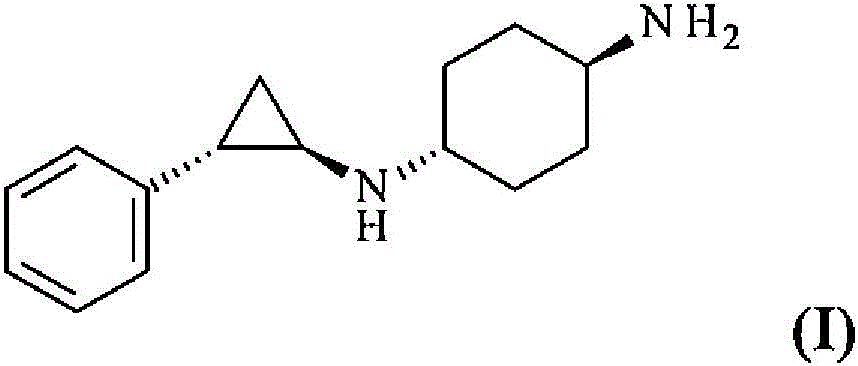
also known as ORY-1001 or (trans) -N1- ((1R, 2S) -2-phenylcyclopropyl) cyclohexane-1, 4-diamine.
Summary of The Invention
The present invention is based, at least in part, on the discovery that: additive or synergistic effects in inhibiting the growth of cancer cells can be achieved by administering a compound of formula (I) or a pharmaceutically acceptable salt thereof in combination with certain additional specific active agents. The combinations and methods can be used to treat hyperproliferative disorders, particularly hematologic malignancies.
The present invention relates to LSD1 inhibitors, in particular compounds of formula (I) or pharmaceutically acceptable salts thereof

In combination with one or more therapeutic agents selected from the group consisting of retinoid analogs, nucleoside phosphate analogs, DOT1L inhibitors, HDAC inhibitors, demethylating agents, FLT3 inhibitors, BCL2 inhibitors, MDM2 inhibitors, c-KIT inhibitors, BET inhibitors, anthracyclines, arsenic trioxide, hydroxyurea, and pharmaceutically acceptable salts thereof.
Accordingly, the present invention provides a combination comprising a compound of formula (I):

or a pharmaceutically acceptable salt thereof, with one or more therapeutic agents selected from the group consisting of retinoid analogues, nucleoside analogues, DOT1L inhibitors, HDAC inhibitors, demethylating agents, FLT3 inhibitors, BCL2 inhibitors, MDM2 inhibitors, c-KIT inhibitors, BET inhibitors, anthracyclines, arsenic trioxide, hydroxyurea, and pharmaceutically acceptable salts thereof.
In another aspect, the present invention relates to a combination comprising a compound of formula (I):

or a pharmaceutically acceptable salt thereof, with one or more therapeutic agents selected from the group consisting of retinoid analogues, nucleoside analogues, DOT1L inhibitors, HDAC inhibitors, demethylating agents, FLT3 inhibitors, BCL2 inhibitors, MDM2 inhibitors, c-KIT inhibitors, BET inhibitors, anthracyclines, arsenic trioxide, hydroxyurea and pharmaceutically acceptable salts thereof, for use in the treatment of hyperproliferative disorders, in particular hematologic malignancies, including myeloid hematologic malignancies and lymphoid hematologic malignancies, for example as described in more detail below.
In another aspect, the present invention relates to a method of treating a hyperproliferative disorder, particularly a hematological malignancy, in a patient in need thereof, comprising administering to the patient a therapeutically effective amount of a compound of formula (I):

or a pharmaceutically acceptable salt thereof, with a therapeutically effective amount of one or more therapeutic agents selected from the group consisting of retinoid analogs, nucleoside analogs, DOT1L inhibitors, HDAC inhibitors, demethylating agents, FLT3 inhibitors, BCL2 inhibitors, MDM2 inhibitors, c-KIT inhibitors, BET inhibitors, anthracyclines, arsenic trioxide, hydroxyurea, and pharmaceutically acceptable salts thereof. In certain embodiments, the hematological malignancy is a bone marrow hematological malignancy. In certain embodiments, the hematological malignancy is a lymphoid hematological malignancy.
In another aspect, the present invention relates to a method of treating a hyperproliferative disorder, in particular a hematological malignancy, in a patient in need thereof, comprising administering to the patient a therapeutically effective amount of a combination comprising a compound of formula (I):

or a pharmaceutically acceptable salt thereof, with one or more therapeutic agents selected from the group consisting of retinoid analogues, nucleoside analogues, DOT1L inhibitors, HDAC inhibitors, demethylating agents, FLT3 inhibitors, BCL2 inhibitors, MDM2 inhibitors, c-KIT inhibitors, BET inhibitors, anthracyclines, arsenic trioxide, hydroxyurea, and pharmaceutically acceptable salts thereof. In certain embodiments, the hematological malignancy is a bone marrow hematological malignancy. In certain embodiments, the hematological malignancy is a lymphoid hematological malignancy.
In another aspect, the present invention relates to a method of treating a hyperproliferative disorder, particularly a hematological malignancy, in a patient in need thereof, comprising administering to the patient a pharmaceutical composition comprising a compound of formula (I):

or a pharmaceutically acceptable salt thereof, with one or more therapeutic agents selected from the group consisting of retinoid analogues, nucleoside analogues, DOT1L inhibitors, HDAC inhibitors, demethylating agents, FLT3 inhibitors, BCL2 inhibitors, MDM2 inhibitors, c-KIT inhibitors, BET inhibitors, anthracyclines, arsenic trioxide, hydroxyurea and pharmaceutically acceptable salts thereof and one or more pharmaceutically acceptable excipients. In certain embodiments, the hematological malignancy is a bone marrow hematological malignancy. In certain embodiments, the hematological malignancy is a lymphoid hematological malignancy.
In another aspect, the present invention provides a pharmaceutical composition comprising a compound of formula (I):
or a pharmaceutically acceptable salt thereof with one or more therapeutic agents selected from the group consisting of retinoid analogues, nucleoside analogues, DOT1L inhibitors, DOT1L inhibitors, HDAC inhibitors, demethylating agents, FLT3 inhibitors, BCL2 inhibitors, MDM2 inhibitors, c-KIT inhibitors, BET inhibitors, anthracyclines, arsenic trioxide, hydroxyurea and pharmaceutically acceptable salts thereof with one or more pharmaceutically acceptable excipients.
Brief Description of Drawings
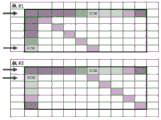
FIG. 1:plate structuring of the 9x9 matrix assay used in examples 1 and 2.
FIG. 2:combination indices calculated for combo ORY-1001/ATRA in MV (4; 11) (FIG. 2A) and MOLM-13 cells (FIG. 2B) after the procedure described in example 1.2.2.1.
FIG. 3:combination indices calculated for combo ORY-1001/ARA-C in MV (4; 11) (FIG. 3A), OCI-AML3 (FIG. 3B) and MOLM-13 cells (FIG. 3C) after the procedure described in example 1.2.3.1.
FIG. 4:combination indices calculated for combo ORY-1001/EPZ5676 in MV (4; 11) (FIG. 4A) and MOLM-13 cells (FIG. 4B) after the procedure described in example 1.2.4.1.
FIG. 5:combination index calculated for combo ORY-1001/SAHA in MV (4; 11) (FIG. 5A) and MOLM-13 cells (FIG. 5B) after the procedure described in example 1.2.6.1.
FIG. 6:example 1.2Combination index calculated for combo ORY1001/Rocilinostat in MV (4; 11) (FIG. 6A), OCI-AML3 (FIG. 6B) and MOLM-13 cells (FIG. 6C) after the method described in 7.1.
FIG. 7:combination index calculated for combo ORY-1001/azacitidine in MV (4; 11) (FIG. 7A) and MOLM-13 cells (FIG. 7B) after the procedure described in example 1.2.9.1.
FIG. 8:combination index calculated in MV (4; 11) (FIG. 8A) and MOLM-13 cells (FIG. 8B) for combo ORY-1001/decitabine following the procedure described in example 1.2.10.1.
FIG. 9:combination index calculated for combo ORY-1001/quinazatinib in MV (4; 11) (FIG. 9A) and MOLM-13 cells (FIG. 9B) after the procedure described in example 1.2.11.1.
FIG. 10:combination indices calculated for combo ORY1001/ABT737 in MV (4; 11) (FIG. 10A) and MOLM-13 cells (FIG. 10B) after the procedure described in example 1.2.12.1.
FIG. 11:combination index calculated in MOLM-13 cells for combo ORY1001/Nutlin3A after the method described in example 1.2.13.1.
FIG. 12:combination index calculated for combo ORY 1001/dasatinib in MV (4; 11) cells after the method described in example 1.2.14.
FIG. 13:combination index calculated for combo ORY1001/JQ1 in MV (4; 11) cells after the method described in example 1.2.15.1.
FIG. 14:dose response curves after treatment of MV (4; 11) cells with Hydroxyurea (HU) in combination with ORY-1001 following the procedure described in example 1.2.16.
FIG. 15:as used after the procedure described in example 1.2.172O3Dose response curves after MV (4; 11) cells were treated with a combination of (arsenic) and ORY-1001.
FIG. 16:combination index calculated for combo ORY-1001/ARA-C in MOLT-4 cells after the method described in example 2.2.2.
FIG. 17:after the procedure described in example 2.2.3, combo ORY-1001/SAHA was treatedCombination index calculated in MOLT-4 cells.
FIG. 18:combination index calculated for combo ORY1001/Rocilinostat in MOLT-4 cells after the method described in example 2.2.4.
FIG. 19:combination index calculated for combo ORY-1001/entinostat after the method described in example 2.2.5 in MOLT-4 cells.
FIG. 20:combination index calculated for combo ORY-1001/azacitidine in MOLT-4 cells after the method described in example 2.2.6.
FIG. 21:combination index calculated for combo ORY-1001/decitabine in MOLT-4 cells after the method described in example 2.2.7.
FIG. 22:combination index calculated in MOLT-4 cells for combo ORY1001/ABT737 after the method described in example 2.2.8.
Detailed Description
The present invention is based on the following findings: the compound of formula (I) or a pharmaceutically acceptable salt thereof and the other therapeutic agent as described herein may be used in combination for the treatment of hematological malignancies with an effect superior to that obtained by treatment with the compound of formula (I) alone or the other therapeutic agent alone.
In particular, the present invention provides a combination comprising a compound of formula (I) or a pharmaceutically acceptable salt thereof and one or more therapeutic agents selected from the group consisting of a retinoid analogue, a nucleoside analogue, a DOT1L inhibitor, an HDAC inhibitor, a demethylating agent, an FLT3 inhibitor, a BCL2 inhibitor, an MDM2 inhibitor, a c-KIT inhibitor, a BET inhibitor, an anthracycline, arsenic trioxide, hydroxyurea and a pharmaceutically acceptable salt thereof.
In another aspect, the present invention provides a combination comprising a compound of formula (I) or a pharmaceutically acceptable salt thereof and one or more therapeutic agents selected from the group consisting of retinoid analogues, nucleoside analogues, DOT1L inhibitors, HDAC inhibitors, demethylating agents, FLT3 inhibitors, BCL2 inhibitors, MDM2 inhibitors, c-KIT inhibitors, BET inhibitors, anthracyclines, arsenic trioxide, hydroxyurea and pharmaceutically acceptable salts thereof for use as therapeutically active substance.
In another aspect, the present invention relates to a combination comprising a compound of formula (I) or a pharmaceutically acceptable salt thereof and one or more therapeutic agents selected from the group consisting of a retinoid analogue, a nucleoside analogue, a DOT1L inhibitor, an HDAC inhibitor, a demethylating agent, an FLT3 inhibitor, a BCL2 inhibitor, an MDM2 inhibitor, a c-KIT inhibitor, a BET inhibitor, an anthracycline, arsenic trioxide, hydroxyurea and pharmaceutically acceptable salts thereof for use in the treatment of a hematological malignancy. In certain embodiments, the hematological malignancy is a bone marrow hematological malignancy. In certain embodiments, the hematological malignancy is a lymphoid hematological malignancy.
In another aspect, the invention relates to a method of treating a hematologic malignancy in a patient in need thereof, comprising administering a therapeutically effective amount of a compound of formula (I), or a pharmaceutically acceptable salt thereof, with a therapeutically effective amount of one or more therapeutic agents selected from the group consisting of retinoid analogs, nucleoside analogs, DOT1L inhibitors, HDAC inhibitors, demethylating agents, FLT3 inhibitors, BCL2 inhibitors, MDM2 inhibitors, c-KIT inhibitors, BET inhibitors, anthracyclines, arsenic trioxide, hydroxyurea, and pharmaceutically acceptable salts thereof. In certain embodiments, the hematological malignancy is a lymphoid hematological malignancy.
In another aspect, the present invention relates to a method of treating a hematologic malignancy in a patient in need thereof, comprising administering to the patient a therapeutically effective amount of a combination comprising a compound of formula (I), or a pharmaceutically acceptable salt thereof, and one or more therapeutic agents selected from the group consisting of a retinoid analogue, a nucleoside analogue, a DOT1L inhibitor, an HDAC inhibitor, a demethylating agent, an FLT3 inhibitor, a BCL2 inhibitor, an MDM2 inhibitor, a c-KIT inhibitor, a BET inhibitor, an anthracycline, arsenic trioxide, hydroxyurea, and pharmaceutically acceptable salts thereof. In certain embodiments, the hematological malignancy is a lymphoid hematological malignancy.
In another aspect, the present invention provides the use of a combination comprising a compound of formula (I) or a pharmaceutically acceptable salt thereof and one or more therapeutic agents selected from the group consisting of a retinoid analogue, a nucleoside analogue, a DOT1L inhibitor, an HDAC inhibitor, a demethylating agent, an FLT3 inhibitor, a BCL2 inhibitor, an MDM2 inhibitor, a c-KIT inhibitor, a BET inhibitor, an anthracycline, arsenic trioxide, hydroxyurea and pharmaceutically acceptable salts thereof, in the treatment of a hematological malignancy. In certain embodiments, the hematological malignancy is a myeloid-like hematological malignancy. In certain embodiments, the hematological malignancy is a lymphoid hematological malignancy.
In another aspect, the invention provides the use of a combination comprising a compound of formula (I), or a pharmaceutically acceptable salt thereof, and one or more therapeutic agents selected from the group consisting of a retinoid analogue, a nucleoside analogue, a DOT1L inhibitor, an HDAC inhibitor, a demethylating agent, a FLT3 inhibitor, a BCL2 inhibitor, an MDM2 inhibitor, a c-KIT inhibitor, a BET inhibitor, an anthracycline, arsenic trioxide, hydroxyurea, and a pharmaceutically acceptable salt thereof, in the manufacture of a medicament for the treatment of a hematological malignancy. In certain embodiments, the hematological malignancy is a myeloid-like hematological malignancy. In certain embodiments, the hematological malignancy is a lymphoid hematological malignancy.
In another aspect, the invention relates to a method of treating a hematologic malignancy in a patient in need thereof, comprising administering to the patient a pharmaceutical composition comprising a compound of formula (D) or a pharmaceutically acceptable salt thereof and one or more therapeutic agents selected from the group consisting of retinoid analogs, nucleoside analogs, DOT1L inhibitors, HDAC inhibitors, demethylating agents, FLT3 inhibitors, BCL2 inhibitors, MDM2 inhibitors, c-KIT inhibitors, BET inhibitors, anthracyclines, arsenic trioxide, hydroxyurea, and pharmaceutically acceptable salts thereof, and one or more pharmaceutically acceptable excipients.
In another aspect, the present invention provides a pharmaceutical composition comprising a compound of formula (I) or a pharmaceutically acceptable salt thereof and one or more therapeutic agents selected from the group consisting of retinoid analogues, nucleoside analogues, DOT1L inhibitors, HDAC inhibitors, demethylating agents, FLT3 inhibitors, BCL2 inhibitors, MDM2 inhibitors, c-KIT inhibitors, BET inhibitors, anthracyclines, arsenic trioxide, hydroxyurea and pharmaceutically acceptable salts thereof, and one or more pharmaceutically acceptable excipients.
ORY-1001:
A compound of formula (I)

[ CAS registry number 1431304-21-0]Also known as ORY-1001 or (trans) -N1- ((1R, 2S) -2-phenylcyclopropyl) cyclohexane-1, 4-diamine has been described in International patent application WO 2013/0573222Example 5. Pharmaceutically acceptable salts thereof are also described, including hydrochloride salt [ CAS registry number 1431303-72-8, dihydrochloride]. The most specific pharmaceutically acceptable salt is the dihydrochloride salt. The compounds of formula (I) act as selective LSD1 inhibitors.
Retinoid analogues:
retinoic acid [ CAS registry number 302-79-4]Also known and called ATRA or all-trans retinoic acid has been described, for example, in US patent US 27097123Or recommended INN List 114In (1). Tretinoin causes immature promyelocytic differentiation. ATRA is the latest standard of care for the treatment of acute leukemia.

ATRA derivatives with anti-cancer, in particular anti-leukemia activity, reported in the literature can also be used in the combinations of the invention.
Nucleoside analogs:
nucleoside analogs are nucleosides that comprise a nucleic acid analog and a sugar and are useful as therapeutic agents against a range of disorders, including some used in chemotherapy. A preferred nucleotide analogue for use in the combination of the invention is cytarabine.
Cytarabine [ CAS registry number 147-94-4 ]]Also known and called ARA-C or cytarabine have been described, for example, in Chu M.Y. et al5Or recommended INN list 66In (1). Cytarabine is rapidly converted to cytosine arabinoside triphosphate, which destroys DNA during the S phase of cell cycle maintenance during DNA synthesis. ARA-C is one of the latest standards of care for the treatment of acute leukemias, usually in combination with anthracyclines such as daunorubicin

Other nucleoside analogs that may be used in the combinations of the invention include, but are not limited to, sapatitabine, clofarabine, elacitabine, fludarabine, cytarabine phospholipide, gemcitabine, 2-chloro-2-deoxyadenosine (also known as 2-CDA), troxacitabine, forodesine, and nelarabine.
DOT1L inhibitor:
DOT1L is a histone methyltransferase that has been reported to be involved in leukemia, particularly AML and certain subtypes of ALL, and inhibitors of DOT1L are being developed for the treatment of leukemia. Any known inhibitor of DOT1L can in principle be used in the combination of the invention. Examples of DOT1L inhibitors that may be used include, but are not limited to, pinometstat, EPZ-004777, and SGC-0946. A preferred DOT1L inhibitor for use in the combination of the invention is Pinometostat.
Pinometostat CAS registry number 1380288-87-8]Also known and referred to as EPZ-5676 has been described, for example, in International patent application WO 20120753817Or proposed INN list 1128In (1). Pinometostat acts as a DOT1L inhibitor.

EPZ-004777[ CAS registry number 1338466-77-5 ]]Also known as 7- [ 5-deoxy-5- [ [3- [ [ [ [4- (1, 1-dimethylethyl) phenyl ] methyl]Amino group]Carbonyl radical]Amino group]Propyl radical](1-methylethyl) amino group]-beta-D-ribofuranosyl]-7H-pyrrolo [2, 3-d]Pyrimidin-4-amines have been described, for example, in Daigle S.R. et al9In (1). EPZ-004777 functions as a DOT1L inhibitor.

SGC0496(CAS registry number 1561178-17-3) is the compound 1- [3- [ [ [ (2R, 3S, 4R, 5R) -5- (4-amino-5-bromo-7H-pyrrolo [2, 3-d ]]Pyrimidin-7-yl) -3, 4-dihydroxytetrahydrofuran-2-yl]Methyl radical](isopropyl) amino group]Propyl radical]-3- [4- (2, 2-dimethylethyl) phenyl]Urea has been described in Yu et al10In (1). SGC0496 has the following chemical structure:

HDAC inhibitors
Histone Deacetylase (HDAC) inhibitors are a class of compounds that interfere with histone deacetylase function, which are approved or in clinical development for the treatment of several types of cancer. Any known HDAC inhibitor may in principle be used in the combination of the present invention. Preferred HDAC inhibitors for the combination of the present invention are beline sitat, panobinostat, fullinostat, Ricolinostat, entinostat, moxystat, abbestat, remininostat, gevistat or Quisinostat.
Volinostat [ CAS registry number 149647-78-9)]Also known and referred to as SAHA or cycloheptane hydroxamic acid has been described, for example, in International patent application WO 930714811Or push awayRecommended INN List 5612In (1). Vorinostat acts as a Histone Deacetylase (HDAC) inhibitor.

Ricolinostat [ CAS registry number 1316214-52-4)]Also known and referred to as Rocilinostat and ACY-1215 has been described, for example, in International patent application WO 201109121313Or recommended INN list 7114In (1). Ricolinostat acts as a Histone Deacetylase (HDAC) inhibitor.

Entinostat [ CAS registry number 209783-80-2]Also known as SNDX-275 has been described in, for example, Japanese patent application JP 1015246215Or recommended INN list 6116In (1). Entinostat functions as a Histone Deacetylase (HDAC) inhibitor.

Belinostat (CAS registry No. 866323-14-0), also known as (22E) -N-hydroxy-3- [3- (phenylsulfamoyl) phenyl]Prop-2-enamides have been disclosed in WO 2009/04051717In (1). The compound has the following chemical structure:

panobinostat (CAS registry number 404950-80-7), also known as (2E) -N-hydroxy-3- [4- ({ [2- (2-methyl-1H-indol-3-yl) ethyl]Amino } methyl) phenyl]Acrylamide has been disclosed in WO 02/02257718In (1). The compound has the following chemical structure:

demethylating agent
Also known as demethylating agents, these are drugs that inhibit DNA methylation, particularly by blocking the activity of DNA methyltransferases (DNMT inhibitors). Currently, two members of this class (decitabine and azacitidine) have been FDA approved for the treatment of myelodysplastic syndrome, and are currently being investigated for use in a variety of tumors, including AML19. DNMT inhibitors that may be used according to the present invention include, but are not limited to:
decitabine [ CAS registry number 2353-33-5 ]]Also known as 5-aza-2' -deoxycytidine has been described, for example, in Wolfrom I.M.L20Or recommended INN list 3021In (1).

Azacitidine [ CAS registry number 320-67-2]Has been described, for example, in German patent DE 114094122Or recommended INN list 1923In (1). Azacitidine is one of the latest standard of care for the treatment of acute leukemias.

Guadecitabine, also known as SGI-110. The compound is decitabine linked to guanosine via a phosphodiester bond and acting as a prodrug of decitabine. Upon metabolic activation by phosphorylation and incorporation into DNA, guadecitabine inhibits DNA methyltransferase, thereby resulting in extensive and non-specific hypomethylation of the genome and induction of cell cycle inhibition at S-phase. The active agent is resistant to cytidine deaminase and thus may result in a gradual release of extracellular and intracellular decitabine, resulting in prolonged exposure to decitabine.
Zebularine, 5-fluoro-2 '-deoxycytidine, 2' -deoxy-5, 6-dihydro-5, 6-azacytidine, hydralazine, procainamide, hydralazine, EGCG and RG108 are further DNMT inhibitors which may be used in the combination of the invention.
FLT3 inhibitors:
FMS-related tyrosine kinase 3(FLT3) is a protooncogene. FTL3 receptor mutation can lead to leukemia development, which is actually one of the most frequent mutant genes of AML. FLT3 inhibitors were developed to treat several types of cancer. Any known FLT3 inhibitor may in principle be used in the combination of the invention. Preferred FLT3 inhibitors for use in the combinations of the invention include quinazatinib, sorafenib, sunitinib and lestaurtinib.
Quinagotinib [ CAS registry number 950769-58-1]Has been described, for example, in International patent application WO 200710912024Or recommended INN list 9925In (1).

BCL2 inhibitor:
bcl2 (B-cell lymphoma 2) is considered an important anti-apoptotic protein and is classified as an oncogene. Alterations in the BCL2 gene can be identified as the cause of numerous cancers, and BCL2 inhibitors were developed as anti-cancer therapies. Any known Bcl2 inhibitor may be used in the combination of the present invention. Preferred Bcl2 inhibitors include ABT-737, Navitoclax (aka ABT-263), Vickerla (aka ABT-199), and Obrakla.
ABT-737[ CAS registry number 852808-04-9]Also known as 4- [4- [ [2- (4-chlorophenyl) phenyl]Methyl radical]Piperazin-1-yl]-N- [4- [ [ (2R) -4- (dimethylamino) -1-phenylsulfanylbut-2-yl]Amino group]-3-nitrophenyl]Sulphonylbenzamides have been described, for example, in International patent application WO 200504959426In (1).

Navitoclax [ CAS registry number 923564-51-6]Also referred to as ABT-263 or 4- (4- { [2 ]2- (4-chlorophenyl) -5, 5-dimethyl-1-cyclohexen-1-yl]Methyl } -1-piperazinyl) -N- [ (4- { [ (2R) -4- (4-morpholinyl) -1- (phenylsulfanyl) -2-butyl]Amino } -3- [ (trifluoromethyl) sulfonyl group]Phenyl) -sulphonyl]Benzamides have been described, for example, in US 2007002713527In (1).

Obarkra [ CAS registry number 803712-67-6]Also known as 2- (2- ((3, 5-dimethyl-1H-pyrrol-2-yl) methylene) -3-methoxy-2H-pyrrol-5-yl) -1H-indole has been described, for example, in International patent application WO 200410632828In (1).

Vickers [ CAS registry number 1257044-40-8]Also known as ABT-199 or 4- [4- [ [2- (4-chlorophenyl) -4, 4-dimethylcyclohex-1-en-1-yl]Methyl radical]Piperazin-1-yl]-N- [ [ 3-nitro-4- [ [ (tetrahydro-2H-pyran-4-yl) methyl ] methyl]Amino group]Phenyl radical]Sulfonyl radical]-2- [ (1H-pyrrolo [2, 3-b)]Pyridin-5-yl) oxy]Benzamides have been described in international patent application WO 201013858829In (1).

MDM2 inhibitor:
the mouse double minute 2 homolog (MDM2) is considered to be an important negative regulator of the p53 tumor repressor in cancer and the like. Mdm2 inhibitors are compounds that inhibit the interaction between Mdm2 and p53 and include Nutlins et al. A particularly preferred Mdm2 inhibitor is Nutlin-3A.
Nutlin-3A [ CAS registry number 675576-98-4 ]]Also known as 4- [ [ (4S, 5R) -4, 5-bis (4-chlorophenyl) -4, 5-dihydro-2- [ 4-methoxy-2- (1-methylethoxy) phenyl]-1H-imidazol-1-yl]Carbonyl radical]2-piperazinones have been described, for example, in U.S. patent application No. US 2005028280330In (1).

c-KIT inhibitors:
c-KIT (also known as mast/Stem Cell Growth Factor Receptor (SCGFR) or CD117) is a receptor tyrosine kinase protein that is a protooncogene in humans. Activating mutations in this gene have been associated with many cancers, including acute myeloid leukemia. Any of the disclosed cKIT inhibitors may be used in the combinations of the invention. Suitable c-KIT inhibitors are dasatinib or imatinib.
Dasatinib (CAS registry No. 302962-49-8) is the compound N- (2-chloro-6-methylphenyl) -2- [ [6- [4- (2-hydroxyethyl) -1-piperazinyl ] -2-methyl-4-pyrimidinyl ] amino ] -5-thiazolecarboxamide, having the formula:

dasatinib is approved for first-line use in patients with Chronic Myelogenous Leukemia (CML) and Acute Lymphoblastic Leukemia (ALL).
Imatinib (CAS registry No. 152459-95-5) is the compound 4- [ (4-methylpiperazin-1-yl) methyl ] -N- (4-methyl-3- { [4- (pyridin-3-yl) pyrimidin-2-yl ] amino } phenyl) benzamide, having the formula:

imatinib is a tyrosine kinase inhibitor used to treat a variety of cancers, including philadelphia chromosome positive CML.
BET inhibitors:
BET inhibitors are a class of drugs currently in clinical trials with anti-cancer, immunosuppressive and other effects. These molecules reversibly bind to the bromodomains of the bromodomains and terminal exomotif (BET) proteins BRD2, BRD3, BRD4, and BRDT and prevent protein-protein interactions between BET proteins and acetylated histones and transcription factors. Any reported BET inhibitor may be used in the combination of the invention. Examples of BET inhibitors include, but are not limited to:
JQ1(CAS registry No. 1268524-70-4) is (S) -2- (4- (4-chlorophenyl-yl) -2, 3, 9-trimethyl-6H-thieno [3, 2-f)][1,2,4]Triazolo [4, 3-a][1,4]Diazepin-6-yl) acetic acid tert-butyl ester and is disclosed in WO 201114365131In (1).

GSK1210151A (I-BET 151) (CAS registry No. 1300031-49-5) is 7, 3, 5-dimethyl-4-isoxazolyl-1, 3-dihydro-8-methoxy-1- [1R-1- (2-pyridinyl) ethyl]-2H-imidazo [4, 5-c]Quinolin-2-ones and are disclosed in WO 201105484332In (1).

MS 436(CAS registry number 1395084-25-9) is 4- [ (1E) -2- (2-amino-4-hydroxy-5-methylphenyl) diazenyl]-N-2-pyridinyl-benzenesulfonylamides and disclosed in WO 201211617033In (1).

I-BET 762(GSK525762) is:

OTX-015(CAS registry number 202590-98-5) is (6S) -4- (4-chlorophenyl) -N- (4-hydroxyphenyl) -2, 3, 9-trimethyl-6H-thieno [3, 2-f)][1,2,4]Triazolo [4, 3-a][1,4]Diazepine-6-acetamides and are disclosed in US 571227434In (1).

CPI-203(CAS registry number 1446144-04-2) is (6S) -4- (4-chlorophenyl) -2, 3, 9-trimethyl-6H-thieno [3, 2-f)][1,2,4]Triazolo [4, 3-a][1,4]Diazepine-6-acetamides and are disclosed in WO 201413458335In (1).

GSK1324726A (I-BET726) (CAS registry No. 1300031-52-0) is 4- [ (2S, 4R) -1-acetyl-4- [ (4-chlorophenyl) amino]-1, 2, 3, 4-tetrahydro-2-methyl-6-quinolinyl]Benzoic acid and disclosed in WO 201105484336In (1).

Additional BET inhibitors that may be used in combination with the compound of formula (I) include ABBV-075, BAY1238097, CPI-0610, and TEN-010.
Anthracycline drugs:
anthracyclines (or anthracyclines) are a class of drugs derived from the Streptomyces species bacterium var. caesius used in cancer chemotherapy. These compounds are useful in the treatment of a number of cancers, including leukemia. Examples of anthracyclines useful in the combinations of the invention include doxorubicin, idarubicin and daunorubicin.
Anthracyclines such as daunorubicin, doxorubicin, and idarubicin are commonly used in certain types of leukemia (e.g., acute myeloid leukemia and acute lymphocytic leukemia), often in combination with other chemotherapeutic agents such as cytarabine.

Arsenic trioxide:
arsenic trioxide is a chemotherapeutic agent approved by the US FDA for use in the treatment of acute promyelocytic leukemia, which is unresponsive to "first line" active agents such as ATRA. Arsenic trioxide has been shown to induce apoptosis in cancer cells. As a cell proliferation inhibitor, in the treatment of refractory promyelocytic (M3) subtype of acute myeloid leukemia. Combination therapy of arsenic trioxide and all-trans retinoic acid (ATRA) has been FDA approved for the treatment of certain leukemias. Arsenic trioxide liquid forms have been developed that can be administered orally.
Hydroxyurea:
Hydroxyurea (CAS registry No. 127-07-1), also known as hydroxyurea, is an anti-tumor drug for myeloproliferative disorders, including CML. Hydroxyureas reduce deoxyribonucleotide production by inhibiting ribonucleotide reductase through the elimination of tyrosyl radicals, as they are involved in reducing NDP.

ATRA, ARA-C (optionally in combination with anthracyclines such as daunorubicin or idarubicin) and azacitidine are the latest standard of care for the treatment of acute leukemias.
In certain embodiments, the retinoid analogue is retinoic acid.
In certain embodiments, the nucleoside analog is cytarabine.
In certain embodiments, the DOT1L inhibitor is selected from the group consisting of pinometostat and EPZ-004777.
In certain embodiments, the HDAC inhibitor is selected from vorinostat, ricolinostat, and entinostat.
In certain embodiments, the DNMT inhibitor is selected from decitabine and azacitidine.
In certain embodiments, the FLT3 inhibitor is quinazatinib.
In certain embodiments, the BCL2 inhibitor is ABT-737.
In certain embodiments, the MDM2 inhibitor is Nutlin-3A.
In certain embodiments, the c-KIT inhibitor is dasatinib.
In certain embodiments, the BET inhibitor is JQ-1.
In certain embodiments, the anthracycline is daunorubicin.
Another embodiment relates to a combination comprising a compound of formula (I) or a pharmaceutically acceptable salt thereof and one or more therapeutic agents selected from the group consisting of retinoic acid, cytarabine, sapatidine, clofarabine, elacytarabine, fludarabine, cytarabine phosphodiester, gemcitabine, 2-chloro-2-deoxyadenosine (also known as 2-CDA), troxacitabine, furazolidone, nelarabine, pinomettat, EPZ-004777, SGC-0946, belinostat, panobinostat, vollinostat, Ricolinostat, entistat, moxystat, abeditat, Resminostat, virostat, Quisinosostat, decitabine, azacitidine, gudgetibine, quinidine, sorafenib, sunitinib, lestatinib, ABT-737, Nalcitabine, olatinib, Auxilatinib, Auxilitinib, and Icaritinib, Auriculatabitutin, Ipomitinib, JQ1, GSK1210151A, MS 436, GSK525762, OTX-015, CPI-203, GSK1324726A, daunorubicin, doxorubicin, idarubicin, arsenic trioxide, hydroxyurea and pharmaceutically acceptable salts thereof. In a specific embodiment, the combination comprises a compound of formula (I) or a pharmaceutically acceptable salt thereof and one or more therapeutic agents selected from the group consisting of retinoic acid, cytarabine, pinometastat, EPZ-00477, Volinostat, Ricolinostat, entinostat, decitabine, azacitidine, quinazatinib, ABT-737, Nutlin-3A, dasatinib, JQ1, daunorubicin, arsenic trioxide, hydroxyurea, and pharmaceutically acceptable salts thereof.
Another embodiment relates to a pharmaceutical composition comprising a compound of formula (I) or a pharmaceutically acceptable salt thereof and one or more therapeutic agents selected from retinoic acid, cytarabine, sapatidine, clofarabine, elacytarabine, fludarabine, cytarabine phosphodiester, gemcitabine, 2-chloro-2-deoxyadenosine (also known as 2-CDA), troxacitabine, furazolidine, nelarabine, pinometostat, EPZ-004777, SGC-0946, belinostat, panobinostat, vollinostat, Ricolinostat, entinostat, moxystat, arbitast, reminiostat, givisfatat, Quisinostat, decitabine, abatabine, guaducitine, quinizatinib, sorafenib, sunitinib, letitinib, letostatin, altotax-737, ABnaclat, Abiranib, Abiramate, Abutab, Abiranib, Abiramate, Abutab, Abiramate, Abuta, Abira, Abuta, Abiraterob, Abuta, Abira, Abuta, Abiraterob, Abuta, Abira, Abuta, Nutlin-3A, dasatinib, imatinib, JQ1, GSK1210151A, MS 436, GSK525762, OTX-015, CPI-203, GSK1324726A, daunorubicin, doxorubicin, idarubicin, arsenic trioxide, hydroxyurea and pharmaceutically acceptable salts thereof. In a specific embodiment, the combination comprises a compound of formula (I) or a pharmaceutically acceptable salt thereof and one or more therapeutic agents selected from the group consisting of retinoic acid, cytarabine, pinometastat, EPZ-00477, Volinostat, Ricolinostat, entinostat, decitabine, azacitidine, quinazatinib, ABT-737, Nutlin-3A, dasatinib, JQ1, daunorubicin, arsenic trioxide, hydroxyurea, and pharmaceutically acceptable salts thereof. In a specific embodiment, the pharmaceutical composition comprises a compound of formula (I) or a pharmaceutically acceptable salt thereof and one or more therapeutic agents and one or more pharmaceutically acceptable excipients selected from the group consisting of tretinoin, cytarabine, pinometastat, EPZ-00477, Vorinostat, Ricolinostat, entinostat, decitabine, azacitidine, quinizatinib, ABT-737, Nutlin-3A, Dasatinib, JQ1, daunorubicin, arsenic trioxide, hydroxyurea and pharmaceutically acceptable salts thereof.
Another embodiment relates to a combination comprising a compound of formula (I) or a pharmaceutically acceptable salt thereof and one or more therapeutic agents selected from the group consisting of retinoic acid, cytarabine, sapatidine, clofarabine, elacytarabine, fludarabine, cytarabine phosphodiester, gemcitabine, 2-chloro-2-deoxyadenosine (also known as 2-CDA), troxacitabine, furazolidone, nelarabine, pinomettat, EPZ-004777, SGC-0946, belinostat, panobinostat, vollinostat, Ricolinostat, entistat, moxystat, abeditat, Resminostat, virostat, Quisinosostat, decitabine, azacitidine, gudgetibine, quinidine, sorafenib, sunitinib, lestatinib, ABT-737, Nalcitabine, olatinib, Auxilatinib, Auxilitinib, and Icaritinib, Auriculatabitutin, Ipomitinib, JQ1, GSK1210151A, MS 436, GSK525762, OTX-015, CPI-203, GSK1324726A, daunorubicin, doxorubicin, idarubicin, arsenic trioxide, hydroxyurea and pharmaceutically acceptable salts thereof for use as therapeutically active substance. In a specific embodiment, the combination comprises a compound of formula (I) or a pharmaceutically acceptable salt thereof and one or more therapeutic agents selected from the group consisting of retinoic acid, cytarabine, pinometastat, EPZ-00477, fullinostat, Ricolinostat, entinostat, decitabine, azacitidine, quinazatinib, ABT-737, Nutlin-3A, dasatinib, JQ1, daunorubicin, arsenic trioxide, hydroxyurea and pharmaceutically acceptable salts thereof for use as therapeutically active substance.
Another embodiment relates to a combination comprising a compound of formula (I) or a pharmaceutically acceptable salt thereof and one or more therapeutic agents selected from the group consisting of retinoic acid, cytarabine, sapatidine, clofarabine, elacytarabine, fludarabine, cytarabine phosphodiester, gemcitabine, 2-chloro-2-deoxyadenosine (also known as 2-CDA), troxacitabine, furazolidone, nelarabine, pinomettat, EPZ-004777, SGC-0946, belinostat, panobinostat, vollinostat, Ricolinostat, entistat, moxystat, abeditat, Resminostat, virostat, Quisinosostat, decitabine, azacitidine, gudgetibine, quinidine, sorafenib, sunitinib, lestatinib, ABT-737, Nalcitabine, olatinib, Auxilatinib, Auxilitinib, and Icaritinib, Auriculatabitutin, Ipomitinib, JQ1, GSK1210151A, MS 436, GSK525762, OTX-015, CPI-203, GSK1324726A, daunorubicin, doxorubicin, idarubicin, arsenic trioxide, hydroxyurea and pharmaceutically acceptable salts thereof for use in the treatment of hyperproliferative disorders. In a specific embodiment, the combination comprises a compound of formula (I) or a pharmaceutically acceptable salt thereof and one or more therapeutic agents selected from the group consisting of retinoic acid, cytarabine, pinometastat, EPZ-00477, fullinostat, Ricolinostat, entinostat, decitabine, azacitidine, quinazatinib, ABT-737, Nutlin-3A, dasatinib, JQ1, daunorubicin, arsenic trioxide, hydroxyurea, and pharmaceutically acceptable salts thereof, for use in the treatment of hematological malignancies. In certain embodiments, the hematological malignancy is a myeloid-like hematological malignancy. In certain embodiments, the hematological malignancy is a lymphoid hematological malignancy.
Another embodiment relates to a method of treating a hematological malignancy in a patient in need thereof, comprising administering to the patient a therapeutically effective amount of a combination comprising a compound of formula (I) or a pharmaceutically acceptable salt thereof and one or more therapeutic agents selected from the group consisting of tretinoin, cytarabine, sapatidine, clofarabine, elacitabine, fludarabine, cytarabine phosphodiester, gemcitabine, 2-chloro-2-deoxyadenosine (also known as 2-CDA), troxacitabine, furodisine, nelarabine, pinometastat, EPZ-004777, SGC-0946, belinostat, panobinostat, volastat, Ricolinostat, entistat, moxidestat, abenostat, reminiostat, gesitat, Quisintaost, decitabine, cytarabine, adonitapine, guitinib, sorafenib, temustinib, sorafenib, and a, ABT-737, Navitoclax, Vickerla, Obckera, Nutlin-3A, Dasatinib, Imatinib, JQ1, GSK1210151A, MS 436, GSK525762, OTX-015, CPI-203, GSK1324726A, daunorubicin, doxorubicin, idarubicin, arsenic trioxide, hydroxyurea and pharmaceutically acceptable salts thereof. In a specific embodiment, the method comprises administering a therapeutically effective amount of a combination comprising a compound of formula (I) or a pharmaceutically acceptable salt thereof and one or more therapeutic agents selected from the group consisting of tretinoin, cytarabine, pinometastat, EPZ-00477, Vorinostat, Ricolinostat, entistat, decitabine, azacitidine, quinizartinib, ABT-737, Nutlin-3A, Dasatinib, JQ1, daunorubicin, arsenic trioxide, hydroxyurea, and pharmaceutically acceptable salts thereof. In certain embodiments, the hematological malignancy is a myeloid-like hematological malignancy. In certain embodiments, the hematological malignancy is a lymphoid hematological malignancy.
Another embodiment relates to the use of a combination comprising a compound of formula (I) or a pharmaceutically acceptable salt thereof and one or more therapeutic agents selected from retinoic acid, cytarabine, sapatidine, clofarabine, elacytarabine, fludarabine, cytarabine phosphoester, gemcitabine, 2-chloro-2-deoxyadenosine (also known as 2-CDA), troxacitabine, furazolidine, nelarabine, pinometostat, EPZ-004777, SGC-0946, belinostat, panobinostat, vollinostat, Ricolinostat, entinostat, moxystat, arbitast, reminiostat, gesitostat, Quisinostat, decitabine, abatabine, guanetidine, quinazatinib, sorafenib, sunitinib, lestat, Claritotat, Abiotropina, Abiranib, Abiraterone, Abiraterob, Ab, Abiraterob, Ab, Abira, Abiraterob, Ab, Abira, Ab, Abiraterob, Ab, and Ab, Ab, Nutlin-3A, dasatinib, imatinib, JQ1, GSK1210151A, MS 436, GSK525762, OTX-015, CPI-203, GSK1324726A, daunorubicin, doxorubicin, idarubicin, arsenic trioxide, hydroxyurea and pharmaceutically acceptable salts thereof. In a specific embodiment, the combination comprises a compound of formula (I) or a pharmaceutically acceptable salt thereof and one or more therapeutic agents selected from the group consisting of retinoic acid, cytarabine, pinometastat, EPZ-00477, fullinostat, Ricolinostat, entinostat, decitabine, azacitidine, quinazatinib, ABT-737, Nutlin-3A, dasatinib, JQ1, daunorubicin, arsenic trioxide, hydroxyurea, and pharmaceutically acceptable salts thereof, for use in the treatment of hematological malignancies. In certain embodiments, the hematological malignancy is a myeloid-like hematological malignancy. In certain embodiments, the hematological malignancy is a lymphoid hematological malignancy.
Another embodiment relates to the use of a combination comprising a compound of formula (I) or a pharmaceutically acceptable salt thereof and one or more therapeutic agents selected from retinoic acid, cytarabine, sapatidine, clofarabine, elacitabine, fludarabine, cytarabine phosphoester, gemcitabine, 2-chloro-2-deoxyadenosine (also known as 2-CDA), troxacitabine, furadadipine, nelarabine, pinometastat, EPZ-004777, SGC-0946, belinostat, panobinostat, vollinostat, Ricolinostat, enistat, moxystat, abeditat, Resminostat, givisfatat, Quisintaost, decitabine, cytarabine, guaduitecite, quinazanib, sorafenib, sultinib, Lefetitinib, Alutat, Abutax-737, Abutax, Abiramate, Abutab-737, and Abiramate, Obarka, Nutlin-3A, dasatinib, imatinib, JQ1, GSK1210151A, MS 436, GSK525762, OTX-015, CPI-203, GSK1324726A, daunorubicin, doxorubicin, idarubicin, arsenic trioxide, hydroxyurea and pharmaceutically acceptable salts thereof. In a specific embodiment, the invention relates to a combination comprising a compound of formula (I) or a pharmaceutically acceptable salt thereof and one or more therapeutic agents selected from the group consisting of retinoic acid, cytarabine, pinometstat, EPZ-00477, vorinostat, Ricolinostat, entinostat, decitabine, azacitidine, quinatinib, ABT-737, Nutlin-3A, dasatinib, JQ1, daunorubicin, arsenic trioxide, hydroxyurea, and pharmaceutically acceptable salts thereof, for the preparation of a medicament for the treatment of a hematological malignancy disorder. In certain embodiments, the hematological malignancy is a myeloid-like hematological malignancy. In certain embodiments, the hematological malignancy is a lymphoid hematological malignancy.
Another embodiment relates to a combination as described herein and one or more pharmaceutically acceptable excipients.
Another embodiment relates to a combination as described herein for use as therapeutically active substance.
Another embodiment relates to a combination as described herein for use in the treatment of hematological malignancies. In certain embodiments, the hematological malignancy is a myeloid-like hematological malignancy. In certain embodiments, the hematological malignancy is a lymphoid hematological malignancy.
Another embodiment relates to a method of treating a hematological malignancy comprising administering to a human or animal a therapeutically effective amount of a combination as described herein. In certain embodiments, the hematological malignancy is a myeloid-like hematological malignancy. In certain embodiments, the hematological malignancy is a lymphoid hematological malignancy.
Another embodiment relates to the use of a combination as described herein for the treatment of a hematological malignancy. In certain embodiments, the hematological malignancy is a myeloid-like hematological malignancy. In certain embodiments, the hematological malignancy is a lymphoid hematological malignancy.
Another embodiment relates to the use of a combination as described herein for the preparation of a medicament for the treatment of a hematological malignancy. In certain embodiments, the hematological malignancy is a myeloid-like hematological malignancy. In certain embodiments, the hematological malignancy is a lymphoid hematological malignancy.
In certain embodiments, the hematologic malignancy involves LSD1 or is modulated by LSD1 inhibitors.
In certain embodiments, the hematological malignancy is a myeloid-like hematological malignancy.
In certain embodiments, the hematological malignancy is Acute Myeloid Leukemia (AML).
In certain embodiments, the hematological malignancy is a lymphoid hematological malignancy.
In certain embodiments, the hematologic malignancy is Acute Lymphoid Leukemia (ALL).
In certain embodiments, the combination comprises a compound of formula (I) or a pharmaceutically acceptable salt thereof and a retinoid analogue or a pharmaceutically acceptable salt thereof.
In certain embodiments, the combination comprises a compound of formula (I) or a pharmaceutically acceptable salt thereof and a nucleoside analogue or a pharmaceutically acceptable salt thereof.
In certain embodiments, the combination comprises a compound of formula (I), or a pharmaceutically acceptable salt thereof, and a DOT1L inhibitor, or a pharmaceutically acceptable salt thereof.
In certain embodiments, the combination comprises a compound of formula (I), or a pharmaceutically acceptable salt thereof, and an HDAC inhibitor, or a pharmaceutically acceptable salt thereof.
In certain embodiments, the combination comprises a compound of formula (I) or a pharmaceutically acceptable salt thereof and a DNMT inhibitor or a pharmaceutically acceptable salt thereof.
In certain embodiments, the combination comprises a compound of formula (I) or a pharmaceutically acceptable salt thereof and an FLT3 inhibitor or a pharmaceutically acceptable salt thereof.
In certain embodiments, the combination comprises a compound of formula (I), or a pharmaceutically acceptable salt thereof, and a BCL2 inhibitor, or a pharmaceutically acceptable salt thereof.
In certain embodiments, the combination comprises a compound of formula (I), or a pharmaceutically acceptable salt thereof, and an MDM2 inhibitor, or a pharmaceutically acceptable salt thereof.
In certain embodiments, the combination comprises a compound of formula (I) or a pharmaceutically acceptable salt thereof and a c-KIT inhibitor or a pharmaceutically acceptable salt thereof.
In certain embodiments, the combination comprises a compound of formula (I) or a pharmaceutically acceptable salt thereof and a BET inhibitor or a pharmaceutically acceptable salt thereof.
In certain embodiments, the combination comprises a compound of formula (I) or a pharmaceutically acceptable salt thereof and an anthracycline or a pharmaceutically acceptable salt thereof.
In certain embodiments, the combination comprises a compound of formula (I) or a pharmaceutically acceptable salt thereof and arsenic trioxide.
In certain embodiments, the combination comprises a compound of formula (I) or a pharmaceutically acceptable salt thereof and hydroxyurea.
In certain embodiments, the combination comprises a compound of formula (I) or a pharmaceutically acceptable salt thereof and tretinoin or a pharmaceutically acceptable salt thereof.
In certain embodiments, the combination comprises a compound of formula (I) or a pharmaceutically acceptable salt thereof and cytarabine or a pharmaceutically acceptable salt thereof.
In certain embodiments, the combination comprises a compound of formula (I) or a pharmaceutically acceptable salt thereof and pinometostatt or a pharmaceutically acceptable salt thereof.
In certain embodiments, the combination comprises a compound of formula (I) or a pharmaceutically acceptable salt thereof and EPZ-004777 or a pharmaceutically acceptable salt thereof.
In certain embodiments, the combination comprises a compound of formula (I) or a pharmaceutically acceptable salt thereof and vorinostat or a pharmaceutically acceptable salt thereof.
In certain embodiments, the combination comprises a compound of formula (I) or a pharmaceutically acceptable salt thereof and ricolinostat or a pharmaceutically acceptable salt thereof.
In certain embodiments, the combination comprises a compound of formula (I) or a pharmaceutically acceptable salt thereof and entinostat or a pharmaceutically acceptable salt thereof.
In certain embodiments, the combination comprises a compound of formula (I) or a pharmaceutically acceptable salt thereof and decitabine or a pharmaceutically acceptable salt thereof.
In certain embodiments, the combination comprises a compound of formula (I) or a pharmaceutically acceptable salt thereof and azacitidine or a pharmaceutically acceptable salt thereof.
In certain embodiments, the combination comprises a compound of formula (I) or a pharmaceutically acceptable salt thereof and quinazatinib or a pharmaceutically acceptable salt thereof.
In certain embodiments, the combination comprises a compound of formula (I) or a pharmaceutically acceptable salt thereof and ABT-737 or a pharmaceutically acceptable salt thereof.
In certain embodiments, the combination comprises a compound of formula (I) or a pharmaceutically acceptable salt thereof and Nutlin-3A or a pharmaceutically acceptable salt thereof.
In certain embodiments, the combination comprises a compound of formula (I) or a pharmaceutically acceptable salt thereof and dasatinib or a pharmaceutically acceptable salt thereof.
In certain embodiments, the combination comprises a compound of formula (I) or a pharmaceutically acceptable salt thereof and imatinib or a pharmaceutically acceptable salt thereof.
In certain embodiments, the combination comprises a compound of formula (I) or a pharmaceutically acceptable salt thereof and JQ1 or a pharmaceutically acceptable salt thereof.
In certain embodiments, the combination comprises a compound of formula (I) or a pharmaceutically acceptable salt thereof and daunorubicin or a pharmaceutically acceptable salt thereof.
In certain embodiments, the combination comprises a compound of formula (I) or a pharmaceutically acceptable salt thereof and idarubicin or a pharmaceutically acceptable salt thereof.
In certain embodiments, the combination comprises a compound of formula (I) or a pharmaceutically acceptable salt thereof, cytarabine and an anthracycline, preferably selected from daunorubicin, idarubicin and a pharmaceutically acceptable salt thereof.
In certain embodiments, the pharmaceutically acceptable salt of the compound of formula (I) as described above is the dihydrochloride salt.
In the methods of the invention described herein, the patient is a human or animal, preferably a human.
Unless defined otherwise, all technical and scientific terms used herein have the same meaning as commonly understood by one of ordinary skill in the art to which this invention belongs. Although methods and materials similar or equivalent to those described herein can be used in the practice or testing of the present invention, suitable methods and materials are described below.
All publications, patent applications, and other references mentioned herein are incorporated by reference in their entirety.
The nomenclature used in this application is based on the IUPAC systematic nomenclature, unless otherwise indicated.
Any open valency appearing on a carbon, oxygen, sulfur or nitrogen atom in the structures herein indicates the presence of a hydrogen, unless otherwise indicated.
The term "optional" or "optionally" means that the subsequently described event or circumstance may, but need not, occur, and that the description includes instances where said event or circumstance occurs and instances where it does not.
The term "pharmaceutically acceptable salt" refers to salts that are not biologically or otherwise undesirable. Pharmaceutically acceptable salts include acid addition salts and base addition salts.
The term "pharmaceutically acceptable acid addition salts" means those pharmaceutically acceptable salts formed with inorganic acids such as hydrochloric acid, hydrobromic acid, sulfuric acid, nitric acid, carbonic acid, phosphoric acid; the organic acid is selected from aliphatic, alicyclic, araliphatic, heterocyclic, carboxylic and sulfonic organic acids, such as formic acid, acetic acid, propionic acid, glycolic acid, gluconic acid, lactic acid, pyruvic acid, oxalic acid, malic acid, maleic acid, malonic acid, succinic acid, fumaric acid, tartaric acid, citric acid, aspartic acid, ascorbic acid, glutamic acid, anthranilic acid, benzoic acid, cinnamic acid, mandelic acid, pamoic acid, phenylacetic acid, methanesulfonic acid, ethanesulfonic acid, p-toluenesulfonic acid and salicylic acid.
The term "pharmaceutically acceptable base addition salts" denotes those pharmaceutically acceptable salts formed with organic or inorganic bases. Examples of acceptable inorganic bases include sodium, potassium, ammonium, calcium, magnesium, iron, zinc, copper, manganese, and aluminum salts. Salts derived from pharmaceutically acceptable organic non-toxic bases include salts of primary, secondary and tertiary amines, substituted amines including naturally occurring substituted amines, cyclic amines and basic ion exchange resins, such as isopropylamine, trimethylamine, diethylamine, triethylamine, tripropylamine, ethanolamine, 2-diethylaminoethanol, trimethylamine, dicyclohexylamine, lysine, arginine, histidine, caffeine, procaine, hydrabamine, choline, betaine, ethylenediamine, glucosamine, methylglucamine, theobromine, purines, piperazine, piperidine, N-ethylpiperidine and polyamine resins.
The stereochemical definitions and conventions used herein generally follow s.p37(ii) a And Eliel, e, and Wilen, S.38. In describing the optically active compounds, the formerAffixes D and L or R and S are used to indicate the absolute configuration of the molecule with respect to its chiral center. Substituents attached to the chiral center under consideration follow the sequence rules of Cahn, Ingold and Prelog39And (6) sorting. The prefixes D and L or (+) and (-) are used to denote the sign of the compound to rotate plane polarized light, and (-) or L denotes that the compound is left-handed. The prefix (+) or D indicates that the compound is dextrorotatory.
The terms "pharmaceutical composition" and "pharmaceutical formulation" (or "formulation") are used interchangeably and refer to a mixture or solution comprising a therapeutically effective amount of an active pharmaceutical ingredient and a pharmaceutically acceptable excipient for administration to a mammal, such as a human, in need thereof.
The term "pharmaceutically acceptable" refers to the properties of materials that can be used to prepare pharmaceutical compositions that are generally safe, non-toxic, neither biologically nor otherwise undesirable, and acceptable for veterinary as well as human pharmaceutical use.
The terms "pharmaceutically acceptable excipient", "pharmaceutically acceptable carrier" and "therapeutically inert excipient" are used interchangeably and refer to any pharmaceutically acceptable ingredient in a pharmaceutical composition that is not therapeutically active and is non-toxic to the subject to which it is administered, such as disintegrants, binders, fillers, solvents, buffers, tonicity agents, stabilizers, antioxidants, surfactants, carriers, diluents or lubricants, which are used to formulate a pharmaceutical product.
The term "inhibitor" refers to a compound that competes with a particular receptor or enzyme, reduces or prevents binding of a particular ligand to the particular receptor or enzyme, and/or reduces or prevents the activity of a particular protein, e.g., receptor or enzyme.
An "individual" or "subject" is a mammal. Mammals include, but are not limited to, domesticated animals (e.g., cows, sheep, cats, dogs, and horses), primates (e.g., humans and non-human primates, such as monkeys), rabbits, and rodents (e.g., mice and rats). In certain embodiments, the individual or subject is a human.
The term "animal" as used herein includes both human and non-human animals. In one embodiment, a "non-human animal" is a mammal, e.g., a rodent, e.g., a rat or a mouse. In one embodiment, the non-human animal is a mouse.
The term "half maximal effective concentration" (EC)50) Representing the plasma concentration of a particular compound or molecule required to achieve 50% of the maximum particular effect in vivo.
The term "therapeutically effective amount" (or "effective amount") means the amount of a compound or molecule of the invention that, when administered to a subject, (i) treats or prevents a particular disease, condition, or disorder, (ii) attenuates, ameliorates, or eliminates one or more symptoms of a particular disease, condition, or disorder, or (iii) prevents or delays the onset of one or more symptoms of a particular disease, condition, or disorder described herein. The therapeutically effective amount will vary depending upon the compound, the disease state being treated, the severity of the disease being treated, the age and relative health of the subject, the route and form of administration, the judgment of the attending physician or veterinary, and other factors.
The term "treating" of a disease state includes inhibiting the disease state, i.e., arresting the development of the disease state or its clinical symptoms or relieving the disease state, i.e., causing temporary or permanent regression of the disease state or its clinical symptoms. The term "translocation" or "chromosomal translocation" refers to a chromosomal abnormality caused by a partial rearrangement between non-homologous chromosomes. Translocations can be balanced (in the uniform exchange of additional or missing material without genetic information) or unbalanced (the exchange of chromosomal material is unequal, resulting in additional or missing genes). Chromosomal translocations can occur in gametogenesis due to errors in mitosis, due to errors in meiosis or cell division of somatic cells. The former causes chromosomal abnormalities in all cells of the offspring, such as translocation carriers. On the other hand, somatic translocation leads to abnormalities only in the affected cell lines.
The term "rearrangement" or "chromosomal rearrangement" refers to a chromosomal abnormality caused by a change in the native chromosomal structure through a deletion, duplication, inversion or translocation. Rearrangement is caused by the disruption of the double helix of DNA at two different locations, followed by rejoining of the disrupted ends to produce a new chromosomal arranged gene, different from the gene order of the chromosomes before they were disrupted. "Complex chromosomal rearrangements" (CCR) refer to structural chromosomal rearrangements in which there are at least three breakpoints, the exchange of genetic material between two or more chromosomes.
Another embodiment provides pharmaceutical compositions or medicaments comprising a combination of a compound of formula (I) as described herein and a pharmaceutically acceptable excipient, and methods of using the compounds of formula (I) to prepare such combinations, compositions and medicaments.
The compositions are formulated, administered and administered in a manner consistent with good medical practice. Factors considered in this context include the particular disorder being treated, the particular mammal being treated, the clinical condition of the individual patient, the cause of the disorder, the site of delivery of the drug, the method of administration, the administration regimen, and other factors known to medical personnel.
The compounds of formula (I) and other therapeutic agents for the combinations described herein, as well as the pharmaceutical compositions as described herein, may be administered by any suitable means, including oral, topical (including buccal and sublingual), rectal, vaginal, transdermal, parenteral, subcutaneous, intraperitoneal, intrapulmonary, intradermal, intrathecal and epidural and intranasal, and if local treatment is desired, intralesional administration. Parenteral infusion includes intramuscular, intravenous, intraarterial, intraperitoneal or subcutaneous administration.
The compounds of formula (I) and other therapeutic agents for the combinations described herein, as well as the pharmaceutical compositions as described herein, may be administered in any convenient form of administration, for example, tablets, powders, capsules, solutions, dispersions, suspensions, syrups, sprays, suppositories, gels, emulsions, patches and the like. Such compositions may contain ingredients commonly used in pharmaceutical formulations, such as diluents, carriers, pH adjusting agents, preservatives, solubilizers, stabilizers, wetting agents, emulsifiers, sweeteners, colorants, flavorants, salts for varying the osmotic pressure, buffers, masking agents, antioxidants and other agents. They may also contain other therapeutically valuable substances.
Typical formulations are prepared by admixing a compound of formula (I) or a therapeutic agent as described herein or a combination as described herein and a pharmaceutically acceptable excipient. Suitable excipients are well known to those skilled in the art and are described, for example, in Ansel h.c40Gennaro A.R. et al41And Rowe R.C.42As described in detail herein. The formulations may also include one or more buffers, stabilizers, surfactants, wetting agents, lubricants, emulsifiers, suspending agents, preservatives, antioxidants, opacifiers, glidants, processing aids, colorants, sweeteners, fragrances, flavoring agents, diluents, and other known additives to provide an elegant presentation of the drug (i.e., a compound of the present invention or pharmaceutical composition thereof) or to aid in the preparation of the pharmaceutical product (i.e., a drug).
The amount of compound of formula (I) and other therapeutic agents described herein administered may vary widely and may, of course, be in accordance with the individual requirements in each particular case.
As described herein, the compounds of formula (I) are Highly Potent Active Pharmaceutical Ingredients (HPAPI). Thus, the expected daily dose is very low, i.e. below 10mg per day. Thus, the drug load of the solid form will also be very low, i.e. less than 10mg API per 100mg tablet.
In general, in the case of oral administration, a daily dose of about 0.01 to 10mg of a compound of formula (I) per person per day should be suitable, although the above upper limit may also be exceeded if desired.
The additional compounds of the combination may be administered in an amount effective for the intended purpose. Suitable dosages for any of the above co-administered drugs are those presently used and may be reduced as a result of the combined effect (synergy) of the newly identified combination, e.g., to increase the therapeutic index or to mitigate toxicity or other side effects or consequences.
An example of a suitable oral dosage form for the compound of formula (I) is a tablet comprising about 0.01mg to 10mg of the compound of formula (I) as described herein and mixed with about 90 to 30mg of anhydrous lactose, about 5 to about 40mg of croscarmellose sodium, about 5 to 30mg of polyvinylpyrrolidone (PVP) K30, mixed with about 1 to 10mg of magnesium stearate. The powder ingredients are first mixed together and then mixed with the PVP solution. The resulting composition may be dried, granulated, mixed with magnesium stearate, and compressed into tablet form using conventional equipment.
The combination as described herein may be administered as a simultaneous or sequential regimen. When administered sequentially, the combination may be administered in two or more administrations. Co-administration includes the use of separate formulations and co-administration in any order, with a period of time preferably being present during which both (or all) active agents exert their biological activity simultaneously. The combination of the invention may also be administered as a single pharmaceutical composition comprising a compound of formula (I) and an additional therapeutic agent.
In a specific embodiment of the therapy, the combination may be combined with surgical therapy and radiation therapy. The amount of the combination and the relative time of administration will be selected to achieve the desired combined therapeutic effect.
The compounds may be administered by any route suitable for the condition to be treated. Suitable routes include oral, parenteral (including subcutaneous, intramuscular, intravenous, intraarterial, inhalation, intradermal, intrathecal, epidural, and infusion techniques), transdermal, rectal, nasal, topical (including buccal and sublingual), vaginal, intraperitoneal, intrapulmonary, and intranasal. Topical administration may also include the use of transdermal administration, such as a transdermal patch or iontophoresis device. For local immunosuppressive therapy, the compound may be administered by intralesional administration, including perfusion or otherwise contacting the graft with the inhibitor prior to transplantation.
It will be appreciated that the preferred route may vary, for example, from recipient to recipient. When the compound is administered orally, it may be formulated into pills, capsules, tablets, and the like, together with pharmaceutically acceptable carriers, glidants, or excipients. When the compound is administered parenterally, it may be formulated in unit dose injectable form with a pharmaceutically acceptable parenteral carrier or diluent, as described below.
The combination as described herein is useful for the treatment of a hyperproliferative disease or disorder, in particular a hematological malignancy. As used herein, a hematologic malignancy involves a myeloid-like hematologic malignancy and a lymphoid-like hematologic malignancy. As used herein, myeloid-and lymphoid-like hematological malignancies also include premalignant myelogenous or lymphoid hematological disorders and non-neoplastic or non-malignant myeloproliferative or lymphoproliferative disorders.
In particular, the combinations of the invention are useful for the treatment or prevention of:
myeloid-like hematological malignancies, such as Acute Myeloid Leukemia (AML) (e.g. erythroleukemia, acute megakaryocytic leukemia, acute eosinophilic leukemia, acute basophilic leukemia, acute myelocytic leukemia, acute myeloblastic leukemia); chronic myeloid leukemia; myelodysplastic syndrome; chronic myelomonocytic leukemia; and myeloproliferative disorders (e.g., myelofibrosis, acute biphenotypic leukemia, polycythemia vera, chronic eosinophilic leukemia/hypereosinophilic syndrome, essential thrombocythemia and chronic eosinophilic leukemia/hypereosinophilic syndrome)
-lymphoid haematological malignancies such as Acute Lymphoblastic Leukemia (ALL), T-cell lymphoblastic leukemia/lymphoma.
In a preferred embodiment, the combination of the invention is used for the treatment of myeloid haematological malignancies. In certain embodiments, the combinations of the invention are used for the treatment of acute myeloid leukemia. In certain embodiments, the combinations of the invention are preferentially used for the treatment of myeloid or lymphoid hematological malignancies, wherein the translocation or rearrangement involves MLL, AF9, AF4, AF10, AML1, ETO, CALM; or mutations in the overexpression of NPM1 or Notch1 or LSD 1.
A particular embodiment of the present invention relates to a method of treating a hyperproliferative disorder, in particular a hematological malignancy, which method comprises sensitization by administration of an LSD1 inhibitor followed by administration of an effective amount of a combination as described herein to a human or animal.
A particular embodiment of the present invention relates to a method of treatment of hyperproliferative disorders, in particular hematological malignancies, which method comprises sensitization by administration of a compound of formula (I) or a pharmaceutically acceptable salt thereof followed by administration of an effective amount of a combination as described herein to a human or animal.
In another embodiment of the invention, an article of manufacture or "kit" is provided that contains compositions useful for treating the diseases and disorders described above.
In one embodiment, the article comprises a container and a combination described herein.
One embodiment of the present invention provides an article of manufacture comprising a combination as described herein for use in the treatment of a hyperproliferative disorder, in particular a hematological malignancy.
The kit may further comprise a label or package insert on or associated with the container. The term "package insert" is used to refer to instructions typically included in commercial packages of therapeutic products that contain information regarding the indications, usage, dosage, administration, contraindications and/or warnings for using these therapeutic products. Suitable containers include, for example, bottles, vials, syringes, blister packs, and the like. The container may be formed from a variety of materials, such as glass or plastic. The container may contain a composition or formulation thereof that is effective for treating a condition and may have a sterile access port (e.g., the container may be an intravenous solution bag or a vial having a stopper pierceable by a hypodermic injection needle). The label or package insert indicates that the composition is for use in treating a selected condition, such as a hyperproliferative disorder, particularly a hematologic malignancy. In one embodiment, the label or package insert indicates that a composition comprising the combination is useful for treating a disorder caused by abnormal cell growth. The label or package insert may also indicate that the composition may be used to treat other disorders. Alternatively or additionally, the article of manufacture may further comprise a second container comprising a pharmaceutically acceptable buffer, such as bacteriostatic water for injection (BWFI), phosphate buffered saline, ringer's solution and dextrose solution. It may also include other materials desirable from a commercial and user standpoint, including other buffers, diluents, filters, needles and syringes.
The kit may further comprise instructions for administering the combination and, if present, a second pharmaceutical formulation. For example, if the KIT comprises a first composition comprising a compound of formula (I) or a pharmaceutically acceptable salt thereof, and a second pharmaceutical composition comprising one or more therapeutic agents selected from the group consisting of a retinoid analogue, a nucleoside analogue, a DOT1L inhibitor, an HDAC inhibitor, a demethylating agent, an FLT3 inhibitor, a BCL2 inhibitor, an MDM2 inhibitor, a c-KIT inhibitor, a BET inhibitor, an anthracycline, arsenic trioxide, hydroxyurea, and a pharmaceutically acceptable salt thereof, the KIT may further comprise instructions for administering the first and second pharmaceutical compositions simultaneously, sequentially, or separately to a patient in need thereof.
In another embodiment, the kit is suitable for delivering a combined solid oral form, such as a tablet or capsule. Such kits preferably comprise a plurality of unit doses. Such kits may include cards having the doses oriented in the order of their intended use. An example of such a kit is a "blister pack". Blister packs are well known in the packaging industry and are widely used for packaging pharmaceutical unit dosage forms. If desired, a memory aid may be provided, for example in the form of a number, letter or other indicia, or with a calendar insert that specifies the date in the treatment regimen at which the dose may be administered.
According to one embodiment, the kit may comprise: (a) a first container comprising a compound of formula (I) or a pharmaceutically acceptable salt thereof; (b) a second container having a therapeutic agent selected from the group consisting of a retinoid analogue, a nucleoside analogue, a DOT1L inhibitor, an HDAC inhibitor, a demethylating agent, an FLT3 inhibitor, a BCL2 inhibitor, an MDM2 inhibitor, a c-KIT inhibitor, a BET inhibitor, an anthracycline, arsenic trioxide, hydroxyurea, and pharmaceutically acceptable salts thereof; and (c) a third container having a third pharmaceutical composition contained therein, wherein said third pharmaceutical formulation comprises another compound having antiproliferative activity selected from the group consisting of retinoid analogues, nucleoside analogues, DOT1L inhibitors, HDAC inhibitors, demethylating agents, FLT3 inhibitors, BCL2 inhibitors, MDM2 inhibitors, c-KIT inhibitors, BET inhibitors, anthracyclines, arsenic trioxide, hydroxyurea, and pharmaceutically acceptable salts thereof. Alternatively or additionally, the kit may comprise another container comprising a pharmaceutically acceptable buffer, such as bacteriostatic water for injection (BWFI), phosphate buffered saline, ringer's solution, and dextrose solution. Materials desirable from a commercial and user standpoint may further be included, including buffers, diluents, filters, needles and syringes.
If the KIT comprises a combination of a compound of formula (I) or a pharmaceutically acceptable salt thereof and one or more therapeutic agents selected from the group consisting of a retinoid analogue, a nucleoside analogue, a DOT1L inhibitor, an HDAC inhibitor, a demethylating agent, an FLT3 inhibitor, a BCL2 inhibitor, an MDM2 inhibitor, a c-KIT inhibitor, a BET inhibitor, an anthracycline, arsenic trioxide, hydroxyurea, and pharmaceutically acceptable salts thereof, the KIT may comprise said containers for containing the individual compositions, e.g. separate bottles or separate foil pouches, however, the individual compositions may also be contained in a single undivided container. Typically, the kit contains instructions for administering the individual components. The kit form is particularly advantageous when the individual components are preferably administered in different dosage forms (e.g., oral and parenteral), are administered at different dosage intervals, or when the prescribing clinician desires to incrementally combine the components.
Examples
The following examples are provided to illustrate the present invention. They should not be considered as limiting the invention, but merely as being representative thereof.
Example 1: matrix assay for determining synergy between ORY-1001 and other therapeutic agents in acute myeloid leukemia cell lines
This example is intended to determine the synergy that exists between ORY-1001 and other therapeutic agents. Table 1 summarizes the compounds tested in the combination therapy and cell lines used.
| Compound (I) | Categories | Cell lines |
| ATRA | RA analogs | MV(4;11),MOLM-13 |
| ARAC | Nucleotide analogs | MV(4;11),MOLM-13, |
| EPZ5676 | DOT1L inhibitors | MV(4;11),MOLM-13 |
| SAHA | HDAC inhibitors | MV(4;11),MOLM-13 |
| Rocilinostat* | HDAC inhibitors | MV(4;11),MOLM-13, |
| Azacitidine | Demethylating agent | MV(4;11),MOLM-13 |
| Decitabine | Demethylating agent | MV(4;11),MOLM-13 |
| Quinazatinib | FLT3 inhibitors | MV(4;11),MOLM-13 |
| ABT737 | BCL2 inhibitors | MV(4;11),MOLM-13 |
| Nutlin3A | MDM2 inhibitors | MOLM-13 |
Table 1: list of compounds tested in combination with ORY-1001. Also known as Ricolinostat and ACY-1215.
1.1 design of the experiment
1.1.1 cell lines and culture conditions
AML cell lines were grown at 37 ℃ with controlled 5% CO2The humidified incubator of the atmosphere was maintained in RPMI 10% FBS medium. Cell freezing and thawing were performed according to recommendations from ATCC. The cell line genetic characteristics used are found in table 2.


Table 2: genetic characterization of AML cell lines reported in this document.
1.1.2 Activity assay (96 hours)
Seeding cells at optimal density(to ensure linear growth during treatment), as previously determined (4000 cells/well except 16000 cells/well in the case of KASUMI-1 cells) in 96-well plates with 50. mu.L of medium. 3 wells were reserved for each experimental condition; media only and vehicle treated controls were also added for background correction and normalization, respectively. After inoculation, 50 μ L of medium containing 8 serial dilutions (1: 3) of ORY-1001 (or any other combined treatment candidate) was added to the cells. The cells were then incubated at 37 ℃ under controlled 5% CO2Incubation for 96 hours in atmosphere, then with Alamar (ThermoFisher Scientific, Waltham, MA/USA) viability stain to assess cell viability. Alamar
 Is a cell activity indicator which utilizes the natural reduction capacity of living cells to convert the resazurin into fluorescent molecular resorufin43. Briefly, alamar blue stock solution was diluted 1: 20 in culture medium and after 3 hours of incubation, using a TECAN Infinity 2000 plate reader (TECAN Group ltd.,
 CH (CH); 540-570nm excitation wavelength and 580-610nm emission wavelength). For each condition, the mean fluorescence was calculated by 3 technical replicates; background correction was calculated from fluorescence of medium control only. Using GraphPad
 Version 5.01(GraphPad Software, Inc., La Jolla, Calif./USA) analyzed the data to calculate the best-fit curves and EC50The value is obtained.
1.1.39 x9 matrix viability assay
Each matrix assay was distributed over 2 plates according to the protocol shown below in fig. 1.
Optimal density (4000 cells/well, as before) in 96-well plates with 50 μ L of mediumMeasured) inoculated cells; 100 μ L of cell-free medium was left in the wells at the plate edge for background correction. Each of the two compounds was added at 25. mu.L to give a final volume of 100. mu.L of medium. As shown in FIG. 1, the matrix was designed with ORY-1001 increasing in concentration from left to right and the target compound increasing in concentration from top to bottom (see Table 1). The first and last rows of panel # 1 have been repeated in panel #2 (indicated by the red arrows in fig. 1) to confirm reproducibility on both panels. The tested concentrations of both compounds covered the 256-fold range obtained by the 81: 2 dilution step, aiming at EC of both compounds50Horizontally and vertically centered on the matrix (EC50 and other compounds of ary-1001) corresponds to the 5 th well from the right and bottom, as shown in fig. 1). EC of Compounds tested in matrix assay50Values were previously obtained by single reagent assays as detailed in section 1.1.2. For testing compounds over a wide concentration range (decitabine, azacitidine and Nutlin3A), serial dilutions were performed in a 1: 3 procedure.
Viability was then determined using the alamar blue stain detailed in section 1.1.2.
1.1.3.19 x9 matrix viability assay (data analysis)
For each matrix assay, the data was then calibrated against vehicle-treated controls (upper left corner < 0.4% DMSO) according to the following formula to obtain a percentage value of relative survival: % relative survival ═ RFU treated cells/RFU vehicle control x 100 then GraphPad was used Version 5.01(GraphPad Software, Inc., La Jolla, Calif./USA) analyzes the values of percent survival to calculate the best-fit curve and EC50The value is obtained.
At this time, the affected fraction (Fa) is calculated using the following formula
Fa ═ 1- (% relative survival rate/100)
For the following conditions:
cells treated with serial dilutions of ORY-1001 as single active agent (average of first row of first and second plate per matrix assay)
Cells treated with serial dilutions of the compound of interest as a single active agent (in the first column of the matrix assay)
Cells treated with ORY-1001 and the compound of interest in a fixed ratio corresponding to EC50The ratio (value of% relative survival in the diagonal of the matrix determination; highlighted in FIG. 1)
The Fa values described above were then averaged over the two technical replicates before analysis with Calcusyn.
Calcusyn software (http:// www.biosoft.com/w/Calcusyn. htm, Biosoft, Cambridge, UK) aims at determining the nature of the interaction between two compounds (synergy, additive or antagonistic), based on the principle of median effect and the theorem of combinatorial indices44. To generate informative results, the data to be processed with Calcusyn (for single active agent and drug combinations) needs to conform to these theoretical models. Therefore, it is important to remove outliers and data points that may not match the median effect principle45. To achieve this, the following strategy is employed for data filtering. In a first step, the data scatter reduces the number of removed points, characterized by:
1)Fa<0.1
2) increased in Fa < 0.03 compared to the previous point (if Fa > 0.9)
These conditions define the plateau of the dose-response curve, where cells treated with very low or very high concentrations of the compound (or combination) result in a decrease of approximately 0% or 100% in survival (corresponding to a Fa value of approximately 0 or 1, respectively). It is noted that in these regions of the dose-response curve, the variation of the alamar blue signal is minimal and most likely a result of random noise, and the geometry is not biologically significant.
Next, for each data point, a Log is calculated10(concentration) and Log10(Fa/(1-Fa)), and a dot map is generated, which reports the previous value on the x-axis and the next value on the y-axis. Using Excel, a regression line (equivalent to the median effect equation) was then obtained.
At this time, the distance from the regression line is calculated for each data point using the following formula:
distance (aX + bY + c is 0; X, Y) ═ X + bY + c/√ a (a)2+b2)
Outliers were identified based on their distance from the median effect equation using the Grubbs test. For each data point, the Grubbs test was performed on the absolute value of the distance according to the following formula (note that the variables of the Grubbs test may be interchangeably referred to as G or Z):
G=(Xn-Xmean value of)/s
Wherein XnAn absolute value representing the distance of each data point from the regression line; xMean value ofDenotes all XnThe average of the values, and s represents the standard deviation. Higher than GcritThe G value of (calculated as shown below for α ═ 0.2) identifies outliers that do not fit the median effect equation. Such data points have been removed in order to successfully calculate the combination index using Calcusyn.

When possible, the test is repeated more than once to remove multiple outliers until:
1. no longer identify abnormal values or
2.R2Is greater than 0.95. To determine data quality, R-values were also calculated using the Calcusyn software (good data are characterized by R-values above 0.9546。
1.1.3.2 Calcusyn output
The fractional effect (also called fraction affected, referred to herein as Fa) is reported on the x-axis, which represents the fraction of cells affected by the treatment (in the case of cytotoxic treatment, the fractional effect is equivalent to a reduction in viability compared to the vehicle control), with 1 equal to 100%. The combination index is reported on the y-axis and can be synergistic (CI < 1), additive (CI ═ 1) or antagonistic (CI > 1). The intersections represent experimental data points, the centerlines are CI curves, and the upper and lower lines define a range of 1.96 Standard Deviations (SD) above and below CI.
1.1.4 combination therapy for dasatinib/ORY-1001 and JQ1/ORY-1001
Cells were seeded at a density of 2500 cells/well in 96-well plates containing 50 μ Ι _ of medium; 100 μ L of cell-free medium was left in the wells at the plate edge for background correction. Each of the two compounds was added at 25. mu.L to give a final volume of 100. mu.L of medium. Cells were treated with ORY-1001 and dasatinib or JQ-1 at serial 1: 3 dilutions. The ratios of ORY-1001/dasatinib to ORY-1001/JQ1 were 1: 1000 and 1: 200, respectively.
Viability was then determined using alamar blue staining as described in detail in section 1.1.2.
1.1.4.1 combination therapy for dasatinib/ORY-1001 and JQ1/ORY-1001 (data analysis)
Data analysis was performed as described in section 1.1.3.1.
1.1.4.2 Calcusyn output
The Calcusyn software output is as described in section 1.1.3.2.
1.1.5 combination therapy ORY-1001/hydroxyurea
Cells were seeded at a density of 4000 cells/well in 96-well plates containing 50 μ Ι _ of medium; 100 μ L of cell-free medium was left in the wells at the plate edge for background correction. Each of the two compounds was added at 25. mu.L to give a final volume of 100. mu.L of medium. Cells were treated with hydroxyurea diluted 1: 3 in the presence of a fixed concentration of ORY-1001(5nM) or vehicle (0.05%).
Viability was then determined using alamar blue staining, detailed in section 1.1.2. Using GraphPad Version 5.01(GraphPad Software, Inc., La Jolla, Calif./USA) analyzed the data to calculate the best-fit curves and EC50The value is obtained.
2 31.1.6 combinationsTreatment of ORY-1001/AsO
Cells were seeded at a density of 2500 cells/well in 96-well plates containing 50 μ Ι _ of medium; 100 μ L of cell-free medium was left in the wells at the plate edge for background correction. Each of the two compounds was added at 25. mu.L to give a final volume of 100. mu.L of medium. As diluted 1: 3 in series in the presence of a fixed concentration of ORY-1001(5nM) or vehicle (0.05%)2O3And (4) treating the cells.
Viability was then determined using alamar blue staining, detailed in section 1.1.2. Using GraphPad Version 5.01(GraphPad Software, Inc., La Jolla, Calif./USA) analyzed the data to calculate the best-fit curves and EC50The value is obtained.
1.2 results
1.2.1 ORY-1001 Single active Agents
After determination of optimal growth conditions for THP-1, MV (4; 11), HL-60, OCI-AML3, KASUMI-1, OCI-AML2 and MOLM-13AML cell lines, incubations were performed with either vehicle (DMSO 0.05%) or serial 1: 3 dilutions (ranging from 0.015 to 100nM) of ORY-1001 as described in section 1.1.2. ORY-1001 induced a greater than 20% reduction in survival (compared to vehicle control) in the AML cell lines tested, with the exception of OCI-AML2, where EC50Values are in the sub-nanomolar range.
1.2.2 ATRA Single Agents
After determination of the optimal growth conditions for THP-1, MV (4; 11), HL-60, OCI-AML3, KASUMI-1, OCI-AML2 and MOLM-13AML cell lines, incubations were performed with either vehicle (DMSO 0.05%) or serial 1: 3 dilutions (ranging from 0.015 to 100nM) of the ATRA described in section 1.1.2. In THP-1 (EC)50=1.7nM)、 MV(4;11)(EC50=2.8nM)、HL-60(EC50=2.7nM)、OCI-AML2(EC50= 5.9nM)、OCI-AML3(EC500.8nM) and MOLM-13 cells (EC)504.8nM) detectedSurvival was reduced by greater than 20% (compared to vehicle control).
1.2.2.1 combination ORY-1001/ATRA
MV (4; 11) and MOLM-13 cells were matrix-treated with ATRA (0.16-40nM) and ORY-1001(0.006-1.6nM) as described in section 1.1.3. Data analysis and calculation of combinatorial indices as reported in 1.1.3.1. The results obtained are shown in fig. 2A and 2B.
Under the conditions tested, synergy of ORY-1001 with ATRA was detected at Fa values above 0.5(n ═ 2) in MV (4; 11) cells and above 0.8 in MOLM-13 cells (n ═ 2) (CI < 1).
1.2.3 ARA-C Single active Agents
After determination of the optimal growth conditions for THP-1, MV (4; 11), HL-60, OCI-AML3, KASUMI-1, OCI-AML2 and MOLM-13AML cell lines, incubations were performed with either vehicle (DMSO 0.05%) or serial 1: 3 dilutions (ranging from 0.015 to 100nM) of the ARA-C as described in section 1.1.2. Greater than 20% reduction in induced survival was detected in THP-1(EC50 ═ 251.7nM), MV (4; 11) (EC50 ═ 198nM), HL-60(EC50 ═ 43.5nM), OCI-AML2 (EC50 ═ 26.5nM), OCI-AML3(EC50 ═ 144.8nM), KASUMI-1(EC50 ═ 28.7nM) and MOLM-13 cells (EC50 ═ 78.5nM) (compared to vehicle controls).
1.2.3.1 combination ORY-1001/ARA-C
MV (4-11), OCI-AML3 and MOLM-13 cells were matrix treated with ARA-C (6.25-1600nM) and ORY-1001(0.006-1.6nM) as described in section 1.1.3. Data analysis and calculation of combinatorial indices as reported in 1.1.3.1. The results obtained are shown in fig. 3A, 3B and 3C.
ORY-1001 potentiates MV (4; 11) cell responses to ARA-C in a synergistic manner for Fa > 0.5 (n-1) under test conditions. In OCI-AML3 and MOLM-13 cells, cellular synergy of ARA-C with ary-1001 was detected at Fa > 0.7 and Fa > 0.6(n ═ 2), respectively.
1.2.4 EPZ5676 Single active Agents
After determining THP-1, MV (4; 11), HL-60, OCI-AML3, KAOptimal growth conditions for SUMI-1, OCI-AML2 and MOLM-13AML cell lines were followed by incubation with either vehicle (DMSO 0.05%) or sequential 1: 3 dilutions (ranging from 1.5nM to 10. mu.M) of EPZ5676 as described in section 1.1.2. In MV (4; 11) (EC)5016nM) and MOLM-13 cells (EC)5044.7nM) detected a more than 20% reduction in survival (compared to vehicle control).
1.2.4.1 combination ORY-1001/EPZ5676
MV (4; 11) and MOLM-13 cells were matrix-treated with EPZ5676(1.25-320nM) and ORY-1001(0.006-1.6nM) as described in section 1.1.3. Data analysis and calculation of combinatorial indices as reported in 1.1.3.1. The obtained results are shown in fig. 4A and 4B.
Under the conditions tested, synergy of ORY-1001 with EPZ56756 was detected in MV (4; 11) cells (n ═ 2) at Fa > 0.4 and in MOLM-13 cells (n ═ 2) at Fa > 0.3.
1.2.5EPZ004777 Single active Agents
After determination of the optimal growth conditions for THP-1, MV (4; 11), HL-60, OCI-AML3, KASUMI-1, OCI-AML2 and MOLM-13AML cell lines, incubations were performed with either vehicle (DMSO 0.05%) or sequential 1: 3 dilutions (ranging from 2.5nM to 16.7. mu.M) of EPZ004777 as described in section 1.1.2. In MV (4; 11) (EC)50118nM) and MOLM-13 cells (EC)50108.3nM) detected a more than 20% reduction in survival (compared to vehicle control).
1.2.6 SAHA Single active Agents
After determination of the optimal growth conditions for THP-1, MV (4; 11), HL-60, OCI-AML3, KASUMI-1, OCI-AML2 and MOLM-13AML cell lines, incubations were performed with either vehicle (DMSO 0.05%) or sequential 1: 3 dilutions (ranging from 1.5nM to 10. mu.M) of EPZ004777 as described in section 1.1.2. In THP-1, MV (4; 11), HL-60, OCI-AML2, OCI-AML3, KASUMI-1 and MOLM-13 cells (EC)50A more than 20% reduction in survival was detected in the 100-1000nM range) (compared to vehicle control).
1.2.6.1 combination ORY-1001/SAHA
MV (4; 11) and MOLM-13 cells were matrix treated with SAHA (6.25-1600nM) and ORY-1001(0.006-1.6nM) as described in section 1.1.3. Data analysis and calculation of combinatorial indices as reported in 1.1.3.1. The obtained results are shown in fig. 5A and 5B.
Under the conditions tested, synergistic interaction of ORY-1001 with SAHA was detected at Fa values of 0.3-0.8(n ═ 2) in MV (4; 11) and at Fa > 0.4(n ═ 1) in MOLM-13 cells.
1.2.7 Rocilinostat Single active Agents
After determination of optimal growth conditions for THP-1, MV (4; 11), HL-60, OCI-AML3, KASUMI-1, OCI-AML2 and MOLM-13AML cell lines, incubations were performed with either vehicle (DMSO 0.05%) or sequential 1: 3 dilutions (ranging from 1.5nM to 10. mu.M) of Rocilinostat as described in section 1.1.2. In THP-1, MV (4; 11), HL-60, OCI-AML2, OCI-AML3, KASUMI-1 and MOLM-13 cells (EC)50A decrease in survival of more than 20% (compared to vehicle control) was detected in the 0.5-3 μ M range).
1.2.7.1 combination ORY-1001/Rocilinostat
MV (4; 11), OCI-AML3 and MOLM-13 cells were matrix treated with Rocilinostat (15.6-4000nM) and ORY-1001(0.006-1.6nM) as described in section 1.1.3. Data analysis and calculation of combinatorial indices as reported in 1.1.3.1. The obtained results are shown in fig. 6A, 6B and 6C.
Under the conditions tested, synergistic interaction with Roeilinostat occurred at Fa > 0.6 in MV (4; 11) cells (n ═ 2) and at Fa > 0.4 in OCI-AML3 cells (n ═ 2). In MOLM-13 cells, synergy was detected for Fa > 0.8(n ═ 2).
1.2.8 entinostat single active agent
After determination of the optimal growth conditions for THP-1, MV (4; 11), HL-60, OCI-AML3, KASUMI-1, OCI-AML2 and MOLM-13AML cell lines, incubations were performed with either vehicle (DMSO 0.05%) or an entinostat's sequential 1: 3 dilution (ranging from 7.6nM to 50. mu.M) as described in section 1.1.2. In THP-1 (EC)50=230nM)、 MV(4;11)(EC50=98.5nM)、HL-60(EC50=42nM)、OCI-AML2(EC50=106.5nM)、OCI-AML3(EC50=55.2nM)、KASUMI-1(EC50167.5nM) and MOLM-13 cells (EC)50A decrease in survival of more than 20% was detected at 52nM (compared to vehicle control).
1.2.9 azacitidine Single active Agents
After determination of optimal growth conditions for THP-1, MV (4; 11), HL-60, OCI-AML3, KASUMI-1, OCI-AML2 and MOLM-13AML cell lines, incubations were performed with either vehicle (DMSO 0.05%) or sequential 1: 3 dilutions of azacitidine (ranging from 15nM to 100. mu.M) as described in section 1.1.2. In THP-1 (EC)50=2881.5nM)、 MV(4;11)(EC50=1112nM)、HL-60(EC50=1812nM)、OCI-AML2 (EC50=1851.7nM)、OCI-AML3(EC50=889.4nM)、KASUMI-1(EC502281.7nM) and MOLM-13 cells (EC)50322.8nM) a more than 20% reduction in survival was detected (compared to vehicle control).
1.2.9.1 combination ORY-1001/azacitidine
MV (4; 11) and MOLM-13 cells were matrix treated with azacitidine (9.5 nM-62.3. mu.M) and ORY-1001(0.001-8nM) as described in section 1.1.3. Data analysis and calculation of combinatorial indices as reported in 1.1.3.1. The obtained results are shown in fig. 7A and 7B.
ORY-1001 produces a synergistic effect with azacitidine at Fa > 0.3(n ═ 2) in MV (4; 11) and MOLM-13 cells under the conditions tested.
1.2.10 Decitabine Single active Agents
After determination of optimal growth conditions for THP-1, MV (4; 11), HL-60, OCI-AML3, KASUMI-1, OCI-AML2 and MOLM-13AML cell lines, incubations were performed with either vehicle (DMSO 0.05%) or serial 1: 3 dilutions of decitabine as described in section 1.1.2 (ranging from 1.5nM to 10. mu.M). In THP-1 (EC)50=95nM)、 MV(4;11)(EC50=79.5nM)、HL-60(EC50=42.1nM)、OCI-AML2(EC50=36nM)、OCI-AML3(EC50=100.5nM)、KASUMI-1(EC5024nM) and MOLM-13 cells (EC)5012.6nM) over 20% reduction in survival was detected (compared to vehicle control).
1.2.10.1 combination ORY-1001/decitabine
MV (4; 11) and MOLM-13 cells were matrix treated with decitabine (0.4-2430nM) and ORY-1001(0.004-24.3nM) as described in section 1.1.3. Data analysis and calculation of combinatorial indices as reported in 1.1.3.1. The obtained results are shown in fig. 8A and 8B.
ORY-1001 was detected to produce a synergistic effect with decitabine in MV (4; 11) and MOLM-13 cells for Fa > 0.5 (n-2) under the conditions tested.
1.2.11 Quitatinib Single active Agents
After determination of optimal growth conditions for THP-1, MV (4; 11), HL-60, OCI-AML3, KASUMI-1, OCI-AML2 and MOLM-13AML cell lines, incubations were performed with either vehicle (DMSO 0.1%) or sequential 1: 3 dilutions (ranging from 2.3nM to 15. mu.M) of quinazatinib as described in section 1.1.2. The range was adjusted for MV (4; 11) (0.0015-10nM) and MOLM-13 cells (0.01-60nM) due to the increased sensitivity. In MV (4; 11) (EC)50<1nM)、OCI-AML2(EC50830nM) and MOLM-13 cells (EC)50A decrease in survival of more than 20% (compared to vehicle control) was detected in < 1 nM.
1.2.11.1 combination ORY-1001/quinazatinib
MV (4; 11) and MOLM-13 cells were matrix-processed with quinazatinib (0.031-8nM) and ORY-1001(0.006-1.6nM) as described in section 1.1.3. Data analysis and calculation of combinatorial indices as reported in 1.1.3.1. The obtained results are shown in fig. 9A and 9B.
Under the conditions tested, the combined index of ORY-1001/quinatinib combo was below 1 (synergistic interaction) at Fa > 0.2(n ═ 2) in MV (4; 11) and MOLM-13 cells, both containing the FLT3-ITD mutation.
1.2.12 ABT737 Single active agent
After determination of optimal growth conditions for THP-1, MV (4; 11), HL-60, OCI-AML3, KASUMI-1, OCI-AML2 and MOLM-13AML cell lines, incubations were performed with either vehicle (DMSO 0.05%) or sequential 1: 3 dilutions (ranging from 0.15nM to 1. mu.M) of ABT737 as described in section 1.1.2. In MV (4; 11) (EC)50=6.3nM)、 HL-60(EC50=113.4nM)、OCI-AML2(EC50=14nM)、KASUMI-1 (EC50124nM) and MOLM-13 cells (EC)50A decrease in survival of more than 20% (compared to vehicle control) was detected at 25 nM).
1.2.12.1 combination ORY-1001/ABT737
MV (4; 11) and MOLM-13 cells were matrix treated with ABT373 (0.3-80nM) and ORY-1001(0.006-1.6nM) as described in section 1.1.3. Data analysis and calculation of combinatorial indices as reported in 1.1.3.1. The obtained results are shown in fig. 10A and 10B.
Under the test conditions, synergy of ORY-1001 with ABT737 was detected in MV (4; 11) (n ═ 2) and MOLM-13 cells (n ═ 1) at Fa > 0.7 and Fa > 0.9, respectively.
1.2.13 Nutlin3A Single active Agents
After determination of the optimal growth conditions for THP-1, MV (4; 11), HL-60, OCI-AML3, KASUMI-1, OCI-AML2 and MOLM-13AML cell lines, incubations were performed with either vehicle (DMSO 0.2%) or sequential 1: 3 dilutions (ranging from 0.6nM to 4. mu.M) of Nutlin3A as described in section 1.1.2. In THP-1 (EC)50=323.7nM)、 OCI-AML2(EC50=446.5nM)、OCI-AML3(EC50659nM) and MOLM-13 cells (EC)50127.7nM) over 20% reduction in survival was detected (compared to vehicle control).
1.2.13.1 combination ORY-1001/Nutlin3A
MOLM-13 cells were matrix treated with Nutlin3A (1.1-7290nM) and ORY-1001(0.001-8.1nM) as described under 1.1.3. Data analysis and calculation of combinatorial indices as reported in 1.1.3.1. The results obtained are shown in fig. 11.
ORY-1001 and Nutlin3A showed a synergistic interaction for Fa values above 0.8 (n-2) in MOLM-13 cells under the conditions tested.
1.2.14 combination ORY-1001/dasatinib
MV (4; 11) cells were treated with a combination of dasatinib (6 nM-40. mu.M) and ORY-1001(0.006-40nM) as described in section 1.1.4. Data analysis and calculation of combinatorial indices as reported in 1.1.4.1. The results obtained are shown in fig. 12.
ORY-1001 exhibits a synergistic interaction with dasatinib for Fa values of 0.4-0.9(n ═ 1) in MOLM-13 cells under the conditions tested.
1.2.15 combination ORY-1001/JQ1
MV (4; 11) cells were treated with a combination of JQ1(0.9nM-6000nM) and ORY-1001(0.004-30nM) as described in section 1.1.4. Data analysis and calculation of combinatorial indices as reported in 1.1.4.1. The results obtained are shown in fig. 13.
ORY-1001 and JQ1 displayed a synergistic interaction for Fa values of 0.6-0.9 (n-3) in MV (4; 11) cells under the conditions tested.
1.2.16 combination ORY-1001/hydroxyurea
Treatment with hydroxyurea (0.076-500nM) in serial dilutions in MV (4; 11) cells was performed in the presence of ORY-1001(5nM) or vehicle (DMSO 0.05%) as described in section 1.1.5. The obtained results are shown in fig. 14.
ORY-1001 potentiates the response of MV (4; 11) cells to hydroxyurea (n-1) under the conditions tested.
2 31.2.17 combination ORY-1001/AsO
As described in section 1.1.6, serial dilutions of As in MY (4; 11) cells were used in the presence of ORY-1001(5nM) or vehicle (DMSO 0.05%)2O3(0.039-10nM) for treatment. The results obtained are shown in fig. 15.
ORY-1001 strengthens MV (4; 11) cell pairs As under test conditions2O3Response to (2) (n=1)。
Example 2: matrix assay for determining the synergy of ORY-1001 with additional compounds of interest in MOLT4 cells (acute lymphoid leukemia)
This example is directed to determining the synergy of ORY-1001 with other therapeutic agents in MOLT4 cells. Table 3 summarizes the compounds tested in the combination therapy and cell lines used.
| Compound (I) | Categories | Cell lines |
| ARAC | Nucleotide analogs | MOLT-4 |
| SAHA | HDAC inhibitors | MOLT-4 |
| Rocilinostat* | HDAC inhibitors | MOLT-4 |
| Entinostat | HDAC inhibitors | MOLT-4 |
| Azacitidine | Demethylating agent | MOLT-4 |
| Decitabine | Demethylating agent | MOLT-4 |
| ABT737 | BCL2 inhibitors | MOLT-4 |
Table 3: list of compounds tested in the combination ORY-1001. Also known as Ricolinostat and ACY-1215.
2.1 design of the experiment
2.1.1 cell lines and culture conditions
MOLT4 cells were grown at 37 ℃ with controlled 5% CO2The humidified incubator of the atmosphere was maintained in RPMI 10% FBS medium. Cell freezing and thawing were performed according to recommendations from ATCC. The cell line genetic characteristics used are found in table 4.
| Cell lines | Tissue source | Mutational status |
| MOLT4 | Acute lymphocytic T-cell leukemia | MLL wt |
Table 4: genetic characterization of ALL cell lines reported in this document.
2.1.2 Activity assay (10 days)
The effect of ORY-1001 on MOLT-4 cell viability was assessed 10 days after treatment, as shorter treatments (96 hours) did not affect the viability of this cell line (data not shown).
MOLT4 cells were seeded at optimal density in 96-well plates with 50 μ L of media as previously determined (5000 cells/well). Three wells were reserved for each experimental condition; media and vehicle-only treated controls were also added for background correction and normalization. After inoculation, 50. mu.L of medium containing 81: 3 serial dilutions of ORY-1001 (range 0.015-100nM) was added to the cells. The cells were then incubated at 37 ℃ for 6 days in a controlled atmosphere of 5% CO 2. On day 6, 100 μ L of medium with serial dilutions of ORY-1001 (as described previously) or vector was added to the cells. Medium without compound (100 μ) was added to the background control.
After a further 4 days of incubation Alamar was used Staining, cell viability was assessed as detailed in section 1.1.2.
2.1.3 Activity assay of 9X9 matrix pretreated with 100nM ORY-1001
Each matrix assay was distributed on 2 plates as described in 1.1.3. The matrix measurements were adjusted according to the observations reported in section (2.1.2) above.
MOLT4 cells were seeded at optimal density (5000 cells/well as previously determined) in 96-well plates with 50 μ L of medium. The edges of the plate were filled with only 100 μ L of medium for background correction. For the initial pretreatment with ORY-1001, 50. mu.L of medium was added to the cells to give a final volume of 100. mu.L of medium. Pretreatment with a series of ORY-1001 concentrations for 6 days, obtained by 81: 2 dilution procedure, designed to allow EC for ORY-100150The values are centered vertically on the matrix. For compounds in which a broader concentration range was tested (decitabine andazacitidine) in a 1: 3 step serial dilution. Cells were then incubated at 5% CO2Incubate for 6 days in a controlled atmosphere.
On day 6, an additional 100 μ L of medium containing ORY-1001 and serial dilutions of the compound of interest (200 μ L final volume) was added to each well. As before, for background correction, 100 μ Ι _ of cell-free medium was also added to the edge of the plate (200 μ Ι _ final volume). As shown in FIG. 1, the matrix is designed with ORY-1001 increasing in concentration from left to right and the target compound increasing in concentration from top to bottom. The first and last rows of panel # 1 have been repeated in panel #2 (indicated by the red arrows in fig. 1) to verify reproducibility on both panels. The tested concentrations of both compounds covered a 256-fold range obtained by the 81: 2 dilution step, aimed at centering the EC50 of both compounds horizontally and vertically on the matrix (EC of ORY-1001)50And other compounds) correspond to the 5 th well from the right and bottom as shown in fig. 1). For testing compounds over a wide concentration range (decitabine and azacitidine Nutlin3A), serial dilutions were performed in a 1: 3 procedure. At this point, the cells were incubated with both compounds for 96 hours.
After 4 days of co-treatment with ORY-1001 and the compound of interest (day 10), Alamar was administered Stock solutions were diluted 1: 20 in culture medium and after 3 hours of incubation, the cells were plated using a TECAN Infinity 2000 plate reader (TECAN Group ltd.,
 CH (CH); 540-570nm excitation wavelength and 580-610nm emission wavelength). For each condition, a background correction was calculated from the fluorescence of the media control only. The matrix determination is repeated technically.
2.1.3.1 Activity assay (data analysis) of 9X9 matrix pretreated with 100nM ORY-1001
Data analysis was performed as described in section 1.1.3.1.
2.1.3.2 Calcusyn output
The Calcusyn software output is as described in section 1.1.3.2.
2.2 results
2.2.1 ORY-1001 Single active Agents
After determining the optimal growth conditions for MOLT4 cells, incubations were performed with vehicle (DMSO 0.05%) or serial 1: 3 dilutions of ary-1001 (ranging from 0.015 to 100nM) as described in section 2.1.2. The survival at the highest ORY-1001 concentration (100nM) is reduced by more than 20% (compared to vehicle) under the test conditions, where the EC is50In the sub-nanomolar range.
2.2.2 combination ORY-1001/ARA-C
MOLT-4 cells were matrix-treated with ARA-C (6.25-1600nM) and ORY-1001(0.08-20nM) as described in section 2.1.3. Data analysis and calculation of combinatorial indices such as
2.1.3.1. The obtained results are shown in fig. 16.
ORY-1001 potentiates the effect of ARACs in a synergistic manner for Fa values above 0.2 (n-2) in MOLT4 cells under the conditions tested.
2.2.3 combination ORY-1001/SAHA
MOLT-4 cells were matrix treated with SAHA (12.5-3200nM) and ORY-1001(0.08-20nM) as described in section 2.1.3. Data analysis and calculation of combination indices are as reported in 2.1.3.1. The results obtained are shown in fig. 17.
Under test conditions, synergy of ary-1001 with SAHA was detected for Fa values comprised between 0.3 and 0.8 (n-2).
2.2.4 combination ORY-1001/Rocilinostat
MOLT-4 cells were matrix treated with Rocilinostat (31.25-8000nM) and ORY-1001(0.08-20nM) as described in section 2.1.3. Data analysis and calculation of combination indices are as reported in 2.1.3.1. The obtained results are shown in fig. 18.
Under the test conditions, synergy of ORY-1001 with Rocilinostat was detected for Fa values 0.2-0.6(n ═ 1).
2.2.5 combination ORY-1001/entinostat
MOLT-4 cells were matrix treated with entinostat (15.6-4000nM) and ORY-1001(0.08-20nM) as described in section 2.1.3. Data analysis and calculation of combination indices are as reported in 2.1.3.1. The obtained results are shown in fig. 19.
Under test conditions, as observed above for SAHA, for Fa values 0.2-0.9 (n-2), synergy of ary-1001 with entinostat was detected.
2.2.6 combination ORY-1001/azacitidine
MOLT-4 cells were matrix treated with azacitidine (13.72 nM-90. mu.M) and ORY-1001(0.012-81nM) as described in section 2.1.3. Data analysis and calculation of combination indices are as reported in 2.1.3.1. The obtained results are shown in fig. 20.
Azaza was detected under test conditions only for a narrow range of Fa values 0.2-0.4 (n-2)
Cytidine synergizes with ORY-1001.
2.2.7 combination ORY-1001/Decitabine
MOLT-4 cells were matrix treated with decitabine (1.5 nM-10. mu.M) and ORY-1001(0.012-81nM) as described in section 2.1.3. Data analysis and calculation of combination indices are as reported in 2.1.3.1. The results obtained are shown in fig. 21.
Decitabine strongly synergizes with ORY-1001 over a wide range of Fa values (Fa values 0.1-0.9; n-1) under the conditions tested.
2.2.8 combination ORY-1001/ABT737
MOLT-4 cells were matrix treated with ABT737(19.53-5000nM) and ORY-1001(0.08-20nM) as described in section 2.1.3. Data analysis and calculation of combination indices are as reported in 2.1.3.1. The obtained results are shown in fig. 22.
Under the test conditions, synergy of ary-1001 with ABT737 was detected in MOLT4 cells for Fa values greater than 0.6 (n-2).


Claims (30)
1. A combination comprising a compound of formula (I):

or a pharmaceutically acceptable salt thereof, with one or more therapeutic agents selected from the group consisting of retinoic acid, cytarabine, pinometostatt, vollinostat, Ricolinostat, entinostat, decitabine, azacitidine, quinatinib, Nutlin-3A, dasatinib, JQ1, arsenic trioxide, hydroxyurea, and pharmaceutically acceptable salts thereof.
2. A combination according to claim 1, comprising a compound of formula (I):

or a pharmaceutically acceptable salt thereof and tretinoin or a pharmaceutically acceptable salt thereof.
3. A combination according to claim 1, comprising a compound of formula (I):

or a pharmaceutically acceptable salt thereof and cytarabine or a pharmaceutically acceptable salt thereof.
4. A combination according to claim 1 comprising a compound of formula (I):

or a pharmaceutically acceptable salt thereof with pinometostat or a pharmaceutically acceptable salt thereof.
5. A combination according to claim 1 comprising a compound of formula (I):

or a pharmaceutically acceptable salt thereof with vorinostat or a pharmaceutically acceptable salt thereof.
6. A combination according to claim 1 comprising a compound of formula (I):

or a pharmaceutically acceptable salt thereof with Ricolinostat or a pharmaceutically acceptable salt thereof.
7. A combination according to claim 1 comprising a compound of formula (I):

or a pharmaceutically acceptable salt thereof with entinostat or a pharmaceutically acceptable salt thereof.
8. A combination according to claim 1 comprising a compound of formula (I):

or a pharmaceutically acceptable salt thereof and decitabine or a pharmaceutically acceptable salt thereof.
9. A combination according to claim 1 comprising a compound of formula (I):

or a pharmaceutically acceptable salt thereof and azacitidine or a pharmaceutically acceptable salt thereof.
10. A combination according to claim 1, comprising a compound of formula (I):

or a pharmaceutically acceptable salt thereof with quinuclidinib, or a pharmaceutically acceptable salt thereof.
11. A combination according to claim 1, comprising a compound of formula (I):

or a pharmaceutically acceptable salt thereof with Nutlin-3A or a pharmaceutically acceptable salt thereof.
12. A combination according to claim 1, comprising a compound of formula (I):

or a pharmaceutically acceptable salt thereof and dasatinib or a pharmaceutically acceptable salt thereof.
13. A combination according to claim 1, comprising a compound of formula (I):

or a pharmaceutically acceptable salt thereof and JQ1 or a pharmaceutically acceptable salt thereof.
14. A combination according to claim 1, comprising a compound of formula (I):

or a pharmaceutically acceptable salt thereof with arsenic trioxide.
15. A combination according to claim 1, comprising a compound of formula (I):

or a pharmaceutically acceptable salt thereof with hydroxyurea.
16. A pharmaceutical composition comprising a combination according to any one of claims 1 to 15 together with one or more pharmaceutically acceptable excipients.
17. An article of manufacture comprising a combination according to any one of claims 1 to 15 for use in the treatment of a hematological malignancy.
18. Use of a combination according to any one of claims 1 to 15 in the manufacture of a medicament for the treatment of a hematological malignancy.
19. The use of claim 18, wherein the hematological malignancy is a myeloid-like hematological malignancy.
20. The use of claim 19, wherein the myeloid-like hematological malignancy is acute myeloid leukemia.
21. The use of claim 19, wherein the myeloid-like hematological malignancy is chronic myelogenous leukemia.
22. The use of claim 19, wherein the myeloid-like hematological malignancy is myelodysplastic syndrome.
23. The use of claim 19, wherein the myeloid-like hematological malignancy is a myeloproliferative disease.
24. The use of claim 23, wherein the myeloproliferative disease is selected from the group consisting of myelofibrosis, acute biphenotypic leukemia, polycythemia vera, essential thrombocythemia, and chronic eosinophilic leukemia/hypereosinophilic syndrome.
25. The use of claim 19, wherein the myeloid-like hematological malignancy is a myeloid-like hematological malignancy having a translocation or rearrangement that involves MLL, AF9, AF4, AF10, AML1, ETO, CALM; or mutations in the overexpression of NPM1 or Notch1 or LSD 1.
26. The use of claim 18, wherein the hematological malignancy is a lymphoid hematological malignancy.
27. The use of claim 26, wherein the lymphoid hematologic malignancy is acute lymphocytic leukemia.
28. The use of claim 26, wherein the lymphoid hematologic malignancy is a lymphoid hematologic malignancy having a translocation or rearrangement involving MLL, AF9, AF4, AF10, AML1, ETO, CALM; or mutations in the overexpression of NPM1 or Notch1 or LSD 1.
29. The use of any one of claims 18 to 28, wherein the medicaments are administered as a combination in a simultaneous regimen.
30. The use of any one of claims 18 to 28, wherein the medicaments are administered as a combination of sequential regimens.
Priority Applications (1)
| Application Number | Priority Date | Filing Date | Title |
|---|---|---|---|
| CN202210046340.2A CN114377137A (en) | 2016-03-15 | 2017-03-13 | Combination of LSD1 inhibitors for the treatment of hematologic malignancies |
Applications Claiming Priority (3)
| Application Number | Priority Date | Filing Date | Title |
|---|---|---|---|
| EP16382117.6 | 2016-03-15 | ||
| EP16382117 | 2016-03-15 | ||
| PCT/EP2017/055763 WO2017157813A1 (en) | 2016-03-15 | 2017-03-13 | Combinations of lsd1 inhibitors for the treatment of hematological malignancies |
Related Child Applications (1)
| Application Number | Title | Priority Date | Filing Date |
|---|---|---|---|
| CN202210046340.2A Division CN114377137A (en) | 2016-03-15 | 2017-03-13 | Combination of LSD1 inhibitors for the treatment of hematologic malignancies |
Publications (2)
| Publication Number | Publication Date |
|---|---|
| CN109462980A CN109462980A (en) | 2019-03-12 |
| CN109462980B true CN109462980B (en) | 2022-02-08 |
Family
ID=55752234
Family Applications (2)
| Application Number | Title | Priority Date | Filing Date |
|---|---|---|---|
| CN201780029781.9A Active CN109462980B (en) | 2016-03-15 | 2017-03-13 | Combination of LSD1 inhibitors for the treatment of hematologic malignancies |
| CN202210046340.2A Pending CN114377137A (en) | 2016-03-15 | 2017-03-13 | Combination of LSD1 inhibitors for the treatment of hematologic malignancies |
Family Applications After (1)
| Application Number | Title | Priority Date | Filing Date |
|---|---|---|---|
| CN202210046340.2A Pending CN114377137A (en) | 2016-03-15 | 2017-03-13 | Combination of LSD1 inhibitors for the treatment of hematologic malignancies |
Country Status (14)
| Country | Link |
|---|---|
| US (3) | US11013698B2 (en) |
| EP (1) | EP3429570A1 (en) |
| JP (1) | JP7082263B2 (en) |
| KR (2) | KR102511028B1 (en) |
| CN (2) | CN109462980B (en) |
| AR (1) | AR108686A1 (en) |
| AU (3) | AU2017233886B2 (en) |
| CA (2) | CA3017408C (en) |
| IL (1) | IL261717B2 (en) |
| MX (2) | MX2018011100A (en) |
| MY (1) | MY197785A (en) |
| RU (1) | RU2766259C2 (en) |
| SG (2) | SG10201913290QA (en) |
| WO (1) | WO2017157813A1 (en) |
Families Citing this family (20)
| Publication number | Priority date | Publication date | Assignee | Title |
|---|---|---|---|---|
| EP3736265A1 (en) | 2011-10-20 | 2020-11-11 | Oryzon Genomics, S.A. | (hetero)aryl cyclopropylamine compounds as lsd1 inhibitors |
| EP3090998A1 (en) | 2015-05-06 | 2016-11-09 | F. Hoffmann-La Roche AG | Solid forms |
| SG10201913290QA (en) * | 2016-03-15 | 2020-03-30 | Oryzon Genomics Sa | Combinations of lsd1 inhibitors for the treatment of hematological malignancies |
| CN109195593A (en) | 2016-03-15 | 2019-01-11 | 奥莱松基因组股份有限公司 | For treating the combination of the LSD1 inhibitor of solid tumor |
| SI3307267T1 (en) | 2016-06-10 | 2019-08-30 | Oryzon Genomics, S.A. | Multiple sclerosis treatment |
| US11685782B2 (en) | 2017-10-23 | 2023-06-27 | Children's Medical Center Corporation | Methods of treating cancer using LSD1 inhibitors in combination with immunotherapy |
| SG11202010124SA (en) * | 2018-05-04 | 2020-11-27 | Oryzon Genomics Sa | Stable pharmaceutical formulation |
| KR101954370B1 (en) | 2018-07-25 | 2019-03-05 | 한미약품 주식회사 | Pyrimidine compounds and pharmaceutical composition for preventing or treating cancers comprising the same |
| PH12021551985A1 (en) | 2019-02-22 | 2022-08-22 | Hanmi Pharmaceutical Co Ltd | Pharmaceutical composition comprising flt3 inhibitor and hypomethylating agent for treating acute myeloid leukemia |
| MX2021015993A (en) * | 2019-06-20 | 2022-04-06 | Celgene Corp | AZACITIDINE IN COMBINATION WITH VENETOCLAX, GILTERITINIB, MIDOSTAURINE OR OTHER COMPOUNDS FOR THE TREATMENT OF LEUKEMIA OR MYELODYSPLASTIC SYNDROME. |
| US12350265B2 (en) | 2019-06-27 | 2025-07-08 | Hanmi Pharm. Co., Ltd. | Pharmaceutical composition for treating acute myeloid leukemia, containing FLT3 inhibitor and chemotherapeutic agents |
| KR20210038366A (en) * | 2019-09-30 | 2021-04-07 | 한미약품 주식회사 | A pharmaceutical composition comprising FLT3 inhibitor and MDM2 inhibitor for the treatment of the acute myeloid leukemia |
| WO2021138391A1 (en) | 2019-12-30 | 2021-07-08 | Tyra Biosciences, Inc. | Indazole compounds |
| BR112023020554A2 (en) * | 2021-04-08 | 2023-12-05 | Oryzon Genomics Sa | LSD1 INHIBITOR COMBINATIONS FOR THE TREATMENT OF MYELOID CANCERS |
| CN113082211A (en) * | 2021-04-14 | 2021-07-09 | 南方医科大学珠江医院 | Pharmaceutical composition for treating NPM1 mutant acute myeloid leukemia and application thereof |
| JP7757528B2 (en) * | 2021-10-14 | 2025-10-21 | ファロス・アイバイオ・カンパニー・リミテッド | Compositions for combined administration containing 2,3,5-substituted thiophene compounds |
| WO2023067058A1 (en) | 2021-10-20 | 2023-04-27 | Queen Mary University Of London | Sequential treatments and biomarkers to reverse resistance to kinase inhibitors |
| GB202115017D0 (en) | 2021-10-20 | 2021-12-01 | Univ London Queen Mary | Sequential treatments and biomarkers to reverse resistance to kinase inhibitors |
| CN118787751A (en) * | 2023-04-12 | 2024-10-18 | 中国科学院上海药物研究所 | Use of LSD1 inhibitors in combination with drugs to treat cancer |
| WO2025129024A1 (en) * | 2023-12-13 | 2025-06-19 | University Of Florida Research Foundation, Incorporated | Cereblon-recruiting degraders of antiapoptotic bcl-2 proteins |
Citations (1)
| Publication number | Priority date | Publication date | Assignee | Title |
|---|---|---|---|---|
| CN103958474A (en) * | 2011-10-20 | 2014-07-30 | 奥莱松基因组股份有限公司 | (Hetero)arylcyclopropylamine compounds as LSD1 inhibitors |
Family Cites Families (73)
| Publication number | Priority date | Publication date | Assignee | Title |
|---|---|---|---|---|
| US2709712A (en) | 1950-04-22 | 1955-05-31 | Eastman Kodak Co | Synthesis of vitamin a-active polyenes |
| DE1140941B (en) | 1960-11-02 | 1962-12-13 | Jiri Smrt | Process for the preparation of 6-azacytidine |
| US3968249A (en) * | 1963-01-22 | 1976-07-06 | E. R. Squibb & Sons, Inc. | Method of treating malignant neoplastic disease |
| US5369108A (en) | 1991-10-04 | 1994-11-29 | Sloan-Kettering Institute For Cancer Research | Potent inducers of terminal differentiation and methods of use thereof |
| WO1994006802A1 (en) | 1992-09-18 | 1994-03-31 | Yoshitomi Pharmaceutical Industries, Ltd. | Thienodiazepine compound and medicinal use thereof |
| JP3354090B2 (en) | 1996-09-30 | 2002-12-09 | シエーリング アクチエンゲゼルシャフト | Differentiation inducer |
| PE20020354A1 (en) | 2000-09-01 | 2002-06-12 | Novartis Ag | HYDROXAMATE COMPOUNDS AS HISTONE-DESACETILASE (HDA) INHIBITORS |
| AU2004220451B2 (en) | 2003-03-12 | 2010-01-21 | Pharma Mar, S.A. | Improved antitumoral treatments |
| PL1644363T3 (en) | 2003-05-30 | 2012-07-31 | Gemin X Pharmaceuticals Canada Inc | Triheterocyclic compounds, compositions, and methods for treating cancer |
| WO2005049593A2 (en) | 2003-11-13 | 2005-06-02 | Abbott Laboratories | N-acylsulfonamide apoptosis promoters |
| US7893278B2 (en) | 2004-06-17 | 2011-02-22 | Hoffman-La Roche Inc. | CIS-imidazolines |
| WO2006071608A2 (en) | 2004-12-16 | 2006-07-06 | President And Fellows Of Harvard College | Histone demethylation mediated by the nuclear amine oxidase homolog lsd1 |
| DE602005022826D1 (en) | 2005-02-18 | 2010-09-23 | Universitaetsklinikum Freiburg | Control of androgen receptor-dependent gene expression by inhibition of amine oxidase activity of lysine-specific demethylase (LSD1) |
| NZ561609A (en) | 2005-05-12 | 2010-03-26 | Abbott Lab | 3-((trifluoromethyl)sulfonyl)benzenesulfonamide and 3-((chloro(difluoro)methyl)sulfonyl)benzenesulfonamide apoptosis promoters |
| WO2007021839A2 (en) | 2005-08-10 | 2007-02-22 | Johns Hopkins University | Polyamines useful as anti-parasitic and anti-cancer therapeutics and as lysine-specific demethylase inhibitors |
| MY145070A (en) | 2006-03-17 | 2011-12-15 | Ambit Biosciences Corp | Imidazolothiazole compounds for the treatment of disease |
| EP2142287A4 (en) | 2007-04-13 | 2012-05-23 | Univ Johns Hopkins | INHIBITORS OF LYSINE-SPECIFIC DEM ETHYLASE |
| US8034779B2 (en) | 2007-08-13 | 2011-10-11 | Case Western Reserve University | Inhibitors of BCL-2 |
| CN101868446A (en) | 2007-09-25 | 2010-10-20 | 托波塔吉特英国有限公司 | Synthetic method of some hydroxamic acid compounds |
| EP2317992A2 (en) | 2008-07-24 | 2011-05-11 | The United States Of America, As Represented By The Secretary, Department Of Health And Human Services | Preventing or treating viral infection using an inhibitor of the lsd1 protein, a mao inhibitor or an inhibitor of lsd1 and a mao inhibitor |
| EP2361242B1 (en) | 2008-10-17 | 2018-08-01 | Oryzon Genomics, S.A. | Oxidase inhibitors and their use |
| EP2389362B1 (en) | 2009-01-21 | 2019-12-11 | Oryzon Genomics, S.A. | Phenylcyclopropylamine derivatives and their medical use |
| WO2010111172A1 (en) | 2009-03-23 | 2010-09-30 | Ambit Biosciences Corporation | Methods of treatment using combination therapy |
| EP2944638A1 (en) | 2009-05-26 | 2015-11-18 | AbbVie Bahamas Limited | Apoptosis-inducing agents for the treatment of cancer and immune and autoimmune diseases |
| US8389580B2 (en) | 2009-06-02 | 2013-03-05 | Duke University | Arylcyclopropylamines and methods of use |
| EP2258865A1 (en) | 2009-06-05 | 2010-12-08 | Universitätsklinikum Freiburg | Lysine-specific demethylase 1 (LSD1) is a biomarker for breast cancer |
| WO2010143582A1 (en) | 2009-06-11 | 2010-12-16 | 公立大学法人名古屋市立大学 | Phenylcyclopropylamine derivatives and lsd1 inhibitors |
| US9708255B2 (en) | 2009-08-18 | 2017-07-18 | Robert A. Casero | (bis)urea and (bis)thiourea compounds as epigenic modulators of lysine-specific demethylase 1 and methods of treating disorders |
| JP5699152B2 (en) | 2009-09-25 | 2015-04-08 | オリゾン・ジェノミックス・ソシエダッド・アノニマOryzon Genomics S.A. | Lysine-specific demethylase-1 inhibitors and uses thereof |
| US8946296B2 (en) | 2009-10-09 | 2015-02-03 | Oryzon Genomics S.A. | Substituted heteroaryl- and aryl-cyclopropylamine acetamides and their use |
| GB0919432D0 (en) | 2009-11-05 | 2009-12-23 | Glaxosmithkline Llc | Use |
| CN105727298A (en) | 2010-01-22 | 2016-07-06 | 埃斯泰隆制药公司 | Reverse amide compounds as protein deacetylase inhibitors and methods of use thereof |
| US9186337B2 (en) | 2010-02-24 | 2015-11-17 | Oryzon Genomics S.A. | Lysine demethylase inhibitors for diseases and disorders associated with Hepadnaviridae |
| WO2011106105A2 (en) | 2010-02-24 | 2011-09-01 | Oryzon Genomics, S.A. | Inhibitors for antiviral use |
| US20130197088A1 (en) | 2010-03-12 | 2013-08-01 | Robert A. Casero, JR. | Compositions and Methods for Combinations of Oligoamines with 2-Difluoromethylornithine (DFMO) |
| WO2011131697A1 (en) | 2010-04-19 | 2011-10-27 | Oryzon Genomics S.A. | Lysine specific demethylase-1 inhibitors and their use |
| CN102985402B (en) | 2010-04-20 | 2015-04-29 | 罗马大学 | Tranylcypromine derivatives as inhibitors of histone demethylase LSD1 and/or LSD2 |
| CA2799373A1 (en) | 2010-05-14 | 2011-11-17 | Dana-Farber Cancer Institute, Inc. | Compositions and methods for modulating metabolism |
| EP2598480B1 (en) | 2010-07-29 | 2019-04-24 | Oryzon Genomics, S.A. | Cyclopropylamine derivatives useful as lsd1 inhibitors |
| EP3375775A1 (en) | 2010-07-29 | 2018-09-19 | Oryzon Genomics, S.A. | Arylcyclopropylamine based demethylase inhibitors of lsd1 and their medical use |
| US9527805B2 (en) | 2010-09-10 | 2016-12-27 | Robert A. Casero | Small molecules as epigenetic modulators of lysine-specific demethylase 1 and methods of treating disorders |
| US20130303545A1 (en) | 2010-09-30 | 2013-11-14 | Tamara Maes | Cyclopropylamine derivatives useful as lsd1 inhibitors |
| WO2012045883A1 (en) | 2010-10-08 | 2012-04-12 | Oryzon Genomics S.A. | Cyclopropylamine inhibitors of oxidases |
| WO2012072713A2 (en) | 2010-11-30 | 2012-06-07 | Oryzon Genomics, S.A. | Lysine demethylase inhibitors for diseases and disorders associated with flaviviridae |
| US8580762B2 (en) | 2010-12-03 | 2013-11-12 | Epizyme, Inc. | Substituted purine and 7-deazapurine compounds |
| EP2712316A1 (en) | 2011-02-08 | 2014-04-02 | Oryzon Genomics, S.A. | Lysine demethylase inhibitors for myeloproliferative or lymphoproliferative diseases or disorders |
| EP2712315B1 (en) | 2011-02-08 | 2021-11-24 | Oryzon Genomics, S.A. | Lysine demethylase inhibitors for myeloproliferative disorders |
| CN103547152A (en) | 2011-02-23 | 2014-01-29 | 西奈山伊坎医学院 | Inhibitors of bromodomains as modulators of gene expression |
| PE20141322A1 (en) | 2011-03-25 | 2014-10-05 | Glaxosmithkline Intellectual Property (N 2) Limited | CYCLOPROPYLAMINES AS INHIBITORS OF LYSINE-SPECIFIC DESMETILASE 1 |
| WO2012156531A2 (en) | 2011-05-19 | 2012-11-22 | Oryzon Genomics, S.A. | Lysine demethylase inhibitors for inflammatory diseases or conditions |
| WO2012156537A2 (en) | 2011-05-19 | 2012-11-22 | Oryzon Genomics, S.A. | Lysine demethylase inhibitors for thrombosis and cardiovascular diseases |
| ES2727251T3 (en) | 2011-07-14 | 2019-10-15 | Esm Energie Und Schwingungstechnik Mitsch Gmbh | Elastic, hydraulic or pneumatic pressure accumulator bearing and its use in wind turbines |
| EP3736265A1 (en) | 2011-10-20 | 2020-11-11 | Oryzon Genomics, S.A. | (hetero)aryl cyclopropylamine compounds as lsd1 inhibitors |
| US9763956B2 (en) | 2012-06-19 | 2017-09-19 | The Broad Institute, Inc. | Diagnostic and treatment methods in subjects having or at risk of developing resistance to cancer therapy |
| KR101911048B1 (en) | 2013-01-29 | 2018-10-24 | 삼성전자주식회사 | Pharmaceutical composition for combination therapy containing p53 activator and c-Met inhibitor |
| EP2961411A4 (en) | 2013-02-28 | 2016-11-23 | Univ Washington | METHODS OF TREATING DISEASES AND INFECTIONS BY HUMAN CYTOMEGALOVIRUS USING BROMODOMAIN INHIBITORS |
| MX379463B (en) | 2013-11-08 | 2025-03-10 | Dana Farber Cancer Inst Inc | COMBINATION THERAPY FOR CANCER USING BROMODOLINA AND EXTRA-TERMINAL PROTEIN INHIBITORS. |
| EP3669881B1 (en) * | 2014-01-28 | 2022-03-30 | Buck Institute for Research on Aging | Compositions for use in the treatment of senescence-assiocated eye disease and disorders |
| EP3090998A1 (en) | 2015-05-06 | 2016-11-09 | F. Hoffmann-La Roche AG | Solid forms |
| SG10201911989SA (en) | 2015-06-12 | 2020-02-27 | Oryzon Genomics Sa | Biomarkers associated with lsd1 inhibitors and uses thereof |
| WO2017013061A1 (en) | 2015-07-17 | 2017-01-26 | Oryzon Genomics, S.A. | Biomarkers associated with lsd1 inhibitors and uses thereof |
| WO2017060319A1 (en) | 2015-10-09 | 2017-04-13 | F. Hoffmann-La Roche Ag | Gene expression biomarkers for personalized cancer care to epigenetic modifying agents |
| CN109195593A (en) | 2016-03-15 | 2019-01-11 | 奥莱松基因组股份有限公司 | For treating the combination of the LSD1 inhibitor of solid tumor |
| SG10201913290QA (en) * | 2016-03-15 | 2020-03-30 | Oryzon Genomics Sa | Combinations of lsd1 inhibitors for the treatment of hematological malignancies |
| ES3042059T3 (en) | 2016-03-16 | 2025-11-18 | Oryzon Genomics Sa | Methods to determine kdm1a target engagement and chemoprobes useful therefor |
| SI3307267T1 (en) | 2016-06-10 | 2019-08-30 | Oryzon Genomics, S.A. | Multiple sclerosis treatment |
| US20190256930A1 (en) | 2016-11-03 | 2019-08-22 | Oryzon Genomics, S.A. | Biomarkers for determining responsiveness to lsd1 inhibitors |
| WO2018083138A1 (en) | 2016-11-03 | 2018-05-11 | Oryzon Genomics, S.A. | Pharmacodynamic biomarkers for personalized cancer care using epigenetic modifying agents |
| DK3661510T3 (en) | 2017-08-03 | 2025-01-02 | Oryzon Genomics Sa | METHODS FOR TREATING BEHAVIORAL CHANGES |
| SG11202010124SA (en) | 2018-05-04 | 2020-11-27 | Oryzon Genomics Sa | Stable pharmaceutical formulation |
| CN121370879A (en) | 2019-03-20 | 2026-01-23 | 奥莱松基因组股份有限公司 | Treatment methods for borderline personality disorder |
| EP3941465B1 (en) | 2019-03-20 | 2025-09-17 | Oryzon Genomics, S.A. | Methods of treating attention deficit hyperactivity disorder using kdm1a inhibitors such as the compound vafidemstat |
| CN113573702A (en) | 2019-03-25 | 2021-10-29 | 奥莱松基因组股份有限公司 | Combination of aldastat for cancer treatment |
-
2017
- 2017-03-13 SG SG10201913290QA patent/SG10201913290QA/en unknown
- 2017-03-13 CA CA3017408A patent/CA3017408C/en active Active
- 2017-03-13 SG SG11201807972YA patent/SG11201807972YA/en unknown
- 2017-03-13 CN CN201780029781.9A patent/CN109462980B/en active Active
- 2017-03-13 CN CN202210046340.2A patent/CN114377137A/en active Pending
- 2017-03-13 WO PCT/EP2017/055763 patent/WO2017157813A1/en not_active Ceased
- 2017-03-13 RU RU2018136153A patent/RU2766259C2/en active
- 2017-03-13 MX MX2018011100A patent/MX2018011100A/en unknown
- 2017-03-13 CA CA3253937A patent/CA3253937A1/en active Pending
- 2017-03-13 AU AU2017233886A patent/AU2017233886B2/en active Active
- 2017-03-13 EP EP17709989.2A patent/EP3429570A1/en active Pending
- 2017-03-13 US US16/084,683 patent/US11013698B2/en active Active
- 2017-03-13 MY MYPI2018001573A patent/MY197785A/en unknown
- 2017-03-13 KR KR1020187029526A patent/KR102511028B1/en active Active
- 2017-03-13 KR KR1020237008472A patent/KR102646126B1/en active Active
- 2017-03-13 JP JP2018548073A patent/JP7082263B2/en active Active
- 2017-03-14 AR ARP170100627A patent/AR108686A1/en unknown
- 2017-06-23 US US15/458,636 patent/US20170281566A1/en not_active Abandoned
-
2018
- 2018-09-12 IL IL261717A patent/IL261717B2/en unknown
- 2018-09-13 MX MX2022013612A patent/MX2022013612A/en unknown
-
2021
- 2021-11-19 US US17/531,370 patent/US20220331265A1/en not_active Abandoned
-
2023
- 2023-01-19 AU AU2023200271A patent/AU2023200271A1/en not_active Abandoned
-
2025
- 2025-03-12 AU AU2025201787A patent/AU2025201787A1/en active Pending
Patent Citations (1)
| Publication number | Priority date | Publication date | Assignee | Title |
|---|---|---|---|---|
| CN103958474A (en) * | 2011-10-20 | 2014-07-30 | 奥莱松基因组股份有限公司 | (Hetero)arylcyclopropylamine compounds as LSD1 inhibitors |
Also Published As
Similar Documents
| Publication | Publication Date | Title |
|---|---|---|
| CN109462980B (en) | Combination of LSD1 inhibitors for the treatment of hematologic malignancies | |
| ES2547916T3 (en) | MTOR / JAK inhibitor combination therapy | |
| CN114828844A (en) | Methods of treating LSD 1-related diseases and disorders with LSD1 inhibitors | |
| MX2013015370A (en) | Combination therapy comprising a cdk4/6 inhibitor and a pi3k inhibitor for use in the treatment of cancer. | |
| JP2012515184A (en) | How to treat colorectal cancer | |
| EP2177223B1 (en) | Homoharringtonine alone or combined with other agents for use in treating chronic myelogenous leukemia resistant or intolerant to protein kinase inhibitors other than STI 571 | |
| De | SPEC–Medicines for Cancer: Mechanism of Action and Clinical Pharmacology of Chemo, Hormonal, Targeted, and Immunotherapies, 12-Month Access, eBook: Mechanism of Action and Clinical Pharmacology of Chemo, Hormonal, Targeted, and Immunotherapies | |
| CN113329749B (en) | Combination therapy for the treatment of uveal melanoma | |
| EP2754441B1 (en) | Composition for preventing and treating non-small cell lung cancer, containing pyrazino-triazine derivatives | |
| AU2016308704A1 (en) | MDM2 inhibitors for treating uveal melanoma | |
| CA3030967C (en) | Combination of a bcl-2 inhibitor and a mcl-1 uses and pharmaceutical compositions thereof | |
| JP7332589B2 (en) | Combining an MDM2 inhibitor and an inhibitor of ERK to treat cancer | |
| US20220016118A1 (en) | Combination of a mcl-1 inhibitor and midostaurin, uses and pharmaceutical compositions thereof | |
| RU2816659C2 (en) | Combination of lsd1 inhibitors for treating haematological malignant diseases | |
| JP2025516647A (en) | Treatment of malignant peripheral nerve sheath tumors (MPNST) using LSD1 inhibitors | |
| US11717511B2 (en) | Pharmaceutical composition comprising derivative compound of 1,2-naphthoquinone for preventing or treating solid cancer or blood cancer | |
| BR112018068532B1 (en) | LSD1 INHIBITOR COMBINATIONS, PHARMACEUTICAL COMPOSITION AND THEIR USES IN THE TREATMENT OF HEMATOLOGICAL MALIGNANCY | |
| RU2695362C2 (en) | New combination of 3-[(3-{[4-(4-morpholinylmethyl)-1n-pyrrol-2-yl]methylene}-2-oxo-2,3-dihydro-1n-indol-5-yl)methyl]-1,3-thiazolidine-2,4-dione and tyrosine kinase inhibitor egfr | |
| US20250302813A1 (en) | Recombinant methioninase in the treatment of cancer | |
| WO2021146127A1 (en) | Use of n2-quincline or isoquinoline substituted purine derivatives in cancer treatment | |
| HK40007956A (en) | Combination of a bcl-2 inhibitor and a mcl-1 inhibitor, uses and pharmaceutical compositions thereof | |
| JPWO2009119092A1 (en) | Antitumor agent containing cytidine derivative and carboplatin |
Legal Events
| Date | Code | Title | Description |
|---|---|---|---|
| PB01 | Publication | ||
| PB01 | Publication | ||
| SE01 | Entry into force of request for substantive examination | ||
| SE01 | Entry into force of request for substantive examination | ||
| GR01 | Patent grant | ||
| GR01 | Patent grant |