EP2598480B1 - Cyclopropylamine derivatives useful as lsd1 inhibitors - Google Patents
Cyclopropylamine derivatives useful as lsd1 inhibitors Download PDFInfo
- Publication number
- EP2598480B1 EP2598480B1 EP11749118.3A EP11749118A EP2598480B1 EP 2598480 B1 EP2598480 B1 EP 2598480B1 EP 11749118 A EP11749118 A EP 11749118A EP 2598480 B1 EP2598480 B1 EP 2598480B1
- Authority
- EP
- European Patent Office
- Prior art keywords
- trans
- pyridin
- aminocyclopropyl
- compound
- cyclopropanamine
- Prior art date
- Legal status (The legal status is an assumption and is not a legal conclusion. Google has not performed a legal analysis and makes no representation as to the accuracy of the status listed.)
- Not-in-force
Links
- 229940123628 Lysine (K)-specific demethylase 1A inhibitor Drugs 0.000 title description 6
- HTJDQJBWANPRPF-UHFFFAOYSA-N Cyclopropylamine Chemical class NC1CC1 HTJDQJBWANPRPF-UHFFFAOYSA-N 0.000 title description 3
- 150000001875 compounds Chemical class 0.000 claims description 688
- -1 cyano, sulfinyl Chemical group 0.000 claims description 375
- 125000001188 haloalkyl group Chemical group 0.000 claims description 256
- 125000003545 alkoxy group Chemical group 0.000 claims description 255
- 125000003368 amide group Chemical group 0.000 claims description 252
- 125000002887 hydroxy group Chemical group [H]O* 0.000 claims description 235
- 125000001424 substituent group Chemical group 0.000 claims description 216
- 125000004093 cyano group Chemical group *C#N 0.000 claims description 205
- 125000000217 alkyl group Chemical group 0.000 claims description 201
- 150000003839 salts Chemical class 0.000 claims description 193
- 239000012453 solvate Substances 0.000 claims description 187
- 125000003118 aryl group Chemical group 0.000 claims description 164
- 125000000449 nitro group Chemical group [O-][N+](*)=O 0.000 claims description 164
- 125000002924 primary amino group Chemical group [H]N([H])* 0.000 claims description 164
- XSQUKJJJFZCRTK-UHFFFAOYSA-N Urea Chemical compound NC(N)=O XSQUKJJJFZCRTK-UHFFFAOYSA-N 0.000 claims description 156
- 229940124530 sulfonamide Drugs 0.000 claims description 154
- 150000003456 sulfonamides Chemical class 0.000 claims description 154
- 125000004438 haloalkoxy group Chemical group 0.000 claims description 151
- 125000000472 sulfonyl group Chemical group *S(*)(=O)=O 0.000 claims description 145
- 125000000623 heterocyclic group Chemical group 0.000 claims description 143
- 125000004122 cyclic group Chemical group 0.000 claims description 142
- 239000000203 mixture Substances 0.000 claims description 142
- 125000001559 cyclopropyl group Chemical group [H]C1([H])C([H])([H])C1([H])* 0.000 claims description 122
- 125000002102 aryl alkyloxo group Chemical group 0.000 claims description 110
- 125000002252 acyl group Chemical group 0.000 claims description 99
- 125000003178 carboxy group Chemical group [H]OC(*)=O 0.000 claims description 99
- 239000004202 carbamide Substances 0.000 claims description 83
- KXDHJXZQYSOELW-UHFFFAOYSA-M Carbamate Chemical compound NC([O-])=O KXDHJXZQYSOELW-UHFFFAOYSA-M 0.000 claims description 82
- 125000003710 aryl alkyl group Chemical group 0.000 claims description 71
- 125000004415 heterocyclylalkyl group Chemical group 0.000 claims description 71
- 125000003342 alkenyl group Chemical group 0.000 claims description 60
- 125000000304 alkynyl group Chemical group 0.000 claims description 60
- 208000036142 Viral infection Diseases 0.000 claims description 59
- 230000009385 viral infection Effects 0.000 claims description 59
- 206010028980 Neoplasm Diseases 0.000 claims description 53
- 201000011510 cancer Diseases 0.000 claims description 53
- 125000000753 cycloalkyl group Chemical group 0.000 claims description 43
- 229910052736 halogen Inorganic materials 0.000 claims description 43
- 150000002367 halogens Chemical class 0.000 claims description 43
- 125000004404 heteroalkyl group Chemical group 0.000 claims description 43
- 125000004423 acyloxy group Chemical group 0.000 claims description 41
- 125000004414 alkyl thio group Chemical group 0.000 claims description 41
- 125000004103 aminoalkyl group Chemical group 0.000 claims description 41
- 125000005110 aryl thio group Chemical group 0.000 claims description 41
- 125000004104 aryloxy group Chemical group 0.000 claims description 41
- 125000002915 carbonyl group Chemical group [*:2]C([*:1])=O 0.000 claims description 41
- 125000005518 carboxamido group Chemical group 0.000 claims description 41
- 125000003396 thiol group Chemical class [H]S* 0.000 claims description 41
- 125000004452 carbocyclyl group Chemical group 0.000 claims description 39
- 125000005844 heterocyclyloxy group Chemical group 0.000 claims description 39
- 125000004043 oxo group Chemical group O=* 0.000 claims description 39
- 125000002947 alkylene group Chemical group 0.000 claims description 36
- 125000004474 heteroalkylene group Chemical group 0.000 claims description 36
- 239000008194 pharmaceutical composition Substances 0.000 claims description 36
- 208000012902 Nervous system disease Diseases 0.000 claims description 35
- 208000025966 Neurological disease Diseases 0.000 claims description 35
- 125000000475 sulfinyl group Chemical group [*:2]S([*:1])=O 0.000 claims description 22
- 125000006620 amino-(C1-C6) alkyl group Chemical group 0.000 claims description 19
- 239000003937 drug carrier Substances 0.000 claims description 8
- 239000003814 drug Substances 0.000 claims description 7
- 125000004169 (C1-C6) alkyl group Chemical group 0.000 claims description 4
- 235000010290 biphenyl Nutrition 0.000 claims description 2
- 125000001475 halogen functional group Chemical group 0.000 claims 9
- KSEUZTYKBMCLDL-RKDXNWHRSA-N 2-[2-[(1r,2r)-2-aminocyclopropyl]-1,3-thiazol-5-yl]phenol Chemical compound N[C@@H]1C[C@H]1C1=NC=C(C=2C(=CC=CC=2)O)S1 KSEUZTYKBMCLDL-RKDXNWHRSA-N 0.000 claims 4
- NUCZYJKYYXTUOF-NXEZZACHSA-N 3-[2-[(1r,2r)-2-aminocyclopropyl]-1,3-thiazol-5-yl]phenol Chemical compound N[C@@H]1C[C@H]1C1=NC=C(C=2C=C(O)C=CC=2)S1 NUCZYJKYYXTUOF-NXEZZACHSA-N 0.000 claims 4
- SPEPQLNFLLSWOF-DZGCQCFKSA-N 3-[4-[(1s,2r)-2-aminocyclopropyl]phenyl]-4-hydroxybenzonitrile Chemical compound N[C@@H]1C[C@H]1C1=CC=C(C=2C(=CC=C(C=2)C#N)O)C=C1 SPEPQLNFLLSWOF-DZGCQCFKSA-N 0.000 claims 4
- NZVNIKNQTCIVQN-QWHCGFSZSA-N 3-[5-[(1s,2r)-2-aminocyclopropyl]pyridin-2-yl]phenol Chemical compound N[C@@H]1C[C@H]1C1=CC=C(C=2C=C(O)C=CC=2)N=C1 NZVNIKNQTCIVQN-QWHCGFSZSA-N 0.000 claims 4
- UJOOUEJDNGHSRP-ZIAGYGMSSA-N (1r,2r)-2-[5-(3-methoxyphenyl)pyridin-2-yl]cyclopropan-1-amine Chemical compound COC1=CC=CC(C=2C=NC(=CC=2)[C@H]2[C@@H](C2)N)=C1 UJOOUEJDNGHSRP-ZIAGYGMSSA-N 0.000 claims 2
- VFFCCWBBUGLSRK-ZWKOTPCHSA-N (1r,2s)-2-[2-(4-chlorophenyl)-6-[3-(trifluoromethyl)phenyl]pyridin-3-yl]cyclopropan-1-amine Chemical compound N[C@@H]1C[C@H]1C1=CC=C(C=2C=C(C=CC=2)C(F)(F)F)N=C1C1=CC=C(Cl)C=C1 VFFCCWBBUGLSRK-ZWKOTPCHSA-N 0.000 claims 2
- BQESHZCQOVONGQ-NWDGAFQWSA-N (1r,2s)-2-[2-chloro-6-[3-(trifluoromethyl)phenyl]pyridin-3-yl]cyclopropan-1-amine Chemical compound N[C@@H]1C[C@H]1C1=CC=C(C=2C=C(C=CC=2)C(F)(F)F)N=C1Cl BQESHZCQOVONGQ-NWDGAFQWSA-N 0.000 claims 2
- CMPUDBDKHAJXQN-UONOGXRCSA-N (1r,2s)-2-[2-methyl-6-[3-(trifluoromethyl)phenyl]pyridin-3-yl]cyclopropan-1-amine Chemical compound CC1=NC(C=2C=C(C=CC=2)C(F)(F)F)=CC=C1[C@@H]1C[C@H]1N CMPUDBDKHAJXQN-UONOGXRCSA-N 0.000 claims 2
- KBJRGUPHGGWEGI-UONOGXRCSA-N (1r,2s)-2-[5-methyl-6-[3-(trifluoromethyl)phenyl]pyridin-3-yl]cyclopropan-1-amine Chemical compound CC1=CC([C@H]2[C@@H](C2)N)=CN=C1C1=CC=CC(C(F)(F)F)=C1 KBJRGUPHGGWEGI-UONOGXRCSA-N 0.000 claims 2
- PCSVCAMUOMIPFD-QWHCGFSZSA-N (1r,2s)-2-[6-(1-benzothiophen-2-yl)pyridin-3-yl]cyclopropan-1-amine Chemical compound N[C@@H]1C[C@H]1C1=CC=C(C=2SC3=CC=CC=C3C=2)N=C1 PCSVCAMUOMIPFD-QWHCGFSZSA-N 0.000 claims 2
- HWWHEVQIIILHHL-GXTWGEPZSA-N (1r,2s)-2-[6-(1-benzothiophen-3-yl)pyridin-3-yl]cyclopropan-1-amine Chemical compound N[C@@H]1C[C@H]1C1=CC=C(C=2C3=CC=CC=C3SC=2)N=C1 HWWHEVQIIILHHL-GXTWGEPZSA-N 0.000 claims 2
- OLSLQZAKNZWPET-UONOGXRCSA-N (1r,2s)-2-[6-(1-benzothiophen-5-yl)pyridin-3-yl]cyclopropan-1-amine Chemical compound N[C@@H]1C[C@H]1C1=CC=C(C=2C=C3C=CSC3=CC=2)N=C1 OLSLQZAKNZWPET-UONOGXRCSA-N 0.000 claims 2
- LPLJGHQCDHYWHH-QWHCGFSZSA-N (1r,2s)-2-[6-(1h-indazol-6-yl)pyridin-3-yl]cyclopropan-1-amine Chemical compound N[C@@H]1C[C@H]1C1=CC=C(C=2C=C3NN=CC3=CC=2)N=C1 LPLJGHQCDHYWHH-QWHCGFSZSA-N 0.000 claims 2
- FKKSPCYRKKEHKR-UONOGXRCSA-N (1r,2s)-2-[6-(1h-indol-6-yl)pyridin-3-yl]cyclopropan-1-amine Chemical compound N[C@@H]1C[C@H]1C1=CC=C(C=2C=C3NC=CC3=CC=2)N=C1 FKKSPCYRKKEHKR-UONOGXRCSA-N 0.000 claims 2
- DUVYQDFYLCQFQF-SMDDNHRTSA-N (1r,2s)-2-[6-(2-chloro-5-methoxyphenyl)pyridin-3-yl]cyclopropan-1-amine Chemical compound COC1=CC=C(Cl)C(C=2N=CC(=CC=2)[C@H]2[C@@H](C2)N)=C1 DUVYQDFYLCQFQF-SMDDNHRTSA-N 0.000 claims 2
- LWMZOIDQKXNFGK-NWDGAFQWSA-N (1r,2s)-2-[6-(2-fluoro-3-methoxyphenyl)pyridin-3-yl]cyclopropan-1-amine Chemical compound COC1=CC=CC(C=2N=CC(=CC=2)[C@H]2[C@@H](C2)N)=C1F LWMZOIDQKXNFGK-NWDGAFQWSA-N 0.000 claims 2
- PKVREQVROMKWNN-SMDDNHRTSA-N (1r,2s)-2-[6-(2-fluoro-5-methoxyphenyl)pyridin-3-yl]cyclopropan-1-amine Chemical compound COC1=CC=C(F)C(C=2N=CC(=CC=2)[C@H]2[C@@H](C2)N)=C1 PKVREQVROMKWNN-SMDDNHRTSA-N 0.000 claims 2
- DLTJOFQHJFWPPK-CMPLNLGQSA-N (1r,2s)-2-[6-(3,4-difluoro-5-methoxyphenyl)pyridin-3-yl]cyclopropan-1-amine Chemical compound FC1=C(F)C(OC)=CC(C=2N=CC(=CC=2)[C@H]2[C@@H](C2)N)=C1 DLTJOFQHJFWPPK-CMPLNLGQSA-N 0.000 claims 2
- ACPGSGFOVOGJSZ-QWHCGFSZSA-N (1r,2s)-2-[6-(3,5-dichlorophenyl)pyridin-3-yl]cyclopropan-1-amine Chemical compound N[C@@H]1C[C@H]1C1=CC=C(C=2C=C(Cl)C=C(Cl)C=2)N=C1 ACPGSGFOVOGJSZ-QWHCGFSZSA-N 0.000 claims 2
- ALPUODCNCYIBJR-CMPLNLGQSA-N (1r,2s)-2-[6-(3-chloro-4-fluoro-5-methoxyphenyl)pyridin-3-yl]cyclopropan-1-amine Chemical compound ClC1=C(F)C(OC)=CC(C=2N=CC(=CC=2)[C@H]2[C@@H](C2)N)=C1 ALPUODCNCYIBJR-CMPLNLGQSA-N 0.000 claims 2
- GAYNKSIIMWXZSV-UONOGXRCSA-N (1r,2s)-2-[6-(3-chloro-5-methoxyphenyl)pyridin-3-yl]cyclopropan-1-amine Chemical compound COC1=CC(Cl)=CC(C=2N=CC(=CC=2)[C@H]2[C@@H](C2)N)=C1 GAYNKSIIMWXZSV-UONOGXRCSA-N 0.000 claims 2
- SOPTZXIAPCVRPV-UONOGXRCSA-N (1r,2s)-2-[6-(3-chlorophenyl)-5-methylpyridin-3-yl]cyclopropan-1-amine Chemical compound CC1=CC([C@H]2[C@@H](C2)N)=CN=C1C1=CC=CC(Cl)=C1 SOPTZXIAPCVRPV-UONOGXRCSA-N 0.000 claims 2
- ONQKNRYUVMOSRZ-QWHCGFSZSA-N (1r,2s)-2-[6-(3-chlorophenyl)pyridin-3-yl]cyclopropan-1-amine Chemical compound N[C@@H]1C[C@H]1C1=CC=C(C=2C=C(Cl)C=CC=2)N=C1 ONQKNRYUVMOSRZ-QWHCGFSZSA-N 0.000 claims 2
- RKZNOKAHKIXOTP-UONOGXRCSA-N (1r,2s)-2-[6-(3-fluoro-5-methoxyphenyl)pyridin-3-yl]cyclopropan-1-amine Chemical compound COC1=CC(F)=CC(C=2N=CC(=CC=2)[C@H]2[C@@H](C2)N)=C1 RKZNOKAHKIXOTP-UONOGXRCSA-N 0.000 claims 2
- HHEFXNZJJWWMDC-UONOGXRCSA-N (1r,2s)-2-[6-(3-methoxy-4-methylphenyl)pyridin-3-yl]cyclopropan-1-amine Chemical compound C1=C(C)C(OC)=CC(C=2N=CC(=CC=2)[C@H]2[C@@H](C2)N)=C1 HHEFXNZJJWWMDC-UONOGXRCSA-N 0.000 claims 2
- CMEONXRKVOVZHX-UONOGXRCSA-N (1r,2s)-2-[6-(3-methoxyphenyl)pyridin-3-yl]cyclopropan-1-amine Chemical compound COC1=CC=CC(C=2N=CC(=CC=2)[C@H]2[C@@H](C2)N)=C1 CMEONXRKVOVZHX-UONOGXRCSA-N 0.000 claims 2
- BWUCCJFAHBMAQD-UONOGXRCSA-N (1r,2s)-2-[6-(3-methylphenyl)pyridin-3-yl]cyclopropan-1-amine Chemical compound CC1=CC=CC(C=2N=CC(=CC=2)[C@H]2[C@@H](C2)N)=C1 BWUCCJFAHBMAQD-UONOGXRCSA-N 0.000 claims 2
- FRQGQGSQGRWZQM-QWHCGFSZSA-N (1r,2s)-2-[6-(4-chlorophenyl)pyridin-3-yl]cyclopropan-1-amine Chemical compound N[C@@H]1C[C@H]1C1=CC=C(C=2C=CC(Cl)=CC=2)N=C1 FRQGQGSQGRWZQM-QWHCGFSZSA-N 0.000 claims 2
- DIVWRGFPTCDVBH-WCQYABFASA-N (1r,2s)-2-[6-(4-fluoro-3-methoxyphenyl)pyridin-3-yl]cyclopropan-1-amine Chemical compound C1=C(F)C(OC)=CC(C=2N=CC(=CC=2)[C@H]2[C@@H](C2)N)=C1 DIVWRGFPTCDVBH-WCQYABFASA-N 0.000 claims 2
- KQLSLYWNDMHIET-UONOGXRCSA-N (1r,2s)-2-[6-(4-methoxyphenyl)pyridin-3-yl]cyclopropan-1-amine Chemical compound C1=CC(OC)=CC=C1C1=CC=C([C@H]2[C@@H](C2)N)C=N1 KQLSLYWNDMHIET-UONOGXRCSA-N 0.000 claims 2
- DGGAJZJMRUCWFZ-UONOGXRCSA-N (1r,2s)-2-[6-(4-methylphenyl)pyridin-3-yl]cyclopropan-1-amine Chemical compound C1=CC(C)=CC=C1C1=CC=C([C@H]2[C@@H](C2)N)C=N1 DGGAJZJMRUCWFZ-UONOGXRCSA-N 0.000 claims 2
- TWVXGTLPXBMRAJ-CMPLNLGQSA-N (1r,2s)-2-[6-(4-methylthiophen-3-yl)pyridin-3-yl]cyclopropan-1-amine Chemical compound CC1=CSC=C1C1=CC=C([C@H]2[C@@H](C2)N)C=N1 TWVXGTLPXBMRAJ-CMPLNLGQSA-N 0.000 claims 2
- TUCIRXQIJXDNFC-DTWKUNHWSA-N (1r,2s)-2-[6-(5-chlorothiophen-2-yl)pyridin-3-yl]cyclopropan-1-amine Chemical compound N[C@@H]1C[C@H]1C1=CC=C(C=2SC(Cl)=CC=2)N=C1 TUCIRXQIJXDNFC-DTWKUNHWSA-N 0.000 claims 2
- YYANWNYGSJJKTR-WDEREUQCSA-N (1r,2s)-2-[6-(5-methylthiophen-2-yl)pyridin-3-yl]cyclopropan-1-amine Chemical compound S1C(C)=CC=C1C1=CC=C([C@H]2[C@@H](C2)N)C=N1 YYANWNYGSJJKTR-WDEREUQCSA-N 0.000 claims 2
- WFNLHCGAPAXNFD-DLBZAZTESA-N (1r,2s)-2-[6-(9h-carbazol-2-yl)pyridin-3-yl]cyclopropan-1-amine Chemical compound N[C@@H]1C[C@H]1C1=CC=C(C=2C=C3C(C4=CC=CC=C4N3)=CC=2)N=C1 WFNLHCGAPAXNFD-DLBZAZTESA-N 0.000 claims 2
- USLJOZQVBREALG-GXFFZTMASA-N (1r,2s)-2-[6-[2-chloro-5-(trifluoromethyl)phenyl]pyridin-3-yl]cyclopropan-1-amine Chemical compound N[C@@H]1C[C@H]1C1=CC=C(C=2C(=CC=C(C=2)C(F)(F)F)Cl)N=C1 USLJOZQVBREALG-GXFFZTMASA-N 0.000 claims 2
- DSUCQHXTBSUZLH-CMPLNLGQSA-N (1r,2s)-2-[6-[2-fluoro-3-(trifluoromethyl)phenyl]pyridin-3-yl]cyclopropan-1-amine Chemical compound N[C@@H]1C[C@H]1C1=CC=C(C=2C(=C(C=CC=2)C(F)(F)F)F)N=C1 DSUCQHXTBSUZLH-CMPLNLGQSA-N 0.000 claims 2
- RNPRIDQSYAKXBH-GXFFZTMASA-N (1r,2s)-2-[6-[2-fluoro-5-(trifluoromethyl)phenyl]pyridin-3-yl]cyclopropan-1-amine Chemical compound N[C@@H]1C[C@H]1C1=CC=C(C=2C(=CC=C(C=2)C(F)(F)F)F)N=C1 RNPRIDQSYAKXBH-GXFFZTMASA-N 0.000 claims 2
- CZPPUOBSQSKVDH-QWHCGFSZSA-N (1r,2s)-2-[6-[3,5-bis(trifluoromethyl)phenyl]pyridin-3-yl]cyclopropan-1-amine Chemical compound N[C@@H]1C[C@H]1C1=CC=C(C=2C=C(C=C(C=2)C(F)(F)F)C(F)(F)F)N=C1 CZPPUOBSQSKVDH-QWHCGFSZSA-N 0.000 claims 2
- IBNMZRIHYTXWQZ-QWHCGFSZSA-N (1r,2s)-2-[6-[3-(trifluoromethyl)phenyl]pyridin-3-yl]cyclopropan-1-amine Chemical compound N[C@@H]1C[C@H]1C1=CC=C(C=2C=C(C=CC=2)C(F)(F)F)N=C1 IBNMZRIHYTXWQZ-QWHCGFSZSA-N 0.000 claims 2
- OVPHHVOCHRWBMW-UONOGXRCSA-N (1r,2s)-2-[6-[3-methoxy-5-(trifluoromethyl)phenyl]pyridin-3-yl]cyclopropan-1-amine Chemical compound FC(F)(F)C1=CC(OC)=CC(C=2N=CC(=CC=2)[C@H]2[C@@H](C2)N)=C1 OVPHHVOCHRWBMW-UONOGXRCSA-N 0.000 claims 2
- RMGGUKMZGFUBLJ-QWHCGFSZSA-N (1r,2s)-2-[6-[4-(trifluoromethyl)phenyl]pyridin-3-yl]cyclopropan-1-amine Chemical compound N[C@@H]1C[C@H]1C1=CC=C(C=2C=CC(=CC=2)C(F)(F)F)N=C1 RMGGUKMZGFUBLJ-QWHCGFSZSA-N 0.000 claims 2
- AEFVNQWTXBNMFD-YPMHNXCESA-N (1s,2r)-2-[6-(2,4-difluorophenyl)pyridin-3-yl]cyclopropan-1-amine Chemical compound N[C@H]1C[C@@H]1C1=CC=C(C=2C(=CC(F)=CC=2)F)N=C1 AEFVNQWTXBNMFD-YPMHNXCESA-N 0.000 claims 2
- VVKPDCBYXQRQLX-UONOGXRCSA-N 2-[4-[(1s,2r)-2-aminocyclopropyl]phenyl]phenol Chemical compound N[C@@H]1C[C@H]1C1=CC=C(C=2C(=CC=CC=2)O)C=C1 VVKPDCBYXQRQLX-UONOGXRCSA-N 0.000 claims 2
- HUABECFIYVKBGR-RKDXNWHRSA-N 2-[5-[(1R,2R)-2-aminocyclopropyl]-1,3-thiazol-2-yl]phenol Chemical compound N[C@@H]1C[C@H]1C1=CN=C(C=2C(=CC=CC=2)O)S1 HUABECFIYVKBGR-RKDXNWHRSA-N 0.000 claims 2
- UKESDUQBLJBAJH-NWDGAFQWSA-N 2-[5-[(1S,2R)-2-aminocyclopropyl]pyridin-2-yl]phenol Chemical compound N[C@@H]1C[C@H]1C1=CC=C(C=2C(=CC=CC=2)O)N=C1 UKESDUQBLJBAJH-NWDGAFQWSA-N 0.000 claims 2
- LOCCUTLISCADOO-NXEZZACHSA-N 2-[5-[(1r,2r)-2-aminocyclopropyl]thiophen-2-yl]phenol Chemical compound N[C@@H]1C[C@H]1C1=CC=C(C=2C(=CC=CC=2)O)S1 LOCCUTLISCADOO-NXEZZACHSA-N 0.000 claims 2
- AKBYNENPVGJVAE-VXGBXAGGSA-N 2-[6-[(1r,2r)-2-aminocyclopropyl]pyridin-3-yl]phenol Chemical compound N[C@@H]1C[C@H]1C1=CC=C(C=2C(=CC=CC=2)O)C=N1 AKBYNENPVGJVAE-VXGBXAGGSA-N 0.000 claims 2
- MKOLDFJLQSVRCQ-LSDHHAIUSA-N 3-[4-[(1s,2r)-2-aminocyclopropyl]-3-methoxyphenyl]phenol Chemical compound COC1=CC(C=2C=C(O)C=CC=2)=CC=C1[C@@H]1C[C@H]1N MKOLDFJLQSVRCQ-LSDHHAIUSA-N 0.000 claims 2
- OCQWIYBRDBYXAY-GOEBONIOSA-N 3-[4-[(1s,2r)-2-aminocyclopropyl]phenyl]-4-methoxybenzonitrile Chemical compound COC1=CC=C(C#N)C=C1C1=CC=C([C@H]2[C@@H](C2)N)C=C1 OCQWIYBRDBYXAY-GOEBONIOSA-N 0.000 claims 2
- IRYXSSGOPWDIHL-LSDHHAIUSA-N 3-[4-[(1s,2r)-2-aminocyclopropyl]phenyl]-5-chlorophenol Chemical compound N[C@@H]1C[C@H]1C1=CC=C(C=2C=C(Cl)C=C(O)C=2)C=C1 IRYXSSGOPWDIHL-LSDHHAIUSA-N 0.000 claims 2
- DSOJSZXQRJGBCW-LSDHHAIUSA-N 3-[4-[(1s,2r)-2-aminocyclopropyl]phenyl]phenol Chemical compound N[C@@H]1C[C@H]1C1=CC=C(C=2C=C(O)C=CC=2)C=C1 DSOJSZXQRJGBCW-LSDHHAIUSA-N 0.000 claims 2
- PMGVDYFOLLPRPE-WCQYABFASA-N 3-[5-[(1S,2R)-2-aminocyclopropyl]pyridin-2-yl]-4-hydroxybenzonitrile Chemical compound N[C@@H]1C[C@H]1C1=CC=C(C=2C(=CC=C(C=2)C#N)O)N=C1 PMGVDYFOLLPRPE-WCQYABFASA-N 0.000 claims 2
- JRNQFIYVQYTRHZ-NXEZZACHSA-N 3-[5-[(1r,2r)-2-aminocyclopropyl]-1,3-thiazol-2-yl]phenol Chemical compound N[C@@H]1C[C@H]1C1=CN=C(C=2C=C(O)C=CC=2)S1 JRNQFIYVQYTRHZ-NXEZZACHSA-N 0.000 claims 2
- KXDUCUANSPMTGM-GHMZBOCLSA-N 3-[5-[(1r,2r)-2-aminocyclopropyl]thiophen-2-yl]phenol Chemical compound N[C@@H]1C[C@H]1C1=CC=C(C=2C=C(O)C=CC=2)S1 KXDUCUANSPMTGM-GHMZBOCLSA-N 0.000 claims 2
- USWCEFXRBOCLTE-UONOGXRCSA-N 3-[5-[(1s,2r)-2-aminocyclopropyl]-3-methylpyridin-2-yl]phenol Chemical compound CC1=CC([C@H]2[C@@H](C2)N)=CN=C1C1=CC=CC(O)=C1 USWCEFXRBOCLTE-UONOGXRCSA-N 0.000 claims 2
- HVMDFXLLIWUMIJ-OIBJUYFYSA-N 3-[5-[(1s,2r)-2-aminocyclopropyl]pyridin-2-yl]-2,4,6-trifluorophenol Chemical compound N[C@@H]1C[C@H]1C1=CC=C(C=2C(=C(O)C(F)=CC=2F)F)N=C1 HVMDFXLLIWUMIJ-OIBJUYFYSA-N 0.000 claims 2
- OXRVLCXIUVTAAW-WCBMZHEXSA-N 3-[5-[(1s,2r)-2-aminocyclopropyl]pyridin-2-yl]-2,4-difluorophenol Chemical compound N[C@@H]1C[C@H]1C1=CC=C(C=2C(=C(O)C=CC=2F)F)N=C1 OXRVLCXIUVTAAW-WCBMZHEXSA-N 0.000 claims 2
- ZXMQXGYPNCQUAE-WDEREUQCSA-N 3-[5-[(1s,2r)-2-aminocyclopropyl]pyridin-2-yl]-2-fluorophenol Chemical compound N[C@@H]1C[C@H]1C1=CC=C(C=2C(=C(O)C=CC=2)F)N=C1 ZXMQXGYPNCQUAE-WDEREUQCSA-N 0.000 claims 2
- QJTWWTNZRSRNHK-GXFFZTMASA-N 3-[5-[(1s,2r)-2-aminocyclopropyl]pyridin-2-yl]-4-chlorophenol Chemical compound N[C@@H]1C[C@H]1C1=CC=C(C=2C(=CC=C(O)C=2)Cl)N=C1 QJTWWTNZRSRNHK-GXFFZTMASA-N 0.000 claims 2
- OWKWNGZKKHRDPQ-GXFFZTMASA-N 3-[5-[(1s,2r)-2-aminocyclopropyl]pyridin-2-yl]-4-fluorophenol Chemical compound N[C@@H]1C[C@H]1C1=CC=C(C=2C(=CC=C(O)C=2)F)N=C1 OWKWNGZKKHRDPQ-GXFFZTMASA-N 0.000 claims 2
- CDCZLVISFFNMHD-GXTWGEPZSA-N 3-[5-[(1s,2r)-2-aminocyclopropyl]pyridin-2-yl]-4-methoxybenzonitrile Chemical compound COC1=CC=C(C#N)C=C1C1=CC=C([C@H]2[C@@H](C2)N)C=N1 CDCZLVISFFNMHD-GXTWGEPZSA-N 0.000 claims 2
- SUKJYGSKVZSUCM-QWHCGFSZSA-N 3-[5-[(1s,2r)-2-aminocyclopropyl]pyridin-2-yl]-5-(trifluoromethyl)phenol Chemical compound N[C@@H]1C[C@H]1C1=CC=C(C=2C=C(C=C(O)C=2)C(F)(F)F)N=C1 SUKJYGSKVZSUCM-QWHCGFSZSA-N 0.000 claims 2
- BZMVNLRLFHUUMI-QWHCGFSZSA-N 3-[5-[(1s,2r)-2-aminocyclopropyl]pyridin-2-yl]-5-chlorophenol Chemical compound N[C@@H]1C[C@H]1C1=CC=C(C=2C=C(Cl)C=C(O)C=2)N=C1 BZMVNLRLFHUUMI-QWHCGFSZSA-N 0.000 claims 2
- QABOJTSRNAEKQX-QWHCGFSZSA-N 3-[5-[(1s,2r)-2-aminocyclopropyl]pyridin-2-yl]-5-fluorophenol Chemical compound N[C@@H]1C[C@H]1C1=CC=C(C=2C=C(F)C=C(O)C=2)N=C1 QABOJTSRNAEKQX-QWHCGFSZSA-N 0.000 claims 2
- QNURWDRSLWGWAG-UONOGXRCSA-N 3-[5-[(1s,2r)-2-aminocyclopropyl]pyridin-2-yl]-5-hydroxybenzonitrile Chemical compound N[C@@H]1C[C@H]1C1=CC=C(C=2C=C(C=C(O)C=2)C#N)N=C1 QNURWDRSLWGWAG-UONOGXRCSA-N 0.000 claims 2
- QCSDZLQTWIZEDW-LSDHHAIUSA-N 3-[5-[(1s,2r)-2-aminocyclopropyl]pyridin-2-yl]-5-methoxybenzonitrile Chemical compound COC1=CC(C#N)=CC(C=2N=CC(=CC=2)[C@H]2[C@@H](C2)N)=C1 QCSDZLQTWIZEDW-LSDHHAIUSA-N 0.000 claims 2
- BCYMTDTZMCDYDZ-QWHCGFSZSA-N 3-[5-[(1s,2r)-2-aminocyclopropyl]pyridin-2-yl]benzamide Chemical compound N[C@@H]1C[C@H]1C1=CC=C(C=2C=C(C=CC=2)C(N)=O)N=C1 BCYMTDTZMCDYDZ-QWHCGFSZSA-N 0.000 claims 2
- GFNUMMZDNFFIOQ-UONOGXRCSA-N 3-[5-[(1s,2r)-2-aminocyclopropyl]pyridin-2-yl]benzonitrile Chemical compound N[C@@H]1C[C@H]1C1=CC=C(C=2C=C(C=CC=2)C#N)N=C1 GFNUMMZDNFFIOQ-UONOGXRCSA-N 0.000 claims 2
- REGPQJIPCWOHGR-NWDGAFQWSA-N 3-[5-[(1s,2r)-2-aminocyclopropyl]pyrimidin-2-yl]phenol Chemical compound N[C@@H]1C[C@H]1C1=CN=C(C=2C=C(O)C=CC=2)N=C1 REGPQJIPCWOHGR-NWDGAFQWSA-N 0.000 claims 2
- SSJLDWFTJDXDKV-CHWSQXEVSA-N 3-[6-[(1r,2r)-2-aminocyclopropyl]pyridin-3-yl]phenol Chemical compound N[C@@H]1C[C@H]1C1=CC=C(C=2C=C(O)C=CC=2)C=N1 SSJLDWFTJDXDKV-CHWSQXEVSA-N 0.000 claims 2
- HCOSKJUKWNUUHQ-ZWKOTPCHSA-N 4-[3-[(1S,2R)-2-aminocyclopropyl]-6-[3-(trifluoromethyl)phenyl]pyridin-2-yl]phenol Chemical compound N[C@@H]1C[C@H]1C1=CC=C(C=2C=C(C=CC=2)C(F)(F)F)N=C1C1=CC=C(O)C=C1 HCOSKJUKWNUUHQ-ZWKOTPCHSA-N 0.000 claims 2
- NNFSVIQGJZIOGD-ZWKOTPCHSA-N 4-[3-[(1s,2r)-2-aminocyclopropyl]-6-[3-(trifluoromethyl)phenyl]pyridin-2-yl]benzamide Chemical compound N[C@@H]1C[C@H]1C1=CC=C(C=2C=C(C=CC=2)C(F)(F)F)N=C1C1=CC=C(C(N)=O)C=C1 NNFSVIQGJZIOGD-ZWKOTPCHSA-N 0.000 claims 2
- IAJORASUDDPVPW-LSDHHAIUSA-N 4-[4-[(1s,2r)-2-aminocyclopropyl]phenyl]phenol Chemical compound N[C@@H]1C[C@H]1C1=CC=C(C=2C=CC(O)=CC=2)C=C1 IAJORASUDDPVPW-LSDHHAIUSA-N 0.000 claims 2
- REBZXDCIKKBVOZ-NXEZZACHSA-N 4-[5-[(1R,2R)-2-aminocyclopropyl]-1,3-thiazol-2-yl]phenol Chemical compound N[C@@H]1C[C@H]1C1=CN=C(C=2C=CC(O)=CC=2)S1 REBZXDCIKKBVOZ-NXEZZACHSA-N 0.000 claims 2
- DEGJXQSZLGSVLJ-QWHCGFSZSA-N 4-[5-[(1S,2R)-2-aminocyclopropyl]pyridin-2-yl]phenol Chemical compound N[C@@H]1C[C@H]1C1=CC=C(C=2C=CC(O)=CC=2)N=C1 DEGJXQSZLGSVLJ-QWHCGFSZSA-N 0.000 claims 2
- ZQDPAGSEKYOLFS-NWDGAFQWSA-N 4-[5-[(1S,2R)-2-aminocyclopropyl]pyrimidin-2-yl]phenol Chemical compound N[C@@H]1C[C@H]1C1=CN=C(C=2C=CC(O)=CC=2)N=C1 ZQDPAGSEKYOLFS-NWDGAFQWSA-N 0.000 claims 2
- MYCYTUIJEZNAEC-GHMZBOCLSA-N 4-[5-[(1r,2r)-2-aminocyclopropyl]thiophen-2-yl]phenol Chemical compound N[C@@H]1C[C@H]1C1=CC=C(C=2C=CC(O)=CC=2)S1 MYCYTUIJEZNAEC-GHMZBOCLSA-N 0.000 claims 2
- OWXMXBYSUKKYFN-WDEREUQCSA-N 4-[5-[(1s,2r)-2-aminocyclopropyl]pyridin-2-yl]-1h-pyridin-2-one Chemical compound N[C@@H]1C[C@H]1C1=CC=C(C2=CC(=O)NC=C2)N=C1 OWXMXBYSUKKYFN-WDEREUQCSA-N 0.000 claims 2
- PBHQZOMRJVVVNW-UONOGXRCSA-N 4-[5-[(1s,2r)-2-aminocyclopropyl]pyridin-2-yl]benzonitrile Chemical compound N[C@@H]1C[C@H]1C1=CC=C(C=2C=CC(=CC=2)C#N)N=C1 PBHQZOMRJVVVNW-UONOGXRCSA-N 0.000 claims 2
- NCFRRTPLQHCHMS-CHWSQXEVSA-N 4-[6-[(1r,2r)-2-aminocyclopropyl]pyridin-3-yl]phenol Chemical compound N[C@@H]1C[C@H]1C1=CC=C(C=2C=CC(O)=CC=2)C=N1 NCFRRTPLQHCHMS-CHWSQXEVSA-N 0.000 claims 2
- MQCYPXBHVYQSHK-GXTWGEPZSA-N 5-[4-[(1s,2r)-2-aminocyclopropyl]phenyl]-2-fluorophenol Chemical compound N[C@@H]1C[C@H]1C1=CC=C(C=2C=C(O)C(F)=CC=2)C=C1 MQCYPXBHVYQSHK-GXTWGEPZSA-N 0.000 claims 2
- FISNWYFZTYNCCN-WCQYABFASA-N 5-[4-[(1s,2r)-2-aminocyclopropyl]phenyl]-3-chloro-2-fluorophenol Chemical compound N[C@@H]1C[C@H]1C1=CC=C(C=2C=C(Cl)C(F)=C(O)C=2)C=C1 FISNWYFZTYNCCN-WCQYABFASA-N 0.000 claims 2
- PKUSHPAYUSACQU-GXSJLCMTSA-N 5-[5-[(1s,2r)-2-aminocyclopropyl]pyridin-2-yl]-2,3-difluorophenol Chemical compound N[C@@H]1C[C@H]1C1=CC=C(C=2C=C(F)C(F)=C(O)C=2)N=C1 PKUSHPAYUSACQU-GXSJLCMTSA-N 0.000 claims 2
- WWXZYYWKFBPJCX-CMPLNLGQSA-N 5-[5-[(1s,2r)-2-aminocyclopropyl]pyridin-2-yl]-2-fluorophenol Chemical compound N[C@@H]1C[C@H]1C1=CC=C(C=2C=C(O)C(F)=CC=2)N=C1 WWXZYYWKFBPJCX-CMPLNLGQSA-N 0.000 claims 2
- OIYAICUPVLLHTR-QWHCGFSZSA-N 5-[5-[(1s,2r)-2-aminocyclopropyl]pyridin-2-yl]-2-methylphenol Chemical compound C1=C(O)C(C)=CC=C1C1=CC=C([C@H]2[C@@H](C2)N)C=N1 OIYAICUPVLLHTR-QWHCGFSZSA-N 0.000 claims 2
- XVJINWLAIOZREC-GXSJLCMTSA-N 5-[5-[(1s,2r)-2-aminocyclopropyl]pyridin-2-yl]-3-chloro-2-fluorophenol Chemical compound N[C@@H]1C[C@H]1C1=CC=C(C=2C=C(Cl)C(F)=C(O)C=2)N=C1 XVJINWLAIOZREC-GXSJLCMTSA-N 0.000 claims 2
- WXFIDYNVFUVCJP-WDEREUQCSA-N 5-[5-[(1s,2r)-2-aminocyclopropyl]pyridin-2-yl]thiophene-2-carbonitrile Chemical compound N[C@@H]1C[C@H]1C1=CC=C(C=2SC(=CC=2)C#N)N=C1 WXFIDYNVFUVCJP-WDEREUQCSA-N 0.000 claims 2
- HINQSGSPKAYEFQ-QWHCGFSZSA-N 6-[5-[(1s,2r)-2-aminocyclopropyl]pyridin-2-yl]-1,3-dihydroindol-2-one Chemical compound N[C@@H]1C[C@H]1C1=CC=C(C=2C=C3NC(=O)CC3=CC=2)N=C1 HINQSGSPKAYEFQ-QWHCGFSZSA-N 0.000 claims 2
- AHTDXUJKWKUWPY-QWHCGFSZSA-N 6-[5-[(1s,2r)-2-aminocyclopropyl]pyridin-2-yl]-3h-1-benzofuran-2-one Chemical compound N[C@@H]1C[C@H]1C1=CC=C(C=2C=C3OC(=O)CC3=CC=2)N=C1 AHTDXUJKWKUWPY-QWHCGFSZSA-N 0.000 claims 2
- FXJQQVXFWHYYOX-WCQYABFASA-N N-[3-[5-[(1S,2R)-2-aminocyclopropyl]pyridin-2-yl]-4-hydroxyphenyl]methanesulfonamide Chemical compound CS(=O)(=O)NC1=CC=C(O)C(C=2N=CC(=CC=2)[C@H]2[C@@H](C2)N)=C1 FXJQQVXFWHYYOX-WCQYABFASA-N 0.000 claims 2
- ZUOUZKKEUPVFJK-UHFFFAOYSA-N diphenyl Chemical group C1=CC=CC=C1C1=CC=CC=C1 ZUOUZKKEUPVFJK-UHFFFAOYSA-N 0.000 claims 2
- YPCBVPSZPYSRMW-LSDHHAIUSA-N n-[2-[4-[(1s,2r)-2-aminocyclopropyl]phenyl]phenyl]methanesulfonamide Chemical compound CS(=O)(=O)NC1=CC=CC=C1C1=CC=C([C@H]2[C@@H](C2)N)C=C1 YPCBVPSZPYSRMW-LSDHHAIUSA-N 0.000 claims 2
- OSAPLCCPEHLMSW-QWHCGFSZSA-N n-[2-[5-[(1s,2r)-2-aminocyclopropyl]pyridin-2-yl]phenyl]methanesulfonamide Chemical compound CS(=O)(=O)NC1=CC=CC=C1C1=CC=C([C@H]2[C@@H](C2)N)C=N1 OSAPLCCPEHLMSW-QWHCGFSZSA-N 0.000 claims 2
- CLWWHKPJGXKHRD-DZGCQCFKSA-N n-[3-[4-[(1s,2r)-2-aminocyclopropyl]phenyl]-4-hydroxyphenyl]methanesulfonamide Chemical compound CS(=O)(=O)NC1=CC=C(O)C(C=2C=CC(=CC=2)[C@H]2[C@@H](C2)N)=C1 CLWWHKPJGXKHRD-DZGCQCFKSA-N 0.000 claims 2
- HWMYAISVMWAOHZ-GOEBONIOSA-N n-[3-[4-[(1s,2r)-2-aminocyclopropyl]phenyl]-4-methoxyphenyl]methanesulfonamide Chemical compound COC1=CC=C(NS(C)(=O)=O)C=C1C1=CC=C([C@H]2[C@@H](C2)N)C=C1 HWMYAISVMWAOHZ-GOEBONIOSA-N 0.000 claims 2
- CJQYOHUMYJWSEU-LSDHHAIUSA-N n-[3-[4-[(1s,2r)-2-aminocyclopropyl]phenyl]phenyl]-1,1,1-trifluoromethanesulfonamide Chemical compound N[C@@H]1C[C@H]1C1=CC=C(C=2C=C(NS(=O)(=O)C(F)(F)F)C=CC=2)C=C1 CJQYOHUMYJWSEU-LSDHHAIUSA-N 0.000 claims 2
- FQQZWTPWFZCYMQ-LEWJYISDSA-N n-[3-[4-[(1s,2r)-2-aminocyclopropyl]phenyl]phenyl]benzenesulfonamide Chemical compound N[C@@H]1C[C@H]1C1=CC=C(C=2C=C(NS(=O)(=O)C=3C=CC=CC=3)C=CC=2)C=C1 FQQZWTPWFZCYMQ-LEWJYISDSA-N 0.000 claims 2
- MNNWMMBLAPUVIR-JKSUJKDBSA-N n-[3-[4-[(1s,2r)-2-aminocyclopropyl]phenyl]phenyl]methanesulfonamide Chemical compound CS(=O)(=O)NC1=CC=CC(C=2C=CC(=CC=2)[C@H]2[C@@H](C2)N)=C1 MNNWMMBLAPUVIR-JKSUJKDBSA-N 0.000 claims 2
- UNMUJLUQVFHXSH-ZWKOTPCHSA-N n-[3-[4-[(1s,2r)-2-aminocyclopropyl]phenyl]phenyl]propane-2-sulfonamide Chemical compound CC(C)S(=O)(=O)NC1=CC=CC(C=2C=CC(=CC=2)[C@H]2[C@@H](C2)N)=C1 UNMUJLUQVFHXSH-ZWKOTPCHSA-N 0.000 claims 2
- RASNYBXXUYUYMQ-HZPDHXFCSA-N n-[3-[5-[(1r,2r)-2-aminocyclopropyl]-1,3-thiazol-2-yl]phenyl]-2-cyanobenzenesulfonamide Chemical compound N[C@@H]1C[C@H]1C1=CN=C(C=2C=C(NS(=O)(=O)C=3C(=CC=CC=3)C#N)C=CC=2)S1 RASNYBXXUYUYMQ-HZPDHXFCSA-N 0.000 claims 2
- XAZHJUIIVZSADY-GXTWGEPZSA-N n-[3-[5-[(1s,2r)-2-aminocyclopropyl]pyridin-2-yl]-4-methoxyphenyl]methanesulfonamide Chemical compound COC1=CC=C(NS(C)(=O)=O)C=C1C1=CC=C([C@H]2[C@@H](C2)N)C=N1 XAZHJUIIVZSADY-GXTWGEPZSA-N 0.000 claims 2
- RKPXYDJLHXPGIM-VQTJNVASSA-N n-[3-[5-[(1s,2r)-2-aminocyclopropyl]pyridin-2-yl]-5-(trifluoromethyl)phenyl]-4-cyanobenzenesulfonamide Chemical compound N[C@@H]1C[C@H]1C1=CC=C(C=2C=C(C=C(NS(=O)(=O)C=3C=CC(=CC=3)C#N)C=2)C(F)(F)F)N=C1 RKPXYDJLHXPGIM-VQTJNVASSA-N 0.000 claims 2
- GZWCEYKAMWVCAM-LSDHHAIUSA-N n-[3-[5-[(1s,2r)-2-aminocyclopropyl]pyridin-2-yl]-5-(trifluoromethyl)phenyl]ethanesulfonamide Chemical compound FC(F)(F)C1=CC(NS(=O)(=O)CC)=CC(C=2N=CC(=CC=2)[C@H]2[C@@H](C2)N)=C1 GZWCEYKAMWVCAM-LSDHHAIUSA-N 0.000 claims 2
- NTDGZDNNCLLWJN-UONOGXRCSA-N n-[3-[5-[(1s,2r)-2-aminocyclopropyl]pyridin-2-yl]-5-(trifluoromethyl)phenyl]methanesulfonamide Chemical compound FC(F)(F)C1=CC(NS(=O)(=O)C)=CC(C=2N=CC(=CC=2)[C@H]2[C@@H](C2)N)=C1 NTDGZDNNCLLWJN-UONOGXRCSA-N 0.000 claims 2
- IHSXBANMVVFXGY-UONOGXRCSA-N n-[3-[5-[(1s,2r)-2-aminocyclopropyl]pyridin-2-yl]-5-chlorophenyl]methanesulfonamide Chemical compound CS(=O)(=O)NC1=CC(Cl)=CC(C=2N=CC(=CC=2)[C@H]2[C@@H](C2)N)=C1 IHSXBANMVVFXGY-UONOGXRCSA-N 0.000 claims 2
- CQARUEXTPAIHPL-RBUKOAKNSA-N n-[3-[5-[(1s,2r)-2-aminocyclopropyl]pyridin-2-yl]phenyl]-2-cyanobenzenesulfonamide Chemical compound N[C@@H]1C[C@H]1C1=CC=C(C=2C=C(NS(=O)(=O)C=3C(=CC=CC=3)C#N)C=CC=2)N=C1 CQARUEXTPAIHPL-RBUKOAKNSA-N 0.000 claims 2
- NUABRMQYIQQHPM-VQTJNVASSA-N n-[3-[5-[(1s,2r)-2-aminocyclopropyl]pyridin-2-yl]phenyl]-3-cyanobenzenesulfonamide Chemical compound N[C@@H]1C[C@H]1C1=CC=C(C=2C=C(NS(=O)(=O)C=3C=C(C=CC=3)C#N)C=CC=2)N=C1 NUABRMQYIQQHPM-VQTJNVASSA-N 0.000 claims 2
- ZWIYKBPLUJMBJN-VQTJNVASSA-N n-[3-[5-[(1s,2r)-2-aminocyclopropyl]pyridin-2-yl]phenyl]-4-cyanobenzenesulfonamide Chemical compound N[C@@H]1C[C@H]1C1=CC=C(C=2C=C(NS(=O)(=O)C=3C=CC(=CC=3)C#N)C=CC=2)N=C1 ZWIYKBPLUJMBJN-VQTJNVASSA-N 0.000 claims 2
- AJBKDFVBEJTASK-LSDHHAIUSA-N n-[3-[5-[(1s,2r)-2-aminocyclopropyl]pyridin-2-yl]phenyl]acetamide Chemical compound CC(=O)NC1=CC=CC(C=2N=CC(=CC=2)[C@H]2[C@@H](C2)N)=C1 AJBKDFVBEJTASK-LSDHHAIUSA-N 0.000 claims 2
- OAGFWVRBEUHYAA-RBUKOAKNSA-N n-[3-[5-[(1s,2r)-2-aminocyclopropyl]pyridin-2-yl]phenyl]benzenesulfonamide Chemical compound N[C@@H]1C[C@H]1C1=CC=C(C=2C=C(NS(=O)(=O)C=3C=CC=CC=3)C=CC=2)N=C1 OAGFWVRBEUHYAA-RBUKOAKNSA-N 0.000 claims 2
- IXIZAMPTBONALH-LSDHHAIUSA-N n-[3-[5-[(1s,2r)-2-aminocyclopropyl]pyridin-2-yl]phenyl]ethanesulfonamide Chemical compound CCS(=O)(=O)NC1=CC=CC(C=2N=CC(=CC=2)[C@H]2[C@@H](C2)N)=C1 IXIZAMPTBONALH-LSDHHAIUSA-N 0.000 claims 2
- YRVRUOOXLNQPGF-UONOGXRCSA-N n-[3-[5-[(1s,2r)-2-aminocyclopropyl]pyridin-2-yl]phenyl]methanesulfonamide Chemical compound CS(=O)(=O)NC1=CC=CC(C=2N=CC(=CC=2)[C@H]2[C@@H](C2)N)=C1 YRVRUOOXLNQPGF-UONOGXRCSA-N 0.000 claims 2
- WMECSKVEJLNNAW-JKSUJKDBSA-N n-[3-[5-[(1s,2r)-2-aminocyclopropyl]pyridin-2-yl]phenyl]propane-2-sulfonamide Chemical compound CC(C)S(=O)(=O)NC1=CC=CC(C=2N=CC(=CC=2)[C@H]2[C@@H](C2)N)=C1 WMECSKVEJLNNAW-JKSUJKDBSA-N 0.000 claims 2
- SOYHGUPORKZZJR-DZGCQCFKSA-N n-[5-[4-[(1s,2r)-2-aminocyclopropyl]phenyl]-2-fluorophenyl]methanesulfonamide Chemical compound C1=C(F)C(NS(=O)(=O)C)=CC(C=2C=CC(=CC=2)[C@H]2[C@@H](C2)N)=C1 SOYHGUPORKZZJR-DZGCQCFKSA-N 0.000 claims 2
- PAUGDLWYZOWXHV-WCQYABFASA-N n-[5-[5-[(1s,2r)-2-aminocyclopropyl]pyridin-2-yl]-2-fluorophenyl]methanesulfonamide Chemical compound C1=C(F)C(NS(=O)(=O)C)=CC(C=2N=CC(=CC=2)[C@H]2[C@@H](C2)N)=C1 PAUGDLWYZOWXHV-WCQYABFASA-N 0.000 claims 2
- BBBIYZGYIJFBHG-HIFRSBDPSA-N (1s,2r)-2-[2-chloro-4-[4-(trifluoromethyl)phenyl]phenyl]cyclopropan-1-amine Chemical compound N[C@H]1C[C@@H]1C1=CC=C(C=2C=CC(=CC=2)C(F)(F)F)C=C1Cl BBBIYZGYIJFBHG-HIFRSBDPSA-N 0.000 claims 1
- XKNWOCHKTAYBGO-CABCVRRESA-N (1s,2r)-2-[4-(4-chlorophenyl)phenyl]cyclopropan-1-amine Chemical compound N[C@H]1C[C@@H]1C1=CC=C(C=2C=CC(Cl)=CC=2)C=C1 XKNWOCHKTAYBGO-CABCVRRESA-N 0.000 claims 1
- QRXIFEQBHVCTLK-UHFFFAOYSA-N 2-[2,6-dichloro-4-(3,4-dichlorophenyl)phenyl]cyclopropan-1-amine Chemical compound NC1CC1C1=C(Cl)C=C(C=2C=C(Cl)C(Cl)=CC=2)C=C1Cl QRXIFEQBHVCTLK-UHFFFAOYSA-N 0.000 claims 1
- LVBDGDLLIKDWJW-UHFFFAOYSA-N 2-[2,6-dichloro-4-(4-chlorophenyl)phenyl]cyclopropan-1-amine Chemical compound NC1CC1C1=C(Cl)C=C(C=2C=CC(Cl)=CC=2)C=C1Cl LVBDGDLLIKDWJW-UHFFFAOYSA-N 0.000 claims 1
- FOPGISTXTISSHP-UHFFFAOYSA-N 2-[2,6-dichloro-4-(4-methylphenyl)phenyl]cyclopropan-1-amine Chemical compound C1=CC(C)=CC=C1C(C=C1Cl)=CC(Cl)=C1C1C(N)C1 FOPGISTXTISSHP-UHFFFAOYSA-N 0.000 claims 1
- VIUVHKAIHJSCGO-UHFFFAOYSA-N 2-[2-chloro-4-(3,4-dichlorophenyl)phenyl]cyclopropan-1-amine Chemical compound NC1CC1C1=CC=C(C=2C=C(Cl)C(Cl)=CC=2)C=C1Cl VIUVHKAIHJSCGO-UHFFFAOYSA-N 0.000 claims 1
- RMKDKZDDELSJPT-QWHCGFSZSA-N 4-[5-[(1s,2r)-2-aminocyclopropyl]pyridin-2-yl]benzamide Chemical compound N[C@@H]1C[C@H]1C1=CC=C(C=2C=CC(=CC=2)C(N)=O)N=C1 RMKDKZDDELSJPT-QWHCGFSZSA-N 0.000 claims 1
- 125000004432 carbon atom Chemical group C* 0.000 claims 1
- HNQIVZYLYMDVSB-NJFSPNSNSA-N methanesulfonamide Chemical compound [14CH3]S(N)(=O)=O HNQIVZYLYMDVSB-NJFSPNSNSA-N 0.000 claims 1
- CQCWLDROOQGZAS-JKSUJKDBSA-N n-[3-[4-[(1s,2r)-2-aminocyclopropyl]phenyl]-5-chlorophenyl]methanesulfonamide Chemical compound CS(=O)(=O)NC1=CC(Cl)=CC(C=2C=CC(=CC=2)[C@H]2[C@@H](C2)N)=C1 CQCWLDROOQGZAS-JKSUJKDBSA-N 0.000 claims 1
- 125000005843 halogen group Chemical group 0.000 description 204
- 125000002496 methyl group Chemical group [H]C([H])([H])* 0.000 description 194
- 229910052799 carbon Inorganic materials 0.000 description 118
- 125000001309 chloro group Chemical group Cl* 0.000 description 106
- 125000002023 trifluoromethyl group Chemical group FC(F)(F)* 0.000 description 94
- 125000000956 methoxy group Chemical group [H]C([H])([H])O* 0.000 description 77
- 125000001997 phenyl group Chemical group [H]C1=C([H])C([H])=C(*)C([H])=C1[H] 0.000 description 71
- GBLRQXKSCRCLBZ-YVQAASCFSA-N (1R,2S,1'R,2'S)-doxacurium Chemical compound COC1=C(OC)C(OC)=CC(C[C@H]2[N@+](CCC3=C2C(=C(OC)C(OC)=C3)OC)(C)CCCOC(=O)CCC(=O)OCCC[N@@+]2(C)[C@@H](C3=C(OC)C(OC)=C(OC)C=C3CC2)CC=2C=C(OC)C(OC)=C(OC)C=2)=C1 GBLRQXKSCRCLBZ-YVQAASCFSA-N 0.000 description 63
- GBLRQXKSCRCLBZ-AJSYEDJNSA-N (1S,2R,1'S,2'R)-doxacurium Chemical class COC1=C(OC)C(OC)=CC(C[C@@H]2[N@@+](CCC3=C2C(=C(OC)C(OC)=C3)OC)(C)CCCOC(=O)CCC(=O)OCCC[N@+]2(C)[C@H](C3=C(OC)C(OC)=C(OC)C=C3CC2)CC=2C=C(OC)C(OC)=C(OC)C=2)=C1 GBLRQXKSCRCLBZ-AJSYEDJNSA-N 0.000 description 63
- 125000003277 amino group Chemical group 0.000 description 59
- 208000037265 diseases, disorders, signs and symptoms Diseases 0.000 description 58
- 201000010099 disease Diseases 0.000 description 57
- 208000029433 Herpesviridae infectious disease Diseases 0.000 description 56
- 238000011282 treatment Methods 0.000 description 42
- 102000010909 Monoamine Oxidase Human genes 0.000 description 37
- 108010062431 Monoamine oxidase Proteins 0.000 description 37
- 230000002265 prevention Effects 0.000 description 37
- 125000004196 benzothienyl group Chemical group S1C(=CC2=C1C=CC=C2)* 0.000 description 34
- 125000001041 indolyl group Chemical group 0.000 description 34
- 125000001544 thienyl group Chemical group 0.000 description 34
- 208000003174 Brain Neoplasms Diseases 0.000 description 31
- 206010006187 Breast cancer Diseases 0.000 description 31
- 208000026310 Breast neoplasm Diseases 0.000 description 31
- 206010009944 Colon cancer Diseases 0.000 description 31
- 208000001333 Colorectal Neoplasms Diseases 0.000 description 31
- 206010058467 Lung neoplasm malignant Diseases 0.000 description 31
- 206010060862 Prostate cancer Diseases 0.000 description 31
- 208000000236 Prostatic Neoplasms Diseases 0.000 description 31
- 201000005787 hematologic cancer Diseases 0.000 description 31
- 208000024200 hematopoietic and lymphoid system neoplasm Diseases 0.000 description 31
- 201000005202 lung cancer Diseases 0.000 description 31
- 208000020816 lung neoplasm Diseases 0.000 description 31
- 206010025323 Lymphomas Diseases 0.000 description 30
- 208000000453 Skin Neoplasms Diseases 0.000 description 30
- 208000032839 leukemia Diseases 0.000 description 30
- 201000000849 skin cancer Diseases 0.000 description 30
- 208000024827 Alzheimer disease Diseases 0.000 description 29
- 206010067889 Dementia with Lewy bodies Diseases 0.000 description 29
- 208000023105 Huntington disease Diseases 0.000 description 29
- 201000002832 Lewy body dementia Diseases 0.000 description 29
- 241000124008 Mammalia Species 0.000 description 29
- 208000018737 Parkinson disease Diseases 0.000 description 29
- 241000700588 Human alphaherpesvirus 1 Species 0.000 description 28
- 241000701074 Human alphaherpesvirus 2 Species 0.000 description 28
- 241000701044 Human gammaherpesvirus 4 Species 0.000 description 28
- 241001529453 unidentified herpesvirus Species 0.000 description 28
- 108010033040 Histones Proteins 0.000 description 23
- 238000000034 method Methods 0.000 description 23
- 125000001153 fluoro group Chemical group F* 0.000 description 18
- 125000000499 benzofuranyl group Chemical group O1C(=CC2=C1C=CC=C2)* 0.000 description 16
- 125000000609 carbazolyl group Chemical group C1(=CC=CC=2C3=CC=CC=C3NC12)* 0.000 description 16
- 125000003453 indazolyl group Chemical group N1N=C(C2=C1C=CC=C2)* 0.000 description 16
- 125000003387 indolinyl group Chemical group N1(CCC2=CC=CC=C12)* 0.000 description 16
- 125000004076 pyridyl group Chemical group 0.000 description 16
- 230000014509 gene expression Effects 0.000 description 13
- 230000011987 methylation Effects 0.000 description 10
- 238000007069 methylation reaction Methods 0.000 description 10
- 239000003112 inhibitor Substances 0.000 description 9
- AOTWIFLKURJQGE-UHFFFAOYSA-N n-cyclopropylaniline Chemical compound C1CC1NC1=CC=CC=C1 AOTWIFLKURJQGE-UHFFFAOYSA-N 0.000 description 9
- 108020004414 DNA Proteins 0.000 description 7
- 125000000592 heterocycloalkyl group Chemical group 0.000 description 6
- 230000004048 modification Effects 0.000 description 6
- 238000012986 modification Methods 0.000 description 6
- 229940124639 Selective inhibitor Drugs 0.000 description 5
- 210000004027 cell Anatomy 0.000 description 5
- 230000000694 effects Effects 0.000 description 5
- 102000004190 Enzymes Human genes 0.000 description 4
- 108090000790 Enzymes Proteins 0.000 description 4
- 125000003236 benzoyl group Chemical group [H]C1=C([H])C([H])=C(C([H])=C1[H])C(*)=O 0.000 description 4
- 229940088598 enzyme Drugs 0.000 description 4
- 125000001072 heteroaryl group Chemical group 0.000 description 4
- 230000002401 inhibitory effect Effects 0.000 description 4
- 235000018977 lysine Nutrition 0.000 description 4
- 230000000926 neurological effect Effects 0.000 description 4
- 102000006947 Histones Human genes 0.000 description 3
- KDXKERNSBIXSRK-UHFFFAOYSA-N Lysine Natural products NCCCCC(N)C(O)=O KDXKERNSBIXSRK-UHFFFAOYSA-N 0.000 description 3
- 239000004472 Lysine Substances 0.000 description 3
- 108010085220 Multiprotein Complexes Proteins 0.000 description 3
- 102000007474 Multiprotein Complexes Human genes 0.000 description 3
- 229940079593 drug Drugs 0.000 description 3
- 230000006195 histone acetylation Effects 0.000 description 3
- 229940121372 histone deacetylase inhibitor Drugs 0.000 description 3
- 239000003276 histone deacetylase inhibitor Substances 0.000 description 3
- 229910052739 hydrogen Inorganic materials 0.000 description 3
- 239000001257 hydrogen Substances 0.000 description 3
- 230000000670 limiting effect Effects 0.000 description 3
- 239000000463 material Substances 0.000 description 3
- 230000003389 potentiating effect Effects 0.000 description 3
- 108090000623 proteins and genes Proteins 0.000 description 3
- 230000001105 regulatory effect Effects 0.000 description 3
- 238000006467 substitution reaction Methods 0.000 description 3
- 125000004178 (C1-C4) alkyl group Chemical group 0.000 description 2
- 102000008157 Histone Demethylases Human genes 0.000 description 2
- 108010074870 Histone Demethylases Proteins 0.000 description 2
- 125000003282 alkyl amino group Chemical group 0.000 description 2
- 125000004448 alkyl carbonyl group Chemical group 0.000 description 2
- 230000006217 arginine-methylation Effects 0.000 description 2
- 125000001769 aryl amino group Chemical group 0.000 description 2
- 230000015572 biosynthetic process Effects 0.000 description 2
- 230000000875 corresponding effect Effects 0.000 description 2
- 230000009977 dual effect Effects 0.000 description 2
- 229940125436 dual inhibitor Drugs 0.000 description 2
- 125000001495 ethyl group Chemical group [H]C([H])([H])C([H])([H])* 0.000 description 2
- 238000002290 gas chromatography-mass spectrometry Methods 0.000 description 2
- 125000004995 haloalkylthio group Chemical group 0.000 description 2
- 125000004435 hydrogen atom Chemical class [H]* 0.000 description 2
- 125000001449 isopropyl group Chemical group [H]C([H])([H])C([H])(*)C([H])([H])[H] 0.000 description 2
- 230000006216 lysine-methylation Effects 0.000 description 2
- 108090000765 processed proteins & peptides Proteins 0.000 description 2
- 102000004169 proteins and genes Human genes 0.000 description 2
- 125000003107 substituted aryl group Chemical group 0.000 description 2
- 125000005346 substituted cycloalkyl group Chemical group 0.000 description 2
- 238000003786 synthesis reaction Methods 0.000 description 2
- 238000012360 testing method Methods 0.000 description 2
- 210000001519 tissue Anatomy 0.000 description 2
- 238000013518 transcription Methods 0.000 description 2
- 230000035897 transcription Effects 0.000 description 2
- IGLYMJRIWWIQQE-QUOODJBBSA-N (1S,2R)-2-phenylcyclopropan-1-amine (1R,2S)-2-phenylcyclopropan-1-amine Chemical compound N[C@H]1C[C@@H]1C1=CC=CC=C1.N[C@@H]1C[C@H]1C1=CC=CC=C1 IGLYMJRIWWIQQE-QUOODJBBSA-N 0.000 description 1
- HBAQYPYDRFILMT-UHFFFAOYSA-N 8-[3-(1-cyclopropylpyrazol-4-yl)-1H-pyrazolo[4,3-d]pyrimidin-5-yl]-3-methyl-3,8-diazabicyclo[3.2.1]octan-2-one Chemical class C1(CC1)N1N=CC(=C1)C1=NNC2=C1N=C(N=C2)N1C2C(N(CC1CC2)C)=O HBAQYPYDRFILMT-UHFFFAOYSA-N 0.000 description 1
- 102100032187 Androgen receptor Human genes 0.000 description 1
- 108010077544 Chromatin Proteins 0.000 description 1
- 230000007067 DNA methylation Effects 0.000 description 1
- 101000619676 Drosophila melanogaster Lipid storage droplets surface-binding protein 2 Proteins 0.000 description 1
- 102100038595 Estrogen receptor Human genes 0.000 description 1
- 102000003893 Histone acetyltransferases Human genes 0.000 description 1
- 108090000246 Histone acetyltransferases Proteins 0.000 description 1
- 108090000353 Histone deacetylase Proteins 0.000 description 1
- 102000003964 Histone deacetylase Human genes 0.000 description 1
- 108010016918 Histone-Lysine N-Methyltransferase Proteins 0.000 description 1
- 102000000581 Histone-lysine N-methyltransferase Human genes 0.000 description 1
- 101000613960 Homo sapiens Lysine-specific histone demethylase 1B Proteins 0.000 description 1
- 102100040596 Lysine-specific histone demethylase 1B Human genes 0.000 description 1
- 102000004316 Oxidoreductases Human genes 0.000 description 1
- 108090000854 Oxidoreductases Proteins 0.000 description 1
- 102100037209 Peroxisomal N(1)-acetyl-spermine/spermidine oxidase Human genes 0.000 description 1
- AUNGANRZJHBGPY-SCRDCRAPSA-N Riboflavin Chemical compound OC[C@@H](O)[C@@H](O)[C@@H](O)CN1C=2C=C(C)C(C)=CC=2N=C2C1=NC(=O)NC2=O AUNGANRZJHBGPY-SCRDCRAPSA-N 0.000 description 1
- 230000001594 aberrant effect Effects 0.000 description 1
- 235000001014 amino acid Nutrition 0.000 description 1
- 150000001413 amino acids Chemical class 0.000 description 1
- 238000004458 analytical method Methods 0.000 description 1
- 108010080146 androgen receptors Proteins 0.000 description 1
- 238000010171 animal model Methods 0.000 description 1
- 229940082992 antihypertensives mao inhibitors Drugs 0.000 description 1
- 150000004074 biphenyls Chemical class 0.000 description 1
- 210000004556 brain Anatomy 0.000 description 1
- 210000000481 breast Anatomy 0.000 description 1
- 230000003197 catalytic effect Effects 0.000 description 1
- 238000004296 chiral HPLC Methods 0.000 description 1
- 210000003483 chromatin Anatomy 0.000 description 1
- 230000001276 controlling effect Effects 0.000 description 1
- 239000013078 crystal Substances 0.000 description 1
- 238000002425 crystallisation Methods 0.000 description 1
- 230000008025 crystallization Effects 0.000 description 1
- 230000001419 dependent effect Effects 0.000 description 1
- 238000001212 derivatisation Methods 0.000 description 1
- 238000011161 development Methods 0.000 description 1
- 238000002050 diffraction method Methods 0.000 description 1
- 208000035475 disorder Diseases 0.000 description 1
- 238000005516 engineering process Methods 0.000 description 1
- 239000000262 estrogen Substances 0.000 description 1
- 229940011871 estrogen Drugs 0.000 description 1
- 108010038795 estrogen receptors Proteins 0.000 description 1
- 210000003527 eukaryotic cell Anatomy 0.000 description 1
- 238000000338 in vitro Methods 0.000 description 1
- 238000001727 in vivo Methods 0.000 description 1
- 230000005764 inhibitory process Effects 0.000 description 1
- 210000004072 lung Anatomy 0.000 description 1
- 150000002669 lysines Chemical class 0.000 description 1
- 239000002899 monoamine oxidase inhibitor Substances 0.000 description 1
- ZEDYAPALEKLSFI-UHFFFAOYSA-N n-cyclopropylpyridin-2-amine Chemical class C1CC1NC1=CC=CC=N1 ZEDYAPALEKLSFI-UHFFFAOYSA-N 0.000 description 1
- 230000004770 neurodegeneration Effects 0.000 description 1
- 230000003287 optical effect Effects 0.000 description 1
- 230000003647 oxidation Effects 0.000 description 1
- 238000007254 oxidation reaction Methods 0.000 description 1
- 238000010422 painting Methods 0.000 description 1
- 230000000144 pharmacologic effect Effects 0.000 description 1
- 238000007745 plasma electrolytic oxidation reaction Methods 0.000 description 1
- 229920000768 polyamine Polymers 0.000 description 1
- 108010089000 polyamine oxidase Proteins 0.000 description 1
- 210000002307 prostate Anatomy 0.000 description 1
- 235000018102 proteins Nutrition 0.000 description 1
- 102000005962 receptors Human genes 0.000 description 1
- 108020003175 receptors Proteins 0.000 description 1
- 239000003579 shift reagent Substances 0.000 description 1
- 210000003491 skin Anatomy 0.000 description 1
- 150000003384 small molecules Chemical class 0.000 description 1
- 238000010561 standard procedure Methods 0.000 description 1
- 239000000126 substance Substances 0.000 description 1
- 125000000565 sulfonamide group Chemical group 0.000 description 1
- 230000010741 sumoylation Effects 0.000 description 1
- 230000001629 suppression Effects 0.000 description 1
- 150000003585 thioureas Chemical class 0.000 description 1
- 230000002103 transcriptional effect Effects 0.000 description 1
- 108091008023 transcriptional regulators Proteins 0.000 description 1
- 229960003741 tranylcypromine Drugs 0.000 description 1
- 150000003672 ureas Chemical class 0.000 description 1
Classifications
-
- C—CHEMISTRY; METALLURGY
- C07—ORGANIC CHEMISTRY
- C07C—ACYCLIC OR CARBOCYCLIC COMPOUNDS
- C07C211/00—Compounds containing amino groups bound to a carbon skeleton
- C07C211/33—Compounds containing amino groups bound to a carbon skeleton having amino groups bound to carbon atoms of rings other than six-membered aromatic rings
- C07C211/39—Compounds containing amino groups bound to a carbon skeleton having amino groups bound to carbon atoms of rings other than six-membered aromatic rings of an unsaturated carbon skeleton
- C07C211/40—Compounds containing amino groups bound to a carbon skeleton having amino groups bound to carbon atoms of rings other than six-membered aromatic rings of an unsaturated carbon skeleton containing only non-condensed rings
-
- A—HUMAN NECESSITIES
- A61—MEDICAL OR VETERINARY SCIENCE; HYGIENE
- A61P—SPECIFIC THERAPEUTIC ACTIVITY OF CHEMICAL COMPOUNDS OR MEDICINAL PREPARATIONS
- A61P35/00—Antineoplastic agents
-
- C—CHEMISTRY; METALLURGY
- C07—ORGANIC CHEMISTRY
- C07C—ACYCLIC OR CARBOCYCLIC COMPOUNDS
- C07C215/00—Compounds containing amino and hydroxy groups bound to the same carbon skeleton
- C07C215/46—Compounds containing amino and hydroxy groups bound to the same carbon skeleton having hydroxy groups bound to carbon atoms of at least one six-membered aromatic ring and amino groups bound to acyclic carbon atoms or to carbon atoms of rings other than six-membered aromatic rings of the same carbon skeleton
- C07C215/64—Compounds containing amino and hydroxy groups bound to the same carbon skeleton having hydroxy groups bound to carbon atoms of at least one six-membered aromatic ring and amino groups bound to acyclic carbon atoms or to carbon atoms of rings other than six-membered aromatic rings of the same carbon skeleton with rings other than six-membered aromatic rings being part of the carbon skeleton
-
- C—CHEMISTRY; METALLURGY
- C07—ORGANIC CHEMISTRY
- C07C—ACYCLIC OR CARBOCYCLIC COMPOUNDS
- C07C217/00—Compounds containing amino and etherified hydroxy groups bound to the same carbon skeleton
- C07C217/54—Compounds containing amino and etherified hydroxy groups bound to the same carbon skeleton having etherified hydroxy groups bound to carbon atoms of at least one six-membered aromatic ring and amino groups bound to acyclic carbon atoms or to carbon atoms of rings other than six-membered aromatic rings of the same carbon skeleton
- C07C217/74—Compounds containing amino and etherified hydroxy groups bound to the same carbon skeleton having etherified hydroxy groups bound to carbon atoms of at least one six-membered aromatic ring and amino groups bound to acyclic carbon atoms or to carbon atoms of rings other than six-membered aromatic rings of the same carbon skeleton with rings other than six-membered aromatic rings being part of the carbon skeleton
-
- C—CHEMISTRY; METALLURGY
- C07—ORGANIC CHEMISTRY
- C07C—ACYCLIC OR CARBOCYCLIC COMPOUNDS
- C07C255/00—Carboxylic acid nitriles
- C07C255/49—Carboxylic acid nitriles having cyano groups bound to carbon atoms of six-membered aromatic rings of a carbon skeleton
- C07C255/53—Carboxylic acid nitriles having cyano groups bound to carbon atoms of six-membered aromatic rings of a carbon skeleton containing cyano groups and hydroxy groups bound to the carbon skeleton
-
- C—CHEMISTRY; METALLURGY
- C07—ORGANIC CHEMISTRY
- C07C—ACYCLIC OR CARBOCYCLIC COMPOUNDS
- C07C255/00—Carboxylic acid nitriles
- C07C255/49—Carboxylic acid nitriles having cyano groups bound to carbon atoms of six-membered aromatic rings of a carbon skeleton
- C07C255/54—Carboxylic acid nitriles having cyano groups bound to carbon atoms of six-membered aromatic rings of a carbon skeleton containing cyano groups and etherified hydroxy groups bound to the carbon skeleton
-
- C—CHEMISTRY; METALLURGY
- C07—ORGANIC CHEMISTRY
- C07C—ACYCLIC OR CARBOCYCLIC COMPOUNDS
- C07C255/00—Carboxylic acid nitriles
- C07C255/49—Carboxylic acid nitriles having cyano groups bound to carbon atoms of six-membered aromatic rings of a carbon skeleton
- C07C255/58—Carboxylic acid nitriles having cyano groups bound to carbon atoms of six-membered aromatic rings of a carbon skeleton containing cyano groups and singly-bound nitrogen atoms, not being further bound to other hetero atoms, bound to the carbon skeleton
- C07C255/59—Carboxylic acid nitriles having cyano groups bound to carbon atoms of six-membered aromatic rings of a carbon skeleton containing cyano groups and singly-bound nitrogen atoms, not being further bound to other hetero atoms, bound to the carbon skeleton the carbon skeleton being further substituted by singly-bound oxygen atoms
-
- C—CHEMISTRY; METALLURGY
- C07—ORGANIC CHEMISTRY
- C07C—ACYCLIC OR CARBOCYCLIC COMPOUNDS
- C07C311/00—Amides of sulfonic acids, i.e. compounds having singly-bound oxygen atoms of sulfo groups replaced by nitrogen atoms, not being part of nitro or nitroso groups
- C07C311/01—Sulfonamides having sulfur atoms of sulfonamide groups bound to acyclic carbon atoms
- C07C311/02—Sulfonamides having sulfur atoms of sulfonamide groups bound to acyclic carbon atoms of an acyclic saturated carbon skeleton
- C07C311/08—Sulfonamides having sulfur atoms of sulfonamide groups bound to acyclic carbon atoms of an acyclic saturated carbon skeleton having the nitrogen atom of at least one of the sulfonamide groups bound to a carbon atom of a six-membered aromatic ring
-
- C—CHEMISTRY; METALLURGY
- C07—ORGANIC CHEMISTRY
- C07C—ACYCLIC OR CARBOCYCLIC COMPOUNDS
- C07C311/00—Amides of sulfonic acids, i.e. compounds having singly-bound oxygen atoms of sulfo groups replaced by nitrogen atoms, not being part of nitro or nitroso groups
- C07C311/01—Sulfonamides having sulfur atoms of sulfonamide groups bound to acyclic carbon atoms
- C07C311/02—Sulfonamides having sulfur atoms of sulfonamide groups bound to acyclic carbon atoms of an acyclic saturated carbon skeleton
- C07C311/09—Sulfonamides having sulfur atoms of sulfonamide groups bound to acyclic carbon atoms of an acyclic saturated carbon skeleton the carbon skeleton being further substituted by at least two halogen atoms
-
- C—CHEMISTRY; METALLURGY
- C07—ORGANIC CHEMISTRY
- C07C—ACYCLIC OR CARBOCYCLIC COMPOUNDS
- C07C311/00—Amides of sulfonic acids, i.e. compounds having singly-bound oxygen atoms of sulfo groups replaced by nitrogen atoms, not being part of nitro or nitroso groups
- C07C311/15—Sulfonamides having sulfur atoms of sulfonamide groups bound to carbon atoms of six-membered aromatic rings
- C07C311/21—Sulfonamides having sulfur atoms of sulfonamide groups bound to carbon atoms of six-membered aromatic rings having the nitrogen atom of at least one of the sulfonamide groups bound to a carbon atom of a six-membered aromatic ring
-
- C—CHEMISTRY; METALLURGY
- C07—ORGANIC CHEMISTRY
- C07D—HETEROCYCLIC COMPOUNDS
- C07D213/00—Heterocyclic compounds containing six-membered rings, not condensed with other rings, with one nitrogen atom as the only ring hetero atom and three or more double bonds between ring members or between ring members and non-ring members
- C07D213/02—Heterocyclic compounds containing six-membered rings, not condensed with other rings, with one nitrogen atom as the only ring hetero atom and three or more double bonds between ring members or between ring members and non-ring members having three double bonds between ring members or between ring members and non-ring members
- C07D213/04—Heterocyclic compounds containing six-membered rings, not condensed with other rings, with one nitrogen atom as the only ring hetero atom and three or more double bonds between ring members or between ring members and non-ring members having three double bonds between ring members or between ring members and non-ring members having no bond between the ring nitrogen atom and a non-ring member or having only hydrogen or carbon atoms directly attached to the ring nitrogen atom
- C07D213/24—Heterocyclic compounds containing six-membered rings, not condensed with other rings, with one nitrogen atom as the only ring hetero atom and three or more double bonds between ring members or between ring members and non-ring members having three double bonds between ring members or between ring members and non-ring members having no bond between the ring nitrogen atom and a non-ring member or having only hydrogen or carbon atoms directly attached to the ring nitrogen atom with substituted hydrocarbon radicals attached to ring carbon atoms
- C07D213/36—Radicals substituted by singly-bound nitrogen atoms
- C07D213/38—Radicals substituted by singly-bound nitrogen atoms having only hydrogen or hydrocarbon radicals attached to the substituent nitrogen atom
-
- C—CHEMISTRY; METALLURGY
- C07—ORGANIC CHEMISTRY
- C07D—HETEROCYCLIC COMPOUNDS
- C07D213/00—Heterocyclic compounds containing six-membered rings, not condensed with other rings, with one nitrogen atom as the only ring hetero atom and three or more double bonds between ring members or between ring members and non-ring members
- C07D213/02—Heterocyclic compounds containing six-membered rings, not condensed with other rings, with one nitrogen atom as the only ring hetero atom and three or more double bonds between ring members or between ring members and non-ring members having three double bonds between ring members or between ring members and non-ring members
- C07D213/04—Heterocyclic compounds containing six-membered rings, not condensed with other rings, with one nitrogen atom as the only ring hetero atom and three or more double bonds between ring members or between ring members and non-ring members having three double bonds between ring members or between ring members and non-ring members having no bond between the ring nitrogen atom and a non-ring member or having only hydrogen or carbon atoms directly attached to the ring nitrogen atom
- C07D213/24—Heterocyclic compounds containing six-membered rings, not condensed with other rings, with one nitrogen atom as the only ring hetero atom and three or more double bonds between ring members or between ring members and non-ring members having three double bonds between ring members or between ring members and non-ring members having no bond between the ring nitrogen atom and a non-ring member or having only hydrogen or carbon atoms directly attached to the ring nitrogen atom with substituted hydrocarbon radicals attached to ring carbon atoms
- C07D213/36—Radicals substituted by singly-bound nitrogen atoms
- C07D213/40—Acylated substituent nitrogen atom
-
- C—CHEMISTRY; METALLURGY
- C07—ORGANIC CHEMISTRY
- C07D—HETEROCYCLIC COMPOUNDS
- C07D213/00—Heterocyclic compounds containing six-membered rings, not condensed with other rings, with one nitrogen atom as the only ring hetero atom and three or more double bonds between ring members or between ring members and non-ring members
- C07D213/02—Heterocyclic compounds containing six-membered rings, not condensed with other rings, with one nitrogen atom as the only ring hetero atom and three or more double bonds between ring members or between ring members and non-ring members having three double bonds between ring members or between ring members and non-ring members
- C07D213/04—Heterocyclic compounds containing six-membered rings, not condensed with other rings, with one nitrogen atom as the only ring hetero atom and three or more double bonds between ring members or between ring members and non-ring members having three double bonds between ring members or between ring members and non-ring members having no bond between the ring nitrogen atom and a non-ring member or having only hydrogen or carbon atoms directly attached to the ring nitrogen atom
- C07D213/24—Heterocyclic compounds containing six-membered rings, not condensed with other rings, with one nitrogen atom as the only ring hetero atom and three or more double bonds between ring members or between ring members and non-ring members having three double bonds between ring members or between ring members and non-ring members having no bond between the ring nitrogen atom and a non-ring member or having only hydrogen or carbon atoms directly attached to the ring nitrogen atom with substituted hydrocarbon radicals attached to ring carbon atoms
- C07D213/36—Radicals substituted by singly-bound nitrogen atoms
- C07D213/42—Radicals substituted by singly-bound nitrogen atoms having hetero atoms attached to the substituent nitrogen atom
-
- C—CHEMISTRY; METALLURGY
- C07—ORGANIC CHEMISTRY
- C07D—HETEROCYCLIC COMPOUNDS
- C07D213/00—Heterocyclic compounds containing six-membered rings, not condensed with other rings, with one nitrogen atom as the only ring hetero atom and three or more double bonds between ring members or between ring members and non-ring members
- C07D213/02—Heterocyclic compounds containing six-membered rings, not condensed with other rings, with one nitrogen atom as the only ring hetero atom and three or more double bonds between ring members or between ring members and non-ring members having three double bonds between ring members or between ring members and non-ring members
- C07D213/04—Heterocyclic compounds containing six-membered rings, not condensed with other rings, with one nitrogen atom as the only ring hetero atom and three or more double bonds between ring members or between ring members and non-ring members having three double bonds between ring members or between ring members and non-ring members having no bond between the ring nitrogen atom and a non-ring member or having only hydrogen or carbon atoms directly attached to the ring nitrogen atom
- C07D213/24—Heterocyclic compounds containing six-membered rings, not condensed with other rings, with one nitrogen atom as the only ring hetero atom and three or more double bonds between ring members or between ring members and non-ring members having three double bonds between ring members or between ring members and non-ring members having no bond between the ring nitrogen atom and a non-ring member or having only hydrogen or carbon atoms directly attached to the ring nitrogen atom with substituted hydrocarbon radicals attached to ring carbon atoms
- C07D213/54—Radicals substituted by carbon atoms having three bonds to hetero atoms with at the most one bond to halogen, e.g. ester or nitrile radicals
- C07D213/56—Amides
-
- C—CHEMISTRY; METALLURGY
- C07—ORGANIC CHEMISTRY
- C07D—HETEROCYCLIC COMPOUNDS
- C07D213/00—Heterocyclic compounds containing six-membered rings, not condensed with other rings, with one nitrogen atom as the only ring hetero atom and three or more double bonds between ring members or between ring members and non-ring members
- C07D213/02—Heterocyclic compounds containing six-membered rings, not condensed with other rings, with one nitrogen atom as the only ring hetero atom and three or more double bonds between ring members or between ring members and non-ring members having three double bonds between ring members or between ring members and non-ring members
- C07D213/04—Heterocyclic compounds containing six-membered rings, not condensed with other rings, with one nitrogen atom as the only ring hetero atom and three or more double bonds between ring members or between ring members and non-ring members having three double bonds between ring members or between ring members and non-ring members having no bond between the ring nitrogen atom and a non-ring member or having only hydrogen or carbon atoms directly attached to the ring nitrogen atom
- C07D213/24—Heterocyclic compounds containing six-membered rings, not condensed with other rings, with one nitrogen atom as the only ring hetero atom and three or more double bonds between ring members or between ring members and non-ring members having three double bonds between ring members or between ring members and non-ring members having no bond between the ring nitrogen atom and a non-ring member or having only hydrogen or carbon atoms directly attached to the ring nitrogen atom with substituted hydrocarbon radicals attached to ring carbon atoms
- C07D213/54—Radicals substituted by carbon atoms having three bonds to hetero atoms with at the most one bond to halogen, e.g. ester or nitrile radicals
- C07D213/57—Nitriles
-
- C—CHEMISTRY; METALLURGY
- C07—ORGANIC CHEMISTRY
- C07D—HETEROCYCLIC COMPOUNDS
- C07D213/00—Heterocyclic compounds containing six-membered rings, not condensed with other rings, with one nitrogen atom as the only ring hetero atom and three or more double bonds between ring members or between ring members and non-ring members
- C07D213/02—Heterocyclic compounds containing six-membered rings, not condensed with other rings, with one nitrogen atom as the only ring hetero atom and three or more double bonds between ring members or between ring members and non-ring members having three double bonds between ring members or between ring members and non-ring members
- C07D213/04—Heterocyclic compounds containing six-membered rings, not condensed with other rings, with one nitrogen atom as the only ring hetero atom and three or more double bonds between ring members or between ring members and non-ring members having three double bonds between ring members or between ring members and non-ring members having no bond between the ring nitrogen atom and a non-ring member or having only hydrogen or carbon atoms directly attached to the ring nitrogen atom
- C07D213/60—Heterocyclic compounds containing six-membered rings, not condensed with other rings, with one nitrogen atom as the only ring hetero atom and three or more double bonds between ring members or between ring members and non-ring members having three double bonds between ring members or between ring members and non-ring members having no bond between the ring nitrogen atom and a non-ring member or having only hydrogen or carbon atoms directly attached to the ring nitrogen atom with hetero atoms or with carbon atoms having three bonds to hetero atoms with at the most one bond to halogen, e.g. ester or nitrile radicals, directly attached to ring carbon atoms
- C07D213/62—Oxygen or sulfur atoms
- C07D213/63—One oxygen atom
- C07D213/64—One oxygen atom attached in position 2 or 6
-
- C—CHEMISTRY; METALLURGY
- C07—ORGANIC CHEMISTRY
- C07D—HETEROCYCLIC COMPOUNDS
- C07D239/00—Heterocyclic compounds containing 1,3-diazine or hydrogenated 1,3-diazine rings
- C07D239/02—Heterocyclic compounds containing 1,3-diazine or hydrogenated 1,3-diazine rings not condensed with other rings
- C07D239/24—Heterocyclic compounds containing 1,3-diazine or hydrogenated 1,3-diazine rings not condensed with other rings having three or more double bonds between ring members or between ring members and non-ring members
- C07D239/26—Heterocyclic compounds containing 1,3-diazine or hydrogenated 1,3-diazine rings not condensed with other rings having three or more double bonds between ring members or between ring members and non-ring members with only hydrogen atoms, hydrocarbon or substituted hydrocarbon radicals, directly attached to ring carbon atoms
-
- C—CHEMISTRY; METALLURGY
- C07—ORGANIC CHEMISTRY
- C07D—HETEROCYCLIC COMPOUNDS
- C07D277/00—Heterocyclic compounds containing 1,3-thiazole or hydrogenated 1,3-thiazole rings
- C07D277/02—Heterocyclic compounds containing 1,3-thiazole or hydrogenated 1,3-thiazole rings not condensed with other rings
- C07D277/20—Heterocyclic compounds containing 1,3-thiazole or hydrogenated 1,3-thiazole rings not condensed with other rings having two or three double bonds between ring members or between ring members and non-ring members
- C07D277/22—Heterocyclic compounds containing 1,3-thiazole or hydrogenated 1,3-thiazole rings not condensed with other rings having two or three double bonds between ring members or between ring members and non-ring members with only hydrogen atoms, hydrocarbon or substituted hydrocarbon radicals, directly attached to ring carbon atoms
- C07D277/28—Radicals substituted by nitrogen atoms
-
- C—CHEMISTRY; METALLURGY
- C07—ORGANIC CHEMISTRY
- C07D—HETEROCYCLIC COMPOUNDS
- C07D333/00—Heterocyclic compounds containing five-membered rings having one sulfur atom as the only ring hetero atom
- C07D333/02—Heterocyclic compounds containing five-membered rings having one sulfur atom as the only ring hetero atom not condensed with other rings
- C07D333/04—Heterocyclic compounds containing five-membered rings having one sulfur atom as the only ring hetero atom not condensed with other rings not substituted on the ring sulphur atom
- C07D333/06—Heterocyclic compounds containing five-membered rings having one sulfur atom as the only ring hetero atom not condensed with other rings not substituted on the ring sulphur atom with only hydrogen atoms, hydrocarbon or substituted hydrocarbon radicals, directly attached to the ring carbon atoms
- C07D333/14—Radicals substituted by singly bound hetero atoms other than halogen
- C07D333/20—Radicals substituted by singly bound hetero atoms other than halogen by nitrogen atoms
-
- C—CHEMISTRY; METALLURGY
- C07—ORGANIC CHEMISTRY
- C07D—HETEROCYCLIC COMPOUNDS
- C07D401/00—Heterocyclic compounds containing two or more hetero rings, having nitrogen atoms as the only ring hetero atoms, at least one ring being a six-membered ring with only one nitrogen atom
- C07D401/02—Heterocyclic compounds containing two or more hetero rings, having nitrogen atoms as the only ring hetero atoms, at least one ring being a six-membered ring with only one nitrogen atom containing two hetero rings
- C07D401/04—Heterocyclic compounds containing two or more hetero rings, having nitrogen atoms as the only ring hetero atoms, at least one ring being a six-membered ring with only one nitrogen atom containing two hetero rings directly linked by a ring-member-to-ring-member bond
-
- C—CHEMISTRY; METALLURGY
- C07—ORGANIC CHEMISTRY
- C07D—HETEROCYCLIC COMPOUNDS
- C07D401/00—Heterocyclic compounds containing two or more hetero rings, having nitrogen atoms as the only ring hetero atoms, at least one ring being a six-membered ring with only one nitrogen atom
- C07D401/02—Heterocyclic compounds containing two or more hetero rings, having nitrogen atoms as the only ring hetero atoms, at least one ring being a six-membered ring with only one nitrogen atom containing two hetero rings
- C07D401/10—Heterocyclic compounds containing two or more hetero rings, having nitrogen atoms as the only ring hetero atoms, at least one ring being a six-membered ring with only one nitrogen atom containing two hetero rings linked by a carbon chain containing aromatic rings
-
- C—CHEMISTRY; METALLURGY
- C07—ORGANIC CHEMISTRY
- C07D—HETEROCYCLIC COMPOUNDS
- C07D405/00—Heterocyclic compounds containing both one or more hetero rings having oxygen atoms as the only ring hetero atoms, and one or more rings having nitrogen as the only ring hetero atom
- C07D405/02—Heterocyclic compounds containing both one or more hetero rings having oxygen atoms as the only ring hetero atoms, and one or more rings having nitrogen as the only ring hetero atom containing two hetero rings
- C07D405/04—Heterocyclic compounds containing both one or more hetero rings having oxygen atoms as the only ring hetero atoms, and one or more rings having nitrogen as the only ring hetero atom containing two hetero rings directly linked by a ring-member-to-ring-member bond
-
- C—CHEMISTRY; METALLURGY
- C07—ORGANIC CHEMISTRY
- C07D—HETEROCYCLIC COMPOUNDS
- C07D405/00—Heterocyclic compounds containing both one or more hetero rings having oxygen atoms as the only ring hetero atoms, and one or more rings having nitrogen as the only ring hetero atom
- C07D405/02—Heterocyclic compounds containing both one or more hetero rings having oxygen atoms as the only ring hetero atoms, and one or more rings having nitrogen as the only ring hetero atom containing two hetero rings
- C07D405/10—Heterocyclic compounds containing both one or more hetero rings having oxygen atoms as the only ring hetero atoms, and one or more rings having nitrogen as the only ring hetero atom containing two hetero rings linked by a carbon chain containing aromatic rings
-
- C—CHEMISTRY; METALLURGY
- C07—ORGANIC CHEMISTRY
- C07D—HETEROCYCLIC COMPOUNDS
- C07D409/00—Heterocyclic compounds containing two or more hetero rings, at least one ring having sulfur atoms as the only ring hetero atoms
- C07D409/02—Heterocyclic compounds containing two or more hetero rings, at least one ring having sulfur atoms as the only ring hetero atoms containing two hetero rings
- C07D409/04—Heterocyclic compounds containing two or more hetero rings, at least one ring having sulfur atoms as the only ring hetero atoms containing two hetero rings directly linked by a ring-member-to-ring-member bond
-
- C—CHEMISTRY; METALLURGY
- C07—ORGANIC CHEMISTRY
- C07D—HETEROCYCLIC COMPOUNDS
- C07D409/00—Heterocyclic compounds containing two or more hetero rings, at least one ring having sulfur atoms as the only ring hetero atoms
- C07D409/02—Heterocyclic compounds containing two or more hetero rings, at least one ring having sulfur atoms as the only ring hetero atoms containing two hetero rings
- C07D409/10—Heterocyclic compounds containing two or more hetero rings, at least one ring having sulfur atoms as the only ring hetero atoms containing two hetero rings linked by a carbon chain containing aromatic rings
-
- C—CHEMISTRY; METALLURGY
- C07—ORGANIC CHEMISTRY
- C07B—GENERAL METHODS OF ORGANIC CHEMISTRY; APPARATUS THEREFOR
- C07B2200/00—Indexing scheme relating to specific properties of organic compounds
- C07B2200/07—Optical isomers
-
- C—CHEMISTRY; METALLURGY
- C07—ORGANIC CHEMISTRY
- C07C—ACYCLIC OR CARBOCYCLIC COMPOUNDS
- C07C2601/00—Systems containing only non-condensed rings
- C07C2601/02—Systems containing only non-condensed rings with a three-membered ring
Definitions
- the invention relates to cyclopropylamine compounds as defined in the claims, in particular the compounds of Formula (I), (II), (III), (IV) or (V), for use as a medicament, including, e.g., in the treatment or prevention of cancer, a neurological disease or condition, or viral infection.
- DNA promoter methylation is associated with suppression of gene expression.
- blockbuster VidazaTM Another class of modifications involve histones which form the protein scaffold that DNA is normally associated with (coiled around) in eukaryotic cells. Histones play a crucial role in organizing DNA and the regulated coiling and uncoiling of DNA around the histones is critical in controlling gene expression - coiled DNA is typically not accessible for gene transcription.
- histone modification A number of histone modification have been discovered including histone acetylation, histone lysine methylation, histone arginine methylation, histone ubiquinylation, and histone sumoylation, many of which modify accessibility to the associated DNA by the cells transcriptional machinery. These histone marks serve to recruit various protein complexes involved in transcription and repression. An increasing number of studies are painting an intricate picture of how various combinations of histone marks control gene expression in cell-type specific manner and a new term has been coined to capture this concept: the histone code.
- Histone acetyl transferase and histone deacetylases are the catalytic machines involved in modulation of this histone mark although typically these enzymes are parts of multiprotein complexes containing other proteins involved in reading and modifying histone marks.
- the components of these protein complexes are typically cell type and typically comprise transcriptional regulators, repressors, co-reppresors, receptors associated with gene expression modulation (e.g., estrogen or androgen receptor).
- Histone deacetylase inhibitors alter the histone acetylation profile of chromatin.
- histone deacetylase inhibitors like SAHA, TSA, and many others have been shown to alter gene expression in various in vitro and in vivo animal models.
- histone deacetylase inhibitor have demonstrated activity in the cancer setting and are being investigated for oncology indications as well as for neurological conditions and other diseases.
- histone methylation including lysine and arginine methylation.
- the methylation status of histone lysines has recently been shown to be important in dynamically regulating gene expression.
- LSD1 Lysine Specific Demethylase-1
- 131(48):17536-17537 reported cyclopropylamine analogs selective for LSD1 over MAO-A and MAO-B that were designed based on reported X-ray crystal structures of these enzymes with a phenylcyclopropylamine-FAD adduct and a FAD-N-propargyl lysine peptide.
- the reported IC50 value for phenylcyclopropylamine was about 32 micromolar for LSD1 whereas compounds 1 and 2 had values of 2.5 and 1.9 micromolar respectively.
- Binda et al. examined a series of phenylcyclopropylamine derivatives in relation to their inhibitory activity against LSD1 and LSD2 as well as examining stereochemical issues in relation to the cyclopropyl ring (J. Am. Chem. Soc. 2010 May 19;132(19):6827-33 ). Binda et al. reported that their para substituted phenylcyclopropylamine derivatives are non-selective which as a group are appear to be better MAO-A inhibitors than MAO-B inhibitors. Furthermore, their inhibitory activities against MAO-A and LSD1 were roughly the same.
- Mimasu et al. disclose a series of phenylcyclopropylamine derivatives having benzoyl substitutions at the ortho- position ((2010) Biochemistry PMID: 20568732 .
- Ortho- substituted compounds from this series without a benzoyl group in the ortho- position e.g., phenyl, alkoxy, or having a combination of ortho- and para- substitution appeared to be less potent inhibitors of LSD1 than those compounds having benzoyl substituents in the ortho- position.
- the most active compounds from this series had a benzoyl group at the ortho- position and one or two meta- fluoro substitutions: biphenyls like S1310 and compounds having large groups in the para- position were less effective LSD1 inhibitors.
- phenylcyclopropylamines have been the subject of many studies designed to elucidate a SAR for MAO inhibition.
- Kaiser et al. ((1962) J. Med. Chem. 5:1243-1265 );
- Zirkle et al. ((1962) J. Med. Chem. 1265-1284 ;
- US patent nos. 3,365,458 ; 3,471,522 ; 3,532,749 ) have disclosed the synthesis and activity of a number of phenylcyclopropylamine related compounds.
- Other phenylcyclopropylamine type compounds are disclosed in Bolesov et al. ((1974) Zhurnal Organicheskoi Khimii 10:8 1661-1669 ) and Russian Patent No. 230169 ( 19681030 ).
- the present invention relates to the identification of compounds and their use in treating or preventing diseases.
- the present invention provides a compound of Formula (I) or a pharmaceutically acceptable salt thereof, pharmaceutical compositions comprising a compound of Formula (I) or a pharmaceutically acceptable salt thereof, and a pharmaceutically acceptable carrier, and their uses for treating diseases.
- One use of the compound of Formula (I) is for treating cancer.
- Another use for the compound of Formula (I) is to inhibit LSD1.
- the present invention thus relates to a compound of Formula (I) or an enantiomer, a diastereomer, or a mixture thereof, or a pharmaceutically acceptable salt or solvate thereof for use in treating or preventing cancer.
- the invention provides a compound of Formula (I) or an enantiomer, a diastereomer, or a mixture thereof, or a pharmaceutically acceptable salt or solvate thereof and, furthermore, relates to its use as a medicament, in particular its use in treating or preventing human disease: wherein:
- the invention provides a pharmaceutical composition
- a pharmaceutical composition comprising a compound of Formula (I) or an enantiomer, a diastereomer, or a mixture thereof, or a pharmaceutically acceptable salt or solvate thereof as defined above and a pharmaceutically acceptable carrier.
- Preferred embodiments of the compound of Formula (I), e.g., for use in the composition of the invention are defined and described herein below in more detail.
- the invention provides a pharmaceutical composition comprising a compound of Formula (I) as described above or as in the embodiments thereof as described below, or a pharmaceutically acceptable salt thereof and a pharmaceutically acceptable carrier, for use in a method of treating or preventing a disease or condition comprising administering, to a patient (preferably a human) in need of treatment or prevention, a therapeutically effective amount of said pharmaceutical composition.
- a patient preferably a human
- a therapeutically effective amount of said pharmaceutical composition can be reformulated as a compound of Formula (I) as defined above in the first aspect of the invention for use as a medicine.
- the invention provides a pharmaceutical composition for use in treating or preventing a disease or condition wherein said composition comprises a therapeutically effective amount of a compound of Formula (I) sufficient for treating or preventing said disease or condition.
- the invention provides a compound of Formula (I) for use in the treatment of a disease associated with LSD1.
- the invention provides a composition comprising a compound of Formula (I) or a pharmaceutically acceptable salt thereof, and a pharmaceutically acceptable carrier sufficient to inhibit LSD1 activity, for use in a method of inhibiting LSD1 activity comprising administering, to a patient in need of treatment, a therapeutically effective amount of said composition.
- the patient is a human.
- This aspect can be reformulated as a compound of Formula (I) as herein defined for use as a LSD1 inhibitor.
- a compound of Formula (I) for use in a method for treating an individual is provided, said method comprising identifying an individual in need of treatment and administering to said individual a therapeutically effective amount of said compound of Formula (I).
- the therapeutically effective amount of a compound of Formula (I) is an amount sufficient to inhibit LSD1.
- Preferred embodiments of the compounds of Formula (I) for use in the composition of this aspect of the invention are as described in more detail herein.
- the invention provides a composition comprising a compound of Formula (I) as defined above or as the embodiments described in more detail herein, and a pharmaceutically acceptable carrier, for use in a method of treating or preventing cancer comprising administering, to a patient in need of treatment or prevention, a therapeutically effective amount of said composition.
- This aspect can be reformulated as a compound of Formula (I) as defined above in the first aspect of the invention for use in the treatment or prevention of cancer.
- the invention provides a pharmaceutical composition for use in treating or preventing cancer wherein said composition comprises a therapeutically effective amount of a compound of Formula (I) sufficient for treating or preventing cancer.
- the invention provides a compound of Formula (I) or a pharmaceutical composition for the treatment or prevention of a cancer wherein said cancer is chosen from breast cancer, lung cancer, prostate cancer, colorectal cancer, brain cancer, skin cancer, blood cancer ( e.g ., leukemia) and lymphoma, wherein said composition comprises a therapeutically effective amount of a compound of Formula (I) sufficient for treating or preventing said cancer.
- the therapeutically effective amount of a compound of Formula (I) is an amount sufficient to inhibit LSD1.
- the therapeutically effective amount is an amount sufficient to modulate histone methylation levels.
- the therapeutically effective amount is an amount sufficient to modulate histone-3 lysine-4 methylation levels.
- the invention provides a composition comprising a compound of Formula (I) as defined above or in the embodiments described in more detail herein, and a pharmaceutically acceptable carrier, for use in a method of treating or preventing a neurological disease or condition comprising administering, to a patient in need of treatment or prevention, a therapeutically effective amount of said composition.
- This aspect can be reformulated as a compound of Formula (I) as defined above for use in the treatment or prevention of a neurological condition or disease.
- the invention provides a pharmaceutical composition for use in treating or preventing a neurological condition or disease wherein said composition comprises a therapeutically effective amount of a compound of Formula (I) sufficient for treating or preventing said neurological disease or condition.
- the invention provides a compound of Formula (I) or a pharmaceutical composition for the treatment or prevention of a neurological disease or condition wherein said neurological disease or condition is chosen from depression, Alzheimer's disease, Huntington disease, Parkinson's disease, and Dementia with Lewy Bodies, wherein said composition comprises a therapeutically effective amount of a compound of Formula (I) sufficient for treating or preventing said disease or condition.
- the therapeutically effective amount of a compound of Formula (I) is an amount sufficient to inhibit LSD1.
- the therapeutically effective amount is an amount sufficient to modulate histone methylation levels.
- the therapeutically effective amount is an amount sufficient to modulate histone-3 lysine-4 methylation levels.
- the present disclosure provides a method for identifying a compound which is a selective inhibitor of LSD1, the method comprising selecting or providing a compound of Formula (I) as defined herein, and determining the ability of the compound to inhibit LSD1 and MAO-A and/or MAO-B, wherein a compound that inhibits LSD1 to a greater extent than MAO-A and/or MAO-B is identified as a LSD1 selective inhibitor.
- the compound of this aspect that is an LSD1 inhibitor can be used to treat disease, particularly human disease.
- the present disclosure provides a method for identifying a compound which is a dual inhibitor of LSD1 and MAO-B, the method comprising selecting or providing a compound of Formula (I) as defined herein, and determining the ability of the compound to inhibit LSD1, MAO-A, and MAO-B, wherein a compound that inhibits LSD1 and MAO-B to a greater extent than MAO-A is identified as a LSD1 MAO-B dual inhibitor.
- the compound of this aspect that is an LSD1 MAO-B inhibitor can be used to treat disease, particularly human disease.
- the pharmaceutical composition comprising a LSD1 selective inhibitor of Formula (I), or a pharmaceutically acceptable salt thereof is useful for treating and/or preventing a disease in an individual.
- a therapeutically effective amount of the composition is administered to an individual in an amount sufficient to prevent or treat a disease.
- the disease is cancer.
- the disease is a cancer chosen from prostate, brain, colorectal, lung, breast, skin, and blood cancer.
- the cancer is prostate cancer.
- the cancer is lung cancer.
- the cancer is brain cancer.
- the cancer is blood cancer ( e.g. , leukemia).
- the cancer is breast cancer.
- the cancer is colorectal cancer. In one specific aspect, the cancer is lymphoma. In another preferred aspect, the therapeutically effective amount is an amount sufficient to inhibit LSD1. In another preferred aspect, the therapeutically effective amount is an amount sufficient to modulate histone methylation levels. In another preferred aspect, the therapeutically effective amount is an amount sufficient to modulate histone-3 lysine-4 methylation levels.
- the present invention relates to the identification of compounds and their use in treating and preventing diseases.
- the present invention provides compounds of Formula (I), pharmaceutical compositions comprising a compound of Formula (I) or a pharmaceutically acceptable salt thereof and a pharmaceutically acceptable carrier, and their use for treating diseases.
- One use of the compounds of Formula (I) is for treating cancer.
- the compounds of Formula (I) can be used as LSD1 selective inhibitors that inhibit LSD1 to a greater extent than MAO-A and MAO-B or as LSD1/MAO-B dual inhibitors that they inhibit LSD1 and MAO-B to a greater extent than MAO-A.
- heterocyclylpropylamine, phenylcyclopropylamine, and pyridinylcyclopropylamine analogues of Formula (I) yield unexpectedly potent LSD1 inhibitors.
- the compounds of Formula (I) as described herein are generally better inhibitors of LSD1 by a factor of about 20 or more as compared to tranylcypromine, with improved selectivity against MAO-A.
- these compounds are LSD1 selective in that they inhibit LSD1 to an extent greater than MAO-A and MAO-B or are LSD1/MAO-B duals inhibitors in that they inhibit LSD1 and MAO-B to a greater extent than MAO-A.
- the invention provides a compound of Formula (I) or an enantiomer, a diastereomer, or a mixture thereof, or a pharmaceutically acceptable salt or solvate thereof and, furthermore, relates to its use in treating or preventing a disease or disorder: wherein:
- the compounds of the invention are used to treat a disease in a mammal and more preferably a human. More preferably, the human disease is chosen from cancer, a neurological condition or disease, or a viral infection.
- the optional substituents are independently chosen from lower alkyl, lower alkanoyl, lower heteroalkyl, lower heterocyclyl, lower haloalkyl, lower cycloalkyl, lower carbocyclyl, arylalkoxy, heterocyclylalkoxy, aryl, aryloxy, heterocyclyloxy, lower alkoxy, lower haloalkoxy, oxo, lower acyloxy, carbonyl, carboxyl, lower carboxamido, cyano, halogen, hydroxyl, amino, aminoalkyl, amidoalkyl, amido, nitro, thiol, lower alkylthio, or arylthio.
- (G) is an aryl or heterocyclyl group.
- each (R1) is independently chosen from alkyl, aryl, amino, amido, nitro, halo, haloalkyl, haloalkoxy, cyano, heterocycle, sulfonyl, sulfonamide, hydroxyl, or alkoxy.
- each (R1) is independently chosen from lower alkyl, lower aryl, amino, amido, nitro, halo, lower haloalkyl, cyano, heterocycle, sulfonyl, sulfonamide, hydroxyl, or alkoxy.
- each (R2) is independently chosen from -H, hydroxyl, haloalkyl, alkoxy, halo, amido, arylalkyl, heterocyclylalkyl, arylalkoxy, or heterocyclylalkoxy, wherein each (R2) has 1, 2, or 3 optional substituents (as defined and described herein).
- R3 is -H or (C 1 -C 4 )alkyl.
- (G) is a phenyl, thienyl, benzothienyl, or indolyl group.
- each (R2) is independently chosen from -H, hydroxyl, haloalkyl, alkoxy, halo, amido, arylalkyl, heterocyclylalkyl, arylalkoxy, or heterocyclylalkoxy, wherein each (R2) has 1, 2, or 3 optional substituents chosen from lower alkyl, lower haloalkyl, lower haloalkoxy, amino(C 1 -C 6 )alkyl, halo, lower alkoxy, and amido.
- R3 is -H, methyl or ethyl.
- each (R2) is independently chosen from -H, hydroxyl, haloalkyl, alkoxy, halo, amido, arylalkyl, heterocyclylalkyl, arylalkoxy, or heterocyclylalkoxy, wherein each (R2) has 1, 2, or 3 optional substituents independently chosen from chloro, fluoro, -CH 2 NH 2 , -CH 2 CH 2 NH 2 , or -OCH 3 .
- (G) is a phenyl group.
- R3 is -H.
- 0, 1, or 2 (R2) groups are not -H.
- n is 0, 1, 2, 3, or 4. More preferably, n is 0, 1, 2, or 3.
- the invention provides a compound of Formula (I) or an enantiomer, a diastereomer, or a mixture thereof, or a pharmaceutically acceptable salt or solvate thereof, wherein the groups comprised in Formula (I) have the following meanings:
- (G) is a cyclyl group.
- (G) is an aryl or heterocyclyl group.
- (G) is a phenyl, thienyl, benzothienyl (e.g., benzo[b]thiophenyl, such as benzo[b]thiophen-2-yl or benzo[b]thiophen-3-yl), indolyl, indolinyl, indolinonyl (e.g., indolin-2-onyl), pyridinyl, pyridinonyl (e.g., pyridin-2(1H)-onyl), benzofuranyl, benzofuranonyl (e.g., benzofuran-2(3H)-onyl), indazolyl (e.g., 1H-indazol-6-yl), or carbazolyl (e.g., 9H-carbazol-2-yl) groupEven more preferably, (G) is a phenyl, thienyl, benzothienyl, or indolyl group
- Each (R1) is independently chosen from alkyl, alkenyl, alkynyl, cyclyl, -L1-cyclyl, -L1-amino, -L1-hydroxyl, amino, amido, nitro, halo, haloalkyl, haloalkoxy, cyano, sulfinyl, sulfonyl, sulfonamide, hydroxyl, alkoxy, urea, carbamate, acyl, or carboxyl.
- each (R1) is independently chosen from alkyl, aryl, amino, amido, nitro, halo, haloalkyl, haloalkoxy, cyano, heterocycle, sulfonyl, sulfonamide, hydroxyl, or alkoxy. More preferably, each (R1) is independently chosen from lower alkyl, lower aryl, amino, amido, nitro, halo, lower haloalkyl, cyano, heterocycle, sulfonyl, sulfonamide, hydroxyl, or alkoxy.
- Each (R2) is independently chosen from -H, alkyl, alkenyl, alkynyl, cyclyl,-L1-cyclyl, -L1-amino, -L1-hydroxyl, amino, amido, nitro, halo, haloalkyl, haloalkoxy, cyano, sulfinyl, sulfonyl, sulfonamide, hydroxyl, alkoxy, urea, carbamate, acyl, or carboxyl, wherein each (R2) group has 1, 2, or 3 independently chosen optional substituents or two (R2) groups can be taken together to form a heterocyclyl or aryl group having 1, 2, or 3 independently chosen optional substituents.
- each (R2) is independently chosen from -H, hydroxyl, haloalkyl, alkoxy, halo, amido, arylalkyl, heterocyclylalkyl, arylalkoxy, or heterocyclylalkoxy, wherein each (R2) has 1, 2, or 3 optional substituents. More preferably, each (R2) is independently chosen from -H, alkyl, hydroxyl, haloalkyl, alkoxy, halo, amido, aryl, arylalkyl, heterocyclylalkyl, arylalkoxy, or heterocyclylalkoxy, wherein each (R2) has 1, 2, or 3 optional substituents.
- said optional substituents are independently chosen from alkyl, alkanoyl, heteroalkyl, heterocyclyl, haloalkyl, cycloalkyl, carbocyclyl, arylalkoxy, heterocyclylalkoxy, aryl, aryloxy, heterocyclyloxy, alkoxy, haloalkoxy, oxo, acyloxy, carbonyl, carboxyl, carboxamido, cyano, halogen, hydroxyl, amino, aminoalkyl, amidoalkyl, amido, nitro, thiol, alkylthio, arylthio, sulfonamide, sulfinyl, sulfonyl, urea, or carbamate.
- said optional substituents are independently chosen from lower alkyl, lower alkanoyl, lower heteroalkyl, lower heterocyclyl, lower haloalkyl, lower cycloalkyl, lower carbocyclyl, arylalkoxy, heterocyclylalkoxy, aryl, aryloxy, heterocyclyloxy, lower alkoxy, lower haloalkoxy, oxo, lower acyloxy, carbonyl, carboxyl, lower carboxamido, cyano, halogen, hydroxyl, amino, aminoalkyl, amidoalkyl, amido, nitro, thiol, lower alkylthio, or arylthio.
- each (R2) is independently chosen from -H, hydroxyl, haloalkyl, alkoxy, halo, amido, arylalkyl, heterocyclylalkyl, arylalkoxy, or heterocyclylalkoxy, wherein each (R2) has 1, 2, or 3 optional substituents chosen from lower alkyl, lower haloalkyl, lower haloalkoxy, amino(C 1 -C 6 )alkyl, halo, lower alkoxy, and amido.
- each (R2) is independently chosen from -H, hydroxyl, haloalkyl, alkoxy, halo, amido, arylalkyl, heterocyclylalkyl, arylalkoxy, or heterocyclylalkoxy, wherein each (R2) has 1, 2, or 3 optional substituents independently chosen from chloro, fluoro, -CH 2 NH 2 , -CH 2 CH 2 NH 2 , or -OCH 3 . Even more preferably, each (R2) is -H. Each L1 is independently alkylene or heteroalkylene.
- n is 0, 1, 2, 3, 4 or 5.
- n is 0, 1, 2, 3, or 4. More preferably, n is 0, 1, 2, or 3.
- compositions comprising one specific enantiomer of a compound according to the invention, such as a compound of Formula (I), (II), (III), (IV) or (V), which is "substantially free” of the other enantiomer (e.g., a composition comprising "the (1S,2R) enantiomer in respect to the substituents on the cyclopropyl ring, substantially free of the (1R,2S) enantiomer”).
- a composition comprising "the (1S,2R) enantiomer in respect to the substituents on the cyclopropyl ring, substantially free of the (1R,2S) enantiomer”
- the indicated percentages are mole percentages (mole-%).
- the expression "the compound is more than 90% (1S,2R) enantiomer and less than 10% (1R,2S) enantiomer” thus refers to more than 90 mole-% of the (1S,2R) enantiomer and less than 10 mole-% of the (1R,2S) enantiomer being present.
- the invention provides a composition as defined herein comprising a compound of Formula (I) as described in the above embodiment or a solvate or pharmaceutically acceptable salt thereof, wherein said compound is the (1S,2R) enantiomer (in respect to the substituents on the cyclopropyl ring) substantially free of the (1R,2S) enantiomer.
- the compound is more than 90% (1S, 2R) enantiomer and less than 10% (1R, 2S) enantiomer. More preferably, the compound is more than 95% (1S, 2R) enantiomer and less than 5% (1R, 2S) enantiomer. Even more preferably, the compound is more than 99% (1S, 2R) enantiomer and less than 1% (1R, 2S) enantiomer. As used herein, such percentages refer to mole-%.
- the invention provides a composition as defined herein comprising a compound of Formula (I) as described in the above embodiment or a solvate or pharmaceutically acceptable salt thereof, wherein said compound is the (1R,2S) enantiomer (in respect to the substituents on the cyclopropyl ring) substantially free of the (1S,2R) enantiomer.
- the compound is more than 90% (1R, 2S) enantiomer and less than 10% (1S, 2R) enantiomer. More preferably, the compound is more than 95% (1R, 2S) enantiomer and less than 5% (1S, 2R) enantiomer. Even more preferably, the compound is more than 99% (1R, 2S) enantiomer and less than 1% (1S, 2R) enantiomer.
- the invention provides a compound as defined in the above embodiment or a solvate or a pharmaceutically acceptable salt thereof, wherein the cyclopropyl ring carbon atom which is bound to the terminal amino group of the compound is in (S)-configuration and the cyclopropyl ring carbon atom which is bound to the cyclic group adjacent to the cyclopropyl ring of the compound is in (R)-configuration.
- said compound is provided in an enantiomeric excess of at least 90%, more preferably at least 95%, even more preferably at least 99%.
- the enantiomeric excess can, for example, be determined as described in Example 63.
- the invention provides a compound as defined in the above embodiment or a solvate or a pharmaceutically acceptable salt thereof, wherein the cyclopropyl ring carbon atom which is bound to the terminal amino group of the compound is in (R)-configuration and the cyclopropyl ring carbon atom which is bound to the cyclic group adjacent to the cyclopropyl ring of the compound is in (S)-configuration.
- said compound is provided in an enantiomeric excess of at least 90%, more preferably at least 95%, even more preferably at least 99%.
- the enantiomeric excess can, for example, be determined as described in Example 63.
- the invention further relates to the compound of Formula (I) or an enantiomer, a diastereomer, or a mixture thereof, or a pharmaceutically acceptable salt or solvate thereof, as defined in the above embodiment, for use in the treatment or prevention of a disease or condition, in particular cancer (e.g., breast cancer, lung cancer, prostate cancer, colorectal cancer, brain cancer, skin cancer, blood cancer, leukemia, or lymphoma), a neurological disease or condition (e.g. , depression, Alzheimer's disease, Huntington disease, Parkinson's disease, or Dementia with Lewy Bodies), or a viral infection (e.g.
- cancer e.g., breast cancer, lung cancer, prostate cancer, colorectal cancer, brain cancer, skin cancer, blood cancer, leukemia, or lymphoma
- a neurological disease or condition e.g. , depression, Alzheimer's disease, Huntington disease, Parkinson's disease, or Dementia with Lewy Bodies
- a viral infection
- a viral infection is caused by and/or associated with HIV, or a herpesvirus infection, such as a herpesvirus infection caused by and/or associated with a herpesvirus chosen from HSV-1, HSV-2, or Epstein-Barr virus) in a subject (preferably a mammal, more preferably a human).
- a herpesvirus infection such as a herpesvirus infection caused by and/or associated with a herpesvirus chosen from HSV-1, HSV-2, or Epstein-Barr virus
- the invention provides a compound of Formula (I) or an enantiomer, a diastereomer, or a mixture thereof, or a pharmaceutically acceptable salt or solvate thereof, wherein the groups comprised in Formula (I) have the following meanings:
- Each (R1) is independently chosen from alkyl, alkenyl, alkynyl, cyclyl, -L1-cyclyl, -L1-amino, -L1-hydroxyl, amino, amido, nitro, halo, haloalkyl, haloalkoxy, cyano, sulfinyl, sulfonyl, sulfonamide, hydroxyl, alkoxy, urea, carbamate, acyl, or carboxyl.
- each (R1) is independently chosen from alkyl, aryl, amino, amido, nitro, halo, haloalkyl, haloalkoxy, cyano, heterocycle, sulfonyl, sulfonamide, hydroxyl, or alkoxy. More preferably, each (R1) is independently chosen from lower alkyl, lower aryl, amino, amido, nitro, halo, lower haloalkyl, cyano, heterocycle, sulfonyl, sulfonamide, hydroxyl, or alkoxy.
- Each (R2) is independently chosen from -H, alkyl, alkenyl, alkynyl, cyclyl,-L1-cyclyl, -L1-amino, -L1-hydroxyl, amino, amido, nitro, halo, haloalkyl, haloalkoxy, cyano, sulfinyl, sulfonyl, sulfonamide, hydroxyl, alkoxy, urea, carbamate, acyl, or carboxyl, wherein each (R2) group has 1, 2, or 3 independently chosen optional substituents or two (R2) groups can be taken together to form a heterocyclyl or aryl group having 1, 2, or 3 independently chosen optional substituents.
- each (R2) is independently chosen from -H, hydroxyl, haloalkyl, alkoxy, halo, amido, arylalkyl, heterocyclylalkyl, arylalkoxy, or heterocyclylalkoxy, wherein each (R2) has 1, 2, or 3 optional substituents. More preferably, each (R2) is independently chosen from -H, alkyl, hydroxyl, haloalkyl, alkoxy, halo, amido, aryl, arylalkyl, heterocyclylalkyl, arylalkoxy, or heterocyclylalkoxy, wherein each (R2) has 1, 2, or 3 optional substituents.
- said optional substituents are independently chosen from alkyl, alkanoyl, heteroalkyl, heterocyclyl, haloalkyl, cycloalkyl, carbocyclyl, arylalkoxy, heterocyclylalkoxy, aryl, aryloxy, heterocyclyloxy, alkoxy, haloalkoxy, oxo, acyloxy, carbonyl, carboxyl, carboxamido, cyano, halogen, hydroxyl, amino, aminoalkyl, amidoalkyl, amido, nitro, thiol, alkylthio, arylthio, sulfonamide, sulfinyl, sulfonyl, urea, or carbamate.
- said optional substituents are independently chosen from lower alkyl, lower alkanoyl, lower heteroalkyl, lower heterocyclyl, lower haloalkyl, lower cycloalkyl, lower carbocyclyl, arylalkoxy, heterocyclylalkoxy, aryl, aryloxy, heterocyclyloxy, lower alkoxy, lower haloalkoxy, oxo, lower acyloxy, carbonyl, carboxyl, lower carboxamido, cyano, halogen, hydroxyl, amino, aminoalkyl, amidoalkyl, amido, nitro, thiol, lower alkylthio, or arylthio.
- each (R2) is independently chosen from -H, hydroxyl, haloalkyl, alkoxy, halo, amido, arylalkyl, heterocyclylalkyl, arylalkoxy, or heterocyclylalkoxy, wherein each (R2) has 1, 2, or 3 optional substituents chosen from lower alkyl, lower haloalkyl, lower haloalkoxy, amino(C 1 -C 6 )alkyl, halo, lower alkoxy, and amido.
- each (R2) is independently chosen from -H, hydroxyl, haloalkyl, alkoxy, halo, amido, arylalkyl, heterocyclylalkyl, arylalkoxy, or heterocyclylalkoxy, wherein each (R2) has 1, 2, or 3 optional substituents independently chosen from chloro, fluoro, -CH 2 NH 2 , -CH 2 CH 2 NH 2 , or -OCH 3 . Even more preferably, each (R2) is -H.
- Each L1 is independently alkylene or heteroalkylene.
- n is 0, 1, 2, 3, 4 or 5.
- n is 0, 1, 2, 3, or 4. More preferably, n is 0, 1, 2, or 3.
- the invention provides a composition as defined herein comprising a compound of Formula (1) as described in the above embodiment or a solvate or pharmaceutically acceptable salt thereof, wherein said compound is the (1S,2R) enantiomer (in respect to the substituents on the cyclopropyl ring) substantially free of the (1R,2S) enantiomer.
- the compound is more than 90% (1S, 2R) enantiomer and less than 10% (1R, 2S) enantiomer. More preferably, the compound is more than 95% (IS, 2R) enantiomer and less than 5% (1R, 2S) enantiomer. Even more preferably, the compound is more than 99% (1S, 2R) enantiomer and less than 1% (1R, 2S) enantiomer.
- the invention provides a composition as defined herein comprising a compound of Formula (I) as described in the above embodiment or a solvate or pharmaceutically acceptable salt thereof, wherein said compound is the (1R,2S) enantiomer (in respect to the substituents on the cyclopropyl ring) substantially free of the (1S,2R) enantiomer.
- the compound is more than 90% (1R, 2S) enantiomer and less than 10% (1S, 2R) enantiomer. More preferably, the compound is more than 95% (1R, 2S) enantiomer and less than 5% (1S, 2R) enantiomer. Even more preferably, the compound is more than 99% (1R, 2S) enantiomer and less than 1% (1S, 2R) enantiomer.
- the invention provides a compound as defined in the above embodiment or a solvate or a pharmaceutically acceptable salt thereof, wherein the cyclopropyl ring carbon atom which is bound to the terminal amino group of the compound is in (S)-configuration and the cyclopropyl ring carbon atom which is bound to the cyclic group adjacent to the cyclopropyl ring of the compound is in (R)-configuration.
- said compound is provided in an enantiomeric excess of at least 90%, more preferably at least 95%, even more preferably at least 99%.
- the enantiomeric excess can, for example, be determined as described in Example 63.
- the invention provides a compound as defined in the above embodiment or a solvate or a pharmaceutically acceptable salt thereof, wherein the cyclopropyl ring carbon atom which is bound to the terminal amino group of the compound is in (R)-configuration and the cyclopropyl ring carbon atom which is bound to the cyclic group adjacent to the cyclopropyl ring of the compound is in (S)-configuration.
- said compound is provided in an enantiomeric excess of at least 90%, more preferably at least 95%, even more preferably at least 99%.
- the enantiomeric excess can, for example, be determined as described in Example 63.
- the invention provides a compound of Formula (I) or an enantiomer, a diastereomer, or a mixture thereof, or a pharmaceutically acceptable salt or solvate thereof, wherein the groups comprised in Formula (I) have the following meanings:
- R and R' are each independently selected from hydrogen, alkyl, haloalkyl (e.g., -CF 3 ), optionally substituted cycloalkyl, heteroalkyl, optionally substituted aryl, optionally substituted heteroaryl or optionally substituted heterocycloalkyl.
- Said cycloalkyl, said aryl, said heteroaryl and said heterocycloalkyl may each be substituted with 1, 2, 3 or 4 groups (particularly with one group) independently selected from lower alkyl, lower alkenyl, lower alkynyl, lower alkanoyl, lower heteroalkyl, lower heterocycloalkyl, lower haloalkyl, lower cycloalkyl, phenyl, aryl, aryloxy, lower alkoxy, lower haloalkoxy, lower acyloxy, carbonyl, carboxyl, lower alkylcarbonyl, lower carboxyester, lower carboxamido, cyano, halogen, hydroxyl, amino, lower alkylamino, arylamino, aminoalkyl, amido, nitro, thiol, lower alkylthio, lower haloalkylthio, lower perhaloalkylthio, arylthio, carbamate, or urea, and preferably selected independently
- (G) is preferably an aryl or heterocyclyl group.
- each (R1) is preferably independently chosen from alkyl, aryl, amino, amido, nitro, halo, haloalkyl, haloalkoxy, cyano, heterocycle, sulfonyl, sulfonamide, hydroxyl, or alkoxy.
- each (R1) is more preferably independently chosen from lower alkyl, lower aryl, amino, amido, nitro, halo, lower haloalkyl, cyano, heterocycle, sulfonyl, sulfonamide, hydroxyl, or alkoxy, wherein at least one group (R1) is sulfonamide.
- each (R2) is preferably independently chosen from -H, hydroxyl, haloalkyl, alkoxy, halo, amido, arylalkyl, heterocyclylalkyl, arylalkoxy, or heterocyclylalkoxy, wherein each (R2) has 1, 2, or 3 optional substituents (as defined and described herein).
- R3 is preferably -H or (C 1 -C 4 )alkyl.
- (G) is more preferably a phenyl, thienyl, benzothienyl, or indolyl group.
- each (R2) is more preferably independently chosen from - H, hydroxyl, haloalkyl, alkoxy, halo, amido, arylalkyl, heterocyclylalkyl, arylalkoxy, or heterocyclylalkoxy, wherein each (R2) has 1, 2, or 3 optional substituents chosen from lower alkyl, lower haloalkyl, lower haloalkoxy, amino(C 1 -C 6 )alkyl, halo, lower alkoxy, and amido.
- R3 is more preferably -H, methyl or ethyl.
- each (R2) is even more preferably independently chosen from -H, hydroxyl, haloalkyl, alkoxy, halo, amido, arylalkyl, heterocyclylalkyl, arylalkoxy, or heterocyclylalkoxy, wherein each (R2) has 1, 2, or 3 optional substituents independently chosen from chloro, fluoro, -CH 2 NH 2 , -CH 2 CH 2 NH 2 , or -OCH 3 .
- (G) is even more preferably a phenyl group.
- R3 is even more preferably -H.
- preferably 0, 1, or 2 (R2) groups are not -H.
- n is preferably 0, 1, 2, 3, or 4. More preferably, n is 0, 1, 2, or 3.
- the invention provides a compound of Formula (I) or an enantiomer, a diastereomer, or a mixture thereof, or a pharmaceutically acceptable salt or solvate thereof, wherein the groups comprised in Formula (I) have the following meanings:
- (G) is a cyclyl group.
- (G) is an aryl or heterocyclyl group.
- (G) is a phenyl, thienyl, benzothienyl (e.g., benzo[b]thiophenyl, such as benzo[b]thiophen-2-yl or benzo[b]thiophen-3-yl), indolyl, indolinyl, indolinonyl ( e.g., indolin-2-onyl), pyridinyl, pyridinonyl ( e.g., pyridin-2(1H)-onyl), benzofuranyl, benzofuranonyl ( e.g., benzofuran-2(3H)-onyl), indazolyl ( e.g., 1H-indazol-6-yl), or carbazolyl ( e.g., 9H-carbazol-2-yl) groupEven more preferably, (G) is a phenyl, thienyl, benzothienyl (e.g.,
- each (R1) is independently chosen from alkyl, alkenyl, alkynyl, cyclyl, -L1-cyclyl, -L1-amino, -L1-hydroxyl, amino, amido, nitro, halo, haloalkyl, haloalkoxy, cyano, sulfinyl, sulfonyl, sulfonamide, hydroxyl, alkoxy, urea, carbamate, acyl, or carboxyl, wherein at least one group (R1) is sulfonamide.
- each (R1) is independently chosen from alkyl, aryl, amino, amido, nitro, halo, haloalkyl, haloalkoxy, cyano, heterocycle, sulfonyl, sulfonamide, hydroxyl, or alkoxy, wherein at least one group (R1) is sulfonamide. More preferably, each (R1) is independently chosen from lower alkyl, lower aryl, amino, amido, nitro, halo, lower haloalkyl, cyano, heterocycle, sulfonyl, sulfonamide, hydroxyl, or alkoxy, wherein at least one group (R1) is sulfonamide.
- R and R' are each independently selected from hydrogen, alkyl, haloalkyl (e.g., -CF 3 ), optionally substituted cycloalkyl, heteroalkyl, optionally substituted aryl, optionally substituted heteroaryl or optionally substituted heterocycloalkyl.
- Said cycloalkyl, said aryl, said heteroaryl and said heterocycloalkyl may each be substituted with 1, 2, 3 or 4 groups (particularly with one group) independently selected from lower alkyl, lower alkenyl, lower alkynyl, lower alkanoyl, lower heteroalkyl, lower heterocycloalkyl, lower haloalkyl, lower cycloalkyl, phenyl, aryl, aryloxy, lower alkoxy, lower haloalkoxy, lower acyloxy, carbonyl, carboxyl, lower alkylcarbonyl, lower carboxyester, lower carboxamido, cyano, halogen, hydroxyl, amino, lower alkylamino, arylamino, aminoalkyl, amido, nitro, thiol, lower alkylthio, lower haloalkylthio, lower perhaloalkylthio, arylthio, carbamate, or urea, and preferably selected independently
- each (R2) is independently chosen from -H, alkyl, alkenyl, alkynyl, cyclyl, -L1-cyclyl, -L1-amino, -L1-hydroxyl, amino, amido, nitro, halo, haloalkyl, haloalkoxy, cyano, sulfinyl, sulfonyl, sulfonamide, hydroxyl, alkoxy, urea, carbamate, acyl, or carboxyl, wherein each (R2) group has 1, 2, or 3 independently chosen optional substituents or two (R2) groups can be taken together to form a heterocyclyl or aryl group having 1, 2, or 3 independently chosen optional substituents.
- each (R2) is independently chosen from -H, hydroxyl, haloalkyl, alkoxy, halo, amido, arylalkyl, heterocyclylalkyl, arylalkoxy, or heterocyclylalkoxy, wherein each (R2) has 1, 2, or 3 optional substituents. More preferably, each (R2) is independently chosen from -H, alkyl, hydroxyl, haloalkyl, alkoxy, halo, amido, aryl, arylalkyl, heterocyclylalkyl, arylalkoxy, or heterocyclylalkoxy, wherein each (R2) has 1, 2, or 3 optional substituents.
- said optional substituents are independently chosen from alkyl, alkanoyl, heteroalkyl, heterocyclyl, haloalkyl, cycloalkyl, carbocyclyl, arylalkoxy, heterocyclylalkoxy, aryl, aryloxy, heterocyclyloxy, alkoxy, haloalkoxy, oxo, acyloxy, carbonyl, carboxyl, carboxamido, cyano, halogen, hydroxyl, amino, aminoalkyl, amidoalkyl, amido, nitro, thiol, alkylthio, arylthio, sulfonamide, sulfinyl, sulfonyl, urea, or carbamate.
- said optional substituents are independently chosen from lower alkyl, lower alkanoyl, lower heteroalkyl, lower heterocyclyl, lower haloalkyl, lower cycloalkyl, lower carbocyclyl, arylalkoxy, heterocyclylalkoxy, aryl, aryloxy, heterocyclyloxy, lower alkoxy, lower haloalkoxy, oxo, lower acyloxy, carbonyl, carboxyl, lower carboxamido, cyano, halogen, hydroxyl, amino, aminoalkyl, amidoalkyl, amido, nitro, thiol, lower alkylthio, or arylthio.
- each (R2) is independently chosen from -H, hydroxyl, haloalkyl, alkoxy, halo, amido, arylalkyl, heterocyclylalkyl, arylalkoxy, or heterocyclylalkoxy, wherein each (R2) has 1, 2, or 3 optional substituents chosen from lower alkyl, lower haloalkyl, lower haloalkoxy, amino(C 1 -C 6 )alkyl, halo, lower alkoxy, and amido.
- each (R2) is independently chosen from -H, hydroxyl, haloalkyl, alkoxy, halo, amido, arylalkyl, heterocyclylalkyl, arylalkoxy, or heterocyclylalkoxy, wherein each (R2) has 1, 2, or 3 optional substituents independently chosen from chloro, fluoro, -CH 2 NH 2 , -CH 2 CH 2 NH 2 , or - OCH 3 . Even more preferably, each (R2) is -H. Each L1 is independently alkylene or heteroalkylene.
- n is 0, 1, 2, 3, 4 or 5.
- n is 0, 1, 2, 3, or 4. More preferably, n is 0, 1, 2, or 3.
- the invention provides a composition as defined herein comprising a compound of Formula (I) as described in the above embodiment or a solvate or pharmaceutically acceptable salt thereof, wherein said compound is the (1S,2R) enantiomer (in respect to the substituents on the cyclopropyl ring) substantially free of the (1R,2S) enantiomer.
- the compound is more than 90% (1S, 2R) enantiomer and less than 10% (1R, 2S) enantiomer. More preferably, the compound is more than 95% (1S, 2R) enantiomer and less than 5% (1R, 2S) enantiomer. Even more preferably, the compound is more than 99% (1S, 2R) enantiomer and less than 1% (1R, 2S) enantiomer.
- the invention provides a composition as defined herein comprising a compound of Formula (I) as described in the above embodiment or a solvate or pharmaceutically acceptable salt thereof, wherein said compound is the (1R,2S) enantiomer (in respect to the substituents on the cyclopropyl ring) substantially free of the (1S,2R) enantiomer.
- the compound is more than 90% (1R, 2S) enantiomer and less than 10% (1S, 2R) enantiomer. More preferably, the compound is more than 95% (1R, 2S) enantiomer and less than 5% (1S, 2R) enantiomer. Even more preferably, the compound is more than 99% (1R, 2S) enantiomer and less than 1% (1S, 2R) enantiomer.
- the invention provides a compound as defined in the above embodiment or a solvate or a pharmaceutically acceptable salt thereof, wherein the cyclopropyl ring carbon atom which is bound to the terminal amino group of the compound is in (S)-configuration and the cyclopropyl ring carbon atom which is bound to the cyclic group adjacent to the cyclopropyl ring of the compound is in (R)-configuration.
- said compound is provided in an enantiomeric excess of at least 90%, more preferably at least 95%, even more preferably at least 99%.
- the enantiomeric excess can, for example, be determined as described in Example 63.
- the invention provides a compound as defined in the above embodiment or a solvate or a pharmaceutically acceptable salt thereof, wherein the cyclopropyl ring carbon atom which is bound to the terminal amino group of the compound is in (R)-configuration and the cyclopropyl ring carbon atom which is bound to the cyclic group adjacent to the cyclopropyl ring of the compound is in (S)-configuration.
- said compound is provided in an enantiomeric excess of at least 90%, more preferably at least 95%, even more preferably at least 99%.
- the enantiomeric excess can, for example, be determined as described in Example 63.
- Stereoisomers are typically resolved using chiral HPLC column techniques (e.g., Daicel CHIRALPAK® and CHIRALCEL® columns, Chirex® (utilizing the Pirkle-brush concept), Sumichiral OA® (available from Sumika Chemical Analysis Service, Ltd.), Regis Whelk-01® (available from Merck KGaA of Darmstadt, DE), Lux® chiral columns available from Phenomenex, Inc. of Torrance, California, US) according to manufacturer's instructions or by outside specialist laboratory (e.g., Syncom BV of Groningen, NL or Chiral Technologies Europe of Illkirch, FR).
- a gas chromatography - mass spectrometry (“GC-MS”) method may also sometimes be used.
- the absolute configuration of the compounds of the invention can be determined according to standard techniques in the field of chiral compounds.
- the isomers of racemic compounds can be isolated by a variety of techniques as described herein and subjected to techniques such as xray crystallography, chiral shift reagent, circular dichrosim, chemical derivatization, optical rotation, and/or enantiospecific synthetic techniques to determine the absolute configuration (see e.g., Stephens et al. Chirality. 2008 May 15;20(5):643-63 ); Shah et al. Curr Opin Drug Discov Devel. 2001 Nov;4(6):764-75 and others.)
- the invention further relates to the compound of Formula (I) or an enantiomer, a diastereomer, or a mixture thereof, or a pharmaceutically acceptable salt or solvate thereof, as defined in the above embodiment, for use in the treatment or prevention of a disease or condition, in particular cancer (e.g., breast cancer, lung cancer, prostate cancer, colorectal cancer, brain cancer, skin cancer, blood cancer, leukemia, or lymphoma), a neurological disease or condition (e.g. , depression, Alzheimer's disease, Huntington disease, Parkinson's disease, or Dementia with Lewy Bodies), or a viral infection (e.g.
- a disease or condition in particular cancer (e.g., breast cancer, lung cancer, prostate cancer, colorectal cancer, brain cancer, skin cancer, blood cancer, leukemia, or lymphoma), a neurological disease or condition (e.g. , depression, Alzheimer's disease, Huntington disease, Parkinson's disease, or Dementia with Lewy Bodies),
- a viral infection is caused by and/or associated with HIV, or a herpesvirus infection, such as a herpesvirus infection caused by and/or associated with a herpesvirus chosen from HSV-1, HSV-2, or Epstein-Barr virus) in a subject (preferably a mammal, more preferably a human).
- a herpesvirus infection such as a herpesvirus infection caused by and/or associated with a herpesvirus chosen from HSV-1, HSV-2, or Epstein-Barr virus
- the invention provides a compound of Formula (I) or an enantiomer, a diastereomer, or a mixture thereof, or a pharmaceutically acceptable salt or solvate thereof, wherein the groups comprised in Formula (I) have the following meanings:
- (G) is a cyclyl group.
- (G) is an aryl or heterocyclyl group. More preferably, (G) is a phenyl, thienyl, benzothienyl (e.g ., benzo[b]thiophenyl, such as benzo[b]thiophen-2-yl or benzo[b]thiophen-3-yl), indolyl, indolinyl, indolinonyl (e.g.
- indolin-2-onyl pyridinyl, pyridinonyl (e.g., pyridin-2(1H)-onyl), benzofuranyl, benzofuranonyl ( e.g., benzofuran-2(3H)-onyl), indazolyl ( e.g., 1H-indazol-6-yl), or carbazolyl ( e.g ., 9H-carbazol-2-yl) group.
- (G) is a phenyl, thienyl, benzothienyl, or indolyl group.
- (G) is a phenyl group.
- Each (R1) is independently chosen from alkyl, alkenyl, alkynyl, cyclyl, -L1-cyclyl, -L1-amino, -L1-hydroxyl, amino, amido, nitro, halo, haloalkyl, haloalkoxy, cyano, sulfinyl, sulfonyl, sulfonamide, hydroxyl, alkoxy, urea, carbamate, acyl, or carboxyl.
- each (R1) is independently chosen from alkyl, aryl, amino, amido, nitro, halo, haloalkyl, haloalkoxy, cyano, heterocycle, sulfonyl, sulfonamide, hydroxyl, or alkoxy. More preferably, each (R1) is independently chosen from lower alkyl, lower aryl, amino, amido, nitro, halo, lower haloalkyl, cyano, heterocycle, sulfonyl, sulfonamide, hydroxyl, or alkoxy.
- Each (R2) is -H.
- Each L1 is independently alkylene or heteroalkylene.
- n is 0, 1, 2, 3, 4 or 5.
- n is 0, 1, 2, 3, or 4. More preferably, n is 0, 1, 2, or 3.
- the invention provides a composition as defined herein comprising a compound of Formula (I) as described in the above embodiment or a solvate or pharmaceutically acceptable salt thereof, wherein said compound is the (1S,2R) enantiomer (in respect to the substituents on the cyclopropyl ring) substantially free of the (1R,2S) enantiomer.
- the compound is more than 90% (1S, 2R) enantiomer and less than 10% (1R, 2S) enantiomer. More preferably, the compound is more than 95% (1S, 2R) enantiomer and less than 5% (1R, 2S) enantiomer. Even more preferably, the compound is more than 99% (1S, 2R) enantiomer and less than 1% (1R, 2S) enantiomer.
- the invention provides a composition as defined herein comprising a compound of Formula (I) as described in the above embodiment or a solvate or pharmaceutically acceptable salt thereof, wherein said compound is the (1R,2S) enantiomer (in respect to the substituents on the cyclopropyl ring) substantially free of the (1S,2R) enantiomer.
- the compound is more than 90% (1R, 2S) enantiomer and less than 10% (1S, 2R) enantiomer. More preferably, the compound is more than 95% (1R, 2S) enantiomer and less than 5% (1S, 2R) enantiomer. Even more preferably, the compound is more than 99% (1R, 2S) enantiomer and less than 1% (1S, 2R) enantiomer.
- the invention provides a compound as defined in the above embodiment or a solvate or a pharmaceutically acceptable salt thereof, wherein the cyclopropyl ring carbon atom which is bound to the terminal amino group of the compound is in (S)-configuration and the cyclopropyl ring carbon atom which is bound to the cyclic group adjacent to the cyclopropyl ring of the compound is in (R)-configuration.
- said compound is provided in an enantiomeric excess of at least 90%, more preferably at least 95%, even more preferably at least 99%.
- the enantiomeric excess can, for example, be determined as described in Example 63.
- the invention provides a compound as defined in the above embodiment or a solvate or a pharmaceutically acceptable salt thereof, wherein the cyclopropyl ring carbon atom which is bound to the terminal amino group of the compound is in (R)-configuration and the cyclopropyl ring carbon atom which is bound to the cyclic group adjacent to the cyclopropyl ring of the compound is in (S)-configuration.
- said compound is provided in an enantiomeric excess of at least 90%, more preferably at least 95%, even more preferably at least 99%.
- the enantiomeric excess can, for example, be determined as described in Example 63.
- the invention further relates to the compound of Formula (I) or an enantiomer, a diastereomer, or a mixture thereof, or a pharmaceutically acceptable salt or solvate thereof, as defined in the above embodiment, for use in the treatment or prevention of a disease or condition, in particular cancer (e.g., breast cancer, lung cancer, prostate cancer, colorectal cancer, brain cancer, skin cancer, blood cancer, leukemia, or lymphoma), a neurological disease or condition (e.g ., depression, Alzheimer's disease, Huntington disease, Parkinson's disease, or Dementia with Lewy Bodies), or a viral infection (e.g., a viral infection is caused by and/or associated with HIV, or a herpesvirus infection, such as a herpesvirus infection caused by and/or associated with a herpesvirus chosen from HSV-1, HSV-2, or Epstein-Barr virus) in a subject (preferably a mammal, more preferably a human).
- a disease or condition in
- the invention provides a compound of Formula (I) or an enantiomer, a diastereomer, or a mixture thereof, or a pharmaceutically acceptable salt or solvate thereof, wherein the groups comprised in Formula (I) have the following meanings:
- Each (R1) is independently chosen from alkyl, alkenyl, alkynyl, cyclyl, -L1-cyclyl, -L1-amino, -L1-hydroxyl, amino, amido, nitro, halo, haloalkyl, haloalkoxy, cyano, sulfinyl, sulfonyl, sulfonamide, hydroxyl, alkoxy, urea, carbamate, acyl, or carboxyl.
- each (R1) is independently chosen from alkyl, aryl, amino, amido, nitro, halo, haloalkyl, haloalkoxy, cyano, heterocycle, sulfonyl, sulfonamide, hydroxyl, or alkoxy. More preferably, each (R1) is independently chosen from lower alkyl, lower aryl, amino, amido, nitro, halo, lower haloalkyl, cyano, heterocycle, sulfonyl, sulfonamide, hydroxyl, or alkoxy.
- Each (R2) is -H.
- Each L1 is independently alkylene or heteroalkylene.
- n is 0, 1, 2, 3, 4 or 5.
- n is 0, 1, 2, 3, or 4. More preferably, n is 0, 1,2, or 3.
- the invention provides a composition as defined herein comprising a compound of Formula (I) as described in the above embodiment or a solvate or pharmaceutically acceptable salt thereof, wherein said compound is the (1S,2R) enantiomer (in respect to the substituents on the cyclopropyl ring) substantially free of the (1R,2S) enantiomer.
- the compound is more than 90% (1S, 2R) enantiomer and less than 10% (1R, 2S) enantiomer. More preferably, the compound is more than 95% (1S, 2R) enantiomer and less than 5% (1R, 2S) enantiomer. Even more preferably, the compound is more than 99% (1S, 2R) enantiomer and less than 1% (1R, 2S) enantiomer.
- the invention provides a composition as defined herein comprising a compound of Formula (I) as described in the above embodiment or a solvate or pharmaceutically acceptable salt thereof, wherein said compound is the (1R,2S) enantiomer (in respect to the substituents on the cyclopropyl ring) substantially free of the (1S,2R) enantiomer.
- the compound is more than 90% (1R, 2S) enantiomer and less than 10% (1S, 2R) enantiomer. More preferably, the compound is more than 95% (1R, 2S) enantiomer and less than 5% (1S, 2R) enantiomer. Even more preferably, the compound is more than 99% (1R, 2S) enantiomer and less than 1% (1S, 2R) enantiomer.
- the invention provides a compound as defined in the above embodiment or a solvate or a pharmaceutically acceptable salt thereof, wherein the cyclopropyl ring carbon atom which is bound to the terminal amino group of the compound is in (S)-configuration and the cyclopropyl ring carbon atom which is bound to the cyclic group adjacent to the cyclopropyl ring of the compound is in (R)-configuration.
- said compound is provided in an enantiomeric excess of at least 90%, more preferably at least 95%, even more preferably at least 99%.
- the enantiomeric excess can, for example, be determined as described in Example 63.
- the invention provides a compound as defined in the above embodiment or a solvate or a pharmaceutically acceptable salt thereof, wherein the cyclopropyl ring carbon atom which is bound to the terminal amino group of the compound is in (R)-configuration and the cyclopropyl ring carbon atom which is bound to the cyclic group adjacent to the cyclopropyl ring of the compound is in (S)-configuration.
- said compound is provided in an enantiomeric excess of at least 90%, more preferably at least 95%, even more preferably at least 99%.
- the enantiomeric excess can, for example, be determined as described in Example 63.
- the invention further relates to the compound of Formula (I) or an enantiomer, a diastereomer, or a mixture thereof, or a pharmaceutically acceptable salt or solvate thereof, as defined in the above embodiment, for use in the treatment or prevention of a disease or condition, in particular cancer (e.g. , breast cancer, lung cancer, prostate cancer, colorectal cancer, brain cancer, skin cancer, blood cancer, leukemia, or lymphoma), a neurological disease or condition (e.g. , depression, Alzheimer's disease, Huntington disease, Parkinson's disease, or Dementia with Lewy Bodies), or a viral infection (e.g.
- cancer e.g. , breast cancer, lung cancer, prostate cancer, colorectal cancer, brain cancer, skin cancer, blood cancer, leukemia, or lymphoma
- a neurological disease or condition e.g. , depression, Alzheimer's disease, Huntington disease, Parkinson's disease, or Dementia with Lewy Bodies
- a viral infection is caused by and/or associated with HIV, or a herpesvirus infection, such as a herpesvirus infection caused by and/or associated with a herpesvirus chosen from HSV-1, HSV-2, or Epstein-Barr virus) in a subject (preferably a mammal, more preferably a human).
- a herpesvirus infection such as a herpesvirus infection caused by and/or associated with a herpesvirus chosen from HSV-1, HSV-2, or Epstein-Barr virus
- the invention provides a compound of Formula (I) or an enantiomer, a diastereomer, or a mixture thereof, or a pharmaceutically acceptable salt or solvate thereof, wherein the groups comprised in Formula (I) have the following meanings:
- (G) is a cyclyl group.
- (G) is an aryl or heterocyclyl group. More preferably, (G) is a phenyl, thienyl, benzothienyl ( e.g ., benzo[b]thiophenyl, such as benzo[b]thiophen-2-yl or benzo[b]thiophen-3-yl), indolyl, indolinyl, indolinonyl ( e.g., indolin-2-onyl), pyridinyl, pyridinonyl ( e.g., pyridin-2(1H)-onyl), benzofuranyl, benzofuranonyl ( e.g ., benzofuran-2(3H)-onyl), indazolyl ( e.g.
- (G) is a phenyl, thienyl, benzothienyl, or indolyl group. Even more preferably, (G) is a phenyl group.
- Each (R1) is independently chosen from alkyl, alkenyl, alkynyl, cyclyl, -L1-cyclyl, -L1-amino, -L1-hydroxyl, amino, amido, nitro, halo, haloalkyl, haloalkoxy, cyano, sulfinyl, sulfonyl, sulfonamide, hydroxyl, alkoxy, urea, carbamate, acyl, or carboxyl.
- each (R1) is independently chosen from alkyl, aryl, amino, amido, nitro, halo, haloalkyl, haloalkoxy, cyano, heterocycle, sulfonyl, sulfonamide, hydroxyl, or alkoxy. More preferably, each (R1) is independently chosen from lower alkyl, lower aryl, amino, amido, nitro, halo, lower haloalkyl, cyano, heterocycle, sulfonyl, sulfonamide, hydroxyl, or alkoxy.
- Each (R2) is independently chosen from -H, alkyl, alkenyl, alkynyl, cyclyl,-L1-cyclyl, -L1-amino, -L1-hydroxyl, amino, amido, nitro, halo, haloalkyl, haloalkoxy, cyano, sulfinyl, sulfonyl, sulfonamide, hydroxyl, alkoxy, urea, carbamate, acyl, or carboxyl, wherein each (R2) group has 1, 2, or 3 independently chosen optional substituents or two (R2) groups can be taken together to form a heterocyclyl or aryl group having 1, 2, or 3 independently chosen optional substituents.
- each (R2) is independently chosen from -H, hydroxyl, haloalkyl, alkoxy, halo, amido, arylalkyl, heterocyclylalkyl, arylalkoxy, or heterocyclylalkoxy, wherein each (R2) has 1, 2, or 3 optional substituents. More preferably, each (R2) is independently chosen from -H, alkyl, hydroxyl, haloalkyl, alkoxy, halo, amido, aryl, arylalkyl, heterocyclylalkyl, arylalkoxy, or heterocyclylalkoxy, wherein each (R2) has 1, 2, or 3 optional substituents.
- said optional substituents are independently chosen from alkyl, alkanoyl, heteroalkyl, heterocyclyl, haloalkyl, cycloalkyl, carbocyclyl, arylalkoxy, heterocyclylalkoxy, aryl, aryloxy, heterocyclyloxy, alkoxy, haloalkoxy, oxo, acyloxy, carbonyl, carboxyl, carboxamido, cyano, halogen, hydroxyl, amino, aminoalkyl, amidoalkyl, amido, nitro, thiol, alkylthio, arylthio, sulfonamide, sulfinyl, sulfonyl, urea, or carbamate.
- said optional substituents are independently chosen from lower alkyl, lower alkanoyl, lower heteroalkyl, lower heterocyclyl, lower haloalkyl, lower cycloalkyl, lower carbocyclyl, arylalkoxy, heterocyclylalkoxy, aryl, aryloxy, heterocyclyloxy, lower alkoxy, lower haloalkoxy, oxo, lower acyloxy, carbonyl, carboxyl, lower carboxamido, cyano, halogen, hydroxyl, amino, aminoalkyl, amidoalkyl, amido, nitro, thiol, lower alkylthio, or arylthio.
- each (R2) is independently chosen from -H, hydroxyl, haloalkyl, alkoxy, halo, amido, arylalkyl, heterocyclylalkyl, arylalkoxy, or heterocyclylalkoxy, wherein each (R2) has 1, 2, or 3 optional substituents chosen from lower alkyl, lower haloalkyl, lower haloalkoxy, amino(C 1 -C 6 )alkyl, halo, lower alkoxy, or amido.
- each (R2) is independently chosen from -H, hydroxyl, haloalkyl, alkoxy, halo, amido, arylalkyl, heterocyclylalkyl, arylalkoxy, or heterocyclylalkoxy, wherein each (R2) has 1, 2, or 3 optional substituents independently chosen from chloro, fluoro, -CH 2 NH 2 , -CH 2 CH 2 NH 2 , or -OCH 3 . Even more preferably, each (R2) is -H.
- Each L1 is independently alkylene or heteroalkylene.
- n is 0, 1, 2, 3, 4 or 5.
- n is 0, 1, 2, 3, or 4. More preferably, n is 0, 1, 2, or 3.
- the invention provides a composition as defined herein comprising a compound of Formula (I) as described in the above embodiment or a solvate or pharmaceutically acceptable salt thereof, wherein said compound is the (1S,2R) enantiomer (in respect to the substituents on the cyclopropyl ring) substantially free of the (1R,2S) enantiomer.
- the compound is more than 90% (1S, 2R) enantiomer and less than 10% (1R, 2S) enantiomer. More preferably, the compound is more than 95% (1S, 2R) enantiomer and less than 5% (1R, 2S) enantiomer. Even more preferably, the compound is more than 99% (1S, 2R) enantiomer and less than 1% (1R, 2S) enantiomer.
- the invention provides a composition as defined herein comprising a compound of Formula (I) as described in the above embodiment or a solvate or pharmaceutically acceptable salt thereof, wherein said compound is the (1R,2S) enantiomer (in respect to the substituents on the cyclopropyl ring) substantially free of the (1S,2R) enantiomer.
- the compound is more than 90% (1R, 2S) enantiomer and less than 10% (IS, 2R) enantiomer. More preferably, the compound is more than 95% (1R, 2S) enantiomer and less than 5% (1S, 2R) enantiomer. Even more preferably, the compound is more than 99% (1R, 2S) enantiomer and less than 1% (1S, 2R) enantiomer.
- the invention provides a compound as defined in the above embodiment or a solvate or a pharmaceutically acceptable salt thereof, wherein the cyclopropyl ring carbon atom which is bound to the terminal amino group of the compound is in (S)-configuration and the cyclopropyl ring carbon atom which is bound to the cyclic group adjacent to the cyclopropyl ring of the compound is in (R)-configuration.
- said compound is provided in an enantiomeric excess of at least 90%, more preferably at least 95%, even more preferably at least 99%.
- the enantiomeric excess can, for example, be determined as described in Example 63.
- the invention provides a compound as defined in the above embodiment or a solvate or a pharmaceutically acceptable salt thereof, wherein the cyclopropyl ring carbon atom which is bound to the terminal amino group of the compound is in (R)-configuration and the cyclopropyl ring carbon atom which is bound to the cyclic group adjacent to the cyclopropyl ring of the compound is in (S)-configuration.
- said compound is provided in an enantiomeric excess of at least 90%, more preferably at least 95%, even more preferably at least 99%.
- the enantiomeric excess can, for example, be determined as described in Example 63.
- the invention further relates to the compound of Formula (I) or an enantiomer, a diastereomer, or a mixture thereof, or a pharmaceutically acceptable salt or solvate thereof, as defined in the above embodiment, for use in the treatment or prevention of a disease or condition, in particular cancer (e.g. , breast cancer, lung cancer, prostate cancer, colorectal cancer, brain cancer, skin cancer, blood cancer, leukemia, or lymphoma), a neurological disease or condition (e.g. , depression, Alzheimer's disease, Huntington disease, Parkinson's disease, or Dementia with Lewy Bodies), or a viral infection (e.g.
- cancer e.g. , breast cancer, lung cancer, prostate cancer, colorectal cancer, brain cancer, skin cancer, blood cancer, leukemia, or lymphoma
- a neurological disease or condition e.g. , depression, Alzheimer's disease, Huntington disease, Parkinson's disease, or Dementia with Lewy Bodies
- a viral infection is caused by and/or associated with HIV, or a herpesvirus infection, such as a herpesvirus infection caused by and/or associated with a herpesvirus chosen from HSV-1, HSV-2, or Epstein-Barr virus) in a subject (preferably a mammal, more preferably a human).
- a herpesvirus infection such as a herpesvirus infection caused by and/or associated with a herpesvirus chosen from HSV-1, HSV-2, or Epstein-Barr virus
- the invention provides a compound of Formula (I) or an enantiomer, a diastereomer, or a mixture thereof, or a pharmaceutically acceptable salt or solvate thereof, wherein the groups comprised in Formula (I) have the following meanings:
- Each (R1) is independently chosen from alkyl, alkenyl, alkynyl, cyclyl, -L1-cyclyl, -L1-amino, -L1-hydroxyl, amino, amido, nitro, halo, haloalkyl, haloalkoxy, cyano, sulfinyl, sulfonyl, sulfonamide, hydroxyl, alkoxy, urea, carbamate, acyl, or carboxyl.
- each (R1) is independently chosen from alkyl, aryl, amino, amido, nitro, halo, haloalkyl, haloalkoxy, cyano, heterocycle, sulfonyl, sulfonamide, hydroxyl, or alkoxy. More preferably, each (R1) is independently chosen from lower alkyl, lower aryl, amino, amido, nitro, halo, lower haloalkyl, cyano, heterocycle, sulfonyl, sulfonamide, hydroxyl, or alkoxy.
- Each (R2) is independently chosen from -H, alkyl, alkenyl, alkynyl, cyclyl,-L1-cyclyl, -L1-amino, -L1-hydroxyl, amino, amido, nitro, halo, haloalkyl, haloalkoxy, cyano, sulfinyl, sulfonyl, sulfonamide, hydroxyl, alkoxy, urea, carbamate, acyl, or carboxyl, wherein each (R2) group has 1, 2, or 3 independently chosen optional substituents or two (R2) groups can be taken together to form a heterocyclyl or aryl group having 1, 2, or 3 independently chosen optional substituents.
- each (R2) is independently chosen from -H, hydroxyl, haloalkyl, alkoxy, halo, amido, arylalkyl, heterocyclylalkyl, arylalkoxy, or heterocyclylalkoxy, wherein each (R2) has 1, 2, or 3 optional substituents. More preferably, each (R2) is independently chosen from -H, alkyl, hydroxyl, haloalkyl, alkoxy, halo, amido, aryl, arylalkyl, heterocyclylalkyl, arylalkoxy, or heterocyclylalkoxy, wherein each (R2) has 1, 2, or 3 optional substituents.
- said optional substituents are independently chosen from alkyl, alkanoyl, heteroalkyl, heterocyclyl, haloalkyl, cycloalkyl, carbocyclyl, arylalkoxy, heterocyclylalkoxy, aryl, aryloxy, heterocyclyloxy, alkoxy, haloalkoxy, oxo, acyloxy, carbonyl, carboxyl, carboxamido, cyano, halogen, hydroxyl, amino, aminoalkyl, amidoalkyl, amido, nitro, thiol, alkylthio, arylthio, sulfonamide, sulfinyl, sulfonyl, urea, or carbamate.
- said optional substituents are independently chosen from lower alkyl, lower alkanoyl, lower heteroalkyl, lower heterocyclyl, lower haloalkyl, lower cycloalkyl, lower carbocyclyl, arylalkoxy, heterocyclylalkoxy, aryl, aryloxy, heterocyclyloxy, lower alkoxy, lower haloalkoxy, oxo, lower acyloxy, carbonyl, carboxyl, lower carboxamido, cyano, halogen, hydroxyl, amino, aminoalkyl, amidoalkyl, amido, nitro, thiol, lower alkylthio, or arylthio.
- each (R2) is independently chosen from -H, hydroxyl, haloalkyl, alkoxy, halo, amido, arylalkyl, heterocyclylalkyl, arylalkoxy, or heterocyclylalkoxy, wherein each (R2) has 1, 2, or 3 optional substituents chosen from lower alkyl, lower haloalkyl, lower haloalkoxy, amino(C 1 -C 6 )alkyl, halo, lower alkoxy, or amido.
- each (R2) is independently chosen from -H, hydroxyl, haloalkyl, alkoxy, halo, amido, arylalkyl, heterocyclylalkyl, arylalkoxy, or heterocyclylalkoxy, wherein each (R2) has 1, 2, or 3 optional substituents independently chosen from chloro, fluoro, -CH 2 NH 2 , -CH 2 CH 2 NH 2 , or -OCH 3 . Even more preferably, each (R2) is -H.
- Each L1 is independently alkylene or heteroalkylene.
- n is 0, 1, 2, 3, 4 or 5.
- n is 0, 1, 2, 3, or 4. More preferably, n is 0, 1, 2, or 3.
- the invention provides a composition as defined herein comprising a compound of Formula (I) as described in the above embodiment or a solvate or pharmaceutically acceptable salt thereof, wherein said compound is the (1S,2R) enantiomer (in respect to the substituents on the cyclopropyl ring) substantially free of the (1R,2S) enantiomer.
- the compound is more than 90% (1S, 2R) enantiomer and less than 10% (1R, 2S) enantiomer. More preferably, the compound is more than 95% (1S, 2R) enantiomer and less than 5% (1R, 2S) enantiomer. Even more preferably, the compound is more than 99% (1S, 2R) enantiomer and less than 1% (1R, 2S) enantiomer.
- the invention provides a composition as defined herein comprising a compound of Formula (I) as described in the above embodiment or a solvate or pharmaceutically acceptable salt thereof, wherein said compound is the (1R,2S) enantiomer (in respect to the substituents on the cyclopropyl ring) substantially free of the (1S,2R) enantiomer.
- the compound is more than 90% (1R, 2S) enantiomer and less than 10% (1S, 2R) enantiomer. More preferably, the compound is more than 95% (1R, 2S) enantiomer and less than 5% (1S, 2R) enantiomer. Even more preferably, the compound is more than 99% (1R, 2S) enantiomer and less than 1% (1S, 2R) enantiomer.
- the invention provides a compound as defined in the above embodiment or a solvate or a pharmaceutically acceptable salt thereof, wherein the cyclopropyl ring carbon atom which is bound to the terminal amino group of the compound is in (S)-configuration and the cyclopropyl ring carbon atom which is bound to the cyclic group adjacent to the cyclopropyl ring of the compound is in (R)-configuration.
- said compound is provided in an enantiomeric excess of at least 90%, more preferably at least 95%, even more preferably at least 99%.
- the enantiomeric excess can, for example, be determined as described in Example 63.
- the invention provides a compound as defined in the above embodiment or a solvate or a pharmaceutically acceptable salt thereof, wherein the cyclopropyl ring carbon atom which is bound to the terminal amino group of the compound is in (R)-configuration and the cyclopropyl ring carbon atom which is bound to the cyclic group adjacent to the cyclopropyl ring of the compound is in (S)-configuration.
- said compound is provided in an enantiomeric excess of at least 90%, more preferably at least 95%, even more preferably at least 99%.
- the enantiomeric excess can, for example, be determined as described in Example 63.
- the invention further relates to the compound of Formula (I) or an enantiomer, a diastereomer, or a mixture thereof, or a pharmaceutically acceptable salt or solvate thereof, as defined in the above embodiment, for use in the treatment or prevention of a disease or condition, in particular cancer (e.g.
- a subject preferably a mammal, more preferably a human.
- the invention provides a compound of Formula (I) or an enantiomer, a diastereomer, or a mixture thereof, or a pharmaceutically acceptable salt or solvate thereof, wherein the groups comprised in Formula (I) have the following meanings:
- (G) is a cyclyl group.
- (G) is an aryl or heterocyclyl group. More preferably, (G) is a phenyl, thienyl, benzothienyl ( e.g. , benzo[b]thiophenyl, such as benzo[b]thiophen-2-yl or benzo[b]thiophen-3-yl), indolyl, indolinyl, indolinonyl ( e.g.
- indolin-2-onyl pyridinyl, pyridinonyl (e.g., pyridin-2(1H)-onyl), benzofuranyl, benzofuranonyl (e.g., benzofuran-2(3H)-onyl), indazolyl ( e.g., 1H-indazol-6-yl), or carbazolyl ( e.g. , 9H-carbazol-2-yl) group.
- (G) is a phenyl, thienyl, benzothienyl, or indolyl group.
- (G) is a phenyl group.
- Each (R1) is independently chosen from alkyl, alkenyl, alkynyl, cyclyl, -L1-cyclyl, -L1-amino, -L1-hydroxyl, amino, amido, nitro, halo, haloalkyl, haloalkoxy, cyano, sulfinyl, sulfonyl, sulfonamide, hydroxyl, alkoxy, urea, carbamate, acyl, or carboxyl.
- each (R1) is independently chosen from alkyl, aryl, amino, amido, nitro, halo, haloalkyl, haloalkoxy, cyano, heterocycle, sulfonyl, sulfonamide, hydroxyl, or alkoxy. More preferably, each (R1) is independently chosen from lower alkyl, lower aryl, amino, amido, nitro, halo, lower haloalkyl, cyano, heterocycle, sulfonyl, sulfonamide, hydroxyl, or alkoxy.
- Each (R2) is -H.
- Each L1 is independently alkylene or heteroalkylene.
- n is 0, 1, 2, 3, 4 or 5.
- n is 0, 1, 2, 3, or 4. More preferably, n is 0, 1, 2, or 3.
- the invention provides a composition as defined herein comprising a compound of Formula (I) as described in the above embodiment or a solvate or pharmaceutically acceptable salt thereof, wherein said compound is the (1S,2R) enantiomer (in respect to the substituents on the cyclopropyl ring) substantially free of the (1R,2S) enantiomer.
- the compound is more than 90% (1S, 2R) enantiomer and less than 10% (1R, 2S) enantiomer. More preferably, the compound is more than 95% (1S, 2R) enantiomer and less than 5% (1R, 2S) enantiomer. Even more preferably, the compound is more than 99% (1S, 2R) enantiomer and less than 1% (1R, 2S) enantiomer.
- the invention provides a composition as defined herein comprising a compound of Formula (I) as described in the above embodiment or a solvate or pharmaceutically acceptable salt thereof, wherein said compound is the (1R,2S) enantiomer (in respect to the substituents on the cyclopropyl ring) substantially free of the (1S,2R) enantiomer.
- the compound is more than 90% (1R, 2S) enantiomer and less than 10% (1S, 2R) enantiomer. More preferably, the compound is more than 95% (1R, 2S) enantiomer and less than 5% (1S, 2R) enantiomer. Even more preferably, the compound is more than 99% (1R, 2S) enantiomer and less than 1% (1S, 2R) enantiomer.
- the invention provides a compound as defined in the above embodiment or a solvate or a pharmaceutically acceptable salt thereof, wherein the cyclopropyl ring carbon atom which is bound to the terminal amino group of the compound is in (S)-configuration and the cyclopropyl ring carbon atom which is bound to the cyclic group adjacent to the cyclopropyl ring of the compound is in (R)-configuration.
- said compound is provided in an enantiomeric excess of at least 90%, more preferably at least 95%, even more preferably at least 99%.
- the enantiomeric excess can, for example, be determined as described in Example 63.
- the invention provides a compound as defined in the above embodiment or a solvate or a pharmaceutically acceptable salt thereof, wherein the cyclopropyl ring carbon atom which is bound to the terminal amino group of the compound is in (R)-configuration and the cyclopropyl ring carbon atom which is bound to the cyclic group adjacent to the cyclopropyl ring of the compound is in (S)-configuration.
- said compound is provided in an enantiomeric excess of at least 90%, more preferably at least 95%, even more preferably at least 99%.
- the enantiomeric excess can, for example, be determined as described in Example 63.
- the invention further relates to the compound of Formula (I) or an enantiomer, a diastereomer, or a mixture thereof, or a pharmaceutically acceptable salt or solvate thereof, as defined in the above embodiment, for use in the treatment or prevention of a disease or condition, in particular cancer (e.g. , breast cancer, lung cancer, prostate cancer, colorectal cancer, brain cancer, skin cancer, blood cancer, leukemia, or lymphoma), a neurological disease or condition (e.g. , depression, Alzheimer's disease, Huntington disease, Parkinson's disease, or Dementia with Lewy Bodies), or a viral infection (e.g.
- cancer e.g. , breast cancer, lung cancer, prostate cancer, colorectal cancer, brain cancer, skin cancer, blood cancer, leukemia, or lymphoma
- a neurological disease or condition e.g. , depression, Alzheimer's disease, Huntington disease, Parkinson's disease, or Dementia with Lewy Bodies
- a viral infection is caused by and/or associated with HIV, or a herpesvirus infection, such as a herpesvirus infection caused by and/or associated with a herpesvirus chosen from HSV-1, HSV-2, or Epstein-Barr virus) in a subject (preferably a mammal, more preferably a human).
- a herpesvirus infection such as a herpesvirus infection caused by and/or associated with a herpesvirus chosen from HSV-1, HSV-2, or Epstein-Barr virus
- the invention provides a compound of Formula (I) or an enantiomer, a diastereomer, or a mixture thereof, or a pharmaceutically acceptable salt or solvate thereof, wherein the groups comprised in Formula (I) have the following meanings:
- Each (R1) is independently chosen from alkyl, alkenyl, alkynyl, cyclyl, -L1-cyclyl, -L1-amino, -L1-hydroxyl, amino, amido, nitro, halo, haloalkyl, haloalkoxy, cyano, sulfinyl, sulfonyl, sulfonamide, hydroxyl, alkoxy, urea, carbamate, acyl, or carboxyl.
- each (R1) is independently chosen from alkyl, aryl, amino, amido, nitro, halo, haloalkyl, haloalkoxy, cyano, heterocycle, sulfonyl, sulfonamide, hydroxyl, or alkoxy. More preferably, each (R1) is independently chosen from lower alkyl, lower aryl, amino, amido, nitro, halo, lower haloalkyl, cyano, heterocycle, sulfonyl, sulfonamide, hydroxyl, or alkoxy.
- Each (R2) is -H.
- Each L1 is independently alkylene or heteroalkylene.
- n is 0, 1, 2, 3, 4 or 5.
- n is 0, 1, 2, 3, or 4. More preferably, n is 0, 1, 2, or 3.
- the invention provides a composition as defined herein comprising a compound of Formula (I) as described in the above embodiment or a solvate or pharmaceutically acceptable salt thereof, wherein said compound is the (1S,2R) enantiomer (in respect to the substituents on the cyclopropyl ring) substantially free of the (1R,2S) enantiomer.
- the compound is more than 90% (1S, 2R) enantiomer and less than 10% (1R, 2S) enantiomer. More preferably, the compound is more than 95% (1S, 2R) enantiomer and less than 5% (1R, 2S) enantiomer. Even more preferably, the compound is more than 99% (1S, 2R) enantiomer and less than 1% (1R, 2S) enantiomer.
- the invention provides a composition as defined herein comprising a compound of Formula (I) as described in the above embodiment or a solvate or pharmaceutically acceptable salt thereof, wherein said compound is the (1R,2S) enantiomer (in respect to the substituents on the cyclopropyl ring) substantially free of the (1S,2R) enantiomer.
- the compound is more than 90% (1R, 2S) enantiomer and less than 10% (1S, 2R) enantiomer. More preferably, the compound is more than 95% (1R, 2S) enantiomer and less than 5% (1S, 2R) enantiomer. Even more preferably, the compound is more than 99% (1R, 2S) enantiomer and less than 1% (1S, 2R) enantiomer.
- the invention provides a compound as defined in the above embodiment or a solvate or a pharmaceutically acceptable salt thereof, wherein the cyclopropyl ring carbon atom which is bound to the terminal amino group of the compound is in (S)-configuration and the cyclopropyl ring carbon atom which is bound to the cyclic group adjacent to the cyclopropyl ring of the compound is in (R)-configuration.
- said compound is provided in an enantiomeric excess of at least 90%, more preferably at least 95%, even more preferably at least 99%.
- the enantiomeric excess can, for example, be determined as described in Example 63.
- the invention provides a compound as defined in the above embodiment or a solvate or a pharmaceutically acceptable salt thereof, wherein the cyclopropyl ring carbon atom which is bound to the terminal amino group of the compound is in (R)-configuration and the cyclopropyl ring carbon atom which is bound to the cyclic group adjacent to the cyclopropyl ring of the compound is in (S)-configuration.
- said compound is provided in an enantiomeric excess of at least 90%, more preferably at least 95%, even more preferably at least 99%.
- the enantiomeric excess can, for example, be determined as described in Example 63.
- the invention further relates to the compound of Formula (I) or an enantiomer, a diastereomer, or a mixture thereof, or a pharmaceutically acceptable salt or solvate thereof, as defined in the above embodiment, for use in the treatment or prevention of a disease or condition, in particular cancer (e.g. , breast cancer, lung cancer, prostate cancer, colorectal cancer, brain cancer, skin cancer, blood cancer, leukemia, or lymphoma), a neurological disease or condition (e.g. , depression, Alzheimer's disease, Huntington disease, Parkinson's disease, or Dementia with Lewy Bodies), or a viral infection (e.g.
- cancer e.g. , breast cancer, lung cancer, prostate cancer, colorectal cancer, brain cancer, skin cancer, blood cancer, leukemia, or lymphoma
- a neurological disease or condition e.g. , depression, Alzheimer's disease, Huntington disease, Parkinson's disease, or Dementia with Lewy Bodies
- a viral infection is caused by and/or associated with HIV, or a herpesvirus infection, such as a herpesvirus infection caused by and/or associated with a herpesvirus chosen from HSV-1, HSV-2, or Epstein-Barr virus) in a subject (preferably a mammal, more preferably a human).
- a herpesvirus infection such as a herpesvirus infection caused by and/or associated with a herpesvirus chosen from HSV-1, HSV-2, or Epstein-Barr virus
- the invention provides a compound of Formula (I) or an enantiomer, a diastereomer, or a mixture thereof, or a pharmaceutically acceptable salt or solvate thereof, wherein the groups comprised in Formula (I) have the following meanings:
- (G) is a cyclyl group.
- (G) is an aryl or heterocyclyl group. More preferably, (G) is a phenyl, thienyl, benzothienyl ( e.g. , benzo[b]thiophenyl, such as benzo[b]thiophen-2-yl or benzo[b]thiophen-3-yl), indolyl, indolinyl, indolinonyl ( e.g.
- indolin-2-onyl pyridinyl, pyridinonyl (e.g., pyridin-2(1H)-onyl), benzofuranyl, benzofuranonyl ( e.g., benzofuran-2(3H)-onyl), indazolyl ( e.g., 1H-indazol-6-yl), or carbazolyl ( e.g., 9H-carbazol-2-yl) group.
- (G) is a phenyl, thienyl, benzothienyl, or indolyl group.
- (G) is a phenyl group.
- Each (R1) is independently chosen from alkyl, alkenyl, alkynyl, cyclyl, -L1-cyclyl, -L1-amino, -L1-hydroxyl, amino, amido, nitro, halo, haloalkyl, haloalkoxy, cyano, sulfinyl, sulfonyl, sulfonamide, hydroxyl, alkoxy, urea, carbamate, acyl, or carboxyl.
- each (R1) is independently chosen from alkyl, aryl, amino, amido, nitro, halo, haloalkyl, haloalkoxy, cyano, heterocycle, sulfonyl, sulfonamide, hydroxyl, or alkoxy. More preferably, each (R1) is independently chosen from lower alkyl, lower aryl, amino, amido, nitro, halo, lower haloalkyl, cyano, heterocycle, sulfonyl, sulfonamide, hydroxyl, or alkoxy.
- Each (R2) is independently chosen from -H, alkyl, alkenyl, alkynyl, cyclyl,-L1-cyclyl, -L1-amino, -L1-hydroxyl, amino, amido, nitro, halo, haloalkyl, haloalkoxy, cyano, sulfinyl, sulfonyl, sulfonamide, hydroxyl, alkoxy, urea, carbamate, acyl, or carboxyl, wherein each (R2) group has 1, 2, or 3 independently chosen optional substituents or two (R2) groups can be taken together to form a heterocyclyl or aryl group having 1, 2, or 3 independently chosen optional substituents.
- each (R2) is independently chosen from -H, hydroxyl, haloalkyl, alkoxy, halo, amido, arylalkyl, heterocyclylalkyl, arylalkoxy, or heterocyclylalkoxy, wherein each (R2) has 1, 2, or 3 optional substituents. More preferably, each (R2) is independently chosen from -H, alkyl, hydroxyl, haloalkyl, alkoxy, halo, amido, aryl, arylalkyl, heterocyclylalkyl, arylalkoxy, or heterocyclylalkoxy, wherein each (R2) has 1, 2, or 3 optional substituents.
- said optional substituents are independently chosen from alkyl, alkanoyl, heteroalkyl, heterocyclyl, haloalkyl, cycloalkyl, carbocyclyl, arylalkoxy, heterocyclylalkoxy, aryl, aryloxy, heterocyclyloxy, alkoxy, haloalkoxy, oxo, acyloxy, carbonyl, carboxyl, carboxamido, cyano, halogen, hydroxyl, amino, aminoalkyl, amidoalkyl, amido, nitro, thiol, alkylthio, arylthio, sulfonamide, sulfinyl, sulfonyl, urea, or carbamate.
- said optional substituents are independently chosen from lower alkyl, lower alkanoyl, lower heteroalkyl, lower heterocyclyl, lower haloalkyl, lower cycloalkyl, lower carbocyclyl, arylalkoxy, heterocyclylalkoxy, aryl, aryloxy, heterocyclyloxy, lower alkoxy, lower haloalkoxy, oxo, lower acyloxy, carbonyl, carboxyl, lower carboxamido, cyano, halogen, hydroxyl, amino, aminoalkyl, amidoalkyl, amido, nitro, thiol, lower alkylthio, or arylthio.
- each (R2) is independently chosen from -H, hydroxyl, haloalkyl, alkoxy, halo, amido, arylalkyl, heterocyclylalkyl, arylalkoxy, or heterocyclylalkoxy, wherein each (R2) has 1, 2, or 3 optional substituents chosen from lower alkyl, lower haloalkyl, lower haloalkoxy, amino(C 1 -C 6 )alkyl, halo, lower alkoxy, oramido.
- each (R2) is independently chosen from -H, hydroxyl, haloalkyl, alkoxy, halo, amido, arylalkyl, heterocyclylalkyl, arylalkoxy, or heterocyclylalkoxy, wherein each (R2) has 1, 2, or 3 optional substituents independently chosen from chloro, fluoro, -CH 2 NH 2 , -CH 2 CH 2 NH 2 , or -OCH 3 . Even more preferably, each (R2) is -H.
- Each L1 is independently alkylene or heteroalkylene.
- n is 0, 1, 2, 3, 4 or 5.
- n is 0, 1, 2, 3, or 4. More preferably, n is 0, 1,2, or 3.
- the invention provides a composition as defined herein comprising a compound of Formula (I) as described in the above embodiment or a solvate or pharmaceutically acceptable salt thereof, wherein said compound is the (1S,2R) enantiomer (in respect to the substituents on the cyclopropyl ring) substantially free of the (1R,2S) enantiomer.
- the compound is more than 90% (1S, 2R) enantiomer and less than 10% (1R, 2S) enantiomer. More preferably, the compound is more than 95% (1S, 2R) enantiomer and less than 5% (1R, 2S) enantiomer. Even more preferably, the compound is more than 99% (1S, 2R) enantiomer and less than 1% (1R, 2S) enantiomer.
- the invention provides a composition as defined herein comprising a compound of Formula (I) as described in the above embodiment or a solvate or pharmaceutically acceptable salt thereof, wherein said compound is the (1R,2S) enantiomer (in respect to the substituents on the cyclopropyl ring) substantially free of the (1S,2R) enantiomer.
- the compound is more than 90% (1R, 2S) enantiomer and less than 10% (1S, 2R) enantiomer. More preferably, the compound is more than 95% (1R, 2S) enantiomer and less than 5% (1S, 2R) enantiomer. Even more preferably, the compound is more than 99% (1R, 2S) enantiomer and less than 1% (1S, 2R) enantiomer.
- the invention provides a compound as defined in the above embodiment or a solvate or a pharmaceutically acceptable salt thereof, wherein the cyclopropyl ring carbon atom which is bound to the terminal amino group of the compound is in (S)-configuration and the cyclopropyl ring carbon atom which is bound to the cyclic group adjacent to the cyclopropyl ring of the compound is in (R)-configuration.
- said compound is provided in an enantiomeric excess of at least 90%, more preferably at least 95%, even more preferably at least 99%.
- the enantiomeric excess can, for example, be determined as described in Example 63.
- the invention provides a compound as defined in the above embodiment or a solvate or a pharmaceutically acceptable salt thereof, wherein the cyclopropyl ring carbon atom which is bound to the terminal amino group of the compound is in (R)-configuration and the cyclopropyl ring carbon atom which is bound to the cyclic group adjacent to the cyclopropyl ring of the compound is in (S)-configuration.
- said compound is provided in an enantiomeric excess of at least 90%, more preferably at least 95%, even more preferably at least 99%.
- the enantiomeric excess can, for example, be determined as described in Example 63.
- the invention further relates to the compound of Formula (I) or an enantiomer, a diastereomer, or a mixture thereof, or a pharmaceutically acceptable salt or solvate thereof, as defined in the above embodiment, for use in the treatment or prevention of a disease or condition, in particular cancer (e.g., breast cancer, lung cancer, prostate cancer, colorectal cancer, brain cancer, skin cancer, blood cancer, leukemia, or lymphoma), a neurological disease or condition (e.g., depression, Alzheimer's disease, Huntington disease, Parkinson's disease, or Dementia with Lewy Bodies), or a viral infection (e.g., a viral infection is caused by and/or associated with HIV, or a herpesvirus infection, such as a herpesvirus infection caused by and/or associated with a herpesvirus chosen from HSV-1, HSV-2, or Epstein-Barr virus) in a subject (preferably a mammal, more preferably a human).
- a disease or condition in particular
- the invention provides a compound of Formula (I) or an enantiomer, a diastereomer, or a mixture thereof, or a pharmaceutically acceptable salt or solvate thereof, wherein the groups comprised in Formula (I) have the following meanings:
- Each (R1) is independently chosen from alkyl, alkenyl, alkynyl, cyclyl, -L1-cyclyl, -L1-amino, -L1-hydroxyl, amino, amido, nitro, halo, haloalkyl, haloalkoxy, cyano, sulfinyl, sulfonyl, sulfonamide, hydroxyl, alkoxy, urea, carbamate, acyl, or carboxyl.
- each (R1) is independently chosen from alkyl, aryl, amino, amido, nitro, halo, haloalkyl, haloalkoxy, cyano, heterocycle, sulfonyl, sulfonamide, hydroxyl, or alkoxy. More preferably, each (R1) is independently chosen from lower alkyl, lower aryl, amino, amido, nitro, halo, lower haloalkyl, cyano, heterocycle, sulfonyl, sulfonamide, hydroxyl, or alkoxy.
- Each (R2) is independently chosen from -H, alkyl, alkenyl, alkynyl, cyclyl,-L1-cyclyl, -L1-amino, -L1-hydroxyl, amino, amido, nitro, halo, haloalkyl, haloalkoxy, cyano, sulfinyl, sulfonyl, sulfonamide, hydroxyl, alkoxy, urea, carbamate, acyl, or carboxyl, wherein each (R2) group has 1, 2, or 3 independently chosen optional substituents or two (R2) groups can be taken together to form a heterocyclyl or aryl group having 1, 2, or 3 independently chosen optional substituents.
- each (R2) is independently chosen from -H, hydroxyl, haloalkyl, alkoxy, halo, amido, arylalkyl, heterocyclylalkyl, arylalkoxy, or heterocyclylalkoxy, wherein each (R2) has 1, 2, or 3 optional substituents. More preferably, each (R2) is independently chosen from -H, alkyl, hydroxyl, haloalkyl, alkoxy, halo, amido, aryl, arylalkyl, heterocyclylalkyl, arylalkoxy, or heterocyclylalkoxy, wherein each (R2) has 1, 2, or 3 optional substituents.
- said optional substituents are independently chosen from alkyl, alkanoyl, heteroalkyl, heterocyclyl, haloalkyl, cycloalkyl, carbocyclyl, arylalkoxy, heterocyclylalkoxy, aryl, aryloxy, heterocyclyloxy, alkoxy, haloalkoxy, oxo, acyloxy, carbonyl, carboxyl, carboxamido, cyano, halogen, hydroxyl, amino, aminoalkyl, amidoalkyl, amido, nitro, thiol, alkylthio, arylthio, sulfonamide, sulfinyl, sulfonyl, urea, or carbamate.
- said optional substituents are independently chosen from lower alkyl, lower alkanoyl, lower heteroalkyl, lower heterocyclyl, lower haloalkyl, lower cycloalkyl, lower carbocyclyl, arylalkoxy, heterocyclylalkoxy, aryl, aryloxy, heterocyclyloxy, lower alkoxy, lower haloalkoxy, oxo, lower acyloxy, carbonyl, carboxyl, lower carboxamido, cyano, halogen, hydroxyl, amino, aminoalkyl, amidoalkyl, amido, nitro, thiol, lower alkylthio, or arylthio.
- each (R2) is independently chosen from -H, hydroxyl, haloalkyl, alkoxy, halo, amido, arylalkyl, heterocyclylalkyl, arylalkoxy, or heterocyclylalkoxy, wherein each (R2) has 1, 2, or 3 optional substituents chosen from lower alkyl, lower haloalkyl, lower haloalkoxy, amino(C 1 -C 6 )alkyl, halo, lower alkoxy, or amido.
- each (R2) is independently chosen from -H, hydroxyl, haloalkyl, alkoxy, halo, amido, arylalkyl, heterocyclylalkyl, arylalkoxy, or heterocyclylalkoxy, wherein each (R2) has 1, 2, or 3 optional substituents independently chosen from chloro, fluoro, -CH 2 NH 2 , -CH 2 CH 2 NH 2 , or -OCH 3 . Even more preferably, each (R2) is -H.
- Each L1 is independently alkylene or heteroalkylene.
- n is 0, 1, 2, 3, 4 or 5.
- n is 0, 1, 2, 3, or 4. More preferably, n is 0, 1,2, or 3.
- the invention provides a composition as defined herein comprising a compound of Formula (I) as described in the above embodiment or a solvate or pharmaceutically acceptable salt thereof, wherein said compound is the (1S,2R) enantiomer (in respect to the substituents on the cyclopropyl ring) substantially free of the (1R,2S) enantiomer.
- the compound is more than 90% (1S, 2R) enantiomer and less than 10% (1R, 2S) enantiomer. More preferably, the compound is more than 95% (1S, 2R) enantiomer and less than 5% (1R, 2S) enantiomer. Even more preferably, the compound is more than 99% (1S, 2R) enantiomer and less than 1% (1R, 2S) enantiomer.
- the invention provides a composition as defined herein comprising a compound of Formula (I) as described in the above embodiment or a solvate or pharmaceutically acceptable salt thereof, wherein said compound is the (1R,2S) enantiomer (in respect to the substituents on the cyclopropyl ring) substantially free of the (1S,2R) enantiomer.
- the compound is more than 90% (1R, 2S) enantiomer and less than 10% (1S, 2R) enantiomer. More preferably, the compound is more than 95% (1R, 2S) enantiomer and less than 5% (1S, 2R) enantiomer. Even more preferably, the compound is more than 99% (1R, 2S) enantiomer and less than 1% (1S, 2R) enantiomer.
- the invention provides a compound as defined in the above embodiment or a solvate or a pharmaceutically acceptable salt thereof, wherein the cyclopropyl ring carbon atom which is bound to the terminal amino group of the compound is in (S)-configuration and the cyclopropyl ring carbon atom which is bound to the cyclic group adjacent to the cyclopropyl ring of the compound is in (R)-configuration.
- said compound is provided in an enantiomeric excess of at least 90%, more preferably at least 95%, even more preferably at least 99%.
- the enantiomeric excess can, for example, be determined as described in Example 63.
- the invention provides a compound as defined in the above embodiment or a solvate or a pharmaceutically acceptable salt thereof, wherein the cyclopropyl ring carbon atom which is bound to the terminal amino group of the compound is in (R)-configuration and the cyclopropyl ring carbon atom which is bound to the cyclic group adjacent to the cyclopropyl ring of the compound is in (S)-configuration.
- said compound is provided in an enantiomeric excess of at least 90%, more preferably at least 95%, even more preferably at least 99%.
- the enantiomeric excess can, for example, be determined as described in Example 63.
- the invention further relates to the compound of Formula (I) or an enantiomer, a diastereomer, or a mixture thereof, or a pharmaceutically acceptable salt or solvate thereof, as defined in the above embodiment, for use in the treatment or prevention of a disease or condition, in particular cancer (e.g., breast cancer, lung cancer, prostate cancer, colorectal cancer, brain cancer, skin cancer, blood cancer, leukemia, or lymphoma), a neurological disease or condition (e.g., depression, Alzheimer disease, Huntington disease, Parkinson disease, or Dementia with Lewy Bodies), or a viral infection (e.g ., a viral infection is caused by and/or associated with HIV, or a herpesvirus infection, such as a herpesvirus infection caused by and/or associated with a herpesvirus chosen from HSV-1, HSV-2, or Epstein-Barr virus) in a subject (preferably a mammal, more preferably a human).
- a disease or condition in particular cancer (e
- the invention provides a compound of Formula (I) or an enantiomer, a diastereomer, or a mixture thereof, or a pharmaceutically acceptable salt or solvate thereof, wherein the groups comprised in Formula (I) have the following meanings:
- (G) is a cyclyl group.
- (G) is an aryl or heterocyclyl group. More preferably, (G) is a phenyl, thienyl, benzothienyl (e.g., benzo[b]thiophenyl, such as benzo[b]thiophen-2-yl or benzo[b]thiophen-3-yl), indolyl, indolinyl, indolinonyl ( e.g., indolin-2-onyl), pyridinyl, pyridinonyl ( e.g., pyridin-2(1H)-onyl), benzofuranyl, benzofuranonyl ( e.g., benzofuran-2(3H)-onyl), indazolyl ( e.g., 1H-indazol-6-yl), or carbazolyl ( e.g., 9H-carbazol-2-yl) group
- Each (R1) is independently chosen from alkyl, alkenyl, alkynyl, cyclyl, -L1-cyclyl, -L1-amino, -L1-hydroxyl, amino, amido, nitro, halo, haloalkyl, haloalkoxy, cyano, sulfinyl, sulfonyl, sulfonamide, hydroxyl, alkoxy, urea, carbamate, acyl, or carboxyl.
- each (R1) is independently chosen from alkyl, aryl, amino, amido, nitro, halo, haloalkyl, haloalkoxy, cyano, heterocycle, sulfonyl, sulfonamide, hydroxyl, or alkoxy. More preferably, each (R1) is independently chosen from lower alkyl, lower aryl, amino, amido, nitro, halo, lower haloalkyl, cyano, heterocycle, sulfonyl, sulfonamide, hydroxyl, or alkoxy.
- Each (R2) is -H.
- Each L1 is independently alkylene or heteroalkylene.
- n is 0, 1, 2, 3, 4 or 5.
- n is 0, 1, 2, 3, or 4. More preferably, n is 0, 1, 2, or 3.
- the invention provides a composition as defined herein comprising a compound of Formula (I) as described in the above embodiment or a solvate or pharmaceutically acceptable salt thereof, wherein said compound is the (1S,2R) enantiomer (in respect to the substituents on the cyclopropyl ring) substantially free of the (1R,2S) enantiomer.
- the compound is more than 90% (1S, 2R) enantiomer and less than 10% (1R, 2S) enantiomer. More preferably, the compound is more than 95% (1S, 2R) enantiomer and less than 5% (1R, 2S) enantiomer. Even more preferably, the compound is more than 99% (1S, 2R) enantiomer and less than 1% (1R, 2S) enantiomer.
- the invention provides a composition as defined herein comprising a compound of Formula (I) as described in the above embodiment or a solvate or pharmaceutically acceptable salt thereof, wherein said compound is the (1R,2S) enantiomer (in respect to the substituents on the cyclopropyl ring) substantially free of the (1S,2R) enantiomer.
- the compound is more than 90% (1R, 2S) enantiomer and less than 10% (1S, 2R) enantiomer. More preferably, the compound is more than 95% (1R, 2S) enantiomer and less than 5% (1S, 2R) enantiomer. Even more preferably, the compound is more than 99% (1R, 2S) enantiomer and less than 1% (1S, 2R) enantiomer.
- the invention provides a compound as defined in the above embodiment or a solvate or a pharmaceutically acceptable salt thereof, wherein the cyclopropyl ring carbon atom which is bound to the terminal amino group of the compound is in (S)-configuration and the cyclopropyl ring carbon atom which is bound to the cyclic group adjacent to the cyclopropyl ring of the compound is in (R)-configuration.
- said compound is provided in an enantiomeric excess of at least 90%, more preferably at least 95%, even more preferably at least 99%.
- the enantiomeric excess can, for example, be determined as described in Example 63.
- the invention provides a compound as defined in the above embodiment or a solvate or a pharmaceutically acceptable salt thereof, wherein the cyclopropyl ring carbon atom which is bound to the terminal amino group of the compound is in (R)-configuration and the cyclopropyl ring carbon atom which is bound to the cyclic group adjacent to the cyclopropyl ring of the compound is in (S)-configuration.
- said compound is provided in an enantiomeric excess of at least 90%, more preferably at least 95%, even more preferably at least 99%.
- the enantiomeric excess can, for example, be determined as described in Example 63.
- the invention further relates to the compound of Formula (I) or an enantiomer, a diastereomer, or a mixture thereof, or a pharmaceutically acceptable salt or solvate thereof, as defined in the above embodiment, for use in the treatment or prevention of a disease or condition, in particular cancer (e.g., breast cancer, lung cancer, prostate cancer, colorectal cancer, brain cancer, skin cancer, blood cancer, leukemia, or lymphoma), a neurological disease or condition (e.g., depression, Alzheimer's disease, Huntington disease, Parkinson's disease, or Dementia with Lewy Bodies), or a viral infection (e.g., a viral infection is caused by and/or associated with HIV, or a herpesvirus infection, such as a herpesvirus infection caused by and/or associated with a herpesvirus chosen from HSV-1, HSV-2, or Epstein-Barr virus) in a subject (preferably a mammal, more preferably a human).
- a disease or condition in particular
- the invention provides a compound of Formula (I) or an enantiomer, a diastereomer, or a mixture thereof, or a pharmaceutically acceptable salt or solvate thereof, wherein the groups comprised in Formula (I) have the following meanings:
- Each (R1) is independently chosen from alkyl, alkenyl, alkynyl, cyclyl, -L1-cyclyl, -L1-amino, -L1-hydroxyl, amino, amido, nitro, halo, haloalkyl, haloalkoxy, cyano, sulfinyl, sulfonyl, sulfonamide, hydroxyl, alkoxy, urea, carbamate, acyl, or carboxyl.
- each (R1) is independently chosen from alkyl, aryl, amino, amido, nitro, halo, haloalkyl, haloalkoxy, cyano, heterocycle, sulfonyl, sulfonamide, hydroxyl, or alkoxy. More preferably, each (R1) is independently chosen from lower alkyl, lower aryl, amino, amido, nitro, halo, lower haloalkyl, cyano, heterocycle, sulfonyl, sulfonamide, hydroxyl, or alkoxy.
- Each (R2) is -H.
- Each L1 is independently alkylene or heteroalkylene.
- n is 0, 1, 2, 3, 4 or 5.
- n is 0, 1, 2, 3, or 4. More preferably, n is 0, 1, 2, or 3.
- the invention provides a composition as defined herein comprising a compound of Formula (I) as described in the above embodiment or a solvate or pharmaceutically acceptable salt thereof, wherein said compound is the (1S,2R) enantiomer (in respect to the substituents on the cyclopropyl ring) substantially free of the (1R,2S) enantiomer.
- the compound is more than 90% (1S, 2R) enantiomer and less than 10% (1R, 2S) enantiomer. More preferably, the compound is more than 95% (1S, 2R) enantiomer and less than 5% (1R, 2S) enantiomer. Even more preferably, the compound is more than 99% (1S, 2R) enantiomer and less than 1% (1R, 2S) enantiomer.
- the invention provides a composition as defined herein comprising a compound of Formula (I) as described in the above embodiment or a solvate or pharmaceutically acceptable salt thereof, wherein said compound is the (1R,2S) enantiomer (in respect to the substituents on the cyclopropyl ring) substantially free of the (1S,2R) enantiomer.
- the compound is more than 90% (1R, 2S) enantiomer and less than 10% (1S, 2R) enantiomer. More preferably, the compound is more than 95% (1R, 2S) enantiomer and less than 5% (1S, 2R) enantiomer. Even more preferably, the compound is more than 99% (1R, 2S) enantiomer and less than 1% (1S, 2R) enantiomer.
- the invention provides a compound as defined in the above embodiment or a solvate or a pharmaceutically acceptable salt thereof, wherein the cyclopropyl ring carbon atom which is bound to the terminal amino group of the compound is in (S)-configuration and the cyclopropyl ring carbon atom which is bound to the cyclic group adjacent to the cyclopropyl ring of the compound is in (R)-configuration.
- said compound is provided in an enantiomeric excess of at least 90%, more preferably at least 95%, even more preferably at least 99%.
- the enantiomeric excess can, for example, be determined as described in Example 63.
- the invention provides a compound as defined in the above embodiment or a solvate or a pharmaceutically acceptable salt thereof, wherein the cyclopropyl ring carbon atom which is bound to the terminal amino group of the compound is in (R)-configuration and the cyclopropyl ring carbon atom which is bound to the cyclic group adjacent to the cyclopropyl ring of the compound is in (S)-configuration.
- said compound is provided in an enantiomeric excess of at least 90%, more preferably at least 95%, even more preferably at least 99%.
- the enantiomeric excess can, for example, be determined as described in Example 63.
- the invention further relates to the compound of Formula (I) or an enantiomer, a diastereomer, or a mixture thereof, or a pharmaceutically acceptable salt or solvate thereof, as defined in the above embodiment, for use in the treatment or prevention of a disease or condition, in particular cancer (e.g., breast cancer, lung cancer, prostate cancer, colorectal cancer, brain cancer, skin cancer, blood cancer, leukemia, or lymphoma), a neurological disease or condition (e.g., depression, Alzheimer disease, Huntington disease, Parkinson disease, or Dementia with Lewy Bodies), or a viral infection (e.g., a viral infection is caused by and/or associated with HIV, or a herpesvirus infection, such as a herpesvirus infection caused by and/or associated with a herpesvirus chosen from HSV-1, HSV-2, or Epstein-Barr virus) in a subject (preferably a mammal, more preferably a human).
- a disease or condition in particular cancer (e.
- the invention provides a compound of Formula (I) or an enantiomer, a diastereomer, or a mixture thereof, or a pharmaceutically acceptable salt or solvate thereof, wherein the groups comprised in Formula (I) have the following meanings:
- (G) is a cyclyl group.
- (G) is an aryl or heterocyclyl group. More preferably, (G) is a phenyl, thienyl, benzothienyl (e.g., benzo[b]thiophenyl, such as benzo[b]thiophen-2-yl or benzo[b]thiophen-3-yl), indolyl, indolinyl, indolinonyl ( e.g., indolin-2-onyl), pyridinyl, pyridinonyl ( e .
- (G) is a phenyl, thienyl, benzothienyl, or indolyl group. Even more preferably, (G) is a phenyl group.
- Each (R1) is independently chosen from alkyl, alkenyl, alkynyl, cyclyl, -L1-cyclyl, -L1-amino, -L1-hydroxyl, amino, amido, nitro, halo, haloalkyl, haloalkoxy, cyano, sulfinyl, sulfonyl, sulfonamide, hydroxyl, alkoxy, urea, carbamate, acyl, or carboxyl.
- each (R1) is independently chosen from alkyl, aryl, amino, amido, nitro, halo, haloalkyl, haloalkoxy, cyano, heterocycle, sulfonyl, sulfonamide, hydroxyl, or alkoxy. More preferably, each (R1) is independently chosen from lower alkyl, lower aryl, amino, amido, nitro, halo, lower haloalkyl, cyano, heterocycle, sulfonyl, sulfonamide, hydroxyl, or alkoxy.
- Each (R2) is independently chosen from -H, alkyl, alkenyl, alkynyl, cyclyl,-L1-cyclyl, -L1-amino, -L1-hydroxyl, amino, amido, nitro, halo, haloalkyl, haloalkoxy, cyano, sulfinyl, sulfonyl, sulfonamide, hydroxyl, alkoxy, urea, carbamate, acyl, or carboxyl, wherein each (R2) group has 1, 2, or 3 independently chosen optional substituents or two (R2) groups can be taken together to form a heterocyclyl or aryl group having 1, 2, or 3 independently chosen optional substituents.
- each (R2) is independently chosen from -H, hydroxyl, haloalkyl, alkoxy, halo, amido, arylalkyl, heterocyclylalkyl, arylalkoxy, or heterocyclylalkoxy, wherein each (R2) has 1, 2, or 3 optional substituents. More preferably, each (R2) is independently chosen from -H, alkyl, hydroxyl, haloalkyl, alkoxy, halo, amido, aryl, arylalkyl, heterocyclylalkyl, arylalkoxy, or heterocyclylalkoxy, wherein each (R2) has 1, 2, or 3 optional substituents.
- said optional substituents are independently chosen from alkyl, alkanoyl, heteroalkyl, heterocyclyl, haloalkyl, cycloalkyl, carbocyclyl, arylalkoxy, heterocyclylalkoxy, aryl, aryloxy, heterocyclyloxy, alkoxy, haloalkoxy, oxo, acyloxy, carbonyl, carboxyl, carboxamido, cyano, halogen, hydroxyl, amino, aminoalkyl, amidoalkyl, amido, nitro, thiol, alkylthio, arylthio, sulfonamide, sulfinyl, sulfonyl, urea, or carbamate.
- said optional substituents are independently chosen from lower alkyl, lower alkanoyl, lower heteroalkyl, lower heterocyclyl, lower haloalkyl, lower cycloalkyl, lower carbocyclyl, arylalkoxy, heterocyclylalkoxy, aryl, aryloxy, heterocyclyloxy, lower alkoxy, lower haloalkoxy, oxo, lower acyloxy, carbonyl, carboxyl, lower carboxamido, cyano, halogen, hydroxyl, amino, aminoalkyl, amidoalkyl, amido, nitro, thiol, lower alkylthio, or arylthio.
- each (R2) is independently chosen from -H, hydroxyl, haloalkyl, alkoxy, halo, amido, arylalkyl, heterocyclylalkyl, arylalkoxy, or heterocyclylalkoxy, wherein each (R2) has 1, 2, or 3 optional substituents chosen from lower alkyl, lower haloalkyl, lower haloalkoxy, amino(C 1 -C 6 )alkyl, halo, lower alkoxy, oramido.
- each (R2) is independently chosen from -H, hydroxyl, haloalkyl, alkoxy, halo, amido, arylalkyl, heterocyclylalkyl, arylalkoxy, or heterocyclylalkoxy, wherein each (R2) has 1, 2, or 3 optional substituents independently chosen from chloro, fluoro, -CH 2 NH 2 , -CH 2 CH 2 NH 2 , or -OCH 3 . Even more preferably, each (R2) is -H.
- Each L1 is independently alkylene or heteroalkylene.
- n is 0, 1, 2, 3, 4 or 5.
- n is 0, 1, 2, 3, or 4. More preferably, n is 0, 1, 2, or 3.
- the invention provides a composition as defined herein comprising a compound of Formula (I) as described in the above embodiment or a solvate or pharmaceutically acceptable salt thereof, wherein said compound is the (1S,2R) enantiomer (in respect to the substituents on the cyclopropyl ring) substantially free of the (1R,2S) enantiomer.
- the compound is more than 90% (1S, 2R) enantiomer and less than 10% (1R, 2S) enantiomer. More preferably, the compound is more than 95% (1S, 2R) enantiomer and less than 5% (1R, 2S) enantiomer. Even more preferably, the compound is more than 99% (1S, 2R) enantiomer and less than 1% (1R, 2S) enantiomer.
- the invention provides a composition as defined herein comprising a compound of Formula (I) as described in the above embodiment or a solvate or pharmaceutically acceptable salt thereof, wherein said compound is the (1R,2S) enantiomer (in respect to the substituents on the cyclopropyl ring) substantially free of the (1S,2R) enantiomer.
- the compound is more than 90% (1R, 2S) enantiomer and less than 10% (1S, 2R) enantiomer. More preferably, the compound is more than 95% (1R, 2S) enantiomer and less than 5% (1S, 2R) enantiomer. Even more preferably, the compound is more than 99% (1R, 2S) enantiomer and less than 1% (1S, 2R) enantiomer.
- the invention provides a compound as defined in the above embodiment or a solvate or a pharmaceutically acceptable salt thereof, wherein the cyclopropyl ring carbon atom which is bound to the terminal amino group of the compound is in (S)-configuration and the cyclopropyl ring carbon atom which is bound to the cyclic group adjacent to the cyclopropyl ring of the compound is in (R)-configuration.
- said compound is provided in an enantiomeric excess of at least 90%, more preferably at least 95%, even more preferably at least 99%.
- the enantiomeric excess can, for example, be determined as described in Example 63.
- the invention provides a compound as defined in the above embodiment or a solvate or a pharmaceutically acceptable salt thereof, wherein the cyclopropyl ring carbon atom which is bound to the terminal amino group of the compound is in (R)-configuration and the cyclopropyl ring carbon atom which is bound to the cyclic group adjacent to the cyclopropyl ring of the compound is in (S)-configuration.
- said compound is provided in an enantiomeric excess of at least 90%, more preferably at least 95%, even more preferably at least 99%.
- the enantiomeric excess can, for example, be determined as described in Example 63.
- the invention further relates to the compound of Formula (I) or an enantiomer, a diastereomer, or a mixture thereof, or a pharmaceutically acceptable salt or solvate thereof, as defined in the above embodiment, for use in the treatment or prevention of a disease or condition, in particular cancer (e.g., breast cancer, lung cancer, prostate cancer, colorectal cancer, brain cancer, skin cancer, blood cancer, leukemia, or lymphoma), a neurological disease or condition (e.g., depression, Alzheimer's disease, Huntington disease, Parkinson's disease, or Dementia with Lewy Bodies), or a viral infection (e.g., a viral infection is caused by and/or associated with HIV, or a herpesvirus infection, such as a herpesvirus infection caused by and/or associated with a herpesvirus chosen from HSV-1, HSV-2, or Epstein-Barr virus) in a subject (preferably a mammal, more preferably a human).
- a disease or condition in particular
- the invention provides a compound of Formula (I) or an enantiomer, a diastereomer, or a mixture thereof, or a pharmaceutically acceptable salt or solvate thereof, wherein the groups comprised in Formula (I) have the following meanings:
- Each (R1) is independently chosen from alkyl, alkenyl, alkynyl, cyclyl, -L1-cyclyl, -L1-amino, -L1-hydroxyl, amino, amido, nitro, halo, haloalkyl, haloalkoxy, cyano, sulfinyl, sulfonyl, sulfonamide, hydroxyl, alkoxy, urea, carbamate, acyl, or carboxyl.
- each (R1) is independently chosen from alkyl, aryl, amino, amido, nitro, halo, haloalkyl, haloalkoxy, cyano, heterocycle, sulfonyl, sulfonamide, hydroxyl, or alkoxy. More preferably, each (R1) is independently chosen from lower alkyl, lower aryl, amino, amido, nitro, halo, lower haloalkyl, cyano, heterocycle, sulfonyl, sulfonamide, hydroxyl, or alkoxy.
- Each (R2) is independently chosen from -H, alkyl, alkenyl, alkynyl, cyclyl,-L1-cyclyl, -L1-amino, -L1-hydroxyl, amino, amido, nitro, halo, haloalkyl, haloalkoxy, cyano, sulfinyl, sulfonyl, sulfonamide, hydroxyl, alkoxy, urea, carbamate, acyl, or carboxyl, wherein each (R2) group has 1, 2, or 3 independently chosen optional substituents or two (R2) groups can be taken together to form a heterocyclyl or aryl group having 1, 2, or 3 independently chosen optional substituents.
- each (R2) is independently chosen from -H, hydroxyl, haloalkyl, alkoxy, halo, amido, arylalkyl, heterocyclylalkyl, arylalkoxy, or heterocyclylalkoxy, wherein each (R2) has 1, 2, or 3 optional substituents. More preferably, each (R2) is independently chosen from -H, alkyl, hydroxyl, haloalkyl, alkoxy, halo, amido, aryl, arylalkyl, heterocyclylalkyl, arylalkoxy, or heterocyclylalkoxy, wherein each (R2) has 1, 2, or 3 optional substituents.
- said optional substituents are independently chosen from alkyl, alkanoyl, heteroalkyl, heterocyclyl, haloalkyl, cycloalkyl, carbocyclyl, arylalkoxy, heterocyclylalkoxy, aryl, aryloxy, heterocyclyloxy, alkoxy, haloalkoxy, oxo, acyloxy, carbonyl, carboxyl, carboxamido, cyano, halogen, hydroxyl, amino, aminoalkyl, amidoalkyl, amido, nitro, thiol, alkylthio, arylthio, sulfonamide, sulfinyl, sulfonyl, urea, or carbamate.
- said optional substituents are independently chosen from lower alkyl, lower alkanoyl, lower heteroalkyl, lower heterocyclyl, lower haloalkyl, lower cycloalkyl, lower carbocyclyl, arylalkoxy, heterocyclylalkoxy, aryl, aryloxy, heterocyclyloxy, lower alkoxy, lower haloalkoxy, oxo, lower acyloxy, carbonyl, carboxyl, lower carboxamido, cyano, halogen, hydroxyl, amino, aminoalkyl, amidoalkyl, amido, nitro, thiol, lower alkylthio, or arylthio.
- each (R2) is independently chosen from -H, hydroxyl, haloalkyl, alkoxy, halo, amido, arylalkyl, heterocyclylalkyl, arylalkoxy, or heterocyclylalkoxy, wherein each (R2) has 1, 2, or 3 optional substituents chosen from lower alkyl, lower haloalkyl, lower haloalkoxy, amino(C 1 -C 6 )alkyl, halo, lower alkoxy, or amido.
- each (R2) is independently chosen from -H, hydroxyl, haloalkyl, alkoxy, halo, amido, arylalkyl, heterocyclylalkyl, arylalkoxy, or heterocyclylalkoxy, wherein each (R2) has 1, 2, or 3 optional substituents independently chosen from chloro, fluoro, -CH 2 NH 2 , -CH 2 CH 2 NH 2 , or -OCH 3 . Even more preferably, each (R2) is -H.
- Each L1 is independently alkylene or heteroalkylene.
- n is 0, 1, 2, 3, 4 or 5.
- n is 0, 1, 2, 3, or 4. More preferably, n is 0, 1, 2, or 3.
- the invention provides a composition as defined herein comprising a compound of Formula (I) as described in the above embodiment or a solvate or pharmaceutically acceptable salt thereof, wherein said compound is the (1S,2R) enantiomer (in respect to the substituents on the cyclopropyl ring) substantially free of the (1R,2S) enantiomer.
- the compound is more than 90% (1S, 2R) enantiomer and less than 10% (1R, 2S) enantiomer. More preferably, the compound is more than 95% (1S, 2R) enantiomer and less than 5% (1R, 2S) enantiomer. Even more preferably, the compound is more than 99% (1S, 2R) enantiomer and less than 1% (1R, 2S) enantiomer.
- the invention provides a composition as defined herein comprising a compound of Formula (I) as described in the above embodiment or a solvate or pharmaceutically acceptable salt thereof, wherein said compound is the (1R,2S) enantiomer (in respect to the substituents on the cyclopropyl ring) substantially free of the (1S,2R) enantiomer.
- the compound is more than 90% (1R, 2S) enantiomer and less than 10% (1S, 2R) enantiomer. More preferably, the compound is more than 95% (1R, 2S) enantiomer and less than 5% (1S, 2R) enantiomer. Even more preferably, the compound is more than 99% (1R, 2S) enantiomer and less than 1% (1S, 2R) enantiomer.
- the invention provides a compound as defined in the above embodiment or a solvate or a pharmaceutically acceptable salt thereof, wherein the cyclopropyl ring carbon atom which is bound to the terminal amino group of the compound is in (S)-configuration and the cyclopropyl ring carbon atom which is bound to the cyclic group adjacent to the cyclopropyl ring of the compound is in (R)-configuration.
- said compound is provided in an enantiomeric excess of at least 90%, more preferably at least 95%, even more preferably at least 99%.
- the enantiomeric excess can, for example, be determined as described in Example 63.
- the invention provides a compound as defined in the above embodiment or a solvate or a pharmaceutically acceptable salt thereof, wherein the cyclopropyl ring carbon atom which is bound to the terminal amino group of the compound is in (R)-configuration and the cyclopropyl ring carbon atom which is bound to the cyclic group adjacent to the cyclopropyl ring of the compound is in (S)-configuration.
- said compound is provided in an enantiomeric excess of at least 90%, more preferably at least 95%, even more preferably at least 99%.
- the enantiomeric excess can, for example, be determined as described in Example 63.
- the invention further relates to the compound of Formula (I) or an enantiomer, a diastereomer, or a mixture thereof, or a pharmaceutically acceptable salt or solvate thereof, as defined in the above embodiment, for use in the treatment or prevention of a disease or condition, in particular cancer (e.g., breast cancer, lung cancer, prostate cancer, colorectal cancer, brain cancer, skin cancer, blood cancer, leukemia, or lymphoma), a neurological disease or condition (e.g., depression, Alzheimer's disease, Huntington disease, Parkinson's disease, or Dementia with Lewy Bodies), or a viral infection (e.g., a viral infection is caused by and/or associated with HIV, or a herpesvirus infection, such as a herpesvirus infection caused by and/or associated with a herpesvirus chosen from HSV-1, HSV-2, or Epstein-Barr virus) in a subject (preferably a mammal, more preferably a human).
- a disease or condition in particular
- the invention provides a compound of Formula (I) or an enantiomer, a diastereomer, or a mixture thereof, or a pharmaceutically acceptable salt or solvate thereof, wherein the groups comprised in Formula (I) have the following meanings:
- (G) is a cyclyl group.
- (G) is an aryl or heterocyclyl group. More preferably, (G) is a phenyl, thienyl, benzothienyl (e.g., benzo[b]thiophenyl, such as benzo[b]thiophen-2-yl or benzo[b]thiophen-3-yl), indolyl, indolinyl, indolinonyl ( e.g., indolin-2-onyl), pyridinyl, pyridinonyl ( e.g., pyridin-2(1H)-onyl), benzofuranyl, benzofuranonyl ( e.g., benzofuran-2(3H)-onyl), indazolyl ( e.g., 1H-indazol-6-yl), or carbazolyl ( e.g ., 9H-carbazol-2-yl)
- Each (R1) is independently chosen from alkyl, alkenyl, alkynyl, cyclyl, -L1-cyclyl, -L1-amino, -L1-hydroxyl, amino, amido, nitro, halo, haloalkyl, haloalkoxy, cyano, sulfinyl, sulfonyl, sulfonamide, hydroxyl, alkoxy, urea, carbamate, acyl, or carboxyl.
- each (R1) is independently chosen from alkyl, aryl, amino, amido, nitro, halo, haloalkyl, haloalkoxy, cyano, heterocycle, sulfonyl, sulfonamide, hydroxyl, or alkoxy. More preferably, each (R1) is independently chosen from lower alkyl, lower aryl, amino, amido, nitro, halo, lower haloalkyl, cyano, heterocycle, sulfonyl, sulfonamide, hydroxyl, or alkoxy.
- Each (R2) is -H.
- Each L1 is independently alkylene or heteroalkylene.
- n is 0, 1, 2, 3, 4 or 5.
- n is 0, 1, 2, 3, or 4. More preferably, n is 0, 1, 2, or 3.
- the invention provides a composition as defined herein comprising a compound of Formula (I) as described in the above embodiment or a solvate or pharmaceutically acceptable salt thereof, wherein said compound is the (1S,2R) enantiomer (in respect to the substituents on the cyclopropyl ring) substantially free of the (1R,2S) enantiomer.
- the compound is more than 90% (1S, 2R) enantiomer and less than 10% (1R, 2S) enantiomer. More preferably, the compound is more than 95% (1S, 2R) enantiomer and less than 5% (1R, 2S) enantiomer. Even more preferably, the compound is more than 99% (1S, 2R) enantiomer and less than 1% (1R, 2S) enantiomer.
- the invention provides a composition as defined herein comprising a compound of Formula (I) as described in the above embodiment or a solvate or pharmaceutically acceptable salt thereof, wherein said compound is the (1R,2S) enantiomer (in respect to the substituents on the cyclopropyl ring) substantially free of the (1S,2R) enantiomer.
- the compound is more than 90% (1R, 2S) enantiomer and less than 10% (1S, 2R) enantiomer. More preferably, the compound is more than 95% (1R, 2S) enantiomer and less than 5% (1S, 2R) enantiomer. Even more preferably, the compound is more than 99% (1R, 2S) enantiomer and less than 1% (1S, 2R) enantiomer.
- the invention provides a compound as defined in the above embodiment or a solvate or a pharmaceutically acceptable salt thereof, wherein the cyclopropyl ring carbon atom which is bound to the terminal amino group of the compound is in (S)-configuration and the cyclopropyl ring carbon atom which is bound to the cyclic group adjacent to the cyclopropyl ring of the compound is in (R)-configuration.
- said compound is provided in an enantiomeric excess of at least 90%, more preferably at least 95%, even more preferably at least 99%.
- the enantiomeric excess can, for example, be determined as described in Example 63.
- the invention provides a compound as defined in the above embodiment or a solvate or a pharmaceutically acceptable salt thereof, wherein the cyclopropyl ring carbon atom which is bound to the terminal amino group of the compound is in (R)-configuration and the cyclopropyl ring carbon atom which is bound to the cyclic group adjacent to the cyclopropyl ring of the compound is in (S)-configuration.
- said compound is provided in an enantiomeric excess of at least 90%, more preferably at least 95%, even more preferably at least 99%.
- the enantiomeric excess can, for example, be determined as described in Example 63.
- the invention further relates to the compound of Formula (I) or an enantiomer, a diastereomer, or a mixture thereof, or a pharmaceutically acceptable salt or solvate thereof, as defined in the above embodiment, for use in the treatment or prevention of a disease or condition, in particular cancer (e.g., breast cancer, lung cancer, prostate cancer, colorectal cancer, brain cancer, skin cancer, blood cancer, leukemia, or lymphoma), a neurological disease or condition (e.g., depression, Alzheimer's disease, Huntington disease, Parkinson's disease, or Dementia with Lewy Bodies), or a viral infection (e.g., a viral infection is caused by and/or associated with HIV, or a herpesvirus infection, such as a herpesvirus infection caused by and/or associated with a herpesvirus chosen from HSV-1, HSV-2, or Epstein-Barr virus) in a subject (preferably a mammal, more preferably a human).
- a disease or condition in particular
- the invention provides a compound of Formula (I) or an enantiomer, a diastereomer, or a mixture thereof, or a pharmaceutically acceptable salt or solvate thereof, wherein the groups comprised in Formula (I) have the following meanings:
- Each (R1) is independently chosen from alkyl, alkenyl, alkynyl, cyclyl, -L1-cyclyl, -L1-amino, -L1-hydroxyl, amino, amido, nitro, halo, haloalkyl, haloalkoxy, cyano, sulfinyl, sulfonyl, sulfonamide, hydroxyl, alkoxy, urea, carbamate, acyl, or carboxyl.
- each (R1) is independently chosen from alkyl, aryl, amino, amido, nitro, halo, haloalkyl, haloalkoxy, cyano, heterocycle, sulfonyl, sulfonamide, hydroxyl, or alkoxy. More preferably, each (R1) is independently chosen from lower alkyl, lower aryl, amino, amido, nitro, halo, lower haloalkyl, cyano, heterocycle, sulfonyl, sulfonamide, hydroxyl, or alkoxy.
- Each (R2) is -H.
- Each L1 is independently alkylene or heteroalkylene.
- n is 0, 1, 2, 3, 4 or 5.
- n is 0, 1, 2, 3, or 4. More preferably, n is 0, 1, 2, or 3.
- the invention provides a composition as defined herein comprising a compound of Formula (I) as described in the above embodiment or a solvate or pharmaceutically acceptable salt thereof, wherein said compound is the (1S,2R) enantiomer (in respect to the substituents on the cyclopropyl ring) substantially free of the (1R,2S) enantiomer.
- the compound is more than 90% (1S, 2R) enantiomer and less than 10% (1R, 2S) enantiomer. More preferably, the compound is more than 95% (1S, 2R) enantiomer and less than 5% (1R, 2S) enantiomer. Even more preferably, the compound is more than 99% (1S, 2R) enantiomer and less than 1% (1R, 2S) enantiomer.
- the invention provides a composition as defined herein comprising a compound of Formula (I) as described in the above embodiment or a solvate or pharmaceutically acceptable salt thereof, wherein said compound is the (1R,2S) enantiomer (in respect to the substituents on the cyclopropyl ring) substantially free of the (1S,2R) enantiomer.
- the compound is more than 90% (1R, 2S) enantiomer and less than 10% (1S, 2R) enantiomer. More preferably, the compound is more than 95% (1R, 2S) enantiomer and less than 5% (1S, 2R) enantiomer. Even more preferably, the compound is more than 99% (1R, 2S) enantiomer and less than 1% (1S, 2R) enantiomer.
- the invention provides a compound as defined in the above embodiment or a solvate or a pharmaceutically acceptable salt thereof, wherein the cyclopropyl ring carbon atom which is bound to the terminal amino group of the compound is in (S)-configuration and the cyclopropyl ring carbon atom which is bound to the cyclic group adjacent to the cyclopropyl ring of the compound is in (R)-configuration.
- said compound is provided in an enantiomeric excess of at least 90%, more preferably at least 95%, even more preferably at least 99%.
- the enantiomeric excess can, for example, be determined as described in Example 63.
- the invention provides a compound as defined in the above embodiment or a solvate or a pharmaceutically acceptable salt thereof, wherein the cyclopropyl ring carbon atom which is bound to the terminal amino group of the compound is in (R)-configuration and the cyclopropyl ring carbon atom which is bound to the cyclic group adjacent to the cyclopropyl ring of the compound is in (S)-configuration.
- said compound is provided in an enantiomeric excess of at least 90%, more preferably at least 95%, even more preferably at least 99%.
- the enantiomeric excess can, for example, be determined as described in Example 63.
- the invention further relates to the compound of Formula (I) or an enantiomer, a diastereomer, or a mixture thereof, or a pharmaceutically acceptable salt or solvate thereof, as defined in the above embodiment, for use in the treatment or prevention of a disease or condition, in particular cancer (e.g., breast cancer, lung cancer, prostate cancer, colorectal cancer, brain cancer, skin cancer, blood cancer, leukemia, or lymphoma), a neurological disease or condition (e.g., depression, Alzheimer's disease, Huntington disease, Parkinson's disease, or Dementia with Lewy Bodies), or a viral infection (e.g., a viral infection is caused by and/or associated with HIV, or a herpesvirus infection, such as a herpesvirus infection caused by and/or associated with a herpesvirus chosen from HSV-1, HSV-2, or Epstein-Barr virus) in a subject (preferably a mammal, more preferably a human).
- a disease or condition in particular
- the invention provides a compound of Formula (I) or an enantiomer, a diastereomer, or a mixture thereof, or a pharmaceutically acceptable salt or solvate thereof, wherein the groups comprised in Formula (I) have the following meanings:
- (G) is a cyclyl group.
- (G) is an aryl or heterocyclyl group. More preferably, (G) is a phenyl, thienyl, benzothienyl (e.g., benzo[b]thiophenyl, such as benzo[b]thiophen-2-yl or benzo[b]thiophen-3-yl), indolyl, indolinyl, indolinonyl ( e.g., indolin-2-onyl), pyridinyl, pyridinonyl ( e .
- (G) is a phenyl, thienyl, benzothienyl, or indolyl group. Even more preferably, (G) is a phenyl group.
- Each (R1) is independently chosen from alkyl, alkenyl, alkynyl, cyclyl, -L1-cyclyl, -L1-amino, -L1-hydroxyl, amino, amido, nitro, halo, haloalkyl, haloalkoxy, cyano, sulfinyl, sulfonyl, sulfonamide, hydroxyl, alkoxy, urea, carbamate, acyl, or carboxyl.
- each (R1) is independently chosen from alkyl, aryl, amino, amido, nitro, halo, haloalkyl, haloalkoxy, cyano, heterocycle, sulfonyl, sulfonamide, hydroxyl, or alkoxy. More preferably, each (R1) is independently chosen from lower alkyl, lower aryl, amino, amido, nitro, halo, lower haloalkyl, cyano, heterocycle, sulfonyl, sulfonamide, hydroxyl, or alkoxy.
- Each (R2) is independently chosen from -H, alkyl, alkenyl, alkynyl, cyclyl,-L1-cyclyl, -L1-amino, -L1-hydroxyl, amino, amido, nitro, halo, haloalkyl, haloalkoxy, cyano, sulfinyl, sulfonyl, sulfonamide, hydroxyl, alkoxy, urea, carbamate, acyl, or carboxyl, wherein each (R2) group has 1, 2, or 3 independently chosen optional substituents or two (R2) groups can be taken together to form a heterocyclyl or aryl group having 1, 2, or 3 independently chosen optional substituents.
- each (R2) is independently chosen from -H, hydroxyl, haloalkyl, alkoxy, halo, amido, arylalkyl, heterocyclylalkyl, arylalkoxy, or heterocyclylalkoxy, wherein each (R2) has 1, 2, or 3 optional substituents. More preferably, each (R2) is independently chosen from -H, alkyl, hydroxyl, haloalkyl, alkoxy, halo, amido, aryl, arylalkyl, heterocyclylalkyl, arylalkoxy, or heterocyclylalkoxy, wherein each (R2) has 1, 2, or 3 optional substituents.
- said optional substituents are independently chosen from alkyl, alkanoyl, heteroalkyl, heterocyclyl, haloalkyl, cycloalkyl, carbocyclyl, arylalkoxy, heterocyclylalkoxy, aryl, aryloxy, heterocyclyloxy, alkoxy, haloalkoxy, oxo, acyloxy, carbonyl, carboxyl, carboxamido, cyano, halogen, hydroxyl, amino, aminoalkyl, amidoalkyl, amido, nitro, thiol, alkylthio, arylthio, sulfonamide, sulfinyl, sulfonyl, urea, or carbamate.
- said optional substituents are independently chosen from lower alkyl, lower alkanoyl, lower heteroalkyl, lower heterocyclyl, lower haloalkyl, lower cycloalkyl, lower carbocyclyl, arylalkoxy, heterocyclylalkoxy, aryl, aryloxy, heterocyclyloxy, lower alkoxy, lower haloalkoxy, oxo, lower acyloxy, carbonyl, carboxyl, lower carboxamido, cyano, halogen, hydroxyl, amino, aminoalkyl, amidoalkyl, amido, nitro, thiol, lower alkylthio, or arylthio.
- each (R2) is independently chosen from -H, hydroxyl, haloalkyl, alkoxy, halo, amido, arylalkyl, heterocyclylalkyl, arylalkoxy, or heterocyclylalkoxy, wherein each (R2) has 1, 2, or 3 optional substituents chosen from lower alkyl, lower haloalkyl, lower haloalkoxy, amino(C 1 -C 6 )alkyl, halo, lower alkoxy, and amido.
- each (R2) is independently chosen from -H, hydroxyl, haloalkyl, alkoxy, halo, amido, arylalkyl, heterocyclylalkyl, arylalkoxy, or heterocyclylalkoxy, wherein each (R2) has 1, 2, or 3 optional substituents independently chosen from chloro, fluoro, -CH 2 NH 2 , -CH 2 CH 2 NH 2 , or -OCH 3 . Even more preferably, each (R2) is -H.
- Each L1 is independently alkylene or heteroalkylene.
- n is 0, 1, 2, 3, 4 or 5.
- n is 0, 1, 2, 3, or 4. More preferably, n is 0, 1, 2, or 3.
- the invention provides a composition as defined herein comprising a compound of Formula (I) as described in the above embodiment or a solvate or pharmaceutically acceptable salt thereof, wherein said compound is the (1S,2R) enantiomer (in respect to the substituents on the cyclopropyl ring) substantially free of the (1R,2S) enantiomer.
- the compound is more than 90% (1S, 2R) enantiomer and less than 10% (1R, 2S) enantiomer. More preferably, the compound is more than 95% (1S, 2R) enantiomer and less than 5% (1R, 2S) enantiomer. Even more preferably, the compound is more than 99% (1S, 2R) enantiomer and less than 1% (1R, 2S) enantiomer.
- the invention provides a composition as defined herein comprising a compound of Formula (I) as described in the above embodiment or a solvate or pharmaceutically acceptable salt thereof, wherein said compound is the (1R,2S) enantiomer (in respect to the substituents on the cyclopropyl ring) substantially free of the (1S,2R) enantiomer.
- the compound is more than 90% (1R, 2S) enantiomer and less than 10% (1S, 2R) enantiomer. More preferably, the compound is more than 95% (1R, 2S) enantiomer and less than 5% (1S, 2R) enantiomer. Even more preferably, the compound is more than 99% (1R, 2S) enantiomer and less than 1% (1S, 2R) enantiomer.
- the invention provides a compound as defined in the above embodiment or a solvate or a pharmaceutically acceptable salt thereof, wherein the cyclopropyl ring carbon atom which is bound to the terminal amino group of the compound is in (S)-configuration and the cyclopropyl ring carbon atom which is bound to the cyclic group adjacent to the cyclopropyl ring of the compound is in (R)-configuration.
- said compound is provided in an enantiomeric excess of at least 90%, more preferably at least 95%, even more preferably at least 99%.
- the enantiomeric excess can, for example, be determined as described in Example 63.
- the invention provides a compound as defined in the above embodiment or a solvate or a pharmaceutically acceptable salt thereof, wherein the cyclopropyl ring carbon atom which is bound to the terminal amino group of the compound is in (R)-configuration and the cyclopropyl ring carbon atom which is bound to the cyclic group adjacent to the cyclopropyl ring of the compound is in (S)-configuration.
- said compound is provided in an enantiomeric excess of at least 90%, more preferably at least 95%, even more preferably at least 99%.
- the enantiomeric excess can, for example, be determined as described in Example 63.
- the invention further relates to the compound of Formula (I) or an enantiomer, a diastereomer, or a mixture thereof, or a pharmaceutically acceptable salt or solvate thereof, as defined in the above embodiment, for use in the treatment or prevention of a disease or condition, in particular cancer (e.g., breast cancer, lung cancer, prostate cancer, colorectal cancer, brain cancer, skin cancer, blood cancer, leukemia, or lymphoma), a neurological disease or condition (e.g., depression, Alzheimer's disease, Huntington disease, Parkinson disease, or Dementia with Lewy Bodies), or a viral infection (e.g., a viral infection is caused by and/or associated with HIV, or a herpesvirus infection, such as a herpesvirus infection caused by and/or associated with a herpesvirus chosen from HSV-1, HSV-2, or Epstein-Barr virus) in a subject (preferably a mammal, more preferably a human).
- a disease or condition in particular cancer (
- the invention provides a compound of Formula (I) or an enantiomer, a diastereomer, or a mixture thereof, or a pharmaceutically acceptable salt or solvate thereof, wherein the groups comprised in Formula (I) have the following meanings:
- Each (R1) is independently chosen from alkyl, alkenyl, alkynyl, cyclyl, -L1-cyclyl, -L1-amino, -L1-hydroxyl, amino, amido, nitro, halo, haloalkyl, haloalkoxy, cyano, sulfinyl, sulfonyl, sulfonamide, hydroxyl, alkoxy, urea, carbamate, acyl, or carboxyl.
- each (R1) is independently chosen from alkyl, aryl, amino, amido, nitro, halo, haloalkyl, haloalkoxy, cyano, heterocycle, sulfonyl, sulfonamide, hydroxyl, or alkoxy. More preferably, each (R1) is independently chosen from lower alkyl, lower aryl, amino, amido, nitro, halo, lower haloalkyl, cyano, heterocycle, sulfonyl, sulfonamide, hydroxyl, or alkoxy.
- Each (R2) is independently chosen from -H, alkyl, alkenyl, alkynyl, cyclyl,-L1-cyclyl, -L1-amino, -L1-hydroxyl, amino, amido, nitro, halo, haloalkyl, haloalkoxy, cyano, sulfinyl, sulfonyl, sulfonamide, hydroxyl, alkoxy, urea, carbamate, acyl, or carboxyl, wherein each (R2) group has 1, 2, or 3 independently chosen optional substituents or two (R2) groups can be taken together to form a heterocyclyl or aryl group having 1, 2, or 3 independently chosen optional substituents.
- each (R2) is independently chosen from -H, hydroxyl, haloalkyl, alkoxy, halo, amido, arylalkyl, heterocyclylalkyl, arylalkoxy, or heterocyclylalkoxy, wherein each (R2) has 1, 2, or 3 optional substituents. More preferably, each (R2) is independently chosen from -H, alkyl, hydroxyl, haloalkyl, alkoxy, halo, amido, aryl, arylalkyl, heterocyclylalkyl, arylalkoxy, or heterocyclylalkoxy, wherein each (R2) has 1, 2, or 3 optional substituents.
- said optional substituents are independently chosen from alkyl, alkanoyl, heteroalkyl, heterocyclyl, haloalkyl, cycloalkyl, carbocyclyl, arylalkoxy, heterocyclylalkoxy, aryl, aryloxy, heterocyclyloxy, alkoxy, haloalkoxy, oxo, acyloxy, carbonyl, carboxyl, carboxamido, cyano, halogen, hydroxyl, amino, aminoalkyl, amidoalkyl, amido, nitro, thiol, alkylthio, arylthio, sulfonamide, sulfinyl, sulfonyl, urea, or carbamate.
- said optional substituents are independently chosen from lower alkyl, lower alkanoyl, lower heteroalkyl, lower heterocyclyl, lower haloalkyl, lower cycloalkyl, lower carbocyclyl, arylalkoxy, heterocyclylalkoxy, aryl, aryloxy, heterocyclyloxy, lower alkoxy, lower haloalkoxy, oxo, lower acyloxy, carbonyl, carboxyl, lower carboxamido, cyano, halogen, hydroxyl, amino, aminoalkyl, amidoalkyl, amido, nitro, thiol, lower alkylthio, or arylthio.
- each (R2) is independently chosen from -H, hydroxyl, haloalkyl, alkoxy, halo, amido, arylalkyl, heterocyclylalkyl, arylalkoxy, or heterocyclylalkoxy, wherein each (R2) has 1, 2, or 3 optional substituents chosen from lower alkyl, lower haloalkyl, lower haloalkoxy, amino(C 1 -C 6 )alkyl, halo, lower alkoxy, or amido.
- each (R2) is independently chosen from -H, hydroxyl, haloalkyl, alkoxy, halo, amido, arylalkyl, heterocyclylalkyl, arylalkoxy, or heterocyclylalkoxy, wherein each (R2) has 1, 2, or 3 optional substituents independently chosen from chloro, fluoro, -CH 2 NH 2 , -CH 2 CH 2 NH 2 , or -OCH 3 . Even more preferably, each (R2) is -H.
- Each L1 is independently alkylene or heteroalkylene.
- n is 0, 1, 2, 3, 4 or 5.
- n is 0, 1, 2, 3, or 4. More preferably, n is 0, 1, 2, or 3.
- the invention provides a composition as defined herein comprising a compound of Formula (I) as described in the above embodiment or a solvate or pharmaceutically acceptable salt thereof, wherein said compound is the (1S,2R) enantiomer (in respect to the substituents on the cyclopropyl ring) substantially free of the (1R,2S) enantiomer.
- the compound is more than 90% (1S, 2R) enantiomer and less than 10% (1R, 2S) enantiomer. More preferably, the compound is more than 95% (1S, 2R) enantiomer and less than 5% (1R, 2S) enantiomer. Even more preferably, the compound is more than 99% (1S, 2R) enantiomer and less than 1% (1R, 2S) enantiomer.
- the invention provides a composition as defined herein comprising a compound of Formula (I) as described in the above embodiment or a solvate or pharmaceutically acceptable salt thereof, wherein said compound is the (1R,2S) enantiomer (in respect to the substituents on the cyclopropyl ring) substantially free of the (1S,2R) enantiomer.
- the compound is more than 90% (1R, 2S) enantiomer and less than 10% (1S, 2R) enantiomer. More preferably, the compound is more than 95% (1R, 2S) enantiomer and less than 5% (1S, 2R) enantiomer. Even more preferably, the compound is more than 99% (1R, 2S) enantiomer and less than 1% (1S, 2R) enantiomer.
- the invention provides a compound as defined in the above embodiment or a solvate or a pharmaceutically acceptable salt thereof, wherein the cyclopropyl ring carbon atom which is bound to the terminal amino group of the compound is in (S)-configuration and the cyclopropyl ring carbon atom which is bound to the cyclic group adjacent to the cyclopropyl ring of the compound is in (R)-configuration.
- said compound is provided in an enantiomeric excess of at least 90%, more preferably at least 95%, even more preferably at least 99%.
- the enantiomeric excess can, for example, be determined as described in Example 63.
- the invention provides a compound as defined in the above embodiment or a solvate or a pharmaceutically acceptable salt thereof, wherein the cyclopropyl ring carbon atom which is bound to the terminal amino group of the compound is in (R)-configuration and the cyclopropyl ring carbon atom which is bound to the cyclic group adjacent to the cyclopropyl ring of the compound is in (S)-configuration.
- said compound is provided in an enantiomeric excess of at least 90%, more preferably at least 95%, even more preferably at least 99%.
- the enantiomeric excess can, for example, be determined as described in Example 63.
- the invention further relates to the compound of Formula (I) or an enantiomer, a diastereomer, or a mixture thereof, or a pharmaceutically acceptable salt or solvate thereof, as defined in the above embodiment, for use in the treatment or prevention of a disease or condition, in particular cancer (e.g., breast cancer, lung cancer, prostate cancer, colorectal cancer, brain cancer, skin cancer, blood cancer, leukemia, or lymphoma), a neurological disease or condition (e.g., depression, Alzheimer's disease, Huntington disease, Parkinson's disease, or Dementia with Lewy Bodies), or a viral infection (e.g., a viral infection is caused by and/or associated with HIV, or a herpesvirus infection, such as a herpesvirus infection caused by and/or associated with a herpesvirus chosen from HSV-1, HSV-2, or Epstein-Barr virus) in a subject (preferably a mammal, more preferably a human).
- a disease or condition in particular
- the invention provides a compound of Formula (I) or an enantiomer, a diastereomer, or a mixture thereof, or a pharmaceutically acceptable salt or solvate thereof, wherein the groups comprised in Formula (I) have the following meanings:
- (G) is a cyclyl group.
- (G) is an aryl or heterocyclyl group. More preferably, (G) is a phenyl, thienyl, benzothienyl (e.g., benzo[b]thiophenyl, such as benzo[b]thiophen-2-yl or benzo[b]thiophen-3-yl), indolyl, indolinyl, indolinonyl ( e.g., indolin-2-onyl), pyridinyl, pyridinonyl ( e.g., pyridin-2(1H)-onyl), benzofuranyl, benzofuranonyl ( e.g., benzofuran-2(3H)-onyl), indazolyl ( e.g., 1H-indazol-6-yl), or carbazolyl ( e.g., 9H-carbazol-2-yl) group
- Each (R1) is independently chosen from alkyl, alkenyl, alkynyl, cyclyl, -L1-cyclyl, -L1-amino, -L1-hydroxyl, amino, amido, nitro, halo, haloalkyl, haloalkoxy, cyano, sulfinyl, sulfonyl, sulfonamide, hydroxyl, alkoxy, urea, carbamate, acyl, or carboxyl.
- each (R1) is independently chosen from alkyl, aryl, amino, amido, nitro, halo, haloalkyl, haloalkoxy, cyano, heterocycle, sulfonyl, sulfonamide, hydroxyl, or alkoxy. More preferably, each (R1) is independently chosen from lower alkyl, lower aryl, amino, amido, nitro, halo, lower haloalkyl, cyano, heterocycle, sulfonyl, sulfonamide, hydroxyl, or alkoxy.
- Each (R2) is -H.
- Each L1 is independently alkylene or heteroalkylene.
- n is 0, 1, 2, 3, 4 or 5.
- n is 0, 1, 2, 3, or 4. More preferably, n is 0, 1, 2, or 3.
- the invention provides a composition as defined herein comprising a compound of Formula (I) as described in the above embodiment or a solvate or pharmaceutically acceptable salt thereof, wherein said compound is the (1S,2R) enantiomer (in respect to the substituents on the cyclopropyl ring) substantially free of the (1R,2S) enantiomer.
- the compound is more than 90% (1S, 2R) enantiomer and less than 10% (1R, 2S) enantiomer. More preferably, the compound is more than 95% (1S, 2R) enantiomer and less than 5% (1R, 2S) enantiomer. Even more preferably, the compound is more than 99% (1S, 2R) enantiomer and less than 1% (1R, 2S) enantiomer.
- the invention provides a composition as defined herein comprising a compound of Formula (I) as described in the above embodiment or a solvate or pharmaceutically acceptable salt thereof, wherein said compound is the (1R,2S) enantiomer (in respect to the substituents on the cyclopropyl ring) substantially free of the (1S,2R) enantiomer.
- the compound is more than 90% (1R, 2S) enantiomer and less than 10% (1S, 2R) enantiomer. More preferably, the compound is more than 95% (1R, 2S) enantiomer and less than 5% (1S, 2R) enantiomer. Even more preferably, the compound is more than 99% (1R, 2S) enantiomer and less than 1% (1S, 2R) enantiomer.
- the invention provides a compound as defined in the above embodiment or a solvate or a pharmaceutically acceptable salt thereof, wherein the cyclopropyl ring carbon atom which is bound to the terminal amino group of the compound is in (S)-configuration and the cyclopropyl ring carbon atom which is bound to the cyclic group adjacent to the cyclopropyl ring of the compound is in (R)-configuration.
- said compound is provided in an enantiomeric excess of at least 90%, more preferably at least 95%, even more preferably at least 99%.
- the enantiomeric excess can, for example, be determined as described in Example 63.
- the invention provides a compound as defined in the above embodiment or a solvate or a pharmaceutically acceptable salt thereof, wherein the cyclopropyl ring carbon atom which is bound to the terminal amino group of the compound is in (R)-configuration and the cyclopropyl ring carbon atom which is bound to the cyclic group adjacent to the cyclopropyl ring of the compound is in (S)-configuration.
- said compound is provided in an enantiomeric excess of at least 90%, more preferably at least 95%, even more preferably at least 99%.
- the enantiomeric excess can, for example, be determined as described in Example 63.
- the invention further relates to the compound of Formula (I) or an enantiomer, a diastereomer, or a mixture thereof, or a pharmaceutically acceptable salt or solvate thereof, as defined in the above embodiment, for use in the treatment or prevention of a disease or condition, in particular cancer (e.g., breast cancer, lung cancer, prostate cancer, colorectal cancer, brain cancer, skin cancer, blood cancer, leukemia, or lymphoma), a neurological disease or condition (e.g., depression, Alzheimer's disease, Huntington disease, Parkinson's disease, or Dementia with Lewy Bodies), or a viral infection (e.g., a viral infection is caused by and/or associated with HIV, or a herpesvirus infection, such as a herpesvirus infection caused by and/or associated with a herpesvirus chosen from HSV-1, HSV-2, or Epstein-Barr virus) in a subject (preferably a mammal, more preferably a human).
- a disease or condition in particular
- the invention provides a compound of Formula (I) or an enantiomer, a diastereomer, or a mixture thereof, or a pharmaceutically acceptable salt or solvate thereof, wherein the groups comprised in Formula (I) have the following meanings:
- Each (R1) is independently chosen from alkyl, alkenyl, alkynyl, cyclyl, -L1-cyclyl, -L1-amino, -L1-hydroxyl, amino, amido, nitro, halo, haloalkyl, haloalkoxy, cyano, sulfinyl, sulfonyl, sulfonamide, hydroxyl, alkoxy, urea, carbamate, acyl, or carboxyl.
- each (R1) is independently chosen from alkyl, aryl, amino, amido, nitro, halo, haloalkyl, haloalkoxy, cyano, heterocycle, sulfonyl, sulfonamide, hydroxyl, or alkoxy. More preferably, each (R1) is independently chosen from lower alkyl, lower aryl, amino, amido, nitro, halo, lower haloalkyl, cyano, heterocycle, sulfonyl, sulfonamide, hydroxyl, or alkoxy.
- Each (R2) is -H.
- Each L1 is independently alkylene or heteroalkylene.
- n is 0, 1, 2, 3, 4 or 5.
- n is 0, 1, 2, 3, or 4. More preferably, n is 0, 1, 2, or 3.
- the invention provides a composition as defined herein comprising a compound of Formula (I) as described in the above embodiment or a solvate or pharmaceutically acceptable salt thereof, wherein said compound is the (1S,2R) enantiomer (in respect to the substituents on the cyclopropyl ring) substantially free of the (1R,2S) enantiomer.
- the compound is more than 90% (1S, 2R) enantiomer and less than 10% (1R, 2S) enantiomer. More preferably, the compound is more than 95% (1S, 2R) enantiomer and less than 5% (1R, 2S) enantiomer. Even more preferably, the compound is more than 99% (1S, 2R) enantiomer and less than 1% (1R, 2S) enantiomer.
- the invention provides a composition as defined herein comprising a compound of Formula (I) as described in the above embodiment or a solvate or pharmaceutically acceptable salt thereof, wherein said compound is the (1R,2S) enantiomer (in respect to the substituents on the cyclopropyl ring) substantially free of the (1S,2R) enantiomer.
- the compound is more than 90% (1R, 2S) enantiomer and less than 10% (1S, 2R) enantiomer. More preferably, the compound is more than 95% (1R, 2S) enantiomer and less than 5% (1S, 2R) enantiomer. Even more preferably, the compound is more than 99% (1R, 2S) enantiomer and less than 1% (1S, 2R) enantiomer.
- the invention provides a compound as defined in the above embodiment or a solvate or a pharmaceutically acceptable salt thereof, wherein the cyclopropyl ring carbon atom which is bound to the terminal amino group of the compound is in (S)-configuration and the cyclopropyl ring carbon atom which is bound to the cyclic group adjacent to the cyclopropyl ring of the compound is in (R)-configuration.
- said compound is provided in an enantiomeric excess of at least 90%, more preferably at least 95%, even more preferably at least 99%.
- the enantiomeric excess can, for example, be determined as described in Example 63.
- the invention provides a compound as defined in the above embodiment or a solvate or a pharmaceutically acceptable salt thereof, wherein the cyclopropyl ring carbon atom which is bound to the terminal amino group of the compound is in (R)-configuration and the cyclopropyl ring carbon atom which is bound to the cyclic group adjacent to the cyclopropyl ring of the compound is in (S)-configuration.
- said compound is provided in an enantiomeric excess of at least 90%, more preferably at least 95%, even more preferably at least 99%.
- the enantiomeric excess can, for example, be determined as described in Example 63.
- the invention further relates to the compound of Formula (I) or an enantiomer, a diastereomer, or a mixture thereof, or a pharmaceutically acceptable salt or solvate thereof, as defined in the above embodiment, for use in the treatment or prevention of a disease or condition, in particular cancer (e.g., breast cancer, lung cancer, prostate cancer, colorectal cancer, brain cancer, skin cancer, blood cancer, leukemia, or lymphoma), a neurological disease or condition (e.g., depression, Alzheimer's disease, Huntington disease, Parkinsons disease, or Dementia with Lewy Bodies), or a viral infection (e.g., a viral infection is caused by and/or associated with HIV, or a herpesvirus infection, such as a herpesvirus infection caused by and/or associated with a herpesvirus chosen from HSV-1, HSV-2, or Epstein-Barr virus) in a subject (preferably a mammal, more preferably a human).
- a disease or condition in particular cancer
- the invention provides a compound of Formula (I) or an enantiomer, a diastereomer, or a mixture thereof, or a pharmaceutically acceptable salt or solvate thereof, wherein the groups comprised in Formula (I) have the following meanings:
- (G) is a cyclyl group.
- (G) is an aryl or heterocyclyl group. More preferably, (G) is a phenyl, thienyl, benzothienyl (e.g., benzo[b]thiophenyl, such as benzo[b]thiophen-2-yl or benzo[b]thiophen-3-yl), indolyl, indolinyl, indolinonyl ( e.g., indolin-2-onyl), pyridinyl, pyridinonyl ( e .
- (G) is a phenyl, thienyl, benzothienyl, or indolyl group. Even more preferably, (G) is a phenyl group.
- Each (R1) is independently chosen from alkyl, alkenyl, alkynyl, cyclyl, -L1-cyclyl, -L1-amino, -L1-hydroxyl, amino, amido, nitro, halo, haloalkyl, haloalkoxy, cyano, sulfinyl, sulfonyl, sulfonamide, hydroxyl, alkoxy, urea, carbamate, acyl, or carboxyl.
- each (R1) is independently chosen from alkyl, aryl, amino, amido, nitro, halo, haloalkyl, haloalkoxy, cyano, heterocycle, sulfonyl, sulfonamide, hydroxyl, or alkoxy. More preferably, each (R1) is independently chosen from lower alkyl, lower aryl, amino, amido, nitro, halo, lower haloalkyl, cyano, heterocycle, sulfonyl, sulfonamide, hydroxyl, or alkoxy.
- Each (R2) is independently chosen from -H, alkyl, alkenyl, alkynyl, cyclyl,-L1-cyclyl, -L1-amino, -L1-hydroxyl, amino, amido, nitro, halo, haloalkyl, haloalkoxy, cyano, sulfinyl, sulfonyl, sulfonamide, hydroxyl, alkoxy, urea, carbamate, acyl, or carboxyl, wherein each (R2) group has 1, 2, or 3 independently chosen optional substituents or two (R2) groups can be taken together to form a heterocyclyl or aryl group having 1, 2, or 3 independently chosen optional substituents.
- each (R2) is independently chosen from -H, hydroxyl, haloalkyl, alkoxy, halo, amido, arylalkyl, heterocyclylalkyl, arylalkoxy, or heterocyclylalkoxy, wherein each (R2) has 1, 2, or 3 optional substituents. More preferably, each (R2) is independently chosen from -H, alkyl, hydroxyl, haloalkyl, alkoxy, halo, amido, aryl, arylalkyl, heterocyclylalkyl, arylalkoxy, or heterocyclylalkoxy, wherein each (R2) has 1, 2, or 3 optional substituents.
- said optional substituents are independently chosen from alkyl, alkanoyl, heteroalkyl, heterocyclyl, haloalkyl, cycloalkyl, carbocyclyl, arylalkoxy, heterocyclylalkoxy, aryl, aryloxy, heterocyclyloxy, alkoxy, haloalkoxy, oxo, acyloxy, carbonyl, carboxyl, carboxamido, cyano, halogen, hydroxyl, amino, aminoalkyl, amidoalkyl, amido, nitro, thiol, alkylthio, arylthio, sulfonamide, sulfinyl, sulfonyl, urea, or carbamate.
- said optional substituents are independently chosen from lower alkyl, lower alkanoyl, lower heteroalkyl, lower heterocyclyl, lower haloalkyl, lower cycloalkyl, lower carbocyclyl, arylalkoxy, heterocyclylalkoxy, aryl, aryloxy, heterocyclyloxy, lower alkoxy, lower haloalkoxy, oxo, lower acyloxy, carbonyl, carboxyl, lower carboxamido, cyano, halogen, hydroxyl, amino, aminoalkyl, amidoalkyl, amido, nitro, thiol, lower alkylthio, or arylthio.
- each (R2) is independently chosen from -H, hydroxyl, haloalkyl, alkoxy, halo, amido, arylalkyl, heterocyclylalkyl, arylalkoxy, or heterocyclylalkoxy, wherein each (R2) has 1, 2, or 3 optional substituents chosen from lower alkyl, lower haloalkyl, lower haloalkoxy, amino(C 1 -C 6 )alkyl, halo, lower alkoxy, and amido.
- each (R2) is independently chosen from -H, hydroxyl, haloalkyl, alkoxy, halo, amido, arylalkyl, heterocyclylalkyl, arylalkoxy, or heterocyclylalkoxy, wherein each (R2) has 1, 2, or 3 optional substituents independently chosen from chloro, fluoro, -CH 2 NH 2 , -CH 2 CH 2 NH 2 , or -OCH 3 . Even more preferably, each (R2) is -H.
- Each L1 is independently alkylene or heteroalkylene.
- n is 0, 1, 2, 3, 4 or 5.
- n is 0, 1, 2, 3, or 4. More preferably, n is 0, 1, 2, or 3.
- the invention provides a composition as defined herein comprising a compound of Formula (I) as described in the above embodiment or a solvate or pharmaceutically acceptable salt thereof, wherein said compound is the (1S,2R) enantiomer (in respect to the substituents on the cyclopropyl ring) substantially free of the (1R,2S) enantiomer.
- the compound is more than 90% (1S, 2R) enantiomer and less than 10% (1R, 2S) enantiomer. More preferably, the compound is more than 95% (1S, 2R) enantiomer and less than 5% (1R, 2S) enantiomer. Even more preferably, the compound is more than 99% (1S, 2R) enantiomer and less than 1% (1R, 2S) enantiomer.
- the invention provides a composition as defined herein comprising a compound of Formula (I) as described in the above embodiment or a solvate or pharmaceutically acceptable salt thereof, wherein said compound is the (1R,2S) enantiomer (in respect to the substituents on the cyclopropyl ring) substantially free of the (1S,2R) enantiomer.
- the compound is more than 90% (1R, 2S) enantiomer and less than 10% (1S, 2R) enantiomer. More preferably, the compound is more than 95% (1R, 2S) enantiomer and less than 5% (1S, 2R) enantiomer. Even more preferably, the compound is more than 99% (1R, 2S) enantiomer and less than 1% (1S, 2R) enantiomer.
- the invention provides a compound as defined in the above embodiment or a solvate or a pharmaceutically acceptable salt thereof, wherein the cyclopropyl ring carbon atom which is bound to the terminal amino group of the compound is in (S)-configuration and the cyclopropyl ring carbon atom which is bound to the cyclic group adjacent to the cyclopropyl ring of the compound is in (R)-configuration.
- said compound is provided in an enantiomeric excess of at least 90%, more preferably at least 95%, even more preferably at least 99%.
- the enantiomeric excess can, for example, be determined as described in Example 63.
- the invention provides a compound as defined in the above embodiment or a solvate or a pharmaceutically acceptable salt thereof, wherein the cyclopropyl ring carbon atom which is bound to the terminal amino group of the compound is in (R)-configuration and the cyclopropyl ring carbon atom which is bound to the cyclic group adjacent to the cyclopropyl ring of the compound is in (S)-configuration.
- said compound is provided in an enantiomeric excess of at least 90%, more preferably at least 95%, even more preferably at least 99%.
- the enantiomeric excess can, for example, be determined as described in Example 63.
- the invention further relates to the compound of Formula (I) or an enantiomer, a diastereomer, or a mixture thereof, or a pharmaceutically acceptable salt or solvate thereof, as defined in the above embodiment, for use in the treatment or prevention of a disease or condition, in particular cancer (e.g ., breast cancer, lung cancer, prostate cancer, colorectal cancer, brain cancer, skin cancer, blood cancer, leukemia, or lymphoma), a neurological disease or condition (e.g., depression, Alzheimer's disease, Huntington disease, Parkinson's disease, or Dementia with Lewy Bodies), or a viral infection (e.g., a viral infection is caused by and/or associated with HIV, or a herpesvirus infection, such as a herpesvirus infection caused by and/or associated with a herpesvirus chosen from HSV-1, HSV-2, or Epstein-Barr virus) in a subject (preferably a mammal, more preferably a human).
- a disease or condition in
- the invention provides a compound of Formula (I) or an enantiomer, a diastereomer, or a mixture thereof, or a pharmaceutically acceptable salt or solvate thereof, wherein the groups comprised in Formula (I) have the following meanings:
- Each (R1) is independently chosen from alkyl, alkenyl, alkynyl, cyclyl, -L1-cyclyl, -L1-amino, -L1-hydroxyl, amino, amido, nitro, halo, haloalkyl, haloalkoxy, cyano, sulfinyl, sulfonyl, sulfonamide, hydroxyl, alkoxy, urea, carbamate, acyl, or carboxyl.
- each (R1) is independently chosen from alkyl, aryl, amino, amido, nitro, halo, haloalkyl, haloalkoxy, cyano, heterocycle, sulfonyl, sulfonamide, hydroxyl, or alkoxy. More preferably, each (R1) is independently chosen from lower alkyl, lower aryl, amino, amido, nitro, halo, lower haloalkyl, cyano, heterocycle, sulfonyl, sulfonamide, hydroxyl, or alkoxy.
- Each (R2) is independently chosen from -H, alkyl, alkenyl, alkynyl, cyclyl,-L1-cyclyl, -L1-amino, -L1-hydroxyl, amino, amido, nitro, halo, haloalkyl, haloalkoxy, cyano, sulfinyl, sulfonyl, sulfonamide, hydroxyl, alkoxy, urea, carbamate, acyl, or carboxyl, wherein each (R2) group has 1, 2, or 3 independently chosen optional substituents or two (R2) groups can be taken together to form a heterocyclyl or aryl group having 1, 2, or 3 independently chosen optional substituents.
- each (R2) is independently chosen from -H, hydroxyl, haloalkyl, alkoxy, halo, amido, arylalkyl, heterocyclylalkyl, arylalkoxy, or heterocyclylalkoxy, wherein each (R2) has 1, 2, or 3 optional substituents. More preferably, each (R2) is independently chosen from -H, alkyl, hydroxyl, haloalkyl, alkoxy, halo, amido, aryl, arylalkyl, heterocyclylalkyl, arylalkoxy, or heterocyclylalkoxy, wherein each (R2) has 1, 2, or 3 optional substituents.
- said optional substituents are independently chosen from alkyl, alkanoyl, heteroalkyl, heterocyclyl, haloalkyl, cycloalkyl, carbocyclyl, arylalkoxy, heterocyclylalkoxy, aryl, aryloxy, heterocyclyloxy, alkoxy, haloalkoxy, oxo, acyloxy, carbonyl, carboxyl, carboxamido, cyano, halogen, hydroxyl, amino, aminoalkyl, amidoalkyl, amido, nitro, thiol, alkylthio, arylthio, sulfonamide, sulfinyl, sulfonyl, urea, or carbamate.
- said optional substituents are independently chosen from lower alkyl, lower alkanoyl, lower heteroalkyl, lower heterocyclyl, lower haloalkyl, lower cycloalkyl, lower carbocyclyl, arylalkoxy, heterocyclylalkoxy, aryl, aryloxy, heterocyclyloxy, lower alkoxy, lower haloalkoxy, oxo, lower acyloxy, carbonyl, carboxyl, lower carboxamido, cyano, halogen, hydroxyl, amino, aminoalkyl, amidoalkyl, amido, nitro, thiol, lower alkylthio, or arylthio.
- each (R2) is independently chosen from -H, hydroxyl, haloalkyl, alkoxy, halo, amido, arylalkyl, heterocyclylalkyl, arylalkoxy, or heterocyclylalkoxy, wherein each (R2) has 1, 2, or 3 optional substituents chosen from lower alkyl, lower haloalkyl, lower haloalkoxy, amino(C 1 -C 6 )alkyl, halo, lower alkoxy, or amido.
- each (R2) is independently chosen from -H, hydroxyl, haloalkyl, alkoxy, halo, amido, arylalkyl, heterocyclylalkyl, arylalkoxy, or heterocyclylalkoxy, wherein each (R2) has 1, 2, or 3 optional substituents independently chosen from chloro, fluoro, -CH 2 NH 2 , -CH 2 CH 2 NH 2 , or -OCH 3 . Even more preferably, each (R2) is-H.
- Each L1 is independently alkylene or heteroalkylene.
- n is 0, 1, 2, 3, 4 or 5.
- n is 0, 1, 2, 3, or 4. More preferably, n is 0, 1, 2, or 3.
- the invention provides a composition as defined herein comprising a compound of Formula (I) as described in the above embodiment or a solvate or pharmaceutically acceptable salt thereof, wherein said compound is the (1S,2R) enantiomer (in respect to the substituents on the cyclopropyl ring) substantially free of the (1R,2S) enantiomer.
- the compound is more than 90% (1S, 2R) enantiomer and less than 10% (1R, 2S) enantiomer. More preferably, the compound is more than 95% (1S, 2R) enantiomer and less than 5% (1R, 2S) enantiomer. Even more preferably, the compound is more than 99% (1S, 2R) enantiomer and less than 1% (1R, 2S) enantiomer.
- the invention provides a composition as defined herein comprising a compound of Formula (I) as described in the above embodiment or a solvate or pharmaceutically acceptable salt thereof, wherein said compound is the (1R,2S) enantiomer (in respect to the substituents on the cyclopropyl ring) substantially free of the (1S,2R) enantiomer.
- the compound is more than 90% (1R, 2S) enantiomer and less than 10% (1S, 2R) enantiomer. More preferably, the compound is more than 95% (1R, 2S) enantiomer and less than 5% (1S, 2R) enantiomer. Even more preferably, the compound is more than 99% (1R, 2S) enantiomer and less than 1% (1S, 2R) enantiomer.
- the invention provides a compound as defined in the above embodiment or a solvate or a pharmaceutically acceptable salt thereof, wherein the cyclopropyl ring carbon atom which is bound to the terminal amino group of the compound is in (S)-configuration and the cyclopropyl ring carbon atom which is bound to the cyclic group adjacent to the cyclopropyl ring of the compound is in (R)-configuration.
- said compound is provided in an enantiomeric excess of at least 90%, more preferably at least 95%, even more preferably at least 99%.
- the enantiomeric excess can, for example, be determined as described in Example 63.
- the invention provides a compound as defined in the above embodiment or a solvate or a pharmaceutically acceptable salt thereof, wherein the cyclopropyl ring carbon atom which is bound to the terminal amino group of the compound is in (R)-configuration and the cyclopropyl ring carbon atom which is bound to the cyclic group adjacent to the cyclopropyl ring of the compound is in (S)-configuration.
- said compound is provided in an enantiomeric excess of at least 90%, more preferably at least 95%, even more preferably at least 99%.
- the enantiomeric excess can, for example, be determined as described in Example 63.
- the invention further relates to the compound of Formula (I) or an enantiomer, a diastereomer, or a mixture thereof, or a pharmaceutically acceptable salt or solvate thereof, as defined in the above embodiment, for use in the treatment or prevention of a disease or condition, in particular cancer (e.g., breast cancer, lung cancer, prostate cancer, colorectal cancer, brain cancer, skin cancer, blood cancer, leukemia, or lymphoma), a neurological disease or condition (e.g., depression, Alzheimer's disease, Huntington disease, Parkinson's disease, or Dementia with Lewy Bodies), or a viral infection (e.g., a viral infection is caused by and/or associated with HIV, or a herpesvirus infection, such as a herpesvirus infection caused by and/or associated with a herpesvirus chosen from HSV-1, HSV-2, or Epstein-Barr virus) in a subject (preferably a mammal, more preferably a human).
- a disease or condition in particular
- the invention provides a compound of Formula (I) or an enantiomer, a diastereomer, or a mixture thereof, or a pharmaceutically acceptable salt or solvate thereof, wherein the groups comprised in Formula (I) have the following meanings:
- (G) is a cyclyl group.
- (G) is an aryl or heterocyclyl group. More preferably, (G) is a phenyl, thienyl, benzothienyl (e.g., benzo[b]thiophenyl, such as benzo[b]thiophen-2-yl or benzo[b]thiophen-3-yl), indolyl, indolinyl, indolinonyl ( e.g., indolin-2-onyl), pyridinyl, pyridinonyl ( e.g., pyridin-2(1H)-onyl), benzofuranyl, benzofuranonyl ( e.g., benzofuran-2(3H)-onyl), indazolyl ( e.g., 1H-indazol-6-yl), or carbazolyl ( e.g., 9H-carbazol-2-yl) group
- Each (R1) is independently chosen from alkyl, alkenyl, alkynyl, cyclyl, -L1-cyclyl, -L1-amino, -L1-hydroxyl, amino, amido, nitro, halo, haloalkyl, haloalkoxy, cyano, sulfinyl, sulfonyl, sulfonamide, hydroxyl, alkoxy, urea, carbamate, acyl, or carboxyl.
- each (R1) is independently chosen from alkyl, aryl, amino, amido, nitro, halo, haloalkyl, haloalkoxy, cyano, heterocycle, sulfonyl, sulfonamide, hydroxyl, or alkoxy. More preferably, each (R1) is independently chosen from lower alkyl, lower aryl, amino, amido, nitro, halo, lower haloalkyl, cyano, heterocycle, sulfonyl, sulfonamide, hydroxyl, or alkoxy.
- Each (R2) is -H.
- Each L1 is independently alkylene or heteroalkylene.
- n is 0, 1, 2, 3, 4 or 5.
- n is 0, 1, 2, 3, or 4. More preferably, n is 0, 1, 2, or 3.
- the invention provides a composition as defined herein comprising a compound of Formula (I) as described in the above embodiment or a solvate or pharmaceutically acceptable salt thereof, wherein said compound is the (1S,2R) enantiomer (in respect to the substituents on the cyclopropyl ring) substantially free of the (1R,2S) enantiomer.
- the compound is more than 90% (1S, 2R) enantiomer and less than 10% (1R, 2S) enantiomer. More preferably, the compound is more than 95% (1S, 2R) enantiomer and less than 5% (1R, 2S) enantiomer. Even more preferably, the compound is more than 99% (1S, 2R) enantiomer and less than 1% (1R, 2S) enantiomer.
- the invention provides a composition as defined herein comprising a compound of Formula (I) as described in the above embodiment or a solvate or pharmaceutically acceptable salt thereof, wherein said compound is the (1R,2S) enantiomer (in respect to the substituents on the cyclopropyl ring) substantially free of the (1S,2R) enantiomer.
- the compound is more than 90% (1R, 2S) enantiomer and less than 10% (1S, 2R) enantiomer. More preferably, the compound is more than 95% (1R, 2S) enantiomer and less than 5% (1S, 2R) enantiomer. Even more preferably, the compound is more than 99% (1R, 2S) enantiomer and less than 1% (1S, 2R) enantiomer.
- the invention provides a compound as defined in the above embodiment or a solvate or a pharmaceutically acceptable salt thereof, wherein the cyclopropyl ring carbon atom which is bound to the terminal amino group of the compound is in (S)-configuration and the cyclopropyl ring carbon atom which is bound to the cyclic group adjacent to the cyclopropyl ring of the compound is in (R)-configuration.
- said compound is provided in an enantiomeric excess of at least 90%, more preferably at least 95%, even more preferably at least 99%.
- the enantiomeric excess can, for example, be determined as described in Example 63.
- the invention provides a compound as defined in the above embodiment or a solvate or a pharmaceutically acceptable salt thereof, wherein the cyclopropyl ring carbon atom which is bound to the terminal amino group of the compound is in (R)-configuration and the cyclopropyl ring carbon atom which is bound to the cyclic group adjacent to the cyclopropyl ring of the compound is in (S)-configuration.
- said compound is provided in an enantiomeric excess of at least 90%, more preferably at least 95%, even more preferably at least 99%.
- the enantiomeric excess can, for example, be determined as described in Example 63.
- the invention further relates to the compound of Formula (I) or an enantiomer, a diastereomer, or a mixture thereof, or a pharmaceutically acceptable salt or solvate thereof, as defined in the above embodiment, for use in the treatment or prevention of a disease or condition, in particular cancer (e.g. , breast cancer, lung cancer, prostate cancer, colorectal cancer, brain cancer, skin cancer, blood cancer, leukemia, or lymphoma), a neurological disease or condition (e.g. , depression, Alzheimer's disease, Huntington disease, Parkinson's disease, or Dementia with Lewy Bodies), or a viral infection (e.g.
- cancer e.g. , breast cancer, lung cancer, prostate cancer, colorectal cancer, brain cancer, skin cancer, blood cancer, leukemia, or lymphoma
- a neurological disease or condition e.g. , depression, Alzheimer's disease, Huntington disease, Parkinson's disease, or Dementia with Lewy Bodies
- a viral infection is caused by and/or associated with HIV, or a herpesvirus infection, such as a herpesvirus infection caused by and/or associated with a herpesvirus chosen from HSV-1, HSV-2, or Epstein-Barr virus) in a subject (preferably a mammal, more preferably a human).
- a herpesvirus infection such as a herpesvirus infection caused by and/or associated with a herpesvirus chosen from HSV-1, HSV-2, or Epstein-Barr virus
- the invention provides a compound of Formula (I) or an enantiomer, a diastereomer, or a mixture thereof, or a pharmaceutically acceptable salt or solvate thereof, wherein the groups comprised in Formula (I) have the following meanings:
- Each (R1) is independently chosen from alkyl, alkenyl, alkynyl, cyclyl, -L1-cyclyl, -L1-amino, -L1-hydroxyl, amino, amido, nitro, halo, haloalkyl, haloalkoxy, cyano, sulfinyl, sulfonyl, sulfonamide, hydroxyl, alkoxy, urea, carbamate, acyl, or carboxyl.
- each (R1) is independently chosen from alkyl, aryl, amino, amido, nitro, halo, haloalkyl, haloalkoxy, cyano, heterocycle, sulfonyl, sulfonamide, hydroxyl, or alkoxy. More preferably, each (R1) is independently chosen from lower alkyl, lower aryl, amino, amido, nitro, halo, lower haloalkyl, cyano, heterocycle, sulfonyl, sulfonamide, hydroxyl, or alkoxy.
- Each (R2) is -H.
- Each L1 is independently alkylene or heteroalkylene.
- n is 0, 1, 2, 3, 4 or 5.
- n is 0, 1, 2, 3, or 4. More preferably, n is 0, 1, 2, or 3.
- the invention provides a composition as defined herein comprising a compound of Formula (I) as described in the above embodiment or a solvate or pharmaceutically acceptable salt thereof, wherein said compound is the (1S,2R) enantiomer (in respect to the substituents on the cyclopropyl ring) substantially free of the (1R,2S) enantiomer.
- the compound is more than 90% (1S, 2R) enantiomer and less than 10% (1R, 2S) enantiomer. More preferably, the compound is more than 95% (1S, 2R) enantiomer and less than 5% (1R, 2S) enantiomer. Even more preferably, the compound is more than 99% (1S, 2R) enantiomer and less than 1% (1R, 2S) enantiomer.
- the invention provides a composition as defined herein comprising a compound of Formula (I) as described in the above embodiment or a solvate or pharmaceutically acceptable salt thereof, wherein said compound is the (1R,2S) enantiomer (in respect to the substituents on the cyclopropyl ring) substantially free of the (1S,2R) enantiomer.
- the compound is more than 90% (1R, 2S) enantiomer and less than 10% (1S, 2R) enantiomer. More preferably, the compound is more than 95% (1R, 2S) enantiomer and less than 5% (1S, 2R) enantiomer. Even more preferably, the compound is more than 99% (1R, 2S) enantiomer and less than 1% (1S, 2R) enantiomer.
- the invention provides a compound as defined in the above embodiment or a solvate or a pharmaceutically acceptable salt thereof, wherein the cyclopropyl ring carbon atom which is bound to the terminal amino group of the compound is in (S)-configuration and the cyclopropyl ring carbon atom which is bound to the cyclic group adjacent to the cyclopropyl ring of the compound is in (R)-configuration.
- said compound is provided in an enantiomeric excess of at least 90%, more preferably at least 95%, even more preferably at least 99%.
- the enantiomeric excess can, for example, be determined as described in Example 63.
- the invention provides a compound as defined in the above embodiment or a solvate or a pharmaceutically acceptable salt thereof, wherein the cyclopropyl ring carbon atom which is bound to the terminal amino group of the compound is in (R)-configuration and the cyclopropyl ring carbon atom which is bound to the cyclic group adjacent to the cyclopropyl ring of the compound is in (S)-configuration.
- said compound is provided in an enantiomeric excess of at least 90%, more preferably at least 95%, even more preferably at least 99%.
- the enantiomeric excess can, for example, be determined as described in Example 63.
- the invention further relates to the compound of Formula (I) or an enantiomer, a diastereomer, or a mixture thereof, or a pharmaceutically acceptable salt or solvate thereof, as defined in the above embodiment, for use in the treatment or prevention of a disease or condition, in particular cancer (e.g., breast cancer, lung cancer, prostate cancer, colorectal cancer, brain cancer, skin cancer, blood cancer, leukemia, or lymphoma), a neurological disease or condition (e.g., depression, Alzheimer's disease, Huntington disease, Parkinson's disease, or Dementia with Lewy Bodies), or a viral infection (e.g.
- a disease or condition in particular cancer (e.g., breast cancer, lung cancer, prostate cancer, colorectal cancer, brain cancer, skin cancer, blood cancer, leukemia, or lymphoma), a neurological disease or condition (e.g., depression, Alzheimer's disease, Huntington disease, Parkinson's disease, or Dementia with Lewy Bodies), or
- a viral infection is caused by and/or associated with HIV, or a herpesvirus infection, such as a herpesvirus infection caused by and/or associated with a herpesvirus chosen from HSV-1, HSV-2, or Epstein-Barr virus) in a subject (preferably a mammal, more preferably a human).
- a herpesvirus infection such as a herpesvirus infection caused by and/or associated with a herpesvirus chosen from HSV-1, HSV-2, or Epstein-Barr virus
- the invention provides a compound of Formula (I) or an enantiomer, a diastereomer, or a mixture thereof, or a pharmaceutically acceptable salt or solvate thereof, wherein the groups comprised in Formula (I) have the following meanings:
- (G) is a cyclyl group.
- (G) is an aryl or heterocyclyl group. More preferably, (G) is a phenyl, thienyl, benzothienyl ( e.g. , benzo[b]thiophenyl, such as benzo[b]thiophen-2-yl or benzo[b]thiophen-3-yl), indolyl, indolinyl, indolinonyl ( e.g.
- indolin-2-onyl pyridinyl, pyridinonyl (e.g., pyridin-2(1H)-onyl), benzofuranyl, benzofuranonyl ( e.g., benzofuran-2(3H)-onyl), indazolyl ( e . g ., 1H-indazol-6-yl), or carbazolyl ( e.g. , 9H-carbazol-2-yl) group.
- (G) is a phenyl, thienyl, benzothienyl, or indolyl group.
- (G) is a phenyl group.
- Each (R1) is independently chosen from alkyl, alkenyl, alkynyl, cyclyl, -L1-cyclyl, -L1-amino, -Ll-hydroxyl, amino, amido, nitro, halo, haloalkyl, haloalkoxy, cyano, sulfinyl, sulfonyl, sulfonamide, hydroxyl, alkoxy, urea, carbamate, acyl, or carboxyl.
- each (R1) is independently chosen from alkyl, aryl, amino, amido, nitro, halo, haloalkyl, haloalkoxy, cyano, heterocycle, sulfonyl, sulfonamide, hydroxyl, or alkoxy. More preferably, each (R1) is independently chosen from lower alkyl, lower aryl, amino, amido, nitro, halo, lower haloalkyl, cyano, heterocycle, sulfonyl, sulfonamide, hydroxyl, or alkoxy.
- Each (R2) is independently chosen from -H, alkyl, alkenyl, alkynyl, cyclyl,-L1-cyclyl, -L1-amino, -Ll-hydroxyl, amino, amido, nitro, halo, haloalkyl, haloalkoxy, cyano, sulfinyl, sulfonyl, sulfonamide, hydroxyl, alkoxy, urea, carbamate, acyl, or carboxyl, wherein each (R2) group has 1, 2, or 3 independently chosen optional substituents or two (R2) groups can be taken together to form a heterocyclyl or aryl group having 1, 2, or 3 independently chosen optional substituents.
- each (R2) is independently chosen from -H, hydroxyl, haloalkyl, alkoxy, halo, amido, arylalkyl, heterocyclylalkyl, arylalkoxy, or heterocyclylalkoxy, wherein each (R2) has 1, 2, or 3 optional substituents. More preferably, each (R2) is independently chosen from -H, alkyl, hydroxyl, haloalkyl, alkoxy, halo, amido, aryl, arylalkyl, heterocyclylalkyl, arylalkoxy, or heterocyclylalkoxy, wherein each (R2) has 1, 2, or 3 optional substituents.
- said optional substituents are independently chosen from alkyl, alkanoyl, heteroalkyl, heterocyclyl, haloalkyl, cycloalkyl, carbocyclyl, arylalkoxy, heterocyclylalkoxy, aryl, aryloxy, heterocyclyloxy, alkoxy, haloalkoxy, oxo, acyloxy, carbonyl, carboxyl, carboxamido, cyano, halogen, hydroxyl, amino, aminoalkyl, amidoalkyl, amido, nitro, thiol, alkylthio, arylthio, sulfonamide, sulfinyl, sulfonyl, urea, or carbamate.
- said optional substituents are independently chosen from lower alkyl, lower alkanoyl, lower heteroalkyl, lower heterocyclyl, lower haloalkyl, lower cycloalkyl, lower carbocyclyl, arylalkoxy, heterocyclylalkoxy, aryl, aryloxy, heterocyclyloxy, lower alkoxy, lower haloalkoxy, oxo, lower acyloxy, carbonyl, carboxyl, lower carboxamido, cyano, halogen, hydroxyl, amino, aminoalkyl, amidoalkyl, amido, nitro, thiol, lower alkylthio, or arylthio.
- each (R2) is independently chosen from -H, hydroxyl, haloalkyl, alkoxy, halo, amido, arylalkyl, heterocyclylalkyl, arylalkoxy, or heterocyclylalkoxy, wherein each (R2) has 1, 2, or 3 optional substituents chosen from lower alkyl, lower haloalkyl, lower haloalkoxy, amino(C 1 -C 6 )alkyl, halo, lower alkoxy, or amido.
- each (R2) is independently chosen from -H, hydroxyl, haloalkyl, alkoxy, halo, amido, arylalkyl, heterocyclylalkyl, arylalkoxy, or heterocyclylalkoxy, wherein each (R2) has 1, 2, or 3 optional substituents independently chosen from chloro, fluoro, -CH 2 NH 2 , -CH 2 CH 2 NH 2 , or -OCH 3 . Even more preferably, each (R2) is -H.
- Each L1 is independently alkylene or heteroalkylene.
- n is 0, 1, 2, 3, 4 or 5.
- n is 0, 1, 2, 3, or 4. More preferably, n is 0, 1,2, or 3.
- the invention provides a composition as defined herein comprising a compound of Formula (I) as described in the above embodiment or a solvate or pharmaceutically acceptable salt thereof, wherein said compound is the (1S,2R) enantiomer (in respect to the substituents on the cyclopropyl ring) substantially free of the (1R,2S) enantiomer.
- the compound is more than 90% (1S, 2R) enantiomer and less than 10% (1R, 2S) enantiomer. More preferably, the compound is more than 95% (1S, 2R) enantiomer and less than 5% (1R, 2S) enantiomer. Even more preferably, the compound is more than 99% (1S, 2R) enantiomer and less than 1% (1R, 2S) enantiomer.
- the invention provides a composition as defined herein comprising a compound of Formula (I) as described in the above embodiment or a solvate or pharmaceutically acceptable salt thereof, wherein said compound is the (1R,2S) enantiomer (in respect to the substituents on the cyclopropyl ring) substantially free of the (1S,2R) enantiomer.
- the compound is more than 90% (1R, 2S) enantiomer and less than 10% (1S, 2R) enantiomer. More preferably, the compound is more than 95% (1R, 2S) enantiomer and less than 5% (1S, 2R) enantiomer. Even more preferably, the compound is more than 99% (1R, 2S) enantiomer and less than 1% (1S, 2R) enantiomer.
- the invention provides a compound as defined in the above embodiment or a solvate or a pharmaceutically acceptable salt thereof, wherein the cyclopropyl ring carbon atom which is bound to the terminal amino group of the compound is in (S)-configuration and the cyclopropyl ring carbon atom which is bound to the cyclic group adjacent to the cyclopropyl ring of the compound is in (R)-configuration.
- said compound is provided in an enantiomeric excess of at least 90%, more preferably at least 95%, even more preferably at least 99%.
- the enantiomeric excess can, for example, be determined as described in Example 63.
- the invention provides a compound as defined in the above embodiment or a solvate or a pharmaceutically acceptable salt thereof, wherein the cyclopropyl ring carbon atom which is bound to the terminal amino group of the compound is in (R)-configuration and the cyclopropyl ring carbon atom which is bound to the cyclic group adjacent to the cyclopropyl ring of the compound is in (S)-configuration.
- said compound is provided in an enantiomeric excess of at least 90%, more preferably at least 95%, even more preferably at least 99%.
- the enantiomeric excess can, for example, be determined as described in Example 63.
- the invention further relates to the compound of Formula (I) or an enantiomer, a diastereomer, or a mixture thereof, or a pharmaceutically acceptable salt or solvate thereof, as defined in the above embodiment, for use in the treatment or prevention of a disease or condition, in particular cancer (e.g. , breast cancer, lung cancer, prostate cancer, colorectal cancer, brain cancer, skin cancer, blood cancer, leukemia, or lymphoma), a neurological disease or condition (e.g. , depression, Alzheimer's disease, Huntington disease, Parkinson's disease, or Dementia with Lewy Bodies), or a viral infection (e.g.
- cancer e.g. , breast cancer, lung cancer, prostate cancer, colorectal cancer, brain cancer, skin cancer, blood cancer, leukemia, or lymphoma
- a neurological disease or condition e.g. , depression, Alzheimer's disease, Huntington disease, Parkinson's disease, or Dementia with Lewy Bodies
- a viral infection is caused by and/or associated with HIV, or a herpesvirus infection, such as a herpesvirus infection caused by and/or associated with a herpesvirus chosen from HSV-1, HSV-2, or Epstein-Barr virus) in a subject (preferably a mammal, more preferably a human).
- a herpesvirus infection such as a herpesvirus infection caused by and/or associated with a herpesvirus chosen from HSV-1, HSV-2, or Epstein-Barr virus
- the invention provides a compound of Formula (I) or an enantiomer, a diastereomer, or a mixture thereof, or a pharmaceutically acceptable salt or solvate thereof, wherein the groups comprised in Formula (I) have the following meaning:
- Each (R1) is independently chosen from alkyl, alkenyl, alkynyl, cyclyl, -L1-cyclyl, -L1-amino, -Ll-hydroxyl, amino, amido, nitro, halo, haloalkyl, haloalkoxy, cyano, sulfinyl, sulfonyl, sulfonamide, hydroxyl, alkoxy, urea, carbamate, acyl, or carboxyl.
- each (R1) is independently chosen from alkyl, aryl, amino, amido, nitro, halo, haloalkyl, haloalkoxy, cyano, heterocycle, sulfonyl, sulfonamide, hydroxyl, or alkoxy. More preferably, each (R1) is independently chosen from lower alkyl, lower aryl, amino, amido, nitro, halo, lower haloalkyl, cyano, heterocycle, sulfonyl, sulfonamide, hydroxyl, or alkoxy.
- Each (R2) is independently chosen from -H, alkyl, alkenyl, alkynyl, cyclyl,-L1-cyclyl, -L1-amino, -L1-hydroxyl, amino, amido, nitro, halo, haloalkyl, haloalkoxy, cyano, sulfinyl, sulfonyl, sulfonamide, hydroxyl, alkoxy, urea, carbamate, acyl, or carboxyl, wherein each (R2) group has 1, 2, or 3 independently chosen optional substituents or two (R2) groups can be taken together to form a heterocyclyl or aryl group having 1, 2, or 3 independently chosen optional substituents.
- each (R2) is independently chosen from -H, hydroxyl, haloalkyl, alkoxy, halo, amido, arylalkyl, heterocyclylalkyl, arylalkoxy, or heterocyclylalkoxy, wherein each (R2) has 1, 2, or 3 optional substituents. More preferably, each (R2) is independently chosen from -H, alkyl, hydroxyl, haloalkyl, alkoxy, halo, amido, aryl, arylalkyl, heterocyclylalkyl, arylalkoxy, or heterocyclylalkoxy, wherein each (R2) has 1, 2, or 3 optional substituents.
- said optional substituents are independently chosen from alkyl, alkanoyl, heteroalkyl, heterocyclyl, haloalkyl, cycloalkyl, carbocyclyl, arylalkoxy, heterocyclylalkoxy, aryl, aryloxy, heterocyclyloxy, alkoxy, haloalkoxy, oxo, acyloxy, carbonyl, carboxyl, carboxamido, cyano, halogen, hydroxyl, amino, aminoalkyl, amidoalkyl, amido, nitro, thiol, alkylthio, arylthio, sulfonamide, sulfinyl, sulfonyl, urea, or carbamate.
- said optional substituents are independently chosen from lower alkyl, lower alkanoyl, lower heteroalkyl, lower heterocyclyl, lower haloalkyl, lower cycloalkyl, lower carbocyclyl, arylalkoxy, heterocyclylalkoxy, aryl, aryloxy, heterocyclyloxy, lower alkoxy, lower haloalkoxy, oxo, lower acyloxy, carbonyl, carboxyl, lower carboxamido, cyano, halogen, hydroxyl, amino, aminoalkyl, amidoalkyl, amido, nitro, thiol, lower alkylthio, or arylthio.
- each (R2) is independently chosen from -H, hydroxyl, haloalkyl, alkoxy, halo, amido, arylalkyl, heterocyclylalkyl, arylalkoxy, or heterocyclylalkoxy, wherein each (R2) has 1, 2, or 3 optional substituents chosen from lower alkyl, lower haloalkyl, lower haloalkoxy, amino(C 1 -C 6 )alkyl, halo, lower alkoxy, or amido.
- each (R2) is independently chosen from -H, hydroxyl, haloalkyl, alkoxy, halo, amido, arylalkyl, heterocyclylalkyl, arylalkoxy, or heterocyclylalkoxy, wherein each (R2) has 1, 2, or 3 optional substituents independently chosen from chloro, fluoro, -CH 2 NH 2 , -CH 2 CH 2 NH 2 , or -OCH 3 . Even more preferably, each (R2) is -H.
- Each L1 is independently alkylene or heteroalkylene.
- n is 0, 1, 2, 3, 4 or 5.
- n is 0, 1, 2, 3, or 4. More preferably, n is 0, 1, 2, or 3.
- the invention provides a composition as defined herein comprising a compound of Formula (I) as described in the above embodiment or a solvate or pharmaceutically acceptable salt thereof, wherein said compound is the (1S,2R) enantiomer (in respect to the substituents on the cyclopropyl ring) substantially free of the (1R,2S) enantiomer.
- the compound is more than 90% (1S, 2R) enantiomer and less than 10% (1R, 2S) enantiomer. More preferably, the compound is more than 95% (1S, 2R) enantiomer and less than 5% (1R, 2S) enantiomer. Even more preferably, the compound is more than 99% (1S, 2R) enantiomer and less than 1% (1R, 2S) enantiomer.
- the invention provides a composition as defined herein comprising a compound of Formula (I) as described in the above embodiment or a solvate or pharmaceutically acceptable salt thereof, wherein said compound is the (1R,2S) enantiomer (in respect to the substituents on the cyclopropyl ring) substantially free of the (1S,2R) enantiomer.
- the compound is more than 90% (1R, 2S) enantiomer and less than 10% (1S, 2R) enantiomer. More preferably, the compound is more than 95% (1R, 2S) enantiomer and less than 5% (1S, 2R) enantiomer. Even more preferably, the compound is more than 99% (1R, 2S) enantiomer and less than 1% (1S, 2R) enantiomer.
- the invention provides a compound as defined in the above embodiment or a solvate or a pharmaceutically acceptable salt thereof, wherein the cyclopropyl ring carbon atom which is bound to the terminal amino group of the compound is in (S)-configuration and the cyclopropyl ring carbon atom which is bound to the cyclic group adjacent to the cyclopropyl ring of the compound is in (R)-configuration.
- said compound is provided in an enantiomeric excess of at least 90%, more preferably at least 95%, even more preferably at least 99%.
- the enantiomeric excess can, for example, be determined as described in Example 63.
- the invention provides a compound as defined in the above embodiment or a solvate or a pharmaceutically acceptable salt thereof, wherein the cyclopropyl ring carbon atom which is bound to the terminal amino group of the compound is in (R)-configuration and the cyclopropyl ring carbon atom which is bound to the cyclic group adjacent to the cyclopropyl ring of the compound is in (S)-configuration.
- said compound is provided in an enantiomeric excess of at least 90%, more preferably at least 95%, even more preferably at least 99%.
- the enantiomeric excess can, for example, be determined as described in Example 63.
- the invention further relates to the compound of Formula (I) or an enantiomer, a diastereomer, or a mixture thereof, or a pharmaceutically acceptable salt or solvate thereof, as defined in the above embodiment, for use in the treatment or prevention of a disease or condition, in particular cancer (e.g., breast cancer, lung cancer, prostate cancer, colorectal cancer, brain cancer, skin cancer, blood cancer, leukemia, or lymphoma), a neurological disease or condition (e.g ., depression, Alzheimer's disease, Huntington disease, Parkinson's disease, or Dementia with Lewy Bodies), or a viral infection (e.g.
- cancer e.g., breast cancer, lung cancer, prostate cancer, colorectal cancer, brain cancer, skin cancer, blood cancer, leukemia, or lymphoma
- a neurological disease or condition e.g ., depression, Alzheimer's disease, Huntington disease, Parkinson's disease, or Dementia with Lewy Bodies
- a viral infection
- a viral infection is caused by and/or associated with HIV, or a herpesvirus infection, such as a herpesvirus infection caused by and/or associated with a herpesvirus chosen from HSV-1, HSV-2, or Epstein-Barr virus) in a subject (preferably a mammal, more preferably a human).
- a herpesvirus infection such as a herpesvirus infection caused by and/or associated with a herpesvirus chosen from HSV-1, HSV-2, or Epstein-Barr virus
- the invention provides a compound of Formula (I) or an enantiomer, a diastereomer, or a mixture thereof, or a pharmaceutically acceptable salt or solvate thereof, wherein the groups comprised in Formula (I) have the following meanings:
- (G) is a cyclyl group.
- (G) is an aryl or heterocyclyl group. More preferably, (G) is a phenyl, thienyl, benzothienyl ( e.g. , benzo[b]thiophenyl, such as benzo[b]thiophen-2-yl or benzo[b]thiophen-3-yl), indolyl, indolinyl, indolinonyl ( e.g.
- indolin-2-onyl pyridinyl, pyridinonyl (e.g ., pyridin-2(1H)-onyl), benzofuranyl, benzofuranonyl ( e.g., benzofuran-2(3H)-onyl), indazolyl ( e.g., 1H-indazol-6-yl), or carbazolyl ( e.g ., 9H-carbazol-2-yl) group.
- (G) is a phenyl, thienyl, benzothienyl, or indolyl group.
- (G) is a phenyl group.
- Each (R1) is independently chosen from alkyl, alkenyl, alkynyl, cyclyl, -L1-cyclyl, -L1-amino, -L1-hydroxyl, amino, amido, nitro, halo, haloalkyl, haloalkoxy, cyano, sulfinyl, sulfonyl, sulfonamide, hydroxyl, alkoxy, urea, carbamate, acyl, or carboxyl.
- each (R1) is independently chosen from alkyl, aryl, amino, amido, nitro, halo, haloalkyl, haloalkoxy, cyano, heterocycle, sulfonyl, sulfonamide, hydroxyl, or alkoxy. More preferably, each (R1) is independently chosen from lower alkyl, lower aryl, amino, amido, nitro, halo, lower haloalkyl, cyano, heterocycle, sulfonyl, sulfonamide, hydroxyl, or alkoxy.
- Each (R2) is -H.
- Each L1 is independently alkylene or heteroalkylene.
- n is 0, 1, 2, 3, 4 or 5.
- n is 0, 1, 2, 3, or 4. More preferably, n is 0, 1,2, or 3.
- the invention provides a composition as defined herein comprising a compound of Formula (I) as described in the above embodiment or a solvate or pharmaceutically acceptable salt thereof, wherein said compound is the (1S,2R) enantiomer (in respect to the substituents on the cyclopropyl ring) substantially free of the (1R,2S) enantiomer.
- the compound is more than 90% (1S, 2R) enantiomer and less than 10% (1R, 2S) enantiomer. More preferably, the compound is more than 95% (1S, 2R) enantiomer and less than 5% (1R, 2S) enantiomer. Even more preferably, the compound is more than 99% (1S, 2R) enantiomer and less than 1% (1R, 2S) enantiomer.
- the invention provides a composition as defined herein comprising a compound of Formula (I) as described in the above embodiment or a solvate or pharmaceutically acceptable salt thereof, wherein said compound is the (1R,2S) enantiomer (in respect to the substituents on the cyclopropyl ring) substantially free of the (1S,2R) enantiomer.
- the compound is more than 90% (1R, 2S) enantiomer and less than 10% (1S, 2R) enantiomer. More preferably, the compound is more than 95% (1R, 2S) enantiomer and less than 5% (1S, 2R) enantiomer. Even more preferably, the compound is more than 99% (1R, 2S) enantiomer and less than 1% (1S, 2R) enantiomer.
- the invention provides a compound as defined in the above embodiment or a solvate or a pharmaceutically acceptable salt thereof, wherein the cyclopropyl ring carbon atom which is bound to the terminal amino group of the compound is in (S)-configuration and the cyclopropyl ring carbon atom which is bound to the cyclic group adjacent to the cyclopropyl ring of the compound is in (R)-configuration.
- said compound is provided in an enantiomeric excess of at least 90%, more preferably at least 95%, even more preferably at least 99%.
- the enantiomeric excess can, for example, be determined as described in Example 63.
- the invention provides a compound as defined in the above embodiment or a solvate or a pharmaceutically acceptable salt thereof, wherein the cyclopropyl ring carbon atom which is bound to the terminal amino group of the compound is in (R)-configuration and the cyclopropyl ring carbon atom which is bound to the cyclic group adjacent to the cyclopropyl ring of the compound is in (S)-configuration.
- said compound is provided in an enantiomeric excess of at least 90%, more preferably at least 95%, even more preferably at least 99%.
- the enantiomeric excess can, for example, be determined as described in Example 63.
- the invention further relates to the compound of Formula (I) or an enantiomer, a diastereomer, or a mixture thereof, or a pharmaceutically acceptable salt or solvate thereof, as defined in the above embodiment, for use in the treatment or prevention of a disease or condition, in particular cancer (e.g ., breast cancer, lung cancer, prostate cancer, colorectal cancer, brain cancer, skin cancer, blood cancer, leukemia, or lymphoma), a neurological disease or condition (e.g., depression, Alzheimer's disease, Huntington disease, Parkinson's disease, or Dementia with Lewy Bodies), or a viral infection (e.g., a viral infection is caused by and/or associated with HIV, or a herpesvirus infection, such as a herpesvirus infection caused by and/or associated with a herpesvirus chosen from HSV-1, HSV-2, or Epstein-Barr virus) in a subject (preferably a mammal, more preferably a human).
- a disease or condition in
- the invention provides a compound of Formula (I) or an enantiomer, a diastereomer, or a mixture thereof, or a pharmaceutically acceptable salt or solvate thereof, wherein the groups comprised in Formula (I) have the following meanings:
- Each (R1) is independently chosen from alkyl, alkenyl, alkynyl, cyclyl, -L1-cyclyl, -L1-amino, -L1-hydroxyl, amino, amido, nitro, halo, haloalkyl, haloalkoxy, cyano, sulfinyl, sulfonyl, sulfonamide, hydroxyl, alkoxy, urea, carbamate, acyl, or carboxyl.
- each (R1) is independently chosen from alkyl, aryl, amino, amido, nitro, halo, haloalkyl, haloalkoxy, cyano, heterocycle, sulfonyl, sulfonamide, hydroxyl, or alkoxy. More preferably, each (R1) is independently chosen from lower alkyl, lower aryl, amino, amido, nitro, halo, lower haloalkyl, cyano, heterocycle, sulfonyl, sulfonamide, hydroxyl, or alkoxy.
- Each (R2) is -H.
- Each L1 is independently alkylene or heteroalkylene.
- n is 0, 1, 2, 3, 4 or 5.
- n is 0, 1, 2, 3, or 4. More preferably, n is 0, 1,2, or 3.
- the invention provides a composition as defined herein comprising a compound of Formula (I) as described in the above embodiment or a solvate or pharmaceutically acceptable salt thereof, wherein said compound is the (1S,2R) enantiomer (in respect to the substituents on the cyclopropyl ring) substantially free of the (1R,2S) enantiomer.
- the compound is more than 90% (1S, 2R) enantiomer and less than 10% (1R, 2S) enantiomer. More preferably, the compound is more than 95% (1S, 2R) enantiomer and less than 5% (1R, 2S) enantiomer. Even more preferably, the compound is more than 99% (IS, 2R) enantiomer and less than 1% (1R, 2S) enantiomer.
- the invention provides a composition as defined herein comprising a compound of Formula (I) as described in the above embodiment or a solvate or pharmaceutically acceptable salt thereof, wherein said compound is the (1R,2S) enantiomer (in respect to the substituents on the cyclopropyl ring) substantially free of the (1S,2R) enantiomer.
- the compound is more than 90% (1R, 2S) enantiomer and less than 10% (1S, 2R) enantiomer. More preferably, the compound is more than 95% (1R, 2S) enantiomer and less than 5% (1S, 2R) enantiomer. Even more preferably, the compound is more than 99% (1R, 2S) enantiomer and less than 1% (1S, 2R) enantiomer.
- the invention provides a compound as defined in the above embodiment or a solvate or a pharmaceutically acceptable salt thereof, wherein the cyclopropyl ring carbon atom which is bound to the terminal amino group of the compound is in (S)-configuration and the cyclopropyl ring carbon atom which is bound to the cyclic group adjacent to the cyclopropyl ring of the compound is in (R)-configuration.
- said compound is provided in an enantiomeric excess of at least 90%, more preferably at least 95%, even more preferably at least 99%.
- the enantiomeric excess can, for example, be determined as described in Example 63.
- the invention provides a compound as defined in the above embodiment or a solvate or a pharmaceutically acceptable salt thereof, wherein the cyclopropyl ring carbon atom which is bound to the terminal amino group of the compound is in (R)-configuration and the cyclopropyl ring carbon atom which is bound to the cyclic group adjacent to the cyclopropyl ring of the compound is in (S)-configuration.
- said compound is provided in an enantiomeric excess of at least 90%, more preferably at least 95%, even more preferably at least 99%.
- the enantiomeric excess can, for example, be determined as described in Example 63.
- the invention further relates to the compound of Formula (I) or an enantiomer, a diastereomer, or a mixture thereof, or a pharmaceutically acceptable salt or solvate thereof, as defined in the above embodiment, for use in the treatment or prevention of a disease or condition, in particular cancer (e.g ., breast cancer, lung cancer, prostate cancer, colorectal cancer, brain cancer, skin cancer, blood cancer, leukemia, or lymphoma), a neurological disease or condition (e.g ., depression, Alzheimer disease, Huntington disease, Parkinson disease, or Dementia with Lewy Bodies), or a viral infection (e.g.
- a disease or condition in particular cancer (e.g ., breast cancer, lung cancer, prostate cancer, colorectal cancer, brain cancer, skin cancer, blood cancer, leukemia, or lymphoma), a neurological disease or condition (e.g ., depression, Alzheimer disease, Huntington disease, Parkinson disease, or Dementia with Lewy Bodies), or a viral infection (
- a viral infection is caused by and/or associated with HIV, or a herpesvirus infection, such as a herpesvirus infection caused by and/or associated with a herpesvirus chosen from HSV-1, HSV-2, or Epstein-Barr virus) in a subject (preferably a mammal, more preferably a human).
- a herpesvirus infection such as a herpesvirus infection caused by and/or associated with a herpesvirus chosen from HSV-1, HSV-2, or Epstein-Barr virus
- the invention provides a compound of Formula (I) or an enantiomer, a diastereomer, or a mixture thereof, or a pharmaceutically acceptable salt or solvate thereof, wherein the groups comprised in Formula (I) have the following meanings:
- (G) is a cyclyl group.
- (G) is an aryl or heterocyclyl group. More preferably, (G) is a phenyl, thienyl, benzothienyl ( e.g ., benzo[b]thiophenyl, such as benzo[b]thiophen-2-yl or benzo[b]thiophen-3-yl), indolyl, indolinyl, indolinonyl ( e.g ., indolin-2-onyl), pyridinyl, pyridinonyl ( e.g ., pyridin-2(1H)-onyl), benzofuranyl, benzofuranonyl ( e.g., benzofuran-2(3H)-onyl), indazolyl ( e.g., 1H-indazol-6-yl), or carbazolyl ( e.g.
- (G) is a phenyl, thienyl, benzothienyl, or indolyl group. Even more preferably, (G) is a phenyl group.
- Each (R1) is independently chosen from alkyl, alkenyl, alkynyl, cyclyl, -L1-cyclyl, -L1-amino, -L1-hydroxyl, amino, amido, nitro, halo, haloalkyl, haloalkoxy, cyano, sulfinyl, sulfonyl, sulfonamide, hydroxyl, alkoxy, urea, carbamate, acyl, or carboxyl.
- each (R1) is independently chosen from alkyl, aryl, amino, amido, nitro, halo, haloalkyl, haloalkoxy, cyano, heterocycle, sulfonyl, sulfonamide, hydroxyl, or alkoxy. More preferably, each (R1) is independently chosen from lower alkyl, lower aryl, amino, amido, nitro, halo, lower haloalkyl, cyano, heterocycle, sulfonyl, sulfonamide, hydroxyl, or alkoxy.
- -NH-CO-CH 3 -NH-SO 2 -CH 3 , -NH-SO 2 -CH 2 -CH 3 , -NH-SO 2 -CH(CH 3 )-CH 3 , or -NH-SO 2 -(C 6 H 5 ).
- Each (R2) is independently chosen from -H, alkyl, alkenyl, alkynyl, cyclyl,-L1-cyclyl, -L1-amino, -L1-hydroxyl, amino, amido, nitro, halo, haloalkyl, haloalkoxy, cyano, sulfinyl, sulfonyl, sulfonamide, hydroxyl, alkoxy, urea, carbamate, acyl, or carboxyl, wherein each (R2) group has 1, 2, or 3 independently chosen optional substituents or two (R2) groups can be taken together to form a heterocyclyl or aryl group having 1, 2, or 3 independently chosen optional substituents.
- each (R2) is independently chosen from -H, hydroxyl, haloalkyl, alkoxy, halo, amido, arylalkyl, heterocyclylalkyl, arylalkoxy, or heterocyclylalkoxy, wherein each (R2) has 1, 2, or 3 optional substituents. More preferably, each (R2) is independently chosen from -H, alkyl, hydroxyl, haloalkyl, alkoxy, halo, amido, aryl, arylalkyl, heterocyclylalkyl, arylalkoxy, or heterocyclylalkoxy, wherein each (R2) has 1, 2, or 3 optional substituents.
- said optional substituents are independently chosen from alkyl, alkanoyl, heteroalkyl, heterocyclyl, haloalkyl, cycloalkyl, carbocyclyl, arylalkoxy, heterocyclylalkoxy, aryl, aryloxy, heterocyclyloxy, alkoxy, haloalkoxy, oxo, acyloxy, carbonyl, carboxyl, carboxamido, cyano, halogen, hydroxyl, amino, aminoalkyl, amidoalkyl, amido, nitro, thiol, alkylthio, arylthio, sulfonamide, sulfinyl, sulfonyl, urea, or carbamate.
- said optional substituents are independently chosen from lower alkyl, lower alkanoyl, lower heteroalkyl, lower heterocyclyl, lower haloalkyl, lower cycloalkyl, lower carbocyclyl, arylalkoxy, heterocyclylalkoxy, aryl, aryloxy, heterocyclyloxy, lower alkoxy, lower haloalkoxy, oxo, lower acyloxy, carbonyl, carboxyl, lower carboxamido, cyano, halogen, hydroxyl, amino, aminoalkyl, amidoalkyl, amido, nitro, thiol, lower alkylthio, or arylthio.
- each (R2) is independently chosen from -H, hydroxyl, haloalkyl, alkoxy, halo, amido, arylalkyl, heterocyclylalkyl, arylalkoxy, or heterocyclylalkoxy, wherein each (R2) has 1, 2, or 3 optional substituents chosen from lower alkyl, lower haloalkyl, lower haloalkoxy, amino(C 1 -C 6 )alkyl, halo, lower alkoxy, and amido.
- each (R2) is independently chosen from -H, hydroxyl, haloalkyl, alkoxy, halo, amido, arylalkyl, heterocyclylalkyl, arylalkoxy, or heterocyclylalkoxy, wherein each (R2) has 1, 2, or 3 optional substituents independently chosen from chloro, fluoro, -CH 2 NH 2 , -CH 2 CH 2 NH 2 , or -OCH 3 . Even more preferably, each (R2) is -H.
- Each L1 is independently alkylene or heteroalkylene.
- n is 0, 1, 2, 3, 4 or 5.
- n is 0, 1, 2, 3, or 4. More preferably, n is 0, 1, 2, or 3.
- the invention provides a composition as defined herein comprising a compound of Formula (I) as described in the above embodiment or a solvate or pharmaceutically acceptable salt thereof, wherein said compound is the (1S,2R) enantiomer (in respect to the substituents on the cyclopropyl ring) substantially free of the (1R,2S) enantiomer.
- the compound is more than 90% (1S, 2R) enantiomer and less than 10% (1R, 2S) enantiomer. More preferably, the compound is more than 95% (1S, 2R) enantiomer and less than 5% (1R, 2S) enantiomer. Even more preferably, the compound is more than 99% (1S, 2R) enantiomer and less than 1% (1R, 2S) enantiomer.
- the invention provides a composition as defined herein comprising a compound of Formula (I) as described in the above embodiment or a solvate or pharmaceutically acceptable salt thereof, wherein said compound is the (1R,2S) enantiomer (in respect to the substituents on the cyclopropyl ring) substantially free of the (1S,2R) enantiomer.
- the compound is more than 90% (1R, 2S) enantiomer and less than 10% (1S, 2R) enantiomer. More preferably, the compound is more than 95% (1R, 2S) enantiomer and less than 5% (1S, 2R) enantiomer. Even more preferably, the compound is more than 99% (1R, 2S) enantiomer and less than 1% (1S, 2R) enantiomer.
- the invention provides a compound as defined in the above embodiment or a solvate or a pharmaceutically acceptable salt thereof, wherein the cyclopropyl ring carbon atom which is bound to the terminal amino group of the compound is in (S)-configuration and the cyclopropyl ring carbon atom which is bound to the cyclic group adjacent to the cyclopropyl ring of the compound is in (R)-configuration.
- said compound is provided in an enantiomeric excess of at least 90%, more preferably at least 95%, even more preferably at least 99%.
- the enantiomeric excess can, for example, be determined as described in Example 63.
- the invention provides a compound as defined in the above embodiment or a solvate or a pharmaceutically acceptable salt thereof, wherein the cyclopropyl ring carbon atom which is bound to the terminal amino group of the compound is in (R)-configuration and the cyclopropyl ring carbon atom which is bound to the cyclic group adjacent to the cyclopropyl ring of the compound is in (S)-configuration.
- said compound is provided in an enantiomeric excess of at least 90%, more preferably at least 95%, even more preferably at least 99%.
- the enantiomeric excess can, for example, be determined as described in Example 63.
- the invention further relates to the compound of Formula ( I ) or an enantiomer, a diastereomer, or a mixture thereof, or a pharmaceutically acceptable salt or solvate thereof, as defined in the above embodiment, for use in the treatment or prevention of a disease or condition, in particular cancer (e.g ., breast cancer, lung cancer, prostate cancer, colorectal cancer, brain cancer, skin cancer, blood cancer, leukemia, or lymphoma), a neurological disease or condition (e.g ., depression, Alzheimer's disease, Huntington disease, Parkinson's disease, or Dementia with Lewy Bodies), or a viral infection (e.g ., a viral infection is caused by and/or associated with HIV, or a herpesvirus infection, such as a herpesvirus infection caused by and/or associated with a herpesvirus chosen from HSV-1, HSV-2, or Epstein-Barr virus) in a subject (preferably a mammal, more preferably a human).
- the invention provides a compound of Formula (I) or an enantiomer, a diastereomer, or a mixture thereof, or a pharmaceutically acceptable salt or solvate thereof, wherein the groups comprised in Formula (I) have the following meaning:
- Each (R1) is independently chosen from alkyl, alkenyl, alkynyl, cyclyl, -L1-cyclyl, -L1-amino, -L1-hydroxyl, amino, amido, nitro, halo, haloalkyl, haloalkoxy, cyano, sulfinyl, sulfonyl, sulfonamide, hydroxyl, alkoxy, urea, carbamate, acyl, or carboxyl.
- each (R1) is independently chosen from alkyl, aryl, amino, amido, nitro, halo, haloalkyl, haloalkoxy, cyano, heterocycle, sulfonyl, sulfonamide, hydroxyl, or alkoxy. More preferably, each (R1) is independently chosen from lower alkyl, lower aryl, amino, amido, nitro, halo, lower haloalkyl, cyano, heterocycle, sulfonyl, sulfonamide, hydroxyl, or alkoxy.
- Each (R2) is independently chosen from -H, alkyl, alkenyl, alkynyl, cyclyl,-Ll-cyclyl, -L1-amino, -L1-hydroxyl, amino, amido, nitro, halo, haloalkyl, haloalkoxy, cyano, sulfinyl, sulfonyl, sulfonamide, hydroxyl, alkoxy, urea, carbamate, acyl, or carboxyl, wherein each (R2) group has 1, 2, or 3 independently chosen optional substituents or two (R2) groups can be taken together to form a heterocyclyl or aryl group having 1, 2, or 3 independently chosen optional substituents.
- each (R2) is independently chosen from -H, hydroxyl, haloalkyl, alkoxy, halo, amido, arylalkyl, heterocyclylalkyl, arylalkoxy, or heterocyclylalkoxy, wherein each (R2) has 1, 2, or 3 optional substituents. More preferably, each (R2) is independently chosen from -H, alkyl, hydroxyl, haloalkyl, alkoxy, halo, amido, aryl, arylalkyl, heterocyclylalkyl, arylalkoxy, or heterocyclylalkoxy, wherein each (R2) has 1, 2, or 3 optional substituents.
- said optional substituents are independently chosen from alkyl, alkanoyl, heteroalkyl, heterocyclyl, haloalkyl, cycloalkyl, carbocyclyl, arylalkoxy, heterocyclylalkoxy, aryl, aryloxy, heterocyclyloxy, alkoxy, haloalkoxy, oxo, acyloxy, carbonyl, carboxyl, carboxamido, cyano, halogen, hydroxyl, amino, aminoalkyl, amidoalkyl, amido, nitro, thiol, alkylthio, arylthio, sulfonamide, sulfinyl, sulfonyl, urea, or carbamate.
- said optional substituents are independently chosen from lower alkyl, lower alkanoyl, lower heteroalkyl, lower heterocyclyl, lower haloalkyl, lower cycloalkyl, lower carbocyclyl, arylalkoxy, heterocyclylalkoxy, aryl, aryloxy, heterocyclyloxy, lower alkoxy, lower haloalkoxy, oxo, lower acyloxy, carbonyl, carboxyl, lower carboxamido, cyano, halogen, hydroxyl, amino, aminoalkyl, amidoalkyl, amido, nitro, thiol, lower alkylthio, or arylthio.
- each (R2) is independently chosen from -H, hydroxyl, haloalkyl, alkoxy, halo, amido, arylalkyl, heterocyclylalkyl, arylalkoxy, or heterocyclylalkoxy, wherein each (R2) has 1, 2, or 3 optional substituents chosen from lower alkyl, lower haloalkyl, lower haloalkoxy, amino(C 1 -C 6 )alkyl, halo, lower alkoxy, or amido.
- each (R2) is independently chosen from -H, hydroxyl, haloalkyl, alkoxy, halo, amido, arylalkyl, heterocyclylalkyl, arylalkoxy, or heterocyclylalkoxy, wherein each (R2) has 1, 2, or 3 optional substituents independently chosen from chloro, fluoro, -CH 2 NH 2 , -CH 2 CH 2 NH 2 , or -OCH 3 . Even more preferably, each (R2) is -H.
- Each L1 is independently alkylene or heteroalkylene.
- n is 0, 1, 2, 3, 4 or 5.
- n is 0, 1, 2, 3, or 4. More preferably, n is 0, 1,2, or 3.
- the invention provides a composition as defined herein comprising a compound of Formula (I) as described in the above embodiment or a solvate or pharmaceutically acceptable salt thereof, wherein said compound is the (1S,2R) enantiomer (in respect to the substituents on the cyclopropyl ring) substantially free of the (1R,2S) enantiomer.
- the compound is more than 90% (1S, 2R) enantiomer and less than 10% (1R, 2S) enantiomer. More preferably, the compound is more than 95% (1S, 2R) enantiomer and less than 5% (1R, 2S) enantiomer. Even more preferably, the compound is more than 99% (1S, 2R) enantiomer and less than 1% (1R, 2S) enantiomer.
- the invention provides a composition as defined herein comprising a compound of Formula (I) as described in the above embodiment or a solvate or pharmaceutically acceptable salt thereof, wherein said compound is the (1R,2S) enantiomer (in respect to the substituents on the cyclopropyl ring) substantially free of the (1S,2R) enantiomer.
- the compound is more than 90% (1R, 2S) enantiomer and less than 10% (1S, 2R) enantiomer. More preferably, the compound is more than 95% (1R, 2S) enantiomer and less than 5% (1S, 2R) enantiomer. Even more preferably, the compound is more than 99% (1R, 2S) enantiomer and less than 1% (1S, 2R) enantiomer.
- the invention provides a compound as defined in the above embodiment or a solvate or a pharmaceutically acceptable salt thereof, wherein the cyclopropyl ring carbon atom which is bound to the terminal amino group of the compound is in (S)-configuration and the cyclopropyl ring carbon atom which is bound to the cyclic group adjacent to the cyclopropyl ring of the compound is in (R)-configuration.
- said compound is provided in an enantiomeric excess of at least 90%, more preferably at least 95%, even more preferably at least 99%.
- the enantiomeric excess can, for example, be determined as described in Example 63.
- the invention provides a compound as defined in the above embodiment or a solvate or a pharmaceutically acceptable salt thereof, wherein the cyclopropyl ring carbon atom which is bound to the terminal amino group of the compound is in (R)-configuration and the cyclopropyl ring carbon atom which is bound to the cyclic group adjacent to the cyclopropyl ring of the compound is in (S)-configuration.
- said compound is provided in an enantiomeric excess of at least 90%, more preferably at least 95%, even more preferably at least 99%.
- the enantiomeric excess can, for example, be determined as described in Example 63.
- the invention further relates to the compound of Formula (I) or an enantiomer, a diastereomer, or a mixture thereof, or a pharmaceutically acceptable salt or solvate thereof, as defined in the above embodiment, for use in the treatment or prevention of a disease or condition, in particular cancer (e.g ., breast cancer, lung cancer, prostate cancer, colorectal cancer, brain cancer, skin cancer, blood cancer, leukemia, or lymphoma), a neurological disease or condition (e.g ., depression, Alzheimer's disease, Huntington disease, Parkinson's disease, or Dementia with Lewy Bodies), or a viral infection (e.g ., a viral infection is caused by and/or associated with HIV, or a herpesvirus infection, such as a herpesvirus infection caused by and/or associated with a herpesvirus chosen from HSV-1, HSV-2, or Epstein-Barr virus) in a subject (preferably a mammal, more preferably a human).
- the invention provides a compound of Formula (I) or an enantiomer, a diastereomer, or a mixture thereof, or a pharmaceutically acceptable salt or solvate thereof, wherein the groups comprised in Formula (I) have the following meanings:
- (G) is a cyclyl group.
- (G) is an aryl or heterocyclyl group. More preferably, (G) is a phenyl, thienyl, benzothienyl ( e.g. , benzo[b]thiophenyl, such as benzo[b]thiophen-2-yl or benzo[b]thiophen-3-yl), indolyl, indolinyl, indolinonyl ( e.g.
- indolin-2-onyl pyridinyl, pyridinonyl (e.g., pyridin-2(1H)-onyl), benzofuranyl, benzofuranonyl ( e.g., benzofuran-2(3H)-onyl), indazolyl ( e.g., 1H-indazol-6-yl), or carbazolyl ( e.g., 9H-carbazol-2-yl) group.
- (G) is a phenyl, thienyl, benzothienyl, or indolyl group.
- (G) is a phenyl group.
- Each (R1) is independently chosen from alkyl, alkenyl, alkynyl, cyclyl, -L1-cyclyl, -L1-amino, -L1-hydroxyl, amino, amido, nitro, halo, haloalkyl, haloalkoxy, cyano, sulfinyl, sulfonyl, sulfonamide, hydroxyl, alkoxy, urea, carbamate, acyl, or carboxyl.
- each (R1) is independently chosen from alkyl, aryl, amino, amido, nitro, halo, haloalkyl, haloalkoxy, cyano, heterocycle, sulfonyl, sulfonamide, hydroxyl, or alkoxy. More preferably, each (R1) is independently chosen from lower alkyl, lower aryl, amino, amido, nitro, halo, lower haloalkyl, cyano, heterocycle, sulfonyl, sulfonamide, hydroxyl, or alkoxy.
- Each (R2) is -H.
- Each L1 is independently alkylene or heteroalkylene.
- n is 0, 1, 2, 3, 4 or 5.
- n is 0, 1, 2, 3, or 4. More preferably, n is 0, 1, 2, or 3.
- the invention provides a composition as defined herein comprising a compound of Formula (I) as described in the above embodiment or a solvate or pharmaceutically acceptable salt thereof, wherein said compound is the (1S,2R) enantiomer (in respect to the substituents on the cyclopropyl ring) substantially free of the (1R,2S) enantiomer.
- the compound is more than 90% (1S, 2R) enantiomer and less than 10% (1R, 2S) enantiomer. More preferably, the compound is more than 95% (1S, 2R) enantiomer and less than 5% (1R, 2S) enantiomer. Even more preferably, the compound is more than 99% (1S, 2R) enantiomer and less than 1% (1R, 2S) enantiomer.
- the invention provides a composition as defined herein comprising a compound of Formula (I) as described in the above embodiment or a solvate or pharmaceutically acceptable salt thereof, wherein said compound is the (1R,2S) enantiomer (in respect to the substituents on the cyclopropyl ring) substantially free of the (1S,2R) enantiomer.
- the compound is more than 90% (1R, 2S) enantiomer and less than 10% (1S, 2R) enantiomer. More preferably, the compound is more than 95% (1R, 2S) enantiomer and less than 5% (1S, 2R) enantiomer. Even more preferably, the compound is more than 99% (1R, 2S) enantiomer and less than 1% (1S, 2R) enantiomer.
- the invention provides a compound as defined in the above embodiment or a solvate or a pharmaceutically acceptable salt thereof, wherein the cyclopropyl ring carbon atom which is bound to the terminal amino group of the compound is in (S)-configuration and the cyclopropyl ring carbon atom which is bound to the cyclic group adjacent to the cyclopropyl ring of the compound is in (R)-configuration.
- said compound is provided in an enantiomeric excess of at least 90%, more preferably at least 95%, even more preferably at least 99%.
- the enantiomeric excess can, for example, be determined as described in Example 63.
- the invention provides a compound as defined in the above embodiment or a solvate or a pharmaceutically acceptable salt thereof, wherein the cyclopropyl ring carbon atom which is bound to the terminal amino group of the compound is in (R)-configuration and the cyclopropyl ring carbon atom which is bound to the cyclic group adjacent to the cyclopropyl ring of the compound is in (S)-configuration.
- said compound is provided in an enantiomeric excess of at least 90%, more preferably at least 95%, even more preferably at least 99%.
- the enantiomeric excess can, for example, be determined as described in Example 63.
- the invention further relates to the compound of Formula (I) or an enantiomer, a diastereomer, or a mixture thereof, or a pharmaceutically acceptable salt or solvate thereof, as defined in the above embodiment, for use in the treatment or prevention of a disease or condition, in particular cancer (e.g., breast cancer, lung cancer, prostate cancer, colorectal cancer, brain cancer, skin cancer, blood cancer, leukemia, or lymphoma), a neurological disease or condition (e.g. , depression, Alzheimer's disease, Huntington disease, Parkinson's disease, or Dementia with Lewy Bodies), or a viral infection (e.g.
- a disease or condition in particular cancer (e.g., breast cancer, lung cancer, prostate cancer, colorectal cancer, brain cancer, skin cancer, blood cancer, leukemia, or lymphoma), a neurological disease or condition (e.g. , depression, Alzheimer's disease, Huntington disease, Parkinson's disease, or Dementia with Lewy Bodies),
- a viral infection is caused by and/or associated with HIV, or a herpesvirus infection, such as a herpesvirus infection caused by and/or associated with a herpesvirus chosen from HSV-1, HSV-2, or Epstein-Barr virus) in a subject (preferably a mammal, more preferably a human).
- a herpesvirus infection such as a herpesvirus infection caused by and/or associated with a herpesvirus chosen from HSV-1, HSV-2, or Epstein-Barr virus
- the invention provides a compound of Formula (I) or an enantiomer, a diastereomer, or a mixture thereof, or a pharmaceutically acceptable salt or solvate thereof, wherein the groups comprised in Formula (I) have the following meanings:
- Each (R1) is independently chosen from alkyl, alkenyl, alkynyl, cyclyl, -L1-cyclyl, -L1-amino, -L1-hydroxyl, amino, amido, nitro, halo, haloalkyl, haloalkoxy, cyano, sulfinyl, sulfonyl, sulfonamide, hydroxyl, alkoxy, urea, carbamate, acyl, or carboxyl.
- each (R1) is independently chosen from alkyl, aryl, amino, amido, nitro, halo, haloalkyl, haloalkoxy, cyano, heterocycle, sulfonyl, sulfonamide, hydroxyl, or alkoxy. More preferably, each (R1) is independently chosen from lower alkyl, lower aryl, amino, amido, nitro, halo, lower haloalkyl, cyano, heterocycle, sulfonyl, sulfonamide, hydroxyl, or alkoxy.
- Each (R2) is -H.
- Each L1 is independently alkylene or heteroalkylene.
- n is 0, 1, 2, 3, 4 or 5.
- n is 0, 1, 2, 3, or 4. More preferably, n is 0, 1, 2, or 3.
- the invention provides a composition as defined herein comprising a compound of Formula (I) as described in the above embodiment or a solvate or pharmaceutically acceptable salt thereof, wherein said compound is the (1S,2R) enantiomer (in respect to the substituents on the cyclopropyl ring) substantially free of the (1R,2S) enantiomer.
- the compound is more than 90% (1S, 2R) enantiomer and less than 10% (1R, 2S) enantiomer. More preferably, the compound is more than 95% (1S, 2R) enantiomer and less than 5% (1R, 2S) enantiomer. Even more preferably, the compound is more than 99% (1S, 2R) enantiomer and less than 1% (1R, 2S) enantiomer.
- the invention provides a composition as defined herein comprising a compound of Formula (I) as described in the above embodiment or a solvate or pharmaceutically acceptable salt thereof, wherein said compound is the (1R,2S) enantiomer (in respect to the substituents on the cyclopropyl ring) substantially free of the (1S,2R) enantiomer.
- the compound is more than 90% (1R, 2S) enantiomer and less than 10% (1S, 2R) enantiomer. More preferably, the compound is more than 95% (1R, 2S) enantiomer and less than 5% (1S, 2R) enantiomer. Even more preferably, the compound is more than 99% (1R, 2S) enantiomer and less than 1% (1S, 2R) enantiomer.
- the invention provides a compound as defined in the above embodiment or a solvate or a pharmaceutically acceptable salt thereof, wherein the cyclopropyl ring carbon atom which is bound to the terminal amino group of the compound is in (S)-configuration and the cyclopropyl ring carbon atom which is bound to the cyclic group adjacent to the cyclopropyl ring of the compound is in (R)-configuration.
- said compound is provided in an enantiomeric excess of at least 90%, more preferably at least 95%, even more preferably at least 99%.
- the enantiomeric excess can, for example, be determined as described in Example 63.
- the invention provides a compound as defined in the above embodiment or a solvate or a pharmaceutically acceptable salt thereof, wherein the cyclopropyl ring carbon atom which is bound to the terminal amino group of the compound is in (R)-configuration and the cyclopropyl ring carbon atom which is bound to the cyclic group adjacent to the cyclopropyl ring of the compound is in (S)-configuration.
- said compound is provided in an enantiomeric excess of at least 90%, more preferably at least 95%, even more preferably at least 99%.
- the enantiomeric excess can, for example, be determined as described in Example 63.
- the invention further relates to the compound of Formula (I) or an enantiomer, a diastereomer, or a mixture thereof, or a pharmaceutically acceptable salt or solvate thereof, as defined in the above embodiment, for use in the treatment or prevention of a disease or condition, in particular cancer (e.g.
- a subject preferably a mammal, more preferably a human.
- X 1 and X 3 are N.
- X 2 and X 4 are independently C(R2). Accordingly, the ring comprising X 1 to X 4 is a pyrimidine ring.
- (G) is a cyclyl group.
- (G) is an aryl or heterocyclyl group. More preferably, (G) is a phenyl, thienyl, benzothienyl ( e.g.
- benzo[b]thiophenyl such as benzo[b]thiophen-2-yl or benzo[b]thiophen-3-yl
- indolyl indolinyl, indolinonyl ( e.g ., indolin-2-onyl)
- indolinonyl e.g ., indolin-2-onyl
- pyridinyl e.g., pyridin-2(1H)-onyl
- benzofuranyl benzofuranonyl ( e.g. , benzofuran-2(3H)-onyl)
- indazolyl e.g. , 1H-indazol-6-yl
- carbazolyl e.g.
- (G) is a phenyl, thienyl, benzothienyl, or indolyl group. Even more preferably, (G) is a phenyl group.
- Each (R1) is independently chosen from alkyl, alkenyl, alkynyl, cyclyl, -L1-cyclyl, -L1-amino, -L1-hydroxyl, amino, amido, nitro, halo, haloalkyl, haloalkoxy, cyano, sulfinyl, sulfonyl, sulfonamide, hydroxyl, alkoxy, urea, carbamate, acyl, or carboxyl.
- each (R1) is independently chosen from alkyl, aryl, amino, amido, nitro, halo, haloalkyl, haloalkoxy, cyano, heterocycle, sulfonyl, sulfonamide, hydroxyl, or alkoxy. More preferably, each (R1) is independently chosen from lower alkyl, lower aryl, amino, amido, nitro, halo, lower haloalkyl, cyano, heterocycle, sulfonyl, sulfonamide, hydroxyl, or alkoxy.
- Each (R2) is independently chosen from -H, alkyl, alkenyl, alkynyl, cyclyl,-L1-cyclyl, -L1-amino, -L1-hydroxyl, amino, amido, nitro, halo, haloalkyl, haloalkoxy, cyano, sulfinyl, sulfonyl, sulfonamide, hydroxyl, alkoxy, urea, carbamate, acyl, or carboxyl, wherein each (R2) group has 1, 2, or 3 independently chosen optional substituents or two (R2) groups can be taken together to form a heterocyclyl or aryl group having 1, 2, or 3 independently chosen optional substituents.
- each (R2) is independently chosen from -H, hydroxyl, haloalkyl, alkoxy, halo, amido, arylalkyl, heterocyclylalkyl, arylalkoxy, or heterocyclylalkoxy, wherein each (R2) has 1, 2, or 3 optional substituents. More preferably, each (R2) is independently chosen from -H, alkyl, hydroxyl, haloalkyl, alkoxy, halo, amido, aryl, arylalkyl, heterocyclylalkyl, arylalkoxy, or heterocyclylalkoxy, wherein each (R2) has 1, 2, or 3 optional substituents.
- said optional substituents are independently chosen from alkyl, alkanoyl, heteroalkyl, heterocyclyl, haloalkyl, cycloalkyl, carbocyclyl, arylalkoxy, heterocyclylalkoxy, aryl, aryloxy, heterocyclyloxy, alkoxy, haloalkoxy, oxo, acyloxy, carbonyl, carboxyl, carboxamido, cyano, halogen, hydroxyl, amino, aminoalkyl, amidoalkyl, amido, nitro, thiol, alkylthio, arylthio, sulfonamide, sulfinyl, sulfonyl, urea, or carbamate.
- said optional substituents are independently chosen from lower alkyl, lower alkanoyl, lower heteroalkyl, lower heterocyclyl, lower haloalkyl, lower cycloalkyl, lower carbocyclyl, arylalkoxy, heterocyclylalkoxy, aryl, aryloxy, heterocyclyloxy, lower alkoxy, lower haloalkoxy, oxo, lower acyloxy, carbonyl, carboxyl, lower carboxamido, cyano, halogen, hydroxyl, amino, aminoalkyl, amidoalkyl, amido, nitro, thiol, lower alkylthio, or arylthio.
- each (R2) is independently chosen from -H, hydroxyl, haloalkyl, alkoxy, halo, amido, arylalkyl, heterocyclylalkyl, arylalkoxy, or heterocyclylalkoxy, wherein each (R2) has 1, 2, or 3 optional substituents chosen from lower alkyl, lower haloalkyl, lower haloalkoxy, amino(C 1 -C 6 )alkyl, halo, lower alkoxy, or amido.
- each (R2) is independently chosen from -H, hydroxyl, haloalkyl, alkoxy, halo, amido, arylalkyl, heterocyclylalkyl, arylalkoxy, or heterocyclylalkoxy, wherein each (R2) has 1, 2, or 3 optional substituents independently chosen from chloro, fluoro, -CH 2 NH 2 , -CH 2 CH 2 NH 2 , or -OCH 3 . Even more preferably, each (R2) is -H.
- Each L1 is independently alkylene or heteroalkylene.
- n is 0, 1, 2, 3, 4 or 5.
- n is 0, 1, 2, 3, or 4. More preferably, n is 0, 1,2, or 3.
- the invention provides a composition as defined herein comprising a compound of Formula (I) as described in the above embodiment or a solvate or pharmaceutically acceptable salt thereof, wherein said compound is the (1S,2R) enantiomer (in respect to the substituents on the cyclopropyl ring) substantially free of the (1R,2S) enantiomer.
- the compound is more than 90% (1S, 2R) enantiomer and less than 10% (1R, 2S) enantiomer. More preferably, the compound is more than 95% (1S, 2R) enantiomer and less than 5% (1R, 2S) enantiomer. Even more preferably, the compound is more than 99% (1S, 2R) enantiomer and less than 1% (1R, 2S) enantiomer.
- the invention provides a composition as defined herein comprising a compound of Formula (I) as described in the above embodiment or a solvate or pharmaceutically acceptable salt thereof, wherein said compound is the (1R,2S) enantiomer (in respect to the substituents on the cyclopropyl ring) substantially free of the (1S,2R) enantiomer.
- the compound is more than 90% (1R, 2S) enantiomer and less than 10% (1S, 2R) enantiomer. More preferably, the compound is more than 95% (1R, 2S) enantiomer and less than 5% (1S, 2R) enantiomer. Even more preferably, the compound is more than 99% (1R, 2S) enantiomer and less than 1% (1S, 2R) enantiomer.
- the invention provides a compound as defined in the above embodiment or a solvate or a pharmaceutically acceptable salt thereof, wherein the cyclopropyl ring carbon atom which is bound to the terminal amino group of the compound is in (S)-configuration and the cyclopropyl ring carbon atom which is bound to the cyclic group adjacent to the cyclopropyl ring of the compound is in (R)-configuration.
- said compound is provided in an enantiomeric excess of at least 90%, more preferably at least 95%, even more preferably at least 99%.
- the enantiomeric excess can, for example, be determined as described in Example 63.
- the invention provides a compound as defined in the above embodiment or a solvate or a pharmaceutically acceptable salt thereof, wherein the cyclopropyl ring carbon atom which is bound to the terminal amino group of the compound is in (R)-configuration and the cyclopropyl ring carbon atom which is bound to the cyclic group adjacent to the cyclopropyl ring of the compound is in (S)-configuration.
- said compound is provided in an enantiomeric excess of at least 90%, more preferably at least 95%, even more preferably at least 99%.
- the enantiomeric excess can, for example, be determined as described in Example 63.
- the invention further relates to the compound of Formula (I) or an enantiomer, a diastereomer, or a mixture thereof, or a pharmaceutically acceptable salt or solvate thereof, as defined in the above embodiment, for use in the treatment or prevention of a disease or condition, in particular cancer (e.g. , breast cancer, lung cancer, prostate cancer, colorectal cancer, brain cancer, skin cancer, blood cancer, leukemia, or lymphoma), a neurological disease or condition (e.g. , depression, Alzheimer's disease, Huntington disease, Parkinson'sdisease, or Dementia with Lewy Bodies), or a viral infection (e.g.
- cancer e.g. , breast cancer, lung cancer, prostate cancer, colorectal cancer, brain cancer, skin cancer, blood cancer, leukemia, or lymphoma
- a neurological disease or condition e.g. , depression, Alzheimer's disease, Huntington disease, Parkinson'sdisease, or Dementia with Lewy Bodies
- a viral infection is caused by and/or associated with HIV, or a herpesvirus infection, such as a herpesvirus infection caused by and/or associated with a herpesvirus chosen from HSV-1, HSV-2, or Epstein-Barr virus) in a subject (preferably a mammal, more preferably a human).
- a herpesvirus infection such as a herpesvirus infection caused by and/or associated with a herpesvirus chosen from HSV-1, HSV-2, or Epstein-Barr virus
- X 1 and X 3 are N.
- X 2 and X 4 are independently C(R2). Accordingly, the ring comprising X 1 to X 4 is a pyrimidine ring.
- (G) is a phenyl group.
- Each (R1) is independently chosen from alkyl, alkenyl, alkynyl, cyclyl, -L1-cyclyl, -L1-amino, -L1-hydroxyl, amino, amido, nitro, halo, haloalkyl, haloalkoxy, cyano, sulfinyl, sulfonyl, sulfonamide, hydroxyl, alkoxy, urea, carbamate, acyl, or carboxyl.
- each (R1) is independently chosen from alkyl, aryl, amino, amido, nitro, halo, haloalkyl, haloalkoxy, cyano, heterocycle, sulfonyl, sulfonamide, hydroxyl, or alkoxy. More preferably, each (R1) is independently chosen from lower alkyl, lower aryl, amino, amido, nitro, halo, lower haloalkyl, cyano, heterocycle, sulfonyl, sulfonamide, hydroxyl, or alkoxy.
- Each (R2) is independently chosen from -H, alkyl, alkenyl, alkynyl, cyclyl,-L1-cyclyl, -L1-amino, -Ll-hydroxyl, amino, amido, nitro, halo, haloalkyl, haloalkoxy, cyano, sulfinyl, sulfonyl, sulfonamide, hydroxyl, alkoxy, urea, carbamate, acyl, or carboxyl, wherein each (R2) group has 1, 2, or 3 independently chosen optional substituents or two (R2) groups can be taken together to form a heterocyclyl or aryl group having 1, 2, or 3 independently chosen optional substituents.
- each (R2) is independently chosen from -H, hydroxyl, haloalkyl, alkoxy, halo, amido, arylalkyl, heterocyclylalkyl, arylalkoxy, or heterocyclylalkoxy, wherein each (R2) has 1, 2, or 3 optional substituents. More preferably, each (R2) is independently chosen from -H, alkyl, hydroxyl, haloalkyl, alkoxy, halo, amido, aryl, arylalkyl, heterocyclylalkyl, arylalkoxy, or heterocyclylalkoxy, wherein each (R2) has 1, 2, or 3 optional substituents.
- said optional substituents are independently chosen from alkyl, alkanoyl, heteroalkyl, heterocyclyl, haloalkyl, cycloalkyl, carbocyclyl, arylalkoxy, heterocyclylalkoxy, aryl, aryloxy, heterocyclyloxy, alkoxy, haloalkoxy, oxo, acyloxy, carbonyl, carboxyl, carboxamido, cyano, halogen, hydroxyl, amino, aminoalkyl, amidoalkyl, amido, nitro, thiol, alkylthio, arylthio, sulfonamide, sulfinyl, sulfonyl, urea, or carbamate.
- said optional substituents are independently chosen from lower alkyl, lower alkanoyl, lower heteroalkyl, lower heterocyclyl, lower haloalkyl, lower cycloalkyl, lower carbocyclyl, arylalkoxy, heterocyclylalkoxy, aryl, aryloxy, heterocyclyloxy, lower alkoxy, lower haloalkoxy, oxo, lower acyloxy, carbonyl, carboxyl, lower carboxamido, cyano, halogen, hydroxyl, amino, aminoalkyl, amidoalkyl, amido, nitro, thiol, lower alkylthio, or arylthio.
- each (R2) is independently chosen from -H, hydroxyl, haloalkyl, alkoxy, halo, amido, arylalkyl, heterocyclylalkyl, arylalkoxy, or heterocyclylalkoxy, wherein each (R2) has 1, 2, or 3 optional substituents chosen from lower alkyl, lower haloalkyl, lower haloalkoxy, amino(C 1 -C 6 )alkyl, halo, lower alkoxy, or amido.
- each (R2) is independently chosen from -H, hydroxyl, haloalkyl, alkoxy, halo, amido, arylalkyl, heterocyclylalkyl, arylalkoxy, or heterocyclylalkoxy, wherein each (R2) has 1, 2, or 3 optional substituents independently chosen from chloro, fluoro, -CH 2 NH 2 , -CH 2 CH 2 NH 2 , or -OCH 3 . Even more preferably, each (R2) is -H.
- Each L1 is independently alkylene or heteroalkylene.
- n is 0, 1, 2, 3, 4 or 5.
- n is 0, 1, 2, 3, or 4. More preferably, n is 0, 1,2, or 3.
- the invention provides a composition as defined herein comprising a compound of Formula (I) as described in the above embodiment or a solvate or pharmaceutically acceptable salt thereof, wherein said compound is the (1S,2R) enantiomer (in respect to the substituents on the cyclopropyl ring) substantially free of the (1R,2S) enantiomer.
- the compound is more than 90% (1S, 2R) enantiomer and less than 10% (1R, 2S) enantiomer. More preferably, the compound is more than 95% (1S, 2R) enantiomer and less than 5% (1R, 2S) enantiomer. Even more preferably, the compound is more than 99% (1S, 2R) enantiomer and less than 1% (1R, 2S) enantiomer.
- the invention provides a composition as defined herein comprising a compound of Formula (I) as described in the above embodiment or a solvate or pharmaceutically acceptable salt thereof, wherein said compound is the (1R,2S) enantiomer (in respect to the substituents on the cyclopropyl ring) substantially free of the (1S,2R) enantiomer.
- the compound is more than 90% (1R, 2S) enantiomer and less than 10% (1S, 2R) enantiomer. More preferably, the compound is more than 95% (1R, 2S) enantiomer and less than 5% (1S, 2R) enantiomer. Even more preferably, the compound is more than 99% (1R, 2S) enantiomer and less than 1% (1S, 2R) enantiomer.
- the invention provides a compound as defined in the above embodiment or a solvate or a pharmaceutically acceptable salt thereof, wherein the cyclopropyl ring carbon atom which is bound to the terminal amino group of the compound is in (S)-configuration and the cyclopropyl ring carbon atom which is bound to the cyclic group adjacent to the cyclopropyl ring of the compound is in (R)-configuration.
- said compound is provided in an enantiomeric excess of at least 90%, more preferably at least 95%, even more preferably at least 99%.
- the enantiomeric excess can, for example, be determined as described in Example 63.
- the invention provides a compound as defined in the above embodiment or a solvate or a pharmaceutically acceptable salt thereof, wherein the cyclopropyl ring carbon atom which is bound to the terminal amino group of the compound is in (R)-configuration and the cyclopropyl ring carbon atom which is bound to the cyclic group adjacent to the cyclopropyl ring of the compound is in (S)-configuration.
- said compound is provided in an enantiomeric excess of at least 90%, more preferably at least 95%, even more preferably at least 99%.
- the enantiomeric excess can, for example, be determined as described in Example 63.
- the invention further relates to the compound of Formula (I) or an enantiomer, a diastereomer, or a mixture thereof, or a pharmaceutically acceptable salt or solvate thereof, as defined in the above embodiment, for use in the treatment or prevention of a disease or condition, in particular cancer (e.g. , breast cancer, lung cancer, prostate cancer, colorectal cancer, brain cancer, skin cancer, blood cancer, leukemia, or lymphoma), a neurological disease or condition (e.g. , depression, Alzheimer's disease, Huntington disease, Parkinson's disease, or Dementia with Lewy Bodies), or a viral infection (e.g.
- cancer e.g. , breast cancer, lung cancer, prostate cancer, colorectal cancer, brain cancer, skin cancer, blood cancer, leukemia, or lymphoma
- a neurological disease or condition e.g. , depression, Alzheimer's disease, Huntington disease, Parkinson's disease, or Dementia with Lewy Bodies
- a viral infection is caused by and/or associated with HIV, or a herpesvirus infection, such as a herpesvirus infection caused by and/or associated with a herpesvirus chosen from HSV-1, HSV-2, or Epstein-Barr virus) in a subject (preferably a mammal, more preferably a human).
- a herpesvirus infection such as a herpesvirus infection caused by and/or associated with a herpesvirus chosen from HSV-1, HSV-2, or Epstein-Barr virus
- X 1 and X 3 are N.
- X 2 and X 4 are independently C(R2). Accordingly, the ring comprising X 1 to X 4 is a pyrimidine ring.
- (G) is a cyclyl group.
- (G) is an aryl or heterocyclyl group. More preferably, (G) is a phenyl, thienyl, benzothienyl ( e.g. , benzo[b]thiophenyl, such as benzo[b]thiophen-2-yl or benzo[b]thiophen-3-yl), indolyl, indolinyl, indolinonyl ( e.g.
- indolin-2-onyl pyridinyl, pyridinonyl (e.g., pyridin-2(1H)-onyl), benzofuranyl, benzofuranonyl ( e.g., benzofuran-2(3H)-onyl), indazolyl (e.g., 1H-indazol-6-yl), or carbazolyl (e.g., 9H-carbazol-2-yl) group.
- (G) is a phenyl, thienyl, benzothienyl, or indolyl group. Even more preferably, (G) is a phenyl group.
- Each (R1) is independently chosen from alkyl, alkenyl, alkynyl, cyclyl, -L1-cyclyl, -L1-amino, -L1-hydroxyl, amino, amido, nitro, halo, haloalkyl, haloalkoxy, cyano, sulfinyl, sulfonyl, sulfonamide, hydroxyl, alkoxy, urea, carbamate, acyl, or carboxyl.
- each (R1) is independently chosen from alkyl, aryl, amino, amido, nitro, halo, haloalkyl, haloalkoxy, cyano, heterocycle, sulfonyl, sulfonamide, hydroxyl, or alkoxy. More preferably, each (R1) is independently chosen from lower alkyl, lower aryl, amino, amido, nitro, halo, lower haloalkyl, cyano, heterocycle, sulfonyl, sulfonamide, hydroxyl, or alkoxy.
- Each (R2) is -H.
- Each L1 is independently alkylene or heteroalkylene.
- n is 0, 1, 2, 3, 4 or 5.
- n is 0, 1, 2, 3, or 4. More preferably, n is 0, 1, 2, or 3.
- the invention provides a composition as defined herein comprising a compound of Formula (I) as described in the above embodiment or a solvate or pharmaceutically acceptable salt thereof, wherein said compound is the (1S,2R) enantiomer (in respect to the substituents on the cyclopropyl ring) substantially free of the (1R,2S) enantiomer.
- the compound is more than 90% (1S, 2R) enantiomer and less than 10% (1R, 2S) enantiomer. More preferably, the compound is more than 95% (1S, 2R) enantiomer and less than 5% (1R, 2S) enantiomer. Even more preferably, the compound is more than 99% (1S, 2R) enantiomer and less than 1% (1R, 2S) enantiomer.
- the invention provides a composition as defined herein comprising a compound of Formula (I) as described in the above embodiment or a solvate or pharmaceutically acceptable salt thereof, wherein said compound is the (1R,2S) enantiomer (in respect to the substituents on the cyclopropyl ring) substantially free of the (1S,2R) enantiomer.
- the compound is more than 90% (1R, 2S) enantiomer and less than 10% (1S, 2R) enantiomer. More preferably, the compound is more than 95% (1R, 2S) enantiomer and less than 5% (1S, 2R) enantiomer. Even more preferably, the compound is more than 99% (1R, 2S) enantiomer and less than 1% (1S, 2R) enantiomer.
- the invention provides a compound as defined in the above embodiment or a solvate or a pharmaceutically acceptable salt thereof, wherein the cyclopropyl ring carbon atom which is bound to the terminal amino group of the compound is in (S)-configuration and the cyclopropyl ring carbon atom which is bound to the cyclic group adjacent to the cyclopropyl ring of the compound is in (R)-configuration.
- said compound is provided in an enantiomeric excess of at least 90%, more preferably at least 95%, even more preferably at least 99%.
- the enantiomeric excess can, for example, be determined as described in Example 63.
- the invention provides a compound as defined in the above embodiment or a solvate or a pharmaceutically acceptable salt thereof, wherein the cyclopropyl ring carbon atom which is bound to the terminal amino group of the compound is in (R)-configuration and the cyclopropyl ring carbon atom which is bound to the cyclic group adjacent to the cyclopropyl ring of the compound is in (S)-configuration.
- said compound is provided in an enantiomeric excess of at least 90%, more preferably at least 95%, even more preferably at least 99%.
- the enantiomeric excess can, for example, be determined as described in Example 63.
- the invention further relates to the compound of Formula (I) or an enantiomer, a diastereomer, or a mixture thereof, or a pharmaceutically acceptable salt or solvate thereof, as defined in the above embodiment, for use in the treatment or prevention of a disease or condition, in particular cancer (e.g. , breast cancer, lung cancer, prostate cancer, colorectal cancer, brain cancer, skin cancer, blood cancer, leukemia, or lymphoma), a neurological disease or condition (e.g. , depression, Alzheimer's disease, Huntington disease, Parkinson's disease, or Dementia with Lewy Bodies), or a viral infection (e.g.
- cancer e.g. , breast cancer, lung cancer, prostate cancer, colorectal cancer, brain cancer, skin cancer, blood cancer, leukemia, or lymphoma
- a neurological disease or condition e.g. , depression, Alzheimer's disease, Huntington disease, Parkinson's disease, or Dementia with Lewy Bodies
- a viral infection is caused by and/or associated with HIV, or a herpesvirus infection, such as a herpesvirus infection caused by and/or associated with a herpesvirus chosen from HSV-1, HSV-2, or Epstein-Barr virus) in a subject (preferably a mammal, more preferably a human).
- a herpesvirus infection such as a herpesvirus infection caused by and/or associated with a herpesvirus chosen from HSV-1, HSV-2, or Epstein-Barr virus
- X 1 and X 3 are N.
- X 2 and X 4 are independently C(R2). Accordingly, the ring comprising X 1 to X 4 is a pyrimidine ring.
- (G) is a phenyl group.
- Each (R1) is independently chosen from alkyl, alkenyl, alkynyl, cyclyl, -L1-cyclyl, -L1-amino, -L1-hydroxyl, amino, amido, nitro, halo, haloalkyl, haloalkoxy, cyano, sulfinyl, sulfonyl, sulfonamide, hydroxyl, alkoxy, urea, carbamate, acyl, or carboxyl.
- each (R1) is independently chosen from alkyl, aryl, amino, amido, nitro, halo, haloalkyl, haloalkoxy, cyano, heterocycle, sulfonyl, sulfonamide, hydroxyl, or alkoxy. More preferably, each (R1) is independently chosen from lower alkyl, lower aryl, amino, amido, nitro, halo, lower haloalkyl, cyano, heterocycle, sulfonyl, sulfonamide, hydroxyl, or alkoxy.
- Each (R2) is -H.
- Each L1 is independently alkylene or heteroalkylene.
- n is 0, 1, 2, 3, 4 or 5.
- n is 0, 1, 2, 3, or 4. More preferably, n is 0, 1, 2, or 3.
- the invention provides a composition as defined herein comprising a compound of Formula (I) as described in the above embodiment or a solvate or pharmaceutically acceptable salt thereof, wherein said compound is the (1S,2R) enantiomer (in respect to the substituents on the cyclopropyl ring) substantially free of the (1R,2S) enantiomer.
- the compound is more than 90% (1S, 2R) enantiomer and less than 10% (1R, 2S) enantiomer. More preferably, the compound is more than 95% (1S, 2R) enantiomer and less than 5% (1R, 2S) enantiomer. Even more preferably, the compound is more than 99% (1S, 2R) enantiomer and less than 1% (1R, 2S) enantiomer.
- the invention provides a composition as defined herein comprising a compound of Formula (I) as described in the above embodiment or a solvate or pharmaceutically acceptable salt thereof, wherein said compound is the (1R,2S) enantiomer (in respect to the substituents on the cyclopropyl ring) substantially free of the (1S,2R) enantiomer.
- the compound is more than 90% (1R, 2S) enantiomer and less than 10% (1S, 2R) enantiomer. More preferably, the compound is more than 95% (1R, 2S) enantiomer and less than 5% (1S, 2R) enantiomer. Even more preferably, the compound is more than 99% (1R, 2S) enantiomer and less than 1% (1S, 2R) enantiomer.
- the invention provides a compound as defined in the above embodiment or a solvate or a pharmaceutically acceptable salt thereof, wherein the cyclopropyl ring carbon atom which is bound to the terminal amino group of the compound is in (S)-configuration and the cyclopropyl ring carbon atom which is bound to the cyclic group adjacent to the cyclopropyl ring of the compound is in (R)-configuration.
- said compound is provided in an enantiomeric excess of at least 90%, more preferably at least 95%, even more preferably at least 99%.
- the enantiomeric excess can, for example, be determined as described in Example 63.
- the invention provides a compound as defined in the above embodiment or a solvate or a pharmaceutically acceptable salt thereof, wherein the cyclopropyl ring carbon atom which is bound to the terminal amino group of the compound is in (R)-configuration and the cyclopropyl ring carbon atom which is bound to the cyclic group adjacent to the cyclopropyl ring of the compound is in (S)-configuration.
- said compound is provided in an enantiomeric excess of at least 90%, more preferably at least 95%, even more preferably at least 99%.
- the enantiomeric excess can, for example, be determined as described in Example 63.
- the invention further relates to the compound of Formula (I) or an enantiomer, a diastereomer, or a mixture thereof, or a pharmaceutically acceptable salt or solvate thereof, as defined in the above embodiment, for use in the treatment or prevention of a disease or condition, in particular cancer (e.g. , breast cancer, lung cancer, prostate cancer, colorectal cancer, brain cancer, skin cancer, blood cancer, leukemia, or lymphoma), a neurological disease or condition (e.g.
- a disease or condition in particular cancer (e.g. , breast cancer, lung cancer, prostate cancer, colorectal cancer, brain cancer, skin cancer, blood cancer, leukemia, or lymphoma), a neurological disease or condition (e.g.
- a viral infection e.g., a viral infection is caused by and/or associated with HIV, or a herpesvirus infection, such as a herpesvirus infection caused by and/or associated with a herpesvirus chosen from HSV-1, HSV-2, or Epstein-Barr virus
- a subject preferably a mammal, more preferably a human.
- the invention provides a compound of Formula (II) or an enantiomer, a diastereomer, or a mixture thereof, or a pharmaceutically acceptable salt or solvate thereof: wherein:
- the invention provides a composition as defined herein comprising a compound of Formula (II) as described herein or a solvate or pharmaceutically acceptable salt thereof, wherein said compound is the (1S,2R) enantiomer (in respect to the substituents on the cyclopropyl ring) substantially free of the (1R,2S) enantiomer.
- the compound is more than 90% (1S, 2R) enantiomer and less than 10% (1R, 2S) enantiomer. More preferably, the compound is more than 95% (1S, 2R) enantiomer and less than 5% (1R, 2S) enantiomer. Even more preferably, the compound is more than 99% (1S, 2R) enantiomer and less than 1% (1R, 2S) enantiomer.
- the invention provides a composition as defined herein comprising a compound of Formula (II) as described herein or a solvate or pharmaceutically acceptable salt thereof, wherein said compound is the (1R,2S) enantiomer (in respect to the substituents on the cyclopropyl ring) substantially free of the (1S,2R) enantiomer.
- the compound is more than 90% (1R, 2S) enantiomer and less than 10% (1S, 2R) enantiomer. More preferably, the compound is more than 95% (1R, 2S) enantiomer and less than 5% (1S, 2R) enantiomer. Even more preferably, the compound is more than 99% (1R, 2S) enantiomer and less than 1% (1S, 2R) enantiomer.
- the invention provides a compound of Formula (II) as defined herein or a solvate or a pharmaceutically acceptable salt thereof, wherein the cyclopropyl ring carbon atom which is bound to the terminal amino group of the compound is in (S)-configuration and the cyclopropyl ring carbon atom which is bound to the cyclic group adjacent to the cyclopropyl ring of the compound is in (R)-configuration.
- said compound is provided in an enantiomeric excess of at least 90%, more preferably at least 95%, even more preferably at least 99%.
- the enantiomeric excess can, for example, be determined as described in Example 63.
- the invention provides a compound of Formula (II) as defined herein or a solvate or a pharmaceutically acceptable salt thereof, wherein the cyclopropyl ring carbon atom which is bound to the terminal amino group of the compound is in (R)-configuration and the cyclopropyl ring carbon atom which is bound to the cyclic group adjacent to the cyclopropyl ring of the compound is in (S)-configuration.
- said compound is provided in an enantiomeric excess of at least 90%, more preferably at least 95%, even more preferably at least 99%.
- the enantiomeric excess can, for example, be determined as described in Example 63.
- the optional substituents are independently chosen from lower alkyl, lower alkanoyl, lower heteroalkyl, lower heterocyclyl, lower haloalkyl, lower cycloalkyl, lower carbocyclyl, arylalkoxy, heterocyclylalkoxy, aryl, aryloxy, heterocyclyloxy, lower alkoxy, lower haloalkoxy, oxo, lower acyloxy, carbonyl, carboxyl, lower carboxamido, cyano, halogen, hydroxyl, amino, aminoalkyl, amidoalkyl, amido, nitro, thiol, lower alkylthio, or arylthio.
- the invention provides a compound of Formula (II) wherein X 1 is a nitrogen atom. In another specific embodiment of this aspect X 1 is CH.
- the invention provides a compound of Formula (II) wherein, the (G) group is a cyclyl, and each (R1) is independently chosen from alkyl, aryl, amino, amido, nitro, halo, haloalkyl, cyano, heterocyclyl, sulfonyl, sulfonamide, hydroxyl, or alkoxy.
- said cyclyl (G) is an aryl or heterocyclyl.
- said cyclyl (G) is an aryl.
- said aryl is a phenyl.
- said cyclyl (G) is a heterocyclyl.
- said heterocyclyl is a heteroaryl or a heterocycloalkyl.
- said heterocyclyl is a heteroaryl chosen from thiophenyl, benzo[b]thiophenyl, indolyl, benzofuran-2(3H)-onyl, 9H-carbazolyl, pyridin-2(1H)-onyl, indolin-2-onyl or indazolyl.
- said heterocyclyl is a heteroaryl chosen from thiophenyl, benzo[b]thiophenyl or indolyl.
- the invention provides a compound of Formula (II) wherein X 1 is CH, the (G) group is a cyclyl, n is 0, 1, 2, 3, 4, or 5, and each (R1) is independently chosen from alkyl, aryl, amino, amido, nitro, halo, haloalkyl, cyano, heterocyclyl, sulfonyl, sulfonamide, hydroxyl, or alkoxy.
- the phenyl group (G) is bonded to one substituent (R1) which is -CF 3 in the meta - position in reference to the phenylcyclopropylamine core.
- R1 is a phenyl in the para- position in reference to the phenylcyclopropylamine core.
- R1 is a -OH in the meta- or para- position in reference to the phenylcyclopropylamine core.
- Preferable (R1) is an -OH in meta- position in reference to the phenylcyclopropylamine core.
- (R1) is independently chosen from -NHSO 2 CH 3 , -NHSO 2 (CH 2 -CH 3 ) or-NHSO 2 (C 6 H 5 )in the meta- position in reference to the phenylcyclopropylamine core.
- [a1] -NHC( O)CH 3 , -NHSO 2 CH 3 ,-NHSO 2 (CH 2 -CH 3 ), -NHSO 2 (C6H 5 ) or -CN.
- the invention provides a compound of Formula (II) wherein X 1 is CH, the (G) group is cyclyl, wherein said cyclyl has 0, 1, 2, 3, 4, or 5 substituents (R1) independently chosen from alkyl, aryl, amino, amido, nitro, halo, haloalkyl, cyano, heterocycle, sulfonyl, sulfonamide, hydroxyl or alkoxy.
- one substituent (R1) is -OCH 3 and the second substituent (R1) is independently chosen from -CN or -NHSO 2 CH 3 .
- one substituent (R1) is -OH and the second substituent (R1) is independently chosen from -CN or -NHSO 2 CH 3 .
- (G) is heterocyclyl and n is 0.
- said (G) is a heteroaryl or heterocyloalkyl and n is 0.
- (G) is a heteroaryl and n is 0.
- said cyclyl is thiophenyl, benzo[b]thiophenyl, or indolyl, and n is 0.
- said cyclyl is thiophenyl, benzo[b]thiophenyl, indolyl, benzofuran-2(3H)-onyl, 9H-carbazolyl, pyridin-2(1H)-onyl, indolin-2-onyl or indazolyl, and n is 0.
- substituent (R1) is in the meta- or para- position, and more preferably the substituent (R1) is in the meta- position in respect to the pyridylcyclopropylamine core.
- substituent (R1) is in the meta- or para- position, and more preferably the substituent (R1) is in the meta- position in respect to the pyridylcyclopropylamine core.
- the invention provides a compound of Formula (II) wherein X 1 is a nitrogen atom and the (G) group is a cyclyl, wherein said cyclyl is bonded to 0, 1, 2, 3, 4, or 5 substituents (R1) independently chosen from alkyl, aryl, amino, amido, nitro, halo, haloalkyl, cyano, heterocyclyl, sulfonyl, sulfonamide, hydroxyl and alkoxy.
- said cyclyl is independently chosen from thiophenyl, benzo[b]thiophenyl or indolyl.
- the invention provides a compound of Formula (II) wherein X 1 is a nitrogen atom and the (G) group is a cyclyl, wherein said cyclyl is bonded to 0, 1, 2, 3, 4, or 5 substituents (R1) independently chosen from alkyl, aryl, amino, amido, nitro, halo, haloalkyl, cyano, heterocyclyl, sulfonyl, sulfonamide, hydroxyl or alkoxy.
- substituents (R1) independently chosen from alkyl, aryl, amino, amido, nitro, halo, haloalkyl, cyano, heterocyclyl, sulfonyl, sulfonamide, hydroxyl or alkoxy.
- said cyclyl is independently chosen from thiophenyl, benzo[b]thiophenyl, indolyl, benzofuran-2(3H)-onyl, 9H-carbazolyl, pyridin-2(1H)-onyl, indolin-2-onyl or indazolyl.
- the invention provides a compound of Formula (II) wherein the (G) group is phenyl, wherein said phenyl has 0, 1, 2, 3, 4, or 5 substituents (R1) independently chosen from alkyl, aryl, amino, amido, nitro, halo, haloalkyl, cyano, heterocycle, sulfonyl, sulfonamide, hydroxyl or alkoxy.
- substituents independently chosen from alkyl, aryl, amino, amido, nitro, halo, haloalkyl, cyano, heterocycle, sulfonyl, sulfonamide, hydroxyl or alkoxy.
- said (R1) substituents are in meta- and ortho- positions with respect to the cyclopropylamine core.
- the two substituents (R1) are in para- and ortho- position with respect to the cyclopropylamine core.
- the two substituents (R1) are both in the meta- positions.
- the invention provides a compound of Formula (II) wherein the (G) group is phenyl, wherein said phenyl has 0, 1, 2, 3, 4, or 5 substituents (R1) independently chosen from alkyl, aryl, amino, amido, nitro, halo, haloalkyl, cyano, heterocycle, sulfonyl, sulfonamide, hydroxyl or alkoxy.
- substituents independently chosen from alkyl, aryl, amino, amido, nitro, halo, haloalkyl, cyano, heterocycle, sulfonyl, sulfonamide, hydroxyl or alkoxy.
- the two substituents (R1) are chloro.
- one substituent (R1) is -OCH 3 and the second substituent (R1) is independently chosen from -CH 3 , -F, -Cl, -CF 3 or-CN.
- one substituent (R1) is -OH and the second substituent (R1) is independently chosen from -F, -Cl, -CH 3 , -CN, -NHSO 2 CH 3 or -NHSO 2 (CH 2 -CH 3 ).
- one substituent (R1) is -CF 3 the second substituent (R1) is independently chosen from -F, -OH, -CF 3 or -Cl.
- said (R1) substituents are in meta- and ortho- positions with respect to the cyclopropylamine core.
- the two substituents (R1) are in para- and ortho- position with respect to the cyclopropylamine core.
- the two substituents (R1) are both in the meta- positions.
- the invention provides a compound of Formula (II) wherein, X 1 is a nitrogen atom and the (G) group is phenyl, wherein said phenyl has 0, 1, 2, 3 or substituents (R1) independently chosen from alkyl, aryl, amino, amido, nitro, halo, haloalkyl, cyano, heterocyclyl, sulfonyl, sulfonamide, hydroxyl or alkoxy.
- substituents (R1) independently chosen from alkyl, aryl, amino, amido, nitro, halo, haloalkyl, cyano, heterocyclyl, sulfonyl, sulfonamide, hydroxyl or alkoxy.
- said substituents (R1) are in the meta- and ortho- position.
- the two substituents (R1) are in the para- and ortho- position.
- the two substituents (R1) are both in the meta- positions.
- X 1 is a N atom and said cyclyl group is phenyl.
- (R1) is -OH and (R2) is -CH 3 .
- (R1) is -CF 3 and (R2) is -CH 3 .
- X 1 is a nitrogen atom
- X 2 , X 3 and X 4 are CH and said cyclyl group (G) is phenyl.
- R1 is independently chosen from -OH, or -CF3 and (R2) is independently chosen from -CH 3 , -Cl or an optionally substituted cyclyl.
- the invention provides a compound of Formula (II) for use in treating or preventing cancer: wherein
- the invention provides a composition as defined herein comprising a compound of Formula (II) as described in the above embodiment or a solvate or pharmaceutically acceptable salt thereof, wherein said compound is the (1S,2R) enantiomer (in respect to the substituents on the cyclopropyl ring) substantially free of the (1R,2S) enantiomer.
- the compound is more than 90% (1S, 2R) enantiomer and less than 10% (1R, 2S) enantiomer. More preferably, the compound is more than 95% (1S, 2R) enantiomer and less than 5% (1R, 2S) enantiomer. Even more preferably, the compound is more than 99% (1S, 2R) enantiomer and less than 1% (1R, 2S) enantiomer.
- the invention provides a composition as defined herein comprising a compound of Formula (II) as described in the above embodiment or a solvate or pharmaceutically acceptable salt thereof, wherein said compound is the (1R,2S) enantiomer (in respect to the substituents on the cyclopropyl ring) substantially free of the (1S,2R) enantiomer.
- the compound is more than 90% (1R, 2S) enantiomer and less than 10% (1S, 2R) enantiomer. More preferably, the compound is more than 95% (1R, 2S) enantiomer and less than 5% (1S, 2R) enantiomer. Even more preferably, the compound is more than 99% (1R, 2S) enantiomer and less than 1% (1S, 2R) enantiomer.
- the invention provides a compound of Formula (II) as defined in the above embodiment or a solvate or a pharmaceutically acceptable salt thereof, wherein the cyclopropyl ring carbon atom which is bound to the terminal amino group of the compound is in (S)-configuration and the cyclopropyl ring carbon atom which is bound to the cyclic group adjacent to the cyclopropyl ring of the compound is in (R)-configuration.
- said compound is provided in an enantiomeric excess of at least 90%, more preferably at least 95%, even more preferably at least 99%.
- the enantiomeric excess can, for example, be determined as described in Example 63.
- the invention provides a compound of Formula (II) as defined in the above embodiment or a solvate or a pharmaceutically acceptable salt thereof, wherein the cyclopropyl ring carbon atom which is bound to the terminal amino group of the compound is in (R)-configuration and the cyclopropyl ring carbon atom which is bound to the cyclic group adjacent to the cyclopropyl ring of the compound is in (S)-configuration.
- said compound is provided in an enantiomeric excess of at least 90%, more preferably at least 95%, even more preferably at least 99%.
- the enantiomeric excess can, for example, be determined as described in Example 63.
- the cancer is prostate cancer. In another specific embodiment of this aspect the cancer is breast cancer. In another yet specific embodiment of this aspect the cancer is lung cancer. In another yet specific embodiment of this aspect the cancer is colorectal cancer. In another yet specific embodiment of this aspect the cancer is brain cancer. In another yet specific embodiment of this aspect the cancer is skin cancer. In another yet specific embodiment of this aspect the cancer is blood cancer (e.g. , leukemia) or a lymphoma.
- said cyclyl is thiophenyl, benzo[b]thiophenyl, phenyl or indolyl.
- the invention provides a compound of Formula (II) for use in treating or preventing cancer
- X 1 is a nitrogen atom
- said cyclyl is thiophenyl, benzo[b]thiophenyl, phenyl, indolyl, benzofuran-2(3H)-onyl, 9H-carbazolyl, pyridin-2(1H)-onyl, indolin-2-onyl or indazolyl.
- the invention provides a compound of Formula (II) for use in treating or preventing cancer
- the (G) group is cyclyl wherein said cyclyl has 0, 1, 2, or 3 substituents (R1) independently chosen from alkyl, aryl, amino, amido, nitro, halo, haloalkyl, cyano, alkoxy, heteroaryl, sulfonyl, sulfonamide, hydroxyl, or alkoxy.
- R1 substituents
- R1 substituents
- R1 substituents
- (G) is a heterocyclyl group.
- (G) is a heteroaryl or heterocycloalkyl group.
- (G) is a heteoraryl group.
- said cyclyl is independently chosen from thiophenyl, benzo[b]thiophenyl, phenyl or indolyl.
- the invention provides a compound of Formula (III) for use in treating or preventing cancer
- the (G) group is cyclyl wherein said cyclyl has 0, 1, 2, or 3 substituents (R1) independently chosen from alkyl, aryl, amino, amido, nitro, halo, haloalkyl, cyano, alkoxy, heteroaryl, sulfonyl, sulfonamide, hydroxyl, or alkoxy.
- R1 substituents
- R1 substituents
- (G) is a heterocyclyl group.
- (G) is a heteroaryl or heterocycloalkyl group.
- (G) is a heteroaryl group.
- said cyclyl is independently chosen from thiophenyl, benzo[b]thiophenyl, phenyl, or indolyl.
- the invention provides a compound of Formula (II) for use in treating or preventing cancer
- the (G) group is a cyclyl with 0, 1, 2, 3, 4, or 5 substituents (R1) independently chosen from alkyl, aryl, amino, amido, nitro, halo, haloalkyl, cyano, alkoxy, heteroaryl, sulfonyl, sulfonamide, hydroxyl or alkoxy
- R2 is independently chosen from alkyl, optionally substituted cyclyl, optionally substituted -L1-cyclyl, amino, amido, nitro, halo, haloalkyl, cyano, alkoxy, sulfonyl, sulfonamide, hydroxyl or alkoxy.
- X 1 is a N atom.
- R2 is an optionally substituted cyclyl or -L1-cyclyl, which has 1, 2, or 3 optional substituents independently chosen from hydroxyl, haloalkyl, alkoxy, halo, aminoalkyl, and C-amido.
- the invention provides a compound of Formula (II) for use in treating or preventing cancer
- the (G) group is a cyclyl, wherein said cyclyl has 0, 1, 2, 3, 4, or 5 substituents (R1) independently chosen from alkyl, aryl, amino, amido, nitro, halo, haloalkyl, cyano, alkoxy, heteroaryl, sulfonyl, sulfonamide, hydroxyl or alkoxy.
- the invention provides a compound of Formula (III) for use in treating or preventing cancer
- the (G) group is a cyclyl, wherein said cyclyl has 0, 1, 2, 3, 4, or 5 substituents (R1) independently chosen from alkyl, aryl, amino, amido, nitro, halo, haloalkyl, cyano, alkoxy, heteroaryl, sulfonyl, sulfonamide, hydroxyl or alkoxy.
- substituents (R1) independently chosen from alkyl, aryl, amino, amido, nitro, halo, haloalkyl, cyano, alkoxy, heteroaryl, sulfonyl, sulfonamide, hydroxyl, or alkoxy.
- the compound of Formula (I) is a compound of Formula (III) or an enantiomer, a diastereomer, or a mixture thereof, or a solvate or a pharmaceutically acceptable salt thereof.
- the general structure of compounds of Formula (III) is: wherein:
- the invention provides a composition as defined herein comprising a compound of Formula (III) as described in the above embodiment or a solvate or pharmaceutically acceptable salt thereof, wherein said compound is the (1S,2R) enantiomer (in respect to the substituents on the cyclopropyl ring) substantially free of the (1R,2S) enantiomer.
- the compound is more than 90% (1S, 2R) enantiomer and less than 10% (1R, 2S) enantiomer. More preferably, the compound is more than 95% (1S, 2R) enantiomer and less than 5% (1R, 2S) enantiomer. Even more preferably, the compound is more than 99% (1S, 2R) enantiomer and less than 1% (1R, 2S) enantiomer.
- the invention provides a composition as defined herein comprising a compound of Formula (III) as described in the above embodiment or a solvate or pharmaceutically acceptable salt thereof, wherein said compound is the (1R,2S) enantiomer (in respect to the substituents on the cyclopropyl ring) substantially free of the (1S,2R) enantiomer.
- the compound is more than 90% (1R, 2S) enantiomer and less than 10% (1S, 2R) enantiomer. More preferably, the compound is more than 95% (1R, 2S) enantiomer and less than 5% (1S, 2R) enantiomer. Even more preferably, the compound is more than 99% (1R, 2S) enantiomer and less than 1% (1S, 2R) enantiomer.
- the invention provides a compound of Formula (III) as described in the above embodiment or a solvate or a pharmaceutically acceptable salt thereof, wherein the cyclopropyl ring carbon atom which is bound to the terminal amino group of the compound is in (S)-configuration and the cyclopropyl ring carbon atom which is bound to the cyclic group adjacent to the cyclopropyl ring of the compound is in (R)-configuration.
- said compound is provided in an enantiomeric excess of at least 90%, more preferably at least 95%, even more preferably at least 99%.
- the enantiomeric excess can, for example, be determined as described in Example 63.
- the invention provides a compound of Formula (III) as described in the above embodiment or a solvate or a pharmaceutically acceptable salt thereof, wherein the cyclopropyl ring carbon atom which is bound to the terminal amino group of the compound is in (R)-configuration and the cyclopropyl ring carbon atom which is bound to the cyclic group adjacent to the cyclopropyl ring of the compound is in (S)-configuration.
- said compound is provided in an enantiomeric excess of at least 90%, more preferably at least 95%, even more preferably at least 99%.
- the enantiomeric excess can, for example, be determined as described in Example 63.
- the compound of Formula (III) is used to treat a disease in a mammal and more preferably a human. More preferably, the human disease is chosen from cancer, a neurological condition or disease, or a viral infection.
- the optional substituents of Formula (III) are independently chosen from lower alkyl, lower alkanoyl, lower heteroalkyl, lower heterocyclyl, lower haloalkyl, lower cycloalkyl, lower carbocyclyl, arylalkoxy, heterocyclylalkoxy, aryl, aryloxy, heterocyclyloxy, lower alkoxy, lower haloalkoxy, oxo, lower acyloxy, carbonyl, carboxyl, lower carboxamido, cyano, halogen, hydroxyl, amino, aminoalkyl, amidoalkyl, amido, nitro, thiol, lower alkylthio, or arylthio.
- the compound of Formula (III) is where (G) is an aryl or heterocyclyl group.
- each (R1) is independently chosen from alkyl, aryl, amino, amido, nitro, halo, haloalkyl, haloalkoxy, cyano, heterocycle, sulfonyl, sulfonamide, hydroxyl or alkoxy.
- each (R2) is independently chosen from hydroxyl, haloalkyl, alkoxy, halo, amido, arylalkyl, heterocyclylalkyl, arylalkoxy, and heterocyclylalkoxy and wherein each (R2) has 1, 2, or 3 optional substituents.
- the compound of Formula (III) is where (G) is a phenyl, thienyl, benzothienyl, indolyl, benzofuran-2(3H)-onyl, 9H-carbazolyl, pyridin-2(1H)-onyl, indolin-2-onyl or indazolyl group.
- the compound of Formula (III) is where (G) is a phenyl, thienyl, benzothienyl, or indolyl group.
- each (R1) is independently chosen from lower alkyl, lower aryl, amino, amido, nitro, halo, lower haloalkyl, cyano, heterocycle, sulfonyl, sulfonamide, hydroxyl, or alkoxy.
- each (R2) is independently chosen from hydroxyl, haloalkyl, alkoxy, halo, amido, arylalkyl, heterocyclylalkyl, arylalkoxy, or heterocyclylalkoxy, and further wherein each (R2) has 1, 2, or 3 optional substituents independently chosen from lower alkyl, lower haloalkyl, lower haloalkoxy, amino(C 1 -C 6 )alkyl, halo, hydroxyl, lower alkoxy, or amido.
- each (R2) is independently chosen from hydroxyl, haloalkyl, alkoxy, halo, amido, arylalkyl, heterocyclylalkyl, arylalkoxy, or heterocyclylalkoxy, and further wherein each (R2) has 1, 2, or 3 optional substituents independently chosen from lower alkyl, lower haloalkyl, lower haloalkoxy, amino(C 1 -C 6 )alkyl, halo, lower alkoxy, and amido.
- each (R2) is independently chosen from hydroxyl, haloalkyl, alkoxy, halo, amido, arylalkyl, heterocyclylalkyl, arylalkoxy, and heterocyclylalkoxy, wherein each (R2) has 1, 2, or 3 optional substituents independently chosen from chloro, fluoro, -CH 2 NH 2 , -CH 2 CH 2 NH 2 , or-OCH3.
- the compound of Formula (III) is where (G) is a phenyl, thienyl, benzothienyl, or indolyl group.
- the compound of Formula (III) is where m is 0, 1, or 2.
- the compound of Formula (III) is where n is 0, 1, 2, 3, or 4.
- each (R2) is independently chosen from alkyl, optionally substituted cyclyl, optionally substituted -L1-cyclyl, amino, amido, nitro, halo, haloalkyl, cyano, sulfonyl, sulfonamide, hydroxyl and alkoxy.
- the invention provides a compound of Formula (III) wherein the (G) group is a cyclyl, wherein said cyclyl has 0, 1, 2, 3, 4, or 5 substituents (R1) independently chosen from alkyl, aryl, amino, amido, nitro, halo, haloalkyl, cyano, heterocyclyl, sulfonyl, sulfonamide, hydroxyl or alkoxy.
- substituents (R1) independently chosen from alkyl, aryl, amino, amido, nitro, halo, haloalkyl, cyano, heterocyclyl, sulfonyl, sulfonamide, hydroxyl or alkoxy.
- said substituent (R1) is in meta- position with respect to the cyclopropylamine core.
- the substituent (R1) is in para- position with respect to the cyclopropylamine core.
- the substituent (R1) is in ortho- position with respect to the cyclopropylamine core.
- the invention provides a compound of Formula (III) wherein, the (G) group is a cyclyl, wherein said cyclyl has 0, 1, 2, 3, 4, or 5 substituents (R1) independently chosen from alkyl, aryl, amino, amido, nitro, halo, haloalkyl, cyano, heterocycle, sulfonyl, sulfonamide, hydroxyl or alkoxy.
- said substituent (R1) is a chloro.
- the substituent (R1) is a -CH 3 .
- the substituent (R1) is a -CN.
- the invention provides a compound of Formula (III) wherein the (G) group is a cyclyl, wherein said cyclyl has 0,1, 2, 3, 4, or 5 substituents (R1) independently chosen from alkyl, aryl, amino, amido, nitro, halo, haloalkyl, cyano, heterocyclyl, sulfonyl, sulfonamide, hydroxyl or alkoxy.
- said substituent (R1) is in meta- position with respect to the cyclopropylamine core. In another specific embodiment the substituent (R1) is in para- position with respect to the cyclopropylamine core. In yet another specific embodiment the substituent (R1) is in ortho- position with respect to the cyclopropylamine core.
- the invention provides a compound of Formula (III) wherein, the (G) group is a cyclyl, wherein said cyclyl has 0, 1, 2, 3, 4, or 5 substituents (R1) independently chosen from alkyl, aryl, amino, amido, nitro, halo, haloalkyl, cyano, heterocycle, sulfonyl, sulfonamide, hydroxyl or alkoxy.
- said substituent (R1) is a chloro.
- the substituent (R1) is a -CH 3 .
- said cyclyl is a phenyl.
- the two substituents (R1) are chloro.
- one substituent (R1) is -OCH 3 and the second substituent (R1) is independently chosen from -CH 3 , -F, -Cl, -CF 3 or -CN.
- one substituent (R1) is -OH and the second substituent (R1) is independently chosen from -F,-Cl, -CH 3 , -CN, -NHSO 2 CH 3 or -NHSO 2 (CH 2 -CH 3 ).
- one substituent (R1) is -CF 3 the second substituent (R1) is independently chosen from -F, -OH,-CF 3 or -Cl.
- substituents (R1) are in the meta- and ortho- position with respect to the cyclopropylamine core. In another specific embodiment the two substituents (R1) are in the para- and ortho- position with respect to the cyclopropylamine core. In another specific embodiment the two substituents (R1) are both in the meta- positions with respect to the cyclopropylamine core.
- said cyclyl is a phenyl.
- the two (R1) are chloro.
- the two (R1) are -OCH 3 and -CH 3 .
- the two (R1) are -OH and F.
- the two (R1) are chloro and -OH.
- substituents (R1) are in the meta- and ortho- position with respect to the cyclopropylamine core. In another specific embodiment the two substituents (R1) are in the para- and ortho- position with respect to the cyclopropylamine core. In another specific embodiment the two substituents (R1) are both in the meta- positions with respect to the cyclopropylamine core.
- substituents (R1) independently chosen from alkyl, aryl, amino, amido, nitro, halo, haloalkyl, cyano, alkoxy, heterocyclyl, sulfonyl, sulfonamide, hydroxyl or alkoxy.
- substituents (R1) independently chosen from alkyl, aryl, amino, amido, nitro, halo, haloalkyl, cyano, alkoxy, heterocyclyl, sulfonyl, sulfonamide, hydroxyl or alkoxy.
- substituents (R1) independently chosen from alkyl, aryl, amino, amido, nitro, halo, haloalkyl, cyano, alkoxy, heterocyclyl, sulfonyl, sulfonamide, hydroxyl and alkoxy.
- R2 is chosen from alkyl, optionally substituted cyclyl, optionally substituted -L1-cyclyl, amino, amido, nitro, halo, haloalkyl, cyano, alkoxy, sulfonyl, sulfonamide, hydroxyl or alkoxy.
- R1 is -OH and (R2) is -CH 3 .
- (R1) is -Cl and (R2) is
- R2 is chosen from alkyl, optionally substituted cyclyl, optionally substituted -L1-cyclyl, amino, amido, nitro, halo, haloalkyl, cyano, alkoxy, sulfonyl, sulfonamide, hydroxyl and alkoxy.
- R1 is -OH
- (R2) is -CH 3 .
- (R1) is -CF 3 and (R2) is independently chosen from -CH 3 , -Cl or an optionally substituted cyclyl.
- the compound of Formula (I) is a compound of Formula (IV) or an enantiomer, a diastereomer, or a mixture thereof, or a pharmaceutically acceptable salt or solvate thereof.
- the general structure of compounds of Formula (IV) is: wherein:
- the invention provides a composition as defined herein comprising a compound of Formula (IV) as described in the above embodiment or a solvate or pharmaceutically acceptable salt thereof, wherein said compound is the (1S,2R) enantiomer (in respect to the substituents on the cyclopropyl ring) substantially free of the (1R,2S) enantiomer.
- the compound is more than 90% (1S, 2R) enantiomer and less than 10% (1R, 2S) enantiomer. More preferably, the compound is more than 95% (1S, 2R) enantiomer and less than 5% (1R, 2S) enantiomer. Even more preferably, the compound is more than 99% (1S, 2R) enantiomer and less than 1% (1R, 2S) enantiomer.
- the invention provides a composition as defined herein comprising a compound of Formula (IV) as described in the above embodiment or a solvate or pharmaceutically acceptable salt thereof, wherein said compound is the (1R,2S) enantiomer (in respect to the substituents on the cyclopropyl ring) substantially free of the (1S,2R) enantiomer.
- the compound is more than 90% (1R, 2S) enantiomer and less than 10% (1S, 2R) enantiomer. More preferably, the compound is more than 95% (1R, 2S) enantiomer and less than 5% (1S, 2R) enantiomer. Even more preferably, the compound is more than 99% (1R, 2S) enantiomer and less than 1% (1S, 2R) enantiomer.
- the invention provides a compound of Formula (IV) as described in the above embodiment or a solvate or a pharmaceutically acceptable salt thereof wherein the cyclopropyl ring carbon atom which is bound to the terminal amino group of the compound is in (S)-configuration and the cyclopropyl ring carbon atom which is bound to the cyclic group adjacent to the cyclopropyl ring of the compound is in (R)-configuration.
- said compound is provided in an enantiomeric excess of at least 90%, more preferably at least 95%, even more preferably at least 99%.
- the enantiomeric excess can, for example, be determined as described in Example 63.
- the invention provides a compound of Formula (IV) as described in the above embodiment or a solvate or a pharmaceutically acceptable salt thereof, wherein the cyclopropyl ring carbon atom which is bound to the terminal amino group of the compound is in (R)-configuration and the cyclopropyl ring carbon atom which is bound to the cyclic group adjacent to the cyclopropyl ring of the compound is in (S)-configuration.
- said compound is provided in an enantiomeric excess of at least 90%, more preferably at least 95%, even more preferably at least 99%.
- the enantiomeric excess can, for example, be determined as described in Example 63.
- the compound of the invention of Formula (IV) is used to treat a disease in a mammal and more preferably a human. More preferably, the human disease is chosen from cancer, a neurological condition or disease, or a viral infection.
- the optional substituents are independently chosen from lower alkyl, lower alkanoyl, lower heteroalkyl, lower heterocyclyl, lower haloalkyl, lower cycloalkyl, lower carbocyclyl, arylalkoxy, heterocyclylalkoxy, aryl, aryloxy, heterocyclyloxy, lower alkoxy, lower haloalkoxy, oxo, lower acyloxy, carbonyl, carboxyl, lower carboxamido, cyano, halogen, hydroxyl, amino, aminoalkyl, amidoalkyl, amido, nitro, thiol, lower alkylthio, or arylthio.
- the invention provides a compound of Formula (IV) wherein X 1 is a nitrogen atom and X 2 , X 3 and X 4 are CH.
- X 2 is a nitrogen atom and X 1 , X 3 and X 4 are CH.
- X 1 and X 3 are nitrogen atoms and X 2 and X 4 are CH.
- the invention provides a compound of Formula (IV) wherein, E is -S- and X 1 and X 2 are CH.
- E is -S-, X 1 is a nitrogen atom and X 2 is CH.
- E is -S-, X 1 is CH and X 2 is a nitrogen atom.
- the invention provides a compound of Formula (IV) wherein the (G) group is a cyclyl and each (R1) is independently chosen from alkyl, aryl, amino, amido, nitro, halo, haloalkyl, cyano, heterocyclyl, sulfonyl, sulfonamide, hydroxyl, or alkoxy.
- said cyclyl (G) is an aryl or heterocyclyl.
- said cyclyl (G) is an aryl.
- said aryl is a phenyl.
- said cyclyl (G) is a heterocyclyl.
- said heterocyclyl is a heteroaryl or a heterocycloalkyl.
- said heterocyclyl is a heteroaryl chosen from thiophenyl, benzo[b]thiophenyl, indolyl, benzofuran-2(3H)-onyl, 9H-carbazolyl, pyridin-2(1H)-onyl, indolin-2-onyl or indazolyl.
- (G) is heterocyclyl and n is 0.
- said (G) is a heteroaryl or heterocyloalkyl and n is 0.
- (G) is a heteroaryl and n is 0.
- said cyclyl is thiophenyl, benzo[b]thiophenyl, indolyl, benzofuran-2(3H)-onyl, 9H-carbazolyl, pyridin-2(1H)-onyl, indolin-2-onyl or indazolyl, and n is 0.
- the invention provides a compound of Formula (IV) wherein the (G) group is a phenyl, wherein said phenyl has 0, 1, 2, 3, 4, or 5 substituents (R1) independently chosen from alkyl, aryl, amino, amido, nitro, halo, haloalkyl, cyano, heterocycle, sulfonyl, sulfonamide, hydroxyl or alkoxy.
- substituents independently chosen from alkyl, aryl, amino, amido, nitro, halo, haloalkyl, cyano, heterocycle, sulfonyl, sulfonamide, hydroxyl or alkoxy.
- X 1 is a nitrogen atom
- the invention provides a compound of Formula (IV) wherein X 1 is a nitrogen atom, X 2 , X 3 and X 4 are CH and the (G) group is a cyclyl, wherein said cyclyl is bonded to 0, 1, 2, 3, 4, or 5 substituents (R1) independently chosen from alkyl, aryl, amino, amido, nitro, halo, haloalkyl, cyano, heterocyclyl, sulfonyl, sulfonamide, hydroxyl or alkoxy.
- substituents (R1) independently chosen from alkyl, aryl, amino, amido, nitro, halo, haloalkyl, cyano, heterocyclyl, sulfonyl, sulfonamide, hydroxyl or alkoxy.
- said cyclyl is independently chosen from thiophenyl, benzo[b]thiophenyl, indolyl, benzofuran-2(3H)-onyl, 9H-carbazolyl, pyridin-2(1H)-onyl, indolin-2-onyl or indazolyl.
- said substituent (R1) is a chloro.
- the substituent (R1) is a-CH 3 .
- the substituent (R1) is a -CN.
- the invention provides a compound of Formula (IV) wherein the (G) group is phenyl, wherein said phenyl has 0, 1, 2, 3, 4, or 5 substituents (R1) independently chosen from alkyl, aryl, amino, amido, nitro, halo, haloalkyl, cyano, heterocycle, sulfonyl, sulfonamide, hydroxyl or alkoxy.
- substituents independently chosen from alkyl, aryl, amino, amido, nitro, halo, haloalkyl, cyano, heterocycle, sulfonyl, sulfonamide, hydroxyl or alkoxy.
- X 1 is a nitrogen atom
- the two substituents (R1) are chloro.
- one substituent (R1) is -OCH 3 and the second substituent (R1) is independently chosen from -CH 3 , -F, -Cl, -CF 3 or -CN.
- one substituent (R1) is -OH and the second substituent (R1) is independently chosen from -F,-Cl, -CH 3 , -CN, -NHSO 2 CH 3 or -NHSO 2 (CH 2 -CH 3 ).
- one substituent (R1) is -CF 3 the second substituent (R1) is independently chosen from -F, -OH,-CF 3 or -Cl.
- substituents independently chosen from alkyl, aryl, amino, amido, nitro, halo, haloalkyl, cyano, heterocycle, sulfonyl, sulfonamide, hydroxyl or alkoxy.
- X 1 is a nitrogen atom
- substituents (R1) independently chosen from alkyl, aryl, amino, amido, nitro, halo, haloalkyl, cyano, alkoxy, heterocyclyl, sulfonyl, sulfonamide, hydroxyl or alkoxy.
- X 1 is a nitrogen atom
- X 2 , X 3 and X 4 are CH
- X 1 is a nitrogen atom
- X 2 , X 3 and X 4 are CH
- said cyclyl group (G) is phenyl.
- (R1) is -OH and (R2) is -CH 3 .
- (R1) is -CF 3 and (R2) is independently chosen from -CH 3 , -Cl or an optionally substituted cyclyl.
- the invention provides a compound of Formula (IV) wherein X 2 is a nitrogen atom, X 1 , X 3 and X 4 are CH, and the (G) group is a cyclyl, wherein said cyclyl has 0, 1, 2, 3, 4, or 5 substituents (R1) independently chosen from alkyl, aryl, amino, amido, nitro, halo, haloalkyl, cyano, heterocyclyl, sulfonyl, sulfonamide, hydroxyl or alkoxy.
- the invention provides a compound of Formula (IV) wherein X 1 and X 3 are a nitrogen atoms, X 2 and X 4 are CH, and the (G) group is a cyclyl, wherein said cyclyl has 0, 1, 2, 3, 4, or 5 substituents (R1) independently chosen from alkyl, aryl, amino, amido, nitro, halo, haloalkyl, cyano, heterocyclyl, sulfonyl, sulfonamide, hydroxyl or alkoxy.
- the invention provides a compound of Formula (IV) wherein E is a sulfur atom, X 1 and X 2 are CH, and the (G) group is a cyclyl, wherein said cyclyl has 0, 1, 2, 3, 4, or 5 substituents (R1) independently chosen from alkyl, aryl, amino, amido, nitro, halo, haloalkyl, cyano, heterocyclyl, sulfonyl, sulfonamide, hydroxyl or alkoxy.
- the invention provides a compound of Formula (IV) wherein E is a sulfur atom, X 1 is nitrogen atom, X 2 is CH, and the (G) group is a cyclyl, wherein said cyclyl has 0, 1, 2, 3, 4, or 5 substituents (R1) independently chosen from alkyl, aryl, amino, amido, nitro, halo, haloalkyl, cyano, heterocyclyl, sulfonyl, sulfonamide, hydroxyl or alkoxy.
- the invention provides a compound of Formula (IV) wherein E is a sulfur atom, X 1 is CH, X 2 is a nitrogen atom and the (G) group is a cyclyl, wherein said cyclyl has 0, 1, 2, 3, 4, or 5 substituents (R1) independently chosen from alkyl, aryl, amino, amido, nitro, halo, haloalkyl, cyano, heterocyclyl, sulfonyl, sulfonamide, hydroxyl or alkoxy.
- the compound of Formula (I) is a compound of Formula (V) or an enantiomer, a diastereomer, or a mixture thereof, or a pharmaceutically acceptable salt or solvate thereof.
- a compound of Formula (V) is as follows: wherein:
- the invention provides a composition as defined herein comprising a compound of Formula (V) as described in the above embodiment or a solvate or pharmaceutically acceptable salt thereof, wherein said compound is the (1S,2R) enantiomer (in respect to the substituents on the cyclopropyl ring) substantially free of the (1R,2S) enantiomer.
- the compound is more than 90% (1S, 2R) enantiomer and less than 10% (1R, 2S) enantiomer. More preferably, the compound is more than 95% (1S, 2R) enantiomer and less than 5% (1R, 2S) enantiomer. Even more preferably, the compound is more than 99% (1S, 2R) enantiomer and less than 1% (1R, 2S) enantiomer.
- the invention provides a composition as defined herein comprising a compound of Formula (V) as described in the above embodiment or a solvate or pharmaceutically acceptable salt thereof, wherein said compound is the (1R,2S) enantiomer (in respect to the substituents on the cyclopropyl ring) substantially free of the (1S,2R) enantiomer.
- the compound is more than 90% (1R, 2S) enantiomer and less than 10% (1S, 2R) enantiomer. More preferably, the compound is more than 95% (1R, 2S) enantiomer and less than 5% (1S, 2R) enantiomer. Even more preferably, the compound is more than 99% (1R, 2S) enantiomer and less than 1% (1S, 2R) enantiomer.
- the invention provides a compound of Formula (V) as described in the above embodiment or a solvate or a pharmaceutically acceptable salt thereof, wherein the cyclopropyl ring carbon atom which is bound to the terminal amino group of the compound is in (S)-configuration and the cyclopropyl ring carbon atom which is bound to the cyclic group adjacent to the cyclopropyl ring of the compound is in (R)-configuration.
- said compound is provided in an enantiomeric excess of at least 90%, more preferably at least 95%, even more preferably at least 99%.
- the enantiomeric excess can, for example, be determined as described in Example 63.
- the invention provides a compound of Formula (V) as described in the above embodiment or a solvate or a pharmaceutically acceptable salt thereof, wherein the cyclopropyl ring carbon atom which is bound to the terminal amino group of the compound is in (R)-configuration and the cyclopropyl ring carbon atom which is bound to the cyclic group adjacent to the cyclopropyl ring of the compound is in (S)-configuration.
- said compound is provided in an enantiomeric excess of at least 90%, more preferably at least 95%, even more preferably at least 99%.
- the enantiomeric excess can, for example, be determined as described in Example 63.
- the compounds of the invention are used to treat a disease in a mammal and more preferably a human. More preferably, the human disease is chosen from cancer, a neurological condition or disease, or a viral infection.
- the optional substituents are independently chosen from lower alkyl, lower alkanoyl, lower heteroalkyl, lower heterocyclyl, lower haloalkyl, lower cycloalkyl, lower carbocyclyl, arylalkoxy, heterocyclylalkoxy, aryl, aryloxy, heterocyclyloxy, lower alkoxy, lower haloalkoxy, oxo, lower acyloxy, carbonyl, carboxyl, lower carboxamido, cyano, halogen, hydroxyl, amino, aminoalkyl, amidoalkyl, amido, nitro, thiol, lower alkylthio, or arylthio.
- the invention provides a compound of Formula (V) wherein X 1 is a nitrogen atom and X 2 , X 3 and X 4 are CH.
- X 2 is a nitrogen atom and X 1 , X 3 and X 4 are CH.
- X 1 , and X 3 are nitrogen atoms and X 2 and X 4 are CH.
- the invention provides a compound of Formula (V) wherein, the (G) group is a cyclyl, and each (R1) is independently chosen from alkyl, aryl, amino, amido, nitro, halo, haloalkyl, cyano, heterocyclyl, sulfonyl, sulfonamide, hydroxyl, or alkoxy.
- said cyclyl (G) is an aryl or heterocyclyl.
- said cyclyl (G) is an aryl.
- said aryl is a phenyl.
- said cyclyl (G) is a heterocyclyl.
- said heterocyclyl is a heteroaryl or a heterocycloalkyl.
- said heterocyclyl is a heteroaryl chosen from thiophenyl, benzo[b]thiophenyl, indolyl, benzofuran-2(3H)-onyl, 9H-carbazolyl, pyridin-2(1H)-onyl, indolin-2-onyl or indazolyl.
- (G) is heterocyclyl and n is 0.
- said (G) is a heteroaryl or heterocyloalkyl and n is 0.
- (G) is a heteroaryl and n is 0.
- said cyclyl is thiophenyl, benzo[b]thiophenyl, indolyl, benzofuran-2(3H)-onyl, 9H-carbazolyl, pyridin-2(1H)-onyl, indolin-2-onyl or indazolyl, and n is 0.
- the invention provides a compound of Formula (V) wherein the (G) group is phenyl, wherein said phenyl has 0, 1, 2, 3, 4, or 5 substituents (R1) independently chosen from alkyl, aryl, amino, amido, nitro, halo, haloalkyl, cyano, heterocycle, sulfonyl, sulfonamide, hydroxyl or alkoxy.
- substituents independently chosen from alkyl, aryl, amino, amido, nitro, halo, haloalkyl, cyano, heterocycle, sulfonyl, sulfonamide, hydroxyl or alkoxy.
- X 1 is a nitrogen atom
- X 2 , X 3 and X 4 are CH
- the invention provides a compound of Formula (V) wherein X 1 is a nitrogen atom, X 2 , X 3 and X 4 are CH and the (G) group is a cyclyl, wherein said cyclyl has 0, 1, 2, 3, 4, or 5 substituents (R1) independently chosen from alkyl, aryl, amino, amido, nitro, halo, haloalkyl, cyano, heterocyclyl, sulfonyl, sulfonamide, hydroxyl or alkoxy.
- substituents (R1) independently chosen from alkyl, aryl, amino, amido, nitro, halo, haloalkyl, cyano, heterocyclyl, sulfonyl, sulfonamide, hydroxyl or alkoxy.
- said cyclyl is independently chosen from thiophenyl, benzo[b]thiophenyl, indolyl, benzofuran-2(3H)-onyl, 9H-carbazolyl, pyridin-2(1H)-onyl, indolin-2-onyl or indazolyl.
- said substituent (R1) is chloro.
- the substituent (R1) is -CH 3 .
- the substituent (R1) is -CN.
- the invention provides a compound of Formula (V) wherein the (G) group is phenyl, wherein said phenyl has 0, 1, 2, 3, 4, or 5 substituents (R1) independently chosen from alkyl, aryl, amino, amido, nitro, halo, haloalkyl, cyano, heterocycle, sulfonyl, sulfonamide, hydroxyl, or alkoxy.
- substituents independently chosen from alkyl, aryl, amino, amido, nitro, halo, haloalkyl, cyano, heterocycle, sulfonyl, sulfonamide, hydroxyl, or alkoxy.
- X 1 is a nitrogen atom
- X 2 , X 3 and X 4 are CH
- the two substituents (R1) are chloro.
- one substituent (R1) is -OCH 3 and the second substituent (R1) is independently chosen from -CH 3 , -F, -Cl, -CF 3 or -CN.
- one substituent (R1) is -OH and the second substituent (R1) is independently chosen from -F,-Cl, -CH 3 , -CN, -NHSO 2 CH 3 or -NHSO 2 (CH 2 -CH 3 ).
- one substituent (R1) is -CF 3 the second substituent (R1) is independently chosen from -F, -OH,-CF 3 or -Cl.
- substituents independently chosen from alkyl, aryl, amino, amido, nitro, halo, haloalkyl, cyano, heterocycle, sulfonyl, sulfonamide, hydroxyl or alkoxy.
- X 1 is a nitrogen atom
- X 2 , X 3 and X 4 are CH
- substituents (R1) independently chosen from alkyl, aryl, amino, amido, nitro, halo, haloalkyl, cyano, alkoxy, heterocyclyl, sulfonyl, sulfonamide, hydroxyl or alkoxy.
- X 1 is a nitrogen atom
- X 2 , X 3 and X 4 are CH
- X 1 is a nitrogen atom
- X 2 , X 3 and X 4 are CH
- said cyclyl group (G) is phenyl.
- (R1) is -OH and (R2) is -CH 3 .
- (R1) is -CF 3 and (R2) is independently chosen from -CH 3 , -Cl or an optionally substituted cyclyl.
- the invention provides a compound of Formula (V) wherein X 2 is a nitrogen atom, X 1 , X 3 and X 4 are CH , and the (G) group is a cyclyl, wherein said cyclyl has 0, 1, 2, 3, 4, or 5 substituents (R1) independently chosen from alkyl, aryl, amino, amido, nitro, halo, haloalkyl, cyano, heterocyclyl, sulfonyl, sulfonamide, hydroxyl or alkoxy.
- the invention provides a compound of Formula (V) wherein X 1 and X 3 are a nitrogen atoms, X 2 and X 4 are CH, and the (G) group is a cyclyl, wherein said cyclyl has 0, 1, 2, 3, 4, or 5 substituents (R1) independently chosen from alkyl, aryl, amino, amido, nitro, halo, haloalkyl, cyano, heterocyclyl, sulfonyl, sulfonamide, hydroxyl or alkoxy.
- the invention provides a stereoisomer or a mixture thereof, of a compound of Formula (I), (II), (III), (IV) or (V).
- the invention relates to a solvate or polymorph of a compound of Formula (I), (II), (III), (IV) or (V).
- the invention provides a pharmaceutical composition
- a pharmaceutical composition comprising a compound of Formula (I), (II), (III), (IV) or (V) as defined above, or a pharmaceutically acceptable salt thereof and a pharmaceutically acceptable carrier, for use in a method of treating or preventing a disease or condition comprising administering, to a patient (preferably a human) in need of treatment, a therapeutically effective amount of said pharmaceutical composition.
- This aspect can be reformulated as a compound of Formula (I), (II), (III), (IV) or (V) for use as a medicine.
- the invention provides a pharmaceutical composition for use in treating or preventing a disease or condition wherein said composition comprises a therapeutically effective amount of a compound of Formula (I), (II), (III), (IV) or (V) sufficient for treating or preventing said disease or condition.
- the invention provides a compound of Formula (I), (II), (III), (IV) or (V) for use in the treatment of a disease associated with LSD1.
- the therapeutically effective amount of a compound of Formula (I), (II), (III), (IV) or (V) is an amount sufficient to modulate the level of histone 3 lysine 4 methylation.
- the invention provides a pharmaceutical composition comprising a compound of Formula (I), (II), (III), (IV) or (V) and a pharmaceutically acceptable carrier.
- the pharmaceutical composition comprises a therapeutically effective amount of a compound of Formula (I), (II), (III), (IV) or (V).
- the therapeutically effective amount of a compound of Formula (I), (II), (III), (IV) or (V) is an amount effective to inhibit LSD1.
- the therapeutically effective amount of a compound of Formula (I), (II), (III), (IV) or (V) is an amount sufficient to modulate the level of histone 3 lysine 4 methylation.
- the invention provides a composition comprising a compound of Formula (I), (II), (III), (IV) or (V) or a pharmaceutically acceptable salt thereof, and a pharmaceutically acceptable carrier sufficient to inhibit LSD1 activity, for use in a method of inhibiting LSD1 activity comprising administering, to a patient in need of treatment, a therapeutically effective amount of said composition.
- This aspect can be reformulated as a compound of Formula (I), (II), (III), (IV) or (V) as herein defined for use as a LSD1 inhibitor.
- This aspect can also be reformulated as a compound of Formula (I), (II), (III), (IV) or (V) for the manufacture of a medicament for the treatment of a disease associated to LSD1.
- a compound of Formula (I), (II), (III), (IV) or (V) for use in a method for treating an individual comprising identifying an individual in need of treatment and administering to said individual a therapeutically effective amount of said compound.
- the therapeutically effective amount of a compound of Formula (I), (II), (III), (IV) or (V) is an amount sufficient to inhibit LSD1.
- the therapeutically effective amount of a compound of Formula (I), (II), (III), (IV) or (V) is an amount sufficient to modulate the level of histone 4 lysine 3 methylation.
- Preferred embodiments of the compounds of Formula (I), (II), (III), (IV) or (V) for use in the composition of this aspect of the invention are as defined herein above in the first aspect of the invention.
- the invention provides a composition comprising a compound of Formula (I), (II), (III), (IV) or (V) as defined above in the first aspect of the invention, and a pharmaceutically acceptable carrier, for use in a method of treating or preventing cancer comprising administering, to a patient in need of treatment, a therapeutically effective amount of said composition.
- This aspect can be reformulated as a compound of Formula (I), (II), (III), (IV) or (V) as defined above in the first aspect of the invention for use in the treatment or prevention of cancer.
- the invention provides a pharmaceutical composition for use in treating or preventing cancer wherein said composition comprises a therapeutically effective amount of a compound of Formula (I), (II), (III), (IV) or (V) sufficient for treating or preventing cancer.
- the invention provides a compound of Formula (I), (II), (III), (IV) or (V) or a pharmaceutical composition for the treatment or prevention of a cancer wherein said cancer is chosen from testicular cancer, breast cancer, lung cancer, prostate cancer, colorectal cancer, brain cancer, skin cancer, blood cancer ( e.g., leukemia) and lymphoma, wherein said composition comprises a therapeutically effective amount of a compound of Formula (I), (II), (III), (IV) or (V) sufficient for treating or preventing the said cancer.
- the therapeutically effective amount of a compound of Formula (I), (II), (III), (IV) or (V) is an amount sufficient to inhibit LSD1. In another preferred aspect, the therapeutically effective amount of a compound of Formula (I), (II), (III), (IV) or (V) is an amount sufficient to modulate the level of histone-3 lysine-4 methylation.
- the present disclosure provides a method for identifying a compound which is a selective inhibitor of LSD1, the method comprising selecting or providing a compound of Formula (I), (II), (III), (IV) or (V), and determining the ability of the said compound to inhibit LSD1 and MAO-A and/or MAO-B, wherein a compound that inhibits LSD1 to a greater extent than MAO-A and/or MAO-B is identified as a LSD1 selective inhibitor.
- the invention provides a pharmaceutical composition comprising a pharmaceutically acceptable carrier and a compound of Formula (I), (II), (III), (IV) or (V) which is a selective inhibitor of LSD1.
- LSD1 selective inhibitors have Ki values for LSD1 which are lower than the Ki value for MAO-A and/or MAO-B.
- the Ki values for LSD1 are two-fold lower than for MAO-A and/or MAO-B.
- the LSD1 Ki value is at least 5-fold lower than the Ki value for MAO-A and/or MAO-B.
- the LSD1 Ki value is at least 10-fold lower than the Ki value for MAO-A and/or MAO-B.
- the pharmaceutical composition comprising a LSD1 selective inhibitor of Formula (I), (II), (III), (IV) or (V), or a pharmaceutically acceptable salt or solvate thereof is useful for treating and/or preventing a disease in an individual.
- a therapeutically effective amount of the composition is administered to an individual in an amount sufficient to prevent or treat a disease.
- the disease is cancer.
- the disease is a cancer chosen from prostate, testicular, brain, colorectal, lung, breast, skin, and blood cancer.
- LSD1 in viral infection and reactivation.
- pharmacological inhibitors of LSD1 like pamate and siRNA knock down of LSD1 caused reduced viral infectivity and reduced reactivation after latency ( Liang et al. (2009) Nat. Med. 15:1312-1317 ). Therefore it is believed that the compounds of the invention can be used for treating or preventing viral infection. Furthermore, it is believed that the compounds of the invention can treat or prevent viral reactivation after latency.
- the invention provides a compound of Formula (I), (II), (III), (IV) or (V) as defined above in any of the aspects and embodiments of the invention or a pharmaceutically acceptable salt or solvate thereof for use in a method for treating or preventing a viral infection, the method comprising administering to an individual (preferably a human) said compound.
- the invention also provides a compound of Formula (I), (II), (III), (IV) or (V) as defined above in any of the aspects and embodiments of the invention or a pharmaceutically acceptable salt or solvate thereof for use in treating or preventing a viral infection.
- the viral infection is a herpesvirus infection.
- the herpesvirus infection is caused by and/or associated with a herpesvirus chosen from HSV-1, HSV-2, and Epstein-Barr virus.
- the viral infection is caused by and/or associated with HIV.
- the invention provides a compound of Formula (I), (II), (III), (IV) or (V) as defined above in any of the aspects and embodiments of the invention or a pharmaceutically acceptable salt or solvate thereof for use in a method for treating or preventing viral reactivation after latency, the method comprising administering to an individual (preferably a human) said compound.
- the invention also provides a compound of Formula (I), (II), (III), (IV) or (V)as defined above in any of the aspects and embodiments of the invention or a pharmaceutically acceptable salt or solvate thereof for use in treating or preventing viral reactivation after latency.
- the virus that is reactivating is a herpesvirus.
- the herpesvirus that is reactivating is chosen from HSV-1, HSV-2, and Epstein-Barr virus.
- the virus that is reactivating is HSV.
- the invention provides a compound Formula (I), (II), (III), (IV) or (V) or a pharmaceutically acceptable salt or solvate thereof, wherein the compound is:
- the invention relates to a composition
- a composition comprising a compound of Formula (I), (II), (III), (IV) or (V) as described and defined herein, in particular a heterocyclylpropylamine, phenylcyclopropylamine, or pyridinylcyclopropylamine as described herein, or a solvate or pharmaceutically acceptable salt thereof, wherein said compound is the (1S,2R) enantiomer (in respect to the substituents on the cyclopropyl ring) substantially free of the (1R,2S) enantiomer.
- substantially free means there is an excess of one enantiomer as compared to the other.
- substantially free of (1R,2S) enantiomer refers to more than 60% (1S, 2R) enantiomer and less than 40% (1R, 2S) enantiomer. Even more preferably, more than 75% (1S, 2R) enantiomer and less than 25% (1R, 2S) enantiomer. Even more preferably, more than 90% (1S, 2R) enantiomer and less than 10% (1R, 2S) enantiomer. Even more preferably, more than 95% (1S, 2R) enantiomer and less than 5% (1R, 2S) enantiomer.
- enantiomeric excess or “ee” or “percent enantiomeric excess” refers to the difference between the mole fraction of one specific enantiomer (i.e., the specified enantiomer) and the mole fraction of the other enantiomer in relation to the sum of the mole fractions of both enantiomers, expressed as a percent value, and thus describes the extent of the excess of one specific enantiomer in relation to the other enantiomer.
- the enantiomeric excess will be 100%, while a racemate comprising equal molar amounts of the two enantiomers will have an enantiomeric excess of 0%. Accordingly, the "enantiomeric excess" or “ee” or “percent enantiomeric excess” is defined by the following formula: mole fraction of the specified enantiomer ⁇ mole fraction of the other enantiomer mole fraction of the specified enantiomer + mole fraction of the other enantiomer ⁇ 100
- the invention relates to a composition
- a composition comprising a compound of Formula (I), (II), (III), (IV) or (V) as described and defined herein, in particular a heterocyclylpropylamine, phenylcyclopropylamine, or pyridinylcyclopropylamine as described herein, or a solvate or pharmaceutically acceptable salt thereof, wherein said composition comprises the (1S,2R) enantiomer (in respect to the substituents on the cyclopropyl ring) of said compound substantially free of the (1R,2S) enantiomer, wherein said compound is chosen from:
- the invention provides a compound of Formula (I), (II), (III), (IV) or (V) as defined herein or a solvate or pharmaceutically acceptable salt thereof, wherein said compound is the (1S,2R) enantiomer (in respect to the substituents on the cyclopropyl ring) substantially free of the (1R,2S) enantiomer.
- the invention provides a compound of Formula (I), (II), (III), (IV) or (V) as defined herein or a solvate or pharmaceutically acceptable salt thereof, wherein said compound is the (1S,2R) enantiomer (in respect to the substituents on the cyclopropyl ring) substantially free of the (1R,2S) enantiomer for use in treating human disease.
- the human disease is chosen from cancer, a neurological disease or condition, or a viral infection.
- the cancer is prostate cancer.
- the cancer is breast cancer.
- the cancer is lung cancer.
- the cancer is colorectal cancer.
- the cancer is brain cancer. In another yet specific embodiment of this aspect the cancer is skin cancer. In another yet specific embodiment of this aspect the cancer is blood cancer (e.g., leukemia) or a lymphoma. In one aspect, the neurological disease or condition is depression, Huntington disease, Parkinson's disease, or Alzheimer's disease. In one aspect, the viral infection is HSV1 or HSV2.
- the invention relates to a composition
- a composition comprising a compound of Formula (I), (II), (III), (IV) or (V) as described and defined herein, in particular a heterocyclylpropylamine, phenylcyclopropylamine, or pyridinylcyclopropylamine as described herein, or a solvate or pharmaceutically acceptable salt thereof, wherein said compound is the (1R, 2S) enantiomer (in respect to the substituents on the cyclopropyl ring) substantially free of the (1S, 2R) enantiomer.
- substantially free means there is an excess of one enantiomer as compared to the other.
- substantially free of the (1S, 2R) enantiomer refers to more than 60% (1R, 2S) enantiomer and less than 40% (1S, 2R) enantiomer. Even more preferably, more than 75% (1R, 2S) enantiomer and less than 25% (1S, 2R) enantiomer. Even more preferably, more than 90% (1R, 2S) enantiomer and less than 10% (1S, 2R) enantiomer. Even more preferably, more than 95% (1R, 2S) enantiomer and less than 5% (1S, 2R) enantiomer.
- the invention relates to a composition
- a composition comprising a compound of Formula (I), (II), (III), (IV) or (V) as described and defined herein, in particular a heterocyclylpropylamine, phenylcyclopropylamine, or pyridinylcyclopropylamine as described herein, or a solvate or pharmaceutically acceptable salt thereof, wherein said composition comprises the (1R,2S) enantiomer (in respect to the substituents on the cyclopropyl ring) of said compound substantially free of the (1S,2R) enantiomer wherein said compound is chosen from:
- the invention provides a compound of Formula (I), (II), (III), (IV) or (V) as defined herein or a solvate or pharmaceutically acceptable salt thereof, wherein said compound is the (1R,2S) enantiomer (in respect to the substituents on the cyclopropyl ring) substantially free of the (1S,2R) enantiomer.
- the invention provides a compound of Formula (I), (II), (III), (IV) or (V) as defined herein or a solvate or pharmaceutically acceptable salt thereof, wherein said compound is the (1R,2S) enantiomer (in respect to the substituents on the cyclopropyl ring) substantially free of the (1S,2R) enantiomer for use in treating human disease.
- the human disease is chosen from cancer, a neurological disease or condition, or a viral infection.
- the cancer is prostate cancer.
- the cancer is breast cancer.
- the cancer is lung cancer.
- the cancer is colorectal cancer.
- the cancer is brain cancer. In another yet specific embodiment of this aspect the cancer is skin cancer. In another yet specific embodiment of this aspect the cancer is blood cancer (e.g., leukemia) or a lymphoma. In one aspect, the neurological disease or condition is depression, Huntington disease, Parkinson disease, or Alzheimer disease. In one aspect, the viral infection is HSV1 or HSV2.
- any definition herein may be used in combination with any other definition to describe a composite structural group.
- the trailing element of any such definition is that which attaches to the parent moiety.
- the composite group alkylamido would represent an alkyl group attached to the parent molecule through an amido group
- the term alkoxyalkyl would represent an alkoxy group attached to the parent molecule through an alkyl group.
- acyl refers to a carbonyl attached to an alkenyl, alkyl, aryl, cycloalkyl, heteroaryl, heterocyclyl, or any other moiety where the atom attached to the carbonyl is carbon.
- An “alkylcarbonyl” or “alkanoyl” group refers to an alkyl group attached to the parent molecular moiety through a carbonyl group. Examples of such groups include, but are not limited to, methylcarbonyl or ethylcarbonyl. Examples of acyl groups include, but are not limited to, formyl, alkanoyl or aroyl.
- acyloxy refers to an acyl group attached to the parent moiety through an oxygen atom.
- alkenyl refers to a straight-chain or branched-chain hydrocarbon group having one or more double bonds and containing from 2 to 20 carbon atoms.
- a (C2-C6)alkenyl has from 2 to 6 carbon atoms.
- suitable alkenyl groups include, but are not limited to, ethenyl, propenyl, 2-methylpropenyl, or 1,4-butadienyl.
- alkoxy refers to an alkyl ether group, wherein the term alkyl is as defined below.
- suitable alkyl ether groups include, but are not limited to, methoxy, ethoxy, n-propoxy, isopropoxy, n-butoxy, iso-butoxy, sec-butoxy, tert-butoxy, or n-pentoxy.
- alkyl refers to a straight-chain or branched-chain alkyl group containing from 1 to 20 carbon atoms.
- a (C1-C10)alkyl has from 1 to 10 carbon atoms and a (C1-C6)alkyl has from 1 to 6 carbon atoms and a (C1-C4)alkyl has from 1 to 4 carbon atoms.
- alkyl groups include, but are not limited to, methyl, ethyl, n-propyl, isopropyl, n-butyl, isobutyl, sec-butyl, tert-butyl, pentyl, isopentyl, neo-pentyl, iso-amyl, hexyl, heptyl, octyl, or noyl.
- alkylene refers to a saturated aliphatic group having from 1 to 20 carbons and is derived from a straight or branched chain saturated hydrocarbon attached at two or more positions.
- Alkylene groups include, but are not limited to, methylene (-CH 2 -), ethylene -CH 2 CH 2 -, propylene (-CH 2 CH 2 CH 2 -) or isopropylene (-CH(CH 3 )CH 2 -).
- alkylamino refers to an alkyl group attached to the parent molecular moiety through an amino group. Suitable alkylamino groups may be mono- or dialkylated, forming groups including, but not limited to N-methylamino, N-ethylamino, N,N-dimethylamino, N,N-ethylmethylamino, N,N-diethylamino, N-propylamino, or N,N-methylpropylamino.
- alkylidene refers to an alkenyl group in which one carbon atom of the carbon-carbon double bond belongs to the moiety to which the alkenyl group is attached.
- alkylthio refers to an alkyl thioether (R-S-) group wherein the term R is an alkyl is as defined above wherein the group is attached to the parent molecule through the sulfur group.
- suitable alkyl thioether groups include, but are not limited to, methylthio, ethylthio, n-propylthio, isopropylthio, n-butylthio, iso-butylthio, sec-butylthio, or tert-butylthio.
- alkynyl refers to a straight-chain or branched-chain hydrocarbon group having one or more triple bonds and containing from 2 to 20 carbon atoms.
- a (C2-C6)alkynyl has from 2 to 6 carbon atoms.
- a (C2-C4)alkynyl has from from 2 to 4 carbon atoms.
- alkynyl groups include, but are not limited to, ethynyl, propynyl, hydroxypropynyl, butyn-1-yl, butyn-2-yl, pentyn-1-yl, 3-methylbutyn-1-yl, or hexyn-2-yl.
- alkynylene refers to a carbon-carbon triple bond attached at two positions such as ethynylene (-C ⁇ C-).
- Amido and “carbamoyl” encompass “C-amido”, “N-amido” and “acylamino” as defined herein. R and R' are as defined herein.
- acylamino refers to an acyl group attached to the parent moiety through an amino group.
- amino refers to--NRR', wherein R and R' are independently selected from the group consisting of hydrogen, alkyl, heteroalkyl, aryl, carbocyclyl, and heterocyclyl,. Additionally, R and R' may be combined to form a heterocyclyl.
- aryl refers a carbocyclic aromatic system containing one ring, or two or three rings fused together where in the ring atoms are all carbon.
- aryl groups includes, but is not limited to groups such as phenyl, naphthyl, or anthracenyl.
- arylalkenyl or “aralkenyl,” refers to an aryl group attached to the parent molecular moiety through an alkenyl group.
- arylalkoxy refers to an aryl group attached to the parent molecular moiety through an alkoxy group.
- arylalkoxy groups include, but are not limited to, benzyloxy or phenethoxy.
- arylalkyl or “aralkyl,” refers to an aryl group attached to the parent molecular moiety through an alkyl group.
- arylalkynyl or “aralkynyl,” refers to an aryl group attached to the parent molecular moiety through an alkynyl group.
- arylalkanoyl or “aralkanoyl” or “aroyl,” refers to an acyl group derived from an aryl-substituted alkanecarboxylic acid including, but not limited to, benzoyl, napthoyl, phenylacetyl, 3-phenylpropionyl (hydrocinnamoyl), 4-phenylbutyryl, (2-naphthyl)acetyl, or 4-chlorohydrocinnamoyl.
- aryloxy refers to an aryl group attached to the parent molecular moiety through an oxy (-O-).
- carbamate refers to an O-carbamyl or N-carbamyl group as defined herein.
- cyano refers to -CN.
- Carbocyclyl refers to a saturated or partially saturated monocyclic or a fused bicyclic or tricyclic group wherein the ring atoms of the cyclic system are all carbon and wherein each cyclic moiety contains from 3 to 12 carbon atom ring members.
- Carbocyclyl encompasses benzo fused to a carbocyclyl ring system.
- One group of carbocyclyls have from 5 to 7 carbon atoms.
- carbocyclyl groups include, but are not limited to, cyclopropyl, cyclobutyl, cyclopentyl, cyclohexyl, and cycloheptyl, tetrahydronapthyl, indanyl, octahydronaphthyl, 2,3-dihydro-1H-indenyl, or adamantyl.
- cycloalkyl refers to a saturated monocyclic, bicyclic or tricyclic group wherein the ring atoms of the cyclic system are all carbon and wherein each cyclic moiety contains from 3 to 12 carbon atom ring members.
- One group of cycloalkyls has from 5 to 7 carbon atoms.
- Examples of cycloalkyl groups include, but are not limited to, cyclopropyl, cyclobutyl, cyclopentyl, cyclohexyl, cycloheptyl, or adamantyl.
- cycloalkenyl refers to a partially saturated monocyclic, bicyclic or tricyclic group wherein the ring atoms of the cyclic system are all carbon and wherein each cyclic moiety contains from 3 to 12 carbon atom ring members.
- carboalkenyls have from 5 to 7 carbon atoms.
- Examples of cycloalkenyl groups include, but are not limited to, cyclobutenyl, cyclopentenyl, or cyclohexenyl.
- cyclyl refers to an aryl, heterocyclyl, or carbocyclyl group as defined herein.
- esters refers to a carboxy group bridging two moieties linked at carbon atoms.
- ether refers to an oxy group bridging two moieties linked at carbon atoms.
- halo or halogen refers to fluorine, chlorine, bromine, or iodine.
- haloalkoxy refers to a haloalkyl group attached to the parent molecular moiety through an oxygen atom.
- haloalkoxy groups include, but are not limited to, trifluoromethoxy, 2-fluoroethoxy, or 3-chloropropoxy.
- haloalkyl refers to an alkyl group having the meaning as defined above wherein one or more hydrogens are replaced with a halogen. Specifically embraced are monohaloalkyl, dihaloalkyl or polyhaloalkyl groups.
- a monohaloalkyl group for one example, may have an iodo, bromo, chloro or fluoro atom within the group.
- Dihalo or polyhaloalkyl groups may have two or more of the same halo atoms or a combination of different halo groups.
- haloalkyl groups include, but are not limited to, fluoromethyl, difluoromethyl, trifluoromethyl, chloromethyl, dichloromethyl, trichloromethyl, pentafluoroethyl, heptafluoropropyl, difluorochloromethyl, dichlorofluoromethyl, difluoroethyl, difluoropropyl, dichloroethyl or dichloropropyl.
- haloalkylene refers to a haloalkyl group attached at two or more positions. Examples include, but are not limited to, fluoromethylene (-CFH-), difluoromethylene (-CF 2 -), or chloromethylene (-CHCl-).
- heteroalkyl refers to a straight or branched alkyl chain, wherein one, two, or three carbons forming the alkyl chain are each replaced by a heteroatom independently selected from the group consisting of O, N, and S, and wherein the nitrogen and/or sulfur heteroatom(s) (if present) may optionally be oxidized and the nitrogen heteroatom(s) (if present) may optionally be quaternized.
- the heteroatom(s) O, N and S may, for example, be placed at an interior position of the heteroalkyl group, i.e., the heteroalkyl may be bound to the remainder of the molecule via a carbon atom. Up to two heteroatoms may be consecutive, such as, for example, -CH 2 -NH-OCH 3 .
- heteroalkylene refers to a heteroalkyl group attached at two positions. Examples include, but are not limited to, -CH 2 OCH 2 -, -CH 2 SCH 2 -, and -CH 2 NHCH 2 -, -CH 2 S-, or -CH 2 NHCH(CH 3 )CH 2 -.
- heteroaryl refers to a 3 to 7 membered unsaturated monocyclic ring, or a fused monocyclic, bicyclic, or tricyclic ring system in which the rings are aromatic and which at least one ring contains at least one atom selected from the group consisting of O, S, and N.
- One group of heteroaryls has from 5 to 7 carbon atoms.
- heteroaryl groups include, but are not limited to, pyridinyl, imidazolyl, imidazopyridinyl, pyrimidinyl, pyrazolyl, triazolyl, pyrazinyl, tetrazolyl, furyl, thienyl, isoxazolyl, thiazolyl, oxadiazolyl, oxazolyl, isothiazolyl, pyrrolyl, quinolinyl, isoquinolinyl, indolyl, benzimidazolyl, benzofuranyl, cinnolinyl, indazolyl, indolizinyl, phthalazinyl, pyridazinyl, triazinyl, isoindolyl, pteridinyl, purinyl, oxadiazolyl, triazolyl, thiadiazolyl, thiadiazolyl, furazanyl, benzofurazan
- heterocyclyls has from 1 to 4 heteroatoms as ring members. Another group of heterocyclyls has from 1 to 2 heteroatoms as ring members. One group of heterocyclyls has from 3 to 8 ring members in each ring. Yet another group of heterocyclyls has from 3 to 7 ring members in each ring. Again another group of heterocyclyls has from 5 to 6 ring members in each ring.
- "Heterocyclyl" is intended to encompass a heterocyclyl group fused to a carbocyclyl or benzo ring systems.
- heterocyclyl groups include, but are not limited to, pyrrolidinyl, tetrahydrofuranyl, dihydrofuranyl, tetrahydrothienyl, tetrahydropyranyl, dihydropyranyl, tetrahydrothiopyranyl, piperidino, morpholino, thiomorpholino, thioxanyl, piperazinyl, homopiperazinyl, azetidinyl, oxetanyl, thietanyl, homopiperidinyl, oxepanyl, thiepanyl, oxazepinyl, diazepinyl, thiazepinyl, 2-pyrrolinyl, 3-pyrrolinyl, indolinyl, 2H-pyranyl, 4H- pyranyl, dioxanyl, 1,3-dioxolanyl, pyrazolinyl, dithianyl, dith
- heteroaryls that are heterocyclyls include, but are not limited to, pyridinyl, imidazolyl, imidazopyridinyl, pyrimidinyl, pyrazolyl, triazolyl, pyrazinyl, tetrazolyl, furyl, thienyl, isoxazolyl, thiazolyl, oxadiazolyl, oxazolyl, isothiazolyl, pyrrolyl, quinolinyl, isoquinolinyl, indolyl, benzimidazolyl, benzofuranyl, cinnolinyl, indazolyl, indolizinyl, phthalazinyl, pyridazinyl, triazinyl, isoindolyl, pteridinyl, purinyl, oxadiazolyl, triazolyl, thiadiazolyl, thiadiazolyl, furazany
- heterocycloalkyl refers to a heterocyclyl group that is not fully saturated e.g., one or more of the rings systems of a heterocycloalkyl is not aromatic.
- heterocycloalkyls include piperazinyl, morpholinyl, piperidinyl, or pyrrolidinyl.
- hydroxyl refers to -OH.
- hydroxyalkyl refers to a hydroxyl group attached to the parent molecular moiety through an alkyl group.
- the phrase "in the main chain,” refers to the longest contiguous or adjacent chain of carbon atoms starting at the point of attachment of a group to the compounds of any one of the formulas disclosed herein.
- linear chain of atoms refers to the longest straight chain of atoms independently selected from carbon, nitrogen, oxygen and sulfur.
- lower means containing from 1 to and including 6 carbon atoms.
- lower aryl means phenyl or naphthyl.
- lower heteroaryl means either 1) monocyclic heteroaryl comprising five or six ring members, of which between one and four said members may be heteroatoms selected from O, S, or N.
- lower cycloalkyl refers to a monocyclic cycloalkyl having between three and six ring members.
- Examples of lower cycloalkyl include, but are not limited to, cyclopropyl, cyclobutyl, cyclopentyl, and cyclohexyl.
- Examples of lower heterocyclyls include, but are not limited to, pyrrolidinyl, imidazolidinyl, pyrazolidinyl, piperidinyl, piperazinyl, and morpholinyl.
- Lower heterocyclyls may be saturated or partially unsaturated which is a lower heterocycloalkyl.
- lower amino refers to -NRR', wherein R and R' are independently selected from the group consisting of hydrogen, lower alkyl, and lower heteroalkyl. Additionally, the R and R' of a lower amino group may combine to form a five- or six-membered heterocycloalkyl.
- mercaptyl refers to an RS- group, where R is as defined herein.
- nitro refers to -NO 2 .
- oxy or "oxa,” refer to -O-.
- sulfonate As used herein, the terms “sulfonate” “sulfonic acid” and “sulfonic,” refers to the --SO 3 H group and its anion as the sulfonic acid is used in salt formation.
- sulfonamide refers to an N-sulfonamido or S-sulfonamido group as defined herein.
- exemplary, non-limiting N-sulfonamido groups are -NHSO 2 CH 3 , -NHSO 2 CH 2 CH 3 , -NHSO 2 (phenyl), -NHSO 2 (isopropyl), -NHSO 2 (-phenyl-CN), or -NHSO 2 CF 3 , particularly -NHSO 2 CH 3 , -NHSO 2 CH 2 CH 3 , -NHSO 2 (phenyl), or -NHSO 2 (isopropyl).
- thia and thio refer to a -S- group or anether wherein the oxygen is replaced with sulfur.
- the oxidized derivatives of the thio group namely sulfinyl and sulfonyl, are included in the definition of thia and thio.
- thiol refers to an -SH group.
- thiocyanato refers to a -S-C ⁇ N group.
- trihalomethoxy refers to a X 3 CO- group where X is an independently chosen halogen.
- trisubstituted silyl refers to a silicone group substituted at its three free valences with groups as listed herein under the definition of for R and R'. Examples include, but are not limited to, trimethysilyl, tert-butyldimethylsilyl, or triphenylsilyl.
- the term "optionally substituted” means the preceding or anteceding group may be substituted or unsubstituted.
- the substituents of an "optionally substituted” group may include, without limitation, one or more substituents independently selected from the following groups or a particular designated set of groups, alone or in combination: lower alkyl, lower alkenyl, lower alkynyl, lower alkanoyl, lower heteroalkyl, lower heterocycloalkyl, lower haloalkyl, lower cycloalkyl, phenyl, aryl, aryloxy, lower alkoxy, lower haloalkoxy, oxo, lower acyloxy, carbonyl, carboxyl, lower alkylcarbonyl, lower carboxyester, lower carboxamido, cyano, hydrogen, halogen, hydroxyl, amino, lower alkylamino, arylamino, aminoalkyl, amido, nitro, thiol, lower alky
- Two substituents may be joined together to form a fused five-, six-, or seven-membered carbocyclic or heterocyclic ring consisting of zero to three heteroatoms, for example forming methylenedioxy or ethylenedioxy.
- An optionally substituted group may be unsubstituted (e.g. , --CH 2 CH 3 ), fully substituted ( e.g. , --CF 2 CF 3 ), monosubstituted ( e.g., --CH 2 CH 2 F) or substituted at a level anywhere in-between fully substituted and monosubstituted ( e.g. ,-CH 2 CF 3 ).
- R or the term R' appearing by itself and without a number designation, unless otherwise defined, refers to a moiety selected from the group consisting of hydrogen, alkyl, haloalkyl (e.g., -CF 3 ), cycloalkyl, heteroalkyl, aryl, heteroaryl and heterocycloalkyl.
- Said cycloalkyl, said aryl, said heteroaryl and/or said heterocycloalkyl may each be substituted with 1, 2, 3 or 4 groups (particularly with one group) independently selected from lower alkyl, lower alkenyl, lower alkynyl, lower alkanoyl, lower heteroalkyl, lower heterocycloalkyl, lower haloalkyl, lower cycloalkyl, phenyl, aryl, aryloxy, lower alkoxy, lower haloalkoxy, lower acyloxy, carbonyl, carboxyl, lower alkylcarbonyl, lower carboxyester, lower carboxamido, cyano, halogen, hydroxyl, amino, lower alkylamino, arylamino, aminoalkyl, amido, nitro, thiol, lower alkylthio, lower haloalkylthio, lower perhaloalkylthio, arylthio, carbamate, or urea, and preferably
- said aryl e.g., phenyl
- said aryl may, e.g., be substituted with 1. 2, 3 or 4 groups (preferably one group) independently selected from -CN, -CF 3 , or halogen (for example, R and/or R' may be phenyl substituted with one group -CN).
- R and/or R' may be phenyl substituted with one group -CN.
- said cycloalkyl, said aryl, said heteroaryl and said heterocycloalkyl are each unsubstituted.
- R and the term R' appearing by itself and without a number designation, each refer to a moiety selected from the group consisting of hydrogen, alkyl, cycloalkyl, heteroalkyl, aryl, heteroaryl and heterocycloalkyl (wherein said cycloalkyl, said aryl, said heteroaryl and said heterocycloalkyl are each unsubstituted).
- the 1-position of the cyclopropyl ring refers to the carbon atom of the cyclopropyl ring which is bound to the terminal amino group of the compound and the 2-position of the cyclopropyl ring refers to the carbon atom which is bound to the adjacent cyclic group (i.e., the cyclic group comprising E, X 1 and X 2 in Formula (I)) of the compound, unless defined otherwise by the chemical name of any particular compound.
- preventing an increase in a symptom refers to both not allowing a symptom to increase or worsen, as well as reducing the rate of increase in the symptom.
- a symptom can be measured as the amount of particular disease marker, i . e ., a protein ( e . g ., cancer biomarker).
- the symptom can be cognitive decline.
- Preventing an increase means that the amount of symptom (e.g., protein or cognitive decline) does not increase or that the rate at which it increases is reduced.
- treating a disease or disorder refers to a slowing of or a reversal of the progress of the disease. Treating a disease or disorder includes treating a symptom and/or reducing the symptoms of the disease.
- the term "preventing a disease or disorder,” refers to a slowing of the disease or of the onset of the disease or the symptoms thereof. Preventing a disease or disorder can include stopping the onset of the disease or symptoms thereof.
- unit dosage form refers to a physically discrete unit, such as a capsule or tablet suitable as a unitary dosage for a human patient. Each unit contains a predetermined quantity of a compound of Formula (I), (II), (III), (IV) or (V) which was discovered or believed to produce the desired pharmacokinetic profile which yields the desired therapeutic effect.
- the dosage unit is composed of a compound of Formula (I), (II), (III), (IV) or (V) in association with at least one pharmaceutically acceptable carrier, salt, excipient, or combination thereof.
- the term "subject” or “patient” or “individual”, such as the subject in need of treatment or prevention, may be a eukaryote, an animal, a vertebrate animal, a mammal, a rodent (e.g. a guinea pig, a hamster, a rat, a mouse), a murine (e.g. a mouse), a canine (e.g. a dog), a feline (e.g. a cat), an equine (e.g. a horse), a primate, a simian (e.g. a monkey or ape), a monkey (e.g.
- a marmoset a baboon
- an ape e. g. gorilla, chimpanzee, orangutang, gibbon
- human e.g. gorilla, chimpanzee, orangutang, gibbon
- human e.g. gorilla, chimpanzee, orangutang, gibbon
- eukaryote e.g. gorilla, chimpanzee, orangutang, gibbon
- a human e. g. gorilla, chimpanzee, orangutang, gibbon
- the meaning of the terms "eukaryote”, “animal”, “mammal”, etc. is well known in the art and can, for example, be deduced from Wehner und Gehring (1995; Thieme Verlag).
- animals are to be treated which are economically, agronomically or scientifically important.
- Scientifically important organisms include, but are not limited to, mice, rats, and rabbits.
- Lower organisms such as, e.g., fruit flies like Drosophila melagonaster and nematodes like Caenorhabditis elegans may also be used in scientific approaches.
- Non-limiting examples of agronomically important animals are sheep, cattle and pig, while, for example, cats and dogs may be considered as economically important animals.
- the subject/patient/individual is a mammal; more preferably, the subject/patient/individual is a human or a non-human mammal (such as, e.g., a guinea pig, a hamster, a rat, a mouse, a rabbit, a dog, a cat, a horse, a monkey, an ape, a marmoset, a baboon, a gorilla, a chimpanzee, an orangutang, a gibbon, a sheep, cattle, or a pig); even more preferably, the subject/patient/individual is a human.
- a non-human mammal such as, e.g., a guinea pig, a hamster, a rat, a mouse, a rabbit, a dog, a cat, a horse, a monkey, an ape, a marmoset, a baboon, a gorilla, a
- dose refers the amount of active ingredient that an individual takes or is administered at one time.
- a 40 mg dose of a compound of Formula (I), (II), (III), (IV) or (V) refers to, in the case of a twice-daily dosage regimen, a situation where the individual takes 40 mg of a compound of Formula (I), (II), (III), (IV) or (V) twice a day, e.g., 40 mg in the morning and 40 mg in the evening.
- the 40 mg of a compound of Formula (I), (II), (III), (IV) or (V) dose can be divided into two or more dosage units, e.g., two 20 mg dosage units of a compound of Formula (I), (II), (III), (IV) or (V) in tablet form or two 20 mg dosage units of a compound of Formula (I), (II), (III), (IV) or (V) in capsule form.
- a "pharmaceutically acceptable prodrug” is a compound that may be converted under physiological conditions or by solvolysis to the specified compound or to a pharmaceutically acceptable salt of such compound.
- a "pharmaceutically active metabolite” is intended to mean a pharmacologically active product produced through metabolism in the body of a specified compound or salt thereof. Metabolites of a compound may be identified using routine techniques known in the art and their activities determined using tests such as those described herein.
- a "pharmaceutically acceptable salt” is intended to mean a salt that retains the biological effectiveness of the free acids and bases of the specified compound and that is not biologically or otherwise undesirable.
- a compound for use in the invention may possess a sufficiently acidic, a sufficiently basic, or both functional groups, and accordingly react with any of a number of inorganic or organic bases, and inorganic and organic acids, to form a pharmaceutically acceptable salt.
- Exemplary pharmaceutically acceptable salts include those salts prepared by reaction of the compounds of the present invention with a mineral or organic acid or an inorganic base, such as salts including sulfates, pyrosulfates, bisulfates, sulfites, bisulfites, phosphates, monohydrophosphates, dihydrophosphates, metaphosphates, pyrophosphates, chlorides, bromides, iodides, acetates, propionates, decanoates, caprylates, acrylates, formates, isobutyrates, caproates, heptanoates, propiolates, oxalates, malonates, succinates, suberates, sebacates, fumarates, maleates, butyne-1,4 dioates, hexyne-1,6-dioates, benzoates, chlorobenzoates, methylbenzoates, dinitrobenzoates, hydroxybenzoates, methoxybenzoates,
- a "pharmaceutically acceptable carrier” refers to a non-API (API refers to Active Pharmaceutical Ingredient) substances such as disintegrators, binders, fillers, and lubricants used in formulating pharmaceutical products. They are generally safe for administering to humans according to established governmental standards, including those promulgated by the United States Food and Drug Administration and the European Medical Agency.
Landscapes
- Organic Chemistry (AREA)
- Chemical & Material Sciences (AREA)
- Health & Medical Sciences (AREA)
- Life Sciences & Earth Sciences (AREA)
- Medicinal Chemistry (AREA)
- Nuclear Medicine, Radiotherapy & Molecular Imaging (AREA)
- General Chemical & Material Sciences (AREA)
- Pharmacology & Pharmacy (AREA)
- Chemical Kinetics & Catalysis (AREA)
- Animal Behavior & Ethology (AREA)
- General Health & Medical Sciences (AREA)
- Public Health (AREA)
- Veterinary Medicine (AREA)
- Pyridine Compounds (AREA)
- Pharmaceuticals Containing Other Organic And Inorganic Compounds (AREA)
- Acyclic And Carbocyclic Compounds In Medicinal Compositions (AREA)
Description
- The invention relates to cyclopropylamine compounds as defined in the claims, in particular the compounds of Formula (I), (II), (III), (IV) or (V), for use as a medicament, including, e.g., in the treatment or prevention of cancer, a neurological disease or condition, or viral infection.
- Aberrant gene expression in affected tissue as compared to normal tissue is a common characteristic of many human diseases. This is true for cancer and many neurological diseases which are characterized by changes in gene expression patterns. Gene expression patterns are controlled at multiple levels in the cell. Control of gene expression can occur through modifications of DNA: DNA promoter methylation is associated with suppression of gene expression. Several inhibitors of DNA methylation are approved for clinical use including the blockbuster Vidaza™. Another class of modifications involve histones which form the protein scaffold that DNA is normally associated with (coiled around) in eukaryotic cells. Histones play a crucial role in organizing DNA and the regulated coiling and uncoiling of DNA around the histones is critical in controlling gene expression - coiled DNA is typically not accessible for gene transcription. A number of histone modification have been discovered including histone acetylation, histone lysine methylation, histone arginine methylation, histone ubiquinylation, and histone sumoylation, many of which modify accessibility to the associated DNA by the cells transcriptional machinery. These histone marks serve to recruit various protein complexes involved in transcription and repression. An increasing number of studies are painting an intricate picture of how various combinations of histone marks control gene expression in cell-type specific manner and a new term has been coined to capture this concept: the histone code.
- The prototypical histone mark is histone acetylation. Histone acetyl transferase and histone deacetylases are the catalytic machines involved in modulation of this histone mark although typically these enzymes are parts of multiprotein complexes containing other proteins involved in reading and modifying histone marks. The components of these protein complexes are typically cell type and typically comprise transcriptional regulators, repressors, co-reppresors, receptors associated with gene expression modulation (e.g., estrogen or androgen receptor). Histone deacetylase inhibitors alter the histone acetylation profile of chromatin. Accordingly, histone deacetylase inhibitors like SAHA, TSA, and many others have been shown to alter gene expression in various in vitro and in vivo animal models. Clinically, histone deacetylase inhibitor have demonstrated activity in the cancer setting and are being investigated for oncology indications as well as for neurological conditions and other diseases.
- Another modification that is involved in regulating gene expression is histone methylation including lysine and arginine methylation. The methylation status of histone lysines has recently been shown to be important in dynamically regulating gene expression.
- A group of enzymes known as histone lysine methyl transferases and histone lysine demethylases are involved in histone lysine modifications. One particular human histone lysine demethylase enzyme called Lysine Specific Demethylase-1 (LSD1) was recently discovered (Shi et al. (2004) Cell 119:941) to be involved in this crucial histone modification. LSD1 has a fair degree of structural similarity, and amino acid identity/homology to polyamine oxidases and monoamine oxidases, all of which (i.e., MAO-A, MAO-B and LSD1) are flavin dependent amine oxidases which catalyze the oxidation of nitrogen-hydrogen bonds and/or nitrogen carbon bonds.
- Several groups have reported LSD1 inhibitors in the literature. Sharma et al. recently reported a new series of urea and thiourea analogs based on an earlier series of polyamines which were shown to inhibit LSD1 and modulate histone methylation and gene expression in cells (J. Med. Chem. 2010 PMID: 20568780). Sharma et al. note that "To date, only a few existing compounds have been shown to inhibit LSD1." Some efforts were made to make analogs of the histone peptide that is methylated by the enzyme, other efforts have focused on more small molecule like molecules based on known MAO inhibitors. Gooden et al. reported trans-2-arylcyclopropylamine analogues that inhibit LSD1 with Ki values in the range of 188-566 micromolar (Gooden et al. ((2008) Bioorg. Med. Chem. Let. 18:3047-3051)). Most of these compounds were more potent against MAO-A as compared to MAO-B. Ueda et al. ((2009) J. Am. Chem. Soc. 131(48):17536-17537) reported cyclopropylamine analogs selective for LSD1 over MAO-A and MAO-B that were designed based on reported X-ray crystal structures of these enzymes with a phenylcyclopropylamine-FAD adduct and a FAD-N-propargyl lysine peptide. The reported IC50 value for phenylcyclopropylamine was about 32 micromolar for LSD1 whereas compounds 1 and 2 had values of 2.5 and 1.9 micromolar respectively.
- Binda et al. examined a series of phenylcyclopropylamine derivatives in relation to their inhibitory activity against LSD1 and LSD2 as well as examining stereochemical issues in relation to the cyclopropyl ring (J. Am. Chem. Soc. 2010 May 19;132(19):6827-33). Binda et al. reported that their para substituted phenylcyclopropylamine derivatives are non-selective which as a group are appear to be better MAO-A inhibitors than MAO-B inhibitors. Furthermore, their inhibitory activities against MAO-A and LSD1 were roughly the same.
- Mimasu et al. disclose a series of phenylcyclopropylamine derivatives having benzoyl substitutions at the ortho- position ((2010) Biochemistry PMID: 20568732. Ortho- substituted compounds from this series without a benzoyl group in the ortho- position e.g., phenyl, alkoxy, or having a combination of ortho- and para- substitution appeared to be less potent inhibitors of LSD1 than those compounds having benzoyl substituents in the ortho- position. The most active compounds from this series had a benzoyl group at the ortho- position and one or two meta- fluoro substitutions: biphenyls like S1310 and compounds having large groups in the para- position were less effective LSD1 inhibitors.
- The phenylcyclopropylamines have been the subject of many studies designed to elucidate a SAR for MAO inhibition. Kaiser et al. ((1962) J. Med. Chem. 5:1243-1265); Zirkle et al. ((1962) J. Med. Chem. 1265-1284;
US patent nos. 3,365,458 ;3,471,522 ;3,532,749 ) have disclosed the synthesis and activity of a number of phenylcyclopropylamine related compounds. Other phenylcyclopropylamine type compounds are disclosed in Bolesov et al. ((1974) Zhurnal Organicheskoi Khimii 10:8 1661-1669) and Russian Patent No.230169 19681030 - Studies have been conducted with phenylcyclopropylamine related compounds to determine selectivity for MAO-A versus MAO-B since MAO-A inhibitors can cause dangerous side-effects (see e.g., Yoshida et al. (2004) Bioorg. Med. Chem. 12(10):2645-2652; Hruschka et al. (2008) Biorg Med Chem. (16):7148-7166; Folks et al. (1983) J. Clin. Psychopharmacol. (3)249; and Youdim et al. (1983) Mod. Probl. Pharmacopsychiatry (19):63).
- In view of the lack of adequate treatments for conditions such as cancer and neurodegeneration, there is a desperate need for disease modifying drugs and drugs that work by inhibiting novel targets. There is a need for the development of better LSD1 selective inhibitors particularly those which selectively inhibit LSD1 and LSD1 in combination with MAO-B.
- The present invention is defined by the appended claims. The following description relates to the invention as well as further embodiments disclosed herein. Any reference to a method of treatment is to be understood as relating to the respective compound or pharmaceutical composition for use in the corresponding method. Likewise, any reference to the use of a compound or a pharmaceutical composition for treating or preventing a disease is to be understood as relating to the respective compound or pharmaceutical composition for use in the treatment or prevention of the corresponding disease.
- The present invention relates to the identification of compounds and their use in treating or preventing diseases. The present invention provides a compound of Formula (I) or a pharmaceutically acceptable salt thereof, pharmaceutical compositions comprising a compound of Formula (I) or a pharmaceutically acceptable salt thereof, and a pharmaceutically acceptable carrier, and their uses for treating diseases. One use of the compound of Formula (I) is for treating cancer. Another use for the compound of Formula (I) is to inhibit LSD1. The present invention thus relates to a compound of Formula (I) or an enantiomer, a diastereomer, or a mixture thereof, or a pharmaceutically acceptable salt or solvate thereof for use in treating or preventing cancer.
- The invention provides a compound of Formula (I) or an enantiomer, a diastereomer, or a mixture thereof, or a pharmaceutically acceptable salt or solvate thereof and, furthermore, relates to its use as a medicament, in particular its use in treating or preventing human disease:

- E is -N(R3)-, -O-, or -S-, or is -X3=X4-;
- X1 and X2 are independently C(R2) or N;
- X3 and X4 when present are independently C(R2) or N;
- (G) is a cyclyl group (as shown in formula (I), the cyclyl group (G) has n substituents (R1));
- each (R1) is independently chosen from alkyl, alkenyl, alkynyl, cyclyl, -L1-cyclyl,-L1-amino, -L1-hydroxyl, amino, amido, nitro, halo, haloalkyl, haloalkoxy, cyano, sulfinyl, sulfonyl, sulfonamide, hydroxyl, alkoxy, urea, carbamate, acyl, or carboxyl;
- each (R2) is independently chosen from -H, alkyl, alkenyl, alkynyl, cyclyl, -L1-cyclyl, -L1-amino, -L1-hydroxyl, amino, amido, nitro, halo, haloalkyl, haloalkoxy, cyano, sulfinyl, sulfonyl, sulfonamide, hydroxyl, alkoxy, urea, carbamate, acyl, or carboxyl, wherein each (R2) group has 1, 2, or 3 independently chosen optional substituents or two (R2) groups can be taken together to form a heterocyclyl or aryl group having 1, 2, or 3 independently chosen optional substituents, wherein said optional substituents are independently chosen from alkyl, alkanoyl, heteroalkyl, heterocyclyl, haloalkyl, cycloalkyl, carbocyclyl, arylalkoxy, heterocyclylalkoxy, aryl, aryloxy, heterocyclyloxy, alkoxy, haloalkoxy, oxo, acyloxy, carbonyl, carboxyl, carboxamido, cyano, halogen, hydroxyl, amino, aminoalkyl, amidoalkyl, amido, nitro, thiol, alkylthio, arylthio, sulfonamide, sulfinyl, sulfonyl, urea, or carbamate;
- R3 is a -H or an (C1-C6)alkyl group;
- each L1 is independently alkylene or heteroalkylene; and
- n is 0, 1, 2, 3, 4 or 5.
- In a related aspect, the invention provides a pharmaceutical composition comprising a compound of Formula (I) or an enantiomer, a diastereomer, or a mixture thereof, or a pharmaceutically acceptable salt or solvate thereof as defined above and a pharmaceutically acceptable carrier. Preferred embodiments of the compound of Formula (I), e.g., for use in the composition of the invention are defined and described herein below in more detail.
- In another aspect, the invention provides a pharmaceutical composition comprising a compound of Formula (I) as described above or as in the embodiments thereof as described below, or a pharmaceutically acceptable salt thereof and a pharmaceutically acceptable carrier, for use in a method of treating or preventing a disease or condition comprising administering, to a patient (preferably a human) in need of treatment or prevention, a therapeutically effective amount of said pharmaceutical composition. This aspect can be reformulated as a compound of Formula (I) as defined above in the first aspect of the invention for use as a medicine. In a related aspect, the invention provides a pharmaceutical composition for use in treating or preventing a disease or condition wherein said composition comprises a therapeutically effective amount of a compound of Formula (I) sufficient for treating or preventing said disease or condition. In a more specific embodiment, the invention provides a compound of Formula (I) for use in the treatment of a disease associated with LSD1.
- In yet another aspect, the invention provides a composition comprising a compound of Formula (I) or a pharmaceutically acceptable salt thereof, and a pharmaceutically acceptable carrier sufficient to inhibit LSD1 activity, for use in a method of inhibiting LSD1 activity comprising administering, to a patient in need of treatment, a therapeutically effective amount of said composition. Preferably the patient is a human. This aspect can be reformulated as a compound of Formula (I) as herein defined for use as a LSD1 inhibitor. In a related aspect, a compound of Formula (I) for use in a method for treating an individual is provided, said method comprising identifying an individual in need of treatment and administering to said individual a therapeutically effective amount of said compound of Formula (I). In a preferred aspect, the therapeutically effective amount of a compound of Formula (I) is an amount sufficient to inhibit LSD1. Preferred embodiments of the compounds of Formula (I) for use in the composition of this aspect of the invention are as described in more detail herein.
- In again another aspect, the invention provides a composition comprising a compound of Formula (I) as defined above or as the embodiments described in more detail herein, and a pharmaceutically acceptable carrier, for use in a method of treating or preventing cancer comprising administering, to a patient in need of treatment or prevention, a therapeutically effective amount of said composition. This aspect can be reformulated as a compound of Formula (I) as defined above in the first aspect of the invention for use in the treatment or prevention of cancer. In a related aspect, the invention provides a pharmaceutical composition for use in treating or preventing cancer wherein said composition comprises a therapeutically effective amount of a compound of Formula (I) sufficient for treating or preventing cancer.
- In another related aspect, the invention provides a compound of Formula (I) or a pharmaceutical composition for the treatment or prevention of a cancer wherein said cancer is chosen from breast cancer, lung cancer, prostate cancer, colorectal cancer, brain cancer, skin cancer, blood cancer (e.g., leukemia) and lymphoma, wherein said composition comprises a therapeutically effective amount of a compound of Formula (I) sufficient for treating or preventing said cancer. In a preferred aspect, the therapeutically effective amount of a compound of Formula (I) is an amount sufficient to inhibit LSD1. In another preferred aspect, the therapeutically effective amount is an amount sufficient to modulate histone methylation levels. In another preferred aspect, the therapeutically effective amount is an amount sufficient to modulate histone-3 lysine-4 methylation levels.
- In again another aspect, the invention provides a composition comprising a compound of Formula (I) as defined above or in the embodiments described in more detail herein, and a pharmaceutically acceptable carrier, for use in a method of treating or preventing a neurological disease or condition comprising administering, to a patient in need of treatment or prevention, a therapeutically effective amount of said composition. This aspect can be reformulated as a compound of Formula (I) as defined above for use in the treatment or prevention of a neurological condition or disease. In a related aspect, the invention provides a pharmaceutical composition for use in treating or preventing a neurological condition or disease wherein said composition comprises a therapeutically effective amount of a compound of Formula (I) sufficient for treating or preventing said neurological disease or condition. In another related aspect, the invention provides a compound of Formula (I) or a pharmaceutical composition for the treatment or prevention of a neurological disease or condition wherein said neurological disease or condition is chosen from depression, Alzheimer's disease, Huntington disease, Parkinson's disease, and Dementia with Lewy Bodies, wherein said composition comprises a therapeutically effective amount of a compound of Formula (I) sufficient for treating or preventing said disease or condition. In a preferred aspect, the therapeutically effective amount of a compound of Formula (I) is an amount sufficient to inhibit LSD1. In another preferred aspect, the therapeutically effective amount is an amount sufficient to modulate histone methylation levels. In another preferred aspect, the therapeutically effective amount is an amount sufficient to modulate histone-3 lysine-4 methylation levels.
- In still another aspect, the present disclosure provides a method for identifying a compound which is a selective inhibitor of LSD1, the method comprising selecting or providing a compound of Formula (I) as defined herein, and determining the ability of the compound to inhibit LSD1 and MAO-A and/or MAO-B, wherein a compound that inhibits LSD1 to a greater extent than MAO-A and/or MAO-B is identified as a LSD1 selective inhibitor. The compound of this aspect that is an LSD1 inhibitor can be used to treat disease, particularly human disease.
- In still another aspect, the present disclosure provides a method for identifying a compound which is a dual inhibitor of LSD1 and MAO-B, the method comprising selecting or providing a compound of Formula (I) as defined herein, and determining the ability of the compound to inhibit LSD1, MAO-A, and MAO-B, wherein a compound that inhibits LSD1 and MAO-B to a greater extent than MAO-A is identified as a LSD1 MAO-B dual inhibitor. The compound of this aspect that is an LSD1 MAO-B inhibitor can be used to treat disease, particularly human disease.
- Thus, in one embodiment of the invention, the pharmaceutical composition comprising a LSD1 selective inhibitor of Formula (I), or a pharmaceutically acceptable salt thereof is useful for treating and/or preventing a disease in an individual. In one aspect, a therapeutically effective amount of the composition is administered to an individual in an amount sufficient to prevent or treat a disease. In a more specific, the disease is cancer. In an even more specific aspect, the disease is a cancer chosen from prostate, brain, colorectal, lung, breast, skin, and blood cancer. In one specific aspect, the cancer is prostate cancer. In one specific aspect, the cancer is lung cancer. In one specific aspect, the cancer is brain cancer. In one specific aspect, the cancer is blood cancer (e.g., leukemia). In one specific aspect, the cancer is breast cancer. In one specific aspect, the cancer is colorectal cancer. In one specific aspect, the cancer is lymphoma. In another preferred aspect, the therapeutically effective amount is an amount sufficient to inhibit LSD1. In another preferred aspect, the therapeutically effective amount is an amount sufficient to modulate histone methylation levels. In another preferred aspect, the therapeutically effective amount is an amount sufficient to modulate histone-3 lysine-4 methylation levels.
- Unless otherwise defined, all technical and scientific terms used herein have the same meaning as commonly understood by one of ordinary skill in the art to which this invention pertains. Although methods and materials similar or equivalent to those described herein can be used in the practice or testing of the present invention, suitable methods and materials are described below. In case of conflict, the present specification, including definitions, will control. In addition, the materials, methods, and examples are illustrative only and not intended to be limiting.
- Other features and advantages of the invention will be apparent from the following detailed description, and from the claims.
- The present invention relates to the identification of compounds and their use in treating and preventing diseases. The present invention provides compounds of Formula (I), pharmaceutical compositions comprising a compound of Formula (I) or a pharmaceutically acceptable salt thereof and a pharmaceutically acceptable carrier, and their use for treating diseases. One use of the compounds of Formula (I) is for treating cancer. The compounds of Formula (I) can be used as LSD1 selective inhibitors that inhibit LSD1 to a greater extent than MAO-A and MAO-B or as LSD1/MAO-B dual inhibitors that they inhibit LSD1 and MAO-B to a greater extent than MAO-A. In particular it was found that heterocyclylpropylamine, phenylcyclopropylamine, and pyridinylcyclopropylamine analogues of Formula (I) yield unexpectedly potent LSD1 inhibitors. The compounds of Formula (I) as described herein are generally better inhibitors of LSD1 by a factor of about 20 or more as compared to tranylcypromine, with improved selectivity against MAO-A. Thus, these compounds are LSD1 selective in that they inhibit LSD1 to an extent greater than MAO-A and MAO-B or are LSD1/MAO-B duals inhibitors in that they inhibit LSD1 and MAO-B to a greater extent than MAO-A.
- The invention provides a compound of Formula (I) or an enantiomer, a diastereomer, or a mixture thereof, or a pharmaceutically acceptable salt or solvate thereof and, furthermore, relates to its use in treating or preventing a disease or disorder:
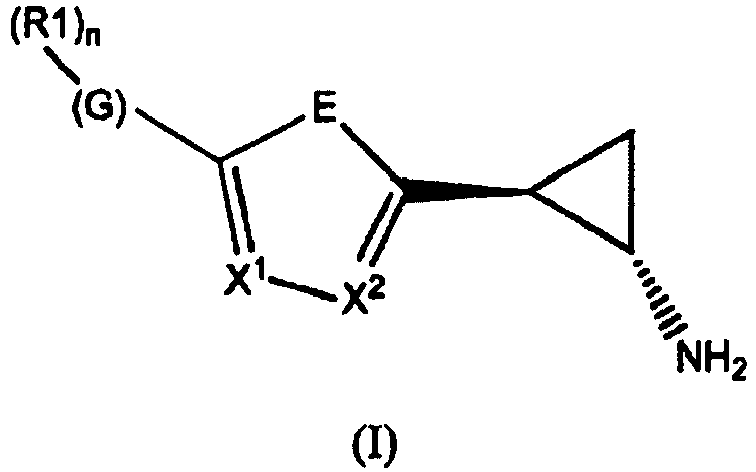
- E is -N(R3)-, -O-, or -S-, or is -X3=X4-;
- X1 and X2 are independently C(R2) or N;
- X3 and X4, when present, are independently C(R2) or N;
- (G) is a cyclyl group (as shown in formula (I), the cyclyl group (G) has n substituents (R1));
- each (R1) is independently chosen from alkyl, alkenyl, alkynyl, cyclyl, -L1-cyclyl,-L1-amino, -L1-hydroxyl, amino, amido, nitro, halo, haloalkyl, haloalkoxy, cyano, sulfinyl, sulfonyl, sulfonamide, hydroxyl, alkoxy, urea, carbamate, acyl, or carboxyl;
- each (R2) is independently chosen from -H, alkyl, alkenyl, alkynyl, cyclyl, -L1-cyclyl, -L1-amino, -L1-hydroxyl, amino, amido, nitro, halo, haloalkyl, haloalkoxy, cyano, sulfinyl, sulfonyl, sulfonamide, hydroxyl, alkoxy, urea, carbamate, acyl, or carboxyl, wherein each (R2) group has 1, 2, or 3 independently chosen optional substituents or two (R2) groups can be taken together to form a heterocyclyl or aryl group having 1, 2, or 3 independently chosen optional substituents, wherein said optional substituents are independently chosen from alkyl, alkanoyl, heteroalkyl, heterocyclyl, haloalkyl, cycloalkyl, carbocyclyl, arylalkoxy, heterocyclylalkoxy, aryl, aryloxy, heterocyclyloxy, alkoxy, haloalkoxy, oxo, acyloxy, carbonyl, carboxyl, carboxamido, cyano, halogen, hydroxyl, amino, aminoalkyl, amidoalkyl, amido, nitro, thiol, alkylthio, arylthio, sulfonamide, sulfinyl, sulfonyl, urea, or carbamate;
- R3 is -H or a (C1-C6)alkyl group;
- each L1 is independently alkylene or heteroalkylene; and
- n is 0, 1,2, 3,4 or 5.
- Preferably, the compounds of the invention are used to treat a disease in a mammal and more preferably a human. More preferably, the human disease is chosen from cancer, a neurological condition or disease, or a viral infection.
- Preferably, the optional substituents are independently chosen from lower alkyl, lower alkanoyl, lower heteroalkyl, lower heterocyclyl, lower haloalkyl, lower cycloalkyl, lower carbocyclyl, arylalkoxy, heterocyclylalkoxy, aryl, aryloxy, heterocyclyloxy, lower alkoxy, lower haloalkoxy, oxo, lower acyloxy, carbonyl, carboxyl, lower carboxamido, cyano, halogen, hydroxyl, amino, aminoalkyl, amidoalkyl, amido, nitro, thiol, lower alkylthio, or arylthio.
- Preferably, (G) is an aryl or heterocyclyl group.
- Preferably, each (R1) is independently chosen from alkyl, aryl, amino, amido, nitro, halo, haloalkyl, haloalkoxy, cyano, heterocycle, sulfonyl, sulfonamide, hydroxyl, or alkoxy.
- More preferably, each (R1) is independently chosen from lower alkyl, lower aryl, amino, amido, nitro, halo, lower haloalkyl, cyano, heterocycle, sulfonyl, sulfonamide, hydroxyl, or alkoxy.
- Preferably, each (R2) is independently chosen from -H, hydroxyl, haloalkyl, alkoxy, halo, amido, arylalkyl, heterocyclylalkyl, arylalkoxy, or heterocyclylalkoxy, wherein each (R2) has 1, 2, or 3 optional substituents (as defined and described herein).
- Preferably, R3 is -H or (C1-C4)alkyl.
- More preferably, (G) is a phenyl, thienyl, benzothienyl, or indolyl group.
- More preferably, each (R2) is independently chosen from -H, hydroxyl, haloalkyl, alkoxy, halo, amido, arylalkyl, heterocyclylalkyl, arylalkoxy, or heterocyclylalkoxy, wherein each (R2) has 1, 2, or 3 optional substituents chosen from lower alkyl, lower haloalkyl, lower haloalkoxy, amino(C1-C6)alkyl, halo, lower alkoxy, and amido.
- More preferably, R3 is -H, methyl or ethyl.
- Even more preferably, each (R1) is independently chosen from -CF3, -F,-Cl, -CN, -CH3, -OH, or -C(=O)NH2.
- Even more preferably, each (R2) is independently chosen from -H, hydroxyl, haloalkyl, alkoxy, halo, amido, arylalkyl, heterocyclylalkyl, arylalkoxy, or heterocyclylalkoxy, wherein each (R2) has 1, 2, or 3 optional substituents independently chosen from chloro, fluoro, -CH2NH2, -CH2CH2NH2, or -OCH3.
- Even more preferably, (G) is a phenyl group.
- Even more preferably R3 is -H.
- Preferably, 0, 1, or 2 (R2) groups are not -H.
- Preferably, n is 0, 1, 2, 3, or 4. More preferably, n is 0, 1, 2, or 3.
- In one embodiment, the invention provides a compound of Formula (I) or an enantiomer, a diastereomer, or a mixture thereof, or a pharmaceutically acceptable salt or solvate thereof, wherein the groups comprised in Formula (I) have the following meanings:
- E is -X3=X4-.
- X1, X2, X3 and X4 are independently C(R2) or N.
- (G) is a cyclyl group. Preferably, (G) is an aryl or heterocyclyl group.
- More preferably, (G) is a phenyl, thienyl, benzothienyl (e.g., benzo[b]thiophenyl, such as benzo[b]thiophen-2-yl or benzo[b]thiophen-3-yl), indolyl, indolinyl, indolinonyl (e.g., indolin-2-onyl), pyridinyl, pyridinonyl (e.g., pyridin-2(1H)-onyl), benzofuranyl, benzofuranonyl (e.g., benzofuran-2(3H)-onyl), indazolyl (e.g., 1H-indazol-6-yl), or carbazolyl (e.g., 9H-carbazol-2-yl) groupEven more preferably, (G) is a phenyl, thienyl, benzothienyl, or indolyl group. Even more preferably, (G) is a phenyl group.
- Each (R1) is independently chosen from alkyl, alkenyl, alkynyl, cyclyl, -L1-cyclyl, -L1-amino, -L1-hydroxyl, amino, amido, nitro, halo, haloalkyl, haloalkoxy, cyano, sulfinyl, sulfonyl, sulfonamide, hydroxyl, alkoxy, urea, carbamate, acyl, or carboxyl. Preferably, each (R1) is independently chosen from alkyl, aryl, amino, amido, nitro, halo, haloalkyl, haloalkoxy, cyano, heterocycle, sulfonyl, sulfonamide, hydroxyl, or alkoxy. More preferably, each (R1) is independently chosen from lower alkyl, lower aryl, amino, amido, nitro, halo, lower haloalkyl, cyano, heterocycle, sulfonyl, sulfonamide, hydroxyl, or alkoxy. Even more preferably, each (R1) is independently chosen from -CF3, -F, -Cl, -CN, -CH3, -OH, -OCH3, -C(=O)NH2, -NH-CO-CH3, -NH-SO2-CH3, -NH-SO2-CH2-CH3, -NH-SO2-CH(CH3)-CH3, -NH-SO2-(C6H5), -NH-SO2-(C6H4)-CN (e.g., -NH-SO2-(p-cyanophenyl), -NH-SO2-(m-cyanophenyl), -NH-SO2-(o-cyanophenyl)), -NHSO2CF3, or -S(=O)2NHCH3. Even more preferably, each (R1) is independently chosen from -CF3, -F,-Cl, -CN, -CH3, -OH, -OCH3, -C(=O)NH2, -NH-CO-CH3, -NH-SO2-CH3, -NH-SO2-CH2-CH3, -NH-SO2-CH(CH3)-CH3, or -NH-SO2-(C6H5). Even more preferably, each (R1) is independently chosen from -CF3, -F, -Cl, -CN, -CH3, -OH, -OCH3, or -C(=O)NH2. Even more preferably, each (R1) is independently chosen from -CF3, -F, -Cl, -CN, -CH3, -OH, or-C(=O)NH2.
- Each (R2) is independently chosen from -H, alkyl, alkenyl, alkynyl, cyclyl,-L1-cyclyl, -L1-amino, -L1-hydroxyl, amino, amido, nitro, halo, haloalkyl, haloalkoxy, cyano, sulfinyl, sulfonyl, sulfonamide, hydroxyl, alkoxy, urea, carbamate, acyl, or carboxyl, wherein each (R2) group has 1, 2, or 3 independently chosen optional substituents or two (R2) groups can be taken together to form a heterocyclyl or aryl group having 1, 2, or 3 independently chosen optional substituents. Preferably, each (R2) is independently chosen from -H, hydroxyl, haloalkyl, alkoxy, halo, amido, arylalkyl, heterocyclylalkyl, arylalkoxy, or heterocyclylalkoxy, wherein each (R2) has 1, 2, or 3 optional substituents. More preferably, each (R2) is independently chosen from -H, alkyl, hydroxyl, haloalkyl, alkoxy, halo, amido, aryl, arylalkyl, heterocyclylalkyl, arylalkoxy, or heterocyclylalkoxy, wherein each (R2) has 1, 2, or 3 optional substituents. In the definitions of (R2), said optional substituents are independently chosen from alkyl, alkanoyl, heteroalkyl, heterocyclyl, haloalkyl, cycloalkyl, carbocyclyl, arylalkoxy, heterocyclylalkoxy, aryl, aryloxy, heterocyclyloxy, alkoxy, haloalkoxy, oxo, acyloxy, carbonyl, carboxyl, carboxamido, cyano, halogen, hydroxyl, amino, aminoalkyl, amidoalkyl, amido, nitro, thiol, alkylthio, arylthio, sulfonamide, sulfinyl, sulfonyl, urea, or carbamate. Preferably, said optional substituents are independently chosen from lower alkyl, lower alkanoyl, lower heteroalkyl, lower heterocyclyl, lower haloalkyl, lower cycloalkyl, lower carbocyclyl, arylalkoxy, heterocyclylalkoxy, aryl, aryloxy, heterocyclyloxy, lower alkoxy, lower haloalkoxy, oxo, lower acyloxy, carbonyl, carboxyl, lower carboxamido, cyano, halogen, hydroxyl, amino, aminoalkyl, amidoalkyl, amido, nitro, thiol, lower alkylthio, or arylthio. Even more preferably, each (R2) is independently chosen from -H, hydroxyl, haloalkyl, alkoxy, halo, amido, arylalkyl, heterocyclylalkyl, arylalkoxy, or heterocyclylalkoxy, wherein each (R2) has 1, 2, or 3 optional substituents chosen from lower alkyl, lower haloalkyl, lower haloalkoxy, amino(C1-C6)alkyl, halo, lower alkoxy, and amido. Even more preferably, each (R2) is independently chosen from -H, hydroxyl, haloalkyl, alkoxy, halo, amido, arylalkyl, heterocyclylalkyl, arylalkoxy, or heterocyclylalkoxy, wherein each (R2) has 1, 2, or 3 optional substituents independently chosen from chloro, fluoro, -CH2NH2, -CH2CH2NH2, or -OCH3. Even more preferably, each (R2) is -H. Each L1 is independently alkylene or heteroalkylene.
- n is 0, 1, 2, 3, 4 or 5. Preferably, n is 0, 1, 2, 3, or 4. More preferably, n is 0, 1, 2, or 3.
- The present application describes compositions comprising one specific enantiomer of a compound according to the invention, such as a compound of Formula (I), (II), (III), (IV) or (V), which is "substantially free" of the other enantiomer (e.g., a composition comprising "the (1S,2R) enantiomer in respect to the substituents on the cyclopropyl ring, substantially free of the (1R,2S) enantiomer"). Whenever percentages of the individual enantiomers are indicated in this connection, the indicated percentages are mole percentages (mole-%). For example, the expression "the compound is more than 90% (1S,2R) enantiomer and less than 10% (1R,2S) enantiomer" thus refers to more than 90 mole-% of the (1S,2R) enantiomer and less than 10 mole-% of the (1R,2S) enantiomer being present.
- In one aspect, the invention provides a composition as defined herein comprising a compound of Formula (I) as described in the above embodiment or a solvate or pharmaceutically acceptable salt thereof, wherein said compound is the (1S,2R) enantiomer (in respect to the substituents on the cyclopropyl ring) substantially free of the (1R,2S) enantiomer. Preferably, the compound is more than 90% (1S, 2R) enantiomer and less than 10% (1R, 2S) enantiomer. More preferably, the compound is more than 95% (1S, 2R) enantiomer and less than 5% (1R, 2S) enantiomer. Even more preferably, the compound is more than 99% (1S, 2R) enantiomer and less than 1% (1R, 2S) enantiomer. As used herein, such percentages refer to mole-%.
- In one aspect, the invention provides a composition as defined herein comprising a compound of Formula (I) as described in the above embodiment or a solvate or pharmaceutically acceptable salt thereof, wherein said compound is the (1R,2S) enantiomer (in respect to the substituents on the cyclopropyl ring) substantially free of the (1S,2R) enantiomer. Preferably, the compound is more than 90% (1R, 2S) enantiomer and less than 10% (1S, 2R) enantiomer. More preferably, the compound is more than 95% (1R, 2S) enantiomer and less than 5% (1S, 2R) enantiomer. Even more preferably, the compound is more than 99% (1R, 2S) enantiomer and less than 1% (1S, 2R) enantiomer.
- In one aspect, the invention provides a compound as defined in the above embodiment or a solvate or a pharmaceutically acceptable salt thereof, wherein the cyclopropyl ring carbon atom which is bound to the terminal amino group of the compound is in (S)-configuration and the cyclopropyl ring carbon atom which is bound to the cyclic group adjacent to the cyclopropyl ring of the compound is in (R)-configuration. Preferably, said compound is provided in an enantiomeric excess of at least 90%, more preferably at least 95%, even more preferably at least 99%. The enantiomeric excess can, for example, be determined as described in Example 63.
- In one aspect, the invention provides a compound as defined in the above embodiment or a solvate or a pharmaceutically acceptable salt thereof, wherein the cyclopropyl ring carbon atom which is bound to the terminal amino group of the compound is in (R)-configuration and the cyclopropyl ring carbon atom which is bound to the cyclic group adjacent to the cyclopropyl ring of the compound is in (S)-configuration. Preferably, said compound is provided in an enantiomeric excess of at least 90%, more preferably at least 95%, even more preferably at least 99%. The enantiomeric excess can, for example, be determined as described in Example 63.
- The invention further relates to the compound of Formula (I) or an enantiomer, a diastereomer, or a mixture thereof, or a pharmaceutically acceptable salt or solvate thereof, as defined in the above embodiment, for use in the treatment or prevention of a disease or condition, in particular cancer (e.g., breast cancer, lung cancer, prostate cancer, colorectal cancer, brain cancer, skin cancer, blood cancer, leukemia, or lymphoma), a neurological disease or condition (e.g., depression, Alzheimer's disease, Huntington disease, Parkinson's disease, or Dementia with Lewy Bodies), or a viral infection (e.g., a viral infection is caused by and/or associated with HIV, or a herpesvirus infection, such as a herpesvirus infection caused by and/or associated with a herpesvirus chosen from HSV-1, HSV-2, or Epstein-Barr virus) in a subject (preferably a mammal, more preferably a human).
- In a further embodiment, the invention provides a compound of Formula (I) or an enantiomer, a diastereomer, or a mixture thereof, or a pharmaceutically acceptable salt or solvate thereof, wherein the groups comprised in Formula (I) have the following meanings:
- E is -X3=X4-.
- X1, X2, X3 and X4 are independently C(R2) or N.
- (G) is a phenyl group.
- Each (R1) is independently chosen from alkyl, alkenyl, alkynyl, cyclyl, -L1-cyclyl, -L1-amino, -L1-hydroxyl, amino, amido, nitro, halo, haloalkyl, haloalkoxy, cyano, sulfinyl, sulfonyl, sulfonamide, hydroxyl, alkoxy, urea, carbamate, acyl, or carboxyl. Preferably, each (R1) is independently chosen from alkyl, aryl, amino, amido, nitro, halo, haloalkyl, haloalkoxy, cyano, heterocycle, sulfonyl, sulfonamide, hydroxyl, or alkoxy. More preferably, each (R1) is independently chosen from lower alkyl, lower aryl, amino, amido, nitro, halo, lower haloalkyl, cyano, heterocycle, sulfonyl, sulfonamide, hydroxyl, or alkoxy. Even more preferably, each (R1) is independently chosen from -CF3, -F, -Cl, -CN, -CH3, -OH, -OCH3, -C(=O)NH2, -NH-CO-CH3, -NH-SO2-CH3, -NH-SO2-CH2-CH3, -NH-SO2-CH(CH3)-CH3, or -NH-SO2-(C6H5) r. Even more preferably, each (R1) is independently chosen from -CF3, -F, -Cl, -CN, -CH3, -OH, -OCH3, or -C(=O)NH2. Even more preferably, each (R1) is independently chosen from -CF3, -F, -Cl, -CN, -CH3, -OH, or-C(=O)NH2.
- Each (R2) is independently chosen from -H, alkyl, alkenyl, alkynyl, cyclyl,-L1-cyclyl, -L1-amino, -L1-hydroxyl, amino, amido, nitro, halo, haloalkyl, haloalkoxy, cyano, sulfinyl, sulfonyl, sulfonamide, hydroxyl, alkoxy, urea, carbamate, acyl, or carboxyl, wherein each (R2) group has 1, 2, or 3 independently chosen optional substituents or two (R2) groups can be taken together to form a heterocyclyl or aryl group having 1, 2, or 3 independently chosen optional substituents. Preferably, each (R2) is independently chosen from -H, hydroxyl, haloalkyl, alkoxy, halo, amido, arylalkyl, heterocyclylalkyl, arylalkoxy, or heterocyclylalkoxy, wherein each (R2) has 1, 2, or 3 optional substituents. More preferably, each (R2) is independently chosen from -H, alkyl, hydroxyl, haloalkyl, alkoxy, halo, amido, aryl, arylalkyl, heterocyclylalkyl, arylalkoxy, or heterocyclylalkoxy, wherein each (R2) has 1, 2, or 3 optional substituents. In the definitions of (R2), said optional substituents are independently chosen from alkyl, alkanoyl, heteroalkyl, heterocyclyl, haloalkyl, cycloalkyl, carbocyclyl, arylalkoxy, heterocyclylalkoxy, aryl, aryloxy, heterocyclyloxy, alkoxy, haloalkoxy, oxo, acyloxy, carbonyl, carboxyl, carboxamido, cyano, halogen, hydroxyl, amino, aminoalkyl, amidoalkyl, amido, nitro, thiol, alkylthio, arylthio, sulfonamide, sulfinyl, sulfonyl, urea, or carbamate. Preferably, said optional substituents are independently chosen from lower alkyl, lower alkanoyl, lower heteroalkyl, lower heterocyclyl, lower haloalkyl, lower cycloalkyl, lower carbocyclyl, arylalkoxy, heterocyclylalkoxy, aryl, aryloxy, heterocyclyloxy, lower alkoxy, lower haloalkoxy, oxo, lower acyloxy, carbonyl, carboxyl, lower carboxamido, cyano, halogen, hydroxyl, amino, aminoalkyl, amidoalkyl, amido, nitro, thiol, lower alkylthio, or arylthio. Even more preferably, each (R2) is independently chosen from -H, hydroxyl, haloalkyl, alkoxy, halo, amido, arylalkyl, heterocyclylalkyl, arylalkoxy, or heterocyclylalkoxy, wherein each (R2) has 1, 2, or 3 optional substituents chosen from lower alkyl, lower haloalkyl, lower haloalkoxy, amino(C1-C6)alkyl, halo, lower alkoxy, and amido. Even more preferably, each (R2) is independently chosen from -H, hydroxyl, haloalkyl, alkoxy, halo, amido, arylalkyl, heterocyclylalkyl, arylalkoxy, or heterocyclylalkoxy, wherein each (R2) has 1, 2, or 3 optional substituents independently chosen from chloro, fluoro, -CH2NH2, -CH2CH2NH2, or -OCH3. Even more preferably, each (R2) is -H.
- Each L1 is independently alkylene or heteroalkylene.
- n is 0, 1, 2, 3, 4 or 5. Preferably, n is 0, 1, 2, 3, or 4. More preferably, n is 0, 1, 2, or 3.
- In one aspect, the invention provides a composition as defined herein comprising a compound of Formula (1) as described in the above embodiment or a solvate or pharmaceutically acceptable salt thereof, wherein said compound is the (1S,2R) enantiomer (in respect to the substituents on the cyclopropyl ring) substantially free of the (1R,2S) enantiomer. Preferably, the compound is more than 90% (1S, 2R) enantiomer and less than 10% (1R, 2S) enantiomer. More preferably, the compound is more than 95% (IS, 2R) enantiomer and less than 5% (1R, 2S) enantiomer. Even more preferably, the compound is more than 99% (1S, 2R) enantiomer and less than 1% (1R, 2S) enantiomer.
- In one aspect, the invention provides a composition as defined herein comprising a compound of Formula (I) as described in the above embodiment or a solvate or pharmaceutically acceptable salt thereof, wherein said compound is the (1R,2S) enantiomer (in respect to the substituents on the cyclopropyl ring) substantially free of the (1S,2R) enantiomer. Preferably, the compound is more than 90% (1R, 2S) enantiomer and less than 10% (1S, 2R) enantiomer. More preferably, the compound is more than 95% (1R, 2S) enantiomer and less than 5% (1S, 2R) enantiomer. Even more preferably, the compound is more than 99% (1R, 2S) enantiomer and less than 1% (1S, 2R) enantiomer.
- In one aspect, the invention provides a compound as defined in the above embodiment or a solvate or a pharmaceutically acceptable salt thereof, wherein the cyclopropyl ring carbon atom which is bound to the terminal amino group of the compound is in (S)-configuration and the cyclopropyl ring carbon atom which is bound to the cyclic group adjacent to the cyclopropyl ring of the compound is in (R)-configuration. Preferably, said compound is provided in an enantiomeric excess of at least 90%, more preferably at least 95%, even more preferably at least 99%. The enantiomeric excess can, for example, be determined as described in Example 63.
- In one aspect, the invention provides a compound as defined in the above embodiment or a solvate or a pharmaceutically acceptable salt thereof, wherein the cyclopropyl ring carbon atom which is bound to the terminal amino group of the compound is in (R)-configuration and the cyclopropyl ring carbon atom which is bound to the cyclic group adjacent to the cyclopropyl ring of the compound is in (S)-configuration. Preferably, said compound is provided in an enantiomeric excess of at least 90%, more preferably at least 95%, even more preferably at least 99%. The enantiomeric excess can, for example, be determined as described in Example 63.
- In one specific embodiment, the invention provides a compound of Formula (I) or an enantiomer, a diastereomer, or a mixture thereof, or a pharmaceutically acceptable salt or solvate thereof, wherein the groups comprised in Formula (I) have the following meanings:
- E is -N(R3)-, -O-, or -S-, or is -X3=X4-;
- X1 and X2 are independently C(R2) or N;
- X3 and X4, when present, are independently C(R2) or N;
- (G) is a cyclyl group (as shown in formula (I), the cyclyl group (G) has n substituents (R1));
- each (R1) is independently chosen from alkyl, alkenyl, alkynyl, cyclyl, -L1-cyclyl, -L1-amino, -L1-hydroxyl, amino, amido, nitro, halo, haloalkyl, haloalkoxy, cyano, sulfinyl, sulfonyl, sulfonamide, hydroxyl, alkoxy, urea, carbamate, acyl, or carboxyl, wherein at least one group (R1) is sulfonamide;
- each (R2) is independently chosen from -H, alkyl, alkenyl, alkynyl, cyclyl, -L1-cyclyl, -L1-amino, -L1-hydroxyl, amino, amido, nitro, halo, haloalkyl, haloalkoxy, cyano, sulfinyl, sulfonyl, sulfonamide, hydroxyl, alkoxy, urea, carbamate, acyl, or carboxyl, wherein each (R2) group has 1, 2, or 3 independently chosen optional substituents or two (R2) groups can be taken together to form a heterocyclyl or aryl group having 1, 2, or 3 independently chosen optional substituents, wherein said optional substituents are independently chosen from alkyl, alkanoyl, heteroalkyl, heterocyclyl, haloalkyl, cycloalkyl, carbocyclyl, arylalkoxy, heterocyclylalkoxy, aryl, aryloxy, heterocyclyloxy, alkoxy, haloalkoxy, oxo, acyloxy, carbonyl, carboxyl, carboxamido, cyano, halogen, hydroxyl, amino, aminoalkyl, amidoalkyl, amido, nitro, thiol, alkylthio, arylthio, sulfonamide, sulfinyl, sulfonyl, urea, or carbamate;
- R3 is -H or a (C1-C6)alkyl group;
- each L1 is independently alkylene or heteroalkylene; and
- n is 0, 1, 2, 3, 4 or 5.
- In this specific embodiment, the term "sulfonamide" refers to a group RS(=O)2N(R')- or a group -S(=O)2NRR', wherein R and R' are each independently selected from hydrogen, alkyl, haloalkyl (e.g., -CF3), optionally substituted cycloalkyl, heteroalkyl, optionally substituted aryl, optionally substituted heteroaryl or optionally substituted heterocycloalkyl. Said cycloalkyl, said aryl, said heteroaryl and said heterocycloalkyl may each be substituted with 1, 2, 3 or 4 groups (particularly with one group) independently selected from lower alkyl, lower alkenyl, lower alkynyl, lower alkanoyl, lower heteroalkyl, lower heterocycloalkyl, lower haloalkyl, lower cycloalkyl, phenyl, aryl, aryloxy, lower alkoxy, lower haloalkoxy, lower acyloxy, carbonyl, carboxyl, lower alkylcarbonyl, lower carboxyester, lower carboxamido, cyano, halogen, hydroxyl, amino, lower alkylamino, arylamino, aminoalkyl, amido, nitro, thiol, lower alkylthio, lower haloalkylthio, lower perhaloalkylthio, arylthio, carbamate, or urea, and preferably selected independently from -CN, -CF3, or halogen. Accordingly, exemplary non-limiting "sulfonamide" are NHSO2CH3, -NHSO2CH2CH3, -NHSO2(phenyl), -NHSO2(isopropyl), -NHSO2(-phenyl-CN), -NHSO2CF3, or -S(=O)2NHCH3.
- In the above specific embodiment, (G) is preferably an aryl or heterocyclyl group.
- In the above specific embodiment, each (R1) is preferably independently chosen from alkyl, aryl, amino, amido, nitro, halo, haloalkyl, haloalkoxy, cyano, heterocycle, sulfonyl, sulfonamide, hydroxyl, or alkoxy.
- In the above specific embodiment, each (R1) is more preferably independently chosen from lower alkyl, lower aryl, amino, amido, nitro, halo, lower haloalkyl, cyano, heterocycle, sulfonyl, sulfonamide, hydroxyl, or alkoxy, wherein at least one group (R1) is sulfonamide. Most preferably, at least one group (R1) is a sulfonamide group selected from -NH-SO2-CH3, -NH-SO2-CH2-CH3, -NH-SO2-CH(CH3)-CH3, -NH-SO2-(C6H5), -NH-SO2-(C6H4)-CN, -NHSO2CF3, or -S(=O)2NHCH3.
- In the above specific embodiment, each (R2) is preferably independently chosen from -H, hydroxyl, haloalkyl, alkoxy, halo, amido, arylalkyl, heterocyclylalkyl, arylalkoxy, or heterocyclylalkoxy, wherein each (R2) has 1, 2, or 3 optional substituents (as defined and described herein).
- In the above specific embodiment, R3 is preferably -H or (C1-C4)alkyl.
- In the above specific embodiment, (G) is more preferably a phenyl, thienyl, benzothienyl, or indolyl group.
- In the above specific embodiment, each (R2) is more preferably independently chosen from - H, hydroxyl, haloalkyl, alkoxy, halo, amido, arylalkyl, heterocyclylalkyl, arylalkoxy, or heterocyclylalkoxy, wherein each (R2) has 1, 2, or 3 optional substituents chosen from lower alkyl, lower haloalkyl, lower haloalkoxy, amino(C1-C6)alkyl, halo, lower alkoxy, and amido. In the above specific embodiment, R3 is more preferably -H, methyl or ethyl.
- In the above specific embodiment, each (R2) is even more preferably independently chosen from -H, hydroxyl, haloalkyl, alkoxy, halo, amido, arylalkyl, heterocyclylalkyl, arylalkoxy, or heterocyclylalkoxy, wherein each (R2) has 1, 2, or 3 optional substituents independently chosen from chloro, fluoro, -CH2NH2, -CH2CH2NH2, or -OCH3.
- In the above specific embodiment, (G) is even more preferably a phenyl group.
- In the above specific embodiment, R3 is even more preferably -H.
- In the above specific embodiment, preferably 0, 1, or 2 (R2) groups are not -H.
- In the above specific embodiment, n is preferably 0, 1, 2, 3, or 4. More preferably, n is 0, 1, 2, or 3.
- In a further specific embodiment, the invention provides a compound of Formula (I) or an enantiomer, a diastereomer, or a mixture thereof, or a pharmaceutically acceptable salt or solvate thereof, wherein the groups comprised in Formula (I) have the following meanings:
- E is -X3=X4-; and
- X1, X2, X3 and X4 are independently C(R2) or N.
- In the above specific embodiment, (G) is a cyclyl group. Preferably, (G) is an aryl or heterocyclyl group.
- In the above specific embodiment, more preferably, (G) is a phenyl, thienyl, benzothienyl (e.g., benzo[b]thiophenyl, such as benzo[b]thiophen-2-yl or benzo[b]thiophen-3-yl), indolyl, indolinyl, indolinonyl (e.g., indolin-2-onyl), pyridinyl, pyridinonyl (e.g., pyridin-2(1H)-onyl), benzofuranyl, benzofuranonyl (e.g., benzofuran-2(3H)-onyl), indazolyl (e.g., 1H-indazol-6-yl), or carbazolyl (e.g., 9H-carbazol-2-yl) groupEven more preferably, (G) is a phenyl, thienyl, benzothienyl, or indolyl group. Even more preferably, (G) is a phenyl group.
- In the above specific embodiment, each (R1) is independently chosen from alkyl, alkenyl, alkynyl, cyclyl, -L1-cyclyl, -L1-amino, -L1-hydroxyl, amino, amido, nitro, halo, haloalkyl, haloalkoxy, cyano, sulfinyl, sulfonyl, sulfonamide, hydroxyl, alkoxy, urea, carbamate, acyl, or carboxyl, wherein at least one group (R1) is sulfonamide. Preferably, each (R1) is independently chosen from alkyl, aryl, amino, amido, nitro, halo, haloalkyl, haloalkoxy, cyano, heterocycle, sulfonyl, sulfonamide, hydroxyl, or alkoxy, wherein at least one group (R1) is sulfonamide. More preferably, each (R1) is independently chosen from lower alkyl, lower aryl, amino, amido, nitro, halo, lower haloalkyl, cyano, heterocycle, sulfonyl, sulfonamide, hydroxyl, or alkoxy, wherein at least one group (R1) is sulfonamide. Even more preferably, each (R1) is independently chosen from -CF3, -F, -Cl, -CN, -CH3, -OH, -OCH3,-C(=O)NH2, -NH-CO-CH3, -NH-SO2-CH3, -NH-SO2-CH2-CH3, -NH-SO2-CH(CH3)-CH3,-NH-SO2-(C6H5), -NH-SO2-(C6H4)-CN (e.g., -NH-SO2-(p-cyanophenyl), -NH-SO2-(m-cyanophenyl), -NH-SO2-(o-cyanophenyl)), -NHSO2CF3, or -S(=O)2NHCH3, wherein at least one group (R1) is -NH-SO2-CH3, -NH-SO2-CH2-CH3, -NH-SO2-CH(CH3)-CH3, -NH-SO2-(C6H5), -NH-SO2-(C6H4)-CN, -NHSO2CF3, or -S(=O)2NHCH3. For all of the preferred definitions of (R1) provided above, it is most preferred that at least one group (R1) is selected from -NH-SO2-CH3, -NH-SO2-CH2-CH3, -NH-SO2-CH(CH3)-CH3, -NH-SO2-(C6H5), -NH-SO2-(C6H4)-CN, -NHSO2CF3, or -S(=O)2NHCH3.
- In the above specific embodiment, the term "sulfonamide" refers to a group RS(=O)2N(R')-or a group -S(=O)2NRR', wherein R and R' are each independently selected from hydrogen, alkyl, haloalkyl (e.g., -CF3), optionally substituted cycloalkyl, heteroalkyl, optionally substituted aryl, optionally substituted heteroaryl or optionally substituted heterocycloalkyl. Said cycloalkyl, said aryl, said heteroaryl and said heterocycloalkyl may each be substituted with 1, 2, 3 or 4 groups (particularly with one group) independently selected from lower alkyl, lower alkenyl, lower alkynyl, lower alkanoyl, lower heteroalkyl, lower heterocycloalkyl, lower haloalkyl, lower cycloalkyl, phenyl, aryl, aryloxy, lower alkoxy, lower haloalkoxy, lower acyloxy, carbonyl, carboxyl, lower alkylcarbonyl, lower carboxyester, lower carboxamido, cyano, halogen, hydroxyl, amino, lower alkylamino, arylamino, aminoalkyl, amido, nitro, thiol, lower alkylthio, lower haloalkylthio, lower perhaloalkylthio, arylthio, carbamate, or urea, and preferably selected independently from -CN, -CF3, or halogen. Accordingly, exemplary non-limiting "sulfonamide" are NHSO2CH3, -NHSO2CH2CH3, -NHSO2(phenyl), -NHSO2(isopropyl), -NHSO2(-phenyl-CN), -NHSO2CF3, or -S(=O)2NHCH3.
- In the above specific embodiment, each (R2) is independently chosen from -H, alkyl, alkenyl, alkynyl, cyclyl, -L1-cyclyl, -L1-amino, -L1-hydroxyl, amino, amido, nitro, halo, haloalkyl, haloalkoxy, cyano, sulfinyl, sulfonyl, sulfonamide, hydroxyl, alkoxy, urea, carbamate, acyl, or carboxyl, wherein each (R2) group has 1, 2, or 3 independently chosen optional substituents or two (R2) groups can be taken together to form a heterocyclyl or aryl group having 1, 2, or 3 independently chosen optional substituents. Preferably, each (R2) is independently chosen from -H, hydroxyl, haloalkyl, alkoxy, halo, amido, arylalkyl, heterocyclylalkyl, arylalkoxy, or heterocyclylalkoxy, wherein each (R2) has 1, 2, or 3 optional substituents. More preferably, each (R2) is independently chosen from -H, alkyl, hydroxyl, haloalkyl, alkoxy, halo, amido, aryl, arylalkyl, heterocyclylalkyl, arylalkoxy, or heterocyclylalkoxy, wherein each (R2) has 1, 2, or 3 optional substituents. In the definitions of (R2), said optional substituents are independently chosen from alkyl, alkanoyl, heteroalkyl, heterocyclyl, haloalkyl, cycloalkyl, carbocyclyl, arylalkoxy, heterocyclylalkoxy, aryl, aryloxy, heterocyclyloxy, alkoxy, haloalkoxy, oxo, acyloxy, carbonyl, carboxyl, carboxamido, cyano, halogen, hydroxyl, amino, aminoalkyl, amidoalkyl, amido, nitro, thiol, alkylthio, arylthio, sulfonamide, sulfinyl, sulfonyl, urea, or carbamate. Preferably, said optional substituents are independently chosen from lower alkyl, lower alkanoyl, lower heteroalkyl, lower heterocyclyl, lower haloalkyl, lower cycloalkyl, lower carbocyclyl, arylalkoxy, heterocyclylalkoxy, aryl, aryloxy, heterocyclyloxy, lower alkoxy, lower haloalkoxy, oxo, lower acyloxy, carbonyl, carboxyl, lower carboxamido, cyano, halogen, hydroxyl, amino, aminoalkyl, amidoalkyl, amido, nitro, thiol, lower alkylthio, or arylthio. Even more preferably, each (R2) is independently chosen from -H, hydroxyl, haloalkyl, alkoxy, halo, amido, arylalkyl, heterocyclylalkyl, arylalkoxy, or heterocyclylalkoxy, wherein each (R2) has 1, 2, or 3 optional substituents chosen from lower alkyl, lower haloalkyl, lower haloalkoxy, amino(C1-C6)alkyl, halo, lower alkoxy, and amido. Even more preferably, each (R2) is independently chosen from -H, hydroxyl, haloalkyl, alkoxy, halo, amido, arylalkyl, heterocyclylalkyl, arylalkoxy, or heterocyclylalkoxy, wherein each (R2) has 1, 2, or 3 optional substituents independently chosen from chloro, fluoro, -CH2NH2, -CH2CH2NH2, or - OCH3. Even more preferably, each (R2) is -H. Each L1 is independently alkylene or heteroalkylene.
- In the above specific embodiment, n is 0, 1, 2, 3, 4 or 5. Preferably, n is 0, 1, 2, 3, or 4. More preferably, n is 0, 1, 2, or 3.
- In one aspect, the invention provides a composition as defined herein comprising a compound of Formula (I) as described in the above embodiment or a solvate or pharmaceutically acceptable salt thereof, wherein said compound is the (1S,2R) enantiomer (in respect to the substituents on the cyclopropyl ring) substantially free of the (1R,2S) enantiomer. Preferably, the compound is more than 90% (1S, 2R) enantiomer and less than 10% (1R, 2S) enantiomer. More preferably, the compound is more than 95% (1S, 2R) enantiomer and less than 5% (1R, 2S) enantiomer. Even more preferably, the compound is more than 99% (1S, 2R) enantiomer and less than 1% (1R, 2S) enantiomer.
- In one aspect, the invention provides a composition as defined herein comprising a compound of Formula (I) as described in the above embodiment or a solvate or pharmaceutically acceptable salt thereof, wherein said compound is the (1R,2S) enantiomer (in respect to the substituents on the cyclopropyl ring) substantially free of the (1S,2R) enantiomer. Preferably, the compound is more than 90% (1R, 2S) enantiomer and less than 10% (1S, 2R) enantiomer. More preferably, the compound is more than 95% (1R, 2S) enantiomer and less than 5% (1S, 2R) enantiomer. Even more preferably, the compound is more than 99% (1R, 2S) enantiomer and less than 1% (1S, 2R) enantiomer.
- In one aspect, the invention provides a compound as defined in the above embodiment or a solvate or a pharmaceutically acceptable salt thereof, wherein the cyclopropyl ring carbon atom which is bound to the terminal amino group of the compound is in (S)-configuration and the cyclopropyl ring carbon atom which is bound to the cyclic group adjacent to the cyclopropyl ring of the compound is in (R)-configuration. Preferably, said compound is provided in an enantiomeric excess of at least 90%, more preferably at least 95%, even more preferably at least 99%. The enantiomeric excess can, for example, be determined as described in Example 63.
- In one aspect, the invention provides a compound as defined in the above embodiment or a solvate or a pharmaceutically acceptable salt thereof, wherein the cyclopropyl ring carbon atom which is bound to the terminal amino group of the compound is in (R)-configuration and the cyclopropyl ring carbon atom which is bound to the cyclic group adjacent to the cyclopropyl ring of the compound is in (S)-configuration. Preferably, said compound is provided in an enantiomeric excess of at least 90%, more preferably at least 95%, even more preferably at least 99%. The enantiomeric excess can, for example, be determined as described in Example 63.
- Stereoisomers are typically resolved using chiral HPLC column techniques (e.g., Daicel CHIRALPAK® and CHIRALCEL® columns, Chirex® (utilizing the Pirkle-brush concept), Sumichiral OA® (available from Sumika Chemical Analysis Service, Ltd.), Regis Whelk-01® (available from Merck KGaA of Darmstadt, DE), Lux® chiral columns available from Phenomenex, Inc. of Torrance, California, US) according to manufacturer's instructions or by outside specialist laboratory (e.g., Syncom BV of Groningen, NL or Chiral Technologies Europe of Illkirch, FR). A gas chromatography - mass spectrometry ("GC-MS") method may also sometimes be used. Although such techniques typically work to separate a racemate into its respective stereoisomers, sometimes the procedures do not so work, and, for example, the more complicated separate enantioselective synthesis of each of the separate stereoisomers is performed (e.g., by utilizing chiral crystallization techniques) for both pharmacological and toxological testing.
- As the ordinary skilled artisan is aware, the absolute configuration of the compounds of the invention can be determined according to standard techniques in the field of chiral compounds. In particular, the isomers of racemic compounds can be isolated by a variety of techniques as described herein and subjected to techniques such as xray crystallography, chiral shift reagent, circular dichrosim, chemical derivatization, optical rotation, and/or enantiospecific synthetic techniques to determine the absolute configuration (see e.g., Stephens et al. Chirality. 2008 May 15;20(5):643-63); Shah et al. Curr Opin Drug Discov Devel. 2001 Nov;4(6):764-75 and others.)
- The invention further relates to the compound of Formula (I) or an enantiomer, a diastereomer, or a mixture thereof, or a pharmaceutically acceptable salt or solvate thereof, as defined in the above embodiment, for use in the treatment or prevention of a disease or condition, in particular cancer (e.g., breast cancer, lung cancer, prostate cancer, colorectal cancer, brain cancer, skin cancer, blood cancer, leukemia, or lymphoma), a neurological disease or condition (e.g., depression, Alzheimer's disease, Huntington disease, Parkinson's disease, or Dementia with Lewy Bodies), or a viral infection (e.g., a viral infection is caused by and/or associated with HIV, or a herpesvirus infection, such as a herpesvirus infection caused by and/or associated with a herpesvirus chosen from HSV-1, HSV-2, or Epstein-Barr virus) in a subject (preferably a mammal, more preferably a human).
- In a further embodiment, the invention provides a compound of Formula (I) or an enantiomer, a diastereomer, or a mixture thereof, or a pharmaceutically acceptable salt or solvate thereof, wherein the groups comprised in Formula (I) have the following meanings:
- E is -X3=X4-.
- X1, X2, X3 and X4 are independently C(R2) or N.
- (G) is a cyclyl group. Preferably, (G) is an aryl or heterocyclyl group. More preferably, (G) is a phenyl, thienyl, benzothienyl (e.g., benzo[b]thiophenyl, such as benzo[b]thiophen-2-yl or benzo[b]thiophen-3-yl), indolyl, indolinyl, indolinonyl (e.g., indolin-2-onyl), pyridinyl, pyridinonyl (e.g., pyridin-2(1H)-onyl), benzofuranyl, benzofuranonyl (e.g., benzofuran-2(3H)-onyl), indazolyl (e.g., 1H-indazol-6-yl), or carbazolyl (e.g., 9H-carbazol-2-yl) group. Even more preferably, (G) is a phenyl, thienyl, benzothienyl, or indolyl group. Even more preferably, (G) is a phenyl group.
- Each (R1) is independently chosen from alkyl, alkenyl, alkynyl, cyclyl, -L1-cyclyl, -L1-amino, -L1-hydroxyl, amino, amido, nitro, halo, haloalkyl, haloalkoxy, cyano, sulfinyl, sulfonyl, sulfonamide, hydroxyl, alkoxy, urea, carbamate, acyl, or carboxyl. Preferably, each (R1) is independently chosen from alkyl, aryl, amino, amido, nitro, halo, haloalkyl, haloalkoxy, cyano, heterocycle, sulfonyl, sulfonamide, hydroxyl, or alkoxy. More preferably, each (R1) is independently chosen from lower alkyl, lower aryl, amino, amido, nitro, halo, lower haloalkyl, cyano, heterocycle, sulfonyl, sulfonamide, hydroxyl, or alkoxy. Even more preferably, each (R1) is independently chosen from -CF3, -F, -Cl, -CN, -CH3, -OH, -OCH3, -C(=O)NH2, -NH-CO-CH3, -NH-SO2-CH3, -NH-SO2-CH2-CH3, -NH-SO2-CH(CH3)-CH3, or -NH-SO2-(C6H5). Even more preferably, each (R1) is independently chosen from -CF3, -F, -Cl, -CN, -CH3, -OH, -OCH3, or -C(=O)NH2. Even more preferably, each (R1) is independently chosen from -CF3, -F, -Cl, -CN, -CH3, -OH, or-C(=O)NH2.
- Each (R2) is -H.
- Each L1 is independently alkylene or heteroalkylene.
- n is 0, 1, 2, 3, 4 or 5. Preferably, n is 0, 1, 2, 3, or 4. More preferably, n is 0, 1, 2, or 3.
- In one aspect, the invention provides a composition as defined herein comprising a compound of Formula (I) as described in the above embodiment or a solvate or pharmaceutically acceptable salt thereof, wherein said compound is the (1S,2R) enantiomer (in respect to the substituents on the cyclopropyl ring) substantially free of the (1R,2S) enantiomer. Preferably, the compound is more than 90% (1S, 2R) enantiomer and less than 10% (1R, 2S) enantiomer. More preferably, the compound is more than 95% (1S, 2R) enantiomer and less than 5% (1R, 2S) enantiomer. Even more preferably, the compound is more than 99% (1S, 2R) enantiomer and less than 1% (1R, 2S) enantiomer.
- In one aspect, the invention provides a composition as defined herein comprising a compound of Formula (I) as described in the above embodiment or a solvate or pharmaceutically acceptable salt thereof, wherein said compound is the (1R,2S) enantiomer (in respect to the substituents on the cyclopropyl ring) substantially free of the (1S,2R) enantiomer. Preferably, the compound is more than 90% (1R, 2S) enantiomer and less than 10% (1S, 2R) enantiomer. More preferably, the compound is more than 95% (1R, 2S) enantiomer and less than 5% (1S, 2R) enantiomer. Even more preferably, the compound is more than 99% (1R, 2S) enantiomer and less than 1% (1S, 2R) enantiomer.
- In one aspect, the invention provides a compound as defined in the above embodiment or a solvate or a pharmaceutically acceptable salt thereof, wherein the cyclopropyl ring carbon atom which is bound to the terminal amino group of the compound is in (S)-configuration and the cyclopropyl ring carbon atom which is bound to the cyclic group adjacent to the cyclopropyl ring of the compound is in (R)-configuration. Preferably, said compound is provided in an enantiomeric excess of at least 90%, more preferably at least 95%, even more preferably at least 99%. The enantiomeric excess can, for example, be determined as described in Example 63.
- In one aspect, the invention provides a compound as defined in the above embodiment or a solvate or a pharmaceutically acceptable salt thereof, wherein the cyclopropyl ring carbon atom which is bound to the terminal amino group of the compound is in (R)-configuration and the cyclopropyl ring carbon atom which is bound to the cyclic group adjacent to the cyclopropyl ring of the compound is in (S)-configuration. Preferably, said compound is provided in an enantiomeric excess of at least 90%, more preferably at least 95%, even more preferably at least 99%. The enantiomeric excess can, for example, be determined as described in Example 63.
- The invention further relates to the compound of Formula (I) or an enantiomer, a diastereomer, or a mixture thereof, or a pharmaceutically acceptable salt or solvate thereof, as defined in the above embodiment, for use in the treatment or prevention of a disease or condition, in particular cancer (e.g., breast cancer, lung cancer, prostate cancer, colorectal cancer, brain cancer, skin cancer, blood cancer, leukemia, or lymphoma), a neurological disease or condition (e.g., depression, Alzheimer's disease, Huntington disease, Parkinson's disease, or Dementia with Lewy Bodies), or a viral infection (e.g., a viral infection is caused by and/or associated with HIV, or a herpesvirus infection, such as a herpesvirus infection caused by and/or associated with a herpesvirus chosen from HSV-1, HSV-2, or Epstein-Barr virus) in a subject (preferably a mammal, more preferably a human).
- In a further embodiment, the invention provides a compound of Formula (I) or an enantiomer, a diastereomer, or a mixture thereof, or a pharmaceutically acceptable salt or solvate thereof, wherein the groups comprised in Formula (I) have the following meanings:
- E is -X3=X4-.
- X1, X2, X3 and X4 are independently C(R2) or N.
- (G) is a phenyl group.
- Each (R1) is independently chosen from alkyl, alkenyl, alkynyl, cyclyl, -L1-cyclyl, -L1-amino, -L1-hydroxyl, amino, amido, nitro, halo, haloalkyl, haloalkoxy, cyano, sulfinyl, sulfonyl, sulfonamide, hydroxyl, alkoxy, urea, carbamate, acyl, or carboxyl. Preferably, each (R1) is independently chosen from alkyl, aryl, amino, amido, nitro, halo, haloalkyl, haloalkoxy, cyano, heterocycle, sulfonyl, sulfonamide, hydroxyl, or alkoxy. More preferably, each (R1) is independently chosen from lower alkyl, lower aryl, amino, amido, nitro, halo, lower haloalkyl, cyano, heterocycle, sulfonyl, sulfonamide, hydroxyl, or alkoxy. Even more preferably, each (R1) is independently chosen from -CF3, -F, -Cl, -CN, -CH3, -OH, -OCH3, -C(=O)NH2, -NH-CO-CH3, -NH-SO2-CH3, -NH-SO2-CH2-CH3, -NH-SO2-CH(CH3)-CH3, or -NH-SO2-(C6H5). Even more preferably, each (R1) is independently chosen from -CF3, -F, -Cl, -CN, -CH3, -OH, -OCH3, or -C(=O)NH2. Even more preferably, each (R1) is independently chosen from -CF3, -F, -Cl, -CN, -CH3, -OH, or-C(=O)NH2.
- Each (R2) is -H.
- Each L1 is independently alkylene or heteroalkylene.
- n is 0, 1, 2, 3, 4 or 5. Preferably, n is 0, 1, 2, 3, or 4. More preferably, n is 0, 1,2, or 3.
- In one aspect, the invention provides a composition as defined herein comprising a compound of Formula (I) as described in the above embodiment or a solvate or pharmaceutically acceptable salt thereof, wherein said compound is the (1S,2R) enantiomer (in respect to the substituents on the cyclopropyl ring) substantially free of the (1R,2S) enantiomer. Preferably, the compound is more than 90% (1S, 2R) enantiomer and less than 10% (1R, 2S) enantiomer. More preferably, the compound is more than 95% (1S, 2R) enantiomer and less than 5% (1R, 2S) enantiomer. Even more preferably, the compound is more than 99% (1S, 2R) enantiomer and less than 1% (1R, 2S) enantiomer.
- In one aspect, the invention provides a composition as defined herein comprising a compound of Formula (I) as described in the above embodiment or a solvate or pharmaceutically acceptable salt thereof, wherein said compound is the (1R,2S) enantiomer (in respect to the substituents on the cyclopropyl ring) substantially free of the (1S,2R) enantiomer. Preferably, the compound is more than 90% (1R, 2S) enantiomer and less than 10% (1S, 2R) enantiomer. More preferably, the compound is more than 95% (1R, 2S) enantiomer and less than 5% (1S, 2R) enantiomer. Even more preferably, the compound is more than 99% (1R, 2S) enantiomer and less than 1% (1S, 2R) enantiomer.
- In one aspect, the invention provides a compound as defined in the above embodiment or a solvate or a pharmaceutically acceptable salt thereof, wherein the cyclopropyl ring carbon atom which is bound to the terminal amino group of the compound is in (S)-configuration and the cyclopropyl ring carbon atom which is bound to the cyclic group adjacent to the cyclopropyl ring of the compound is in (R)-configuration. Preferably, said compound is provided in an enantiomeric excess of at least 90%, more preferably at least 95%, even more preferably at least 99%. The enantiomeric excess can, for example, be determined as described in Example 63.
- In one aspect, the invention provides a compound as defined in the above embodiment or a solvate or a pharmaceutically acceptable salt thereof, wherein the cyclopropyl ring carbon atom which is bound to the terminal amino group of the compound is in (R)-configuration and the cyclopropyl ring carbon atom which is bound to the cyclic group adjacent to the cyclopropyl ring of the compound is in (S)-configuration. Preferably, said compound is provided in an enantiomeric excess of at least 90%, more preferably at least 95%, even more preferably at least 99%. The enantiomeric excess can, for example, be determined as described in Example 63.
- The invention further relates to the compound of Formula (I) or an enantiomer, a diastereomer, or a mixture thereof, or a pharmaceutically acceptable salt or solvate thereof, as defined in the above embodiment, for use in the treatment or prevention of a disease or condition, in particular cancer (e.g., breast cancer, lung cancer, prostate cancer, colorectal cancer, brain cancer, skin cancer, blood cancer, leukemia, or lymphoma), a neurological disease or condition (e.g., depression, Alzheimer's disease, Huntington disease, Parkinson's disease, or Dementia with Lewy Bodies), or a viral infection (e.g., a viral infection is caused by and/or associated with HIV, or a herpesvirus infection, such as a herpesvirus infection caused by and/or associated with a herpesvirus chosen from HSV-1, HSV-2, or Epstein-Barr virus) in a subject (preferably a mammal, more preferably a human).
- In a further embodiment, the invention provides a compound of Formula (I) or an enantiomer, a diastereomer, or a mixture thereof, or a pharmaceutically acceptable salt or solvate thereof, wherein the groups comprised in Formula (I) have the following meanings:
- E is -X3=X4-.
- X1, X2, X3 and X4 are independently C(R2).
- (G) is a cyclyl group. Preferably, (G) is an aryl or heterocyclyl group. More preferably, (G) is a phenyl, thienyl, benzothienyl (e.g., benzo[b]thiophenyl, such as benzo[b]thiophen-2-yl or benzo[b]thiophen-3-yl), indolyl, indolinyl, indolinonyl (e.g., indolin-2-onyl), pyridinyl, pyridinonyl (e.g., pyridin-2(1H)-onyl), benzofuranyl, benzofuranonyl (e.g., benzofuran-2(3H)-onyl), indazolyl (e.g., 1H-indazol-6-yl), or carbazolyl (e.g., 9H-carbazol-2-yl) group. Even more preferably, (G) is a phenyl, thienyl, benzothienyl, or indolyl group. Even more preferably, (G) is a phenyl group.
- Each (R1) is independently chosen from alkyl, alkenyl, alkynyl, cyclyl, -L1-cyclyl, -L1-amino, -L1-hydroxyl, amino, amido, nitro, halo, haloalkyl, haloalkoxy, cyano, sulfinyl, sulfonyl, sulfonamide, hydroxyl, alkoxy, urea, carbamate, acyl, or carboxyl. Preferably, each (R1) is independently chosen from alkyl, aryl, amino, amido, nitro, halo, haloalkyl, haloalkoxy, cyano, heterocycle, sulfonyl, sulfonamide, hydroxyl, or alkoxy. More preferably, each (R1) is independently chosen from lower alkyl, lower aryl, amino, amido, nitro, halo, lower haloalkyl, cyano, heterocycle, sulfonyl, sulfonamide, hydroxyl, or alkoxy. Even more preferably, each (R1) is independently chosen from -CF3, -F, -Cl, -CN, -CH3, -OH, -OCH3, -C(=O)NH2, -NH-CO-CH3, -NH-SO2-CH3, -NH-SO2-CH2-CH3, -NH-SO2-CH(CH3)-CH3, or -NH-SO2-(C6H5). Even more preferably, each (R1) is independently chosen from -CF3, -F, -Cl, -CN, -CH3, -OH, -OCH3, or -C(=O)NH2. Even more preferably, each (R1) is independently chosen from -CF3, -F, -Cl, -CN, -CH3, -OH, or-C(=O)NH2.
- Each (R2) is independently chosen from -H, alkyl, alkenyl, alkynyl, cyclyl,-L1-cyclyl, -L1-amino, -L1-hydroxyl, amino, amido, nitro, halo, haloalkyl, haloalkoxy, cyano, sulfinyl, sulfonyl, sulfonamide, hydroxyl, alkoxy, urea, carbamate, acyl, or carboxyl, wherein each (R2) group has 1, 2, or 3 independently chosen optional substituents or two (R2) groups can be taken together to form a heterocyclyl or aryl group having 1, 2, or 3 independently chosen optional substituents. Preferably, each (R2) is independently chosen from -H, hydroxyl, haloalkyl, alkoxy, halo, amido, arylalkyl, heterocyclylalkyl, arylalkoxy, or heterocyclylalkoxy, wherein each (R2) has 1, 2, or 3 optional substituents. More preferably, each (R2) is independently chosen from -H, alkyl, hydroxyl, haloalkyl, alkoxy, halo, amido, aryl, arylalkyl, heterocyclylalkyl, arylalkoxy, or heterocyclylalkoxy, wherein each (R2) has 1, 2, or 3 optional substituents. In the definitions of (R2), said optional substituents are independently chosen from alkyl, alkanoyl, heteroalkyl, heterocyclyl, haloalkyl, cycloalkyl, carbocyclyl, arylalkoxy, heterocyclylalkoxy, aryl, aryloxy, heterocyclyloxy, alkoxy, haloalkoxy, oxo, acyloxy, carbonyl, carboxyl, carboxamido, cyano, halogen, hydroxyl, amino, aminoalkyl, amidoalkyl, amido, nitro, thiol, alkylthio, arylthio, sulfonamide, sulfinyl, sulfonyl, urea, or carbamate. Preferably, said optional substituents are independently chosen from lower alkyl, lower alkanoyl, lower heteroalkyl, lower heterocyclyl, lower haloalkyl, lower cycloalkyl, lower carbocyclyl, arylalkoxy, heterocyclylalkoxy, aryl, aryloxy, heterocyclyloxy, lower alkoxy, lower haloalkoxy, oxo, lower acyloxy, carbonyl, carboxyl, lower carboxamido, cyano, halogen, hydroxyl, amino, aminoalkyl, amidoalkyl, amido, nitro, thiol, lower alkylthio, or arylthio. Even more preferably, each (R2) is independently chosen from -H, hydroxyl, haloalkyl, alkoxy, halo, amido, arylalkyl, heterocyclylalkyl, arylalkoxy, or heterocyclylalkoxy, wherein each (R2) has 1, 2, or 3 optional substituents chosen from lower alkyl, lower haloalkyl, lower haloalkoxy, amino(C1-C6)alkyl, halo, lower alkoxy, or amido. Even more preferably, each (R2) is independently chosen from -H, hydroxyl, haloalkyl, alkoxy, halo, amido, arylalkyl, heterocyclylalkyl, arylalkoxy, or heterocyclylalkoxy, wherein each (R2) has 1, 2, or 3 optional substituents independently chosen from chloro, fluoro, -CH2NH2, -CH2CH2NH2, or -OCH3. Even more preferably, each (R2) is -H.
- Each L1 is independently alkylene or heteroalkylene.
- n is 0, 1, 2, 3, 4 or 5. Preferably, n is 0, 1, 2, 3, or 4. More preferably, n is 0, 1, 2, or 3.
- In one aspect, the invention provides a composition as defined herein comprising a compound of Formula (I) as described in the above embodiment or a solvate or pharmaceutically acceptable salt thereof, wherein said compound is the (1S,2R) enantiomer (in respect to the substituents on the cyclopropyl ring) substantially free of the (1R,2S) enantiomer. Preferably, the compound is more than 90% (1S, 2R) enantiomer and less than 10% (1R, 2S) enantiomer. More preferably, the compound is more than 95% (1S, 2R) enantiomer and less than 5% (1R, 2S) enantiomer. Even more preferably, the compound is more than 99% (1S, 2R) enantiomer and less than 1% (1R, 2S) enantiomer.
- In one aspect, the invention provides a composition as defined herein comprising a compound of Formula (I) as described in the above embodiment or a solvate or pharmaceutically acceptable salt thereof, wherein said compound is the (1R,2S) enantiomer (in respect to the substituents on the cyclopropyl ring) substantially free of the (1S,2R) enantiomer. Preferably, the compound is more than 90% (1R, 2S) enantiomer and less than 10% (IS, 2R) enantiomer. More preferably, the compound is more than 95% (1R, 2S) enantiomer and less than 5% (1S, 2R) enantiomer. Even more preferably, the compound is more than 99% (1R, 2S) enantiomer and less than 1% (1S, 2R) enantiomer.
- In one aspect, the invention provides a compound as defined in the above embodiment or a solvate or a pharmaceutically acceptable salt thereof, wherein the cyclopropyl ring carbon atom which is bound to the terminal amino group of the compound is in (S)-configuration and the cyclopropyl ring carbon atom which is bound to the cyclic group adjacent to the cyclopropyl ring of the compound is in (R)-configuration. Preferably, said compound is provided in an enantiomeric excess of at least 90%, more preferably at least 95%, even more preferably at least 99%. The enantiomeric excess can, for example, be determined as described in Example 63.
- In one aspect, the invention provides a compound as defined in the above embodiment or a solvate or a pharmaceutically acceptable salt thereof, wherein the cyclopropyl ring carbon atom which is bound to the terminal amino group of the compound is in (R)-configuration and the cyclopropyl ring carbon atom which is bound to the cyclic group adjacent to the cyclopropyl ring of the compound is in (S)-configuration. Preferably, said compound is provided in an enantiomeric excess of at least 90%, more preferably at least 95%, even more preferably at least 99%. The enantiomeric excess can, for example, be determined as described in Example 63.
- The invention further relates to the compound of Formula (I) or an enantiomer, a diastereomer, or a mixture thereof, or a pharmaceutically acceptable salt or solvate thereof, as defined in the above embodiment, for use in the treatment or prevention of a disease or condition, in particular cancer (e.g., breast cancer, lung cancer, prostate cancer, colorectal cancer, brain cancer, skin cancer, blood cancer, leukemia, or lymphoma), a neurological disease or condition (e.g., depression, Alzheimer's disease, Huntington disease, Parkinson's disease, or Dementia with Lewy Bodies), or a viral infection (e.g., a viral infection is caused by and/or associated with HIV, or a herpesvirus infection, such as a herpesvirus infection caused by and/or associated with a herpesvirus chosen from HSV-1, HSV-2, or Epstein-Barr virus) in a subject (preferably a mammal, more preferably a human).
- In a further embodiment, the invention provides a compound of Formula (I) or an enantiomer, a diastereomer, or a mixture thereof, or a pharmaceutically acceptable salt or solvate thereof, wherein the groups comprised in Formula (I) have the following meanings:
- E is -X3=X4-.
- X1, X2, X3 and X4 are independently C(R2).
- (G) is a phenyl group.
- Each (R1) is independently chosen from alkyl, alkenyl, alkynyl, cyclyl, -L1-cyclyl, -L1-amino, -L1-hydroxyl, amino, amido, nitro, halo, haloalkyl, haloalkoxy, cyano, sulfinyl, sulfonyl, sulfonamide, hydroxyl, alkoxy, urea, carbamate, acyl, or carboxyl. Preferably, each (R1) is independently chosen from alkyl, aryl, amino, amido, nitro, halo, haloalkyl, haloalkoxy, cyano, heterocycle, sulfonyl, sulfonamide, hydroxyl, or alkoxy. More preferably, each (R1) is independently chosen from lower alkyl, lower aryl, amino, amido, nitro, halo, lower haloalkyl, cyano, heterocycle, sulfonyl, sulfonamide, hydroxyl, or alkoxy. Even more preferably, each (R1) is independently chosen from -CF3, -F, -Cl, -CN, -CH3, -OH, -OCH3, -C(=O)NH2, -NH-CO-CH3, -NH-SO2-CH3, -NH-SO2-CH2-CH3, -NH-SO2-CH(CH3)-CH3, or -NH-SO2-(C6H5). Even more preferably, each (R1) is independently chosen from -CF3, -F, -Cl, -CN, -CH3, -OH, -OCH3, or -C(=O)NH2. Even more preferably, each (R1) is independently chosen from -CF3, -F, -Cl, -CN, -CH3, -OH, or-C(=O)NH2.
- Each (R2) is independently chosen from -H, alkyl, alkenyl, alkynyl, cyclyl,-L1-cyclyl, -L1-amino, -L1-hydroxyl, amino, amido, nitro, halo, haloalkyl, haloalkoxy, cyano, sulfinyl, sulfonyl, sulfonamide, hydroxyl, alkoxy, urea, carbamate, acyl, or carboxyl, wherein each (R2) group has 1, 2, or 3 independently chosen optional substituents or two (R2) groups can be taken together to form a heterocyclyl or aryl group having 1, 2, or 3 independently chosen optional substituents. Preferably, each (R2) is independently chosen from -H, hydroxyl, haloalkyl, alkoxy, halo, amido, arylalkyl, heterocyclylalkyl, arylalkoxy, or heterocyclylalkoxy, wherein each (R2) has 1, 2, or 3 optional substituents. More preferably, each (R2) is independently chosen from -H, alkyl, hydroxyl, haloalkyl, alkoxy, halo, amido, aryl, arylalkyl, heterocyclylalkyl, arylalkoxy, or heterocyclylalkoxy, wherein each (R2) has 1, 2, or 3 optional substituents. In the definitions of (R2), said optional substituents are independently chosen from alkyl, alkanoyl, heteroalkyl, heterocyclyl, haloalkyl, cycloalkyl, carbocyclyl, arylalkoxy, heterocyclylalkoxy, aryl, aryloxy, heterocyclyloxy, alkoxy, haloalkoxy, oxo, acyloxy, carbonyl, carboxyl, carboxamido, cyano, halogen, hydroxyl, amino, aminoalkyl, amidoalkyl, amido, nitro, thiol, alkylthio, arylthio, sulfonamide, sulfinyl, sulfonyl, urea, or carbamate. Preferably, said optional substituents are independently chosen from lower alkyl, lower alkanoyl, lower heteroalkyl, lower heterocyclyl, lower haloalkyl, lower cycloalkyl, lower carbocyclyl, arylalkoxy, heterocyclylalkoxy, aryl, aryloxy, heterocyclyloxy, lower alkoxy, lower haloalkoxy, oxo, lower acyloxy, carbonyl, carboxyl, lower carboxamido, cyano, halogen, hydroxyl, amino, aminoalkyl, amidoalkyl, amido, nitro, thiol, lower alkylthio, or arylthio. Even more preferably, each (R2) is independently chosen from -H, hydroxyl, haloalkyl, alkoxy, halo, amido, arylalkyl, heterocyclylalkyl, arylalkoxy, or heterocyclylalkoxy, wherein each (R2) has 1, 2, or 3 optional substituents chosen from lower alkyl, lower haloalkyl, lower haloalkoxy, amino(C1-C6)alkyl, halo, lower alkoxy, or amido. Even more preferably, each (R2) is independently chosen from -H, hydroxyl, haloalkyl, alkoxy, halo, amido, arylalkyl, heterocyclylalkyl, arylalkoxy, or heterocyclylalkoxy, wherein each (R2) has 1, 2, or 3 optional substituents independently chosen from chloro, fluoro, -CH2NH2, -CH2CH2NH2, or -OCH3. Even more preferably, each (R2) is -H.
- Each L1 is independently alkylene or heteroalkylene.
- n is 0, 1, 2, 3, 4 or 5. Preferably, n is 0, 1, 2, 3, or 4. More preferably, n is 0, 1, 2, or 3.
- In one aspect, the invention provides a composition as defined herein comprising a compound of Formula (I) as described in the above embodiment or a solvate or pharmaceutically acceptable salt thereof, wherein said compound is the (1S,2R) enantiomer (in respect to the substituents on the cyclopropyl ring) substantially free of the (1R,2S) enantiomer. Preferably, the compound is more than 90% (1S, 2R) enantiomer and less than 10% (1R, 2S) enantiomer. More preferably, the compound is more than 95% (1S, 2R) enantiomer and less than 5% (1R, 2S) enantiomer. Even more preferably, the compound is more than 99% (1S, 2R) enantiomer and less than 1% (1R, 2S) enantiomer.
- In one aspect, the invention provides a composition as defined herein comprising a compound of Formula (I) as described in the above embodiment or a solvate or pharmaceutically acceptable salt thereof, wherein said compound is the (1R,2S) enantiomer (in respect to the substituents on the cyclopropyl ring) substantially free of the (1S,2R) enantiomer. Preferably, the compound is more than 90% (1R, 2S) enantiomer and less than 10% (1S, 2R) enantiomer. More preferably, the compound is more than 95% (1R, 2S) enantiomer and less than 5% (1S, 2R) enantiomer. Even more preferably, the compound is more than 99% (1R, 2S) enantiomer and less than 1% (1S, 2R) enantiomer.
- In one aspect, the invention provides a compound as defined in the above embodiment or a solvate or a pharmaceutically acceptable salt thereof, wherein the cyclopropyl ring carbon atom which is bound to the terminal amino group of the compound is in (S)-configuration and the cyclopropyl ring carbon atom which is bound to the cyclic group adjacent to the cyclopropyl ring of the compound is in (R)-configuration. Preferably, said compound is provided in an enantiomeric excess of at least 90%, more preferably at least 95%, even more preferably at least 99%. The enantiomeric excess can, for example, be determined as described in Example 63.
- In one aspect, the invention provides a compound as defined in the above embodiment or a solvate or a pharmaceutically acceptable salt thereof, wherein the cyclopropyl ring carbon atom which is bound to the terminal amino group of the compound is in (R)-configuration and the cyclopropyl ring carbon atom which is bound to the cyclic group adjacent to the cyclopropyl ring of the compound is in (S)-configuration. Preferably, said compound is provided in an enantiomeric excess of at least 90%, more preferably at least 95%, even more preferably at least 99%. The enantiomeric excess can, for example, be determined as described in Example 63.
- The invention further relates to the compound of Formula (I) or an enantiomer, a diastereomer, or a mixture thereof, or a pharmaceutically acceptable salt or solvate thereof, as defined in the above embodiment, for use in the treatment or prevention of a disease or condition, in particular cancer (e.g., breast cancer, lung cancer, prostate cancer, colorectal cancer, brain cancer, skin cancer, blood cancer, leukemia, or lymphoma), a neurological disease or condition (e.g., depression, Alzheimer's disease, Huntington disease, Parkinson's disease, or Dementia with Lewy Bodies), or a viral infection (e.g., a viral infection is caused by and/or associated with HIV, or a herpesvirus infection, such as a herpesvirus infection caused by and/or associated with a herpesvirus chosen from HSV-1, HSV-2, or Epstein-Barr virus) in a subject (preferably a mammal, more preferably a human).
- In a further embodiment, the invention provides a compound of Formula (I) or an enantiomer, a diastereomer, or a mixture thereof, or a pharmaceutically acceptable salt or solvate thereof, wherein the groups comprised in Formula (I) have the following meanings:
- E is -X3=X4-.
- X1, X2, X3 and X4 are independently C(R2).
- (G) is a cyclyl group. Preferably, (G) is an aryl or heterocyclyl group. More preferably, (G) is a phenyl, thienyl, benzothienyl (e.g., benzo[b]thiophenyl, such as benzo[b]thiophen-2-yl or benzo[b]thiophen-3-yl), indolyl, indolinyl, indolinonyl (e.g., indolin-2-onyl), pyridinyl, pyridinonyl (e.g., pyridin-2(1H)-onyl), benzofuranyl, benzofuranonyl (e.g., benzofuran-2(3H)-onyl), indazolyl (e.g., 1H-indazol-6-yl), or carbazolyl (e.g., 9H-carbazol-2-yl) group. Even more preferably, (G) is a phenyl, thienyl, benzothienyl, or indolyl group. Even more preferably, (G) is a phenyl group.
- Each (R1) is independently chosen from alkyl, alkenyl, alkynyl, cyclyl, -L1-cyclyl, -L1-amino, -L1-hydroxyl, amino, amido, nitro, halo, haloalkyl, haloalkoxy, cyano, sulfinyl, sulfonyl, sulfonamide, hydroxyl, alkoxy, urea, carbamate, acyl, or carboxyl. Preferably, each (R1) is independently chosen from alkyl, aryl, amino, amido, nitro, halo, haloalkyl, haloalkoxy, cyano, heterocycle, sulfonyl, sulfonamide, hydroxyl, or alkoxy. More preferably, each (R1) is independently chosen from lower alkyl, lower aryl, amino, amido, nitro, halo, lower haloalkyl, cyano, heterocycle, sulfonyl, sulfonamide, hydroxyl, or alkoxy. Even more preferably, each (R1) is independently chosen from -CF3, -F, -Cl, -CN, -CH3, -OH, -OCH3, -C(=O)NH2, -NH-CO-CH3, -NH-SO2-CH3, -NH-SO2-CH2-CH3, -NH-SO2-CH(CH3)-CH3, or -NH-SO2-(C6H5). Even more preferably, each (R1) is independently chosen from -CF3, -F, -Cl, -CN, -CH3, -OH, -OCH3, or -C(=O)NH2. Even more preferably, each (R1) is independently chosen from -CF3, -F, -Cl, -CN, -CH3, -OH, or - C(=O)NH2.
- Each (R2) is -H.
- Each L1 is independently alkylene or heteroalkylene.
- n is 0, 1, 2, 3, 4 or 5. Preferably, n is 0, 1, 2, 3, or 4. More preferably, n is 0, 1, 2, or 3.
- In one aspect, the invention provides a composition as defined herein comprising a compound of Formula (I) as described in the above embodiment or a solvate or pharmaceutically acceptable salt thereof, wherein said compound is the (1S,2R) enantiomer (in respect to the substituents on the cyclopropyl ring) substantially free of the (1R,2S) enantiomer. Preferably, the compound is more than 90% (1S, 2R) enantiomer and less than 10% (1R, 2S) enantiomer. More preferably, the compound is more than 95% (1S, 2R) enantiomer and less than 5% (1R, 2S) enantiomer. Even more preferably, the compound is more than 99% (1S, 2R) enantiomer and less than 1% (1R, 2S) enantiomer.
- In one aspect, the invention provides a composition as defined herein comprising a compound of Formula (I) as described in the above embodiment or a solvate or pharmaceutically acceptable salt thereof, wherein said compound is the (1R,2S) enantiomer (in respect to the substituents on the cyclopropyl ring) substantially free of the (1S,2R) enantiomer. Preferably, the compound is more than 90% (1R, 2S) enantiomer and less than 10% (1S, 2R) enantiomer. More preferably, the compound is more than 95% (1R, 2S) enantiomer and less than 5% (1S, 2R) enantiomer. Even more preferably, the compound is more than 99% (1R, 2S) enantiomer and less than 1% (1S, 2R) enantiomer.
- In one aspect, the invention provides a compound as defined in the above embodiment or a solvate or a pharmaceutically acceptable salt thereof, wherein the cyclopropyl ring carbon atom which is bound to the terminal amino group of the compound is in (S)-configuration and the cyclopropyl ring carbon atom which is bound to the cyclic group adjacent to the cyclopropyl ring of the compound is in (R)-configuration. Preferably, said compound is provided in an enantiomeric excess of at least 90%, more preferably at least 95%, even more preferably at least 99%. The enantiomeric excess can, for example, be determined as described in Example 63.
- In one aspect, the invention provides a compound as defined in the above embodiment or a solvate or a pharmaceutically acceptable salt thereof, wherein the cyclopropyl ring carbon atom which is bound to the terminal amino group of the compound is in (R)-configuration and the cyclopropyl ring carbon atom which is bound to the cyclic group adjacent to the cyclopropyl ring of the compound is in (S)-configuration. Preferably, said compound is provided in an enantiomeric excess of at least 90%, more preferably at least 95%, even more preferably at least 99%. The enantiomeric excess can, for example, be determined as described in Example 63.
- The invention further relates to the compound of Formula (I) or an enantiomer, a diastereomer, or a mixture thereof, or a pharmaceutically acceptable salt or solvate thereof, as defined in the above embodiment, for use in the treatment or prevention of a disease or condition, in particular cancer (e.g., breast cancer, lung cancer, prostate cancer, colorectal cancer, brain cancer, skin cancer, blood cancer, leukemia, or lymphoma), a neurological disease or condition (e.g., depression, Alzheimer's disease, Huntington disease, Parkinson's disease, or Dementia with Lewy Bodies), or a viral infection (e.g., a viral infection is caused by and/or associated with HIV, or a herpesvirus infection, such as a herpesvirus infection caused by and/or associated with a herpesvirus chosen from HSV-1, HSV-2, or Epstein-Barr virus) in a subject (preferably a mammal, more preferably a human).
- In a further embodiment, the invention provides a compound of Formula (I) or an enantiomer, a diastereomer, or a mixture thereof, or a pharmaceutically acceptable salt or solvate thereof, wherein the groups comprised in Formula (I) have the following meanings:
- E is -X3=X4-.
- X1, X2, X3 and X4 are independently C(R2).
- (G) is a phenyl group.
- Each (R1) is independently chosen from alkyl, alkenyl, alkynyl, cyclyl, -L1-cyclyl, -L1-amino, -L1-hydroxyl, amino, amido, nitro, halo, haloalkyl, haloalkoxy, cyano, sulfinyl, sulfonyl, sulfonamide, hydroxyl, alkoxy, urea, carbamate, acyl, or carboxyl. Preferably, each (R1) is independently chosen from alkyl, aryl, amino, amido, nitro, halo, haloalkyl, haloalkoxy, cyano, heterocycle, sulfonyl, sulfonamide, hydroxyl, or alkoxy. More preferably, each (R1) is independently chosen from lower alkyl, lower aryl, amino, amido, nitro, halo, lower haloalkyl, cyano, heterocycle, sulfonyl, sulfonamide, hydroxyl, or alkoxy. Even more preferably, each (R1) is independently chosen from -CF3, -F, -Cl, -CN, -CH3, -OH, -OCH3, -C(=O)NH2, -NH-CO-CH3, -NH-SO2-CH3, -NH-SO2-CH2-CH3, -NH-SO2-CH(CH3)-CH3, or -NH-SO2-(C6H5). Even more preferably, each (R1) is independently chosen from -CF3, -F, -Cl, -CN, -CH3, -OH, -OCH3, or -C(=O)NH2. Even more preferably, each (R1) is independently chosen from -CF3, -F, -Cl, -CN, -CH3, -OH, or-C(=O)NH2.
- Each (R2) is -H.
- Each L1 is independently alkylene or heteroalkylene.
- n is 0, 1, 2, 3, 4 or 5. Preferably, n is 0, 1, 2, 3, or 4. More preferably, n is 0, 1, 2, or 3.
- In one aspect, the invention provides a composition as defined herein comprising a compound of Formula (I) as described in the above embodiment or a solvate or pharmaceutically acceptable salt thereof, wherein said compound is the (1S,2R) enantiomer (in respect to the substituents on the cyclopropyl ring) substantially free of the (1R,2S) enantiomer. Preferably, the compound is more than 90% (1S, 2R) enantiomer and less than 10% (1R, 2S) enantiomer. More preferably, the compound is more than 95% (1S, 2R) enantiomer and less than 5% (1R, 2S) enantiomer. Even more preferably, the compound is more than 99% (1S, 2R) enantiomer and less than 1% (1R, 2S) enantiomer.
- In one aspect, the invention provides a composition as defined herein comprising a compound of Formula (I) as described in the above embodiment or a solvate or pharmaceutically acceptable salt thereof, wherein said compound is the (1R,2S) enantiomer (in respect to the substituents on the cyclopropyl ring) substantially free of the (1S,2R) enantiomer. Preferably, the compound is more than 90% (1R, 2S) enantiomer and less than 10% (1S, 2R) enantiomer. More preferably, the compound is more than 95% (1R, 2S) enantiomer and less than 5% (1S, 2R) enantiomer. Even more preferably, the compound is more than 99% (1R, 2S) enantiomer and less than 1% (1S, 2R) enantiomer.
- In one aspect, the invention provides a compound as defined in the above embodiment or a solvate or a pharmaceutically acceptable salt thereof, wherein the cyclopropyl ring carbon atom which is bound to the terminal amino group of the compound is in (S)-configuration and the cyclopropyl ring carbon atom which is bound to the cyclic group adjacent to the cyclopropyl ring of the compound is in (R)-configuration. Preferably, said compound is provided in an enantiomeric excess of at least 90%, more preferably at least 95%, even more preferably at least 99%. The enantiomeric excess can, for example, be determined as described in Example 63.
- In one aspect, the invention provides a compound as defined in the above embodiment or a solvate or a pharmaceutically acceptable salt thereof, wherein the cyclopropyl ring carbon atom which is bound to the terminal amino group of the compound is in (R)-configuration and the cyclopropyl ring carbon atom which is bound to the cyclic group adjacent to the cyclopropyl ring of the compound is in (S)-configuration. Preferably, said compound is provided in an enantiomeric excess of at least 90%, more preferably at least 95%, even more preferably at least 99%. The enantiomeric excess can, for example, be determined as described in Example 63.
- The invention further relates to the compound of Formula (I) or an enantiomer, a diastereomer, or a mixture thereof, or a pharmaceutically acceptable salt or solvate thereof, as defined in the above embodiment, for use in the treatment or prevention of a disease or condition, in particular cancer (e.g., breast cancer, lung cancer, prostate cancer, colorectal cancer, brain cancer, skin cancer, blood cancer, leukemia, or lymphoma), a neurological disease or condition (e.g., depression, Alzheimer's disease, Huntington disease, Parkinson's disease, or Dementia with Lewy Bodies), or a viral infection (e.g., a viral infection is caused by and/or associated with HIV, or a herpesvirus infection, such as a herpesvirus infection caused by and/or associated with a herpesvirus chosen from HSV-1, HSV-2, or Epstein-Barr virus) in a subject (preferably a mammal, more preferably a human).
- In a further embodiment, the invention provides a compound of Formula (I) or an enantiomer, a diastereomer, or a mixture thereof, or a pharmaceutically acceptable salt or solvate thereof, wherein the groups comprised in Formula (I) have the following meanings:
- E is -X3=X4-.
- X1 is N. X2, X3 and X4 are independently C(R2).
- (G) is a cyclyl group. Preferably, (G) is an aryl or heterocyclyl group. More preferably, (G) is a phenyl, thienyl, benzothienyl (e.g., benzo[b]thiophenyl, such as benzo[b]thiophen-2-yl or benzo[b]thiophen-3-yl), indolyl, indolinyl, indolinonyl (e.g., indolin-2-onyl), pyridinyl, pyridinonyl (e.g., pyridin-2(1H)-onyl), benzofuranyl, benzofuranonyl (e.g., benzofuran-2(3H)-onyl), indazolyl (e.g., 1H-indazol-6-yl), or carbazolyl (e.g., 9H-carbazol-2-yl) group. Even more preferably, (G) is a phenyl, thienyl, benzothienyl, or indolyl group. Even more preferably, (G) is a phenyl group.
- Each (R1) is independently chosen from alkyl, alkenyl, alkynyl, cyclyl, -L1-cyclyl, -L1-amino, -L1-hydroxyl, amino, amido, nitro, halo, haloalkyl, haloalkoxy, cyano, sulfinyl, sulfonyl, sulfonamide, hydroxyl, alkoxy, urea, carbamate, acyl, or carboxyl. Preferably, each (R1) is independently chosen from alkyl, aryl, amino, amido, nitro, halo, haloalkyl, haloalkoxy, cyano, heterocycle, sulfonyl, sulfonamide, hydroxyl, or alkoxy. More preferably, each (R1) is independently chosen from lower alkyl, lower aryl, amino, amido, nitro, halo, lower haloalkyl, cyano, heterocycle, sulfonyl, sulfonamide, hydroxyl, or alkoxy. Even more preferably, each (R1) is independently chosen from -CF3, -F, -Cl, -CN, -CH3, -OH, -OCH3, -C(=O)NH2, -NH-CO-CH3, -NH-SO2-CH3, -NH-SO2-CH2-CH3, -NH-SO2-CH(CH3)-CH3, or -NH-SO2-(C6H5). Even more preferably, each (R1) is independently chosen from -CF3, -F, -Cl, -CN, -CH3, -OH, -OCH3, or -C(=O)NH2. Even more preferably, each (R1) is independently chosen from -CF3, -F, -Cl, -CN, -CH3, -OH, or-C(=O)NH2.
- Each (R2) is independently chosen from -H, alkyl, alkenyl, alkynyl, cyclyl,-L1-cyclyl, -L1-amino, -L1-hydroxyl, amino, amido, nitro, halo, haloalkyl, haloalkoxy, cyano, sulfinyl, sulfonyl, sulfonamide, hydroxyl, alkoxy, urea, carbamate, acyl, or carboxyl, wherein each (R2) group has 1, 2, or 3 independently chosen optional substituents or two (R2) groups can be taken together to form a heterocyclyl or aryl group having 1, 2, or 3 independently chosen optional substituents. Preferably, each (R2) is independently chosen from -H, hydroxyl, haloalkyl, alkoxy, halo, amido, arylalkyl, heterocyclylalkyl, arylalkoxy, or heterocyclylalkoxy, wherein each (R2) has 1, 2, or 3 optional substituents. More preferably, each (R2) is independently chosen from -H, alkyl, hydroxyl, haloalkyl, alkoxy, halo, amido, aryl, arylalkyl, heterocyclylalkyl, arylalkoxy, or heterocyclylalkoxy, wherein each (R2) has 1, 2, or 3 optional substituents. In the definitions of (R2), said optional substituents are independently chosen from alkyl, alkanoyl, heteroalkyl, heterocyclyl, haloalkyl, cycloalkyl, carbocyclyl, arylalkoxy, heterocyclylalkoxy, aryl, aryloxy, heterocyclyloxy, alkoxy, haloalkoxy, oxo, acyloxy, carbonyl, carboxyl, carboxamido, cyano, halogen, hydroxyl, amino, aminoalkyl, amidoalkyl, amido, nitro, thiol, alkylthio, arylthio, sulfonamide, sulfinyl, sulfonyl, urea, or carbamate. Preferably, said optional substituents are independently chosen from lower alkyl, lower alkanoyl, lower heteroalkyl, lower heterocyclyl, lower haloalkyl, lower cycloalkyl, lower carbocyclyl, arylalkoxy, heterocyclylalkoxy, aryl, aryloxy, heterocyclyloxy, lower alkoxy, lower haloalkoxy, oxo, lower acyloxy, carbonyl, carboxyl, lower carboxamido, cyano, halogen, hydroxyl, amino, aminoalkyl, amidoalkyl, amido, nitro, thiol, lower alkylthio, or arylthio. Even more preferably, each (R2) is independently chosen from -H, hydroxyl, haloalkyl, alkoxy, halo, amido, arylalkyl, heterocyclylalkyl, arylalkoxy, or heterocyclylalkoxy, wherein each (R2) has 1, 2, or 3 optional substituents chosen from lower alkyl, lower haloalkyl, lower haloalkoxy, amino(C1-C6)alkyl, halo, lower alkoxy, oramido. Even more preferably, each (R2) is independently chosen from -H, hydroxyl, haloalkyl, alkoxy, halo, amido, arylalkyl, heterocyclylalkyl, arylalkoxy, or heterocyclylalkoxy, wherein each (R2) has 1, 2, or 3 optional substituents independently chosen from chloro, fluoro, -CH2NH2, -CH2CH2NH2, or -OCH3. Even more preferably, each (R2) is -H.
- Each L1 is independently alkylene or heteroalkylene.
- n is 0, 1, 2, 3, 4 or 5. Preferably, n is 0, 1, 2, 3, or 4. More preferably, n is 0, 1,2, or 3.
- In one aspect, the invention provides a composition as defined herein comprising a compound of Formula (I) as described in the above embodiment or a solvate or pharmaceutically acceptable salt thereof, wherein said compound is the (1S,2R) enantiomer (in respect to the substituents on the cyclopropyl ring) substantially free of the (1R,2S) enantiomer. Preferably, the compound is more than 90% (1S, 2R) enantiomer and less than 10% (1R, 2S) enantiomer. More preferably, the compound is more than 95% (1S, 2R) enantiomer and less than 5% (1R, 2S) enantiomer. Even more preferably, the compound is more than 99% (1S, 2R) enantiomer and less than 1% (1R, 2S) enantiomer.
- In one aspect, the invention provides a composition as defined herein comprising a compound of Formula (I) as described in the above embodiment or a solvate or pharmaceutically acceptable salt thereof, wherein said compound is the (1R,2S) enantiomer (in respect to the substituents on the cyclopropyl ring) substantially free of the (1S,2R) enantiomer. Preferably, the compound is more than 90% (1R, 2S) enantiomer and less than 10% (1S, 2R) enantiomer. More preferably, the compound is more than 95% (1R, 2S) enantiomer and less than 5% (1S, 2R) enantiomer. Even more preferably, the compound is more than 99% (1R, 2S) enantiomer and less than 1% (1S, 2R) enantiomer.
- In one aspect, the invention provides a compound as defined in the above embodiment or a solvate or a pharmaceutically acceptable salt thereof, wherein the cyclopropyl ring carbon atom which is bound to the terminal amino group of the compound is in (S)-configuration and the cyclopropyl ring carbon atom which is bound to the cyclic group adjacent to the cyclopropyl ring of the compound is in (R)-configuration. Preferably, said compound is provided in an enantiomeric excess of at least 90%, more preferably at least 95%, even more preferably at least 99%. The enantiomeric excess can, for example, be determined as described in Example 63.
- In one aspect, the invention provides a compound as defined in the above embodiment or a solvate or a pharmaceutically acceptable salt thereof, wherein the cyclopropyl ring carbon atom which is bound to the terminal amino group of the compound is in (R)-configuration and the cyclopropyl ring carbon atom which is bound to the cyclic group adjacent to the cyclopropyl ring of the compound is in (S)-configuration. Preferably, said compound is provided in an enantiomeric excess of at least 90%, more preferably at least 95%, even more preferably at least 99%. The enantiomeric excess can, for example, be determined as described in Example 63.
- The invention further relates to the compound of Formula (I) or an enantiomer, a diastereomer, or a mixture thereof, or a pharmaceutically acceptable salt or solvate thereof, as defined in the above embodiment, for use in the treatment or prevention of a disease or condition, in particular cancer (e.g., breast cancer, lung cancer, prostate cancer, colorectal cancer, brain cancer, skin cancer, blood cancer, leukemia, or lymphoma), a neurological disease or condition (e.g., depression, Alzheimer's disease, Huntington disease, Parkinson's disease, or Dementia with Lewy Bodies), or a viral infection (e.g., a viral infection is caused by and/or associated with HIV, or a herpesvirus infection, such as a herpesvirus infection caused by and/or associated with a herpesvirus chosen from HSV-1, HSV-2, or Epstein-Barr virus) in a subject (preferably a mammal, more preferably a human).
- In a further embodiment, the invention provides a compound of Formula (I) or an enantiomer, a diastereomer, or a mixture thereof, or a pharmaceutically acceptable salt or solvate thereof, wherein the groups comprised in Formula (I) have the following meanings:
- E is -X3=X4-.
- X1 is N. X2, X3 and X4 are independently C(R2).
- (G) is a phenyl group.
- Each (R1) is independently chosen from alkyl, alkenyl, alkynyl, cyclyl, -L1-cyclyl, -L1-amino, -L1-hydroxyl, amino, amido, nitro, halo, haloalkyl, haloalkoxy, cyano, sulfinyl, sulfonyl, sulfonamide, hydroxyl, alkoxy, urea, carbamate, acyl, or carboxyl. Preferably, each (R1) is independently chosen from alkyl, aryl, amino, amido, nitro, halo, haloalkyl, haloalkoxy, cyano, heterocycle, sulfonyl, sulfonamide, hydroxyl, or alkoxy. More preferably, each (R1) is independently chosen from lower alkyl, lower aryl, amino, amido, nitro, halo, lower haloalkyl, cyano, heterocycle, sulfonyl, sulfonamide, hydroxyl, or alkoxy. Even more preferably, each (R1) is independently chosen from -CF3, -F, -Cl, -CN, -CH3, -OH, -OCH3, -C(=O)NH2, -NH-CO-CH3, -NH-SO2-CH3, -NH-SO2-CH2-CH3, -NH-SO2-CH(CH3)-CH3, or -NH-SO2-(C6H5). Even more preferably, each (R1) is independently chosen from -CF3, -F, -Cl, -CN, -CH3, -OH, -OCH3, or -C(=O)NH2. Even more preferably, each (R1) is independently chosen from -CF3, -F, -Cl, -CN, -CH3, -OH, or-C(=O)NH2.
- Each (R2) is independently chosen from -H, alkyl, alkenyl, alkynyl, cyclyl,-L1-cyclyl, -L1-amino, -L1-hydroxyl, amino, amido, nitro, halo, haloalkyl, haloalkoxy, cyano, sulfinyl, sulfonyl, sulfonamide, hydroxyl, alkoxy, urea, carbamate, acyl, or carboxyl, wherein each (R2) group has 1, 2, or 3 independently chosen optional substituents or two (R2) groups can be taken together to form a heterocyclyl or aryl group having 1, 2, or 3 independently chosen optional substituents. Preferably, each (R2) is independently chosen from -H, hydroxyl, haloalkyl, alkoxy, halo, amido, arylalkyl, heterocyclylalkyl, arylalkoxy, or heterocyclylalkoxy, wherein each (R2) has 1, 2, or 3 optional substituents. More preferably, each (R2) is independently chosen from -H, alkyl, hydroxyl, haloalkyl, alkoxy, halo, amido, aryl, arylalkyl, heterocyclylalkyl, arylalkoxy, or heterocyclylalkoxy, wherein each (R2) has 1, 2, or 3 optional substituents. In the definitions of (R2), said optional substituents are independently chosen from alkyl, alkanoyl, heteroalkyl, heterocyclyl, haloalkyl, cycloalkyl, carbocyclyl, arylalkoxy, heterocyclylalkoxy, aryl, aryloxy, heterocyclyloxy, alkoxy, haloalkoxy, oxo, acyloxy, carbonyl, carboxyl, carboxamido, cyano, halogen, hydroxyl, amino, aminoalkyl, amidoalkyl, amido, nitro, thiol, alkylthio, arylthio, sulfonamide, sulfinyl, sulfonyl, urea, or carbamate. Preferably, said optional substituents are independently chosen from lower alkyl, lower alkanoyl, lower heteroalkyl, lower heterocyclyl, lower haloalkyl, lower cycloalkyl, lower carbocyclyl, arylalkoxy, heterocyclylalkoxy, aryl, aryloxy, heterocyclyloxy, lower alkoxy, lower haloalkoxy, oxo, lower acyloxy, carbonyl, carboxyl, lower carboxamido, cyano, halogen, hydroxyl, amino, aminoalkyl, amidoalkyl, amido, nitro, thiol, lower alkylthio, or arylthio. Even more preferably, each (R2) is independently chosen from -H, hydroxyl, haloalkyl, alkoxy, halo, amido, arylalkyl, heterocyclylalkyl, arylalkoxy, or heterocyclylalkoxy, wherein each (R2) has 1, 2, or 3 optional substituents chosen from lower alkyl, lower haloalkyl, lower haloalkoxy, amino(C1-C6)alkyl, halo, lower alkoxy, or amido. Even more preferably, each (R2) is independently chosen from -H, hydroxyl, haloalkyl, alkoxy, halo, amido, arylalkyl, heterocyclylalkyl, arylalkoxy, or heterocyclylalkoxy, wherein each (R2) has 1, 2, or 3 optional substituents independently chosen from chloro, fluoro, -CH2NH2, -CH2CH2NH2, or -OCH3. Even more preferably, each (R2) is -H.
- Each L1 is independently alkylene or heteroalkylene.
- n is 0, 1, 2, 3, 4 or 5. Preferably, n is 0, 1, 2, 3, or 4. More preferably, n is 0, 1,2, or 3.
- In one aspect, the invention provides a composition as defined herein comprising a compound of Formula (I) as described in the above embodiment or a solvate or pharmaceutically acceptable salt thereof, wherein said compound is the (1S,2R) enantiomer (in respect to the substituents on the cyclopropyl ring) substantially free of the (1R,2S) enantiomer. Preferably, the compound is more than 90% (1S, 2R) enantiomer and less than 10% (1R, 2S) enantiomer. More preferably, the compound is more than 95% (1S, 2R) enantiomer and less than 5% (1R, 2S) enantiomer. Even more preferably, the compound is more than 99% (1S, 2R) enantiomer and less than 1% (1R, 2S) enantiomer.
- In one aspect, the invention provides a composition as defined herein comprising a compound of Formula (I) as described in the above embodiment or a solvate or pharmaceutically acceptable salt thereof, wherein said compound is the (1R,2S) enantiomer (in respect to the substituents on the cyclopropyl ring) substantially free of the (1S,2R) enantiomer. Preferably, the compound is more than 90% (1R, 2S) enantiomer and less than 10% (1S, 2R) enantiomer. More preferably, the compound is more than 95% (1R, 2S) enantiomer and less than 5% (1S, 2R) enantiomer. Even more preferably, the compound is more than 99% (1R, 2S) enantiomer and less than 1% (1S, 2R) enantiomer.
- In one aspect, the invention provides a compound as defined in the above embodiment or a solvate or a pharmaceutically acceptable salt thereof, wherein the cyclopropyl ring carbon atom which is bound to the terminal amino group of the compound is in (S)-configuration and the cyclopropyl ring carbon atom which is bound to the cyclic group adjacent to the cyclopropyl ring of the compound is in (R)-configuration. Preferably, said compound is provided in an enantiomeric excess of at least 90%, more preferably at least 95%, even more preferably at least 99%. The enantiomeric excess can, for example, be determined as described in Example 63.
- In one aspect, the invention provides a compound as defined in the above embodiment or a solvate or a pharmaceutically acceptable salt thereof, wherein the cyclopropyl ring carbon atom which is bound to the terminal amino group of the compound is in (R)-configuration and the cyclopropyl ring carbon atom which is bound to the cyclic group adjacent to the cyclopropyl ring of the compound is in (S)-configuration. Preferably, said compound is provided in an enantiomeric excess of at least 90%, more preferably at least 95%, even more preferably at least 99%. The enantiomeric excess can, for example, be determined as described in Example 63.
- The invention further relates to the compound of Formula (I) or an enantiomer, a diastereomer, or a mixture thereof, or a pharmaceutically acceptable salt or solvate thereof, as defined in the above embodiment, for use in the treatment or prevention of a disease or condition, in particular cancer (e.g., breast cancer, lung cancer, prostate cancer, colorectal cancer, brain cancer, skin cancer, blood cancer, leukemia, or lymphoma), a neurological disease or condition (e.g., depression, Alzheimer disease, Huntington disease, Parkinson disease, or Dementia with Lewy Bodies), or a viral infection (e.g., a viral infection is caused by and/or associated with HIV, or a herpesvirus infection, such as a herpesvirus infection caused by and/or associated with a herpesvirus chosen from HSV-1, HSV-2, or Epstein-Barr virus) in a subject (preferably a mammal, more preferably a human).
- In a further embodiment, the invention provides a compound of Formula (I) or an enantiomer, a diastereomer, or a mixture thereof, or a pharmaceutically acceptable salt or solvate thereof, wherein the groups comprised in Formula (I) have the following meanings:
- E is -X3=X4-.
- X1 is N. X2, X3 and X4 are independently C(R2).
- (G) is a cyclyl group. Preferably, (G) is an aryl or heterocyclyl group. More preferably, (G) is a phenyl, thienyl, benzothienyl (e.g., benzo[b]thiophenyl, such as benzo[b]thiophen-2-yl or benzo[b]thiophen-3-yl), indolyl, indolinyl, indolinonyl (e.g., indolin-2-onyl), pyridinyl, pyridinonyl (e.g., pyridin-2(1H)-onyl), benzofuranyl, benzofuranonyl (e.g., benzofuran-2(3H)-onyl), indazolyl (e.g., 1H-indazol-6-yl), or carbazolyl (e.g., 9H-carbazol-2-yl) group. Even more preferably, (G) is a phenyl, thienyl, benzothienyl, or indolyl group. Even more preferably, (G) is a phenyl group.
- Each (R1) is independently chosen from alkyl, alkenyl, alkynyl, cyclyl, -L1-cyclyl, -L1-amino, -L1-hydroxyl, amino, amido, nitro, halo, haloalkyl, haloalkoxy, cyano, sulfinyl, sulfonyl, sulfonamide, hydroxyl, alkoxy, urea, carbamate, acyl, or carboxyl. Preferably, each (R1) is independently chosen from alkyl, aryl, amino, amido, nitro, halo, haloalkyl, haloalkoxy, cyano, heterocycle, sulfonyl, sulfonamide, hydroxyl, or alkoxy. More preferably, each (R1) is independently chosen from lower alkyl, lower aryl, amino, amido, nitro, halo, lower haloalkyl, cyano, heterocycle, sulfonyl, sulfonamide, hydroxyl, or alkoxy. Even more preferably, each (R1) is independently chosen from -CF3, -F, -Cl, -CN, -CH3, -OH, -OCH3, -C(=O)NH2, -NH-CO-CH3, -NH-SO2-CH3, -NH-SO2-CH2-CH3, -NH-SO2-CH(CH3)-CH3, or -NH-SO2-(C6H5). Even more preferably, each (R1) is independently chosen from -CF3, -F, -Cl, -CN, -CH3, -OH, -OCH3, or -C(=O)NH2. Even more preferably, each (R1) is independently chosen from -CF3, -F, -Cl, -CN, -CH3, -OH, or-C(=O)NH2.
- Each (R2) is -H.
- Each L1 is independently alkylene or heteroalkylene.
- n is 0, 1, 2, 3, 4 or 5. Preferably, n is 0, 1, 2, 3, or 4. More preferably, n is 0, 1, 2, or 3.
- In one aspect, the invention provides a composition as defined herein comprising a compound of Formula (I) as described in the above embodiment or a solvate or pharmaceutically acceptable salt thereof, wherein said compound is the (1S,2R) enantiomer (in respect to the substituents on the cyclopropyl ring) substantially free of the (1R,2S) enantiomer. Preferably, the compound is more than 90% (1S, 2R) enantiomer and less than 10% (1R, 2S) enantiomer. More preferably, the compound is more than 95% (1S, 2R) enantiomer and less than 5% (1R, 2S) enantiomer. Even more preferably, the compound is more than 99% (1S, 2R) enantiomer and less than 1% (1R, 2S) enantiomer.
- In one aspect, the invention provides a composition as defined herein comprising a compound of Formula (I) as described in the above embodiment or a solvate or pharmaceutically acceptable salt thereof, wherein said compound is the (1R,2S) enantiomer (in respect to the substituents on the cyclopropyl ring) substantially free of the (1S,2R) enantiomer. Preferably, the compound is more than 90% (1R, 2S) enantiomer and less than 10% (1S, 2R) enantiomer. More preferably, the compound is more than 95% (1R, 2S) enantiomer and less than 5% (1S, 2R) enantiomer. Even more preferably, the compound is more than 99% (1R, 2S) enantiomer and less than 1% (1S, 2R) enantiomer.
- In one aspect, the invention provides a compound as defined in the above embodiment or a solvate or a pharmaceutically acceptable salt thereof, wherein the cyclopropyl ring carbon atom which is bound to the terminal amino group of the compound is in (S)-configuration and the cyclopropyl ring carbon atom which is bound to the cyclic group adjacent to the cyclopropyl ring of the compound is in (R)-configuration. Preferably, said compound is provided in an enantiomeric excess of at least 90%, more preferably at least 95%, even more preferably at least 99%. The enantiomeric excess can, for example, be determined as described in Example 63.
- In one aspect, the invention provides a compound as defined in the above embodiment or a solvate or a pharmaceutically acceptable salt thereof, wherein the cyclopropyl ring carbon atom which is bound to the terminal amino group of the compound is in (R)-configuration and the cyclopropyl ring carbon atom which is bound to the cyclic group adjacent to the cyclopropyl ring of the compound is in (S)-configuration. Preferably, said compound is provided in an enantiomeric excess of at least 90%, more preferably at least 95%, even more preferably at least 99%. The enantiomeric excess can, for example, be determined as described in Example 63.
- The invention further relates to the compound of Formula (I) or an enantiomer, a diastereomer, or a mixture thereof, or a pharmaceutically acceptable salt or solvate thereof, as defined in the above embodiment, for use in the treatment or prevention of a disease or condition, in particular cancer (e.g., breast cancer, lung cancer, prostate cancer, colorectal cancer, brain cancer, skin cancer, blood cancer, leukemia, or lymphoma), a neurological disease or condition (e.g., depression, Alzheimer's disease, Huntington disease, Parkinson's disease, or Dementia with Lewy Bodies), or a viral infection (e.g., a viral infection is caused by and/or associated with HIV, or a herpesvirus infection, such as a herpesvirus infection caused by and/or associated with a herpesvirus chosen from HSV-1, HSV-2, or Epstein-Barr virus) in a subject (preferably a mammal, more preferably a human).
- In a further embodiment, the invention provides a compound of Formula (I) or an enantiomer, a diastereomer, or a mixture thereof, or a pharmaceutically acceptable salt or solvate thereof, wherein the groups comprised in Formula (I) have the following meanings:
- E is -X3=X4-.
- X1 is N. X2, X3 and X4 are independently C(R2).
- (G) is a phenyl group.
- Each (R1) is independently chosen from alkyl, alkenyl, alkynyl, cyclyl, -L1-cyclyl, -L1-amino, -L1-hydroxyl, amino, amido, nitro, halo, haloalkyl, haloalkoxy, cyano, sulfinyl, sulfonyl, sulfonamide, hydroxyl, alkoxy, urea, carbamate, acyl, or carboxyl. Preferably, each (R1) is independently chosen from alkyl, aryl, amino, amido, nitro, halo, haloalkyl, haloalkoxy, cyano, heterocycle, sulfonyl, sulfonamide, hydroxyl, or alkoxy. More preferably, each (R1) is independently chosen from lower alkyl, lower aryl, amino, amido, nitro, halo, lower haloalkyl, cyano, heterocycle, sulfonyl, sulfonamide, hydroxyl, or alkoxy. Even more preferably, each (R1) is independently chosen from -CF3, -F, -Cl, -CN, -CH3, -OH, -OCH3, -C(=O)NH2, -NH-CO-CH3, -NH-SO2-CH3, -NH-SO2-CH2-CH3, -NH-SO2-CH(CH3)-CH3, or -NH-SO2-(C6H5). Even more preferably, each (R1) is independently chosen from -CF3, -F, -Cl, -CN, -CH3, -OH, -OCH3, or -C(=O)NH2. Even more preferably, each (R1) is independently chosen from -CF3, -F, -CI, -CN, -CH3, -OH, or-C(=O)NH2.
- Each (R2) is -H.
- Each L1 is independently alkylene or heteroalkylene.
- n is 0, 1, 2, 3, 4 or 5. Preferably, n is 0, 1, 2, 3, or 4. More preferably, n is 0, 1, 2, or 3.
- In one aspect, the invention provides a composition as defined herein comprising a compound of Formula (I) as described in the above embodiment or a solvate or pharmaceutically acceptable salt thereof, wherein said compound is the (1S,2R) enantiomer (in respect to the substituents on the cyclopropyl ring) substantially free of the (1R,2S) enantiomer. Preferably, the compound is more than 90% (1S, 2R) enantiomer and less than 10% (1R, 2S) enantiomer. More preferably, the compound is more than 95% (1S, 2R) enantiomer and less than 5% (1R, 2S) enantiomer. Even more preferably, the compound is more than 99% (1S, 2R) enantiomer and less than 1% (1R, 2S) enantiomer.
- In one aspect, the invention provides a composition as defined herein comprising a compound of Formula (I) as described in the above embodiment or a solvate or pharmaceutically acceptable salt thereof, wherein said compound is the (1R,2S) enantiomer (in respect to the substituents on the cyclopropyl ring) substantially free of the (1S,2R) enantiomer. Preferably, the compound is more than 90% (1R, 2S) enantiomer and less than 10% (1S, 2R) enantiomer. More preferably, the compound is more than 95% (1R, 2S) enantiomer and less than 5% (1S, 2R) enantiomer. Even more preferably, the compound is more than 99% (1R, 2S) enantiomer and less than 1% (1S, 2R) enantiomer.
- In one aspect, the invention provides a compound as defined in the above embodiment or a solvate or a pharmaceutically acceptable salt thereof, wherein the cyclopropyl ring carbon atom which is bound to the terminal amino group of the compound is in (S)-configuration and the cyclopropyl ring carbon atom which is bound to the cyclic group adjacent to the cyclopropyl ring of the compound is in (R)-configuration. Preferably, said compound is provided in an enantiomeric excess of at least 90%, more preferably at least 95%, even more preferably at least 99%. The enantiomeric excess can, for example, be determined as described in Example 63.
- In one aspect, the invention provides a compound as defined in the above embodiment or a solvate or a pharmaceutically acceptable salt thereof, wherein the cyclopropyl ring carbon atom which is bound to the terminal amino group of the compound is in (R)-configuration and the cyclopropyl ring carbon atom which is bound to the cyclic group adjacent to the cyclopropyl ring of the compound is in (S)-configuration. Preferably, said compound is provided in an enantiomeric excess of at least 90%, more preferably at least 95%, even more preferably at least 99%. The enantiomeric excess can, for example, be determined as described in Example 63.
- The invention further relates to the compound of Formula (I) or an enantiomer, a diastereomer, or a mixture thereof, or a pharmaceutically acceptable salt or solvate thereof, as defined in the above embodiment, for use in the treatment or prevention of a disease or condition, in particular cancer (e.g., breast cancer, lung cancer, prostate cancer, colorectal cancer, brain cancer, skin cancer, blood cancer, leukemia, or lymphoma), a neurological disease or condition (e.g., depression, Alzheimer disease, Huntington disease, Parkinson disease, or Dementia with Lewy Bodies), or a viral infection (e.g., a viral infection is caused by and/or associated with HIV, or a herpesvirus infection, such as a herpesvirus infection caused by and/or associated with a herpesvirus chosen from HSV-1, HSV-2, or Epstein-Barr virus) in a subject (preferably a mammal, more preferably a human).
- In a further embodiment, the invention provides a compound of Formula (I) or an enantiomer, a diastereomer, or a mixture thereof, or a pharmaceutically acceptable salt or solvate thereof, wherein the groups comprised in Formula (I) have the following meanings:
- E is -X3=X4-.
- X2 is N. X1, X3 and X4 are independently C(R2).
- (G) is a cyclyl group. Preferably, (G) is an aryl or heterocyclyl group. More preferably, (G) is a phenyl, thienyl, benzothienyl (e.g., benzo[b]thiophenyl, such as benzo[b]thiophen-2-yl or benzo[b]thiophen-3-yl), indolyl, indolinyl, indolinonyl (e.g., indolin-2-onyl), pyridinyl, pyridinonyl (e.g., pyridin-2(1H)-onyl), benzofuranyl, benzofuranonyl (e.g., benzofuran-2(3H)-onyl), indazolyl (e.g., 1H-indazol-6-yl), or carbazolyl (e.g., 9H-carbazol-2-yl) group. Even more preferably, (G) is a phenyl, thienyl, benzothienyl, or indolyl group. Even more preferably, (G) is a phenyl group.
- Each (R1) is independently chosen from alkyl, alkenyl, alkynyl, cyclyl, -L1-cyclyl, -L1-amino, -L1-hydroxyl, amino, amido, nitro, halo, haloalkyl, haloalkoxy, cyano, sulfinyl, sulfonyl, sulfonamide, hydroxyl, alkoxy, urea, carbamate, acyl, or carboxyl. Preferably, each (R1) is independently chosen from alkyl, aryl, amino, amido, nitro, halo, haloalkyl, haloalkoxy, cyano, heterocycle, sulfonyl, sulfonamide, hydroxyl, or alkoxy. More preferably, each (R1) is independently chosen from lower alkyl, lower aryl, amino, amido, nitro, halo, lower haloalkyl, cyano, heterocycle, sulfonyl, sulfonamide, hydroxyl, or alkoxy. Even more preferably, each (R1) is independently chosen from -CF3, -F, -Cl, -CN, -CH3, -OH, -OCH3, -C(=O)NH2, -NH-CO-CH3, -NH-SO2-CH3, -NH-SO2-CH2-CH3, -NH-SO2-CH(CH3)-CH3, or -NH-SO2-(C6H5). Even more preferably, each (R1) is independently chosen from -CF3, -F, -Cl, -CN, -CH3, -OH, -OCH3, or -C(=O)NH2. Even more preferably, each (R1) is independently chosen from -CF3, -F, -Cl, -CN, -CH3, -OH, or-C(=O)NH2.
- Each (R2) is independently chosen from -H, alkyl, alkenyl, alkynyl, cyclyl,-L1-cyclyl, -L1-amino, -L1-hydroxyl, amino, amido, nitro, halo, haloalkyl, haloalkoxy, cyano, sulfinyl, sulfonyl, sulfonamide, hydroxyl, alkoxy, urea, carbamate, acyl, or carboxyl, wherein each (R2) group has 1, 2, or 3 independently chosen optional substituents or two (R2) groups can be taken together to form a heterocyclyl or aryl group having 1, 2, or 3 independently chosen optional substituents. Preferably, each (R2) is independently chosen from -H, hydroxyl, haloalkyl, alkoxy, halo, amido, arylalkyl, heterocyclylalkyl, arylalkoxy, or heterocyclylalkoxy, wherein each (R2) has 1, 2, or 3 optional substituents. More preferably, each (R2) is independently chosen from -H, alkyl, hydroxyl, haloalkyl, alkoxy, halo, amido, aryl, arylalkyl, heterocyclylalkyl, arylalkoxy, or heterocyclylalkoxy, wherein each (R2) has 1, 2, or 3 optional substituents. In the definitions of (R2), said optional substituents are independently chosen from alkyl, alkanoyl, heteroalkyl, heterocyclyl, haloalkyl, cycloalkyl, carbocyclyl, arylalkoxy, heterocyclylalkoxy, aryl, aryloxy, heterocyclyloxy, alkoxy, haloalkoxy, oxo, acyloxy, carbonyl, carboxyl, carboxamido, cyano, halogen, hydroxyl, amino, aminoalkyl, amidoalkyl, amido, nitro, thiol, alkylthio, arylthio, sulfonamide, sulfinyl, sulfonyl, urea, or carbamate. Preferably, said optional substituents are independently chosen from lower alkyl, lower alkanoyl, lower heteroalkyl, lower heterocyclyl, lower haloalkyl, lower cycloalkyl, lower carbocyclyl, arylalkoxy, heterocyclylalkoxy, aryl, aryloxy, heterocyclyloxy, lower alkoxy, lower haloalkoxy, oxo, lower acyloxy, carbonyl, carboxyl, lower carboxamido, cyano, halogen, hydroxyl, amino, aminoalkyl, amidoalkyl, amido, nitro, thiol, lower alkylthio, or arylthio. Even more preferably, each (R2) is independently chosen from -H, hydroxyl, haloalkyl, alkoxy, halo, amido, arylalkyl, heterocyclylalkyl, arylalkoxy, or heterocyclylalkoxy, wherein each (R2) has 1, 2, or 3 optional substituents chosen from lower alkyl, lower haloalkyl, lower haloalkoxy, amino(C1-C6)alkyl, halo, lower alkoxy, oramido. Even more preferably, each (R2) is independently chosen from -H, hydroxyl, haloalkyl, alkoxy, halo, amido, arylalkyl, heterocyclylalkyl, arylalkoxy, or heterocyclylalkoxy, wherein each (R2) has 1, 2, or 3 optional substituents independently chosen from chloro, fluoro, -CH2NH2, -CH2CH2NH2, or -OCH3. Even more preferably, each (R2) is -H.
- Each L1 is independently alkylene or heteroalkylene.
- n is 0, 1, 2, 3, 4 or 5. Preferably, n is 0, 1, 2, 3, or 4. More preferably, n is 0, 1, 2, or 3.
- In one aspect, the invention provides a composition as defined herein comprising a compound of Formula (I) as described in the above embodiment or a solvate or pharmaceutically acceptable salt thereof, wherein said compound is the (1S,2R) enantiomer (in respect to the substituents on the cyclopropyl ring) substantially free of the (1R,2S) enantiomer. Preferably, the compound is more than 90% (1S, 2R) enantiomer and less than 10% (1R, 2S) enantiomer. More preferably, the compound is more than 95% (1S, 2R) enantiomer and less than 5% (1R, 2S) enantiomer. Even more preferably, the compound is more than 99% (1S, 2R) enantiomer and less than 1% (1R, 2S) enantiomer.
- In one aspect, the invention provides a composition as defined herein comprising a compound of Formula (I) as described in the above embodiment or a solvate or pharmaceutically acceptable salt thereof, wherein said compound is the (1R,2S) enantiomer (in respect to the substituents on the cyclopropyl ring) substantially free of the (1S,2R) enantiomer. Preferably, the compound is more than 90% (1R, 2S) enantiomer and less than 10% (1S, 2R) enantiomer. More preferably, the compound is more than 95% (1R, 2S) enantiomer and less than 5% (1S, 2R) enantiomer. Even more preferably, the compound is more than 99% (1R, 2S) enantiomer and less than 1% (1S, 2R) enantiomer.
- In one aspect, the invention provides a compound as defined in the above embodiment or a solvate or a pharmaceutically acceptable salt thereof, wherein the cyclopropyl ring carbon atom which is bound to the terminal amino group of the compound is in (S)-configuration and the cyclopropyl ring carbon atom which is bound to the cyclic group adjacent to the cyclopropyl ring of the compound is in (R)-configuration. Preferably, said compound is provided in an enantiomeric excess of at least 90%, more preferably at least 95%, even more preferably at least 99%. The enantiomeric excess can, for example, be determined as described in Example 63.
- In one aspect, the invention provides a compound as defined in the above embodiment or a solvate or a pharmaceutically acceptable salt thereof, wherein the cyclopropyl ring carbon atom which is bound to the terminal amino group of the compound is in (R)-configuration and the cyclopropyl ring carbon atom which is bound to the cyclic group adjacent to the cyclopropyl ring of the compound is in (S)-configuration. Preferably, said compound is provided in an enantiomeric excess of at least 90%, more preferably at least 95%, even more preferably at least 99%. The enantiomeric excess can, for example, be determined as described in Example 63.
- The invention further relates to the compound of Formula (I) or an enantiomer, a diastereomer, or a mixture thereof, or a pharmaceutically acceptable salt or solvate thereof, as defined in the above embodiment, for use in the treatment or prevention of a disease or condition, in particular cancer (e.g., breast cancer, lung cancer, prostate cancer, colorectal cancer, brain cancer, skin cancer, blood cancer, leukemia, or lymphoma), a neurological disease or condition (e.g., depression, Alzheimer's disease, Huntington disease, Parkinson's disease, or Dementia with Lewy Bodies), or a viral infection (e.g., a viral infection is caused by and/or associated with HIV, or a herpesvirus infection, such as a herpesvirus infection caused by and/or associated with a herpesvirus chosen from HSV-1, HSV-2, or Epstein-Barr virus) in a subject (preferably a mammal, more preferably a human).
- In a further embodiment, the invention provides a compound of Formula (I) or an enantiomer, a diastereomer, or a mixture thereof, or a pharmaceutically acceptable salt or solvate thereof, wherein the groups comprised in Formula (I) have the following meanings:
- E is -X3=X4-.
- X2 is N. X1, X3 and X4 are independently C(R2).
- (G) is a phenyl group.
- Each (R1) is independently chosen from alkyl, alkenyl, alkynyl, cyclyl, -L1-cyclyl, -L1-amino, -L1-hydroxyl, amino, amido, nitro, halo, haloalkyl, haloalkoxy, cyano, sulfinyl, sulfonyl, sulfonamide, hydroxyl, alkoxy, urea, carbamate, acyl, or carboxyl. Preferably, each (R1) is independently chosen from alkyl, aryl, amino, amido, nitro, halo, haloalkyl, haloalkoxy, cyano, heterocycle, sulfonyl, sulfonamide, hydroxyl, or alkoxy. More preferably, each (R1) is independently chosen from lower alkyl, lower aryl, amino, amido, nitro, halo, lower haloalkyl, cyano, heterocycle, sulfonyl, sulfonamide, hydroxyl, or alkoxy. Even more preferably, each (R1) is independently chosen from -CF3, -F, -CI, -CN, -CH3, -OH, -OCH3, -C(=O)NH2, -NH-CO-CH3, -NH-SO2-CH3, -NH-SO2-CH2-CH3, -NH-SO2-CH(CH3)-CH3, or -NH-SO2-(C6H5). Even more preferably, each (R1) is independently chosen from -CF3, -F, -Cl, -CN, -CH3, -OH, -OCH3, or -C(=O)NH2. Even more preferably, each (R1) is independently chosen from -CF3, -F, -Cl, -CN, -CH3, -OH, or-C(=O)NH2.
- Each (R2) is independently chosen from -H, alkyl, alkenyl, alkynyl, cyclyl,-L1-cyclyl, -L1-amino, -L1-hydroxyl, amino, amido, nitro, halo, haloalkyl, haloalkoxy, cyano, sulfinyl, sulfonyl, sulfonamide, hydroxyl, alkoxy, urea, carbamate, acyl, or carboxyl, wherein each (R2) group has 1, 2, or 3 independently chosen optional substituents or two (R2) groups can be taken together to form a heterocyclyl or aryl group having 1, 2, or 3 independently chosen optional substituents. Preferably, each (R2) is independently chosen from -H, hydroxyl, haloalkyl, alkoxy, halo, amido, arylalkyl, heterocyclylalkyl, arylalkoxy, or heterocyclylalkoxy, wherein each (R2) has 1, 2, or 3 optional substituents. More preferably, each (R2) is independently chosen from -H, alkyl, hydroxyl, haloalkyl, alkoxy, halo, amido, aryl, arylalkyl, heterocyclylalkyl, arylalkoxy, or heterocyclylalkoxy, wherein each (R2) has 1, 2, or 3 optional substituents. In the definitions of (R2), said optional substituents are independently chosen from alkyl, alkanoyl, heteroalkyl, heterocyclyl, haloalkyl, cycloalkyl, carbocyclyl, arylalkoxy, heterocyclylalkoxy, aryl, aryloxy, heterocyclyloxy, alkoxy, haloalkoxy, oxo, acyloxy, carbonyl, carboxyl, carboxamido, cyano, halogen, hydroxyl, amino, aminoalkyl, amidoalkyl, amido, nitro, thiol, alkylthio, arylthio, sulfonamide, sulfinyl, sulfonyl, urea, or carbamate. Preferably, said optional substituents are independently chosen from lower alkyl, lower alkanoyl, lower heteroalkyl, lower heterocyclyl, lower haloalkyl, lower cycloalkyl, lower carbocyclyl, arylalkoxy, heterocyclylalkoxy, aryl, aryloxy, heterocyclyloxy, lower alkoxy, lower haloalkoxy, oxo, lower acyloxy, carbonyl, carboxyl, lower carboxamido, cyano, halogen, hydroxyl, amino, aminoalkyl, amidoalkyl, amido, nitro, thiol, lower alkylthio, or arylthio. Even more preferably, each (R2) is independently chosen from -H, hydroxyl, haloalkyl, alkoxy, halo, amido, arylalkyl, heterocyclylalkyl, arylalkoxy, or heterocyclylalkoxy, wherein each (R2) has 1, 2, or 3 optional substituents chosen from lower alkyl, lower haloalkyl, lower haloalkoxy, amino(C1-C6)alkyl, halo, lower alkoxy, or amido. Even more preferably, each (R2) is independently chosen from -H, hydroxyl, haloalkyl, alkoxy, halo, amido, arylalkyl, heterocyclylalkyl, arylalkoxy, or heterocyclylalkoxy, wherein each (R2) has 1, 2, or 3 optional substituents independently chosen from chloro, fluoro, -CH2NH2, -CH2CH2NH2, or -OCH3. Even more preferably, each (R2) is -H.
- Each L1 is independently alkylene or heteroalkylene.
- n is 0, 1, 2, 3, 4 or 5. Preferably, n is 0, 1, 2, 3, or 4. More preferably, n is 0, 1, 2, or 3.
- In one aspect, the invention provides a composition as defined herein comprising a compound of Formula (I) as described in the above embodiment or a solvate or pharmaceutically acceptable salt thereof, wherein said compound is the (1S,2R) enantiomer (in respect to the substituents on the cyclopropyl ring) substantially free of the (1R,2S) enantiomer. Preferably, the compound is more than 90% (1S, 2R) enantiomer and less than 10% (1R, 2S) enantiomer. More preferably, the compound is more than 95% (1S, 2R) enantiomer and less than 5% (1R, 2S) enantiomer. Even more preferably, the compound is more than 99% (1S, 2R) enantiomer and less than 1% (1R, 2S) enantiomer.
- In one aspect, the invention provides a composition as defined herein comprising a compound of Formula (I) as described in the above embodiment or a solvate or pharmaceutically acceptable salt thereof, wherein said compound is the (1R,2S) enantiomer (in respect to the substituents on the cyclopropyl ring) substantially free of the (1S,2R) enantiomer. Preferably, the compound is more than 90% (1R, 2S) enantiomer and less than 10% (1S, 2R) enantiomer. More preferably, the compound is more than 95% (1R, 2S) enantiomer and less than 5% (1S, 2R) enantiomer. Even more preferably, the compound is more than 99% (1R, 2S) enantiomer and less than 1% (1S, 2R) enantiomer.
- In one aspect, the invention provides a compound as defined in the above embodiment or a solvate or a pharmaceutically acceptable salt thereof, wherein the cyclopropyl ring carbon atom which is bound to the terminal amino group of the compound is in (S)-configuration and the cyclopropyl ring carbon atom which is bound to the cyclic group adjacent to the cyclopropyl ring of the compound is in (R)-configuration. Preferably, said compound is provided in an enantiomeric excess of at least 90%, more preferably at least 95%, even more preferably at least 99%. The enantiomeric excess can, for example, be determined as described in Example 63.
- In one aspect, the invention provides a compound as defined in the above embodiment or a solvate or a pharmaceutically acceptable salt thereof, wherein the cyclopropyl ring carbon atom which is bound to the terminal amino group of the compound is in (R)-configuration and the cyclopropyl ring carbon atom which is bound to the cyclic group adjacent to the cyclopropyl ring of the compound is in (S)-configuration. Preferably, said compound is provided in an enantiomeric excess of at least 90%, more preferably at least 95%, even more preferably at least 99%. The enantiomeric excess can, for example, be determined as described in Example 63.
- The invention further relates to the compound of Formula (I) or an enantiomer, a diastereomer, or a mixture thereof, or a pharmaceutically acceptable salt or solvate thereof, as defined in the above embodiment, for use in the treatment or prevention of a disease or condition, in particular cancer (e.g., breast cancer, lung cancer, prostate cancer, colorectal cancer, brain cancer, skin cancer, blood cancer, leukemia, or lymphoma), a neurological disease or condition (e.g., depression, Alzheimer's disease, Huntington disease, Parkinson's disease, or Dementia with Lewy Bodies), or a viral infection (e.g., a viral infection is caused by and/or associated with HIV, or a herpesvirus infection, such as a herpesvirus infection caused by and/or associated with a herpesvirus chosen from HSV-1, HSV-2, or Epstein-Barr virus) in a subject (preferably a mammal, more preferably a human).
- In a further embodiment, the invention provides a compound of Formula (I) or an enantiomer, a diastereomer, or a mixture thereof, or a pharmaceutically acceptable salt or solvate thereof, wherein the groups comprised in Formula (I) have the following meanings:
- E is -X3=X4-.
- X2 is N. X1, X3 and X4 are independently C(R2).
- (G) is a cyclyl group. Preferably, (G) is an aryl or heterocyclyl group. More preferably, (G) is a phenyl, thienyl, benzothienyl (e.g., benzo[b]thiophenyl, such as benzo[b]thiophen-2-yl or benzo[b]thiophen-3-yl), indolyl, indolinyl, indolinonyl (e.g., indolin-2-onyl), pyridinyl, pyridinonyl (e.g., pyridin-2(1H)-onyl), benzofuranyl, benzofuranonyl (e.g., benzofuran-2(3H)-onyl), indazolyl (e.g., 1H-indazol-6-yl), or carbazolyl (e.g., 9H-carbazol-2-yl) group. Even more preferably, (G) is a phenyl, thienyl, benzothienyl, or indolyl group. Even more preferably, (G) is a phenyl group.
- Each (R1) is independently chosen from alkyl, alkenyl, alkynyl, cyclyl, -L1-cyclyl, -L1-amino, -L1-hydroxyl, amino, amido, nitro, halo, haloalkyl, haloalkoxy, cyano, sulfinyl, sulfonyl, sulfonamide, hydroxyl, alkoxy, urea, carbamate, acyl, or carboxyl. Preferably, each (R1) is independently chosen from alkyl, aryl, amino, amido, nitro, halo, haloalkyl, haloalkoxy, cyano, heterocycle, sulfonyl, sulfonamide, hydroxyl, or alkoxy. More preferably, each (R1) is independently chosen from lower alkyl, lower aryl, amino, amido, nitro, halo, lower haloalkyl, cyano, heterocycle, sulfonyl, sulfonamide, hydroxyl, or alkoxy. Even more preferably, each (R1) is independently chosen from -CF3, -F, -Cl, -CN, -CH3, -OH, -OCH3, -C(=O)NH2, -NH-CO-CH3, -NH-SO2-CH3, -NH-SO2-CH2-CH3, -NH-SO2-CH(CH3)-CH3, or -NH-SO2-(C6H5). Even more preferably, each (R1) is independently chosen from -CF3, -F, -Cl, -CN, -CH3, -OH, -OCH3, or -C(=O)NH2. Even more preferably, each (R1) is independently chosen from -CF3, -F, -Cl, -CN, -CH3, -OH, or-C(=O)NH2.
- Each (R2) is -H.
- Each L1 is independently alkylene or heteroalkylene.
- n is 0, 1, 2, 3, 4 or 5. Preferably, n is 0, 1, 2, 3, or 4. More preferably, n is 0, 1, 2, or 3.
- In one aspect, the invention provides a composition as defined herein comprising a compound of Formula (I) as described in the above embodiment or a solvate or pharmaceutically acceptable salt thereof, wherein said compound is the (1S,2R) enantiomer (in respect to the substituents on the cyclopropyl ring) substantially free of the (1R,2S) enantiomer. Preferably, the compound is more than 90% (1S, 2R) enantiomer and less than 10% (1R, 2S) enantiomer. More preferably, the compound is more than 95% (1S, 2R) enantiomer and less than 5% (1R, 2S) enantiomer. Even more preferably, the compound is more than 99% (1S, 2R) enantiomer and less than 1% (1R, 2S) enantiomer.
- In one aspect, the invention provides a composition as defined herein comprising a compound of Formula (I) as described in the above embodiment or a solvate or pharmaceutically acceptable salt thereof, wherein said compound is the (1R,2S) enantiomer (in respect to the substituents on the cyclopropyl ring) substantially free of the (1S,2R) enantiomer. Preferably, the compound is more than 90% (1R, 2S) enantiomer and less than 10% (1S, 2R) enantiomer. More preferably, the compound is more than 95% (1R, 2S) enantiomer and less than 5% (1S, 2R) enantiomer. Even more preferably, the compound is more than 99% (1R, 2S) enantiomer and less than 1% (1S, 2R) enantiomer.
- In one aspect, the invention provides a compound as defined in the above embodiment or a solvate or a pharmaceutically acceptable salt thereof, wherein the cyclopropyl ring carbon atom which is bound to the terminal amino group of the compound is in (S)-configuration and the cyclopropyl ring carbon atom which is bound to the cyclic group adjacent to the cyclopropyl ring of the compound is in (R)-configuration. Preferably, said compound is provided in an enantiomeric excess of at least 90%, more preferably at least 95%, even more preferably at least 99%. The enantiomeric excess can, for example, be determined as described in Example 63.
- In one aspect, the invention provides a compound as defined in the above embodiment or a solvate or a pharmaceutically acceptable salt thereof, wherein the cyclopropyl ring carbon atom which is bound to the terminal amino group of the compound is in (R)-configuration and the cyclopropyl ring carbon atom which is bound to the cyclic group adjacent to the cyclopropyl ring of the compound is in (S)-configuration. Preferably, said compound is provided in an enantiomeric excess of at least 90%, more preferably at least 95%, even more preferably at least 99%. The enantiomeric excess can, for example, be determined as described in Example 63.
- The invention further relates to the compound of Formula (I) or an enantiomer, a diastereomer, or a mixture thereof, or a pharmaceutically acceptable salt or solvate thereof, as defined in the above embodiment, for use in the treatment or prevention of a disease or condition, in particular cancer (e.g., breast cancer, lung cancer, prostate cancer, colorectal cancer, brain cancer, skin cancer, blood cancer, leukemia, or lymphoma), a neurological disease or condition (e.g., depression, Alzheimer's disease, Huntington disease, Parkinson's disease, or Dementia with Lewy Bodies), or a viral infection (e.g., a viral infection is caused by and/or associated with HIV, or a herpesvirus infection, such as a herpesvirus infection caused by and/or associated with a herpesvirus chosen from HSV-1, HSV-2, or Epstein-Barr virus) in a subject (preferably a mammal, more preferably a human).
- In a further embodiment, the invention provides a compound of Formula (I) or an enantiomer, a diastereomer, or a mixture thereof, or a pharmaceutically acceptable salt or solvate thereof, wherein the groups comprised in Formula (I) have the following meanings:
- E is -X3=X4-.
- X2 is N. X1, X3 and X4 are independently C(R2).
- (G) is a phenyl group.
- Each (R1) is independently chosen from alkyl, alkenyl, alkynyl, cyclyl, -L1-cyclyl, -L1-amino, -L1-hydroxyl, amino, amido, nitro, halo, haloalkyl, haloalkoxy, cyano, sulfinyl, sulfonyl, sulfonamide, hydroxyl, alkoxy, urea, carbamate, acyl, or carboxyl. Preferably, each (R1) is independently chosen from alkyl, aryl, amino, amido, nitro, halo, haloalkyl, haloalkoxy, cyano, heterocycle, sulfonyl, sulfonamide, hydroxyl, or alkoxy. More preferably, each (R1) is independently chosen from lower alkyl, lower aryl, amino, amido, nitro, halo, lower haloalkyl, cyano, heterocycle, sulfonyl, sulfonamide, hydroxyl, or alkoxy. Even more preferably, each (R1) is independently chosen from -CF3, -F, -Cl, -CN, -CH3, -OH, -OCH3, -C(=O)NH2, -NH-CO-CH3, -NH-SO2-CH3, -NH-SO2-CH2-CH3, -NH-SO2-CH(CH3)-CH3, or -NH-SO2-(C6H5). Even more preferably, each (R1) is independently chosen from -CF3, -F, -Cl, -CN, -CH3, -OH, -OCH3, or -C(=O)NH2. Even more preferably, each (R1) is independently chosen from -CF3, -F, -Cl, -CN, -CH3, -OH, or-C(=O)NH2.
- Each (R2) is -H.
- Each L1 is independently alkylene or heteroalkylene.
- n is 0, 1, 2, 3, 4 or 5. Preferably, n is 0, 1, 2, 3, or 4. More preferably, n is 0, 1, 2, or 3.
- In one aspect, the invention provides a composition as defined herein comprising a compound of Formula (I) as described in the above embodiment or a solvate or pharmaceutically acceptable salt thereof, wherein said compound is the (1S,2R) enantiomer (in respect to the substituents on the cyclopropyl ring) substantially free of the (1R,2S) enantiomer. Preferably, the compound is more than 90% (1S, 2R) enantiomer and less than 10% (1R, 2S) enantiomer. More preferably, the compound is more than 95% (1S, 2R) enantiomer and less than 5% (1R, 2S) enantiomer. Even more preferably, the compound is more than 99% (1S, 2R) enantiomer and less than 1% (1R, 2S) enantiomer.
- In one aspect, the invention provides a composition as defined herein comprising a compound of Formula (I) as described in the above embodiment or a solvate or pharmaceutically acceptable salt thereof, wherein said compound is the (1R,2S) enantiomer (in respect to the substituents on the cyclopropyl ring) substantially free of the (1S,2R) enantiomer. Preferably, the compound is more than 90% (1R, 2S) enantiomer and less than 10% (1S, 2R) enantiomer. More preferably, the compound is more than 95% (1R, 2S) enantiomer and less than 5% (1S, 2R) enantiomer. Even more preferably, the compound is more than 99% (1R, 2S) enantiomer and less than 1% (1S, 2R) enantiomer.
- In one aspect, the invention provides a compound as defined in the above embodiment or a solvate or a pharmaceutically acceptable salt thereof, wherein the cyclopropyl ring carbon atom which is bound to the terminal amino group of the compound is in (S)-configuration and the cyclopropyl ring carbon atom which is bound to the cyclic group adjacent to the cyclopropyl ring of the compound is in (R)-configuration. Preferably, said compound is provided in an enantiomeric excess of at least 90%, more preferably at least 95%, even more preferably at least 99%. The enantiomeric excess can, for example, be determined as described in Example 63.
- In one aspect, the invention provides a compound as defined in the above embodiment or a solvate or a pharmaceutically acceptable salt thereof, wherein the cyclopropyl ring carbon atom which is bound to the terminal amino group of the compound is in (R)-configuration and the cyclopropyl ring carbon atom which is bound to the cyclic group adjacent to the cyclopropyl ring of the compound is in (S)-configuration. Preferably, said compound is provided in an enantiomeric excess of at least 90%, more preferably at least 95%, even more preferably at least 99%. The enantiomeric excess can, for example, be determined as described in Example 63.
- The invention further relates to the compound of Formula (I) or an enantiomer, a diastereomer, or a mixture thereof, or a pharmaceutically acceptable salt or solvate thereof, as defined in the above embodiment, for use in the treatment or prevention of a disease or condition, in particular cancer (e.g., breast cancer, lung cancer, prostate cancer, colorectal cancer, brain cancer, skin cancer, blood cancer, leukemia, or lymphoma), a neurological disease or condition (e.g., depression, Alzheimer's disease, Huntington disease, Parkinson's disease, or Dementia with Lewy Bodies), or a viral infection (e.g., a viral infection is caused by and/or associated with HIV, or a herpesvirus infection, such as a herpesvirus infection caused by and/or associated with a herpesvirus chosen from HSV-1, HSV-2, or Epstein-Barr virus) in a subject (preferably a mammal, more preferably a human).
- In a further embodiment, the invention provides a compound of Formula (I) or an enantiomer, a diastereomer, or a mixture thereof, or a pharmaceutically acceptable salt or solvate thereof, wherein the groups comprised in Formula (I) have the following meanings:
- E is -S-.
- X1 and X2 are independently C(R2) or N.
- (G) is a cyclyl group. Preferably, (G) is an aryl or heterocyclyl group. More preferably, (G) is a phenyl, thienyl, benzothienyl (e.g., benzo[b]thiophenyl, such as benzo[b]thiophen-2-yl or benzo[b]thiophen-3-yl), indolyl, indolinyl, indolinonyl (e.g., indolin-2-onyl), pyridinyl, pyridinonyl (e.g., pyridin-2(1H)-onyl), benzofuranyl, benzofuranonyl (e.g., benzofuran-2(3H)-onyl), indazolyl (e.g., 1H-indazol-6-yl), or carbazolyl (e.g., 9H-carbazol-2-yl) group. Even more preferably, (G) is a phenyl, thienyl, benzothienyl, or indolyl group. Even more preferably, (G) is a phenyl group.
- Each (R1) is independently chosen from alkyl, alkenyl, alkynyl, cyclyl, -L1-cyclyl, -L1-amino, -L1-hydroxyl, amino, amido, nitro, halo, haloalkyl, haloalkoxy, cyano, sulfinyl, sulfonyl, sulfonamide, hydroxyl, alkoxy, urea, carbamate, acyl, or carboxyl. Preferably, each (R1) is independently chosen from alkyl, aryl, amino, amido, nitro, halo, haloalkyl, haloalkoxy, cyano, heterocycle, sulfonyl, sulfonamide, hydroxyl, or alkoxy. More preferably, each (R1) is independently chosen from lower alkyl, lower aryl, amino, amido, nitro, halo, lower haloalkyl, cyano, heterocycle, sulfonyl, sulfonamide, hydroxyl, or alkoxy. Even more preferably, each (R1) is independently chosen from -CF3, -F, -Cl, -CN, -CH3, -OH, -OCH3, -C(=O)NH2, -NH-CO-CH3, -NH-SO2-CH3, -NH-SO2-CH2-CH3, -NH-SO2-CH(CH3)-CH3, or -NH-SO2-(C6H5). Even more preferably, each (R1) is independently chosen from -CF3, -F, -Cl, -CN, -CH3, -OH, -OCH3, or -C(=O)NH2. Even more preferably, each (R1) is independently chosen from -CF3, -F, -Cl, -CN, -CH3, -OH, or-C(=O)NH2.
- Each (R2) is independently chosen from -H, alkyl, alkenyl, alkynyl, cyclyl,-L1-cyclyl, -L1-amino, -L1-hydroxyl, amino, amido, nitro, halo, haloalkyl, haloalkoxy, cyano, sulfinyl, sulfonyl, sulfonamide, hydroxyl, alkoxy, urea, carbamate, acyl, or carboxyl, wherein each (R2) group has 1, 2, or 3 independently chosen optional substituents or two (R2) groups can be taken together to form a heterocyclyl or aryl group having 1, 2, or 3 independently chosen optional substituents. Preferably, each (R2) is independently chosen from -H, hydroxyl, haloalkyl, alkoxy, halo, amido, arylalkyl, heterocyclylalkyl, arylalkoxy, or heterocyclylalkoxy, wherein each (R2) has 1, 2, or 3 optional substituents. More preferably, each (R2) is independently chosen from -H, alkyl, hydroxyl, haloalkyl, alkoxy, halo, amido, aryl, arylalkyl, heterocyclylalkyl, arylalkoxy, or heterocyclylalkoxy, wherein each (R2) has 1, 2, or 3 optional substituents. In the definitions of (R2), said optional substituents are independently chosen from alkyl, alkanoyl, heteroalkyl, heterocyclyl, haloalkyl, cycloalkyl, carbocyclyl, arylalkoxy, heterocyclylalkoxy, aryl, aryloxy, heterocyclyloxy, alkoxy, haloalkoxy, oxo, acyloxy, carbonyl, carboxyl, carboxamido, cyano, halogen, hydroxyl, amino, aminoalkyl, amidoalkyl, amido, nitro, thiol, alkylthio, arylthio, sulfonamide, sulfinyl, sulfonyl, urea, or carbamate. Preferably, said optional substituents are independently chosen from lower alkyl, lower alkanoyl, lower heteroalkyl, lower heterocyclyl, lower haloalkyl, lower cycloalkyl, lower carbocyclyl, arylalkoxy, heterocyclylalkoxy, aryl, aryloxy, heterocyclyloxy, lower alkoxy, lower haloalkoxy, oxo, lower acyloxy, carbonyl, carboxyl, lower carboxamido, cyano, halogen, hydroxyl, amino, aminoalkyl, amidoalkyl, amido, nitro, thiol, lower alkylthio, or arylthio. Even more preferably, each (R2) is independently chosen from -H, hydroxyl, haloalkyl, alkoxy, halo, amido, arylalkyl, heterocyclylalkyl, arylalkoxy, or heterocyclylalkoxy, wherein each (R2) has 1, 2, or 3 optional substituents chosen from lower alkyl, lower haloalkyl, lower haloalkoxy, amino(C1-C6)alkyl, halo, lower alkoxy, and amido. Even more preferably, each (R2) is independently chosen from -H, hydroxyl, haloalkyl, alkoxy, halo, amido, arylalkyl, heterocyclylalkyl, arylalkoxy, or heterocyclylalkoxy, wherein each (R2) has 1, 2, or 3 optional substituents independently chosen from chloro, fluoro, -CH2NH2, -CH2CH2NH2, or -OCH3. Even more preferably, each (R2) is -H.
- Each L1 is independently alkylene or heteroalkylene.
- n is 0, 1, 2, 3, 4 or 5. Preferably, n is 0, 1, 2, 3, or 4. More preferably, n is 0, 1, 2, or 3.
- In one aspect, the invention provides a composition as defined herein comprising a compound of Formula (I) as described in the above embodiment or a solvate or pharmaceutically acceptable salt thereof, wherein said compound is the (1S,2R) enantiomer (in respect to the substituents on the cyclopropyl ring) substantially free of the (1R,2S) enantiomer. Preferably, the compound is more than 90% (1S, 2R) enantiomer and less than 10% (1R, 2S) enantiomer. More preferably, the compound is more than 95% (1S, 2R) enantiomer and less than 5% (1R, 2S) enantiomer. Even more preferably, the compound is more than 99% (1S, 2R) enantiomer and less than 1% (1R, 2S) enantiomer.
- In one aspect, the invention provides a composition as defined herein comprising a compound of Formula (I) as described in the above embodiment or a solvate or pharmaceutically acceptable salt thereof, wherein said compound is the (1R,2S) enantiomer (in respect to the substituents on the cyclopropyl ring) substantially free of the (1S,2R) enantiomer. Preferably, the compound is more than 90% (1R, 2S) enantiomer and less than 10% (1S, 2R) enantiomer. More preferably, the compound is more than 95% (1R, 2S) enantiomer and less than 5% (1S, 2R) enantiomer. Even more preferably, the compound is more than 99% (1R, 2S) enantiomer and less than 1% (1S, 2R) enantiomer.
- In one aspect, the invention provides a compound as defined in the above embodiment or a solvate or a pharmaceutically acceptable salt thereof, wherein the cyclopropyl ring carbon atom which is bound to the terminal amino group of the compound is in (S)-configuration and the cyclopropyl ring carbon atom which is bound to the cyclic group adjacent to the cyclopropyl ring of the compound is in (R)-configuration. Preferably, said compound is provided in an enantiomeric excess of at least 90%, more preferably at least 95%, even more preferably at least 99%. The enantiomeric excess can, for example, be determined as described in Example 63.
- In one aspect, the invention provides a compound as defined in the above embodiment or a solvate or a pharmaceutically acceptable salt thereof, wherein the cyclopropyl ring carbon atom which is bound to the terminal amino group of the compound is in (R)-configuration and the cyclopropyl ring carbon atom which is bound to the cyclic group adjacent to the cyclopropyl ring of the compound is in (S)-configuration. Preferably, said compound is provided in an enantiomeric excess of at least 90%, more preferably at least 95%, even more preferably at least 99%. The enantiomeric excess can, for example, be determined as described in Example 63.
- The invention further relates to the compound of Formula (I) or an enantiomer, a diastereomer, or a mixture thereof, or a pharmaceutically acceptable salt or solvate thereof, as defined in the above embodiment, for use in the treatment or prevention of a disease or condition, in particular cancer (e.g., breast cancer, lung cancer, prostate cancer, colorectal cancer, brain cancer, skin cancer, blood cancer, leukemia, or lymphoma), a neurological disease or condition (e.g., depression, Alzheimer's disease, Huntington disease, Parkinson disease, or Dementia with Lewy Bodies), or a viral infection (e.g., a viral infection is caused by and/or associated with HIV, or a herpesvirus infection, such as a herpesvirus infection caused by and/or associated with a herpesvirus chosen from HSV-1, HSV-2, or Epstein-Barr virus) in a subject (preferably a mammal, more preferably a human).
- In a further embodiment, the invention provides a compound of Formula (I) or an enantiomer, a diastereomer, or a mixture thereof, or a pharmaceutically acceptable salt or solvate thereof, wherein the groups comprised in Formula (I) have the following meanings:
- E is -S-.
- X1 and X2 are independently C(R2) or N.
- (G) is a phenyl group.
- Each (R1) is independently chosen from alkyl, alkenyl, alkynyl, cyclyl, -L1-cyclyl, -L1-amino, -L1-hydroxyl, amino, amido, nitro, halo, haloalkyl, haloalkoxy, cyano, sulfinyl, sulfonyl, sulfonamide, hydroxyl, alkoxy, urea, carbamate, acyl, or carboxyl. Preferably, each (R1) is independently chosen from alkyl, aryl, amino, amido, nitro, halo, haloalkyl, haloalkoxy, cyano, heterocycle, sulfonyl, sulfonamide, hydroxyl, or alkoxy. More preferably, each (R1) is independently chosen from lower alkyl, lower aryl, amino, amido, nitro, halo, lower haloalkyl, cyano, heterocycle, sulfonyl, sulfonamide, hydroxyl, or alkoxy. Even more preferably, each (R1) is independently chosen from -CF3, -F, -Cl, -CN, -CH3, -OH, -OCH3, -C(=O)NH2, -NH-CO-CH3, -NH-SO2-CH3, -NH-SO2-CH2-CH3, -NH-SO2-CH(CH3)-CH3, or -NH-SO2-(C6H5). Even more preferably, each (R1) is independently chosen from -CF3, -F, -Cl, -CN, -CH3, -OH, -OCH3, or -C(=O)NH2. Even more preferably, each (R1) is independently chosen from -CF3, -F, -Cl, -CN, -CH3, -OH, or-C(=O)NH2.
- Each (R2) is independently chosen from -H, alkyl, alkenyl, alkynyl, cyclyl,-L1-cyclyl, -L1-amino, -L1-hydroxyl, amino, amido, nitro, halo, haloalkyl, haloalkoxy, cyano, sulfinyl, sulfonyl, sulfonamide, hydroxyl, alkoxy, urea, carbamate, acyl, or carboxyl, wherein each (R2) group has 1, 2, or 3 independently chosen optional substituents or two (R2) groups can be taken together to form a heterocyclyl or aryl group having 1, 2, or 3 independently chosen optional substituents. Preferably, each (R2) is independently chosen from -H, hydroxyl, haloalkyl, alkoxy, halo, amido, arylalkyl, heterocyclylalkyl, arylalkoxy, or heterocyclylalkoxy, wherein each (R2) has 1, 2, or 3 optional substituents. More preferably, each (R2) is independently chosen from -H, alkyl, hydroxyl, haloalkyl, alkoxy, halo, amido, aryl, arylalkyl, heterocyclylalkyl, arylalkoxy, or heterocyclylalkoxy, wherein each (R2) has 1, 2, or 3 optional substituents. In the definitions of (R2), said optional substituents are independently chosen from alkyl, alkanoyl, heteroalkyl, heterocyclyl, haloalkyl, cycloalkyl, carbocyclyl, arylalkoxy, heterocyclylalkoxy, aryl, aryloxy, heterocyclyloxy, alkoxy, haloalkoxy, oxo, acyloxy, carbonyl, carboxyl, carboxamido, cyano, halogen, hydroxyl, amino, aminoalkyl, amidoalkyl, amido, nitro, thiol, alkylthio, arylthio, sulfonamide, sulfinyl, sulfonyl, urea, or carbamate. Preferably, said optional substituents are independently chosen from lower alkyl, lower alkanoyl, lower heteroalkyl, lower heterocyclyl, lower haloalkyl, lower cycloalkyl, lower carbocyclyl, arylalkoxy, heterocyclylalkoxy, aryl, aryloxy, heterocyclyloxy, lower alkoxy, lower haloalkoxy, oxo, lower acyloxy, carbonyl, carboxyl, lower carboxamido, cyano, halogen, hydroxyl, amino, aminoalkyl, amidoalkyl, amido, nitro, thiol, lower alkylthio, or arylthio. Even more preferably, each (R2) is independently chosen from -H, hydroxyl, haloalkyl, alkoxy, halo, amido, arylalkyl, heterocyclylalkyl, arylalkoxy, or heterocyclylalkoxy, wherein each (R2) has 1, 2, or 3 optional substituents chosen from lower alkyl, lower haloalkyl, lower haloalkoxy, amino(C1-C6)alkyl, halo, lower alkoxy, or amido. Even more preferably, each (R2) is independently chosen from -H, hydroxyl, haloalkyl, alkoxy, halo, amido, arylalkyl, heterocyclylalkyl, arylalkoxy, or heterocyclylalkoxy, wherein each (R2) has 1, 2, or 3 optional substituents independently chosen from chloro, fluoro, -CH2NH2, -CH2CH2NH2, or -OCH3. Even more preferably, each (R2) is -H.
- Each L1 is independently alkylene or heteroalkylene.
- n is 0, 1, 2, 3, 4 or 5. Preferably, n is 0, 1, 2, 3, or 4. More preferably, n is 0, 1, 2, or 3.
- In one aspect, the invention provides a composition as defined herein comprising a compound of Formula (I) as described in the above embodiment or a solvate or pharmaceutically acceptable salt thereof, wherein said compound is the (1S,2R) enantiomer (in respect to the substituents on the cyclopropyl ring) substantially free of the (1R,2S) enantiomer. Preferably, the compound is more than 90% (1S, 2R) enantiomer and less than 10% (1R, 2S) enantiomer. More preferably, the compound is more than 95% (1S, 2R) enantiomer and less than 5% (1R, 2S) enantiomer. Even more preferably, the compound is more than 99% (1S, 2R) enantiomer and less than 1% (1R, 2S) enantiomer.
- In one aspect, the invention provides a composition as defined herein comprising a compound of Formula (I) as described in the above embodiment or a solvate or pharmaceutically acceptable salt thereof, wherein said compound is the (1R,2S) enantiomer (in respect to the substituents on the cyclopropyl ring) substantially free of the (1S,2R) enantiomer. Preferably, the compound is more than 90% (1R, 2S) enantiomer and less than 10% (1S, 2R) enantiomer. More preferably, the compound is more than 95% (1R, 2S) enantiomer and less than 5% (1S, 2R) enantiomer. Even more preferably, the compound is more than 99% (1R, 2S) enantiomer and less than 1% (1S, 2R) enantiomer.
- In one aspect, the invention provides a compound as defined in the above embodiment or a solvate or a pharmaceutically acceptable salt thereof, wherein the cyclopropyl ring carbon atom which is bound to the terminal amino group of the compound is in (S)-configuration and the cyclopropyl ring carbon atom which is bound to the cyclic group adjacent to the cyclopropyl ring of the compound is in (R)-configuration. Preferably, said compound is provided in an enantiomeric excess of at least 90%, more preferably at least 95%, even more preferably at least 99%. The enantiomeric excess can, for example, be determined as described in Example 63.
- In one aspect, the invention provides a compound as defined in the above embodiment or a solvate or a pharmaceutically acceptable salt thereof, wherein the cyclopropyl ring carbon atom which is bound to the terminal amino group of the compound is in (R)-configuration and the cyclopropyl ring carbon atom which is bound to the cyclic group adjacent to the cyclopropyl ring of the compound is in (S)-configuration. Preferably, said compound is provided in an enantiomeric excess of at least 90%, more preferably at least 95%, even more preferably at least 99%. The enantiomeric excess can, for example, be determined as described in Example 63.
- The invention further relates to the compound of Formula (I) or an enantiomer, a diastereomer, or a mixture thereof, or a pharmaceutically acceptable salt or solvate thereof, as defined in the above embodiment, for use in the treatment or prevention of a disease or condition, in particular cancer (e.g., breast cancer, lung cancer, prostate cancer, colorectal cancer, brain cancer, skin cancer, blood cancer, leukemia, or lymphoma), a neurological disease or condition (e.g., depression, Alzheimer's disease, Huntington disease, Parkinson's disease, or Dementia with Lewy Bodies), or a viral infection (e.g., a viral infection is caused by and/or associated with HIV, or a herpesvirus infection, such as a herpesvirus infection caused by and/or associated with a herpesvirus chosen from HSV-1, HSV-2, or Epstein-Barr virus) in a subject (preferably a mammal, more preferably a human).
- In a further embodiment, the invention provides a compound of Formula (I) or an enantiomer, a diastereomer, or a mixture thereof, or a pharmaceutically acceptable salt or solvate thereof, wherein the groups comprised in Formula (I) have the following meanings:
- E is -S-.
- X1 and X2 are independently C(R2) or N.
- (G) is a cyclyl group. Preferably, (G) is an aryl or heterocyclyl group. More preferably, (G) is a phenyl, thienyl, benzothienyl (e.g., benzo[b]thiophenyl, such as benzo[b]thiophen-2-yl or benzo[b]thiophen-3-yl), indolyl, indolinyl, indolinonyl (e.g., indolin-2-onyl), pyridinyl, pyridinonyl (e.g., pyridin-2(1H)-onyl), benzofuranyl, benzofuranonyl (e.g., benzofuran-2(3H)-onyl), indazolyl (e.g., 1H-indazol-6-yl), or carbazolyl (e.g., 9H-carbazol-2-yl) group. Even more preferably, (G) is a phenyl, thienyl, benzothienyl, or indolyl group. Even more preferably, (G) is a phenyl group.
- Each (R1) is independently chosen from alkyl, alkenyl, alkynyl, cyclyl, -L1-cyclyl, -L1-amino, -L1-hydroxyl, amino, amido, nitro, halo, haloalkyl, haloalkoxy, cyano, sulfinyl, sulfonyl, sulfonamide, hydroxyl, alkoxy, urea, carbamate, acyl, or carboxyl. Preferably, each (R1) is independently chosen from alkyl, aryl, amino, amido, nitro, halo, haloalkyl, haloalkoxy, cyano, heterocycle, sulfonyl, sulfonamide, hydroxyl, or alkoxy. More preferably, each (R1) is independently chosen from lower alkyl, lower aryl, amino, amido, nitro, halo, lower haloalkyl, cyano, heterocycle, sulfonyl, sulfonamide, hydroxyl, or alkoxy. Even more preferably, each (R1) is independently chosen from -CF3, -F, -Cl, -CN, -CH3, -OH, -OCH3, -C(=O)NH2, -NH-CO-CH3, -NH-SO2-CH3, -NH-SO2-CH2-CH3, -NH-SO2-CH(CH3)-CH3, or -NH-SO2-(C6H5). Even more preferably, each (R1) is independently chosen from -CF3, -F, -Cl, -CN, -CH3, -OH, -OCH3, or -C(=O)NH2. Even more preferably, each (R1) is independently chosen from -CF3, -F, -Cl, -CN, -CH3, -OH, or-C(=O)NH2.
- Each (R2) is -H.
- Each L1 is independently alkylene or heteroalkylene.
- n is 0, 1, 2, 3, 4 or 5. Preferably, n is 0, 1, 2, 3, or 4. More preferably, n is 0, 1, 2, or 3.
- In one aspect, the invention provides a composition as defined herein comprising a compound of Formula (I) as described in the above embodiment or a solvate or pharmaceutically acceptable salt thereof, wherein said compound is the (1S,2R) enantiomer (in respect to the substituents on the cyclopropyl ring) substantially free of the (1R,2S) enantiomer. Preferably, the compound is more than 90% (1S, 2R) enantiomer and less than 10% (1R, 2S) enantiomer. More preferably, the compound is more than 95% (1S, 2R) enantiomer and less than 5% (1R, 2S) enantiomer. Even more preferably, the compound is more than 99% (1S, 2R) enantiomer and less than 1% (1R, 2S) enantiomer.
- In one aspect, the invention provides a composition as defined herein comprising a compound of Formula (I) as described in the above embodiment or a solvate or pharmaceutically acceptable salt thereof, wherein said compound is the (1R,2S) enantiomer (in respect to the substituents on the cyclopropyl ring) substantially free of the (1S,2R) enantiomer. Preferably, the compound is more than 90% (1R, 2S) enantiomer and less than 10% (1S, 2R) enantiomer. More preferably, the compound is more than 95% (1R, 2S) enantiomer and less than 5% (1S, 2R) enantiomer. Even more preferably, the compound is more than 99% (1R, 2S) enantiomer and less than 1% (1S, 2R) enantiomer.
- In one aspect, the invention provides a compound as defined in the above embodiment or a solvate or a pharmaceutically acceptable salt thereof, wherein the cyclopropyl ring carbon atom which is bound to the terminal amino group of the compound is in (S)-configuration and the cyclopropyl ring carbon atom which is bound to the cyclic group adjacent to the cyclopropyl ring of the compound is in (R)-configuration. Preferably, said compound is provided in an enantiomeric excess of at least 90%, more preferably at least 95%, even more preferably at least 99%. The enantiomeric excess can, for example, be determined as described in Example 63.
- In one aspect, the invention provides a compound as defined in the above embodiment or a solvate or a pharmaceutically acceptable salt thereof, wherein the cyclopropyl ring carbon atom which is bound to the terminal amino group of the compound is in (R)-configuration and the cyclopropyl ring carbon atom which is bound to the cyclic group adjacent to the cyclopropyl ring of the compound is in (S)-configuration. Preferably, said compound is provided in an enantiomeric excess of at least 90%, more preferably at least 95%, even more preferably at least 99%. The enantiomeric excess can, for example, be determined as described in Example 63.
- The invention further relates to the compound of Formula (I) or an enantiomer, a diastereomer, or a mixture thereof, or a pharmaceutically acceptable salt or solvate thereof, as defined in the above embodiment, for use in the treatment or prevention of a disease or condition, in particular cancer (e.g., breast cancer, lung cancer, prostate cancer, colorectal cancer, brain cancer, skin cancer, blood cancer, leukemia, or lymphoma), a neurological disease or condition (e.g., depression, Alzheimer's disease, Huntington disease, Parkinson's disease, or Dementia with Lewy Bodies), or a viral infection (e.g., a viral infection is caused by and/or associated with HIV, or a herpesvirus infection, such as a herpesvirus infection caused by and/or associated with a herpesvirus chosen from HSV-1, HSV-2, or Epstein-Barr virus) in a subject (preferably a mammal, more preferably a human).
- In a further embodiment, the invention provides a compound of Formula (I) or an enantiomer, a diastereomer, or a mixture thereof, or a pharmaceutically acceptable salt or solvate thereof, wherein the groups comprised in Formula (I) have the following meanings:
- E is -S-.
- X1 and X2 are independently C(R2) or N.
- (G) is a phenyl group.
- Each (R1) is independently chosen from alkyl, alkenyl, alkynyl, cyclyl, -L1-cyclyl, -L1-amino, -L1-hydroxyl, amino, amido, nitro, halo, haloalkyl, haloalkoxy, cyano, sulfinyl, sulfonyl, sulfonamide, hydroxyl, alkoxy, urea, carbamate, acyl, or carboxyl. Preferably, each (R1) is independently chosen from alkyl, aryl, amino, amido, nitro, halo, haloalkyl, haloalkoxy, cyano, heterocycle, sulfonyl, sulfonamide, hydroxyl, or alkoxy. More preferably, each (R1) is independently chosen from lower alkyl, lower aryl, amino, amido, nitro, halo, lower haloalkyl, cyano, heterocycle, sulfonyl, sulfonamide, hydroxyl, or alkoxy. Even more preferably, each (R1) is independently chosen from -CF3, -F, -Cl, -CN, -CH3, -OH, -OCH3, -C(=O)NH2, -NH-CO-CH3, -NH-SO2-CH3, -NH-SO2-CH2-CH3, -NH-SO2-CH(CH3)-CH3, or -NH-SO2-(C6H5). Even more preferably, each (R1) is independently chosen from -CF3, -F, -Cl, -CN, -CH3, -OH, -OCH3, or -C(=O)NH2. Even more preferably, each (R1) is independently chosen from -CF3, -F, -Cl, -CN, -CH3, -OH, or-C(=O)NH2.
- Each (R2) is -H.
- Each L1 is independently alkylene or heteroalkylene.
- n is 0, 1, 2, 3, 4 or 5. Preferably, n is 0, 1, 2, 3, or 4. More preferably, n is 0, 1, 2, or 3.
- In one aspect, the invention provides a composition as defined herein comprising a compound of Formula (I) as described in the above embodiment or a solvate or pharmaceutically acceptable salt thereof, wherein said compound is the (1S,2R) enantiomer (in respect to the substituents on the cyclopropyl ring) substantially free of the (1R,2S) enantiomer. Preferably, the compound is more than 90% (1S, 2R) enantiomer and less than 10% (1R, 2S) enantiomer. More preferably, the compound is more than 95% (1S, 2R) enantiomer and less than 5% (1R, 2S) enantiomer. Even more preferably, the compound is more than 99% (1S, 2R) enantiomer and less than 1% (1R, 2S) enantiomer.
- In one aspect, the invention provides a composition as defined herein comprising a compound of Formula (I) as described in the above embodiment or a solvate or pharmaceutically acceptable salt thereof, wherein said compound is the (1R,2S) enantiomer (in respect to the substituents on the cyclopropyl ring) substantially free of the (1S,2R) enantiomer. Preferably, the compound is more than 90% (1R, 2S) enantiomer and less than 10% (1S, 2R) enantiomer. More preferably, the compound is more than 95% (1R, 2S) enantiomer and less than 5% (1S, 2R) enantiomer. Even more preferably, the compound is more than 99% (1R, 2S) enantiomer and less than 1% (1S, 2R) enantiomer.
- In one aspect, the invention provides a compound as defined in the above embodiment or a solvate or a pharmaceutically acceptable salt thereof, wherein the cyclopropyl ring carbon atom which is bound to the terminal amino group of the compound is in (S)-configuration and the cyclopropyl ring carbon atom which is bound to the cyclic group adjacent to the cyclopropyl ring of the compound is in (R)-configuration. Preferably, said compound is provided in an enantiomeric excess of at least 90%, more preferably at least 95%, even more preferably at least 99%. The enantiomeric excess can, for example, be determined as described in Example 63.
- In one aspect, the invention provides a compound as defined in the above embodiment or a solvate or a pharmaceutically acceptable salt thereof, wherein the cyclopropyl ring carbon atom which is bound to the terminal amino group of the compound is in (R)-configuration and the cyclopropyl ring carbon atom which is bound to the cyclic group adjacent to the cyclopropyl ring of the compound is in (S)-configuration. Preferably, said compound is provided in an enantiomeric excess of at least 90%, more preferably at least 95%, even more preferably at least 99%. The enantiomeric excess can, for example, be determined as described in Example 63.
- The invention further relates to the compound of Formula (I) or an enantiomer, a diastereomer, or a mixture thereof, or a pharmaceutically acceptable salt or solvate thereof, as defined in the above embodiment, for use in the treatment or prevention of a disease or condition, in particular cancer (e.g., breast cancer, lung cancer, prostate cancer, colorectal cancer, brain cancer, skin cancer, blood cancer, leukemia, or lymphoma), a neurological disease or condition (e.g., depression, Alzheimer's disease, Huntington disease, Parkinsons disease, or Dementia with Lewy Bodies), or a viral infection (e.g., a viral infection is caused by and/or associated with HIV, or a herpesvirus infection, such as a herpesvirus infection caused by and/or associated with a herpesvirus chosen from HSV-1, HSV-2, or Epstein-Barr virus) in a subject (preferably a mammal, more preferably a human).
- In a further embodiment, the invention provides a compound of Formula (I) or an enantiomer, a diastereomer, or a mixture thereof, or a pharmaceutically acceptable salt or solvate thereof, wherein the groups comprised in Formula (I) have the following meanings:
- E is -S-.
- X1 and X2 are independently C(R2).
- (G) is a cyclyl group. Preferably, (G) is an aryl or heterocyclyl group. More preferably, (G) is a phenyl, thienyl, benzothienyl (e.g., benzo[b]thiophenyl, such as benzo[b]thiophen-2-yl or benzo[b]thiophen-3-yl), indolyl, indolinyl, indolinonyl (e.g., indolin-2-onyl), pyridinyl, pyridinonyl (e.g., pyridin-2(1H)-onyl), benzofuranyl, benzofuranonyl (e.g., benzofuran-2(3H)-onyl), indazolyl (e.g., 1H-indazol-6-yl), or carbazolyl (e.g., 9H-carbazol-2-yl) group. Even more preferably, (G) is a phenyl, thienyl, benzothienyl, or indolyl group. Even more preferably, (G) is a phenyl group.
- Each (R1) is independently chosen from alkyl, alkenyl, alkynyl, cyclyl, -L1-cyclyl, -L1-amino, -L1-hydroxyl, amino, amido, nitro, halo, haloalkyl, haloalkoxy, cyano, sulfinyl, sulfonyl, sulfonamide, hydroxyl, alkoxy, urea, carbamate, acyl, or carboxyl. Preferably, each (R1) is independently chosen from alkyl, aryl, amino, amido, nitro, halo, haloalkyl, haloalkoxy, cyano, heterocycle, sulfonyl, sulfonamide, hydroxyl, or alkoxy. More preferably, each (R1) is independently chosen from lower alkyl, lower aryl, amino, amido, nitro, halo, lower haloalkyl, cyano, heterocycle, sulfonyl, sulfonamide, hydroxyl, or alkoxy. Even more preferably, each (R1) is independently chosen from -CF3, -F, -Cl, -CN, -CH3, -OH, -OCH3, -C(=O)NH2, -NH-CO-CH3, -NH-SO2-CH3, -NH-SO2-CH2-CH3, -NH-SO2-CH(CH3)-CH3, or -NH-SO2-(C6H5). Even more preferably, each (R1) is independently chosen from -CF3, -F, -Cl, -CN, -CH3, -OH, -OCH3, or -C(=O)NH2. Even more preferably, each (R1) is independently chosen from -CF3, -F, -Cl, -CN, -CH3, -OH, or-C(=O)NH2.
- Each (R2) is independently chosen from -H, alkyl, alkenyl, alkynyl, cyclyl,-L1-cyclyl, -L1-amino, -L1-hydroxyl, amino, amido, nitro, halo, haloalkyl, haloalkoxy, cyano, sulfinyl, sulfonyl, sulfonamide, hydroxyl, alkoxy, urea, carbamate, acyl, or carboxyl, wherein each (R2) group has 1, 2, or 3 independently chosen optional substituents or two (R2) groups can be taken together to form a heterocyclyl or aryl group having 1, 2, or 3 independently chosen optional substituents. Preferably, each (R2) is independently chosen from -H, hydroxyl, haloalkyl, alkoxy, halo, amido, arylalkyl, heterocyclylalkyl, arylalkoxy, or heterocyclylalkoxy, wherein each (R2) has 1, 2, or 3 optional substituents. More preferably, each (R2) is independently chosen from -H, alkyl, hydroxyl, haloalkyl, alkoxy, halo, amido, aryl, arylalkyl, heterocyclylalkyl, arylalkoxy, or heterocyclylalkoxy, wherein each (R2) has 1, 2, or 3 optional substituents. In the definitions of (R2), said optional substituents are independently chosen from alkyl, alkanoyl, heteroalkyl, heterocyclyl, haloalkyl, cycloalkyl, carbocyclyl, arylalkoxy, heterocyclylalkoxy, aryl, aryloxy, heterocyclyloxy, alkoxy, haloalkoxy, oxo, acyloxy, carbonyl, carboxyl, carboxamido, cyano, halogen, hydroxyl, amino, aminoalkyl, amidoalkyl, amido, nitro, thiol, alkylthio, arylthio, sulfonamide, sulfinyl, sulfonyl, urea, or carbamate. Preferably, said optional substituents are independently chosen from lower alkyl, lower alkanoyl, lower heteroalkyl, lower heterocyclyl, lower haloalkyl, lower cycloalkyl, lower carbocyclyl, arylalkoxy, heterocyclylalkoxy, aryl, aryloxy, heterocyclyloxy, lower alkoxy, lower haloalkoxy, oxo, lower acyloxy, carbonyl, carboxyl, lower carboxamido, cyano, halogen, hydroxyl, amino, aminoalkyl, amidoalkyl, amido, nitro, thiol, lower alkylthio, or arylthio. Even more preferably, each (R2) is independently chosen from -H, hydroxyl, haloalkyl, alkoxy, halo, amido, arylalkyl, heterocyclylalkyl, arylalkoxy, or heterocyclylalkoxy, wherein each (R2) has 1, 2, or 3 optional substituents chosen from lower alkyl, lower haloalkyl, lower haloalkoxy, amino(C1-C6)alkyl, halo, lower alkoxy, and amido. Even more preferably, each (R2) is independently chosen from -H, hydroxyl, haloalkyl, alkoxy, halo, amido, arylalkyl, heterocyclylalkyl, arylalkoxy, or heterocyclylalkoxy, wherein each (R2) has 1, 2, or 3 optional substituents independently chosen from chloro, fluoro, -CH2NH2, -CH2CH2NH2, or -OCH3. Even more preferably, each (R2) is -H.
- Each L1 is independently alkylene or heteroalkylene.
- n is 0, 1, 2, 3, 4 or 5. Preferably, n is 0, 1, 2, 3, or 4. More preferably, n is 0, 1, 2, or 3.
- In one aspect, the invention provides a composition as defined herein comprising a compound of Formula (I) as described in the above embodiment or a solvate or pharmaceutically acceptable salt thereof, wherein said compound is the (1S,2R) enantiomer (in respect to the substituents on the cyclopropyl ring) substantially free of the (1R,2S) enantiomer. Preferably, the compound is more than 90% (1S, 2R) enantiomer and less than 10% (1R, 2S) enantiomer. More preferably, the compound is more than 95% (1S, 2R) enantiomer and less than 5% (1R, 2S) enantiomer. Even more preferably, the compound is more than 99% (1S, 2R) enantiomer and less than 1% (1R, 2S) enantiomer.
- In one aspect, the invention provides a composition as defined herein comprising a compound of Formula (I) as described in the above embodiment or a solvate or pharmaceutically acceptable salt thereof, wherein said compound is the (1R,2S) enantiomer (in respect to the substituents on the cyclopropyl ring) substantially free of the (1S,2R) enantiomer. Preferably, the compound is more than 90% (1R, 2S) enantiomer and less than 10% (1S, 2R) enantiomer. More preferably, the compound is more than 95% (1R, 2S) enantiomer and less than 5% (1S, 2R) enantiomer. Even more preferably, the compound is more than 99% (1R, 2S) enantiomer and less than 1% (1S, 2R) enantiomer.
- In one aspect, the invention provides a compound as defined in the above embodiment or a solvate or a pharmaceutically acceptable salt thereof, wherein the cyclopropyl ring carbon atom which is bound to the terminal amino group of the compound is in (S)-configuration and the cyclopropyl ring carbon atom which is bound to the cyclic group adjacent to the cyclopropyl ring of the compound is in (R)-configuration. Preferably, said compound is provided in an enantiomeric excess of at least 90%, more preferably at least 95%, even more preferably at least 99%. The enantiomeric excess can, for example, be determined as described in Example 63.
- In one aspect, the invention provides a compound as defined in the above embodiment or a solvate or a pharmaceutically acceptable salt thereof, wherein the cyclopropyl ring carbon atom which is bound to the terminal amino group of the compound is in (R)-configuration and the cyclopropyl ring carbon atom which is bound to the cyclic group adjacent to the cyclopropyl ring of the compound is in (S)-configuration. Preferably, said compound is provided in an enantiomeric excess of at least 90%, more preferably at least 95%, even more preferably at least 99%. The enantiomeric excess can, for example, be determined as described in Example 63.
- The invention further relates to the compound of Formula (I) or an enantiomer, a diastereomer, or a mixture thereof, or a pharmaceutically acceptable salt or solvate thereof, as defined in the above embodiment, for use in the treatment or prevention of a disease or condition, in particular cancer (e.g., breast cancer, lung cancer, prostate cancer, colorectal cancer, brain cancer, skin cancer, blood cancer, leukemia, or lymphoma), a neurological disease or condition (e.g., depression, Alzheimer's disease, Huntington disease, Parkinson's disease, or Dementia with Lewy Bodies), or a viral infection (e.g., a viral infection is caused by and/or associated with HIV, or a herpesvirus infection, such as a herpesvirus infection caused by and/or associated with a herpesvirus chosen from HSV-1, HSV-2, or Epstein-Barr virus) in a subject (preferably a mammal, more preferably a human).
- In a further embodiment, the invention provides a compound of Formula (I) or an enantiomer, a diastereomer, or a mixture thereof, or a pharmaceutically acceptable salt or solvate thereof, wherein the groups comprised in Formula (I) have the following meanings:
- E is -S-.
- X1 and X2 are independently C(R2).
- (G) is a phenyl group.
- Each (R1) is independently chosen from alkyl, alkenyl, alkynyl, cyclyl, -L1-cyclyl, -L1-amino, -L1-hydroxyl, amino, amido, nitro, halo, haloalkyl, haloalkoxy, cyano, sulfinyl, sulfonyl, sulfonamide, hydroxyl, alkoxy, urea, carbamate, acyl, or carboxyl. Preferably, each (R1) is independently chosen from alkyl, aryl, amino, amido, nitro, halo, haloalkyl, haloalkoxy, cyano, heterocycle, sulfonyl, sulfonamide, hydroxyl, or alkoxy. More preferably, each (R1) is independently chosen from lower alkyl, lower aryl, amino, amido, nitro, halo, lower haloalkyl, cyano, heterocycle, sulfonyl, sulfonamide, hydroxyl, or alkoxy. Even more preferably, each (R1) is independently chosen from -CF3, -F, -Cl, -CN, -CH3, -OH, -OCH3, -C(=O)NH2, -NH-CO-CH3, -NH-SO2-CH3, -NH-SO2-CH2-CH3, -NH-SO2-CH(CH3)-CH3, or -NH-SO2-(C6H5). Even more preferably, each (R1) is independently chosen from -CF3, -F, -Cl, -CN, -CH3, -OH, -OCH3, or -C(=O)NH2. Even more preferably, each (R1) is independently chosen from -CF3, -F, -Cl, -CN, -CH3, -OH, or-C(=O)NH2.
- Each (R2) is independently chosen from -H, alkyl, alkenyl, alkynyl, cyclyl,-L1-cyclyl, -L1-amino, -L1-hydroxyl, amino, amido, nitro, halo, haloalkyl, haloalkoxy, cyano, sulfinyl, sulfonyl, sulfonamide, hydroxyl, alkoxy, urea, carbamate, acyl, or carboxyl, wherein each (R2) group has 1, 2, or 3 independently chosen optional substituents or two (R2) groups can be taken together to form a heterocyclyl or aryl group having 1, 2, or 3 independently chosen optional substituents. Preferably, each (R2) is independently chosen from -H, hydroxyl, haloalkyl, alkoxy, halo, amido, arylalkyl, heterocyclylalkyl, arylalkoxy, or heterocyclylalkoxy, wherein each (R2) has 1, 2, or 3 optional substituents. More preferably, each (R2) is independently chosen from -H, alkyl, hydroxyl, haloalkyl, alkoxy, halo, amido, aryl, arylalkyl, heterocyclylalkyl, arylalkoxy, or heterocyclylalkoxy, wherein each (R2) has 1, 2, or 3 optional substituents. In the definitions of (R2), said optional substituents are independently chosen from alkyl, alkanoyl, heteroalkyl, heterocyclyl, haloalkyl, cycloalkyl, carbocyclyl, arylalkoxy, heterocyclylalkoxy, aryl, aryloxy, heterocyclyloxy, alkoxy, haloalkoxy, oxo, acyloxy, carbonyl, carboxyl, carboxamido, cyano, halogen, hydroxyl, amino, aminoalkyl, amidoalkyl, amido, nitro, thiol, alkylthio, arylthio, sulfonamide, sulfinyl, sulfonyl, urea, or carbamate. Preferably, said optional substituents are independently chosen from lower alkyl, lower alkanoyl, lower heteroalkyl, lower heterocyclyl, lower haloalkyl, lower cycloalkyl, lower carbocyclyl, arylalkoxy, heterocyclylalkoxy, aryl, aryloxy, heterocyclyloxy, lower alkoxy, lower haloalkoxy, oxo, lower acyloxy, carbonyl, carboxyl, lower carboxamido, cyano, halogen, hydroxyl, amino, aminoalkyl, amidoalkyl, amido, nitro, thiol, lower alkylthio, or arylthio. Even more preferably, each (R2) is independently chosen from -H, hydroxyl, haloalkyl, alkoxy, halo, amido, arylalkyl, heterocyclylalkyl, arylalkoxy, or heterocyclylalkoxy, wherein each (R2) has 1, 2, or 3 optional substituents chosen from lower alkyl, lower haloalkyl, lower haloalkoxy, amino(C1-C6)alkyl, halo, lower alkoxy, or amido. Even more preferably, each (R2) is independently chosen from -H, hydroxyl, haloalkyl, alkoxy, halo, amido, arylalkyl, heterocyclylalkyl, arylalkoxy, or heterocyclylalkoxy, wherein each (R2) has 1, 2, or 3 optional substituents independently chosen from chloro, fluoro, -CH2NH2, -CH2CH2NH2, or -OCH3. Even more preferably, each (R2) is-H.
- Each L1 is independently alkylene or heteroalkylene.
- n is 0, 1, 2, 3, 4 or 5. Preferably, n is 0, 1, 2, 3, or 4. More preferably, n is 0, 1, 2, or 3.
- In one aspect, the invention provides a composition as defined herein comprising a compound of Formula (I) as described in the above embodiment or a solvate or pharmaceutically acceptable salt thereof, wherein said compound is the (1S,2R) enantiomer (in respect to the substituents on the cyclopropyl ring) substantially free of the (1R,2S) enantiomer. Preferably, the compound is more than 90% (1S, 2R) enantiomer and less than 10% (1R, 2S) enantiomer. More preferably, the compound is more than 95% (1S, 2R) enantiomer and less than 5% (1R, 2S) enantiomer. Even more preferably, the compound is more than 99% (1S, 2R) enantiomer and less than 1% (1R, 2S) enantiomer.
- In one aspect, the invention provides a composition as defined herein comprising a compound of Formula (I) as described in the above embodiment or a solvate or pharmaceutically acceptable salt thereof, wherein said compound is the (1R,2S) enantiomer (in respect to the substituents on the cyclopropyl ring) substantially free of the (1S,2R) enantiomer. Preferably, the compound is more than 90% (1R, 2S) enantiomer and less than 10% (1S, 2R) enantiomer. More preferably, the compound is more than 95% (1R, 2S) enantiomer and less than 5% (1S, 2R) enantiomer. Even more preferably, the compound is more than 99% (1R, 2S) enantiomer and less than 1% (1S, 2R) enantiomer.
- In one aspect, the invention provides a compound as defined in the above embodiment or a solvate or a pharmaceutically acceptable salt thereof, wherein the cyclopropyl ring carbon atom which is bound to the terminal amino group of the compound is in (S)-configuration and the cyclopropyl ring carbon atom which is bound to the cyclic group adjacent to the cyclopropyl ring of the compound is in (R)-configuration. Preferably, said compound is provided in an enantiomeric excess of at least 90%, more preferably at least 95%, even more preferably at least 99%. The enantiomeric excess can, for example, be determined as described in Example 63.
- In one aspect, the invention provides a compound as defined in the above embodiment or a solvate or a pharmaceutically acceptable salt thereof, wherein the cyclopropyl ring carbon atom which is bound to the terminal amino group of the compound is in (R)-configuration and the cyclopropyl ring carbon atom which is bound to the cyclic group adjacent to the cyclopropyl ring of the compound is in (S)-configuration. Preferably, said compound is provided in an enantiomeric excess of at least 90%, more preferably at least 95%, even more preferably at least 99%. The enantiomeric excess can, for example, be determined as described in Example 63.
- The invention further relates to the compound of Formula (I) or an enantiomer, a diastereomer, or a mixture thereof, or a pharmaceutically acceptable salt or solvate thereof, as defined in the above embodiment, for use in the treatment or prevention of a disease or condition, in particular cancer (e.g., breast cancer, lung cancer, prostate cancer, colorectal cancer, brain cancer, skin cancer, blood cancer, leukemia, or lymphoma), a neurological disease or condition (e.g., depression, Alzheimer's disease, Huntington disease, Parkinson's disease, or Dementia with Lewy Bodies), or a viral infection (e.g., a viral infection is caused by and/or associated with HIV, or a herpesvirus infection, such as a herpesvirus infection caused by and/or associated with a herpesvirus chosen from HSV-1, HSV-2, or Epstein-Barr virus) in a subject (preferably a mammal, more preferably a human).
- In a further embodiment, the invention provides a compound of Formula (I) or an enantiomer, a diastereomer, or a mixture thereof, or a pharmaceutically acceptable salt or solvate thereof, wherein the groups comprised in Formula (I) have the following meanings:
- E is -S-.
- X1 and X2 are independently C(R2).
- (G) is a cyclyl group. Preferably, (G) is an aryl or heterocyclyl group. More preferably, (G) is a phenyl, thienyl, benzothienyl (e.g., benzo[b]thiophenyl, such as benzo[b]thiophen-2-yl or benzo[b]thiophen-3-yl), indolyl, indolinyl, indolinonyl (e.g., indolin-2-onyl), pyridinyl, pyridinonyl (e.g., pyridin-2(1H)-onyl), benzofuranyl, benzofuranonyl (e.g., benzofuran-2(3H)-onyl), indazolyl (e.g., 1H-indazol-6-yl), or carbazolyl (e.g., 9H-carbazol-2-yl) group. Even more preferably, (G) is a phenyl, thienyl, benzothienyl, or indolyl group. Even more preferably, (G) is a phenyl group.
- Each (R1) is independently chosen from alkyl, alkenyl, alkynyl, cyclyl, -L1-cyclyl, -L1-amino, -L1-hydroxyl, amino, amido, nitro, halo, haloalkyl, haloalkoxy, cyano, sulfinyl, sulfonyl, sulfonamide, hydroxyl, alkoxy, urea, carbamate, acyl, or carboxyl. Preferably, each (R1) is independently chosen from alkyl, aryl, amino, amido, nitro, halo, haloalkyl, haloalkoxy, cyano, heterocycle, sulfonyl, sulfonamide, hydroxyl, or alkoxy. More preferably, each (R1) is independently chosen from lower alkyl, lower aryl, amino, amido, nitro, halo, lower haloalkyl, cyano, heterocycle, sulfonyl, sulfonamide, hydroxyl, or alkoxy. Even more preferably, each (R1) is independently chosen from -CF3, -F, -Cl, -CN, -CH3, -OH, -OCH3, -C(=O)NH2, -NH-CO-CH3, -NH-SO2-CH3, -NH-SO2-CH2-CH3, -NH-SO2-CH(CH3)-CH3, or -NH-SO2-(C6H5). Even more preferably, each (R1) is independently chosen from -CF3, -F, -Cl, -CN, -CH3, -OH, -OCH3, or -C(=O)NH2. Even more preferably, each (R1) is independently chosen from -CF3, -F, -Cl, -CN, -CH3, -OH, or-C(=O)NH2.
- Each (R2) is -H.
- Each L1 is independently alkylene or heteroalkylene.
- n is 0, 1, 2, 3, 4 or 5. Preferably, n is 0, 1, 2, 3, or 4. More preferably, n is 0, 1, 2, or 3.
- In one aspect, the invention provides a composition as defined herein comprising a compound of Formula (I) as described in the above embodiment or a solvate or pharmaceutically acceptable salt thereof, wherein said compound is the (1S,2R) enantiomer (in respect to the substituents on the cyclopropyl ring) substantially free of the (1R,2S) enantiomer. Preferably, the compound is more than 90% (1S, 2R) enantiomer and less than 10% (1R, 2S) enantiomer. More preferably, the compound is more than 95% (1S, 2R) enantiomer and less than 5% (1R, 2S) enantiomer. Even more preferably, the compound is more than 99% (1S, 2R) enantiomer and less than 1% (1R, 2S) enantiomer.
- In one aspect, the invention provides a composition as defined herein comprising a compound of Formula (I) as described in the above embodiment or a solvate or pharmaceutically acceptable salt thereof, wherein said compound is the (1R,2S) enantiomer (in respect to the substituents on the cyclopropyl ring) substantially free of the (1S,2R) enantiomer. Preferably, the compound is more than 90% (1R, 2S) enantiomer and less than 10% (1S, 2R) enantiomer. More preferably, the compound is more than 95% (1R, 2S) enantiomer and less than 5% (1S, 2R) enantiomer. Even more preferably, the compound is more than 99% (1R, 2S) enantiomer and less than 1% (1S, 2R) enantiomer.
- In one aspect, the invention provides a compound as defined in the above embodiment or a solvate or a pharmaceutically acceptable salt thereof, wherein the cyclopropyl ring carbon atom which is bound to the terminal amino group of the compound is in (S)-configuration and the cyclopropyl ring carbon atom which is bound to the cyclic group adjacent to the cyclopropyl ring of the compound is in (R)-configuration. Preferably, said compound is provided in an enantiomeric excess of at least 90%, more preferably at least 95%, even more preferably at least 99%. The enantiomeric excess can, for example, be determined as described in Example 63.
- In one aspect, the invention provides a compound as defined in the above embodiment or a solvate or a pharmaceutically acceptable salt thereof, wherein the cyclopropyl ring carbon atom which is bound to the terminal amino group of the compound is in (R)-configuration and the cyclopropyl ring carbon atom which is bound to the cyclic group adjacent to the cyclopropyl ring of the compound is in (S)-configuration. Preferably, said compound is provided in an enantiomeric excess of at least 90%, more preferably at least 95%, even more preferably at least 99%. The enantiomeric excess can, for example, be determined as described in Example 63.
- The invention further relates to the compound of Formula (I) or an enantiomer, a diastereomer, or a mixture thereof, or a pharmaceutically acceptable salt or solvate thereof, as defined in the above embodiment, for use in the treatment or prevention of a disease or condition, in particular cancer (e.g., breast cancer, lung cancer, prostate cancer, colorectal cancer, brain cancer, skin cancer, blood cancer, leukemia, or lymphoma), a neurological disease or condition (e.g., depression, Alzheimer's disease, Huntington disease, Parkinson's disease, or Dementia with Lewy Bodies), or a viral infection (e.g., a viral infection is caused by and/or associated with HIV, or a herpesvirus infection, such as a herpesvirus infection caused by and/or associated with a herpesvirus chosen from HSV-1, HSV-2, or Epstein-Barr virus) in a subject (preferably a mammal, more preferably a human).
- In a further embodiment, the invention provides a compound of Formula (I) or an enantiomer, a diastereomer, or a mixture thereof, or a pharmaceutically acceptable salt or solvate thereof, wherein the groups comprised in Formula (I) have the following meanings:
- E is -S-.
- X1 and X2 are independently C(R2).
- (G) is a phenyl group.
- Each (R1) is independently chosen from alkyl, alkenyl, alkynyl, cyclyl, -L1-cyclyl, -L1-amino, -L1-hydroxyl, amino, amido, nitro, halo, haloalkyl, haloalkoxy, cyano, sulfinyl, sulfonyl, sulfonamide, hydroxyl, alkoxy, urea, carbamate, acyl, or carboxyl. Preferably, each (R1) is independently chosen from alkyl, aryl, amino, amido, nitro, halo, haloalkyl, haloalkoxy, cyano, heterocycle, sulfonyl, sulfonamide, hydroxyl, or alkoxy. More preferably, each (R1) is independently chosen from lower alkyl, lower aryl, amino, amido, nitro, halo, lower haloalkyl, cyano, heterocycle, sulfonyl, sulfonamide, hydroxyl, or alkoxy. Even more preferably, each (R1) is independently chosen from -CF3, -F, -Cl, -CN, -CH3, -OH, -OCH3, -C(=O)NH2, -NH-CO-CH3, -NH-SO2-CH3, -NH-SO2-CH2-CH3, -NH-SO-CH(CH3)-CH3, or -NH-SO2-(C6H5). Even more preferably, each (R1) is independently chosen from -CF3, -F, -Cl, -CN, -CH3, -OH, -OCH3, or -C(=O)NH2. Even more preferably, each (R1) is independently chosen from -CF3, -F, -Cl, -CN, -CH3, -OH, or-C(=O)NH2.
- Each (R2) is -H.
- Each L1 is independently alkylene or heteroalkylene.
- n is 0, 1, 2, 3, 4 or 5. Preferably, n is 0, 1, 2, 3, or 4. More preferably, n is 0, 1, 2, or 3.
- In one aspect, the invention provides a composition as defined herein comprising a compound of Formula (I) as described in the above embodiment or a solvate or pharmaceutically acceptable salt thereof, wherein said compound is the (1S,2R) enantiomer (in respect to the substituents on the cyclopropyl ring) substantially free of the (1R,2S) enantiomer. Preferably, the compound is more than 90% (1S, 2R) enantiomer and less than 10% (1R, 2S) enantiomer. More preferably, the compound is more than 95% (1S, 2R) enantiomer and less than 5% (1R, 2S) enantiomer. Even more preferably, the compound is more than 99% (1S, 2R) enantiomer and less than 1% (1R, 2S) enantiomer.
- In one aspect, the invention provides a composition as defined herein comprising a compound of Formula (I) as described in the above embodiment or a solvate or pharmaceutically acceptable salt thereof, wherein said compound is the (1R,2S) enantiomer (in respect to the substituents on the cyclopropyl ring) substantially free of the (1S,2R) enantiomer. Preferably, the compound is more than 90% (1R, 2S) enantiomer and less than 10% (1S, 2R) enantiomer. More preferably, the compound is more than 95% (1R, 2S) enantiomer and less than 5% (1S, 2R) enantiomer. Even more preferably, the compound is more than 99% (1R, 2S) enantiomer and less than 1% (1S, 2R) enantiomer.
- In one aspect, the invention provides a compound as defined in the above embodiment or a solvate or a pharmaceutically acceptable salt thereof, wherein the cyclopropyl ring carbon atom which is bound to the terminal amino group of the compound is in (S)-configuration and the cyclopropyl ring carbon atom which is bound to the cyclic group adjacent to the cyclopropyl ring of the compound is in (R)-configuration. Preferably, said compound is provided in an enantiomeric excess of at least 90%, more preferably at least 95%, even more preferably at least 99%. The enantiomeric excess can, for example, be determined as described in Example 63.
- In one aspect, the invention provides a compound as defined in the above embodiment or a solvate or a pharmaceutically acceptable salt thereof, wherein the cyclopropyl ring carbon atom which is bound to the terminal amino group of the compound is in (R)-configuration and the cyclopropyl ring carbon atom which is bound to the cyclic group adjacent to the cyclopropyl ring of the compound is in (S)-configuration. Preferably, said compound is provided in an enantiomeric excess of at least 90%, more preferably at least 95%, even more preferably at least 99%. The enantiomeric excess can, for example, be determined as described in Example 63.
- The invention further relates to the compound of Formula (I) or an enantiomer, a diastereomer, or a mixture thereof, or a pharmaceutically acceptable salt or solvate thereof, as defined in the above embodiment, for use in the treatment or prevention of a disease or condition, in particular cancer (e.g., breast cancer, lung cancer, prostate cancer, colorectal cancer, brain cancer, skin cancer, blood cancer, leukemia, or lymphoma), a neurological disease or condition (e.g., depression, Alzheimer's disease, Huntington disease, Parkinson's disease, or Dementia with Lewy Bodies), or a viral infection (e.g., a viral infection is caused by and/or associated with HIV, or a herpesvirus infection, such as a herpesvirus infection caused by and/or associated with a herpesvirus chosen from HSV-1, HSV-2, or Epstein-Barr virus) in a subject (preferably a mammal, more preferably a human).
- In a further embodiment, the invention provides a compound of Formula (I) or an enantiomer, a diastereomer, or a mixture thereof, or a pharmaceutically acceptable salt or solvate thereof, wherein the groups comprised in Formula (I) have the following meanings:
- E is -S-.
- X1 is N, and X2 is C(R2).
- (G) is a cyclyl group. Preferably, (G) is an aryl or heterocyclyl group. More preferably, (G) is a phenyl, thienyl, benzothienyl (e.g., benzo[b]thiophenyl, such as benzo[b]thiophen-2-yl or benzo[b]thiophen-3-yl), indolyl, indolinyl, indolinonyl (e.g., indolin-2-onyl), pyridinyl, pyridinonyl (e.g., pyridin-2(1H)-onyl), benzofuranyl, benzofuranonyl (e.g., benzofuran-2(3H)-onyl), indazolyl (e.g., 1H-indazol-6-yl), or carbazolyl (e.g., 9H-carbazol-2-yl) group. Even more preferably, (G) is a phenyl, thienyl, benzothienyl, or indolyl group. Even more preferably, (G) is a phenyl group.
- Each (R1) is independently chosen from alkyl, alkenyl, alkynyl, cyclyl, -L1-cyclyl, -L1-amino, -Ll-hydroxyl, amino, amido, nitro, halo, haloalkyl, haloalkoxy, cyano, sulfinyl, sulfonyl, sulfonamide, hydroxyl, alkoxy, urea, carbamate, acyl, or carboxyl. Preferably, each (R1) is independently chosen from alkyl, aryl, amino, amido, nitro, halo, haloalkyl, haloalkoxy, cyano, heterocycle, sulfonyl, sulfonamide, hydroxyl, or alkoxy. More preferably, each (R1) is independently chosen from lower alkyl, lower aryl, amino, amido, nitro, halo, lower haloalkyl, cyano, heterocycle, sulfonyl, sulfonamide, hydroxyl, or alkoxy. Even more preferably, each (R1) is independently chosen from -CF3, -F, -Cl, -CN, -CH3, -OH, -OCH3, -C(=O)NH2, -NH-CO-CH3, -NH-SO2-CH3, -NH-SO2-CH2-CH3, -NH-SO2-CH(CH3)-CH3, or -NH-SO2-(C6H5). Even more preferably, each (R1) is independently chosen from -CF3, -F, -Cl, -CN, -CH3, -OH, -OCH3, or -C(=O)NH2. Even more preferably, each (R1) is independently chosen from -CF3, -F, -Cl, -CN, -CH3, -OH, or-C(=O)NH2.
- Each (R2) is independently chosen from -H, alkyl, alkenyl, alkynyl, cyclyl,-L1-cyclyl, -L1-amino, -Ll-hydroxyl, amino, amido, nitro, halo, haloalkyl, haloalkoxy, cyano, sulfinyl, sulfonyl, sulfonamide, hydroxyl, alkoxy, urea, carbamate, acyl, or carboxyl, wherein each (R2) group has 1, 2, or 3 independently chosen optional substituents or two (R2) groups can be taken together to form a heterocyclyl or aryl group having 1, 2, or 3 independently chosen optional substituents. Preferably, each (R2) is independently chosen from -H, hydroxyl, haloalkyl, alkoxy, halo, amido, arylalkyl, heterocyclylalkyl, arylalkoxy, or heterocyclylalkoxy, wherein each (R2) has 1, 2, or 3 optional substituents. More preferably, each (R2) is independently chosen from -H, alkyl, hydroxyl, haloalkyl, alkoxy, halo, amido, aryl, arylalkyl, heterocyclylalkyl, arylalkoxy, or heterocyclylalkoxy, wherein each (R2) has 1, 2, or 3 optional substituents. In the definitions of (R2), said optional substituents are independently chosen from alkyl, alkanoyl, heteroalkyl, heterocyclyl, haloalkyl, cycloalkyl, carbocyclyl, arylalkoxy, heterocyclylalkoxy, aryl, aryloxy, heterocyclyloxy, alkoxy, haloalkoxy, oxo, acyloxy, carbonyl, carboxyl, carboxamido, cyano, halogen, hydroxyl, amino, aminoalkyl, amidoalkyl, amido, nitro, thiol, alkylthio, arylthio, sulfonamide, sulfinyl, sulfonyl, urea, or carbamate. Preferably, said optional substituents are independently chosen from lower alkyl, lower alkanoyl, lower heteroalkyl, lower heterocyclyl, lower haloalkyl, lower cycloalkyl, lower carbocyclyl, arylalkoxy, heterocyclylalkoxy, aryl, aryloxy, heterocyclyloxy, lower alkoxy, lower haloalkoxy, oxo, lower acyloxy, carbonyl, carboxyl, lower carboxamido, cyano, halogen, hydroxyl, amino, aminoalkyl, amidoalkyl, amido, nitro, thiol, lower alkylthio, or arylthio. Even more preferably, each (R2) is independently chosen from -H, hydroxyl, haloalkyl, alkoxy, halo, amido, arylalkyl, heterocyclylalkyl, arylalkoxy, or heterocyclylalkoxy, wherein each (R2) has 1, 2, or 3 optional substituents chosen from lower alkyl, lower haloalkyl, lower haloalkoxy, amino(C1-C6)alkyl, halo, lower alkoxy, or amido. Even more preferably, each (R2) is independently chosen from -H, hydroxyl, haloalkyl, alkoxy, halo, amido, arylalkyl, heterocyclylalkyl, arylalkoxy, or heterocyclylalkoxy, wherein each (R2) has 1, 2, or 3 optional substituents independently chosen from chloro, fluoro, -CH2NH2, -CH2CH2NH2, or -OCH3. Even more preferably, each (R2) is -H.
- Each L1 is independently alkylene or heteroalkylene.
- n is 0, 1, 2, 3, 4 or 5. Preferably, n is 0, 1, 2, 3, or 4. More preferably, n is 0, 1,2, or 3.
- In one aspect, the invention provides a composition as defined herein comprising a compound of Formula (I) as described in the above embodiment or a solvate or pharmaceutically acceptable salt thereof, wherein said compound is the (1S,2R) enantiomer (in respect to the substituents on the cyclopropyl ring) substantially free of the (1R,2S) enantiomer. Preferably, the compound is more than 90% (1S, 2R) enantiomer and less than 10% (1R, 2S) enantiomer. More preferably, the compound is more than 95% (1S, 2R) enantiomer and less than 5% (1R, 2S) enantiomer. Even more preferably, the compound is more than 99% (1S, 2R) enantiomer and less than 1% (1R, 2S) enantiomer.
- In one aspect, the invention provides a composition as defined herein comprising a compound of Formula (I) as described in the above embodiment or a solvate or pharmaceutically acceptable salt thereof, wherein said compound is the (1R,2S) enantiomer (in respect to the substituents on the cyclopropyl ring) substantially free of the (1S,2R) enantiomer. Preferably, the compound is more than 90% (1R, 2S) enantiomer and less than 10% (1S, 2R) enantiomer. More preferably, the compound is more than 95% (1R, 2S) enantiomer and less than 5% (1S, 2R) enantiomer. Even more preferably, the compound is more than 99% (1R, 2S) enantiomer and less than 1% (1S, 2R) enantiomer.
- In one aspect, the invention provides a compound as defined in the above embodiment or a solvate or a pharmaceutically acceptable salt thereof, wherein the cyclopropyl ring carbon atom which is bound to the terminal amino group of the compound is in (S)-configuration and the cyclopropyl ring carbon atom which is bound to the cyclic group adjacent to the cyclopropyl ring of the compound is in (R)-configuration. Preferably, said compound is provided in an enantiomeric excess of at least 90%, more preferably at least 95%, even more preferably at least 99%. The enantiomeric excess can, for example, be determined as described in Example 63.
- In one aspect, the invention provides a compound as defined in the above embodiment or a solvate or a pharmaceutically acceptable salt thereof, wherein the cyclopropyl ring carbon atom which is bound to the terminal amino group of the compound is in (R)-configuration and the cyclopropyl ring carbon atom which is bound to the cyclic group adjacent to the cyclopropyl ring of the compound is in (S)-configuration. Preferably, said compound is provided in an enantiomeric excess of at least 90%, more preferably at least 95%, even more preferably at least 99%. The enantiomeric excess can, for example, be determined as described in Example 63.
- The invention further relates to the compound of Formula (I) or an enantiomer, a diastereomer, or a mixture thereof, or a pharmaceutically acceptable salt or solvate thereof, as defined in the above embodiment, for use in the treatment or prevention of a disease or condition, in particular cancer (e.g., breast cancer, lung cancer, prostate cancer, colorectal cancer, brain cancer, skin cancer, blood cancer, leukemia, or lymphoma), a neurological disease or condition (e.g., depression, Alzheimer's disease, Huntington disease, Parkinson's disease, or Dementia with Lewy Bodies), or a viral infection (e.g., a viral infection is caused by and/or associated with HIV, or a herpesvirus infection, such as a herpesvirus infection caused by and/or associated with a herpesvirus chosen from HSV-1, HSV-2, or Epstein-Barr virus) in a subject (preferably a mammal, more preferably a human).
- In a further embodiment, the invention provides a compound of Formula (I) or an enantiomer, a diastereomer, or a mixture thereof, or a pharmaceutically acceptable salt or solvate thereof, wherein the groups comprised in Formula (I) have the following meaning:
- E is -S-.
- X1 is N, and X2 is C(R2).
- (G) is a phenyl group.
- Each (R1) is independently chosen from alkyl, alkenyl, alkynyl, cyclyl, -L1-cyclyl, -L1-amino, -Ll-hydroxyl, amino, amido, nitro, halo, haloalkyl, haloalkoxy, cyano, sulfinyl, sulfonyl, sulfonamide, hydroxyl, alkoxy, urea, carbamate, acyl, or carboxyl. Preferably, each (R1) is independently chosen from alkyl, aryl, amino, amido, nitro, halo, haloalkyl, haloalkoxy, cyano, heterocycle, sulfonyl, sulfonamide, hydroxyl, or alkoxy. More preferably, each (R1) is independently chosen from lower alkyl, lower aryl, amino, amido, nitro, halo, lower haloalkyl, cyano, heterocycle, sulfonyl, sulfonamide, hydroxyl, or alkoxy. Even more preferably, each (R1) is independently chosen from -CF3, -F, -Cl, -CN, -CH3, -OH, -OCH3, -C(=O)NH2, -NH-CO-CH3, -NH-SO2-CH3, -NH-SO2-CH2-CH3, -NH-SO2-CH(CH3)-CH3, or -NH-SO2-(C6H5). Even more preferably, each (R1) is independently chosen from -CF3, -F, -Cl, -CN, -CH3, -OH, -OCH3, or -C(=O)NH2. Even more preferably, each (R1) is independently chosen from -CF3, -F, -Cl, -CN, -CH3, -OH, or-C(=O)NH2.
- Each (R2) is independently chosen from -H, alkyl, alkenyl, alkynyl, cyclyl,-L1-cyclyl, -L1-amino, -L1-hydroxyl, amino, amido, nitro, halo, haloalkyl, haloalkoxy, cyano, sulfinyl, sulfonyl, sulfonamide, hydroxyl, alkoxy, urea, carbamate, acyl, or carboxyl, wherein each (R2) group has 1, 2, or 3 independently chosen optional substituents or two (R2) groups can be taken together to form a heterocyclyl or aryl group having 1, 2, or 3 independently chosen optional substituents. Preferably, each (R2) is independently chosen from -H, hydroxyl, haloalkyl, alkoxy, halo, amido, arylalkyl, heterocyclylalkyl, arylalkoxy, or heterocyclylalkoxy, wherein each (R2) has 1, 2, or 3 optional substituents. More preferably, each (R2) is independently chosen from -H, alkyl, hydroxyl, haloalkyl, alkoxy, halo, amido, aryl, arylalkyl, heterocyclylalkyl, arylalkoxy, or heterocyclylalkoxy, wherein each (R2) has 1, 2, or 3 optional substituents. In the definitions of (R2), said optional substituents are independently chosen from alkyl, alkanoyl, heteroalkyl, heterocyclyl, haloalkyl, cycloalkyl, carbocyclyl, arylalkoxy, heterocyclylalkoxy, aryl, aryloxy, heterocyclyloxy, alkoxy, haloalkoxy, oxo, acyloxy, carbonyl, carboxyl, carboxamido, cyano, halogen, hydroxyl, amino, aminoalkyl, amidoalkyl, amido, nitro, thiol, alkylthio, arylthio, sulfonamide, sulfinyl, sulfonyl, urea, or carbamate. Preferably, said optional substituents are independently chosen from lower alkyl, lower alkanoyl, lower heteroalkyl, lower heterocyclyl, lower haloalkyl, lower cycloalkyl, lower carbocyclyl, arylalkoxy, heterocyclylalkoxy, aryl, aryloxy, heterocyclyloxy, lower alkoxy, lower haloalkoxy, oxo, lower acyloxy, carbonyl, carboxyl, lower carboxamido, cyano, halogen, hydroxyl, amino, aminoalkyl, amidoalkyl, amido, nitro, thiol, lower alkylthio, or arylthio. Even more preferably, each (R2) is independently chosen from -H, hydroxyl, haloalkyl, alkoxy, halo, amido, arylalkyl, heterocyclylalkyl, arylalkoxy, or heterocyclylalkoxy, wherein each (R2) has 1, 2, or 3 optional substituents chosen from lower alkyl, lower haloalkyl, lower haloalkoxy, amino(C1-C6)alkyl, halo, lower alkoxy, or amido. Even more preferably, each (R2) is independently chosen from -H, hydroxyl, haloalkyl, alkoxy, halo, amido, arylalkyl, heterocyclylalkyl, arylalkoxy, or heterocyclylalkoxy, wherein each (R2) has 1, 2, or 3 optional substituents independently chosen from chloro, fluoro, -CH2NH2, -CH2CH2NH2, or -OCH3. Even more preferably, each (R2) is -H.
- Each L1 is independently alkylene or heteroalkylene.
- n is 0, 1, 2, 3, 4 or 5. Preferably, n is 0, 1, 2, 3, or 4. More preferably, n is 0, 1, 2, or 3.
- In one aspect, the invention provides a composition as defined herein comprising a compound of Formula (I) as described in the above embodiment or a solvate or pharmaceutically acceptable salt thereof, wherein said compound is the (1S,2R) enantiomer (in respect to the substituents on the cyclopropyl ring) substantially free of the (1R,2S) enantiomer. Preferably, the compound is more than 90% (1S, 2R) enantiomer and less than 10% (1R, 2S) enantiomer. More preferably, the compound is more than 95% (1S, 2R) enantiomer and less than 5% (1R, 2S) enantiomer. Even more preferably, the compound is more than 99% (1S, 2R) enantiomer and less than 1% (1R, 2S) enantiomer.
- In one aspect, the invention provides a composition as defined herein comprising a compound of Formula (I) as described in the above embodiment or a solvate or pharmaceutically acceptable salt thereof, wherein said compound is the (1R,2S) enantiomer (in respect to the substituents on the cyclopropyl ring) substantially free of the (1S,2R) enantiomer. Preferably, the compound is more than 90% (1R, 2S) enantiomer and less than 10% (1S, 2R) enantiomer. More preferably, the compound is more than 95% (1R, 2S) enantiomer and less than 5% (1S, 2R) enantiomer. Even more preferably, the compound is more than 99% (1R, 2S) enantiomer and less than 1% (1S, 2R) enantiomer.
- In one aspect, the invention provides a compound as defined in the above embodiment or a solvate or a pharmaceutically acceptable salt thereof, wherein the cyclopropyl ring carbon atom which is bound to the terminal amino group of the compound is in (S)-configuration and the cyclopropyl ring carbon atom which is bound to the cyclic group adjacent to the cyclopropyl ring of the compound is in (R)-configuration. Preferably, said compound is provided in an enantiomeric excess of at least 90%, more preferably at least 95%, even more preferably at least 99%. The enantiomeric excess can, for example, be determined as described in Example 63.
- In one aspect, the invention provides a compound as defined in the above embodiment or a solvate or a pharmaceutically acceptable salt thereof, wherein the cyclopropyl ring carbon atom which is bound to the terminal amino group of the compound is in (R)-configuration and the cyclopropyl ring carbon atom which is bound to the cyclic group adjacent to the cyclopropyl ring of the compound is in (S)-configuration. Preferably, said compound is provided in an enantiomeric excess of at least 90%, more preferably at least 95%, even more preferably at least 99%. The enantiomeric excess can, for example, be determined as described in Example 63.
- The invention further relates to the compound of Formula (I) or an enantiomer, a diastereomer, or a mixture thereof, or a pharmaceutically acceptable salt or solvate thereof, as defined in the above embodiment, for use in the treatment or prevention of a disease or condition, in particular cancer (e.g., breast cancer, lung cancer, prostate cancer, colorectal cancer, brain cancer, skin cancer, blood cancer, leukemia, or lymphoma), a neurological disease or condition (e.g., depression, Alzheimer's disease, Huntington disease, Parkinson's disease, or Dementia with Lewy Bodies), or a viral infection (e.g., a viral infection is caused by and/or associated with HIV, or a herpesvirus infection, such as a herpesvirus infection caused by and/or associated with a herpesvirus chosen from HSV-1, HSV-2, or Epstein-Barr virus) in a subject (preferably a mammal, more preferably a human).
- In a further embodiment, the invention provides a compound of Formula (I) or an enantiomer, a diastereomer, or a mixture thereof, or a pharmaceutically acceptable salt or solvate thereof, wherein the groups comprised in Formula (I) have the following meanings:
- E is -S-.
- X1 is N, and X2 is C(R2).
- (G) is a cyclyl group. Preferably, (G) is an aryl or heterocyclyl group. More preferably, (G) is a phenyl, thienyl, benzothienyl (e.g., benzo[b]thiophenyl, such as benzo[b]thiophen-2-yl or benzo[b]thiophen-3-yl), indolyl, indolinyl, indolinonyl (e.g., indolin-2-onyl), pyridinyl, pyridinonyl (e.g., pyridin-2(1H)-onyl), benzofuranyl, benzofuranonyl (e.g., benzofuran-2(3H)-onyl), indazolyl (e.g., 1H-indazol-6-yl), or carbazolyl (e.g., 9H-carbazol-2-yl) group. Even more preferably, (G) is a phenyl, thienyl, benzothienyl, or indolyl group. Even more preferably, (G) is a phenyl group.
- Each (R1) is independently chosen from alkyl, alkenyl, alkynyl, cyclyl, -L1-cyclyl, -L1-amino, -L1-hydroxyl, amino, amido, nitro, halo, haloalkyl, haloalkoxy, cyano, sulfinyl, sulfonyl, sulfonamide, hydroxyl, alkoxy, urea, carbamate, acyl, or carboxyl. Preferably, each (R1) is independently chosen from alkyl, aryl, amino, amido, nitro, halo, haloalkyl, haloalkoxy, cyano, heterocycle, sulfonyl, sulfonamide, hydroxyl, or alkoxy. More preferably, each (R1) is independently chosen from lower alkyl, lower aryl, amino, amido, nitro, halo, lower haloalkyl, cyano, heterocycle, sulfonyl, sulfonamide, hydroxyl, or alkoxy. Even more preferably, each (R1) is independently chosen from -CF3, -F, -Cl, -CN, -CH3, -OH, -OCH3, -C(=O)NH2, -NH-CO-CH3, -NH-SO2-CH3, -NH-SO2-CH2-CH3, -NH-SO2-CH(CH3)-CH3, or -NH-SO2-(C6H5). Even more preferably, each (R1) is independently chosen from -CF3, -F, -Cl, -CN, -CH3, -OH, -OCH3, or -C(=O)NH2, Even more preferably, each (R1) is independently chosen from -CF3, -F, -Cl, -CN, -CH3, -OH, or - C(=O)NH2.
- Each (R2) is -H.
- Each L1 is independently alkylene or heteroalkylene.
- n is 0, 1, 2, 3, 4 or 5. Preferably, n is 0, 1, 2, 3, or 4. More preferably, n is 0, 1,2, or 3.
- In one aspect, the invention provides a composition as defined herein comprising a compound of Formula (I) as described in the above embodiment or a solvate or pharmaceutically acceptable salt thereof, wherein said compound is the (1S,2R) enantiomer (in respect to the substituents on the cyclopropyl ring) substantially free of the (1R,2S) enantiomer. Preferably, the compound is more than 90% (1S, 2R) enantiomer and less than 10% (1R, 2S) enantiomer. More preferably, the compound is more than 95% (1S, 2R) enantiomer and less than 5% (1R, 2S) enantiomer. Even more preferably, the compound is more than 99% (1S, 2R) enantiomer and less than 1% (1R, 2S) enantiomer.
- In one aspect, the invention provides a composition as defined herein comprising a compound of Formula (I) as described in the above embodiment or a solvate or pharmaceutically acceptable salt thereof, wherein said compound is the (1R,2S) enantiomer (in respect to the substituents on the cyclopropyl ring) substantially free of the (1S,2R) enantiomer. Preferably, the compound is more than 90% (1R, 2S) enantiomer and less than 10% (1S, 2R) enantiomer. More preferably, the compound is more than 95% (1R, 2S) enantiomer and less than 5% (1S, 2R) enantiomer. Even more preferably, the compound is more than 99% (1R, 2S) enantiomer and less than 1% (1S, 2R) enantiomer.
- In one aspect, the invention provides a compound as defined in the above embodiment or a solvate or a pharmaceutically acceptable salt thereof, wherein the cyclopropyl ring carbon atom which is bound to the terminal amino group of the compound is in (S)-configuration and the cyclopropyl ring carbon atom which is bound to the cyclic group adjacent to the cyclopropyl ring of the compound is in (R)-configuration. Preferably, said compound is provided in an enantiomeric excess of at least 90%, more preferably at least 95%, even more preferably at least 99%. The enantiomeric excess can, for example, be determined as described in Example 63.
- In one aspect, the invention provides a compound as defined in the above embodiment or a solvate or a pharmaceutically acceptable salt thereof, wherein the cyclopropyl ring carbon atom which is bound to the terminal amino group of the compound is in (R)-configuration and the cyclopropyl ring carbon atom which is bound to the cyclic group adjacent to the cyclopropyl ring of the compound is in (S)-configuration. Preferably, said compound is provided in an enantiomeric excess of at least 90%, more preferably at least 95%, even more preferably at least 99%. The enantiomeric excess can, for example, be determined as described in Example 63.
- The invention further relates to the compound of Formula (I) or an enantiomer, a diastereomer, or a mixture thereof, or a pharmaceutically acceptable salt or solvate thereof, as defined in the above embodiment, for use in the treatment or prevention of a disease or condition, in particular cancer (e.g., breast cancer, lung cancer, prostate cancer, colorectal cancer, brain cancer, skin cancer, blood cancer, leukemia, or lymphoma), a neurological disease or condition (e.g., depression, Alzheimer's disease, Huntington disease, Parkinson's disease, or Dementia with Lewy Bodies), or a viral infection (e.g., a viral infection is caused by and/or associated with HIV, or a herpesvirus infection, such as a herpesvirus infection caused by and/or associated with a herpesvirus chosen from HSV-1, HSV-2, or Epstein-Barr virus) in a subject (preferably a mammal, more preferably a human).
- In a further embodiment, the invention provides a compound of Formula (I) or an enantiomer, a diastereomer, or a mixture thereof, or a pharmaceutically acceptable salt or solvate thereof, wherein the groups comprised in Formula (I) have the following meanings:
- E is -S-.
- X1 is N, and X2 is C(R2).
- (G) is a phenyl group.
- Each (R1) is independently chosen from alkyl, alkenyl, alkynyl, cyclyl, -L1-cyclyl, -L1-amino, -L1-hydroxyl, amino, amido, nitro, halo, haloalkyl, haloalkoxy, cyano, sulfinyl, sulfonyl, sulfonamide, hydroxyl, alkoxy, urea, carbamate, acyl, or carboxyl. Preferably, each (R1) is independently chosen from alkyl, aryl, amino, amido, nitro, halo, haloalkyl, haloalkoxy, cyano, heterocycle, sulfonyl, sulfonamide, hydroxyl, or alkoxy. More preferably, each (R1) is independently chosen from lower alkyl, lower aryl, amino, amido, nitro, halo, lower haloalkyl, cyano, heterocycle, sulfonyl, sulfonamide, hydroxyl, or alkoxy. Even more preferably, each (R1) is independently chosen from -CF3, -F, -Cl, -CN, -CH3, -OH, -OCH3, -C(=O)NH2, -NH-CO-CH3, -NH-SO2-CH3, -NH-SO2-CH2-CH3, -NH-SO2-CH(CH3)-CH3, or -NH-SO2-(C6H5). Even more preferably, each (R1) is independently chosen from -CF3, -F, -Cl, -CN, -CH3, -OH, -OCH3, or -C(=O)NH2. Even more preferably, each (R1) is independently chosen from -CF3, -F, -Cl, -CN, -CH3, -OH, or-C(=O)NH2.
- Each (R2) is -H.
- Each L1 is independently alkylene or heteroalkylene.
- n is 0, 1, 2, 3, 4 or 5. Preferably, n is 0, 1, 2, 3, or 4. More preferably, n is 0, 1,2, or 3.
- In one aspect, the invention provides a composition as defined herein comprising a compound of Formula (I) as described in the above embodiment or a solvate or pharmaceutically acceptable salt thereof, wherein said compound is the (1S,2R) enantiomer (in respect to the substituents on the cyclopropyl ring) substantially free of the (1R,2S) enantiomer. Preferably, the compound is more than 90% (1S, 2R) enantiomer and less than 10% (1R, 2S) enantiomer. More preferably, the compound is more than 95% (1S, 2R) enantiomer and less than 5% (1R, 2S) enantiomer. Even more preferably, the compound is more than 99% (IS, 2R) enantiomer and less than 1% (1R, 2S) enantiomer.
- In one aspect, the invention provides a composition as defined herein comprising a compound of Formula (I) as described in the above embodiment or a solvate or pharmaceutically acceptable salt thereof, wherein said compound is the (1R,2S) enantiomer (in respect to the substituents on the cyclopropyl ring) substantially free of the (1S,2R) enantiomer. Preferably, the compound is more than 90% (1R, 2S) enantiomer and less than 10% (1S, 2R) enantiomer. More preferably, the compound is more than 95% (1R, 2S) enantiomer and less than 5% (1S, 2R) enantiomer. Even more preferably, the compound is more than 99% (1R, 2S) enantiomer and less than 1% (1S, 2R) enantiomer.
- In one aspect, the invention provides a compound as defined in the above embodiment or a solvate or a pharmaceutically acceptable salt thereof, wherein the cyclopropyl ring carbon atom which is bound to the terminal amino group of the compound is in (S)-configuration and the cyclopropyl ring carbon atom which is bound to the cyclic group adjacent to the cyclopropyl ring of the compound is in (R)-configuration. Preferably, said compound is provided in an enantiomeric excess of at least 90%, more preferably at least 95%, even more preferably at least 99%. The enantiomeric excess can, for example, be determined as described in Example 63.
- In one aspect, the invention provides a compound as defined in the above embodiment or a solvate or a pharmaceutically acceptable salt thereof, wherein the cyclopropyl ring carbon atom which is bound to the terminal amino group of the compound is in (R)-configuration and the cyclopropyl ring carbon atom which is bound to the cyclic group adjacent to the cyclopropyl ring of the compound is in (S)-configuration. Preferably, said compound is provided in an enantiomeric excess of at least 90%, more preferably at least 95%, even more preferably at least 99%. The enantiomeric excess can, for example, be determined as described in Example 63.
- The invention further relates to the compound of Formula (I) or an enantiomer, a diastereomer, or a mixture thereof, or a pharmaceutically acceptable salt or solvate thereof, as defined in the above embodiment, for use in the treatment or prevention of a disease or condition, in particular cancer (e.g., breast cancer, lung cancer, prostate cancer, colorectal cancer, brain cancer, skin cancer, blood cancer, leukemia, or lymphoma), a neurological disease or condition (e.g., depression, Alzheimer disease, Huntington disease, Parkinson disease, or Dementia with Lewy Bodies), or a viral infection (e.g., a viral infection is caused by and/or associated with HIV, or a herpesvirus infection, such as a herpesvirus infection caused by and/or associated with a herpesvirus chosen from HSV-1, HSV-2, or Epstein-Barr virus) in a subject (preferably a mammal, more preferably a human).
- In a further embodiment, the invention provides a compound of Formula (I) or an enantiomer, a diastereomer, or a mixture thereof, or a pharmaceutically acceptable salt or solvate thereof, wherein the groups comprised in Formula (I) have the following meanings:
- E is -S-.
- X1 is C(R2), and X2 is N.
- (G) is a cyclyl group. Preferably, (G) is an aryl or heterocyclyl group. More preferably, (G) is a phenyl, thienyl, benzothienyl (e.g., benzo[b]thiophenyl, such as benzo[b]thiophen-2-yl or benzo[b]thiophen-3-yl), indolyl, indolinyl, indolinonyl (e.g., indolin-2-onyl), pyridinyl, pyridinonyl (e.g., pyridin-2(1H)-onyl), benzofuranyl, benzofuranonyl (e.g., benzofuran-2(3H)-onyl), indazolyl (e.g., 1H-indazol-6-yl), or carbazolyl (e.g., 9H-carbazol-2-yl) group. Even more preferably, (G) is a phenyl, thienyl, benzothienyl, or indolyl group. Even more preferably, (G) is a phenyl group.
- Each (R1) is independently chosen from alkyl, alkenyl, alkynyl, cyclyl, -L1-cyclyl, -L1-amino, -L1-hydroxyl, amino, amido, nitro, halo, haloalkyl, haloalkoxy, cyano, sulfinyl, sulfonyl, sulfonamide, hydroxyl, alkoxy, urea, carbamate, acyl, or carboxyl. Preferably, each (R1) is independently chosen from alkyl, aryl, amino, amido, nitro, halo, haloalkyl, haloalkoxy, cyano, heterocycle, sulfonyl, sulfonamide, hydroxyl, or alkoxy. More preferably, each (R1) is independently chosen from lower alkyl, lower aryl, amino, amido, nitro, halo, lower haloalkyl, cyano, heterocycle, sulfonyl, sulfonamide, hydroxyl, or alkoxy. Even more preferably, each (R1) is independently chosen from -CF3, -F, -Cl, -CN, -CH3, -OH, -OCH3, -C(=O)NH2. -NH-CO-CH3, -NH-SO2-CH3, -NH-SO2-CH2-CH3, -NH-SO2-CH(CH3)-CH3, or -NH-SO2-(C6H5). Even more preferably, each (R1) is independently chosen from -CF3, -F, -Cl, -CN, -CH3, -OH, -OCH3, or -C(=O)NH2. Even more preferably, each (R1) is independently chosen from -CF3, -F, -Cl, -CN, -CH3, -OH, or-C(=O)NH2.
- Each (R2) is independently chosen from -H, alkyl, alkenyl, alkynyl, cyclyl,-L1-cyclyl, -L1-amino, -L1-hydroxyl, amino, amido, nitro, halo, haloalkyl, haloalkoxy, cyano, sulfinyl, sulfonyl, sulfonamide, hydroxyl, alkoxy, urea, carbamate, acyl, or carboxyl, wherein each (R2) group has 1, 2, or 3 independently chosen optional substituents or two (R2) groups can be taken together to form a heterocyclyl or aryl group having 1, 2, or 3 independently chosen optional substituents. Preferably, each (R2) is independently chosen from -H, hydroxyl, haloalkyl, alkoxy, halo, amido, arylalkyl, heterocyclylalkyl, arylalkoxy, or heterocyclylalkoxy, wherein each (R2) has 1, 2, or 3 optional substituents. More preferably, each (R2) is independently chosen from -H, alkyl, hydroxyl, haloalkyl, alkoxy, halo, amido, aryl, arylalkyl, heterocyclylalkyl, arylalkoxy, or heterocyclylalkoxy, wherein each (R2) has 1, 2, or 3 optional substituents. In the definitions of (R2), said optional substituents are independently chosen from alkyl, alkanoyl, heteroalkyl, heterocyclyl, haloalkyl, cycloalkyl, carbocyclyl, arylalkoxy, heterocyclylalkoxy, aryl, aryloxy, heterocyclyloxy, alkoxy, haloalkoxy, oxo, acyloxy, carbonyl, carboxyl, carboxamido, cyano, halogen, hydroxyl, amino, aminoalkyl, amidoalkyl, amido, nitro, thiol, alkylthio, arylthio, sulfonamide, sulfinyl, sulfonyl, urea, or carbamate. Preferably, said optional substituents are independently chosen from lower alkyl, lower alkanoyl, lower heteroalkyl, lower heterocyclyl, lower haloalkyl, lower cycloalkyl, lower carbocyclyl, arylalkoxy, heterocyclylalkoxy, aryl, aryloxy, heterocyclyloxy, lower alkoxy, lower haloalkoxy, oxo, lower acyloxy, carbonyl, carboxyl, lower carboxamido, cyano, halogen, hydroxyl, amino, aminoalkyl, amidoalkyl, amido, nitro, thiol, lower alkylthio, or arylthio. Even more preferably, each (R2) is independently chosen from -H, hydroxyl, haloalkyl, alkoxy, halo, amido, arylalkyl, heterocyclylalkyl, arylalkoxy, or heterocyclylalkoxy, wherein each (R2) has 1, 2, or 3 optional substituents chosen from lower alkyl, lower haloalkyl, lower haloalkoxy, amino(C1-C6)alkyl, halo, lower alkoxy, and amido. Even more preferably, each (R2) is independently chosen from -H, hydroxyl, haloalkyl, alkoxy, halo, amido, arylalkyl, heterocyclylalkyl, arylalkoxy, or heterocyclylalkoxy, wherein each (R2) has 1, 2, or 3 optional substituents independently chosen from chloro, fluoro, -CH2NH2, -CH2CH2NH2, or -OCH3. Even more preferably, each (R2) is -H.
- Each L1 is independently alkylene or heteroalkylene.
- n is 0, 1, 2, 3, 4 or 5. Preferably, n is 0, 1, 2, 3, or 4. More preferably, n is 0, 1, 2, or 3.
- In one aspect, the invention provides a composition as defined herein comprising a compound of Formula (I) as described in the above embodiment or a solvate or pharmaceutically acceptable salt thereof, wherein said compound is the (1S,2R) enantiomer (in respect to the substituents on the cyclopropyl ring) substantially free of the (1R,2S) enantiomer. Preferably, the compound is more than 90% (1S, 2R) enantiomer and less than 10% (1R, 2S) enantiomer. More preferably, the compound is more than 95% (1S, 2R) enantiomer and less than 5% (1R, 2S) enantiomer. Even more preferably, the compound is more than 99% (1S, 2R) enantiomer and less than 1% (1R, 2S) enantiomer.
- In one aspect, the invention provides a composition as defined herein comprising a compound of Formula (I) as described in the above embodiment or a solvate or pharmaceutically acceptable salt thereof, wherein said compound is the (1R,2S) enantiomer (in respect to the substituents on the cyclopropyl ring) substantially free of the (1S,2R) enantiomer. Preferably, the compound is more than 90% (1R, 2S) enantiomer and less than 10% (1S, 2R) enantiomer. More preferably, the compound is more than 95% (1R, 2S) enantiomer and less than 5% (1S, 2R) enantiomer. Even more preferably, the compound is more than 99% (1R, 2S) enantiomer and less than 1% (1S, 2R) enantiomer.
- In one aspect, the invention provides a compound as defined in the above embodiment or a solvate or a pharmaceutically acceptable salt thereof, wherein the cyclopropyl ring carbon atom which is bound to the terminal amino group of the compound is in (S)-configuration and the cyclopropyl ring carbon atom which is bound to the cyclic group adjacent to the cyclopropyl ring of the compound is in (R)-configuration. Preferably, said compound is provided in an enantiomeric excess of at least 90%, more preferably at least 95%, even more preferably at least 99%. The enantiomeric excess can, for example, be determined as described in Example 63.
- In one aspect, the invention provides a compound as defined in the above embodiment or a solvate or a pharmaceutically acceptable salt thereof, wherein the cyclopropyl ring carbon atom which is bound to the terminal amino group of the compound is in (R)-configuration and the cyclopropyl ring carbon atom which is bound to the cyclic group adjacent to the cyclopropyl ring of the compound is in (S)-configuration. Preferably, said compound is provided in an enantiomeric excess of at least 90%, more preferably at least 95%, even more preferably at least 99%. The enantiomeric excess can, for example, be determined as described in Example 63.
- The invention further relates to the compound of Formula (I) or an enantiomer, a diastereomer, or a mixture thereof, or a pharmaceutically acceptable salt or solvate thereof, as defined in the above embodiment, for use in the treatment or prevention of a disease or condition, in particular cancer (e.g., breast cancer, lung cancer, prostate cancer, colorectal cancer, brain cancer, skin cancer, blood cancer, leukemia, or lymphoma), a neurological disease or condition (e.g., depression, Alzheimer's disease, Huntington disease, Parkinson's disease, or Dementia with Lewy Bodies), or a viral infection (e.g., a viral infection is caused by and/or associated with HIV, or a herpesvirus infection, such as a herpesvirus infection caused by and/or associated with a herpesvirus chosen from HSV-1, HSV-2, or Epstein-Barr virus) in a subject (preferably a mammal, more preferably a human).
- In a further embodiment, the invention provides a compound of Formula (I) or an enantiomer, a diastereomer, or a mixture thereof, or a pharmaceutically acceptable salt or solvate thereof, wherein the groups comprised in Formula (I) have the following meaning:
- E is -S-.
- X1 is C(R2), and X2 is N.
- (G) is a phenyl group.
- Each (R1) is independently chosen from alkyl, alkenyl, alkynyl, cyclyl, -L1-cyclyl, -L1-amino, -L1-hydroxyl, amino, amido, nitro, halo, haloalkyl, haloalkoxy, cyano, sulfinyl, sulfonyl, sulfonamide, hydroxyl, alkoxy, urea, carbamate, acyl, or carboxyl. Preferably, each (R1) is independently chosen from alkyl, aryl, amino, amido, nitro, halo, haloalkyl, haloalkoxy, cyano, heterocycle, sulfonyl, sulfonamide, hydroxyl, or alkoxy. More preferably, each (R1) is independently chosen from lower alkyl, lower aryl, amino, amido, nitro, halo, lower haloalkyl, cyano, heterocycle, sulfonyl, sulfonamide, hydroxyl, or alkoxy. Even more preferably, each (R1) is independently chosen from -CF3, -F, -Cl, -CN, -CH3, -OH, -OCH3, -C(=O)NH2, -NH-CO-CH3, -NH-SO2-CH3, -NH-SO2-CH2-CH3, -NH-SO2-CH(CH3)-CH3, or -NH-SO2-(C6H5). Even more preferably, each (R1) is independently chosen from -CF3, -F, -Cl, -CN, -CH3, -OH, -OCH3, or -C(=O)NH2. Even more preferably, each (R1) is independently chosen from -CF3, -F, -Cl, -CN, -CH3, -OH, or-C(=O)NH2.
- Each (R2) is independently chosen from -H, alkyl, alkenyl, alkynyl, cyclyl,-Ll-cyclyl, -L1-amino, -L1-hydroxyl, amino, amido, nitro, halo, haloalkyl, haloalkoxy, cyano, sulfinyl, sulfonyl, sulfonamide, hydroxyl, alkoxy, urea, carbamate, acyl, or carboxyl, wherein each (R2) group has 1, 2, or 3 independently chosen optional substituents or two (R2) groups can be taken together to form a heterocyclyl or aryl group having 1, 2, or 3 independently chosen optional substituents. Preferably, each (R2) is independently chosen from -H, hydroxyl, haloalkyl, alkoxy, halo, amido, arylalkyl, heterocyclylalkyl, arylalkoxy, or heterocyclylalkoxy, wherein each (R2) has 1, 2, or 3 optional substituents. More preferably, each (R2) is independently chosen from -H, alkyl, hydroxyl, haloalkyl, alkoxy, halo, amido, aryl, arylalkyl, heterocyclylalkyl, arylalkoxy, or heterocyclylalkoxy, wherein each (R2) has 1, 2, or 3 optional substituents. In the definitions of (R2), said optional substituents are independently chosen from alkyl, alkanoyl, heteroalkyl, heterocyclyl, haloalkyl, cycloalkyl, carbocyclyl, arylalkoxy, heterocyclylalkoxy, aryl, aryloxy, heterocyclyloxy, alkoxy, haloalkoxy, oxo, acyloxy, carbonyl, carboxyl, carboxamido, cyano, halogen, hydroxyl, amino, aminoalkyl, amidoalkyl, amido, nitro, thiol, alkylthio, arylthio, sulfonamide, sulfinyl, sulfonyl, urea, or carbamate. Preferably, said optional substituents are independently chosen from lower alkyl, lower alkanoyl, lower heteroalkyl, lower heterocyclyl, lower haloalkyl, lower cycloalkyl, lower carbocyclyl, arylalkoxy, heterocyclylalkoxy, aryl, aryloxy, heterocyclyloxy, lower alkoxy, lower haloalkoxy, oxo, lower acyloxy, carbonyl, carboxyl, lower carboxamido, cyano, halogen, hydroxyl, amino, aminoalkyl, amidoalkyl, amido, nitro, thiol, lower alkylthio, or arylthio. Even more preferably, each (R2) is independently chosen from -H, hydroxyl, haloalkyl, alkoxy, halo, amido, arylalkyl, heterocyclylalkyl, arylalkoxy, or heterocyclylalkoxy, wherein each (R2) has 1, 2, or 3 optional substituents chosen from lower alkyl, lower haloalkyl, lower haloalkoxy, amino(C1-C6)alkyl, halo, lower alkoxy, or amido. Even more preferably, each (R2) is independently chosen from -H, hydroxyl, haloalkyl, alkoxy, halo, amido, arylalkyl, heterocyclylalkyl, arylalkoxy, or heterocyclylalkoxy, wherein each (R2) has 1, 2, or 3 optional substituents independently chosen from chloro, fluoro, -CH2NH2, -CH2CH2NH2, or -OCH3. Even more preferably, each (R2) is -H.
- Each L1 is independently alkylene or heteroalkylene.
- n is 0, 1, 2, 3, 4 or 5. Preferably, n is 0, 1, 2, 3, or 4. More preferably, n is 0, 1,2, or 3.
- In one aspect, the invention provides a composition as defined herein comprising a compound of Formula (I) as described in the above embodiment or a solvate or pharmaceutically acceptable salt thereof, wherein said compound is the (1S,2R) enantiomer (in respect to the substituents on the cyclopropyl ring) substantially free of the (1R,2S) enantiomer. Preferably, the compound is more than 90% (1S, 2R) enantiomer and less than 10% (1R, 2S) enantiomer. More preferably, the compound is more than 95% (1S, 2R) enantiomer and less than 5% (1R, 2S) enantiomer. Even more preferably, the compound is more than 99% (1S, 2R) enantiomer and less than 1% (1R, 2S) enantiomer.
- In one aspect, the invention provides a composition as defined herein comprising a compound of Formula (I) as described in the above embodiment or a solvate or pharmaceutically acceptable salt thereof, wherein said compound is the (1R,2S) enantiomer (in respect to the substituents on the cyclopropyl ring) substantially free of the (1S,2R) enantiomer. Preferably, the compound is more than 90% (1R, 2S) enantiomer and less than 10% (1S, 2R) enantiomer. More preferably, the compound is more than 95% (1R, 2S) enantiomer and less than 5% (1S, 2R) enantiomer. Even more preferably, the compound is more than 99% (1R, 2S) enantiomer and less than 1% (1S, 2R) enantiomer.
- In one aspect, the invention provides a compound as defined in the above embodiment or a solvate or a pharmaceutically acceptable salt thereof, wherein the cyclopropyl ring carbon atom which is bound to the terminal amino group of the compound is in (S)-configuration and the cyclopropyl ring carbon atom which is bound to the cyclic group adjacent to the cyclopropyl ring of the compound is in (R)-configuration. Preferably, said compound is provided in an enantiomeric excess of at least 90%, more preferably at least 95%, even more preferably at least 99%. The enantiomeric excess can, for example, be determined as described in Example 63.
- In one aspect, the invention provides a compound as defined in the above embodiment or a solvate or a pharmaceutically acceptable salt thereof, wherein the cyclopropyl ring carbon atom which is bound to the terminal amino group of the compound is in (R)-configuration and the cyclopropyl ring carbon atom which is bound to the cyclic group adjacent to the cyclopropyl ring of the compound is in (S)-configuration. Preferably, said compound is provided in an enantiomeric excess of at least 90%, more preferably at least 95%, even more preferably at least 99%. The enantiomeric excess can, for example, be determined as described in Example 63.
- The invention further relates to the compound of Formula (I) or an enantiomer, a diastereomer, or a mixture thereof, or a pharmaceutically acceptable salt or solvate thereof, as defined in the above embodiment, for use in the treatment or prevention of a disease or condition, in particular cancer (e.g., breast cancer, lung cancer, prostate cancer, colorectal cancer, brain cancer, skin cancer, blood cancer, leukemia, or lymphoma), a neurological disease or condition (e.g., depression, Alzheimer's disease, Huntington disease, Parkinson's disease, or Dementia with Lewy Bodies), or a viral infection (e.g., a viral infection is caused by and/or associated with HIV, or a herpesvirus infection, such as a herpesvirus infection caused by and/or associated with a herpesvirus chosen from HSV-1, HSV-2, or Epstein-Barr virus) in a subject (preferably a mammal, more preferably a human).
- In a further embodiment, the invention provides a compound of Formula (I) or an enantiomer, a diastereomer, or a mixture thereof, or a pharmaceutically acceptable salt or solvate thereof, wherein the groups comprised in Formula (I) have the following meanings:
- E is -S-.
- X1 is C(R2), and X2 is N.
- (G) is a cyclyl group. Preferably, (G) is an aryl or heterocyclyl group. More preferably, (G) is a phenyl, thienyl, benzothienyl (e.g., benzo[b]thiophenyl, such as benzo[b]thiophen-2-yl or benzo[b]thiophen-3-yl), indolyl, indolinyl, indolinonyl (e.g., indolin-2-onyl), pyridinyl, pyridinonyl (e.g., pyridin-2(1H)-onyl), benzofuranyl, benzofuranonyl (e.g., benzofuran-2(3H)-onyl), indazolyl (e.g., 1H-indazol-6-yl), or carbazolyl (e.g., 9H-carbazol-2-yl) group. Even more preferably, (G) is a phenyl, thienyl, benzothienyl, or indolyl group. Even more preferably, (G) is a phenyl group.
- Each (R1) is independently chosen from alkyl, alkenyl, alkynyl, cyclyl, -L1-cyclyl, -L1-amino, -L1-hydroxyl, amino, amido, nitro, halo, haloalkyl, haloalkoxy, cyano, sulfinyl, sulfonyl, sulfonamide, hydroxyl, alkoxy, urea, carbamate, acyl, or carboxyl. Preferably, each (R1) is independently chosen from alkyl, aryl, amino, amido, nitro, halo, haloalkyl, haloalkoxy, cyano, heterocycle, sulfonyl, sulfonamide, hydroxyl, or alkoxy. More preferably, each (R1) is independently chosen from lower alkyl, lower aryl, amino, amido, nitro, halo, lower haloalkyl, cyano, heterocycle, sulfonyl, sulfonamide, hydroxyl, or alkoxy. Even more preferably, each (R1) is independently chosen from -CF3, -F, -Cl, -CN, -CH3, -OH, -OCH3, -C(=O)NH2, -NH-CO-CH3, -NH-SO2-CH3, -NH-SO2-CH2-CH3, -NH-SO2-CH(CH3)-CH3, or -NH-SO2-(C6H5). Even more preferably, each (R1) is independently chosen from -CF3, -F, -Cl, -CN, -CH3, -OH, -OCH3, or -C(=O)NH2. Even more preferably, each (R1) is independently chosen from -CF3, -F, -Cl, -CN, -CH3, -OH, or-C(=O)NH2.
- Each (R2) is -H.
- Each L1 is independently alkylene or heteroalkylene.
- n is 0, 1, 2, 3, 4 or 5. Preferably, n is 0, 1, 2, 3, or 4. More preferably, n is 0, 1, 2, or 3.
- In one aspect, the invention provides a composition as defined herein comprising a compound of Formula (I) as described in the above embodiment or a solvate or pharmaceutically acceptable salt thereof, wherein said compound is the (1S,2R) enantiomer (in respect to the substituents on the cyclopropyl ring) substantially free of the (1R,2S) enantiomer. Preferably, the compound is more than 90% (1S, 2R) enantiomer and less than 10% (1R, 2S) enantiomer. More preferably, the compound is more than 95% (1S, 2R) enantiomer and less than 5% (1R, 2S) enantiomer. Even more preferably, the compound is more than 99% (1S, 2R) enantiomer and less than 1% (1R, 2S) enantiomer.
- In one aspect, the invention provides a composition as defined herein comprising a compound of Formula (I) as described in the above embodiment or a solvate or pharmaceutically acceptable salt thereof, wherein said compound is the (1R,2S) enantiomer (in respect to the substituents on the cyclopropyl ring) substantially free of the (1S,2R) enantiomer. Preferably, the compound is more than 90% (1R, 2S) enantiomer and less than 10% (1S, 2R) enantiomer. More preferably, the compound is more than 95% (1R, 2S) enantiomer and less than 5% (1S, 2R) enantiomer. Even more preferably, the compound is more than 99% (1R, 2S) enantiomer and less than 1% (1S, 2R) enantiomer.
- In one aspect, the invention provides a compound as defined in the above embodiment or a solvate or a pharmaceutically acceptable salt thereof, wherein the cyclopropyl ring carbon atom which is bound to the terminal amino group of the compound is in (S)-configuration and the cyclopropyl ring carbon atom which is bound to the cyclic group adjacent to the cyclopropyl ring of the compound is in (R)-configuration. Preferably, said compound is provided in an enantiomeric excess of at least 90%, more preferably at least 95%, even more preferably at least 99%. The enantiomeric excess can, for example, be determined as described in Example 63.
- In one aspect, the invention provides a compound as defined in the above embodiment or a solvate or a pharmaceutically acceptable salt thereof, wherein the cyclopropyl ring carbon atom which is bound to the terminal amino group of the compound is in (R)-configuration and the cyclopropyl ring carbon atom which is bound to the cyclic group adjacent to the cyclopropyl ring of the compound is in (S)-configuration. Preferably, said compound is provided in an enantiomeric excess of at least 90%, more preferably at least 95%, even more preferably at least 99%. The enantiomeric excess can, for example, be determined as described in Example 63.
- The invention further relates to the compound of Formula (I) or an enantiomer, a diastereomer, or a mixture thereof, or a pharmaceutically acceptable salt or solvate thereof, as defined in the above embodiment, for use in the treatment or prevention of a disease or condition, in particular cancer (e.g., breast cancer, lung cancer, prostate cancer, colorectal cancer, brain cancer, skin cancer, blood cancer, leukemia, or lymphoma), a neurological disease or condition (e.g., depression, Alzheimer's disease, Huntington disease, Parkinson's disease, or Dementia with Lewy Bodies), or a viral infection (e.g., a viral infection is caused by and/or associated with HIV, or a herpesvirus infection, such as a herpesvirus infection caused by and/or associated with a herpesvirus chosen from HSV-1, HSV-2, or Epstein-Barr virus) in a subject (preferably a mammal, more preferably a human).
- In a further embodiment, the invention provides a compound of Formula (I) or an enantiomer, a diastereomer, or a mixture thereof, or a pharmaceutically acceptable salt or solvate thereof, wherein the groups comprised in Formula (I) have the following meanings:
- E is -S-.
- X1 is C(R2), and X2 is N.
- (G) is a phenyl group.
- Each (R1) is independently chosen from alkyl, alkenyl, alkynyl, cyclyl, -L1-cyclyl, -L1-amino, -L1-hydroxyl, amino, amido, nitro, halo, haloalkyl, haloalkoxy, cyano, sulfinyl, sulfonyl, sulfonamide, hydroxyl, alkoxy, urea, carbamate, acyl, or carboxyl. Preferably, each (R1) is independently chosen from alkyl, aryl, amino, amido, nitro, halo, haloalkyl, haloalkoxy, cyano, heterocycle, sulfonyl, sulfonamide, hydroxyl, or alkoxy. More preferably, each (R1) is independently chosen from lower alkyl, lower aryl, amino, amido, nitro, halo, lower haloalkyl, cyano, heterocycle, sulfonyl, sulfonamide, hydroxyl, or alkoxy. Even more preferably, each (R1) is independently chosen from -CF3, -F, -Cl, -CN, -CH3, -OH, -OCH3, -C(=O)NH2, -NH-CO-CH3, -NH-SO2-CH3, -NH-SO2-CH2-CH3, -NH-SO2-CH(CH3)-CH3, or -NH-SO2-(C6H5). Even more preferably, each (R1) is independently chosen from -CF3, -F, -Cl, -CN, -CH3, -OH, -OCH3, or -C(=O)NH2. Even more preferably, each (R1) is independently chosen from -CF3, -F, -Cl, -CN, -CH3, -OH, or-C(=O)NH2.
- Each (R2) is -H.
- Each L1 is independently alkylene or heteroalkylene.
- n is 0, 1, 2, 3, 4 or 5. Preferably, n is 0, 1, 2, 3, or 4. More preferably, n is 0, 1, 2, or 3.
- In one aspect, the invention provides a composition as defined herein comprising a compound of Formula (I) as described in the above embodiment or a solvate or pharmaceutically acceptable salt thereof, wherein said compound is the (1S,2R) enantiomer (in respect to the substituents on the cyclopropyl ring) substantially free of the (1R,2S) enantiomer. Preferably, the compound is more than 90% (1S, 2R) enantiomer and less than 10% (1R, 2S) enantiomer. More preferably, the compound is more than 95% (1S, 2R) enantiomer and less than 5% (1R, 2S) enantiomer. Even more preferably, the compound is more than 99% (1S, 2R) enantiomer and less than 1% (1R, 2S) enantiomer.
- In one aspect, the invention provides a composition as defined herein comprising a compound of Formula (I) as described in the above embodiment or a solvate or pharmaceutically acceptable salt thereof, wherein said compound is the (1R,2S) enantiomer (in respect to the substituents on the cyclopropyl ring) substantially free of the (1S,2R) enantiomer. Preferably, the compound is more than 90% (1R, 2S) enantiomer and less than 10% (1S, 2R) enantiomer. More preferably, the compound is more than 95% (1R, 2S) enantiomer and less than 5% (1S, 2R) enantiomer. Even more preferably, the compound is more than 99% (1R, 2S) enantiomer and less than 1% (1S, 2R) enantiomer.
- In one aspect, the invention provides a compound as defined in the above embodiment or a solvate or a pharmaceutically acceptable salt thereof, wherein the cyclopropyl ring carbon atom which is bound to the terminal amino group of the compound is in (S)-configuration and the cyclopropyl ring carbon atom which is bound to the cyclic group adjacent to the cyclopropyl ring of the compound is in (R)-configuration. Preferably, said compound is provided in an enantiomeric excess of at least 90%, more preferably at least 95%, even more preferably at least 99%. The enantiomeric excess can, for example, be determined as described in Example 63.
- In one aspect, the invention provides a compound as defined in the above embodiment or a solvate or a pharmaceutically acceptable salt thereof, wherein the cyclopropyl ring carbon atom which is bound to the terminal amino group of the compound is in (R)-configuration and the cyclopropyl ring carbon atom which is bound to the cyclic group adjacent to the cyclopropyl ring of the compound is in (S)-configuration. Preferably, said compound is provided in an enantiomeric excess of at least 90%, more preferably at least 95%, even more preferably at least 99%. The enantiomeric excess can, for example, be determined as described in Example 63.
- The invention further relates to the compound of Formula (I) or an enantiomer, a diastereomer, or a mixture thereof, or a pharmaceutically acceptable salt or solvate thereof, as defined in the above embodiment, for use in the treatment or prevention of a disease or condition, in particular cancer (e.g., breast cancer, lung cancer, prostate cancer, colorectal cancer, brain cancer, skin cancer, blood cancer, leukemia, or lymphoma), a neurological disease or condition (e.g., depression, Alzheimer's disease, Huntington disease, Parkinson's disease, or Dementia with Lewy Bodies), or a viral infection (e.g., a viral infection is caused by and/or associated with HIV, or a herpesvirus infection, such as a herpesvirus infection caused by and/or associated with a herpesvirus chosen from HSV-1, HSV-2, or Epstein-Barr virus) in a subject (preferably a mammal, more preferably a human).
- In a further embodiment, the invention provides a compound of Formula (I) or an enantiomer, a diastereomer, or a mixture thereof, or a pharmaceutically acceptable salt or solvate thereof, wherein the groups comprised in Formula (I) have the following meaning:
E is -X3=X4-. - X1 and X3 are N. X2 and X4 are independently C(R2). Accordingly, the ring comprising X1 to X4 is a pyrimidine ring.
- (G) is a cyclyl group. Preferably, (G) is an aryl or heterocyclyl group. More preferably, (G) is a phenyl, thienyl, benzothienyl (e.g., benzo[b]thiophenyl, such as benzo[b]thiophen-2-yl or benzo[b]thiophen-3-yl), indolyl, indolinyl, indolinonyl (e.g., indolin-2-onyl), pyridinyl, pyridinonyl (e.g., pyridin-2(1H)-onyl), benzofuranyl, benzofuranonyl (e.g., benzofuran-2(3H)-onyl), indazolyl (e.g., 1H-indazol-6-yl), or carbazolyl (e.g., 9H-carbazol-2-yl) group. Even more preferably, (G) is a phenyl, thienyl, benzothienyl, or indolyl group. Even more preferably, (G) is a phenyl group.
- Each (R1) is independently chosen from alkyl, alkenyl, alkynyl, cyclyl, -L1-cyclyl, -L1-amino, -L1-hydroxyl, amino, amido, nitro, halo, haloalkyl, haloalkoxy, cyano, sulfinyl, sulfonyl, sulfonamide, hydroxyl, alkoxy, urea, carbamate, acyl, or carboxyl. Preferably, each (R1) is independently chosen from alkyl, aryl, amino, amido, nitro, halo, haloalkyl, haloalkoxy, cyano, heterocycle, sulfonyl, sulfonamide, hydroxyl, or alkoxy. More preferably, each (R1) is independently chosen from lower alkyl, lower aryl, amino, amido, nitro, halo, lower haloalkyl, cyano, heterocycle, sulfonyl, sulfonamide, hydroxyl, or alkoxy. Even more preferably, each (R1) is independently chosen from -CF3, -F, -CI, -CN, -CH3, -OH, -OCH3, -C(=O)NH2, -NH-CO-CH3, -NH-SO2-CH3, -NH-SO2-CH2-CH3, -NH-SO2-CH(CH3)-CH3, or -NH-SO2-(C6H5). Even more preferably, each (R1) is independently chosen from -CF3, -F, -Cl, -CN, -CH3, -OH, -OCH3, or -C(=O)NH2. Even more preferably, each (R1) is independently chosen from -CF3, -F, -Cl, -CN, -CH3, -OH, or-C(=O)NH2.
- Each (R2) is independently chosen from -H, alkyl, alkenyl, alkynyl, cyclyl,-L1-cyclyl, -L1-amino, -L1-hydroxyl, amino, amido, nitro, halo, haloalkyl, haloalkoxy, cyano, sulfinyl, sulfonyl, sulfonamide, hydroxyl, alkoxy, urea, carbamate, acyl, or carboxyl, wherein each (R2) group has 1, 2, or 3 independently chosen optional substituents or two (R2) groups can be taken together to form a heterocyclyl or aryl group having 1, 2, or 3 independently chosen optional substituents. Preferably, each (R2) is independently chosen from -H, hydroxyl, haloalkyl, alkoxy, halo, amido, arylalkyl, heterocyclylalkyl, arylalkoxy, or heterocyclylalkoxy, wherein each (R2) has 1, 2, or 3 optional substituents. More preferably, each (R2) is independently chosen from -H, alkyl, hydroxyl, haloalkyl, alkoxy, halo, amido, aryl, arylalkyl, heterocyclylalkyl, arylalkoxy, or heterocyclylalkoxy, wherein each (R2) has 1, 2, or 3 optional substituents. In the definitions of (R2), said optional substituents are independently chosen from alkyl, alkanoyl, heteroalkyl, heterocyclyl, haloalkyl, cycloalkyl, carbocyclyl, arylalkoxy, heterocyclylalkoxy, aryl, aryloxy, heterocyclyloxy, alkoxy, haloalkoxy, oxo, acyloxy, carbonyl, carboxyl, carboxamido, cyano, halogen, hydroxyl, amino, aminoalkyl, amidoalkyl, amido, nitro, thiol, alkylthio, arylthio, sulfonamide, sulfinyl, sulfonyl, urea, or carbamate. Preferably, said optional substituents are independently chosen from lower alkyl, lower alkanoyl, lower heteroalkyl, lower heterocyclyl, lower haloalkyl, lower cycloalkyl, lower carbocyclyl, arylalkoxy, heterocyclylalkoxy, aryl, aryloxy, heterocyclyloxy, lower alkoxy, lower haloalkoxy, oxo, lower acyloxy, carbonyl, carboxyl, lower carboxamido, cyano, halogen, hydroxyl, amino, aminoalkyl, amidoalkyl, amido, nitro, thiol, lower alkylthio, or arylthio. Even more preferably, each (R2) is independently chosen from -H, hydroxyl, haloalkyl, alkoxy, halo, amido, arylalkyl, heterocyclylalkyl, arylalkoxy, or heterocyclylalkoxy, wherein each (R2) has 1, 2, or 3 optional substituents chosen from lower alkyl, lower haloalkyl, lower haloalkoxy, amino(C1-C6)alkyl, halo, lower alkoxy, or amido. Even more preferably, each (R2) is independently chosen from -H, hydroxyl, haloalkyl, alkoxy, halo, amido, arylalkyl, heterocyclylalkyl, arylalkoxy, or heterocyclylalkoxy, wherein each (R2) has 1, 2, or 3 optional substituents independently chosen from chloro, fluoro, -CH2NH2, -CH2CH2NH2, or -OCH3. Even more preferably, each (R2) is -H.
- Each L1 is independently alkylene or heteroalkylene.
- n is 0, 1, 2, 3, 4 or 5. Preferably, n is 0, 1, 2, 3, or 4. More preferably, n is 0, 1,2, or 3.
- In one aspect, the invention provides a composition as defined herein comprising a compound of Formula (I) as described in the above embodiment or a solvate or pharmaceutically acceptable salt thereof, wherein said compound is the (1S,2R) enantiomer (in respect to the substituents on the cyclopropyl ring) substantially free of the (1R,2S) enantiomer. Preferably, the compound is more than 90% (1S, 2R) enantiomer and less than 10% (1R, 2S) enantiomer. More preferably, the compound is more than 95% (1S, 2R) enantiomer and less than 5% (1R, 2S) enantiomer. Even more preferably, the compound is more than 99% (1S, 2R) enantiomer and less than 1% (1R, 2S) enantiomer.
- In one aspect, the invention provides a composition as defined herein comprising a compound of Formula (I) as described in the above embodiment or a solvate or pharmaceutically acceptable salt thereof, wherein said compound is the (1R,2S) enantiomer (in respect to the substituents on the cyclopropyl ring) substantially free of the (1S,2R) enantiomer. Preferably, the compound is more than 90% (1R, 2S) enantiomer and less than 10% (1S, 2R) enantiomer. More preferably, the compound is more than 95% (1R, 2S) enantiomer and less than 5% (1S, 2R) enantiomer. Even more preferably, the compound is more than 99% (1R, 2S) enantiomer and less than 1% (1S, 2R) enantiomer.
- In one aspect, the invention provides a compound as defined in the above embodiment or a solvate or a pharmaceutically acceptable salt thereof, wherein the cyclopropyl ring carbon atom which is bound to the terminal amino group of the compound is in (S)-configuration and the cyclopropyl ring carbon atom which is bound to the cyclic group adjacent to the cyclopropyl ring of the compound is in (R)-configuration. Preferably, said compound is provided in an enantiomeric excess of at least 90%, more preferably at least 95%, even more preferably at least 99%. The enantiomeric excess can, for example, be determined as described in Example 63.
- In one aspect, the invention provides a compound as defined in the above embodiment or a solvate or a pharmaceutically acceptable salt thereof, wherein the cyclopropyl ring carbon atom which is bound to the terminal amino group of the compound is in (R)-configuration and the cyclopropyl ring carbon atom which is bound to the cyclic group adjacent to the cyclopropyl ring of the compound is in (S)-configuration. Preferably, said compound is provided in an enantiomeric excess of at least 90%, more preferably at least 95%, even more preferably at least 99%. The enantiomeric excess can, for example, be determined as described in Example 63.
- The invention further relates to the compound of Formula (I) or an enantiomer, a diastereomer, or a mixture thereof, or a pharmaceutically acceptable salt or solvate thereof, as defined in the above embodiment, for use in the treatment or prevention of a disease or condition, in particular cancer (e.g., breast cancer, lung cancer, prostate cancer, colorectal cancer, brain cancer, skin cancer, blood cancer, leukemia, or lymphoma), a neurological disease or condition (e.g., depression, Alzheimer's disease, Huntington disease, Parkinson'sdisease, or Dementia with Lewy Bodies), or a viral infection (e.g., a viral infection is caused by and/or associated with HIV, or a herpesvirus infection, such as a herpesvirus infection caused by and/or associated with a herpesvirus chosen from HSV-1, HSV-2, or Epstein-Barr virus) in a subject (preferably a mammal, more preferably a human).
- In a further embodiment, the invention provides a compound of Formula (I) or an enantiomer, a diastereomer, or a mixture thereof, or a pharmaceutically acceptable salt or solvate thereof, wherein the groups comprised in Formula (I) have the following meaning:
E is -X3=X4-. - X1 and X3 are N. X2 and X4 are independently C(R2). Accordingly, the ring comprising X1 to X4 is a pyrimidine ring.
- (G) is a phenyl group.
- Each (R1) is independently chosen from alkyl, alkenyl, alkynyl, cyclyl, -L1-cyclyl, -L1-amino, -L1-hydroxyl, amino, amido, nitro, halo, haloalkyl, haloalkoxy, cyano, sulfinyl, sulfonyl, sulfonamide, hydroxyl, alkoxy, urea, carbamate, acyl, or carboxyl. Preferably, each (R1) is independently chosen from alkyl, aryl, amino, amido, nitro, halo, haloalkyl, haloalkoxy, cyano, heterocycle, sulfonyl, sulfonamide, hydroxyl, or alkoxy. More preferably, each (R1) is independently chosen from lower alkyl, lower aryl, amino, amido, nitro, halo, lower haloalkyl, cyano, heterocycle, sulfonyl, sulfonamide, hydroxyl, or alkoxy. Even more preferably, each (R1) is independently chosen from -CF3, -F, -Cl, -CN, -CH3, -OH, -OCH3, -C(=O)NH2, -NH-CO-CH3, -NH-SO2-CH3, -NH-SO2-CH2-CH3, -NH-SO2-CH(CH3)-CH3, or -NH-SO2-(C6H5). Even more preferably, each (R1) is independently chosen from -CF3, -F, -Cl, -CN, -CH3, -OH, -OCH3, or -C(=O)NH2. Even more preferably, each (R1) is independently chosen from -CF3, -F, -Cl, -CN, -CH3, -OH, or-C(=O)NH2.
- Each (R2) is independently chosen from -H, alkyl, alkenyl, alkynyl, cyclyl,-L1-cyclyl, -L1-amino, -Ll-hydroxyl, amino, amido, nitro, halo, haloalkyl, haloalkoxy, cyano, sulfinyl, sulfonyl, sulfonamide, hydroxyl, alkoxy, urea, carbamate, acyl, or carboxyl, wherein each (R2) group has 1, 2, or 3 independently chosen optional substituents or two (R2) groups can be taken together to form a heterocyclyl or aryl group having 1, 2, or 3 independently chosen optional substituents. Preferably, each (R2) is independently chosen from -H, hydroxyl, haloalkyl, alkoxy, halo, amido, arylalkyl, heterocyclylalkyl, arylalkoxy, or heterocyclylalkoxy, wherein each (R2) has 1, 2, or 3 optional substituents. More preferably, each (R2) is independently chosen from -H, alkyl, hydroxyl, haloalkyl, alkoxy, halo, amido, aryl, arylalkyl, heterocyclylalkyl, arylalkoxy, or heterocyclylalkoxy, wherein each (R2) has 1, 2, or 3 optional substituents. In the definitions of (R2), said optional substituents are independently chosen from alkyl, alkanoyl, heteroalkyl, heterocyclyl, haloalkyl, cycloalkyl, carbocyclyl, arylalkoxy, heterocyclylalkoxy, aryl, aryloxy, heterocyclyloxy, alkoxy, haloalkoxy, oxo, acyloxy, carbonyl, carboxyl, carboxamido, cyano, halogen, hydroxyl, amino, aminoalkyl, amidoalkyl, amido, nitro, thiol, alkylthio, arylthio, sulfonamide, sulfinyl, sulfonyl, urea, or carbamate. Preferably, said optional substituents are independently chosen from lower alkyl, lower alkanoyl, lower heteroalkyl, lower heterocyclyl, lower haloalkyl, lower cycloalkyl, lower carbocyclyl, arylalkoxy, heterocyclylalkoxy, aryl, aryloxy, heterocyclyloxy, lower alkoxy, lower haloalkoxy, oxo, lower acyloxy, carbonyl, carboxyl, lower carboxamido, cyano, halogen, hydroxyl, amino, aminoalkyl, amidoalkyl, amido, nitro, thiol, lower alkylthio, or arylthio. Even more preferably, each (R2) is independently chosen from -H, hydroxyl, haloalkyl, alkoxy, halo, amido, arylalkyl, heterocyclylalkyl, arylalkoxy, or heterocyclylalkoxy, wherein each (R2) has 1, 2, or 3 optional substituents chosen from lower alkyl, lower haloalkyl, lower haloalkoxy, amino(C1-C6)alkyl, halo, lower alkoxy, or amido. Even more preferably, each (R2) is independently chosen from -H, hydroxyl, haloalkyl, alkoxy, halo, amido, arylalkyl, heterocyclylalkyl, arylalkoxy, or heterocyclylalkoxy, wherein each (R2) has 1, 2, or 3 optional substituents independently chosen from chloro, fluoro, -CH2NH2, -CH2CH2NH2, or -OCH3. Even more preferably, each (R2) is -H.
- Each L1 is independently alkylene or heteroalkylene.
- n is 0, 1, 2, 3, 4 or 5. Preferably, n is 0, 1, 2, 3, or 4. More preferably, n is 0, 1,2, or 3.
- In one aspect, the invention provides a composition as defined herein comprising a compound of Formula (I) as described in the above embodiment or a solvate or pharmaceutically acceptable salt thereof, wherein said compound is the (1S,2R) enantiomer (in respect to the substituents on the cyclopropyl ring) substantially free of the (1R,2S) enantiomer. Preferably, the compound is more than 90% (1S, 2R) enantiomer and less than 10% (1R, 2S) enantiomer. More preferably, the compound is more than 95% (1S, 2R) enantiomer and less than 5% (1R, 2S) enantiomer. Even more preferably, the compound is more than 99% (1S, 2R) enantiomer and less than 1% (1R, 2S) enantiomer.
- In one aspect, the invention provides a composition as defined herein comprising a compound of Formula (I) as described in the above embodiment or a solvate or pharmaceutically acceptable salt thereof, wherein said compound is the (1R,2S) enantiomer (in respect to the substituents on the cyclopropyl ring) substantially free of the (1S,2R) enantiomer. Preferably, the compound is more than 90% (1R, 2S) enantiomer and less than 10% (1S, 2R) enantiomer. More preferably, the compound is more than 95% (1R, 2S) enantiomer and less than 5% (1S, 2R) enantiomer. Even more preferably, the compound is more than 99% (1R, 2S) enantiomer and less than 1% (1S, 2R) enantiomer.
- In one aspect, the invention provides a compound as defined in the above embodiment or a solvate or a pharmaceutically acceptable salt thereof, wherein the cyclopropyl ring carbon atom which is bound to the terminal amino group of the compound is in (S)-configuration and the cyclopropyl ring carbon atom which is bound to the cyclic group adjacent to the cyclopropyl ring of the compound is in (R)-configuration. Preferably, said compound is provided in an enantiomeric excess of at least 90%, more preferably at least 95%, even more preferably at least 99%. The enantiomeric excess can, for example, be determined as described in Example 63.
- In one aspect, the invention provides a compound as defined in the above embodiment or a solvate or a pharmaceutically acceptable salt thereof, wherein the cyclopropyl ring carbon atom which is bound to the terminal amino group of the compound is in (R)-configuration and the cyclopropyl ring carbon atom which is bound to the cyclic group adjacent to the cyclopropyl ring of the compound is in (S)-configuration. Preferably, said compound is provided in an enantiomeric excess of at least 90%, more preferably at least 95%, even more preferably at least 99%. The enantiomeric excess can, for example, be determined as described in Example 63.
- The invention further relates to the compound of Formula (I) or an enantiomer, a diastereomer, or a mixture thereof, or a pharmaceutically acceptable salt or solvate thereof, as defined in the above embodiment, for use in the treatment or prevention of a disease or condition, in particular cancer (e.g., breast cancer, lung cancer, prostate cancer, colorectal cancer, brain cancer, skin cancer, blood cancer, leukemia, or lymphoma), a neurological disease or condition (e.g., depression, Alzheimer's disease, Huntington disease, Parkinson's disease, or Dementia with Lewy Bodies), or a viral infection (e.g., a viral infection is caused by and/or associated with HIV, or a herpesvirus infection, such as a herpesvirus infection caused by and/or associated with a herpesvirus chosen from HSV-1, HSV-2, or Epstein-Barr virus) in a subject (preferably a mammal, more preferably a human).
- In a further embodiment, the invention provides a compound of Formula (I) or an enantiomer, a diastereomer, or a mixture thereof, or a pharmaceutically acceptable salt or solvate thereof, wherein the groups comprised in Formula (I) have the following meaning:
E is -X3=X4-. - X1 and X3 are N. X2 and X4 are independently C(R2). Accordingly, the ring comprising X1 to X4 is a pyrimidine ring.
- (G) is a cyclyl group. Preferably, (G) is an aryl or heterocyclyl group. More preferably, (G) is a phenyl, thienyl, benzothienyl (e.g., benzo[b]thiophenyl, such as benzo[b]thiophen-2-yl or benzo[b]thiophen-3-yl), indolyl, indolinyl, indolinonyl (e.g., indolin-2-onyl), pyridinyl, pyridinonyl (e.g., pyridin-2(1H)-onyl), benzofuranyl, benzofuranonyl (e.g., benzofuran-2(3H)-onyl), indazolyl (e.g., 1H-indazol-6-yl), or carbazolyl (e.g., 9H-carbazol-2-yl) group. Even more preferably, (G) is a phenyl, thienyl, benzothienyl, or indolyl group. Even more preferably, (G) is a phenyl group.
- Each (R1) is independently chosen from alkyl, alkenyl, alkynyl, cyclyl, -L1-cyclyl, -L1-amino, -L1-hydroxyl, amino, amido, nitro, halo, haloalkyl, haloalkoxy, cyano, sulfinyl, sulfonyl, sulfonamide, hydroxyl, alkoxy, urea, carbamate, acyl, or carboxyl. Preferably, each (R1) is independently chosen from alkyl, aryl, amino, amido, nitro, halo, haloalkyl, haloalkoxy, cyano, heterocycle, sulfonyl, sulfonamide, hydroxyl, or alkoxy. More preferably, each (R1) is independently chosen from lower alkyl, lower aryl, amino, amido, nitro, halo, lower haloalkyl, cyano, heterocycle, sulfonyl, sulfonamide, hydroxyl, or alkoxy. Even more preferably, each (R1) is independently chosen from -CF3, -F, -Cl, -CN, -CH3, -OH, -OCH3, -C(=O)NH2, -NH-CO-CH3, -NH-SO2-CH3, -NH-SO2-CH2-CH3, -NH-SO2-CH(CH3)-CH3, or -NH-SO2-(C6H5). Even more preferably, each (R1) is independently chosen from -CF3, -F, -Cl, -CN, -CH3, -OH, -OCH3, or -C(=O)NH2. Even more preferably, each (R1) is independently chosen from -CF3, -F, -Cl, -CN, -CH3, -OH, or - C(=O)NH2.
- Each (R2) is -H.
- Each L1 is independently alkylene or heteroalkylene.
- n is 0, 1, 2, 3, 4 or 5. Preferably, n is 0, 1, 2, 3, or 4. More preferably, n is 0, 1, 2, or 3.
- In one aspect, the invention provides a composition as defined herein comprising a compound of Formula (I) as described in the above embodiment or a solvate or pharmaceutically acceptable salt thereof, wherein said compound is the (1S,2R) enantiomer (in respect to the substituents on the cyclopropyl ring) substantially free of the (1R,2S) enantiomer. Preferably, the compound is more than 90% (1S, 2R) enantiomer and less than 10% (1R, 2S) enantiomer. More preferably, the compound is more than 95% (1S, 2R) enantiomer and less than 5% (1R, 2S) enantiomer. Even more preferably, the compound is more than 99% (1S, 2R) enantiomer and less than 1% (1R, 2S) enantiomer.
- In one aspect, the invention provides a composition as defined herein comprising a compound of Formula (I) as described in the above embodiment or a solvate or pharmaceutically acceptable salt thereof, wherein said compound is the (1R,2S) enantiomer (in respect to the substituents on the cyclopropyl ring) substantially free of the (1S,2R) enantiomer. Preferably, the compound is more than 90% (1R, 2S) enantiomer and less than 10% (1S, 2R) enantiomer. More preferably, the compound is more than 95% (1R, 2S) enantiomer and less than 5% (1S, 2R) enantiomer. Even more preferably, the compound is more than 99% (1R, 2S) enantiomer and less than 1% (1S, 2R) enantiomer.
- In one aspect, the invention provides a compound as defined in the above embodiment or a solvate or a pharmaceutically acceptable salt thereof, wherein the cyclopropyl ring carbon atom which is bound to the terminal amino group of the compound is in (S)-configuration and the cyclopropyl ring carbon atom which is bound to the cyclic group adjacent to the cyclopropyl ring of the compound is in (R)-configuration. Preferably, said compound is provided in an enantiomeric excess of at least 90%, more preferably at least 95%, even more preferably at least 99%. The enantiomeric excess can, for example, be determined as described in Example 63.
- In one aspect, the invention provides a compound as defined in the above embodiment or a solvate or a pharmaceutically acceptable salt thereof, wherein the cyclopropyl ring carbon atom which is bound to the terminal amino group of the compound is in (R)-configuration and the cyclopropyl ring carbon atom which is bound to the cyclic group adjacent to the cyclopropyl ring of the compound is in (S)-configuration. Preferably, said compound is provided in an enantiomeric excess of at least 90%, more preferably at least 95%, even more preferably at least 99%. The enantiomeric excess can, for example, be determined as described in Example 63.
- The invention further relates to the compound of Formula (I) or an enantiomer, a diastereomer, or a mixture thereof, or a pharmaceutically acceptable salt or solvate thereof, as defined in the above embodiment, for use in the treatment or prevention of a disease or condition, in particular cancer (e.g., breast cancer, lung cancer, prostate cancer, colorectal cancer, brain cancer, skin cancer, blood cancer, leukemia, or lymphoma), a neurological disease or condition (e.g., depression, Alzheimer's disease, Huntington disease, Parkinson's disease, or Dementia with Lewy Bodies), or a viral infection (e.g., a viral infection is caused by and/or associated with HIV, or a herpesvirus infection, such as a herpesvirus infection caused by and/or associated with a herpesvirus chosen from HSV-1, HSV-2, or Epstein-Barr virus) in a subject (preferably a mammal, more preferably a human).
- In a further embodiment, the invention provides a compound of Formula (I) or an enantiomer, a diastereomer, or a mixture thereof, or a pharmaceutically acceptable salt or solvate thereof, wherein the groups comprised in Formula (I) have the following meanings:
E is -X3=X4-. - X1 and X3 are N. X2 and X4 are independently C(R2). Accordingly, the ring comprising X1 to X4 is a pyrimidine ring.
- (G) is a phenyl group.
- Each (R1) is independently chosen from alkyl, alkenyl, alkynyl, cyclyl, -L1-cyclyl, -L1-amino, -L1-hydroxyl, amino, amido, nitro, halo, haloalkyl, haloalkoxy, cyano, sulfinyl, sulfonyl, sulfonamide, hydroxyl, alkoxy, urea, carbamate, acyl, or carboxyl. Preferably, each (R1) is independently chosen from alkyl, aryl, amino, amido, nitro, halo, haloalkyl, haloalkoxy, cyano, heterocycle, sulfonyl, sulfonamide, hydroxyl, or alkoxy. More preferably, each (R1) is independently chosen from lower alkyl, lower aryl, amino, amido, nitro, halo, lower haloalkyl, cyano, heterocycle, sulfonyl, sulfonamide, hydroxyl, or alkoxy. Even more preferably, each (R1) is independently chosen from -CF3, -F, -Cl, -CN, -CH3, -OH, -OCH3, -C(=O)NH2, -NH-CO-CH3, -NH-SO2-CH3, -NH-SO2-CH2-CH3, -NH-SO2-CH(CH3)-CH3, or -NH-SO2-(C6H5). Even more preferably, each (R1) is independently chosen from -CF3, -F, -Cl, -CN, -CH3, -OH, -OCH3, or -C(=O)NH2. Even more preferably, each (R1) is independently chosen from -CF3, -F, -Cl, -CN, -CH3, -OH, or-C(=O)NH2.
- Each (R2) is -H.
- Each L1 is independently alkylene or heteroalkylene.
- n is 0, 1, 2, 3, 4 or 5. Preferably, n is 0, 1, 2, 3, or 4. More preferably, n is 0, 1, 2, or 3.
- In one aspect, the invention provides a composition as defined herein comprising a compound of Formula (I) as described in the above embodiment or a solvate or pharmaceutically acceptable salt thereof, wherein said compound is the (1S,2R) enantiomer (in respect to the substituents on the cyclopropyl ring) substantially free of the (1R,2S) enantiomer. Preferably, the compound is more than 90% (1S, 2R) enantiomer and less than 10% (1R, 2S) enantiomer. More preferably, the compound is more than 95% (1S, 2R) enantiomer and less than 5% (1R, 2S) enantiomer. Even more preferably, the compound is more than 99% (1S, 2R) enantiomer and less than 1% (1R, 2S) enantiomer.
- In one aspect, the invention provides a composition as defined herein comprising a compound of Formula (I) as described in the above embodiment or a solvate or pharmaceutically acceptable salt thereof, wherein said compound is the (1R,2S) enantiomer (in respect to the substituents on the cyclopropyl ring) substantially free of the (1S,2R) enantiomer. Preferably, the compound is more than 90% (1R, 2S) enantiomer and less than 10% (1S, 2R) enantiomer. More preferably, the compound is more than 95% (1R, 2S) enantiomer and less than 5% (1S, 2R) enantiomer. Even more preferably, the compound is more than 99% (1R, 2S) enantiomer and less than 1% (1S, 2R) enantiomer.
- In one aspect, the invention provides a compound as defined in the above embodiment or a solvate or a pharmaceutically acceptable salt thereof, wherein the cyclopropyl ring carbon atom which is bound to the terminal amino group of the compound is in (S)-configuration and the cyclopropyl ring carbon atom which is bound to the cyclic group adjacent to the cyclopropyl ring of the compound is in (R)-configuration. Preferably, said compound is provided in an enantiomeric excess of at least 90%, more preferably at least 95%, even more preferably at least 99%. The enantiomeric excess can, for example, be determined as described in Example 63.
- In one aspect, the invention provides a compound as defined in the above embodiment or a solvate or a pharmaceutically acceptable salt thereof, wherein the cyclopropyl ring carbon atom which is bound to the terminal amino group of the compound is in (R)-configuration and the cyclopropyl ring carbon atom which is bound to the cyclic group adjacent to the cyclopropyl ring of the compound is in (S)-configuration. Preferably, said compound is provided in an enantiomeric excess of at least 90%, more preferably at least 95%, even more preferably at least 99%. The enantiomeric excess can, for example, be determined as described in Example 63.
- The invention further relates to the compound of Formula (I) or an enantiomer, a diastereomer, or a mixture thereof, or a pharmaceutically acceptable salt or solvate thereof, as defined in the above embodiment, for use in the treatment or prevention of a disease or condition, in particular cancer (e.g., breast cancer, lung cancer, prostate cancer, colorectal cancer, brain cancer, skin cancer, blood cancer, leukemia, or lymphoma), a neurological disease or condition (e.g., depression, Alzheimer's disease, Huntington disease, Parkinson's disease, or Dementia with Lewy Bodies), or a viral infection (e.g., a viral infection is caused by and/or associated with HIV, or a herpesvirus infection, such as a herpesvirus infection caused by and/or associated with a herpesvirus chosen from HSV-1, HSV-2, or Epstein-Barr virus) in a subject (preferably a mammal, more preferably a human).
- Furthermore, in one aspect, the invention provides a compound of Formula (II) or an enantiomer, a diastereomer, or a mixture thereof, or a pharmaceutically acceptable salt or solvate thereof:
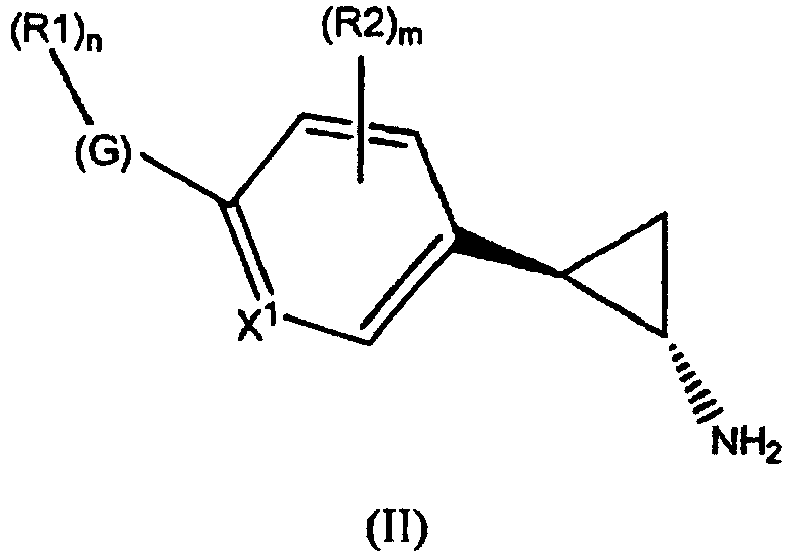
- X1 is CH or N;
- (G) is a cyclyl group;
- each (R1) is independently chosen from alkyl, alkenyl, alkynyl, cyclyl, -L1-cyclyl,-L1-amino, -Ll-hydroxyl, amino, amido, nitro, halo, haloalkyl, haloalkoxy, cyano, sulfinyl, sulfonyl, sulfonamide, hydroxyl, alkoxy, urea, carbamate, acyl, or carboxyl;
- each (R2) is independently chosen from alkyl, alkenyl, alkynyl, cyclyl, -L1-cyclyl,-L1-amino, -Ll-hydroxyl, amino, amido, nitro, halo, haloalkyl, haloalkoxy, cyano, sulfinyl, sulfonyl, sulfonamide, hydroxyl, alkoxy, urea, carbamate, acyl, or carboxyl, wherein each (R2) group has 1, 2, or 3 optional substituents, wherein said optional substituents are independently chosen from alkyl, alkanoyl, heteroalkyl, heterocyclyl, haloalkyl, cycloalkyl, carbocyclyl, arylalkoxy, heterocyclylalkoxy, aryl, aryloxy, heterocyclyloxy, alkoxy, haloalkoxy, oxo, acyloxy, carbonyl, carboxyl, carboxamido, cyano, halogen, hydroxyl, amino, aminoalkyl, amidoalkyl, amido, nitro, thiol, alkylthio, arylthio, sulfonamide, sulfinyl, sulfonyl, urea, or carbamate;
- each L1 is alkylene or heteroalkylene;
- m is 0, 1,2 or 3; and
- n is 0, 1, 2, 3, 4 or 5, provided that n and m are chosen independently such that n + m is greater than zero (i.e., at least one of n and m is not 0) when X1 is -CH- and (G) is an aryl;
- (1S,2R)-2-(4'-chloro-[1,1'-biphenyl]-4-yl)cyclopropanamine, (1S,2R)-2-(3-chloro-4'-(trifluoromethyl)-[1,1'-biphenyl]-4-yl)cyclopropanamine, (1S,2R)-2-(6-(2,4-difluorophenyl)pyridin-3-yl)cyclopropanamine, 2-(3,4',5-trichloro-[1,1'-biphenyl]-4-yl)cyclopropanamine, 2-(3,3',4',5-tetrachloro-[1,1'-biphenyl]-4-yl)cyclopropanamine, 2-(3,3',4'-trichloro-[1,1'-biphenyl]-4-yl)cyclopropanamine, or 2-(3,5-dichloro-4'-methyl-[1,1'-biphenyl]-4-yl)cyclopropanamine.
- In one embodiment of this aspect, the invention provides a composition as defined herein comprising a compound of Formula (II) as described herein or a solvate or pharmaceutically acceptable salt thereof, wherein said compound is the (1S,2R) enantiomer (in respect to the substituents on the cyclopropyl ring) substantially free of the (1R,2S) enantiomer. Preferably, the compound is more than 90% (1S, 2R) enantiomer and less than 10% (1R, 2S) enantiomer. More preferably, the compound is more than 95% (1S, 2R) enantiomer and less than 5% (1R, 2S) enantiomer. Even more preferably, the compound is more than 99% (1S, 2R) enantiomer and less than 1% (1R, 2S) enantiomer.
- In one embodiment of this aspect, the invention provides a composition as defined herein comprising a compound of Formula (II) as described herein or a solvate or pharmaceutically acceptable salt thereof, wherein said compound is the (1R,2S) enantiomer (in respect to the substituents on the cyclopropyl ring) substantially free of the (1S,2R) enantiomer. Preferably, the compound is more than 90% (1R, 2S) enantiomer and less than 10% (1S, 2R) enantiomer. More preferably, the compound is more than 95% (1R, 2S) enantiomer and less than 5% (1S, 2R) enantiomer. Even more preferably, the compound is more than 99% (1R, 2S) enantiomer and less than 1% (1S, 2R) enantiomer.
- In one embodiment of this aspect, the invention provides a compound of Formula (II) as defined herein or a solvate or a pharmaceutically acceptable salt thereof, wherein the cyclopropyl ring carbon atom which is bound to the terminal amino group of the compound is in (S)-configuration and the cyclopropyl ring carbon atom which is bound to the cyclic group adjacent to the cyclopropyl ring of the compound is in (R)-configuration. Preferably, said compound is provided in an enantiomeric excess of at least 90%, more preferably at least 95%, even more preferably at least 99%. The enantiomeric excess can, for example, be determined as described in Example 63.
- In one embodiment of this aspect, the invention provides a compound of Formula (II) as defined herein or a solvate or a pharmaceutically acceptable salt thereof, wherein the cyclopropyl ring carbon atom which is bound to the terminal amino group of the compound is in (R)-configuration and the cyclopropyl ring carbon atom which is bound to the cyclic group adjacent to the cyclopropyl ring of the compound is in (S)-configuration. Preferably, said compound is provided in an enantiomeric excess of at least 90%, more preferably at least 95%, even more preferably at least 99%. The enantiomeric excess can, for example, be determined as described in Example 63.
- Preferably, the optional substituents are independently chosen from lower alkyl, lower alkanoyl, lower heteroalkyl, lower heterocyclyl, lower haloalkyl, lower cycloalkyl, lower carbocyclyl, arylalkoxy, heterocyclylalkoxy, aryl, aryloxy, heterocyclyloxy, lower alkoxy, lower haloalkoxy, oxo, lower acyloxy, carbonyl, carboxyl, lower carboxamido, cyano, halogen, hydroxyl, amino, aminoalkyl, amidoalkyl, amido, nitro, thiol, lower alkylthio, or arylthio.
- In one specific embodiment of this aspect, the invention provides a compound of Formula (II) wherein X1 is a nitrogen atom. In another specific embodiment of this aspect X1 is CH.
- In one embodiment of this aspect, the invention provides a compound of Formula (II) wherein, the (G) group is a cyclyl, and each (R1) is independently chosen from alkyl, aryl, amino, amido, nitro, halo, haloalkyl, cyano, heterocyclyl, sulfonyl, sulfonamide, hydroxyl, or alkoxy. In one specific embodiment of this aspect, said cyclyl (G) is an aryl or heterocyclyl.
- In one particular embodiment of this aspect said cyclyl (G) is an aryl. In a preferred embodiment, said aryl is a phenyl.
- In another particular embodiment of this aspect said cyclyl (G) is a heterocyclyl. In a more specific embodiment, said heterocyclyl is a heteroaryl or a heterocycloalkyl. I n an even more specific embodiment, said heterocyclyl is a heteroaryl chosen from thiophenyl, benzo[b]thiophenyl, indolyl, benzofuran-2(3H)-onyl, 9H-carbazolyl, pyridin-2(1H)-onyl, indolin-2-onyl or indazolyl. Preferably, said heterocyclyl is a heteroaryl chosen from thiophenyl, benzo[b]thiophenyl or indolyl.
- In one embodiment of this aspect, the invention provides a compound of Formula (II) wherein X1 is CH, the (G) group is a cyclyl, n is 0, 1, 2, 3, 4, or 5, and each (R1) is independently chosen from alkyl, aryl, amino, amido, nitro, halo, haloalkyl, cyano, heterocyclyl, sulfonyl, sulfonamide, hydroxyl, or alkoxy. In one specific embodiment said cyclyl is a phenyl, n=1 and m=0. Preferably the phenyl group (G) is bonded to one substituent (R1) which is -CF3 in the meta- position in reference to the phenylcyclopropylamine core. In another preferred embodiment (R1) is a phenyl in the para-position in reference to the phenylcyclopropylamine core. In another preferred embodiment (R1) is a -OH in the meta- or para- position in reference to the phenylcyclopropylamine core. Preferable (R1) is an -OH in meta- position in reference to the phenylcyclopropylamine core.
- In another preferred embodiment of the compounds described the the paragraph above, (R1) is independently chosen from -NHSO2CH3, -NHSO2(CH2-CH3) or-NHSO2(C6H5)in the meta- position in reference to the phenylcyclopropylamine core. In yet another specific embodiment of the compounds described above (R1) is independently chosen from -CF3, -Cl, -F, -OCH3, -CH3, -OH, -C(=O)NH2. [a1]-NHC(=O)CH3, -NHSO2CH3,-NHSO2(CH2-CH3), -NHSO2(C6H5) or -CN.
- In one embodiment the invention provides a compound of Formula (II) wherein X1 is CH, the (G) group is cyclyl, wherein said cyclyl has 0, 1, 2, 3, 4, or 5 substituents (R1) independently chosen from alkyl, aryl, amino, amido, nitro, halo, haloalkyl, cyano, heterocycle, sulfonyl, sulfonamide, hydroxyl or alkoxy. In one specific embodiment said cyclyl is a phenyl, n=2 and m=0. In a more specific embodiment, said phenyl group has two (n=2) substituents (R1) independently chosen from -CF3, -OH, -CN, -OCH3, -CH3, chloro, -NHSO2CH3, -NHSO2(CH2-CH3) or -NHSO2(C6H5) and the second (R1) is -CF3,-OH, -CN, -OCH3, -CH3, fluoro, chloro, -NHSO2CH3, -NHSO2(CH2-CH3) or -NHSO2(C6H5). In another specific embodiment one substituent (R1) is -OCH3 and the second substituent (R1) is independently chosen from -CN or -NHSO2CH3. In another specific embodiment one substituent (R1) is -OH and the second substituent (R1) is independently chosen from -CN or -NHSO2CH3.
- In one embodiment of this aspect, the invention provides a compound of Formula (II) wherein X1 is a nitrogen atom, the (G) group is cyclyl, n=0 and m=0. In a more specific embodiment, (G) is heterocyclyl and n is 0. In yet a more specific embodiment, said (G) is a heteroaryl or heterocyloalkyl and n is 0. In yet an even more specific embodiment (G) is a heteroaryl and n is 0. In a specific preferred embodiment said cyclyl is thiophenyl, benzo[b]thiophenyl, or indolyl, and n is 0.
- In a specific preferred embodiment of the compound as described in the paragraph above, said cyclyl is thiophenyl, benzo[b]thiophenyl, indolyl, benzofuran-2(3H)-onyl, 9H-carbazolyl, pyridin-2(1H)-onyl, indolin-2-onyl or indazolyl, and n is 0.
- In one specific embodiment of this aspect, the invention provides a compound of Formula (II) wherein X1 is a nitrogen atom and the (G) group is a phenyl with one (n=1) substituent (R1) chosen from -CF3, chloro, -OCH3, -CH3, -OH, -C(=O)NH2 or-CN. Preferably said substituent (R1) is in the meta- or para- position, and more preferably the substituent (R1) is in the meta- position in respect to the pyridylcyclopropylamine core.
- In one specific embodiment of this aspect, the invention provides a compound of Formula (II) wherein X1 is a nitrogen atom and the (G) group is a phenyl with one (n=1) substituent (R1) chosen from -CF3, chloro, -OCH3, -CH3, -OH, -C(=O)NH2,-NHC(=O)CH3, -NHSO2CH3, -NHSO2(CH2-CH3), -NHSO2(C6H5) or -CN. Preferably said substituent (R1) is in the meta- or para- position, and more preferably the substituent (R1) is in the meta- position in respect to the pyridylcyclopropylamine core.
- In one embodiment of this aspect, the invention provides a compound of Formula (II) wherein X1 is a nitrogen atom and the (G) group is a cyclyl, wherein said cyclyl is bonded to 0, 1, 2, 3, 4, or 5 substituents (R1) independently chosen from alkyl, aryl, amino, amido, nitro, halo, haloalkyl, cyano, heterocyclyl, sulfonyl, sulfonamide, hydroxyl and alkoxy. In one specific embodiment said cyclyl is independently chosen from thiophenyl, benzo[b]thiophenyl or indolyl. In an even more specific embodiment, the cyclyl group is thiophenyl bonded to one (n=1) substituent (R1) which is -CN, -CH3, chloro, or fluoro.
- In one embodiment of this aspect, the invention provides a compound of Formula (II) wherein X1 is a nitrogen atom and the (G) group is a cyclyl, wherein said cyclyl is bonded to 0, 1, 2, 3, 4, or 5 substituents (R1) independently chosen from alkyl, aryl, amino, amido, nitro, halo, haloalkyl, cyano, heterocyclyl, sulfonyl, sulfonamide, hydroxyl or alkoxy. In one specific embodiment said cyclyl is independently chosen from thiophenyl, benzo[b]thiophenyl, indolyl, benzofuran-2(3H)-onyl, 9H-carbazolyl, pyridin-2(1H)-onyl, indolin-2-onyl or indazolyl. In an even more specific embodiment, the cyclyl group is thiophenyl bonded to one (n=1) substituent (R1) which is -CN, -CH3, chloro, or fluoro.
- In one embodiment of this aspect, the invention provides a compound of Formula (II) wherein the (G) group is phenyl, wherein said phenyl has 0, 1, 2, 3, 4, or 5 substituents (R1) independently chosen from alkyl, aryl, amino, amido, nitro, halo, haloalkyl, cyano, heterocycle, sulfonyl, sulfonamide, hydroxyl or alkoxy. In a more specific embodiment, X1 is a nitrogen atom and the phenyl group has two (n=2) substituents (R1), wherein one (R1) is independently chosen from -CF3, -OH, -CN, -OCH3, -CH3 or chloro and the second (R1) is -CF3, -OH, -CN, -OCH3, -CH3, fluoro or chloro. In a more specific embodiment said (R1) substituents are in meta- and ortho- positions with respect to the cyclopropylamine core. In a more specific embodiment the two substituents (R1) are in para- and ortho- position with respect to the cyclopropylamine core. In an even more specific embodiment, the two substituents (R1) are both in the meta- positions.
- In one embodiment of this aspect, the invention provides a compound of Formula (II) wherein the (G) group is phenyl, wherein said phenyl has 0, 1, 2, 3, 4, or 5 substituents (R1) independently chosen from alkyl, aryl, amino, amido, nitro, halo, haloalkyl, cyano, heterocycle, sulfonyl, sulfonamide, hydroxyl or alkoxy. In a more specific embodiment, X1 is a nitrogen atom and the phenyl group has two (n=2) substituents (R1), wherein one (R1) is independently chosen from -CF3, -OH, -CN, -OCH3, -CH3, chloro,-NHSO2CH3, -NHSO2(CH2-CH3) or -NHSO2(C6H5) and the second (R1) is -CF3, -OH, -CN,-OCH3, -CH3, fluoro, chloro, -NHSO2CH3, -NHSO2(CH2-CH3) or -NHSO2(C6H5). In one specific embodiment the two substituents (R1) are chloro. In another specific embodiment one substituent (R1) is -OCH3 and the second substituent (R1) is independently chosen from -CH3, -F, -Cl, -CF3 or-CN. In another specific embodiment one substituent (R1) is -OH and the second substituent (R1) is independently chosen from -F, -Cl, -CH3, -CN, -NHSO2CH3 or -NHSO2(CH2-CH3). In another yet specific embodiment one substituent (R1) is -CF3 the second substituent (R1) is independently chosen from -F, -OH, -CF3 or -Cl. In a more specific embodiment said (R1) substituents are in meta- and ortho- positions with respect to the cyclopropylamine core. In a more specific embodiment the two substituents (R1) are in para- and ortho- position with respect to the cyclopropylamine core. In an even more specific embodiment, the two substituents (R1) are both in the meta- positions.
- In one embodiment of this aspect, the invention provides a compound of Formula (II) wherein the (G) group is a cyclyl, wherein said cyclyl has three (n=3) substituents (R1) independently chosen from alkyl, aryl, amino, amido, nitro, halo, haloalkyl, cyano, heterocycle, sulfonyl, sulfonamide, hydroxyl or alkoxy. In a more specific embodiment the cyclyl is a phenyl group with three (n=3) substituents (R1), independently chosen from -CF3, -OH, -CN, -OCH3, -CH3, fluoro, or chloro.
- In one embodiment of this aspect, the invention provides a compound of Formula (II), wherein the (G) group is a cyclyl, wherein said cyclyl has four (n=4) substituents (R1) independently chosen from alkyl, aryl, amino, amido, nitro, halo, haloalkyl, cyano, alkoxy, heterocyclyl, sulfonyl, sulfonamide, hydroxyl and alkoxy. In one specific embodiment the cyclyl is a phenyl group with three (n=4) substituents (R1), independently chosen from -CF3, -OH, -CN, -OCH3, -CH3, fluoro, or chloro.
- In one embodiment of this aspect, the invention provides a compound of Formula (II) wherein, X1 is a nitrogen atom and the (G) group is phenyl, wherein said phenyl has 0, 1, 2, 3 or substituents (R1) independently chosen from alkyl, aryl, amino, amido, nitro, halo, haloalkyl, cyano, heterocyclyl, sulfonyl, sulfonamide, hydroxyl or alkoxy. In a more specific embodiment the phenyl group has two (n=2) substituents (R1), wherein one (R1) is chosen from -CF3, -OH, -CN, -OCH3, -CH3 or chloro and the second (R1) is chosen from-CF3, -OH, -CN, -OCH3, -CH3, fluoro or chloro. In a more specific embodiment said substituents (R1) are in the meta- and ortho- position. In another specific embodiment, the two substituents (R1) are in the para- and ortho- position. In another specific embodiment, the two substituents (R1) are both in the meta- positions.
- In one specific embodiment of this aspect, the invention provides a compound of Formula (II) wherein the (G) group is a cyclyl with one (n=1) substituent (R1) chosen from alkyl, aryl, amino, amido, nitro, halo, haloalkyl, cyano, heterocyclyl, sulfonyl, sulfonamide, hydroxyl or alkoxy; and one (m=1) substituent (R2) independently chosen from alkyl, optionally substituted cyclyl, amino, amido, nitro, halo, haloalkyl, cyano, sulfonyl, sulfonamide, hydroxyl or alkoxy. In one preferred embodiment X1 is a N atom and said cyclyl group is phenyl. In one specific embodiment (R1) is -OH and (R2) is -CH3. In another specific embodiment (R1) is -CF3 and (R2) is -CH3.
- In one specific embodiment of this aspect, the invention provides a compound of Formula (II) wherein the (G) group is a cyclyl with one (n=1) substituent (R1) chosen from alkyl, aryl, amino, amido, nitro, halo, haloalkyl, cyano, heterocyclyl, sulfonyl, sulfonamide, hydroxyl or alkoxy; and one (m=1) substituent (R2) independently chosen from alkyl, optionally substituted cyclyl, amino, amido, nitro, halo, haloalkyl, cyano, sulfonyl, sulfonamide, hydroxyl or alkoxy. In one specific embodiment X1 is a nitrogen atom, X2, X3 and X4 are CH and said cyclyl group (G) is phenyl. In a more specific embodiment (R1) is independently chosen from -OH, or -CF3 and (R2) is independently chosen from -CH3, -Cl or an optionally substituted cyclyl. In a even more specific embodiment (R2) is an optionally substituted phenyl wherein (R2) has 1 optional substituent chosen from -Cl, -OH, or-C(=O)NH2.
- In one particular embodiment of the first aspect, the invention provides a compound of Formula (II) for use in treating or preventing cancer:
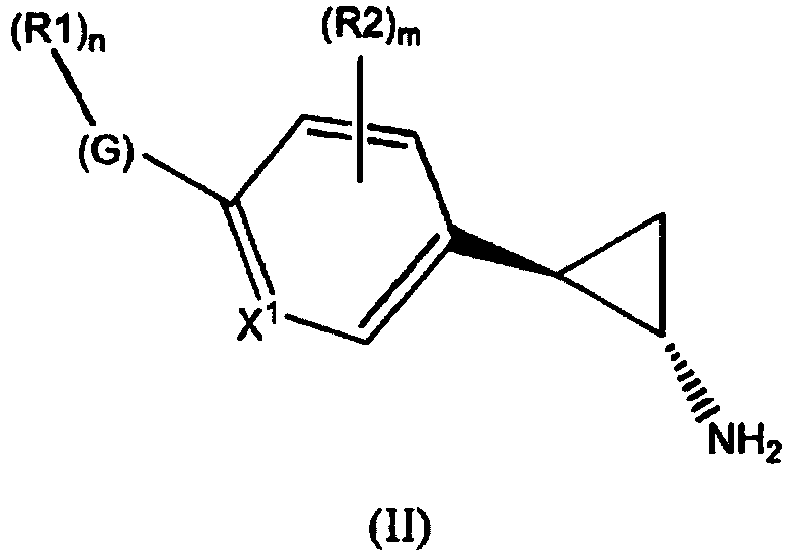
- X1 is CH or N;
- (G) is a cyclyl;
- each (R1) is independently chosen from alkyl, alkenyl, alkynyl, cyclyl, -L1-cyclyl,-L1-amino, -L1-hydroxyl, amino, amido, nitro, halo, haloalkyl, haloalkoxy, cyano, sulfinyl, sulfonyl, sulfonamide, hydroxyl, alkoxy, urea, carbamate, acyl, or carboxyl;
- each (R2) is independently chosen from alkyl, optionally substituted cyclyl, optionally substituted -L1-cyclyl, amino, amido, nitro, halo, haloalkyl, cyano, sulfonyl, sulfonamide, hydroxyl and alkoxy, wherein the optionally substituted cyclyl group of said (R2) group has 1, 2, or 3 optional substituents independently chosen from hydroxyl, haloalkyl, alkoxy, halo, aminoalkyl, and amido;
- each L1 is independently alkylene or heteroalkylene;
- m is 0, 1, 2 or 3;
- n is 0, 1, 2, 3, 4 or 5; and
- n and m are chosen independently, such that n+m is greater than zero (i.e., at least one of n and m is not 0) when X1 is CH and (G) is an aryl.
- In one aspect, the invention provides a composition as defined herein comprising a compound of Formula (II) as described in the above embodiment or a solvate or pharmaceutically acceptable salt thereof, wherein said compound is the (1S,2R) enantiomer (in respect to the substituents on the cyclopropyl ring) substantially free of the (1R,2S) enantiomer. Preferably, the compound is more than 90% (1S, 2R) enantiomer and less than 10% (1R, 2S) enantiomer. More preferably, the compound is more than 95% (1S, 2R) enantiomer and less than 5% (1R, 2S) enantiomer. Even more preferably, the compound is more than 99% (1S, 2R) enantiomer and less than 1% (1R, 2S) enantiomer.
- In one aspect, the invention provides a composition as defined herein comprising a compound of Formula (II) as described in the above embodiment or a solvate or pharmaceutically acceptable salt thereof, wherein said compound is the (1R,2S) enantiomer (in respect to the substituents on the cyclopropyl ring) substantially free of the (1S,2R) enantiomer. Preferably, the compound is more than 90% (1R, 2S) enantiomer and less than 10% (1S, 2R) enantiomer. More preferably, the compound is more than 95% (1R, 2S) enantiomer and less than 5% (1S, 2R) enantiomer. Even more preferably, the compound is more than 99% (1R, 2S) enantiomer and less than 1% (1S, 2R) enantiomer.
- In one aspect, the invention provides a compound of Formula (II) as defined in the above embodiment or a solvate or a pharmaceutically acceptable salt thereof, wherein the cyclopropyl ring carbon atom which is bound to the terminal amino group of the compound is in (S)-configuration and the cyclopropyl ring carbon atom which is bound to the cyclic group adjacent to the cyclopropyl ring of the compound is in (R)-configuration. Preferably, said compound is provided in an enantiomeric excess of at least 90%, more preferably at least 95%, even more preferably at least 99%. The enantiomeric excess can, for example, be determined as described in Example 63.
- In one aspect, the invention provides a compound of Formula (II) as defined in the above embodiment or a solvate or a pharmaceutically acceptable salt thereof, wherein the cyclopropyl ring carbon atom which is bound to the terminal amino group of the compound is in (R)-configuration and the cyclopropyl ring carbon atom which is bound to the cyclic group adjacent to the cyclopropyl ring of the compound is in (S)-configuration. Preferably, said compound is provided in an enantiomeric excess of at least 90%, more preferably at least 95%, even more preferably at least 99%. The enantiomeric excess can, for example, be determined as described in Example 63.
- In one embodiment of this aspect, the cancer is prostate cancer. In another specific embodiment of this aspect the cancer is breast cancer. In another yet specific embodiment of this aspect the cancer is lung cancer. In another yet specific embodiment of this aspect the cancer is colorectal cancer. In another yet specific embodiment of this aspect the cancer is brain cancer. In another yet specific embodiment of this aspect the cancer is skin cancer. In another yet specific embodiment of this aspect the cancer is blood cancer (e.g., leukemia) or a lymphoma.
- In another specific embodiment of this aspect, the invention provides a compound of Formula (II) for use in treating or preventing cancer where, X1 is a nitrogen atom, the (G) group is a cyclyl wherein n=0 and m=0. In a more specific embodiment, said cyclyl is thiophenyl, benzo[b]thiophenyl, phenyl or indolyl.
- In another specific embodiment of this aspect, the invention provides a compound of Formula (II) for use in treating or preventing cancer where, X1 is a nitrogen atom, the (G) group is a cyclyl wherein n=0 and m=0. In a more specific embodiment, said cyclyl is thiophenyl, benzo[b]thiophenyl, phenyl, indolyl, benzofuran-2(3H)-onyl, 9H-carbazolyl, pyridin-2(1H)-onyl, indolin-2-onyl or indazolyl.
- In one specific embodiment of this aspect, the invention provides a compound of Formula (II) for use in treating or preventing cancer where n=1 and m=0. In one specific embodiment, n=2 and m=0. In another specific embodiment, n=1 and m=1. In a yet another specific embodiment, n=3 and m=0. In again another specific embodiment, n=2 and m=1. In yet another specific embodiment, n=3 and m=0. In again another specific embodiment, n=4 and m=0.
- In one embodiment of this aspect, the invention provides a compound of Formula (II) for use in treating or preventing cancer wherein, the (G) group is cyclyl wherein said cyclyl has 0, 1, 2, or 3 substituents (R1) independently chosen from alkyl, aryl, amino, amido, nitro, halo, haloalkyl, cyano, alkoxy, heteroaryl, sulfonyl, sulfonamide, hydroxyl, or alkoxy. In a more specific embodiment, (G) is a heterocyclyl group. In another specific embodiment, (G) is a heteroaryl or heterocycloalkyl group. In one specific embodiment, (G) is a heteoraryl group. In one specific embodiment said cyclyl is independently chosen from thiophenyl, benzo[b]thiophenyl, phenyl or indolyl. In a more specific embodiment the cyclyl group has one (n=1) substituent (R1) which is chosen from -CF3, phenyl, -OH, -CN, -OCH3,-CH3, chloro, or fluoro.
- In one embodiment of this aspect, the invention provides a compound of Formula (III) for use in treating or preventing cancer wherein, the (G) group is cyclyl wherein said cyclyl has 0, 1, 2, or 3 substituents (R1) independently chosen from alkyl, aryl, amino, amido, nitro, halo, haloalkyl, cyano, alkoxy, heteroaryl, sulfonyl, sulfonamide, hydroxyl, or alkoxy. In a more specific embodiment, (G) is a heterocyclyl group. In another specific embodiment, (G) is a heteroaryl or heterocycloalkyl group. In one specific embodiment, (G) is a heteroaryl group. In one specific embodiment said cyclyl is independently chosen from thiophenyl, benzo[b]thiophenyl, phenyl, or indolyl. In a more specific embodiment the cyclyl group has one (n=1) substituent (R1) which is chosen from-CF3, phenyl, -OH, -CN, -OCH3, -CH3, [a2]-NHC(=O)CH3, -NHSO2CH3, -NHSO2(CH2-CH3),-NHSO2(C6H5) chloro, or fluoro.
- In one specific embodiment of this aspect, the invention provides a compound of Formula (II) for use in treating or preventing cancer where the (G) group is a cyclyl with 0, 1, 2, 3, 4, or 5 substituents (R1) independently chosen from alkyl, aryl, amino, amido, nitro, halo, haloalkyl, cyano, alkoxy, heteroaryl, sulfonyl, sulfonamide, hydroxyl or alkoxy; and (R2) is independently chosen from alkyl, optionally substituted cyclyl, optionally substituted -L1-cyclyl, amino, amido, nitro, halo, haloalkyl, cyano, alkoxy, sulfonyl, sulfonamide, hydroxyl or alkoxy. In one preferred embodiment of this aspect, n=1 and m=1. In another preferred embodiment X1 is a N atom. In one specific embodiment (R2) is an optionally substituted cyclyl or -L1-cyclyl, which has 1, 2, or 3 optional substituents independently chosen from hydroxyl, haloalkyl, alkoxy, halo, aminoalkyl, and C-amido.
- In one embodiment of this aspect, the invention provides a compound of Formula (II) for use in treating or preventing cancer where the (G) group is a cyclyl, wherein said cyclyl has 0, 1, 2, 3, 4, or 5 substituents (R1) independently chosen from alkyl, aryl, amino, amido, nitro, halo, haloalkyl, cyano, alkoxy, heteroaryl, sulfonyl, sulfonamide, hydroxyl or alkoxy. In a more specific embodiment m=0 and the cyclyl group (G) has two (n=2) substituents (R1) which are independently chosen from -CF3, -OH, -CN, -OCH3, -CH3, fluoro, or chloro.
- In one embodiment of this aspect, the invention provides a compound of Formula (III) for use in treating or preventing cancer where the (G) group is a cyclyl, wherein said cyclyl has 0, 1, 2, 3, 4, or 5 substituents (R1) independently chosen from alkyl, aryl, amino, amido, nitro, halo, haloalkyl, cyano, alkoxy, heteroaryl, sulfonyl, sulfonamide, hydroxyl or alkoxy. In a more specific embodiment m=0 and the cyclyl group (G) has two (n=2) substituents (R1) which are independently chosen from -CF3, -OH, -CN, -OCH3, -CH3, fluoro, chloro, -NHSO2CH3 or -NHSO2(CH2-CH3).
- In one specific embodiment of third aspect, the invention provides a compound of Formula (II) for use in treating or preventing cancer where m=0 and the (G) group is a cyclyl, wherein said cyclyl has 0, 1, 2, 3, 4, or 5 substituents (R1) independently chosen from alkyl, aryl, amino, amido, nitro, halo, haloalkyl, cyano, alkoxy, heteroaryl, sulfonyl, sulfonamide, hydroxyl, or alkoxy. In a more specific embodiment said cyclyl group (G) has three (n=3) substituents (R1) which are independently chosen from -CF3, -OH, -CN,-OCH3, -CH3, fluoro, or chloro.
- In another specific embodiment of this aspect, the invention provides a compound of Formula (II) for use in treating or preventing cancer where m=0, n=4 and the four substituents (R1) are independently chosen from alkyl, aryl, amino, amido, nitro, halo, haloalkyl, cyano, alkoxy, heteroaryl, sulfonyl, sulfonamide, hydroxyl, or alkoxy. In a more specific embodiment said cyclyl group (G) has four (n=4) substituents (R1) which are independently chosen from -CF3, -OH, -CN, -OCH3, -CH3, fluoro, or chloro.
- In one specific embodiment of the first aspect, the compound of Formula (I) is a compound of Formula (III) or an enantiomer, a diastereomer, or a mixture thereof, or a solvate or a pharmaceutically acceptable salt thereof. The general structure of compounds of Formula (III) is:
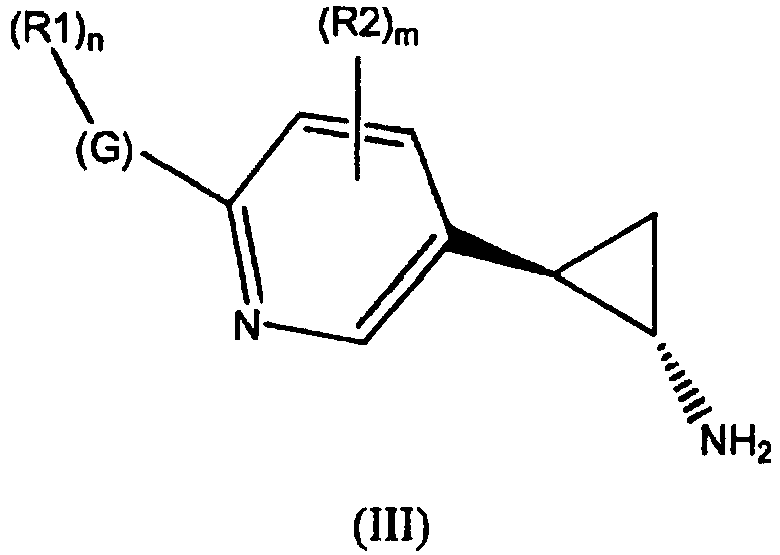
- (G) is a cyclyl group;
- each (R1) is independently chosen from alkyl, alkenyl, alkynyl, cyclyl, -L1-cyclyl,-L1-amino, -L1-hydroxyl, amino, amido, nitro, halo, haloalkyl, haloalkoxy, cyano, sulfinyl, sulfonyl, sulfonamide, hydroxyl, alkoxy, urea, carbamate, acyl, or carboxyl;
- each (R2) is independently chosen from alkyl, alkenyl, alkynyl, cyclyl, -L1-cyclyl,-L1-amino, -L1-hydroxyl, amino, amido, nitro, halo, haloalkyl, haloalkoxy, cyano, sulfinyl, sulfonyl, sulfonamide, hydroxyl, alkoxy, urea, carbamate, acyl, or carboxyl, wherein each (R2) group has 0, 1, 2, or 3 optional substituents, wherein said optional substituents are, preferably, independently chosen from alkyl, alkanoyl, heteroalkyl, heterocyclyl, haloalkyl, cycloalkyl, carbocyclyl, arylalkoxy, heterocyclylalkoxy, aryl, aryloxy, heterocyclyloxy, alkoxy, haloalkoxy, oxo, acyloxy, carbonyl, carboxyl, carboxamido, cyano, halogen, hydroxyl, amino, aminoalkyl, amidoalkyl, amido, nitro, thiol, alkylthio, arylthio, sulfonamide, sulfinyl, sulfonyl, urea, or carbamate;
- each L1 is independently alkylene or heteroalkylene;
- m is 0, 1, 2 or 3; and
- n is 0, 1, 2, 3, 4 or 5;
- (1S,2R)-2-(6-(2,4-difluorophenyl)pyridin-3-yl)cyclopropanamine.
- In one aspect, the invention provides a composition as defined herein comprising a compound of Formula (III) as described in the above embodiment or a solvate or pharmaceutically acceptable salt thereof, wherein said compound is the (1S,2R) enantiomer (in respect to the substituents on the cyclopropyl ring) substantially free of the (1R,2S) enantiomer. Preferably, the compound is more than 90% (1S, 2R) enantiomer and less than 10% (1R, 2S) enantiomer. More preferably, the compound is more than 95% (1S, 2R) enantiomer and less than 5% (1R, 2S) enantiomer. Even more preferably, the compound is more than 99% (1S, 2R) enantiomer and less than 1% (1R, 2S) enantiomer.
- In one aspect, the invention provides a composition as defined herein comprising a compound of Formula (III) as described in the above embodiment or a solvate or pharmaceutically acceptable salt thereof, wherein said compound is the (1R,2S) enantiomer (in respect to the substituents on the cyclopropyl ring) substantially free of the (1S,2R) enantiomer. Preferably, the compound is more than 90% (1R, 2S) enantiomer and less than 10% (1S, 2R) enantiomer. More preferably, the compound is more than 95% (1R, 2S) enantiomer and less than 5% (1S, 2R) enantiomer. Even more preferably, the compound is more than 99% (1R, 2S) enantiomer and less than 1% (1S, 2R) enantiomer.
- In one aspect, the invention provides a compound of Formula (III) as described in the above embodiment or a solvate or a pharmaceutically acceptable salt thereof, wherein the cyclopropyl ring carbon atom which is bound to the terminal amino group of the compound is in (S)-configuration and the cyclopropyl ring carbon atom which is bound to the cyclic group adjacent to the cyclopropyl ring of the compound is in (R)-configuration. Preferably, said compound is provided in an enantiomeric excess of at least 90%, more preferably at least 95%, even more preferably at least 99%. The enantiomeric excess can, for example, be determined as described in Example 63.
- In one aspect, the invention provides a compound of Formula (III) as described in the above embodiment or a solvate or a pharmaceutically acceptable salt thereof, wherein the cyclopropyl ring carbon atom which is bound to the terminal amino group of the compound is in (R)-configuration and the cyclopropyl ring carbon atom which is bound to the cyclic group adjacent to the cyclopropyl ring of the compound is in (S)-configuration. Preferably, said compound is provided in an enantiomeric excess of at least 90%, more preferably at least 95%, even more preferably at least 99%. The enantiomeric excess can, for example, be determined as described in Example 63.
- Preferably, the compound of Formula (III) is used to treat a disease in a mammal and more preferably a human. More preferably, the human disease is chosen from cancer, a neurological condition or disease, or a viral infection.
- Preferably, the optional substituents of Formula (III) are independently chosen from lower alkyl, lower alkanoyl, lower heteroalkyl, lower heterocyclyl, lower haloalkyl, lower cycloalkyl, lower carbocyclyl, arylalkoxy, heterocyclylalkoxy, aryl, aryloxy, heterocyclyloxy, lower alkoxy, lower haloalkoxy, oxo, lower acyloxy, carbonyl, carboxyl, lower carboxamido, cyano, halogen, hydroxyl, amino, aminoalkyl, amidoalkyl, amido, nitro, thiol, lower alkylthio, or arylthio.
- Preferably, the compound of Formula (III) is where (G) is an aryl or heterocyclyl group.
- Preferably, the compound of Formula (III) is where each (R1) is independently chosen from alkyl, aryl, amino, amido, nitro, halo, haloalkyl, haloalkoxy, cyano, heterocycle, sulfonyl, sulfonamide, hydroxyl or alkoxy.
- Preferably, the compound of Formula (III) is where each (R2) is independently chosen from hydroxyl, haloalkyl, alkoxy, halo, amido, arylalkyl, heterocyclylalkyl, arylalkoxy, and heterocyclylalkoxy and wherein each (R2) has 1, 2, or 3 optional substituents.
- More preferably, the compound of Formula (III) is where (G) is a phenyl, thienyl, benzothienyl, indolyl, benzofuran-2(3H)-onyl, 9H-carbazolyl, pyridin-2(1H)-onyl, indolin-2-onyl or indazolyl group.
- Even more preferably, the compound of Formula (III) is where (G) is a phenyl, thienyl, benzothienyl, or indolyl group.
- More preferably, the compound of Formula (III) is where each (R1) is independently chosen from lower alkyl, lower aryl, amino, amido, nitro, halo, lower haloalkyl, cyano, heterocycle, sulfonyl, sulfonamide, hydroxyl, or alkoxy.
- More preferably, the compound of Formula (III) is where each (R2) is independently chosen from hydroxyl, haloalkyl, alkoxy, halo, amido, arylalkyl, heterocyclylalkyl, arylalkoxy, or heterocyclylalkoxy, and further wherein each (R2) has 1, 2, or 3 optional substituents independently chosen from lower alkyl, lower haloalkyl, lower haloalkoxy, amino(C1-C6)alkyl, halo, hydroxyl, lower alkoxy, or amido.
- Even more preferably, the compound of Formula (III) is where each (R2) is independently chosen from hydroxyl, haloalkyl, alkoxy, halo, amido, arylalkyl, heterocyclylalkyl, arylalkoxy, or heterocyclylalkoxy, and further wherein each (R2) has 1, 2, or 3 optional substituents independently chosen from lower alkyl, lower haloalkyl, lower haloalkoxy, amino(C1-C6)alkyl, halo, lower alkoxy, and amido.
- Even more preferably, the compound of Formula (III) is where each (R1) is independently chosen from -CF3, -F, -Cl, -CN, -CH3, -OH, -OCH3, -NHC(=O)CH3,-NHSO2CH3, -NHSO2(CH2-CH3) -NHSO2(C6H5), or -C(=O)NH2.
- Even more preferably, the compound of Formula (III) is where each (R1) is independently chosen from -CF3, -F, -Cl, -CN, -CH3, -OH, and -C(=O)NH2.
- Even more preferably, the compound of Formula (III) is where each (R2) is independently chosen from hydroxyl, haloalkyl, alkoxy, halo, amido, arylalkyl, heterocyclylalkyl, arylalkoxy, and heterocyclylalkoxy, wherein each (R2) has 1, 2, or 3 optional substituents independently chosen from chloro, fluoro, -CH2NH2, -CH2CH2NH2,-OH, -C(=O)NH2 or -OCH3.
- Even more preferably, the compound of Formula (III) is where each (R2) is independently chosen from hydroxyl, haloalkyl, alkoxy, halo, amido, arylalkyl, heterocyclylalkyl, arylalkoxy, and heterocyclylalkoxy, wherein each (R2) has 1, 2, or 3 optional substituents independently chosen from chloro, fluoro, -CH2NH2, -CH2CH2NH2, or-OCH3.
- Even more preferably, the compound of Formula (III) is where (G) is a phenyl, thienyl, benzothienyl, or indolyl group.
- Preferably, the compound of Formula (III) is where m is 0, 1, or 2.
- Preferably, the compound of Formula (III) is where n is 0, 1, 2, 3, or 4.
- In one preferred aspect, each (R2) is independently chosen from alkyl, optionally substituted cyclyl, optionally substituted -L1-cyclyl, amino, amido, nitro, halo, haloalkyl, cyano, sulfonyl, sulfonamide, hydroxyl and alkoxy.
- In one specific embodiment of the first aspect, the invention provides a compound of Formula (III) wherein (G) is a cyclyl group, n=0, and m=0, wherein said cyclyl group is chosen from phenyl, thiophenyl, benzo[b]thiophenyl, indolyl, benzofuran-2(3H)-onyl, 9H-carbazolyl, pyridin-2(1H)-onyl, indolin-2-onyl or indazolyl.
- In one specific embodiment of the first aspect, the invention provides a compound of Formula (III) wherein (G) is a cyclyl group, n=0, and m=0, wherein said cyclyl group is chosen from phenyl, thiophenyl, benzo[b]thiophenyl, phenyl or indolyl.
- In one embodiment of this aspect, the invention provides a compound of Formula (III) wherein the (G) group is a cyclyl, wherein said cyclyl has 0, 1, 2, 3, 4, or 5 substituents (R1) independently chosen from alkyl, aryl, amino, amido, nitro, halo, haloalkyl, cyano, heterocyclyl, sulfonyl, sulfonamide, hydroxyl or alkoxy. In one specific embodiment said cyclyl is a phenyl substituted with one (n=1) substituent (R1) independently chosen from -CF3, -OH, -CN, -OCH3, -CH3, -C(=O)NH2, -[a2]-NHC(=O)CH3, -NHSO2CH3, -NHSO2CH3,-NHSO2(CH2-CH3), -NHSO2(C6H5) fluoro or chloro. In a more specific embodiment said substituent (R1) is in meta- position with respect to the cyclopropylamine core. In another specific embodiment the substituent (R1) is in para- position with respect to the cyclopropylamine core. In yet another specific embodiment the substituent (R1) is in ortho-position with respect to the cyclopropylamine core.
- In one embodiment of this aspect, the invention provides a compound of Formula (III) wherein, the (G) group is a cyclyl, wherein said cyclyl has 0, 1, 2, 3, 4, or 5 substituents (R1) independently chosen from alkyl, aryl, amino, amido, nitro, halo, haloalkyl, cyano, heterocycle, sulfonyl, sulfonamide, hydroxyl or alkoxy. In one specific embodiment said cyclyl is a thiophenyl with one (n=1) substituent (R1) chosen from -CF3, -OH, -CN,-OCH3, -CH3,-C(=O)NH2, fluoro, or chloro. In a more specific embodiment said substituent (R1) is a chloro. In another specific embodiment the substituent (R1) is a -CH3. In another specific embodiment the substituent (R1) is a -CN.
- In one embodiment of this aspect, the invention provides a compound of Formula (III) wherein the (G) group is a cyclyl, wherein said cyclyl has 0,1, 2, 3, 4, or 5 substituents (R1) independently chosen from alkyl, aryl, amino, amido, nitro, halo, haloalkyl, cyano, heterocyclyl, sulfonyl, sulfonamide, hydroxyl or alkoxy. In one specific embodiment said cyclyl is a phenyl substituted with one (n=1) substituent (R1) independently chosen from -CF3, -OH, -CN, -OCH3, -CH3,-C(=O)NH2, fluoro or chloro. In a more specific embodiment said substituent (R1) is in meta- position with respect to the cyclopropylamine core. In another specific embodiment the substituent (R1) is in para- position with respect to the cyclopropylamine core. In yet another specific embodiment the substituent (R1) is in ortho-position with respect to the cyclopropylamine core.
- In one embodiment of this aspect, the invention provides a compound of Formula (III) wherein, the (G) group is a cyclyl, wherein said cyclyl has 0, 1, 2, 3, 4, or 5 substituents (R1) independently chosen from alkyl, aryl, amino, amido, nitro, halo, haloalkyl, cyano, heterocycle, sulfonyl, sulfonamide, hydroxyl or alkoxy. In one specific embodiment said cyclyl is a thiophenyl with one (n=1) substituent (R1) chosen from -CF3, -OH, -CN,-OCH3, -CH3,-C(=O)NH2, fluoro, or chloro. In a more specific embodiment said substituent (R1) is a chloro. In another specific embodiment the substituent (R1) is a -CH3.
- In one embodiment of this aspect, the invention provides a compound of Formula (III) wherein, the (G) group is a cyclyl, wherein said cyclyl has two (n=2) substituents (R1) independently chosen from alkyl, aryl, amino, amido, nitro, halo, haloalkyl, cyano, heterocycle, sulfonyl, sulfonamide, hydroxyl or alkoxy. In one specific embodiment said cyclyl is a phenyl. In one specific embodiment said phenyl has two (n=2) substituents (R1), wherein one (R1) is independently chosen from -CF3, -OH, -CN, -OCH3, -CH3, chloro, -NHSO2CH3, -NHSO2(CH2-CH3) or -NHSO2(C6H5) and the second (R1) is independently chosen from -CF3, -OH, -CN, -OCH3, -CH3, chloro, fluoro, -NHSO2CH3, -NHSO2(CH2-CH3) or -NHSO2(C6H5). In one specific embodiment the two substituents (R1) are chloro. In another specific embodiment one substituent (R1) is -OCH3 and the second substituent (R1) is independently chosen from -CH3, -F, -Cl, -CF3 or -CN. In another specific embodiment one substituent (R1) is -OH and the second substituent (R1) is independently chosen from -F,-Cl, -CH3, -CN, -NHSO2CH3 or -NHSO2(CH2-CH3). In another yet specific embodiment one substituent (R1) is -CF3 the second substituent (R1) is independently chosen from -F, -OH,-CF3 or -Cl. In a more specific embodiment said substituents (R1) are in the meta- and ortho-position with respect to the cyclopropylamine core. In another specific embodiment the two substituents (R1) are in the para- and ortho- position with respect to the cyclopropylamine core. In another specific embodiment the two substituents (R1) are both in the meta- positions with respect to the cyclopropylamine core.
- In one embodiment of this aspect, the invention provides a compound of Formula (III) wherein, the (G) group is a cyclyl, wherein said cyclyl has two (n=2) substituents (R1) independently chosen from alkyl, aryl, amino, amido, nitro, halo, haloalkyl, cyano, heterocycle, sulfonyl, sulfonamide, hydroxyl or alkoxy. In one specific embodiment said cyclyl is a phenyl. In one specific embodiment said phenyl has two (n=2) substituents (R1), wherein one (R1) is independently chosen from -CF3, -OH, -CN, -OCH3, -CH3, or chloro and the second (R1) is independently chosen from -CF3, -OH, -CN, -OCH3, -CH3, chloro, or fluoro. In one specific embodiment the two (R1) are chloro. In another specific embodiment the two (R1) are -OCH3 and -CH3. In another specific embodiment the two (R1) are -OH and F. In another yet specific embodiment the two (R1) are chloro and -OH. In a more specific embodiment said substituents (R1) are in the meta- and ortho- position with respect to the cyclopropylamine core. In another specific embodiment the two substituents (R1) are in the para- and ortho- position with respect to the cyclopropylamine core. In another specific embodiment the two substituents (R1) are both in the meta- positions with respect to the cyclopropylamine core.
- In one embodiment of this aspect, the invention provides a compound of Formula (III) with three (n=3) substituents (R1) independently chosen from alkyl, aryl, amino, amido, nitro, halo, haloalkyl, cyano, alkoxy, heterocyclyl, sulfonyl, sulfonamide, hydroxyl or alkoxy. In one specific embodiment n=3 and each (R1) is independently chosen from -CF3, -OH, -CN, -OCH3, -CH3, fluoro, or chloro. In one preferred embodiment the invention provides a compound of Formula (III) where the three (n=3) substituents (R1) are two fluoros and one -OH. In another specific embodiment the three substituents (R1) are -Cl, -F and -OH. In another specific embodiment the three substituents (R1) are -Cl, -F and-OCH3.
- In one embodiment of this aspect, the invention provides a compound of Formula (III) with three (n=3) substituents (R1) independently chosen from alkyl, aryl, amino, amido, nitro, halo, haloalkyl, cyano, alkoxy, heterocyclyl, sulfonyl, sulfonamide, hydroxyl or alkoxy. In one specific embodiment n=3 and each (R1) is independently chosen from -CF3, -OH, -CN, -OCH3, -CH3, fluoro, or chloro. In one preferred embodiment the invention provides a compound of Formula (II) where the three (n=3) substituents (R1) are two fluoros and one -OH.
- In one embodiment of this aspect, the invention provides a compound of Formula (III) with four (n=4) substituents (R1) independently chosen from alkyl, aryl, amino, amido, nitro, halo, haloalkyl, cyano, alkoxy, heterocyclyl, sulfonyl, sulfonamide, hydroxyl and alkoxy. In one specific embodiment n=4 and each (R1) is independently chosen from-CF3, -OH, -CN, -OCH3, -CH3, fluoro, or chloro. In one preferred embodiment the invention provides a compound of Formula (III) with four (n=4) substituents (R1) which are three fluoros and one -OH.
- In one embodiment of this aspect, the invention provides a compound of Formula (III) wherein, the (G) group is a phenyl, n=1 and m=1. In one specific embodiment the phenyl (G) has one (n=1) substituent (R1) chosen from alkyl, aryl, amino, amido, nitro, halo, haloalkyl, cyano, alkoxy, heteroaryl, sulfonyl, sulfonamide, hydroxyl or alkoxy, and (R2) is chosen from alkyl, optionally substituted cyclyl, optionally substituted -L1-cyclyl, amino, amido, nitro, halo, haloalkyl, cyano, alkoxy, sulfonyl, sulfonamide, hydroxyl or alkoxy. In a more specific embodiment (R1) is -OH and (R2) is -CH3. In another yet specific embodiment (R1) is -Cl and (R2) is -CH3.
- In one embodiment of this aspect, the invention provides a compound of Formula (III) wherein, the (G) group is a phenyl, n=1 and m=1. In one specific embodiment the phenyl (G) has one (n=1) substituent (R1) chosen from alkyl, aryl, amino, amido, nitro, halo, haloalkyl, cyano, alkoxy, heteroaryl, sulfonyl, sulfonamide, hydroxyl or alkoxy, and (R2) is chosen from alkyl, optionally substituted cyclyl, optionally substituted -L1-cyclyl, amino, amido, nitro, halo, haloalkyl, cyano, alkoxy, sulfonyl, sulfonamide, hydroxyl and alkoxy. In a more specific embodiment (R1) is -OH and (R2) is -CH3.
- In another specific embodiment (R1) is -CF3 and (R2) is independently chosen from -CH3, -Cl or an optionally substituted cyclyl. In a even more specific embodiment (R2) is an optionally substituted phenyl wherein (R2) has 1 optional substituent chosen from -Cl, -OH, or -C(=O)NH2.
- Furthermore, in one aspect, the compound of Formula (I) is a compound of Formula (IV) or an enantiomer, a diastereomer, or a mixture thereof, or a pharmaceutically acceptable salt or solvate thereof. The general structure of compounds of Formula (IV) is:
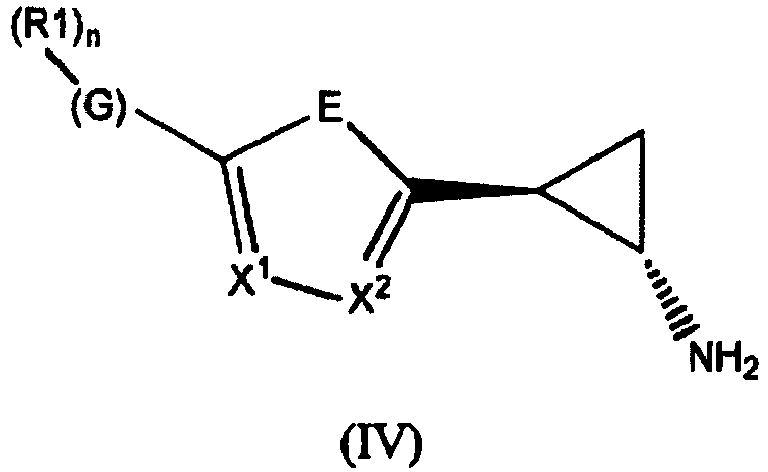
- E is -N(R3)-, -O-, or -S-, or is -X3=X4-;
- X1, X2, X3 and X4 are independently C(R2) or N, provided that at least one of X1, X2, X3 or X4 is N when E is -X3=X4-;
- (G) is a cyclyl group;
- each (R1) is independently chosen from alkyl, alkenyl, alkynyl, cyclyl, -L1-cyclyl,-L1-amino, -L1-hydroxyl, amino, amido, nitro, halo, haloalkyl, haloalkoxy, cyano, sulfinyl, sulfonyl, sulfonamide, hydroxyl, alkoxy, urea, carbamate, acyl, or carboxyl;
- each (R2) is independently chosen from alkyl, alkenyl, alkynyl, cyclyl, -Ll-cyclyl,-L1-amino, -Ll-hydroxyl, amino, amido, nitro, halo, haloalkyl, haloalkoxy, cyano, sulfinyl, sulfonyl, sulfonamide, hydroxyl, alkoxy, urea, carbamate, acyl, or carboxyl, wherein each (R2) group has 1, 2, or 3 optional substituents, wherein said optional substituents are independently chosen from alkyl, alkanoyl, heteroalkyl, heterocyclyl, haloalkyl, cycloalkyl, carbocyclyl, arylalkoxy, heterocyclylalkoxy, aryl, aryloxy, heterocyclyloxy, alkoxy, haloalkoxy, oxo, acyloxy, carbonyl, carboxyl, carboxamido, cyano, halogen, hydroxyl, amino, aminoalkyl, amidoalkyl, amido, nitro, thiol, alkylthio, arylthio, sulfonamide, sulfinyl, sulfonyl, urea, or carbamate;
- R3 is -H or a (C1-C6)alkyl group;
- each L1 is alkylene or heteroalkylene; and
- n is 0, 1, 2, 3, 4 or 5;
- (1S,2R)-2-(6-(2,4-difluorophenyl)pyridin-3-yl)cyclopropanamine.
- In one aspect, the invention provides a composition as defined herein comprising a compound of Formula (IV) as described in the above embodiment or a solvate or pharmaceutically acceptable salt thereof, wherein said compound is the (1S,2R) enantiomer (in respect to the substituents on the cyclopropyl ring) substantially free of the (1R,2S) enantiomer. Preferably, the compound is more than 90% (1S, 2R) enantiomer and less than 10% (1R, 2S) enantiomer. More preferably, the compound is more than 95% (1S, 2R) enantiomer and less than 5% (1R, 2S) enantiomer. Even more preferably, the compound is more than 99% (1S, 2R) enantiomer and less than 1% (1R, 2S) enantiomer.
- In one aspect, the invention provides a composition as defined herein comprising a compound of Formula (IV) as described in the above embodiment or a solvate or pharmaceutically acceptable salt thereof, wherein said compound is the (1R,2S) enantiomer (in respect to the substituents on the cyclopropyl ring) substantially free of the (1S,2R) enantiomer. Preferably, the compound is more than 90% (1R, 2S) enantiomer and less than 10% (1S, 2R) enantiomer. More preferably, the compound is more than 95% (1R, 2S) enantiomer and less than 5% (1S, 2R) enantiomer. Even more preferably, the compound is more than 99% (1R, 2S) enantiomer and less than 1% (1S, 2R) enantiomer.
- In one aspect, the invention provides a compound of Formula (IV) as described in the above embodiment or a solvate or a pharmaceutically acceptable salt thereof wherein the cyclopropyl ring carbon atom which is bound to the terminal amino group of the compound is in (S)-configuration and the cyclopropyl ring carbon atom which is bound to the cyclic group adjacent to the cyclopropyl ring of the compound is in (R)-configuration. Preferably, said compound is provided in an enantiomeric excess of at least 90%, more preferably at least 95%, even more preferably at least 99%. The enantiomeric excess can, for example, be determined as described in Example 63.
- In one aspect, the invention provides a compound of Formula (IV) as described in the above embodiment or a solvate or a pharmaceutically acceptable salt thereof, wherein the cyclopropyl ring carbon atom which is bound to the terminal amino group of the compound is in (R)-configuration and the cyclopropyl ring carbon atom which is bound to the cyclic group adjacent to the cyclopropyl ring of the compound is in (S)-configuration. Preferably, said compound is provided in an enantiomeric excess of at least 90%, more preferably at least 95%, even more preferably at least 99%. The enantiomeric excess can, for example, be determined as described in Example 63.
- Preferably, the compound of the invention of Formula (IV) is used to treat a disease in a mammal and more preferably a human. More preferably, the human disease is chosen from cancer, a neurological condition or disease, or a viral infection.
- Preferably, the optional substituents are independently chosen from lower alkyl, lower alkanoyl, lower heteroalkyl, lower heterocyclyl, lower haloalkyl, lower cycloalkyl, lower carbocyclyl, arylalkoxy, heterocyclylalkoxy, aryl, aryloxy, heterocyclyloxy, lower alkoxy, lower haloalkoxy, oxo, lower acyloxy, carbonyl, carboxyl, lower carboxamido, cyano, halogen, hydroxyl, amino, aminoalkyl, amidoalkyl, amido, nitro, thiol, lower alkylthio, or arylthio.
- In one specific embodiment of this aspect, the invention provides a compound of Formula (IV) wherein, E is -S- or is -X3=X4-. Preferably, E is -X3=X4-.
- In one specific embodiment of this aspect, the invention provides a compound of Formula (IV) wherein X1 is a nitrogen atom and X2, X3 and X4 are CH. In another specific embodiment of this aspect X2 is a nitrogen atom and X1, X3 and X4 are CH. In yet another specific embodiment, X1 and X3 are nitrogen atoms and X2 and X4 are CH.
- In one specific embodiment of this aspect, the invention provides a compound of Formula (IV) wherein, E is -S- and X1 and X2 are CH. In another specific embodiment of this aspect E is -S-, X1 is a nitrogen atom and X2 is CH. In another specific embodiment E is -S-, X1 is CH and X2 is a nitrogen atom.
- In one embodiment of this aspect, the invention provides a compound of Formula (IV) wherein the (G) group is a cyclyl and each (R1) is independently chosen from alkyl, aryl, amino, amido, nitro, halo, haloalkyl, cyano, heterocyclyl, sulfonyl, sulfonamide, hydroxyl, or alkoxy. In one specific embodiment of this aspect, said cyclyl (G) is an aryl or heterocyclyl.
- In one particular embodiment of this aspect said cyclyl (G) is an aryl. In a preferred embodiment, said aryl is a phenyl.
- In another particular embodiment of this aspect said cyclyl (G) is a heterocyclyl. In a more specific embodiment, said heterocyclyl is a heteroaryl or a heterocycloalkyl. Preferably, said heterocyclyl is a heteroaryl chosen from thiophenyl, benzo[b]thiophenyl, indolyl, benzofuran-2(3H)-onyl, 9H-carbazolyl, pyridin-2(1H)-onyl, indolin-2-onyl or indazolyl.
- In one embodiment of this aspect, the invention provides a compound of Formula (IV) wherein X1 is a nitrogen atom, X2, X3 and X4 are CH, the (G) group is a cyclyl, and n=0 . In a more specific embodiment, (G) is heterocyclyl and n is 0. In yet a more specific embodiment, said (G) is a heteroaryl or heterocyloalkyl and n is 0. In yet an even more specific embodiment (G) is a heteroaryl and n is 0. In a specific preferred embodiment said cyclyl is thiophenyl, benzo[b]thiophenyl, indolyl, benzofuran-2(3H)-onyl, 9H-carbazolyl, pyridin-2(1H)-onyl, indolin-2-onyl or indazolyl, and n is 0.
- In one embodiment of this aspect, the invention provides a compound of Formula (IV) wherein the (G) group is a phenyl, wherein said phenyl has 0, 1, 2, 3, 4, or 5 substituents (R1) independently chosen from alkyl, aryl, amino, amido, nitro, halo, haloalkyl, cyano, heterocycle, sulfonyl, sulfonamide, hydroxyl or alkoxy. In a more specific embodiment, X1 is a nitrogen atom X2, X3 and X4 are CH and the phenyl group has one (n=1) substituents (R1), wherein (R1) is chosen from -CF3, -Cl, -F, -OCH3, -CH3, -OH,-C(=O)NH2, -[a2]NHC(=O)CH3, -NHSO2CH3, -NHSO2(CH2-CH3), -NHSO2(C6H5) or-CN.
- In one embodiment of this aspect, the invention provides a compound of Formula (IV) wherein X1 is a nitrogen atom, X2, X3 and X4 are CH and the (G) group is a cyclyl, wherein said cyclyl is bonded to 0, 1, 2, 3, 4, or 5 substituents (R1) independently chosen from alkyl, aryl, amino, amido, nitro, halo, haloalkyl, cyano, heterocyclyl, sulfonyl, sulfonamide, hydroxyl or alkoxy. In one specific embodiment said cyclyl is independently chosen from thiophenyl, benzo[b]thiophenyl, indolyl, benzofuran-2(3H)-onyl, 9H-carbazolyl, pyridin-2(1H)-onyl, indolin-2-onyl or indazolyl. In an even more specific embodiment said cyclyl group is a thiophenyl with one (n=1) substituent (R1) independently chosen from-CF3, -OH, -CN, -OCH3, -CH3, -C(=O)NH2, chloro or fluoro. In a more specific embodiment said substituent (R1) is a chloro. In another specific embodiment the substituent (R1) is a-CH3. In another specific embodiment the substituent (R1) is a -CN.
- In one embodiment of this aspect, the invention provides a compound of Formula (IV) wherein the (G) group is phenyl, wherein said phenyl has 0, 1, 2, 3, 4, or 5 substituents (R1) independently chosen from alkyl, aryl, amino, amido, nitro, halo, haloalkyl, cyano, heterocycle, sulfonyl, sulfonamide, hydroxyl or alkoxy. In a more specific embodiment, X1 is a nitrogen atom, X2, X3 and X4 are CH and the phenyl group has two (n=2) substituents (R1), wherein one (R1) is independently chosen from -CF3, -OH, -CN,-OCH3, -CH3, chloro, -NHSO2CH3, -NHSO2(CH2-CH3) or -NHSO2(C6H5) and the second (R1) is -CF3, -OH, -CN, -OCH3, -CH3, fluoro, chloro, -NHSO2CH3, -NHSO2(CH2-CH3) or-NHSO2(C6H5). In one specific embodiment the two substituents (R1) are chloro. In another specific embodiment one substituent (R1) is -OCH3 and the second substituent (R1) is independently chosen from -CH3, -F, -Cl, -CF3 or -CN. In another specific embodiment one substituent (R1) is -OH and the second substituent (R1) is independently chosen from -F,-Cl, -CH3, -CN, -NHSO2CH3 or -NHSO2(CH2-CH3). In another yet specific embodiment one substituent (R1) is -CF3 the second substituent (R1) is independently chosen from -F, -OH,-CF3 or -Cl.
- In one embodiment of this aspect, the invention provides a compound of Formula (IV) wherein the (G) group is a cyclyl, wherein said cyclyl has three (n=3) substituents (R1) independently chosen from alkyl, aryl, amino, amido, nitro, halo, haloalkyl, cyano, heterocycle, sulfonyl, sulfonamide, hydroxyl or alkoxy. In one specific embodiment X1 is a nitrogen atom, X2, X3 and X4 are CH and the cyclyl (G) is a phenyl group with three (n=3) substituents (R1), independently chosen from -CF3, -OH, -CN, -OCH3, -CH3, fluoro, or chloro.
- In one embodiment of this aspect, the invention provides a compound of Formula (IV), wherein the (G) group is a cyclyl, wherein said cyclyl has four (n=4) substituents (R1) independently chosen from alkyl, aryl, amino, amido, nitro, halo, haloalkyl, cyano, alkoxy, heterocyclyl, sulfonyl, sulfonamide, hydroxyl or alkoxy. In one specific embodiment X1 is a nitrogen atom, X2, X3 and X4 are CH, and said cyclyl (G) is a phenyl group with four (n=4) substituents (R1) independently chosen from -CF3, -OH, -CN, -OCH3, -CH3, fluoro, or chloro. In one preferred embodiment the invention provides a compound of Formula (IV) with four (n=4) substituents (R1) which are three fluoros and one -OH.
- In one specific embodiment of this aspect, the invention provides a compound of Formula (IV) wherein the (G) group is a cyclyl with one (n=1) substituent (R1) chosen from alkyl, aryl, amino, amido, nitro, halo, haloalkyl, cyano, heterocyclyl, sulfonyl, sulfonamide, hydroxyl or alkoxy; and one substituent (R2) independently chosen from alkyl, optionally substituted cyclyl, amino, amido, nitro, halo, haloalkyl, cyano, sulfonyl, sulfonamide, hydroxyl or alkoxy. In one preferred embodiment X1 is a nitrogen atom, X2, X3 and X4 are CH, and said cyclyl group (G) is phenyl. In one specific embodiment (R1) is -OH and (R2) is -CH3. In another specific embodiment (R1) is -CF3 and (R2) is independently chosen from -CH3, -Cl or an optionally substituted cyclyl. In a even more specific embodiment (R2) is an optionally substituted phenyl wherein (R2) has 1 optional substituent chosen from -Cl, -OH, or -C(=O)NH2.
- In one embodiment of this aspect, the invention provides a compound of Formula (IV) wherein X2 is a nitrogen atom, X1, X3 and X4 are CH, and the (G) group is a cyclyl, wherein said cyclyl has 0, 1, 2, 3, 4, or 5 substituents (R1) independently chosen from alkyl, aryl, amino, amido, nitro, halo, haloalkyl, cyano, heterocyclyl, sulfonyl, sulfonamide, hydroxyl or alkoxy. In one specific embodiment, said cyclyl group (G) is a phenyl substituted with one (n=1) substituent (R1) independently chosen from -OH[a2] or -OCH3.
- In one embodiment of this aspect, the invention provides a compound of Formula (IV) wherein X1 and X3 are a nitrogen atoms, X2 and X4 are CH, and the (G) group is a cyclyl, wherein said cyclyl has 0, 1, 2, 3, 4, or 5 substituents (R1) independently chosen from alkyl, aryl, amino, amido, nitro, halo, haloalkyl, cyano, heterocyclyl, sulfonyl, sulfonamide, hydroxyl or alkoxy. In one specific embodiment, said cyclyl group (G) is a phenyl substituted with one (n=1) substituent (R1) which is -OH.
- In one embodiment of this aspect, the invention provides a compound of Formula (IV) wherein E is a sulfur atom, X1 and X2 are CH, and the (G) group is a cyclyl, wherein said cyclyl has 0, 1, 2, 3, 4, or 5 substituents (R1) independently chosen from alkyl, aryl, amino, amido, nitro, halo, haloalkyl, cyano, heterocyclyl, sulfonyl, sulfonamide, hydroxyl or alkoxy. In one specific embodiment, said cyclyl group (G) is a phenyl substituted with one (n=1) substituent (R1) which is a -OH.
- In one embodiment of this aspect, the invention provides a compound of Formula (IV) wherein E is a sulfur atom, X1 is nitrogen atom, X2 is CH, and the (G) group is a cyclyl, wherein said cyclyl has 0, 1, 2, 3, 4, or 5 substituents (R1) independently chosen from alkyl, aryl, amino, amido, nitro, halo, haloalkyl, cyano, heterocyclyl, sulfonyl, sulfonamide, hydroxyl or alkoxy. In one specific embodiment, said cyclyl group (G) is a phenyl substituted with one (n=1) substituent (R1) which is a -OH.
- In one embodiment of this aspect, the invention provides a compound of Formula (IV) wherein E is a sulfur atom, X1 is CH, X2 is a nitrogen atom and the (G) group is a cyclyl, wherein said cyclyl has 0, 1, 2, 3, 4, or 5 substituents (R1) independently chosen from alkyl, aryl, amino, amido, nitro, halo, haloalkyl, cyano, heterocyclyl, sulfonyl, sulfonamide, hydroxyl or alkoxy. In one specific embodiment, said cyclyl group (G) is a phenyl substituted with one (n=1) substituent (R1) which is -OH.
- In one specific embodiment of the invention, the compound of Formula (I) is a compound of Formula (V) or an enantiomer, a diastereomer, or a mixture thereof, or a pharmaceutically acceptable salt or solvate thereof. A compound of Formula (V) is as follows:
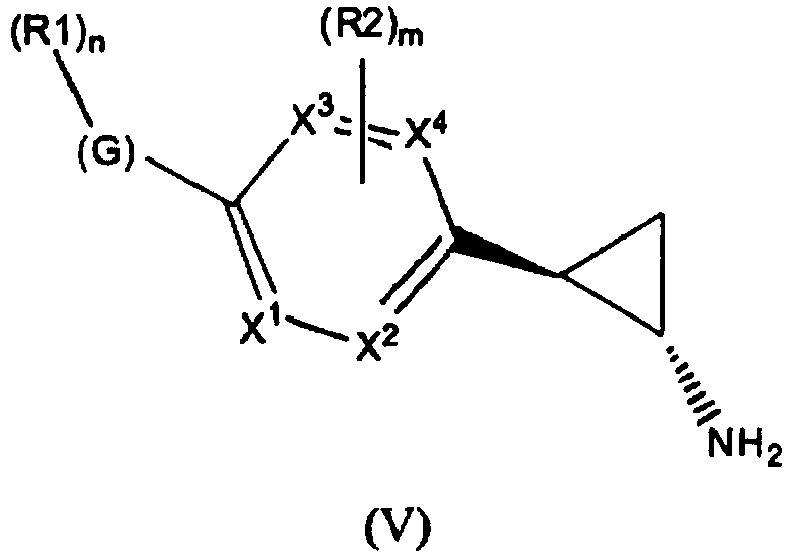
- X1, X2, X3 and X4 are independently CH or N, provided that at least one of X1, X2, X3 or X4 is a N;
- (G) is a cyclyl group;
- each (R1) is independently chosen from alkyl, alkenyl, alkynyl, cyclyl, -L1-cyclyl,-L1-amino, -L1-hydroxyl, amino, amido, nitro, halo, haloalkyl, haloalkoxy, cyano, sulfinyl, sulfonyl, sulfonamide, hydroxyl, alkoxy, urea, carbamate, acyl, or carboxyl;
- each (R2) is independently chosen from alkyl, alkenyl, alkynyl, cyclyl, -L1-cyclyl,-L1-amino, -L1-hydroxyl, amino, amido, nitro, halo, haloalkyl, haloalkoxy, cyano, sulfinyl, sulfonyl, sulfonamide, hydroxyl, alkoxy, urea, carbamate, acyl, or carboxyl, wherein each (R2) group has 1, 2, or 3 optional substituents, wherein said optional substituents are independently chosen from alkyl, alkanoyl, heteroalkyl, heterocyclyl, haloalkyl, cycloalkyl, carbocyclyl, arylalkoxy, heterocyclylalkoxy, aryl, aryloxy, heterocyclyloxy, alkoxy, haloalkoxy, oxo, acyloxy, carbonyl, carboxyl, carboxamido, cyano, halogen, hydroxyl, amino, aminoalkyl, amidoalkyl, amido, nitro, thiol, alkylthio, arylthio, sulfonamide, sulfinyl, sulfonyl, urea, or carbamate;
- each L1 is alkylene or heteroalkylene;
- m is 0, 1, 2 or 3; and
- n is 0, 1, 2, 3,4 or 5;
- (1S,2R)-2-(6-(2,4-difluorophenyl)pyridin-3-yl)cyclopropanamine.
- In one aspect, the invention provides a composition as defined herein comprising a compound of Formula (V) as described in the above embodiment or a solvate or pharmaceutically acceptable salt thereof, wherein said compound is the (1S,2R) enantiomer (in respect to the substituents on the cyclopropyl ring) substantially free of the (1R,2S) enantiomer. Preferably, the compound is more than 90% (1S, 2R) enantiomer and less than 10% (1R, 2S) enantiomer. More preferably, the compound is more than 95% (1S, 2R) enantiomer and less than 5% (1R, 2S) enantiomer. Even more preferably, the compound is more than 99% (1S, 2R) enantiomer and less than 1% (1R, 2S) enantiomer.
- In one aspect, the invention provides a composition as defined herein comprising a compound of Formula (V) as described in the above embodiment or a solvate or pharmaceutically acceptable salt thereof, wherein said compound is the (1R,2S) enantiomer (in respect to the substituents on the cyclopropyl ring) substantially free of the (1S,2R) enantiomer. Preferably, the compound is more than 90% (1R, 2S) enantiomer and less than 10% (1S, 2R) enantiomer. More preferably, the compound is more than 95% (1R, 2S) enantiomer and less than 5% (1S, 2R) enantiomer. Even more preferably, the compound is more than 99% (1R, 2S) enantiomer and less than 1% (1S, 2R) enantiomer.
- In one aspect, the invention provides a compound of Formula (V) as described in the above embodiment or a solvate or a pharmaceutically acceptable salt thereof, wherein the cyclopropyl ring carbon atom which is bound to the terminal amino group of the compound is in (S)-configuration and the cyclopropyl ring carbon atom which is bound to the cyclic group adjacent to the cyclopropyl ring of the compound is in (R)-configuration. Preferably, said compound is provided in an enantiomeric excess of at least 90%, more preferably at least 95%, even more preferably at least 99%. The enantiomeric excess can, for example, be determined as described in Example 63.
- In one aspect, the invention provides a compound of Formula (V) as described in the above embodiment or a solvate or a pharmaceutically acceptable salt thereof, wherein the cyclopropyl ring carbon atom which is bound to the terminal amino group of the compound is in (R)-configuration and the cyclopropyl ring carbon atom which is bound to the cyclic group adjacent to the cyclopropyl ring of the compound is in (S)-configuration. Preferably, said compound is provided in an enantiomeric excess of at least 90%, more preferably at least 95%, even more preferably at least 99%. The enantiomeric excess can, for example, be determined as described in Example 63.
- Preferably, the compounds of the invention are used to treat a disease in a mammal and more preferably a human. More preferably, the human disease is chosen from cancer, a neurological condition or disease, or a viral infection.
- Preferably, the optional substituents are independently chosen from lower alkyl, lower alkanoyl, lower heteroalkyl, lower heterocyclyl, lower haloalkyl, lower cycloalkyl, lower carbocyclyl, arylalkoxy, heterocyclylalkoxy, aryl, aryloxy, heterocyclyloxy, lower alkoxy, lower haloalkoxy, oxo, lower acyloxy, carbonyl, carboxyl, lower carboxamido, cyano, halogen, hydroxyl, amino, aminoalkyl, amidoalkyl, amido, nitro, thiol, lower alkylthio, or arylthio.
- In one specific embodiment of this aspect, the invention provides a compound of Formula (V) wherein X1 is a nitrogen atom and X2, X3 and X4 are CH. In another specific embodiment of this aspect X2 is a nitrogen atom and X1, X3 and X4 are CH. In anotherspecific embodiment, X1, and X3 are nitrogen atoms and X2 and X4 are CH.
- In one embodiment of this aspect, the invention provides a compound of Formula (V) wherein, the (G) group is a cyclyl, and each (R1) is independently chosen from alkyl, aryl, amino, amido, nitro, halo, haloalkyl, cyano, heterocyclyl, sulfonyl, sulfonamide, hydroxyl, or alkoxy. In one specific embodiment of this aspect, said cyclyl (G) is an aryl or heterocyclyl.
- In one particular embodiment of this aspect said cyclyl (G) is an aryl. In a preferred embodiment, said aryl is a phenyl.
- In another particular embodiment of this aspect said cyclyl (G) is a heterocyclyl. In a more specific embodiment, said heterocyclyl is a heteroaryl or a heterocycloalkyl. Preferably, said heterocyclyl is a heteroaryl chosen from thiophenyl, benzo[b]thiophenyl, indolyl, benzofuran-2(3H)-onyl, 9H-carbazolyl, pyridin-2(1H)-onyl, indolin-2-onyl or indazolyl.
- In one embodiment of this aspect, the invention provides a compound of Formula (V) wherein X1 is a nitrogen atom, X2, X3 and X4 are CH, the (G) group is cyclyl, n=0 and m=0. In a more specific embodiment, (G) is heterocyclyl and n is 0. In yet a more specific embodiment, said (G) is a heteroaryl or heterocyloalkyl and n is 0. In yet an even more specific embodiment (G) is a heteroaryl and n is 0. In a specific preferred embodiment said cyclyl is thiophenyl, benzo[b]thiophenyl, indolyl, benzofuran-2(3H)-onyl, 9H-carbazolyl, pyridin-2(1H)-onyl, indolin-2-onyl or indazolyl, and n is 0.
- In one embodiment of this aspect, the invention provides a compound of Formula (V) wherein the (G) group is phenyl, wherein said phenyl has 0, 1, 2, 3, 4, or 5 substituents (R1) independently chosen from alkyl, aryl, amino, amido, nitro, halo, haloalkyl, cyano, heterocycle, sulfonyl, sulfonamide, hydroxyl or alkoxy. In a more specific embodiment, X1 is a nitrogen atom, X2, X3 and X4 are CH, and the phenyl group has one (n=1) substituents (R1), wherein (R1) is independently chosen from -CF3, -Cl, -F, -OCH3,-CH3, -OH, -C(=O)NH2, -[a2]-NHC(=O)CH3, -NHSO2CH3, -NHSO2(CH2-CH3),-NHSO2(C6H5) or -CN.
- In one embodiment of this aspect, the invention provides a compound of Formula (V) wherein X1 is a nitrogen atom, X2, X3 and X4 are CH and the (G) group is a cyclyl, wherein said cyclyl has 0, 1, 2, 3, 4, or 5 substituents (R1) independently chosen from alkyl, aryl, amino, amido, nitro, halo, haloalkyl, cyano, heterocyclyl, sulfonyl, sulfonamide, hydroxyl or alkoxy. In one specific embodiment said cyclyl is independently chosen from thiophenyl, benzo[b]thiophenyl, indolyl, benzofuran-2(3H)-onyl, 9H-carbazolyl, pyridin-2(1H)-onyl, indolin-2-onyl or indazolyl. In an even more specific embodiment said cyclyl group is a thiophenyl with one (n=1) substituent (R1) independently chosen from -CF3, -OH, -CN, -OCH3, -CH3, -C(=O)NH2, chloro or fluoro. In a more specific embodiment said substituent (R1) is chloro. In another specific embodiment the substituent (R1) is -CH3. In another specific embodiment the substituent (R1) is -CN.
- In one embodiment of this aspect, the invention provides a compound of Formula (V) wherein the (G) group is phenyl, wherein said phenyl has 0, 1, 2, 3, 4, or 5 substituents (R1) independently chosen from alkyl, aryl, amino, amido, nitro, halo, haloalkyl, cyano, heterocycle, sulfonyl, sulfonamide, hydroxyl, or alkoxy. In a more specific embodiment, X1 is a nitrogen atom, X2, X3 and X4 are CH, and the phenyl group has two (n=2) substituents (R1), wherein one (R1) is independently chosen from -CF3, -OH, -CN,-OCH3, -CH3, chloro, -NHSO2CH3, -NHSO2(CH2-CH3) or -NHSO2(C6H5) and the second (R1) is -CF3, -OH, -CN, -OCH3, -CH3, fluoro, chloro, -NHSO2CH3, -NHSO2(CH2-CH3) or-NHSO2(C6H5). In one specific embodiment the two substituents (R1) are chloro. In another specific embodiment one substituent (R1) is -OCH3 and the second substituent (R1) is independently chosen from -CH3, -F, -Cl, -CF3 or -CN. In another specific embodiment one substituent (R1) is -OH and the second substituent (R1) is independently chosen from -F,-Cl, -CH3, -CN, -NHSO2CH3 or -NHSO2(CH2-CH3). In another yet specific embodiment one substituent (R1) is -CF3 the second substituent (R1) is independently chosen from -F, -OH,-CF3 or -Cl.
- In one embodiment of this aspect, the invention provides a compound of Formula (V) wherein the (G) group is a cyclyl, wherein said cyclyl has three (n=3) substituents (R1) independently chosen from alkyl, aryl, amino, amido, nitro, halo, haloalkyl, cyano, heterocycle, sulfonyl, sulfonamide, hydroxyl or alkoxy. In one specific embodiment X1 is a nitrogen atom X2, X3 and X4 are CH, and said cyclyl (G) is a phenyl group with three (n=3) substituents (R1) independently chosen from -CF3, -OH, -CN, -OCH3, -CH3, fluoro, or chloro.
- In one embodiment of this aspect, the invention provides a compound of Formula (V), wherein the (G) group is a cyclyl, wherein said cyclyl has four (n=4) substituents (R1) independently chosen from alkyl, aryl, amino, amido, nitro, halo, haloalkyl, cyano, alkoxy, heterocyclyl, sulfonyl, sulfonamide, hydroxyl or alkoxy. In one specific embodiment X1 is a nitrogen atom, X2, X3 and X4 are CH, and said cyclyl (G) is a phenyl group with four (n=4) substituents (R1) independently chosen from -CF3, -OH, -CN, -OCH3, -CH3, fluoro, or chloro. In one preferred embodiment the invention provides a compound of Formula (V) with four (n=4) substituents (R1) which are three fluoros and one -OH.
- In one specific embodiment of this aspect, the invention provides a compound of Formula (V) wherein the (G) group is a cyclyl with one (n=1) substituent (R1) chosen from alkyl, aryl, amino, amido, nitro, halo, haloalkyl, cyano, heterocyclyl, sulfonyl, sulfonamide, hydroxyl or alkoxy; and one (m=1) substituent (R2) independently chosen from alkyl, optionally substituted cyclyl, amino, amido, nitro, halo, haloalkyl, cyano, sulfonyl, sulfonamide, hydroxyl or alkoxy. In one preferred embodiment X1 is a nitrogen atom, X2, X3 and X4 are CH, and said cyclyl group (G) is phenyl. In one specific embodiment (R1) is -OH and (R2) is -CH3. In another specific embodiment (R1) is -CF3 and (R2) is independently chosen from -CH3, -Cl or an optionally substituted cyclyl. In a even more specific embodiment (R2) is an optionally substituted phenyl wherein (R2) has 1 optional substituent chosen from -Cl, -OH, or -C(=O)NH2.
- In one embodiment of this aspect, the invention provides a compound of Formula (V) wherein X2 is a nitrogen atom, X1, X3 and X4 are CH , and the (G) group is a cyclyl, wherein said cyclyl has 0, 1, 2, 3, 4, or 5 substituents (R1) independently chosen from alkyl, aryl, amino, amido, nitro, halo, haloalkyl, cyano, heterocyclyl, sulfonyl, sulfonamide, hydroxyl or alkoxy. In one specific embodiment, said cyclyl group (G) is a phenyl substituted with one (n=1) substituent (R1) independently chosen from -OH[a2] or -OCH3.
- In one embodiment of this aspect, the invention provides a compound of Formula (V) wherein X1 and X3 are a nitrogen atoms, X2 and X4 are CH, and the (G) group is a cyclyl, wherein said cyclyl has 0, 1, 2, 3, 4, or 5 substituents (R1) independently chosen from alkyl, aryl, amino, amido, nitro, halo, haloalkyl, cyano, heterocyclyl, sulfonyl, sulfonamide, hydroxyl or alkoxy. In one specific embodiment, said cyclyl group (G) is a phenyl substituted with one (n=1) substituent (R1) which is -OH.
- In one aspect, the invention provides a stereoisomer or a mixture thereof, of a compound of Formula (I), (II), (III), (IV) or (V).
- In yet another aspect, the invention relates to a solvate or polymorph of a compound of Formula (I), (II), (III), (IV) or (V).
- In another aspect, the invention provides a pharmaceutical composition comprising a compound of Formula (I), (II), (III), (IV) or (V) as defined above, or a pharmaceutically acceptable salt thereof and a pharmaceutically acceptable carrier, for use in a method of treating or preventing a disease or condition comprising administering, to a patient (preferably a human) in need of treatment, a therapeutically effective amount of said pharmaceutical composition. This aspect can be reformulated as a compound of Formula (I), (II), (III), (IV) or (V) for use as a medicine. In a related aspect, the invention provides a pharmaceutical composition for use in treating or preventing a disease or condition wherein said composition comprises a therapeutically effective amount of a compound of Formula (I), (II), (III), (IV) or (V) sufficient for treating or preventing said disease or condition. In a more specific embodiment the invention provides a compound of Formula (I), (II), (III), (IV) or (V) for use in the treatment of a disease associated with LSD1. In another preferred aspect, the therapeutically effective amount of a compound of Formula (I), (II), (III), (IV) or (V) is an amount sufficient to modulate the level of histone 3 lysine 4 methylation.
- In yet another aspect, the invention provides a pharmaceutical composition comprising a compound of Formula (I), (II), (III), (IV) or (V) and a pharmaceutically acceptable carrier. In a more specific aspect, the pharmaceutical composition comprises a therapeutically effective amount of a compound of Formula (I), (II), (III), (IV) or (V). In an even more specific aspect, the therapeutically effective amount of a compound of Formula (I), (II), (III), (IV) or (V) is an amount effective to inhibit LSD1. In another preferred aspect, the therapeutically effective amount of a compound of Formula (I), (II), (III), (IV) or (V) is an amount sufficient to modulate the level of histone 3 lysine 4 methylation.
- In again another aspect, the invention provides a composition comprising a compound of Formula (I), (II), (III), (IV) or (V) or a pharmaceutically acceptable salt thereof, and a pharmaceutically acceptable carrier sufficient to inhibit LSD1 activity, for use in a method of inhibiting LSD1 activity comprising administering, to a patient in need of treatment, a therapeutically effective amount of said composition. This aspect can be reformulated as a compound of Formula (I), (II), (III), (IV) or (V) as herein defined for use as a LSD1 inhibitor. This aspect can also be reformulated as a compound of Formula (I), (II), (III), (IV) or (V) for the manufacture of a medicament for the treatment of a disease associated to LSD1. In a related aspect, a compound of Formula (I), (II), (III), (IV) or (V) for use in a method for treating an individual is provided, said method comprising identifying an individual in need of treatment and administering to said individual a therapeutically effective amount of said compound. In a preferred aspect, the therapeutically effective amount of a compound of Formula (I), (II), (III), (IV) or (V)is an amount sufficient to inhibit LSD1. In another preferred aspect, the therapeutically effective amount of a compound of Formula (I), (II), (III), (IV) or (V) is an amount sufficient to modulate the level of histone 4 lysine 3 methylation.
- Preferred embodiments of the compounds of Formula (I), (II), (III), (IV) or (V) for use in the composition of this aspect of the invention are as defined herein above in the first aspect of the invention.
- In still another aspect, the invention provides a composition comprising a compound of Formula (I), (II), (III), (IV) or (V) as defined above in the first aspect of the invention, and a pharmaceutically acceptable carrier, for use in a method of treating or preventing cancer comprising administering, to a patient in need of treatment, a therapeutically effective amount of said composition. This aspect can be reformulated as a compound of Formula (I), (II), (III), (IV) or (V) as defined above in the first aspect of the invention for use in the treatment or prevention of cancer. In a related aspect, the invention provides a pharmaceutical composition for use in treating or preventing cancer wherein said composition comprises a therapeutically effective amount of a compound of Formula (I), (II), (III), (IV) or (V) sufficient for treating or preventing cancer. In another related aspect, the invention provides a compound of Formula (I), (II), (III), (IV) or (V) or a pharmaceutical composition for the treatment or prevention of a cancer wherein said cancer is chosen from testicular cancer, breast cancer, lung cancer, prostate cancer, colorectal cancer, brain cancer, skin cancer, blood cancer (e.g., leukemia) and lymphoma, wherein said composition comprises a therapeutically effective amount of a compound of Formula (I), (II), (III), (IV) or (V) sufficient for treating or preventing the said cancer. In a preferred aspect, the therapeutically effective amount of a compound of Formula (I), (II), (III), (IV) or (V) is an amount sufficient to inhibit LSD1. In another preferred aspect, the therapeutically effective amount of a compound of Formula (I), (II), (III), (IV) or (V) is an amount sufficient to modulate the level of histone-3 lysine-4 methylation.
- In a still yet aspect, the present disclosure provides a method for identifying a compound which is a selective inhibitor of LSD1, the method comprising selecting or providing a compound of Formula (I), (II), (III), (IV) or (V), and determining the ability of the said compound to inhibit LSD1 and MAO-A and/or MAO-B, wherein a compound that inhibits LSD1 to a greater extent than MAO-A and/or MAO-B is identified as a LSD1 selective inhibitor. Thus, the invention provides a pharmaceutical composition comprising a pharmaceutically acceptable carrier and a compound of Formula (I), (II), (III), (IV) or (V) which is a selective inhibitor of LSD1. LSD1 selective inhibitors have Ki values for LSD1 which are lower than the Ki value for MAO-A and/or MAO-B. Preferably, the Ki values for LSD1 are two-fold lower than for MAO-A and/or MAO-B. In one aspect of this embodiment, the LSD1 Ki value is at least 5-fold lower than the Ki value for MAO-A and/or MAO-B. In one aspect of this embodiment, the LSD1 Ki value is at least 10-fold lower than the Ki value for MAO-A and/or MAO-B. In one embodiment of this sixth aspect of the invention, the pharmaceutical composition comprising a LSD1 selective inhibitor of Formula (I), (II), (III), (IV) or (V), or a pharmaceutically acceptable salt or solvate thereof is useful for treating and/or preventing a disease in an individual. In one specific embodiment, a therapeutically effective amount of the composition is administered to an individual in an amount sufficient to prevent or treat a disease. In a more specific, the disease is cancer. In an even more specific aspect, the disease is a cancer chosen from prostate, testicular, brain, colorectal, lung, breast, skin, and blood cancer.
- Recent studies have implicated LSD1 in viral infection and reactivation. In particular it was shown that pharmacological inhibitors of LSD1 like pamate and siRNA knock down of LSD1 caused reduced viral infectivity and reduced reactivation after latency (Liang et al. (2009) Nat. Med. 15:1312-1317). Therefore it is believed that the compounds of the invention can be used for treating or preventing viral infection. Furthermore, it is believed that the compounds of the invention can treat or prevent viral reactivation after latency.
- Thus, in another aspect, the invention provides a compound of Formula (I), (II), (III), (IV) or (V) as defined above in any of the aspects and embodiments of the invention or a pharmaceutically acceptable salt or solvate thereof for use in a method for treating or preventing a viral infection, the method comprising administering to an individual (preferably a human) said compound. Accordingly, the invention also provides a compound of Formula (I), (II), (III), (IV) or (V) as defined above in any of the aspects and embodiments of the invention or a pharmaceutically acceptable salt or solvate thereof for use in treating or preventing a viral infection. In one specific embodiment, the viral infection is a herpesvirus infection. In a more specific embodiment, the herpesvirus infection is caused by and/or associated with a herpesvirus chosen from HSV-1, HSV-2, and Epstein-Barr virus. In another embodiment of this seventh aspect, the viral infection is caused by and/or associated with HIV. In even more specific embodiment, the invention provides a compound of Formula (I), (II), (III), (IV) or (V) as defined above in any of the aspects and embodiments of the invention or a pharmaceutically acceptable salt or solvate thereof for use in a method for treating or preventing viral reactivation after latency, the method comprising administering to an individual (preferably a human) said compound. Accordingly, the invention also provides a compound of Formula (I), (II), (III), (IV) or (V)as defined above in any of the aspects and embodiments of the invention or a pharmaceutically acceptable salt or solvate thereof for use in treating or preventing viral reactivation after latency. In a specific embodiment, the virus that is reactivating is a herpesvirus. In a more specific embodiment, the herpesvirus that is reactivating is chosen from HSV-1, HSV-2, and Epstein-Barr virus. In an even more specific embodiment, the virus that is reactivating is HSV.
- In one embodiment of the invention provides a compound Formula (I), (II), or (III) or a solvate or pharmaceutically acceptable salt thereof, wherein the compound is:
- (trans)-2-(3'-(trifluoromethyl)biphenyl-4-yl)cyclopropanamine;
- (trans)-2-(terphenyl-4-yl)cyclopropanamine;
- 4'-((trans)-2-aminocyclopropyl)biphenyl-4-ol;
- 4'-((trans)-2-aminocyclopropyl)biphenyl-3-ol;
- (trans)-2-(6-(3-(trifluoromethyl)phenyl)pyridin-3-yl)cyclopropanamine;
- (Trans)-2-(6-(3,5-dichlorophenyl)pyridin-3-yl)cyclopropanamine;
- (trans)-2-(6-(4-chlorophenyl)pyridin-3-yl)cyclopropanamine;
- (trans)-2-(6-(3-chlorophenyl)pyridin-3-yl)cyclopropanamine;
- (trans)-2-(6-(4-(trifluoromethyl)phenyl)pyridin-3-yl)cyclopropanamine;
- (trans)-2-(6-(4-methoxyphenyl)pyridin-3-yl)cyclopropanamine;
- (trans)-2-(6-(3-methoxyphenyl)pyridin-3-yl)cyclopropanamine;
- 4-(5-((trans)-2-aminocyclopropyl)pyridin-2-yl)benzonitrile;
- 3-(5-((trans)-2-aminocyclopropyl)pyridin-2-yl)benzonitrile;
- (Trans)-2-(6-p-tolylpyridin-3-yl)cyclopropanamine;
- (Trans)-2-(6-m-tolylpyridin-3-yl)cyclopropanamine;
- 4-(5-((trans)-2-aminocyclopropyl)pyridin-2-yl)phenol;
- 3-(5-((trans)-2-aminocyclopropyl)pyridin-2-yl)phenol;
- 4-(5-((trans)-2-aminocyclopropyl)pyridin-2-yl)benzamide;
- 3-(5-((trans)-2-aminocyclopropyl)pyridin-2-yl)benzamide;
- 2-(5-((trans)-2-aminocyclopropyl)pyridin-2-yl)phenol;
- 3-(5-((trans)-2-aminocyclopropyl)pyridin-2-yl)phenol;
- (Trans)-2-(6-(3-methoxy-4-methylphenyl)pyridin-3-yl)cyclopropanamine;
- 5-(5-((trans)-2-aminocyclopropyl)pyridin-2-yl)-2-fluorophenol;
- 3 -(5-((trans)-2-aminocyclopropyl)pyridin-2-yl)-5-fluorophenol;
- 3-(5-((trans)-2-aminocyclopropyl)pyridin-2-yl)-4-fluorophenol;
- 3-(5-((trans)-2-aminocyclopropyl)pyridin-2-yl)-2-fluorophenol;
- 3-(5-((trans)-2-aminocyclopropyl)pyridin-2-yi)-2,4-difluorophenol;
- 3-(5-((trans)-2-aminocyclopropyl)pyridin-2-yl)-2,4,6-trifluorophenol;
- 3-(5-((trans)-2-aminocyclopropyl)pyridin-2-yl)-5-chlorophenol;
- (Trans)-2-(6-(2-fluoro-3-(trifluoromethyl)phenyl)pyridin-3-yl)cyclopropanamine;
- (Trans)-2-(6-(5-chlorothiophen-2-yl)pyridin-3-yl)cyclopropanamine;
- (Trans)-2-(6-(5-methylthiophen-2-yl)pyridin-3-yl)cyclopropanamine;
- (Trans)-2-(6-(1H-indol-6-yl)pyridin-3-yl)cyclopropanamine;
- (Trans)-2-(6-(benzo[b]thiophen-5-yl)pyridin-3-yl)cyclopropanamine; or
- 3-(5-((trans)-2-aminocyclopropyl)-3-methylpyridin-2-yl)phenol.
- In one embodiment of the invention provides a compound Formula (I), (II), (III), (IV) or (V) or a solvate or pharmaceutically acceptable salt thereof wherein the compound is:
- (trans)-2-(6-(3-chlorophenyl)-5-methylpyridin-3-yl)cyclopropanamine;
- (trans)-2-(5-methyl-6-(3-(trifluoromethyl)phenyl)pyridin-3-yl)cyclopropanamine;
- (trans)-2-(6-(4-fluoro-3-methoxyphenyl)pyridin-3-yl)cyclopropanamine;
- (trans)-2-(6-(3-fluoro-5-methoxyphenyl)pyridin-3-yl)cyclopropanamine;
- (trans)-2-(6-(2-fluoro-5-methoxyphenyl)pyridin-3-yl)cyclopropanamine;
- (trans)-2-(6-(2-fluoro-3-methoxyphenyl)pyridin-3-yl)cyclopropanamine;
- (trans)-2-(6-(3-chloro-5-methoxyphenyl)pyridin-3-yl)cyclopropanamine;
- (trans)-2-(6-(2-chloro-5-methoxyphenyl)pyridin-3-yl)cyclopropanamine;
- (trans)-2-(6-(3-methoxy-5-(trifluoromethyl)phenyl)pyridin-3-yl)cyclopropanamine;
- 3-(5-((trans)-2-aminocyclopropyl)pyridin-2-yl)-5-methoxybenzonitrile;
- 5-(5-((trans)-2-aminocyclopropyl)pyridin-2-yl)-2-methylphenol;
- 3-(5-((trans)-2-aminocyclopropyl)pyridin-2-yl)-4-chlorophenol;
- 3-(5-((trans)-2-aminocyclopropyl)pyridin-2-yl)-5-(trifluoromethyl)phenol;
- (trans)-2-(6-(2-fluoro-5-(trifluoromethyl)phenyl)pyridin-3-yl)cyclopropanamine;
- (trans)-2-(6-(2-chloro-5-(trifluoromethyl)phenyl)pyridin-3-yl)cyclopropanamine;
- (trans)-2-(6-(3,5-bis(trifluoromethyl)phenyl)pyridin-3-yl)cyclopropanamine;
- N-(3-(5-((trans)-2-aminocyclopropyl)pyridin-2-yl)phenyl)acetamide;
- N-(3-(5-((trans)-2-aminocyclopropyl)pyridin-2-yl)phenyl)methanesulfonamide;
- (trans)-2-(6-(benzo[b]thiophen-2-yl)pyridin-3-yl)cyclopropanamine;
- (trans)-2-(6-(benzo[b]thiophen-3-yl)pyridin-3-yl)cyclopropanamine;
- 5-(5-((trans)-2-aminocyclopropyl)pyridin-2-yl)thiophene-2-carbonitrile;
- (trans)-2-(6-(4-methylthiophen-3-yl)pyridin-3-yl)cyclopropanamine;
- (trans)-2-(2-chloro-6-(3-(trifluoromethyl)phenyl)pyridin-3-yl)cyclopropanamine;
- (trans)-2-(2-(4-chlorophenyl)-6-(3-(trifluoromethyl)phenyl)pyridin-3-yl)cyclopropanamine;
- 4-(3-((trans)-2-aminocyclopropyl)-6-(3-(trifluoromethyl)phenyl)pyridin-2-yl)phenol;
- 4-(3-((trans)-2-aminocyclopropyl)-6-(3-(trifluoromethyl)phenyl)pyridin-2-yl)benzamide;
- (trans)-2-(2-methyl-6-(3-(trifluoromethyl)phenyl)pyridin-3-yl)cyclopropanamine;
- 3-(5-((trans)-2-aminocyclopropyl)pyridin-2-yl)-5-hydroxybenzonitrile;
- (trans)-2-(6-(3,4-difluoro-5-methoxyphenyl)pyridin-3-yl)cyclopropanamine;
- 5-(5-((trans)-2-aminocyclopropyl)pyridin-2-yl)-2,3-difluorophenol;
- (trans)-2-(6-(3-chloro-4-fluoro-5-methoxyphenyl)pyridin-3 -yl)cyclopropanamine;
- 5-(5-((trans)-2-aminocyclopropyl)pyridin-2-yl)-3-chloro-2-fluorophenol;
- (trans)-2-(6-(1H-indazol-6-yl)pyridin-3-yl)cyclopropanamine;
- (trans)-2-(6-(9H-carbazol-2-yl)pyridin-3-yl)cyclopropanamine;
- 6-(5-((trans)-2-aminocyclopropyl)pyridin-2-yl)indolin-2-one;
- 6-(5-((trans)-2-aminocyclopropyl)pyridin-2-yl)benzofuran-2(3H)-one;
- 4-(5-((trans)-2-aminocyclopropyl)pyridin-2-yl)pyridin-2(1H)-one;
- N-(3-5-((trans)-2-aminocyclopropyl)pyridin-2-yl)phenyl)benzenesulfonamide;
- N-(3-(5-((trans)-2-aminocyclopropyl)pyridin-2-yl)phenyl)propane-2-sulfonamide;
- 4'-((trans)-2-aminocyclopropyl)-4-fluorobiphenyl-3-ol;
- 4'-((trans)-2-aminocyclopropyl)-5-chlorobiphenyl-3-ol;
- 4'-((trans)-2-aminocyclopropyl)-5-chloro-4-fluorobiphenyl-3-ol;
- N-(4'-((trans)-2-aminocyclopropyl)biphenyl-3-yl)benzenesulfonamide;
- N-(4'-((trans)-2-aminocyclopropyl)biphenyl-3-yl)propane-2-sulfonamide;
- N-(4'-((trans)-2-aminocyclopropyl)biphenyl-3-yl)methanesulfonamide;
- N-(2-(5-((trans)-2-aminocyclopropyl)pyridin-2-yl)phenyl)methanesulfonamide;
- 3-(5-((trans)-2-aminocyclopropyl)pyridin-2-yl)-4-methoxybenzonitrile;
- N-(4'-((trans)-2-aminocyclopropyl)biphenyl-2-yl)methanesulfonamide;
- 4'-((trans)-2-aminocyclopropyl)-6-methoxybiphenyl-3-carbonitrile;
- N-(4'-((trans)-2-aminocyclopropyl)-6-methoxybiphenyl-3-yl)methanesulfonamide;
- 4'-((trans)-2-aminocyclopropyl)-6-hydroxybiphenyl-3-carbonitrile;
- N-(4'-((trans)-2-aminocyclopropyl)-6-hydroxybiphenyl-3-yl)methanesulfonamide;
- 3-(5-((trans)-2-aminocyclopropyl)pyridin-2-yl)-4-hydroxybenzonitrile;
- N-(3-(5-((trans)-2-aminocyclopropyl)pyridin-2-yl)-4-hydroxyphenyl)methanesulfonamide;
- N-(3-(5-((trans)-2-aminocyclopropyl)pyridin-2-yl)-5-(trifluoromethyl)phenyl)ethanesulfonamide;
- N-(3-(5-((trans)-2-aminocyclopropyl)pyridin-2-yl)-5-(trifluoromethyl)phenyl)methanesulfonamide;
- 3-(6-((trans)-2-aminocyclopropyl)pyridin-3-yl)phenol;
- (Trans)-2-(5-(3-methoxyphenyl)pyridin-2-yl)cyclopropanamine;
- 4-(6-((trans)-2-aminocyclopropyl)pyridin-3-yl)phenol;
- 2-(6-((trans)-2-aminocyclopropyl)pyridin-3-yl)phenol;
- 2-(5-((trans)-2-aminocyclopropyl)thiophen-2-yl)phenol;
- 3-(5-((trans)-2-aminocyclopropyl)thiophen-2-yl)phenol;
- 4-(5-((trans)-2-aminocyclopropyl)thiophen-2-yl)phenol;
- 2-(5-((trans)-2-aminocyclopropyl)thiazol-2-yl)phenol;
- 3-(5-((trans)-2-aminocyclopropyl)thiazol-2-yl)phenol;
- 4-(5-((trans)-2-aminocyclopropyl)thiazol-2-yl)phenol;
- 2-(2-((trans)-2-aminocyclopropyl)thiazol-5-yl)phenol;
- 3-(2-((trans)-2-aminocyclopropyl)thiazol-5-yl)phenol;
- 2-(2-((trans)-2-aminocyclopropyl)thiazol-5-yl)phenol;
- 3-(2-((trans)-2-aminocyclopropyl)thiazol-5-yl)phonol;
- 3-(5-((trans)-2-aminocyclopropyl)pyrimidin-2-yl)phenol; or
- 4-(5-((trans)-2-aminocyclopropyl)pyrimidin-2-yl)phenol.
- In one embodiment of the invention provides a compound Formula (I), (II), (III), (IV) or (V) or a solvate or pharmaceutically acceptable salt thereof, wherein the compound is:
- (trans)-2-(3'-(trifluoromethyl)biphenyl-4-yl)cyclopropanamine;
- (trans)-2-(terphenyl-4-yl)cyclopropanamine;
- 4'-((trans)-2-aminocyclopropyl)biphenyl-4-ol;
- 4'-((trans)-2-aminocyclopropyl)biphenyl-3-ol;
- (trans)-2-(6-(3-(trifluoromethyl)phenyl)pyridin-3-yl)cyclopropanamine;
- (Trans)-2-(6-(3,5-dichlorophenyl)pyridin-3-yl)cyclopropanamine;
- (trans)-2-(6-(4-chlorophenyl)pyridin-3-yl)cyclopropanamine;
- (trans)-2-(6-(3-chlorophenyl)pyridin-3-yl)cyclopropanamine;
- (trans)-2-(6-(4-(trifluoromethyl)phenyl)pyridin-3-yl)cyclopropanamine;
- (trans)-2-(6-(4-methoxyphenyl)pyridin-3-yl)cyclopropanamine;
- (trans)-2-(6-(3-methoxyphenyl)pyridin-3-yl)cyclopropanamine;
- 4-(5-((trans)-2-aminocyclopropyl)pyridin-2-yl)benzonitrile;
- 3-(5-((trans)-2-aminocyclopropyl)pyridin-2-yl)benzonitrile;
- (Trans)-2-(6-p-tolylpyridin-3-yl)cyclopropanamine;
- (Trans)-2-(6-m-tolylpyridin-3-yl)cyclopropanamine;
- 4-(5-((trans)-2-aminocyclopropyl)pyridin-2-yl)phenol;
- 3-(5-((trans)-2-aminocyclopropyl)pyridin-2-yl)phenol;
- 4-(5-((trans)-2-aminocyclopropyl)pyridin-2-yl)benzamide;
- 3-(5-((trans)-2-aminocyclopropyl)pyridin-2-yl)benzamide;
- 2-(5-((trans)-2-aminocyclopropyl)pyridin-2-yl)phenol;
- 3-(5-((trans)-2-aminocyclopropyl)pyridin-2-yl)phenol;
- (Trans)-2-(6-(3-methoxy-4-methylphenyl)pyridin-3-yl)cyclopropanamine;
- 5-(5-((trans)-2-aminocyclopropyl)pyridin-2-yl)-2-fluorophenol;
- 3-(5-((trans)-2-aminocyclopropyl)pyridin-2-yl)-5-fluorophenol;
- 3-(5-((trans)-2-aminocyclopropyl)pyridin-2-yl)-4-fluorophenol;
- 3-(5-((trans)-2-aminocyclopropyl)pyridin-2-yl)-2-fluorophenol;
- 3-(5-((trans)-2-aminocyclopropyl)pyridin-2-yl)-2,4-difluorophenol;
- 3-(5-((trans)-2-aminocyclopropyl)pyridin-2-yl)-2,4,6-trifluorophenol;
- 3-(5-((trans)-2-aminocyclopropyl)pyridin-2-yl)-5-chlorophenol;
- (Trans)-2-(6-(2-fluoro-3-(trifluoromethyl)phenyl)pyridin-3-yl)cyclopropanamine;
- (Trans)-2-(6-(5-chlorothiophen-2-yl)pyridin-3 -yl)cyclopropanamine;
- (Trans)-2-(6-(5-methylthiophen-2-yl)pyridin-3-yl)cyclopropanamine;
- (Trans)-2-(6-(1H-indol-6-yl)pyridin-3-yl)cyclopropanamine;
- (Trans)-2-(6-(benzo[b]thiophen-5-yl)pyridin-3-yl)cyclopropanamine;
- 3-(5-((trans)-2-aminocyclopropyl)-3-methylpyridin-2-yl)phenol;
- (trans)-2-(6-(3-chlorophenyl)-5-methylpyridin-3-yl)cyclopropanamine;
- (trans)-2-(5-methyl-6-(3-(trifluoromethyl)phenyl)pyridin-3-yl)cyclopropanamine;
- (trans)-2-(6-(4-fluoro-3-methoxyphenyl)pyridin-3-yl)cyclopropanamine;
- (trans)-2-(6-(3-fluoro-5-methoxyphenyl)pyridin-3-yl)cyclopropanamine;
- (trans)-2-(6-(2-fluoro-5-methoxyphenyl)pyridin-3-yl)cyclopropanamine;
- (trans)-2-(6-(2-fluoro-3-methoxyphenyl)pyridin-3-yl)cyclopropanamine;
- (trans)-2-(6-(3-chloro-5-methoxyphenyl)pyridin-3-yl)cyclopropanamine;
- (trans)-2-(6-(2-chloro-5-methoxyphenyl)pyridin-3-yl)cyclopropanamine;
- (trans)-2-(6-(3-methoxy-5-(trifluoromethyl)phenyl)pyridin-3-yl)cyclopropanamine;
- 3-(5-((trans)-2-aminocyclopropyl)pyridin-2-yl)-5-methoxybenzonitrile;
- 5-(5-((trans)-2-aminocyclopropyl)pyridin-2-yl)-2-methylphenol;
- 3-(5-((trans)-2-aminocyclopropyl)pyridin-2-yl)-4-chlorophenol;
- 3-(5-((trans)-2-aminocyclopropyl)pyridin-2-yl)-5-(trifluoromethyl)phenol;
- (trans)-2-(6-(2-fluoro-5-(trifluoromethyl)phenyl)pyridin-3-yl)cyclopropanamine;
- (trans)-2-(6-(2-chloro-5-(trifluoromethyl)phenyl)pyridin-3-yl)cyclopropanamine;
- (trans)-2-(6-(3,5-bis(trifluoromethyl)phenyl)pyridin-3-yl)cyclopropanamine;
- N-(3-(5-((trans)-2-aminocyclopropyl)pyridin-2-yl)phenyl)acetamide;
- N-(3-(5-((trans)-2-aminocyclopropyl)pyridin-2-yl)phenyl)methanesulfonamide;
- (trans)-2-(6-(benzo[b]thiophen-2-yl)pyridin-3-yl)cyclopropanamine;
- (trans)-2-(6-(benzo[b]thiophen-3-yl)pyridin-3-yl)cyclopropanamine;
- 5-(5-((trans)-2-aminocyclopropyl)pyridin-2-yl)thiophene-2-carbonitrile;
- (trans)-2-(6-(4-methylthiophen-3-yl)pyridin-3-yl)cyclopropanamine;
- (Trans)-2-(6-(3,4-difluoro-5-methoxyphenyl)pyridin-3-yl)cyclopropanamine;
- 5-(5-((trans)-2-aminocyclopropyl)pyridin-2-yl)-2,3-difluorophenol;
- (Trans)-2-(6-(1H-indazol-6-yl)pyridin-3-yl)cyclopropanamine;
- (Trans)-2-(6-(9H-carbazol-2-yl)pyridin-3-yl)cyclopropanamine;
- 6-(5-((trans)-2-aminocyclopropyl)pyridin-2-yl)indolin-2-one;
- N-(3-(5-((trans)-2-aminocyclopropyl)pyridin-2-yl)phenyl)benzenesulfonamide;
- N-(3-(5-((trans)-2-aminocyclopropyl)pyridin-2-yl)phenyl)propane-2-sulfonamide;
- 4'-((trans)-2-aminocyclopropyl)-4-fluorobiphenyl-3-ol;
- 4'-((trans)-2-aminocyclopropyl)-5-chlorobiphenyl-3-ol;
- N-(4'-((trans)-2-aminocyclopropyl)biphenyl-3-yl)benzenesulfonamide;
- N-(4'-((trans)-2-aminocyclopropyl)biphenyl-3-yl)propane-2-sulfonamide;
- N-(4'-((trans)-2-aminocyclopropyl)biphenyl-3-yl)methanesulfonamide;
- N-(2-(5-((trans)-2-aminocyclopropyl)pyridin-2-yl)phenyl)methanesulfonamide;
- 3-(5-((trans)-2-aminocyclopropyl)pyridin-2-yl)-4-methoxybenzonitrile;
- N-(4'-((trans)-2-aminocyclopropyl)biphenyl-2-yl)methanesulfonamide;
- 4'-((trans)-2-aminocyclopropyl)-6-methoxybiphenyl-3-carbonitrile;
- N-(4'-((trans)-2-aminocyclopropyl)-6-methoxybiphenyl-3-yl)methanesulfonamide;
- (Trans)-2-(2-chloro-6-(3-(trifluoromethyl)phenyl)pyridin-3-yl)cyclopropanamine;
- (Trans)-2-(2-(4-chlorophenyl)-6-(3-(trifluoromethyl)phenyl)pyridin-3-yl)cyclopropanamine;
- 4-(3-((trans)-2-aminocyclopropyl)-6-(3-(trifluoromethyl)phenyl)pyridin-2-yl)phenol;
- 4-(3-((trans)-2-aminocyclopropyl)-6-(3-(trifluoromethyl)phenyl)pyridin-2-yl)benzamide;
- (Trans)-2-(2-methyl-6-(3-(trifluoromethyl)phenyl)pyridin-3-yl)cyclopropanamine;
- 3-(5-((trans)-2-aminocyclopropyl)pyridin-2-yl)-5-hydroxybenzonitrile;
- (Trans)-2-(6-(3-chloro-4-fluoro-5-methoxyphenyl)pyridin-3-yl)cyclopropanamine;
- 5-(5-((trans)-2-aminocyclopropyl)pyridin-2-yl)-3-chloro-2-fluorophenol;
- 6-(5-((trans)-2-aminocyclopropyl)pyridin-2-yl)benzofuran-2(3H)-one;
- 4-(5-((trans)-2-aminocyclopropyl)pyridin-2-yl)pyridin-2(1H)-one;
- 4'-((trans)-2-aminocyclopropyl)-5-chloro-4-fluorobiphenyl-3-ol;
- 4'-((trans)-2-aminocyclopropyl)-6-hydroxybiphenyl-3-carbonitrile;
- N-(4'-((trans)-2-aminocyclopropyl)-6-hydroxybiphenyl-3-yl)methanesulfonamide;
- 3-(5-((trans)-2-aminocyclopropyl)pyridin-2-yl)-4-hydroxybenzonitrile;
- N-(3-(5-((trans)-2-aminocyclopropyl)pyridin-2-yl)-4-hydroxyphenyl)methanesulfonamide;
- N-(3-(5-((trans)-2-aminocyclopropyl)pyridin-2-yl)-5-(trifluoromethyl)phenyl)ethanesulfonamide;
- N-(3-(5-((trans)-2-aminocyclopropyl)pyridin-2-yl)-5-(trifluoromethyl)phenyl)methanesulfonamide;
- 3-(6-((trans)-2-aminocyclopropyl)pyridin-3-yl)phenol;
- (Trans)-2-(5-(3-methoxyphenyl)pyridin-2-yl)cyclopropanamine;
- 4-(6-((trans)-2-aminocyclopropyl)pyridin-3-yl)phenol;
- 2-(6-((trans)-2-aminocyclopropyl)pyridin-3-yl)phenol;
- 2-(5-((trans)-2-aminocyclopropyl)thiophen-2-yl)phenol;
- 3-(5-((trans)-2-aminocyclopropyl)thiophen-2-yl)phenol;
- 4-(5-((trans)-2-aminocyclopropyl)thiophen-2-yl)phenol;
- 2-(5-((trans)-2-aminocyclopropyl)thiazol-2-yl)phenol;
- 3-(5-((trans)-2-aminocyclopropyl)thiazol-2-yl)phenol;
- 4-(5-((trans)-2-aminocyclopropyl)thiazol-2-yl)phenol;
- 2-(2-((trans)-2-aminocyclopropyl)thiazol-5-yl)phenol;
- 3-(2-((trans)-2-aminocyclopropyl)thiazol-5-yl)phenol;
- 2-(2-((trans)-2-aminocyclopropyl)thiazol-5-yl)phenol;
- 3-(2-((trans)-2-aminocyclopropyl)thiazol-5-yl)phenol;
- 3-(5-((trans)-2-aminocyclopropyl)pyrimidin-2-yl)phenol; or
- 4-(5-((trans)-2-aminocyclopropyl)pyrimidin-2-yl)phenol.
- In one embodiment, the invention provides a compound Formula (I), (II), (III), (IV) or (V) or a pharmaceutically acceptable salt or solvate thereof, wherein the compound is:
- N-(3-(5-((trans)-2-aminocyclopropyl)pyridin-2-yl)-4-methoxyphenyl)methanesulfonamide;
- N-(4'-((trans)-2-aminocyclopropyl)-5-chloro-[1,1'-biphenyl]-3-yl)methanesulfonamide;
- N-(3-(5-((trans)-2-aminocyclopropyl)pyridin-2-yl)-5-chlorophenyl)methanesulfonamide;
- N-(4'-((trans)-2-aminocyclopropyl)-4-fluoro-[1,1'-biphenyl]-3-yl)methanesulfonamide;
- N-(5-(5-((trans)-2-aminocyclopropyl)pyridin-2-yl)-2-fluorophenyl)methanesulfonamide;
- N-(3-(5-((trans)-2-aminocyclopropyl)pyridin-2-yl)phenyl)ethanesulfonamide;
- N-(3-(5-((trans)-2-aminocyclopropyl)pyridin-2-yl)phenyl)-4-cyanobenzenesulfonamide;
- N-(3-(5-((trans)-2-aminocyclopropyl)pyridin-2-yl)phenyl)-3-cyanobenzenesulfonamide;
- N-(3-(5-((trans)-2-aminocyclopropyl)pyridin-2-yl)phenyl)-2-cyanobenzenesulfonamide;
- N-(3-(5-((trans)-2-aminocyclopropyl)pyridin-2-yl)-5-(trifluoromethyl)phenyl)-4-cyanobenzenesulfonamide;
- N-(4'-((trans)-2-aminocyclopropyl)-[1,1'-biphenyl]-3-yl)-1,1,1-trifluoromethanesulfonamide;
- 4'-((trans)-2-aminocyclopropyl)-6-hydroxy-[1,1'-biphenyl]-3-carbonitrile;
- 4'-((trans)-2-aminocyclopropyl)-[1,1'-biphenyl]-2-ol;
- 4'-((trans)-2-aminocyclopropyl)-3'-methoxy-[1,1'-biphenyl]-3-ol; or
- N-(3-(5-((trans)-2-aminocyclopropyl)thiazol-2-yl)phenyl)-2-cyanobenzenesulfonamide.
- In one specific aspect, the invention relates to a composition comprising a compound of Formula (I), (II), (III), (IV) or (V) as described and defined herein, in particular a heterocyclylpropylamine, phenylcyclopropylamine, or pyridinylcyclopropylamine as described herein, or a solvate or pharmaceutically acceptable salt thereof, wherein said compound is the (1S,2R) enantiomer (in respect to the substituents on the cyclopropyl ring) substantially free of the (1R,2S) enantiomer. As used herein "substantially free" means there is an excess of one enantiomer as compared to the other. Preferably "substantially free of (1R,2S) enantiomer" refers to more than 60% (1S, 2R) enantiomer and less than 40% (1R, 2S) enantiomer. Even more preferably, more than 75% (1S, 2R) enantiomer and less than 25% (1R, 2S) enantiomer. Even more preferably, more than 90% (1S, 2R) enantiomer and less than 10% (1R, 2S) enantiomer. Even more preferably, more than 95% (1S, 2R) enantiomer and less than 5% (1R, 2S) enantiomer. Even more preferably, more than 99% (1S, 2R) enantiomer and less than 1% (1R, 2S) enantiomer. In calculating the total percent of the composition only the amounts of the 2 enantiomers (i.e., the (1S,2R) enantiomer and the (1R,2S) enantiomer) are used and sum to give 100%.
- As used herein, the term "enantiomeric excess" or "ee" or "percent enantiomeric excess" refers to the difference between the mole fraction of one specific enantiomer (i.e., the specified enantiomer) and the mole fraction of the other enantiomer in relation to the sum of the mole fractions of both enantiomers, expressed as a percent value, and thus describes the extent of the excess of one specific enantiomer in relation to the other enantiomer. If, for example, a specific enantiomer is provided in the absence of the other enantiomer, the enantiomeric excess will be 100%, while a racemate comprising equal molar amounts of the two enantiomers will have an enantiomeric excess of 0%. Accordingly, the "enantiomeric excess" or "ee" or "percent enantiomeric excess" is defined by the following formula:

- Thus, the invention relates to a composition comprising a compound of Formula (I), (II), (III), (IV) or (V) as described and defined herein, in particular a heterocyclylpropylamine, phenylcyclopropylamine, or pyridinylcyclopropylamine as described herein, or a solvate or pharmaceutically acceptable salt thereof, wherein said composition comprises the (1S,2R) enantiomer (in respect to the substituents on the cyclopropyl ring) of said compound substantially free of the (1R,2S) enantiomer, wherein said compound is chosen from:
- (1S,2R)-2-(3'-(trifluoromethyl)biphenyl-4-yl)cyclopropanamine;
- (1S,2R)-2-(terphenyl-4-yl)cyclopropanamine;
- 4'-((1S,2R)-2-aminocyclopropyl)biphenyl-4-ol;
- 4'-((1S,2R)-2-aminocyclopropyl)biphenyl-3-ol;
- (1S,2R)-2-(6-(3-(trifluoromethyl)phenyl)pyridin-3-yl)cyclopropanamine;
- (1S,2R)-2-(6-(3,5-dichlorophenyl)pyridin-3-yl)cyclopropanamine;
- (1S,2R)-2-(6-(4-chlorophenyl)pyridin-3-yl)cyclopropanamine;
- (1S,2R)-2-(6-(3-chlorophenyl)pyridin-3-yl)cyclopropanamine;
- (1S,2R)-2-(6-(4-(trifluoromethyl)phenyl)pyridin-3-yl)cyclopropanamine;
- (1S,2R)-2-(6-(4-methoxyphenyl)pyridin-3-yl)cyclopropanamine;
- (1S,2R)-2-(6-(3 -methoxyphenyl)pyridin-3-yl)cyclopropanamine;
- 4-(5-((1S,2R)-2-aminocyclopropyl)pyridin-2-yl)benzonitrile;
- 3-(5-((1S,2R)-2-aminocyclopropyl)pyridin-2-yl)benzonitrile;
- (1S,2R)-2-(6-p-tolylpyridin-3-yl)cyclopropanamine;
- (1S,2R)-2-(6-m-tolylpyridin-3-yl)cyclopropanamine;
- 4-(5-((1S,2R)-2-aminocyclopropyl)pyridin-2-yl)phenol;
- 3-(5-((1S,2R)-2-aminocyclopropyl)pyridin-2-yl)phenol;
- 4-(5-((1S,2R)-2-aminocyclopropyl)pyridin-2-yl)benzamide;
- 3-(5-((1S,2R)-2-aminocyclopropyl)pyridin-2-yl)benzamide;
- 2-(5-((1S,2R)-2-aminocyclopropyl)pyridin-2-yl)phenol;
- 3-(5-((1S,2R)-2-aminocyclopropyl)pyridin-2-yl)phenol;
- (1S,2R)-2-(6-(3-methoxy-4-methylphenyl)pyridin-3-yl)cyclopropanamine;
- 5-(5-((1S,2R)-2-aminocyclopropyl)pyridin-2-yl)-2-fluorophenol;
- 3-(5-((1S,2R)-2-aminocyclopropyl)pyridin-2-yl)-5-fluorophenol;
- 3-(5-((1S,2R)-2-aminocyclopropyl)pyridin-2-yl)-4-fluorophenol;
- 3-(5-((1S,2R)-2-aminocyclopropyl)pyridin-2-yl)-2-fluorophenol;
- 3-(5-((1S,2R)-2-aminocyclopropyl)pyridin-2-yl)-2,4-difluorophenol;
- 3-(5-((1S,2R)-2-aminocyclopropyl)pyridin-2-yl)-2,4,6-trifluorophenol;
- 3-(5-((1S,2R)-2-aminocyclopropyl)pyridin-2-yl)-5-chlorophenol;
- (1S,2R)-2-(6-(2-fluoro-3-(trifluoromethyl)phenyl)pyridin-3-yl)cyclopropanamine;
- (1S,2R)-2-(6-(5-chlorothiophen-2-yl)pyridin-3-yl)cyclopropanamine;
- (1S,2R)-2-(6-(5-methylthiophon-2-yl)pyridin-3-yl)cyclopropanamine;
- (1S,2R)-2-(6-(1H-indol-6-yl)pyridin-3-yl)cyclopropanamine;
- (1S,2R)-2-(6-(benzo[b]thiophen-5-yl)pyridin-3-yl)cyclopropanamine;
- 3-(5-((1S,2R)-2-aminocyclopropyl)-3-methylpyridin-2-yl)phenol;
- (1S,2R)-2-(6-(3-chlorophenyl)-5-methylpyridin-3-yl)cyclopropanamine;
- (1S,2R)-2-(5-methyl-6-(3-(trifluoromethyl)phenyl)pyridin-3-yl)cyclopropanamine;
- (1S,2R)-2-(6-(4-fluoro-3-methoxyphenyl)pyridin-3-yl)cyclopropanamine;
- (1S,2R)-2-(6-(3 -fluoro-5-methoxyphenyl)pyridin-3-yl)cyclopropanamine;
- (1S,2R)-2-(6-(2-fluoro-5-methoxyphenyl)pyridin-3-yl)cyclopropanamine;
- (1S,2R)-2-(6-(2-fluoro-3-methoxyphenyl)pyridin-3-yl)cyclopropanamine;
- (1S,2R)-2-(6-(3-chloro-5-methoxyphenyl)pyridin-3-yl)cyclopropanamine;
- (1S,2R)-2-(6-(2-chloro-5-methoxyphenyl)pyridin-3-yl)cyclopropanamine;
- (1S,2R)-2-(6-(3-methoxy-5-(trifluoromethyl)phenyl)pyridin-3-yl)cyclopropanamine;
- 3-(5-((1S,2R)-2-aminocyclopropyl)pyridin-2-yl)-5-methoxybenzonitrile;
- 5-(5-((1S,2R)-2-aminocyclopropyl)pyridin-2-yl)-2-methylphenol;
- 3-(5-((1S,2R)-2-aminocyclopropyl)pyridin-2-yl)-4-chlorophenol;
- 3-(5-((1S,2R)-2-aminocyclopropyl)pyridin-2-yl)-5-(trifluoromethyl)phenol;
- (1S,2R)-2-(6-(2-fluoro-5-(trifluoromethyl)phenyl)pyridin-3-yl)cyclopropaiiamine;
- (1S,2R)-2-(6-(2-chloro-5-(trifluoromethyl)phenyl)pyridin-3-yl)cyclopropanamine;
- (1S,2R)-2-(6-(3,5-bis(trifluoromethyl)phenyl)pyridin-3-yl)cyclopropanamine;
- N-(3-(5-((1S,2R)-2-aminocyclopropyl)pyridin-2-yl)phenyl)acetamide;
- N-(3-(5-((1S,2R)-2-aminocyclopropyl)pyridin-2-yl)phenyl)methanesulfonamide;
- (1S,2R)-2-(6-(benzo[b]thiophen-2-yl)pyridin-3-yl)cyclopropanamine;
- (1S,2R)-2-(6-(benzo[b]thiophen-3-yl)pyridin-3-yl)cyclopropanamine;
- 5-(5-((1S,2R)-2-aminocyclopropyl)pyridin-2-yl)thiophene-2-carbonitrile;
- (1S,2R)-2-(6-(4-methylthiophen-3-yl)pyridin-3-yl)cyclopropanamine;
- (1S,2R)-2-(6-(3,4-difluoro-5-methoxyphenyl)pyridin-3-yl)cyclopropanamine;
- 5-(5-((1S,2R)-2-aminocyclopropyl)pyridin-2-yl)-2,3-difluorophenol;
- (1S,2R)-2-(6-(1H-indazol-6-yl)pyridin-3-yl)cyclopropanamine;
- (1S,2R)-2-(6-(9H-carbazol-2-yl)pyridin-3-yl)cyclopropanamine;
- 6-(5-((1S,2R)-2-aminocyclopropyl)pyridin-2-yl)indolin-2-one;
- N-(3-(5-((1S,2R)-2-aminocyclopropyl)pyridin-2-yl)phenyl)benzenesulfonamide;
- N-(3-(5-((1S,2R)-2-aminocyclopropyl)pyridin-2-yl)phenyl)propane-2-sulfonamide;
- 4'-((1S,2R)-2-aminocyclopropyl)-4-fluorobiphenyl-3-ol;
- 4'-((1S,2R)-2-aminocyclopropyl)-5-chlorobiphenyl-3-ol;
- N-(4'-((1S,2R)-2-aminocyclopropyl)biphenyl-3-yl)benzenesulfonamide;
- N-(4'-((1S,2R)-2-aminocyclopropyl)biphenyl-3-yl)propane-2-sulfonamide;
- N-(4'-((1S,2R)-2-aminocyclopropyl)biphenyl-3-yl)methanesulfonamide;
- N-(2-(5-((1S,2R)-2-aminocyclopropyl)pyridin-2-yl)phenyl)methanesulfonamide;
- 3-(5-((1S,2R)-2-aminocyclopropyl)pyridin-2-yl)-4-methoxybenzonitrile;
- N-(4'-((1S,2R)-2-aminocyclopropyl)biphenyl-2-yl)methanesulfonamide;
- 4'-((1S,2R)-2-aminocyclopropyl)-6-methoxybiphenyl-3-carbonitrile;
- N-(4'-((1S,2R)-2-aminocyclopropyl)-6-methoxybiphenyl-3-yl)methanesulfonamide;
- (1S,2R)-2-(2-chloro-6-(3-(trifluoromethyl)phenyl)pyridin-3-yl)cyclopropanamine;
- (1S,2R)-2-(2-(4-chlorophenyl)-6-(3-(trifluoromethyl)phenyl)pyridin-3-yl)cyclopropanamine;
- 4-(3-((1S,2R)-2-aminocyclopropyl)-6-(3-(trifluoromethyl)phenyl)pyridin-2-yl)phenol;
- 4-(3-((1S,2R)-2-aminocyclopropyl)-6-(3-(trifluoromethyl)phenyl)pyridin-2-yl)benzamide;
- (1S,2R)-2-(2-methyl-6-(3-(trifluoromethyl)phenyl)pyridin-3-yl)cyclopropanamine;
- 3-(5-((1S,2R)-2-aminocyclopropyl)pyridin-2-yl)-5-hydroxybenzonitrile;
- (1S,2R)-2-(6-(3-chloro-4-fluoro-5-methoxyphenyl)pyridin-3-yl)cyclopropanamine;
- 5-(5-((1S,2R)-2-aminocyclopropyl)pyridin-2-yl)-3-chloro-2-fluorophenol;
- 6-(5-((1S,2R)-2-aminocyclopropyl)pyridin-2-yl)benzofuran-2(3H)-one;
- 4-(5-((1S,2R)-2-aminocyclopropyl)pyridin-2-yl)pyridin-2(1H)-one;
- 4'-((1S,2R)-2-aminocyclopropyl)-5-chloro-4-fluorobiphenyl-3-ol;
- 4'-((1S,2R)-2-aminocyclopropyl)-6-hydroxybiphenyl-3-carbonitrile;
- N-(4'-((1S,2R)-2-aminocyclopropyl)-6-hydroxybiphenyl-3-yl)methanesulfonamide;
- 3-(5-((1S,2R)-2-aminocyclopropyl)pyridin-2-yl)-4-hydroxybenzonitrile;
- N-(3-(5-((1S,2R)-2-aminocyclopropyl)pyridin-2-yl)-4-hydroxyphenyl)methanesulfonamide;
- N-(3-(5-((1S,2R)-2-aminocyclopropyl)pyridin-2-yl)-5-(trifluoromethyl)phenyl)ethanesulfonamide;
- N-(3-(5-((1S,2R)-2-aminocyclopropyl)pyridin-2-yl)-5-(trifluoromethyl)phenyl)methanesulfonamide;
- 3-(6-((1S,2R)-2-aminocyclopropyl)pyridin-3-yl)phenol;
- (1S,2R)-2-(5-(3-methoxyphenyl)pyridin-2-yl)cyclopropanamine;
- 4-(6-((1S,2R)-2-aminocyclopropyl)pyridin-3-yl)phenol;
- 2-(6-((1S,2R)-2-aminocyclopropyl)pyridin-3-yl)phenol;
- 2-(5-((1S,2R)-2-aminocyclopropyl)thiophen-2-yl)phenol;
- 3-(5-((1S,2R)-2-aminocyclopropyl)thiophen-2-yl)phenol;
- 4-(5-((1S,2R)-2-aminocyclopropyl)thiophen-2-yl)phenol;
- 2-(5-((1S,2R)-2-aminocyclopropyl)thiazol-2-yl)phenol;
- 3-(5-((1S,2R)-2-aminocyclopropyl)thiazol-2-yl)phenol;
- 4-(5-((1S,2R)-2-aminocyclopropyl)thiazol-2-yl)phenol;
- 2-(2-((1S,2R)-2-aminocyclopropyl)thiazol-5-yl)phenol;
- 3-(2-((1S,2R)-2-aminocyclopropyl)thiazol-5-yl)phenol;
- 2-(2-((1S,2R)-2-aminocyclopropyl)thiazol-5-yl)phenol;
- 3-(2-((1S,2R)-2-aminocyclopropyl)thiazol-5-yl)phenol;
- 3-(5-((1S,2R)-2-aminocyclopropyl)pyrimidin-2-yl)phenol;
- 4-(5-((1S,2R)-2-aminocyclopropyl)pyrimidin-2-yl)phenol;
- N-(3-(5-((1S,2R)-2-aminocyclopropyl)pyridin-2-yl)-4-methoxyphenyl)methanesulfonamide;
- N-(4'-((1S,2R)-2-aminocyclopropyl)-5-chloro-[1,1'-biphenyl]-3-yl)methanesulfonamide;
- N-(3-(5-((1S,2R)-2-aminocyclopropyl)pyridin-2-yl)-5-chlorophenyl)methanesulfonamide;
- N-(4'-((1S,2R)-2-aminocyclopropyl)-4-fluoro-[1,1'-biphenyl]-3-yl)methanesulfonamide;
- N-(5-(5-((1S,2R)-2-aminocyclopropyl)pyridin-2-yl)-2-fluorophenyl)methanesulfonamide;
- N-(3-(5-((1S,2R)-2-aminocyclopropyl)pyridin-2-yl)phenyl)ethanesulfonamide;
- N-(3-(5-((1S,2R)-2-aminocyclopropyl)pyridin-2-yl)phenyl)-4-cyanobenzenesulfonamide;
- N-(3-(5-((1S,2R)-2-aminocyclopropyl)pyridin-2-yl)phenyl)-3-cyanobenzenesulfonamide;
- N-(3-(5-((1S,2R)-2-aminocyclopropyl)pyridin-2-yl)phenyl)-2-cyanobenzenesulfonamide;
- N-(3-(5-((1S,2R)-2-aminocyclopropyl)pyridin-2-yl)-5-(trifluoromethyl)phenyl)-4-cyanobenzenesulfonamide;
- N-(4'-((1S,2R)-2-aminocyclopropyl)-[1,1'-biphenyl]-3-yl)-1,1,1-trifluoromethanesulfonamide;
- 4'-((1S,2R)-2-aminocyclopropyl)-6-hydroxy-[1,1'-biphenyl]-3-carbonitrile;
- 4'-((1S,2R)-2-aminocyclopropyl)-[1,1'-biphenyl]-2-ol;
- 4'-((1S,2R)-2-aminocyclopropyl)-3'-methoxy-[1,1'-biphenyl]-3-ol; or
- N-(3-(5-((1S,2R)-2-aminocyclopropyl)thiazol-2-yl)phenyl)-2-cyanobenzenesulfonamide.
- In one embodiment the invention provides a compound of Formula (I), (II), (III), (IV) or (V) as defined herein or a solvate or pharmaceutically acceptable salt thereof, wherein said compound is the (1S,2R) enantiomer (in respect to the substituents on the cyclopropyl ring) substantially free of the (1R,2S) enantiomer.
- In one embodiment the invention provides a compound of Formula (I), (II), (III), (IV) or (V) as defined herein or a solvate or pharmaceutically acceptable salt thereof, wherein said compound is the (1S,2R) enantiomer (in respect to the substituents on the cyclopropyl ring) substantially free of the (1R,2S) enantiomer for use in treating human disease. In one aspect, according to this embodiment, the human disease is chosen from cancer, a neurological disease or condition, or a viral infection. In one specific aspect, the cancer is prostate cancer. In another specific embodiment of this aspect the cancer is breast cancer. In another yet specific embodiment of this aspect the cancer is lung cancer. In another yet specific embodiment of this aspect the cancer is colorectal cancer. In another yet specific embodiment of this aspect the cancer is brain cancer. In another yet specific embodiment of this aspect the cancer is skin cancer. In another yet specific embodiment of this aspect the cancer is blood cancer (e.g., leukemia) or a lymphoma. In one aspect, the neurological disease or condition is depression, Huntington disease, Parkinson's disease, or Alzheimer's disease. In one aspect, the viral infection is HSV1 or HSV2.
- In one specific aspect, the invention relates to a composition comprising a compound of Formula (I), (II), (III), (IV) or (V) as described and defined herein, in particular a heterocyclylpropylamine, phenylcyclopropylamine, or pyridinylcyclopropylamine as described herein, or a solvate or pharmaceutically acceptable salt thereof, wherein said compound is the (1R, 2S) enantiomer (in respect to the substituents on the cyclopropyl ring) substantially free of the (1S, 2R) enantiomer. As used herein "substantially free" means there is an excess of one enantiomer as compared to the other. Preferably "substantially free of the (1S, 2R) enantiomer" refers to more than 60% (1R, 2S) enantiomer and less than 40% (1S, 2R) enantiomer. Even more preferably, more than 75% (1R, 2S) enantiomer and less than 25% (1S, 2R) enantiomer. Even more preferably, more than 90% (1R, 2S) enantiomer and less than 10% (1S, 2R) enantiomer. Even more preferably, more than 95% (1R, 2S) enantiomer and less than 5% (1S, 2R) enantiomer. Even more preferably, more than 99% (1R, 2S) enantiomer and less than 1% (1S, 2R) enantiomer. In calculating the total percent of the composition only the amounts of the 2 enantiomers (i.e., the (1R, 2S) enantiomer and the (1S, 2R) enantiomer) are used and sum to give 100%.
- Thus, the invention relates to a composition comprising a compound of Formula (I), (II), (III), (IV) or (V) as described and defined herein, in particular a heterocyclylpropylamine, phenylcyclopropylamine, or pyridinylcyclopropylamine as described herein, or a solvate or pharmaceutically acceptable salt thereof, wherein said composition comprises the (1R,2S) enantiomer (in respect to the substituents on the cyclopropyl ring) of said compound substantially free of the (1S,2R) enantiomer wherein said compound is chosen from:
- (1R,2S)-2-(3'-(trifluoromethyl)biphenyl-4-yl)cyclopropanamine;
- (1R,2S)-2-(terphenyl-4-yl)cyclopropanamine;
- 4'-((1R,2S)-2-aminocyclopropyl)biphenyl-4-ol;
- 4'-((1R,2S)-2-aminocyclopropyl)biphenyl-3-ol;
- (1R,2S)-2-(6-(3-(trifluoromethyl)phenyl)pyridin-3-yl)cyclopropanamine;
- (1R,2S)-2-(6-(3,5-dichlorophenyl)pyridin-3-yl)cyclopropanamine;
- (1R,2S)-2-(6-(4-chlorophenyl)pyridin-3-yl)cyclopropanamine;
- (1R,2S)-2-(6-(3-chlorophenyl)pyridin-3-yl)cyclopropanamine;
- (1R,2S)-2-(6-(4-(trifluoromethyl)phenyl)pyridin-3-yl)cyclopropanamine;
- (1R,2S)-2-(6-(4-methoxyphenyl)pyridin-3-yl)cyclopropanamine;
- (1R,2S)-2-(6-(3-methoxyphenyl)pyridin-3-yl)cyclopropanamine;
- 4-(5-((1R,2S)-2-aminocyclopropyl)pyridin-2-yl)benzonitrile;
- 3-(5-((1R,2S)-2-aminocyclopropyl)pyridin-2-yl)benzonitrile;
- (1R,2S)-2-(6-p-tolylpyridin-3-yl)cyclopropanamine;
- (1R,2S)-2-(6-m-tolylpyridin-3-yl)cyclopropanamine;
- 4-(5-((1R,2S)-2-aminocyclopropyl)pyridin-2-yl)phenol;
- 3-(5-((1R,2S)-2-aminocyclopropyl)pyridin-2-yl)phenol;
- 4-(5-((1R,2S)-2-aminocyclopropyl)pyridin-2-yl)benzamide;
- 3-(5-((1R,2S)-2-aminocyclopropyl)pyridin-2-yl)benzamide;
- 2-(5-((1R,2S)-2-aminocyclopropyl)pyridin-2-yl)phenol;
- 3-(5-((1R,2S)-2-aminocyclopropyl)pyridin-2-yl)phenol;
- (1R,2S)-2-(6-(3-methoxy-4-mcthylphcnyl)pyridin-3-yl)cyclopropanamine;
- 5-(5-((1R,2S)-2-aminocyclopropyl)pyridin-2-yl)-2-fluorophenol;
- 3-(5-((1R,2S)-2-aminocyclopropyl)pyridin-2-yl)-5-fluorophenol;
- 3-(5-((1R,2S)-2-aminocyclopropyl)pyridin-2-yl)-4-fluorophenol;
- 3-(5-((1R,2S)-2-aminocyclopropyl)pyridin-2-yl)-2-fluorophenol;
- 3-(5-((1R,2S)-2-aminocyclopropyl)pyridin-2-yl)-2,4-difluorophenol;
- 3-(5-((1R,2S)-2-aminocyclopropyl)pyridin-2-yl)-2,4,6-trifluorophenol;
- 3-(5-((1R,2S)-2-aminocyclopropyl)pyridin-2-yl)-5-chlorophenol;
- (1R,2S)-2-(6-(2-fluoro-3-(trifluoromethyl)phenyl)pyridin-3-yl)cyclopropanamine;
- (1R,2S)-2-(6-(5-chlorothiophen-2-yl)pyridin-3-yl)cyclopropanamine;
- (1R,2S)-2-(6-(5-methylthiophen-2-yl)pyridin-3-yl)cyclopropanamine;
- (1R,2S)-2-(6-(1H-indol-6-yl)pyridin-3-yl)cyclopropanamine;
- (1R,2S)-2-(6-(benzo[b]thiophen-5-yl)pyridin-3-yl)cyclopropanamine;
- 3-(5-((1R,2S)-2-aminocyclopropyl)-3-methylpyridin-2-yl)phenol;
- (1R,2S)-2-(6-(3-chlorophenyl)-5-methylpyridin-3-yl)cyclopropanamine;
- (1R,2S)-2-(5-methyl-6-(3-(trifluoromethyl)phenyl)pyridin-3-yl)cyclopropanamine;
- (1R,2S)-2-(6-(4-fluoro-3-methoxyphenyl)pyridin-3-yl)cyclopropanamine;
- (1R,2S)-2-(6-(3-fluoro-5-methoxyphenyl)pyridin-3-yl)cyclopropanamine;
- (1R,2S)-2-(6-(2-fluoro-5-methoxyphenyl)pyridin-3-yl)cyclopropanamine;
- (1R,2S)-2-(6-(2-fluoro-3-methoxyphenyl)pyridin-3-yl)cyclopropanamine;
- (1R,2S)-2-(6-(3-chloro-5-methoxyphenyl)pyridin-3-yl)cyclopropanamine;
- (1R,2S)-2-(6-(2-chloro-5-methoxyphenyl)pyridin-3-yl)cyclopropanamine;
- (1R,2S)-2-(6-(3-methoxy-5-(trifluoromethyl)phenyl)pyridin-3-yl)cyclopropanamine;
- 3-(5-((1R,2S)-2-aminocyclopropyl)pyridin-2-yl)-5-methoxybenzonitrile;
- 5-(5-((1R,2S)-2-aminocyclopropyl)pyridin-2-yl)-2-methylphenol;
- 3-(5-((1R,2S)-2-aminocyclopropyl)pyridin-2-yl)-4-chlorophenol;
- 3-(5-((1R,2S)-2-aminocyclopropyl)pyridin-2-yl)-5-(trifluoromethyl)phenol;
- (1R,2S)-2-(6-(2-fluoro-5-(trifluoromethyl)phenyl)pyridin-3-yl)cyclopropanamine;
- (1R,2S)-2-(6-(2-chloro-5-(trifluororaethyl)phenyl)pyridin-3-yl)cyclopropanamine;
- (1R,2S)-2-(6-(3,5-bis(trifluoromethyl)phenyl)pyridin-3-yl)cyclopropanamine;
- N-(3-(5-((1R,2S)-2-aminocyclopropyl)pyridin-2-yl)phenyl)acetamide;
- N-(3-(5-((1R,2S)-2-aminocyclopropyl)pyridin-2-yl)phenyl)methanesulfonamide;
- (1R,2S)-2-(6-(benzo[b]thiophen-2-yl)pyridin-3-yl)cyclopropanamine;
- (1R,2S)-2-(6-(benzo[b]thiophen-3-yl)pyridin-3-yl)cyclopropanamine;
- 5-(5-((1R,2S)-2-aminocyclopropyl)pyridin-2-yl)thiophene-2-carbonitrile;
- (1R,2S)-2-(6-(4-methylthiophen-3-yl)pyridin-3-yl)cyclopropanamine;
- (1R,2S)-2-(6-(3,4-difluoro-5-methoxyphenyl)pyridin-3-yl)cyclopropanamine;
- 5-(5-((1R,2S)-2-aminocyclopropyl)pyridin-2-yl)-2,3-difluorophenol;
- (1R,2S)-2-(6-(1H-indazol-6-yl)pyridin-3-yl)cyclopropanamine;
- (1R,2S)-2-(6-(9H-carbazol-2-yl)pyridin-3-yl)cyclopropanamine;
- 6-(5-((1R,2S)-2-aminocyclopropyl)pyridin-2-yl)indolin-2-one;
- N-(3-(5-((1R,2S)-2-aminocyclopropyl)pyridin-2-yl)phenyl)benzenesulfonamide;
- N-(3-(5-((1R,2S)-2-aminocyclopropyl)pyridin-2-yl)phenyl)propane-2-sulfonamide;
- 4'-((1R,2S)-2-aminocyclopropyl)-4-fluorobiphenyl-3-ol;
- 4'-((1R,2S)-2-aminocyclopropyl)-5-chlorobiphenyl-3-ol;
- N-(4'-((1R,2S)-2-aminocyclopropyl)biphenyl-3-yl)benzenesulfonamide;
- N-(4'-((1R,2S)-2-aminocyclopropyl)biphenyl-3-yl)propane-2-sulfonamide;
- N-(4'-((1R,2S)-2-aminocyclopropyl)biphenyl-3-yl)methanesulfonamide;
- N-(2-(5-((1R,2S)-2-aminocyclopropyl)pyridin-2-yl)phenyl)methanesulfonamide;
- 3-(5-((1R,2S)-2-aminocyclopropyl)pyridin-2-yl)-4-methoxybenzonitrile;
- N-(4'-((1R,2S)-2-aminocyclopropyl)biphenyl-2-yl)methanesulfonamide;
- 4'-((1R,2S)-2-aminocyclopropyl)-6-methoxybiphenyl-3-carbonitrile;
- N-(4'-((1R,2S)-2-aminocyclopropyl)-6-methoxybiphenyl-3-yl)methanesulfonamide;
- (1R,2S)-2-(2-chloro-6-(3-(trifluoromethyl)phenyl)pyridin-3-yl)cyclopropanamine;
- (1R,2S)-2-(2-(4-chlorophenyl)-6-(3-(trifluoromethyl)phenyl)pyridin-3-yl)cyclopropanamine;
- 4-(3-((1R,2S)-2-aminocyclopropyl)-6-(3-(trifluoromethyl)phenyl)pyridin-2-yl)phenol;
- 4-(3-((1R,2S)-2-aminocyclopropyl)-6-(3-(trifluoromethyl)phenyl)pyridin-2-yl)benzamide;
- (1R,2S)-2-(2-methyl-6-(3-(trifluoromethyl)phenyl)pyridin-3-yl)cyclopropanamine;
- 3-(5-((1R,2S)-2-aminocyclopropyl)pyridin-2-yl)-5-hydroxybenzonitrile;
- (1R,2S)-2-(6-(3 -chloro-4-fluoro-5-methoxyphenyl)pyridin-3 -yl)cyclopropanamine;
- 5-(5-((1R,2S)-2-aminocyclopropyl)pyridin-2-yl)-3-chloro-2-fluorophenol;
- 6-(5-((1R,2S)-2-aminocyclopropyl)pyridin-2-yl)benzofuran-2(3H)-one;
- 4-(5-((1R,2S)-2-aminocyclopropyl)pyridin-2-yl)pyridin-2(1H)-one;
- 4'-((1R,2S)-2-aminocyclopropyl)-5-chloro-4-fluorobiphenyl-3-ol;
- 4'-((1R,2S)-2-aminocyclopropyl)-6-hydroxybiphenyl-3-carbonitrile;
- N-(4'-((1R,2S)-2-aminocyclopropyl)-6-hydroxybiphenyl-3-yl)methanesulfonamide;
- 3-(5-((1R,2S)-2-aminocyclopropyl)pyridin-2-yl)-4-hydroxybenzonitrile;
- N-(3-(5-((1R,2S)-2-aminocyclopropyl)pyridin-2-yl)-4-hydroxyphenyl)methanesulfonamide;
- N-(3-(5-((1R,2S)-2-aminocyclopropyl)pyridin-2-yl)-5-(trifluoromethyl)phenyl)ethanesulfonamide;
- N-(3-(5-((1R,2S)-2-aminocyclopropyl)pyridin-2-yl)-5-(trifluoromethyl)phenyl)methanesulfonamide;
- 3-(6-((1R,2S)-2-aminocyclopropyl)pyridin-3-yl)phenol;
- (1R,2S)-2-(5-(3-methoxyphenyl)pyridin-2-yl)cyclopropanamine;
- 4-(6-((1R,2S)-2-aminocyclopropyl)pyridin-3-yl)phenol;
- 2-(6-((1R,2S)-2-aminocyclopropyl)pyridin-3-yl)phenol;
- 2-(5-((1R,2S)-2-aminocyclopropyl)thiophen-2-yl)phenol;
- 3-(5-((1R,2S)-2-aminocyclopropyl)thiophen-2-yl)phenol;
- 4-(5-((1R,2S)-2-aminocyclopropyl)thiophen-2-yl)phenol;
- 2-(5-((1R,2S)-2-aminocyclopropyl)thiazol-2-yl)phenol;
- 3-(5-((1R,2S)-2-aminocyclopropyl)thiazol-2-yl)phenol;
- 4-(5-((1R,2S)-2-aminocyclopropyl)thiazol-2-yl)phenol;
- 2-(2-((1R,2S)-2-aminocyclopropyl)thiazol-5-yl)phenol;
- 3-(2-((1R,2S)-2-aminocyclopropyl)thiazol-5-yl)phenol;
- 2-(2-((1R,2S)-2-aminocyclopropyl)thiazol-5-yl)phenol;
- 3-(2-((1R,2S)-2-aminocyclopropyl)thiazol-5-yl)phenol;
- 3-(5-((1R,2S)-2-aminocyclopropyl)pyrimidin-2-yl)phenol;
- 4-(5-((1R,2S)-2-aminocyclopropyl)pyrimidin-2-yl)phenol;
- N-(3-(5-((1R,2S)-2-aminocyclopropyl)pyridin-2-yl)-4-methoxyphenyl)methanesulfonamide;
- N-(4'-((1R,2S)-2-aminocyclopropyl)-5-chloro-[1,1'-biphenyl]-3-yl)methanesulfonamide;
- N-(3-(5-((1R,2S)-2-aminocyclopropyl)pyridin-2-yl)-5-chlorophenyl)methanesulfonamide;
- N-(4'-((1R,2S)-2-aminocyclopropyl)-4-fluoro-[1,1'-biphenyl]-3-yl)methanesulfonamide;
- N-(5-(5-((1R,2S)-2-aminocyclopropyl)pyridin-2-yl)-2-fluorophenyl)methanesulfonamide;
- N-(3-(5-((1R,2S)-2-aminocyclopropyl)pyridin-2-yl)phenyl)ethanesulfonamide;
- N-(3-(5-((1R,2S)-2-aminocyclopropyl)pyridin-2-yl)phenyl)-4-cyanobenzenesulfonamide;
- N-(3-(5-((1R,2S)-2-aminocyclopropyl)pyridin-2-yl)phenyl)-3-cyanobenzenesulfonamide;
- N-(3-(5-((1R,2S)-2-aminocyclopropyl)pyridin-2-yl)phenyl)-2-cyanobenzenesulfonamide;
- N-(3-(5-((1R,2S)-2-aminocyclopropyl)pyridin-2-yl)-5-(trifluoromethyl)phenyl)-4-cyanobenzenesulfonamide;
- N-(4'-((1R,2S)-2-aminocyclopropyl)-[1,1'-biphenyl]-3-yl)-1,1,1-trifluoromethanesulfonamide;
- 4'-((1R,2S)-2-aminocyclopropyl)-6-hydroxy-[1,1'-biphenyl]-3-carbonitrile;
- 4'-((1R,2S)-2-aminocyclopropyl)-[1,1'-biphenyl]-2-ol;
- 4'-((1R,2S)-2-aminocyclopropyl)-3'-methoxy-[1,1'-biphenyl]-3-ol; or
- N-(3-(5-((1R,2S)-2-aminocyclopropyl)thiazol-2-yl)phenyl)-2-cyanobenzenesulfonamide.
- In one embodiment, the invention provides a compound of Formula (I), (II), (III), (IV) or (V) as defined herein or a solvate or pharmaceutically acceptable salt thereof, wherein said compound is the (1R,2S) enantiomer (in respect to the substituents on the cyclopropyl ring) substantially free of the (1S,2R) enantiomer.
- In one embodiment the invention provides a compound of Formula (I), (II), (III), (IV) or (V) as defined herein or a solvate or pharmaceutically acceptable salt thereof, wherein said compound is the (1R,2S) enantiomer (in respect to the substituents on the cyclopropyl ring) substantially free of the (1S,2R) enantiomer for use in treating human disease. In one aspect, according to this embodiment, the human disease is chosen from cancer, a neurological disease or condition, or a viral infection. In one specific aspect, the cancer is prostate cancer. In another specific embodiment of this aspect the cancer is breast cancer. In another yet specific embodiment of this aspect the cancer is lung cancer. In another yet specific embodiment of this aspect the cancer is colorectal cancer. In another yet specific embodiment of this aspect the cancer is brain cancer. In another yet specific embodiment of this aspect the cancer is skin cancer. In another yet specific embodiment of this aspect the cancer is blood cancer (e.g., leukemia) or a lymphoma. In one aspect, the neurological disease or condition is depression, Huntington disease, Parkinson disease, or Alzheimer disease. In one aspect, the viral infection is HSV1 or HSV2.
- Any definition herein may be used in combination with any other definition to describe a composite structural group. By convention, the trailing element of any such definition is that which attaches to the parent moiety. For example, the composite group alkylamido would represent an alkyl group attached to the parent molecule through an amido group, and the term alkoxyalkyl would represent an alkoxy group attached to the parent molecule through an alkyl group.
- As used herein, the term "acyl," refers to a carbonyl attached to an alkenyl, alkyl, aryl, cycloalkyl, heteroaryl, heterocyclyl, or any other moiety where the atom attached to the carbonyl is carbon. An "acetyl" group refers to a --C(=O)CH3 group. An "alkylcarbonyl" or "alkanoyl" group refers to an alkyl group attached to the parent molecular moiety through a carbonyl group. Examples of such groups include, but are not limited to, methylcarbonyl or ethylcarbonyl. Examples of acyl groups include, but are not limited to, formyl, alkanoyl or aroyl.
- As used herein, the term "acyloxy," refers to an acyl group attached to the parent moiety through an oxygen atom.
- As used herein, the term "alkenyl," refers to a straight-chain or branched-chain hydrocarbon group having one or more double bonds and containing from 2 to 20 carbon atoms. A (C2-C6)alkenyl has from 2 to 6 carbon atoms.
- As used herein, the term "alkenylene," refers to a carbon-carbon double bond system attached at two or more positions such as ethenylene e.g., -CH=CH-. Examples of suitable alkenyl groups include, but are not limited to, ethenyl, propenyl, 2-methylpropenyl, or 1,4-butadienyl.
- As used herein, the term "alkoxy," refers to an alkyl ether group, wherein the term alkyl is as defined below. Examples of suitable alkyl ether groups include, but are not limited to, methoxy, ethoxy, n-propoxy, isopropoxy, n-butoxy, iso-butoxy, sec-butoxy, tert-butoxy, or n-pentoxy.
- As used herein, the term "alkyl," refers to a straight-chain or branched-chain alkyl group containing from 1 to 20 carbon atoms. A (C1-C10)alkyl has from 1 to 10 carbon atoms and a (C1-C6)alkyl has from 1 to 6 carbon atoms and a (C1-C4)alkyl has from 1 to 4 carbon atoms. Examples of alkyl groups include, but are not limited to, methyl, ethyl, n-propyl, isopropyl, n-butyl, isobutyl, sec-butyl, tert-butyl, pentyl, isopentyl, neo-pentyl, iso-amyl, hexyl, heptyl, octyl, or noyl.
- As used herein, the term "alkylene," refers to a saturated aliphatic group having from 1 to 20 carbons and is derived from a straight or branched chain saturated hydrocarbon attached at two or more positions. Alkylene groups include, but are not limited to, methylene (-CH2-), ethylene -CH2CH2-, propylene (-CH2CH2CH2-) or isopropylene (-CH(CH3)CH2-).
- As used herein, the term "alkylamino," refers to an alkyl group attached to the parent molecular moiety through an amino group. Suitable alkylamino groups may be mono- or dialkylated, forming groups including, but not limited to N-methylamino, N-ethylamino, N,N-dimethylamino, N,N-ethylmethylamino, N,N-diethylamino, N-propylamino, or N,N-methylpropylamino.
- As used herein, the term "alkylidene," refers to an alkenyl group in which one carbon atom of the carbon-carbon double bond belongs to the moiety to which the alkenyl group is attached.
- As used herein, the term "alkylthio," refers to an alkyl thioether (R-S-) group wherein the term R is an alkyl is as defined above wherein the group is attached to the parent molecule through the sulfur group. Examples of suitable alkyl thioether groups include, but are not limited to, methylthio, ethylthio, n-propylthio, isopropylthio, n-butylthio, iso-butylthio, sec-butylthio, or tert-butylthio.
- As used herein, the term "alkynyl," as used herein, refers to a straight-chain or branched-chain hydrocarbon group having one or more triple bonds and containing from 2 to 20 carbon atoms. A (C2-C6)alkynyl has from 2 to 6 carbon atoms. A (C2-C4)alkynyl has from from 2 to 4 carbon atoms. Examples of alkynyl groups include, but are not limited to, ethynyl, propynyl, hydroxypropynyl, butyn-1-yl, butyn-2-yl, pentyn-1-yl, 3-methylbutyn-1-yl, or hexyn-2-yl.
- As used herein, the term "alkynylene," refers to a carbon-carbon triple bond attached at two positions such as ethynylene (-C≡C-).
- As used herein, the terms "amido" and "carbamoyl," refer to an amino group as described below attached to the parent molecular moiety through a carbonyl group (e.g.,-C(=O)NRR'), or vice versa (-N(R)C(=O)R'). "Amido" and "carbamoyl" encompass "C-amido", "N-amido" and "acylamino" as defined herein. R and R' are as defined herein.
- As used herein, the term "C-amido," refers to a -C(=O)NRR' group with R and R' as defined herein.
- As used herein, the term "N-amido," refers to a R'C(=O)NR- group, with R and R' as defined herein.
- As used herein, the term "acylamino," refers to an acyl group attached to the parent moiety through an amino group. An example of an "acylamino" group includes, but is not limited to, acetylamino (CH3C(=O)NH-).
- As used herein, the term "amino," refers to--NRR', wherein R and R' are independently selected from the group consisting of hydrogen, alkyl, heteroalkyl, aryl, carbocyclyl, and heterocyclyl,. Additionally, R and R' may be combined to form a heterocyclyl.
- As used herein, the term "aryl," refers a carbocyclic aromatic system containing one ring, or two or three rings fused together where in the ring atoms are all carbon. The term "aryl" groups includes, but is not limited to groups such as phenyl, naphthyl, or anthracenyl.
- As used herein, the term "arylalkenyl" or "aralkenyl," refers to an aryl group attached to the parent molecular moiety through an alkenyl group.
- As used herein, the term "arylalkoxy" or "aralkoxy," refers to an aryl group attached to the parent molecular moiety through an alkoxy group. Examples of arylalkoxy groups include, but are not limited to, benzyloxy or phenethoxy.
- As used herein, the term "arylalkyl" or "aralkyl," refers to an aryl group attached to the parent molecular moiety through an alkyl group.
- As used herein, the term "arylalkynyl" or "aralkynyl," refers to an aryl group attached to the parent molecular moiety through an alkynyl group.
- As used herein, the term "arylalkanoyl" or "aralkanoyl" or "aroyl," refers to an acyl group derived from an aryl-substituted alkanecarboxylic acid including, but not limited to, benzoyl, napthoyl, phenylacetyl, 3-phenylpropionyl (hydrocinnamoyl), 4-phenylbutyryl, (2-naphthyl)acetyl, or 4-chlorohydrocinnamoyl.
- As used herein, the term "aryloxy," refers to an aryl group attached to the parent molecular moiety through an oxy (-O-).
- As used herein, the terms "benzo" and "benz," refer to the divalent group C6H4=derived from benzene. Examples include, but are not limited to, benzothiophene or benzimidazole.
- As used herein, the term "carbamate," refers to an O-carbamyl or N-carbamyl group as defined herein.
- As used herein, the term "O-carbamyl" refers to a -OC(=O)NRR', group-with R and R' as defined herein.
- As used herein, the term "N-carbamyl" refers to a ROC(=O)NR'- group, with R and R' as defined herein.
- As used herein, the term "carbonyl," when alone includes formyl -C(=O)H and in combination is a -C(=O)- group.
- As used herein, the term "carboxyl" or "carboxy" refers to -C(=O)OH or the corresponding "carboxylate" anion, such as is in a carboxylic acid salt. An "O-carboxy" group refers to a RC(=O)O- group, where R is as defined herein. A "C-carboxy" group refers to a -C(=O)OR groups where R is as defined herein.
- As used herein, the term "cyano" refers to -CN.
- As used herein, the term "carbocyclyl" refers to a saturated or partially saturated monocyclic or a fused bicyclic or tricyclic group wherein the ring atoms of the cyclic system are all carbon and wherein each cyclic moiety contains from 3 to 12 carbon atom ring members. "Carbocyclyl" encompasses benzo fused to a carbocyclyl ring system. One group of carbocyclyls have from 5 to 7 carbon atoms. Examples of carbocyclyl groups include, but are not limited to, cyclopropyl, cyclobutyl, cyclopentyl, cyclohexyl, and cycloheptyl, tetrahydronapthyl, indanyl, octahydronaphthyl, 2,3-dihydro-1H-indenyl, or adamantyl.
- As used herein, the term "cycloalkyl" refers to a saturated monocyclic, bicyclic or tricyclic group wherein the ring atoms of the cyclic system are all carbon and wherein each cyclic moiety contains from 3 to 12 carbon atom ring members. One group of cycloalkyls has from 5 to 7 carbon atoms. Examples of cycloalkyl groups include, but are not limited to, cyclopropyl, cyclobutyl, cyclopentyl, cyclohexyl, cycloheptyl, or adamantyl.
- As used herein, the term "cycloalkenyl" refers to a partially saturated monocyclic, bicyclic or tricyclic group wherein the ring atoms of the cyclic system are all carbon and wherein each cyclic moiety contains from 3 to 12 carbon atom ring members. One group of carboalkenyls have from 5 to 7 carbon atoms. Examples of cycloalkenyl groups include, but are not limited to, cyclobutenyl, cyclopentenyl, or cyclohexenyl.
- As used herein, the term "cyclyl" refers to an aryl, heterocyclyl, or carbocyclyl group as defined herein.
- As used herein, the term term "ester" refers to a carboxy group bridging two moieties linked at carbon atoms.
- As used herein, the term "ether" refers to an oxy group bridging two moieties linked at carbon atoms.
- As used herein, the term "halo" or "halogen" refers to fluorine, chlorine, bromine, or iodine.
- As used herein, the term "haloalkoxy" refers to a haloalkyl group attached to the parent molecular moiety through an oxygen atom. Examples of haloalkoxy groups include, but are not limited to, trifluoromethoxy, 2-fluoroethoxy, or 3-chloropropoxy.
- As used herein, the term "haloalkyl" refers to an alkyl group having the meaning as defined above wherein one or more hydrogens are replaced with a halogen. Specifically embraced are monohaloalkyl, dihaloalkyl or polyhaloalkyl groups. A monohaloalkyl group, for one example, may have an iodo, bromo, chloro or fluoro atom within the group. Dihalo or polyhaloalkyl groups may have two or more of the same halo atoms or a combination of different halo groups. Examples of haloalkyl groups include, but are not limited to, fluoromethyl, difluoromethyl, trifluoromethyl, chloromethyl, dichloromethyl, trichloromethyl, pentafluoroethyl, heptafluoropropyl, difluorochloromethyl, dichlorofluoromethyl, difluoroethyl, difluoropropyl, dichloroethyl or dichloropropyl.
- As used herein, "haloalkylene" refers to a haloalkyl group attached at two or more positions. Examples include, but are not limited to, fluoromethylene (-CFH-), difluoromethylene (-CF2-), or chloromethylene (-CHCl-).
- As used herein, the term "heteroalkyl" refers to a straight or branched alkyl chain, wherein one, two, or three carbons forming the alkyl chain are each replaced by a heteroatom independently selected from the group consisting of O, N, and S, and wherein the nitrogen and/or sulfur heteroatom(s) (if present) may optionally be oxidized and the nitrogen heteroatom(s) (if present) may optionally be quaternized. The heteroatom(s) O, N and S may, for example, be placed at an interior position of the heteroalkyl group, i.e., the heteroalkyl may be bound to the remainder of the molecule via a carbon atom. Up to two heteroatoms may be consecutive, such as, for example, -CH2-NH-OCH3.
- As used herein, the term "heteroalkylene" refers to a heteroalkyl group attached at two positions. Examples include, but are not limited to, -CH2OCH2-, -CH2SCH2-, and -CH2NHCH2-, -CH2S-, or -CH2NHCH(CH3)CH2-.
- As used herein, the term "heteroaryl," refers to a 3 to 7 membered unsaturated monocyclic ring, or a fused monocyclic, bicyclic, or tricyclic ring system in which the rings are aromatic and which at least one ring contains at least one atom selected from the group consisting of O, S, and N. One group of heteroaryls has from 5 to 7 carbon atoms. Examples of heteroaryl groups include, but are not limited to, pyridinyl, imidazolyl, imidazopyridinyl, pyrimidinyl, pyrazolyl, triazolyl, pyrazinyl, tetrazolyl, furyl, thienyl, isoxazolyl, thiazolyl, oxadiazolyl, oxazolyl, isothiazolyl, pyrrolyl, quinolinyl, isoquinolinyl, indolyl, benzimidazolyl, benzofuranyl, cinnolinyl, indazolyl, indolizinyl, phthalazinyl, pyridazinyl, triazinyl, isoindolyl, pteridinyl, purinyl, oxadiazolyl, triazolyl, thiadiazolyl, thiadiazolyl, furazanyl, benzofurazanyl, benzothiophenyl, benzothiazolyl, benzoxazolyl, quinazolinyl, quinoxalinyl, naphthyridinyl, or furopyridinyl.
- As used herein, the term "heterocyclyl" or "hetercycle," each refer to a saturated, partially unsaturated, or fully unsaturated monocyclic, bicyclic, or tricyclic heterocyclic group containing at least one heteroatom as a ring member, wherein each said heteroatom may be independently selected from the group consisting of nitrogen, oxygen, and sulfur wherein the nitron or sulfur atoms may be oxidized (e.g., -N=O, -S(=O)-, or-S(=O)2-). Additionally, 1, 2, or 3 of the carbon atoms of the heterocyclyl may be optionally oxidized (e.g., to give an oxo group or =O). One group of heterocyclyls has from 1 to 4 heteroatoms as ring members. Another group of heterocyclyls has from 1 to 2 heteroatoms as ring members. One group of heterocyclyls has from 3 to 8 ring members in each ring. Yet another group of heterocyclyls has from 3 to 7 ring members in each ring. Again another group of heterocyclyls has from 5 to 6 ring members in each ring. "Heterocyclyl" is intended to encompass a heterocyclyl group fused to a carbocyclyl or benzo ring systems. Examples of heterocyclyl groups include, but are not limited to, pyrrolidinyl, tetrahydrofuranyl, dihydrofuranyl, tetrahydrothienyl, tetrahydropyranyl, dihydropyranyl, tetrahydrothiopyranyl, piperidino, morpholino, thiomorpholino, thioxanyl, piperazinyl, homopiperazinyl, azetidinyl, oxetanyl, thietanyl, homopiperidinyl, oxepanyl, thiepanyl, oxazepinyl, diazepinyl, thiazepinyl, 2-pyrrolinyl, 3-pyrrolinyl, indolinyl, 2H-pyranyl, 4H- pyranyl, dioxanyl, 1,3-dioxolanyl, pyrazolinyl, dithianyl, dithiolanyl, dihydropyranyl, dihydrothienyl, dihydrofuranyl, pyrazolidinylimidazolinyl, or imidazolidinyl. Examples of heteroaryls that are heterocyclyls include, but are not limited to, pyridinyl, imidazolyl, imidazopyridinyl, pyrimidinyl, pyrazolyl, triazolyl, pyrazinyl, tetrazolyl, furyl, thienyl, isoxazolyl, thiazolyl, oxadiazolyl, oxazolyl, isothiazolyl, pyrrolyl, quinolinyl, isoquinolinyl, indolyl, benzimidazolyl, benzofuranyl, cinnolinyl, indazolyl, indolizinyl, phthalazinyl, pyridazinyl, triazinyl, isoindolyl, pteridinyl, purinyl, oxadiazolyl, triazolyl, thiadiazolyl, thiadiazolyl, furazanyl, benzofurazanyl, benzothiophenyl, benzothiazolyl, benzoxazolyl, quinazolinyl, quinoxalinyl, naphthyridinyl, or furopyridinyl.
- As used herein, the term "heterocycloalkyl," refers to a heterocyclyl group that is not fully saturated e.g., one or more of the rings systems of a heterocycloalkyl is not aromatic. Examples of heterocycloalkyls include piperazinyl, morpholinyl, piperidinyl, or pyrrolidinyl.
- As used herein, the term "hydroxyl," as used herein, refers to -OH.
- As used herein, the term "hydroxyalkyl," as used herein, refers to a hydroxyl group attached to the parent molecular moiety through an alkyl group.
- As used herein, the phrase "in the main chain," refers to the longest contiguous or adjacent chain of carbon atoms starting at the point of attachment of a group to the compounds of any one of the formulas disclosed herein.
- As used herein, the term "isocyanato," refers to a -N=C=O group.
- As used herein, the term "isothiocyanato," refers to a -N=C=S group.
- As used herein, the term phrase "linear chain of atoms" refers to the longest straight chain of atoms independently selected from carbon, nitrogen, oxygen and sulfur.
- As used herein, the term "lower," where not otherwise specifically defined, means containing from 1 to and including 6 carbon atoms.
- As used herein, the term "lower aryl," means phenyl or naphthyl.
- As used herein, the term "lower heteroaryl," means either 1) monocyclic heteroaryl comprising five or six ring members, of which between one and four said members may be heteroatoms selected from O, S, or N.
- As used herein, the term "lower cycloalkyl," refers to a monocyclic cycloalkyl having between three and six ring members. Examples of lower cycloalkyl include, but are not limited to, cyclopropyl, cyclobutyl, cyclopentyl, and cyclohexyl.
- As used herein, the term "lower heterocyclyl," refers to a monocyclic heterocyclyls having between three and six ring members, of which between one and four may be heteroatoms selected from the group consisting of O, S, and N wherein the N and S group may be optionally oxidized (e.g., -N(=O)-, -S(=O)-, and -S(=O)2-)). Examples of lower heterocyclyls include, but are not limited to, pyrrolidinyl, imidazolidinyl, pyrazolidinyl, piperidinyl, piperazinyl, and morpholinyl. Lower heterocyclyls may be saturated or partially unsaturated which is a lower heterocycloalkyl.
- As used herein, the term "lower amino," refers to -NRR', wherein R and R' are independently selected from the group consisting of hydrogen, lower alkyl, and lower heteroalkyl. Additionally, the R and R' of a lower amino group may combine to form a five- or six-membered heterocycloalkyl.
- As used herein, the term "mercaptyl," refers to an RS- group, where R is as defined herein.
- As used herein, the term "nitro," refers to -NO2.
- As used herein, the terms "oxy" or "oxa," refer to -O-.
- As used herein, the term "oxo," refers to =O.
- As used herein, the terms "sulfonate" "sulfonic acid" and "sulfonic," refers to the --SO3H group and its anion as the sulfonic acid is used in salt formation.
- As used herein, the term "sulfanyl," to -S-.
- As used herein, the term "sulfinyl," refers to --S(=O)(R)-, with R as defined herein.
- As used herein, the term "sulfonyl," refers to --S(=O)2R, with R as defined herein.
- As used herein, the term "sulfonamide", refers to an N-sulfonamido or S-sulfonamido group as defined herein.
- As used herein, the term "N-sulfonamido," refers to a RS(=O)2N(R')- group with R and R' as defined herein. Exemplary, non-limiting N-sulfonamido groups are -NHSO2CH3, -NHSO2CH2CH3, -NHSO2(phenyl), -NHSO2(isopropyl), -NHSO2(-phenyl-CN), or -NHSO2CF3, particularly -NHSO2CH3, -NHSO2CH2CH3, -NHSO2(phenyl), or -NHSO2(isopropyl).
- As used herein, the term "S-sulfonamido," refers to a -S(=O)2NRR', group, with R and R' as defined herein. An exemplary, non-limiting S-sulfonamido group is -S(=O)2NHCH3.
- As used herein, the terms "thia" and "thio," refer to a -S- group or anether wherein the oxygen is replaced with sulfur. The oxidized derivatives of the thio group, namely sulfinyl and sulfonyl, are included in the definition of thia and thio.
- As used herein, the term "thiol," refers to an -SH group.
- As used herein, the term "thiocarbonyl," when alone includes thioformyl-C(=S)R group with R as defined herein.
- As used herein, the term "N-thiocarbamyl," refers to an ROC(=S)N(R')-group, with R and R' as defined herein.
- As used herein, the term "O-thiocarbamyl," refers to a -OC(=S)NRR' group with R and R' as defined herein.
- As used herein, the term "thiocyanato," refers to a -S-C≡N group.
- As used herein, the term "trihalomethanesulfonamido," refers to a X3CS(=O)2N(R)- group where X is an independently chosen halogen and R as defined herein.
- As used herein, the term "trihalomethanesulfonyl," refers to a X3CS(=O)2-group where X is an independently chosen halogen.
- As used herein, the term "trihalomethoxy," refers to a X3CO- group where X is an independently chosen halogen.
- As used herein, the term "trisubstituted silyl," refers to a silicone group substituted at its three free valences with groups as listed herein under the definition of for R and R'. Examples include, but are not limited to, trimethysilyl, tert-butyldimethylsilyl, or triphenylsilyl.
- As used herein, the term "urea," refers to a -N(R)C(=O)N(R) group wherein R and R' are as defined herein.
- As used herein, the term "optionally substituted" means the preceding or anteceding group may be substituted or unsubstituted. When substituted, the substituents of an "optionally substituted" group may include, without limitation, one or more substituents independently selected from the following groups or a particular designated set of groups, alone or in combination: lower alkyl, lower alkenyl, lower alkynyl, lower alkanoyl, lower heteroalkyl, lower heterocycloalkyl, lower haloalkyl, lower cycloalkyl, phenyl, aryl, aryloxy, lower alkoxy, lower haloalkoxy, oxo, lower acyloxy, carbonyl, carboxyl, lower alkylcarbonyl, lower carboxyester, lower carboxamido, cyano, hydrogen, halogen, hydroxyl, amino, lower alkylamino, arylamino, aminoalkyl, amido, nitro, thiol, lower alkylthio, lower haloalkylthio, lower perhaloalkylthio, arylthio, sulfonate, sulfonic acid, trisubstituted silyl, N3, SH, SCH3, C(O)CH3, CO2CH3, CO2H, pyridinyl, thiophene, furanyl, carbamate, and urea. Two substituents may be joined together to form a fused five-, six-, or seven-membered carbocyclic or heterocyclic ring consisting of zero to three heteroatoms, for example forming methylenedioxy or ethylenedioxy. An optionally substituted group may be unsubstituted (e.g., --CH2CH3), fully substituted (e.g., --CF2CF3), monosubstituted (e.g., --CH2CH2F) or substituted at a level anywhere in-between fully substituted and monosubstituted (e.g.,-CH2CF3). Where substituents are recited without qualification as to substitution, both substituted and unsubstituted forms are encompassed. Where a substituent is qualified as "substituted," the substituted form is specifically intended. Additionally, different sets of optional substituents to a particular moiety may be defined as needed; in these cases, the optional substitution will be as defined, often immediately following the phrase, "optionally substituted with." In one specific definition, the optional substituents are chosen from hydroxyl, halo, alkyl, alkoxy, haloalkyl, haloalkoxy, -N((C1-C3)alkyl)2, -NH((C1-C3)alkyl), -NHC(=O)((C1-C3)alkyl), -C(=O)OH, -C(=O)O((C1-C3)alkyl), -C(=O)(C1-C3)alkyl),-C(=O)NH2, -C(=O)NH(C1-C3)alkyl), -C(=O)NH(cycloalkyl), -C(=O)N(C1-C3)alkyl)2,-S(=O)2((C1-C3)alkyl), -S(=O)2NH2, -S(=O)2N((C1-C3)alkyl)2, - S(=O)2NH((C1-C3)alkyl),-CHF2, -OCF3, -OCHF2, -SCF3, -CF3, -CN, -NH2, -NO2, or tetrazolyl.
- The term R or the term R', appearing by itself and without a number designation, unless otherwise defined, refers to a moiety selected from the group consisting of hydrogen, alkyl, haloalkyl (e.g., -CF3), cycloalkyl, heteroalkyl, aryl, heteroaryl and heterocycloalkyl. Said cycloalkyl, said aryl, said heteroaryl and/or said heterocycloalkyl may each be substituted with 1, 2, 3 or 4 groups (particularly with one group) independently selected from lower alkyl, lower alkenyl, lower alkynyl, lower alkanoyl, lower heteroalkyl, lower heterocycloalkyl, lower haloalkyl, lower cycloalkyl, phenyl, aryl, aryloxy, lower alkoxy, lower haloalkoxy, lower acyloxy, carbonyl, carboxyl, lower alkylcarbonyl, lower carboxyester, lower carboxamido, cyano, halogen, hydroxyl, amino, lower alkylamino, arylamino, aminoalkyl, amido, nitro, thiol, lower alkylthio, lower haloalkylthio, lower perhaloalkylthio, arylthio, carbamate, or urea, and preferably selected independently from -CN, -CF3, or halogen. Accordingly, said aryl (e.g., phenyl) may, e.g., be substituted with 1. 2, 3 or 4 groups (preferably one group) independently selected from -CN, -CF3, or halogen (for example, R and/or R' may be phenyl substituted with one group -CN). It is preferred that said cycloalkyl, said aryl, said heteroaryl and said heterocycloalkyl are each unsubstituted. Most preferably, the term R and the term R', appearing by itself and without a number designation, each refer to a moiety selected from the group consisting of hydrogen, alkyl, cycloalkyl, heteroalkyl, aryl, heteroaryl and heterocycloalkyl (wherein said cycloalkyl, said aryl, said heteroaryl and said heterocycloalkyl are each unsubstituted). Whether an R group has a number designation or not, every R group, including R, R' and Rp where p=(1, 2, 3,... p), every substituent, and every term should be understood to be independent of every other in terms of selection from a group. Should any variable, substituent, or term (e.g., aryl, heterocycle, R, etc.) occur more than one time in a formula or generic structure, its definition at each occurrence is independent of the definition at every other occurrence. Those of skill in the art will further recognize that certain groups may be attached to a parent molecule or may occupy a position in a chain of elements from either end as written. Thus, by way of example only, an unsymmetrical group such as -C(=O)N(R)- may be attached to the parent moiety at either the carbon or the nitrogen.
- Asymmetric centers exist in the compounds disclosed herein. These centers are designated by the symbols "R" or "S," depending on the configuration of substituents around the chiral carbon atom. It should be understood that the invention encompasses all stereochemical isomeric forms, including diastereomeric, enantiomeric, and epimeric forms, as well as d-isomers and 1-isomers, and mixtures thereof. Individual stereoisomers of compounds can be prepared synthetically from commercially available starting materials which contain chiral centers or by preparation of mixtures of enantiomeric products followed by separation such as conversion to a mixture of diastereomers followed by separation or recrystallization, chromatographic techniques, direct separation of enantiomers on chiral chromatographic columns, or any other appropriate method known in the art. Starting compounds of particular stereochemistry are either commercially available or can be made and resolved by techniques known in the art. Additionally, the compounds disclosed herein may exist as geometric isomers. The present invention includes all cis, trans, syn, anti, entgegen (E), and zusammen (Z) isomers as well as the appropriate mixtures thereof. Additionally, compounds may exist as tautomers; all tautomeric isomers are provided by this invention. Additionally, the compounds disclosed herein can exist in unsolvated as well as solvated forms with pharmaceutically acceptable solvents such as water, ethanol, and the like. In general, the solvated forms are considered equivalent to the unsolvated forms.
- As used herein, the terms "(1S,2R) enantiomer" and "(1R,2S) enantiomer" of a compound according to the invention, in particular of a compound of Formula (I), (II), (III), (IV) or (V), refer to the two possible enantiomers of the trans-isomer (in respect of the substituents on the cyclopropyl ring) of the respective compound. In this connection, the 1-position of the cyclopropyl ring refers to the carbon atom of the cyclopropyl ring which is bound to the terminal amino group of the compound and the 2-position of the cyclopropyl ring refers to the carbon atom which is bound to the adjacent cyclic group (i.e., the cyclic group comprising E, X1 and X2 in Formula (I)) of the compound, unless defined otherwise by the chemical name of any particular compound.
- As used herein, the term "preventing an increase in a symptom," refers to both not allowing a symptom to increase or worsen, as well as reducing the rate of increase in the symptom. For example, a symptom can be measured as the amount of particular disease marker, i.e., a protein (e.g., cancer biomarker). In another example the symptom can be cognitive decline. Preventing an increase, according to the definition provided herein, means that the amount of symptom (e.g., protein or cognitive decline) does not increase or that the rate at which it increases is reduced.
- As used herein, the term "treating a disease or disorder," refers to a slowing of or a reversal of the progress of the disease. Treating a disease or disorder includes treating a symptom and/or reducing the symptoms of the disease.
- As used herein, the term "preventing a disease or disorder," refers to a slowing of the disease or of the onset of the disease or the symptoms thereof. Preventing a disease or disorder can include stopping the onset of the disease or symptoms thereof. As used herein, the term "unit dosage form" refers to a physically discrete unit, such as a capsule or tablet suitable as a unitary dosage for a human patient. Each unit contains a predetermined quantity of a compound of Formula (I), (II), (III), (IV) or (V) which was discovered or believed to produce the desired pharmacokinetic profile which yields the desired therapeutic effect. The dosage unit is composed of a compound of Formula (I), (II), (III), (IV) or (V) in association with at least one pharmaceutically acceptable carrier, salt, excipient, or combination thereof.
- As used herein, the term "subject" or "patient" or "individual", such as the subject in need of treatment or prevention, may be a eukaryote, an animal, a vertebrate animal, a mammal, a rodent (e.g. a guinea pig, a hamster, a rat, a mouse), a murine (e.g. a mouse), a canine (e.g. a dog), a feline (e.g. a cat), an equine (e.g. a horse), a primate, a simian (e.g. a monkey or ape), a monkey (e.g. a marmoset, a baboon), an ape (e. g. gorilla, chimpanzee, orangutang, gibbon), or a human. The meaning of the terms "eukaryote", "animal", "mammal", etc. is well known in the art and can, for example, be deduced from Wehner und Gehring (1995; Thieme Verlag). In the context of this invention, it is particularly envisaged that animals are to be treated which are economically, agronomically or scientifically important. Scientifically important organisms include, but are not limited to, mice, rats, and rabbits. Lower organisms such as, e.g., fruit flies like Drosophila melagonaster and nematodes like Caenorhabditis elegans may also be used in scientific approaches. Non-limiting examples of agronomically important animals are sheep, cattle and pig, while, for example, cats and dogs may be considered as economically important animals. Preferably, the subject/patient/individual is a mammal; more preferably, the subject/patient/individual is a human or a non-human mammal (such as, e.g., a guinea pig, a hamster, a rat, a mouse, a rabbit, a dog, a cat, a horse, a monkey, an ape, a marmoset, a baboon, a gorilla, a chimpanzee, an orangutang, a gibbon, a sheep, cattle, or a pig); even more preferably, the subject/patient/individual is a human.
- As used herein, the term "dose" or "dosage," refers the amount of active ingredient that an individual takes or is administered at one time. For example, a 40 mg dose of a compound of Formula (I), (II), (III), (IV) or (V) refers to, in the case of a twice-daily dosage regimen, a situation where the individual takes 40 mg of a compound of Formula (I), (II), (III), (IV) or (V) twice a day, e.g., 40 mg in the morning and 40 mg in the evening. The 40 mg of a compound of Formula (I), (II), (III), (IV) or (V) dose can be divided into two or more dosage units, e.g., two 20 mg dosage units of a compound of Formula (I), (II), (III), (IV) or (V) in tablet form or two 20 mg dosage units of a compound of Formula (I), (II), (III), (IV) or (V) in capsule form.
- As used herein, a "pharmaceutically acceptable prodrug" is a compound that may be converted under physiological conditions or by solvolysis to the specified compound or to a pharmaceutically acceptable salt of such compound.
- As used herein, a "pharmaceutically active metabolite" is intended to mean a pharmacologically active product produced through metabolism in the body of a specified compound or salt thereof. Metabolites of a compound may be identified using routine techniques known in the art and their activities determined using tests such as those described herein.
- As used herein, a "pharmaceutically acceptable salt" is intended to mean a salt that retains the biological effectiveness of the free acids and bases of the specified compound and that is not biologically or otherwise undesirable. A compound for use in the invention may possess a sufficiently acidic, a sufficiently basic, or both functional groups, and accordingly react with any of a number of inorganic or organic bases, and inorganic and organic acids, to form a pharmaceutically acceptable salt. Exemplary pharmaceutically acceptable salts include those salts prepared by reaction of the compounds of the present invention with a mineral or organic acid or an inorganic base, such as salts including sulfates, pyrosulfates, bisulfates, sulfites, bisulfites, phosphates, monohydrophosphates, dihydrophosphates, metaphosphates, pyrophosphates, chlorides, bromides, iodides, acetates, propionates, decanoates, caprylates, acrylates, formates, isobutyrates, caproates, heptanoates, propiolates, oxalates, malonates, succinates, suberates, sebacates, fumarates, maleates, butyne-1,4 dioates, hexyne-1,6-dioates, benzoates, chlorobenzoates, methylbenzoates, dinitrobenzoates, hydroxybenzoates, methoxybenzoates, phthalates, sulfonates, xylenesulfonates, phenylacetates, phenylpropionates, phenylbutyrates, citrates, lactates, gamma-hydroxybutyrates, glycollates, tartrates, methane-sulfonates, propanesulfonates, naphthalene-1-sulfonates, naphthalene-2-sulfonates, or mandelates.
- As used herein, a "pharmaceutically acceptable carrier" refers to a non-API (API refers to Active Pharmaceutical Ingredient) substances such as disintegrators, binders, fillers, and lubricants used in formulating pharmaceutical products. They are generally safe for administering to humans according to established governmental standards, including those promulgated by the United States Food and Drug Administration and the European Medical Agency.
- As is understood by the skilled artisan, certain variables in the list of substituents are repetitive (different name for the same substituent), generic to other terms in the list, and/or partially overlap in content with other terms. In the compounds of the invention, the skilled artisan recognizes that substituents may be attached to the remainder of the molecule via a number of positions and the preferred positions are as illustrated in the Examples.
- Additionally, the compound of Formula (I), (II), (III), (IV) or (V) can contain asymmetric carbon atoms and can therefore exist in racemic and optically active forms. Thus, optical isomers or enantiomers, racemates, tautomers, and diastereomers are also encompassed in the compounds of Formula (I), (II), (III), (IV) or (V). The present invention includes the use of all such isomers and mixtures thereof. Methods of separation of enantiomeric and diastereomeric mixtures are well known to one skilled in the art. The present invention encompasses any isolated racemic or optically active form of compounds described in Formula (1), (II), (III), (IV) or (V), or any mixture thereof. In one aspect, the compounds of the invention have a trans configuration around the cyclopropyl ring as in trans-phenylcyclopropylamine. In one aspect, the compounds of the invention have a cis configuration around the cyclopropyl ring as in cis-phenylcyclopropylamine. In a preferred aspect, the compounds of Formula (I), (II), (III), (IV) or (V) have the trans configuration.
- Typically, compounds according to Formula (I), (II), (III), (IV) or (V) can be effective at an amount of from about 0.01 µg/kg to about 100 mg/kg per day based on total body weight. The active ingredient may be administered at once, or may be divided into a number of smaller doses to be administered at predetermined intervals of time. The suitable dosage unit for each administration can be, e.g., from about 1 µg to about 2000 mg, preferably from about 5 µg to about 1000 mg.
- It should be understood that the dosage ranges set forth above are exemplary only and are not intended to limit the scope of this invention. The therapeutically effective amount for each active compound can vary with factors including but not limited to the activity of the compound used, stability of the active compound in the patient's body, the severity of the conditions to be alleviated, the total weight of the patient treated, the route of administration, the ease of absorption, distribution, and excretion of the active compound by the body, the age and sensitivity of the patient to be treated, and the like, as will be apparent to a skilled artisan. The amount of administration can be adjusted as the various factors change over time.
- For oral delivery, the active compounds can be incorporated into a formulation that includes pharmaceutically acceptable carriers such as binders (e.g., gelatin, cellulose, gum tragacanth), excipients (e.g., starch, lactose), lubricants (e.g., magnesium stearate, silicon dioxide), disintegrating agents (e.g., alginate, Primogel, and corn starch), and sweetening or flavoring agents (e.g., glucose, sucrose, saccharin, methyl salicylate, and peppermint). The formulation can be orally delivered in the form of enclosed gelatin capsules or compressed tablets. Capsules and tablets can be prepared in any conventional techniques. The capsules and tablets can also be coated with various coatings known in the art to modify the flavors, tastes, colors, and shapes of the capsules and tablets. In addition, liquid carriers such as fatty oil can also be included in capsules.
- Suitable oral formulations can also be in the form of suspension, syrup, chewing gum, wafer, elixir, and the like. If desired, conventional agents for modifying flavors, tastes, colors, and shapes of the special forms can also be included. In addition, for convenient administration by enteral feeding tube in patients unable to swallow, the active compounds can be dissolved in an acceptable lipophilic vegetable oil vehicle such as olive oil, corn oil and safflower oil.
- The active compounds can also be administered parenterally in the form of solution or suspension, or in lyophilized form capable of conversion into a solution or suspension form before use. In such formulations, diluents or pharmaceutically acceptable carriers such as sterile water and physiological saline buffer can be used. Other conventional solvents, pH buffers, stabilizers, anti-bacteria agents, surfactants, and antioxidants can all be included. For example, useful components include sodium chloride, acetates, citrates or phosphates buffers, glycerin, dextrose, fixed oils, methyl parabens, polyethylene glycol, propylene glycol, sodium bisulfate, benzyl alcohol, ascorbic acid, and the like. The parenteral formulations can be stored in any conventional containers such as vials and ampoules.
- Routes of topical administration include nasal, bucal, mucosal, rectal, or vaginal applications. For topical administration, the active compounds can be formulated into lotions, creams, ointments, gels, powders, pastes, sprays, suspensions, drops and aerosols. Thus, one or more thickening agents, humectants, and stabilizing agents can be included in the formulations. Examples of such agents include, but are not limited to, polyethylene glycol, sorbitol, xanthan gum, petrolatum, beeswax, or mineral oil, lanolin, squalene, and the like. A special form of topical administration is delivery by a transdermal patch. Methods for preparing transdermal patches are disclosed, e.g., in Brown, et al. (1988) Ann. Rev. Med. 39:221-229.
- Subcutaneous implantation for sustained release of the active compounds may also be a suitable route of administration. This entails surgical procedures for implanting an active compound in any suitable formulation into a subcutaneous space, e.g., beneath the anterior abdominal wall. See, e.g., Wilson et al. (1984) J. Clin. Psych. 45:242-247. Hydrogels can be used as a carrier for the sustained release of the active compounds. Hydrogels are generally known in the art. They are typically made by crosslinking high molecular weight biocompatible polymers into a network, which swells in water to form a gel like material. Preferably, hydrogels are biodegradable or biosorbable. For purposes of this invention, hydrogels made of polyethylene glycols, collagen, or poly(glycolic-co-L-lactic acid) may be useful. See, e.g., Phillips et al. (1984) J. Pharmaceut. Sci., 73: 1718-1720.
- The active compounds can also be conjugated, to a water soluble non-immunogenic non-peptidic high molecular weight polymer to form a polymer conjugate. For example, an active compound is covalently linked to polyethylene glycol to form a conjugate. Typically, such a conjugate exhibits improved solubility, stability, and reduced toxicity and immunogenicity. Thus, when administered to a patient, the active compound in the conjugate can have a longer half-life in the body, and exhibit better efficacy. See generally, Burnham (1994) Am. J. Hosp. Pharm. 15:210-218. PEGylated proteins are currently being used in protein replacement therapies and for other therapeutic uses. For example, PEGylated interferon (PEG-INTRON A®) is clinically used for treating Hepatitis B. PEGylated adenosine deaminase (ADAGEN®) is being used to treat severe combined immunodeficiency disease (SCIDS). PEGylated L-asparaginase (ONCAPSPAR®) is being used to treat acute lymphoblastic leukemia (ALL). It is preferred that the covalent linkage between the polymer and the active compound and/or the polymer itself is hydrolytically degradable under physiological conditions. Such conjugates known as "prodrugs" can readily release the active compound inside the body. Controlled release of an active compound can also be achieved by incorporating the active ingredient into microcapsules, nanocapsules, or hydrogels generally known in the art. Other pharmaceutically acceptable prodrugs of the compounds of this invention include, but are not limited to, esters, carbonates, thiocarbonates, N-acyl derivatives, N-acyloxyalkyl derivatives, quaternary derivatives of tertiary amines, N-Mannich bases, Schiff bases, amino acid conjugates, phosphate esters, metal salts and sulfonate esters.
- Liposomes can also be used as carriers for the active compounds of the present invention. Liposomes are micelles made of various lipids such as cholesterol, phospholipids, fatty acids, and derivatives thereof. Various modified lipids can also be used. Liposomes can reduce the toxicity of the active compounds, and increase their stability. Methods for preparing liposomal suspensions containing active ingredients therein are generally known in the art. See, e.g.,
U.S. Patent No. 4,522,81 1 ; Prescott, Ed., Methods in Cell Biology, Volume XIV, Academic Press, New York, N. Y. (1976). - The active compounds can also be administered in combination with another active agent that synergistically treats or prevents the same symptoms or is effective for another disease or symptom in the patient treated so long as the other active agent does not interfere with or adversely affect the effects of the active compounds of this invention. Such other active agents include but are not limited to anti-inflammation agents, antiviral agents, antibiotics, antifungal agents, antithrombotic agents, cardiovascular drugs, cholesterol lowering agents, anti-cancer drugs, hypertension drugs, and the like.
- Examples of antineoplastic agents that can be used in combination with the compounds and methods of the present invention include, in general, and as appropriate, alkylating agents, anti-metabolites, epidophyllotoxins, antineoplastic enzymes, topoisomerase inhibitors, procarbazines, mitoxantrones, platinum coordination complexes, biological response modifiers and growth inhibitors, hormonal/anti-hormonal therapeutic agents and haematopoietic growth factors. Exemplary classes of antineoplastic include the anthracyclines, vinca drugs, mitomycins, bleomycins, cytotoxic nucleosides, epothilones, discodermolides, pteridines, diynenes and podophyllotoxins. Particularly useful members of those classes include, for example, carminomycin, daunorubicin, aminopterin, methotrexate, methopterin, dichloromethotrexate, mitomycin C, porfiromycin, 5- fluorouracil, 6-mercaptopurine, gemcitabine, cytosine arabinoside, podophyllotoxin or podo-phyllotoxin derivatives such as etoposide, etoposide phosphate or teniposide, melphalan, vinblastine, vincristine, leurosidine, vindesine, leurosine, paclitaxel and the like. Other useful antineoplastic agents include estramustine, carboplatin, cyclophosphamide, bleomycin, gemcitibine, ifosamide, melphalan, hexamethyl melamine, thiotepa, cytarabin, idatrexate, trimetrexate, dacarbazine, L-asparaginase, camptothecin, CPT-11, topotecan, ara-C, bicalutamide, flutamide, leuprolide, pyridobenzoindole derivatives, interferons and interleukins.
- Compounds of Formula (I), (II), (III), (IV) or (V) can be synthesized by the general route described in the Scheme 1, 2 (including Schemes 2(a) and (b) and 3. As is known by the ordinary skilled artisan, other synthetic routes can be employed to arrive at the reactant, intermediates and final products of the invention with the following schemes being preferred routes to the indicated compounds.
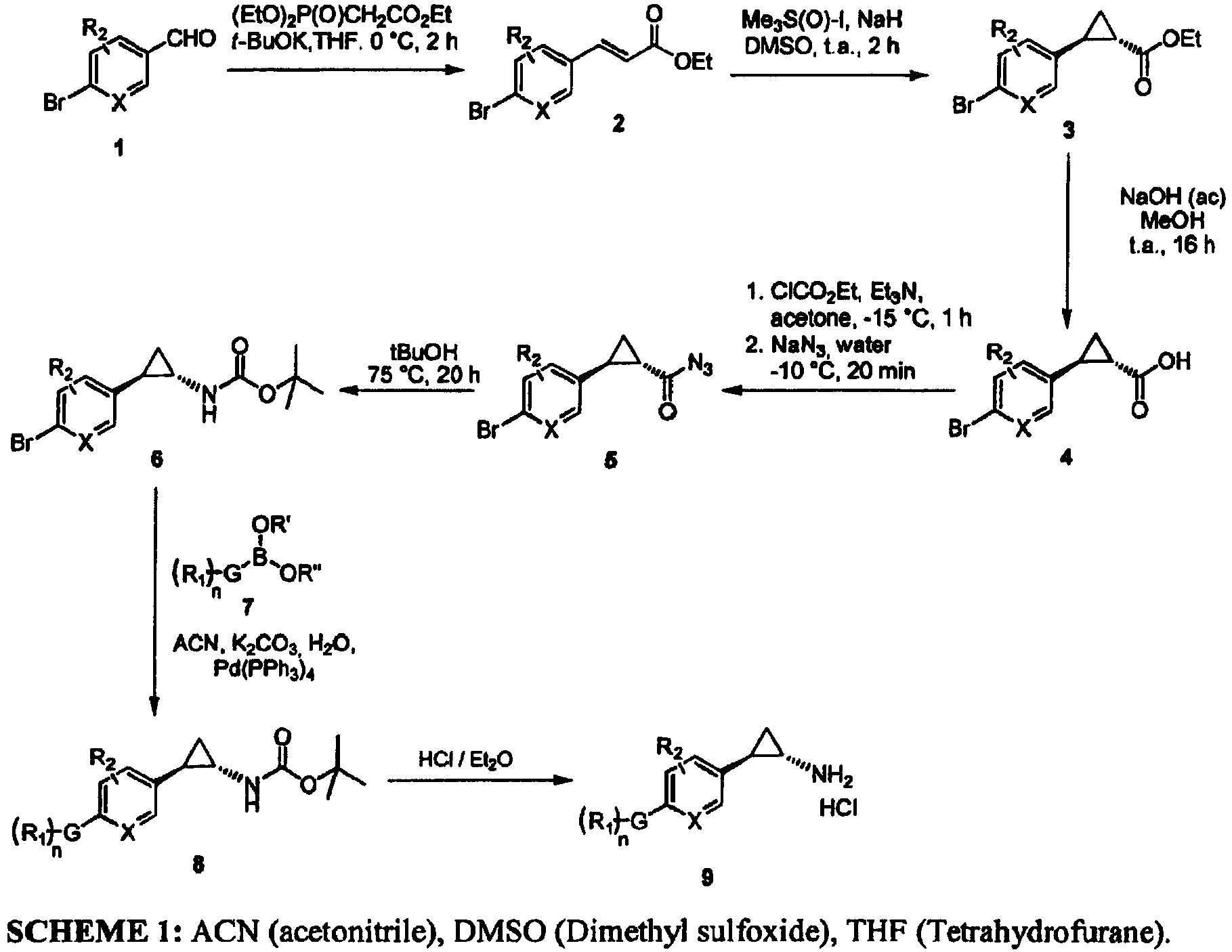
- Commercially availables aldehydes of formula (1) have been subjected to a Homer-Wadsworth-Emmons reaction using triethyl phosphono acetate and potassium tert-butoxide in tetrahydrofuran at 0°C to give the ethyl acrylate derivative of formula (2) which is subjected to cyclopropanation reaction using trimetilsulfoxonium iodide and sodium hydride in dimethyl sulfoxide as a solvent leading to (trans)-ethyl cyclopropanecarboxylate derivatives of formula (3) (being trans ((1S, 2R), (1R, 2S)) mixture although the individual diastereoisomers corresponding to (1S, 2R) and (1R, 2S) can be used). Hydrolysis to the corresponding (trans)-cyclopropanecarboxylic acid derivatives of formula (4) was performed using NaOH in MeOH. The reaction, first with ethyl chloroformate and triethylamine in acetone and later with sodium azide in water leads to the formation of (trans)-cyclopropanecarbonyl azide derivatives of formula (5). Reaction with tert-butanol results in the formation of tert-butyl (trans)- cyclopropylcarbamate derivatives of formula (6). Their reaction with commercially available boronic acid or boronate ester derivatives of formula (7) using acetonitrile and water as a solvent, potassium carbonate as a base and Tetrakis(triphenylphospine) Paladium (0) as a catalyst leads to the formation of tert-butyl (trans)-cyclopropylcarbamate derivatives of formula (8). Deprotection of the Boc-group using HCl 2M in diethyl ether using diethyl ether as a solvent leads to the formation of the corresponding hydrochloride salt of the (trans)-cyclopropanamine derivatives of formula (9), which are subject of the present invention as defined above.
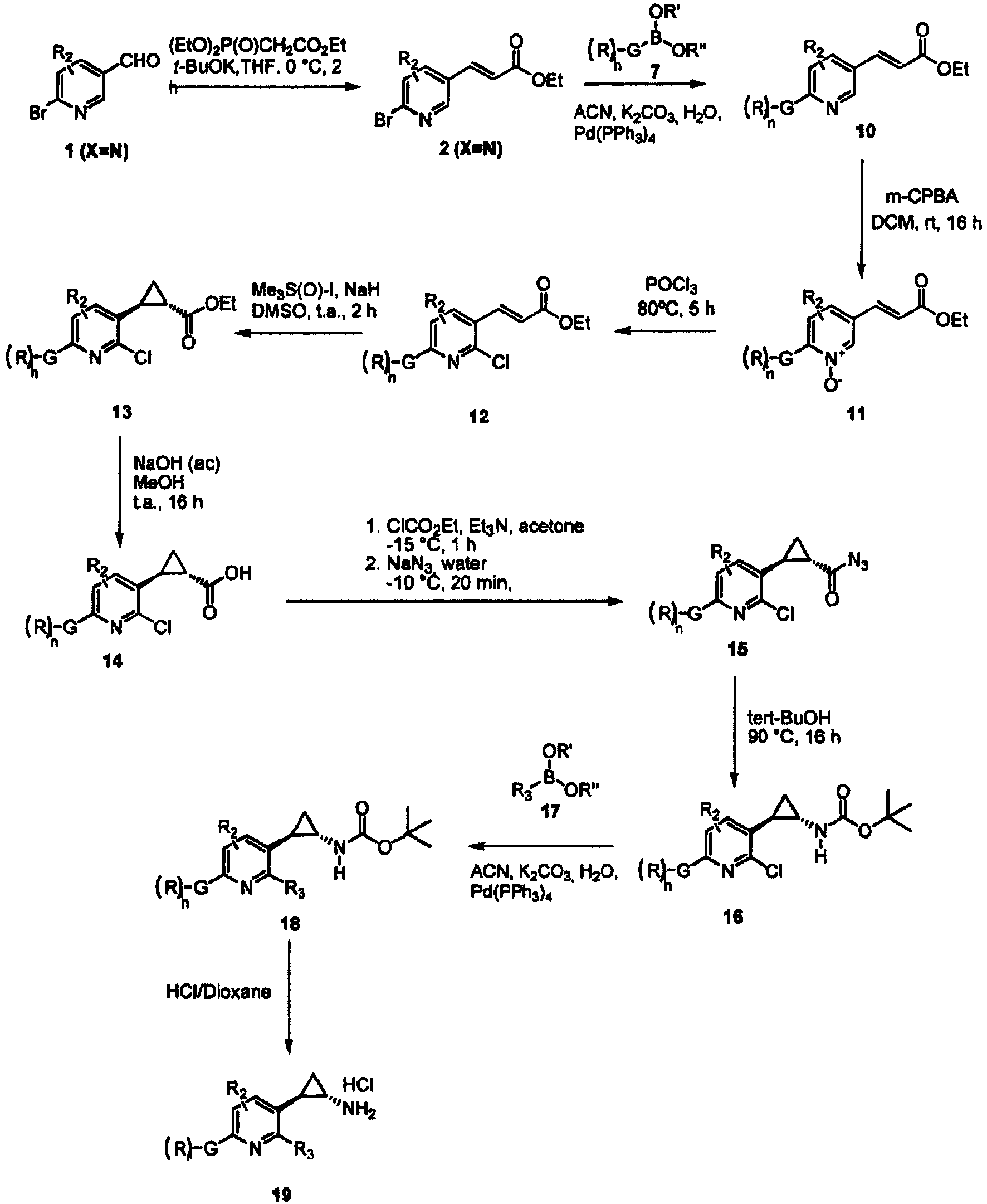

- Commercially availables 6-bromonicotinaldehydes of formula (1) (X=N), have been subjected to a Homer-Wadsworth-Emmons reaction using triethyl phosphono acetate and potassium tert-butoxide in tetrahydrofurane at 0°C to get the ethyl acrylate derivative of formula (2) (X=N). Their reaction with commercially available boronic acid or boronate ester derivatives of formula (7) using acetonitrile and water as a solvent, potassium carbonate as a base and Tetrakis(triphenylphospine) Paladium (0) as a catalyst leads to the formation of derivatives of formula (10). N-oxidation with meta-chloroperoxybenzoic acid in dichloromethane results in the formation of derivatives of formula (11). Reaction with phosphorus oxychloride provide compounds of formula (12) which are subjected to cyclopropanation reaction using trimetilsulfoxonium iodide and sodium hydride in dimethyl sulfoxide as a solvent leading to (trans)-ethyl cyclopropanecarboxylate derivatives of formula (13) (being trans ((1S, 2R), (1R, 2S)) mixture although the individual isomers corresponding to (1S, 2R) and (1R, 2S) can be used). Hydrolysis to the corresponding (trans)-cyclopropanecarboxylic acid derivatives of formula (14) was performed using NaOH in MeOH. The reaction, first with ethyl chloroformate and triethylamine in acetone and later with sodium azide in water leads to the formation of (trans)-cyclopropanecarbonyl azide derivatives of formula (15). Reaction with tert-butanol results in the formation of tert-butyl (trans)- cyclopropylcarbamate derivatives of formula (16). Later reaction with commercially available boronic acid or boronate ester derivatives of formula (17) using acetonitrile and water as a solvent, potassium carbonate as a base and Tetrakis(triphenylphospine) Paladium (0) as a catalyst leads to the formation of tert-butyl (trans)-cyclopropylcarbamate derivatives of formula (18). Deprotection of the Boc-group using HCl in dioxane leads to the formation of the corresponding hydrochloride salt of the (trans)-cyclopropanamine derivatives of formula (19), which are also subjects of the present invention.

- Commercially availables 6-bromonicotinaldehydes of formula (1) (X=N), have been subjected to a Horner-Wadsworth-Emmons reaction using triethyl phosphono acetate and potassium tert-butoxide in tetrahydrofuran at 0°C to get the ethyl acrylate derivative of formula (2) (X=N). Their reaction with commercially available boronic acid or boronate ester derivatives of formula (20) using acetonitrile and water as a solvent, potassium carbonate as a base and Tetrakis(triphenylphospine) Paladium (0) as a catalyst leads to the formation of derivatives of formula (10). N-oxidation with meta-chloroperoxybenzoic acid in dichloromethane results in the formation of derivatives of formula (11). Reaction with phosphorus oxychloride provide compounds of formula (12) which are subjected to cyclopropanation reaction using trimethylsulfoxonium iodide and sodium hydride in dimethyl sulfoxide as a solvent leading to (trans)-ethyl cyclopropanecarboxylate derivatives of formula (13) (being trans ((1S, 2R), (1R, 2S)) mixture although the individual isomers corresponding to (1S, 2R) and (1R, 2S) can be used). Hydrolysis to the corresponding (trans)-cyclopropanecarboxylic acid derivatives of formula (14) was performed using NaOH in MeOH. The reaction, first with ethyl chloroformate and triethylamine in acetone and later with sodium azide in water leads to the formation of (trans)-cyclopropanecarbonyl azide derivatives of formula (15). Reaction with tert-butanol results in the formation of tert-butyl (trans)- cyclopropylcarbamate derivatives of formula (16). Later reaction with commercially available boronic acid or boronate ester derivatives of formula (17) using acetonitrile and water as a solvent, potassium carbonate as a base and Tetrakis(triphenylphospine) Paladium (0) as a catalyst leads to the formation of tert-butyl (trans)-cyclopropylcarbamate derivatives of formula (18). Deprotection of the Boc-group using HCl in dioxane or BBr3 in dichloromethane with later HCl 2M in diethyl ether leads to the formation of the corresponding hydrochloride salt of the (trans)-cyclopropanamine derivatives of formula (19), which are also subjects of the present invention.
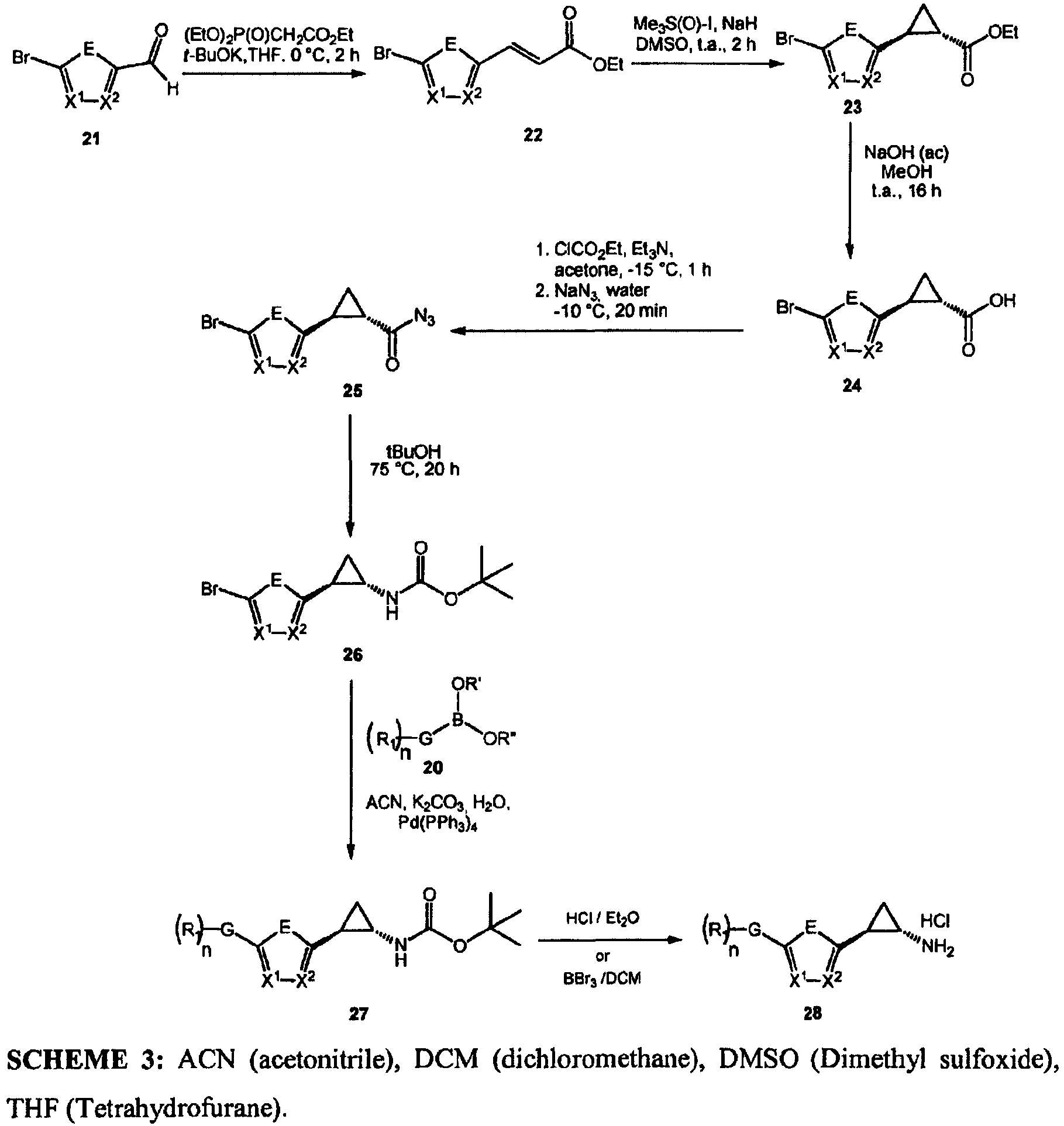
- Commercially availables aldehydes of formula (21) have been subjected to a Homer-Wadsworth-Emmons reaction using triethyl phosphono acetate and potassium tert-butoxide in tetrahydrofurane at 0°C to get the ethyl acrylate derivative of formula (22) which is subjected to cyclopropanation reaction using trimethylsulfoxonium iodide and sodium hydride in dimethyl sulfoxide as a solvent leading to (trans)-ethyl cyclopropanecarboxylate derivatives of formula (23) (being trans ((1S, 2R), (1R, 2S)) mixture although the individual diastereoisomers corresponding to (1S, 2R) and (1R, 2S) can be used). Hydrolysis to the corresponding (trans)-cyclopropanecarboxylic acid derivatives of formula (24) was performed using NaOH in MeOH. The reaction, first with ethyl chloroformate and triethylamine in acetone and later with sodium azide in water leads to the formation of (trans)-cyclopropanecarbonyl azide derivatives of formula (25). Reaction with tert-butanol results in the formation of tert-butyl (trans)- cyclopropylcarbamate derivatives of formula (26). Their reaction with commercially available boronic acid or boronate ester derivatives of formula (20) using acetonitrile and water as a solvent, potassium carbonate as a base and Tetrakis(triphenylphospine) Paladium (0) as a catalyst leads to the formation of tert-butyl (trans)-cyclopropylcarbamate derivatives of formula (27). Deprotection of the Boc-group using HCl 2M in diethyl ether using diethyl ether as a solvent or BBr3 in dichloromethane with later HCl 2M in diethyl ether leads to the formation of the corresponding hydrochloride salt of the (trans)-cyclopropanamine derivatives of formula (28), which are also subject of the present invention.
- Thus, the invention further relates to methods synthesizing a compound of formula (I) according to the methods described herein.
- Furthermore, the invention also relates to an intermediate of formula (1), formula (2), formula (3), formula (4), formula (5), formula (6), formula (7), formula (8), formula (9), formula (10), formula (11), formula (13), formula (14), formula (15), formula (16), formula (17), formula (18), formula (19), formula (20), formula (21), formula (22), formula (23), formula (24), formula (25), formula (26), formula (27), or formula (28) wherein the various R groups are as defined herein.
- Furthermore, the invention also relates to a method of preparing an intermediate of formula (1), formula (2), formula (3), formula (4), formula (5), formula (6), formula (7), formula (8), formula (9), formula (10), formula (11), formula (13), formula (14), formula (15), formula (16), formula (17), formula (18), formula (19), formula (20), formula (21), formula (22), formula (23), formula (24), formula (25), formula (26), formula (27), or formula (28) wherein the various R-groups are as defined herein said method comprising contacting the starting materials and reagents under conditions sufficient to catalyze the reaction as illustrated in Scheme 1, 2, or 3.
- The program used to generate the names corresponding to the structures in the Example compounds below was ChemBioDraw Ultra 11.0.1. This program named the molecules as the (1S,2R) configuration due to the configuration of the input structure and the "trans" term has been substituted in the place of the (1S,2R) term specified by the program. The structures depicted below for the Example compounds below are shown as having one particular stereochemical configuration around the cyclopropyl carbon atoms of the phenylcyclopropylamine core (1S, 2R). All the compounds synthesized in the Examples are mixtures having both configurations (1R, 2S) and (1S, 2R), that is to say they are "trans" in respect to the cyclopropyl ring of the cyclopropyl ring system. This is due to the fact the cyclopropyl derivatives used as starting material are "trans". It is contemplated that the cis configuration starting material or the individual diastereomers could be used as starting material, all of which are either commercially or synthetically available. Thus, the invention relates to compounds of Formula (I), (II), (III), (IV) or (V) and those of the examples that have specific stereochemical configurations around the cyclopropyl ring e.g., trans ((1R, 2S) and (1S, 2R)) and cis ((1R, 2R) and (1S, 2S)). A preferred stereochemical configuration around the cyclopropyl ring is trans.
- The compounds of the examples can also be synthesized or provided in a salt form. The skilled artisan is aware and capable of making salt forms and/or converting salt forms of the compounds of the invention, e.g., compounds of Formula (I), (II), (III), (IV) or (V) and those of the Examples. In some cases the compounds of Formula (I), (II), (III), (IV) or (V) and the Examples can be more stable as salt forms as compared to free base.
- In reference to the synthetic schemes described herein the following intermediates (and analogous intermediates or derivatives thereof) can be made using the following procedures.
-

- A solution of triethyl phosphonoacetate (13.1 g, 0.0589 mol) was added slowly (dropwise) to a solution of Potassium-tert-butoxide (6.59 g, 0.0589 mol), in dry THF (150 mL) at -5 °C, stirred for 30-45 mins at the same temperature, then a solution of 4-Bromo benzaldehyde (10 g, 0.054 mol), in dry THF (50 mL) was slowly added dropwise at -5 °C over a period of 15 mins, stirred the reaction mixture for 30 mins at the same temperature. After completion of reaction by TLC, the reaction mixture was poured into ice water (300 mL), extracted with EtOAc (2 x 200 mL). The combined organic extracts were washed with sat NaHCO3 solution (200 mL), water (200 mL), brine (200 mL) and dried over anhydrous Na2SO4, filtered and evaporated to get crude (E)-ethyl 3-(4-bromophenyl) acrylate (10 g, 72 %) as pale green liquid. This is carried to next step without further purification.
-
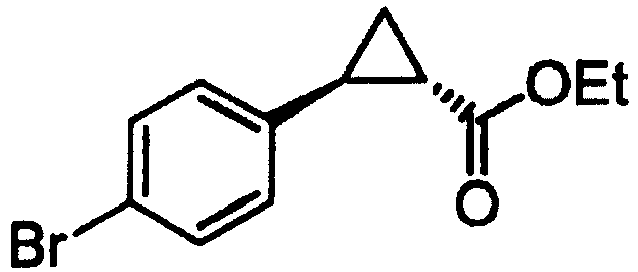
- Trimethyl sulfoxonium iodide (5.19 g, 0.0236 mol) was added slowly in small portions over a period of 20 min. to a suspension of sodium hydride (0.44 g, 0.0236 mol) in dry DMSO (80 mL) at rt, stirred for 1 h, till the formation of clear solution. Then a solution of (E)-ethyl 3-(4-bromophenyl) acrylate (Intermediate A, 5 g, 0.01968), in dry DMSO (20 mL) was added slowly dropwise, stirred at rt for 30 mins. After completion of reaction, checked by TLC, the reaction mixture was poured into ice water (200 mL), extracted with EtOAc (2 x 150 mL). Combined organic extracts were washed with ice water (2 x 150 mL), brine (150 mL), dried over anhydrous Na2SO4, filtered and evaporated to get (trans)-ethyl 2-(4-bromophenyl)cyclopropanecarboxylate (4 g, 75.9 %) as a green liquid. The crude is carried to next step without further purification.
-
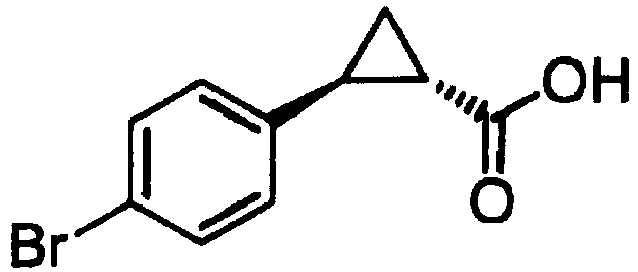
- NaOH 4N (20 mL) was added to a solution of (trans)-ethyl 2-(4-bromophenyl)cyclopropanecarboxylate (Intermediate B, 4 g, 0.0149 mol), in Methanol (40 mL) and stirred at rt for 2 h. After completion of reaction, checked by TLC, the solvent was evaporated and the residue was diluted with water (50 mL), acidified with HCl 4 N solution, the solid formed was filtered and dried to get (trans)-2-(4-bromophenyl)cyclopropanecarboxylic acid (2.59 g, 72 %), as a white solid.
-
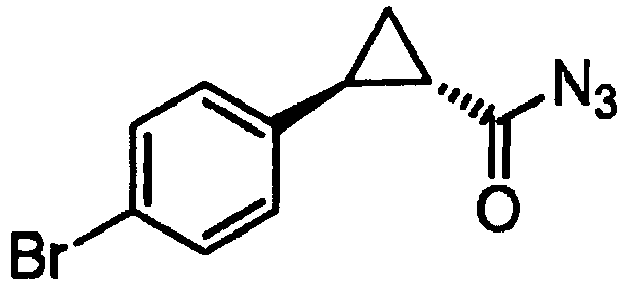
- Ethyl chloroformate (1.9 mL) was added to a solution of (trans)-2-(4-bromophenyl) cyclopropanecarboxylic acid (Intermediate C, 4 g, 0.0165 mol) and Et3N (2.51 mL, 0.0199 mol) in acetone (60 mL) at -20 °C, stirred at same temperature for 1 h, then a solution of NaN3 (1.3 g, 0.0199 mol) in water (5 mL), was added and stirred for 30 mins at rt. After completion of reaction, checked by TLC, the solvent was evaporated and crude residue was dissolved in ethyl acetate (100 mL), washed with water (40 mL), dried over anhydrous Na2SO4, filtered and evaporated to get (trans)-2-(4-bromophenyl)cyclopropanecarbonyl azide (4 g). The crude residue is carried to next step without further purification.
-
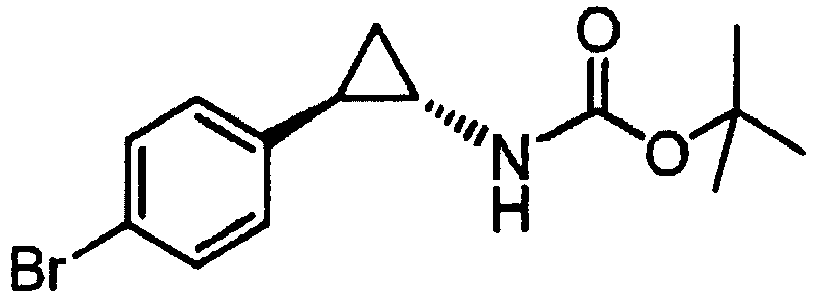
- A solution of (trans)-2-(4-bromophenyl) cyclopropanecarbonyl azide (Intermediate D, 4 g) in tert-Butanol (40 mL) was heated at 90 °C for 16 h. After completion of reaction, checked by TLC, the solvent was evaporated residue was poured into water (50 mL), extracted with EtOAc (2 x 50 mL). The combined organic extracts were washed with water (50 mL), brine (50 mL), dried over anhydrous Na2SO4, filtered and evaporated. The crude residue was purified by column chromatography (SiO2) by eluting with EtOAc: Pethroleum ether (2: 98), to get tert-butyl (trans)-2-(4-bromophenyl)cyclopropylcarbamate (2.5 g, 48 % overall 2 steps) as a white solid. 1H-NMR (CDCl3, 250 MHz) δ: 1.07-1.19 (m, 2H), 1.44 (s, 9H); 2.05-1.94 (m, 1H); 2.72-2.62 (m, 1H); 4.85 (br, 1H,); 7.09-6.96 (m, 2H); 7.44-7.33 (m, 2H).
-

- Triethyl phosphonoacetate (26.6g, 118.8 mmol) was added slowly dropwise to a mixture of Potassium-tert-butoxide (14.5g, 129.6 mmol) in dry THF (200 mL) at -5 °C, stirred for 20 min and then a solution of 6-bromopyridine-3-carboxaldehyde (20 g, 108 mmol) in dry THF (100 mL) was added slowly dropwise at -5 °C and stirred for 30 min. After completion, the reaction mixture was poured into ice water (350 mL) and extracted with EtOAc (2 x 300 mL). The combined organic extracts were washed with saturated NaHCO3 solution (250 mL), water (250 mL) and brine (250 mL) and dried over anhydrous Na2SO4, filtered and evaporated to get (E)-ethyl 3-(6-bromopyridin-3-yl) acrylate (20 g, 72.9 %) as brown color liquid. This is carried to next step without further purification.
-
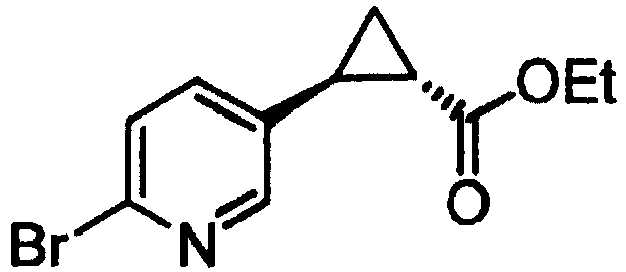
- Trimethyl sulfoxonium iodide (20.8g, 94.7 mmol) was added in small portions to a suspension of sodium hydride (4g, 170.6 mmol) in dry DMSO (400 mL) at rt., stirred for 1 h until clear solution was obtained. A solution of (E)-ethyl 3-(6-bromopyridin-3-yl) acrylate (Intermediate F, 20 g, 78.7 mmol) in dry DMSO (20 mL) was added and stirred for 4 h. After completion, the reaction mixture was poured into ice water (700 mL), extracted with EtOAc (2 x 350 mL). The combined organic extracts were washed with water (250 mL), brine (250 mL) and dried over anhydrous Na2SO4, filtered and evaporated to give (trans)-ethyl-2-(6-bromopyridin-3-yl)cyclopropanecarboxylate (10g, 47 %) as brown liquid.
-

- NaOH 4N solution (60 mL) was added to a solution of (trans)-ethyl-2-(6-bromopyridin-3-yl)cyclopropanecarboxylate (Intermediate G,10 g, 37.1 mmol) in methanol (100 mL) and the reaction mixture was stirred at RT for 4 h. After completion, the solvent was evaporated and the residue was diluted with ice water (250 mL) and acidified with 4 N HCl solution, the aqueous layer was extracted with EtOAc (2 x 350 mL). The combined organic extracts were washed with water (250 mL), brine (250 mL) and dried over anhydrous Na2SO4, filtered and evaporated to give (trans)-2-(6-bromopyridin-3-yl)cyclopropanecarboxylic acid hydrochloride (5g, 55.8 %) as a light brown color solid.
-

- Ethyl chloroformate (5.8 mL, 62 mmol) was added to a solution of (trans)-2-(6-bromopyridin-3-yl)cyclopropanecarboxylic acid hydrochloride (Intermediate H, 5 g, 20.7 mmol) and Et3N (14,2 mL, 103.7 mmol) in Acetone (100 mL) at -5 °C, then reaction mixture was stirred at -5 °C for 1 h, then a solution of NaN3 (2.7g, 41.4 mmol) in water (10 mL) was added and stirred for 30 mins at RT. After completion the solvent was evaporated under vacuum. The crude residue was dissolved in ethyl acetate (200 mL), washed with water (80 mL), brine (80 mL), dried over anhydrous Na2SO4, filtered and evaporated to get (trans)-2-(6-bromopyridin-3-yl)cyclopropanecarbonyl azide (2.5 g, 45.5 %) as a brown color gummy liquid.
-
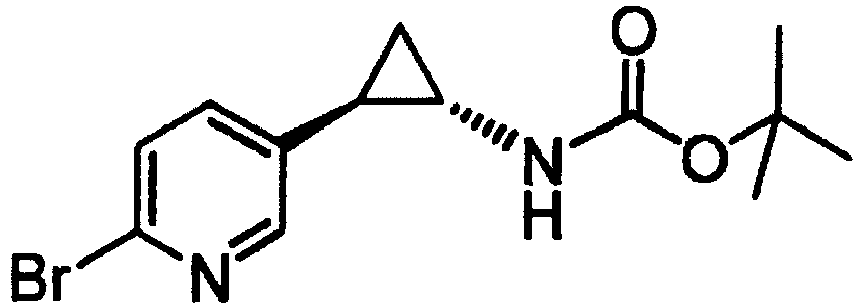
- A solution of (trans)-2-(6-bromopyridin-3-yl)cyclopropanecarbonyl azide (Intermediate I, 2.5 g, 9.36 mmol) in tert-butanol (80 mL) was heated at 90 °C for 16 h. After completion, the solvent was evaporated under vacuum and the residue was taken in water (100 mL) and extracted with EtOAc (2 x 100 mL). The combined organic extracts were washed with water (100 mL), brine (100 mL) and dried over anhydrous Na2SO4, filtered and evaporated. The crude residue was purified by flash column chromatography (SiO2) by eluting with EtOAc: Hexane (2: 8) to get tert-butyl (trans)-2-(6-bromopyridin-3-yl)cyclopropylcarbamate (1.1g, 37.5%) as a light yellow solid. 1H-NMR (CDCl3) δ (ppm): 1.16 (q, 1H), 1.23 (quin, 1H), 1.45 (s, 9H), 2.01 (m, 1H), 2.69 (m, 1H), 4.88 (br, 1H), 7.36 (s, 2H), 8.20 (s, 1H).
-
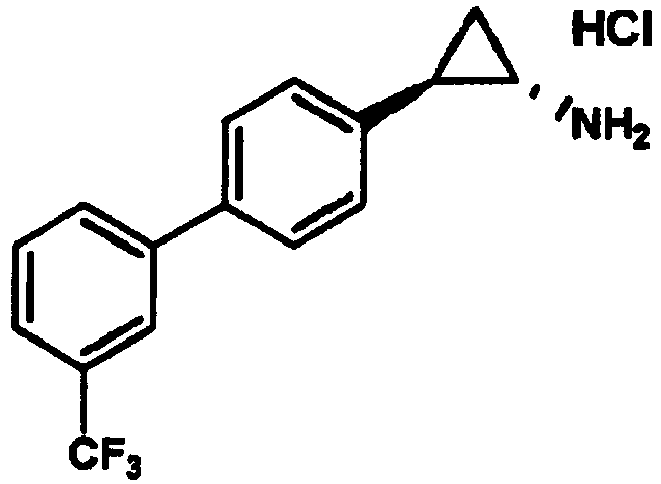
- To a solution of tert-butyl (trans)-2-(4-bromophenyl)cyclopropylcarbamate (Intermediate E[a2]) (1 g, 3.2 mmol), potassium carbonate (1.31 g, 9.6 mmol), 3-(trifluoromethyl) phenylboronic acid (0.73 g, 3.8 mmol) in acetonitrile: water (4: 1) were degassed for 30 mins, added tetrakis triphenylphosphine palladium (36 mg, 0.032 mmol), degassed again for 10 mins, heated the reaction mixture at reflux temperature for 5 h. After completion, the reaction mixture was poured in ice water (50 mL), extracted with, ethyl acetate (2 x 50 mL). Combined extracts were washed with water (70 mL), brine (70 mL), dried over anhydrous Na2SO4, filtered and evaporated. The crude residue was purified by column chromatography (SiO2), by using EtOAc: Petroleum ether (2:8) to get tert-butyl (trans)-2-(3'-(trifluoromethyl)biphenyl-4-yl)cyclopropylcarbamate (0.8 g, 66 %) as a white solid.
- To a solution of tert-butyl (trans)-2-(3'-(trifluoromethyl)biphenyl-4-yl)cyclopropylcarbamate (200 mg, 0.53 mmol), in diethyl ether (5 mL) at 10 °C was added HCl in diethyl ether (3 mL), slowly dropwise over a period of 10 min, stirred the reaction mixture for 4 h. After completion, the solvent was evaporated, residue was triturated with hexane (5 mL) and diethyl ether (5 mL), and dried under reduced pressure to get (trans)-2-(3'-(trifluoromethyl)biphenyl-4-yl)cyclopropanamine hydrochloride (140 mg, 77.8 %) as a white solid. 1H-NMR (DMSO-d6) δ (ppm): 1.27 (q, 1H), 1.46 (quin, 1H), 2.41 (m, 1H), 2.86 (m, 1H), 7.29 (d, 2H), 7.69 (m, 4H), 7.96 (m, 2H), 8.53 (s, 1H), 8.61 (br, 2H). MS (M+H): 278.3
- The following compounds can be synthesized following the method described for example 1 using the corresponding commercial available boronic acid / boronate ester.
-
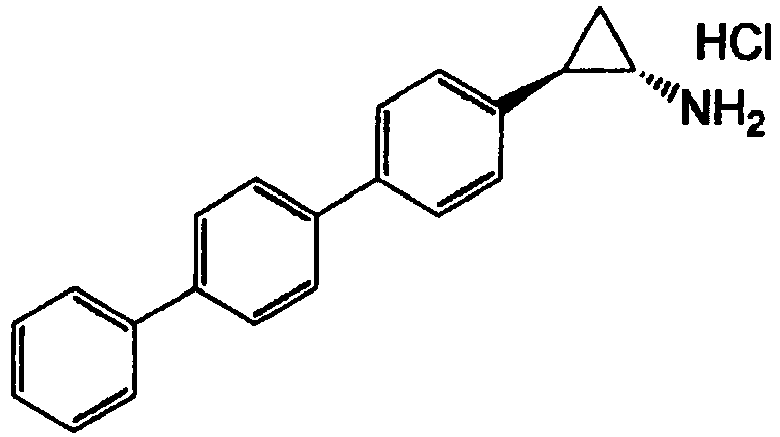
- 1H-NMR (DMSO-d6) δ (ppm): 1.27 (q, 1H), 1.43 (quin, 1H), 2.40 (m, 1H), 2.87 (m, 1H), 7.27 (d, 2H), 7.38 (t, 1H), 7.49 (t, 2H), 7.67 (d, 2H), 7.72 (d, 2H), 7.76 (s, 4H), 8.51 (s, 2H). MS (M+H) : 286.4.
-
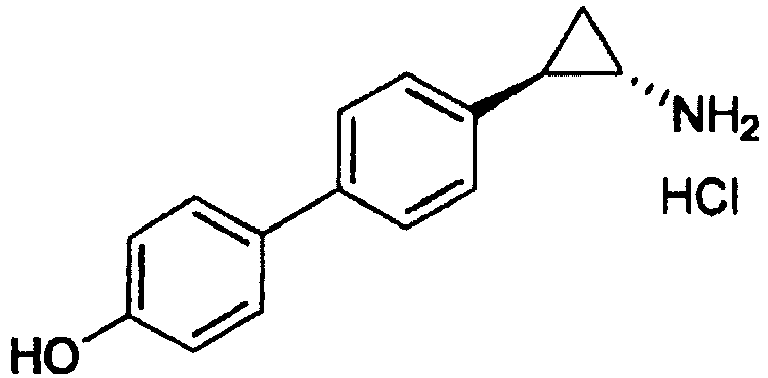
- 1H-NMR (DMSO-d6) δ (ppm): 1.22 (q, 1H), 1.4 (m, 1H), 2.35 (m, 1H), 2.85 (m, 1H), 6.8 (d, 2H), 7.2 (d, 2H), 7.45 (d, 2H), 7.5 (d, 2H), 8.4 (brs, 3H), 9.6 (s, 1H). MS (M+H): 226.1.
-
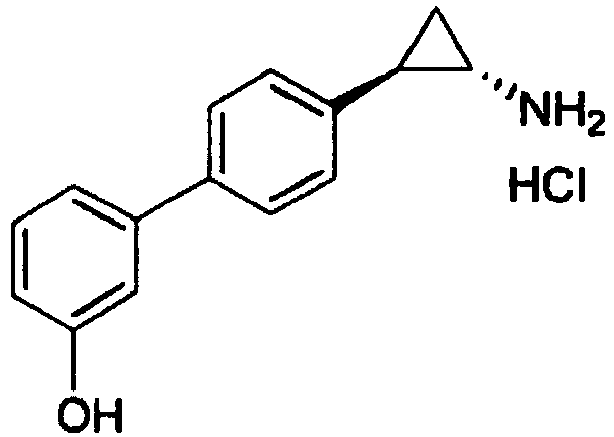
- 1H-NMR (DMSO-d6) δ (ppm): 1.24 (q, 2H), 1.43 (quin, 1H), 2.39 (m, 1H), 2.83 (m, 1H), 6.75 (d, 1H), 7.02 (m, 2H), 7.23 (d, 3H), 7.51 (d, 2H), 8.56 (br, 3), 9.54 (s, 1H). MS (M+H) : 226.1.
-

- A solution of tert-butyl (trans)-2-(6-bromopyridin-3-yl)cyclopropylcarbamate (Intermediate J[a2]) (100 mg, 0.32 mmol), potassium carbonate (132 mg, 0.96 mmol) and 3-trifluoromethylbenzeneboronic acid (72 mg, 0.38 mmol) in CH3CN: H2O (4: 1) (10 mL) was degassed for 30 mins, added tetrakis triphenylphosphine palladium (37mg, 0.032 mmol), degassed for 10 mins and heated the reaction mixture at reflux temperature for 2 h. After completion, the reaction mixture was poured in ice water (100 mL), extracted with ethyl acetate (5 x 40 mL). The combined extract were washed with water (70 mL), brine (70 mL), dried over anhydrous Na2SO4, filtered and evaporated. The crude residue was purified by column chromatography (SiO2), by using EtOAc:Petroleum ether (1:9) to get tert-butyl (trans)-2-(6-(3-(trifluoromethyl)phenyl)pyridin-3-yl)cyclopropylcarbamate (70 mg, 58.3%) as a white solid.
1H-NMR (CDCl3) δ (ppm): 1.26 (m, 2H), 1.46 (s, 9H), 2.10 (m, 1H), 2.78 (m, 1H), 4.86 (br, 1H), 7.55 (m, 2H), 7.65 (t, 2H), 8.14 (d, 1H), 8.24 (s, 1H), 8.54 (s, 1H). MS (M+H): 379.1. - To a solution of tert-butyl (trans)-2-(6-(3-(trifluoromethyl)phenyl)pyridin-3-yl)cyclopropylcarbamate (70 mg, 0.185mmol), in diethyl ether (10 mL) at 0 °C was added HCl in diethyl ether (5 mL) slowly dropwise over a period of 10 mins, stirred the reaction mixture for 2 h. After completion, the reaction mixture was filtered under inert atmosphere and washed with hexane (10 mL) and EtOAC (5 mL), and dried under reduced pressure to get (50 mg, 86.2%) of (trans)-2-(6-(3-(trifluoromethyl)phenyl)pyridin-3-yl)cyclopropanamine dihydrochloride as a pale yellow powder. 1H-NMR (D2O) δ (ppm): 1.52 (q, 1H), 1.63 (quin, 1H), 2.66 (m, 1H), 3.08 (m, 1H), 7.72 (t, 1H), 7.89 (d, 1H), 7.98 (d, 1H), 8.09 (s, 1H), 8.14 (d, 1H), 8.27 (d, 1H), 8.61 (s, 1H). MS (M+H) : 279.1.
- The following compounds can be synthesized following the method described for example 5 using the corresponding commercial available boronic acid / boronate ester.
-

- 1H-NMR (D2O) δ (ppm): 1.58 (q, 2H), 1.69 (quin, 1H), 2.69 (m, 1H), 3.13 (m, 1H), 7.67 (s, 1H), 7.76 (s, 2H), 8.07 (d, 1H), 8.22 (m, 1H), 8.64 (s, 1H). MS (M+H) : 279.1.
-
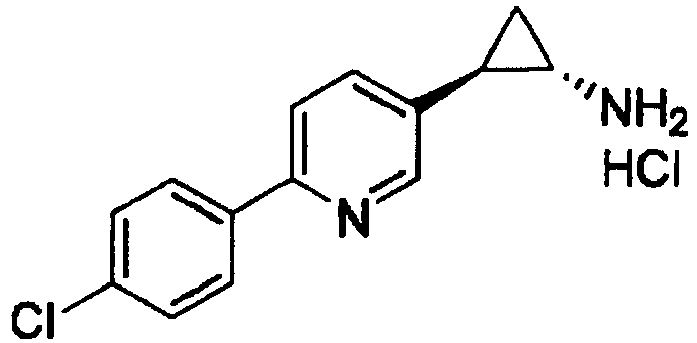
- 1H-NMR (CD3OD) δ (ppm): 1.70-1.75 (m, 2H), 2.75 (m, 1H), 3.2 (m, 1H), 7.69 (d, 2H), 7.93 (d, 2H), 8.3 (m, 1H), 8.45 (s, 1H), 8.8 (s, 1H). MS (M+H): 245.1.
-
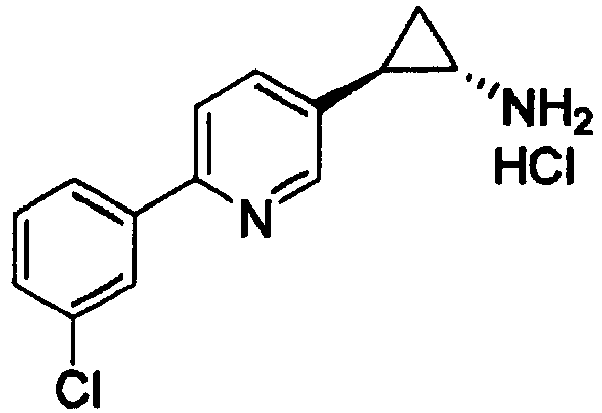
- 1H-NMR (CD3OD) δ (ppm): 1.7 (m, 2H), 2.75 (br, 1H), 3.2 (br, 1H), 7.65 (m, 2H), 7.85 (d, 1H), 8.0 (s, 1H), 8.3 (d, 1H), 8.4 (br, 1H), 8.8 (s, 1H). MS (M+H): 245.1.
-
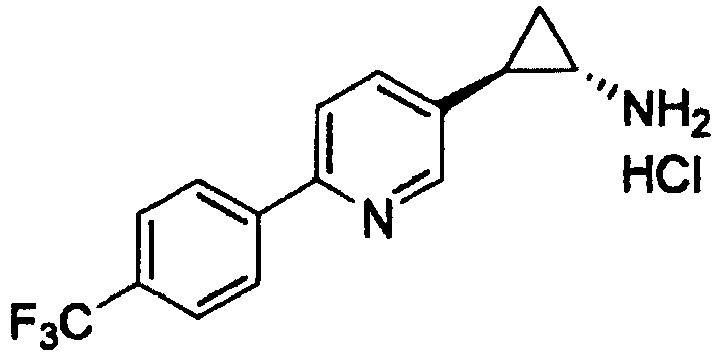
- 1H-NMR (CD3OD) δ (ppm): 1.67-1.73 (m, 2H), 2.78 (br, 1H), 3.21 (br, 1H), 7.97 (d, 2H), 8.14 (d, 2H), 8.35 (m, 1H), 8.45 (m, 1H), 8.88 (s, 1H). MS (M+H): 279.2.
-
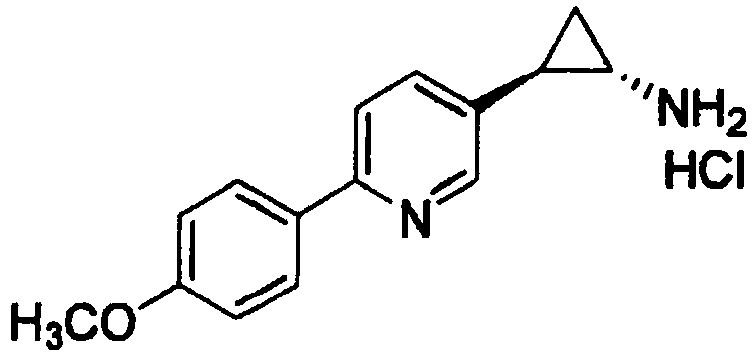
- 1H-NMR (CD3OD) δ (ppm): 1.7-1.75 (m, 2H), 2.75 (m, 1H), 3.2 (m, 1H), 3.92 (s, 3H), 7.21 (d, 1H), 7.95 (d, 2H), 8.3 (d, 1H), 8.40 (d, 1H), 8.71 (s, 1H). MS (M+H) : 241.2.
-

- 1H-NMR (CD3OD) δ (ppm): 1.73 (m, 2H), 2.75 (br, 1H), 3.22 (br, 1H), 3.9 (s, 3H), 7.26 (d, 1H), 7.48 (s, 2H), 7.60 (t, 1H), 8.32 (d, 1H), 8.45 (d, 1H), 8.8 (s, 1H). MS (M+H): 241.1.
-
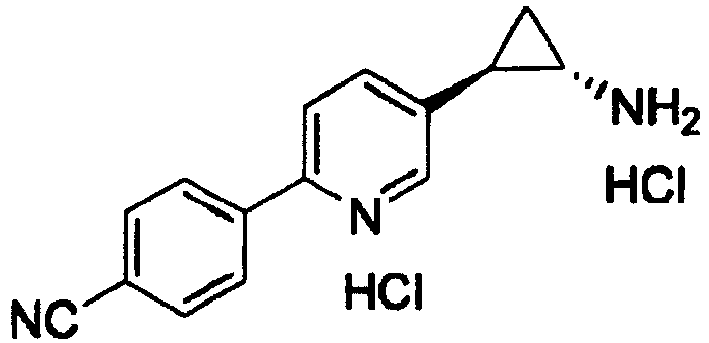
- 1H-NMR (CD3OD) δ (ppm): 1.6-1.69 (br, 2H), 2.71 (br, 1H), 3.20 (br, 1H), 8.01 (d, 2H), 8.12 (d, 2H), 8.27 (m, 1H), 8.44 (br, 1H), 8.85 (m, 1H). MS (M+H): 236.2.
-

- 1H-NMR (CD3OD) δ (ppm): 1.65 (m, 2H), 2.73 (br, 1H), 3.18 (br, 1H), 7.82 (m, 1H), 8.02 (m, 1H), 8.23-8.34 (m, 4H), 8.83 (br, 1H). MS (M+H) : 236.1.
-
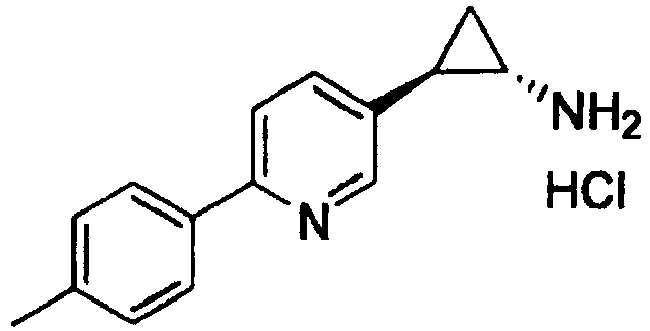
- 1H-NMR (CD3OD) δ (ppm): 1.64-1.71 (m, 2H), 2.47 (s, 3H), 2.74 (m, 1H), 3.2 (m, 1H), 7.5 (d, 2H), 7.84 (d, 2H), 8.3 (d, 1H), 8.43 (d, 1H), 8.75 (s, 1H). MS (M+H) : 225.2.
-
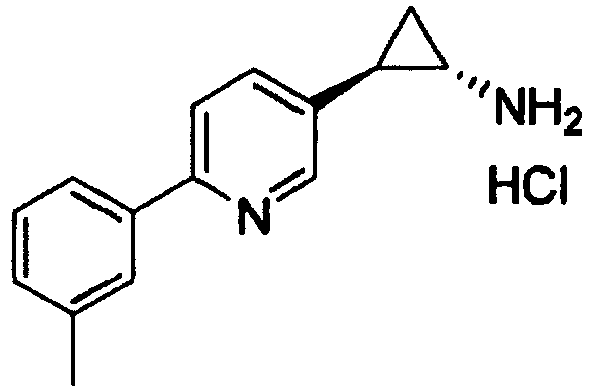
- 1H-NMR (CD3OD) δ (ppm): 1.63-1.71 (m, 2H), 2.49 (s, 3H), 2.76 (br, 1H), 3.2 (m, 1H), 7.55 (m, 2H), 7.74 (d, 1H), 7.78 (s, 1H), 8.31 (d, 1H), 8.46 (br, 1H), 8.79 (s, 1H). MS (M+H): 225.2.
-

- 1H-NMR (CD3OD) δ (ppm): 1.65 (m, 2H), 2.71 (m, 1H), 3.16 (m, 1H), 7.04 (d, 1H), 7.85 (d, 2H), 8.24 (d, 1H), 8.37 (d, 1H), 8.66 (s, 1H). MS (M+H): 227.2.
- The following compounds can be synthesized following the methodology described in Scheme 1.
-
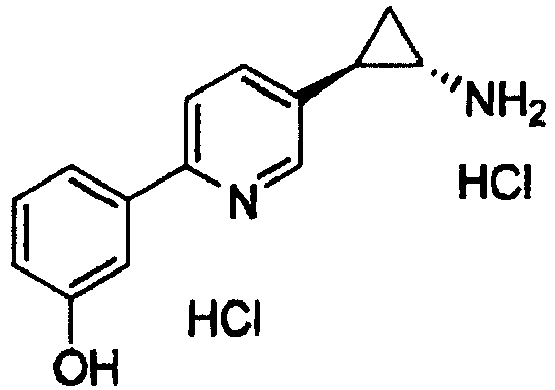
- 1H-NMR (400 MHz, DMSO-D6) δ: 8.6-8.8 (brd, 4H), 8-7.8 (brs, 2H), 7.43 (s, 2H), 7.3 (s, 1H), 6.9 (brs, 1H), 3.0 (brs, 1H), 2.57 (brs, 1H), 1.6 (brs 1H), 1.4 (brs, 1H). MS (M+H): 227.2.
-
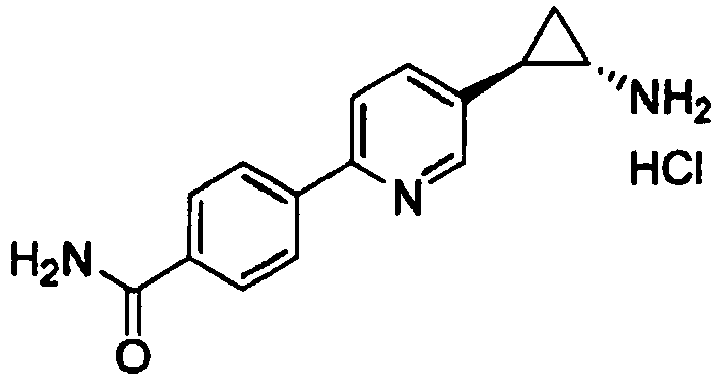
- 1H-NMR (400MHz CD3OD): δ 8.8 (s, 1H), 8.46-8.33 (m, 2H), 8.14-8.01 (band, 2H), 3.2 (m, 1H), 2.75 (brs, 1H), 1.74-1.64 (m, 2H). MS (M+H): 254.2.
-
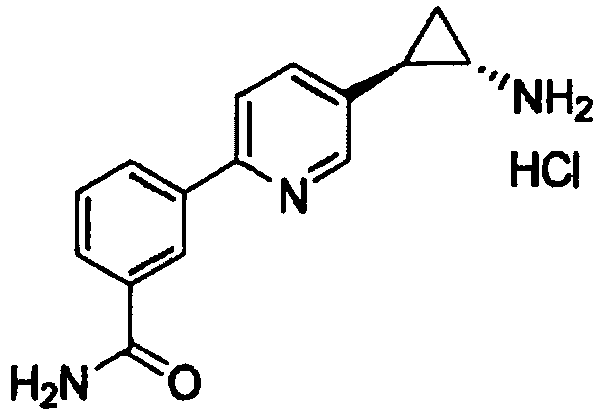
- 1H-NMR (400MHz CD3OD): δ 8.83 (s, 1H), 8.45-8.33 (band, 3H), 8.15 (m, 2H), 7.77 (m, 1H), 3.21 (brs, 1H), 2.75 (m, 1H), 1.69 (m, 2H). MS (M+H): 254.2.
-
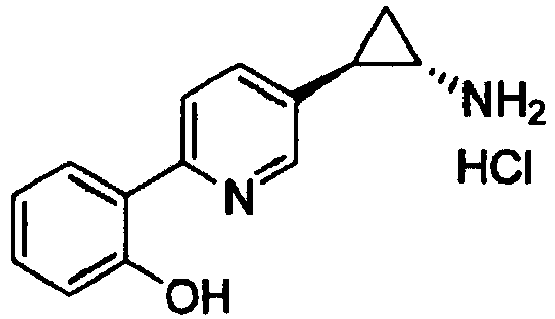
- 1H-NMR (400 MHz, D2O) δ: 8.65 (s, 1H), 8.3 (m, 2H), 7.75 (d, 1H), 7.58 (t, 1H), 7.2 (m, 2H), 3.2 (brs, 1H), 2.88 (brs, 1H), 1.75 (m, 1H), 1.6 (q, 1H). MS (M+H): 227.2.
-
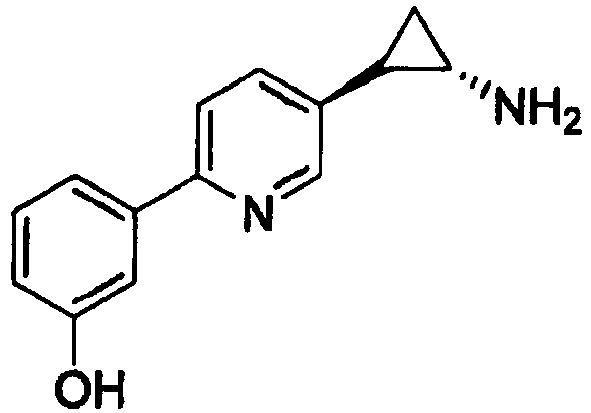
-

- 1H-NMR (400 MHz, DMSO D6) δ: 8.8-8.6 (brd, 4H), 8.18 (brs, 1H), 8.0 (brs, 1H), 7.7 (brs, 1H), 7.55 (brs, 1H), 7.3 (brs, 1H), 3.9 (s, 3H), 3.0 (brs, 1H), 2.6 (brs, 1H), 2.2 (s, 3H), 1.6 (brs, 1H), 1.4 (brs, 1H). MS (M+H): 255.2.
-
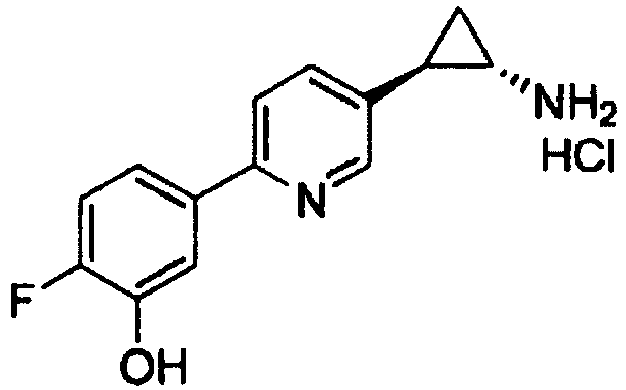
- 1H-NMR (400 MHz, D2O) δ: 8.55 (s, 1H), 8.24 (d, 1H), 8.07 (d, 1H), 7.4-7.3 (m, 3H), 3.12-3.08 (m, 1H), 2.69-2.64 (m, 1H), 1.67-1.62 (m, 1H), 1.56-1.51 (m, 1H). MS (M+H): 244.9.
-

- 1H-NMR (400 MHz, DMSO D6) δ: 8.6 (s, 1H), 8.25 (d, 1H), 8.1 (d, 1H), 7.1 (d, 2H), 6.85 (d, 1H), 3.1 (brs, 1H), 2.67 (brs, 1H), 1.68 (m, 1H), 1.55 (q, 1H). MS (M+H): 245.0.
-
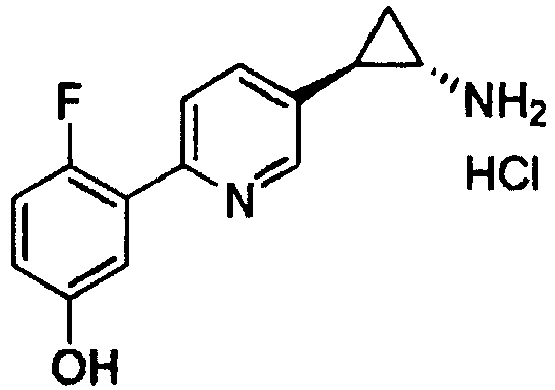
- 1H-NMR (400 MHz, DMSO D6) δ: 8.49 (s, 1H), 8.17 (d, 1H), 7.94 (d, 1H), 7.07 (t, 1H), 6.95 (m, 2H), 2.98 (m, 1H), 2.58 (m, 1H), 1.56 (m, 1H), 1.44 (q, 1H). MS (M+H): 244.9.
-
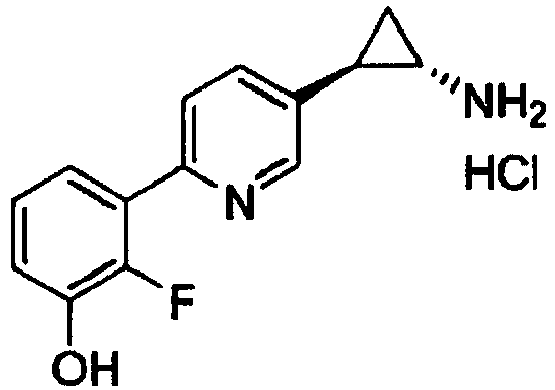
- 1H-NMR (400 MHz, D2O) δ: 8.63 (s, 1H), 8.24 (d, 1H), 8.05 (d, 1H), 7.23-7.14 (m, 3H), 3.1 (m, 1H), 2.7 (t, 1H), 1.63-1.66 (m, 1H), 1.54-1.57 (q, 1H). MS (M+H): 245.0.
-
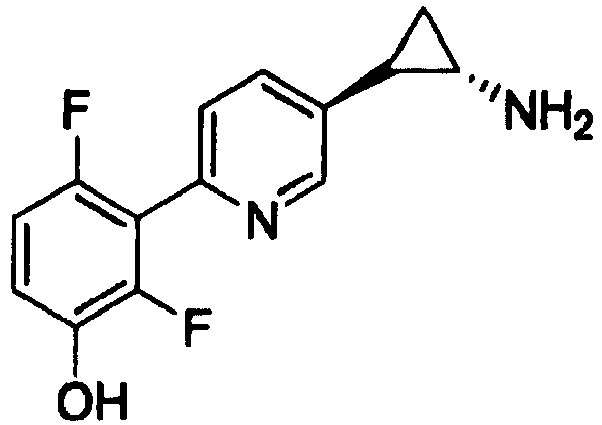
-
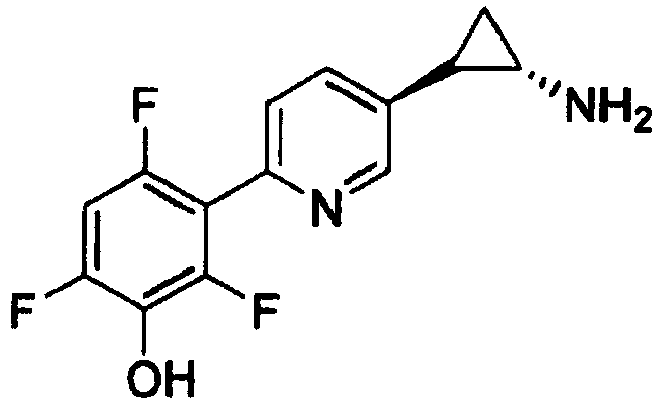
-
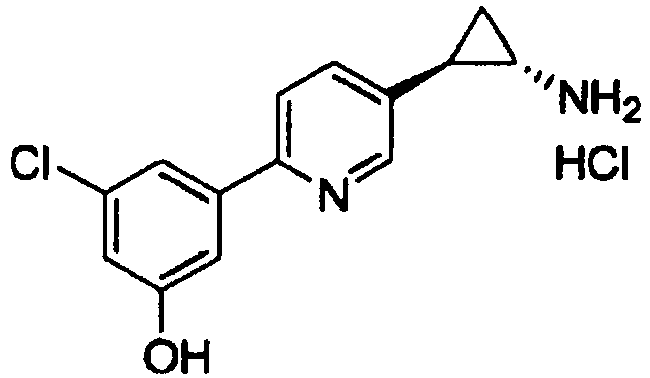
- 1H-NMR (400 MHz, D2O) δ: 8.59 (s, 1H), 8.23 (d, 1H), 8.06 (d, 1H), 7.36 (d, 1H), 7.13 (d, 2H), 3.1 (brs, 1H), 2.68 (brs, 1H), 1.66 (m, 1H), 1.54 (q, 1H). MS (M+H): 260.9.
-
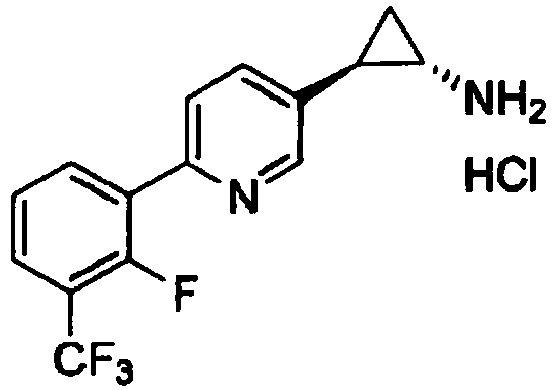
- 1H-NMR (400 MHz, D2O) δ: 8.69 (s, 1H), 8.26 (d, 1H), 8.10 (d, 1H), 7.95 (q, 1H), 7.55 (t, 1H), 3.14 (brs, 1H), 2.71 (brs, 1H), 1.68 (m, 1H), 1.59 (q, 1H). MS (M+H): 296.9.
-
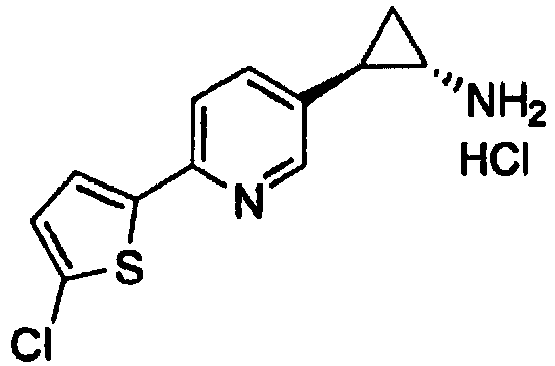
- 1H-NMR (400 MHz, D2O) δ: 8.38 (s, 1H), 8.02 (d, 2H), 7.90 (d, 1H), 7.58 (s, 1H), 7.09 (s, 1H),3.04 (brs, 1H), 2.58 (brs, 1H), 1.62 (m, 1H), 1.51 (q, 1H). MS (M+H): 251.1.
-
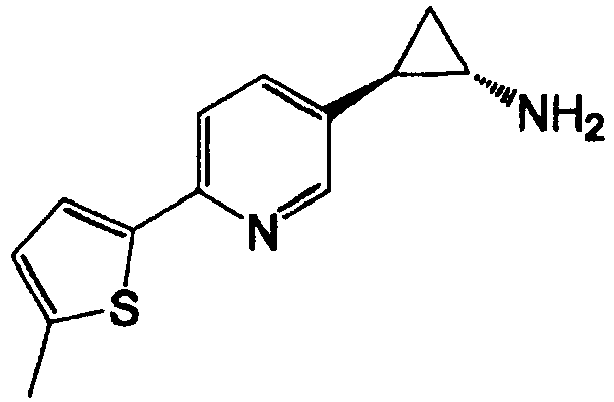
-
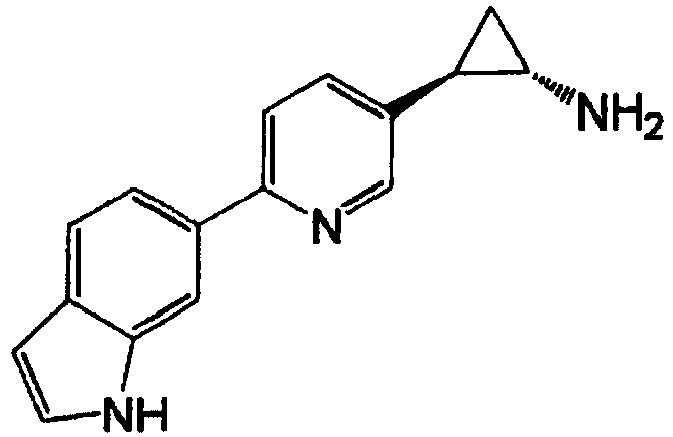
-
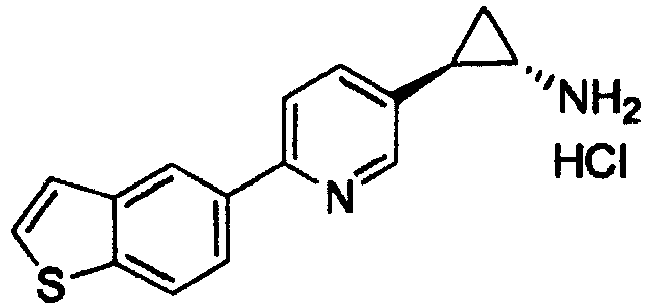
- 1H-NMR (400 MHz, D2O) δ: 8.52 (S, 1H), 8.24 (brm, 3H), 8.12 (s, 1H), 7.72-7.70 (brm, 2H), 7.49 (d,1H), 3.10 (brs, 1H), 2.66 (brs, 1H), 1.68 (brs, 1H), 1.57 (q,1H). MS (M+H): 267.1.
-
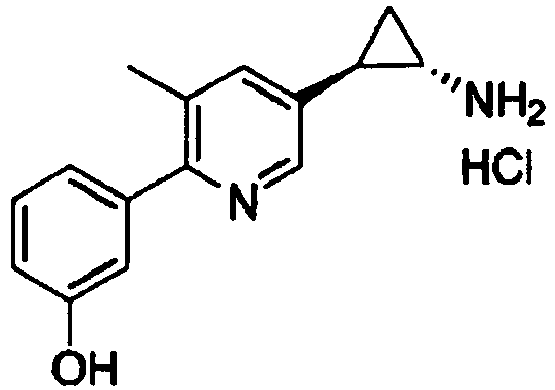
- 1H-NMR (400 MHz, CD3OD) δ: 8.6(m, 1H), 8.30 (brs, 1H), 7.47-7.43 (m, 1H), 7.07-6.98 (m, 3H), 3.24-3.15 (m, 1H), 2.66 (brs, 1H), 2.47 (s, 3H), 1.63-1.66 (2H, m). MS (M+H): 241.2.
-
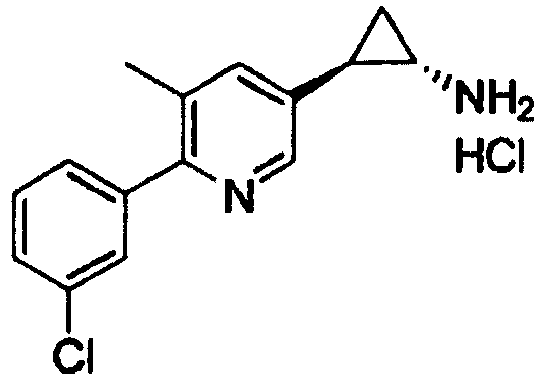
- 1H-NMR (400 MHz, CD3OD) δ: 8.70 (s, 1H), 8.39 (s, 1H), 7.72-7.57 (band, 4H), 3.21(m, 1H), 2.73 (brs, 1H), 2.47 (s, 3H), 1.68 (2H, band). MS (M+H): 259.1.
-

- 1H-NMR (400 MHz, CD3OD) δ: 8.73 (brs, 1H), 8.40 (m, 1H), 8.02-8.00 (m, 2H), 7.93-7.85 (m, 2H), 3.20-3.24 (m, 1H), 2.76-2.71 (brs, 1H), 2.46 (s, 3H), 1.72-1.66 (2H, m). MS (M+H): 293.2.
-

- 1H-NMR (400 MHz, DMSO D6) δ: 8.8, (m, 4H), 8.1 (m, 1H), 7.9 (2H, m), 7.65 (brs, 1H), 7.4 (t, 1H), 4.0 (s, 3H), 3.0 (brs, 1H), 2.5 (brs, 1H), 1.6 (brs, 1H), 1.4 (q, 1H). MS (M+H): 259.2.
-

- 1H-NMR (400 MHz, DMSO D6) δ: 8.8-8.6 (brs, 4H), 8.0 (brs, 1H), 7.8-7.6 (brs, 1H), 7.5 (brs, 2H), 6.9 (brs, 1H), 3.8 (s, 3H), 3.0 (s, 1H), 1.5 (brs, 1H), 1.4 (brs, 1H). MS (M+H): 259.2.
-
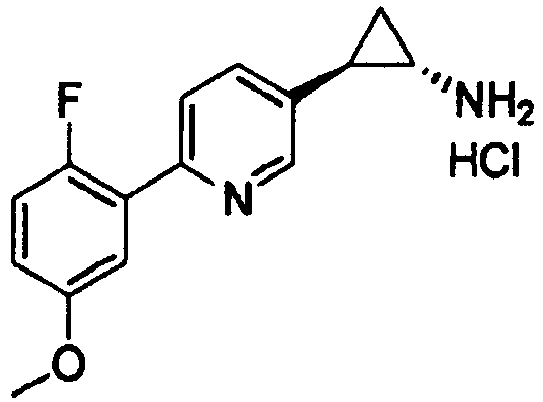
- 1H-NMR (400 MHz, DMSO D6) δ: 8.9(d, 4H), 7.8 (s, 2H), 7.45 (s, 1H), 7.3 (t, 1H), 7.07 (brs, 1H),3.8 (s, 3H), 3.0 (brs, 1H), 2.5 (s, 1H), 1.6 (m, 1H), 1.4 (q, 1H). MS (M+H): 259.2.
-
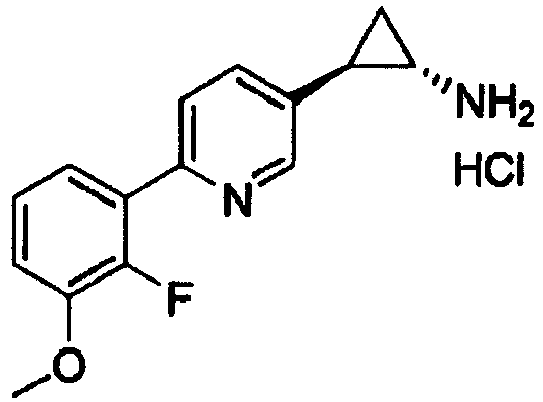
- 1H-NMR (400 MHz, D2O) δ: 8.8 (s, 1H), 8.4 (d, 1H), 8.2 (d, 1H), 7.45 (m, 2H), 7.3 (m, 1H), 4.0 (s, 3H), 3.2 (brs, 1H), 2.8 (brs, 1H), 1.8 (brs, 1H), 1.65 (q, 1H). MS (M+H): 259.2.
-
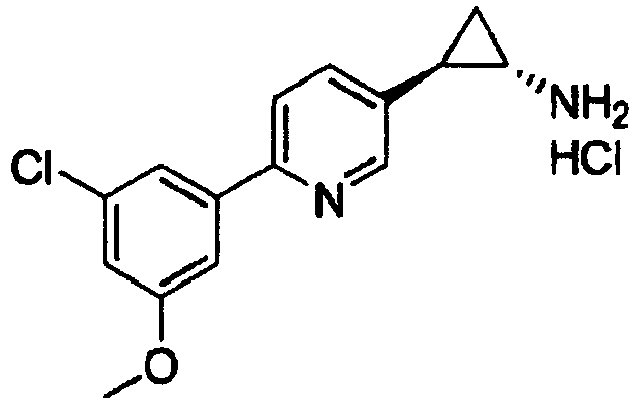
- 1H-NMR (400 MHz, DMSO D6) δ: 8.8-8.6 (brd, 4H), 8.1 (m, 1H), 7.8 (m, 2H), 7.6 (s, 1H), 7.17 (s, 1H), 3.8 (s, 3H), 3.0 (brs, 1H), 2.5 (s, 1H), 1.58 (brs, 1H), 1.4 (q, 1H). MS (M+H): 275.2.
-

- 1H-NMR (400 MHz, DMSO D6) δ: 8.9-8.6 (brd, 4H), 8.0-7.8 (brd, 2H), 7.5 (m, 1H), 7.2-7.1 (brd, 2H), 3.9 (s, 3H), 3.0 (brs, 1H), 2.6 (brs, 1H), 1.6 (brs, 1H), 1.4 (brs, 1H). MS (M+H): 274.9.
-

- 1H-NMR (400 MHz, DMSO D6) δ: 8.7-8.4 (brd, 4H), 8.10 (d, 1H), 8.02 (s, 1H), 7.92 (s, 1H), 7.71 (d, 1H), 7.31 (s, 1H), 3.94 (s, 3H), 3.0 (brs, 1H), 2.42 (brs, 1H), 1.50 (brs, 1H), 1.38 (q, 1H). MS (M+H): 309.1.
-
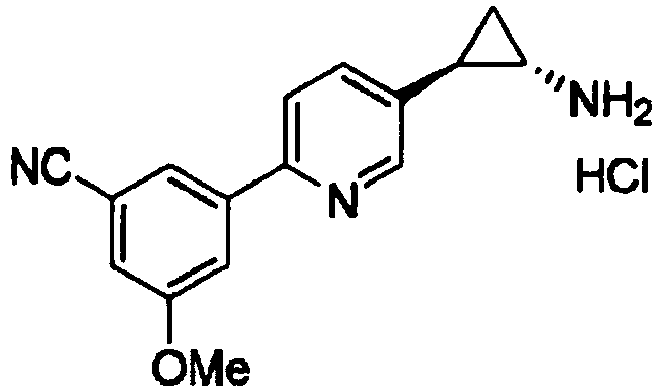
- 1H-NMR (400 MHz, D2O) δ: 8.65 (s, 1H), 8.27 (br, 1H), 8.10 (br, 1H), 7.73 (br, 1H), 7.61 (br, 1H), 7.53 (br, 1H), 3.90 (s, 3H) 3.12 (brs, 1H), 2.7 (brs, 1H), 1.69 (quin, 1H), 1.57 (q, 1H). MS (M+H): 266.2.
-
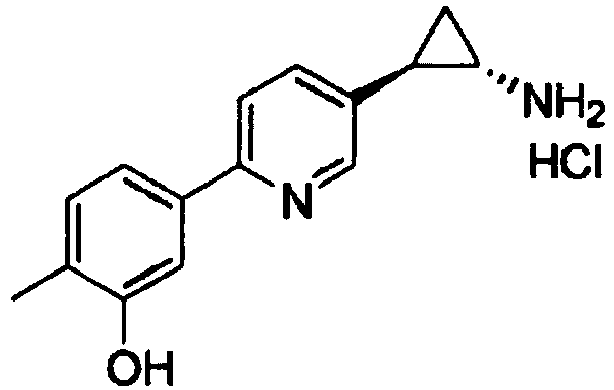
- 1H-NMR (400 MHz, DMSO D6) δ: 8.55 (s, 1H), 8.25 (d, 1H), 8.1 (d 1H), 7.37-7.23 (m, 3H), 3.09-3.11 (brs, 1H), 2.67 (brs, 1H), 2.23 (s, 3H), 1.66 (brs, 1H),1.53 (q, 1H). MS (M+H): 241.0.
-

- 1H-NMR (400 MHz, DMSO D6) δ: 8.69 (s, 1H), 8.31 (d, 1H), 8.03 (d, 1H), 7.45 (d, 1H), 7.04 (m 2H), 3.12 (brs, 1H), 2.72 (brs, 1H), 1.73 (brs, 1H), 1.58 (q, 1H). MS (M+H): 260.9.
-
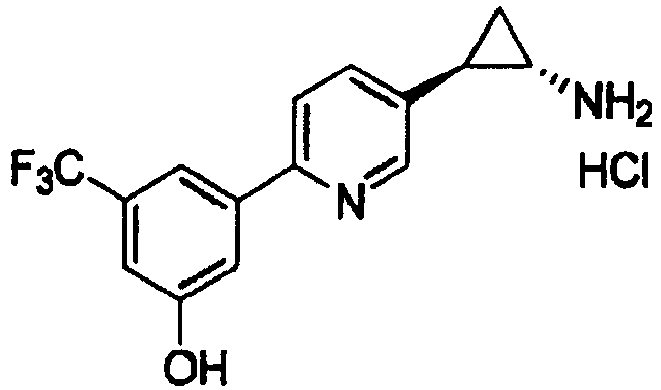
- 1H-NMR (400 MHz, D2O) δ: 8.62 (s, 1H), 8.24 (d, 1H), 8.12 (d, 1H), 7.67 (s, 1H), 7.48 (s, 1H), 7.38 (s, 1H), 3.12 (brs, 1H), 2.69 (brs, 1H), 1.67 (brs, 1H), 1.57 (q, 1H). MS (M+H): 295.1.
-
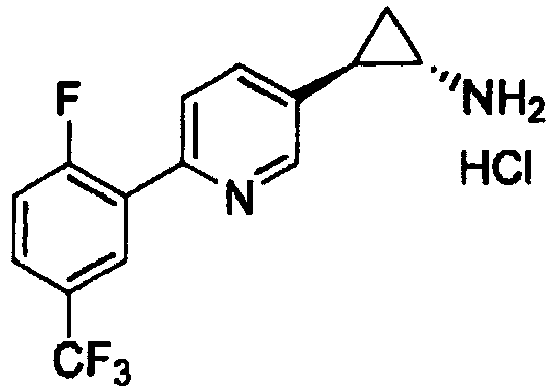
- 1H-NMR (400 MHz, D2O) δ: 8.73 (s, 1H), 8.34 (d, 1H), 8.15 (d, 1H), 8.09 (d, 1H), 7.9 (q, 1H), 7.5 (q, 1H), 3.18 (brs, 1H), 2.74 (brs, 1H), 1.71 (brs, 1H), 1.62 (q, 1H); MS (M+H): 296.9.
-
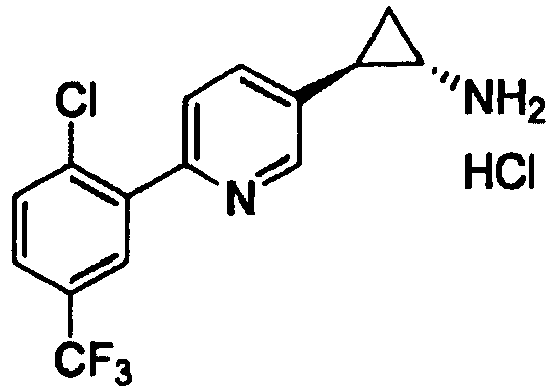
- 1H-NMR (400 MHz, D2O) δ: 8.72 (s, 1H), 8.32 (d, 1H), 8.04 (d, 1H), 7.9 (d, 1H), 7.81 (d, 2H), 3.14 (brs, 1H), 2.73 (m, 1H), 1.69 (brs, 1H), 1.59 (q, 1H). MS (M+H): 312.9.
-
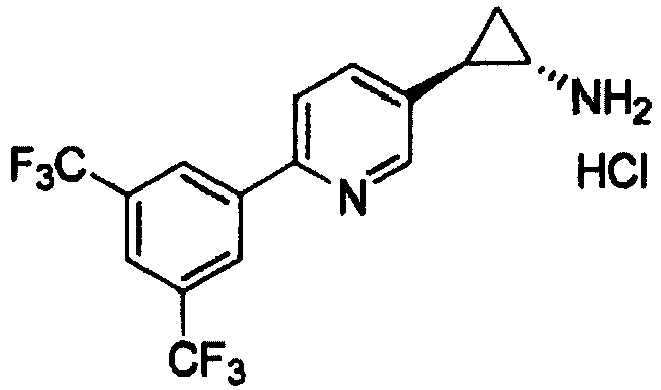
- 1H-NMR (400 MHz, D2O D6) δ: 8.68 (s, 1H), 8.41 (s, 2H), 8.29 (s, 1H), 8.18 (q, 2H), 3.14 (brs, 1H), 2.69 (brs, 1H), 1.69 (brs, 1H), 1.60 (q, 1H). MS (M+H): 346.8.
-
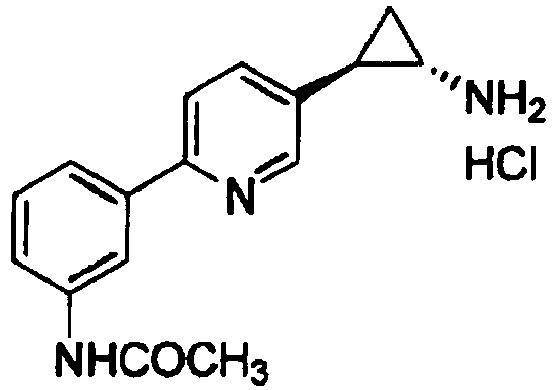
- 1H-NMR (400 MHz, D2O) δ: 8.62 (s, 1H), 8.30 (d, 1H), 8.16 (d, 1H), 7.98 (s, 1H), 7.7-7.5 (m, 3H), 3.10 (brs, 4H), 2.69 (brs, 1H), 2.18 (s, 3H), 1.69 (m, 1H), 1.57 (q, 1H). MS (M+H): 268.2
-
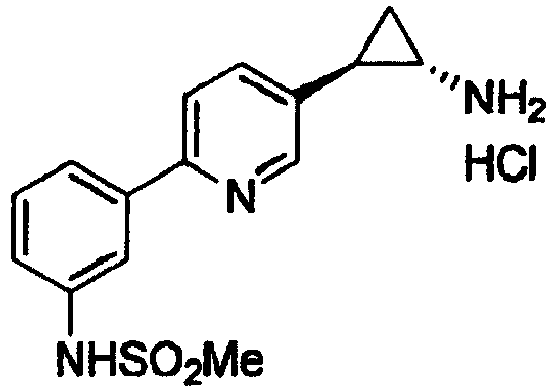
- 1H-NMR (400 MHz, D2O) δ: 8.64 (s, 1H), 8.30 (d, 1H), 8.14 (d, 1H), 7.68-7.56 (m, 1H), 7.46 (d, 1H), 3.10 (brs, 4H), 2.68 (brs, 1H), 1.68 (m, 1H), 1.58 (q, 1H). MS (M+H): 304.1.
-

- 1H-NMR (400 MHz, D2O) δ: 8.23 (d, 1H), 7.89-7.90 (brm, 5H), 7.42 (d, 2H), 2.97 (brs, 1H), 2.46 (brs, 1H), 1.58 (m, 1H), 1.44 (q, 1H). MS (M+H): 267.1.
-
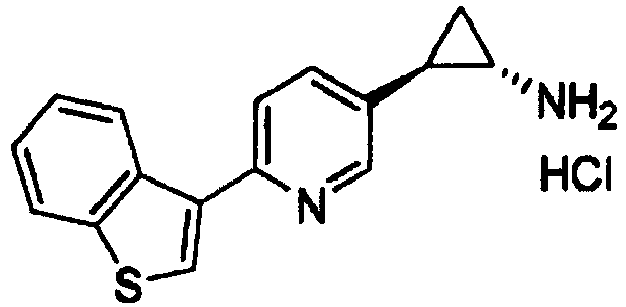
- 1H-NMR (400 MHz, D2O) δ: 8.63 (S, 1H), 8.32 (d, 1H), 8.19 (s, 1H), 8.13 (d, 1H), 8.06 (d, 1H), 7.92 (d,1H), 7.53 (d, 2H), 3.15 (m, 1H), 2.71 (m, 1H), 1.64 (m, 1H), 1.57(q, 1H). MS (M+H): 267.1.
-
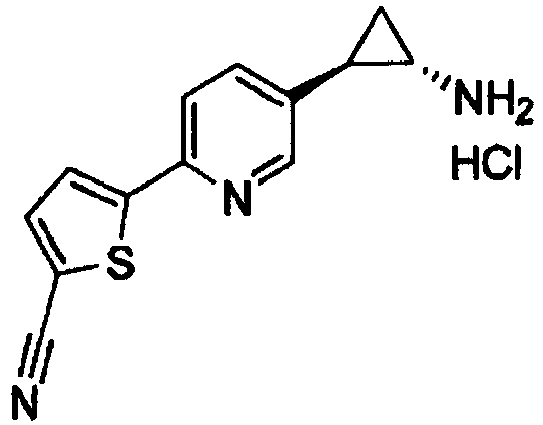
- 1H-NMR (400 MHz, D2O) δ: 8.35 (S, 1H), 7.8 (brs, 1H), 7.79 (s, 1H), 7.69 (s, 1H), 7.57 (s, 1H), 3.0 (brs, 1H), 2.53 (brs, 1H), 1.56 (brs, 1H), 1.48 (q, 1H); Mass (M+H): 242.1.
-
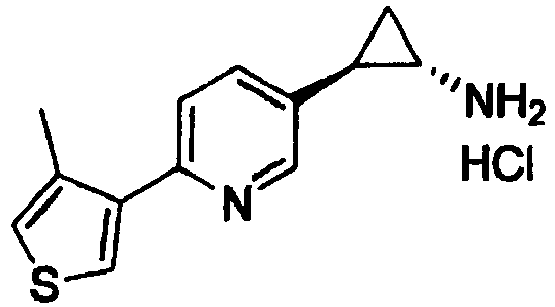
- 1H-NMR (400 MHz, D2O) δ: 8.6 (s, 1H), 8.35 (d, 1H), 8.0 (d, 1H), 7.85 (d, 1H), 7.35 (d, 1H), 3.15 (m, 1H), 2.7 (m, 1H), 2.3 (s, 3H), 1.65 (m, 1H), 1.55 (q, 1H). MS (M+H): 231.1.
-
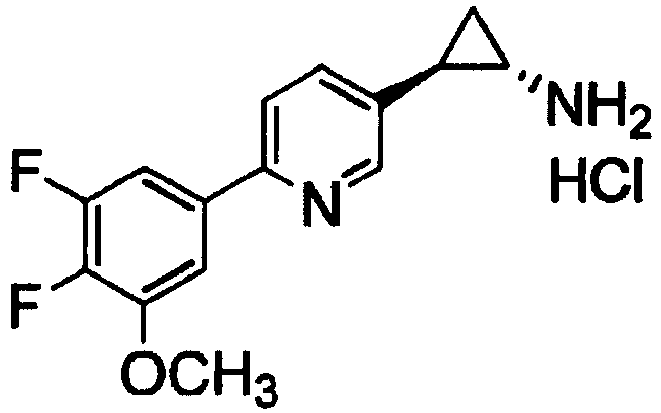
- 1H-NMR (400 MHz, DMSO-d6) δ: 8.60-8.66 (m, 4H), 8.07 (brs, 1H), 7.74 (brs, 3H), 3.99 (s, 3H), 2.97 (brs, 1H), 2.47 (brs, 1H), 1.52 (brs, 1H), 1.37 (q, 1H). MS (M+H): 277.1.
-

- 1H-NMR (400 MHz, D2O) δ: 8.60 (s, 1H), 8.23 (d, 4H), 8.05 (brs, 1H), 7.22 (m, 2H), 3.10 (m, 1H), 2.67 (m, 1H), 1.66 (quin, 1H), 1.55 (q, 1H);. MS (M+H): 263.1.
-
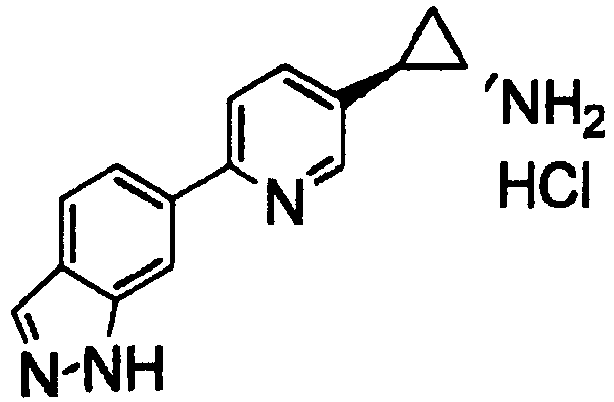
- 1H-NMR (400 MHz, D2O) δ: 8.64 (brs, 1H), 8.35 (m, 1H), 8.25 (m, 2H), 8.07 (m, 2H), 7.56 (br, 1H), 3.15 (brs, 1H), 2.72 (brs, 1H), 1.70 (quin, 1H), 1.58 (q, 1H). MS (M+H): 251.1.
-
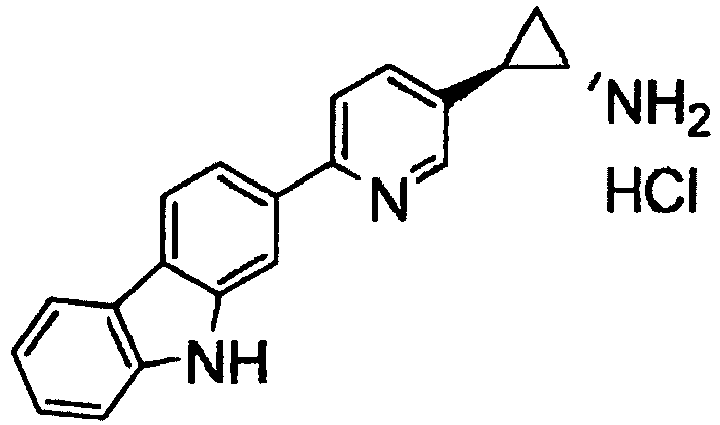
- 1H-NMR (400 MHz, DMSO-d6) δ: 8.70 (s, 1H), 8.32 (d, 1H), 8.16-8.24 (m, 3H), 8.04 (d, 1H), 7.82 (d, 1H), 7.58 (d, 1H), 7.49 (t, 1H), 7.24 (t, 1H), 3.03 (brs, 1H), 2.57 (brs, 1H), 1.56 (brs, 1H), 1.44 (brs, 1H). MS (M+H): 300.1.
-
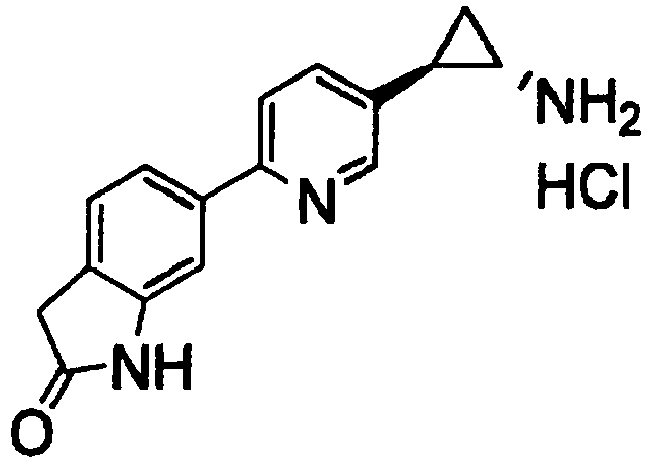
- 1H-NMR (400 MHz, DMSO-d6) δ: 8.62 (s, 1H), 7.96 (d, 1H), 7.80 (d, 1H), 7.62 (d, 1H), 7.51 (s, 1H), 7.33 (d, 1H), 2.98 (brs, 1H), 2.47 (brs, 1H), 1.51 (quin, 1H), 1.39 (q, 1H). MS (M+H): 266.1.
-

- Each of these compounds corresponds to each of the possible trans- isomers [(1R,2S) and (1S,2R)] of the product described in Example 4. The synthetic procedure used for their synthesis was similar to the one described in Example 4. Chiral HPLC resolution of the diastereomeric mixture was performed at the N-Boc stage, followed by final carbamate deprotection of each of these two enantiomers.
- The conditions used to perform this chiral separation are:
Separation by chiral preparative HPLC: Every injection is prepared from 40 mg of the racemic mixture dissolved in a mixture of EtOH, Hexane, THF and diethylamine. These injections were separated on a Chiral Pak- IC (250 X 30 mm ID) 5 µm at ambient temperature eluting with 0.2% DEA in 93/7 hexane/EtOH at 35 mL/min. The solutions from the chiral separation were concentrated in vacuum to afford the resolved enantiomers. - Analytical determination of enantiomeric excess (ee): ChiralCel OD-H 250 x 4.6 mm ID, 5µm, 0.1 % TFA in 75/25 hexane/EtOH at 1 mL/min at ambient temperature, with UV analysis at 260 nm. Enantiomers eluted at 4.93 and 7.90 min, each with > 98% enantiomeric excess.
- Analytical purity: Acquity UPLC BEH C18 100 x 2.1 mm ID, 1.7µm, 0.025 % TFA in a gradient H2O:ACN (T/%B, 0/10, 4/80, 6/80, 6.1/10) at 0.3 mL/min at ambient temperature, with UV analysis at 259 nm. Elution at 2.40 min, each with > 99.5% purity. Without being bound by theory, it is believed that mixtures, e.g., racemates corresponding to a compound of Formula (I), (II), (III), (IV) or (V) can be resolved in the individual enantiomers or an enantiomer substantially free of the other enantiomer. Thus, the skilled artisan, in view of the disclosure described herein can isolate or purify enantiomers from racemates or mixtures of enantiomers in view of the disclosure herein utilizing standard organic chemistry techniques for separating enantiomers.
-

- 1H-NMR (400 MHz, CD3OD) δ: 8.74 (s, 1H), 8.34 (m, 1H), 8.14 (m, 1H), 7.82 (d, 2H), 7.73 (br, 1H), 7.58 (t, 2H), 7.49 (t, 3H), 7.30 (t, 1H), 3.17 (m, 1H), 2.68 (m, 1H), 1.65 (m, 2H). MS (M+H): 366.0.
-

- 1H-NMR (400 MHz, CD3OD) δ: 8.77 (s, 1H), 8.31 (d, 1H), 8.19 (d, 1H), 7.83 (s, 1H), 7.55-7.65 (m, 2H), 7.48 (d, 1H), 3.38 (m, 1H), 3.17 (m, 1H), 2.70 (m, 1H), 1.65 (m, 2H), 1.36 (d, 6H). MS (M+H): 332.3.
-

- 1H-NMR (400 MHz, D2O) δ: 7.56 (m, 2H), 7.2-7.32 (m, 4H), 7.1-7.2 (m, 1H), 2.90 (m, 1H), 2.45 (m, 1H), 1.45 (quin, 1H), 1.37 (q, 1H). MS (M+H): 242.1.
-
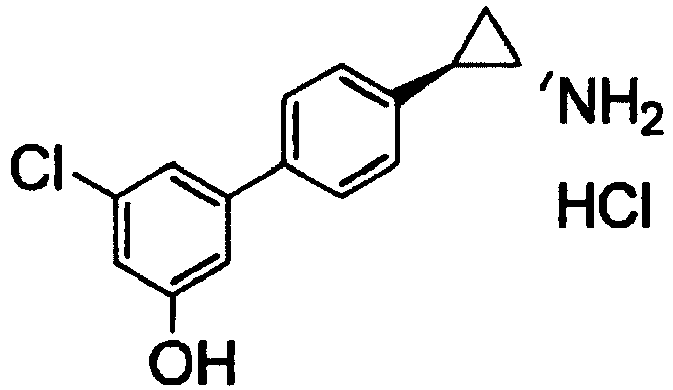
- 1H-NMR (400 MHz, D2O) δ: 7.2-7.4 (m, 2H), 6.86-7.15 (m, 3H), 6.65-6.85 (m, 2H), 2.72 (brs, 1H), 2.28 (brs, 1H), 1.29 (brs, 1H), 1.18 (brs, 1H). MS (M+H): 258.1.
-
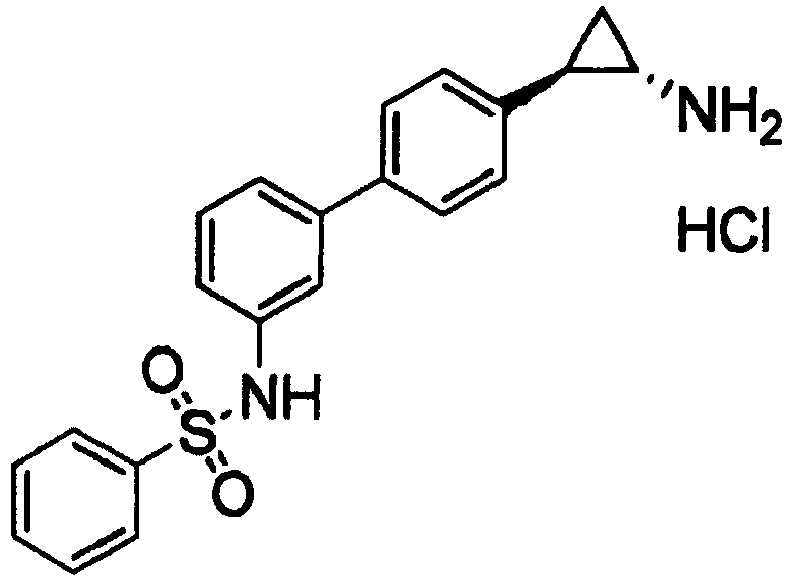
- 1H-NMR (400 MHz, DMSO-d6) δ: 10.45 (s, 1H), 8.42 (brs, 3H), 7.80 (d, 2H), 7.61 (m, 1H), 7.57 (q, 2H), 7.43 (d, 2H), 7.32 (m, 3H), 7.24 (d, 2H), 7.06 (m, 1H), 2.85 (m, 1H), 2.35 (m, 1H), 1.42 (quin, 1H), 1.26 (q, 1H). MS (M+H): 363.3.
-
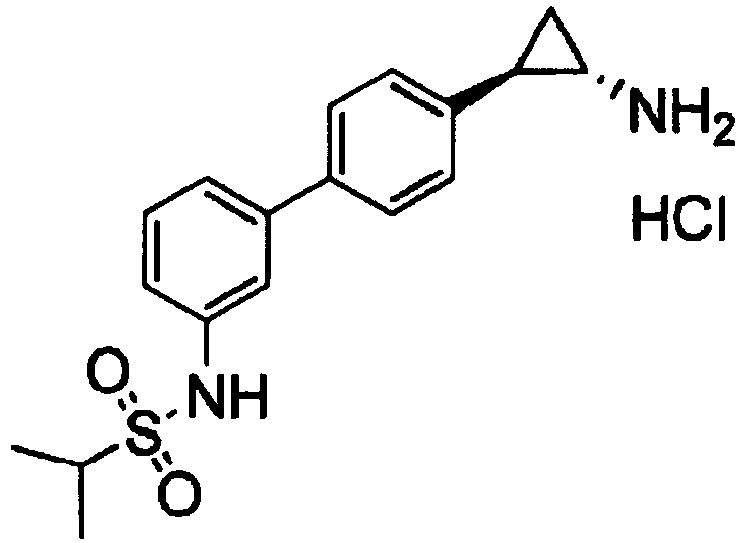
- 1H-NMR (400 MHz, DMSO-d6) δ: 7.55 (d, 2H), 7.47 (s, 1H), 7.43 (t, 1H), 7.36 (d, 1H), 7.26 (d, 2H), 7.22 (d, 1H), 3.31 (m, 1H), 2.84 (m, 1H), 2.33 (m, 1H), 1.40 (m, 1H), 1.25 (d, 7H). MS (M+H): 329.0
-
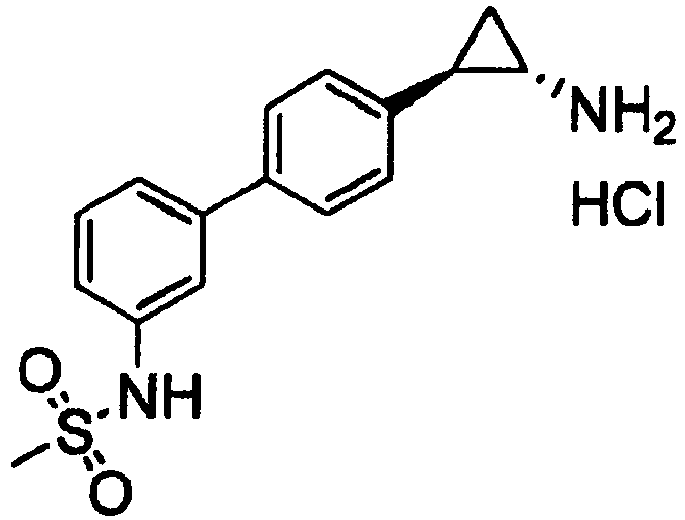
- 1H-NMR (400 MHz, D2O) δ: 7.55 (d, 2H), 7.47 (d, 3H), 7.23 (d, 3H), 3.07 (s, 3H), 2.90 (m, 1H), 2.45 (m, 1H), 1.46 (quin, 1H), 1.37 (q, 1H). MS (M+H): 301.2.
-
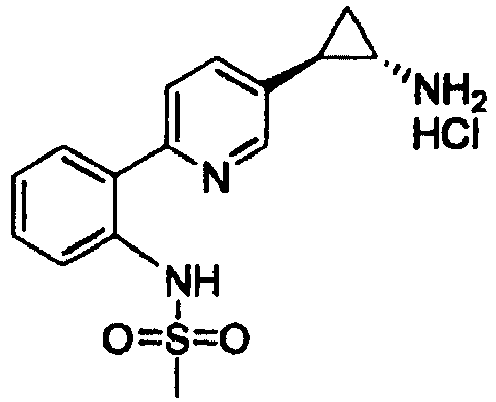
- 1H-NMR (400 MHz, DMSO-d6) δ: 8.63 (s, 1H), 8.01 (d, 1H), 7.86 (t, 1H), 7.54 (m, 2H), 7.33 (t, 1H), 2.99 (m, 1H), 2.94 (s, 3H), 2.47 (m, 1H), 1.40-1.55 (m, 2H). MS (M+H): 304.0.
-
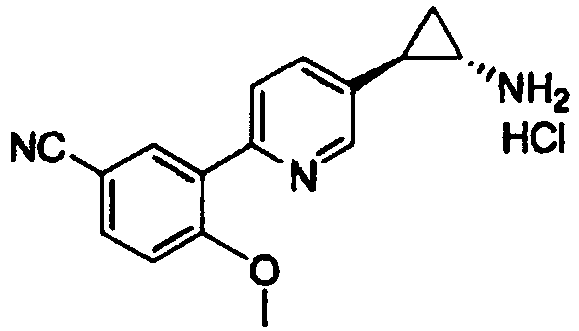
- 1H-NMR (400 MHz, CD3OD) δ: 8.83 (s, 1H), 8.40 (d, 1H), 8.20 (d, 1H), 8.15 (s, 1H), 8.05 (dd, 1H), 7.46 (d, 1H), 4.01 (s, 3H), 3.21 (m, 1H), 2.74 (m, 1H), 1.60-1.75 (m, 2H). MS (M+H): 266.3.
-
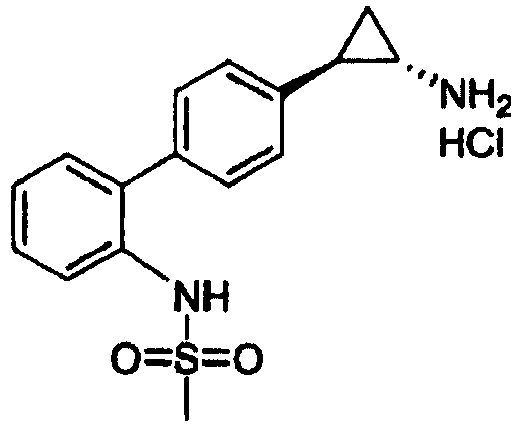
- 1H-NMR (400 MHz, DMSO-d6) δ: 7.37-7.42 (m, 5H), 7.34 (d, 1H), 7.24 (d, 2H), 2.85 (m, 1H), 2.75 (s, 3H), 2.37 (m, 1H), 1.42 (quin, 1H), 1.31 (q, 1H). MS (M-H): 301.2.
-
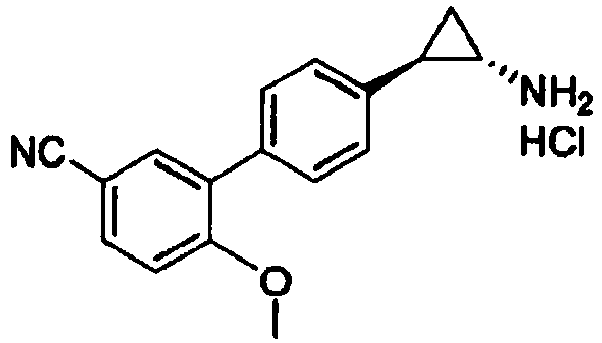
- 1H-NMR (400 MHz, DMSO-d6) δ: 8.82 (d, 1H), 7.69 (s, 1H), 7.44 (d, 2H), 7.30 (d, 1H), 7.24 (d, 2H), 3.84 (s, 3H), 2.84 (m, 1H), 2.36 (m, 1H), 1.40 (quin, 1H), 1.31 (q, 1H). MS (M+H): 265.3
-
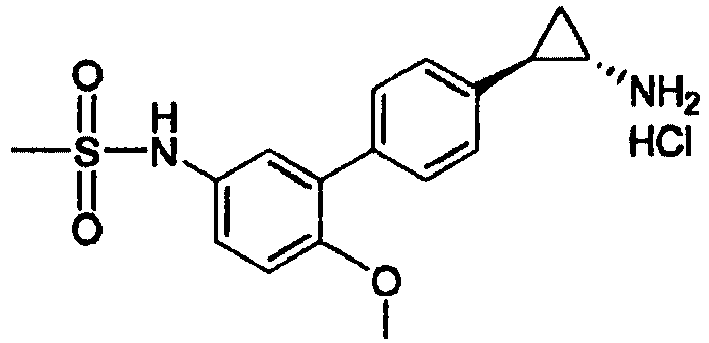
- 1H-NMR (400 MHz, DMSO-d6) δ: 9.47 (s, 1H), 8.38 (brs, 3H), 7.37 (d, 2H), 7.20 (t, 3H), 7.05-7.18 (m, 2H), 3.73 (s, 3H), 2.92 (s, 3H), 2.84 (m, 1H), 2.34 (m, 1H), 1.39 (quin, 1H), 1.25 (q, 1H). MS (M-H): 331.3
- The following compounds can be synthesized following the methodology described in Scheme 2
-
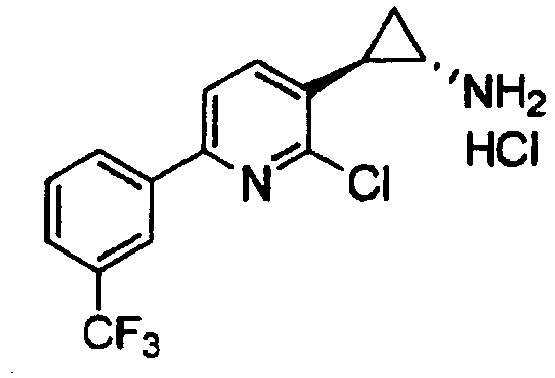
- A solution of (E)-ethyl 3-(6-bromopyridin-3-yl)acrylate (Int-F) (20 g, 78.125 mmol), 3-trifloro methyl boronic acid (17.7 g, 93.75 mmol) and K2CO3 (32 g, 234 mmol) in ACN: H2O (4: 1), was degassed for 20 minutes. Pd (PPh3)4 (900 mg, 0.078 mmol) was added and heated at reflux for 4 h. After completion, the reaction mixture was poured into water (200 mL) and extracted with EtOAc (2 x 200 mL). The combined extracts were washed with water (100 mL), brine (100 mL), dried over anhydrous Na2SO4, filtered and evaporated. The crude residue was purified by column chromatography (SiO2) by using EtOAc: Pet ether (2: 8) to afford (E)-ethyl 3-(6-(3-(trifluoromethyl)phenyl)pyridin-3-yl)acrylate (13 g, 52 %) as yellow solid.
- m-CPBA (13.9 g, 80.97 mmol) was added portion wise to a solution of trans-ethyl 3-(6-(3-(trifluoromethyl)phenyl)pyridin-3-yl)acrylate (13 g, 40.47 mmol) in DCM (150 mL) at 0 °C over a period of 30 min. and stirred at RT for 16 h. After completion, the reaction mixture was poured into ice water (100 mL), extracted with DCM (2 X 100 mL). Combined organic extracts were treated with sodium metabisulphite, washed with water (100 mL), brine (100 mL), dried over anhydrous Na2SO4, filtered and evaporated. The crude residue was purified by column chromatography (SiO2) by using MeOH: chloroform (1:99) to afford (9 g, 66 %) (E)-5-(3-ethoxy-3-oxoprop-1-enyl)-2-(3-(trifluoromethyl)phenyl)pyridine 1-oxide as yellow solid.
- A solution of (E)-5-(3-ethoxy-3-oxoprop-1-enyl)-2-(3-(trifluoromethyl)phenyl)pyridine 1-oxide (9 g, 26.7 mmol) in POCl3 (45 mL) was stirred at 80°C for 5 h. After completion, reaction mixture was poured into ice water (150 mL), extracted with EtOAc (2 X 100 mL), combined extracts were treated with NaHCO3 solution, washed with water (100 mL), brine (100 mL), dried over anhydrous Na2SO4, filtered and evaporated. The crude residue was purified by column chromatography by using (SiO2) EtOAc: Pet ether (2: 98) to afford (E)-ethyl 3-(2-chloro-6-(3-(trifluoromethyl)phenyl)pyridin-3-yl)acrylate (6.3 g, 67 %) as yellow solid.
- Trimethyl sulfoxonium iodide (4.6 g, 21.25 mmol) was added slowly in small portions over a period of 20 min, to a suspension of sodium hydride (850 mg, 21.25 mmol) in dry DMSO (120 mL) at RT stirred for 1 h, till the formation of clear solution. A solution of (E)-ethyl 3-(2-chloro-6-(3-(trifluoromethyl)phenyl)pyridin-3-yl)acrylate (6.3 g, 17.71 mmol) in dry DMSO (100 mL) was added slowly dropwise and stirred at RT for 30 mins. After completion, the reaction mixture was poured into ice water (100 mL), extracted with EtOAc (2 X 100mL). The combined extracts were washed with ice water (2 X 100 mL), brine (50 mL), dried over anhydrous Na2SO4, filtered and evaporated to afford trans-ethyl 2-(2-chloro-6-(3-(trifluoromethyl)phenyl)pyridin-3-yl)cyclopropanecarboxylate (crude) (5.5 g) as reddish brown liquid. The crude was carried to next step without further purification.
- 4N NaOH solution (20 mL) was added to a solution of trans-ethyl 2-(2-chloro-6-(3-(trifluoromethyl)phenyl)pyridin-3-yl)cyclopropanecarboxylate (5.5 g, 14.90 mmol), in Methanol (50 mL) and stirred at RT for 2 h. After completion, the solvent was evaporated and the residue was diluted with water (50 mL), acidified with 4 N HCl solution, extracted with EtOAc (2 X 50 mL). The combined extracts were washed with water (2 x 50 mL), brine (50 mL), dried over anhydrous Na2SO4, filtered and evaporated to afford trans-2-(2-chloro-6-(3-(trifluoromethyl)phenyl)pyridin-3-yl)cyclopropanecarboxylic acid (4.9 g), as a yellow liquid. The crude was carried to next step without further purification.
- Ethyl chloroformate (1.8 mL, 18.86 mmol) was added to a solution of trans-2-(2-chloro-6-(3-(trifluoromethyl)phenyl)pyridin-3-yl) cyclopropane carboxylic acid (4.9 g, 14.36 mmol), TEA (2.9 mL, 21.54 mmol) in acetone (70 mL) at -20 °C and stirred at for 1 h, then a solution of NaN3 (1.86 g, 28.71 mmol), in water (10 mL) was added and stirred for 30 mins at RT. After completion, the solvent was evaporated and crude residue was dissolved in ethyl acetate (100 mL), washed with water (40 mL), dried over anhydrous Na2SO4, filtered and evaporated to afford trans-2-(2-chloro-6-(3-(trifluoromethyl)phenyl)pyridin-3-yl)cyclopropanecarbonyl azide (5 g). The crude was carried to next step without further purification.
- A solution of trans-2-(2-chloro-6-(3-(trifluoromethyl)phenyl)pyridin-3-yl)cyclopropanecarbonyl azide (5 g, 13.66 mmol) in tert-Butanol (100 mL) was heated at 90 °C for 16 h. After completion, the solvent was evaporated residue was taken in water (100 mL), extracted with EtOAc (2 x 50 mL). The combined organic extracts were washed with water (50 mL), brine (50 mL), dried over anhydrous Na2SO4, filtered and evaporated. The crude residue was purified by column chromatography by using (SiO2) EtOAc: Pet ether (2: 98) to afford tert-butyl (trans)-2-(2-chloro-6-(3-(trifluoromethyl)phenyl)pyridin-3-yl)cyclopropylcarbamate (1.6 g, 28.5 %) as a white solid.
- HCl in dioxane (1 mL) was added to a solution of tert-butyl (trans)-2-(2-chloro-6-(3-(trifluoromethyl)phenyl)pyridin-3-yl)cyclopropylcarbamate (100 mg, 0.242 mmol) in dioxane (2 mL) at 0°C and stirred for 3 h at RT. After completion, the solvent was evaporated, residue was triturated with Et2O and dried to afford trans-2-(2-chloro-6-(3-(trifluoromethyl)phenyl)pyridin-3-yl)cyclopropanamine hydrochloride (80 mg, 95 %) as white solid.
- 1H-NMR (400 MHz, DMSO D6) δ: 8.8-8.6 (brs, 3H), 8.4 (d, 2H), 8.2 (d, 1H), 7.85-7.78 (m, 3H), 3.05 (brs, 1H), 2.65 (brs, 1H), 1.55 (brs, 1H), 1.4 (q, 1H). MS (M+H): 313.1.
-
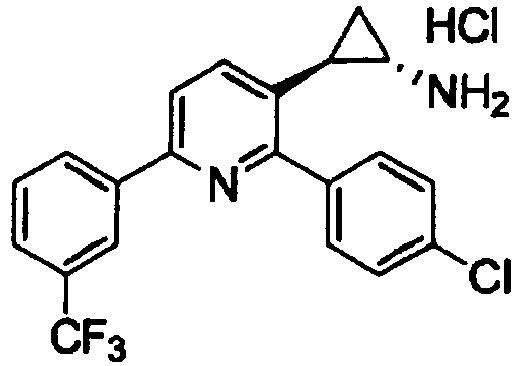
- This compound could be synthesized following the method described for example 77 but previous to the Boc-deprotection (step 8) a Suzuki coupling (step 8') is performed to get the desired product.
- A solution of tert-butyl (trans)-2-(2-chloro-6-(3-(trifluoromethyl)phenyl)pyridin-3-yl)cyclopropylcarbamate (150 mg, 0.364 mmol), 4-chlorophenylboronic acid (67.3 mg, 0.432 mmol) and K2CO3 (149 mg, 1.09 mmol) in acetonitrile: water (4: 1) was degassed for 20 min. Tetrakis triphenylphosphine palladium (4.2 mg, 0.00364 mmol) was added and the reaction mixture was heated at reflux for 16 h. After completion, the reaction mixture was poured into ice water (25 mL) and extracted with EtOAc (2 x 25mL). The combined extracts were washed with water (25mL), brine (25 mL) and dried over anhydrous Na2SO4 filtered and evaporated. The crude residue was purified by column chromatography (SiO2) using EtOAc: Pet ether (1: 9) to afford tert-butyl (trans)-2-(2-(4-chlorophenyl)-6-(3-(trifluoromethyl)phenyl)pyridin-3-yl)cyclopropylcarbamate (140 mg, 79 %) as white solid.
- HCl in dioxane (2 mL) was added to a solution of tert-butyl (trans)-2-(2-(4-chlorophenyl)-6-(3-(trifluoromethyl)phenyl)pyridin-3-yl)cyclopropylcarbamate (130 mg, 0.315 mmol) in dioxane (2 mL) at 0°C and stirred for 3 h at RT. After completion, the solvent was evaporated and the residue was triturated with Et2O to afford (trans)-2-(2-(4-chlorophenyl)-6-(3-(trifluoromethyl)phenyl)pyridin-3-yl)cyclopropanamine hydrochloride (80 mg, 70.7 %) as pale yellow solid. 1H-NMR (400 MHz, DMSO D6) δ: 8.6-8.5 (brs, 3H), 8.45 (d, 2H), 8.1 (d, 1H), 7.7-7.8 (m, 5H), 7.6 (d, 2H), 3.1 (brs, 1H), 2.4 (brs, 1H), 1.4-1.35 (m, 2H). MS (M+H): 389.1
- The following compounds could be synthesized following the method described for example 77 using the corresponding commercially available boronic acid / boronate ester.
-
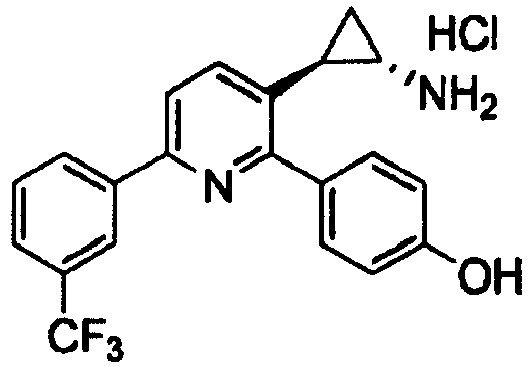
- 1H-NMR (400 MHz, DMSO D6) δ: 8.6 (brs, 3H), 8.45 (s, 2H), 7.85-7.7 (m, 2H), 7.6 (m, 3H), 6.97 (d, 2H), 3.1 (brs, 1H), 2.5 (brs, 1H), 1.37 (m, 1H), 1.3 (q, 1H). MS (M+H): 371.2.
-

- 1H-NMR (400 MHz, DMSO D6) δ: 8.5 (brs, 3H), 8.45 (s, 2H), 8.15 (m, 2H), 8.1 (d, 2H), 7.8-7.7 (m, 5H), 7.5 (brs, 1H), 3.1 (brs, 1H), 2.45 (brs, 1H), 1.3 (m, 2H). MS (M+H): 398.1.
-

- 1H-NMR (400 MHz, DMSO D6) δ: 8.75 (brs, 3H), 8.4 (s, 1H), 8.35 (d, 1H), 8.0 (s, 1H), 7.85 (d, 1H), 7.8-7.7 (m, 2H), 2.87 (brs, 1H), 2.8 (s, 3H), 2.65 (brs, 1H), 1.5 (m,1H), 1.4 (q, 1H). MS (M+H): 293.1.
- The following compounds can be synthesized following the methodology described in Schemes 1 and 2.
-

-
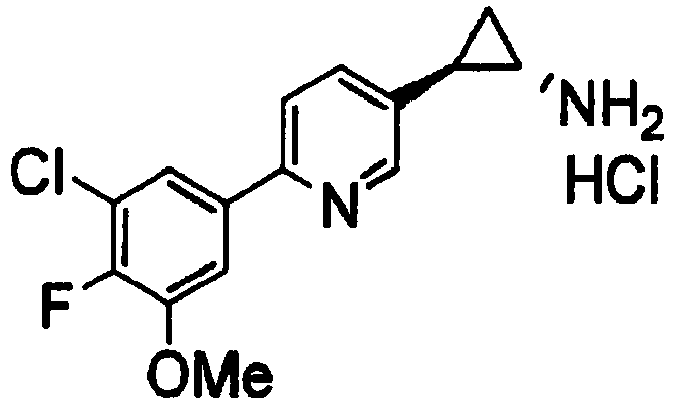
-

-
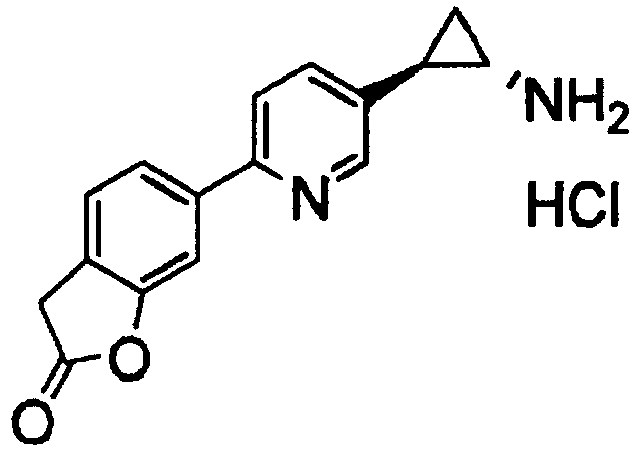
-

-
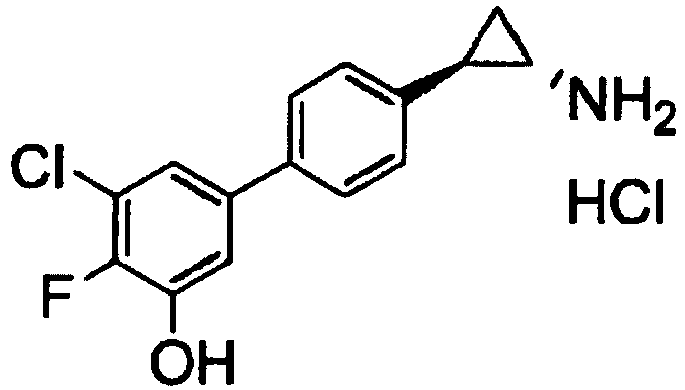
-
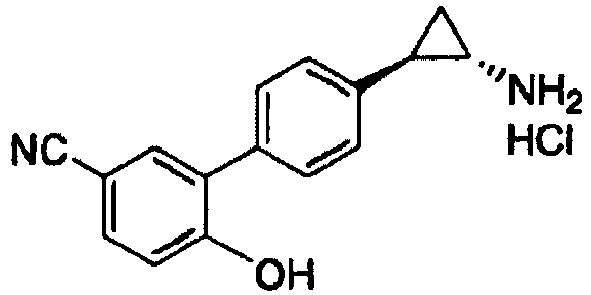
- 1HNMR (400 MHz, DMSO-d6, D2O Exchange) δ: 7.67 (s, 1H), 7.64 (d, J= 8Hz, 1H), 7.50 (d, J= 8Hz, 2H), 7.22 (d, J= 8Hz, 2H), 7.08 (d, J= 8Hz, 1H), 2.82-2.90 (m, 1H), 2.33-2.40 (m, 1H), 1.38-1.45 (m, 1H), 1.30 (q, J= 7Hz, 1H); Mass (M-H): 249.3
-
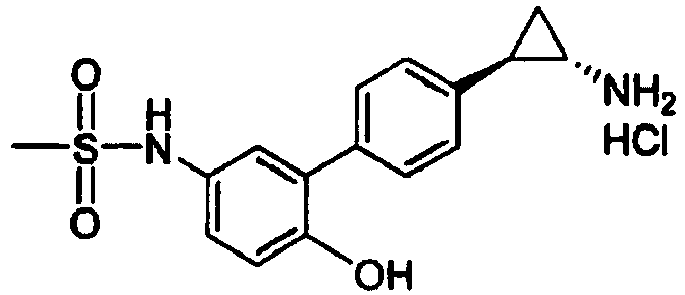
- 1HNMR (400 MHz, D2O) δ: 7.53 (d, J= 8Hz, 2H), 7.31 (d, J= 8Hz, 2H), 7.20-7.28 (m, 2H), 7.06 (d, J= 8Hz, 1H), 3.10 (s, 1H), 2.94-3.04 (m, 1H), 2.48-2.58 (m, 1H), 1.48-1.58 (m, 1H), 1.44 (q, J= 7Hz, 1H); Mass (M-H): 317
-
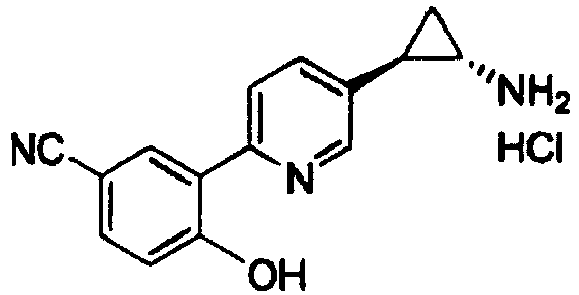
- 1HNMR (400 MHz, D2O) δ: 8.45 (s, 1H), 8.03-8.13 (m, 1H), 7.92-8.02 (m, 2H), 7.66 (d, J= 9Hz, 1H), 7.03 (d, J= 8Hz, 1H), 3.02-3.10 (m, 1H), 2.56-2.64 (m, 1H), 1.57-1.67 (m, 1H), 1.45-1.56 (m, 1H); Mass (M-H): 250.0
-
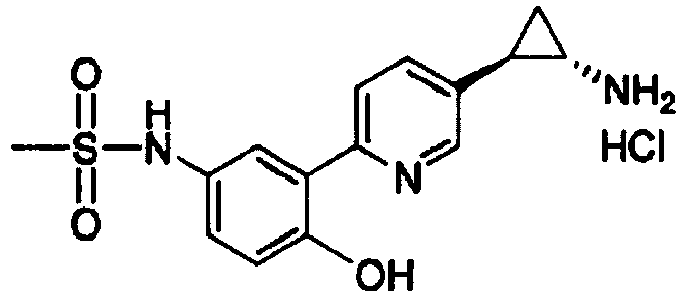
- 1HNMR (400 MHz, DMSO-d6, D2O Exchange) δ: 8.60 (s, 1H), 8.06 (d, J= 9Hz, 1H), 7.95 (d, J= 9Hz, 1H), 7.67 (s, 1H), 7.24 (d, J= 9Hz, 1H), 7.00 (d, J= 9Hz, 1H), 2.96-3.06 (m, 1H), 2.94 (s, 1H), 2.45-2.55 (m, 1H), 1.48-1.58 (m, 1H), 1.41 (q, J= 7Hz, 1H); Mass (M-H): 318.0
-
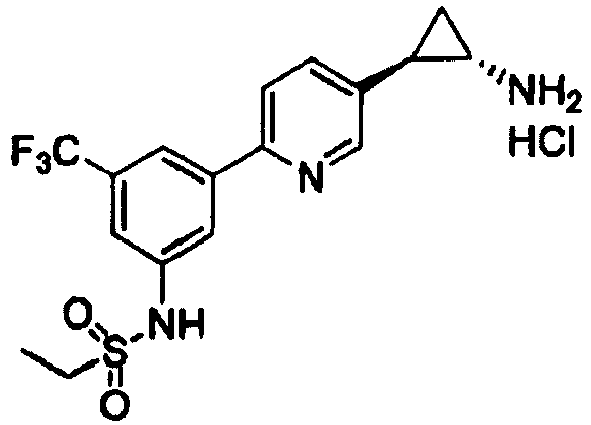
-

-

- 1HNMR (400 MHz, CD3OD) δ: 8.79 (s, 1H), 8.41 (d, J= 8 Hz, 1H), 8.18 (d, J= 8 Hz, 1H), 7.58 (s, 1H), 7.50 (d, J= 9 Hz, 1H), 7.30 (d, J= 9 Hz, 1H), 3.93 (s, 3H), 3.17-3.23 (m, 1H), 2.98 (s, 3H), 2.67-2.78 (m, 1H), 1.62-1.77 (m, 2H); Mass (M-H): 332.3
-
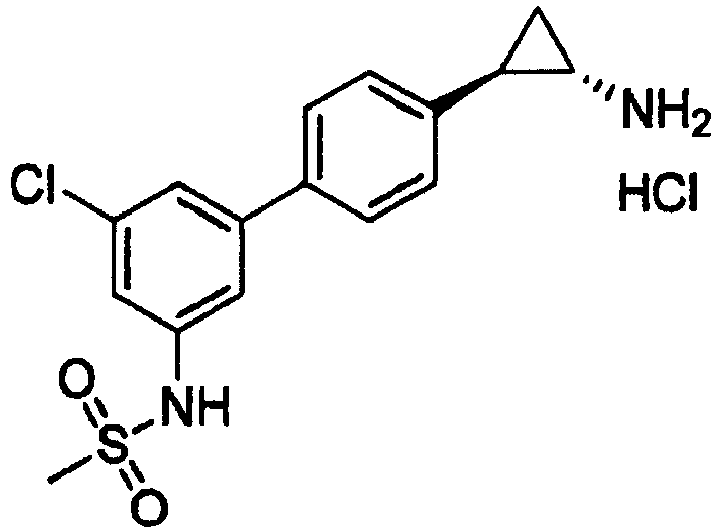
- 1HNMR (400 MHz, D2O) δ: 7.53 (brs, 2H), 7.47 (brs, 1H), 7.32 (brs, 1H), 7.25 (brs, 3H), 3.09 (s, 3H), 2.83-2.94 (m, 1H), 2.40-2.49 (m, 1H), 1.42-1.53 (m, 1H), 1.30-1.41 (m, 1H); Mass (M-H): 335.0
-

- 1HNMR (400 MHz, D2O) δ: 8.44 (s, 1H), 8.00 (d, J= 8Hz, 1H), 7.85 (d, J = 8Hz, 1H), 7.42-7.52 (brs, 1H), 7.30-7.40 (brs, 1H), 7.22-7.30 (brs, 1H), 2.98 (s, 3H), 2.92-3.02 (m, 1H), 2.50-2.58 (m, 1H), 1.45-1.58 (m, 1H), 1.36-1.44 (m, 1H); Mass (M-H): 336.3
-
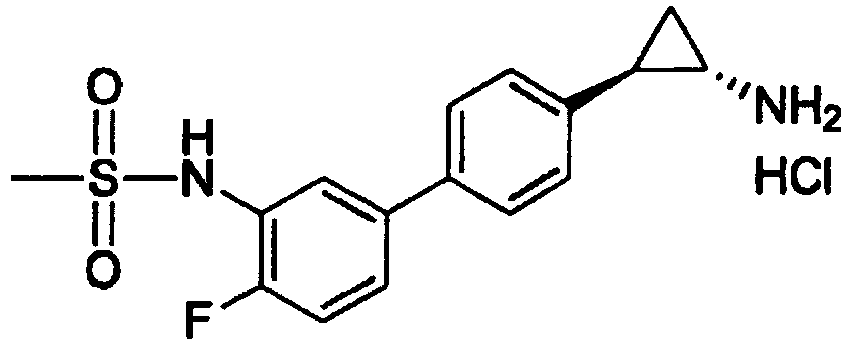
- 1HNMR (400 MHz, D2O) δ: 7.63 (d, J = 8Hz, 1H), 7.50-7.60 (m, 3H), 7.25-7.36 (m, 1H), 7.27 (d, J = 8Hz, 2H), 3.15 (s, 3H), 2.88-2.95 (m, 1H), 2.42-2.55 (m, 1H), 1.42-1.55 (m, 1H), 1.39 (q, J= 7Hz, 1H); Mass (M-H): 319.3
-
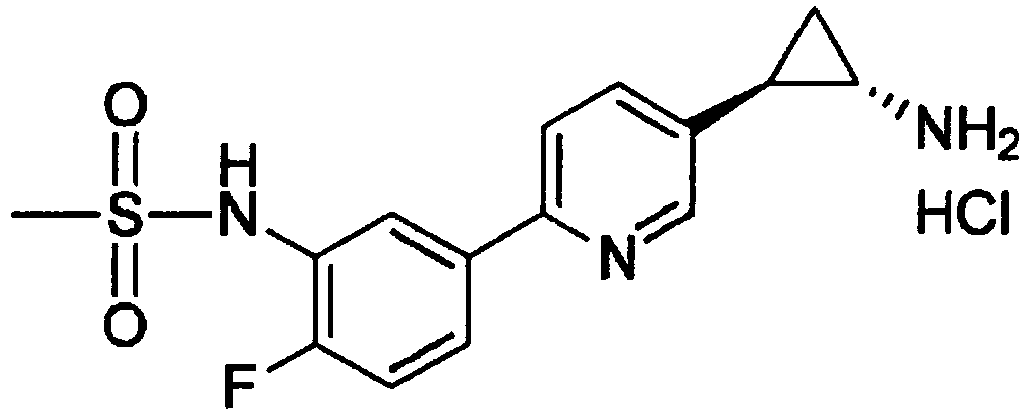
- 1HNMR (400 MHz, D2O) δ: 8.65 (s, 1H), 8.33 (d, J = 8Hz, 1H), 8.16 (d, J = 8Hz, 1H), 7.85-7.94 (brs, 1H), 7.71-7.80 (brs, 1H), 7.50 (t, J = 9Hz, 1H), 3.19 (s, 3H), 2.68-2.80 (m, 1H), 1.65-1.78 (m, 1H), 1.58-1.65 (m, 1H); Mass (M+H): 322.10
-
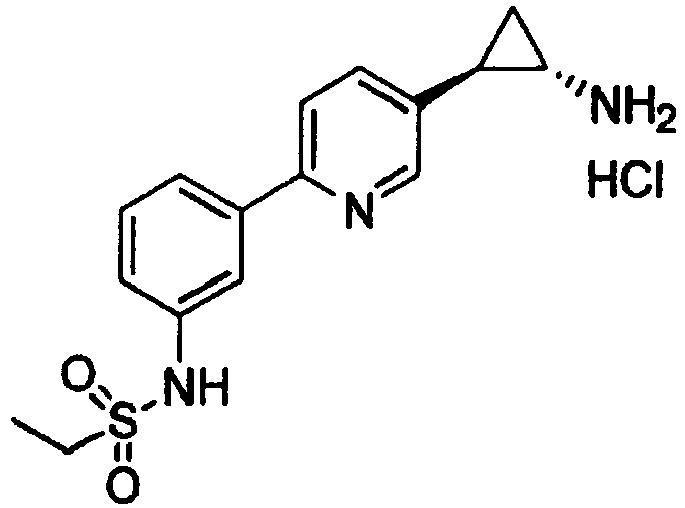
- 1HNMR (400 MHz, DMSO-d6, D2O exchange) δ: 8.61 (s, 1H), 7.93 (d, J= 8Hz, 1H), 7.88 (s, 1H), 7.80 (d, J= 8Hz, 1H), 7.72 (d, J= 8Hz, 1H), 7.50 (t, J= 8Hz, 1H), 7.32 (d, J= 8Hz, 1H), 3.15 (q, J= 7Hz, 2H), 2.90-3.00 (m, 1H), 2.46-2.56 (m, 1H), 1.48-1.58 (m, 1H), 1.42 (q, J= 7Hz, 1H), 1.23 (t, J= 7Hz, 3H); Mass (M-H): 316.3
-

- 1HNMR (400 MHz, D2O) δ: 8.66 (s, 1H), 8.28 (d, J= 8Hz, 1H), 8.08 (d, J= 8Hz, 1H), 7.93 (s, 4H), 7.69 (d, J= 6Hz, 1H), 7.63 (s, 1H), 7.56 (t, J= 8Hz, 1H), 7.31 (d, J= 8Hz, 1H), 3.15-3.25 (m, 1H), 2.72-2.80 (m, 1H), 1.71-1.80 (m, 1H), 1.62 (q, J= 7Hz, 1H); Mass (M-H): 389.3
-
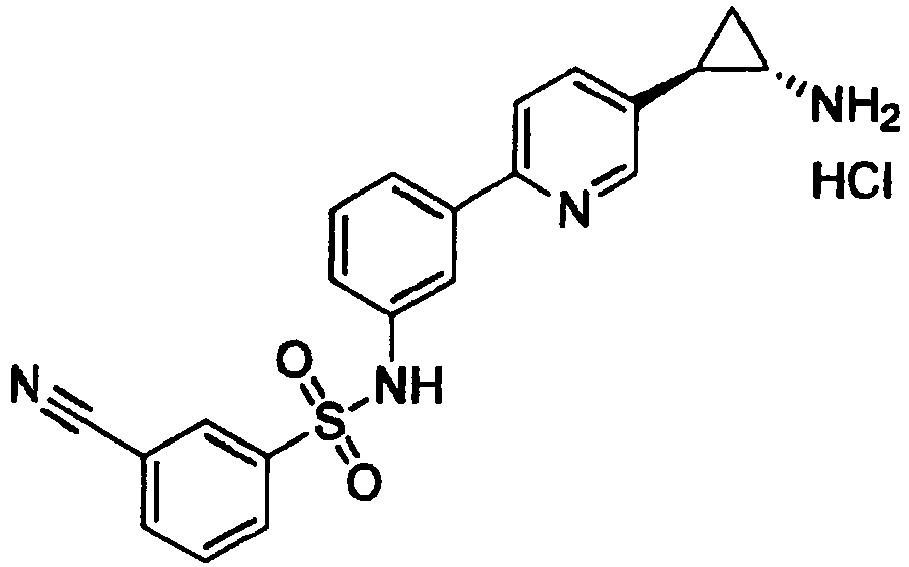
- 1HNMR (400 MHz, D2O) δ: 8.58 (s, 1H), 8.18-8.26 (m, 1H), 8.11 (brs, 1H), 8.00 (d, J= 8Hz, 2H), 7.91-8.01 (m, 1H), 7.60-7.71 (m, 2H), 7.55 (s, 1H), 7.44-7.52 (m, 1H), 7.24 (brs, 1H), 3.08-3.18 (m, 1H), 2.63-2.73 (m, 1H), 1.63-1.73 (m, 1H), 1.55 (q, J= 7Hz, 1H); Mass (M-H): 389.3
-
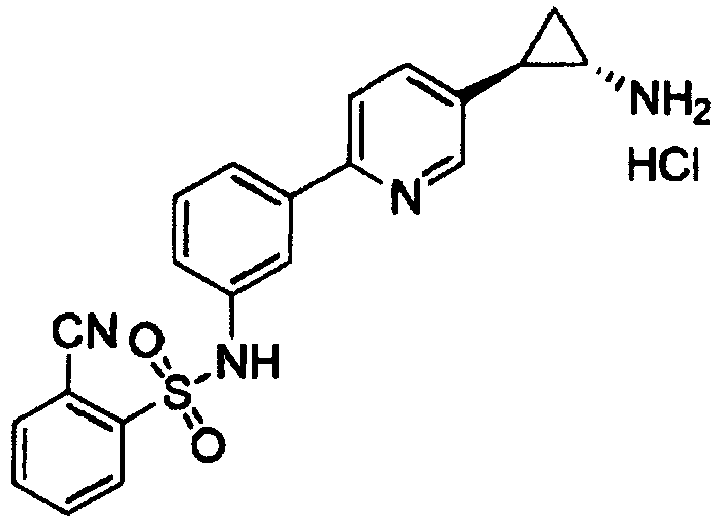
- 1HNMR (400 MHz, D2O) δ: 8.59 (s, 1H), 8.20 (d, J= 8Hz, 1H), 8.08 (d, J= 8Hz, 1H), 8.01 (d, J= 9Hz, 2H), 7.89 (d, J= 8Hz, 1H), 7.83 (t, J= 8Hz, 1H), 7.75 (t, J= 8Hz, 1H), 7.62-7.68 (m, 2H), 7.48 (t, J= 8Hz, 1H), 7.20 (d, J= 8Hz, 1H), 3.08-3.16 (m, 1H), 2.64-2.72 (m, 1H), 1.63-1.74 (m, 1H), 1.55 (q, J= 7Hz, 1H); Mass (M-H): 389.3
-

- 1HNMR (400 MHz, D2O) δ: 8.59 (brs, 1H), 8.04-8.14 (m, 1H), 7.78-7.97 (m, 6H), 7.68-7.78 (m, 1H), 7.42-7.50 (m, 1H), 3.08-3.18 (m, 1H), 2.60-2.70 (m, 1H), 1.61-1.72 (m, 1H), 1.50-1.60 (m, 1H); Mass (M+H): 459.2
-

- 1HNMR (400 MHz, D2O) δ: 7.30-7.60 (brs, 5H), 7.10-7.30 (m, 3H), 2.80-2.92 (m, 1H), 2.38-2.48 (m, 1H), 1.40-1.50 (m, 1H), 1.22-1.40 (m, 1H); Mass (M-H): 355.3
-

- 1HNMR (400 MHz, D2O) δ: 8.73(s, 1H), 8.34 (brs, 2H), 8.23 (d, J = 8Hz, 1H), 8.17 (d, J = 8Hz, 1H), 8.13 (d, J = 8Hz, 1H), 7.92 (t, J= 8Hz, 1H), 3.18-3.28 (m, 1H), 2.74-2.84 (m, 1H), 2.64 (s, 3H), 1.72-1.82 (m, 1H), 1.65 (q, J= 7Hz, 1H); Mass (M-H): 302.3
-
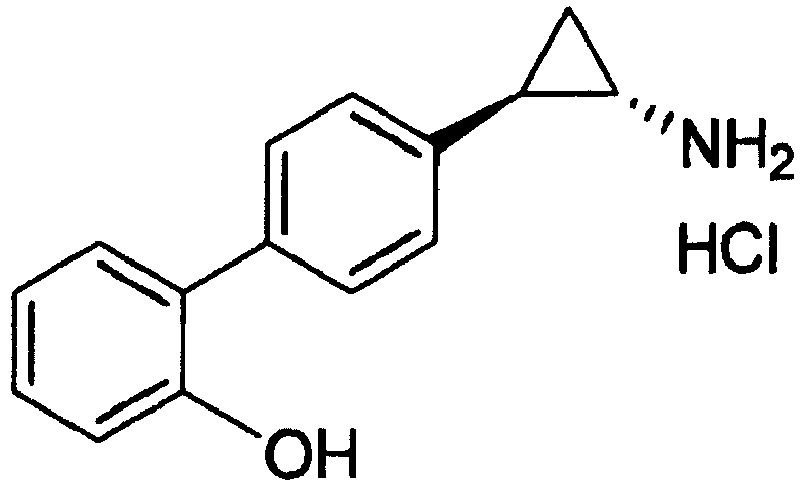
- 1HNMR (400 MHz, D2O) δ: 7.46 (brs, 2H), 7.20-7.35 (m, 4H), 6.94-7.04 (m, 2H), 2.84-2.95 (m, 1H), 2.41-2.50 (m, 1H), 1.40-1.52 (m, 1H), 1.34-1.43 (m, 1H); Mass (M+H): 226.18
-

- 1HNMR (400 MHz, D2O) δ: 7.39-7.49 (m, 1H), 7.20-7.34 (m, 3H), 7.08-7.20 (m, 2H), 6.92-7.00 (m, 1H), 3.99 (s, 3H), 2.85-2.94 (m, 1H), 2.52-2.62 (m, 1H), 1.42-1.52 (m, 1H), 1.35-1.43 (m, 1H); Mass (M+H): 256.0
- The following compounds can be synthesized following the methodology described in Scheme 3.
-
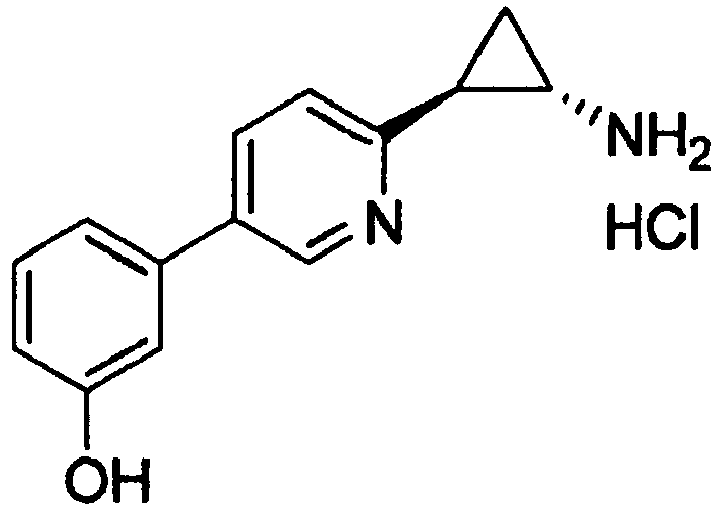
-

-

-
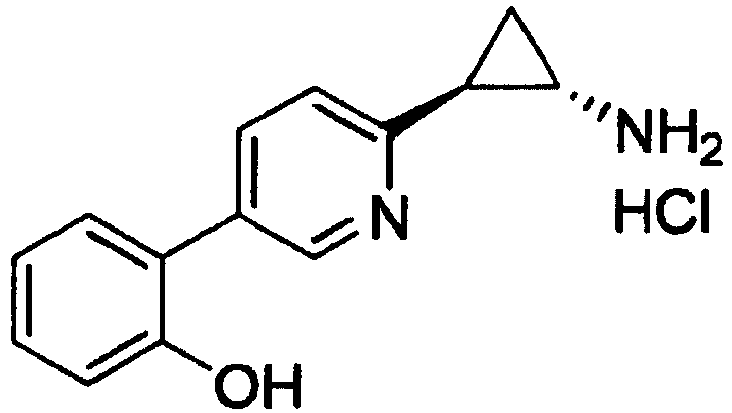
-
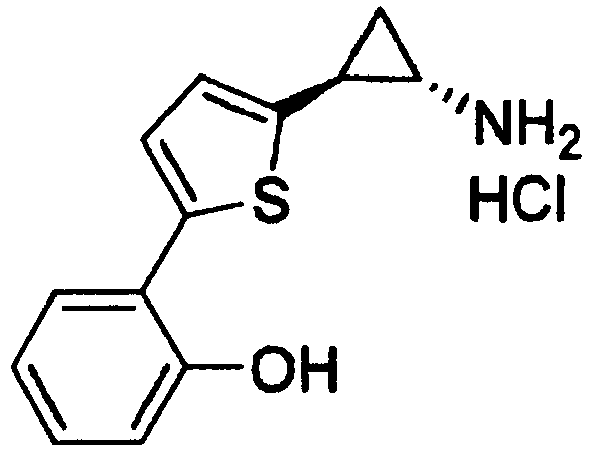
-
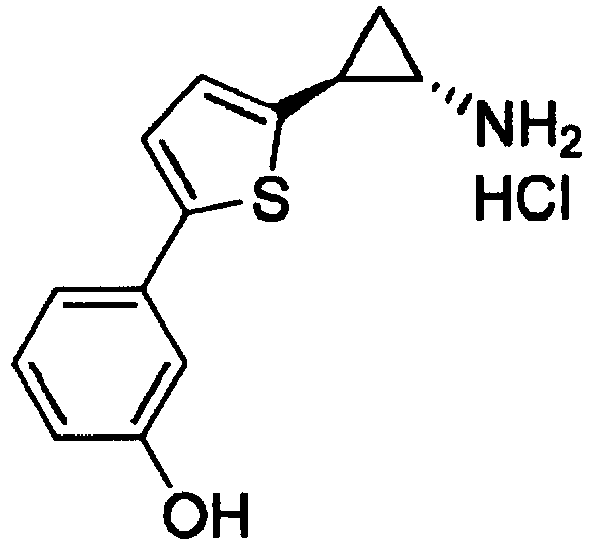
-
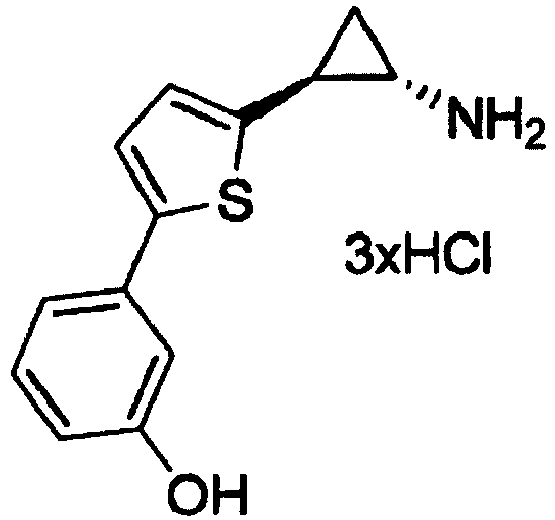
- 1HNMR (400 MHz, D2O) δ: 7.15-7.36 (m, 3H), 7.10 (brs, 1H), 6.80-6.92 (m, 2H), 2.88-2.98 (m, 1H), 2.58-2.64 (m, 1H), 1.46-1.58 (m, 1H), 1.40 (q, J= 7Hz, 1H); Mass (M+H): 232.2
-

-

-
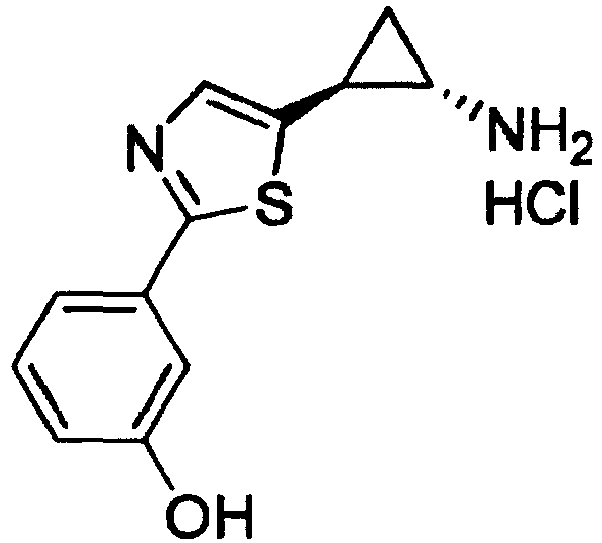
- 1HNMR (400 MHz, DMSO-d6, D2O Exchange) δ: 7.68 (s, 1H), 7.31 (s, 3H), 6.89 (brs, 1H), 2.88-2.96 (m, 1H), 2.58-2.64 (m, 1H), 1.48-1.58 (m, 1H), 1.36 (q, J= 7Hz, 1H); Mass (M+H): 233.3
-
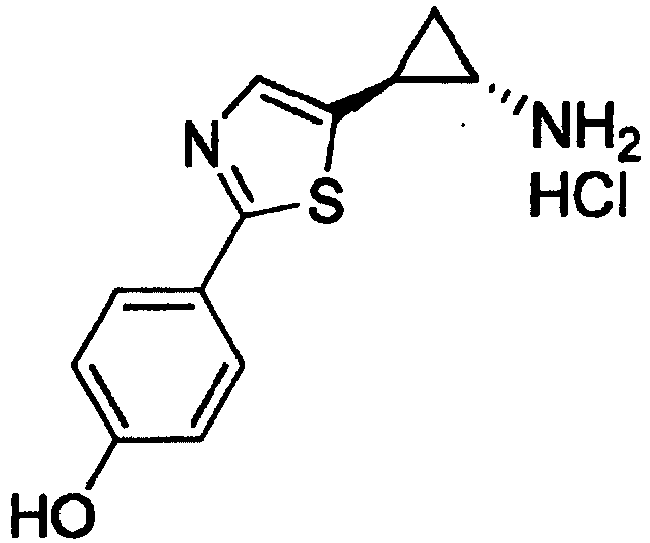
-
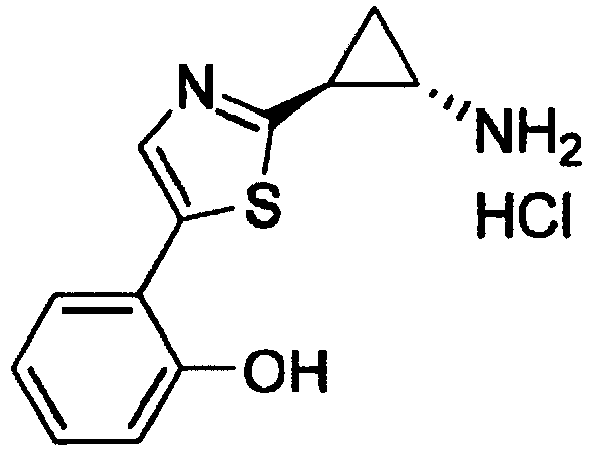
-

-

-
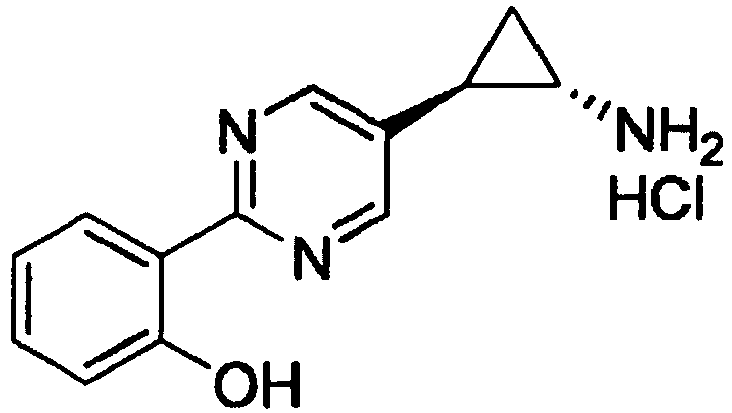
-
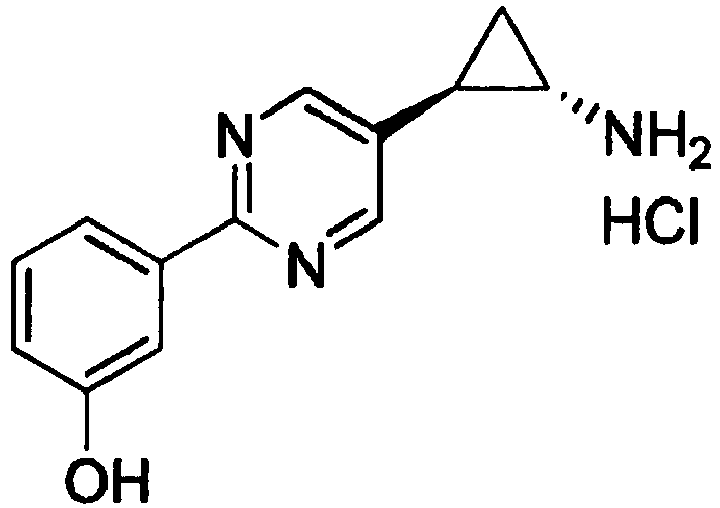
-

-
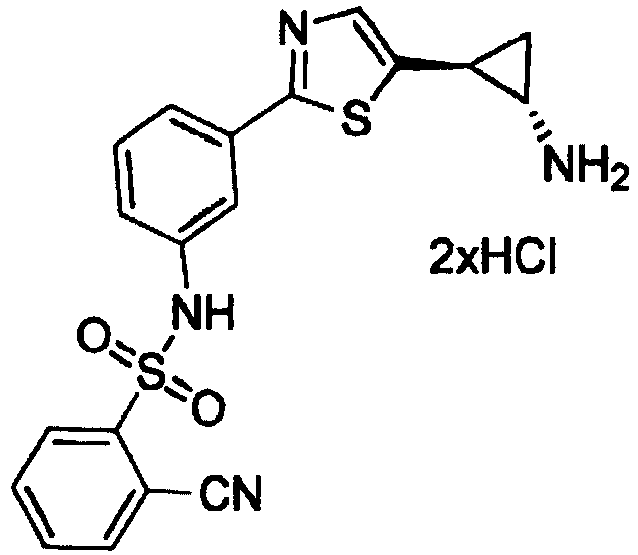
- 1HNMR (400 MHz, D2O) δ: 8.05 (d, J= 8Hz, 1H), 7.76-7.88 (m, 2H), 7.67-7.75 (m, 1H), 7.56 (s, 1H), 7.45 (brs, 2H), 7.25-7.34 (m, 1H), 7.09 (d, J= 8Hz, 1H), 2.94-3.03 (m, 1H), 2.60-2.68 (m, 1H), 1.46-1.58 (m, 1H), 1.40 (q, J= 7Hz, 1H); Mass (M-H): 395.0
- The compounds of the invention can be tested for their ability to inhibit LSD1. The ability of the compounds of the invention to inhibit LSD1 can be tested as follows. Human recombinant LSD1 protein was purchased from BPS Bioscience Inc. In order to monitor LSD1 enzymatic activity and/or its inhibition rate by our inhibitor(s) of interest, di-methylated H3-K4 peptide (Millipore) was chosen as a substrate. The demethylase activity was estimated, under aerobic conditions, by measuring the release of H2O2 produced during the catalytic process, using the Amplex® Red peroxide/peroxidase-coupled assay kit (Invitrogen).
- Briefly, a fixed amount of LSD1 was incubated on ice for 15 minutes, in the absence and/or in the presence of various concentrations of inhibitor (e.g., from 0 to 75 µM, depending on the inhibitor strength). Tranylcypromine (Biomol International) was used as a control for inhibition. Within the experiment, each concentration of inhibitor was tested in triplicate. After leaving the enzyme interacting with the inhibitor, 12.5 µM of di-methylated H3-K4 peptide was added to each reaction and the experiment was left for 1 hour at 37°C in the dark. The enzymatic reactions were set up in a 50 mM sodium phosphate, pH 7.4 buffer. At the end of the incubation, Amplex® Red reagent and horseradish peroxidase (HPR) solution were added to the reaction according to the recommendations provided by the supplier (Invitrogen), and left to incubate for 30 extra minutes at room temperature in the dark. A 1 µM H2O2 solution was used as a control of the kit efficiency. The conversion of the Amplex® Red reagent to resorufin due to the presence of H2O2 in the assay, was monitored by fluorescence (excitation at 540 nm, emission at 590 nm) using a microplate reader (Infinite 200, Tecan). Arbitrary units were used to measure level of H2O2 produced in the absence and/or in the presence of inhibitor.
- The maximum demethylase activity of LSD1 was obtained in the absence of inhibitor and corrected for background fluorescence in the absence of LSD1. The Ki (IC50) of each inhibitor was estimated at half of the maximum activity.
- The results presented in Table 1 below show the results of the LSD1 inhibition studies for a number of the Example compounds. Parnate (2-trans phenylcyclopropylamine) was found to have a Ki (IC50) of from about 15 to 35 micromolar depending on the enzyme preparation. The studies show that the compounds of the invention have unexpectedly potent LSD1 inhibition.
- Human recombinant monoamine oxidase proteins MAO-A and MAO-B were purchased from Sigma Aldrich. MAOs catalyze the oxidative deamination of primary, secondary and tertiary amines. In order to monitor MAO enzymatic activities and/or their inhibition rate by inhibitor(s) of interest, a fluorescent-based (inhibitor)-screening assay was set up. 3-(2-Aminophenyl)-3-oxopropanamine (kynuramine dihydrobromide, Sigma Aldrich), a non fluorescent compound was chosen as a substrate. Kynuramine is a nonspecific substrate for both MAOs activities. While undergoing oxidative deamination by MAO activities, kynuramine is converted into 4-hydroxyquinoline (4-HQ), a resulting fluorescent product.
- The monoamine oxidase activity was estimated by measuring the conversion of kynuramine into 4-hydroxyquinoline. Assays were conducted in 96-well black plates with clear bottom (Corning) in a final volume of 100 µL. The assay buffer was 100 mM HEPES, pH 7.5. Each experiment was performed in triplicate within the same experiment.
- Briefly, a fixed amount of MAO (0.25 µg for MAO-A and 0.5 µg for MAO-B) was incubated on ice for 15 minutes in the reaction buffer, in the absence and/or in the presence of various concentrations of inhibitor (e.g., from 0 to 50 µM, depending on the inhibitor strength). Tranylcypromine (Biomol International) was used as a control for inhibition.
- After leaving the enzyme(s) interacting with the inhibitor, 60 to 90 µM of kynuramine was added to each reaction for MAO-B and MAO-A assay respectively, and the reaction was left for 1 hour at 37°C in the dark. The oxidative deamination of the substrate was stopped by adding 50 µL (v/v) of NaOH 2N. The conversion of kynuramine to 4-hydroxyquinoline, was monitored by fluorescence (excitation at 320 nm, emission at 360 nm) using a microplate reader (Infinite 200, Tecan). Arbitrary units were used to measure levels of fluorescence produced in the absence and/or in the presence of inhibitor.
- The maximum of oxidative deamination activity was obtained by measuring the amount of 4-hydroxyquinoline formed from kynuramine deamination in the absence of inhibitor and corrected for background fluorescence in the absence of MAO enzymes. The Ki (IC50) of each inhibitor was determined at Vmax/2.
Table 1: Summary of Data from MAO-A, MAO-B, and LSD1 Inhibition Studies Example No. MAO-A (Ki) MAO-B (Ki) LSD1 (Ki) 1 I I II 2 I II II 3 I I II 4 I I III 5 I II II 6 I II II 7 I II II 8 I II II 9 I III II 10 I I II 11 I I II 12 I I II 13 I I III 14 I I II 15 I I II 16 I I II 17 I I III 18 I I I 19 I I II 20 I I III 21 I I III 22 I I II 23 I I III 24 I I III 25 I I III 26 I I II 29 I I III 30 I I II 31 I I III 34 I I II 36 I I I 37 I I I 38 I I II 39 I I II 40 I I II 41 I I II 42 I I II 43 I I II 44 I I II 45 I I II 46 I I III 47 I I II 48 I I III 49 I I II 50 I I II 51 I I II 52 I I II 53 I I III 54 I I II 55 I I II 56 I I III 57 I I II 58 I I II 59 nd I III 60 I I II-III 61 I I II 62 I I II 63 I I III 63 I I III 64 I I III 65 I I III 66 I I III 67 I I III 68 I I III 69 I I III 70 I I III 71 I I II 72 I I II 73 I I II-III 74 I I II-III 75 I I III 76 I I II 77 I I I 78 I I I 79 I I I 80 I I II 87 II I II 88 I I III 89 II I III 90 I I III 93 I I II 94 II II III 95 II I III 96 II I III 97 I I II 98 I I III 99 II I III 100 II I III 101 I I III 102 I I III 103 nd nd II 104 II I II 105 I nd II 106 II I II 113 II II III 116 III I III 124 I I III - The ranges for the Ki value reported in Table 1 are for MAO-A, MAO-B and LSD1 - I = between 1 µM and 40 µM; II = between 0.1 µM and 1 µM; III between 0.001 µM and 0.1 µM. "nd" means "not determined".
- Generally compounds of Examples were found to have Ki (IC50) values for MAO-A and MAO-B greater than the LSD1 Ki values, whereas LSD1 Ki values were generally lower than 0.5 µM.
- Thus the compounds of the invention are unexpectedly potent LSD1 inhibitors and unexpectedly selective for LSD1 as compared to MAO-A and MAO-B, or the compounds are dual inhibitors of LSD1 and MAO-B.
- Some compounds of the Examples have been tested for antiproliferative/cytotoxic activity and been found to have activity in the micromolar to low micromolar range against cancer cell lines including HCT-116.
- Previous reports of LSD1 have found that it is involved in cell proliferation and growth. Some studies have implicated LSD1 as a therapeutic target for cancer. Huang et al. (2007) PNAS 104:8023-8028 found that polyamine inhibitors of LSD1 modestly cause the reexpression of genes aberrantly silenced in cancer cells and particularly colorectal cancer (Huang et al. Clin Cancer Res. (2009) Dec 1;15(23):7217-28. Epub 2009 Nov 24. PMID: 19934284). Scoumanne et al. ((2007) J. Biol. Chem. May 25;282(21):15471-5) found that deficiency in LSD1 leads to a partial cell cycle arrest in G2/M and sensitizes cells to growth suppression induced by DNA damage. Kahl et al. ((2006) Cancer Res. 66(23):11341-7.) found that LSD1 expression is correlated with prostate cancer aggressiveness. Metzger et al. reported that LSD1 modulation by siRNA and pargyline regulates androgen receptor (AR) and may have therapeutic potential in cancers where AR plays a role, like prostate, testis, and brain cancers. Lee et al. ((2006) Chem. Biol. 13:563-567) reported that tranylcypromine derepresses Egr-1 gene expression in some cancer lines. A body of evidence is accumulating that Egr-1 is a tumor suppressor gene in many contexts (see e.g., Calogero et al. (2004) Cancer Cell International 4:1 exogenous expression of EGR-1 resulted in growth arrest and eventual cell death in primary cancer cell lines; Lucerna et al. (2006) Cancer Research 66, 6708-6713 show that sustained expression of Egr-1 causes antiangiogeneic effects and inhibits tumor growth in some models; Ferraro et al. ((2005) J. Clin. Oncol. Mar 20;23(9):1921-6) reported that Egr-1 is downregulated in lung cancer patients with a higher risk of recurrence and may be more resistant to therapy. Thus, increasing Egr-1 expression via inhibition of LSD1 is a therapeutic approach for some cancers. Recent studies have also implicated LSD1 in brain cancer (Schulte et al. (2009) Cancer Res. Mar 1;69(5):2065-71). Other studies have implicated LSD1 in breast cancer (Lims et al. Carcinogenesis. PMID: 20042638).
- Thus, a body of evidence has implicated LSD1 in a number of cancers, which suggests that LSD1 is a therapeutic target for cancer. The instant inventors have discovered a class of LSD1 inhibitors that can be used to treat diseases where LSD1 is implicated as a therapeutic target like cancer. Accordingly, the phenylcyclopropylamine compounds of the invention can be used to treat such diseases.
- Recent studies have also implicated LSD1 in viral infection and reactivation. In particular it was shown that pharmacological inhibitors of LSD1 like parnate and siRNA knock down of LSD1 caused reduced viral infectivity and reduced reactivation after latency (Liang et al. (2009) Nat. Med. 15:1312-1317). Therefore it is believed that the compounds of the invention can be used for treating or preventing viral infection. Furthermore, it is believed that the compounds of the invention can treat or prevent viral reactivation after latency.
- Thus, without wishing to be bound by theory, the inventors have identified a new class of substituted heterocyclylcyclopropylamines, phenylcyclopropylamines, and pyridinylcyclopropanamine containing LSD1 inhibitors with unexpected potency and selectivity for LSD1 a biologically relevant target in oncology and other diseases and/or LSD1/MAO-B.
- All publications and patent applications mentioned in the specification are indicative of the level of those skilled in the art to which this invention pertains. The mere mentioning of the publications and patent applications does not necessarily constitute an admission that they are prior art to the instant application.
Claims (15)
- A compound of Formula (I) or an enantiomer, a diastereomer, or a mixture thereof, or a pharmaceutically acceptable salt or solvate thereof:
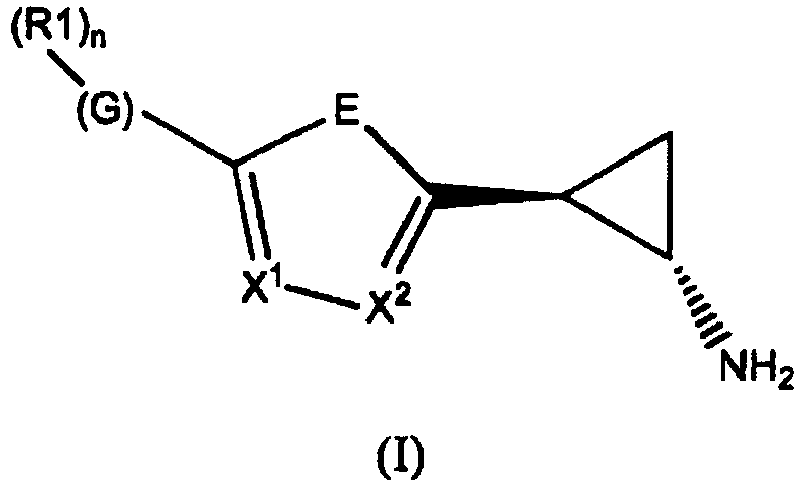 E is -N(R3)-, -O-, or -S-, or is -X3=X4-;X1 and X2 are independently C(R2) or N;X3 and X4, when present, are independently C(R2) or N;(G) is a cyclyl group;each (R1) is independently chosen from alkyl, alkenyl, alkynyl, cyclyl, -L1-cyclyl, -L1-amino, -L1-hydroxyl, amino, amido, nitro, halo, haloalkyl, haloalkoxy, cyano, sulfinyl, sulfonyl, sulfonamide, hydroxyl, alkoxy, urea, carbamate, acyl, or carboxyl;each (R2) is independently chosen from -H, alkyl, alkenyl, alkynyl, cyclyl, -L1-cyclyl, -L1-amino, -L1-hydroxyl, amino, amido, nitro, halo, haloalkyl, haloalkoxy, cyano, sulfinyl, sulfonyl, sulfonamide, hydroxyl, alkoxy, urea, carbamate, acyl, or carboxyl, wherein each (R2) group has 1, 2, or 3 independently chosen optional substituents or two (R2) groups can be taken together to form a heterocyclyl or aryl group having 1, 2, or 3 independently chosen optional substituents, wherein said optional substituents are independently chosen from alkyl, alkanoyl, heteroalkyl, heterocyclyl, haloalkyl, cycloalkyl, carbocyclyl, arylalkoxy, heterocyclylalkoxy, aryl, aryloxy, heterocyclyloxy, alkoxy, haloalkoxy, oxo, acyloxy, carbonyl, carboxyl, carboxamido, cyano, halogen, hydroxyl, amino, aminoalkyl, amidoalkyl, amido, nitro, thiol, alkylthio, arylthio, sulfonamide, sulfinyl, sulfonyl, urea, or carbamate;R3 is -H or a (C1-C6)alkyl group;each L1 is independently alkylene or heteroalkylene; andn is 0, 1, 2, 3, 4 or 5;for use as a medicament.
 - A pharmaceutical composition comprising a compound as defined in claim 1 and a pharmaceutically acceptable carrier.
- A compound as defined in claim 1 or the pharmaceutical composition of claim 2 for use in treating or preventing cancer.
- A compound as defined in claim 1 or the pharmaceutical composition of claim 2 for use in treating or preventing a neurological disease or condition.
- A compound as defined in claim 1 or the pharmaceutical composition of claim 2 for use in treating or preventing a viral infection.
- The compound for use according to any one of claims 1 or 3 to 5 or the pharmaceutical composition of claim 2 or the pharmaceutical composition for use according to any one of claims 3 to 5, wherein said compound is a compound of Formula (II) or an enantiomer, a diastereomer, or a mixture thereof, or a pharmaceutically acceptable salt or solvate thereof:
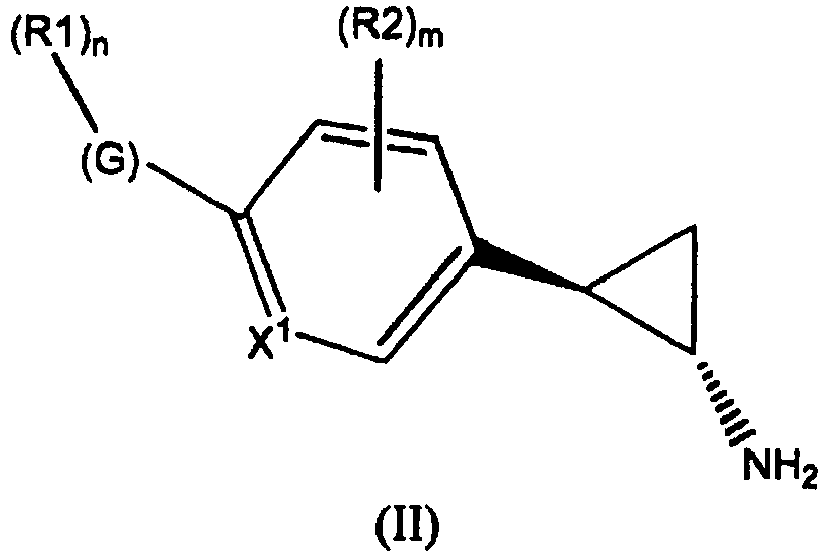 X1 is CH or N;(G) is a cyclyl group;each (R1) is independently chosen from alkyl, alkenyl, alkynyl, cyclyl, -L1-cyclyl, -L1-amino, -L1-hydroxyl, amino, amido, nitro, halo, haloalkyl, haloalkoxy, cyano, sulfinyl, sulfonyl, sulfonamide, hydroxyl, alkoxy, urea, carbamate, acyl, or carboxyl;each (R2) is independently chosen from alkyl, alkenyl, alkynyl, cyclyl, -L1-cyclyl, -L1-amino, -L1-hydroxyl, amino, amido, nitro, halo, haloalkyl, haloalkoxy, cyano, sulfinyl, sulfonyl, sulfonamide, hydroxyl, alkoxy, urea, carbamate, acyl, or carboxyl, wherein each (R2) group has 1, 2, or 3 optional substituents, wherein said optional substituents are independently chosen from alkyl, alkanoyl, heteroalkyl, heterocyclyl, haloalkyl, cycloalkyl, carbocyclyl, arylalkoxy, heterocyclylalkoxy, aryl, aryloxy, heterocyclyloxy, alkoxy, haloalkoxy, oxo, acyloxy, carbonyl, carboxyl, carboxamido, cyano, halogen, hydroxyl, amino, aminoalkyl, amidoalkyl, amido, nitro, thiol, alkylthio, arylthio, sulfonamide, sulfinyl, sulfonyl, urea, or carbamate;each L1 is independently alkylene or heteroalkylene;m is 0, 1, 2 or 3; andn is 0, 1, 2, 3, 4 or 5, provided that n and m are chosen independently such that n + m is greater than zero when X1 is -CH- and (G) is an aryl;with the proviso that the compound of Formula (II) is not:
(1S,2R)-2-(4'-chloro-[1,1'-biphenyl]-4-yl)cyclopropanamine, (1S,2R)-2-(3-chloro-4'-(trifluoromethyl)-[1,1'-biphenyl]-4-yl)cyclopropanamine, (1S,2R)-2-(6-(2,4-difluorophenyl)pyridin-3-yl)cyclopropanamine, 2-(3,4',5-trichloro-[1,1'-biphenyl]-4-yl)cyclopropanamine, 2-(3,3',4',5-tetrachloro-[1,1'-biphenyl]-4-yl)cyclopropanamine, 2-(3,3',4'-trichloro-[1,1'-biphenyl]-4-yl)cyclopropanamine, or 2-(3,5-dichloro-4'-methyl-[1,1'-biphenyl]-4-yl)cyclopropanamine. - The compound for use according to any one of claims 1 or 3 to 5 or the pharmaceutical composition of claim 2 or the pharmaceutical composition for use according to any one of claims 3 to 5, wherein said compound is a compound of Formula (III) or an enantiomer, a diastereomer, or a mixture thereof, or a pharmaceutically acceptable salt or solvate thereof:
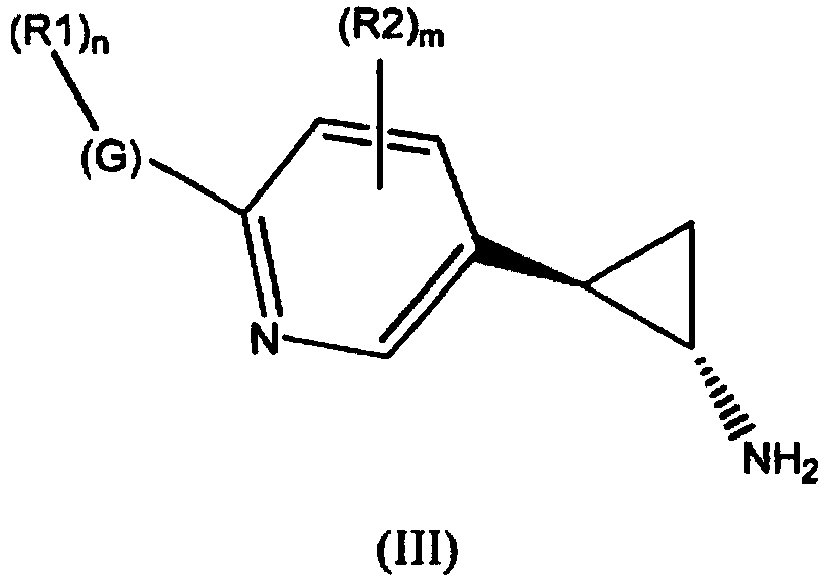 (G) is a cyclyl group;each (R1) is independently chosen from alkyl, alkenyl, alkynyl, cyclyl, -L1-cyclyl, -L1-amino, -L1-hydroxyl, amino, amido, nitro, halo, haloalkyl, haloalkoxy, cyano, sulfinyl, sulfonyl, sulfonamide, hydroxyl, alkoxy, urea, carbamate, acyl, or carboxyl;each (R2) is independently chosen from alkyl, alkenyl, alkynyl, cyclyl, -L1-cyclyl, -L1-amino, -L1-hydroxyl, amino, amido, nitro, halo, haloalkyl, haloalkoxy, cyano, sulfinyl, sulfonyl, sulfonamide, hydroxyl, alkoxy, urea, carbamate, acyl, or carboxyl, wherein each (R2) group has 0, 1, 2, or 3 optional substituents, wherein said optional substituents are independently chosen from alkyl, alkanoyl, heteroalkyl, heterocyclyl, haloalkyl, cycloalkyl, carbocyclyl, arylalkoxy, heterocyclylalkoxy, aryl, aryloxy, heterocyclyloxy, alkoxy, haloalkoxy, oxo, acyloxy, carbonyl, carboxyl, carboxamido, cyano, halogen, hydroxyl, amino, aminoalkyl, amidoalkyl, amido, nitro, thiol, alkylthio, arylthio, sulfonamide, sulfinyl, sulfonyl, urea, or carbamate;each L1 is independently alkylene or heteroalkylene;m is 0, 1, 2 or 3; andn is 0, 1, 2, 3, 4 or 5;with the proviso that the compound of Formula (III) is not:
(1S,2R)-2-(6-(2,4-difluorophenyl)pyridin-3-yl)cyclopropanamine. - The compound for use according to any one of claims 1 or 3 to 5 or the pharmaceutical composition of claim 2 or the pharmaceutical composition for use according to any one of claims 3 to 5, wherein E is -X3=X4-, and X1, X2, X3 and X4 are independently C(R2).
- The compound for use according to any one of claims 1 or 3 to 5 or the pharmaceutical composition of claim 2 or the pharmaceutical composition for use according to any one of claims 3 to 5, wherein:E is -N(R3)-, -O- or -S-; orE is -X3=X4-, X1 is N, and X2, X3 and X4 are independently C(R2) or N; orE is -X3=X4-, X2 is N, and X1, X3 and X4 are independently C(R2) or N.
- The compound for use according to any one of claims 1 or 3 to 9 or the pharmaceutical composition of any one of claims 2 or 6 to 9 or the pharmaceutical composition for use according to any one of claims 3 to 9, wherein (G) is an aryl or heterocyclyl group.
- The compound for use according to any one of claims 1 or 3 to 10 or the pharmaceutical composition of any one of claims 2 or 6 to 10 or the pharmaceutical composition for use according to any one of claims 3 to 10, wherein each (R1) is independently chosen from alkyl, aryl, amino, amido, nitro, halo, haloalkyl, haloalkoxy, cyano, heterocycle, sulfonyl, sulfonamide, hydroxyl, or alkoxy.
- The compound for use according to any one of claims 1, 3 to 5 or 8 to 11 or the pharmaceutical composition of any one of claims 2 or 8 to 11 or the pharmaceutical composition for use according to any one of claims 3 to 5 or 8 to 11, wherein each (R2) is independently chosen from -H, hydroxyl, haloalkyl, alkoxy, halo, amido, arylalkyl, heterocyclylalkyl, arylalkoxy, or heterocyclylalkoxy, wherein each (R2) has 1, 2, or 3 optional substituents chosen from lower alkyl, lower haloalkyl, lower haloalkoxy, amino(C1-C6)alkyl, halo, lower alkoxy, and amido, wherein the term "lower" as used in any of the aforementioned groups means that the respective group contains from 1 to 6 carbon atoms.
- The compound for use according to any one of claims 1 or 3 to 12 or the pharmaceutical composition of any one of claims 2 or 6 to 12 or the pharmaceutical composition for use according to any one of claims 3 to 12, wherein said compound has a trans configuration around the cyclopropyl ring.
- The compound for use according to any one of claims 1 or 3 to 5 or the pharmaceutical composition of claim 2 or the pharmaceutical composition for use according to any one of claims 3 to 5, wherein said compound is:4'-((trans)-2-aminocyclopropyl)biphenyl-4-ol;4'-((trans)-2-aminocyclopropyl)biphenyl-3-ol;(trans)-2-(6-(3-(trifluoromethyl)phenyl)pyridin-3-yl)cyclopropanamine;(Trans)-2-(6-(3,5-dichlorophenyl)pyridin-3-yl)cyclopropanamine;(trans)-2-(6-(4-chlorophenyl)pyridin-3-yl)cyclopropanamine;(trans)-2-(6-(3-chlorophenyl)pyridin-3-yl)cyclopropanamine;(trans)-2-(6-(4-(trifluoromethyl)phenyl)pyridin-3-yl)cyclopropanamine;(trans)-2-(6-(4-methoxyphenyl)pyridin-3-yl)cyclopropanamine;(trans)-2-(6-(3-methoxyphenyl)pyridin-3-yl)cyclopropanamine;4-(5-((trans)-2-aminocyclopropyl)pyridin-2-yl)benzonitrile;3-(5-((trans)-2-aminocyclopropyl)pyridin-2-yl)benzonitrile;(Trans)-2-(6-p-tolylpyridin-3-yl)cyclopropanamine;(Trans)-2-(6-m-tolylpyridin-3-yl)cyclopropanamine;4-(5-((trans)-2-aminocyclopropyl)pyridin-2-yl)phenol;3-(5-((trans)-2-aminocyclopropyl)pyridin-2-yl)phenol;4-(5-((trans)-2-aminocyclopropyl)pyridin-2-yl)benzamide;3-(5-((trans)-2-aminocyclopropyl)pyridin-2-yl)benzamide;2-(5-((trans)-2-aminocyclopropyl)pyridin-2-yl)phenol;3-(5-((trans)-2-aminocyclopropyl)pyridin-2-yl)phenol;(Trans)-2-(6-(3-methoxy-4-methylphenyl)pyridin-3-yl)cyclopropanamine;5-(5-((trans)-2-aminocyclopropyl)pyridin-2-yl)-2-fluorophenol;3-(5-((trans)-2-aminocyclopropyl)pyridin-2-yl)-5-fluorophenol;3-(5-((trans)-2-aminocyclopropyl)pyridin-2-yl)-4-fluorophenol;3-(5-((trans)-2-aminocyclopropyl)pyridin-2-yl)-2-fluorophenol;3-(5-((trans)-2-aminocyclopropyl)pyridin-2-yl)-2,4-difluorophenol;3-(5-((trans)-2-aminocyclopropyl)pyridin-2-yl)-2,4,6-trifluorophenol;3-(5-((trans)-2-aminocyclopropyl)pyridin-2-yl)-5-chlorophenol;(Trans)-2-(6-(2-fluoro-3-(trifluoromethyl)phenyl)pyridin-3-yl)cyclopropanamine;(Trans)-2-(6-(5-chlorothiophen-2-yl)pyridin-3-yl)cyclopropanamine;(Trans)-2-(6-(5-methylthiophen-2-yl)pyridin-3-yl)cyclopropanamine;(Trans)-2-(6-(1H-indol-6-yl)pyridin-3-yl)cyclopropanamine;(Trans)-2-(6-(benzo[b]thiophen-5-yl)pyridin-3-yl)cyclopropanamine;3-(5-((trans)-2-aminocyclopropyl)-3-methylpyridin-2-yl)phenol;(trans)-2-(6-(3-chlorophenyl)-5-methylpyridin-3-yl)cyclopropanamine;(trans)-2-(5-methyl-6-(3-(trifluoromethyl)phenyl)pyridin-3-yl)cyclopropanamine;(trans)-2-(6-(4-fluoro-3-methoxyphenyl)pyridin-3-yl)cyclopropanamine;(trans)-2-(6-(3-fluoro-5-methoxyphenyl)pyridin-3-yl)cyclopropanamine;(trans)-2-(6-(2-fluoro-5-methoxyphenyl)pyridin-3-yl)cyclopropanamine;(trans)-2-(6-(2-fluoro-3-methoxyphenyl)pyridin-3-yl)cyclopropanamine;(trans)-2-(6-(3-chloro-5-methoxyphenyl)pyridin-3-yl)cyclopropanamine;(trans)-2-(6-(2-chloro-5-methoxyphenyl)pyridin-3-yl)cyclopropanamine;(trans)-2-(6-(3-methoxy-5-(trifluoromethyl)phenyl)pyridin-3-yl)cyclopropanamine;3-(5-((trans)-2-aminocyclopropyl)pyridin-2-yl)-5-methoxybenzonitrile;5-(5-((trans)-2-aminocyclopropyl)pyridin-2-yl)-2-methylphenol;3-(5-((trans)-2-aminocyclopropyl)pyridin-2-yl)-4-chlorophenol;3-(5-((trans)-2-aminocyclopropyl)pyridin-2-yl)-5-(trifluoromethyl)phenol;(trans)-2-(6-(2-fluoro-5-(trifluoromethyl)phenyl)pyridin-3-yl)cyclopropanamine;(trans)-2-(6-(2-chloro-5-(trifluoromethyl)phenyl)pyridin-3-yl)cyclopropanamine;(trans)-2-(6-(3,5-bis(trifluoromethyl)phenyl)pyridin-3-yl)cyclopropanamine;N-(3-(5-((trans)-2-aminocyclopropyl)pyridin-2-yl)phenyl)acetamide;N-(3-(5-((trans)-2-aminocyclopropyl)pyridin-2-yl)phenyl)methanesulfonamide;(trans)-2-(6-(benzo[b]thiophen-2-yl)pyridin-3-yl)cyclopropanamine;(trans)-2-(6-(benzo[b]thiophen-3-yl)pyridin-3-yl)cyclopropanamine;5-(5-((trans)-2-aminocyclopropyl)pyridin-2-yl)thiophene-2-carbonitrile;(trans)-2-(6-(4-methylthiophen-3-yl)pyridin-3-yl)cyclopropanamine;(trans)-2-(2-chloro-6-(3-(trifluoromethyl)phenyl)pyridin-3-yl)cyclopropanamine;(trans)-2-(2-(4-chlorophenyl)-6-(3-(trifluoromethyl)phenyl)pyridin-3-yl)cyclopropanamine;4-(3-((trans)-2-aminocyclopropyl)-6-(3-(trifluoromethyl)phenyl)pyridin-2-yl)phenol;4-(3-((trans)-2-aminocyclopropyl)-6-(3-(trifluoromethyl)phenyl)pyridin-2-yl)benzamide;(trans)-2-(2-methyl-6-(3-(trifluoromethyl)phenyl)pyridin-3-yl)cyclopropanamine;3-(5-((trans)-2-aminocyclopropyl)pyridin-2-yl)-5-hydroxybenzonitrile; (trans)-2-(6-(3,4-difluoro-5-methoxyphenyl)pyridin-3-yl)cyclopropanamine;5-(5-((trans)-2-aminocyclopropyl)pyridin-2-yl)-2,3-difluorophenol;(trans)-2-(6-(3-chloro-4-fluoro-5-methoxyphenyl)pyridin-3-yl)cyclopropanamine;5-(5-((trans)-2-aminocyclopropyl)pyridin-2-yl)-3-chloro-2-fluorophenol;(trans)-2-(6-(1H-indazol-6-yl)pyridin-3-yl)cyclopropanamine;(trans)-2-(6-(9H-carbazol-2-yl)pyridin-3-yl)cyclopropanamine;6-(5-((trans)-2-aminocyclopropyl)pyridin-2-yl)indolin-2-one;6-(5-((trans)-2-aminocyclopropyl)pyridin-2-yl)benzofuran-2(3H)-one;4-(5-((trans)-2-aminocyclopropyl)pyridin-2-yl)pyridin-2(1H)-one;N-(3-(5-((trans)-2-aminocyclopropyl)pyridin-2-yl)phenyl)benzenesulfonamide;N-(3-(5-((trans)-2-aminocyclopropyl)pyridin-2-yl)phenyl)propane-2-sulfonamide;4'-((trans)-2-aminocyclopropyl)-4-fluorobiphenyl-3-ol;4'-((trans)-2-aminocyclopropyl)-5-chlorobiphenyl-3-ol;4'-((trans)-2-aminocyclopropyl)-5-chloro-4-fluorobiphenyl-3-ol;N-(4'-((trans)-2-aminocyclopropyl)biphenyl-3-yl)benzenesulfonamide;N-(4'-((trans)-2-aminocyclopropyl)biphenyl-3-yl)propane-2-sulfonamide;N-(4'-((trans)-2-aminocyclopropyl)biphenyl-3-yl)methanesulfonamide;N-(2-(5-((trans)-2-aminocyclopropyl)pyridin-2-yl)phenyl)methanesulfonamide;3-(5-((trans)-2-aminocyclopropyl)pyridin-2-yl)-4-methoxybenzonitrile;N-(4'-((trans)-2-aminocyclopropyl)biphenyl-2-yl)methanesulfonamide;4'-((trans)-2-aminocyclopropyl)-6-methoxybiphenyl-3-carbonitrile;N-(4'-((trans)-2-aminocyclopropyl)-6-methoxybiphenyl-3-yl)methanesulfonamide;4'-((trans)-2-aminocyclopropyl)-6-hydroxybiphenyl-3-carbonitrile;N-(4'-((trans)-2-aminocyclopropyl)-6-hydroxybiphenyl-3-yl)methanesulfonamide;3-(5-((trans)-2-aminocyclopropyl)pyridin-2-yl)-4-hydroxybenzonitrile;N-(3-(5-((trans)-2-aminocyclopropyl)pyridin-2-yl)-4-hydroxyphenyl)methanesulfonamide;N-(3-(5-((trans)-2-aminocyclopropyl)pyridin-2-yl)-5-(trifluoromethyl)phenyl)ethanesulfonamide;N-(3-(5-((trans)-2-aminocyclopropyl)pyridin-2-yl)-5-(trifluoromethyl)phenyl)methanesulfonamide;3-(6-((trans)-2-aminocyclopropyl)pyridin-3-yl)phenol; (Trans)-2-(5-(3 -methoxyphenyl)pyridin-2-yl)cyclopropanamine;4-(6-((trans)-2-aminocyclopropyl)pyridin-3 -yl)phenol;2-(6-((trans)-2-aminocyclopropyl)pyridin-3-yl)phenol;2-(5-((trans)-2-aminocyclopropyl)thiophen-2-yl)phenol;3-(5-((trans)-2-aminocyclopropyl)thiophen-2-yl)phenol;4-(5-((trans)-2-aminocyclopropyl)thiophen-2-yl)phenol;2-(5-((trans)-2-aminocyclopropyl)thiazol-2-yl)phenol;3-(5-((trans)-2-aminocyclopropyl)thiazol-2-yl)phenol;4-(5-((trans)-2-aminocyclopropyl)thiazol-2-yl)phenol;2-(2-((trans)-2-aminocyclopropyl)thiazol-5-yl)phenol;3-(2-((trans)-2-aminocyclopropyl)thiazol-5-yl)phenol;2-(2-((trans)-2-aminocyclopropyl)thiazol-5-yl)phenol;3-(2-((trans)-2-aminocyclopropyl)thiazol-5-yl)phenol;3-(5-((trans)-2-aminocyclopropyl)pyrimidin-2-yl)phenol;4-(5-((trans)-2-aminocyclopropyl)pyrimidin-2-yl)phenol;N-(3-(5-((trans)-2-aminocyclopropyl)pyridin-2-yl)-4-methoxyphenyl)methanesulfonamide;N-(4'-((trans)-2-aininocyclopropyl)-5-chloro-[1,1'-biphenyl]-3-yl)methanesulfonamide;N-(3-(5-((trans)-2-aminocyclopropyl)pyridin-2-yl)-5-chlorophenyl)methanesulfonamide;N-(4'-((trans)-2-aminocyclopropyl)-4-fluoro-[1,1'-biphenyl]-3-yl)methanesulfonamide;N-(5-(5-((trans)-2-aminocyclopropyl)pyridin-2-yl)-2-fluorophenyl)methanesulfonamide;N-(3-(5-((trans)-2-aminocyclopropyl)pyridin-2-yl)phenyl)ethanesulfonamide;N-(3-(5-((trans)-2-aminocyclopropyl)pyridin-2-yl)phenyl)-4-cyanobenzenesulfonamide;N-(3-(5-((trans)-2-aminocyclopropyl)pyridin-2-yl)phenyl)-3-cyanobenzenesulfonamide;N-(3-(5-((trans)-2-aminocyclopropyl)pyridin-2-yl)phenyl)-2-cyanobenzenesulfonamide;N-(3-(5-((trans)-2-aminocyclopropyl)pyridin-2-yl)-5-(trifluoromethyl)phenyl)-4-cyanobenzenesulfonamide;N-(4'-((trans)-2-aminocyclopropyl)-[1,1'-biphenyl]-3-yl)-1,1,1-trifluoromethanesulfonamide;4'-((trans)-2-aminocyclopropyl)-6-hydroxy-[1,1'-biphenyl]-3-carbonitrile;4'-((trans)-2-aminocyclopropyl)-[1,1'-biphenyl]-2-ol;4'-((trans)-2-aminocyclopropyl)-3'-methoxy-[1,1'-biphenyl]-3-ol;N-(3-(5-((trans)-2-aminocyclopropyl)thiazol-2-yl)phenyl)-2-cyanobenzenesulfonamide; ora pharmaceutically acceptable salt or solvate thereof.
- A compound selected from:4'-((trans)-2-aminocyclopropyl)biphenyl-4-ol;4'-((trans)-2-aminocyclopropyl)biphenyl-3-ol;(trans)-2-(6-(3-(trifluoromethyl)phenyl)pyridin-3-yl)cyclopropanamine;(Trans)-2-(6-(3 ,5-dichlorophenyl)pyridin-3-yl)cyclopropanamine;(trans)-2-(6-(4-chlorophenyl)pyridin-3-yl)cyclopropanamine;(trans)-2-(6-(3-chlorophenyl)pyridin-3-yl)cyclopropanamine;(trans)-2-(6-(4-(trifluoromethyl)phenyl)pyridin-3-yl)cyclopropanamine;(trans)-2-(6-(4-methoxyphenyl)pyridin-3-yl)cyclopropanamine;(trans)-2-(6-(3 -methoxyphenyl)pyridin-3 -yl)cyclopropanamine;4-(5-((trans)-2-aminocyclopropyl)pyridin-2-yl)benzonitrile;3-(5-((trans)-2-aminocyclopropyl)pyridin-2-yl)benzonitrile;(Trans)-2-(6-p-tolylpyridin-3-yl)cyclopropanamine;(Trans)-2-(6-m-tolylpyridin-3-yl)cyclopropanamine;4-(5-((trans)-2-aminocyclopropyl)pyridin-2-yl)phenol;3-(5-((trans)-2-aminocyclopropyl)pyridin-2-yl)phenol;4-(5-((trans)-2-aminocyclopropyl)pyridin-2-yl)benzainide;3-(5-((trans)-2-aminocyclopropyl)pyridin-2-yl)benzamide;2-(5-((trans)-2-aminocyclopropyl)pyridin-2-yl)phenol;3-(5-((trans)-2-aminocyclopropyl)pyridin-2-yl)phenol;(Trans)-2-(6-(3-methoxy-4-methylphenyl)pyridin-3-yl)cyclopropanamine;5-(5-((trans)-2-aminocyclopropyl)pyridin-2-yl)-2-fluorophenol;3-(5-((trans)-2-aminocyclopropyl)pyridin-2-yl)-5-fluorophenol;3-(5-((trans)-2-aminocyclopropyl)pyridin-2-yl)-4-fluorophenol;3-(5-((trans)-2-aminocyclopropyl)pyridin-2-yl)-2-fluorophenol;3-(5-((trans)-2-aminocyclopropyl)pyridin-2-yl)-2,4-difluorophenol;3-(5-((trans)-2-aminocyclopropyl)pyridin-2-yl)-2,4,6-trifluorophenol;3-(5-((trans)-2-aminocyclopropyl)pyridin-2-yl)-5-chlorophenol;(Trans)-2-(6-(2-fluoro-3-(trifluoromethyl)phenyl)pyridin-3-yl)cyclopropanamine;(Trans)-2-(6-(5-chlorothiophen-2-yl)pyridin-3-yl)cyclopropanamine;(Trans)-2-(6-(5-methylthiophen-2-yl)pyridin-3-yl)cyclopropanamine;(Trans)-2-(6-(1H-indol-6-yl)pyridin-3-yl)cyclopropanamine;(Trans)-2-(6-(benzo[b]thiophen-5-yl)pyridin-3-yl)cyclopropanamine;3-(5-((trans)-2-aminocyclopropyl)-3-methylpyridin-2-yl)phenol;(trans)-2-(6-(3 -chlorophenyl)-5-methylpyridin-3-yl)cyclopropanamine;(trans)-2-(5-methyl-6-(3-(trifluoromethyl)phenyl)pyridin-3-yl)cyclopropanamine;(trans)-2-(6-(4-fluoro-3-methoxyphenyl)pyridin-3-yl)cyclopropanamine;(trans)-2-(6-(3-fluoro-5-methoxyphenyl)pyridin-3-yl)cyclopropanamine;(trans)-2-(6-(2-fluoro-5-methoxyphenyl)pyridin-3-yl)cyclopropanamine;(trans)-2-(6-(2-fluoro-3-methoxyphenyl)pyridin-3-yl)cyclopropanamine;(trans)-2-(6-(3-chloro-5-methoxyphenyl)pyridin-3-yl)cyclopropanamine;(trans)-2-(6-(2-chloro-5-methoxyphenyl)pyridin-3 -yl)cyclopropanamine;(trans)-2-(6-(3-methoxy-5-(trifluoromethyl)phenyl)pyridin-3-yl)cyclopropanamine;3-(5-((trans)-2-aminocyclopropyl)pyridin-2-yl)-5-methoxybenzonitrile;5-(5-((trans)-2-aminocyclopropyl)pyridin-2-yl)-2-methylphenol;3-(5-((trans)-2-aminocyclopropyl)pyridin-2-yl)-4-chlorophenol;3-(5-((trans)-2-aminocyclopropyl)pyridin-2-yl)-5-(trifluoromethyl)phenol;(trans)-2-(6-(2-fluoro-5-(trifluoromethyl)phenyl)pyridin-3-yl)cyclopropanamine;(trans)-2-(6-(2-chloro-5-(trifluoromethyl)phenyl)pyridin-3-yl)cyclopropanamine;(trans)-2-(6-(3,5-bis(trifluoromethyl)phenyl)pyridin-3-yl)cyclopropanamine;N-(3-(5-((trans)-2-aminocyclopropyl)pyridin-2-yl)phenyl)acetamide;N-(3-(5-((trans)-2-aminocyclopropyl)pyridin-2-yl)phenyl)methanesulfonamide;(trans)-2-(6-(benzo[b]thiophen-2-yl)pyridin-3-yl)cyclopropanamine;(trans)-2-(6-(benzo[b]thiophen-3-yl)pyridin-3-yl)cyclopropanamine;5-(5-((trans)-2-aminocyclopropyl)pyridin-2-yl)thiophene-2-carbonitrile;(trans)-2-(6-(4-methylthiophen-3-yl)pyridin-3 -yl)cyclopropanamine;(trans)-2-(2-chloro-6-(3-(trifluoromethyl)phenyl)pyridin-3-yl)cyclopropanamine;(trans)-2-(2-(4-chlorophenyl)-6-(3-(trifluoromethyl)phenyl)pyridin-3-yl)cyclopropanamine;4-(3-((trans)-2-aminocyclopropyl)-6-(3-(trifluoromethyl)phenyl)pyridin-2-yl)phenol;4-(3-((trans)-2-aminocyclopropyl)-6-(3-(trifluoromethyl)phenyl)pyridin-2-yl)benzamide;(trans)-2-(2-methyl-6-(3-(trifluoromethyl)phenyl)pyridin-3-yl)cyclopropanamine;3-(5-((trans)-2-aminocyclopropyl)pyridin-2-yl)-5-hydroxybenzonitrile;(trans)-2-(6-(3,4-difluoro-5-methoxyphenyl)pyridin-3-yl)cyclopropanamine;5-(5-((trans)-2-aminocyclopropyl)pyridin-2-yl)-2,3-difluorophenol;(trans)-2-(6-(3-chloro-4-fluoro-5-methoxyphenyl)pyridin-3-yl)cyclopropanamine;5-(5-((trans)-2-aminocyclopropyl)pyridin-2-yl)-3-chloro-2-fluorophenol;(trans)-2-(6-(1H-indazol-6-yl)pyridin-3-yl)cyclopropanamine;(trans)-2-(6-(9H-carbazol-2-yl)pyridin-3-yl)cyclopropanamine;6-(5-((trans)-2-aminocyclopropyl)pyridin-2-yl)indolin-2-one;6-(5-((trans)-2-aminocyclopropyl)pyridin-2-yl)benzofuran-2(3H)-one;4-(5-((trans)-2-aminocyclopropyl)pyridin-2-yl)pyridin-2(1H)-one;N-(3-(5-((trans)-2-aminocyclopropyl)pyridin-2-yl)phenyl)benzenesulfonamide;N-(3-(5-((trans)-2-aminocyclopropyl)pyridin-2-yl)phenyl)propane-2-sulfonamide;4'-((trans)-2-aminocyclopropyl)-4-fluorobiphenyl-3-ol;4'-((trans)-2-aminocyclopropyl)-5-chlorobiphenyl-3-ol;4'-((trans)-2-aminocyclopropyl)-5-chloro-4-fluorobiphenyl-3-ol;N-(4'-((trans)-2-aminocyclopropyl)biphenyl-3-yl)benzenesulfonamide;N-(4'-((trans)-2-aminocyclopropyl)biphenyl-3-yl)propane-2-sulfonamide;N-(4'-((trans)-2-aminocyclopropyl)biphenyl-3-yl)methanesulfonamide;N-(2-(5-((trans)-2-aminocyclopropyl)pyridin-2-yl)phenyl)methanesulfonamide;3-(5-((trans)-2-aminocyclopropyl)pyridin-2-yl)-4-methoxybenzonitrile;N-(4'-((trans)-2-aminocyclopropyl)biphenyl-2-yl)methanesulfonamide;4'-((trans)-2-aminocyclopropyl)-6-methoxybiphenyl-3-carbonitrile;N-(4'-((trans)-2-aminocyclopropyl)-6-methoxybiphenyl-3-yl)methanesulfonamide;4'-((trans)-2-aminocyclopropyl)-6-hydroxybiphenyl-3-carbonitrile;N-(4'-((trans)-2-aminocyclopropyl)-6-hydroxybiphenyl-3-yl)methanesulfonamide;3-(5-((trans)-2-aminocyclopropyl)pyridin-2-yl)-4-hydroxybenzonitrile;N-(3-(5-((trans)-2-aminocyclopropyl)pyridin-2-yl)-4-hydroxyphenyl)methanesulfonamide;N-(3-(5-((trans)-2-aminocyclopropyl)pyridin-2-yl)-5-(trifluoromethyl)phenyl)ethanesulfonamide;N-(3-(5-((trans)-2-aminocyclopropyl)pyridin-2-yl)-5-(trifluoromethyl)phenyl)methanesulfonamide;3-(6-((trans)-2-aminocyclopropyl)pyridin-3-yl)phenol;(Trans)-2-(5-(3-methoxyphenyl)pyridin-2-yl)cyclopropanamine;4-(6-((trans)-2-aminocyclopropyl)pyridin-3-yl)phenol;2-(6-((trans)-2-aminocyclopropyl)pyridin-3-yl)phenol;2-(5-((trans)-2-aminocyclopropyl)thiophen-2-yl)phenol;3-(5-((trans)-2-aminocyclopropyl)thiophen-2-yl)phenol;4-(5-((trans)-2-aminocyclopropyl)thiophen-2-yl)phenol;2-(5-((trans)-2-aminocyclopropyl)thiazol-2-yl)phenol;3-(5-((trans)-2-aminocyclopropyl)thiazol-2-yl)phenol;4-(5-((trans)-2-aminocyclopropyl)thiazol-2-yl)phenol;2-(2-((trans)-2-aminocyclopropyl)thiazol-5-yl)phenol;3-(2-((trans)-2-aminocyclopropyl)thiazol-5-yl)phenol;2-(2-((trans)-2-aminocyclopropyl)thiazol-5-yl)phenol;3-(2-((trans)-2-aminocyclopropyl)thiazol-5-yl)phenol;3-(5-((trans)-2-aminocyclopropyl)pyrimidin-2-yl)phenol;4-(5-((trans)-2-aminocyclopropyl)pyrimidin-2-yl)phenol;N-(3-(5-((trans)-2-aminocyclopropyl)pyridin-2-yl)-4-methoxyphenyl)methanesulfonamide;N-(4'-((trans)-2-aminocyclopropyl)-5-chloro-[1,1'-biphenyl]-3-yl)methanesulfonamide;N-(3-(5-((trans)-2-aminocyclopropyl)pyridin-2-yl)-5-chlorophenyl)methanesulfonamide;N-(4'-((trans)-2-aminocyclopropyl)-4-fluoro-[1,1'-biphenyl]-3-yl)methanesulfonamide;N-(5-(5-((trans)-2-aminocyclopropyl)pyridin-2-yl)-2-fluorophenyl)methanesulfonamide;N-(3-(5-((trans)-2-aminocyclopropyl)pyridin-2-yl)phenyl)ethanesulfonamide;N-(3-(5-((trans)-2-aminocyclopropyl)pyridin-2-yl)phenyl)-4-cyanobenzenesulfonamide;N-(3-(5-((trans)-2-aminocyclopropyl)pyridin-2-yl)phenyl)-3-cyanobenzenesulfonamide;N-(3-(5-((trans)-2-aminocyclopropyl)pyridin-2-yl)phenyl)-2-cyanobenzenesulfonamide;N-(3-(5-((trans)-2-aminocyclopropyl)pyridin-2-yl)-5-(trifluoromethyl)phenyl)-4-cyanobenzenesulfonamide;N-(4'-((trans)-2-aminocyclopropyl)-[1,1'-biphenyl]-3-yl)-1,1,1-trifluoromethanesulfonamide;4'-((trans)-2-aminocyclopropyl)-6-hydroxy-[1,1'-biphenyl]-3-carbonitrile;4'-((trans)-2-aminocyclopropyl)-[1,1-biphenyl]-2-ol;4'-((trans)-2-aminocyclopropyl)-3'-methoxy-[1,1'-biphenyl]-3-ol;N-(3-(5-((trans)-2-aminocyclopropyl)thiazol-2-yl)phenyl)-2-cyanobenzenesulfonamide; ora pharmaceutically acceptable salt or solvate thereof.
Priority Applications (1)
| Application Number | Priority Date | Filing Date | Title |
|---|---|---|---|
| EP11749118.3A EP2598480B1 (en) | 2010-07-29 | 2011-07-27 | Cyclopropylamine derivatives useful as lsd1 inhibitors |
Applications Claiming Priority (4)
| Application Number | Priority Date | Filing Date | Title |
|---|---|---|---|
| EP10171345 | 2010-07-29 | ||
| US201161460992P | 2011-01-10 | 2011-01-10 | |
| EP11749118.3A EP2598480B1 (en) | 2010-07-29 | 2011-07-27 | Cyclopropylamine derivatives useful as lsd1 inhibitors |
| PCT/EP2011/062947 WO2012013727A1 (en) | 2010-07-29 | 2011-07-27 | Cyclopropylamine derivatives useful as lsd1 inhibitors |
Publications (2)
| Publication Number | Publication Date |
|---|---|
| EP2598480A1 EP2598480A1 (en) | 2013-06-05 |
| EP2598480B1 true EP2598480B1 (en) | 2019-04-24 |
Family
ID=44514681
Family Applications (1)
| Application Number | Title | Priority Date | Filing Date |
|---|---|---|---|
| EP11749118.3A Not-in-force EP2598480B1 (en) | 2010-07-29 | 2011-07-27 | Cyclopropylamine derivatives useful as lsd1 inhibitors |
Country Status (3)
| Country | Link |
|---|---|
| US (2) | US9006449B2 (en) |
| EP (1) | EP2598480B1 (en) |
| WO (1) | WO2012013727A1 (en) |
Families Citing this family (68)
| Publication number | Priority date | Publication date | Assignee | Title |
|---|---|---|---|---|
| EP2361242B1 (en) | 2008-10-17 | 2018-08-01 | Oryzon Genomics, S.A. | Oxidase inhibitors and their use |
| EP2389362B1 (en) | 2009-01-21 | 2019-12-11 | Oryzon Genomics, S.A. | Phenylcyclopropylamine derivatives and their medical use |
| JP5699152B2 (en) | 2009-09-25 | 2015-04-08 | オリゾン・ジェノミックス・ソシエダッド・アノニマOryzon Genomics S.A. | Lysine-specific demethylase-1 inhibitors and uses thereof |
| US8946296B2 (en) | 2009-10-09 | 2015-02-03 | Oryzon Genomics S.A. | Substituted heteroaryl- and aryl-cyclopropylamine acetamides and their use |
| US9186337B2 (en) | 2010-02-24 | 2015-11-17 | Oryzon Genomics S.A. | Lysine demethylase inhibitors for diseases and disorders associated with Hepadnaviridae |
| WO2011106105A2 (en) | 2010-02-24 | 2011-09-01 | Oryzon Genomics, S.A. | Inhibitors for antiviral use |
| WO2011131697A1 (en) | 2010-04-19 | 2011-10-27 | Oryzon Genomics S.A. | Lysine specific demethylase-1 inhibitors and their use |
| EP3375775A1 (en) | 2010-07-29 | 2018-09-19 | Oryzon Genomics, S.A. | Arylcyclopropylamine based demethylase inhibitors of lsd1 and their medical use |
| EP2598480B1 (en) | 2010-07-29 | 2019-04-24 | Oryzon Genomics, S.A. | Cyclopropylamine derivatives useful as lsd1 inhibitors |
| WO2012045883A1 (en) | 2010-10-08 | 2012-04-12 | Oryzon Genomics S.A. | Cyclopropylamine inhibitors of oxidases |
| WO2012072713A2 (en) * | 2010-11-30 | 2012-06-07 | Oryzon Genomics, S.A. | Lysine demethylase inhibitors for diseases and disorders associated with flaviviridae |
| EP2712316A1 (en) | 2011-02-08 | 2014-04-02 | Oryzon Genomics, S.A. | Lysine demethylase inhibitors for myeloproliferative or lymphoproliferative diseases or disorders |
| EP2712315B1 (en) | 2011-02-08 | 2021-11-24 | Oryzon Genomics, S.A. | Lysine demethylase inhibitors for myeloproliferative disorders |
| PE20141322A1 (en) | 2011-03-25 | 2014-10-05 | Glaxosmithkline Intellectual Property (N 2) Limited | CYCLOPROPYLAMINES AS INHIBITORS OF LYSINE-SPECIFIC DESMETILASE 1 |
| WO2012156531A2 (en) | 2011-05-19 | 2012-11-22 | Oryzon Genomics, S.A. | Lysine demethylase inhibitors for inflammatory diseases or conditions |
| WO2012156537A2 (en) | 2011-05-19 | 2012-11-22 | Oryzon Genomics, S.A. | Lysine demethylase inhibitors for thrombosis and cardiovascular diseases |
| EP2776394B1 (en) | 2011-10-20 | 2018-12-26 | Oryzon Genomics, S.A. | (hetero)aryl cyclopropylamine compounds as lsd1 inhibitors |
| EP3736265A1 (en) | 2011-10-20 | 2020-11-11 | Oryzon Genomics, S.A. | (hetero)aryl cyclopropylamine compounds as lsd1 inhibitors |
| CN105051005B (en) | 2012-10-12 | 2017-06-13 | 武田药品工业株式会社 | Cyclopropylamine compounds and uses thereof |
| HK1211027A1 (en) | 2012-10-16 | 2016-05-13 | Almirall, S.A. | Pyrrolotriazinone derivatives as pi3k inhibitors |
| EP2740474A1 (en) | 2012-12-05 | 2014-06-11 | Instituto Europeo di Oncologia S.r.l. | Cyclopropylamine derivatives useful as inhibitors of histone demethylases kdm1a |
| US9918983B2 (en) * | 2013-05-30 | 2018-03-20 | The Board Of Regents Of The Nevada System Of Higher Education On Behalf Of The University Of Nevada, Las Vegas | Suicidal LSD1 inhibitors targeting SOX2-expressing cancer cells |
| WO2014205511A1 (en) | 2013-06-25 | 2014-12-31 | University Of Canberra | Methods and compositions for modulating cancer stem cells |
| BR112016002496B1 (en) | 2013-08-06 | 2022-07-12 | Imago Biosciences Inc. | COMPOUND AND PHARMACEUTICAL COMPOSITION |
| SMT202300014T1 (en) * | 2013-12-11 | 2023-05-12 | Celgene Quanticel Research Inc | Inhibitors of lysine specific demethylase-1 |
| MY183499A (en) | 2014-02-13 | 2021-02-22 | Incyte Corp | Cyclopropylamines as lsd1 inhibitors |
| US9527835B2 (en) | 2014-02-13 | 2016-12-27 | Incyte Corporation | Cyclopropylamines as LSD1 inhibitors |
| ES2672797T3 (en) | 2014-02-13 | 2018-06-18 | Incyte Corporation | Cyclopropylamines as LSD1 inhibitors |
| CR20160395A (en) | 2014-02-13 | 2016-12-20 | Incyte Corp | CYCLOPROPILAMINS AS INHIBITORS OF LSD1 |
| NZ725262A (en) * | 2014-04-11 | 2023-01-27 | Takeda Pharmaceuticals Co | Cyclopropanamine compound and use thereof |
| HUE050564T2 (en) | 2014-06-27 | 2020-12-28 | Celgene Quanticel Res Inc | Lysine-specific demethylase-1 inhibitors |
| US9695167B2 (en) | 2014-07-10 | 2017-07-04 | Incyte Corporation | Substituted triazolo[1,5-a]pyridines and triazolo[1,5-a]pyrazines as LSD1 inhibitors |
| US9695168B2 (en) | 2014-07-10 | 2017-07-04 | Incyte Corporation | Substituted imidazo[1,5-α]pyridines and imidazo[1,5-α]pyrazines as LSD1 inhibitors |
| US9695180B2 (en) | 2014-07-10 | 2017-07-04 | Incyte Corporation | Substituted imidazo[1,2-a]pyrazines as LSD1 inhibitors |
| US9758523B2 (en) | 2014-07-10 | 2017-09-12 | Incyte Corporation | Triazolopyridines and triazolopyrazines as LSD1 inhibitors |
| EP3185858A4 (en) | 2014-08-25 | 2017-12-27 | University of Canberra | Compositions for modulating cancer stem cells and uses therefor |
| BR112017004334A2 (en) * | 2014-09-05 | 2018-08-07 | Celgene Quanticel Res Inc | lysine-1 specific demethylase inhibitors. |
| PT3256218T (en) | 2015-02-12 | 2025-01-29 | Imago Biosciences Inc | Kdm1a inhibitors for the treatment of disease |
| MA51438A (en) | 2015-04-03 | 2021-04-14 | Incyte Corp | HETEROCYCLIC COMPOUNDS USED AS LSD1 INHIBITORS |
| EP3090998A1 (en) | 2015-05-06 | 2016-11-09 | F. Hoffmann-La Roche AG | Solid forms |
| SG10201911989SA (en) | 2015-06-12 | 2020-02-27 | Oryzon Genomics Sa | Biomarkers associated with lsd1 inhibitors and uses thereof |
| WO2017013061A1 (en) | 2015-07-17 | 2017-01-26 | Oryzon Genomics, S.A. | Biomarkers associated with lsd1 inhibitors and uses thereof |
| SG10202001219UA (en) | 2015-08-12 | 2020-03-30 | Incyte Corp | Salts of an lsd1 inhibitor |
| WO2017114497A1 (en) | 2015-12-30 | 2017-07-06 | Novartis Ag | Immune effector cell therapies with enhanced efficacy |
| SG10201913290QA (en) | 2016-03-15 | 2020-03-30 | Oryzon Genomics Sa | Combinations of lsd1 inhibitors for the treatment of hematological malignancies |
| CN109195593A (en) | 2016-03-15 | 2019-01-11 | 奥莱松基因组股份有限公司 | For treating the combination of the LSD1 inhibitor of solid tumor |
| ES3042059T3 (en) | 2016-03-16 | 2025-11-18 | Oryzon Genomics Sa | Methods to determine kdm1a target engagement and chemoprobes useful therefor |
| CR20180553A (en) | 2016-04-22 | 2019-02-01 | Incyte Corp | FORMULATIONS OF AN LSD1 INHIBITOR |
| SI3307267T1 (en) | 2016-06-10 | 2019-08-30 | Oryzon Genomics, S.A. | Multiple sclerosis treatment |
| US11390590B2 (en) | 2016-08-16 | 2022-07-19 | Imago Biosciences, Inc. | Methods and processes for the preparation of KDM1A inhibitors |
| US20190256930A1 (en) | 2016-11-03 | 2019-08-22 | Oryzon Genomics, S.A. | Biomarkers for determining responsiveness to lsd1 inhibitors |
| US20200069677A1 (en) | 2016-12-09 | 2020-03-05 | Constellation Pharmaceuticals, Inc. | Markers for personalized cancer treatment with lsd1 inhibitors |
| DK3661510T3 (en) | 2017-08-03 | 2025-01-02 | Oryzon Genomics Sa | METHODS FOR TREATING BEHAVIORAL CHANGES |
| WO2019068326A1 (en) | 2017-10-05 | 2019-04-11 | Université D'aix-Marseille | Lsd1 inhibitors for the treatment and prevention of cardiomyopathies |
| CN108083997A (en) * | 2017-11-14 | 2018-05-29 | 南通常佑药业科技有限公司 | A kind of preparation method of chiral aryl cyclopropyl amine derivatives |
| IL279260B2 (en) | 2018-05-11 | 2024-10-01 | Imago Biosciences Inc | KDM1A inhibitors for the treatment of diseases |
| WO2020047198A1 (en) | 2018-08-31 | 2020-03-05 | Incyte Corporation | Salts of an lsd1 inhibitor and processes for preparing the same |
| TW202028183A (en) * | 2018-10-10 | 2020-08-01 | 大陸商江蘇豪森藥業集團有限公司 | Nitrogen-containing heteroaryl derivative regulators, preparation method and application thereof |
| EP3941465B1 (en) | 2019-03-20 | 2025-09-17 | Oryzon Genomics, S.A. | Methods of treating attention deficit hyperactivity disorder using kdm1a inhibitors such as the compound vafidemstat |
| CN121370879A (en) | 2019-03-20 | 2026-01-23 | 奥莱松基因组股份有限公司 | Treatment methods for borderline personality disorder |
| WO2021004610A1 (en) | 2019-07-05 | 2021-01-14 | Oryzon Genomics, S.A. | Biomarkers and methods for personalized treatment of small cell lung cancer using kdm1a inhibitors |
| WO2021047407A1 (en) * | 2019-09-10 | 2021-03-18 | 四川科伦博泰生物医药股份有限公司 | Biaryl compound, pharmaceutical composition comprising same, preparation method therefor, and use thereof |
| EP3964204A1 (en) | 2020-09-08 | 2022-03-09 | Université d'Aix-Marseille | Lsd1 inhibitors for use in the treatment and prevention of fibrosis of tissues |
| BR112023020554A2 (en) | 2021-04-08 | 2023-12-05 | Oryzon Genomics Sa | LSD1 INHIBITOR COMBINATIONS FOR THE TREATMENT OF MYELOID CANCERS |
| CN113512031B (en) * | 2021-07-01 | 2024-01-30 | 都创(上海)医药开发有限公司 | Preparation method of LSD1 enzyme inhibitor TAK-418 intermediate compound |
| CN119497613A (en) | 2022-05-09 | 2025-02-21 | 奥莱松基因组股份有限公司 | Methods of treating NF1-mutated tumors using LSD1 inhibitors |
| JP2025516647A (en) | 2022-05-09 | 2025-05-30 | オリゾン・ゲノミクス・ソシエダッド・アノニマ | Treatment of malignant peripheral nerve sheath tumors (MPNST) using LSD1 inhibitors |
| CN120529900A (en) | 2022-11-24 | 2025-08-22 | 奥莱松基因组股份有限公司 | Combination of LSD1 inhibitors and Menin inhibitors for the treatment of cancer |
Citations (1)
| Publication number | Priority date | Publication date | Assignee | Title |
|---|---|---|---|---|
| WO2011131697A1 (en) * | 2010-04-19 | 2011-10-27 | Oryzon Genomics S.A. | Lysine specific demethylase-1 inhibitors and their use |
Family Cites Families (128)
| Publication number | Priority date | Publication date | Assignee | Title |
|---|---|---|---|---|
| US3106578A (en) | 1960-09-16 | 1963-10-08 | Smith Kline French Lab | Nu-phenethyl-2-phenylcyclopropylamine derivatives |
| US3365458A (en) | 1964-06-23 | 1968-01-23 | Aldrich Chem Co Inc | N-aryl-n'-cyclopropyl-ethylene diamine derivatives |
| US3532749A (en) | 1965-05-11 | 1970-10-06 | Aldrich Chem Co Inc | N'-propargyl-n**2-cyclopropyl-ethylenediamines and the salts thereof |
| US3471522A (en) | 1967-09-29 | 1969-10-07 | Aldrich Chem Co Inc | N-cyclopropyl-n'-furfuryl-n'-methyl ethylene diamines |
| US3532712A (en) | 1967-09-29 | 1970-10-06 | Aldrich Chem Co Inc | N'-cyclopropyl ethylenediamine derivatives |
| US3654306A (en) | 1970-01-26 | 1972-04-04 | Robins Co Inc A H | 5-azaspiro(2.4)heptane-4 6-diones |
| US3758684A (en) | 1971-09-07 | 1973-09-11 | Burroughs Wellcome Co | Treating dna virus infections with amino purine derivatives |
| US4530901A (en) | 1980-01-08 | 1985-07-23 | Biogen N.V. | Recombinant DNA molecules and their use in producing human interferon-like polypeptides |
| US4409243A (en) | 1981-11-09 | 1983-10-11 | Julian Lieb | Treatment of auto-immune and inflammatory diseases |
| US4522811A (en) | 1982-07-08 | 1985-06-11 | Syntex (U.S.A.) Inc. | Serial injection of muramyldipeptides and liposomes enhances the anti-infective activity of muramyldipeptides |
| GB9311282D0 (en) | 1993-06-01 | 1993-07-21 | Rhone Poulenc Rorer Ltd | New compositions of matter |
| HU229474B1 (en) | 1994-10-21 | 2014-01-28 | Nps Pharma Inc | Calcium receptor-active compounds, pharmaceutical compositions containing them and use of the compositions |
| US5652258A (en) | 1995-05-30 | 1997-07-29 | Gliatech, Inc. | 2-(4-imidazoyl) cyclopropyl derivatives |
| US20040132820A1 (en) | 1996-02-15 | 2004-07-08 | Jean Gosselin | Agents with leukotriene B4-like antiviral (DNA) and anti-neoplastic activities |
| GB9615730D0 (en) | 1996-07-26 | 1996-09-04 | Medical Res Council | Anti-viral agent 1 |
| US5961987A (en) | 1996-10-31 | 1999-10-05 | University Of Iowa Research Foundation | Ocular protein stimulants |
| DE19647615A1 (en) | 1996-11-18 | 1998-05-20 | Bayer Ag | Process for the preparation of cyclopropylamines |
| SE9702772D0 (en) | 1997-07-22 | 1997-07-22 | Astra Pharma Prod | Novel compounds |
| TW530058B (en) * | 1997-07-22 | 2003-05-01 | Astra Pharma Prod | Triazolo [4,5-d]pyrimidine compounos and their use and process for preparation |
| WO1999031072A1 (en) | 1997-12-18 | 1999-06-24 | E.I. Du Pont De Nemours And Company | Cyclohexylamine arthropodicides and fungicides |
| US6809120B1 (en) | 1998-01-13 | 2004-10-26 | University Of Saskatchewan Technologies Inc. | Composition containing propargylamine for enhancing cancer therapy |
| CA2326389C (en) | 1998-04-21 | 2007-01-23 | Micromet Gesellschaft Fur Biomedizinische Forschung Mbh | Novel cd19xcd3 specific polypeptides and uses thereof |
| SE9802206D0 (en) | 1998-06-22 | 1998-06-22 | Astra Pharma Inc | Novel compounds |
| TWI229674B (en) | 1998-12-04 | 2005-03-21 | Astra Pharma Prod | Novel triazolo[4,5-d]pyrimidine compounds, pharmaceutical composition containing the same, their process for preparation and uses |
| SK287748B6 (en) | 2000-05-26 | 2011-08-04 | Schering Corporation | Substituted 5-amino-pyrazolo[4,3-e]-1,2,4,triazolo[1,5-c]- pyrimidines, method for the production thereof, pharmaceutical composition comprising same and their use |
| JP2001354563A (en) | 2000-06-09 | 2001-12-25 | Sankyo Co Ltd | Medicine comprising substituted benzylamines |
| US8519005B2 (en) | 2000-07-27 | 2013-08-27 | Thomas N. Thomas | Compositions and methods to prevent toxicity of antiinflammatory agents and enhance their efficacy |
| EP1193268A1 (en) | 2000-09-27 | 2002-04-03 | Applied Research Systems ARS Holding N.V. | Pharmaceutically active sulfonamide derivatives bearing both lipophilic and ionisable moieties as inhibitors of protein Junkinases |
| CA2442525A1 (en) | 2001-03-29 | 2002-10-10 | Mendi Higgins | Cyclopropylindole derivatives as selective serotonin reuptake inhibitors |
| DE10123163A1 (en) | 2001-05-09 | 2003-01-16 | Gruenenthal Gmbh | Substituted cyclohexane-1,4-diamine derivatives |
| US20030008844A1 (en) | 2001-05-17 | 2003-01-09 | Keryx Biopharmaceuticals, Inc. | Use of sulodexide for the treatment of inflammatory bowel disease |
| US6889705B2 (en) | 2002-02-05 | 2005-05-10 | Alternative Fuel Systems, Inc. | Electromagnetic valve for regulation of a fuel flow |
| US7544675B2 (en) | 2002-04-18 | 2009-06-09 | Ucb, S.A. | Chemical compounds with dual activity, processes for their preparation and pharmaceutical compositions |
| US7704995B2 (en) | 2002-05-03 | 2010-04-27 | Exelixis, Inc. | Protein kinase modulators and methods of use |
| AU2003234464B2 (en) | 2002-05-03 | 2009-06-04 | Exelixis, Inc. | Protein kinase modulators and methods of use |
| US7312214B2 (en) | 2002-05-10 | 2007-12-25 | Bristol-Myers Squibb Company | 1, 1-disubstituted cycloalkyl derivatives as factor Xa inhibitors |
| US6951961B2 (en) | 2002-05-17 | 2005-10-04 | Marina Nikolaevna Protopopova | Methods of use and compositions for the diagnosis and treatment of infectious disease |
| US20040033986A1 (en) | 2002-05-17 | 2004-02-19 | Protopopova Marina Nikolaevna | Anti tubercular drug: compositions and methods |
| US7456222B2 (en) | 2002-05-17 | 2008-11-25 | Sequella, Inc. | Anti tubercular drug: compositions and methods |
| ATE503764T1 (en) | 2002-05-20 | 2011-04-15 | Bristol Myers Squibb Co | HEPATITIS C VIRUS INHIBITORS |
| US7611704B2 (en) | 2002-07-15 | 2009-11-03 | Board Of Regents, The University Of Texas System | Compositions and methods for treating viral infections using antibodies and immunoconjugates to aminophospholipids |
| SE0202539D0 (en) | 2002-08-27 | 2002-08-27 | Astrazeneca Ab | Compounds |
| EP1569934B1 (en) | 2002-12-13 | 2008-01-23 | Smithkline Beecham Corporation | Cyclopropyl compounds as ccr5 antagonists |
| SG2012000667A (en) | 2003-01-08 | 2015-03-30 | Univ Washington | Antibacterial agents |
| US7223785B2 (en) | 2003-01-22 | 2007-05-29 | Boehringer Ingelheim International Gmbh | Viral polymerase inhibitors |
| GB0303439D0 (en) | 2003-02-14 | 2003-03-19 | Pfizer Ltd | Antiparasitic terpene alkaloids |
| US7186832B2 (en) | 2003-02-20 | 2007-03-06 | Sugen Inc. | Use of 8-amino-aryl-substituted imidazopyrazines as kinase inhibitors |
| US7135575B2 (en) | 2003-03-03 | 2006-11-14 | Array Biopharma, Inc. | P38 inhibitors and methods of use thereof |
| ATE446752T1 (en) | 2003-04-24 | 2009-11-15 | Merck & Co Inc | ACT ACTIVITY INHIBITOR |
| DE602004011348T2 (en) | 2003-07-03 | 2009-01-08 | Eli Lilly And Co., Indianapolis | INDANDERIVATES AS MUSCARIN RECEPTOR AGONISTS |
| BRPI0414313A (en) | 2003-09-11 | 2006-11-07 | Kemia Inc | cytokine inhibitors |
| CA2534312A1 (en) | 2003-09-12 | 2005-03-24 | Applied Research Systems Ars Holding N.V. | Sulfonamide derivatives for the treatment of diabetes |
| CN1897950A (en) | 2003-10-14 | 2007-01-17 | 惠氏公司 | Fused aryl and heteroaryl derivatives and methods of use |
| EP1677799A4 (en) | 2003-10-21 | 2008-09-10 | Merck & Co Inc | TRIAZOLO-PYRIDAZINE COMPOUNDS AND DERIVATIVES THEREOF FOR THE TREATMENT OF NEUROPATHIC PAIN |
| US7026339B2 (en) | 2003-11-07 | 2006-04-11 | Fan Yang | Inhibitors of HCV NS5B polymerase |
| KR20060109937A (en) | 2003-12-15 | 2006-10-23 | 니뽄 다바코 산교 가부시키가이샤 | N-substituted-N-sulfonylaminocyclopropane compounds and pharmaceutical uses thereof |
| BRPI0417478A (en) | 2003-12-15 | 2007-05-08 | Almirall Prodesfarma Ag | 2,6-bisheteroaryl-4-aminopyrimidines as adenosine receptor antagonists |
| US6991911B2 (en) | 2003-12-15 | 2006-01-31 | Dade Behring Inc. | Assay for entactogens |
| EP1694410B1 (en) | 2003-12-15 | 2010-04-14 | Japan Tobacco, Inc. | Cyclopropane derivatives and pharmaceutical use thereof |
| US7399825B2 (en) | 2003-12-24 | 2008-07-15 | Lipps Binie V | Synthetic peptide, inhibitor to DNA viruses |
| BRPI0510319A (en) | 2004-04-26 | 2007-10-16 | Pfizer | hiv integrase enzyme inhibitors |
| US20090275099A1 (en) | 2004-04-27 | 2009-11-05 | Regents Of The University Of Michigan | Methods and compositions for treating diseases and conditions associated with mitochondrial function |
| DE102004057594A1 (en) | 2004-11-29 | 2006-06-08 | Boehringer Ingelheim Pharma Gmbh & Co. Kg | Substitute pteridine for the treatment of inflammatory diseases |
| WO2006071608A2 (en) | 2004-12-16 | 2006-07-06 | President And Fellows Of Harvard College | Histone demethylation mediated by the nuclear amine oxidase homolog lsd1 |
| DE602005022826D1 (en) | 2005-02-18 | 2010-09-23 | Universitaetsklinikum Freiburg | Control of androgen receptor-dependent gene expression by inhibition of amine oxidase activity of lysine-specific demethylase (LSD1) |
| US20060275366A1 (en) | 2005-06-02 | 2006-12-07 | Schering Corporation | Controlled-release formulation |
| WO2007002220A2 (en) | 2005-06-21 | 2007-01-04 | Bristol-Myers Squibb Company | Aminoacetamide acyl guanidines as beta-secretase inhibitors |
| EP1741708A1 (en) | 2005-06-28 | 2007-01-10 | Sanofi-Aventis Deutschland GmbH | Heteroaryl-substituted amides comprising an unsaturated or cyclic linker group, and their use as pharmaceuticals |
| GEP20105124B (en) | 2005-07-25 | 2010-11-25 | Array Biopharma Inc | Novel macrocyclic inhibitors of hepatitis c virus replication |
| WO2007021839A2 (en) | 2005-08-10 | 2007-02-22 | Johns Hopkins University | Polyamines useful as anti-parasitic and anti-cancer therapeutics and as lysine-specific demethylase inhibitors |
| WO2007025144A1 (en) | 2005-08-24 | 2007-03-01 | University Of Illinois - Chicago | 5-ht2c receptor agonists as anorectic agents |
| GB0517740D0 (en) | 2005-08-31 | 2005-10-12 | Novartis Ag | Organic compounds |
| TW200745067A (en) | 2006-03-14 | 2007-12-16 | Astrazeneca Ab | Novel compounds |
| WO2007134799A1 (en) | 2006-05-18 | 2007-11-29 | Syngenta Participations Ag | Novel microbiocides |
| US8201555B2 (en) | 2006-06-27 | 2012-06-19 | Brintech International Limited | Inhaler |
| US8198301B2 (en) | 2006-07-05 | 2012-06-12 | Hesheng Zhang | Quinazoline and quinoline derivatives as irreversibe protein tyrosine kinase inhibitors |
| AU2007275047A1 (en) | 2006-07-20 | 2008-01-24 | University Of Washington | Compositions and methods for vaccinating against HSV-2 |
| WO2008033466A2 (en) | 2006-09-14 | 2008-03-20 | Combinatorx (Singapore) Pre. Ltd. | Compositions and methods for treatment of viral diseases |
| EP2142287A4 (en) | 2007-04-13 | 2012-05-23 | Univ Johns Hopkins | INHIBITORS OF LYSINE-SPECIFIC DEM ETHYLASE |
| US7906513B2 (en) | 2007-04-26 | 2011-03-15 | Enanta Pharmaceuticals, Inc. | Hydrazide-containing hepatitis C serine protease inhibitors |
| RU2479580C2 (en) | 2007-06-27 | 2013-04-20 | Астразенека Аб | Pyrazinone derivatives and use thereof in treatment of lung diseases |
| WO2009011845A1 (en) | 2007-07-13 | 2009-01-22 | George Frey | Systems and methods for spinal stabilization |
| WO2009023179A2 (en) | 2007-08-10 | 2009-02-19 | Genelabs Technologies, Inc. | Nitrogen containing bicyclic chemical entities for treating viral infections |
| PL2368882T3 (en) | 2007-09-17 | 2015-04-30 | Abbvie Bahamas Ltd | Anti-infective pyrimidines and uses thereof |
| US20100016262A1 (en) | 2007-10-18 | 2010-01-21 | Yale University | Compositions and methods for reducing hepatotoxicity associated with drug administration and treating non-alcoholic fatty liver disease, non-alcoholic steatohepatitis and associated cirrhosis |
| JP5497650B2 (en) | 2007-10-19 | 2014-05-21 | ベーリンガー インゲルハイム インターナショナル ゲゼルシャフト ミット ベシュレンクテル ハフツング | CCR10 antagonist |
| US8481696B2 (en) | 2007-12-26 | 2013-07-09 | Shionogi & Co., Ltd. | Glycosylated glycopeptide antibiotic derivatives |
| WO2009109991A2 (en) | 2008-01-23 | 2009-09-11 | Sun Pharma Advanced Research Company Ltd., | Novel hydrazide containing tyrosine kinase inhibitors |
| KR20100107045A (en) | 2008-01-28 | 2010-10-04 | 얀센 파마슈티카 엔.브이. | 6-SUBSTITUTED-THIO-2-AMINO-QUINOLINE DERIVATIVES USEFUL AS INHIBITORS OF β-SECRETASE (BACE) |
| EP2268140B1 (en) | 2008-03-19 | 2020-11-11 | Aurimmed Pharma, Inc. | Novel compounds advantageous in the treatment of central nervous system diseases and disorders |
| CN103214376A (en) | 2008-03-27 | 2013-07-24 | 格吕伦塔尔有限公司 | Substituted 4-aminocyclohexane derivatives |
| KR101623997B1 (en) | 2008-04-16 | 2016-05-24 | 포톨라 파마슈티컬스, 인코포레이티드 | 2,6-diamino-pyrimidin-5-yl-carboxamides as syk or jak kinases inhibitors |
| WO2009153197A1 (en) | 2008-06-18 | 2009-12-23 | F. Hoffmann-La Roche Ag | Halo-substituted pyrimidodiazepines as plkl inhibitors |
| EP2317992A2 (en) | 2008-07-24 | 2011-05-11 | The United States Of America, As Represented By The Secretary, Department Of Health And Human Services | Preventing or treating viral infection using an inhibitor of the lsd1 protein, a mao inhibitor or an inhibitor of lsd1 and a mao inhibitor |
| AU2009276411B2 (en) | 2008-08-01 | 2014-08-07 | The United States Of America, As Represented By The Secretary, Department Of Health And Human Services | A3 adenosine receptor antagonists and partial agonists |
| US8048887B2 (en) | 2008-09-11 | 2011-11-01 | Bristol-Myers Squibb Company | Compounds for the treatment of hepatitis C |
| EP2361242B1 (en) | 2008-10-17 | 2018-08-01 | Oryzon Genomics, S.A. | Oxidase inhibitors and their use |
| EP2389362B1 (en) | 2009-01-21 | 2019-12-11 | Oryzon Genomics, S.A. | Phenylcyclopropylamine derivatives and their medical use |
| US8299100B2 (en) | 2009-01-23 | 2012-10-30 | Northwestern University | Potent and selective neuronal nitric oxide synthase inhibitors with improved membrane permeability |
| RU2544010C2 (en) | 2009-02-27 | 2015-03-10 | Энанта Фармасьютикалс, Инк. | Hepatitis c virus inhibitors |
| CN102803217B (en) | 2009-05-15 | 2015-06-17 | 诺华股份有限公司 | Arylpyridines as Aldosterone Synthase Inhibitors |
| US8389580B2 (en) | 2009-06-02 | 2013-03-05 | Duke University | Arylcyclopropylamines and methods of use |
| EP2258865A1 (en) | 2009-06-05 | 2010-12-08 | Universitätsklinikum Freiburg | Lysine-specific demethylase 1 (LSD1) is a biomarker for breast cancer |
| WO2010143582A1 (en) | 2009-06-11 | 2010-12-16 | 公立大学法人名古屋市立大学 | Phenylcyclopropylamine derivatives and lsd1 inhibitors |
| US9708255B2 (en) | 2009-08-18 | 2017-07-18 | Robert A. Casero | (bis)urea and (bis)thiourea compounds as epigenic modulators of lysine-specific demethylase 1 and methods of treating disorders |
| EP2475254A4 (en) | 2009-09-11 | 2013-05-22 | Enanta Pharm Inc | INHIBITORS OF HEPATITIS C VIRUS |
| JP5699152B2 (en) | 2009-09-25 | 2015-04-08 | オリゾン・ジェノミックス・ソシエダッド・アノニマOryzon Genomics S.A. | Lysine-specific demethylase-1 inhibitors and uses thereof |
| US8946296B2 (en) | 2009-10-09 | 2015-02-03 | Oryzon Genomics S.A. | Substituted heteroaryl- and aryl-cyclopropylamine acetamides and their use |
| WO2011057262A2 (en) | 2009-11-09 | 2011-05-12 | Evolva Inc. | Treatment of infections with tp receptor antagonists |
| WO2011106105A2 (en) | 2010-02-24 | 2011-09-01 | Oryzon Genomics, S.A. | Inhibitors for antiviral use |
| US9186337B2 (en) | 2010-02-24 | 2015-11-17 | Oryzon Genomics S.A. | Lysine demethylase inhibitors for diseases and disorders associated with Hepadnaviridae |
| US20130197088A1 (en) | 2010-03-12 | 2013-08-01 | Robert A. Casero, JR. | Compositions and Methods for Combinations of Oligoamines with 2-Difluoromethylornithine (DFMO) |
| AU2011244023A1 (en) | 2010-04-20 | 2012-10-25 | Actavis Group Ptc Ehf | Novel process for preparing phenylcyclopropylamine derivatives using novel intermediates |
| CN102985402B (en) | 2010-04-20 | 2015-04-29 | 罗马大学 | Tranylcypromine derivatives as inhibitors of histone demethylase LSD1 and/or LSD2 |
| CA2803354A1 (en) | 2010-06-30 | 2012-01-05 | Actavis Group Ptc Ehf | Novel processes for the preparation of phenylcyclopropylamine derivatives and use thereof for preparing ticagrelor |
| EP3375775A1 (en) | 2010-07-29 | 2018-09-19 | Oryzon Genomics, S.A. | Arylcyclopropylamine based demethylase inhibitors of lsd1 and their medical use |
| EP2598480B1 (en) | 2010-07-29 | 2019-04-24 | Oryzon Genomics, S.A. | Cyclopropylamine derivatives useful as lsd1 inhibitors |
| US9527805B2 (en) | 2010-09-10 | 2016-12-27 | Robert A. Casero | Small molecules as epigenetic modulators of lysine-specific demethylase 1 and methods of treating disorders |
| US20130303545A1 (en) | 2010-09-30 | 2013-11-14 | Tamara Maes | Cyclopropylamine derivatives useful as lsd1 inhibitors |
| WO2012045883A1 (en) | 2010-10-08 | 2012-04-12 | Oryzon Genomics S.A. | Cyclopropylamine inhibitors of oxidases |
| WO2012072713A2 (en) | 2010-11-30 | 2012-06-07 | Oryzon Genomics, S.A. | Lysine demethylase inhibitors for diseases and disorders associated with flaviviridae |
| EP2712316A1 (en) | 2011-02-08 | 2014-04-02 | Oryzon Genomics, S.A. | Lysine demethylase inhibitors for myeloproliferative or lymphoproliferative diseases or disorders |
| EP2712315B1 (en) | 2011-02-08 | 2021-11-24 | Oryzon Genomics, S.A. | Lysine demethylase inhibitors for myeloproliferative disorders |
| PE20141322A1 (en) | 2011-03-25 | 2014-10-05 | Glaxosmithkline Intellectual Property (N 2) Limited | CYCLOPROPYLAMINES AS INHIBITORS OF LYSINE-SPECIFIC DESMETILASE 1 |
| WO2012156537A2 (en) | 2011-05-19 | 2012-11-22 | Oryzon Genomics, S.A. | Lysine demethylase inhibitors for thrombosis and cardiovascular diseases |
| WO2012156531A2 (en) | 2011-05-19 | 2012-11-22 | Oryzon Genomics, S.A. | Lysine demethylase inhibitors for inflammatory diseases or conditions |
| EP3736265A1 (en) | 2011-10-20 | 2020-11-11 | Oryzon Genomics, S.A. | (hetero)aryl cyclopropylamine compounds as lsd1 inhibitors |
| EP2776394B1 (en) | 2011-10-20 | 2018-12-26 | Oryzon Genomics, S.A. | (hetero)aryl cyclopropylamine compounds as lsd1 inhibitors |
-
2011
- 2011-07-27 EP EP11749118.3A patent/EP2598480B1/en not_active Not-in-force
- 2011-07-27 US US13/812,386 patent/US9006449B2/en not_active Expired - Fee Related
- 2011-07-27 WO PCT/EP2011/062947 patent/WO2012013727A1/en not_active Ceased
-
2015
- 2015-03-06 US US14/640,395 patent/US9676701B2/en not_active Expired - Fee Related
Patent Citations (1)
| Publication number | Priority date | Publication date | Assignee | Title |
|---|---|---|---|---|
| WO2011131697A1 (en) * | 2010-04-19 | 2011-10-27 | Oryzon Genomics S.A. | Lysine specific demethylase-1 inhibitors and their use |
Also Published As
| Publication number | Publication date |
|---|---|
| US20160052865A1 (en) | 2016-02-25 |
| US20130197013A1 (en) | 2013-08-01 |
| EP2598480A1 (en) | 2013-06-05 |
| WO2012013727A1 (en) | 2012-02-02 |
| US9676701B2 (en) | 2017-06-13 |
| US9006449B2 (en) | 2015-04-14 |
Similar Documents
| Publication | Publication Date | Title |
|---|---|---|
| EP2598480B1 (en) | Cyclopropylamine derivatives useful as lsd1 inhibitors | |
| EP2598482B1 (en) | Arylcyclopropylamine based demethylase inhibitors of lsd1 and their medical use | |
| US9061966B2 (en) | Cyclopropylamine inhibitors of oxidases | |
| JP5699152B2 (en) | Lysine-specific demethylase-1 inhibitors and uses thereof | |
| EP2389362B1 (en) | Phenylcyclopropylamine derivatives and their medical use | |
| US8524717B2 (en) | Oxidase inhibitors and their use | |
| EP2776394B1 (en) | (hetero)aryl cyclopropylamine compounds as lsd1 inhibitors | |
| EP2768805B1 (en) | (hetero)aryl cyclopropylamine compounds as lsd1 inhibitors | |
| WO2011042217A1 (en) | Substituted heteroaryl- and aryl- cyclopropylamine acetamides and their use | |
| WO2018068357A1 (en) | Novel sirt2 protein inhibitor and pharmaceutical use thereof | |
| HK1185880A (en) | Arylcyclopropylamine based demethylase inhibitors of lsd1 and their medical use | |
| HK1185880B (en) | Arylcyclopropylamine based demethylase inhibitors of lsd1 and their medical use | |
| HK1200457B (en) | (hetero)aryl cyclopropylamine compounds as lsd1 inhibitors |
Legal Events
| Date | Code | Title | Description |
|---|---|---|---|
| PUAI | Public reference made under article 153(3) epc to a published international application that has entered the european phase |
Free format text: ORIGINAL CODE: 0009012 |
|
| 17P | Request for examination filed |
Effective date: 20130228 |
|
| AK | Designated contracting states |
Kind code of ref document: A1 Designated state(s): AL AT BE BG CH CY CZ DE DK EE ES FI FR GB GR HR HU IE IS IT LI LT LU LV MC MK MT NL NO PL PT RO RS SE SI SK SM TR |
|
| DAX | Request for extension of the european patent (deleted) | ||
| 17Q | First examination report despatched |
Effective date: 20140407 |
|
| STAA | Information on the status of an ep patent application or granted ep patent |
Free format text: STATUS: EXAMINATION IS IN PROGRESS |
|
| GRAP | Despatch of communication of intention to grant a patent |
Free format text: ORIGINAL CODE: EPIDOSNIGR1 |
|
| STAA | Information on the status of an ep patent application or granted ep patent |
Free format text: STATUS: GRANT OF PATENT IS INTENDED |
|
| INTG | Intention to grant announced |
Effective date: 20180209 |
|
| RAP1 | Party data changed (applicant data changed or rights of an application transferred) |
Owner name: ORYZON GENOMICS, S.A. |
|
| GRAJ | Information related to disapproval of communication of intention to grant by the applicant or resumption of examination proceedings by the epo deleted |
Free format text: ORIGINAL CODE: EPIDOSDIGR1 |
|
| STAA | Information on the status of an ep patent application or granted ep patent |
Free format text: STATUS: EXAMINATION IS IN PROGRESS |
|
| GRAP | Despatch of communication of intention to grant a patent |
Free format text: ORIGINAL CODE: EPIDOSNIGR1 |
|
| STAA | Information on the status of an ep patent application or granted ep patent |
Free format text: STATUS: GRANT OF PATENT IS INTENDED |
|
| INTC | Intention to grant announced (deleted) | ||
| INTG | Intention to grant announced |
Effective date: 20180706 |
|
| GRAS | Grant fee paid |
Free format text: ORIGINAL CODE: EPIDOSNIGR3 |
|
| GRAA | (expected) grant |
Free format text: ORIGINAL CODE: 0009210 |
|
| STAA | Information on the status of an ep patent application or granted ep patent |
Free format text: STATUS: THE PATENT HAS BEEN GRANTED |
|
| AK | Designated contracting states |
Kind code of ref document: B1 Designated state(s): AL AT BE BG CH CY CZ DE DK EE ES FI FR GB GR HR HU IE IS IT LI LT LU LV MC MK MT NL NO PL PT RO RS SE SI SK SM TR |
|
| REG | Reference to a national code |
Ref country code: GB Ref legal event code: FG4D |
|
| REG | Reference to a national code |
Ref country code: CH Ref legal event code: EP |
|
| REG | Reference to a national code |
Ref country code: AT Ref legal event code: REF Ref document number: 1123973 Country of ref document: AT Kind code of ref document: T Effective date: 20190515 Ref country code: IE Ref legal event code: FG4D |
|
| REG | Reference to a national code |
Ref country code: DE Ref legal event code: R096 Ref document number: 602011058313 Country of ref document: DE |
|
| REG | Reference to a national code |
Ref country code: CH Ref legal event code: NV Representative=s name: VALIPAT S.A. GEVERS SA, CH |
|
| REG | Reference to a national code |
Ref country code: NL Ref legal event code: FP |
|
| REG | Reference to a national code |
Ref country code: LT Ref legal event code: MG4D |
|
| PG25 | Lapsed in a contracting state [announced via postgrant information from national office to epo] |
Ref country code: NO Free format text: LAPSE BECAUSE OF FAILURE TO SUBMIT A TRANSLATION OF THE DESCRIPTION OR TO PAY THE FEE WITHIN THE PRESCRIBED TIME-LIMIT Effective date: 20190724 Ref country code: FI Free format text: LAPSE BECAUSE OF FAILURE TO SUBMIT A TRANSLATION OF THE DESCRIPTION OR TO PAY THE FEE WITHIN THE PRESCRIBED TIME-LIMIT Effective date: 20190424 Ref country code: PT Free format text: LAPSE BECAUSE OF FAILURE TO SUBMIT A TRANSLATION OF THE DESCRIPTION OR TO PAY THE FEE WITHIN THE PRESCRIBED TIME-LIMIT Effective date: 20190824 Ref country code: SE Free format text: LAPSE BECAUSE OF FAILURE TO SUBMIT A TRANSLATION OF THE DESCRIPTION OR TO PAY THE FEE WITHIN THE PRESCRIBED TIME-LIMIT Effective date: 20190424 Ref country code: AL Free format text: LAPSE BECAUSE OF FAILURE TO SUBMIT A TRANSLATION OF THE DESCRIPTION OR TO PAY THE FEE WITHIN THE PRESCRIBED TIME-LIMIT Effective date: 20190424 Ref country code: ES Free format text: LAPSE BECAUSE OF FAILURE TO SUBMIT A TRANSLATION OF THE DESCRIPTION OR TO PAY THE FEE WITHIN THE PRESCRIBED TIME-LIMIT Effective date: 20190424 Ref country code: LT Free format text: LAPSE BECAUSE OF FAILURE TO SUBMIT A TRANSLATION OF THE DESCRIPTION OR TO PAY THE FEE WITHIN THE PRESCRIBED TIME-LIMIT Effective date: 20190424 Ref country code: HR Free format text: LAPSE BECAUSE OF FAILURE TO SUBMIT A TRANSLATION OF THE DESCRIPTION OR TO PAY THE FEE WITHIN THE PRESCRIBED TIME-LIMIT Effective date: 20190424 |
|
| PG25 | Lapsed in a contracting state [announced via postgrant information from national office to epo] |
Ref country code: PL Free format text: LAPSE BECAUSE OF FAILURE TO SUBMIT A TRANSLATION OF THE DESCRIPTION OR TO PAY THE FEE WITHIN THE PRESCRIBED TIME-LIMIT Effective date: 20190424 Ref country code: GR Free format text: LAPSE BECAUSE OF FAILURE TO SUBMIT A TRANSLATION OF THE DESCRIPTION OR TO PAY THE FEE WITHIN THE PRESCRIBED TIME-LIMIT Effective date: 20190725 Ref country code: LV Free format text: LAPSE BECAUSE OF FAILURE TO SUBMIT A TRANSLATION OF THE DESCRIPTION OR TO PAY THE FEE WITHIN THE PRESCRIBED TIME-LIMIT Effective date: 20190424 Ref country code: BG Free format text: LAPSE BECAUSE OF FAILURE TO SUBMIT A TRANSLATION OF THE DESCRIPTION OR TO PAY THE FEE WITHIN THE PRESCRIBED TIME-LIMIT Effective date: 20190724 Ref country code: RS Free format text: LAPSE BECAUSE OF FAILURE TO SUBMIT A TRANSLATION OF THE DESCRIPTION OR TO PAY THE FEE WITHIN THE PRESCRIBED TIME-LIMIT Effective date: 20190424 |
|
| REG | Reference to a national code |
Ref country code: AT Ref legal event code: MK05 Ref document number: 1123973 Country of ref document: AT Kind code of ref document: T Effective date: 20190424 |
|
| PG25 | Lapsed in a contracting state [announced via postgrant information from national office to epo] |
Ref country code: IS Free format text: LAPSE BECAUSE OF FAILURE TO SUBMIT A TRANSLATION OF THE DESCRIPTION OR TO PAY THE FEE WITHIN THE PRESCRIBED TIME-LIMIT Effective date: 20190824 |
|
| REG | Reference to a national code |
Ref country code: DE Ref legal event code: R097 Ref document number: 602011058313 Country of ref document: DE |
|
| PG25 | Lapsed in a contracting state [announced via postgrant information from national office to epo] |
Ref country code: RO Free format text: LAPSE BECAUSE OF FAILURE TO SUBMIT A TRANSLATION OF THE DESCRIPTION OR TO PAY THE FEE WITHIN THE PRESCRIBED TIME-LIMIT Effective date: 20190424 Ref country code: SK Free format text: LAPSE BECAUSE OF FAILURE TO SUBMIT A TRANSLATION OF THE DESCRIPTION OR TO PAY THE FEE WITHIN THE PRESCRIBED TIME-LIMIT Effective date: 20190424 Ref country code: CZ Free format text: LAPSE BECAUSE OF FAILURE TO SUBMIT A TRANSLATION OF THE DESCRIPTION OR TO PAY THE FEE WITHIN THE PRESCRIBED TIME-LIMIT Effective date: 20190424 Ref country code: DK Free format text: LAPSE BECAUSE OF FAILURE TO SUBMIT A TRANSLATION OF THE DESCRIPTION OR TO PAY THE FEE WITHIN THE PRESCRIBED TIME-LIMIT Effective date: 20190424 Ref country code: AT Free format text: LAPSE BECAUSE OF FAILURE TO SUBMIT A TRANSLATION OF THE DESCRIPTION OR TO PAY THE FEE WITHIN THE PRESCRIBED TIME-LIMIT Effective date: 20190424 Ref country code: EE Free format text: LAPSE BECAUSE OF FAILURE TO SUBMIT A TRANSLATION OF THE DESCRIPTION OR TO PAY THE FEE WITHIN THE PRESCRIBED TIME-LIMIT Effective date: 20190424 |
|
| PG25 | Lapsed in a contracting state [announced via postgrant information from national office to epo] |
Ref country code: IT Free format text: LAPSE BECAUSE OF FAILURE TO SUBMIT A TRANSLATION OF THE DESCRIPTION OR TO PAY THE FEE WITHIN THE PRESCRIBED TIME-LIMIT Effective date: 20190424 Ref country code: SM Free format text: LAPSE BECAUSE OF FAILURE TO SUBMIT A TRANSLATION OF THE DESCRIPTION OR TO PAY THE FEE WITHIN THE PRESCRIBED TIME-LIMIT Effective date: 20190424 Ref country code: MC Free format text: LAPSE BECAUSE OF FAILURE TO SUBMIT A TRANSLATION OF THE DESCRIPTION OR TO PAY THE FEE WITHIN THE PRESCRIBED TIME-LIMIT Effective date: 20190424 |
|
| PLBE | No opposition filed within time limit |
Free format text: ORIGINAL CODE: 0009261 |
|
| STAA | Information on the status of an ep patent application or granted ep patent |
Free format text: STATUS: NO OPPOSITION FILED WITHIN TIME LIMIT |
|
| PG25 | Lapsed in a contracting state [announced via postgrant information from national office to epo] |
Ref country code: TR Free format text: LAPSE BECAUSE OF FAILURE TO SUBMIT A TRANSLATION OF THE DESCRIPTION OR TO PAY THE FEE WITHIN THE PRESCRIBED TIME-LIMIT Effective date: 20190424 |
|
| 26N | No opposition filed |
Effective date: 20200127 |
|
| REG | Reference to a national code |
Ref country code: BE Ref legal event code: MM Effective date: 20190731 |
|
| PG25 | Lapsed in a contracting state [announced via postgrant information from national office to epo] |
Ref country code: LU Free format text: LAPSE BECAUSE OF NON-PAYMENT OF DUE FEES Effective date: 20190727 Ref country code: SI Free format text: LAPSE BECAUSE OF FAILURE TO SUBMIT A TRANSLATION OF THE DESCRIPTION OR TO PAY THE FEE WITHIN THE PRESCRIBED TIME-LIMIT Effective date: 20190424 Ref country code: BE Free format text: LAPSE BECAUSE OF NON-PAYMENT OF DUE FEES Effective date: 20190731 |
|
| PG25 | Lapsed in a contracting state [announced via postgrant information from national office to epo] |
Ref country code: IE Free format text: LAPSE BECAUSE OF NON-PAYMENT OF DUE FEES Effective date: 20190727 |
|
| PG25 | Lapsed in a contracting state [announced via postgrant information from national office to epo] |
Ref country code: CY Free format text: LAPSE BECAUSE OF FAILURE TO SUBMIT A TRANSLATION OF THE DESCRIPTION OR TO PAY THE FEE WITHIN THE PRESCRIBED TIME-LIMIT Effective date: 20190424 |
|
| PG25 | Lapsed in a contracting state [announced via postgrant information from national office to epo] |
Ref country code: HU Free format text: LAPSE BECAUSE OF FAILURE TO SUBMIT A TRANSLATION OF THE DESCRIPTION OR TO PAY THE FEE WITHIN THE PRESCRIBED TIME-LIMIT; INVALID AB INITIO Effective date: 20110727 Ref country code: MT Free format text: LAPSE BECAUSE OF FAILURE TO SUBMIT A TRANSLATION OF THE DESCRIPTION OR TO PAY THE FEE WITHIN THE PRESCRIBED TIME-LIMIT Effective date: 20190424 |
|
| PGFP | Annual fee paid to national office [announced via postgrant information from national office to epo] |
Ref country code: NL Payment date: 20210720 Year of fee payment: 11 |
|
| PGFP | Annual fee paid to national office [announced via postgrant information from national office to epo] |
Ref country code: FR Payment date: 20210719 Year of fee payment: 11 |
|
| PGFP | Annual fee paid to national office [announced via postgrant information from national office to epo] |
Ref country code: GB Payment date: 20210728 Year of fee payment: 11 Ref country code: CH Payment date: 20210728 Year of fee payment: 11 Ref country code: DE Payment date: 20210730 Year of fee payment: 11 |
|
| PG25 | Lapsed in a contracting state [announced via postgrant information from national office to epo] |
Ref country code: MK Free format text: LAPSE BECAUSE OF FAILURE TO SUBMIT A TRANSLATION OF THE DESCRIPTION OR TO PAY THE FEE WITHIN THE PRESCRIBED TIME-LIMIT Effective date: 20190424 |
|
| REG | Reference to a national code |
Ref country code: DE Ref legal event code: R119 Ref document number: 602011058313 Country of ref document: DE |
|
| REG | Reference to a national code |
Ref country code: CH Ref legal event code: PL |
|
| REG | Reference to a national code |
Ref country code: NL Ref legal event code: MM Effective date: 20220801 |
|
| GBPC | Gb: european patent ceased through non-payment of renewal fee |
Effective date: 20220727 |
|
| PG25 | Lapsed in a contracting state [announced via postgrant information from national office to epo] |
Ref country code: LI Free format text: LAPSE BECAUSE OF NON-PAYMENT OF DUE FEES Effective date: 20220731 Ref country code: FR Free format text: LAPSE BECAUSE OF NON-PAYMENT OF DUE FEES Effective date: 20220731 Ref country code: CH Free format text: LAPSE BECAUSE OF NON-PAYMENT OF DUE FEES Effective date: 20220731 |
|
| PG25 | Lapsed in a contracting state [announced via postgrant information from national office to epo] |
Ref country code: GB Free format text: LAPSE BECAUSE OF NON-PAYMENT OF DUE FEES Effective date: 20220727 Ref country code: DE Free format text: LAPSE BECAUSE OF NON-PAYMENT OF DUE FEES Effective date: 20230201 |
|
| PG25 | Lapsed in a contracting state [announced via postgrant information from national office to epo] |
Ref country code: NL Free format text: LAPSE BECAUSE OF NON-PAYMENT OF DUE FEES Effective date: 20220801 |