CN109336883B - Bicyclic heterocyclic compounds and their therapeutic use - Google Patents
Bicyclic heterocyclic compounds and their therapeutic use Download PDFInfo
- Publication number
- CN109336883B CN109336883B CN201811129977.8A CN201811129977A CN109336883B CN 109336883 B CN109336883 B CN 109336883B CN 201811129977 A CN201811129977 A CN 201811129977A CN 109336883 B CN109336883 B CN 109336883B
- Authority
- CN
- China
- Prior art keywords
- compound
- formula
- methyl
- degrees
- compounds
- Prior art date
- Legal status (The legal status is an assumption and is not a legal conclusion. Google has not performed a legal analysis and makes no representation as to the accuracy of the status listed.)
- Active
Links
Images




Classifications
-
- C—CHEMISTRY; METALLURGY
- C07—ORGANIC CHEMISTRY
- C07D—HETEROCYCLIC COMPOUNDS
- C07D471/00—Heterocyclic compounds containing nitrogen atoms as the only ring hetero atoms in the condensed system, at least one ring being a six-membered ring with one nitrogen atom, not provided for by groups C07D451/00 - C07D463/00
- C07D471/02—Heterocyclic compounds containing nitrogen atoms as the only ring hetero atoms in the condensed system, at least one ring being a six-membered ring with one nitrogen atom, not provided for by groups C07D451/00 - C07D463/00 in which the condensed system contains two hetero rings
- C07D471/04—Ortho-condensed systems
-
- A—HUMAN NECESSITIES
- A61—MEDICAL OR VETERINARY SCIENCE; HYGIENE
- A61K—PREPARATIONS FOR MEDICAL, DENTAL OR TOILETRY PURPOSES
- A61K31/00—Medicinal preparations containing organic active ingredients
- A61K31/33—Heterocyclic compounds
- A61K31/395—Heterocyclic compounds having nitrogen as a ring hetero atom, e.g. guanethidine or rifamycins
- A61K31/435—Heterocyclic compounds having nitrogen as a ring hetero atom, e.g. guanethidine or rifamycins having six-membered rings with one nitrogen as the only ring hetero atom
- A61K31/4353—Heterocyclic compounds having nitrogen as a ring hetero atom, e.g. guanethidine or rifamycins having six-membered rings with one nitrogen as the only ring hetero atom ortho- or peri-condensed with heterocyclic ring systems
- A61K31/437—Heterocyclic compounds having nitrogen as a ring hetero atom, e.g. guanethidine or rifamycins having six-membered rings with one nitrogen as the only ring hetero atom ortho- or peri-condensed with heterocyclic ring systems the heterocyclic ring system containing a five-membered ring having nitrogen as a ring hetero atom, e.g. indolizine, beta-carboline
-
- A—HUMAN NECESSITIES
- A61—MEDICAL OR VETERINARY SCIENCE; HYGIENE
- A61K—PREPARATIONS FOR MEDICAL, DENTAL OR TOILETRY PURPOSES
- A61K31/00—Medicinal preparations containing organic active ingredients
- A61K31/33—Heterocyclic compounds
- A61K31/395—Heterocyclic compounds having nitrogen as a ring hetero atom, e.g. guanethidine or rifamycins
- A61K31/535—Heterocyclic compounds having nitrogen as a ring hetero atom, e.g. guanethidine or rifamycins having six-membered rings with at least one nitrogen and one oxygen as the ring hetero atoms, e.g. 1,2-oxazines
- A61K31/5375—1,4-Oxazines, e.g. morpholine
- A61K31/5377—1,4-Oxazines, e.g. morpholine not condensed and containing further heterocyclic rings, e.g. timolol
-
- A—HUMAN NECESSITIES
- A61—MEDICAL OR VETERINARY SCIENCE; HYGIENE
- A61K—PREPARATIONS FOR MEDICAL, DENTAL OR TOILETRY PURPOSES
- A61K45/00—Medicinal preparations containing active ingredients not provided for in groups A61K31/00 - A61K41/00
- A61K45/06—Mixtures of active ingredients without chemical characterisation, e.g. antiphlogistics and cardiaca
-
- A—HUMAN NECESSITIES
- A61—MEDICAL OR VETERINARY SCIENCE; HYGIENE
- A61P—SPECIFIC THERAPEUTIC ACTIVITY OF CHEMICAL COMPOUNDS OR MEDICINAL PREPARATIONS
- A61P1/00—Drugs for disorders of the alimentary tract or the digestive system
- A61P1/04—Drugs for disorders of the alimentary tract or the digestive system for ulcers, gastritis or reflux esophagitis, e.g. antacids, inhibitors of acid secretion, mucosal protectants
-
- A—HUMAN NECESSITIES
- A61—MEDICAL OR VETERINARY SCIENCE; HYGIENE
- A61P—SPECIFIC THERAPEUTIC ACTIVITY OF CHEMICAL COMPOUNDS OR MEDICINAL PREPARATIONS
- A61P1/00—Drugs for disorders of the alimentary tract or the digestive system
- A61P1/16—Drugs for disorders of the alimentary tract or the digestive system for liver or gallbladder disorders, e.g. hepatoprotective agents, cholagogues, litholytics
-
- A—HUMAN NECESSITIES
- A61—MEDICAL OR VETERINARY SCIENCE; HYGIENE
- A61P—SPECIFIC THERAPEUTIC ACTIVITY OF CHEMICAL COMPOUNDS OR MEDICINAL PREPARATIONS
- A61P19/00—Drugs for skeletal disorders
- A61P19/02—Drugs for skeletal disorders for joint disorders, e.g. arthritis, arthrosis
-
- A—HUMAN NECESSITIES
- A61—MEDICAL OR VETERINARY SCIENCE; HYGIENE
- A61P—SPECIFIC THERAPEUTIC ACTIVITY OF CHEMICAL COMPOUNDS OR MEDICINAL PREPARATIONS
- A61P19/00—Drugs for skeletal disorders
- A61P19/08—Drugs for skeletal disorders for bone diseases, e.g. rachitism, Paget's disease
- A61P19/10—Drugs for skeletal disorders for bone diseases, e.g. rachitism, Paget's disease for osteoporosis
-
- A—HUMAN NECESSITIES
- A61—MEDICAL OR VETERINARY SCIENCE; HYGIENE
- A61P—SPECIFIC THERAPEUTIC ACTIVITY OF CHEMICAL COMPOUNDS OR MEDICINAL PREPARATIONS
- A61P21/00—Drugs for disorders of the muscular or neuromuscular system
-
- A—HUMAN NECESSITIES
- A61—MEDICAL OR VETERINARY SCIENCE; HYGIENE
- A61P—SPECIFIC THERAPEUTIC ACTIVITY OF CHEMICAL COMPOUNDS OR MEDICINAL PREPARATIONS
- A61P25/00—Drugs for disorders of the nervous system
-
- A—HUMAN NECESSITIES
- A61—MEDICAL OR VETERINARY SCIENCE; HYGIENE
- A61P—SPECIFIC THERAPEUTIC ACTIVITY OF CHEMICAL COMPOUNDS OR MEDICINAL PREPARATIONS
- A61P25/00—Drugs for disorders of the nervous system
- A61P25/14—Drugs for disorders of the nervous system for treating abnormal movements, e.g. chorea, dyskinesia
-
- A—HUMAN NECESSITIES
- A61—MEDICAL OR VETERINARY SCIENCE; HYGIENE
- A61P—SPECIFIC THERAPEUTIC ACTIVITY OF CHEMICAL COMPOUNDS OR MEDICINAL PREPARATIONS
- A61P25/00—Drugs for disorders of the nervous system
- A61P25/14—Drugs for disorders of the nervous system for treating abnormal movements, e.g. chorea, dyskinesia
- A61P25/16—Anti-Parkinson drugs
-
- A—HUMAN NECESSITIES
- A61—MEDICAL OR VETERINARY SCIENCE; HYGIENE
- A61P—SPECIFIC THERAPEUTIC ACTIVITY OF CHEMICAL COMPOUNDS OR MEDICINAL PREPARATIONS
- A61P25/00—Drugs for disorders of the nervous system
- A61P25/28—Drugs for disorders of the nervous system for treating neurodegenerative disorders of the central nervous system, e.g. nootropic agents, cognition enhancers, drugs for treating Alzheimer's disease or other forms of dementia
-
- A—HUMAN NECESSITIES
- A61—MEDICAL OR VETERINARY SCIENCE; HYGIENE
- A61P—SPECIFIC THERAPEUTIC ACTIVITY OF CHEMICAL COMPOUNDS OR MEDICINAL PREPARATIONS
- A61P27/00—Drugs for disorders of the senses
- A61P27/02—Ophthalmic agents
-
- A—HUMAN NECESSITIES
- A61—MEDICAL OR VETERINARY SCIENCE; HYGIENE
- A61P—SPECIFIC THERAPEUTIC ACTIVITY OF CHEMICAL COMPOUNDS OR MEDICINAL PREPARATIONS
- A61P29/00—Non-central analgesic, antipyretic or antiinflammatory agents, e.g. antirheumatic agents; Non-steroidal antiinflammatory drugs [NSAID]
-
- A—HUMAN NECESSITIES
- A61—MEDICAL OR VETERINARY SCIENCE; HYGIENE
- A61P—SPECIFIC THERAPEUTIC ACTIVITY OF CHEMICAL COMPOUNDS OR MEDICINAL PREPARATIONS
- A61P3/00—Drugs for disorders of the metabolism
- A61P3/08—Drugs for disorders of the metabolism for glucose homeostasis
- A61P3/10—Drugs for disorders of the metabolism for glucose homeostasis for hyperglycaemia, e.g. antidiabetics
-
- A—HUMAN NECESSITIES
- A61—MEDICAL OR VETERINARY SCIENCE; HYGIENE
- A61P—SPECIFIC THERAPEUTIC ACTIVITY OF CHEMICAL COMPOUNDS OR MEDICINAL PREPARATIONS
- A61P31/00—Antiinfectives, i.e. antibiotics, antiseptics, chemotherapeutics
-
- A—HUMAN NECESSITIES
- A61—MEDICAL OR VETERINARY SCIENCE; HYGIENE
- A61P—SPECIFIC THERAPEUTIC ACTIVITY OF CHEMICAL COMPOUNDS OR MEDICINAL PREPARATIONS
- A61P31/00—Antiinfectives, i.e. antibiotics, antiseptics, chemotherapeutics
- A61P31/04—Antibacterial agents
- A61P31/06—Antibacterial agents for tuberculosis
-
- A—HUMAN NECESSITIES
- A61—MEDICAL OR VETERINARY SCIENCE; HYGIENE
- A61P—SPECIFIC THERAPEUTIC ACTIVITY OF CHEMICAL COMPOUNDS OR MEDICINAL PREPARATIONS
- A61P31/00—Antiinfectives, i.e. antibiotics, antiseptics, chemotherapeutics
- A61P31/12—Antivirals
-
- A—HUMAN NECESSITIES
- A61—MEDICAL OR VETERINARY SCIENCE; HYGIENE
- A61P—SPECIFIC THERAPEUTIC ACTIVITY OF CHEMICAL COMPOUNDS OR MEDICINAL PREPARATIONS
- A61P31/00—Antiinfectives, i.e. antibiotics, antiseptics, chemotherapeutics
- A61P31/12—Antivirals
- A61P31/14—Antivirals for RNA viruses
-
- A—HUMAN NECESSITIES
- A61—MEDICAL OR VETERINARY SCIENCE; HYGIENE
- A61P—SPECIFIC THERAPEUTIC ACTIVITY OF CHEMICAL COMPOUNDS OR MEDICINAL PREPARATIONS
- A61P31/00—Antiinfectives, i.e. antibiotics, antiseptics, chemotherapeutics
- A61P31/12—Antivirals
- A61P31/20—Antivirals for DNA viruses
-
- A—HUMAN NECESSITIES
- A61—MEDICAL OR VETERINARY SCIENCE; HYGIENE
- A61P—SPECIFIC THERAPEUTIC ACTIVITY OF CHEMICAL COMPOUNDS OR MEDICINAL PREPARATIONS
- A61P31/00—Antiinfectives, i.e. antibiotics, antiseptics, chemotherapeutics
- A61P31/12—Antivirals
- A61P31/20—Antivirals for DNA viruses
- A61P31/22—Antivirals for DNA viruses for herpes viruses
-
- A—HUMAN NECESSITIES
- A61—MEDICAL OR VETERINARY SCIENCE; HYGIENE
- A61P—SPECIFIC THERAPEUTIC ACTIVITY OF CHEMICAL COMPOUNDS OR MEDICINAL PREPARATIONS
- A61P35/00—Antineoplastic agents
-
- A—HUMAN NECESSITIES
- A61—MEDICAL OR VETERINARY SCIENCE; HYGIENE
- A61P—SPECIFIC THERAPEUTIC ACTIVITY OF CHEMICAL COMPOUNDS OR MEDICINAL PREPARATIONS
- A61P35/00—Antineoplastic agents
- A61P35/02—Antineoplastic agents specific for leukemia
-
- A—HUMAN NECESSITIES
- A61—MEDICAL OR VETERINARY SCIENCE; HYGIENE
- A61P—SPECIFIC THERAPEUTIC ACTIVITY OF CHEMICAL COMPOUNDS OR MEDICINAL PREPARATIONS
- A61P37/00—Drugs for immunological or allergic disorders
- A61P37/02—Immunomodulators
-
- A—HUMAN NECESSITIES
- A61—MEDICAL OR VETERINARY SCIENCE; HYGIENE
- A61P—SPECIFIC THERAPEUTIC ACTIVITY OF CHEMICAL COMPOUNDS OR MEDICINAL PREPARATIONS
- A61P37/00—Drugs for immunological or allergic disorders
- A61P37/02—Immunomodulators
- A61P37/06—Immunosuppressants, e.g. drugs for graft rejection
-
- A—HUMAN NECESSITIES
- A61—MEDICAL OR VETERINARY SCIENCE; HYGIENE
- A61P—SPECIFIC THERAPEUTIC ACTIVITY OF CHEMICAL COMPOUNDS OR MEDICINAL PREPARATIONS
- A61P43/00—Drugs for specific purposes, not provided for in groups A61P1/00-A61P41/00
-
- A—HUMAN NECESSITIES
- A61—MEDICAL OR VETERINARY SCIENCE; HYGIENE
- A61P—SPECIFIC THERAPEUTIC ACTIVITY OF CHEMICAL COMPOUNDS OR MEDICINAL PREPARATIONS
- A61P9/00—Drugs for disorders of the cardiovascular system
- A61P9/04—Inotropic agents, i.e. stimulants of cardiac contraction; Drugs for heart failure
-
- A—HUMAN NECESSITIES
- A61—MEDICAL OR VETERINARY SCIENCE; HYGIENE
- A61P—SPECIFIC THERAPEUTIC ACTIVITY OF CHEMICAL COMPOUNDS OR MEDICINAL PREPARATIONS
- A61P9/00—Drugs for disorders of the cardiovascular system
- A61P9/10—Drugs for disorders of the cardiovascular system for treating ischaemic or atherosclerotic diseases, e.g. antianginal drugs, coronary vasodilators, drugs for myocardial infarction, retinopathy, cerebrovascula insufficiency, renal arteriosclerosis
-
- C—CHEMISTRY; METALLURGY
- C07—ORGANIC CHEMISTRY
- C07D—HETEROCYCLIC COMPOUNDS
- C07D413/00—Heterocyclic compounds containing two or more hetero rings, at least one ring having nitrogen and oxygen atoms as the only ring hetero atoms
- C07D413/14—Heterocyclic compounds containing two or more hetero rings, at least one ring having nitrogen and oxygen atoms as the only ring hetero atoms containing three or more hetero rings
-
- A—HUMAN NECESSITIES
- A61—MEDICAL OR VETERINARY SCIENCE; HYGIENE
- A61K—PREPARATIONS FOR MEDICAL, DENTAL OR TOILETRY PURPOSES
- A61K2300/00—Mixtures or combinations of active ingredients, wherein at least one active ingredient is fully defined in groups A61K31/00 - A61K41/00
Landscapes
- Health & Medical Sciences (AREA)
- Chemical & Material Sciences (AREA)
- Life Sciences & Earth Sciences (AREA)
- Organic Chemistry (AREA)
- General Health & Medical Sciences (AREA)
- Veterinary Medicine (AREA)
- Medicinal Chemistry (AREA)
- Public Health (AREA)
- Animal Behavior & Ethology (AREA)
- Pharmacology & Pharmacy (AREA)
- Chemical Kinetics & Catalysis (AREA)
- Nuclear Medicine, Radiotherapy & Molecular Imaging (AREA)
- General Chemical & Material Sciences (AREA)
- Engineering & Computer Science (AREA)
- Bioinformatics & Cheminformatics (AREA)
- Virology (AREA)
- Oncology (AREA)
- Neurology (AREA)
- Communicable Diseases (AREA)
- Biomedical Technology (AREA)
- Immunology (AREA)
- Neurosurgery (AREA)
- Epidemiology (AREA)
- Physical Education & Sports Medicine (AREA)
- Orthopedic Medicine & Surgery (AREA)
- Rheumatology (AREA)
- Molecular Biology (AREA)
- Diabetes (AREA)
- Cardiology (AREA)
- Biotechnology (AREA)
- Psychology (AREA)
- Hematology (AREA)
- Heart & Thoracic Surgery (AREA)
- Hospice & Palliative Care (AREA)
- Psychiatry (AREA)
- Pulmonology (AREA)
- Urology & Nephrology (AREA)
- Ophthalmology & Optometry (AREA)
- Pain & Pain Management (AREA)
- Gastroenterology & Hepatology (AREA)
Abstract
Bicyclic heterocyclic compounds and their therapeutic use. The present invention relates to novel bicyclic heterocyclic compounds, pharmaceutical compositions comprising said compounds and the use of said compounds in the treatment of diseases, such as cancer.
Description
The application is a divisional application of an invention patent application with the international application number of PCT/GB2014/053778, the international application date of 2014 12 and 19, and the invention name of the invention is 'bicyclic heterocyclic compound and therapeutic application thereof', and the national application number of the original application obtained in the Chinese national stage is 201480069940.4.
Technical Field
The present invention relates to novel bicyclic heterocyclic compounds, to pharmaceutical compositions comprising said compounds and to the use of said compounds in the treatment of diseases, such as cancer.
Background
IAP family
The Inhibitor of Apoptosis Proteins (IAPs) family includes 8 members, XIAP, cIAP1, cIAP2, NAIP, ILP2, ML-IAP, survivin, and BRUCE (also known as apollon). Members of the IAP family have been shown to inhibit programmed cell death by their ability to directly inhibit the caspase family members of the apoptotic enzymes, although the precise role of all 8 members is not well defined. The common structural feature of all IAP family members is a-70 amino acid zinc binding fold, also known as Baculovirus IAP Repeat (BIR) domain, which exists in one to three copies.
Many interactions between IAPs and other proteins are mediated through surface grooves on BIR domains. BIR domains can be classified by their peptide binding specificity. There are three types of BIR domains; type III domain (capable of binding caspase (and caspase-like) peptides specific for proline at the third (P3) position (e.g., XIAP BIR3), type II domain (similar to type III domain but lacking proline requirements, e.g., XIAP BIR2), and type I domain (not binding caspase or similar peptides, e.g., XIAP BIR1) (Cell Death and Differentiation 2008; 15: 920-.
IAPs are overexpressed in many cancers, including kidney, melanoma, colon, lung, breast, ovarian, and prostate (Tamm et al, cancer Research 2000; 6(5): 1796-.
XIAP
XIAP is a 57kDa protein with three BIR domains, the second and third BIR domains binding caspases and RING-type zinc fingers (E3 ligase). In addition to caspases, XIAP binds several proteins including linker substrates such as TAK1 and the cofactor TAB1, MURR1 (Burstein et al, EMBO 2004; 23: 244-.
The BIR3 domain binds to and inhibits caspase-9, the apical caspase in the caspase-activated mitochondrial pathway. The groove on the surface of the BIR3 domain interacts with the N-terminus of the small subunit of caspase-9, locking caspase-9 in its inactive monomeric form with an inability to catalyze a site (Shiozaki et al, mol. Cell 2003; 11: 519-527).
In addition to caspase binding, XIAP inhibits apoptosis by other mechanisms. XIAP forms complexes with TAK1 kinase and its cofactor TAB1, which lead to activation of the JNK and MAPK signal transduction pathways and thus to activation of NF-. kappa.B (Sanna et al, Mol Cell Biol 2002; 22: 1754-. XIAP also activates NF-. kappa.B by promoting translocation of NF-. kappa.B to the nucleus and degradation of I.kappa.B (Hofer-Warbineek et al, J. biol. chem.2000; 275: 22064-.
Cells transfected with XIAP are capable of blocking programmed Cell Death in response to a variety of apoptotic stimuli (Duckett et al, EMBO 1996; 15: 2685-2694, Duckett et al, MCB 1998; 18: 608-615, Bratton, Lewis, Butterworth, Duckett and Cohen, Cell Death and Differentiation 2002; 9: 881-892).
XIAP is ubiquitously expressed in all normal tissues, but it is pathologically elevated in many acute and chronic leukemias, prostate, lung, kidney, and other forms of tumors (Byrd et al, 2002; Ferreira et al, 2001; Hofmann et al, 2002; Krajewska et al, 2003; Schimmer et al, 2003; Tamm et al, 2000). In novel Acute Myeloid Leukemia (AML), XIAP expression is associated with the expression of myelomonocytic french-american-british (FAB) subtype M4/M5 (P < 0.05) and monocyte markers in AML blasts. In addition, XIAP was found to be overexpressed in normal monocytes but undetectable in granulocytes. XIAP is significantly lower in AML than in patients with favorable cytogenetics rather than moderate or poor cytogenetics (n = 74; P < 0.05) (Tamm et al, hematol.j. 2004; 5(6): 489-95).
Overexpression confers resistance to multiple agent therapies to cells and is associated with poor clinical outcome in diseases including AML, renal Cancer, melanoma (Tamm et al, Clin. Cancer Research 2000; 6: 1796-.
XIAP is translated by a cap-independent mechanism of translation initiation that is mediated by a unique Internal Ribosome Entry Site (IRES) sequence element located in its 5' untranslated region. This allows XIAP mRNA to be actively translated during cellular stress conditions when most cellular protein synthesis is inhibited. Upregulation of XIAP translation in response to stress increases resistance to radiation-induced cell death (Holcik et al, Oncogene 2000; 19: 4174-4177).
XIAP inhibition has been performed by several techniques including RNA silencing, gene knock-outs, peptide ligand mimetics, and small molecule antagonistsIn vitroIt was studied and has been shown to promote apoptosis as a monotherapy and to sensitize many tumor types to chemotherapy, including the bladder (Kunze et al, 2008; 28(4B): 2259-63). XIAP knockout mice are born at the expected Mendelian frequency, they are free of significant physical or tissue defects and have a normal lifespan (Harlin et al, mol. Cell biol. 2001; 21(10): 3604-3608). This indicates that the lack of XIAP activity is non-toxic in normal tissues and shows a therapeutic window for tumor cells. Additional studies have shown XIAP to be a key discriminator between apoptosis of type 1 and type 2 cells, including hepatocytes, and thus should be used with care in patients with underlying liver conditions (Jost et al, Nature, 2009, 460, 1035-1041). It should be noted that cIAP1 and cIAP2 levels are up-regulated in XIAP knockout mice and can prevent pathology by compensatory mechanisms, suggesting that pan-inhibition may be required for functional knockouts. Similarly, cIAP1 and cIAP2 knockout mice are also asymptomatic (Conze et al, mol. biol. Cell 2005; 25(8): 3348-56). Although the absence of either IAP does not result in a significant phenotype in mice, deletion of cIAP1 and cIAP2 or XIAP results in Mid-term embryonic death (Moulin, EMBO j., 2012).
Endogenous IAP antagonists such as SMAC have been used to validate members of this family as targets for therapeutic agents. The SMAC peptide chemosensitizes tumor cells, and the combination of platinum and tumor necrosis factor alpha-associated apoptosis-inducing ligand (TRAIL) in xenografts results in delayed tumor growth (Fulda et al, nat. Med. 2002; 808-.
The natural product embelin (embellin) was determined to bind at the surface groove of BIR3 domain of XIAP with similar affinity for the native SMAC peptide. Embelin inIn vitroApoptosis is induced in cell lines and tumor growth delay is induced in xenografts (Nikolovska-Coleska et al, J. Med. chem.2004; 47(10): 2430-.
XIAP antisense oligonucleotides have been developed as therapeutics for solid tumors and hematological malignancies.In vitroThese antisense oligonucleotides have been shown to knock down protein expression levels by-70%, induce apoptosis and sensitize cells to chemotherapy and delay tumor growth in vivo. One of these agents has been studied in clinical trials in AEG351156 (Hu et al, Clin. Cancer Res.2003; 9: 2826-.
Small molecule antagonists of XIAP have been developed including peptidomimetics and synthetic agents. Peptidomimetics targeted BIR3 domains, mimicking SMAC breakdown of caspase-9 binding XIAP, have been shown to induce apoptosis in a variety of tumor cell lines as a single agent as well as chemosensitizers and were further studied clinically (Oost et al, J. Med. chem.2004; 47: 4417-.
Synthetic small molecule antagonists of BIR3 and BIR2 domains also exhibited antitumor activity in several different models, including induction of apoptosis by annexin-V staining and IC50 <10 μ M against more than one-third of the NCI60 cell line plates. XIAP antagonists also induce dose-dependent Cell death in primary cultured leukemia cells in 5 out of 5 chronic lymphocytic leukemia Cell lines and 4 out of 5 acute myelogenous leukemia Cell lines (Schimer et al, Cancer Cell 2004; 5: 25-35; Berzovskaya et al, Cancer Res.2005; 65(6): 2378-86).
High levels of XIAP protein in tumor cell lines are inversely related to sensitivity to some anticancer drugs, specifically to arabinoside and other nucleosides (Tamm et al, clean. cancer Research 2000; 6: 1796-. XIAP inhibition in pancreatic cancer In vivoPotentiates TRAIL-induced anti-tumor activity in two preclinical models (Vogler 2008). Gene expression and transfection studies indicate that increased expression of apoptosis-inhibiting gene XIAP plays an important role in anoikis resistance and in the survival of circulating human prostate cancer cells, thereby promoting metastasis. Small molecule antagonists were found to be anti-metastatic in these models (Berzovskaya et al, Cancer Res.2005; 65(6): 2378-86).
XIAP has also been found to be involved in other pathways associated with cancer and other diseases and these may also benefit from XIAP targeting agents. The E3 ligase activity of the RING finger domain of XIAP is able to bind both TAB1 and the upstream BMP receptor (type 1), suggesting that XIAP may signal in a TGF-. beta. -mediated pathway (Yamaguchi et al, EMBO 1999; 179-187). Overexpression of Focal Adhesion Kinase (FAK) has been shown to cause upregulation of XIAP expression (Sonoda et al, J. biol. chem.2000; 275: 16309-. E3 ligase is an attractive therapeutic target and molecules are being developed that target this activity in other proteins such as MDM2 (Vassilev et al, Science 2004; 303: 844- > 848). Direct or indirect inhibition of XIAP ligase activity may also be useful in the treatment of cancer and other diseases. Dysregulation of apoptosis signaling, which can be caused by inhibition of IAP function in the control of programmed cell death, is also implicated in a number of diseases, including conditions associated with cell accumulation (e.g., cancer, autoimmunity, inflammation, and restenosis) or conditions in which excessive apoptosis results in cell death (e.g., stroke, heart failure, neurodegeneration such as alzheimer's disease, parkinson's disease, huntington's disease, amyotrophic lateral sclerosis, AIDS, ischemia (stroke, myocardial infarction), and osteoporosis).
XIAP is an important modulator of apoptosis in experimental autoimmune encephalomyelitis and is a potential pharmacological target for the treatment of autoimmune diseases such as Multiple Sclerosis (MS) (Moore et al, 2004; 203(1): 79-93). Antisense-mediated XIAP knockdown reverses paralysis in animal models of MS, suggesting that therapies targeting XIAP and possibly other IAPs may be useful in treating MS (Hebb et al, curr. drug disc.tech.2008; 5(1): 75-7).
cIAP1, cIAP-2, XIAP and survivin are overexpressed in malignant pleural mesothelioma and are responsible for the large degree of resistance of cultured mesothelioma cells to cisplatin. Levels of circulating TNF- α were significantly higher in mesothelioma patients prior to surgery to reduce tumor volume compared to levels after surgery. TNF- α increases mRNA and IAP-1, IAP-2, and XIAP protein levels (Gordon et al, 2007). NF-. kappa.B upregulation plays a significant survival role in mesothelioma in response to the inflammatory effects of exposure to asbestos fibers (Sartore-Bianchi et al, 2007). IAP antagonists have the potential to reverse the pro-survival effects of TNF- α.
Once cIAP1&2, cell lines up-regulate TNF-alpha expression sufficiently to act in an autocrine manner and the ability to kill cells is thought to be important for IAP activity (Nature Reviews Cancer (2010), 10(8), 561-74, Gryd-Hansen, M). However, In vivoTumor cells, where certain tumor types are surrounded by pro-inflammatory cytokine networks and thus switch from apoptosis to cell killing upon depletion of cIAP1/2, can trigger apoptosis by TNF-alpha (or other death receptor cytokine agonists) that has been produced by peripheral cells in the tumor microenvironment, such as tumor-associated macrophages, or even by the tumor cells themselves. Certain tumor types such as breast, ovarian, and melanoma exhibit this "inflammatory phenotype" that may be targeted by IAP antagonists.
cIAP1 and cIAP2
Cellular IAPs (ciaps) 1 and 2 are closely related members of the IAP family with three BIR domains, a RING domain, and a caspase recruitment (CARD) domain. Functional nuclear export signals are present within the CARD domain of cIAP1, which appears to be important for cell differentiation (Plenchette et al, Blood 2004; 104: 2035-2043). The presence of this CARD domain is unique to cIAP1 and cIAP2 within the IAP protein family. These two genes are located in tandem in chromosome 11q22 and are thought to be produced by gene replication in view of their high similarity.
cIAP1 (e.g. XIAP and survivin) is widely expressed in tumor cell lines and has been found to be expressed at high levels, particularly in colorectal as well as lung, ovarian, renal, CNS and breast cancers (Tamm et al, clin. cancer res.2000; 6: 1796-. cIAP2 expression is generally more restricted and is considered to be regulated despite constitutive ubiquitination and degradation by cIAP1 (Conze et al, mol. biol. Cell 2005; 25(8): 3348-56; Mahoney et al, PNAS 2008; 105: 11778-. Immunohistochemical and Western blot analysis identified cIAP1 and cIAP2 as possible oncogenes, as both were overexpressed in a variety of lung cancers with or without higher copy numbers (Dia et al, Human mol. Genetics 2003; 12(7): 791-. The level of cIAP1 expression appears to play an important role preferentially in early stage adenocarcinomas (Hofmann et al, J. Cancer Res. Clin. Oncology 2002; 128(10): 554-60).
Increased levels of cIAP1 and cIAP2 and decreased levels of endogenous inhibitors correlate with chemoresistance, as has been seen with XIAP. cIAP overexpression has been foundIn vitroAssociated with resistance to DNA alkylating agents such as carboplatin, cisplatin and the topoisomerase inhibitor VP-16 (Tamm et al, Clin. cancer Res.2000; 6: 1796-. Higher levels of cIAP1 and survivin were found in thyroid cancer following cisplatin and doxorubicin treatment. Cell resistance to chemotherapy such as taxol shows reduced SMAC expression and very small amounts of this protein are released from mitochondria. It was found that down-regulation of cIAP1 and survivin increased the cytotoxicity of cisplatin and doxorubicin, while overexpression of SMAC increased the efficacy of taxol. However, silencing of cIAP1 and survivin by RNA interference restores sensitivity to doxorubicin and cisplatin (Tirr oa et al; Cancer Res.2006; 66(8): 4263-72).
SMAC mimetics such as LBW242 were originally thought to primarily target XIAP. However, studies have shown that the cIAP1 is targeted for degradation via auto-ubiquitination in cells (Yang et al, J. biol. chem.2004; 279(17): 16963-1970) and that cIAP1 may contribute to the apoptotic effects produced. siRNA from cIAP1 and Tumor Necrosis Factor (TNF) - α induction (or stimulation) were found to combine synergistically and render cell lines more sensitive (Gaither et al, Cancer Res.2007; 67 (24): 11493-11498).
cIAP1 and cIAP2 have been shown to be key regulators of the NF- κ B signaling pathway involved in a wide variety of biological processes, particularly innate and adaptive immunity and proliferation and survival. Dysregulation of the NF-. kappa.B pathway is associated with inflammation and cancer (including hepatitis and ulcerative colitis, gastritis, hepatocellular carcinoma colorectal cancer, and gastric cancer), as well as angiogenesis and metastasis. (Shen et al, Apoptosis 2009; 14: 348-.
On ligand binding, TNF receptors (TNF-Rs) recruit TNFR-related death domains (TRADDs) and Receptor Interacting Protein (RIP) 1. TRAF2 and cIAP1/cIAP2 were then recruited to form a large membrane complex. RIP1 is ubiquitinated and these polyubiquitin chains serve as docking sites for downstream kinases, leading to NF-. kappa.B pathway signaling (Ea et al, mol. Cell 2006; 22: 245-257; Wu et al, nat. Cell biol. 2006; 8: 398-406). The role of expansion is complex and yet to be fully defined, but cIAP1 and cIAP2 are identified as key components of TNF-alpha mediated regulation of NF- κ B signaling as well as constitutive (ligand independent/classical) NF- κ B signaling (Varfolomeev et al, Cell 2007; 131(4): 669-81). cIAP1 and cIAP2 have been shown to bind to the adaptor protein TRAF2, which functions in both the classical and alternative NF-. kappa.B pathways as well as the MAPK pathway signaling pathway (Rothe et al, Cell 2005; 83: 1243-. cIAP1 and cIAP2 directly target RIP1 for ubiquitination in vitro (Betrand et al, mol. Cell 2008; 30: 689-700).
TNF- α regulates many cellular functions, including apoptosis, inflammation, immune response, and cell growth and differentiation (Trace et al, Annu. Rev. Med. 1994; 45: 491-503) and therapeutic IAP antagonists may be beneficial in conditions where these functions are affected.
The production of TNF- α can be seen in many malignancies and is one of the key drivers of cancer-related inflammation, driving tumor development and/or progression. cIAP protects cancer cells from the lethal effects of TNF- α.
NAIP
NAIP is the first IAP to discover (Roy et al, Cell 1995; 80: 167-. Among IAPs, NAIP is particular in that it has nucleotide binding and oligomerization domains and leucine rich repeats similar to those contained in proteins that are normally involved in innate immunity. There are indications that NAIP may also be overexpressed in some cancers, including breast and esophageal cancers (Nemoto et al, exp. mol. Pathol.2004; 76(3): 253-9), as well as MS (Choi et al, J. Korean Med. 2007; 22 Suppl: S17-23; Hebb et al, mult. Sclerosis 2008; 14(5): 577-94).
ML-IAP
Melanoma apoptosis protein inhibitors (ML-IAPs) contain a single BIR and RING finger motif. ML-IAP is a potent inhibitor of apoptosis induced by death receptors and chemotherapeutic agents, potentially acting as a direct inhibitor of downstream effector caspases (Vucic et al, curr. biol. 2000; 10(21): 1359-66). ML-IAPs are also known as baculovirus IAP repeat containing protein 7 (BIRC7), inhibitor of apoptosis proteins (KIAP), RING finger protein 50 (RNF50) and Livin. The BIR domain of ML-IAPs has an evolutionarily conserved fold required for anti-apoptotic activity. It has been found that most melanoma cell lines express high levels of ML-IAP compared to primary melanocytes expressing undetectable levels. These melanoma cells were significantly more resistant to drug-induced apoptosis. Increased ML-IAP expression confers melanoma cells resistance to apoptotic stimuli and thus potentially contributes to the pathogenesis of this malignancy.
ILP-2
ILP-2, also known as BIRC8, has a single BIR domain and a RING domain. ILP-2 is expressed only in normal cells of the testis and binds caspase 9 (Richter et al, mol. cell. biol. 2001; 21: 4292-301).
Survivin
Survivin, also known as BIRC5, inhibits both caspase 3 and caspase 7, but its main function is regulation of the mitotic process, not of apoptosis. Survivin promotes the formation of microtubules in the mitotic spindle, counteracting apoptosis during the cell cycle. Inhibition of apoptosis by survivin predicts adverse outcomes in colorectal Cancer (Kawasaki et al, Cancer Res.1998; 58(22): 5071-.
BRUCE
BRUCE (ubiquitin conjugating enzyme containing BIR repeats) is a peripheral membrane protein in a trans-golgi network with a single BIR domain, most similar to survivin. BRUCE is inhibited by three mechanisms: (i) SMAC binding, (ii) HtrA2 protease, and (iii) caspase-mediated cleavage. Furthermore, BRUCE functions as an E2/E3 ubiquitin ligase through a ubiquitin conjugation (UBC) domain.
Disclosure of Invention
The present invention provides compounds of formula (I). The present invention provides compounds useful in therapy, in particular in the treatment of cancer. The compounds of formula (I) may be antagonists of the IAP protein family (IAP), and in particular antagonists of XIAP and/or cIAP (e.g., cIAP1 and/or cIAP2), and are useful in the treatment of IAP-mediated conditions.
According to a first aspect of the invention, there is provided a compound of formula (I):

(I)
or a tautomeric or stereochemically isomeric form, a pharmaceutically acceptable salt or solvate thereof;
wherein
X is CR4N or NR3;
Wherein
When X is CR4When then U represents nitrogen and R6Represents oxo; or
When X is N, then U represents carbon and R6Represents a hydroxymethyl group OR-CH (OR)x)CH2ORz(ii) a Or
When X is NR3When then U represents carbon and R6Represents oxo;
the bonds of the dotted lines (- - - - - - -) represent single or double bonds, wherein at least two of the bonds of the dotted lines represent double bonds;
R1and R2Independently represents hydrogen or methyl;
R3represents hydrogen, methyl or-NH2;
R4Represents hydrogen, methyl, hydroxymethyl, -NH2Or fluorine;
R5represents unsubstituted n-butyl or benzyl substituted on the phenyl by one or two fluorines; and
Rxand RzIndependently represents hydrogen or methyl.
In another aspect of the invention, there are provided compounds of formula (I), pharmaceutical compositions comprising compounds of formula (I) and methods for synthesizing compounds of formula (I) for use in the prevention or treatment of a disease or condition described herein.
Drawings
FIG. 1: example 39 of1H NMR. Samples in DMSO-D6Obtained and calibrated to δ = 2.50 ppm of non-deuterated DMSO solvent residue. An internal reference standard (TCNB) was included, which is presented as a single peak at δ = 8.5 ppm.
FIG. 2 is a schematic diagram: XRPD of example 39.
FIG. 3: DSC of example 39.
FIG. 4 is a schematic view of: example 40 of1H NMR. Samples in DMSO-D6Obtained and calibrated to δ = 2.50 ppm of non-deuterated DMSO solvent residue. An internal reference standard (TCNB) is included, which is presented as a single peak at δ = 8.5 ppm.
FIG. 5: XRPD of example 40.
FIG. 6: DSC of example 40.
FIG. 7: example 41 of1H NMR. Samples in DMSO-D6Obtained and calibrated to 2.50 ppm of non-deuterated DMSO solvent residue.
FIG. 8: XRPD of example 41.
FIG. 9: DSC of example 41.
FIG. 10: example 42 of1H NMR. Samples in DMSO-D6Obtained and calibrated to 2.50 ppm of non-deuterated DMSO solvent residue.
FIG. 11: XRPD of example 42.
FIG. 12: DSC of example 42.
FIG. 13: the reaction mixture XRPD after 4 days (diffractogram of index 3) of the L- (+) -lactate form B (diffractogram of index 1) product of example 40 compared to the L- (+) -lactate form C (diffractogram of index 4) of example 43, t =0h (diffractogram of index 2).
FIG. 14: t =0h example 43 isomorphic with form B (diffractogram of index 1), progression of the reaction mixture (diffractograms of indices 2-6), interconversion completion after heating t =5 days to give form C (diffractogram of index 7) XRPD.
FIG. 15: example 43 of1H NMR. Samples in DMSO-D6Obtained and calibrated to δ = 2.50 ppm of non-deuterated DMSO solvent residue. An internal reference standard (TCNB) is included, which is presented as a single peak at δ = 8.5 ppm.
FIG. 16: XRPD of example 43 (diffractogram of label 1) covered with anhydrous L- (+) -lactic acid (diffractogram of label 2).
FIG. 17: DSC of example 43 (thermogram of Label 1) covered with anhydrous L- (+) -lactic acid (thermogram of Label 2).
Detailed Description
Definition of
Unless the context indicates otherwise, reference to formula (I), including uses, methods, and other aspects of the invention, in all portions of this document includes reference to all other sub-formulae, sub-groups, preferences, embodiments, and examples as defined herein.
The term "IAP" means any IAP family member XIAP, cIAP (cIAP1 and/or cIAP2), NAIP, ILP2, ML-IAP, survivin and/or BRUCE, specifically XIAP, cIAP1, cIAP2, ML-IAP, more specifically XIAP, cIAP1 and/or cIAP2, most specifically XIAP and/or cIAP 1. In particular, it means the BIR domain of an IAP, in particular XIAP, cIAP1 or cIAP 2.
By "one or more IAP family members" is meant any IAP family member, in particular an XIAP, cIAP1 and/or cIAP2, more in particular an XIAP and/or cIAP 1.
"potency" is a measure of the activity of a drug expressed in the amount required to produce an effect of a given strength. High potency drugs elicit greater responses at low concentrations. Potency is proportional to affinity and potency. Affinity is the ability of a drug to bind to a receptor. Efficacy is the relationship between receptor occupancy and the ability to elicit a response at the molecular, cellular, tissue or systemic level.
The term "antagonist" refers to a receptor ligand or type of drug that blocks or inhibits an agonist-mediated biological response. Antagonists have affinity for their cognate receptor but no agonistic efficacy, and binding will disrupt the interaction of and inhibit the function of any ligand at the receptor (e.g., endogenous ligand or substrate, agonist or inverse agonist). Antagonism may be produced directly or indirectly and may be mediated by any mechanism and at any physiological level. An example of indirect antagonism may be indirect antagonism of cIAP due to ubiquitination of cIAP causing its degradation. Thus, antagonism of a ligand may manifest itself in a functionally different manner under different circumstances. Antagonists mediate their effects by binding to the active site or an allosteric site on the receptor, or they may interact at a unique binding site that is not normally involved in the biological regulation of receptor activity. Antagonist activity may be reversible or irreversible depending on the persistence of the antagonist-receptor complex, which in turn depends on the nature of the antagonist receptor binding.
The term "treatment" as used herein in the context of treating a condition, i.e., a state, disorder or disease, generally relates to treatments and therapies, whether human or animal (e.g., in veterinary applications), in which some desired therapeutic effect is achieved (e.g., inhibiting the progression of the condition), and includes reducing the rate of progression, halting the rate of progression, ameliorating the condition, reducing or alleviating at least one symptom associated with or caused by the treated condition, and curing the condition. For example, treatment may reduce one or several symptoms of the disorder or completely eradicate the disorder.
The term "prevention" (i.e., use of a compound as a prophylactic measure) as used herein in the context of treating a condition, i.e., a state, disorder or disease, generally relates to the prevention or prophylaxis, whether human or animal (e.g., in veterinary applications), in which some desired prophylactic effect is achieved (e.g., in preventing the onset of the disease or preventing the disease). Prevention includes completely and totally blocking all symptoms of the disorder, merely slowing the onset of one or several symptoms of the disease, or making the disease less likely to occur for an indefinite period of time.
Reference to the prevention or treatment of a disease state or condition, such as cancer, includes within its scope the reduction or reduction of the incidence of cancer.
The term "mediate" as used herein, as used, for example, in conjunction with IAPs described herein (and, for example, as applied to different physiological processes, diseases, conditions, therapies, treatments, or interventions) is intended to operate restrictively such that the different processes, diseases, conditions, treatments, and interventions to which the term applies are those in which the protein plays a physiological role. In cases where the term applies to a disease, state, or condition, the biological effect played by the protein may be direct or indirect and may be desirable and/or sufficient for the manifestation of the disease, state, or condition (or its etiology or progression). Thus, protein function (and in particular an abnormal level of function, such as overexpression or underexpression) does not necessarily have to be the closest cause of a disease, state or condition: rather, it is contemplated that mediated diseases, states or conditions include those with multifactorial etiology and complex progression, in which the protein is only partially involved. In cases where the term applies to treatment, prevention, or intervention, the effect exerted by the protein may be direct or indirect and manipulation of the result of the treatment, prevention, or intervention may be desirable and/or sufficient. Thus, a disease state or condition mediated by a protein includes the development of resistance to any particular cancer drug or treatment.
The combinations of the present invention may produce a therapeutically effective effect relative to the therapeutic effect of the individual compounds/agents when administered separately.
The term "effective" includes beneficial effects, such as additive, synergistic, reduced side effects, reduced toxicity, increased time to disease progression, increased survival time, sensitization or re-sensitization of one agent to another, or increased response rate. Advantageously, an effective effect may allow for a lower dose of each or any of the components to be administered to a patient, thereby reducing the toxicity of chemotherapy, while producing and/or maintaining the same therapeutic effect. By "synergistic" effect in the context of the present invention is meant a therapeutic effect produced by the combination which is greater than the sum of the therapeutic effects of the individual agents of the combination when provided separately. By "additive" effect in the context of the present invention is meant a therapeutic effect produced by the combination that is greater than the therapeutic effect of any agent in the combination when provided alone. The term "response rate" as used herein in the context of a solid tumor refers to the extent to which the tumor size decreases at a given time point, e.g., 12 weeks. Thus, for example, a 50% response rate means a 50% reduction in tumor size. Reference herein to a "clinical response" is to a response rate of 50% or greater. "partial response" is defined herein as a response rate of less than 50%.
As used herein, the term "combination", when applied to two or more compounds and/or agents, is intended to define a substance in which the two or more agents are associated. The terms "combined" and "combination" should be interpreted accordingly in this context.
The association of two or more compounds/agents in a combination may be physical or non-physical. Examples of physically associated combination compounds/agents include:
a composition (e.g., a single formulation) comprising two or more compounds/agents mixed together (e.g., within the same unit dose);
a composition comprising a substance in which two or more compounds/agents are chemically/physicochemically linked (e.g. by cross-linking, molecular aggregation or binding to a common carrier moiety);
a composition comprising a substance in which two or more compounds/agents are chemically/physicochemically co-packaged (e.g. disposed on or within a lipid vesicle, particle (e.g. microparticle or nanoparticle) or emulsion droplet);
a pharmaceutical kit, a pharmaceutical pack or a patient pack, wherein two or more compounds/agents are co-packaged or co-provided (e.g. as part of a set of unit doses).
Examples of non-physically associated combination compounds/agents include:
a substance (e.g., a non-unitary formulation) comprising at least one of two or more compounds/agents together with instructions for temporarily associating the at least one compound to form a physical association of the two or more compounds/agents;
a substance (e.g., a non-single formulation) comprising at least one of two or more compounds/agents along with instructions for combination therapy containing the two or more compounds/agents;
a substance comprising at least one of two or more compounds/agents together with instructions for administration to a patient population in which another one or others of the two or more compounds/agents has been (or is being) administered;
a substance comprising at least one of the two or more compounds/agents in an amount or form particularly suitable for use in combination with another or other of the two or more compounds/agents.
As used herein, the term "combination therapy" is intended to define a therapy which includes the use of a combination of two or more compounds/agents (as defined above). Thus, reference to "combination therapy," "combination," and "combined" use of a compound/agent in this application may refer to the compound/agent being administered as part of the same overall treatment regimen. Thus, the respective doses of the two or more compounds/agents may be different: each may be administered simultaneously or non-simultaneously. It will thus be appreciated that the combined compounds/agents may be administered sequentially (e.g. before or after) or simultaneously, in the same pharmaceutical formulation (i.e. together) or in different pharmaceutical formulations (i.e. separately). Are simultaneously as a single formulation in the same formulation, and are simultaneously non-single in different pharmaceutical formulations. The respective dosages of the two or more compounds/agents in the combination therapy may also differ with respect to the route of administration.
The term "pharmaceutical kit" as used herein defines a set of one or more unit doses of a pharmaceutical composition together with a dosing means (e.g. a measuring device) and/or a delivery means (e.g. an inhaler or a syringe), optionally all contained within a common external package. In a pharmaceutical kit comprising a combination of two or more compounds/agents, each compound/agent may be a single or non-single formulation. The unit dose may be contained in a blister pack. The pharmaceutical kit may optionally further comprise instructions for use.
The term "pharmaceutical pack" as used herein defines a group of one or more unit doses of a pharmaceutical composition, optionally contained within a common external package. In a pharmaceutical pack containing a combination of two or more compounds/agents, each compound/agent may be a single or non-single formulation. The unit dose may be contained in a blister pack. The pharmaceutical pack may optionally further comprise instructions for use.
The term "n-butyl" as used herein refers to a linear alkyl group containing 4 carbon atoms.
The term "oxo" as used herein refers to the group = O.
The dashed bond (- - - - - - - - - -) represents a single or double bond required to complete the valence of the atom through the bond. It will be understood that in some cases, the bonds have aromatic character. The dotted bond (- - - - - - - - -) represents a single or double bond, such that the ring comprising X and U comprises at least two double bonds.
Detailed Description
It will be appreciated from formula (I) that the compounds of the invention may be represented as follows:

wherein Q represents any one of A, B or C:

in one embodiment Q represents a. In one embodiment Q represents B. In one embodiment Q represents C.
In one embodiment X represents CR4Or N. In an alternative embodiment, X represents CR4Or NR3. In alternative embodiments, X represents N or NR3. In a further embodiment, X represents CR4. In a further alternative embodiment, X represents N. In a still further alternative embodiment, X represents NR3。
In one embodiment, R1And R2One represents hydrogen and the other represents methyl, or R1And R2All represent hydrogen. In one embodiment, R1And R2One represents hydrogen and the other represents methyl. In further embodiments, R1Represents methyl and R2Represents hydrogen. In an alternative embodiment, R1Represents hydrogen and R2Represents a methyl group. In a further alternative embodiment, R1And R2All represent hydrogen.
In one embodiment, R3Represents hydrogen or methyl. In an alternative embodiment, R3Represents hydrogen or-NH2. In a further alternative embodiment, R 3Represents methyl or-NH2. In further embodiments, R3Represents hydrogen. In a further alternative embodiment, R3Represents a methyl group. In a still further alternative embodiment, R3represents-NH2。
In one embodiment, R4Represents hydrogen or methyl. In further embodiments, R4Represents hydrogen. In an alternative embodiment, R4Represents a methyl group.
In one embodiment, R5Represents unsubstituted n-butyl or benzyl substituted in the 2,3 and/or 4 position of the phenyl radical by one or two fluorine radicals. In one embodiment, R5Represents an unsubstituted n-butyl group. In an alternative embodiment, R5Represents a benzyl group substituted on the phenyl group by one or two fluoro. In further embodiments, R5Represents benzyl substituted in the 2,3 and/or 4 position of the phenyl radical by one or two fluorine radicals. In further embodiments, R5Represents benzyl substituted by one fluorine in the 2,3 or 4 position of the phenyl group (i.e. R)5Represents a 2-fluorobenzyl group, a 3-fluorobenzyl group or a 4-fluorobenzyl group). In further embodiments, R5Represents benzyl substituted by one fluorine in the 4-position of the phenyl group (i.e. R)5Represents a 4-fluorobenzyl group). In further embodiments, R5Represents benzyl substituted by two fluorines at the 2,3, 4 or 2,4 position of phenyl (i.e. R) 5Represents 2, 3-difluorobenzyl, 3, 4-difluorobenzyl or 2, 4-difluorobenzyl). In still further embodiments, R5Represents benzyl substituted by two fluorines at the 2,4 position of the phenyl (i.e. R)5Represents 2, 4-difluorobenzyl).
In further embodiments, R5Represents an unsubstituted n-butyl group, a 4-fluorophenyl group or a 2, 4-difluorophenyl group. In still further embodiments, R5Represents a 4-fluorophenyl group.
In one embodiment R6Represents a hydroxymethyl group OR-CH (OR)x)CH2ORz. In one embodiment R6Represents a hydroxymethyl group.
In one embodiment R6represents-CH (OR)x)CH2ORz. In one embodiment, RxAnd RzOne represents hydrogen and the other represents methyl or RxAnd RzAll represent hydrogen. In further embodiments, RxRepresents methyl and RzRepresents hydrogen. In an alternative embodiment, RxRepresents hydrogen and RzRepresents a methyl group. In a further alternative embodiment, RxAnd RzAll represent hydrogen. In further embodiments, RxRepresents hydrogen or methyl and RzRepresents hydrogen. In a further alternative embodiment, RxAnd RzAll represent methyl.
In one embodiment, R6Represents hydroxymethyl, -CH (OH) CH2OH、-CH(OMe)CH2OH or-CH (OH) CH2And OMe (organic chemical engineering) is adopted. In further embodiments, R 6Represents hydroxymethyl, -CH (OH) CH2OH or-CH (OMe) CH2And (5) OH. In still further embodiments, R6Represents a hydroxymethyl group.
In one embodiment R6Represents oxo (i.e = O).
Sub-type
In one embodiment the compound of formula (I) is wherein:
x is CR4N or NR3;
Wherein
When X is CR4When then U represents nitrogen and R6Represents oxo; or
When X is N, then U represents carbon and R6Represents a hydroxymethyl group OR-CH (OR)x)CH2ORz(ii) a Or
When X is NR3When then U represents carbon and R6Represents oxo;
the bonds of the dotted lines (- - - - - - -) represent single or double bonds, wherein at least two of the bonds of the dotted lines represent double bonds;
R1and R2One represents hydrogen and the other represents methyl or R1And R2All represent hydrogen;
R3represents hydrogen, methyl or-NH2;
R4Represents hydrogen or methyl;
R5represents unsubstituted n-butyl or benzyl substituted in the 2, 3 and/or 4 position of the phenyl radical by one or two fluorine radicals; and
Rxand RzOne of them represents hydrogen andthe other represents methyl or RxAnd RzAll represent hydrogen.
In a further embodiment the compound of formula (I) is wherein:
x is CR4N or NR3;
Wherein
When X is CR4When then U represents nitrogen and R6Represents oxo; or
When X is N, then U represents carbon and R6Represents a hydroxymethyl group OR-CH (OR)x)CH2ORz(ii) a Or
When X is NR3When then U represents carbon and R6Represents oxo;
the bonds of the dotted lines (- - - - - - -) represent single or double bonds, wherein at least two of the bonds of the dotted lines represent double bonds;
R1and R2One represents hydrogen and the other represents methyl or R1And R2All represent hydrogen;
R3represents hydrogen, methyl or-NH2;
R4Represents hydrogen or methyl;
R5represents unsubstituted n-butyl, 4-fluorobenzyl or 2, 4-fluorobenzyl;
Rxrepresents hydrogen or methyl; and
Rzrepresents hydrogen.
In one embodiment the compound of formula (I) is a compound of formula (Ia):

(Ia)
or a tautomeric or stereochemically isomeric form, a pharmaceutically acceptable salt or solvate thereof; wherein R is1、R2、R4And R5As defined in any of the embodiments.
In one embodiment of the compound of formula (Ia), R1And R2One of them represents hydrogen andthe other represents methyl or R1And R2All represent hydrogen. In a further embodiment of the compounds of formula (Ia), R1Represents hydrogen and R2Represents methyl or R1And R2All represent hydrogen.
In a further embodiment of the compounds of formula (Ia), R1Represents methyl and R2Represents hydrogen. In an alternative embodiment of the compound of formula (Ia), R1Represents hydrogen and R2Represents a methyl group.
In one embodiment of the compound of formula (Ia), R 4Represents hydrogen or methyl.
In one embodiment of the compounds of formula (Ia), R5Represents unsubstituted n-butyl or benzyl substituted in the 2, 3 and/or 4 position of the phenyl radical by one or two fluorine radicals. In one embodiment of the compounds of formula (Ia), R5Represents an unsubstituted n-butyl group. In an alternative embodiment of the compound of formula (Ia), R5Represents a benzyl group substituted on the phenyl group by one or two fluoro. In a further embodiment of the compounds of formula (Ia), R5Represents benzyl substituted in the 2, 3 and/or 4 position of the phenyl radical by one or two fluorine radicals. In a further embodiment of the compounds of formula (Ia), R5Represents benzyl substituted by one fluorine in the 4-position of the phenyl group (i.e. R)5Represents a 4-fluorobenzyl group). In a further embodiment of the compounds of formula (Ia), R5Represents benzyl substituted by two fluorines at the 2,4 position of the phenyl (i.e. R)5Represents 2, 4-difluorobenzyl).
In one embodiment the compound of formula (I) is a compound of formula (Ib):

(Ib)
or a tautomeric or stereochemically isomeric form, a pharmaceutically acceptable salt or solvate thereof; wherein R is1、R2、R5、R6、RxAnd RzAs in any entityAs defined in the embodiments. In one embodiment R6Represents a hydroxymethyl group OR-CH (OR) x)CH2ORz。
In one embodiment of the compound of formula (Ib) R1Represents methyl and R2Represents hydrogen or R1And R2All represent hydrogen.
In a further embodiment of the compounds of formula (Ib) R1And R2All represent hydrogen.
In one embodiment of the compound of formula (Ib) R5Represents unsubstituted n-butyl or benzyl substituted in the 2, 3 and/or 4 position of the phenyl radical by one or two fluorine radicals. In one embodiment of the compounds of formula (Ib) R5Represents an unsubstituted n-butyl group. In an alternative embodiment of the compounds of formula (Ib) R5Represents a benzyl group substituted on the phenyl group by one or two fluoro. In a further embodiment of the compounds of formula (Ib) R5Represents a benzyl group substituted in the 2, 3 and/or 4 position of the phenyl group by one or two fluorine groups. In a further embodiment of the compounds of formula (Ib) R5Represents benzyl substituted by one fluorine in the 2, 3 or 4 position of the phenyl group (i.e. R)5Represents 2-fluorobenzyl, 3-fluorobenzyl or 4-fluorobenzyl). In a further embodiment of the compounds of formula (Ib) R5Represents benzyl substituted by two fluorines at the 2,4 position of the phenyl (i.e. R)5Represents 2, 4-difluorobenzyl). In still further embodiments of the compounds of formula (Ib), R5Represents benzyl substituted by one fluorine in the 4-position of the phenyl group (i.e. R) 5Represents a 4-fluorobenzyl group).
In one embodiment of the compounds of formula (Ib) R6Represents hydroxymethyl, -CH (OH) CH2OH、-CH(OMe)CH2OH or-CH (OH) CH2OMe。
In a further embodiment of the compounds of formula (Ib) R6Represents hydroxymethyl, -CH (OH) CH2OH or-CH (OMe) CH2OH。
In still further embodiments of the compounds of formula (Ib), R6Represents a hydroxymethyl group.
In one embodiment the compound of formula (I) is a compound of formula (Ic):

(Ic)
or a tautomeric or stereochemically isomeric form, a pharmaceutically acceptable salt or solvate thereof; wherein R is1、R2、R3And R5As defined in any of the embodiments.
In one embodiment of the compounds of formula (Ic), R1And R2One represents hydrogen and the other represents methyl or R1And R2All represent hydrogen. In further embodiments of the compounds of formula (Ic), R1Represents methyl and R2Represents hydrogen or R1And R2All represent hydrogen.
In one embodiment of the compounds of formula (Ic), R3Represents hydrogen or methyl. In an alternative embodiment of the compound of formula (Ic), R3Represents hydrogen or-NH2. In a further alternative embodiment of the compound of formula (Ic), R3Represents methyl or-NH2. In further embodiments of the compounds of formula (Ic), R 3Represents hydrogen. In a further alternative embodiment of the compound of formula (Ic) R3Represents a methyl group. In still a further alternative embodiment of the compound of formula (Ic) R3represents-NH2。
In one embodiment of the compound of formula (Ic) R5Represents unsubstituted n-butyl or benzyl substituted in the 2, 3 and/or 4 position of the phenyl radical by one or two fluorine radicals. In one embodiment of the compound of formula (Ic) R5Represents an unsubstituted n-butyl group. In an alternative embodiment of the compound of formula (Ic) R5Represents a benzyl group substituted on the phenyl group by one or two fluoro. In a further embodiment of the compounds of formula (Ic) R5Represents benzyl substituted in the 2, 3 and/or 4 position of the phenyl radical by one or two fluorine radicals. In a further aspect of the compound of formula (Ic)In an embodiment of step (ii) R5Represents benzyl substituted by one fluorine in the 2-or 4-position of the phenyl radical (i.e. R)5Represents 2-fluorobenzyl or 4-fluorobenzyl). In a further embodiment of the compounds of formula (Ic) R5Represents benzyl substituted by one fluorine in the 4-position of the phenyl group (i.e. R)5Represents a 4-fluorobenzyl group). In a further embodiment of the compounds of formula (Ic) R5Represents benzyl substituted by two fluorines at the 2,4 position of the phenyl (i.e. R) 5Represents 2, 4-difluorobenzyl).
In one embodiment the compound of formula (I) is a compound of formula (Id):
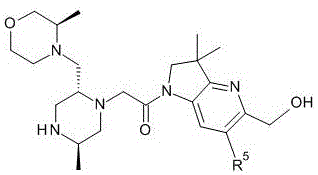
(Id)
or a tautomeric or stereochemically isomeric form, a pharmaceutically acceptable salt or solvate thereof; wherein R is5As defined in any of the embodiments.
In one embodiment of the compound of formula (Id)5Represents unsubstituted n-butyl or benzyl substituted in the 2, 3 and/or 4 position of the phenyl radical by one or two fluorine radicals. In one embodiment of the compound of formula (Id)5Represents an unsubstituted n-butyl group. In an alternative embodiment of the compound of formula (Id) R5Represents a benzyl group substituted on the phenyl group by one or two fluoro. In a further embodiment of the compound of formula (Id) R5Represents benzyl substituted in the 2, 3 and/or 4 position of the phenyl radical by one or two fluorine radicals. In a further embodiment of the compound of formula (Id) R5Represents benzyl substituted by one fluorine in the 2, 3 or 4 position of the phenyl group (i.e. R)5Represents a 2-fluorobenzyl group, a 3-fluorobenzyl group or a 4-fluorobenzyl group). In a further embodiment of the compound of formula (Id) R5Represents a benzyl group substituted in the 2,4 position of the phenyl group by two fluorines (i.e. R)5Represents 2, 4-difluorobenzyl). In still further embodiments of the compounds of formula (Id) 5Represents benzyl substituted by one fluorine in the 4-position of the phenyl group (i.e. R)5Represents a 4-fluorobenzyl group).
In one embodiment the compound of formula (I) is a compound of formula (I), (Ia), (Ib) or (Ic) wherein R is1Represents methyl and R2Represents hydrogen.
In one embodiment the compound of formula (I) is a compound of formula (I), (Ia), (Ib) or (Ic) wherein R is1And R2All represent hydrogen.
In one embodiment the compound of formula (I) is a compound of formula (I), (Ia), (Ib) or (Ic) wherein R is1Represents hydrogen and R2Represents a methyl group.
In one embodiment the compound of formula (I) is a compound of formula (I), (Ia), (Ib), (Ic) or (Id), wherein R is5Represents an unsubstituted n-butyl group.
In one embodiment the compound of formula (I) is a compound of formula (I), (Ia), (Ib), (Ic) or (Id), wherein R is5Represents benzyl substituted in the 2,3 and/or 4 position of the phenyl radical by one or two fluorine radicals.
In one embodiment the compound of formula (I) is a compound of formula (I), (Ia), (Ib), (Ic) or (Id), wherein R is5Represents a benzyl group substituted on the phenyl group by one or two fluoro.
In one embodiment the compound of formula (I) is a compound of formula (I), (Ia), (Ib), (Ic) or (Id), wherein R is5Represents benzyl substituted on the phenyl by two fluorines, for example 2,3 disubstituted, 2,4 disubstituted, 2,5 disubstituted, 3,5 disubstituted, 2,6 disubstituted or 3,4 disubstituted.
In one embodiment the compound of formula (I) is a compound of formula (I), (Ia), (Ib), (Ic) or (Id), wherein R is5Represents a benzyl group substituted in the 2,3 and/or 4 position of the phenyl group by one or two fluorine groups.
In one embodiment the compound of formula (I) is a compound of formula (I), (Ia), (Ib), (Ic) or (Id), wherein R is5Represents benzyl substituted by one fluorine in the 2,3 or 4 position of the phenyl group (i.e. R)5Represents a 2-fluorobenzyl group, a 3-fluorobenzyl group or a 4-fluorobenzyl group).
In one embodiment the compound of formula (I) is of formula (I), (Ia),(Ib), (Ic) or (Id) in which R5Represents benzyl substituted by two fluorines at the 2,3, 4 or 2,4 position of phenyl (i.e. R)5Represents 2, 3-difluorobenzyl, 3, 4-difluorobenzyl or 2, 4-difluorobenzyl).
In one embodiment the compound of formula (I) is a compound of formula (I), (Ia), (Ib), (Ic) or (Id), wherein R is5Represents benzyl substituted by two fluorines at the 2,4 position of the phenyl (i.e. R)5Represents 2, 4-difluorobenzyl).
In one embodiment the compound of formula (I) is a compound of formula (I), (Ia), (Ib), (Ic) or (Id), wherein R is5Represents 2, 4-difluorobenzyl or 4-fluorobenzyl.
In one embodiment, the present invention provides a compound of formula (I) comprising the free base of the compound of examples 1-37, or a tautomeric or stereochemically isomeric form, pharmaceutically acceptable salt or solvate thereof.
In one embodiment the invention provides a compound of formula (I) which is the free base of the compound of examples 1-37, or a tautomeric or stereochemically isomeric form, pharmaceutically acceptable salt or solvate thereof.
In one embodiment the invention provides a compound of formula (I) comprising a compound of examples 1-37, or a tautomeric or stereochemically isomeric form or solvate thereof.
In a further embodiment the compound is selected from the free bases of examples 1-34 or tautomeric or stereochemically isomeric forms, pharmaceutically acceptable salts or solvates thereof.
In a further embodiment, the present invention provides a compound of formula (I) comprising a compound selected from the group consisting of:
1- {6- [ (4-fluorophenyl) methyl ] -5- (hydroxymethyl) -3, 3-dimethyl-1H, 2H, 3H-pyrrolo [3,2-b ] pyridin-1-yl } -2- [ (2R,5R) -5-methyl-2- { [ (3R) -3-methylmorpholin-4-yl ] methyl } piperazin-1-yl ] ethan-1-one;
6- [ (4-fluorophenyl) methyl ] -3,3, 4-trimethyl-1- {2- [ (2R,5R) -5-methyl-2- { [ (3R) -3-methylmorpholin-4-yl ] methyl } piperazin-1-yl ] acetyl } -1H,2H,3H,4H, 5H-pyrrolo [3,2-b ] pyridin-5-one;
6- [ (2, 4-difluorophenyl) methyl ] -3, 3-dimethyl-1- {2- [ (2R,5R) -5-methyl-2- { [ (3R) -3-methylmorpholin-4-yl ] methyl } piperazin-1-yl ] acetyl } -1H,2H,3H,4H, 5H-pyrrolo [3,2-b ] pyridin-5-one;
6- [ (2, 4-difluorophenyl) methyl ] -3,3, 4-trimethyl-1- {2- [ (2R,5R) -5-methyl-2- { [ (3R) -3-methylmorpholin-4-yl ] methyl } piperazin-1-yl ] acetyl } -1H,2H,3H,4H, 5H-pyrrolo [3,2-b ] pyridin-5-one;
1- [5- ((R or S) -1, 2-dihydroxyethyl) -6- [ (4-fluorophenyl) methyl ] -3, 3-dimethyl-1H, 2H, 3H-pyrrolo [3,2-b ] pyridin-1-yl ] -2- [ (2R,5R) -2- { [ (3R,5R) -3, 5-dimethylmorpholin-4-yl ] methyl } -5-methylpiperazin-1-yl ] ethan-1-one;
6- [ (2, 4-difluorophenyl) methyl ] -1- {2- [ (2R,5R) -2- { [ (2S,5R) -2, 5-dimethylmorpholin-4-yl ] methyl } -5-methylpiperazin-1-yl ] acetyl } -3, 3-dimethyl-1H, 2H,3H,5H, 6H-pyrrolo [2,3-c ] pyridin-5-one;
4-amino-6- [ (4-fluorophenyl) methyl ] -3, 3-dimethyl-1- {2- [ (2R,5R) -5-methyl-2- { [ (3R) -3-methylmorpholin-4-yl ] methyl } piperazin-1-yl ] acetyl } -1H,2H,3H,4H, 5H-pyrrolo [3,2-b ] pyridin-5-one;
1- {6- [ (4-fluorophenyl) methyl ] -5- ((R or S) -2-hydroxy-1-methoxyethyl) -3, 3-dimethyl-1H, 2H, 3H-pyrrolo [3,2-b ] pyridin-1-yl } -2- [ (2R,5R) -5-methyl-2- { [ (3R) -3-methylmorpholin-4-yl ] methyl } piperazin-1-yl ] ethan-1-one;
4-amino-6-butyl-1- {2- [ (2R,5R) -2- { [ (3R,5R) -3, 5-dimethylmorpholin-4-yl ] methyl } -5-methylpiperazin-1-yl ] acetyl } -3, 3-dimethyl-1H, 2H,3H,4H, 5H-pyrrolo [3,2-b ] pyridin-5-one;
6- [ (2, 4-difluorophenyl) methyl ] -3,3, 4-trimethyl-1- {2- [ (2R,5R) -5-methyl-2- { [ (3R) -3-methylmorpholin-4-yl ] methyl } piperazin-1-yl ] acetyl } -1H,2H,3H,5H, 6H-pyrrolo [2,3-c ] pyridin-5-one;
6-butyl-1- {2- [ (2R,5R) -2- { [ (3R,5R) -3, 5-dimethylmorpholin-4-yl ] methyl } -5-methylpiperazin-1-yl ] acetyl } -3, 3-dimethyl-1H, 2H,3H,4H, 5H-pyrrolo [3,2-b ] pyridin-5-one; and
6-butyl-1- {2- [ (2R,5R) -2- { [ (2S,5R) -2, 5-dimethylmorpholin-4-yl ] methyl } -5-methylpiperazin-1-yl ] acetyl } -3, 3-dimethyl-1H, 2H,3H,4H, 5H-pyrrolo [3,2-b ] pyridin-5-one;
or a tautomeric or stereochemically isomeric form, a pharmaceutically acceptable salt or solvate thereof.
In a further embodiment, the present invention provides a compound selected from the group consisting of:
1- {6- [ (4-fluorophenyl) methyl ] -5- (hydroxymethyl) -3, 3-dimethyl-1H, 2H, 3H-pyrrolo [3,2-b ] pyridin-1-yl } -2- [ (2R,5R) -5-methyl-2- { [ (3R) -3-methylmorpholin-4-yl ] methyl } piperazin-1-yl ] ethan-1-one dihydrochloride (E2);
6- [ (4-fluorophenyl) methyl ] -3,3, 4-trimethyl-1- {2- [ (2R,5R) -5-methyl-2- { [ (3R) -3-methylmorpholin-4-yl ] methyl } piperazin-1-yl ] acetyl } -1H,2H,3H,4H, 5H-pyrrolo [3,2-b ] pyridin-5-one dihydrochloride (E6);
6- [ (2, 4-difluorophenyl) methyl ] -3, 3-dimethyl-1- {2- [ (2R,5R) -5-methyl-2- { [ (3R) -3-methylmorpholin-4-yl ] methyl } piperazin-1-yl ] acetyl } -1H,2H,3H,4H, 5H-pyrrolo [3,2-b ] pyridin-5-one dihydrochloride (E8);
6- [ (2, 4-difluorophenyl) methyl ] -3,3, 4-trimethyl-1- {2- [ (2R,5R) -5-methyl-2- { [ (3R) -3-methylmorpholin-4-yl ] methyl } piperazin-1-yl ] acetyl } -1H,2H,3H,4H, 5H-pyrrolo [3,2-b ] pyridin-5-one dihydrochloride (E19);
1- [5- ((R or S) -1, 2-dihydroxyethyl) -6- [ (4-fluorophenyl) methyl ] -3, 3-dimethyl-1H, 2H, 3H-pyrrolo [3,2-b ] pyridin-1-yl ] -2- [ (2R,5R) -2- { [ (3R,5R) -3, 5-dimethylmorpholin-4-yl ] methyl } -5-methylpiperazin-1-yl ] ethan-1-one dihydrochloride (E21);
6- [ (2, 4-difluorophenyl) methyl ] -1- {2- [ (2R,5R) -2- { [ (2S,5R) -2, 5-dimethylmorpholin-4-yl ] methyl } -5-methylpiperazin-1-yl ] acetyl } -3, 3-dimethyl-1H, 2H,3H,5H, 6H-pyrrolo [2,3-c ] pyridin-5-one dihydrochloride (E22);
4-amino-6- [ (4-fluorophenyl) methyl ] -3, 3-dimethyl-1- {2- [ (2R,5R) -5-methyl-2- { [ (3R) -3-methylmorpholin-4-yl ] methyl } piperazin-1-yl ] acetyl } -1H,2H,3H,4H, 5H-pyrrolo [3,2-b ] pyridin-5-one dihydrochloride (E24);
1- {6- [ (4-fluorophenyl) methyl ] -5- ((R or S) -2-hydroxy-1-methoxyethyl) -3, 3-dimethyl-1H, 2H, 3H-pyrrolo [3,2-b ] pyridin-1-yl } -2- [ (2R,5R) -5-methyl-2- { [ (3R) -3-methylmorpholin-4-yl ] methyl } piperazin-1-yl ] ethan-1-one trihydrochloride (E27);
4-amino-6-butyl-1- {2- [ (2R,5R) -2- { [ (3R,5R) -3, 5-dimethylmorpholin-4-yl ] methyl } -5-methylpiperazin-1-yl ] acetyl } -3, 3-dimethyl-1H, 2H,3H,4H, 5H-pyrrolo [3,2-b ] pyridin-5-one dihydrochloride (E30);
6- [ (2, 4-difluorophenyl) methyl ] -3,3, 4-trimethyl-1- {2- [ (2R,5R) -5-methyl-2- { [ (3R) -3-methylmorpholin-4-yl ] methyl } piperazin-1-yl ] acetyl } -1H,2H,3H,5H, 6H-pyrrolo [2,3-c ] pyridin-5-one dihydrochloride (E31);
6-butyl-1- {2- [ (2R,5R) -2- { [ (3R,5R) -3, 5-dimethylmorpholin-4-yl ] methyl } -5-methylpiperazin-1-yl ] acetyl } -3, 3-dimethyl-1H, 2H,3H,4H, 5H-pyrrolo [3,2-b ] pyridin-5-one dihydrochloride (E32) and
6-butyl-1- {2- [ (2R,5R) -2- { [ (2S,5R) -2, 5-dimethylmorpholin-4-yl ] methyl } -5-methylpiperazin-1-yl ] acetyl } -3, 3-dimethyl-1H, 2H,3H,4H, 5H-pyrrolo [3,2-b ] pyridin-5-one dihydrochloride (E37)
Or a tautomeric or stereochemically isomeric form or solvate thereof.
In a further embodiment, the compound is selected from the free bases of examples 2, 6, 19, 21, 22, 24, 27, 30, 31 and 32 or tautomeric or stereochemically isomeric forms, pharmaceutically acceptable salts or solvates thereof.
In a still further embodiment, the present invention provides a compound of formula (I) comprising 1- {6- [ (4-fluorophenyl) methyl ] -5- (hydroxymethyl) -3, 3-dimethyl-1H, 2H, 3H-pyrrolo [3,2-b ] pyridin-1-yl } -2- [ (2R,5R) -5-methyl-2- { [ (3R) -3-methylmorpholin-4-yl ] methyl } piperazin-1-yl ] ethan-1-one, or a tautomeric or stereochemically isomeric form, pharmaceutically acceptable salt or solvate thereof.
In a still further embodiment, the present invention provides a compound of formula (I) comprising 1- {6- [ (4-fluorophenyl) methyl ] -5- (hydroxymethyl) -3, 3-dimethyl-1H, 2H, 3H-pyrrolo [3,2-b ] pyridin-1-yl } -2- [ (2R,5R) -5-methyl-2- { [ (3R) -3-methylmorpholin-4-yl ] methyl } piperazin-1-yl ] eth-1-one hydrochloride or a tautomeric or stereochemically isomeric form or solvate thereof.
In a still further embodiment, the present invention provides 1- {6- [ (4-fluorophenyl) methyl ] -5- (hydroxymethyl) -3, 3-dimethyl-1H, 2H, 3H-pyrrolo [3,2-b ] pyridin-1-yl } -2- [ (2R,5R) -5-methyl-2- { [ (3R) -3-methylmorpholin-4-yl ] methyl } piperazin-1-yl ] ethan-1-one dihydrochloride (E2).
In a still further embodiment, the present invention provides 1- {6- [ (4-fluorophenyl) methyl ] -5- (hydroxymethyl) -3, 3-dimethyl-1H, 2H, 3H-pyrrolo [3,2-b ] pyridin-1-yl } -2- [ (2R,5R) -5-methyl-2- { [ (3R) -3-methylmorpholin-4-yl ] methyl } piperazin-1-yl ] ethan-1-one lactate or a tautomeric or stereochemically isomeric form or solvate thereof.
In a still further embodiment, the present invention provides 1- {6- [ (4-fluorophenyl) methyl ] -5- (hydroxymethyl) -3, 3-dimethyl-1H, 2H, 3H-pyrrolo [3,2-b ] pyridin-1-yl } -2- [ (2R,5R) -5-methyl-2- { [ (3R) -3-methylmorpholin-4-yl ] methyl } piperazin-1-yl ] ethan-1-one L- (+) -lactate or a tautomeric or stereochemically isomeric form or solvate thereof.
In still further embodiments, the compound is selected from examples 38-42.
In a still further embodiment, the present invention provides 1- {6- [ (4-fluorophenyl) methyl ] -5- (hydroxymethyl) -3, 3-dimethyl-1H, 2H, 3H-pyrrolo [3,2-b ] pyridin-1-yl } -2- [ (2R,5R) -5-methyl-2- { [ (3R) -3-methylmorpholin-4-yl ] methyl } piperazin-1-yl ] ethan-1-one L- (+) -lactate (form a) (E39).
In a still further embodiment, the present invention provides 1- {6- [ (4-fluorophenyl) methyl ] -5- (hydroxymethyl) -3, 3-dimethyl-1H, 2H, 3H-pyrrolo [3,2-B ] pyridin-1-yl } -2- [ (2R,5R) -5-methyl-2- { [ (3R) -3-methylmorpholin-4-yl ] methyl } piperazin-1-yl ] ethan-1-one L- (+) -lactate (form B) (E40).
In a still further embodiment, the present invention provides 1- {6- [ (4-fluorophenyl) methyl ] -5- (hydroxymethyl) -3, 3-dimethyl-1H, 2H, 3H-pyrrolo [3,2-b ] pyridin-1-yl } -2- [ (2R,5R) -5-methyl-2- { [ (3R) -3-methylmorpholin-4-yl ] methyl } piperazin-1-yl ] ethan-1-one L- (+) -lactate (form C) (E43).
In a still further embodiment, the invention provides 1- {6- [ (4-fluorophenyl) methyl ] -5- (hydroxymethyl) -3, 3-dimethyl-1H, 2H, 3H-pyrrolo [3,2-b ] pyridin-1-yl } -2- [ (2R,5R) -5-methyl-2- { [ (3R) -3-methylmorpholin-4-yl ] methyl } piperazin-1-yl ] ethan-1-one sulfate or a tautomeric or stereochemically isomeric form or solvate thereof.
In a still further embodiment, the present invention provides 1- {6- [ (4-fluorophenyl) methyl ] -5- (hydroxymethyl) -3, 3-dimethyl-1H, 2H, 3H-pyrrolo [3,2-b ] pyridin-1-yl } -2- [ (2R,5R) -5-methyl-2- { [ (3R) -3-methylmorpholin-4-yl ] methyl } piperazin-1-yl ] ethan-1-one sulfate (form F) (E41).
In a still further embodiment, the present invention provides 1- {6- [ (4-fluorophenyl) methyl ] -5- (hydroxymethyl) -3, 3-dimethyl-1H, 2H, 3H-pyrrolo [3,2-b ] pyridin-1-yl } -2- [ (2R,5R) -5-methyl-2- { [ (3R) -3-methylmorpholin-4-yl ] methyl } piperazin-1-yl ] ethan-1-one methanesulfonate, or a tautomeric or stereochemically isomeric form or solvate thereof.
In a still further embodiment, the present invention provides 1- {6- [ (4-fluorophenyl) methyl ] -5- (hydroxymethyl) -3, 3-dimethyl-1H, 2H, 3H-pyrrolo [3,2-B ] pyridin-1-yl } -2- [ (2R,5R) -5-methyl-2- { [ (3R) -3-methylmorpholin-4-yl ] methyl } piperazin-1-yl ] ethan-1-one methanesulfonate (form B) (E42).
In a further embodiment, the compound of choice is not example 35 or a tautomeric or stereochemically isomeric form, a pharmaceutically acceptable salt or solvate thereof.
In a further embodiment, the compound of choice is not example 2 or its tautomeric or stereochemically isomeric form, a pharmaceutically acceptable salt or solvate thereof.
For the avoidance of doubt, it is to be understood that each of the general and specific preferences, embodiments and examples for one substituent may be combined with each of the general and specific preferences, embodiments and examples for one or more, in particular all other substituents, defined herein, and all such embodiments are included in the present application.
Salts, solvates, tautomers, isomers, N-oxides, esters, prodrugs and isotopes
Reference to compounds of formula (I) and subgroups thereof also includes ionic forms, salts, solvates, isomers (including geometric and stereochemical isomers), tautomers, N-oxides, esters, prodrugs, isotopes and protected forms thereof, for example as discussed below; in particular, a salt or tautomer or isomer or N-oxide or solvate thereof; and more particularly, a salt or tautomer or N-oxide or solvate thereof, even more particularly, a salt or tautomer or solvate thereof.
Salt (I)
Many compounds of formula (I) may exist in salt forms, such as acid addition salts or in some cases organic and inorganic bases, such as carboxylates, sulfonates and phosphates. All such salts are within the scope of the present invention, and reference to a compound of formula (I) includes salt forms of said compound.
The salts of the present invention can be synthesized from the parent compound, which contains a base or acid moiety, by conventional chemical methods, e.g.Pharmaceutical Salts, Properties, Selection, and UseP. Heinrich Stahl (editor), Camile G.Wermuth (editor), ISBN: 3-90639-. Typically, such salts can be prepared by reacting the free acid or base forms of these compounds with the appropriate base or acid in water or in an organic solvent, or in a mixture of the two; generally, nonaqueous media such as ether, ethyl acetate, ethanol, isopropanol or acetonitrile are used.
Acid addition salts (mono-or dibasic) can be formed with a wide variety of acids, both inorganic and organic. Examples of acid addition salts include mono-or dibasic salts formed with an acid selected from the group consisting of: acetic acid, 2-dichloroacetic acid, adipic acid, alginic acid, ascorbic acid (e.g., L-ascorbic acid), L-aspartic acid, benzenesulfonic acid, benzoic acid, 4-acetylaminobenzoic acid, butyric acid, (+) camphoric acid, camphorsulfonic acid, (+) - (1) acetic acidS) -camphor-10-sulfonic acid, capric acid, caproic acid, caprylic acid, cinnamic acid, citric acid, cyclamic acid, lauryl sulfuric acid, Ethane-1, 2-disulfonic acid, ethanesulfonic acid, 2-hydroxyethanesulfonic acid, formic acid, fumaric acid, mucic acid, gentisic acid, glucoheptonic acid, D-gluconic acid, glucuronic acid (e.g., D-glucuronic acid), glutamic acid (e.g., L-glutamic acid), α -ketoglutaric acid, glycolic acid, hippuric acid, hydrohalic acid (e.g., hydrobromic acid, hydrochloric acid, hydroiodic acid), isethionic acid, lactic acid (e.g., (+) -L-lactic acid, (+ -) -DL-lactic acid), lactobionic acid, maleic acid, malic acid, (-) -L-malic acid, malonic acid, (+ -) -DL-mandelic acid, methanesulfonic acid, naphthalene-2-sulfonic acid, naphthalene-1, 5-disulfonic acid, 1-hydroxy-2-naphthoic acid, nicotinic acid, nitric acid, Oleic acid, orotic acid, oxalic acid, palmitic acid, pamoic acid, phosphoric acid, propionic acid, pyruvic acid, L-pyroglutamic acid, salicylic acid, 4-amino-salicylic acid, sebacic acid, stearic acid, succinic acid, sulfuric acid, tannic acid, (+) -L-tartaric acid, thiocyanic acid, p-toluenesulfonic acid, undecylenic acid and valeric acid, as well as acylated amino acids and cation exchange resins.
A particular group of salts includes those formed from acetic, hydrochloric, hydroiodic, phosphoric, nitric, sulfuric, citric, lactic, succinic, maleic, malic, isethionic, fumaric, benzenesulfonic, toluenesulfonic, methanesulfonic (methanesulfonic), ethanesulfonic, naphthalenesulfonic, valeric, acetic, propionic, butyric, malonic, glucuronic and lactobionic acids. A specific subset of salts includes salts formed from hydrochloric acid, lactic acid (e.g., (+) -L-lactic acid, (-) -D-lactic acid or (. + -.) -DL-lactic acid), sulfuric acid and methanesulfonic acid (methanesulfonic acid). Another specific subset of salts includes salts formed from lactic acid (e.g., (+) -L-lactic acid, (-) -D-lactic acid or (. + -.) -DL-lactic acid), sulfuric acid and methanesulfonic acid (methanesulfonic acid). Another specific subset of salts includes salts formed from lactic acid (e.g., (+) -L-lactic acid, (-) -D-lactic acid or (. + -.) -DL-lactic acid) and sulfuric acid. One particular salt is the hydrochloride salt. Another specific salt is a lactate salt (e.g., the compounds of examples 39, 40, and 43). Another specific salt is a sulfate salt (e.g., the compound of example 41). Another specific salt is the mesylate salt (e.g., the compound of example 42). One particular salt is a lactate salt (e.g., the compounds of examples 39, 40, and 43, particularly the compound of example 43), such as L- (+) -lactate.
If the compound is negativeIonic or having functional groups which may be anionic (e.g., -COOH may be-COO-) The salts may then be formed with organic or inorganic bases which produce suitable cations. Examples of suitable inorganic cations include, but are not limited to, alkali metal ions, such as Li+、Na+And K+(ii) a Alkaline earth metal cations, e.g. Ca2+And Mg2+(ii) a And other cations, e.g. Al3+Or Zn+. Examples of suitable organic cations include, but are not limited to, ammonium ion (i.e., NH)4 +) And substituted ammonium ions (e.g., NH)3R+、NH2R2 +、NHR3 +、NR4 +). Some examples of suitable substituted ammonium ions are those derived from: methylamine, ethylamine, diethylamine, propylamine, dicyclohexylamine, triethylamine, butylamine, ethylenediamine, ethanolamine, diethanolamine, piperazine, benzylamine, phenylbenzylamine, choline, meglumine and tromethamine, and amino acids (such as lysine and arginine). An example of a common quaternary ammonium ion is N (CH)3)4 +。
In case the compounds of formula (I) comprise amine functions, these may form quaternary ammonium salts, for example, by reaction with alkylating agents according to methods well known to the skilled person. Such quaternary ammonium compounds are within the scope of formula (I).
The compounds of the invention may be present as mono-, di-or tri-salts, especially mono-or di-salts, depending on the pKa of the acid forming the salt.
Salt forms of the compounds of the present invention are typically pharmaceutically acceptable salts, and examples of pharmaceutically acceptable salts are set forth in BergeEtc. of1977, "pharmaceutically acceptable salts,"J. Pharm. Sci.,Volume 66, pages 1-19. However, non-pharmaceutically acceptable salts may also be prepared as intermediate forms, which may then be converted to pharmaceutically acceptable salts. Such non-pharmaceutically acceptable salt forms which may be used, for example, in the purification or isolation of the compounds of the invention also form part of the invention.
In one embodiment of the invention, there is provided a pharmaceutical composition comprising a solution (e.g. an aqueous solution) comprising a compound of formula (I) as described herein in salt form and subgroups and examples thereof, at a concentration of greater than 10 mg/mL, typically greater than 15 mg/mL and especially greater than 20 mg/mL.
N-oxide
The compounds of formula (I) containing amine functions may also form N-oxides. References herein to compounds of formula (I) containing amine functionality also include N-oxides.
In the case where the compound contains several amine functional groups, one or more than one nitrogen atom may be oxidized to form an N-oxide. Specific examples of N-oxides are tertiary amines or N-oxides of the nitrogen atom of a nitrogen-containing heterocycle.
N-oxides can be formed by treating the corresponding amine with an oxidizing agent such as hydrogen peroxide or a peracid (e.g., peroxycarboxylic acid), see, e.g.Advanced Organic ChemistryJerry March, 4 th edition, Wiley Interscience, page. More specifically, the N-oxide can be prepared by L.W. Deady (R)Syn. Comm1977, 7, 509-Between-chloroperoxybenzoic acid (MCPBA) reaction.
Geometric isomers and tautomers
The compounds of formula (I) may exist in a number of different geometric isomeric and tautomeric forms and reference to compounds of formula (I) includes all such forms. For the avoidance of doubt, where a compound may exist in one of several geometric or tautomeric forms and only one form is described or shown exactly, all other forms are still encompassed by formula (I).
For example, in the compounds of formula (I), the phenyl ring of the compound may exist in tautomeric form when X represents NH and U represents carbon, as shown below. For simplicity, formula (I) shows one form 1, but the formula should be considered to encompass both tautomeric forms (1 and 2).

Other examples of tautomeric forms include, for example, keto forms, enol forms, and enolated forms, as in, for example, the following tautomeric pairs: keto/enol (shown below), imine/enamine, amide/imino alcohol, amidine/enediamine, nitroso/oxime, thione/enethiol, and nitro/acid nitro.

Stereoisomers
Unless otherwise mentioned or indicated, the chemical designation of a compound denotes the mixture of all possible stereochemically isomeric forms.
The centre of the solid being shown in common form by "broken lines" or "wedges", e.g.

Where a compound is described as a mixture of two diastereomers/epimers, the configuration of the stereocenter is not specified and is represented by a straight line.
Unless otherwise mentioned or indicated, where a compound of formula (I) contains one or more chiral centers and may exist in the form of two or more optical isomers, reference to a compound of formula (I) includes all optical isomeric forms (e.g., enantiomers, epimers, and diastereomers) thereof, as a single optical isomer or mixture (e.g., racemic mixture) or two or more optical isomers, unless the context requires otherwise.
Optical isomers can be characterized and identified by their optical activity (i.e., as + and-isomers ordAndlisomers) or they can be characterized according to their absolute stereochemistry using the "R and S" nomenclature developed by Cahn, Ingold and Prelog, see Advanced Organic Chemistry,Jerry March, 4 th edition, John Wiley&Sons, New York, 1992, page 109-& Prelog, Angew. Chem. Int. Ed. Engl., 1966, 5, 385-415。
Optical isomers can be separated by a variety of techniques, including chiral chromatography (chromatographic analysis on a chiral support), and such techniques are well known to those skilled in the art.
As an alternative to chiral chromatography, optical isomers may be separated by forming diastereomeric salts with chiral acids such as (+) -tartaric acid, (-) -pyroglutamic acid, (-) -ditoluoyl-L-tartaric acid, (+) -mandelic acid, (-) -malic acid and (-) -camphorsulfonic acid, separating the diastereomers by preferential crystallization and then dissociating the salt to obtain the individual enantiomers of the free base.
Additional enantiomeric separation can be achieved by covalently attaching an enantiomerically pure chiral auxiliary to the compound and then performing diastereomeric separation using conventional methods such as chromatography. This is then followed by cleavage of the covalent linkage described above to yield the appropriate enantiomerically pure product.
In the case of compounds of formula (I) which exist as two or more optical isomeric forms, one enantiomer of a pair of enantiomers may exhibit advantages over the other enantiomer, for example in terms of biological activity. Thus, in some cases, it may be desirable to use only one of a pair of enantiomers or only one of a plurality of diastereomers as a therapeutic agent. Accordingly, the present invention provides compositions comprising a compound of formula (I) having one or more chiral centers, wherein at least 55% (e.g., at least 60%, 65%, 70%, 75%, 80%, 85%, 90%, or 95%) of the compound of formula (I) is present as a single optical isomer (e.g., enantiomer or diastereomer). In a general embodiment, 99% or more (e.g., substantially all) of the total amount of the compound of formula (I) may be present as a single optical isomer (e.g., enantiomer or diastereomer).
Compounds that encompass a double bond may have E (hetero) or Z (homo) stereochemistry at the double bond. The substituents on the divalent ring or on the (partially) saturated radical may haveCis form-orTrans form-configuration. As used herein, the terms cis and trans are according to the chemical abstracts nomenclature (J. org. chem. 1970, 35 (9), 2849-2867) and refer to the position of a substituent on the ring portion.
Of particular interest are those compounds of formula (I) which are stereochemically pure. When a compound of formula (I) is designated, for example, as R, this means that the compound is substantially free of the S isomer. If a compound of formula (I) is designated e.g. as E, this means that the compound is substantially free of Z isomer. The terms cis, trans, R, S, E and Z are well known to those skilled in the art.
Isotopic variation
The present invention includes all pharmaceutically acceptable isotopically-labelled compounds of the present invention, i.e. compounds of formula (I) wherein one or more atoms are replaced by an atom having the same atomic number, but an atomic mass or mass number different from the atomic mass or mass number usually found in nature.
Examples of isotopes suitable for inclusion in the compounds of the invention include isotopes of: hydrogen, e.g. 2H, (D) and3h (T); carbon, e.g.11C、13C and14c; chlorine, e.g.36Cl; fluorine, e.g.18F; iodine, e.g.123I、125I and131i; nitrogen, e.g.13N and15n; oxygen, e.g.15O、17O and18o; phosphorus, e.g.32P; and sulfur, e.g.35S。
Certain isotopically-labeled compounds of formula (I), for example those into which a radioisotope is incorporated, are useful in drug and/or basal tissue distribution studies. The compounds of formula (I) may also have valuable diagnostic features as they may be used to detect or identify complex formation between a labelled compound and other molecules, peptides, proteins, enzymes or receptors. The detection or identification method may use a compound labeled with a labeling agent such as a radioisotope, an enzyme, a fluorescent substance, a luminescent substance (e.g., luminol, a luminol derivative, luciferin, a luminescent protein, and luciferase), or the like. RadiationSex isotope tritiumNamely, it is 3H (T) and carbon-14Namely, it is 14C is particularly useful for this purpose in view of its ease of incorporation and ready means of detection.
With heavier isotopes such as deuteriumNamely, it is 2The substitution by H (D) may provide for greater metabolic stability, e.g. increasedBody Inner partHalf-life or reduced dosage requirements and thus may be used in some circumstances.
With positron-emitting isotopes such as11C、18F、15O and13substitutions by N can be used in Positron Emission Tomography (PET) studies to examine target occupancy.
Isotopically-labelled compounds of formula (I) can generally be prepared by conventional techniques known to those skilled in the art or by processes analogous to those described in the accompanying examples and preparations using appropriate isotopically-labelled reagents in place of previously used unlabelled reagents.
Esters
Esters of compounds of formula (I) having carboxylic acid groups or hydroxyl groups, such as carboxylic acid esters, acyloxy esters and phosphate esters, are also encompassed by formula (I). Examples of esters are compounds containing the group-C (= O) OR, where R is an ester substituent, e.g. C1-7Alkyl radical, C3-12Heterocyclyl or C5-12Aryl, especially C1-6An alkyl group. Specific examples of ester groups include, but are not limited to-C (= O) OCH3、-C(=O)OCH2CH3、-C(=O)OC(CH3)3and-C (= O) OPh. An example of an acyloxy (trans ester) group is represented by-OC (= O) R, where R is an acyloxy substituent, e.g. C1-6Alkyl radical, C3-12Heterocyclyl or C5-12Aryl radicals, especially C1-6An alkyl group. Specific examples of acyloxy include, but are not limited to, -OC (= O) CH3(acetoxy), -OC (= O) CH2CH3、-OC(=O)C(CH3)3-OC (= O) Ph and-OC (= O) CH2Ph. Examples of phosphate esters are those derived from phosphoric acid.
In one embodiment of the invention, formula (I) includes within its scope esters of compounds of formula (I) having carboxylic acid groups or hydroxyl groups. In another embodiment of the present invention, formula (I) does not include within its scope esters of compounds of formula (I) having carboxylic acid groups or hydroxyl groups.
Solvates and crystalline forms
Formula (I) also encompasses any polymorphic forms and solvates of the compound such as hydrates, alcoholates and the like.
The compounds of the present invention may form solvates, for example, with water (i.e., hydrates) or common organic solvents. As used herein, the term "solvate" means a physical association of a compound of the invention with one or more solvent molecules. This physical association involves varying degrees of ionic and covalent bonding, including hydrogen bonding. In some cases, the solvate will be capable of isolation, for example when one or more solvent molecules are incorporated into the crystal lattice of the crystalline solid. The term "solvate" is intended to encompass both solution phases and isolatable solvates. Non-limiting examples of suitable solvates include combinations of the compounds of the present invention with water, isopropanol, ethanol, methanol, DMSO, ethyl acetate, acetic acid, or ethanolamine, and the like. When the compounds of the invention are in solution, they may exert their biological effect.
Solvates are well known in pharmaceutical chemistry. They are important for the process used to prepare the material (e.g., with respect to its purification, storage of the material (e.g., its stability), and ease of handling of the material) and are often formed as part of the isolation or purification stage of chemical synthesis. One skilled in the art can determine by standard and long-term techniques whether a hydrate or other solvate has been formed by the isolation or purification conditions used to prepare a given compound. Examples of such techniques include thermogravimetric analysis (TGA), Differential Scanning Calorimetry (DSC), X-ray crystallography (e.g., single crystal X-ray crystallography or X-ray powder diffraction), and solid state NMR (SS-NMR, also known as magic angle rotation NMR or MAS-NMR). Such techniques are almost a part of the standard analytical toolset of the skilled chemist, such as NMR, IR, HPLC and MS.
Alternatively, the skilled artisan may deliberately form solvates using crystallization conditions, including the amount of solvent required for a particular solvate. Thereafter, standard methods as described above can be used to determine whether a solvate is formed.
In one embodiment a salt of 1- {6- [ (4-fluorophenyl) methyl ] -5- (hydroxymethyl) -3, 3-dimethyl-1H, 2H, 3H-pyrrolo [3,2-b ] pyridin-1-yl } -2- [ (2R,5R) -5-methyl-2- { [ (3R) -3-methylmorpholin-4-yl ] methyl } piperazin-1-yl ] ethan-1-one has <10% solvate present (e.g. no more than any of the following amounts: 9, 8, 7, 6, 5, 4, 3,2, 1, 0.5, 0.1, 0.05 or 0.01%), e.g. hydrate, alcoholate, isopropyl acetate, methyl acetate or alkanes such as heptane.
In one embodiment the salt of 1- {6- [ (4-fluorophenyl) methyl ] -5- (hydroxymethyl) -3, 3-dimethyl-1H, 2H, 3H-pyrrolo [3,2-b ] pyridin-1-yl } -2- [ (2R,5R) -5-methyl-2- { [ (3R) -3-methylmorpholin-4-yl ] methyl } piperazin-1-yl ] ethan-1-one is anhydrous. In a further embodiment, an anhydrous salt of 1- {6- [ (4-fluorophenyl) methyl ] -5- (hydroxymethyl) -3, 3-dimethyl-1H, 2H, 3H-pyrrolo [3,2-b ] pyridin-1-yl } -2- [ (2R,5R) -5-methyl-2- { [ (3R) -3-methylmorpholin-4-yl ] methyl } piperazin-1-yl ] ethan-1-one comprises no more than 5% (e.g., no more than any of the following amounts: 4, 3,2, 1, 0.5, 0.1, 0.05, or 0.01%) by weight water.
In one embodiment the salt of 1- {6- [ (4-fluorophenyl) methyl ] -5- (hydroxymethyl) -3, 3-dimethyl-1H, 2H, 3H-pyrrolo [3,2-b ] pyridin-1-yl } -2- [ (2R,5R) -5-methyl-2- { [ (3R) -3-methylmorpholin-4-yl ] methyl } piperazin-1-yl ] ethan-1-one comprises a single crystalline form and no more than 5% (e.g., no more than any of the following amounts: 4, 3,2, 1, 0.5, 0.1, 0.05 or 0.01%) by weight of other crystalline forms.
In one embodiment the salt of 1- {6- [ (4-fluorophenyl) methyl ] -5- (hydroxymethyl) -3, 3-dimethyl-1H, 2H, 3H-pyrrolo [3,2-b ] pyridin-1-yl } -2- [ (2R,5R) -5-methyl-2- { [ (3R) -3-methylmorpholin-4-yl ] methyl } piperazin-1-yl ] ethan-1-one is crystalline.
In one embodiment the salt of 1- {6- [ (4-fluorophenyl) methyl ] -5- (hydroxymethyl) -3, 3-dimethyl-1H, 2H, 3H-pyrrolo [3,2-b ] pyridin-1-yl } -2- [ (2R,5R) -5-methyl-2- { [ (3R) -3-methylmorpholin-4-yl ] methyl } piperazin-1-yl ] ethan-1-one is amorphous.
Furthermore, the compounds of the present invention may have one or more polymorphic or amorphous crystalline forms and are likewise intended to be included within the scope of the present invention.
Reference herein to "polymorphic form" is to the presence of more than one crystal structure of the compound of formula (I). The ability of a compound to crystallize with more than one crystal modification may have an effect on properties of the compound such as physicochemical properties, shelf life, solubility, formulation properties, toxicity, bioavailability, hygroscopicity, and handling properties. Furthermore, the therapeutic effect of a pharmaceutical compound can be achieved by polymorphism of the drug molecule.
In one embodiment the compound of formula (I) comprises a polymorphic form of 1- {6- [ (4-fluorophenyl) methyl ] -5- (hydroxymethyl) -3, 3-dimethyl-1H, 2H, 3H-pyrrolo [3,2-b ] pyridin-1-yl } -2- [ (2R,5R) -5-methyl-2- { [ (3R) -3-methylmorpholin-4-yl ] methyl } piperazin-1-yl ] ethan-1-one, or a salt thereof.
In a further embodiment, the compound of formula (I) comprises a polymorphic form of a salt of 1- {6- [ (4-fluorophenyl) methyl ] -5- (hydroxymethyl) -3, 3-dimethyl-1H, 2H, 3H-pyrrolo [3,2-b ] pyridin-1-yl } -2- [ (2R,5R) -5-methyl-2- { [ (3R) -3-methylmorpholin-4-yl ] methyl } piperazin-1-yl ] ethan-1-one.
In a further embodiment, the compound of formula (I) comprises the form a polymorph of 1- {6- [ (4-fluorophenyl) methyl ] -5- (hydroxymethyl) -3, 3-dimethyl-1H, 2H, 3H-pyrrolo [3,2-b ] pyridin-1-yl } -2- [ (2R,5R) -5-methyl-2- { [ (3R) -3-methylmorpholin-4-yl ] methyl } piperazin-1-yl ] ethan-1-one L- (+) -lactate. This compound can be prepared as defined herein in example 39.
In a still further embodiment, 1- {6- [ (4-fluorophenyl) methyl]-5- (hydroxymethyl) -3, 3-dimethyl-1H, 2H, 3H-pyrrolo [3,2-b]Pyridin-1-yl } -2- [ (2R,5R) -5-methyl-2- { [ (3R) -3-methylmorpholin-4-yl]Methyl-piperazin-1-yl]Ethan-1-one L- (+) -lactate by the method shown in FIG. 11H NMR spectrum.
The X-ray powder pattern of the compound is characterized by the diffraction angle (2 theta) and the plane spacing (d) parameters of the X-ray diffraction spectrum. These parameters are related by the Bragg equation n λ =2d Sin θ (where n = 1; λ = wavelength of the cathode used; d = planar spacing; and θ = diffraction angle). In this context, due to the nature of the data, the interplanar spacing, diffraction angle and overall pattern are important for the identification of crystals in X-ray powder diffraction. The relative intensity should not be interpreted strictly because it may vary depending on the direction of crystal growth, particle size and measurement conditions. Furthermore, the diffraction angle generally means a diffraction angle that conforms to the range 2 θ ± 0.2 °. The peak means a main peak, and includes a peak not larger than the medium at diffraction angles other than those described above.
In still further embodiments, the form a polymorph of 1- {6- [ (4-fluorophenyl) methyl ] -5- (hydroxymethyl) -3, 3-dimethyl-1H, 2H, 3H-pyrrolo [3,2-b ] pyridin-1-yl } -2- [ (2R,5R) -5-methyl-2- { [ (3R) -3-methylmorpholin-4-yl ] methyl } piperazin-1-yl ] ethan-1-one L- (+) -lactate is characterized by an XRPD pattern having peaks at the following diffraction angles: 6.5 +/-0.5 degrees, 7.1 +/-0.5 degrees, 7.9 +/-0.5 degrees, 9.3 +/-0.5 degrees, 10.2 +/-0.5 degrees, 11.0 +/-0.5 degrees, 11.6 +/-0.5 degrees, 13.3 +/-0.5 degrees, 14.4 +/-0.5 degrees, 15.0 +/-0.5 degrees, 16.7 +/-0.5 degrees, 18.0 +/-0.5 degrees, 18.4 +/-0.5 degrees, 20.0 +/-0.5 degrees, 21.0 +/-0.5 degrees, 23.4 +/-0.5 degrees, 25.2 +/-0.5 degrees and 26.1 +/-0.5 degrees (2 theta, 1d.p degrees).
In still further embodiments, the form a polymorph of 1- {6- [ (4-fluorophenyl) methyl ] -5- (hydroxymethyl) -3, 3-dimethyl-1H, 2H, 3H-pyrrolo [3,2-b ] pyridin-1-yl } -2- [ (2R,5R) -5-methyl-2- { [ (3R) -3-methylmorpholin-4-yl ] methyl } piperazin-1-yl ] ethan-1-one L- (+) -lactate is characterized by an XRPD pattern having peaks at the following diffraction angles: 6.5 +/-0.2 degrees, 7.1 +/-0.2 degrees, 7.9 +/-0.2 degrees, 9.3 +/-0.2 degrees, 10.2 +/-0.2 degrees, 11.0 +/-0.2 degrees, 11.6 +/-0.2 degrees, 13.3 +/-0.2 degrees, 14.4 +/-0.2 degrees, 15.0 +/-0.2 degrees, 16.7 +/-0.2 degrees, 18.0 +/-0.2 degrees, 18.4 +/-0.2 degrees, 20.0 +/-0.2 degrees, 21.0 +/-0.2 degrees, 23.4 +/-0.2 degrees, 25.2 +/-0.2 degrees and 26.1 +/-0.2 degrees (2 theta, 1d.p degrees).
In still further embodiments, the form a polymorph of 1- {6- [ (4-fluorophenyl) methyl ] -5- (hydroxymethyl) -3, 3-dimethyl-1H, 2H, 3H-pyrrolo [3,2-b ] pyridin-1-yl } -2- [ (2R,5R) -5-methyl-2- { [ (3R) -3-methylmorpholin-4-yl ] methyl } piperazin-1-yl ] ethan-1-one L- (+) -lactate is characterized by an XRPD pattern having peaks at the following diffraction angles: 6.5 +/-0.1 degrees, 7.1 +/-0.1 degrees, 7.9 +/-0.1 degrees, 9.3 +/-0.1 degrees, 10.2 +/-0.1 degrees, 11.0 +/-0.1 degrees, 11.6 +/-0.1 degrees, 13.3 +/-0.1 degrees, 14.4 +/-0.1 degrees, 15.0 +/-0.1 degrees, 16.7 +/-0.1 degrees, 18.0 +/-0.1 degrees, 18.4 +/-0.1 degrees, 20.0 +/-0.1 degrees, 21.0 +/-0.1 degrees, 23.4 +/-0.1 degrees, 25.2 +/-0.1 degrees and 26.1 +/-0.1 degrees (2 theta, 1d.p degrees).
In still further embodiments, the form a polymorph of 1- {6- [ (4-fluorophenyl) methyl ] -5- (hydroxymethyl) -3, 3-dimethyl-1H, 2H, 3H-pyrrolo [3,2-b ] pyridin-1-yl } -2- [ (2R,5R) -5-methyl-2- { [ (3R) -3-methylmorpholin-4-yl ] methyl } piperazin-1-yl ] ethan-1-one L- (+) -lactate is characterized by an XRPD pattern having peaks at the following diffraction angles: 6.5 °, 7.1 °, 7.9 °, 9.3 °, 10.2 °, 11.0 °, 11.6 °, 13.3 °, 14.4 °, 15.0 °, 16.7 °, 18.0 °, 18.4 °, 20.0 °, 21.0 °, 23.4 °, 25.2 ° and 26.1 ° (2 θ, 1 d.p).
In still further embodiments, the form a polymorph of 1- {6- [ (4-fluorophenyl) methyl ] -5- (hydroxymethyl) -3, 3-dimethyl-1H, 2H, 3H-pyrrolo [3,2-b ] pyridin-1-yl } -2- [ (2R,5R) -5-methyl-2- { [ (3R) -3-methylmorpholin-4-yl ] methyl } piperazin-1-yl ] ethan-1-one L- (+) -lactate is characterized by an XRPD pattern substantially as shown in figure 2.
In still further embodiments, the form a polymorph of 1- {6- [ (4-fluorophenyl) methyl ] -5- (hydroxymethyl) -3, 3-dimethyl-1H, 2H, 3H-pyrrolo [3,2-b ] pyridin-1-yl } -2- [ (2R,5R) -5-methyl-2- { [ (3R) -3-methylmorpholin-4-yl ] methyl } piperazin-1-yl ] ethan-1-one L- (+) -lactate is characterized by having a peak at the same diffraction angle (2 θ) of the XRPD pattern shown in figure 2 and optionally wherein said peak has the same relative intensity as the peak shown in figure 2.
The skilled person will understand that reference herein to "intensity" of a peak in respect of XRPD refers to relative intensity, which has taken into account the normalisation of background noise and other such parameters.
In still a further embodiment, the form a polymorph of 1- {6- [ (4-fluorophenyl) methyl ] -5- (hydroxymethyl) -3, 3-dimethyl-1H, 2H, 3H-pyrrolo [3,2-b ] pyridin-1-yl } -2- [ (2R,5R) -5-methyl-2- { [ (3R) -3-methylmorpholin-4-yl ] methyl } piperazin-1-yl ] ethan-1-one L- (+) -lactate is characterized by having main peaks at diffraction angles (2 θ) and intensities as shown in the XRPD diagram of figure 2.
In a still further embodiment, an a-type polymorph of 1- {6- [ (4-fluorophenyl) methyl ] -5- (hydroxymethyl) -3, 3-dimethyl-1H, 2H 3H-pyrrolo [3,2-b ] pyridin-1-yl } -2- [ (2R,5R) -5-methyl-2- { [ (3R) -3-methylmorpholin-4-yl ] methyl } piperazine-1-yl ] ethyl-1-one L- (+) -lactate has an planar spacing (d) value of 13.59 ± 0.5 a, 12.44 ± 0.5 a, 11.19 ± 0.5 a, 9.50 ± 0.5 a, 8.67 ± 0.5 a, 8.04 ± 0.5, 7.62 ± 0.5 a, 6.65 + -0.5, 6.15 + -0.5, 5.90 + -0.5A, 5.31 + -0.5A, 4.93 + -0.5A, 4.82 + -0.5A, 4.44 + -0.5A, 4.23 + -0.5A, 3.80 + -0.5A, 3.53 + -0.5A and 3.41 + -0.5A (d, 2 d.p.).
In a still further embodiment, an a-type polymorph of 1- {6- [ (4-fluorophenyl) methyl ] -5- (hydroxymethyl) -3, 3-dimethyl-1H, 2H 3H-pyrrolo [3,2-b ] pyridin-1-yl } -2- [ (2R,5R) -5-methyl-2- { [ (3R) -3-methylmorpholin-4-yl ] methyl } piperazine-1-yl ] ethyl-1-one L- (+) -lactate has an planar spacing (d) value of 13.59 ± 0.2 a, 12.44 ± 0.2 a, 11.19 ± 0.2 a, 9.50 ± 0.2 a, 8.67 ± 0.2, 8.04 ± 0.2, 7.62 ± 0.2, 6.65 + -0.2, 6.15 + -0.2, 5.90 + -0.2A, 5.31 + -0.2A, 4.93 + -0.2A, 4.82 + -0.2A, 4.44 + -0.2A, 4.23 + -0.2A, 3.80 + -0.2A, 3.53 + -0.2A and 3.41 + -0.2A (d, 2 d.p.).
In a still further embodiment, an a-type polymorph of 1- {6- [ (4-fluorophenyl) methyl ] -5- (hydroxymethyl) -3, 3-dimethyl-1H, 2H, 3H-pyrrolo [3,2-b ] pyridin-1-yl } -2- [ (2R,5R) -5-methyl-2- { [ (3R) -3-methylmorpholin-4-yl ] methyl } piperazin-1-yl ] ethyl-1-one L- (+) -lactate having a characteristic in that the value of the planar spacing (d) is 13.59 ± 0.1 a, 12.44 ± 0.1 a, 11.19 ± 0.1 a, 9.50 ± 0.1 a, 8.67 ± 0.1, 8.04 ± 0.1, 7.62 ± 0.1 a, 6.65 + -0.1, 6.15 + -0.1, 5.90 + -0.1A, 5.31 + -0.1A, 4.93 + -0.1A, 4.82 + -0.1A, 4.44 + -0.1A, 4.23 + -0.1A, 3.80 + -0.1A, 3.53 + -0.1A and 3.41 + -0.1A (d, 2 d.p.).
In a still further embodiment, an a-type polymorph of 1- {6- [ (4-fluorophenyl) methyl ] -5- (hydroxymethyl) -3, 3-dimethyl-1H, 2H 3H-pyrrolo [3,2-b ] pyridine-1-yl } -2- [ (2R,5R) -5-methyl-2- { [ (3R) -3-methylmorpholin-4-yl ] methyl } piperazin-1-yl ] ethyl-1-ketone L- (+) -lactate having a characteristic planar spacing (d) value of 13.59 a, 12.44 a, 11.19 a, 9.50 a, 8.67 a, 8.04, 7.62 a, 6.65 a, 6.15 a, 5.90 a, 5.31, 4.93, 4.82 a, 4.44A, 4.23A, 3.80A, 3.53A and 3.41A (d, 2 d.p).
In a further embodiment, form A polymorph of 1- {6- [ (4-fluorophenyl) methyl ] -5- (hydroxymethyl) -3, 3-dimethyl-1H, 2H, 3H-pyrrolo [3,2-b ] pyridin-1-yl } -2- [ (2R,5R) -5-methyl-2- { [ (3R) -3-methylmorpholin-4-yl ] methyl } piperazin-1-yl ] ethan-1-one L- (+) -lactate is characterized by a DSC peak temperature of 78.69 ℃ ± 0.5 ℃ and/or 113.91 ℃ ± 0.5 ℃ (e.g. 78.69 ℃ ± 0.2 ℃ and/or 113.91 ℃ ± 0.2 ℃, in particular 78.69 ℃ ± 0.1 ℃ and/or 113.91 ℃ ± 0.1 ℃, more particularly 78.69 ℃ and/or 113.91 ℃).
In a still further embodiment, the form a polymorph of 1- {6- [ (4-fluorophenyl) methyl ] -5- (hydroxymethyl) -3, 3-dimethyl-1H, 2H, 3H-pyrrolo [3,2-b ] pyridin-1-yl } -2- [ (2R,5R) -5-methyl-2- { [ (3R) -3-methylmorpholin-4-yl ] methyl } piperazin-1-yl ] ethan-1-one L- (+) -lactate is characterized by a DSC onset temperature of 72.3 ℃ ± 0.5 ℃ (endothermic peak, broad) and/or 102 ℃ ± 0.5 ℃ (endothermic peak, broad) (e.g., 72.3 ℃ ± 0.2 ℃ and/or 102 ℃ ± 0.2 ℃, in particular 72.3 ℃. + -. 0.1 ℃ and/or 102 ℃. + -. 0.1 ℃ and more in particular 72.3 ℃ and/or 102 ℃).
In still further embodiments, the polymorph form a of 1- {6- [ (4-fluorophenyl) methyl ] -5- (hydroxymethyl) -3, 3-dimethyl-1H, 2H, 3H-pyrrolo [3,2-b ] pyridin-1-yl } -2- [ (2R,5R) -5-methyl-2- { [ (3R) -3-methylmorpholin-4-yl ] methyl } piperazin-1-yl ] ethan-1-one L- (+) -lactate is characterized by a DSC thermogram as shown in figure 3.
In a further embodiment, the compound of formula (I) comprises the form B polymorph of 1- {6- [ (4-fluorophenyl) methyl ] -5- (hydroxymethyl) -3, 3-dimethyl-1H, 2H, 3H-pyrrolo [3,2-B ] pyridin-1-yl } -2- [ (2R,5R) -5-methyl-2- { [ (3R) -3-methylmorpholin-4-yl ] methyl } piperazin-1-yl ] ethan-1-one L- (+) -lactate. This compound can be prepared as defined in example 40 herein.
In a still further embodiment, 1- {6- [ (4-fluorophenyl) methyl]-5- (hydroxymethyl) -3, 3-dimethyl-1H, 2H, 3H-pyrrolo [3,2-b ]]Pyridin-1-yl } -2- [ (2R,5R) -5-methyl-2- { [ (3R) -3-methylmorpholin-4-yl]Methyl-piperazin-1-yl]The characteristic of the 1-keto L- (+) -lactate is shown in FIG. 41H NMR spectrum.
In still further embodiments, the form B polymorph of 1- {6- [ (4-fluorophenyl) methyl ] -5- (hydroxymethyl) -3, 3-dimethyl-1H, 2H, 3H-pyrrolo [3,2-B ] pyridin-1-yl } -2- [ (2R,5R) -5-methyl-2- { [ (3R) -3-methylmorpholin-4-yl ] methyl } piperazin-1-yl ] ethan-1-one L- (+) -lactate is characterized by an XRPD pattern having peaks at the following diffraction angles: 6.6 +/-0.5 degrees, 9.4 +/-0.5 degrees, 11.0 +/-0.5 degrees, 13.2 +/-0.5 degrees, 14.3 +/-0.5 degrees, 15.8 +/-0.5 degrees, 17.4 +/-0.5 degrees, 18.4 +/-0.5 degrees, 19.1 +/-0.5 degrees, 20.9 +/-0.5 degrees, 21.8 +/-0.5 degrees, 23.1 +/-0.5 degrees, 24.9 +/-0.5 degrees, 26.7 +/-0.5 degrees and 27.8 +/-0.5 degrees (2 theta, 1d.p degrees).
In still further embodiments, the form B polymorph of 1- {6- [ (4-fluorophenyl) methyl ] -5- (hydroxymethyl) -3, 3-dimethyl-1H, 2H, 3H-pyrrolo [3,2-B ] pyridin-1-yl } -2- [ (2R,5R) -5-methyl-2- { [ (3R) -3-methylmorpholin-4-yl ] methyl } piperazin-1-yl ] ethan-1-one L- (+) -lactate is characterized by an XRPD pattern having peaks at the following diffraction angles: 6.6 +/-0.2 degrees, 9.4 +/-0.2 degrees, 11.0 +/-0.2 degrees, 13.2 +/-0.2 degrees, 14.3 +/-0.2 degrees, 15.8 +/-0.2 degrees, 17.4 +/-0.2 degrees, 18.4 +/-0.2 degrees, 19.1 +/-0.2 degrees, 20.9 +/-0.2 degrees, 21.8 +/-0.2 degrees, 23.1 +/-0.2 degrees, 24.9 +/-0.2 degrees, 26.7 +/-0.2 degrees and 27.8 +/-0.2 degrees (2 theta, 1d.p degrees).
In still further embodiments, the form B polymorph of 1- {6- [ (4-fluorophenyl) methyl ] -5- (hydroxymethyl) -3, 3-dimethyl-1H, 2H, 3H-pyrrolo [3,2-B ] pyridin-1-yl } -2- [ (2R,5R) -5-methyl-2- { [ (3R) -3-methylmorpholin-4-yl ] methyl } piperazin-1-yl ] ethan-1-one L- (+) -lactate is characterized by an XRPD pattern having peaks at the following diffraction angles: 6.6 +/-0.1 degrees, 9.4 +/-0.1 degrees, 11.0 +/-0.1 degrees, 13.2 +/-0.1 degrees, 14.3 +/-0.1 degrees, 15.8 +/-0.1 degrees, 17.4 +/-0.1 degrees, 18.4 +/-0.1 degrees, 19.1 +/-0.1 degrees, 20.9 +/-0.1 degrees, 21.8 +/-0.1 degrees, 23.1 +/-0.1 degrees, 24.9 +/-0.1 degrees, 26.7 +/-0.1 degrees and 27.8 +/-0.1 degrees (2 theta, 1d.p degrees).
In still further embodiments, the form B polymorph of 1- {6- [ (4-fluorophenyl) methyl ] -5- (hydroxymethyl) -3, 3-dimethyl-1H, 2H, 3H-pyrrolo [3,2-B ] pyridin-1-yl } -2- [ (2R,5R) -5-methyl-2- { [ (3R) -3-methylmorpholin-4-yl ] methyl } piperazin-1-yl ] ethan-1-one L- (+) -lactate is characterized by an XRPD pattern having peaks at the following diffraction angles: 6.6 °, 9.4 °, 11.0 °, 13.2 °, 14.3 °, 15.8 °, 17.4 °, 18.4 °, 19.1 °, 20.9 °, 21.8 °, 23.1 °, 24.9 °, 26.7 °, and 27.8 ° (2 θ, 1 d.p).
In still further embodiments, the form B polymorph of 1- {6- [ (4-fluorophenyl) methyl ] -5- (hydroxymethyl) -3, 3-dimethyl-1H, 2H, 3H-pyrrolo [3,2-B ] pyridin-1-yl } -2- [ (2R,5R) -5-methyl-2- { [ (3R) -3-methylmorpholin-4-yl ] methyl } piperazin-1-yl ] ethan-1-one L- (+) -lactate is characterized by an XRPD pattern substantially as shown in figure 5.
In still further embodiments, the form B polymorph of 1- {6- [ (4-fluorophenyl) methyl ] -5- (hydroxymethyl) -3, 3-dimethyl-1H, 2H, 3H-pyrrolo [3,2-B ] pyridin-1-yl } -2- [ (2R,5R) -5-methyl-2- { [ (3R) -3-methylmorpholin-4-yl ] methyl } piperazin-1-yl ] ethan-1-one L- (+) -lactate is characterized by having peaks at the same diffraction angle (2 θ) of the XRPD pattern shown in figure 5 and optionally wherein said peaks have the same relative intensities as the peaks shown in figure 5.
In still a further embodiment, the form B polymorph of 1- {6- [ (4-fluorophenyl) methyl ] -5- (hydroxymethyl) -3, 3-dimethyl-1H, 2H, 3H-pyrrolo [3,2-B ] pyridin-1-yl } -2- [ (2R,5R) -5-methyl-2- { [ (3R) -3-methylmorpholin-4-yl ] methyl } piperazin-1-yl ] ethan-1-one L- (+) -lactate is characterized by having major peaks at diffraction angles (2 θ) and intensities as shown in the XRPD pattern of figure 5.
In a still further embodiment, an B-type polymorph of 1- {6- [ (4-fluorophenyl) methyl ] -5- (hydroxymethyl) -3, 3-dimethyl-1H, 2H 3H-pyrrolo [3,2-B ] pyridin-1-yl } -2- [ (2R,5R) -5-methyl-2- { [ (3R) -3-methylmorpholin-4-yl ] methyl } piperazine-1-yl ] ethyl-1-one L- (+) -lactate has a characteristic planar spacing (d) value of 13.39 ± 0.5 a, 9.40 ± 0.5 a, 8.04 ± 0.5 a, 6.70 ± 0.5 a, 6.19 ± 0.5 a, 5.61 ± 0.5, 5.09 ± 0.5 a, 4.82 + -0.5, 4.64 + -0.5, 4.25 + -0.5A, 4.07 + -0.5A, 3.85 + -0.5A, 3.57 + -0.5A, 3.34 + -0.5A and 3.21 + -0.5A (d, 2 d.p.).
In a still further embodiment, an B-type polymorph of 1- {6- [ (4-fluorophenyl) methyl ] -5- (hydroxymethyl) -3, 3-dimethyl-1H, 2H 3H-pyrrolo [3,2-B ] pyridin-1-yl } -2- [ (2R,5R) -5-methyl-2- { [ (3R) -3-methylmorpholin-4-yl ] methyl } piperazine-1-yl ] ethyl-1-one L- (+) -lactate has a characteristic planar spacing (d) value of 13.39 ± 0.2 a, 9.40 ± 0.2 a, 8.04 ± 0.2 a, 6.70 ± 0.2 a, 6.19 ± 0.2, 5.61 ± 0.2, 5.09 ± 0.2, 4.82 + -0.2, 4.64 + -0.2, 4.25 + -0.2A, 4.07 + -0.2A, 3.85 + -0.2A, 3.57 + -0.2A, 3.34 + -0.2A and 3.21 + -0.2A (d, 2 d.p.).
In a still further embodiment, an B-type polymorph of 1- {6- [ (4-fluorophenyl) methyl ] -5- (hydroxymethyl) -3, 3-dimethyl-1H, 2H 3H-pyrrolo [3,2-B ] pyridin-1-yl } -2- [ (2R,5R) -5-methyl-2- { [ (3R) -3-methylmorpholin-4-yl ] methyl } piperazine-1-yl ] ethyl-1-one L- (+) -lactate has a characteristic planar spacing (d) value of 13.39 ± 0.1 a, 9.40 ± 0.1 a, 8.04 ± 0.1 a, 6.70 ± 0.1 a, 6.19 ± 0.1, 5.61 ± 0.1, 5.09 ± 0.1, 4.82 + -0.1, 4.64 + -0.1, 4.25 + -0.1A, 4.07 + -0.1A, 3.85 + -0.1A, 3.57 + -0.1A, 3.34 + -0.1A and 3.21 + -0.1A (d, 2 d.p.).
In a still further embodiment, a B-type polymorph of 1- {6- [ (4-fluorophenyl) methyl ] -5- (hydroxymethyl) -3, 3-dimethyl-1H 3H-pyrrolo [ 3-2-B ] pyridine-1-yl } -2- [ (2R,5R) -5-methyl-2- { [ (3R) -3-methylmorpholine-4-yl ] methyl } piperazine-1-yl ] ethyl-1-one L- (+) -lactate is characterized by an planar spacing (d) value of 13.39 a, 9.40 a, 8.04 a, 6.70 a, 6.19 a, 5.61, 5.09 a, 4.82 a, 4.64 a, 4.25 a, 4.07, 3.85 a, 3.57, 3.34A and 3.21A (d, 2 d.p.).
In a further embodiment, the form B polymorph of 1- {6- [ (4-fluorophenyl) methyl ] -5- (hydroxymethyl) -3, 3-dimethyl-1H, 2H, 3H-pyrrolo [3,2-B ] pyridin-1-yl } -2- [ (2R,5R) -5-methyl-2- { [ (3R) -3-methylmorpholin-4-yl ] methyl } piperazin-1-yl ] ethan-1-one L- (+) -lactate is characterized by a DSC peak temperature of 85.25 ℃ ± 0.5 ℃ and/or 106.72 ℃ ± 0.5 ℃ (e.g. 85.25 ℃ ± 0.2 ℃ and/or 106.72 ℃ ± 0.2 ℃, in particular 85.25 ℃ ± 0.1 ℃ and/or 106.72 ℃ ± 0.1 ℃, more particularly 85.25 c and/or 106.72 c).
In still further embodiments, the form B polymorph of 1- {6- [ (4-fluorophenyl) methyl ] -5- (hydroxymethyl) -3, 3-dimethyl-1H, 2H, 3H-pyrrolo [3,2-B ] pyridin-1-yl } -2- [ (2R,5R) -5-methyl-2- { [ (3R) -3-methylmorpholin-4-yl ] methyl } piperazin-1-yl ] ethan-1-one L- (+) -lactate is characterized by a DSC onset temperature of 68 ℃ ± 0.5 ℃ (large endotherm, broad) and/or 102 ℃ ± 0.5 ℃ (very small endotherm, broad) (e.g., 68 ℃ ± 0.2 ℃ and/or 102 ℃ ± 0.2 ℃, in particular 68 ℃. + -. 0.1 ℃ and/or 102 ℃. + -. 0.1 ℃ and more in particular 68 ℃ and/or 102 ℃).
In still further embodiments, the polymorph form B of 1- {6- [ (4-fluorophenyl) methyl ] -5- (hydroxymethyl) -3, 3-dimethyl-1H, 2H, 3H-pyrrolo [3,2-B ] pyridin-1-yl } -2- [ (2R,5R) -5-methyl-2- { [ (3R) -3-methylmorpholin-4-yl ] methyl } piperazin-1-yl ] ethan-1-one L- (+) -lactate is characterized by a DSC thermogram as shown in figure 6.
In a further embodiment, the compound of formula (I) comprises the polymorph form F of 1- {6- [ (4-fluorophenyl) methyl ] -5- (hydroxymethyl) -3, 3-dimethyl-1H, 2H, 3H-pyrrolo [3,2-b ] pyridin-1-yl } -2- [ (2R,5R) -5-methyl-2- { [ (3R) -3-methylmorpholin-4-yl ] methyl } piperazin-1-yl ] ethan-1-one sulfate. This compound can be prepared as defined in example 41 herein.
In a still further embodiment, 1- {6- [ (4-fluorophenyl) methyl]-5- (hydroxymethyl) -3, 3-dimethyl-1H, 2H, 3H-pyrrolo [3,2-b]Pyridin-1-yl } -2- [ (2R,5R) -5-methyl-2- { [ (3R) -3-methylmorpholin-4-yl]Methyl-piperazin-1-yl]Ethan-1-one sulfate salt is characterized as shown in FIG. 71H NMR spectrum.
In still a further embodiment, the polymorph form F of 1- {6- [ (4-fluorophenyl) methyl ] -5- (hydroxymethyl) -3, 3-dimethyl-1H, 2H, 3H-pyrrolo [3,2-b ] pyridin-1-yl } -2- [ (2R,5R) -5-methyl-2- { [ (3R) -3-methylmorpholin-4-yl ] methyl } piperazin-1-yl ] ethan-1-one sulfate is characterized by an XRPD pattern having peaks at the following diffraction angles: 8.5 +/-0.5 degrees, 13.5 +/-0.5 degrees, 13.9 +/-0.5 degrees, 14.3 +/-0.5 degrees, 16.2 +/-0.5 degrees, 17.3 +/-0.5 degrees, 20.1 +/-0.5 degrees, 21.3 +/-0.5 degrees, 23.3 +/-0.5 degrees, 24.4 +/-0.5 degrees and 27.9 +/-0.5 degrees (2 theta, 1d.p degrees).
In still a further embodiment, the polymorph form F of 1- {6- [ (4-fluorophenyl) methyl ] -5- (hydroxymethyl) -3, 3-dimethyl-1H, 2H, 3H-pyrrolo [3,2-b ] pyridin-1-yl } -2- [ (2R,5R) -5-methyl-2- { [ (3R) -3-methylmorpholin-4-yl ] methyl } piperazin-1-yl ] ethan-1-one sulfate is characterized by an XRPD pattern having peaks at the following diffraction angles: 8.5 +/-0.2 degrees, 13.5 +/-0.2 degrees, 13.9 +/-0.2 degrees, 14.3 +/-0.2 degrees, 16.2 +/-0.2 degrees, 17.3 +/-0.2 degrees, 20.1 +/-0.2 degrees, 21.3 +/-0.2 degrees, 23.3 +/-0.2 degrees, 24.4 +/-0.2 degrees and 27.9 +/-0.2 degrees (2 theta, 1d.p degrees).
In still a further embodiment, the polymorph form F of 1- {6- [ (4-fluorophenyl) methyl ] -5- (hydroxymethyl) -3, 3-dimethyl-1H, 2H, 3H-pyrrolo [3,2-b ] pyridin-1-yl } -2- [ (2R,5R) -5-methyl-2- { [ (3R) -3-methylmorpholin-4-yl ] methyl } piperazin-1-yl ] ethan-1-one sulfate is characterized by an XRPD pattern having peaks at the following diffraction angles: 8.5 +/-0.1 degrees, 13.5 +/-0.1 degrees, 13.9 +/-0.1 degrees, 14.3 +/-0.1 degrees, 16.2 +/-0.1 degrees, 17.3 +/-0.1 degrees, 20.1 +/-0.1 degrees, 21.3 +/-0.1 degrees, 23.3 +/-0.1 degrees, 24.4 +/-0.1 degrees and 27.9 +/-0.1 degrees (2 theta, 1d.p degrees).
In still a further embodiment, the polymorph form F of 1- {6- [ (4-fluorophenyl) methyl ] -5- (hydroxymethyl) -3, 3-dimethyl-1H, 2H, 3H-pyrrolo [3,2-b ] pyridin-1-yl } -2- [ (2R,5R) -5-methyl-2- { [ (3R) -3-methylmorpholin-4-yl ] methyl } piperazin-1-yl ] ethan-1-one sulfate is characterized by an XRPD pattern having peaks at the following diffraction angles: 8.5 °, 13.5 °, 13.9 °, 14.3 °, 16.2 °, 17.3 °, 20.1 °, 21.3 °, 23.3 °, 24.4 ° and 27.9 ° (2 θ, 1 d.p).
In yet a further embodiment, the polymorph form F of 1- {6- [ (4-fluorophenyl) methyl ] -5- (hydroxymethyl) -3, 3-dimethyl-1H, 2H, 3H-pyrrolo [3,2-b ] pyridin-1-yl } -2- [ (2R,5R) -5-methyl-2- { [ (3R) -3-methylmorpholin-4-yl ] methyl } piperazin-1-yl ] ethan-1-one sulfate is characterized by an XRPD pattern substantially as shown in figure 8.
In yet a further embodiment, the polymorph form F of 1- {6- [ (4-fluorophenyl) methyl ] -5- (hydroxymethyl) -3, 3-dimethyl-1H, 2H, 3H-pyrrolo [3,2-b ] pyridin-1-yl } -2- [ (2R,5R) -5-methyl-2- { [ (3R) -3-methylmorpholin-4-yl ] methyl } piperazin-1-yl ] ethan-1-one sulfate is characterized by peaks at the same diffraction angle (2 θ) of the XRPD pattern shown in fig. 8 and optionally wherein said peaks have the same relative intensities as the peaks shown in fig. 8.
In yet a further embodiment, the form F polymorph of 1- {6- [ (4-fluorophenyl) methyl ] -5- (hydroxymethyl) -3, 3-dimethyl-1H, 2H, 3H-pyrrolo [3,2-b ] pyridin-1-yl } -2- [ (2R,5R) -5-methyl-2- { [ (3R) -3-methylmorpholin-4-yl ] methyl } piperazin-1-yl ] ethan-1-one sulfate is characterized by major peaks with diffraction angles (2 θ) and intensities as shown in the XRPD diagram of figure 8.
In a still further embodiment, an F-type polymorph of 1- {6- [ (4-fluorophenyl) methyl ] -5- (hydroxymethyl) -3, 3-dimethyl-1H 2H 3H-pyrrolo [3,2-b ] pyridine-1-yl } -2- [ (2R,5R) -5-methyl-2- { [ (3R) -3-methylmorpholine-4-yl ] methyl } piperazine-1-yl ] ethyl-1-one sulfate is characterized by an planar spacing (d) value of 10.40 ± 0.5 a, 6.56 ± 0.5 a, 6.37 ± 0.5 a, 6.19 ± 0.5, 5.47 ± 0.5 a, 5.12 ± 0.5, 4.42 ± 0.5, 4.17 ± 0.5 a, 3.82 +/-0.5A, 3.65 +/-0.5A and 3.20 +/-0.5A (d, 2 d.p).
In a still further embodiment, an F-type polymorph of 1- {6- [ (4-fluorophenyl) methyl ] -5- (hydroxymethyl) -3, 3-dimethyl-1H 2H 3H-pyrrolo [3,2-b ] pyridine-1-yl } -2- [ (2R,5R) -5-methyl-2- { [ (3R) -3-methylmorpholine-4-yl ] methyl } piperazine-1-yl ] ethyl-1-one sulfate is characterized by an planar spacing (d) value of 10.40 ± 0.2 a, 6.56 ± 0.2 a, 6.37 ± 0.2 a, 6.19 ± 0.2, 5.47 ± 0.2 a, 5.12 ± 0.2, 4.42 ± 0.2, 4.17 ± 0.2 a, 3.82 + -0.2A, 3.65 + -0.2A and 3.20 + -0.2A (d, 2 d.p.).
In a still further embodiment, an F-type polymorph of 1- {6- [ (4-fluorophenyl) methyl ] -5- (hydroxymethyl) -3, 3-dimethyl-1H 2H 3H-pyrrolo [3,2-b ] pyridine-1-yl } -2- [ (2R,5R) -5-methyl-2- { [ (3R) -3-methylmorpholine-4-yl ] methyl } piperazine-1-yl ] ethyl-1-one sulfate is characterized by an planar spacing (d) value of 10.40 ± 0.1 a, 6.56 ± 0.1 a, 6.37 ± 0.1 a, 6.19 ± 0.1, 5.47 ± 0.1 a, 5.12 ± 0.1, 4.42 ± 0.1, 4.17 ± 0.1, 3.82 +/-0.1A, 3.65 +/-0.1A and 3.20 +/-0.1A (d, 2 d.p.).
In a still further embodiment, an F-type polymorph of 1- {6- [ (4-fluorophenyl) methyl ] -5- (hydroxymethyl) -3, 3-dimethyl-1H 3H-pyrrolo [ 3-2-b ] pyridine-1 } -2- [ (2R,5R) -5-methyl-2- { [ (3R) -3-methylmorpholine-4-yl ] methyl } piperazine-1-yl ] ethyl-1-one sulfate is characterized by an planar spacing (d) value of 10.40 a, 6.56 a, 6.37 a, 6.19 a, 5.47 a, 5.12 a, 4.42 a, 4.17 a, 3.82 a, 3.65 a and 3.20 a (d, 2 d.p.).
In a further embodiment, form F polymorph of 1- {6- [ (4-fluorophenyl) methyl ] -5- (hydroxymethyl) -3, 3-dimethyl-1H, 2H, 3H-pyrrolo [3,2-b ] pyridin-1-yl } -2- [ (2R,5R) -5-methyl-2- { [ (3R) -3-methylmorpholin-4-yl ] methyl } piperazin-1-yl ] ethan-1-one sulfate is characterized by a DSC peak temperature of 80.31 ℃ ± 0.5 ℃ and/or 149.07 ℃ ± 0.5 ℃ (e.g. 80.31 ℃ ± 0.2 ℃ and/or 149.07 ℃ ± 0.2 ℃, in particular 80.31 ℃ ± 0.1 ℃ and/or 149.07 ℃ ± 0.1 ℃, more particularly 80.31 ℃ and/or 149.07 ℃).
In a still further embodiment, the polymorphic form F of 1- {6- [ (4-fluorophenyl) methyl ] -5- (hydroxymethyl) -3, 3-dimethyl-1H, 2H, 3H-pyrrolo [3,2-b ] pyridin-1-yl } -2- [ (2R,5R) -5-methyl-2- { [ (3R) -3-methylmorpholin-4-yl ] methyl } piperazin-1-yl ] ethan-1-one sulfate is characterized by a DSC onset temperature of 51.2 ℃ ± 0.5 ℃ (endothermic peak, broad) and/or 136 ℃ ± 0.5 ℃ (endothermic peak, broad) (e.g., 51.2 ℃ ± 0.2 ℃ and/or 136 ℃ ± 0.2 ℃, particularly 51.2 ℃ ± 0.1 ℃ and/or 136 ℃ ± 0.1 ℃, more particularly 51.2 c and/or 136 c).
In yet a further embodiment, the polymorph form F of 1- {6- [ (4-fluorophenyl) methyl ] -5- (hydroxymethyl) -3, 3-dimethyl-1H, 2H, 3H-pyrrolo [3,2-b ] pyridin-1-yl } -2- [ (2R,5R) -5-methyl-2- { [ (3R) -3-methylmorpholin-4-yl ] methyl } piperazin-1-yl ] ethan-1-one sulfate is characterized by the DSC thermogram shown in fig. 9.
In a further embodiment, the compound of formula (I) comprises the form B polymorph of 1- {6- [ (4-fluorophenyl) methyl ] -5- (hydroxymethyl) -3, 3-dimethyl-1H, 2H, 3H-pyrrolo [3,2-B ] pyridin-1-yl } -2- [ (2R,5R) -5-methyl-2- { [ (3R) -3-methylmorpholin-4-yl ] methyl } piperazin-1-yl ] ethan-1-one mesylate. The compound may be prepared as defined in example 42 herein.
Still go toIn an embodiment of step (b), 1- {6- [ (4-fluorophenyl) methyl group]-5- (hydroxymethyl) -3, 3-dimethyl-1H, 2H, 3H-pyrrolo [3,2-b]Pyridin-1-yl } -2- [ (2R,5R) -5-methyl-2- { [ (3R) -3-methylmorpholin-4-yl]Methyl-piperazin-1-yl]Ethan-1-one methanesulfonate salt was characterized as shown in FIG. 101H NMR spectrum.
In still a further embodiment, the form B polymorph of 1- {6- [ (4-fluorophenyl) methyl ] -5- (hydroxymethyl) -3, 3-dimethyl-1H, 2H, 3H-pyrrolo [3,2-B ] pyridin-1-yl } -2- [ (2R,5R) -5-methyl-2- { [ (3R) -3-methylmorpholin-4-yl ] methyl } piperazin-1-yl ] ethan-1-one mesylate is characterized by an XRPD pattern having peaks at the following diffraction angles: 6.6 +/-0.5 degrees, 8.0 +/-0.5 degrees, 11.8 +/-0.5 degrees, 13.2 +/-0.5 degrees, 14.3 +/-0.5 degrees, 15.0 +/-0.5 degrees, 15.6 +/-0.5 degrees, 17.1 +/-0.5 degrees, 17.4 +/-0.5 degrees, 17.7 +/-0.5 degrees, 19.2 +/-0.5 degrees, 20.3 +/-0.5 degrees, 21.2 +/-0.5 degrees, 22.3 +/-0.5 degrees, 23.0 +/-0.5 degrees, 24.0 +/-0.5 degrees, 25.8 +/-0.5 degrees, 26.8 +/-0.5 degrees and 28.9 +/-0.5 degrees (2 theta, 1d.p degrees).
In still a further embodiment, the form B polymorph of 1- {6- [ (4-fluorophenyl) methyl ] -5- (hydroxymethyl) -3, 3-dimethyl-1H, 2H, 3H-pyrrolo [3,2-B ] pyridin-1-yl } -2- [ (2R,5R) -5-methyl-2- { [ (3R) -3-methylmorpholin-4-yl ] methyl } piperazin-1-yl ] ethan-1-one mesylate is characterized by an XRPD pattern having peaks at the following diffraction angles: 6.6 +/-0.2 degrees, 8.0 +/-0.2 degrees, 11.8 +/-0.2 degrees, 13.2 +/-0.2 degrees, 14.3 +/-0.2 degrees, 15.0 +/-0.2 degrees, 15.6 +/-0.2 degrees, 17.1 +/-0.2 degrees, 17.4 +/-0.2 degrees, 17.7 +/-0.2 degrees, 19.2 +/-0.2 degrees, 20.3 +/-0.2 degrees, 21.2 +/-0.2 degrees, 22.3 +/-0.2 degrees, 23.0 +/-0.2 degrees, 24.0 +/-0.2 degrees, 25.8 +/-0.2 degrees, 26.8 +/-0.2 degrees and 28.9 +/-0.2 degrees (2 theta, 1d.p degrees).
In still a further embodiment, the form B polymorph of 1- {6- [ (4-fluorophenyl) methyl ] -5- (hydroxymethyl) -3, 3-dimethyl-1H, 2H, 3H-pyrrolo [3,2-B ] pyridin-1-yl } -2- [ (2R,5R) -5-methyl-2- { [ (3R) -3-methylmorpholin-4-yl ] methyl } piperazin-1-yl ] ethan-1-one mesylate is characterized by an XRPD pattern having peaks at the following diffraction angles: 6.6 +/-0.1 degrees, 8.0 +/-0.1 degrees, 11.8 +/-0.1 degrees, 13.2 +/-0.1 degrees, 14.3 +/-0.1 degrees, 15.0 +/-0.1 degrees, 15.6 +/-0.1 degrees, 17.1 +/-0.1 degrees, 17.4 +/-0.1 degrees, 17.7 +/-0.1 degrees, 19.2 +/-0.1 degrees, 20.3 +/-0.1 degrees, 21.2 +/-0.1 degrees, 22.3 +/-0.1 degrees, 23.0 +/-0.1 degrees, 24.0 +/-0.1 degrees, 25.8 +/-0.1 degrees, 26.8 +/-0.1 degrees and 28.9 +/-0.1 degrees (2 theta, 1d.p degrees).
In still a further embodiment, the form B polymorph of 1- {6- [ (4-fluorophenyl) methyl ] -5- (hydroxymethyl) -3, 3-dimethyl-1H, 2H, 3H-pyrrolo [3,2-B ] pyridin-1-yl } -2- [ (2R,5R) -5-methyl-2- { [ (3R) -3-methylmorpholin-4-yl ] methyl } piperazin-1-yl ] ethan-1-one mesylate is characterized by an XRPD pattern having peaks at the following diffraction angles: 6.6 °, 8.0 °, 11.8 °, 13.2 °, 14.3 °, 15.0 °, 15.6 °, 17.1 °, 17.4 °, 17.7 °, 19.2 °, 20.3 °, 21.2 °, 22.3 °, 23.0 °, 24.0 °, 25.8 °, 26.8 °, and 28.9 ° (2 θ, 1 d.p).
In still further embodiments, the form B polymorph of 1- {6- [ (4-fluorophenyl) methyl ] -5- (hydroxymethyl) -3, 3-dimethyl-1H, 2H, 3H-pyrrolo [3,2-B ] pyridin-1-yl } -2- [ (2R,5R) -5-methyl-2- { [ (3R) -3-methylmorpholin-4-yl ] methyl } piperazin-1-yl ] ethan-1-one mesylate is characterized by an XRPD pattern substantially as shown in figure 11.
In still a further embodiment, form B polymorph of 1- {6- [ (4-fluorophenyl) methyl ] -5- (hydroxymethyl) -3, 3-dimethyl-1H, 2H, 3H-pyrrolo [3,2-B ] pyridin-1-yl } -2- [ (2R,5R) -5-methyl-2- { [ (3R) -3-methylmorpholin-4-yl ] methyl } piperazin-1-yl ] ethan-1-one mesylate is characterized by having peaks at the same diffraction angles (2 θ) of the XRPD pattern shown in fig. 11 and optionally wherein said peaks have the same relative intensities as the peaks shown in fig. 11.
In still a further embodiment, form B polymorph of 1- {6- [ (4-fluorophenyl) methyl ] -5- (hydroxymethyl) -3, 3-dimethyl-1H, 2H, 3H-pyrrolo [3,2-B ] pyridin-1-yl } -2- [ (2R,5R) -5-methyl-2- { [ (3R) -3-methylmorpholin-4-yl ] methyl } piperazin-1-yl ] ethan-1-one mesylate is characterized by major peaks having diffraction angles (2 θ) and intensities as shown in the XRPD diagram of figure 11.
In a still further embodiment, a type B polymorph of 1- {6- [ (4-fluorophenyl) methyl ] -5- (hydroxymethyl) -3, 3-dimethyl-1H, 2H, 3H-pyrrolo [3,2-B ] pyridine-1-yl } -2- [ (2R,5R) -5-methyl-2- { [ (3R) -3-methylmorpholin-4-yl ] methyl } piperazin-1-yl ] ethyl-1-one methanesulfonate has a characteristic for a planar spacing (d) value of 13.39 ± 0.5 a, 11.05 ± 0.5 a, 7.50 ± 0.5 a, 6.70 ± 0.5 a, 6.19 ± 0.5 a, 5.90 ± 0.5, 5.68 ± 0.5, 5.18 ± 0.5 a, 5.09. + -. 0.5, 5.01. + -. 0.5, 4.62. + -. 0.5A, 4.37. + -. 0.5A, 4.19. + -. 0.5A, 3.98. + -. 0.5A, 3.86. + -. 0.5A, 3.71. + -. 0.5A, 3.45. + -. 0.5A, 3.32. + -. 0.5A and 3.09. + -. 0.5A (d, 2 d.p.).
In a still further embodiment, a B-type polymorph of 1- {6- [ (4-fluorophenyl) methyl ] -5- (hydroxymethyl) -3, 3-dimethyl-1H 2H 3H-pyrrolo [3,2-B ] pyridine-1-yl } -2- [ (2R,5R) -5-methyl-2- { [ (3R) -3-methylmorpholine-4-yl ] methyl } piperazine-1-yl ] ethyl-1-one methanesulfonate has a planar spacing a value (d) of 13.39 ± 0.2 a, 11.05 ± 0.2 a, 7.50 ± 0.2 a, 6.70 ± 0.2, 6.19 ± 0.2 a, 5.90 ± 0.2, 5.68 ± 0.2, 5.18 ± 0.2 a, 5.09. + -. 0.2, 5.01. + -. 0.2, 4.62. + -. 0.2A, 4.37. + -. 0.2A, 4.19. + -. 0.2A, 3.98. + -. 0.2A, 3.86. + -. 0.2A, 3.71. + -. 0.2A, 3.45. + -. 0.2A, 3.32. + -. 0.2A and 3.09. + -. 0.2A (d, 2 d.p).
In a still further embodiment, a B-type polymorph of 1- {6- [ (4-fluorophenyl) methyl ] -5- (hydroxymethyl) -3, 3-dimethyl-1H, 2H 3H-pyrrolo [3,2-B ] pyridine-1-yl } -2- [ (2R,5R) -5-methyl-2- { [ (3R) -3-methylmorpholine-4-yl ] methyl } piperazine-1-yl ] ethyl-1-one methanesulfonate has a planar spacing a value (d) of 13.39 ± 0.1 a, 11.05 ± 0.1 a, 7.50 ± 0.1 a, 6.70 ± 0.1, 6.19 ± 0.1 a, 5.90 ± 0.1, 5.68 ± 0.1, 5.18 ± 0.1, 5.09. + -. 0.1, 5.01. + -. 0.1, 4.62. + -. 0.1A, 4.37. + -. 0.1A, 4.19. + -. 0.1A, 3.98. + -. 0.1A, 3.86. + -. 0.1A, 3.71. + -. 0.1A, 3.45. + -. 0.1A, 3.32. + -. 0.1A and 3.09. + -. 0.1A (d, 2 d.p).
In a still further embodiment, a B-type polymorph of 1- {6- [ (4-fluorophenyl) methyl ] -5- (hydroxymethyl) -3, 3-dimethyl-1H 3H-pyrrolo [ 3-2-B ] pyridine-1-yl } -2- [ (2R,5R) -5-methyl-2- { [ (3R) -3-methylmorpholine-4-yl ] methyl } piperazine-1-yl ] ethyl-1-one methanesulfonate has a characteristic in that the planar spacing (d) value is 13.39 a, 11.05 a, 7.50 a, 6.70 a, 6.19 a, 5.90 a, 5.68 a, 5.18 a, 5.09 a, 5.01, 4.62 a, 4.37, 4.19 a, 3.98, 3.86 a, 3.71A, 3.45A, 3.32A and 3.09A (d, 2 d.p.).
In a further embodiment, form B polymorph of 1- {6- [ (4-fluorophenyl) methyl ] -5- (hydroxymethyl) -3, 3-dimethyl-1H, 2H, 3H-pyrrolo [3,2-B ] pyridin-1-yl } -2- [ (2R,5R) -5-methyl-2- { [ (3R) -3-methylmorpholin-4-yl ] methyl } piperazin-1-yl ] ethan-1-one methanesulfonate is characterized by a DSC peak temperature of 98.63 ℃ ± 0.5 ℃ and/or 177.11 ℃ ± 0.5 ℃ (e.g. 98.63 ℃ ± 0.2 ℃ and/or 177.11 ℃ ± 0.2 ℃, in particular 98.63 ℃ ± 0.1 ℃ and/or 177.11 ℃ ± 0.1 ℃, more particularly 98.63 c and/or 177.11 c).
In a further embodiment, form B polymorph of 1- {6- [ (4-fluorophenyl) methyl ] -5- (hydroxymethyl) -3, 3-dimethyl-1H, 2H, 3H-pyrrolo [3,2-B ] pyridin-1-yl } -2- [ (2R,5R) -5-methyl-2- { [ (3R) -3-methylmorpholin-4-yl ] methyl } piperazin-1-yl ] ethan-1-one mesylate is characterized by a DSC onset temperature of 73.3 ℃ ± 0.5 ℃ (endothermic peak, broad) and/or 160.8 ℃ ± 0.5 ℃ (endothermic peak, broad) (e.g., 73.3 ℃ ± 0.2 ℃ and/or 160.8 ℃ ± 0.2 ℃, in particular 73.3 ℃ ± 0.1 ℃ and/or 160.8 ℃ ± 0.1 ℃, more particularly 73.3 c and/or 160.8 c).
In yet a further embodiment, the form B polymorph of 1- {6- [ (4-fluorophenyl) methyl ] -5- (hydroxymethyl) -3, 3-dimethyl-1H, 2H, 3H-pyrrolo [3,2-B ] pyridin-1-yl } -2- [ (2R,5R) -5-methyl-2- { [ (3R) -3-methylmorpholin-4-yl ] methyl } piperazin-1-yl ] ethan-1-one mesylate is characterized by the DSC thermogram shown in figure 12.
In a further embodiment, the compound of formula (I) comprises the form C polymorph of 1- {6- [ (4-fluorophenyl) methyl ] -5- (hydroxymethyl) -3, 3-dimethyl-1H, 2H, 3H-pyrrolo [3,2-b ] pyridin-1-yl } -2- [ (2R,5R) -5-methyl-2- { [ (3R) -3-methylmorpholin-4-yl ] methyl } piperazin-1-yl ] ethan-1-one L- (+) -lactate. The compound may be prepared as defined in example 43 herein.
In a still further embodiment, 1- {6- [ (4-fluorophenyl) methyl]-5- (hydroxymethyl) -3, 3-dimethyl-1H, 2H, 3H-pyrrolo [3,2-b]Pyridin-1-yl } -2- [ (2R,5R) -5-methyl-2- { [ (3R) -3-methylmorpholin-4-yl]Methyl-piperazin-1-yl]The characteristics of the L- (+) -lactate of ethan-1-one are shown in figure 151H NMR spectrum.
In still further embodiments, the form C polymorph of 1- {6- [ (4-fluorophenyl) methyl ] -5- (hydroxymethyl) -3, 3-dimethyl-1H, 2H, 3H-pyrrolo [3,2-b ] pyridin-1-yl } -2- [ (2R,5R) -5-methyl-2- { [ (3R) -3-methylmorpholin-4-yl ] methyl } piperazin-1-yl ] ethan-1-one L- (+) -lactate is characterized by an XRPD pattern having peaks at the following diffraction angles: 7.4 + -0.5 deg., 7.9 + -0.5 deg., 8.3 + -0.5 deg., 8.7 + -0.5 deg., 9.0 + -0.5 deg., 10.4 + -0.5 deg., 11.2 + -0.5 deg., 11.6 + -0.5 deg., 12.3 + -0.5 deg., 13.1 + -0.5 deg., 13.9 + -0.5 deg., 14.7 + -0.5 deg., 15.8 + -0.5 deg., 16.5 + -0.5 deg., 17.1 + -0.5 deg., 17.9 + -0.5 deg., 18.4 + -0.5 deg., 18.9 + -0.5 deg., 19.6 + -0.5 deg., 20.4 + -0.5 deg., 21.0 + -0.5 deg., 21.8 + -0.5 deg., 22.9 + -0.5 deg., 23.3 + -0.5 deg., 23.6 + -0.5 + -24.0 + -0 + -0.5 deg., 24.9 + -0.5 deg., and 26.5 deg., 2.25 deg. (theta).
In still further embodiments, the form C polymorph of 1- {6- [ (4-fluorophenyl) methyl ] -5- (hydroxymethyl) -3, 3-dimethyl-1H, 2H, 3H-pyrrolo [3,2-b ] pyridin-1-yl } -2- [ (2R,5R) -5-methyl-2- { [ (3R) -3-methylmorpholin-4-yl ] methyl } piperazin-1-yl ] ethan-1-one L- (+) -lactate is characterized by an XRPD pattern having peaks at the following diffraction angles: 7.4 + -0.2 deg., 7.9 + -0.2 deg., 8.3 + -0.2 deg., 8.7 + -0.2 deg., 9.0 + -0.2 deg., 10.4 + -0.2 deg., 11.2 + -0.2 deg., 11.6 + -0.2 deg., 12.3 + -0.2 deg., 13.1 + -0.2 deg., 13.9 + -0.2 deg., 14.7 + -0.2 deg., 15.8 + -0.2 deg., 16.5 + -0.2 deg., 17.1 + -0.2 deg., 17.9 + -0.2 deg., 18.4 + -0.2 deg., 18.9 + -0.2 deg., 19.6 + -0.2 deg., 20.4 + -0.2 deg., 21.0 + -0.2 deg., 21.8 + -0.2 deg., 22.9 + -0.2 deg., 23.3 + -0.2 deg., 23.6 + -0.2 deg., 24.0 + -0.2 deg., 24.9 + -0.2 deg., and 26.2 deg. (25 theta).
In still further embodiments, the form C polymorph of 1- {6- [ (4-fluorophenyl) methyl ] -5- (hydroxymethyl) -3, 3-dimethyl-1H, 2H, 3H-pyrrolo [3,2-b ] pyridin-1-yl } -2- [ (2R,5R) -5-methyl-2- { [ (3R) -3-methylmorpholin-4-yl ] methyl } piperazin-1-yl ] ethan-1-one L- (+) -lactate is characterized by an XRPD pattern having peaks at the following diffraction angles: 7.4 +/-0.1 degrees, 7.9 +/-0.1 degrees, 8.3 +/-0.1 degrees, 8.7 +/-0.1 degrees, 9.0 +/-0.1 degrees, 10.4 +/-0.1 degrees, 11.2 +/-0.1 degrees, 11.6 +/-0.1 degrees, 12.3 +/-0.1 degrees, 13.1 +/-0.1 degrees, 13.9 +/-0.1 degrees, 14.7 +/-0.1 degrees, 15.8 +/-0.1 degrees, 16.5 +/-0.1 degrees, 17.1 +/-0.1 degrees, 17.9 +/-0.1 degrees, 18.4 +/-0.1 degrees, 18.9 +/-0.1 degrees, 19.6 +/-0.1 degrees, 20.4 +/-0.1 degrees, 21.0 +/-0.1 degrees, 21.8 +/-0.1 degrees, 22.9 +/-0.1 degrees, 23.3 +/-0.1 degrees, 23.6 +/-0.1 degrees, 24.0 +/-0.1 degrees, 24.9 +/-0.1 degrees, 24.1 degrees, 26.1 degrees and 25 degrees (theta).
In still further embodiments, the form C polymorph of 1- {6- [ (4-fluorophenyl) methyl ] -5- (hydroxymethyl) -3, 3-dimethyl-1H, 2H, 3H-pyrrolo [3,2-b ] pyridin-1-yl } -2- [ (2R,5R) -5-methyl-2- { [ (3R) -3-methylmorpholin-4-yl ] methyl } piperazin-1-yl ] ethan-1-one L- (+) -lactate is characterized by an XRPD pattern having peaks at the following diffraction angles: 7.4 °, 7.9 °, 8.3 °, 8.7 °, 9.0 °, 10.4 °, 11.2 °, 11.6 °, 12.3 °, 13.1 °, 13.9 °, 14.7 °, 15.8 °, 16.5 °, 17.1 °, 17.9 °, 18.4 °, 18.9 °, 19.6 °, 20.4 °, 21.0 °, 21.8 °, 22.9 °, 23.3 °, 23.6 °, 24.0 °, 24.9 °, and 26.4 ° (2 θ, 1 d.p).
In still further embodiments, the form C polymorph of 1- {6- [ (4-fluorophenyl) methyl ] -5- (hydroxymethyl) -3, 3-dimethyl-1H, 2H, 3H-pyrrolo [3,2-b ] pyridin-1-yl } -2- [ (2R,5R) -5-methyl-2- { [ (3R) -3-methylmorpholin-4-yl ] methyl } piperazin-1-yl ] ethan-1-one L- (+) -lactate is characterized by an XRPD pattern substantially as shown in figure 16 labeled 1.
In still further embodiments, the form C polymorph of 1- {6- [ (4-fluorophenyl) methyl ] -5- (hydroxymethyl) -3, 3-dimethyl-1H, 2H, 3H-pyrrolo [3,2-b ] pyridin-1-yl } -2- [ (2R,5R) -5-methyl-2- { [ (3R) -3-methylmorpholin-4-yl ] methyl } piperazin-1-yl ] ethan-1-one L- (+) -lactate is characterized by a peak at the same diffraction angle (2 θ) of the XRPD pattern labeled 1 shown in fig. 16 and optionally wherein said peak has the same relative intensity as the peak labeled 1 shown in fig. 16.
In yet a further embodiment, the form C polymorph of 1- {6- [ (4-fluorophenyl) methyl ] -5- (hydroxymethyl) -3, 3-dimethyl-1H, 2H, 3H-pyrrolo [3,2-b ] pyridin-1-yl } -2- [ (2R,5R) -5-methyl-2- { [ (3R) -3-methylmorpholin-4-yl ] methyl } piperazin-1-yl ] ethan-1-one L- (+) -lactate is characterized by having a main peak at diffraction angle (2 θ) and intensity as shown in the XRPD pattern labeled 1 in fig. 16.
In a still further embodiment, the form C polymorph of 1- {6- [ (4-fluorophenyl) methyl ] -5- (hydroxymethyl) -3, 3-dimethyl-1H, 2H, 3H-pyrrolo [3,2-b ] pyridin-1-yl } -2- [ (2R,5R) -5-methyl-2- { [ (3R) -3-methylmorpholin-4-yl ] methyl } piperazin-1-yl ] ethan-1-one L- (+) -lactate is characterized by having major peaks at 8.7 ± 0.5 °, 17.1 ± 0.5 °, 17.9 ± 0.5 ° and 18.9 ± 0.5 ° (2 θ, 1d.p) as measured by XRPD.
In a still further embodiment, the form C polymorph of 1- {6- [ (4-fluorophenyl) methyl ] -5- (hydroxymethyl) -3, 3-dimethyl-1H, 2H, 3H-pyrrolo [3,2-b ] pyridin-1-yl } -2- [ (2R,5R) -5-methyl-2- { [ (3R) -3-methylmorpholin-4-yl ] methyl } piperazin-1-yl ] ethan-1-one L- (+) -lactate is characterized by having major peaks at 8.7 ± 0.2 °, 17.1 ± 0.2 °, 17.9 ± 0.2 ° and 18.9 ± 0.2 ° (2 θ, 1d.p) as measured by XRPD.
In a still further embodiment, the form C polymorph of 1- {6- [ (4-fluorophenyl) methyl ] -5- (hydroxymethyl) -3, 3-dimethyl-1H, 2H, 3H-pyrrolo [3,2-b ] pyridin-1-yl } -2- [ (2R,5R) -5-methyl-2- { [ (3R) -3-methylmorpholin-4-yl ] methyl } piperazin-1-yl ] ethan-1-one L- (+) -lactate is characterized by having major peaks at 8.7 ± 0.1 °, 17.1 ± 0.1 °, 17.9 ± 0.1 ° and 18.9 ± 0.1 ° (2 θ, 1d.p) as measured by XRPD.
In still further embodiments, the form C polymorph of 1- {6- [ (4-fluorophenyl) methyl ] -5- (hydroxymethyl) -3, 3-dimethyl-1H, 2H, 3H-pyrrolo [3,2-b ] pyridin-1-yl } -2- [ (2R,5R) -5-methyl-2- { [ (3R) -3-methylmorpholin-4-yl ] methyl } piperazin-1-yl ] ethan-1-one L- (+) -lactate is characterized by having major peaks at 8.7 °, 17.1 °, 17.9 ° and 18.9 ° (2 θ, 1d.p) as measured by XRPD.
In a still further embodiment, an C-type polymorph of 1- {6- [ (4-fluorophenyl) methyl ] -5- (hydroxymethyl) -3, 3-dimethyl-1H, 2H 3H-pyrrolo [3,2-b ] pyridin-1-yl } -2- [ (2R,5R) -5-methyl-2- { [ (3R) -3-methylmorpholin-4-yl ] methyl } piperazine-1-yl ] ethyl-1-one L- (+) -lactate has a characteristic planar spacing (d) value of 11.94 ± 0.5 a, 11.19 ± 0.5 a, 10.65 ± 0.5 a, 10.16 ± 0.5 a, 9.82 ± 0.5 a, 8.50 ± 0.5, 7.90 ± 0.5 a, 7.62 ± 0.5, 7.19 ± 0.5 a, 6.75 ± 0.5 a, 6.37 ± 0.5 a, 6.02 ± 0.5 a, 5.61 ± 0.5 a, 5.37 ± 0.5 a, 5.18 ± 0.5 a, 4.95 ± 0.5 a, 4.82 ± 0.5 a, 4.69 ± 0.5 a, 4.53 ± 0.5 a, 4.35 ± 0.5 a, 4.23 ± 0.5 a, 4.07 ± 0.5 a, 3.88 ± 0.5 a, 3.82 ± 0.5 a, 3.77 ± 0.5 a, 3.71 ± 0.5 a, 3.57 ± 0.5 a, and 3.37 ± 0.5 a (d.25 a).
In a still further embodiment, a C-type polymorph of 1- {6- [ (4-fluorophenyl) methyl ] -5- (hydroxymethyl) -3, 3-dimethyl-1H, 2H, 3H-pyrrolo [3,2-b ] pyridin-1-yl } -2- [ (2R,5R) -5-methyl-2- { [ (3R) -3-methylmorpholin-4-yl ] methyl } piperazin-1-yl ] ethyl-1-one L- (+) -lactate has a characteristic in that the planar spacing (d) value is 11.94 ± 0.2 a, 11.19 ± 0.2 a, 10.65 ± 0.2 a, 10.16 ± 0.2 a, 9.82 ± 0.2, 8.50 ± 0.2 a, 7.90 ± 0.2 a, 7.62 ± 0.2, 7.19 ± 0.2 a, 6.75 ± 0.2 a, 6.37 ± 0.2 a, 6.02 ± 0.2 a, 5.61 ± 0.2 a, 5.37 ± 0.2 a, 5.18 ± 0.2 a, 4.95 ± 0.2 a, 4.82 ± 0.2 a, 4.69 ± 0.2 a, 4.53 ± 0.2 a, 4.35 ± 0.2 a, 4.23 ± 0.2 a, 4.07 ± 0.2 a, 3.88 ± 0.2 a, 3.82 ± 0.2, 3.77 ± 0.2 a, 3.71 ± 0.2 a, 3.57 ± 0.2 a, and 3.37 ± 0.2 a (d.25 a).
In a still further embodiment, a C-type polymorph of 1- {6- [ (4-fluorophenyl) methyl ] -5- (hydroxymethyl) -3, 3-dimethyl-1H, 2H, 3H-pyrrolo [3,2-b ] pyridin-1-yl } -2- [ (2R,5R) -5-methyl-2- { [ (3R) -3-methylmorpholin-4-yl ] methyl } piperazin-1-yl ] ethyl-1-one L- (+) -lactate has a characteristic in that the planar spacing (d) value is 11.94 ± 0.1 a, 11.19 ± 0.1 a, 10.65 ± 0.1 a, 10.16 ± 0.1 a, 9.82 ± 0.1, 8.50 ± 0.1 a, 7.90 ± 0.1 a, 7.62 ± 0.1, 7.19 ± 0.1, 6.75 ± 0.1 a, 6.37 ± 0.1 a, 6.02 ± 0.1 a, 5.61 ± 0.1 a, 5.37 ± 0.1, 5.18 ± 0.1 a, 4.95 ± 0.1 a, 4.82 ± 0.1 a, 4.69 ± 0.1 a, 4.53 ± 0.1 a, 4.35 ± 0.1 a, 4.23 ± 0.1 a, 4.07 ± 0.1 a, 3.88 ± 0.1 a, 3.82 ± 0.1, 3.77 ± 0.1.1, 3.71 ± 0.1 a, 3.57 ± 0.1 a and 3.37 ± 0.1 a.
In a still further embodiment, a C-type polymorph of 1- {6- [ (4-fluorophenyl) methyl ] -5- (hydroxymethyl) -3, 3-dimethyl-1H 3H-pyrrolo [ 3-2-b ] pyridine-1-yl } -2- [ (2R,5R) -5-methyl-2- { [ (3R) -3-methylmorpholine-4-yl ] methyl } piperazine-1-yl ] ethyl-1-one L- (+) -lactate has a characteristic in a planar spacing (d) value of 11.94 a, 11.19 a, 10.65 a, 10.16 a, 9.82 a, 8.50, 7.90 a, 7.62 a, 7.19 a, 6.75 a, 6.37, 6.02, 5.61, 5.37A, 5.18A, 4.95A, 4.82A, 4.69A, 4.53A, 4.35A, 4.23A, 4.07A, 3.88A, 3.82A, 3.77A, 3.71A, 3.57A and 3.37A (d, 2 d.p.).
In a further embodiment, the form C polymorph of 1- {6- [ (4-fluorophenyl) methyl ] -5- (hydroxymethyl) -3, 3-dimethyl-1H, 2H, 3H-pyrrolo [3,2-b ] pyridin-1-yl } -2- [ (2R,5R) -5-methyl-2- { [ (3R) -3-methylmorpholin-4-yl ] methyl } piperazin-1-yl ] ethan-1-one L- (+) -lactate is characterized by a DSC peak temperature of 174.37 ℃ ± 0.5 ℃ (e.g., 174.37 ℃ ± 0.2 ℃, particularly 174.37 ℃ ± 0.1 ℃, more particularly 174.37 ℃).
In a still further embodiment, the polymorphic form C of 1- {6- [ (4-fluorophenyl) methyl ] -5- (hydroxymethyl) -3, 3-dimethyl-1H, 2H, 3H-pyrrolo [3,2-b ] pyridin-1-yl } -2- [ (2R,5R) -5-methyl-2- { [ (3R) -3-methylmorpholin-4-yl ] methyl } piperazin-1-yl ] ethan-1-one L- (+) -lactate is characterized by a DSC onset temperature of 171.6 ℃ ± 0.5 ℃ (endothermic peak, sharp) (e.g., 171.6 ℃ ± 0.2 ℃, particularly 171.6 ℃ ± 0.1 ℃, more particularly 171.6 ℃).
In yet a further embodiment, the polymorphic form C of 1- {6- [ (4-fluorophenyl) methyl ] -5- (hydroxymethyl) -3, 3-dimethyl-1H, 2H, 3H-pyrrolo [3,2-b ] pyridin-1-yl } -2- [ (2R,5R) -5-methyl-2- { [ (3R) -3-methylmorpholin-4-yl ] methyl } piperazin-1-yl ] ethan-1-one L- (+) -lactate is characterized by the DSC thermogram labeled 1 in FIG. 17.
In one embodiment, the lactate salt (e.g., L- (+) -lactate) of 1- {6- [ (4-fluorophenyl) methyl ] -5- (hydroxymethyl) -3, 3-dimethyl-1H, 2H, 3H-pyrrolo [3,2-b ] pyridin-1-yl } -2- [ (2R,5R) -5-methyl-2- { [ (3R) -3-methylmorpholin-4-yl ] methyl } piperazin-1-yl ] ethan-1-one is crystalline and characterized by one or more (in any combination) or all of the following parameters:
(a) shown in FIG. 151H NMR spectrum; and/or
(b) XRPD pattern with peaks at the following diffraction angles: 7.4 + -0.5 degrees, 7.9 + -0.5 degrees, 8.3 + -0.5 degrees, 8.7 + -0.5 degrees, 9.0 + -0.5 degrees, 10.4 + -0.5 degrees, 11.2 + -0.5 degrees, 11.6 + -0.5 degrees, 12.3 + -0.5 degrees, 13.1 + -0.5 degrees, 13.9 + -0.5 degrees, 14.7 + -0.5 degrees, 15.8 + -0.5 degrees, 16.5 + -0.5 degrees, 17.1 + -0.5 degrees, 17.9 + -0.5 degrees, 18.4 + -0.5 degrees, 18.9 + -0.5 degrees, 19.6 + -0.5 degrees, 20.4 + -0.5 degrees, 21.0 + -0.5 degrees, 21.8 + -0.5 degrees, 22.9 + -0.5 degrees, 23.3 + -0.5 degrees, 23.6 + -0.5 + -24.0 + -0 + -0.5 degrees, 24.9 + -0.5 degrees and 26.5 degrees, 25 degrees (theta.) (2 degrees); and/or
(c) An XRPD pattern substantially as shown in figure 16 labelled 1; and/or
(d) The same diffraction angle (2 θ) of the XRPD pattern shown in fig. 16, labeled 1, has a peak and optionally wherein said peak has the same relative intensity as the peak shown in fig. 16, labeled 1; and/or
(e) A main peak having diffraction angle (2 θ) and intensity as shown in the XRPD pattern labeled 1 in fig. 16; and/or
(f) Having main peaks at 8.7 ± 0.5 °, 17.1 ± 0.5 °, 17.9 ± 0.5 ° and 18.9 ± 0.5 ° (2 θ, 1d.p) measured by XRPD; and/or
(g) A planar spacing (d) value of 11.65 ± 0.5, 11.19 ± 0.5, 10.65 ± 0.5, 10.16 ± 0.5 a, 9.82 ± 0.5 a, 8.50 ± 0.5 a, 7.90 ± 0.5 a, 7.62 ± 0.5 a, 7.19 ± 0.5 a, 6.75 ± 0.5 a, 6.37 ± 0.5 a, 6.02 ± 0.5 a, 5.61 ± 0.5 a, 5.37 ± 0.5 a, 5.18 ± 0.5 a, 4.95 ± 0.5 a, 4.82 ± 0.5 a, 4.69 ± 0.5, 4.53 ± 0.5 a, 4.35 ± 0.5 a, 4.23.5 a, 4.7.5 a, 3.5 ± 0.5 a, 4.3.5 a, 3.5 a, 2 d.p.); and/or
(h) A DSC peak temperature of 174.37 ℃ ± 0.5 ℃ (e.g., 174.37 ℃ ± 0.2 ℃, particularly 174.37 ℃ ± 0.1 ℃, more particularly 174.37 ℃); and/or
(i) DSC onset temperature of 171.6 ℃. + -. 0.5 ℃ (endothermic peak, sharp) (e.g., 171.6 ℃. + -. 0.2 ℃, particularly 171.6 ℃. + -. 0.1 ℃, more particularly 171.6 ℃); and/or
(j) FIG. 17 shows a DSC thermogram labeled 1.
In particular, the form C polymorph of 1- {6- [ (4-fluorophenyl) methyl ] -5- (hydroxymethyl) -3, 3-dimethyl-1H, 2H, 3H-pyrrolo [3,2-b ] pyridin-1-yl } -2- [ (2R,5R) -5-methyl-2- { [ (3R) -3-methylmorpholin-4-yl ] methyl } piperazin-1-yl ] ethan-1-one L- (+) -lactate offers advantages in terms of stability and crystallinity.
Composite material
Also included within the scope of formula (I) are complexes of compounds (e.g., inclusion complexes or clathrates with compounds such as cyclodextrins, or complexes with metals). Inclusion complexes, clathrates, and metal complexes can be formed by methods well known to the skilled artisan.
Prodrugs
Formula (I) also encompasses any prodrug of the compound of formula (I). The term "prodrug" means, for exampleIn vivoAny compound which is converted into a biologically active compound of formula (I).
For example, some prodrugs are esters (e.g., physiologically acceptable metabolically labile esters) of the active compound. During metabolism, the ester group (-C (= O) OR) is cleaved to produce the active drug. Such esters may be formed by esterification of any carboxylic acid group (-C (= O) OH) in the parent compound, with prior protection of any other reactive groups present in the parent compound, as appropriate, followed by deprotection if desired.
Examples of such metabolically labile esters include those of the formula-C (= O) OR, where R is:
C1-7alkyl (e.g., -Me, -Et, -nPr, -iPr, -nBu, -sBu, -iBu, -tBu);
C1-7aminoalkyl (e.g., aminoethyl; 2- (N, N-diethylamino) ethyl; 2- (4-morpholino) ethyl); and
acyloxy-C1-7Alkyl groups (e.g., acyloxymethyl, acyloxyethyl, pivaloyloxymethyl, acetoxymethyl, 1-acetoxyethyl, 1- (1-methoxy-1-methyl) ethyl-carbonyloxyethyl, 1- (benzoyloxy) ethyl, isopropoxy-carbonyloxymethyl, 1-isopropoxy-carbonyloxyethyl, cyclohexyl-carbonyloxymethyl, 1-cyclohexyl-carbonyloxyethyl, cyclohexyloxy-carbonyloxymethyl, 1-cyclohexyloxy-carbonyloxyethyl, (4-tetrahydropyranyloxy) carbonyloxymethyl, 1- (4-tetrahydropyranyloxy) carbonyloxyethyl, (4-tetrahydropyranyl) carbonyloxymethyl, and 1- (4-tetrahydropyranyl) carbonyloxyethyl).
Moreover, some prodrugs are enzymatically activated to yield an active compound or a compound that upon further chemical reaction yields an active compound (e.g., as in antigen-directed enzyme prodrug therapy (ADEPT), gene-directed enzyme prodrug therapy (GDEPT), and ligand-directed enzyme prodrug therapy (LIDEPT), among others). For example, the prodrug may be a sugar derivative or other glycoside conjugate, or may be an amino acid ester derivative. In one embodiment, formula (I) does not include within its scope prodrugs of the compounds of formula (I).
Advantages of the Compounds of the invention
The compounds of formula (I) may have various advantages over the prior art compounds.
The compounds of the invention may have particular advantages in one or more of the following aspects:
(i) superior selectivity for the ikr (herg) cardiac ion channel;
(ii) superior metabolic stability;
(iii) lower propensity for P450 inhibition;
(iv) superior oral bioavailability; and/or
(v) Is superior inIn vivoHas the effects of relieving fatigue.
Superior selectivity for IKr (hERG) cardiac ion channels
In the late 90 s of the 20 th century, when various drugs approved by the US FDA were found to be involved in death caused by cardiac dysfunction, they had to be withdrawn from the US market. It was subsequently found that a side effect of these drugs is the development of cardiac arrhythmias caused by blocking the hERG channel in cardiac cells. The hERG channel is a member of the potassium channel family, the first member of which is a mutant in the late 80 s of the 20 th centuryDrosophila melanogasterIdentified in Drosophila (see Jan, L.Y. and Jan, Y.N. (1990). A Superfamily of Ion channels. Nature, 345(6277): 672). Biophysical features of hERG potassium channels are described by Sanguinetti, M.C., Jiang, C., Curran, M.E., and Keting, M.T. (1995). A mechanical Link Betwen implanted and an Acquired Cardiac Arrhytmia HERG codes the Ikr potassium channel Cell 81: 299-307; and Trudeau, M.C., Warmke, J.W., Ganetzky, B, and Robertson, G.A. (1995). HERG, a Human Inward Rectifier in the Voltage-Gated surface family Science, 269: 92-95. Therefore, elimination of hERG blocking activity remains an important consideration in the development of any new drug.
It has been found that many compounds of formula (I) have reduced hERG activity and/or a good separation between IAP activity and hERG activity (a larger 'therapeutic window'). One method for measuring hERG activity is patch clamp electrophysiology. Alternative methods for measuring functional hERG activity include hERG binding assays that can use commercially available membranes isolated from cells stably expressing the hERG channel or commercially available cell lines expressing the hERG channel.
Many compounds of formula (I) have an increased Cardiac Safety Index (CSI) [ CSI = hERG IC50/Cmax (unbound) ] (Shultz et al, j. med. chem., 2011; Redfern et al, cardiovasc. res., 2003). This may be due to an increase in hERG IC50 or a decrease in Cmax required for efficacy (due to better IAP potency and/or PK).
Certain compounds of formula (I) have reduced hERG ion channel blocking activity. Specific compounds of formula (I) have an average IC for hERG50Values for Compound IC in a cell proliferation assay 50More than 30 times, or more than 40 times, or more than 50 times the value. Specific compounds of formula (I) have an average IC for hERG50A value greater than 10 μ M, more specifically greater than 20 μ M and more preferably greater than 30 μ M. Average IC of some compounds of the invention against hERG50Values greater than 40. mu.M, or at concentrations of 10, 30 or 300. mu.M, exhibit values representative of this IC50Is inhibited. Some compounds of the invention have an average CSI (30 fold) above the minimum recommended value.
As can be seen from the data in table 1 herein, the compounds of examples 1-34 all had lower hERG tendencies than compound example 259 (as well as 262 and 263) of WO 2012/143726. Specifically, the compounds of examples 1-2, 11 and 34 of the present invention show IC against hERG50≧ 40 μ M, whereas the compound of example 259 (and 262 and 263) of WO 2012/143726 showed 42% hERG inhibition at 10 μ M. Therefore, the temperature of the molten metal is controlled,the excellent selectivity towards hERG is an important advantage of the compounds of the present invention over prior art disclosed IAP antagonist compounds, in particular those disclosed in WO 2012/143726.
Superior metabolic stability
The compounds of formula (I) may have favorable ADMET characteristics, such as better metabolic stability (e.g., as determined with mouse liver microsomes), better P450 characteristics, and/or beneficial clearance (e.g., low clearance). These features may confer the advantage of making more drug available in the systemic circulation to reach the appropriate site of action for its therapeutic effect. An increase in the concentration of a drug that exerts a pharmacological effect in a tumor may lead to an increase in efficacy, which in turn allows for a reduction in the dose administered. Thus, the compounds of formula (I) should exhibit reduced dosage requirements and should be easier to formulate and administer. In addition, the compounds may have reduced P450 (e.g., 3a4) turnover.
Lower tendency of P450 inhibition
Many compounds of formula (I) are advantageous because they have different susceptibility to P450 enzymes. For example, particular compounds of formula (I) have an IC of greater than 10 μ M for each of cytochrome P450 enzymes 1a2, 2C9, 2C19, 3a4, and 2D6 (particularly 3a4)50The value is obtained. Furthermore, in particular, the compounds are not P450 inhibitors.
Superior oral bioavailability
The compounds of the invention may have a physiochemical profile (oral exposure or AUC) suitable for oral exposure. In particular, the compounds of formula (I) may exhibit improved oral bioavailability. Oral bioavailability may be defined as the ratio (F) of the plasma exposure of a compound when administered by the oral route to the plasma exposure of the compound when administered by the intravenous (i.v.) route, expressed as a percentage.
Compounds with an oral bioavailability (F value, F%) of more than 30%, more particularly more than 40%, are particularly advantageous, since they can be administered orally instead of or in addition to parenterally.
In vivoSuperior efficacy
The compounds of the invention are useful in cancer cell lines and methods due to their increased potency against XIAP and/or cIAP In vivoMay have additions in the modelIn vivoHas the effects of relieving fatigue.
Process for the preparation of compounds of formula (I)
In this section, as in all other sections of this application, references to formula (I) also include all other subgroups and examples thereof as defined herein, unless the context indicates otherwise.
The compounds of formula (I) may be prepared according to synthetic methods well known to the skilled person.
According to another aspect of the present invention there is provided a process for the preparation of a compound of formula (I) as defined above, which process comprises:
(a) (i) reacting a compound of formula (II) with a compound of formula (III):

(II)
wherein R is5、R6U and X are as defined above for the compounds of formula (I), L1Represents a suitable leaving group, such as a halogen atom (e.g. chlorine) and P1Represents hydrogen or a suitable protecting group, such as tert-butoxycarbonyl (tBoc),

(III)
wherein R is1And R2Is as defined hereinbefore for compounds of formula (I); then carrying out a suitable removal of P as required1Deprotection of the protecting group and any other protecting groups; or
(ii) Reacting a compound of formula (IV) with a compound of formula (V):

(IV)
wherein R is5、R6X and U are as defined above for the compounds of formula (I), and L 2Represents a suitable leaving group such as halogen (e.g., chloro),
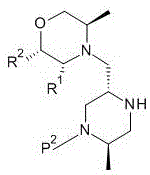
(V)
wherein R is1And R2Is as defined hereinbefore for the compound of formula (I) and P2Represents hydrogen or a suitable protecting group such as tert-butoxycarbonyl (tBoc); then carrying out a suitable removal of P as required2Deprotection of the protecting group and any other protecting groups; and/or
(b) Deprotecting a protected derivative of a compound of formula (I); and/or
(c) Interconverting a compound of formula (I) or a protected derivative thereof to another compound of formula (I) or a protected derivative thereof; and
(d) optionally forming a pharmaceutically acceptable salt of the compound of formula (I).
Process (a) (i) typically comprises reacting a compound of formula (II) with a compound of formula (III) in a suitable solvent such as acetonitrile, optionally in the presence of a suitable additive such as potassium iodide and a suitable base such as potassium carbonate. This process can be carried out at ambient temperature or at elevated temperature, for example 70 ℃.
Process (a) (ii) typically comprises reacting a compound of formula (IV) with a compound of formula (V) in a suitable solvent such as acetonitrile, optionally in the presence of a suitable additive such as potassium iodide and a suitable base such as potassium carbonate.
Method (b) typically involves any suitable deprotection reaction, the conditions of which will depend on the nature of the protecting group. When the protecting groups represent tBoc, such deprotection reactions will typically involve the use of a suitable acid in a suitable solvent. For example, the acid may suitably comprise trifluoroacetic acid or hydrogen chloride and the solvent may suitably comprise ethyl acetate dichloromethane, 1, 4-dioxane, methanol or water. Optionally, a mixture of solvents may be used, for example aqueous methanol or ethyl acetate/1, 4-dioxane.
It will be appreciated that when the protecting groups represent tBoc, deprotection using a suitable acid as described above may give the compound of formula (I) as a pharmaceutically acceptable salt which may be isolated directly. Alternatively, the compounds of formula (I) may be isolated as the free base using methods well known in the art and then optionally converted to pharmaceutically acceptable salts according to method (d).
Method (c) generally comprises interconversion procedures known to those skilled in the art. For example, in compounds of formula (I), a first substituent may be converted to a second, alternative substituent by methods known to those skilled in the art. Many of the well known functional group interconversion processes are known to those skilled in the art for converting precursor compounds to compounds of formula I, and are described inAdvanced Organic Chemistry Jerry March, 4 th edition, John Wiley&Sons, 1992. For example, possible metal-catalyzed functionalizations are described, for example, in 'Palladium Reagents and Catalysts' [ Jiro Tsuji, Wiley, ISBN 0-470-]And Handbook of Organic Palladium Chemistry for Organic Synthesis [ volume 1, edited by Ei-ichi Negishi, Wiley, ISBN 0-471- ]。
Process (d) may be carried out by treating the compound of formula (I) in free base form dissolved in a suitable solvent with a stoichiometric amount or excess of a pharmaceutically acceptable organic or inorganic acid, and isolating the resulting salt by methods well known in the art, for example solvent evaporation or crystallization.
Where appropriate, after or before the reaction described previously in processes (a), (b) and (c), is one or more reactions known to the person skilled in the art and carried out in the appropriate order, so as to obtain R as defined above1、R2、R5And R6Obtained by(ii) substitution as required to obtain further compounds of formula (I). Non-limiting examples of such reactions whose conditions are visible in the literature include:
protection of reactive functional groups;
deprotection of reactive functional groups;
halogenation;
dehalogenation;
dealkylation;
alkylation and arylation of amines, anilines, alcohols and phenols;
mitsunobu reaction to hydroxyl;
cycloaddition reaction to appropriate groups;
reduction of nitro, ester, cyano, aldehyde;
a transition metal catalyzed coupling reaction;
acylation reaction;
sulfonylation/introduction of sulfonyl;
saponification/hydrolysis of the ester group;
amidation or transesterification of the ester group;
esterification or amidation of carboxylic acid groups;
Halogen exchange;
nucleophilic substitution with amines, thiols, or alcohols;
reductive amination;
oxime formation on the carbonyl and hydroxylamine groups;
s-oxidizing;
n-oxidation;
salifying action.
Compounds of formula (II) can be prepared from compounds of formula (IV) according to scheme 1 below:
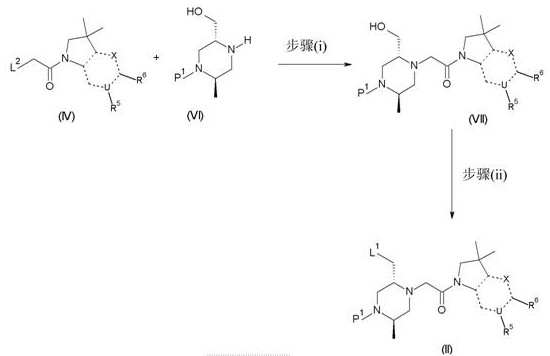
X, U, R therein5、R6、L1、L2And P1As defined hereinbefore.
Step (i) of scheme 1 typically comprises reacting compounds of formulae (IV) and (VI) in a suitable solvent such as acetonitrile, optionally in the presence of a suitable additive such as potassium iodide and a suitable base such as potassium carbonate.
When L is1When representing chlorine, step (ii) of scheme 1 typically comprises reacting a compound of formula (VII) with a reagent capable of converting the hydroxyl group to a good leaving group, such as methanesulfonyl chloride, in the presence of a base such as triethylamine.
Wherein X represents N, U represents carbon and R6The compound of formula (IV) representing hydroxymethyl can be prepared according to scheme 2 below:

Wherein L is3、L4、L5And L6Represents a suitable leaving group, such as a halogen atom (i.e. fluorine, bromine or chlorine) and R5And L2As defined hereinbefore.
When L is3And L4All represent fluorine, step (i) of scheme 2 typically comprises reacting a compound of formula (VIII) with a base such as sodium bis (trimethylsilyl) amide in the presence of tetrahydrofuran and isobutyronitrile in a suitable solvent such as toluene. An example of such a reaction is shown herein in preparation 11.
Step (ii) of scheme 2 comprises reaction with a suitable reducing agent and typically comprises reaction of a compound of formula (IX) with a borane-tetrahydrofuran complex in the presence of a suitable solvent, such as tetrahydrofuran. An example of such a reaction is shown herein in preparation 12. Step (II) of scheme 2 may also generally comprise reacting the compound of formula (IX) with nickel (II) chloride hexahydrate, followed by the addition of sodium borohydride. An example of such a reaction is shown herein in preparation 12, an alternative procedure.
Step (iii) of scheme 2 typically comprises the cyclisation of the compound of formula (X) using a suitable base such as potassium carbonate and a suitable solvent such as NMP. An example of such a reaction is shown herein in preparation 13.
Step (iv) of scheme 2 generally comprises reacting a compound of formula (XI) with a compound of formula R5Reaction of a compound of formula (I) with (II) M, wherein R5As defined hereinbefore and M represents the residue of an organometallic substance such that R5-M represents a nucleophilic organometallic reagent such as an organozinc halide. Step (iv) also typically involves the use of lithium bromide, a catalyst such as [1, 3-bis (2, 6-diisopropylphenyl) imidazol-2-ylidene in a suitable solvent system such as tetrahydrofuran and NMP](3-chloropyridyl) palladium (II) dichloride. An example of such a reaction is shown herein in preparation 15.
Step (v) of scheme 2 typically involves halogenation of the compound of formula (XII), for example using dimethylformamideN-bromosuccinimide. An example of such a reaction is shown herein in preparation 16.
Step (vi) of scheme 2 comprises lithiation and reaction with a suitable electrophile for introduction of the formyl group, and typically comprises reacting a compound of formula (XIII) with MeLi in THF, followed by addition of tBuLi/hexane, followed by addition of dimethylformamide. An example of such a reaction is shown herein in preparation 17.
Step (vii) of scheme 2 comprises reduction of the formyl group with a suitable reducing agent and generally comprises reacting the compound of formula (XIV) with sodium borohydride/methanol. An example of such a reaction is shown herein in preparation 17.
When L is2When representing a halogen such as chlorine, step (viii) of scheme 2 typically comprises reacting the compound of formula (XV) with a haloacetyl halide such as chloroacetyl chloride in MeCN, followed by the addition of potassium carbonate/methanol. An example of such a reaction is shown herein in preparation 18. Alternatively, compounds of formula (XIII) may be converted to compounds of formula (XV) by following a sequence analogous to that described for the preparation of 25 to 29, including 25 and 29.
Will be understood wherein R6Represents CH (OR)x)CH2ORzThe compounds of formula (XV) can be prepared in a manner analogous to scheme 2 above by changing scheme 2 step (v) onward. Examples of suitable reaction sequences are shown herein in preparations 38-42.
Wherein X represents NR3U represents carbon and R6Compounds that are = O can be synthesized using functional group interconversion on suitable intermediates of scheme 2 or protected derivatives thereof, such as shown in preparations 22-24, 30-35, and 50.
It will also be understood that where R is5Compounds of formula (IV) representing unsubstituted n-butyl or substituted benzyl groups can be prepared in a manner analogous to scheme 2 above by varying the organometallic reagent used in step (IV) of scheme 2. Examples of such reactions are shown herein in preparations 15A, 15B and 15C.
Wherein X represents CR4U represents nitrogen and R6Compounds representing oxo can be synthesized using a sequence analogous to that described in preparations 43-49 and 51-58.
Compounds of formula (V) or optionally protected derivatives thereof may be prepared according to scheme 3 below:

Wherein R is1、R2And P2As defined hereinbefore for the compounds of formula (V), L7Represents a suitable leaving group such as a halogen atom (e.g. chlorine) and P3Represents a suitable protecting group such as benzyl.
When P is present3When representing a benzyl group, step (i) of scheme 3 typically comprises reacting a compound of formula (XVI) with benzaldehyde in the presence of a suitable reducing agent such as sodium triacetoxyborohydride and 1, 2-dichloroethane. An example of such a reaction is shown herein in preparation 5.
When L is7When representing chlorine, step (ii) of scheme 3 typically comprises reacting the compound of formula (XVII) with methanesulfonyl chloride in the presence of triethylamine and dichloromethane. An example of such a reaction is shown herein in preparation 6.
Step (iii) of scheme 3 typically comprises reacting the compounds of formula (XVIII) and (XIX) in the presence of a base such as potassium carbonate, an additive such as potassium iodide in a suitable solvent such as acetonitrile. An example of such a reaction is shown herein in preparation 7.
Step (iv) of scheme 3 typically involves a deprotection reaction. For example when P3When representing a benzyl group, step (iv) typically comprises the hydrogenation of the compound of formula (XX) in the presence of a suitable catalyst, for example palladium on carbon, in a suitable solvent system, for example ethanol or a mixture of acetic acid and ethanol. An example of such a reaction is shown herein in preparation 8.
Alternatively, a compound of formula (I) may be prepared by reacting a compound of formula (XXI) or an optionally protected derivative thereof with a compound of formula (XXII), followed by a suitable removal of the protecting group P 2And any other protecting groups to synthesize:

(XXI)
wherein R is1And R2As defined hereinbefore for the compounds of formula (I) and P2Represents a suitable protecting group such as tert-butoxycarbonyl (tBoc),

(XXII)
x, U, R therein5And R6As defined hereinbefore.
One example of a suitable compound of formula (XXII) includes a compound of formula (XV) as hereinbefore defined.
The reaction typically comprises reacting a compound of formula (XXI) with a compound of formula (XXII), for example a compound of formula (XV), in a suitable solvent and at a suitable temperature, for example ambient temperature, in the presence of a suitable base and a reagent capable of activating the carboxylic acid groups present in the compound of formula (XXI). Suitable solvents should be inert to the reagents used, for example dichloromethane. Examples of suitable bases are triethylamine andN,N-diisopropylethylamine(DIPEA). Examples of suitable activating reagents are bromo-tris-pyrrolidino- Hexafluorophosphates (PyBrop),O-benzotriazole-N,N,N’,N’-tetramethyl-urea
 -hexafluoro-phosphate (HBTU), 1 '-carbonyldiimidazole, 1-ethyl-3- (3' -dimethylaminopropyl) -carbodiimide hydrochloride (EDC) and 2- (7-aza-1H-benzotriazol-1-yl) -1,1,3, 3-tetramethylurea
 Hexafluorophosphate) (HATU). The process may optionally be carried out in the presence of a catalytic or stoichiometric amount of a suitable co-activating reagent such as 1-hydroxybenzotriazole (HOBt) or 1-hydroxyazabenzotriazol (HOAt).
Compounds of formula (XXI) or optionally protected derivatives thereof may be prepared from compounds of formula (V) or optionally protected derivatives thereof as defined above by methods well known in the art, for example by reaction with an ester of monohaloacetic acid, for example benzyl bromoacetate, in the presence of a suitable base, for example potassium carbonate, in a suitable solvent, for example acetonitrile; and subsequent ester hydrolysis (or optionally hydrogenolysis in the case of benzyl ester). The compounds of formula (I) may be prepared in a similar order to that described in preparations 1-5.
Compounds of formula (XXII) can be prepared by using a similar sequence as described in scheme 2 or as described in the following preparations: 38-42; 22-24, 30-35 and 50; or 43-49 and 51-58.
It will be appreciated that certain compounds, for example compounds of formulae (I), (II), (III), (V), (VI), (VII), (XVI), (XVII), (XIX), (XX), (XXI) and (XXII), may exist in different diastereomeric and/or enantiomeric forms and that the preparation thereof may utilise enantiomerically pure synthetic precursors.
Alternatively, racemic precursors can be used and the diastereomeric mixtures produced in these processes can be separated by methods well known to those skilled in the art, for example using achiral or chiral preparative chromatography or resolution methods using diastereomeric derivatives: for example, the crystallization of salts formed with enantiomerically pure acids such as L-tartaric acid; or diastereomeric derivatives formed by covalent attachment of an enantiomerically pure chiral auxiliary to the compound, followed by separation using conventional methods such as chiral chromatography. The covalent bond is then cleaved to yield the appropriate enantiomerically pure product.
Desirable intermediates are, for example, of the formulae (III), (VI), (VIII), R5The compounds of (i), (ii) and (XIX) are commercially available, known in the literature, prepared by methods analogous to those in the literature or prepared by methods analogous to those described in the experimental procedures of the examples below. Other compounds may be prepared by the group R using methods well known in the art1、R2、R5And R6By interconversion of functional groups of (a).
In further embodiments, the present invention provides novel intermediates. In one embodiment, the present invention provides novel intermediates of formula (II) or (IV) or (V) or (VII) or (XX). In an alternative embodiment, the present invention provides novel intermediates of formula (XXI) or (XXII).
Protecting group
In many of the reactions described above, it may be desirable to protect one or more groups to prevent reaction at an undesired location on the molecule. Examples of protecting groups and methods for protecting and deprotecting functional groups can be found inProtective Groups in Organic Synthesis (T, Green and P, Wuts; 3 rd edition; John Wiley and Sons, 1999).
In particular, the radical R1And R2The protecting group may be synthesized in a protected form and may be removed to yield the compound of formula (I).
The hydroxyl group can be protected, for example, as an ether (-OR) OR ester (-OC (= O) R), for example, as: tert-butyl ether; tetrahydropyran (THP) ether; benzyl ether, diphenylmethyl ether (diphenylmethyl ether) or trityl ether (triphenylmethyl ether); trimethylsilyl ether or tert-butyldimethylsilyl ether (ii) a Or acetyl ester (-OC (= O) CH3)。
The aldehyde or keto group can, for example, be taken as acetal (R-CH (OR)2) Or ketals (R)2C(OR)2) Protection is carried out by treating the carbonyl groups with, for example, primary alcohols>C = O). The aldehyde or ketone groups are readily regenerated by hydrolysis in the presence of an acid using a large excess of water.
The amino group can be protected, for example, as an amide (-NRCO-R) OR carbamate (-NRCO-OR), for example as: formamide (-NHCO-CH)3) (ii) a Carbamic acid benzyl ester (-NHCO-OCH)2C6H5-NH-Cbz or NH-Z); as carbamic acid tert-butyl ester (-NHCO-OC (CH)3)3-NH-Boc); carbamic acid 2-diphenyl-2-propyl ester (-NHCO-OC (CH)3)2C6H4C6H5-NH-Bpoc), as 9-fluorenylmethyl carbamate (-NH-Fmoc), as 6-nitroveratryl carbamate (-NH-Nvoc), as 2-trimethylsilylethyl carbamate (-NH-Teoc), as 2,2, 2-trichloroethyl carbamate (-NH-Troc), as allyl carbamate (-NH-Alloc), or as 2 (-phenylsulfonyl) ethyl carbamate (-NH-Psec).
For example, in compounds of formula II, an amino group is included, which amino group may be protected by a protecting group as defined above (one particular group isTertiary amineButoxycarbonyl (Boc)) while introducing additional functionalization. The protecting group may be carried through the reaction sequence without subsequent modification of the amino group to give the compound of formula (I) in N-protected form, which may then be deprotected by standard methods (e.g. treatment with an acid in the case of Boc group) to give the compound of formula (I).
Other protecting groups for amines such as cyclic amines and heterocyclic N-H groups include tosyl (tosyl) and mesyl (mesyl), benzyl groups such asTo pair-methoxybenzyl (PMB) and Tetrahydropyranyl (THP).
The carboxylic acid group may be protected as an ester, for example as: c1-7Alkyl esters (e.g., methyl esters; t-butyl esters); c1-7Halogenated alkyl esters (e.g. C)1-7Alkyl trihalide); three C1-7alkylsilyl-C1-7An alkyl ester; or C5-20aryl-C1-7Alkyl esters (e.g., benzyl ester; nitrobenzyl ester;to pair-methoxybenzyl ester. The thiol group can be protected, for example, as a thioether (-SR), for example as: benzyl sulfide; acetaminomethyl ether (-S-CH)2NHC(=O)CH3)。
Isolation and purification of the Compounds of the invention
The compounds of the invention may be isolated and purified according to standard techniques well known to those skilled in the art and examples of such methods include chromatographic techniques such as column chromatography (e.g., flash chromatography) and HPLC. One technique that is particularly useful for purifying compounds is preparative liquid chromatography using mass spectrometry as a means of detecting the purified compound emerging from the column.
Preparative LC-MS is a standard and efficient method for purifying small organic molecules such as the compounds described herein. The methods of Liquid Chromatography (LC) and Mass Spectrometry (MS) can be varied to provide better separation of crude material and improved detection of samples by MS. Optimization of preparative gradient LC methods will involve changing the column, volatile eluents and modifiers, and the gradient. Methods for optimizing preparative LC-MS methods and then using them to purify compounds are well known in the art. Such methods are described in Rosentreter U, Huber U.; optical fraction collecting in preparatory LC/MS; J Comb Chem.2004, 6(2), 159-64 and Leister W, Strauss K, Wisnoski D, ZHao Z, Lindsley C, Development of a custom high-throughput predictive liquid chromatography/mass spectrometer platform for the predictive publication and analytical analysis of compound libraries;J Comb Chem.2003, 5, (3), 322-9. Examples of such systems for purifying compounds by preparative LC-MS are described in the following examples section of the present application (under the heading "mass-directed purification LC-MS system").
Methods for recrystallization of compounds of formula (I) and Salts thereof can be carried out by methods known to the skilled worker-see, for example, (P. Heinrich Stahl, Camile G. Wermuth, eds., ISBN: 3-90639 026-8, Handbook of Pharmaceutical Salts: Properties, Selection, and Use, Chapter 8, publisher Wiley-VCH). The product obtained from the organic reaction is rarely pure when isolated directly from the reaction mixture. If the compound (or salt thereof) is a solid, it may be purified and/or crystallized by recrystallization from a suitable solvent. A good recrystallization solvent should dissolve a moderate amount of the substance to be purified at high temperature but only a small amount at low temperature. It should be easy to dissolve impurities or completely insoluble impurities at low temperatures. Finally, the solvent should be easily removed from the purified product. This usually means that it has a relatively low boiling point and the skilled person will know the recrystallization solvent for a particular substance or if this information is not available, test several solvents. To obtain good yields of purified material, a minimum amount of hot solvent is used to dissolve all the impurities. In practice, more than 3% to 5% of the solvent is used, so that the solution is unsaturated. If the impure compound contains an impurity that is insoluble in the solvent, it can be removed by filtration and then crystallization of the solution. Furthermore, if an impure compound contains traces of colored substances that are not owned by the compound, it can be removed by adding a small amount of a decolorizing agent, such as activated carbon, to the hot solution, filtering it, and then crystallizing it. Crystallization typically occurs spontaneously upon cooling of the solution. If it does not occur, crystallization can be induced by cooling the solution to below room temperature or by adding a single crystalline pure substance (seed). Recrystallization and/or yield optimization can also be performed by using anti-solvents or co-solvents. In this case, the compound is dissolved in a suitable solvent at elevated temperature, filtered and then another solvent is added where the desired compound has low solubility to aid crystallization. The crystals are then typically isolated using vacuum filtration, washed and then dried, for example in an oven or by a desiccant.
Other examples of methods for purification include sublimation (which includes a heating step under vacuum, e.g., using a cold finger) and Crystallization from a melt (Crystallization Technology Handbook, 2 nd edition, editor a. Mersmann, 2001).
Biological action
The compounds of the present invention, subgroups and examples thereof are antagonists of the apoptotic protein Inhibitors (IAPs) and are useful in the prevention or treatment of the disease states or conditions described herein. In addition, the compounds of the present invention and subgroups thereof are useful in the prevention or treatment of diseases or conditions mediated by IAP. Reference to preventing or treating a disease state or condition such as cancer includes within its scope the reduction or reduction of cancer incidence.
Thus, for example, it is contemplated that the compounds of the present invention may be used to reduce or reduce the incidence of cancer.
The compounds of the invention are useful for treating the adult population. The compounds of the invention are useful for treating pediatric populations.
More specifically, the compounds of formula (I) and subgroups thereof are antagonists of IAP. For example, the compounds of the invention have affinity for XIAP, cIAP1 and/or cIAP2 and in particular an IAP selected from XIAP and cIAP 1.
Particular compounds are those having affinity for one or more IAPs selected from XIAP, cIAP1 and cIAP 2. Particular compounds of the invention are IC 50Those with a value of less than 0.1. mu.M.
Antagonist compounds of formula (I) are capable of binding to IAPs and exhibit efficacy against IAPs. In one embodiment, the antagonist compound of formula (I) exhibits selectivity for one or more IAPs over other IAP family members, and may be capable of binding to and/or exhibit affinity for an XIAP and/or cIAP in preference to binding to and/or exhibiting affinity for other IAP family members.
Furthermore, many compounds of the invention exhibit selectivity for XIAP over cIAP or vice versa, selectivity for cIAP over XIAP (specifically cIAP1), and such compounds represent an embodiment of the invention. In particular, the affinity of a compound of the invention for one or more IAP family members, in particular XIAP, cIAP1 and/or cIAP2, may be at least 10-fold greater than the affinity for other IAP family members. This can be determined using the methods described herein. In another embodiment, the compounds of the invention can have equivalent affinity for XIAP, cIAP1, and/or cIAP2, specifically for XIAP and cIAP1 (i.e., less than a 10-fold difference in affinity).
Activity against XIAP and cIAP1 may be particularly advantageous. Antagonism of XIAP and cIAP1 with equivalent efficacy should be able to trigger apoptosis by activating caspase-8 and switching away from pro-survival NF- κ B signaling to apoptosis; and effective antagonism of XIAP will ensure that apoptosis is achieved before any intrinsic drug resistance mechanism is upregulated to block the process. There is a temporal up-regulation of NF- κ B signaling at the time of consumption of cIAP1 by auto-ubiquitination and proteasome degradation, which accounts for the expression of TNF- α in sensitive cell lines-and which also accounts for the up-regulation of anti-apoptotic factors such as cIAP2 and c-FLIP. There is therefore a need to potentiate effective XIAP antagonism of effector caspase activation and cell death, rather than allowing the establishment of cIAP 2-mediated resistance. It is generally believed that toxicity upon in vivo administration of these compounds is caused by the temporary induction of NF- κ B signaling and thus upregulation of pro-inflammatory cytokines, which is mediated only by cIAP1/2 antagonism. Thus, dual efficacy should enable a therapeutic window to be achieved before dose-limiting toxicity is encountered.
IAP function in the control of programmed cell death is also implicated in a number of diseases, including conditions associated with cell accumulation (e.g., cancer, autoimmune disorders, inflammation, and restenosis), conditions in which excessive apoptosis results in cell death (e.g., stroke, heart failure, neurodegeneration such as alzheimer's disease, parkinson's disease, huntington's disease, amyotrophic lateral sclerosis, AIDS, ischemia (stroke, myocardial infarction), and osteoporosis or in the treatment of autoimmune diseases such as Multiple Sclerosis (MS).
It is therefore also conceivable, that, the compounds of the invention are useful in the treatment of other conditions such as inflammation (e.g., arthritis, including rheumatoid arthritis), hepatitis, ulcerative colitis, gastritis, autoimmunity, restenosis, stroke, heart failure, neurodegenerative conditions such as alzheimer's disease, parkinson's disease, huntington's disease, myotonic dystrophy and amyotrophic lateral sclerosis, AIDS, ischemia, such as traumatic brain injury, spinal cord injury, cerebral ischemia/reperfusion (I/R) injury, acute and chronic CNS damaging ischemia, stroke or myocardial infarction, degenerative diseases of the musculoskeletal system such as osteoporosis, autoimmune diseases such as Multiple Sclerosis (MS) and type I diabetes, and eye diseases caused by uncontrolled programmed cell death, such as retinal degeneration. In one embodiment, the compounds of the invention are useful for the treatment of viral infections, such as herpes virus, poxvirus, E-B virus, sindbis virus, adenovirus, HIV, HPV, hepatitis, such as Hepatitis B (HBV) or c (HCV), and HCMV; or mycobacterial infections, such as Tuberculosis (TB).
Due to their affinity for IAPs, the compounds can be used to provide a means of controlling apoptosis. Thus, it is contemplated that the compounds may prove useful in the treatment or prevention of proliferative disorders such as cancer. In addition, the compounds of the invention may be useful in the treatment of diseases where there is a disorder associated with cell accumulation or where excessive apoptosis results in cell death.
Examples of cancers (and their benign counterparts) that can be treated (or inhibited) include, but are not limited to, tumors of epithelial origin (different types of adenomas and carcinomas, including adenocarcinomas, squamous cell carcinomas, transitional cell carcinomas, and other cancers), such as the bladder and urinary tract, breast, gastrointestinal tract (including esophagus, stomach, small intestine, colon, rectum, and anus), liver (hepatocellular carcinoma), gallbladder and biliary tract system, exocrine pancreas, kidney, lung (e.g., adenocarcinoma, small cell lung cancer, non-small cell lung cancer, bronchioloalveolar cell carcinoma, and mesothelioma), head and neck (e.g., cancers of the tongue, mouth, larynx, pharynx, nasopharynx, tonsil, salivary gland, nasal cavity, and paranasal sinuses), ovary, fallopian tube, peritoneum, vagina, vulva, penis, cervix, myometrium, endometrium, thyroid (e.g., thyroid follicular cell carcinoma), and other cancers, Cancers of the adrenal gland, prostate, skin, and appendages (e.g., melanoma, basal cell carcinoma, squamous cell carcinoma, keratoacanthoma, dysplastic nevi); hematologic malignancies (i.e., leukemias, lymphomas) and precancerous and borderline malignancy disorders including hematologic malignancies and related disorders of the lymphoid lineage (e.g., acute lymphocytic leukemia [ ALL ], chronic lymphocytic leukemia [ CLL ], B-cell lymphomas such as diffuse large B-cell lymphoma [ DLBCL ], follicular lymphoma, Burkitt's lymphoma, mantle cell lymphoma, T-cell lymphoma and leukemia, natural killer [ NK ] cell lymphoma, hodgkin's lymphoma, hairy cell leukemia, monoclonal immunoglobulin disease of indeterminate significance, plasmacytoma, multiple myeloma, and post-transplant lymphoproliferative disorder), as well as hematologic malignancies and related conditions of the myeloid lineage (e.g., acute myelogenous leukemia [ AML ], chronic myelogenous leukemia [ CML ], (ii) and related conditions, Chronic myelomonocytic leukemia (CMML), hypereosinophilic syndrome, myeloproliferative disorders such as polycythemia vera, essential thrombocythemia and primary myelofibrosis, myeloproliferative syndrome, myelodysplastic syndrome, and promyelocytic leukemia); tumors of mesenchymal origin, for example sarcomas of soft tissue, bone or cartilage, such as osteosarcoma, fibrosarcoma, chondrosarcoma, rhabdomyosarcoma, leiomyosarcoma, liposarcoma, angiosarcoma, Kaposi's sarcoma, Ewing's sarcoma, synovial sarcoma, epithelioid sarcoma, gastrointestinal stromal tumors, benign and malignant histiocytoma, and dermatofibrosarcoma protruberans; tumors of the central or peripheral nervous system (e.g., astrocytomas, gliomas, and glioblastomas, meningiomas, ependymomas, pineal tumors, and schwannoma); endocrine tumors (e.g., pituitary adenomas, tumors of the adrenal gland, tumors of islet cells, tumors of the parathyroid gland, carcinoid tumors, and medullary carcinoma of the thyroid gland); ocular and accessory tumors (e.g., retinoblastoma); embryonic and trophoblastic tumors (e.g., teratomas, seminomas, dysgerminomas, vesicular fetuses, and choriocarcinomas); and pediatric tumors and embryonic tumors (e.g., medulloblastoma, neuroblastoma, Wilms' tumor, and primitive neuroectodermal tumors); or congenital or other syndromes that predispose the patient to malignancy (e.g., xeroderma pigmentosum).
Cell growth is a tightly controlled function. Cancer is a condition of abnormal cell growth that results when cells replicate in an uncontrolled manner (increase in number), grow out of control (become larger), and/or undergo a decrease in cell death by apoptosis (programmed cell death), necrosis, or anoikis. In one embodiment, the abnormal cell growth is selected from the group consisting of uncontrolled cell proliferation, excessive cell growth, or reduced programmed cell death. In particular, the condition or disease of abnormal cell growth is cancer. Thus, in the pharmaceutical compositions, uses or methods of the invention for treating a disease or condition comprising abnormal cell growth (i.e., uncontrolled and/or rapid cell growth), the disease or condition comprising abnormal cell growth in one embodiment is cancer.
In one embodiment, the hematologic malignancy is leukemia. In another embodiment, the hematologic malignancy is lymphoma.
In one embodiment, the disease to be treated is leukemia, such as acute and chronic leukemia, Acute Myeloid Leukemia (AML) and Chronic Lymphocytic Leukemia (CLL). In one embodiment the leukemia is a refractory DLBCL.
In one embodiment, the lymphoma is MALT lymphoma. In one embodiment, the leukemia is AML.
In one embodiment, the hematologic malignancy is multiple myeloma.
Many diseases are characterized by persistent and unregulated angiogenesis. Chronic proliferative diseases are often accompanied by significant angiogenesis, which may contribute to or maintain an inflammatory and/or proliferative state, or tissue destruction through invasive proliferation of blood vessels. Tumor growth and metastasis have been found to be angiogenesis dependent. The compounds of the invention are therefore useful for preventing tumor angiogenesis and for disturbing its onset. In particular, the compounds of the invention are useful for the treatment of metastasis and metastatic cancer.
Metastasis or metastatic disease is the spread of disease from one organ or part to another non-adjacent organ or part. Cancers that can be treated by the compounds of the invention include primary tumors (i.e., cancer cells at the original site), locally invasive tumors (cancer cells that penetrate and infiltrate the surrounding normal tissue of the local region), and metastatic (or secondary) tumors, i.e., tumors formed by malignant cells that have circulated to other sites and tissues in the body through the bloodstream (hematogenous spread) or through lymphatic vessels or through body cavities (body cavity metastases).
Specific cancers include hepatocellular carcinoma, melanoma, esophageal cancer, renal cancer, colon cancer, colorectal cancer, lung cancer such as mesothelioma or lung adenocarcinoma, breast cancer, bladder cancer, gastrointestinal cancer, ovarian cancer, and prostate cancer.
Specific cancers include renal cancer, melanoma, colon cancer, lung cancer, breast cancer, ovarian cancer, and prostate cancer. In one embodiment, the cancer is selected from melanoma, colon cancer, breast cancer, and ovarian cancer. In one embodiment, the cancer is melanoma. In one embodiment, the cancer is inflammatory breast cancer.
In one embodiment, the cancer is lung cancer, e.g., mesothelioma, including malignant peritoneal mesothelioma or malignant pleural mesothelioma.
In one embodiment, the cancer is breast cancer, in particular triple negative (triple-ve) breast cancer.
In one embodiment, the cancer is colorectal cancer.
Another aspect of the invention includes a compound of the invention for use in the prevention or treatment of cancer in a patient selected from a subpopulation having cancer with a high inflammatory component. Such cancers are also referred to as "inflammatory phenotypes" and include tumors with increased cytokine signaling (e.g., TNF). In one embodiment, the cancer is an inflammatory tumor, e.g., melanoma, colon cancer, breast cancer, and ovarian cancer, particularly melanoma.
In one embodiment, the melanoma is ras mutant melanoma.
Certain cancers are resistant to treatment with specific drugs. This may be due to the type of tumor (most commonly epithelial malignancies have intrinsic chemoresistance) or resistance may develop spontaneously upon disease progression or as a result of treatment. In this regard, reference to mesothelioma includes mesothelioma that has resistance to: topoisomerase poisons, alkylating agents, anti-tubulin agents, antifolates, platinum compounds and radiotherapy, in particular cisplatin-resistant mesothelioma. Similarly, reference to multiple myeloma includes bortezomib-sensitive multiple myeloma or refractory multiple myeloma and reference to chronic myelogenous leukemia includes imitinib (imitanib) -sensitive chronic myelogenous leukemia and refractory chronic myelogenous leukemia.
The cancer may be a cancer sensitive to an antagonist of any one or more IAPs selected from: XIAP, cIAP1, cIAP2, NAIP, ILP2, ML-IAP, survivin, and BRUCE, more particularly XIAP, cIAP1, cIAP2, ML-IAP, most particularly XIAP.
It is also envisaged that the compounds of the invention, and in particular those having IAP affinity, are particularly useful in the treatment or prevention of cancers of the type associated with or characterised by the presence of high levels of IAP or the amplification of 11q22, for example the cancers mentioned in this context of the introductory part of the application.
High levels of IAPs due to IAP overexpression are seen in many cancers and are associated with poor prognosis. In addition, cancers with 11q22 expansion may also be sensitive to IAP antagonists. Amplification of IAPs and 11q22 at high levels can be determined by the techniques outlined herein. Whether a particular cancer is one that is sensitive to IAP function can be determined by the methods listed in the section entitled "diagnostic methods".
Another aspect provides the use of a compound for the manufacture of a medicament for the treatment of a disease or condition as described herein, in particular cancer.
The compounds are also useful for treating tumor growth, pathogenesis, resistance to chemotherapy and radiation therapy by sensitizing cells to chemotherapy and as anti-metastatic agents.
All types of therapeutic anti-cancer interventions must increase the pressure applied to the target tumor cells. Among the toxic effects of alleviating such stress, IAPs are directly involved in the action of drugs and treatment regimens against cancer. Thus, antagonists of IAPs represent a class of chemotherapy with the following possibilities: (i) sensitizing malignant cells to anticancer drugs and/or treatments; (ii) reducing or diminishing the incidence of resistance to anticancer drugs and/or treatments; (iii) reversing resistance to anticancer drugs and/or treatments; (iv) potentiating the activity of an anti-cancer drug and/or therapy; (v) delaying or preventing the onset of resistance to an anti-cancer drug and/or treatment.
Due to their affinity for IAPs, the compounds can be used to provide a means of controlling apoptosis. Thus, it is also envisaged that the compounds of the invention may be useful in the treatment of other conditions, for example inflammatory disorders such as hepatitis, ulcerative colitis and gastritis; neurodegenerative conditions such as alzheimer's disease, parkinson's disease, huntington's disease, myotonic dystrophy and amyotrophic lateral sclerosis; AIDS, ischemia such as restenosis, traumatic brain injury, spinal cord injury, cerebral ischemia/reperfusion (I/R) injury, ischemia in acute and chronic CNS injury, stroke, or myocardial infarction; degenerative diseases of the musculoskeletal system, such as osteoporosis; autoimmune diseases, such as Multiple Sclerosis (MS) and type I diabetes; and eye diseases such as retinal degeneration.
The affinity of a compound of the invention as an IAP antagonist can be measured using the bioassays and biophysical assays listed in the examples herein and the level of affinity exhibited by a given compound can be measured in terms of IC50The value is defined. Particular compounds of the invention are IC50Compounds with a value of less than 1. mu.M, more particularly less than 0.1. mu.M.
In one embodiment, the invention provides a compound for use in treating a disease or condition mediated by IAP (e.g., XIAP and/or cIAP, e.g., cIAP 1). In another embodiment, the invention provides a compound for use in treating a disease or condition that overexpresses IAP (e.g., XIAP and/or cIAP, e.g., cIAP 1).
In one embodiment of the process of the present invention,the present invention provides a compound for use in treating a disease or condition mediated by IAP, wherein the compound is IC in at least one assay against IAP (e.g., displacement binding)50An IAP antagonist of less than 50 μ M. In particular, the IAP is XIAP, cIAP1 and/or cIAP 2. In another embodiment, the disease or condition mediated by IAPs is cancer characterized by overexpression of at least one IAP and/or amplification of 11q 22.
In one embodiment, the invention provides a compound for use in treating a disease or condition mediated by IAP, wherein the compound has an IC of less than 10 μ M for at least one IAP in an assay against IAP (e.g., displacement binding)50。
Another aspect provides a use of a compound for the manufacture of a medicament for treating a disease or condition mediated by IAP, wherein the compound has an IC of less than 50 μ M for at least one IAP in an assay (e.g., displacement binding) 50An IAP antagonist of (a).
Diagnostic method
Prior to administration of a compound of formula (I), a patient can be screened to determine whether the disease or condition that the patient has or can have is one that is susceptible to treatment with a compound having affinity for IAPs. The term "patient" includes both human and veterinary subjects.
For example, a biological sample obtained from a patient can be analyzed to determine that a condition or disease, such as cancer, that the patient has or can have is a condition or disease characterized by a genetic abnormality or abnormal protein expression that results in an up-regulation of IAP levels or that results in a pathway that is sensitive to normal IAP function or that results in up-regulation of a biochemical pathway downstream of IAP activation.
Examples of such abnormalities that lead to IAP activation or sensitivity are loss or inhibition of the apoptotic pathway, upregulation of receptors or ligands, cytogenetic abnormalities, or the presence of mutant variants of receptors or ligands. Tumors with IAP upregulation, specifically IAP overexpression, can be particularly sensitive to IAP antagonists. For example, XIAP and cIAP overexpression have been identified in the context of cancers as discussed in the background section.
Amplification of chromosome 11q22 has been detected in cell lines and primary tumors of squamous cell carcinomas of the esophagus (Imoto et al, 2001) and cervix (Imoto et al, 2002) and primary lung cancer/cell lines (Dai et al, 2003). Immunohistochemical and western blot analysis have identified cIAP1 and cIAP2 as possible oncogenes in this region, as both are overexpressed in cancers where this rare amplification is increased.
The term up-regulation includes increased expression or overexpression, including gene amplification (i.e., multiple gene copies), cytogenetic abnormalities, and increased expression through transcription. Thus, the patient may undergo a diagnostic test to detect a characteristic marker of IAP upregulation. The term diagnosis includes screening. The term marker includes genetic markers including, for example, measuring DNA composition to identify the presence of IAP mutations or 11q22 amplification. The term marker also includes markers characterized by up-regulation of IAP (including protein levels, protein status and mRNA levels of the above proteins).
Diagnostic tests and screens are typically performed on biological samples (i.e., body tissues or fluids) selected from the group consisting of: tumor biopsy samples, blood samples (isolation and enrichment of shed tumor cells), cerebrospinal fluid, plasma, serum, saliva, stool biopsy, sputum, chromosomal analysis, pleural fluid, peritoneal fluid, oral smear (buccal smear), skin biopsy, or urine.
Methods for the identification and analysis of genetic abnormalities, genetic amplifications, mutations, and protein upregulation of cells are known to those skilled in the art. Screening methods may include, but are not limited to, standard methods such as reverse transcriptase polymerase chain reaction (RT-PCR) or In situHybridization, e.g. fluorescenceIn situHybridization (FISH).
In screening by RT-PCR, mRNA levels in tumors were assessed by creating cDNA copies of the mRNA and then amplifying the cDNA by PCR. The PCR amplification method, the selection of primers and the conditions of amplification are known to the person skilled in the art. Nucleic acid manipulation and PCR are performed by standard methods, for example as described below: ausubel, F.M.Etc. ofEditing, (2004) Current Protocols in Molecular Biology, John Wiley&Sons inc, or Innis, M.A.Etc. ofEditing, (1990) PCR Protocols a guide to methods and applications, Academic Press, San Diego. Reactions and manipulations involving nucleic acid technology are also described in SambrookEtc. of(2001), 3 rd edition, Molecular Cloning: A Laboratory Manual, Cold Spring Harbor Laboratory Press. Alternatively, commercially available kits for RT-PCR (e.g., Roche Molecular Biochemicals) can be used, or the methods as listed below and incorporated herein by reference: us patent 4,666,828; 4,683,202; 4,801,531, respectively; 5,192,659, 5,272,057, 5,882,864 and 6,218,529.
For assessing mRNA expressionIn situAn example of a hybridization technique may be fluorescence In situHybridization (FISH) (see anger (1987) meth. enzymol., 152: 649).
In general,in situThe hybridization comprises the following main steps: (1) fixing the tissue to be analyzed; (2) pre-hybridizing the sample to increase accessibility of the target nucleic acid and reduce non-specific binding; (3) hybridizing the mixture of nucleic acids to nucleic acids in a biological structure or tissue; (4) washing after hybridization to remove nucleic acid fragments not bound in the hybridization; and (5) detecting the hybridized nucleic acid fragments. Probes used in these applications are typically labeled, for example, with a radioisotope or a fluorescent reporter. Particular probes are long enough, for example from about 50, 100, or 200 nucleotides to about 1000 or more nucleotides, to be capable of specifically hybridizing to a target nucleic acid under stringent conditions. Standard methods for performing FISH are described in Ausubel, F.M.Etc. ofEditing, (2004) Current Protocols in Molecular Biology, John Wiley&Sons Inc and FluorescenceIn SituHybridization Technical Overview, John M.S. Bartlett in Molecular diagnostics of Cancer, Methods and Protocols, 2 nd edition; ISBN 1-59259-760-2; 3 months 2004, pages 077-088; the series is as follows: methods in Molecular Medicine.
Method for gene expression profiling consisting of (DePrimo)Etc. of(2003), BMC Cancer3: 3). Briefly, the protocol is as follows: synthesis of double-stranded cDNA from Total RNA Using (dT)24 oligomer priming first Strand cDNA Synthesis followed by second Strand cDNA Synthesis with random hexamer primers. Double-stranded cDNA was used as template to use biotinylated ribonucleotidesIn vitroThe cRNA is transcribed. cRNA was chemically fragmented according to the protocol described by Affymetrix (Santa Clara, CA, USA) and then hybridized overnight on a human genomic microarray.
Alternatively, protein products expressed from mRNA can be assayed by immunohistochemical analysis of tumor samples, solid phase immunoassays using microtiter plates, western blotting, 2-dimensional SDS-polyacrylamide gel electrophoresis, ELISA, flow cytometry, and other methods known in the art for detecting specific proteins. The detection method may comprise the use of site-specific antibodies. The skilled person will recognise that all such well known techniques for detecting up-regulation of IAP, detecting variants or mutants of IAP or detecting amplification of 11q22 may be used in the context of the present invention.
Abnormal levels of proteins such as IAP can be measured using standard protein assays such as those described herein. Elevated levels or overexpression can also be detected in tissue samples such as tumor tissue by measuring protein levels with assays such as those from Chemicon International. Proteins of interest can be immunoprecipitated from sample lysates and their levels measured.
An alternative method for measuring overexpression or increase in IAP (including isoforms thereof) includes measuring microvascular density. This can be measured, for example, using the method described by Orre and Rogers (Int J Cancer (1999), 84(2), 101-8). The assay method further comprises the use of a label.
Thus, all of these techniques can also be used to identify tumors that are particularly suitable for treatment using the compounds of the present invention.
Thus, in a further aspect the invention comprises the use of a compound according to the invention for the manufacture of a medicament for the treatment or prevention of a disease state or condition in a patient who has been screened for and determined to be suffering from or at risk of suffering from a disease or condition susceptible to treatment with a compound having affinity for IAPs (i.e. an IAP antagonist).
Further embodiments provide methods of treating a patient having or at risk of having a disease or condition described herein (e.g., cancer), comprising administering an effective amount of a compound of formula (I).
Another aspect of the invention includes a compound of the invention for use in preventing or treating cancer in a patient selected from a sub-population having one or more IAP family members (e.g., cIAP and/or XIAP) that are overexpressed.
Another aspect of the invention includes a compound of the invention for use in the prevention or treatment of cancer in a patient selected to have a cytogenetic abnormality that results in the overexpression of IAP, e.g., a patient selected to have an 11q22 expansion.
Combinations of MRI assays for vessel normalization (e.g., measuring blood volume, relative vessel size, and vessel permeability using MRI gradient echo, spin echo, and contrast enhancement) with circulating biomarkers can also be used to identify treatments using the compounds of the invention.
Accordingly, another aspect of the invention is a method for diagnosing and treating a disease state or condition mediated by IAP, the method comprising (i) screening a patient to determine whether a disease or condition suffered or may be suffered by the patient is one that may be susceptible to treatment with a compound having affinity for IAP; and (ii) thereafter administering to the patient a compound of formula (I) as defined herein and subgroups or examples thereof, where the disease or condition from which the patient is indicated is susceptible.
Pharmaceutical preparation
While it is possible to administer the active compound alone, it is preferred that it be provided as a pharmaceutical composition (e.g., formulation). In one embodiment, this is a sterile pharmaceutical composition.
Accordingly, the present invention also provides pharmaceutical compositions as defined above and methods of preparing pharmaceutical compositions comprising (e.g., admixing) at least one compound of formula (I) (and subgroups thereof, as defined herein) together with one or more pharmaceutically acceptable excipients and optionally other therapeutic or prophylactic agents (as described herein).
Pharmaceutically acceptable excipients may be selected from, for example: carriers (e.g., solid, liquid or semi-solid carriers), adjuvants, diluents, fillers or bulking agents, granulating agents, coating agents, release controlling agents, binders, disintegrating agents, lubricating agents, preservatives, antioxidants, buffers, suspending agents, thickening agents, flavoring agents, sweetening agents, taste masking agents, stabilizing agents or any other excipients conventionally used in pharmaceutical compositions. Examples of excipients for use in various types of pharmaceutical compositions are described in more detail below.
The term "pharmaceutically acceptable" as used herein refers to compounds, materials, compositions, and/or dosage forms which are, within the scope of sound medical judgment, suitable for use in contact with the tissue of a subject (e.g., a human) without excessive toxicity, irritation, allergic response, or other problem or complication, commensurate with a reasonable benefit/risk ratio. Each carrier, excipient, etc. must also be "acceptable" in the sense of being compatible with the other ingredients of the formulation.
Pharmaceutical compositions containing compounds of formula (I) may be formulated according to known techniques, see, e.g., Remington's Pharmaceutical Sciences, Mack Publishing Company, Easton, Pa., USA.
The pharmaceutical composition may be in any form suitable for oral, parenteral, topical, intranasal, intrabronchial, sublingual, ophthalmic, otic, rectal, intravaginal or transdermal administration. When the compositions are intended for parenteral administration, they may be formulated for intravenous, intramuscular, intraperitoneal, subcutaneous administration or for direct delivery to a target organ or tissue by injection, infusion or other means of delivery. Delivery may be by bolus injection (bolus injection), short-term infusion, or longer-term infusion, and may be by passive delivery or by use of an appropriate infusion pump or injection driver.
Pharmaceutical formulations suitable for parenteral administration include aqueous and non-aqueous sterile injection solutions which may contain antioxidants, buffers, bacteriostats, co-solvents, surfactants, organic solvent mixtures, cyclodextrin complexing agents, emulsifiers for forming and stabilizing emulsion formulations, liposomal components for forming liposomes, and additives for forming polymeric compoundsGellable polymers, lyoprotectants and methods of making EspeciallyA combination of agents for stabilizing an active ingredient in soluble form and making the formulation isotonic with the blood of the intended recipient. Pharmaceutical formulations for parenteral administration may also take the form of aqueous and non-aqueous sterile suspensions which may include suspending agents and thickening agents (R.G. Strickly, dissolving Excipients in oral and injectable formulations, Pharmaceutical Research, Vol.21 (2) 2004, p.201-230).
The formulations may be presented in unit-dose or multi-dose containers, for example sealed ampoules, vials and pre-filled syringes, and may be stored in a freeze-dried (lyophilized) condition requiring only the addition of the sterile liquid carrier, for example water for injections, immediately prior to use. In one embodiment, the formulation is provided in a vial as an active pharmaceutical ingredient for subsequent reconstitution with a suitable diluent.
Pharmaceutical formulations may be prepared by lyophilizing a compound of formula (I) or a subset thereof. Lyophilization refers to the process of freeze-drying a composition. Freeze-drying and lyophilization are therefore used herein as synonyms.
Extemporaneous injection solutions and suspensions may be prepared from sterile powders, granules and tablets.
Pharmaceutical compositions of the invention for parenteral injection may also comprise pharmaceutically acceptable sterile aqueous or non-aqueous solutions, dispersions, suspensions or emulsions as well as sterile powders for reconstitution into sterile injectable solutions or dispersions just prior to use.
Examples of suitable aqueous and nonaqueous carriers, diluents, solvents or vehicles include water, ethanol, polyols (such as glycerol, propylene glycol, polyethylene glycol, and the like), carboxymethylcellulose and suitable mixtures thereof, vegetable oils (such as sunflower, safflower, corn or olive oil), and injectable organic esters such as ethyl oleate. Proper fluidity can be maintained, for example, by the use of thickening or coating materials, such as lecithin, by the maintenance of the required particle size in the case of dispersions and by the use of surfactants.
The compositions of the present invention may also contain adjuvants such as preserving, wetting, emulsifying, and dispersing agents. Prevention of the action of microorganisms can be ensured by including various antibacterial and antifungal agents, for example, parabens, chlorobutanol, phenol, sorbic acid, and the like. It may also be desirable to include tonicity adjusting agents such as sugars, sodium chloride, and the like. Prolonged absorption of the injectable pharmaceutical form can be brought about by the inclusion of agents delaying absorption, such as aluminum monostearate and gelatin.
In a particular embodiment of the invention, the pharmaceutical composition is in a form suitable for intravenous administration (e.g. by injection or infusion). For intravenous administration, the solution may be administered as such or injected into an infusion bag (containing pharmaceutically acceptable excipients such as 0.9% saline or 5% glucose) prior to administration.
In another specific embodiment, the pharmaceutical composition is in a form suitable for subcutaneous (s.c.) administration.
Pharmaceutical dosage forms suitable for oral administration include tablets (coated or uncoated), capsules (hard or soft shell), caplets (caplets), pills, lozenges, syrups, solutions, powders, granules, elixirs and suspensions, sublingual tablets, wafers (wafers) or tablets such as buccal patches.
Thus, a tablet composition may contain a unit dose of the active compound together with an inert diluent or carrier such as a sugar or sugar alcohol, for example lactose, sucrose, sorbitol or mannitol; and/or non-sugar derived diluents such as sodium carbonate, calcium phosphate, calcium carbonate, or cellulose or derivatives thereof such as microcrystalline cellulose (MCC), methyl cellulose, ethyl cellulose, hydroxypropylmethyl cellulose, and starches such as corn starch. Tablets may also contain such standard ingredients as binders and granulating agents such as polyvinylpyrrolidone, disintegrating agents (e.g., swellable cross-linked polymers such as cross-linked carboxymethylcellulose), lubricating agents (e.g., stearates), preserving agents (e.g., parabens), antioxidants (e.g., BHT), buffering agents (e.g., phosphate or citrate buffers), and effervescent agents such as citrate/bicarbonate mixtures. Such excipients are well known and need not be discussed in detail herein.
Tablets can be designed to release the drug upon contact with gastric fluid (i.e. immediate release tablets) or in a controlled manner over a prolonged period of time or in a specific region of the gastrointestinal tract (controlled release tablets).
Capsule formulations may be of the hard or soft gelatin type and may contain the active ingredient in solid, semi-solid or liquid form. Gelatin capsules may be formed from animal gelatin or its synthetic or plant-derived equivalents.
Solid dosage forms (e.g., tablets, capsules, etc.) may be coated or uncoated. The coating may be used as a protective film (e.g., a polymer, wax, or varnish) or as a mechanism for controlling drug release or for aesthetic or identification purposes. The coating (e.g., Eudragit-type polymer) can be designed to release the active ingredient at a desired location within the gastrointestinal tract. Thus, the coating may be selected to degrade under certain pH conditions within the gastrointestinal tract, thereby selectively releasing the compound in the stomach or ileum, duodenum, jejunum or colon.
Instead of or in addition to a coating, the drug may be presented as a solid matrix containing a controlled release agent, e.g. a release retardant, which may be adapted to release the compound in a controlled manner in the gastrointestinal tract. Alternatively, the drug may be presented as a polymer coating, such as a polymethacrylate polymer coating, which may be adapted to selectively release the compound under conditions of varying acidity or basicity in the gastrointestinal tract. Alternatively, the matrix material or the delayed release coating may take the form of an erodible polymer (e.g., a maleic anhydride polymer) that erodes substantially continuously as the dosage form passes through the gastrointestinal tract. In another alternative, the coating may be designed to disintegrate under the action of intestinal microorganisms. As another alternative, the active compound may be formulated in a delivery system that provides osmotic control of the release of the compound. Osmotic and other delayed or sustained release formulations (e.g., ion exchange resin-based formulations) can be prepared according to methods well known to those skilled in the art.
The compounds of formula (I) may be formulated with a carrier and applied in the form of nanoparticles, the increased surface area of which aids in their absorption. Furthermore, nanoparticles offer the possibility of direct penetration into cells. Nanoparticle drug delivery systemThe systems are described in Ram B Gupta and Uday b.kompella editors, "Nanoparticle Technology for Drug Delivery", Informa Healthcare, ISBN 9781574448573, published on 3/13 2006. Nanoparticles for drug delivery are also described in J. control. Release, 2003, 91 (1-2), 167-Etc. ofMol. Cancer ther. 8 month 1 day (2006) 5, 1909.
Pharmaceutical compositions typically comprise from about 1% (w/w) to about 95% (w/w) of the active ingredient and from 99% (w/w) to 5% (w/w) of a pharmaceutically acceptable excipient or combination of excipients. In particular, the composition comprises from about 20% (w/w) to about 90% (w/w) active ingredient and from 80% (w/w) to 10% of a pharmaceutically acceptable excipient or combination of excipients. The pharmaceutical compositions comprise from about 1% to about 95%, particularly from about 20% to about 90% of the active ingredient. The pharmaceutical compositions according to the invention may be, for example, in unit dosage form, such as in the form of ampoules, vials, suppositories, pre-filled syringes, dragees, tablets or capsules.
Pharmaceutically acceptable excipients may be selected according to the desired physical form of the formulation and may for example be selected from diluents (e.g. solid diluents such as fillers or bulking agents; and liquid diluents such as solvents and co-solvents), disintegrants, buffers, lubricants, flow aids, controlled release agents (e.g. release retarding or release retarding polymers or waxes), binders, granulating agents, pigments, plasticizers, antioxidants, preservatives, flavouring agents, taste masking agents, tonicity adjusting agents and coating agents.
The skilled person will have the expert knowledge to select suitable amounts of ingredients for use in the formulation. For example, tablets and capsules typically contain 0-20% disintegrant, 0-5% lubricant, 0-5% flow aid and/or 0-99% (w/w) filler/or bulking agent (depending on the drug dosage). They may also contain 0-10% (w/w) of a polymeric binder, 0-5% (w/w) of an antioxidant, 0-5% (w/w) of a pigment. Sustained release tablets may additionally contain 0-99% (w/w) of a controlled (e.g. delayed) release polymer (depending on the dose). The film coating of the tablets or capsules typically contains 0-10% (w/w) polymer, 0-3% (w/w) pigment and/or 0-2% (w/w) plasticizer.
Parenteral formulations typically contain 0-20% (w/w) buffer, 0-50% (w/w) cosolvent and/or 0-99% (w/w) water for injection (WFI) (depending on the dose and whether lyophilized). The preparation for intramuscular sustained release may further contain 0-99% (w/w) of oil.
Pharmaceutical compositions for oral administration may be obtained by: the active ingredients are mixed with a solid carrier, the resulting mixture is granulated if desired and processed, if desired or necessary, after addition of suitable excipients, into tablets, dragee cores or capsules. They may also be incorporated into a polymeric or wax-like matrix that allows the active ingredient to diffuse or be released in measured amounts.
The compounds of the present invention may also be formulated as solid dispersants. A solid dispersion is a uniform, very fine, dispersed phase of two or more solids. Solid solutions (molecular dispersion systems) are a type of solid dispersion which is well known for use in pharmaceutical technology (see (Chiou and Riegelman, j. pharm. sci., 60, 1281-1300 (1971)) and can be used to increase the dissolution rate and increase the bioavailability of poorly water soluble drugs.
The present invention also provides solid dosage forms comprising the solid solutions described above. Solid dosage forms include tablets, capsules, chewable tablets, and dispersible or effervescent tablets. Known excipients may be blended with the solid solution to give the desired dosage form. For example, the capsule may comprise a solid solution blended with (a) a disintegrant and a lubricant or (b) a disintegrant, a lubricant, and a surfactant. In addition, the capsules may contain bulking agents such as lactose or microcrystalline cellulose. The tablet may comprise a solid solution in admixture with at least one disintegrant, lubricant, surfactant, bulking agent and glidant. Chewable tablets may contain the solid solution in admixture with a bulking agent, a lubricant and, if desired, additional sweeteners, such as artificial sweeteners, and suitable flavoring agents. Solid solutions can also be formed by spraying a solution of the drug and a suitable polymer onto the surface of an inert carrier such as sugar beads ('non-pareils'). These beads can then be encapsulated or compressed into tablets.
The pharmaceutical formulation may be provided to the patient in the form of a "patient pack" containing the entire treatment process in a single package, typically a blister pack. Patient packs have advantages over traditional prescriptions, where the pharmacist separates the patient's medication supply from the bulk supply, as the patient can always use the package insert contained in the patient pack and typically missing from the patient prescription. Inclusion of package inserts has been shown to improve patient compliance with the physician's instructions.
Compositions for topical use and nasal delivery include ointments, creams, sprays, patches, gels, drops, and inserts (e.g., intraocular inserts). Such compositions may be formulated according to known methods.
Examples of formulations for rectal or intravaginal administration include pessaries and suppositories, which may be formed, for example, from shaped, mouldable or waxy materials containing the active compound. Solutions of the active compounds may also be used for rectal administration.
Compositions for administration by inhalation may take the form of inhalable powder compositions or liquid or powder sprays and may be administered using standard forms of powder inhaler devices or aerosol dispensing devices. Such devices are well known. For administration by inhalation, powder formulations typically comprise the active compound in association with an inert solid powdered diluent, for example lactose.
The compounds of formula (I) will generally be presented in unit dosage form and will therefore generally contain sufficient compound to provide the desired level of biological activity. For example, the formulation may contain from 1 nanogram to 2 grams of active ingredient, for example from 1 nanogram to 2 milligrams of active ingredient. Within these ranges, particular sub-ranges of the compound are 0.1 mg to 2 g of the active ingredient (more typically 10 mg to 1 g, e.g. 50 mg to 500 mg), or 1 μ g to 20 mg (e.g. 1 μ g to 10 mg, e.g. 0.1 mg to 2 mg of the active ingredient).
For oral compositions, the unit dosage form may contain from 1 mg to 2 g, more usually from 10 mg to 1 g, for example from 50 mg to 1 g, for example from 100 mg to 1 g, of the active compound.
The active compound will be administered to a patient in need thereof (e.g., a human or animal patient) in an amount sufficient to achieve the desired therapeutic effect.
Method of treatment
The compounds and subgroups of formula (I) as defined herein are useful in the prevention or treatment of a number of disease states or conditions mediated by IAPs. Thus, according to another aspect of the invention there is provided a method of treating a disease state or condition mediated by IAPs, such as XIAP and/or cIAP (e.g. cancer), the method comprising administering to a subject in need thereof a compound of formula (I) as defined herein. According to another aspect of the invention there is provided a method of treating a disease state or condition (e.g. cancer) which overexpresses IAP, such as XIAP and/or cIAP, the method comprising administering to a subject in need thereof a compound of formula (I) as described herein. Examples of such disease states and conditions are listed above and specifically include cancer.
The compounds are typically administered to a subject, e.g., a human or animal patient, particularly a human, in need of such administration.
The compounds are generally administered in therapeutically or prophylactically useful and generally non-toxic amounts. However, in certain circumstances (e.g., in the case of life-threatening diseases), the benefit of administering a compound of formula (I) may outweigh the disadvantages of any toxic or side effects, in which case it may be considered desirable to administer the compound in an amount related to the degree of toxicity.
The compounds may be administered chronically to maintain a beneficial therapeutic effect or may be administered only chronically. Alternatively, they may be administered in a continuous manner or in a manner that provides intermittent dosing (e.g., pulsatile manner).
Typical daily dosages of a compound of formula (I) may range from 100 picograms to 100 milligrams per kilogram body weight, more typically from 5 nanograms to 25 milligrams per kilogram body weight, and more typically from 10 nanograms to 15 milligrams per kilogram body weight (e.g., 10 nanograms to 10 milligrams, and more typically from 1 microgram/kilogram to 20 milligrams per kilogram, such as from 1 microgram/kilogram to 10 milligrams per kilogram), although higher or lower dosages may be administered if desired. The compound of formula (I) may be administered on a daily basis or on a repeated basis, for example every 2 days or every 3 days or every 4 days or every 5 days or every 6 days or every 7 days or every 10 days or every 14 days or every 21 days or every 28 days.
The compounds of the invention may be administered orally in a number of doses, for example 1 to 1500 mg, 2 to 800 mg or 5 to 500 mg, for example 2 to 200 mg or 10 to 1000 mg, specific examples of doses include 10, 20, 50 and 80 mg. The compounds may be administered once daily or more than once daily. The compound may be administered continuously (i.e., daily without interruption for the duration of the treatment regimen). Alternatively, the compound may be administered intermittently (i.e., continuously for a given period of time, such as one week, then stopped for a period of time, such as one week, and then continuously for another period of time, such as one week, etc., throughout the duration of the treatment regimen). Examples of treatment regimens involving intermittent administration include regimens in which administration is performed for one week, and discontinued for one week; or two weeks, and one week off; or three weeks, and one week off; or two weeks, and two weeks off; or four weeks, and two weeks off; or a cycle of one week with three weeks off-for one or more cycles, e.g. 2, 3, 4, 5, 6, 7, 8, 9 or 10 or more cycles.
In a particular dosing regimen, the infusion of a compound of formula (I) is administered to the patient daily for a period of one hour for up to ten days, in particular up to five days, and the treatment is repeated at desired intervals, such as two to four weeks, in particular every three weeks.
More specifically, the infusion of a compound of formula (I) may be given to the patient daily for a period of one hour for 5 days and the treatment repeated every three weeks.
In another specific dosing regimen, the infusion is administered to the patient for 30 minutes to 1 hour, followed by maintenance of the infusion for a variable duration, e.g., 1 to 5 hours, e.g., 3 hours.
In another specific dosing regimen, the patient is given a continuous infusion over a period of 12 hours to 5 days, specifically a continuous infusion for 24 hours to 72 hours.
In another specific dosing regimen, the compound is administered orally to the patient once a week.
In another specific dosing regimen, the compound is administered orally to the patient once a day for 7-28 days, e.g., 7, 14, or 28 days.
In another specific dosing regimen, the compound is administered orally to the patient once a day for 1 day, 2 days, 3 days, 5 days, or 1 week, followed by the number of days required to stop to complete the cycle for one or two weeks.
In another specific dosing regimen, the compound is administered orally to the patient once a day for 2 weeks, followed by 2 weeks off.
In another specific dosing regimen, the compound is administered orally to the patient once a day for 2 weeks, followed by 1 week off.
In another specific dosing regimen, the compound is administered orally to the patient once a day for 1 week, followed by 1 week off.
Ultimately, however, the amount of compound administered and the type of composition used will be commensurate with the nature of the disease or physiological condition being treated and will be at the discretion of the physician.
IAP antagonists have been found to be useful as single acting agents or in combination with other anti-cancer agents. For example, it may be advantageous to combine an antagonist that induces apoptosis with another agent that acts by a different mechanism to modulate cell growth, thereby treating two of the characteristic features of cancer development. Combined experiments may be performed, for example, as described by Chou TC, Talalay P. Quantitative analysis of dose-effect relationships, the combined effects of multiple drugs or Enzyme inhibitors, Adv Enzyme Regulation 1984, 22: 27-55.
The compounds as defined herein may be administered as monotherapeutic agents or they may be administered in combination therapy with one or more other compounds (or therapies) for the treatment of a particular disease state, for example a neoplastic disease such as cancer as defined above. For the treatment of the above conditions, the compounds of the invention may advantageously be used in combination with one or more other agents, more particularly other anti-cancer agents or adjuvants (supporting agents in therapy) in cancer therapy. Examples of other therapeutic agents or treatments that may be administered with a compound of formula (I), whether simultaneously or at different time intervals, include, but are not limited to:
A topoisomerase I inhibitor;
an antimetabolite;
a tubulin targeting agent;
a DNA binding agent and a topoisomerase II inhibitor;
an alkylating agent;
a monoclonal antibody;
an anti-hormonal agent;
a signal transduction inhibitor;
a proteasome inhibitor;
a DNA methyltransferase inhibitor;
cytokines and retinoids;
chromatin targeting therapy;
radiotherapy; and
other therapeutic or prophylactic agents.
Specific examples of the anticancer agent or adjuvant (or salt thereof) include, but are not limited to, any agent selected from the following groups (i) - (xlvi) and optionally (xlvii):
(i) platinum compounds, such as cisplatin (optionally in combination with amifostine), carboplatin or oxaliplatin;
(ii) taxane compounds, e.g. paclitaxel, paclitaxel protein-binding particles (Abraxane)TM) Docetaxel, cabazitaxel or larotaxel;
(iii) topoisomerase I inhibitors, for example camptothecin compounds, such as camptothecin, irinotecan (CPT11), SN-38, or topotecan;
(iv) topoisomerase II inhibitors, for example anti-tumour epipodophyllotoxin or podophyllotoxin derivatives, for example etoposide or teniposide;
(v) Vinca alkaloids, such as vinblastine, vincristine, liposomal vincristine (Onco-TCS), vinorelbine, vindesine, vinflunine, or vinvisir;
(vi) nucleoside derivatives, such as 5-fluorouracil (5-FU, optionally in combination with folinic acid), gemcitabine, capecitabine, tegafur, UFT, S1, cladribine, cytarabine (Ara-C, cytosine arabinoside), fludarabine, clofarabine or nelarabine;
(vii) antimetabolites, such as clofarabine, aminopterin or methotrexate, azacitidine, cytarabine, floxuridine, pentostatin, thioguanine, mercaptopurine, 6-mercaptopurine, or hydroxyurea (hydroxyurea);
(viii) alkylating agents, such as nitrogen mustards or nitrosoureas, for example cyclophosphamide, chlorambucil, carmustine (BCNU), bendamustine, thiotepa, melphalan, busulfan, lomustine (CCNU), hexamethylmelamine, busulfan, dacarbazine, estramustine, fotemustine, ifosfamide (optionally in combination with mesna), pipobroman, procarbazine, streptozocin, temozolomide, uracil, dichloromethyldiethylamine, methylcyclohexyl chloroethyl nitrourea or nimustine (ACNU);
(ix) Anthracyclines, anthraquinones, and related drugs, such as daunorubicin, doxorubicin (optionally in combination with dexrazoxane), liposomal formulations of doxorubicin (e.g., Caelyx-chambers, Myocet-chambers, Doxil-chambers), idarubicin, mitoxantrone, epirubicin, amsacrine, or valrubicin;
(x) Epothilones, such as ixabepilone, paclitaxel (patupilone), BMS-310705, KOS-862, and ZK-EPO, epothilone A, epothilone B, desoxyepothilone B (also known as epothilone D or KOS-862), azaepothilone B (also known as BMS-247550), ulimalide, isolaulilide, or luetherobin;
(xi) DNA methyltransferase inhibitors such as temozolomide, azacytidine, or decitabine, or SGI-110;
(xii) Antifolates, such as methotrexate, pemetrexed disodium, or raltitrexed;
(xiii) Cytotoxic antibiotics, such as actinomycin D, bleomycin, mitomycin C, actinomycin D, carminomycin, daunorubicin, levamisole, plicamycin, or mithramycin;
(xiv) Tubulin binding agents, such as combretastatin, colchicine or nocodazole;
(xv) Signal transduction inhibitors, such as kinase inhibitors (e.g., EGFR (epidermal growth factor receptor) inhibitors, VEGFR (vascular endothelial growth factor receptor) inhibitors, PDGFR (platelet-derived growth factor receptor) inhibitors, MTKI (multi-target kinase inhibitors), Raf inhibitors, mTOR inhibitors, e.g., imatinib mesylate, erlotinib, gefitinib, dasatinib, lapatinib, polyvatinib (doxitinib), acitinib, nilotinib, vandetanib, vatalinib, pazopanib, sorafenib, sunitinib, temsirolimus, everolimus (RAD 001), Verofinib (PLX4032/RG7204), darafenib, encorafenib or IkappaB kinase inhibitors such as-113945, bardoloxone, BMS-066, BMS-345541, IMD-0354, IMD-2560 or IMD-1041, or MEK inhibitors such as Selumetinib (AZD6244) and Trametinib (GSK 121120212);
(xvi) Aurora kinase inhibitors, such as AT9283, barasertib (AZD1152), TAK-901, MK0457 (VX680), cenicrobib (ceniser tib) (R-763), daluerobib (danesertib) (PHA-739358), alitcetib (alisertib) (MLN-8237) or MP-470;
(xvii) CDK inhibitors, such as AT7519, roscovitine, seliciclib, alvocidib (flavopiridol), dinaciclib (SCH-727965), 7-hydroxy-staurosporine (UCN-01), JNJ-7706621, BMS-387032 (also known as SNS-032), PHA533533, PD332991, ZK-304709, or AZD-5438;
(xviii) PKA/B inhibitors and PKB (AKT) pathway inhibitors such as AKT inhibitors for example KRX-0401 (piperacillin/NSC 639966), ipatasertib (GDC-0068; RG-7440), afurertib (GSK-2110183; 2110183), MK-2206, MK-8156, AT13148, AZD-5363, triciribine phosphate (VQD-002; triciribine monohydrate (API-2; TCN-P; TCN-PM; VD-0002), RX-0201, NL-71-101, SR-13668, SR-PX 316, AT13148, AZ-5363, Semaphore, SF1126 or Enzasolin HCl (31LY 315) or MTOR inhibitors such as rapamycin analogues such as RAD 761 001 (everolimus), TEIREMUS, AP 73 and RIDAFOLIMUUS, rapamycin (initially referred to as AP 235841 and 23573), rapamycin 235841 and 23573, calmodulin inhibitors such as CBP-501 (forkhead translocation inhibitor), enzastaurin HCl (LY317615) or PI3K inhibitors such as dactylisib (BEZ235), buparlisib (BKM-120; NVP-BKM-120), BYL719, copanlisib (BAY-80-6946), ZTK-474, CUDC-907, apitolisib (GDC-0980; RG-7422), pictiliib (pictreliib, GDC-0941, RG-7321), GDC-0032, GDC-0068, GSK-2636771, idelisib (CALL-101, GS 1101, GS-1101), MLN1117 (INK1117), MLN0128 (INK128), IPI-145 (INK LY 7), IPK-3023414, ipatanib, AFI-55, MK-866, MK-3023414, MLN-86103, or PI 3-119103;
(xix) Hsp90 inhibitors such as AT13387, herbimycin, Geldanamycin (GA), 17-allylamino-17-demethoxygeldanamycin (17-AAG) (e.g., NSC-330507, Kos-953, and CNF-1010), 17-dimethylaminoethylamino-17-demethoxygeldanamycin hydrochloride (17-DMAG) (e.g., NSC-707545 and Kos-1022), NVP-AUY922 (VER-52296), NVP-BEP800, CNF-2024 (BIIB-021, oral purine), ganetespib (STA-9090), SNX-5422 (SC-102112), or IPI-504;
(xx) Monoclonal antibodies (unconjugated or conjugated to radioisotopes, toxins or other agents), antibody derivatives and related agents, such as anti-CD, anti-VEGFR, anti-HER 2, anti-CTLA 4, anti-PD-1 or anti-EGFR antibodies, e.g., rituximab (CD20), ofatumumab (CD20), ibritumomab tiuxetan (CD20), GA101 (CD20), tositumomab (CD20), epratuzumab (CD22), lintuzumab ozolomide (CD33), gemtuzumab ozogamicin (CD33), alemtuzumab (CD52), galiximab (CD80), trastuzumab (HER2 antibody), pertuzumab (2), trastuzumab-DM 1 (HER2), rituximab (HER2 and CD3), cetuximab (EGFR), panitumumab (EGFR), necitumumab (EGFR), tuzumab (VEGF), bevacizumab (VEGF), Erbitumumab (EGFR) and related agents, Carbotuzumab (cataumaxumab) (EpCAM and CD3), abamectin (CA125), farlettuzumab (folate receptor), elotuzumab (CS1), dinoteumab (RANK ligand), figitumumab (IGF1R), CP751,871 (IGF1R), mapatumumab (TRAIL receptor), metMAB (met), mitumumab (GD3 ganglioside), tanamemazumab (naptumomab) 5T4, secoximab (IL6), or immunomodulators such as CTLA-4 blocking antibodies and/or antibodies against PD-1 and PD-L1 and/or PD-L2 such as ipilimumab (4), CTLA-3475 (pelolizumab, former mumPD, anti-PD-L1), anti-NILUMBAB (NI-L63514), anti-IL-24-P9359, anti-MTL 1, anti-MTP-52, anti-DL-474652, anti-DL-20, anti-MTP-4 blocking antibodies (CTLA) and/or anti-IL-4 blocking antibodies such as CTLA, CP-675,206, anti-CTLA-4);
(xxi) An estrogen receptor antagonist or a Selective Estrogen Receptor Modulator (SERM) or an estrogen synthesis inhibitor, such as tamoxifen, fulvestrant, toremifene, droloxifene, farodex or raloxifene;
(xxii) Aromatase inhibitors and related agents, such as exemestane, anastrozole, letrozole, testolactone aminoglutethimide, mitotane or vorozole;
(xxiii) Antiandrogens (i.e., androgen receptor antagonists) and related agents, such as bicalutamide, nilutamide, flutamide, cyproterone or ketoconazole;
(xxiv) Hormones and their analogs, such as medroxyprogesterone, diethylstilbestrol (also known as stilbestrol), or octreotide;
(xxv) Steroids, such as drotadalasone propionate, megestrol acetate, nandrolone (decanoate, phenylpropionate), fluoxymesterone or gossypol;
(xxvi) Steroidal cytochrome P45017 α -hydroxylase-17, 20-lyase inhibitors (CYP17), such as abiraterone;
(xxvii) Gonadotropin releasing hormone agonists or antagonists (GnRA), such as abarelix, goserelin acetate, histrelin acetate, leuprolide acetate, triptorelin, buserelin or deserelin;
(xxviii) Glucocorticoids, such as prednisone, prednisolone, dexamethasone;
(xxix) Differentiating agents such as retinoid A, rexinoid, vitamin D or retinoic acid and Retinoic Acid Metabolism Blockers (RAMBA) such as isotretinoin, alitretinoin, bexarotene or tretinoin;
(xxx) Farnesyl transferase inhibitors, such as tipifarnib;
(xxxi) Chromatin-targeted therapies, such as Histone Deacetylase (HDAC) inhibitors, e.g., panobinostat (panobinostat), reminostat, abexinostat, vorinostat, romidepsin (romidepsin), belinostat, entinostat, quisinostat, pracinostat, tefiniostat, mocetinostat, givinostat, CUDC-907, CUDC-101, ACY-1215, MGCD-290, EVP-0334, RG-2833, 4SC-202, romidepsin (romidepsin), AR-42 (Ohio State University), CG-200745, valproic acid, CKD-581, sodium butyrate, suberoylanilide hydroxyamide (SAHA), depsipeptide (FR 901228), daclizast (NVP-LAQ), R/30625, J-306485, atractylen-485, atrazine-26A (01038824), or archaebacin (01038J-173A), JND-263, 01026A-173A);
(xxxii) Proteasome inhibitors, such as bortezomib, carfilzomib, delanzomib (CEP-18770), ixazoib (MLN-9708), oprozomib (ONX-0912) or marizomib;
(xxxiii) Photodynamic drugs such as porfimer sodium or temoporin;
(xxxiv) Marine organism-derived anticancer agents such as trabectedin (trabectidin);
(xxxv) Radiolabeled drugs for radioimmunotherapy, for example radiolabeled with beta particle emitting isotopes (e.g., iodine-131, yttrium-90) or alpha particle emitting isotopes (e.g., bismuth-213 or actinium-225), such as ibritumomab tiuxetan or idotuximab;
(xxxvi) Telomerase inhibitors, such as telomestatin;
(xxxvii) Matrix metalloproteinase inhibitors, such as batimastat, marimastat, prinostat (prinostat) or mestat (metastat);
(xxxviii) Recombinant interferons (e.g., interferon-gamma and interferon alpha) and interleukins (e.g., interleukin 2), such as aldesleukin, denileukin, interferon alpha 2a, interferon alpha 2b, or peginterferon alpha 2b
(xxxix) Selective immune response modifiers, such as thalidomide or ralodide;
(xl) Therapeutic vaccines, such as sipuleucel-T (Provenge) or OncoVex;
(xli) Cytokine activators including pisibanil, romopeptide, cizopyran, vilulizine or thymosin;
(xlii) Arsenic trioxide;
(xliii) G-protein coupled receptor (GPCR) inhibitors, such as atrasentan;
(xliv) Enzymes, such as L-asparaginase, pemetrexed, labyrinase or perganase;
(xlv) DNA repair inhibitors, such as PARP inhibitors, for example Olaparib, Veliparib (velaparib), iniparib, INO-1001, AG-014699 or ONO-2231;
(xlvi) Death receptor agonists (e.g., TNF-related apoptosis-inducing ligand (TRAIL) receptors), such as mapatumab (formerly HGS-ETR1), conatumumab (formerly AMG 655), PRO95780, lexamumab, dulalamine, CS-1008, aprepizumab, or recombinant TRAIL ligands such as recombinant human TRAIL/Apo2 ligand;
(xlvii) Prophylactic agents (adjuvants); i.e. agents which reduce or alleviate some of the side effects associated with chemotherapeutic agents, e.g.
-an anti-emetic agent;
agents that prevent or reduce the duration of chemotherapy-associated neutropenia and prevent complications caused by reduced platelet, red blood cell or white blood cell levels, such as interleukin-11 (e.g., ompreinterleukin), Erythropoietin (EPO), and analogs thereof (e.g., alfafeptin (darbecetin α)), colony stimulating factor analogs such as granulocyte macrophage colony stimulating factor (GM-CSF) (e.g., sargrastim), and granulocyte colony stimulating factor (G-CSF), and analogs thereof (e.g., filgrastim, pegfilgrastim);
Agents that inhibit bone resorption, such as delmumab or diphosphates, for example zoledronate, pamidronate and ibandronate;
agents that inhibit inflammatory responses, such as dexamethasone, prednisone and prednisolone;
agents for reducing the level of blood growth hormone and IGF-I (and other hormones) in patients with acromegaly or other infrequently hormone producing tumors, such as the synthetic form of the hormone somatostatin, e.g. octreotide acetate;
-antidotes for drugs that reduce folate levels, such as folinic acid or folic acid;
agents for pain, for example opiates, such as morphine, diacetylmorphine and fentanyl;
non-steroidal anti-inflammatory drugs (NSAIDs), such as COX-2 inhibitors, e.g. celecoxib, etoricoxib and lumiracoxib;
agents for mucositis, such as palifermin;
agents such as megestrol acetate for the treatment of side effects, including anorexia, cachexia, edema or thromboembolic episodes.
In one embodiment, the anti-cancer agent is selected from recombinant interferons (e.g., interferon- γ and interferon α) and interleukins (e.g., interleukin 2), such as aldesleukin, denileukin 2, interferon α 2a, interferon α 2b, or peginterferon α 2 b; interferon-alpha 2 (500 μ/ml), in particular interferon-beta; and signal transduction inhibitors such as kinase inhibitors (e.g., EGFR (epidermal growth factor receptor) inhibitors, VEGFR (vascular endothelial growth factor receptor) inhibitors, PDGFR (platelet-derived growth factor receptor) inhibitors, MTKI (multi-target kinase inhibitors), Raf inhibitors, mTOR inhibitors such as imatinib mesylate, erlotinib, gefitinib, dasatinib, lapatinib, polyviranib (doxitinib), acitinib, nilotinib, vandetanib, pazopanib, sorafenib, sunitinib, temsirolimus, everolimus (RAD 001), vemurafenib (PLX4032/RG7204), darafenib, trankinib or IkappaB kinase inhibitors such as PLX403 113945, bardoxAR lone, BMS-066, BMS-345541, IMD-0354, IMD-2560 or IMD-1, or 10410454 inhibitors such as Semetilinib (metilkid) MEK 12044 and AZxod 121212), in particular Raf inhibitors (e.g. vemurafenib) or MEK inhibitors (e.g. trametinib).
Each compound present in the combination of the invention may be administered in a dosage regimen that varies individually and by different routes. Thus, the dosimetry of each of the two or more agents may be different: each may be administered at the same time or at different times. The skilled person will be aware of the dosing regimen and combination therapy used by his or her general knowledge. For example, the compounds of the present invention may be used in combination with one or more other agents administered according to their existing combination regimen. Examples of standard combining schemes are provided below.
The taxane compound is advantageously administered at a rate of 50 to 400 mg per square meter of body surface area (mg/m) per course of treatment2) E.g. 75 to 250 mg/m2Is administered, in particular at a dose of about 175 to 250 mg/m for paclitaxel2And about 75 to 150 mg/m for docetaxel dose2。
The camptothecin compound is advantageously administered in an amount of from 0.1 to 400 mg per square meter of body surface area (mg/m) per treatment period2) E.g. 1 to 300 mg/m2Is administered, in particular for irinotecan doses, of about 100 to 350 mg/m2And for topotecan doses from about 1 to 2 mg/m2。
The antitumor podophyllotoxin derivative is advantageously administered in an amount of 30 to 300 mg per square meter of body surface area (mg/m) per treatment period 2) E.g. 50 to 250 mg/m2Is administered, in particular for etoposide, at a dose of about 35 to 100 mg/m2And for teniposide doses from about 50 to 250 mg/m2。
The anti-tumor vinca alkaloids are advantageously present in an amount of 2 to 30 mg per square meter of body surface area (mg/m) per treatment period2) Is administered, in particular in a vinblastine dose of about 3 to 12 mg/m2For vincristine doses, about 1 to 2 mg/m2And about 10 to 30 mg/m for vinorelbine dose2。
The antitumor nucleoside derivative is advantageously administered in an amount of 200 to 2500 mg per square body surface area (mg/m) per course of treatment2) E.g. 700 to 1500 mg/m2Is administered, in particular at a dose of 200 to 500 mg/m for 5-FU2For gemcitabine dose isAbout 800 to 1200 mg/m2And a dose of about 1000 to 2500 mg/m for capecitabine2。
In each course of treatment, alkylating agents such as nitrogen mustards or nitrosoureas are advantageously employed in amounts of 100 to 500 mg per square meter of body surface area (mg/m)2) E.g. 120 to 200 mg/m2Is administered, in particular in a dose of about 100 to 500 mg/m for cyclophosphamide2About 0.1 to 0.2 mg/kg for chlorambucil and about 150 to 200 mg/m for carmustine2And about 100 to 150 mg/m for lomustine doses 2。
The antitumor anthracycline derivative is advantageously present in an amount of 10 to 75 mg per square meter of body surface area (mg/m) per treatment course2) E.g. 15 to 60 mg/m2Is administered, in particular for doxorubicin at a dose of about 40 to 75 mg/m2For daunorubicin, the dosage is about 25 to 45 mg/m2And for an idarubicin dose from about 10 to 15 mg/m2。
The antiestrogen is advantageously administered at a dosage of about 1 to 100 mg per day, depending on the particular agent and condition to be treated. Tamoxifen is advantageously administered orally at a dose of 5 to 50 mg, in particular 10 to 20 mg, twice daily, the therapy being continued for a sufficient time to achieve and maintain the therapeutic effect. Toremifene is advantageously administered orally at a dose of about 60 mg once a day, and the therapy is continued for a sufficient time to achieve and maintain the therapeutic effect. Anastrozole is advantageously administered orally once daily in a dose of about 1 mg. Droloxifene is advantageously administered orally at a dose of about 20-100 mg once a day. Raloxifene is advantageously administered orally once daily in a dose of about 60 mg. Exemestane is advantageously administered orally at a dose of about 25 mg once a day.
The antibody is advantageously present at about 1 to 5 mg per square meter of body surface area (mg/m) 2) Or if different, as known in the art. Trastuzumab advantageously is administered at 1 to 5 mg per square meter of body surface area (mg/m) per course of treatment2) Specifically 2 to 4 mg/m2The dosage of (a).
Where a compound of formula (I) is administered in combination therapy with one, two, three, four or more other therapeutic agents (particularly one or two, more particularly one), the compounds may be administered simultaneously or sequentially. In the latter case, the two or more compounds will be administered over a period of time and in an amount and manner sufficient to ensure that a beneficial or synergistic effect is achieved. When administered sequentially, they can be administered at closely spaced intervals (e.g., for a period of 5-10 minutes) or at longer intervals (e.g., 1, 2, 3, 4, or more hours apart or even longer periods of time when desired), with precise dosage regimens commensurate with the nature of the therapeutic agent. These doses may be administered, for example, once, twice or more per course of treatment, which may be repeated, for example, every 7, 14, 21 or 28 days.
In one embodiment there is provided a compound of formula (I) for use in the manufacture of a medicament for use in therapy, wherein the compound is used in combination with one, two, three or four other therapeutic agents. In another embodiment, there is provided a medicament for the treatment of cancer comprising a compound of formula (I), wherein the medicament is used in combination with one, two, three or four other therapeutic agents. The invention also provides the use of a compound of formula (I) for the manufacture of a medicament for increasing or enhancing the response rate in a patient suffering from cancer, wherein the patient is being treated with one, two, three or four other therapeutic agents.
It will be appreciated that the particular method and sequence of administration, and the corresponding dosage and regimen for each component of the combination, will depend upon the particular other agent being administered and the compound of the invention, its route of administration, the particular tumor being treated, and the particular host being treated. The optimal method and sequence of administration, as well as the dosages and schedules, can be readily determined by those skilled in the art using routine methods and in light of the information set forth herein.
The weight ratio of a compound according to the invention to one or more other anti-cancer agents when administered as a combination can be determined by one skilled in the art. The ratio and the precise dose and frequency of administration will depend on the particular compound and other anti-cancer agents used in accordance with the invention, the particular condition being treated, the severity of the condition being treated, the age, weight, sex, diet, time and general physical condition of the particular patient, mode of administration and other agents that may be taken by the individual, as is well known to those skilled in the art. Furthermore, it is apparent that the effective daily amount can be reduced or increased according to the response of the treated subject and/or according to the evaluation of the physician prescribing the compounds of the instant invention. The specific weight ratio of the compound of formula (I) of the present invention to another anticancer agent may range from 1/10 to 10/1, more specifically from 1/5 to 5/1, even more specifically from 1/3 to 3/1.
The compounds of the invention may also be used in non-chemotherapeutic treatments such as radiotherapy, photodynamic therapy, gene therapy; surgery and dietary control are combined.
The compounds of the invention also have therapeutic applications in sensitizing tumor cells to radiation therapy and chemotherapy. Thus, the compounds of the present invention may be used as "radiosensitizers" and/or "chemotherapeutic sensitizers", or may be administered in combination with another "radiosensitizer" and/or "chemotherapeutic sensitizer". In one embodiment, the compounds of the invention are used as chemosensitizers.
The term "radiosensitizer" is defined as a molecule administered to a patient in a therapeutically effective amount to increase the sensitivity of cells to ionizing radiation and/or to promote the treatment of a disease treatable with ionizing radiation.
The term "chemotherapeutic sensitizer" is defined as a molecule administered to a patient in a therapeutically effective amount to increase the sensitivity of cells to chemotherapy and/or to promote the treatment of diseases treatable with chemotherapy.
In one embodiment, the compounds of the present invention are administered with a "radiosensitizer" and/or a "chemotherapeutic sensitizer". In one embodiment, the compounds of the invention are administered with an "immunosensitizer.
The term "immunosensitizer" is defined as a molecule administered to a patient in a therapeutically effective amount to increase the sensitivity of cells to IAP antagonists (e.g., by promoting or increasing an immune response, e.g., by triggering the release of TNF).
Many cancer treatment protocols currently employ radiosensitizers in conjunction with x-ray radiation. Examples of x-ray activated radiosensitizers include, but are not limited to, the following: metronidazole, misonidazole, desmethylmisonidazole, pimonidazole, etanidazole, nimorazole, mitomycin C, RSU 1069, SR 4233, EO9, RB 6145, nimorazole, 5-bromodeoxyuridine (BUdR), 5-iododeoxyuridine (IUdR), bromodeoxythymidine, fluorodeoxyuridine (FudR), hydroxyurea, cisplatin, and therapeutically effective analogs and derivatives thereof.
Photodynamic therapy (PDT) of cancer employs visible light as a radiation activator of a sensitizer. Examples of photodynamic radiosensitizers include, but are not limited to, the following: hematoporphyrin derivatives, photoporphyrins (Photofrin), benzoporphyrin derivatives, stannoporphyrins, pheophorbide-a, bacteriochlorophyll-a, naphthalocyanines, phthalocyanines, zinc phthalocyanines, and therapeutically effective analogs and derivatives thereof.
The radiosensitizer can be administered in combination with a therapeutically effective amount of one or more other compounds, including but not limited to: a compound of the invention; a compound that promotes incorporation of the radiosensitizer into a target cell; compounds that control the flow of therapeutic agents, nutrients and/or oxygen to target cells; chemotherapeutic agents that act on the tumor with or without additional radiation; or other therapeutically effective compounds for the treatment of cancer or other diseases.
The chemotherapeutic sensitizer may be administered in combination with a therapeutically effective amount of one or more other compounds, including but not limited to: a compound of the invention; a compound that promotes the incorporation of chemotherapeutic sensitizers into target cells; compounds that control the flow of therapeutic agents, nutrients and/or oxygen to target cells; chemotherapeutic agents acting on tumors; or other therapeutically effective compounds for the treatment of cancer or other diseases. Calcium antagonists such as verapamil have been found to be useful in combination with anti-tumor agents to establish chemosensitivity in tumor cells resistant to the chemotherapeutic agent received and to potentiate the efficacy of such compounds in drug sensitive malignancies.
Examples of immunosensitizers include, but are not limited to, the following: immune modulators, such as monoclonal antibodies, e.g., immune checkpoint antibodies [ e.g., CTLA-4 blocking antibodies and/or antibodies against PD-1 and PD-L1 and/or PD-L2 such as ipilimumab (CTLA4), MK-3475 (formerly lambrolizumab, anti-PD-1), nivolumab (anti-PD-1), BMS-936559 (anti-PD-L1), MPDL320A, AMP-514 or MEDI4736 (anti-PD-L1) or trelmimab (formerly ticilimumab, CP-675,206, anti-CTLA-4); or a signal transduction inhibitor; or a cytokine (e.g., recombinant interferon); or an oncolytic virus; or an immunoadjuvant (e.g. BCG).
The immunosensitizer can be administered in combination with a therapeutically effective amount of one or more other compounds, including but not limited to: a compound of the invention; a compound that promotes the incorporation of an immunosensitizer into a target cell; compounds that control the flow of drugs, nutrients and/or oxygen into target cells; therapeutic agents that act on tumors or other therapeutically effective compounds for the treatment of cancer or other diseases.
For use in combination therapy with another chemotherapeutic agent, the compound of formula (I) and one, two, three, four or more other therapeutic agents may, for example, be formulated together in a dosage form containing the two, three, four or more therapeutic agents, i.e., in a unit pharmaceutical composition containing all of the agents. In an alternative embodiment, individual therapeutic agents may be formulated separately and presented in kit form, optionally with instructions for their use.
In one embodiment, there is provided a combination of a compound of formula (I) and one or more (e.g., 1 or 2) other therapeutic agents (e.g., an anti-cancer agent as described above). In a further embodiment there is provided a combination of an IAP antagonist as described herein and a PI3K/AKT pathway inhibitor selected from the group consisting of: apitolisib, buparlisib, Copalisib, pictilisib, ZSTK-474, CUDC-907, GSK-2636771, LY-3023414, iptasertib, afurertib, MK-2206, MK-8156, Idelalisib, BEZ235 (dactulisib), BYL719, GDC-0980, GDC-0941, GDC-0032, and GDC-0068.
In another embodiment, there is provided a combination of a compound of formula (I) with one or more (e.g., 1 or 2) other therapeutic agents (e.g., an antineoplastic agent) for use in therapy, such as the prevention or treatment of cancer.
In one embodiment, a pharmaceutical composition comprises a compound of formula (I) together with a pharmaceutically acceptable carrier and optionally one or more therapeutic agents.
In another embodiment, the invention relates to the use of a combination according to the invention for the manufacture of a pharmaceutical composition for inhibiting the growth of tumor cells.
In another embodiment, the invention relates to a product containing a compound of formula (I) and one or more anticancer agents as a combined preparation for simultaneous, separate or sequential use in the treatment of a patient suffering from cancer.
Examples
The invention will now be illustrated by reference to, but is not limited to, the specific embodiments described in the following examples. The compounds are named using an automated naming package (automated naming package) such as autonom (mdl) or as named by the chemical supplier.
The following synthetic procedures are provided to illustrate the methods used; for a given preparation or step, the precursors used may not necessarily originate from a single batch synthesized according to the steps in the given description. In the examples, the following abbreviations are used.
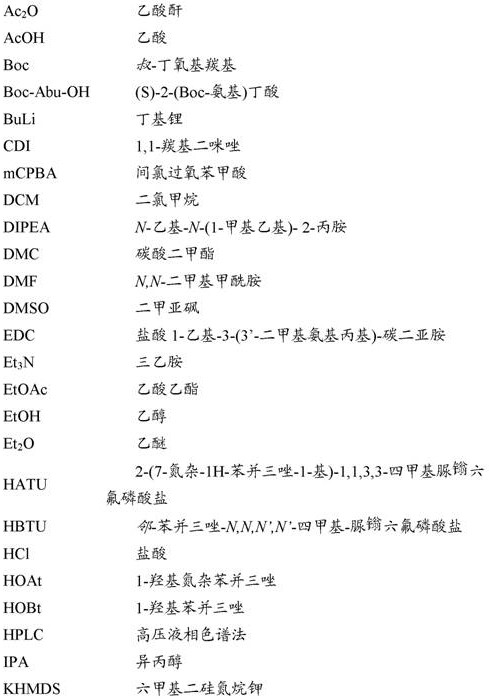

NMR data: unless indicated, recordings were made on a Bruker Avance I spectrometer operating at 400 MHz at 25 deg.C1H NMR spectrum. Data were processed and analyzed using Topspin 2.1 software. For NMR data, in the case where the number of protons assigned is less than the theoretical number of protons in the molecule, it is ensured that the signal lost apparently is masked by the solvent and/or water peaksNumber (n). Furthermore, in the case of spectra obtained in a proton NMR solvent, exchange of NH and/or OH protons with the solvent occurs and thus such signals are not normally observed.
Analytical and preparative LC-MS systems
Analytical LC-MS System and method description
In the following examples, compounds were characterized by mass spectrometry using the systems and operating conditions shown below. Where atoms having different isotopes are present and a single mass is cited, the mass described for a compound is a monoisotopic mass (i.e., 35Cl;79Br, etc.).
Waters Platform LC-MS System:
HPLC system: waters 2795
A mass spectrum detector: micromass Platform LC
A PDA detector: waters 2996 PDA
● Platform MS conditions:
capillary voltage: 3.6 kV (ES negative time 3.40 kV)
Taper hole voltage: 30V
Source temperature: 120 deg.C
Scanning range: 125-800 amu
Ionization mode: electric spray positiveOr
Negative electric sprayOr
Electrospray positive & negative
Waters Fractionlynx LC-MS System:
HPLC system: 2767 auto-sampler-2525 binary gradient pump
A mass spectrum detector: waters ZQ
A PDA detector: waters 2996 PDA
● Fractinlynx MS conditions:
capillary voltage: 3.5 kV (ES negative time 3.25 kV)
Taper hole voltage: 40V (ES negative 25V)
Source temperature: 120 deg.C
Scanning range: 125-800 amu
Ionization mode: electric spray positiveOr
Negative electric sprayOr
Electrospray positive & negative
Agilent 1200SL-6140 LC-MS System-RAPID:
HPLC system: agilent 1200 series SL
A mass spectrometry detector: agilent 6140 single-phase quadrupole rod
A second detector: agilent 1200 MWD SL
● Agilent MS conditions:
capillary voltage: ES timing 4000V (ES negative 3500V)
Fragmentor (Fragmentor)/gain: 100
Gain: 1
Drying gas flow: 7.0L/min
Gas temperature: 345 deg.C
The pressure of the sprayer is as follows: 35 psig
Scanning range: 125-800 amu
Ionization mode: electrospray positive-negative switching
Preparative LC-MS systems and methods description
Preparative LC-MS is a standard and efficient method for purifying small organic molecules such as the compounds described herein. The methods of Liquid Chromatography (LC) and Mass Spectrometry (MS) can be varied to provide better separation of crude material and improved detection of samples by MS. Optimization of preparative gradient LC methods will involve changing the column, volatile eluents and modifiers, and the gradient. For optimizing the systemPreparative LC-MS methods and methods for purifying compounds using them are well known in the art. Such methods are described in Rosentreter U, Huber U.; optical fraction collecting in preparatory LC/MS; J Comb Chem.2004, (6), (2), 159-64 and Leister W, Strauss K, Wisnoski D, Zhao Z, Lindsley C, Development of a custom high-through predictive liquid chromatography/mass spectrometer platform for the predictive purification and analytical analysis of compound libraries;J Comb Chem.;2003; 5(3); 322-9。
several systems for purifying compounds by preparative LC-MS are described below, although those skilled in the art will appreciate that alternative systems and methods to the described systems and methods may be used. With the information provided herein, or with alternative chromatographic systems, one skilled in the art can purify the compounds described herein by preparative LC-MS.
Waters Fractionlynx system:
● hardware:
2767 Dual-circuit autosampler/fraction collector
2525 Pump for preparing
CFO for column selection (column flow organizer)
RMA as a supplementary Pump (Waters reagent manager)
Waters ZQ Mass spectrometer
Waters 2996 photodiode array detector
Waters ZQ Mass spectrometer
● Waters MS operating conditions:
capillary voltage: 3.5 kV (ES negative time 3.2 kV)
Taper hole voltage: 25V
Source temperature: 120 deg.C
Scanning range: 125-800 amu
Ionization mode: electric spray positive Or
Negative electric spray
Agilent 1100 LC-MS preparation system:
● hardware:
an automatic sampler: 1100 series of "prepALS"
A pump: 1100 series "PrepPump" for preparative flow gradients and 1100 series "QuatPump" for pumping modifiers in preparative flows "
UV detector: 1100 series MWD multi-wavelength detector
An MS detector: 1100 series "LC-MSD VL"
Fraction collector: 2X "Prep-FC"
A supplementary pump: "Waters RMA"
Agilent Active separator (Active Splitter)
● Agilent MS running conditions:
capillary voltage: 4000V (ES negative 3500V)
Fragmenter/gain: 150/1
Drying gas flow: 12.0L/min
Gas temperature: 350 deg.C
The pressure of the sprayer is as follows: 50 psig
Scanning range: 125-800 amu
Ionization mode: electric spray positiveOr
Negative electric spray
● column:
many commercially available columns (both achiral and chiral) can be used, enabling them to maximally cover a wide range of selectivities in combination with mobile phase, organic modifiers and changes in pH. All columns were used according to the manufacturer's recommended operating conditions. If available, a 5 micron particle size column is typically used. For example, columns from Waters (including but not limited to XBridge. Prep OBD. C18 and Phenyl, Atlantis. Prep T3 OBD. and Sunfire. Prep OBD. C185. m 19 x 100 mm), Phenomenex (including but not limited to Synergy MAX-RP and LUX. Cellulose-2), Astec (Chirobiotic. columns including but not limited to V, V2 and T2) and Diacel (including but not limited to Chiralpak. AD-H) may be used for screening.
● eluent:
mobile phase eluents were selected in combination with the stationary phase limitations recommended by column manufacturers in order to optimize the separation performance of the column.
● method:
achiral preparative chromatography
As indicated, The compounds described in The examples have been purified by HPLC using methods following The recommended developments as described in Snyder L.R., Dolan J.W., High-Performance Gradient Application of The Linear-Solvent-Strength Model, Wiley, Hoboken, 2007.
Chiral preparative chromatography
Preparative separations using Chiral Stationary Phases (CSP) are a natural technique for resolving enantiomeric mixtures. Likewise, it can be applied to the separation of enantiomers and achiral molecules. Methods for optimizing preparative chiral separations on CSP and then using them to purify compounds are well known in the art. Such methods are described in Beesley T.E., Scott R.P.W., Chiral Chromatography, Wiley, Chichester, 1998.
The values for salt stoichiometry or acid content in the compounds provided herein are those experimentally obtained and may vary depending on the analytical method used. In case no salt form is indicated, the compound is obtained as the free base.
Preparation 1: (R) -2- ((S) -2-benzyloxycarbonylamino-3-hydroxy-propionyl-amino) -propionic acid methyl ester
Diisopropylethylamine (375 mL) was added dropwise to a cooled mixture of (R) -methyl 2-amino-propionate hydrochloride (100 g, 0.716 mol), EDC (165 g, 0.86 mol), benzyloxycarbonyl-L-serine (171.4 g, 0.716 mol) and DCM (3.6L). The resulting mixture was stirred at ambient temperature under nitrogen for 16 h. In thatVacuumAfter removal of the solvent at 40 ℃, the residue was diluted with saturated sodium carbonate (1L), water (1L) and extracted with EtOAc (2L, 2 × 1L). The combined organic phases were washed with 2M hydrochloric acid (1L), saturated brine solution (1L), dried over magnesium sulfate and washed with brineVacuumConcentrated at 40 ℃ to give the titled compound as a colorless solidCompound (172 g).1H NMR(Me-d3-OD): 7.44-7.28 (6H, m), 5.13 (2H, s), 4.46 (1H, d), 4.43 (1H, d), 4.25 (1H, t), 3.82-3.68 (5H, m), 1.39 (3H, d)。
Preparation 2: (3S,6R) -3-hydroxymethyl-6-methyl-piperazine-2, 5-dione
To (R) -2- ((S) -2-benzyloxycarbonylamino-3-hydroxy-propionyl-amino) -propionic acid methyl ester, which was prepared as described in preparation 1, (172 g, 0.53 mol) was added 10% palladium on carbon (8.6 g), MeOH (530 mL), and cyclohexene (344 mL) under nitrogen. The mixture was heated to reflux for 17 h. MeOH (500 mL) was added and reflux continued for 1 h. The hot reaction mixture was filtered through a pad of celite and the filter cake was washed with hot MeOH (2 x 500 mL). The combined filtrates were concentrated. The resulting solid was slurried in 2-butanone (400 mL), and gasoline (400 mL) was added gradually over 10 min. After stirring for 30 min, the solid was filtered and the filter cake was washed with 2:1 petrol/2-butanone (300 mL). The filter cake was dried under vacuum at 40 ℃ to give the title compound (68.3 g) as an off-white solid. 1H NMR (DMSO-d6): 8.08 (1H, s), 7.90 (1H, s), 5.11 (1H, t), 3.92 (1H, q), 3.80-3.71 (1H, m), 3.71-3.60 (1H, m), 3.58-3.47 (1H, m), 1.24 (3H, d)。
Preparation 3: ((2R,5R) -5-methyl-piperazin-2-yl) -methanol hydrochloride
To (1)3S,6R) -3-hydroxymethyl-6-methyl-piperazine-2, 5-dione (which can be prepared as described in preparation 2) (34 g, 0.215 mol) to a solution of borane/THF (1M, 1.6L, 1.6 mol) was added and the mixture was heated to 70 ℃ for 18 h. The solution was cooled on ice, then MeOH (425 mL) was added gradually, followed by 5M hydrochloric acid (113 mL). The mixture was heated to 70 ℃ for 2 h and then cooled to ambient temperature. The resulting solid was filtered, and the filter cake was washed with THF (200 mL) and dried under vacuum at 40 deg.C to give the title compound (39.3 g) as a colorless solid.1H NMR (DMSO-d6): 9.79 (3H, s), 5.59 (1H, s), 3.76-3.40 (5H, m), 3.19-2.94 (2H, m), 1.28 (3H, d)。
Preparation 4: (2R,5R) -5-hydroxymethyl-2-methyl-piperazine-1-carboxylic acid tert-butyl ester
To ((2R,5R) -5-methyl-piperazin-2-yl) -methanol hydrochloride (which can be prepared as described in preparation 3) at 0 deg.C (ice bath)Prepared) (20 g, 119 mmol) in MeOH (96 mL) was added triethylamine (48.7 mL, 357 mmol). Tert-butyl dicarbonate (61 g, 280 mmol) in MeOH (145 mL) was added over 30 min. The reaction temperature is at<Held at 10 ℃ for 1h, warmed to ambient temperature over 1h and then heated to 50 ℃ for 18 h. The reaction was concentrated and the residue was dissolved in ethanol (397 mL). A solution of NaOH (23.8 g, 595 mmol) in water (397 mL) was added and the reaction was heated to 100 ℃ for 18 h and then cooled to ambient temperature. The mixture was neutralized to pH 9 (using a pH meter) with 1M HCl (-300 mL), then extracted with chloroform (3 × 700 mL), dried over sodium sulfate, filtered and concentrated. The residue was redissolved in MeOH and concentrated, then dried under vacuum at 40 ℃ to give the title compound (21 g, 75%) as a colorless solid. 1H NMR (Me-d3-OD): 4.20-4.07 (1H, m), 3.79 (1H, dd), 3.71-3.58 (2H, m), 3.54 (1H, dd), 3.24 (1H, dd), 3.18-3.01 (1H, m), 3.01-2.89 (1H, m), 2.55 (1H, dd), 1.48 (9H, s), 1.25 (3H, s)。
Preparation 5: (2R,5R) -4-benzyl-5-hydroxymethyl-2-methyl-piperazine-1-carboxylic acid tert-butyl ester
A mixture of (2R,5R) -5-hydroxymethyl-2-methyl-piperazine-1-carboxylic acid tert-butyl ester (which can be prepared as described in preparation 4) (3.48 g, 15.1 mmol), benzaldehyde (1.76 g, 16.6 mmol), sodium triacetoxyborohydride (3.84 g, 18.1 mmol) and 1, 2-dichloroethane (30 mL) was stirred at 20 ℃ for 18 h, then at saturated NaHCO3Partition between aqueous (150 mL) and DCM (3 × 50 mL). The combined organic extracts were dried (Na)2SO4) And then evaporated in vacuo to give an oil. Chromatographic Separation (SiO)20-30% EtOAc/petrol) to yield the title compound (4.588 g, 74%) as a colorless solid. MS: [ M + H]+ = 321。
Preparation 6: (2R,5R) -4-benzyl-5-chloromethyl-2-methyl-piperazine-1-carboxylic acid tert-butyl ester
Methanesulfonyl chloride (570 μ L, 7.35 mmol) was added to a solution of TEA (2.6 mL, 18.4 mmol) in (2R,5R) -4-benzyl-5-hydroxymethyl-2-methyl-piperazine-1-carboxylic acid tert-butyl ester (which can be prepared as described in preparation 5) (1.9 g, 6.12 mmol) in DCM (30 mL) at 0 ℃. The solution was stirred at room temperature for 18 h. Reacting the reactant in NH4Partition between aqueous Cl and DCM. Collecting organic matterPhase, over MgSO4Dried, filtered and concentrated in vacuo. Chromatography (30% EtOAc/petrol) afforded the title compound (1.6 g) as a white solid. MS: [ M + H ]+ = 339。
Preparation 7: (2R,5S) -4-benzyl-2-methyl-5- ((R) -3-methyl-morpholin-4-ylmethyl) -piperazine-1-carboxylic acid tert-butyl ester
Will K2CO3(81.6 g, 591 mmol) and KI (73.6 g, 443 mmol) A solution of (2R,5R) -4-benzyl-5-chloromethyl-2-methyl-piperazine-1-carboxylic acid tert-butyl ester, which can be prepared as described in preparation 6, (50 g, 147.9 mmol) in acetonitrile (400 mL) was added followed by (R) -3-methyl-morpholine hydrochloride (26.4 g, 192 mmol). The reaction was stirred at 70 ℃ for 18 h. The solids were then removed by filtration and the solvent was removed in vacuo. The crude material was purified by chromatography using a pad of silica (20% EtOAc/petrol) to give the title compound (41.3 g) as a white solid. MS: [ M + H]+ = 404。
Preparation 8: (2R,5S) -2-methyl-5- ((R) -3-methyl-morpholin-4-ylmethyl) -piperazine-1-carboxylic acid tert-butyl ester
Palladium on carbon (10%) (33 g) and acetic acid (220 mL) were added to a solution of (2R,5S) -4-benzyl-2-methyl-5- ((R) -3-methyl-morpholin-4-ylmethyl) -piperazine-1-carboxylic acid tert-butyl ester, which was prepared as described in preparation 7) (41.3 g, 102 mmol)/EtOH (300 mL). The mixture is in H2Stirring was carried out at room temperature for 18 h (1 atm). The reaction mixture was then filtered through a pad of celite to remove the catalyst and the solvent was removed in vacuo. The crude material was in saturated NaHCO 3Partitioned between aqueous and DCM and the product extracted with DCM (3 ×). The organic phase is over MgSO4Drying, filtration and concentration in vacuo gave the title compound (30.5 g) as a pale yellow oil.1H NMR (400 MHz, CDCl3): 4.43-3.87 (1H, m), 3.78 (1H, d), 3.73-3.55 (3H, m), 3.32 (1H, dd), 3.22 (1H, dd), 3.16-2.93 (3H, m), 2.93-2.72 (1H, m), 2.55-2.35 (2H, m), 2.35-2.15 (2H, m), 1.89 (1H, dd), 1.45 (9H, s), 1.26 (3H, d), 0.96 (3H, d)。
Alternative procedure:
to a tightly sealed 10L flanged flask equipped with a stir bar were added (2R,5S) -4-benzyl-2-methyl-5- ((R) -3-methyl-morpholin-4-ylmethyl) -piperazine-1-carboxylic acid tert-butyl ester (500g, 1.24 mol, 1.0 eq) (which can be prepared as described in preparation 7) and ethanol (stock solution, 5L). The flask was placed under nitrogen and 10% Pd/C (Aldrich, 50g, 0.124 mol, 0.1 eq) was added as a paste in ethanol. The flask was purged several times with a di-vac pump and placed under hydrogen atmosphere using 4 balloons. The reaction was warmed to 30 ℃ overnight and then NMR confirmed complete consumption of the starting material. The reaction mixture was cooled to room temperature and filtered through a pad of celite under nitrogen. The filtrate was evaporated to dryness to give the title product as a colorless oil.
1H NMR(MeOD): 1.00 (3H, d), 1.25 (3H, d), 1.48 (9H, s), 2.08-2.14 (1H, m), 2.28-2.35 (1H, m), 2.42-2.48 (1H, m), 2.49-2.55 (1H, dd), 2.80-3.06 (4H, m), 3.22-3.28 (2H, m), 3.61-3.78 (4H, m), 4.12-4.16 (1H, m)。
13C NMR(MeOD): 14.6, 15.7, 28.8, 40.8, 44.8, 48.3, 50.3, 53.2, 54.3, 57.5, 68.5, 73.9, 81.1, 157.0。
Preparation 9: (2R,5S) -4-benzyl-5- ((3R,5R) -3, 5-dimethyl-morpholin-4-ylmethyl) -2-methyl-piperazine-1-carboxylic acid tert-butyl ester
Will K2CO3(2.7 g, 19.5 mmol) and KI (1.83 g, 11.05 mmol) was added a solution of (2R,5R) -4-benzyl-5-chloromethyl-2-methyl-piperazine-1-carboxylic acid tert-butyl ester, which can be prepared as described in preparation 6, (2.2 g, 6.5 mmol) in acetonitrile (30 mL), followed by (3R,5R) -3, 5-dimethyl-morpholine (0.80 g, 7.0 mmol). The reaction was stirred at 70 ℃ for 18 h. The solids were then removed by filtration and the solvent removed in vacuo. The residue was partitioned between water and dichloromethane. The organic phase was dried, filtered and the solvent was evaporated. The crude material was purified by chromatography on silica (0-40% EtOAc/gasoline) to give the title compound (2.56 g, 94%) as a white solid. MS: [ M + H ]+ = 418。
Preparation 10: (2R,5S) -5- ((3R,5R) -3, 5-dimethyl-morpholin-4-ylmethyl) -2-methyl-piperazine-1-carboxylic acid tert-butyl ester
Palladium on carbon (10%) (1.6 g) and acetic acid (10 mL) were added to (2R,5S) -4-benzyl-5- ((3R,5R) -3, 5-dimethyl-morpholin-4-ylmethyl) -2-methyl-piperazine-a solution of tert-butyl 1-carboxylate (which can be prepared as described in preparation 9) (2.5 g, 6.0 mmol)/EtOH (70 mL). The mixture is in H2Stirring was carried out at room temperature for 3 h (1 atm). The reaction mixture was then filtered through a pad of celite to remove the catalyst and the solvent was removed in vacuo. The crude material was in saturated NaHCO3Partition between aqueous solution and DCM and extract product with DCM (3 ×). The organic phase is over MgSO4Drying, filtration and concentration in vacuo gave the title compound (1.53 g, 78%) as a pale yellow oil.1H NMR (400 MHz, CDCl3): 4.16 (1H, s), 3.79-3.59 (3H, m), 3.44-3.19 (3H, m), 3.08 (1H, dd), 2.99-2.69 (4H, m), 2.52 (1H, dd), 2.29 (1H, dd), 1.47 (9H, s), 1.27 (3H, d), 1.00 (6H, d)。
The following compounds were prepared following procedures analogous to those described in preparations 9 and 10:
10A: (2R,5S) -5- ((2S,5R) -2, 5-dimethyl-morpholin-4-ylmethyl) -2-methyl-piperazine-1-carboxylic acid tert-butyl ester, MS: [ M + H]+ = 328。
Preparation 11: 2- (5-chloro-3-fluoro-pyridin-2-yl) -2-methyl-propionitrile
A solution of sodium bis (trimethylsilyl) amide (610 mL, 40% in tetrahydrofuran, 1.326 moles) was added to an ice-cold solution of 5-chloro-2, 3-difluoropyridine (198.2 g, 1.326 moles) and isobutyronitrile (238 mL, 2.65 moles) in toluene (2L). The mixture was stirred at room temperature under nitrogen overnight, then saturated aqueous ammonium chloride (1L) was added. The phases were separated and the aqueous phase was extracted with ethyl acetate (2 × 1L). The combined organic extracts were dried (MgSO) 4) And concentrated in vacuo at 40 ℃ to give the title compound (259.8 g, 95%).1H NMR (400 MHz, DMSO-d6): 8.57 (1H, dd), 8.24 (1H, dd), 1.74 (6H, broad).
Preparation 12: 2- (5-chloro-3-fluoropyridin-2-yl) -2-methylpropylamine
Borane-tetrahydrofuran complex (1M, 1.37L, 1.365 mol) was added to a cooled solution of 2- (5-chloro-3-fluoro-pyridin-2-yl) -2-methyl-propionitrile, which was prepared as described in preparation 11 (135.6 g, 0.683 mol)/tetrahydrofuran (670 mL). The mixture was stirred at room temperature under nitrogen overnight and then cooled in ice. The mixture is added5M hydrochloric acid (335 mL). The resulting mixture was basified with 40% aqueous potassium hydroxide (460 mL) and the phases separated. The basic aqueous phase was extracted with ethyl acetate (2X 670 mL) and the combined organic extracts were washed with brine (670 mL), dried (MgSO4) And concentrated in vacuo at 40 ℃ to give the title compound (102.9 g, 74%).1H NMR (400 MHz, DMSO-d6): 8.44 (1H, t), 7.95 (1H, dd), 2.85 (2H, d), 1.29 (6H, d)。
To a 10L flanged flask was added 2- (5-chloro-3-fluoro-pyridin-2-yl) -2-methyl-propionitrile, which was prepared as described in preparation 11 (200 g, 1.00 mol), nickel (II) chloride hexahydrate (239.4 g, 1.00 mol), and ethanol (3.0L). The resulting green solution was cooled to 0 ℃ using a dry ice/acetone bath under nitrogen atmosphere. Sodium borohydride (114.3 g, 3.02 mol) was added in portions at such a rate that the reaction temperature was kept below 6 ℃ (addition time = 1 gluh), yielding a black suspension. Once the addition was complete, the cooling bath was replaced with an ice/water bath and the reaction was allowed to warm to room temperature overnight. The reaction mixture was cooled to 0-4 ℃ in an ice bath. A 25% aqueous ammonia solution (2680 mL) was added from the dropping funnel so that the reaction temperature was kept below 10 ℃ (addition time = 1 h). Once the addition was complete, stirring was continued for 30 min at about 0 ℃, then the mixture was filtered through celite, and the residue was washed with ethanol (2 × 750 mL). (caution | not let the filter pad dry-total filtration time is about 2 h). The pale yellow/brown filtrate was transferred to a large rotary evaporator and concentrated until all ethanol was removed. The resulting green oil was transferred to a 5L separatory funnel and 25% aqueous ammonia was added until the oil became yellow (200 mL). The oil was separated and the aqueous phase was extracted with toluene (2X 300 mL). The combined organic extracts were washed with 1: 125% aqueous ammonia/brine (300 mL), dried over sodium sulfate, filtered and concentrated on a rotary evaporator (bath temperature up to 70 ℃) to give the crude product as a yellow oil (161 g), data consistent with those obtained above. It was used in the next step without purification.
Preparation 13: 6-chloro-3, 3-dimethyl-2, 3-dihydro-1H-pyrrolo [3,2-b ] pyridine
A mixture of 2- (5-chloro-3-fluoropyridin-2-yl) -2-methylpropylamine, which can be prepared as described in preparation 12 and preparation 12, an alternative procedure, (33 g, 0.163 moles), potassium carbonate (122 g, 0.884 moles), and NMP (100 mL) was heated to 150 ℃ for 4 hours. The cooled mixture was diluted with water (330 mL) and extracted with toluene (3 × 300 mL). The combined organic extracts were washed with brine (160 mL) and dried (MgSO)4) And concentrated in vacuo at 40 ℃ to give the crude material (24.8 g). Chromatography on silica eluting with 5-30% ethyl acetate/petrol gave the title compound (21 g, 71%).1H NMR (400 MHz, DMSO-d6): 7.61 (1H, d), 6.75 (1H, d), 6.06 (1H, bs), 3.31 (2H, s), 1.21 (6H, s)。
Preparation 14: 6-chloro-3, 3-dimethyl-2, 3-dihydropyrrolo [3,2-b ] pyridine-1-carboxylic acid tert-butyl ester
Di-tert-butyl dicarbonate (3.7 g, 17.1 mmol) was added to 6-chloro-3, 3-dimethyl-2, 3-dihydro-1H-pyrrolo [3,2-b ]]A mixture of pyridine (which can be prepared as described in preparation 13) (2.6 g, 14.2 mmol), tetrahydrofuran (26 mL), and 2M sodium hydroxide (11.4 mL, 22.8 mmol) was stirred for 2 days. The biphasic mixture was diluted with water (20 mL) and extracted with ethyl acetate (2 × 20 mL). The combined organic extracts were dried (MgSO)4) And concentrated in vacuo at 40 ℃ to give the crude material (6.02 g). Chromatography on silica eluting with 5-30% ethyl acetate/petrol afforded the title compound (2.23g, 55%); 1H NMR (400 MHz, DMSO-d6): 8.11 (1H, d), 7.85 (1H, bs), 3.77 (2H, s), 1.52 (9H, s), 1.28 (6H, s)。
Preparation 15: 6- (4-Fluorobenzyl) -3, 3-dimethyl-2, 3-dihydro-1H-pyrrolo [3,2-b ] pyridine
A solution of 4-fluorobenzyl zinc chloride (2L of a 0.5M solution in THF, 1 mol) is added exothermically at 20 ℃ to 6-chloro-3, 3-dimethyl-2, 3-dihydro-1H-pyrrolo [3,2-b ] pyrrole]Pyridine (which can be prepared as described in preparation 13) (91.3 g, 0.5 mol), lithium bromide (130.3 g, 1.5 mol) and [1, 3-bis (2, 6-diisopropylphenyl) imidazol-2-ylidene]A degassed mixture of (3-chloropyridyl) palladium (II) dichloride (6.8 g, 0.01 mol) in THF (685 mL) and NMP (910 mL). The resulting dark mixture was stirred at room temperature under nitrogen for 18 h. By 2The reaction was quenched with 5% aqueous citric acid (900 mL) and extracted with toluene (2 x 900 mL). The combined organic phases were washed with water (3X 900 mL), brine (900 mL) and MgSO4Dried, filtered and concentrated in vacuo. The resulting solid was slurried in gasoline (450 mL) and toluene (100 mL). After stirring for 30 min, the solid was filtered and the filter cake was washed with gasoline (2 × 90 mL). The filter cake was dried in vacuo at 40 ℃ to give the title compound (107.3 g) as a grey solid.1H NMR (DMSO-d6): 7.60 (1H, d), 7.30-7.22 (2H, m), 7.15-7.06 (2H, m), 6.53 (1H, d), 5.64 (1H, s), 3.78 (2H, s), 3.22 (2H, d), 1.19 (6H, s)。
The following compounds were prepared in a similar manner as described in preparation 15:
15A: 6- [ (4-fluorophenyl) methyl group ]-3, 3-dimethyl-1H, 2H, 3H-pyrrolo [3,2-b ]]Pyridine-1-carboxylic acid tert-butyl ester, MS: [ M + H]+ = 357。
15B: 6- (3-Fluorobenzyl) -3, 3-dimethyl-2, 3-dihydro-1H-pyrrolo [3,2-b]Pyridine, MS: [ M + H]+ = 257。
15C: 6-butyl-3, 3-dimethyl-2, 3-dihydro-1H-pyrrolo [3,2-b]Pyridine, MS: [ M + H]+ = 205。
15D: 6- (2-fluorobenzyl) -3, 3-dimethyl-2, 3-dihydro-1H-pyrrolo [3, 2-b)]Pyridine, MS: [ M + H]+ = 257。
15E: 6- (2, 4-difluorobenzyl) -3, 3-dimethyl-2, 3-dihydro-1H-pyrrolo [3,2-b ] pyridine.
Preparation 16: 5-bromo-6- (4-fluorobenzyl) -3, 3-dimethyl-2, 3-dihydro-1H-pyrrolo [3,2-b ] pyridine
Reacting 6- (4-fluorobenzyl) -3, 3-dimethyl-2, 3-dihydro-1H-pyrrolo [3,2-b ] with a base]A solution of pyridine (which may be prepared as described in preparation 15) (88.5 g, 0.345 mol)/DMF (1.67L) was cooled to-5 ℃. The solids are added in portions with an exothermNBromosuccinimide (61.5 g, 0.345 mol). The mixture was stirred for 1h and warmed to room temperature. Water (2.66L) was added with an exotherm, and the resulting mixture was stirred at room temperature for 18 h. The solid was filtered and the filter cake was washed with water (270 mL). The filter cake was dissolved in THF (1.5L) over MgSO4Drying, filtration and concentration in vacuo gave the title compound (109.7 g)As a yellow solid. 1H NMR (DMSO-d6): 7.29-7.20 (2H, m), 7.20-7.03 (2H, m), 6.64 (1H, s), 5.88 (1H, s), 3.89 (2H, s), 3.26 (2H, d), 1.20 (6H, s)。
The following compounds were prepared in a manner analogous to preparation 16:
16A: 5-bromo-6- (3-fluorobenzyl) -3, 3-dimethyl-2, 3-dihydro-1H-pyrrolo [3, 2-b)]Pyridine, MS: [ M + H]+ = 335, 337。
16B: 5-bromo-6- (2-fluorobenzyl) -3, 3-dimethyl-2, 3-dihydro-1H-pyrrolo [3, 2-b)]Pyridine, MS: [ M + H]+ = 335, 337。
16C: 5-bromo-6-butyl-3, 3-dimethyl-2, 3-dihydro-1H-pyrrolo [3,2-b]Pyridine, MS: [ M + H]+= 283, 285。
16D: 5-bromo-6- (2, 4-difluorobenzyl) -3, 3-dimethyl-2, 3-dihydro-1H-pyrrolo [3,2-b ] pyridine.
Preparation 17: [6- (4-fluoro-benzyl) -3, 3-dimethyl-2, 3-dihydro-1H-pyrrolo [3,2-b ] pyridin-5-yl ] -methanol
To 5-bromo-6- (4-fluorobenzyl) -3, 3-dimethyl-2, 3-dihydro-1H-pyrrolo [3,2-b ] cooled to-78 deg.C]Pyridine (which can be prepared as described in preparation 16) (22.8 g, 68.2 mmol)/THF (300 mL) was added MeLi (1.6M in Et over 15 min2O, 51.1 mL, 91.8 mmol). Tert-butyllithium (1.7M in hexane, 96 mL,164 mmol) was then added over 30 minutes. After 15 minutes, DMF (26 mL) was added and the mixture was stirred at-78 ℃ for an additional 50 minutes. Adding saturated NH4Aqueous Cl (450 mL) and the mixture was stirred at room temperature for 10 min. The organic and aqueous layers were separated and extracted with EtOAc (2 × 150 mL). The combined organic portions were washed with brine (200 mL) and dried (MgSO) 4) And evaporation to give 6- (4-fluoro-benzyl) -3, 3-dimethyl-2, 3-dihydro-1H-pyrrolo [3,2-b]Pyridine-5-carbaldehyde, as a yellow solid, was used without any further purification. MS: M/z = 285 (M + H)+)+. The product (-68 mmol) was suspended in MeOH (250 mL) and cooled in an ice bath. Add NaBH in portions over 5 min4(3.4 g, 81.8 mmol). The cooling was removed and the mixture was stirred for an additional 20 minutes. The mixture was cooled in an ice bath, followed by careful addition of 10% KHSO over 10 minutes4Aqueous solution (caution: effervescence). After stirring at room temperature for 5 minutes, the mixture was cooled again using an ice bath. The mixture was basified by addition of 50% aqueous NaOH solution (-18 mL) and then concentrated in vacuo to about 1/3 volumes. The aqueous mixture obtained is treated with CH2Cl2(1X 200 mL, 2X 100 mL) extracted and combined CH2Cl2The layers were dried (MgSO4)。CH2Cl2The solution was concentrated in vacuo to about 30 mL and then diluted with toluene (70 mL) to start the product crystallization. The product was collected by filtration as a colorless crystalline solid (10.6 g). A second batch (2.1 g) was collected from the filtrate. Concentrating the filtrate, passing the remaining substance through SiO2Chromatographic purification (eluting with 25-50% EtOAc in hexanes) afforded a third crop of material (2.1 g); the title compound is obtained in a total yield of 14.8 g (76%, over 2 steps), MS: [ M + H ] ]+ = 287。
An alternative procedure includes subsequent recrystallization from isopropanol.
The following compounds were prepared in a manner analogous to preparation 17:
(6-butyl-3, 3-dimethyl-2, 3-dihydro-1H-pyrrolo [3, 2-b)]Pyridin-5-yl) -methanol, MS: [ M + H]+ = 235。
Preparation 18: 2-chloro-1- {6- [ (4-fluorophenyl) methyl ] -5- (hydroxymethyl) -3, 3-dimethyl-1H, 2H, 3H-pyrrolo [3,2-b ] pyridin-1-yl } ethan-1-one
To [6- (4-fluoro-benzyl) -3, 3-dimethyl-2, 3-dihydro-1H-pyrrolo [3,2-b ]]Pyridin-5-yl]Methanol (which can be prepared as described in preparation 17) (11.8 g, 41.3 mmol) to a cooled (~ 5 ℃ C.) suspension in MeCN (175 mL) was added chloroacetyl chloride (6.9 mL, 86.7 mmol). The cooling was removed and the mixture was stirred at room temperature for 30 minutes. The mixture was then evaporated in vacuo and dissolved in MeOH (200 mL). Adding K2CO3Solution (12 g in 100 mL H2O), the mixture was stirred at room temperature for 20 minutes, after which the mixture was concentrated in vacuo to about 1/4 volume. CH for aqueous mixtures2Cl2(1X 100 mL, 2X 30 mL), and the combined CH2Cl2Layer drying (MgSO)4). Evaporation in vacuo gave the product as a colorless crystalline solid (12.1 g, ~ 100%), MS: [ M + H]+ = 363。
The following compounds are prepared according to procedures analogous or analogous to those of preparation 18:
18A: 1- (2-chloroacetyl) -6- [ (4-fluorophenyl) methyl group ]-3, 3-dimethyl-1H, 2H,3H,4H, 5H-pyrrolo [3,2-b ]]Pyridin-5-one, MS: [ M + H]+ = 349。
18B: 2-chloro-1- {6- [ (2-fluorophenyl) methyl group]-5- (hydroxymethyl) -3, 3-dimethyl-1H, 2H, 3H-pyrrolo [3,2-b]Pyridin-1-yl } ethan-1-one, MS: [ M + H]+ = 363。
18C: 1- (2-chloroacetyl) -6- [ (4-fluorophenyl) methyl group]-3,3, 4-trimethyl-1H, 2H,3H,4H, 5H-pyrrolo [3,2-b ]]Pyridin-5-one, MS: [ M + H]+ = 363。
18D: 1- (2-chloroacetyl) -6- [ (2, 4-fluorophenyl) methyl group]-3, 3-dimethyl-1H, 2H,3H,4H, 5H-pyrrolo [3,2-b ]]Pyridin-5-one, MS: [ M + H]+ = 367。
18E: 1- (2-chloroacetyl) -6- [ (2-fluorophenyl) methyl group]-3,3, 4-trimethyl-1H, 2H,3H,4H, 5H-pyrrolo [3,2-b ]]Pyridin-5-one, MS: [ M + H]+ = 363。
18F: 2-chloro-1- {6- [ (2, 4-difluorophenyl) methyl]-5- (hydroxymethyl) -3, 3-dimethyl-1H, 2H, 3H-pyrrolo [3,2-b]Pyridin-1-yl } ethan-1-one, MS: [ M + H]+ =381。
18G: 2-chloro-1- [5- (1, 2-dihydroxyethyl) -6- [ (4-fluorophenyl) methyl group]-3, 3-dimethyl-1H, 2H, 3H-pyrrolo [3,2-b ]]Pyridin-1-yl]Ethan-1-one, MS: [ M + H]+ = 393。
18H: 2-chloro-1- {6- [ (3-fluorophenyl) methyl group]-5- (hydroxymethyl) -3, 3-dimethyl-1H, 2H, 3H-pyrrolo [3,2-b]Pyridin-1-yl } ethan-1-one, MS: [ M + H]+ = 363。
18I: 1- (2-chloro-acetyl) -6- (4-fluoro-benzyl) -3, 3-dimethyl-1, 2,3, 6-tetrahydro-pyrrolo [2, 3-c) ]Pyridin-5-one, MS: [ M + H]+ = 349。
18J: 1- (2-chloro-acetyl) -6- (2, 4-difluoro-benzyl) -3, 3-dimethyl-1, 2,3, 6-tetrahydro-pyrrolo [2, 3-c)]Pyridin-5-one, MS: [ M + H]+ = 367。
18K: 2-chloro-1- [5- ((R or S) -1, 2-dihydroxyethyl) -6- [ (4-fluorophenyl) methyl group]-3,3-dimethyl-1H, 2H, 3H-pyrrolo [3,2-b ]]Pyridin-1-yl]Ethan-1-one from the slower eluting precursor MS: [ M + H ]]+ = 393。
18L: 1- (2-chloroacetyl) -6- [ (2, 4-fluorophenyl) methyl group]-3,3, 4-trimethyl-1H, 2H,3H,4H, 5H-pyrrolo [3,2-b ]]Pyridin-5-one, MS: [ M + H]+ = 381。
18M: 2-chloro-1- {6- [ (4-fluorophenyl) methyl group]-5- (R or S) -1-hydroxy-2-methoxyethyl) -3, 3-dimethyl-1H, 2H, 3H-pyrrolo [3,2-b]Pyridin-1-yl } ethan-1-one from the faster eluting precursor, MS: [ M + H ]]+ = 407。
18N: 2-chloro-1- {6- [ (4-fluorophenyl) methyl group]-5- (R or S) -1-methoxy-2-hydroxyethyl) -3, 3-dimethyl-1H, 2H, 3H-pyrrolo [3,2-b]Pyridin-1-yl } ethan-1-one from the faster eluting precursor, MS: [ M + H ]]+ = 407。
18O: 2-chloro-1- {6- [ (4-fluorophenyl) methyl group]-5- (R or S) -1-hydroxy-2-methoxyethyl) -3, 3-dimethyl-1H, 2H, 3H-pyrrolo [3,2-b]Pyridin-1-yl } ethan-1-one from the slower eluting precursor, MS: [ M + H ]]+ = 407。
18P: 2-chloro-1- {6- [ (4-fluorophenyl) methyl group]-5- (R or S) -1-methoxy-2-hydroxyethyl) -3, 3-dimethyl-1H, 2H, 3H-pyrrolo [3,2-b ]Pyridin-1-yl } ethan-1-one from the slower eluting precursor, MS: [ M + H]+ = 407。
18Q: 1- (2-chloro-acetyl) -6- (2, 4-difluoro-benzyl) -3,3, 4-trimethyl-1, 2,3, 6-tetrahydro-pyrrolo [2, 3-c)]Pyridin-5-one, MS: [ M + H]+ = 381。
18R: 6-butyl-1- (2-chloro-acetyl) -3, 3-dimethyl-1, 2,3, 4-tetrahydro-pyrrolo [3,2-b]Pyridin-5-one, MS: [ M + H]+ = 297。
18S: 1- [ 6-butyl-5- (hydroxymethyl) -3, 3-dimethyl-1H, 2H, 3H-pyrrolo [3,2-b ]]Pyridin-1-yl]-2-chloroeth-1-one, MS: [ M + H]+ = 311。
18T: 6-butyl-1- (2-chloro-acetyl) -3, 3-dimethyl-1, 2,3, 6-tetrahydro-pyrrolo [2, 3-c)]Pyridin-5-one, MS: [ M + H]+ = 297。
Preparation 19: (2R,5S) -4- (2- {6- [ (4-fluorophenyl) methyl ] -5- (hydroxymethyl) -3, 3-dimethyl-1H, 2H, 3H-pyrrolo [3,2-b ] pyridin-1-yl } -2-oxoethyl) -2-methyl-5- { [ (3R) -3-methylmorpholin-4-yl ] methyl } piperazine-1-carboxylic acid tert-butyl ester
(2R,5S) -2-methyl-5- ((R) -3-methyl-morpholin-4-ylmethyl) -piperazine-1-carboxylic acid tert-butyl ester, which can be prepared as described in preparation 8 (15.5 g, 46.4 mmol), KI (12.8 g, 77.4 mmol) and K2CO3(21.4 g, 155 mmol) was stirred in MeCN (70 mL) and cooled in an ice bath. Then 2-chloro-1- {6- [ (4-fluorophenyl) methyl group was added as a solution in MeCN (100 mL)]-5- (hydroxymethyl) -3, 3-dimethyl-1H, 2H, 3H-pyrrolo [3,2-b ]Pyridin-1-yl } ethan-1-one (which can be prepared as described in preparation 18) (14.0 g, 38.7 mmol). The mixture was stirred at room temperature for 2 hours and then concentrated in vacuo to about 1/4 volumes. The mixture was dissolved in EtOAc (150 mL) and H2Partition between O (150 mL) and then extract the aqueous layer with additional EtOAc (1 × 75 mL). The combined EtOAc layers were washed with 10% KH2PO4Aqueous (4 × 100 mL) and then brine (70 mL). The organic layer was dried (MgSO)4) And evaporated to give the product as a colourless solid (25.8 g, 98%), MS: [ M + H ]]+ = 640。
The following compounds were prepared in analogy to preparation 19:
(2R,5S) -5- { [ (3R,5R) -3, 5-Dimethylmorpholin-4-yl]Methyl } -4- (2- {6- [ (4-fluorophenyl) methyl group]-5- (hydroxymethyl) -3, 3-dimethyl-1H, 2H, 3H-pyrrolo [3,2-b]Pyridin-1-yl } -2-oxoethyl) -2-methylpiperazine-1-carboxylic acid tert-butyl ester, MS: [ M + H]+ = 654。
(2R,5S) -5- { [ (3R,5R) -3, 5-Dimethylmorpholin-4-yl]Methyl } -4- (2- {6- [ (4-fluorophenyl) methyl group]-3, 3-dimethyl-5-oxo-1H, 2H,3H,4H, 5H-pyrrolo [3,2-b ]]Pyridin-1-yl } -2-oxoethyl) -2-methylpiperazine-1-carboxylic acid tert-butyl ester, MS: [ M + H]+ = 640。
(2R,5S) -4- (2- {6- [ (2-fluorophenyl) methyl group]-5- (hydroxymethyl) -3, 3-dimethyl-1H, 2H, 3H-pyrrolo [3,2-b]Pyridin-1-yl } -2-oxoethyl) -2-methyl-5- { [ (3R) -3-methylmorpholin-4-yl ]Methyl } piperazine-1-carboxylic acid tert-butyl ester, MS: [ M + H]+ = 640。
(2R,5S) -4- (2- {6- [ (4-fluorophenyl) methyl group]-3, 3-dimethyl-5-oxo-1H, 2H,3H,4H,5H-pyrrolo [3,2-b]Pyridin-1-yl } -2-oxoethyl) -2-methyl-5- { [ (3R) -3-methylmorpholin-4-yl]Methyl } piperazine-1-carboxylic acid tert-butyl ester, MS: [ M + H]+ = 626。
(2R,5S) -4- (2- {6- [ (4-fluorophenyl) methyl group]-3,3, 4-trimethyl-5-oxo-1H, 2H,3H,4H, 5H-pyrrolo [3,2-b ]]Pyridin-1-yl } -2-oxoethyl) -2-methyl-5- { [ (3R) -3-methylmorpholin-4-yl]Methyl } piperazine-1-carboxylic acid tert-butyl ester, MS: [ M + H]+ = 640。
(2R,5S) -4- (2- {6- [ (2, 4-difluorophenyl) methyl]-3, 3-dimethyl-5-oxo-1H, 2H,3H,4H, 5H-pyrrolo [3,2-b ]]Pyridin-1-yl } -2-oxoethyl) -5- { [ (3R,5R) -3, 5-dimethylmorpholin-4-yl]Methyl } -2-methylpiperazine-1-carboxylic acid tert-butyl ester, MS: [ M + H ]]+ = 658。
(2R,5S) -4- (2- {6- [ (2, 4-difluorophenyl) methyl]-3, 3-dimethyl-5-oxo-1H, 2H,3H,4H, 5H-pyrrolo [3,2-b ]]Pyridin-1-yl } -2-oxoethyl) -2-methyl-5- { [ (3R) -3-methylmorpholin-4-yl]Methyl } piperazine-1-carboxylic acid tert-butyl ester, MS: [ M + H]+ = 644。
(2R,5S) -4- (2- {6- [ (2-fluorophenyl) methyl group]-3,3, 4-trimethyl-5-oxo-1H, 2H,3H,4H, 5H-pyrrolo [3,2-b ]]Pyridin-1-yl } -2-oxoethyl) -2-methyl-5- { [ (3R) -3-methylmorpholin-4-yl ]Methyl } piperazine-1-carboxylic acid tert-butyl ester, MS: [ M + H]+ = 640。
(2R,5S) -5- { [ (3R,5R) -3, 5-Dimethylmorpholin-4-yl]Methyl } -4- (2- {6- [ (4-fluorophenyl) methyl group]-3,3, 4-trimethyl-5-oxo-1H, 2H,3H,4H, 5H-pyrrolo [3,2-b ]]Pyridin-1-yl } -2-oxoethyl) -2-methylpiperazine-1-carboxylic acid tert-butyl ester, MS: [ M + H]+ = 654。
(2R,5S) -4- (2- {6- [ (2, 4-difluorophenyl) methyl ] -5- (hydroxymethyl) -3, 3-dimethyl-1H, 2H, 3H-pyrrolo [3,2-b ] pyridin-1-yl } -2-oxoethyl) -2-methyl-5- { [ (3R) -3-methylmorpholin-4-yl ] methyl } piperazine-1-carboxylic acid tert-butyl ester, 1H NMR (400 MHz, Me-d3-OD): 8.12 (1H, S), 7.27-7.16 (1H, m), 7.06-6.86 (2H, m), 4.76 (2H, S), 4.17 (1H, S), 4.10-4.07 (2H, m), 3.99 (1H, d), 3.74-3.49 (5H, m), 3.30-3.22 (2H, m), 2.97-2.77 (4H, m), 2.59-2.43 (2H, m), 2.43-2.32 (1H, m), 2.32-2.21 (1H, m), 1.47 (9H, s), 1.43 (6H, s), 1.22 (3H, d), 1.00 (3H, d).
(2R,5S) -4- {2- [5- (1, 2-dihydroxyethyl) -6- [ (4-fluorophenyl) methyl group]-3, 3-dimethyl-1H, 2H, 3H-pyrrolo [3,2-b ]]Pyridin-1-yl]-2-oxoethyl } -2-methyl-5- { [ (3R) -3-methylmorpholin-4-yl]Methyl } piperazine-1-carboxylic acid tert-butyl ester. MS: [ M + H]+= 670; chiral HPLC (heptane/ethanol, 80:20, 0.2% DEA, chiral PAk-IC column) gives faster eluting diastereomer A, MS: [ M + H ]+= 670 and slower eluting diastereomer B, MS: [ M + H]+ = 670。
(2R,5S) -4- (2- {6- [ (3-fluorophenyl) methyl group]-5- (hydroxymethyl) -3, 3-dimethyl-1H, 2H, 3H-pyrrolo [3,2-b]Pyridin-1-yl } -2-oxoethyl) -2-methyl-5- { [ (3R) -3-methylmorpholin-4-yl]Methyl } piperazine-1-carboxylic acid tert-butyl ester, MS: [ M + H]+ = 640。
(2R,5S) -5- { [ (3R,5R) -3, 5-Dimethylmorpholin-4-yl]Methyl } -4- (2- {6- [ (4-fluorophenyl) methyl group]-3, 3-dimethyl-5-oxo-1H, 2H,3H,5H, 6H-pyrrolo [2,3-c ]]Pyridin-1-yl } -2-oxoethyl) -2-methylpiperazine-1-carboxylic acid tert-butyl ester, MS: [ M + H]+ = 640。
(2R,5S) -4- (2- {6- [ (4-fluorophenyl) methyl group]-3, 3-dimethyl-5-oxo-1H, 2H,3H,5H, 6H-pyrrolo [2,3-c ]]Pyridin-1-yl } -2-oxoethyl) -2-methyl-5- { [ (3R) -3-methylmorpholin-4-yl]Methyl } piperazine-1-carboxylic acid tert-butyl ester, MS: [ M + H]+ = 626。
(2R,5S) -5- { [ (2S,5R) -2, 5-Dimethylmorpholin-4-yl]Methyl } -4- (2- {6- [ (4-fluorophenyl) methyl group]-3,3, 4-trimethyl-5-oxo-1H, 2H,3H,4H, 5H-pyrrolo [3,2-b ]]Pyridin-1-yl } -2-oxoethyl) -2-methylpiperazine-1-carboxylic acid tert-butyl ester, MS: [ M + H]+ = 654。
(2R,5S) -4- (2- {6- [ (2, 4-difluorophenyl) methyl]-3, 3-dimethyl-5-oxo-1H, 2H,3H,5H, 6H-pyrrolo [2,3-c ]]Pyridin-1-yl } -2-oxoethyl) -5- { [ (3R,5R) -3, 5-dimethylmorpholin-4-yl ]Methyl } -2-methylpiperazine-1-carboxylic acid tert-butyl ester, MS: [ M + H ]]+ = 658。
(2R,5S) -4- {2- [5- ((R or S) -1, 2-dihydroxyethyl) -6- [ (4-fluorophenyl) methyl group]-3, 3-dimethyl-1H, 2H, 3H-pyrrolo [3,2-b ]]Pyridin-1-yl]-2-oxoethyl } -5- { [ (3R,5R) -3, 5-dimethylmorpholin-4-yl]Methyl } -2-methylpiperazine-1-carboxylic acid tert-butyl esterButyl ester, MS: [ M + H]+ = 684。
(2R,5S) -4- (2- {6- [ (2, 4-difluorophenyl) methyl]-3, 3-dimethyl-5-oxo-1H, 2H,3H,5H, 6H-pyrrolo [2,3-c ]]Pyridin-1-yl } -2-oxoethyl) -5- { [ (2S,5R) -2, 5-dimethylmorpholin-4-yl]Methyl } -2-methylpiperazine-1-carboxylic acid tert-butyl ester, MS: [ M + H ]]+ = 658。
(2R,5S) -4- (2- { 4-amino-6- [ (2, 4-difluorophenyl) methyl group]-3, 3-dimethyl-5-oxo-1H, 2H,3H,4H, 5H-pyrrolo [3,2-b ]]Pyridin-1-yl } -2-oxoethyl) -2-methyl-5- { [ (3R) -3-methylmorpholin-4-yl]Methyl } piperazine-1-carboxylic acid tert-butyl ester, MS: [ M + H]+ = 659。
(2R,5S) -4- (2- { 4-amino-6- [ (4-fluorophenyl) methyl group]-3, 3-dimethyl-5-oxo-1H, 2H,3H,4H, 5H-pyrrolo [3,2-b ]]Pyridin-1-yl } -2-oxoethyl) -2-methyl-5- { [ (3R) -3-methylmorpholin-4-yl]Methyl } piperazine-1-carboxylic acid tert-butyl ester, MS: [ M + H]+ = 641。
(2R,5S) -4- (2- {6- [ (2, 4-difluorophenyl) methyl]-3,3, 4-trimethyl-5-oxo-1H, 2H,3H,4H, 5H-pyrrolo [3,2-b ] ]Pyridin-1-yl } -2-oxoethyl) -5- { [ (2S,5R) -2, 5-dimethylmorpholin-4-yl]Methyl } -2-methylpiperazine-1-carboxylic acid tert-butyl ester, MS: [ M + H ]]+ = 672。
(2R,5S) -4- (2- {6- [ (4-fluorophenyl) methyl group]-5- ((R or S) 1-hydroxy-2-methoxyethyl) -3, 3-dimethyl-1H, 2H, 3H-pyrrolo [3, 2-b)]Pyridin-1-yl } -2-oxoethyl) -2-methyl-5- { [ (3R) -3-methylmorpholin-4-yl]Methyl } piperazine-1-carboxylic acid tert-butyl ester (from the faster eluting isomer), MS: [ M + H]+ = 684。
(2R,5S) -4- (2- {6- [ (4-fluorophenyl) methyl group]-5- ((R or S) 1-hydroxy-2-methoxyethyl) -3, 3-dimethyl-1H, 2H, 3H-pyrrolo [3, 2-b)]Pyridin-1-yl } -2-oxoethyl) -2-methyl-5- { [ (3R) -3-methylmorpholin-4-yl]Methyl } piperazine-1-carboxylic acid tert-butyl ester (from the slower eluting isomer), MS: [ M + H]+ = 684。
(2R,5S) -4- (2- {6- [ (4-fluorophenyl) methyl group]-5- ((R or S) 1-methoxy-2-hydroxyethyl) -3, 3-dimethyl-1H, 2H, 3H-pyrrolo [3, 2-b)]Pyridin-1-yl } -2-oxoethyl) -2-methyl-5- { [ (3R) -3-methylmorpholin-4-yl]Methyl } piperazine-1-carboxylic acid tert-butyl ester (isomer from faster elution) , MS: [M+H]+ = 684。
(2R,5S) -4- (2- {6- [ (4-fluorophenyl) methyl group]-5- ((R or S) 1-methoxy-2-hydroxyethyl) -3, 3-dimethyl-1H, 2H, 3H-pyrrolo [3, 2-b)]Pyridin-1-yl } -2-oxoethyl) -2-methyl-5- { [ (3R) -3-methylmorpholin-4-yl ]Methyl } piperazine-1-carboxylic acid tert-butyl ester (from the slower eluting isomer), MS: [ M + H]+ = 684。
(2R,5S) -4- (2- { 4-amino-6-butyl-3, 3-dimethyl-5-oxo-1H, 2H,3H,4H, 5H-pyrrolo [3,2-b ]]Pyridin-1-yl } -2-oxoethyl) -5- { [ (3R,5R) -3, 5-dimethylmorpholin-4-yl]Methyl } -2-methylpiperazine-1-carboxylic acid tert-butyl ester, MS: [ M + H ]]+ = 603。
(2R,5S) -4- (2- {6- [ (2, 4-difluorophenyl) methyl]-3,3, 4-trimethyl-5-oxo-1H, 2H,3H,5H, 6H-pyrrolo [2,3-c ]]Pyridin-1-yl } -2-oxoethyl) -2-methyl-5- { [ (3R) -3-methylmorpholin-4-yl]Methyl } piperazine-1-carboxylic acid tert-butyl ester, MS: [ M + H]+ = 658。
(2R,5S) -4- (2- { 6-butyl-3, 3-dimethyl-5-oxo-1H, 2H,3H,4H, 5H-pyrrolo [3,2-b ]]Pyridin-1-yl } -2-oxoethyl) -5- { [ (3R,5R) -3, 5-dimethylmorpholin-4-yl]Methyl } -2-methylpiperazine-1-carboxylic acid tert-butyl ester, MS: [ M + H ]]+ = 588。
(2R,5S) -4- (2- { 6-butyl-3, 3, 4-trimethyl-5-oxo-1H, 2H,3H,4H, 5H-pyrrolo [3,2-b ]]Pyridin-1-yl } -2-oxoethyl) -5- { [ (3R,5R) -3, 5-dimethylmorpholin-4-yl]Methyl } -2-methylpiperazine-1-carboxylic acid tert-butyl ester, MS: [ M + H ]]+ = 602。
(2R,5S) -4- {2- [ 6-butyl-5- (hydroxymethyl) -3, 3-dimethyl-1H, 2H, 3H-pyrrolo [3,2-b ]]Pyridin-1-yl]-2-oxoethyl } -5- { [ (3R,5R) -3, 5-dimethylmorpholin-4-yl ]Methyl } -2-methylpiperazine-1-carboxylic acid tert-butyl ester, MS: [ M + H ]]+ = 602。
(2R,5S) -4- (2- { 6-butyl-3, 3-dimethyl-5-oxo-1H, 2H,3H,5H, 6H-pyrrolo [2, 3-c)]Pyridin-1-yl } -2-oxoethyl) -5- { [ (3R,5R) -3, 5-dimethylmorpholin-4-yl]Methyl } -2-methylpiperazine-1-carboxylic acid tert-butyl ester, MS: [ M + H ]]+ = 588。
(2R,5S) -5- { [ (3R,5R) -3, 5-Dimethylmorpholin-4-yl]Methyl } -4- (2- {6- [ (4-fluorophenyl) methyl group]-5- ((R or S) -2-hydroxy-1-methoxyethyl) -3, 3-dimethyl-1H, 2H, 3H-pyrrolo [3,2-b]Pyridin-1-yl } -2-oxoethyl) -2-methylpiperazine-1-carboxylic acid tert-butyl ester, MS: [ M + H]+ = 698。
(2R,5S) -4- (2- { 6-butyl-3, 3-dimethyl-5-oxo-1H, 2H,3H,4H, 5H-pyrrolo [3,2-b ]]Pyridin-1-yl } -2-oxoethyl) -5- { [ (2S,5R) -2, 5-dimethylmorpholin-4-yl]Methyl } -2-methylpiperazine-1-carboxylic acid tert-butyl ester, MS: [ M + H ]]+ = 588。
Preparation 20: (2R,5S) -4- {2- [6- (2, 4-difluoro-benzyl) -3,3, 4-trimethyl-5-oxo-2, 3,4, 5-tetrahydro-pyrrolo [3,2-b ] pyridin-1-yl ] -2-oxo-ethyl } -5- ((3R,5R) -3, 5-dimethyl-morpholin-4-ylmethyl) -2-methyl-piperazine-1-carboxylic acid tert-butyl ester
Mixing (2R,5S) -4- {2- [6- (2, 4-difluoro-benzyl) -3, 3-dimethyl-5-oxo-2, 3,4, 5-tetrahydro-pyrrolo [3,2-b ]]Pyridin-1-yl]-2-oxo-ethyl } -5- ((3R,5R) -3, 5-dimethyl-morpholin-4-ylmethyl) -2-methyl-piperazine-1-carboxylic acid tert-butyl ester (146 mg, 0.22 mmol) was dissolved in DMF (3 mL). Sodium hydride (60%, 11 mg, 0.27 mmol) was added and the reaction mixture was stirred for 30 min. Methyl iodide (0.017 mL, 0.27 mmol) was added and the reaction was stirred at room temperature for 30 min, then partitioned between water (10 mL) and EtOAc (2 × 10 mL). The organic portion was washed with brine, dried over magnesium sulfate, and concentrated. The residue was purified by column chromatography, eluting with 0-10% MeOH/EtOAc, and then by preparative HPLC to give the title compound (17.6 mg) ]+ = 672。
Preparation 21: (2R,5S) -4- {2- [6- (2, 4-difluoro-benzyl) -3,3, 4-trimethyl-5-oxo-2, 3,4, 5-tetrahydro-pyrrolo [3,2-b ] pyridin-1-yl ] -2-oxo-ethyl } -2-methyl-5- ((R) -3-methyl-morpholin-4-ylmethyl) -piperazine-1-carboxylic acid tert-butyl ester
Mixing (2R,5S) -4- {2- [6- (2, 4-difluoro-benzyl) -3, 3-dimethyl-5-oxo-2, 3,4, 5-tetrahydro-pyrrolo [3,2-b ]]Pyridin-1-yl]-2-oxo-ethyl } -2-methyl-5- ((R) -3-methyl-morpholin-4-ylmethyl) -piperazine-1-carboxylic acid tert-butyl ester (670 mg, 1.04 mmol) is dissolved in THF (20 mL). Lithium tert-butoxide (170 mg, 2.08 mmol) was added followed by methyl iodide (0.16 mL, 2.60 mmol). The reaction was stirred at room temperature overnight, then partitioned between water (30 mL) and EtOAc (2 × 30 mL). Organic moietiesWashed with brine, dried over magnesium sulfate, and concentrated. The residue was purified by column chromatography, eluting with 0-10% MeOH/DCM to give the title compound (350 mg). MS: [ M + H ]]+ = 658。
The following compounds were prepared in a manner analogous to that of preparation 21:
21A: (2R,5S) -4- [2- (6-butyl-3, 3, 4-trimethyl-5-oxo-2, 3,4, 5-tetrahydro-pyrrolo [3,2-b ]]Pyridin-1-yl) -2-oxo-ethyl]-5- ((3R,5R) -3, 5-dimethyl-morpholin-4-ylmethyl) -2-methyl-piperazine-1-carboxylic acid tert-butyl ester, MS: [ M + H ]+ = 602。
Preparation 22: 6- [ (4-fluorophenyl) methyl ] -3, 3-dimethyl-4-oxy-1H, 2H, 3H-pyrrolo [3,2-b ] pyridine-1-carboxylic acid tert-butyl ester
To 6- [ (4-fluorophenyl) methyl group at ambient temperature]-3, 3-dimethyl-1H, 2H, 3H-pyrrolo [3,2-b ]]A stirred solution of pyridine-1-carboxylic acid tert-butyl ester (which can be prepared as described in preparation 15A) (3.88 g, 10.9 mmol) in DCM (30 mL) was added portionwise over 0.1 h with 3-chloroperoxybenzoic acid (77%, 2.7 g, 12.0 mmol). The mixture was stirred for 3h, then saturated NaHCO3Partition between aqueous solution (150 mL) and DCM (3 × 30 mL). The combined organic extracts were dried (Na)2SO4) And vacuum evaporation. The residue was crystallized from ether-gasoline to give the title compound (2.62 g). 1H NMR (400 MHz, Me-d3-OD) 7.74 (1H, s), 7.35-7.24 (2H, m), 7.13-7.02 (2H, m), 3.96 (2H, s), 3.79 (2H, s), 1.57 (6H, s), 1.53 (9H, s).
Preparation 23: 6- [ (4-fluorophenyl) methyl ] -3, 3-dimethyl-5-oxo-1H, 2H,3H,4H, 5H-pyrrolo [3,2-b ] pyridine-1-carboxylic acid tert-butyl ester
Reacting 6- [ (4-fluorophenyl) methyl group]-3, 3-dimethyl-4-oxy-1H, 2H, 3H-pyrrolo [3,2-b]A mixture of pyridine-1-carboxylic acid tert-butyl ester (0.6 g, 1.6 mmol), which can be prepared as described in preparation 22, and acetic anhydride (4 mL) was heated at 105 ℃ for 2h, then at 140 ℃ for 3h, cooled, and the resulting solution was poured into ice water (-100 g). The resulting colorless solid was collected by filtration and then suspended in methanol (15 mL). Aqueous NaOH (1M, 1.8 mL) was added and the mixture stirred for 0.25 h. The solution was concentrated to 12 mL in vacuo, then diluted with water (20 mL) and the resulting solid collected by filtration To obtain the title compound (0.6 g). MS: [ M + H]+ = 373。
The following compounds were prepared in a similar manner to that of preparation 23:
23A: 6- [ (2-fluorophenyl) methyl ] -3, 3-dimethyl-5-oxo-1H, 2H,3H,4H, 5H-pyrrolo [3,2-b ] pyridine-1-carboxylic acid tert-butyl ester
Preparation 24: 6- [ (4-fluorophenyl) methyl ] -3, 3-dimethyl-5-oxo-1H, 2H,3H,4H, 5H-pyrrolo [3,2-b ] pyridine
Reacting 6- [ (4-fluorophenyl) methyl group]-3, 3-dimethyl-5-oxo-1H, 2H,3H,4H, 5H-pyrrolo [3,2-b ]]A mixture of pyridine-1-carboxylic acid tert-butyl ester (which can be prepared as described in preparation 23) (0.6 g, 1.6 mmol), methanol (20 mL) and 5M aqueous HCl (20 mL) was heated at reflux for 16 h, cooled and then treated with water. The resulting solid was collected by filtration to give the title compound (0.255 g). MS: [ M + H]+ = 273。
Preparation 25: 1- [ 5-bromo-6- (3-fluoro-benzyl) -3, 3-dimethyl-2, 3-dihydro-pyrrolo [3,2-b ] pyridin-1-yl ] -ethanone
To 5-bromo-6- (3-fluoro-benzyl) -3, 3-dimethyl-2, 3-dihydro-1H-pyrrolo [3,2-b]A solution of pyridine (which can be prepared as described in preparation 16A) (4.5 g, 13.43 mmol)/toluene (50 mL) was added acetyl chloride (1.05 mL, 14.78 mmol) and the reaction mixture was stirred at room temperature overnight. Adding saturated NaHCO3The solution (50 mL) and product were extracted with EtOAc (2X40 mL). The organic phase was washed with brine, dried, filtered and the solvent was evaporated to give the title compound (4.99 g). MS: [ M + H ]+ = 377。
The following compounds were prepared in a manner analogous to that described in preparation 25:
25A: 1- [ 5-bromo-6- (4-fluoro-benzyl) -3, 3-dimethyl-2, 3-dihydro-pyrrolo [3,2-b ]]Pyridin-1-yl]Ethanone, MS: [ M + H]+ = 377。
Preparation 26: 1- [6- (3-fluoro-benzyl) -3,3, 5-trimethyl-2, 3-dihydro-pyrrolo [3,2-b ] pyridin-1-yl ] -ethanone
To 1- [ 5-bromo-6- (3-fluoro-benzyl) -3, 3-dimethyl-2, 3-dihydro-pyrrolo [3,2-b ]]Pyridin-1-yl]Ethanone (which can be prepared as described in preparation 25) (4.9 g, 13.0 mmol), LiBr (3.35 g, 39.0 mmol) and [1, 3-bis(2, 6-diisopropylphenyl) imidazol-2-ylidene]A degassed solution of (3-chloropyridyl) palladium (II) dichloride (180 mg, 0.26 mmol) in THF (30 mL) and NMP (30 mL) was added methyl zinc chloride (2M in THF, 10 mL, 20 mmol) and the reaction mixture stirred at room temperature overnight. The reaction mixture was poured into water (20 mL) and 5% aqueous citric acid (3 mL) and the product was extracted with toluene-EtOAc (1:1, 2X40 mL). The organic phase was washed with brine, dried, filtered and the solvent was evaporated to give the title compound (4.05 g). MS: [ M + H]+ = 313。
Preparation 27: 1- [6- (3-fluoro-benzyl) -3,3, 5-trimethyl-4-oxo-2, 3-dihydro-pyrrolo [3,2-b ] pyridin-1-yl ] -ethanone
To 1- [6- (3-fluoro-benzyl) -3,3, 5-trimethyl-2, 3-dihydro-pyrrolo [3,2-b ] ]Pyridin-1-yl]A solution of ethanone (which can be prepared as described in preparation 26) (4.05 g, 13.0 mmol)/DCM (50 mL) was added in small portions to m-chloro-peroxybenzoic acid (77%, 4.4 g, 19.5 mmol) and the reaction mixture stirred at room temperature for 2 h. Adding Na2S2O3(10%, 50 mL) and stirred for 30 min. The product was extracted with DCM (3X40 mL), the combined organic layers were washed with 1M NaOH, dried, filtered and the solvent was evaporated to give the title compound (4.22 g)]+ = 329。
Preparation 28: acetic acid 1-acetyl-6- (3-fluoro-benzyl) -3, 3-dimethyl-2, 3-dihydro-1H-pyrrolo [3,2-b ] pyridin-5-ylmethyl ester
1- [6- (3-fluoro-benzyl) -3,3, 5-trimethyl-4-oxy-2, 3-dihydro-pyrrolo [3, 2-b)]Pyridin-1-yl]A solution of ethanone (which can be prepared as described in preparation 27) (4.22 g, 12.86 mmol) in acetic anhydride (25 mL) was heated at 110 ℃ for 2 h. The reaction mixture was cooled, poured onto ice and stirred for 2 h. The mixture is mixed with Na2CO3Neutralized and the product extracted with DCM (3 × 30 mL). The organic phase was dried, filtered and the solvent was evaporated. The crude product was purified on silica eluting with petrol-EtOAc 0-50% to give the title compound (3.49 g). MS: [ M + H]+ = 371。
Preparation 29: [6- (3-fluoro-benzyl) -3, 3-dimethyl-2, 3-dihydro-1H-pyrrolo [3,2-b ] pyridin-5-yl ] -methanol
Acetic acid 1-acetyl-6- (3-Fluoro-benzyl) -3, 3-dimethyl-2, 3-dihydro-1H-pyrrolo [3,2-b]A solution of pyridin-5-ylmethyl ester (which was prepared as described in preparation 28) (3.49 g, 9.43 mmol) and NaOH (6.0 g, 150 mmol) in EtOH (60 mL) and water (60 mL) was heated at reflux overnight. EtOH was evaporated, pH adjusted to pH =8 with 5M HCl, and the product extracted with DCM (3 × 30 mL). The organic phase was dried, filtered and the solvent was evaporated. The crude product was purified on silica eluting with petrol-EtOAc 0-100% to give the title compound (2.04 g). MS: [ M + H]+ = 287。
The following compounds were prepared using a sequence analogous to that described for preparations 25-29 (including preparations 25 and 29):
[6- (2-fluoro-benzyl) -3, 3-dimethyl-2, 3-dihydro-1H-pyrrolo [3,2-b ]]Pyridin-5-yl]-methanol, [ M + H [ ]]+ = 287。
[6- (4-fluoro-benzyl) -3, 3-dimethyl-2, 3-dihydro-1H-pyrrolo [3,2-b ]]Pyridin-5-yl]-methanol, [ M + H [ ]]+ = 287。
[6- (2, 4-difluoro-benzyl) -3, 3-dimethyl-2, 3-dihydro-1H-pyrrolo [3,2-b ]]Pyridin-5-yl]-methanol, and (c) methanol,1H NMR (400 MHz, Me-d3-OD): 7.22-7.12 (1H, m), 7.00-6.82 (2H, m), 6.67-6.59 (1H, m), 4.72-4.61 (2H, m), 4.04 (2H, s), 1.34 (6H, s)。
preparation 30: 1- [6- (4-fluoro-benzyl) -3, 3-dimethyl-2, 3-dihydro-pyrrolo [3,2-b ] pyridin-1-yl ] -ethanone
To 6- (4-fluoro-benzyl) -3, 3-dimethyl-2, 3-dihydro-1H-pyrrolo [3,2-b ] at about 10 ℃]A solution of pyridine (which can be prepared as described in preparation 15) (10.1 g, 39 mmol)/MeCN (130 mL) was added acetyl chloride (3.6 mL, 51 mmol). The mixture was stirred at room temperature overnight and then evaporated in vacuo. The residue is in CH 2Cl2And 1N NaOH aqueous solution. CH (CH)2Cl2The layers were dried (MgSO4) And evaporated to give the title compound (12.3 g) as a crystalline solid. MS M/z = 299 (M + H)+)+。
Preparation of 31: 1- [6- (4-fluoro-benzyl) -3, 3-dimethyl-4-oxo-2, 3-dihydro-pyrrolo [3,2-b ] pyridin-1-yl ] -ethanone
1- [6- (4-fluoro-benzyl) -3, 3-dimethyl-2, 3-dihydro-pyrrolo [ 2 ], [ solution of a salt of a compound of formula (I)3,2-b]Pyridin-1-yl]Ethanone (which can be prepared as described in preparation 30) (12.2 g, 41 mmol) and mCPBA (77%, 12g, 53 mmol) in CH2Cl2(150 mL) and stirred for 3 hours. Then 20% Na was added2S2O3Aqueous solution, and the mixture was stirred for 25 minutes. Aqueous layer with another batch of CH2Cl2Extracting and then combining the CH2Cl2The layer was washed with 2 x 1N aqueous NaOH. The organic layer was dried (MgSO)4) And evaporated in vacuo to give the title compound (12 g) as a yellow crystalline solid. MS: M/z = 315 (M + H)+)+。
Preparation 32: acetic acid 1-acetyl-6- (4-fluoro-benzyl) -3, 3-dimethyl-2, 3-dihydro-1H-pyrrolo [3,2-b ] pyridin-5-yl ester
1- [6- (4-fluoro-benzyl) -3, 3-dimethyl-4-oxy-2, 3-dihydro-pyrrolo [3, 2-b)]Pyridin-1-yl]-ethanone (which may be prepared as described in preparation 31) (11.55 g, 37 mmol) in Ac2Heated in O (70 mL) for 5 hours. The mixture was then cooled and poured into ice/water (500 g). The mixture was stirred for 1 hour, and the resulting precipitate was collected by filtration to give the title compound (12.1 g, 92%) as a gray solid. MS M/z = 357 (M + H) +)+。
Preparation 33: 1-acetyl-6- (4-fluoro-benzyl) -3, 3-dimethyl-1, 2,3, 4-tetrahydro-pyrrolo [3,2-b ] pyridin-5-one
Mixing acetic acid 1-acetyl-6- (4-fluoro-benzyl) -3, 3-dimethyl-2, 3-dihydro-1H-pyrrolo [3,2-b ]]Pyridin-5-yl ester (which can be prepared as described in preparation 32) (6 g, 19 mmol) was suspended in EtOH (60 mL) and treated with 2N aqueous NaOH (42 mL). The mixture was stirred overnight and then acidified with 5N aqueous HCl. Product is with CH2Cl2Extraction and organic layer dried (MgSO)4). By SiO2Chromatography (eluting with 50-100% EtOAc in hexanes) afforded a yellow solid. It was triturated with toluene and the solid collected to give the title compound (2.4 g, 44%). MS: M/z = 315 (M + H)+)+。
The following compounds were prepared in a manner analogous to that described for preparations 30-33:
1-acetyl-6- (2, 4-difluoro-)Benzyl) -3, 3-dimethyl-1, 2,3, 4-tetrahydro-pyrrolo [3,2-b]Pyridin-5-one, MS: [ M + H]+ = 333。
1-acetyl-6-butyl-3, 3-dimethyl-1, 2,3, 4-tetrahydro-pyrrolo [3,2-b ]]Pyridin-5-one, MS: [ M + H]+ = 263。
Preparation 34: 1-acetyl-6- (4-fluoro-benzyl) -3,3, 4-trimethyl-1, 2,3, 4-tetrahydro-pyrrolo [3,2-b ] pyridin-5-one
To 1-acetyl-6- (4-fluoro-benzyl) -3, 3-dimethyl-1, 2,3, 4-tetrahydro-pyrrolo [3,2-b ] at about 0 deg.C ]Pyridin-5-one (which can be prepared as described in preparation 33) (3.1 g, 9.9 mmol) and K2CO3(2.7 g, 20 mmol) of a mixture in DMF (30 mL) was added methyl iodide (0.74 mL, 11.9 mmol). The mixture was stirred at room temperature for 5 h, after which the mixture was partitioned between EtOAc and water. The EtOAc layer was washed with brine and dried (MgSO)4). By SiO2Purification by chromatography (eluting with 0-10% MeOH/EtOAc) afforded the title compound (960 mg, 29%) as a colorless crystalline solid. MS: [ M + H]+ =329。
Preparation 35: 6- (4-fluoro-benzyl) -3,3, 4-trimethyl-1, 2,3, 4-tetrahydro-pyrrolo [3,2-b ] pyridin-5-one
1-acetyl-6- (4-fluoro-benzyl) -3,3, 4-trimethyl-1, 2,3, 4-tetrahydro-pyrrolo [3, 2-b)]Pyridin-5-one (which can be prepared as described in preparation 34) (960 mg, 2.9 mmol) was dissolved in a mixture of EtOH (10 mL) and 5N aqueous HCl (10 mL) and heated at 95 deg.C under N2The mixture was heated for 1 hour. The mixture was then cooled and concentrated in vacuo. Adding ice and concentrated NH3An aqueous solution, and the resulting aqueous mixture with CH2Cl2And (4) extracting. CH (CH)2Cl2The solution was dried (MgSO)4) And evaporated to give the title compound, which was used immediately. MS: [ M + H]+ = 287。
The following compounds were prepared in a manner analogous to that described for preparations 30-35:
6- (2, 4-difluoro-benzyl) -3,3, 4-trimethyl-1, 2,3, 4-tetrahydro-pyrrolo [3, 2-b) ]Pyridin-5-one, MS: [ M + H]+ = 269。
The following compounds were prepared in a manner analogous to that described for preparation 35:
6- (4-fluoro-benzyl) -3, 3-dimethyl-1, 2,3, 4-tetrahydro-pyrrolo [3,2-b ]]Pyridin-5-one, MS: [ M + H]+ = 273。
6-butyl-3, 3-dimethyl-1, 2,3, 4-tetrahydro-pyrrolo [3,2-b ]]Pyridin-5-one, MS: [ M + H]+ = 221。
6- [ (2, 4-difluorophenyl) methyl group]-3, 3-dimethyl-5-oxo-1H, 2H,3H,4H, 5H-pyrrolo [3,2-b ]]Pyridine, MS: [ M + H]+ = 291。
Preparation 36: 6- (2-fluoro-benzyl) -3,3, 4-trimethyl-5-oxo-2, 3,4, 5-tetrahydro-pyrrolo [3,2-b ] pyridine-1-carboxylic acid tert-butyl ester
Using a method analogous to that described for preparation 34, starting from 6- [ (2-fluorophenyl) methyl]-3, 3-dimethyl-5-oxo-1H, 2H,3H,4H, 5H-pyrrolo [3,2-b ]]Pyridine-1-carboxylic acid tert-butyl ester. MS: [ M + H]+ = 387。
Preparation 37: 6- (2-fluoro-benzyl) -3,3, 4-trimethyl-1, 2,3, 4-tetrahydro-pyrrolo [3,2-b ] pyridin-5-one
Using a method analogous to that described for preparation 24, starting from 6- (2-fluoro-benzyl) -3,3, 4-trimethyl-5-oxo-2, 3,4, 5-tetrahydro-pyrrolo [3,2-b ]]Pyridine-1-carboxylic acid tert-butyl ester (which can be prepared as described in preparation 36). MS: [ M + H]+ = 287。
Preparation 38: 1- [6- (4-fluoro-benzyl) -3, 3-dimethyl-5-vinyl-2, 3-dihydro-pyrrolo [3,2-b ] pyridin-1-yl ] -ethanone
1- [ 5-bromo-6- (4-fluoro-benzyl) -3, 3-dimethyl-2, 3-dihydro-pyrrolo [3, 2-b) ]Pyridin-1-yl]Ethanone (which can be prepared as described in preparation 25A) (7.64 g, 20.27 mmol), tributylvinyltin (6.22 mL, 21.28 mmol), and bis (tri-tert-butylphosphine) palladium (0) (0.104 g, 0.20 mmol) were dissolved in toluene (39 mL). After degassing with nitrogen, the reaction was heated to 85 ℃ for 2 h. The reaction was concentrated in vacuo and the crude product was purified by column chromatography on silica gel (gradient elution, 0-100%, ethyl acetate/petrol 40-60 ℃ C.) to give the title compound (3.64 g). MS: [ M + H]+ = 325。
Preparation 39: (RS) -1- [5- (1, 2-dihydroxy-ethyl) -6- (4-fluoro-benzyl) -3, 3-dimethyl-2, 3-dihydro-pyrrolo [3,2-b ] pyridin-1-yl ] -ethanone
To a mixture of acetone (76 mL) and water (C8.5 mL) of 1- [6- (4-fluoro-benzyl) -3, 3-dimethyl-5-vinyl-2, 3-dihydro-pyrrolo [3,2-b ]]Pyridin-1-yl]Ethanone (which can be prepared as described in preparation 38) (3.64 g, 11.23 mmol) was added to aqueous sodium hydroxide (2.5M, 13.48 mL, 11.23 mmol) and the reaction was cooled to 0 ℃ (ice bath). Potassium permanganate (1.78 g, 11.23 mol) was added to the reaction and stirred for 1 h. The reaction was warmed to room temperature and stirred for 20 h. After addition of further potassium permanganate (1.77 g, 33.7 mmol) and 1h the reaction was filtered through celite, washed with acetone and water. The filtrate was concentrated to give an aqueous mixture, which was extracted with ethyl acetate (3 ×). The combined organics were dried over sodium sulfate, filtered and concentrated in vacuo. The crude product was purified by column chromatography on silica gel (gradient elution, 0-100%, ethyl acetate/petrol 40-60 ℃ C.) to give the title compound (1.5 g). MS: [ M + H ]+ = 359。
Chiral purification
(RS) -1- [5- (1, 2-dihydroxy-ethyl) -6- (4-fluoro-benzyl) -3, 3-dimethyl-2, 3-dihydro-pyrrolo [3,2-B ] pyridin-1-yl ] -ethanone (which can be prepared as described in preparation 39) (1.5 g) was purified by chiral preparative HPLC (chiral PAK AD-H, heptane/ethanol) to give 39A (R or S) -1- [5- (1, 2-dihydroxy-ethyl) -6- (4-fluoro-benzyl) -3, 3-dimethyl-2, 3-dihydro-pyrrolo [3,2-B ] pyridin-1-yl ] -ethanone (faster running isomer) (0.5 g) and 39B (R or S) -1- [5- (1, 2-dihydroxy-ethyl) -6- (4-fluoro-benzyl) -3, 3-dimethyl-2, 3-dihydro-pyrrolo [3,2-b ] pyridin-1-yl ] -ethanone (slower running isomer) (0.6 g).
Preparation 40: (RS) -1- [6- (4-fluoro-benzyl) -3, 3-dimethyl-2, 3-dihydro-1H-pyrrolo [3,2-b ] pyridin-5-yl ] -ethane-1, 2-diol
Mixing (RS) -1- [5- (1, 2-dihydroxy-ethyl) -6- (4-fluoro-benzyl) -3, 3-dimethyl-2, 3-dihydro-pyrrolo [3,2-b ]]Pyridin-1-yl]Ethanone (which can be prepared as described in preparation 39) (0.250 mg, 0.70 mmol) was dissolved in ethanol (4.37 mL) and water (4.37 mL). Sodium hydroxide (0.447 g, 11.2 mmol) was added and the reaction heated to reflux for 4 h. After cooling to room temperature, the reaction was concentrated. Water was added and the aqueous phase was extracted with ethyl acetate (3 ×). The combined organic extracts were dried over sodium sulfate, filtered and concentrated to give the title compound (171 mg). MS: [ M + H ]+ = 317。
The following compounds were prepared in a manner analogous to that described for preparation 40:
40A: (R or S) -1- [6- (4-fluoro-benzyl) -3, 3-dimethyl-2, 3-dihydro-1H-pyrrolo [3, 2-b)]Pyridin-5-yl]Ethane-1, 2-diol, from the slower eluting isomer 39B. MS: [ M + H]+ = 317。
40B: (R or S) -1- [6- (4-fluoro-benzyl) -3, 3-dimethyl-2, 3-dihydro-1H-pyrrolo [3, 2-b)]Pyridin-5-yl]-2-methoxy-ethanol, from the faster eluting precursor, MS: [ M + H]+ = 331。
40C: (R or S) -1- [6- (4-fluoro-benzyl) -3, 3-dimethyl-2, 3-dihydro-1H-pyrrolo [3, 2-b)]Pyridin-5-yl]-2-methoxy-ethanol, from the slower eluting precursor, MS: [ M + H ]]+ = 331。
40D: (R or S) -2- [6- (4-fluoro-benzyl) -3, 3-dimethyl-2, 3-dihydro-1H-pyrrolo [3, 2-b)]Pyridin-5-yl]-2-methoxy-ethanol, from faster eluting precursor, MS: [ M + H ]]+ = 331。
40E: (R or S) -2- [6- (4-fluoro-benzyl) -3, 3-dimethyl-2, 3-dihydro-1H-pyrrolo [3, 2-b)]Pyridin-5-yl]-2-methoxy-ethanol, from a slower eluting precursor, MS: [ M + H]+ = 331。
Preparation 41: (RS) -methanesulfonic acid 2- [ 1-acetyl-6- (4-fluoro-benzyl) -3, 3-dimethyl-2, 3-dihydro-1H-pyrrolo [3,2-b ] pyridin-5-yl ] -2-hydroxy-ethyl ester
To a solution of (RS) -1- [5- (1, 2-dihydroxy-ethyl) -6- (4-fluoro-benzyl) -3, 3-dimethyl-2, 3-dihydro-pyrrolo [3,2-b ] cooled to 0 deg.C ]Pyridin-1-yl]To ethanone (which can be prepared as described in preparation 39) (1.48 g, 4.13 mol)/dichloromethane (20.7 mL) was added triethylamine (0.502 g, 4.96 mmol) and methanesulfonyl chloride (0.34 mL, 4.34 mmol). The reaction was warmed to room temperature and stirred for 2 h. The reaction was poured into water and extracted with DCM (3 ×). The combined organic extracts were dried over sodium sulfate, filtered and concentrated in vacuo. The crude product was purified by silica gel column chromatography (gradient elution, 0-100%, ethyl acetate/petrol 40-60 ℃ C.) to give the title compound (1.25 g) MS: [ M + H ]]+ = 437。
Preparation 42: 1- [6- (4-fluoro-benzyl) -5- (1-hydroxy-2-methoxy-ethyl) -3, 3-dimethyl-2, 3-dihydro-pyrrolo [3,2-B ] pyridin-1-yl ] -ethanone (42A) and 1- [6- (4-fluoro-benzyl) -5- (2-hydroxy-1-methoxy-ethyl) -3, 3-dimethyl-2, 3-dihydro-pyrrolo [3,2-B ] pyridin-1-yl ] -ethanone (42B)
To (RS) -methanesulfonic acid 2- [ 1-acetyl-6- (4-fluoro-benzyl) -3, 3-dimethyl-2, 3-dihydro-1H-pyrrolo [3,2-b ] pyridin-5-yl ] -2-hydroxy-ethyl ester (which can be prepared as described in preparation 41) (1.24 g, 2.84 mmol) in methanol (9.48 mL) was added sodium methoxide (25%)/methanol (1.23 mL, 5.69 mmol). After stirring for 6 h, additional sodium methoxide (25%)/methanol (1.23 mL) was added. The mixture was stirred for 18 h, then sodium methoxide (25%)/methanol (1.23 mL) was added. After stirring for another 22 h, water was added and the reaction was extracted with ethyl acetate (3 ×). The combined organic extracts were concentrated in vacuo and the crude product was purified by silica gel column chromatography (gradient elution, 0-100%, ethyl acetate/petrol 40-60 ℃) to give the two title compounds as racemic mixtures, respectively. Chiral HPLC separation was performed as follows:
42A: ADH column, 80/20 heptane ethanol, 0.2% DEA, gave faster eluting 42a1 and slower eluting 42a 2.
42B: LUX-2 column, 80/20 Heptane, 0.2% DEA, gave faster eluting 42B1 [1H NMR (400 MHz, Me-d3-OD): 8.18 (1H, s), 7.19 (2H, dd), 7.03 (2H, t), 4.66 (1H, dd), 4.21-4.05 (2H, m), 4.05-3.82 (3H, m), 3.63 (1H, dd), 3.13 (3H, s), 2.24 (3H, s), 1.42 (6H, s) ] and slower eluting 42B 2.
Preparation 43: (6-methoxy-4-methyl-pyridin-3-yl) -carbamic acid tert-butyl ester
To a solution of 5-amino-2-methoxy-4-methylpyridine (5.0 g, 36.2 mmol) in THF (80 mL) and saturated Na2CO3To a solution in aqueous solution (20 mL) was added di-tert-butyl dicarbonate (7.9 g, 36.2 mmol) and the reaction mixture was stirred overnight. The reaction mixture was concentrated, extracted with DCM, washed with brine, dried, filtered and the solvent evaporated to give the title compound (8.8 g). MS: [ M + H]+ = 239。
Preparation 44: (5-tert-Butoxycarbonylamino-2-methoxy-pyridin-4-yl) -acetic acid
To (6-methoxy-4-Methyl-pyridin-3-yl) -carbamic acid tert-butyl ester (which can be prepared as described in preparation 43) (2.8 g, 11.9 mmol)/THF (100 mL) was added sec-butyllithium (1.4M in cyclohexane, 28 mL, 39.3 mmol). The reaction mixture was stirred for 10 minutes, and then CO was bubbled thereinto through a guide tube 2Gas for 1 h. The reaction mixture was allowed to stand to warm to room temperature and quenched with 2N HCl. The pH was adjusted to pH =4 with 1N NaOH and the product was extracted with EtOAc. The organic layer was washed with brine, dried, filtered and the solvent was evaporated to give the title compound (4.4 g). MS: [ M + H]+= 283。
Preparation 45: 5-methoxy-2-oxo-2, 3-dihydro-pyrrolo [2,3-c ] pyridine-1-carboxylic acid tert-butyl ester
A mixture of (5-tert-butoxycarbonylamino-2-methoxy-pyridin-4-yl) -acetic acid, which was prepared as described in preparation 44 (3.4 g, 11.9 mmol), diisopropyl-ethyl-amine (4.6 mL, 26.18 mmol), EDC (2.5 g, 13.09 mmol) and HOAt (1.78 g, 13.09 mmol) in DCM (50 mL) was stirred for 3 h. The reaction mixture was saturated NaHCO3Aqueous solution, water, brine, then dried, filtered and the solvent evaporated. The crude product was purified on silica eluting with petrol-EtOAc 0-50% to give the title compound (2.2 g). MS: [ M + H]+ = 265。
Preparation 46: 5-methoxy-3, 3-dimethyl-2-oxo-2, 3-dihydro-pyrrolo [2,3-c ] pyridine-1-carboxylic acid tert-butyl ester
Reacting 5-methoxy-2-oxo-2, 3-dihydro-pyrrolo [2,3-c ]]Pyridine-1-carboxylic acid tert-butyl ester, which can be prepared as described in preparation 45 (1.94 g, 7.35 mmol), K2CO3A mixture of (2.33 g, 18.57 mmol) and iodomethane (1.14 mL, 18.57 mmol) in acetone (25 mL) was heated at reflux for 3 h. The reaction mixture was cooled, the solvent was evaporated and the residue was partitioned between water and DCM. The organic phase was dried, filtered and the solvent was evaporated. The crude product was purified on silica eluting with petrol-EtOAc 0-20% to give the title compound (1.47 g). MS: [ M + H ]+ = 293。
Preparation 47: 6- (4-fluoro-benzyl) -3, 3-dimethyl-2, 5-dioxo-2, 3,5, 6-tetrahydro-pyrrolo [2,3-c ] pyridine-1-carboxylic acid tert-butyl ester
Reacting 5-methoxy-3, 3-dimethyl-2-oxo-2, 3-dihydro-pyrrolo [2,3-c ]]A mixture of pyridine-1-carboxylic acid tert-butyl ester (which can be prepared as described in preparation 46) (1.43 g, 4.9 mmol), NaI (1.47 g, 9.8 mmol) and 4-fluorobenzyl bromide (0.67 mL, 5.4 mmol) in acetonitrile (50 mL) was heated at reflux for 5 h, stirred at room temperature overnight and heated at reflux again for an additional 6 h. The reaction mixture was cooled and poured over 10% Na2S2O3In aqueous solution, extracted with DCM, the organic phase dried, filtered and the solvent evaporated. The crude product was purified on silica eluting with petrol-EtOAc 0-100% to give the title compound (910 mg)]+ = 387。
The following compounds were prepared according to procedures analogous to those described for preparation 47:
47A: 6- (2, 4-difluoro-benzyl) -3, 3-dimethyl-2, 5-dioxo-2, 3,5, 6-tetrahydro-pyrrolo [2,3-c ]]Pyridine-1-carboxylic acid tert-butyl ester, MS: [ M + H]+ = 405。
Preparation 48: 6- (4-fluoro-benzyl) -3, 3-dimethyl-1, 6-dihydro-3H-pyrrolo [2,3-c ] pyridine-2, 5-dione
Reacting 6- (4-fluoro-benzyl) -3, 3-dimethyl-2, 5-dioxo-2, 3,5, 6-tetrahydro-pyrrolo [2,3-c ]]A solution of pyridine-1-carboxylic acid tert-butyl ester (which can be prepared as described in preparation 47) (910 mg, 2.36 mmol) in TFA (5 mL) and DCM (5 mL) was stirred for 1 h. The solvent was evaporated and the residue was taken up in DCM and saturated NaHCO 3The organic phase was dried and the solvent was evaporated to give the title compound (0.67 g)]+ = 287。
Preparation 49: 6- (4-fluoro-benzyl) -3, 3-dimethyl-1, 2,3, 6-tetrahydro-pyrrolo [2,3-c ] pyridin-5-one
To 6- (4-fluoro-benzyl) -3, 3-dimethyl-1, 6-dihydro-3H-pyrrolo [2, 3-c)]To a solution of pyridine-2, 5-dione (which can be prepared as described in preparation 48) (526 mg, 1.84 mmol) in THF (30 mL) was added BH3.Me2A solution of S (2M, 9.7 mL, 18.4 mmol), and the mixture was heated at reflux for 3 h. Cool, carefully add MeOH (10 mL) and heat reflux for 2 h. The solvent was evaporated and the residue was taken up in DCM and saturated NaHCO3Are distributed among the devices. The organic phase was dried, filtered and the solvent was evaporated to give the title compound (494 mg). Without purificationAnd then used. MS: [ M + H]+ = 273。
The following compounds were prepared according to procedures analogous to those described for preparation 49:
49A: 6- (2, 4-difluoro-benzyl) -3,3, 4-trimethyl-1, 2,3, 6-tetrahydro-pyrrolo [2, 3-c)]Pyridin-5-one, MS: [ M + H]+ = 305。
The following compounds were prepared according to procedures analogous to those described for preparations 47-49 (including preparations 47 and 49):
49B: 6- (2, 4-difluoro-benzyl) -3, 3-dimethyl-1, 2,3, 6-tetrahydro-pyrrolo [2, 3-c)]Pyridin-5-one, MS: [ M + H]+ = 291。
Preparation 50: 4-amino-1- (2-chloro-acetyl) -6- (2, 4-difluoro-benzyl) -3, 3-dimethyl-1, 2,3, 4-tetrahydro-pyrrolo [3,2-b ] pyridin-5-one
To 1- (2-chloro-acetyl) -6- (2, 4-difluoro-benzyl) -3, 3-dimethyl-1, 2,3, 4-tetrahydro-pyrrolo [3,2-b ]]A solution of pyridin-5-one (which can be prepared as described in preparation 18D) (117 mg, 0.32 mmol) in DMF (2 mL) was added potassium carbonate (88 mg, 0.64 mmol) and O- (2, 4-dinitrophenyl) -hydroxylamine (95 mg, 0.48 mmol). The resulting mixture was stirred at room temperature for 2 h. 1M aqueous sodium hydroxide (5 mL) was added, and the mixture was extracted with EtOAc (2X 10 mL). The organic portion was washed with water, MgSO4Drying and concentrating. The residue was purified by column chromatography eluting with 20-65% EtOAc/gasoline to give the title compound (79 mg) as an orange solid. MS: [ M + H]+ = 382。
The following compounds were prepared following a procedure analogous to that described for preparation 50:
50A: 4-amino-1- (2-chloro-acetyl) -6- (4-fluoro-benzyl) -3, 3-dimethyl-1, 2,3, 4-tetrahydro-pyrrolo [3, 2-b)]Pyridin-5-one, MS: [ M + H]+ = 364。
50B: 4-amino-1- (2-chloro-acetyl) -6-butyl-3, 3-dimethyl-1, 2,3, 4-tetrahydro-pyrrolo [3, 2-b)]Pyridin-5-one, MS: [ M + H]+ = 312。
Preparation 51: 4-bromo-6- (2, 4-difluoro-benzyl) -3, 3-dimethyl-2, 5-dioxo-2, 3,5, 6-tetrahydro-pyrrolo [2,3-c ] pyridine-1-carboxylic acid tert-butyl ester
N-Bromosuccinimide (529 mg, 2.97 mmol) was added to 6- (2, 4-difluoro-N-fluorosilane -benzyl) -3, 3-dimethyl-2, 5-dioxo-2, 3,5, 6-tetrahydro-pyrrolo [2,3-c]A solution of pyridine-1-carboxylic acid tert-butyl ester (which can be prepared as described in preparation 47A) (1.0 g, 2.47 mmol) in DMF. The solution was stirred at 60 ℃ for 1.5 hours. The reaction mixture was cooled to room temperature, water was added and the product was extracted with DCM (3 ×). Collecting the organic phase, passing through Na2SO4Drying, filtering and vacuum concentrating。The residue was purified by flash chromatography to give 1.1 g of the title compound as a yellow solid. MS: [ M + H]+ = 484。
Preparation 52: 6- (2, 4-difluoro-benzyl) -3,3, 4-trimethyl-1, 6-dihydro-3H-pyrrolo [2,3-c ] pyridine-2, 5-dione
Mixing Me2Zn solution in heptane (1M, 5.8 mL, 5.8 mmol) was slowly added 4-bromo-6- (2, 4-difluoro-benzyl) -3, 3-dimethyl-2, 5-dioxo-2, 3,5, 6-tetrahydro-pyrrolo [2,3-c ] to the flask]Pyridine-1-carboxylic acid tert-butyl ester (which can be prepared as described in preparation 51) (935 mg, 1.93 mmol) and Pd (dppf)2Cl2(282 mg, 0.38 mmol) in dioxane (10 mL). Reaction mixture at 70 ℃ in N2The mixture was stirred in a sealed vessel for 1 hour. Then a second aliquot of Me was added2Zn (5.8 mL, 5.8 mmol), and stirring was maintained for 2 hours. The reaction mixture was cooled to room temperature and quenched with saturated NaHCO3Quenched and extracted with DCM. The organic phase is treated with Na 2SO4Dried, filtered and concentrated in vacuo. The crude material was purified by flash chromatography to give 200 mg of the title compound as a yellow semi-solid. MS: [ M + H]+ = 319。
Preparation 53: 5-methoxy-3, 3-dimethyl-1, 3-dihydro-pyrrolo [2,3-c ] pyridin-2-one
Using a procedure analogous to that described for preparation 48, starting from 5-methoxy-3, 3-dimethyl-2-oxo-2, 3-dihydro-pyrrolo [2,3-c ]]Pyridine-1-carboxylic acid tert-butyl ester. MS: [ M + H]+ = 193。
Preparation 54: 5-methoxy-3, 3-dimethyl-2, 3-dihydro-1H-pyrrolo [2,3-c ] pyridine
To 5-methoxy-3, 3-dimethyl-1, 3-dihydro-pyrrolo [2,3-c ]]A solution of pyridin-2-one (which can be prepared as described in preparation 53) (2.8 g, 14.6 mmol) in THF (60 mL) was added BH3.THF (1M, 150 mL, 150 mmol), and the mixture is stirred at room temperature overnight. MeOH (50 mL) was added carefully and heated to reflux for 1 h. The solvent was evaporated and the residue was taken up in DCM and saturated NaHCO3Are distributed among the devices. The organic phase was dried, filtered and the solvent was evaporated. The crude product was purified on silica eluting with petrol-EtOAc 0-60% to give the title compound (2.27 g). MS: [ M + H]+ = 179。
Preparation 55: 5-methoxy-3, 3-dimethyl-2, 3-dihydro-pyrrolo [2,3-c ] pyridine-1-carboxylic acid tert-butyl ester
To 5-methoxy-3, 3-dimethyl-2, 3-dihydro-1H-pyrrolo [2,3-c ] ]Pyridine (which can be prepared as described in preparation 54) (534 mg, 3.0 mmol) in THF (10 mL) and saturated Na2CO3To a solution in aqueous solution (4 mL) was added di-tert-butyl dicarbonate (780 mg, 3.6 mmol) and the reaction mixture was stirred overnight, then diluted with water, extracted with EtOAc, washed with brine, dried, filtered and the solvent evaporated to give the title compound (760 mg)]+ = 279。
Preparation 56: 6- ((E) -but-2-enyl) -3, 3-dimethyl-5-oxo-2, 3,5, 6-tetrahydro-pyrrolo [2,3-c ] pyridine-1-carboxylic acid tert-butyl ester
Reacting 5-methoxy-3, 3-dimethyl-2, 3-dihydro-pyrrolo [2,3-c ]]A mixture of pyridine-1-carboxylic acid tert-butyl ester (which can be prepared as described in preparation 55) (760 mg, 2.7mmol), NaI (410 mg, 2.7mmol) and butenyl bromide (0.33 mL, 3.24 mmol) in acetonitrile (25 mL) was heated at reflux for 5 h. The reaction mixture was cooled and poured over 10% Na2S2O3In (b), extraction with DCM, drying of the organic phase, filtration and evaporation of the solvent. The crude product was purified on silica eluting with petrol-EtOAc 0-70% to give the title compound (433 mg)]+ = 319。
Preparation 57: 6-butyl-3, 3-dimethyl-5-oxo-2, 3,5, 6-tetrahydro-pyrrolo [2,3-c ] pyridine-1-carboxylic acid tert-butyl ester
Mixing 6- ((E) -but-2-enyl) -3, 3-dimethyl-5-oxo-2, 3,5, 6-tetrahydro-pyrrolo [2, 3-c) ]Pyridine-1-carboxylic acid tert-butyl ester, which can be prepared as described in preparation 56 (433 mg, 1.36 mmol) and a mixture of Pd/C (10%, 100 mg) in EtOH (15 mL) was hydrogenated for 1h. The catalyst was filtered, the filtrate evaporated and the residue purified on silica, eluting with petrol-EtOAc 0-50% to give the title compound (387 mg)]+ = 321。
Preparation 58: 6-butyl-3, 3-dimethyl-1, 2,3, 6-tetrahydro-pyrrolo [2,3-c ] pyridin-5-one
Mixing 6-butyl-3, 3-dimethyl-5-oxo-2, 3,5, 6-tetrahydro-pyrrolo [2,3-c ]]A solution of pyridine-1-carboxylic acid tert-butyl ester (380 mg, 1.19 mmol) in TFA (5 mL) and DCM (5 mL) was stirred for 1 h. The solvent was evaporated and the residue was taken up in DCM and saturated NaHCO3The organic phase was dried, the solvent evaporated and the residue purified on silica eluting with petrol-EtOAc 0-100% to give the title compound (170 mg)]+ = 221。
Examples 1 to 37
The following procedure illustrates the preparation of examples 1-37 listed in the following table.
A mixture of (2R,5S) -4- (2- {6- [ (4-fluorophenyl) methyl ] -5- (hydroxymethyl) -3, 3-dimethyl-1H, 2H, 3H-pyrrolo [3,2-b ] pyridin-1-yl } -2-oxoethyl) -2-methyl-5- { [ (3R) -3-methylmorpholin-4-yl ] methyl } piperazine-1-carboxylic acid tert-butyl ester (0.47 g), ethyl acetate (10 mL) and HCl-dioxane (4M; 10 mL) was stirred at 20 ℃ for 18H and the resulting solid was collected by filtration to give 1- {6- [ (4-fluorophenyl) methyl ] -5- (hydroxymethyl) -3, 3-dimethyl-1H, 2H, 3H-pyrrolo [3,2-b ] pyridin-1-yl } -2- [ (2R,5R) -5-methyl-2- { [ (3R) -3-methylmorpholin-4-yl ] methyl } piperazin-1-yl ] ethan-1-one dihydrochloride (example 2, 0.43 g).
The compounds listed in the following table were prepared from the corresponding N-Boc protected derivatives by following procedures similar and/or analogous to those described above, with any significant changes shown below. The precursors of the N-Boc protected derivatives are identified in the following table (by preparation number or name). The title compound is isolated directly as the free base or suitable salt without further purification or purified, for example, using mass-directed preparative HPLC, crystallization or trituration.
1H NMR was generated at 400 MHz in Me-d3-OD, unless indicated.

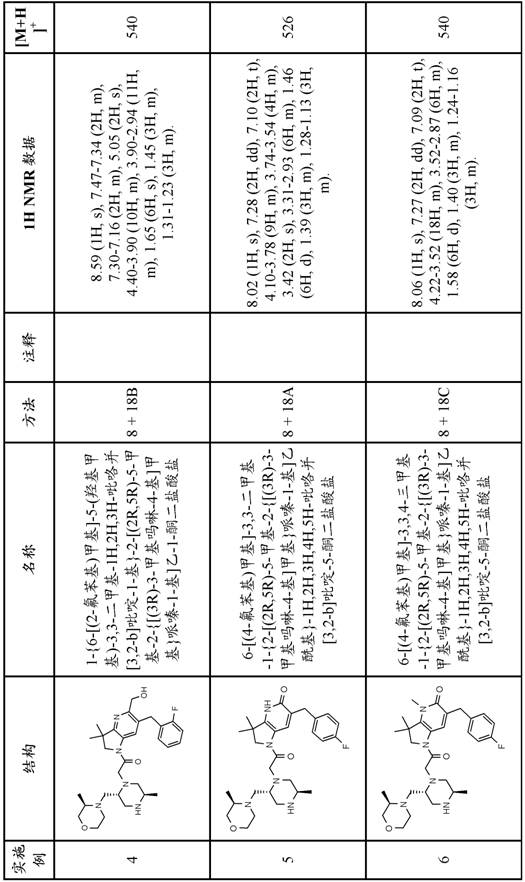


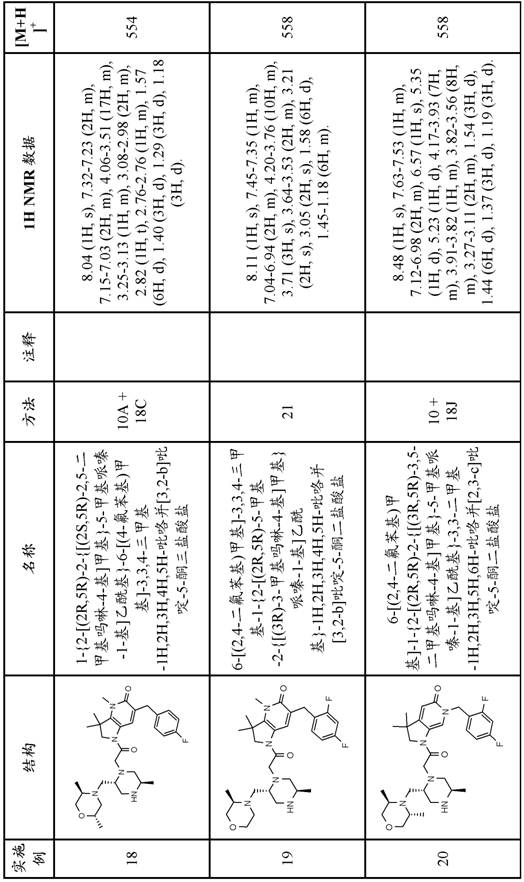

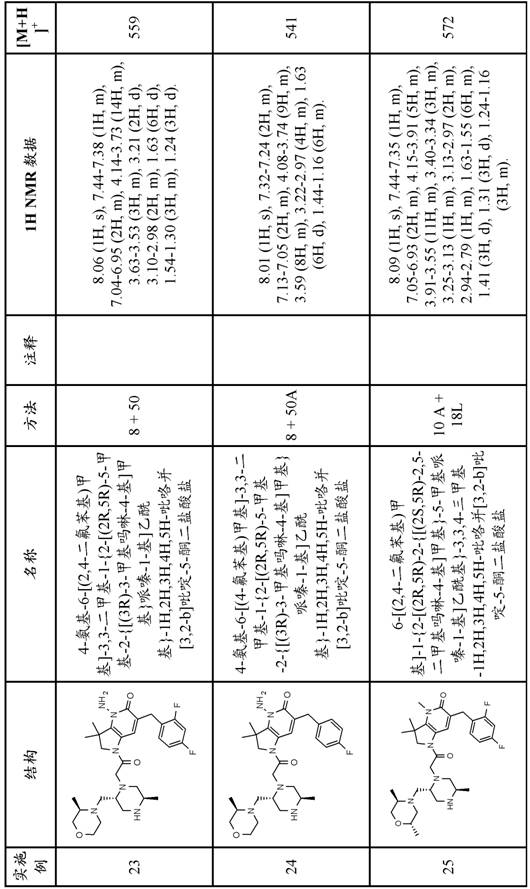


Example 38: 1- {6- [ (4-fluorophenyl) methyl ] -5- (hydroxymethyl) -3, 3-dimethyl-1H, 2H, 3H-pyrrolo [3,2-b ] pyridin-1-yl } -2- [ (2R,5R) -5-methyl-2- { [ (3R) -3-methylmorpholin-4-yl ] methyl } piperazin-1-yl ] ethan-1-one (free base)
1- {6- [ (4-fluorophenyl) methyl ] -5- (hydroxymethyl) -3, 3-dimethyl-1H, 2H, 3H-pyrrolo [3,2-b ] pyridin-1-yl } -2- [ (2R,5R) -5-methyl-2- { [ (3R) -3-methylmorpholin-4-yl ] methyl } piperazin-1-yl ] ethan-1-one dihydrochloride (1.00g, 1.0 eq., 1.00 wt.) (which may be prepared as described in example 2) was added to an RB flask, dissolved in water (10.0 mL, 10.0 vol., 10.00 wt.) and stirred at 18-23 ℃ under nitrogen to give a straw colored solution (pH = 4.73, T = 19.3 ℃). To this aqueous solution was added ethyl acetate (10.0 mL, 10.0 vol) and the biphasic mixture was stirred at 18-23 ℃ for 5 minutes. The layers were separated and the aqueous layer (pH = 4.58, 19.6 ℃) was returned to the flask. Sodium bicarbonate (388.2mg, 3 x 1.05 eq., 0.4 wt.) was added (cautiously) and effervescence was observed. The mixture was stirred for 20 minutes (pH = 7.51, 18.2 ℃), dichloromethane (5.0 mL, 5.0 vol) was added and the mixture was stirred under the same conditions for another 5 minutes. The layers were separated, the dichloromethane layer was retained, and the aqueous layer (pH = 7.66, T = 17.7 ℃) was returned to the flask. Two additional extractions were performed with dichloromethane (2 x 5.0 mL, 2 x 5.0 vol) (pH = 8.25, T = 18.5 ℃ and pH = 8.47, T = 18.3 ℃) and the combined organic layers were dried over sodium sulfate (1.0g, 1.0wt.), filtered and concentrated to dryness at 40 ℃ (400mbar) under reduced pressure. The concentrate was then dried at 40 ℃ (<20mbar) for 2 hours to give a white foam (850.2mg, 102% th., 100% corr., for input and output w/w assays), 94.3% w/w osfb (for TCNB) containing ethyl acetate (3.4% w/w) and dichloromethane (0.8% w/w).
Example 39: 1- {6- [ (4-fluorophenyl) methyl ] -5- (hydroxymethyl) -3, 3-dimethyl-1H, 2H, 3H-pyrrolo [3,2-b ] pyridin-1-yl } -2- [ (2R,5R) -5-methyl-2- { [ (3R) -3-methylmorpholin-4-yl ] methyl } piperazin-1-yl ] ethan-1-one L- (+) -lactate (type A)
1- {6- [ (4-fluorophenyl) methyl group]-5- (hydroxymethyl) -3, 3-dimethyl-1H, 2H, 3H-pyrrolo [3,2-b]Pyridin-1-yl } -2- [ (2R,5R) -5-methyl-2- { [ (3R) -3-methylmorpholin-4-yl]Methyl-piperazin-1-yl]The free base of ethan-1-one (500.0mg, 1.0 wt), which can be prepared as described in example 38, was charged to a 25 mL vessel and dissolved in ethanol (1.0 mL, 2.0 vol). L- (+) -lactic acid (106.2mg, 1.0 eq) was added and the contents of the vessel were stirred at 18-23 ℃ for 1 hour to give a yellow solution. Thereafter, TBME (9.0 mL, 18.0 vol) was added to the vessel and the mixture was stirred at 18-23 ℃. The salt crystallization progress was monitored by XRPD. After stirring for 16 hours at 18-23 ℃, the lactate remained in solution. Thereafter, the solution was concentrated to an original volume of about ¼, and TBME (9.0 mL, 18.0 vol) was added to give a gummy solid and a clear supernatant which became a finely divided suspension after sonication and further stirring (18-23 ℃ C. for about 20 hours). The solid was isolated by filtration and dried under a stream of nitrogen to give 365mg of a white solid which was identified as form B by XRPD. The solid was dried at 40-45 ℃ for 67 hours to give a white solid (325mg, 56% th.), 98.8% w/w oasfb (for TCNB) comprising TBME (1.0% w/w) and water (0.6% w/w) and indicated as form a by XRPD. Detailed characterization data for example 39: ( 1H NMR, XRPD and DSC) are shown in fig. 1-3.
Example 40: 1- {6- [ (4-fluorophenyl) methyl ] -5- (hydroxymethyl) -3, 3-dimethyl-1H, 2H, 3H-pyrrolo [3,2-B ] pyridin-1-yl } -2- [ (2R,5R) -5-methyl-2- { [ (3R) -3-methylmorpholin-4-yl ] methyl } piperazin-1-yl ] ethan-1-one L- (+) -lactate (form B)
The reaction was carried out according to the procedure described in example 39, but without drying to give a white solid (529.1mg, 90% th.), 96.1% w/w oasfb (for TCNB) comprising TBME (5.9% w/w) and water (3.8% w/w) and indicated as form B by XRPD. An alternative procedure to example 40, which avoids the use of ethanol, was also used. Detailed characterization data for example 40: (1H NMR, XRPD and DSC) are shown in fig. 4-6.
Example 41: 1- {6- [ (4-fluorophenyl) methyl ] -5- (hydroxymethyl) -3, 3-dimethyl-1H, 2H, 3H-pyrrolo [3,2-b ] pyridin-1-yl } -2- [ (2R,5R) -5-methyl-2- { [ (3R) -3-methylmorpholin-4-yl ] methyl } piperazin-1-yl ] ethan-1-one sulfate (form F)
1- {6- [ (4-fluorophenyl) methyl group]-5- (hydroxymethyl) -3, 3-dimethyl-1H, 2H, 3H-pyrrolo [3,2-b]Pyridin-1-yl } -2- [ (2R,5R) -5-methyl-2- { [ (3R) -3-methylmorpholin-4-yl]Methyl-piperazin-1-yl]The free base of ethan-1-one (500.0mg, 1.0 wt), which can be prepared as described in example 38, was charged to a 10 mL vessel and dissolved in ethanol (1.0 mL, 2.0 vol). A solution of sulfuric acid (103.2mg, 1.0 eq.) in ethanol (4.0 mL, 8.0 vol.) was added over 10 minutes while stirring at 18-23 ℃ to give a clear gel. The contents of the vessel were stirred at the same temperature for 1 hour, during which time the gel dissolved, giving a yellow solution. Stirring was continued for 16 hours, yielding a white suspension. The salt crystallization progress was monitored by XRPD. Ethanol (2.0 mL, 4.0 vol) was then added to make the suspension flow properly, and the product was isolated by filtration and dried under a stream of nitrogen to give a white solid (465.2mg, 79% th.), 94.9% w/w oasfb (for TCNB) comprising ethanol (2.9% w/w) and water (3.6% w/w) and indicated as form F by XRPD. Detailed characterization data for example 41 ( 1H NMR, XRPD and DSC) are shown in fig. 7-9.
Example 42: 1- {6- [ (4-fluorophenyl) methyl ] -5- (hydroxymethyl) -3, 3-dimethyl-1H, 2H, 3H-pyrrolo [3,2-B ] pyridin-1-yl } -2- [ (2R,5R) -5-methyl-2- { [ (3R) -3-methylmorpholin-4-yl ] methyl } piperazin-1-yl ] ethan-1-one methanesulfonate (form B)
1- {6- [ (4-fluorophenyl) methyl group]-5- (hydroxymethyl) -3, 3-dimethyl-1H, 2H, 3H-pyrrolo [3,2-b]Pyridin-1-yl } -2- [ (2R,5R) -5-methyl-2- { [ (3R)-3-methylmorpholin-4-yl]Methyl-piperazin-1-yl]The free base of ethan-1-one (500.0mg, 1.0 wt), which can be prepared as described in example 38, was charged to a 25 mL vessel and dissolved in 2-propanol (2.5 mL, 5.0 vol). Methanesulfonic acid (276.0mg, 3.0 eq.) was added (a small exotherm was observed) and the resulting oil-gum mixture was stirred at 18-23 ℃ for 1 hour. N-heptane (10.0 mL, 20.0 vol) was added slowly over 10 minutes to give a white suspension and a small amount of gummy solid. The salt crystallization progress was monitored by XRPD. The salt did not crystallize under mild conditions (stirring at 18-23 ℃ for 3 days), so the temperature was increased to 40-45 ℃ to give a viscous gummy solid and a clear supernatant. The mixture was cooled to 18-23 ℃, moved with a spatula and sonicated for 20 minutes to provide a white suspension containing some gummy solid. The suspension was stirred at the same temperature for 20 hours, filtered and dried under a stream of nitrogen to give an off-white solid (402.9mg, 63% th.), 99.0% w/w oasfb (for TCNB) comprising 2-propanol (2.3% w/w), n-heptane (0.2% w/w), water (1.9% w/w) and form B indicated by XRPD. Detailed characterization data for example 42: ( 1H NMR, XRPD and DSC) are shown in fig. 10-12.
Example 43: 1- {6- [ (4-fluorophenyl) methyl ] -5- (hydroxymethyl) -3, 3-dimethyl-1H, 2H, 3H-pyrrolo [3,2-b ] pyridin-1-yl } -2- [ (2R,5R) -5-methyl-2- { [ (3R) -3-methylmorpholin-4-yl ] methyl } piperazin-1-yl ] ethan-1-one L- (+) -lactate (type C)
First batch
The free base of 1- {6- [ (4-fluorophenyl) methyl ] -5- (hydroxymethyl) -3, 3-dimethyl-1H, 2H, 3H-pyrrolo [3,2-b ] pyridin-1-yl } -2- [ (2R,5R) -5-methyl-2- { [ (3R) -3-methylmorpholin-4-yl ] methyl } piperazin-1-yl ] ethan-1-one (10.0g, corr.) (which may be prepared as described in example 38) was dissolved in isopropyl acetate (80.0mL, 8.0vol) to give a light yellow solution. Solid anhydrous L- (+) -lactic acid (1.67g, 1.0eq.) was added to the same flask all at once, and a small amount of gum appeared on the bottom of the flask. The mixture was then stirred rapidly to move the gum, the solution spontaneously nucleated, and the solid precipitated. A sample of the solid precipitate was analyzed by XRPD and was consistent with form B. N-heptane (12.0vol) was added and the mixture was stirred at 40 ℃ under nitrogen for 4 days, indicating that the mixture would convert to form C, the progress of which was monitored by XRPD (figure 13). The temperature of the mixture was raised to 55 ℃ and stirring was continued for 24h to complete the conversion (fig. 14). The product was isolated by filtration (flash, <0.5 min), washed with isopropyl acetate/n-heptane (2.0/3.0, v/v, 5.0vol) and dried under nitrogen flow for 20h to give the title compound as a white powder (8.89g, 79% th.), 91.6% w/w (osfb), form C, m.p. 172 ℃.
Second batch
The free base of 1- {6- [ (4-fluorophenyl) methyl ] -5- (hydroxymethyl) -3, 3-dimethyl-1H, 2H, 3H-pyrrolo [3,2-b ] pyridin-1-yl } -2- [ (2R,5R) -5-methyl-2- { [ (3R) -3-methylmorpholin-4-yl ] methyl } piperazin-1-yl ] ethan-1-one (which may be prepared as described in example 38) was dissolved in isopropyl acetate (60.0mL, 6.0 vol.) to give a light yellow solution. To this was added anhydrous L- (+) -lactic acid (1.67g, 1.0eq.) dissolved in isopropyl acetate (10.0mL, 1.0 vol). A line rinse (line rose) of isopropyl acetate (10.0mL, 1.0vol) was applied and the mixture was stirred at 18-23 deg.C to give a pale yellow solution.
N-heptane (120mL, 12.0vol) was added dropwise over 40 minutes, forming gum on the flask bottom. After stirring for 1h 40min, the appearance of the mixture was improved, but the gum was still present on the bottom of the flask.
The mixture was stirred at 18-23 ℃ for 16h, during which time the gum was moved and a granular, finely divided suspension was formed. The suspension was filtered under nitrogen (flash filtration), the filter cake was sampled and analyzed by XRPD (form C). The filter cake was washed with isopropyl acetate/n-heptane (2.0/3.0, v/v, 5.0vol), sampled and analyzed by XRPD (form C), allowing it to be drained on the filter over 16h under a stream of nitrogen. The product comprised a slightly off-white powdery solid (11.36g, 91% corr.) form C, 94.3% w/w (oasfb), form C, m.p. 172 ℃ and comprised isopropyl acetate (1.0% w).
Detailed characterization data (1H NMR, XRPD, DSC) for example 43 is shown in fig. 15-17.
Example 44: 1- {6- [ (4-fluorophenyl) methyl ] -5- (hydroxymethyl) -3, 3-dimethyl-1H, 2H, 3H-pyrrolo [3,2-b ] pyridin-1-yl } -2- [ (2R,5R) -5-methyl-2- { [ (3R) -3-methylmorpholin-4-yl ] methyl } piperazin-1-yl ] ethan-1-one L- (+) -lactate (type C)
To a solution of tert-butyl (2R,5S) -4- (2- {6- [ (4-fluorophenyl) methyl ] -5- (hydroxymethyl) -3, 3-dimethyl-1H, 2H, 3H-pyrrolo [3,2-b ] pyridin-1-yl } -2-oxoethyl) -2-methyl-5- { [ (3R) -3-methylmorpholin-4-yl ] methyl } piperazine-1-carboxylate (1.0 wt), which can be prepared as described in preparation 19, cooled to < 10 ℃ was slowly added 4M HCl/1, 4-dioxane (3 vol) followed by a line rinse with methanol (0.5 vol). The mixture is warmed to 15-25 ℃ and stirred at this temperature for at least 12 h. The reaction mixture was then warmed to 30-40 ℃ and stirred until the reaction was deemed complete by HPLC (typically > 2 h). After completion, the reaction solution was concentrated to dryness at up to 40 ℃. The residue was dissolved in purified water (8 vol) and washed with ethyl acetate (2 × 4 vol). The pH of the aqueous phase was adjusted to pH 12-13 using 4M NaOH (as needed) and then extracted with ethyl acetate (3 x 5 vol). The combined organic phases were washed with sodium chloride solution (5 vol) and dried over magnesium sulfate (1.0 wt) for at least 10 minutes. The solid was removed by filtration and the filter cake was washed with ethyl acetate (2 x 2 vol). The filtrate was concentrated on a rotary evaporator at up to 40 ℃, the resulting concentrate was dissolved in methyl acetate (5 vol) and the solution was concentrated as described above to give the free base of 1- {6- [ (4-fluorophenyl) methyl ] -5- (hydroxymethyl) -3, 3-dimethyl-1H, 2H, 3H-pyrrolo [3,2-b ] pyridin-1-yl } -2- [ (2R,5R) -5-methyl-2- { [ (3R) -3-methylmorpholin-4-yl ] methyl } piperazin-1-yl ] ethan-1-one.
To a solution of the free base of 1- {6- [ (4-fluorophenyl) methyl ] -5- (hydroxymethyl) -3, 3-dimethyl-1H, 2H, 3H-pyrrolo [3,2-b ] pyridin-1-yl } -2- [ (2R,5R) -5-methyl-2- { [ (3R) -3-methylmorpholin-4-yl ] methyl } piperazin-1-yl ] ethan-1-one (1.0 wt), which may be prepared as described in step 1, in methyl acetate (3 vol) was added a solution of L- (+) -lactic acid (0.085 wt)/methyl acetate (0.75 vol). Then a seed slurry of 1- {6- [ (4-fluorophenyl) methyl ] -5- (hydroxymethyl) -3, 3-dimethyl-1H, 2H, 3H-pyrrolo [3,2-b ] pyridin-1-yl } -2- [ (2R,5R) -5-methyl-2- { [ (3R) -3-methylmorpholin-4-yl ] methyl } piperazin-1-yl ] ethan-1-one L- (+) -lactate (form C) (0.01 wt) in methyl acetate (0.08 vol) was added, followed by addition of a solution of L- (+) -lactic acid (0.085 wt)/methyl acetate (0.75 vol) and a line rinse of methyl acetate (0.5 vol). The suspension was stirred for about 30 minutes and then n-heptane (12.0 vol) was added over at least 1h, held at 15-25 ℃. The mixture was kept at 15-25 ℃ and stirred for at least 2 h. The solid was removed by filtration and the filter cake was washed with 2:3 methyl acetate/n-heptane (5 vol). The material was dried on the filter until suitable for handling, then dried in an oven at up to 80 ℃ until the methyl acetate content was ≦ 0.5% w/w to give the title compound as an off-white to off-white solid.
Example 45: examples of pharmaceutical preparations
(i) Tablet formulation
Tablet compositions comprising a compound of formula (I) are prepared by mixing a suitable amount of the compound (e.g. 50-250 mg) with a suitable diluent, disintegrant, tabletting agent and/or glidant. One possible tablet comprises 50 mg of the compound with 197 mg of lactose (BP) as diluent and 3 mg of magnesium stearate as lubricant and is compressed to form a tablet in a known manner. The compressed tablets may be coated with a film.
(ii) Capsule preparation
Capsule formulations were prepared by mixing 100-250 mg of the compound of formula (I) with an equivalent amount of lactose and filling the resulting mixture into standard hard gelatin capsules. Suitable disintegrants and/or glidants may be included in suitable amounts as desired.
(iii) Injection preparation I
Parenteral compositions for administration by injection may be prepared by dissolving a compound of formula (I), for example in salt form, in water containing 10% propylene glycol to give an active compound concentration of 1.5% by weight. The solution is then made isotonic, sterilized by filtration or by terminal sterilization, filled into ampoules or vials or pre-filled syringes and sealed.
(iv) Injection preparation II
Parenteral compositions for injection are prepared by dissolving a compound of formula (I) (e.g. in salt form) (2 mg/ml) and mannitol (50 mg/ml) in water, aseptically filtering or by terminal sterilisation of the solution, and filling into sealable 1 ml vials or ampoules or pre-filled syringes.
(v) Injection preparation III
Formulations for intravenous delivery by injection or infusion may be prepared by dissolving a compound of formula (I), for example in salt form, at 20mg/ml in water, then adjusted for isotonicity. The vials are then sealed and sterilized by autoclaving; or filled into ampoules or vials or pre-filled syringes, sterilized by filtration and sealed.
(vi) Injection preparation IV
Formulations for intravenous delivery by injection or infusion may be prepared by dissolving a compound of formula (I) (e.g. in salt form) at 20mg/ml in water containing a buffer (e.g. 0.2M acetate pH 4.6). The vials, ampoules or pre-filled syringes are then sealed and sterilized by autoclaving or sterilized by filtration and sealed.
(vii) Subcutaneous or intramuscular injection preparation
Compositions for subcutaneous administration are prepared by mixing a compound of formula (I) with a pharmaceutical grade corn oil to give a concentration of 5-50 mg/ml. The composition is sterilized and filled into suitable containers.
(viii) Lyophilized preparation I
Aliquots of the formulated compound of formula (I) were filled into 50 ml vials and lyophilized. During lyophilization, the compositions were frozen at (-45 ℃) using a one-step freezing protocol. The temperature was raised to-10 ℃ for annealing, then lowered to freeze at-45 ℃, followed by primary drying at +25 ℃ for about 3400 minutes, followed by secondary drying, with the step added if the temperature reached 50 ℃. The pressure during primary and secondary drying was set at 80 mtorr.
(ix) Lyophilized preparation II
Aliquots of the formulated compound of formula (I) or salt thereof as defined herein are filled into 50 mL vials and lyophilized. During lyophilization, the compositions were frozen at (-45 ℃) using a one-step freezing protocol. The temperature was raised to-10 ℃ for annealing, then lowered to freeze at-45 ℃, followed by primary drying at +25 ℃ for about 3400 minutes, followed by secondary drying, with the step added if the temperature reached 50 ℃. The pressure during primary and secondary drying was set at 80 mtorr.
(x) Lyophilized formulation III for intravenous administration
Aqueous buffer solutions are prepared by dissolving a compound of formula (I) in a buffer. The buffer solution is filtered into a container (e.g., a type 1 glass vial), where it is filtered to remove particulate matter, after which it is partially sealed (e.g., by means of a Fluorotec plug). If the compound and formulation are sufficiently stable, the formulation is sterilized by autoclaving at 121℃ for a suitable period of time. If the formulation is not stable to autoclaving, it can be sterilized using a suitable filter and filled into sterile vials under sterile conditions. The solution was freeze dried using a suitable cycle. After the freeze-drying cycle is complete, the vial is backfilled to atmospheric pressure with nitrogen, stoppered and mounted (e.g., with aluminum coil). For intravenous administration, the lyophilized solid may be reconstituted with a pharmaceutically acceptable diluent such as 0.9% saline or 5% glucose. The solution may be administered as such, or may be further diluted into an infusion bag (containing a pharmaceutically acceptable diluent such as 0.9% saline or 5% glucose) and then administered.
(xi) Active pharmaceutical ingredient in a vial
Compositions for oral administration are prepared by filling bottles or vials with a compound of formula (I). The composition is then reconstituted with a suitable diluent such as water, fruit juice, or a commercially available vehicle such as OraSweet or syspen. The reconstituted solution can be dispensed into a dosage cup or oral syringe for administration.
Biological assay
Expression and purification of XIAP, cIAP-1 and cIAP-2 BIR3 domains
Recombinant BIR3 domains of His-tagged human XIAP (residue 252-350), GST-tagged human cIAP-1 (residue 267-363) and His-tagged human cIAP-2 (residue 244-337) were derived from in TB culturesOver-expression in E.coli cells grown in nutrient. Proteins were separated from the lysates using Ni-NTA affinity chromatography (XIAP/cIAP-2) or glutathione Sepharose 4B affinity chromatography (cIAP-1). 25 mM HEPES pH 7.5, 100 mM NaCl, 50 μ M Zn (OAc) were used2And 1 mM Ca (OAc)2Thrombin in (a) cleaves the affinity tags of XIAP and cIAP-1 and the BIR3 domain is then purified by size exclusion chromatography. The His-tag of cIAP-2 is uncleaved and the protein is not concentrated above 3 mg/mL due to aggregation-induced covalent self-oligomerization problems. The purified protein was stored at-80 ℃ in 25 mM Tris pH 7.5, 100 mM NaCl.
XIAP, cIAP-1 and cIAP-2 in vitro competitive displacement binding assays
The modified SMAC peptides and compounds are tested for their ability to displace the fluorescent tracer from XIAP, cIAP-1 or cIAP-2. BIR3 domains of cIAP-1, cIAP-2 and XIAP were incubated with test compounds or SMAC-based peptides and their corresponding Peptide probes (Peptide Protein Research) in assay buffer (50 mM Hepes pH 7.5, 0.025% Tween-20, 0.01% BSA and 1 mM DTT). The positive control consisted of BIR3 protein and tracer (no inhibition) and the negative control contained tracer only (100% inhibition). The samples were incubated at room temperature for 1 h (XIAP and cIAP-2) or 3 h (cIAP-1) before reading in the BMG Pheastar in fluorescence polarization mode (FP 485 nm, 520 nm, 520 nm). IC determination from dose-response curves using nonlinear least squares analysis50The value is obtained.
Final conditions for XIAP, cIAP-1 and cIAP-2 assays
| Protein | Protein concentration | Peptide probes | |
| XIAP | |||
| 20 nM | AbuRPFK(5&6FAM) - | 5 nM | |
| cIAP-1 | 4 nM | AbuRPFK(5&6FAM) - | 2 nM |
| cIAP-2 | 20 nM | AVPWK(5&6FAM) - | 2 nM |
Antiproliferative activity
Cell growth inhibition was measured using Alamar Blue assay (Nociari, M.M, Shalev, a., Benias, p., Russo, C.Journal of Immunological Methods1998, 213, 157-167). The method is based on the ability of living cells to reduce resazurin to its fluorescent product resorufin. For each proliferation assay, cells were seeded onto 96-well plates and revived for 16 hours before inhibitor compounds (in 0.1% DMSO v/v) were added for an additional 72 hours. At the end of the incubation period, 10% (v/v) Alamar Blue (Alamar Blue) was added and incubated for another 6 hours before the fluorescence product was determined at 535 nM ex/590 nM em. The antiproliferative activity of a compound of the invention can be determined by measuring the ability of the compound to inhibit the growth of 3 cancer cell lines:
● EVSA-T (human breast carcinoma) DSMZ catalog number ACC 433
● MDA-MB-231 (human breast cancer) ECACC catalog No. 92020424
● HCT116 (human Colon cancer) ECACC Cat No. 91091005 (insensitive cell line for nonspecific cytotoxicity, used as control)
Examples 1-34 had an EC of less than 0.01 μ M in the assay using the cell line EVSA-T50. Specifically, examples 1-3, 5-8, 10-14, 16, 18-25, 27-28 and 30-32 had an EC of less than 0.001. mu.M50. Examples 1-34 have an EC of less than 0.1 μ M in assays using the cell line MDA-MB-23150. Specifically, examples 1-8, 10-14 and 18-32 had an EC of less than 0.01 μ M50. More specifically, examples 7-8 had an EC of less than 0.001 μ M50. Of the compounds of the invention in these assaysThe data are provided in table 1.
Apoptosis induction
The following table summarizes the sensitivity of a panel of nine human melanoma cell lines whose induction of apoptosis was evaluated for 24 hours in the presence of 1 ng/ml TNF-. alpha.added concurrently with 1 μ M example 2. After showing minimal sensitivity (after 24 h)<20% apoptosis) was observed in a range of sensitivity (SK-MEL-24, WM-266-4 and WM-115). The use of a fluorogenic caspase-3 substrate (NucView 488-Biotium) by cytometry, the table details the percentage of total cells positive for cleaved caspase-3 activity 24 hours after treatment with 1 μ M of example 2 plus 1 ng/ml TNF- α
| Melanoma cell line | % cleaved caspase-3 | SD |
| SK-MEL-28 | 63.2 | 3.3 |
| SK-MEL-5 | 52.8 | 2.9 |
| SK-MEL-2 | 49.5 | 2.9 |
| RPMI-7951 | 44.0 | 5.7 |
| MALME-3M | 29.5 | 2.8 |
| A375 | 26.5 | 0.2 |
| WM-115 | 16.7 | 1.1 |
| WM-266-4 | 13.2 | 1.3 |
| SK-MEL-24 | 2.1 | 0.5 |
HEK 293-XIAP-caspase-9 Immunoprecipitation (IP) MSD assay protocol
Inoculation of Stable HEK 293-XIAP-caspase-9 cells into 96-well plates [200 μ l/well, 1X 10%6Cells/ml, in complete medium (DMEM + 10% FBS + 0.5 mg/ml Geneticin (Invitrogen)]And left to stand overnight at 37 ℃ for resuscitation. Compounds were added to duplicate wells of 0.1% DMSO at 37 ℃ for 2 h. Cells were lysed in 50 μ l of 1X MSD lysis buffer (1% Triton X-100 in 20 mM tris.cl (pH 7.6), 150 mM NaCl, including protease inhibitors) for 20 min with shaking at room temperature. Streptavidin high binding MSD plates (L15SB-2) were coated with 25 μ L/well biotinylated anti-FLAG M2 antibody (Sigma F9291) (5 μ g/ml dilution of antibody in PBS) for 1 h, shaken; blocking was then performed with 150 μ l 3% BSA/TBST for 1 h. Cell lysates (25 μ l) were added to 96-well anti-FLAG coated MSD plates and placed on a shaker at room temperature for 4 h. After 4 washes with 150 μ l TBST (20 mM Tris. Cl (pH 7.6), 150 mM NaCl, 0.1% Tween-20), anti-caspase-9 [ CST #9505 ] diluted to 5 μ l/ml in MSD blocking buffer (3% BSA/TBST) was added ]And kept at 4 ℃ overnight. After washing the plates 4 times with 150 μ l TBST, an anti-rabbit-sulfo tag (MSD catalog No. R32AB-1) diluted to 2 μ g/ml in MSD blocking buffer was added and kept at room temperature for 2 hours. Plates were washed 4 times with 150 μ l TBST and 150 μ l/well 1 x MSD reading buffer (R92TC-2) was added before each plate was read.
Determination of EC from dose-response curves using non-linear least squares analysis50The value is obtained. Examples 1-37 having an EC of less than 0.1. mu.M50. Specifically, examples 1-13, 15, 18-25, 27-28, 30-34, and 36-37 had an EC of less than 0.01 μ M50. More specifically, examples 10, 12, 23-24 and 31 had an EC of less than 0.001 μ M50. Data for compounds of the invention in this assay are provided in table 1.
In MDA-MB-231 fineProtocol for intracellular cIAP1 degradation of MSD assay
MDA-MB-231 cells were seeded in 96-well plates [200 μ l/well, 4 x 10%5cells/mL in complete Medium (DMEM + 10% FBS)]And left overnight at 37 ℃ for resuscitation. Compounds were added to duplicate wells in 0.1% DMSO for 2 h at 37 ℃. Cells were lysed in 50 μ l of 1X MSD lysis buffer (1% Triton X-100 in 20 mM tris.cl (pH 7.6), 150 mM NaCl, including protease inhibitors) for 20 minutes with shaking at room temperature. Biotinylated anti-cIAP 1 antibody (R) at 25. mu.l/well in streptavidin high binding MSD plate (L15SB-2) &D Systems catalog number AF 8181-internally biotinylated) (5 μ g/mL dilution of antibody in PBS) was coated for 1 h and shaken; blocking was then performed with 150 μ l 3% BSA/TBST for 1 h. Cell lysate (25 μ l) was added to 96-well anti-cIAP 1-coated MSD plates and left overnight at 4 ℃. After 4 washes with 150 μ l TBST (20 mM Tris.Cl (pH 7.6), 150 mM NaCl, 0.1% Tween-20), an anti-cIAP 1-sulfotag detection antibody (R) diluted to 6 μ g/mL in MSD blocking buffer was added&D Systems catalog No. AF 8181-internally sulfo-labeled), held at room temperature for 2 hours. Plates were washed 4 times with 150 μ l TBST and 150 μ l/well 1 x MSD reading buffer (R92TC-2) was added before each plate was read.
Determination of EC from dose-response curves using non-linear least squares analysis50The value is obtained. Examples 1-37 having an EC of less than 0.01 μ M50. Specifically, examples 1-8, 10-14, 16, 18-27, 30-34 and 37 had an EC of less than 0.001 μ M50. More specifically, example 7 had an EC of less than 0.0001. mu.M50. Data for compounds of the invention in this assay are provided in table 1.
Protocol for colony patch clamp (PPC) assay
Inhibition of hERG channel was measured by an automated patch-clamp assay in CHO K1 cells stably transfected with the hERG ion channel. PPC measurements were performed using an IonWorks Quattro instrument (Molecular Devices Corporation, Union City, Calif.) using a 384-well PatchPlate (Molecular Devices Corporation) at 64-well/well. Each concentration was tested in duplicate wells The test compound of (1). Amphotericin B at a final concentration of 200 μ g/mL was used to obtain an electrical pathway to the interior of the cell. The human ether-a-go related gene (hERG) current is measured as follows: pre-pulse from a holding potential of-80 mV to +40 mV (2 s), followed by a step to-50 mV (2 s) to initiate the deactivation tail current, and then return to the holding potential for 1 s. Compounds were incubated for 600s between before and after compound read-out. The external recording solution used was 130mM sodium gluconate, 20mM NaCl, 4mM KCl, 1mM MgCl2, 1.8mM CaCl210mM Hepes, 5mM glucose pH to 7.3 (with NaOH). All data were filtered for seal quality, seal drop and current amplitude. The maximum current amplitude of the third pulse tail current was calculated before (Pre) and after (Post) compound addition and the amount of blocking was evaluated by dividing the current amplitude after compound addition by the current amplitude before compound addition. The data generated using this assay is detailed in table 1.
Manual Patch Clamp (MPC) assay protocol
Inhibition of the hERG channel was measured by manual patch clamp assay in HEK293 cells stably transfected with the hERG ion channel. HEKA EPC10 amplifier and PatchMaster software were used to collect and analyze data for this project.
Cells were seeded onto glass coverslips, fixed under an inverted microscope, and in control solution (137mM NaCl, 4mM KCl, 1mM MgCl) 2, 1.8mM CaCl210mM Hepes, 10mM glucose, pH 7.35).
After the cells are electrically clamped and left in equilibrium, a pulse protocol is applied. The pulse scheme includes a step from the holding potential of-80 mV to +40 mV 4s to inactivate the hERG channel, then a step of the membrane voltage back to-50 mV 4s to cause a tail current, then a return to the holding potential. This sequence was repeated with an inter-pulse interval of 20 s. The voltage protocol was applied throughout the experiment starting before the drug (0.33% DMSO control) and after cumulative addition of increasing compound concentrations. Induced peak current amplitude was monitored continuously throughout the experiment.
Test compound was administered for 5 minutes, or until steady state was reached, which occurred earlier, and compound effects were then measured. Peak-tail currents were measured before and after addition of each compound. Single cell results were normalized to their respective vehicle controls, and the results were averaged. Each concentration of compound was measured in duplicate. 0.1 μ M Cisapride (Cisapride) was used as a reference inhibitor.
TABLE 1
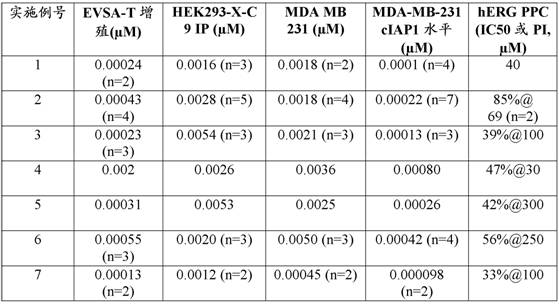
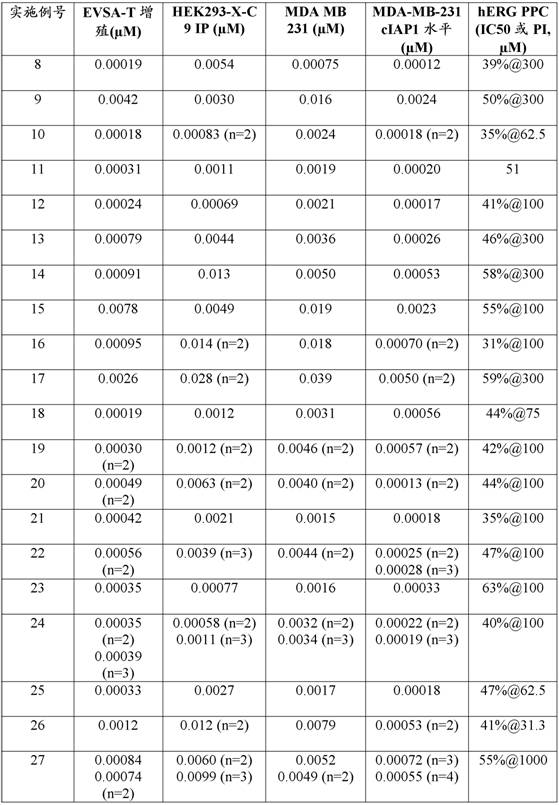

Unless indicated above, the data are the results of a single experiment. When more than one data point is obtained, the table above shows the average (e.g., geometric or arithmetic average) of these data points (n) to two significant figures.
Combinatorial approaches to apoptosis
On the day before treatment, melanoma cell lines were treated at 0.5 x 10⁶Cells/ml were seeded into duplicate wells of a 24-well plate to allow them to adhere. In CO2Cells were incubated with or without 1 ng/ml TNF-. alpha.in an incubator at 37 ℃ (R)&D Systems) was incubated for 24 h, and cells were harvested by trypsinization. Cell pellets from 24-well plates were resuspended in 100 μ l FACS buffer (PBS + 1% fetal bovine serum). NucView488 reagent (from Biotium) was added to a final concentration of 2. mu.M. Plates were incubated in the dark for 30 minutes and then fluorescently stained cells were measured on a Guava easyCyte HT cell counter (Millipore). Cleaved caspase-3 staining was recorded on the FL1 channel, with unstained and DMSO control wells used to set the gated stained and unstained cell populations.
Table 2 summarizes the% increase in apoptosis seen in SK-MEL-28 or A375 upon 24 h incubation with the indicated combination of agents including example 2 plus 1 ng/ml TNF- α. Only the combined reagents shown in the first column of the table (with or without TNF- α) were seen at this time frame with no increase in apoptosis-data not shown.
Table 2: percentage increase in apoptosis after incubation with the indicated combination (relative to example 2 + TNF-. alpha. only)

Combinatorial protocols for cell proliferation
The effect of the compound of formula (I) (compound I) in combination with an anticancer agent (compound II) can be evaluated using the following technique. Cells from human cell lines (e.g., MDA-MB-231 and EVSA-T) were each dosed at a concentration of 2.5X10³、6.0 x10³Or 4.0 x10³Cells/well were seeded into 96-well tissue culture plates. Cells were allowed to resuscitate for 48 hours, then compound or vehicle control (0.35% DMSO) was added as follows:
the compound was added simultaneously for 96 hours. After a total of 96 hours of compound incubation, cells were fixed with ice-cold 10% (w/v) trichloroacetic acid on ice for 1 hour, followed by dH 20 was washed four times using a plate washer (Labsystems Wellwash Assitent) and air dried. The cells were then stained with 0.4% (w/v) Sulforhodamine B (Sigma)/1% acetic acid for 20 minutes at room temperature, then washed four times with 1% (v/v) acetic acid, air dried, and 10mM Tris buffer was added to dissolve the dye. By passage at Abs490nm at Wallac Victor2Colorimetric products were quantified by reading on a plate reader (1420 multilabel counter, Perkin Elmer Life Sciences). Determination of IC of Compound II in the Presence of various doses of Compound I50. When IC is present in sub-effective dose of compound I50Synergy was determined when the downward change was made. Additive effects are judged when the reaction of compound II and compound I together produces an effect equal to the sum of the two compounds alone. Antagonism is defined as causing IC 50Those that are upwardly altered, i.e. those in which the reaction to both compounds is lower than the sum of the effects of the two compounds alone.
Claims (32)
1. A compound of formula (II), (IV) or (XXII):

wherein
X is N, U represents carbon and R6Represents a hydroxymethyl group;
the bonds of the dashed lines (- - - - - - -) represent single or double bonds, wherein at least two of the bonds of the dashed lines represent double bonds;
R5represents unsubstituted n-butyl or benzyl substituted on the phenyl by one or two fluorines;
L1represents a leaving group which is a halogen atom;
P1represents hydrogen or a protecting group selected from


L2Represents a leaving group which is a halogen atom.
2. The compound of claim 1, wherein the compound is formula (II).
3. The compound of claim 1 or claim 2, wherein L1Represents chlorine.
4. A compound according to claim 1 or claim 2, wherein P is1Represents the t-butoxycarbonyl tBoc group:
5. the compound of claim 3, wherein P1Represents the t-butoxycarbonyl tBoc group:
6. the compound of claim 1, wherein the compound is formula (IV).
7. The compound of claim 1 which is of formula (IV)aThe compound of (1):

wherein L is2And R5As defined in claim 1.
8. The compound of claim 7 which is:

9. The compound of claim 1, claim 6 or claim 7, wherein L2Represents chlorine.
10. The compound of claim 1, wherein the compound is of formula (XXII).
11. The compound of claim 10 which is:
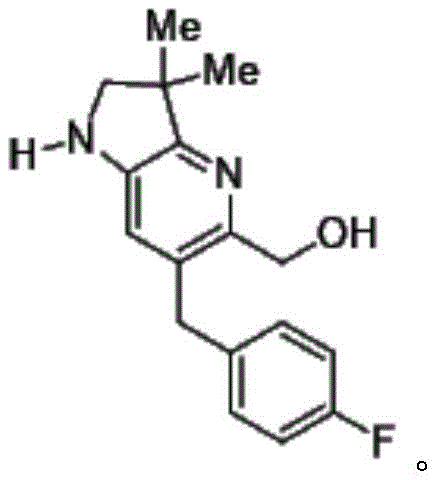
12. a process for the preparation of a composition according to claim 1 or 6 to 9A process for preparing a compound of formula (IV) as defined in any one of the preceding claims, wherein L2Is halogen; it includes:
reacting a compound of formula (XV)

With a haloacetyl halide in MeCN, followed by the addition of potassium carbonate/methanol.
13. The method of claim 12, wherein the haloacetyl halide is chloroacetyl chloride.
14. A process for the preparation of a compound of formula (IV) as defined in any one of claims 1 or 6 to 9, wherein L2Is halogen; it includes:
-step (i): reacting a compound of formula (VIII):

wherein L is3、L4And L5Each independently represents fluorine, bromine or chlorine, with a base in the presence of tetrahydrofuran and isobutyronitrile in a suitable solvent; and/or
-step (ii): reacting a compound of formula (IX):

wherein L is4And L5Each independently represents fluorine, bromine or chlorine,
(I) with borane-tetrahydrofuran complex in the presence of a suitable solvent; or
(II) reacting with nickel (II) chloride hexahydrate, and then adding sodium borohydride; and/or
-step (iii): cyclisation of a compound of formula (X) using a suitable base and a suitable solvent:

wherein L is4And L5Each independently represents fluorine, bromine or chlorine; and/or
-step (iv): a compound of formula (XI):

wherein L is5Represents fluorine, bromine or chlorine, and formula R5Reaction of a compound of formula (I) with a compound of formula (II) wherein M represents the residue of an organometallic substance, such that R5-M represents a nucleophilic organometallic reagent, said reaction comprising the use of lithium bromide, a catalyst and a suitable solvent system; and/or
-step (v): carrying out halogenation of a compound of formula (XII):

thereby forming a compound of formula (XIII):
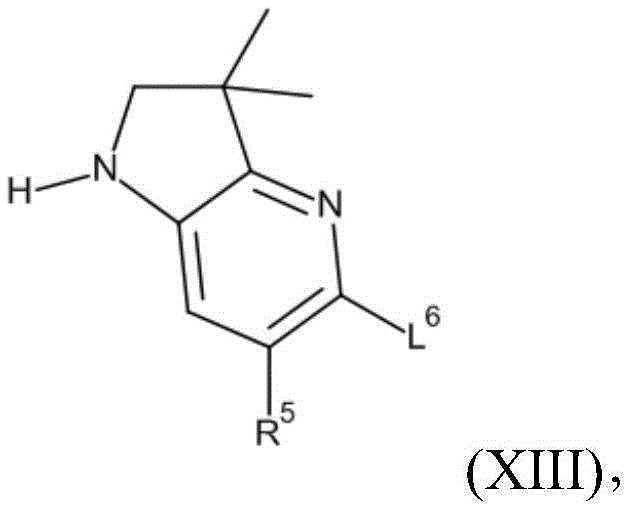
wherein L is6Represents fluorine, bromine or chlorine; and/or
-step (vi): by carrying out lithiation and reaction of the compound of formula (XIII) with a suitable electrophile, L in the compound of formula (XIII) is replaced by a formyl group6,

Wherein L is6Represents fluorineBromine or chlorine; and/or
-step (vii): reduction of the formyl group of compound (XIV) with a suitable reducing agent:

-step (viii): reacting a compound of formula (XV)

With a haloacetyl halide in MeCN, followed by the addition of potassium carbonate/methanol.
15. A process for the preparation of a compound of formula (IV) as defined in any one of claims 1 or 6 to 9, wherein L2Is halogen; it includes:
-step (i): reacting a compound of formula (VIII):

wherein L is3、L4And L5Each independently represents fluorine, bromine or chlorine, with sodium bis (trimethylsilyl) amide as a base in the presence of tetrahydrofuran and isobutyronitrile in toluene as a suitable solvent; and/or
-step (ii): reacting a compound of formula (IX):

wherein L is4And L5Each independently represents fluorine, bromine or chlorine,
(I) with borane-tetrahydrofuran complex in the presence of tetrahydrofuran as a suitable solvent; or
(II) reacting with nickel (II) chloride hexahydrate, and then adding sodium borohydride; and/or
-step (iii): cyclisation of a compound of formula (X) is carried out using potassium carbonate as a suitable base and NMP as a suitable solvent:

wherein L is4And L5Each independently represents fluorine, bromine or chlorine; and/or
-step (iv): reacting a compound of formula (XI):

wherein L is5Represents fluorine, bromine or chlorine, and formula R5Reaction of a compound of formula (I) with a compound of formula (II) wherein M represents the residue of an organometallic substance, such that R5-M represents an organozinc halide as nucleophilic organometallic reagent, said reaction comprising the use of lithium bromide, as catalyst, [1, 3-bis (2, 6-diisopropylphenyl) imidazol-2-ylidene](3-chloropyridyl) palladium (II) dichloride, and tetrahydrofuran and NMP as a suitable solvent system; and/or
-step (v): halogenation of a compound of formula (XII) using N-bromosuccinimide in dimethylformamide:
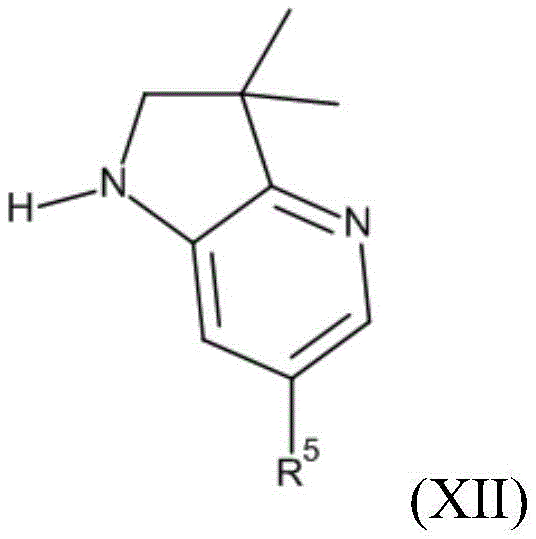
thereby forming a compound of formula (XIII):

wherein L is6Represents fluorine, bromine or chlorine; and/or
-step (vi): by mixing a compound(XIII) reaction with MeLi in THF, followed by tBuLi/hexane, followed by dimethylformamide, with formyl replacing L in the compound of formula (XIII)6,
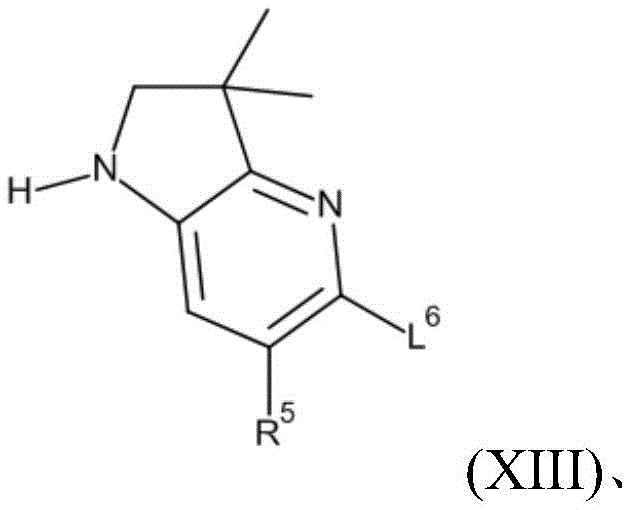
Wherein L is6Represents fluorine, bromine or chlorine; and/or
-step (vii): reducing the formyl group of compound (XIV) with a suitable reducing agent by reacting the compound of formula (XIV) with sodium borohydride in methanol:

-step (viii): reacting a compound of formula (XV)
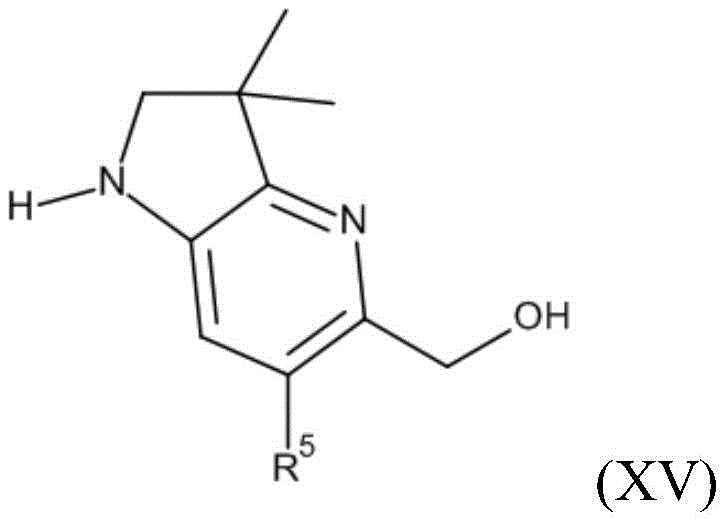
With chloroacetyl chloride as the haloacetyl halide in MeCN, followed by addition of potassium carbonate/methanol.
16. The method of claim 14, wherein L3And L4Are both fluorine.
17. The method of claim 14, wherein L5Is chlorine and/or L6Is bromine.
18. The method of claim 14, wherein the compound of formula (IV) is formula (IV)aThe compound of (1):

19. in the application ofThe method of claim 15, wherein L3And L4Are both fluorine.
20. The method of claim 15, wherein L5Is chlorine and/or L6Is bromine.
21. The method of claim 15, wherein the compound of formula (IV) is formula (IV) aThe compound of (1):

22. a process for the preparation of a compound of the formula or a tautomeric or stereochemically isomeric form, a pharmaceutically acceptable salt or a solvate thereof,

the method comprises the following steps:
reacting a compound of formula (IV) with a compound of formula (V)

Wherein X is N, U is carbon, R5Is 4-fluorobenzyl, R6Is hydroxymethyl, and L2Represents a suitable leaving group, and represents,

wherein R is1And R2Is hydrogen, and P2Is a tert-butoxycarbonyl (tBoc) group.
23. The process of claim 22, comprising reacting the compound of formula (IV) and the compound of formula (V) in a suitable solvent in the presence of a suitable additive and a suitable base.
24. The process of claim 22, comprising reacting the compound of formula (IV) and the compound of formula (V) in the presence of potassium iodide, potassium carbonate, and acetonitrile.
25. A process according to claim 22, which comprises removing P in a suitable solvent using a suitable acid after the reaction of the compound of formula (IV) with the compound of formula (V)2A tBoc group.
26. The process of claim 25 wherein the suitable acid is trifluoroacetic acid or hydrogen chloride HCl and the suitable solvent is dichloromethane, ethyl acetate, 1, 4-dioxane, methanol or water.
27. The process of claim 26 wherein the suitable acid is HCl.
28. The method of claim 22, comprising deprotecting a protected derivative of a compound of the formula or a tautomeric or stereochemically isomeric form, a pharmaceutically acceptable salt or solvate thereof,

wherein the deprotection comprises the use of a suitable acid in a suitable solvent.
29. The method of claim 28, wherein the protected derivative comprises a t-butyloxycarbonyl (tBoc) group, and wherein the deprotecting comprises using an acid selected from trifluoroacetic acid or hydrogen chloride, and using a solvent selected from dichloromethane, ethyl acetate, 1, 4-dioxane, methanol, or water.
30. A process for the preparation of a lactate salt of a compound of the formula or a tautomeric or stereochemically isomeric form, a pharmaceutically acceptable salt or solvate thereof

Comprising reacting the free base of the following compound prepared according to the process of claim 22 with L- (+) -lactic acid

31. The process of claim 30, wherein the free base and the L- (+) -lactic acid are reacted in methyl acetate.
32. The method of claim 30 wherein the lactate salt of the compound of the formula

Is the compound 1- {6- [ (4-fluorophenyl) methyl ] -5- (hydroxymethyl) -3, 3-dimethyl-1H, 2H, 3H-pyrrolo [3,2-b ] pyridin-1-yl } -2- [ (2R,5R) -5-methyl-2- { [ (3R) -3-methylmorpholin-4-yl ] methyl } piperazin-1-yl ] ethan-1-one L- (+) -lactate.
Applications Claiming Priority (6)
| Application Number | Priority Date | Filing Date | Title |
|---|---|---|---|
| GBGB1322755.8A GB201322755D0 (en) | 2013-12-20 | 2013-12-20 | Bicyclic heterocycle compounds and their uses in therapy |
| GB1322755.8 | 2013-12-20 | ||
| GB1406986.8 | 2014-04-17 | ||
| GB201406986A GB201406986D0 (en) | 2014-04-17 | 2014-04-17 | Bicyclic heterocycle compounds and their uses in therapy |
| PCT/GB2014/053778 WO2015092420A1 (en) | 2013-12-20 | 2014-12-19 | Bicyclic heterocycle compounds and their uses in therapy |
| CN201480069940.4A CN105829310B (en) | 2013-12-20 | 2014-12-19 | Bicyclic Heterocyclic Compounds and Their Therapeutic Uses |
Related Parent Applications (1)
| Application Number | Title | Priority Date | Filing Date |
|---|---|---|---|
| CN201480069940.4A Division CN105829310B (en) | 2013-12-20 | 2014-12-19 | Bicyclic Heterocyclic Compounds and Their Therapeutic Uses |
Publications (2)
| Publication Number | Publication Date |
|---|---|
| CN109336883A CN109336883A (en) | 2019-02-15 |
| CN109336883B true CN109336883B (en) | 2022-06-14 |
Family
ID=52134239
Family Applications (3)
| Application Number | Title | Priority Date | Filing Date |
|---|---|---|---|
| CN201811129977.8A Active CN109336883B (en) | 2013-12-20 | 2014-12-19 | Bicyclic heterocyclic compounds and their therapeutic use |
| CN201480069940.4A Active CN105829310B (en) | 2013-12-20 | 2014-12-19 | Bicyclic Heterocyclic Compounds and Their Therapeutic Uses |
| CN202210613741.1A Active CN115368356B (en) | 2013-12-20 | 2014-12-19 | Bicyclic heterocyclic compounds and their therapeutic uses |
Family Applications After (2)
| Application Number | Title | Priority Date | Filing Date |
|---|---|---|---|
| CN201480069940.4A Active CN105829310B (en) | 2013-12-20 | 2014-12-19 | Bicyclic Heterocyclic Compounds and Their Therapeutic Uses |
| CN202210613741.1A Active CN115368356B (en) | 2013-12-20 | 2014-12-19 | Bicyclic heterocyclic compounds and their therapeutic uses |
Country Status (29)
| Country | Link |
|---|---|
| US (6) | US9783538B2 (en) |
| EP (2) | EP3083616B1 (en) |
| JP (3) | JP6470756B2 (en) |
| KR (1) | KR102408262B1 (en) |
| CN (3) | CN109336883B (en) |
| AU (2) | AU2014369446C1 (en) |
| BR (2) | BR112016014561B1 (en) |
| CA (1) | CA2933939C (en) |
| CY (1) | CY1124436T1 (en) |
| DK (1) | DK3083616T3 (en) |
| ES (1) | ES2883289T3 (en) |
| HR (1) | HRP20211406T1 (en) |
| HU (1) | HUE056297T2 (en) |
| IL (1) | IL246239B (en) |
| LT (1) | LT3083616T (en) |
| MX (1) | MX380469B (en) |
| MY (2) | MY186311A (en) |
| NZ (2) | NZ719905A (en) |
| PH (1) | PH12016501139A1 (en) |
| PL (1) | PL3083616T3 (en) |
| PT (1) | PT3083616T (en) |
| RS (1) | RS62301B1 (en) |
| RU (1) | RU2696310C1 (en) |
| SA (1) | SA516371360B1 (en) |
| SG (2) | SG11201604795RA (en) |
| SI (1) | SI3083616T1 (en) |
| SM (1) | SMT202100497T1 (en) |
| TW (1) | TWI649319B (en) |
| WO (1) | WO2015092420A1 (en) |
Cited By (1)
| Publication number | Priority date | Publication date | Assignee | Title |
|---|---|---|---|---|
| CN115368356B (en) * | 2013-12-20 | 2025-05-09 | 阿斯特克斯治疗有限公司 | Bicyclic heterocyclic compounds and their therapeutic uses |
Families Citing this family (45)
| Publication number | Priority date | Publication date | Assignee | Title |
|---|---|---|---|---|
| GB201106817D0 (en) | 2011-04-21 | 2011-06-01 | Astex Therapeutics Ltd | New compound |
| GB201106814D0 (en) | 2011-04-21 | 2011-06-01 | Astex Therapeutics Ltd | New compounds |
| GB201218862D0 (en) | 2012-10-19 | 2012-12-05 | Astex Therapeutics Ltd | Bicyclic heterocycle compounds and their uses in therapy |
| GB201218864D0 (en) | 2012-10-19 | 2012-12-05 | Astex Therapeutics Ltd | Bicyclic heterocycle compounds and their uses in therapy |
| US9980973B2 (en) | 2012-10-19 | 2018-05-29 | Astex Therapeutics Limited | Bicyclic heterocycle compounds and their uses in therapy |
| GB201218850D0 (en) | 2012-10-19 | 2012-12-05 | Astex Therapeutics Ltd | Bicyclic heterocycle compounds and their uses in therapy |
| WO2015109391A1 (en) | 2014-01-24 | 2015-07-30 | Children's Hospital Of Eastern Ontario Research Institute Inc. | Smc combination therapy for the treatment of cancer |
| WO2016079527A1 (en) | 2014-11-19 | 2016-05-26 | Tetralogic Birinapant Uk Ltd | Combination therapy |
| WO2016097773A1 (en) | 2014-12-19 | 2016-06-23 | Children's Cancer Institute | Therapeutic iap antagonists for treating proliferative disorders |
| GB201506871D0 (en) | 2015-04-22 | 2015-06-03 | Glaxosmithkline Ip Dev Ltd | Novel compounds |
| EP3380086B1 (en) | 2015-11-25 | 2021-10-13 | IO Therapeutics, Inc. | Cyp26-resistant rar-alpha selective agonists in the treatment of cancer |
| TN2018000294A1 (en) * | 2016-02-24 | 2020-01-16 | Childrens Hospital Of Eastern Ontario Res Institute Inc | Smc combination therapy for the treatment of cancer |
| EP3445759A1 (en) | 2016-04-20 | 2019-02-27 | GlaxoSmithKline Intellectual Property Development Ltd | Conjugates comprising ripk2 inhibitors |
| TWI808055B (en) | 2016-05-11 | 2023-07-11 | 美商滬亞生物國際有限公司 | Combination therapies of hdac inhibitors and pd-1 inhibitors |
| TWI794171B (en) | 2016-05-11 | 2023-03-01 | 美商滬亞生物國際有限公司 | Combination therapies of hdac inhibitors and pd-l1 inhibitors |
| MX2018015352A (en) * | 2016-06-10 | 2019-03-28 | Io Therapeutics Inc | RETINOID RECEPTORS AND COMPOUNDS OF RETINOID AND REXINOID SELECTIVE FUNCTIONS COMBINED WITH IMMUNE MODULATORS FOR IMMUNOTHERAPY AGAINST CANCER. |
| GB201610147D0 (en) | 2016-06-10 | 2016-07-27 | Glaxosmithkline Ip Dev Ltd | Novel compounds |
| JP6957620B2 (en) | 2016-12-01 | 2021-11-02 | アルビナス・オペレーションズ・インコーポレイテッドArvinas Operations, Inc. | Tetrahydronaphthalene derivatives and tetrahydroisoquinoline derivatives as estrogen receptor degradants |
| JP2020526551A (en) | 2017-07-13 | 2020-08-31 | アイオー セラピューティクス インコーポレイテッド | Immunomodulatory retinoid and lexinoid compounds combined with immunomodulators for cancer immunotherapy |
| SG11202001479RA (en) | 2017-08-31 | 2020-03-30 | Io Therapeutics Inc | Rar selective agonists in combination with immune modulators for cancer immunotherapy |
| US20210361774A1 (en) | 2018-10-16 | 2021-11-25 | Dana-Farber Cancer Institute, Inc. | Degraders of wild-type and mutant forms of lrrk2 |
| WO2020148447A1 (en) | 2019-01-17 | 2020-07-23 | Debiopharm International S.A. | Combination product for the treatment of cancer |
| EP3947368B1 (en) | 2019-04-04 | 2025-09-03 | Dana-Farber Cancer Institute, Inc. | Bifunctional compounds comprising a cdk2/5 ligand, a linker and a e3 ubiquitin ligase binding degron for the treatment of cancer |
| TW202120486A (en) * | 2019-08-09 | 2021-06-01 | 英商阿帝歐斯製藥有限公司 | Novel compounds |
| MX2022002415A (en) | 2019-08-26 | 2022-03-22 | Arvinas Operations Inc | Methods of treating breast cancer with tetrahydronaphthalene derivatives as estrogen receptor degraders. |
| EP4034102A1 (en) | 2019-09-25 | 2022-08-03 | Debiopharm International SA | Dosing regimens for treatment of patients with locally advanced squamous cell carcinoma |
| GB201919219D0 (en) | 2019-12-23 | 2020-02-05 | Otsuka Pharma Co Ltd | Cancer biomarkers |
| JP7731371B2 (en) * | 2020-05-04 | 2025-08-29 | 大鵬薬品工業株式会社 | How to synthesize lactic anhydride |
| US20230183234A1 (en) * | 2020-05-04 | 2023-06-15 | Otsuka Pharmaceutical Co., Ltd. | Iap antagonist compounds and intermediates and methods for synthesizing the same |
| JP7652794B2 (en) * | 2020-06-04 | 2025-03-27 | ベイジーン リミテッド | Pyrido[2,3-b][1,4]oxazines or tetrahydropyrido[2,3-b][1,4]oxazepines as IAP antagonists |
| JP7741169B2 (en) * | 2020-08-12 | 2025-09-17 | アーチャー-ダニエルズ-ミッドランド カンパニー | Purification of 2,5-furandicarboxylic acid dimethyl ester and other esterification products |
| TW202214248A (en) | 2020-08-27 | 2022-04-16 | 日商大塚製藥股份有限公司 | Biomarkers for cancer therapy using mdm2 antagonists |
| US12162859B2 (en) * | 2020-09-14 | 2024-12-10 | Arvinas Operations, Inc. | Crystalline and amorphous forms of a compound for the targeted degradation of estrogen receptor |
| GB202103080D0 (en) | 2021-03-04 | 2021-04-21 | Otsuka Pharma Co Ltd | Cancer biomarkers |
| MX2024002214A (en) | 2021-08-20 | 2024-03-12 | Otsuka Pharma Co Ltd | Combination drug. |
| EP4419104A2 (en) * | 2021-10-22 | 2024-08-28 | University of Houston System | Methods and compositions for treating chronic inflammatory injury, metaplasia, dysplasia and cancers of epithelial tissues |
| EP4427747A4 (en) * | 2021-11-05 | 2025-09-17 | Haihe Biopharma Co Ltd | SOLID DISPERSION, MANUFACTURING METHOD THEREFOR AND SOLID FORMULATION THEREOF |
| US20250186451A1 (en) | 2022-03-04 | 2025-06-12 | Otsuka Pharmaceutical Co., Ltd. | Methods of treating cancer with iap antagonist compounds and combination therapies |
| IL317132A (en) | 2022-05-23 | 2025-01-01 | Inhibrx Biosciences Inc | Dr5 agonist and iap antagonist combination therapy |
| TW202410893A (en) | 2022-08-31 | 2024-03-16 | 日商大塚製藥股份有限公司 | Combination therapies for treatment of t‐cell lymphomas |
| CN118027138A (en) * | 2022-11-07 | 2024-05-14 | 南京中澳转化医学研究院有限公司 | Pyridone compound, preparation method thereof, pharmaceutical composition and application |
| CN116375700B (en) * | 2023-01-10 | 2024-12-17 | 中国科学院成都生物研究所 | 4-Azaindoline compound and synthetic method and application thereof |
| WO2024240858A1 (en) | 2023-05-23 | 2024-11-28 | Valerio Therapeutics | Protac molecules directed against dna damage repair system and uses thereof |
| TW202510888A (en) | 2023-07-31 | 2025-03-16 | 日商大塚製藥股份有限公司 | Pharmaceutical compositions including tolinapant and packaging |
| WO2025235719A1 (en) * | 2024-05-08 | 2025-11-13 | Viiv Healthcare Company | Dimeric smac mimetics useful in hiv therapy |
Citations (4)
| Publication number | Priority date | Publication date | Assignee | Title |
|---|---|---|---|---|
| WO2012143726A1 (en) * | 2011-04-21 | 2012-10-26 | Astex Therapeutics Limited | Bicyclic heterocycle compounds and their uses in therapy |
| WO2014060770A1 (en) * | 2012-10-19 | 2014-04-24 | Astex Therapeutics Limited | Bicyclic heterocycle compounds and their uses in therapy |
| WO2014060768A1 (en) * | 2012-10-19 | 2014-04-24 | Astex Therapeutics Limited | Bicyclic heterocycle compounds and their uses in therapy |
| WO2014060767A1 (en) * | 2012-10-19 | 2014-04-24 | Astex Therapeutics Limited | Bicyclic heterocycle compounds and their uses in therapy |
Family Cites Families (79)
| Publication number | Priority date | Publication date | Assignee | Title |
|---|---|---|---|---|
| US4080330A (en) | 1975-06-23 | 1978-03-21 | Delmar Chemicals Limited | Phenylindolines and process for their production |
| US4666828A (en) | 1984-08-15 | 1987-05-19 | The General Hospital Corporation | Test for Huntington's disease |
| US4683202A (en) | 1985-03-28 | 1987-07-28 | Cetus Corporation | Process for amplifying nucleic acid sequences |
| US4801531A (en) | 1985-04-17 | 1989-01-31 | Biotechnology Research Partners, Ltd. | Apo AI/CIII genomic polymorphisms predictive of atherosclerosis |
| DE3822792C2 (en) | 1987-07-11 | 1997-11-27 | Sandoz Ag | New use of 5HT¶3¶ antagonists |
| US5272057A (en) | 1988-10-14 | 1993-12-21 | Georgetown University | Method of detecting a predisposition to cancer by the use of restriction fragment length polymorphism of the gene for human poly (ADP-ribose) polymerase |
| US5192659A (en) | 1989-08-25 | 1993-03-09 | Genetype Ag | Intron sequence analysis method for detection of adjacent and remote locus alleles as haplotypes |
| TW218875B (en) | 1992-03-09 | 1994-01-11 | Takeda Pharm Industry Co Ltd | |
| US6218529B1 (en) | 1995-07-31 | 2001-04-17 | Urocor, Inc. | Biomarkers and targets for diagnosis, prognosis and management of prostate, breast and bladder cancer |
| EP0951541B1 (en) | 1995-07-31 | 2005-11-30 | Urocor, Inc. | Biomarkers and targets for diagnosis, prognosis and management of prostate disease |
| NZ321575A (en) | 1995-10-30 | 1999-05-28 | Janssen Pharmaceutica Nv | 1-(1,2-disubstituted piperidinyl)-4- substituted piperazine derivatives |
| EP0778277B1 (en) | 1995-12-08 | 2003-06-25 | Pfizer Inc. | Substituted heterocyclic derivatives as CRF antagonists |
| WO1997030971A1 (en) | 1996-02-22 | 1997-08-28 | The Du Pont Merck Pharmaceutical Company | M-AMIDINO PHENYL ANALOGS AS FACTOR Xa INHIBITORS |
| WO1997038665A2 (en) | 1996-04-03 | 1997-10-23 | Merck & Co., Inc. | Inhibitors of farnesyl-protein transferase |
| CA2257950A1 (en) | 1996-06-28 | 1998-01-08 | Merck & Co., Inc. | Fibrinogen receptor antagonist prodrugs |
| US5977134A (en) | 1996-12-05 | 1999-11-02 | Merck & Co., Inc. | Inhibitors of farnesyl-protein transferase |
| WO1998050346A2 (en) | 1997-04-18 | 1998-11-12 | Smithkline Beecham Plc | Acetamide and urea derivatives, process for their preparation and their use in the treatment of cns disorders |
| PL336317A1 (en) | 1997-04-18 | 2000-06-19 | Smithkline Beecham Plc | Derivatives of indole exhibiting combined activity of receptor 5ht 1a, 5ht and 5ht 1d antagonist |
| US6084098A (en) | 1999-02-26 | 2000-07-04 | Neurogen Corporation | Benzylpiperazinyl and piperidinyl ethanone derivatives: dopamine receptor subtype specific ligands |
| CA2321830A1 (en) | 1998-02-26 | 1999-09-02 | Neurogen Corporation | Benzylpiperazinyl- and benzylpiperidinyl ethanone derivatives, their preparation and their use as dopamine d4 receptor antagonists |
| MXPA00009569A (en) | 1998-03-31 | 2002-08-06 | Acadia Pharm Inc | Compounds with activity on muscarinic receptors. |
| US6528529B1 (en) | 1998-03-31 | 2003-03-04 | Acadia Pharmaceuticals Inc. | Compounds with activity on muscarinic receptors |
| HUP0104766A3 (en) | 1998-08-26 | 2002-08-28 | Aventis Pharma Ltd West Mallin | Aza-bicycles which modulate the inhibition of cell adhesion and medicaments containing them |
| GB9905010D0 (en) | 1999-03-04 | 1999-04-28 | Merck Sharp & Dohme | Therapeutic agents |
| AU3555200A (en) | 1999-03-17 | 2000-10-04 | F. Hoffmann-La Roche Ag | Oxazolone derivatives and their use as alpha-1 adrenoreceptor modulators |
| GB9929552D0 (en) | 1999-12-14 | 2000-02-09 | Proteus Molecular Design | Compounds |
| US6534535B1 (en) | 1999-08-12 | 2003-03-18 | Millennium Pharmaceuticals, Inc. | Inhibitors of factor Xa |
| EP1214287B1 (en) | 1999-09-04 | 2008-07-02 | AstraZeneca AB | Amides as inhibitors for pyruvate dehydrogenase |
| GB0031088D0 (en) | 2000-12-20 | 2001-01-31 | Smithkline Beecham Plc | Medicaments |
| WO2002051836A1 (en) | 2000-12-27 | 2002-07-04 | Kyowa Hakko Kogyo Co., Ltd. | Dipeptidyl peptidase iv inhibitor |
| WO2002080853A2 (en) | 2001-04-09 | 2002-10-17 | Bristol-Myers Squibb Company | Fused heterocyclic inhibitors of factor xa |
| JP2004534017A (en) | 2001-04-27 | 2004-11-11 | バーテックス ファーマシューティカルズ インコーポレイテッド | BACE inhibitors |
| WO2003090748A1 (en) | 2002-04-24 | 2003-11-06 | Takeda Pharmaceutical Compay Limited. | Use of compounds having ccr antagonism |
| TW200402417A (en) | 2002-06-21 | 2004-02-16 | Akzo Nobel Nv | 1-[(Indol-3-yl)carbonyl]piperazine derivatives |
| BRPI0408136A (en) | 2003-03-07 | 2006-03-01 | Astellas Pharma Inc | nitrogen-containing heterocyclic derivatives having 2,6-disubstituted styryl |
| GB0307891D0 (en) | 2003-04-04 | 2003-05-14 | Angeletti P Ist Richerche Bio | Chemical compounds,compositions and uses |
| TWI372050B (en) | 2003-07-03 | 2012-09-11 | Astex Therapeutics Ltd | (morpholin-4-ylmethyl-1h-benzimidazol-2-yl)-1h-pyrazoles |
| AU2004266233A1 (en) | 2003-08-13 | 2005-03-03 | Amgen, Inc. | Melanin concentrating hormone receptor antagonist |
| TW200524887A (en) | 2003-10-27 | 2005-08-01 | Lundbeck & Co As H | N-thiazol-2-yl-benzamide derivatives |
| PL2253614T3 (en) | 2004-04-07 | 2013-03-29 | Novartis Ag | Inhibitors of IAP |
| SI1778718T1 (en) * | 2004-07-02 | 2015-01-30 | Genentech, Inc. | Inhibitors of iap |
| US7674787B2 (en) | 2004-07-09 | 2010-03-09 | The Regents Of The University Of Michigan | Conformationally constrained Smac mimetics and the uses thereof |
| WO2006032987A1 (en) | 2004-09-23 | 2006-03-30 | Pfizer Products Inc. | Indoline compounds and their use in the treatment of arteriosclerosis |
| KR20120127754A (en) | 2004-12-20 | 2012-11-23 | 제넨테크, 인크. | Pyrrolidine inhibitors of iap |
| DK1851200T3 (en) | 2005-02-25 | 2014-04-14 | Tetralogic Pharm Corp | DIMER IAP INHIBITORS |
| WO2007054453A2 (en) | 2005-11-11 | 2007-05-18 | F. Hoffmann-La Roche Ag | Carbocyclic fused cyclic amines as inhibitors of the coagulation factor xa |
| WO2007106192A2 (en) * | 2005-12-19 | 2007-09-20 | Genentech, Inc. | Inhibitors of iap |
| US7674802B2 (en) | 2005-12-21 | 2010-03-09 | Decode Genetics, Ehf | N-linked aryl heteroaryl inhibitors of LTA4H for treating inflammation |
| FR2896504B1 (en) | 2006-01-23 | 2012-07-13 | Aventis Pharma Sa | NOVEL CYCLIC UREA DERIVATIVES, THEIR PREPARATION AND THEIR PHARMACEUTICAL USE AS INHIBITORS OF KINASES |
| GB0602335D0 (en) | 2006-02-07 | 2006-03-15 | Remynd Nv | Thiadiazole Derivatives For The Treatment Of Neurodegenerative Diseases |
| JP2009534456A (en) | 2006-04-25 | 2009-09-24 | アステックス、セラピューティックス、リミテッド | Pharmaceutical compounds |
| AR064235A1 (en) | 2006-07-24 | 2009-03-25 | Tetralogic Pharmaceuticals Cor | IAP ANTAGONIST DIPEPTIDES, A PHARMACEUTICAL COMPOSITION THAT UNDERSTANDS THEM AND THE USE OF THEM FOR THE TREATMENT OF CANCER |
| CA2666112A1 (en) | 2006-10-12 | 2008-04-17 | Novartis Ag | Pyrrolydine derivatives as iap inhibitors |
| CN101535273B (en) | 2006-12-07 | 2012-04-11 | 诺瓦提斯公司 | 6-oxo.-1, 6-dihydropyrimidin-2-yls in the treatment of proliferative diseases |
| US20080221094A1 (en) | 2007-03-07 | 2008-09-11 | Harald Bluhm | Metalloprotease inhibitors containing a squaramide moiety |
| WO2008116107A2 (en) | 2007-03-21 | 2008-09-25 | Takeda San Diego, Inc. | Piperazine derivatives as glucokinase activators |
| RU2472797C2 (en) | 2007-08-08 | 2013-01-20 | ГЛАКСОСМИТКЛАЙН ЭлЭлСи | 2-[(2-(PHENYLAMINO)-1H-PYRROLO[2,3-d]PYRIMIDIN-4-YL)AMINO]BENZAMIDE DERIVATIVES AS IGF-IR INIBITORS FOR TREATING CANCER |
| WO2009067233A1 (en) | 2007-11-20 | 2009-05-28 | Millennium Pharmaceuticals, Inc. | Beta carbolines and uses thereof |
| BRPI0906785A2 (en) | 2008-01-24 | 2015-07-14 | Tetralogic Pharm Corp | Compound, pharmaceutical composition, and methods for inducing apoptosis in a cell to treat cancer and an autoimmune disease |
| WO2009147476A1 (en) | 2008-06-02 | 2009-12-10 | Matrix Laboratories Ltd. | Novel pde inhibitors, pharmaceutical compositions containing them and processes for their preparation |
| GB0810902D0 (en) | 2008-06-13 | 2008-07-23 | Astex Therapeutics Ltd | New compounds |
| WO2010011666A2 (en) | 2008-07-21 | 2010-01-28 | University Of South Florida | Indoline scaffold shp-2 inhibitors and cancer treatment method |
| WO2010048149A2 (en) | 2008-10-20 | 2010-04-29 | Kalypsys, Inc. | Heterocyclic modulators of gpr119 for treatment of disease |
| DE102008059578A1 (en) | 2008-11-28 | 2010-06-10 | Merck Patent Gmbh | Benzo-naphthyridine compounds |
| RU2544010C2 (en) | 2009-02-27 | 2015-03-10 | Энанта Фармасьютикалс, Инк. | Hepatitis c virus inhibitors |
| WO2010121212A2 (en) | 2009-04-17 | 2010-10-21 | H. Lee Moffit Cancer Center And Research Institute, Inc. | Indoline scaffold shp-2 inhibitors and method of treating cancer |
| CA2761009A1 (en) | 2009-05-04 | 2010-11-11 | Plexxikon, Inc. | Compounds and methods for inhibition of renin, and indications therefor |
| AU2010254056A1 (en) | 2009-05-28 | 2011-12-15 | Tetralogic Pharmaceuticals Corp. | IAP inhibitors |
| UY33794A (en) * | 2010-12-13 | 2012-07-31 | Novartis Ag | DIMERIC INHIBITORS OF THE IAP |
| GB201106814D0 (en) | 2011-04-21 | 2011-06-01 | Astex Therapeutics Ltd | New compounds |
| US9499479B2 (en) | 2011-10-03 | 2016-11-22 | The Trustees Of Columbia University In The City Of New York | Molecules that selectively inhibit histone deacetylase 6 relative to histone deacetylase 1 |
| ES2802251T3 (en) | 2012-01-06 | 2021-01-18 | Novartis Ag | Heterocyclic compounds and methods for their use |
| US9980973B2 (en) | 2012-10-19 | 2018-05-29 | Astex Therapeutics Limited | Bicyclic heterocycle compounds and their uses in therapy |
| PL3083616T3 (en) | 2013-12-20 | 2021-12-06 | Astex Therapeutics Limited | Bicyclic heterocycle compounds and their uses in therapy |
| US10087151B2 (en) | 2014-01-09 | 2018-10-02 | The J. David Gladstone Institutes, A Testimentary Trust Established Under The Will Of J. David Gladstone | Substituted benzoxazine and related compounds |
| US20230183234A1 (en) | 2020-05-04 | 2023-06-15 | Otsuka Pharmaceutical Co., Ltd. | Iap antagonist compounds and intermediates and methods for synthesizing the same |
| JP7731371B2 (en) | 2020-05-04 | 2025-08-29 | 大鵬薬品工業株式会社 | How to synthesize lactic anhydride |
| US20250186451A1 (en) | 2022-03-04 | 2025-06-12 | Otsuka Pharmaceutical Co., Ltd. | Methods of treating cancer with iap antagonist compounds and combination therapies |
| TW202410893A (en) | 2022-08-31 | 2024-03-16 | 日商大塚製藥股份有限公司 | Combination therapies for treatment of t‐cell lymphomas |
-
2014
- 2014-12-19 PL PL14815838T patent/PL3083616T3/en unknown
- 2014-12-19 PT PT148158389T patent/PT3083616T/en unknown
- 2014-12-19 ES ES14815838T patent/ES2883289T3/en active Active
- 2014-12-19 SG SG11201604795RA patent/SG11201604795RA/en unknown
- 2014-12-19 BR BR112016014561-5A patent/BR112016014561B1/en active IP Right Grant
- 2014-12-19 SM SM20210497T patent/SMT202100497T1/en unknown
- 2014-12-19 US US15/105,360 patent/US9783538B2/en active Active
- 2014-12-19 SI SI201431877T patent/SI3083616T1/en unknown
- 2014-12-19 RS RS20211096A patent/RS62301B1/en unknown
- 2014-12-19 MX MX2016008131A patent/MX380469B/en unknown
- 2014-12-19 JP JP2016541373A patent/JP6470756B2/en active Active
- 2014-12-19 CN CN201811129977.8A patent/CN109336883B/en active Active
- 2014-12-19 SG SG10201808102WA patent/SG10201808102WA/en unknown
- 2014-12-19 EP EP14815838.9A patent/EP3083616B1/en active Active
- 2014-12-19 WO PCT/GB2014/053778 patent/WO2015092420A1/en not_active Ceased
- 2014-12-19 DK DK14815838.9T patent/DK3083616T3/en active
- 2014-12-19 RU RU2016129472A patent/RU2696310C1/en active
- 2014-12-19 NZ NZ71990514A patent/NZ719905A/en unknown
- 2014-12-19 MY MYPI2016701668A patent/MY186311A/en unknown
- 2014-12-19 HU HUE14815838A patent/HUE056297T2/en unknown
- 2014-12-19 LT LTEPPCT/GB2014/053778T patent/LT3083616T/en unknown
- 2014-12-19 NZ NZ758528A patent/NZ758528A/en unknown
- 2014-12-19 MY MYPI2020002540A patent/MY193649A/en unknown
- 2014-12-19 BR BR122022015241-4A patent/BR122022015241B1/en active IP Right Grant
- 2014-12-19 EP EP19219371.2A patent/EP3686200A3/en active Pending
- 2014-12-19 HR HRP20211406TT patent/HRP20211406T1/en unknown
- 2014-12-19 AU AU2014369446A patent/AU2014369446C1/en active Active
- 2014-12-19 CN CN201480069940.4A patent/CN105829310B/en active Active
- 2014-12-19 CA CA2933939A patent/CA2933939C/en active Active
- 2014-12-19 KR KR1020167019182A patent/KR102408262B1/en active Active
- 2014-12-19 CN CN202210613741.1A patent/CN115368356B/en active Active
- 2014-12-19 TW TW103144450A patent/TWI649319B/en active
-
2016
- 2016-06-13 PH PH12016501139A patent/PH12016501139A1/en unknown
- 2016-06-15 IL IL246239A patent/IL246239B/en active IP Right Grant
- 2016-06-19 SA SA516371360A patent/SA516371360B1/en unknown
-
2017
- 2017-08-11 US US15/675,052 patent/US10618895B2/en active Active
-
2019
- 2019-01-17 JP JP2019005876A patent/JP6735369B2/en active Active
- 2019-02-07 AU AU2019200840A patent/AU2019200840C1/en active Active
-
2020
- 2020-02-19 US US16/795,117 patent/US11225476B2/en active Active
- 2020-07-10 JP JP2020119260A patent/JP7110279B2/en active Active
-
2021
- 2021-08-12 CY CY20211100729T patent/CY1124436T1/en unknown
- 2021-12-07 US US17/643,083 patent/US11643410B2/en active Active
-
2022
- 2022-12-21 US US18/069,571 patent/US12202828B2/en active Active
-
2024
- 2024-12-09 US US18/973,574 patent/US20250296930A1/en active Pending
Patent Citations (4)
| Publication number | Priority date | Publication date | Assignee | Title |
|---|---|---|---|---|
| WO2012143726A1 (en) * | 2011-04-21 | 2012-10-26 | Astex Therapeutics Limited | Bicyclic heterocycle compounds and their uses in therapy |
| WO2014060770A1 (en) * | 2012-10-19 | 2014-04-24 | Astex Therapeutics Limited | Bicyclic heterocycle compounds and their uses in therapy |
| WO2014060768A1 (en) * | 2012-10-19 | 2014-04-24 | Astex Therapeutics Limited | Bicyclic heterocycle compounds and their uses in therapy |
| WO2014060767A1 (en) * | 2012-10-19 | 2014-04-24 | Astex Therapeutics Limited | Bicyclic heterocycle compounds and their uses in therapy |
Cited By (1)
| Publication number | Priority date | Publication date | Assignee | Title |
|---|---|---|---|---|
| CN115368356B (en) * | 2013-12-20 | 2025-05-09 | 阿斯特克斯治疗有限公司 | Bicyclic heterocyclic compounds and their therapeutic uses |
Also Published As
Similar Documents
| Publication | Publication Date | Title |
|---|---|---|
| US12202828B2 (en) | Bicyclic heterocycle compounds and their uses in therapy | |
| US9617283B2 (en) | Bicyclic heterocycle compounds and their uses in therapy | |
| NZ758528A9 (en) | Bicyclic heterocycle compounds and their uses in therapy | |
| HK40084234A (en) | Bicyclic heterocycle compounds and their uses in therapy | |
| HK1262092B (en) | Bicyclic heterocycle compounds and their uses in therapy | |
| HK1262092A1 (en) | Bicyclic heterocycle compounds and their uses in therapy | |
| HK40084234B (en) | Bicyclic heterocycle compounds and their uses in therapy | |
| HK40033709A (en) | Bicyclic heterocycle compounds and their uses in therapy | |
| HK1230598B (en) | Bicyclic heterocycle compounds and their uses in therapy |
Legal Events
| Date | Code | Title | Description |
|---|---|---|---|
| PB01 | Publication | ||
| PB01 | Publication | ||
| SE01 | Entry into force of request for substantive examination | ||
| SE01 | Entry into force of request for substantive examination | ||
| REG | Reference to a national code |
Ref country code: HK Ref legal event code: DE Ref document number: 1262092 Country of ref document: HK |
|
| GR01 | Patent grant | ||
| GR01 | Patent grant |