CN103517906A - 4H-Imidazolo[1,2-a]imidazole for Electronic Applications - Google Patents
4H-Imidazolo[1,2-a]imidazole for Electronic Applications Download PDFInfo
- Publication number
- CN103517906A CN103517906A CN201280022301.3A CN201280022301A CN103517906A CN 103517906 A CN103517906 A CN 103517906A CN 201280022301 A CN201280022301 A CN 201280022301A CN 103517906 A CN103517906 A CN 103517906A
- Authority
- CN
- China
- Prior art keywords
- alkyl
- aryl
- formula
- compound
- replaced
- Prior art date
- Legal status (The legal status is an assumption and is not a legal conclusion. Google has not performed a legal analysis and makes no representation as to the accuracy of the status listed.)
- Granted
Links
- 0 C*c1c(*)c(*2*=**(C3)C4[C@@]23*42I)c2c(*)c1* Chemical compound C*c1c(*)c(*2*=**(C3)C4[C@@]23*42I)c2c(*)c1* 0.000 description 11
- IPAIJAHZKASIRX-UHFFFAOYSA-N Cc1ccc2[n](C)c3ccccc3c2c1 Chemical compound Cc1ccc2[n](C)c3ccccc3c2c1 IPAIJAHZKASIRX-UHFFFAOYSA-N 0.000 description 3
- NOQNQJVAQOCWQY-UHFFFAOYSA-N Ic(cc1I)cc2c1[o]c1ccccc21 Chemical compound Ic(cc1I)cc2c1[o]c1ccccc21 NOQNQJVAQOCWQY-UHFFFAOYSA-N 0.000 description 2
- KLACMEYLRXQSMN-UHFFFAOYSA-N c(cc1)cc([nH]2)c1[n]1c2nc2ccccc12 Chemical compound c(cc1)cc([nH]2)c1[n]1c2nc2ccccc12 KLACMEYLRXQSMN-UHFFFAOYSA-N 0.000 description 2
- MUJUJXLEIRQMTB-UHFFFAOYSA-N BrC1=CCCc2c1[o]c(cc1)c2cc1I Chemical compound BrC1=CCCc2c1[o]c(cc1)c2cc1I MUJUJXLEIRQMTB-UHFFFAOYSA-N 0.000 description 1
- YMEVNDQRPHHDRH-UHFFFAOYSA-N Brc1ccc2[o]c(ccc(I)c3)c3c2c1 Chemical compound Brc1ccc2[o]c(ccc(I)c3)c3c2c1 YMEVNDQRPHHDRH-UHFFFAOYSA-N 0.000 description 1
- JMVNIEYVCYMICS-UHFFFAOYSA-N C(C(C=C1)c(cc2)cc(c3ccccc33)c2[n]3-c2ccccc2)c2c1[n](c(cccc1)c1[n]1-c3ccccc3)c1n2 Chemical compound C(C(C=C1)c(cc2)cc(c3ccccc33)c2[n]3-c2ccccc2)c2c1[n](c(cccc1)c1[n]1-c3ccccc3)c1n2 JMVNIEYVCYMICS-UHFFFAOYSA-N 0.000 description 1
- DQZWTFMBMVNXHN-UHFFFAOYSA-N C(C1N2)C=CC=C1[n]1c2nc2c1cccc2 Chemical compound C(C1N2)C=CC=C1[n]1c2nc2c1cccc2 DQZWTFMBMVNXHN-UHFFFAOYSA-N 0.000 description 1
- BXNHSPSTBZCMCZ-UHFFFAOYSA-N CC(C(C=C1)c2ccc3[n](c(cccc4)c4[n]4-c5ccccc5)c4nc3c2)c(c2ccccc22)c1[n]2-c1ccccc1 Chemical compound CC(C(C=C1)c2ccc3[n](c(cccc4)c4[n]4-c5ccccc5)c4nc3c2)c(c2ccccc22)c1[n]2-c1ccccc1 BXNHSPSTBZCMCZ-UHFFFAOYSA-N 0.000 description 1
- DXTKTGVBLYISOE-UHFFFAOYSA-N CC1(C)OB(c(cc2)cc(c3c4)c2[o]c3ccc4-[n]2c(cccc3)c3c3c2cccc3)OC1(C)C Chemical compound CC1(C)OB(c(cc2)cc(c3c4)c2[o]c3ccc4-[n]2c(cccc3)c3c3c2cccc3)OC1(C)C DXTKTGVBLYISOE-UHFFFAOYSA-N 0.000 description 1
- LKXFNDBSUHKZRJ-UHFFFAOYSA-N CC1C(C)(C)OBOC1C Chemical compound CC1C(C)(C)OBOC1C LKXFNDBSUHKZRJ-UHFFFAOYSA-N 0.000 description 1
- NWJXAFVMMKUODC-CHHVJCJISA-N CCC/C=C\c1c(CC)[o]c2c1C=CCC2c1cc(-c2c3[o]c4c(C)cccc4c3ccc2)ccc1 Chemical compound CCC/C=C\c1c(CC)[o]c2c1C=CCC2c1cc(-c2c3[o]c4c(C)cccc4c3ccc2)ccc1 NWJXAFVMMKUODC-CHHVJCJISA-N 0.000 description 1
- TXAVGXYLQMDQEX-UHFFFAOYSA-N C[n]1c(C=CCC2)c2c2c1cccc2 Chemical compound C[n]1c(C=CCC2)c2c2c1cccc2 TXAVGXYLQMDQEX-UHFFFAOYSA-N 0.000 description 1
- DGACDYIVVUKPAU-UHFFFAOYSA-N C[n]1c2nc(cccc3)c3[n]2cc1 Chemical compound C[n]1c2nc(cccc3)c3[n]2cc1 DGACDYIVVUKPAU-UHFFFAOYSA-N 0.000 description 1
- HCUSCMXIZABJDP-UHFFFAOYSA-N Cc(cc1)cc(c2ccc3)c1[o]c2c3-c1cc(-c2c3[o]c4ccc(C)cc4c3ccc2)ccc1 Chemical compound Cc(cc1)cc(c2ccc3)c1[o]c2c3-c1cc(-c2c3[o]c4ccc(C)cc4c3ccc2)ccc1 HCUSCMXIZABJDP-UHFFFAOYSA-N 0.000 description 1
- WVEZMSVXLGSRKN-UHFFFAOYSA-N Cc1cc(-c2ccc3[o]c(cccc4)c4c3c2)cc(C)c1 Chemical compound Cc1cc(-c2ccc3[o]c(cccc4)c4c3c2)cc(C)c1 WVEZMSVXLGSRKN-UHFFFAOYSA-N 0.000 description 1
- IYJLMMUAFIVDSO-UHFFFAOYSA-N Cc1cc(-c2ccc3[o]c4ccccc4c3c2)c2[o]c3ccccc3c2c1 Chemical compound Cc1cc(-c2ccc3[o]c4ccccc4c3c2)c2[o]c3ccccc3c2c1 IYJLMMUAFIVDSO-UHFFFAOYSA-N 0.000 description 1
- DZABGYBANBWFPL-UHFFFAOYSA-N Cc1ccc2[o]c(ccc(-c3ccc4[o]c(c(C)ccc5)c5c4c3)c3)c3c2c1 Chemical compound Cc1ccc2[o]c(ccc(-c3ccc4[o]c(c(C)ccc5)c5c4c3)c3)c3c2c1 DZABGYBANBWFPL-UHFFFAOYSA-N 0.000 description 1
- NZKRWKGELUGHCF-UHFFFAOYSA-N Cc1cccc(c2c3)c1[o]c2ccc3-c1cc(-c2ccc3[o]c(c(C)ccc4)c4c3c2)ccc1 Chemical compound Cc1cccc(c2c3)c1[o]c2ccc3-c1cc(-c2ccc3[o]c(c(C)ccc4)c4c3c2)ccc1 NZKRWKGELUGHCF-UHFFFAOYSA-N 0.000 description 1
- SIIVKTCGMCKMIH-UHFFFAOYSA-N I[n]1c2ncc[n]2c2ccccc12 Chemical compound I[n]1c2ncc[n]2c2ccccc12 SIIVKTCGMCKMIH-UHFFFAOYSA-N 0.000 description 1
- MNKSJEJNCQWHFE-UHFFFAOYSA-N Ic(cc1)cc2c1[o]c1c2cccc1 Chemical compound Ic(cc1)cc2c1[o]c1c2cccc1 MNKSJEJNCQWHFE-UHFFFAOYSA-N 0.000 description 1
Classifications
-
- C—CHEMISTRY; METALLURGY
- C07—ORGANIC CHEMISTRY
- C07D—HETEROCYCLIC COMPOUNDS
- C07D487/00—Heterocyclic compounds containing nitrogen atoms as the only ring hetero atoms in the condensed system, not provided for by groups C07D451/00 - C07D477/00
- C07D487/02—Heterocyclic compounds containing nitrogen atoms as the only ring hetero atoms in the condensed system, not provided for by groups C07D451/00 - C07D477/00 in which the condensed system contains two hetero rings
- C07D487/04—Ortho-condensed systems
-
- C—CHEMISTRY; METALLURGY
- C07—ORGANIC CHEMISTRY
- C07D—HETEROCYCLIC COMPOUNDS
- C07D519/00—Heterocyclic compounds containing more than one system of two or more relevant hetero rings condensed among themselves or condensed with a common carbocyclic ring system not provided for in groups C07D453/00 or C07D455/00
-
- C—CHEMISTRY; METALLURGY
- C07—ORGANIC CHEMISTRY
- C07F—ACYCLIC, CARBOCYCLIC OR HETEROCYCLIC COMPOUNDS CONTAINING ELEMENTS OTHER THAN CARBON, HYDROGEN, HALOGEN, OXYGEN, NITROGEN, SULFUR, SELENIUM OR TELLURIUM
- C07F7/00—Compounds containing elements of Groups 4 or 14 of the Periodic Table
- C07F7/02—Silicon compounds
- C07F7/08—Compounds having one or more C—Si linkages
- C07F7/0803—Compounds with Si-C or Si-Si linkages
- C07F7/081—Compounds with Si-C or Si-Si linkages comprising at least one atom selected from the elements N, O, halogen, S, Se or Te
- C07F7/0812—Compounds with Si-C or Si-Si linkages comprising at least one atom selected from the elements N, O, halogen, S, Se or Te comprising a heterocyclic ring
-
- C—CHEMISTRY; METALLURGY
- C09—DYES; PAINTS; POLISHES; NATURAL RESINS; ADHESIVES; COMPOSITIONS NOT OTHERWISE PROVIDED FOR; APPLICATIONS OF MATERIALS NOT OTHERWISE PROVIDED FOR
- C09B—ORGANIC DYES OR CLOSELY-RELATED COMPOUNDS FOR PRODUCING DYES, e.g. PIGMENTS; MORDANTS; LAKES
- C09B57/00—Other synthetic dyes of known constitution
-
- C—CHEMISTRY; METALLURGY
- C09—DYES; PAINTS; POLISHES; NATURAL RESINS; ADHESIVES; COMPOSITIONS NOT OTHERWISE PROVIDED FOR; APPLICATIONS OF MATERIALS NOT OTHERWISE PROVIDED FOR
- C09B—ORGANIC DYES OR CLOSELY-RELATED COMPOUNDS FOR PRODUCING DYES, e.g. PIGMENTS; MORDANTS; LAKES
- C09B57/00—Other synthetic dyes of known constitution
- C09B57/008—Triarylamine dyes containing no other chromophores
-
- C—CHEMISTRY; METALLURGY
- C09—DYES; PAINTS; POLISHES; NATURAL RESINS; ADHESIVES; COMPOSITIONS NOT OTHERWISE PROVIDED FOR; APPLICATIONS OF MATERIALS NOT OTHERWISE PROVIDED FOR
- C09K—MATERIALS FOR MISCELLANEOUS APPLICATIONS, NOT PROVIDED FOR ELSEWHERE
- C09K11/00—Luminescent, e.g. electroluminescent, chemiluminescent materials
- C09K11/06—Luminescent, e.g. electroluminescent, chemiluminescent materials containing organic luminescent materials
-
- H—ELECTRICITY
- H10—SEMICONDUCTOR DEVICES; ELECTRIC SOLID-STATE DEVICES NOT OTHERWISE PROVIDED FOR
- H10K—ORGANIC ELECTRIC SOLID-STATE DEVICES
- H10K30/00—Organic devices sensitive to infrared radiation, light, electromagnetic radiation of shorter wavelength or corpuscular radiation
-
- H—ELECTRICITY
- H10—SEMICONDUCTOR DEVICES; ELECTRIC SOLID-STATE DEVICES NOT OTHERWISE PROVIDED FOR
- H10K—ORGANIC ELECTRIC SOLID-STATE DEVICES
- H10K50/00—Organic light-emitting devices
-
- H—ELECTRICITY
- H10—SEMICONDUCTOR DEVICES; ELECTRIC SOLID-STATE DEVICES NOT OTHERWISE PROVIDED FOR
- H10K—ORGANIC ELECTRIC SOLID-STATE DEVICES
- H10K50/00—Organic light-emitting devices
- H10K50/10—OLEDs or polymer light-emitting diodes [PLED]
- H10K50/11—OLEDs or polymer light-emitting diodes [PLED] characterised by the electroluminescent [EL] layers
-
- H—ELECTRICITY
- H10—SEMICONDUCTOR DEVICES; ELECTRIC SOLID-STATE DEVICES NOT OTHERWISE PROVIDED FOR
- H10K—ORGANIC ELECTRIC SOLID-STATE DEVICES
- H10K50/00—Organic light-emitting devices
- H10K50/10—OLEDs or polymer light-emitting diodes [PLED]
- H10K50/14—Carrier transporting layers
- H10K50/15—Hole transporting layers
-
- H—ELECTRICITY
- H10—SEMICONDUCTOR DEVICES; ELECTRIC SOLID-STATE DEVICES NOT OTHERWISE PROVIDED FOR
- H10K—ORGANIC ELECTRIC SOLID-STATE DEVICES
- H10K85/00—Organic materials used in the body or electrodes of devices covered by this subclass
- H10K85/40—Organosilicon compounds, e.g. TIPS pentacene
-
- H—ELECTRICITY
- H10—SEMICONDUCTOR DEVICES; ELECTRIC SOLID-STATE DEVICES NOT OTHERWISE PROVIDED FOR
- H10K—ORGANIC ELECTRIC SOLID-STATE DEVICES
- H10K85/00—Organic materials used in the body or electrodes of devices covered by this subclass
- H10K85/60—Organic compounds having low molecular weight
- H10K85/649—Aromatic compounds comprising a hetero atom
- H10K85/657—Polycyclic condensed heteroaromatic hydrocarbons
- H10K85/6572—Polycyclic condensed heteroaromatic hydrocarbons comprising only nitrogen in the heteroaromatic polycondensed ring system, e.g. phenanthroline or carbazole
-
- H—ELECTRICITY
- H10—SEMICONDUCTOR DEVICES; ELECTRIC SOLID-STATE DEVICES NOT OTHERWISE PROVIDED FOR
- H10K—ORGANIC ELECTRIC SOLID-STATE DEVICES
- H10K85/00—Organic materials used in the body or electrodes of devices covered by this subclass
- H10K85/60—Organic compounds having low molecular weight
- H10K85/649—Aromatic compounds comprising a hetero atom
- H10K85/657—Polycyclic condensed heteroaromatic hydrocarbons
- H10K85/6574—Polycyclic condensed heteroaromatic hydrocarbons comprising only oxygen in the heteroaromatic polycondensed ring system, e.g. cumarine dyes
-
- H—ELECTRICITY
- H10—SEMICONDUCTOR DEVICES; ELECTRIC SOLID-STATE DEVICES NOT OTHERWISE PROVIDED FOR
- H10K—ORGANIC ELECTRIC SOLID-STATE DEVICES
- H10K99/00—Subject matter not provided for in other groups of this subclass
-
- Y—GENERAL TAGGING OF NEW TECHNOLOGICAL DEVELOPMENTS; GENERAL TAGGING OF CROSS-SECTIONAL TECHNOLOGIES SPANNING OVER SEVERAL SECTIONS OF THE IPC; TECHNICAL SUBJECTS COVERED BY FORMER USPC CROSS-REFERENCE ART COLLECTIONS [XRACs] AND DIGESTS
- Y02—TECHNOLOGIES OR APPLICATIONS FOR MITIGATION OR ADAPTATION AGAINST CLIMATE CHANGE
- Y02E—REDUCTION OF GREENHOUSE GAS [GHG] EMISSIONS, RELATED TO ENERGY GENERATION, TRANSMISSION OR DISTRIBUTION
- Y02E10/00—Energy generation through renewable energy sources
- Y02E10/50—Photovoltaic [PV] energy
- Y02E10/549—Organic PV cells
-
- Y—GENERAL TAGGING OF NEW TECHNOLOGICAL DEVELOPMENTS; GENERAL TAGGING OF CROSS-SECTIONAL TECHNOLOGIES SPANNING OVER SEVERAL SECTIONS OF THE IPC; TECHNICAL SUBJECTS COVERED BY FORMER USPC CROSS-REFERENCE ART COLLECTIONS [XRACs] AND DIGESTS
- Y02—TECHNOLOGIES OR APPLICATIONS FOR MITIGATION OR ADAPTATION AGAINST CLIMATE CHANGE
- Y02P—CLIMATE CHANGE MITIGATION TECHNOLOGIES IN THE PRODUCTION OR PROCESSING OF GOODS
- Y02P70/00—Climate change mitigation technologies in the production process for final industrial or consumer products
- Y02P70/50—Manufacturing or production processes characterised by the final manufactured product
Landscapes
- Chemical & Material Sciences (AREA)
- Organic Chemistry (AREA)
- Physics & Mathematics (AREA)
- Engineering & Computer Science (AREA)
- Materials Engineering (AREA)
- Spectroscopy & Molecular Physics (AREA)
- Optics & Photonics (AREA)
- Electromagnetism (AREA)
- Electroluminescent Light Sources (AREA)
- Nitrogen Condensed Heterocyclic Rings (AREA)
- Nitrogen And Oxygen Or Sulfur-Condensed Heterocyclic Ring Systems (AREA)
- Low-Molecular Organic Synthesis Reactions Using Catalysts (AREA)
- Photovoltaic Devices (AREA)
- Devices For Indicating Variable Information By Combining Individual Elements (AREA)
Abstract
The present invention relates to compounds of formula , a process for their production and their use in electronic devices, especially electroluminescent devices. When used as host materials in phosphorescent emitters in electroluminescent devices, the compounds of formula may provide electroluminescent devices with improved efficiency, stability, manufacturability or spectral characteristics.
Description
Invention is described
The present invention relates to formula I compound, a kind of its production method and at electron device, the purposes in electroluminescent device especially.When being used as hole mobile material in electroluminescent device, formula I compound can provide has the electroluminescent device that improves efficiency, stability, manufacturability or spectral response curve.
Khan, Misbahul Ain; Ribeiro, Vera Lucia Teixeira, Pakistan Journal of Scientific and Industrial Research43 (2000) 168-170 have described by trialkyl phosphite and have induced deoxidation and and 1-(O-Nitrophenylfluorone)-and the pyrolysis synthesizing benzimidazole of 1-(adjacent azido-phenyl) benzoglyoxaline [1,2-a] benzoglyoxaline also
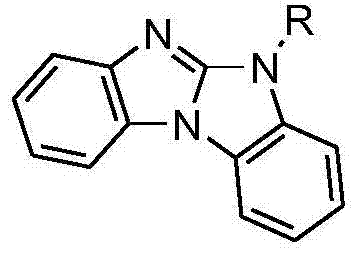 (R=H, Me, Et).
.Tetrahedron (1994) 10029-10036 such as Pedro Molina have reported that the azepine Wittig type reaction by two (2-aminophenyl) amine and 2 equivalent isocyanic ester derivative two (the positive phosphorus of imino-) directly provides benzoglyoxaline also [1,2, a] benzimidizole derivatives.

Kolesnikova, I.V.; Zhurnal Organicheskoi Khimii25 (1989) 1689-95 has described the synthetic of 1,2,3,4,7,8,9,10-octafluoro-5-(2,3,4,5,6-pentafluorophenyl group-5H-benzoglyoxaline is [1,2-a] benzoglyoxaline also).
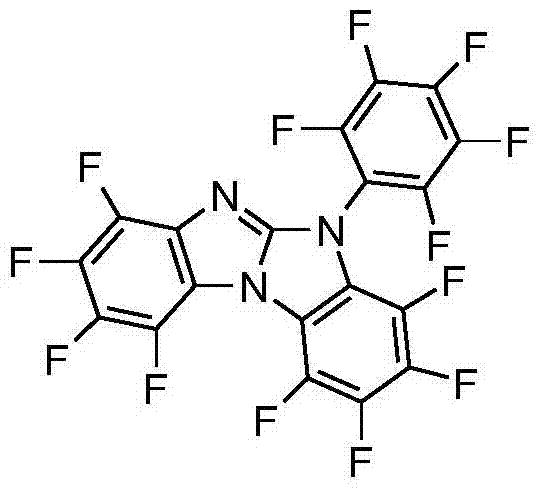
Achour, Reddouane; Zniber, Rachid, Bulletin des Societes Chimiques Belges96 (1987) 787-92 has described benzoglyoxaline benzoglyoxaline
(R=H ,-CH (CH
3)
2) synthetic, it is prepared by Benzimidazolinone derivatives.
Hubert, Andre J.; Reimlinger, Hans, Chemische Berichte103 (1970) 2828-35 has described benzoglyoxaline benzoglyoxaline
 (R=H, CH
3,
(R=H, CH
3,
 synthetic.
JP2001160488 has described a kind of electroluminescent cell, and it has luminescent layer between relative anode and negative electrode, and it has single or multiple lift organic compound film, and wherein at least one deck organic compound film contains at least one by formula
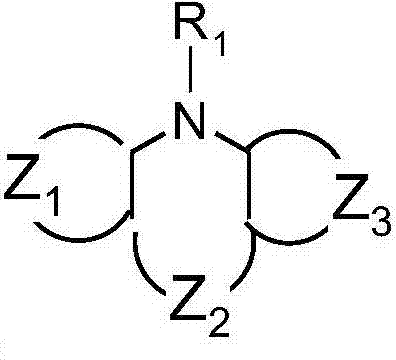 shown compound.Following compound is clearly disclosed:
 with
with
US20100244006 relates to a kind of organic electroluminescenoe device, and this device comprises: negative electrode; Anode; And at least one organic layer between negative electrode and anode.Described at least one organic layer comprises the luminescent layer that contains at least one luminescent material.In described at least one organic layer, contain by the represented compound of following formula:
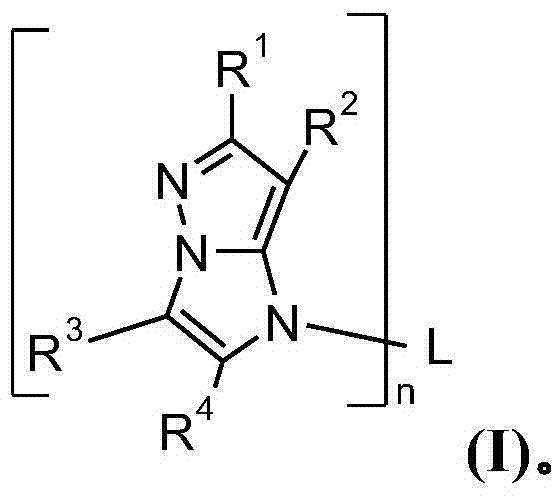 wherein n is 2 or larger integer, and L is n valency linking group and R
1, R
2, R
3and R
4be hydrogen atom or substituting group independently of one another.
wherein n is 2 or larger integer, and L is n valency linking group and R
1, R
2, R
3and R
4be hydrogen atom or substituting group independently of one another.
Compound described in US20100244006 is preferably used as main body in luminescent layer.
 represented an example of disclosed compound in US20100244006.
KR1020110008784 relates to formula
 novel organic light emission compound and the organic electroluminescenoe device that comprises it.
US2005079387 relates to a kind of formula Ar that contains
1-Ar
2-Ar
3the imidazole ring of compound (blue light-emitting host compound) and use its organic field luminescence (EL) display device.Ar
2be selected from
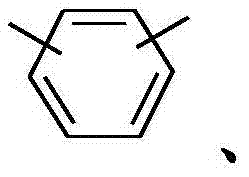
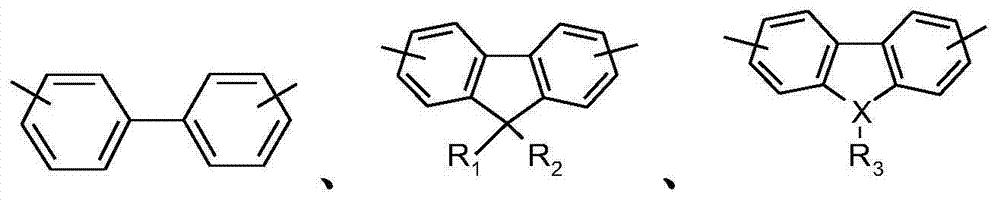 with
ar
1and Ar
3be selected from independently of one another
with
ar
1and Ar
3be selected from independently of one another
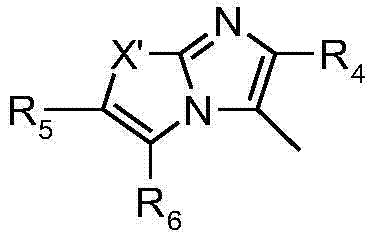 with
with
 wherein X ' is O or S.
US2005074632 relates to a kind of formula that contains
the imidazole ring of compound and organic field luminescence (EL) display device that uses it.Imidazole ring-containing compound especially can be combined in organic membrane as being used as material in electroluminescent layer separately or with doping agent.A is selected from
-N (R
13r
14) and
 b is selected from
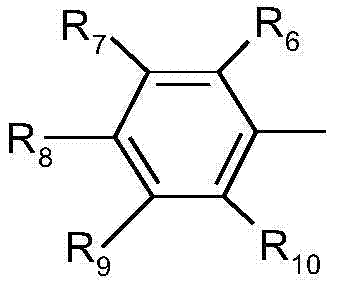 with
with
 x Xuan Zi – O-,-S-,-Se-are with – NH-.
JP2007180147 relates to a kind of organic electroluminescent device, and it is clipped between anode and negative electrode and contains at least one luminescent layer, and it contains by the represented compound of general formula 1,2,3 or 4:


Following compound is clearly disclosed:
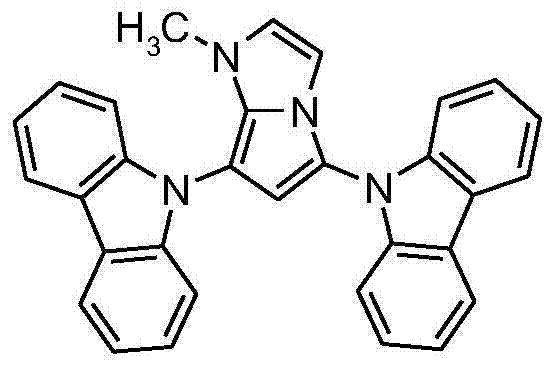

US6551723 relates to a kind of organic electroluminescent device, a plurality of organic compound thin layers that it comprises a luminescent layer or contains luminescent layer between pair of electrodes, wherein at least one in organic electroluminescent device layer comprises at least one by the represented heterogeneous ring compound of formula (I) to (VII):
 r
11, R
12, R
13, R
21, R
22, R
31, R
32, R
41, R
42, R
51, R
61and R
71be hydrogen atom or substituting group independently of one another; Z
1, Z
2, Z
3, Z
4, Z
5, Z
6and Z
7for forming the group of 5 or 6 Yuans necessary atoms of ring.Especially will add luminescent layer and/or electronic injection/transport layer by the represented compound of formula (I) to (VII).Following compound is clearly disclosed:
r
11, R
12, R
13, R
21, R
22, R
31, R
32, R
41, R
42, R
51, R
61and R
71be hydrogen atom or substituting group independently of one another; Z
1, Z
2, Z
3, Z
4, Z
5, Z
6and Z
7for forming the group of 5 or 6 Yuans necessary atoms of ring.Especially will add luminescent layer and/or electronic injection/transport layer by the represented compound of formula (I) to (VII).Following compound is clearly disclosed:
with
WO2011160757 relates to a kind of electron device, and it comprises anode, negative electrode and at least one organic layer, and this organic layer contains following formula: compound:
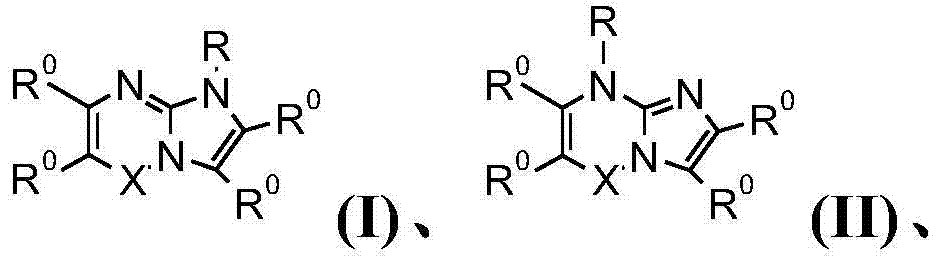
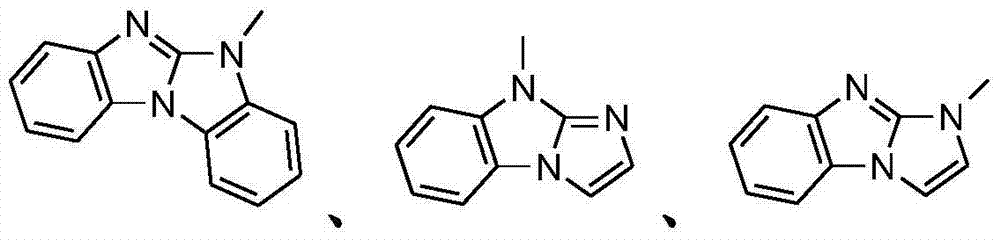
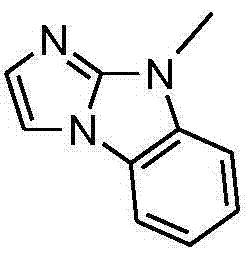
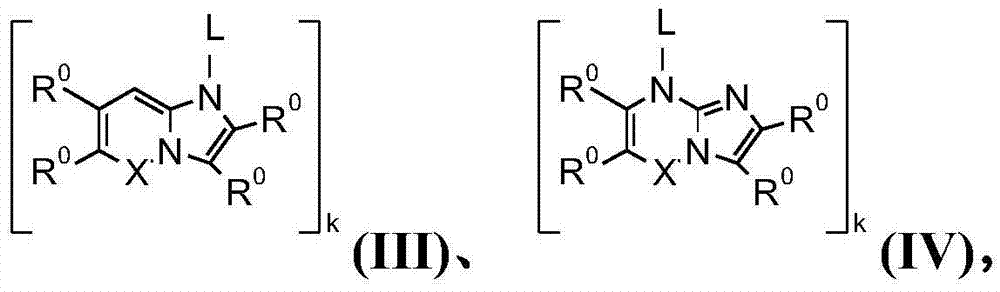 wherein X can be divalent group for singly-bound and L.Following 4H-imidazo [1,2-a] imidazolium compounds is clearly disclosed:

Although there is these progress, still need to comprise novel hole transport material so that the organic luminescent device with the electroluminescent device that improves efficiency, stability, manufacturability and/or spectral response curve to be provided.
Therefore, the object of the invention is to provide with respect to above-mentioned prior art the other materials that is suitable for other application in OLED and organic electronic.More particularly, should be provided for hole mobile material, electronics/exciton blocker material and the body material of OLED.This material should especially be suitable for comprising at least one phosphorescence twinkler, the especially OLED of at least one green emitting body or at least one blue-light emitting body.In addition, this material should be suitable for providing OLED, and it guarantees that OLED has good efficiencies, excellent operation life-span and to the high stability of thermal stresses and low use voltage and operating voltage.
Find some imdazole derivatives
 especially
 (R
9' there is R
9implication, R
10' there is R
10implication) be suitable in organic electroluminescenoe device.Especially some imdazole derivatives are suitable hole mobile material or the material of main part with the phosphorescence twinkler of good efficiencies and weather resistance.
(R
9' there is R
9implication, R
10' there is R
10implication) be suitable in organic electroluminescenoe device.Especially some imdazole derivatives are suitable hole mobile material or the material of main part with the phosphorescence twinkler of good efficiencies and weather resistance.
This object is by formula
 compound is realized:
Wherein
X
6wei – N=and X
7wei – NR
1-, or
X
7for=N-and X
6wei – NR
1-,
R
1for formula-A
1-(A
2)
p-(A
3)
q-(A
4)
r-R
6group,
P be 0 or 1, q be 0 or 1, r be 0 or 1,
A
1, A
2, A
3and A
4be the C that can optionally be replaced by G independently of each other
6-C
24arylidene, or the C that can optionally be replaced by G
2-C
30inferior heteroaryl; Wherein
Group A
1, A
2, A
3and A
4can be by one or more Ji Tuan – (SiR
7r
8)-interval;
R
6for H, Ji Tuan – (SiR
20r
21r
22), the C that can optionally be replaced by G
6-C
24aryl, or the C that can optionally be replaced by G
2-C
30heteroaryl;
R
7and R
8be C independently of each other
1-C
25alkyl, or C
6-C
24aryl, it can optionally be replaced by G; X
1for N or CR
9;
X
2for N or CR
10,
R
9, R
10, R
9' and R
10' be H independently of each other, can optionally by E, be replaced and/or by the C at D interval
1-C
25alkyl, the C that can optionally be replaced by G
6-C
24aryl, or the C that can optionally be replaced by G
2-C
30heteroaryl; Or R
9and R
10and/or R
9' and R
10' forming together can optional substituted ring, R
20, R
21and R
22be C independently of each other
1-C
25alkyl, or C
6-C
24aryl, it can optionally be replaced by G; D is-CO-,-COO-,-S-,-SO-,-SO
2-,-O-,-NR
65-,-SiR
70r
71-,-POR
72-,-CR
63=CR
64-or-C ≡ C-,
E is-OR
69,-SR
69,-NR
65r
66,-COR
68,-COOR
67,-CONR
65r
66,-CN or halogen,
G is E or C
1-C
18alkyl, C
6-C
24aryl, the C optionally being replaced by F
6-C
24aryl, C
1-C
18alkyl or optionally by the C at O interval
1-C
18alkyl, C
2-C
30heteroaryl or the C optionally being replaced by F
2-C
30heteroaryl, C
1-C
18alkyl or optionally by the C at O interval
1-C
18alkyl;
R
63and R
64be C independently of each other
6-C
18aryl, by C
1-C
18alkyl, C
1-C
18the C that alkoxyl group replaces
6-C
18aryl, C
1-C
18the C at alkyl or quilt-O-interval
1-C
18alkyl;
R
65and R
66be C independently of each other
6-C
18aryl, by C
1-C
18alkyl or C
1-C
18the C that alkoxyl group replaces
6-C
18aryl, C
1-C
18the C at alkyl or quilt-O-interval
1-C
18alkyl; Or
R
65and R
66form together 5 or 6 Yuans rings,
R
67for C
6-C
18aryl, by C
1-C
18alkyl or C
1-C
18the C that alkoxyl group replaces
6-C
18aryl, C
1-C
18the C at alkyl or quilt-O-interval
1-C
18alkyl,
R
68for H, C
6-C
18aryl, by C
1-C
18alkyl or C
1-C
18the C that alkoxyl group replaces
6-C
18aryl, C
1-C
18the C at alkyl or quilt-O-interval
1-C
18alkyl,
R
69for C
6-C
18aryl, by C
1-C
18alkyl or C
1-C
18the C that alkoxyl group replaces
6-C
18aryl, C
1-C
18the C at alkyl or quilt-O-interval
1-C
18alkyl,
R
70and R
71be C independently of each other
1-C
18alkyl, C
6-C
18aryl or by C
1-C
18the C that alkyl replaces
6-C
18aryl, and
R
72for C
1-C
18alkyl, C
6-C
18aryl or by C
1-C
18the C that alkyl replaces
6-C
18aryl;
Condition is to get rid of following compound:


Especially described object is by formula
 compound, very particularly
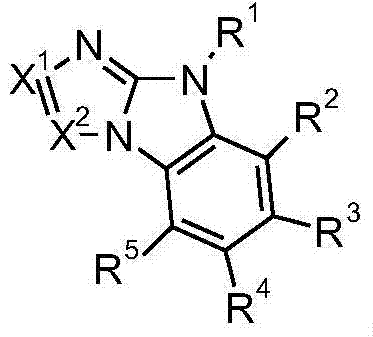 realize, wherein
X
6wei – N=and X
7wei – NR
1-, or
X
7for=N-and X
6wei – NR
1-, wherein
R
1for formula-A
1-(A
2)
p-(A
3)
q-(A
4)
r-R
6group,
P be 0 or 1, q be 0 or 1, r be 0 or 1,
A
1, A
2, A
3and A
4be the C that can optionally be replaced by G independently of each other
6-C
24arylidene, or the C that can optionally be replaced by G
2-C
30inferior heteroaryl; Wherein
Group A
1, A
2, A
3and A
4can be by one or more Ji Tuan – (SiR
7r
8)-interval;
R
2, R
3, R
4and R
5be H independently of each other, can optionally by E, be replaced and/or by the C at D interval
1-C
25alkyl; The C that can optionally be replaced by G
6-C
24aryl, or the C that can optionally be replaced by G
2-C
30heteroaryl;
R
6for H, Ji Tuan – (SiR
20r
21r
22), the C that can optionally be replaced by G
6-C
24aryl, or the C that can optionally be replaced by G
2-C
30heteroaryl;
R
7and R
8be C independently of each other
1-C
25alkyl, or C
6-C
24aryl, it can optionally be replaced by G; X
1for N or CR
9;
X
2for N or CR
10,
R
9and R
10be H independently of each other, can optionally by E, be replaced and/or by the C at D interval
1-C
25alkyl, the C that can optionally be replaced by G
6-C
24aryl, or the C that can optionally be replaced by G
2-C
30heteroaryl; Or
R
9and R
10forming together can optional substituted ring,
R
20, R
21and R
22be C independently of each other
1-C
25alkyl, or C
6-C
24aryl, it can optionally be replaced by G; D is-CO-,-COO-,-S-,-SO-,-SO
2-,-O-,-NR
65-,-SiR
70r
71-,-POR
72-,-CR
63=CR
64-or-C ≡ C-,
E is-OR
69,-SR
69,-NR
65r
66,-COR
68,-COOR
67,-CONR
65r
66,-CN or halogen,
G is E or C
1-C
18alkyl, C
6-C
24aryl, optionally by C
1-C
18the C that alkyl replaces
6-C
24aryl; R
63and R
64be C independently of each other
6-C
18aryl, by C
1-C
18alkyl, C
1-C
18the C that alkoxyl group replaces
6-C
18aryl, C
1-C
18the C at alkyl or quilt-O-interval
1-C
18alkyl;
R
65and R
66be C independently of each other
6-C
18aryl, by C
1-C
18alkyl or C
1-C
18the C that alkoxyl group replaces
6-C
18aryl, C
1-C
18the C at alkyl or quilt-O-interval
1-C
18alkyl; Or
R
65and R
66form together 5 or 6 Yuans rings,
R
67for C
6-C
18aryl, by C
1-C
18alkyl or C
1-C
18the C that alkoxyl group replaces
6-C
18aryl, C
1-C
18the C at alkyl or quilt-O-interval
1-C
18alkyl,
R
68for H, C
6-C
18aryl, by C
1-C
18alkyl or C
1-C
18the C that alkoxyl group replaces
6-C
18aryl, C
1-C
18the C at alkyl or quilt-O-interval
1-C
18alkyl,
R
69for C
6-C
18aryl, by C
1-C
18alkyl or C
1-C
18the C that alkoxyl group replaces
6-C
18aryl, C
1-C
18the C at alkyl or quilt-O-interval
1-C
18alkyl,
R
70and R
71be C independently of each other
1-C
18alkyl, C
6-C
18aryl or by C
1-C
18the C that alkyl replaces
6-C
18aryl, and
R
72for C
1-C
18alkyl, C
6-C
18aryl or by C
1-C
18the C that alkyl replaces
6-C
18aryl.
The compounds of this invention can be for electric photography photoreceptor, photoelectric commutator, organic solar batteries (organic photovoltaic devices), switching element, as organic transistor, for example organic FET and organic tft, organic light-emitting field effect transistor (OLEFET), image sensor, dye laser and electroluminescent device, for example Organic Light Emitting Diode (OLED).
Therefore, another theme of the present invention relates to a kind of electron device that comprises the compounds of this invention.This electron device is preferably electroluminescent device.
Formula I compound can, for any layer of El element, still be preferably used as main body, hole transport and electron-block material in principle.Especially, formula I compound is used as material of main part in the phosphorescence twinkler of blue light-emitting.
Therefore, another theme of the present invention relates to a kind of hole transmission layer that comprises formula I compound of the present invention.
Another theme of the present invention relates to a kind of luminescent layer that comprises formula I compound of the present invention.In described embodiment, formula I compound is preferably used in combination as material of main part and phosphorescence twinkler.
Another theme of the present invention relates to a kind of electron blocking layers that comprises formula I compound of the present invention.
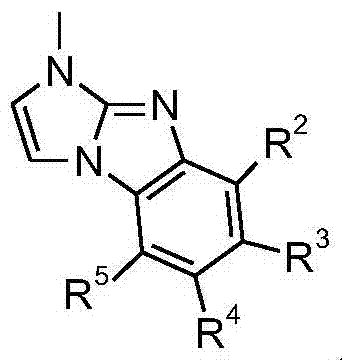
Formula I compound is formula especially
 compound, wherein
X
6wei – N=and X
7wei – NR
1-, or
X
7for=N-and X
6wei – NR
1-,
R
2, R
3, R
4and R
5be H independently of each other, can optionally by E, be replaced and/or by the C at D interval
1-C
25alkyl, the C that can optionally be replaced by G
6-C
24aryl, or the C that can optionally be replaced by G
2-C
30heteroaryl,
X
1, X
2, R
1, E, D and G as defined above.
Formula I compound can be formula

 or
or
 compound, X
6wei – N=and X
7wei – NR
1-or X
7for=N-and X
6wei – NR
1-.Especially be preferably as follows formula Id compound, wherein R
9and R
10form together ring
r wherein
11, R
12, R
13and R
14R
11, R
12, R
13and R
14be preferably H.R
2, R
3, R
4and R
5be preferably H.
compound, X
6wei – N=and X
7wei – NR
1-or X
7for=N-and X
6wei – NR
1-.Especially be preferably as follows formula Id compound, wherein R
9and R
10form together ring
r wherein
11, R
12, R
13and R
14R
11, R
12, R
13and R
14be preferably H.R
2, R
3, R
4and R
5be preferably H.
In a preferred embodiment, formula (I) compound is formula
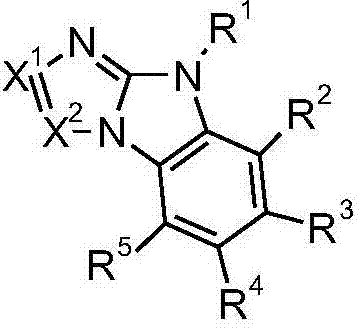 compound.In another preferred embodiment, formula (I) compound is formula
 compound.
Preferably, formula I compound is formula

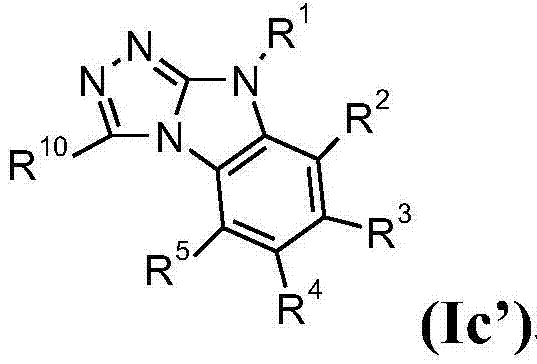 or
compound.The compound of preferred formula Ib ' and Id '.More preferably formula Id ' compound.Even more preferably as shown in the formula Id ' compound, wherein R
9and R
10form together ring
or
compound.The compound of preferred formula Ib ' and Id '.More preferably formula Id ' compound.Even more preferably as shown in the formula Id ' compound, wherein R
9and R
10form together ring
 r wherein
11, R
12, R
13and R
14R
11, R
12, R
13and R
14be preferably H.
r wherein
11, R
12, R
13and R
14R
11, R
12, R
13and R
14be preferably H.
R
2, R
3, R
4and R
5be preferably H.
The formula I compound that is not axial symmetry, for example R wherein
9and R
10for the formula Id ' compound of H can exist with two kinds of isomeric forms:


with
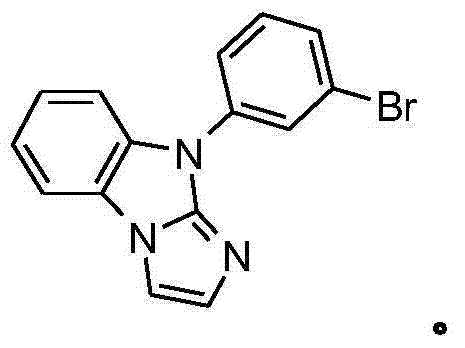
4H-imidazo [1,2-a] benzoglyoxaline is prepared described in ARKIVOC2002 (v) 48-61.4H-imidazo [1,2-a] benzoglyoxaline reacts and obtains two kinds of isomer that ratio af is about 1:1 with the Ullmann of the bromo-3-iodobenzene of 1-.

R
20, R
21and R
22be preferably C
1-C
18alkyl, for example methyl, ethyl, n-propyl, sec.-propyl, normal-butyl, isobutyl-, sec-butyl, the tertiary butyl, 2-methyl butyl, n-pentyl, isopentyl, n-hexyl, 2-ethylhexyl or n-heptyl, C
6-C
14aryl, for example phenyl, naphthyl or xenyl, or the C being replaced by G
6-C
14aryl, for example-C
6h
4oCH
3,-C
6h
4oCH
2cH
3,-C
6h
3(OCH
3)
2or-C
6h
3(OCH
2cH
3)
2,-C
6h
4cH
3,-C
6h
3(CH
3)
2,-C
6h
2(CH
3)
3or-C
6h
4tBu.
R
9and R
10be preferably H or C
6-C
14aryl, for example phenyl, naphthyl or xenyl, they can be optionally by one or more C
1-C
8alkyl replaces; Or C
2-c
30heteroaryl, dibenzofuran group for example, they can be optionally by one or more C
1-C
8alkyl replaces.
In a preferred embodiment, the present invention relates to formula
 especially
compound, wherein
especially
compound, wherein
X
6wei – N=and X
7wei – NR
1-or
X
7for=N-and X
6wei – NR
1-,
R
11, R
12, R
13and R
14be H independently of each other, can optionally by E, be replaced and/or by the C at D interval
1-C
25alkyl, the C that can optionally be replaced by G
6-C
24aryl, or the C that can optionally be replaced by G
2-C
30heteroaryl, and E, D, G, R
1, R
2, R
3, R
4and R
5as defined above.
In a preferred embodiment, formula (II) compound is formula
 compound.In another preferred embodiment, formula (II) compound is formula
compound.
compound.In another preferred embodiment, formula (II) compound is formula
compound.
Even more preferably as shown in the formula II compound, wherein R
2, R
3, R
4, R
5, R
11, R
12, R
13and R
14for H and R
1as defined above:

R
6can be the C that can optionally be replaced by G
6-C
24aryl, or the C that can optionally be replaced by G
2-C
30heteroaryl.
The C that can optionally be replaced by G
6-C
24aryl R
6be generally phenyl, 4-aminomethyl phenyl, 4-p-methoxy-phenyl, naphthyl, especially 1-naphthyl or 2-naphthyl, xenyl, terphenyl, pyrenyl, 2-or 9-fluorenyl, phenanthryl or anthryl, it can be and not to replace or replace.
The C that can optionally be replaced by G
2-c
30heteroaryl R
6represent to have ring or the fused rings system of 5-7 annular atoms, nitrogen wherein, oxygen or sulphur are possible heteroatoms, and be generally the heterocyclic radical that there is 5-30 atom and there are at least 6 conjugated pi-electronics, thienyl for example, benzothienyl, dibenzothiophene base, thianthrenyl, furyl, furfuryl group, 2H-pyranyl, benzofuryl, isobenzofuran-base, dibenzofuran group, phenoxy group thienyl, pyrryl, imidazolyl, pyrazolyl, pyridyl, bipyridyl, triazinyl, pyrimidyl, pyrazinyl, pyridazinyl, indolizine base, isoindolyl, indyl, indazolyl, purine radicals, quinolizinyl, quinolyl, isoquinolyl, 2, 3-phthalazinyl, 1, 5-phthalazinyl, quinoxalinyl, quinazolyl, cinnolinyl, pteridyl, carbolinyl, benzotriazole base, benzo
 azoles base, phenanthridinyl, acridyl, pyrimidyl, phenanthroline base, phenazinyl, isothiazolyl, phenothiazinyl, different
 azoles base, furazan base, 4-imidazo [1,2-a] benzimidazolyl-, also [1,2-a] benzimidazolyl-, carbazyl or the fen of 5-benzoglyoxaline
 piperazine base, it can be and not to replace or replace.In addition C,
2-c
30heteroaryl R
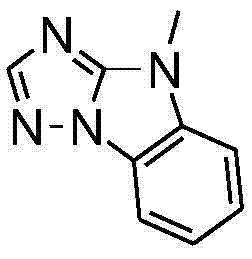
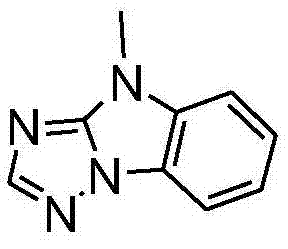
6comprise 4H-[1,2,4] triazolo [1,5-a] benzimidazolyl-, it can be and not to replace or replace.
piperazine base, it can be and not to replace or replace.In addition C,
2-c
30heteroaryl R
6comprise 4H-[1,2,4] triazolo [1,5-a] benzimidazolyl-, it can be and not to replace or replace.
C
6-C
24aryl and C
2-c
30heteroaryl can be replaced by G and preferably by one or more C
1-C
8alkyl replaces.
Preferred C
2-c
30heteroaryl is pyridyl, triazinyl, pyrimidyl, 4-imidazo [1,2-a] benzimidazolyl-, 5-benzoglyoxaline also [1,2-a] benzimidazolyl-, carbazyl, dibenzofuran group, and it can be not replacement or substituted, especially by C
6-C
10aryl or by C
1-C
4the C that alkyl replaces
6-C
10aryl or C
2-c
5heteroaryl replaces.4H-[1,2,4] triazolo [1,5-a] benzimidazolyl-has also represented a preferred C
2-c
30heteroaryl R
6.
A
1, A
2, A
3and A
4be the C that can optionally be replaced by G independently of each other
6-C
24arylidene, or the C that can optionally be replaced by G
2-C
30inferior heteroaryl.The C that can optionally be replaced by G
6-C
24arylidene A
1, A
2, A
3and A
4be generally phenylene, 4-methylphenylene, 4-methoxyl group phenylene, naphthylidene, especially 1-naphthylidene or 2-naphthylidene, biphenylene, three biphenylenes, sub-pyrenyl, 2-or 9-fluorenylidene, phenanthrylene or anthrylene, it can be and not to replace or replace.
The C that can optionally be replaced by G
2-C
30inferior heteroaryl A
1, A
2, A
3and A
4represent to have ring or the fused rings system of 5-7 annular atoms, nitrogen wherein, oxygen or sulphur are possible heteroatoms, and be generally the heterocyclic radical that there is 5-30 atom and there are at least 6 conjugated electrons, sub-thienyl for example, sub-benzothienyl, sub-dibenzothiophene base, sub-thianthrenyl, furylidene, furfurylidene, 2H-pyranylidene, sub-benzofuryl, sub-isobenzofuran-base, sub-dibenzofuran group, sub-phenoxy group thienyl, sub-pyrryl, sub-imidazolyl, sub-pyrazolyl, pyridylidene, sub-bipyridyl, sub-triazinyl, sub-pyrimidyl, sub-pyrazinyl, sub-pyridazinyl, sub-indolizine base, sub-isoindolyl, sub-indyl, sub-indazolyl, sub-purine radicals, sub-quinolizinyl, quinolinediyl, sub-isoquinolyl, 2, the sub-phthalazinyl of 3-, 1, the sub-phthalazinyl of 5-, sub-quinoxalinyl, sub-quinazolyl, sub-cinnolinyl, sub-pteridyl, sub-carbolinyl, sub-benzotriazole base, sub-benzo
 azoles base, sub-phenanthridinyl, sub-acridyl, sub-pyrimidyl, sub-phenanthroline base, sub-phenazinyl, sub-isothiazolyl, sub-phenothiazinyl, sub-different
 azoles base, sub-furazan base, sub-carbazyl or sub-fen
 piperazine base, it can be and not to replace or replace.
Preferred C
6-C
24arylidene is 1,3-phenylene, 3,3 '-biphenylene, 3, and 3 '-Ya meta-terphenyl base, 2-or 9-fluorenylidene, phenanthrylene, it can be and not to replace or replace.
Preferred C
2-C
30inferior heteroaryl is pyridylidene, sub-triazinyl, sub-pyrimidyl, sub-carbazyl, sub-dibenzofuran group, and it can be not replacement or substituted, especially by C
6-C
10aryl or by C
1-C
4the C that alkyl replaces
6-C
10aryl or C
2-c
5heteroaryl replaces.
More preferably C
2-C
30inferior heteroaryl is sub-carbazyl and sub-dibenzofuran group, and it can be optionally by C
6-C
10aryl replaces, C
6-C
10aryl can be optionally by one or more C
1-C
4alkyl replaces.
C
6-C
24arylidene and C
2-c
30inferior heteroaryl can be replaced by G and preferably by one or more C
1-C
8alkyl replaces.
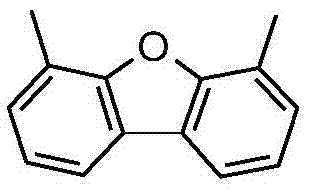
As term " C<sub TranNum="907">2</sub>-C<sub TranNum="908">30</sub>heteroaryl " comprise for example formula<img TranNum="909" file="BDA0000409687470000161.GIF" he="450" img-content="drawing" img-format="GIF" inline="yes" orientation="portrait" wi="660"/>especially<img TranNum="910" file="BDA0000409687470000162.GIF" he="220" img-content="drawing" img-format="GIF" inline="yes" orientation="portrait" wi="700"/>with<img TranNum="911" file="BDA0000409687470000163.GIF" he="284" img-content="drawing" img-format="GIF" inline="yes" orientation="portrait" wi="548"/>group, group A<sup TranNum="912">1</sup>, A<sup TranNum="913">2</sup>, A<sup TranNum="914">3</sup>and A<sup TranNum="915">4</sup>can be for example by one or more formulas<img TranNum="916" file="BDA0000409687470000171.GIF" he="418" img-content="drawing" img-format="GIF" inline="yes" orientation="portrait" wi="700"/>especially<img TranNum="917" file="BDA0000409687470000172.GIF" he="387" img-content="drawing" img-format="GIF" inline="yes" orientation="portrait" wi="661"/><img TranNum="918" file="BDA0000409687470000173.GIF" he="209" img-content="drawing" img-format="GIF" inline="yes" orientation="portrait" wi="629"/>with<img TranNum="919" file="BDA0000409687470000174.GIF" he="322" img-content="drawing" img-format="GIF" inline="yes" orientation="portrait" wi="558"/>group replace, for example obtain formula<img TranNum="920" file="BDA0000409687470000175.GIF" he="405" img-content="drawing" img-format="GIF" inline="yes" orientation="portrait" wi="563"/>compound [n is 2 or 3, especially 2], A wherein<sub TranNum="921">1</sub>for formula<img TranNum="922" file="BDA0000409687470000176.GIF" he="174" img-content="drawing" img-format="GIF" inline="yes" orientation="portrait" wi="700"/>or<img TranNum="923" file="BDA0000409687470000177.GIF" he="249" img-content="drawing" img-format="GIF" inline="yes" orientation="portrait" wi="351"/>group, and R<sup TranNum="924">6</sup>for formula<img TranNum="925" file="BDA0000409687470000178.GIF" he="417" img-content="drawing" img-format="GIF" inline="yes" orientation="portrait" wi="700"/>especially<img TranNum="926" file="BDA0000409687470000179.GIF" he="393" img-content="drawing" img-format="GIF" inline="yes" orientation="portrait" wi="661"/><img TranNum="927" file="BDA00004096874700001710.GIF" he="210" img-content="drawing" img-format="GIF" inline="yes" orientation="portrait" wi="629"/>with<img TranNum="928" file="BDA00004096874700001711.GIF" he="296" img-content="drawing" img-format="GIF" inline="yes" orientation="portrait" wi="550"/>group.In addition R,<sup TranNum="929">6</sup>it can be formula<img TranNum="930" file="BDA00004096874700001712.GIF" he="271" img-content="drawing" img-format="GIF" inline="yes" orientation="portrait" wi="553"/>group.X<sup TranNum="931">6</sup>’ Wei – N=and X<sup TranNum="932">7 ' is</sup>– N<or X<sup TranNum="933">7</sup>' be=N-and X<sup TranNum="934">6</sup>’ Wei – N<.M3 is 0 or the integer of 1-4.M4 is 0 or integer 1-3.
R
1be preferably formula-A
1-(A
2)
p-(A
3)
q-(A
4)
r-R
6group, for example-A
1-R
6,-A
1-A
2-R
6,-A
1-A
2-A
3-R
6,-A
1-A
2-A
3-A
4-R
6or
a wherein
1, A
2, A
3and A
4be formula independently of each other
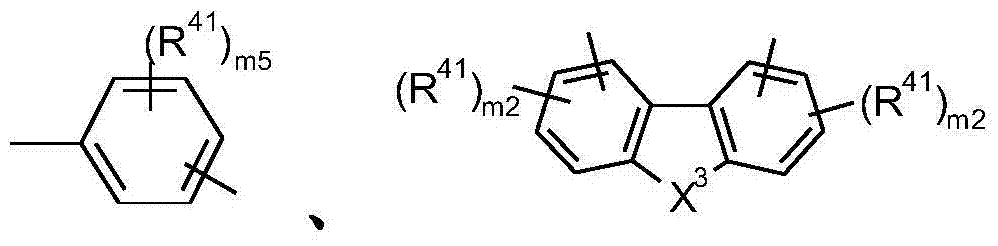
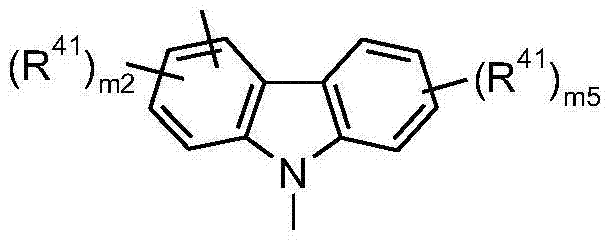 or
or
 group, wherein
M5 is 0 or the integer of 1-4,
M2 is 0 or integer 1-3,
X
3wei – O-,-S-Huo – NR
15-,
R
7and R
8for C
1-C
18alkyl,
R
15for C
1-C
18alkyl; Or the C at quilt-O-interval
1-C
18alkyl; C
6-C
18aryl; By one or more C
1-C
18alkyl or C
1-C
18the C that alkoxyl group replaces
6-C
18aryl; C
2-C
20heteroaryl or by one or more C
1-C
18the C that alkyl replaces
2-C
20heteroaryl,
R
41can be identical or different when occurring and be F at every turn, C
1-C
18alkyl, is replaced by E and/or by the C at D interval
1-C
18alkyl, C
6-C
24aryl, the C being replaced by G
6-C
24aryl, C
2-C
20heteroaryl or the C being replaced by G
2-C
20heteroaryl, and
R
6, p, q, r, E, D and G be as above or below defined.
Formula
 group compares formula
 or
group more not preferred.
or
group more not preferred.
More preferably, A
1, A
2, A
3and A
4be formula independently of each other

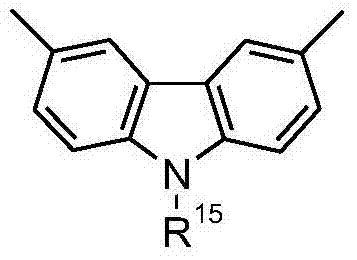 or
or
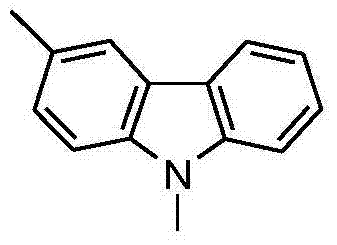 group, R wherein
15for C
6-C
18aryl; Or by one or more C
1-C
18the C that alkyl replaces
6-C
18aryl.
group, R wherein
15for C
6-C
18aryl; Or by one or more C
1-C
18the C that alkyl replaces
6-C
18aryl.
R
15be preferably formula
 or
or
 group, R wherein
100for C
1-C
8alkyl.
group, R wherein
100for C
1-C
8alkyl.
Preferred group-A
1-(A
2)
p-(A
3)
q-(A
4)
r-, A wherein
1, A
2, A
3and A
4in at least one is formula
group, wherein Y Wei – O-,-S-Huo – NR
15-, R wherein
15as defined above.More preferably group-A
1-(A
2)
p-(A
3)
q-(A
4)
r-, A wherein
1, A
2, A
3and A
4in at least one is formula
 group.
Preferred group-A
1-(A
2)
p-(A
3)
q-(A
4)
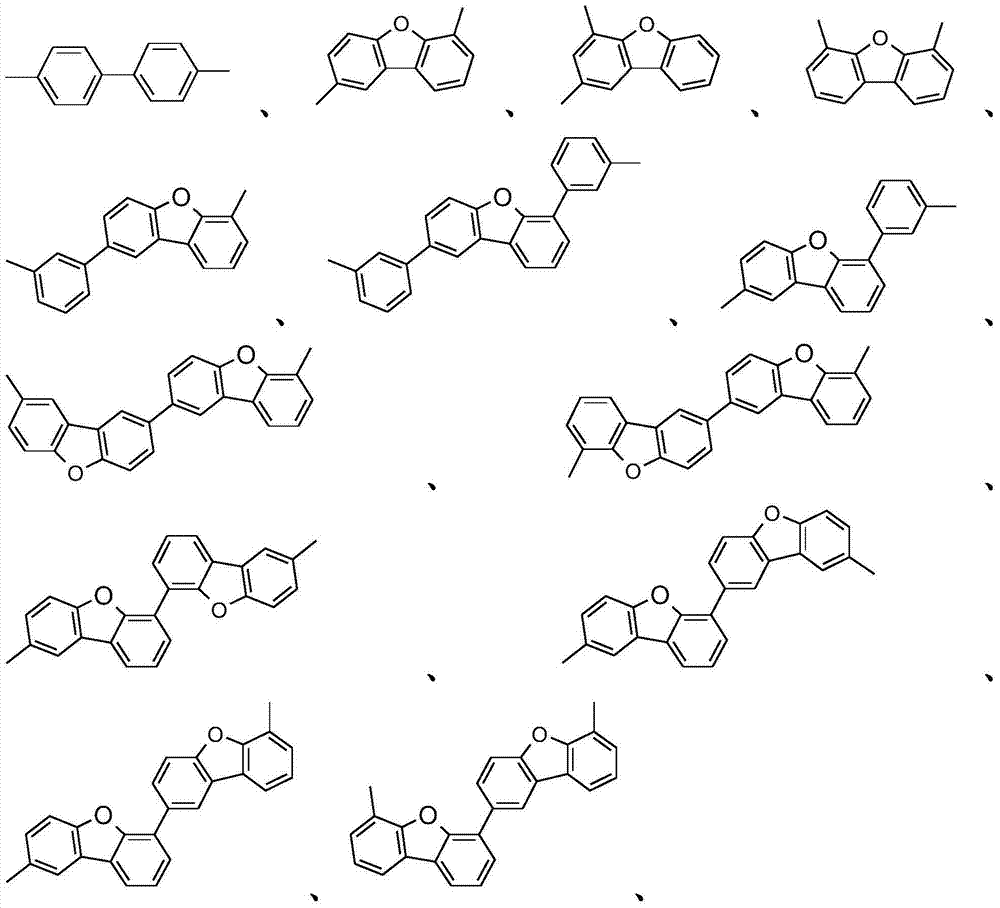
r-example as follows:
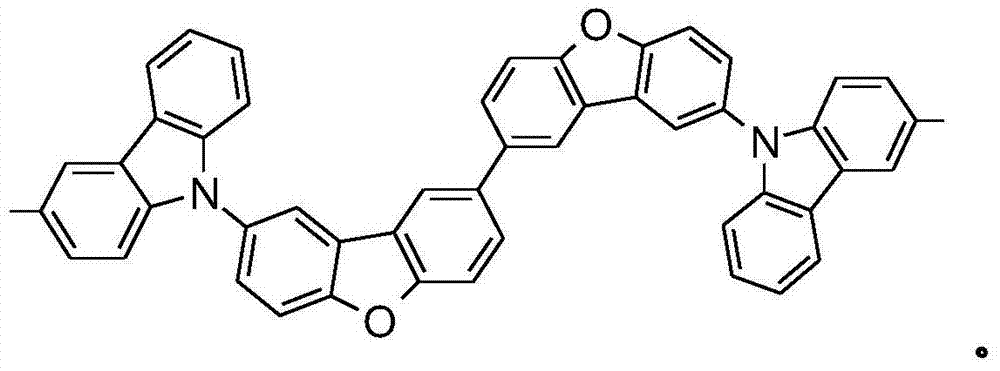


In another preferred embodiment, R
1for formula-A
1-(A
2)
p-(A
3)
q-(A
4)
r-R
6group, for example-A
1-R
6,-A
1-A
2-R
6,-A
1-A
2-A
3-R
6or-A
1-A
2-A
3-A
4-R
6, group A wherein
1, A
2, A
3and A
4in at least one is formula
 or
group; And other are formula independently of each other
or
group; And other are formula independently of each other
 or
or
 group, R wherein
15for C
6-C
18aryl; Or by one or more C
1-C
18the C that alkyl replaces
6-C
18aryl.Preferred group-A
1-(A
2)
p-(A
3)
q-(A
4)
r-example as follows:
group, R wherein
15for C
6-C
18aryl; Or by one or more C
1-C
18the C that alkyl replaces
6-C
18aryl.Preferred group-A
1-(A
2)
p-(A
3)
q-(A
4)
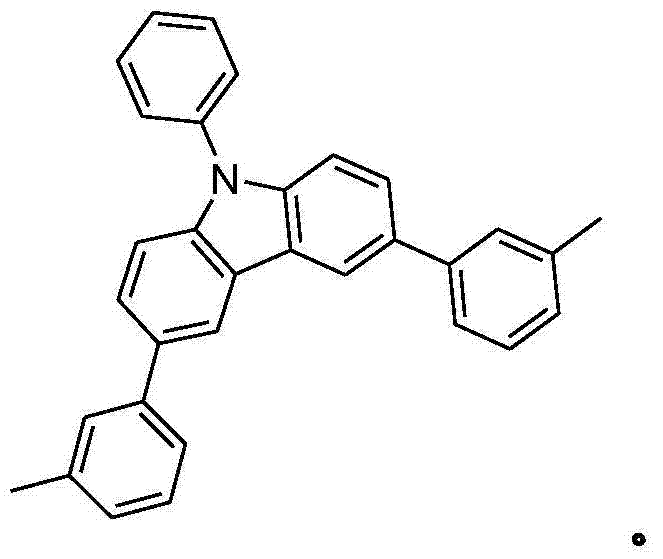
r-example as follows:

R
6especially be formula

 or
or
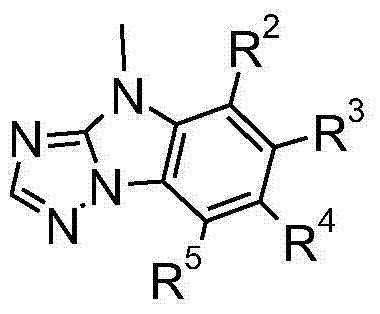 group, be very especially formula
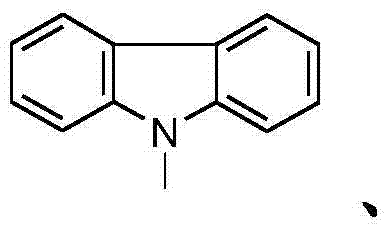
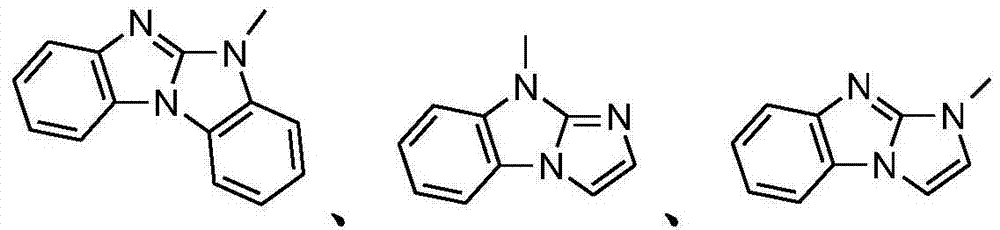 or
or
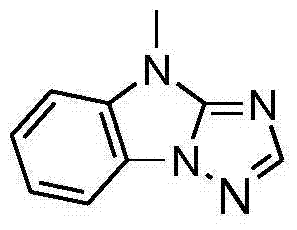 group.R
2, R
3, R
4, R
5, R
11, R
12, R
13, R
14, R
43with m3 as defined above.
group.R
2, R
3, R
4, R
5, R
11, R
12, R
13, R
14, R
43with m3 as defined above.
In a preferred embodiment of the invention, R<sub TranNum="1157">6</sub>for formula<img TranNum="1158" file="BDA0000409687470000237.GIF" he="432" img-content="drawing" img-format="GIF" inline="yes" orientation="portrait" wi="628"/>(X<sub TranNum="1159">6</sub>’ Wei – N=and X<sup TranNum="1160">7</sup>’ Wei – N<or X<sup TranNum="1161">7</sup>' be=N-and X<sup TranNum="1162">6</sup>’ Wei – N<), especially<img TranNum="1163" file="BDA0000409687470000238.GIF" he="384" img-content="drawing" img-format="GIF" inline="yes" orientation="portrait" wi="566"/><img TranNum="1164" file="BDA0000409687470000239.GIF" he="157" img-content="drawing" img-format="GIF" inline="yes" orientation="portrait" wi="700"/>group or Ji Tuan – (SiR<sup TranNum="1165">20</sup>r<sup TranNum="1166">21</sup>r<sup TranNum="1167">22</sup>),
R wherein
2, R
3, R
4, R
5, R
11, R
12, R
13and R
14be H independently of each other, can optionally by E, be replaced and/or by the C at D interval
1-C
25alkyl; The C that can optionally be replaced by G
6-C
24aryl, or the C that can optionally be replaced by G
2-C
30heteroaryl,
R
16for C
6-C
18aryl; Or by one or more C
1-C
18the C that alkyl replaces
6-C
18aryl.
R
20, R
21and R
22be C independently of each other
6-C
18aryl; Or by one or more C
1-C
18the C that alkyl replaces
6-C
18aryl,
R
43can be identical or different when occurring and be F at every turn, C
1-C
18alkyl, is replaced by E and/or by the C at D interval
1-C
18alkyl, C
6-C
24aryl, the C being replaced by G
6-C
24aryl, C
2-C
20heteroaryl or the C being replaced by G
2-C
20heteroaryl,
M3 is 0 or the integer of 1-4, and m4 is 0 or the integer of 1-3, and
E, D and G are as above or below defined.
Be preferably-CO-of D ,-COO-,-S-,-SO-,-SO
2-,-O-,-NR
65-, R wherein
65for C
1-C
18alkyl, for example methyl, ethyl, n-propyl, sec.-propyl, normal-butyl, isobutyl-or sec-butyl, or C
6-C
14aryl, for example phenyl, tolyl, naphthyl or xenyl.
E You Xuan Wei – OR
69;-SR
69;-NR
65r
65;-COR
68;-COOR
67;-CONR
65r
65; Or-CN; R wherein
65, R
67, R
68and R
69be C independently of each other
1-C
18alkyl, for example methyl, ethyl, n-propyl, sec.-propyl, normal-butyl, isobutyl-, sec-butyl, hexyl, octyl group or 2-ethylhexyl, or C
6-C
14aryl, for example phenyl, tolyl, naphthyl or xenyl.
G has the preferred situation identical with E or is C
1-C
18alkyl, for example methyl, ethyl, n-propyl, sec.-propyl, normal-butyl, isobutyl-, sec-butyl, hexyl, octyl group or 2-ethylhexyl or be C
1-C
18perfluoroalkyl is as-CF
3.
R
2, R
3, R
4, R
5, R
11, R
12, R
13and R
14be preferably H.
R
43be preferably H, or C
6-C
14aryl, for example phenyl, tolyl, naphthyl or xenyl, it can optionally be substituted.
M3 is preferably 0 or 1, and most preferably 0.M4 is preferably 0 or 1, and most preferably 0.
M2 is preferably 0 or 1, and most preferably 0.M5 is preferably 0 or 1, and most preferably 0.
R
20, R
21and R
22be preferably formula
 or
or
 group, R wherein
100for C
1-C
8alkyl.
group, R wherein
100for C
1-C
8alkyl.
More preferably, R
6for formula
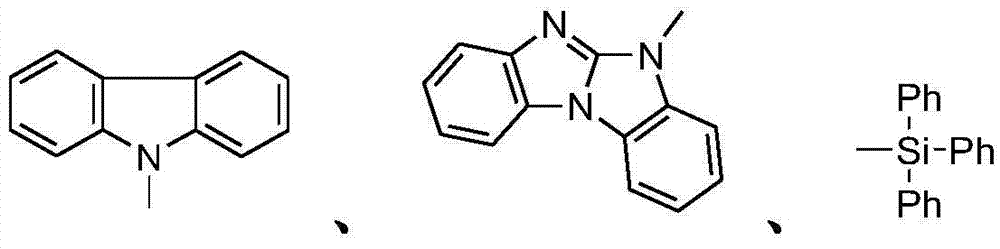 or
group, R wherein
16for C
6-C
18aryl; Or by one or more C
1-C
18the C that alkyl replaces
6-C
18aryl.
or
group, R wherein
16for C
6-C
18aryl; Or by one or more C
1-C
18the C that alkyl replaces
6-C
18aryl.
R
16be preferably formula
 or
or
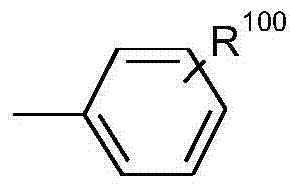 group, R wherein
100for C
1-C
8alkyl.
group, R wherein
100for C
1-C
8alkyl.
In a preferred embodiment, the present invention relates to formula
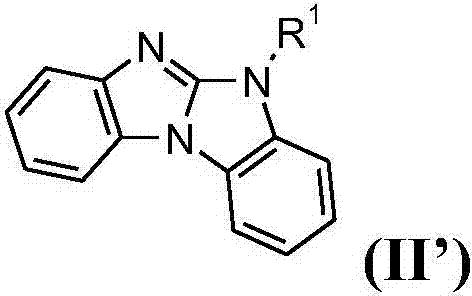 compound, R wherein
1for formula-A
1-(A
2)
p-(A
3)
q-(A
4)
r-R
6group,
compound, R wherein
1for formula-A
1-(A
2)
p-(A
3)
q-(A
4)
r-R
6group,
A1, A
2, A
3and A
4be formula independently of each other
or
 group,
R
6for formula
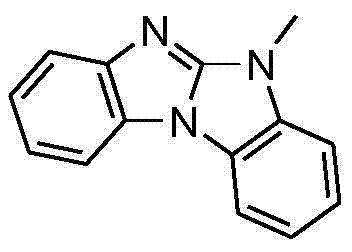
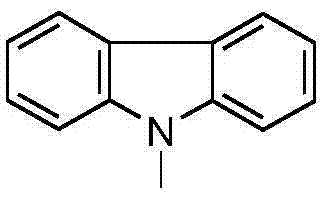 or
or
 group, and
R
15for formula
 or
or
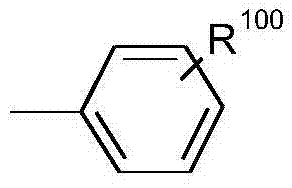 group, R wherein
100for C
1-C
8alkyl, and p, q and r are as defined above.
group, R wherein
100for C
1-C
8alkyl, and p, q and r are as defined above.
In described embodiment, formula-A
1-(A
2)
p-(A
3)
q-(A
4)
r-group be especially the group of following formula:


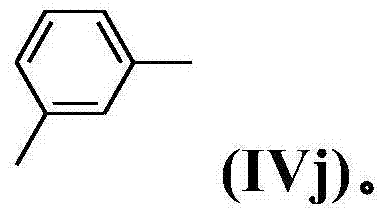
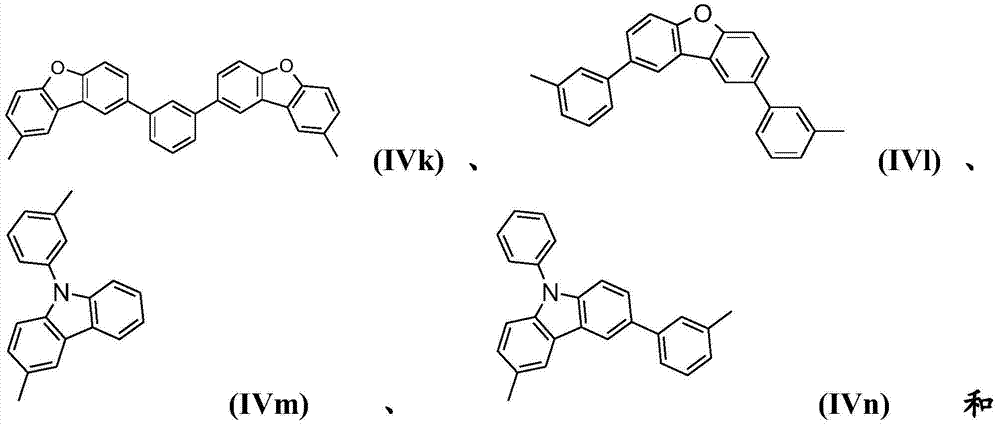
Formula-A most preferably at present
1-(A
2)
p-(A
3)
q-(A
4)
r-group be formula (IVa), (IVb), (IVe), (IVl), (IVk), (IVs), (IVv) and group (VIj).
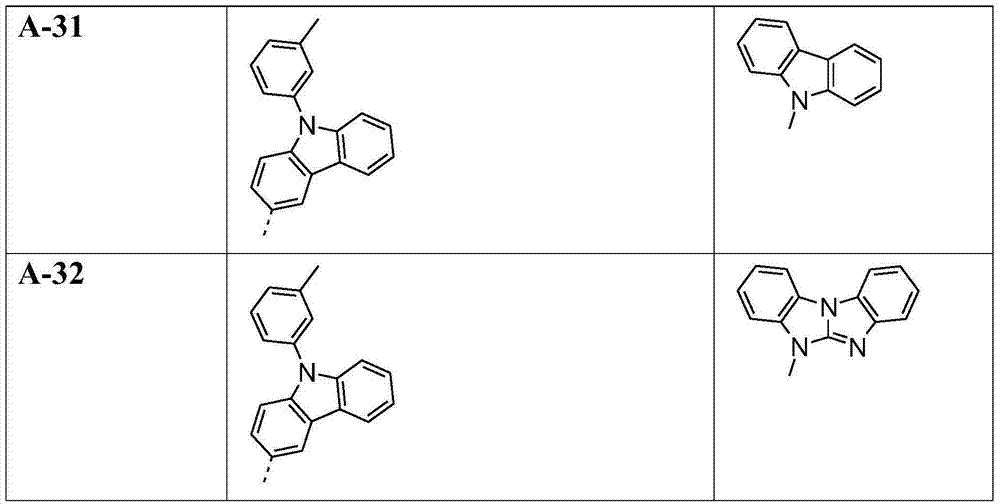
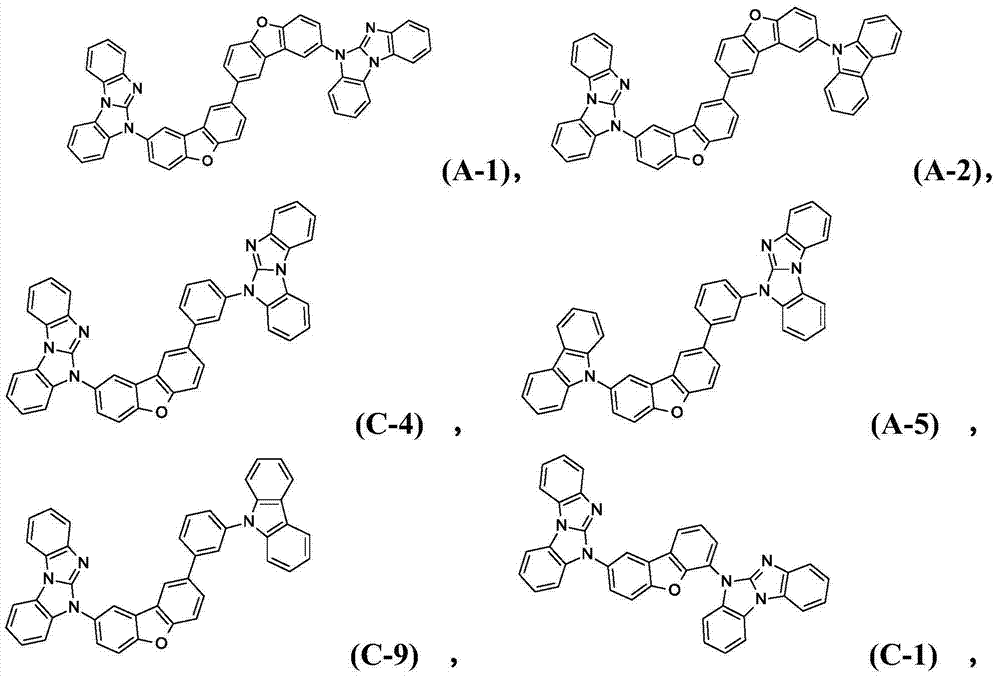
The example of preferred compound be compd A-1 to A-20, be especially presented at the A-1 to A-19 in claim 8, and be presented at compd A-21 in following table to A-32:


In another preferred embodiment, the present invention relates to formula
 compound, R wherein
1for formula-A
1-(A
2)
p-(A
3)
q-(A
4)
r-R
6group,
compound, R wherein
1for formula-A
1-(A
2)
p-(A
3)
q-(A
4)
r-R
6group,
Group A wherein
1, A
2, A
3and A
4in at least one is formula

 or
or
 group; And other are formula independently of each other


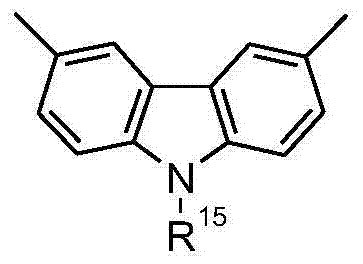 or
or
 group, R
6for formula
group, R
6for formula
 or
group, and
or
group, and
R
15for formula
 or
or
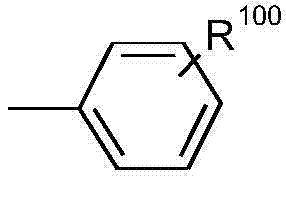 group, R wherein
100for C
1-C
8alkyl, and p, q and r are as defined above.
group, R wherein
100for C
1-C
8alkyl, and p, q and r are as defined above.
In described embodiment, formula-A
1-(A
2)
p-(A
3)
q-(A
4)
r-group be especially the group of following formula:


Formula-A most preferably at present
1-(A
2)
p-(A
3)
q-(A
4)
r-group be formula (IVa), (IVb), (IVe), (IVl), (IVk), (IVs), (IVv) and group (VIj).
In the situation that formula I compound being used as in blueness or green phosphorescent twinkler to material of main part or being used as electronics/exciton occluding material, be not more preferably as follows group A
1-(A
2)
p-(A
3)
q-(A
4)
r-, it contains formula
 group, i.e. formula (IVp) and group (IVr).
The example of preferred compound is to be presented at Compound C-1 in following table to C-78.

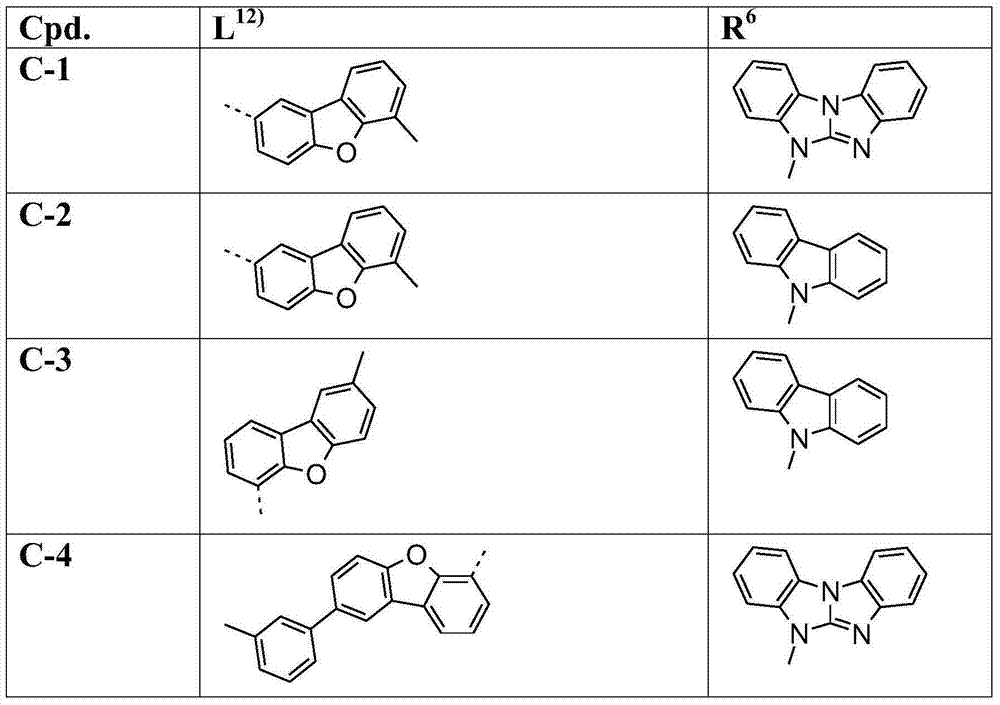


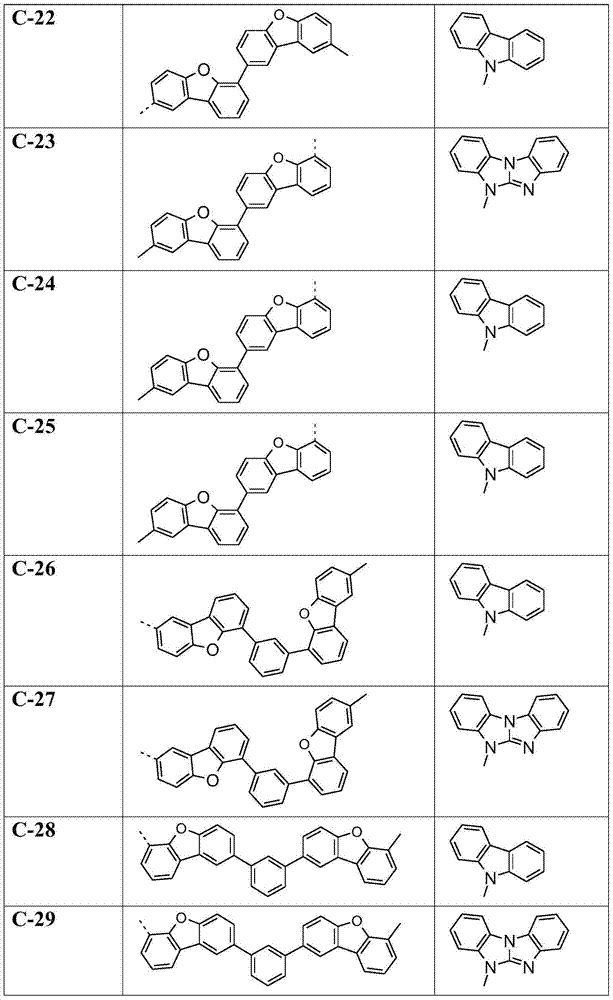


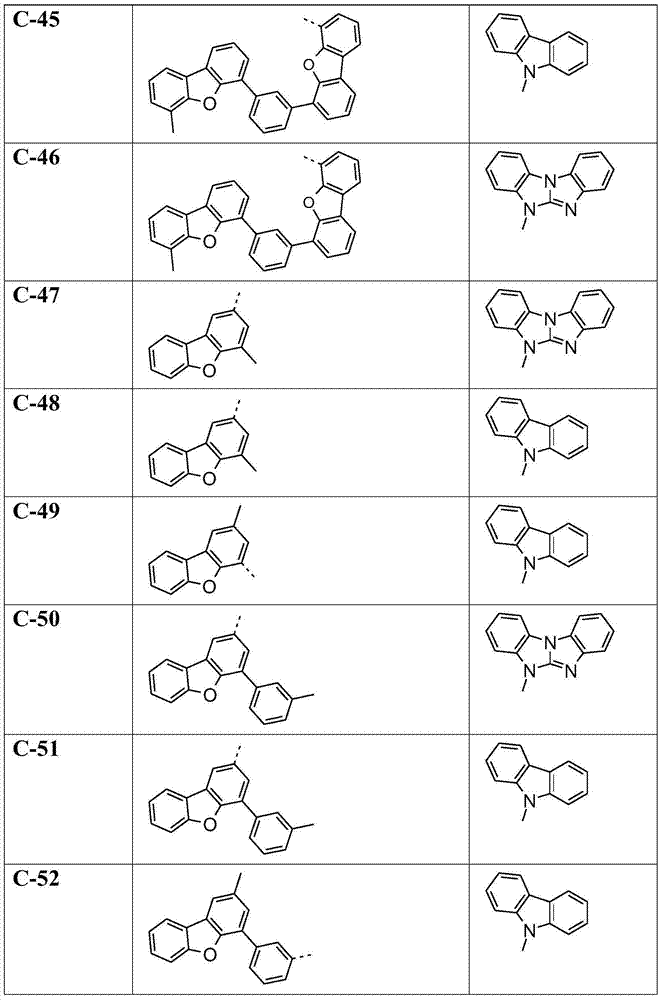


In another preferred embodiment, the present invention relates to formula
 compound.In another preferred embodiment, the present invention relates to formula
 with
with
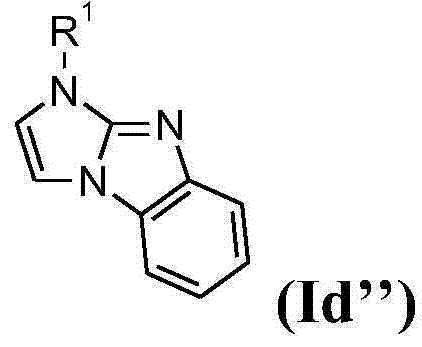 compound.
In described embodiment, R
1for formula-A
1-(A
2)
p-(A
3)
q-(A
4)
r-R
6group, wherein
A
1, A
2, A
3and A
4be formula independently of each other
 or
or
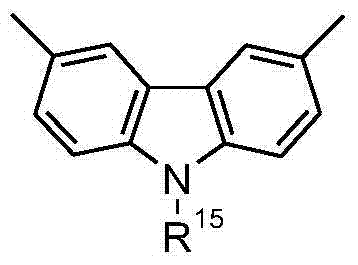 group,
R
6for formula
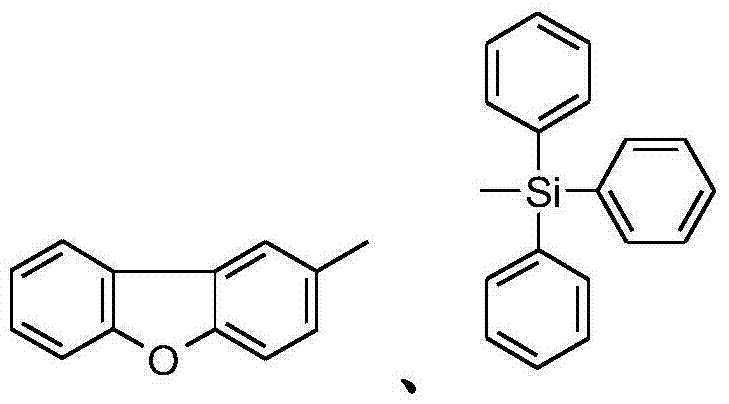 or
or
 group;
R
15and R
16for formula
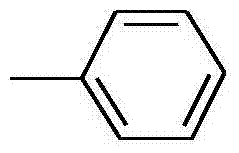 or
or
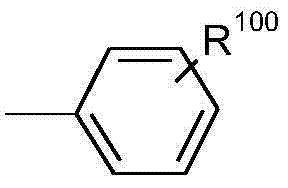 group, R wherein
100for C
1-C
8alkyl, and p, q and r are as defined above.In addition A,
1, A
2, A
3and A
4it can be formula
group, R wherein
100for C
1-C
8alkyl, and p, q and r are as defined above.In addition A,
1, A
2, A
3and A
4it can be formula
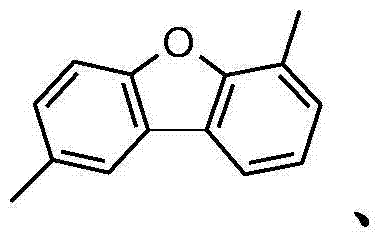
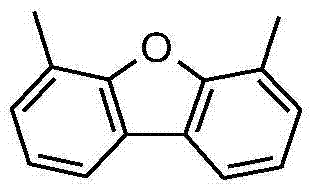
 or
or
 group.In addition R,
6can be formula
group.In addition R,
6can be formula
 group.In described embodiment, formula-A
1-(A
2)
p-(A
3)
q-(A
4)
r-group be especially formula
group.In described embodiment, formula-A
1-(A
2)
p-(A
3)
q-(A
4)
r-group be especially formula

 or
or
 group.In addition formula-A,
1-(A
2)
p-(A
3)
q-(A
4)
r-group can be formula
group.In addition formula-A,
1-(A
2)
p-(A
3)
q-(A
4)
r-group can be formula


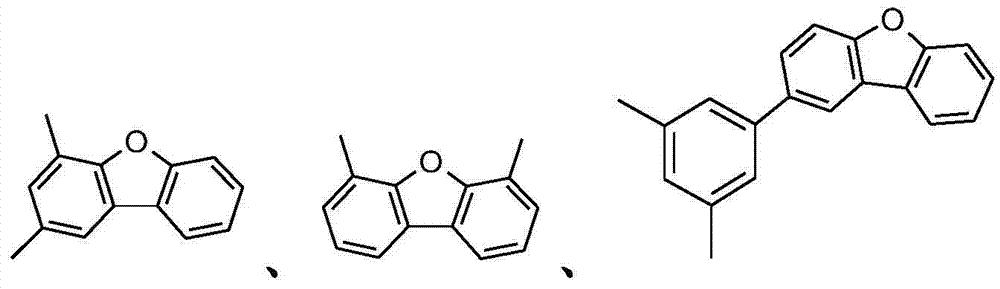
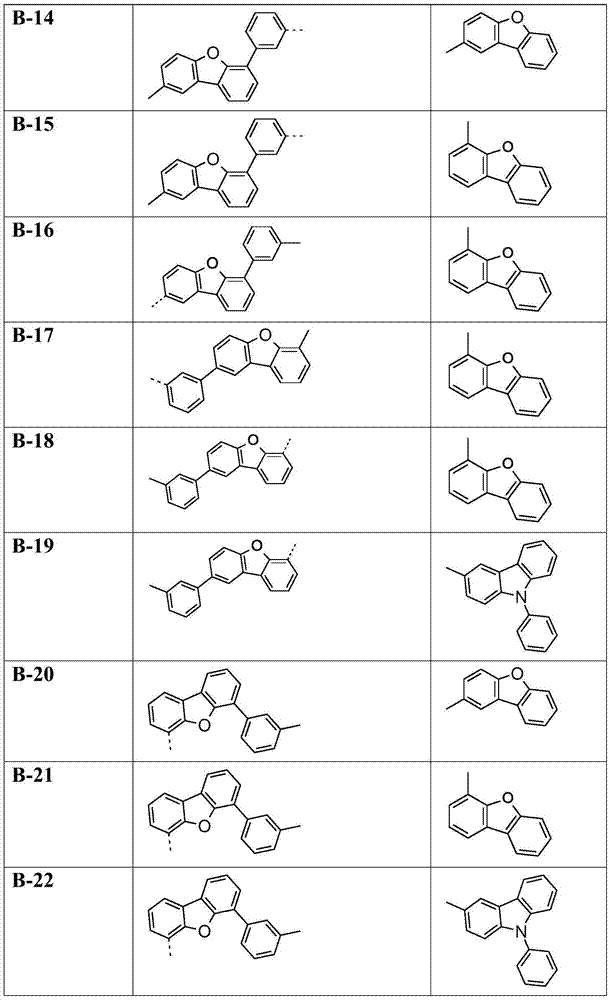
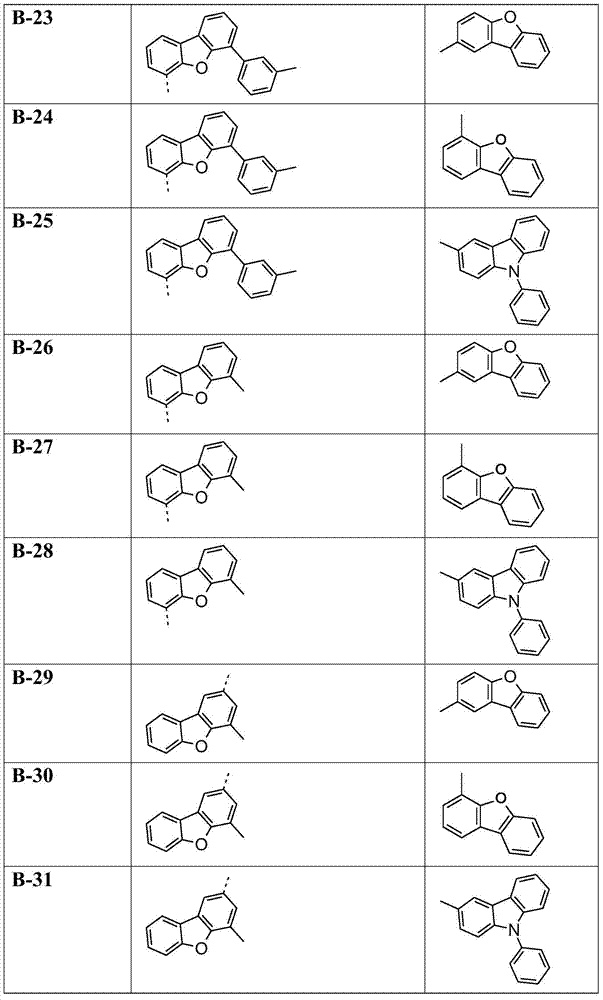
The example of preferred compound be compd B-1 to B-5, be especially presented at the B-1 to B-4 in claim 9, and be presented at compd B-6 in following table to B-35:



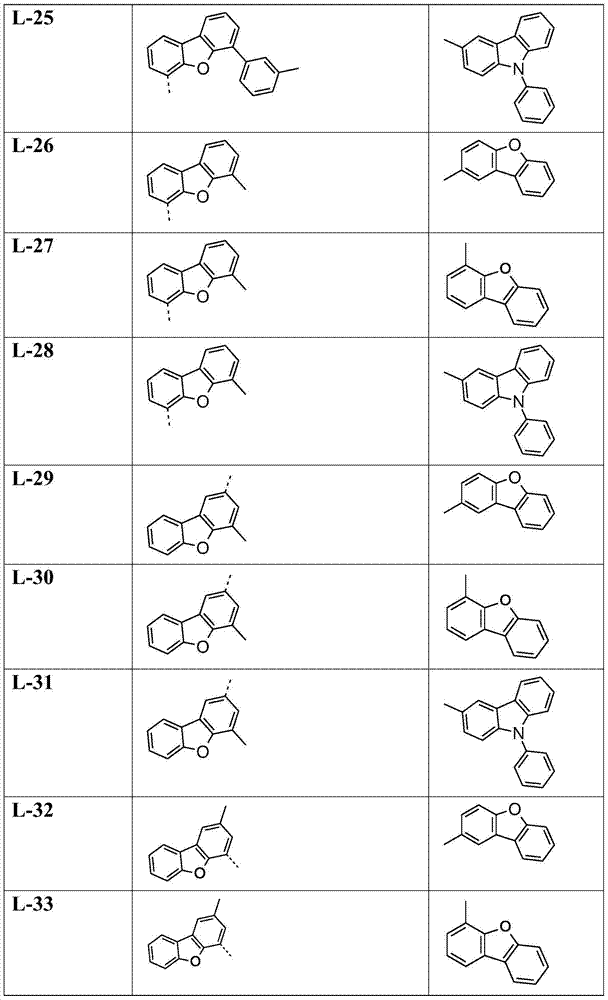
The additional examples of preferred compound is compound J-1 to J-35, K-1 to K-35 and the L-1 to L-35 being presented in following table:
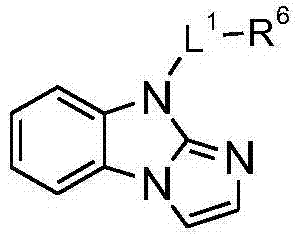


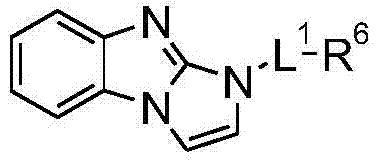


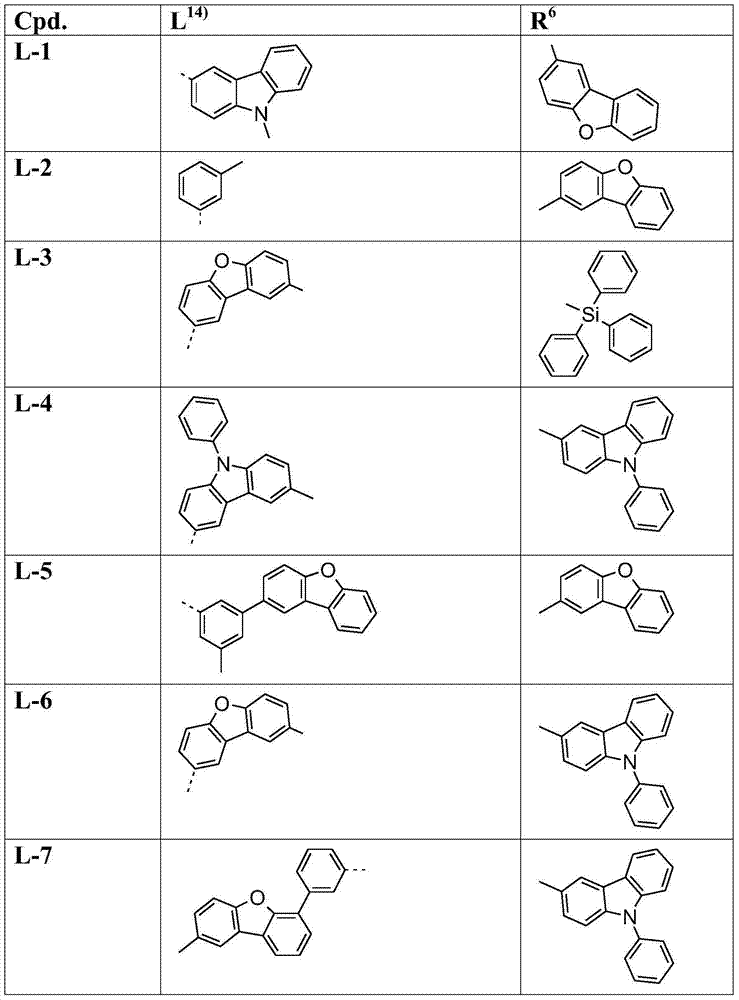
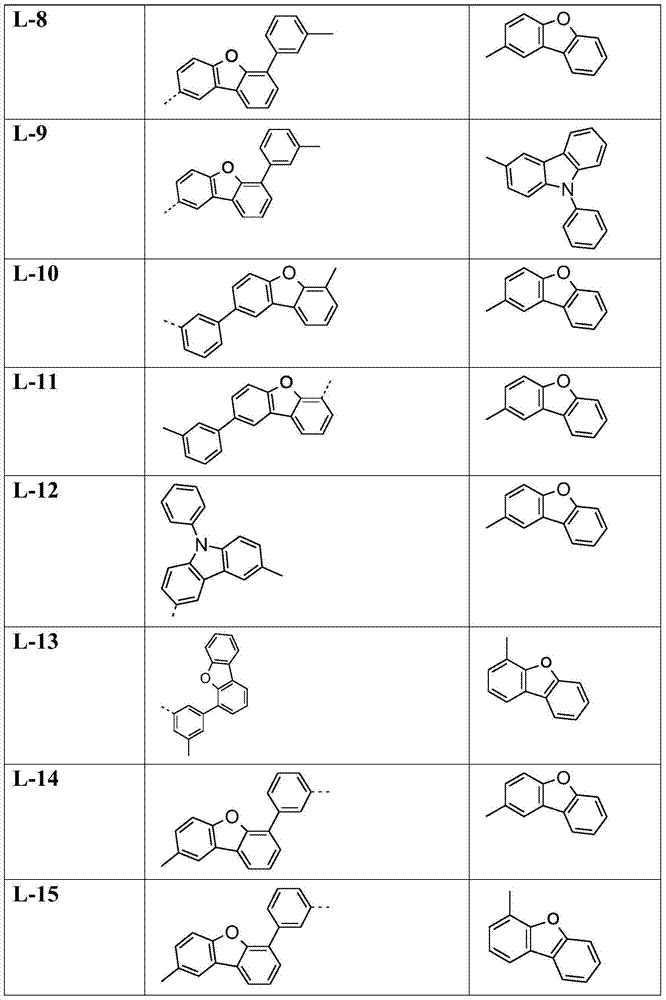


In another preferred embodiment, the present invention relates to formula

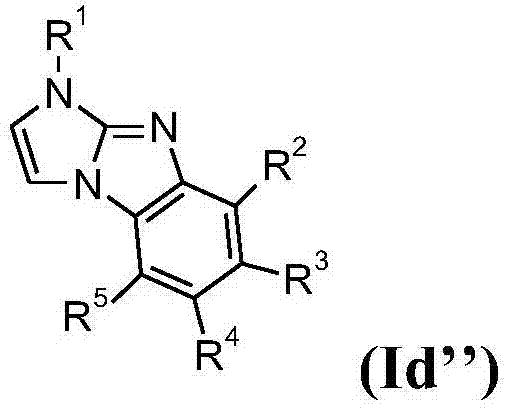 or
or
 compound, R wherein
1for formula-A
1-(A
2)
p-(A
3)
q-(A
4)
r-R
6group; And A
1, A
2, A
3, A
4, R
2, R
3, R
4, R
5, p, q and r as defined above.
compound, R wherein
1for formula-A
1-(A
2)
p-(A
3)
q-(A
4)
r-R
6group; And A
1, A
2, A
3, A
4, R
2, R
3, R
4, R
5, p, q and r as defined above.
R
1be preferably formula-A
1-(A
2)
p-(A
3)
q-(A
4)
r-R
6or
 group, A wherein
1, A
2, A
3and A
4be formula independently of each other
group, A wherein
1, A
2, A
3and A
4be formula independently of each other

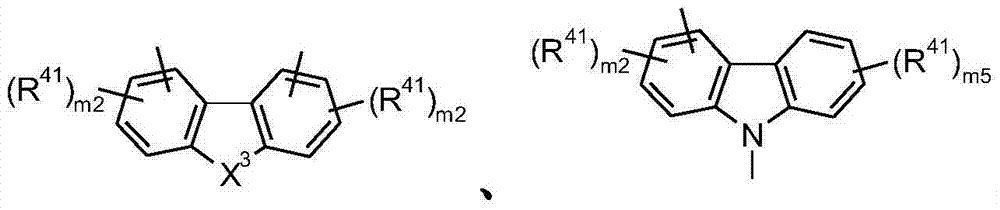 or
or
 group, wherein
M5 is 0 or the integer of 1-4,
M2 is 0 or integer 1-3,
X
3wei – O-,-S-Huo – NR
15-,
R
7and R
8for C
1-C
18alkyl,
R
15for C
1-C
18alkyl; Or the C at quilt-O-interval
1-C
18alkyl; C
6-C
18aryl; By one or more C
1-C
18alkyl or C
1-C
18the C that alkoxyl group replaces
6-C
18aryl; C
2-C
20heteroaryl or by one or more C
1-C
18the C that alkyl replaces
2-C
20heteroaryl, and
R
41can be identical or different when occurring and be F at every turn, C
1-C
18alkyl, is replaced by E and/or by the C at D interval
1-C
18alkyl, C
6-C
24aryl, the C being replaced by G
6-C
24aryl, C
2-C
20heteroaryl or the C being replaced by G
2-C
20heteroaryl.
R
6be preferably formula
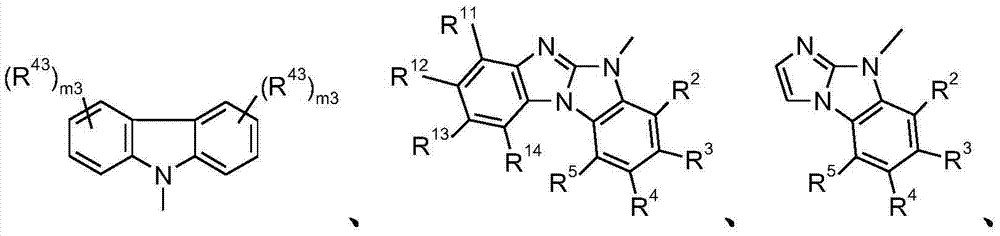
 or
group,
or
group,
R
43can be identical or different when occurring and be F at every turn, C
1-C
18alkyl, is replaced by E and/or by the C at D interval
1-C
18alkyl, C
6-C
24aryl, the C being replaced by G
6-C
24aryl, C
2-C
20heteroaryl or the C being replaced by G
2-C
20heteroaryl,
M3 is 0 or the integer of 1-4.E, D, G, R
11, R
12, R
13and R
14as defined above.
R
2, R
3, R
4and R
5be preferably hydrogen.
Preferably, A
1, A
2, A
3and A
4be formula independently of each other
 or
or
 group, R wherein
15for C
6-C
18aryl; Or by one or more C
1-C
18the C that alkyl replaces
6-C
18aryl.
group, R wherein
15for C
6-C
18aryl; Or by one or more C
1-C
18the C that alkyl replaces
6-C
18aryl.
R
15be preferably formula
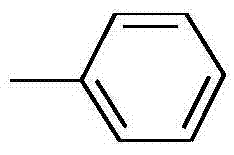 or
or
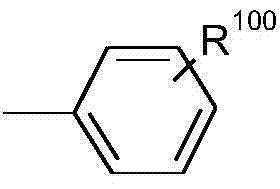 group, R wherein
100for C
1-C
8alkyl.
group, R wherein
100for C
1-C
8alkyl.
R
6for formula

 or
or
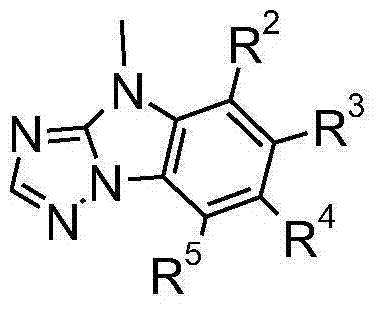 group, especially formula

 or
group.R
2, R3, R
4, R
5, R
11, R
12, R
13, R
14, R
43with m3 as defined above.
or
group.R
2, R3, R
4, R
5, R
11, R
12, R
13, R
14, R
43with m3 as defined above.
In described embodiment, formula-A
1-(A
2)
p-(A
3)
q-(A
4)
r-group be especially formula (IVa), (IVb), (IVc), (IVd), (IVe), (IVf), (IVg), (IVh), (IVi), (IVj), (IVk), (IVl), (IVm), (IVn), (IVo), (IVp),
(IVq), (IVr), (IVs), (IVt), (IVu), (IVv), (IVw), (IVx), (IVy), (IVz), (VIa), (VIb), (VIc), (VId), (VIe), (VIf), (VIg), (VIh), (VIi), (VIj), (VIk), (VIl), (VIm), (VIn), (VIo), (VIp), (VIq), (VIr), (VIs), (VIt) or group (VIu).Formula-A most preferably at present
1-(A
2)
p-(A
3)
q-(A
4)
r-group be formula (IVa), (IVb), (IVe), (IVl), (IVk), (IVs), (IVv) and group (VIj).
The example of preferred compound is to be presented at Compound D-1 in following table to D-144, E-1 to E-183 and H-1 to H-264.
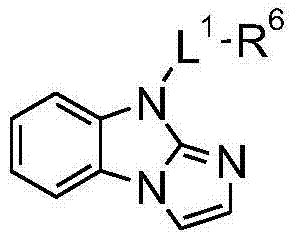


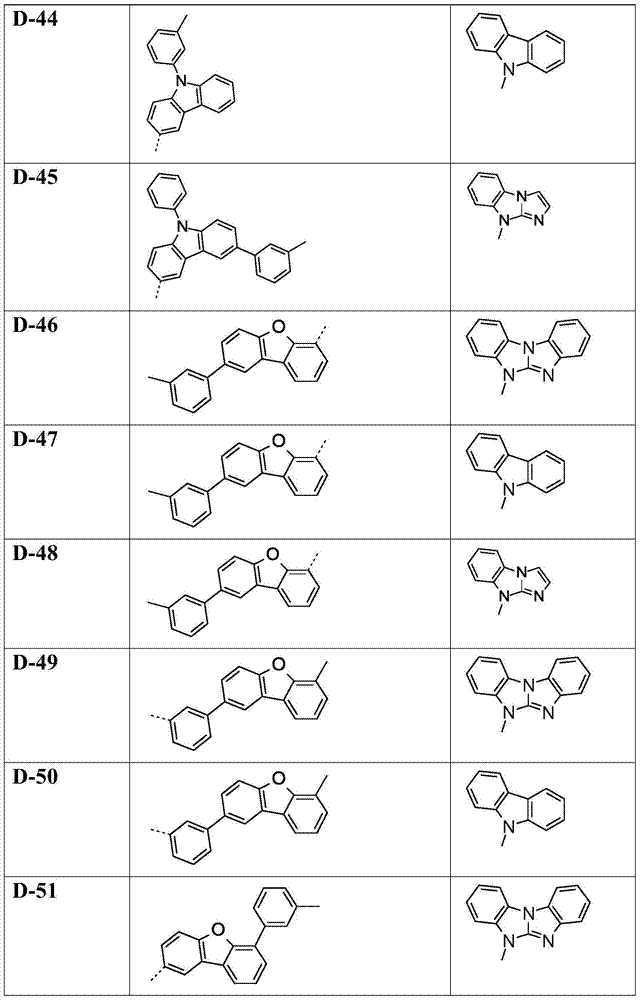


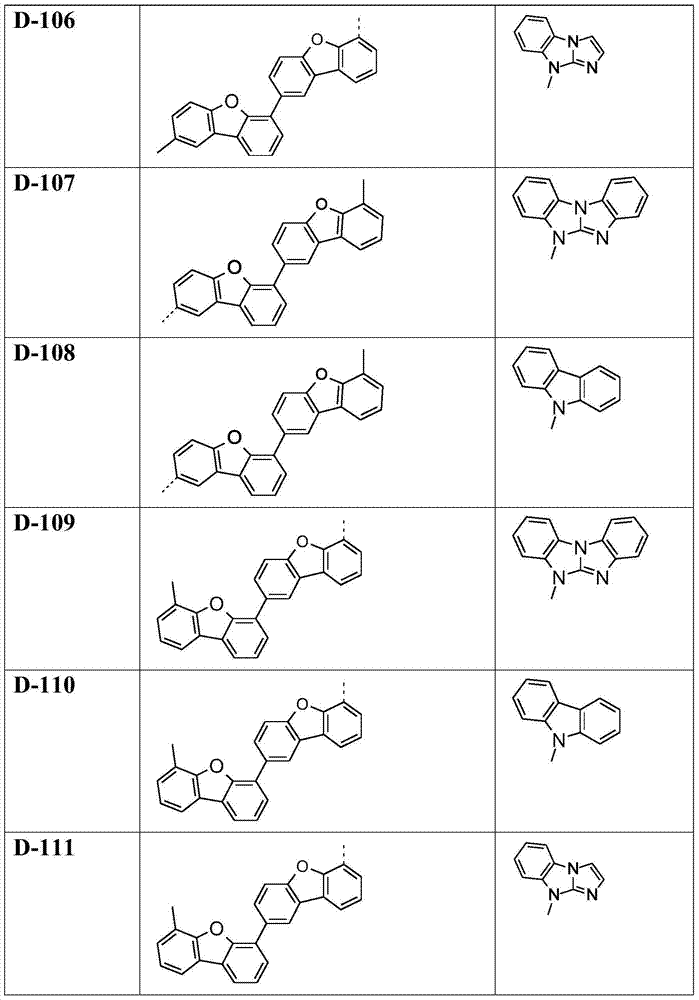
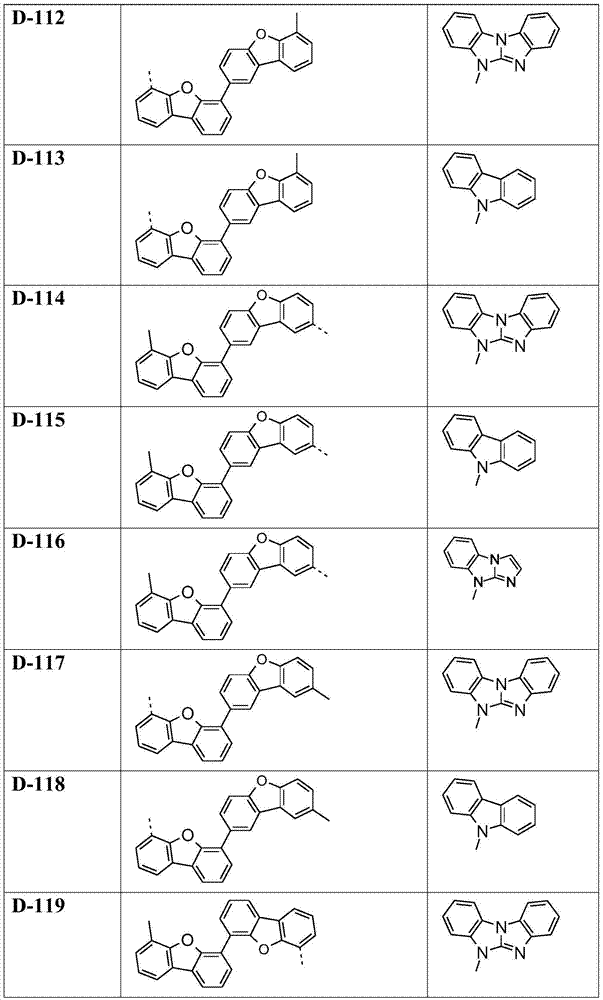



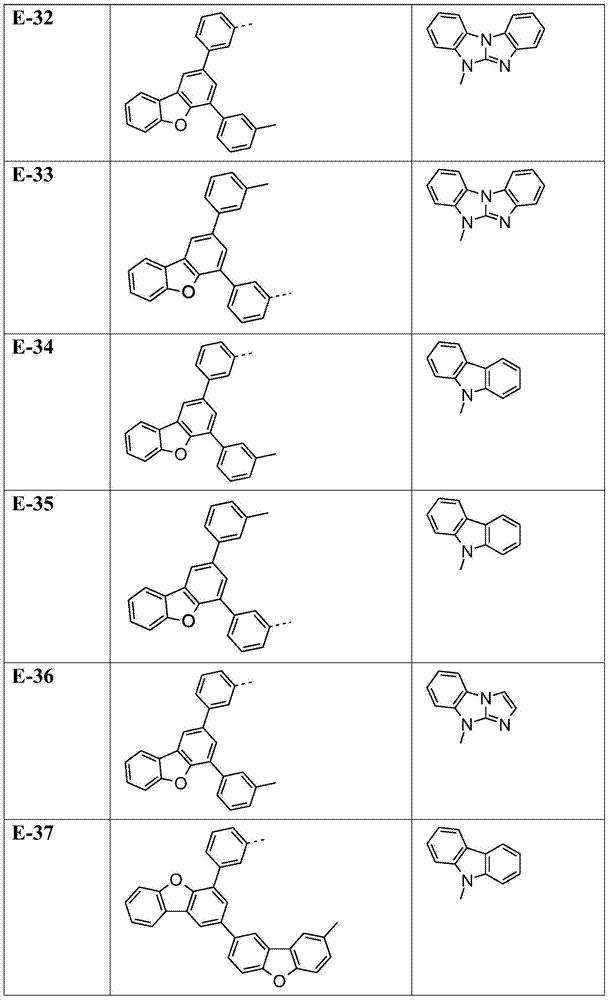
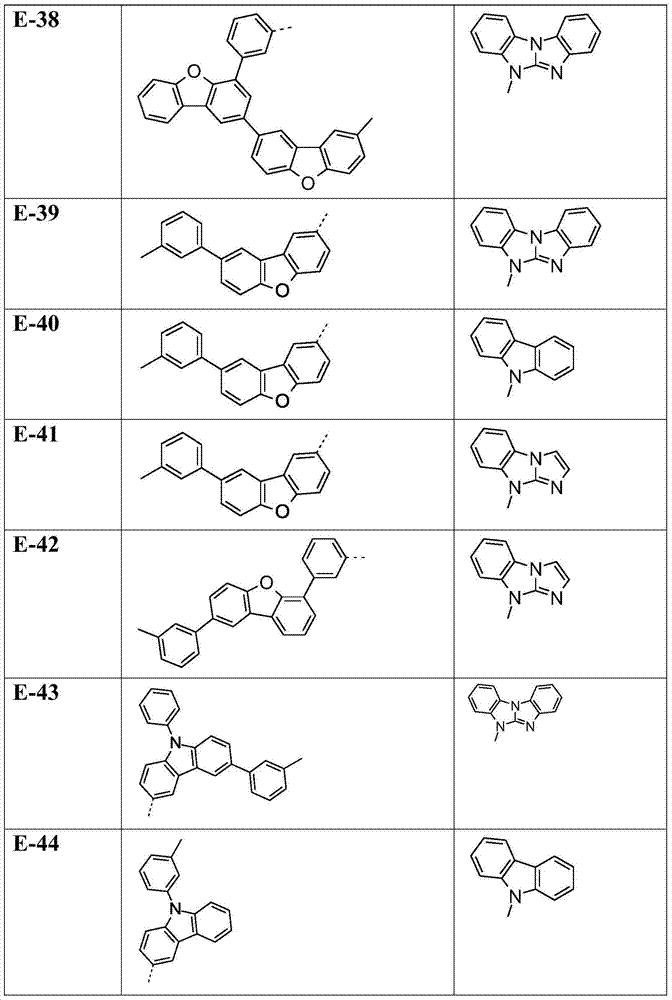
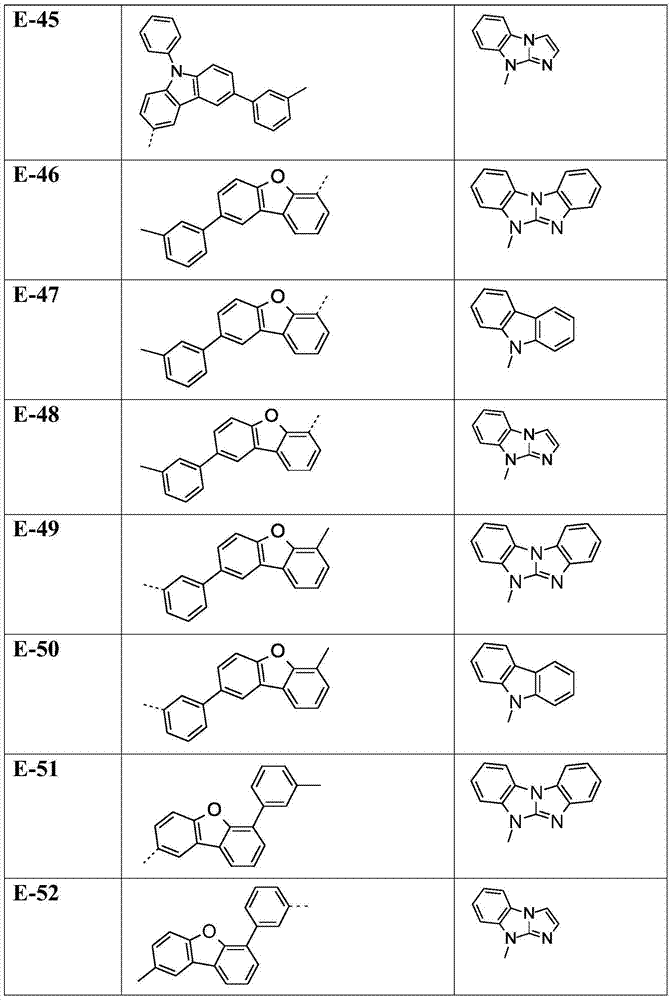


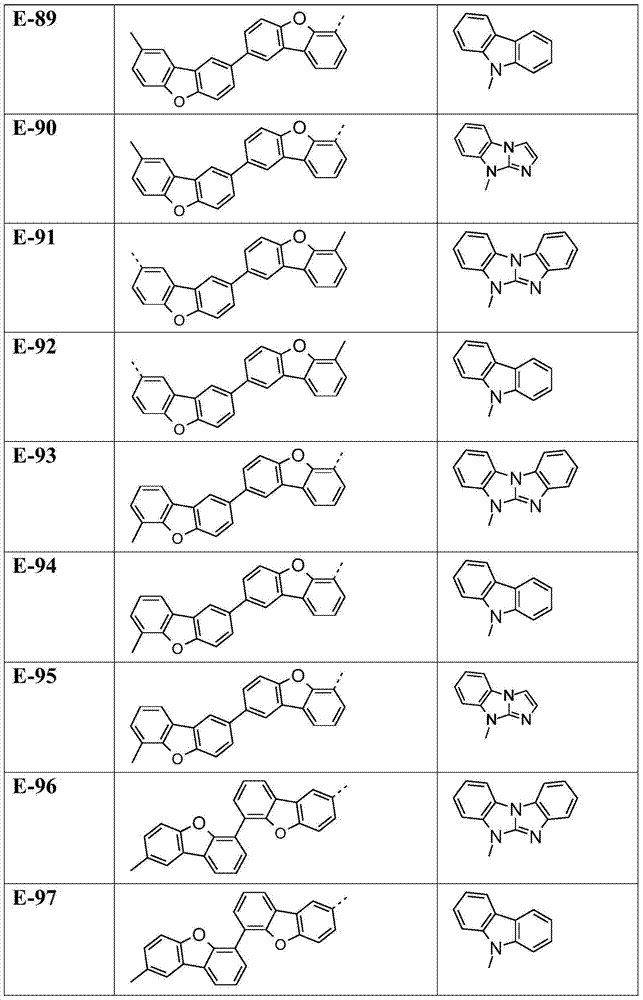


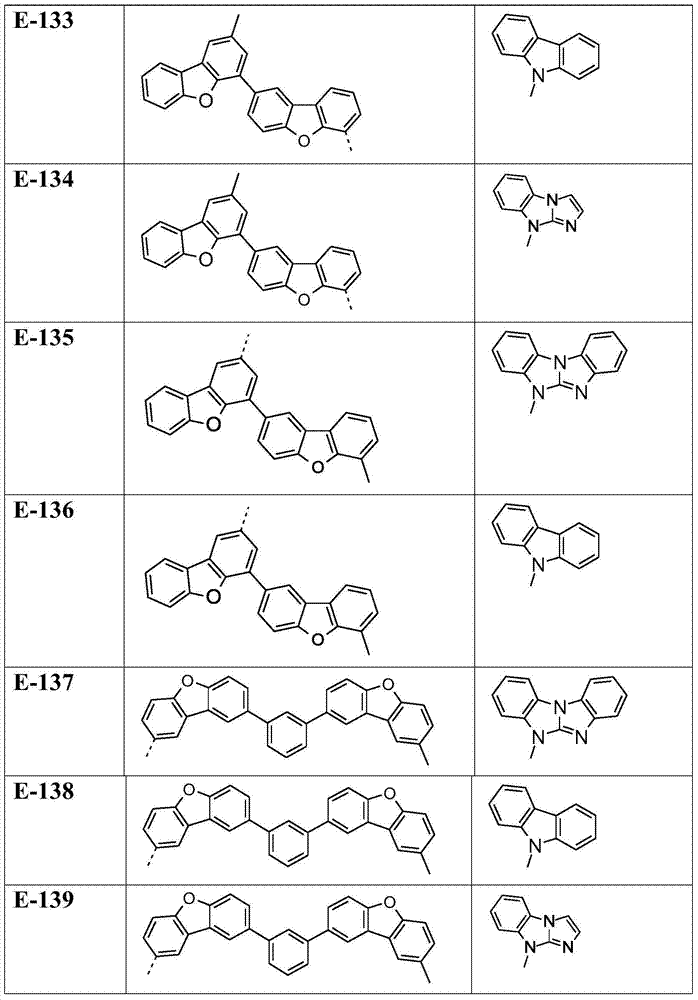


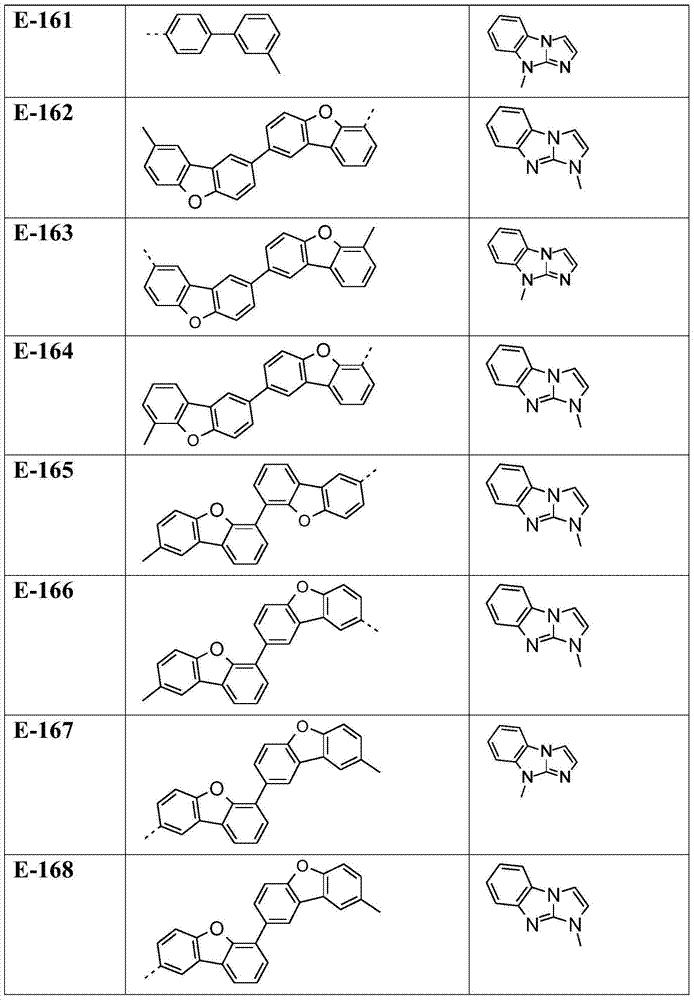
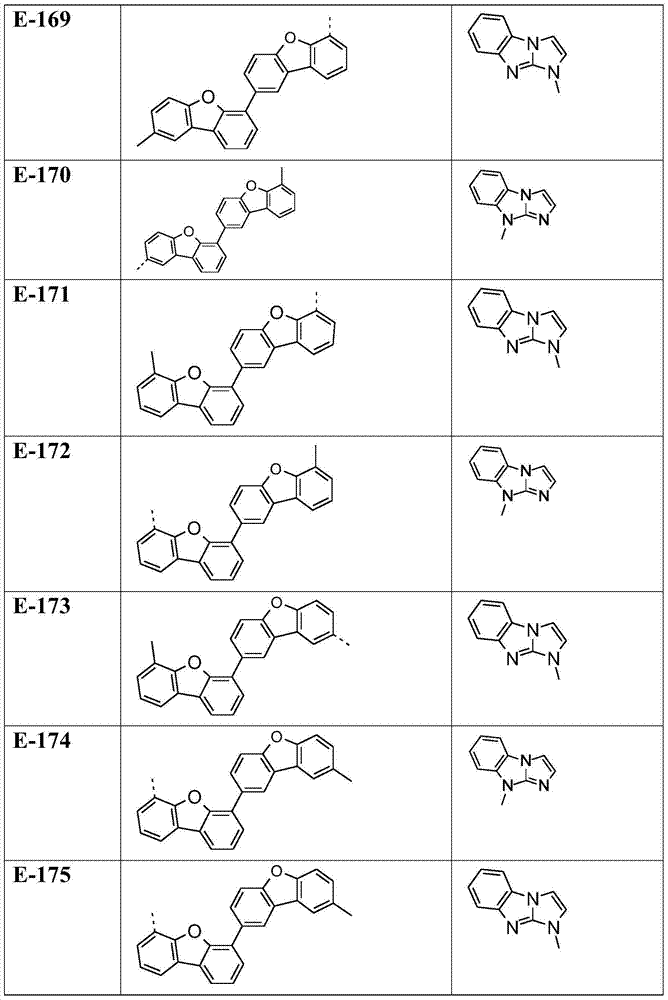
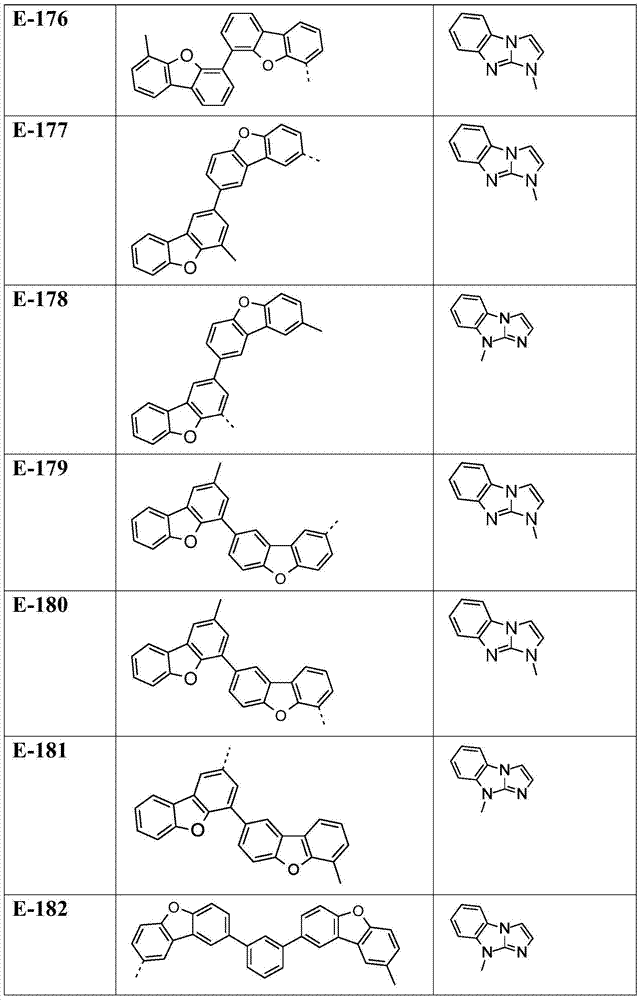
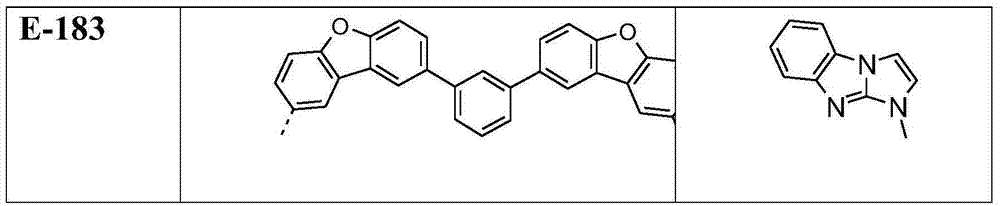
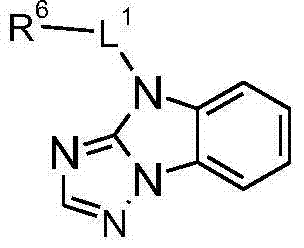


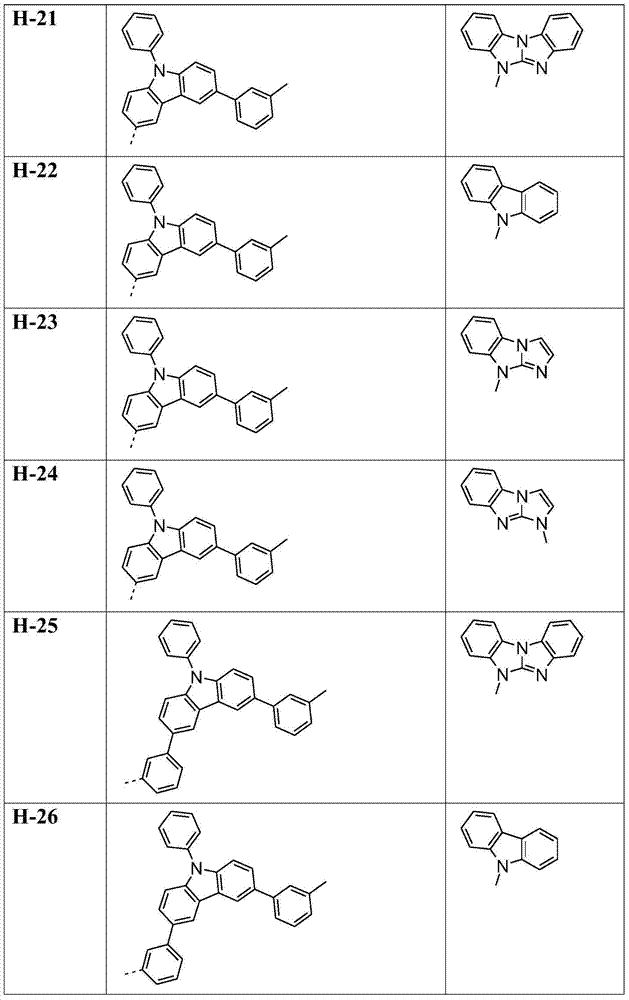
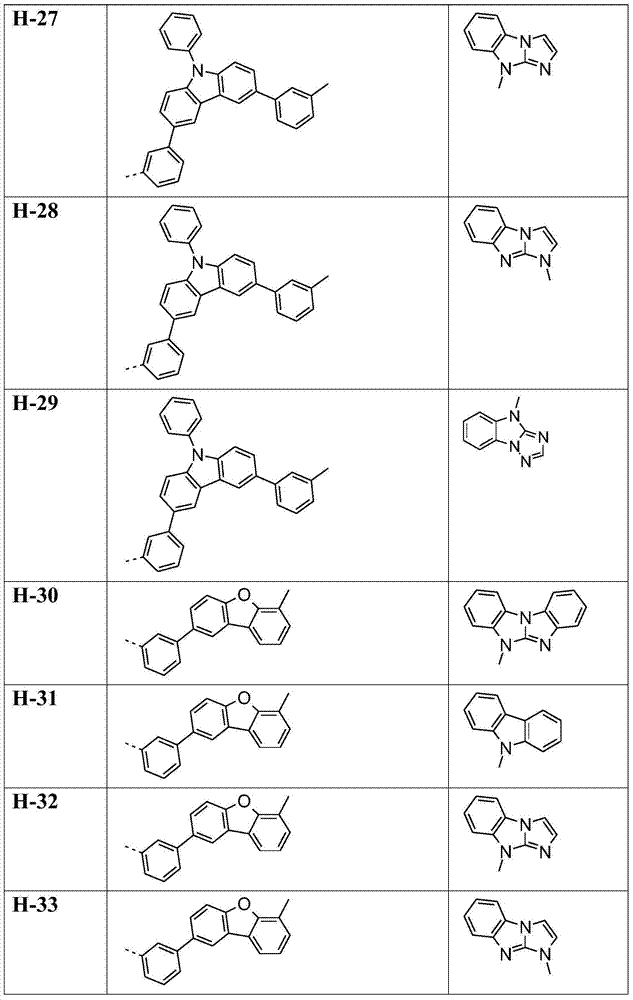


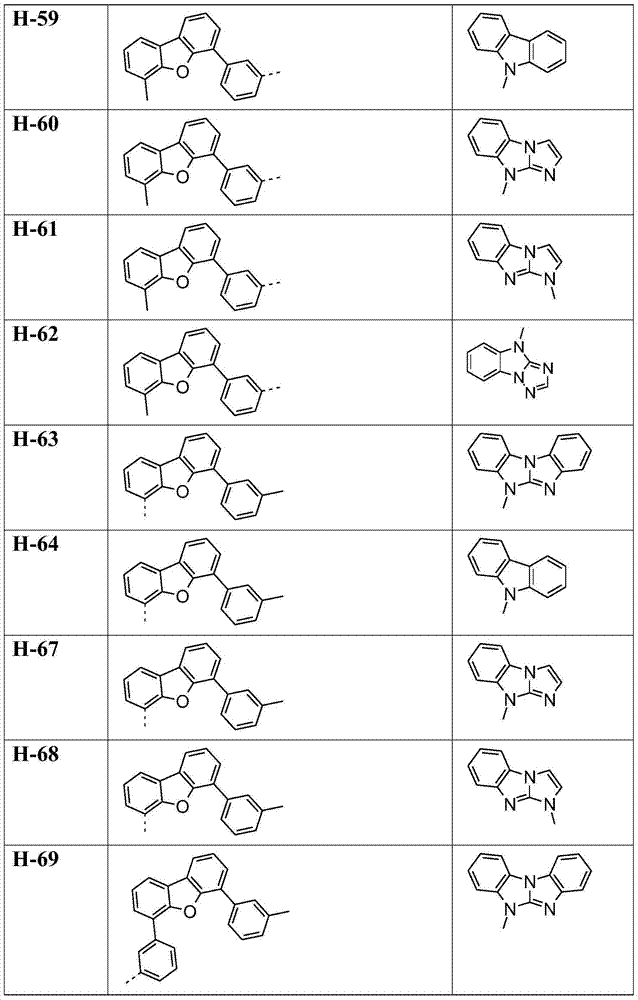

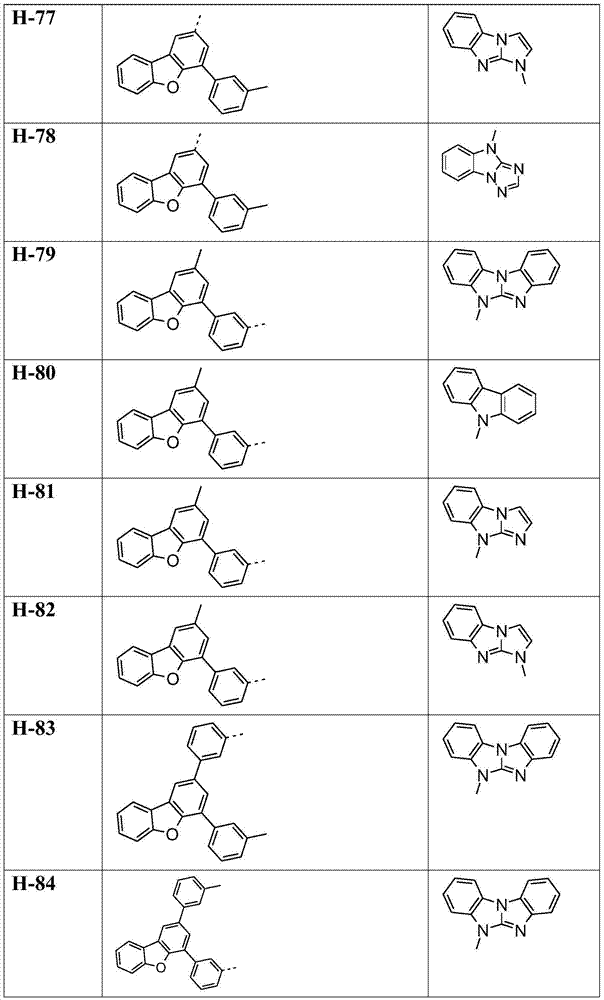


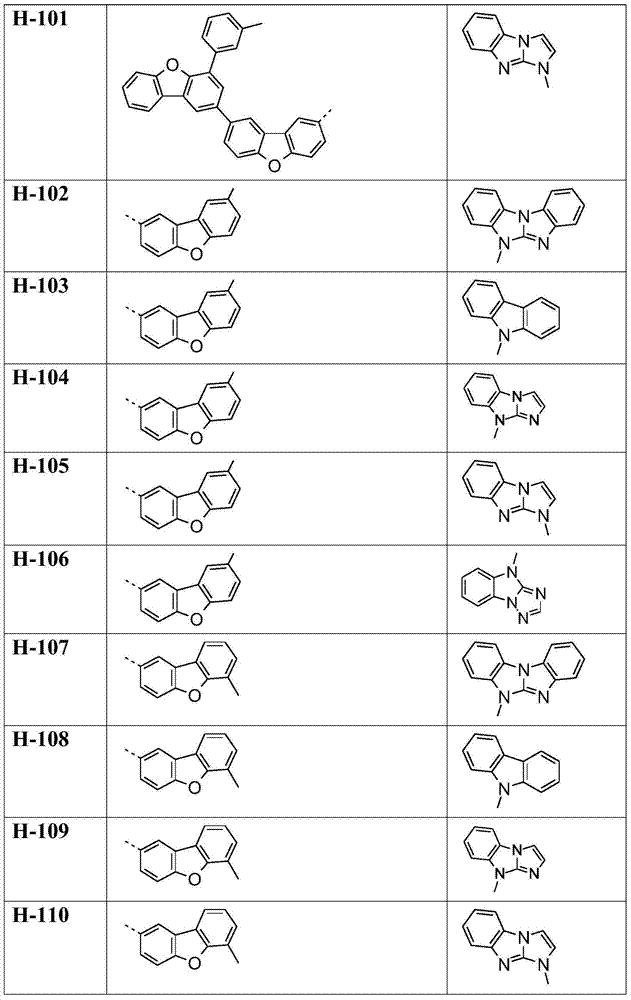


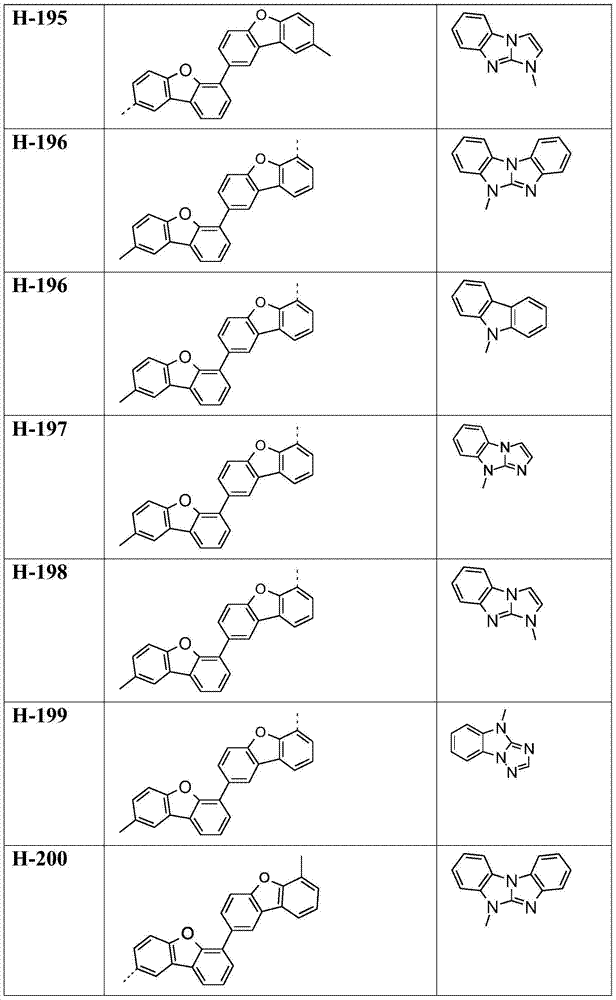

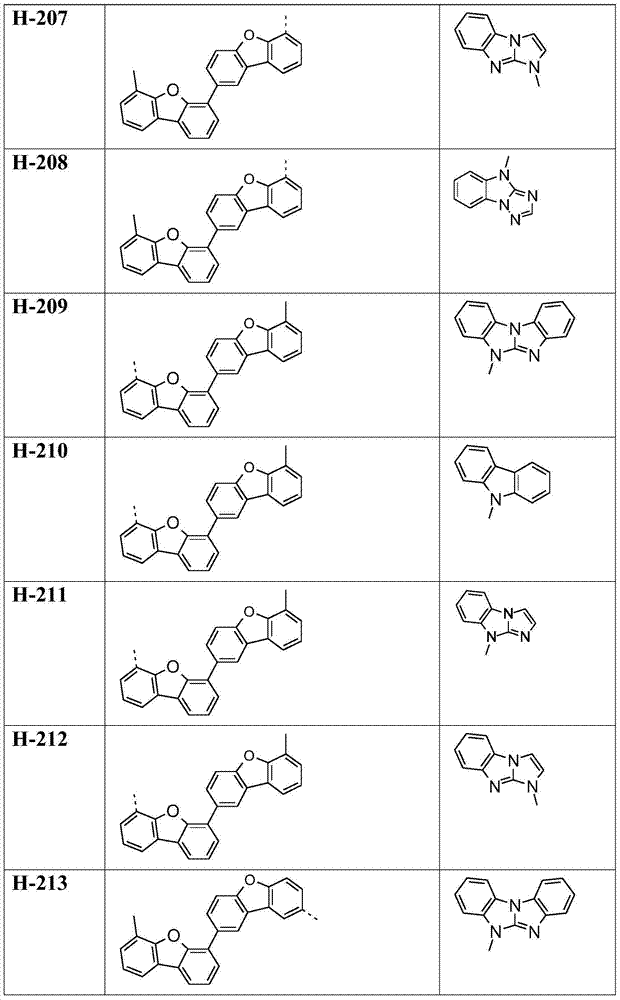


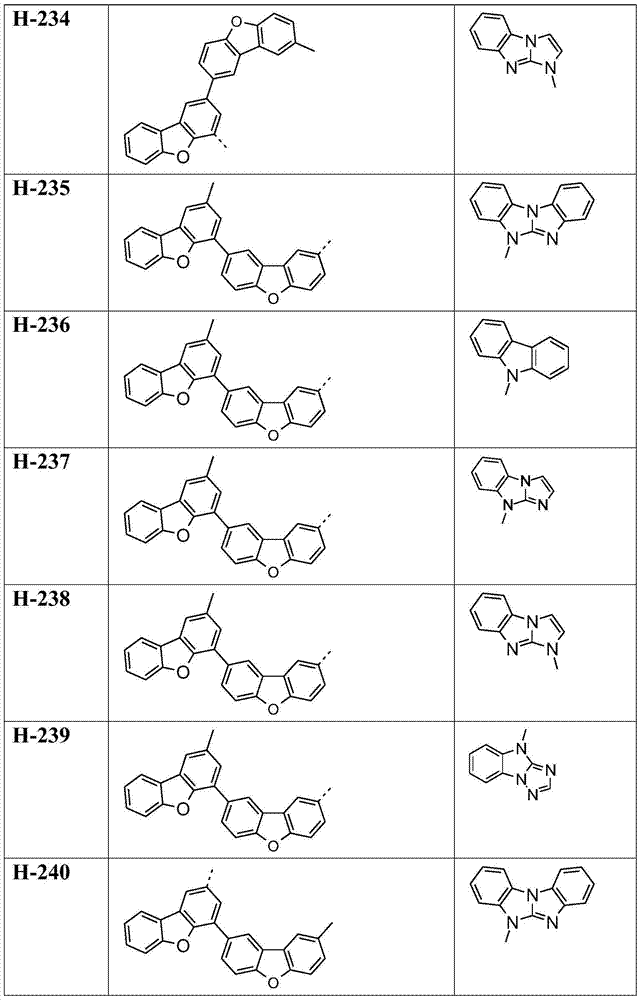
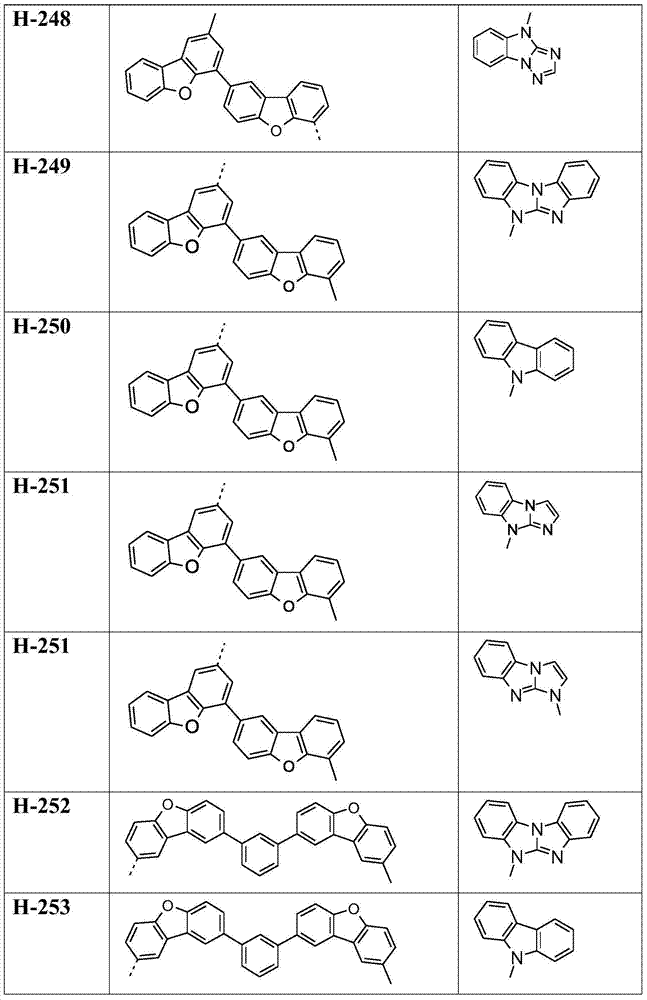
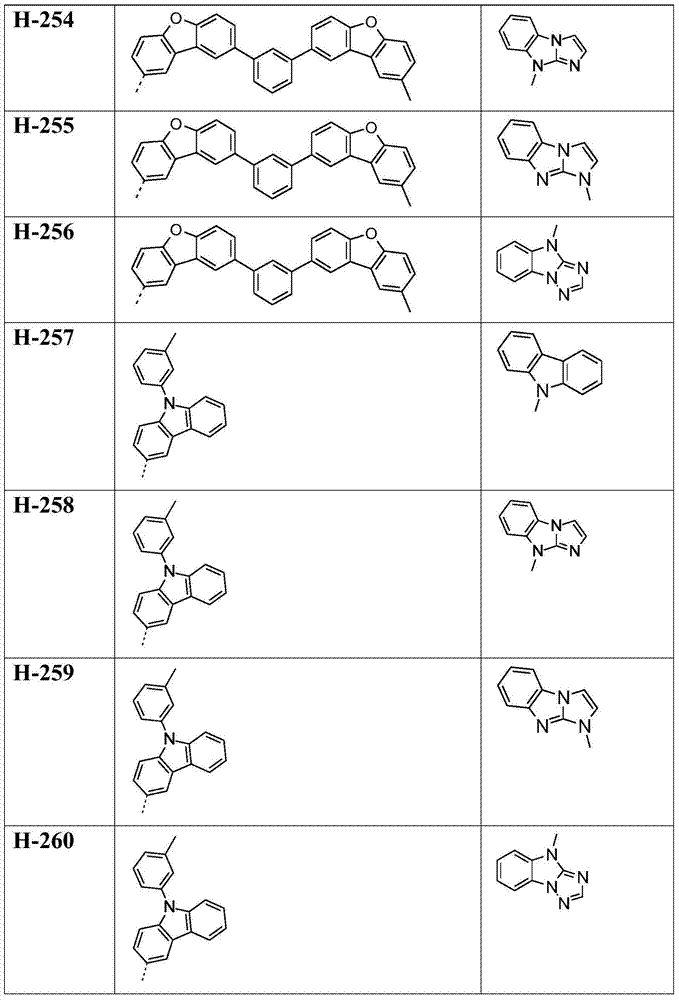

In another preferred embodiment, the present invention relates to formula
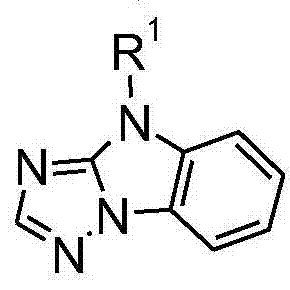 or
or
 compound, R wherein
1for formula-A
1-(A
2)
p-(A
3)
q-A
4-R
6group; A wherein
1, A
2and A
3be formula independently of each other
compound, R wherein
1for formula-A
1-(A
2)
p-(A
3)
q-A
4-R
6group; A wherein
1, A
2and A
3be formula independently of each other
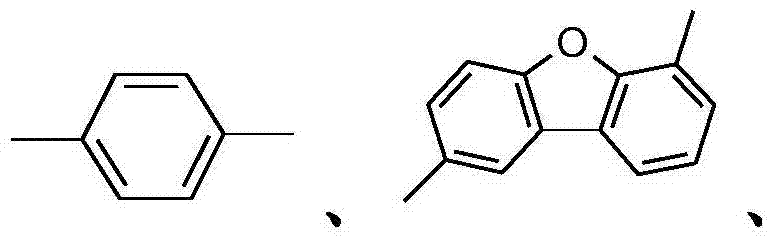
 or
or
 group, R wherein
15for C
6-C
18aryl; Or by one or more C
1-C
18the C that alkyl replaces
6-C
18aryl,
group, R wherein
15for C
6-C
18aryl; Or by one or more C
1-C
18the C that alkyl replaces
6-C
18aryl,
A
4for formula
 group, its via N atomic bond in A
3;
group, its via N atomic bond in A
3;
R
6for formula
or
 group, and p and q are as defined above.
R
15be preferably formula
 or
or
 group, R wherein
100for C
1-C
8alkyl.In described embodiment, formula-A
1-(A
2)
p-(A
3)
q-group be especially formula (IVa), (IVb), (IVc), (IVd), (IVe), (IVf), (IVg), (IVi), (IVj), (IVk), (IVl), (IVm), (IVn), (IVo), (IVp), (IVq), (IVr), (IVs), (IVt), (IVu), (IVv), (IVw), (IVx), (IVy), (IVz), (VIa), (VIb), (VIc), (VId), (VIe), (VIf), (VIg), (VIh), (VIi), (VIj), (VIk), (VIl), (VIm), (VIn), (VIo), (VIp), (VIq), (VIr), (VIs), (VIt) group or (VIu).Formula-A most preferably at present
1-(A
2)
p-(A
3)
q-group be formula (IVa), (IVb), (IVe), (IVl), (IVk), (IVs), (IVv) and group (VIj).
group, R wherein
100for C
1-C
8alkyl.In described embodiment, formula-A
1-(A
2)
p-(A
3)
q-group be especially formula (IVa), (IVb), (IVc), (IVd), (IVe), (IVf), (IVg), (IVi), (IVj), (IVk), (IVl), (IVm), (IVn), (IVo), (IVp), (IVq), (IVr), (IVs), (IVt), (IVu), (IVv), (IVw), (IVx), (IVy), (IVz), (VIa), (VIb), (VIc), (VId), (VIe), (VIf), (VIg), (VIh), (VIi), (VIj), (VIk), (VIl), (VIm), (VIn), (VIo), (VIp), (VIq), (VIr), (VIs), (VIt) group or (VIu).Formula-A most preferably at present
1-(A
2)
p-(A
3)
q-group be formula (IVa), (IVb), (IVe), (IVl), (IVk), (IVs), (IVv) and group (VIj).
In the situation that formula I compound being used as in blueness or green phosphorescent twinkler to material of main part or being used as electronics/exciton occluding material, be not more preferably as follows group A
1-(A
2)
p-(A
3)
q-(A
4)
r-, it contains formula
 group, i.e. formula (IVp) and group (IVr).The example of preferred compound is to be presented at compound F 17-hydroxy-corticosterone-1 in following table to F-62 and G-1 to G-62.

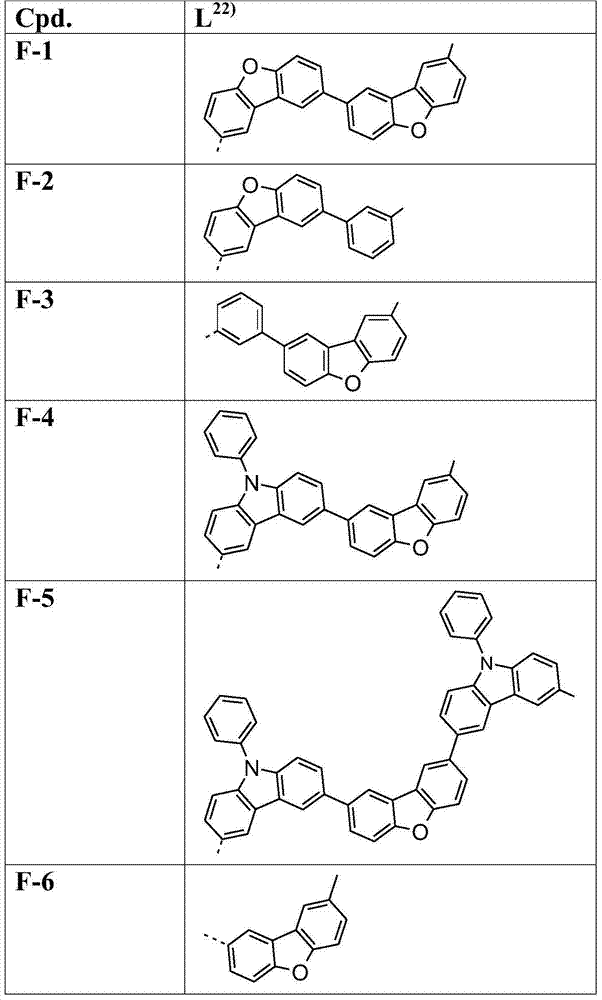


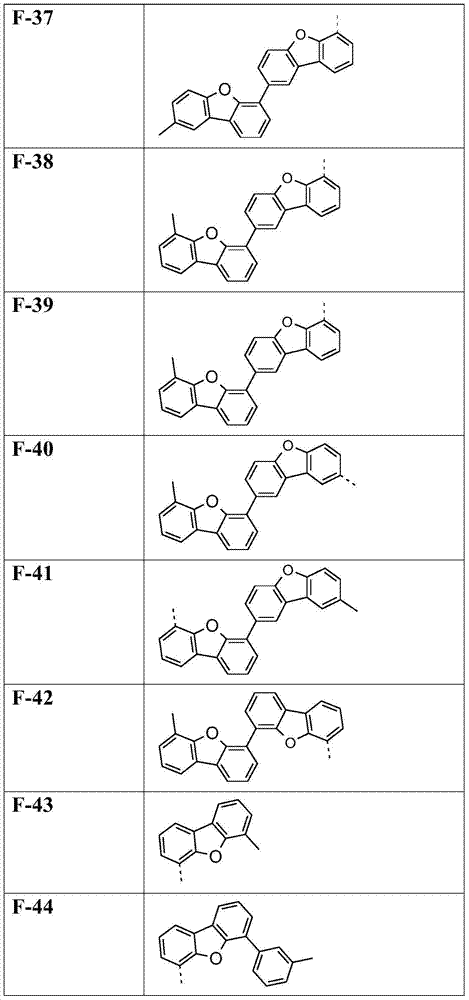


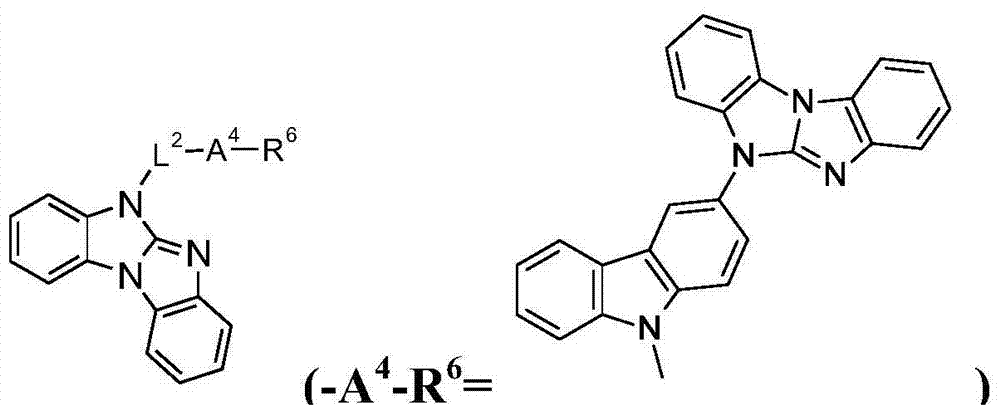
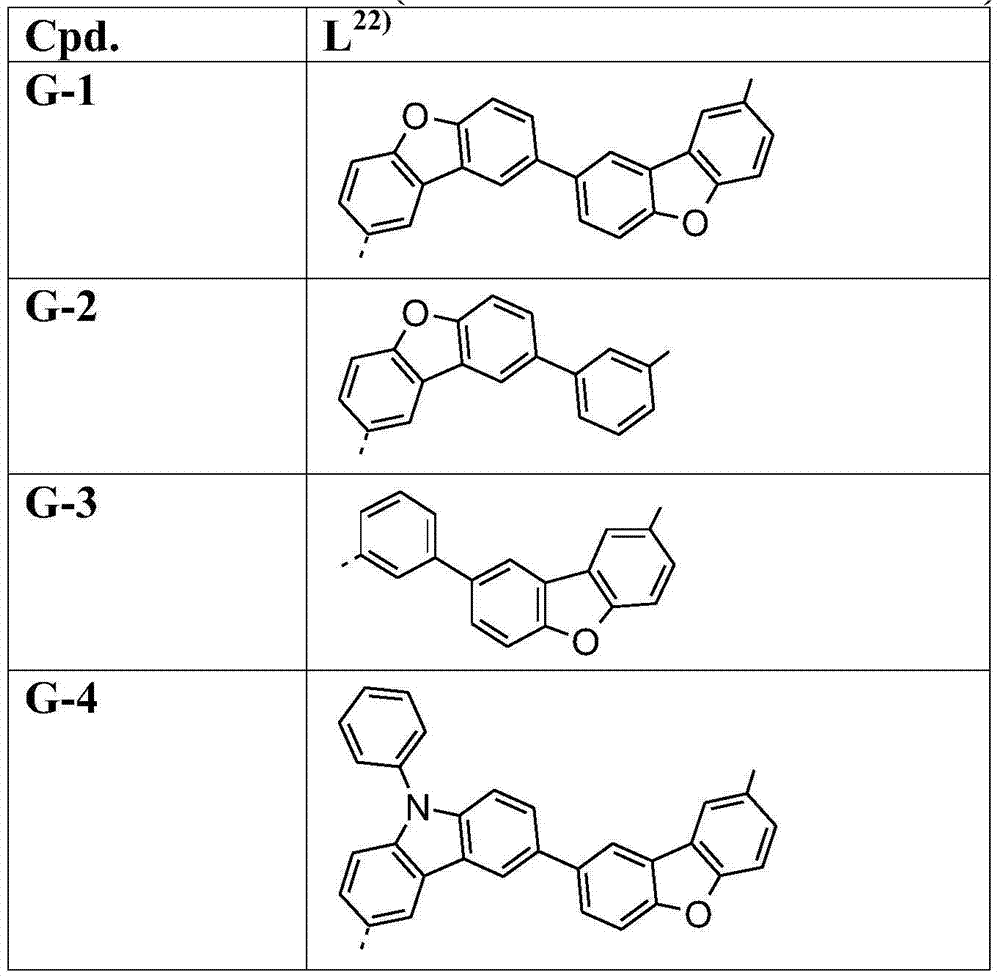
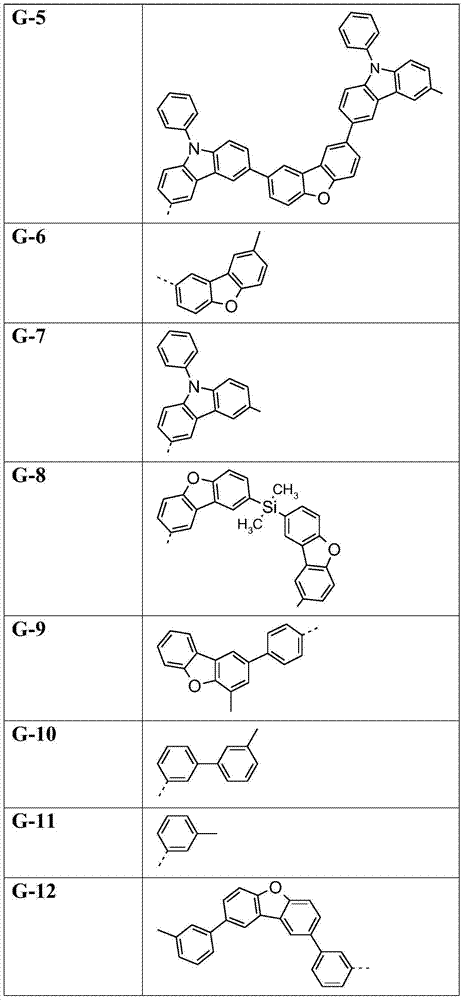


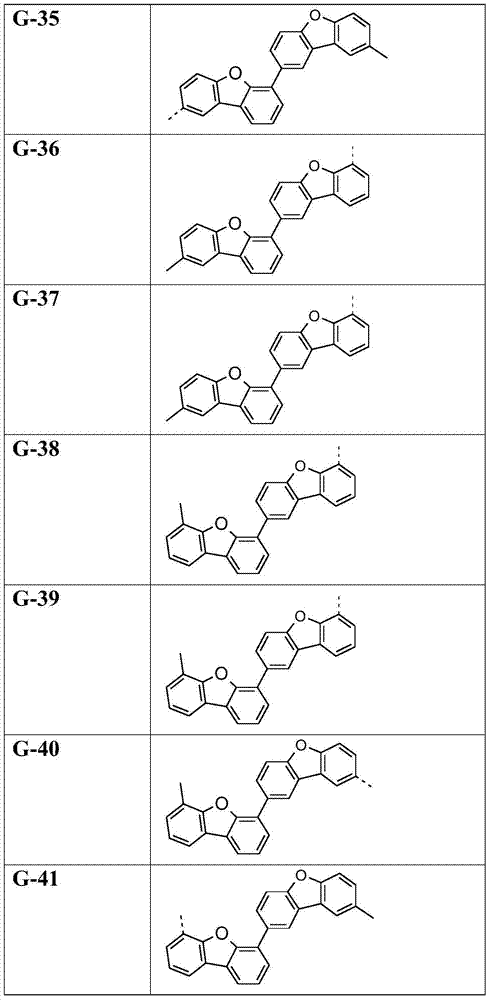

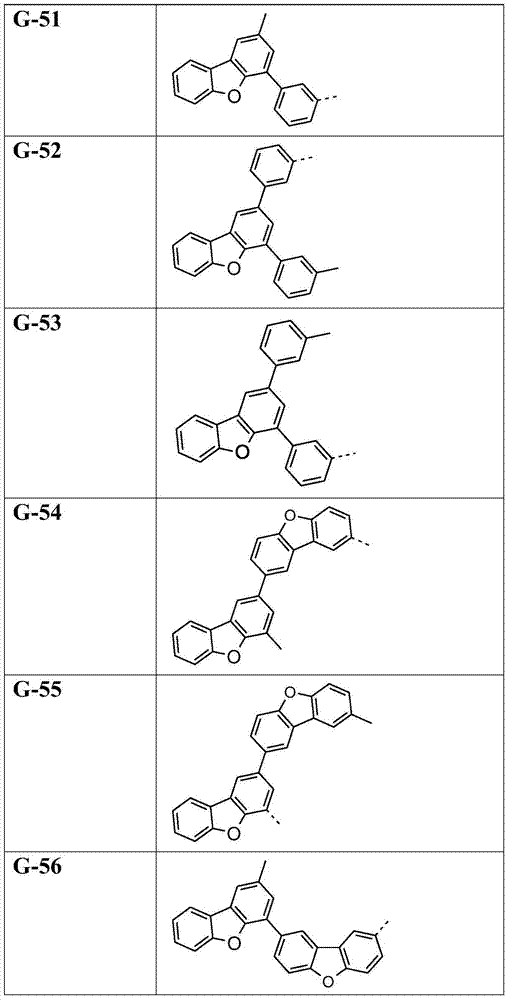
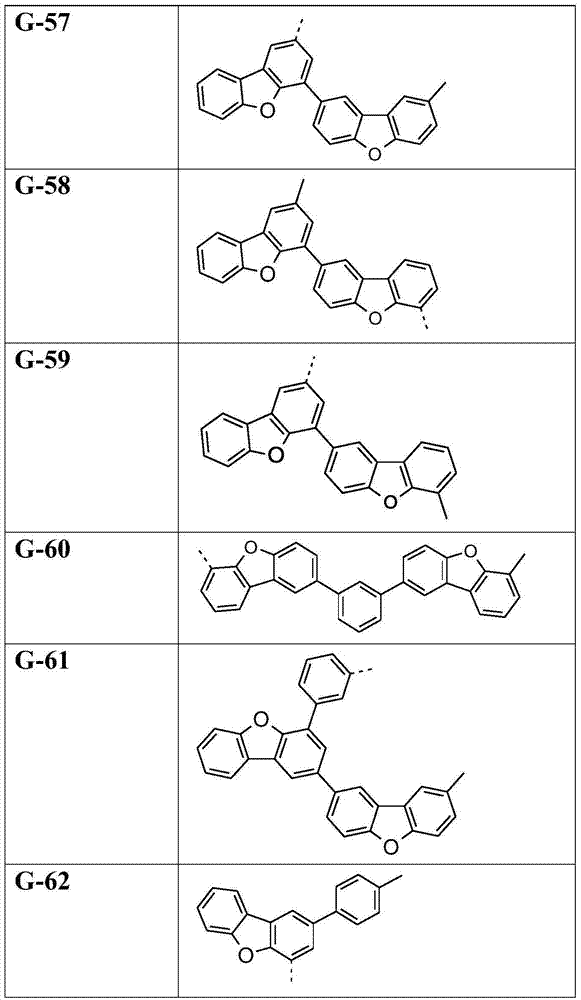
In above form, mark
1),
2),
3)with
4)there is following implication:
1)

2)dotted line represents and formula
 the key of group.
3)dotted line represents respectively and formula
 with
with
 the key of group.
4)dotted line represents and formula
 the key of group.
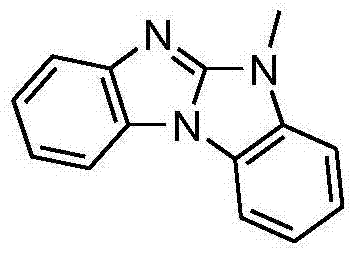
In another preferred embodiment, the present invention relates to compound M-1 to M-62, its by compound F 17-hydroxy-corticosterone-1 to F-62 by by formula
 group alternate form
 group obtain.
In another preferred embodiment, the present invention relates to compound N-1 to N-62, its by compound F 17-hydroxy-corticosterone-1 to F-62 by by formula
 group alternate form
group obtain.
group alternate form
group obtain.
In another preferred embodiment, the present invention relates to compound O-1 to O-62, its by compound F 17-hydroxy-corticosterone-1 to F-62 by by formula
 group alternate form
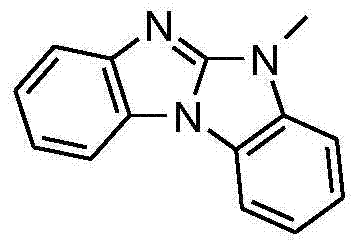 group obtain.
In another preferred embodiment, the present invention relates to compound P-1 to P-62, it is passed through by formula by compound G-1 to G-62
 group alternate form
 group obtain.
In another preferred embodiment, the present invention relates to compound Q-1 to Q-62, it is passed through by formula by compound G-1 to G-62
group alternate form
 group obtain.
In another preferred embodiment, the present invention relates to compound R-1 to R-62, it is passed through by formula by compound G-1 to G-62
 group alternate form
 group obtain.
Most preferred compound is following compound at present:

Discovery contains formula
the compound of glyoxaline structure part is particularly suitable for organic electroluminescenoe device.
Halogen is fluorine, chlorine, bromine and iodine.
C
1-C
25alkyl (C
1-C
18alkyl) be generally linear or if possible for branching.Example is methyl, ethyl, n-propyl, sec.-propyl, normal-butyl, sec-butyl, isobutyl-, the tertiary butyl, n-pentyl, 2-amyl group, 3-amyl group, 2, 2-dimethyl propyl, 1, 1, 3, 3-tetramethyl-amyl group, n-hexyl, 1-methyl hexyl, 1, 1, 3, 3, 5, 5-hexamethyl hexyl, n-heptyl, different heptyl, 1, 1, 3, 3-tetramethyl butyl, 1-methylheptyl, 3-methylheptyl, n-octyl, 1, 1, 3, 3-tetramethyl butyl and 2-ethylhexyl, n-nonyl, decyl, undecyl, dodecyl, tridecyl, tetradecyl, pentadecyl, hexadecyl, heptadecyl or octadecyl.C
1-C
8alkyl is generally methyl, ethyl, n-propyl, sec.-propyl, normal-butyl, sec-butyl, isobutyl-, the tertiary butyl, n-pentyl, 2-amyl group, 3-amyl group, 2,2-dimethyl propyl, n-hexyl, n-heptyl, n-octyl, 1,1,3,3-tetramethyl butyl and 2-ethylhexyl.C
1-C
4alkyl is generally methyl, ethyl, n-propyl, sec.-propyl, normal-butyl, sec-butyl, isobutyl-, the tertiary butyl.
C
1-C
25alkoxyl group (C
1-C
18alkoxyl group) be straight chain or branched alkoxy, for example methoxyl group, oxyethyl group, positive propoxy, isopropoxy, n-butoxy, sec-butoxy, tert.-butoxy, pentyloxy, isopentyloxy or tertiary pentyloxy, heptan oxygen base, octyloxy, different octyloxy, the ninth of the ten Heavenly Stems oxygen base, the last of the ten Heavenly stems oxygen base, undecane oxygen base, dodecyloxy, tetradecyloxyaniline, pentadecane oxygen base, n-Hexadecane oxygen base, heptadecane oxygen base and octadecane oxygen base.C
1-C
8the example of alkoxyl group is methoxyl group, oxyethyl group, positive propoxy, isopropoxy, n-butoxy, sec-butoxy, isobutoxy, tert.-butoxy, n-pentyloxy, 2-pentyloxy, 3-pentyloxy, 2,2-dimethyl propoxy-, positive hexyloxy, positive heptan oxygen base, n-octyloxy, 1,1,3,3-tetramethyl-butoxy and 2-ethyl hexyl oxy, preferably C
1-C
4alkoxyl group, as normally methoxyl group, oxyethyl group, positive propoxy, isopropoxy, n-butoxy, sec-butoxy, isobutoxy, tert.-butoxy.
Term " cycloalkyl " is generally C
4-C
18cycloalkyl, especially C
5-C
12cycloalkyl, as cyclopentyl, cyclohexyl, suberyl, ring octyl group, ring nonyl, ring decyl, ring undecyl, cyclo-dodecyl, preferred cyclopentyl, cyclohexyl, suberyl or ring octyl group, they can not be substituted or be substituted.
Can optional substituted C
6-C
24aryl (C
6-C
18aryl) be generally phenyl, 4-aminomethyl phenyl, 4-p-methoxy-phenyl, naphthyl, especially 1-naphthyl or 2-naphthyl, xenyl, terphenyl, pyrenyl, 2-or 9-fluorenyl, phenanthryl or anthryl, it can not be substituted or be substituted.
C
2-C
30heteroaryl represents to have ring or the fused rings system of 5-7 annular atoms, nitrogen wherein, oxygen or sulphur are possible heteroatoms, and be generally the heterocyclic group that there is 5-30 atom and there are at least 6 conjugated pi-electronics as thienyl, benzothienyl, dibenzothiophene base, thianthrenyl, furyl, furfuryl group, 2H-pyranyl, benzofuryl, isobenzofuran-base, dibenzofuran base, phenoxy group thienyl, pyrryl, imidazolyl, pyrazolyl, pyridyl, bipyridyl, triazinyl, pyrimidyl, pyrazinyl, pyridazinyl, indolizine base, pseudoindolyl, indyl, indazolyl, purine radicals, quinolizinyl, quinolyl, isoquinolyl, 2, 3-phthalazinyl, 1, 5-phthalazinyl, quinoxalinyl, quinazolyl, cinnolines base, pteridyl, carbazyl, carbolinyl, benzotriazole base, benzo
 azoles base, phenanthridinyl, acridyl, pyrimidyl, phenanthroline base, phenazinyl, isothiazolyl, phenothiazinyl, different
 azoles base, furazan base, 4-imidazo [1,2-a] benzimidazolyl-, also [1,2-a] benzimidazolyl-, carbazyl or the fen of 5-benzoglyoxaline
 piperazine base, it can not be substituted or be substituted.
C
6-C
24aryl (C
6-C
18aryl) and C
2-C
30heteroaryl is preferably by one or more C
1-C
8alkyl replaces.
Term " aryl ethers group " is generally C
6-24aryloxy, i.e. O-C
6-24aryl, for example phenoxy group or 4-p-methoxy-phenyl.
The possible substituting group of above-mentioned group is C
1-C
8alkyl, hydroxyl, sulfydryl, C
1-C
8alkoxyl group, C
1-C
8alkylthio, halogen, halo-C
1-C
8alkyl or cyano group.
If substituting group is as R
41in group, occur more than once, may be different when occurring at every turn.
Term " by G, replaced " refer to may exist one or more, 1-3 substituting group G especially.
As mentioned above, above-mentioned group can be replaced by E and/or if required by D interval.Interval is only possible containing at least two group situations by the interconnective carbon atom of singly-bound certainly; C
6-C
18aryl is not spaced apart; The arylalkyl at interval contains cells D in alkyl structure part.By one or more E, replaced and/or by the C at one or more cells D interval
1-C
18alkyl is for example (CH
2cH
2o)
1-9-R
x, R wherein
xfor H or C
1-C
10alkyl or C
2-C
10alkanoyl (CO-CH (C for example
2h
5) C
4h
9), CH
2-CH (OR
y')-CH
2-O-R
y, R wherein
yfor C
1-C
18alkyl, C
5-C
12cycloalkyl, phenyl, C
7-C
15phenylalkyl, and R
y' comprise and R
yidentical definition or be H; C
1-C
8alkylidene group-COO-R
z, CH for example
2cOOR
z, CH (CH
3) COOR
z, C (CH
3)
2cOOR
z, R wherein
zfor H, C
1-C
18alkyl, (CH
2cH
2o)
1-9-R
x, and R
xdefinition shown in comprising above; CH
2cH
2-O-CO-CH=CH
2; CH
2cH (OH) CH
2-O-CO-C (CH
3)=CH
2.


Formula
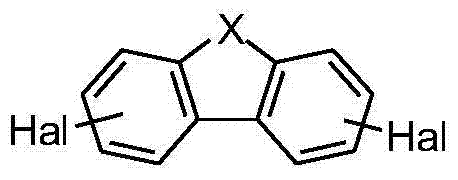
 suitable basic skeleton commercially available (especially in the situation that X is S, O, NH) maybe can obtain by the procedure known to those skilled in the art.With reference to WO2010079051 and EP1885818.
Halogenation can be undertaken by the procedure known to those skilled in the art.Preferably in 3 and 6 (dibrominated) or 3 or 6 (single bromination) bromination or iodate of the basic skeleton of 2,8 of formulas (II) (diphenylene-oxide and dibenzothiophene) or 3,6 (carbazoles).
Optional diphenylene-oxide, dibenzothiophene and the carbazole replacing can carry out with bromine or NBS the dibrominated of 2,8 (diphenylene-oxide and dibenzothiophene) or 3,6 (carbazoles) in glacial acetic acid or chloroform.For example, use Br
2bromination can be in glacial acetic acid or chloroform be carried out at as 0 ℃ at low temperature.Suitable method is for example described in M.Park, J.R.Buck, C.J.Rizzo, Tetrahedron, 54 (1998) 12707-12714 (for X=NPh) and W.Yang etc., J.Mater.Chem.13 (2003) 1351 (for X=S).In addition, 3,6-dibromo carbazole, 3, the bromo-9-phenyl carbazole of 6-bis-, 2,8-dibromo dibenzothiophene, 2,8-dibromo diphenylene-oxide, 2-bromine carbazole, 3-bromine dibenzothiophene, 3-bromine diphenylene-oxide, 3-bromine carbazole, 2-bromine dibenzothiophene and 2-bromine diphenylene-oxide are commercially available.
Single bromination of 4 at diphenylene-oxide (with similarly to dibenzothiophene) is for example described in J.Am.Chem.Soc.1984,106,7150.Diphenylene-oxide (dibenzothiophene) can comprise that by those skilled in the art are known the order of nitrated, reduction and Sandmeyer subsequently reaction carries out single bromination at 3.
In single bromination of 2 of diphenylene-oxide or dibenzothiophene be similar to dibrominated in single bromination of 3 of carbazole and carry out, difference is only to add 1 equivalent bromine or NBS.
Or, can also use diphenylene-oxide, dibenzothiophene and the carbazole of iodate.Preparation is especially described in Tetrahedron.Lett.47 (2006) 6957-6960, Eur.J.Inorg.Chem.24 (2005) 4976-4984, J.heterocyclic Chem.39 (2002) 933-941, J.Am.Chem.Soc.124 (2002) 11900-11907, J.heterocyclic Chem, 38 (2001) 77-87.
For nucleophilic substitution, the diphenylene-oxide, dibenzothiophene and the carbazole that need Cl-or F-to replace.Chlorination is especially described in J.heterocyclic Chemistry, 34 (1997) 891-900 or g.Lett., 6 (2004) 3501-3504; J.Chem.Soc.[Section] C:Organic, 16 (1971) 2775-7, Tetrahedron Lett.25 (1984) 5363-6, J.Org.Chem.69 (2004) 8177-8182.Fluoridize and be described in J.Org.Chem.63 (1998) 878-880 and J.Chem.Soc., Perkin Trans.2,5 (2002) 953-957.
Group
 the existence that is introduced in alkali under carry out.Suitable alkali is known and be preferably selected from the oxyhydroxide of alkali and alkaline earth metal ions, for example NaOH, KOH, Ca (OH) to those skilled in the art
2, alkalimetal hydride, for example NaH, KH, alkali metal amide compound, for example NaNH
2, the carbonate of basic metal or alkaline-earth metal, for example K
2cO
3or Cs
2cO
3, and alkali metal alcoholates, for example NaOMe, NaOEt.In addition, the mixture of above-mentioned alkali is suitable.Particularly preferably NaOH, KOH, NaH or K
2cO
3.
the existence that is introduced in alkali under carry out.Suitable alkali is known and be preferably selected from the oxyhydroxide of alkali and alkaline earth metal ions, for example NaOH, KOH, Ca (OH) to those skilled in the art
2, alkalimetal hydride, for example NaH, KH, alkali metal amide compound, for example NaNH
2, the carbonate of basic metal or alkaline-earth metal, for example K
2cO
3or Cs
2cO
3, and alkali metal alcoholates, for example NaOMe, NaOEt.In addition, the mixture of above-mentioned alkali is suitable.Particularly preferably NaOH, KOH, NaH or K
2cO
3.
Heteroarylization can be by making
copper catalytic coupling is halogenation formula
 compound carry out (Ullmann reaction).
N-arylation is for example described in H.Gilman and D.A.Shirley, and J.Am.Chem.Soc.66 (1944) 888; D.Li etc., Dyes and Pigments49 (2001) 181 – 186 and Eur.J.Org.Chem. (2007) 2147 – 2151.Reaction can be carried out in solvent or with melt.Suitable solvent is for example that (polarity) non-protonic solvent is as methyl-sulphoxide, dimethyl formamide, NMP, tridecane or alcohol.
9-(8-bromine diphenylene-oxide-2-yl) carbazole
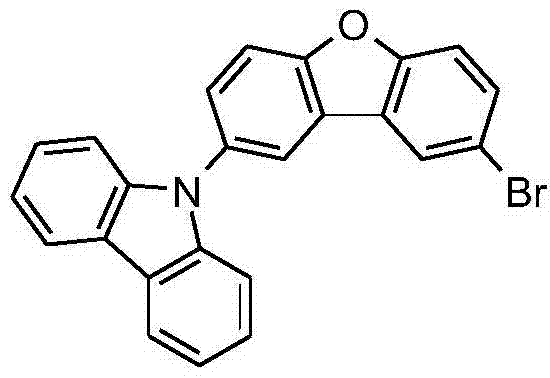 synthetic being described in WO2010079051.The bromo-8-iodine of 2-diphenylene-oxide
 synthetic being described in EP1885818.
Formula
 the possible synthesis path of compound is presented in following diagram:

With reference to Angew.Chem.Int.Ed.46 (2007) 1627-1629.
Diphenylene-oxide, dibenzothiophene and the carbazole that contains hypoboric acid or biborate group can easily be prepared by the path of accelerating.The general introduction of synthesis path for example provides in Angew.Chem.Int.Ed.48 (2009) 9240 – 9261.
By a kind of common path, the diphenylene-oxide that contains hypoboric acid or biborate group, dibenzothiophene and carbazole can be by making halogenation diphenylene-oxide, dibenzothiophene and carbazole and (Y
1o)
2b-B (OY
1)
2,
 or
at catalyzer as [1,1 '-bis-(diphenyl phosphine) ferrocene] palladium chloride (II), title complex (Pd (Cl)
2(dppf)) and alkali as potassium acetate exist under at solvent as dimethyl formamide, methyl-sulphoxide, two
or
at catalyzer as [1,1 '-bis-(diphenyl phosphine) ferrocene] palladium chloride (II), title complex (Pd (Cl)
2(dppf)) and alkali as potassium acetate exist under at solvent as dimethyl formamide, methyl-sulphoxide, two
 reaction in alkane and/or toluene and prepare (referring to Prasad Appukkuttan etc., Synlett8 (2003) 1204), wherein Y
1when occurring, be C independently at every turn
1-C
18alkyl and Y
2when occurring, be C independently at every turn
2-C
10alkylidene group, Li is as – CY
3y
4-CY
5y
6-Huo – CY
7y
8-CY
9y
10-CY
11y
12-, Y wherein
3, Y
4, Y
5, Y
6, Y
7, Y
8, Y
9, Y
10, Y
11and Y
12be hydrogen or C independently of each other
1-C
18alkyl, especially-C (CH
3)
2c (CH
3)
2-,-C (CH
3)
2cH
2c (CH
3)
2-or-CH
2c (CH
3)
2cH
2-, and Y
13and Y
14be hydrogen or C independently of each other
1-C
18alkyl.
reaction in alkane and/or toluene and prepare (referring to Prasad Appukkuttan etc., Synlett8 (2003) 1204), wherein Y
1when occurring, be C independently at every turn
1-C
18alkyl and Y
2when occurring, be C independently at every turn
2-C
10alkylidene group, Li is as – CY
3y
4-CY
5y
6-Huo – CY
7y
8-CY
9y
10-CY
11y
12-, Y wherein
3, Y
4, Y
5, Y
6, Y
7, Y
8, Y
9, Y
10, Y
11and Y
12be hydrogen or C independently of each other
1-C
18alkyl, especially-C (CH
3)
2c (CH
3)
2-,-C (CH
3)
2cH
2c (CH
3)
2-or-CH
2c (CH
3)
2cH
2-, and Y
13and Y
14be hydrogen or C independently of each other
1-C
18alkyl.
Diphenylene-oxide, dibenzothiophene and the carbazole that contains hypoboric acid or biborate group can also be by making halogenation diphenylene-oxide, dibenzothiophene and carbazole and alkyl lithium reagents, for example n-Butyl Lithium or tert-butyl lithium reaction and subsequently with boric acid ester B (isopropoxy) for example
3, B (methoxyl group)
3or
 reaction and prepare (referring to Synthesis (2000) 442 – 446).
Diphenylene-oxide, dibenzothiophene and the carbazole that contains hypoboric acid or biborate group can also by make diphenylene-oxide, dibenzothiophene and carbazole and Lithamide as lithium diisopropylamine (LDA) react and subsequently with boric acid ester B (isopropoxy) for example
3, B (methoxyl group)
3or
 reaction and prepare (J.Org.Chem.73 (2008) 2176-2181).
Can make the diphenylene-oxide, dibenzothiophene and the carbazole that contain hypoboric acid or biborate group, for example
 for example, with equimolar amount halogenation diphenylene-oxide, dibenzothiophene and carbazole,
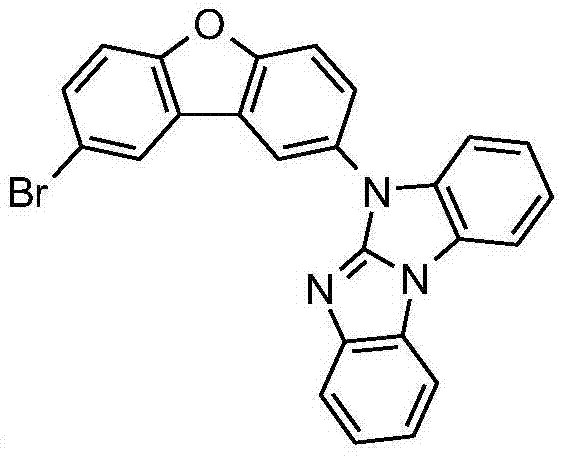 in solvent and under catalyzer exists, react.Catalyzer can be μ-halogenation (tri isopropyl phosphine) (η
3-allyl group) a kind of (for example, referring to the WO99/47474) of palladium (II) type.
in solvent and under catalyzer exists, react.Catalyzer can be μ-halogenation (tri isopropyl phosphine) (η
3-allyl group) a kind of (for example, referring to the WO99/47474) of palladium (II) type.
Preferably, Suzuki reaction at organic solvent if aromatic hydrocarbon or conventional polar organic solvent are as benzene,toluene,xylene, tetrahydrofuran (THF) or two
alkane or its mixture, most preferably toluene carries out under existing.The amount of solvent is selected conventionally within the scope of 1-10L/mol boric acid derivatives.Also preferably this reaction is carried out under as nitrogen or argon gas at inert atmosphere.In addition, preferably in aqueous base if alkali metal hydroxide or carbonate are as NaOH, KOH, Na
2cO
3, K
2cO
3, Cs
2cO
3under existing, carry out this reaction, preferably select K
2cO
3the aqueous solution.The mol ratio of this alkali and boric acid or boric ester derivative is selected conventionally within the scope of 0.5:1-50:1, is very especially 1:1.Temperature of reaction is selected conventionally within the scope of 40-180 ℃, preferably under reflux conditions.The preferred reaction time, at 1-80 hour, is more preferably selected within the scope of 20-72 hour.In a preferred embodiment, use linked reaction or the conventional catalyzer of polycondensation, preferably the Pd described in WO2007/101820 is catalyst based.Palladium compound is based on treating that closed number of keys is with 1:10000-1:50, and preferably the ratio of 1:5000-1:200 adds.Preference is as used palladium (II) salt as PdAc
2or Pd
2dba
3and add and be selected from
 part; Wherein
this part adds with the ratio of 1:1-1:10 based on Pd.Also preferably this catalyzer adds as solution or suspension.Preferably use suitable organic solvent as above-mentioned those, preferably benzene,toluene,xylene, THF, two
part; Wherein
this part adds with the ratio of 1:1-1:10 based on Pd.Also preferably this catalyzer adds as solution or suspension.Preferably use suitable organic solvent as above-mentioned those, preferably benzene,toluene,xylene, THF, two
 alkane, more preferably toluene, or its mixture.The amount of solvent is selected conventionally within the scope of 1-10L/mol boric acid derivatives.The activity that organic bases can improve boron as TBAB as tetra-alkyl ammonium hydroxide and phase-transfer catalyst is (for example, referring to Leadbeater& Marco; Angew.Chem.Int.Ed.Eng.42 (2003) 1407 and the document wherein quoted).The variant of other reaction conditionss is by T.I.Wallow and B.M.Novak, J.Org.Chem.59 (1994) 5034-5037; And M.Remmers, M.Schulze, G.Wegner, Macromol.Rapid Commun.17 (1996) 239-252 and G.A.Molander und B.Canturk, Angew.Chem., provides in 121 (2009) 9404 – 9425.
The possible synthesis path of compd A-1 is shown in following reaction scheme:
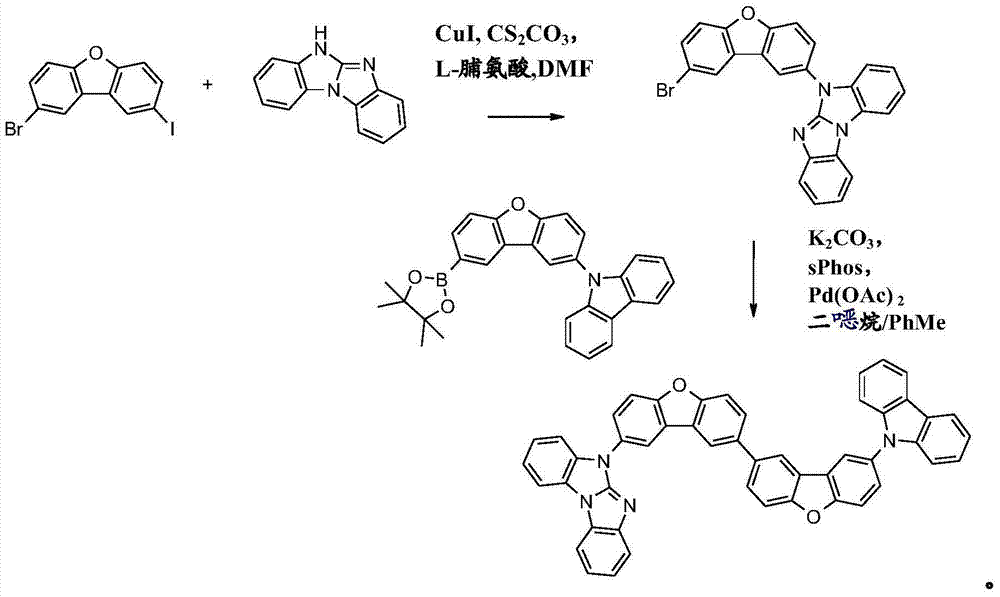
The possible synthesis path of compd B-3 is shown in following reaction scheme:

Halogen/metal exchange use nBuLi/THF is at-78 ℃ or use tBuLi/THF to carry out at-78 ℃.With reference to WO2010/079051, the synthetic of this compounds wherein described.
Formula
 compound can also be by making formula
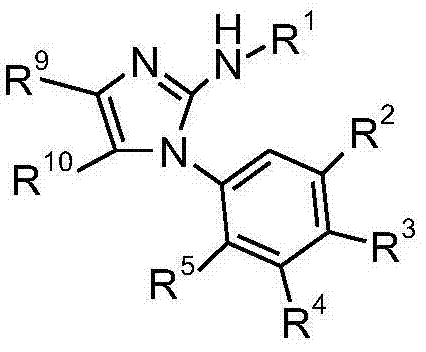 compound at catalyzer as venus crystals (Cu (OAc)
2); Part is as PPh
3with 1,10-phenanthroline; Alkali is as sodium acetate (NaOAc), sodium carbonate, salt of wormwood, cesium carbonate, potassiumphosphate and sodium bicarbonate; Solvent is as o-, m-and p-Xylol, and oxygen (1atm) is at elevated temperatures, especially at the temperature of 100-160 ℃ reaction and synthesize.With reference to X.Wang etc., Org.Lett.14 (2012) 452-455[announces on the net: December 29,2011].
compound at catalyzer as venus crystals (Cu (OAc)
2); Part is as PPh
3with 1,10-phenanthroline; Alkali is as sodium acetate (NaOAc), sodium carbonate, salt of wormwood, cesium carbonate, potassiumphosphate and sodium bicarbonate; Solvent is as o-, m-and p-Xylol, and oxygen (1atm) is at elevated temperatures, especially at the temperature of 100-160 ℃ reaction and synthesize.With reference to X.Wang etc., Org.Lett.14 (2012) 452-455[announces on the net: December 29,2011].
Formula
 compound is the intermediate in the compounds of this invention is produced, for new and form another theme of the present invention.X
6’ Wei – N=and X
7’ Wei – NR
1'-or X
7' be=N-and X
6’ Wei – NR
1'-,
compound is the intermediate in the compounds of this invention is produced, for new and form another theme of the present invention.X
6’ Wei – N=and X
7’ Wei – NR
1'-or X
7' be=N-and X
6’ Wei – NR
1'-,
R
1' be formula-A
1-(A
2)
p-(A
3)
q-(A
4)
r-(R
6')
tgroup, t is 1 or 2, especially 1; P, q, r, A
1, A
2, A
3, A
4, X
1, X
2, R
2, R
3, R
4and R
5as defined above.
In one embodiment, R
6' be halogen, especially Cl, Br or J;-OS (O)
2cF
3,-OS (O)
2-aryl, especially
 or-OS (O)
2cH
3, very especially Br or J.
or-OS (O)
2cH
3, very especially Br or J.
In another embodiment, R
6' be ZnX
12;-SnR
207r
208r
209, R wherein
207, R
208and R
209identical or different and be H or C
1-C
6alkyl, wherein optional public ring and the optional branching of these groups or the branching not of forming of two groups; And X
12for halogen atom, especially I or Br;-B (OH)
2,-B (OY
1)
2,
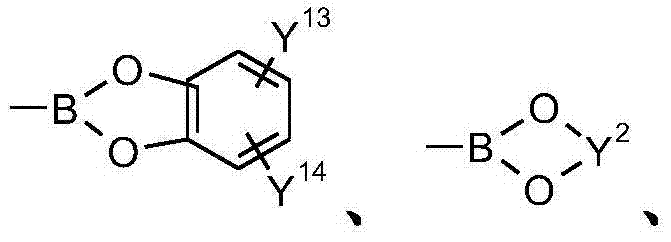 -BF
4na or-BF
4k, wherein Y
1when occurring, be C independently at every turn
1-C
10alkyl and Y
2when occurring, be C independently at every turn
2-C
10alkylidene group, for example-CY
3y
4-CY
5y
6-Huo – CY
7y
8-CY
9y
10-CY
11y
12-, Y wherein
3, Y
4, Y
5, Y
6, Y
7, Y
8, Y
9, Y
10, Y
11and Y
12be hydrogen or C independently of each other
1-C
10alkyl, especially-C (CH
3)
2c (CH
3)
2-,-C (CH
3)
2cH
2c (CH
3)
2-or-CH
2c (CH
3)
2cH
2-, and Y
13and Y
14be hydrogen or C independently of each other
1-C
10alkyl.With regard to p, q, r, A
1, A
2, A
3, A
4, X
1, X
2, R
2, R
3, R
4and R
5, the applicable preferred situation same with formula I Compound Phase.The example of intermediate is as follows:
-BF
4na or-BF
4k, wherein Y
1when occurring, be C independently at every turn
1-C
10alkyl and Y
2when occurring, be C independently at every turn
2-C
10alkylidene group, for example-CY
3y
4-CY
5y
6-Huo – CY
7y
8-CY
9y
10-CY
11y
12-, Y wherein
3, Y
4, Y
5, Y
6, Y
7, Y
8, Y
9, Y
10, Y
11and Y
12be hydrogen or C independently of each other
1-C
10alkyl, especially-C (CH
3)
2c (CH
3)
2-,-C (CH
3)
2cH
2c (CH
3)
2-or-CH
2c (CH
3)
2cH
2-, and Y
13and Y
14be hydrogen or C independently of each other
1-C
10alkyl.With regard to p, q, r, A
1, A
2, A
3, A
4, X
1, X
2, R
2, R
3, R
4and R
5, the applicable preferred situation same with formula I Compound Phase.The example of intermediate is as follows:
Formula I compound can be started for example by Suzuki-, Stille-or Negishi-linked reaction, to obtain by intermediate and suitable co-reactant.
Prepare wherein R
2, R
3, R
4, R
5, R
11, R
12, R
13and R
14for H and R
1formula as defined above
 the method of compound can comprise that (a) heating is at H
3pO
4, Tripyrophosphoric acid, CH
3sO
3h/P
2o
5, CH
3sO
3formula in H or sulfuric acid
the method of compound can comprise that (a) heating is at H
3pO
4, Tripyrophosphoric acid, CH
3sO
3h/P
2o
5, CH
3sO
3formula in H or sulfuric acid
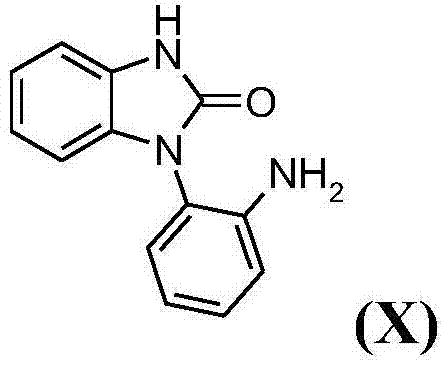 compound to obtain formula
 compound; (b) make the reaction of formula XI compound and obtain formula II compound.Step b has above been described) various examples.Step a) in, can exist boiling point at more than 140 ℃ solvents or solvent mixture, for example dimethylbenzene or
 .The compound of formula X rare gas element as the atmosphere of nitrogen or argon gas under more than 140 ℃, preferably more than 160 ℃, more preferably at 180 ℃ of above temperature, stir 30 minutes to 3 weeks, preferably 1-48h.
Discoverable type I compound is particularly suitable for wherein requiring the application of current carrier electroconductibility, in particular for organic electronic, apply, for example be selected from switching element as organic transistor, for example organic FET and organic tft, the organic electronic application of organic solar batteries and Organic Light Emitting Diode (OLED), its Chinese style I compound is particularly suitable in luminescent layer, being used as body material in OLED and/or as hole and/or exciton blocker material and/or as electronics and/or exciton blocker material, especially combines with phosphorescence twinkler.By formula I compound of the present invention for the OLED in the situation that, the OLED that has obtained having good efficiencies and long life and can especially operate under low use and operating voltage.Formula I compound of the present invention is particularly suitable for being used as matrix and/or hole/exciton blocker material at blue and green emitting body in as light blue or mazarine twinkler, and these are phosphorescence twinkler especially.In addition, formula I compound can be for conductor/supplementary material in the organic electronic application that is selected from open the light element and organic solar batteries.
Formula I compound can be applied at organic electronic, especially in OLED, be used as body material and/or hole/exciton blocker material and/or electronics/exciton blocker material and/or hole-injecting material and/or electron injection material and/or hole conductor material (hole mobile material) and/or electron conductor material (electron transport material), be preferably used as body material and/or electronics/exciton blocker and/or hole mobile material.Formula I compound of the present invention more preferably, in organic electronic application, is especially used as body material in OLED.
In one of the luminescent layer of OLED or luminescent layer, can and there are for example other body materials combinations of good hole conductor (hole transport) performance by the body material of luminous agent material and formula I compound.This has realized the high-quantum efficiency of this luminescent layer.
When formula I compound being used as in luminescent layer to body material and being additionally used as hole/exciton blocker material and/or electronics/exciton blocker material, due to the chemofacies of described material with or similarity, the interface being improved between luminescent layer and adjacent hole/exciton blocker material and/or electronics/exciton blocker material, this can cause the reduction of voltage under same brightness and the prolongation in OLED work-ing life.In addition, for the matrix of hole/exciton blocker material and/or electronics/exciton blocker material and luminescent layer, can make the production technique of OLED simplify same material, this be because can be by same source the gas-phase deposition for the material of one of formula I compound.
The suitable construction of organic electronic devices is known by those of ordinary skill in the art and is as described below.
Organic transistor generally includes the semiconductor layer being formed by the organic layer with cavity transmission ability and/or electron transport ability; The gate electrode being formed by conductive layer; And the insulation layer of introducing between this semiconductor layer and this conductive layer.Source electrode and drain electrode are installed in this arrangement to produce this transistor unit.In addition, in this organic transistor, can there are other known layers of those skilled in the art.
This organic solar (photo-electric conversion element) generally includes the organic layer between the plate type electrode that is present in two Hang She Ge of Ping.This organic layer can be configured in comb poles.For this organic layer Wei Ge, be not particularly limited and be not particularly limited for electrode materials.Yet when using the plate type electrode of the Hang She Ge of Ping, at least one electrode is preferably by transparency electrode, for example the tin oxide electrode of ITO electrode or fluorine doping forms.This organic layer You Liangge sublayer, the layer with p-type semiconducting behavior or cavity transmission ability forms with the layer with N-shaped semiconducting behavior or electron transport ability.In addition, in this organic solar batteries, can there are other known layers of those skilled in the art.The layer with cavity transmission ability can comprise formula I compound.
Equally likely formula I compound is present in luminescent layer (preferably as body material) and electron blocking layers (as electronics/exciton blocker).
The invention further relates to a kind of Organic Light Emitting Diode, it comprises anode A n and the luminescent layer E of negative electrode Ka She Ge between anode A n and negative electrode Ka, and suitable words at least one be selected from other layers of at least one hole/exciton barrier layer, at least one electronics/exciton barrier layer, at least one hole injection layer, at least one hole conductor layer, at least one electron injecting layer and at least one electronic conductor layer, wherein said at least one formula I compound is present in luminescent layer E and/or other layer at least one.Described at least one formula I compound is present in luminescent layer and/or hole blocking layer.
The application further relates to the luminescent layer that comprises at least one formula I compound.
The structure of OLED of the present invention
Organic Light Emitting Diode of the present invention (OLED) therefore has lower array structure conventionally:
Anode (An) and negative electrode (the luminescent layer E of Ka) , She Ge between anode (An) and negative electrode (Ka).
OLED of the present invention for example can be formed by following layer in a preferred embodiment:
1. anode
2. hole conductor layer
3. luminescent layer
4. hole/exciton barrier layer
5. electronic conductor layer
6. negative electrode
The layer order that is different from said structure is also possible and is that those skilled in the art are known.For example, likely this OLED does not have all described layers; For example, that same suitable is the OLED with layer (1) (anode), (3) (luminescent layer) and (6) (negative electrode), in this case, adjacent layers is the function of layer (2) (hole conductor layer) and (4) (hole/exciton barrier layer) and (5) (electronic conductor layer).That same suitable is the OLED with layer (1), (2), (3) and (6) or layer (1), (3), (4), (5) and (6).In addition, OLED can have electronics/exciton barrier layer between hole conductor layer (2) and luminescent layer (3).
Additionally likely a plurality of above-mentioned functions (electronics/exciton blocker, hole/exciton blocker, hole injection, hole-conductive, electronic injection, electronic conduction) are combined in to one deck and for example by the single-material that is present in this layer, are presented.For example, in one embodiment, for the material of hole conductor layer, can block exciton and/or electronics simultaneously.
In addition, each individual layer of described OLED in those can be formed by two or more layers again in the above.The layer that for example hole conductor layer can You Jiang hole transfers to luminescent layer by electrode injection Ceng Hejiang hole wherein by this hole injection layer forms.Electronic conductor layer can consist of a plurality of layer equally, for example, by therein by the layer of electrode injection electronics with receive from the electronics of electron injecting layer and by the layer that they transfer to luminescent layer and form.Described these layers are separately according to such as the factor of energy level, thermotolerance and carrier mobility and also have with regard to the energy difference of described each layer of organic layer or metal electrode and select.Those skilled in the art can select the structure of OLED so that it and the organic compound optimum matching as twinkler material according to the present invention.
In order to obtain especially effectively OLED, for example the HOMO of this hole conductor layer (the highest occupied molecular orbital(MO)) should match with the work function of anode and the LUMO (lowest unoccupied molecular orbital) of this electronic conductor layer should match with the work function of negative electrode, and condition is that above-mentioned each layer is present in OLED of the present invention.
Anode (1) is for providing the electrode of positive carrier.It for example can be formed by the material of mixture that comprises mixture, metal alloy, metal oxide or the various metal oxides of metal, various metals.Or anode can be electric conductive polymer.Suitable metal comprises main group, transition group and lanthanide series metal and alloy thereof, especially periodic table of elements Ib, IVa,VaHe VIa family's metal and VIIIa group 4 transition metal and alloy thereof.When anode is transparent, conventionally use the mixed metal oxide of the periodic table of elements (IUPAC version) IIb, IIIb HeIVb family, for example tin indium oxide (ITO).Equally likely anode (1) comprises organic materials, polyaniline for example, and for example, as Nature, the 357th volume, described in 477-479 page (on June 11st, 1992).At least male or female should be transparent in can launch the light of formation at least partly.Material for anode (1) is preferably ITO.
The hole conductor material that is applicable to the layer (2) of OLED of the present invention is for example disclosed in Kirk-OthmerEncyclopediaofChemicalTechnology, and the 4th edition, the 18th volume, 837-860 page, in 1996.Hole transport molecule and polymkeric substance all can be used as hole mobile material.Normally used hole transport molecule is selected from three [N-(1-naphthyl)-N-(phenyl amino)] triphenylamine (1-NaphDATA), 4, 4'-bis-[N-(1-naphthyl)-N-phenyl amino] biphenyl (α-NPD), N, N'-phenylbenzene-N, N'-bis-(3-aminomethyl phenyl)-[1, 1'-xenyl]-4, 4'-diamines (TPD), 1, 1-bis-[(two-4-tolyl is amino) phenyl] hexanaphthene (TAPC), N, N'-bis-(4-aminomethyl phenyl)-N, N'-bis-(4-ethylphenyl)-[1, 1'-(3, 3'-dimethyl) xenyl]-4, 4'-diamines (ETPD), four (3-aminomethyl phenyl)-N, N, N', N'-2, 5-phenylenediamine (PDA), α-phenyl-4-N, N-diphenyl amino vinylbenzene (TPS), to (diethylamino) phenyl aldehyde diphenyl hydrazone (DEH), triphenylamine (TPA), two [4-(N, N-diethylamino)-2-aminomethyl phenyl) (4-aminomethyl phenyl) methane (MPMP), 1-phenyl-3-[is to (diethylamino) styryl]-5-[is to (diethylamino) phenyl] pyrazoline (PPR or DEASP), 1, 2-trans-bis-(9H-carbazole-9-yl) tetramethylene (DCZB), N, N, N', N'-tetra-(4-aminomethyl phenyl)-(1, 1'-xenyl)-4, 4'-diamines (TTB), 4, 4', 4''-tri-(N, N-diphenyl amino) triphenylamine (TDTA), 4, 4', 4''-tri-(N-carbazyl) triphenylamine (TCTA), N, N'-bis-(naphthalene-2-yl)-N, N'-bis-(phenyl) p-diaminodiphenyl (β-NPB), N, N'-bis-(3-aminomethyl phenyl)-N, N'-bis-(phenyl)-9, 9-spiral shell two fluorenes (Spiro-TPD), N, N'-bis-(naphthalene-1-yl)-N, N'-bis-(phenyl)-9, 9-spiral shell two fluorenes (Spiro-NPB), N, N'-bis-(3-aminomethyl phenyl)-N, N'-bis-(phenyl)-9, 9-dimethyl fluorene (DMFL-TPD), two [4-(N, N-bis--tolyl is amino) phenyl] hexanaphthene, N, N'-bis-(naphthalene-1-yl)-N, N'-bis-(phenyl)-9, 9-dimethyl fluorene, N, N'-bis-(naphthalene-1-yl)-N, N'-bis-(phenyl)-2, 2-tolidine, N, N'-bis-(naphthalene-1-yl)-N, N'-bis-(phenyl) p-diaminodiphenyl, N, N'-bis-(3-aminomethyl phenyl)-N, N'-bis-(phenyl) p-diaminodiphenyl, 2, 3, 5, 6-tetrafluoro-7, 7, 8, 8-four cyano quinone bismethane (F4-TCNQ), 4, 4', 4''-tri-(N-3-aminomethyl phenyl-N-phenyl amino) triphenylamine, 4, 4', 4''-tri-(N-(2-naphthyl)-N-phenyl amino) triphenylamine, pyrazine also [2, 3-f] [1, 10] phenanthroline-2, 3-dimethoxy nitrile (PPDN), N, N, N', N'-tetra-(4-p-methoxy-phenyl) p-diaminodiphenyl (MeO-TPD), 2, 7-bis-[N, N-bis-(4-p-methoxy-phenyl) amino]-9, 9-spiral shell two fluorenes (MeO-Spiro-TPD), 2, 2'-bis-[N, N-bis-(4-p-methoxy-phenyl) amino]-9, 9-spiral shell two fluorenes (2, 2'-MeO-Spiro-TPD), N, N'-phenylbenzene-N, N'-bis-[4-(N, N-xylyl is amino) phenyl] p-diaminodiphenyl (NTNPB), N, N'-phenylbenzene-N, N'-bis-[4-(N, N-diphenyl amino) phenyl] p-diaminodiphenyl (NPNPB), N, N'-bis-(naphthalene-2-yl)-N, N'-diphenyl benzene-1, 4-diamines (β-NPP), N, N'-bis-(3-aminomethyl phenyl)-N, N'-bis-(phenyl)-9, 9-diphenylfluorene (DPFL-TPD), N, N'-bis-(naphthalene-1-yl)-N, N'-bis-(phenyl)-9, 9-diphenylfluorene (DPFL-NPB), 2, 2', 7, 7'-tetra-(N, N-diphenyl amino)-9, 9'-spiral shell two fluorenes (Spiro-TAD), 9, 9-bis-[4-(N, N-bis-(biphenyl-4-yl) amino) phenyl]-9H-fluorenes (BPAPF), 9, 9-bis-[4-(N, N-bis-(naphthalene-2-yl) amino) phenyl]-9H-fluorenes (NPAPF), 9, 9-bis-[4-(N, N-bis-(naphthalene-2-yl)-N, N'-diphenyl amino) phenyl]-9H-fluorenes (NPBAPF), 2, 2', 7, 7'-tetra-[N-naphthyl (phenyl) amino]-9, 9'-spiral shell two fluorenes (Spiro-2NPB), N, N'-bis-(phenanthrene-9-yl)-N, N'-bis-(phenyl) p-diaminodiphenyl (PAPB), 2, 7-bis-[N, N-bis-(9, 9-spiral shell two fluorenes-2-yl) amino]-9, 9-spiral shell two fluorenes (Spiro-5), 2, 2'-bis-[N, N-bis-(biphenyl-4-yl) amino]-9, 9-spiral shell two fluorenes (2, 2'-Spiro-DBP), 2, 2'-bis-(N, N-diphenyl amino)-9.9-spiral shell two fluorenes (Spiro-BPA), 2, 2', 7, 7'-tetra-(N, N-xylyl) amino spiral shell two fluorenes (Spiro-TTB), N, N, N', N'-tetra-naphthalenes-2-base p-diaminodiphenyl (TNB), porphyrin compound and phthalocyanines are as copper phthalocyanine and titanium oxide phthalocyanine.Normally used hole transport polymer is selected from Polyvinyl carbazole, (phenyl methyl) polysilane and polyaniline.Equally can by by hole transport molecular dopant to polymkeric substance as obtained hole transport polymer in polystyrene and polycarbonate.Suitable hole transport molecule is the molecule of having mentioned in the above.
In addition, can use in one embodiment arbine complex as hole conductor material, the band gap of this at least one hole conductor material is greater than the band gap of luminiferous material used conventionally.In the application's context, " band gap " is interpreted as referring to triplet energy state.Suitable arbine complex is for example WO2005/019373A2, WO2006/056418A2, WO2005/113704, WO2007/115970, the arbine complex described in WO2007/115981 and WO2008/000727.An example of suitable arbine complex is to be for example disclosed in WO2005/019373 Chinese style
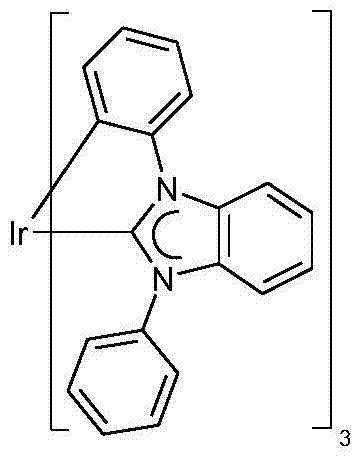 ir (dpbic)
3.In principle, hole conductor layer can comprise at least one formula I compound as hole conductor material.
ir (dpbic)
3.In principle, hole conductor layer can comprise at least one formula I compound as hole conductor material.
Luminescent layer (3) comprises at least one luminiferous material.It can be fluorescence or phosphorescence twinkler in principle, and suitable luminiferous material is that those skilled in the art are known.This at least one luminiferous material is preferably phosphorescence twinkler.The phosphorescence twinkler compound preferably using is based on metal complexes, and especially the title complex of the title complex of metal Ru, Rh, Ir, Pd and Pt, particularly Ir has importance.Formula I compound can be used as matrix in luminescent layer.
The metal complexes being suitable in OLED of the present invention is for example described in document WO02/60910A1, US2001/0015432A1, US2001/0019782A1, US2002/0055014A1, US2002/0024293A1, US2002/0048689A1, EP1191612A2, EP1191613A2, EP1211257A2, US2002/0094453A1, WO02/02714A2, WO00/70655A2, WO01/41512A1, WO02/15645A1, WO2005/019373A2, WO2005/113704A2, WO2006/115301A1, WO2006/067074A1, WO2006/056418, WO2006121811A1, WO2007095118A2, WO2007/115970, WO2007/115981, WO2008/000727, WO2010129323, in WO2010056669 and WO10086089.
Other suitable metal complexess are commercial metals title complex three (2-phenylpyridine) iridium (III), three (close-N of 2-(4-tolyl) pyridine root, C
2') iridium (III), two (2-phenylpyridine) (acetylacetonate) iridium (III), three (1-phenyl isoquinolin quinoline) iridium (III), two (2,2 '-benzothienyl) close-N of pyridine root, C
3') iridium (III) (acetylacetonate), three (2-phenylquinoline) iridium (III), two (close-N of 2-(4,6-difluorophenyl) pyridine root, C
2) picoline iridium (III), two (1-phenyl isoquinolin quinoline) iridium (III) (acetylacetonate), two (2-phenylquinoline) (acetylacetonate) iridium (III), two (dibenzo [f, h] quinoxaline) iridium (III) (acetylacetonate), it is two that (2-methyldiphenyl is [f also, h] quinoxaline) iridium (III) (acetylacetonate) and three (3-methyl isophthalic acid-phenyl-4-pivaloyl-5-pyrazolinyl) terbium (III), it is two that [1-(9, 9-dimethyl-9H-fluorenes-2-yl) isoquinoline 99.9] (acetylacetonate) iridium (III), two (2-phenyl benzothiazole root closes) (acetylacetonate) iridium (III), it is two that (2-(9, 9-dihexyl fluorenyl)-1-pyridine) (acetylacetonate) iridium (III), two (2-benzo [b] thiophene-2-base-pyridine) (acetylacetonate) iridium (III).
In addition, commercially available material below is suitable: three (dibenzoyl-acetone root closes) single (phenanthroline) europium (III), three (diphenylpropane-1,3-dione(DPPO)) single (phenanthroline) europium (III), three (diphenylpropane-1,3-dione(DPPO)) single (the amino phenanthroline of 5-) europium (III), three (two-2-naphthoyl methane) single (phenanthroline) europium (III), three (4-bromobenzene formyl methane) single (phenanthroline) europium (III), three (two (biphenyl) methane) single (phenanthroline) europium (III), three (diphenylpropane-1,3-dione(DPPO)) single (4,7-phenylbenzene phenanthroline) europium (III), three (diphenylpropane-1,3-dione(DPPO)) single (4,7-dimethyl phenanthroline) europium (III), three (diphenylpropane-1,3-dione(DPPO)) single (4,7-dimethyl phenanthroline disulfonic acid) europium (III) disodium salt, three [two (4-(2-(2-ethoxy ethoxy) oxyethyl group) benzoyl methane)] single (phenanthroline) europium (III) and three [two [4-(2-(2-ethoxy ethoxy) oxyethyl group) benzoyl methane)] single (the amino phenanthroline of 5-) europium (III), two (3-trifluoromethyl-5-(4-tert .-butylpyridine base)-1,2,4-triazole root closes) diphenyl methyl phosphine osmium (II), two (3-trifluoromethyl-5-(2-pyridyl)-1,2,4-triazole) dimethylphenylphosphine osmium (II), two (3-trifluoromethyl)-5-(4-tert .-butylpyridine base)-1,2,4-triazole root closes) dimethylphenylphosphine osmium (II), two (3-trifluoromethyl)-5-(2-pyridyl) pyrazoles root closes) dimethylphenylphosphine osmium (II), three [4,4'-di-t-butyl (2,2')-dipyridyl] ruthenium (III), two (2-(9,9-dibutyl fluorenyl)-1-isoquinoline 99.9 osmiums (II) (acetylacetonate).
Luminescent layer preferably comprises formula
compound, it is described in WO2005/019373A2, wherein each symbol has following meanings:
M is the atoms metal that is selected from Co, Rh, Ir, Nb, Pd, Pt, Fe, Ru, Os, Cr, Mo, W, Mn, Tc, Re, Cu, Ag and Au, its any possibility oxidation state in respective metal atom;
Carbene is can be uncharged or univalent anion and the carbene ligands of monodentate, bidentate or three teeth, and wherein this carbene ligands can also be two carbenes or three carbene ligands;
L is univalent anion or dianion part, and it can be monodentate or bidentate;
K is uncharged monodentate or bidentate ligand, and it is selected from phosphine; Phosphonic acid ester and its derivative; Arsenate and its derivative; Phosphorous acid ester; CO; Pyridine; Nitrile and and M
1form the conjugated diolefine of π title complex;
N1 is the quantity of carbene ligands, and wherein n1 is at least 1, and as n1 > 1 time, the carbene ligands in formula I title complex can be identical or different;
M1 is the quantity of ligand L, wherein m1 can for 0 or >=1, and as m1 > 1 time, ligand L can be identical or different;
O is the quantity of part K, wherein o can for 0 or >=1, and as o > 1 time, part K can be identical or different;
Wherein n1+m1+o sum depends on oxidation state and the ligancy of atoms metal, depend on the number of teeth of part carbene, L and K and depend on part, and the electric charge on carbene and L, condition is that n1 is at least 1.
For the arbine complex of suitable triplet state twinkler is for example described in WO2006/056418A2, WO2005/113704, WO2007/115970, WO2007/115981 and WO2008/000727, WO2009050281, WO2009050290, WO2011051404 and WO2011073149.
More preferably the metal-carbon alkene title complex of following general formula:
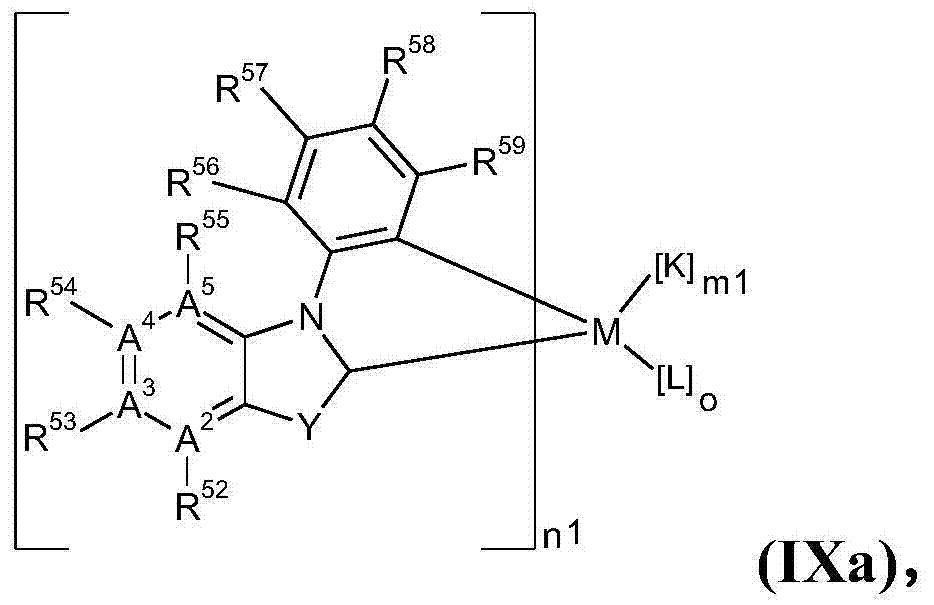
M is Ir or Pt,
N1 is selected from 1,2 and 3 integer,
Y is NR
51, O, S or C (R
25)
2,
A
2, A
3, A
4and A
5be N or C independently of one another, wherein 2A=nitrogen-atoms and at least one carbon atom are present in ring between two nitrogen-atoms,
R
51for linearity or branched-alkyl, it is optionally by least one heteroatoms interval, optionally with at least one functional group and have 1-20 carbon atom; Cycloalkyl, it is optionally by least one heteroatoms interval, optionally with at least one functional group and have 3-20 carbon atom; Replace or unsubstituted aryl, it is optionally by least one heteroatoms interval, optionally with at least one functional group and have 6-30 carbon atom; Replace or unsubstituted heteroaryl, it is optionally by least one heteroatoms interval, optionally with at least one functional group and there is altogether 5-18 carbon atom and/or heteroatoms,
If A
2, A
3, A
4and/or A
5for N, R
52, R
53, R
54and R
55the free electron pair of respectively doing for oneself, if or A
2, A
3, A
4and/or A
5for C, be hydrogen independently of one another; Linearity or branched-alkyl, it is optionally by least one heteroatoms interval, optionally with at least one functional group and have 1-20 carbon atom; Cycloalkyl, it is optionally by least one heteroatoms interval, optionally with at least one functional group and have 3-20 carbon atom; Replace or unsubstituted aryl, it is optionally by least one heteroatoms interval, optionally with at least one functional group and have 6-30 carbon atom; Replace or unsubstituted heteroaryl, it is optionally by least one heteroatoms interval, optionally with at least one functional group and have altogether 5-18 carbon atom and/or heteroatoms; There is the group to body or receptor acting, or R
53and R
54with A
3and A
4form together the optional unsaturated ring replacing, it is optionally by least one other heteroatoms interval and have altogether 5-18 carbon atom and/or heteroatoms,
R
56, R
57, R
58and R
59be hydrogen independently of one another; Linearity or branched-alkyl, it is optionally by least one other heteroatoms interval, optionally with at least one functional group and have 1-20 carbon atom; Cycloalkyl, it is optionally by least one heteroatoms interval, optionally with at least one functional group and have 3-20 carbon atom; The assorted alkyl of ring, it is optionally by least one heteroatoms interval, optionally with at least one functional group and have 3-20 carbon atom; Replace or unsubstituted aryl, it is optionally by least one heteroatoms interval, optionally with at least one functional group and have 6-30 carbon atom; Replace or unsubstituted heteroaryl, it is optionally by least one heteroatoms interval, optionally with at least one functional group and have altogether 5-18 carbon atom and/or heteroatoms; There is the group to body or receptor acting, or
R
56and R
57, R
57and R
58or R
58and R
59with together with the carbon atom of their institute's bondings, form saturated, unsaturated or aromatics, the optional ring replacing, it is optionally by least one heteroatoms interval and have altogether 5-18 carbon atom and/or heteroatoms, and/or
If A
5for C, R
55and R
56form together saturated or unsaturated, linearity or branching bridge, it optionally comprises heteroatoms, aromatic units, heteroaromatic units and/or functional group and has altogether 1-30 carbon atom and/or heteroatoms, optionally condensed and comprised carbon atom and/or heteroatomic replacement or unsubstituted 5-8 person ring
R
25be linearity or branched-alkyl independently, it is optionally by least one heteroatoms interval, optionally with at least one functional group and have 1-20 carbon atom; Cycloalkyl, it is optionally by least one heteroatoms interval, optionally with at least one functional group and have 3-20 carbon atom; Replace or unsubstituted aryl, it is optionally by least one heteroatoms interval, optionally with at least one functional group and have 6-30 carbon atom; Replace or unsubstituted heteroaryl, it is optionally by least one heteroatoms interval, optionally with at least one functional group and there is altogether 5-18 carbon atom and/or heteroatoms,
K is uncharged monodentate or bidentate ligand,
L is univalent anion or dianion part, preferred univalent anion part, and it can be monodentate or bidentate,
M1 is 0,1 or 2, and wherein, when m1 is 2, part K can be identical or different,
O is 0,1 or 2, and wherein, when o is 2, ligand L can be identical or different.
Formula IX compound is preferably following formula: compound:
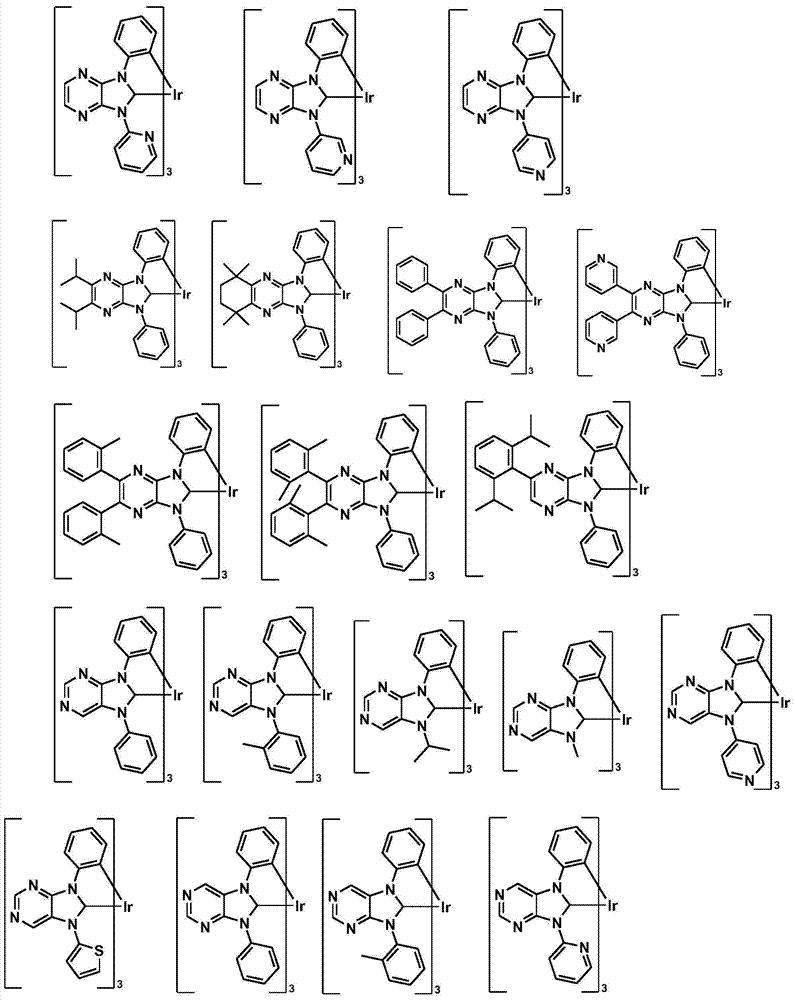
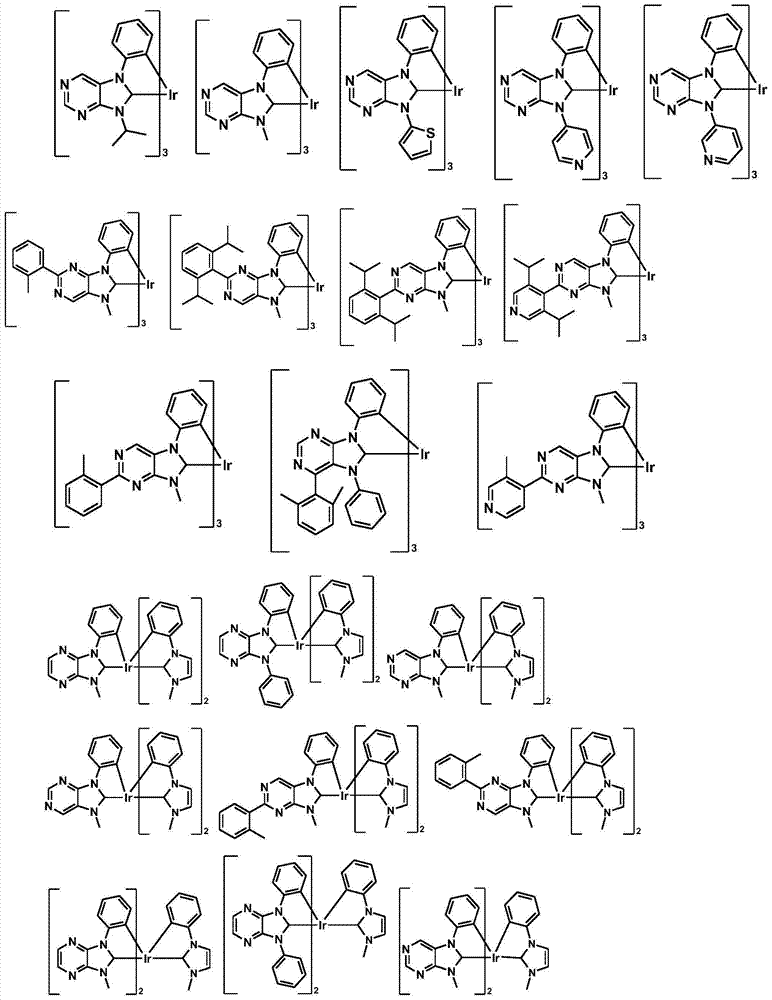


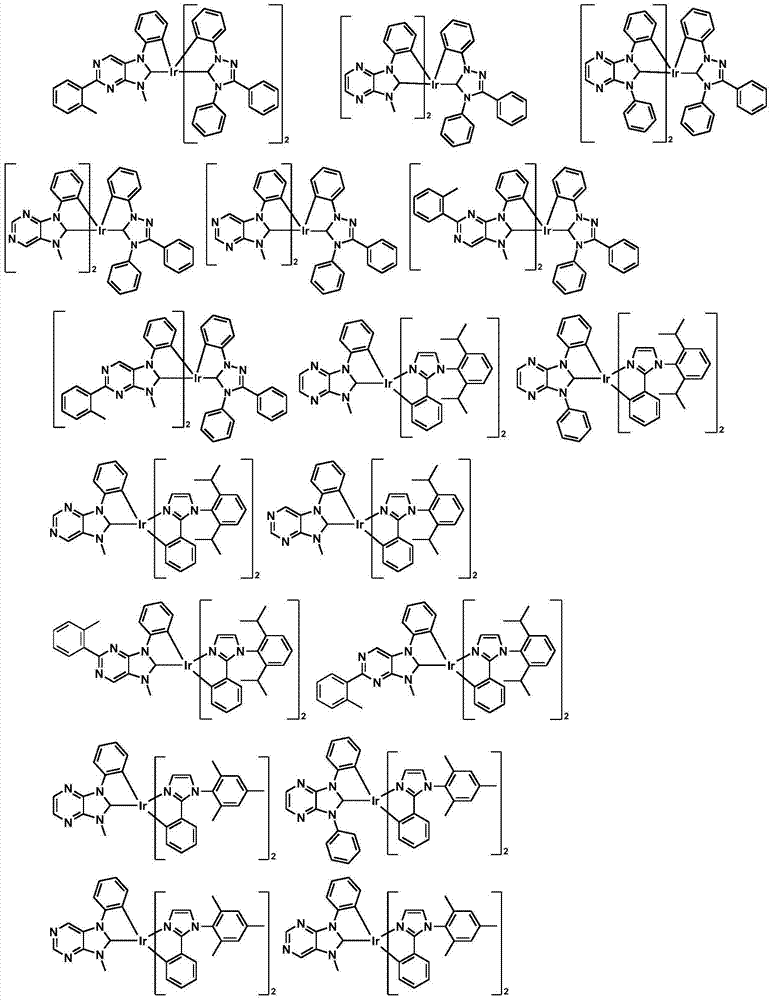
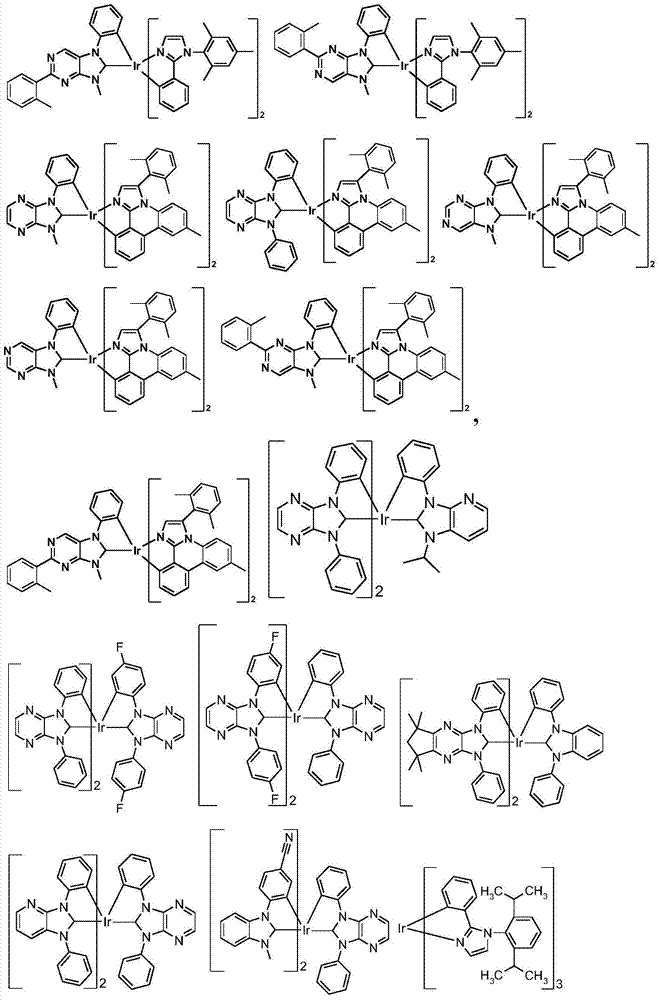

All joining type (homoleptic) metal-carbon alkene title complex can facial isomer or the existence of meridian formula isomeric forms, preferably facial isomer.
Assorted, join type (heteroleptic) metal-carbon alkene title complex in the situation that, can there are four kinds of different isomerization bodies, preferably vacation-facial isomer.
Except luminiferous material, luminescent layer can comprise other components.For example, in luminescent layer, can exist fluorescence dye to change the transmitting color of luminiferous material.In addition, in a preferred embodiment, can use body material.This body material can be polymkeric substance as poly-(N-vinylcarbazole) or polysilane.Yet body material can be small molecules, for example 4,4 '-N, N '-bis-carbazole biphenyl (CDP=CBP) or tertiary aromatic amine, for example TCTA.In a preferred embodiment of the invention, at least one formula I compound is used as to body material.
In a preferred embodiment, luminescent layer is by 2-40 % by weight, preferred at least one above-mentioned luminiferous material of 5-35 % by weight and 60-98 % by weight, preferably at least one above-mentioned body material of 75-95 % by weight-at least one formula I compound-formation in one embodiment, wherein the summation of luminiferous material and body material adds up to 100 % by weight.
In particularly preferred embodiments, luminescent layer comprises formula I compound, for example
 with two kinds of arbine complexes, preferred formula
 arbine complex.In described embodiment, luminescent layer is by 2-40 % by weight, preferably 5-35 % by weight
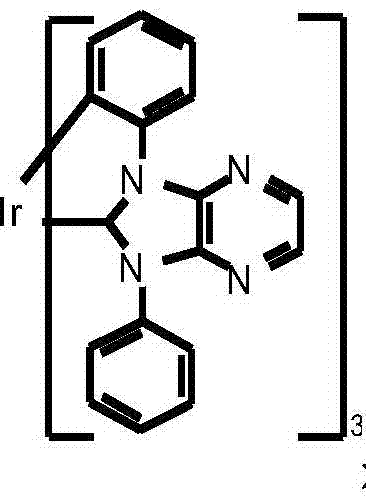 with 60-98 % by weight, preferably 65-95 % by weight formula I compound and
 form, wherein the summation of arbine complex and formula I compound adds up to 100 % by weight.
Therefore, be suitable in OLED, being used as body material and/or hole/exciton blocker material and/or electronics/exciton blocker material and/or hole-injecting material and/or electron injection material and/or hole conductor material and/or electron conductor material together with formula I compound, preferably as the metal complexes of body material and/or hole/exciton blocker material for example also just like the carbene complexes described in WO2005/019373A2, WO2006/056418A2, WO2005/113704, WO2007/115970, WO2007/115981 and WO2008/000727.Clear and definite disclosure of applying for reference to the WO that quotes of institute, should think these disclosures are incorporated in the application's content herein.
If hole/exciton barrier layer (4) is not containing any formula I compound, if OLED has-hole blocking layer exist-commonly use OLED in hole blocking agent material be for example 2,6-bis-(N-carbazyl) pyridine (mCPy), 2,9-dimethyl-4,7-phenylbenzene-1,10-phenanthroline (bathocuproin, (BCP)), two (2-methyl-8-quinoline root closes)-4-phenylphenol root closes) aluminium (III) (BAIq), thiodiphenylamine S, S-dioxide derivative and 1,3,5-tri-(N-phenyl-2-benzyl imidazole base) benzene) (TPBI), TPBI is also suitable as electrically conductive material.Hole blocking agent and/or electron conductor material that other are suitable are 2,2', 2''-(1,3,5-benzene, three bases) three (1-phenyl-1-H-benzoglyoxaline), 2-(4-xenyl)-5-(4-tert-butyl-phenyl)-1,3,4-
 diazole, oxine root closes lithium, 4-(naphthalene-1-yl)-3,5-phenylbenzene-4H-1,2,4-triazole, 1,3-bis-[2-(2,2'-dipyridyl-6-yl)-1,3,4-
diazole-5-yl] benzene, 4,7-phenylbenzene-1,10-phenanthroline, 3-(4-xenyl)-4-phenyl-5-tert-butyl-phenyl-1,2,4-triazole, 6,6'-bis-[5-(biphenyl-4-yl)-1,3,4-
diazole, oxine root closes lithium, 4-(naphthalene-1-yl)-3,5-phenylbenzene-4H-1,2,4-triazole, 1,3-bis-[2-(2,2'-dipyridyl-6-yl)-1,3,4-
diazole-5-yl] benzene, 4,7-phenylbenzene-1,10-phenanthroline, 3-(4-xenyl)-4-phenyl-5-tert-butyl-phenyl-1,2,4-triazole, 6,6'-bis-[5-(biphenyl-4-yl)-1,3,4-
 diazole-2-yl]-2,2'-dipyridyl, 2-phenyl-9,10-bis-(naphthalene-2-yl) anthracene, 2,7-bis-[2-(2,2'-dipyridyl-6-yl)-1,3,4-
 diazole-5-yl]-9,9-dimethyl fluorene, 1,3-bis-[2-(4-tert-butyl-phenyl)-1,3,4-
 diazole-5-yl] benzene, 2-(naphthalene-2-yl)-4,7-phenylbenzene-1,10-phenanthroline, three (2,4,6-trimethylammonium-3-(pyridin-3-yl) phenyl) borine, 2,9-bis-(naphthalene-2-yl)-4,7-phenylbenzene-1,10-phenanthroline, 1-methyl-2-(4-(naphthalene-2-yl) phenyl)-1H-imidazo [4,5-f] [1,10] phenanthroline.In another embodiment, can in luminescent layer (3), use disclosed comprising via the aromatics of the group connection containing carbonyl or the compound of heteroaromatic rings in WO2006/100298, for example as at the application's priority date also described in unpub PCT application PCT/EP2008/058207 and PCT/EP2008/058106, be selected from dimethyl silanyl carbazole, dimethyl silanyl cumarone, dimethyl silanyl thionaphthene, dimethyl silanyl benzo phosphurane (disilylbenzophosphole), dimethyl silanyl thionaphthene S-oxide compound and dimethyl silanyl thionaphthene S, the dimethylamino silane based compound of S-dioxide and if disclosed dimethylamino silane based compound in WO2008/034758 is as hole/exciton barrier layer (4) or as body material.
The electron conductor material of the layer (5) of applicable OLED of the present invention comprises the metal with oxine class (oxinoid) compound chelating, for example 2,2 ', 2 ' '-(1,3,5-phenylene) three [1-phenyl-1H-benzoglyoxalines] (TPBI), three (8-quinoline root closes) aluminium (Alq
3), the compound based on phenanthroline is as 2,9-dimethyl-4,7-phenylbenzene-1,10-phenanthroline (DDPA=BCP) or 4,7-phenylbenzene-1,10-phenanthroline (DPA), and azole compounds is as 2-(4-xenyl)-5-(4-tert-butyl-phenyl)-1,3,4-
 diazole (PBD) and 3-(4-xenyl)-4-phenyl-5-(4-tert-butyl-phenyl)-1,2,4-triazole (TAZ), oxine root closes lithium (Liq), 4,7-phenylbenzene-1,10-phenanthroline (BPhen), two (2-methyl-8-quinoline root closes)-4-(phenylphenol root and) aluminium (BAlq), 1,3-bis-[2-(2,2 '-dipyridyl-6-yl)-1,3,4-
 diazole-5-yl] benzene (Bpy-OXD), 6,6 '-bis-[5-(biphenyl-4-yl)-1,3,4-
 diazole-2-yl]-2,2 '-dipyridyl (BP-OXD-Bpy), 4-(naphthalene-1-yl)-3,5-phenylbenzene-4H-1,2,4-triazole (NTAZ), 2,9-bis-(naphthalene-2-yl)-4,7-phenylbenzene-1,10-phenanthroline (NBphen), 2,7-bis-[2-(2,2 '-dipyridyl-6-yl)-1,3,4-
 diazole-5-yl]-9,9-dimethyl fluorene (Bby-FOXD), 1,3-bis-[2-(4-tert-butyl-phenyl)-1,3,4-
 diazole-5-yl] benzene (OXD-7), three (2,4,6-trimethylammonium-3-(pyridin-3-yl) phenyl) borine (3TPYMB), 1-methyl-2-(4-(naphthalene-2-yl) phenyl)-1H-imidazo [4,5-f] [1,10] phenanthroline (2-NPIP), 2-phenyl-9,10-bis-(naphthalene-2-yl) anthracene (PADN), 2-(naphthalene-2-yl)-4,7-phenylbenzene-1,10-phenanthroline (HNBphen).This layer (5) not only can be for having promoted electric transmission but also can be as buffer layer or barrier layer to prevent that exciton is in this OLED Ge Ceng interface quencher.This layer (5) preferably improves the mobility of electronics and reduces the quencher of exciton.In a preferred embodiment, TBPI is used as to electron conductor material.In another preferred embodiment, BCP is used as to electron conductor material.Likely this electronic conductor layer comprises at least one formula I compound as electron conductor material in principle.
In the material of mentioning as hole conductor material and electron conductor material in the above, some may meet several functions.For example, some electron conductor material are also hole blocking materials when having low HOMO simultaneously.These for example can be in hole/exciton barrier layer (4).Yet same passable is also to adopt layer (5) as hole/exciton blocker, makes to save layer (4).
Charge transport layer can be also electron adulterated, to improve the transmission performance of material therefor, first makes bed thickness larger (avoiding pin hole/short circuit), and next minimizes the operating voltage of this device.For example, this hole conductor material can be acceptor doped with electronics; For example, phthalocyanine or arylamines can be used tetrafluoro four cyano quinone bismethane (F4-TCNQ) or MoO as TPD or TDTA
3or WO
3doping.Electron conductor material can for example doped with basic metal, for example, contain the Alq of lithium
3.In addition, electronic conductor can be doped with salt, for example Cs
2cO
3or oxine root closes lithium (Liq).Electron adulterated for those skilled in the art are known and be for example disclosed in W.Gao, A.Kahn, J.Appl.Phys., the 94th volume, the 1st phase, on July 1st, 2003 (p-doped organic layer); A.G.Werner, F.Li, K.Harada, M.Pfeiffer, T.Fritz, K.Leo.Appl.Phys.Lett., the 82nd volume, the 25th phase, on June 23rd, 2003 and Pfeiffer etc., Organic Electronics2003, in 4,89-103.For example, this hole conductor layer is except arbine complex is as Ir (dpbic)
3outward can also be by MoO
3or WO
3doping.For example, electronic conductor layer can comprise doped with Cs
2cO
3bCP.
Negative electrode (6) is for introducing the electrode of electronics or negative carrier.The material that is applicable to negative electrode is selected from the periodic table of elements (old IUPAC version) Ia family basic metal, for example Li, Cs , IIa family alkaline-earth metal, and for example calcium, barium or magnesium , IIb family metal, comprise lanthanon and actinide elements, for example samarium.In addition, can also use metal as aluminium or indium, and the combination of all described metals.In addition, can between this organic layer and negative electrode, apply and contain basic metal, especially contain organometallic compound or the alkaline metal fluoride cpd of lithium, for example LiF, CsF or KF, to reduce operating voltage.
OLED of the present invention can additionally comprise other layers that those skilled in the art are known.For example, can between layer (2) and luminescent layer (3), apply the layer that the band gap that promotes positive charge transport and/or make each layer is mated mutually.Or these other layer can be used as protective layer.In a similar manner, can between luminescent layer (3) and layer (4), there is additional layer, to promote negative charge transmission and/or the band gap between each layer is mated mutually.Or this layer can be used as protective layer.
In a preferred embodiment, OLED of the present invention also comprises at least one in following layer hereinafter described except layer (1)-(6):
-thickness is 2-100nm, preferably the hole injection layer between anode (1) and hole transmission layer (2) of 5-50nm;
-electron blocking layers between hole transmission layer (2) and luminescent layer (3);
-electron injecting layer between electron transfer layer (5) and negative electrode (6).
Material for hole injection layer can be selected from copper phthalocyanine, 4, 4', 4''-tri-(N-3-aminomethyl phenyl-N-phenyl amino) triphenylamine (m-MTDATA), 4, 4', 4''-tri-(N-(2-naphthyl)-N-phenyl amino) triphenylamine (2T-NATA), 4, 4', 4''-tri-(N-(1-naphthyl)-N-phenyl amino) triphenylamine (1T-NATA), 4, 4', 4''-tri-(N, N-diphenyl amino) triphenylamine (NATA), titanium oxide phthalocyanine, 2, 3, 5, 6-tetrafluoro-7, 7, 8, 8-four cyano quinone bismethane (F4-TCNQ), pyrazine also [2, 3-f] [1, 10] phenanthroline-2, 3-dimethoxy nitrile (PPDN), N, N, N', N'-tetra-(4-p-methoxy-phenyl) p-diaminodiphenyl (MeO-TPD), 2, 7-bis-[N, N-bis-(4-p-methoxy-phenyl) amino]-9, 9-spiral shell two fluorenes (MeO-Spiro-TPD), 2, 2'-bis-[N, N-bis-(4-p-methoxy-phenyl) amino]-9, 9-spiral shell two fluorenes (2, 2'-MeO-Spiro-TPD), N, N'-phenylbenzene-N, N'-bis--[4-(N, N-bis--tolyl is amino) phenyl] p-diaminodiphenyl (NTNPB), N, N'-hexichol-N, N'-bis--[4-(N, N-diphenyl amino) phenyl] p-diaminodiphenyl (NPNPB), N, N'-bis-(naphthalene-2-yl)-N, N'-diphenyl benzene-1, 4-diamines (α-NPP).Likely this hole injection layer comprises at least one formula I compound as hole-injecting material in principle.In addition, can use polymkeric substance hole-injecting material, as gathered (N-vinylcarbazole) (PVK), Polythiophene, polypyrrole, polyaniline, method of preparation of self-doped polymers (thiophene-3-[2[(2-methoxy ethoxy) oxyethyl group as poly-in sulfonation]-2,5-bis-bases)
 oC Conducting Inks, commercial by Plextronics) and multipolymer as poly-(3,4-Ethylenedioxy Thiophene) also referred to as PEDOT/PSS/poly-(4-styrene sulfonate).
As the material of electron injecting layer, for example, can select LiF.In principle, electron injecting layer can comprise at least one formula I compound as electron injection material,
Those skilled in the art know (for example, based on electrochemical research) How to choose suitable material.The material that is applicable to each layer is known to those skilled in the art and is for example disclosed in WO00/70655.
In addition, more likely the layer for OLED of the present invention has carried out surface treatment, to improve carrier transport efficiency.The material of described each layer is selected to preferably by acquisition, have the OLED in high-level efficiency and work-ing life to be determined.
OLED of the present invention can produce by the procedure known to those skilled in the art.Typically, OLED of the present invention by suitable substrates successively each layer of vapour deposition produce.Suitable substrate is for example glass, inorganic semiconductor, or polymeric film.For vapour deposition, can use routine techniques, as thermal evaporation, chemical vapour deposition (CVD), physical vapor deposition (PVD) and other technologies.In a kind of replacement method, can use the known coating technology of those skilled in the art to apply the organic layer of this OLED by the solution in suitable solvent or dispersion.
Different layers have following thickness conventionally: anode (1) 50-500nm, preferably 100-200nm; Hole-conductive layer (2) 5-100nm, preferred 20-80nm, luminescent layer (3) 1-100nm, preferred 10-80nm, hole/exciton barrier layer (4) 2-100nm, preferably 5-50nm, electronic conductive layer (5) 5-100nm, preferred 20-80nm, negative electrode (6) 20-1000nm, preferably 30-500nm.Hole and the electronics recombination region in OLED of the present invention with respect to the Xiang of negative electrode on Wei Ge and therefore the luminescent spectrum of this OLED especially can be affected by the relative thickness of each layer.The thickness that this means electron transfer layer should preferably be selected to such an extent that make recombination region Wei Ge with the optical resonator Performance Match of this diode and therefore mate with the emission wavelength of this twinkler.In this OLED, the bed thickness ratio of each layer depends on material therefor.The bed thickness of any additional layer used is that those skilled in the art are known.The thickness that likely electronic conductive layer and/or hole-conductive layer have when electrically doped is greater than described layer thickness.
At least one layer by formula I compound for OLED preferably can obtain the OLED with high-level efficiency and low use and operating voltage in luminescent layer (preferably as body material) and/or in the barrier layer for hole/exciton.By the OLED that uses formula I compound to obtain, conventionally additionally there is high work-ing life.The efficiency of this OLED can additionally be improved by optimizing other layers of this OLED.For example, can use high-level efficiency negative electrode as Ca or Ba, if the combination of suitable ,YuLiF middle layer.Moulding substrate and the novel hole transport material that causes operating voltage reduction or quantum yield to improve equally can be in OLED of the present invention.In addition, additional layer may reside in this OLED to regulate the energy level of different layers and to promote electroluminescence.
This OLED may further include at least one second luminescent layer.The total luminous of this OLED can comprise the luminous of at least two luminescent layers and can also comprise white light.
This OLED can be in the useful equipment of all wherein electroluminescences.Suitable device is preferably selected from fixing and mobile visible display unit and lighting unit.Fixedly visual display unit is for example the visual display unit of computer, TV, the visual display unit in printer, kitchen utensils and billboard, illumination and informatiom board.Mobile visible display unit is for example the visual display unit during mobile telephone, Desktop PC, portable computer, digital camera, MP3 player, vehicle and motorbus and train Shang point of destination show.Other devices that wherein can use OLED of the present invention are for example keyboard; Clothing; Furniture; Wallpaper.
In addition, the present invention relates to be selected from following device: fixedly visual display unit is as the visual display unit of computer, TV, and the visual display unit in printer, kitchen utensils and billboard, illumination, informatiom board and mobile visible display unit are as the visual display unit in mobile telephone, Desktop PC, portable computer, digital camera, MP3 player, vehicle and motorbus and the demonstration of train Shang point of destination; Lighting unit; Keyboard; Clothing; Furniture; Wallpaper, it comprises at least one Organic Light Emitting Diode of the present invention or at least one luminescent layer of the present invention.
The following example is only included in this with illustration purpose and does not limit the scope of claims.Unless otherwise, all umbers and percentage ratio are by weight.
Embodiment
Embodiment 1
A) at-78 ℃, under argon gas, by 16.4ml (27.9mmol), the tert-butyl lithium in pentane adds in the solution of 5.00g (12.1mmol) 9-(8-bromine diphenylene-oxide-2-yl) carbazole (its synthetic WO2010079051 that is described in) in 30ml anhydrous tetrahydro furan (THF).After 15 minutes, slowly add 2.93g (15.8mmol) 2-isopropoxy-4,4,5,5-tetramethyl--1,3,2-dioxa pentaborane.Reaction mixture is stirred to 3h at-78 ℃ under argon gas, in impouring water and by water extracted with diethyl ether.Make organic phase by dried over mgso and except desolventizing.By ether crystallization, obtain 2.57g compound 1 (productive rate: 46%).
1H?NMR(400MHz,CDCl
3):δ8.50(s,1H),8.18-8.23(m,3H),8.05(dd,J=8.3Hz,J=1.3Hz,1H),7.80-7.82(m,1H),7.64-7.70(m,2H),7.43-7.49(m,4H),7.28-7.37(m,2H),1.43(s,12H).
B) at 180 ℃, 11.3g (50.0mmol) 3-(2-aminophenyl)-1H-2-ketone benzimidaozole is added to 50g Tripyrophosphoric acid.Reaction mixture is stirred in 3h impouring water at 220 ℃ under nitrogen.Product is leached and water and methanol wash.50ml30% sodium hydroxide solution is added to the suspension of product in 200ml THF.This mixture stirred 30 minutes and make organic phase separated, using dried over mgso and steam to desolventize.Obtain 9.26g compound 2 (productive rates: 89%).
1H?NMR(400MHz,DMSO-d6):δ7.88(d,J=7.7Hz,2H),7.39(d,J=8.0Hz,2H),7.12-7.16(m,2H),6.97-7.01(m,2H).
5H-benzoglyoxaline also [1,2-a] benzoglyoxaline and the synthetic of 3-(2-aminophenyl)-1H-2-ketone benzimidaozole is described in Bull.Soc.Chem.Belg.96 (1987) 787.
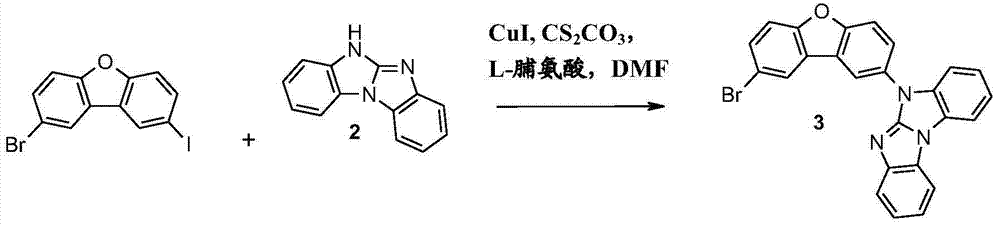
C) under nitrogen, the bromo-8-iodine of 5.00g (13.4mmol) 2-diphenylene-oxide (its synthetic EP1885818 that is described in), 8.74g (26.8mmol) cesium carbonate, 255mg (1.34mmol) cupric iodide (I) and 309mg (2.68mmol) L-PROLINE are added to also [1,2-a] benzoglyoxaline of the 5H-benzoglyoxaline of 2.78g (13.4mmol) in 75ml dimethyl formamide.Reaction mixture is heated at 150 ℃ to 19h and at Hyflo Super Cel (R) medium, Fluka56678, CAS[91053-39-3] the upper THF of use filters.Wash organic phase with water.Steaming desolventizes.With toluene/ethyl acetate 19/1 column chromatography on silica gel, obtain compound 3 (productive rate: 2.29g (37.7%)).
1H?NMR(400MHz,THF-d8):δ8.66(s,1H),8.41(s,1H),8-01-8-16(m,3H),7.89(d,J=8.8Hz,1H),7.63-7.75(m,4H),7.25-7.49(m,4H).

D) by 1.98g (3.41mmol) compound 1 and 4.02g (16.6mmol) Tripotassium phosphate monohydrate (potassium phosphate tribasic monohydrate), 15ml bis-
alkane, 60ml toluene and 12ml water add in 1.50g (3.32mmol) compound 3.By this mixture argon-degassed.Add 81mg (0.199mmol) 2-dicyclohexyl phosphino--2', 6'-dimethoxy-biphenyl (sPhos) and 74mg (0.033mmol) acid chloride (II).Reaction mixture is stirred to 4.5h by argon-degassed and under argon gas at 100 ℃.Add 1% solution of 40ml sodium cyanide and by reaction mixture refluxed 1 hour.Add methylene dichloride, organic phase is washed and used with water dried over mgso.With toluene and then toluene/ethyl acetate 9/1 column chromatography on silica gel obtain compd A-1 (productive rate: 1.42g (61%)).
1HNMR(400MHz,THF-d8):δ8.71(s,1H),8.54-8.58(m,2H),8.41(s,1H),8.20(d,J=7.8Hz,2H),7.62-8.11(m,12H),7.26-7.31(m,10H).
Embodiment 2
The synthetic of 4H-imidazo [1,2-a] benzoglyoxaline is described in ARKIVOC2002 (v) 48-61.

A) under nitrogen, 8.02g (51.0mmol) 4H-imidazo [1,2-a] benzoglyoxaline, the bromo-3-iodobenzene of 15.9g (56.1mmol) 1-, 33.2g (102mmol) cesium carbonate, 1.94g (10.2mol) cupric iodide (I) and 2.35g (20.4mol) L-PROLINE are stirred to 24h in 200ml methyl-sulphoxide (DMSO) at 100 ℃.Solid is leached and is used washed with dichloromethane.Organic phase is washed and is used with water dried over mgso.Steaming desolventizes.With toluene and then toluene/ethyl acetate (20/1) column chromatography obtain product mixtures (3.89g (24%) isomer A and 4.46g (28%) isomer B).The separation of two kinds of isomer is by realizing with toluene/ethyl acetate (toluene 100%, toluene/ethyl acetate 95/5, toluene/ethyl acetate 90/10 and ethyl acetate 100%) Gradient column chromatography.
1H?NMR(400MHz,THF-d
8):δ8.54-8.56(m,1H),8.33(dd,J=7.8Hz,J=1.4Hz,1H),7.80(d,J=2.8Hz,1H),7.76(d,J=2.8Hz,1H),7.79(d,J=8.6Hz,2H),7.39-7.46(m,2H),7.20-7.29(m,1H),7.12-7.16(m,1H).

1H?NMR(400MHz,THF-d
8):δ8.23(s,1H),7.95-7.97(m,1H),7.70-7.74(m,2H),7.56(s,1H),7.45-7.53(m,2H),7.24-7.33(m,2H),7.17(s,1H).
B) synthetic compound C-1 is similar to synthetic compound A-1 and carries out.

1H?NMR(400MHz,THF-d8):8.63(s,1H),8.52(s,1H),8.42(s,1H),8.32-8.35(m,1H),8.20-8.22(m,2H),7.59-8.02(m,10H),7.40-7.47(m,4H),7.09-7.20(m,4H).
The synthetic synthetic compound A-1 that is similar to of product c) embodiment 2c) carries out.

1H?NMR(400MHz,THF-d8):δ=8.51(d,J=1.7Hz,1H),8.41(d,J=2.1Hz,1H),8.37-8.39(m,1H),8.21(s,1H),8.19(s,1H),7.98(dd,J=8.6Hz,J=1.9Hz,1H),7.91-7.94(m,2H),7.65-7.82(m,6H),7.57(d,J=1.5Hz,1H),7.37-7.44(m,4H),7.24-7.34(m,4H),7.12(d,J=1.5Hz,1H).
Application Example 1-mixed matrix
First the ITO substrate as anode is produced and used commercially available sanitising agent with LCD
 20NS and
neutralizing agent) clean, then clean in ultra sonic bath in acetone/isopropanol mixture.In order to eliminate any possible organic residue, this substrate is exposed to other 25 minutes of continuous flow of ozone in ozone stove.This processing also improves GaiITO hole injection efficiency.Then spin coating
oC AJ20-1000 (commercial by Plextronics Inc.) is also dry, forms hole injection layer (~40nm).
20NS and
neutralizing agent) clean, then clean in ultra sonic bath in acetone/isopropanol mixture.In order to eliminate any possible organic residue, this substrate is exposed to other 25 minutes of continuous flow of ozone in ozone stove.This processing also improves GaiITO hole injection efficiency.Then spin coating
oC AJ20-1000 (commercial by Plextronics Inc.) is also dry, forms hole injection layer (~40nm).
Then approximately 10
-7-10
-9under millibar, by vapour deposition, by following organic materials, the speed with about 0.5-5nm/min puts in this clean substrate.As hole transport and exciton blocker, will
(Ir (dpbic)
3) (for preparation, seeing the Ir title complex (7) of application in WO2005/019373) put in this substrate with the thickness of 20nm, initial 10nm MoO wherein
x(~10%) doping is to improve electric conductivity.
Subsequently, by 30 % by weight luminous agent compounds
8 % by weight Compound I r (dpbic)
3with 62 % by weight compounds
 mixture with 30nm thickness, by vapour deposition, apply.
Then by vapour deposition using the thickness of 5nm apply material B Alq as blocker (
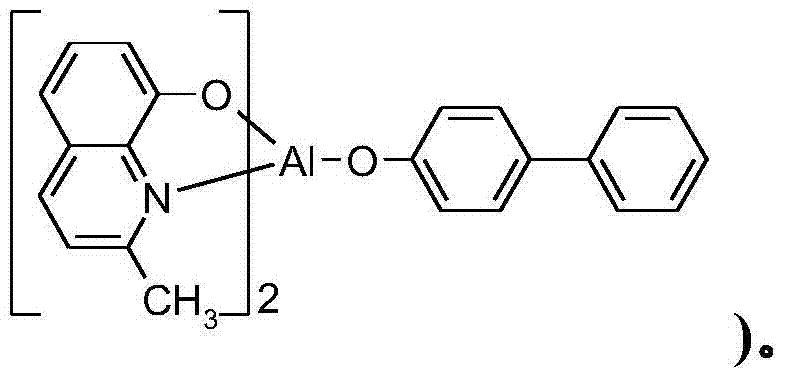
Next by vapour deposition, with the thickness of 20nm, apply Cs
2cO
3the BCP of doping
 layer, as electron transfer layer, finally applies the Al electrode that 100nm is thick and completes device.
All manufacture component are sealed in inert atmosphere of nitrogen with glass cover and getter.
The mono-matrix of Application Example 2 –
The production of OLED and structure are according to carrying out in Application Example 1, and different is that luminescent layer is only by 30 % by weight compounds
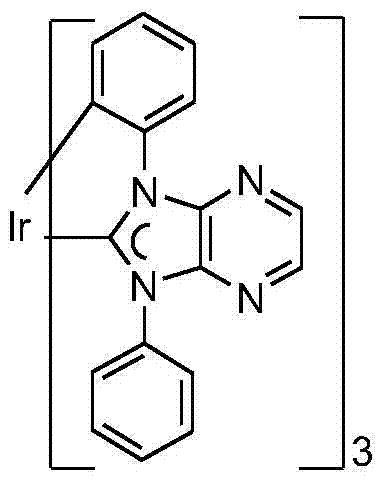 with 70 % by weight compounds
 form, i.e. inclusion compound Ir (dpbic) not
3.
form, i.e. inclusion compound Ir (dpbic) not
3.
In order to characterize this OLED, under various electric currents and voltage, record electroluminescence spectrum.In addition, export multiple measurement I-E characteristic with the light of transmitting.Light output can be by proofreading and correct and change into photometric parameter with photometer.In order to measure work-ing life, this OLED is operated under constant current density and recording light output reduction.Be defined as work-ing life until brightness is reduced to half time passing of original intensity.

1)its electronics # of the photon # that external quantum efficiency (EQE) produces for being escaped by material or device/flow through.
Embodiment 3

Under nitrogen by 3.30g (10mmol) 1,3-diiodo-benzene, 13.0g (40.0mmol) cesium carbonate, 1.90g (1.00mmol) cupric iodide (I) and 2.30g (20.0mmol) L-PROLINE add 4.56g (22.0mmol) mmol) 5H-benzoglyoxaline in 100ml methyl-sulphoxide (DMSO) [1,2-a] benzoglyoxaline also.Reaction mixture is stirred to 5h at 100 ℃.By in reaction mixture impouring water and leach product.By product by twice of toluene crystallization.Productive rate is 1.6g (48%).MS(APCI(pos):m/z=489(M
+1).
1H?NMR(400MHz,THF-d8):δ8.79(s,1H),8.22(d,J=8.4Hz,2H),8.15-8.18(m,2H),8.00-8.06(m,4H),7.88(t,J=8.1Hz,1H)7.71(d,J=7.9Hz,2H),7.41-7.49(m,4H),7.25-7.34(m,4H).
Embodiment 4
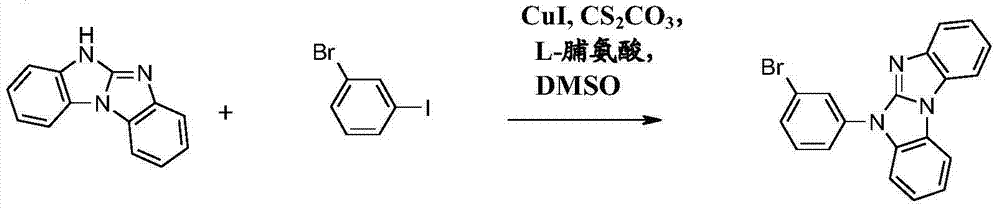
A) under nitrogen, the bromo-3-iodobenzene of 7.78g (25mmol) 1-, 16.3g (50.0mmol) cesium carbonate, 1.24g (6.50mmol) cupric iodide (I) and 1.50g (13.0mmol) L-PROLINE are added to also [1,2-a] benzoglyoxaline of the 5H-benzoglyoxaline of 5.18g (25.0mmol) in 100ml methyl-sulphoxide (DMSO).Reaction mixture is stirred to 18h at 100 ℃.By in reaction mixture impouring water.By organic phase dichloromethane extraction.By organic phase dried over mgso.Steaming desolventizes.With toluene column chromatography on silica gel, obtain product.Productive rate is 8.35g (92%).
1H?NMR(400MHz,CDCl
3):δ8.25(s,1H),7.90-8.05(m,3H),7.95-8.05(m,3H),7.71(d,J=7.9Hz,1H),7.65(d,J=7.9Hz,1H).7.50-7.65(m,2H),7.26-7.45(m,4H).
B) by 1.09g (3.00mmol) embodiment 4a) product, 690mg (2.70mmol) 4,4,5,5-tetramethyl--2-(4,4,5,5-tetramethyl--1,3,2-dioxa pentaborane-2-yl)-1,3,2-dioxa pentaborane, the salt of wormwood argon-degassed of 5.86g (1.80mmol) in 20ml DMF.Add 1,1 '-bis-(diphenyl phosphine) ferrocene) palladium chloride (II) by reaction mixture argon-degassed.Reaction mixture is stirred to 18h at 80 ℃.Leach product and use dimethyl formamide (DMF), water and methanol wash.Productive rate is 370mg (44%).
1H?NMR(400MHz,CDCl
3):δ8.43(s,2H),7.95-8.10(m,6H)7.70-7.90(m,6H),7.63(d,J=7.6Hz,2H),7.20-7.45(m,8H).
Embodiment 5

A) by 5.78g (16.0mmol) embodiment 4a) product, 12.16g (47.8mmol) 4,4,5,5-tetramethyl--2-(4,4,5,5-tetramethyl--1,3,2-dioxa pentaborane-2-yl)-1,3,2-dioxa pentaborane, 12.5g (0.128mol) potassium acetate are used argon-degassed in 50ml DMF.Add 1,1 '-bis-(diphenyl phosphine) ferrocene) palladium chloride (II) by reaction mixture argon-degassed.Reaction mixture is stirred at 60 ℃ to the saturated aqueous solution of 22h impouring sodium-chlor.By tetrahydrofuran (THF) for water (THF) extraction, organic phase is desolventized with dried over mgso steaming.By product by ether and hexanaphthene crystallization.Productive rate is 3.62g (59%).
1H?NMR(400MHz,THF-d8):δ8.26(s,1H),8.09-8.10(m,1H),8.07-8.09(m,2H),7.86(s,J=7.6Hz,1H),7.60-7.67(m,3H),7.28-7.42(m,

B) also [1,2-a] benzoglyoxaline and 6.92g (3.01mmol) Tripotassium phosphate monohydrate, 27ml bis-of 2.72g (6.01mmol) 5-(8-bromine diphenylene-oxide-2-yl) benzoglyoxaline
 alkane, 100ml toluene and 21ml water add 3.20g (7.82mmol) 5-[3-(4,4,5,5-tetramethyl--1,3,2-dioxa pentaborane-2-yl) phenyl] benzoglyoxaline [1,2-a] benzoglyoxaline also.By mixture argon-degassed.Add 148mg (0.361mmol) 2-dicyclohexyl phosphino--2', 6'-dimethoxy-biphenyl (sPhos) and 135mg (0.060mmol) acid chloride (II).Reaction mixture is stirred to 22h by argon-degassed and under argon gas at 100 ℃.Add 1% solution of 110ml sodium cyanide and by reaction mixture refluxed 1 hour.Add methylene dichloride, organic phase is washed and used with water dried over mgso.Product decocts (productive rate: 1.62g (41%)) with methyl alcohol.
1H?NMR(400MHz,THF-d8):δ8.69(d,J=1.1Hz,1H),8.57(d,J=1.6Hz,1H),8.42(s,1H),8.05-8.08(m,1H),7.89-7.99(m,6H),7.80-7.85(m,2H),7.76-7.75(m,4H),7.57-7.61(m,2H),7.18-7.37(m,8H).
Embodiment 6
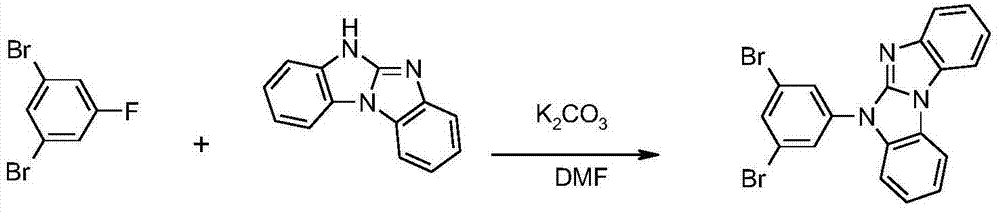
A), by 20.0g (78.8mmol) 1, the bromo-5-fluorobenzene of 3-bis-, 16.3g (78.8mmol) 6H-benzoglyoxaline also [1,2-a] benzoglyoxaline and 43.5g (0.315mmol) salt of wormwood stir 17h in 200ml DMF at 170 ℃.By reaction mixture filtered while hot and by the throw out from mother liquor, after cooling, filter.Product water and washing with alcohol are also decocted with ether and ethanol.Productive rate is 21.2g (61%).
1H?NMR(400MHz,THF-d8):δ8.21-8.26(m,4H),7.98-7.8.00(m,1H),7.68-7.73(m,2H),7.31-7.49(m,4H).

B) by 2.00g (4.53mmol) 5-(3,5-dibromo phenyl) benzoglyoxaline also [1,2-a] benzoglyoxaline and 4.15g (3.00mmol) salt of wormwood, 27ml bis-
alkane, 100ml toluene and 21ml water add 3.20g (7.82mmol) 2-diphenylene-oxide-2-base-4,4,5,5-tetramethyl--1,3,2-dioxa pentaborane.By mixture argon-degassed.Add 37mg (0.090mmol) 2-dicyclohexyl phosphino--2', 6'-dimethoxy-biphenyl (sPhos) and 10mg (0.0045mmol) acid chloride (II).Reaction mixture is stirred to 19h by argon-degassed and under argon gas at 120 ℃.Add 1% solution of 110ml sodium cyanide and by reaction mixture refluxed 1 hour.Steaming desolventizes.Add 30ml toluene, leach product, water and hexanaphthene washing by methyl butyl ketone (MEK) crystallization.Productive rate is 1.84g (66%).
1H?NMR(400MHz,THF-d8):δ8.21-8.26(m,4H),7.98-7.8.00(m,1H),7.68-7.73(m,2H),7.31-7.49(m,4H).
Embodiment 7
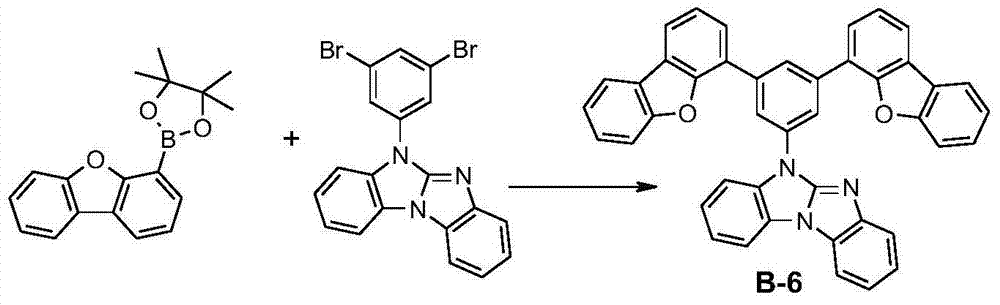
The product type of embodiment 7 is similar to the program preparation of describing in embodiment 6.
1H?NMR(400MHz,DMSO-d6):δ8.59(d,J=1.5Hz,2H),8.46-8.47(m,1H),8.24-8.33(m,6H),8.13(d,J=8.0Hz,1H),7.99-8.01(m,2H),7.78(d,J=8.2Hz,2H),7.37-7.68(m,9H),7.29-7.37(m,2H)
Embodiment 8
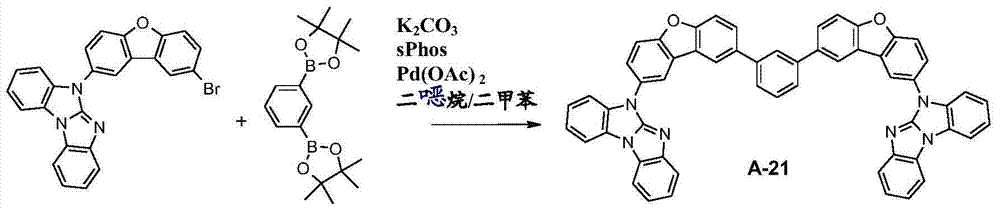
By 3.85g (8.51mmol) 5-(8-bromine diphenylene-oxide-2-yl) benzoglyoxaline also [1,2-a] benzoglyoxaline and 10.3g (4.26mmol) Tripotassium phosphate monohydrate, 20ml bis-
 alkane, 80ml toluene and 16ml water add 2.01g (4.09mmol) 4,4,5,5-tetramethyl--2-[3-(4,4,5,5-tetramethyl--1,3,2-dioxa pentaborane-2-yl) phenyl]-1,3,2-dioxa pentaborane.By reaction mixture argon-degassed.Add 210mg (0.511mmol) 2-dicyclohexyl phosphino--2', 6'-dimethoxy-biphenyl (sPhos) and 191mg (0.085mmol) acid chloride (II).Reaction mixture is stirred to 22h by argon-degassed and under argon gas at 100 ℃.Add 1% solution of 110ml sodium cyanide and by reaction mixture refluxed 1 hour.Add methylene dichloride, organic phase is washed and used with water dried over mgso.Product decocts with ether.Productive rate is 1.31g (39%).
1H?NMR(400MHz,DMF-d7):δ8.90(d,J=1.7Hz,2H),8.86(d,J=2.2Hz,2H),8.37(s,1H),8.26-8.31(m,4H),8.14-8.21(m,4H),8.08-8.11(m,2H),7.94-7.96(m,2H),7.89-7.93(m,2H),7.76-7.78(m,2H),7.66-7.71(m,3H),7.32-7.49(m,8H)
Embodiment 9
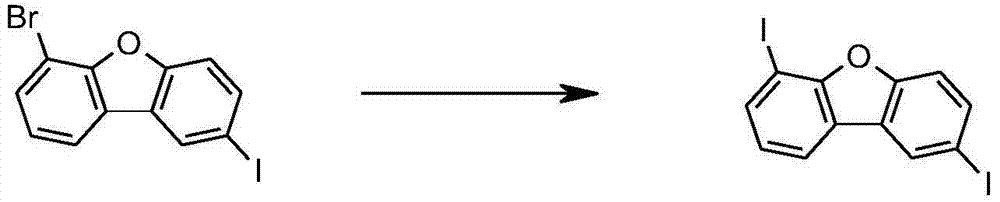
A) 2,6-diiodo-diphenylene-oxide is prepared and passes through by hexanaphthene crystallization purifying according to the embodiment 13 of WO2011/111423.

B) product type of embodiment 9 is similar to the program preparation of describing in embodiment 5.
Embodiment 10
Under nitrogen by 4.20g (10mmol) 2,8-diiodo-diphenylene-oxide, 13.0g (40.0mmol) cesium carbonate, 1.90g (1.00mmol) cupric iodide (I) and 2.30g (20.0mmol) L-PROLINE add also [1,2-a] benzoglyoxaline of the 5H-benzoglyoxaline of 4.56g (22.0mmol) in 100ml methyl-sulphoxide (DMSO).Reaction mixture is stirred to 24h at 100 ℃, filter and use washed with dichloromethane.Organic phase is desolventized with dried over mgso steaming.By product by ether crystallization.Productive rate is 4.7g (81%).
1H?NMR(400MHz,THF-d8):δ8.73(d,J=1.2Hz,2H),8.14(d,J=2.3Hz,J=8.8Hz,2H),7.96-8.02(m,4H),7.92(d,J=8.8Hz,2H),7.70-7.73(m,2H),7.62(d,J=7.1Hz,2H),7.25-7.40(m,8H).
Embodiment 11

A) 2-bromine diphenylene-oxide is according to E.Hand, and J.Org.Chem.62 (1997) 1348 prepares and passes through the purifying by t-butyl methyl ether (TBME) crystallization.

B) under argon gas, 47.27g (0.199mol) 2-bromine cumarone is dissolved in to 440ml dry THF and is cooled to-78 ℃.In 1h, by the solution (LDA of lithium diisopropylamine; By 81.2ml (0.219mol) n-Butyl Lithium (2.7M, in heptane) and 20.18g (0.199mol) diisopropylamine, in 250ml dry THF, prepared) add, maintain the temperature at below-73 ℃.Gained yellow solution is stirred to 2h at-78 ℃.Then iodine solution 50.6g (0.199mol) being dissolved in 150ml dry THF added in 50 minutes, maintained the temperature at below-73 ℃.Gained brown solution is warmed to room temperature, and impouring 500ml buffered soln pH=7 is also neutralized to pH=7 with 2N HCl.By organic solvent evaporation and by water, be extracted with ethyl acetate 3 times.The organic phase of merging is washed with water 3 times, by dried over mgso, filter and solvent is evaporated.By hexanaphthene/TBME=1:1 crystallization, obtain the bromo-4-iodine of 35.0g2-diphenylene-oxide (productive rate: 45.6%) for twice.
1H?NMR(400MHz,CDCl
3):δ7.99(d,J=1.8Hz,1H),7.95(d,J=1.8Hz,1H),7.85(d,J=8Hz,1H),7.63(d,J=8Hz,1H),7.51(t,J=8Hz,1H),7.37(t,J=8Hz,1H).
Embodiment 12

A) 4-bromine diphenylene-oxide is prepared and passes through by methanol crystallization purifying according to the embodiment 1 of US2011/0006670.
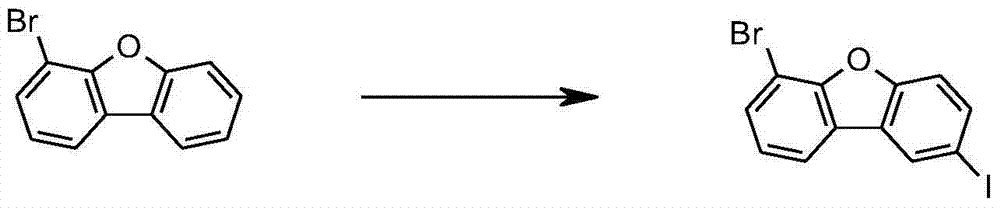
B) the bromo-2-iodine of 6-diphenylene-oxide is prepared according to the embodiment 1 of US2011/0006670 and is passed through by 2-propanol crystal purifying.

C) under nitrogen, the bromo-2-iodine of 1.00g (2.68mmol) 6-diphenylene-oxide, 1.75g (5.36mmol) cesium carbonate, 130mg (0.67mmol) cupric iodide (I) and 150mg (1.34mmol) L-PROLINE are added to also [1,2-a] benzoglyoxaline of the 5H-benzoglyoxaline of 670mg (3.22mmol) in 20ml DMSO.Reaction mixture stirred at 100 ℃ to 18h and filter.THF and toluene are added to organic phase and organic phase is washed with water.Organic phase is desolventized with dried over mgso steaming.Product can be without being further purified for steps d) (productive rate=650mg (78%)).
1H?NMR(400MHz,CDCl
3):δ8.66(d,J=2.2Hz,1H),8.13-8.19(m,2H),7.96-8.07(m,3H),7.66-7.78(m,3H),7.25-7.45(m,5H).
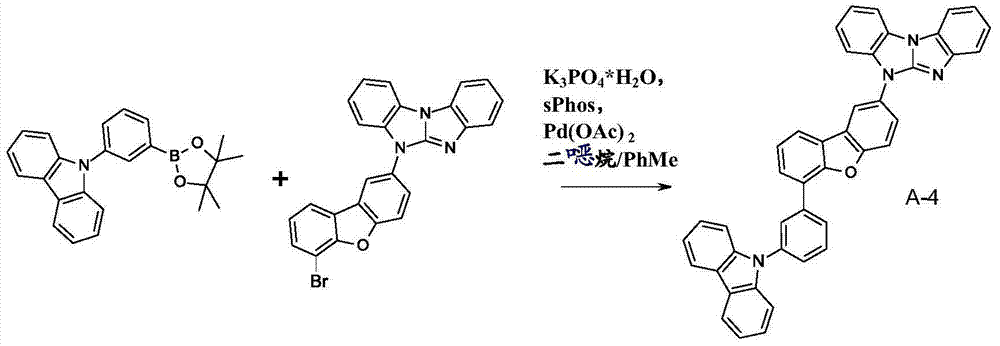
D) product type of embodiment 12 is similar to the program preparation of describing in embodiment 5.MS(APCI(pos),m/z):615.5(M
+1).
1H?NMR(400MHz,THF-d8):8.68(d,J=2.1Hz,1H),8.34(t,J=1.8Hz,1H),8.21(d,J=7.7Hz,3H),7.85-7.15(m,7H),7.65-7.77(m,5H),7.47-7.58(m,3H),7.28-7.44(m,6H).
9-[3-(4,4,5,5-tetramethyl--1,3,2-dioxa pentaborane-2-yl) phenyl] synthetic Chem.Mater.20 (2008) 1691 – 1693 that are described in of carbazole.The product type of embodiment 21 is similar to the program preparation of describing in embodiment 5.
Embodiment 14

2-iodine diphenylene-oxide is according to A.Kryska, Journal of Chemical Research, and Miniprint10 (1999) 2501 prepares and passes through by methanol crystallization purifying.
Embodiment 15

A) 2,4-diiodo-diphenylene-oxide is similar to the program preparation of describing in embodiment 11, by 2-iodine diphenylene-oxide (embodiment 14) beginning and by 2-propanol crystal purifying (productive rate: 80%).
1H?NMR(400MHz,CDCl
3):δ8.17(s,1H),8.07(s,1H),7.84(d,J=7.6Hz,1H),7.63(d,J=7.6Hz,1H),7.51(t,J=7.6Hz,1H),7.37(t,J=7.6Hz,1H).

B) product type of embodiment 15 is similar to the program preparation of describing in embodiment 10.
Embodiment 16

A) under nitrogen, the bromo-4-iodobenzene of 7.00g (24.7mmol) 1-, 10.5g (32.2mmol) cesium carbonate, 2.36g (12.4mmol) cupric iodide (I) and 2.85g (24.7mmol) L-PROLINE are added to also [1,2-a] benzoglyoxaline of the 5H-benzoglyoxaline of 5.13g (24.7mmol) in 80ml DMSO.Reaction mixture stirred at 100 ℃ to 15h and stir 4h at 150 ℃, with methylene dichloride, on Hyflo, filtering.Organic phase is washed with water.By organic phase dried over mgso.Product is decocted with ether and methyl ethyl ketone (MEK).Productive rate: 2.90g (77%).
1H?NMR(400MHz,DMF-d7):δ7.93-8.10(m,4H),7.78-7.92(m,2H),7.72-7.79(m,1H),7.49-7.71(m,1H),7.31-7.49(m4H).

B) product type embodiment 16b) is similar to embodiment 4b) the middle program preparation of describing.
1h NMR (400MHz, DMF-d7): δ=8.19-8.33 (m, 10H), 7.83-7.87 (m, 2H), 7.73-7.77 (m, 2H), 7.35-7.54 (m, 4H). a signal is covered by DMF.
MS(APCI(pos),m/z):565(M
+1).
Embodiment 17

The product type of embodiment 17 is similar to embodiment 4b) the middle program preparation of describing.

The product type of embodiment 18 is similar to embodiment 5b) the middle program preparation of describing.MS(APCI(pos),m/z):615(M
+1)。
Embodiment 19
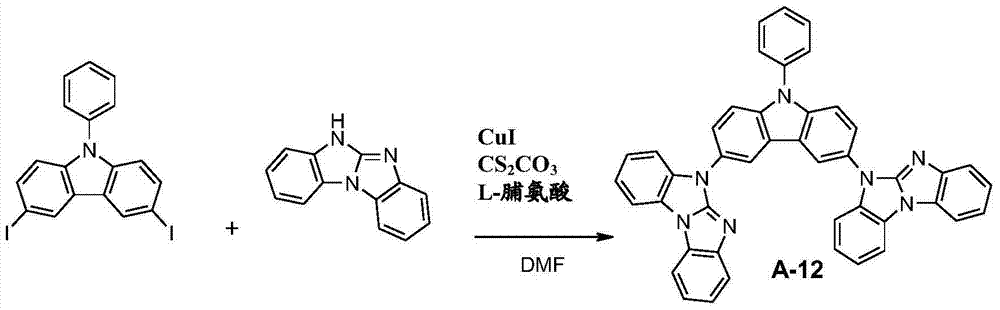
Under nitrogen by 2g (4.04mmol) 3, the iodo-9-phenyl carbazole of 6-bis-, 5.26g (16.2mmol) cesium carbonate, 190mg (0.101mmol) cupric iodide (I) and 233mg (2.02mmol) L-PROLINE add also [1,2-a] benzoglyoxaline of the 5H-benzoglyoxaline of 1.84g (8.89mmol) in 40ml DMSO.Reaction mixture is stirred to 10h at 150 ℃, on Hyflo Super Cel (R) medium (Fluka56678, CAS[91053-39-3]), filter and use washed with dichloromethane.Organic phase is desolventized with dried over mgso steaming.With hexanaphthene/toluene (hexanaphthene 100%, hexanaphthene/toluene 10/1, hexanaphthene/toluene 4/1) Gradient column chromatography, obtain product (productive rate: 70mg (3%)).MS(APCI(pos),m/z):654(M
+1).
1H?NMR(400MHz,THF-d8):δ=8.81(d,J=1.9Hz,2H),7.99-7.05(m,6H),7.70-7.83(m,11H),7.22-7.41(m,8H).
Except Cpd.A-12, by HPLC-MS, also detect following compound:

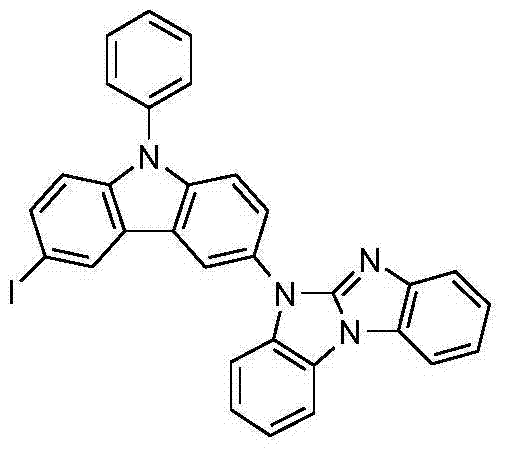
Embodiment 20

A) product type embodiment 20a) is similar to embodiment 1c) the middle program preparation of describing.With reference to J.Heterocyclic Compounds (1989) 168 and J.Org.Chem42 (1977) 542 about 4H-[1,2,4] triazolo [1,5-a] benzoglyoxaline synthetic and for its synthetic raw material.MS(MALDI-MS(,m/z):403(M
+1).

B) product type embodiment 20b) is similar to embodiment 13) the middle program preparation of describing.
Embodiment 21
A) under nitrogen by 5g (31.6mmol) 4H-[1,2,4] triazolo [1,5-a] benzoglyoxaline, 20.6g (63.2mmol) cesium carbonate, 1.5g (7.9mmol) cupric iodide (I) and 910mg (7.9mmol) L-PROLINE add (63.2mmol) the bromo-3-iodobenzene of the 1-in 60mL DMSO of 17.8g (8mL).Reaction mixture is stirred to 15h at 85 ℃.Reaction mixture is filtered to silica gel with methylene dichloride.By organic phase by water, NaCl solution washing and use dried over sodium sulfate.Product is decocted to (productive rate: 8.0g (80%)) with ether.
1H?NMR(400MHz,CD
2Cl
2):δ8.02(s,1H),7.98(s,1H),7.90-7.88(m,1H),7.71-7.68(m,1H),7.60-7.58(d,1H),7.52-7.48(t,1H),7,46-7.40(m,2H).
13C?NMR(500MHz,CD
2Cl
2):δ155.05(d,1C),153.47(s,1C),136.82(s,1C),134.23(s,1C),131.63(d,1C),130.78(d,1C),126.69(d,1C),124.95(s,1C),124.87(d,1C),123.50(s,1C),123.26(d,1C),122.45(d,1C),112.15(d,1C),111.66(d,1C).

B) under argon gas by 1.25g (4mmol) 4-(3-bromophenyl)-[1,2,4] triazolo [1,5-a] benzoglyoxaline, 2.4g (5.2mmol) 9-[8-(4,4,5,5-tetramethyl--1,3,2-dioxa pentaborane-2-yl) diphenylene-oxide-2-yl] carbazole and the potassiumphosphate of 4.3g (20mmol) in 40mL toluene be added in two
 90mg (0.03mmol) acid chloride (II) in alkane/water 40mL/10mL, 100mg (0.24mmol) 2-dicyclohexyl phosphino--2', in 6'-dimethoxy-biphenyl (sPhos).Reaction mixture stirred at 85 ℃ to 15h and filter celite with methylene dichloride.By organic phase by water, NaCl solution washing and use dried over sodium sulfate (productive rate: 1.75g (77%)).
1H?NMR(400MHz,CD
2Cl
2):δ8.41(d,1H),8.37(d,1H),8.34(d,2H),8.25(t,1H),8.17(s,1H),8.06-8.04(m,3H),7.93-7.86(m,4H),7.84(d,1H),7.82(d,1H),7.59-7.54(m,6H),7.47-7.43(m,2H).
13C?NMR(500MHz,CD
2Cl
2):δ157.22(s,1C),155.97(s,1C),155.07(d,1C),153.80(s,1C),143.30(s,1C),141.80(s,2C),136.12(s,1C),135.79(s,1C),134.68(s,1C),133.14(s,1C),130.81(d,1C),127.78(d,1C),127.31(d,1C),126.79(d,1C),126.36(d,2C),125.87(s,1C),124.91(s,1C),124.89(s,1C),124.76(d,1C),123.51(d,2C),122.92(d,1C),122.88(d,1C),120.61(d,2C),120.31(d,1C),120.26(d,2C),122.65(d,1C),120.03(d,1C),113.40(d,1C),112.66(d,1C),112.21(d,1C),111.58(d,1C),110.02(d,2C).
90mg (0.03mmol) acid chloride (II) in alkane/water 40mL/10mL, 100mg (0.24mmol) 2-dicyclohexyl phosphino--2', in 6'-dimethoxy-biphenyl (sPhos).Reaction mixture stirred at 85 ℃ to 15h and filter celite with methylene dichloride.By organic phase by water, NaCl solution washing and use dried over sodium sulfate (productive rate: 1.75g (77%)).
1H?NMR(400MHz,CD
2Cl
2):δ8.41(d,1H),8.37(d,1H),8.34(d,2H),8.25(t,1H),8.17(s,1H),8.06-8.04(m,3H),7.93-7.86(m,4H),7.84(d,1H),7.82(d,1H),7.59-7.54(m,6H),7.47-7.43(m,2H).
13C?NMR(500MHz,CD
2Cl
2):δ157.22(s,1C),155.97(s,1C),155.07(d,1C),153.80(s,1C),143.30(s,1C),141.80(s,2C),136.12(s,1C),135.79(s,1C),134.68(s,1C),133.14(s,1C),130.81(d,1C),127.78(d,1C),127.31(d,1C),126.79(d,1C),126.36(d,2C),125.87(s,1C),124.91(s,1C),124.89(s,1C),124.76(d,1C),123.51(d,2C),122.92(d,1C),122.88(d,1C),120.61(d,2C),120.31(d,1C),120.26(d,2C),122.65(d,1C),120.03(d,1C),113.40(d,1C),112.66(d,1C),112.21(d,1C),111.58(d,1C),110.02(d,2C).
Embodiment 22
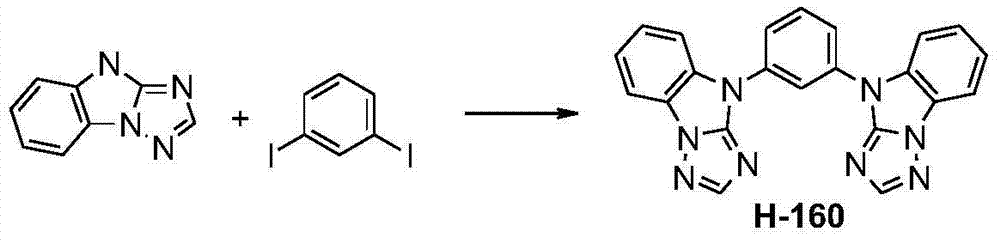
By 160mg (0.48mmol) 1,3-diiodo-benzene and 170mg (1.06mmol) 4H-[1,2,4] triazolo [1,5-a] benzoglyoxaline stirs 15 minutes in 10mL DMSO under argon gas.Add 625mg (1.9mmol) cesium carbonate, 120mg (1.06mmol) L-PROLINE and 90mg (0.48mmol) cupric iodide (I).Reaction mixture stirred at 100 ℃ to 15h and filter celite with methylene dichloride.By organic phase by water, NaCl solution washing and use dried over sodium sulfate.By product by Virahol crystallization (productive rate: 130mg (69%)).
1H?NMR(400MHz,CD
2Cl
2):δ8.35(s,1H),8.06(s,2H),7.94-7.84(m,7H),7.50-7.42(m,4H).
13C?NMR(500MHz,CD
2Cl
2):δ155.12(d,2C),153.59(s,2C),137.10(s,2C),134.27(s,2C),131.07(d,1C),125.09(s,2C),125.06,(d,2C),123.39(d,2C),121.80(d,2C),118.36(d,1C),112.51(d,2C),111.73(d,2C).
Embodiment 23
By 1g (2.4mmol) 2,8-diiodo-diphenylene-oxide and 840mg (5.3mmol) 4H-[1,2,4] triazolo [1,5-a] benzoglyoxaline stirs 15 minutes in 10mL DMSO under argon gas.Add 3.1gmg (9.6mmol) cesium carbonate, 550mg (4.8mmol) L-PROLINE and 460mg (2.4mmol) cupric iodide (I).Browning reaction mixture is stirred to 15h at 100 ℃.Water is added in reaction mixture and filter and use methanol wash.By product by toluene crystallization (productive rate: 330mg (28%)).
1H?NMR(400MHz,CD
2Cl
2):δ8.38(s,1H),8.05(s,2H),7.92-7.85(m,8H),7.42-7.13(dd,2H)
Embodiment 24
9-(9H-carbazole-3-yl)-9H-carbazole is according to document program preparation (J.Org.Chem, 2008,73,1809).
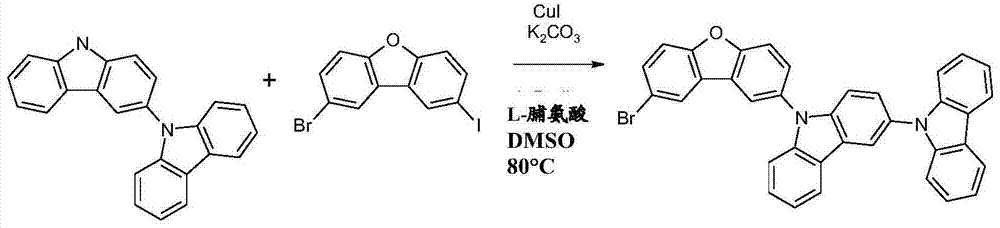
A) product embodiment 24a) is according to the program preparation of embodiment 10.Purifying: FC (SiO
2, hexanaphthene/CH
2cl
24:1. productive rate: 85%.
1H?NMR(400MHz,CD
2Cl
2):δ8.34(s,1H),8.18(m,5H),7.87(d,1H),7.77(d,1H),7.67(d,1H),7.59(m,3H),7.51-7.39(m,6H),7.31(m,3H).

B) by Pd (dppf) * CH
2cl
2(8mg, 0.01mmol) adds 5-[3-(4,4,5,5-tetramethyl--1,3,2-dioxa pentaborane-2-yl) phenyl] benzoglyoxaline also [1,2-a] benzoglyoxaline (133mg, 0.33mmol), embodiment 24a) product (144mg, 0.25mmol) two
 the mixture through degassed (Ar) in alkane (5mL) and NaOH (3M, 0.25mL).Reaction mixture heated at 80 ℃ to 8h and filter celite and FC (SiO
2, CH
2cl
2) obtain product (productive rate: 50mg, 26%).
the mixture through degassed (Ar) in alkane (5mL) and NaOH (3M, 0.25mL).Reaction mixture heated at 80 ℃ to 8h and filter celite and FC (SiO
2, CH
2cl
2) obtain product (productive rate: 50mg, 26%).
1H?NMR(400MHz,CD
2Cl
2):δ8.33(2xs,2+1H),8.18(m,4H),7.88(m,5H),7.81-7.73(m,4H),7.69-7.62(m,3H),7.56(d,1H),7.49(d,2H),7.42-7.27(m,11H).
Application Example 3
The representation and application embodiment 1 of the preparation of ITO substrate and subsequently complete diode is identical, and the composition of different Shi Ru lower floors is different:
As hole transport and exciton blocker, by Ir (dpbic)
3thickness with 20nm puts in this substrate, wherein initial 10nm MoO
3(~10%) doping is to improve electric conductivity.Subsequently, by 30 % by weight luminous agent compounds
 15 % by weight Compound I r (dpbic)
3with 55 % by weight compounds
15 % by weight Compound I r (dpbic)
3with 55 % by weight compounds
 mixture with 30nm thickness, by vapour deposition, apply.
Then by vapour deposition, using the thickness of 5nm and apply compd A-10 as hole blocking agent.Subsequently with the thickness evaporation 50 % by weight materials of 20nm
 with 50 % by weight materials
 mixture as electron transfer layer, finally deposition~2nm KF is as electron injecting layer and deposit the Al electrode that 100nm is thick and complete device.
Contrast Application Example 1
The production of OLED and structure are according to carrying out in Application Example 3, different as follows: in hole transmission layer, and MoO
3at Ir (dpbic)
3in doping content be 5 % by weight.Luminescent layer is by 30 % by weight compounds
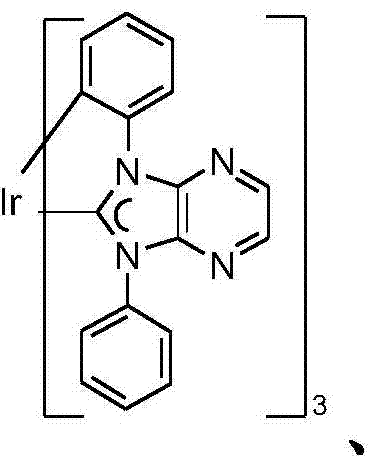 15 % by weight Compound I r (dpbic)
3with 55 % by weight compounds
(Ref-1) form.Hole blocking layer by compound R ef-1, formed and electron transfer layer 25nm thick.
15 % by weight Compound I r (dpbic)
3with 55 % by weight compounds
(Ref-1) form.Hole blocking layer by compound R ef-1, formed and electron transfer layer 25nm thick.
Be set as the work-ing life of * Application Example 3 being measured 100 and those of the regulation in work-ing life of contrast Application Example 1 and Application Example 3 relevant.
Application Example 4
The production of OLED and structure are according to carrying out in Application Example 3, different as follows: to have MoO
3and Ir (dpbic)
3hole transmission layer 15nm thick and there is unadulterated electron-block agent Ir (dpbic)
3hole transmission layer only 5nm is thick.Luminescent layer is by 30 % by weight compounds
 10 % by weight Compound I r (dpbic)
3with 60 % by weight compounds
10 % by weight Compound I r (dpbic)
3with 60 % by weight compounds
 form, thickness is 40nm.Hole blocking layer consists of material B-5.
Contrast Application Example 2
The production of OLED and structure are according to carrying out in Application Example 3, different as follows: luminescent layer is by 30 % by weight compounds
 10 % by weight Compound I r (dpbic)
3with 60 % by weight compounds
10 % by weight Compound I r (dpbic)
3with 60 % by weight compounds
 form, thickness is 40nm.Hole blocking layer consists of compound R ef-2.
| ? | Material of main part | Voltage@300nits[V] | Work-ing life@4000nits* |
| Application Example 4 | B-5 | 4.55 | 100 |
| Contrast Application Example 2 | Ref-2 | 4.34 | 70 |
Be set as the work-ing life of * Application Example 4 being measured 100 and those of the regulation in work-ing life of contrast Application Example 2 and Application Example 4 relevant.
Application Example 5
The production of OLED and structure are according to carrying out in Application Example 1, different as follows: luminescent layer is by 30 % by weight compounds
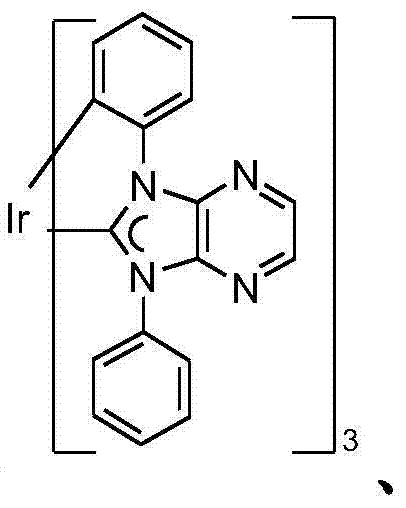 10 % by weight Compound I r (dpbic)
3with 60 % by weight compounds
(A-20) form, thickness is 30nm.Electron transfer layer 25nm is thick.
10 % by weight Compound I r (dpbic)
3with 60 % by weight compounds
(A-20) form, thickness is 30nm.Electron transfer layer 25nm is thick.
Contrast Application Example 3
The production of OLED and structure are according to carrying out in Application Example 1, different as follows: luminescent layer is by 30 % by weight compounds
10 % by weight Compound I r (dpbic)
3with 60 % by weight compounds
 form, thickness is 30nm.Electron transfer layer 25nm is thick.
| ? | Material of main part | Voltage@300nits[V] | EQE@300nits[%] |
| Application Example 5 | A-20 | 3.43 | 11.3 |
| Contrast Application Example 3 | Ref-3 | 3.81 | 13.6 |
Be set as the work-ing life of * Application Example 5 being measured 100 and those of the regulation in work-ing life of contrast Application Example 3 and Application Example 5 relevant.
Application Example 6
The production of OLED and structure are according to carrying out in Application Example 3, different as follows: luminescent layer is by 30 % by weight compounds
 10 % by weight Compound I r (dpbic)
3with 60 % by weight compounds
10 % by weight Compound I r (dpbic)
3with 60 % by weight compounds
 form, thickness is 40nm.Hole blocking layer consists of materials A-3.
| ? | Material of main part | Voltage@300nits[V] | EQE@300nits[%] | CIE |
| Application Example 6 | A-20 | 4.56 | 12.8 | 0.18/0.36 |
Claims (17)
1. a formula
 compound, wherein
X
6wei – N=and X
7wei – NR
1-, or
X
7for=N-and X
6wei – NR
1-,
R
1for formula-A
1-(A
2)
p-(A
3)
q-(A
4)
r-R
6group,
P be 0 or 1, q be 0 or 1, r be 0 or 1,
A
1, A
2, A
3and A
4be the C that can optionally be replaced by G independently of each other
6-C
24arylidene, or the C that can optionally be replaced by G
2-C
30inferior heteroaryl, wherein
Group A
1, A
2, A
3and A
4can be by one or more Ji Tuan – (SiR
7r
8)-interval;
R
2, R
3, R
4and R
5be H independently of each other, can optionally by E, be replaced and/or by the C at D interval
1-C
25alkyl, the C that can optionally be replaced by G
6-C
24aryl, or the C that can optionally be replaced by G
2-C
30heteroaryl;
R
6for H, Ji Tuan – (SiR
20r
21r
22), the C that can optionally be replaced by G
6-C
24aryl, or the C that can optionally be replaced by G
2-C
30heteroaryl;
R
7and R
8be C independently of each other
1-C
25alkyl, or C
6-C
24aryl, it can optionally be replaced by G; X
1for N or CR
9;
X
2for N or CR
10,
R
9and R
10be H independently of each other, can optionally by E, be replaced and/or by the C at D interval
1-C
25alkyl, the C that can optionally be replaced by G
6-C
24aryl, or the C that can optionally be replaced by G
2-C
30heteroaryl, or
R
9and R
10forming together can optional substituted ring,
R
20, R
21and R
22be C independently of each other
1-C
25alkyl, or C
6-C
24aryl, it can optionally be replaced by G;
D is-CO-,-COO-,-S-,-SO-,-SO
2-,-O-,-NR
65-,-SiR
70r
71-,-POR
72-,-CR
63=CR
64-or-C ≡ C-,
E is-OR
69,-SR
69,-NR
65r
66,-COR
68,-COOR
67,-CONR
65r
66,-CN or halogen,
G is E or C
1-C
18alkyl, C
6-C
24aryl, the C optionally being replaced by F
6-C
24aryl, C
1-C
18alkyl, by the C at O interval
1-C
18alkyl, C
2-C
30heteroaryl or the C being replaced by F
2-C
30heteroaryl, C
1-C
18alkyl, by the C at O interval
1-C
18alkyl;
R
63and R
64be C independently of each other
6-C
18aryl, by C
1-C
18alkyl, C
1-C
18the C that alkoxyl group replaces
6-C
18aryl, C
1-C
18the C at alkyl or quilt-O-interval
1-C
18alkyl;
R
65and R
66be C independently of each other
6-C
18aryl, by C
1-C
18alkyl or C
1-C
18the C that alkoxyl group replaces
6-C
18aryl, C
1-C
18the C at alkyl or quilt-O-interval
1-C
18alkyl; Or
R
65and R
66form together 5 or 6 Yuans rings,
R
67for C
6-C
18aryl, by C
1-C
18alkyl or C
1-C
18the C that alkoxyl group replaces
6-C
18aryl, C
1-C
18the C at alkyl or quilt-O-interval
1-C
18alkyl,
R
68for H, C
6-C
18aryl, by C
1-C
18alkyl or C
1-C
18the C that alkoxyl group replaces
6-C
18aryl, C
1-C
18the C at alkyl or quilt-O-interval
1-C
18alkyl,
R
69for C
6-C
18aryl, by C
1-C
18alkyl or C
1-C
18the C that alkoxyl group replaces
6-C
18aryl, C
1-C
18the C at alkyl or quilt-O-interval
1-C
18alkyl,
R
70and R
71be C independently of each other
1-C
18alkyl, C
6-C
18aryl or by C
1-C
18the C that alkyl replaces
6-C
18aryl, and
R
72for C
1-C
18alkyl, C
6-C
18aryl or by C
1-C
18the C that alkyl replaces
6-C
18aryl;
Condition is to get rid of following compound:


2. according to the compound of claim 1, it is formula
especially
 compound, wherein
X
6wei – N=and X
7wei – NR
1-or
X
7for=N-and X
6wei – NR
1-,
R
11, R
12, R
13and R
14be H independently of each other, can optionally by E, be replaced and/or by the C at D interval
1-C
25alkyl, the C that can optionally be replaced by G
6-C
24aryl, or the C that can optionally be replaced by G
2-C
30heteroaryl, and
E, D, G, R
1, R
2, R
3, R
4and R
5as claim 1 defines.
3. according to the compound of claim 3, wherein R
2, R
3, R
4, R
5, R
11, R
12, R
13and R
14for H and R
1as claim 1 defines.
4. according to the compound of any one in claim 1-3, wherein R
1for formula-A
1-(A
2)
p-(A
3)
q-(A
4)
r-R
6or
 group, A wherein
1, A
2, A
3and A
4be formula independently of each other
group, A wherein
1, A
2, A
3and A
4be formula independently of each other

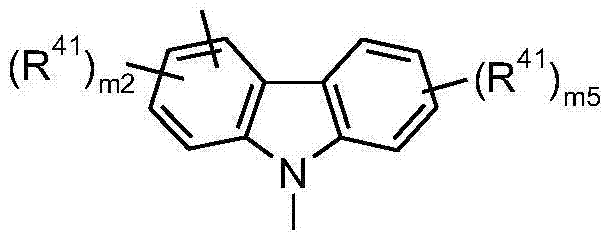 or
or
 group, wherein
M5 is 0 or the integer of 1-4,
M2 is 0 or integer 1-3,
X
3wei – O-,-S-Huo – NR
15-,
R
7and R
8for C
1-C
18alkyl,
R
15for C
1-C
18alkyl; Or the C at quilt-O-interval
1-C
18alkyl; C
6-C
18aryl; By one or more C
1-C
18alkyl or C
1-C
18the C that alkoxyl group replaces
6-C
18aryl; C
2-C
20heteroaryl or by one or more C
1-C
18the C that alkyl replaces
2-C
20heteroaryl,
R
41can be identical or different when occurring and be F at every turn, C
1-C
18alkyl, is replaced by E and/or by the C at D interval
1-C
18alkyl, C
6-C
24aryl, the C being replaced by G
6-C
24aryl, C
2-C
20heteroaryl or the C being replaced by G
2-C
20heteroaryl, and
R
6, p, q, r, E, D and G define as claim 1.
5. according to the compound of claim 4, wherein A
1, A
2, A
3and A
4be formula independently of each other
 or
or
 group, wherein
R
15for C
6-C
18aryl; Or by one or more C
1-C
18the C that alkyl replaces
6-C
18aryl.
6. according to the compound of any one in claim 1-5, wherein R
6for formula
 especially
 group or Ji Tuan – (SiR
20r
21r
22), wherein
group or Ji Tuan – (SiR
20r
21r
22), wherein
X
6’ Wei – N=and X
7’ Wei – NR
1-or
X
7' be=N-and X
6’ Wei – NR
1-,
R
2, R
3, R
4, R
5, R
11, R
12, R
13and R
14be H independently of each other, can optionally by E, be replaced and/or by the C at D interval
1-C
25alkyl; The C that can optionally be replaced by G
6-C
24aryl, or the C that can optionally be replaced by G
2-C
30heteroaryl,
R
16for C
6-C
18aryl; Or by one or more C
1-C
18the C that alkyl replaces
6-C
18aryl.
R
20, R
21and R
22be C independently of each other
6-C
18aryl; Or by one or more C
1-C
18the C that alkyl replaces
6-C
18aryl,
R
43can be identical or different when occurring and be F at every turn, C
1-C
18alkyl, is replaced by E and/or by the C at D interval
1-C
18alkyl, C
6-C
24aryl, the C being replaced by G
6-C
24aryl, C
2-C
20heteroaryl or the C being replaced by G
2-C
20heteroaryl,
M3 is 0 or the integer of 1-4, and m4 is 0 or the integer of 1-3, and
E, D and G define as claim 1.
7. according to the compound of claim 6, wherein R
6for formula

 or
or
 group, R
16for C
6-C
18aryl; Or by one or more C
1-C
18the C that alkyl replaces
6-C
18aryl.
group, R
16for C
6-C
18aryl; Or by one or more C
1-C
18the C that alkyl replaces
6-C
18aryl.
8. according to the compound of claim 1:


2)dotted line represents and formula
the key of group.
9. according to the compound of claim 1, it is formula
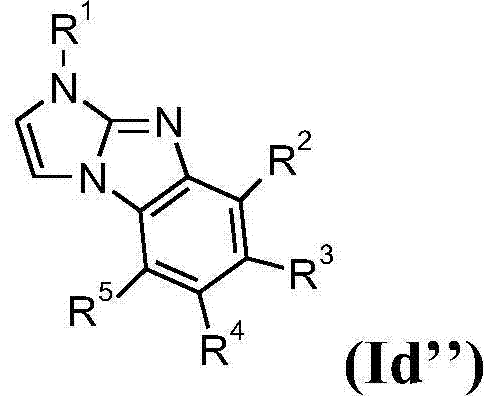 or
or
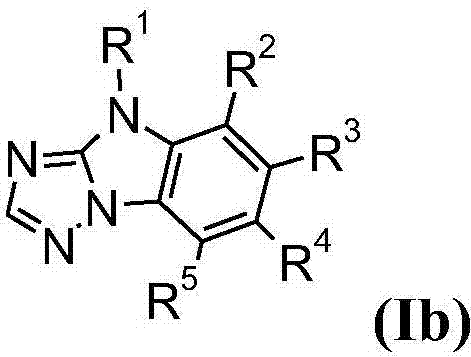 compound, wherein
R
1for formula-A
1-(A
2)
p-(A
3)
q-(A
4) r-R
6group or

A
1, A
2, A
3and A
4be formula independently of each other

 or
or
 group, wherein
M5 is 0 or the integer of 1-4,
M2 is 0 or integer 1-3,
X
3wei – O-,-S-Huo – NR
15-,
R
7and R
8for C
1-C
18alkyl,
R
15for C
1-C
18alkyl; Or the C at quilt-O-interval
1-C
18alkyl; C
6-C
18aryl; By one or more C
1-C
18alkyl or C
1-C
18the C that alkoxyl group replaces
6-C
18aryl; C
2-C
20heteroaryl or by one or more C
1-C
18the C that alkyl replaces
2-C
20heteroaryl,
R
41can be identical or different when occurring and be F at every turn, C
1-C
18alkyl, is replaced by E and/or by the C at D interval
1-C
18alkyl, C
6-C
24aryl, the C being replaced by G
6-C
24aryl, C
2-C
20heteroaryl or the C being replaced by G
2-C
20heteroaryl,
R
6for formula

 or
or
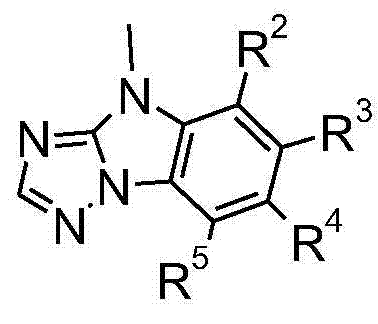 group,
R
43can be identical or different when occurring and be F at every turn, C
1-C
18alkyl, is replaced by E and/or by the C at D interval
1-C
18alkyl, C
6-C
24aryl, the C being replaced by G
6-C
24aryl, C
2-C
20heteroaryl, or the C being replaced by G
2-C
20heteroaryl,
M3 is 0 or the integer of 1-4; Or
R
1for formula-A
1-(A
2)
p-(A
3)
q-(A
4)
r-R
6group, wherein
A
1, A
2, A
3and A
4be formula independently of each other
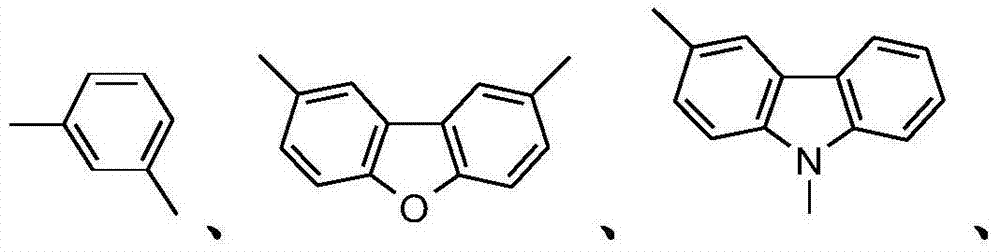 or
or
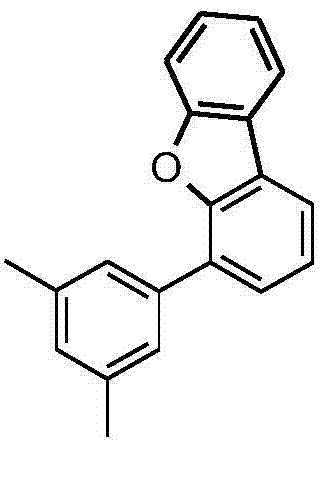 group;
R
6for formula
or
 group, R
2, R
3, R
4, R
5, p, q, r, E, D and G define as claim 1, and R
11, R
12, R
13and R
14as claim 2 defines.
group, R
2, R
3, R
4, R
5, p, q, r, E, D and G define as claim 1, and R
11, R
12, R
13and R
14as claim 2 defines.
10. an electron device, comprises according to the compound of any one in claim 1-9.
11. according to the electron device of claim 10, and it is electroluminescent device.
12. 1 kinds of hole transmission layers or luminescent layer, comprise according to the compound of any one in claim 1-9.
13. according to the luminescent layer of claim 12, comprises combining according to the compound of any one in claim 1-9 and phosphorescence twinkler as material of main part.
14. 1 kinds of devices, be selected from fixedly visual display unit, the visual display unit of computer, TV for example, visual display unit in printer, kitchen utensils and billboard, illumination, informatiom board, with mobile visible display unit, mobile telephone, Desktop PC, portable computer, digital camera, MP3 player, vehicle and motorbus and the train Shang point of destination visual display unit in showing for example; Lighting unit; Keyboard; Clothing; Furniture; Wallpaper, comprises according to the organic electronic devices of claim 10 or 11 or according to the hole transmission layer of claim 12 or luminescent layer.
15. according to the formula I compound of any one in claim 1-9 the purposes in electric photography photoreceptor, photoelectric commutator, organic solar batteries (organic photovoltaic devices), switching element, organic light-emitting field effect transistor (OLEFET), image sensor, dye laser and electroluminescent device.
Prepare wherein R for 16. 1 kinds
2, R
3, R
4, R
5, R
11, R
12, R
13and R
14for H and R
1formula as defined in claim 1
the method of compound, comprise that (a) heating is at H
3pO
4, Tripyrophosphoric acid, CH
3sO
3h/P
2o
5, CH
3sO
3formula in H or sulfuric acid
compound to obtain formula
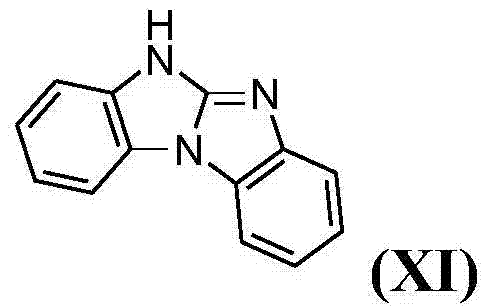 compound; (b) make the reaction of formula XI compound and obtain formula II compound.
17. 1 kinds of formulas
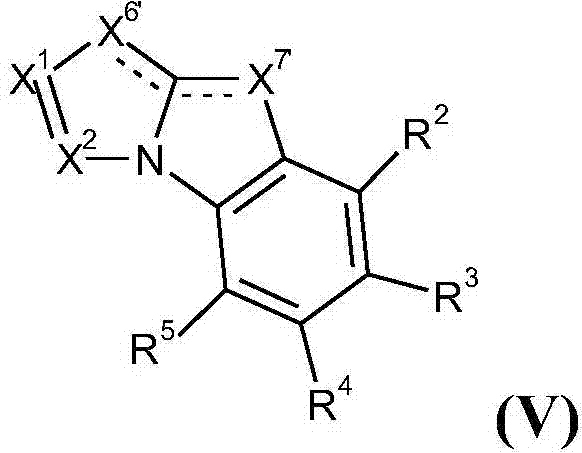 compound, wherein X
6’ Wei – N=and X
7’ Wei – NR
1'-, or X
7' be=N-and X
6’ Wei – NR
1'-,
compound, wherein X
6’ Wei – N=and X
7’ Wei – NR
1'-, or X
7' be=N-and X
6’ Wei – NR
1'-,
R
1' be formula-A
1-(A
2)
p-(A
3)
q-(A
4)
r-(R
6')
tgroup, t is 1 or 2;
P, q, r, A
1, A
2, A
3, A
4, X
1, X
2, R
2, R
3, R
4and R
5as claim 1 defines, and
R
6' be halogen; ZnX
12;-SnR
207r
208r
209, R wherein
207, R
208and R
209identical or different and be H or C
1-C
6alkyl, wherein optional public ring and the optional branching of these groups or the branching not of forming of two groups; And X
12for halogen atom ,-OS (O)
2cF
3,-OS (O)
2-aryl ,-OS (O)
2cH
3,-B (OH)
2,-B (OY
1)
2,
 -BF
4na or-BF
4k, wherein Y
1when occurring, be C independently at every turn
1-C
10alkyl.Y
2when occurring, be C independently at every turn
2-C
10alkylidene group, and Y
13and Y
14be hydrogen or C independently of each other
1-C
10alkyl.
-BF
4na or-BF
4k, wherein Y
1when occurring, be C independently at every turn
1-C
10alkyl.Y
2when occurring, be C independently at every turn
2-C
10alkylidene group, and Y
13and Y
14be hydrogen or C independently of each other
1-C
10alkyl.
Priority Applications (2)
| Application Number | Priority Date | Filing Date | Title |
|---|---|---|---|
| CN201610552418.2A CN106188065B (en) | 2011-03-25 | 2012-03-22 | 4H-imidazo [1,2-a ] imidazoles for electronic applications |
| CN202111538217.4A CN114315840A (en) | 2011-03-25 | 2012-03-22 | 4H-imidazo [1,2-a ] imidazoles for electronic applications |
Applications Claiming Priority (5)
| Application Number | Priority Date | Filing Date | Title |
|---|---|---|---|
| EP11159805 | 2011-03-25 | ||
| EP11159805.8 | 2011-03-25 | ||
| EP11188571.1 | 2011-11-10 | ||
| EP11188571 | 2011-11-10 | ||
| PCT/EP2012/055064 WO2012130709A1 (en) | 2011-03-25 | 2012-03-22 | 4h-imidazo[1,2-a]imidazoles for electronic applications |
Related Child Applications (2)
| Application Number | Title | Priority Date | Filing Date |
|---|---|---|---|
| CN202111538217.4A Division CN114315840A (en) | 2011-03-25 | 2012-03-22 | 4H-imidazo [1,2-a ] imidazoles for electronic applications |
| CN201610552418.2A Division CN106188065B (en) | 2011-03-25 | 2012-03-22 | 4H-imidazo [1,2-a ] imidazoles for electronic applications |
Publications (2)
| Publication Number | Publication Date |
|---|---|
| CN103517906A true CN103517906A (en) | 2014-01-15 |
| CN103517906B CN103517906B (en) | 2016-08-24 |
Family
ID=45928850
Family Applications (3)
| Application Number | Title | Priority Date | Filing Date |
|---|---|---|---|
| CN202111538217.4A Pending CN114315840A (en) | 2011-03-25 | 2012-03-22 | 4H-imidazo [1,2-a ] imidazoles for electronic applications |
| CN201280022301.3A Active CN103517906B (en) | 2011-03-25 | 2012-03-22 | 4H-Imidazolo[1,2-a]imidazole for Electronic Applications |
| CN201610552418.2A Active CN106188065B (en) | 2011-03-25 | 2012-03-22 | 4H-imidazo [1,2-a ] imidazoles for electronic applications |
Family Applications Before (1)
| Application Number | Title | Priority Date | Filing Date |
|---|---|---|---|
| CN202111538217.4A Pending CN114315840A (en) | 2011-03-25 | 2012-03-22 | 4H-imidazo [1,2-a ] imidazoles for electronic applications |
Family Applications After (1)
| Application Number | Title | Priority Date | Filing Date |
|---|---|---|---|
| CN201610552418.2A Active CN106188065B (en) | 2011-03-25 | 2012-03-22 | 4H-imidazo [1,2-a ] imidazoles for electronic applications |
Country Status (5)
| Country | Link |
|---|---|
| EP (3) | EP3034508B1 (en) |
| JP (3) | JP6072760B2 (en) |
| KR (4) | KR102266455B1 (en) |
| CN (3) | CN114315840A (en) |
| WO (1) | WO2012130709A1 (en) |
Cited By (12)
| Publication number | Priority date | Publication date | Assignee | Title |
|---|---|---|---|---|
| CN104662023A (en) * | 2012-09-20 | 2015-05-27 | 巴斯夫欧洲公司 | Azadibenzofurans for electron applications |
| CN106255687A (en) * | 2014-04-30 | 2016-12-21 | 默克专利有限公司 | Materials for Electronic Devices |
| CN106459018A (en) * | 2014-05-05 | 2017-02-22 | 默克专利有限公司 | Materials for Organic Light Emitting Devices |
| CN106467549A (en) * | 2016-08-03 | 2017-03-01 | 江苏三月光电科技有限公司 | A kind of compound containing benzimidazole and its application on organic electroluminescence device |
| CN106467552A (en) * | 2016-08-03 | 2017-03-01 | 江苏三月光电科技有限公司 | A kind of compound containing benzimidazole and its application in OLED |
| CN106467548A (en) * | 2016-08-03 | 2017-03-01 | 江苏三月光电科技有限公司 | A kind of compound containing benzimidazole and its application |
| CN106588934A (en) * | 2016-11-26 | 2017-04-26 | 长春海谱润斯科技有限公司 | Carbazole derivative, preparation method, and application thereof |
| CN106749320A (en) * | 2016-12-06 | 2017-05-31 | 江苏三月光电科技有限公司 | A kind of benzimidazole and ketone compounds and its application in OLED |
| CN106986879A (en) * | 2015-10-01 | 2017-07-28 | 环球展览公司 | Organic Electroluminescent Materials and Devices |
| CN111233868A (en) * | 2018-11-28 | 2020-06-05 | 环球展览公司 | Host materials for electroluminescent devices |
| CN111689968A (en) * | 2019-03-14 | 2020-09-22 | 上海和辉光电有限公司 | Organic luminescent material and preparation method and application thereof |
| US11512093B2 (en) | 2019-03-04 | 2022-11-29 | Universal Display Corporation | Compound used for organic light emitting device (OLED), consumer product and formulation |
Families Citing this family (51)
| Publication number | Priority date | Publication date | Assignee | Title |
|---|---|---|---|---|
| US9806270B2 (en) | 2011-03-25 | 2017-10-31 | Udc Ireland Limited | 4H-imidazo[1,2-a]imidazoles for electronic applications |
| CN114315840A (en) * | 2011-03-25 | 2022-04-12 | Udc 爱尔兰有限责任公司 | 4H-imidazo [1,2-a ] imidazoles for electronic applications |
| CN103476774B (en) * | 2011-04-13 | 2017-02-15 | 默克专利有限公司 | Materials for Electronic Devices |
| WO2012152812A1 (en) | 2011-05-10 | 2012-11-15 | Basf Se | Novel color converters |
| RU2608411C2 (en) | 2011-06-10 | 2017-01-18 | Басф Се | New colour converter |
| CN108299439B (en) | 2011-11-10 | 2021-02-09 | Udc 爱尔兰有限责任公司 | 4H-imidazo [1,2-a ] imidazoles for electronic applications |
| CN108191870A (en) | 2012-07-10 | 2018-06-22 | Udc 爱尔兰有限责任公司 | For benzimidazole simultaneously [1,2-A] benzimidizole derivatives of electronic application |
| US10374172B2 (en) | 2013-03-20 | 2019-08-06 | Udc Ireland Limited | Azabenzimidazole carbene complexes as efficiency booster in OLEDs |
| CN104119364A (en) * | 2013-04-25 | 2014-10-29 | 海洋王照明科技股份有限公司 | Organic semiconductor material, preparation method thereof and electroluminescent device |
| US10128448B2 (en) | 2013-04-29 | 2018-11-13 | Udc Ireland Limited | Transition metal complexes with carbene ligands and the use thereof in OLEDs |
| JP6506272B2 (en) | 2013-07-02 | 2019-04-24 | ユー・ディー・シー アイルランド リミテッド | Monosubstituted diazabenzimidazole carbene metal complexes for use in organic light emitting diodes |
| JP6486353B2 (en) | 2013-07-31 | 2019-03-20 | ユー・ディー・シー アイルランド リミテッド | Luminescent diazabenzimidazole carbene metal complex |
| EP3063153B1 (en) | 2013-10-31 | 2018-03-07 | Idemitsu Kosan Co., Ltd. | Azadibenzothiophenes for electronic applications |
| WO2015091716A1 (en) | 2013-12-20 | 2015-06-25 | Basf Se | Highly efficient oled devices with very short decay times |
| CN106661068A (en) | 2014-03-31 | 2017-05-10 | Udc 爱尔兰有限责任公司 | Metal complexes comprising carbene ligands with o-substituted acyclometallated aryl groups and their use in organic light-emitting diodes |
| WO2015176981A1 (en) * | 2014-05-19 | 2015-11-26 | Basf Se | Fluorescent organic light emitting elements having high efficiency |
| EP3174885B1 (en) | 2014-07-28 | 2019-10-02 | Idemitsu Kosan Co., Ltd. | 2,9-functionalized benzimidazolo[1,2-a]benzimidazoles as hosts for organic light emitting diodes (oleds) |
| EP2982676B1 (en) | 2014-08-07 | 2018-04-11 | Idemitsu Kosan Co., Ltd. | Benzimidazo[2,1-B]benzoxazoles for electronic applications |
| EP3186264B1 (en) | 2014-08-08 | 2018-11-28 | UDC Ireland Limited | Electroluminescent imidazo-quinoxaline carbene metal complexes |
| EP2993215B1 (en) | 2014-09-04 | 2019-06-19 | Idemitsu Kosan Co., Ltd. | Azabenzimidazo[2,1-a]benzimidazoles for electronic applications |
| EP3015469B1 (en) | 2014-10-30 | 2018-12-19 | Idemitsu Kosan Co., Ltd. | 5-(benzimidazol-2-yl)benzimidazo[1,2-a]benzimidazoles for electronic applications |
| WO2016079667A1 (en) | 2014-11-17 | 2016-05-26 | Idemitsu Kosan Co., Ltd. | Indole derivatives for electronic applications |
| US10424746B2 (en) | 2014-11-18 | 2019-09-24 | Udc Ireland Limited | Pt- or Pd-carbene complexes for use in organic light emitting diodes |
| EP3034506A1 (en) | 2014-12-15 | 2016-06-22 | Idemitsu Kosan Co., Ltd | 4-functionalized carbazole derivatives for electronic applications |
| EP3034507A1 (en) | 2014-12-15 | 2016-06-22 | Idemitsu Kosan Co., Ltd | 1-functionalized dibenzofurans and dibenzothiophenes for organic light emitting diodes (OLEDs) |
| EP3053918B1 (en) | 2015-02-06 | 2018-04-11 | Idemitsu Kosan Co., Ltd. | 2-carbazole substituted benzimidazoles for electronic applications |
| EP3054498B1 (en) | 2015-02-06 | 2017-09-20 | Idemitsu Kosan Co., Ltd. | Bisimidazodiazocines |
| EP3061759B1 (en) | 2015-02-24 | 2019-12-25 | Idemitsu Kosan Co., Ltd | Nitrile substituted dibenzofurans |
| EP3070144B1 (en) | 2015-03-17 | 2018-02-28 | Idemitsu Kosan Co., Ltd. | Seven-membered ring compounds |
| EP3072943B1 (en) | 2015-03-26 | 2018-05-02 | Idemitsu Kosan Co., Ltd. | Dibenzofuran/carbazole-substituted benzonitriles |
| EP3075737B1 (en) | 2015-03-31 | 2019-12-04 | Idemitsu Kosan Co., Ltd | Benzimidazolo[1,2-a]benzimidazole carrying aryl- or heteroarylnitril groups for organic light emitting diodes |
| EP4060757A1 (en) | 2015-06-03 | 2022-09-21 | UDC Ireland Limited | Highly efficient oled devices with very short decay times |
| US10570136B2 (en) | 2015-07-28 | 2020-02-25 | Udc Ireland Limited | Process for the preparation of benzimidazo[1,2-a] benzimidazoles |
| JP2018206785A (en) * | 2015-09-18 | 2018-12-27 | 出光興産株式会社 | Organic electroluminescent element |
| EP3150604B1 (en) | 2015-10-01 | 2021-07-14 | Idemitsu Kosan Co., Ltd. | Benzimidazolo[1,2-a]benzimidazole carrying benzimidazolo[1,2-a]benzimidazolylyl groups, carbazolyl groups, benzofurane groups or benzothiophene groups for organic light emitting diodes |
| WO2017056055A1 (en) | 2015-10-01 | 2017-04-06 | Idemitsu Kosan Co., Ltd. | Benzimidazolo[1,2-a]benzimidazole carrying triazine groups for organic light emitting diodes |
| WO2017056053A1 (en) | 2015-10-01 | 2017-04-06 | Idemitsu Kosan Co., Ltd. | Benzimidazolo[1,2-a]benzimidazole carrying benzimidazolo[1,2-a]benzimidazolyl groups, carbazolyl groups, benzofurane groups or benzothiophene groups for organic light emitting diodes |
| EP3150606B1 (en) | 2015-10-01 | 2019-08-14 | Idemitsu Kosan Co., Ltd. | Benzimidazolo[1,2-a]benzimidazoles carrying benzofurane or benzothiophene groups for organic light emitting diodes |
| KR20180079328A (en) | 2015-11-04 | 2018-07-10 | 이데미쓰 고산 가부시키가이샤 | Benzimidazole condensed heteroaryl |
| TWI713625B (en) * | 2015-11-06 | 2020-12-21 | Lt素材股份有限公司 | Hetero-cyclic compound and organic light emitting device using the same |
| WO2017093958A1 (en) | 2015-12-04 | 2017-06-08 | Idemitsu Kosan Co., Ltd. | Benzimidazolo[1,2-a]benzimidazole derivatives for organic light emitting diodes |
| KR102684614B1 (en) | 2015-12-21 | 2024-07-15 | 유디씨 아일랜드 리미티드 | Transition metal complexes with tripodal ligands and the use thereof in oleds |
| EP3394062B1 (en) | 2015-12-21 | 2019-10-02 | Idemitsu Kosan Co., Ltd | Hetero-condensed phenylquinazolines and their use in electronic devices |
| WO2017178864A1 (en) | 2016-04-12 | 2017-10-19 | Idemitsu Kosan Co., Ltd. | Seven-membered ring compounds |
| US11289661B2 (en) | 2016-12-29 | 2022-03-29 | Idemitsu Kosan Co., Ltd. | Nitrogen-containing heterocyclic compounds for organic light emitting devices |
| US10934293B2 (en) | 2017-05-18 | 2021-03-02 | Universal Display Corporation | Organic electroluminescent materials and devices |
| US10840459B2 (en) * | 2017-05-18 | 2020-11-17 | Universal Display Corporation | Organic electroluminescent materials and devices |
| EP3569605A1 (en) | 2018-05-18 | 2019-11-20 | Idemitsu Kosan Co., Ltd. | Novel electroluminescent metal complexes and an organic electroluminescence device comprising the same |
| KR102853461B1 (en) | 2019-01-16 | 2025-09-02 | 메르크 파텐트 게엠베하 | Materials for organic electroluminescent devices |
| WO2024033282A1 (en) | 2022-08-09 | 2024-02-15 | Merck Patent Gmbh | Materials for organic electroluminescent devices |
| CN120569385A (en) | 2023-01-17 | 2025-08-29 | 默克专利有限公司 | Heterocyclic compounds for organic electroluminescent devices |
Citations (4)
| Publication number | Priority date | Publication date | Assignee | Title |
|---|---|---|---|---|
| CN1637000A (en) * | 2003-10-07 | 2005-07-13 | 三星Sdi株式会社 | Imidazole ring-containing compound and organic electroluminescence display device |
| WO2006060294A2 (en) * | 2004-11-30 | 2006-06-08 | Kelly Stephen M | Blue emissive oled materials |
| US20090153035A1 (en) * | 2007-06-15 | 2009-06-18 | Jung-Han Shin | Heteroaromatic cycle-containing compound, method of preparing the same and organic light emitting device comprising the same |
| US20100244006A1 (en) * | 2009-03-25 | 2010-09-30 | Fujifilm Corporation | Organic electroluminescent device |
Family Cites Families (50)
| Publication number | Priority date | Publication date | Assignee | Title |
|---|---|---|---|---|
| PT1064243E (en) | 1998-03-18 | 2003-03-31 | Ciba Sc Holding Ag | REACCOES OF COUPLING WITH PALLADIUM CATALYSTS |
| JP3907142B2 (en) * | 1998-08-18 | 2007-04-18 | 富士フイルム株式会社 | Organic electroluminescent device material and organic electroluminescent device using the same |
| WO2000070655A2 (en) | 1999-05-13 | 2000-11-23 | The Trustees Of Princeton University | Very high efficiency organic light emitting devices based on electrophosphorescence |
| JP2001160488A (en) | 1999-12-01 | 2001-06-12 | Konica Corp | Organic electroluminescent element |
| KR100946314B1 (en) | 1999-12-01 | 2010-03-09 | 더 트러스티즈 오브 프린스턴 유니버시티 | Organic light emitting device comprising a phosphorescent organo metallic compound |
| US6821645B2 (en) | 1999-12-27 | 2004-11-23 | Fuji Photo Film Co., Ltd. | Light-emitting material comprising orthometalated iridium complex, light-emitting device, high efficiency red light-emitting device, and novel iridium complex |
| US6565994B2 (en) | 2000-02-10 | 2003-05-20 | Fuji Photo Film Co., Ltd. | Light emitting device material comprising iridium complex and light emitting device using same material |
| US20020121638A1 (en) | 2000-06-30 | 2002-09-05 | Vladimir Grushin | Electroluminescent iridium compounds with fluorinated phenylpyridines, phenylpyrimidines, and phenylquinolines and devices made with such compounds |
| US7306856B2 (en) | 2000-07-17 | 2007-12-11 | Fujifilm Corporation | Light-emitting element and iridium complex |
| CN101924190B (en) | 2000-08-11 | 2012-07-04 | 普林斯顿大学理事会 | Organometallic compounds and emission-shifting organic electrophosphorescence |
| JP4344494B2 (en) | 2000-08-24 | 2009-10-14 | 富士フイルム株式会社 | Light emitting device and novel polymer element |
| JP4067286B2 (en) | 2000-09-21 | 2008-03-26 | 富士フイルム株式会社 | Light emitting device and iridium complex |
| JP4154139B2 (en) | 2000-09-26 | 2008-09-24 | キヤノン株式会社 | Light emitting element |
| JP4154138B2 (en) | 2000-09-26 | 2008-09-24 | キヤノン株式会社 | Light emitting element, display device and metal coordination compound |
| JP4086499B2 (en) | 2000-11-29 | 2008-05-14 | キヤノン株式会社 | Metal coordination compound, light emitting device and display device |
| JP4154145B2 (en) | 2000-12-01 | 2008-09-24 | キヤノン株式会社 | Metal coordination compound, light emitting device and display device |
| BR0206698A (en) * | 2001-01-26 | 2004-04-20 | Bristol Myers Squibb Co | Imidazolyl derivatives as corticotropin releasing factor inhibitors. |
| DE10104426A1 (en) | 2001-02-01 | 2002-08-08 | Covion Organic Semiconductors | Process for the production of high-purity, tris-ortho-metallated organo-iridium compounds |
| DE10338550A1 (en) | 2003-08-19 | 2005-03-31 | Basf Ag | Transition metal complexes with carbene ligands as emitters for organic light-emitting diodes (OLEDs) |
| KR100553752B1 (en) | 2003-10-13 | 2006-02-20 | 삼성에스디아이 주식회사 | Imidazole ring-containing compound and organic electroluminescent device using same |
| WO2005113704A2 (en) | 2004-05-18 | 2005-12-01 | The University Of Southern California | Luminescent compounds with carbene ligands |
| DE102004057072A1 (en) | 2004-11-25 | 2006-06-01 | Basf Ag | Use of Transition Metal Carbene Complexes in Organic Light Emitting Diodes (OLEDs) |
| CA2589711A1 (en) | 2004-12-23 | 2006-06-29 | Ciba Specialty Chemicals Holding Inc. | Electroluminescent metal complexes with nucleophilic carbene ligands |
| DE102005014284A1 (en) | 2005-03-24 | 2006-09-28 | Basf Ag | Use of compounds containing aromatic or heteroaromatic rings containing groups via carbonyl groups as matrix materials in organic light-emitting diodes |
| TWI418606B (en) | 2005-04-25 | 2013-12-11 | Udc Ireland Ltd | Organic electroluminescent device |
| US9051344B2 (en) | 2005-05-06 | 2015-06-09 | Universal Display Corporation | Stability OLED materials and devices |
| DE602006011734D1 (en) | 2005-05-30 | 2010-03-04 | Basf Se | ELECTROLUMINESCENT DEVICE |
| WO2007047397A2 (en) * | 2005-10-13 | 2007-04-26 | Smithkline Beecham Corporation | Phenol ethers as modulators of the opioid receptors |
| JP5017858B2 (en) | 2005-12-27 | 2012-09-05 | コニカミノルタホールディングス株式会社 | Organic electroluminescence device |
| KR101600624B1 (en) | 2006-02-10 | 2016-03-21 | 유니버셜 디스플레이 코포레이션 | METAL COMPLEXES OF CYCLOMETALLATED IMIDAZO[1,2-f]PHENANTHRIDINE AND DIIMIDAZO[1,2-A:1',2'-C]QUINAZOLINE LIGANDS AND ISOELECTRONIC AND BENZANNULATED ANALOGS THEREOF |
| WO2007101820A1 (en) | 2006-03-08 | 2007-09-13 | Ciba Holding Inc. | Palladium catalyzed polymerization reaction |
| KR20090007389A (en) | 2006-04-04 | 2009-01-16 | 바스프 에스이 | Transition metal complexes comprising one bicarbene ligand and one or two carbene ligands and their use in OLD |
| ATE550342T1 (en) | 2006-04-05 | 2012-04-15 | Basf Se | HETEROLEPTIC TRANSITION METAL-CARBEN COMPLEXES AND THEIR USE IN ORGANIC LIGHT-LIGHT DIODES (OLEDS) |
| JP2009541431A (en) | 2006-06-26 | 2009-11-26 | ビーエーエスエフ ソシエタス・ヨーロピア | Use of transition metal-carbene complexes without cyclometalation via non-carbene |
| US8241764B2 (en) | 2006-09-21 | 2012-08-14 | Basf Aktiengesellschaft | OLED display with extended lifetime |
| KR101612135B1 (en) | 2007-10-17 | 2016-04-12 | 바스프 에스이 | Transition metal complexes with bridged carbene ligands and use thereof in oleds |
| JP2011500648A (en) | 2007-10-17 | 2011-01-06 | ビーエーエスエフ ソシエタス・ヨーロピア | Transition metal complexes with bridged carbene ligands and their use in OLEDs |
| EP2362889B1 (en) | 2008-11-11 | 2018-12-26 | Universal Display Corporation | Phosphorescent emitters |
| TWI475011B (en) * | 2008-12-01 | 2015-03-01 | Tosoh Corp | 1,3,5-triazine derivatives and method for producing thereof, and organic electroluminescent elements using them as components |
| US9458182B2 (en) | 2009-01-07 | 2016-10-04 | Basf Se | Silyl- and heteroatom-substituted compounds selected from carbazoles, dibenzofurans, dibenzothiophenes and dibenzophospholes, and use thereof in organic electronics |
| DE102009007038A1 (en) | 2009-02-02 | 2010-08-05 | Merck Patent Gmbh | metal complexes |
| TWI687408B (en) | 2009-04-28 | 2020-03-11 | 美商環球展覽公司 | Iridium complex with methyl-D3 substitution |
| EP2453496B1 (en) | 2009-07-07 | 2018-11-14 | Konica Minolta Holdings, Inc. | Organic electroluminescent element, novel compound, lighting device and display device |
| KR20110008784A (en) | 2009-07-21 | 2011-01-27 | 다우어드밴스드디스플레이머티리얼 유한회사 | Novel organic light emitting compound and organic electroluminescent device comprising same |
| KR101986469B1 (en) | 2009-10-28 | 2019-06-05 | 유디씨 아일랜드 리미티드 | Heteroleptic carbene complexes and the use thereof in organic electronics |
| WO2011073149A1 (en) | 2009-12-14 | 2011-06-23 | Basf Se | Metal complexes comprising diazabenzimidazol carbene-ligands and the use thereof in oleds |
| JP5598533B2 (en) | 2010-03-08 | 2014-10-01 | コニカミノルタ株式会社 | Process for producing iodinated aromatic compounds |
| DE102010024542A1 (en) | 2010-06-22 | 2011-12-22 | Merck Patent Gmbh | Materials for electronic devices |
| CN114315840A (en) * | 2011-03-25 | 2022-04-12 | Udc 爱尔兰有限责任公司 | 4H-imidazo [1,2-a ] imidazoles for electronic applications |
| CN108299439B (en) * | 2011-11-10 | 2021-02-09 | Udc 爱尔兰有限责任公司 | 4H-imidazo [1,2-a ] imidazoles for electronic applications |
-
2012
- 2012-03-22 CN CN202111538217.4A patent/CN114315840A/en active Pending
- 2012-03-22 JP JP2014501544A patent/JP6072760B2/en active Active
- 2012-03-22 EP EP15198668.4A patent/EP3034508B1/en active Active
- 2012-03-22 CN CN201280022301.3A patent/CN103517906B/en active Active
- 2012-03-22 EP EP12711820.6A patent/EP2688889B1/en active Active
- 2012-03-22 EP EP19213091.2A patent/EP3640252B1/en active Active
- 2012-03-22 KR KR1020207014667A patent/KR102266455B1/en active Active
- 2012-03-22 KR KR1020137027733A patent/KR101951852B1/en active Active
- 2012-03-22 KR KR1020217018053A patent/KR102393687B1/en active Active
- 2012-03-22 KR KR1020197004905A patent/KR102116313B1/en active Active
- 2012-03-22 CN CN201610552418.2A patent/CN106188065B/en active Active
- 2012-03-22 WO PCT/EP2012/055064 patent/WO2012130709A1/en not_active Ceased
-
2016
- 2016-12-27 JP JP2016252932A patent/JP6471141B2/en active Active
-
2019
- 2019-01-21 JP JP2019007613A patent/JP6730470B2/en active Active
Patent Citations (4)
| Publication number | Priority date | Publication date | Assignee | Title |
|---|---|---|---|---|
| CN1637000A (en) * | 2003-10-07 | 2005-07-13 | 三星Sdi株式会社 | Imidazole ring-containing compound and organic electroluminescence display device |
| WO2006060294A2 (en) * | 2004-11-30 | 2006-06-08 | Kelly Stephen M | Blue emissive oled materials |
| US20090153035A1 (en) * | 2007-06-15 | 2009-06-18 | Jung-Han Shin | Heteroaromatic cycle-containing compound, method of preparing the same and organic light emitting device comprising the same |
| US20100244006A1 (en) * | 2009-03-25 | 2010-09-30 | Fujifilm Corporation | Organic electroluminescent device |
Cited By (37)
| Publication number | Priority date | Publication date | Assignee | Title |
|---|---|---|---|---|
| US10249827B2 (en) | 2012-09-20 | 2019-04-02 | Udc Ireland Limited | Azadibenzofurans for electronic applications |
| CN104662023A (en) * | 2012-09-20 | 2015-05-27 | 巴斯夫欧洲公司 | Azadibenzofurans for electron applications |
| CN113943306A (en) * | 2012-09-20 | 2022-01-18 | Udc 爱尔兰有限责任公司 | Azadibenzofurans and electronic devices containing azadibenzofurans for electron donating applications |
| CN107573363A (en) * | 2012-09-20 | 2018-01-12 | Udc 爱尔兰有限责任公司 | The azepine dibenzofurans of supplied for electronic application and the electronic device for including azepine dibenzofurans |
| CN106255687A (en) * | 2014-04-30 | 2016-12-21 | 默克专利有限公司 | Materials for Electronic Devices |
| US11963442B2 (en) | 2014-04-30 | 2024-04-16 | Merck Patent Gmbh | Materials for electronic devices |
| TWI735186B (en) * | 2014-04-30 | 2021-08-01 | 德商麥克專利有限公司 | Materials for electronic devices |
| US10985330B2 (en) | 2014-04-30 | 2021-04-20 | Merck Patent Gmbh | Materials for electronic devices |
| CN106255687B (en) * | 2014-04-30 | 2020-06-05 | 默克专利有限公司 | Material for electronic devices |
| US10355223B2 (en) | 2014-04-30 | 2019-07-16 | Merck Patent Gmbh | Materials for electronic devices |
| US11626561B2 (en) | 2014-05-05 | 2023-04-11 | Merck Patent Gmbh | Materials for organic light emitting devices |
| CN106459018B (en) * | 2014-05-05 | 2022-01-25 | 默克专利有限公司 | Material for organic light emitting device |
| US12329026B2 (en) | 2014-05-05 | 2025-06-10 | Merck Patent Gmbh | Materials for organic light emitting devices |
| US11991924B2 (en) | 2014-05-05 | 2024-05-21 | Merck Patent Gmbh | Materials for organic light emitting devices |
| CN106459018A (en) * | 2014-05-05 | 2017-02-22 | 默克专利有限公司 | Materials for Organic Light Emitting Devices |
| US10622565B2 (en) | 2014-05-05 | 2020-04-14 | Merck Patent Gmbh | Materials for organic light emitting devices |
| US11895913B2 (en) | 2014-05-05 | 2024-02-06 | Merck Patent Gmbh | Materials for organic light emitting devices |
| US11877511B2 (en) | 2014-05-05 | 2024-01-16 | Merck Patent Gmbh | Materials for organic light emitting devices |
| CN114394958A (en) * | 2014-05-05 | 2022-04-26 | 默克专利有限公司 | Materials for Organic Light Emitting Devices |
| CN117285541A (en) * | 2015-10-01 | 2023-12-26 | 环球展览公司 | Organic electroluminescent material and device |
| US12063853B2 (en) | 2015-10-01 | 2024-08-13 | Universal Display Corporation | Organic electroluminescent materials and devices |
| CN106986879A (en) * | 2015-10-01 | 2017-07-28 | 环球展览公司 | Organic Electroluminescent Materials and Devices |
| CN106467552B (en) * | 2016-08-03 | 2019-02-22 | 江苏三月光电科技有限公司 | A compound containing benzimidazole and its application in OLED devices |
| CN106467552A (en) * | 2016-08-03 | 2017-03-01 | 江苏三月光电科技有限公司 | A kind of compound containing benzimidazole and its application in OLED |
| CN106467549A (en) * | 2016-08-03 | 2017-03-01 | 江苏三月光电科技有限公司 | A kind of compound containing benzimidazole and its application on organic electroluminescence device |
| CN106467548A (en) * | 2016-08-03 | 2017-03-01 | 江苏三月光电科技有限公司 | A kind of compound containing benzimidazole and its application |
| CN106467548B (en) * | 2016-08-03 | 2019-03-05 | 江苏三月光电科技有限公司 | A kind of compound containing benzimidazole and its application |
| CN106588934A (en) * | 2016-11-26 | 2017-04-26 | 长春海谱润斯科技有限公司 | Carbazole derivative, preparation method, and application thereof |
| CN106749320A (en) * | 2016-12-06 | 2017-05-31 | 江苏三月光电科技有限公司 | A kind of benzimidazole and ketone compounds and its application in OLED |
| CN106749320B (en) * | 2016-12-06 | 2019-05-24 | 江苏三月光电科技有限公司 | A kind of benzimidazole simultaneously ketone compounds and its application in OLED device |
| US11706980B2 (en) | 2018-11-28 | 2023-07-18 | Universal Display Corporation | Host materials for electroluminescent devices |
| CN111233868A (en) * | 2018-11-28 | 2020-06-05 | 环球展览公司 | Host materials for electroluminescent devices |
| US11515489B2 (en) | 2018-11-28 | 2022-11-29 | Universal Display Corporation | Host materials for electroluminescent devices |
| US12048246B2 (en) | 2018-11-28 | 2024-07-23 | Universal Display Corporation | Host materials for electroluminescent devices |
| US11512093B2 (en) | 2019-03-04 | 2022-11-29 | Universal Display Corporation | Compound used for organic light emitting device (OLED), consumer product and formulation |
| CN111689968A (en) * | 2019-03-14 | 2020-09-22 | 上海和辉光电有限公司 | Organic luminescent material and preparation method and application thereof |
| CN111689968B (en) * | 2019-03-14 | 2021-10-08 | 上海和辉光电股份有限公司 | Organic luminescent material and preparation method and application thereof |
Also Published As
| Publication number | Publication date |
|---|---|
| EP2688889B1 (en) | 2016-05-18 |
| JP2014515014A (en) | 2014-06-26 |
| JP6730470B2 (en) | 2020-07-29 |
| EP3640252B1 (en) | 2022-03-16 |
| KR102266455B1 (en) | 2021-06-21 |
| EP2688889A1 (en) | 2014-01-29 |
| JP6471141B2 (en) | 2019-02-13 |
| CN103517906B (en) | 2016-08-24 |
| WO2012130709A1 (en) | 2012-10-04 |
| EP3034508B1 (en) | 2019-12-04 |
| KR102116313B1 (en) | 2020-06-01 |
| EP3034508A1 (en) | 2016-06-22 |
| JP2017071641A (en) | 2017-04-13 |
| KR102393687B1 (en) | 2022-05-04 |
| KR20210075216A (en) | 2021-06-22 |
| JP6072760B2 (en) | 2017-02-01 |
| KR20190021480A (en) | 2019-03-05 |
| JP2019070039A (en) | 2019-05-09 |
| KR20140019396A (en) | 2014-02-14 |
| CN106188065B (en) | 2021-12-28 |
| KR101951852B1 (en) | 2019-02-26 |
| CN106188065A (en) | 2016-12-07 |
| CN114315840A (en) | 2022-04-12 |
| EP3640252A1 (en) | 2020-04-22 |
| KR20200060780A (en) | 2020-06-01 |
Similar Documents
| Publication | Publication Date | Title |
|---|---|---|
| TWI701317B (en) | 4h-imidazo[1,2-a]imidazoles for electronic applications | |
| JP6730470B2 (en) | 4H-imidazo[1,2-a]imidazole for electronics applications | |
| JP6375069B2 (en) | Phenylquinazoline bridged with heteroatoms | |
| CN103917542B (en) | 4H‑imidazo[1,2‑a]imidazole for electronic applications | |
| TWI673270B (en) | Benzimidazo[1,2-a]benzimidazole derivatives for electronic applications | |
| JP6333262B2 (en) | Azadibenzofuran for electronic applications | |
| TW201520218A (en) | Benzimidazo[2,1-b][1,3]benzothiazole for electronic applications | |
| TW201522323A (en) | Azadibenzothiophenes for electronic applications | |
| WO2015114102A1 (en) | Silyl substituted azadibenzofurans and azadibenzothiophenes |
Legal Events
| Date | Code | Title | Description |
|---|---|---|---|
| C06 | Publication | ||
| PB01 | Publication | ||
| C10 | Entry into substantive examination | ||
| SE01 | Entry into force of request for substantive examination | ||
| C14 | Grant of patent or utility model | ||
| GR01 | Patent grant | ||
| C41 | Transfer of patent application or patent right or utility model | ||
| TR01 | Transfer of patent right |
Effective date of registration: 20161010 Address after: Dublin, Ireland Patentee after: UDC Irish limited liability company Address before: Ludwigshafen, Germany Patentee before: BASF SE |