CN101198277B - Systems for physiological and psycho-physiological monitoring - Google Patents
Systems for physiological and psycho-physiological monitoring Download PDFInfo
- Publication number
- CN101198277B CN101198277B CN2006800093230A CN200680009323A CN101198277B CN 101198277 B CN101198277 B CN 101198277B CN 2006800093230 A CN2006800093230 A CN 2006800093230A CN 200680009323 A CN200680009323 A CN 200680009323A CN 101198277 B CN101198277 B CN 101198277B
- Authority
- CN
- China
- Prior art keywords
- user
- sensor
- mobile monitor
- mobile
- representing
- Prior art date
- Legal status (The legal status is an assumption and is not a legal conclusion. Google has not performed a legal analysis and makes no representation as to the accuracy of the status listed.)
- Expired - Fee Related
Links
Images




Classifications
-
- A—HUMAN NECESSITIES
- A61—MEDICAL OR VETERINARY SCIENCE; HYGIENE
- A61B—DIAGNOSIS; SURGERY; IDENTIFICATION
- A61B5/00—Measuring for diagnostic purposes; Identification of persons
- A61B5/16—Devices for psychotechnics; Testing reaction times ; Devices for evaluating the psychological state
- A61B5/165—Evaluating the state of mind, e.g. depression, anxiety
-
- A—HUMAN NECESSITIES
- A61—MEDICAL OR VETERINARY SCIENCE; HYGIENE
- A61B—DIAGNOSIS; SURGERY; IDENTIFICATION
- A61B5/00—Measuring for diagnostic purposes; Identification of persons
- A61B5/24—Detecting, measuring or recording bioelectric or biomagnetic signals of the body or parts thereof
- A61B5/316—Modalities, i.e. specific diagnostic methods
- A61B5/318—Heart-related electrical modalities, e.g. electrocardiography [ECG]
- A61B5/329—Load diagnosis, e.g. cardiac stress tests
-
- A—HUMAN NECESSITIES
- A61—MEDICAL OR VETERINARY SCIENCE; HYGIENE
- A61B—DIAGNOSIS; SURGERY; IDENTIFICATION
- A61B5/00—Measuring for diagnostic purposes; Identification of persons
- A61B5/24—Detecting, measuring or recording bioelectric or biomagnetic signals of the body or parts thereof
- A61B5/316—Modalities, i.e. specific diagnostic methods
- A61B5/318—Heart-related electrical modalities, e.g. electrocardiography [ECG]
- A61B5/33—Heart-related electrical modalities, e.g. electrocardiography [ECG] specially adapted for cooperation with other devices
-
- A—HUMAN NECESSITIES
- A61—MEDICAL OR VETERINARY SCIENCE; HYGIENE
- A61B—DIAGNOSIS; SURGERY; IDENTIFICATION
- A61B5/00—Measuring for diagnostic purposes; Identification of persons
- A61B5/48—Other medical applications
- A61B5/486—Biofeedback
-
- G—PHYSICS
- G16—INFORMATION AND COMMUNICATION TECHNOLOGY [ICT] SPECIALLY ADAPTED FOR SPECIFIC APPLICATION FIELDS
- G16H—HEALTHCARE INFORMATICS, i.e. INFORMATION AND COMMUNICATION TECHNOLOGY [ICT] SPECIALLY ADAPTED FOR THE HANDLING OR PROCESSING OF MEDICAL OR HEALTHCARE DATA
- G16H10/00—ICT specially adapted for the handling or processing of patient-related medical or healthcare data
- G16H10/60—ICT specially adapted for the handling or processing of patient-related medical or healthcare data for patient-specific data, e.g. for electronic patient records
- G16H10/65—ICT specially adapted for the handling or processing of patient-related medical or healthcare data for patient-specific data, e.g. for electronic patient records stored on portable record carriers, e.g. on smartcards, RFID tags or CD
-
- G—PHYSICS
- G16—INFORMATION AND COMMUNICATION TECHNOLOGY [ICT] SPECIALLY ADAPTED FOR SPECIFIC APPLICATION FIELDS
- G16H—HEALTHCARE INFORMATICS, i.e. INFORMATION AND COMMUNICATION TECHNOLOGY [ICT] SPECIALLY ADAPTED FOR THE HANDLING OR PROCESSING OF MEDICAL OR HEALTHCARE DATA
- G16H40/00—ICT specially adapted for the management or administration of healthcare resources or facilities; ICT specially adapted for the management or operation of medical equipment or devices
- G16H40/60—ICT specially adapted for the management or administration of healthcare resources or facilities; ICT specially adapted for the management or operation of medical equipment or devices for the operation of medical equipment or devices
- G16H40/67—ICT specially adapted for the management or administration of healthcare resources or facilities; ICT specially adapted for the management or operation of medical equipment or devices for the operation of medical equipment or devices for remote operation
-
- G—PHYSICS
- G16—INFORMATION AND COMMUNICATION TECHNOLOGY [ICT] SPECIALLY ADAPTED FOR SPECIFIC APPLICATION FIELDS
- G16Z—INFORMATION AND COMMUNICATION TECHNOLOGY [ICT] SPECIALLY ADAPTED FOR SPECIFIC APPLICATION FIELDS, NOT OTHERWISE PROVIDED FOR
- G16Z99/00—Subject matter not provided for in other main groups of this subclass
-
- A—HUMAN NECESSITIES
- A61—MEDICAL OR VETERINARY SCIENCE; HYGIENE
- A61B—DIAGNOSIS; SURGERY; IDENTIFICATION
- A61B5/00—Measuring for diagnostic purposes; Identification of persons
- A61B5/0002—Remote monitoring of patients using telemetry, e.g. transmission of vital signals via a communication network
-
- A—HUMAN NECESSITIES
- A61—MEDICAL OR VETERINARY SCIENCE; HYGIENE
- A61B—DIAGNOSIS; SURGERY; IDENTIFICATION
- A61B5/00—Measuring for diagnostic purposes; Identification of persons
- A61B5/02—Detecting, measuring or recording for evaluating the cardiovascular system, e.g. pulse, heart rate, blood pressure or blood flow
- A61B5/0205—Simultaneously evaluating both cardiovascular conditions and different types of body conditions, e.g. heart and respiratory condition
-
- A—HUMAN NECESSITIES
- A61—MEDICAL OR VETERINARY SCIENCE; HYGIENE
- A61B—DIAGNOSIS; SURGERY; IDENTIFICATION
- A61B5/00—Measuring for diagnostic purposes; Identification of persons
- A61B5/02—Detecting, measuring or recording for evaluating the cardiovascular system, e.g. pulse, heart rate, blood pressure or blood flow
- A61B5/024—Measuring pulse rate or heart rate
- A61B5/02416—Measuring pulse rate or heart rate using photoplethysmograph signals, e.g. generated by infrared radiation
-
- A—HUMAN NECESSITIES
- A61—MEDICAL OR VETERINARY SCIENCE; HYGIENE
- A61B—DIAGNOSIS; SURGERY; IDENTIFICATION
- A61B5/00—Measuring for diagnostic purposes; Identification of persons
- A61B5/02—Detecting, measuring or recording for evaluating the cardiovascular system, e.g. pulse, heart rate, blood pressure or blood flow
- A61B5/026—Measuring blood flow
- A61B5/0261—Measuring blood flow using optical means, e.g. infrared light
-
- A—HUMAN NECESSITIES
- A61—MEDICAL OR VETERINARY SCIENCE; HYGIENE
- A61B—DIAGNOSIS; SURGERY; IDENTIFICATION
- A61B5/00—Measuring for diagnostic purposes; Identification of persons
- A61B5/05—Detecting, measuring or recording for diagnosis by means of electric currents or magnetic fields; Measuring using microwaves or radio waves
- A61B5/053—Measuring electrical impedance or conductance of a portion of the body
- A61B5/0531—Measuring skin impedance
- A61B5/0533—Measuring galvanic skin response
-
- A—HUMAN NECESSITIES
- A61—MEDICAL OR VETERINARY SCIENCE; HYGIENE
- A61B—DIAGNOSIS; SURGERY; IDENTIFICATION
- A61B5/00—Measuring for diagnostic purposes; Identification of persons
- A61B5/24—Detecting, measuring or recording bioelectric or biomagnetic signals of the body or parts thereof
- A61B5/316—Modalities, i.e. specific diagnostic methods
- A61B5/318—Heart-related electrical modalities, e.g. electrocardiography [ECG]
-
- A—HUMAN NECESSITIES
- A61—MEDICAL OR VETERINARY SCIENCE; HYGIENE
- A61B—DIAGNOSIS; SURGERY; IDENTIFICATION
- A61B5/00—Measuring for diagnostic purposes; Identification of persons
- A61B5/72—Signal processing specially adapted for physiological signals or for diagnostic purposes
- A61B5/7235—Details of waveform analysis
- A61B5/7253—Details of waveform analysis characterised by using transforms
- A61B5/7257—Details of waveform analysis characterised by using transforms using Fourier transforms
-
- G—PHYSICS
- G16—INFORMATION AND COMMUNICATION TECHNOLOGY [ICT] SPECIALLY ADAPTED FOR SPECIFIC APPLICATION FIELDS
- G16H—HEALTHCARE INFORMATICS, i.e. INFORMATION AND COMMUNICATION TECHNOLOGY [ICT] SPECIALLY ADAPTED FOR THE HANDLING OR PROCESSING OF MEDICAL OR HEALTHCARE DATA
- G16H40/00—ICT specially adapted for the management or administration of healthcare resources or facilities; ICT specially adapted for the management or operation of medical equipment or devices
- G16H40/60—ICT specially adapted for the management or administration of healthcare resources or facilities; ICT specially adapted for the management or operation of medical equipment or devices for the operation of medical equipment or devices
- G16H40/63—ICT specially adapted for the management or administration of healthcare resources or facilities; ICT specially adapted for the management or operation of medical equipment or devices for the operation of medical equipment or devices for local operation
-
- G—PHYSICS
- G16—INFORMATION AND COMMUNICATION TECHNOLOGY [ICT] SPECIALLY ADAPTED FOR SPECIFIC APPLICATION FIELDS
- G16H—HEALTHCARE INFORMATICS, i.e. INFORMATION AND COMMUNICATION TECHNOLOGY [ICT] SPECIALLY ADAPTED FOR THE HANDLING OR PROCESSING OF MEDICAL OR HEALTHCARE DATA
- G16H50/00—ICT specially adapted for medical diagnosis, medical simulation or medical data mining; ICT specially adapted for detecting, monitoring or modelling epidemics or pandemics
- G16H50/30—ICT specially adapted for medical diagnosis, medical simulation or medical data mining; ICT specially adapted for detecting, monitoring or modelling epidemics or pandemics for calculating health indices; for individual health risk assessment
Landscapes
- Health & Medical Sciences (AREA)
- Life Sciences & Earth Sciences (AREA)
- Engineering & Computer Science (AREA)
- Public Health (AREA)
- Medical Informatics (AREA)
- Biomedical Technology (AREA)
- General Health & Medical Sciences (AREA)
- Pathology (AREA)
- Veterinary Medicine (AREA)
- Physics & Mathematics (AREA)
- Biophysics (AREA)
- Heart & Thoracic Surgery (AREA)
- Molecular Biology (AREA)
- Surgery (AREA)
- Animal Behavior & Ethology (AREA)
- Epidemiology (AREA)
- Primary Health Care (AREA)
- Psychiatry (AREA)
- Cardiology (AREA)
- Social Psychology (AREA)
- Psychology (AREA)
- Hospice & Palliative Care (AREA)
- Educational Technology (AREA)
- Developmental Disabilities (AREA)
- Biodiversity & Conservation Biology (AREA)
- Business, Economics & Management (AREA)
- General Business, Economics & Management (AREA)
- Child & Adolescent Psychology (AREA)
- Power Engineering (AREA)
- Measurement Of The Respiration, Hearing Ability, Form, And Blood Characteristics Of Living Organisms (AREA)
- Measurement And Recording Of Electrical Phenomena And Electrical Characteristics Of The Living Body (AREA)
- Measuring And Recording Apparatus For Diagnosis (AREA)
- Measuring Pulse, Heart Rate, Blood Pressure Or Blood Flow (AREA)
Abstract
Description
技术领域technical field
本发明总体上涉及生理学监控领域和生物交互(bio interactive)应用。 The present invention relates generally to the field of physiological monitoring and bio interactive applications. the
背景技术Background technique
多年来,人们一直使用生物反馈来减轻并改变个体的消极行为模式,但是现有的系统存在如下多个明显缺点:目前大多数的系统都依赖于功能强大的计算机。首先,它们要求用户曾得到过保健专家或者综合的在线程序师的培训。在用户经过训练以后,他们必须牢记要处理他们日常生活中的内部生理变化。生物反馈进程很少以天为标准,当然更不会是实时的。这就要求用户记住多天以前发生的具体事件,并回忆他确切的情绪反应。 Biofeedback has been used for years to mitigate and change negative behavior patterns in individuals, but existing systems suffer from several significant drawbacks: Most current systems rely on powerful computers. First, they require users to have been trained by healthcare professionals or general online programmers. After users are trained, they must keep in mind to deal with the internal physiological changes in their daily life. Biofeedback processes are seldom daily, and certainly not real-time. This requires the user to remember specific events that occurred many days ago and to recall his exact emotional reactions. the
Korenman等人在1997年2月6日提交的、题为“Biofeedback apparatusfor use in therapy”的美国专利6,026,322公开了一种设计用于通过控制代表用户的心理生理学参数的信号(例如,可以通过其两个触点位于用户的相邻手指上传感器单元而检测到的皮肤电阻)来训练用户控制他/她的心理生理状态的一个或者更多个方面的装置和程序。该传感器单元可与接收器单元分离设置,该接收器单元与运行该程序的计算机相连接。所公开的装置被描述为用于治疗具有生理症状(例如,肠易激综合症)的患者。在治疗进程中,对患者的一个或者更多个心理生理参数进行感测,并利用感测到的参数来改变患者观看的显示器。该显示器包括表示正在治疗的生理症状的视觉或图片表示,该视觉或图片表示的外观按照与患者所希望的生理变化相对应的方式而变化。 U.S. Patent 6,026,322, filed February 6, 1997, by Korenman et al., entitled "Biofeedback apparatus for use in therapy" discloses a signal designed to control a psychophysiological parameter representing a user (e.g., devices and programs that train a user to control one or more aspects of his/her psychophysiological state. The sensor unit can be provided separately from the receiver unit connected to the computer running the program. The disclosed devices are described for use in treating patients with a physical condition (eg, irritable bowel syndrome). During a therapy session, one or more psychophysiological parameters of the patient are sensed and the sensed parameters are used to alter the display viewed by the patient. The display includes a visual or pictorial representation of the physiological condition being treated, the appearance of which changes in a manner corresponding to the desired physiological change of the patient. the
PCT申请WO0047110公开了一种用于连续的且无外界干扰地(non-invasively)获得与对象的心血管系统有关的一个或更多个参数,例如:收缩压、舒张压、动脉的杨氏模量、心搏排血量、血管阻力的相关 变化以及血管顺应性(vascular compliance)的相关变化。 PCT application WO0047110 discloses a method for continuously and non-invasively obtaining one or more parameters related to a subject's cardiovascular system, such as: systolic blood pressure, diastolic blood pressure, Young's modulus of arteries associated changes in blood flow, cardiac output, vascular resistance, and vascular compliance. the
Korenman的美国专利6,067,468公开了一种设计用于训练用户控制他/她的心理生理状态的一个或者更多个方面的程序。通过代表用户的心理生理状态的信号(例如,通过其两个触点位于用户的相邻手指上的传感器单元可以检测到的皮肤电阻)来控制该程序。该传感器单元与接收器单元分离设置,该接收器单元与运行该程序的计算机相连接。 US Patent 6,067,468 to Korenman discloses a program designed to train a user to control one or more aspects of his/her psychophysiological state. The program is controlled by a signal representative of the psychophysiological state of the user (for example, skin resistance detectable by a sensor unit whose two contacts are located on adjacent fingers of the user). The sensor unit is set separately from the receiver unit, and the receiver unit is connected with a computer running the program. the
发明内容Contents of the invention
本发明的第一方面提供了一种便携、无线且可佩戴的传感器,用于监控对于所出现的事件的询问情绪和生理反应。与事件发生几天以后人为重建的结果相比,这些实时收集的结果可能更有效且与用户更相关。新的传感器可以利用移动电话和其他技术来显示用户的生理和情绪状态,基于专家的知识进行实时指导,并且训练用户修正其不良行为模式。 A first aspect of the invention provides a portable, wireless and wearable sensor for monitoring interrogated emotional and physiological responses to emerging events. These results, collected in real time, may be more valid and relevant to users than human-reconstructed results days after the event. New sensors could leverage mobile phones and other technologies to display a user's physical and emotional state, provide real-time guidance based on expert knowledge, and train users to correct unwanted behavior patterns. the
此处使用的术语“可佩戴装置”是指用户可以随身携带(例如在其衣服内或者外、其口袋中、与其衣服相连接或者位于其手中)的装置。 The term "wearable device" as used herein refers to a device that a user can carry with him (eg, on or off his clothing, in his pocket, attached to his clothing, or in his hand). the
本发明的第二方面提供了一种用于监控用户对所出现的事件的情绪和生理反应的系统。 A second aspect of the invention provides a system for monitoring a user's emotional and physiological responses to events that occur. the
本发明的另一方面提供了用于分析用户的情绪和生理状态的方法。本发明的又一方面提供了这种方法以及本发明的传感器的应用。 Another aspect of the present invention provides a method for analyzing a user's emotional and physiological state. A further aspect of the invention provides such a method and use of the sensor of the invention. the
本发明还提供了通过这种数据(如用户的情绪)来估计微妙信息的新方法;新型治疗方法;以及基于用户的心理学和响应而交互的新型娱乐方法。 The present invention also provides new methods of estimating subtle information from such data, such as the user's emotions; new methods of treatment; and new methods of entertainment that interact based on the user's psychology and responses. the
从而,本发明的其中一个方面提供了一种用于监控用户的一个或更多个生理参数的系统,该系统包括: Thus, one aspect of the present invention provides a system for monitoring one or more physiological parameters of a user, the system comprising:
(a)一个或更多个可佩戴传感器模块,用于感测一个或更多个生理参数; (a) one or more wearable sensor modules for sensing one or more physiological parameters;
(b)一个或更多个发送器,用于无线地向移动监控器发送表示所述一个或更多个生理参数的值的第一信号;以及 (b) one or more transmitters for wirelessly transmitting to the mobile monitor a first signal representing the value of the one or more physiological parameters; and
(c)所述移动监控器,其中该移动监控器包括: (c) the mobile monitor, wherein the mobile monitor comprises:
第一处理器,其利用专家知识实时地对从所述发送器接收的第一信号进行处理;以及 a first processor that utilizes expert knowledge to process a first signal received from said transmitter in real time; and
用于提供所述处理的结果的一个或更多个指示的装置。 means for providing one or more indications of a result of said processing. the
本发明的系统还包括能够与所述移动监控器进行通信的远程服务器,所述远程服务器从所述移动监控器接收第二信号,所述远程服务器与具有第二处理器的观察站相关联,所述远程服务器被构造为执行以下操作的至少一个: The system of the present invention also includes a remote server capable of communicating with said mobile monitor, said remote server receiving a second signal from said mobile monitor, said remote server being associated with a viewing station having a second processor, The remote server is configured to perform at least one of the following operations:
(a)将所述第二信号发送至观察站进行分析,该分析; (a) sending said second signal to an observation station for analysis, the analysis;
(b)访问与该对象相关的历史数据; (b) access historical data related to the object;
(c)将所述历史数据发送至所述观察站; (c) sending said historical data to said observatory;
(d)从所述观察站接收所述分析的结果; (d) receiving the results of said analysis from said observatory;
(e)将所述分析的结果发送至移动单元,所述分析基于所述第二信号、一个或更多个历史数据、专家知识和计算机化协议。 (e) sending the results of said analysis to the mobile unit, said analysis being based on said second signal, one or more historical data, expert knowledge and computerized protocols. the
所述系统的至少一个传感器模块可以包括选自例如包括以下传感器的组中的至少一个传感器: The at least one sensor module of the system may comprise at least one sensor selected from, for example, the group comprising the following sensors:
(a)皮电活动传感器; (a) electrodermal activity sensor;
(b)心电图传感器; (b) ECG sensor;
(c)体积描记器; (c) plethysmograph;
(d)压电传感器。 (d) Piezoelectric sensor. the
本发明的系统可以包括选自例如包括以下传感器的组中的至少两个传感器: The system of the present invention may comprise at least two sensors selected from, for example, the group comprising the following sensors:
(a)皮电活动传感器; (a) electrodermal activity sensor;
(b)心电图传感器; (b) ECG sensor;
(c)体积描记器; (c) plethysmograph;
(d)呼吸传感器。 (d) Breathing sensor. the
可以通过例如以下协议中的任意一个或更多个将所述第一信号从传感器模块发送至所述移动监控器: The first signal may be sent from the sensor module to the mobile monitor by, for example, any one or more of the following protocols:
(a)蓝牙; (a) Bluetooth;
(b)WiFi;以及 (b) WiFi; and
(c)无线LAN。 (c) Wireless LAN. the
所述移动监控器例如可以选自包含以下装置的组: Said mobile monitor may for example be selected from the group comprising:
(a)蜂窝电话; (a) cellular telephone;
(b)个人数字助理(PDA); (b) Personal Digital Assistants (PDAs);
(c)袖珍PC; (c) Pocket PC;
(d)移动音频数字播放器; (d) mobile audio digital players;
(e)iPod; (e) iPod;
(f)电子记事本; (f) electronic notebooks;
(g)个人膝上计算机; (g) personal laptop computers;
(h)DVD播放器; (h) DVD player;
(i)利用无线通信的手持视频游戏机;以及 (i) Handheld video game consoles utilizing wireless communications; and
(j)移动TV。 (j) Mobile TV. the
所述移动单元可以是蜂窝电话,并且所述移动监控器与所述远程服务器之间的通信可以在蜂窝通信网络上进行。 The mobile unit may be a cellular telephone, and the communication between the mobile monitor and the remote server may be over a cellular communication network. the
所述移动单元可以包括可视显示器、一个或更多个扬声器、头戴耳机和虚拟实境耳机中的任意一个或更多个。 The mobile unit may include any one or more of a visual display, one or more speakers, a headset, and a virtual reality headset. the
本发明的另一方面提供了一种在本发明的系统中使用的可佩戴传感器模块。 Another aspect of the invention provides a wearable sensor module for use in the system of the invention. the
所述可佩戴传感器模块可以包括例如选自包括以下传感器的组中的至少一个传感器: The wearable sensor module may include, for example, at least one sensor selected from the group consisting of:
(a)皮电活动传感器; (a) electrodermal activity sensor;
(b)心电图传感器; (b) ECG sensor;
(c)体积描记器; (c) plethysmograph;
(d)压电传感器。 (d) Piezoelectric sensor. the
所述可佩戴传感器模块可以包括例如选自包括以下传感器的组中的至少两个传感器: The wearable sensor module may comprise, for example, at least two sensors selected from the group comprising:
(a)皮电活动传感器; (a) electrodermal activity sensor;
(b)心电图传感器; (b) ECG sensor;
(c)体积描记器; (c) plethysmograph;
(d)呼吸传感器。 (d) Breathing sensor. the
所述可佩戴传感器模块可以包括例如通过以下协议中的任意一个或更多个来发送信号的发送器: The wearable sensor module may include, for example, a transmitter that transmits signals via any one or more of the following protocols:
(a)蓝牙; (a) Bluetooth;
(b)WiFi;以及 (b) WiFi; and
(c)无线LAN。 (c) Wireless LAN. the
所述可佩戴传感器单元可以包括适于利用至少16位A/D转换来监控皮肤导电率而无需手动校准的皮电活动传感器。 The wearable sensor unit may comprise a electrodermal activity sensor adapted to monitor skin conductivity using at least 16-bit A/D conversion without manual calibration. the
所述传感器模块可以包括EDA传感器,该EDA传感器包括: Described sensor module can comprise EDA sensor, and this EDA sensor comprises:
(a)适于作用在皮肤表面上的至少两个电极; (a) at least two electrodes adapted to act on the surface of the skin;
(b)电子电路,用于测量所述电极之间的皮肤电阻,并基于所述电阻利用其中EDA非线性地依赖于所述电阻的算法来计算EDA。 (b) Electronic circuitry for measuring skin resistance between said electrodes and calculating EDA based on said resistance using an algorithm in which EDA is nonlinearly dependent on said resistance. the
所述传感器模块可以包括血流量传感器,该血流量传感器包括: The sensor module may include a blood flow sensor, which includes:
(a)适于向皮肤表面发光的光源; (a) a light source suitable for emitting light onto the skin surface;
(b)适于探测从所述皮肤表面反射的光的光探测器; (b) a light detector adapted to detect light reflected from said skin surface;
(c)电子电路,用于测量反射光的强度并基于反射光的强度来控制所述光源的强度。 (c) electronic circuitry for measuring the intensity of the reflected light and controlling the intensity of the light source based on the intensity of the reflected light. the
所述传感器模块中的电子电路能够在至少50KΩ到12MΩ的范围内测量所述电极之间的皮肤电阻。 Electronic circuitry in the sensor module is capable of measuring skin resistance between the electrodes in the range of at least 50KΩ to 12MΩ. the
本发明的系统的第一处理器可以被构造为通过所述第一信号来计算表示用户的唤起状态的参数和表示用户的情绪状态的参数其中之一或二者。 The first processor of the system of the present invention may be configured to calculate one or both of a parameter representing the user's arousal state and a parameter representing the user's emotional state from the first signal. the
表示用户的唤起状态的参数的计算可以包括利用基于用户的皮电活动、心率、EDA变异性和HR变异性中的任意一个或更多个的算法来计算该用户的交感神经和副交感神经活动的得分(score)。 The calculation of the parameters representing the user's arousal state may include calculating the sympathetic and parasympathetic activity of the user using an algorithm based on any one or more of the user's electrodermal activity, heart rate, EDA variability, and HR variability. score. the
所述第一处理器可以被构造为,计算表示用户的唤起状态的参数并在与所述移动单元相关联的显示器上以二维矢量的形式显示所述表示用户的唤起状态的参数。 The first processor may be configured to calculate a parameter representative of the user's arousal state and display the parameter representative of the user's arousal state as a two-dimensional vector on a display associated with the mobile unit. the
所述第一处理器可以被构造为,在与所述移动监控器相关联的显示 器上显示以下图像中的任意一个或更多个:表示与用户相关的生物反馈信息的图像;表示用户的呼吸活动的图像;包括表示用户的EDA活动的曲线的图像;包括表示用户的心率的曲线的图像;包括表示用户的心率变异性的曲线的图像;包括表示用户的心率变异性的自相关的曲线的图像;以及表示基于用户的心理数据和专家知识其一或二者来改善用户的心理-生理状态的建议的图像。 The first processor may be configured to display any one or more of the following images on a display associated with the mobile monitor: an image representing biofeedback information related to the user; An image of breathing activity; an image including a curve representing a user's EDA activity; an image including a curve representing a user's heart rate; an image including a curve representing a user's heart rate variability; an image including a curve representing an autocorrelation of a user's heart rate variability and an image representing a suggestion to improve the user's psycho-physiological state based on one or both of the user's psychological data and expert knowledge. the
表示呼吸活动的图像可以包括其长度表示呼吸活动的条。表示与用户相关的生物反馈信息的图像可以包括一个或更多个参数目标值。 An image representing breathing activity may include bars whose lengths represent breathing activity. An image representing biofeedback information related to a user may include one or more parameter target values. the
所述第一处理器可以被构造为,通过基于第一信号的计算来计算以下参数的任意一个或更多个:用户的呼吸率;和用户的心率变异性。可以通过监控用户呼吸时身体电容的变化来对用户的呼吸率进行计算和分析。 The first processor may be configured to calculate any one or more of: the user's respiration rate; and the user's heart rate variability by calculation based on the first signal. The user's respiration rate can be calculated and analyzed by monitoring changes in body capacitance when the user breathes. the
本发明的系统还可以包括娱乐系统。在这种情况下,所述第一处理器可以被构造为,基于所述第一信号来确定至少一个命令并基于该娱乐系统来发送所述至少一个命令。所述娱乐系统可以包括被构造为基于所述一个或更多个命令来执行动作的第三处理器。所述动作可以包括以下动作中的任意一个或更多个:生成SMS消息、控制DVD、控制计算机游戏以及控制“Tamaguchi”动画。所述动作可以包括对于用户对以下内容中的任意一个或更多个的反应进行处理:显示的动画图像;视频剪辑、音频剪辑、多媒体演示、与其他人的实时通信、用户必须回答的问题以及用户必须执行的任务。 The system of the present invention may also include an entertainment system. In this case, the first processor may be configured to determine at least one command based on the first signal and to send the at least one command based on the entertainment system. The entertainment system may include a third processor configured to perform actions based on the one or more commands. The actions may include any one or more of the following actions: generating SMS messages, controlling DVDs, controlling computer games, and controlling "Tamaguchi" animations. The actions may include processing the user's reaction to any one or more of: displayed animated images; video clips, audio clips, multimedia presentations, real-time communications with others, questions the user must answer, and A task that the user must perform. the
本发明的另一方面提供了一种用于监控用户的一个或更多个生理参数的方法,该方法包括以下步骤: Another aspect of the present invention provides a method for monitoring one or more physiological parameters of a user, the method comprising the steps of:
(a)从一个或更多个可佩戴传感器模块获得用户的多个生理参数的值; (a) obtaining values for a plurality of physiological parameters of a user from one or more wearable sensor modules;
(b)无线地向移动监控器发送表示所述一个或更多个生理参数的值的第一信号;以及 (b) wirelessly transmitting to a mobile monitor a first signal indicative of the value of the one or more physiological parameters; and
(c)利用专家知识实时地对从所述发送器接收的第一信号进行处理;以及 (c) utilizing expert knowledge to process the first signal received from said transmitter in real time; and
(d)将所述处理的结果的一个或更多个指示提供给所述移动单元。 (d) providing one or more indications of a result of the processing to the mobile unit. the
所述处理的结果可以包括用户的生物反馈信息。 The results of the processing may include biofeedback information of the user. the
所述方法还可以包括以下步骤:从所述移动监控器向具有关联观察站的远程服务器发送第二信号,并在所述观察站对所述第二信号进行分析。所述观察站可以包括远程呼叫中心和交互式专家系统其一或二者。 The method may further comprise the step of sending a second signal from the mobile monitor to a remote server having an associated observation station, and analyzing the second signal at the observation station. The observation station may comprise one or both of a remote call center and an interactive expert system. the
所述处理可以包括计算表示用户的唤起状态的参数和表示用户的情绪状态的参数其一或二者。计算表示用户的情绪状态的参数可以基于用户的交感神经活动和副交感神经活动其一或二者。计算表示用户的情绪状态的参数可以基于皮电活动、心率、皮电活动变异性和心率变异性中的任意一个或更多个。 The processing may include calculating one or both of a parameter indicative of the user's arousal state and a parameter indicative of the user's emotional state. Computing parameters representative of the user's emotional state may be based on one or both of the user's sympathetic and parasympathetic activity. Calculating the parameter representing the user's emotional state may be based on any one or more of electrodermal activity, heart rate, electrodermal activity variability, and heart rate variability. the
本发明的方法还可以包括以下步骤:在与所述移动单元相关联的显示器上显示表示用户的唤起状态的参数的图像和表示用户的情绪状态的参数的图像其一或二者。图像可以包括二维矢量和表示参数的颜色其一或二者。 The method of the present invention may further comprise the step of displaying, on a display associated with said mobile unit, one or both of an image representing parameters of the user's arousal state and an image representing parameters of the user's emotional state. The image may include one or both of a two-dimensional vector and a color representing a parameter. the
本发明的方法可用于获得选自包括吸气阶段的持续时间和呼气阶段的持续时间的组的呼吸信息。可以根据呼吸或谈话期间产生的音频音(audio sound)来获得呼吸信息。可以通过用户指示其呼吸的一个或更多个吸气阶段的开始以及一个或更多个呼气阶段的开始来获得呼吸信息。可以基于用户的心率变异性来计算用户的呼吸率。可以基于用户呼吸时用户的皮肤电容的变化来计算用户的呼吸率。 The method of the invention may be used to obtain respiratory information selected from the group consisting of the duration of the inspiratory phase and the duration of the expiratory phase. Breathing information can be obtained from audio sounds produced during breathing or talking. Respiration information may be obtained by the user indicating the initiation of one or more inspiratory phases and the initiation of one or more exhalation phases of their breathing. The user's respiration rate may be calculated based on the user's heart rate variability. The user's respiration rate may be calculated based on changes in the user's skin capacitance as the user breathes. the
本发明的方法还包括训练用户提高以下任意一项或更多项的步骤:吸气阶段的持续时间、呼气阶段的持续时间,以及吸气阶段的持续时间与呼气阶段的持续时间的比值。 The method of the present invention also includes the step of training the user to increase any one or more of: the duration of the inhalation phase, the duration of the exhalation phase, and the ratio of the duration of the inhalation phase to the duration of the exhalation phase . the
本发明的方法还包括以下步骤:在与所述移动监控器相关联的显示器上显示表示生物反馈信息的图像,其中所述图像包括以下任意一个或更多个:表示呼吸活动的图像、包括表示用户的EDA活动的曲线的图像、包括表示用户的心率的曲线的图像、包括表示用户的心率变异性的曲线的图像以及包括表示心率变异性的自相关的曲线的图像。对所述第二信号的分析可以包括建议用户改善其心理生理状态。可以将该建议显示在 与所述移动单元相关联的显示器上。 The method of the present invention also includes the step of: displaying an image representing biofeedback information on a display associated with the mobile monitor, wherein the image includes any one or more of the following: an image representing breathing activity, including an image representing An image of a curve of the user's EDA activity, an image including a curve representing the user's heart rate, an image including a curve representing the user's heart rate variability, and an image including a curve representing the autocorrelation of the heart rate variability. Analysis of said second signal may include suggesting to the user to improve his psychophysiological state. The suggestion may be displayed on a display associated with the mobile unit. the
本发明的方法可以包括为所述一个或更多个所获得的生理参数中的一个或更多个显示目标值。 Methods of the invention may comprise displaying a target value for one or more of said one or more obtained physiological parameters. the
本发明的方法还可以包括以下步骤: Method of the present invention can also comprise the following steps:
(a)通过一个或更多个刺激来激发所述用户; (a) motivating said user with one or more stimuli;
(b)监控所述用户对于所述一个或更多个刺激的一个或更多个反应; (b) monitoring one or more responses of said user to said one or more stimuli;
(c)通过基于所述一个或更多个反应的算法,来计算选自以下组的至少一个参数:反应的潜伏时间、最大反应时间、半恢复时间、最大紧张度和新基准紧张度;以及 (c) calculating, by an algorithm based on the one or more responses, at least one parameter selected from the group consisting of latency to response, maximum response time, half-recovery time, maximum tension, and new baseline tension; and
(d)基于所述一个或更多个计算出的参数向所述用户提供反馈。 (d) providing feedback to the user based on the one or more calculated parameters. the
本发明的方法可用于自我行为修正的方法中,包括选自包括以下方法的组中的任意一个或更多个方法: The method of the present invention can be used in a method for self-behavior modification, including any one or more methods selected from the group comprising the following methods:
(a)认知行为疗法(CBT); (a) Cognitive Behavioral Therapy (CBT);
(b)可视化; (b) visualization;
(c)自我催眠; (c) self-hypnosis;
(d)自动建议; (d) automatic suggestions;
(e)留心(mindfulness); (e) Mindfulness;
(f)思考(meditation); (f) thinking (meditation);
(g)情绪智能技巧; (g) emotional intelligence skills;
(h)经由通信网络提供的心理意见。 (h) Psychological advice provided via communication networks. the
当本发明的方法用于自我行为修正的方法中时,该方法还可以包括以下步骤: When the method of the present invention is used in the method of self-behavior modification, the method can also include the following steps:
(a)向用户提供与该用户的具体状况相关的交互式介绍; (a) Provide the user with an interactive introduction related to the specific situation of the user;
(b)向用户提供用于自我评价的交互式问卷;以及 (b) provide users with an interactive questionnaire for self-assessment; and
(c)向用户提供选自包含以下进程的组中的一个或更多个交互式进程: (c) provide the user with one or more interactive processes selected from the group consisting of:
用于自我训练以实施认知技术的交互式进程; An interactive process for self-training to implement cognitive technologies;
用于自我训练以实施行为疗法的交互式进程; An interactive process for self-training for behavioral therapy;
用于自我催眠的交互式进程; Interactive process for self-hypnosis;
用于可视化的交互式进程; Interactive process for visualization;
用于自动建议的交互式进程; Interactive process for auto-suggestion;
用于获得并实施生活和人际关系技巧的交互式训练; Interactive training for acquiring and implementing life and relationship skills;
用于提高情绪智能技巧的交互式训练; Interactive training for improving emotional intelligence skills;
用于发现用途和目标的交互式训练;以及 Interactive training for discovering uses and goals; and
用于规划人生阶段的交互式训练。 Interactive training for planning life stages. the
当用户处于深度放松状态时,可以向其提供一个或更多个交互式进程。 When the user is in a state of deep relaxation, he or she may be provided with one or more interactive sessions. the
除非另外限定,这里所用到的所有技术和科技术语的含义都与本发明所属技术领域的普通技术人员所通常理解的一样。尽管在本发明的实践和试验中也可以使用与这里所述的内容类似或者等效的方法和材料,但是以下对适当的方法和材料进行描述。在出现冲突的情况,包括定义的专利说明书将作为标准。此外,材料、方法和实施例均为示例性的,并非要限制本发明。 Unless otherwise defined, all technical and scientific terms used herein have the same meaning as commonly understood by one of ordinary skill in the art to which this invention belongs. Although methods and materials similar or equivalent to those described herein can be used in the practice or testing of the present invention, suitable methods and materials are described below. In case of conflict, the patent specification, including definitions, will control. In addition, the materials, methods, and examples are illustrative and not intended to limit the invention. the
附图说明Description of drawings
以下将参照附图对本发明的示范性实施方式进行描述。在不同的附图中使用相同的附图标记来表示同样或者相关的特征。附图一般不是依比例绘制的。 Exemplary embodiments of the present invention will be described below with reference to the accompanying drawings. The use of the same reference numbers in different figures indicates identical or related features. The drawings are generally not drawn to scale. the
这里仅以示例的方式对本发明进行描述。现在通过详细参照附图,着重通过示例且仅为了对本发明的优选实施方式的进行示例性讨论为目的而示出具体细节,并且为了提供被认为作为本发明的原理和概念方面的最有用且最易懂的描述的内容而提出了这些具体细节。在这一点上,仅示出了对本发明进行基本理解所需的结构细节,对于附图的描述让熟悉本领域的技术人员能够知道如何在实践中具体实施本发明的多种形式。 The invention is described herein by way of example only. Referring now to the drawings in detail, specific details are shown by way of example only and for purposes of illustrative discussion of the preferred embodiments of the invention, and in order to provide what is believed to be the most useful and most informative of the principles and conceptual aspects of the invention. These specific details are presented for the sake of an intelligible description. In this regard, only structural details necessary for a basic understanding of the invention are shown, the description of the drawings enables those skilled in the art to know how to practice the various forms of the invention. the
图1是根据本发明示范性实施方式的生理监控系统; Fig. 1 is a physiological monitoring system according to an exemplary embodiment of the present invention;
图2示出了根据本发明示范性实施方式的附在用户的手指上的传感器模块; Figure 2 shows a sensor module attached to a user's finger according to an exemplary embodiment of the present invention;
图3示出了根据本发明示范性实施方式的传感器模块的一些细节; Fig. 3 shows some details of a sensor module according to an exemplary embodiment of the invention;
图4是示出人的情绪和生理状态的示意性表示; Figure 4 is a schematic representation showing the emotional and physiological state of a person;
图5a示出健康人的典型心电图(ECG); Figure 5a shows a typical electrocardiogram (ECG) of a healthy person;
图5b示出了由血流量(blood flow)产生的典型光反射光学信号; Figure 5b shows a typical light reflection optical signal produced by blood flow;
图5c示出了心脏监控信号的频率分析; Figure 5c shows the frequency analysis of the heart monitoring signal;
图6a示出了典型的心率对时间的曲线及其与呼吸周期的相关性; Figure 6a shows a typical heart rate versus time curve and its correlation with the respiratory cycle;
图6b示出了心率变异性(HRV)的频率分析; Figure 6b shows frequency analysis of heart rate variability (HRV);
图7a示出了根据本发明示范性实施方式的表示传感器输出的示范性显示; Figure 7a shows an exemplary display representing sensor output according to an exemplary embodiment of the present invention;
图7b示出了根据本发明示范性实施方式的表示心率(HR)的示范性显示; Figure 7b shows an exemplary display representing heart rate (HR) according to an exemplary embodiment of the present invention;
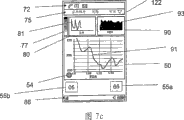
图7c示出了根据本发明示范性实施方式的表示皮电活动(EDA)的示范性显示; Figure 7c shows an exemplary display representing electrodermal activity (EDA) according to an exemplary embodiment of the present invention;
图7d示出了根据本发明示范性实施方式的表示心率变异性、演示呼吸周期的示范性显示; Figure 7d shows an exemplary display representing heart rate variability, demonstrating a breathing cycle, according to an exemplary embodiment of the present invention;
图8示出了根据本发明示范性实施方式的在训练进程中使用的刺激诱导紧张度的示范性曲线; Figure 8 shows an exemplary curve of stimulus-induced tension used in a training session according to an exemplary embodiment of the present invention;
图9示意性示出了根据本发明示范性实施方式的具有光源强度的自动连续调节的反射式光学体积描记器的电路; Fig. 9 schematically shows the circuit of a reflective photoplethysmograph with automatic continuous adjustment of light source intensity according to an exemplary embodiment of the present invention;
图10示出了根据本发明示范性实施方式的用于EDA监控的改进电子电路; FIG. 10 shows an improved electronic circuit for EDA monitoring according to an exemplary embodiment of the present invention;
图11示出了由根据本发明的实施方式的用于EDA的改进电子电路测量的用户皮肤电阻与电压之间关系的示范性曲线;而 11 shows an exemplary curve of the relationship between user skin resistance and voltage measured by an improved electronic circuit for EDA according to an embodiment of the present invention;
图12示出了根据本发明一方面的娱乐系统。 Figure 12 illustrates an entertainment system according to an aspect of the present invention. the
具体实施方式Detailed ways
以下详细描述是目前实施本发明所想到的最优方式。该描述不应该被理解为限制含义,而仅是用于例示根据本发明的普通原理的目的。通过所附权利要求对本发明的范围进行最优限定。 The following detailed description is of the best mode currently contemplated for carrying out the invention. This description should not be read in a limiting sense, but merely for the purpose of illustrating the general principles according to the invention. The scope of the invention is best defined by the appended claims. the
参照附图,图1中示出了根据本发明示范性实施方式的生理监控系统10。 Referring to the drawings, a
传感器模块110连接到用户100。使用通信链路112从模块110向移动监控器120传输数据。根据所传输的数据,移动监控器120借助显示器122向用户提供视频生物反馈,并可选地借助扬声器126向用户提供音频生物反馈。可选的是,使用键盘124来控制移动监控器120、传感器模块110或二者的操作。可选的是,用户可以利用声音识别法来控制操作。 The
可选的是,使用通信链路128将移动监控器120连接到远程服务器140,在远程服务器140处可以对传感器单元110所获得的数据进行详细分析,并且可选地可将数据发送给专家或另一用户。在图1的示范性实施方式中,移动监控器130是蜂窝式电话,通信链路112是蓝牙链路,而通信链路128是通往蜂窝式基站130的蜂窝式RF链路,其中蜂窝式基站130通过数据链路138与远程服务器140相连。 Optionally, the
可选的是,附加数据链路148(如局域网(LAN)或互连网或RF蜂窝式链路)将远程服务器140连接到观察站150,在观察站150处人类专家(human expert)可以对数据提供解释并向该用户发送建议。 Optionally, an additional data link 148 (such as a local area network (LAN) or the Internet or an RF cellular link) connects the
传感器模块 sensor module
图2示出了在系统10中可以替代传感器模块110而使用的传感器模块210。传感器模块210与用户的手指200相接触。如图1所示,传感器模块210可以通过带212附着在手指上,或者传感器模块210可以被成形为与手指相配。另选的是,可以将手指200简单地放置在传感器模块210上。 FIG. 2 shows a
图3示出了在根据本发明示范性实施方式的系统10中使用的传感器模块310的框图。 FIG. 3 shows a block diagram of a sensor module 310 used in the
在图3的示范性实施方式中,通过在皮肤表面300上至少应用第一电极332和第二电极334来监控用户皮肤表面300处的皮电活动(EDA)。EDA电子装置330通过在第一和第二电极之间施加非常低的电压并在电极之间形成微小电流来监控该皮肤的电阻率。EDA电子装置330产生表 示皮肤电阻率的数字信号。 In the exemplary embodiment of FIG. 3 , electrodermal activity (EDA) at the skin surface 300 of the user is monitored by applying at least a first electrode 332 and a second electrode 334 on the skin surface 300 . The EDA electronics 330 monitor the resistivity of the skin by applying a very low voltage between the first and second electrodes and creating a small current between the electrodes. EDA electronics 330 generate a digital signal representing the resistivity of the skin. the
在图3的示范性实施方式中,通过用于心率(HR)监控的体积描记图电子装置320来监控皮肤300下的血流量。在该示范性实施方式中,光源322利用发射的光324来照射皮肤表面300。从皮肤反射并由光探测器328接收的散射光326的强度取决于皮肤中的血流量。体积描记图电子装置320生成表示血流量的数字信号,因此可用于监控心脏活动。 In the exemplary embodiment of FIG. 3 , blood flow under the skin 300 is monitored by plethysmographic electronics 320 for heart rate (HR) monitoring. In the exemplary embodiment, light source 322 illuminates skin surface 300 with emitted light 324 . The intensity of scattered light 326 reflected from the skin and received by light detector 328 depends on the blood flow in the skin. The plethysmography electronics 320 generate digital signals representative of blood flow and thus can be used to monitor cardiac activity. the
可选的是,使用与附加传感器电子装置370相连接的一个或更多个附加传感器372来监控一个或更多个附加生理信号,如温度、心电图(ECG)、血压等。 Optionally, one or more additional physiological signals such as temperature, electrocardiogram (ECG), blood pressure, etc. are monitored using one or more additional sensors 372 connected to additional sensor electronics 370 . the
处理器340从EDA电子装置330、体积描记图电子装置320以及可选地从附加传感器电子装置370接收数字数据,并根据存储在存储器342中的指令来处理该数据。存储器342可以是存储有预安装(pre-installed)程序的只读存储器(ROM)、随机存取存储器(RAM)、诸如闪存的非易失性存储器或这些类型存储器的组合。处理器340可以将原始数据或处理后的数据存储在存储器342中以备后用。 Processor 340 receives digital data from EDA electronics 330 , plethysmography electronics 320 , and optionally additional sensor electronics 370 , and processes the data according to instructions stored in memory 342 . Memory 342 may be read-only memory (ROM) storing pre-installed programs, random-access memory (RAM), non-volatile memory such as flash memory, or a combination of these types of memory. Processor 340 may store raw data or processed data in memory 342 for later use. the
可选的是,传感器模块310配备有指示器380。指示器380可以提供针对模块的状态(如“开/关”、“电池电量低”)的视频或音频指示。另外地或另选地,指示器380可以基于来自传感器的数据而提供针对用户的生理状态的视频或音频指示。 Optionally, the sensor module 310 is equipped with an indicator 380 . Indicator 380 may provide a visual or audio indication of the status of the module (eg "on/off", "low battery"). Additionally or alternatively, indicator 380 may provide a visual or audio indication of the user's physiological state based on data from the sensors. the
在图9的示范性实施方式中,通信模块350被用作传感器模块310与移动监控器120(图1)之间的接口。在该实施方式中,使用了无线通信链路。优选的是,通信模块350支持“蓝牙”RF双向无线通信并且与天线352相连接。另外地或另选地,还可以使用红外(IR)通信、超声通信、WIFI通信或有线通信。 In the exemplary embodiment of FIG. 9, communication module 350 is used as an interface between sensor module 310 and mobile monitor 120 (FIG. 1). In this embodiment, a wireless communication link is used. Preferably, the communication module 350 supports "Bluetooth" RF two-way wireless communication and is connected to the antenna 352 . Additionally or alternatively, infrared (IR) communication, ultrasonic communication, WIFI communication or wired communication may also be used. the
电池360对传感器模块310内的所有电子装置提供电力。 Battery 360 provides power to all electronics within sensor module 310 . the
另外地或另选地,还可以使用例如通用串行总线(USB)的有线连接。在这种情况下,有线连接可选地可以利用电绝缘(如为了安全目的而隔离所提供的电力的变压器)以及用于数据传输的装置来提供电力。 Additionally or alternatively, a wired connection such as a Universal Serial Bus (USB) may also be used. In this case, the wired connection may optionally utilize electrical isolation, such as a transformer to isolate the supplied power for safety purposes, and means for data transmission to provide power. the
传感器模块在用户身体上的位置取决于要通过该模块获取的生理数 据的类型和所使用的传感器的类型。 The location of the sensor module on the user's body depends on the type of physiological data to be acquired by the module and the type of sensor used. the
例如,为了测量EDA信号,可以将传感器的电极放置在皮肤电阻率随着人的紧张度或唤起级别或自主神经系统的任意微小变化而变化的位置,如手掌、手指、手腕或耳垂。 For example, to measure EDA signals, the electrodes of the sensor can be placed at locations where the resistivity of the skin changes in response to a person's tension or arousal level or any small change in the autonomic nervous system, such as the palm, finger, wrist or earlobe. the
为了通过光学反射率来测量血流量,可以将该模块附着在血管靠近表面的位置,如手腕、指尖、耳垂等,或者附着在前额上来监控脑部血流量。 To measure blood flow through optical reflectivity, the module can be attached to blood vessels close to the surface, such as the wrist, fingertip, earlobe, etc., or attached to the forehead to monitor blood flow in the brain. the
为了测量心脏的电活动(ECG),可以利用粘合剂或带将传感器附着于用户的胸部,另选地可以通过将电极附着在双手上来监控ECG。 To measure the electrical activity of the heart (ECG), the sensor can be attached to the user's chest with adhesive or tape, alternatively the ECG can be monitored by attaching electrodes to the hands. the
为了检测温度,可以将位于传感器模块外部的传感器设置在腋窝或耳朵等内。 In order to detect temperature, a sensor located outside the sensor module may be placed in an armpit or ear or the like. the
另选的是,在测量期间,传感器可以临时与测量位置相接触。 Alternatively, the sensor may be temporarily in contact with the measurement location during the measurement. the
可以同时使用一个以上传感器模块。两个或更多个传感器模块可以获取同一或不同生理信号并将这些信号传送给同一或不同移动监控器。可选的是,多个传感器可以同时监控一个或更多个用户。这些传感器可以与同一移动监控器或者与不同监控器进行通信。 More than one sensor module can be used at the same time. Two or more sensor modules can acquire the same or different physiological signals and transmit these signals to the same or different mobile monitors. Optionally, multiple sensors can simultaneously monitor one or more users. These sensors can communicate with the same mobile monitor or with different monitors. the
通信链路112优选为双向的并且在传感器模块工作时是连续的。在这种情况下,传感器模块向移动监控器发送表示用户的生理状态的信息以进行显示和处理,并且从所述移动模块接收命令和指令。这种命令和指令可以控制传感器模块的工作模式。例如,可以通过这种命令来改变数据采样率。另外地或另选地,可以通过这种命令来改变数据采样精度或范围。处理器340执行的程序可以被上传并存储在存储器342中。 The
另选的是,通信链路112可以是单向的,在这种情况下,传感器模块310仅向移动监控器120发送信息。可选的是,通信链路112是间歇式的。例如,为了节省电力从而延长电池寿命,可以仅在需要时或者当传感器检测到的信号处于特定范围(例如:在阈值以上或以下或满足其他条件)时才激活通信链路。如果处理器340检测到在所获取的生理信号中存在异常,则其可以启动通往移动监控器的数据传输。可以建立触发向移动监控器120进行这种数据传输的告警条件。例如,可以通过处理器 340来监控心率以检测与心率及其变异性相关的异常状况,如心率(HR)过高、HR过低、心率变异性(HRV)过低。可从HRV的分析中推定(稍后将对此进行阐释)的呼吸率也可以用来触发数据传输。 Alternatively,
另选地或另外地,可以通过所述移动监控器来触发数据传输。 Alternatively or additionally, data transmission may be triggered by the mobile monitor. the
例如,移动监控器120可以是膝上型计算机,传感器模块310可以在存储器342中获取并记录优选为压缩格式的生理信息。这种记录可以持续几分钟或几小时。当传感器模块310位于移动监控器附近时,可以根据自动或手动发出的命令来传输所获取并存储的数据。 For example,
数据传输速率可以根据传感器模块的工作模式而变化。例如,在正常工作模式期间,可以将HR、EDA、ECG以及HRV中的一个或几个转发给移动监控器,而在另一工作模式下则传输信号的大部分或全部。可选的是,数据被存储在例如存储器342中的缓冲器(循环缓冲器)内,从而使得最近获得的数据在被改写之前一直可用。可以根据需要或者由处理器340或移动监控器的启动来对经缓冲的数据进行传输。 The data transfer rate can vary depending on the operating mode of the sensor module. For example, one or several of HR, EDA, ECG, and HRV may be forwarded to the mobile monitor during a normal operating mode, while most or all of the signals are transmitted in another operating mode. Optionally, the data is stored in a buffer (circular buffer), such as in memory 342, so that the most recently obtained data is available until overwritten. Buffered data may be transmitted on demand or initiated by processor 340 or the mobile monitor. the
指令和命令可由远程服务器140或专家站150发出,并通过移动监控器120转发到传感器模块110。另选的是,对于不同的目的可以使用不同的通信方法。例如,可以通过诸如IR传输的单向通信来实现从传感器模块112到移动监控器120的数据传输,而对传感器模块进行重新编程或者对告警参数进行设置可以在传感器110利用USB缆线与移动监控器120相连接时进行。显然,还可以采用其他通信模式和方法的组合。 Instructions and commands can be issued by the
优选的是,传感器模块310包括利用体积描记图电子装置320来监控皮肤300中的血流量的装置、光源322和光探测器328。在该优选实施方式中,光源322是发射红光或IR光324的发光二极管(LED),或者发射同一波长或多个波长(例如,既有红光又有IR光)的多个LED。可以使用其他光源,如固态二极管激光器或者垂直腔表面发射激光器(VCSEL)。在优选实施方式中,光探测器328是硅光电二极管。可选的是,所发光324的强度不是恒定的。例如,HR电子装置320可以关闭光以保存能量或执行周期性校准以及环境光去除。另外地或另选地,可以通过体积描记图电子装置320来控制所发光324的强度从而对不同肤色以及人与人 之间的皮肤光散射特性的变化进行补偿,使得反射光326保持在特定范围内。该方法确保了光探测器328和与其相关的放大器以及模数转换器(ADC)不会饱和或溢出。另选的是,可以将光源322设置在用户的附肢(如手指或耳垂)的一侧,而将光探测器328设置在附肢的另一侧。在这种情况下,探测器探测透过该附肢的光,而非反射光。 Preferably, sensor module 310 includes means for monitoring blood flow in skin 300 using plethysmographic electronics 320 , light source 322 and light detector 328 . In the preferred embodiment, light source 322 is a light emitting diode (LED) emitting red or IR light 324, or multiple LEDs emitting at the same wavelength or multiple wavelengths (eg, both red and IR light). Other light sources such as solid state diode lasers or vertical cavity surface emitting lasers (VCSELs) can be used. In a preferred embodiment, photodetector 328 is a silicon photodiode. Optionally, the intensity of the emitted light 324 is not constant. For example, HR electronics 320 may turn off the light to conserve energy or perform periodic calibration and ambient light removal. Additionally or alternatively, the intensity of emitted light 324 may be controlled by plethysmographic electronics 320 to compensate for skin tones and variations in skin light scattering properties from person to person such that reflected light 326 remains within a specified range Inside. This approach ensures that the photodetector 328 and its associated amplifier and analog-to-digital converter (ADC) do not saturate or overflow. Alternatively, the light source 322 may be positioned on one side of the user's appendage (eg, finger or earlobe), while the light detector 328 is positioned on the other side of the appendage. In this case, the detector detects light transmitted through the appendage, rather than reflected light. the
图9示出了根据本发明实施方式的光源强度可自动连续调节的反射式光体积描记器900的示例性电路的一些细节。将该电路设计为随着血液流过用户(例如手指中)的毛细血管床而拾取光强的变化。反射光强随时间的改变反映了用户心脏的搏动活动。该变化被转换为电压、放大、滤波,然后在传递给微控制器340之前转换为数字化信号。 FIG. 9 shows some details of an exemplary circuit of a
界面传感器包括强度受控光发射器Tx(优选为红色或者红外LED)和光接收器Rx(优选为光电二极管或者光电晶体管)以及转阻(电流到电压)放大器。在优选实施方式中,接收器Rx是同时包括光电探测器和放大器的集成元件。来自转阻放大器的输出的信号S1被馈送至差分放大器A1的一个输入,还进行低通滤波并送至单位增益缓冲放大器A2,从而输出信号S2。输出信号S2表示在由于滤波器的低通操作而导致去除了任意脉动分量的情况下落到光传感器上的光的平均电平。接着使用S2作为差分放大器A1的另一输入。对来自A1的输出进行低通滤波滤,然后和S2一起提供给模数转换器AD1的差分输入,该模数转换器AD1用于向微控制器340提供数字化脉冲信号。另外,S2和固定基准电压Vref一起用于缓动比较器(slugged comparator)A3,该缓动比较器A3的输出用于控制光发射器Tx的强度。这样通过光源强度的自动连续调节就可以使所述接收器具有最优的偏压输入条件。该电路的总体效果为在环境光条件下的主体的肤色提供了较宽的变异性并且最小化了由于光源的最优控制而产生的不必要的漏电流。可以用压电传感器来替代光电体积描记器,该压电传感器用于监控血管压力的微小变化而非反射光的变化。 The interface sensor consists of an intensity controlled light emitter Tx (preferably a red or infrared LED) and a light receiver Rx (preferably a photodiode or phototransistor) and a transimpedance (current to voltage) amplifier. In a preferred embodiment, the receiver Rx is an integrated component comprising both a photodetector and an amplifier. The signal S1 from the output of the transimpedance amplifier is fed to one input of the differential amplifier A1, also low-pass filtered and sent to the unity gain buffer amplifier A2, thereby outputting the signal S2. The output signal S2 represents the average level of light falling on the light sensor with any ripple components removed due to the low-pass operation of the filter. Then use S2 as the other input of differential amplifier A1. The output from A1 is low-pass filtered, and then provided together with S2 to the differential input of the analog-to-digital converter AD1, which is used to provide the digitized pulse signal to the microcontroller 340 . In addition, S2 is used together with the fixed reference voltage Vref for a slugged comparator (slugged comparator) A3, and the output of the slugged comparator A3 is used to control the intensity of the light transmitter Tx. In this way, the automatic and continuous adjustment of the intensity of the light source can make the receiver have the optimal bias voltage input condition. The overall effect of this circuit provides a wider variability in the skin tone of the subject under ambient light conditions and minimizes unnecessary leakage current due to optimal control of the light source. Photoplethysmographs can be replaced with piezoelectric sensors, which are used to monitor small changes in blood vessel pressure rather than changes in reflected light. the
本发明的另一方面是GSR EDA传感器。很多年以来一直使用GSR和EDA来监控普通唤起水平(general arousal level)。但是,由于个体的皮肤电阻/阻抗(resistance/impedance)之间的差值(即,经历不同情绪和生理状 态的个体内出现的差异)很高,因此效率受到损害。 Another aspect of the invention is the GS EDA sensor. GSR and EDA have been used for many years to monitor general arousal level. However, efficiency is compromised due to the high difference between individual skin resistance/impedance (i.e., variation within individuals experiencing different emotional and physiological states). the
为了适应较宽的用户范围,现有的系统对于诊断微小变化不足够灵敏。在现有技术中使用的一种克服上述问题的方式是通过专家来监控两个读取进程:第一读取建立基准,第二进程在以该基准为中心的附近以较高灵敏度执行。在本发明中, To accommodate a wide range of users, existing systems are not sensitive enough to diagnose small changes. One way used in the prior art to overcome the above problem is to monitor two reading processes by an expert: the first reading establishes a reference and the second is performed with higher sensitivity around this reference. In the present invention,
·优选地使用16位模数转换器(ADC)微芯片以高灵敏度来覆盖较大范围。 • Preferably using a 16-bit analog-to-digital converter (ADC) microchip to cover a large range with high sensitivity. the
·对如图10所示的电子电路进行改动以提高动态范围。 • Modifications were made to the electronic circuit shown in Figure 10 to improve the dynamic range. the
·使用可以自动监控用户的基准和灵敏度等级二者的软件,并以可理解的方式将其显示给用户。 • Use software that can automatically monitor both the user's baseline and sensitivity level and display this to the user in an understandable manner. the
与使用8位或12位的现有技术EDA单元不同,优选实施方式的EDA电子装置330使用16位ADC。人们发现皮肤电阻中的微小而短暂的变化提供了很重要的生理信息,同时该EDA可能在很宽的范围变化。另外,较大的动态范围减少或者消除了手动调节ADC范围或基准或灵敏度的需要。由于EDA信号带宽低,因此可以使用诸如“Sigma delta”型的高精度ADC。 Unlike prior art EDA units that use 8-bit or 12-bit, the EDA electronics 330 of the preferred embodiment use a 16-bit ADC. It has been found that small and transient changes in skin resistance provide important physiological information, while the EDA may vary over a wide range. Additionally, the larger dynamic range reduces or eliminates the need to manually adjust the ADC range or reference or sensitivity. Due to the low bandwidth of the EDA signal, a high precision ADC such as a "Sigma delta" type can be used. the
可选的是,可以使用自动设定范围和自动换算。在该方法中,可以从各测量值中减去基准。可以存储该减法运算所得值(subtracted value)或者将其发送至移动监控器从而可以恢复出实际值。类似的是,可以使用自动换算来重新限定与ADC的每个位相关联的信号变化。可选地或另外地,可以对所获取的数据应用对数或其他非线性换算。 Optionally, autoranging and autoscaling can be used. In this method, a reference can be subtracted from each measurement. This subtracted value can be stored or sent to the mobile monitor so that the actual value can be recovered. Similarly, autoscaling can be used to redefine the signal change associated with each bit of the ADC. Alternatively or additionally, a logarithmic or other non-linear scaling may be applied to the acquired data. the
图10示出了电子电路1000,用于对EDA监控应用非线性换算。将电路1000设计为用于拾取反映用户的情绪波动变化的汗腺活动的非常小的变化。该电路监控皮肤电阻级别的变化,并在传递至微控制器340之前,对该变化进行放大、滤波和数字化。 Figure 10 shows an
在一优选实施方式中,界面由一对蚀刻到PCB上的镀金指状电极构成。EDA信号具有较大的动态范围并且对象的基准皮肤电阻水平(baseskin resistance level)之间也存在着非常大的变化。该电子装置包括经改动的恒定电流源。运算放大器A4试图将交叉点1100处的电势保持在电压 Vref,从而提供流过电阻器R3的固定电流。该电流是流过R1与EDA电极1023和1034的组合的电流。相对于基准电压Vref测量保持恒定电流所需的电压Vx,并在低通滤波以后由模数转换器AD2进行数字化。优选的是,AD2是16位ADC。 In a preferred embodiment, the interface consists of a pair of gold-plated finger electrodes etched into the PCB. The EDA signal has a large dynamic range and there is also a very large variation between the subjects' baseskin resistance levels. The electronic device includes a modified constant current source. Operational amplifier A4 attempts to maintain the potential at crosspoint 1100 at voltage Vref, thereby providing a fixed current through resistor R3. This current is the current flowing through the combination of R1 and
优选的是,电阻R2较高(例如,R2>正常对象基本读数的10倍)并且在正常操作期间对电路没有显著影响。然而,对于具有较高级别的基准皮肤电阻(basal skin resistance)的对象来说,R2变得更加至关重要并且从A4输出的电压被降低以防止输出饱和。这使得可以利用与通过非恒定电流测量的输出相同的电路对具有高基准电阻的对象进行测量。 Preferably, resistance R2 is high (eg, R2 > 10 times normal subject base reading) and has no significant effect on the circuit during normal operation. However, for subjects with higher levels of basal skin resistance, R2 becomes more critical and the voltage output from A4 is reduced to prevent output saturation. This makes it possible to measure objects with high reference resistance using the same circuit as the output by non-constant current measurement. the
通过下式得出测量电压Vx: The measured voltage Vx is obtained by the following formula:
其中R1、R2和R3是电阻器值。Vref是基准电压值,而Rx是在电极之间表现出的用户皮肤的改变电阻。 where R1, R2 and R3 are resistor values. Vref is the reference voltage value, and Rx is the changing resistance of the user's skin exhibited between the electrodes. the
基于根据本发明的电路的EDA监控装置能够跨越较大范围(例如从50KΩ(50,000Ω)到12MΩ(12,000,000Ω))测量皮肤电阻的微小变化。可以通过改变所述电路中的元件的数值来调整确切范围。 An EDA monitoring device based on a circuit according to the invention is capable of measuring small changes in skin resistance across a large range, eg from 50KΩ (50,000Ω) to 12MΩ (12,000,000Ω). The exact range can be adjusted by changing the values of the components in the circuit. the
图11示出了在重对数图尺中以任意单位绘制的测量电压Vx和用户皮肤电阻Rx之间的示例性关系曲线。观察发现线性范围靠近原点。对于较高的Rx值而言,该绘图变为非线性。 FIG. 11 shows an exemplary relationship between measured voltage Vx and user skin resistance Rx plotted in arbitrary units on a log-log scale. Observe that the linear range is close to the origin. For higher Rx values, the plot becomes non-linear. the
可选的是,传感器模块310配有指示器380。指示器380可以提供针对模块的状态的可视或音频表示,或者根据来自传感器的数据提供针对该用户的生理状态的以下一个或几个方面:可视、振动或音频表示。例如,可以使用指示器380警告用户生理信号超出了预定范围。该告警可以通过处理器340进行本地启动或者通过通信链路112传给传感器模块。可选的是,指示器380还可以在培训进程中用作生物反馈,稍后将对此进行详细描述。 Optionally, the sensor module 310 is equipped with an indicator 380 . Indicator 380 may provide a visual or audio representation of the status of the module, or, based on data from sensors, one or more of the following aspects of the user's physiological state: visual, vibration or audio representation. For example, indicator 380 may be used to alert the user that the physiological signal is outside a predetermined range. The alert can be initiated locally by the processor 340 or communicated to the sensor module via the
指示器380可以包括一个或可选的不同颜色的几个LED。可选的是,指示器380可以包括向用户提供音频信号的扬声器。可选的是,指示器380可以包括产生振动的装置(如PZT蜂鸣器或小型电机)使得用户可以感 受到该告警,而其他人不能。 Indicator 380 may comprise one or alternatively several LEDs of different colours. Optionally, indicator 380 may include a speaker that provides an audio signal to the user. Optionally, the indicator 380 may include a device that generates vibration (such as a PZT buzzer or a small motor) so that the user can feel the warning, but others cannot. the
移动监控器 mobile monitor
在本发明的实施方式中,传感器模块110通过通信链路112连接到移动监控器120。在一优选实施方式中,移动监控器120是蜂窝式电话或个人数字助理(PDA),其配备有用于进行数据分析的处理器、存储器、显示器、音频输出、诸如键盘、麦克风和画板的输入装置以及用于与传感器模块和远程服务器二者进行通信的装置。 In an embodiment of the invention,
可以由用户来上传与传感器模块进行交互和向用户提供反馈所需的具体程序。例如,可以通过与加载新游戏或铃声的方式相同的方式将程序以无线方式加载到蜂窝式电话中。 The specific program needed to interact with the sensor module and provide feedback to the user can be uploaded by the user. For example, a program could be loaded wirelessly into a cellular phone in the same way that a new game or ringtone is loaded. the
另选的是,其他个人计算装置也可以用作移动监控器,例如膝上个人计算机LPT或者诸如苹果iPOD
传感器模块的通信范围由于其小尺寸和低电池容量而限于几米或者在使用蓝牙时限于最多100米。相反,移动监控器配有经由蜂窝式网络(优选地利用互联网)以无线方式连接到远程服务器的装置。例如,可以利用其中一个蜂窝式数据交换协议(如GPRS)来连接蜂窝式电话。还可以使用其他标准或者专用协议,如利用调制解调器或非对称数字用户线路(ADSL)与电话线的有线连接、局域网(LAN)、无线LAN(WAN)等。 The communication range of the sensor module is limited to a few meters or at most 100 meters when using Bluetooth due to its small size and low battery capacity. Instead, mobile monitors are provided with means to connect wirelessly to a remote server via a cellular network, preferably utilizing the Internet. For example, a cellular telephone may be connected using one of the cellular data exchange protocols such as GPRS. Other standard or proprietary protocols may also be used, such as a wired connection using a modem or Asymmetric Digital Subscriber Line (ADSL) to a telephone line, Local Area Network (LAN), Wireless LAN (WAN), etc. the
远程服务器可以提供对传感器数据的附加处理、移动监控器和传感器模块编程的初始化和更新、用户的反馈以及对用户的建议、向用户发布告警或者在紧急情况为用户召集抢险救援队。一些移动监控器配有确定用户的物理位置的装置(如全球定位系统(GPS)),该装置可以在需要紧急帮助的情况(如心脏病或者癫痫病发作期间)指引救援队到达该用户位置。 The remote server can provide additional processing of sensor data, initialization and update of mobile monitor and sensor module programming, user feedback and suggestions to users, issue warnings to users or call emergency rescue teams for users in emergency situations. Some mobile monitors are equipped with a device that determines the user's physical location, such as a global positioning system (GPS), which can guide rescue teams to the user's location in situations where emergency assistance is needed, such as during a heart attack or epilepsy. the
情绪状态 emotional state
现在参照图4进行描述,图4示意性示出了用户可能的“情绪状态” 的示例。纵轴为用户的唤起水平,而横轴为其情绪状态。 It is now described with reference to FIG. 4, which schematically illustrates an example of possible "emotional states" of a user. The vertical axis is the user's arousal level, while the horizontal axis is its emotional state. the
生物反馈和监控系统并非设计用于分析情绪。GSR或EDA传感器反映了唤起水平,但是该系统不能在积极唤起(即,用户充满热情时)和消极唤起(用户感到紧张以及愤怒时)之间做出区分。现有的方法也不能在积极低唤起(用户放松以及正在思考时)和消极低唤起(用户压抑以及沮丧时)之间做出区分。 Biofeedback and monitoring systems are not designed to analyze emotions. The GSR or EDA sensor reflects the level of arousal, but the system cannot differentiate between positive arousal (ie when the user is enthusiastic) and negative arousal (when the user is nervous and angry). Existing methods also fail to distinguish between positive low arousal (when the user is relaxed and thinking) and negative low arousal (when the user is depressed and depressed). the
现在参照图4进行描述,图4示意性示出了用户可能的“情绪状态”的示例。纵轴为用户的唤起水平,而横轴为其情绪状态。 The description is now made with reference to Figure 4, which schematically illustrates an example of possible "emotional states" of a user. The vertical axis is the user's arousal level, while the horizontal axis is its emotional state. the
通过对灵敏EDA传感器(如这里根据本发明所公开的)、HRV分析和可选的多媒体显示器(如智能电话、PDA或PC)进行整合,不但可以分析如图4所述的用户的情绪状态,而且可以训练用户改善其情绪和生理状态。 By integrating sensitive EDA sensors (as disclosed here according to the present invention), HRV analysis, and optional multimedia displays (such as smart phones, PDAs or PCs), not only can the user's emotional state be analyzed as described in FIG. 4 , And users can be trained to improve their emotional and physical state. the
例如:该系统可以具有如下几个工作模式: For example: the system can have the following working modes:
a)基准校准:系统自动确定特定用户的基准。该基准包括在第一间隔期间要计算并记录的参数的矢量,包括:最小、最大和平均HR、HRV、FFT(快速傅立叶变换)、呼吸率(可间接计算或直接监控)以及EDA的最大值、最小值、平均值,方差、波动数量和斜率。 a) Benchmark Calibration: The system automatically determines a user-specific benchmark. This benchmark includes a vector of parameters to be calculated and recorded during the first interval, including: minimum, maximum and average HR, HRV, FFT (Fast Fourier Transform), respiration rate (can be calculated indirectly or directly monitored), and the maximum value of EDA , min, mean, variance, number of fluctuations and slope. the
b)利用产生的情绪状态进行校准:优选的是,在基准稳定以后的短时间内,系统提供预先纪录的触发。各个触发被设计为引导出用户的特定情绪。这些触发可以是能够产生特定情绪反应的场景。优选的方法是多媒体方法,其可以是预先记录在智能电话或PC上的音频可视电影。对于专业系统而言,触发可以是具有真实3D场景的虚拟实境护目镜(goggles)。对于不太昂贵的系统而言,触发可以仅是利用移动电话的音频进程。这些触发或场景可以是过去已经被测试或验证过的用于引起特定情绪反应的通用场景,或者可以针对特定文化的人或人群定制触发。例如,场景可以是用于消极唤起的牙医钻牙的音频可视显示,或者车祸;用于积极唤起的赢得比赛或者浪漫关系;用于积极放松的轻松的自然电影,以及用于消极低唤起的令人厌烦以及悲伤的场景。在每个触发之前、期间和之后,系统监控器都计算并记录上述每个参数的矢量并计算每个 触发开始和完成时图8中所描述的参数。 b) Calibration using the resulting emotional state: Preferably, the system provides a pre-recorded trigger shortly after the baseline has stabilized. Each trigger is designed to elicit a specific emotion from the user. These triggers can be situations that generate specific emotional responses. The preferred method is a multimedia method, which may be a pre-recorded audio-visual movie on a smartphone or PC. For professional systems, the trigger could be virtual reality goggles with a real 3D scene. For less expensive systems, the trigger could simply be an audio session with the mobile phone. These triggers or scenarios can be generic scenarios that have been tested or validated in the past to elicit specific emotional responses, or triggers can be tailored to specific cultural people or groups of people. For example, a scene could be an audio-visual display of a dentist drilling a tooth, or a car accident, for negative arousal; winning a race or a romantic relationship for positive arousal; A boring and sad scene. Before, during and after each trigger, the system monitor calculates and records the vectors for each of the above parameters and calculates the parameters described in Figure 8 at the start and completion of each trigger. the
c)利用用户报告的情绪状态进行校准:该系统可以要求用户例如通过他们的蜂窝式电话的键盘来输入其主观情绪(例如,如果你感到非常高兴则按9,非常难过则按1)。通过计算上述矢量,并使其与特定触发相关联,该系统能够在特定情绪状态之间进行区分并且将情绪状态与用户的生理状态相关联。该系统可以为具体用户和/或每组用户保留所述矢量和与他们的具体情绪状态的相关关系。 c) Calibrate with user-reported emotional state: the system may ask the user to enter their subjective emotion, for example via their cell phone's keypad (eg press 9 if you feel very happy, 1 if you are very sad). By computing the vectors described above, and associating them with specific triggers, the system is able to distinguish between specific emotional states and correlate emotional states with the user's physiological state. The system may retain the vectors and correlations with their specific emotional states for specific users and/or groups of users. the
d)学习模式:系统可以并入神经网络或者类似方法以利用过去来自一组用户的数据来继续学习,在较短的时间内利用上述数据的矢量来预测特定用户的情绪状态。例如,利用关于一群人的算法,该系统可以预测当用户具有低HRV同时具有高皮肤导电率时,其情绪状态是“消极紧张”,而具有高HRV和低皮肤导电率的用户的情绪状态为“放松且积极”。 d) Learning mode: The system can incorporate neural networks or similar methods to continue learning using past data from a set of users, using vectors of said data to predict the emotional state of a particular user in a relatively short period of time. For example, using an algorithm on a group of people, the system can predict that when a user has a low HRV while having a high skin conductance, their emotional state is "negative stress," whereas a user with a high HRV and a low skin conductance has an emotional state of "Relaxed and Positive". the
e)培训模式:第一,该系统还培训用户在他们的日常活动中更关注他们的生理和情绪状态,第二,获得较好的行为、生理和心理-生理习惯,诸如提高他们的呼吸周期、呼气与吸气比、提高他们的HRV并学习放松。第三,该系统可用于对用户进行培训以改善他们在日常生活中对消极触发和事件的反应和响应,并改善他们紧张时的反应和表现。该系统可以模拟真实事件并培训用户改善他们的反应、表现和行为。例如,尽管现有技术的生物反馈系统只能用于人为环境下(临床医生的办公室),但是本发明的无线传感器可用于实际的重要活动期间,诸如驾驶、演奏音乐、比赛中的对抗、考试、工作会谈等。 e) Training Mode: First, the system also trains users to pay more attention to their physical and emotional states in their daily activities, and second, to acquire better behavioral, physical and psycho-physiological habits, such as improving their breathing cycle , exhale to inhale ratio, improve their HRV and learn to relax. Third, the system can be used to train users to improve their reactions and responses to negative triggers and events in everyday life, and to improve their reactions and performance when stressed. The system can simulate real events and train users to improve their reactions, performance and behaviour. For example, while prior art biofeedback systems can only be used in an artificial environment (clinician's office), the wireless sensor of the present invention can be used during actual vital activities, such as driving, playing music, confrontation in competitions, examinations, etc. , work talks, etc. the
可以针对特定用户对本发明的系统进行校准或定制。另选的是,可以使用通过研究一般群体或者该群体中的特定子群所获得的统计参数。在一些实施方式中,远程服务器从多个用户接收可选地包含关于该用户的信息的数据,并使用该信息来建立用于情绪状态分析的数据集。可选的是,将从数据集中提取的参数发送给用于确定用户的情绪状态的至少一些用户的移动单元。可选的是,服务供应商利用用户的一个或更多个研究组来建立所述数据集。包括用户对于特定触发的情绪反应的用户情绪状态的实时分析可以用于培训用户以改善他们的表现,并且还可以用 于分析用户对于特定事件、触发、产品和服务的反应。 The system of the present invention may be calibrated or customized for a particular user. Alternatively, statistical parameters obtained by studying a general population or specific subgroups within that population may be used. In some implementations, a remote server receives data from a plurality of users, optionally including information about the users, and uses this information to build a data set for emotional state analysis. Optionally, the parameters extracted from the data set are sent to at least some of the user's mobile units for use in determining the user's emotional state. Optionally, the service provider utilizes one or more research groups of users to build the data set. Real-time analysis of a user's emotional state, including the user's emotional reaction to specific triggers, can be used to train users to improve their performance, and can also be used to analyze user responses to specific events, triggers, products, and services. the
用户可以通过实时地音频可视反馈直接从系统实时接收反馈,并且同时该系统可以向能够帮助用户改进他们的反应的专家或者教练发送信息。这对健康问题(例如患有哮喘病孩子可以实时地从系统和/或医生那里获得反馈或者运动员接收反馈来提高他们的表现)具有重大意义。对于训练和分析而言,建议结合外部情况(例如,比赛的视频或音乐表演)一起记录上述生理矢量。这样,就可以找到最佳表现与生理矢量之间的相互关系,从而培训用户结合传感器的实时反馈利用视频或可视化方式的事件模拟来优化其生理、情绪和情绪表现。 Users can receive feedback directly from the system in real-time through real-time audio-visual feedback, and at the same time the system can send information to experts or coaches who can help users improve their responses. This has major implications for health issues (eg a child with asthma can get feedback from the system and/or doctor in real time or an athlete receives feedback to improve their performance). For training and analysis it is recommended to record the above mentioned physiological vectors together with an external situation (eg a video of a game or a music performance). In this way, the correlation between optimal performance and physiological vectors can be found to train users to optimize their physical, emotional and emotional performance using video or visualization of event simulations combined with real-time feedback from sensors. the
示意性地,图4的上部以高唤起状态(如身体或情绪紧张)为特征。该紧张可能是剧烈的身体活动或者生气、挑衅、担心或者焦虑的情绪状态导致的结果。另选的是,高唤起可能是由于积极的想法(如全神贯注于执行任务或者狂热或者热情的情绪)导致兴奋而产生的结果。这两种不同的状态分别被划分为图中的右侧(消极情绪)和左侧(积极情绪)。 Schematically, the upper part of Figure 4 is characterized by states of high arousal (eg, physical or emotional stress). The tension may be the result of strenuous physical activity or an emotional state of anger, aggression, worry, or anxiety. Alternatively, high arousal may be the result of excitement caused by positive thoughts, such as preoccupation with a task or feverish or enthusiastic emotions. These two different states are divided into the right side (negative emotion) and the left side (positive emotion) of the diagram, respectively. the
类似地,通过该图的下半部分示意性表征的情绪的低紧张度状态可能是沮丧或厌烦的结果,在图的右下部以低唤起或者低能量等级以及消极情绪为特征;或者在图的左下部以放松以及自得其乐为特征。 Similarly, the low-stress state of emotion represented schematically in the lower half of the figure could be the result of frustration or boredom, characterized by low arousal or low energy levels and negative affect in the lower right of the figure; or The lower left is characterized by relaxation and self-satisfaction. the
在本发明的实施方式中,传感器和数据处理的组合使得能够自动确定用户的情绪状态,并且可以用于提供反馈和交互式多媒体培训,从而实现并维持情绪和身体的积极状态。 In embodiments of the present invention, a combination of sensors and data processing enables automatic determination of a user's emotional state and can be used to provide feedback and interactive multimedia training to achieve and maintain emotionally and physically positive states. the
高紧张度状态的特征在于大量产生与高度HR相关的肾上腺激素。然而,高HR本身无法将狂热和热情与愤怒和焦虑分离开。积极的情绪状态(图4中左侧两个象限)与生长激素以及脱氢表雄(甾)酮(DHEA)分泌相关联,并且其特征在于较高的心率变异性(HRV)以及较高的皮肤电阻。相反,消极情绪状态与可的松荷尔蒙的分泌相关联,其特征在于较低的HRV变异性。此外,放松的状态的特征在于伴随缓慢呼气周期的缓慢、稳定的呼吸。 The hypertonic state is characterized by the high production of adrenal hormones associated with high HR. However, high HR by itself cannot separate mania and enthusiasm from anger and anxiety. Positive mood states (left two quadrants in Figure 4) are associated with growth hormone and dehydroepiandrosterone (DHEA) secretion and are characterized by higher heart rate variability (HRV) and higher skin resistance. In contrast, negative mood states were associated with cortisone hormone secretion, which was characterized by lower HRV variability. Furthermore, the relaxed state is characterized by slow, steady breathing accompanied by slow exhalation cycles. the
在本发明的示范性实施方式中,由两个分量矢量来表示情绪状态的特征:横轴上的情绪等级—向左为更加积极的情绪,向右为更消极的情 绪;以及纵轴上的紧张度—向上为更加紧张,向下为更不紧张。 In an exemplary embodiment of the invention, emotional states are characterized by two component vectors: the emotional level on the horizontal axis—more positive emotions to the left, more negative emotions to the right; The tension level—up for more tension, down for less tension. the
在本发明的一些实施方式中,在表示情绪状态矢量的坐标中显示有例如图标的标记并且用户可以看到该标记,从而允许用户监控其状态。该标记的位置随着情绪的变化而周期性地更新。 In some embodiments of the invention, a marker, such as an icon, is displayed in the coordinates representing the emotional state vector and is visible to the user, allowing the user to monitor their status. The marker's position is periodically updated as the mood changes. the
另选地或另外地,可以使用颜色代码来表示情绪状态。例如,可以将横轴左侧表示为黄色阴影右侧表示为黑色阴影;而可以将纵轴上部表示为红色阴影下部表示为蓝色阴影。 Alternatively or additionally, color codes may be used to represent emotional states. For example, the left side of the horizontal axis could be shaded yellow and the right side could be shaded black; while the upper part of the vertical axis could be shaded red and the lower part blue. the
这些颜色的组合产生了:橙色——表示二维标度的左上象限上的热情情绪;绿色——表示左下象限上的放松情绪;暗红——表示右上象限的挑衅性情绪;暗蓝——表示左下象限上的沮丧情绪。 Combinations of these colors yielded: orange—enthusiastic emotions on the upper left quadrant of the two-dimensional scale; green—relaxed emotions on the lower left quadrant; dark red—provocative emotions on the upper right quadrant; dark blue— Indicates depression in the lower left quadrant. the
可以在单元120的显示器122上显示代表情绪状态的所得组合颜色。例如,所得组合颜色可以用作图7a到图7d所示的一条或一些曲线的背景。显然,在本发明的普通实施方式中还可以使用其他颜色方案。这类情绪状态的颜色表示便于查看并且用户不需要仔细观察监控器或者在执行其他情绪或者身体任务的同时就可以直观地理解该颜色表示。 The resulting combined color representing the emotional state may be displayed on the
数据处理 data processing
在本发明的实施方式中,由传感器模块中的处理器340所执行的数据分析来对心脉进行跟踪。 In an embodiment of the invention, heart pulse is tracked by data analysis performed by processor 340 in the sensor module. the
图5a示出了健康人的典型ECG信号。由时间间隔T1和T2分隔开的三个心跳清晰可见。 Figure 5a shows a typical ECG signal of a healthy person. Three heartbeats separated by time intervals T1 and T2 are clearly visible. the
图5b示出了典型的光学信号。由时间间隔T1和T2分隔开的三个心跳清晰可见。 Figure 5b shows a typical optical signal. Three heartbeats separated by time intervals T1 and T2 are clearly visible. the
在本发明的实施方式中,对来自探测器328的光学信号进行分析并确定各个心跳。 In an embodiment of the invention, the optical signal from detector 328 is analyzed and determined for each heartbeat. the
这可以通过识别信号中的峰值、谷值和零交叉点、通过进行自动校正或小波分析来实现。 This can be achieved by identifying peaks, valleys and zero crossings in the signal, by performing automatic corrections or wavelet analysis. the
在一优选实施方式中,在光学信号中查找局部最大值。接着,该系统检验该峰值是心跳峰还是仅是由于噪声引起的局部最大值。通过与来自以前的心跳的信号进行比较并且例如利用概率、推断或者失真逻辑算 法来协助该确定。 In a preferred embodiment, local maxima are searched for in the optical signal. Next, the system checks whether the peak is a heartbeat peak or just a local maximum due to noise. This determination is assisted by comparison with signals from previous heartbeats and using, for example, probability, inference, or distortion logic algorithms. the
与只显示平均心率的标准心率监控器相比,电子装置与峰值探测器的组合-心跳识别器算法使得该系统能够探测、计算和呈现更准确的心跳。 The combination of electronics with peak detector - heartbeat recognizer algorithm enables the system to detect, count and present more accurate heartbeats than standard heart rate monitors which only display the average heart rate. the
如果可以得到ECG信号的话,也可以对ECG信号进行类似的分析。由于R波具有较高的幅值并且很陡,因此更容易探测位于ECG中的准确峰值。将瞬态HR定义为HR(t)=1/Ti,其中T(i)是心跳周期“i”的持续时间(如图5a所看到的,T也被称为R-R持续时间),在时间(t)期间跟踪HR(t)并且可选地将其存储在存储器342中。另选的是,可以存储T(i)’。 Similar analysis can also be performed on ECG signals, if they are available. Since the R wave has a higher amplitude and is steep, it is easier to detect the exact peak located in the ECG. Defining the transient HR as HR(t) = 1/Ti, where T(i) is the duration of heartbeat cycle "i" (as seen in Figure 5a, T is also referred to as the R-R duration), at time HR(t) is tracked during (t) and optionally stored in memory 342 . Alternatively, T(i)' can be stored. the
可以通过在特定周期内对HR值求平均来计算平均HR(AHR)。也可以在预定的时间窗口上计算运行平均值(running average)从而减少信号的噪声。 Average HR (AHR) can be calculated by averaging HR values over a specific period. It is also possible to calculate a running average over a predetermined time window to reduce signal noise. the
可以通过若干方法来计算HR变异性(HRV)。其中一种方法是取AHR与HR(t)之间的差的绝对值,并且在特定间隔计算HR(t)的平均值。 HR variability (HRV) can be calculated by several methods. One of the methods is to take the absolute value of the difference between AHR and HR(t), and calculate the mean value of HR(t) at certain intervals. the
其他方法是在特定间隔计算HR的标准差或方差。 Other methods are to calculate the standard deviation or variance of HR at specific intervals. the
可选地或另外地,可以对心脏信号进行光谱分析。优选地执行计算有效(computational efficient)快速傅立叶变换(FFT)算法来计算光谱。 Alternatively or additionally, a spectral analysis of the cardiac signal may be performed. A computationally efficient Fast Fourier Transform (FFT) algorithm is preferably implemented to calculate the spectrum. the
图5c示出了心脏信号的典型傅立叶光谱。从峰值位置可以得出AHR,该峰值位置通常位于与每分钟30到180跳的平均心率相对应的0.5到3Hz的位置。通过峰值宽度可以推出HRV。 Figure 5c shows a typical Fourier spectrum of a cardiac signal. The AHR can be derived from the peak position, which typically lies between 0.5 and 3 Hz corresponding to an average heart rate of 30 to 180 beats per minute. HRV can be deduced from the peak width. the
从AHR可以推出紧张度,其中高紧张度的特征在于AHR高于正常值。应该强调的是,对于各不同个体来说该“正常”AHR是不同的,并且取决于年龄和体力。因此,可能需要例如通过在较长持续时间的AHR进行测量并求平均或者通过在校准进程期间此人处于已知的情绪状态的情况下对AHR进行测量,而随着时间更新该级别。类似地,可以在培训和校准进程期间校准每个轴的两端,例如:激烈的身体锻炼vs静止不动或睡眠。 Tonicity can be inferred from the AHR, where high tonicity is characterized by a higher than normal AHR. It should be emphasized that this "normal" AHR is different for each individual and depends on age and physical strength. Thus, the level may need to be updated over time, for example by measuring and averaging the AHR over a longer duration or by measuring the AHR during the calibration process with the person in a known emotional state. Similarly, both ends of each axis can be calibrated during training and calibration sessions, eg: intense physical exercise vs. immobility or sleep. the
可以通过图5c的峰值宽度评估出HRV的变异性。 HRV variability can be assessed by peak width in Figure 5c. the
人们发现心率与呼吸周期以及自主神经系统功能性是相关联的。图 6a示出了在正常呼吸周期内作为时间的函数的健康人的HR典型曲线。HR在吸气期间增加而在呼气期间降低。 Heart rate has been found to correlate with respiratory cycle and autonomic nervous system functionality. Figure 6a shows a typical curve of HR in a healthy person as a function of time during a normal respiratory cycle. HR increases during inspiration and decreases during expiration. the
现有技术中公知的呼吸监控器使用捆缚在胸部周围的应变传感器或者位于人嘴或者鼻孔附近的气动(air movement)传感器。这些传感器使用起来不方便并且身体感觉不舒服。相反,本发明的实施方式从HR信息中推知呼吸。 Respiration monitors known in the art use strain sensors strapped around the chest or air movement sensors located near the person's mouth or nostrils. These sensors are inconvenient and physically uncomfortable to use. Instead, embodiments of the invention infer respiration from HR information. the
在本发明的实施方式中,对例如由光学信号或者ECG信号确定的瞬态HR(t)的值进行分析并且确定呼吸周期。这可以通过在HR序列中识别峰值、谷值或者0交叉,通过进行自动相关分析或者采用FFT分析、小波分析来实现。可以针对呼吸率(BR)、呼吸深度(BD)和呼气吸气比(REI)来对每个呼吸周期进行分析。另选地或另外地,可以对每个呼吸周期进行分析并将其表示为两个参数:吸气持续时间和呼气持续时间(以秒为单位的平均持续时间)。 In an embodiment of the invention, the value of the transient HR(t), which is determined, for example, from an optical signal or an ECG signal, is analyzed and the respiratory cycle is determined. This can be achieved by identifying peaks, valleys or zero crossings in the HR series, by performing automatic correlation analysis or by using FFT analysis, wavelet analysis. Each respiration cycle can be analyzed for respiration rate (BR), respiration depth (BD) and expiratory-inspiratory ratio (REI). Alternatively or additionally, each breathing cycle can be analyzed and represented as two parameters: inhalation duration and exhalation duration (average duration in seconds). the
其中:在以秒为单位的呼吸周期的持续时间内将每分钟的BR定义为60; where: BR per minute is defined as 60 for the duration of the respiratory cycle in seconds;
将BD定义为在经AHR归一化的呼吸周期内从最大HR中减去最小HR,并且 BD is defined as the minimum HR subtracted from the maximum HR over the respiratory cycle normalized by AHR, and
将REI定义为呼气持续时间除以吸气持续时间。 REI was defined as the duration of expiration divided by the duration of inspiration. the
可以将这些值发送给移动监控器并可选地存储在存储器342中。另选的是,可以在移动监控器处进行呼吸分析。 These values may be sent to the mobile monitor and optionally stored in memory 342 . Alternatively, breath analysis can be performed at the mobile monitor. the
可以通过在特定期间对BR、BD和REI求平均来计算BR、BD和REI的平均值(分别为ABR、BD和REI)。可以在时间窗口内计算运行平均值从而减小信号中的噪声。 The average values of BR, BD and REI (ABR, BD and REI, respectively) can be calculated by averaging BR, BD and REI over a specific period. A running average can be calculated over a time window to reduce noise in the signal. the
可选地或另外地,利用计算有效快速傅立叶变换(FFT)算法对HR或者HRV序列进行光谱分析以计算光谱。 Alternatively or additionally, spectral analysis is performed on the HR or HRV sequence using a computationally efficient Fast Fourier Transform (FFT) algorithm to calculate the spectrum. the
在本发明的一些实施方式中,向用户显示例如图7a所示的HR(t)。HR(t)曲线对于评价用户快速适应变化环境(例如在令人激动的刺激后恢复平静情绪)的能力很有用。 In some embodiments of the invention, HR(t), such as that shown in Figure 7a, is displayed to the user. HR(t) curves are useful for evaluating a user's ability to quickly adapt to a changing environment, such as returning to calm after an exciting stimulus. the
另一种分析数据并提取健康图案(pattern)的方法是对HR(t)进行自 相关。自相关AC(k)可以被定义为HR(j)*HR(j-k)在特定区间j={t-k,t}上的和。在本发明的一些实施方式中,向用户显示自相关函数以协助在图7d中将看到的呼吸周期的可视化。当呼吸稳定时,自相关显示其周期长度等于呼吸率的深波图案。自相关函数的波的深度表示呼吸的深度。相反,当用户处于激动的情绪状态时,呼吸不稳定并且可能浅短,从而使得自相关函数变平坦。自相关函数可用于计算呼吸率(BR)、平均呼吸率(ABR)和呼吸率变异性(BRV)。 Another way to analyze data and extract patterns of health is to autocorrelate HR(t). Autocorrelation AC(k) can be defined as the sum of HR(j)*HR(j-k) over a certain interval j={t-k, t}. In some embodiments of the invention, the autocorrelation function is displayed to the user to assist in the visualization of the breathing cycle as will be seen in Figure 7d. When respiration is stable, the autocorrelation shows a deep-wave pattern with a period length equal to the respiration rate. The depth of the wave of the autocorrelation function indicates the depth of respiration. Conversely, when the user is in an agitated emotional state, breathing is erratic and may be shallow, thereby flattening the autocorrelation function. The autocorrelation function can be used to calculate respiration rate (BR), average respiration rate (ABR) and respiration rate variability (BRV). the
可以通过测量呼气持续时间(ED)、吸气持续时间(ID)并计算EIR=ED/ID利用图6a的曲线来计算呼气吸气比(EIR)。注意,呼吸率(BR)为1/BD,其中呼吸持续时间BD=ED+ID。可以通过自相关函数或者FFT分析或者利用其他输入装置(如以下描述的移动电话或鼠标)对EIR、BD、呼吸深度和呼吸稳定性进行评价。 The expiratory-inspiratory ratio (EIR) can be calculated using the curve of Figure 6a by measuring the expiratory duration (ED), inspiratory duration (ID) and calculating EIR=ED/ID. Note that the respiration rate (BR) is 1/BD, where respiration duration BD=ED+ID. EIR, BD, respiration depth and respiration stability can be evaluated by autocorrelation function or FFT analysis or using other input devices such as mobile phone or mouse as described below. the
图6b示出了HRV的典型FFT光谱。从与平均呼吸周期10秒相对应的1/10Hz附近的峰值可以推定平均呼吸率ABR。从峰值的高度可以推定平均呼吸深度并且从峰值的宽度可以推定呼吸率的变异性。 Figure 6b shows a typical FFT spectrum of HRV. The average respiration rate ABR can be estimated from a peak around 1/10 Hz corresponding to an average respiration cycle of 10 seconds. From the height of the peak the mean depth of respiration can be deduced and from the width of the peak the variability of the respiration rate can be deduced. the
通过分析HR的FFT并在相同时段内分析EDA,可以对交感神经和副交感神经系统进行分析。 By analyzing the FFT of the HR and analyzing the EDA over the same time period, the sympathetic and parasympathetic nervous systems can be analyzed. the
可选地或另外地,传统的呼吸传感器可用于对呼吸周期提供独立测量。可选地或另外地,可用请求用户提供呼吸周期的独立测量值。例如,可要求用户使用移动监控器的输入装置(例如,LPT、鼠标或键盘、蜂窝式电话键盘、PDA的便笺式存储器或任意其他输入装置)。用户可以例如通过在吸气期间按“上”键并在呼气期间按“下”键而在每个呼吸周期提供输入或者提供更多的信息,从而提供由HB分析推定的数值来独立计算REI所需的信息。 Alternatively or additionally, conventional respiration sensors may be used to provide independent measurements of the respiration cycle. Alternatively or additionally, the user may be requested to provide an independent measurement of the breathing cycle. For example, the user may be required to use the mobile monitor's input device (eg, LPT, mouse or keyboard, cell phone keypad, PDA's scratch pad, or any other input device). The user can provide input or more information at each respiratory cycle, such as by pressing the "up" key during inspiration and the "down" key during exhalation, to provide values deduced from the HB analysis to calculate the REI independently required information. the
另选地或另外地,可以使用麦克风作为输入装置以允许用户表达指示或者将麦克风设置在靠近用户气道(airway)的位置从而拾取呼吸期间由于气流而产生的噪声。例如,可以使用与蜂窝式电话相连接的头戴式耳机来感应用户的呼吸。这些方法简便易行,不需要特定的呼吸传感器,并向用户提供了重要的信息和反馈。 Alternatively or additionally, a microphone may be used as an input device to allow the user to express directions or placed close to the user's airway to pick up noise due to airflow during breathing. For example, a headset connected to a cellular phone may be used to sense the user's breathing. These methods are simple to implement, do not require specific respiration sensors, and provide important information and feedback to the user. the
人们发现在放松期间,呼吸图案主要表现出规则的、缓慢的深呼吸。该图案表现为图6b的曲线中的增加的峰值振幅。同时,由于吸气的深度增加并且呼吸率的稳定,心率的变异性增加,从而导致图6b所示的峰值HRV加宽。 During relaxation, the breathing pattern was found to show mainly regular, slow, deep breathing. This pattern appears as an increased peak amplitude in the curve of Figure 6b. Simultaneously, as the depth of inspiration increases and the respiratory rate stabilizes, the variability of heart rate increases, leading to a broadening of the peak HRV shown in Fig. 6b. the
呼吸引导条 breathing guide bar
该系统可以利用任意一个或更多个图形条显示、音乐提示声音指令和/或振动来向用户提供呼吸引导。在图形条显示中,呼吸条的长度例如可以根据用户的呼吸率或呼吸周期的呼气和吸气阶段的持续时间而变化。该系统可以计算用户的呼吸率并使用它作为起始基准,并例如利用用户或者指导人员可驾驭的预定指令,根据用户的需要来训练用户改善速度(pace)(增大呼气时段)。作为另一实施例,呼吸条的长度可以根据用户的肺活量而改变,随着用户吸气而长度增大并随着呼气而长度缩短。利用自相关方法,该应用可以根据近期呼吸历史来预测呼吸图案。通过显示呼吸图案的延迟图像,用户可以训练降低其呼吸率。可选的是,训练可以实现预定呼吸率为目标。类似地,可以通过呼吸条的长度来表示由HRV确定的呼吸深度。观察变化的呼吸条的用户可以容易地跟随吸气和呼气状态。可以使用扬声器126来给出声音指示、鼓励和命令,如:“吸气”、“闭息”或“呼气”。另选的是,呼吸条可以根据呼吸周期的阶段而改变颜色。另选的是,还可以显示另一种类型的显示,如扩大或者缩小的气球,这里气球的尺寸表示肺活量。可选的是,用户可以选择呼吸条的操作和显示模式。 The system may utilize any one or more of graphical bar displays, musical prompts, voice commands, and/or vibrations to provide breathing guidance to the user. In a graphical bar display, the length of the respiration bar can vary, for example, depending on the user's respiration rate or the duration of the exhalation and inhalation phases of the respiration cycle. The system can calculate the user's respiration rate and use it as a starting baseline, and train the user to improve pace (increase exhalation period) according to the user's needs, such as with predetermined instructions that the user or instructor can manipulate. As another example, the length of the breathing strip may vary according to the lung capacity of the user, increasing in length as the user inhales and shortening in length as the user exhales. Using an autocorrelation method, the app can predict breathing patterns based on recent breathing history. By showing delayed images of breathing patterns, users can train to lower their breathing rate. Optionally, training may achieve a predetermined respiration rate target. Similarly, the depth of respiration determined by HRV can be represented by the length of the respiration bar. A user observing the changing breath bar can easily follow inhalation and exhalation states.
显示画面 display screen
图7a、7b、7c和7d示出了根据本发明的不同实施方式的示范性显示模式。 Figures 7a, 7b, 7c and 7d show exemplary display modes according to different embodiments of the invention. the
应该指出的是,为了演示目的而示出了这些在特定蜂窝式电话上用于查看的显示画面。在本发明的通常范围内可以创建例如PDA等的其他显示装置和显示设计。 It should be noted that these displays are shown for viewing on a particular cellular phone for demonstration purposes. Other display devices and display designs, such as PDAs, can be created within the general scope of the invention. the
图7a示出了用作移动监控器120的蜂窝式电话的画面122上的示范性显示。位于显示画面122顶部的是允许用户访问该蜂窝式电话的其他 功能的图标驱动电话菜单72。在该实施例中,该菜单包括:“来话呼叫”图标73a、“通信录”图标73b、“消息”图标73c并且还可以包括其他图标。位于显示画面122底部的是表示蜂窝式电话的状态指示器的状态行86,如“电池电量”81a、“扬声器开启”81b、“RF接收级别指示器”81c等。通常,这些上线和下线是蜂窝式电话系统的部分并且不涉及作为生理学监控和训练的移动单元的操作。 FIG. 7 a shows an exemplary display on a
在生理学监控期间,例如蜂窝式电话120的移动单元的部分或者所有功能对用户来说均可用。例如,用户可以在蜂窝式单元上接收来话呼叫。优选的是,继续接收并记录生理学数据以进行处理并随后进行显示。类似地,用户可以在不中断生理学数据记录的情况下,访问通信录或者存储在移动单元的存储器上的其他信息。 During physiological monitoring, some or all of the functionality of a mobile unit such as
在移动单元120是蜂窝式电话的情况,可以通过加载到蜂窝式电话存储器中的应用程序来建立数据分析和画面显示并通过蜂窝式电话内的处理器来执行。 Where the
可以将记录在移动单元上的数据发送给远程服务器以进行进一步分析。例如可以利用诸如GSM、GPRS或3G的数据交换协议经由蜂窝式网络来发送数据。另选地或另外地,可以利用电缆(如USB电缆)、蓝牙RF通信或红外(IR)通信将数据传到PC或膝上计算机上。 Data recorded on the mobile unit can be sent to a remote server for further analysis. Data may be sent via a cellular network, for example, using a data exchange protocol such as GSM, GPRS or 3G. Alternatively or additionally, the data may be transferred to the PC or laptop using a cable (eg, USB cable), Bluetooth RF communication, or infrared (IR) communication. the
位于图标驱动电话菜单72下方的是允许用户访问本发明的其他功能或者显示模式的应用菜单85。例如,用户可以选择具体的指导或者交互式训练。应用菜单75可以允许对传感器的操作模式进行控制,例如:启动和停止数据获取或者数据传输、开启或者关闭传感器、确定传感器的采样速率和精度等。用户可以使用应用菜单85来选择所显示的曲线和数据的格式。 Located below the icon-driven
显示画面122可以显示呼吸条77。在这里的实施例中,呼吸条77位于应用菜单75下方的左上部。在图7a的实施方式中,曲线80示出了随横轴上的时间绘制的脉冲信号81,其例如是通过由位于传感器模块210中的心率(HR)电子装置监控的皮肤内血流量而测得的。优选的是,该曲线不断更新并实时显示数据。另选的是,该曲线表示以前记录的数据。 The
在图7a的实施方式中,曲线90示出随横轴上的时间绘制的EDA信号91,其例如是由位于传感器模块210中的EDA电子装置测得的。优选的是,该曲线不断更新并实时显示数据。另选的是,该曲线可以显示以前记录的数据。 In the embodiment of FIG. 7 a , the
主要曲线50示出了纵轴上以每秒心跳为单位的瞬态HR(t)51对横轴上的以分钟为单位的时间的曲线。可选的是,主要曲线50包括用于操作显示的导航图标54(这里显示为“玩”状态)。例如,用户可以“固化”该显示以精密地检查特定时间帧。类似地,用户可以执行“快进”、“上移”、“下移”、“后移”、“放大”、“缩小”、“平滑”等任意或者所有命令。对于主要曲线50的处理也会影响到曲线80和90其一或二者从而保持所有曲线的同步。另选的是,某些曲线可以显示实时数据,而其他曲线显示以前记录的数据。 The
在主曲线50上标记目标或最优范围区域界限52a和52b,使得用户可以方便地对其心率和训练目标进行比较。目标区域可以是彩色的。例如中央绿色区域可以表示目标值,而黄色阴影表示目标区域并且红色阴影表示危险的高值或低值。一条或者多条曲线的背景色可以表示用户的情绪状态。 Target or optimal range zone boundaries 52a and 52b are marked on the
在图7a的实施方式中,左侧的数字数据65a示出了瞬态心率HR(t)。在该实施例中,还可以从曲线51的最后数值推定出每秒心跳的数值为61。另选的是,左侧的数字数据65a可以显示在预定时间间隔内的平均心率。 In the embodiment of Figure 7a, the numerical data 65a on the left shows the instantaneous heart rate HR(t). In this embodiment, the value of 61 heartbeats per second can also be deduced from the last value of the
在图7a的实施方式中,右侧的数字数据65b示出了在一时间窗口上从HR(t)的标准差计算出的平均心率变异性。另选的是,右侧的数字数据65b可以显示表示如图6a所示的最小心率与最大心率的差值的显示数据。 In the embodiment of Figure 7a, the numerical data 65b on the right shows the mean heart rate variability calculated from the standard deviation of HR(t) over a time window. Alternatively, the digital data 65b on the right may display display data representing the difference between the minimum heart rate and the maximum heart rate as shown in FIG. 6a. the
图7b示出了被用作移动监控器的蜂窝式电话的画面122上的另一示例性显示。在该实施例中,曲线90示出了随着横轴上的时间绘制的HRV值93而非示出EDA数据。值93可以表示HRV的自相关函数。 Figure 7b shows another exemplary display on the
图7c示出了被用作移动监控器的蜂窝式电话的画面上的另一示例性显示。在该实施方式中,曲线90示出了HRV值93,而主要曲线50示出了EDA数据91。导航图标54表示数据显示处于“暂停”状态。 Fig. 7c shows another exemplary display on the screen of a cellular phone used as a mobile monitor. In this embodiment,
图7d示出了被用作移动监控器的蜂窝式电话的画面上的又一示例性显示。在该实施方式中,曲线80示出了脉冲数据81,曲线90示出了数据51而曲线50示出了HRV数据93。 Figure 7d shows yet another exemplary display on the screen of a cellular phone used as a mobile monitor. In this embodiment,
用户可以使用图7a到7d中示出的示例性画面来评价其生理状态并且作为生物反馈装置来更改其生理状况以及对于日常事件的反应。移动监控器可用于显示通过最新获取的数据计算出的“实时”参数,或者可以用于重放以前获得并存储的参数序列。可以存储获得数据的日期和时间,并使日期和时间与所存储的数据相关联,还可选的是对其进行显示。 A user may use the exemplary screens shown in Figures 7a to 7d to assess their physiological state and as a biofeedback device to modify their physiological state and responses to everyday events. Mobile monitors can be used to display "live" parameters calculated from the latest acquired data, or can be used to replay previously acquired and stored parameter sequences. The date and time at which the data was obtained can be stored, associated with the stored data, and optionally displayed. the
显示画面可以被灵活地设计为适应移动监控器的显示尺寸和类型。可以通过各种方式(如曲线、颜色、圆形分格统计表、数值、条、时钟指示器(clock-like indicator)、告警信号、字母数字消息等)来显示信号和参数的不同组合。还可以根据生理数据的解释来显示静态或动态动画。例如,当用户处于放松状态时可以显示“笑脸”而当用户处于焦虑状态时显示苦脸。动画的移动速度可以与诸如HR或BR的重要参数相关联。可以显示正在搏动的心脏或呼吸的肺,生动地跟随用户的周期。还可以使用音乐以及音调作为指示,例如其间隔和强度可以与HR和BR相关联,从而可以训练训练达到或者保持低的平静声音。 The display screen can be flexibly designed to suit the display size and type of the mobile monitor. Different combinations of signals and parameters can be displayed in various ways (eg, curves, colors, pie charts, values, bars, clock-like indicators, alarm signals, alphanumeric messages, etc.). Static or dynamic animations can also be displayed based on the interpretation of physiological data. For example, a "smiley face" may be displayed when the user is in a relaxed state and a sad face when the user is in an anxious state. The movement speed of the animation can be linked to important parameters such as HR or BR. A beating heart or breathing lungs can be shown, vividly following the user's cycle. Music can also be used as well as pitch as an indicator, for example its interval and intensity can be correlated with HR and BR so that training can be done to achieve or maintain a low calm sound. the
训练进程 training progress
由于这里所述的EDA传感器对用户的唤起水平的变化很敏感,因此可以计算几种类型得分,该得分反映了用户对不同刺激的反应(包括无意识反应)的变化。该刺激例如可以是问题、图片、音乐、气味或者诸如短视频的多媒体剪辑。可以由另一个人或者通过移动监控器或者计算机上预先记录的信息来提出/发问该刺激。其可以是发送给用户的一条消息(如文本消息或者移动电话或TV剪辑的上的多媒体信息),或者是可以影响用户的有意识或下意识的反应的任意其他刺激。该系统在刺激前、刺激期间和刺激之后监控用户的生理参数,并可以计算以下参数中的一个或更多个:EDA得分、心脏得分和情绪状态得分。 Since the EDA sensors described here are sensitive to changes in the user's arousal level, several type scores can be calculated that reflect changes in the user's responses to different stimuli, including unconscious responses. The stimulus can be, for example, a question, a picture, music, a smell or a multimedia clip such as a short video. The stimulus can be presented/questioned by another person or via a mobile monitor or pre-recorded messages on a computer. It may be a message sent to the user, such as a text message or multimedia information on a mobile phone or TV clip, or any other stimulus that may affect the user's conscious or subconscious response. The system monitors physiological parameters of the user before, during and after stimulation and may calculate one or more of the following parameters: EDA score, cardiac score, and emotional state score. the
图8示出了作为用户对于刺激的紧张反应的实施例的EDA曲线。通过这些反应,系统可以计算如下得分:刺激(触发)时间、直到EDA变化 的潜伏期(响应时间)、到最大传导率(conductivity)的时间、刺激前(基准)、刺激期间的振幅以及刺激后预定时间后的新基准振幅的相对和绝对变化、半恢复时间、全恢复时间;刺激前、刺激期间和刺激后周期性(如每0.1秒)计算出的EDA的方差(variance)和标准偏差;基于EDA方差(包括EDA的方差的标准偏差和/或方差、潜伏期、最大方差、方差的半恢复时间和方差的恢复时间)来计算类似参数。 FIG. 8 shows an EDA curve as an example of a user's stress response to a stimulus. From these responses, the system can calculate scores for: time to stimulus (trigger), latency until EDA change (response time), time to maximum conductivity, pre-stimulus (baseline), amplitude during stimulation, and post-stimulus predetermined Relative and absolute changes in new baseline amplitude after time, half recovery time, full recovery time; variance (variance) and standard deviation of EDA calculated periodically (eg, every 0.1 seconds) before, during and after stimulation; based on EDA variance (including standard deviation and/or variance of variance of EDA, latency, maximum variance, half recovery time of variance, and recovery time of variance) to calculate similar parameters. the
针对多个用户试验这些得分,发现该系统在查找用户已经选择的数量或者他是否说了实话以及检查该用户试图隐藏的其他信息方面很有效。例如,用户被要求选择一个数。移动电话提供随机选择的数,并计算上述参数。指示该用户拒绝所有这些数。但是该系统可以通过在提供所选的数后查找具有关于EDA方差的最大标准偏差的数来检查用户已经选择的数。 Experimenting with these scores against multiple users, the system was found to be effective at finding out how much the user had chosen or whether he was telling the truth, as well as checking other information the user was trying to hide. For example, the user is asked to select a number. The mobile phone provides randomly selected numbers and calculates the above parameters. Instruct the user to reject all of these numbers. But the system can check the number that the user has selected by looking for the number with the largest standard deviation about the EDA variance after providing the selected number. the
通过类似的方式,该系统还计算在具体时间间隔或者对于刺激的反应期间用户的脉搏、心率和心率变异性的变化(心脏得分)。 In a similar manner, the system also calculates the changes in the user's pulse, heart rate and heart rate variability (cardiac score) during specific time intervals or responses to stimuli. the
在本发明的示范性实施方式中,系统可以监控并计算EDA得分和脉搏得分二者,并向至少一个用户提供位于移动监控器上的音频-视频响应。因此,可以提供表现不同情绪的不同音频视频剪辑。该系统还可以记录用户的主观反应(恐惧或喜悦的程度)并同时计算EDA得分和心脏得分。这可以用于研究、治疗、评价和娱乐。利用这些方法,可以为绘制出用户的情绪状态的至少二维图形;一维是唤起或放松,而第二维是积极或消极——用户喜欢该状态或不喜欢该状态。图4示出了二维情绪状态阵列。本发明可以用于以二维阵列绘制个体的情绪状态。 In an exemplary embodiment of the invention, the system may monitor and calculate both EDA scores and pulse scores and provide an audio-visual response to at least one user located on a mobile monitor. Thus, different audio-video clips expressing different emotions can be provided. The system can also record the user's subjective reaction (level of fear or joy) and calculate EDA score and heart score simultaneously. This can be used for research, therapy, evaluation and entertainment. Using these methods, it is possible to map out at least two-dimensional graphs of the user's emotional state; one dimension is arousal or relaxation, and the second dimension is positive or negative - whether the user likes the state or dislikes it. Figure 4 shows a two-dimensional array of emotional states. The present invention can be used to map an individual's emotional state in a two-dimensional array. the
本发明的另一方面是将计算机化认知行为疗法(CCBT)与本发明的系统(所述的传感器和算法)结合在一起。已经开发出了几种针对被称为CBT的计算心理学方法的系统。例如,在2002年8月的临床心理学博士论文中,英国伦敦Kings学院的博士Gili Orbach提出了一种计算机化认知行为疗法(CCBT)程序。这是一种利用基于互联网的多媒体交互程序来训练学生减少焦虑并提高自信以及测验成绩的方法和临床处理。CCBT程序可以教育用户,向他们解释他们的错误想法,并向他们提供行为建 议等。通过将CCBT、可视化、自我催眠和本发明结合在一起,其中本发明包括用于监控反应的传感器和方法以及用于训练用户改变他们的反应的交互式多媒体反馈,建立了一种可以训练用户改进他们的行为反应、更好地了解自己、帮助他们克服习惯并且沿更优的方向改变他们自己的系统和方法。 Another aspect of the present invention is the integration of computerized cognitive behavioral therapy (CCBT) with the system of the present invention (the described sensors and algorithms). Several systems have been developed for a computational psychological approach known as CBT. For example, in an August 2002 doctoral dissertation in clinical psychology, Gili Orbach, Ph.D., of Kings College, London, UK, proposed a computerized cognitive behavioral therapy (CCBT) program. This is a method and clinical treatment that utilizes an Internet-based multimedia interactive program to train students to reduce anxiety and improve self-confidence and test performance. CCBT programs can educate users, explain their wrong thinking to them, provide them with behavioral suggestions, etc. By combining CCBT, visualization, self-hypnosis, and the present invention, which includes sensors and methods for monitoring responses and interactive multimedia feedback for training users to change their responses, a system that can train users to improve Respond to their behavior, understand themselves better, help them overcome habits and change their own systems and methods for the better. the
可能的应用 possible applications
当对本发明的系统配备可编程的数据处理能力以及灵活的输出装置时,可以可选地同时或组合地采用并使用本发明的多个应用和用途。以下将对一些示范性应用进行描述。 When the system of the present invention is equipped with programmable data processing capabilities and flexible output devices, multiple applications and uses of the present invention can optionally be employed and used simultaneously or in combination. Some exemplary applications are described below. the
告警 alarm
可以将该系统编程为在发生某些状况时向用户或者其他人告警。对这些状况进行评价,并通过传感器模块、移动监控器120、服务器140中的处理器340中的任意一个或几个来启动告警,或通过人类专家150启动告警。 The system can be programmed to alert the user or others when certain conditions occur. These conditions are evaluated and an alarm is initiated by any one or several of the sensor module, the
本发明的系统可以在预定情况下产生告警。心脏和呼吸告警可以为心脏病发作、癫痫症患者、老人或残疾人以及智障人士等挽救生命。通过如下任意或者一些装置指示告警:指示器380、显示器120和扬声器126。另选地或另外地,可以通过移动监控器120、服务器140中的任意或者一些或者通过人类专家150将告警转发到其他位置。例如,如果系统检查到可能的行为异常则可以通知医疗、执法或者营救队。支持该评价的数据可以与告警相关联地一并发送。如果存在的话,还可以传输关于身份、健康状况(诸如医疗记录)和用户位置(例如移动监控器的GPS指示)的数据。用于产生告警的条件可以与心率相关,例如:低于或者高于预定值的HR、异常的HRV(例如低于或者高于预定值或者快速变化的HRV)或者心率不齐的指示。用于产生告警的条件可以与呼吸相关,例如:低于或者高于预定值的HR、BR或ERI、异常的BR(例如快速变化的BR)的任意一个或更多个。用于产生告警的条件可以与紧张度相关,例如:低于或者高于预定值或者快速变化的EDA。用于产生告警的条件可以与来自多个传感器的信号的组合相关。 The system of the present invention can generate alarms in predetermined situations. Cardiac and respiratory alerts can save lives for people with heart attacks, epilepsy, the elderly or disabled, and the mentally handicapped. The alert is indicated by any or some of the following: indicator 380 ,
用于改善生命质量的训练 Training to improve quality of life
本发明的系统可用于以改进其生理状况为目的的训练。例如,用户可以监视他的生理迹象以及可选的或另选的该迹象的解释以改进其行为,从而避免图4的右侧所示的消极情绪。另外,用户可以培训以实现、增强或者保持图4的左上方象限所示的专心和热情。或者用户可以培训以实现、增强或者保持图4的左上方象限所示的放松状态。 The system of the invention can be used for training aimed at improving their physiological condition. For example, a user can monitor his physiological signs and an optional or alternative interpretation of the signs to improve his behaviour, avoiding the negative emotions shown on the right side of FIG. 4 . In addition, users can be trained to achieve, enhance, or maintain the concentration and enthusiasm shown in the upper left quadrant of Figure 4. Or the user can train to achieve, enhance, or maintain the state of relaxation shown in the upper left quadrant of FIG. 4 . the
已经表明,人们能够通过利用生物反馈实现这些目的,即使他们并不完全知道如何控制他们的情绪和身体状态,并从而不自觉地对身体活动(如血压、激素分泌等)进行控制。本发明的系统还可以用于训练主动行为。例如,用户可以训练从而以稳定、缓慢的速率进行呼吸,可选地实现低ERI的深呼吸。这种类型的呼吸被认为能够促进放松。 It has been shown that people are able to achieve these ends by utilizing biofeedback, even if they do not fully know how to control their emotional and physical states, and thus involuntarily exert control over physical activities (such as blood pressure, hormone secretion, etc.). The system of the present invention can also be used to train active behaviors. For example, a user can train to breathe at a steady, slow rate, optionally achieving low ERI deep breaths. This type of breathing is thought to promote relaxation. the
根据本发明的另一实施方式,被认为遭受气愤或焦虑折磨的用户可以在其日常工作中使用该系统。该系统可以用来检测接近发病的早期迹象并提醒用户或者通过服药或通过情绪或身体锻炼(如深呼吸或通过停止其当前活动)来减轻该状况。无声告警(如振动)或隐蔽告警(如短消息服务SMS或对蜂窝式电话的“模仿”呼叫)用于使用户转移离开可能导致挑衅或者焦虑发病的有害路径。患有各种恐惧症的人也可以从当引起恐惧的刺激接近时产生的告警中获益。 According to another embodiment of the invention, users who are believed to be suffering from anger or anxiety can use the system in their daily work. The system can be used to detect early signs of impending onset and alert the user to alleviate the condition either by taking medication or by emotional or physical exercise such as deep breathing or by ceasing their current activity. Silent alerts (such as vibrations) or covert alerts (such as Short Message Service SMS or "simulated" calls to cell phones) are used to divert the user away from harmful paths that may lead to aggression or anxiety episodes. People with various phobias may also benefit from alerts that are generated when fear-inducing stimuli are approaching. the
当呼吸周期后跟随有HRV分析和诸如呼吸传感器或用户输入的另一装置时,可以对HRV与实际呼吸周期之间的关系进行监控并且用户可以训练以实现二者之间的较好同步。通常,吸气产生导致唤起的交感神经反应以及HR的增加,而呼气产生导致放松的自主神经系统反应以及HR的降低。因此,利用本发明可以实现学习控制呼吸,这一当前需要多年的研究、思考或者瑜珈的技术。 When a breathing cycle is followed by HRV analysis and another device such as a breathing sensor or user input, the relationship between HRV and actual breathing cycle can be monitored and the user can be trained to achieve better synchronization between the two. In general, inspiratory production results in an aroused sympathetic response and an increase in HR, while exhalation results in a relaxed autonomic response and a decrease in HR. Thus, learning to control breathing, a technique that currently requires years of research, thinking, or yoga, can be achieved with the present invention. the
根据本发明的另一实施方式,系统可用于在用户的日常工作期间记录用户的身体和情绪状态并将其读数与所执行的活动的类型相关联。例如,可以记录并显示高度紧张、高度专注、最佳表现或极度喜悦的时间。用户可以例如通过参照他的日常记录将这些时间与该日期进行的活动进行比较。可以例如通过将软件与商业应用程序(如Microsoft Outlook
另外地或者另选地,用户可以使用移动监控器上的输入装置来输入诸如声音的备忘录或者表示其正在执行的活动类型的书面消息,以及将要结合到日常活动记录和传感器读数的记录中的其主观情绪。这样,用户就可以对其活动和其主观情绪与客观传感器读数进行比较。在知道导致紧张的行为后,用户可以为将来这种行为或者类似行为的重复做好准备,或者尝试避免这种行为。 Additionally or alternatively, the user may use the input device on the mobile monitor to enter a memo, such as a voice, or a written message indicating the type of activity they are performing, as well as other information to be incorporated into the log of daily activity and sensor readings. subjective emotion. This way, users can compare their activity and their subjective emotions with objective sensor readings. Knowing the behavior that caused stress, the user can prepare for future repetition of that or similar behavior, or try to avoid it. the
根据本发明的另一实施方式,该系统可用于记录运动训练期间的生理读数。与仅显示动态AHR的现有设备相比,本发明的系统能够实际记录并存储每个单独心跳和呼吸的记录。数据压缩、移动监控器中的大存储器容量以及远程服务器中的大容量存储器使得能够实现长期使用的记录的获取和存储。由于传感器很小并且利用蓝牙协议或者移动网络服务以无线方式发送数据,因此专家教练可以查看并监控生理参数、运动员的情绪-唤起状态以及表现,并实时地指导用户以改进他的反应和表现。还可以对该数据进行保存以供随后分析使用。运动员还可以在其家中或者办公室内通过多媒体移动电话或者PC或者PDA(个人数字助理)利用本发明进行练习,就像在真实的比赛中一样,观察其表现并刺激其情绪和生理状况。通过同时利用几个传感器(例如,心率、HRV、呼吸、EDA EMG),用户学习不但调节其生理机能而且调整其态度、唤起水平等,并达到其最佳表现。 According to another embodiment of the invention, the system can be used to record physiological readings during athletic training. Compared to existing devices that only display dynamic AHR, the system of the present invention is able to actually record and store a record of each individual heartbeat and respiration. Data compression, large memory capacity in the mobile monitor, and large memory capacity in the remote server enable the acquisition and storage of records for long-term use. Since the sensors are small and transmit data wirelessly using Bluetooth protocol or mobile network services, an expert coach can view and monitor physiological parameters, the athlete's emotional-arousal state and performance, and instruct the user in real-time to improve his responses and performance. The data can also be saved for subsequent analysis. Athletes can also use the present invention to practice in their homes or offices through multimedia mobile phones or PCs or PDAs (Personal Digital Assistants), just like in real games, to observe their performance and stimulate their emotional and physiological conditions. By utilizing several sensors simultaneously (e.g., heart rate, HRV, respiration, EDA EMG), the user learns to tune not only his physiology but also his attitude, arousal level, etc., and achieve his best performance. the
根据本发明的另一实施方式,系统可用于在用户正处于睡眠状态的同时记录生理读数,从而有助于对失眠进行鉴别以及进行可能的校正。 According to another embodiment of the present invention, the system can be used to record physiological readings while the user is sleeping, thereby facilitating the identification and possible correction of insomnia. the
可佩戴生物反馈工具: Wearable biofeedback tools:
多年来一直使用生物反馈来缓解或者改变个体的消极行为模式,但是现有系统存在多个明显缺点: Biofeedback has been used for many years to alleviate or modify negative behavior patterns in individuals, but existing systems suffer from several significant shortcomings:
1、硬件、软件和信息收集: 1. Hardware, software and information collection:
·大多数当前系统都依赖于强大的计算机; Most current systems rely on powerful computers;
·它们要求用户经过健康专家或综合的在线程序师的培训; · They require users to be trained by health professionals or comprehensive online programmers;
·一旦经过培训,用户就必须牢记以处理他们日常生活中的内部生理变化; Once trained, users must keep in mind to deal with internal physiological changes in their daily life;
·生物反馈进程很少以每日为基准,当然更不会是实时的。这就要求用户记住多天以前发生的特定事件,并回忆他确切的情绪反应。 • The biofeedback process is rarely on a daily basis, and certainly not in real time. This requires the user to remember a specific event that happened many days ago and recall his exact emotional response. the
本发明利用便携的、无线的可佩戴传感器,这使得用户能够监控他们对于所发生事件产生的情绪和生理反应。和几天以后在完全不同的状况下重建的结果相比,这些实时收集的结果更有效并且与用户更相关。本发明的传感器利用移动电话来显示用户的生理和情绪状态。 The present invention utilizes portable, wireless wearable sensors, which enable users to monitor their emotional and physiological responses to events as they occur. These real-time collected results are more valid and relevant to the user than results reconstructed days later under completely different conditions. The sensor of the present invention utilizes a mobile phone to display the user's physical and emotional state. the
2、方法学 2. Methodology
当前的方法是训练用户更改与消极行为模式相关的潜在生理机能从而例如减少肌肉紧张(EMG)、GSR或皮电活动(EDA),其主要目的是训练用户放松。然而,尽管训练用户放松是很重要的,但是还必须考虑到实现成功治疗的两个其他方面。 Current approaches train the user to modify the underlying physiology associated with negative behavior patterns such as reduction of muscle tension (EMG), GSR or electrodermal activity (EDA), with the main purpose of training the user to relax. However, while it is important to train the user to relax, two other aspects of achieving successful therapy must also be considered. the
·情绪健康的增强以及进行更积极、热情和有动机(motivated)的训练。这些状态没有反映在由GSR、EDA或EMG测量的可能给出错误印象(false impression)的放松度中。例如,当用户经历诸如兴奋或热情的积极情绪时,可能显示身体紧张度增大。类似地,低身体紧张度不一定就是积极的事件,而可能表示诸如沮丧或厌倦的消极状态。一个示例是对患有IBS(肠易激综合症的)的用户应用EDA。观察发现EDA对于患有腹泻的高度焦虑状态的人群非常有用,但是不适于患有便秘的沮丧人群。 • Enhancement of emotional well-being and more positive, enthusiastic and motivated training. These states are not reflected in the degree of relaxation measured by GSR, EDA or EMG which may give a false impression. For example, when a user experiences a positive emotion such as excitement or enthusiasm, increased body tension may be displayed. Similarly, low body tension is not necessarily a positive event, but may indicate a negative state such as depression or boredom. One example is the application of EDA to users with IBS (Irritable Bowel Syndrome). It has been observed that EDA is very useful for highly anxious people with diarrhea, but not for depressed people with constipation. the
通过同时利用两个传感器(即,灵敏的EDA传感器和用于HRV的心率监控器),并通过分析具体情况的变化,本发明的系统可用于监控和训练用户不但放松而且扩展积极的情绪状态。 By utilizing both sensors simultaneously (i.e. a sensitive EDA sensor and a heart rate monitor for HRV), and by analyzing changes in specific situations, the system of the present invention can be used to monitor and train the user not only to relax but also to extend positive emotional states. the
客观情绪监控器: Objective Mood Monitor:
本发明的另一应用是通过利用客观数值范围来监控情绪反应。尽管EDA非常灵敏,但是其在利用该方法监控和分析情绪反应方面存在如下缺点: Another application of the invention is to monitor emotional responses by using objective scales. Although EDA is very sensitive, it has the following shortcomings in using this method to monitor and analyze emotional responses:
·由于与用户的情绪状态不相关的许多变量的存在而导致不同进程和不同个体之间的EDA级别改变。因此EDA级别只能被解释为一种趋 势。即,如果皮肤电阻增大到进程开始时的级别以上,则用户正在变得更加放松。但是用户不能以客观的方式了解如何控制其反应并改善其生理机能和表现。本发明的传感器可以监控并实时表达与想法和情绪相关的变化并且对反映用户如何对具体触发事件做出响应的参数进行计算。通过实时地对EDA和心率的变化分析与心率变异性进行整合,可以建立使得用户能够知道如何改善并监控其反应的数值范围。 • EDA levels vary between different processes and different individuals due to the presence of many variables that are not related to the user's emotional state. Therefore the EDA level can only be interpreted as a trend. That is, if the skin resistance increases above the level at the beginning of the session, the user is becoming more relaxed. But users cannot learn in an objective manner how to control their responses and improve their physiology and performance. The sensor of the present invention can monitor and express in real time changes related to thoughts and emotions and calculate parameters that reflect how the user responds to specific triggering events. By integrating EDA and heart rate variability analysis with heart rate variability in real-time, it is possible to establish scales that allow users to know how to improve and monitor their responses. the
图8示出了对刺激(如PTSD、威吓(bullying)、恐惧)的响应。与该响应相关的参数包括在刺激后用户返回到基准所花费的时间量、返回到基准所花费的时间量加上半唤起跳跃(half arousal jump)和与具体触发相关的唤起跳跃的等级。通过利用移动传感器,用户可以连续监控并改善其反应和表现。通过添加多媒体指令,该系统可以实时地指导用户。通过利用移动电话实时地发送数据,用户能够: Figure 8 shows responses to stimuli (eg, PTSD, bullying, fear). Parameters associated with this response included the amount of time it took the user to return to baseline after the stimulus, the amount of time it took to return to baseline plus the level of half arousal jumps and arousal jumps associated with specific triggers. By utilizing motion sensors, users can continuously monitor and improve their responses and performance. By adding multimedia instructions, the system can guide users in real time. By sending data in real time from a mobile phone, users can:
·从位于服务器上的复杂专家系统几乎实时地获得反馈 Obtain near real-time feedback from sophisticated expert systems located on servers
·记录他们在一天内对于特定情况的反应 ·Record their responses to specific situations throughout the day
·从可以监控他们反应的专家处以几乎实时的方式接收建议 Receive advice in near real-time from experts who can monitor their responses
·在专家(系统或者专业护理人员)对用户进行监控的同时,修改他们的反应并在日常行为中执行新的知识。 • While an expert (system or professional caregiver) monitors the user, modifying their responses and implementing the new knowledge in everyday behavior. the
对CBT和可佩戴生物交互传感器进行集成Integrating CBT and wearable biointeraction sensors
现有的生物反馈系统使用行为方法但是不包括CBT(认知行为疗法)训练。本发明的系统可以对计算化CBT、可视化和交互式传感器进行集成,从而允许用户不但知道如何改变他们的生理机能而且知道如何修改他们的思考方式以及如何处理消极想法模式。 Existing biofeedback systems use a behavioral approach but do not include CBT (cognitive behavioral therapy) training. The system of the present invention can integrate computerized CBT, visualization, and interactive sensors, allowing users to know not only how to change their physiology but also how to modify the way they think and how to deal with negative thought patterns. the
集成CEBIT(认知情绪行为交互治疗)的新方法A New Approach to Integrating CEBIT (Cognitive Emotional Behavioral Interaction Therapy)
利用本发明的集成传感器的训练允许用户检测他的信任系统、他的行为、他的无意识想法过程、情绪和认知反应以及他的生理机能。此外还训练用户监控其自身以知道、了解其身体、情绪和外部反应。 Training with the integrated sensors of the present invention allows the user to monitor his trust system, his behavior, his unconscious thought processes, emotional and cognitive responses, and his physiology. In addition, users are trained to monitor themselves to know, understand their physical, emotional and external reactions. the
通过利用本发明的方法和系统并通过监控他们的进展进行表现改进(Performance improvement),用户不但可以知道如何修改他们的健康以及感觉更好而且知道如何提高他们的表现:测验焦虑、贸易、音乐和唱歌、 运动、关系、创造力、演说等。本发明的交互式生理机能监控可以和CBT相结合,并且通过来自用户表现的实时反馈,训练用户达到预定状态。交互式生理机能监控还可以应用于关系(relationship)和快乐度。 By utilizing the method and system of the present invention and by monitoring their progress for Performance improvement, users can not only know how to modify their health and feel better but also know how to improve their performance: test anxiety, trade, music and Singing, sports, relationships, creativity, public speaking, and more. The interactive physiological monitoring of the present invention can be combined with CBT and train the user to achieve a predetermined state through real-time feedback from the user's performance. Interactive physiology monitoring can also be applied to relationship and happiness. the
综览和调查(poles)Surveys and surveys (poles)
根据本发明的另一应用,为了指导观察者调查,该系统可用于记录观察者对于商业(commercial)的反应。 According to another application of the invention, the system can be used to record observer responses to commercials in order to guide observer investigations. the
训练进程 training process
本发明的再一实施方式是通过指导训练进程来训练用户,该训练进程包括让用户面临诱导紧张的刺激。 Yet another embodiment of the present invention trains the user by directing a training session that includes exposing the user to stress-inducing stimuli. the
图8示出了刺激后的紧张度的示意图。该刺激可以例如是由图像产生的恐惧、对患有蜘蛛恐惧症的用户提供的蜘蛛图片、烦扰声音信息或者书面文字。可以通过EDA读数、HR或者很少传感器读数的组合来测量刺激所产生的紧张。 Figure 8 shows a schematic diagram of tension after stimulation. The stimulus may, for example, be a fear generated by an image, a picture of a spider provided to a user suffering from arachnophobia, an annoying sound message or a written text. Stimulus-generated tension can be measured by EDA readings, HR, or a combination of few sensor readings. the
在图8中,在时间ST处提供刺激。在时间LT,在用户大脑解释该刺激的短暂的潜伏期后紧张度开始从初始基准紧张(IBS)上升。通常该紧张爬升并在最大反应时刻(MRT)到达最大紧张(MS)度,然后慢慢恢复到IBS或者新的基准紧张(NBS)。 In Figure 8, the stimulus is provided at time ST. At time LT, tension begins to rise from initial baseline tension (IBS) after a short latency period for the user's brain to interpret the stimulus. Usually the tension climbs and reaches the maximum tension (MS) level at the maximum reaction time (MRT), and then slowly returns to IBS or new baseline tension (NBS). the
恢复时间(RT)可以被限定为紧张度从MS级别降低到位于半恢复时刻(HRT)处的半最大紧张度(HS)所花费的时间,即RT=HRT-MRT,其中HS被定义为:HS=(IBS+MS)/2。在训练进程中,用户观察他的反应并学习最小化MS、RT和NBS中的一个或更多个。 Recovery time (RT) can be defined as the time it takes for tension to decrease from MS level to half-maximal tension (HS) at half-recovery time (HRT), ie RT = HRT-MRT, where HS is defined as: HS=(IBS+MS)/2. During the training process, the user observes his responses and learns to minimize one or more of MS, RT and NBS. the
训练进程可以由利用几种方法(如神经网络软件或小波分析)对HR、HRV和EDA的变化进行的分析构成,同时向用户提供特定的积极和消极触发(如图像视频和音频剪辑)。可以使用诸如意外事故的场景作为消极触发;而放松触发可以是自然景色。训练可以是其中用户能够获胜并感觉积极的交互式游戏形式;用户失败并感觉压抑的沮丧游戏或挑战;与性有关的剪辑等。 The training process can consist of analysis of changes in HR, HRV and EDA using several methods (such as neural network software or wavelet analysis), while presenting specific positive and negative triggers (such as image videos and audio clips) to the user. Scenes such as accidents can be used as negative triggers; while relaxation triggers can be natural scenes. The training can be in the form of an interactive game where the user is able to win and feel positive; a frustrating game or challenge where the user loses and feels oppressive; sexually related clips, etc. the
建立并存储“用户心理-生理响应简档(UPPP)”。利用该UPPP,系统可以对真实生活事件(例如遇见某人、准备测验、接电话等)以及交互式问 卷、具体场景模拟等用户响应和情绪状态进行监控和分析。该方法可用于如下几个目的:评价用户响应和/或训练用户改善他们对于特定触发的响应(如克服恐惧)。系统可以使用UPPP来驱动利用传感器的游戏和多媒体以及利用用户的情绪反应以驱动和操纵游戏。 A "User Psycho-Physiological Response Profile (UPPP)" is established and stored. Utilizing this UPPP, the system can monitor and analyze real-life events (such as meeting someone, preparing for a quiz, answering a phone call, etc.) as well as user responses and emotional states such as interactive questionnaires and specific scenario simulations. This method can be used for several purposes: to evaluate user responses and/or to train users to improve their responses to specific triggers (eg, to overcome fear). The system can use UPPP to drive games and multimedia using sensors and to use the user's emotional responses to drive and manipulate games. the
术语“用户”应该被解释为既包括男性个体又包括女性个体,并且还包括个体构成的群体。当存在多个用户时,可以通过传感器对每个用户进行监控,其中一些人共用传感器,他们既可以使用同一个显示器(通过蓝牙连接到同一PC或移动电话上)又可以每人具有独立的装置,将这些装置构造为能够彼此通信。还可以包括通过移动电话或互联网连接到中心或电视台的多个用户,他们观看或者共享经由广播或者互联网等发送给多个用户或者他们中一部分的一个或更多个图像。在该模式中,本发明可以用作新型实时电视演出节目或者情绪测验等。 The term "user" should be construed to include both male and female individuals, and also groups of individuals. When there are multiple users, each user can be monitored by sensors, some of them share the sensor, they can either use the same display (connected to the same PC or mobile phone via bluetooth) or they can each have a separate device , configuring these devices to be able to communicate with each other. It may also include a plurality of users connected to the center or TV station through mobile phones or the Internet, who watch or share one or more images sent to the plurality of users or a part of them via broadcasting or the Internet or the like. In this mode, the invention can be used as a novel real-time television show or mood quiz or the like. the
娱乐系统:用于交互式通信的情绪激发游戏 Entertainment Systems: Emotionally Provoking Games for Interactive Communication
根据本发明的另一方面,该系统可以用于提供游戏或其他形式的娱乐。 According to another aspect of the invention, the system may be used to provide games or other forms of entertainment. the
例如,一个人可以在与同伴的电话交谈或者互联网聊天期间使用传感器模块。传感器读数可以自动发送SMS或者表示用户的情绪状态和对于交谈的反应的图示符号。这可以作为基于情绪的游戏和移动电话的用户组和/或互联网和或TV游戏之间的通信的基础。 For example, a person may use the sensor module during a phone conversation or Internet chat with a companion. Sensor readings can be automatically sent as SMS or pictograms representing the user's emotional state and reaction to the conversation. This could be the basis for emotion-based games and communication between user groups on mobile phones and/or Internet and or TV games. the
在另一实施例中,传感器读数可以例如在计算游戏期间用于控制诸如DVD或计算机的装置和设备。可以将传感器添加到远程控制中,并且根据通过该传感器监控的用户的情绪状态可以改变以及展现向用户展示的内容。这可以作为新型交互式DVD(或任意可选的直接访问数字媒体)、交互式电影、交互式运动或者交互式游戏或者心理学概述的基础。 In another embodiment, sensor readings may be used to control devices and equipment such as DVDs or computers, for example during computing games. Sensors can be added to the remote control and the content presented to the user can be changed and presented based on the user's emotional state monitored through the sensor. This could be the basis for a new interactive DVD (or any optional direct access digital media), an interactive movie, an interactive sports or interactive game, or a psychology overview. the
图12示出了根据本发明该方面的一个实施方式的娱乐系统1200。在系统1200中,传感器1210与用户1210接触并用于监控用户的生理学参数。传感器1210通过通信链路1212与娱乐系统控制器1220(如DVD或视频游戏装置的远程控制)进行通信,通信链路1212可以是单向的或者双向的。娱乐系统控制器1220包括利用通信链路1228用于向娱乐系统 1240发送命令的发送器1226。链路1228可以是单向的,例如IR通信。可选的是,系统控制器1220包括诸如键盘1224的输入装置。传感器1210可以直接与娱乐系统进行通信,并且电缆可以用于传输生理信息或命令。 Figure 12 illustrates an
根据本发明的该方面,通过监控一个或更多个表示生理或者心理-生理反应/状况的参数来获得反映玩家/用户的情绪和身体状态的至少一个参数。将该一个或更多个参数发送给一系统,该系统对参数进行分析并计算一个或更多个得分并利用计算的得分作为其中在画面上显示视听材料(音频和/或视频)和/或移动物理对象(诸如远程控制的车辆)的处理的输入。视听材料的内容和/或移动的参数(例如,远程控制的车辆的移动的速度和方向)依赖于反映用户情绪和身体的状态的得分。 According to this aspect of the invention, at least one parameter reflecting the emotional and physical state of the player/user is obtained by monitoring one or more parameters indicative of a physiological or psycho-physiological response/condition. The one or more parameters are sent to a system which analyzes the parameters and calculates one or more scores and uses the calculated scores as the basis for displaying audiovisual material (audio and/or video) and/or Input for processing of moving physical objects such as remotely controlled vehicles. The content of the audiovisual material and/or the parameters of the movement (eg, the speed and direction of movement of the remote-controlled vehicle) rely on scores reflecting the emotional and physical state of the user. the
可以将反映一个或更多个用户的情绪和身体状态的变化的结果的得分或者一些信息直接地或者间接地呈现给由传感器正在监控的同一用户/玩家或者另一用户/玩家或者同时提供给二者。为了赢得或者改变用户的反应/决定或者猜测其他用户的感情或者想法或者影响其他用户的反应或者游戏/交互式故事/远程控制玩具的结果,用户可以使用与他们自身的得分/结果或者其他玩家的得分/结果相关的信息。 A score or some information reflecting the results of changes in the emotional and physical state of one or more users may be presented directly or indirectly to the same user/player being monitored by the sensor or to another user/player or both simultaneously. By. In order to win or change a user's reaction/decision or guess other users' feelings or thoughts or influence other users' reactions or outcomes of the game/interactive story/remote control toy, users may use scores/results against their own or other players' Score/result related information. the
游戏的例子game example
战舰(潜艇)。在类似的游戏中,两个玩家尝试猜测并发现对方玩家的潜艇/船只的位置并“摧毁”它们,(例如,在10×10的阵列位置中)。本发明可用于向游戏添加新的方面。在用户A向特定位置(例如位置“b-4”)“发射”鱼雷前,他可以向另一个玩家3提问(例如通过文字或者通过将鼠标移动到特定位置但是不点击)。问题例如可以是“你在b-2或者b-4或者c-4有潜艇么?”用户A可以查看其得分之一中反映的另一玩家的反应。该另一玩家可以回答是或否并且甚至可以说谎(高度唤起-高度排除)。用户A可以利用该信息来估计有潜艇的位置。从而,将心理学和“情绪读数”因素添加到游戏中。 Battleship (submarine). In a similar game, two players try to guess and discover the location of the opposing player's submarines/ships and "destroy" them, (eg, in a 10x10 array location). The invention can be used to add new aspects to games. Before user A "fires" a torpedo at a specific location (eg location "b-4"), he can ask another player 3 a question (eg by text or by moving the mouse to a specific location but not clicking). The question could be, for example, "Do you have subs at b-2 or b-4 or c-4?" User A can view the other player's reaction reflected in one of their scores. The other player can answer yes or no and can even lie (high arousal - high exclusion). User A can use this information to estimate the location of the submarine. Thus, adding psychology and "emotional readout" factors to the game. the
a)诸如青少年的用户群体可以通过移动电话向彼此发送多媒体消息并查看图片和/或视频短片。利用本发明,我们向通信中添加如下情绪因素。将情绪得分和/或情绪反应状态发送给其他用户,并且这些得分被 用作游戏和交互式通信(真实游戏或挑战游戏)的基础。将用户的反应(情绪得分)发送给一个或更多个其他用户。例如,可以将该得分发送给当他或者她看到来自特定第二用户的图片和/或读到来自特定第二用户的消息时最先(most)“唤起”的第一用户。接着该第一用户必须向第二用户发送表示该第一用户对于第二用户的感受的文本消息。当第一用户这样做时,第二用户和/或其他用户可以看到第一用户的唤起级别。从而,“系统”和或其他用户和/或第一用户可以判断第一用户是否“喜欢”该第二用户。在简单的游戏版本中,用户可以看到位于其移动电话或PC或者游戏控制台的画面上的10张图片,并且系统可以告诉他例如他喜欢谁、他选择了哪个号码或者他选择了哪个卡片。 a) Groups of users such as teenagers can send multimedia messages to each other and view pictures and/or video clips via mobile phones. With the present invention, we add the following emotional factors to the communication. Emotional scores and/or emotional response states are sent to other users, and these scores are used as the basis for games and interactive communications (real games or challenge games). The user's reaction (sentiment score) is sent to one or more other users. For example, the score may be sent to the first user who "woke up" most when he or she saw a picture and/or read a message from a particular second user. The first user must then send a text message to the second user expressing the first user's feelings for the second user. When the first user does so, the second user and/or other users can see the first user's arousal level. Thus, the "system" and or other users and/or the first user can determine whether the first user "likes" the second user. In a simple game version the user can see 10 pictures located on the screen of his mobile phone or PC or game console and the system can tell him for example who he likes, which number he has chosen or which card he has chosen . the
b)交互式“Tamaguchi”(用户必定会“喜欢”并且照顾的个人电子宠物或动画)。通过将本发明的特征引入到该玩具中,每次当用户生气和/或焦虑的时候(如通从传感器监控的结果中获得的得分所表示的),Tamaguchi都会感受到并且做出忧伤、生气或者生病等的反应。当用户情绪稳定、放松并高兴时,Tamaguchi例如通过微笑、唱歌、弹奏、吃东西等相反方式做出反应。 b) Interactive "Tamaguchi" (personal electronic pet or animation that the user will surely "like" and take care of). By introducing the features of the present invention into the toy, every time the user is angry and/or anxious (as indicated by the score obtained from the results of the sensor monitoring), Tamaguchi will feel and act sad, angry Or a reaction to illness, etc. When the user is emotionally stable, relaxed, and happy, Tamaguchi responds in the opposite way, for example, by smiling, singing, playing, eating, and so on. the
c)在更高级的版本中,用户可以在移动电话、PC或者游戏控制台中建立其自己的符号化动画版本(“虚拟自我”或“Vime”)。用户和/或其他个体(已经收到与用户的虚拟人物交互的许可/授权)可以利用移动通信装置或者互联网与“虚拟自我”进行交互。个体可以例如通过向Vime发送诸如该个体喜欢Vime的肯定和/或否定消息来与用户的虚拟人物一起玩耍。与个体的情绪状态/情绪得分一起发送“有意识”的消息并影响“虚拟自我”。这不但可以用作游戏和娱乐而且可用作添加情绪因素以及新式的通信和比赛,甚至虚拟“约会”。 c) In a more advanced version, the user can create a symbolized animated version of himself ("Virtual Self" or "Vime") in a mobile phone, PC or game console. The user and/or other individuals (who have received permission/authorization to interact with the user's avatar) can interact with the "virtual self" using a mobile communication device or the Internet. An individual may play with the user's avatar, for example, by sending Vime affirmative and/or negative messages such as that the individual likes Vime. Send "conscious" messages along with the individual's emotional state/mood score and influence the "virtual self". This can be used not only for games and entertainment but also for an added emotional factor and new types of communication and competitions, even virtual "dates". the
d)可以将行为技能(诸如如何去做出反应以及对谁做出反应)添加到在c)中提供的游戏版本中。这样可以建立心理/情绪/通信游戏/团体创作。例如,可以将真实的或虚拟的特性添加到Vime和描述(身体因素、爱好、兴趣范围等)、行为规则(如果有预定特性和预定得分的女孩与我联络,则发送预定响应)中。Vime可以有多种模式,如用户连接的“激活”模式、 Vime可以不通过该用户进行通信的“离线”模式、“只接收”模式,或者“睡眠”模式。 d) Behavioral skills (such as how to react and to whom) can be added to the version of the game provided in c). This allows for the establishment of mental/emotional/communication games/group creations. For example, real or virtual characteristics can be added to Vime and descriptions (physical factors, hobbies, area of interest, etc.), behavioral rules (if a girl with predetermined characteristics and predetermined scores contacts me, send a predetermined response). Vime can have multiple modes, such as an "active" mode in which a user is connected, an "offline" mode in which Vime may not communicate through the user, a "receive-only" mode, or a "sleep" mode. the
e)在另一应用中,将传感器用作潜意识直觉响应的放大器,例如用于提供真实的或者有趣的决定建议。当用户与该传感器连接时,他提问问题和/或被电话、PC或DVD提问。通过观察用户思考以及思考回答特定问题时的得分,用户可以知道他的“直觉”建议他去做什么。该系统可以通过对他或她的生理和心理状态以及诸如逻辑分析、系统规划、记分等其他方法进行整合(即“将心脏与大脑结合使用”,或者将直觉与分析的情绪结合使用,将其“直觉”与“客观信息”结合使用),从而对其自身进行调整以做出更好的决定。 e) In another application, the sensor is used as an amplifier of subconscious intuitive responses, for example to provide truthful or interesting decision suggestions. When the user is connected to the sensor, he asks questions and/or is asked by phone, PC or DVD. By watching the user think and how well he scores when he thinks about answering a particular question, the user can know what his "gut feeling" suggests he should do. The system can integrate his or her physical and mental state with other methods such as logical analysis, system planning, scoring (i.e. "heart and brain", or intuition combined with analyzed emotions, combining its "Gut feeling" combined with "objective information"), thereby adjusting itself to make better decisions. the
尽管已经参照具体示范性实施方式对本发明进行了描述,但是在不脱离本发明的精神和范围的情况下,显然熟悉本领域的技术人员可以很容易地实现各种修改。 While the invention has been described with reference to specific exemplary embodiments, it will be apparent that various modifications can be readily made by those skilled in the art without departing from the spirit and scope of the invention. the
应该理解,一个实施方式中描述的特征和/或步骤可以结合其他实施方式使用,并且并不是本发明的所有实施方式都具有在具体附图中所示的或者针对其中一个实施方式所描述的所有特征和/或步骤。本领域的技术人员可以想到所述实施方式的多个变形。 It should be understood that features and/or steps described in one embodiment can be used in conjunction with other embodiments, and that not all embodiments of the invention have all of the features shown in a particular drawing or described with respect to one embodiment. features and/or steps. Numerous variations of the described embodiments may occur to those skilled in the art. the
应该指出的是,上述实施方式可能描述了发明人所想到的最优模式并且因此包括结构、多个结构的行为或者细节以及对于本发明来说非必须的且被描述为实施例的行为。这里所述的结构和行为可通过如现有技术中公知的具有同样功能等效物进行替换,尽管该结构和行为是不同的。 It should be noted that the above-described embodiments may describe the best mode contemplated by the inventors and thus include structures, acts or details of various structures, and acts that are not essential to the invention and are described as examples. The structure and acts described herein may be replaced by equivalents having the same function, albeit different, as known in the art. the
因此,本发明的范围仅由权利要求中所使用的要素和限定进行限制。这里所用到的“包括”、“包含”及其词性变化表示“包括但不必限于”。 Accordingly, the scope of the present invention is limited only by the elements and limitations as used in the claims. As used herein, "including", "including" and their conjugations mean "including but not necessarily limited to". the
Claims (16)
Applications Claiming Priority (3)
| Application Number | Priority Date | Filing Date | Title |
|---|---|---|---|
| US65446005P | 2005-02-22 | 2005-02-22 | |
| US60/654,460 | 2005-02-22 | ||
| PCT/IL2006/000230 WO2006090371A2 (en) | 2005-02-22 | 2006-02-22 | Methods and systems for physiological and psycho-physiological monitoring and uses thereof |
Publications (2)
| Publication Number | Publication Date |
|---|---|
| CN101198277A CN101198277A (en) | 2008-06-11 |
| CN101198277B true CN101198277B (en) | 2011-06-15 |
Family
ID=36927817
Family Applications (1)
| Application Number | Title | Priority Date | Filing Date |
|---|---|---|---|
| CN2006800093230A Expired - Fee Related CN101198277B (en) | 2005-02-22 | 2006-02-22 | Systems for physiological and psycho-physiological monitoring |
Country Status (7)
| Country | Link |
|---|---|
| US (1) | US20080214903A1 (en) |
| EP (1) | EP1871219A4 (en) |
| JP (1) | JP2008532587A (en) |
| CN (1) | CN101198277B (en) |
| AU (1) | AU2006217448A1 (en) |
| CA (1) | CA2599148A1 (en) |
| WO (1) | WO2006090371A2 (en) |
Cited By (2)
| Publication number | Priority date | Publication date | Assignee | Title |
|---|---|---|---|---|
| TWI476715B (en) * | 2013-01-28 | 2015-03-11 | Taipei Veterans General Hospital | Health management system |
| US20250143650A1 (en) * | 2023-11-02 | 2025-05-08 | California Institute Of Technology | Physiological metrics for determining stroke risk |
Families Citing this family (598)
| Publication number | Priority date | Publication date | Assignee | Title |
|---|---|---|---|---|
| US7874841B1 (en) | 2001-08-08 | 2011-01-25 | Lycas Geoffrey S | Method and apparatus for personal awareness and growth |
| EP2428159B1 (en) * | 2003-02-27 | 2016-04-20 | Nellcor Puritan Bennett Ireland | Analysing and processing photoplethysmographic signals by wavelet transform analysis |
| US7455643B1 (en) | 2003-07-07 | 2008-11-25 | Nellcor Puritan Bennett Ireland | Continuous non-invasive blood pressure measurement apparatus and methods providing automatic recalibration |
| US10194810B2 (en) | 2004-02-05 | 2019-02-05 | Earlysense Ltd. | Monitoring a condition of a subject |
| US7846067B2 (en) | 2004-10-22 | 2010-12-07 | Mytrak Health System Inc. | Fatigue and consistency in exercising |
| US7914425B2 (en) | 2004-10-22 | 2011-03-29 | Mytrak Health System Inc. | Hydraulic exercise machine system and methods thereof |
| US20070232455A1 (en) * | 2004-10-22 | 2007-10-04 | Mytrak Health System Inc. | Computerized Physical Activity System to Provide Feedback |
| EP1827615A1 (en) * | 2004-12-02 | 2007-09-05 | Baylor University | Exercise circuit system and method |
| US20090216132A1 (en) * | 2005-03-21 | 2009-08-27 | Tuvi Orbach | System for Continuous Blood Pressure Monitoring |
| US9198608B2 (en) | 2005-04-28 | 2015-12-01 | Proteus Digital Health, Inc. | Communication system incorporated in a container |
| JP2009539416A (en) * | 2005-07-18 | 2009-11-19 | インテグラリス エルティーディー. | Apparatus, method and computer readable code for predicting the development of a potentially life threatening disease |
| US8172766B1 (en) | 2005-11-04 | 2012-05-08 | Cleveland Medical Devices Inc. | Integrated sleep diagnosis and treatment device and method |
| US20070218432A1 (en) * | 2006-03-15 | 2007-09-20 | Glass Andrew B | System and Method for Controlling the Presentation of Material and Operation of External Devices |
| US20120237906A9 (en) * | 2006-03-15 | 2012-09-20 | Glass Andrew B | System and Method for Controlling the Presentation of Material and Operation of External Devices |
| US8920343B2 (en) * | 2006-03-23 | 2014-12-30 | Michael Edward Sabatino | Apparatus for acquiring and processing of physiological auditory signals |
| US20070255115A1 (en) * | 2006-04-27 | 2007-11-01 | Anglin Richard L Jr | Remote diagnostic & treatment system |
| JP2009544338A (en) | 2006-05-02 | 2009-12-17 | プロテウス バイオメディカル インコーポレイテッド | Treatment regimen customized to the patient |
| FI119717B (en) * | 2006-05-04 | 2009-02-27 | Polar Electro Oy | User-specific performance meter, procedure and computer software product |
| US20090270689A1 (en) * | 2006-06-02 | 2009-10-29 | Cbb International Pty Ltd | Monitoring system |
| US20070299317A1 (en) * | 2006-06-13 | 2007-12-27 | Hoyme Kenneth P | System and method for programming customized data collection for an autonomous medical device |
| US20070294360A1 (en) * | 2006-06-15 | 2007-12-20 | International Business Machines Corporation | Method and apparatus for localized adaptation of client devices based on correlation or learning at remote server |
| US8437843B1 (en) * | 2006-06-16 | 2013-05-07 | Cleveland Medical Devices Inc. | EEG data acquisition system with novel features |
| US7581166B2 (en) * | 2006-07-21 | 2009-08-25 | At&T Intellectual Property Ii, L.P. | System and method of collecting, correlating, and aggregating structured edited content and non-edited content |
| US8135342B1 (en) | 2006-09-15 | 2012-03-13 | Harold Michael D | System, method and apparatus for using a wireless cell phone device to create a desktop computer and media center |
| SG175681A1 (en) | 2006-10-25 | 2011-11-28 | Proteus Biomedical Inc | Controlled activation ingestible identifier |
| US20080103023A1 (en) * | 2006-10-26 | 2008-05-01 | Sonu Ed Chung | Method of Developing and Creating a Personalized Exercise Regime in a Digital Medium |
| US9833184B2 (en) | 2006-10-27 | 2017-12-05 | Adidas Ag | Identification of emotional states using physiological responses |
| US20080103546A1 (en) * | 2006-10-27 | 2008-05-01 | Cyberonics, Inc. | Patient management system for treating epilepsy using an implantable medical device |
| US20080119705A1 (en) * | 2006-11-17 | 2008-05-22 | Medtronic Minimed, Inc. | Systems and Methods for Diabetes Management Using Consumer Electronic Devices |
| US8174395B2 (en) * | 2006-11-20 | 2012-05-08 | St. Jude Medical Systems Ab | Transceiver unit in a measurement system |
| WO2008063626A2 (en) | 2006-11-20 | 2008-05-29 | Proteus Biomedical, Inc. | Active signal processing personal health signal receivers |
| US11234650B2 (en) | 2006-11-20 | 2022-02-01 | St. Jude Medical Coordination Center Bvba | Measurement system |
| AU2007342471B2 (en) * | 2006-12-27 | 2012-05-31 | Case Western Reserve University | Situated simulation for training, education, and therapy |
| US8260189B2 (en) * | 2007-01-03 | 2012-09-04 | International Business Machines Corporation | Entertainment system using bio-response |
| WO2008095183A2 (en) | 2007-02-01 | 2008-08-07 | Proteus Biomedical, Inc. | Ingestible event marker systems |
| US20080208015A1 (en) * | 2007-02-09 | 2008-08-28 | Morris Margaret E | System, apparatus and method for real-time health feedback on a mobile device based on physiological, contextual and self-monitored indicators of mental and physical health states |
| WO2008101107A1 (en) | 2007-02-14 | 2008-08-21 | Proteus Biomedical, Inc. | In-body power source having high surface area electrode |
| WO2008099288A2 (en) * | 2007-02-16 | 2008-08-21 | Vyro Games Ltd. | Biosensor device and method |
| US20080319796A1 (en) * | 2007-02-16 | 2008-12-25 | Stivoric John M | Medical applications of lifeotypes |
| US9044136B2 (en) | 2007-02-16 | 2015-06-02 | Cim Technology Inc. | Wearable mini-size intelligent healthcare system |
| JP4930839B2 (en) * | 2007-03-23 | 2012-05-16 | 株式会社エクォス・リサーチ | State evaluation apparatus and state evaluation program |
| CN101657148A (en) * | 2007-04-24 | 2010-02-24 | 光纤技术株式会社 | Biological information detection device |
| US20080287755A1 (en) * | 2007-05-17 | 2008-11-20 | Isense Corporation | Method and apparatus for trend alert calculation and display |
| US8115618B2 (en) | 2007-05-24 | 2012-02-14 | Proteus Biomedical, Inc. | RFID antenna for in-body device |
| US7637859B2 (en) * | 2007-06-08 | 2009-12-29 | Sony Ericsson Mobile Communications Ab | Sleeping mode accessory |
| JP4327215B2 (en) * | 2007-06-08 | 2009-09-09 | 株式会社スクウェア・エニックス | Training system, training device, program recording medium, and training program |
| US9597029B2 (en) * | 2007-06-19 | 2017-03-21 | Cardiac Pacemakers, Inc. | System and method for remotely evaluating patient compliance status |
| US9754078B2 (en) | 2007-06-21 | 2017-09-05 | Immersion Corporation | Haptic health feedback monitoring |
| US20080317042A1 (en) * | 2007-06-22 | 2008-12-25 | Palo Alto Research Center Incorporated | Extensible framework for compatibility testing |
| US20090060287A1 (en) * | 2007-09-05 | 2009-03-05 | Hyde Roderick A | Physiological condition measuring device |
| KR101435680B1 (en) * | 2007-09-11 | 2014-09-02 | 삼성전자주식회사 | Stress analysis method based on multi-measured bio-signals |
| EP2194864B1 (en) | 2007-09-14 | 2018-08-29 | Medtronic Monitoring, Inc. | System and methods for wireless body fluid monitoring |
| EP3922171A1 (en) | 2007-09-14 | 2021-12-15 | Medtronic Monitoring, Inc. | Adherent cardiac monitor with advanced sensing capabilities |
| US20090076345A1 (en) | 2007-09-14 | 2009-03-19 | Corventis, Inc. | Adherent Device with Multiple Physiological Sensors |
| WO2009036327A1 (en) | 2007-09-14 | 2009-03-19 | Corventis, Inc. | Adherent device for respiratory monitoring and sleep disordered breathing |
| WO2009036348A1 (en) | 2007-09-14 | 2009-03-19 | Corventis, Inc. | Medical device automatic start-up upon contact to patient tissue |
| US9411936B2 (en) | 2007-09-14 | 2016-08-09 | Medtronic Monitoring, Inc. | Dynamic pairing of patients to data collection gateways |
| WO2009036256A1 (en) | 2007-09-14 | 2009-03-19 | Corventis, Inc. | Injectable physiological monitoring system |
| EP2192946B1 (en) | 2007-09-25 | 2022-09-14 | Otsuka Pharmaceutical Co., Ltd. | In-body device with virtual dipole signal amplification |
| US20170188940A9 (en) | 2007-11-26 | 2017-07-06 | Whispersom Corporation | Device to detect and treat Apneas and Hypopnea |
| TW200924706A (en) * | 2007-12-12 | 2009-06-16 | Inst Information Industry | Emotion sensing and relaxing system and its method |
| US20110009722A1 (en) * | 2007-12-26 | 2011-01-13 | Nellcor Puritan Bennett Llc | Historical Trend Icons For Physiological Parameters |
| US8258962B2 (en) | 2008-03-05 | 2012-09-04 | Proteus Biomedical, Inc. | Multi-mode communication ingestible event markers and systems, and methods of using the same |
| RU2501520C2 (en) * | 2008-03-10 | 2013-12-20 | Конинклейке Филипс Электроникс Н.В. | System of controlling ecg with wireless connection |
| WO2009114548A1 (en) | 2008-03-12 | 2009-09-17 | Corventis, Inc. | Heart failure decompensation prediction based on cardiac rhythm |
| NO329287B1 (en) | 2008-03-17 | 2010-09-27 | Med Storm Innovation As | Method and apparatus for monitoring the autonomic nervous system of a sedentary patient |
| WO2009126179A1 (en) * | 2008-04-09 | 2009-10-15 | Lotus Magnus, Llc. | Brain stimulation systems and methods |
| TW200943204A (en) * | 2008-04-15 | 2009-10-16 | Univ Nat Chiao Tung | A physiological signal monitoring system for medical care automation |
| US8412317B2 (en) | 2008-04-18 | 2013-04-02 | Corventis, Inc. | Method and apparatus to measure bioelectric impedance of patient tissue |
| US20100042578A1 (en) * | 2008-04-24 | 2010-02-18 | Searete Llc, A Limited Liability Corporation Of The State Of Delaware | Computational system and method for memory modification |
| US9560967B2 (en) | 2008-04-24 | 2017-02-07 | The Invention Science Fund I Llc | Systems and apparatus for measuring a bioactive agent effect |
| US9282927B2 (en) | 2008-04-24 | 2016-03-15 | Invention Science Fund I, Llc | Methods and systems for modifying bioactive agent use |
| US9449150B2 (en) | 2008-04-24 | 2016-09-20 | The Invention Science Fund I, Llc | Combination treatment selection methods and systems |
| US9239906B2 (en) | 2008-04-24 | 2016-01-19 | The Invention Science Fund I, Llc | Combination treatment selection methods and systems |
| US9649469B2 (en) | 2008-04-24 | 2017-05-16 | The Invention Science Fund I Llc | Methods and systems for presenting a combination treatment |
| US9662391B2 (en) | 2008-04-24 | 2017-05-30 | The Invention Science Fund I Llc | Side effect ameliorating combination therapeutic products and systems |
| US9064036B2 (en) | 2008-04-24 | 2015-06-23 | The Invention Science Fund I, Llc | Methods and systems for monitoring bioactive agent use |
| EP2285441B1 (en) * | 2008-04-30 | 2012-09-05 | Koninklijke Philips Electronics N.V. | System for inducing a subject to fall asleep |
| US20090281448A1 (en) * | 2008-05-10 | 2009-11-12 | Neural Signals, Inc. | Wireless Skin Surface Potential Sensing System and Method |
| US9192300B2 (en) * | 2008-05-23 | 2015-11-24 | Invention Science Fund I, Llc | Acquisition and particular association of data indicative of an inferred mental state of an authoring user |
| US9161715B2 (en) | 2008-05-23 | 2015-10-20 | Invention Science Fund I, Llc | Determination of extent of congruity between observation of authoring user and observation of receiving user |
| US9101263B2 (en) | 2008-05-23 | 2015-08-11 | The Invention Science Fund I, Llc | Acquisition and association of data indicative of an inferred mental state of an authoring user |
| US8827917B2 (en) * | 2008-06-30 | 2014-09-09 | Nelleor Puritan Bennett Ireland | Systems and methods for artifact detection in signals |
| US20090324033A1 (en) * | 2008-06-30 | 2009-12-31 | Nellcor Puritan Bennett Ireland | Signal Processing Systems and Methods for Determining Slope Using an Origin Point |
| US7944551B2 (en) * | 2008-06-30 | 2011-05-17 | Nellcor Puritan Bennett Ireland | Systems and methods for a wavelet transform viewer |
| US8077297B2 (en) | 2008-06-30 | 2011-12-13 | Nellcor Puritan Bennett Ireland | Methods and systems for discriminating bands in scalograms |
| US8660799B2 (en) | 2008-06-30 | 2014-02-25 | Nellcor Puritan Bennett Ireland | Processing and detecting baseline changes in signals |
| US8295567B2 (en) * | 2008-06-30 | 2012-10-23 | Nellcor Puritan Bennett Ireland | Systems and methods for ridge selection in scalograms of signals |
| US8398556B2 (en) | 2008-06-30 | 2013-03-19 | Covidien Lp | Systems and methods for non-invasive continuous blood pressure determination |
| JP5756752B2 (en) | 2008-07-03 | 2015-07-29 | セルカコール・ラボラトリーズ・インコーポレイテッドCercacor Laboratories, Inc. | Sensor |
| MY154234A (en) | 2008-07-08 | 2015-05-15 | Proteus Digital Health Inc | Ingestible event marker data framework |
| US8082110B2 (en) * | 2008-07-15 | 2011-12-20 | Nellcor Puritan Bennett Ireland | Low perfusion signal processing systems and methods |
| US8370080B2 (en) | 2008-07-15 | 2013-02-05 | Nellcor Puritan Bennett Ireland | Methods and systems for determining whether to trigger an alarm |
| US8285352B2 (en) | 2008-07-15 | 2012-10-09 | Nellcor Puritan Bennett Llc | Systems and methods for identifying pulse rates |
| US8660625B2 (en) * | 2008-07-15 | 2014-02-25 | Covidien Lp | Signal processing systems and methods for analyzing multiparameter spaces to determine physiological states |
| US8679027B2 (en) | 2008-07-15 | 2014-03-25 | Nellcor Puritan Bennett Ireland | Systems and methods for pulse processing |
| US20100016676A1 (en) | 2008-07-15 | 2010-01-21 | Nellcor Puritan Bennett Ireland | Systems And Methods For Adaptively Filtering Signals |
| US8226568B2 (en) * | 2008-07-15 | 2012-07-24 | Nellcor Puritan Bennett Llc | Signal processing systems and methods using basis functions and wavelet transforms |
| US20100016692A1 (en) * | 2008-07-15 | 2010-01-21 | Nellcor Puritan Bennett Ireland | Systems and methods for computing a physiological parameter using continuous wavelet transforms |
| US8506498B2 (en) | 2008-07-15 | 2013-08-13 | Nellcor Puritan Bennett Ireland | Systems and methods using induced perturbation to determine physiological parameters |
| US8385675B2 (en) * | 2008-07-15 | 2013-02-26 | Nellcor Puritan Bennett Ireland | Systems and methods for filtering a signal using a continuous wavelet transform |
| US8761855B2 (en) | 2008-07-15 | 2014-06-24 | Nellcor Puritan Bennett Ireland | Systems and methods for determining oxygen saturation |
| US8358213B2 (en) * | 2008-07-15 | 2013-01-22 | Covidien Lp | Systems and methods for evaluating a physiological condition using a wavelet transform and identifying a band within a generated scalogram |
| US8515509B2 (en) | 2008-08-04 | 2013-08-20 | Cercacor Laboratories, Inc. | Multi-stream emitter for noninvasive measurement of blood constituents |
| JP2012503804A (en) | 2008-09-24 | 2012-02-09 | ビアンカメッド リミテッド | Non-contact and micro-contact measurement of QOL parameters for evaluation and intervention |
| US8532751B2 (en) | 2008-09-30 | 2013-09-10 | Covidien Lp | Laser self-mixing sensors for biological sensing |
| US9314168B2 (en) | 2008-09-30 | 2016-04-19 | Nellcor Puritan Bennett Ireland | Detecting sleep events using localized blood pressure changes |
| US9301697B2 (en) | 2008-09-30 | 2016-04-05 | Nellcor Puritan Bennett Ireland | Systems and methods for recalibrating a non-invasive blood pressure monitor |
| US8696585B2 (en) * | 2008-09-30 | 2014-04-15 | Nellcor Puritan Bennett Ireland | Detecting a probe-off event in a measurement system |
| US8410951B2 (en) * | 2008-09-30 | 2013-04-02 | Covidien Lp | Detecting a signal quality decrease in a measurement system |
| US9687161B2 (en) | 2008-09-30 | 2017-06-27 | Nellcor Puritan Bennett Ireland | Systems and methods for maintaining blood pressure monitor calibration |
| US9078609B2 (en) * | 2008-10-02 | 2015-07-14 | Nellcor Puritan Bennett Ireland | Extraction of physiological measurements from a photoplethysmograph (PPG) signal |
| US20100087714A1 (en) * | 2008-10-03 | 2010-04-08 | Nellcor Puritan Bennett Ireland | Reducing cross-talk in a measurement system |
| US9011347B2 (en) | 2008-10-03 | 2015-04-21 | Nellcor Puritan Bennett Ireland | Methods and apparatus for determining breathing effort characteristics measures |
| US9155493B2 (en) | 2008-10-03 | 2015-10-13 | Nellcor Puritan Bennett Ireland | Methods and apparatus for calibrating respiratory effort from photoplethysmograph signals |
| JP5766119B2 (en) * | 2008-10-20 | 2015-08-19 | コーニンクレッカ フィリップス エヌ ヴェ | Controlling the user impact of the rendering environment |
| KR101040109B1 (en) * | 2008-11-18 | 2011-06-09 | 한국철도기술연구원 | Train ride comfort measurement system using bio signals |
| EP2358266A4 (en) * | 2008-11-20 | 2012-10-03 | Bodymedia Inc | METHOD AND APPARATUS FOR DETERMINING CRITICAL CARE PARAMETERS |
| FI20086107L (en) * | 2008-11-21 | 2010-05-22 | Seppo Juhani Saeynaejaekangas | Method and apparatus for measuring vital functions of the human body |
| DE102008061997A1 (en) * | 2008-12-12 | 2010-06-17 | Karlsruher Institut für Technologie | System and method for stress training of a user |
| US20100152620A1 (en) * | 2008-12-12 | 2010-06-17 | Immersion Corporation | Method and Apparatus for Providing A Haptic Monitoring System Using Multiple Sensors |
| US9727139B2 (en) * | 2008-12-12 | 2017-08-08 | Immersion Corporation | Method and apparatus for providing a haptic monitoring system using multiple sensors |
| US20120136270A1 (en) * | 2008-12-30 | 2012-05-31 | Searete Llc, A Limited Liability Corporation Of The State Of Delaware | Methods and Systems for Presenting an Inhalation Experience |
| FR2940606A1 (en) * | 2008-12-30 | 2010-07-02 | Laurent Rene Louis Chivallier | METHOD AND SYSTEM FOR DETECTING AND CONTROLLING PHYSIOLOGICAL DATA. |
| US9750903B2 (en) | 2008-12-30 | 2017-09-05 | Gearbox, Llc | Method for administering an inhalable compound |
| EP2385781A4 (en) | 2009-01-06 | 2014-11-05 | Proteus Digital Health Inc | Ingestion-related biofeedback and personalized medical therapy method and system |
| JP2010158289A (en) * | 2009-01-06 | 2010-07-22 | Showa Denko Kk | Blood pressure measuring instrument having rest induction |
| US20100179391A1 (en) * | 2009-01-15 | 2010-07-15 | Lifesync Corporation | Systems and methods for a wireless sensor proxy with feedback control |
| US8972197B2 (en) * | 2009-09-15 | 2015-03-03 | Numera, Inc. | Method and system for analyzing breathing of a user |
| US8216136B2 (en) | 2009-03-05 | 2012-07-10 | Nellcor Puritan Bennett Llc | Systems and methods for monitoring heart rate and blood pressure correlation |
| US9532428B2 (en) | 2009-03-10 | 2016-12-27 | Koninklijke Philips N.V. | Interactive system and method for sensing movement |
| US8070655B1 (en) * | 2009-03-25 | 2011-12-06 | Frank Napolitano | System and method for promoting and tracking physical activity among a participating group of individuals |
| WO2010113103A1 (en) * | 2009-04-02 | 2010-10-07 | Koninklijke Philips Electronics N.V. | Method and system for selecting items using physiological parameters |
| WO2010124247A2 (en) * | 2009-04-24 | 2010-10-28 | Advanced Brain Monitoring, Inc. | Adaptive performance trainer |
| US20110118555A1 (en) * | 2009-04-29 | 2011-05-19 | Abhijit Dhumne | System and methods for screening, treating, and monitoring psychological conditions |
| EP2429643B1 (en) * | 2009-04-30 | 2017-08-23 | Medtronic, Inc. | Patient state detection based on support vector machine based algorithm |
| US20100292545A1 (en) * | 2009-05-14 | 2010-11-18 | Advanced Brain Monitoring, Inc. | Interactive psychophysiological profiler method and system |
| US8364225B2 (en) * | 2009-05-20 | 2013-01-29 | Nellcor Puritan Bennett Ireland | Estimating transform values using signal estimates |
| US20100298728A1 (en) * | 2009-05-20 | 2010-11-25 | Nellcor Puritan Bennett Ireland | Signal Processing Techniques For Determining Signal Quality Using A Wavelet Transform Ratio Surface |
| TR200904058A2 (en) * | 2009-05-26 | 2010-02-22 | Ercan Semra | Exercise method with microchip that is used to increase muscle strength in the body and provides self-control |
| JP2010273752A (en) * | 2009-05-27 | 2010-12-09 | Kamata Toru | Sleep onset determination system |
| FR2945957B1 (en) * | 2009-06-02 | 2012-11-23 | Taztag | DATA EXCHANGE TERMINAL COMPRISING A CARDIAC PULSATION SENSOR. |
| US8444570B2 (en) * | 2009-06-09 | 2013-05-21 | Nellcor Puritan Bennett Ireland | Signal processing techniques for aiding the interpretation of respiration signals |
| US20100324827A1 (en) * | 2009-06-18 | 2010-12-23 | Nellcor Puritan Bennett Ireland | Fluid Responsiveness Measure |
| US20100331716A1 (en) * | 2009-06-26 | 2010-12-30 | Nellcor Puritan Bennett Ireland | Methods and apparatus for measuring respiratory function using an effort signal |
| US20100331715A1 (en) * | 2009-06-30 | 2010-12-30 | Nellcor Puritan Bennett Ireland | Systems and methods for detecting effort events |
| US9198582B2 (en) | 2009-06-30 | 2015-12-01 | Nellcor Puritan Bennett Ireland | Determining a characteristic physiological parameter |
| US8290730B2 (en) | 2009-06-30 | 2012-10-16 | Nellcor Puritan Bennett Ireland | Systems and methods for assessing measurements in physiological monitoring devices |
| US8636667B2 (en) | 2009-07-06 | 2014-01-28 | Nellcor Puritan Bennett Ireland | Systems and methods for processing physiological signals in wavelet space |
| US11253781B2 (en) | 2009-07-10 | 2022-02-22 | Valve Corporation | Player biofeedback for dynamically controlling a video game state |
| US9511289B2 (en) | 2009-07-10 | 2016-12-06 | Valve Corporation | Player biofeedback for dynamically controlling a video game state |
| US20110021892A1 (en) * | 2009-07-23 | 2011-01-27 | Nellcor Puritan Bennett Ireland | Systems and methods for respiration monitoring |
| US20110021941A1 (en) * | 2009-07-23 | 2011-01-27 | Nellcor Puritan Bennett Ireland | Systems and methods for respiration monitoring |
| US8346333B2 (en) | 2009-07-30 | 2013-01-01 | Nellcor Puritan Bennett Ireland | Systems and methods for estimating values of a continuous wavelet transform |
| US8478376B2 (en) * | 2009-07-30 | 2013-07-02 | Nellcor Puritan Bennett Ireland | Systems and methods for determining physiological information using selective transform data |
| US8594759B2 (en) * | 2009-07-30 | 2013-11-26 | Nellcor Puritan Bennett Ireland | Systems and methods for resolving the continuous wavelet transform of a signal |
| US8755854B2 (en) | 2009-07-31 | 2014-06-17 | Nellcor Puritan Bennett Ireland | Methods and apparatus for producing and using lightly filtered photoplethysmograph signals |
| US8628477B2 (en) | 2009-07-31 | 2014-01-14 | Nellcor Puritan Bennett Ireland | Systems and methods for non-invasive determination of blood pressure |
| SG10201502886VA (en) * | 2009-08-13 | 2015-05-28 | Hidetsugu Asanoi | Device For Calculating Respiratory Waveform Information And Medical Device Using Respiratory Waveform Information |
| EP2473110A4 (en) * | 2009-08-31 | 2013-04-24 | Pps Diagnostic Ltd | Apparatus for registration of transitions between psychophysiological states of individual and method for performing the same |
| US20110054290A1 (en) * | 2009-09-01 | 2011-03-03 | Adidas AG, World of Sports | Method and System for Interpretation and Analysis of Physiological, Performance, and Contextual Information |
| CN102005111B (en) * | 2009-09-02 | 2012-12-26 | 中国科学院沈阳自动化研究所 | Wireless remote physiological signal monitoring and processing system and control method thereof |
| US8500635B2 (en) * | 2009-09-17 | 2013-08-06 | Blife Inc. | Mobile system and method for addressing symptoms related to mental health conditions |
| US9220440B2 (en) | 2009-09-21 | 2015-12-29 | Nellcor Puritan Bennett Ireland | Determining a characteristic respiration rate |
| CA2771856A1 (en) | 2009-09-24 | 2011-03-31 | Nellcor Puritan Bennett Llc | Determination of a physiological parameter |
| US8923945B2 (en) | 2009-09-24 | 2014-12-30 | Covidien Lp | Determination of a physiological parameter |
| US8400149B2 (en) | 2009-09-25 | 2013-03-19 | Nellcor Puritan Bennett Ireland | Systems and methods for gating an imaging device |
| US8376955B2 (en) | 2009-09-29 | 2013-02-19 | Covidien Lp | Spectroscopic method and system for assessing tissue temperature |
| AU2009353343A1 (en) * | 2009-09-29 | 2011-08-25 | Ephone International (S) Pte Ltd | Mobile phone for recording ECG |
| US9066660B2 (en) | 2009-09-29 | 2015-06-30 | Nellcor Puritan Bennett Ireland | Systems and methods for high-pass filtering a photoplethysmograph signal |
| US8463347B2 (en) | 2009-09-30 | 2013-06-11 | Nellcor Puritan Bennett Ireland | Systems and methods for normalizing a plethysmograph signal for improved feature analysis |
| US20110077484A1 (en) * | 2009-09-30 | 2011-03-31 | Nellcor Puritan Bennett Ireland | Systems And Methods For Identifying Non-Corrupted Signal Segments For Use In Determining Physiological Parameters |
| RU2408254C1 (en) * | 2009-10-06 | 2011-01-10 | Федеральное государственное образовательное учреждение высшего профессионального образования "Сибирский федеральный университет" (СФУ) | Information system of cardiologic rehabilitation department |
| US8790259B2 (en) | 2009-10-22 | 2014-07-29 | Corventis, Inc. | Method and apparatus for remote detection and monitoring of functional chronotropic incompetence |
| US20110098933A1 (en) * | 2009-10-26 | 2011-04-28 | Nellcor Puritan Bennett Ireland | Systems And Methods For Processing Oximetry Signals Using Least Median Squares Techniques |
| CN107483933A (en) * | 2009-11-04 | 2017-12-15 | 皇家飞利浦电子股份有限公司 | For providing the method and system of media data and metadata composition |
| TWI517050B (en) | 2009-11-04 | 2016-01-11 | 普羅托斯數位健康公司 | System for supply chain management |
| US8747311B2 (en) * | 2009-11-19 | 2014-06-10 | Make3Wishes, Llc | Method and apparatus for evaluating the effects of internal and external stress influences |
| US8666672B2 (en) * | 2009-11-21 | 2014-03-04 | Radial Comm Research L.L.C. | System and method for interpreting a user's psychological state from sensed biometric information and communicating that state to a social networking site |
| KR101303648B1 (en) * | 2009-12-08 | 2013-09-04 | 한국전자통신연구원 | Sensing Device of Emotion Signal and method of the same |
| US20120239434A1 (en) * | 2009-12-11 | 2012-09-20 | Koninklijke Philips Electronics N.V. | System and method for generating graphical representation of patient status |
| US9451897B2 (en) | 2009-12-14 | 2016-09-27 | Medtronic Monitoring, Inc. | Body adherent patch with electronics for physiologic monitoring |
| PT2515760E (en) * | 2009-12-21 | 2014-05-23 | Fundación Tecnalia Res & Innovation | Affective well-being supervision system and method |
| JP5804405B2 (en) * | 2010-01-27 | 2015-11-04 | 任天堂株式会社 | Information processing program, information processing apparatus, information processing method, and information processing system |
| CA2787471C (en) | 2010-02-03 | 2016-02-02 | Nellcor Puritan Bennett Llc | Combined physiological sensor systems and methods |
| US8715178B2 (en) * | 2010-02-18 | 2014-05-06 | Bank Of America Corporation | Wearable badge with sensor |
| US9138186B2 (en) * | 2010-02-18 | 2015-09-22 | Bank Of America Corporation | Systems for inducing change in a performance characteristic |
| US8715179B2 (en) | 2010-02-18 | 2014-05-06 | Bank Of America Corporation | Call center quality management tool |
| US8554517B2 (en) * | 2010-02-25 | 2013-10-08 | Sharp Laboratories Of America, Inc. | Physiological signal quality classification for ambulatory monitoring |
| US20110245633A1 (en) * | 2010-03-04 | 2011-10-06 | Neumitra LLC | Devices and methods for treating psychological disorders |
| US8888497B2 (en) * | 2010-03-12 | 2014-11-18 | Yahoo! Inc. | Emotional web |
| US20110225049A1 (en) * | 2010-03-12 | 2011-09-15 | Yahoo! Inc. | Emoticlips |
| ES2400616B1 (en) * | 2010-03-23 | 2014-03-05 | José Luis De La Torre Barreiro | DEVICE FOR AUTONOMOUS SELF-MANAGEMENT. |
| JP5452309B2 (en) * | 2010-03-25 | 2014-03-26 | パナソニック株式会社 | Respiratory guidance system, respiratory guidance program |
| US9451887B2 (en) | 2010-03-31 | 2016-09-27 | Nellcor Puritan Bennett Ireland | Systems and methods for measuring electromechanical delay of the heart |
| US8965498B2 (en) | 2010-04-05 | 2015-02-24 | Corventis, Inc. | Method and apparatus for personalized physiologic parameters |
| HUP1000229A2 (en) * | 2010-04-27 | 2012-11-28 | Christian Berger | Equipment for registering the excitement level as well as determining and recording the excitement condition of human beings |
| US8898037B2 (en) | 2010-04-28 | 2014-11-25 | Nellcor Puritan Bennett Ireland | Systems and methods for signal monitoring using Lissajous figures |
| US9050043B2 (en) | 2010-05-04 | 2015-06-09 | Nellcor Puritan Bennett Ireland | Systems and methods for wavelet transform scale-dependent multiple-archetyping |
| US10852069B2 (en) | 2010-05-04 | 2020-12-01 | Fractal Heatsink Technologies, LLC | System and method for maintaining efficiency of a fractal heat sink |
| US10786736B2 (en) | 2010-05-11 | 2020-09-29 | Sony Interactive Entertainment LLC | Placement of user information in a game space |
| TWI557672B (en) | 2010-05-19 | 2016-11-11 | 波提亞斯數位康健公司 | Computer system and computer-implemented method to track medication from manufacturer to a patient, apparatus and method for confirming delivery of medication to a patient, patient interface device |
| WO2011153318A2 (en) | 2010-06-02 | 2011-12-08 | Q-Tec Systems Llc | Method and apparatus for monitoring emotion in an interactive network |
| US9247903B2 (en) | 2010-06-07 | 2016-02-02 | Affectiva, Inc. | Using affect within a gaming context |
| US10289898B2 (en) | 2010-06-07 | 2019-05-14 | Affectiva, Inc. | Video recommendation via affect |
| US20130080185A1 (en) * | 2011-09-23 | 2013-03-28 | Affectiva, Inc. | Clinical analysis using electrodermal activity |
| CN102933136A (en) * | 2010-06-07 | 2013-02-13 | 阿弗科迪瓦公司 | Mental state analysis using web services |
| US20110301439A1 (en) * | 2010-06-08 | 2011-12-08 | AliveUSA LLC | Wireless, ultrasonic personal health monitoring system |
| US8301232B2 (en) | 2010-06-08 | 2012-10-30 | Alivecor, Inc. | Wireless, ultrasonic personal health monitoring system |
| US8700137B2 (en) | 2012-08-30 | 2014-04-15 | Alivecor, Inc. | Cardiac performance monitoring system for use with mobile communications devices |
| US9351654B2 (en) | 2010-06-08 | 2016-05-31 | Alivecor, Inc. | Two electrode apparatus and methods for twelve lead ECG |
| US8509882B2 (en) | 2010-06-08 | 2013-08-13 | Alivecor, Inc. | Heart monitoring system usable with a smartphone or computer |
| US20130096397A1 (en) * | 2010-06-17 | 2013-04-18 | Nec Corporation | Sensitivity evaluation system, sensitivity evaluation method, and program |
| US8922376B2 (en) | 2010-07-09 | 2014-12-30 | Nokia Corporation | Controlling a user alert |
| US8487760B2 (en) | 2010-07-09 | 2013-07-16 | Nokia Corporation | Providing a user alert |
| CN102343139A (en) * | 2010-07-30 | 2012-02-08 | 昌祐科技国际股份有限公司 | Multimedia sports equipment with bidirectional transmission and information display functions |
| US8834378B2 (en) | 2010-07-30 | 2014-09-16 | Nellcor Puritan Bennett Ireland | Systems and methods for determining respiratory effort |
| US9017256B2 (en) * | 2010-09-22 | 2015-04-28 | Milieu Institute, Llc | System and method for physiological monitoring |
| US10216893B2 (en) | 2010-09-30 | 2019-02-26 | Fitbit, Inc. | Multimode sensor devices |
| US20120116176A1 (en) * | 2010-11-04 | 2012-05-10 | The Cleveland Clinic Foundation | Handheld boifeedback device and method for self-regulating at least one physiological state of a subject |
| KR20140001930A (en) * | 2010-11-17 | 2014-01-07 | 어펙티바,아이엔씨. | Sharing emotions through social networks |
| US8928671B2 (en) | 2010-11-24 | 2015-01-06 | Fujitsu Limited | Recording and analyzing data on a 3D avatar |
| US20120130196A1 (en) * | 2010-11-24 | 2012-05-24 | Fujitsu Limited | Mood Sensor |
| US20120136226A1 (en) * | 2010-11-29 | 2012-05-31 | Nellcor Puritan Bennett Llc | Pulse Oximetry For Determining Heart Rate Variability As A Measure Of Susceptibility To Stress |
| US8825428B2 (en) | 2010-11-30 | 2014-09-02 | Neilcor Puritan Bennett Ireland | Methods and systems for recalibrating a blood pressure monitor with memory |
| US9259160B2 (en) | 2010-12-01 | 2016-02-16 | Nellcor Puritan Bennett Ireland | Systems and methods for determining when to measure a physiological parameter |
| US9357934B2 (en) | 2010-12-01 | 2016-06-07 | Nellcor Puritan Bennett Ireland | Systems and methods for physiological event marking |
| CN103379854B (en) * | 2010-12-17 | 2016-08-10 | 皇家飞利浦电子股份有限公司 | For determining the system and method for one or more respiration parameters of object |
| WO2012092197A2 (en) | 2010-12-27 | 2012-07-05 | Medtronic, Inc. | Application limitations for a medical communication module and host device |
| AU2012256402A1 (en) | 2011-02-27 | 2013-07-11 | Affectiva, Inc, | Video recommendation based on affect |
| US8990054B1 (en) * | 2011-03-03 | 2015-03-24 | Debra C. Ketterling | System and method for determining and training a peak performance state |
| US9629566B2 (en) | 2011-03-11 | 2017-04-25 | Spacelabs Healthcare Llc | Methods and systems to determine multi-parameter managed alarm hierarchy during patient monitoring |
| WO2012129507A1 (en) * | 2011-03-24 | 2012-09-27 | WellDoc, Inc. | Adaptive analytical behavioral and health assistant system and related method of use |
| US20120259652A1 (en) * | 2011-04-07 | 2012-10-11 | Full Recovery, Inc. | Systems and methods for remote monitoring, management and optimization of physical therapy treatment |
| CN103476330B (en) | 2011-04-21 | 2016-07-13 | 皇家飞利浦有限公司 | Apparatus and method for measuring vital signs of a human |
| KR101252543B1 (en) * | 2011-04-29 | 2013-04-08 | 김평원 | Speech anxiety evaluating system for using electrocardiogram measurement and method thereof |
| GB201107255D0 (en) | 2011-05-03 | 2011-06-15 | Montgomery Joanna | System for remote communication of a heartbeat |
| WO2012152305A1 (en) * | 2011-05-06 | 2012-11-15 | Sony Ericsson Mobile Communications Ab | Wireless device for detecting and utilizing a cardiac signal |
| US8529447B2 (en) | 2011-05-13 | 2013-09-10 | Fujitsu Limited | Creating a personalized stress profile using renal doppler sonography |
| US8622901B2 (en) | 2011-05-13 | 2014-01-07 | Fujitsu Limited | Continuous monitoring of stress using accelerometer data |
| US8725462B2 (en) * | 2011-05-13 | 2014-05-13 | Fujitsu Limited | Data aggregation platform |
| US8540629B2 (en) | 2011-05-13 | 2013-09-24 | Fujitsu Limited | Continuous monitoring of stress using a stress profile created by renal doppler sonography |
| US8617067B2 (en) | 2011-05-13 | 2013-12-31 | Fujitsu Limited | Continuous monitoring of stress using environmental data |
| US9173567B2 (en) | 2011-05-13 | 2015-11-03 | Fujitsu Limited | Triggering user queries based on sensor inputs |
| US9189599B2 (en) | 2011-05-13 | 2015-11-17 | Fujitsu Limited | Calculating and monitoring a composite stress index |
| GB2505133B (en) * | 2011-05-15 | 2017-07-19 | Spacelabs Healthcare Llc | User configurable central monitoring station |
| US8676230B2 (en) * | 2011-05-16 | 2014-03-18 | Neurosky, Inc. | Bio signal based mobile device applications |
| US8795173B2 (en) * | 2011-05-17 | 2014-08-05 | Massachusetts Institute Of Technology | Methods and apparatus for assessment of atypical brain activity |
| WO2012155909A1 (en) | 2011-05-18 | 2012-11-22 | Firstaed Aps | A system and a method of ensuring acute first aid |
| US8608657B2 (en) | 2011-05-31 | 2013-12-17 | Covidien Lp | Clinical acceptance tool |
| US9113830B2 (en) | 2011-05-31 | 2015-08-25 | Nellcor Puritan Bennett Ireland | Systems and methods for detecting and monitoring arrhythmias using the PPG |
| US20120310103A1 (en) * | 2011-06-02 | 2012-12-06 | Nokia Siemens Networks Oy | Heart monitor with user input |
| US9069380B2 (en) | 2011-06-10 | 2015-06-30 | Aliphcom | Media device, application, and content management using sensory input |
| US20120316455A1 (en) * | 2011-06-10 | 2012-12-13 | Aliphcom | Wearable device and platform for sensory input |
| US20120316456A1 (en) * | 2011-06-10 | 2012-12-13 | Aliphcom | Sensory user interface |
| US20130194066A1 (en) * | 2011-06-10 | 2013-08-01 | Aliphcom | Motion profile templates and movement languages for wearable devices |
| US20130184517A1 (en) * | 2011-07-07 | 2013-07-18 | Ronda Collier | System and Method for Measuring and Controlling Stress |
| US9756874B2 (en) | 2011-07-11 | 2017-09-12 | Proteus Digital Health, Inc. | Masticable ingestible product and communication system therefor |
| WO2015112603A1 (en) | 2014-01-21 | 2015-07-30 | Proteus Digital Health, Inc. | Masticable ingestible product and communication system therefor |
| RU2473135C1 (en) * | 2011-07-11 | 2013-01-20 | Анна Леонтьевна Зубенко | Method and device for voice respiratory exercises |
| AU2012284125A1 (en) | 2011-07-21 | 2014-02-06 | Proteus Digital Health, Inc. | Mobile communication device, system, and method |
| GB201113572D0 (en) * | 2011-08-05 | 2011-09-21 | Morgan David | A portable device for the monitoring of medical conitions |
| KR20140124875A (en) * | 2011-08-15 | 2014-10-27 | 에픽 리서치 앤드 다이어그노스틱스 인코포레이티드 | Localized physiologic status from luminosity around fingertip or toe |
| US9597022B2 (en) | 2011-09-09 | 2017-03-21 | Nellcor Puritan Bennett Ireland | Venous oxygen saturation systems and methods |
| ITTO20110823A1 (en) * | 2011-09-15 | 2013-03-16 | St Microelectronics Srl | SYSTEM AND PROCEDURE FOR SIZING MULTIMEDIA CONTENT, AND ITS COMPUTER PRODUCT |
| US8781565B2 (en) | 2011-10-04 | 2014-07-15 | Qualcomm Incorporated | Dynamically configurable biopotential electrode array to collect physiological data |
| US8597028B2 (en) | 2011-10-10 | 2013-12-03 | Selfquest, Inc. | System and method for facilitating personal development using a computing device |
| USD733761S1 (en) | 2011-10-11 | 2015-07-07 | Proteus Digital Health, Inc. | Display screen portion having a graphical user interface for patient monitoring |
| USD733760S1 (en) | 2011-10-11 | 2015-07-07 | Proteus Digital Health, Inc. | Display screen portion having a graphical user interface for patient monitoring |
| EP2767229A4 (en) * | 2011-10-11 | 2015-03-04 | Murata Manufacturing Co | Portable instrument |
| USD733727S1 (en) * | 2011-10-11 | 2015-07-07 | Proteus Digital Health, Inc. | Display screen portion having a graphical user interface for patient monitoring |
| US9870552B2 (en) * | 2011-10-19 | 2018-01-16 | Excalibur Ip, Llc | Dynamically updating emoticon pool based on user targeting |
| CN102488501B (en) * | 2011-11-17 | 2013-04-24 | 深圳市科瑞康实业有限公司 | Physical and mental relaxation training aid and breathing guiding mode display processing method |
| BR112014012033B1 (en) | 2011-11-22 | 2022-03-29 | Koninklijke Philips N.V. | Mental balance or imbalance estimation system, device usable by a user and method of estimating mental balance or imbalance |
| JP2015504563A (en) * | 2011-11-23 | 2015-02-12 | プロテウス デジタル ヘルス, インコーポレイテッド | Devices, systems, and methods that facilitate behavioral transformation based on mindfulness techniques |
| US9060695B2 (en) | 2011-11-30 | 2015-06-23 | Covidien Lp | Systems and methods for determining differential pulse transit time from the phase difference of two analog plethysmographs |
| CN103974657B (en) * | 2011-12-16 | 2016-08-24 | 皇家飞利浦有限公司 | The activity of user and the history log of emotional state being associated |
| JP2013128659A (en) * | 2011-12-21 | 2013-07-04 | Pacific Medico Co Ltd | Portable respiration induction apparatus |
| US9311825B2 (en) * | 2011-12-22 | 2016-04-12 | Senstream, Inc. | Biometric sensing and processing apparatus for mobile gaming, education, and wellness applications |
| US9339691B2 (en) | 2012-01-05 | 2016-05-17 | Icon Health & Fitness, Inc. | System and method for controlling an exercise device |
| US20130204535A1 (en) * | 2012-02-03 | 2013-08-08 | Microsoft Corporation | Visualizing predicted affective states over time |
| WO2013124856A1 (en) | 2012-02-23 | 2013-08-29 | Playsight Interactive Ltd. | A smart-court system and method for providing real-time debriefing and training services of sport games |
| US8947239B1 (en) * | 2012-03-05 | 2015-02-03 | Fitbit, Inc. | Near field communication system, and method of operating same |
| BR102012005038A2 (en) * | 2012-03-06 | 2015-10-06 | Corcam Tecnologia S A | method, system and apparatus for continuous cardiac monitoring in an individual |
| JP6035837B2 (en) * | 2012-04-18 | 2016-11-30 | セイコーエプソン株式会社 | Image generation apparatus, image display apparatus, image generation method, display control method, image generation program, and display control program |
| US10617351B2 (en) | 2012-04-23 | 2020-04-14 | Sackett Solutions & Innovations Llc | Cognitive biometric systems to monitor emotions and stress |
| KR101332443B1 (en) | 2012-05-11 | 2013-11-25 | 계명대학교 산학협력단 | Communication module for electrocardiogram data and ecg measuring system using the same |
| US9339193B2 (en) * | 2012-05-21 | 2016-05-17 | Fujitsu Limited | Physiological adaptability system with multiple sensors |
| CN104363948B (en) * | 2012-06-15 | 2016-08-24 | 株式会社日立制作所 | Stimulate and present system |
| EP2861131B1 (en) * | 2012-06-18 | 2018-02-21 | Koninklijke Philips N.V. | Photoplethysmographic device and method. |
| US8948832B2 (en) | 2012-06-22 | 2015-02-03 | Fitbit, Inc. | Wearable heart rate monitor |
| US9005129B2 (en) | 2012-06-22 | 2015-04-14 | Fitbit, Inc. | Wearable heart rate monitor |
| GB2504299B (en) * | 2012-07-24 | 2016-09-14 | Med-Bright Medical Solutions Ltd | Device and method for providing information indicative of a stress situation in a human |
| TW201406344A (en) * | 2012-08-07 | 2014-02-16 | Health & Life Co Ltd | Physiological signal sensing system and method |
| US9294732B2 (en) | 2012-08-14 | 2016-03-22 | Good Sleep Llc | Systems and methods for sleep monitoring |
| US9241664B2 (en) * | 2012-08-16 | 2016-01-26 | Samsung Electronics Co., Ltd. | Using physical sensory input to determine human response to multimedia content displayed on a mobile device |
| US20140051941A1 (en) * | 2012-08-17 | 2014-02-20 | Rare Light, Inc. | Obtaining physiological measurements using a portable device |
| JP5984002B2 (en) * | 2012-08-29 | 2016-09-06 | カシオ計算機株式会社 | Exercise support device, exercise support method, and exercise support program |
| FR2995167B1 (en) * | 2012-08-30 | 2014-11-14 | Parrot | METHOD FOR PROCESSING AN AUDIO SIGNAL WITH MODELING OF THE GLOBAL RESPONSE OF THE ELECTRODYNAMIC SPEAKER |
| US20140081107A1 (en) * | 2012-09-17 | 2014-03-20 | Abbott Diabetes Care Inc. | Methods and Apparatuses for Providing Adverse Condition Notification in Analyte Monitoring Systems |
| US20140085101A1 (en) * | 2012-09-25 | 2014-03-27 | Aliphcom | Devices and methods to facilitate affective feedback using wearable computing devices |
| EP2928569A4 (en) * | 2012-10-11 | 2016-09-21 | Bezalel Arkush | Breathing and respiratory muscle training method and system |
| RU2014126373A (en) * | 2012-11-06 | 2016-01-27 | Интел Корпорейшн | METHOD FOR DETERMINING SOCIAL MOOD AND BEHAVIORAL STRUCTURE USING PHYSIOLOGICAL DATA |
| US9254095B2 (en) | 2012-11-08 | 2016-02-09 | Alivecor | Electrocardiogram signal detection |
| WO2014082071A1 (en) * | 2012-11-26 | 2014-05-30 | Hoggle John M | Medical monitoring system |
| US9378655B2 (en) | 2012-12-03 | 2016-06-28 | Qualcomm Incorporated | Associating user emotion with electronic media |
| US9640218B2 (en) | 2012-12-07 | 2017-05-02 | Intel Corporation | Physiological cue processing |
| US9672339B2 (en) * | 2012-12-12 | 2017-06-06 | Intel Corporation | Electro-biometric authentication |
| USD714336S1 (en) | 2012-12-20 | 2014-09-30 | Proteus Digital Health, Inc. | Display screen portion having a graphical user interface for patient monitoring |
| USD714334S1 (en) | 2012-12-20 | 2014-09-30 | Proteus Digital Health, Inc. | Display screen portion having a graphical user interface for patient monitoring |
| USD714335S1 (en) | 2012-12-20 | 2014-09-30 | Proteus Digital Health, Inc. | Display screen portion having a graphical user interface for patient monitoring |
| USD713854S1 (en) | 2012-12-20 | 2014-09-23 | Proteus Digital Health, Inc. | Display screen portion having a graphical user interface for patient monitoring |
| TWI494079B (en) * | 2012-12-21 | 2015-08-01 | Univ Nat Cheng Kung | Stress condition detecting apparatus |
| CN105306082B (en) * | 2012-12-22 | 2018-10-30 | 华为技术有限公司 | A kind of spectacle type communication device, system and method |
| WO2014107700A1 (en) | 2013-01-07 | 2014-07-10 | Alivecor, Inc. | Methods and systems for electrode placement |
| US9039614B2 (en) | 2013-01-15 | 2015-05-26 | Fitbit, Inc. | Methods, systems and devices for measuring fingertip heart rate |
| US10021188B2 (en) | 2013-02-07 | 2018-07-10 | Under Armour, Inc. | Athletic performance monitoring with dynamic proximity pairing |
| US9254409B2 (en) | 2013-03-14 | 2016-02-09 | Icon Health & Fitness, Inc. | Strength training apparatus with flywheel and related methods |
| US10271233B2 (en) | 2013-03-15 | 2019-04-23 | DGS Global Systems, Inc. | Systems, methods, and devices for automatic signal detection with temporal feature extraction within a spectrum |
| US10244504B2 (en) | 2013-03-15 | 2019-03-26 | DGS Global Systems, Inc. | Systems, methods, and devices for geolocation with deployable large scale arrays |
| US10219163B2 (en) | 2013-03-15 | 2019-02-26 | DGS Global Systems, Inc. | Systems, methods, and devices for electronic spectrum management |
| US10231206B2 (en) | 2013-03-15 | 2019-03-12 | DGS Global Systems, Inc. | Systems, methods, and devices for electronic spectrum management for identifying signal-emitting devices |
| US10299149B2 (en) | 2013-03-15 | 2019-05-21 | DGS Global Systems, Inc. | Systems, methods, and devices for electronic spectrum management |
| US9622041B2 (en) | 2013-03-15 | 2017-04-11 | DGS Global Systems, Inc. | Systems, methods, and devices for electronic spectrum management |
| US10098585B2 (en) | 2013-03-15 | 2018-10-16 | Cadwell Laboratories, Inc. | Neuromonitoring systems and methods |
| US11646918B2 (en) | 2013-03-15 | 2023-05-09 | Digital Global Systems, Inc. | Systems, methods, and devices for electronic spectrum management for identifying open space |
| US10237770B2 (en) | 2013-03-15 | 2019-03-19 | DGS Global Systems, Inc. | Systems, methods, and devices having databases and automated reports for electronic spectrum management |
| US9254092B2 (en) | 2013-03-15 | 2016-02-09 | Alivecor, Inc. | Systems and methods for processing and analyzing medical data |
| US12356206B2 (en) | 2013-03-15 | 2025-07-08 | Digital Global Systems, Inc. | Systems and methods for automated financial settlements for dynamic spectrum sharing |
| WO2014197402A1 (en) | 2013-06-04 | 2014-12-11 | Proteus Digital Health, Inc. | System, apparatus and methods for data collection and assessing outcomes |
| US10257727B2 (en) | 2013-03-15 | 2019-04-09 | DGS Global Systems, Inc. | Systems methods, and devices having databases and automated reports for electronic spectrum management |
| US10257729B2 (en) | 2013-03-15 | 2019-04-09 | DGS Global Systems, Inc. | Systems, methods, and devices having databases for electronic spectrum management |
| US20140278514A1 (en) * | 2013-03-15 | 2014-09-18 | Connie Stromberg | Guided Cooperation for Medical Evaluation or Treatment |
| US10257728B2 (en) | 2013-03-15 | 2019-04-09 | DGS Global Systems, Inc. | Systems, methods, and devices for electronic spectrum management |
| KR20230104295A (en) | 2013-03-15 | 2023-07-07 | 카나리 메디칼 아이엔씨. | Devices, systems and methods for monitoring hip replacements |
| US12256233B2 (en) | 2013-03-15 | 2025-03-18 | Digital Global Systems, Inc. | Systems and methods for automated financial settlements for dynamic spectrum sharing |
| EP4241668A3 (en) * | 2013-03-16 | 2023-11-15 | Empatica Srl | Apparatus and method for electrodermal activity measurement with current compensation |
| JP6149450B2 (en) * | 2013-03-21 | 2017-06-21 | 富士通株式会社 | Respiratory information estimation apparatus and method, and program |
| TWI569611B (en) * | 2013-03-29 | 2017-02-01 | Gemtek Technology Co Ltd | A system with separate computing units |
| US20140324459A1 (en) * | 2013-04-30 | 2014-10-30 | Hti Ip, L.L.C | Automatic health monitoring alerts |
| GB201307896D0 (en) * | 2013-05-01 | 2013-06-12 | Apparatus for use in the performance of cognitive behaviour therapy and method of performance | |
| US20140340219A1 (en) * | 2013-05-15 | 2014-11-20 | Zephyr Technology Corporation | Physiological monitoring and alerting |
| US10987026B2 (en) | 2013-05-30 | 2021-04-27 | Spacelabs Healthcare Llc | Capnography module with automatic switching between mainstream and sidestream monitoring |
| CN105451690A (en) | 2013-06-23 | 2016-03-30 | 威廉·L·亨特 | Devices, systems and methods for monitoring knee replacements |
| US10512407B2 (en) | 2013-06-24 | 2019-12-24 | Fitbit, Inc. | Heart rate data collection |
| CN103431852B (en) * | 2013-06-25 | 2016-02-24 | 丁保忠 | Old man nurses pulse watch |
| KR20150009032A (en) * | 2013-07-09 | 2015-01-26 | 엘지전자 주식회사 | Mobile terminal and method for controlling the same |
| US9247911B2 (en) | 2013-07-10 | 2016-02-02 | Alivecor, Inc. | Devices and methods for real-time denoising of electrocardiograms |
| US20150250417A1 (en) * | 2013-08-19 | 2015-09-10 | bOMDIC Inc. | Stamina monitoring method and device |
| US9731184B2 (en) * | 2013-08-19 | 2017-08-15 | bOMDIC Inc. | Exercise assistive device |
| CN103405224B (en) * | 2013-08-22 | 2015-01-07 | 乔金花 | Physiological index detection system for evaluating psychological neural activity |
| WO2015038852A1 (en) * | 2013-09-13 | 2015-03-19 | Xhale, Inc. | Unified display of cardiorespiratory parameters |
| SE538060C2 (en) | 2013-09-25 | 2016-02-23 | Emotra Ab | Apparatus for use in assessing suicide risk |
| US10405786B2 (en) | 2013-10-09 | 2019-09-10 | Nedim T. SAHIN | Systems, environment and methods for evaluation and management of autism spectrum disorder using a wearable data collection device |
| US9936916B2 (en) | 2013-10-09 | 2018-04-10 | Nedim T. SAHIN | Systems, environment and methods for identification and analysis of recurring transitory physiological states and events using a portable data collection device |
| JP5888305B2 (en) | 2013-10-11 | 2016-03-22 | セイコーエプソン株式会社 | MEASUREMENT INFORMATION DISPLAY DEVICE, MEASUREMENT INFORMATION DISPLAY SYSTEM, MEASUREMENT INFORMATION DISPLAY METHOD, AND MEASUREMENT INFORMATION DISPLAY PROGRAM |
| US10022068B2 (en) | 2013-10-28 | 2018-07-17 | Covidien Lp | Systems and methods for detecting held breath events |
| US9913587B2 (en) | 2013-11-01 | 2018-03-13 | Cardiio, Inc. | Method and system for screening of atrial fibrillation |
| US10084880B2 (en) | 2013-11-04 | 2018-09-25 | Proteus Digital Health, Inc. | Social media networking based on physiologic information |
| CN104665802B (en) * | 2013-11-28 | 2019-05-14 | 腾讯科技(深圳)有限公司 | Pulse measurement device, system and the method for measuring pulse |
| EP3079571A4 (en) | 2013-12-12 | 2017-08-02 | Alivecor, Inc. | Methods and systems for arrhythmia tracking and scoring |
| WO2015091893A1 (en) * | 2013-12-19 | 2015-06-25 | Koninklijke Philips N.V. | System and method for topic-related detection of the emotional state of a person |
| EP3623020B1 (en) | 2013-12-26 | 2024-05-01 | iFIT Inc. | Magnetic resistance mechanism in a cable machine |
| US9955894B2 (en) | 2014-01-28 | 2018-05-01 | Covidien Lp | Non-stationary feature relationship parameters for awareness monitoring |
| EP3111349A1 (en) * | 2014-02-24 | 2017-01-04 | Brain Power, LLC | Systems, environment and methods for evaluation and management of autism spectrum disorder using a wearable data collection device |
| US10405757B2 (en) | 2014-02-25 | 2019-09-10 | Icu Medical, Inc. | Patient monitoring system with gatekeeper signal |
| CN103860168B (en) * | 2014-02-26 | 2017-03-22 | 深圳市理邦精密仪器股份有限公司 | Abnormal heart rhythm automatic identifying device |
| US20150254994A1 (en) * | 2014-03-07 | 2015-09-10 | Mara D.H. Smith | Athlete mental strength assessment and conditioning system and method |
| WO2015138339A1 (en) | 2014-03-10 | 2015-09-17 | Icon Health & Fitness, Inc. | Pressure sensor to quantify work |
| US10610113B2 (en) * | 2014-03-31 | 2020-04-07 | The Regents Of The University Of Michigan | Miniature piezoelectric cardiovascular monitoring system |
| PL3129087T3 (en) * | 2014-04-07 | 2020-09-21 | Boehringer Ingelheim International Gmbh | Method, electronic device, inhalation training system for practicing and/or controlling an inhalation process of a patient |
| NZ722174A (en) | 2014-04-07 | 2021-07-30 | Boehringer Ingelheim Int | Inhalation training device and system for practicing of an inhalation process of a patient |
| EP3437558B1 (en) * | 2014-04-10 | 2024-11-27 | DexCom, Inc. | Glycemic urgency assessment and alerts interface |
| KR20150124785A (en) * | 2014-04-29 | 2015-11-06 | 삼성전자주식회사 | Apparatas and method for providing a video telephony emergency call service in an electronic device |
| US10070178B2 (en) | 2014-05-21 | 2018-09-04 | Pcms Holdings, Inc. | Methods and systems for contextual adjustment of thresholds of user interestedness for triggering video recording |
| CN106470739B (en) | 2014-06-09 | 2019-06-21 | 爱康保健健身有限公司 | Cable system incorporated into the treadmill |
| US9138558B1 (en) * | 2014-06-19 | 2015-09-22 | Biofeedback Systems Design, LLC | Apparatus and method for improving psychophysiological function for performance under stress |
| WO2015195965A1 (en) | 2014-06-20 | 2015-12-23 | Icon Health & Fitness, Inc. | Post workout massage device |
| WO2015200722A2 (en) | 2014-06-25 | 2015-12-30 | Parker, David, W. | Devices, systems and methods for using and monitoring orthopedic hardware |
| EP4449979A3 (en) | 2014-06-25 | 2025-05-21 | Canary Medical Switzerland AG | Devices, systems and methods for using and monitoring implants |
| US9858328B2 (en) * | 2014-07-17 | 2018-01-02 | Verily Life Sciences, LLC | Data tagging |
| CN104161511A (en) * | 2014-07-28 | 2014-11-26 | 复旦大学 | Portable sleep monitoring system |
| JP6596945B2 (en) * | 2014-07-31 | 2019-10-30 | セイコーエプソン株式会社 | Motion analysis method, motion analysis apparatus, motion analysis system, and motion analysis program |
| US10398369B2 (en) | 2014-08-08 | 2019-09-03 | Medtronic Xomed, Inc. | Wireless stimulation probe device for wireless nerve integrity monitoring systems |
| US12201436B2 (en) | 2014-08-08 | 2025-01-21 | Medtronic Xomed, Inc. | Wireless nerve integrity monitoring systems and devices |
| US10172593B2 (en) | 2014-09-03 | 2019-01-08 | Earlysense Ltd. | Pregnancy state monitoring |
| US10575829B2 (en) * | 2014-09-03 | 2020-03-03 | Earlysense Ltd. | Menstrual state monitoring |
| CA2998709A1 (en) | 2014-09-17 | 2016-03-24 | Canary Medical Inc. | Devices, systems and methods for using and monitoring medical devices |
| US20160073947A1 (en) * | 2014-09-17 | 2016-03-17 | Glen J. Anderson | Managing cognitive assistance |
| US10499850B2 (en) * | 2014-09-25 | 2019-12-10 | Eco-Fusion | Methods and systems for scalable personalized breathing function |
| US10342485B2 (en) | 2014-10-01 | 2019-07-09 | Covidien Lp | Removable base for wearable medical monitor |
| CN104338228A (en) * | 2014-10-15 | 2015-02-11 | 惠州Tcl移动通信有限公司 | Emotion regulation method and terminal |
| KR102319269B1 (en) * | 2014-11-11 | 2021-11-02 | 글로벌 스트레스 인덱스 피티와이 엘티디 | A system and a method for generating a profile of stress levels and stress resilience levels in a population |
| WO2016086053A1 (en) * | 2014-11-25 | 2016-06-02 | Nonin Medical, Inc. | Optical trigger for measurement |
| US10004408B2 (en) | 2014-12-03 | 2018-06-26 | Rethink Medical, Inc. | Methods and systems for detecting physiology for monitoring cardiac health |
| TW201620439A (en) * | 2014-12-11 | 2016-06-16 | 鄒朝聖 | Electrocardio recording system |
| EP3234731B1 (en) | 2014-12-16 | 2020-07-01 | Somatix Inc. | Methods and systems for monitoring and influencing gesture-based behaviors |
| US11076788B2 (en) | 2014-12-30 | 2021-08-03 | Nitto Denko Corporation | Method and apparatus for deriving a mental state of a subject |
| WO2016110847A1 (en) * | 2015-01-08 | 2016-07-14 | Medasense Biometrics Ltd. | An electrode array for physiological monitoring and device including or utilizing same |
| JP5972407B2 (en) * | 2015-01-12 | 2016-08-17 | 株式会社高山商事 | Pulse monitoring device |
| US10391361B2 (en) | 2015-02-27 | 2019-08-27 | Icon Health & Fitness, Inc. | Simulating real-world terrain on an exercise device |
| JP2018515155A (en) * | 2015-03-09 | 2018-06-14 | コーニンクレッカ フィリップス エヌ ヴェKoninklijke Philips N.V. | System, device, and method for remotely monitoring a user's goodness using a wearable device |
| WO2016142351A1 (en) * | 2015-03-09 | 2016-09-15 | Koninklijke Philips N.V. | Robotic companion sensitive to physiological data gathered by wearable devices |
| EP3072446A1 (en) | 2015-03-26 | 2016-09-28 | Digital for Mental Health | Mental suffering monitoring system |
| US11980465B2 (en) | 2015-04-03 | 2024-05-14 | Medtronic Xomed, Inc. | System and method for omni-directional bipolar stimulation of nerve tissue of a patient via a bipolar stimulation probe |
| US10039915B2 (en) | 2015-04-03 | 2018-08-07 | Medtronic Xomed, Inc. | System and method for omni-directional bipolar stimulation of nerve tissue of a patient via a surgical tool |
| WO2016170810A1 (en) * | 2015-04-23 | 2016-10-27 | ソニー株式会社 | Information processing device, control method, and program |
| EP3282933B1 (en) | 2015-05-13 | 2020-07-08 | Alivecor, Inc. | Discordance monitoring |
| JP6520380B2 (en) * | 2015-05-19 | 2019-05-29 | ソニー株式会社 | INFORMATION PROCESSING APPARATUS, INFORMATION PROCESSING METHOD, AND PROGRAM |
| US20160350138A1 (en) * | 2015-05-31 | 2016-12-01 | Roya Caroline SALAS | Biofeedback system |
| WO2017011431A2 (en) * | 2015-07-15 | 2017-01-19 | Valencell, Inc. | Methods of controlling biometric parameters via musical audio |
| WO2017012906A1 (en) * | 2015-07-21 | 2017-01-26 | Koninklijke Philips N.V. | A method and a system for automatic labeling of activity on ecg data |
| US20170020444A1 (en) * | 2015-07-26 | 2017-01-26 | Yair Lurie | Systems and methods for modifying physiological parameters and disease |
| CN108175425B (en) * | 2015-08-07 | 2020-12-11 | 北京智能阳光科技有限公司 | Analysis processing device and cognitive index analysis method for potential value test |
| US10610144B2 (en) * | 2015-08-19 | 2020-04-07 | Palo Alto Research Center Incorporated | Interactive remote patient monitoring and condition management intervention system |
| EP3340867B1 (en) * | 2015-08-27 | 2023-07-19 | Gemgard Pty Limited | Non-invasive respiratory monitoring |
| US10430810B2 (en) | 2015-09-22 | 2019-10-01 | Health Care Direct, Inc. | Systems and methods for assessing the marketability of a product |
| CN105147277A (en) * | 2015-09-25 | 2015-12-16 | 南京丰生永康软件科技有限责任公司 | Human body overall physiological function index analyzing method based on chronoclocks |
| EP3397151A4 (en) * | 2015-10-14 | 2019-09-25 | Synphne Pte Ltd. | Systems and methods for facilitating mind body emotion state self-adjustment and functional skills development by way of biofeedback and environmental monitoring |
| AU2016341195B2 (en) | 2015-10-19 | 2019-03-14 | Icu Medical, Inc. | Hemodynamic monitoring system with detachable display unit |
| CN105185195A (en) * | 2015-10-20 | 2015-12-23 | 刘学俊 | Training device for grasping chance of love |
| CN105185196A (en) * | 2015-10-20 | 2015-12-23 | 刘学俊 | Training device used for improving psychological quality |
| CN105185193A (en) * | 2015-10-20 | 2015-12-23 | 刘学俊 | Mental difference training system |
| ES1146186Y (en) * | 2015-10-28 | 2016-02-08 | Mjn Neuroserveis S L | INTEGRAL DETECTION, NOTICE, PREDICTION AND CORRECTION EQUIPMENT FOR THE SECURITY OF PEOPLE WITH EPILEPSY |
| TWI574222B (en) * | 2015-11-06 | 2017-03-11 | 飛捷科技股份有限公司 | Physiological status monitoring system integrated with low energy bluetooth mesh network |
| US10339273B2 (en) | 2015-11-18 | 2019-07-02 | Warsaw Orthopedic, Inc. | Systems and methods for pre-operative procedure determination and outcome predicting |
| US10445466B2 (en) | 2015-11-18 | 2019-10-15 | Warsaw Orthopedic, Inc. | Systems and methods for post-operative outcome monitoring |
| USD804042S1 (en) | 2015-12-10 | 2017-11-28 | Covidien Lp | Wearable medical monitor |
| US11206989B2 (en) | 2015-12-10 | 2021-12-28 | Fitbit, Inc. | Light field management in an optical biological parameter sensor |
| US10568525B1 (en) | 2015-12-14 | 2020-02-25 | Fitbit, Inc. | Multi-wavelength pulse oximetry |
| USD794206S1 (en) | 2015-12-18 | 2017-08-08 | Covidien Lp | Combined strap and cradle for wearable medical monitor |
| US9955925B2 (en) | 2015-12-18 | 2018-05-01 | Microsoft Technology Licensing, Llc | Drowsiness onset detection |
| US12142386B2 (en) | 2015-12-21 | 2024-11-12 | Evidation Health, Inc. | Sensor-based machine learning in a health prediction environment |
| ITUB20159145A1 (en) * | 2015-12-23 | 2017-06-23 | Playaround S R L | BIOIMPEDENCE MEASUREMENT DEVICE |
| JP6406277B2 (en) * | 2016-02-18 | 2018-10-17 | セイコーエプソン株式会社 | Living behavior information display device, living behavior information display system, living behavior information display method, and living behavior information display program |
| US20170251987A1 (en) * | 2016-03-04 | 2017-09-07 | Ronda Collier | System for Measuring and Managing Stress Using Generative Feedback |
| US10272317B2 (en) | 2016-03-18 | 2019-04-30 | Icon Health & Fitness, Inc. | Lighted pace feature in a treadmill |
| US10625137B2 (en) | 2016-03-18 | 2020-04-21 | Icon Health & Fitness, Inc. | Coordinated displays in an exercise device |
| US10493349B2 (en) | 2016-03-18 | 2019-12-03 | Icon Health & Fitness, Inc. | Display on exercise device |
| US11191479B2 (en) | 2016-03-23 | 2021-12-07 | Canary Medical Inc. | Implantable reporting processor for an alert implant |
| AU2017237099B2 (en) | 2016-03-23 | 2022-05-26 | Canary Medical Inc. | Implantable reporting processor for an alert implant |
| US10701210B2 (en) * | 2016-03-23 | 2020-06-30 | Koninklijke Philips N.V. | Systems and methods for matching subjects with care consultants in telenursing call centers |
| WO2017177418A1 (en) * | 2016-04-14 | 2017-10-19 | 深圳市汇顶科技股份有限公司 | Emotion perception intelligent terminal and perception method therefor |
| CN105930926A (en) * | 2016-04-19 | 2016-09-07 | 杨展业 | SAAS-based IOT data analyzing, monitoring and predicting system and method |
| WO2017190051A1 (en) | 2016-04-29 | 2017-11-02 | Fitbit, Inc. | Multi-channel photoplethysmography sensor |
| CN105788172B (en) * | 2016-05-25 | 2017-12-01 | 浙江大学 | Indoor safeguard and supervision for the aged system and method based on Internet of Things |
| CN105897919A (en) * | 2016-05-27 | 2016-08-24 | 北京灵龄科技有限责任公司 | Judging method and device for starting emergency mode |
| JP6801858B2 (en) * | 2016-07-15 | 2020-12-16 | 株式会社NeU | Information processing equipment, information processing methods and information processing programs |
| JP6084328B2 (en) * | 2016-07-21 | 2017-02-22 | 株式会社高山商事 | Pulse monitoring device and initial setting method of pulse monitoring device |
| JP6552148B1 (en) | 2016-07-22 | 2019-07-31 | プロテウス デジタル ヘルス, インコーポレイテッド | Electromagnetic sensing and detection of ingestible event markers |
| EP3490432A4 (en) * | 2016-07-27 | 2020-02-12 | Biosay, Inc. | Systems and methods for measuring and managing a physiological-emotional state |
| US20180032126A1 (en) * | 2016-08-01 | 2018-02-01 | Yadong Liu | Method and system for measuring emotional state |
| CN106155703B (en) * | 2016-08-03 | 2021-03-16 | 北京小米移动软件有限公司 | Emotional state display method and device |
| EP3496601A1 (en) * | 2016-08-09 | 2019-06-19 | Neopenda, LLC | Systems and methods for medical monitoring |
| US11116403B2 (en) * | 2016-08-16 | 2021-09-14 | Koninklijke Philips N.V. | Method, apparatus and system for tailoring at least one subsequent communication to a user |
| TWI573560B (en) * | 2016-08-30 | 2017-03-11 | Nuworld Corp | Pet response identification system |
| US20180068553A1 (en) * | 2016-09-04 | 2018-03-08 | Essence Smartcare Ltd. | Portable emergency alert device |
| US10849517B2 (en) | 2016-09-19 | 2020-12-01 | Medtronic Xomed, Inc. | Remote control module for instruments |
| IT201600094345A1 (en) * | 2016-09-20 | 2018-03-20 | Massimiliano Garruzzo | Monitoring system of the physical conditions of at least one user and Method for monitoring the physical conditions of a user |
| CN106236117B (en) * | 2016-09-22 | 2019-11-26 | 天津大学 | Mood detection method based on electrocardio and breath signal synchronism characteristics |
| US10671705B2 (en) | 2016-09-28 | 2020-06-02 | Icon Health & Fitness, Inc. | Customizing recipe recommendations |
| CN107886938B (en) * | 2016-09-29 | 2020-11-17 | 中国科学院深圳先进技术研究院 | Virtual reality guidance hypnosis voice processing method and device |
| CN106310487A (en) * | 2016-10-14 | 2017-01-11 | 智爱亿慈(北京)科技有限公司 | Controllable inflatable suit, control system and method |
| JP6503519B2 (en) * | 2016-10-21 | 2019-04-17 | シチズン時計株式会社 | Detection device |
| WO2018077844A1 (en) | 2016-10-28 | 2018-05-03 | Telefonica Innovacion Alpha S.L. | System and a method for enabling responsive cognitive behavioral therapy |
| US10687756B1 (en) | 2016-11-28 | 2020-06-23 | Wells Fargo Bank, N.A. | Risk tolerance simulation and baseline |
| GB2557217A (en) * | 2016-11-30 | 2018-06-20 | Nagai Yoko | Treatment Device |
| TWI717425B (en) * | 2016-12-01 | 2021-02-01 | 易思醫創有限公司 | Physiological sensor system for distinguishing personal characteristic |
| US20180153458A1 (en) * | 2016-12-07 | 2018-06-07 | Microsoft Technology Licensing, Llc | Stress feedback for presentations |
| US20200060597A1 (en) * | 2016-12-14 | 2020-02-27 | Mitsubishi Electric Corporation | State estimation device |
| JP6872770B2 (en) | 2016-12-16 | 2021-05-19 | 株式会社タニタ | Biometric information processing equipment, biometric information processing methods and programs |
| ES2980126T3 (en) | 2016-12-31 | 2024-09-30 | Bioxcel Therapeutics Inc | Use of dexmedetomidine for the treatment of agitation |
| TWI657794B (en) | 2017-01-09 | 2019-05-01 | 財團法人工業技術研究院 | Physiological information detecting apparatus and physiological information detecting method using the same are provided |
| US10459020B2 (en) | 2017-01-23 | 2019-10-29 | DGS Global Systems, Inc. | Systems, methods, and devices for automatic signal detection based on power distribution by frequency over time within a spectrum |
| US10498951B2 (en) | 2017-01-23 | 2019-12-03 | Digital Global Systems, Inc. | Systems, methods, and devices for unmanned vehicle detection |
| US10700794B2 (en) | 2017-01-23 | 2020-06-30 | Digital Global Systems, Inc. | Systems, methods, and devices for automatic signal detection based on power distribution by frequency over time within an electromagnetic spectrum |
| US12183213B1 (en) | 2017-01-23 | 2024-12-31 | Digital Global Systems, Inc. | Unmanned vehicle recognition and threat management |
| US9935395B1 (en) | 2017-01-23 | 2018-04-03 | Cadwell Laboratories, Inc. | Mass connection plate for electrical connectors |
| US12205477B2 (en) | 2017-01-23 | 2025-01-21 | Digital Global Systems, Inc. | Unmanned vehicle recognition and threat management |
| US10529241B2 (en) | 2017-01-23 | 2020-01-07 | Digital Global Systems, Inc. | Unmanned vehicle recognition and threat management |
| JP6262379B1 (en) | 2017-02-22 | 2018-01-17 | 新光商事株式会社 | Load measuring pin sensor, watching bed and watching system |
| US11185262B2 (en) * | 2017-03-10 | 2021-11-30 | Masimo Corporation | Pneumonia screener |
| RU2695888C2 (en) * | 2017-03-24 | 2019-07-29 | Общество С Ограниченной Ответственностью "Многопрофильное Предприятие "Элсис" | Method for assessing person's psychophysiological state |
| KR20180108341A (en) * | 2017-03-24 | 2018-10-04 | 삼성전자주식회사 | Electronic device and method for capturing contents |
| US11051706B1 (en) | 2017-04-07 | 2021-07-06 | Fitbit, Inc. | Multiple source-detector pair photoplethysmography (PPG) sensor |
| US12471790B2 (en) | 2017-04-07 | 2025-11-18 | Fitbit, LLC | Multiple source-detector pair photoplethysmography (PPG) sensor |
| CA3062594A1 (en) * | 2017-05-08 | 2018-11-15 | Akash MADNANI | A system and method for monitoring human performance |
| US10447718B2 (en) * | 2017-05-15 | 2019-10-15 | Forcepoint Llc | User profile definition and management |
| EP4179967B1 (en) * | 2017-05-18 | 2024-10-09 | GN Audio A/S | Communication headset with a stress management function |
| CN110612060B (en) * | 2017-05-22 | 2022-09-02 | 苹果公司 | Multi-element piezoelectric sensor for physiological measurements |
| US20180353111A1 (en) * | 2017-06-09 | 2018-12-13 | Covidien Lp | Systems and methods for driving optical sensors |
| SG11202000516UA (en) | 2017-07-26 | 2020-02-27 | Nitto Denko Corp | Photoplethysmography (ppg) apparatus and method for determining physiological changes |
| JP6345322B1 (en) * | 2017-07-28 | 2018-06-20 | 新光商事株式会社 | Watch system |
| US10532266B2 (en) | 2017-08-08 | 2020-01-14 | Water Girl, LLC | Electronic wearable interactive sports play communication system |
| JP6891074B2 (en) * | 2017-08-25 | 2021-06-18 | 京セラ株式会社 | Measuring device and measuring method |
| JP6710474B2 (en) * | 2017-09-21 | 2020-06-17 | 日本電信電話株式会社 | Cortisol concentration estimation device, cortisol concentration estimation method, and program |
| US20190102963A1 (en) * | 2017-09-29 | 2019-04-04 | Toyota Motor Engineering & Manufacturing North America, Inc. | Systems and methods for securing an object in a vehicle |
| US11653845B2 (en) * | 2017-10-26 | 2023-05-23 | International Business Machines Corporation | Continuous physiological sensing in energy-constrained wearables |
| US11311202B2 (en) | 2017-11-14 | 2022-04-26 | Arizona Board Of Regents On Behalf Of Arizona State University | Robust real-time heart rate monitoring method based on heartbeat harmonics using small-scale radar |
| EP3723604A4 (en) * | 2017-12-15 | 2021-04-21 | Somatix Inc. | Systems and methods for monitoring user well-being |
| CN108322771A (en) * | 2017-12-22 | 2018-07-24 | 新华网股份有限公司 | A method and device for multimedia editing based on SCR signal |
| DE102018000883B4 (en) | 2018-02-03 | 2022-08-25 | Louis Samuel Seidel | Biofeedback system for use in a method for preventing, diagnosing and treating stress and cognitive decline caused by electronic display devices used for entertainment, communication and data processing |
| KR102113634B1 (en) * | 2018-02-07 | 2020-05-21 | 장준석 | Virtual reality head mounted display for showing user's status and user status display method and content control method using the system |
| JP7133771B2 (en) * | 2018-02-13 | 2022-09-09 | パナソニックIpマネジメント株式会社 | Biological information display device, biological information display method, and biological information display program |
| CN108378860A (en) * | 2018-03-07 | 2018-08-10 | 华南理工大学 | Psychological pressure monitor system and method based on wearable device and android terminal |
| CN108600504B (en) * | 2018-03-09 | 2020-12-15 | 京东方科技集团股份有限公司 | An electronic device and an alarm control method |
| US11219416B2 (en) * | 2018-03-12 | 2022-01-11 | Persyst Development Corporation | Graphically displaying evoked potentials |
| CN111655149B (en) * | 2018-03-15 | 2024-08-23 | 松下知识产权经营株式会社 | System, recording medium, and method for inferring a user's mental state |
| CN108461126A (en) * | 2018-03-19 | 2018-08-28 | 傅笑 | In conjunction with virtual reality(VR)The novel intelligent psychological assessment of technology and interfering system |
| US10547464B2 (en) | 2018-03-23 | 2020-01-28 | Toyota Research Institute, Inc. | Autonomous agent for meeting preparation assistance |
| US10517536B1 (en) * | 2018-03-28 | 2019-12-31 | Senstream, Inc. | Biometric wearable and EDA method for acquiring biomarkers in perspiration |
| US11445956B2 (en) * | 2018-04-05 | 2022-09-20 | George Mason University | Systems and methods for biobehavioral-regulation treatments |
| US11617514B2 (en) | 2018-04-24 | 2023-04-04 | Crystal Razouki | Hands free heart-beat audio transmitter and receiver system for exercise, meditation and relaxation |
| US12539079B2 (en) | 2018-04-24 | 2026-02-03 | Crystal Razouki | Hands free heart-beat audio transmitter and receiver system |
| US11253182B2 (en) | 2018-05-04 | 2022-02-22 | Cadwell Laboratories, Inc. | Apparatus and method for polyphasic multi-output constant-current and constant-voltage neurophysiological stimulation |
| US11992339B2 (en) | 2018-05-04 | 2024-05-28 | Cadwell Laboratories, Inc. | Systems and methods for dynamic neurophysiological stimulation |
| US20190348168A1 (en) * | 2018-05-10 | 2019-11-14 | Opya, Inc. | Diagnosis and treatment optimization for patient disorders |
| US20190355454A1 (en) * | 2018-05-10 | 2019-11-21 | Opya, Inc. | Goal based therapy optimization for patient |
| JP7219553B2 (en) * | 2018-05-21 | 2023-02-08 | 株式会社カネカ | Information processing device and program |
| US10898119B2 (en) | 2018-05-24 | 2021-01-26 | International Business Machines Corporation | Coordinating activities responsive to physiologic signals |
| US10646169B2 (en) * | 2018-05-25 | 2020-05-12 | Mikhail Goloubev | Process of controlling a device for diagnosing and monitoring individual activity, conditions, and diet |
| US20190365290A1 (en) * | 2018-05-31 | 2019-12-05 | Medtronic, Inc. | Body and body part orientation and posture monitoring |
| WO2020006092A1 (en) | 2018-06-27 | 2020-01-02 | Bioxcel Therapeutics, Inc. | Film formulations containing dexmedetomidine and methods of producing them |
| JP7144217B2 (en) * | 2018-06-29 | 2022-09-29 | エヌ・ティ・ティ・コミュニケーションズ株式会社 | Analysis device, analysis method and computer program |
| US11443649B2 (en) | 2018-06-29 | 2022-09-13 | Cadwell Laboratories, Inc. | Neurophysiological monitoring training simulator |
| EP3820363A4 (en) * | 2018-07-09 | 2021-08-04 | Neteera Technologies Ltd. | SUB-THZ AND THZ-SYSTEM FOR THE DETECTION OF PHYSIOLOGICAL PARAMETERS AND PROCEDURES FOR THIS |
| WO2020037298A1 (en) * | 2018-08-17 | 2020-02-20 | Lvl Technologies, Inc. | System and method for contextual drink detection |
| US10943461B2 (en) | 2018-08-24 | 2021-03-09 | Digital Global Systems, Inc. | Systems, methods, and devices for automatic signal detection based on power distribution by frequency over time |
| JP1644495S (en) * | 2018-08-28 | 2019-10-28 | ||
| CN109009030A (en) * | 2018-08-31 | 2018-12-18 | 安徽国科生物科技有限公司 | A kind of feelings will diagnosis and therapy system |
| RU2704547C1 (en) * | 2018-08-31 | 2019-10-29 | Алексей Владимирович Иванов | Method for remote collection and group treatment of psychophysiological reactions with presentation of various information |
| WO2020072297A1 (en) | 2018-10-03 | 2020-04-09 | Arizona Board Of Regents On Behalf Of Arizona State University | Direct rf signal processing for heart-rate monitoring using uwb impulse radar |
| DE112019004986T5 (en) | 2018-10-05 | 2021-07-01 | Sony Corporation | INFORMATION PROCESSING DEVICE |
| US11853874B2 (en) * | 2018-10-19 | 2023-12-26 | Covidien Lp | Prediction and reporting of medical events |
| WO2020087014A1 (en) * | 2018-10-26 | 2020-04-30 | AIRx Health, Inc. | Devices and methods for remotely managing chronic medical conditions |
| TW202022647A (en) * | 2018-12-04 | 2020-06-16 | 財團法人工業技術研究院 | Controlling system and controlling method for social network |
| US20200187823A1 (en) | 2018-12-14 | 2020-06-18 | Rethink Medical, Inc. | Systems and methods for calibrating dry electrode bioelectrical impedance sensing |
| US11197642B2 (en) * | 2018-12-31 | 2021-12-14 | Cerner Innovation, Inc. | Systems and methods of advanced warning for clinical deterioration in patients |
| JP2022517752A (en) * | 2019-01-04 | 2022-03-10 | アポロ ニューロサイエンス インコーポレイテッド | Wave generation system and method for percutaneous vibration |
| US11783483B2 (en) * | 2019-03-19 | 2023-10-10 | Arizona Board Of Regents On Behalf Of Arizona State University | Detecting abnormalities in vital signs of subjects of videos |
| US11771380B2 (en) | 2019-03-19 | 2023-10-03 | Arizona Board Of Regents On Behalf Of Arizona State University | Vital sign monitoring system using an optical sensor |
| EP3941342A4 (en) | 2019-03-20 | 2022-12-07 | Arizona Board of Regents on behalf of Arizona State University | RADAR CARDIOGRAPHY ACCURATE HEART DATA RECONSTRUCTION PROCESS |
| JP7230625B2 (en) * | 2019-03-25 | 2023-03-01 | オムロンヘルスケア株式会社 | Biological information measuring device, terminal, and biological information measuring system |
| DE102019204921A1 (en) * | 2019-04-05 | 2020-10-08 | MAPAL Fabrik für Präzisionswerkzeuge Dr. Kress KG | Method for monitoring at least one production station, signal pick-up device for such a method, and use of such a signal pick-up device |
| EP3726535A1 (en) * | 2019-04-15 | 2020-10-21 | Nokia Technologies Oy | Non-verbal communication |
| CA3176863A1 (en) | 2019-06-06 | 2020-12-10 | Canary Medical Inc. | Intelligent joint prosthesis |
| US20210366610A1 (en) | 2019-06-06 | 2021-11-25 | Canary Medical Inc. | Intelligent joint prosthesis |
| EP4582023A3 (en) | 2019-06-26 | 2025-07-30 | Spacelabs Healthcare LLC | Using data from a body worn sensor to modify monitored physiological data |
| US11191466B1 (en) * | 2019-06-28 | 2021-12-07 | Fitbit Inc. | Determining mental health and cognitive state through physiological and other non-invasively obtained data |
| CN110801568B (en) * | 2019-06-28 | 2022-07-08 | 林万佳 | Device for making and outputting pulsating music and method for forming pulsating music |
| WO2021016112A2 (en) | 2019-07-19 | 2021-01-28 | Bioxcel Therapeutics, Inc. | Non-sedating dexmedetomidine treatment regimens |
| CN110378319A (en) * | 2019-07-31 | 2019-10-25 | 广州视源电子科技股份有限公司 | Signal detection method and device, computer equipment and storage medium |
| EP4013297A4 (en) | 2019-08-16 | 2023-12-13 | Poltorak Technologies, LLC | DEVICE AND METHOD FOR MEDICAL DIAGNOSIS |
| CN112439119A (en) * | 2019-08-28 | 2021-03-05 | 朱滨 | Real-time feedback guidance system for synchronization of respiration adjustment based on touch perception |
| CN114667095A (en) * | 2019-09-18 | 2022-06-24 | 比奥克斯塞尔医疗股份有限公司 | System and method for detecting and preventing irritability occurrences |
| FR3100972B1 (en) | 2019-09-20 | 2021-09-10 | Ovomind K K | SYSTEM FOR DETERMINING A USER'S EMOTION |
| WO2021061588A1 (en) * | 2019-09-27 | 2021-04-01 | Apple Inc. | Creation of optimal working, learning, and resting environments on electronic devices |
| US11872350B2 (en) * | 2019-10-31 | 2024-01-16 | Resmed Sensor Technologies Limited | Systems, methods and devices for smart humidification |
| EP4054507B1 (en) * | 2019-11-05 | 2023-12-13 | Reflect Innovation Ltd. | Apparatus, system and method for reducing stress |
| US12027277B1 (en) | 2019-12-05 | 2024-07-02 | Evidation Health, Inc. | Active learning for wearable health sensor |
| RU2751759C2 (en) * | 2019-12-31 | 2021-07-16 | Федеральное государственное бюджетное образовательное учреждение высшего образования "Саратовский государственный технический университет имени Гагарина Ю.А." | Software and hardware complex of the training system with automatic assessment of the student's emotions |
| CN115066203A (en) | 2020-01-13 | 2022-09-16 | 梅西莫股份有限公司 | Wearable device with physiological parameter monitoring |
| US12033761B2 (en) | 2020-01-30 | 2024-07-09 | Evidation Health, Inc. | Sensor-based machine learning in a health prediction environment |
| DE102020103886A1 (en) | 2020-02-14 | 2021-08-19 | Marten Strotkötter | Biofeedback system and method for operating the biofeedback system |
| AU2021231069A1 (en) * | 2020-03-06 | 2022-10-13 | Integrated Mental Health Technologies, LLC | Interactive system for improved mental health |
| CN111481215B (en) * | 2020-04-09 | 2023-05-23 | 西南政法大学 | Mental disorder patient remote early warning system based on risk level judgment |
| CN111466929B (en) * | 2020-04-09 | 2023-05-09 | 西南政法大学 | Violent mental disorder patient prevention system based on risk level judgment |
| EP4153033A4 (en) | 2020-05-19 | 2024-06-26 | Dentalez, INC. | Biometrics-enabled dental operatory |
| KR102461909B1 (en) * | 2020-07-22 | 2022-11-01 | 사회복지법인 삼성생명공익재단 | System and method for providing virtual-reality contents for relaxation training to the user so that the user's phychology is stabilized |
| WO2022104184A1 (en) * | 2020-11-13 | 2022-05-19 | Khurana Vikas | Systems and methods for analysis of pulse and physiological, pathological, and emotional state and applications thereof |
| US20220165393A1 (en) * | 2020-11-24 | 2022-05-26 | Inz Human Engineering LLC | System for the detection and management of mental, emotional, and behavioral disorders |
| CN112617776A (en) * | 2020-12-15 | 2021-04-09 | 北京航空航天大学 | Portable metabolic rate measuring system |
| US20240090807A1 (en) * | 2020-12-30 | 2024-03-21 | Stressless Srl | Wearable device and method for stress detection, emotion recognition and emotion management |
| US20220262518A1 (en) * | 2021-02-18 | 2022-08-18 | Le Reve Regenerative Wellness Inc. | Electronic communication platform and application |
| DE102021106820A1 (en) * | 2021-03-19 | 2022-09-22 | Krohne S.A.S. | System with a field device and a control device and method for operating such a system |
| CN115245317A (en) * | 2021-04-28 | 2022-10-28 | 奥比森科技股份有限公司 | Non-contact physiological signal measurement equipment, system and method |
| WO2022255996A1 (en) * | 2021-06-02 | 2022-12-08 | Hewlett-Packard Development Company, L.P. | Input component and health sensor based health managment |
| KR20240032835A (en) | 2021-07-13 | 2024-03-12 | 마시모 코오퍼레이션 | Wearable device that monitors physiological indicators |
| US20230033976A1 (en) * | 2021-07-29 | 2023-02-02 | Oura Health Oy | Techniques for identifying restorative moments |
| NL1044117B1 (en) | 2021-08-11 | 2023-02-23 | Mentech Innovation | A sensor carrier device for personalized emotion detection |
| US20230090138A1 (en) * | 2021-09-17 | 2023-03-23 | Evidation Health, Inc. | Predicting subjective recovery from acute events using consumer wearables |
| US20230106608A1 (en) * | 2021-10-01 | 2023-04-06 | Sandya Subramanian | Artifact Removal from Electrodermal Activity Data |
| CN114237670A (en) * | 2021-12-21 | 2022-03-25 | 大陆投资(中国)有限公司 | Software updating method and system for mobile travel tool |
| US12119115B2 (en) | 2022-02-03 | 2024-10-15 | Evidation Health, Inc. | Systems and methods for self-supervised learning based on naturally-occurring patterns of missing data |
| CN114870406B (en) * | 2022-04-12 | 2025-10-03 | 新瑞鹏宠物医疗集团有限公司 | Virtual pet adjustment method, device, electronic device and storage medium |
| US11718327B1 (en) * | 2022-08-08 | 2023-08-08 | Toyota Motor Engineering & Manufacturing North America, Inc. | Systems and methods for operating a vehicle based on a user's health and emotional state |
| USD1043721S1 (en) | 2022-08-12 | 2024-09-24 | Mindright Holdings, Inc. | Display screen or portion thereof with animated graphical user interface |
| US12036040B2 (en) | 2022-08-31 | 2024-07-16 | Neuropeak Pro LLC | Computer-implemented training programs, such as for improving user performance |
| WO2024057486A1 (en) * | 2022-09-15 | 2024-03-21 | 日本電信電話株式会社 | Exhalation-inducing device, method, and program |
| USD1041661S1 (en) | 2022-10-26 | 2024-09-10 | Inmedix, Inc. | Portable electrocardiogram device with touchscreen display |
| US11806334B1 (en) | 2023-01-12 | 2023-11-07 | Bioxcel Therapeutics, Inc. | Non-sedating dexmedetomidine treatment regimens |
| JP7502546B1 (en) | 2023-02-06 | 2024-06-18 | 株式会社Kokorotics | A mental and psychological assessment system related to walking. |
| US20240423522A1 (en) * | 2023-06-21 | 2024-12-26 | Andrea Carvalho Dias | Heart rate measurement and mental state detection system and method for measuring heart interbeat interval and detecting a direction of attention of an individual engaged in an activity |
| US12299557B1 (en) | 2023-12-22 | 2025-05-13 | GovernmentGPT Inc. | Response plan modification through artificial intelligence applied to ambient data communicated to an incident commander |
| US12392583B2 (en) | 2023-12-22 | 2025-08-19 | John Bridge | Body safety device with visual sensing and haptic response using artificial intelligence |
| NL1044790B1 (en) | 2024-01-17 | 2025-07-28 | Mentech Innovation | A system for emotion-based personalized interventions and a method for effective personalized interventions thereof |
| CN117959614B (en) * | 2024-03-11 | 2024-10-25 | 耳纹元智能科技(广东)有限公司 | Phototherapy wearable equipment based on Micro-LED |
| WO2025255227A1 (en) * | 2024-06-05 | 2025-12-11 | Compassioneur Works Llc | System and method for proactive monitoring and management of anxiety using wearable technology and mobile application |
Citations (5)
| Publication number | Priority date | Publication date | Assignee | Title |
|---|---|---|---|---|
| US5316008A (en) * | 1990-04-06 | 1994-05-31 | Casio Computer Co., Ltd. | Measurement of electrocardiographic wave and sphygmus |
| CN1035985C (en) * | 1994-12-22 | 1997-10-01 | 曾鼎熹 | Nonpolar dynamic quantitative multichannel detecting system for Jingluo |
| CN1381219A (en) * | 2001-04-17 | 2002-11-27 | Lg电子株式会社 | System and method for real-time diagnosis |
| US6595929B2 (en) * | 2001-03-30 | 2003-07-22 | Bodymedia, Inc. | System for monitoring health, wellness and fitness having a method and apparatus for improved measurement of heat flow |
| CN1533204A (en) * | 2003-03-20 | 2004-09-29 | Human function signal processor connected with mobile phone |
Family Cites Families (31)
| Publication number | Priority date | Publication date | Assignee | Title |
|---|---|---|---|---|
| GB9117015D0 (en) * | 1991-08-07 | 1991-09-18 | Software Solutions Ltd | Operation of computer systems |
| US6026322A (en) * | 1991-08-07 | 2000-02-15 | Ultramind International Limited | Biofeedback apparatus for use in therapy |
| US5678571A (en) * | 1994-05-23 | 1997-10-21 | Raya Systems, Inc. | Method for treating medical conditions using a microprocessor-based video game |
| US5676138A (en) * | 1996-03-15 | 1997-10-14 | Zawilinski; Kenneth Michael | Emotional response analyzer system with multimedia display |
| JPH1071137A (en) * | 1996-08-29 | 1998-03-17 | Omron Corp | Stress level display device and stress level display method |
| US6102846A (en) * | 1998-02-26 | 2000-08-15 | Eastman Kodak Company | System and method of managing a psychological state of an individual using images |
| US6358201B1 (en) * | 1999-03-02 | 2002-03-19 | Doc L. Childre | Method and apparatus for facilitating physiological coherence and autonomic balance |
| IL130818A (en) * | 1999-07-06 | 2005-07-25 | Intercure Ltd | Interventive-diagnostic device |
| JP3451992B2 (en) * | 1999-08-17 | 2003-09-29 | 日本電気株式会社 | Mobile phone terminal with biorhythm display function |
| US6527700B1 (en) * | 1999-10-29 | 2003-03-04 | Joseph A. Manico | Management of physiological and psychological state of an individual using biophilic images |
| DE29921419U1 (en) * | 1999-12-06 | 2000-03-02 | Shen, Ein-Yiao, Taipeh/T'ai-pei | Measuring device for physiological activities in combination with a cell phone |
| US20020005865A1 (en) * | 1999-12-17 | 2002-01-17 | Barbara Hayes-Roth | System, method, and device for authoring content for interactive agents |
| JP2001198113A (en) * | 2000-01-18 | 2001-07-24 | Toyota Central Res & Dev Lab Inc | Fatigue degree calculation device |
| JP3846844B2 (en) * | 2000-03-14 | 2006-11-15 | 株式会社東芝 | Body-mounted life support device |
| AU2001293343A1 (en) * | 2000-04-06 | 2001-10-23 | Paul R. Bindler | Automated and intelligent networked-based psychological services |
| WO2001078577A2 (en) * | 2000-04-17 | 2001-10-25 | Vivometrics, Inc. | Systems and methods for ambulatory monitoring of physiological signs |
| JP2001344352A (en) * | 2000-05-31 | 2001-12-14 | Toshiba Corp | Life support apparatus, life support method, and advertisement information providing method |
| US6757558B2 (en) * | 2000-07-06 | 2004-06-29 | Algodyne, Ltd. | Objective pain measurement system and method |
| WO2002013672A2 (en) * | 2000-08-16 | 2002-02-21 | Nizan Yaniv | Applications of the biofeedback technique |
| JP3979351B2 (en) * | 2003-06-30 | 2007-09-19 | ソニー株式会社 | Communication apparatus and communication method |
| KR100580618B1 (en) * | 2002-01-23 | 2006-05-16 | 삼성전자주식회사 | Apparatus and method for recognizing user emotion through short time monitoring of physiological signals |
| US7213600B2 (en) * | 2002-04-03 | 2007-05-08 | The Procter & Gamble Company | Method and apparatus for measuring acute stress |
| US20070100666A1 (en) * | 2002-08-22 | 2007-05-03 | Stivoric John M | Devices and systems for contextual and physiological-based detection, monitoring, reporting, entertainment, and control of other devices |
| KR20040032451A (en) * | 2002-10-09 | 2004-04-17 | 삼성전자주식회사 | Mobile device having health care function and method of health care using the same |
| US20040111013A1 (en) * | 2002-12-09 | 2004-06-10 | Yuan-Yao Shen | Personal life information managing system |
| JP2004310034A (en) * | 2003-03-24 | 2004-11-04 | Matsushita Electric Works Ltd | Interactive agent system |
| US20040204635A1 (en) * | 2003-04-10 | 2004-10-14 | Scharf Tom D. | Devices and methods for the annotation of physiological data with associated observational data |
| JP4216631B2 (en) * | 2003-04-15 | 2009-01-28 | 日本電信電話株式会社 | Physiological information acquisition system |
| EP2508124A3 (en) * | 2003-11-18 | 2014-01-01 | Adidas AG | System for processing data from ambulatory physiological monitoring |
| US8677281B2 (en) * | 2007-02-09 | 2014-03-18 | Intel-Ge Care Innovations Llc | System, apparatus and method for emotional experience time sampling via a mobile graphical user interface |
| WO2008099288A2 (en) * | 2007-02-16 | 2008-08-21 | Vyro Games Ltd. | Biosensor device and method |
-
2006
- 2006-02-22 AU AU2006217448A patent/AU2006217448A1/en not_active Abandoned
- 2006-02-22 US US11/884,775 patent/US20080214903A1/en not_active Abandoned
- 2006-02-22 CA CA002599148A patent/CA2599148A1/en not_active Abandoned
- 2006-02-22 JP JP2007556706A patent/JP2008532587A/en active Pending
- 2006-02-22 CN CN2006800093230A patent/CN101198277B/en not_active Expired - Fee Related
- 2006-02-22 EP EP06711212A patent/EP1871219A4/en not_active Withdrawn
- 2006-02-22 WO PCT/IL2006/000230 patent/WO2006090371A2/en not_active Ceased
Patent Citations (5)
| Publication number | Priority date | Publication date | Assignee | Title |
|---|---|---|---|---|
| US5316008A (en) * | 1990-04-06 | 1994-05-31 | Casio Computer Co., Ltd. | Measurement of electrocardiographic wave and sphygmus |
| CN1035985C (en) * | 1994-12-22 | 1997-10-01 | 曾鼎熹 | Nonpolar dynamic quantitative multichannel detecting system for Jingluo |
| US6595929B2 (en) * | 2001-03-30 | 2003-07-22 | Bodymedia, Inc. | System for monitoring health, wellness and fitness having a method and apparatus for improved measurement of heat flow |
| CN1381219A (en) * | 2001-04-17 | 2002-11-27 | Lg电子株式会社 | System and method for real-time diagnosis |
| CN1533204A (en) * | 2003-03-20 | 2004-09-29 | Human function signal processor connected with mobile phone |
Non-Patent Citations (2)
| Title |
|---|
| 酒谷熏,王世杰,左焕琮.光诊断法的临床应用.基础医学与临床17 3.1997,17(3),177-181. |
| 酒谷熏,王世杰,左焕琮.光诊断法的临床应用.基础医学与临床17 3.1997,17(3),177-181. * |
Cited By (2)
| Publication number | Priority date | Publication date | Assignee | Title |
|---|---|---|---|---|
| TWI476715B (en) * | 2013-01-28 | 2015-03-11 | Taipei Veterans General Hospital | Health management system |
| US20250143650A1 (en) * | 2023-11-02 | 2025-05-08 | California Institute Of Technology | Physiological metrics for determining stroke risk |
Also Published As
| Publication number | Publication date |
|---|---|
| AU2006217448A1 (en) | 2006-08-31 |
| AU2006217448A2 (en) | 2006-08-31 |
| EP1871219A4 (en) | 2011-06-01 |
| CN101198277A (en) | 2008-06-11 |
| WO2006090371A2 (en) | 2006-08-31 |
| US20080214903A1 (en) | 2008-09-04 |
| CA2599148A1 (en) | 2006-08-31 |
| EP1871219A2 (en) | 2008-01-02 |
| JP2008532587A (en) | 2008-08-21 |
| WO2006090371A3 (en) | 2007-02-22 |
Similar Documents
| Publication | Publication Date | Title |
|---|---|---|
| CN101198277B (en) | Systems for physiological and psycho-physiological monitoring | |
| US11045102B2 (en) | Low noise sensing circuit with cascaded reference | |
| CN111867475B (en) | Infrasound biosensor system and method | |
| US20110183305A1 (en) | Behaviour Modification | |
| US11635816B2 (en) | Information processing apparatus and non-transitory computer readable medium | |
| US20030149344A1 (en) | Applications of the biofeedback technique and cardio vascular monitoring | |
| US20150351655A1 (en) | Adaptive brain training computer system and method | |
| US9721450B2 (en) | Wearable repetitive behavior awareness device and method | |
| WO2022144813A1 (en) | Wearable device and method for stress detection, emotion recognition and emotion management | |
| CN106650196A (en) | Methods and systems of controlling a subject's body feature having a periodic wave function | |
| US11051707B2 (en) | Low noise subsurface spectrogram with cascaded reference circuit | |
| US20250336545A1 (en) | Information processing apparatus and non-transitory computer readable medium | |
| US20210290131A1 (en) | Wearable repetitive behavior awareness device and method | |
| US20230107691A1 (en) | Closed Loop System Using In-ear Infrasonic Hemodynography and Method Therefor | |
| Secerbegovic et al. | At-home biofeedback therapy with wearable sensor and smartphone application: proof of concept | |
| WO2025089279A1 (en) | Information processing device, information processing method, and information processing program | |
| Al Osman | Ubiquitous Biofeedback Multimedia Systems |
Legal Events
| Date | Code | Title | Description |
|---|---|---|---|
| C06 | Publication | ||
| PB01 | Publication | ||
| C10 | Entry into substantive examination | ||
| SE01 | Entry into force of request for substantive examination | ||
| C14 | Grant of patent or utility model | ||
| GR01 | Patent grant | ||
| CF01 | Termination of patent right due to non-payment of annual fee |
Granted publication date: 20110615 Termination date: 20160222 |
|
| CF01 | Termination of patent right due to non-payment of annual fee |