WO2024175407A1 - Modified alkoxylated polyalkylene imines or modified alkoxylated polyamines - Google Patents
Modified alkoxylated polyalkylene imines or modified alkoxylated polyamines Download PDFInfo
- Publication number
- WO2024175407A1 WO2024175407A1 PCT/EP2024/053493 EP2024053493W WO2024175407A1 WO 2024175407 A1 WO2024175407 A1 WO 2024175407A1 EP 2024053493 W EP2024053493 W EP 2024053493W WO 2024175407 A1 WO2024175407 A1 WO 2024175407A1
- Authority
- WO
- WIPO (PCT)
- Prior art keywords
- mol
- polyalkylene imine
- modified alkoxylated
- polyamine
- imine
- Prior art date
- Legal status (The legal status is an assumption and is not a legal conclusion. Google has not performed a legal analysis and makes no representation as to the accuracy of the status listed.)
- Ceased
Links
Classifications
-
- C—CHEMISTRY; METALLURGY
- C08—ORGANIC MACROMOLECULAR COMPOUNDS; THEIR PREPARATION OR CHEMICAL WORKING-UP; COMPOSITIONS BASED THEREON
- C08G—MACROMOLECULAR COMPOUNDS OBTAINED OTHERWISE THAN BY REACTIONS ONLY INVOLVING UNSATURATED CARBON-TO-CARBON BONDS
- C08G73/00—Macromolecular compounds obtained by reactions forming a linkage containing nitrogen with or without oxygen or carbon in the main chain of the macromolecule, not provided for in groups C08G12/00 - C08G71/00
- C08G73/02—Polyamines
- C08G73/0206—Polyalkylene(poly)amines
-
- C—CHEMISTRY; METALLURGY
- C08—ORGANIC MACROMOLECULAR COMPOUNDS; THEIR PREPARATION OR CHEMICAL WORKING-UP; COMPOSITIONS BASED THEREON
- C08G—MACROMOLECULAR COMPOUNDS OBTAINED OTHERWISE THAN BY REACTIONS ONLY INVOLVING UNSATURATED CARBON-TO-CARBON BONDS
- C08G65/00—Macromolecular compounds obtained by reactions forming an ether link in the main chain of the macromolecule
- C08G65/02—Macromolecular compounds obtained by reactions forming an ether link in the main chain of the macromolecule from cyclic ethers by opening of the heterocyclic ring
- C08G65/26—Macromolecular compounds obtained by reactions forming an ether link in the main chain of the macromolecule from cyclic ethers by opening of the heterocyclic ring from cyclic ethers and other compounds
- C08G65/2603—Macromolecular compounds obtained by reactions forming an ether link in the main chain of the macromolecule from cyclic ethers by opening of the heterocyclic ring from cyclic ethers and other compounds the other compounds containing oxygen
- C08G65/2606—Macromolecular compounds obtained by reactions forming an ether link in the main chain of the macromolecule from cyclic ethers by opening of the heterocyclic ring from cyclic ethers and other compounds the other compounds containing oxygen containing hydroxyl groups
- C08G65/2609—Macromolecular compounds obtained by reactions forming an ether link in the main chain of the macromolecule from cyclic ethers by opening of the heterocyclic ring from cyclic ethers and other compounds the other compounds containing oxygen containing hydroxyl groups containing aliphatic hydroxyl groups
-
- C—CHEMISTRY; METALLURGY
- C08—ORGANIC MACROMOLECULAR COMPOUNDS; THEIR PREPARATION OR CHEMICAL WORKING-UP; COMPOSITIONS BASED THEREON
- C08G—MACROMOLECULAR COMPOUNDS OBTAINED OTHERWISE THAN BY REACTIONS ONLY INVOLVING UNSATURATED CARBON-TO-CARBON BONDS
- C08G65/00—Macromolecular compounds obtained by reactions forming an ether link in the main chain of the macromolecule
- C08G65/02—Macromolecular compounds obtained by reactions forming an ether link in the main chain of the macromolecule from cyclic ethers by opening of the heterocyclic ring
- C08G65/26—Macromolecular compounds obtained by reactions forming an ether link in the main chain of the macromolecule from cyclic ethers by opening of the heterocyclic ring from cyclic ethers and other compounds
- C08G65/2618—Macromolecular compounds obtained by reactions forming an ether link in the main chain of the macromolecule from cyclic ethers by opening of the heterocyclic ring from cyclic ethers and other compounds the other compounds containing nitrogen
- C08G65/2621—Macromolecular compounds obtained by reactions forming an ether link in the main chain of the macromolecule from cyclic ethers by opening of the heterocyclic ring from cyclic ethers and other compounds the other compounds containing nitrogen containing amine groups
- C08G65/2624—Macromolecular compounds obtained by reactions forming an ether link in the main chain of the macromolecule from cyclic ethers by opening of the heterocyclic ring from cyclic ethers and other compounds the other compounds containing nitrogen containing amine groups containing aliphatic amine groups
-
- C—CHEMISTRY; METALLURGY
- C08—ORGANIC MACROMOLECULAR COMPOUNDS; THEIR PREPARATION OR CHEMICAL WORKING-UP; COMPOSITIONS BASED THEREON
- C08G—MACROMOLECULAR COMPOUNDS OBTAINED OTHERWISE THAN BY REACTIONS ONLY INVOLVING UNSATURATED CARBON-TO-CARBON BONDS
- C08G73/00—Macromolecular compounds obtained by reactions forming a linkage containing nitrogen with or without oxygen or carbon in the main chain of the macromolecule, not provided for in groups C08G12/00 - C08G71/00
- C08G73/02—Polyamines
-
- C—CHEMISTRY; METALLURGY
- C08—ORGANIC MACROMOLECULAR COMPOUNDS; THEIR PREPARATION OR CHEMICAL WORKING-UP; COMPOSITIONS BASED THEREON
- C08G—MACROMOLECULAR COMPOUNDS OBTAINED OTHERWISE THAN BY REACTIONS ONLY INVOLVING UNSATURATED CARBON-TO-CARBON BONDS
- C08G73/00—Macromolecular compounds obtained by reactions forming a linkage containing nitrogen with or without oxygen or carbon in the main chain of the macromolecule, not provided for in groups C08G12/00 - C08G71/00
- C08G73/02—Polyamines
- C08G73/0206—Polyalkylene(poly)amines
- C08G73/0213—Preparatory process
- C08G73/0226—Quaternisation of polyalkylene(poly)amines
-
- C—CHEMISTRY; METALLURGY
- C08—ORGANIC MACROMOLECULAR COMPOUNDS; THEIR PREPARATION OR CHEMICAL WORKING-UP; COMPOSITIONS BASED THEREON
- C08G—MACROMOLECULAR COMPOUNDS OBTAINED OTHERWISE THAN BY REACTIONS ONLY INVOLVING UNSATURATED CARBON-TO-CARBON BONDS
- C08G73/00—Macromolecular compounds obtained by reactions forming a linkage containing nitrogen with or without oxygen or carbon in the main chain of the macromolecule, not provided for in groups C08G12/00 - C08G71/00
- C08G73/02—Polyamines
- C08G73/024—Polyamines containing oxygen in the form of ether bonds in the main chain
-
- C—CHEMISTRY; METALLURGY
- C09—DYES; PAINTS; POLISHES; NATURAL RESINS; ADHESIVES; COMPOSITIONS NOT OTHERWISE PROVIDED FOR; APPLICATIONS OF MATERIALS NOT OTHERWISE PROVIDED FOR
- C09K—MATERIALS FOR MISCELLANEOUS APPLICATIONS, NOT PROVIDED FOR ELSEWHERE
- C09K23/00—Use of substances as emulsifying, wetting, dispersing, or foam-producing agents
- C09K23/16—Amines or polyamines
-
- C—CHEMISTRY; METALLURGY
- C11—ANIMAL OR VEGETABLE OILS, FATS, FATTY SUBSTANCES OR WAXES; FATTY ACIDS THEREFROM; DETERGENTS; CANDLES
- C11D—DETERGENT COMPOSITIONS; USE OF SINGLE SUBSTANCES AS DETERGENTS; SOAP OR SOAP-MAKING; RESIN SOAPS; RECOVERY OF GLYCEROL
- C11D1/00—Detergent compositions based essentially on surface-active compounds; Use of these compounds as a detergent
- C11D1/02—Anionic compounds
-
- C—CHEMISTRY; METALLURGY
- C11—ANIMAL OR VEGETABLE OILS, FATS, FATTY SUBSTANCES OR WAXES; FATTY ACIDS THEREFROM; DETERGENTS; CANDLES
- C11D—DETERGENT COMPOSITIONS; USE OF SINGLE SUBSTANCES AS DETERGENTS; SOAP OR SOAP-MAKING; RESIN SOAPS; RECOVERY OF GLYCEROL
- C11D3/00—Other compounding ingredients of detergent compositions covered in group C11D1/00
- C11D3/16—Organic compounds
- C11D3/37—Polymers
- C11D3/3703—Macromolecular compounds obtained otherwise than by reactions only involving carbon-to-carbon unsaturated bonds
- C11D3/3723—Polyamines or polyalkyleneimines
Definitions
- Modified alkoxylated polyalkylene imines or modified alkoxylated polyamines This invention deals with modified alkoxylated polyalkylene imine or modified alkoxylated poly- amine polymers (in this present invention abbreviated as “inventive polymer” or “polymer of the invention” whenever the inventive polymers are meant), their manufacture, their uses, particu- larly for use in cleaning compositions such as laundry detergent compositions, and specifically for improved clay removal and/or oily/fatty soil removal in laundry care. Detergent formulators are continuously faced with the task of developing improved products to remove a broad spectrum of soils and stains from fabrics and hard surfaces.
- This high surface charge density may act to repel some laundry ingredients, thus surfactants alone cannot remove or carry away the clay into the laundry liquor.
- Another global trend is the compaction of laundry detergents, in order to improve the sustaina- bility in terms of water usage and/or transportation costs, as well as to improve the convenience for the end consumer (e.g., single mono dose products, tabs, pouches and the like), which leads to a high market demand for new raw materials that have a higher weight-efficiency and a significantly broader performance profile.
- a further strongly emerging trend is the desire to improve the “footprint” of any product, be it in terms of its origin like being from natural or renewable resources, or compared to previous products, its production in terms of production efficiency and thus reduced usage of energy, its efficiency in usage such as reduced amounts for the same performance or higher performance at the same amount levels used, its persistence in the natural environment after its usage, es- pecially its biodegradation, since recycling is technically very challenging and therewith eco- nomically not attractive.
- biodegradable cleaning polymers that provide both excellent primary (i.e., soil removal) and secondary (i.e., whiteness maintenance) cleaning benefits for both hydrophobic and hydrophilic stains, and an improved biodegradability.
- the materials should exhibit good soil removal for oily/fatty and particulate stains and should also lead to improved whiteness maintenance, minimizing the amount of suspended and emul- sified oily/fatty and particulate soil from redepositing on the surfaces of the textiles or hard sur- faces.
- the new ingredients would also display a synergy with other cleaning technol- ogies, such as other cleaning polymers, surfactants and/or enzymes, known for improving solely the oily/fatty or particulate stain removal and/or whiteness of fabrics and hard surfaces, leading to further improved detergent compositions.
- Alkoxylated polyalkylene imine and alkoxylated polyamine polymers especially the class of alkoxylated hyperbranched polyethylene imine (PEI) and alkoxylated linear polypropylene imine (PPI) homo- and copolymers, are known in the literature to be able to contribute to particulate or to oily/fatty soil removal, especially at low surfactant levels and at cold water conditions (30 °C and below).
- the polymers are readily biodegradable, i.e., show equal to or more than 60% oxygen consumption after 28 days in the OECD 301 F test or at least show equal to or more than 60% after 56 days in the OECD 301 F test.
- the polymers are inher- ently biodegradable in the OECD 302 B test, i.e., show equal to or more than 70% dissolved organic carbon (DOC) levels.
- DOC dissolved organic carbon
- Alkoxylated polyalkylene imines and polyamines are well known as additives for laundry deter- gents (e.g., EP3301154, EP3167034, EP112593 and WO2020/030469) or hard surface clean- ers.
- WO 2015/028191 relates to water-soluble alkoxylated polyalkylene imines having an inner block of polyethylene oxide comprising 5 to 18 polyethylene oxide units, a middle block of poly- alkylene oxide comprising 1 to 5 polyalkylene oxide units and an outer block of polyethylene oxide comprising 2 to 14 polyethylene oxide units.
- the middle block is formed from polypropyl- ene oxide units, polybutylene oxide units and/or polypentene oxide units.
- WO 2015/028191 relates to water-soluble alkoxylated polyamines. However, this disclosure is silent about the biodegradability of the polymers, while also modifications of the alkoxy chain with lac- tone or hydroxy carbon acid are not discussed.
- WO2020/187648 relates to alkoxylated polyalkylene imines or alkoxylated polyamines, which are end-capped by a short polybutylene oxide block.
- the compounds described therein may be employed within, for example, cosmetic and laundry detergent formulations.
- lactones nor hydroxy carbon acids are used to modify the alkoxy chain of the polymer in order to enhance its biodegradability.
- US4960540 A describes alkoxylated modified diamines.
- An alkyl group capped polyalkoxylate is modified with e.g. acrylic acid or n-butyrolactone and subsequently attached to the diamine to generate a bis-amide structure.
- non-modified diamine does not comprise any secondary amino groups.
- ester groups are introduced and US4960540 A is completely silent on how biodegradation of poly- mers based on polyalkylene imines and polyamines comprising primary and secondary amino groups can be enhanced.
- WO2012030600 A discloses a one pot reaction resulting in a random structure of the caprolac- tones, propylene oxides and ethylene oxides attached to a polyethyleneimine.
- WO201203600 A fails to describe modified alkoxylated polyalkylene imines or modified alkox- ylated polyamines, wherein more than 50% of the primary and/or secondary amino groups are reacted with a lactone and/or a hydroxy carbon acid to form an amide bond and thus, to en- hance the biodegradation of the polymer.
- the obtained polymers are claimed only for use as oilfield demulsifiers.
- WO2021165468 A describes modified (homo-)polyalkylene imines and polyamines which show better biodegradation than the previously known compounds.
- alkoxylated polymers are additionally modified with lactones/hydroxy carbon acids, leading to amide functionalities be- tween the amino group-containing core molecules and the polyalkoxylate chains in the shell, besides further ester functionalities in the polyalkoxylate chains themselves.
- said ap- plication fails to disclose a second step of reacting lactones/hydroxy carbon acids to improve 230053 4 biodegradability, let alone that the lactones/hydroxy carbon acids can be mixed with alkylene oxides (AO) in such a second step for an easier application.
- AO alkylene oxides
- the present in- vention contains a processing step of mixing lactone/hydroxy carbon acid and AOs in one single step, introducing ester groups in random position across the alkoxy chain (whereas EP 21192170.5 and EP 21192169.7 solely disclose polymers with uniformly synthesized alkoxy chains).
- the present polymers are easier to prepare, since synthesis is reduced by at least one step, but demonstrate a similar biodegradability.
- a simplified manufacturing process for the modified alkoxylated polyalkylene imines and polyamines is needed as well.
- the present inventors surprisingly found that a combination of a first lactone/hydroxy carbon acid modification of a polyalkylene imine or polyamine with (i)a second modification step using a lactone/hydroxy carbon acid in a mixture with AO; or (ii) a second modification step using an alkoxylation and a third modification step using a lactone/hydroxy carbon acid in a mixture with AO; or (iii) a second modification step using a lactone/hydroxy carbon acid in a mixture with AO and a third modification step using a lactone/hydroxy carbon acid in a mixture with AO, results in increased biodegradation of the alkoxylated polymer.
- the combined addition of lactone/hydroxy carbon acid and AO in the same syn- thetic step provides an improved preparation process compared to the separate addition of both reactants since the two reaction steps are reduced to only one step.
- the addi- tion of a mixture of lactone/hydroxy carbon acid and AO to create an ester bond-containing 230053 5 alkoxy chain starting from an amide bond-modified polyalkylene imine or polyamine core leads to different polymers compared to a synthesis that is based on separate reaction steps, i.e., first reacting a polyalkylene imine or polyamine with the lactone/hydroxy carbon acid to create an amide and ester bond-modified core followed by alkoxylation with pure AO.
- the modified alkoxylated polyalkylene imines and polyamines of the invention demonstrate excellent wash performance.
- the present polymers combine the advantage of improved biodegradability together with superior behavior as a cleaning formu- lation ingredient.
- the present polymers include hyperbranched polyethylene imines, prepared via ring- opening polymerization of ethylene imine, as well as predominantly linear polypropylene imines (PPI), prepared e.g., via polycondensation of di- and oligoamines, which provide significant ad- vantages over their structural alternatives, i.e., linear PEI and dendritic PPI, such as an easier synthesis (one-step synthesis vs.
- the object of the present invention is to provide novel modified alkoxylated poly- alkylene imines or modified alkoxylated polyamines obtainable by a process comprising the fol- lowing steps: a) reaction of 1) at least one polyalkylene imine or at least one polyamine comprising in total a plurality of primary and secondary amino groups with 2) at least one first lac- tone (LA1) and/or at least one first hydroxy carbon acid (HA1), wherein 1 to 10 mol of lactone (LA1) and/or of hydroxy carbon acid (HA1) is employed per mol of NH- functionality of polyalkylene imine or polyamine, in order to obtain a first intermedi- ate (I1), b) reaction of the first intermediate (I1) (i) with at least one first alkylene oxide (AO1) or (ii) with a mixture of 1) at least one first alkylene oxide (AO1) with 2) at least one second lactone (LA2) and/or at least one second
- the polymer of the invention may be quaternized to introduce non-permanent or permanent quaternization of the N-groups of the core of the inventive polymer.
- any alkylene oxide is generically referred to as “AO”
- ethylene oxide is some- times referred to as “EO”
- propylene oxide as “PO”
- butylene oxide as “BuO”.
- PEO is used sometimes herein to describe polyethylene oxide homopolymers or PEO-blocks within a larger polymer structure; likewise, “PPO” describes the polypropylene oxide homopolymers or poly- mer-blocks within a larger polymer structure.
- a polyalkylene imine or a polyamine with such side chains is sometimes also called a “modified polyalkylene imine / modified polyamine” within this disclosure to specifically distinguish from an “unmodified polyalkylene imine / unmodified polyamine” bearing no such side chains, whereas 230053 7 the term “polyalkylene imine / polyamine” generally herein includes any such polyalkylene imine or polyamine either bearing side chains and/or being quaternized or neither bearing side chains nor being quaternized.
- a process to produce the inventive polymers is also part of this invention.
- compositions comprising such polyalkylene imines or polyamines of this invention like those compositions in which the previously known polyamines, polyethylene imines, polypropylene imines, and their alkoxylated derivatives have been employed – either the inventive poly- alkylene imine or polyamine instead of such known compounds or in combinations with such known compounds – forms part of this invention as well.
- polymer refers to modified alkoxylated polyalkylene imines and modified alkoxylated polyamines prepared as de- scribed below and/or in the appended claims.
- the before terms should be understood broadly, meaning that they encompass the non-alkoxylated (unmodified) polyalkylene imines and poly- amines, such as the intermediate described as the first intermediate (I1), as well as the alkox- ylated polyalkylene imines and polyamines.
- Embodiment 1 A modified alkoxylated polyalkylene imine or modified alkoxylated polyamine obtainable by a process comprising the steps a) to e) as follows: a) reaction of 1) at least one polyalkylene imine or at least one polyamine comprising in total a plurality of primary and secondary amino groups with 2) at least one first lactone (LA1) and/or at least one first hydroxy carbon acid (HA1), wherein 1 to 10 mol of lactone (LA1) and/or of hydroxy carbon acid (HA1) is employed per mol of NH-functionality of poly- alkylene imine or polyamine, in order to obtain a first intermediate (I1), b) reaction of the first intermediate (I1) (i) with at least one first alkylene oxide (AO1) or (ii) with a mixture of 1) at least one first alkylene
- Polyalkylene imines are linear or (hyper)branched polymers comprising primary and secondary and optionally tertiary amino groups.
- Hyperbranched polyethylene imines are typically formed by polymerization of ethylene imine in the presence of an amine which serves as a starter for the polymer formation and typically comprise several primary, secondary and tertiary amino 230053 9 groups.
- Predominantly linear polypropylene imines (PPI) are typically formed via polycondensa- tion of di- and oligoamines (also described as “polytransamination”) and typically comprise only two primary (located at the terminal chain ends) and multiple secondary amino groups, but no tertiary amino groups.
- polyalkylene imines of the present invention are linear or hyper- branched, preferably hyperbranched and formed by a ring opening process of alkylene imine monomers, preferably of ethylene imine.
- polyethylene imines that are synthesized by hydrolysis of polyoxazolines and that exhibit a solely linear structure, can be employed within the scope of the present invention.
- polypro- pylene imine homo- and copolymers prepared by polycondensation of di- and oligoamines, preferably by (co-)polymerization of 1,3-propylene diamine, that lead to linear polyalkylene imines, more specifically to polypropylene imine homo- and copolymers (e.g., WO2014131649A1 and WO2021254929 A1).
- linear polyalkylene imines e.g., WO2014131649A1 and WO2021254929 A1
- hyperbranched as used herein, in relation to alkoxylated polyalkylene imines refers to its definition as known to those of skill in the art.
- a hyperbranched polymer comprises generally polydisperse branched macromolecules which are preferably prepared in a single synthetic polymerization step that forms imperfect branches, generally in a non-deterministic way.
- DB degree of branching
- the imine-based hyperbranched polymer of the invention comprises tertiary, secondary, and primary amines before being alkox- ylated, in which case the primary amines might as an example be converted to secondary and/or tertiary amines and secondary amines might, for example, be converted to tertiary amines, leading to the same imperfect branched structure.
- degree of branching has a meaning known in the field of branched macromolecules, and use herein is consistent with that meaning.
- a preferable definition is provided, for example, in C. J. Hawker, R. Lee, and J. M. J. Fréchet (1991), “The One-Step Synthesis of Hyperbranched Dendritic Polyesters,” J. Am. Chem. Soc., 113: 4583, which is incorporated herein by reference in its entirety.
- polyamine as used herein, comprises all structures falling under formula (I) as de- scribed below and not falling under the definition of the polyalkylene imines as defined above.
- polyamines includes saturated and unsaturated, linear or cyclic or branched organic compounds with a defined molecular weight, comprising at least two terminal primary amino groups and at least one secondary amino group located between the terminal amino groups. Depending on the chain length, polyamines are colorless to yellowish in color and are either liquid or solid at room temperature. Preferably, the polyamines used in step a) do not comprise any tertiary amino groups.
- Typical examples for such polyamines are N-(2- aminoethyl)-1,3-propylene diamine (N3-Amine), N,N'-Bis-(3-aminopropyl)-ethylene diamine (N4- Amine), Dipropylene triamine (DPTA), Tripropylene tetramine (TPTA), Diethylene triamine (DE- 230053 10 TA), N-(3-aminopropyl)-diethylene triamine (TETA) and N-(3-aminopropyl)-triethylene tetramine (TEPA).
- the term “plurality”, as used herein, is defined as three or more than three.
- the polyalkylene imines and polyamines used to prepare the polymers of the invention comprise at least 3, 4, 5, 6, 7, 8, 9 or more amino groups (i.e., the sum of all primary, secondary and tertiary amino groups).
- the expression/term “modified” relates to the presence of (predominately) hydrophobic oligo- or polyester blocks based on lactones and/or hydroxy carbon acids, such as caprolactone and/or lactic acid, or a combination of such lactones or hy- droxy carbon acids with alkylene oxides, such as ethylene oxide and/or propylene oxide at- tached to the inventive polymers to result in the modified compound.
- alkylene oxides such as ethylene oxide and/or propylene oxide at- tached
- Inventive polymers bearing such modification are also called being “alkoxylated” and/or “modified and alkoxylated”.
- NH-functionality is defined as follows: A primary amino group (-NH2) has two NH-functionalities, a secondary amino group only one NH- functionality, and a tertiary amino group, by consequence, has no reactive NH-functionality.
- mixture refers to a substantially even distribution of an alkylene ox- ide (AO1, AO2 or AO3) as further described below and a lactone (LA1, LA2, LA3 and LA4) and/or a hydroxy carbon acid (HA1, HA2, HA3 and HA4), whereas the substances include solid, liquid, or gaseous forms and even any mixture thereof.
- lactone LA1, LA2, LA3 and LA4
- HA1 HA2, HA3 and HA4 hydroxy carbon acid
- 1 to 10 mol first lactone (LA1) and/or at least one first hydroxy carbon acid (HA1)” means that preferably 2 to 8, more preferably 3 to 7, even more preferably 4 to 6 and most preferably 4.5 to 5 mol of the above-mentioned substances can be employed per mol of NH- functionality of polyalkylene imine or polyamine.
- At least 5 mol of first / second alkylene oxide means that at least 6, at least 7, at least 10 or at least 15 mol can be employed.
- at least 1 mol of second, third or fourth lac- tone and/or hydroxy carbon acid means that at least 1.5, at least 2, at least 2.5, at least 3, at least 4 or at least 5 mol of the above-mentioned substances can be employed per mol of NH-functionality of polyalkylene imine or polyamine.
- C1-C18 alkylation or esterification reagent means that the alkylation reagent has preferably 2 to 15, more preferably 3 to 10 and most preferably 4 to 8 carbon atoms.
- the esterification reagent also has preferably 2 to 15, more preferably 3 to 10 and most preferably 4 to 8 carbon atoms. 230053 11
- definitions such as C1-C18-alkylation or esterification reagent for example, to depict a hydrocarbon substituent on a nitrogen, carbon or oxygen atom of the inventive polymer, mean that this substituent (radical) comprises in case of “C1-C18- alkylation or esterification reagent” an alkyl or alkylene radical having from 1 to 18 carbon at- oms.
- the radical can be either linear or branched or optionally cyclic and can be saturated or unsaturated.
- Alkyl or alkylene radicals which have both a cyclic component and a linear compo- nent likewise come within this definition.
- alkyl or alkylene radicals such as a C1-C4-alkyl or alkylene radical.
- alkyl radicals are methyl, ethyl, n-propyl, sec-propyl, n-butyl, sec-butyl, isobutyl, 2-ethylhexyl, tert-butyl (tert-Bu/t-Bu), pentyl, hexyl, hep- tyl, cyclohexyl, octyl, nonyl, decyl, dodecyl, tetradecyl, hexadecyl and octadecyl.
- typical alkylation reagents such as alkyl halides and/or carbon acids and/or carbon acid derivatives such as carbon acid anhydrides, carbon acid esters or carbon acid halides fall under the definition of the C1-C18-alkylation or esterification reagent, including unsubstituted or at least monosubstituted C 1 -C 18 -alkyl, C 7 -C 18 -aralkyl, -(CO)-C 1 -C 18 -alkyl, -(CO)-C 2 -C 18 -alkenyl and/or –(CO)-C 7 -C 18 -aralkyl, wherein the substituents are selected from –COOH or a salt there- of.
- Examples of products commercially available include Pentasize 8 or Pentasize 68 (C18 alkenyl succinic anhydride or C16/C18 alkenyl succinic anhydride, respectively, from Trigon Chemie GmbH).
- Embodiment 2 The modified alkoxylated polyalkylene imine or modified alkoxylated polyamine according to Embodiment 1, wherein the at least one polyalkylene imine or the at least one polyamine com- prises at least 2, 3, 4, 5, 6, 7, 8, 9 or more primary and/or at least 1, 2, 3, 4, 5, 6, 7, 8, 9 or more secondary amino groups and wherein in the modified alkoxylated polyalkylene imine or modified alkoxylated polyamine more than 50%, preferably at least 75% and even more preferably at least 80% of said primary and/or secondary amino groups are reacted with the first lactone (LA1) and/or the first hydroxy carbon acid (HA1) to form an amide bond.
- LA1 lactone
- HA1 first hydroxy carbon acid
- the modified alkoxylated polyalkylene imine or modified alkoxylated polyamine more than 50%, preferably at least 75% and even more preferably at least 80% of said primary amino groups are reacted with the first lactone (LA1) and/or the first hydroxy carbon acid (HA1) to form an amide bond.
- the modified alkoxylated polyalkylene imine or modified alkoxylated polyamine more than 50%, preferably at least 75% and even more prefer- 230053 12 ably at least 80% of said secondary amino group(s) is/are reacted with the first lactone (LA1) and/or the first hydroxy carbon acid (HA1) to form an amide bond.
- polyalkylene imine and also polyamines generally may be linear or branched.
- the polyalkylene imines and polyamines used to prepare the polymers of the present invention comprise in total a plurality of primary and secondary amino groups.
- the inventive polymers have a basic skeleton (backbone, before any modifica- tion/alkoxylation), which comprises primary, secondary and optionally tertiary nitrogen atoms which are joined by i) alkylene radicals or ii) or by an etheralkyl unit according to general formu- la (III) (depicted as R): - primary amino moieties terminate the main and also the side chains of the basic skeleton and whose hydrogen atoms may be subsequently replaced by side chains when modified with alkylene oxides and/or lactones/hydroxy acids: and/or - secondary amino moieties whose hydrogen atom may be subsequently replaced by side chains when modified with alkylene oxides and/or lactones/hydroxy acids: - tertiary amino moi
- the degree of branching may be determined, for example, by NMR- spectroscopy such as 1 H-NMR or preferably 13 C-NMR spectroscopy.
- the polyalkylene imine and/or polyamines of the invention comprise in total a plurality of primary, secondary and optionally tertiary amino groups, whereas the alkoxylated polyalkylene imine / polyamine and of the modified alkoxylated polyalkylene imine / modified alkoxylated polyamine comprise only tertiary amino groups, accompanied by amide groups formed in the reaction with lactones and/or hydroxy carbon acids in step (a).
- Embodiment 3 The modified alkoxylated polyalkylene imine or modified alkoxylated polyamine according to Embodiment 1 or 2 comprising a plurality of alkoxy chains, wherein at least 50%, preferably at least 75% and even more preferably at least 95% of said alkoxy chains comprise a structure according to formula (IV) (IV) wherein the dotted lines indicate the bonds between the structure of formula (IV) and the alkoxy chain, R1 represents linear or branched C2-C10-alkylene radicals, more preferably linear or branched C2-C5-alkylene radicals; R2 represents linear or branched C2-C12-alkylene radicals, more preferably 1,2-ethylene, 1,2-propylene and/or 1,2-butylene, most preferably 1,2-ethylene and 1,2-propylene; and R3 represents linear or branched C2-C12-alky
- Embodiment 4 The modified alkoxylated polyalkylene imine or modified alkoxylated polyamine according to any of Embodiments 1 to 3, wherein the alkylene oxides AO1 and AO2 are independently of each other selected from the group consisting of C 2 -C 12 -alkylene oxides, preferably ethylene oxide, propylene oxide and butylene oxide.
- the alkylene oxides AO1 and AO2 employed consecutively for the synthesis of the modified alkoxylated polyalkylene imine or polyamine are different from each other.
- AO1 and AO2 may be identical or differ- ent from each other AO1 is preferably ethylene oxide or a mixture of predominantly ethylene oxide and propylene oxide and/or butylene oxide.
- AO2 is preferably propylene oxide or a mixture of predominantly propylene oxide and ethylene oxide and/or butylene oxide.
- Embodiment 5 The modified alkoxylated polyalkylene imine or alkoxylated polyamine according to any of Em- bodiments 1 to 4, wherein the polyalkylene imine or polyamine of step a) is defined according to formula (I) in which the variables are each defined as follows: R represents identical or different i) linear or branched C 2 -C 12- alkylene radicals or ii) an etheralkyl unit of the following formula (III): in which the variables are each defined as follows: R 10 , R 11 , R 12 represent identical or different, linear or branched C 2 -C 6 - alkylene radicals and d is an integer having a value in the range of 0 to 50, B represents (i)a continuation of the polyalkylene imine or polyamine by branching; and/or (ii) identical or different C1-C18-alkyl; y is an integer having a value of at least 1, z is an integer having a value of 0 – 150.
- R represents identical
- Embodiment 7 The modified alkoxylated polyalkylene imine or modified alkoxylated polyamine according to any of Embodiments 1 to 6, wherein i) all steps a) to e) are carried out as a one-step reaction, optionally in the presence of a catalyst, and/or ii) the weight average molecular weight (Mw) of the polyalkylene imine or of the poly- amine employed in step a) lies in the range of 50 to 20000 g/mol, preferably in the range of 150 to 10000 g/mol, more preferably in the range of 200 to 5000 g/mol.
- Mw weight average molecular weight
- the person skilled in the art knows how to determine/measure the respective weight average molecular weight (MW).
- MW values are determined by the method as follows: OECD TG 118 (1996), which means in detail OECD (1996), Test No.118: Determination of the Number-Average Molecular Weight and the Molecular Weight Distribution of Polymers using Gel Permeation Chromatography, OECD Guidelines for the Testing of Chemicals, Section 1, OECD Publishing, Paris, also available on the internet, for example, under https://doi.org/10.1787/9789264069848-en.
- Molecular weights of the polyalkylene imine or polyamine starting materials may be determined by gel permeation chromatography (GPC).
- the measurements may be carried out on a combi- nation of the following three columns: HFIP-LG Guard, PL HFIPGEL and PL HFIPGel. Elution may be performed at a constant flow rate of 1 mL/min with Hexafluoroisopropanol and 0.05 wt% Potassium trifluroroacetate.
- the injected sample may be prefiltered over a Millipore Millex FG (0.2 ⁇ m), 50 ⁇ L may be injected with a concentration of 1.5 mg/mL (diluted in eluent).
- the calibra- tion may be carried out using PMMA standards (PSS, Mainz, Germany) with a molecular weight from 800 to 2200000 g/mol. Values outside of the calibration range may be extrapolated.
- Molecular weights of the modified alkoxylated polyalkylene imines or modified alkoxylated poly- amines may be determined by gel permeation chromatography (GPC). The measurements may be carried on a combination of two columns (styrene-divinylbenzene and polyester copolymer, both 25 cm in length and 4,6 mm in diameter), using 0.05 wt% potassium trifluoroacetate in Hexafluoroisopropanol as eluent.
- the molecular weights may be obtained by using an RI detec- tor and PEO standards (Polymer Laboratories/Agilent, USA) for calibration.
- the ab- solute molar mass may be determined by multi angle light scattering (MALLS).
- step a) of the inventive process for polyamines in step a) of the inventive process, it is indicated that when single organic compounds such as N-(2-aminoethyl)-1,3-propylene diamine (N3- Amine), N,N'-Bis-(3-aminopropyl)-ethylene diamine (N4-Amine), Dipropylene triamine (DPTA), 230053 18 Tripropylene tetramine (TPTA), Diethylene triamine (DETA), N-(3-aminopropyl)-diethylene tri- amine (TETA) and N-(3-aminopropyl)-triethylene tetramine (TEPA) are used, the weight aver- age molecular weight (Mw) is identical to the number average molecular weight (Mn).
- N3- Amine N,N'-Bis-(3-aminopropyl)-ethylene diamine
- DPTA Dipropylene triamine
- TPTA Tripropylene
- Mw and Mn are identical to their molar mass.
- Mw is the weight average molecular weight and “Mn” is number average molecular weight.
- Mw and/or Mn can be determined as described within the experimental section below.
- the molar mass distribution Mw/Mn obtained by GPC is equal to the polydispersity index (PDI), the PDI being without unit [g/mol / g/mol]).
- Embodiment 8 The modified alkoxylated polyalkylene imine or modified alkoxylated polyamine according to any of Embodiments 1 to 7, wherein said modified alkoxylated polyalkylene imine or modified alkox- ylated polyamine demonstrates at least 20%, preferably at least 40% or more preferably at least 60% biodegradability according to standard OECD 301F within 56 days, preferably within 28 days.
- aerobic biodegradation in wastewater according to OECD 301F is expressed as a percentage of the theoretical oxygen demand (ThOD, which is meas- ured by the elemental analysis of the compound of interest), which is needed to completely bio- degrade the polymer sample.
- the amount of oxygen taken up by the microbial population during biodegradation of the test substance is expressed as a percentage of ThOD.
- the obtained values are preferably measured in triplicate using the OECD 301F manometric respirometry method.
- the consumption of oxygen is determined by measuring the change in pressure in the apparatus using an OxiTop® C (Xy- lem 35 Analytics Germany Sales GmbH & Co KG). Details for the tests performed are given in the experimental section below.
- the present invention provides modified polyalkylene imines and modified polyamines, which are alkoxylated and wherein particularly the alkoxy chains and the incorporated amide and po- tentially further ester groups between the polyalkylene imine or polyamine backbone and the alkoxy chains and furthermore additionally incorporated ester groups within the alkoxy chains, introduced by using mixtures of alkylene oxides and lactones and/or hydroxy acids, in at least one of the process steps b) and/or c), significantly contribute to the biodegradation value.
- the combined core-shell-product i.e., the modified alkoxylated polyakylene imine and modified alkoxylated polyamine
- Embodiment 9 The modified alkoxylated polyalkylene imine according to Embodiments 5 to 7, wherein the var- iables are each defined as follows: R is ethylene and/or propylene, preferably ethylene; the sum of y+z is an integer having a value in the range of 4 to 200, preferably in the range of 10 to 150.
- the weight average molecular weight (Mn) of the polyalkylene imine employed in step lies in the range of 200 to 10000 g/mol, more preferably in the range of 400 to 6000 g/mol, most preferably 600 to 3000 g/mol.
- Embodiment 10 The modified alkoxylated polyalkylene imine or modified alkoxylated polyamine according to any of Embodiments 1 to 9, wherein i) in step a) the first lactone (LA1) is caprolactone or lactide, and/or ii) in step a) the first hydroxy carbon acid (HA1) is lactic acid or glycolic acid, and/or iii) in step b) (i) and (ii) the first alkylene oxide (AO1) is ethylene oxide or a mixture of eth- ylene oxide and propylene oxide or a mixture of ethylene oxide and butylene oxide, and/or in step b) (ii) the second lactone (LA2) is caprolactone or lactide, and/or the second hydroxy car- bon acid (HA2) is lactic acid or glycolic acid, and/or iv) in step c) (i) and (ii) the second alkylene oxide (AO2) is propylene oxide or a mixture of propy
- the polymers of the invention comprise side chains which are attached to nitrogen atoms of said polymer (modified alkoxy chains).
- the side chains are made up from lactones and/or hy- droxy carbon acids and C2-C22-alkylene oxides.
- a side chain comprises at least one lactone (LA) and/or at least one hydroxy acid (HA) and at least one alkylene oxide (AO).
- the reaction to prepare a side chain comprising LA and/or HA and AO is – by way of example for the preparation of the side chains in general - typically done by reacting a polyalkylene imine or polyamine with the at least one LA and/or HA (in an amount of at least 2 mol LA and/or HA per mol NH-functionality) by adding first the LA1 or the HA1 to the polyalkylene imine or polyamine. Subsequently, AO1 or a mixture of AO1 and LA2 and/or HA2 is added. Then, optionally AO2 or a mixture of AO2 and LA3 and/or HA3 is added.
- At least one mixture of at least one alkylene oxide (AO1, AO2) with 2) at least one lactone (LA2, LA3) and/or at least one hydroxy carbon acid (HA2, HA3) is applied in at least one of those two last-mentioned steps.
- LA4 and/or HA4 is added, and in the final step optionally the C1-C18 al- kylation or esterification reagent is added.
- a side chain comprises more than 5, more preferably more than 10, even more pref- erably more than 15 AO units per NH-functionality of the inventive polymer.
- the side chain comprises at least 3 units LA and/or HA per NH-functionality.
- defining a polymer of the invention by their monomers is a viable way of defining the structures.
- defining the composition of the side 230053 21 chains by average numbers (including those variables defined in the present and following Em- bodiments based on the numbers of NH-functionalities being present in the polyalkylene imine or polyamine – such number of functionalities being themselves an average number due to this factual mixture – is a useful way of defining the overall composition of any mixture herein de- fined as “a modified alkoxylated polyalkylene imine or modified alkoxylated polyamine of the invention”.
- the values, ranges and ratios given in the specification for the number of NH-functionalities and the molecular weight (Mn) relate to the number aver- age values in case a polymeric mixture (polyalkylene imines or polyamines) and not a defined organic polyamine starting material is employed in step a) of the present invention, as the in- ventive polymers contain individual, slightly from each other deviating chemical structures of several polymer-compounds, with “the polyalkylene imine or polyamine” defining this mixture being the result from the preparation method.
- the weight-average molecular weight (Mw) is then a measure for the (in)homogeneity within the mixture of different species in “the polyalkylene imine or polyamine”.
- Mw weight average molecular weight
- Mn number average molecular weight
- Suitable lactones and/or hydroxy carbon acids can be aliphatic, cycloaliphatic or aromatic.
- aromatic hydroxy carbon acids are hydroxy-substituted benzoic acids and naphthalene carboxylic acids, such as p-hydroxyethyl benzoic acid and 2-hydroxynaphthalene- 6-carboxylic acid.
- aliphatic hydroxy carbon acids Preference is given to aliphatic hydroxy carbon acids, especially to those with hydroxyl groups in the ⁇ position, and their lactones.
- the aliphatic hydroxy carbon acids have from 1 to 22 alkylene radicals, preferably from 2 to 10 alkylene radicals, more pref- erably from 2 to 5 alkylene radicals.
- the alkylene radicals may be linear or branched.
- glycolic acid examples which may be mentioned are glycolic acid, lactic acid and its lactide, gamma-hydroxybutyric acid and gamma-butyrolactone, delta-hydroxyvaleric acid and gamma- and delta-valerolactone, epsilon-hydroxycaproic acid and epsilon-caprolactone, 12-hydroxystearic acid and ricinoleic acid, and also mixtures, especially including naturally occurring acids.
- glycolic acid, lactic acid, epsilon-caprolactone or lactide, or mixtures thereof are employed, even more pref- erably epsilon-caprolactone.
- LA1, LA2, LA3 and LA4 may be identical or different from each other.
- HA1, HA2, HA3 and HA4 may be identical or different from each other.
- 230053 22 Embodiment 11 The modified alkoxylated polyalkylene imine or modified alkoxylated polyamine according to any of Embodiments 1 to 10, wherein i) in steps b) (i), b) (ii), c) (i) and/or c) (ii) in total 5 to 100 mol, preferably 10 to 80 mol, more preferably 12 to 60 mol, most preferably 15 to 40 mol alkylene oxide (AO1 and/or AO2) is em- ployed per mol of NH-functionality of polyalkylene imine or polyamine, wherein more than 70 mol%, preferably more than 90 mol% of the alkylene oxide is based on ethylene oxide, and/or ii) in steps a),
- the alkylene oxide used to prepare the inventive polymer may be derived from a fossil or non-fossil carbon source or even a mixture of the before mentioned.
- the amount of non-fossil carbon atoms in the alkoxy side chains is at least 10%, at least 20%, at least 40%, at least 70%, at least 95% or it solely comprises non-fossil derived carbon atoms.
- the skilled person is well-aware of commercial alkylene oxide products made of non-fossil car- bon sources (these products are often sold as being sustainable, renewable or bio-based). For example, Croda International, Snaith, UK, sells ethylene oxide and related products based on bio-ethanol as ECO Range.
- Embodiment 12 The modified alkoxylated polyalkylene imine or modified alkoxylated polyamine according to any of Embodiments 1 to 11, wherein i) in steps b) (i), b) (ii), c) (i) and/or c) (ii) ) in total 25 to 120 mol, preferably 30 to 100 mol, more preferably 35 to 90 mol, most preferably 40 to 80 mol of alkylene oxide (AO1 and/or AO2) is employed per mol of NH-functionality of polyalkylene imine or polyamine, whereas less than 70 mol%, preferably less than 60 mol% of the alkylene oxide is based on eth- ylene oxide, ii) in steps a), b
- Embodiment 13 The modified alkoxylated polyalkylene imine or modified alkoxylated polyamine according to any of Embodiments 1 to 12, wherein (1) in step a) the at least one polyalkylene imine is polyethylene imine with a weight average molecular weight (Mw) ranging from 500 g/mol to 1000 g/mol, wherein 1 to 5 mol of caprolac- tone is employed per mol of NH-functionality of polyalkylene imine; and in step b) (ii) a mixture of 15 to 40 mol of ethylene oxide and 1 to 3 mol of caprolactone is employed per mol of NH- functionality of polyalkylene imine, wherein in total at least 2 mol of caprolactone is employed per mol of NH-functionality polyalkylene imine; or (2) in step a) the at least one polyalkylene imine is polyethylene imine with a weight average molecular weight (Mw) ranging from 1500 g/mol to 2500 g/
- Embodiment 14 The modified alkoxylated polyalkylene imine or modified alkoxylated polyamine according to any of Embodiments 10 to 13, wherein at least 50 %, preferably at least 60% and most preferably at least 80%, even more preferably at least 90, and most preferably at least 95% of all side chains attached to the NH-functionalities of one specific modified alkoxylated polyalkylene imine or modified alkoxylated polyamine have the same structural order, in that sense that the structural order is defined by the order of the given alkylene oxides, lactones and/or hydroxy carbonic ac- ids employed during the stepwise synthesis of the polymer of the invention.
- This reaction was solely ob- served for lactones and/or hydroxy carbon acids that reacted with each other and/or with AO to form ester bonds, but not for those that were directly attached to the NH-functionality of the pol- yalkylene imine to form amide bonds.
- the trans-esterification reaction was observed in cases where a prior reaction of lactones and/or hydroxy carbon acids with each other and/or with AO to form ester bonds was followed by a later reaction with alkylene oxides, such as ethylene ox- ide and/or propylene oxide. Such observation appears consistent with the fact that the reaction with the alkylene oxides is carried out under high pressure, high temperature and furthermore strong alkaline conditions.
- Embodiment 15 The modified alkoxylated polyalkylene imine or modified alkoxylated polyamine according to any of Embodiments 1 to 14, which is further modified by quaternization using standard means, in- cluding protonation by pH-adjustment or permanent quaternization by standard means such as alkylation using standard reactants, preferably by alkylation, to a degree of from 5 to 100, pref- erably of from 5 to 95, more preferably of from 50 to 95, even more preferably of from 75 to 95 percent of all nitrogen-atoms within the inventive polymer.
- alkoxylated polyalkylene imine or alkoxylated polyamine structures in general can be quaternized using standards means, due to their in prin- ciple chemical similarity with already known structures of this general type, and the known abil- ity to modify those known structures by quaternization.
- present structures described herein as modified alkoxylated polyalkylene imines or modified alkoxylated polyamines can be quaternized as well.
- a suitable degree of quaternization is up to 100%, in particular from 5 to 95%.
- the quaterniza- tion is conducted preferably by introducing C1-C22-alkyl groups, C1-C4-alkyl groups and/or C7- C22-aralkyl groups and may be undertaken in a customary manner by reaction with correspond- ing alkyl halides and dialkyl sulfates.
- the quaternization may be advantageous in order to adjust the inventive polymer to the particu- lar composition such as laundry compositions in which they are to be used, and to achieve bet- ter compatibility and/or phase stability of the formulation.
- the quaternization of the inventive polymer is achieved preferably by introducing C1-C22 alkyl, C1-C4-alkyl groups and/or C7-C22 aralkyl, aryl or alkylaryl groups and may be undertaken in a customary manner by reaction with corresponding alkyl-, aralkyl - halides and dialkylsulfates, as described for example in WO 09/060059.
- Quaternization can be accomplished, for example, by reacting an inventive polymer with an al- kylation agent such as a C1-C4-alkyl halide, for example with methyl bromide, methyl chloride, ethyl chloride, methyl iodide, n-butyl bromide, isopropyl bromide, or with an aralkyl halide, for example with benzyl chloride, benzyl bromide or with a di-C1-C22-alkyl sulfate in the presence of a base, especially with dimethyl sulfate or with diethyl sulfate.
- Suitable bases are, for exam- ple, sodium hydroxide and potassium hydroxide.
- the amount of alkylating agent determines the amount of quaternization of the amino groups in the polymer, i.e., the amount of quaternized moieties.
- the amount of the quaternized moieties can be calculated from the difference of the amine number in the non-quaternized amine and the quaternized amine.
- the amine number can be determined according to the method described in DIN 16945. 230053 26
- the quaternization can be carried out without any solvent. However, a solvent or diluent like water, acetonitrile, dimethylsulfoxide, N-methylpyrrolidone, etc. may be used.
- the reaction tem- perature is usually in the range from 10°C to 150°C and is preferably from 50°C to 100°C.
- the quaternization may be advantageous in order to adjust the modified alkoxylated poly- alkylene imine or modified alkoxylated polyamine to the particular composition such as laundry compositions in which they are to be used, and to achieve better compatibility and/or phase stability of the formulation
- Embodiment 16 A process to prepare a modified alkoxylated polyalkylene imine or modified alkoxylated polyam- ine according to any one of Embodiments 1 to 15 comprising carrying out the process steps according to any one of Embodiments 1 to 15.
- the process comprises the following steps: a) reaction of 1) at least one polyalkylene imine or at least one polyamine comprising in total a plurality of primary and secondary amino groups with 2) at least one first lac- tone (LA1) and/or at least one first hydroxy carbon acid (HA1), wherein 1 to 10 mol of lactone (LA1) and/or of hydroxy carbon acid (HA1) is employed per mol of NH- functionality of polyalkylene imine or polyamine, in order to obtain a first intermedi- ate (I1), b) reaction of the first intermediate (I1) (i) with at least one first alkylene oxide (AO1) or (ii) with a mixture of 1) at least one first alkylene oxide (AO1) with 2) at least one second lactone (LA2) and/or at least one second hydroxy carbon acid (HA2), where- in at least 5.0 mol of first alkylene oxide (AO1) and for the mixture additionally at least 1.0 mol of second lactone (LA2) and/or second hydroxy carbon acid (HA2) is
- the conversion rate of each reaction step may be monitored: Only when the previous reaction has proceeded to a conversion rate of at least 90%, preferably at least 95%, more preferably at least 99%, and even more preferably at least 99,5 % or even more has been achieved, the next reactant may be added which in turn is also monitored for its conversion rate to detect when this next reaction has proceeded to a conversion rate of at least 90%, preferably at least 95%, more preferably at least 99%, and even more preferably at least 99,5 % or even more has been achieved, then the even next reaction is to be added – and so on until all reactants have been reacted and the reaction of the last reactant added has proceeded to a conversion rate of at least 90%, preferably at least 95%, more preferably at least 99%, and even more preferably at least 99,5
- All other structural orders of the side chains as 230053 28 defined above but also the undefined structures resulting from non-controllable parameters are performed in this defined manner, leading – on statistical average – to a defined structural order directly derived from the way such a stepwise reaction is performed.
- the conversion rate of each of the respective steps can be determined according to methods known to the skilled person, such as NMR-spectroscopy, such as 13C-NMR-spectroscopy and/or 1H NMR-spectroscopy.
- For the reaction conditions such as catalysts, temperatures, duration, purification etc.
- the reaction of the polyalkylene imine or polyamine or intermediates I1 to I3 with LA or HA and the reaction of any of the intermediates with AO can be carried out without any catalyst or in the presence of any catalyst which aids deprotonation of the amino group or the hydroxy group, such as potassium hydroxide, potassium methoxide or potassium tert.butylhydroxide to name only very few.
- Preferred catalysts for reacting the polyalkylene imine or polyamine or intermedi- ates I1 to I3 with LA or HA are selected from Sn-octanoate and from alkali metal hydroxides or alkali metal alkoxides, such as KOH, NaOH, KOMe, KOtBu or NaOMe.
- the alkoxylation is carried out in the presence of at least one catalyst.
- the catalyst is preferably a basic catalyst.
- suitable catalysts are alkali metal and alkaline earth metal hydrox- ides such as sodium hydroxide, potassium hydroxide and calcium hydroxide, alkali metal alkox- ides, in particular sodium and potassium C1-C4-alkoxides, such as sodium methoxide, sodium ethoxide and potassium tert-butoxide, alkali metal and alkaline earth metal hydrides such as sodium hydride and calcium hydride, and alkali metal carbonates such as sodium carbonate and potassium carbonate.
- alkali metal hydroxides and the alkali metal alkoxides Preference is given to the alkali metal hydroxides and the alkali metal alkoxides, a particular preference being given to potassium hydroxide and sodium hydroxide.
- Typical use amounts for the base are from 0.05 to 10% by weight, in particular from 0.2 to 2% by weight, based on the total amount of polyalkylene imine or polyamine, lactone and/or hy- droxy carbon acid and alkylene oxide.
- Embodiment 17 Process according to Embodiment 16, wherein the modified alkoxylated polyalkylene imine or modified alkoxylated polyamine is further submitted to the following process steps of a)quaternization using standard means, including protonation by pH-adjustment or perma- nent quaternization by standard means such as alkylation using standard reactants, 230053 29 preferably by alkylation, to a degree of from 5 to 100, preferably of from 5 to 95, more preferably of from 50 to 95, even more preferably of from 75 to 95 percent of all nitrogen- atoms within the polyalkylene imine or polyamine; and/or b)purification using standard means such as steam distillation, thermal distillation, vacuum evaporation, including removal of all solvent, dialysis and/or c)drying using standard drying means such as spray-, drum, paddle-, vacuum-drying means including agglomeration methods such as fluidized-bed-drying, to obtain a purified (quaternized) polymer solution,
- the resulting product mixture containing the modified alkoxylated pol- yalkylene imine or modified alkoxylated polyamine may be further purified by standard means to reduce the content of residual monomers, but also to reduce the amount of possible by- products, reduce the amount(s) of the solvent(s) employed (i.e., to concentrate) or replace sol- vent(s) with other solvents.
- solvent(s) employed i.e., to concentrate
- undesirable amounts of residual non-reacted monomers are removed, preferably by means of distillative processes, more preferably by thermal distillative processes, which may additionally comprise the application of reduced pressure to increase the speed and/or the ef- fectiveness of the removal.
- additional process step b) is employed.
- Use of and compositions comprising the inventive modified alkoxylated polyalkylene imines or modified alkoxylated polyamines Part of this invention is also the use of the inventive modified alkoxylated polyalkylene imines or modified alkoxylated polyamines for various fields of applications, where they can replace cur- rently known similar structures, but bring in their enhanced rate of biodegradation compared to those previously known structures.
- Embodiment 18 Use of at least one modified alkoxylated polyalkylene imine or modified alkoxylated polyamine according to any one of Embodiments 1 to 17 in cleaning compositions, in fabric and home care products, in cosmetic formulations, as crude oil emulsion breaker, in pigment dispersions for ink jet inks, in formulations for electro plating, in cementitious compositions, as dispersant for agro- chemical formulations.
- a subject matter of the present invention is the use of the above-mentioned modified alkoxylat- ed polyalkylene imine or modified alkoxylated polyamine in fabric and home care products, in cosmetic formulations, as crude oil emulsion breaker, in pigment dispersions for ink jet inks, in formulations for electro plating, in cementitious compositions and/or as dispersant for agro- chemical formulations, preferably in cleaning compositions and/or in fabric and home care products, in particular cleaning compositions for improved clay removal or oily and fatty stain removal, wherein the cleaning composition is preferably a laundry detergent formulation and/or a manual dish wash detergent formulation, more preferably a liquid laundry detergent formula- tion and/or a liquid manual dish wash detergent formulation.
- modified alkoxylated polyalkylene imine or modified alkoxylated polyamine can be added to cosmetic formulations, as crude oil emulsion breaker, in pigment dispersions for ink jet inks, formulations for electro plating, in cementitious compositions.
- inventive com- pounds can also be added to (used in) washing or cleaning compositions.
- Another subject-matter of the present invention is, therefore, a cleaning composition, fabric and home care product, industrial and institutional cleaning product, cosmetic formulation, crude oil emulsion breaker, pigment dispersion for ink jet inks, formulation for electro plating, cementi- tious composition and/or dispersant for agrochemical formulations, comprising at least one modified alkoxylated polyalkylene imine or modified alkoxylated polyamine, as defined above.
- a cleaning composition and/or fabric and home care product comprising at least one modified alkoxylated polyalkylene imine or modified alkoxylated polyamine, as defined above, preferably for improved clay removal or oily and fatty stain removal, preferably a laundry detergent formulation and/or a manual dish wash detergent formulation, more preferably a liquid laundry detergent formulation and/or a liquid manual dish wash detergent formulation.
- the cleaning composition may be used for soil removal of particulate stains and/or oily and fatty stains, and additionally for white- ness maintenance, preferably in laundry care.
- the cleaning composition of the present invention is a hard surface cleaning composition that may be used for cleaning various surfaces such as hard wood, tile, ceramic, plastic, leather, metal, glass.
- the cleaning composition of the present invention is a liquid or solid automatic dish wash detergent composition, preferably a solid automatic dish wash detergent composition, that may be used for cleaning dish ware, e.g., dish ware such as glasses, wherein the inventive modified alkoxylated polyalkylene imine or modified alkoxylated polyamine is im- proving the removal of stubborn soils.
- the cleaning composition is designed to be used in personal care and pet care compositions such as shampoo compositions, body wash formulations, liquid or solid soaps.
- a preferred area of application for the use of the modified alkoxylated poly- alkylene imine or modified alkoxylated polyamine is the field of fabric and home care products 31 and cleaning compositions, preferably cleaning compositions for industrial and institutional use and the use by consumers in their household.
- Embodiment 19 The use according to Embodiment 18 in cleaning compositions and/or in fabric and home care products, preferably in liquid and solid detergent compositions, such detergent compositions preferably being a) manual and automatic dish wash detergent compositions, comprising the at least one modified alkoxylated polyalkylene imine or modified alkoxylated polyamine, and the at least one chelating agent and/or the at least one surfactant or - more preferably - a chelating agent in case of a liquid or solid automatic dish wash composition and a surfactant system in case of a liquid manual dish wash detergent composition, respectively; and/or b) laundry detergent compositions comprising the at least one modified alkoxylated poly- alkylene imine or modified alkoxylated polyamine, and at least one surfactant or - preferably - a surfactant system.
- typical tasks have to be fulfilled, all of which are commonly encompassed by the term “cleaning”, but in fact comprise different tasks such as clay removal or removing oily and fatty residues, solid residues, amphiphilic residues and hy- drophilic residues.
- Other tasks are the protection of the goods to be cleaned from deterioration, such as protecting glass from corroding, silverware from oxidation, colors from fading etc.
- Other tasks are improving the overall appearance of the to be cleaned goods, such as increasing or restoring the color, the whiteness, imparting or increasing a shine.
- additional ingredients are typically added, for cleaning applications important ones are for ex- ample enzymes, which help biologically to degrade residues.
- Embodiment 20 The use according to any of Embodiments 18 to 19 for i) clay removal, and/or ii) improved removal of oily/fatty stains, and/or iii) soil removal of particulate stains, and/or iv) dispersion and/or emulsification of soils, and/or v)modification of treated surface to improve removal upon later re-soiling, and/or vi) whiteness improvement, and/or vii) – when at least one enzyme selected from the list consisting of lipases, hydrolases, amylases, proteases, cellulases, hemicellulases, phospholipases, esterases, DNas- es, mannanases, xylanases, dispersins, oxidoreductases, cutinases, pectate lyases, pectinases, lactases and peroxidases, and combinations of at least two of the fore- 230053 32
- Embodiment 21 The use according to any of Embodiments 18 to 20 in cleaning compositions and/or in fabric and home care products, preferably in cleaning compositions for fabric and home care, the cleaning composition preferably being a laundry detergent formulation or a dish wash detergent formulation, even more preferably being a liquid laundry detergent formulation or a liquid dish wash detergent formulation.
- Such ingredients are typically formulated with other ingredients in formulations and composi- tions, which may be also called “products” (as they are provided from a supplier as a formula- tion to another customer who uses such formulation directly for cleaning purposes etc. or for producing another formulation, which in turn could be sold to consumers as a “product” to be used by the consumer).
- Embodiment 22 A composition that is a fabric and home care product, cleaning composition, industrial and insti- tutional cleaning product, cosmetic or personal care product, oil field-formulation such as crude oil emulsion breaker, pigment dispersion for inks such as ink-jet inks, electro plating product, cementitious composition, lacquer, paint, agrochemical formulation, preferably a laundry deter- gent, a dish wash composition, a cleaning composition and/or a fabric and home care product, each comprising at least one modified alkoxylated polyalkylene imine or modified alkoxylated polyamine according to any of the Embodiments 1 to 15 or obtained by or obtainable by a pro- cess according to any of Embodiments 16-17.
- oil field-formulation such as crude oil emulsion breaker, pigment dispersion for inks such as ink-jet inks, electro plating product, cementitious composition, lacquer, paint, agrochemical formulation, preferably a laundry deter-
- Embodiment 23 A composition according to Embodiment 22 being a solid or liquid laundry detergent composi- tion or a solid or liquid manual dish wash detergent composition, preferably a liquid laundry de- tergent or a liquid manual dish wash detergent composition, more preferably a liquid laundry 230053 33 detergent composition, comprising the least one modified alkoxylated polyalkylene imine or modified alkoxylated polyamine according to any one of Embodiments 1 to 15 or obtained by or obtainable by a process according to any of Embodiments 16-17; optionally further comprising at least one enzyme, preferably selected from one or more lipases, hydrolases, amylases, proteases, cellulases, hemicellulases, phospholipases, esterases, DNases, mannanases, xylanases, dispersins, oxidoreductases, cutinases, pectate lyases, pec- tinases, lactases, pectate lya
- Embodiment 24 A composition according to Embodiment 22 being a solid or liquid automatic dish wash deter- gent composition, preferably a solid automatic dish wash detergent composition, comprising the at least one modified alkoxylated polyalkylene imine or modified alkoxylated polyamine accord- ing to any one of Embodiments 1 to 15 or obtained by or obtainable by a process according to any of Embodiments 16-17; optionally further comprising at least one enzyme, preferably selected from one or more lipases, hydrolases, amylases, proteases, cellulases, hemicellulases, phospholipases, esterases, DNases, mannanases, xylanases, dispersins, oxidoreductases, cutinases, pectate lyases, pec- tinases, lactases, pectate lyases, mannanases and peroxidases, and combinations of at least two of the foregoing types, preferably at least
- Embodiment 24a A composition according to Embodiment 24, being a solid automatic dish wash detergent com- position, comprising the at least one modified alkoxylated polyalkylene imine or modified alkox- ylated polyamine according to any one of Embodiments 1 to 15 or obtained by or obtainable by a process according to any of Embodiments 16-17, and additionally comprising at least one chelating agent selected from methylglycinediaceticacid (MGDA), glutamic acid diacetate (GLDA), citric acid and salts thereof, at least one enzyme selected from proteases and/or amylases, at least one bleaching agent selected from alkali metal percarbonate, alkali metal perborate and alkali metal persulfate, preferably alkali metal percarbonate, at least one non-ionic surfactant, optionally at least one disintegrant, preferably a super-disintegrant, more preferably PVPP, and optionally containing at least one zinc salt.
- MGDA methyl
- Embodiment 25 Composition according to any of Embodiments 22 and 23 being a detergent composition, com- prising as surfactant at least one anionic surfactant.
- Embodiment 26 Composition according to any of Embodiments 22 and 23 being a liquid detergent composition, comprising as surfactant at least one non-ionic surfactant, and further comprising water.
- Embodiment 27 Composition according to any of Embodiments 22, 23, 25 and 26 being a detergent composi- tion, comprising at least one further polymer selected from multifunctional alkoxylated polyeth- ylene imines, multifunctional alkoxylated diamines or terephthalic acid-based soil release poly- esters, or mixtures thereof. 230053 35
- Embodiment 28 Composition according to any of Embodiments 22, 23 and 25 to 27 being a liquid detergent composition, comprising as surfactant at least one 2-propylheptyl ethoxylated non-ionic surfac- tant having an average degree of ethoxylation of from 3 to 8.
- Embodiment 29 Composition according to any one of Embodiments 22 to 28 further comprising an antimicrobial agent selected from the group consisting of 2-phenoxyethanol and 4,4’-dichoro 2- hydroxydiphenylether; preferably comprising 2-phenoxyethanol in an amount ranging from 2ppm to 5% by weight of the composition; more preferably comprising 0.1 to 2% of phenoxy- ethanol or preferably comprising 4,4’-dichoro 2-hydroxydiphenylether in a concentration from 0.001 to 3%, more preferably 0.002 to 1%, even more preferably 0.01 to 0.6%, each by weight of the composition.
- an antimicrobial agent selected from the group consisting of 2-phenoxyethanol and 4,4’-dichoro 2- hydroxydiphenylether; preferably comprising 2-phenoxyethanol in an amount ranging from 2ppm to 5% by weight of the composition; more preferably comprising 0.1 to 2% of phenoxy- ethanol or preferably comprising 4,4’-dichoro 2-hydroxydiphen
- Embodiment 30 Composition according to any one of Embodiments 22 to 29 further comprising at least one en- zyme selected from the list consisting of lipases, hydrolases, amylases, DNases, proteases, cellulases, hemicellulases, phospholipases, esterases, mannanases, xylanases, dispersins, oxidoreductases, cutinases, pectate lyases, pectinases, lactases and peroxidases, and combi- nations of at least two of the foregoing types, preferably selected from one or more lipases, hy- drolases, amylases, proteases, cellulases, and combinations of at least two of the foregoing types, more preferably at least one enzyme being selected from proteases.
- at least one en- zyme selected from the list consisting of lipases, hydrolases, amylases, DNases, proteases,
- Embodiment 31 Method of preserving an aqueous composition according to any one of Embodiments 22 to 30 against microbial contamination or growth, which method comprises addition of an antimicrobial agent selected from the group consisting of 2-phenoxyethanol and 4,4’-dichoro 2- hydroxydiphenylether.
- the cleaning composition comprises (besides at least one modified alkoxylated polyalkylene imine or modified alkoxylated polyamine as de- scribed above) additionally at least one enzyme, preferably selected from one or more lipases, hydrolases, amylases, proteases, cellulases, hemicellulases, phospholipases, esterases, DNases, mannanases, xylanases, dispersins, oxidoreductases, cutinases, pectate lyases, pec- tinases, lactases and peroxidases, preferably selected from one or more lipases, hydrolases, amylases, proteases, cellulases and combinations of at least two of the foregoing types, more preferably at least one enzyme being selected from proteases.
- at least one enzyme preferably selected from one or more lipases, hydrolases, amylases, proteases, cellulases and combinations of at least two of the foregoing types,
- the such inventive cleaning composition is a fabric and home care product or an industrial and institutional (I&I) cleaning product, preferably a fabric and home care product, more preferably a laundry detergent or manual dish washing detergent, comprising at least one inventive modified alkoxylated polyalkylene imine or modified alkoxylated polyamine, and op- tionally further comprising at least one surfactant or a surfactant system, providing improved removal, dispersion and/or emulsification of soils and / or modification of treated surfaces and / or whiteness maintenance of treated surfaces.
- I&I industrial and institutional
- At least one inventive modified alkoxylated polyalkylene imine or modified alkoxylated polyam- ine as described herein is present in said inventive cleaning compositions at a concentration of from about 0.01% to about 20%, preferably from about 0.05% to 15%, more preferably from about 0.1% to about 10%, and most preferably from about 0.5% to about 5%, in relation to the total weight of such composition or product; such cleaning composition may – and preferably does – further comprise a from about 1% to about 70% by weight of a surfactant system.
- the cleaning compositions of the present invention comprising at least one inventive polymer, and optionally further comprising at least one surfactant or a surfactant system, are those for primary cleaning (i.e., removal of stains) within laundry and manual dish wash applications, even more specifically, for removal of clay or oily and fatty stains such as those on fabrics and dishware, and may additionally comprise at least one enzyme selected from the list consisting of lipases, hydrolases, amylases, proteases, cellulases, hemicellulases, phospholipases, esterases, DNases, mannanases, xylanases, dispersins, oxidoreductases, cutinases, pectate lyases, pectinases, lactases and peroxidases, and combinations of at least two of the foregoing types of enzymes, more preferably at least one enzyme being selected from proteases.
- the cleaning composition of the present invention is a liquid or solid laundry detergent composition.
- the cleaning composition of the present invention is a liquid or solid (e.g., powder or tab/unit dose) detergent composition for manual or automatic dish wash, preferably either a liquid manual dish wash detergent composition or a solid automatic dish wash composition.
- the inventive polymers of the present invention may be utilized in cleaning compositions comprising a surfactant system comprising C10-C15 alkyl benzene sulfonates (LAS) as the primary surfactant and one or more additional surfactants selected from non-ionic, cationic, amphoteric, zwitterionic or other anionic surfactants, or mixtures thereof.
- LAS alkyl benzene sulfonates
- inventive polymers may be utilized in cleaning compositions, such as laundry detergents of any kind, and the like, comprising C8-C18 linear or branched alkyl ether sulfates with 1-5 ethoxy-units as the primary surfactant and one or more additional surfac- tants selected from non-ionic, cationic, amphoteric, zwitterionic or other anionic surfactants, or mixtures thereof.
- inventive polymers may be utilized in cleaning compositions, such as laundry detergents of any kind, and the like, comprising C12-C18 alkyl ethoxylate surfactants with 5-10 ethoxy-units as the primary surfactant and one or more additional surfactants selected from anionic, cationic, amphoteric, zwitterionic or other non-ionic surfactants, or mixtures there- of.
- inventive polymers may be utilized in cleaning compositions, such as laundry detergents of any kind, and the like, comprising bio-based surfactants like rhamno- lipids and/or sophorolipids as the primary surfactant.
- the inventive polymer is a component of a cleaning composition, such as preferably a laundry or a dish wash formulation, more preferably a liquid laundry or manual dish wash formulation, that each additionally comprise at least one surfac- tant, preferably at least one anionic surfactant.
- a cleaning composition such as preferably a laundry or a dish wash formulation, more preferably a liquid laundry or manual dish wash formulation, that each additionally comprise at least one surfac- tant, preferably at least one anionic surfactant.
- the articles “a” and “an” when used in a claim or an embodiment are under- stood to mean one or more of what is claimed or described.
- the terms “in- clude(s)” and “including” are meant to be non-limiting, and thus encompass more than the spe- cific item mentioned after those words.
- compositions of the present disclosure can “comprise” (i.e., contain other ingredients), “consist essentially of” (comprise mainly or almost only the mentioned ingredients and other ingredients in only very minor amounts, mainly only as impurities), or “consist of” (i.e., contain only the mentioned ingredients and in addition may contain only impurities not avoidable in a technical environment, preferably only the ingredients) the components of the present disclo- sure.
- the terms “substantially free of ...” or “substantially free from ...” or “(contain- ing/comprising) essentially no ...” may be used herein; this means that the indicated material is at the very minimum not deliberately added to the composition to form part of it, or, preferably, is not present at analytically detectable levels. It is meant to include compositions whereby the indicated material is present only as an impurity in one of the other materials deliberately in- 230053 38 cluded. The indicated material may be present, if at all, at a level of less than 1%, or even less than 0.1%, or even more less than 0.01%, or even 0%, by weight of the composition.
- X refers to the exact number “X” mentioned as e.g., “about X%” etc., and small variations of X, including from minus 5 to plus 5 % deviation from X (with X for this calculation set to 100%), preferably from minus 2 to plus 2 %, more preferably from minus 1 to plus 1 %, even more preferably from minus 0,5 to plus 0,5 % and smaller varia- tions.
- X the value X given itself is already “100%” (such as for purity etc.) then the term “about” clearly can and thus does only mean deviations thereof which are smaller than “100”.
- compositions and formulations include those designed for cleaning soiled material or surfaces of any kind.
- Compositions for “industrial and institutional cleaning” includes such cleaning compositions be- ing designed for use in industrial and institutional cleaning, such as those for use of cleaning soiled material or surfaces of any kind, such as hard surface cleaners for surfaces of any kind, including tiles, carpets, PVC-surfaces, wooden surfaces, metal surfaces, lacquered surfaces.
- compositions for Fabric and Home Care include cleaning compositions and formulations in- cluding but not limited to laundry cleaning compositions and detergents, fabric softening com- positions, fabric enhancing compositions, fabric freshening compositions, laundry prewash, laundry pretreat, laundry additives, spray products, dry cleaning agent or composition, laundry rinse additive, wash additive, post-rinse fabric treatment, ironing aid, dish washing composi- tions, hard surface cleaning compositions, unit dose formulation, delayed delivery formulation, detergent contained on or in a porous substrate or nonwoven sheet, and other suitable forms that may be apparent to one skilled in the art in view of the teachings herein and detailed herein below when describing the compositions.
- compositions may be used as a pre-laundering treatment, a post-laundering treatment, or may be added during the rinse or wash cycle of the 230053 39 laundering operation, preferably during the wash cycle of the laundering or dish washing opera- tion, and as further detailed herein below when describing the use and application of the in- ventive polymers and compositions comprising such polymers.
- the cleaning compositions of the invention may be in any form, namely, in the form of a liquid; a solid such as a powder, granules, agglomerate, paste, tablet, pouches, bar, gel; an emulsion; types delivered in dual- or multi-compartment containers; single-phase or multi-phase unit dose; a spray or foam detergent; premoistened wipes (i.e., the cleaning composition in combination with a nonwoven material such as that discussed in US 6,121,165, Mackey, et al.); dry wipes (i.e., the cleaning composition in combination with a nonwoven materials, such as that dis- cussed in US 5,980,931, Fowler, et al.) activated with water by a user or consumer; and other homogeneous, non-homogeneous or single-phase or multiphase cleaning product forms.
- liquid cleaning compositions of the present invention preferably have a viscosity of from 50 to 10000 mPa*s; liquid manual dish wash cleaning compositions (also liquid manual “dish wash compositions”) have a viscosity of preferably from 100 to 10000 mPa*s, more preferably from 200 to 5000 mPa*s and most preferably from 500 to 3000 mPa*s at 201/s and 20°C; liquid laundry cleaning compositions have a viscosity of preferably from 50 to 3000 mPa*s, more pref- erably from 100 to 1500 mPa*s and most preferably from 200 to 1000 mPa*s at 201/s and 20°C.
- the liquid cleaning compositions of the present invention may have any suitable pH-value.
- the pH of the composition is adjusted to between 4 and 14. More preferably the composition has a pH of from 6 to 13, even more preferably from 6 to 10, most preferably from 7 to 9.
- the pH of the composition can be adjusted using pH modifying ingredients known in the art and is measured as a 10% product concentration in demineralized water at 25°C.
- NaOH may be used and the actual weight% of NaOH may be varied and trimmed up to the desired pH such as pH 8.0.
- a pH >7 is adjusted by using amines, preferably alkanolamines, more preferably triethanolamine.
- Cleaning compositions such as fabric and home care products and formulations for industrial and institutional cleaning, more specifically such as laundry and manual dish wash detergents, are known to a person skilled in the art. Any composition etc. known to a person skilled in the art, in connection with the respective use, can be employed within the context of the present invention by including at least one inventive polymer, preferably at least one polymer in amounts suitable for expressing a certain property within such a composition, especially when such a composition is used in its area of use.
- One aspect of the present invention is also the use of the inventive polymers as additives for detergent formulations, particularly for liquid detergent formulations, preferably concentrated liquid detergent formulations, or single mono doses for laundry.
- adjunct cleaning additives also abbreviated herein as “adjuncts”
- Suitable adjunct cleaning additives include builders, cobuilders, structurants or thickeners, clay soil removal/anti-redeposition agents, polymeric soil release agents, dispersants such as polymeric dispersing agents, polymeric grease cleaning agents, solubilizing agents, chelating agents, enzymes, enzyme stabilizing systems, bleaching compounds, bleaching agents, bleach activators, bleach catalysts, brighteners, malodor control agents, pigments, dyes, opacifiers, hueing agents, dye transfer inhibiting agents, chelating agents, suds boosters, suds suppres- sors (antifoams), color speckles, silver care, anti-tarnish and/or anti-corrosion agents, alkalinity sources, pH adjusters, pH-buffer agents, hydrotropes,
- Liquid cleaning compositions additionally may comprise – and preferably do comprise at least one of – rheology control/modifying agents, emollients, humectants, skin rejuvenating actives, and solvents.
- Solid compositions additionally may comprise - and preferably do comprise at least one of - fill- ers, bleaches, bleach activators and catalytic materials. Suitable examples of such cleaning adjuncts and levels of use are found in WO 99/05242, U.S. Patent Nos.5,576,282, 6,306,812 B1 and 6,326,348 B1.
- a detersive surfactant encompasses any surfactant or mixture of surfactants that provide cleaning, stain removing, or laundering benefit to soiled material.
- the cleaning compositions of the invention such as fabric and home care products, and formulations for industrial and institutional cleaning, more specifically such as laundry and man- ual dish wash detergents, preferably additionally comprise a surfactant system and, more pref- erably, also further adjuncts, as the one described above and below in more detail.
- the surfactant system may be composed from one surfactant or from a combination of surfac- tants selected from anionic surfactants, non-ionic surfactants, cationic surfactants, zwitterionic surfactants, amphoteric surfactants, and mixtures thereof.
- a surfactant system for detergents encompasses any surfactant or mixture of surfactants that provide cleaning, stain removing, or laundering benefit to soiled material.
- the cleaning compositions of the invention preferably comprise a surfactant system in an amount sufficient to provide desired cleaning properties.
- the cleaning composition comprises, by weight of the composition, from about 1% to about 70% of a surfac- tant system.
- the liquid cleaning composition comprises, by weight of the composition, from about 2% to about 60% of the surfactant system.
- the 230053 41 cleaning composition comprises, by weight of the composition, from about 5% to about 30% of the surfactant system.
- the surfactant system may comprise a detersive surfactant selected from anionic surfactants, non-ionic surfactants, cationic surfactants, zwitterionic surfactants, ampho- teric surfactants, and mixtures thereof.
- anionic surfactants contribute usually by far the largest share of surfac- tants within such formulation.
- inventive cleaning compositions for use in laundry comprise at least one anionic surfactant and optionally further surfactants selected from any of the surfactant classes described herein, preferably from non-ionic surfactants and/or am- photeric surfactants and/or zwitterionic surfactants and/or cationic surfactants.
- Nonlimiting examples of anionic surfactants – which may be employed also in combinations of more than one surfactant - useful herein include C9-C20 linear alkylbenzenesulfonates (LAS), C10-C20 primary, branched chain and random alkyl sulfates (AS); C10-C18 secondary (2,3) alkyl sulfates; C10-C18 alkyl alkoxy sulfates (AExS) wherein x is from 1 to 30; C10-C18 alkyl alkoxy carboxylates comprising 1 to 5 ethoxy units; mid-chain branched alkyl sulfates as dis- cussed in US 6,020,303 and US 6,060,443; mid-chain branched alkyl alkoxy sulfates as dis- cussed in US 6,008,181 and US 6,020,303; modified alkylbenzene sulfonate (MLAS) as dis- cussed in WO 99/05243
- suitable anionic surfactants are alkali metal and ammonium salts of C8- C12-alkyl sulfates, of C12-C18-fatty alcohol ether sulfates, of C12-C18-fatty alcohol polyether sulfates, of sulfuric acid half-esters of ethoxylated C4-C12-alkylphenols (ethoxylation: 3 to 50 mol of ethylene oxide/mol), of C12-C18-alkylsulfonic acids, of C12-C18 sulfo fatty acid alkyl esters, for example of C12-C18 sulfo fatty acid methyl esters, of C10-C18-alkylarylsulfonic ac- ids, preferably of n-C10-C18-alkylbenzene sulfonic acids, of C10-C18 alkyl alkoxy carboxylates and of soaps such as for example C8-C24-carboxylic
- anionic surfactants are selected from n-C10-C18- alkylbenzene sulfonic acids and from fatty alcohol polyether sulfates, which, within the context of the present invention, are in particular sulfuric acid half-esters of ethoxylated C12-C18- alkanols (ethoxylation: 1 to 50 mol of ethylene oxide/mol), preferably of n-C12-C18-alkanols.
- alcohol polyether sulfates derived from branched (i.e., synthetic) C11-C18-alkanols (ethoxylation: 1 to 50 mol of ethylene oxide/mol) may be employed.
- the alkoxylation group of both types of alkoxylated alkyl sulfates, based on C12- C18-fatty alcohols or based on branched (i.e., synthetic) C11-C18-alcohols is an ethoxylation 230053 42 group and an average ethoxylation degree of any of the alkoxylated alkyl sulfates is 1 to 5, pref- erably 1 to 3.
- anionic surfactants are selected from rhamno- lipids and/or sophorolipids.
- the laundry detergent formulation of the present invention comprises from at least 1 wt.-% to 50 wt.-%, preferably in the range from greater than or equal to about 2 wt.-% to equal to or less than about 30 wt.-%, more preferably in the range from greater than or equal to 3 wt.-% to less than or equal to 25 wt.-%, and most preferably in the range from greater than or equal to 5 wt.-% to less than or equal to 25 wt.-% of one or more anionic surfactants as de- scribed above, based on the particular overall composition, including other components and water and/or solvents.
- anionic surfactants are selected from C10- C15 linear alkylbenzenesulfonates, C10-C18 alkylethersulfates with 1-5 ethoxy units and C10- C18 alkylsulfates.
- Non-limiting examples of non-ionic surfactants – which may be employed also in combina- tions of more than one other surfactant - include: C8-C18 alkyl ethoxylates, such as, NEODOL® non-ionic surfactants from Shell; ethylenoxide/propylenoxide block alkoxylates as PLURONIC® from BASF; C14-C22 mid-chain branched alkyl alkoxylates, BAEx, wherein x is from 1 to 30, as discussed in US 6,153,577, US 6,020,303 and US 6,093,856; alkylpolysaccharides as dis- cussed in U.S.4,565,647 Llenado, issued January 26, 1986; specifically alkylpolyglycosides as discussed in US 4,483,780 and US 4,483,779; polyhydroxy fatty acid amides as discussed in US 5,332,528; and ether capped poly(oxyalkylated) alcohol surfactants
- non-ionic surfactants are in particular alkoxylated alcohols and alkoxylat- ed fatty alcohols, di- and multiblock copolymers of ethylene oxide and propylene oxide and re- action products of sorbitan with ethylene oxide or propylene oxide, furthermore alkylphenol eth- oxylates, alkyl glycosides, polyhydroxy fatty acid amides (glucamides).
- alkoxylated alcohols and alkoxylated fatty alcohols are, for example, compounds of the general formula (A) [ formula (A)] in which the variables are defined as follows: R1 is selected from linear C1-C10-alkyl, preferably ethyl and particularly preferably methyl, R2 is selected from C8-C22-alkyl, for example n-C8H17, n-C10H21, n-C12H25, n-C14H29, n- C16H33 or n-C18H37, 230053 43 R3 is selected from C1-C10-alkyl, methyl, ethyl, n-propyl, isopropyl, n-butyl, isobutyl, sec- butyl, tert-butyl, n-pentyl, isopentyl, sec-pentyl, neopentyl, 1,2-dimethylpropyl, isoamyl
- m is in the range from 1 to 100 and n is in the range from 0 to 30.
- compounds of the general formula (A) may be block copolymers or random copolymers, preference being given to block copolymers.
- alkoxylated alcohols and alkoxylated fatty alcohols are, for exam- ple, compounds of the general formula (B) [formula (B)] in which the variables are defined as follows: R1 is identical or different and selected from linear C1-C4-alkyl, preferably identical in each case and ethyl and particularly preferably methyl, R4 is selected from C6-C20-alkyl, in particular n-C8H17, n-C10H21, n-C12H25, n- C14H29, n-C16H33, n-C18H37, a is a number in the range from zero to 6, preferably 1 to 6, b is a number in the range from zero to 20, preferably 4
- compounds of the general formula (B) may be block copolymers or random copolymers, preference being given to block copolymers.
- Further suitable non-ionic surfactants are selected from di- and multiblock copolymers, com- posed of ethylene oxide and propylene oxide. Further suitable non-ionic surfactants are select- ed from ethoxylated or propoxylated sorbitan esters. Alkylphenol ethoxylates or alkyl polyglyco- sides or polyhydroxy fatty acid amides (glucamides) are likewise suitable.
- non-ionic surfactants are selected from C12/14 and C16/18 fatty alkoholalkoxylates, C13/15 oxoalkoholalkoxylates, C13- alkoholalkoxylates, and 2-propylheptylalkoholalkoxylates, each of them with 3 – 15 ethoxy units, preferably 4-10 ethoxy units, or with 1-3 propoxy- and 2-15 ethoxy units.
- Non-limiting examples of amphoteric surfactants - which may be employed also in combina- tions of more than one other surfactant - include: water-soluble amine oxides containing one alkyl moiety of from about 8 to about 18 carbon atoms and 2 moieties selected from the group 230053 44 consisting of alkyl moieties and hydroxyalkyl moieties containing from about 1 to about 3 carbon atoms; and water-soluble sulfoxides containing one alkyl moiety of from about 10 to about 18 carbon atoms and a moiety selected from the group consisting of alkyl moieties and hydroxy- alkyl moieties of from about 1 to about 3 carbon atoms.
- Suitable surfactants include thus so-called amine oxides, such as lauryl dimethyl amine oxide (“lauramine oxide”).
- amine oxides such as lauryl dimethyl amine oxide (“lauramine oxide”).
- amphoteric surfactants are amine oxides.
- Preferred amine oxides are alkyl dimethyl amine oxides or alkyl amido propyl dimethyl amine oxides, more preferably alkyl dimethyl amine oxides and especially coco dimethyl amino oxides.
- Amine oxides may have a linear or mid-branched alkyl moiety.
- the amine oxide is characterized by the formula R1-N(R2)(R3)-O wherein R1 is a C8-18 alkyl and R2 and R3 are selected from the group consisting of methyl, ethyl, propyl, isopropyl, 2-hydroxethyl, 2-hydroxypropyl and 3-hydroxypropyl.
- the linear amine oxide surfactants in particular may include linear C10-C18 alkyl dimethyl amine oxides and line- ar C8-C12 alkoxy ethyl dihydroxy ethyl amine oxides.
- Preferred amine oxides include linear C10, linear C10-C12, and linear C12-C14 alkyl dimethyl amine oxides.
- mid- branched means that the amine oxide has one alkyl moiety having n1 carbon atoms with one alkyl branch on the alkyl moiety having n2 carbon atoms. The alkyl branch is located on the al- pha carbon from the nitrogen on the alkyl moiety.
- n1 and n2 are also known in the art as an internal amine oxide.
- the total sum of n1 and n2 is from 10 to 24 carbon atoms, preferably from 12 to 20, and more preferably from 10 to 16.
- the number of car- bon atoms for the one alkyl moiety (n1) should be approximately the same number of carbon atoms as the one alkyl branch (n2) such that the one alkyl moiety and the one alkyl branch are symmetric.
- symmetric means that (n1-n2) is less than or equal to 5, preferably 4, most preferably from 0 to 4 carbon atoms in at least 50 wt.-%, more preferably at least 75 wt.-% to 100 wt.-% of the mid-branched amine oxides for use herein.
- the amine oxide fur- ther comprises two moieties, independently selected from a C1-C3 alkyl, a C1-C3 hydroxyalkyl group, or a polyethylene oxide group containing an average of from about 1 to about 3 ethylene oxide groups.
- the two moieties are selected from a C1-C3 alkyl, more preferably both are selected as a C1 alkyl.
- amphoteric surfactants are selected from C8-C18 alkyl-dimethyl aminoxides and C8-C18 alkyl-di(hydroxyethyl)aminoxide.
- Cleaning compositions may also contain zwitterionic surfactants - which may be employed also in combinations of more than one other surfactant. 230053 45 Suitable zwitterionic surfactants include betaines, such as alkyl betaines, alkylamidobetaine, amidazoliniumbetaine, sulfobetaine (INCI Sultaines) as well as the phosphobetaines.
- betaines and sulfobetaines are the following (designated in accordance with INCI): Almond amidopropyl of betaines, Apricotamidopropyl betaines, Avocadamidopropyl of betaines, Babassuamidopropyl of betaines, Behenamidopropyl betaines, Behenyl of betaines, Canol ami- dopropyl betaines, Capryl/Capramidopropyl betaines, Carnitine, Cetyl of betaines, Cocami- doethyl of betaines, Cocamidopropyl betaines, Cocamidopropyl Hydroxysultaine, Coco beta- ines, Coco Hydroxysultaine, Coco/Oleam idopropyl betaines, Coco Sultaine, Decyl of betaines, Dihydroxyethyl Oleyl Glycinate, Dihydroxyethyl Soy Glycinate, Dihydroxyethyl
- Preferred betaines are, for example, C12-C18-alkylbetaines and sulfobetaines.
- the zwitterionic surfactant preferably is a betaine surfactant, more preferably a Cocoamidopropylbetaine surfac- tant.
- Non-limiting examples of cationic surfactants - which may be employed also in combinations of more than one other surfactant - include: the quaternary ammonium surfactants, which can have up to 26 carbon atoms include: alkoxylated quaternary ammonium (AQA) surfactants as discussed in US 6,136,769; dimethyl hydroxyethyl quaternary ammonium as discussed in US 6,004,922; dimethyl hydroxyethyl lauryl ammonium chloride; polyamine cationic surfactants as discussed in WO 98/35002, WO 98/35003, WO 98/35004, WO 98/35005, and WO 98/35006; cationic ester surfactants as discussed in US patents Nos.4,228,042, 4,239,6604,260,529 and US 6,022,844; and amino surfactants as discussed in US 6,221,825 and WO 00/47708, specifi- cally amido propyldimethyl amine
- compositions according to the invention may comprise at least one builder.
- builders In the context of the present invention, no distinction will be made between builders and such components else- where called “co-builders”. Examples of builders are complexing agents, hereinafter also re- ferred to as complexing agents, ion exchange compounds, and precipitating agents.
- Builders 230053 46 are selected from citrate, phosphates, silicates, carbonates, phosphonates, amino carboxylates and polycarboxylates.
- citrate includes the mono- and the dialkali metal salts and in particular the mono- and preferably the trisodium salt of citric acid, ammonium or substituted ammonium salts of citric acid as well as citric acid.
- Citrate can be used as the anhy- drous compound or as the hydrate, for example as sodium citrate dihydrate. Quantities of citrate are calculated referring to anhydrous trisodium citrate.
- the term phosphate includes sodium metaphosphate, sodium orthophosphate, sodium hy- drogenphosphate, sodium pyrophosphate and polyphosphates such as sodium tripolyphos- phate.
- the composition according to the invention is free from phosphates and polyphosphates, with hydrogenphosphates being subsumed, for example free from trisodi- um phosphate, pentasodium tripolyphosphate and hexasodium metaphosphate (“phosphate- free”).
- carbonates includes alkali metal carbonates and alkali metal hydrogen carbonates, preferred are the sodium salts. Particularly preferred is Na2CO3.
- phosphonates are hydroxyalkanephosphonates and aminoalkanephosphonates. Among the hydroxyalkanephosphonates, the 1-hydroxyethane-1,1-diphosphonate (HEDP) is of particular importance as builder.
- Suitable aminoalkanephosphonates are preferably ethylene diaminetetramethylenephosphonate (EDTMP), diethylenetriaminepenta- methylenephosphonate (DTPMP), and also their higher homologues. They are preferably used in the form of the neutrally reacting sodium salts, e.g., as hexasodium salt of EDTMP or as hep- ta- and octa-sodium salts of DTPMP.
- amino carboxylates and polycarboxylates are nitrilotriacetates, ethylene diamine tetraacetate, diethylene triamine pentaacetate, triethylene tetraamine hexaacetate, propylene diamines tetraacetic acid, ethanol-diglycines, methylglycine diacetate, and glutamine diacetate.
- amino carboxylates and polycarboxylates also include their respective non-substituted or substituted ammonium salts and the alkali metal salts such as the sodium salts, in particular of the respective fully neutralized compound.
- Silicates in the context of the present invention include in particular sodium disilicate and sodi- um metasilicate, alumosilicates such as for example zeolites and sheet silicates, in particular those of the formula ⁇ -Na2Si2O5, ⁇ -Na2Si2O5, and ⁇ -Na2Si2O5. 230053 47
- Compositions according to the invention may contain one or more builder selected from materi- als not being mentioned above. Examples of builders are ⁇ -hydroxypropionic acid and oxidized starch. In one embodiment of the present invention, builder is selected from polycarboxylates.
- polycarboxylates includes non-polymeric polycarboxylates such as succinic acid, C2-C16-alkyl disuccinates, C2-C16-alkenyl disuccinates, ethylene diamine N,N’-disuccinic acid, tartaric acid diacetate, alkali metal malonates, tartaric acid monoacetate, propanetricarboxylic acid, bu- tanetetracarboxylic acid and cyclopentanetetracarboxylic acid.
- Oligomeric or polymeric polycarboxylates are for example polyaspartic acid or in particular alkali metal salts of (meth)acrylic acid homopolymers or (meth)acrylic acid copolymers.
- Suitable co-monomers are monoethylenically unsaturated dicarboxylic acids such as maleic acid, fumaric acid, maleic anhydride, itaconic acid and citraconic acid.
- a suitable polymer is in particular polyacrylic acid, which preferably has a weight-average molecular weight Mw in the range from 2000 to 40000 g/mol, preferably 2000 to 10000 g/mol, in particular 3000 to 8000 g/mol.
- Further suitable copolymeric polycarboxylates are in particular those of acrylic acid with methacrylic acid and of acrylic acid or methacrylic acid with maleic acid and/or fumaric acid.
- Suitable hydrophobic co-monomers are, for example, isobutene, diisobutene, butene, pentene, hexene and styrene, olefins with ten or more carbon atoms or mixtures thereof, such as, for example, 1-decene, 1-dodecene, 1-tetradecene, 1-hexadecene, 1-octadecene, 1-eicosene, 1- docosene, 1-tetracosene and 1-hexacosene, C22- ⁇ -olefin, a mixture of C20-C24- ⁇ -olefins and polyisobutene having on average 12 to 100 carbon atoms per molecule.
- Suitable hydrophilic co-monomers are monomers with sulfonate or phosphonate groups, and also non-ionic monomers with hydroxyl function or alkylene oxide groups.
- Polyalkylene glycols here can comprise 3 to 50, in particular 5 to 40 and especially 10 to 30 alkylene oxide units per molecule.
- Particularly preferred sulfonic-acid-group-containing monomers here are 1-acrylamido-1- propanesulfonic acid, 2-acrylamido-2-propanesulfonic acid, 2-acrylamido-2- 230053 48 methylpropanesulfonic acid, 2-methacrylamido-2-methylpropanesulfonic acid, 3- methacrylamido-2-hydroxypropanesulfonic acid, allylsulfonic acid, methallylsulfonic acid, al- lyloxybenzenesulfonic acid, methallyloxybenzenesulfonic acid, 2-hydroxy-3-(2- propenyloxy)propanesulfonic acid, 2-methyl-2-propene-1-sulfonic acid, styrenesulfonic acid, vinylsulfonic acid, 3-sulfopropyl acrylate, 2-
- compositions according to the invention can comprise, for example, in the range from in total 0.1 to 70% by weight, preferably 10 to 50% by weight, preferably up to 20% by weight, of build- er(s), especially in the case of solid formulations.
- Liquid formulations according to the invention preferably comprise in the range of from 0.1 to 8% by weight of builder.
- Formulations according to the invention can comprise one or more alkali carriers. Alkali carri- ers ensure, for example, a pH of at least 9 if an alkaline pH is desired.
- a preferred alkali metal is in each case potassium, particular preference being given to sodium.
- a pH >7 is adjusted by using amines, preferably alkanolamines, more preferably triethanolamine.
- the composition or laundry formulation according to the invention comprises additionally at least one enzyme.
- the composition according to the present invention additionally comprises at least one enzyme.
- the at least one enzyme is a detergent enzyme.
- the enzyme is classified as an oxidoreductase (EC 1), a transferase (EC 2), a hydrolase (EC 3), a lyase (EC 4), an isomerase (EC 5), or a ligase (EC 6).
- EC 1 oxidoreductase
- EC 2 transferase
- hydrolase EC 3
- EC 4 hydrolase
- EC 5 isomerase
- ligase ligase
- the EC-numbering is according to Enzyme Nomenclature, Recommendations (1992) of the Nomenclature Commit- tee of the International Union of Biochemistry and Molecular Biology including its supplements published 1993-1999.
- the enzyme is a hydrolase (EC 3).
- the enzyme is selected from the group consisting of proteases, amylases, lipases, cellulases, mannanases, hemicellulases, phospholipases, ester- ases, pectinases, lactases, peroxidases, xylanases, cutinases, pectate lyases, keratinases, re- ductases, oxidases, phenoloxidases, lipoxygenases, ligninases, pullulanases, tannases, pento- sanases, malanases, beta-glucanases, arabinosidases, hyaluronidases, chondroitinases, lac- cases, nucleases, DNase, phosphodiesterases, phytases, carbohydrases, galactanases, xan- 230053 49 thanases, xyloglucanases, oxidor
- the enzyme is selected from the group consisting of proteas- es, amylases, lipases, cellulases, mannanases, xylanases, DNases, dispersins, pectinases, oxidoreductases, and cutinases, and combinations of at least two of the foregoing types.
- the enzyme is a protease, preferably, a serine protease, more preferably, a subtilisin protease.
- the protease is a protease with at least 90% sequence identity to SEQ ID NO: 22 of EP1921147B1 and having the amino acid substitution R101E (according to BPN’ numbering).
- the amylase is an amylase with at least 90% sequence identity to SEQ ID NO: 54 of WO2021032881A1.
- the composition of the present invention can comprise one type of enzyme or more than one enzyme of different types, e.g., an amylase and a protease, or more than one enzyme of the same type, e.g., two or more different proteases, or mixtures thereof, e.g., an amylase and two different proteases.
- the enzyme(s) can be incorporated into the composition at levels sufficient to provide an effec- tive amount for achieving a beneficial effect, preferably for primary washing effects and/or sec- ondary washing effects, like anti-greying or antipilling effects (e.g., in case of cellulases).
- the enzyme is present in the composition at levels from about 0.00001% to about 5%, preferably from about 0.00001% to about 2%, more preferably from about 0.0001% to about 1%, or even more preferably from about 0.001% to about 0.5% enzyme protein by weight of the composition.
- the enzyme-containing composition further comprises an enzyme stabilizing system.
- the enzyme-containing composition described herein comprises from about 0.001% to about 10%, from about 0.005% to about 8%, or from about 0.01% to about 6%, by weight of the composition, of an enzyme stabilizing system.
- the enzyme stabilizing system can be any stabilizing system which is compatible with the enzyme.
- the enzyme stabilizing system comprises at least one compound selected from the group consisting of polyols (preferably, 1,3-propanediol, ethylene glycol, glycerol, 1,2- propanediol, or sorbitol), inorganic salts (preferably, CaCl2, MgCl2, or NaCl), short chain (pref- erably, C1-C3) carboxylic acids or salts thereof (preferably, formic acid, formate (preferably, sodium formate), acetic acid, acetate, or lactate), borate, boric acid, boronic acids (preferably, 4-formyl phenylboronic acid (4-FPBA)), peptide aldehydes (preferably, Z-VAL-H or Z-GAY-H), peptide acetals, and peptide aldehyde hydrosulfite adducts.
- polyols preferably, 1,3-propanediol, ethylene glycol, glycerol, 1,2- propanedi
- the enzyme stabilizing system comprises a combination of at least two of the compounds selected from the group con- 230053 50 sisting of salts, polyols, and short chain carboxylic acids and preferably one or more of the compounds selected from the group consisting of borate, boric acid, boronic acids (preferably, 4-formyl phenylboronic acid (4-FPBA)), peptide aldehydes, peptide acetals, and peptide alde- hyde hydrosulfite adducts.
- the compounds selected from the group con- 230053 50 sisting of salts, polyols, and short chain carboxylic acids and preferably one or more of the compounds selected from the group consisting of borate, boric acid, boronic acids (preferably, 4-formyl phenylboronic acid (4-FPBA)), peptide aldehydes, peptide acetals, and peptide alde- hyde hydrosulfite adducts.
- 4-FPBA 4-
- protease inhibitors may be added, preferably selected from borate, boric acid, boronic acids (preferably, 4-FPBA), peptide aldehydes (preferably, peptide aldehydes like Z-VAL-H or Z-GAY-H), peptide acetals, and peptide aldehyde hydrosulfite adducts.
- Compositions according to the invention may comprise one or more bleaching agent (bleach- es).
- Preferred bleaches are selected from sodium perborate, anhydrous or, for example, as the monohydrate or as the tetrahydrate or so-called dihydrate, sodium percarbonate, anhydrous or, for example, as the monohydrate, and sodium persulfate, where the term “persulfate” in each case includes the salt of the peracid H2SO5 and also the peroxodisulfate.
- the alkali metal salts can in each case also be alkali metal hydrogen car- bonate, alkali metal hydrogen perborate and alkali metal hydrogen persulfate.
- the dialkali metal salts are preferred in each case.
- Formulations according to the invention can comprise one or more bleach catalysts.
- Bleach catalysts can be selected from oxaziridinium-based bleach catalysts, bleach-boosting transition metal salts or transition metal complexes such as, for example, manganese-, iron-, cobalt-, ru- thenium- or molybdenum-salen complexes or carbonyl complexes.
- Transition metal salts or transition metal complexes such as, for example, manganese-, iron-, cobalt-, ru- thenium- or molybdenum-salen complexes or carbonyl complexes.
- Manganese, iron, cobalt, ruthenium, molybdenum, titanium, vanadium and copper complexes with nitrogen-containing tripod ligands and also cobalt-, iron-, copper- and ruthenium-amine complexes can also be used as bleach catalysts.
- Formulations according to the invention can comprise one or more bleach activators, for ex- ample tetraacetyl ethylene diamine, tetraacetylmethylene diamine, tetraacetylglycoluril, tetraacetylhexylene diamine, acylated phenolsulfonates such as for example n-nonanoyl- or isononanoyloxybenzene sulfonates, (S)NOBS, LOBS, DOBA, PAP, N-methylmorpholinium- acetonitrile salts (“MMA salts”), trimethylammonium acetonitrile salts, N-acylimides such as, for example, N-nonanoylsuccinimide, 1,5-diacetyl-2,2-dioxohexahydro-1,3,5-triazine (“DADHT”) or nitrile quats (trimethylammonium acetonitrile salts).
- H 2 O 2 peroxides As precursors of H 2 O 2 peroxides come into consideration. i. e. every compound which is capa- ble of yielding hydrogen peroxide in aqueous solutions, for example, the organic and inorganic peroxides known in the literature and available commercially that bleach textile materials at conventional washing temperatures, for example at from 10 to 95°C.
- organic and inorganic peroxides known in the literature and available commercially that bleach textile materials at conventional washing temperatures, for example at from 10 to 95°C.
- inorganic peroxides are used, for example persulfates, perborates, per- carbonates and/or persilicates. They are typically used in an amount of 2-80 wt-%, preferably of 4-30 wt-%, based on the weight of the composition.
- the compound of formula (1) O is pre- R19 C O OM sent in the composition in an amount of 0.05-15 wt-%, preferably from 0.1 to 10 wt-%, based on the weight of the total composition.
- suitable inorganic peroxides are sodium perborate tetrahydrate or sodium perbo- rate monohydrate, sodium percarbonate, inorganic peroxyacid compounds, such as for example potassium monopersulphate (MPS). If organic or inorganic peroxyacids are used as the peroxy- gen compound, the amount thereof will normally be within the range of about 2-80 wt-%, prefer- ably from 4-30 wt-%, based on the weight of the composition.
- the organic peroxides are, for example, mono- or poly-peroxides, urea peroxides, a combina- tion of a C 1 -C 4 alkanol oxidase and C 1 -C 4 alkanol (Such as methanol oxidase and ethanol as de- scribed in WO95/07972), alkylhydroxy peroxides, such as cumene hydroperoxide and t-butyl hydroperoxide.
- the peroxides may be in a variety of crystalline forms and have different water contents, and they may also be used together with other inorganic or organic compounds in order to improve their storage stability. As oxidants, peroxo acids can also be used.
- Preferred mono organic peroxy acids and their salts are those of formula , wherein M signifies hydrogen or an alkali metal, and R’ 19 signifies unsubstituted C 1 -C 4 alkyl; phenyl;-C 1 -C 2 alkylene-phenyl or phthalimidoC 1 -C 8 alkylene. Especially preferred is CH 3 COOOH and its alkali salts. Especially preferred is also ⁇ -phthalimido peroxy hexanoic acid and its alkali salts (PAP).
- diperoxyacids for example, 1,12-diperoxydodecanedioic acid (DPDA), 1,9- diperoxyazelaic acid, diperoxybrassilic acid, diperoxysebasic acid, diperoxyisophthalic acid, 2- decyldiperoxybutane-1,4-diotic acid and 4,4'-sulphonylbisperoxybenzoic acid.
- DPDA 1,12-diperoxydodecanedioic acid
- DPDA 1,9- diperoxyazelaic acid
- diperoxybrassilic acid diperoxysebasic acid
- diperoxyisophthalic acid diperoxyisophthalic acid
- 2- decyldiperoxybutane-1,4-diotic acid 2- decyldiperoxybutane-1,4-diotic acid
- 4,4'-sulphonylbisperoxybenzoic acid 4,4'-sulphonylbisperoxybenzoic acid.
- Such precursors are the corresponding carboxyacid or the corresponding carboxyanhydride or the corresponding carbonylchlorid, or amides, or esters, which can form the peroxy acids on perhydrolysis. Such reactions are commonly known.
- Peroxyacid bleach precursors are known and amply described in literature, such as in the Brit- ish Patents 836988; 864,798; 907,356; 1,003,310 and 1,519,351; German Patent 3,337,921; EP-A-0185522; EP-A-0174132; EP-A-0120591; and U.S. Pat. Nos.1,246,339; 3,332,882; 4,128,494; 4,412,934 and 4,675,393.
- Suitable bleach activators include the bleach activators, that carry O- and/or N-acyl groups and/or unsubstituted or substituted benzoyl groups.
- peroxyacid bleach precursors of this class are: 2-(N,N,N-trimethyl ammonium) ethyl sodium-4-sulphonphenyl carbonate chloride - (SPCC), N-octyl,N,N-dimehyl-N10 -carbophenoxy decyl ammonium chloride - (ODC), 3- (N,N,N-trimethyl ammonium) propyl sodium-4-sulphophenyl carboxylate and N,N,N-trimethyl ammonium toluyloxy benzene sulphonate.
- SPCC 2-(N,N,N-trimethyl ammonium) ethyl sodium-4-sulphonphenyl carbonate chloride -
- ODC N-octyl,N,N-dimehyl-N10 -carbophenoxy decyl ammonium chloride -
- 3- N,N,N-trimethyl ammonium
- Formulations according to the invention can comprise one or more corrosion inhibitors. In the present case, this is to be understood as including those compounds which inhibit the corrosion of metal.
- suitable corrosion inhibitors are triazoles, in particular benzotriazoles, bisbenzotriazoles, aminotriazoles, alkylaminotriazoles, also phenol derivatives such as, for ex- ample, hydroquinone, pyrocatechol, hydroxyhydroquinone, gallic acid, phloroglucinol or pyrogal- lol.
- formulations according to the invention comprise in total in the range from 0.1 to 1.5% by weight of corrosion inhibitor.
- Formulations according to the invention may also comprise further cleaning polymers and/or soil release polymers.
- the additional cleaning polymers may include, without limitation, “multifunctional alkoxylated polyethylene imines” (for example BASF’s Sokalan® HP20), “multifunctional alkoxylated dia- mines” (for example BASF’s Sokalan® HP96), BASF’s Sokalan® SR400 A and also terephthalic acid-based polyesters like Clariant’s TexCare®, such as TexCare® SRN 170, TexCare® SRN 172, TexCare® SRN 260, TexCare® SRN 260 SG Terra and TexCare® SRA 300 as well as distinct combinations of all of the before mentioned polymers.
- Suitable multifunctional alkoxylated polyethylene imines are typically ethoxylated polyethylene imines with a weight-average molecular weight Mw in the range from 3000 to 250000, prefera- bly 5000 to 200000, more preferably 8000 to 100000, more preferably 8000 to 50000, more preferably 10000 to 30000, and most preferably 10000 to 20000 g/mol.
- Suitable multifunctional alkoxylated polyethylene imines have 80 wt.-% to 99 wt.-%, preferably 85 wt.-% to 99 wt.-%, more preferably 90 wt.-% to 98 wt.-%, most preferably 93 wt.-% to 97 wt.-% or 94 wt.-% to 96 wt.-% ethylene oxide side chains, based on the total weight of the materials.
- Ethoxylated polyethylene imines are typically based on a polyethylene imine core and a polyethylene oxide shell.
- Suitable polyethylene imine core molecules are polyethylene imines with a weight- average molecular weight Mw in the range of 500 to 5000 g/mol.
- ethoxylated polymer Preferably employed is a mo- lecular weight from 500 to 1000 g/mol, even more preferred is a Mw of 600 to 800 g/mol.
- the ethoxylated polymer then has on average 5 to 50, preferably 10 to 35 and even more preferably 20 to 35 ethylene oxide (EO) units per NH-functional group.
- EO ethylene oxide
- Suitable multifunctional alkoxylated diamines are typically ethoxylated C2 to C12 alkylene dia- mines, preferably hexamethylene diamine, which are further quaternized and optionally sulfat- ed.
- Typical multifunctional alkoxylated diamines have a weight-average molecular weight Mw in the range from 2000 to 10000, more preferably 3000 to 8000, and most preferably 4000 to 6000 54 g/mol.
- Mw weight-average molecular weight
- ethoxylated hexamethylene diamine, fur- thermore quaternized and sulfated may be employed, which contains on average 10 to 50, preferably 15 to 40 and even more preferably 20 to 30 ethylene oxide (EO) groups per NH- functional group, and which preferably bears two cationic ammonium groups and two anionic sulfate groups.
- EO ethylene oxide
- the cleaning compositions may contain at least one multifunctional alkoxylated polyethylene imine and/or at least one multifunctional alkoxylated diamine to improve the cleaning performance, such as preferably improve the stain removal ability, especially the primary detergency of particulate stains on polyester fabrics of laundry detergents.
- the multifunctional polyethylene imines or multifunctional diamines or mix- tures thereof may be added to the laundry detergents and cleaning compositions in amounts of generally from 0.05 to 15 wt.-%, preferably from 0.1 to 10 wt.-% and more preferably from 0.25 to 5 wt.-% and even as low as up to 2 wt.%, based on the particular overall composition, including other components and water and/or solvents.
- the cleaning compositions may con- tain at least one terephthalic acid-based polyester, employed as soil release polymer, to im- prove the whiteness of the fabrics after the wash, especially the whiteness of polyester fabrics.
- one aspect of the present invention is a laundry detergent composition, in particular a liquid laundry detergent, comprising (i) at least one inventive polymer and (ii) at least one com- pound selected from multifunctional alkoxylated polyethylene imines, multifunctional alkoxylated diamines and terephthalic acid-based polyesters, and mixtures thereof.
- the ratio of the at least one inventive polymer and (ii) the at least one compound selected from multifunctional polyethylene imines and multifunc- tional diamines and mixtures thereof is from 10:1 to 1:10, preferably from 5:1 to 1:5 and more preferably from 3:1 to 1:3.
- Laundry formulations comprising the inventive polymer may also comprise at least one antimi- crobial agent (also often named preservatives).
- the composition may contain one or more antimicrobial agents and/or preservatives as listed in patent WO2021/115912 A1 on pages 35 to 39.
- 4,4’-dichloro 2-hydroxydiphenyl ether (CAS-No.3380-30-1), further names: 5-chloro-2-(4- chlorophenoxy) phenol, Diclosan, DCPP, which is commercially avail-able as a solution of 30 wt% of 4,4’-dichloro 2-hydroxydiphenyl ether in 1,2 propyl-eneglycol under the trade name Ti- nosan® HP 100 (BASF); 2-Phenoxyethanol (CAS-no.122-99-6, further names: Phenoxy- ethanol, Methylphenylglycol, Phenoxetol, ethylene glycol phenyl ether, Ethylene glycol mono- phenyl ether, Protectol® PE); 2-bromo-2-nitropropane-1,3-diol (CAS-No.52-51-7, further names: 2-bromo-2-nitro-1,3-propane
- cal- cium salicylate magnesium salicylate, MEA salicylate, sodium salicylate, potassium salicylate, TEA salicylate;
- Benzalkonium chloride, bromide and saccharinate e.g. benzalkonium chloride, benzalkonium bromide, benzalkonium saccharinate (CAS Nos 8001-54-5, 63449-41-2, 91080- 29-4, 68989-01-5, 68424-85-1, 68391-01-5, 61789-y71-7, 85409-22-9); Didecyldimethylammo- nium chloride (DDAC, CAS No.68424-95-3 and CAS No.7173-51-5); N-(3-aminopropyl)-N- dodecylpropane-1,3-diamine (Diamine, CAS No.2372-82-9); Peracetic acid (CAS No.79-21-0); Hydrogen peroxide (CAS No.7722-84-1).
- the antimicrobial agent is added to the composition in a concentration of 0.001 to 10% relative to the total weight of the composition.
- the composition contains 2-Phenoxyethanol in a concentration of 0.1 to 2% or 4,4’- dichloro 2-hydroxydiphenyl ether (DCPP) in a concentration of 0.005 to 0.6%.
- DCPP 4,4’- dichloro 2-hydroxydiphenyl ether
- the invention thus further encompasses a method of providing an antimicrobial effect on textiles after treatment with a solid laundry detergent e.g., powders, granulates, capsules, tablets, bars etc.), a liquid laundry detergent, a softener or an after rinse containing 4,4’-dichloro 2-hydroxydiphenyl ether (DCPP).
- a solid laundry detergent e.g., powders, granulates, capsules, tablets, bars etc.
- DCPP 4,4’-dichloro 2-hydroxydiphenyl ether
- this invention also encompasses a composition comprising an in- ventive polymer as descried herein before, further comprises an antimicrobial agent as dis- closed hereinafter, preferably selected from the group consisting of 2-phenoxyethanol, more preferably comprising said antimicrobial agent in an amount ranging from 2ppm to 5% by weight of the composition; even more preferably comprising 0.1 to 2% of phenoxyethanol.
- an antimicrobial agent as dis- closed hereinafter, preferably selected from the group consisting of 2-phenoxyethanol, more preferably comprising said antimicrobial agent in an amount ranging from 2ppm to 5% by weight of the composition; even more preferably comprising 0.1 to 2% of phenoxyethanol.
- this invention also encompasses a method of preserving an aqueous composition against microbial contamination or growth, such composition comprising an in- 230053 56 ventive polymer as described herein before, such composition being preferably a detergent composition, such method comprising adding at least one antimicrobial agent selected from the disclosed antimicrobial agents as disclosed hereinafter, such antimicrobial agent preferably be- ing 2-phenoxyethanol.
- this invention also encompasses a composition, preferably a cleaning composition, more preferably a liquid laundry detergent composition or a liquid hand dish com- position, even more preferably a liquid laundry detergent composition, or a liquid softener com- position for use in laundry, such composition comprising an inventive polymer as described herein before, such composition further comprising 4,4’-dichoro 2-hydroxydiphenylether in a concentration from 0.001 to 3%, preferably 0.002 to 1%, more preferably 0.01 to 0.6%, each by weight of the composition.
- this invention also encompasses a method of laundering fabric or of cleaning hard surfaces, which method comprises treating a fabric or a hard surface with a cleaning composition, more preferably a liquid laundry detergent composition or a liquid hand dish composition, even more preferably a liquid laundry detergent composition, or a liquid sof- tener composition for use in laundry, such composition comprising an inventive polymer as de- scribed herein before, such composition further comprising 4,4’-dichoro 2-hydroxydiphenylether.
- the term faceddye fixation agent as used herein, relates to compounds that attenuate or even terminate dye bleeding of colored fabrics during the washing process.
- the skilled person is well-aware of these compounds and may purchase commercially available products from BASF SE, Huntsman, Archroma, Fineotex, Bio- tex Malaysia or Dystar.
- Exemplified, but not limiting dye fixation agents are Basilen Fixing Agent F-RP, Albafix ECO, Finofix NF, poly DADMAC, Polyamine (DCDA-DETA, Epichloro-DMA, Epichloro-DETA, etc.).
- Formulations according to the invention may also comprise water and/or additional organic solvents, e.g., ethanol or propylene glycol.
- liquid formulations disclosed in this chapter may comprise 0 to 2 % 2-phenoxyethanol, preferably about 1 %, in addition to all other mentioned ingredients.
- the above and below disclosed liquid formulations may comprise 0-0,2% 4,4’-dichoro 2- hydroxydiphenylether, preferably about 0,15 %, in addition to all other mentioned ingredients.
- the bleach-free solid laundry compositions may comprise 0-0,2% 4,4’-dichoro 2- hydroxydiphenylether, preferably about 0,15 %, in addition to all other mentioned ingredients. 230053 57
- the formulations disclosed in this chapter may – in addition to all other mentioned ingredients – comprise one or more enzymes selected from those disclosed herein above, more preferably a protease and/or an amylase, wherein even more preferably the protease is a protease with at least 90% sequence identity to SEQ ID NO: 22 of EP1921147B1 and having the amino acid substitution R101E (according to BPN’ numbering) and wherein the amylase is an amylase with at least 90% sequence identity to SEQ ID NO: 54 of WO2021032881A1, such enzyme(s) pref- erably being present in the formulations at levels from about 0.00001% to about 5%, preferably from about 0.00001% to about 2%, more preferably from about 0.0001% to about 1%, or even more
- compositions shown below disclose general cleaning compositions of certain types, which correspond to typical compositions correlating with typical washing conditions as typically employed in various regions and countries of the world.
- the at least one inventive polymer may be added to such formulation(s) in suitable amounts as out- lined herein.
- such composition does not comprise an inventive polymer, such composition is a comparative composition.
- it comprises an inventive polymer, especially in the amounts that are described herein as preferred, more preferred etc. ranges, such compositions are con- sidered to fall within the scope of the present invention.
- the at least one modified alkoxylated polyalkylene imine or modified alkoxylated polyamine (as defined in any of the embodiments herein, especially the Embodi- ments 1 to 15; modified alkoxylated polyalkylene imines or modified alkoxylated polyamines in this section also named “inventive polymer”) is used in a laundry detergent.
- Liquid laundry detergents according to the present invention are composed of: 0,05 – 20% of at least one inventive polymer 1 – 50% of surfactants 0,1 – 40% of builders, cobuilders and/or chelating agents 0,1 – 50% other adjuncts water to add up 100%.
- Preferred liquid laundry detergents according to the present invention are composed of: 0,2 – 6% of at least one inventive polymer 5 – 40% of anionic surfactants selected from C10-C15- LAS and C10-C18 alkyl ether sulfates containing 1-5 ethoxy-units 1,5 – 10% of nonionic surfactants selected from C10-C18-alkyl ethoxylates containing 3 – 10 ethoxy-units 2 – 20% of soluble organic builders/ cobuilders selected from C10-C18 fatty acids, di- and tricarboxylic acids, hydroxy-di- and hydroxytricaboxylic acids and polycar- boxylic acids 230053 58 0,05 – 5% of an enzyme system containing at least one enzyme suitable for detergent use and preferably also an enzyme stabilizing system 0,5 – 20% of mono- or diols selected from ethanol, isopropanol, ethylene glycol, or propyl- ene glyclol 0,1
- Solid laundry detergents (like e.g., powders, granules or tablets) according to the present inven- tion are composed of: 0,05 – 20% of at least one inventive polymer 1 – 50% of surfactants 0,1 – 80% of builders, cobuilders and/or chelating agents 0-50% fillers 0 – 40% bleach actives 0,1 – 30% other adjuncts and/or water wherein the sum of the ingredients adds up 100%.
- Preferred solid laundry detergents according to the present invention are composed of: 0,2 – 6% of at least one inventive polymer 5 – 30% of anionic surfactants selected from C10-C15- LAS, C10-C18 alkyl sulfates and C10-C18 alkyl ether sulfates containing 1-5 ethoxy-units 1,5 – 7,5% of non-ionic surfactants selected from C10-C18-alkyl ethoxylates containing 3 – 10 ethoxy-units 5 – 50% of inorganic builders selected from sodium carbonate, sodium bicarbonate, zeo- lites, soluble silicates, sodium sulfate 0,5 - 15% of cobuilders selected from C10-C18 fatty acids, di- and tricarboxylic acids, hy- droxydi- and hydroxytricarboxylic acids and polycarboxylic acids 0,1 – 5% of an enzyme system containing at least one enzyme suitable for detergent use and preferably also
- the polymer according to the present invention is used in a manual dish wash detergent.
- Liquid manual dish wash detergents according to the present invention are composed of: 0,05 – 10%of at least one inventive polymer 1 – 50% of surfactants 0,1 – 50% of other adjuncts water to add up 100%.
- Preferred liquid manual dish wash detergents are composed of: 0,2 – 5% of at least one inventive polymer 5 – 40% of anionic surfactants selected from C10-C15- LAS, C10-C18 alkyl ether sul- fates containing 1-5 ethoxy-units, and C10-C18 alkyl sulfate 0 - 10% of Cocamidopropylbetaine 0 – 10% of Lauramine oxide 0 – 2% of a non-ionic surfactant, preferably a C10-Guerbet alcohol alkoxylate 0 – 5% of an enzyme, preferably Amylase, and preferably also an enzyme stabilizing system 0,5 – 20% of mono- or diols selected from ethanol, isopropanol, ethylene glycol, or propyl- ene glyclol 0,1 – 20% other adjuncts water to add up to 100%
- the polyalkylene imine or polyamine polymers of the invention are biodegrading agents selected from C10-C
- Such formulations suitable are in principle known, and include the formulation in solids – where the enzymes and the polymers can be separated by coatings or adding them in separate particles which are mixed – and liquids and semi-liquids, where the polymers and the enzymes can be separated by formulating them in different compartments, such as different compartments of multi- chamber-pouches or bottles having different chambers, from which the liquids are poured out at the same time in a predefined amount to assure the application of the right amount per individu- al point of use of each component from each chamber.
- the at least one inventive polymer may be added to such formulation(s) in suitable amounts as outlined herein.
- Table 1 General formula for laundry detergent compositions according to the invention: Ingredient Ranges of Ingredient in Liquid frame formulations Linear alkyl benzene sulphonic acid 0 to 30% Coco fatty acid 1 to 12% Fatty alcohol ether sulphate 0 to 25% NaOH or mono- or triethanolamine Up to pH 7,5 to 9,0 Alcohol ethoxylate 3 to 10% 1,2-Propylene glycol 1 to 10% Ethanol 0 to 4% Sodium citrate 0 to 8% water Up to 100% Table 2: Liquid laundry frame formulations according to the invention: active (numbers:% active) F1 F2 F3 F4 F5 F6 alcohol ethoxylate 7EO 5.40 10.80 12.40 7.30 1.60 7.60 Coco fatty acid K12-18 2.40 3.10 3.20 3.20 3.50 6.40 Fatty alcohol ether sulphate 5.40 8.80 7.10 7.10 5.40 14.00 Linear alkyl benzene sulphonic 5.50 0.00 14.50 15.50 10.70 0.00 acid 1,2 Propan
- CL/NH means caprolactone (CL) repeating units per NH-functionality of the polyalkylene imine or polyamine, as employed in step a)
- EO/NH means ethylene oxide (EO) repeating units per NH-functionality of the polyalkylene imine or polyamine, as employed in step a
- PO/NH means propylene oxide (PO) repeating units per NH-functionality of the poly- alkylene imine or polyamine, as employed in step a).
- the amount of ⁇ -caprolactone, ethylene oxide and propylene oxide added in the below de- scribed reactions is calculated based on the determined OH number of the precursor polymer.
- PDI polydispersity index
- MW molecular weight as determined by multi-angle light scattering (MALLS or LS)
- hbPEI hyperbranched poly(ethylene imine);
- CL ⁇ -caprolactone;
- EO ethylene oxide;
- PO propylene oxide;
- LOM launder-o-meter;
- Table 5 Overview of prepared examples for clay stains removal Polymer Chemistry MW PDI Biodegradability (g/mol, LS) (%, 28 d, OECD 301F) Ref.1 Sokalan® HP20 10.200 1,3 ⁇ 5 Ref.2 hbPEI800 – 2 CL/NH – 8.900 2,4 50 19 EO/NH 1.1 hbPEI800 – 1 CL/NH – 15.500 3,5 60 (2 CL – mix- 25 EO)/NH 1.2 hbPEI800 – 1 CL/NH – 19.000 3,5 54 (3 CL – mix- 25 EO)/NH i) Synthesis of polymers 1.1 and 1.2. Polymers 1.1 and 1.2.
- Methanol is removed at 20 mbar at 80 °C.
- the reactor is purged with nitrogen to remove air and a nitrogen pressure of 2 bar is set.
- the reactor is heated to 120 °C and a mixture of 561 g of ethylene oxide and 117 g of ⁇ -caprolactone are dosed into the reactor within ten hours.
- the mixture is allowed to post-react for six hours at 120 °C to remove any residual ethylene oxide and caprolactone.738 g of a dark orange, viscous liquid product is obtained in a yield of 97%.
- the same procedure as for polymer 1.1 was used for polymer 1.2.
- the polymer Ref.2 has been prepared in a 2-step process: 1) Addition of ⁇ -caprolactone to poly(ethylene imine) 50 g of poly(ethylene imine) with MW 800 (Lupasol® FG, commercially available from BASF SE, Germany) are charged into a four-necked round bottom flask equipped with a cooler and a dripping funnel under nitrogen atmosphere. The product is heated to 80 °C and 267,7 g of ⁇ - caprolactone is added slowly at 80 °C.
- the reactor is heated to 120 °C and 308 g of ethylene oxide are dosed into the reac- tor within five hours.
- the amount of ethylene oxide added is calculated based on the deter- mined OH number of the educt hbPEI800 – 2 CL/NH. In Table 5, the amount of ethylene oxide is recalculated to obtain the equivalents of ethylene oxide added per NH-functionality of the poly(ethylene imine).
- the mixture is allowed to post-react for six hours at 120 °C to remove any residual ethylene oxide.393 g of a dark orange, viscous liquid product is obtained in a yield of 96%.
- polymer hbPEI800 – 2 CL/NH – 19 EO/NH is equal to polymer hbPEI800 – 2 CL/NH – 25 EO/OH.
- the amounts of EO were recalculated to NH-functionality of the poly- alkylene imine to be consistent with the definitions used in the claims and the description.
- the actually used molar amounts of EO per determined OH number of the precursor are described.
- Methanol is removed at 20 mbar at 80 °C.
- the reactor is purged with nitrogen to remove air and a nitrogen pressure of 2 bar is set.
- the reactor is heated to 130 °C and 216 g of propylene ox- ide are dosed into the reactor within six hours.
- the amount of propylene oxide added are calcu- lated based on the determined OH number of the educt hbPEI800 – 1 CL/NH - (2 CL – mix - 25 EO)/NH.
- the mixture is allowed to post-react for six hours at 130 °C to remove any residual propylene oxide.444 g (95% yield) of a dark brown viscous liquid product were obtained.
- polymer hbPEI800 – 1 CL/NH – (2 CL – mix – 25 EO)/NH – 13 PO/NH is equal to polymer hbPEI800 – 1 CL/NH – (2 CL – mix – 25 EO)/NH – 16 PO/OH.
- Synthesis of polymer 2.2 The polymer 2.2 was prepared in a 3-step process: 1) hbPEI2000 – 4 CL/NH 120 g of poly(ethylene imine) with MW 2000 (Lupasol® PR8515, commercially available from BASF SE, Germany) are charged into a four-necked round bottom flask equipped with a cooler and a dripping funnel under nitrogen atmosphere.
- the product is heated to 80 °C and 1285 g of ⁇ -caprolactone per NH-functionality of the poly(ethylene imine) is added slowly at 80 °C. After ⁇ - caprolactone addition, the temperature is increased slowly to 160 °C and the mixture is allowed to post-react for sixteen hours at 160 °C to remove any residual ⁇ -caprolactone.1422 g of a dark viscous liquid product is obtained in a yield of 94%.
- step 2) hbPEI2000 – 4 CL/NH – (3 CL – mix – 21 EO)/NH 200 g of hbPEI2000 – 4 CL/NH as obtained in step 1) are filled into a steel pressure reactor and 4,0 g of potassium methanolate (32.5 wt% in methanol) are added. Methanol is removed at 20 mbar at 80 °C. The reactor is purged with nitrogen to remove air and a nitrogen pressure of 2 230053 69 bar is set. The reactor is heated to 120 °C and 363 g of ethylene oxide and 94 g ⁇ -caprolactone are dosed into the reactor within eight hours.
- the reactor is purged with nitrogen to remove air and a nitrogen pressure of 2 bar is set.
- the reactor is heated to 130 °C and 373 g of propylene oxide are dosed into the reactor within ten hours.
- the amount of propylene oxide added is calculated based on the de- termined OH number of the educt hbPEI2000 – 4 CL/NH – (3 CL – mix – 21 EO)/NH.
- the mix- ture is allowed to post-react for six hours at 130 °C to remove any residual propylene oxide.594 g (95% yield) of a dark orange solid product were obtained.
- the reactor is then heated to 100 °C and 369 g of ethylene oxide are dosed into the reactor within 4 hours. After that, the reaction mixture is kept at 100 °C for post reaction. Volatile compounds are removed under vacuum and 766 g (99% yield) of a yellowish, solid product is isolated from the reactor. 2) hbPEI800 + 24 EO/NH 100 g hbPEI800 + 0,9 EO/NH from step 1) are filled into a steel pressure reactor and 9,9 g of potassium hydroxide (50 wt%) are added. Water is removed at 20 mbar at 80 °C. The reactor is purged with nitrogen to remove air and a nitrogen pressure of 2 bar is set.
- the reactor is heated to 120 °C and 1232 g of ethylene oxide are dosed into the reactor within twelve hours. The mix- ture is allowed to post-react for four hours at 120 °C to remove any residual ethylene oxide. 1335 g (100% yield) of a dark orange, viscous liquid product were obtained. 3) hbPEI800 + 24 EO/NH + 16 PO/NH 700 g hbPEI800 + 24 EO/NH from step 2) are filled into a steel pressure reactor and 2,6 g of potassium hydroxide (50 wt%) are added. Water is removed at 20 mbar at 80 °C. The reactor is 230053 70 purged with nitrogen to remove air and a nitrogen pressure of 2 bar is set.
- the reactor is heated to 130 °C and 592 g of propylene oxide are dosed into the reactor within ten hours.
- the mixture is allowed to post-react for four hours at 130 °C to remove any residual propylene oxide.1274 g (98% yield) of a dark orange, viscous liquid product were obtained.
- the polymer Ref.4 has been prepared in a 2-step process: 1) Addition of ⁇ -caprolactone to poly(ethylene imine) Typically, 100 g of poly(ethylene imine) with MW 2000 (Lupasol® PR8515, commercially availa- ble from BASF SE, Germany) are charged into a four-necked round bottom flask equipped with a cooler and a dripping funnel under nitrogen atmosphere. The product is heated to 80 °C and the respective volume of ⁇ -caprolactone per NH-functionality of the poly(ethylene imine) is add- ed slowly at 80 °C.
- the reactor is heated to 130 °C and the respective volume of ethylene oxide are dosed into the reactor within eight hours.
- the mixture is allowed to post-react for three hours at 130 °C to remove any residual ethylene oxide.
- the respective volume of propylene oxide are dosed into the reactor within six hours.
- the mixture is allowed to post-react for six hours at 130 °C to remove any residual pro- pylene oxide.
- the amount of ethylene oxide and propylene oxide added is calculated based on the determined OH number of the educt hbPEI2000 – 2 CL/NH. In Table 6, the amount of al- kylene oxide is recalculated to obtain the equivalents of ethylene oxide and propylene oxide, respectively, added per NH-functionality of the poly(ethylene imine).
- polymer hbPEI2000 – 2 CL/NH – 22 EO/NH – 15 PO/NH is equal to polymer hbPEI2000 – 2 CL/NH – 30 EO/OH – 20 PO/OH.
- the amounts of EO and PO were recalculated to the NH-functionality of the polyalkylene imine to be consistent with the definitions of the claims and description of this patent application.
- the actually used molar amounts of EO per deter- mined OH number of the precursor are described.
- the measurements may be carried on a combina- tion of two columns (styrene-divinylbenzene and polyester copolymer, both 25 cm in length and 4,6 mm in diameter), using 0.05 wt% potassium trifluoroacetate in hexafluoroisopropanol as eluent.
- the molecular weights may be obtained by using an RI detector and PEO standards (Polymer Laboratories/Agilent, USA) for calibration.
- the absolute molar mass may be determined by multi angle light scattering (MALLS). OH numbers of the inventive polymers and their intermediates were determined according to a BASF internal procedure in alignment with the respective ISO standard. Amine numbers were determined according to the method described in DIN 16945.
- OECD 301F Biodegradation data Biodegradation in wastewater was tested in triplicate using the OECD 301F manometric respi- rometry method.
- OECD 301F is an aerobic test that measures biodegradation of a sample by measuring the consumption of oxygen.
- 100 mg/L test sub- stance which is the nominal sole source of carbon is added along with the inoculum (30 mg/L, aerated sludge taken from Mannheim wastewater treatment plant). This is stirred in a closed flask at a constant temperature (20°C or 25°C) for 28 or 56 days, respectively.
- the consumption of oxygen is determined by measuring the change in pressure in the apparatus using an Ox- iTop® C (Xylem 35 Analytics Germany Sales GmbH & Co KG).
- Evolved carbon dioxide is ab- sorbed in a solution of sodium hydroxide.
- Nitrification inhibitors are added to the flask to prevent usage of oxygen due to nitrification.
- the amount of oxygen taken up by the microbial population during biodegradation of the test substance is expressed as a percentage of ThOD (Theoretical oxygen demand, which is measured by the elemental analysis of the compound).
- ThOD Theoretical oxygen demand, which is measured by the elemental analysis of the compound.
- a positive control Glucose/Glucosamine is run along with the test samples for each cabinet.
- Table 7 shows the base liquid laundry detergent w/o any polymer (LLD.1) that has been used to carry out the application tests to determine the impact of the inventive polymers on the primary cleaning performance.
- Table 7. Composition of the base liquid laundry detergent. Ingredients LLD.1 * Linear C 12 C 14 -alkylbenzenesulfonic acid 5.50 C 12 -fatty alcohol x 2 EO sulfate 5.40 C 12 C 15 -fatty alcohol x 7 EO 5.40 Coconut C12-C18 fatty acid 2.40 Sodium hydroxide 2.20 1,2-Propylene glycol 6.00 Ethanol 2.00 Sodium citrate 3.00 Demin.
- delta E the so-called “standardized cleaning performance”
- the “standardized cleaning performance” (delta delta E) is the difference of the performance of the laundry detergent including the inventive modified alkoxylated polyalkylene imine, or the comparative polymer, respectively, vs. the laun- dry detergent w/o any modified alkoxylated polyalkylene imine, or comparative polymer, respec- tively. 230053 73
- Table 8 shows the washing test conditions and Table 9 summarizes the obtained standardized cleaning performance.
- the standardized cleaning performance shown in Table 9 is the sum of the standardized cleaning performance of all 4 stains.
- Washing conditions Device Launder-O-Meter from SDL Atlas, Rock Hill, USA Washing liquor 250 mL Washing time 30 minutes Washing temperature 30 °C Detergent concentration 3.0 g/L Water hardness (Ca:Mg:HCO3) 1.2 mmol/L (4:1:8) (7 °dH) Fabric to liquor ratio 1:10 Modified alkoxylated polyalkylene imine or 3% by weight (vs.
- liquid laundry detergent of comparative polymer, respectively the polymer, 100% active ingredient Test fabric * 4 different circular particulate stains (P-H018, P- H115, P-H144, P-H145) (CFT, Vlaardingen, The Netherlands) on one polyester fabric; 2 stained fabrics per wash Ballast fabric 2.5 g SBL 2004 (Soil Ballast Fabric ’Formula 2004’ that simulates sebum grease stains; WFK Testgewebe GmbH, Brueggen, Germany); + additional white cotton ballast *) After the washing experiment, the test fabrics were rinsed with tap water followed by drying at ambient room temperature overnight, prior to the measurement with the Mach5 plus. 230053 74 Table 9. Results from washing tests (primary cleaning performance on particulate stains).
- any value >2 means that the respective polymer exhibits a directional and visible contribution to the overall cleaning performance of the respective detergent formulation;
- Any value >4 means that the respective polymer exhibits even a significant contribution to the overall cleaning performance, i.e., the respective polymer leads to a significant improvement of the formulation. All polymers (inventive and comparative) exhibit significant cleaning benefits on particulate stains.
- the wash performance of the inventive modified alkoxylated poly(ethylene imine) samples 1.1- 1.2 was comparable to Sokalan® HP20 (Ref.1), considering the error of the measurement.
- delta E the so-called “standardized cleaning performance”
- the “standardized cleaning performance” (delta delta E) is the difference of the performance of the laundry detergent including the inventive modified alkoxylated polyalkylene imine or the comparative polymer, respectively, vs. the laun- 230053 75 dry detergent w/o any modified alkoxylated polyalkylene imine or comparative polymer, respec- tively.
- Table 10 shows the washing test conditions and Table 11 summarizes the obtained standard- ized cleaning performance.
- the standardized cleaning performance shown in Table 11 is the sum of the standardized cleaning performance of all 16 stains.
- Washing conditions Device Launder-O-Meter from SDL Atlas, Rock Hill, USA Washing liquor 250 mL Washing time 60 minutes Washing temperature 30 °C Detergent concentration 3.0 g/L Water hardness (Ca:Mg:HCO3) 2.5 mmol/L (4:1:8) (14 °dH) Fabric to liquor ratio 1:10 Modified alkoxylated polyalkylene 2.83% by weight (vs.
- any value >10 means that the respective polymer exhibits a directional and visible contribution to the overall cleaning performance of the respective detergent formulation;
- Any value >20 means that the respective polymer exhibits even a significant contribution to the overall cleaning performance, i.e., the respective polymer leads to a significant improvement of the formulation.
- All polymers exhibit significant cleaning benefits on oily/fatty stains.
- Both inventive modified alkoxylated poly(ethylene imine) samples 2.1 and 2.2 showed signifi- cantly better wash performance compared to reference sample Ref.4, considering the error of the measurement.
- the wash performance of the inventive modified alkoxylated poly(ethylene imine) sample 2.2 was also comparable to reference sample Ref.3.
Landscapes
- Chemical & Material Sciences (AREA)
- Organic Chemistry (AREA)
- Chemical Kinetics & Catalysis (AREA)
- Health & Medical Sciences (AREA)
- Medicinal Chemistry (AREA)
- Polymers & Plastics (AREA)
- Engineering & Computer Science (AREA)
- Life Sciences & Earth Sciences (AREA)
- Oil, Petroleum & Natural Gas (AREA)
- Wood Science & Technology (AREA)
- Materials Engineering (AREA)
- Detergent Compositions (AREA)
- Macromolecular Compounds Obtained By Forming Nitrogen-Containing Linkages In General (AREA)
Abstract
Description

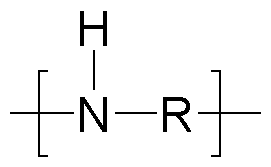
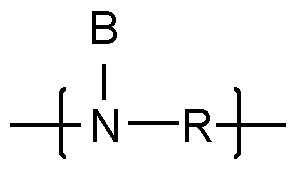

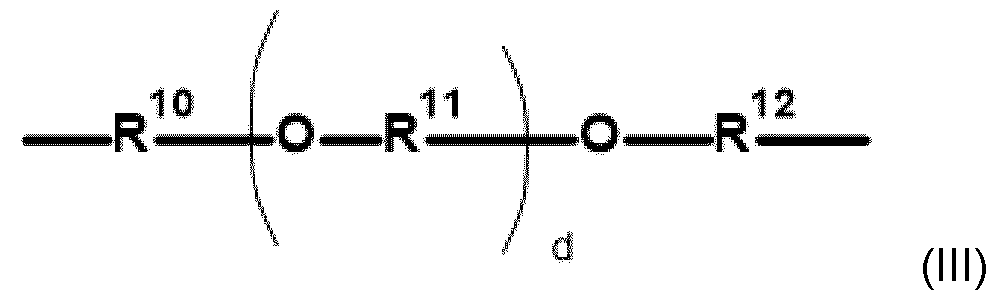


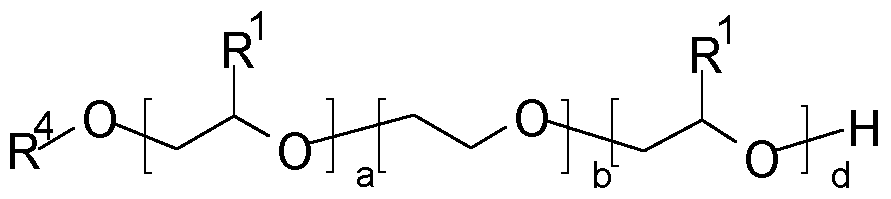

Claims
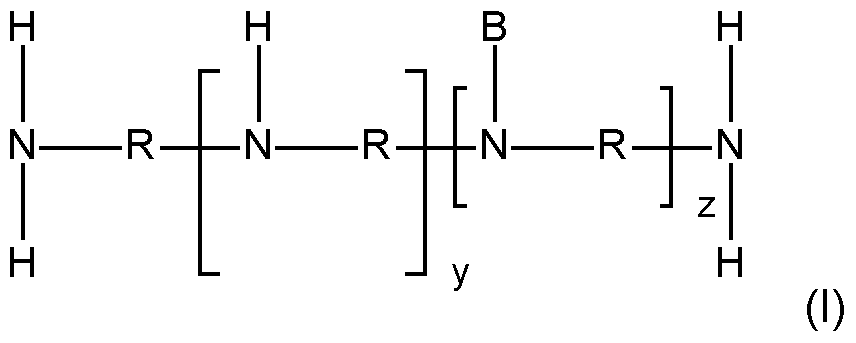
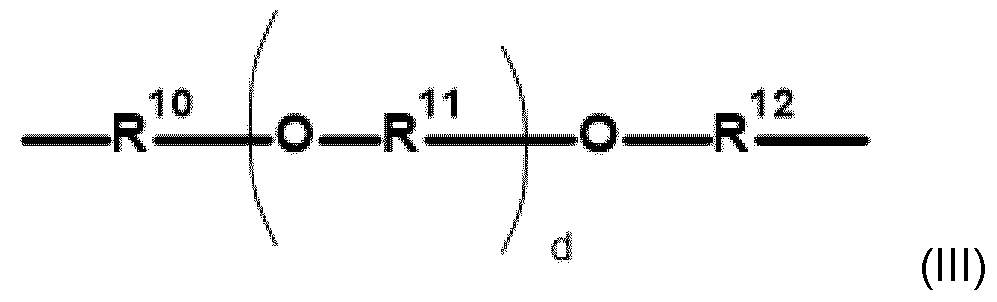

Priority Applications (2)
| Application Number | Priority Date | Filing Date | Title |
|---|---|---|---|
| CN202480013916.2A CN120731240A (en) | 2023-02-21 | 2024-02-12 | Modified alkoxylated polyalkylene imine or modified alkoxylated polyamine |
| EP24704454.8A EP4669690A1 (en) | 2023-02-21 | 2024-02-12 | MODIFIED ALCOXYLATED POLYALKYLENIMINES OR MODIFIED ALCOXYLATED POLYAMINES |
Applications Claiming Priority (2)
| Application Number | Priority Date | Filing Date | Title |
|---|---|---|---|
| EP23157803.0 | 2023-02-21 | ||
| EP23157803 | 2023-02-21 |
Publications (1)
| Publication Number | Publication Date |
|---|---|
| WO2024175407A1 true WO2024175407A1 (en) | 2024-08-29 |
Family
ID=85321299
Family Applications (1)
| Application Number | Title | Priority Date | Filing Date |
|---|---|---|---|
| PCT/EP2024/053493 Ceased WO2024175407A1 (en) | 2023-02-21 | 2024-02-12 | Modified alkoxylated polyalkylene imines or modified alkoxylated polyamines |
Country Status (3)
| Country | Link |
|---|---|
| EP (1) | EP4669690A1 (en) |
| CN (1) | CN120731240A (en) |
| WO (1) | WO2024175407A1 (en) |
Cited By (1)
| Publication number | Priority date | Publication date | Assignee | Title |
|---|---|---|---|---|
| CN121046101A (en) * | 2025-11-04 | 2025-12-02 | 上海柯珑清洁技术有限公司 | A surfactant composition, its preparation method and application |
Citations (80)
| Publication number | Priority date | Publication date | Assignee | Title |
|---|---|---|---|---|
| US1246339A (en) | 1916-08-21 | 1917-11-13 | Isaac J Smit | Self-illuminating depresser for dental and surgical work. |
| GB836988A (en) | 1955-07-27 | 1960-06-09 | Unilever Ltd | Improvements in or relating to bleaching and detergent compositions |
| GB864798A (en) | 1958-03-20 | 1961-04-06 | Unilever Ltd | Bleaching processes and compositions |
| GB907356A (en) | 1959-06-19 | 1962-10-03 | Konink Ind Mij Voorheen Noury | Improvements in or relating to washing and/or bleaching compositions |
| GB1003310A (en) | 1963-01-15 | 1965-09-02 | Unilever Ltd | Bleaching processes and compositions |
| US3332882A (en) | 1964-12-18 | 1967-07-25 | Fmc Corp | Peroxygen compositions |
| GB1519351A (en) | 1975-01-29 | 1978-07-26 | Unilever Ltd | Preparation of acetoxy arylene sulphonates |
| US4128494A (en) | 1976-09-01 | 1978-12-05 | Produits Chimiques Ugine Kuhlmann | Activators for percompounds |
| US4133779A (en) | 1975-01-06 | 1979-01-09 | The Procter & Gamble Company | Detergent composition containing semi-polar nonionic detergent and alkaline earth metal anionic detergent |
| US4228042A (en) | 1978-06-26 | 1980-10-14 | The Procter & Gamble Company | Biodegradable cationic surface-active agents containing ester or amide and polyalkoxy group |
| US4239660A (en) | 1978-12-13 | 1980-12-16 | The Procter & Gamble Company | Detergent composition comprising a hydrolyzable cationic surfactant and specific alkalinity source |
| US4260529A (en) | 1978-06-26 | 1981-04-07 | The Procter & Gamble Company | Detergent composition consisting essentially of biodegradable nonionic surfactant and cationic surfactant containing ester or amide |
| US4397757A (en) | 1979-11-16 | 1983-08-09 | Lever Brothers Company | Bleaching compositions having quarternary ammonium activators |
| US4412934A (en) | 1982-06-30 | 1983-11-01 | The Procter & Gamble Company | Bleaching compositions |
| EP0112593A2 (en) | 1982-12-23 | 1984-07-04 | THE PROCTER & GAMBLE COMPANY | Detergent compositions containing ethoxylated amines having clay soil removal/anti-redeposition properties |
| EP0120591A1 (en) | 1983-02-23 | 1984-10-03 | The Procter & Gamble Company | Detergent ingredients, and their use in cleaning compositions and washing processes |
| US4483779A (en) | 1982-04-26 | 1984-11-20 | The Procter & Gamble Company | Detergent compositions comprising polyglycoside and polyethoxylate surfactants and anionic fluorescer |
| US4483780A (en) | 1982-04-26 | 1984-11-20 | The Procter & Gamble Company | Detergent compositions containing polyglycoside and polyethoxylate detergent surfactants |
| DE3337921A1 (en) | 1983-10-19 | 1985-05-02 | Basf Ag, 6700 Ludwigshafen | METHOD FOR THE PRODUCTION OF ALKALI AND EARTH ALKALINE SALTS OF ACYLOXIBENZOLFULPHONIC ACIDS |
| US4565647A (en) | 1982-04-26 | 1986-01-21 | The Procter & Gamble Company | Foaming surfactant compositions |
| EP0174132A2 (en) | 1984-09-01 | 1986-03-12 | The Procter & Gamble Company | Bleach activator compositions manufacture and use thereof in laundry compositions |
| EP0185522A2 (en) | 1984-12-14 | 1986-06-25 | The Clorox Company | Phenylene mixed diester peracid precursors |
| US4675393A (en) | 1982-04-02 | 1987-06-23 | Lever Brothers Company | Process for preparing glucose penta-acetate and xylose tetra-acetate |
| US4681704A (en) | 1984-03-19 | 1987-07-21 | The Procter & Gamble Company | Detergent composition containing semi-polar nonionic detergent alkaline earth metal anionic detergent and amino alkylbetaine detergent |
| US4751015A (en) | 1987-03-17 | 1988-06-14 | Lever Brothers Company | Quaternary ammonium or phosphonium substituted peroxy carbonic acid precursors and their use in detergent bleach compositions |
| EP0284292A2 (en) | 1987-03-23 | 1988-09-28 | Kao Corporation | Bleaching composition |
| EP0331229A2 (en) | 1988-03-01 | 1989-09-06 | Unilever N.V. | Quaternary ammonium compounds for use in bleaching systems |
| US4960540A (en) | 1989-08-24 | 1990-10-02 | Friel Jr Thomas C | Alkoxylated bis-amide defoaming compounds |
| US5332528A (en) | 1990-09-28 | 1994-07-26 | The Procter & Gamble Company | Polyhydroxy fatty acid amides in soil release agent-containing detergent compositions |
| WO1995007972A1 (en) | 1993-09-17 | 1995-03-23 | Unilever N.V. | Enzymatic bleach composition |
| WO1995032272A1 (en) | 1994-05-25 | 1995-11-30 | The Procter & Gamble Company | Compositions comprising ethoxylated/propoxylated polyalkyleneamine polymers as soil dispersing agents |
| DE4443177A1 (en) | 1994-12-05 | 1996-06-13 | Henkel Kgaa | Activator mixtures for inorganic per compounds |
| US5576282A (en) | 1995-09-11 | 1996-11-19 | The Procter & Gamble Company | Color-safe bleach boosters, compositions and laundry methods employing same |
| EP0851023A2 (en) | 1996-12-23 | 1998-07-01 | Unilever N.V. | Machine dishwashing tablets containing a peracid |
| WO1998035004A1 (en) | 1997-02-11 | 1998-08-13 | The Procter & Gamble Company | Solid detergent compositions |
| WO1998035005A1 (en) | 1997-02-11 | 1998-08-13 | The Procter & Gamble Company | A cleaning composition |
| WO1998035002A1 (en) | 1997-02-11 | 1998-08-13 | The Procter & Gamble Company | Cleaning compositions |
| WO1998035006A1 (en) | 1997-02-11 | 1998-08-13 | The Procter & Gamble Company | Liquid cleaning composition |
| WO1998035003A1 (en) | 1997-02-11 | 1998-08-13 | The Procter & Gamble Company | Detergent compound |
| WO1999005244A1 (en) | 1997-07-21 | 1999-02-04 | The Procter & Gamble Company | Improved alkyl aryl sulfonate surfactants |
| WO1999005242A1 (en) | 1997-07-21 | 1999-02-04 | The Procter & Gamble Company | Improved alkylbenzenesulfonate surfactants |
| WO1999005243A1 (en) | 1997-07-21 | 1999-02-04 | The Procter & Gamble Company | Detergent compositions containing mixtures of crystallinity-disrupted surfactants |
| US5980931A (en) | 1996-10-25 | 1999-11-09 | The Procter & Gamble Company | Cleansing products having a substantially dry substrate |
| DE19819187A1 (en) | 1998-04-30 | 1999-11-11 | Henkel Kgaa | Solid dishwasher detergent with phosphate and crystalline layered silicates |
| US6004922A (en) | 1996-05-03 | 1999-12-21 | The Procter & Gamble Company | Laundry detergent compositions comprising cationic surfactants and modified polyamine soil dispersents |
| US6008181A (en) | 1996-04-16 | 1999-12-28 | The Procter & Gamble Company | Mid-Chain branched Alkoxylated Sulfate Surfactants |
| US6020303A (en) | 1996-04-16 | 2000-02-01 | The Procter & Gamble Company | Mid-chain branched surfactants |
| US6022844A (en) | 1996-03-05 | 2000-02-08 | The Procter & Gamble Company | Cationic detergent compounds |
| US6060443A (en) | 1996-04-16 | 2000-05-09 | The Procter & Gamble Company | Mid-chain branched alkyl sulfate surfactants |
| EP1004661A1 (en) | 1998-11-11 | 2000-05-31 | DALLI-WERKE WÄSCHE- und KÖRPERPFLEGE GmbH & Co. KG | High density granule, method for production thereof, and its use as disintegrant in tablets |
| US6093856A (en) | 1996-11-26 | 2000-07-25 | The Procter & Gamble Company | Polyoxyalkylene surfactants |
| WO2000047708A1 (en) | 1999-02-10 | 2000-08-17 | The Procter & Gamble Company | Low density particulate solids useful in laundry detergents |
| US6121165A (en) | 1997-07-31 | 2000-09-19 | The Procter & Gamble Company | Wet-like cleaning articles |
| EP1036839A2 (en) | 1999-03-17 | 2000-09-20 | Basf Aktiengesellschaft | Tablets and particulate detergents comprising cross-linked polyvinylpyrrolidone and its use |
| US6136769A (en) | 1996-05-17 | 2000-10-24 | The Procter & Gamble Company | Alkoxylated cationic detergency ingredients |
| US6221825B1 (en) | 1996-12-31 | 2001-04-24 | The Procter & Gamble Company | Thickened, highly aqueous liquid detergent compositions |
| WO2001032816A1 (en) | 1999-10-29 | 2001-05-10 | The Procter & Gamble Company | Laundry detergent compositions with fabric care |
| WO2001042408A2 (en) | 1999-12-08 | 2001-06-14 | The Procter & Gamble Company | Ether-capped poly(oxyalkylated) alcohol surfactants |
| US6306812B1 (en) | 1997-03-07 | 2001-10-23 | Procter & Gamble Company, The | Bleach compositions containing metal bleach catalyst, and bleach activators and/or organic percarboxylic acids |
| US6326348B1 (en) | 1996-04-16 | 2001-12-04 | The Procter & Gamble Co. | Detergent compositions containing selected mid-chain branched surfactants |
| EP1194514A1 (en) | 1999-07-14 | 2002-04-10 | Ciba SC Holding AG | Metal complexes of tripodal ligands |
| US6482994B2 (en) | 1997-08-02 | 2002-11-19 | The Procter & Gamble Company | Ether-capped poly(oxyalkylated) alcohol surfactants |
| EP1263814A1 (en) | 2000-03-10 | 2002-12-11 | Basf Aktiengesellschaft | Used of cross-linked polyvinylpyrrolidone as a disintegrant in compact, particulate detergents and cleaning agents |
| WO2004007657A1 (en) | 2002-07-11 | 2004-01-22 | Ciba Specialty Chemicals Holding Inc. | Use of metal complex compounds as oxidation catalysts |
| EP1383857A2 (en) | 2001-04-30 | 2004-01-28 | Ciba SC Holding AG | Use of metal complex compounds as oxidation catalysts |
| WO2009060059A2 (en) | 2007-11-09 | 2009-05-14 | Basf Se | Amphiphilic water-soluble alkoxylated polyalkyleneimines having an inner polyethylene oxide block and an outer polypropylene oxide block |
| EP1921147B1 (en) | 1994-02-24 | 2011-06-08 | Henkel AG & Co. KGaA | Improved enzymes and detergents containing them |
| WO2012003600A1 (en) | 2010-07-07 | 2012-01-12 | 无锡尚德太阳能电力有限公司 | Solar cell module |
| WO2012030600A2 (en) | 2010-09-02 | 2012-03-08 | Baker Hughes Incorporated | Novel copolymers for use as oilfield demulsifiers |
| WO2014131649A1 (en) | 2013-02-28 | 2014-09-04 | Basf Se | Polyamines and method for the production thereof |
| WO2015028191A1 (en) | 2013-08-26 | 2015-03-05 | Basf Se | Alkoxylated polyethyleneimine with a low melting point |
| EP3167034A1 (en) | 2014-07-09 | 2017-05-17 | Henkel AG & Co. KGaA | Polyalkoxylated polyamines in novel laundry methods |
| EP3301154A1 (en) | 2016-10-03 | 2018-04-04 | The Procter & Gamble Company | Laundry detergent composition |
| GB2562172A (en) | 2017-05-05 | 2018-11-07 | Lankem Ltd | Compositions and methods |
| WO2020030469A1 (en) | 2018-08-10 | 2020-02-13 | Basf Se | Process for manufacturing alkoxylated polyethyleneimines |
| WO2020187648A1 (en) | 2019-03-15 | 2020-09-24 | Basf Se | Alkoxylated polyalkylene imines or alkoxylated polyamines with a terminal polybutylene oxide block |
| WO2021032881A1 (en) | 2019-08-22 | 2021-02-25 | Basf Se | Amylase variants |
| WO2021115912A1 (en) | 2019-12-09 | 2021-06-17 | Basf Se | Formulations comprising a hydrophobically modified polyethyleneimine and one or more enzymes |
| WO2021165468A1 (en) | 2020-02-21 | 2021-08-26 | Basf Se | Alkoxylated polyalkylene imines or alkoxylated polyamines with improved biodegradability |
| WO2021254929A1 (en) | 2020-06-16 | 2021-12-23 | Ruedt Andrea | Method for the repair welding or modification welding of a rail |
-
2024
- 2024-02-12 WO PCT/EP2024/053493 patent/WO2024175407A1/en not_active Ceased
- 2024-02-12 CN CN202480013916.2A patent/CN120731240A/en active Pending
- 2024-02-12 EP EP24704454.8A patent/EP4669690A1/en active Pending
Patent Citations (83)
| Publication number | Priority date | Publication date | Assignee | Title |
|---|---|---|---|---|
| US1246339A (en) | 1916-08-21 | 1917-11-13 | Isaac J Smit | Self-illuminating depresser for dental and surgical work. |
| GB836988A (en) | 1955-07-27 | 1960-06-09 | Unilever Ltd | Improvements in or relating to bleaching and detergent compositions |
| GB864798A (en) | 1958-03-20 | 1961-04-06 | Unilever Ltd | Bleaching processes and compositions |
| GB907356A (en) | 1959-06-19 | 1962-10-03 | Konink Ind Mij Voorheen Noury | Improvements in or relating to washing and/or bleaching compositions |
| GB1003310A (en) | 1963-01-15 | 1965-09-02 | Unilever Ltd | Bleaching processes and compositions |
| US3332882A (en) | 1964-12-18 | 1967-07-25 | Fmc Corp | Peroxygen compositions |
| US4133779A (en) | 1975-01-06 | 1979-01-09 | The Procter & Gamble Company | Detergent composition containing semi-polar nonionic detergent and alkaline earth metal anionic detergent |
| GB1519351A (en) | 1975-01-29 | 1978-07-26 | Unilever Ltd | Preparation of acetoxy arylene sulphonates |
| US4128494A (en) | 1976-09-01 | 1978-12-05 | Produits Chimiques Ugine Kuhlmann | Activators for percompounds |
| US4228042A (en) | 1978-06-26 | 1980-10-14 | The Procter & Gamble Company | Biodegradable cationic surface-active agents containing ester or amide and polyalkoxy group |
| US4260529A (en) | 1978-06-26 | 1981-04-07 | The Procter & Gamble Company | Detergent composition consisting essentially of biodegradable nonionic surfactant and cationic surfactant containing ester or amide |
| US4239660A (en) | 1978-12-13 | 1980-12-16 | The Procter & Gamble Company | Detergent composition comprising a hydrolyzable cationic surfactant and specific alkalinity source |
| US4397757A (en) | 1979-11-16 | 1983-08-09 | Lever Brothers Company | Bleaching compositions having quarternary ammonium activators |
| US4675393A (en) | 1982-04-02 | 1987-06-23 | Lever Brothers Company | Process for preparing glucose penta-acetate and xylose tetra-acetate |
| US4483779A (en) | 1982-04-26 | 1984-11-20 | The Procter & Gamble Company | Detergent compositions comprising polyglycoside and polyethoxylate surfactants and anionic fluorescer |
| US4483780A (en) | 1982-04-26 | 1984-11-20 | The Procter & Gamble Company | Detergent compositions containing polyglycoside and polyethoxylate detergent surfactants |
| US4565647A (en) | 1982-04-26 | 1986-01-21 | The Procter & Gamble Company | Foaming surfactant compositions |
| US4565647B1 (en) | 1982-04-26 | 1994-04-05 | Procter & Gamble | Foaming surfactant compositions |
| US4412934A (en) | 1982-06-30 | 1983-11-01 | The Procter & Gamble Company | Bleaching compositions |
| EP0112593A2 (en) | 1982-12-23 | 1984-07-04 | THE PROCTER & GAMBLE COMPANY | Detergent compositions containing ethoxylated amines having clay soil removal/anti-redeposition properties |
| EP0120591A1 (en) | 1983-02-23 | 1984-10-03 | The Procter & Gamble Company | Detergent ingredients, and their use in cleaning compositions and washing processes |
| DE3337921A1 (en) | 1983-10-19 | 1985-05-02 | Basf Ag, 6700 Ludwigshafen | METHOD FOR THE PRODUCTION OF ALKALI AND EARTH ALKALINE SALTS OF ACYLOXIBENZOLFULPHONIC ACIDS |
| US4681704A (en) | 1984-03-19 | 1987-07-21 | The Procter & Gamble Company | Detergent composition containing semi-polar nonionic detergent alkaline earth metal anionic detergent and amino alkylbetaine detergent |
| EP0174132A2 (en) | 1984-09-01 | 1986-03-12 | The Procter & Gamble Company | Bleach activator compositions manufacture and use thereof in laundry compositions |
| EP0185522A2 (en) | 1984-12-14 | 1986-06-25 | The Clorox Company | Phenylene mixed diester peracid precursors |
| US4751015A (en) | 1987-03-17 | 1988-06-14 | Lever Brothers Company | Quaternary ammonium or phosphonium substituted peroxy carbonic acid precursors and their use in detergent bleach compositions |
| EP0284292A2 (en) | 1987-03-23 | 1988-09-28 | Kao Corporation | Bleaching composition |
| EP0331229A2 (en) | 1988-03-01 | 1989-09-06 | Unilever N.V. | Quaternary ammonium compounds for use in bleaching systems |
| US4960540A (en) | 1989-08-24 | 1990-10-02 | Friel Jr Thomas C | Alkoxylated bis-amide defoaming compounds |
| US5332528A (en) | 1990-09-28 | 1994-07-26 | The Procter & Gamble Company | Polyhydroxy fatty acid amides in soil release agent-containing detergent compositions |
| WO1995007972A1 (en) | 1993-09-17 | 1995-03-23 | Unilever N.V. | Enzymatic bleach composition |
| EP1921147B1 (en) | 1994-02-24 | 2011-06-08 | Henkel AG & Co. KGaA | Improved enzymes and detergents containing them |
| WO1995032272A1 (en) | 1994-05-25 | 1995-11-30 | The Procter & Gamble Company | Compositions comprising ethoxylated/propoxylated polyalkyleneamine polymers as soil dispersing agents |
| DE4443177A1 (en) | 1994-12-05 | 1996-06-13 | Henkel Kgaa | Activator mixtures for inorganic per compounds |
| US5576282A (en) | 1995-09-11 | 1996-11-19 | The Procter & Gamble Company | Color-safe bleach boosters, compositions and laundry methods employing same |
| US6022844A (en) | 1996-03-05 | 2000-02-08 | The Procter & Gamble Company | Cationic detergent compounds |
| US6008181A (en) | 1996-04-16 | 1999-12-28 | The Procter & Gamble Company | Mid-Chain branched Alkoxylated Sulfate Surfactants |
| US6020303A (en) | 1996-04-16 | 2000-02-01 | The Procter & Gamble Company | Mid-chain branched surfactants |
| US6060443A (en) | 1996-04-16 | 2000-05-09 | The Procter & Gamble Company | Mid-chain branched alkyl sulfate surfactants |
| US6326348B1 (en) | 1996-04-16 | 2001-12-04 | The Procter & Gamble Co. | Detergent compositions containing selected mid-chain branched surfactants |
| US6004922A (en) | 1996-05-03 | 1999-12-21 | The Procter & Gamble Company | Laundry detergent compositions comprising cationic surfactants and modified polyamine soil dispersents |
| US6136769A (en) | 1996-05-17 | 2000-10-24 | The Procter & Gamble Company | Alkoxylated cationic detergency ingredients |
| US5980931A (en) | 1996-10-25 | 1999-11-09 | The Procter & Gamble Company | Cleansing products having a substantially dry substrate |
| US6093856A (en) | 1996-11-26 | 2000-07-25 | The Procter & Gamble Company | Polyoxyalkylene surfactants |
| US6153577A (en) | 1996-11-26 | 2000-11-28 | The Procter & Gamble Company | Polyoxyalkylene surfactants |
| EP0851023A2 (en) | 1996-12-23 | 1998-07-01 | Unilever N.V. | Machine dishwashing tablets containing a peracid |
| US6221825B1 (en) | 1996-12-31 | 2001-04-24 | The Procter & Gamble Company | Thickened, highly aqueous liquid detergent compositions |
| WO1998035005A1 (en) | 1997-02-11 | 1998-08-13 | The Procter & Gamble Company | A cleaning composition |
| WO1998035004A1 (en) | 1997-02-11 | 1998-08-13 | The Procter & Gamble Company | Solid detergent compositions |
| WO1998035002A1 (en) | 1997-02-11 | 1998-08-13 | The Procter & Gamble Company | Cleaning compositions |
| WO1998035003A1 (en) | 1997-02-11 | 1998-08-13 | The Procter & Gamble Company | Detergent compound |
| WO1998035006A1 (en) | 1997-02-11 | 1998-08-13 | The Procter & Gamble Company | Liquid cleaning composition |
| US6306812B1 (en) | 1997-03-07 | 2001-10-23 | Procter & Gamble Company, The | Bleach compositions containing metal bleach catalyst, and bleach activators and/or organic percarboxylic acids |
| WO1999005244A1 (en) | 1997-07-21 | 1999-02-04 | The Procter & Gamble Company | Improved alkyl aryl sulfonate surfactants |
| WO1999005243A1 (en) | 1997-07-21 | 1999-02-04 | The Procter & Gamble Company | Detergent compositions containing mixtures of crystallinity-disrupted surfactants |
| WO1999005242A1 (en) | 1997-07-21 | 1999-02-04 | The Procter & Gamble Company | Improved alkylbenzenesulfonate surfactants |
| US6121165A (en) | 1997-07-31 | 2000-09-19 | The Procter & Gamble Company | Wet-like cleaning articles |
| US6482994B2 (en) | 1997-08-02 | 2002-11-19 | The Procter & Gamble Company | Ether-capped poly(oxyalkylated) alcohol surfactants |
| DE19819187A1 (en) | 1998-04-30 | 1999-11-11 | Henkel Kgaa | Solid dishwasher detergent with phosphate and crystalline layered silicates |
| EP1004661A1 (en) | 1998-11-11 | 2000-05-31 | DALLI-WERKE WÄSCHE- und KÖRPERPFLEGE GmbH & Co. KG | High density granule, method for production thereof, and its use as disintegrant in tablets |
| WO2000047708A1 (en) | 1999-02-10 | 2000-08-17 | The Procter & Gamble Company | Low density particulate solids useful in laundry detergents |
| EP1036839A2 (en) | 1999-03-17 | 2000-09-20 | Basf Aktiengesellschaft | Tablets and particulate detergents comprising cross-linked polyvinylpyrrolidone and its use |
| EP1194514A1 (en) | 1999-07-14 | 2002-04-10 | Ciba SC Holding AG | Metal complexes of tripodal ligands |
| WO2001032816A1 (en) | 1999-10-29 | 2001-05-10 | The Procter & Gamble Company | Laundry detergent compositions with fabric care |
| WO2001042408A2 (en) | 1999-12-08 | 2001-06-14 | The Procter & Gamble Company | Ether-capped poly(oxyalkylated) alcohol surfactants |
| EP1263814A1 (en) | 2000-03-10 | 2002-12-11 | Basf Aktiengesellschaft | Used of cross-linked polyvinylpyrrolidone as a disintegrant in compact, particulate detergents and cleaning agents |
| EP1383857A2 (en) | 2001-04-30 | 2004-01-28 | Ciba SC Holding AG | Use of metal complex compounds as oxidation catalysts |
| WO2004007657A1 (en) | 2002-07-11 | 2004-01-22 | Ciba Specialty Chemicals Holding Inc. | Use of metal complex compounds as oxidation catalysts |
| WO2009060059A2 (en) | 2007-11-09 | 2009-05-14 | Basf Se | Amphiphilic water-soluble alkoxylated polyalkyleneimines having an inner polyethylene oxide block and an outer polypropylene oxide block |
| WO2012003600A1 (en) | 2010-07-07 | 2012-01-12 | 无锡尚德太阳能电力有限公司 | Solar cell module |
| WO2012030600A2 (en) | 2010-09-02 | 2012-03-08 | Baker Hughes Incorporated | Novel copolymers for use as oilfield demulsifiers |
| WO2014131649A1 (en) | 2013-02-28 | 2014-09-04 | Basf Se | Polyamines and method for the production thereof |
| WO2015028191A1 (en) | 2013-08-26 | 2015-03-05 | Basf Se | Alkoxylated polyethyleneimine with a low melting point |
| EP3167034A1 (en) | 2014-07-09 | 2017-05-17 | Henkel AG & Co. KGaA | Polyalkoxylated polyamines in novel laundry methods |
| EP3301154A1 (en) | 2016-10-03 | 2018-04-04 | The Procter & Gamble Company | Laundry detergent composition |
| GB2562172A (en) | 2017-05-05 | 2018-11-07 | Lankem Ltd | Compositions and methods |
| WO2020030469A1 (en) | 2018-08-10 | 2020-02-13 | Basf Se | Process for manufacturing alkoxylated polyethyleneimines |
| WO2020187648A1 (en) | 2019-03-15 | 2020-09-24 | Basf Se | Alkoxylated polyalkylene imines or alkoxylated polyamines with a terminal polybutylene oxide block |
| WO2021032881A1 (en) | 2019-08-22 | 2021-02-25 | Basf Se | Amylase variants |
| WO2021115912A1 (en) | 2019-12-09 | 2021-06-17 | Basf Se | Formulations comprising a hydrophobically modified polyethyleneimine and one or more enzymes |
| WO2021165468A1 (en) | 2020-02-21 | 2021-08-26 | Basf Se | Alkoxylated polyalkylene imines or alkoxylated polyamines with improved biodegradability |
| US20220403107A1 (en) * | 2020-02-21 | 2022-12-22 | The Procter & Gamble Company | Biodegradable graft polymers |
| WO2021254929A1 (en) | 2020-06-16 | 2021-12-23 | Ruedt Andrea | Method for the repair welding or modification welding of a rail |
Non-Patent Citations (5)
| Title |
|---|
| "A Comparative Study of Current Superdisintegrants", PHARMACEUTICAL TECHNOLOGY, vol. 2006, 1 October 2006 (2006-10-01) |
| "nzyme Nomenclature, Recommendations", 1992, NOMENCLATURE COMMITTEE OF THE INTERNATIONAL UNION OF BIOCHEMISTRY |
| ABRAHAM, D. S.: "Production of propylene oxide from propylene glycol", 2007, MASTER'S THESIS UNIVERSITY OF MISSOURI-COLUMBIA, pages: 75 |
| C. J. HAWKERR. LEEJ. M. J. FRECHET: "The One-Step Synthesis of Hyperbranched Dendritic Polyesters", J. AM. CHEM. SOC., vol. 113, 1991, pages 4583, XP000749912, DOI: 10.1021/ja00012a030 |
| no. 61789-y71-7 |
Cited By (1)
| Publication number | Priority date | Publication date | Assignee | Title |
|---|---|---|---|---|
| CN121046101A (en) * | 2025-11-04 | 2025-12-02 | 上海柯珑清洁技术有限公司 | A surfactant composition, its preparation method and application |
Also Published As
| Publication number | Publication date |
|---|---|
| EP4669690A1 (en) | 2025-12-31 |
| CN120731240A (en) | 2025-09-30 |
Similar Documents
| Publication | Publication Date | Title |
|---|---|---|
| US20240132668A1 (en) | Amphiphilic alkoxylated polyalkylene imines or alkoxylated polyamines | |
| US20240110009A1 (en) | New alkoxylated polyalkylene imines or alkoxylated polyamines | |
| JP2024531324A (en) | Modified alkoxylated polyalkyleneimines or modified alkoxylated polyamines | |
| US20250043076A1 (en) | Polypropylene imine polymers (ppi), their preparation, uses, and compositions comprising such ppi | |
| CN117881723A (en) | Modified alkoxylated polyalkyleneimines and modified alkoxylated polyamines obtainable by a process comprising steps a) to d) | |
| US20240360381A1 (en) | Modified alkoxylated oligoalkylene imines and modified alkoxylated oligoamines | |
| WO2023021101A1 (en) | Modified alkoxylated polyalkylene imines | |
| WO2024175407A1 (en) | Modified alkoxylated polyalkylene imines or modified alkoxylated polyamines | |
| WO2024175401A1 (en) | Modified alkoxylated polyalkylene imines or modified alkoxylated polyamines | |
| WO2025131888A1 (en) | Modified alkoxylated polyalkylene imines or modified alkoxylated polyamines | |
| WO2024175409A1 (en) | Modified hyperbranched alkoxylated polyalkylene imines | |
| WO2025125117A1 (en) | Biodegradable propoxylated ethylenediamines, their preparation, uses, and compositions comprising them | |
| WO2025202032A1 (en) | Biodegradable alkoxylated polyols, their preparation, uses, and compositions comprising them | |
| WO2024231110A1 (en) | Biodegradable polyol propoxylates, their preparation, uses, and compositions comprising them | |
| WO2024188713A1 (en) | Alkoxylated nitrogen containing polymers and their use | |
| US20250163348A1 (en) | A block copolymer, preparation process and composition thereof | |
| WO2025180874A1 (en) | Substituted 1,3-dioxolane sulfates and their use | |
| WO2025195856A1 (en) | Compositions of guerbet alkyl sulfates and their use | |
| JP2025500419A (en) | Water-soluble grafted polymers, their preparation, use and compositions containing such polymers - Patents.com | |
| WO2024042005A1 (en) | Process for producing sulfatized esteramines |
Legal Events
| Date | Code | Title | Description |
|---|---|---|---|
| 121 | Ep: the epo has been informed by wipo that ep was designated in this application |
Ref document number: 24704454 Country of ref document: EP Kind code of ref document: A1 |
|
| WWE | Wipo information: entry into national phase |
Ref document number: 202480013916.2 Country of ref document: CN |
|
| WWE | Wipo information: entry into national phase |
Ref document number: 202517087797 Country of ref document: IN |
|
| REG | Reference to national code |
Ref country code: BR Ref legal event code: B01A Ref document number: 112025017391 Country of ref document: BR |
|
| WWE | Wipo information: entry into national phase |
Ref document number: 2024704454 Country of ref document: EP |
|
| NENP | Non-entry into the national phase |
Ref country code: DE |
|
| WWP | Wipo information: published in national office |
Ref document number: 202480013916.2 Country of ref document: CN |
|
| WWP | Wipo information: published in national office |
Ref document number: 202517087797 Country of ref document: IN |
|
| ENP | Entry into the national phase |
Ref document number: 2024704454 Country of ref document: EP Effective date: 20250922 |
|
| ENP | Entry into the national phase |
Ref document number: 2024704454 Country of ref document: EP Effective date: 20250922 |
|
| WWP | Wipo information: published in national office |
Ref document number: 2024704454 Country of ref document: EP |