WO2024173387A1 - Aza-benzazepine immunoconjugates, and uses thereof - Google Patents
Aza-benzazepine immunoconjugates, and uses thereof Download PDFInfo
- Publication number
- WO2024173387A1 WO2024173387A1 PCT/US2024/015582 US2024015582W WO2024173387A1 WO 2024173387 A1 WO2024173387 A1 WO 2024173387A1 US 2024015582 W US2024015582 W US 2024015582W WO 2024173387 A1 WO2024173387 A1 WO 2024173387A1
- Authority
- WO
- WIPO (PCT)
- Prior art keywords
- alkyldiyl
- immunoconjugate
- seq
- antibody
- cancer
- Prior art date
- Legal status (The legal status is an assumption and is not a legal conclusion. Google has not performed a legal analysis and makes no representation as to the accuracy of the status listed.)
- Ceased
Links
Classifications
-
- A—HUMAN NECESSITIES
- A61—MEDICAL OR VETERINARY SCIENCE; HYGIENE
- A61K—PREPARATIONS FOR MEDICAL, DENTAL OR TOILETRY PURPOSES
- A61K47/00—Medicinal preparations characterised by the non-active ingredients used, e.g. carriers or inert additives; Targeting or modifying agents chemically bound to the active ingredient
- A61K47/50—Medicinal preparations characterised by the non-active ingredients used, e.g. carriers or inert additives; Targeting or modifying agents chemically bound to the active ingredient the non-active ingredient being chemically bound to the active ingredient, e.g. polymer-drug conjugates
- A61K47/51—Medicinal preparations characterised by the non-active ingredients used, e.g. carriers or inert additives; Targeting or modifying agents chemically bound to the active ingredient the non-active ingredient being chemically bound to the active ingredient, e.g. polymer-drug conjugates the non-active ingredient being a modifying agent
- A61K47/68—Medicinal preparations characterised by the non-active ingredients used, e.g. carriers or inert additives; Targeting or modifying agents chemically bound to the active ingredient the non-active ingredient being chemically bound to the active ingredient, e.g. polymer-drug conjugates the non-active ingredient being a modifying agent the modifying agent being an antibody, an immunoglobulin or a fragment thereof, e.g. an Fc-fragment
- A61K47/6801—Drug-antibody or immunoglobulin conjugates defined by the pharmacologically or therapeutically active agent
- A61K47/6803—Drugs conjugated to an antibody or immunoglobulin, e.g. cisplatin-antibody conjugates
-
- A—HUMAN NECESSITIES
- A61—MEDICAL OR VETERINARY SCIENCE; HYGIENE
- A61K—PREPARATIONS FOR MEDICAL, DENTAL OR TOILETRY PURPOSES
- A61K47/00—Medicinal preparations characterised by the non-active ingredients used, e.g. carriers or inert additives; Targeting or modifying agents chemically bound to the active ingredient
- A61K47/50—Medicinal preparations characterised by the non-active ingredients used, e.g. carriers or inert additives; Targeting or modifying agents chemically bound to the active ingredient the non-active ingredient being chemically bound to the active ingredient, e.g. polymer-drug conjugates
- A61K47/51—Medicinal preparations characterised by the non-active ingredients used, e.g. carriers or inert additives; Targeting or modifying agents chemically bound to the active ingredient the non-active ingredient being chemically bound to the active ingredient, e.g. polymer-drug conjugates the non-active ingredient being a modifying agent
- A61K47/68—Medicinal preparations characterised by the non-active ingredients used, e.g. carriers or inert additives; Targeting or modifying agents chemically bound to the active ingredient the non-active ingredient being chemically bound to the active ingredient, e.g. polymer-drug conjugates the non-active ingredient being a modifying agent the modifying agent being an antibody, an immunoglobulin or a fragment thereof, e.g. an Fc-fragment
- A61K47/6835—Medicinal preparations characterised by the non-active ingredients used, e.g. carriers or inert additives; Targeting or modifying agents chemically bound to the active ingredient the non-active ingredient being chemically bound to the active ingredient, e.g. polymer-drug conjugates the non-active ingredient being a modifying agent the modifying agent being an antibody, an immunoglobulin or a fragment thereof, e.g. an Fc-fragment the modifying agent being an antibody or an immunoglobulin bearing at least one antigen-binding site
- A61K47/6851—Medicinal preparations characterised by the non-active ingredients used, e.g. carriers or inert additives; Targeting or modifying agents chemically bound to the active ingredient the non-active ingredient being chemically bound to the active ingredient, e.g. polymer-drug conjugates the non-active ingredient being a modifying agent the modifying agent being an antibody, an immunoglobulin or a fragment thereof, e.g. an Fc-fragment the modifying agent being an antibody or an immunoglobulin bearing at least one antigen-binding site the antibody targeting a determinant of a tumour cell
-
- A—HUMAN NECESSITIES
- A61—MEDICAL OR VETERINARY SCIENCE; HYGIENE
- A61P—SPECIFIC THERAPEUTIC ACTIVITY OF CHEMICAL COMPOUNDS OR MEDICINAL PREPARATIONS
- A61P35/00—Antineoplastic agents
Definitions
- Claudins are 20–27-kDa transmembrane proteins that form extremely tight associations with their counterparts on adjacent cells (Kyuno D, et al (2022) Tissue Barriers Jan 2;10(1):1967080). Tight junctions establish the paracellular barrier that controls the flow of molecules in the intercellular space between the cells of an epithelium. Claudins have four transmembrane domains, with the N-terminus and the C-terminus in the cytoplasm.
- Claudin- 18.2 is a splice variant 2 with synonyms: UNQ778/PRO1572, CLDN18, Claudin 18, Surfactant Associated Protein J, Pulmonary Associated Protein J Surfactant Associated 5, Claudin-18, SFTA5, SFTPJ, Claudin 18.2, CLDN18.2.
- CLDN18.2 the tight junction protein Claudin 18.2 (CLDN18.2) is present only in the gastric mucosa.
- perturbations in cell polarity lead to cell surface exposure of CLDN18.2 epitopes (Tuereci, O. et al (2019) OncoImmunology, 8(1), e1523096/1-e1523096/10; Arnold, A.
- Anti-Claudin 18.2 antibodies are being investigated as targeted therapy for advanced gastric cancer (Singh, P. et al (2017) Journal of Hematology & Oncology, 10, 105/1-105/5; WO 2013/174404; WO 2014/127785; WO 2014/127906; WO 2019/174617; WO 2020/018852; WO 2021/047599), including bispecific antibodies (WO 2014/075697; WO 2022/104267; WO 2022/166940; WO 2022/170305.
- Zolbetuximab (IMAB362), a monoclonal antibody against isoform 2 of Claudin-18 (Claudin 18.2), is under investigation for the treatment of gastrointestinal adenocarcinomas and pancreatic tumors (Sahin, U. et al (2016) European Journal of Cancer, 100:17-26).
- Antibody-drug conjugates with Claudin 18.2 antibodies have also been reported (WO 2022/068854; WO 2022/104267; WO 2022/136642; WO 2022/188740).
- the invention is generally directed to an immunoconjugate comprising an antibody covalently attached by a linker to one or more aza-benzazepine TLR (toll-like receptor) agonist moieties having the formula: where one or two of Z 1 , Z 2 , Z 3 , and Z 4 is N, and one of the substituents is attached to the linker.
- aza-benzazepine TLR toll-like receptor
- Another aspect of the invention is an immunoconjugate comprising an antibody which binds to Claudin 18.2.
- Another aspect of the invention is a method of preparing an immunoconjugate by conjugation of one or more aza-benzazepine-linker compounds with an antibody.
- Another aspect of the invention is a pharmaceutical composition comprising a therapeutically effective amount of an immunoconjugate comprising an antibody covalently attached by a linker to one or more aza-benzazepine moieties, and one or more pharmaceutically acceptable diluent, vehicle, carrier or excipient.
- Another aspect of the invention is an aza-benzazepine-linker compound.
- Another aspect of the invention is a method for treating cancer comprising administering a therapeutically effective amount of an immunoconjugate comprising an antibody covalently attached to one or more aza-benzazepine moieties by a linker.
- FIG. 1 shows a plot of the hydrolysis of the amidine group of benzazepine comparator compound CBz-3 to form lactam comparator compound CBz-5 over time in PBS buffer at 40 °C.
- Figure 2A shows a plot of the hydrolysis of the amidine group of benzazepine comparator compound CBz-1 , and aza-benzazepine compounds azaBa-1 and azaBz-2 by percentage of starting compounds remaining over 2 days.
- Figure 2B shows a plot of the hydrolysis of the amidine group of benzazepine comparator compound CBz-1 , and aza-benzazepine compounds azaBa-1 and azaBz-2 by the appearance of the corresponding lactam compounds over 2 days.
- Figure 3A shows a plot of the hydrolysis of the amidine group of benzazepine comparator compounds CBz-4 and CBz-6 , and aza-benzazepine compounds azaBa-1 and azaBz-5 by percentage of starting compounds remaining over 2 days.
- Figure 3B shows a plot of the hydrolysis of the amidine group of benzazepine comparator compounds CBz-4 and CBz-6 , and aza-benzazepine compounds azaBa-1 and azaBz-5 by the appearance of the corresponding lactam compounds over 2 days.
- Figure 4 shows a plot of the hydrolysis of the amidine group of aza-benzazepine compounds azaBa-3 , azaBz-5 , azaBz-6 , azaBz-7 , and azaBz-8 in PBS and Formulation buffer, by the appearance of the corresponding lactam compounds over 2 days. The amount of lactam is normalized for each sample at the start (t 0 ) for easier rate comparisons.
- Figure 5 shows a plot of the hydrolysis of the amidine group of benzazepine comparator compounds CBz-2 and CBz-7 , and aza-benzazepine compounds azaBa-6 and azaBz-8 in PBS, by the appearance of the corresponding lactam compounds over 2 days.
- the amount of lactam is normalized for each sample at the start (t 0 ) for easier rate comparisons.
- immunoconjugate or “immune-stimulating antibody conjugate” refers to an antibody construct that is covalently bonded to an adjuvant moiety via a linker.
- adjuvant refers to a substance capable of eliciting an immune response in a subject exposed to the adjuvant.
- Adjuvant moiety refers to an adjuvant that is covalently bonded to an antibody construct, e.g., through a linker, as described herein.
- the adjuvant moiety can elicit the immune response while bonded to the antibody construct or after cleavage (e.g., enzymatic cleavage) from the antibody construct following administration of an immunoconjugate to the subject.
- Adjuvant refers to a substance capable of eliciting an immune response in a subject exposed to the adjuvant.
- the terms “Toll-like receptor” and “TLR” refer to any member of a family of highly- conserved mammalian proteins which recognizes pathogen-associated molecular patterns and acts as key signaling elements in innate immunity.
- TLR polypeptides share a characteristic structure that includes an extracellular domain that has leucine-rich repeats, a transmembrane domain, and an intracellular domain that is involved in TLR signaling.
- Toll-like receptor 7 and “TLR7” refer to nucleic acids or polypeptides sharing at least about 70%, about 80%, about 90%, about 95%, about 96%, about 97%, about 98%, about 99%, or more sequence identity to a publicly-available TLR7 sequence, e.g., GenBank accession number AAZ99026 for human TLR7 polypeptide, or GenBank accession number AAK62676 for murine TLR7 polypeptide.
- Toll-like receptor 8 and “TLR8” refer to nucleic acids or polypeptides sharing at least about 70%, about 80%, about 90%, about 95%, about 96%, about 97%, about 98%, about 99%, or more sequence identity to a publicly-available TLR7 sequence, e.g., GenBank accession number AAZ95441 for human TLR8 polypeptide, or GenBank accession number AAK62677 for murine TLR8 polypeptide.
- a “TLR agonist” is a compound that binds, directly or indirectly, to a TLR (e.g., TLR7 and/or TLR8) to induce TLR signaling.
- Any detectable difference in TLR signaling can indicate that an agonist stimulates or activates a TLR.
- Signaling differences can be manifested, for example, as changes in the expression of target genes, in the phosphorylation of signal transduction components, in the intracellular localization of downstream elements such as nuclear factor- ⁇ B (NF- ⁇ B), in the association of certain components (such as IL-1 receptor associated kinase (IRAK)) with other proteins or intracellular structures, or in the biochemical activity of components such as kinases (such as mitogen-activated protein kinase (MAPK)).
- NF- ⁇ B nuclear factor- ⁇ B
- IRAK IL-1 receptor associated kinase
- MAPK mitogen-activated protein kinase
- Antibody refers to a polypeptide comprising an antigen binding region (including the complementarity determining region (CDRs)) from an immunoglobulin gene or fragments thereof.
- the term “antibody” specifically encompasses monoclonal antibodies (including full length monoclonal antibodies), polyclonal antibodies, multispecific antibodies (e.g., bispecific antibodies), and antibody fragments that exhibit the desired biological activity.
- An exemplary immunoglobulin (antibody) structural unit comprises a tetramer. Each tetramer is composed of two identical pairs of polypeptide chains, each pair having one “light” (about 25 kDa) and one “heavy” chain (about 50-70 kDa) connected by disulfide bonds.
- Each chain is composed of structural domains, which are referred to as immunoglobulin domains. These domains are classified into different categories by size and function, e.g., variable domains or regions on the light and heavy chains (VL and VH, respectively) and constant domains or regions on the light and heavy chains (C L and C H , respectively).
- the N-terminus of each chain defines a variable region of about 100 to 110 or more amino acids, referred to as the paratope, primarily responsible for antigen recognition, i.e., the antigen binding domain.
- Light chains are classified as either kappa or lambda.
- Heavy chains are classified as gamma, mu, alpha, delta, or epsilon, which in turn define the immunoglobulin classes, IgG, IgM, IgA, IgD and IgE, respectively.
- IgG antibodies are large molecules of about 150 kDa composed of four peptide chains.
- IgG antibodies contain two identical class ⁇ heavy chains of about 50 kDa and two identical light chains of about 25 kDa, thus a tetrameric quaternary structure. The two heavy chains are linked to each other and to a light chain each by disulfide bonds. The resulting tetramer has two identical halves, which together form the Y-like shape. Each end of the fork contains an identical antigen binding domain.
- IgG1 is the most abundant.
- antigen binding domain of an antibody will be most critical in specificity and affinity of binding to cancer cells.
- Bispecific antibodies are antibodies that bind two distinct epitopes to cancer (Suurs F.V. et al (2019) Pharmacology & Therapeutics 201: 103-119). Bispecific antibodies may engage immune cells to destroy tumor cells, deliver payloads to tumors, and/or block tumor signaling pathways.
- An antibody that targets a particular antigen includes a bispecific or multispecific antibody with at least one antigen binding region that targets the particular antigen.
- the targeted monoclonal antibody is a bispecific antibody with at least one antigen binding region that targets tumor cells.
- antigens include but are not limited to: mesothelin, prostate specific membrane antigen (PSMA), HER2, TROP2, CEA, EGFR, 5T4, Nectin4, CD19, CD20, CD22, CD30, CD70, B7H3, B7H4 (also known as 08E), protein tyrosine kinase 7 (PTK7), glypican-3, RG1, fucosyl-GMl, CTLA-4, and CD44 (WO 2017/196598).
- the antibody construct is an antigen-binding antibody “fragment,” which comprises at least an antigen-binding region of an antibody, alone or with other components that together constitute the antibody construct.
- antibody “fragments” are known in the art, including, for instance, (i) a Fab fragment, which is a monovalent fragment consisting of the VL, VH, CL, and CH1 domains, (ii) a F(ab’)2 fragment, which is a bivalent fragment comprising two Fab fragments linked by a disulfide bridge at the hinge region, (iii) a Fv fragment consisting of the VL and VH domains of a single arm of an antibody, (iv) a Fab’ fragment, which results from breaking the disulfide bridge of an F(ab’)2 fragment using mild reducing conditions, (v) a disulfide-stabilized Fv fragment (dsFv), and (vi) a single chain Fv (scFv), which is a monovalent Fab fragment, and a
- the antibody construct is an antibody or a fusion protein comprising (i) an antigen binding domain and (ii) an Fc domain.
- the antibody or antibody fragment can be part of a larger construct, for example, a conjugate or fusion construct of the antibody fragment to additional regions.
- the antibody fragment can be fused to an Fc region as described herein.
- the antibody fragment e.g., a Fab or scFv
- the antibody fragment can be part of a chimeric antigen receptor or chimeric T-cell receptor, for instance, by fusing to a transmembrane domain (optionally with an intervening linker or “stalk” (e.g., hinge region)) and optional intercellular signaling domain.
- the antibody fragment can be fused to the gamma and/or delta chains of a t-cell receptor, so as to provide a T-cell receptor like construct that binds PD-L1.
- the antibody fragment is part of a bispecific T-cell engager (BiTEs) comprising a CD1 or CD3 binding domain and linker.
- the antibody construct comprises an Fc domain.
- the antibody construct is an antibody.
- the antibody construct is a fusion protein.
- the antigen binding domain can be a single-chain variable region fragment (scFv).
- a single-chain variable region fragment which is a truncated Fab fragment including the variable (V) domain of an antibody heavy chain linked to a V domain of a light antibody chain via a synthetic peptide, can be generated using routine recombinant DNA technology techniques.
- disulfide-stabilized variable region fragments can be prepared by recombinant DNA technology.
- the antibody construct or antigen binding domain may comprise one or more variable regions (e.g., two variable regions) of an antigen binding domain of an anti-CEA antibody, each variable region comprising a CDR1, a CDR2, and a CDR3.
- cyste-mutant antibody is an antibody in which one or more amino acid residues of an antibody are substituted with cysteine residues.
- a cysteine-mutant antibody may be prepared from the parent antibody by antibody engineering methods (Junutula, et al., (2008b) Nature Biotech., 26(8):925-932; Dornan et al. (2009) Blood 114(13):2721-2729; US 7521541; US 7723485; US 2012/0121615; WO 2009/052249).
- Cysteine residues provide for site-specific conjugation of a adjuvant such as a TLR agonist to the antibody through the reactive cysteine thiol groups at the engineered cysteine sites but do not perturb immunoglobulin folding and assembly or alter antigen binding and effector functions.
- Cysteine-mutant antibodies can be conjugated to the TLR agonist-linker compound with uniform stoichiometry of the immunoconjugate (e.g., up to two TLR agonist moieties per antibody in an antibody that has a single engineered, mutant cysteine site).
- the TLR agonist-linker compound has a reactive electrophilic group to react specifically with the free cysteine thiol groups of the cysteine-mutant antibody.
- Epitope means any antigenic determinant or epitopic determinant of an antigen to which an antigen binding domain binds (i.e., at the paratope of the antigen binding domain).
- Antigenic determinants usually consist of chemically active surface groupings of molecules, such as amino acids or sugar side chains, and usually have specific three dimensional structural characteristics, as well as specific charge characteristics.
- the terms “Fc receptor” or “FcR” refer to a receptor that binds to the Fc region of an antibody. There are three main classes of Fc receptors: (1) Fc ⁇ R which bind to IgG, (2) Fc ⁇ R which binds to IgA, and (3) Fc ⁇ R which binds to IgE.
- the Fc ⁇ R family includes several members, such as Fc ⁇ I (CD64), Fc ⁇ RIIA (CD32A), Fc ⁇ RIIB (CD32B), Fc ⁇ RIIIA (CD16A), and Fc ⁇ RIIIB (CD16B).
- the Fc ⁇ receptors differ in their affinity for IgG and also have different affinities for the IgG subclasses (e.g., IgG1, IgG2, IgG3, and IgG4).
- Nucleic acid or amino acid sequence “identity,” as referenced herein, can be determined by comparing a nucleic acid or amino acid sequence of interest to a reference nucleic acid or amino acid sequence.
- the percent identity is the number of nucleotides or amino acid residues that are the same (i.e., that are identical) as between the optimally aligned sequence of interest and the reference sequence divided by the length of the longest sequence (i.e., the length of either the sequence of interest or the reference sequence, whichever is longer). Alignment of sequences and calculation of percent identity can be performed using available software programs.
- Such programs include CLUSTAL-W, T-Coffee, and ALIGN (for alignment of nucleic acid and amino acid sequences), BLAST programs (e.g., BLAST 2.1, BL2SEQ, BLASTp, BLASTn, and the like) and FASTA programs (e.g., FASTA3x, FASTM, and SSEARCH) (for sequence alignment and sequence similarity searches). Sequence alignment algorithms also are disclosed in, for example, Altschul et al., J. Molecular Biol., 215(3): 403-410 (1990), Beigert et al., Proc. Natl. Acad. Sci.
- Percent (%) identity of sequences can be also calculated, for example, as 100 x [(identical positions)/min(TGA, TGB)], where TGA and TGB are the sum of the number of residues and internal gap positions in peptide sequences A and B in the alignment that minimizes TGA and TGB. See, e.g., Russell et al., J. Mol Biol., 244: 332-350 (1994).
- the “antibody construct” or “binding agent” comprises Ig heavy and light chain variable region polypeptides that together form the antigen binding site.
- Each of the heavy and light chain variable regions are polypeptides comprising three complementarity determining regions (CDR1, CDR2, and CDR3) connected by framework regions.
- the antibody construct can be any of a variety of types of binding agents known in the art that comprise Ig heavy and light chains.
- the binding agent can be an antibody, an antigen-binding antibody “fragment,” or a T-cell receptor.
- Biosimilar refers to an approved antibody construct that has active properties similar to, for example, a PD-L1-targeting antibody construct previously approved such as atezolizumab (TECENTRIQTM, Genentech, Inc.), durvalumab (IMFINZITM, AstraZeneca), and avelumab (BAVENCIOTM, EMD Serono, Pfizer); a HER2-targeting antibody construct previously approved such as trastuzumab (HERCEPTINTM, Genentech, Inc.), and pertuzumab (PERJETATM, Genentech, Inc.); or a CEA-targeting antibody such as labetuzumab (CEA- CIDE TM , MN-14, hMN14, Immunomedics) CAS
- Biobetter refers to an approved antibody construct that is an improvement of a previously approved antibody construct, such as atezolizumab, durvalumab, avelumab, trastuzumab, pertuzumab, and labetuzumab.
- the biobetter can have one or more modifications (e.g., an altered glycan profile, or a unique epitope) over the previously approved antibody construct.
- Amino acid refers to any monomeric unit that can be incorporated into a peptide, polypeptide, or protein.
- Amino acids include naturally-occurring ⁇ -amino acids and their stereoisomers, as well as unnatural (non-naturally occurring) amino acids and their stereoisomers.
- “Stereoisomers” of a given amino acid refer to isomers having the same molecular formula and intramolecular bonds but different three-dimensional arrangements of bonds and atoms (e.g., an L -amino acid and the corresponding D -amino acid).
- the amino acids can be glycosylated (e.g., N-linked glycans, O-linked glycans, phosphoglycans, C-linked glycans, or glypication) or deglycosylated.
- Amino acids may be referred to herein by either the commonly known three letter symbols or by the one-letter symbols recommended by the IUPAC-IUB Biochemical Nomenclature Commission.
- Naturally-occurring amino acids are those encoded by the genetic code, as well as those amino acids that are later modified, e.g., hydroxyproline, ⁇ -carboxyglutamate, and O-phosphoserine.
- Naturally-occurring ⁇ -amino acids include, without limitation, alanine (Ala), cysteine (Cys), aspartic acid (Asp), glutamic acid (Glu), phenylalanine (Phe), glycine (Gly), histidine (His), isoleucine (Ile), arginine (Arg), lysine (Lys), leucine (Leu), methionine (Met), asparagine (Asn), proline (Pro), glutamine (Gln), serine (Ser), threonine (Thr), valine (Val), tryptophan (Trp), tyrosine (Tyr), and combinations thereof.
- Stereoisomers of naturally- occurring ⁇ -amino acids include, without limitation, D-alanine (D-Ala), D-cysteine (D-Cys), D-aspartic acid (D-Asp), D-glutamic acid (D-Glu), D-phenylalanine (D-Phe), D-histidine (D-His), D-isoleucine (D-Ile), D-arginine (D-Arg), D-lysine (D-Lys), D-leucine (D-Leu), D-methionine (D-Met), D-asparagine (D-Asn), D-proline (D-Pro), D-glutamine (D-Gln), D-serine (D-Ser), D-threonine (D-Thr), D-valine (D-Val), D-tryptophan (D-Trp), D-tyrosine (D-Tyr), and combinations thereof.
- D-Ala D-c
- Naturally-occurring amino acids include those formed in proteins by post-translational modification, such as citrulline (Cit).
- Unnatural (non-naturally occurring) amino acids include, without limitation, amino acid analogs, amino acid mimetics, synthetic amino acids, N-substituted glycines, and N-methyl amino acids in either the L- or D-configuration that function in a manner similar to the naturally- occurring amino acids.
- amino acid analogs can be unnatural amino acids that have the same basic chemical structure as naturally-occurring amino acids (i.e., a carbon that is bonded to a hydrogen, a carboxyl group, an amino group) but have modified side-chain groups or modified peptide backbones, e.g., homoserine, norleucine, methionine sulfoxide, and methionine methyl sulfonium.
- Amino acid mimetics refer to chemical compounds that have a structure that is different from the general chemical structure of an amino acid, but that functions in a manner similar to a naturally-occurring amino acid.
- Linker refers to a bifunctional or multifunctional moiety that covalently bonds two or more moieties such as an adjuvant moiety to an antibody in an immunoconjugate.
- Useful bonds for connecting linking moieties an adjuvant moiety to an antibody include, but are not limited to, amides, amines, esters, carbamates, disulfides, ureas, thioethers, thiocarbamates, thiocarbonates, and thioureas.
- Linking moiety refers to a functional group that covalently bonds two or more moieties in a compound or material.
- the linking moiety can serve to covalently bond an adjuvant moiety to an antibody in an immunoconjugate.
- Useful bonds for connecting linking moieties to proteins and other materials include, but are not limited to, amides, amines, esters, carbamates, ureas, thioethers, thiocarbamates, thiocarbonates, and thioureas.
- “Divalent” refers to a chemical moiety that contains two points of attachment for linking two functional groups; polyvalent linking moieties can have additional points of attachment for linking further functional groups. Divalent radicals may be denoted with the suffix “diyl”.
- divalent linking moieties include divalent polymer moieties such as divalent poly(ethylene glycol), divalent cycloalkyl, divalent heterocycloalkyl, divalent aryl, and divalent heteroaryl group.
- a “divalent cycloalkyl, heterocycloalkyl, aryl, or heteroaryl group” refers to a cycloalkyl, heterocycloalkyl, aryl, or heteroaryl group having two points of attachment for covalently linking two moieties in a molecule or material. Cycloalkyl, heterocycloalkyl, aryl, or heteroaryl groups can be substituted or unsubstituted. Cycloalkyl, heterocycloalkyl, aryl, or heteroaryl groups can be substituted with one or more groups selected from halo, hydroxy, amino, alkylamino, amido, acyl, nitro, cyano, alkoxy, and others.
- a wavy line (“ ”) represents a point of attachment of the specified chemical moiety. If the specified chemical moiety has two wavy lines (“ ”) present, it will be understood that the chemical moiety can be used bilaterally, i.e., as read from left to right or from right to left. In some embodiments, a specified moiety having two wavy lines (“ ”) present is considered to be used as read from left to right.
- Alkyl refers to a straight (linear) or branched, saturated, aliphatic radical having the number of carbon atoms indicated. Alkyl can include any number of carbons, for example from one to twelve.
- alkyl groups include, but are not limited to, methyl (Me, -CH3), ethyl (Et, -CH2CH3), 1-propyl (n-Pr, n-propyl, -CH2CH2CH3), 2-propyl (i-Pr, i-propyl, -CH(CH3)2), 1- butyl (n-Bu, n-butyl, -CH 2 CH 2 CH 2 CH 3 ), 2-methyl-1-propyl (i-Bu, i-butyl, -CH 2 CH(CH 3 ) 2 ), 2- butyl (s-Bu, s-butyl, -CH(CH 3 )CH 2 CH 3 ), 2-methyl-2-propyl (t-Bu, t-butyl, -C(CH 3 ) 3 ), 1-pentyl (n-pentyl, -CH2CH2CH2CH3), 2-pentyl (-CH(CH3)CH2CH2CH3)), 2-p
- alkyldiyl refers to a divalent alkyl radical. Examples of alkyldiyl groups include, but are not limited to, methylene (-CH2-), ethylene (-CH2CH2-), propylene (- CH 2 CH 2 CH 2 -), and the like. An alkyldiyl group may also be referred to as an “alkylene” group.
- Alkynyl refers to a straight (linear) or branched, unsaturated, aliphatic radical having the number of carbon atoms indicated and at least one carbon-carbon triple bond, sp. Alkynyl can include from two to about 12 or more carbons atoms.
- C2-C6 alkynyl includes, but is not limited to ethynyl (-C ⁇ CH), propynyl (propargyl, -CH 2 C ⁇ CH), butynyl, pentynyl, hexynyl, and isomers thereof Alkynyl groups can be substituted or unsubstituted.
- alkynylene or “alkynyldiyl” refer to a divalent alkynyl radical.
- Heteroalkyl or “heteroalkylene” refer to a monovalent, straight or branched chain alkyl group, as defined above, comprising at least one heteroatom including but not limited to Si, N, O, P or S within the alkyl chain or at a terminus of the alkyl chain.
- a heteroatom is within the alkyl chain. In other embodiments, a heteroatom is at a terminus of the alkylene and thus serves to join the alkyl to the remainder of the molecule.
- a heteroalkyl group may have 1 to 12 carbon atoms (C 1 -C 12 heteroalkyl). In some embodiments, a heteroalkyl group may have 1 to 24 carbon atoms (C1-C24 heteroalkyl). In some embodiments, a heteroalkyl group may have 1 to 40 carbon atoms (C 1 -C 40 heteroalkyl). Unless stated otherwise specifically in the specification, a heteroalkyl group is optionally substituted.
- heteroalkyl groups can be substituted with 1-6 fluoro (F) substituents, for example, on the carbon backbone (as ⁇ CHF ⁇ or ⁇ CF2 ⁇ ) or on terminal carbons of straight chain or branched heteroalkyls (such as ⁇ CHF2 or ⁇ CF3).
- F fluoro
- a terminal polyethylene glycol (PEG) moiety is a type of heteroalkyl group.
- exemplary heteroalkyl groups also include ethylene oxide (e.g., polyethylene oxide), propylene oxide, amino acid chains (i.e., short to medium length peptides such as containing 1-15 amino acids), and alkyl chains connected via a variety of functional groups such as amides, disulfides, ketones, phosphonates, phosphates, sulfates, sulfones, sulfonamides, esters, ethers, -S-, carbamates, ureas, thioureas, anhydrides, or the like (including combinations thereof).
- a heteroalkyl group includes a polyamino acid having 1-10 amino acids. In some embodiments, a heteroalkyl group includes a polyamino acid having 1-5 amino acids. Heteroalkyl groups include a solubilizing unit comprising one or more groups of polyglycine, polysarcosine, polyethyleneoxy (PEG), and a glycoside, or combinations thereof.
- Heteroalkenyl refers to a heteroalkyl group, as defined above, that contains at least one carbon-carbon double bond.
- Heteroalkynyl refers to a heteroalkyl group, as defined above, that contains at least one carbon-carbon triple bond.
- Heteroalkyldiyl refers to a divalent form of a heteroalkyl group as defined above.
- a heteroalkyldiyl group may have 1 to 12 carbon atoms (C 1 - C12 heteroalkyldiyl).
- a heteroalkyldiyl group may have 1 to 24 carbon atoms (C 1 -C 24 heteroalkyldiyl).
- a heteroalkyldiyl group may have 1 to 40 carbon atoms (C1-C40 heteroalkyldiyl).
- a divalent polyethylene glycol (PEG) moiety with one to about 50 units of ⁇ OCH2CH2 ⁇ is a type of heteroalkyldiyl group.
- Heteroalkenyldiyl refers to a divalent form of a heteroalkenyl group.
- Heteroalkynyldiyl refers to a divalent form of a heteroalkynyl group.
- the terms “carbocycle”, “carbocyclyl”, “carbocyclic ring” and “cycloalkyl” refer to a saturated or partially unsaturated, monocyclic, fused bicyclic, or bridged polycyclic ring assembly containing from 3 to 12 ring atoms, or the number of atoms indicated.
- Saturated monocyclic carbocyclic rings include, for example, cyclopropyl, cyclobutyl, cyclopentyl, cyclohexyl, and cyclooctyl.
- Saturated bicyclic and polycyclic carbocyclic rings include, for example, norbornane, [2.2.2] bicyclooctane, decahydronaphthalene and adamantane.
- Carbocyclic groups can also be partially unsaturated, having one or more double or triple bonds in the ring.
- carbocyclic groups that are partially unsaturated include, but are not limited to, cyclobutene, cyclopentene, cyclohexene, cyclohexadiene (1,3- and 1,4-isomers), cycloheptene, cycloheptadiene, cyclooctene, cyclooctadiene (1,3-, 1,4- and 1,5-isomers), norbornene, and norbornadiene.
- cycloalkyldiyl refers to a divalent cycloalkyl radical.
- Aryl refers to a monovalent aromatic hydrocarbon radical of 6-20 carbon atoms (C6 ⁇ C20) derived by the removal of one hydrogen atom from a single carbon atom of a parent aromatic ring system.
- Aryl groups can be monocyclic, fused to form bicyclic or tricyclic groups, or linked by a bond to form a biaryl group.
- Representative aryl groups include phenyl, naphthyl and biphenyl.
- Other aryl groups include benzyl, having a methylene linking group.
- Some aryl groups have from 6 to 12 ring members, such as phenyl, naphthyl or biphenyl.
- aryl groups have from 6 to 10 ring members, such as phenyl or naphthyl.
- arylene or “aryldiyl” mean a divalent aromatic hydrocarbon radical of 6-20 carbon atoms (C6 ⁇ C20) derived by the removal of two hydrogen atom from a two carbon atoms of a parent aromatic ring system.
- Some aryldiyl groups are represented in the exemplary structures as “Ar”.
- Aryldiyl includes bicyclic radicals comprising an aromatic ring fused to a saturated, partially unsaturated ring, or aromatic carbocyclic ring.
- Typical aryldiyl groups include, but are not limited to, radicals derived from benzene (phenyldiyl), substituted benzenes, naphthalene, anthracene, biphenylene, indenylene, indanylene, 1,2-dihydronaphthalene, 1,2,3,4- tetrahydronaphthyl, and the like.
- Aryldiyl groups are also referred to as “arylene”, and are optionally substituted with one or more substituents described herein.
- heterocycle refers to a saturated or a partially unsaturated (i.e., having one or more double and/or triple bonds within the ring) carbocyclic radical of 3 to about 20 ring atoms in which at least one ring atom is a heteroatom selected from nitrogen, oxygen, phosphorus and sulfur, the remaining ring atoms being C, where one or more ring atoms is optionally substituted independently with one or more substituents described below.
- a heterocycle may be a monocycle having 3 to 7 ring members (2 to 6 carbon atoms and 1 to 4 heteroatoms selected from N, O, P, and S) or a bicycle having 7 to 10 ring members (4 to 9 carbon atoms and 1 to 6 heteroatoms selected from N, O, P, and S), for example: a bicyclo [4,5], [5,5], [5,6], or [6,6] system.
- Heterocycles are described in Paquette, Leo A.; “Principles of Modern Heterocyclic Chemistry” (W.A.
- Heterocyclyl also includes radicals where heterocycle radicals are fused with a saturated, partially unsaturated ring, or aromatic carbocyclic or heterocyclic ring.
- heterocyclic rings include, but are not limited to, morpholin-4-yl, piperidin-1-yl, piperazinyl, piperazin-4-yl-2-one, piperazin-4-yl-3-one, pyrrolidin-1-yl, thiomorpholin-4-yl, S- dioxothiomorpholin-4-yl, azocan-1-yl, azetidin-1-yl, octahydropyrido[1,2-a]pyrazin-2-yl, [1,4]diazepan-1-yl, pyrrolidinyl, tetrahydrofuranyl, dihydrofuranyl, tetrahydrothienyl, tetrahydropyranyl, dihydropyranyl, tetrahydrothiopyranyl, piperidino, morpholino, thiomorpholino, thioxanyl, piperazinyl, homopiperazinyl, aze
- Spiro heterocyclyl moieties are also included within the scope of this definition.
- spiro heterocyclyl moieties include azaspiro[2.5]octanyl and azaspiro[2.4]heptanyl.
- the heterocycle groups herein are optionally substituted independently with one or more substituents described herein.
- heterocyclyldiyl refers to a divalent, saturated or a partially unsaturated (i.e., having one or more double and/or triple bonds within the ring) carbocyclic radical of 3 to about 20 ring atoms in which at least one ring atom is a heteroatom selected from nitrogen, oxygen, phosphorus and sulfur, the remaining ring atoms being C, where one or more ring atoms is optionally substituted independently with one or more substituents as described.
- heterocyclyldiyls examples include morpholinyldiyl, piperidinyldiyl, piperazinyldiyl, pyrrolidinyldiyl, dioxanyldiyl, thiomorpholinyldiyl, and S- dioxothiomorpholinyldiyl.
- heteroaryl refers to a monovalent aromatic radical of 5-, 6-, or 7-membered rings, and includes fused ring systems (at least one of which is aromatic) of 5-20 atoms, containing one or more heteroatoms independently selected from nitrogen, oxygen, and sulfur.
- heteroaryl groups are pyridinyl (including, for example, 2-hydroxypyridinyl), imidazolyl, imidazopyridinyl, pyrimidinyl (including, for example, 4-hydroxypyrimidinyl), pyrazolyl, triazolyl, pyrazinyl, tetrazolyl, furyl, thienyl, isoxazolyl, thiazolyl, oxadiazolyl, oxazolyl, isothiazolyl, pyrrolyl, quinolinyl, isoquinolinyl, tetrahydroisoquinolinyl, indolyl, benzimidazolyl, benzofuranyl, cinnolinyl, indazolyl, indolizinyl, phthalazinyl, pyridazinyl, triazinyl, isoindolyl, pteridinyl, purinyl, oxadiazol
- Heteroaryl groups are optionally substituted independently with one or more substituents described herein.
- heteroaryldiyl refers to a divalent aromatic radical of 5-, 6-, or 7-membered rings, and includes fused ring systems (at least one of which is aromatic) of 5-20 atoms, containing one or more heteroatoms independently selected from nitrogen, oxygen, and sulfur.
- Examples of 5-membered and 6-membered heteroaryldiyls include pyridyldiyl, imidazolyldiyl, pyrimidinyldiyl, pyrazolyldiyl, triazolyldiyl, pyrazinyldiyl, tetrazolyldiyl, furyldiyl, thienyldiyl, isoxazolyldiyldiyl, thiazolyldiyl, oxadiazolyldiyl, oxazolyldiyl, isothiazolyldiyl, and pyrrolyldiyl.
- the heterocycle or heteroaryl groups may be carbon (carbon-linked), or nitrogen (nitrogen-linked) bonded where such is possible.
- carbon bonded heterocycles or heteroaryls are bonded at position 2, 3, 4, 5, or 6 of a pyridine, position 3, 4, 5, or 6 of a pyridazine, position 2, 4, 5, or 6 of a pyrimidine, position 2, 3, 5, or 6 of a pyrazine, position 2, 3, 4, or 5 of a furan, tetrahydrofuran, thiofuran, thiophene, pyrrole or tetrahydropyrrole, position 2, 4, or 5 of an oxazole, imidazole or thiazole, position 3, 4, or 5 of an isoxazole, pyrazole, or isothiazole, position 2 or 3 of an aziridine, position 2, 3, or 4 of an azetidine, position 2, 3, 4, 5, 6, 7, or 8 of a quinoline or position 1, 3, 4, 5, 6,
- nitrogen bonded heterocycles or heteroaryls are bonded at position 1 of an aziridine, azetidine, pyrrole, pyrrolidine, 2-pyrroline, 3-pyrroline, imidazole, imidazolidine, 2-imidazoline, 3-imidazoline, pyrazole, pyrazoline, 2-pyrazoline, 3- pyrazoline, piperidine, piperazine, indole, indoline, 1H-indazole, position 2 of a isoindole, or isoindoline, position 4 of a morpholine, and position 9 of a carbazole, or ⁇ -carboline.
- halo and halogen refer to a fluorine, chlorine, bromine, or iodine atom.
- quaternary ammonium salt refers to a tertiary amine that has been quaternized with an alkyl substituent (e.g., a C1-C4 alkyl such as methyl, ethyl, propyl, or butyl).
- chiral refers to molecules which have the property of non-superimposability of the mirror image partner, while the term “achiral” refers to molecules which are superimposable on their mirror image partner.
- stereoisomers refers to compounds which have identical chemical constitution, but differ with regard to the arrangement of the atoms or groups in space. Stereochemical definitions and conventions used herein generally follow S. P. Parker, Ed., McGraw-Hill Dictionary of Chemical Terms (1984) McGraw-Hill Book Company, New York; and Eliel, E. and Wilen, S., "Stereochemistry of Organic Compounds", John Wiley & Sons, Inc., New York, 1994.
- the compounds of the invention may contain asymmetric or chiral centers, and therefore exist in different stereoisomeric forms. It is intended that all stereoisomeric forms of the compounds of the invention, including but not limited to, diastereomers, enantiomers and atropisomers, as well as mixtures thereof such as racemic mixtures, form part of the present invention.
- Many organic compounds exist in optically active forms, i.e., they have the ability to rotate the plane of plane-polarized light. In describing an optically active compound, the prefixes D and L, or R and S, are used to denote the absolute configuration of the molecule about its chiral center(s).
- d and l or (+) and (-) are employed to designate the sign of rotation of plane-polarized light by the compound, with (-) or 1 meaning that the compound is levorotatory.
- a compound prefixed with (+) or d is dextrorotatory.
- these stereoisomers are identical except that they are mirror images of one another.
- a specific stereoisomer may also be referred to as an enantiomer, and a mixture of such isomers is often called an enantiomeric mixture.
- a 50:50 mixture of enantiomers is referred to as a racemic mixture or a racemate, which may occur where there has been no stereoselection or stereospecificity in a chemical reaction or process.
- racemic mixture and “racemate” refer to an equimolar mixture of two enantiomeric species, devoid of optical activity.
- Diastereomer refers to a stereoisomer with two or more centers of chirality and whose molecules are not mirror images of one another. Diastereomers have different physical properties, e.g. melting points, boiling points, spectral properties, and reactivities. Mixtures of diastereomers may separate under high resolution analytical procedures such as electrophoresis and chromatography.
- Enantiomers refer to two stereoisomers of a compound which are non-superimposable mirror images of one another.
- tautomer or “tautomeric form” refers to structural isomers of different energies which are interconvertible via a low energy barrier.
- proton tautomers also known as prototropic tautomers
- Valence tautomers include interconversions by reorganization of some of the bonding electrons.
- salt refers to acid or base salts of the compounds of the disclosed herein.
- Illustrative examples of pharmaceutically acceptable salts are mineral acid (hydrochloric acid, hydrobromic acid, phosphoric acid, and the like) salts, organic acid (acetic acid, propionic acid, glutamic acid, citric acid and the like) salts, quaternary ammonium (methyl iodide, ethyl iodide, and the like) salts. It is understood that the pharmaceutically acceptable salts are non-toxic.
- salts of the acidic compounds disclosed herein are salts formed with bases, namely cationic salts such as alkali and alkaline earth metal salts, such as sodium, lithium, potassium, calcium, magnesium, as well as ammonium salts, such as ammonium, trimethyl-ammonium, diethylammonium, and tris-(hydroxymethyl)-methyl-ammonium salts.
- bases namely cationic salts such as alkali and alkaline earth metal salts, such as sodium, lithium, potassium, calcium, magnesium, as well as ammonium salts, such as ammonium, trimethyl-ammonium, diethylammonium, and tris-(hydroxymethyl)-methyl-ammonium salts.
- cationic salts such as alkali and alkaline earth metal salts, such as sodium, lithium, potassium, calcium, magnesium
- ammonium salts such as ammonium, trimethyl-ammonium, diethylammonium, and tris-(hydroxymethyl)-methyl-ammonium
- the neutral forms of the compounds can be regenerated by contacting the salt with a base or acid and isolating the parent compound in the conventional manner.
- the parent form of the compound differs from the various salt forms in certain physical properties, such as solubility in polar solvents, but otherwise the salts are equivalent to the parent form of the compound for the purposes of the present disclosure.
- Any compound or Formula given herein is intended to represent unlabeled forms as well as isotopically labeled forms of the compounds (i.e., "isotopic analogs"). Isotopically labeled compounds have structures depicted by the formulas given herein except that one or more atoms are replaced by an atom having a selected atomic mass or mass number.
- isotopes that can be incorporated into the disclosed compounds include isotopes of hydrogen, carbon, nitrogen, oxygen, phosphorous, fluorine, chlorine and iodine, such as 2 H, 3 H, 11 C, 13 C, 14 C, 13 N, 15 N, 15 O, 17 O, 18 O, 31 P, 32 P, 35 S, 18 F, 36 Cl, 123 I and 125 I, respectively.
- isotopically labeled compounds of the present disclosure for example those into which radioactive isotopes such as 3 H, 13 C and 14 C are incorporated.
- Such isotopically labeled compounds may be useful for enhanced therapeutic activity, in metabolic studies, reaction kinetic studies, detection or imaging techniques, such as positron emission tomography (PET) or single-photon emission computed tomography (SPECT) including drug or substrate tissue distribution assays or in radioactive treatment of patients.
- PET positron emission tomography
- SPECT single-photon emission computed tomography
- the disclosure also includes "deuterated analogs" of compounds described herein in which from 1 to n hydrogens attached to a carbon atom is/are replaced by deuterium ( 2 H), in which n is the number of hydrogens in the molecule.
- deuterium 2 H
- Such compounds exhibit increased resistance to metabolism and are thus useful for increasing the half-life of any compound when administered to a mammal, particularly a human.
- Deuterium labeled or substituted therapeutic compounds of the disclosure may have improved DMPK (drug metabolism and pharmacokinetics) properties, relating to distribution, metabolism and excretion (ADME). Substitution with heavier isotopes such as deuterium may afford certain therapeutic advantages resulting from greater metabolic stability, for example increased in vivo half-life, reduced dosage requirements and/or an improvement in therapeutic index.
- DMPK drug metabolism and pharmacokinetics
- An 18 F, 3 H, or 11 C labeled compound may be useful for PET or SPECT or other imaging studies.
- Isotopically labeled compounds of this disclosure and prodrugs thereof can generally be prepared by carrying out the procedures disclosed in the schemes or in the examples and preparations described below by substituting a readily available isotopically labeled reagent for a non-isotopically labeled reagent. It is understood that deuterium in this context is regarded as a substituent in a compound described herein. The concentration of such a heavier isotope, specifically deuterium, may be defined by an isotopic enrichment factor. In the compounds of this disclosure any atom not specifically designated as a particular isotope is meant to represent any stable isotope of that atom.
- any atom specifically designated as a deuterium (D) is meant to represent deuterium.
- treat refers to any indicia of success in the treatment or amelioration of an injury, pathology, condition (e.g., cancer), or symptom (e.g., cognitive impairment), including any objective or subjective parameter such as abatement; remission; diminishing of symptoms or making the symptom, injury, pathology, or condition more tolerable to the patient; reduction in the rate of symptom progression; decreasing the frequency or duration of the symptom or condition; or, in some situations, preventing the onset of the symptom.
- the treatment or amelioration of symptoms can be based on any objective or subjective parameter, including, for example, the result of a physical examination.
- cancer refers to cells which exhibit autonomous, unregulated growth, such that the cells exhibit an aberrant growth phenotype characterized by a significant loss of control over cell proliferation.
- Cells of interest for detection, analysis, and/or treatment in the context of the invention include cancer cells (e.g., cancer cells from an individual with cancer), malignant cancer cells, pre-metastatic cancer cells, metastatic cancer cells, and non-metastatic cancer cells. Cancers of virtually every tissue are known.
- cancer burden refers to the quantum of cancer cells or cancer volume in a subject. Reducing cancer burden accordingly refers to reducing the number of cancer cells or the cancer cell volume in a subject.
- cancer cell refers to any cell that is a cancer cell (e.g., from any of the cancers for which an individual can be treated, e.g., isolated from an individual having cancer) or is derived from a cancer cell, e.g., clone of a cancer cell.
- a cancer cell can be from an established cancer cell line, can be a primary cell isolated from an individual with cancer, can be a progeny cell from a primary cell isolated from an individual with cancer, and the like.
- the term can also refer to a portion of a cancer cell, such as a sub-cellular portion, a cell membrane portion, or a cell lysate of a cancer cell.
- cancers are known to those of skill in the art, including solid tumors such as carcinomas, sarcomas, glioblastomas, melanomas, lymphomas, and myelomas, and circulating cancers such as leukemias.
- solid tumors such as carcinomas, sarcomas, glioblastomas, melanomas, lymphomas, and myelomas
- circulating cancers such as leukemias.
- cancer includes any form of cancer, including but not limited to, solid tumor cancers (e.g., skin, lung, prostate, breast, gastric, bladder, colon, ovarian, pancreas, kidney, liver, glioblastoma, medulloblastoma, leiomyosarcoma, head & neck squamous cell carcinomas, melanomas, and neuroendocrine) and liquid cancers (e.g., hematological cancers); carcinomas; soft tissue tumors; sarcomas; teratomas; melanomas; leukemias; lymphomas; and brain cancers, including minimal residual disease, and including both primary and metastatic tumors.
- solid tumor cancers e.g., skin, lung, prostate, breast, gastric, bladder, colon, ovarian
- pancreas kidney, liver, glioblastoma, medulloblastoma, leiomyosarcoma, head & neck squamous cell carcinomas, melan
- PD-L1 expression refers to a cell that has a PD-L1 receptor on the cell’s surface.
- PD-L1 overexpression refers to a cell that has more PD-L1 receptors as compared to corresponding non-cancer cell.
- HER2 refers to the protein human epidermal growth factor receptor 2.
- HER2 expression refers to a cell that has a HER2 receptor on the cell’s surface. For example, a cell may have from about 20,000 to about 50,000 HER2 receptors on the cell’s surface.
- HER2 overexpression refers to a cell that has more than about 50,000 HER2 receptors.
- a cell 2 5, 10, 100, 1,000, 10,000, 100,000, or 1,000,000 times the number of HER2 receptors as compared to corresponding non-cancer cell (e.g., about 1 or 2 million HER2 receptors). It is estimated that HER2 is overexpressed in about 25% to about 30% of breast cancers.
- the “pathology” of cancer includes all phenomena that compromise the well-being of the patient.
- cancer recurrence refers to further growth of neoplastic or cancerous cells after diagnosis of cancer. Particularly, recurrence may occur when further cancerous cell growth occurs in the cancerous tissue.
- Tumor spread similarly, occurs when the cells of a tumor disseminate into local or distant tissues and organs, therefore, tumor spread encompasses tumor metastasis.
- Tuor invasion occurs when the tumor growth spread out locally to compromise the function of involved tissues by compression, destruction, or prevention of normal organ function.
- metastasis refers to the growth of a cancerous tumor in an organ or body part, which is not directly connected to the organ of the original cancerous tumor. Metastasis will be understood to include micrometastasis, which is the presence of an undetectable amount of cancerous cells in an organ or body part that is not directly connected to the organ of the original cancerous tumor.
- Metastasis can also be defined as several steps of a process, such as the departure of cancer cells from an original tumor site, and migration and/or invasion of cancer cells to other parts of the body.
- effective amount and “therapeutically effective amount” refer to a dose or amount of a substance such as an immunoconjugate that produces therapeutic effects for which it is administered.
- the therapeutically effective amount of the immunoconjugate may reduce the number of cancer cells; reduce the tumor size; inhibit (i.e., slow to some extent and preferably stop) cancer cell infiltration into peripheral organs; inhibit (i.e., slow to some extent and preferably stop) tumor metastasis; inhibit, to some extent, tumor growth; and/or relieve to some extent one or more of the symptoms associated with the cancer.
- the immunoconjugate may prevent growth and/or kill existing cancer cells, it may be cytostatic and/or cytotoxic.
- efficacy can, for example, be measured by assessing the time to disease progression (TTP) and/or determining the response rate (RR)
- TTP time to disease progression
- RR response rate
- Recipient “individual,” “subject,” “host,” and “patient” are used interchangeably and refer to any mammalian subject for whom diagnosis, treatment, or therapy is desired (e.g., humans).
- “Mammal” for purposes of treatment refers to any animal classified as a mammal, including humans, domestic and farm animals, and zoo, sports, or pet animals, such as dogs, horses, cats, cows, sheep, goats, pigs, camels, etc. In certain embodiments, the mammal is human.
- the phrase “synergistic adjuvant” or “synergistic combination” in the context of this invention includes the combination of two immune modulators such as a receptor agonist, cytokine, and adjuvant polypeptide, that in combination elicit a synergistic effect on immunity relative to either administered alone.
- the immunoconjugates disclosed herein comprise synergistic combinations of the claimed adjuvant and antibody construct. These synergistic combinations upon administration elicit a greater effect on immunity, e.g., relative to when the antibody construct or adjuvant is administered in the absence of the other moiety.
- a decreased amount of the immunoconjugate may be administered (as measured by the total number of antibody constructs or the total number of adjuvants administered as part of the immunoconjugate) compared to when either the antibody construct or adjuvant is administered alone.
- administering refers to parenteral, intravenous, intraperitoneal, intramuscular, intratumoral, intralesional, intranasal, or subcutaneous administration, oral administration, administration as a suppository, topical contact, intrathecal administration, or the implantation of a slow-release device, e.g., a mini-osmotic pump, to the subject.
- the immunoconjugate of the invention comprises an antibody. Included in the scope of the embodiments of the invention are functional variants of the antibody constructs or antigen binding domain described herein.
- the term “functional variant” as used herein refers to an antibody construct having an antigen binding domain with substantial or significant sequence identity or similarity to a parent antibody construct or antigen binding domain, which functional variant retains the biological activity of the antibody construct or antigen binding domain of which it is a variant.
- Functional variants encompass, for example, those variants of the antibody constructs or antigen binding domain described herein (the parent antibody construct or antigen binding domain) that retain the ability to recognize target cells to a similar extent, the same extent, or to a higher extent, as the parent antibody construct or antigen binding domain.
- the functional variant can, for instance, be at least about 30%, about 50%, about 75%, about 80%, about 85%, about 90%, about 91%, about 92%, about 93%, about 94%, about 95%, about 96%, about 97%, about 98%, about 99% or more identical in amino acid sequence to the antibody construct or antigen binding domain.
- a functional variant can, for example, comprise the amino acid sequence of the parent antibody construct or antigen binding domain with at least one conservative amino acid substitution.
- the functional variants can comprise the amino acid sequence of the parent antibody construct or antigen binding domain with at least one non- conservative amino acid substitution.
- the non-conservative amino acid substitution may enhance the biological activity of the functional variant, such that the biological activity of the functional variant is increased as compared to the parent antibody construct or antigen binding domain.
- the antibodies comprising the immunoconjugates of the invention include Fc engineered variants.
- the mutations in the Fc region that result in modulated binding to one or more Fc receptors can include one or more of the following mutations: SD (S239D), SDIE (S239D/I332E), SE (S267E), SELF (S267E/L328F), SDIE (S239D/I332E), SDIEAL (S239D/I332E/A330L), GA (G236A), ALIE (A330L/I332E), GASDALIE (G236A/S239D/A330L/I332E), V9 (G237D/P238D/P271G/A330R), and V11 (G237D/P238D/H268D/P271G/A330R), and/or one or more mutations at the following amino acids: E345R, E233, G237, P238, H268, P271, L328 and A330.
- the antibodies comprising the immunoconjugates of the invention include glycan variants, such as afucosylation.
- the Fc region of the binding agents are modified to have an altered glycosylation pattern of the Fc region compared to the native non-modified Fc region.
- Amino acid substitutions of the inventive antibody constructs or antigen binding domains are preferably conservative amino acid substitutions.
- Conservative amino acid substitutions are known in the art, and include amino acid substitutions in which one amino acid having certain physical and/or chemical properties is exchanged for another amino acid that has the same or similar chemical or physical properties.
- the conservative amino acid substitution can be an acidic/negatively charged polar amino acid substituted for another acidic/negatively charged polar amino acid (e.g., Asp or Glu), an amino acid with a nonpolar side chain substituted for another amino acid with a nonpolar side chain (e.g., Ala, Gly, Val, Ile, Leu, Met, Phe, Pro, Trp, Cys, Val, etc.), a basic/positively charged polar amino acid substituted for another basic/positively charged polar amino acid (e.g., Lys, His, Arg, etc.), an uncharged amino acid with a polar side chain substituted for another uncharged amino acid with a polar side chain (e.g., Asn, Gln, Ser, Thr, Tyr, etc.), an amino acid with a
- the antibody construct or antigen binding domain can consist essentially of the specified amino acid sequence or sequences described herein, such that other components, e.g., other amino acids, do not materially change the biological activity of the antibody construct or antigen binding domain functional variant.
- the antibodies in the immunoconjugates contain a modified Fc region, wherein the modification modulates the binding of the Fc region to one or more Fc receptors.
- the antibodies in the immunoconjugates contain one or more modifications (e.g., amino acid insertion, deletion, and/or substitution) in the Fc region that results in modulated binding (e.g., increased binding or decreased binding) to one or more Fc receptors (e.g., Fc ⁇ RI (CD64), Fc ⁇ RIIA (CD32A), Fc ⁇ RIIB (CD32B), Fc ⁇ RIIIA (CD16a), and/or Fc ⁇ RIIIB (CD16b)) as compared to the native antibody lacking the mutation in the Fc region.
- modifications e.g., amino acid insertion, deletion, and/or substitution
- Fc receptors e.g., Fc ⁇ RI (CD64), Fc ⁇ RIIA (CD32A), Fc ⁇ RIIB (CD32B), Fc ⁇ RIIIA (CD16a), and/or Fc ⁇ RIIIB (CD16b)
- the antibodies in the immunoconjugates contain one or more modifications (e.g., amino acid insertion, deletion, and/or substitution) in the Fc region that reduce the binding of the Fc region of the antibody to Fc ⁇ RIIB. In some embodiments, the antibodies in the immunoconjugates contain one or more modifications (e.g., amino acid insertion, deletion, and/or substitution) in the Fc region of the antibody that reduce the binding of the antibody to Fc ⁇ RIIB while maintaining the same binding or having increased binding to Fc ⁇ RI (CD64), Fc ⁇ RIIA (CD32A), and/or FcR ⁇ IIIA (CD16a) as compared to the native antibody lacking the mutation in the Fc region.
- modifications e.g., amino acid insertion, deletion, and/or substitution
- the antibodies in the immunoconjugates contain one of more modifications in the Fc region that increase the binding of the Fc region of the antibody to Fc ⁇ RIIB.
- the modulated binding is provided by mutations in the Fc region of the antibody relative to the native Fc region of the antibody.
- the mutations can be in a CH2 domain, a CH3 domain, or a combination thereof.
- a “native Fc region” is synonymous with a “wild-type Fc region” and comprises an amino acid sequence that is identical to the amino acid sequence of an Fc region found in nature or identical to the amino acid sequence of the Fc region found in the native antibody (e.g., cetuximab).
- Native sequence human Fc regions include a native sequence human IgG1 Fc region, native sequence human IgG2 Fc region, native sequence human IgG3 Fc region, and native sequence human IgG4 Fc region, as well as naturally occurring variants thereof.
- Native sequence Fc includes the various allotypes of Fcs (Jefferis et al., (2009) mAbs, 1(4):332-338).
- the Fc region of the antibodies of the immunoconjugates are modified to have an altered glycosylation pattern of the Fc region compared to the native non-modified Fc region.
- Human immunoglobulin is glycosylated at the Asn297 residue in the C ⁇ 2 domain of each heavy chain.
- This N-linked oligosaccharide is composed of a core heptasaccharide, N-acetylglucosamine4Mannose3 (GlcNAc4Man3). Removal of the heptasaccharide with endoglycosidase or PNGase F is known to lead to conformational changes in the antibody Fc region, which can significantly reduce antibody-binding affinity to activating Fc ⁇ R and lead to decreased effector function.
- the core heptasaccharide is often decorated with galactose, bisecting GlcNAc, fucose, or sialic acid, which differentially impacts Fc binding to activating and inhibitory Fc ⁇ R.
- the modification to alter the glycosylation pattern is a mutation. For example, a substitution at Asn297. In some embodiments, Asn297 is mutated to glutamine (N297Q).
- the antibodies of the immunoconjugates are modified to contain an engineered Fab region with a non-naturally occurring glycosylation pattern.
- hybridomas can be genetically engineered to secrete afucosylated mAb, desialylated mAb or deglycosylated Fc with specific mutations that enable increased FcR ⁇ IIIa binding and effector function.
- the antibodies of the immunoconjugates are engineered to be afucosylated.
- the entire Fc region of an antibody in the immunoconjugates is exchanged with a different Fc region, so that the Fab region of the antibody is conjugated to a non-native Fc region.
- the Fab region of cetuximab which normally comprises an IgG1 Fc region
- the Fab region of nivolumab which normally comprises an IgG4 Fc region
- the Fc modified antibody with a non-native Fc domain also comprises one or more amino acid modification, such as the S228P mutation within the IgG4 Fc, that modulate the stability of the Fc domain described.
- the Fc modified antibody with a non-native Fc domain also comprises one or more amino acid modifications described herein that modulate Fc binding to FcR.
- the modifications that modulate the binding of the Fc region to FcR do not alter the binding of the Fab region of the antibody to its antigen when compared to the native non-modified antibody.
- the modifications that modulate the binding of the Fc region to FcR also increase the binding of the Fab region of the antibody to its antigen when compared to the native non-modified antibody.
- the antibodies in the immunoconjugates contain a modified Fc region, wherein the modification modulates the binding of the Fc region to one or more Fc receptors.
- the Fc region is modified by inclusion of a transforming growth factor beta 1 (TGF ⁇ 1) receptor, or a fragment thereof, that is capable of binding TGF ⁇ 1.
- the receptor can be TGF ⁇ receptor II (TGF ⁇ RII).
- TGF ⁇ receptor is a human TGF ⁇ receptor.
- the IgG has a C-terminal fusion to a TGF ⁇ RII extracellular domain (ECD) as described in US 9676863, incorporated herein.
- An “Fc linker” may be used to attach the IgG to the TGF ⁇ RII extracellular domain.
- the Fc linker may be a short, flexible peptide that allows for the proper three-dimensional folding of the molecule while maintaining the binding-specificity to the targets.
- the N-terminus of the TGF ⁇ receptor is fused to the Fc of the antibody construct (with or without an Fc linker).
- the C-terminus of the antibody construct heavy chain is fused to the TGF ⁇ receptor (with or without an Fc linker).
- the C-terminal lysine residue of the antibody construct heavy chain is mutated to alanine.
- the antibodies in the immunoconjugates are glycosylated.
- the antibody in the immunoconjugates is a cysteine-engineered antibody which provides for site-specific conjugation of an adjuvant, label, or drug moiety to the antibody through cysteine substitutions at sites where the engineered cysteines are available for conjugation but do not perturb immunoglobulin folding and assembly or alter antigen binding and effector functions (Junutula, et al., 2008b Nature Biotech., 26(8):925-932; Dornan et al.
- Cysteine-engineered antibodies can be conjugated to the aza-benzazepine adjuvant moiety via an aza-benzazepine-linker compound with uniform stoichiometry (e.g., up to two aza-benzazepine moieties per antibody in an antibody that has a single engineered cysteine site).
- cysteine-engineered antibodies are used to prepare immunoconjugates.
- Immunoconjugates may have a reactive cysteine thiol residue introduced at a site on the light chain, such as the 149-lysine site (LC K149C), or on the heavy chain such as the 122-serine site (HC S122C), as numbered by Kabat numbering.
- the cysteine-engineered antibodies have a cysteine residue introduced at the 118-alanine site (EU numbering) of the heavy chain (HC A118C). This site is alternatively numbered 121 by Sequential numbering or 114 by Kabat numbering.
- the cysteine- engineered antibodies have a cysteine residue introduced at sites described in Bhakta, S.
- the immunoconjugates of the invention comprise an antibody construct that comprises an antigen binding domain that specifically recognizes and binds Claudin 18.2.
- the Claudin 18.2-targeting antibody comprises the heavy chain CDR-H (complementarity determining region) or heavy chain framework (HFR) sequences selected from SEQ ID NO:1-7.
- the Claudin 18.2-targeting antibody comprises the heavy chain CDR-H (complementarity determining region) or heavy chain framework (HFR) sequences selected from SEQ ID NO:8-14. In an embodiment of the invention, the Claudin 18.2-targeting antibody comprises the heavy chain CDR-H (complementarity determining region) or heavy chain framework (HFR) sequences selected from SEQ ID NO:15-21. In an embodiment of the invention, the Claudin 18.2-targeting antibody comprises the heavy chain CDR-H (complementarity determining region) or heavy chain framework (HFR) sequences selected from SEQ ID NO:22-28.
- the Claudin 18.2-targeting antibody comprises the light chain CDR-L (complementarity determining region) or light chain framework (LFR) sequences selected from SEQ ID NO:29-35. In an embodiment of the invention, the Claudin 18.2-targeting antibody comprises the light chain CDR-L (complementarity determining region) or light chain framework (LFR) sequences selected from SEQ ID NO:36-42. In an embodiment of the invention, the Claudin 18.2-targeting antibody comprises the light chain CDR-L (complementarity determining region) or light chain framework (LFR) sequences selected from SEQ ID NO:43-49.
- the Claudin 18.2-targeting antibody comprises the light chain CDR-L (complementarity determining region) or light chain framework (LFR) sequences selected from SEQ ID NO:50-56.
- the Claudin 18.2-targeting antibody comprises heavy chain CDR-H1 SEQ ID NO:2, CDR-H2 SEQ ID NO:4, CDR-H3 SEQ ID NO:6, and light chain CDR-L1 SEQ ID NO:30, CDR-L2 SEQ ID NO:32, and CDR-L3 SEQ ID NO:34.
- the Claudin 18.2-targeting antibody comprises heavy chain CDR-H1 SEQ ID NO:9, CDR-H2 SEQ ID NO:11, CDR-H3 SEQ ID NO:13, and light chain CDR-L1 SEQ ID NO:37, CDR-L2 SEQ ID NO:39, and CDR-L3 SEQ ID NO:41.
- the Claudin 18.2-targeting antibody comprises heavy chain CDR-H1 SEQ ID NO:16, CDR-H2 SEQ ID NO:18, CDR-H3 SEQ ID NO:20, and light chain CDR-L1 SEQ ID NO:44, CDR-L2 SEQ ID NO:46, and CDR-L3 SEQ ID NO:48.
- the Claudin 18.2-targeting antibody comprises heavy chain CDR-H1 SEQ ID NO:23, CDR-H2 SEQ ID NO:25, CDR-H3 SEQ ID NO:27, and light chain CDR-L1 SEQ ID NO:51, CDR-L2 SEQ ID NO:53, and CDR-L3 SEQ ID NO:55.
- the heavy chain variable region (VH) of a Claudin 18.2-targeting antibody is selected from SEQ ID NO:57-60.
- the light chain variable region (VL) of a Claudin 18.2-targeting antibody is selected from SEQ ID NO:61-64.
- the Claudin 18.2-targeting antibody comprises heavy chain variable region (VH) SEQ ID NO:57 and light chain variable region (VL) SEQ ID NO:61.
- the Claudin 18.2-targeting antibody comprises heavy chain variable region (VH) SEQ ID NO:58 and light chain variable region (VL) SEQ ID NO:62.
- the Claudin 18.2-targeting antibody comprises heavy chain variable region (VH) SEQ ID NO:59 and light chain variable region (VL) SEQ ID NO:63.
- the Claudin 18.2-targeting antibody comprises heavy chain variable region (VH) SEQ ID NO:60 and light chain variable region (VL) SEQ ID NO:64.
- the heavy chain (HC) of a Claudin 18.2-targeting antibody is selected from SEQ ID NO:65-69.
- the light chain (LC) of a Claudin 18.2-targeting antibody is selected from SEQ ID NO:69-72.
- the Claudin 18.2-targeting antibody comprises heavy chain (HC) SEQ ID NO:65 and light chain (LC) SEQ ID NO:69. In an embodiment of the invention, the Claudin 18.2-targeting antibody comprises heavy chain (HC) SEQ ID NO:66 and light chain (LC) SEQ ID NO:70. In an embodiment of the invention, the Claudin 18.2-targeting antibody comprises heavy chain (HC) SEQ ID NO:67 and light chain (LC) SEQ ID NO:71. In an embodiment of the invention, the Claudin 18.2-targeting antibody comprises heavy chain (HC) SEQ ID NO:68 and light chain (LC) SEQ ID NO:72.
- residue 119 of the heavy chain (HC) of a Claudin 18.2-targeting antibody is mutated from serine to cysteine (SEQ ID NO:73).
- SEQ ID NO:73 serine to cysteine
- Programmed Death-Ligand 1 belongs to the B7 protein superfamily, and is a ligand of programmed cell death protein 1 (PD-1, PDCD1, cluster of differentiation 279, or CD279).
- PD-L1 can also interact with B7.1 (CD80) and such interaction is believed to inhibit T cell priming.
- the PD- L1/PD-1 axis plays a large role in suppressing the adaptive immune response. More specifically, it is believed that engagement of PD-L1 with its receptor, PD-1, delivers a signal that inhibits activation and proliferation of T-cells.
- PD-L1/PD-1 pathway also contributes to preventing autoimmunity and therefore agonistic agents against PD-L1 or agents that deliver immune inhibitory payloads may help treatment of autoimmune disorders.
- Several antibodies targeting PD-L1 have been developed for the treatment of cancer, including atezolizumab (TECENTRIQ TM ), durvalumab (IMFINZI TM ), and avelumab (BAVENCIO TM ).
- a method is provided of delivering a TLR agonist payload to a cell expressing PD-L1 comprising administering to the cell, or mammal comprising the cell, an immunoconjugate comprising an anti-PD-L1 antibody covalently attached to a linker which is covalently attached to one or more TLR agonist moieties.
- the invention provides a PD-L1 antibody comprising an immunoglobulin heavy chain variable region polypeptide and an immunoglobulin light chain variable region polypeptide.
- the PD-L1 antibody specifically binds PD-L1.
- the binding specificity of the antibody allows for targeting PD-L1 expressing cells, for instance, to deliver therapeutic payloads to such cells.
- the PD-L1 antibody binds to human PD-L1.
- the PD-L1 antibody binds PD-L1 without substantially inhibiting or preventing PD-L1 from binding to its receptor, PD-1.
- the PD-L1 antibody can completely or partially block (inhibit or prevent) binding of PD-L1 to its receptor, PD-1, such that the antibody can be used to inhibit PD-L1/PD-1 signaling (e.g., for therapeutic purposes).
- the antibody or antigen-binding antibody fragment can be monospecific for PD-L1, or can be bispecific or multi-specific.
- the binding domains can be different targeting different epitopes of the same antigen or targeting different antigens.
- Methods of constructing multivalent binding constructs are known in the art.
- Bispecific and multispecific antibodies are known in the art.
- a diabody, triabody, or tetrabody can be provided, which is a dimer, trimer, or tetramer of polypeptide chains each comprising a V H connected to a V L by a peptide linker that is too short to allow pairing between the VH and VL on the same polypeptide chain, thereby driving the pairing between the complementary domains on different VH -VL polypeptide chains to generate a multimeric molecule having two, three, or four functional antigen binding sites.
- bis-scFv fragments which are small scFv fragments with two different variable domains can be generated to produce bispecific bis-scFv fragments capable of binding two different epitopes.
- Fab dimers Fab2 and Fab trimers (Fab3) can be produced using genetic engineering methods to create multispecific constructs based on Fab fragments.
- the PD-L1 antibody can be, or can be obtained from, a human antibody, a non-human antibody, a humanized antibody, or a chimeric antibody, or corresponding antibody fragments.
- a “chimeric” antibody is an antibody or fragment thereof typically comprising human constant regions and non-human variable regions.
- a “humanized” antibody is a monoclonal antibody typically comprising a human antibody scaffold but with non-human origin amino acids or sequences in at least one CDR (e.g., 1, 2, 3, 4, 5, or all six CDRs).
- the PD-L1 antibody can be internalizing, as described in WO 2021/150701 and incorporated by reference herein, or the PD-L1 antibody can be non-internalizing, as described in WO 2021/150702 and incorporated by reference herein.
- the immunoconjugates of the invention comprise an antibody construct that comprises an antigen binding domain that specifically recognizes and binds HER2.
- a number of anti-HER2 monoclonal antibodies are approved and under clinical development (Costa, RLB et al (2020) Breast Cancer 6(10):1-11.
- immunoconjugates of the invention comprise an anti-HER2 antibody such as those prepared by the methods of Example 201.
- an anti-HER2 antibody of an immunoconjugate of the invention comprises a humanized anti-HER2 antibody, e.g., huMAb4D5-1, huMAb4D5-2, huMAb4D5-3, huMAb4D5-4, huMAb4D5-5, huMAb4D5-6, huMAb4D5-7 and huMAb4D5-8, as described in Table 3 of US 5821337, which is specifically incorporated by reference herein.
- Those antibodies contain human framework regions with the complementarity-determining regions of a murine antibody (4D5) that binds to HER2.
- the humanized antibody huMAb4D5-8 is also referred to as trastuzumab, commercially available under the tradename HERCEPTINTM (Genentech, Inc.).
- the antibody construct or antigen binding domain comprises the CDR regions of trastuzumab.
- the anti-HER2 antibody further comprises the framework regions of the trastuzumab.
- the anti-HER2 antibody further comprises one or both variable regions of trastuzumab.
- an anti-HER2 antibody of an immunoconjugate of the invention comprises a humanized anti-HER2 antibody, e.g., humanized 2C4, as described in US 7862817.
- An exemplary humanized 2C4 antibody is pertuzumab (CAS Reg. No.380610- 27-5), PERJETATM (Genentech, Inc.).
- Pertuzumab is a HER dimerization inhibitor (HDI) and functions to inhibit the ability of HER2 to form active heterodimers or homodimers with other HER receptors (such as EGFR/HER1, HER2, HER3 and HER4). See, for example, Harari and Yarden, Oncogene 19:6102-14 (2000); Yarden and Sliwkowski. Nat Rev Mol Cell Biol 2:127-37 (2001); Sliwkowski Nat Struct Biol 10:158-9 (2003); Cho et al. Nature 421:756-60 (2003); and Malik et al. Pro Am Soc Cancer Res 44:176-7 (2003).
- PERJETATM is approved for the treatment of breast cancer.
- the antibody construct or antigen binding domain comprises the CDR regions of pertuzumab.
- the anti-HER2 antibody further comprises the framework regions of the pertuzumab.
- the anti-HER2 antibody further comprises one or both variable regions of pertuzumab.
- Margetuximab MGAH22, MARGENZATM, MacroGenics, Inc.
- CAS Reg. No. 1350624-75-7 is an FDA-approved anti-HER2 monoclonal antibody.
- the Fc region of margetuximab is optimized for increased binding to the activating Fc gamma Rs but decreased binding to the inhibitory Fc.gamma.Rs on immune effector cells (Nordstrom, JL, et al (2011) Breast Cancer Res.13(6):R123; Rugo, HS, et al (2021) JAMA Oncol.;7(4):573-584; Markham, A. (2021) Drugs 81:599–604).
- Margetuximab is approved by the FDA for treatment of patients with relapsed or refractory advanced breast cancer whose tumors express HER2 at the 2+ level by immunohistochemistry and lack evidence of HER2 gene amplification by FISH.
- HT-19 is another anti-HER2 monoclonal antibody that binds to an epitope in human HER2 distinct from the epitope of trastuzumab or pertuzumab. HT-19 was shown to inhibit HER2 signaling comparable to trastuzumab and enhance HER2 degradation in combination with trastuzumab and pertuzumab.
- XMT-1522 is an antibody-drug conjugate comprising the HT-19 antibody (Bergstrom D. A. et al., (2015) Cancer Res.; 75:LB-231).
- the immunoconjugates of the invention comprise an antibody construct that comprises an antigen binding domain that specifically recognizes and binds CEA.
- Carcinoembryonic antigen-related cell adhesion molecule 5 also known as CD66e (Cluster of Differentiation 66e), is a member of the carcinoembryonic antigen (CEA) gene family. Elevated expression of carcinoembryonic antigen (CEA, CD66e, CEACAM5) has been implicated in various biological aspects of neoplasia, especially tumor cell adhesion, metastasis, the blocking of cellular immune mechanisms, and having antiapoptosis functions. CEA is also used as a blood marker for many carcinomas. Labetuzumab (CEA-CIDE TM , Immunomedics, CAS Reg.
- No.219649-07-7 also known as MN-14 and hMN14, is a humanized IgG1 monoclonal antibody and has been studied for the treatment of colorectal cancer (Blumenthal, R. et al (2005) Cancer Immunology Immunotherapy 54(4):315-327).
- Labetuzumab conjugated to a camptothecin analog targets carcinoembryonic antigen- related cell adhesion mol.5 (CEACAM5) and is being studied in patients with relapsed or refractory metastatic colorectal cancer (Sharkey, R.
- the CEA-targeting antibody construct or antigen binding domain comprises the Variable light chain (VL kappa) of hMN-14/labetuzumab as disclosed in US 6676924, which is incorporated by reference herein for this purpose.
- the immunoconjugates of the invention comprise an antibody construct that comprises an antigen binding domain that specifically recognizes and binds TROP2.
- Tumor-associated calcium signal transducer 2 is a transmembrane glycoprotein encoded by the TACSTD2 gene (Linnenbach AJ, et al (1993) Mol Cell Biol.13(3): 1507–15; Calabrese G, et al (2001) Cytogenet Cell Genet.92(1–2): 164–5).
- TROP2 is an intracellular calcium signal transducer that is differentially expressed in many cancers and signals cells for self-renewal, proliferation, invasion, and survival. TROP2 is considered a stem cell marker and is expressed in many normal tissues, though in contrast, it is overexpressed in many cancers (Ohmachi T, et al., (2006) Clin.
- TROP2 Overexpression of TROP2 is of prognostic significance. Several ligands have been proposed that interact with TROP2. TROP2 signals the cells via different pathways and it is transcriptionally regulated by a complex network of several transcription factors.
- Human TROP2 (TACSTD2: tumor-associated calcium signal transducer 2, GA733-1, EGP-1, M1S1; hereinafter, referred to as hTROP2) is a single-pass transmembrane type 1 cell membrane protein consisting of 323 amino acid residues. While the presence of a cell membrane protein involved in immune resistance, which is common to human trophoblasts and cancer cells (Faulk W P, et al., Proc. Natl. Acad.
- an antigen molecule recognized by a monoclonal antibody against a cell membrane protein in a human choriocarcinoma cell line was identified and designated as TROP2 as one of the molecules expressed in human trophoblasts (Lipinski M, et al., Proc. Natl. Acad. Sci.78(8), 5147-5150 (1981)).
- TROP2 an antigen molecule recognized by a monoclonal antibody against a cell membrane protein in a human choriocarcinoma cell line
- TROP2 an antigen molecule recognized by a monoclonal antibody against a cell membrane protein in a human choriocarcinoma cell line
- hTROP2 The DNA sequence and amino acid sequence of hTROP2 are available on a public database and can be referred to, for example, under Accession Nos. NM_002353 and NP_002344 (NCBI). In response to such information suggesting the association with cancer, a plurality of anti-hTROP2 antibodies have been established so far and studied for their antitumor effects.
- an unconjugated antibody that exhibits in itself antitumor activity in nude mouse xenograft models WO 2008/144891; WO 2011/145744; WO 2011/155579; WO 2013/077458
- an antibody that exhibits antitumor activity as ADC with a cytotoxic drug WO 2003/074566; WO 2011/068845; WO 2013/068946; US 7999083.
- TROP2 expression in cancer cells has been correlated with drug resistance.
- TROP2 metastatic triple-negative breast cancer
- the TROP2 antibody in sacituzumab govitecan is conjugated to SN-38, the active metabolite of irinotecan (US 2016/0297890; WO 2015/098099).
- the TROP2-targeting antibody construct or antigen binding domain comprises the light chain CDR (complementarity determining region) of hRS7 (humanized RS7), (US 7238785, incorporated by reference herein).
- the immunoconjugates of the invention comprise an antibody construct that comprises an antigen binding domain that specifically recognizes and binds Caprin-1 (Ellis JA, Luzio JP (1995) J Biol Chem.270(35):20717–23; Wang B, et al (2005) J Immunol.175 (7):4274–82; Solomon S, et al (2007) Mol Cell Biol.27(6):2324–42).
- Caprin-1 is also known as GPIAP1, GPIP137, GRIP137, M11S1, RNG105, p137GPI, and cell cycle associated protein 1.
- Cytoplasmic activation/proliferation-associated protein-1 (caprin-1) is an RNA-binding protein that participates in the regulation of cell cycle control-associated genes. Caprin-1 selectively binds to c-Myc and cyclin D2 mRNAs, which accelerates cell progression through the G1 phase into the S phase, enhances cell viability and promotes cell growth, indicating that it may serve an important role in tumorigenesis (Wang B, et al (2005) J Immunol.175:4274– 4282). Caprin-1 acts alone or in combination with other RNA-binding proteins, such as RasGAP SH3-domain-binding protein 1 and fragile X mental retardation protein.
- caprin-1 In the tumorigenesis process, caprin-1 primarily functions by activating cell proliferation and upregulating the expression of immune checkpoint proteins. Through the formation of stress granules, caprin-1 is also involved in the process by which tumor cells adapt to adverse conditions, which contributes to radiation and chemotherapy resistance. Given its role in various clinical malignancies, caprin-1 holds the potential to be used as a biomarker and a target for the development of novel therapeutics (Yang, Z-S, et al (2019) Oncology Letters 18:15-21).
- the immunoconjugates of the invention comprise an antibody construct that comprises an antigen binding domain that specifically recognizes and binds Claudin-1.
- Claudin-1 is a member of the transmembrane protein family claudins located in cell-cell tight junctions and it acts as a co-receptor for HCV entry into hepatic cells (Kniesel U, et al (2000). Cell. Mol. Neurobiol.20(1):57–76; Furuse M, et al (1998). J. Cell Biol.141(7):1539–50; Swisshelm K, et al (2005) Adv. Drug Deliv. Rev.57(6):919–28).
- Claudin 1 is also known as Senescence-associated epithelial membrane protein, senescence-associated epithelial membrane protein 1, CLDN1, CLD1, ILVASC, SEMP1.
- the immunoconjugates of the invention comprise an antibody construct that comprises an antigen binding domain that specifically recognizes and binds Nectin-4.
- the nectins are a protein family of cell adhesion molecules involved in calcium-dependent cell adhesion (Takai Y. et al (2003) Cancer Science 94(8):655-67; Fuchs, A. et al (2006) Seminars in Cancer Biology 16(5):359-366; Miyoshi J.
- Nectins play an important role in the bonding between cells in many different tissues, including the intermediate junction of epithelial cells or the chemical synapse of nerve cells.
- the antibody of an immunoconjugate is capable of binding one or more targets selected from (e.g., specifically binds to a target selected from) 5T4, ABL, ABCF1, ACVR1, ACVR1B, ACVR2, ACVR2B, ACVRL1, ADORA2A, Aggrecan, AGR2, AICDA, AIF1, AIGI, AKAP1, AKAP2, AMH, AMHR2, ANGPT1, ANGPT2, ANGPTL3, ANGPTL4, ANPEP, APC, APOC1, AR, aromatase, ATX, AX1, AZGP1 (zinc-a-glycoprotein), B7.1, B7.2, B7-H1, BAD, BAFF, BAG1, BAI1, BCR, BCL2, BCL6, BDNF, BLNK, BLR1 (MDR15), BIyS, BMP1, BMP2, BMP3B (GDFIO), BMP4, BMP6, BMP8, BMPRTA,
- FGF20 FGF21, FGF22, FGF23, FGF3 (int-2), FGF4 (HST), FGF5, FGF6 (HST- 2), FGF7 (KGF), FGF8, FGF9, FGFR3, FIGF (VEGFD), FILI (EPSILON), FBL1 (ZETA), FLJ12584, FLJ25530, FLRT1 (fibronectin), FLT1, FLT-3, FOS, FOSL1 (FRA-1), FY (DARC), GABRP (GABAa), GAGEB1, GAGEC1, GALNAC4S-6ST, GATA3, GD2, GDF5, GFI1, GGT1, GM-CSF, GNAS1, GNRH1, GPR2 (CCR10), GPR31, GPR44, GPR81 (FKSG80), GRCC1O (C1O), GRP, GSN (Gelsolin), GSTP1, HAVCR2, HDAC, HDAC4, HDAC5, HDAC7A, HDAC9, Hedgehog, HGF, H
- TNFSF6 FasL
- TNFSF7 CD27 ligand
- TNFSF8 CD30 ligand
- TNFSF9 4-1BB ligand
- TOLLIP Toll-like receptors
- TOP2A topoisomerase 1ia
- TP53 TPM1, TPM2, TRADD, TRAF1, TRAF2, TRAF3, TRAF4, TRAF5, TRAF6, TRKA, TREM1, TREM2, TROP2, TRPC6, TSLP, TWEAK, Tyrosinase, uPAR, VEGF, VEGFB, VEGFC, versican, VHL C5, VLA-4, Wnt-1, XCL1 (tymphotactin), XCL2 (SCM-Ib), XCRI (GPR5/CCXCR1), YYI, ZFPM2, CLEC4C (BDCA-2, DLEC, CD303, CLECSF7), CLEC4D (MCL, CLECSF8), CLEC4E (Mincle), CLEC6A
- CLEC5A MDL-1, CLECSF5), CLEC1B (CLEC-2), CLEC9A (DNGR-1), CLEC7A (Dectin-1), PDGFRa, SLAMF7, GP6 (GPVI), LILRA1 (CD85I), LILRA2 (CD85H, ILT1), LILRA4 (CD85G, ILT7), LILRA5 (CD85F, ILT11), LILRA6 (CD85b, ILT8), NCR1 (CD335, LY94, NKp46), NCR3 (CD335, LY94, NKp46), NCR3 (CD337, NKp30), OSCAR, TARM1, CD300C, CD300E, CD300LB (CD300B), CD300LD (CD300D), KIR2DL4 (CD158D), KIR2DS, KLRC2 (CD159C, NKG2C), KLRK1 (CD314, NKG2D), NCR2 (CD336, NKp44), PILRB,
- the antibody binds to an FcR.gamma-coupled receptor.
- the FcR.gamma-coupled receptor is selected from the group consisting of GP6 (GPVI), LILRA1 (CD85I), LILRA2 (CD85H, ILT1), LILRA4 (CD85G, ILT7), LILRA5 (CD85F, ILT11), LILRA6 (CD85b, ILT8), NCR1 (CD335, LY94, NKp46), NCR3 (CD335, LY94, NKp46), NCR3 (CD337, NKp30), OSCAR, and TARM1.
- the antibody binds to a DAP12-coupled receptor.
- the DAP12-coupled receptor is selected from the group consisting of CD300C, CD300E, CD300LB (CD300B), CD300LD (CD300D), KIR2DL4 (CD158D), KIR2DS, KLRC2 (CD159C, NKG2C), KLRK1 (CD314, NKG2D), NCR2 (CD336, NKp44).
- PILRB SIGLEC1 (CD169, SN), SIGLEC14, SIGLEC15 (CD33L3), SIGLEC16, SIRPB1 (CD172B), TREM1 (CD354), and TREM2.
- the antibody binds to a hemITAM-bearing receptor.
- the hemITAM-bearing receptor is KLRF1 (NKp80).
- the antibody is capable of binding one or more targets selected from CLEC4C (BDCA-2, DLEC, CD303, CLECSF7), CLEC4D (MCL, CLECSF8), CLEC4E (Mincle), CLEC6A (Dectin-2), CLEC5A (MDL-1, CLECSF5), CLEC1B (CLEC-2), CLEC9A (DNGR-1), and CLEC7A (Dectin-1).
- the antibody is capable of binding CLEC6A (Dectin-2) or CLEC5A.
- the antibody is capable of binding CLEC6A (Dectin-2).
- the antibody is capable of binding one or more targets selected from (e.g., specifically binds to a target selected from): ATP5I (Q06185), OAT (P29758), AIFM1 (Q9Z0X1), AOFA (Q64133), MTDC (P18155), CMC1 (Q8BH59), PREP (Q8K411), YMEL1 (O88967), LPPRC (Q6PB66), LONM (Q8CGK3), ACON (Q99KI0), ODO1 (Q60597), IDHP (P54071), ALDH2 (P47738), ATPB (P56480), AATM (P05202), TMM93 (Q9CQW0), ERGI3 (Q9CQE7), RTN4 (Q99P72), CL041 (Q8BQR4), ERLN2 (Q8BFZ9), TERA (Q01853), DAD1 (P61804), CALX (P35564)
- the antibody binds to an antigen selected from CDH1, CD19, CD20, CD29, CD30, CD38, CD40, CD47, EpCAM, MUC1, MUC16, EGFR, Her2, SLAMF7, and gp75.
- the antigen is selected from CD19, CD20, CD47, EpCAM, MUC1, MUC16, EGFR, and HER2.
- the antibody binds to an antigen selected from the Tn antigen and the Thomsen-Friedenreich antigen.
- the antibody or Fc fusion protein is selected from: abagovomab, abatacept (also known as ORENCIA®), abciximab (also known as REOPRO®), c7E3 Fab), adalimumab (also known as HUMIRA®), adecatumumab, alemtuzumab (also known as CAMPATH®), MabCampath or Campath-1H), altumomab, afelimomab, anatumomab mafenatox, anetumumab, anrukizumab, apolizumab, arcitumomab, aselizumab, atlizumab, atorolimumab, bapineuzumab, basiliximab (also known as SIMULECT®), bavituximab, bectumomab (also known as LYMPHOSCAN®), belimumab (also known as
- the antibody is rituximab. IMMUNE CHECKPOINT INHIBITORS
- the antibody of an immunoconjugate is an immune checkpoint inhibitor.
- the immune checkpoint inhibitor reduces the expression or activity of one or more immune checkpoint proteins.
- the immune checkpoint inhibitor reduces the interaction between one or more immune checkpoint proteins and their ligands.
- Inhibitory nucleic acids that decrease the expression and/or activity of immune checkpoint molecules can also be used in the methods disclosed herein.
- Immune checkpoint inhibitors nivolumab and atezolizumab can be modified to include an IgG1 Fc, and subsequently converted into an immunoconjugate of the invention.
- the immune checkpoint inhibitor is cytotoxic T-lymphocyte antigen 4 (CTLA4, also known as CD152), T cell immunoreceptor with Ig and ITIM domains (TIGIT), glucocorticoid-induced TNFR-related protein (GITR, also known as TNFRSF18), inducible T cell costimulatory (ICOS, also known as CD278), CD96, poliovirus receptor-related 2 (PVRL2, also known as CD112R, programmed cell death protein 1 (PD-1, also known as CD279), programmed cell death 1 ligand 1 (PD-L1, also known as B7-H3 and CD274), programmed cell death ligand 2 (PD-L2, also known as B7-DC and CD273), lymphocyte
- CTL4 cytotoxic T-lymphocyte antigen 4
- TAGIT T cell immunoreceptor with Ig and ITIM domains
- GITR glucocorticoid-induced TNFR-related protein
- ICOS inducible T
- the immune checkpoint inhibitor is an inhibitor of CTLA4, PD-1, or PD-L1.
- the antibody is selected from: ipilimumab (also known as YERVOY®) pembrolizumab (also known as KEYTRUDA®), nivolumab (also known as OPDIVO®), atezolizumab (also known as TECENTRIQ®), avelumab (also known as BAVENCIO®), and durvalumab (also known as IMFINZI®).
- the immune checkpoint inhibitor is an inhibitor of CTLA4.
- the immune checkpoint inhibitor is an antibody against CTLA4.
- the immune checkpoint inhibitor is a monoclonal antibody against CTLA4. In some embodiments, the immune checkpoint inhibitor is a human or humanized antibody against CTLA4. In some embodiments, the immune checkpoint inhibitor reduces the expression or activity of one or more immune checkpoint proteins, such as CTLA4. In some embodiments, the immune checkpoint inhibitor is an inhibitor of PD-1. In some embodiments, the immune checkpoint inhibitor is an antibody against PD-1. In some embodiments, the immune checkpoint inhibitor is a monoclonal antibody against PD-1. In some embodiments, the immune checkpoint inhibitor is a human or humanized antibody against PD-1. In some embodiments, the immune checkpoint inhibitor reduces the expression or activity of one or more immune checkpoint proteins, such as PD-1.
- the immune checkpoint inhibitor is an inhibitor of PD-L1. In some embodiments, the immune checkpoint inhibitor is an antibody against PD-L1. In some embodiments, the immune checkpoint inhibitor is a monoclonal antibody against PD-L1. In some embodiments, the immune checkpoint inhibitor is a human or humanized antibody against PD-L1. In some embodiments, the immune checkpoint inhibitor reduces the expression or activity of one or more immune checkpoint proteins, such as PD-L1. In some embodiments, the immune checkpoint inhibitor reduces the interaction between PD-1 and PD-L1. In some embodiments, the immune checkpoint inhibitor is an inhibitor of PD-L2. In some embodiments, the immune checkpoint inhibitor is an antibody against PD-L2.
- the immune checkpoint inhibitor is a monoclonal antibody against PD-L2. In some embodiments, the immune checkpoint inhibitor is a human or humanized antibody against PD-L2. In some embodiments, the immune checkpoint inhibitor reduces the expression or activity of one or more immune checkpoint proteins, such as PD-L2. In some embodiments, the immune checkpoint inhibitor reduces the interaction between PD-1 and PD-L2. In some embodiments, the immune checkpoint inhibitor is an inhibitor of LAG-3. In some embodiments, the immune checkpoint inhibitor is an antibody against LAG-3. In some embodiments, the immune checkpoint inhibitor is a monoclonal antibody against LAG-3. In some embodiments, the immune checkpoint inhibitor is a human or humanized antibody against LAG-3.
- the immune checkpoint inhibitor reduces the expression or activity of one or more immune checkpoint proteins, such as LAG-3.
- the immune checkpoint inhibitor is an inhibitor of B7-H4.
- the immune checkpoint inhibitor is an antibody against B7-H4.
- the immune checkpoint inhibitor is a monoclonal antibody against B7-H4.
- the immune checkpoint inhibitor is a human or humanized antibody against B7-H4.
- the immune checkpoint inhibitor reduces the expression or activity of one or more immune checkpoint proteins, such as B7-H4.
- the immune checkpoint inhibitor is an inhibitor of KIR.
- the immune checkpoint inhibitor is an antibody against KIR.
- the immune checkpoint inhibitor is a monoclonal antibody against KIR. In some embodiments, the immune checkpoint inhibitor is a human or humanized antibody against KIR. In some embodiments, the immune checkpoint inhibitor reduces the expression or activity of one or more immune checkpoint proteins, such as KIR. In some embodiments, the immune checkpoint inhibitor is an inhibitor of TNFRSF4. In some embodiments, the immune checkpoint inhibitor is an antibody against TNFRSF4. In some embodiments, the immune checkpoint inhibitor is a monoclonal antibody against TNFRSF4. In some embodiments, the immune checkpoint inhibitor is a human or humanized antibody against TNFRSF4. In some embodiments, the immune checkpoint inhibitor reduces the expression or activity of one or more immune checkpoint proteins, such as TNFRSF4.
- the immune checkpoint inhibitor is an inhibitor of OX40L. In some embodiments, the immune checkpoint inhibitor is an antibody against OX40L. In some embodiments, the immune checkpoint inhibitor is a monoclonal antibody against OX40L. In some embodiments, the immune checkpoint inhibitor is a human or humanized antibody against OX40L. In some embodiments, the immune checkpoint inhibitor reduces the expression or activity of one or more immune checkpoint proteins, such as OX40L. In some embodiments, the immune checkpoint inhibitor reduces the interaction between TNFRSF4 and OX40L. In some embodiments, the immune checkpoint inhibitor is an inhibitor of IDO-1. In some embodiments, the immune checkpoint inhibitor is an antibody against IDO-1.
- the immune checkpoint inhibitor is a monoclonal antibody against IDO-1, in some embodiments, the immune checkpoint inhibitor is a human or humanized antibody against IDO-1. In some embodiments, the immune checkpoint inhibitor reduces the expression or activity of one or more immune checkpoint proteins, such as IDO-1. In some embodiments, the immune checkpoint inhibitor is an inhibitor of IDO-2. In some embodiments, the immune checkpoint inhibitor is an antibody against IDO-2. In some embodiments, the immune checkpoint inhibitor is a monoclonal antibody against IDO-2. In some embodiments, the immune checkpoint inhibitor is a human or humanized antibody against IDO-2. In some embodiments, the immune checkpoint inhibitor reduces the expression or activity of one or more immune checkpoint proteins, such as IDO-2.
- the immune checkpoint inhibitor is an inhibitor of CEACAM1. In some embodiments, the immune checkpoint inhibitor is an antibody against CEACAM1. In some embodiments, the immune checkpoint inhibitor is a monoclonal antibody against CEACAM1. In some embodiments, the immune checkpoint inhibitor is a human or humanized antibody against CEACAM1. In some embodiments, the immune checkpoint inhibitor reduces the expression or activity of one or more immune checkpoint proteins, such as CEACAM1. In some embodiments, the immune checkpoint inhibitor is an inhibitor of BTLA. In some embodiments, the immune checkpoint inhibitor is an antibody against BTLA. In some embodiments, the immune checkpoint inhibitor is a monoclonal antibody against BTLA.
- the immune checkpoint inhibitor is a human or humanized antibody against BMA. In some embodiments, the immune checkpoint inhibitor reduces the expression or activity of one or more immune checkpoint proteins, such as BTLA. In some embodiments, the immune checkpoint inhibitor is an inhibitor of TIM3. In some embodiments, the immune checkpoint inhibitor is an antibody against TIM3. In some embodiments, the immune checkpoint inhibitor is a monoclonal antibody against TIM3. In some embodiments, the immune checkpoint inhibitor is a human or humanized antibody against TIM3. In some embodiments, the immune checkpoint inhibitor reduces the expression or activity of one or more immune checkpoint proteins, such as TIM3. In some embodiments, the immune checkpoint inhibitor is an inhibitor of A2Ar.
- the immune checkpoint inhibitor is an antibody against A2Ar. In some embodiments, the immune checkpoint inhibitor is a monoclonal antibody against A2Ar. In some embodiments, the immune checkpoint inhibitor is a human or humanized antibody against A2Ar. In some embodiments, the immune checkpoint inhibitor reduces the expression or activity of one or more immune checkpoint proteins, such as A2Ar. In some embodiments, the immune checkpoint inhibitor is an inhibitor of VISTA protein. In some embodiments, the immune checkpoint inhibitor is an antibody against VISTA protein. In some embodiments, the immune checkpoint inhibitor is a monoclonal antibody against VISTA protein. In some embodiments, the immune checkpoint inhibitor is a human or humanized antibody against VISTA protein.
- the immune checkpoint inhibitor reduces the expression or activity of one or more immune checkpoint proteins, such as VISTA protein.
- AZA-BENZAZEPINE ADJUVANT COMPOUNDS The immunoconjugate of the invention comprises an aza-benzazepine adjuvant moiety.
- the adjuvant moiety described herein elicits an immune response (i.e., an immunostimulatory agent).
- the adjuvant moiety described herein is a TLR agonist.
- TLRs are type-I transmembrane proteins that are responsible for the initiation of innate immune responses in vertebrates.
- TLRs recognize a variety of pathogen-associated molecular patterns from bacteria, viruses, and fungi and act as a first line of defense against invading pathogens. TLRs elicit overlapping yet distinct biological responses due to differences in cellular expression and in the signaling pathways that they initiate. Once engaged (e.g., by a natural stimulus or a synthetic TLR agonist), TLRs initiate a signal transduction cascade leading to activation of nuclear factor- ⁇ B (NF- ⁇ B) via the adapter protein myeloid differentiation primary response gene 88 (MyD88) and recruitment of the IL-1 receptor associated kinase (IRAK).
- NF- ⁇ B nuclear factor- ⁇ B
- MyD88 adapter protein myeloid differentiation primary response gene 88
- IRAK IL-1 receptor associated kinase
- TNF-receptor associated factor 6 TNF-receptor associated factor 6
- IRF3 interferon response factor 3
- the adjuvant moiety described herein is a TLR7 and/or TLR8 agonist.
- TLR7 and TLR8 are both expressed in monocytes and dendritic cells. In humans, TLR7 is also expressed in plasmacytoid dendritic cells (pDCs) and B cells. TLR8 is expressed mostly in cells of myeloid origin, i.e., monocytes, granulocytes, and myeloid dendritic cells.
- TLR7 and TLR8 are capable of detecting the presence of “foreign” single-stranded RNA within a cell, as a means to respond to viral invasion.
- Treatment of TLR8-expressing cells, with TLR8 agonists can result in production of high levels of IL-12, IFN- ⁇ , IL-1, TNF- ⁇ , IL-6, and other inflammatory cytokines.
- stimulation of TLR7-expressing cells, such as pDCs with TLR7 agonists can result in production of high levels of IFN- ⁇ and other inflammatory cytokines.
- TLR7/TLR8 engagement and resulting cytokine production can activate dendritic cells and other antigen- presenting cells, driving diverse innate and acquired immune response mechanisms leading to tumor destruction.
- amidine functional group of benzazepine adjuvant compounds undergoes hydrolysis to the lactam functional group.
- This degradative hydrolysis renders the lactam benzazepine compounds inactive as TLR 7/8 agonists.
- comparator lactam compounds CBz-8 and CBz-9 were inactive in the HEK assay (Example 202).
- Amidine benzazepine comparator compound CBz-3 (Table 1b) degrades in PBS buffer (pH 7.4) at 40 °C to produce lactam benzazepine comparator compound CBz-5 (Table 1b) at 90% at 17 days.
- Figure 1 shows a plot of the hydrolysis of the amidine group of CBz-3 to form CBz-5 over time in PBS buffer at 40 °C. In human plasma at room temperature after 24 hours, 15% of CBz-3 degrades to CBz-5. The rate of degradation can be modulated by nitrogen substitution of carbon in the 6- membered ring of the benzazepine.
- Aza-benzazepine compounds azaBz-1 and azaBz-2 introduce a single nitrogen each compared to benzazepine compound CBz-1.
- Amidine hydrolysis of the three compounds in PBS at 40 °C were measured by disappearance of starting amidine and the appearance of lactam product.
- Figure 2A shows a plot of the hydrolysis of the amidine group of benzazepine compound CBz-1 , and aza-benzazepine compounds azaBa-1 and azaBz-2 by percentage of starting compounds remaining over 2 days.
- Figure 2B shows a plot of the hydrolysis of the amidine group of CBz-1 , and aza-benzazepine compounds azaBa-1 and azaBz-2 by the appearance of the corresponding lactam compounds over 2 days. No other degradation products were detected. Adding a sulfonate group at the 8 position of both a benzazepine and an aza-benzazepine compound conferred stability and slowed hydrolysis.
- Figure 3A shows a plot of the hydrolysis of the amidine group of benzazepine compounds CBz-4 and 8-sulfonate CBz-6 , and aza- benzazepine compounds azaBa-1 and 8-sulfonate azaBz-5 by percentage of starting compounds remaining over 2 days.
- Figure 3B shows a plot of the hydrolysis of the amidine group of benzazepine comparator compounds CBz-4 and 8-sulfonate CBz-6 , and aza-benzazepine compounds azaBa-1 and 8-sulfonate azaBz-5 by the appearance of the corresponding lactam compounds over 2 days.
- a nitrogen at the 7-position is stabilizing and slows hydrolysis in aza-benzazepine compounds with a variety of substituents at the 8-position.
- Figure 4 shows a plot of the hydrolysis of the amidine group of aza-benzazepine compounds azaBa-3 , azaBz-5 , azaBz-6 , azaBz-7 , and azaBz-8 in PBS and Formulation buffer, by the appearance of the corresponding lactam compounds over 2 days. The amount of lactam is normalized for each sample at the start (t0) for easier rate comparisons.
- the half-life of each compound was measured in PBS (pH 7.4) at 37 °C and in formulation buffer (pH 6) at 22 °C as follows:
- the hydrolytic degradation rates of benzazepine and 7-azabenzazepine compounds were directly compared in PBS (pH 7.4) at 37 °C to mimic in vivo effects and in formulation buffer to simulate storage and lifetime effects.
- the half-lives (t1/2) of benzazepine compounds CBz-2 and CBz-7 were 6 days and 8 days, respectively.
- the half-lives (t1/2) of aza-benzazepine compounds azaBa-6 and azaBz-8 were 30 days and 40 days, respectively.
- Figure 5 shows a plot of the hydrolysis of the amidine group of benzazepine compounds CBz-2 and CBz-7 , and aza- benzazepine compounds azaBa-6 and azaBz-8 in PBS, by the appearance of the corresponding lactam compounds over 2 days.
- the amount of lactam is normalized for each sample at the start (t0) for easier rate comparisons.
- the 7-aza modification is stabilizing in PBS and formulation buffer by about 5-fold relative to the corresponding benzazepine compounds.
- Exemplary aza-benzazepine compounds (azaBza) of Table 1a and comparator compounds (CBz) of Table 1b were synthesized, purified, and characterized by mass spectrometry and shown to have the expected mass.
- aza-benzazepine compounds demonstrate the surprising and unexpected property of TLR8 agonist selectivity which may predict useful therapeutic activity to treat cancer and other disorders.
- azaBz-24 demonstrated TLR7/8 selectivity with an EC50 of 842 nM against TLR7 and 196 nM against TLR8.
- azaBz-2 showed no response against TLR7 and an EC50 of 5.5 micromolar (uM) against TLR8.
- the immunoconjugates of the invention are prepared by conjugation of an antibody with an aza-benzazepine linker compound, azaBzL.
- the aza-benzazepine linker compounds comprise an aza-benzazepine (azaBz) moiety covalently attached to a linker unit.
- the linker units comprise functional groups and subunits which affect stability, permeability, solubility, and other pharmacokinetic, safety, and efficacy properties of the immunoconjugates.
- the linker unit includes a reactive functional group which reacts, i.e. conjugates, with a reactive functional group of the antibody.
- a nucleophilic group such as a lysine side chain amino of the antibody reacts with an electrophilic reactive functional group of the azaBz-L compound to form the immunoconjugate.
- a cysteine thiol of the antibody reacts with a maleimide, bromoacetamide, or disulfide group of the azaBza-L linker compound to form the immunoconjugate.
- Reactive electrophilic functional groups (Q in Formula II) suitable for the azaBza-L linker compounds include, but are not limited to, N-hydroxysuccinimidyl (NHS) esters and N- hydroxysulfosuccinimidyl (sulfo-NHS) esters (amine reactive); carbodiimides (amine and carboxyl reactive); hydroxymethyl phosphines (amine reactive); maleimides (thiol reactive); halogenated acetamides such as N-iodoacetamides (thiol reactive); aryl azides (primary amine reactive); fluorinated aryl azides (reactive via carbon-hydrogen (C-H) insertion); pentafluorophenyl (PFP) esters (amine reactive); tetrafluorophenyl (TFP) esters (amine reactive); imidoesters (amine reactive); isocyanates (hydroxyl reactive); vinyl sulfones (thiol, amine, and hydroxy
- a linker may comprise one or more linker units or components.
- Exemplary linker components include 6-maleimidocaproyl (“MC”), maleimidopropanoyl (“MP”), valine-citrulline (“val-cit” or “vc”), alanine-phenylalanine (“ala-phe”), phenylalanine-lysine (phe-lys), p- aminobenzyloxycarbonyl (a “PAB”), N-succinimidyl 4-(2-pyridylthio) pentanoate (“SPP”), and 4-(N-maleimidomethyl) cyclohexane-1 carboxylate (“MCC”).
- MC 6-maleimidocaproyl
- MP maleimidopropanoyl
- val-cit valine-citrulline
- alanine-phenylalanine ala-phe
- phe-lys phenylalanine-lysine
- PAB p
- a linker may be a “cleavable linker,” facilitating release of a drug.
- Nonlimiting exemplary cleavable linkers include acid-labile linkers (e.g., comprising hydrazone), protease- sensitive, peptidase-substrate linkers (US 7498298), photolabile linkers, or disulfide-containing linkers (Chari et al., Cancer Research 52:127-131 (1992); US 5208020).
- the linker (L) may be cleavable or non-cleavable.
- Cleavable linkers may include a peptide sequence which is a substrate for certain proteases such as Cathepsins which recognize and cleave the peptide linker unit, separating the phenyl glutarimide moiety from the antibody (Caculitan NG, et al (2017) Cancer Res.77(24):7027-7037).
- Cleavable linker may include labile functionality such as an acid-sensitive disulfide group (Kellogg, BA et al (2011) Bioconjugate Chem.22, 717 ⁇ 727; Jamaicart, A. D. et al (2011) Clin. Cancer Res.17, 6417 ⁇ 6427; Pillow, T., et al (2017) Chem.
- the linker is non-cleavable under physiological conditions .
- physiological conditions refers to a temperature range of 20-40 degrees Celsius , atmospheric pressure (i.e. , 1 atm) , a pH of about 6 to about 8 , and the one or more physiological enzymes, proteases, acids , and bases.
- the linker comprises a trivalent, branch point as part of an amino acid unit (e.g., lysine) wherein additional linker units are attached via the side chain amine of lysine or linked to other sites of an amino acid unit (US 11,173,214).
- an amino acid unit e.g., lysine
- additional linker units are attached via the side chain amine of lysine or linked to other sites of an amino acid unit (US 11,173,214).
- a similar motif could be utilized with a glutamic acid of an amino acid unit.
- An exemplary additional linker unit is a monovalent solubilizing unit such as one or more units of polyglycine, polysarcosine, polyethyleneoxy (PEG), and a glycoside, or combinations thereof.
- the solubilizing unit may bear a group at the terminus such as an amino acid, amino, hydroxyl, hydrogen, carboxylic acid, glycerol, or a sugar such as pentaerythritol, maltitol, sorbitol, xylitol, erythritol, isomalt, or combinations thereof.
- a group at the terminus such as an amino acid, amino, hydroxyl, hydrogen, carboxylic acid, glycerol, or a sugar such as pentaerythritol, maltitol, sorbitol, xylitol, erythritol, isomalt, or combinations thereof.
- an amino acid unit or peptide unit comprises one or more amino acids selected from the group consisting of glycine, alanine, serine, threonine, cysteine, valine, leucine, isoleucine, methionine, proline, phenylalanine, tyrosine, tryptophan, aspartic acid, glutamic acid, asparagine, glutamine, histidine, lysine, arginine, sarcosine, and beta-alanine.
- the invention includes an amino acid unit or a peptide linking unit, i.e.
- L or linker, between the antibody and the azabenzazepine (azaBz) moiety comprising a peptide comprising a linear sequence of specific amino acid residues which can be selectively cleaved by a protease such as a cathepsin, caspase, a tumor-associated elastase enzyme or an enzyme with protease-like or elastase-like activity.
- the peptide radical may be two to about twelve amino acids. Enzymatic cleavage of a bond within the peptide linker releases an active form of the azabenzazepine (azaBz) moiety.
- lysosomal proteases such as cathepsin and plasmin which may be present at elevated levels in certain tumor tissues.
- the lysosomal enzyme can be, for example, cathepsin B, ⁇ -glucuronidase, or ⁇ -galactosidase.
- a cleavable peptide of a peptide linker unit can be selected from tetrapeptides such as Gly-Phe-Leu-Gly, Ala-Leu-Ala-Leu, tripeptides such as Glu-Val-Cit, or dipeptides such as Val- Cit, Val-Ala, Ala-Ala, and Phe-Lys.
- the linker provides sufficient stability of the immunoconjugate in biological media, such as culture medium or serum, as well as the desired intracellular action within tumor tissue as a result of its specific enzymatic or hydrolytic cleavability with release of the azaBz moiety.
- the enzymatic activity of a protease, cathepsin, or elastase can catalyze cleavage of a covalent bond of the antibody conjugate under physiological conditions.
- the enzymatic activity being the expression product of cells associated with tumor tissue.
- the enzymatic activity on the cleavage site of the targeting peptide converts the antibody conjugate to an active azaBz adjuvant free of targeting antibody and linking group.
- the cleavage site may be specifically recognized by the enzyme.
- Cathepsin or elastase may catalyze the cleavage of a specific peptidic bond between the C-terminal amino acid residue of the specific peptide and the azaBz moiety of the immunoconjugate.
- the invention includes a linking unit, i.e. L or linker, between the antibody and the azaBz moiety, comprising a substrate for glucuronidase (Jeffrey SC, et al (2006) Bioconjug Chem.17(3):831-40; US11,413,353; US11,173,214), or sulfatase (Bargh JD, et al (2020) Chem Sci.11(9):2375-2380) cleavage.
- L includes a Gluc unit and comprises a formula selected from: .
- Reactive electrophilic reactive functional groups (Q in Formula II) suitable for the azabenzazepine linker compound (azaBz-L) include, but are not limited to, N- hydroxysuccinimidyl (NHS) esters and N-hydroxysulfosuccinimidyl (sulfo-NHS) esters (amine reactive); carbodiimides (amine and carboxyl reactive); hydroxymethyl phosphines (amine reactive); maleimides (thiol reactive); halogenated acetamides such as N-iodoacetamides (thiol reactive); aryl azides (primary amine reactive); fluorinated aryl azides (reactive via carbon- hydrogen (C-H) insertion); pentafluorophenyl (PFP) est
- linkers such as those comprising peptide units and substrates for protease may be labile in the blood stream, thereby releasing unacceptable amounts of the drug prior to internalization in a target cell (Khot, A. et al (2015) Bioanalysis 7(13):1633–1648).
- Other linkers may provide stability in the bloodstream, but intracellular release effectiveness may be negatively impacted.
- Linkers that provide for desired intracellular release may have poor stability in the bloodstream.
- the amount of adjuvant/drug moiety loaded on the antibody i.e.
- cleavable linkers for example with protease-substrate peptide units or immolative units such as para-aminobenzyloxycarbonyl, can provide certain advantages, linkers need not be cleavable.
- azaBz adjuvant moiety release may not depend on the differential properties between the plasma and some cytoplasmic compartments.
- the release of a adjuvant moiety or its metabolite can occur after internalization of the immunoconjugate of via antigen-mediated endocytosis and delivery to lysosomal compartment, where the targeting moiety (or binding fragment thereof) can be degraded to the level of amino acids through intracellular proteolytic degradation. This process can release an adjuvant moiety or its metabolite.
- the released adjuvant moiety or metabolite thereof may be more hydrophilic and less membrane permeable, which can lead to less bystander effects and less non-specific toxicities compared to conjugates with a cleavable linker.
- Immunoconjugates with non-cleavable linkers can have greater stability in circulation than immunoconjugates with cleavable linkers.
- Non-cleavable linkers can include alkylene chains, or can be polymeric, such as, for example, based upon polyalkylene glycol polymers (PEG), amide polymers, or can include segments of alkylene chains, polyalkylene glycols and/or amide polymers.
- the linker can contain a PEG having from 2 to 50 ethylene glycol (PEG) units, or from 2 to 10 ethylene glycol (PEG) units.
- Conjugation of the adjuvant azaBz moiety to a glycan group of an antibody may improve linkage stability, homogeneity, aggregation, and various pharmacokinetic properties of the immunoconjugate relative to conjugation to a native or engineered cysteine residue (Zhou, Q., et al (2014) Bioconjugate Chem.25(3), 510-520; Okeley, N.M., et al (2013) Bioconjugate Chem. 24(10):1650-1655; US 10,072,096; WO2015057063; WO2021248048).
- Some glycan remodeling methods use recombinant microbial transglutaminase to enable efficient, site- specific conjugation of drug-linker intermediates to position HC-Q295 of native, fully glycosylated IgG-type antibodies (Dickgeisser, S., et al (2020) Bioconjugate Chemistry 31(4), 1070-1076).
- the native glycan and modified glycan groups and the methods of conjugation may be those taught in Qasba, P.K. (2015) Bioconjugate Chem.26:2170 ⁇ 2175; Jaramillo, M.L. et al, (2023) MABS, VOL.15, NO.1:1-15; Zhang, X., et al (2021) ACS Chem.
- linkers may be labile in the blood stream, thereby releasing unacceptable amounts of the adjuvant/drug prior to internalization in a target cell (Khot, A. et al (2015) Bioanalysis 7(13):1633–1648).
- Other linkers may provide stability in the bloodstream, but intracellular release effectiveness may be negatively impacted.
- Linkers that provide for desired intracellular release typically have poor stability in the bloodstream.
- bloodstream stability and intracellular release are typically inversely related.
- the amount of adjuvant/drug moiety loaded on the antibody i.e. drug loading
- the amount of aggregate that is formed in the conjugation reaction i.e. the amount of aggregate that is formed in the conjugation reaction
- the yield of final purified conjugate that can be obtained are interrelated.
- aggregate formation is generally positively correlated to the number of equivalents of adjuvant/drug moiety and derivatives thereof conjugated to the antibody.
- formed aggregates must be removed for therapeutic applications.
- drug loading-mediated aggregate formation decreases immunoconjugate yield and can render process scale-up difficult.
- An exemplary embodiment of Q is selected from the group consisting of N- hydroxysuccinimidyl, N-hydroxysulfosuccinimidyl, maleimide, and phenoxy substituted with one or more groups independently selected from F, Cl, NO2, and SO3-.
- An exemplary embodiment of Q is selected from: .
- An exemplary embodiment of Q is phenoxy substituted with one or more F.
- An exemplary embodiment of Q is 2,3,5,6-tetrafluorophenoxy.
- An exemplary embodiment of the aza-benzazepine linker compound of Formula II is selected from Tables 2a and 2b. Each compound was synthesized, purified, and characterized by mass spectrometry and shown to have the mass indicated. Additional experimental procedures are found in the Examples.
- the aza-benzazepine linker compounds of Tables 2a and 2b demonstrate the surprising and unexpected property of TLR8 agonist selectivity which may predict useful therapeutic activity to treat cancer and other disorders.
- the aza- benzazepine linker intermediate, Formula II compounds of Tables 2a and 2b are used in conjugation with antibodies by the methods of Example 201 to form the Immunoconjugates of Tables 3a and 3b.
- Comparator linker compounds (CL) from Table 2c have: (i) an activated ester, tetrafluorophenyl or sulfotetrafluorophenyl group which reacts with a lysine residue, or (ii) a maleimide group which reacts with a cysteine residue of an antibody to form an immunoconjugate with an antibody and a TLR-agonist-linker moiety according to Example 201.
- Comparator linker compounds CL-4,5,6,7,8 have an aza-benzazepine, lactam structure.
- Table 2c TLR agonist-linker Comparator Compounds (CL)
- AZA-BENZAZEPINE IMMUNOCONJUGATES Immune-stimulating antibody conjugates, i.e. immunoconjugates, direct TLR7/8 agonists into tumors to activate tumor-infiltrating myeloid cells and initiate a broad innate and adaptive anti-tumor immune response (Ackerman, et al., (2021) Nature Cancer 2:18-33.
- An exemplary embodiment of the immunoconjugate of Formula I includes wherein Z 1 is N.
- An exemplary embodiment of the immunoconjugate of Formula I includes wherein Z 2 is N.
- An exemplary embodiment of the immunoconjugate of Formula I includes wherein Z 3 is N.
- An exemplary embodiment of the immunoconjugate of Formula I includes wherein Z 4 is N.
- An exemplary embodiment of the immunoconjugate of Formula I includes wherein R 5 and R 6 are independently selected from C1-C8 alkyl, ⁇ O ⁇ (C1-C12 alkyl), ⁇ (C1-C12 alkyldiyl) ⁇ OR 5 , ⁇ (C1-C8 alkyldiyl) ⁇ N(R 5 )CO2R 5 , ⁇ (C1-C12 alkyl) ⁇ OC(O)N(R 5 )2, ⁇ O ⁇ (C1-C12 alkyl) ⁇ N(R 5 )CO2R 5 , and ⁇ O ⁇ (C1-C12 alkyl) ⁇ OC(O)N(R 5 )2.
- An exemplary embodiment of the immunoconjugate of Formula I includes wherein R 5 is C1-C8 alkyl and R 6 is ⁇ O ⁇ (C1-C12 alkyl).
- An exemplary embodiment of the immunoconjugate of Formula I includes wherein R 5 is ⁇ CH 2 CH 2 CH 3 and R 6 is selected from ⁇ CH 2 CH 2 CH 2 NHCO 2 (t-Bu), ⁇ OCH 2 CH 2 NHCO 2 (cyclobutyl), and ⁇ CH 2 CH 2 CH 2 NHCO 2 (cyclobutyl).
- An exemplary embodiment of the immunoconjugate of Formula I includes wherein R 5 and R 6 are each independently selected from ⁇ CH 2 CH 2 CH 3 , ⁇ OCH 2 CH 3 , ⁇ OCH 2 CF 3 , ⁇ CH 2 CH 2 CF 3 , ⁇ OCH 2 CH 2 OH, and ⁇ CH 2 CH 2 CH 2 OH.
- An exemplary embodiment of the immunoconjugate of Formula I includes wherein R 5 is ⁇ CH2CH2CH3 and R 6 is ⁇ OCH2CH3.
- R 6 is selected from the group consisting of:
- An exemplary embodiment of the immunoconjugate of Formula I includes where R 1 is attached to L.
- An exemplary embodiment of the immunoconjugate of Formula I includes where R 2 is attached to L.
- An exemplary embodiment of the immunoconjugate of Formula I includes where R 3 is attached to L.
- An exemplary embodiment of the immunoconjugate of Formula I includes where R 4 is attached to L.
- An exemplary embodiment of the immunoconjugate of Formula I includes where R 5 or R 6 is attached to L.
- An exemplary embodiment of the immunoconjugate of Formula I includes wherein L is attached to a cysteine thiol of the antibody.
- An exemplary embodiment of the immunoconjugate of Formula I includes wherein for the PEG, m is 1 or 2, and n is an integer from 2 to 10, or wherein n is 10.
- An exemplary embodiment of the immunoconjugate of Formula I includes wherein L comprises PEP and PEP is a dipeptide and has the formula: .
- An exemplary embodiment of the immunoconjugate of Formula I includes wherein AA is independently selected from H, ⁇ CH3, ⁇ CH(CH3)2, ⁇ CH2(C6H5), ⁇ CH2CH2CH2NH2, ⁇ CH2CH2CH2NHC(NH)NH2, ⁇ CHCH(CH3)CH3, ⁇ CH2SO3H, and ⁇ CH2CH2CH2NHC(O)NH2; or two AA form a 5-membered ring proline amino acid.
- An exemplary embodiment of the immunoconjugate of Formula I includes wherein PEP is a dipeptide and has the formula: wherein AA1 and AA2 are independently selected from a side chain of a naturally- occurring amino acid.
- An exemplary embodiment of the immunoconjugate of Formula I includes wherein AA 1 is ⁇ CH(CH3)2, and AA2 is ⁇ CH2CH2CH2NHC(O)NH2.
- An exemplary embodiment of the immunoconjugate of Formula I includes wherein AA1 and AA2 are independently selected from GlcNAc aspartic acid, ⁇ CH2SO3H, and ⁇ CH2OPO3H.
- An exemplary embodiment of the immunoconjugate of Formula I includes wherein PEP is a tripeptide and has the formula: .
- An exemplary embodiment of the immunoconjugate of Formula I includes wherein PEP is a tetrapeptide and has the formula: .
- An exemplary embodiment of the immunoconjugate of Formula I includes wherein AA 1 is selected from the group consisting of Abu, Ala, and Val; AA2 is selected from the group consisting of Nle(O-Bzl), Oic and Pro; AA3 is selected from the group consisting of Ala and Met(O)2; and AA 4 is selected from the group consisting of Oic, Arg(NO 2 ), Bpa, and Nle(O-Bzl).
- An exemplary embodiment of the immunoconjugate of Formula I includes wherein L comprises PEP and PEP is selected from the group consisting of Ala-Pro-Val, Asn-Pro-Val, Ala-Ala-Val, Ala-Ala-Pro-Ala, Ala-Ala-Pro-Val, and Ala-Ala-Pro-Nva.
- An exemplary embodiment of the immunoconjugate of Formula I includes wherein L comprises PEP and PEP is selected from the structures: .
- An exemplary embodiment of the immunoconjugate of Formula I includes wherein L is selected from the structures: where the wavy line indicates the attachment to one of R 1 , R 2 , R 3 , R 4 , R 5 , and R 6 .
- the immunoconjugate compounds of the invention include those with immunostimulatory activity.
- the immunoconjugates of the invention selectively deliver an effective dose of a aza-benzazepine (azaBz) drug or metabolite to tumor tissue, whereby greater selectivity (i.e., a lower efficacious dose) may be achieved while increasing the therapeutic index (“therapeutic window”) relative to unconjugated azaBz.
- azaBz aza-benzazepine
- Each immunoconjugate of Tables 3a, 3b, 3c was prepared according to the methods of Example 201, purified by HPLC, and characterized by mass spectroscopy.
- the aza-benzazepine payload represents a more efficient payload providing increased activity, while decreasing molecular weight and hydrophobicity. Naked antibody does not induce myeloid activation, demonstrating the dependence on the TLR7/8 activating payload.
- Drug loading is represented by p, the number of aza-benzazepine (azaBz) moieties per antibody in an immunoconjugate of Formula I, and as measured (DAR) in the exemplary Immunoconjugates of Table 3a. Drug (azaBz) loading may range from 1 to about 8 drug moieties (D) per antibody.
- Immunoconjugates of Formula I include mixtures or collections of antibodies conjugated with a range of drug moieties, from 1 to about 8.
- the number of drug moieties that can be conjugated to an antibody is limited by the number of reactive or available amino acid side chain residues such as lysine and cysteine.
- free cysteine residues are introduced into the antibody amino acid sequence by the methods described herein.
- p may be 1, 2, 3, 4, 5, 6, 7, or 8, and ranges thereof, such as from 1 to 8 or from 2 to 5.
- Exemplary immunoconjugates of Formula I include, but are not limited to, antibodies that have 1, 2, 3, or 4 engineered cysteine amino acids (Lyon, R. et al.
- one or more free cysteine residues are already present in an antibody forming intra-chain and inter-chain disulfide bonds (native disulfide groups), without the use of engineering, in which case the existing free, reduced cysteine residues may be used to conjugate the antibody to a drug.
- an antibody is exposed to reducing conditions prior to conjugation of the antibody in order to generate one or more free cysteine residues.
- p may be limited by the number of attachment sites on the antibody.
- an antibody may have only one or a limited number of cysteine thiol groups, or may have only one or a limited number of sufficiently reactive thiol groups, to which the drug may be attached.
- one or more lysine amino groups in the antibody may be available and reactive for conjugation with a azaBz-linker compound of Formula II.
- higher drug loading e.g. p >5, may cause aggregation, insolubility, toxicity, or loss of cellular permeability of certain antibody-drug conjugates.
- the average drug loading for an immunoconjugate ranges from 1 to about 8; from about 2 to about 6; or from about 3 to about 5.
- an antibody is subjected to denaturing conditions to reveal reactive nucleophilic groups such as lysine or cysteine.
- the loading (drug/antibody ratio) of an immunoconjugate may be controlled in different ways, and for example, by: (i) limiting the molar excess of the azaBz-linker intermediate compound relative to antibody, (ii) limiting the conjugation reaction time or temperature, and (iii) partial or limiting reductive denaturing conditions for optimized antibody reactivity.
- the resulting product is a mixture of immunoconjugate compounds with a distribution of one or more drug moieties attached to an antibody.
- the average number of drugs per antibody may be calculated from the mixture by a dual ELISA antibody assay, which is specific for antibody and specific for the drug.
- Individual immunoconjugate molecules may be identified in the mixture by mass spectroscopy and separated by HPLC, e.g. hydrophobic interaction chromatography (see, e.g., McDonagh et al. (2006) Prot. Engr. Design & Selection 19(7):299-307; Hamblett et al. (2004) Clin.
- a homogeneous immunoconjugate with a single loading value may be isolated from the conjugation mixture by electrophoresis or chromatography.
- Assessment of Immunoconjugate Activity In Vitro may be conducted according to the methods of Example 203.
- COMPOSITIONS OF IMMUNOCONJUGATES The invention provides a composition, e.g., a pharmaceutically or pharmacologically acceptable composition or formulation, comprising a plurality of immunoconjugates as described herein and optionally a carrier therefor, e.g., a pharmaceutically or pharmacologically acceptable carrier.
- the immunoconjugates can be the same or different in the composition, i.e., the composition can comprise immunoconjugates that have the same number of adjuvants linked to the same positions on the antibody construct and/or immunoconjugates that have the same number of aza-benzazepine (azaBz) adjuvants linked to different positions on the antibody construct, that have different numbers of azaBz adjuvants linked to the same positions on the antibody construct, or that have different numbers of azaBz adjuvants linked to different positions on the antibody construct.
- azaBz aza-benzazepine
- a composition comprising the immunoconjugate compounds comprises a mixture of the immunoconjugate compounds, wherein the average drug (aza-Bz) loading per antibody (DAR) in the mixture of immunoconjugate compounds is about 2 to about 5.
- a composition of immunoconjugates of the invention can have an average adjuvant to antibody construct ratio (DAR) of about 0.4 to about 10.
- DAR average adjuvant to antibody construct ratio
- the number of aza-benzazepine adjuvants conjugated to the antibody construct may vary from immunoconjugate to immunoconjugate in a composition comprising multiple immunoconjugates of the invention and thus the adjuvant to antibody construct (e.g., antibody) ratio can be measured as an average which may be referred to as the drug to antibody ratio (DAR).
- the adjuvant to antibody construct (e.g., antibody) ratio can be assessed by any suitable means, many of which are known in the art, including conventional means such as mass spectrometry, ELISA assay, and HPLC.
- the quantitative distribution of immunoconjugates in a composition in terms of p may also be determined. In some instances, separation, purification, and characterization of homogeneous immunoconjugates where p is a certain value from immunoconjugates with other drug loadings may be achieved by means such as reverse phase HPLC or electrophoresis.
- the composition further comprises one or more pharmaceutically or pharmacologically acceptable excipients.
- the immunoconjugates of the invention can be formulated for parenteral administration, such as IV administration or administration into a body cavity or lumen of an organ.
- the immunoconjugates can be injected intra-tumorally.
- Compositions for injection will commonly comprise a solution of the immunoconjugate dissolved in a pharmaceutically acceptable carrier.
- acceptable vehicles and solvents that can be employed are water and an isotonic solution of one or more salts such as sodium chloride, e.g., Ringer's solution.
- sterile fixed oils can conventionally be employed as a solvent or suspending medium.
- any bland fixed oil can be employed, including synthetic monoglycerides or diglycerides.
- compositions desirably are sterile and generally free of undesirable matter.
- These compositions can be sterilized by conventional, well known sterilization techniques.
- the compositions can contain pharmaceutically acceptable auxiliary substances as required to approximate physiological conditions such as pH adjusting and buffering agents, toxicity adjusting agents, e.g., sodium acetate, sodium chloride, potassium chloride, calcium chloride, sodium lactate and the like.
- the composition can contain any suitable concentration of the immunoconjugate.
- the concentration of the immunoconjugate in the composition can vary widely, and will be selected primarily based on fluid volumes, viscosities, body weight, and the like, in accordance with the particular mode of administration selected and the patient's needs. In certain embodiments, the concentration of an immunoconjugate in a solution formulation for injection will range from about 0.1% (w/w) to about 10% (w/w).
- METHOD OF TREATING CANCER WITH IMMUNOCONJUGATES The invention provides a method for treating cancer. The method includes administering a therapeutically effective amount of an immunoconjugate as described herein (e.g., as a composition as described herein) to a subject in need thereof, e.g., a subject that has cancer and is in need of treatment for the cancer.
- the method includes administering a therapeutically effective amount of an immunoconjugate (IC) selected from Table 3a.
- IC immunoconjugate
- the immunoconjugate of the present invention may be used to treat various hyperproliferative diseases or disorders, e.g. characterized by the overexpression of a tumor antigen.
- hyperproliferative disorders include benign or malignant solid tumors and hematological disorders such as leukemia and lymphoid malignancies.
- an immunoconjugate for use as a medicament is provided.
- the invention provides an immunoconjugate for use in a method of treating an individual comprising administering to the individual an effective amount of the immunoconjugate.
- the method further comprises administering to the individual an effective amount of at least one additional therapeutic agent, e.g., as described herein.
- the invention provides for the use of an immunoconjugate in the manufacture or preparation of a medicament.
- the medicament is for treatment of cancer, the method comprising administering to an individual having cancer an effective amount of the medicament.
- the method further comprises administering to the individual an effective amount of at least one additional therapeutic agent, e.g., as described herein.
- Carcinomas are malignancies that originate in the epithelial tissues. Epithelial cells cover the external surface of the body, line the internal cavities, and form the lining of glandular tissues.
- carcinomas include, but are not limited to, adenocarcinoma (cancer that begins in glandular (secretory) cells such as cancers of the breast, pancreas, lung, prostate, stomach, gastroesophageal junction, and colon) adrenocortical carcinoma; hepatocellular carcinoma; renal cell carcinoma; ovarian carcinoma; carcinoma in situ; ductal carcinoma; carcinoma of the breast; basal cell carcinoma; squamous cell carcinoma; transitional cell carcinoma; colon carcinoma; nasopharyngeal carcinoma; multilocular cystic renal cell carcinoma; oat cell carcinoma; large cell lung carcinoma; small cell lung carcinoma; non-small cell lung carcinoma; and the like.
- adenocarcinoma cancer that begins in glandular (secretory) cells such as cancers of the breast, pancreas, lung, prostate, stomach, gastroesophageal junction, and colon
- adrenocortical carcinoma hepatocellular carcinoma
- renal cell carcinoma ovarian carcinoma
- carcinoma in situ duct
- Carcinomas may be found in prostrate, pancreas, colon, brain (usually as secondary metastases), lung, breast, and skin.
- methods for treating non-small cell lung carcinoma include administering an immunoconjugate containing an antibody construct that is capable of binding a tumor-associated antigen.
- Soft tissue tumors are a highly diverse group of rare tumors that are derived from connective tissue.
- soft tissue tumors include, but are not limited to, alveolar soft part sarcoma; angiomatoid fibrous histiocytoma; chondromyoxid fibroma; skeletal chondrosarcoma; extraskeletal myxoid chondrosarcoma; clear cell sarcoma; desmoplastic small round-cell tumor; dermatofibrosarcoma protuberans; endometrial stromal tumor; Ewing’s sarcoma; fibromatosis (Desmoid); infantile fibrosarcoma; gastrointestinal stromal tumor; bone giant cell tumor; tenosynovial giant cell tumor; inflammatory myofibroblastic tumor; uterine leiomyoma; leiomyosarcoma; lipoblastoma; typical lipoma; spindle cell or pleomorphic lipoma; atypical lipoma; chondroid lipoma; well-differentiated liposarcoma; my
- a sarcoma is a rare type of cancer that arises in cells of mesenchymal origin, e.g., in bone or in the soft tissues of the body, including cartilage, fat, muscle, blood vessels, fibrous tissue, or other connective or supportive tissue.
- Different types of sarcoma are based on where the cancer forms. For example, osteosarcoma forms in bone, liposarcoma forms in fat, and rhabdomyosarcoma forms in muscle.
- sarcomas include, but are not limited to, primitive neuroectodermal tumor (PNET) of the thoracopulmonary region (Askin's tumor); sarcoma botryoides; chondrosarcoma; malignant hemangioendothelioma; malignant schwannoma; osteosarcoma; and soft tissue sarcomas (e.g., alveolar soft part sarcoma; angiosarcoma; cystosarcoma phyllodesdermatofibrosarcoma protuberans (DFSP); desmoid tumor; desmoplastic small round cell tumor; epithelioid sarcoma; extraskeletal chondrosarcoma; extraskeletal osteosarcoma; fibrosarcoma; gastrointestinal stromal tumor (GIST); hemangiopericytoma; hemangiosarcoma (more commonly referred to as “angiosarcoma”); Kaposi’s sarcoma; leio
- a teratoma is a type of germ cell tumor that may contain several different types of tissue (e.g., can include tissues derived from any and/or all of the three germ layers: endoderm, mesoderm, and ectoderm), including, for example, hair, muscle, and bone. Teratomas occur most often in the ovaries in women, the testicles in men, and the tailbone in children.
- Melanoma is a form of cancer that begins in melanocytes (cells that make the pigment melanin). Melanoma may begin in a mole (skin melanoma), but can also begin in other pigmented tissues, such as in the eye or in the intestines.
- Merkel cell carcinoma is a rare type of skin cancer that usually appears as a flesh-colored or bluish-red nodule on the face, head or neck. Merkel cell carcinoma is also called neuroendocrine carcinoma of the skin.
- methods for treating Merkel cell carcinoma include administering an immunoconjugate containing an antibody construct that is capable of binding, for example, CEA (e.g., labetuzumab, biosimilars thereof, or biobetters thereof).
- the Merkel cell carcinoma has metastasized when administration occurs.
- Leukemias are cancers that start in blood-forming tissue, such as the bone marrow, and cause large numbers of abnormal blood cells to be produced and enter the bloodstream.
- leukemias can originate in bone marrow-derived cells that normally mature in the bloodstream.
- Leukemias are named for how quickly the disease develops and progresses (e.g., acute versus chronic) and for the type of white blood cell that is affected (e.g., myeloid versus lymphoid).
- Myeloid leukemias are also called myelogenous or myeloblastic leukemias.
- Lymphoid leukemias are also called lymphoblastic or lymphocytic leukemia. Lymphoid leukemia cells may collect in the lymph nodes, which can become swollen.
- lymphomas are cancers that begin in cells of the immune system.
- lymphomas can originate in bone marrow-derived cells that normally mature in the lymphatic system.
- lymphomas There are two basic categories of lymphomas.
- One category of lymphoma is Hodgkin lymphoma (HL), which is marked by the presence of a type of cell called the Reed-Sternberg cell.
- HL Hodgkin lymphoma
- Hodgkin lymphomas examples include nodular sclerosis classical Hodgkin lymphoma (CHL), mixed cellularity CHL, lymphocyte- depletion CHL, lymphocyte-rich CHL, and nodular lymphocyte predominant HL.
- CHL classical Hodgkin lymphoma
- NHL non-Hodgkin lymphomas
- Non-Hodgkin lymphomas can be further divided into cancers that have an indolent (slow-growing) course and those that have an aggressive (fast-growing) course.
- NHL non-Hodgkin lymphomas
- non-Hodgkin lymphomas include, but are not limited to, AIDS-related Lymphomas, anaplastic large-cell lymphoma, angioimmunoblastic lymphoma, blastic NK-cell lymphoma, Burkitt’s lymphoma, Burkitt-like lymphoma (small non-cleaved cell lymphoma), chronic lymphocytic leukemia/small lymphocytic lymphoma, cutaneous T-Cell lymphoma, diffuse large B-Cell lymphoma, enteropathy-type T-Cell lymphoma, follicular lymphoma, hepatosplenic gamma- delta T-Cell lymphomas, T-Cell leukemias, lymphoblastic lymphoma, mantle cell lymphoma, marginal zone lymphoma, nasal T-Cell lymphoma, pediatric lymphoma, peripheral T-Cell lymphomas, primary central nervous system lymphoma, transformed lymphomas,
- Brain cancers include any cancer of the brain tissues.
- Examples of brain cancers include, but are not limited to, gliomas (e.g., glioblastomas, astrocytomas, oligodendrogliomas, ependymomas, and the like), meningiomas, pituitary adenomas, and vestibular schwannomas, primitive neuroectodermal tumors (medulloblastomas).
- Immunoconjugates of the invention can be used either alone or in combination with other agents in a therapy. For instance, an immunoconjugate may be co-administered with at least one additional therapeutic agent, such as a chemotherapeutic agent.
- Such combination therapies encompass combined administration (where two or more therapeutic agents are included in the same or separate formulations), and separate administration, in which case, administration of the immunoconjugate can occur prior to, simultaneously, and/or following, administration of the additional therapeutic agent and/or adjuvant.
- Immunoconjugates can also be used in combination with radiation therapy.
- the immunoconjugates of the invention (and any additional therapeutic agent) can be administered by any suitable means, including oral, parenteral, intrapulmonary, and intranasal, and, if desired for local treatment, intralesional administration.
- Parenteral infusions include intramuscular, intravenous, intraarterial, intraperitoneal, or subcutaneous administration. Dosing can be by any suitable route, e.g.
- the immunoconjugate is administered to a subject in need thereof in any therapeutically effective amount using any suitable dosing regimen, such as the dosing regimens utilized for labetuzumab, biosimilars thereof, and biobetters thereof.
- the methods can include administering the immunoconjugate to provide a dose of from about 100 ng/kg to about 50 mg/kg to the subject.
- the immunoconjugate dose can range from about 5 mg/kg to about 50 mg/kg, from about 10 ⁇ g/kg to about 5 mg/kg, or from about 100 ⁇ g/kg to about 1 mg/kg.
- the immunoconjugate dose can be about 100, 200, 300, 400, or 500 ⁇ g/kg.
- the immunoconjugate dose can be about 1, 2, 3, 4, 5, 6, 7, 8, 9, or 10 mg/kg.
- the immunoconjugate dose can also be outside of these ranges, depending on the particular conjugate as well as the type and severity of the cancer being treated. Frequency of administration can range from a single dose to multiple doses per week, or more frequently. In some embodiments, the immunoconjugate is administered from about once per month to about five times per week.
- the immunoconjugate is administered once per week.
- the invention provides a method for preventing cancer.
- the method comprises administering a therapeutically effective amount of an immunoconjugate (e.g., as a composition as described above) to a subject.
- the subject is susceptible to a certain cancer to be prevented.
- Some embodiments of the invention provide methods for treating cancer as described above, wherein the cancer is breast cancer.
- Breast cancer can originate from different areas in the breast, and a number of different types of breast cancer have been characterized.
- the immunoconjugates of the invention can be used for treating ductal carcinoma in situ; invasive ductal carcinoma (e.g., tubular carcinoma; medullary carcinoma; mucinous carcinoma; papillary carcinoma; or cribriform carcinoma of the breast); lobular carcinoma in situ; invasive lobular carcinoma; inflammatory breast cancer; and other forms of breast cancer such as triple negative (test negative for estrogen receptors, progesterone receptors, and excess HER2 protein) breast cancer.
- invasive ductal carcinoma e.g., tubular carcinoma; medullary carcinoma; mucinous carcinoma; papillary carcinoma; or cribriform carcinoma of the breast
- lobular carcinoma in situ e.g., invasive lobular carcinoma
- inflammatory breast cancer e.g., inflammatory breast cancer
- other forms of breast cancer such as triple negative (test negative for estrogen receptors, progesterone receptors, and excess HER2 protein) breast cancer.
- methods for treating breast cancer include administering an immunoconjugate containing an antibody construct that is capable of binding a tumor-associated antigen (TAA), or tumors over-expressing a TAA
- TAA tumor-associated antigen
- the cancer is susceptible to a pro-inflammatory response induced by TLR7 and/or TLR8.
- a therapeutically effective amount of an immunoconjugate is administered to a patient in need to treat cervical cancer, endometrial cancer, ovarian cancer, prostate cancer, pancreatic cancer, esophageal cancer, bladder cancer, urinary tract cancer, urothelial carcinoma, lung cancer, non-small cell lung cancer, Merkel cell carcinoma, colon cancer, colorectal cancer, gastric cancer, or breast cancer.
- the Merkel cell carcinoma cancer may be metastatic Merkel cell carcinoma.
- the breast cancer may be triple-negative breast cancer.
- the esophageal cancer may be gastroesophageal junction adenocarcinoma.
- reaction mixture was filtered and purified by prep-HPLC (Water-ACN condition).
- No.161265-03-8 (114 mg, 0.197 mmol, 0.2 eq), the mixture was stirred at 110 °C for 2 hr under N2. The reaction mixture was quenched by addition of water (50 mL) at 0°C, and then extracted with EtOAc (50 mL x 3). The combined organic layers were washed with brine (30 mL), dried over Na 2 SO 4 , filtered and concentrated under reduced pressure to give a residue.
- the reaction mixture was diluted with water 10 mL and extracted with EtOAc (15 mL x 3). The combined organic layers were washed with brine (10 mL x 2), dried over [Na 2 SO 4 ], filtered and concentrated under reduced pressure to give a residue.
- the residue was purified by flash silica gel chromatography (ISCO®; 25 g SepaFlash® Silica Flash Column, Eluent of 0 ⁇ 100% Ethyl acetate/Petroleum ether to 50% Ethyl acetate /MeOH gradient @ 45 mL/min) to afford L-9f (300 mg, 743 ⁇ mol, 62.9% yield) as brown oil.
- reaction mixture was cooled to 0°C and added to NH3.H2O (275 g, 1.96 mol, 303 mL, 25% purity, 58.3 eq) in CH3CN (40 mL), then stirred at 0°C for 1 hr.
- the reaction mixture was filtered and the filter cake was dried under reduced pressure as pure product.
- the filtrate was extracted with EtOAc (150 mL x 3). The combined organic layers were washed with brine (100 mL x 3), dried over Na2SO4, filtered and concentrated under reduced pressure to give a residue.
- reaction mixture was purified by prep-HPLC (TFA condition; column: Phenomenex Luna C18 75*30mm*3um;mobile phase: [H2O(0.1% TFA)-ACN]; gradient: 20%-50% B over 8.0 min ) to afford azaBzL-17 (12 mg, 0.111 mmol, 24.3% yield) as colorless oil.
- azaBzL-20 (38.5 mg, 0.040 mmol, 80%). LC/MS [M+H] 967.50 (calculated); LC/MS [M+H] 967.80 (observed).
- azaBzL-20 may be synthesized as follows:
- reaction mixture was quenched by addition of H2O (300 mL) at 0°C, and then extracted with DCM (150 mL x 3). The combined organic layers were washed with brine (50 mL), dried over Na 2 SO 4 , filtered and concentrated under reduced pressure to give a residue.
- the mixture was filtered and the filter cake was dried under reduced pressure to give L-32d (2.80 g, crude) as a light yellow solid.
- the reaction mixture was concentrated under reduced pressure to give a residue.
- the residue was purified by prep-HPLC (column: Welch Xtimate C18250*70mm*10um; mobile phase: [H 2 O (0.1%TFA)-ACN]; gradient: 25%-55% B over 20.0 min) to give L-32e (1 g, 1.42 mmol, 49.7% yield) as a yellow solid.
- the reaction mixture was concentrated under reduced pressure to give a residue.
- the residue was purified by prep-HPLC (column: Phenomenex Luna C1875*30mm*3um; mobile phase: [H2O (0.1% TFA)- ACN]; gradient: 1%-30% B over 8.0 min) to give L-32g (0.18 g, 388 ⁇ mol, 91.4% yield) as a white solid.
- reaction mixture was concentrated by vacuum.
- residue was purified by flash silica gel chromatography (biotage®; 40g SepaFlash® Silica Flash Column, Eluent of 0 ⁇ 35%Ethyl acetate/Petroleum ether gradient @80 mL/min) to give L-37b (3.30 g, 7.29 mmol, 98.6% yield) was obtained as a yellow oil.
- the reaction mixture was acidified to pH ⁇ 6 with TFA and filtered.
- the filtrate was purified by prep-HPLC (column: Phenomenex luna C18100*40mm*3 um; mobile phase: [H2O (0.1%TFA)-ACN]; gradient: 10%-45% B over 8.0 min) to give azaBzL-37 (33.0 mg, 28.4 ⁇ mol, 29.1% yield) as colorless oil.
- the reaction mixture was acidified by TFA to Ph ⁇ 6 and filtered.
- the filtrate was purified by prep-HPLC (column: Phenomenex Luna C18 80*30mm*3um; mobile phase: [H2O (0.1%TFA)-ACN]; gradient: 30%-60% B over 8.0 min). (30.0 mg, 24.9 ⁇ mol, 18.3% yield) to give azaBzL-38 as colorless oil.
- No.207915-99-9 (219 mg, 783 ⁇ mol, 1.5 eq), and then stirred at 25°C for 1 hr.
- HATU can be used as the coupling reagent.
- the reaction mixture was poured into water (10 mL).
- the aqueous phase was extracted with ethyl acetate (10mL x 3).
- the combined organic phase was washed with brine (8mL x 3), dried with anhydrous Na2SO4, filtered and concentrated in vacuum.
- the pH of the reaction solution was adjusted to about 9 by adding TFA and purified by prep- HPLC (column: Phenomenex Luna C1875*30mm*3um; mobile phase: [H2O (0.1% TFA)- ACN]; gradient: 5%-45% B over 8.0 min) to give azaBzL-39 (35.0 mg, 32.9 ⁇ mol, 22.7% yield) as colorless oil.
- reaction mixture was quenched by addition of H2O (300 mL) at 0°C, and extracted with DCM (150 mL x 3). The combined organic layers were washed with brine (50 mL), dried over Na 2 SO 4 , filtered and concentrated under reduced pressure to give a residue.
- the aqueous phase was extracted with ethyl acetate (10 mL x 3).
- the combined organic phase was washed with brine (10 mL), dried with anhydrous Na 2 SO 4 , filtered and concentrated in vacuum.
- the residue was purified by flash silica gel chromatography (ISCO®; 12 g SepaFlash® Silica Flash Column, Eluent of 0 ⁇ 100% Ethyl acetate/Petroleum ether gradient @ 40 mL/min) to give L-52e (0.38 g, 472 ⁇ mol, 87.3% yield) as a yellow solid.
- the aqueous phase was extracted with ethyl acetate (10 mL x 3).
- the combined organic phase was washed with brine (10 mL), dried with anhydrous Na2SO4, filtered and concentrated in vacuum.
- the residue was purified by flash silica gel chromatography (ISCO®; 12 g SepaFlash® Silica Flash Column, Eluent of 0 ⁇ 100% Ethyl acetate/Petroleum ether gradient @ 40 mL/min) to give L-53a (410 mg, 563 ⁇ mol, 71.7% yield) as a yellow solid.
- reaction mixture was cooled to room temperature, and then were added tert-butyl N-[(5-bromo-2-pyridyl)methyl]carbamate (211 mg, 733 ⁇ mol, 1.2 eq), K2CO3 (169 mg, 1.22 mmol, 2.0 eq), Pd(dppf)Cl2 (22.4 mg, 30.6 ⁇ mol, 0.05 eq) and H 2 O (1 mL), the mixture was degassed and purged with N 2 for 3 times, then heated to 95°C and stirred at 95°C for another 1 hr under N2 atmosphere. The reaction mixture was cooled to room temperature then diluted with water and extracted with EtOAc (15 ml x 3).
- reaction mixture was adjusted to pH ⁇ 6 with TFA and purified by prep-HPLC (column: Phenomenex Luna C1875*30mm*3um; mobile phase: [H2O (0.1%TFA)-ACN]; gradient: 15%- 35% B over 8.0 min) to give azaBzL-59 (0.07 g, 65.2 ⁇ mol, 63.9 % yield, 97% purity) as colorless oil.
- the residue was purified by prep-HPLC (column: Phenomenex luna C18 100*40mm*3 um; mobile phase: [H 2 O (0.1%TFA)-ACN]; gradient: 5%-35% B over 8.0 min) to give azaBzL-72 (35 mg, 29.3 ⁇ mol, 31.9% yield, TFA) as colorless oil.
- the reaction mixture was cooled to 25°C and the added methyl 2-(4-bromopyrazol-1-yl)acetate (200 mg, 913 ⁇ mol, 1.2 eq), K 2 CO 3 (210 mg, 1.52 mmol, 2.0 eq), Pd(dppf)Cl 2 (55.7 mg, 76.1 ⁇ mol, 0.1 eq) and H2O (0.7 mL), the reaction mixture was degassed and purged with N2 for 3 times, heated to 100°C and stirred for another 1 hr under N2 atmosphere. The reaction mixture was cooled to 25°C, filtered and concentrated under reduced pressure to give L-82a (500 mg, crude) as black oil.
- methyl 2-(4-bromopyrazol-1-yl)acetate 200 mg, 913 ⁇ mol, 1.2 eq
- K 2 CO 3 210 mg, 1.52 mmol, 2.0 eq
- Pd(dppf)Cl 2 55.7 mg, 76.1 ⁇ mol, 0.1
- reaction mixture was adjusted to 6 with TFA, and purified by prep-HPLC (column: Phenomenex Luna C1875*30mm*3um; mobile phase: [H2O (0.1%TFA)-ACN]; gradient: 20%-40% B over 8.0 min) to give azaBzL-90 (20 mg, 17.0 ⁇ mol, 13.3% yield, TFA) as a light yellow solid.
- Example 201 Preparation of Immunoconjugates (IC) To prepare a lysine-conjugated Immunoconjugate, an antibody is buffer exchanged into a conjugation buffer containing 100 mM boric acid, 50 mM sodium chloride, 1 mM ethylenediaminetetraacetic acid at pH 8.3, using G-25 SEPHADEX TM desalting columns (Sigma-Aldrich, St. Louis, MO) or ZebaTM Spin Desalting Columns (Thermo Fisher Scientific).
- the eluates are then each adjusted to a concentration of about 1-10 mg/ml using the buffer and then sterile filtered.
- the antibody is pre-warmed to 20-30 °C and rapidly mixed with 2-20 (e.g., 7-10) molar equivalents of a tetrafluorophenyl (TFP) or sulfonic tetrafluorophenyl (sulfoTFP) ester, aza-benzazepine-linker (azaBz-L) compound of Formula II dissolved in dimethylsulfoxide (DMSO) or dimethylacetamide (DMA) to a concentration of 5 to 20 mM.
- TFP tetrafluorophenyl
- sulfoTFP sulfoTFP
- azaBz-L aza-benzazepine-linker
- compound of Formula II dissolved in dimethylsulfoxide (DMSO) or dimethylacetamide (DMA) to a concentration of 5 to 20
- the reaction is allowed to proceed for about 16 hours at 30 °C and the immunoconjugate (IC) is separated from reactants by running over two successive G-25 desalting columns or ZebaTM Spin Desalting Columns equilibrated in phosphate buffered saline (PBS) at pH 7.2 to provide the Immunoconjugate (IC) of Tables 3a and 3b.
- Adjuvant-antibody ratio (DAR) is determined by liquid chromatography mass spectrometry analysis using a C4 reverse phase column on an ACQUITY TM UPLC H-class (Waters Corporation, Milford, MA) connected to a XEVO TM G2- XS TOF mass spectrometer (Waters Corporation).
- an antibody is buffer exchanged into a conjugation buffer containing PBS, pH 7.2 with 2 mM EDTA using ZebaTM Spin Desalting Columns (Thermo Fisher Scientific).
- the interchain disulfides are reduced using 2–4 molar excess of Tris (2-carboxyethyl) phosphine (TCEP) or dithiothreitol (DTT) at 37 °C for 30 min – 2 hours. Excess TCEP or DTT was removed using a ZebaTM Spin Desalting column pre- equilibrated with the conjugation buffer.
- the concentration of the buffer-exchanged antibody was adjusted to approximately 5 to 20 mg/ml using the conjugation buffer and sterile-filtered.
- the maleimide-azaBz-L compound is either dissolved in dimethylsulfoxide (DMSO) or dimethylacetamide (DMA) to a concentration of 5 to 20 mM.
- DMSO dimethylsulfoxide
- DMA dimethylacetamide
- the antibody is mixed with 10 to 20 molar equivalents of maleimide-azaBz-L.
- additional DMA or DMSO up to 20% (v/v), was added to improve the solubility of the maleimide- azaBz- L in the conjugation buffer.
- the reaction is allowed to proceed for approximately 30 min to 4 hours at 20 °C.
- the resulting conjugate is purified away from the unreacted maleimide-azaBz-L using two successive ZebaTM Spin Desalting Columns.
- the columns are pre-equilibrated with phosphate-buffered saline (PBS), pH 7.2.
- Adjuvant to antibody ratio (DAR) is estimated by liquid chromatography mass spectrometry analysis using a C4 reverse phase column on an ACQUITY TM UPLC H-class (Waters Corporation, Milford, MA) connected to a XEVO TM G2- XS TOF mass spectrometer (Waters Corporation).
- the antibody may be dissolved in an aqueous buffer system known in the art that will not adversely impact the stability or antigen-binding specificity of the antibody.
- Phosphate buffered saline may be used.
- the azaBz-L compound is dissolved in a solvent system comprising at least one polar aprotic solvent as described elsewhere herein.
- azaBz-L is dissolved to a concentration of about 5 mM, about 10 mM, about 20 mM, about 30 mM, about 40 mM or about 50 mM, and ranges thereof such as from about 5 mM to about 50mM or from about 10 mM to about 30 mM in pH 8 Tris buffer (e.g., 50 mM Tris).
- the aza-benzazepine-linker intermediate is dissolved in DMSO (dimethylsulfoxide), DMA (dimethylacetamide), acetonitrile, or another suitable dipolar aprotic solvent.
- DMSO dimethylsulfoxide
- DMA dimethylacetamide
- acetonitrile or another suitable dipolar aprotic solvent.
- an equivalent excess of azaBz-L solution may be diluted and combined with antibody solution.
- the azaBz-L solution may suitably be diluted with at least one polar aprotic solvent and at least one polar protic solvent, examples of which include water, methanol, ethanol, n-propanol, and acetic acid.
- the molar equivalents of azaBz-L intermediate to antibody may be about 1.5:1, about 3:1, about 5:1, about 10:1, about 15:1, or about 20:1, and ranges thereof, such as from about 1.5:1 to about 20:1 from about 1.5:1 to about 15:1, from about 1.5:1 to about 10:1,from about 3:1 to about 15:1, from about 3:1 to about 10:1, from about 5:1 to about 15:1 or from about 5:1 to about 10:1.
- the reaction may suitably be monitored for completion by methods known in the art, such as LC-MS.
- the conjugation reaction is typically complete in a range from about 1 hour to about 16 hours. After the reaction is complete, a reagent may be added to the reaction mixture to quench the reaction.
- antibody thiol groups are reacting with a thiol-reactive group such as maleimide of the azaBz-L linker intermediate
- a capping reagent is ethylmaleimide.
- the immunoconjugates may be purified and separated from unconjugated reactants and/or conjugate aggregates by purification methods known in the art such as, for example and not limited to, size exclusion chromatography, hydrophobic interaction chromatography, ion exchange chromatography, chromatofocusing, ultrafiltration, centrifugal ultrafiltration, tangential flow filtration, and combinations thereof.
- purification may be preceded by diluting the immunoconjugate, such in 20 mM sodium succinate, pH 5.
- the diluted solution is applied to a cation exchange column followed by washing with, e.g., at least 10 column volumes of 20 mM sodium succinate, pH 5.
- the conjugate may be suitably eluted with a buffer such as PBS.
- Example 202 HEK Reporter Assay HEK293 reporter cells expressing human TLR7 or human TLR8 were purchased from Invivogen and vendor protocols were followed for cellular propagation and experimentation. Briefly, cells were grown to 80-85% confluence at 5% CO2 in DMEM supplemented with 10% FBS, Zeocin, and Blasticidin.
- Example 203 Assessment of Immunoconjugate Activity In Vitro This example shows that Immunoconjugates of the invention are effective at eliciting immune activation, and therefore are useful for the treatment of cancer.
- Human myeloid antigen presenting cells were negatively selected from human peripheral blood obtained from healthy blood donors (Stanford Blood Center, Palo Alto, California) by density gradient centrifugation using a ROSETTESEP TM Human Monocyte Enrichment Cocktail (Stem Cell Technologies, Vancouver, Canada) containing monoclonal antibodies against CD14, CD16, CD40, CD86, CD123, and HLA-DR.
- Immature APCs were subsequently purified to >90% purity via negative selection using an EASYSEP TM Human Monocyte Enrichment Kit (Stem Cell Technologies) without CD16 depletion containing monoclonal antibodies against CD14, CD16, CD40, CD86, CD123, and HLA-DR.
- b) Myeloid APC Activation Assay 2 x 10 5 APCs are incubated in 96-well plates (Corning, Corning, NY) containing iscove’s modified dulbecco’s medium, IMDM (Lonza) supplemented with 10% FBS, 100 U/mL penicillin, 100 ⁇ g/mL (micrograms per milliliter) streptomycin, 2 mM L-glutamine, sodium pyruvate, non-essential amino acids, and where indicated, various concentrations of unconjugated (naked) antibodies and immunoconjugates (IC) of the invention (as prepared according to the Example above).
- IMDM Longza
- PBMC Activation Assay Human peripheral blood mononuclear cells were isolated from human peripheral blood obtained from healthy blood donors (Stanford Blood Center, Palo Alto, California) by density gradient centrifugation. PBMCs were incubated in 96- well plates (Corning, Corning, NY) in a co-culture with CEA-expressing tumor cells (e.g. MKN- 45, HPAF-II) at a 10:1 effector to target cell ratio.
- CEA-expressing tumor cells e.g. MKN- 45, HPAF-II
- cDCs Human conventional dendritic cells were negatively selected from human peripheral blood obtained from healthy blood donors (Stanford Blood Center, Palo Alto, California) by density gradient centrifugation.
- cDC Activation Assay 8 x 10⁴ APCs were co-cultured with tumor cells expressing the ISAC target antigen at a 10:1 effector (cDC) to target (tumor cell) ratio.
- monocytes isolated from healthy donor blood M-CSF differentiated Macrophages, GM-CSF differentiated Macrophages, GM-CSF+IL-4 monocyte-derived Dendritic Cells, conventional Dendritic Cells (cDCs) isolated from healthy donor blood, and myeloid cells polarized to an immunosuppressive state (also referred to as myeloid derived suppressor cells or MDSCs).
- MDSC polarized cells include monocytes differentiated toward immunosuppressive state such as M2a M ⁇ (IL4/IL13), M2c M ⁇ (IL10/TGFb), GM-CSF/IL6 MDSCs and tumor-educated monocytes (TEM).
- TEM differentiation can be performed using tumor-conditioned media (e.g.786.O, MDA-MB-231, HCC1954).
- Primary tumor-associated myeloid cells may also include primary cells present in dissociated tumor cell suspensions (Discovery Life Sciences).
- Assessment of activation of the described populations of myeloid cells may be performed as a mono-culture or as a co-culture with cells expressing the antigen of interest which the immunoconjugate (IC) may bind to via the CDR region of the antibody. Following incubation for 18-48 hours, activation may be assessed by upregulation of cell surface co- stimulatory molecules using flow cytometry or by measurement of secreted proinflammatory cytokines.
- cytokine bead array e.g. LegendPlex from Biolegend
Landscapes
- Health & Medical Sciences (AREA)
- Life Sciences & Earth Sciences (AREA)
- Bioinformatics & Cheminformatics (AREA)
- Engineering & Computer Science (AREA)
- General Health & Medical Sciences (AREA)
- Public Health (AREA)
- Chemical & Material Sciences (AREA)
- Pharmacology & Pharmacy (AREA)
- Medicinal Chemistry (AREA)
- Animal Behavior & Ethology (AREA)
- Veterinary Medicine (AREA)
- Immunology (AREA)
- Epidemiology (AREA)
- Nuclear Medicine, Radiotherapy & Molecular Imaging (AREA)
- General Chemical & Material Sciences (AREA)
- Cell Biology (AREA)
- Chemical Kinetics & Catalysis (AREA)
- Organic Chemistry (AREA)
- Pharmaceuticals Containing Other Organic And Inorganic Compounds (AREA)
- Medicines Containing Antibodies Or Antigens For Use As Internal Diagnostic Agents (AREA)
Abstract
The invention provides immunoconjugates of Formula I comprising an antibody which binds to Claudin 18.2, linked by conjugation to one or more aza-benzazepine derivatives. The invention also provides aza-benzazepine derivative intermediate compositions comprising a reactive functional group. Such intermediate compositions are suitable substrates for formation of the immunoconjugates through a linker or linking moiety. The invention further provides methods of treating cancer with the immunoconjugates.
Description
AZA-BENZAZEPINE IMMUNOCONJUGATES, AND USES THEREOF CROSS REFERENCE TO RELATED APPLICATIONS This non-provisional application claims the benefit of priority to U.S. Provisional Application No.63/445,390, filed 14 February 2023, which is incorporated by reference in its entirety. FIELD OF THE INVENTION The invention relates generally to an immunoconjugate comprising an antibody conjugated to one or more aza-benzazepine molecules. BACKGROUND OF THE INVENTION New compositions and methods for the delivery of antibodies and immune adjuvants are needed in order to reach inaccessible tumors and/or to expand treatment options for cancer patients and other subjects. The invention provides such compositions and methods. Claudins are 20–27-kDa transmembrane proteins that form extremely tight associations with their counterparts on adjacent cells (Kyuno D, et al (2022) Tissue Barriers Jan 2;10(1):1967080). Tight junctions establish the paracellular barrier that controls the flow of molecules in the intercellular space between the cells of an epithelium. Claudins have four transmembrane domains, with the N-terminus and the C-terminus in the cytoplasm. Claudin- 18.2 is a splice variant 2 with synonyms: UNQ778/PRO1572, CLDN18, Claudin 18, Surfactant Associated Protein J, Pulmonary Associated Protein J Surfactant Associated 5, Claudin-18, SFTA5, SFTPJ, Claudin 18.2, CLDN18.2. In healthy tissue, the tight junction protein Claudin 18.2 (CLDN18.2) is present only in the gastric mucosa. Upon malignant transformation of gastric epithelial tissue, perturbations in cell polarity lead to cell surface exposure of CLDN18.2 epitopes (Tuereci, O. et al (2019) OncoImmunology, 8(1), e1523096/1-e1523096/10; Arnold, A. et al (2020) Clinical and Translational Oncology, 22(12), 2357-2363). Anti-Claudin 18.2 antibodies are being investigated as targeted therapy for advanced gastric cancer (Singh, P. et al (2017) Journal of Hematology & Oncology, 10, 105/1-105/5; WO 2013/174404; WO 2014/127785; WO 2014/127906; WO 2019/174617; WO 2020/018852; WO 2021/047599), including bispecific antibodies (WO 2014/075697; WO 2022/104267; WO 2022/166940; WO 2022/170305. Zolbetuximab (IMAB362), a monoclonal antibody against isoform 2 of Claudin-18 (Claudin 18.2), is under investigation for the treatment of gastrointestinal adenocarcinomas and pancreatic tumors (Sahin, U. et al (2018) European
Journal of Cancer, 100:17-26). Antibody-drug conjugates with Claudin 18.2 antibodies have also been reported (WO 2022/068854; WO 2022/104267; WO 2022/136642; WO 2022/188740). SUMMARY OF THE INVENTION The invention is generally directed to an immunoconjugate comprising an antibody covalently attached by a linker to one or more aza-benzazepine TLR (toll-like receptor) agonist moieties having the formula:
 where one or two of Z1, Z2, Z3, and Z4 is N, and one of the substituents is attached to the linker. The various substituents are defined herein. Another aspect of the invention is an immunoconjugate comprising an antibody which binds to Claudin 18.2. Another aspect of the invention is a method of preparing an immunoconjugate by conjugation of one or more aza-benzazepine-linker compounds with an antibody. Another aspect of the invention is a pharmaceutical composition comprising a therapeutically effective amount of an immunoconjugate comprising an antibody covalently attached by a linker to one or more aza-benzazepine moieties, and one or more pharmaceutically acceptable diluent, vehicle, carrier or excipient. Another aspect of the invention is an aza-benzazepine-linker compound. Another aspect of the invention is a method for treating cancer comprising administering a therapeutically effective amount of an immunoconjugate comprising an antibody covalently attached to one or more aza-benzazepine moieties by a linker. Another aspect of the invention is a use of an immunoconjugate comprising an antibody covalently attached to one or more aza-benzazepine moieties by a linker in the treatment of an illness, in particular cancer. DESCRIPTION OF THE DRAWINGS Figure 1 shows a plot of the hydrolysis of the amidine group of benzazepine comparator compound CBz-3 to form lactam comparator compound CBz-5 over time in PBS buffer at 40 °C.
Figure 2A shows a plot of the hydrolysis of the amidine group of benzazepine comparator compound CBz-1 , and aza-benzazepine compounds azaBa-1 and azaBz-2 by percentage of starting compounds remaining over 2 days. Figure 2B shows a plot of the hydrolysis of the amidine group of benzazepine comparator compound CBz-1 , and aza-benzazepine compounds azaBa-1 and azaBz-2 by the appearance of the corresponding lactam compounds over 2 days. Figure 3A shows a plot of the hydrolysis of the amidine group of benzazepine comparator compounds CBz-4 and CBz-6 , and aza-benzazepine compounds azaBa-1 and azaBz-5 by percentage of starting compounds remaining over 2 days. Figure 3B shows a plot of the hydrolysis of the amidine group of benzazepine comparator compounds CBz-4 and CBz-6 , and aza-benzazepine compounds azaBa-1 and azaBz-5 by the appearance of the corresponding lactam compounds over 2 days. Figure 4 shows a plot of the hydrolysis of the amidine group of aza-benzazepine compounds azaBa-3 , azaBz-5 , azaBz-6 , azaBz-7 , and azaBz-8 in PBS and Formulation buffer, by the appearance of the corresponding lactam compounds over 2 days. The amount of lactam is normalized for each sample at the start (t0) for easier rate comparisons. Figure 5 shows a plot of the hydrolysis of the amidine group of benzazepine comparator compounds CBz-2 and CBz-7 , and aza-benzazepine compounds azaBa-6 and azaBz-8 in PBS, by the appearance of the corresponding lactam compounds over 2 days. The amount of lactam is normalized for each sample at the start (t0) for easier rate comparisons. DETAILED DESCRIPTION OF THE INVENTION Reference will now be made in detail to certain embodiments of the invention, examples of which are illustrated in the accompanying structures and formulas. While the invention will be described in conjunction with the enumerated embodiments, it will be understood that they are not intended to limit the invention to those embodiments. On the contrary, the invention is intended to cover all alternatives, modifications, and equivalents, which may be included within the scope of the invention as defined by the claims. One skilled in the art will recognize many methods and materials similar or equivalent to those described herein, which could be used in the practice of the present invention. The invention is in no way limited to the methods and materials described. DEFINITIONS The term “immunoconjugate” or “immune-stimulating antibody conjugate” refers to an antibody construct that is covalently bonded to an adjuvant moiety via a linker. the term
“adjuvant” refers to a substance capable of eliciting an immune response in a subject exposed to the adjuvant. “Adjuvant moiety” refers to an adjuvant that is covalently bonded to an antibody construct, e.g., through a linker, as described herein. The adjuvant moiety can elicit the immune response while bonded to the antibody construct or after cleavage (e.g., enzymatic cleavage) from the antibody construct following administration of an immunoconjugate to the subject. “Adjuvant” refers to a substance capable of eliciting an immune response in a subject exposed to the adjuvant. The terms “Toll-like receptor” and “TLR” refer to any member of a family of highly- conserved mammalian proteins which recognizes pathogen-associated molecular patterns and acts as key signaling elements in innate immunity. They are single-pass membrane-spanning receptors usually expressed on sentinel cells such as macrophages and dendritic cells, that recognize structurally conserved molecules derived from microbes. Once these microbes have reached physical barriers such as the skin or intestinal tract mucosa, they are recognized by TLRs, which activate immune cell responses. TLR polypeptides share a characteristic structure that includes an extracellular domain that has leucine-rich repeats, a transmembrane domain, and an intracellular domain that is involved in TLR signaling. The terms “Toll-like receptor 7” and “TLR7” refer to nucleic acids or polypeptides sharing at least about 70%, about 80%, about 90%, about 95%, about 96%, about 97%, about 98%, about 99%, or more sequence identity to a publicly-available TLR7 sequence, e.g., GenBank accession number AAZ99026 for human TLR7 polypeptide, or GenBank accession number AAK62676 for murine TLR7 polypeptide. The terms “Toll-like receptor 8” and “TLR8” refer to nucleic acids or polypeptides sharing at least about 70%, about 80%, about 90%, about 95%, about 96%, about 97%, about 98%, about 99%, or more sequence identity to a publicly-available TLR7 sequence, e.g., GenBank accession number AAZ95441 for human TLR8 polypeptide, or GenBank accession number AAK62677 for murine TLR8 polypeptide. A “TLR agonist” is a compound that binds, directly or indirectly, to a TLR (e.g., TLR7 and/or TLR8) to induce TLR signaling. Any detectable difference in TLR signaling can indicate that an agonist stimulates or activates a TLR. Signaling differences can be manifested, for example, as changes in the expression of target genes, in the phosphorylation of signal transduction components, in the intracellular localization of downstream elements such as nuclear factor- ^B (NF- ^B), in the association of certain components (such as IL-1 receptor associated kinase (IRAK)) with other proteins or intracellular structures, or in the biochemical activity of components such as kinases (such as mitogen-activated protein kinase (MAPK)).
“Antibody” refers to a polypeptide comprising an antigen binding region (including the complementarity determining region (CDRs)) from an immunoglobulin gene or fragments thereof. The term “antibody” specifically encompasses monoclonal antibodies (including full length monoclonal antibodies), polyclonal antibodies, multispecific antibodies (e.g., bispecific antibodies), and antibody fragments that exhibit the desired biological activity. An exemplary immunoglobulin (antibody) structural unit comprises a tetramer. Each tetramer is composed of two identical pairs of polypeptide chains, each pair having one “light” (about 25 kDa) and one “heavy” chain (about 50-70 kDa) connected by disulfide bonds. Each chain is composed of structural domains, which are referred to as immunoglobulin domains. These domains are classified into different categories by size and function, e.g., variable domains or regions on the light and heavy chains (VL and VH, respectively) and constant domains or regions on the light and heavy chains (CL and CH, respectively). The N-terminus of each chain defines a variable region of about 100 to 110 or more amino acids, referred to as the paratope, primarily responsible for antigen recognition, i.e., the antigen binding domain. Light chains are classified as either kappa or lambda. Heavy chains are classified as gamma, mu, alpha, delta, or epsilon, which in turn define the immunoglobulin classes, IgG, IgM, IgA, IgD and IgE, respectively. IgG antibodies are large molecules of about 150 kDa composed of four peptide chains. IgG antibodies contain two identical class γ heavy chains of about 50 kDa and two identical light chains of about 25 kDa, thus a tetrameric quaternary structure. The two heavy chains are linked to each other and to a light chain each by disulfide bonds. The resulting tetramer has two identical halves, which together form the Y-like shape. Each end of the fork contains an identical antigen binding domain. There are four IgG subclasses (IgG1, IgG2, IgG3, and IgG4) in humans, named in order of their abundance in serum (i.e., IgG1 is the most abundant). Typically, the antigen binding domain of an antibody will be most critical in specificity and affinity of binding to cancer cells. “Bispecific” antibodies (bsAbs) are antibodies that bind two distinct epitopes to cancer (Suurs F.V. et al (2019) Pharmacology & Therapeutics 201: 103-119). Bispecific antibodies may engage immune cells to destroy tumor cells, deliver payloads to tumors, and/or block tumor signaling pathways. An antibody that targets a particular antigen includes a bispecific or multispecific antibody with at least one antigen binding region that targets the particular antigen. In some embodiments, the targeted monoclonal antibody is a bispecific antibody with at least one antigen binding region that targets tumor cells. Such antigens include but are not limited to: mesothelin, prostate specific membrane antigen (PSMA), HER2, TROP2, CEA, EGFR, 5T4, Nectin4, CD19, CD20, CD22, CD30, CD70, B7H3, B7H4 (also known as 08E), protein tyrosine kinase 7 (PTK7), glypican-3, RG1, fucosyl-GMl, CTLA-4, and CD44 (WO 2017/196598).
In some embodiments, the antibody construct is an antigen-binding antibody “fragment,” which comprises at least an antigen-binding region of an antibody, alone or with other components that together constitute the antibody construct. Many different types of antibody “fragments” are known in the art, including, for instance, (i) a Fab fragment, which is a monovalent fragment consisting of the VL, VH, CL, and CH1 domains, (ii) a F(ab’)2 fragment, which is a bivalent fragment comprising two Fab fragments linked by a disulfide bridge at the hinge region, (iii) a Fv fragment consisting of the VL and VH domains of a single arm of an antibody, (iv) a Fab’ fragment, which results from breaking the disulfide bridge of an F(ab’)2 fragment using mild reducing conditions, (v) a disulfide-stabilized Fv fragment (dsFv), and (vi) a single chain Fv (scFv), which is a monovalent molecule consisting of the two domains of the Fv fragment (i.e., VL and VH) joined by a synthetic linker which enables the two domains to be synthesized as a single polypeptide chain. In some embodiments, the antibody construct is an antibody or a fusion protein comprising (i) an antigen binding domain and (ii) an Fc domain. The antibody or antibody fragment can be part of a larger construct, for example, a conjugate or fusion construct of the antibody fragment to additional regions. For instance, in some embodiments, the antibody fragment can be fused to an Fc region as described herein. In other embodiments, the antibody fragment (e.g., a Fab or scFv) can be part of a chimeric antigen receptor or chimeric T-cell receptor, for instance, by fusing to a transmembrane domain (optionally with an intervening linker or “stalk” (e.g., hinge region)) and optional intercellular signaling domain. For instance, the antibody fragment can be fused to the gamma and/or delta chains of a t-cell receptor, so as to provide a T-cell receptor like construct that binds PD-L1. In yet another embodiment, the antibody fragment is part of a bispecific T-cell engager (BiTEs) comprising a CD1 or CD3 binding domain and linker. In some embodiments, the antibody construct comprises an Fc domain. In certain embodiments, the antibody construct is an antibody. In certain embodiments, the antibody construct is a fusion protein. The antigen binding domain can be a single-chain variable region fragment (scFv). A single-chain variable region fragment (scFv), which is a truncated Fab fragment including the variable (V) domain of an antibody heavy chain linked to a V domain of a light antibody chain via a synthetic peptide, can be generated using routine recombinant DNA technology techniques. Similarly, disulfide-stabilized variable region fragments (dsFv) can be prepared by recombinant DNA technology. The antibody construct or antigen binding domain may comprise one or more variable regions (e.g., two variable regions) of an antigen binding domain of an anti-CEA antibody, each variable region comprising a CDR1, a CDR2, and a CDR3.
“Cysteine-mutant antibody” is an antibody in which one or more amino acid residues of an antibody are substituted with cysteine residues. A cysteine-mutant antibody may be prepared from the parent antibody by antibody engineering methods (Junutula, et al., (2008b) Nature Biotech., 26(8):925-932; Dornan et al. (2009) Blood 114(13):2721-2729; US 7521541; US 7723485; US 2012/0121615; WO 2009/052249). Cysteine residues provide for site-specific conjugation of a adjuvant such as a TLR agonist to the antibody through the reactive cysteine thiol groups at the engineered cysteine sites but do not perturb immunoglobulin folding and assembly or alter antigen binding and effector functions. Cysteine-mutant antibodies can be conjugated to the TLR agonist-linker compound with uniform stoichiometry of the immunoconjugate (e.g., up to two TLR agonist moieties per antibody in an antibody that has a single engineered, mutant cysteine site). The TLR agonist-linker compound has a reactive electrophilic group to react specifically with the free cysteine thiol groups of the cysteine-mutant antibody. “Epitope” means any antigenic determinant or epitopic determinant of an antigen to which an antigen binding domain binds (i.e., at the paratope of the antigen binding domain). Antigenic determinants usually consist of chemically active surface groupings of molecules, such as amino acids or sugar side chains, and usually have specific three dimensional structural characteristics, as well as specific charge characteristics. The terms “Fc receptor” or “FcR” refer to a receptor that binds to the Fc region of an antibody. There are three main classes of Fc receptors: (1) FcγR which bind to IgG, (2) FcαR which binds to IgA, and (3) FcεR which binds to IgE. The FcγR family includes several members, such as FcγI (CD64), FcγRIIA (CD32A), FcγRIIB (CD32B), FcγRIIIA (CD16A), and FcγRIIIB (CD16B). The Fcγ receptors differ in their affinity for IgG and also have different affinities for the IgG subclasses (e.g., IgG1, IgG2, IgG3, and IgG4). Nucleic acid or amino acid sequence “identity,” as referenced herein, can be determined by comparing a nucleic acid or amino acid sequence of interest to a reference nucleic acid or amino acid sequence. The percent identity is the number of nucleotides or amino acid residues that are the same (i.e., that are identical) as between the optimally aligned sequence of interest and the reference sequence divided by the length of the longest sequence (i.e., the length of either the sequence of interest or the reference sequence, whichever is longer). Alignment of sequences and calculation of percent identity can be performed using available software programs. Examples of such programs include CLUSTAL-W, T-Coffee, and ALIGN (for alignment of nucleic acid and amino acid sequences), BLAST programs (e.g., BLAST 2.1, BL2SEQ, BLASTp, BLASTn, and the like) and FASTA programs (e.g., FASTA3x, FASTM, and SSEARCH) (for sequence alignment and sequence similarity searches). Sequence
alignment algorithms also are disclosed in, for example, Altschul et al., J. Molecular Biol., 215(3): 403-410 (1990), Beigert et al., Proc. Natl. Acad. Sci. USA, 106(10): 3770-3775 (2009), Durbin et al., eds., Biological Sequence Analysis: Probalistic Models of Proteins and Nucleic Acids, Cambridge University Press, Cambridge, UK (2009), Soding, Bioinformatics, 21(7): 951- 960 (2005), Altschul et al., Nucleic Acids Res., 25(17): 3389-3402 (1997), and Gusfield, Algorithms on Strings, Trees and Sequences, Cambridge University Press, Cambridge UK (1997)). Percent (%) identity of sequences can be also calculated, for example, as 100 x [(identical positions)/min(TGA, TGB)], where TGA and TGB are the sum of the number of residues and internal gap positions in peptide sequences A and B in the alignment that minimizes TGA and TGB. See, e.g., Russell et al., J. Mol Biol., 244: 332-350 (1994). The “antibody construct” or “binding agent” comprises Ig heavy and light chain variable region polypeptides that together form the antigen binding site. Each of the heavy and light chain variable regions are polypeptides comprising three complementarity determining regions (CDR1, CDR2, and CDR3) connected by framework regions. The antibody construct can be any of a variety of types of binding agents known in the art that comprise Ig heavy and light chains. For instance, the binding agent can be an antibody, an antigen-binding antibody “fragment,” or a T-cell receptor. “Biosimilar” refers to an approved antibody construct that has active properties similar to, for example, a PD-L1-targeting antibody construct previously approved such as atezolizumab (TECENTRIQ™, Genentech, Inc.), durvalumab (IMFINZI™, AstraZeneca), and avelumab (BAVENCIO™, EMD Serono, Pfizer); a HER2-targeting antibody construct previously approved such as trastuzumab (HERCEPTIN™, Genentech, Inc.), and pertuzumab (PERJETA™, Genentech, Inc.); or a CEA-targeting antibody such as labetuzumab (CEA- CIDETM, MN-14, hMN14, Immunomedics) CAS Reg. No.219649-07-7). “Biobetter” refers to an approved antibody construct that is an improvement of a previously approved antibody construct, such as atezolizumab, durvalumab, avelumab, trastuzumab, pertuzumab, and labetuzumab. The biobetter can have one or more modifications (e.g., an altered glycan profile, or a unique epitope) over the previously approved antibody construct. “Amino acid” refers to any monomeric unit that can be incorporated into a peptide, polypeptide, or protein. Amino acids include naturally-occurring α-amino acids and their stereoisomers, as well as unnatural (non-naturally occurring) amino acids and their stereoisomers. “Stereoisomers” of a given amino acid refer to isomers having the same molecular formula and intramolecular bonds but different three-dimensional arrangements of bonds and atoms (e.g., an L-amino acid and the corresponding D-amino acid). The amino acids
can be glycosylated (e.g., N-linked glycans, O-linked glycans, phosphoglycans, C-linked glycans, or glypication) or deglycosylated. Amino acids may be referred to herein by either the commonly known three letter symbols or by the one-letter symbols recommended by the IUPAC-IUB Biochemical Nomenclature Commission. Naturally-occurring amino acids are those encoded by the genetic code, as well as those amino acids that are later modified, e.g., hydroxyproline, γ-carboxyglutamate, and O-phosphoserine. Naturally-occurring α-amino acids include, without limitation, alanine (Ala), cysteine (Cys), aspartic acid (Asp), glutamic acid (Glu), phenylalanine (Phe), glycine (Gly), histidine (His), isoleucine (Ile), arginine (Arg), lysine (Lys), leucine (Leu), methionine (Met), asparagine (Asn), proline (Pro), glutamine (Gln), serine (Ser), threonine (Thr), valine (Val), tryptophan (Trp), tyrosine (Tyr), and combinations thereof. Stereoisomers of naturally- occurring α-amino acids include, without limitation, D-alanine (D-Ala), D-cysteine (D-Cys), D-aspartic acid (D-Asp), D-glutamic acid (D-Glu), D-phenylalanine (D-Phe), D-histidine (D-His), D-isoleucine (D-Ile), D-arginine (D-Arg), D-lysine (D-Lys), D-leucine (D-Leu), D-methionine (D-Met), D-asparagine (D-Asn), D-proline (D-Pro), D-glutamine (D-Gln), D-serine (D-Ser), D-threonine (D-Thr), D-valine (D-Val), D-tryptophan (D-Trp), D-tyrosine (D-Tyr), and combinations thereof. Naturally-occurring amino acids include those formed in proteins by post-translational modification, such as citrulline (Cit). Unnatural (non-naturally occurring) amino acids include, without limitation, amino acid analogs, amino acid mimetics, synthetic amino acids, N-substituted glycines, and N-methyl amino acids in either the L- or D-configuration that function in a manner similar to the naturally- occurring amino acids. For example, “amino acid analogs” can be unnatural amino acids that have the same basic chemical structure as naturally-occurring amino acids (i.e., a carbon that is bonded to a hydrogen, a carboxyl group, an amino group) but have modified side-chain groups or modified peptide backbones, e.g., homoserine, norleucine, methionine sulfoxide, and methionine methyl sulfonium. “Amino acid mimetics” refer to chemical compounds that have a structure that is different from the general chemical structure of an amino acid, but that functions in a manner similar to a naturally-occurring amino acid. “Linker” refers to a bifunctional or multifunctional moiety that covalently bonds two or more moieties such as an adjuvant moiety to an antibody in an immunoconjugate. Useful bonds for connecting linking moieties an adjuvant moiety to an antibody include, but are not limited to, amides, amines, esters, carbamates, disulfides, ureas, thioethers, thiocarbamates, thiocarbonates, and thioureas.
“Linking moiety” refers to a functional group that covalently bonds two or more moieties in a compound or material. For example, the linking moiety can serve to covalently bond an adjuvant moiety to an antibody in an immunoconjugate. Useful bonds for connecting linking moieties to proteins and other materials include, but are not limited to, amides, amines, esters, carbamates, ureas, thioethers, thiocarbamates, thiocarbonates, and thioureas. “Divalent” refers to a chemical moiety that contains two points of attachment for linking two functional groups; polyvalent linking moieties can have additional points of attachment for linking further functional groups. Divalent radicals may be denoted with the suffix “diyl”. For example, divalent linking moieties include divalent polymer moieties such as divalent poly(ethylene glycol), divalent cycloalkyl, divalent heterocycloalkyl, divalent aryl, and divalent heteroaryl group. A “divalent cycloalkyl, heterocycloalkyl, aryl, or heteroaryl group” refers to a cycloalkyl, heterocycloalkyl, aryl, or heteroaryl group having two points of attachment for covalently linking two moieties in a molecule or material. Cycloalkyl, heterocycloalkyl, aryl, or heteroaryl groups can be substituted or unsubstituted. Cycloalkyl, heterocycloalkyl, aryl, or heteroaryl groups can be substituted with one or more groups selected from halo, hydroxy, amino, alkylamino, amido, acyl, nitro, cyano, alkoxy, and others. A wavy line (“
where one or two of Z1, Z2, Z3, and Z4 is N, and one of the substituents is attached to the linker. The various substituents are defined herein. Another aspect of the invention is an immunoconjugate comprising an antibody which binds to Claudin 18.2. Another aspect of the invention is a method of preparing an immunoconjugate by conjugation of one or more aza-benzazepine-linker compounds with an antibody. Another aspect of the invention is a pharmaceutical composition comprising a therapeutically effective amount of an immunoconjugate comprising an antibody covalently attached by a linker to one or more aza-benzazepine moieties, and one or more pharmaceutically acceptable diluent, vehicle, carrier or excipient. Another aspect of the invention is an aza-benzazepine-linker compound. Another aspect of the invention is a method for treating cancer comprising administering a therapeutically effective amount of an immunoconjugate comprising an antibody covalently attached to one or more aza-benzazepine moieties by a linker. Another aspect of the invention is a use of an immunoconjugate comprising an antibody covalently attached to one or more aza-benzazepine moieties by a linker in the treatment of an illness, in particular cancer. DESCRIPTION OF THE DRAWINGS Figure 1 shows a plot of the hydrolysis of the amidine group of benzazepine comparator compound CBz-3 to form lactam comparator compound CBz-5 over time in PBS buffer at 40 °C.
Figure 2A shows a plot of the hydrolysis of the amidine group of benzazepine comparator compound CBz-1 , and aza-benzazepine compounds azaBa-1 and azaBz-2 by percentage of starting compounds remaining over 2 days. Figure 2B shows a plot of the hydrolysis of the amidine group of benzazepine comparator compound CBz-1 , and aza-benzazepine compounds azaBa-1 and azaBz-2 by the appearance of the corresponding lactam compounds over 2 days. Figure 3A shows a plot of the hydrolysis of the amidine group of benzazepine comparator compounds CBz-4 and CBz-6 , and aza-benzazepine compounds azaBa-1 and azaBz-5 by percentage of starting compounds remaining over 2 days. Figure 3B shows a plot of the hydrolysis of the amidine group of benzazepine comparator compounds CBz-4 and CBz-6 , and aza-benzazepine compounds azaBa-1 and azaBz-5 by the appearance of the corresponding lactam compounds over 2 days. Figure 4 shows a plot of the hydrolysis of the amidine group of aza-benzazepine compounds azaBa-3 , azaBz-5 , azaBz-6 , azaBz-7 , and azaBz-8 in PBS and Formulation buffer, by the appearance of the corresponding lactam compounds over 2 days. The amount of lactam is normalized for each sample at the start (t0) for easier rate comparisons. Figure 5 shows a plot of the hydrolysis of the amidine group of benzazepine comparator compounds CBz-2 and CBz-7 , and aza-benzazepine compounds azaBa-6 and azaBz-8 in PBS, by the appearance of the corresponding lactam compounds over 2 days. The amount of lactam is normalized for each sample at the start (t0) for easier rate comparisons. DETAILED DESCRIPTION OF THE INVENTION Reference will now be made in detail to certain embodiments of the invention, examples of which are illustrated in the accompanying structures and formulas. While the invention will be described in conjunction with the enumerated embodiments, it will be understood that they are not intended to limit the invention to those embodiments. On the contrary, the invention is intended to cover all alternatives, modifications, and equivalents, which may be included within the scope of the invention as defined by the claims. One skilled in the art will recognize many methods and materials similar or equivalent to those described herein, which could be used in the practice of the present invention. The invention is in no way limited to the methods and materials described. DEFINITIONS The term “immunoconjugate” or “immune-stimulating antibody conjugate” refers to an antibody construct that is covalently bonded to an adjuvant moiety via a linker. the term
“adjuvant” refers to a substance capable of eliciting an immune response in a subject exposed to the adjuvant. “Adjuvant moiety” refers to an adjuvant that is covalently bonded to an antibody construct, e.g., through a linker, as described herein. The adjuvant moiety can elicit the immune response while bonded to the antibody construct or after cleavage (e.g., enzymatic cleavage) from the antibody construct following administration of an immunoconjugate to the subject. “Adjuvant” refers to a substance capable of eliciting an immune response in a subject exposed to the adjuvant. The terms “Toll-like receptor” and “TLR” refer to any member of a family of highly- conserved mammalian proteins which recognizes pathogen-associated molecular patterns and acts as key signaling elements in innate immunity. They are single-pass membrane-spanning receptors usually expressed on sentinel cells such as macrophages and dendritic cells, that recognize structurally conserved molecules derived from microbes. Once these microbes have reached physical barriers such as the skin or intestinal tract mucosa, they are recognized by TLRs, which activate immune cell responses. TLR polypeptides share a characteristic structure that includes an extracellular domain that has leucine-rich repeats, a transmembrane domain, and an intracellular domain that is involved in TLR signaling. The terms “Toll-like receptor 7” and “TLR7” refer to nucleic acids or polypeptides sharing at least about 70%, about 80%, about 90%, about 95%, about 96%, about 97%, about 98%, about 99%, or more sequence identity to a publicly-available TLR7 sequence, e.g., GenBank accession number AAZ99026 for human TLR7 polypeptide, or GenBank accession number AAK62676 for murine TLR7 polypeptide. The terms “Toll-like receptor 8” and “TLR8” refer to nucleic acids or polypeptides sharing at least about 70%, about 80%, about 90%, about 95%, about 96%, about 97%, about 98%, about 99%, or more sequence identity to a publicly-available TLR7 sequence, e.g., GenBank accession number AAZ95441 for human TLR8 polypeptide, or GenBank accession number AAK62677 for murine TLR8 polypeptide. A “TLR agonist” is a compound that binds, directly or indirectly, to a TLR (e.g., TLR7 and/or TLR8) to induce TLR signaling. Any detectable difference in TLR signaling can indicate that an agonist stimulates or activates a TLR. Signaling differences can be manifested, for example, as changes in the expression of target genes, in the phosphorylation of signal transduction components, in the intracellular localization of downstream elements such as nuclear factor- ^B (NF- ^B), in the association of certain components (such as IL-1 receptor associated kinase (IRAK)) with other proteins or intracellular structures, or in the biochemical activity of components such as kinases (such as mitogen-activated protein kinase (MAPK)).
“Antibody” refers to a polypeptide comprising an antigen binding region (including the complementarity determining region (CDRs)) from an immunoglobulin gene or fragments thereof. The term “antibody” specifically encompasses monoclonal antibodies (including full length monoclonal antibodies), polyclonal antibodies, multispecific antibodies (e.g., bispecific antibodies), and antibody fragments that exhibit the desired biological activity. An exemplary immunoglobulin (antibody) structural unit comprises a tetramer. Each tetramer is composed of two identical pairs of polypeptide chains, each pair having one “light” (about 25 kDa) and one “heavy” chain (about 50-70 kDa) connected by disulfide bonds. Each chain is composed of structural domains, which are referred to as immunoglobulin domains. These domains are classified into different categories by size and function, e.g., variable domains or regions on the light and heavy chains (VL and VH, respectively) and constant domains or regions on the light and heavy chains (CL and CH, respectively). The N-terminus of each chain defines a variable region of about 100 to 110 or more amino acids, referred to as the paratope, primarily responsible for antigen recognition, i.e., the antigen binding domain. Light chains are classified as either kappa or lambda. Heavy chains are classified as gamma, mu, alpha, delta, or epsilon, which in turn define the immunoglobulin classes, IgG, IgM, IgA, IgD and IgE, respectively. IgG antibodies are large molecules of about 150 kDa composed of four peptide chains. IgG antibodies contain two identical class γ heavy chains of about 50 kDa and two identical light chains of about 25 kDa, thus a tetrameric quaternary structure. The two heavy chains are linked to each other and to a light chain each by disulfide bonds. The resulting tetramer has two identical halves, which together form the Y-like shape. Each end of the fork contains an identical antigen binding domain. There are four IgG subclasses (IgG1, IgG2, IgG3, and IgG4) in humans, named in order of their abundance in serum (i.e., IgG1 is the most abundant). Typically, the antigen binding domain of an antibody will be most critical in specificity and affinity of binding to cancer cells. “Bispecific” antibodies (bsAbs) are antibodies that bind two distinct epitopes to cancer (Suurs F.V. et al (2019) Pharmacology & Therapeutics 201: 103-119). Bispecific antibodies may engage immune cells to destroy tumor cells, deliver payloads to tumors, and/or block tumor signaling pathways. An antibody that targets a particular antigen includes a bispecific or multispecific antibody with at least one antigen binding region that targets the particular antigen. In some embodiments, the targeted monoclonal antibody is a bispecific antibody with at least one antigen binding region that targets tumor cells. Such antigens include but are not limited to: mesothelin, prostate specific membrane antigen (PSMA), HER2, TROP2, CEA, EGFR, 5T4, Nectin4, CD19, CD20, CD22, CD30, CD70, B7H3, B7H4 (also known as 08E), protein tyrosine kinase 7 (PTK7), glypican-3, RG1, fucosyl-GMl, CTLA-4, and CD44 (WO 2017/196598).
In some embodiments, the antibody construct is an antigen-binding antibody “fragment,” which comprises at least an antigen-binding region of an antibody, alone or with other components that together constitute the antibody construct. Many different types of antibody “fragments” are known in the art, including, for instance, (i) a Fab fragment, which is a monovalent fragment consisting of the VL, VH, CL, and CH1 domains, (ii) a F(ab’)2 fragment, which is a bivalent fragment comprising two Fab fragments linked by a disulfide bridge at the hinge region, (iii) a Fv fragment consisting of the VL and VH domains of a single arm of an antibody, (iv) a Fab’ fragment, which results from breaking the disulfide bridge of an F(ab’)2 fragment using mild reducing conditions, (v) a disulfide-stabilized Fv fragment (dsFv), and (vi) a single chain Fv (scFv), which is a monovalent molecule consisting of the two domains of the Fv fragment (i.e., VL and VH) joined by a synthetic linker which enables the two domains to be synthesized as a single polypeptide chain. In some embodiments, the antibody construct is an antibody or a fusion protein comprising (i) an antigen binding domain and (ii) an Fc domain. The antibody or antibody fragment can be part of a larger construct, for example, a conjugate or fusion construct of the antibody fragment to additional regions. For instance, in some embodiments, the antibody fragment can be fused to an Fc region as described herein. In other embodiments, the antibody fragment (e.g., a Fab or scFv) can be part of a chimeric antigen receptor or chimeric T-cell receptor, for instance, by fusing to a transmembrane domain (optionally with an intervening linker or “stalk” (e.g., hinge region)) and optional intercellular signaling domain. For instance, the antibody fragment can be fused to the gamma and/or delta chains of a t-cell receptor, so as to provide a T-cell receptor like construct that binds PD-L1. In yet another embodiment, the antibody fragment is part of a bispecific T-cell engager (BiTEs) comprising a CD1 or CD3 binding domain and linker. In some embodiments, the antibody construct comprises an Fc domain. In certain embodiments, the antibody construct is an antibody. In certain embodiments, the antibody construct is a fusion protein. The antigen binding domain can be a single-chain variable region fragment (scFv). A single-chain variable region fragment (scFv), which is a truncated Fab fragment including the variable (V) domain of an antibody heavy chain linked to a V domain of a light antibody chain via a synthetic peptide, can be generated using routine recombinant DNA technology techniques. Similarly, disulfide-stabilized variable region fragments (dsFv) can be prepared by recombinant DNA technology. The antibody construct or antigen binding domain may comprise one or more variable regions (e.g., two variable regions) of an antigen binding domain of an anti-CEA antibody, each variable region comprising a CDR1, a CDR2, and a CDR3.
“Cysteine-mutant antibody” is an antibody in which one or more amino acid residues of an antibody are substituted with cysteine residues. A cysteine-mutant antibody may be prepared from the parent antibody by antibody engineering methods (Junutula, et al., (2008b) Nature Biotech., 26(8):925-932; Dornan et al. (2009) Blood 114(13):2721-2729; US 7521541; US 7723485; US 2012/0121615; WO 2009/052249). Cysteine residues provide for site-specific conjugation of a adjuvant such as a TLR agonist to the antibody through the reactive cysteine thiol groups at the engineered cysteine sites but do not perturb immunoglobulin folding and assembly or alter antigen binding and effector functions. Cysteine-mutant antibodies can be conjugated to the TLR agonist-linker compound with uniform stoichiometry of the immunoconjugate (e.g., up to two TLR agonist moieties per antibody in an antibody that has a single engineered, mutant cysteine site). The TLR agonist-linker compound has a reactive electrophilic group to react specifically with the free cysteine thiol groups of the cysteine-mutant antibody. “Epitope” means any antigenic determinant or epitopic determinant of an antigen to which an antigen binding domain binds (i.e., at the paratope of the antigen binding domain). Antigenic determinants usually consist of chemically active surface groupings of molecules, such as amino acids or sugar side chains, and usually have specific three dimensional structural characteristics, as well as specific charge characteristics. The terms “Fc receptor” or “FcR” refer to a receptor that binds to the Fc region of an antibody. There are three main classes of Fc receptors: (1) FcγR which bind to IgG, (2) FcαR which binds to IgA, and (3) FcεR which binds to IgE. The FcγR family includes several members, such as FcγI (CD64), FcγRIIA (CD32A), FcγRIIB (CD32B), FcγRIIIA (CD16A), and FcγRIIIB (CD16B). The Fcγ receptors differ in their affinity for IgG and also have different affinities for the IgG subclasses (e.g., IgG1, IgG2, IgG3, and IgG4). Nucleic acid or amino acid sequence “identity,” as referenced herein, can be determined by comparing a nucleic acid or amino acid sequence of interest to a reference nucleic acid or amino acid sequence. The percent identity is the number of nucleotides or amino acid residues that are the same (i.e., that are identical) as between the optimally aligned sequence of interest and the reference sequence divided by the length of the longest sequence (i.e., the length of either the sequence of interest or the reference sequence, whichever is longer). Alignment of sequences and calculation of percent identity can be performed using available software programs. Examples of such programs include CLUSTAL-W, T-Coffee, and ALIGN (for alignment of nucleic acid and amino acid sequences), BLAST programs (e.g., BLAST 2.1, BL2SEQ, BLASTp, BLASTn, and the like) and FASTA programs (e.g., FASTA3x, FASTM, and SSEARCH) (for sequence alignment and sequence similarity searches). Sequence
alignment algorithms also are disclosed in, for example, Altschul et al., J. Molecular Biol., 215(3): 403-410 (1990), Beigert et al., Proc. Natl. Acad. Sci. USA, 106(10): 3770-3775 (2009), Durbin et al., eds., Biological Sequence Analysis: Probalistic Models of Proteins and Nucleic Acids, Cambridge University Press, Cambridge, UK (2009), Soding, Bioinformatics, 21(7): 951- 960 (2005), Altschul et al., Nucleic Acids Res., 25(17): 3389-3402 (1997), and Gusfield, Algorithms on Strings, Trees and Sequences, Cambridge University Press, Cambridge UK (1997)). Percent (%) identity of sequences can be also calculated, for example, as 100 x [(identical positions)/min(TGA, TGB)], where TGA and TGB are the sum of the number of residues and internal gap positions in peptide sequences A and B in the alignment that minimizes TGA and TGB. See, e.g., Russell et al., J. Mol Biol., 244: 332-350 (1994). The “antibody construct” or “binding agent” comprises Ig heavy and light chain variable region polypeptides that together form the antigen binding site. Each of the heavy and light chain variable regions are polypeptides comprising three complementarity determining regions (CDR1, CDR2, and CDR3) connected by framework regions. The antibody construct can be any of a variety of types of binding agents known in the art that comprise Ig heavy and light chains. For instance, the binding agent can be an antibody, an antigen-binding antibody “fragment,” or a T-cell receptor. “Biosimilar” refers to an approved antibody construct that has active properties similar to, for example, a PD-L1-targeting antibody construct previously approved such as atezolizumab (TECENTRIQ™, Genentech, Inc.), durvalumab (IMFINZI™, AstraZeneca), and avelumab (BAVENCIO™, EMD Serono, Pfizer); a HER2-targeting antibody construct previously approved such as trastuzumab (HERCEPTIN™, Genentech, Inc.), and pertuzumab (PERJETA™, Genentech, Inc.); or a CEA-targeting antibody such as labetuzumab (CEA- CIDETM, MN-14, hMN14, Immunomedics) CAS Reg. No.219649-07-7). “Biobetter” refers to an approved antibody construct that is an improvement of a previously approved antibody construct, such as atezolizumab, durvalumab, avelumab, trastuzumab, pertuzumab, and labetuzumab. The biobetter can have one or more modifications (e.g., an altered glycan profile, or a unique epitope) over the previously approved antibody construct. “Amino acid” refers to any monomeric unit that can be incorporated into a peptide, polypeptide, or protein. Amino acids include naturally-occurring α-amino acids and their stereoisomers, as well as unnatural (non-naturally occurring) amino acids and their stereoisomers. “Stereoisomers” of a given amino acid refer to isomers having the same molecular formula and intramolecular bonds but different three-dimensional arrangements of bonds and atoms (e.g., an L-amino acid and the corresponding D-amino acid). The amino acids
can be glycosylated (e.g., N-linked glycans, O-linked glycans, phosphoglycans, C-linked glycans, or glypication) or deglycosylated. Amino acids may be referred to herein by either the commonly known three letter symbols or by the one-letter symbols recommended by the IUPAC-IUB Biochemical Nomenclature Commission. Naturally-occurring amino acids are those encoded by the genetic code, as well as those amino acids that are later modified, e.g., hydroxyproline, γ-carboxyglutamate, and O-phosphoserine. Naturally-occurring α-amino acids include, without limitation, alanine (Ala), cysteine (Cys), aspartic acid (Asp), glutamic acid (Glu), phenylalanine (Phe), glycine (Gly), histidine (His), isoleucine (Ile), arginine (Arg), lysine (Lys), leucine (Leu), methionine (Met), asparagine (Asn), proline (Pro), glutamine (Gln), serine (Ser), threonine (Thr), valine (Val), tryptophan (Trp), tyrosine (Tyr), and combinations thereof. Stereoisomers of naturally- occurring α-amino acids include, without limitation, D-alanine (D-Ala), D-cysteine (D-Cys), D-aspartic acid (D-Asp), D-glutamic acid (D-Glu), D-phenylalanine (D-Phe), D-histidine (D-His), D-isoleucine (D-Ile), D-arginine (D-Arg), D-lysine (D-Lys), D-leucine (D-Leu), D-methionine (D-Met), D-asparagine (D-Asn), D-proline (D-Pro), D-glutamine (D-Gln), D-serine (D-Ser), D-threonine (D-Thr), D-valine (D-Val), D-tryptophan (D-Trp), D-tyrosine (D-Tyr), and combinations thereof. Naturally-occurring amino acids include those formed in proteins by post-translational modification, such as citrulline (Cit). Unnatural (non-naturally occurring) amino acids include, without limitation, amino acid analogs, amino acid mimetics, synthetic amino acids, N-substituted glycines, and N-methyl amino acids in either the L- or D-configuration that function in a manner similar to the naturally- occurring amino acids. For example, “amino acid analogs” can be unnatural amino acids that have the same basic chemical structure as naturally-occurring amino acids (i.e., a carbon that is bonded to a hydrogen, a carboxyl group, an amino group) but have modified side-chain groups or modified peptide backbones, e.g., homoserine, norleucine, methionine sulfoxide, and methionine methyl sulfonium. “Amino acid mimetics” refer to chemical compounds that have a structure that is different from the general chemical structure of an amino acid, but that functions in a manner similar to a naturally-occurring amino acid. “Linker” refers to a bifunctional or multifunctional moiety that covalently bonds two or more moieties such as an adjuvant moiety to an antibody in an immunoconjugate. Useful bonds for connecting linking moieties an adjuvant moiety to an antibody include, but are not limited to, amides, amines, esters, carbamates, disulfides, ureas, thioethers, thiocarbamates, thiocarbonates, and thioureas.
“Linking moiety” refers to a functional group that covalently bonds two or more moieties in a compound or material. For example, the linking moiety can serve to covalently bond an adjuvant moiety to an antibody in an immunoconjugate. Useful bonds for connecting linking moieties to proteins and other materials include, but are not limited to, amides, amines, esters, carbamates, ureas, thioethers, thiocarbamates, thiocarbonates, and thioureas. “Divalent” refers to a chemical moiety that contains two points of attachment for linking two functional groups; polyvalent linking moieties can have additional points of attachment for linking further functional groups. Divalent radicals may be denoted with the suffix “diyl”. For example, divalent linking moieties include divalent polymer moieties such as divalent poly(ethylene glycol), divalent cycloalkyl, divalent heterocycloalkyl, divalent aryl, and divalent heteroaryl group. A “divalent cycloalkyl, heterocycloalkyl, aryl, or heteroaryl group” refers to a cycloalkyl, heterocycloalkyl, aryl, or heteroaryl group having two points of attachment for covalently linking two moieties in a molecule or material. Cycloalkyl, heterocycloalkyl, aryl, or heteroaryl groups can be substituted or unsubstituted. Cycloalkyl, heterocycloalkyl, aryl, or heteroaryl groups can be substituted with one or more groups selected from halo, hydroxy, amino, alkylamino, amido, acyl, nitro, cyano, alkoxy, and others. A wavy line (“
 ”) represents a point of attachment of the specified chemical moiety. If the specified chemical moiety has two wavy lines (“
 ”) present, it will be understood that the chemical moiety can be used bilaterally, i.e., as read from left to right or from right to left. In some embodiments, a specified moiety having two wavy lines (“
 ”) present is considered to be used as read from left to right. “Alkyl” refers to a straight (linear) or branched, saturated, aliphatic radical having the number of carbon atoms indicated. Alkyl can include any number of carbons, for example from one to twelve. Examples of alkyl groups include, but are not limited to, methyl (Me, -CH3), ethyl (Et, -CH2CH3), 1-propyl (n-Pr, n-propyl, -CH2CH2CH3), 2-propyl (i-Pr, i-propyl, -CH(CH3)2), 1- butyl (n-Bu, n-butyl, -CH2CH2CH2CH3), 2-methyl-1-propyl (i-Bu, i-butyl, -CH2CH(CH3)2), 2- butyl (s-Bu, s-butyl, -CH(CH3)CH2CH3), 2-methyl-2-propyl (t-Bu, t-butyl, -C(CH3)3), 1-pentyl (n-pentyl, -CH2CH2CH2CH2CH3), 2-pentyl (-CH(CH3)CH2CH2CH3), 3-pentyl (-CH(CH2CH3)2), 2-methyl-2-butyl (-C(CH3)2CH2CH3), 3-methyl-2-butyl (-CH(CH3)CH(CH3)2), 3-methyl-1-butyl (-CH2CH2CH(CH3)2), 2-methyl-1-butyl (-CH2CH(CH3)CH2CH3), 1-hexyl (- CH2CH2CH2CH2CH2CH3), 2-hexyl (-CH(CH3)CH2CH2CH2CH3), 3-hexyl (- CH(CH2CH3)(CH2CH2CH3)), 2-methyl-2-pentyl (-C(CH3)2CH2CH2CH3), 3-methyl-2-pentyl (- CH(CH3)CH(CH3)CH2CH3), 4-methyl-2-pentyl (-CH(CH3)CH2CH(CH3)2), 3-methyl-3-pentyl (- C(CH3)(CH2CH3)2), 2-methyl-3-pentyl (-CH(CH2CH3)CH(CH3)2), 2,3-dimethyl-2-butyl (- C(CH3)2CH(CH3)2), 3,3-dimethyl-2-butyl (-CH(CH3)C(CH3)3, 1-heptyl, 1-octyl, and the like.
Alkyl groups can be substituted or unsubstituted. “Substituted alkyl” groups can be substituted with one or more groups selected from halo, hydroxy, amino, oxo (=O), alkylamino, amido, acyl, nitro, cyano, and alkoxy. The term “alkyldiyl” refers to a divalent alkyl radical. Examples of alkyldiyl groups include, but are not limited to, methylene (-CH2-), ethylene (-CH2CH2-), propylene (- CH2CH2CH2-), and the like. An alkyldiyl group may also be referred to as an “alkylene” group. “Alkenyl” refers to a straight (linear) or branched, unsaturated, aliphatic radical having the number of carbon atoms indicated and at least one carbon-carbon double bond, sp2. Alkenyl can include from two to about 12 or more carbons atoms. Alkenyl groups are radicals having “cis” and “trans” orientations, or alternatively, “E” and “Z” orientations. Examples include, but are not limited to, ethylenyl or vinyl (-CH=CH2), allyl (-CH2CH=CH2). butenyl, pentenyl, and isomers thereof. Alkenyl groups can be substituted or unsubstituted. “Substituted alkenyl” groups can be substituted with one or more groups selected from halo, hydroxy, amino, oxo (=O), alkylamino, amido, acyl, nitro, cyano, and alkoxy. The terms “alkenylene” or “alkenyldiyl” refer to a linear or branched-chain divalent hydrocarbon radical. Examples include, but are not limited to, ethylenylene or vinylene (- CH=CH-), allyl (-CH2CH=CH-), and the like. “Alkynyl” refers to a straight (linear) or branched, unsaturated, aliphatic radical having the number of carbon atoms indicated and at least one carbon-carbon triple bond, sp. Alkynyl can include from two to about 12 or more carbons atoms. For example, C2-C6 alkynyl includes, but is not limited to ethynyl (-C ^CH), propynyl (propargyl, -CH2C ^CH), butynyl, pentynyl, hexynyl, and isomers thereof Alkynyl groups can be substituted or unsubstituted. “Substituted alkynyl” groups can be substituted with one or more groups selected from halo, hydroxy, amino, oxo (=O), alkylamino, amido, acyl, nitro, cyano, and alkoxy. The term “alkynylene” or “alkynyldiyl” refer to a divalent alkynyl radical. "Heteroalkyl" or “heteroalkylene” refer to a monovalent, straight or branched chain alkyl group, as defined above, comprising at least one heteroatom including but not limited to Si, N, O, P or S within the alkyl chain or at a terminus of the alkyl chain. In some embodiments, a heteroatom is within the alkyl chain. In other embodiments, a heteroatom is at a terminus of the alkylene and thus serves to join the alkyl to the remainder of the molecule. In some embodiments, a heteroalkyl group may have 1 to 12 carbon atoms (C1-C12 heteroalkyl). In some embodiments, a heteroalkyl group may have 1 to 24 carbon atoms (C1-C24 heteroalkyl). In some embodiments, a heteroalkyl group may have 1 to 40 carbon atoms (C1-C40 heteroalkyl). Unless stated otherwise specifically in the
specification, a heteroalkyl group is optionally substituted. For example, heteroalkyl groups can be substituted with 1-6 fluoro (F) substituents, for example, on the carbon backbone (as −CHF− or −CF2−) or on terminal carbons of straight chain or branched heteroalkyls (such as −CHF2 or −CF3). Examples of heteroalkyl groups include, but are not limited to, −CH2CH2OCH3, −CH2CH2NHCH3, −CH2CH2N(CH3)2, − C(=O)NHCH2CH2NHCH3, −C(=O)N(CH3)CH2CH2N(CH3)2, − C(=O)NHCH2CH2NHC(=O)CH2CH3, −C(=O)N(CH3)CH2CH2N(CH3)C(=O)CH2CH3, − OCH2CH2CH2NH(CH3), −OCH2CH2CH2N(CH3)2, −OCH2CH2CH2NHC(=O)CH2CH3, − OCH2CH2CH2N(CH3)C(=O)CH2CH3, −CH2CH2CH2NH(CH3), −OCH2CH2CH2N(CH3)2, −CH2CH2CH2NHC(=O)CH2CH3, −CH2CH2CH2N(CH3)C(=O)CH2CH3, −CH2SCH2CH3, −CH2CH2S(O)CH3, −NHCH2CH2NHC(=O)CH2CH3, −CH2CH2S(O)2CH3, − CH2CH2OCF3, and −Si(CH3)3. Up to two heteroatoms may be consecutive, such as, for example, −CH2NHOCH3 and −CH2OSi(CH3)3. A terminal polyethylene glycol (PEG) moiety is a type of heteroalkyl group. Exemplary heteroalkyl groups also include ethylene oxide (e.g., polyethylene oxide), propylene oxide, amino acid chains (i.e., short to medium length peptides such as containing 1-15 amino acids), and alkyl chains connected via a variety of functional groups such as amides, disulfides, ketones, phosphonates, phosphates, sulfates, sulfones, sulfonamides, esters, ethers, -S-, carbamates, ureas, thioureas, anhydrides, or the like (including combinations thereof). In some embodiments, a heteroalkyl group includes a polyamino acid having 1-10 amino acids. In some embodiments, a heteroalkyl group includes a polyamino acid having 1-5 amino acids. Heteroalkyl groups include a solubilizing unit comprising one or more groups of polyglycine, polysarcosine, polyethyleneoxy (PEG), and a glycoside, or combinations thereof. "Heteroalkenyl" refers to a heteroalkyl group, as defined above, that contains at least one carbon-carbon double bond. "Heteroalkynyl" refers to a heteroalkyl group, as defined above, that contains at least one carbon-carbon triple bond. “Heteroalkyldiyl” refers to a divalent form of a heteroalkyl group as defined above. In some embodiments, a heteroalkyldiyl group may have 1 to 12 carbon atoms (C1- C12 heteroalkyldiyl). In some embodiments, a heteroalkyldiyl group may have 1 to 24 carbon atoms (C1-C24 heteroalkyldiyl). In some embodiments, a heteroalkyldiyl group
may have 1 to 40 carbon atoms (C1-C40 heteroalkyldiyl). Examples of heteroalkyldiyl groups include, but are not limited to, −CH2CH2OCH2−, −CH2CH2OCF2−, − CH2CH2NHCH2−, −CH2OC(=O)NH−, −CH2OP(=O)(OH)OCH2−, − C(=O)NHCH2CH2NHCH2−, −C(=O)N(CH3)CH2CH2N(CH3)CH2−, − C(=O)NHCH2CH2NHC(=O)CH2CH2−, −C(=O)N(CH3)CH2CH2N(CH3)C(=O)CH2CH2−, −OCH2CH2OCH2CH2−, −OCH2CH2OCH2C(=O)−, −OCH2CH2OCH2CH2C(=O)−, − OCH2CH2NHCH2−, −OCH2CH2N(CH3)CH2−, −OCH2CH2CH2NHCH2−, − OCH2CH2CH2N(CH3)CH2−, −OCH2CH2CH2NHC(=O)CH2CH2−, − OCH2CH2CH2N(CH3)C(=O)CH2CH2−, −CH2CH2CH2NHCH2−-, − CH2CH2CH2N(CH3)CH2−, −CH2CH2CH2NHC(=O)CH2CH2−, − CH2CH2CH2N(CH3)C(=O)CH2CH2−, −CH2CH2NHC(=O)−, −CH2CH2N(CH3)CH2−, − CH2CH2N+(CH3)2−, −NHCH2CH2(NH2)CH2−, and −NHCH2CH2(NHCH3)CH2−. A divalent polyethylene glycol (PEG) moiety with one to about 50 units of −OCH2CH2− is a type of heteroalkyldiyl group. “Heteroalkenyldiyl” refers to a divalent form of a heteroalkenyl group. “Heteroalkynyldiyl” refers to a divalent form of a heteroalkynyl group. The terms “carbocycle”, “carbocyclyl”, “carbocyclic ring” and “cycloalkyl” refer to a saturated or partially unsaturated, monocyclic, fused bicyclic, or bridged polycyclic ring assembly containing from 3 to 12 ring atoms, or the number of atoms indicated. Saturated monocyclic carbocyclic rings include, for example, cyclopropyl, cyclobutyl, cyclopentyl, cyclohexyl, and cyclooctyl. Saturated bicyclic and polycyclic carbocyclic rings include, for example, norbornane, [2.2.2] bicyclooctane, decahydronaphthalene and adamantane. Carbocyclic groups can also be partially unsaturated, having one or more double or triple bonds in the ring. Representative carbocyclic groups that are partially unsaturated include, but are not limited to, cyclobutene, cyclopentene, cyclohexene, cyclohexadiene (1,3- and 1,4-isomers), cycloheptene, cycloheptadiene, cyclooctene, cyclooctadiene (1,3-, 1,4- and 1,5-isomers), norbornene, and norbornadiene. The term “cycloalkyldiyl” refers to a divalent cycloalkyl radical. “Aryl” refers to a monovalent aromatic hydrocarbon radical of 6-20 carbon atoms (C6− C20) derived by the removal of one hydrogen atom from a single carbon atom of a parent aromatic ring system.. Aryl groups can be monocyclic, fused to form bicyclic or tricyclic groups, or linked by a bond to form a biaryl group. Representative aryl groups include phenyl, naphthyl and biphenyl. Other aryl groups include benzyl, having a methylene linking group.
Some aryl groups have from 6 to 12 ring members, such as phenyl, naphthyl or biphenyl. Other aryl groups have from 6 to 10 ring members, such as phenyl or naphthyl. The terms “arylene” or “aryldiyl” mean a divalent aromatic hydrocarbon radical of 6-20 carbon atoms (C6−C20) derived by the removal of two hydrogen atom from a two carbon atoms of a parent aromatic ring system. Some aryldiyl groups are represented in the exemplary structures as “Ar”. Aryldiyl includes bicyclic radicals comprising an aromatic ring fused to a saturated, partially unsaturated ring, or aromatic carbocyclic ring. Typical aryldiyl groups include, but are not limited to, radicals derived from benzene (phenyldiyl), substituted benzenes, naphthalene, anthracene, biphenylene, indenylene, indanylene, 1,2-dihydronaphthalene, 1,2,3,4- tetrahydronaphthyl, and the like. Aryldiyl groups are also referred to as “arylene”, and are optionally substituted with one or more substituents described herein. The terms “heterocycle,” “heterocyclyl” and “heterocyclic ring” are used interchangeably herein and refer to a saturated or a partially unsaturated (i.e., having one or more double and/or triple bonds within the ring) carbocyclic radical of 3 to about 20 ring atoms in which at least one ring atom is a heteroatom selected from nitrogen, oxygen, phosphorus and sulfur, the remaining ring atoms being C, where one or more ring atoms is optionally substituted independently with one or more substituents described below. A heterocycle may be a monocycle having 3 to 7 ring members (2 to 6 carbon atoms and 1 to 4 heteroatoms selected from N, O, P, and S) or a bicycle having 7 to 10 ring members (4 to 9 carbon atoms and 1 to 6 heteroatoms selected from N, O, P, and S), for example: a bicyclo [4,5], [5,5], [5,6], or [6,6] system. Heterocycles are described in Paquette, Leo A.; “Principles of Modern Heterocyclic Chemistry” (W.A. Benjamin, New York, 1968), particularly Chapters 1, 3, 4, 6, 7, and 9; “The Chemistry of Heterocyclic Compounds, A series of Monographs” (John Wiley & Sons, New York, 1950 to present), in particular Volumes 13, 14, 16, 19, and 28; and J. Am. Chem. Soc. (1960) 82:5566. “Heterocyclyl” also includes radicals where heterocycle radicals are fused with a saturated, partially unsaturated ring, or aromatic carbocyclic or heterocyclic ring. Examples of heterocyclic rings include, but are not limited to, morpholin-4-yl, piperidin-1-yl, piperazinyl, piperazin-4-yl-2-one, piperazin-4-yl-3-one, pyrrolidin-1-yl, thiomorpholin-4-yl, S- dioxothiomorpholin-4-yl, azocan-1-yl, azetidin-1-yl, octahydropyrido[1,2-a]pyrazin-2-yl, [1,4]diazepan-1-yl, pyrrolidinyl, tetrahydrofuranyl, dihydrofuranyl, tetrahydrothienyl, tetrahydropyranyl, dihydropyranyl, tetrahydrothiopyranyl, piperidino, morpholino, thiomorpholino, thioxanyl, piperazinyl, homopiperazinyl, azetidinyl, oxetanyl, thietanyl, homopiperidinyl, oxepanyl, thiepanyl, oxazepinyl, diazepinyl, thiazepinyl, 2-pyrrolinyl, 3- pyrrolinyl, indolinyl, 2H-pyranyl, 4H-pyranyl, dioxanyl, 1,3-dioxolanyl, pyrazolinyl, dithianyl, dithiolanyl, dihydropyranyl, dihydrothienyl, dihydrofuranyl, pyrazolidinylimidazolinyl,
imidazolidinyl, 3-azabicyco[3.1.0]hexanyl, 3-azabicyclo[4.1.0]heptanyl, azabicyclo[2.2.2]hexanyl, 3H-indolyl quinolizinyl and N-pyridyl ureas. Spiro heterocyclyl moieties are also included within the scope of this definition. Examples of spiro heterocyclyl moieties include azaspiro[2.5]octanyl and azaspiro[2.4]heptanyl. Examples of a heterocyclic group wherein 2 ring atoms are substituted with oxo (=O) moieties are pyrimidinonyl and 1,1- dioxo-thiomorpholinyl. The heterocycle groups herein are optionally substituted independently with one or more substituents described herein. The term “heterocyclyldiyl” refers to a divalent, saturated or a partially unsaturated (i.e., having one or more double and/or triple bonds within the ring) carbocyclic radical of 3 to about 20 ring atoms in which at least one ring atom is a heteroatom selected from nitrogen, oxygen, phosphorus and sulfur, the remaining ring atoms being C, where one or more ring atoms is optionally substituted independently with one or more substituents as described. Examples of 5- membered and 6-membered heterocyclyldiyls include morpholinyldiyl, piperidinyldiyl, piperazinyldiyl, pyrrolidinyldiyl, dioxanyldiyl, thiomorpholinyldiyl, and S- dioxothiomorpholinyldiyl. The term “heteroaryl” refers to a monovalent aromatic radical of 5-, 6-, or 7-membered rings, and includes fused ring systems (at least one of which is aromatic) of 5-20 atoms, containing one or more heteroatoms independently selected from nitrogen, oxygen, and sulfur. Examples of heteroaryl groups are pyridinyl (including, for example, 2-hydroxypyridinyl), imidazolyl, imidazopyridinyl, pyrimidinyl (including, for example, 4-hydroxypyrimidinyl), pyrazolyl, triazolyl, pyrazinyl, tetrazolyl, furyl, thienyl, isoxazolyl, thiazolyl, oxadiazolyl, oxazolyl, isothiazolyl, pyrrolyl, quinolinyl, isoquinolinyl, tetrahydroisoquinolinyl, indolyl, benzimidazolyl, benzofuranyl, cinnolinyl, indazolyl, indolizinyl, phthalazinyl, pyridazinyl, triazinyl, isoindolyl, pteridinyl, purinyl, oxadiazolyl, thiadiazolyl, thiadiazolyl, furazanyl, benzofurazanyl, benzothiophenyl, benzothiazolyl, benzoxazolyl, quinazolinyl, quinoxalinyl, naphthyridinyl, and furopyridinyl. Heteroaryl groups are optionally substituted independently with one or more substituents described herein. The term “heteroaryldiyl” refers to a divalent aromatic radical of 5-, 6-, or 7-membered rings, and includes fused ring systems (at least one of which is aromatic) of 5-20 atoms, containing one or more heteroatoms independently selected from nitrogen, oxygen, and sulfur. Examples of 5-membered and 6-membered heteroaryldiyls include pyridyldiyl, imidazolyldiyl, pyrimidinyldiyl, pyrazolyldiyl, triazolyldiyl, pyrazinyldiyl, tetrazolyldiyl, furyldiyl, thienyldiyl, isoxazolyldiyldiyl, thiazolyldiyl, oxadiazolyldiyl, oxazolyldiyl, isothiazolyldiyl, and pyrrolyldiyl.
The heterocycle or heteroaryl groups may be carbon (carbon-linked), or nitrogen (nitrogen-linked) bonded where such is possible. By way of example and not limitation, carbon bonded heterocycles or heteroaryls are bonded at position 2, 3, 4, 5, or 6 of a pyridine, position 3, 4, 5, or 6 of a pyridazine, position 2, 4, 5, or 6 of a pyrimidine, position 2, 3, 5, or 6 of a pyrazine, position 2, 3, 4, or 5 of a furan, tetrahydrofuran, thiofuran, thiophene, pyrrole or tetrahydropyrrole, position 2, 4, or 5 of an oxazole, imidazole or thiazole, position 3, 4, or 5 of an isoxazole, pyrazole, or isothiazole, position 2 or 3 of an aziridine, position 2, 3, or 4 of an azetidine, position 2, 3, 4, 5, 6, 7, or 8 of a quinoline or position 1, 3, 4, 5, 6, 7, or 8 of an isoquinoline. By way of example and not limitation, nitrogen bonded heterocycles or heteroaryls are bonded at position 1 of an aziridine, azetidine, pyrrole, pyrrolidine, 2-pyrroline, 3-pyrroline, imidazole, imidazolidine, 2-imidazoline, 3-imidazoline, pyrazole, pyrazoline, 2-pyrazoline, 3- pyrazoline, piperidine, piperazine, indole, indoline, 1H-indazole, position 2 of a isoindole, or isoindoline, position 4 of a morpholine, and position 9 of a carbazole, or β-carboline. The terms “halo” and “halogen,” by themselves or as part of another substituent, refer to a fluorine, chlorine, bromine, or iodine atom. The term “carbonyl,” by itself or as part of another substituent, refers to C(=O) or – C(=O)–, i.e., a carbon atom double-bonded to oxygen and bound to two other groups in the moiety having the carbonyl. As used herein, the phrase “quaternary ammonium salt” refers to a tertiary amine that has been quaternized with an alkyl substituent (e.g., a C1-C4 alkyl such as methyl, ethyl, propyl, or butyl). The term "chiral" refers to molecules which have the property of non-superimposability of the mirror image partner, while the term "achiral" refers to molecules which are superimposable on their mirror image partner. The term "stereoisomers" refers to compounds which have identical chemical constitution, but differ with regard to the arrangement of the atoms or groups in space. Stereochemical definitions and conventions used herein generally follow S. P. Parker, Ed., McGraw-Hill Dictionary of Chemical Terms (1984) McGraw-Hill Book Company, New York; and Eliel, E. and Wilen, S., "Stereochemistry of Organic Compounds", John Wiley & Sons, Inc., New York, 1994. The compounds of the invention may contain asymmetric or chiral centers, and therefore exist in different stereoisomeric forms. It is intended that all stereoisomeric forms of the compounds of the invention, including but not limited to, diastereomers, enantiomers and atropisomers, as well as mixtures thereof such as racemic mixtures, form part of the present invention. Many organic compounds exist in optically active
forms, i.e., they have the ability to rotate the plane of plane-polarized light. In describing an optically active compound, the prefixes D and L, or R and S, are used to denote the absolute configuration of the molecule about its chiral center(s). The prefixes d and l or (+) and (-) are employed to designate the sign of rotation of plane-polarized light by the compound, with (-) or 1 meaning that the compound is levorotatory. A compound prefixed with (+) or d is dextrorotatory. For a given chemical structure, these stereoisomers are identical except that they are mirror images of one another. A specific stereoisomer may also be referred to as an enantiomer, and a mixture of such isomers is often called an enantiomeric mixture. A 50:50 mixture of enantiomers is referred to as a racemic mixture or a racemate, which may occur where there has been no stereoselection or stereospecificity in a chemical reaction or process. The terms "racemic mixture" and "racemate" refer to an equimolar mixture of two enantiomeric species, devoid of optical activity. "Diastereomer" refers to a stereoisomer with two or more centers of chirality and whose molecules are not mirror images of one another. Diastereomers have different physical properties, e.g. melting points, boiling points, spectral properties, and reactivities. Mixtures of diastereomers may separate under high resolution analytical procedures such as electrophoresis and chromatography. "Enantiomers" refer to two stereoisomers of a compound which are non-superimposable mirror images of one another. The term "tautomer" or "tautomeric form" refers to structural isomers of different energies which are interconvertible via a low energy barrier. For example, proton tautomers (also known as prototropic tautomers) include interconversions via migration of a proton, such as keto-enol and imine-enamine isomerizations. Valence tautomers include interconversions by reorganization of some of the bonding electrons. The term "salt" refers to acid or base salts of the compounds of the disclosed herein. Illustrative examples of pharmaceutically acceptable salts are mineral acid (hydrochloric acid, hydrobromic acid, phosphoric acid, and the like) salts, organic acid (acetic acid, propionic acid, glutamic acid, citric acid and the like) salts, quaternary ammonium (methyl iodide, ethyl iodide, and the like) salts. It is understood that the pharmaceutically acceptable salts are non-toxic. Pharmaceutically acceptable salts of the acidic compounds disclosed herein are salts formed with bases, namely cationic salts such as alkali and alkaline earth metal salts, such as sodium, lithium, potassium, calcium, magnesium, as well as ammonium salts, such as ammonium, trimethyl-ammonium, diethylammonium, and tris-(hydroxymethyl)-methyl-ammonium salts. Similarly acid addition salts, such as of mineral acids, organic carboxylic and organic sulfonic acids, e.g., hydrochloric acid, methanesulfonic acid, maleic acid, are also possible provided a
basic group, such as pyridyl, constitutes part of the structure. The neutral forms of the compounds can be regenerated by contacting the salt with a base or acid and isolating the parent compound in the conventional manner. The parent form of the compound differs from the various salt forms in certain physical properties, such as solubility in polar solvents, but otherwise the salts are equivalent to the parent form of the compound for the purposes of the present disclosure. Any compound or Formula given herein, is intended to represent unlabeled forms as well as isotopically labeled forms of the compounds (i.e., "isotopic analogs"). Isotopically labeled compounds have structures depicted by the formulas given herein except that one or more atoms are replaced by an atom having a selected atomic mass or mass number. Examples of isotopes that can be incorporated into the disclosed compounds include isotopes of hydrogen, carbon, nitrogen, oxygen, phosphorous, fluorine, chlorine and iodine, such as 2H, 3H, 11C, 13C, 14C, 13N, 15N, 15O, 17O, 18O, 31P, 32P, 35S, 18F, 36Cl, 123I and 125I, respectively. Various isotopically labeled compounds of the present disclosure, for example those into which radioactive isotopes such as 3H, 13C and 14C are incorporated. Such isotopically labeled compounds may be useful for enhanced therapeutic activity, in metabolic studies, reaction kinetic studies, detection or imaging techniques, such as positron emission tomography (PET) or single-photon emission computed tomography (SPECT) including drug or substrate tissue distribution assays or in radioactive treatment of patients. The disclosure also includes "deuterated analogs" of compounds described herein in which from 1 to n hydrogens attached to a carbon atom is/are replaced by deuterium (2H), in which n is the number of hydrogens in the molecule. Such compounds exhibit increased resistance to metabolism and are thus useful for increasing the half-life of any compound when administered to a mammal, particularly a human. See, for example, Foster, "Deuterium Isotope Effects in Studies of Drug Metabolism," Trends Pharmacol. Sci.5(12):524-527 (1984). Such compounds are synthesized by means well known in the art, for example by employing starting materials in which one or more hydrogens have been replaced by deuterium. Deuterium labeled or substituted therapeutic compounds of the disclosure may have improved DMPK (drug metabolism and pharmacokinetics) properties, relating to distribution, metabolism and excretion (ADME). Substitution with heavier isotopes such as deuterium may afford certain therapeutic advantages resulting from greater metabolic stability, for example increased in vivo half-life, reduced dosage requirements and/or an improvement in therapeutic index. An 18F, 3H, or 11C labeled compound may be useful for PET or SPECT or other imaging studies. Isotopically labeled compounds of this disclosure and prodrugs thereof can generally be prepared by carrying out the procedures disclosed in the schemes or in the examples and preparations described below
by substituting a readily available isotopically labeled reagent for a non-isotopically labeled reagent. It is understood that deuterium in this context is regarded as a substituent in a compound described herein. The concentration of such a heavier isotope, specifically deuterium, may be defined by an isotopic enrichment factor. In the compounds of this disclosure any atom not specifically designated as a particular isotope is meant to represent any stable isotope of that atom. Unless otherwise stated, when a position is designated specifically as "H" or "hydrogen", the position is understood to have hydrogen at its natural abundance isotopic composition. Accordingly, in the compounds of this disclosure any atom specifically designated as a deuterium (D) is meant to represent deuterium. The terms “treat,” “treatment,” and “treating” refer to any indicia of success in the treatment or amelioration of an injury, pathology, condition (e.g., cancer), or symptom (e.g., cognitive impairment), including any objective or subjective parameter such as abatement; remission; diminishing of symptoms or making the symptom, injury, pathology, or condition more tolerable to the patient; reduction in the rate of symptom progression; decreasing the frequency or duration of the symptom or condition; or, in some situations, preventing the onset of the symptom. The treatment or amelioration of symptoms can be based on any objective or subjective parameter, including, for example, the result of a physical examination. The terms “cancer,” “neoplasm,” and “tumor” are used herein to refer to cells which exhibit autonomous, unregulated growth, such that the cells exhibit an aberrant growth phenotype characterized by a significant loss of control over cell proliferation. Cells of interest for detection, analysis, and/or treatment in the context of the invention include cancer cells (e.g., cancer cells from an individual with cancer), malignant cancer cells, pre-metastatic cancer cells, metastatic cancer cells, and non-metastatic cancer cells. Cancers of virtually every tissue are known. The phrase “cancer burden” refers to the quantum of cancer cells or cancer volume in a subject. Reducing cancer burden accordingly refers to reducing the number of cancer cells or the cancer cell volume in a subject. The term “cancer cell” as used herein refers to any cell that is a cancer cell (e.g., from any of the cancers for which an individual can be treated, e.g., isolated from an individual having cancer) or is derived from a cancer cell, e.g., clone of a cancer cell. For example, a cancer cell can be from an established cancer cell line, can be a primary cell isolated from an individual with cancer, can be a progeny cell from a primary cell isolated from an individual with cancer, and the like. In some embodiments, the term can also refer to a portion of a cancer cell, such as a sub-cellular portion, a cell membrane portion, or a cell lysate of a cancer cell. Many types of cancers are known to those of skill in the art, including solid tumors such as carcinomas, sarcomas, glioblastomas, melanomas, lymphomas, and myelomas, and circulating cancers such as leukemias.
As used herein, the term “cancer” includes any form of cancer, including but not limited to, solid tumor cancers (e.g., skin, lung, prostate, breast, gastric, bladder, colon, ovarian, pancreas, kidney, liver, glioblastoma, medulloblastoma, leiomyosarcoma, head & neck squamous cell carcinomas, melanomas, and neuroendocrine) and liquid cancers (e.g., hematological cancers); carcinomas; soft tissue tumors; sarcomas; teratomas; melanomas; leukemias; lymphomas; and brain cancers, including minimal residual disease, and including both primary and metastatic tumors. “PD-L1 expression” refers to a cell that has a PD-L1 receptor on the cell’s surface. As used herein “PD-L1 overexpression” refers to a cell that has more PD-L1 receptors as compared to corresponding non-cancer cell. “HER2” refers to the protein human epidermal growth factor receptor 2. “HER2 expression” refers to a cell that has a HER2 receptor on the cell’s surface. For example, a cell may have from about 20,000 to about 50,000 HER2 receptors on the cell’s surface. As used herein “HER2 overexpression” refers to a cell that has more than about 50,000 HER2 receptors. For example, a cell 2, 5, 10, 100, 1,000, 10,000, 100,000, or 1,000,000 times the number of HER2 receptors as compared to corresponding non-cancer cell (e.g., about 1 or 2 million HER2 receptors). It is estimated that HER2 is overexpressed in about 25% to about 30% of breast cancers. The “pathology” of cancer includes all phenomena that compromise the well-being of the patient. This includes, without limitation, abnormal or uncontrollable cell growth, metastasis, interference with the normal functioning of neighboring cells, release of cytokines or other secretory products at abnormal levels, suppression or aggravation of inflammatory or immunological response, neoplasia, premalignancy, malignancy, and invasion of surrounding or distant tissues or organs, such as lymph nodes. As used herein, the phrases “cancer recurrence” and “tumor recurrence,” and grammatical variants thereof, refer to further growth of neoplastic or cancerous cells after diagnosis of cancer. Particularly, recurrence may occur when further cancerous cell growth occurs in the cancerous tissue. “Tumor spread,” similarly, occurs when the cells of a tumor disseminate into local or distant tissues and organs, therefore, tumor spread encompasses tumor metastasis. “Tumor invasion” occurs when the tumor growth spread out locally to compromise the function of involved tissues by compression, destruction, or prevention of normal organ function. As used herein, the term “metastasis” refers to the growth of a cancerous tumor in an organ or body part, which is not directly connected to the organ of the original cancerous tumor. Metastasis will be understood to include micrometastasis, which is the presence of an
undetectable amount of cancerous cells in an organ or body part that is not directly connected to the organ of the original cancerous tumor. Metastasis can also be defined as several steps of a process, such as the departure of cancer cells from an original tumor site, and migration and/or invasion of cancer cells to other parts of the body. The phrases “effective amount” and “therapeutically effective amount” refer to a dose or amount of a substance such as an immunoconjugate that produces therapeutic effects for which it is administered. The exact dose will depend on the purpose of the treatment, and will be ascertainable by one skilled in the art using known techniques (see, e.g., Lieberman, Pharmaceutical Dosage Forms (vols.1-3, 1992); Lloyd, The Art, Science and Technology of Pharmaceutical Compounding (1999); Pickar, Dosage Calculations (1999); Goodman & Gilman’s The Pharmacological Basis of Therapeutics, 11th Edition (McGraw-Hill, 2006); and Remington: The Science and Practice of Pharmacy, 22nd Edition, (Pharmaceutical Press, London, 2012)). In the case of cancer, the therapeutically effective amount of the immunoconjugate may reduce the number of cancer cells; reduce the tumor size; inhibit (i.e., slow to some extent and preferably stop) cancer cell infiltration into peripheral organs; inhibit (i.e., slow to some extent and preferably stop) tumor metastasis; inhibit, to some extent, tumor growth; and/or relieve to some extent one or more of the symptoms associated with the cancer. To the extent the immunoconjugate may prevent growth and/or kill existing cancer cells, it may be cytostatic and/or cytotoxic. For cancer therapy, efficacy can, for example, be measured by assessing the time to disease progression (TTP) and/or determining the response rate (RR) “Recipient,” “individual,” “subject,” “host,” and “patient” are used interchangeably and refer to any mammalian subject for whom diagnosis, treatment, or therapy is desired (e.g., humans). “Mammal” for purposes of treatment refers to any animal classified as a mammal, including humans, domestic and farm animals, and zoo, sports, or pet animals, such as dogs, horses, cats, cows, sheep, goats, pigs, camels, etc. In certain embodiments, the mammal is human. The phrase “synergistic adjuvant” or “synergistic combination” in the context of this invention includes the combination of two immune modulators such as a receptor agonist, cytokine, and adjuvant polypeptide, that in combination elicit a synergistic effect on immunity relative to either administered alone. Particularly, the immunoconjugates disclosed herein comprise synergistic combinations of the claimed adjuvant and antibody construct. These synergistic combinations upon administration elicit a greater effect on immunity, e.g., relative to when the antibody construct or adjuvant is administered in the absence of the other moiety. Further, a decreased amount of the immunoconjugate may be administered (as measured by the total number of antibody constructs or the total number of adjuvants administered as part of the
immunoconjugate) compared to when either the antibody construct or adjuvant is administered alone. As used herein, the term “administering” refers to parenteral, intravenous, intraperitoneal, intramuscular, intratumoral, intralesional, intranasal, or subcutaneous administration, oral administration, administration as a suppository, topical contact, intrathecal administration, or the implantation of a slow-release device, e.g., a mini-osmotic pump, to the subject. The terms “about” and “around,” as used herein to modify a numerical value, indicate a close range surrounding the numerical value. Thus, if “X” is the value, “about X” or “around X” indicates a value of from 0.9X to 1.1X, e.g., from 0.95X to 1.05X or from 0.99X to 1.01X. A reference to “about X” or “around X” specifically indicates at least the values X, 0.95X, 0.96X, 0.97X, 0.98X, 0.99X, 1.01X, 1.02X, 1.03X, 1.04X, and 1.05X. Accordingly, “about X” and “around X” are intended to teach and provide written description support for a claim limitation of, e.g., “0.98X.” ANTIBODIES The immunoconjugate of the invention comprises an antibody. Included in the scope of the embodiments of the invention are functional variants of the antibody constructs or antigen binding domain described herein. The term “functional variant” as used herein refers to an antibody construct having an antigen binding domain with substantial or significant sequence identity or similarity to a parent antibody construct or antigen binding domain, which functional variant retains the biological activity of the antibody construct or antigen binding domain of which it is a variant. Functional variants encompass, for example, those variants of the antibody constructs or antigen binding domain described herein (the parent antibody construct or antigen binding domain) that retain the ability to recognize target cells to a similar extent, the same extent, or to a higher extent, as the parent antibody construct or antigen binding domain. In reference to the antibody construct or antigen binding domain, the functional variant can, for instance, be at least about 30%, about 50%, about 75%, about 80%, about 85%, about 90%, about 91%, about 92%, about 93%, about 94%, about 95%, about 96%, about 97%, about 98%, about 99% or more identical in amino acid sequence to the antibody construct or antigen binding domain. A functional variant can, for example, comprise the amino acid sequence of the parent antibody construct or antigen binding domain with at least one conservative amino acid substitution. Alternatively, or additionally, the functional variants can comprise the amino acid sequence of the parent antibody construct or antigen binding domain with at least one non-
conservative amino acid substitution. In this case, it is preferable for the non-conservative amino acid substitution to not interfere with or inhibit the biological activity of the functional variant. The non-conservative amino acid substitution may enhance the biological activity of the functional variant, such that the biological activity of the functional variant is increased as compared to the parent antibody construct or antigen binding domain. The antibodies comprising the immunoconjugates of the invention include Fc engineered variants. In some embodiments, the mutations in the Fc region that result in modulated binding to one or more Fc receptors can include one or more of the following mutations: SD (S239D), SDIE (S239D/I332E), SE (S267E), SELF (S267E/L328F), SDIE (S239D/I332E), SDIEAL (S239D/I332E/A330L), GA (G236A), ALIE (A330L/I332E), GASDALIE (G236A/S239D/A330L/I332E), V9 (G237D/P238D/P271G/A330R), and V11 (G237D/P238D/H268D/P271G/A330R), and/or one or more mutations at the following amino acids: E345R, E233, G237, P238, H268, P271, L328 and A330. Additional Fc region modifications for modulating Fc receptor binding are described in, for example, US 2016/0145350, US 7416726 and US 5624821, which are hereby incorporated by reference in their entireties herein. The antibodies comprising the immunoconjugates of the invention include glycan variants, such as afucosylation. In some embodiments, the Fc region of the binding agents are modified to have an altered glycosylation pattern of the Fc region compared to the native non-modified Fc region. Amino acid substitutions of the inventive antibody constructs or antigen binding domains are preferably conservative amino acid substitutions. Conservative amino acid substitutions are known in the art, and include amino acid substitutions in which one amino acid having certain physical and/or chemical properties is exchanged for another amino acid that has the same or similar chemical or physical properties. For instance, the conservative amino acid substitution can be an acidic/negatively charged polar amino acid substituted for another acidic/negatively charged polar amino acid (e.g., Asp or Glu), an amino acid with a nonpolar side chain substituted for another amino acid with a nonpolar side chain (e.g., Ala, Gly, Val, Ile, Leu, Met, Phe, Pro, Trp, Cys, Val, etc.), a basic/positively charged polar amino acid substituted for another basic/positively charged polar amino acid (e.g., Lys, His, Arg, etc.), an uncharged amino acid with a polar side chain substituted for another uncharged amino acid with a polar side chain (e.g., Asn, Gln, Ser, Thr, Tyr, etc.), an amino acid with a beta-branched side-chain substituted for another amino acid with a beta-branched side-chain (e.g., Ile, Thr, and Val), an amino acid with an aromatic side-chain substituted for another amino acid with an aromatic side chain (e.g., His, Phe, Trp, and Tyr), etc.
The antibody construct or antigen binding domain can consist essentially of the specified amino acid sequence or sequences described herein, such that other components, e.g., other amino acids, do not materially change the biological activity of the antibody construct or antigen binding domain functional variant. In some embodiments, the antibodies in the immunoconjugates contain a modified Fc region, wherein the modification modulates the binding of the Fc region to one or more Fc receptors. In some embodiments, the antibodies in the immunoconjugates (e.g., antibodies conjugated to at least two adjuvant moieties) contain one or more modifications (e.g., amino acid insertion, deletion, and/or substitution) in the Fc region that results in modulated binding (e.g., increased binding or decreased binding) to one or more Fc receptors (e.g., FcγRI (CD64), FcγRIIA (CD32A), FcγRIIB (CD32B), FcγRIIIA (CD16a), and/or FcγRIIIB (CD16b)) as compared to the native antibody lacking the mutation in the Fc region. In some embodiments, the antibodies in the immunoconjugates contain one or more modifications (e.g., amino acid insertion, deletion, and/or substitution) in the Fc region that reduce the binding of the Fc region of the antibody to FcγRIIB. In some embodiments, the antibodies in the immunoconjugates contain one or more modifications (e.g., amino acid insertion, deletion, and/or substitution) in the Fc region of the antibody that reduce the binding of the antibody to FcγRIIB while maintaining the same binding or having increased binding to FcγRI (CD64), FcγRIIA (CD32A), and/or FcRγIIIA (CD16a) as compared to the native antibody lacking the mutation in the Fc region. In some embodiments, the antibodies in the immunoconjugates contain one of more modifications in the Fc region that increase the binding of the Fc region of the antibody to FcγRIIB. In some embodiments, the modulated binding is provided by mutations in the Fc region of the antibody relative to the native Fc region of the antibody. The mutations can be in a CH2 domain, a CH3 domain, or a combination thereof. A “native Fc region” is synonymous with a “wild-type Fc region” and comprises an amino acid sequence that is identical to the amino acid sequence of an Fc region found in nature or identical to the amino acid sequence of the Fc region found in the native antibody (e.g., cetuximab). Native sequence human Fc regions include a native sequence human IgG1 Fc region, native sequence human IgG2 Fc region, native sequence human IgG3 Fc region, and native sequence human IgG4 Fc region, as well as naturally occurring variants thereof. Native sequence Fc includes the various allotypes of Fcs (Jefferis et al., (2009) mAbs, 1(4):332-338).
In some embodiments, the Fc region of the antibodies of the immunoconjugates are modified to have an altered glycosylation pattern of the Fc region compared to the native non-modified Fc region. Human immunoglobulin is glycosylated at the Asn297 residue in the Cγ2 domain of each heavy chain. This N-linked oligosaccharide is composed of a core heptasaccharide, N-acetylglucosamine4Mannose3 (GlcNAc4Man3). Removal of the heptasaccharide with endoglycosidase or PNGase F is known to lead to conformational changes in the antibody Fc region, which can significantly reduce antibody-binding affinity to activating FcγR and lead to decreased effector function. The core heptasaccharide is often decorated with galactose, bisecting GlcNAc, fucose, or sialic acid, which differentially impacts Fc binding to activating and inhibitory FcγR. Additionally, it has been demonstrated that α2,6-sialyation enhances anti-inflammatory activity in vivo, while afucosylation leads to improved FcγRIIIa binding and a 10-fold increase in antibody-dependent cellular cytotoxicity and antibody-dependent phagocytosis. Specific glycosylation patterns, therefore, can be used to control inflammatory effector functions. In some embodiments, the modification to alter the glycosylation pattern is a mutation. For example, a substitution at Asn297. In some embodiments, Asn297 is mutated to glutamine (N297Q). Methods for controlling immune response with antibodies that modulate FcγR- regulated signaling are described, for example, in US 7416726, US 2007/0014795 and US 2008/0286819, which are hereby incorporated by reference in their entireties. In some embodiments, the antibodies of the immunoconjugates are modified to contain an engineered Fab region with a non-naturally occurring glycosylation pattern. For example, hybridomas can be genetically engineered to secrete afucosylated mAb, desialylated mAb or deglycosylated Fc with specific mutations that enable increased FcRγIIIa binding and effector function. In some embodiments, the antibodies of the immunoconjugates are engineered to be afucosylated. In some embodiments, the entire Fc region of an antibody in the immunoconjugates is exchanged with a different Fc region, so that the Fab region of the antibody is conjugated to a non-native Fc region. For example, the Fab region of cetuximab, which normally comprises an IgG1 Fc region, can be conjugated to IgG2, IgG3, IgG4, or IgA, or the Fab region of nivolumab, which normally comprises an IgG4 Fc region, can be conjugated to IgG1, IgG2, IgG3, IgA1, or IgG2. In some embodiments, the Fc modified antibody with a non-native Fc domain also comprises one or more amino acid modification, such as the S228P mutation within the IgG4 Fc, that modulate the stability of the Fc domain described. In some embodiments, the Fc modified
antibody with a non-native Fc domain also comprises one or more amino acid modifications described herein that modulate Fc binding to FcR. In some embodiments, the modifications that modulate the binding of the Fc region to FcR do not alter the binding of the Fab region of the antibody to its antigen when compared to the native non-modified antibody. In other embodiments, the modifications that modulate the binding of the Fc region to FcR also increase the binding of the Fab region of the antibody to its antigen when compared to the native non-modified antibody. In some embodiments, the antibodies in the immunoconjugates contain a modified Fc region, wherein the modification modulates the binding of the Fc region to one or more Fc receptors. In some embodiments, the Fc region is modified by inclusion of a transforming growth factor beta 1 (TGFβ1) receptor, or a fragment thereof, that is capable of binding TGFβ1. For example, the receptor can be TGFβ receptor II (TGFβRII). In some embodiments, the TGFβ receptor is a human TGFβ receptor. In some embodiments, the IgG has a C-terminal fusion to a TGFβRII extracellular domain (ECD) as described in US 9676863, incorporated herein. An “Fc linker” may be used to attach the IgG to the TGFβRII extracellular domain. The Fc linker may be a short, flexible peptide that allows for the proper three-dimensional folding of the molecule while maintaining the binding-specificity to the targets. In some embodiments, the N-terminus of the TGFβ receptor is fused to the Fc of the antibody construct (with or without an Fc linker). In some embodiments, the C-terminus of the antibody construct heavy chain is fused to the TGFβ receptor (with or without an Fc linker). In some embodiments, the C-terminal lysine residue of the antibody construct heavy chain is mutated to alanine. In some embodiments, the antibodies in the immunoconjugates are glycosylated. In some embodiments, the antibody in the immunoconjugates is a cysteine-engineered antibody which provides for site-specific conjugation of an adjuvant, label, or drug moiety to the antibody through cysteine substitutions at sites where the engineered cysteines are available for conjugation but do not perturb immunoglobulin folding and assembly or alter antigen binding and effector functions (Junutula, et al., 2008b Nature Biotech., 26(8):925-932; Dornan et al. (2009) Blood 114(13):2721-2729; US 7521541; US 7723485; US 2012/0121615; WO 2009/052249). Cysteine-engineered antibodies can be conjugated to the aza-benzazepine adjuvant moiety via an aza-benzazepine-linker compound with uniform stoichiometry (e.g., up to two aza-benzazepine moieties per antibody in an antibody that has a single engineered cysteine site). In some embodiments, cysteine-engineered antibodies are used to prepare immunoconjugates. Immunoconjugates may have a reactive cysteine thiol residue introduced at
a site on the light chain, such as the 149-lysine site (LC K149C), or on the heavy chain such as the 122-serine site (HC S122C), as numbered by Kabat numbering. In other embodiments, the cysteine-engineered antibodies have a cysteine residue introduced at the 118-alanine site (EU numbering) of the heavy chain (HC A118C). This site is alternatively numbered 121 by Sequential numbering or 114 by Kabat numbering. In other embodiments, the cysteine- engineered antibodies have a cysteine residue introduced at sites described in Bhakta, S. et al, (2013) “Engineering THIOMABs for Site-Specific Conjugation of Thiol-Reactive Linkers”, Laurent Ducry (ed.), Antibody-Drug Conjugates, Methods in Molecular Biology, vol.1045, pages 189-203; WO 2011/156328; US 9000130. In some embodiments, the immunoconjugates of the invention comprise an antibody construct that comprises an antigen binding domain that specifically recognizes and binds Claudin 18.2. In an embodiment of the invention, the Claudin 18.2-targeting antibody comprises the heavy chain CDR-H (complementarity determining region) or heavy chain framework (HFR) sequences selected from SEQ ID NO:1-7.
”) present is considered to be used as read from left to right. “Alkyl” refers to a straight (linear) or branched, saturated, aliphatic radical having the number of carbon atoms indicated. Alkyl can include any number of carbons, for example from one to twelve. Examples of alkyl groups include, but are not limited to, methyl (Me, -CH3), ethyl (Et, -CH2CH3), 1-propyl (n-Pr, n-propyl, -CH2CH2CH3), 2-propyl (i-Pr, i-propyl, -CH(CH3)2), 1- butyl (n-Bu, n-butyl, -CH2CH2CH2CH3), 2-methyl-1-propyl (i-Bu, i-butyl, -CH2CH(CH3)2), 2- butyl (s-Bu, s-butyl, -CH(CH3)CH2CH3), 2-methyl-2-propyl (t-Bu, t-butyl, -C(CH3)3), 1-pentyl (n-pentyl, -CH2CH2CH2CH2CH3), 2-pentyl (-CH(CH3)CH2CH2CH3), 3-pentyl (-CH(CH2CH3)2), 2-methyl-2-butyl (-C(CH3)2CH2CH3), 3-methyl-2-butyl (-CH(CH3)CH(CH3)2), 3-methyl-1-butyl (-CH2CH2CH(CH3)2), 2-methyl-1-butyl (-CH2CH(CH3)CH2CH3), 1-hexyl (- CH2CH2CH2CH2CH2CH3), 2-hexyl (-CH(CH3)CH2CH2CH2CH3), 3-hexyl (- CH(CH2CH3)(CH2CH2CH3)), 2-methyl-2-pentyl (-C(CH3)2CH2CH2CH3), 3-methyl-2-pentyl (- CH(CH3)CH(CH3)CH2CH3), 4-methyl-2-pentyl (-CH(CH3)CH2CH(CH3)2), 3-methyl-3-pentyl (- C(CH3)(CH2CH3)2), 2-methyl-3-pentyl (-CH(CH2CH3)CH(CH3)2), 2,3-dimethyl-2-butyl (- C(CH3)2CH(CH3)2), 3,3-dimethyl-2-butyl (-CH(CH3)C(CH3)3, 1-heptyl, 1-octyl, and the like.
Alkyl groups can be substituted or unsubstituted. “Substituted alkyl” groups can be substituted with one or more groups selected from halo, hydroxy, amino, oxo (=O), alkylamino, amido, acyl, nitro, cyano, and alkoxy. The term “alkyldiyl” refers to a divalent alkyl radical. Examples of alkyldiyl groups include, but are not limited to, methylene (-CH2-), ethylene (-CH2CH2-), propylene (- CH2CH2CH2-), and the like. An alkyldiyl group may also be referred to as an “alkylene” group. “Alkenyl” refers to a straight (linear) or branched, unsaturated, aliphatic radical having the number of carbon atoms indicated and at least one carbon-carbon double bond, sp2. Alkenyl can include from two to about 12 or more carbons atoms. Alkenyl groups are radicals having “cis” and “trans” orientations, or alternatively, “E” and “Z” orientations. Examples include, but are not limited to, ethylenyl or vinyl (-CH=CH2), allyl (-CH2CH=CH2). butenyl, pentenyl, and isomers thereof. Alkenyl groups can be substituted or unsubstituted. “Substituted alkenyl” groups can be substituted with one or more groups selected from halo, hydroxy, amino, oxo (=O), alkylamino, amido, acyl, nitro, cyano, and alkoxy. The terms “alkenylene” or “alkenyldiyl” refer to a linear or branched-chain divalent hydrocarbon radical. Examples include, but are not limited to, ethylenylene or vinylene (- CH=CH-), allyl (-CH2CH=CH-), and the like. “Alkynyl” refers to a straight (linear) or branched, unsaturated, aliphatic radical having the number of carbon atoms indicated and at least one carbon-carbon triple bond, sp. Alkynyl can include from two to about 12 or more carbons atoms. For example, C2-C6 alkynyl includes, but is not limited to ethynyl (-C ^CH), propynyl (propargyl, -CH2C ^CH), butynyl, pentynyl, hexynyl, and isomers thereof Alkynyl groups can be substituted or unsubstituted. “Substituted alkynyl” groups can be substituted with one or more groups selected from halo, hydroxy, amino, oxo (=O), alkylamino, amido, acyl, nitro, cyano, and alkoxy. The term “alkynylene” or “alkynyldiyl” refer to a divalent alkynyl radical. "Heteroalkyl" or “heteroalkylene” refer to a monovalent, straight or branched chain alkyl group, as defined above, comprising at least one heteroatom including but not limited to Si, N, O, P or S within the alkyl chain or at a terminus of the alkyl chain. In some embodiments, a heteroatom is within the alkyl chain. In other embodiments, a heteroatom is at a terminus of the alkylene and thus serves to join the alkyl to the remainder of the molecule. In some embodiments, a heteroalkyl group may have 1 to 12 carbon atoms (C1-C12 heteroalkyl). In some embodiments, a heteroalkyl group may have 1 to 24 carbon atoms (C1-C24 heteroalkyl). In some embodiments, a heteroalkyl group may have 1 to 40 carbon atoms (C1-C40 heteroalkyl). Unless stated otherwise specifically in the
specification, a heteroalkyl group is optionally substituted. For example, heteroalkyl groups can be substituted with 1-6 fluoro (F) substituents, for example, on the carbon backbone (as −CHF− or −CF2−) or on terminal carbons of straight chain or branched heteroalkyls (such as −CHF2 or −CF3). Examples of heteroalkyl groups include, but are not limited to, −CH2CH2OCH3, −CH2CH2NHCH3, −CH2CH2N(CH3)2, − C(=O)NHCH2CH2NHCH3, −C(=O)N(CH3)CH2CH2N(CH3)2, − C(=O)NHCH2CH2NHC(=O)CH2CH3, −C(=O)N(CH3)CH2CH2N(CH3)C(=O)CH2CH3, − OCH2CH2CH2NH(CH3), −OCH2CH2CH2N(CH3)2, −OCH2CH2CH2NHC(=O)CH2CH3, − OCH2CH2CH2N(CH3)C(=O)CH2CH3, −CH2CH2CH2NH(CH3), −OCH2CH2CH2N(CH3)2, −CH2CH2CH2NHC(=O)CH2CH3, −CH2CH2CH2N(CH3)C(=O)CH2CH3, −CH2SCH2CH3, −CH2CH2S(O)CH3, −NHCH2CH2NHC(=O)CH2CH3, −CH2CH2S(O)2CH3, − CH2CH2OCF3, and −Si(CH3)3. Up to two heteroatoms may be consecutive, such as, for example, −CH2NHOCH3 and −CH2OSi(CH3)3. A terminal polyethylene glycol (PEG) moiety is a type of heteroalkyl group. Exemplary heteroalkyl groups also include ethylene oxide (e.g., polyethylene oxide), propylene oxide, amino acid chains (i.e., short to medium length peptides such as containing 1-15 amino acids), and alkyl chains connected via a variety of functional groups such as amides, disulfides, ketones, phosphonates, phosphates, sulfates, sulfones, sulfonamides, esters, ethers, -S-, carbamates, ureas, thioureas, anhydrides, or the like (including combinations thereof). In some embodiments, a heteroalkyl group includes a polyamino acid having 1-10 amino acids. In some embodiments, a heteroalkyl group includes a polyamino acid having 1-5 amino acids. Heteroalkyl groups include a solubilizing unit comprising one or more groups of polyglycine, polysarcosine, polyethyleneoxy (PEG), and a glycoside, or combinations thereof. "Heteroalkenyl" refers to a heteroalkyl group, as defined above, that contains at least one carbon-carbon double bond. "Heteroalkynyl" refers to a heteroalkyl group, as defined above, that contains at least one carbon-carbon triple bond. “Heteroalkyldiyl” refers to a divalent form of a heteroalkyl group as defined above. In some embodiments, a heteroalkyldiyl group may have 1 to 12 carbon atoms (C1- C12 heteroalkyldiyl). In some embodiments, a heteroalkyldiyl group may have 1 to 24 carbon atoms (C1-C24 heteroalkyldiyl). In some embodiments, a heteroalkyldiyl group
may have 1 to 40 carbon atoms (C1-C40 heteroalkyldiyl). Examples of heteroalkyldiyl groups include, but are not limited to, −CH2CH2OCH2−, −CH2CH2OCF2−, − CH2CH2NHCH2−, −CH2OC(=O)NH−, −CH2OP(=O)(OH)OCH2−, − C(=O)NHCH2CH2NHCH2−, −C(=O)N(CH3)CH2CH2N(CH3)CH2−, − C(=O)NHCH2CH2NHC(=O)CH2CH2−, −C(=O)N(CH3)CH2CH2N(CH3)C(=O)CH2CH2−, −OCH2CH2OCH2CH2−, −OCH2CH2OCH2C(=O)−, −OCH2CH2OCH2CH2C(=O)−, − OCH2CH2NHCH2−, −OCH2CH2N(CH3)CH2−, −OCH2CH2CH2NHCH2−, − OCH2CH2CH2N(CH3)CH2−, −OCH2CH2CH2NHC(=O)CH2CH2−, − OCH2CH2CH2N(CH3)C(=O)CH2CH2−, −CH2CH2CH2NHCH2−-, − CH2CH2CH2N(CH3)CH2−, −CH2CH2CH2NHC(=O)CH2CH2−, − CH2CH2CH2N(CH3)C(=O)CH2CH2−, −CH2CH2NHC(=O)−, −CH2CH2N(CH3)CH2−, − CH2CH2N+(CH3)2−, −NHCH2CH2(NH2)CH2−, and −NHCH2CH2(NHCH3)CH2−. A divalent polyethylene glycol (PEG) moiety with one to about 50 units of −OCH2CH2− is a type of heteroalkyldiyl group. “Heteroalkenyldiyl” refers to a divalent form of a heteroalkenyl group. “Heteroalkynyldiyl” refers to a divalent form of a heteroalkynyl group. The terms “carbocycle”, “carbocyclyl”, “carbocyclic ring” and “cycloalkyl” refer to a saturated or partially unsaturated, monocyclic, fused bicyclic, or bridged polycyclic ring assembly containing from 3 to 12 ring atoms, or the number of atoms indicated. Saturated monocyclic carbocyclic rings include, for example, cyclopropyl, cyclobutyl, cyclopentyl, cyclohexyl, and cyclooctyl. Saturated bicyclic and polycyclic carbocyclic rings include, for example, norbornane, [2.2.2] bicyclooctane, decahydronaphthalene and adamantane. Carbocyclic groups can also be partially unsaturated, having one or more double or triple bonds in the ring. Representative carbocyclic groups that are partially unsaturated include, but are not limited to, cyclobutene, cyclopentene, cyclohexene, cyclohexadiene (1,3- and 1,4-isomers), cycloheptene, cycloheptadiene, cyclooctene, cyclooctadiene (1,3-, 1,4- and 1,5-isomers), norbornene, and norbornadiene. The term “cycloalkyldiyl” refers to a divalent cycloalkyl radical. “Aryl” refers to a monovalent aromatic hydrocarbon radical of 6-20 carbon atoms (C6− C20) derived by the removal of one hydrogen atom from a single carbon atom of a parent aromatic ring system.. Aryl groups can be monocyclic, fused to form bicyclic or tricyclic groups, or linked by a bond to form a biaryl group. Representative aryl groups include phenyl, naphthyl and biphenyl. Other aryl groups include benzyl, having a methylene linking group.
Some aryl groups have from 6 to 12 ring members, such as phenyl, naphthyl or biphenyl. Other aryl groups have from 6 to 10 ring members, such as phenyl or naphthyl. The terms “arylene” or “aryldiyl” mean a divalent aromatic hydrocarbon radical of 6-20 carbon atoms (C6−C20) derived by the removal of two hydrogen atom from a two carbon atoms of a parent aromatic ring system. Some aryldiyl groups are represented in the exemplary structures as “Ar”. Aryldiyl includes bicyclic radicals comprising an aromatic ring fused to a saturated, partially unsaturated ring, or aromatic carbocyclic ring. Typical aryldiyl groups include, but are not limited to, radicals derived from benzene (phenyldiyl), substituted benzenes, naphthalene, anthracene, biphenylene, indenylene, indanylene, 1,2-dihydronaphthalene, 1,2,3,4- tetrahydronaphthyl, and the like. Aryldiyl groups are also referred to as “arylene”, and are optionally substituted with one or more substituents described herein. The terms “heterocycle,” “heterocyclyl” and “heterocyclic ring” are used interchangeably herein and refer to a saturated or a partially unsaturated (i.e., having one or more double and/or triple bonds within the ring) carbocyclic radical of 3 to about 20 ring atoms in which at least one ring atom is a heteroatom selected from nitrogen, oxygen, phosphorus and sulfur, the remaining ring atoms being C, where one or more ring atoms is optionally substituted independently with one or more substituents described below. A heterocycle may be a monocycle having 3 to 7 ring members (2 to 6 carbon atoms and 1 to 4 heteroatoms selected from N, O, P, and S) or a bicycle having 7 to 10 ring members (4 to 9 carbon atoms and 1 to 6 heteroatoms selected from N, O, P, and S), for example: a bicyclo [4,5], [5,5], [5,6], or [6,6] system. Heterocycles are described in Paquette, Leo A.; “Principles of Modern Heterocyclic Chemistry” (W.A. Benjamin, New York, 1968), particularly Chapters 1, 3, 4, 6, 7, and 9; “The Chemistry of Heterocyclic Compounds, A series of Monographs” (John Wiley & Sons, New York, 1950 to present), in particular Volumes 13, 14, 16, 19, and 28; and J. Am. Chem. Soc. (1960) 82:5566. “Heterocyclyl” also includes radicals where heterocycle radicals are fused with a saturated, partially unsaturated ring, or aromatic carbocyclic or heterocyclic ring. Examples of heterocyclic rings include, but are not limited to, morpholin-4-yl, piperidin-1-yl, piperazinyl, piperazin-4-yl-2-one, piperazin-4-yl-3-one, pyrrolidin-1-yl, thiomorpholin-4-yl, S- dioxothiomorpholin-4-yl, azocan-1-yl, azetidin-1-yl, octahydropyrido[1,2-a]pyrazin-2-yl, [1,4]diazepan-1-yl, pyrrolidinyl, tetrahydrofuranyl, dihydrofuranyl, tetrahydrothienyl, tetrahydropyranyl, dihydropyranyl, tetrahydrothiopyranyl, piperidino, morpholino, thiomorpholino, thioxanyl, piperazinyl, homopiperazinyl, azetidinyl, oxetanyl, thietanyl, homopiperidinyl, oxepanyl, thiepanyl, oxazepinyl, diazepinyl, thiazepinyl, 2-pyrrolinyl, 3- pyrrolinyl, indolinyl, 2H-pyranyl, 4H-pyranyl, dioxanyl, 1,3-dioxolanyl, pyrazolinyl, dithianyl, dithiolanyl, dihydropyranyl, dihydrothienyl, dihydrofuranyl, pyrazolidinylimidazolinyl,
imidazolidinyl, 3-azabicyco[3.1.0]hexanyl, 3-azabicyclo[4.1.0]heptanyl, azabicyclo[2.2.2]hexanyl, 3H-indolyl quinolizinyl and N-pyridyl ureas. Spiro heterocyclyl moieties are also included within the scope of this definition. Examples of spiro heterocyclyl moieties include azaspiro[2.5]octanyl and azaspiro[2.4]heptanyl. Examples of a heterocyclic group wherein 2 ring atoms are substituted with oxo (=O) moieties are pyrimidinonyl and 1,1- dioxo-thiomorpholinyl. The heterocycle groups herein are optionally substituted independently with one or more substituents described herein. The term “heterocyclyldiyl” refers to a divalent, saturated or a partially unsaturated (i.e., having one or more double and/or triple bonds within the ring) carbocyclic radical of 3 to about 20 ring atoms in which at least one ring atom is a heteroatom selected from nitrogen, oxygen, phosphorus and sulfur, the remaining ring atoms being C, where one or more ring atoms is optionally substituted independently with one or more substituents as described. Examples of 5- membered and 6-membered heterocyclyldiyls include morpholinyldiyl, piperidinyldiyl, piperazinyldiyl, pyrrolidinyldiyl, dioxanyldiyl, thiomorpholinyldiyl, and S- dioxothiomorpholinyldiyl. The term “heteroaryl” refers to a monovalent aromatic radical of 5-, 6-, or 7-membered rings, and includes fused ring systems (at least one of which is aromatic) of 5-20 atoms, containing one or more heteroatoms independently selected from nitrogen, oxygen, and sulfur. Examples of heteroaryl groups are pyridinyl (including, for example, 2-hydroxypyridinyl), imidazolyl, imidazopyridinyl, pyrimidinyl (including, for example, 4-hydroxypyrimidinyl), pyrazolyl, triazolyl, pyrazinyl, tetrazolyl, furyl, thienyl, isoxazolyl, thiazolyl, oxadiazolyl, oxazolyl, isothiazolyl, pyrrolyl, quinolinyl, isoquinolinyl, tetrahydroisoquinolinyl, indolyl, benzimidazolyl, benzofuranyl, cinnolinyl, indazolyl, indolizinyl, phthalazinyl, pyridazinyl, triazinyl, isoindolyl, pteridinyl, purinyl, oxadiazolyl, thiadiazolyl, thiadiazolyl, furazanyl, benzofurazanyl, benzothiophenyl, benzothiazolyl, benzoxazolyl, quinazolinyl, quinoxalinyl, naphthyridinyl, and furopyridinyl. Heteroaryl groups are optionally substituted independently with one or more substituents described herein. The term “heteroaryldiyl” refers to a divalent aromatic radical of 5-, 6-, or 7-membered rings, and includes fused ring systems (at least one of which is aromatic) of 5-20 atoms, containing one or more heteroatoms independently selected from nitrogen, oxygen, and sulfur. Examples of 5-membered and 6-membered heteroaryldiyls include pyridyldiyl, imidazolyldiyl, pyrimidinyldiyl, pyrazolyldiyl, triazolyldiyl, pyrazinyldiyl, tetrazolyldiyl, furyldiyl, thienyldiyl, isoxazolyldiyldiyl, thiazolyldiyl, oxadiazolyldiyl, oxazolyldiyl, isothiazolyldiyl, and pyrrolyldiyl.
The heterocycle or heteroaryl groups may be carbon (carbon-linked), or nitrogen (nitrogen-linked) bonded where such is possible. By way of example and not limitation, carbon bonded heterocycles or heteroaryls are bonded at position 2, 3, 4, 5, or 6 of a pyridine, position 3, 4, 5, or 6 of a pyridazine, position 2, 4, 5, or 6 of a pyrimidine, position 2, 3, 5, or 6 of a pyrazine, position 2, 3, 4, or 5 of a furan, tetrahydrofuran, thiofuran, thiophene, pyrrole or tetrahydropyrrole, position 2, 4, or 5 of an oxazole, imidazole or thiazole, position 3, 4, or 5 of an isoxazole, pyrazole, or isothiazole, position 2 or 3 of an aziridine, position 2, 3, or 4 of an azetidine, position 2, 3, 4, 5, 6, 7, or 8 of a quinoline or position 1, 3, 4, 5, 6, 7, or 8 of an isoquinoline. By way of example and not limitation, nitrogen bonded heterocycles or heteroaryls are bonded at position 1 of an aziridine, azetidine, pyrrole, pyrrolidine, 2-pyrroline, 3-pyrroline, imidazole, imidazolidine, 2-imidazoline, 3-imidazoline, pyrazole, pyrazoline, 2-pyrazoline, 3- pyrazoline, piperidine, piperazine, indole, indoline, 1H-indazole, position 2 of a isoindole, or isoindoline, position 4 of a morpholine, and position 9 of a carbazole, or β-carboline. The terms “halo” and “halogen,” by themselves or as part of another substituent, refer to a fluorine, chlorine, bromine, or iodine atom. The term “carbonyl,” by itself or as part of another substituent, refers to C(=O) or – C(=O)–, i.e., a carbon atom double-bonded to oxygen and bound to two other groups in the moiety having the carbonyl. As used herein, the phrase “quaternary ammonium salt” refers to a tertiary amine that has been quaternized with an alkyl substituent (e.g., a C1-C4 alkyl such as methyl, ethyl, propyl, or butyl). The term "chiral" refers to molecules which have the property of non-superimposability of the mirror image partner, while the term "achiral" refers to molecules which are superimposable on their mirror image partner. The term "stereoisomers" refers to compounds which have identical chemical constitution, but differ with regard to the arrangement of the atoms or groups in space. Stereochemical definitions and conventions used herein generally follow S. P. Parker, Ed., McGraw-Hill Dictionary of Chemical Terms (1984) McGraw-Hill Book Company, New York; and Eliel, E. and Wilen, S., "Stereochemistry of Organic Compounds", John Wiley & Sons, Inc., New York, 1994. The compounds of the invention may contain asymmetric or chiral centers, and therefore exist in different stereoisomeric forms. It is intended that all stereoisomeric forms of the compounds of the invention, including but not limited to, diastereomers, enantiomers and atropisomers, as well as mixtures thereof such as racemic mixtures, form part of the present invention. Many organic compounds exist in optically active
forms, i.e., they have the ability to rotate the plane of plane-polarized light. In describing an optically active compound, the prefixes D and L, or R and S, are used to denote the absolute configuration of the molecule about its chiral center(s). The prefixes d and l or (+) and (-) are employed to designate the sign of rotation of plane-polarized light by the compound, with (-) or 1 meaning that the compound is levorotatory. A compound prefixed with (+) or d is dextrorotatory. For a given chemical structure, these stereoisomers are identical except that they are mirror images of one another. A specific stereoisomer may also be referred to as an enantiomer, and a mixture of such isomers is often called an enantiomeric mixture. A 50:50 mixture of enantiomers is referred to as a racemic mixture or a racemate, which may occur where there has been no stereoselection or stereospecificity in a chemical reaction or process. The terms "racemic mixture" and "racemate" refer to an equimolar mixture of two enantiomeric species, devoid of optical activity. "Diastereomer" refers to a stereoisomer with two or more centers of chirality and whose molecules are not mirror images of one another. Diastereomers have different physical properties, e.g. melting points, boiling points, spectral properties, and reactivities. Mixtures of diastereomers may separate under high resolution analytical procedures such as electrophoresis and chromatography. "Enantiomers" refer to two stereoisomers of a compound which are non-superimposable mirror images of one another. The term "tautomer" or "tautomeric form" refers to structural isomers of different energies which are interconvertible via a low energy barrier. For example, proton tautomers (also known as prototropic tautomers) include interconversions via migration of a proton, such as keto-enol and imine-enamine isomerizations. Valence tautomers include interconversions by reorganization of some of the bonding electrons. The term "salt" refers to acid or base salts of the compounds of the disclosed herein. Illustrative examples of pharmaceutically acceptable salts are mineral acid (hydrochloric acid, hydrobromic acid, phosphoric acid, and the like) salts, organic acid (acetic acid, propionic acid, glutamic acid, citric acid and the like) salts, quaternary ammonium (methyl iodide, ethyl iodide, and the like) salts. It is understood that the pharmaceutically acceptable salts are non-toxic. Pharmaceutically acceptable salts of the acidic compounds disclosed herein are salts formed with bases, namely cationic salts such as alkali and alkaline earth metal salts, such as sodium, lithium, potassium, calcium, magnesium, as well as ammonium salts, such as ammonium, trimethyl-ammonium, diethylammonium, and tris-(hydroxymethyl)-methyl-ammonium salts. Similarly acid addition salts, such as of mineral acids, organic carboxylic and organic sulfonic acids, e.g., hydrochloric acid, methanesulfonic acid, maleic acid, are also possible provided a
basic group, such as pyridyl, constitutes part of the structure. The neutral forms of the compounds can be regenerated by contacting the salt with a base or acid and isolating the parent compound in the conventional manner. The parent form of the compound differs from the various salt forms in certain physical properties, such as solubility in polar solvents, but otherwise the salts are equivalent to the parent form of the compound for the purposes of the present disclosure. Any compound or Formula given herein, is intended to represent unlabeled forms as well as isotopically labeled forms of the compounds (i.e., "isotopic analogs"). Isotopically labeled compounds have structures depicted by the formulas given herein except that one or more atoms are replaced by an atom having a selected atomic mass or mass number. Examples of isotopes that can be incorporated into the disclosed compounds include isotopes of hydrogen, carbon, nitrogen, oxygen, phosphorous, fluorine, chlorine and iodine, such as 2H, 3H, 11C, 13C, 14C, 13N, 15N, 15O, 17O, 18O, 31P, 32P, 35S, 18F, 36Cl, 123I and 125I, respectively. Various isotopically labeled compounds of the present disclosure, for example those into which radioactive isotopes such as 3H, 13C and 14C are incorporated. Such isotopically labeled compounds may be useful for enhanced therapeutic activity, in metabolic studies, reaction kinetic studies, detection or imaging techniques, such as positron emission tomography (PET) or single-photon emission computed tomography (SPECT) including drug or substrate tissue distribution assays or in radioactive treatment of patients. The disclosure also includes "deuterated analogs" of compounds described herein in which from 1 to n hydrogens attached to a carbon atom is/are replaced by deuterium (2H), in which n is the number of hydrogens in the molecule. Such compounds exhibit increased resistance to metabolism and are thus useful for increasing the half-life of any compound when administered to a mammal, particularly a human. See, for example, Foster, "Deuterium Isotope Effects in Studies of Drug Metabolism," Trends Pharmacol. Sci.5(12):524-527 (1984). Such compounds are synthesized by means well known in the art, for example by employing starting materials in which one or more hydrogens have been replaced by deuterium. Deuterium labeled or substituted therapeutic compounds of the disclosure may have improved DMPK (drug metabolism and pharmacokinetics) properties, relating to distribution, metabolism and excretion (ADME). Substitution with heavier isotopes such as deuterium may afford certain therapeutic advantages resulting from greater metabolic stability, for example increased in vivo half-life, reduced dosage requirements and/or an improvement in therapeutic index. An 18F, 3H, or 11C labeled compound may be useful for PET or SPECT or other imaging studies. Isotopically labeled compounds of this disclosure and prodrugs thereof can generally be prepared by carrying out the procedures disclosed in the schemes or in the examples and preparations described below
by substituting a readily available isotopically labeled reagent for a non-isotopically labeled reagent. It is understood that deuterium in this context is regarded as a substituent in a compound described herein. The concentration of such a heavier isotope, specifically deuterium, may be defined by an isotopic enrichment factor. In the compounds of this disclosure any atom not specifically designated as a particular isotope is meant to represent any stable isotope of that atom. Unless otherwise stated, when a position is designated specifically as "H" or "hydrogen", the position is understood to have hydrogen at its natural abundance isotopic composition. Accordingly, in the compounds of this disclosure any atom specifically designated as a deuterium (D) is meant to represent deuterium. The terms “treat,” “treatment,” and “treating” refer to any indicia of success in the treatment or amelioration of an injury, pathology, condition (e.g., cancer), or symptom (e.g., cognitive impairment), including any objective or subjective parameter such as abatement; remission; diminishing of symptoms or making the symptom, injury, pathology, or condition more tolerable to the patient; reduction in the rate of symptom progression; decreasing the frequency or duration of the symptom or condition; or, in some situations, preventing the onset of the symptom. The treatment or amelioration of symptoms can be based on any objective or subjective parameter, including, for example, the result of a physical examination. The terms “cancer,” “neoplasm,” and “tumor” are used herein to refer to cells which exhibit autonomous, unregulated growth, such that the cells exhibit an aberrant growth phenotype characterized by a significant loss of control over cell proliferation. Cells of interest for detection, analysis, and/or treatment in the context of the invention include cancer cells (e.g., cancer cells from an individual with cancer), malignant cancer cells, pre-metastatic cancer cells, metastatic cancer cells, and non-metastatic cancer cells. Cancers of virtually every tissue are known. The phrase “cancer burden” refers to the quantum of cancer cells or cancer volume in a subject. Reducing cancer burden accordingly refers to reducing the number of cancer cells or the cancer cell volume in a subject. The term “cancer cell” as used herein refers to any cell that is a cancer cell (e.g., from any of the cancers for which an individual can be treated, e.g., isolated from an individual having cancer) or is derived from a cancer cell, e.g., clone of a cancer cell. For example, a cancer cell can be from an established cancer cell line, can be a primary cell isolated from an individual with cancer, can be a progeny cell from a primary cell isolated from an individual with cancer, and the like. In some embodiments, the term can also refer to a portion of a cancer cell, such as a sub-cellular portion, a cell membrane portion, or a cell lysate of a cancer cell. Many types of cancers are known to those of skill in the art, including solid tumors such as carcinomas, sarcomas, glioblastomas, melanomas, lymphomas, and myelomas, and circulating cancers such as leukemias.
As used herein, the term “cancer” includes any form of cancer, including but not limited to, solid tumor cancers (e.g., skin, lung, prostate, breast, gastric, bladder, colon, ovarian, pancreas, kidney, liver, glioblastoma, medulloblastoma, leiomyosarcoma, head & neck squamous cell carcinomas, melanomas, and neuroendocrine) and liquid cancers (e.g., hematological cancers); carcinomas; soft tissue tumors; sarcomas; teratomas; melanomas; leukemias; lymphomas; and brain cancers, including minimal residual disease, and including both primary and metastatic tumors. “PD-L1 expression” refers to a cell that has a PD-L1 receptor on the cell’s surface. As used herein “PD-L1 overexpression” refers to a cell that has more PD-L1 receptors as compared to corresponding non-cancer cell. “HER2” refers to the protein human epidermal growth factor receptor 2. “HER2 expression” refers to a cell that has a HER2 receptor on the cell’s surface. For example, a cell may have from about 20,000 to about 50,000 HER2 receptors on the cell’s surface. As used herein “HER2 overexpression” refers to a cell that has more than about 50,000 HER2 receptors. For example, a cell 2, 5, 10, 100, 1,000, 10,000, 100,000, or 1,000,000 times the number of HER2 receptors as compared to corresponding non-cancer cell (e.g., about 1 or 2 million HER2 receptors). It is estimated that HER2 is overexpressed in about 25% to about 30% of breast cancers. The “pathology” of cancer includes all phenomena that compromise the well-being of the patient. This includes, without limitation, abnormal or uncontrollable cell growth, metastasis, interference with the normal functioning of neighboring cells, release of cytokines or other secretory products at abnormal levels, suppression or aggravation of inflammatory or immunological response, neoplasia, premalignancy, malignancy, and invasion of surrounding or distant tissues or organs, such as lymph nodes. As used herein, the phrases “cancer recurrence” and “tumor recurrence,” and grammatical variants thereof, refer to further growth of neoplastic or cancerous cells after diagnosis of cancer. Particularly, recurrence may occur when further cancerous cell growth occurs in the cancerous tissue. “Tumor spread,” similarly, occurs when the cells of a tumor disseminate into local or distant tissues and organs, therefore, tumor spread encompasses tumor metastasis. “Tumor invasion” occurs when the tumor growth spread out locally to compromise the function of involved tissues by compression, destruction, or prevention of normal organ function. As used herein, the term “metastasis” refers to the growth of a cancerous tumor in an organ or body part, which is not directly connected to the organ of the original cancerous tumor. Metastasis will be understood to include micrometastasis, which is the presence of an
undetectable amount of cancerous cells in an organ or body part that is not directly connected to the organ of the original cancerous tumor. Metastasis can also be defined as several steps of a process, such as the departure of cancer cells from an original tumor site, and migration and/or invasion of cancer cells to other parts of the body. The phrases “effective amount” and “therapeutically effective amount” refer to a dose or amount of a substance such as an immunoconjugate that produces therapeutic effects for which it is administered. The exact dose will depend on the purpose of the treatment, and will be ascertainable by one skilled in the art using known techniques (see, e.g., Lieberman, Pharmaceutical Dosage Forms (vols.1-3, 1992); Lloyd, The Art, Science and Technology of Pharmaceutical Compounding (1999); Pickar, Dosage Calculations (1999); Goodman & Gilman’s The Pharmacological Basis of Therapeutics, 11th Edition (McGraw-Hill, 2006); and Remington: The Science and Practice of Pharmacy, 22nd Edition, (Pharmaceutical Press, London, 2012)). In the case of cancer, the therapeutically effective amount of the immunoconjugate may reduce the number of cancer cells; reduce the tumor size; inhibit (i.e., slow to some extent and preferably stop) cancer cell infiltration into peripheral organs; inhibit (i.e., slow to some extent and preferably stop) tumor metastasis; inhibit, to some extent, tumor growth; and/or relieve to some extent one or more of the symptoms associated with the cancer. To the extent the immunoconjugate may prevent growth and/or kill existing cancer cells, it may be cytostatic and/or cytotoxic. For cancer therapy, efficacy can, for example, be measured by assessing the time to disease progression (TTP) and/or determining the response rate (RR) “Recipient,” “individual,” “subject,” “host,” and “patient” are used interchangeably and refer to any mammalian subject for whom diagnosis, treatment, or therapy is desired (e.g., humans). “Mammal” for purposes of treatment refers to any animal classified as a mammal, including humans, domestic and farm animals, and zoo, sports, or pet animals, such as dogs, horses, cats, cows, sheep, goats, pigs, camels, etc. In certain embodiments, the mammal is human. The phrase “synergistic adjuvant” or “synergistic combination” in the context of this invention includes the combination of two immune modulators such as a receptor agonist, cytokine, and adjuvant polypeptide, that in combination elicit a synergistic effect on immunity relative to either administered alone. Particularly, the immunoconjugates disclosed herein comprise synergistic combinations of the claimed adjuvant and antibody construct. These synergistic combinations upon administration elicit a greater effect on immunity, e.g., relative to when the antibody construct or adjuvant is administered in the absence of the other moiety. Further, a decreased amount of the immunoconjugate may be administered (as measured by the total number of antibody constructs or the total number of adjuvants administered as part of the
immunoconjugate) compared to when either the antibody construct or adjuvant is administered alone. As used herein, the term “administering” refers to parenteral, intravenous, intraperitoneal, intramuscular, intratumoral, intralesional, intranasal, or subcutaneous administration, oral administration, administration as a suppository, topical contact, intrathecal administration, or the implantation of a slow-release device, e.g., a mini-osmotic pump, to the subject. The terms “about” and “around,” as used herein to modify a numerical value, indicate a close range surrounding the numerical value. Thus, if “X” is the value, “about X” or “around X” indicates a value of from 0.9X to 1.1X, e.g., from 0.95X to 1.05X or from 0.99X to 1.01X. A reference to “about X” or “around X” specifically indicates at least the values X, 0.95X, 0.96X, 0.97X, 0.98X, 0.99X, 1.01X, 1.02X, 1.03X, 1.04X, and 1.05X. Accordingly, “about X” and “around X” are intended to teach and provide written description support for a claim limitation of, e.g., “0.98X.” ANTIBODIES The immunoconjugate of the invention comprises an antibody. Included in the scope of the embodiments of the invention are functional variants of the antibody constructs or antigen binding domain described herein. The term “functional variant” as used herein refers to an antibody construct having an antigen binding domain with substantial or significant sequence identity or similarity to a parent antibody construct or antigen binding domain, which functional variant retains the biological activity of the antibody construct or antigen binding domain of which it is a variant. Functional variants encompass, for example, those variants of the antibody constructs or antigen binding domain described herein (the parent antibody construct or antigen binding domain) that retain the ability to recognize target cells to a similar extent, the same extent, or to a higher extent, as the parent antibody construct or antigen binding domain. In reference to the antibody construct or antigen binding domain, the functional variant can, for instance, be at least about 30%, about 50%, about 75%, about 80%, about 85%, about 90%, about 91%, about 92%, about 93%, about 94%, about 95%, about 96%, about 97%, about 98%, about 99% or more identical in amino acid sequence to the antibody construct or antigen binding domain. A functional variant can, for example, comprise the amino acid sequence of the parent antibody construct or antigen binding domain with at least one conservative amino acid substitution. Alternatively, or additionally, the functional variants can comprise the amino acid sequence of the parent antibody construct or antigen binding domain with at least one non-
conservative amino acid substitution. In this case, it is preferable for the non-conservative amino acid substitution to not interfere with or inhibit the biological activity of the functional variant. The non-conservative amino acid substitution may enhance the biological activity of the functional variant, such that the biological activity of the functional variant is increased as compared to the parent antibody construct or antigen binding domain. The antibodies comprising the immunoconjugates of the invention include Fc engineered variants. In some embodiments, the mutations in the Fc region that result in modulated binding to one or more Fc receptors can include one or more of the following mutations: SD (S239D), SDIE (S239D/I332E), SE (S267E), SELF (S267E/L328F), SDIE (S239D/I332E), SDIEAL (S239D/I332E/A330L), GA (G236A), ALIE (A330L/I332E), GASDALIE (G236A/S239D/A330L/I332E), V9 (G237D/P238D/P271G/A330R), and V11 (G237D/P238D/H268D/P271G/A330R), and/or one or more mutations at the following amino acids: E345R, E233, G237, P238, H268, P271, L328 and A330. Additional Fc region modifications for modulating Fc receptor binding are described in, for example, US 2016/0145350, US 7416726 and US 5624821, which are hereby incorporated by reference in their entireties herein. The antibodies comprising the immunoconjugates of the invention include glycan variants, such as afucosylation. In some embodiments, the Fc region of the binding agents are modified to have an altered glycosylation pattern of the Fc region compared to the native non-modified Fc region. Amino acid substitutions of the inventive antibody constructs or antigen binding domains are preferably conservative amino acid substitutions. Conservative amino acid substitutions are known in the art, and include amino acid substitutions in which one amino acid having certain physical and/or chemical properties is exchanged for another amino acid that has the same or similar chemical or physical properties. For instance, the conservative amino acid substitution can be an acidic/negatively charged polar amino acid substituted for another acidic/negatively charged polar amino acid (e.g., Asp or Glu), an amino acid with a nonpolar side chain substituted for another amino acid with a nonpolar side chain (e.g., Ala, Gly, Val, Ile, Leu, Met, Phe, Pro, Trp, Cys, Val, etc.), a basic/positively charged polar amino acid substituted for another basic/positively charged polar amino acid (e.g., Lys, His, Arg, etc.), an uncharged amino acid with a polar side chain substituted for another uncharged amino acid with a polar side chain (e.g., Asn, Gln, Ser, Thr, Tyr, etc.), an amino acid with a beta-branched side-chain substituted for another amino acid with a beta-branched side-chain (e.g., Ile, Thr, and Val), an amino acid with an aromatic side-chain substituted for another amino acid with an aromatic side chain (e.g., His, Phe, Trp, and Tyr), etc.
The antibody construct or antigen binding domain can consist essentially of the specified amino acid sequence or sequences described herein, such that other components, e.g., other amino acids, do not materially change the biological activity of the antibody construct or antigen binding domain functional variant. In some embodiments, the antibodies in the immunoconjugates contain a modified Fc region, wherein the modification modulates the binding of the Fc region to one or more Fc receptors. In some embodiments, the antibodies in the immunoconjugates (e.g., antibodies conjugated to at least two adjuvant moieties) contain one or more modifications (e.g., amino acid insertion, deletion, and/or substitution) in the Fc region that results in modulated binding (e.g., increased binding or decreased binding) to one or more Fc receptors (e.g., FcγRI (CD64), FcγRIIA (CD32A), FcγRIIB (CD32B), FcγRIIIA (CD16a), and/or FcγRIIIB (CD16b)) as compared to the native antibody lacking the mutation in the Fc region. In some embodiments, the antibodies in the immunoconjugates contain one or more modifications (e.g., amino acid insertion, deletion, and/or substitution) in the Fc region that reduce the binding of the Fc region of the antibody to FcγRIIB. In some embodiments, the antibodies in the immunoconjugates contain one or more modifications (e.g., amino acid insertion, deletion, and/or substitution) in the Fc region of the antibody that reduce the binding of the antibody to FcγRIIB while maintaining the same binding or having increased binding to FcγRI (CD64), FcγRIIA (CD32A), and/or FcRγIIIA (CD16a) as compared to the native antibody lacking the mutation in the Fc region. In some embodiments, the antibodies in the immunoconjugates contain one of more modifications in the Fc region that increase the binding of the Fc region of the antibody to FcγRIIB. In some embodiments, the modulated binding is provided by mutations in the Fc region of the antibody relative to the native Fc region of the antibody. The mutations can be in a CH2 domain, a CH3 domain, or a combination thereof. A “native Fc region” is synonymous with a “wild-type Fc region” and comprises an amino acid sequence that is identical to the amino acid sequence of an Fc region found in nature or identical to the amino acid sequence of the Fc region found in the native antibody (e.g., cetuximab). Native sequence human Fc regions include a native sequence human IgG1 Fc region, native sequence human IgG2 Fc region, native sequence human IgG3 Fc region, and native sequence human IgG4 Fc region, as well as naturally occurring variants thereof. Native sequence Fc includes the various allotypes of Fcs (Jefferis et al., (2009) mAbs, 1(4):332-338).
In some embodiments, the Fc region of the antibodies of the immunoconjugates are modified to have an altered glycosylation pattern of the Fc region compared to the native non-modified Fc region. Human immunoglobulin is glycosylated at the Asn297 residue in the Cγ2 domain of each heavy chain. This N-linked oligosaccharide is composed of a core heptasaccharide, N-acetylglucosamine4Mannose3 (GlcNAc4Man3). Removal of the heptasaccharide with endoglycosidase or PNGase F is known to lead to conformational changes in the antibody Fc region, which can significantly reduce antibody-binding affinity to activating FcγR and lead to decreased effector function. The core heptasaccharide is often decorated with galactose, bisecting GlcNAc, fucose, or sialic acid, which differentially impacts Fc binding to activating and inhibitory FcγR. Additionally, it has been demonstrated that α2,6-sialyation enhances anti-inflammatory activity in vivo, while afucosylation leads to improved FcγRIIIa binding and a 10-fold increase in antibody-dependent cellular cytotoxicity and antibody-dependent phagocytosis. Specific glycosylation patterns, therefore, can be used to control inflammatory effector functions. In some embodiments, the modification to alter the glycosylation pattern is a mutation. For example, a substitution at Asn297. In some embodiments, Asn297 is mutated to glutamine (N297Q). Methods for controlling immune response with antibodies that modulate FcγR- regulated signaling are described, for example, in US 7416726, US 2007/0014795 and US 2008/0286819, which are hereby incorporated by reference in their entireties. In some embodiments, the antibodies of the immunoconjugates are modified to contain an engineered Fab region with a non-naturally occurring glycosylation pattern. For example, hybridomas can be genetically engineered to secrete afucosylated mAb, desialylated mAb or deglycosylated Fc with specific mutations that enable increased FcRγIIIa binding and effector function. In some embodiments, the antibodies of the immunoconjugates are engineered to be afucosylated. In some embodiments, the entire Fc region of an antibody in the immunoconjugates is exchanged with a different Fc region, so that the Fab region of the antibody is conjugated to a non-native Fc region. For example, the Fab region of cetuximab, which normally comprises an IgG1 Fc region, can be conjugated to IgG2, IgG3, IgG4, or IgA, or the Fab region of nivolumab, which normally comprises an IgG4 Fc region, can be conjugated to IgG1, IgG2, IgG3, IgA1, or IgG2. In some embodiments, the Fc modified antibody with a non-native Fc domain also comprises one or more amino acid modification, such as the S228P mutation within the IgG4 Fc, that modulate the stability of the Fc domain described. In some embodiments, the Fc modified
antibody with a non-native Fc domain also comprises one or more amino acid modifications described herein that modulate Fc binding to FcR. In some embodiments, the modifications that modulate the binding of the Fc region to FcR do not alter the binding of the Fab region of the antibody to its antigen when compared to the native non-modified antibody. In other embodiments, the modifications that modulate the binding of the Fc region to FcR also increase the binding of the Fab region of the antibody to its antigen when compared to the native non-modified antibody. In some embodiments, the antibodies in the immunoconjugates contain a modified Fc region, wherein the modification modulates the binding of the Fc region to one or more Fc receptors. In some embodiments, the Fc region is modified by inclusion of a transforming growth factor beta 1 (TGFβ1) receptor, or a fragment thereof, that is capable of binding TGFβ1. For example, the receptor can be TGFβ receptor II (TGFβRII). In some embodiments, the TGFβ receptor is a human TGFβ receptor. In some embodiments, the IgG has a C-terminal fusion to a TGFβRII extracellular domain (ECD) as described in US 9676863, incorporated herein. An “Fc linker” may be used to attach the IgG to the TGFβRII extracellular domain. The Fc linker may be a short, flexible peptide that allows for the proper three-dimensional folding of the molecule while maintaining the binding-specificity to the targets. In some embodiments, the N-terminus of the TGFβ receptor is fused to the Fc of the antibody construct (with or without an Fc linker). In some embodiments, the C-terminus of the antibody construct heavy chain is fused to the TGFβ receptor (with or without an Fc linker). In some embodiments, the C-terminal lysine residue of the antibody construct heavy chain is mutated to alanine. In some embodiments, the antibodies in the immunoconjugates are glycosylated. In some embodiments, the antibody in the immunoconjugates is a cysteine-engineered antibody which provides for site-specific conjugation of an adjuvant, label, or drug moiety to the antibody through cysteine substitutions at sites where the engineered cysteines are available for conjugation but do not perturb immunoglobulin folding and assembly or alter antigen binding and effector functions (Junutula, et al., 2008b Nature Biotech., 26(8):925-932; Dornan et al. (2009) Blood 114(13):2721-2729; US 7521541; US 7723485; US 2012/0121615; WO 2009/052249). Cysteine-engineered antibodies can be conjugated to the aza-benzazepine adjuvant moiety via an aza-benzazepine-linker compound with uniform stoichiometry (e.g., up to two aza-benzazepine moieties per antibody in an antibody that has a single engineered cysteine site). In some embodiments, cysteine-engineered antibodies are used to prepare immunoconjugates. Immunoconjugates may have a reactive cysteine thiol residue introduced at
a site on the light chain, such as the 149-lysine site (LC K149C), or on the heavy chain such as the 122-serine site (HC S122C), as numbered by Kabat numbering. In other embodiments, the cysteine-engineered antibodies have a cysteine residue introduced at the 118-alanine site (EU numbering) of the heavy chain (HC A118C). This site is alternatively numbered 121 by Sequential numbering or 114 by Kabat numbering. In other embodiments, the cysteine- engineered antibodies have a cysteine residue introduced at sites described in Bhakta, S. et al, (2013) “Engineering THIOMABs for Site-Specific Conjugation of Thiol-Reactive Linkers”, Laurent Ducry (ed.), Antibody-Drug Conjugates, Methods in Molecular Biology, vol.1045, pages 189-203; WO 2011/156328; US 9000130. In some embodiments, the immunoconjugates of the invention comprise an antibody construct that comprises an antigen binding domain that specifically recognizes and binds Claudin 18.2. In an embodiment of the invention, the Claudin 18.2-targeting antibody comprises the heavy chain CDR-H (complementarity determining region) or heavy chain framework (HFR) sequences selected from SEQ ID NO:1-7.
 In an embodiment of the invention, the Claudin 18.2-targeting antibody comprises the heavy chain CDR-H (complementarity determining region) or heavy chain framework (HFR) sequences selected from SEQ ID NO:8-14.

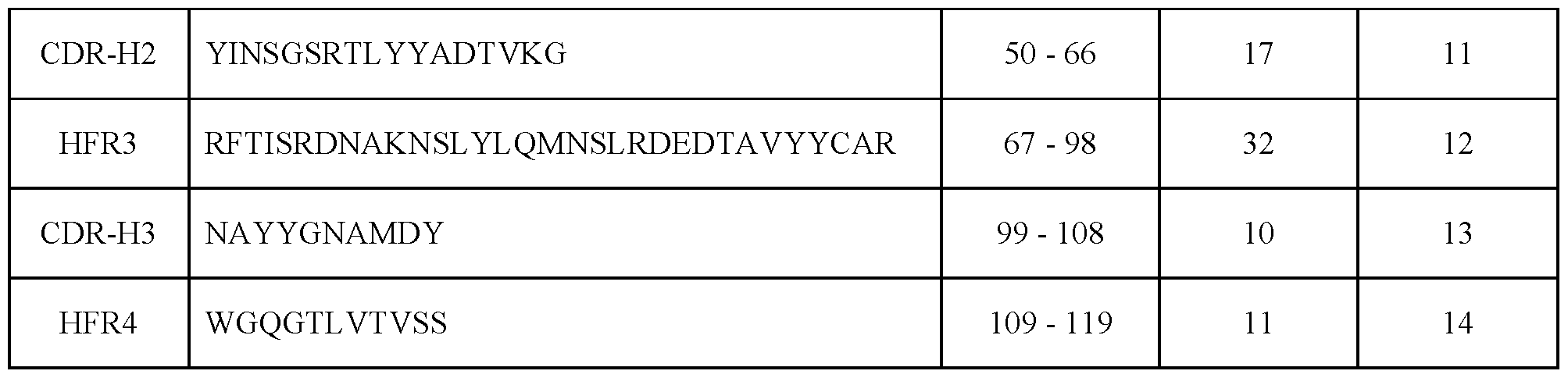 In an embodiment of the invention, the Claudin 18.2-targeting antibody comprises the heavy chain CDR-H (complementarity determining region) or heavy chain framework (HFR) sequences selected from SEQ ID NO:15-21.
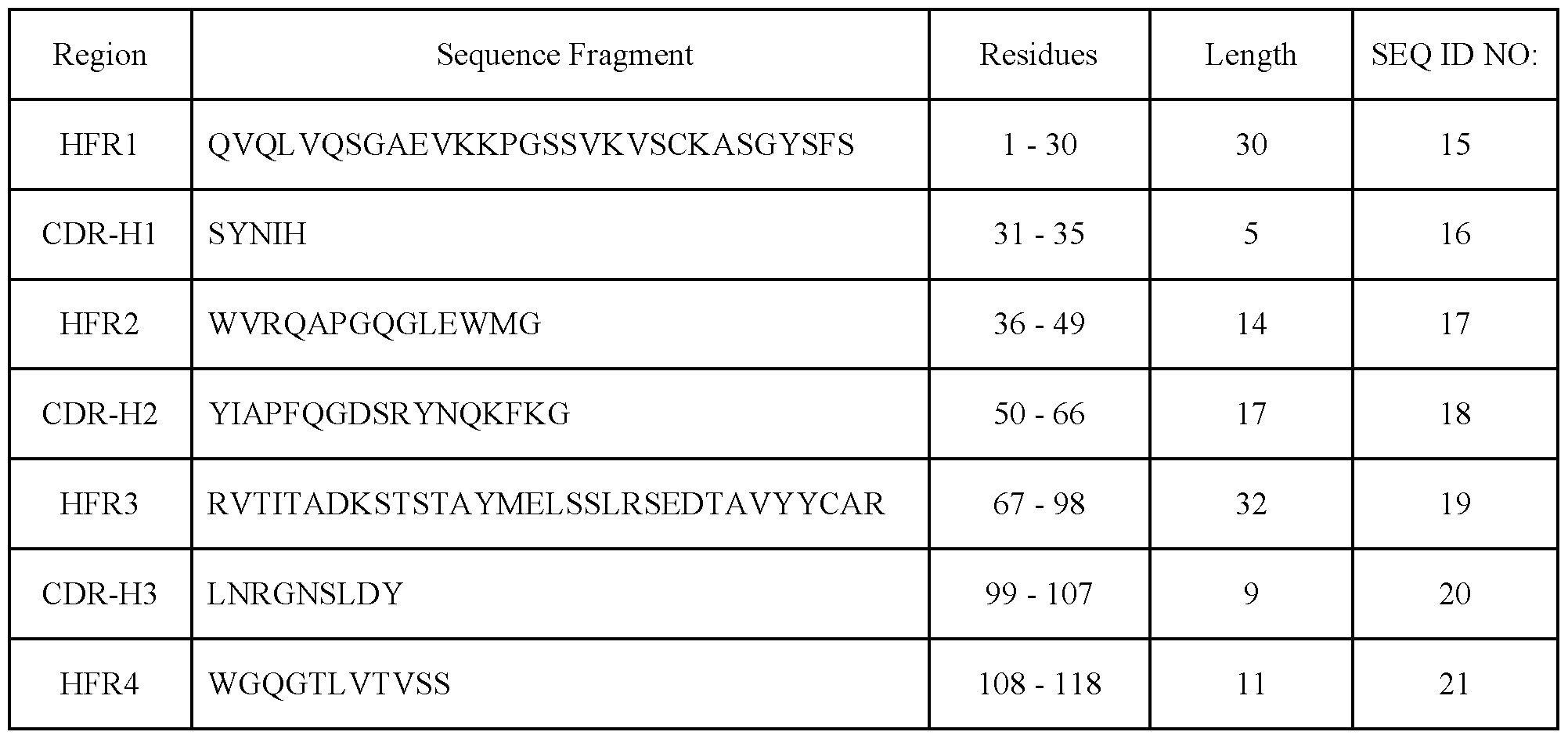 In an embodiment of the invention, the Claudin 18.2-targeting antibody comprises the heavy chain CDR-H (complementarity determining region) or heavy chain framework (HFR) sequences selected from SEQ ID NO:22-28.
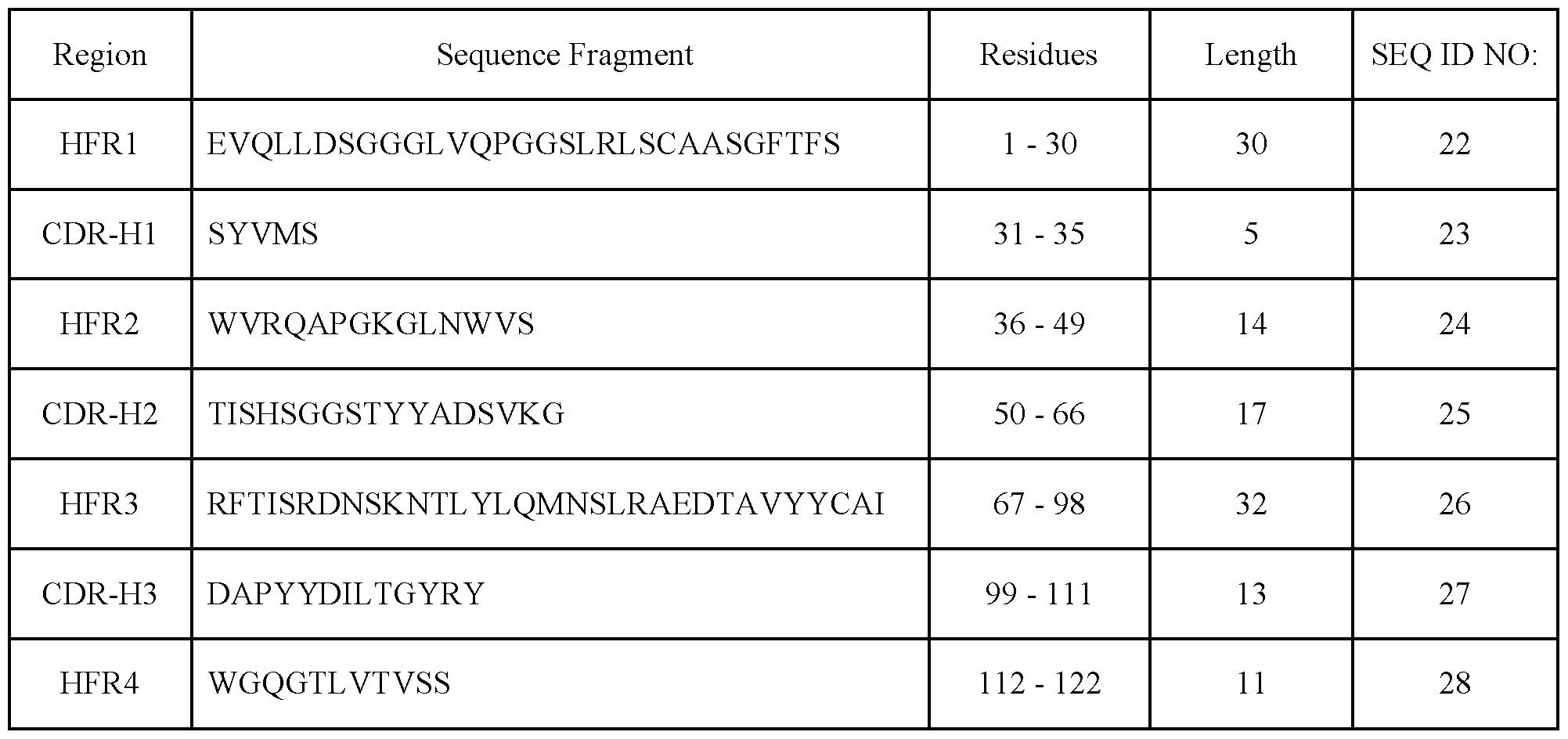 In an embodiment of the invention, the Claudin 18.2-targeting antibody comprises the light chain CDR-L (complementarity determining region) or light chain framework (LFR) sequences selected from SEQ ID NO:29-35.
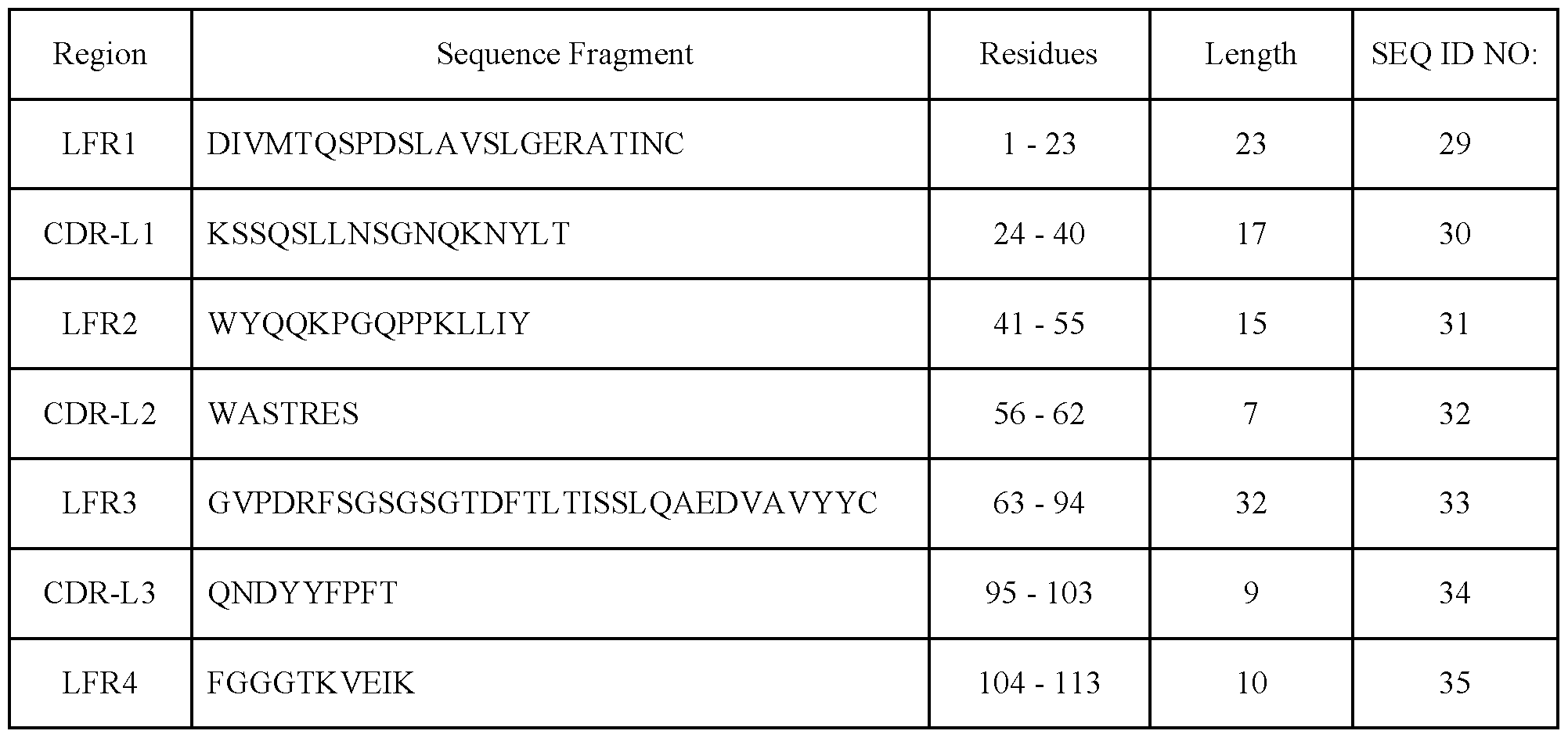 In an embodiment of the invention, the Claudin 18.2-targeting antibody comprises the light chain CDR-L (complementarity determining region) or light chain framework (LFR) sequences selected from SEQ ID NO:36-42.
 In an embodiment of the invention, the Claudin 18.2-targeting antibody comprises the light chain CDR-L (complementarity determining region) or light chain framework (LFR) sequences selected from SEQ ID NO:43-49.


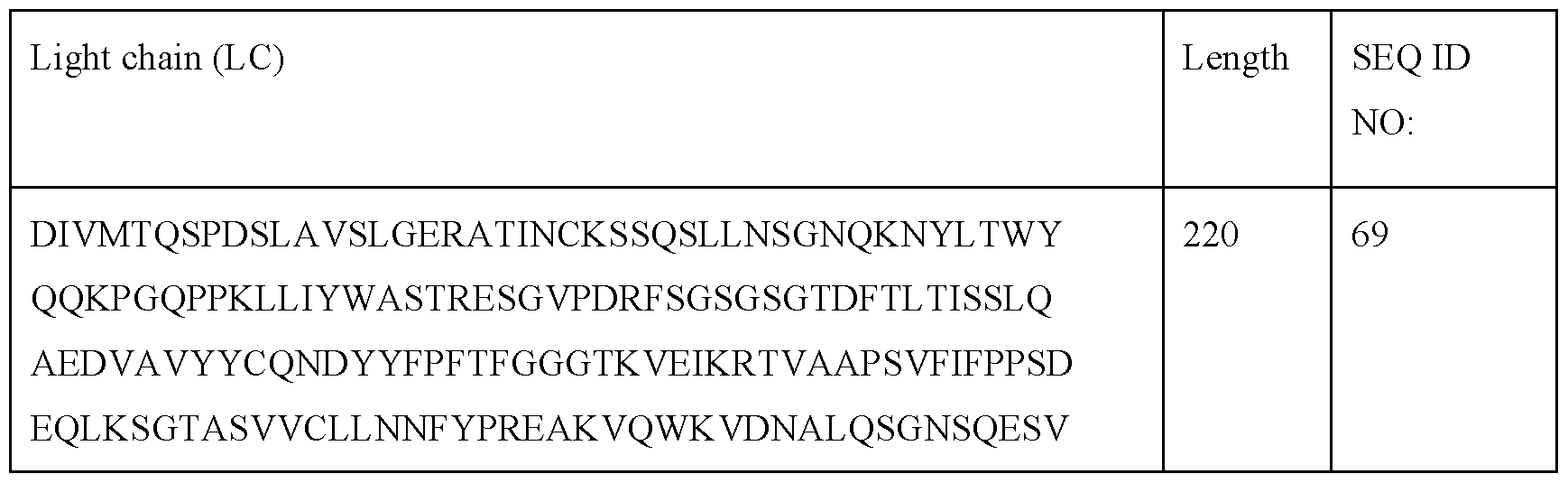


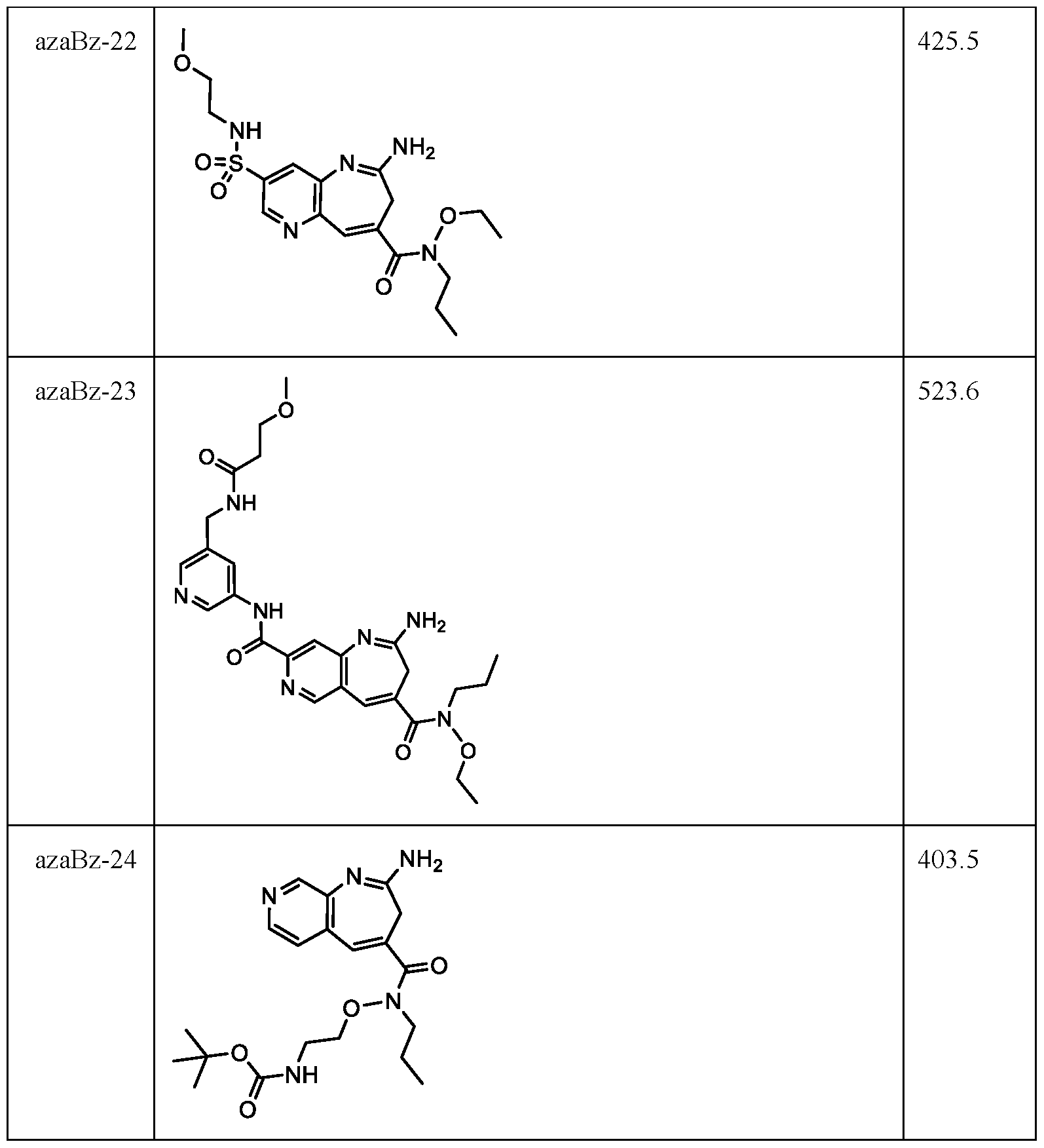
Table 1b: Comparator benzazepine amidine and lactam compounds (CBz)
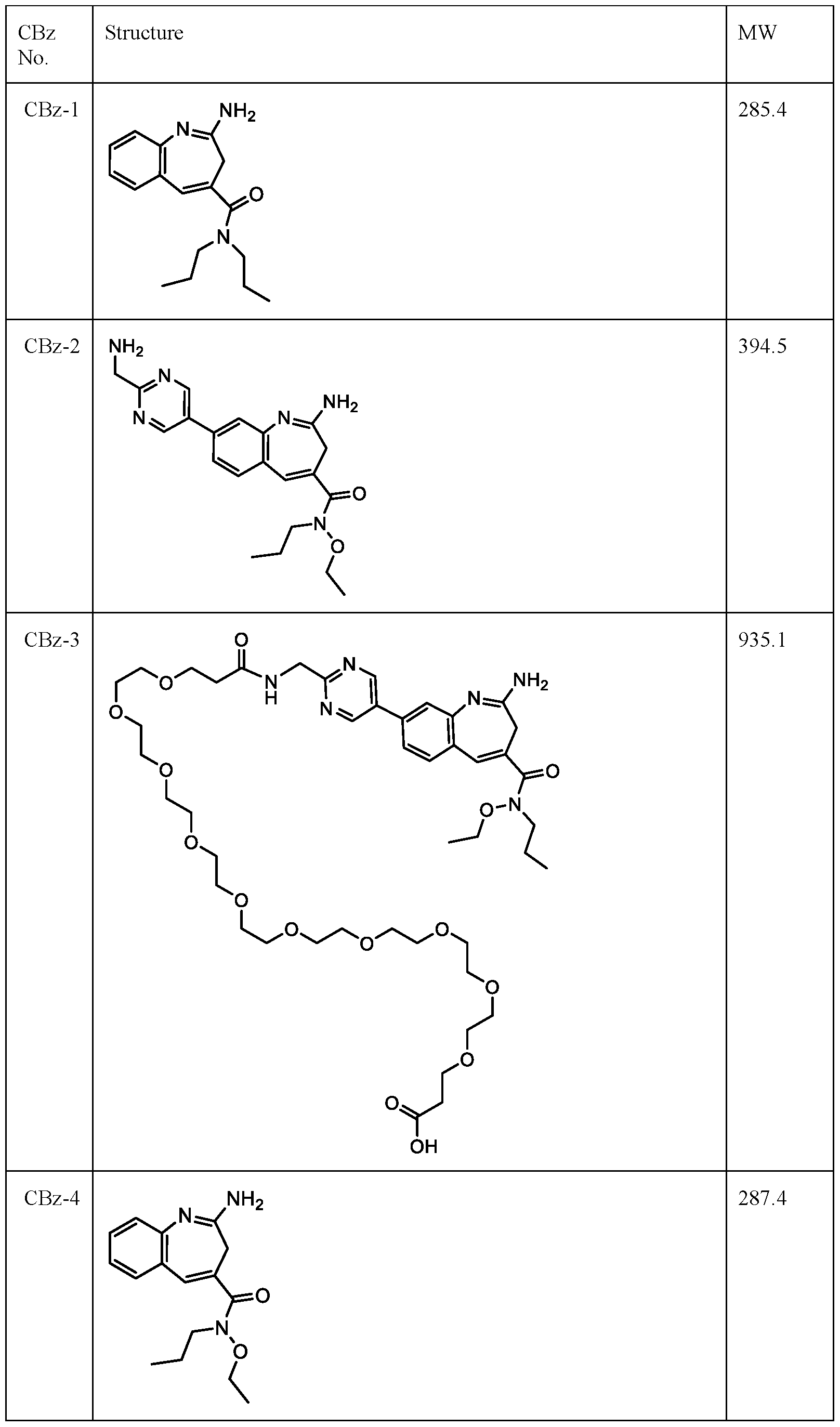


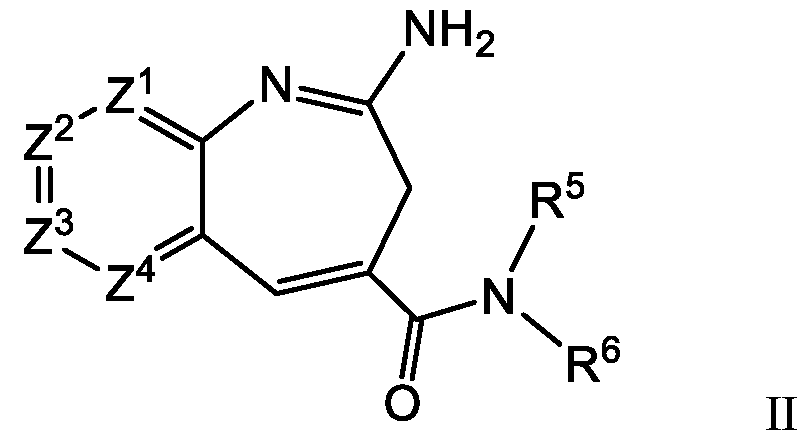


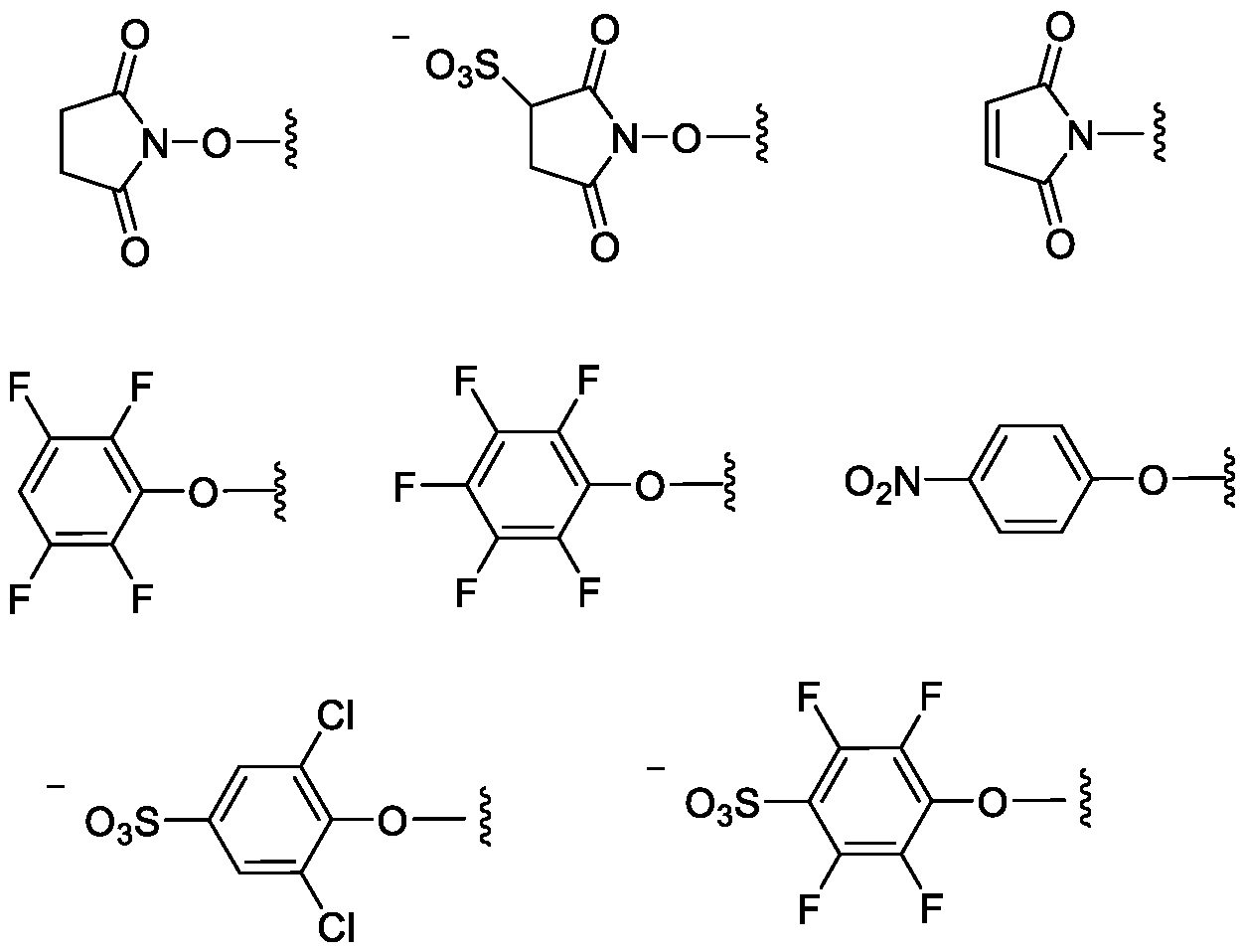


Table 2b Aza-Benzazepine Linker (azaBzL) compounds


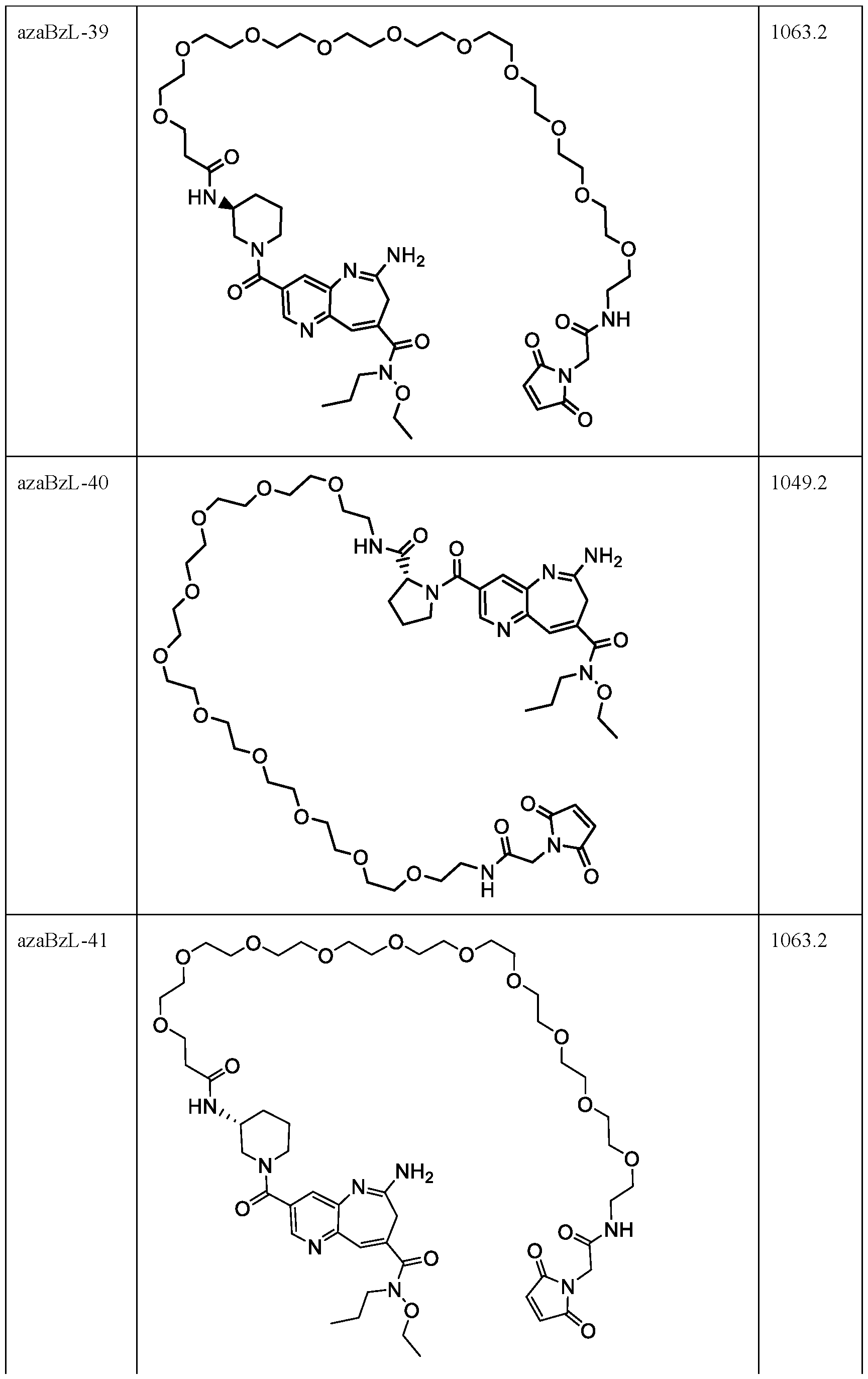
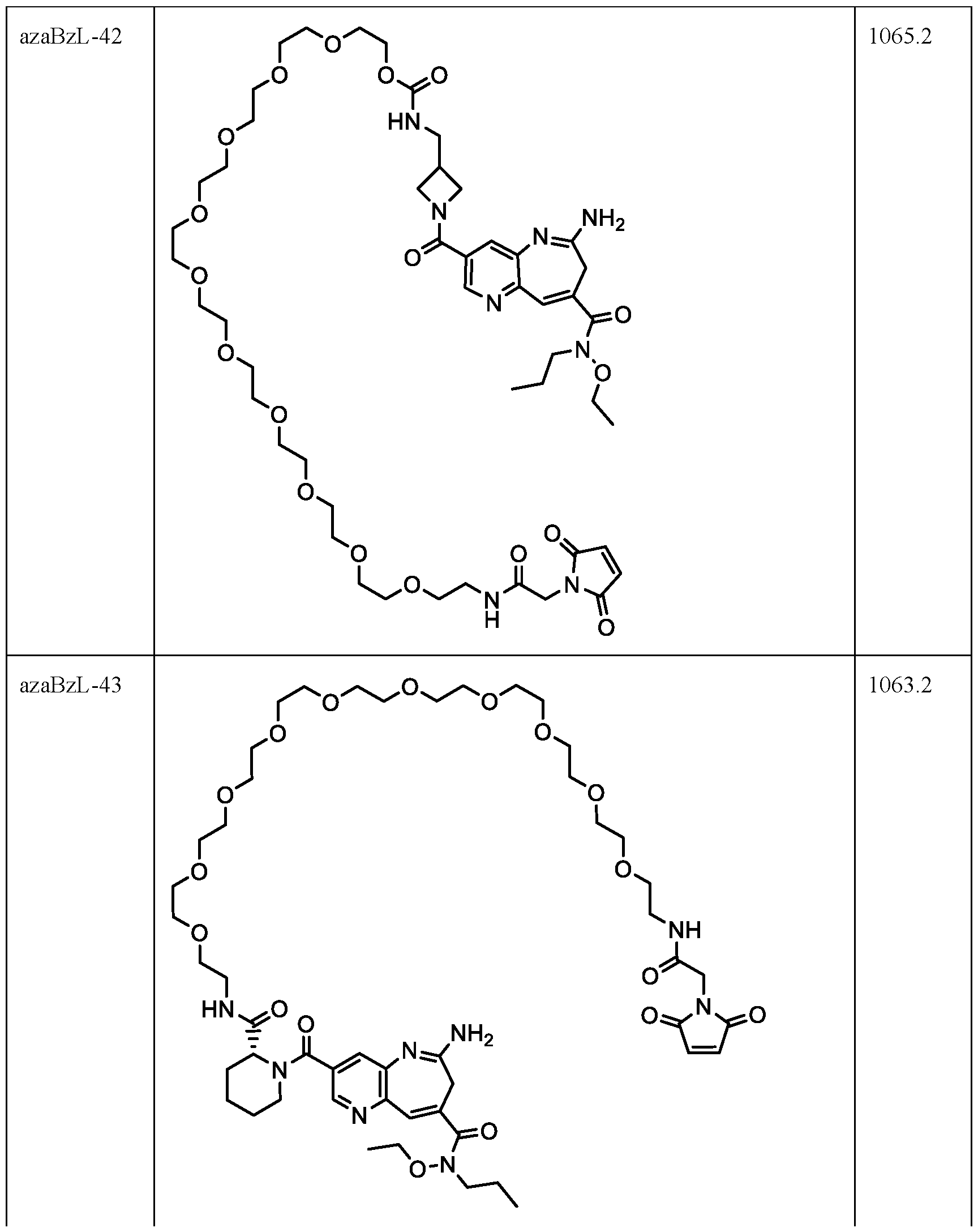

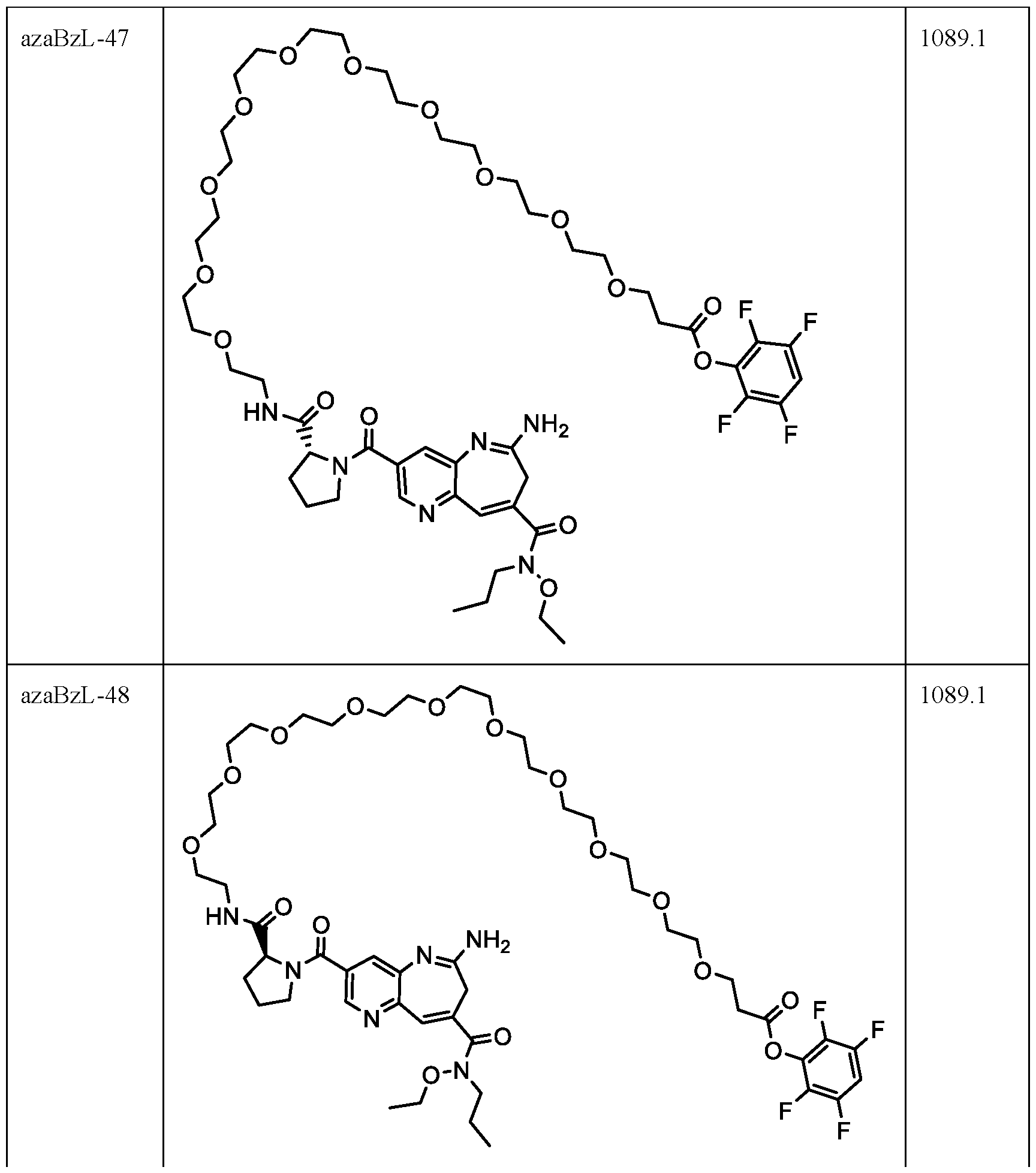


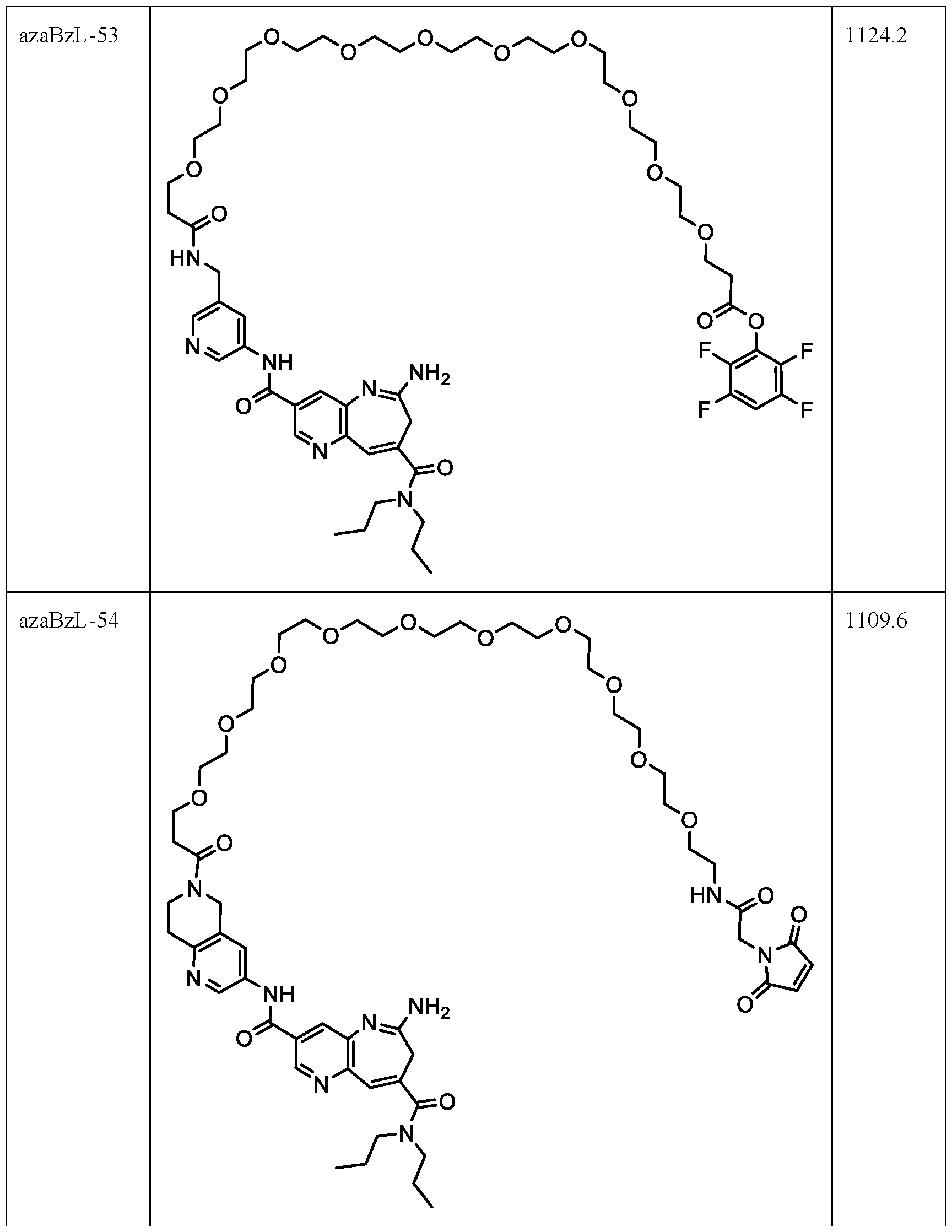


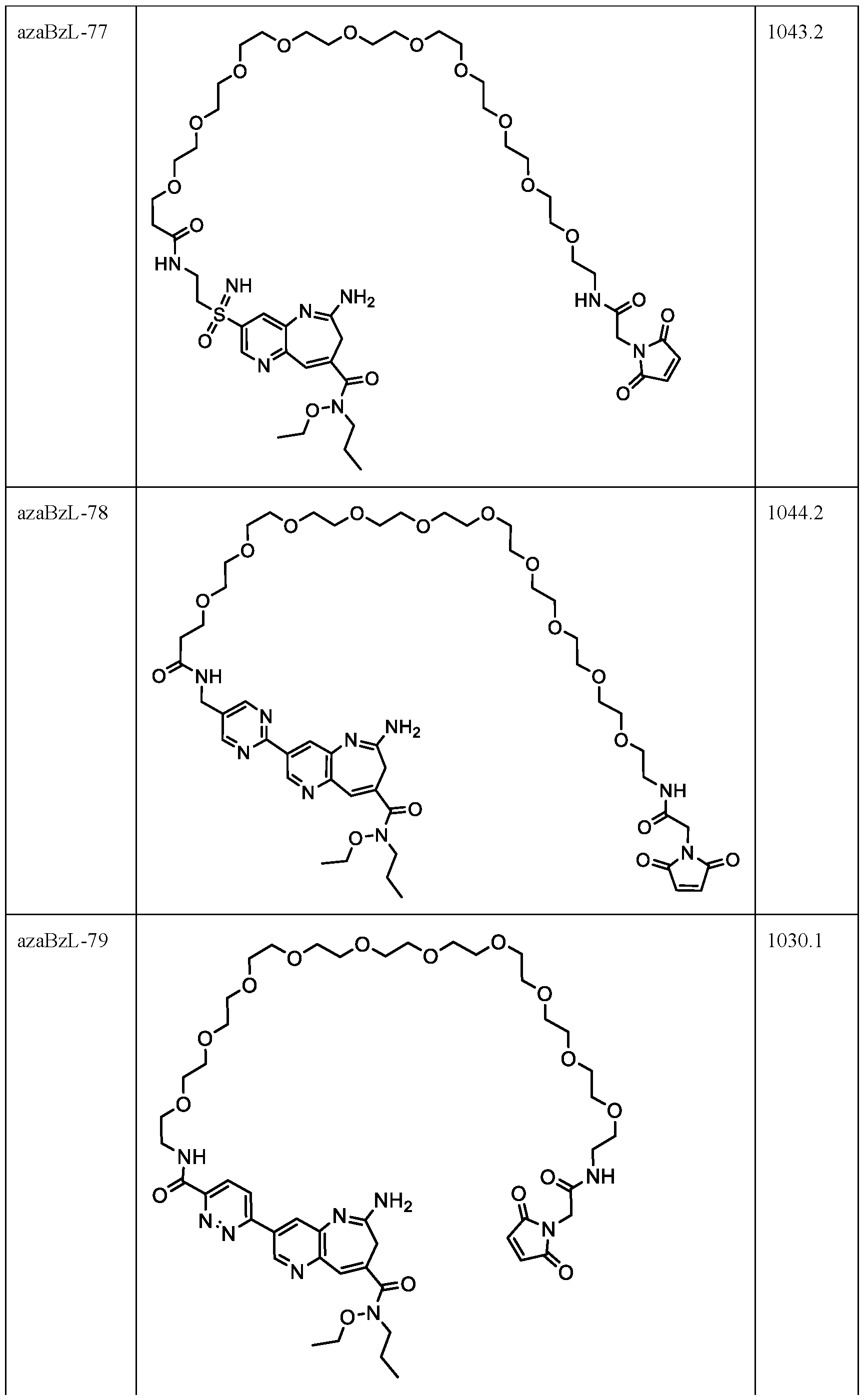

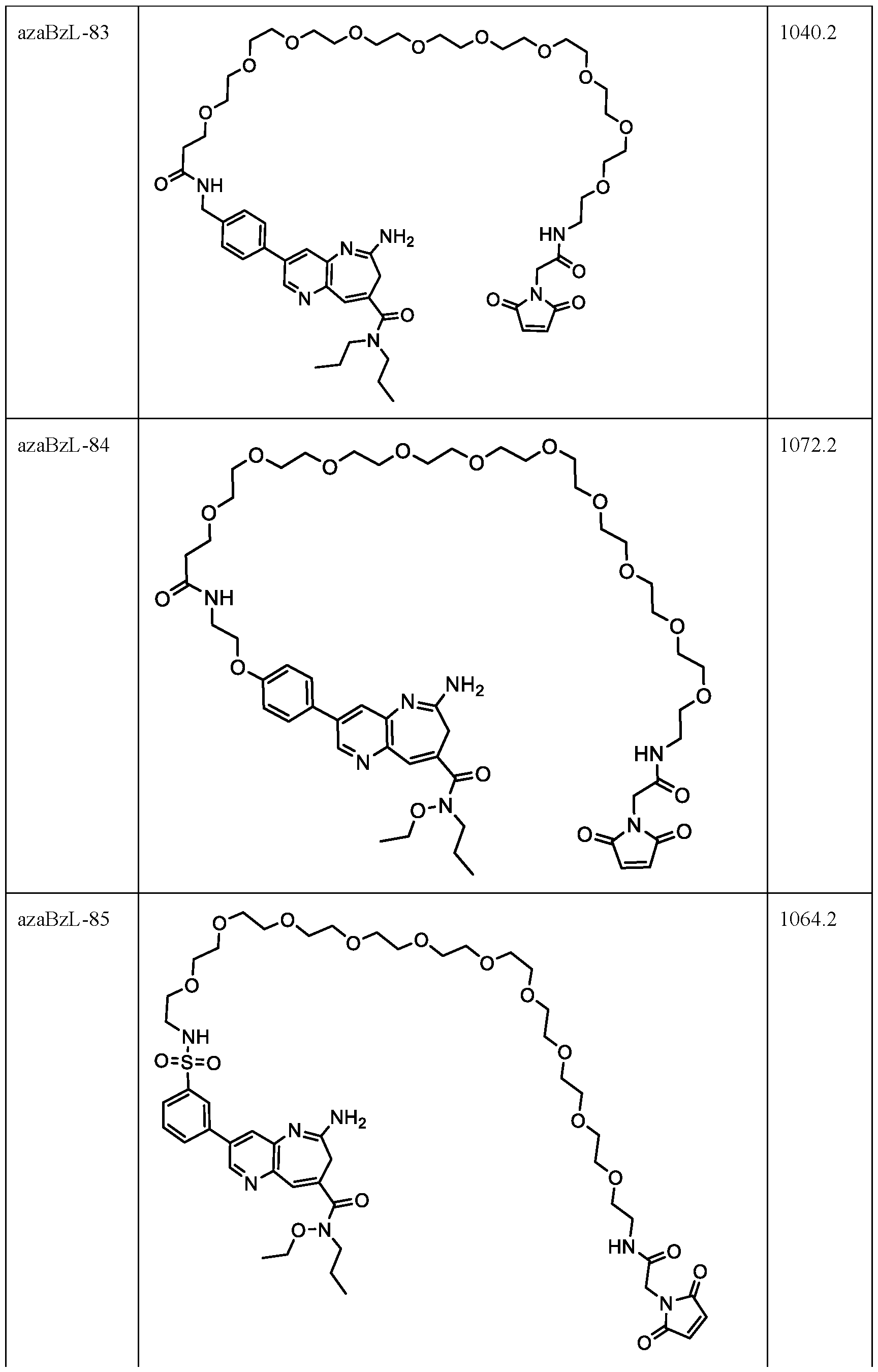

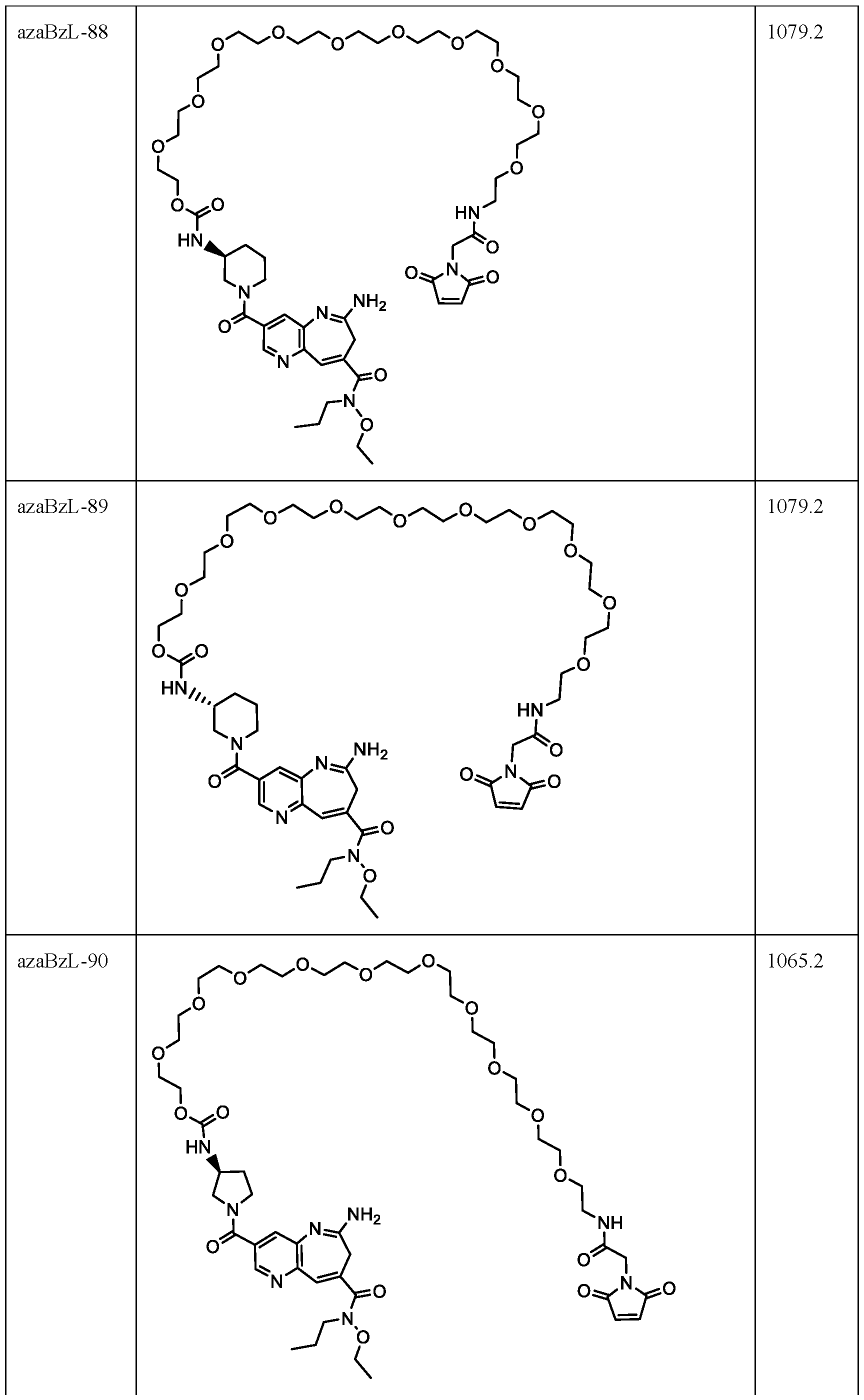

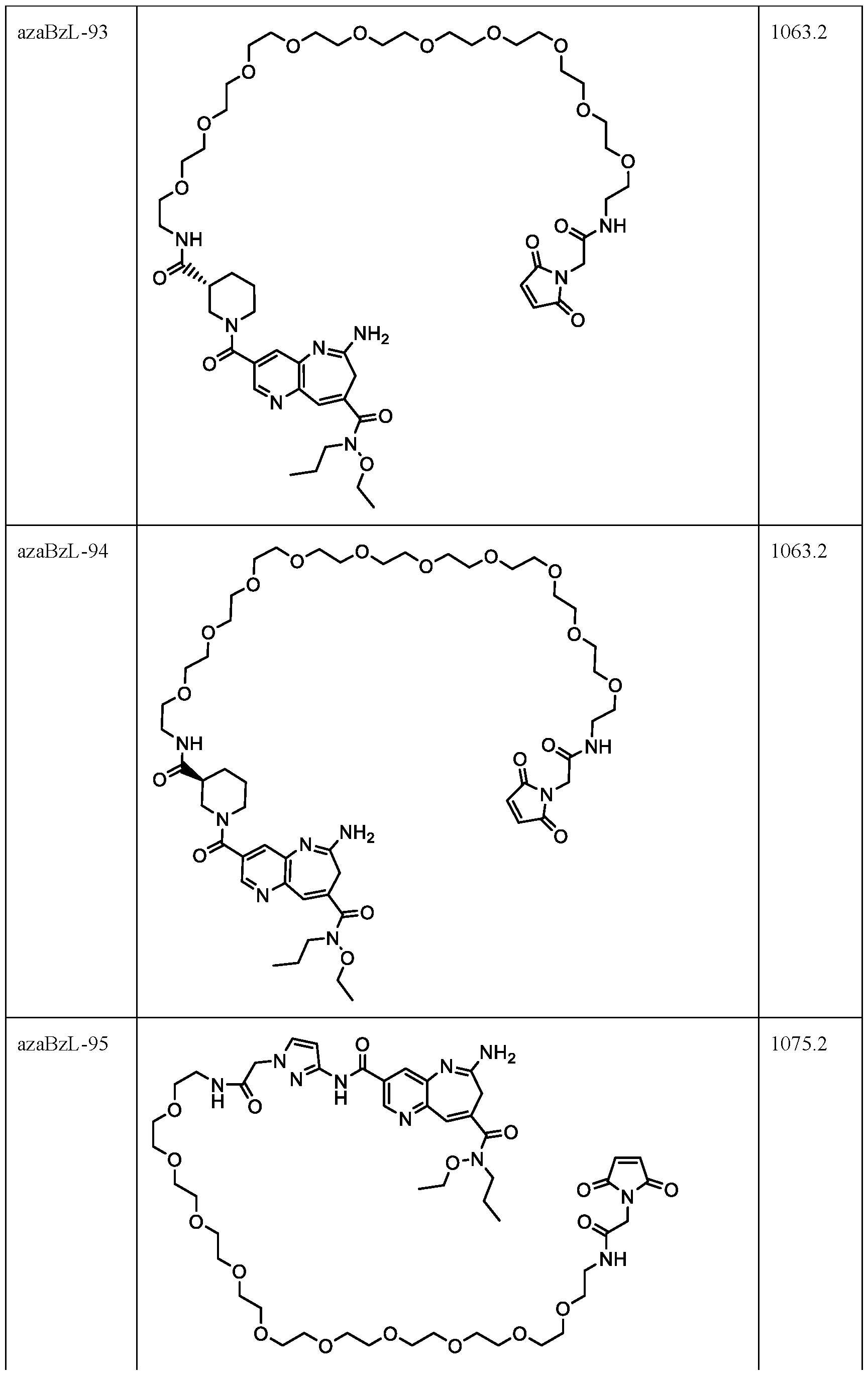


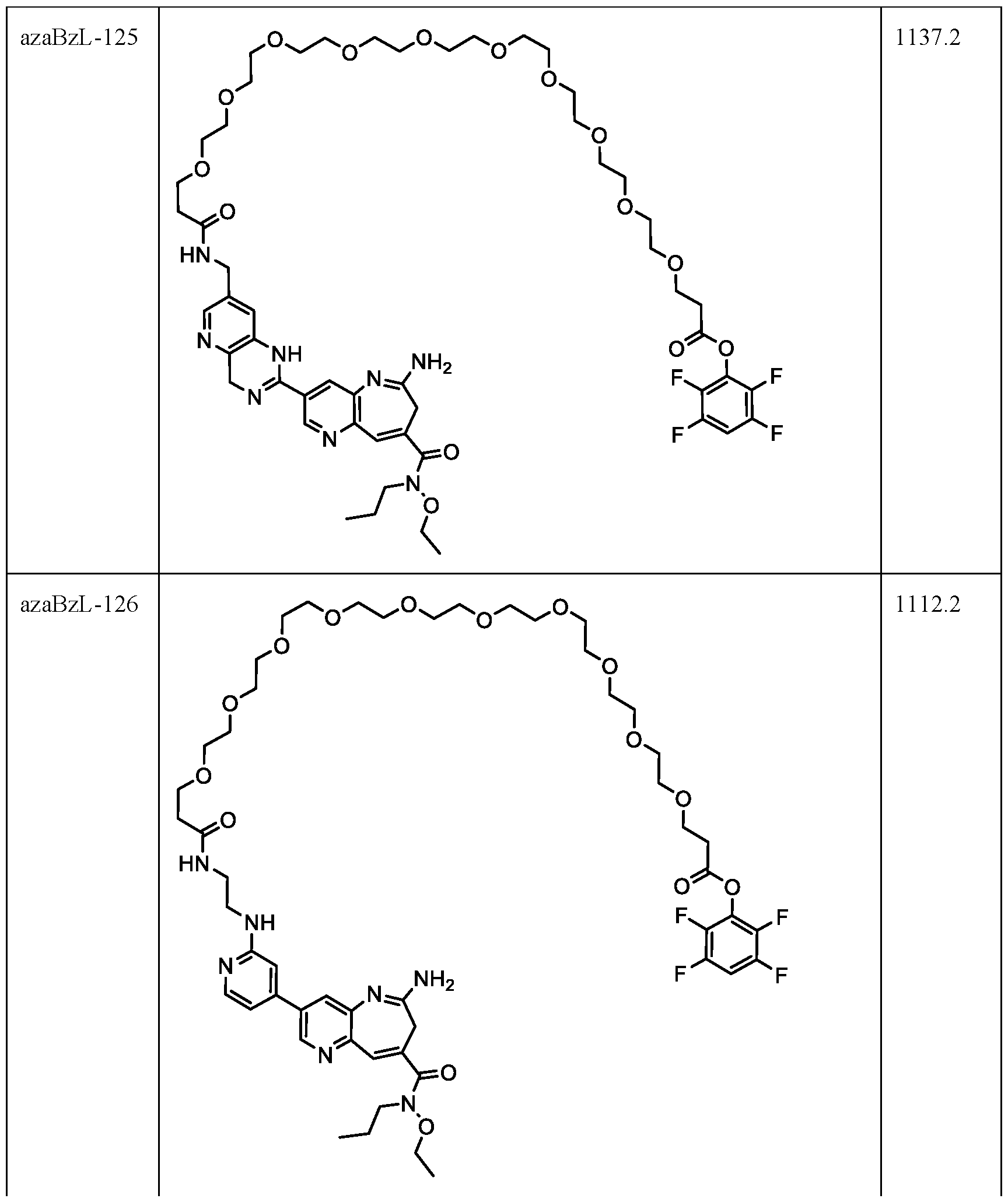
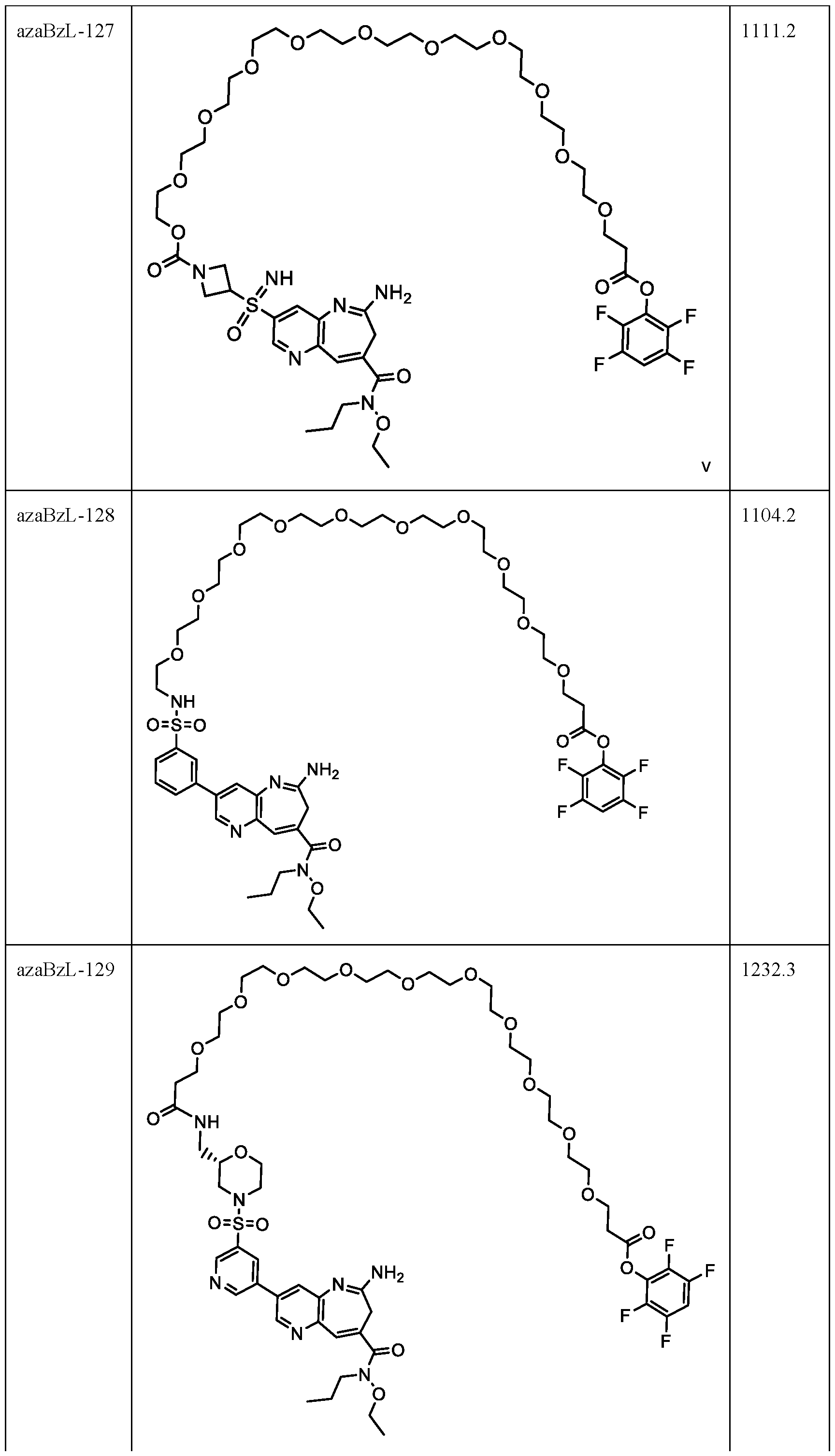


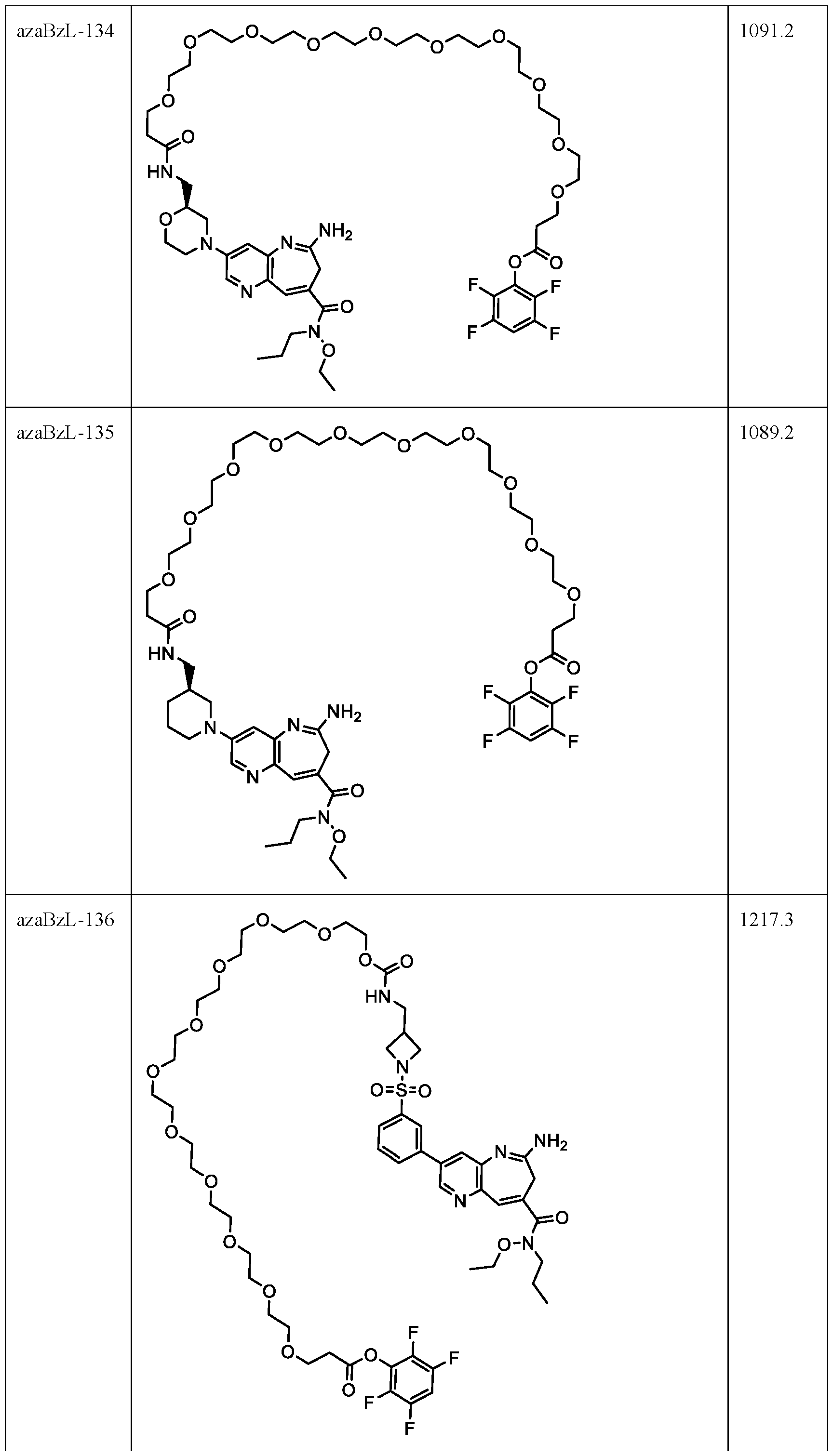


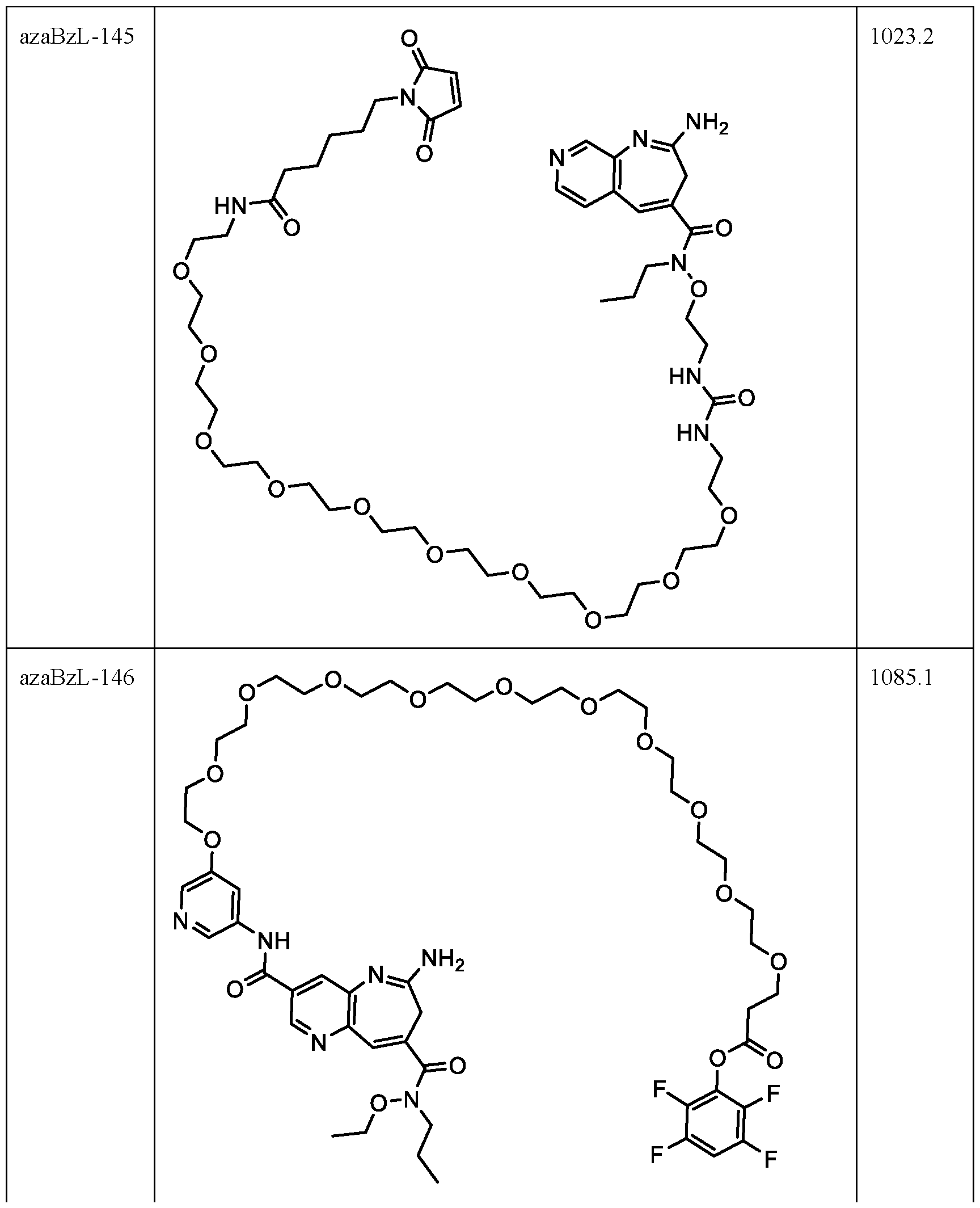


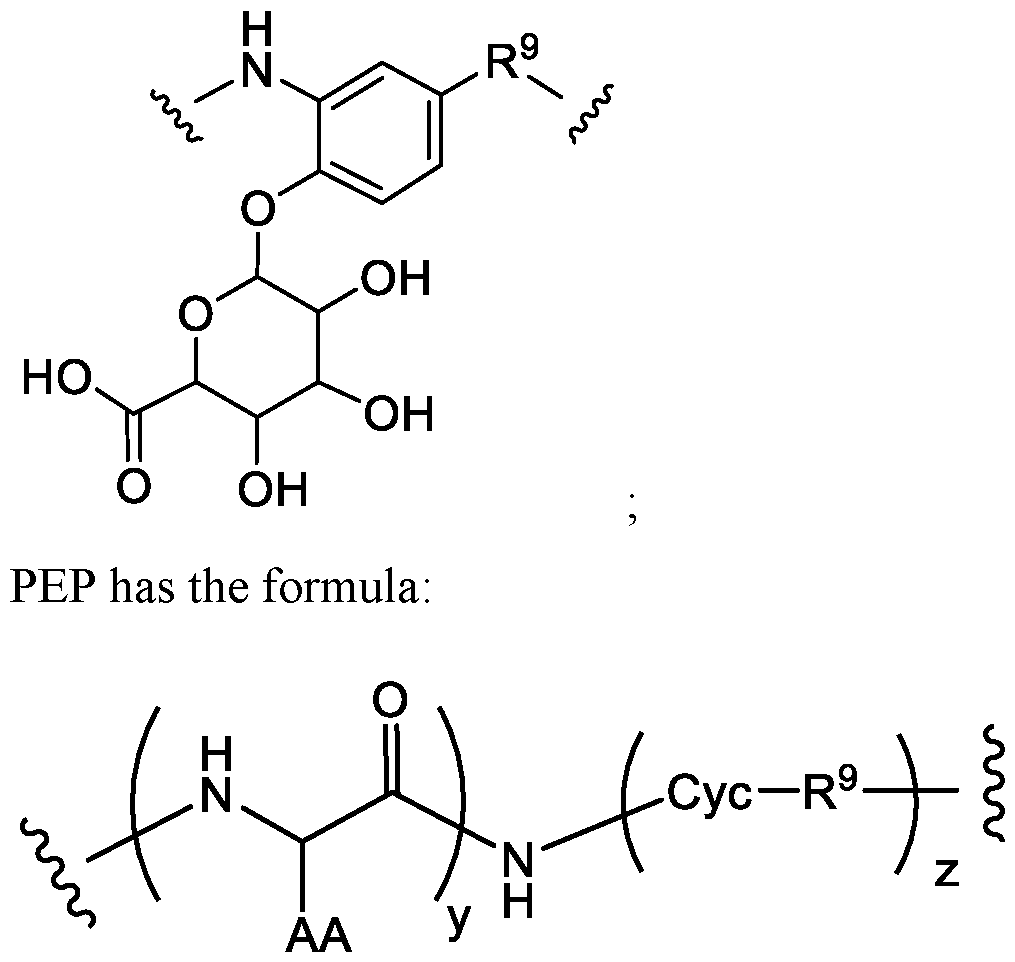


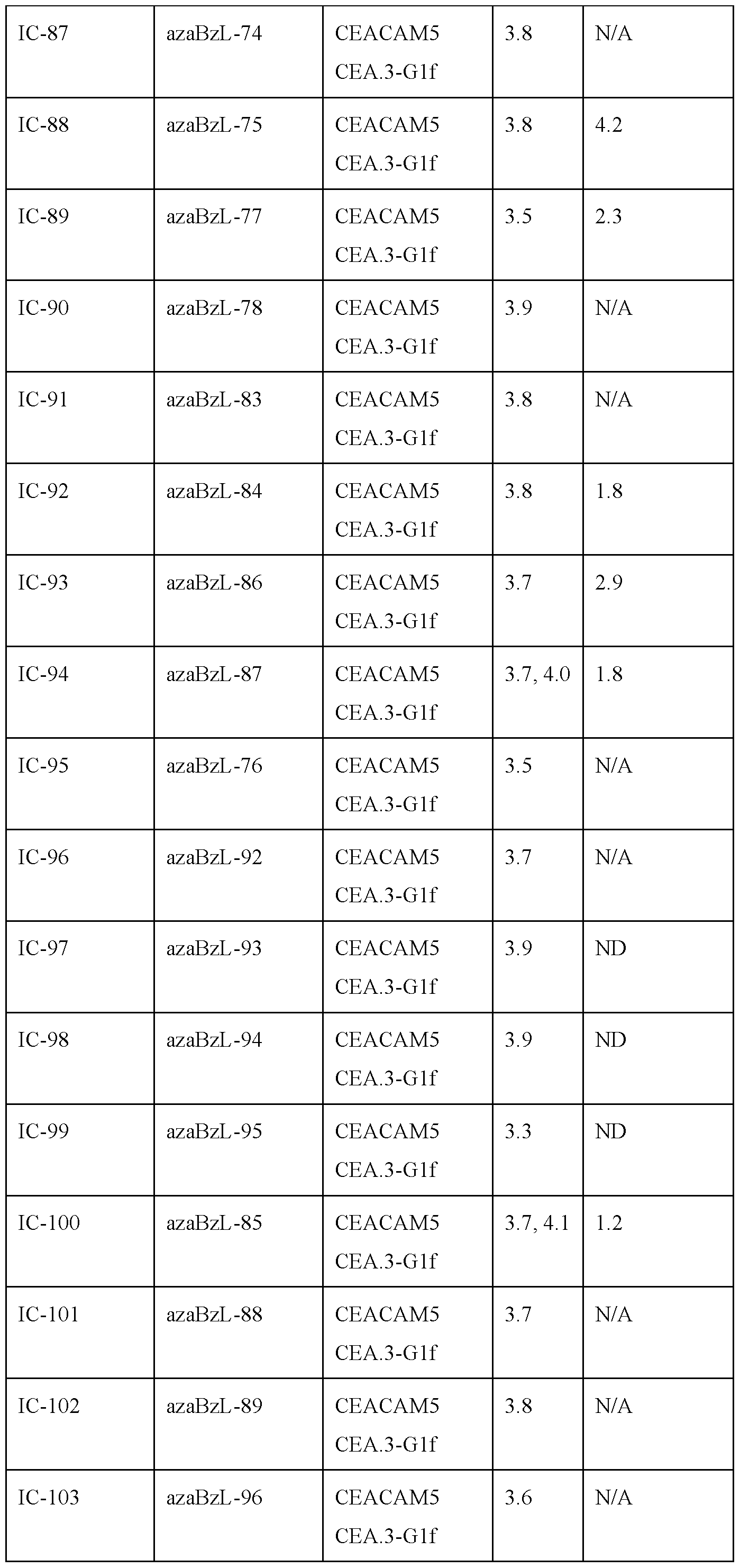


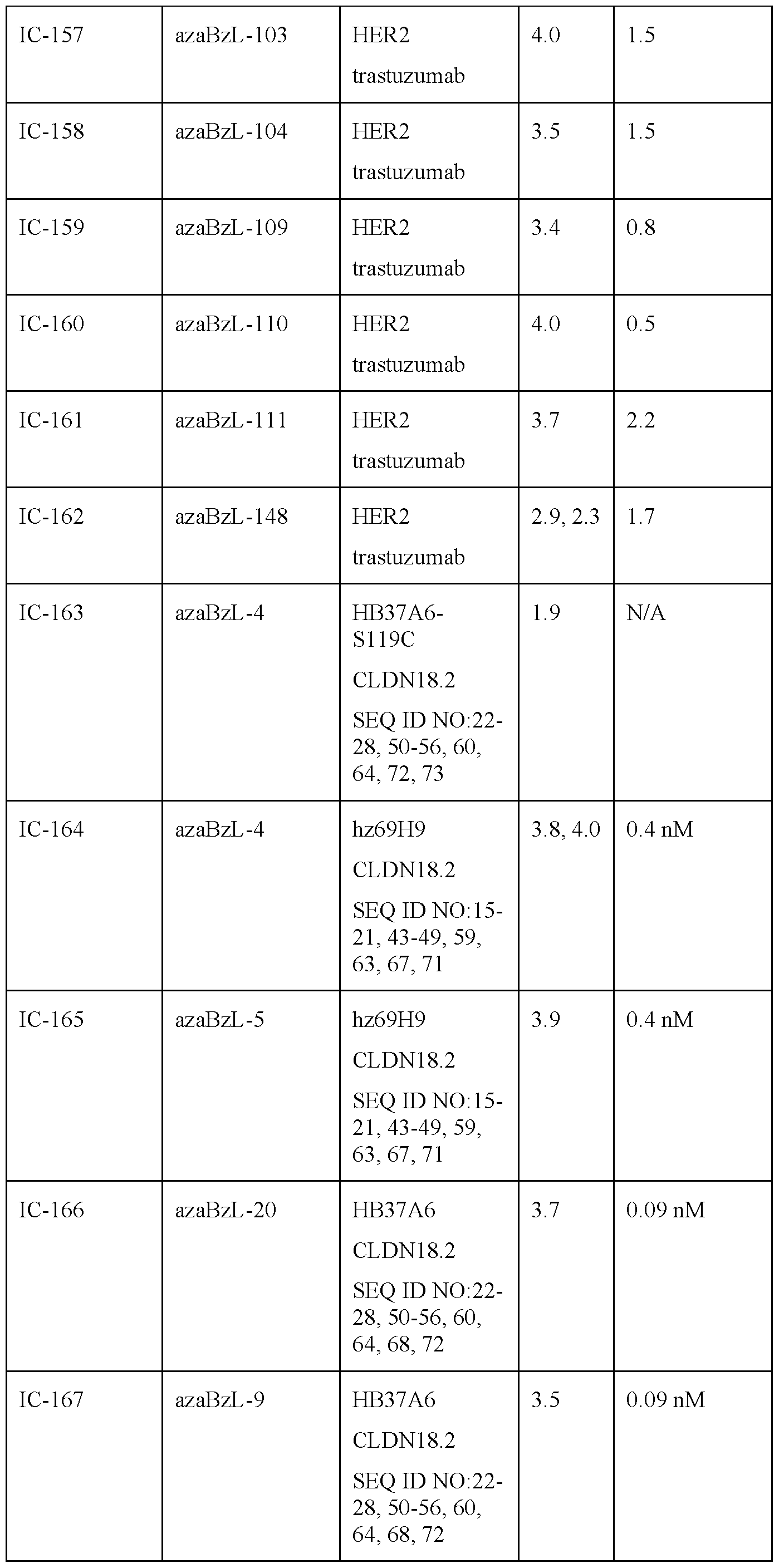


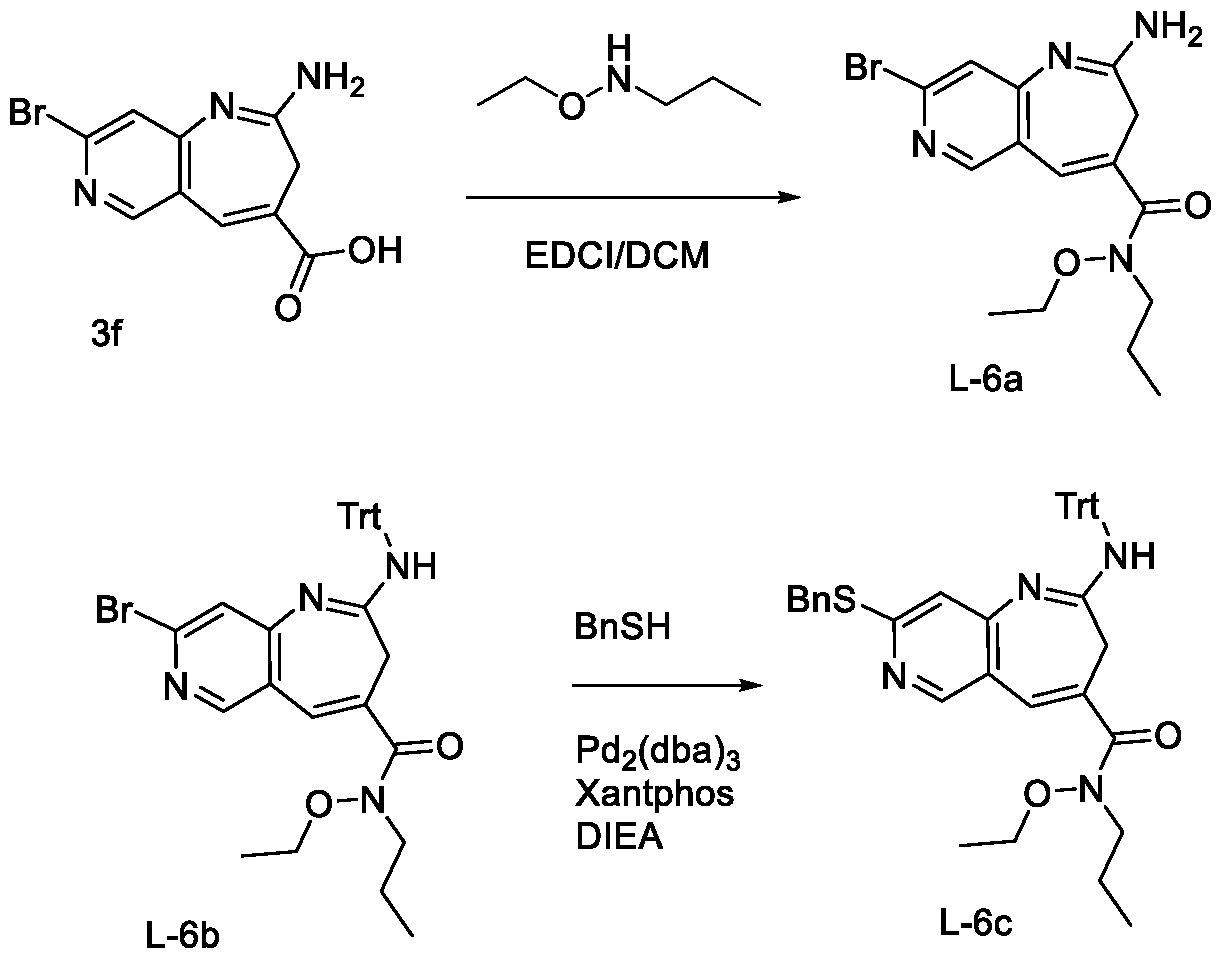


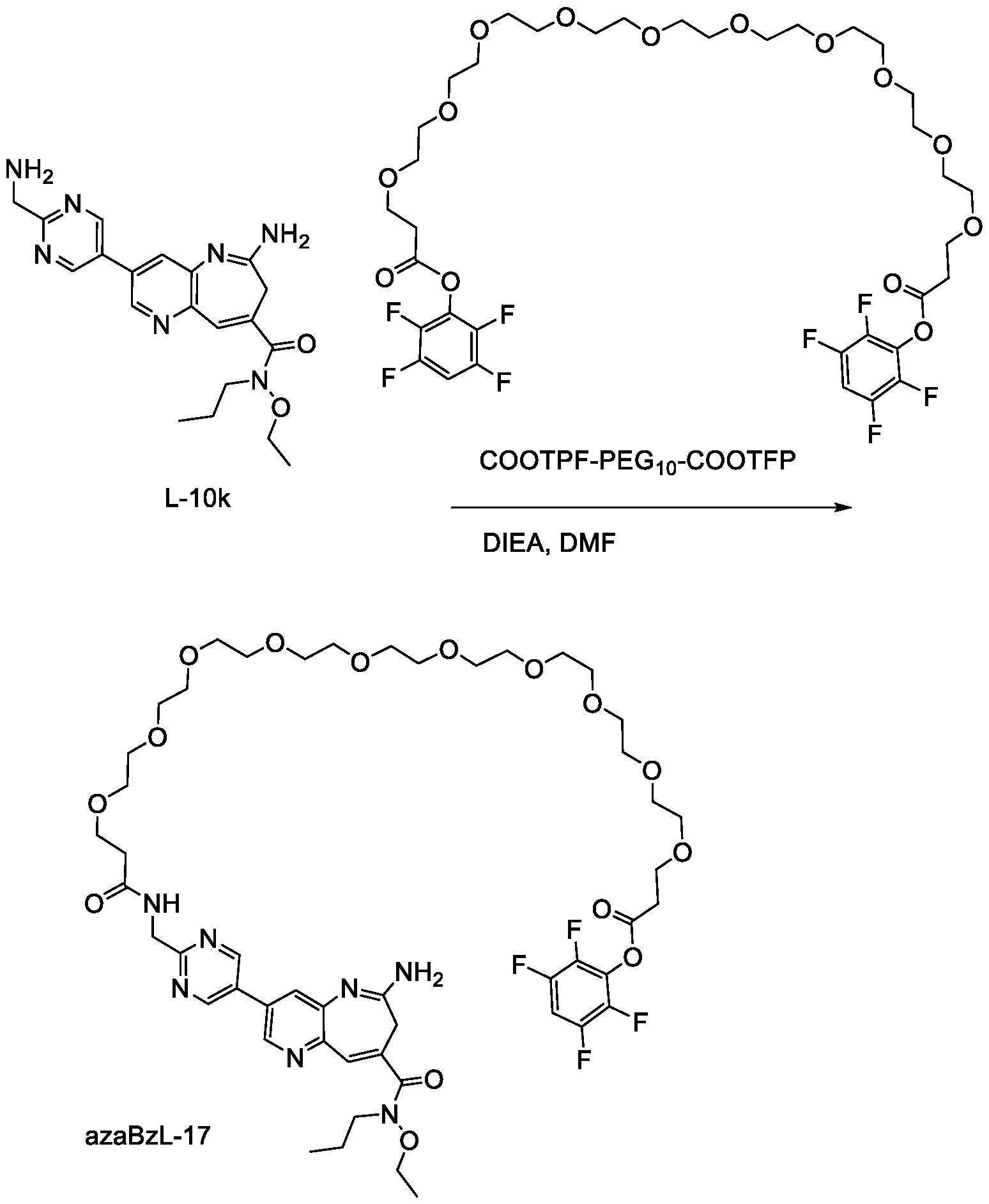


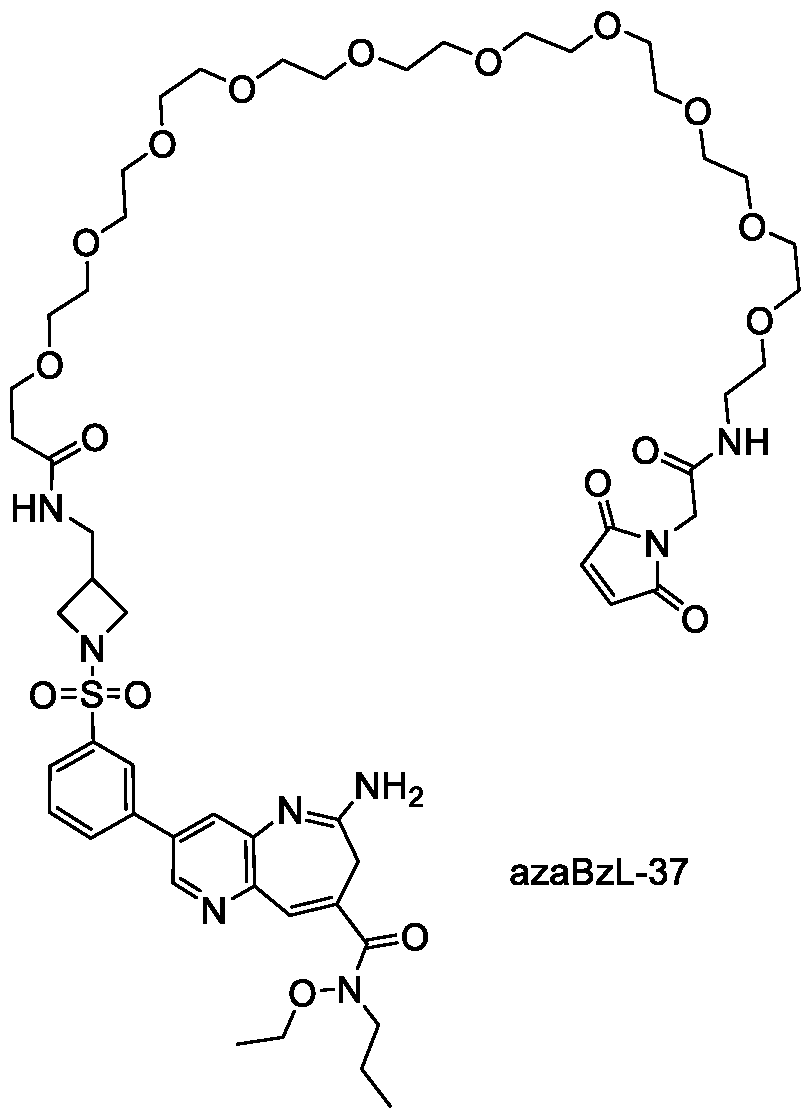

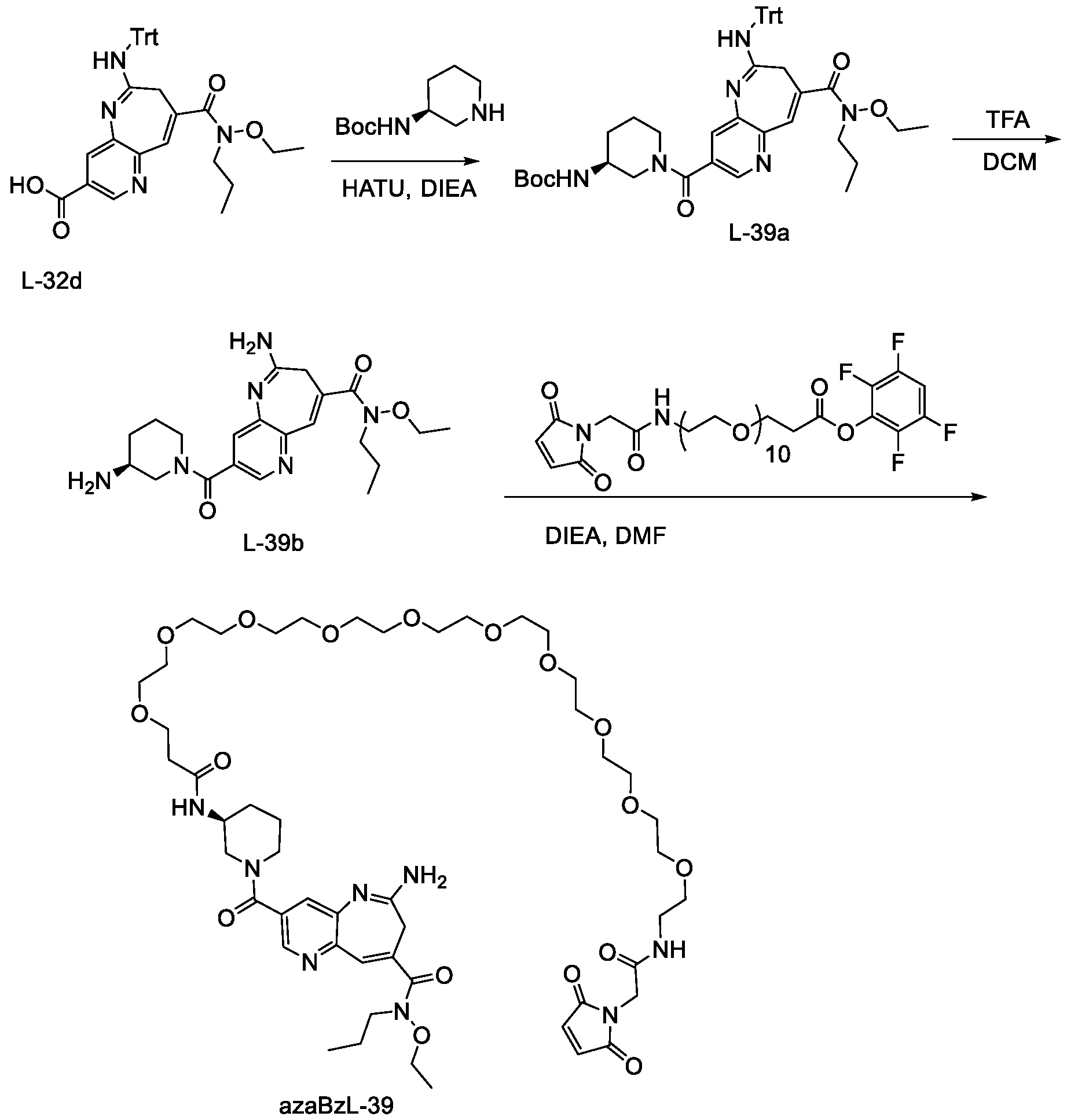


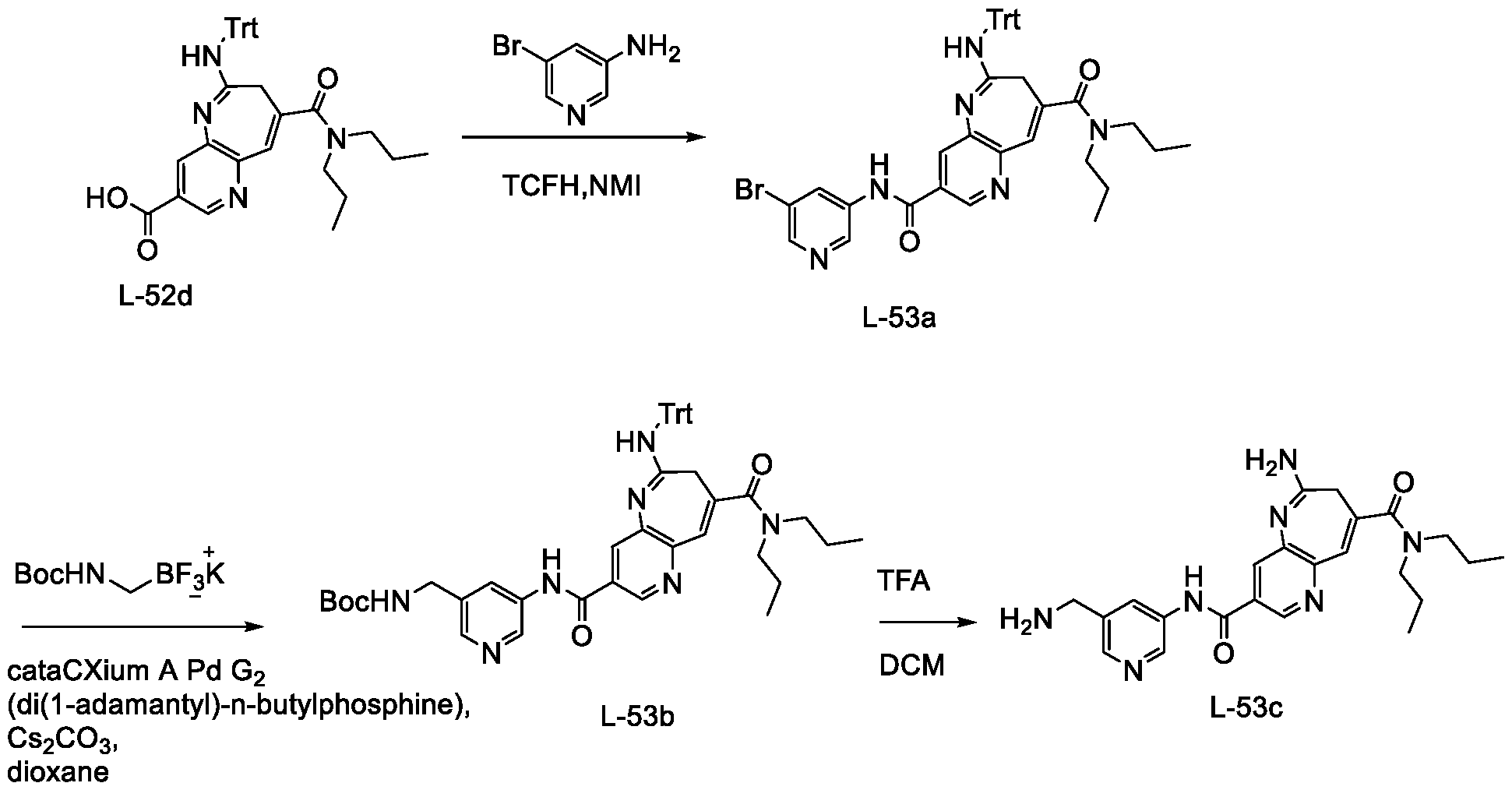

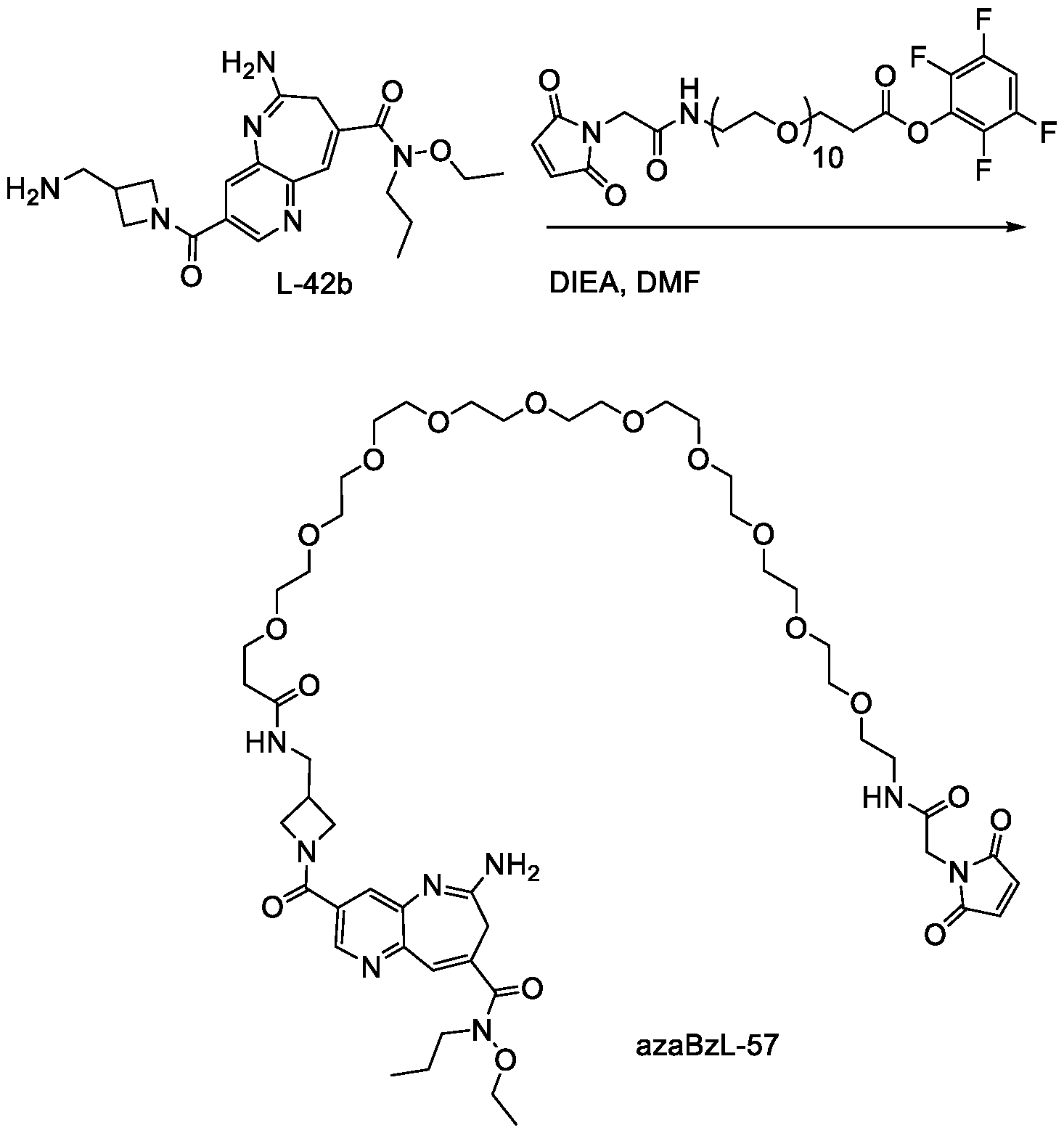


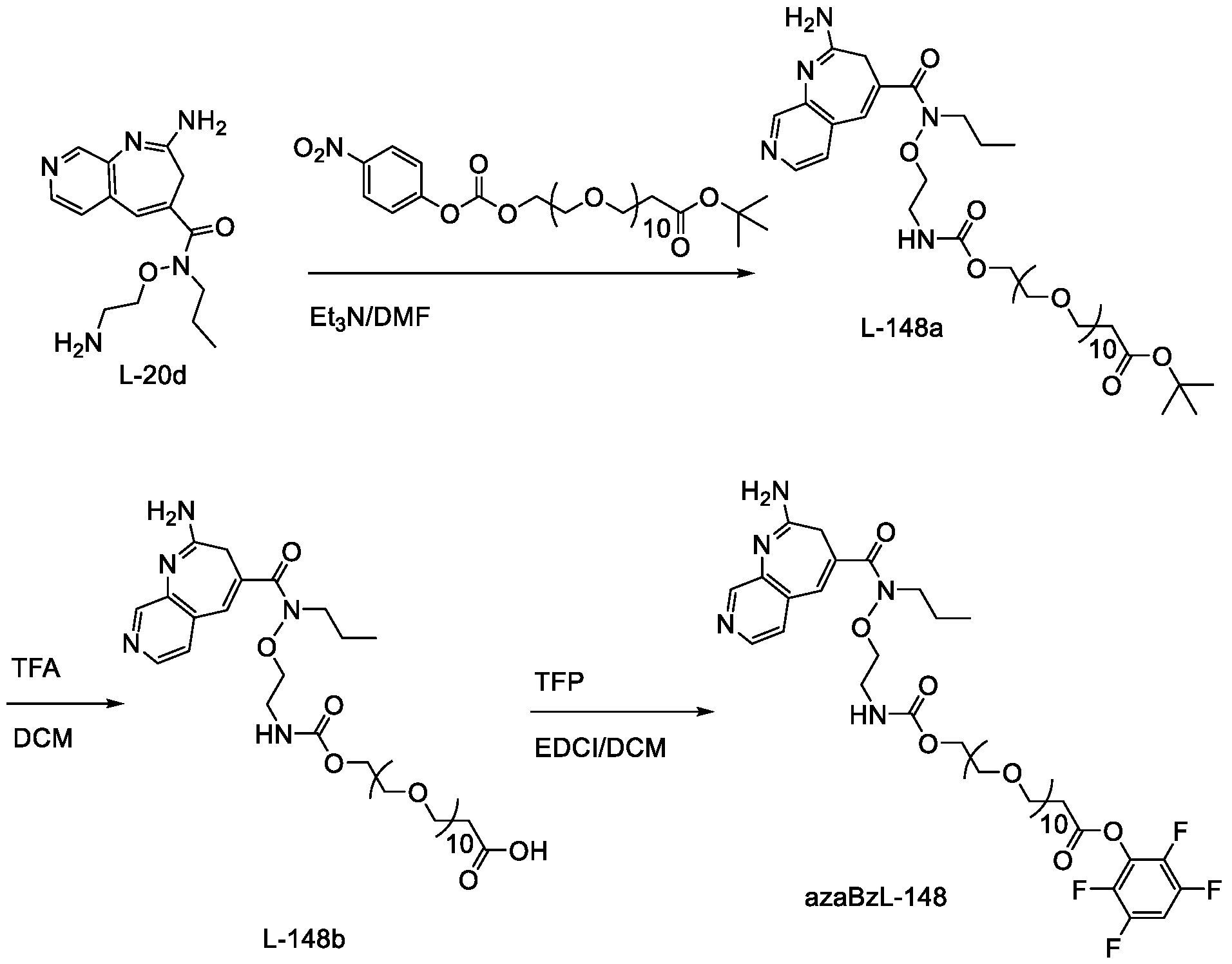
Claims
CLAIMS: 1. An immunoconjugate of Formula I comprising an antibody covalently attached to one or more aza-benzazepine moieties by a linker: Ab−[L−D]p I or a pharmaceutically acceptable salt thereof, wherein: Ab is an antibody which binds to Claudin 18.2; p is an integer from 1 to 8; L is the linker; D is the aza-benzazepine moiety having the formula:
 Z1 is selected from CR1 and N; Z2 is selected from CR2 and N; Z3 is selected from CR3 and N; Z4 is selected from CR4 and N; where one or two of Z1, Z2, Z3, and Z4 are N; R1, R2, R3, R4, R5, and R6 are independently selected from the group consisting of H, C(=O), C(=O)N(R5), O, N(R5), S, S(O)2, S(O)2N(R5), C1-C12 alkyl, C2-C6 alkenyl, C2-C6 alkynyl, C3-C12 carbocyclyl, C6-C20 aryl, C2-C9 heterocyclyl, and C1-C20 heteroaryl, each of which are independently and optionally substituted with one or more groups selected from: −(C1-C12 alkyldiyl)−N(R7)−*; −(C1-C12 alkyldiyl)−N(R7)2; −(C1-C12 alkyldiyl)−OR7; −(C3-C12 carbocyclyl); −(C3-C12 carbocyclyl)−*; −(C3-C12 carbocyclyl)−(C1-C12 alkyldiyl)−NR7−*; −(C3-C12 carbocyclyl)−(C1-C12 alkyldiyl)−N(R7)2; −(C3-C12 carbocyclyl)−NR7−C(=NR7)NR7−*; −(C6-C20 aryl);
−(C6-C20 aryldiyl)−*; −(C6-C20 aryldiyl)−N(R7)−*; −(C6-C20 aryldiyl)−(C1-C12 alkyldiyl)−N(R7)−*; −(C6-C20 aryldiyl)−(C1-C12 alkyldiyl)−(C2-C20 heterocyclyldiyl)−*; −(C6-C20 aryldiyl)−(C1-C12 alkyldiyl)−N(R7)2; −(C6-C20 aryldiyl)−(C1-C12 alkyldiyl)−NR7−C(=NR7a)N(R7)−*; −(C2-C20 heterocyclyl); −(C2-C20 heterocyclyl)−*; −(C2-C9 heterocyclyl)−(C1-C12 alkyldiyl)−NR7−*; −(C2-C9 heterocyclyl)−(C1-C12 alkyldiyl)−N(R7)2; −(C2-C9 heterocyclyl)−C(=O)−(C1-C12 alkyldiyl)−N(R7)−*; −(C2-C9 heterocyclyl)−NR7−C(=NR7a)NR7−*; −(C2-C9 heterocyclyl)−NR7−(C6-C20 aryldiyl)−(C1-C12 alkyldiyl)−N(R7)−*; −(C2-C9 heterocyclyl)−(C6-C20 aryldiyl)−*; −(C1-C20 heteroaryl); −(C1-C20 heteroaryl)−*; −(C1-C20 heteroaryl)−(C1-C12 alkyldiyl)−N(R7)−*; −(C1-C20 heteroaryl)−(C1-C12 alkyldiyl)−N(R7)2; −(C1-C20 heteroaryl)−NR7−C(=NR7a)N(R7)−*; −(C1-C20 heteroaryl)−N(R7)C(=O)−(C1-C12 alkyldiyl)−N(R7)−*; −C(=O)−*; −C(=O)−(C1-C12 alkyldiyl)−N(R7)−*; −C(=O)−(C2-C20 heterocyclyldiyl)−*; −C(=O)N(R7)2; −C(=O)N(R7)−*; −C(=O)N(R7)−(C1-C12 alkyldiyl)−N(R7)C(=O)R7; −C(=O)N(R7)−(C1-C12 alkyldiyl)−N(R7)C(=O)N(R7)2; −C(=O)NR7−(C1-C12 alkyldiyl)−N(R7)CO2R7; −C(=O)NR5−(C1-C12 alkyldiyl)−N(R57)C(=NR57a)N(R57)2; −C(=O)NR5−(C1-C12 alkyldiyl)−NR57C(=NR7a)R7; −C(=O)NR5−(C1-C8 alkyldiyl)−NR7(C2-C5 heteroaryl); −C(=O)NR7−(C1-C20 heteroaryldiyl)−N(R7)−*; −C(=O)NR7−(C1-C20 heteroaryldiyl)−*;
−C(=O)NR7−(C1-C20 heteroaryldiyl)−(C1-C12 alkyldiyl)−N(R7)2; −C(=O)NR7−(C1-C20 heteroaryldiyl)−(C2-C20 heterocyclyldiyl)−C(=O)NR7−(C1-C12 alkyldiyl)−NR7−*; −N(R7)2; −N(R7)−*; −N(R7)C(=O)R7; −N(R7)C(=O)−*; −N(R7)C(=O)N(R7)2; −N(R7)C(=O)N(R7)−*; −N(R7)CO2R7; −NR7C(=NR7a)N(R7)2; −NR7C(=NR7a)N(R7)−*; −NR7C(=NR7a)R7; −N(R7)C(=O)−(C1-C12 alkyldiyl)−N(R7)−*; −N(R7)−(C2-C5 heteroaryl); −N(R7)−S(=O)2−(C1-C12 alkyl); −O−(C1-C12 alkyl); −O−(C1-C12 alkyldiyl)−N(R7)2; −O−(C1-C12 alkyldiyl)−N(R7)−*; −O−C(=O)N(R7)2; −O−C(=O)N(R7)−*; −O−(R7)−*; −OR7; −S(=O)2−(C2-C20 heterocyclyldiyl)−*; −S(=O)2−(C2-C20 heterocyclyldiyl)−(C1-C12 alkyldiyl)−N(R7)2; −S(=O)2−(C2-C20 heterocyclyldiyl)−(C1-C12 alkyldiyl)−NR7−*; and −S(=O)2−(C2-C20 heterocyclyldiyl)−(C1-C12 alkyldiyl)−OH; or R5 and R6 together form a 5- or 6-membered heterocyclyl ring; R7 is independently selected from the group consisting of H, C6-C20 aryl, C3-C12 carbocyclyl, C6-C20 aryldiyl, C1-C12 alkyl, and C1-C12 alkyldiyl, or two R5 groups together form a 5- or 6-membered heterocyclyl ring; R7a is selected from the group consisting of C6-C20 aryl and C1-C20 heteroaryl;
where the asterisk * indicates the attachment site of L, and where one of R1, R2, R3, R4, R5 and R6 is attached to L; and alkyl, alkyldiyl, alkenyl, alkenyldiyl, alkynyl, alkynyldiyl, aryl, aryldiyl, carbocyclyl, carbocyclyldiyl, heterocyclyl, heterocyclyldiyl, heteroaryl, and heteroaryldiyl are independently and optionally substituted with one or more groups independently selected from F, Cl, Br, I, − CN, −CH3, −CH2CH3, −CH=CH2, −C ^CH, −C ^CCH3, −CH2CH2CH3, −CH(CH3)2, − CH2CH(CH3)2, −CH2OH, −CH2OCH3, −CH2CH2OH, −C(CH3)2OH, −CH(OH)CH(CH3)2, − C(CH3)2CH2OH, −CH2CH2SO2CH3, −CH2OP(O)(OH)2, −CH2F, −CHF2, −CF3, −CH2CF3, − CH2CHF2, −CH(CH3)CN, −C(CH3)2CN, −CH2CN, −CH2NH2, −CH2NHSO2CH3, −CH2NHCH3, −CH2N(CH3)2, −CO2H, −COCH3, −CO2CH3, −CO2C(CH3)3, −COCH(OH)CH3, −CONH2, − CONHCH3, −CON(CH3)2, −C(CH3)2CONH2, −NH2, −NHCH3, −N(CH3)2, −NHCOCH3, − N(CH3)COCH3, −NHS(O)2CH3, −N(CH3)C(CH3)2CONH2, −N(CH3)CH2CH2S(O)2CH3, − NHC(=NH)H, −NHC(=NH)CH3, −NHC(=NH)NH2, −NHC(=O)NH2, −NO2, =O, −OH, −OCH3, −OCH2CH3, −OCH2CH2OCH3, −OCH2CH2OH, −OCH2CH2N(CH3)2, −O(CH2CH2O)n− (CH2)mCO2H, −O(CH2CH2O)nH, −OCH2F, −OCHF2, −OCF3, −OP(O)(OH)2, −S(O)2N(CH3)2, − SCH3, −S(O)2CH3, and −S(O)3H.
Z1 is selected from CR1 and N; Z2 is selected from CR2 and N; Z3 is selected from CR3 and N; Z4 is selected from CR4 and N; where one or two of Z1, Z2, Z3, and Z4 are N; R1, R2, R3, R4, R5, and R6 are independently selected from the group consisting of H, C(=O), C(=O)N(R5), O, N(R5), S, S(O)2, S(O)2N(R5), C1-C12 alkyl, C2-C6 alkenyl, C2-C6 alkynyl, C3-C12 carbocyclyl, C6-C20 aryl, C2-C9 heterocyclyl, and C1-C20 heteroaryl, each of which are independently and optionally substituted with one or more groups selected from: −(C1-C12 alkyldiyl)−N(R7)−*; −(C1-C12 alkyldiyl)−N(R7)2; −(C1-C12 alkyldiyl)−OR7; −(C3-C12 carbocyclyl); −(C3-C12 carbocyclyl)−*; −(C3-C12 carbocyclyl)−(C1-C12 alkyldiyl)−NR7−*; −(C3-C12 carbocyclyl)−(C1-C12 alkyldiyl)−N(R7)2; −(C3-C12 carbocyclyl)−NR7−C(=NR7)NR7−*; −(C6-C20 aryl);
−(C6-C20 aryldiyl)−*; −(C6-C20 aryldiyl)−N(R7)−*; −(C6-C20 aryldiyl)−(C1-C12 alkyldiyl)−N(R7)−*; −(C6-C20 aryldiyl)−(C1-C12 alkyldiyl)−(C2-C20 heterocyclyldiyl)−*; −(C6-C20 aryldiyl)−(C1-C12 alkyldiyl)−N(R7)2; −(C6-C20 aryldiyl)−(C1-C12 alkyldiyl)−NR7−C(=NR7a)N(R7)−*; −(C2-C20 heterocyclyl); −(C2-C20 heterocyclyl)−*; −(C2-C9 heterocyclyl)−(C1-C12 alkyldiyl)−NR7−*; −(C2-C9 heterocyclyl)−(C1-C12 alkyldiyl)−N(R7)2; −(C2-C9 heterocyclyl)−C(=O)−(C1-C12 alkyldiyl)−N(R7)−*; −(C2-C9 heterocyclyl)−NR7−C(=NR7a)NR7−*; −(C2-C9 heterocyclyl)−NR7−(C6-C20 aryldiyl)−(C1-C12 alkyldiyl)−N(R7)−*; −(C2-C9 heterocyclyl)−(C6-C20 aryldiyl)−*; −(C1-C20 heteroaryl); −(C1-C20 heteroaryl)−*; −(C1-C20 heteroaryl)−(C1-C12 alkyldiyl)−N(R7)−*; −(C1-C20 heteroaryl)−(C1-C12 alkyldiyl)−N(R7)2; −(C1-C20 heteroaryl)−NR7−C(=NR7a)N(R7)−*; −(C1-C20 heteroaryl)−N(R7)C(=O)−(C1-C12 alkyldiyl)−N(R7)−*; −C(=O)−*; −C(=O)−(C1-C12 alkyldiyl)−N(R7)−*; −C(=O)−(C2-C20 heterocyclyldiyl)−*; −C(=O)N(R7)2; −C(=O)N(R7)−*; −C(=O)N(R7)−(C1-C12 alkyldiyl)−N(R7)C(=O)R7; −C(=O)N(R7)−(C1-C12 alkyldiyl)−N(R7)C(=O)N(R7)2; −C(=O)NR7−(C1-C12 alkyldiyl)−N(R7)CO2R7; −C(=O)NR5−(C1-C12 alkyldiyl)−N(R57)C(=NR57a)N(R57)2; −C(=O)NR5−(C1-C12 alkyldiyl)−NR57C(=NR7a)R7; −C(=O)NR5−(C1-C8 alkyldiyl)−NR7(C2-C5 heteroaryl); −C(=O)NR7−(C1-C20 heteroaryldiyl)−N(R7)−*; −C(=O)NR7−(C1-C20 heteroaryldiyl)−*;
−C(=O)NR7−(C1-C20 heteroaryldiyl)−(C1-C12 alkyldiyl)−N(R7)2; −C(=O)NR7−(C1-C20 heteroaryldiyl)−(C2-C20 heterocyclyldiyl)−C(=O)NR7−(C1-C12 alkyldiyl)−NR7−*; −N(R7)2; −N(R7)−*; −N(R7)C(=O)R7; −N(R7)C(=O)−*; −N(R7)C(=O)N(R7)2; −N(R7)C(=O)N(R7)−*; −N(R7)CO2R7; −NR7C(=NR7a)N(R7)2; −NR7C(=NR7a)N(R7)−*; −NR7C(=NR7a)R7; −N(R7)C(=O)−(C1-C12 alkyldiyl)−N(R7)−*; −N(R7)−(C2-C5 heteroaryl); −N(R7)−S(=O)2−(C1-C12 alkyl); −O−(C1-C12 alkyl); −O−(C1-C12 alkyldiyl)−N(R7)2; −O−(C1-C12 alkyldiyl)−N(R7)−*; −O−C(=O)N(R7)2; −O−C(=O)N(R7)−*; −O−(R7)−*; −OR7; −S(=O)2−(C2-C20 heterocyclyldiyl)−*; −S(=O)2−(C2-C20 heterocyclyldiyl)−(C1-C12 alkyldiyl)−N(R7)2; −S(=O)2−(C2-C20 heterocyclyldiyl)−(C1-C12 alkyldiyl)−NR7−*; and −S(=O)2−(C2-C20 heterocyclyldiyl)−(C1-C12 alkyldiyl)−OH; or R5 and R6 together form a 5- or 6-membered heterocyclyl ring; R7 is independently selected from the group consisting of H, C6-C20 aryl, C3-C12 carbocyclyl, C6-C20 aryldiyl, C1-C12 alkyl, and C1-C12 alkyldiyl, or two R5 groups together form a 5- or 6-membered heterocyclyl ring; R7a is selected from the group consisting of C6-C20 aryl and C1-C20 heteroaryl;
where the asterisk * indicates the attachment site of L, and where one of R1, R2, R3, R4, R5 and R6 is attached to L; and alkyl, alkyldiyl, alkenyl, alkenyldiyl, alkynyl, alkynyldiyl, aryl, aryldiyl, carbocyclyl, carbocyclyldiyl, heterocyclyl, heterocyclyldiyl, heteroaryl, and heteroaryldiyl are independently and optionally substituted with one or more groups independently selected from F, Cl, Br, I, − CN, −CH3, −CH2CH3, −CH=CH2, −C ^CH, −C ^CCH3, −CH2CH2CH3, −CH(CH3)2, − CH2CH(CH3)2, −CH2OH, −CH2OCH3, −CH2CH2OH, −C(CH3)2OH, −CH(OH)CH(CH3)2, − C(CH3)2CH2OH, −CH2CH2SO2CH3, −CH2OP(O)(OH)2, −CH2F, −CHF2, −CF3, −CH2CF3, − CH2CHF2, −CH(CH3)CN, −C(CH3)2CN, −CH2CN, −CH2NH2, −CH2NHSO2CH3, −CH2NHCH3, −CH2N(CH3)2, −CO2H, −COCH3, −CO2CH3, −CO2C(CH3)3, −COCH(OH)CH3, −CONH2, − CONHCH3, −CON(CH3)2, −C(CH3)2CONH2, −NH2, −NHCH3, −N(CH3)2, −NHCOCH3, − N(CH3)COCH3, −NHS(O)2CH3, −N(CH3)C(CH3)2CONH2, −N(CH3)CH2CH2S(O)2CH3, − NHC(=NH)H, −NHC(=NH)CH3, −NHC(=NH)NH2, −NHC(=O)NH2, −NO2, =O, −OH, −OCH3, −OCH2CH3, −OCH2CH2OCH3, −OCH2CH2OH, −OCH2CH2N(CH3)2, −O(CH2CH2O)n− (CH2)mCO2H, −O(CH2CH2O)nH, −OCH2F, −OCHF2, −OCF3, −OP(O)(OH)2, −S(O)2N(CH3)2, − SCH3, −S(O)2CH3, and −S(O)3H.
2. The immunoconjugate of claim 1 wherein the linker L is a divalent or a branched, trivalent linker.
3. The immunoconjugate of claim 1 wherein the linker L is selected from the group consisting of: −C(=O)−PEG−; −C(=O)−PEG−C(=O)N(R8)−(C1-C12 alkyldiyl)−C(=O)−Gluc−; −C(=O)−PEG−(C2-C20 heterocyclyldiyl)−; −C(=O)−PEG−(C2-C20 heterocyclyldiyl)−(C1-C12 alkyldiyl)−; −C(=O)−PEG−O−; −C(=O)−PEG−O−C(=O)−; −C(=O)−PEG−C(=O)−; −C(=O)−PEG−C(=O)−PEP−; −C(=O)−PEG−N(R8)−; −C(=O)−PEG−N(R8)−C(=O)−; −C(=O)−PEG−N(R8)−PEG−C(=O)−PEP−; −C(=O)−PEG−N+(R8)2−PEG−C(=O)−PEP−; −C(=O)−PEG−C(=O)−PEP−N(R8)−(C1-C12 alkyldiyl)−;
−C(=O)−PEG−C(=O)−PEP−N(R8)−(C1-C12 alkyldiyl)N(R8)C(=O)−(C2-C5 monoheterocyclyldiyl)−; −C(=O)−PEG−SS−(C1-C12 alkyldiyl)−OC(=O)−; −C(=O)−PEG−SS−(C1-C12 alkyldiyl)−C(=O)−; −C(=O)−(C1-C12 alkyldiyl)−C(=O)−PEP−; −C(=O)−(C1-C12 alkyldiyl)−C(=O)−PEP−N(R8)−(C1-C12 alkyldiyl)−; −C(=O)−(C1-C12 alkyldiyl)−C(=O)−PEP−N(R8)−(C1-C12 alkyldiyl)−N(R8)− C(=O); −C(=O)−(C1-C12 alkyldiyl)−C(=O)−PEP−N(R8)−(C1-C12 alkyldiyl)− N(R8)C(=O)−(C2-C5 monoheterocyclyldiyl)−; −succinimidyl−(CH2)m−C(=O)N(R8)−PEG−; −succinimidyl−(CH2)m−C(=O)N(R8)−PEG−C(=O)N(R8)−(C1-C12 alkyldiyl)−C(=O)−Gluc−; −succinimidyl−(CH2)m−C(=O)N(R3)−(C2-C20 heterocyclyldiyl)−; −succinimidyl−(CH2)m−C(=O)N(R3)−PEG−(C2-C20 heterocyclyldiyl)−(C1-C12 alkyldiyl)−; −succinimidyl−(CH2)m−C(=O)N(R8)−PEG−O−; −succinimidyl−(CH2)m−C(=O)N(R8)−PEG−O−C(=O)−; −succinimidyl−(CH2)m−C(=O)N(R8)−PEG−C(=O)−; −succinimidyl−(CH2)m−C(=O)N(R8)−PEG−N(R8)−; −succinimidyl−(CH2)m−C(=O)N(R8)−PEG−N(R8)−C(=O)−; −succinimidyl−(CH2)m−C(=O)N(R8)−PEG−C(=O)−PEP−; −succinimidyl−(CH2)m−C(=O)N(R8)−PEG−SS−(C1-C12 alkyldiyl)−OC(=O)−; −succinimidyl−(CH2)m−C(=O)−PEP−N(R8)−(C1-C12 alkyldiyl)−; −succinimidyl−(CH2)m−C(=O)−PEP−N(R8)−(C1-C12 alkyldiyl)N(R8)C(=O)−; and −succinimidyl−(CH2)m−C(=O)−PEP−N(R8)−(C1-C12 alkyldiyl)N(R8)C(=O)−(C2- C5 monoheterocyclyldiyl)−; R8 is independently H or C1-C6 alkyl; PEG has the formula: −(CH2CH2O)n−(CH2)m−; m is an integer from 1 to 5, and n is an integer from 1 to 50; Gluc has the formula:


4. The immunoconjugate of claim 1 wherein the antibody is a cysteine-mutant antibody comprising a cysteine mutation.
5. The immunoconjugate of claim 4 wherein the cysteine-mutant antibody comprises a cysteine mutation selected from the group consisting of: K145C, S114C, E105C,
S157C, L174C, G178C, S159C, V191C, L201C, S119C, V167C, I199C, T129C, Q196C, A378C, K149C, K188C, and A140C, numbered according to the EU format.
6. The immunoconjugate of any one of claims 1 to 5 wherein the antibody comprises a heavy chain and a light chain, wherein: the heavy chain comprises CDR-H1 of SEQ ID NO:2, CDR-H2 of SEQ ID NO:4, and CDR-H3 of SEQ ID NO:6; and the light chain comprises CDR-L1 of SEQ ID NO:30, CDR-L2 of SEQ ID NO:32, and CDR-L3 of SEQ ID NO:34; the heavy chain comprising CDR-H1 of SEQ ID NO:9, CDR-H2 of SEQ ID NO:11, and CDR-H3 of SEQ ID NO:13; and the light chain comprises CDR-L1 of SEQ ID NO:37, CDR-L2 of SEQ ID NO:39, and CDR-L3 of SEQ ID NO:41; the heavy chain comprises CDR-H1 of SEQ ID NO:16, CDR-H2 of SEQ ID NO:18, and CDR-H3 of SEQ ID NO:20; and the light chain comprises CDR-L1 of SEQ ID NO:44, CDR-L2 of SEQ ID NO:46, and CDR-L3 of SEQ ID NO:48; or the heavy chain comprises CDR-H1 of SEQ ID NO:23, CDR-H2 of SEQ ID NO:25, and CDR-H3 of SEQ ID NO:27; and the light chain comprises CDR-L1 of SEQ ID NO:51, CDR-L2 of SEQ ID NO:53, and CDR-L3 of SEQ ID NO:55.
7. The immunoconjugate of any one of claims 1 to 5 wherein the antibody comprises: a heavy chain variable region (VH) of SEQ ID NO:57 and a light chain variable region (VL) of SEQ ID NO:61; a heavy chain variable region (VH) of SEQ ID NO:58 and a light chain variable region (VL) of SEQ ID NO:62; a heavy chain variable region (VH) of SEQ ID NO:59 and a light chain variable region (VL) of SEQ ID NO:63; or a heavy chain variable region (VH) of SEQ ID NO:60 and a light chain variable region (VL) of SEQ ID NO:64.
8. The immunoconjugate of any one of claims 1 to 5 wherein: the antibody comprises a heavy chain (HC) of SEQ ID NO:65 and a light chain (LC) of SEQ ID NO:69; the antibody comprises a heavy chain (HC) of SEQ ID NO:66 and a light chain (LC) of SEQ ID NO:70; the antibody comprises a heavy chain (HC) of SEQ ID NO:67 and a light chain (LC) of SEQ ID NO:71; or
the antibody comprises a heavy chain (HC) of SEQ ID NO:68 and a light chain (LC) of SEQ ID NO:72.
9. The immunoconjugate of claim 1 wherein one of Z1, Z2, Z3, and Z4 are N.
10. The immunoconjugate of claim 9 wherein Z1 is N.
11. The immunoconjugate of claim 9 wherein Z2 is N.
12 The immunoconjugate of claim 9 wherein Z3 is N.
13. The immunoconjugate of claim 9 wherein Z4 is N.
14. The immunoconjugate of claim 1 wherein two of Z1, Z2, Z3, and Z4 are N.
15. The immunoconjugate of any one of claims 1 to 14 wherein R5 and R6 are independently selected from C1-C8 alkyl, −O−(C1-C12 alkyl), −(C1-C12 alkyldiyl)−OR5, −(C1-C8 alkyldiyl)−N(R5)CO2R5, −(C1-C12 alkyl)−OC(O)N(R5)2, −O−(C1-C12 alkyl)−N(R5)CO2R5, and −O−(C1-C12 alkyl)−OC(O)N(R5)2.
16. The immunoconjugate of claim 15 wherein R5 is C1-C8 alkyl and R6 is −O−(C1- C12 alkyl).
17. The immunoconjugate of claim 15 wherein R5 is −CH2CH2CH3 and R6 is selected from −CH2CH2CH2NHCO2(t-Bu), −OCH2CH2NHCO2(cyclobutyl), and − CH2CH2CH2NHCO2(cyclobutyl).
18. The immunoconjugate of claim 15 wherein R5 and R6 are each independently selected from −CH2CH2CH3, −OCH2CH3, −OCH2CF3, −CH2CH2CF3, −OCH2CH2OH, and − CH2CH2CH2OH.
19. The immunoconjugate of claim 16 wherein R5 is −CH2CH2CH3 and R6 is − OCH2CH3.
20. The immunoconjugate of any one of claims 1 to 14 wherein R6 is selected from the group consisting of:

21. The immunoconjugate of any one of claims 1 to 14 where R1 is attached to L.
22. The immunoconjugate of any one of claims 1 to 14 where R2 is attached to L.
23. The immunoconjugate of any one of claims 1 to 14 where R3 is attached to L.
24. The immunoconjugate of any one of claims 1 to 14 where R4 is attached to L.
25. The immunoconjugate of any one of claims 1 to 14 where R5 or R6 is attached to L.
26. The immunoconjugate of any one of claims 1 to 14 wherein L is −C(=O)−PEG− or −C(=O)−PEG−C(=O)−.
27. The immunoconjugate of any one of claims 1 to 14 wherein L is attached to a cysteine thiol of the antibody.
28. The immunoconjugate of any one of claims 1 to 14 wherein for the PEG, m is 1 or 2, and n is an integer from 2 to 10.
29. The immunoconjugate of claim 28 wherein n is 10.
30. The immunoconjugate of any one of claims 1 to 14 wherein L comprises PEP and PEP is a dipeptide and has the formula:
 .
.
31. The immunoconjugate of claim 30 wherein AA is independently selected from H, −CH3, −CH(CH3)2, −CH2(C6H5), −CH2CH2CH2CH2NH2, −CH2CH2CH2NHC(NH)NH2, −CHCH(CH3)CH3, −CH2SO3H, and −CH2CH2CH2NHC(O)NH2; or two AA form a 5- membered ring proline amino acid.
32. The immunoconjugate of claim 30 wherein PEP is a dipeptide and has the formula:
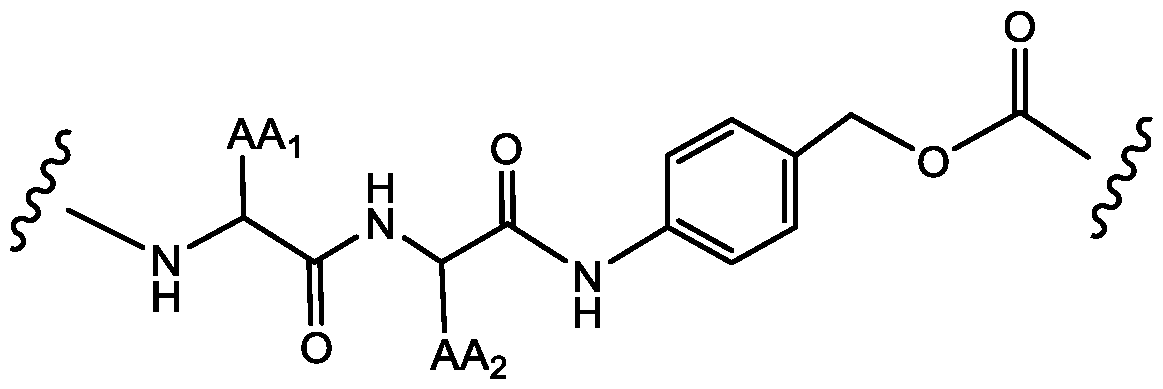 wherein AA1 and AA2 are independently selected from a side chain of a naturally- occurring amino acid.
33. The immunoconjugate of claim 32 wherein AA1 is −CH(CH3)2, and AA2 is −CH2CH2CH2NHC(O)NH2.
34. The immunoconjugate of any one of claims 1 to 14 wherein L is selected from the structures:
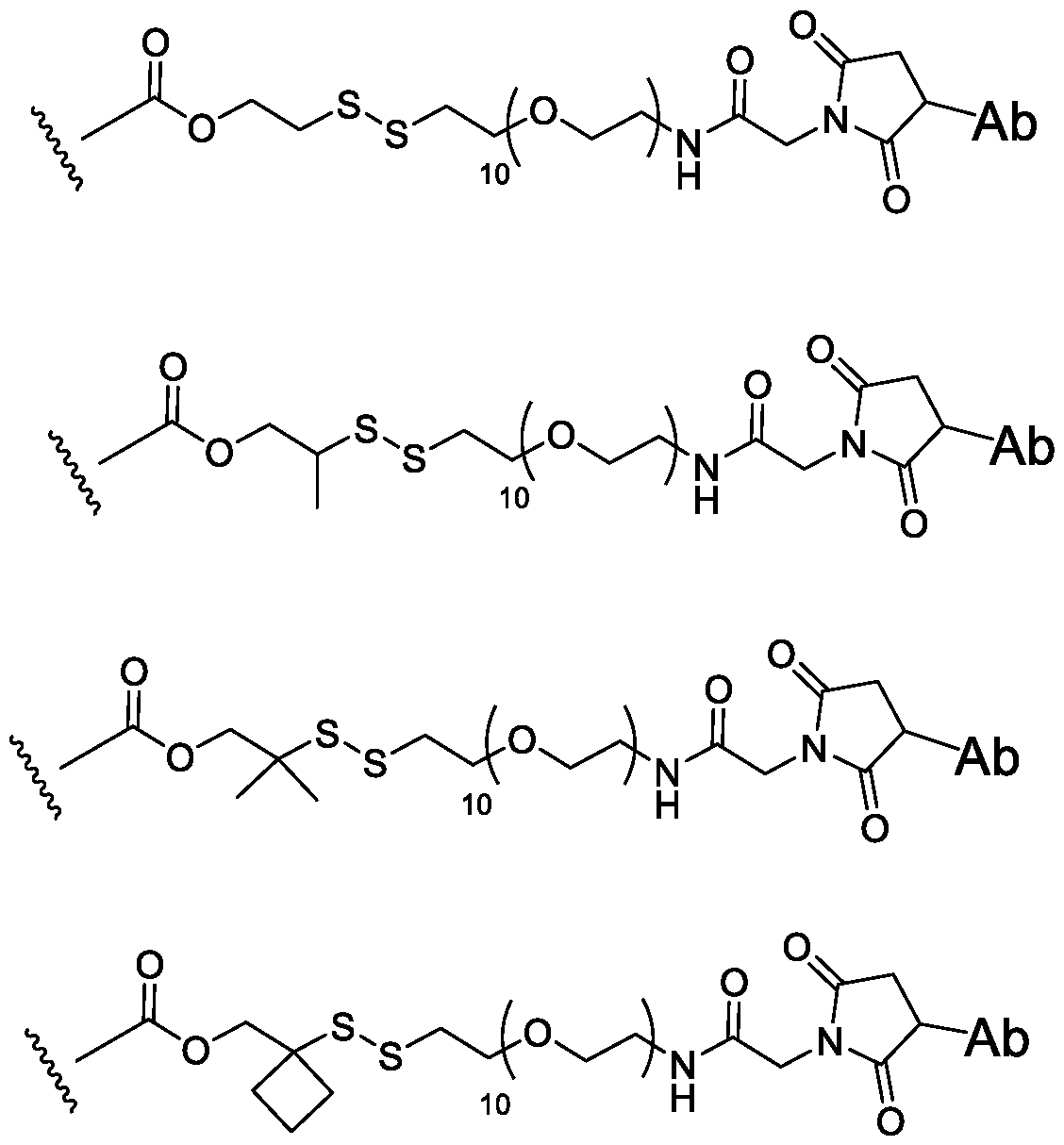
35. An immunoconjugate prepared by conjugation of an anti-Claudin 18.2 antibody with an aza-benzazepine-linker compound selected from Table 2a or Table 2b.
36. A pharmaceutical composition comprising a therapeutically effective amount of an immunoconjugate according to any one of claims 1 to 34, and one or more pharmaceutically acceptable diluent, vehicle, carrier or excipient.
37. A method for treating cancer comprising administering a therapeutically effective amount of an immunoconjugate according to any one of claims 1 to 34 to a patient in need thereof, wherein the cancer is selected from cervical cancer, endometrial cancer, ovarian cancer, prostate cancer, pancreatic cancer, esophageal cancer, bladder cancer, urinary tract cancer, urothelial carcinoma, lung cancer, non-small cell lung cancer, Merkel cell carcinoma, colon cancer, colorectal cancer, gastric cancer, and breast cancer.
38. The method of claim 37, wherein the cancer is susceptible to a pro-inflammatory response induced by TLR7 and/or TLR8 agonism.
39. The method of claim 37, wherein the cancer is selected from triple-negative breast cancer, metastatic Merkel cell carcinoma, and gastroesophageal junction adenocarcinoma.
40. The method of claim 37, wherein the immunoconjugate is administered to the patient intravenously, intratumorally, or subcutaneously.
41. The method of claim 37, wherein the immunoconjugate is administered to the patient at a dose of about 0.01 to 20 mg per kg of body weight.
42. Use of an immunoconjugate according to any one of claims 1 to 34 for treating cancer, wherein the cancer is selected from cervical cancer, endometrial cancer, ovarian cancer, prostate cancer, pancreatic cancer, esophageal cancer, bladder cancer, urinary tract cancer, urothelial carcinoma, lung cancer, non-small cell lung cancer, Merkel cell carcinoma, colon cancer, colorectal cancer, gastric cancer, and breast cancer.
43. A method of preparing an immunoconjugate of Formula I of claim 1 wherein the aza-benzazepine-linker compound selected from Table 2a or Table 2b is conjugated with the antibody.
Applications Claiming Priority (2)
| Application Number | Priority Date | Filing Date | Title |
|---|---|---|---|
| US202363445390P | 2023-02-14 | 2023-02-14 | |
| US63/445,390 | 2023-02-14 |
Publications (1)
| Publication Number | Publication Date |
|---|---|
| WO2024173387A1 true WO2024173387A1 (en) | 2024-08-22 |
Family
ID=90368262
Family Applications (2)
| Application Number | Title | Priority Date | Filing Date |
|---|---|---|---|
| PCT/US2024/015579 Ceased WO2024173384A1 (en) | 2023-02-14 | 2024-02-13 | Aza-benzazepine immunoconjugates, and uses thereof |
| PCT/US2024/015582 Ceased WO2024173387A1 (en) | 2023-02-14 | 2024-02-13 | Aza-benzazepine immunoconjugates, and uses thereof |
Family Applications Before (1)
| Application Number | Title | Priority Date | Filing Date |
|---|---|---|---|
| PCT/US2024/015579 Ceased WO2024173384A1 (en) | 2023-02-14 | 2024-02-13 | Aza-benzazepine immunoconjugates, and uses thereof |
Country Status (3)
| Country | Link |
|---|---|
| EP (1) | EP4665404A1 (en) |
| CN (1) | CN120981252A (en) |
| WO (2) | WO2024173384A1 (en) |
Citations (70)
| Publication number | Priority date | Publication date | Assignee | Title |
|---|---|---|---|---|
| US5208020A (en) | 1989-10-25 | 1993-05-04 | Immunogen Inc. | Cytotoxic agents comprising maytansinoids and their therapeutic use |
| US5624821A (en) | 1987-03-18 | 1997-04-29 | Scotgen Biopharmaceuticals Incorporated | Antibodies with altered effector functions |
| US5677171A (en) | 1988-01-12 | 1997-10-14 | Genentech, Inc. | Monoclonal antibodies directed to the HER2 receptor |
| US5821337A (en) | 1991-06-14 | 1998-10-13 | Genentech, Inc. | Immunoglobulin variants |
| US6054297A (en) | 1991-06-14 | 2000-04-25 | Genentech, Inc. | Humanized antibodies and methods for making them |
| US6339142B1 (en) | 1998-05-06 | 2002-01-15 | Genentech, Inc. | Protein purification |
| WO2003074566A2 (en) | 2002-03-01 | 2003-09-12 | Immunomedics, Inc. | Rs7 antibodies |
| US6676924B2 (en) | 1994-10-05 | 2004-01-13 | Immunomedics, Inc. | CDR-grafted type III anti-CEA humanized mouse monoclonal antibodies |
| US6800738B1 (en) | 1991-06-14 | 2004-10-05 | Genentech, Inc. | Method for making humanized antibodies |
| US20070014795A1 (en) | 2004-12-30 | 2007-01-18 | Dhodapkar Madhav V | Compositions and methods for enhanced dendritic cell maturation and function |
| US7416726B2 (en) | 2000-04-13 | 2008-08-26 | The Rockefeller University | Enhancement of antibody-mediated immune responses |
| US20080286819A1 (en) | 2005-11-07 | 2008-11-20 | Ravetch Jeffrey V | Reagents, Methods and Systems for Selecting a Cytotoxic Antibody or Variant Thereof |
| WO2008144891A1 (en) | 2007-05-30 | 2008-12-04 | F. Hoffmann-La Roche Ag | Humanized and chimeric anti-trop-2 antibodies that mediate cancer cell cytotoxicity |
| US7498298B2 (en) | 2003-11-06 | 2009-03-03 | Seattle Genetics, Inc. | Monomethylvaline compounds capable of conjugation to ligands |
| US7521541B2 (en) | 2004-09-23 | 2009-04-21 | Genetech Inc. | Cysteine engineered antibodies and conjugates |
| WO2009052249A1 (en) | 2007-10-19 | 2009-04-23 | Genentech, Inc. | Cysteine engineered anti-tenb2 antibodies and antibody drug conjugates |
| US7723485B2 (en) | 2007-05-08 | 2010-05-25 | Genentech, Inc. | Cysteine engineered anti-MUC16 antibodies and antibody drug conjugates |
| US7862817B2 (en) | 1999-06-25 | 2011-01-04 | Genentech, Inc. | Humanized anti-ErbB2 antibodies and treatment with anti-ErbB2 antibodies |
| WO2011068845A1 (en) | 2009-12-02 | 2011-06-09 | Immunomedics, Inc. | Combining radioimmunotherapy and antibody-drug conjugates for improved cancer therapy |
| WO2011096519A1 (en) | 2010-02-04 | 2011-08-11 | 東レ株式会社 | Medicinal composition for treating and/or preventing cancer |
| US7999083B2 (en) | 2002-12-13 | 2011-08-16 | Immunomedics, Inc. | Immunoconjugates with an intracellularly-cleavable linkage |
| WO2011145744A1 (en) | 2010-05-17 | 2011-11-24 | 株式会社リブテック | Anti-human trop-2 antibody having antitumor activity in vivo |
| WO2011156328A1 (en) | 2010-06-08 | 2011-12-15 | Genentech, Inc. | Cysteine engineered antibodies and conjugates |
| WO2011155579A1 (en) | 2010-06-10 | 2011-12-15 | 北海道公立大学法人札幌医科大学 | ANTI-Trop-2 ANTIBODY |
| US20120121615A1 (en) | 2010-11-17 | 2012-05-17 | Flygare John A | Alaninyl maytansinol antibody conjugates |
| WO2013018891A1 (en) | 2011-08-04 | 2013-02-07 | 東レ株式会社 | Pharmaceutical composition for treatment and/or prophylaxis of cancer |
| WO2013018889A1 (en) | 2011-08-04 | 2013-02-07 | 東レ株式会社 | Cancer treatment and/or prevention drug composition |
| WO2013018892A1 (en) | 2011-08-04 | 2013-02-07 | 東レ株式会社 | Drug composition for cancer treatment and/or prevention |
| WO2013018883A1 (en) | 2011-08-04 | 2013-02-07 | 東レ株式会社 | Cancer treatment and/or prevention drug composition |
| WO2013068946A2 (en) | 2011-11-11 | 2013-05-16 | Rinat Neuroscience Corp. | Antibodies specific for trop-2 and their uses |
| WO2013077458A1 (en) | 2011-11-22 | 2013-05-30 | 株式会社リブテック | Anti-human trop-2 antibody exhibiting antitumor activity in vivo |
| WO2013125640A1 (en) | 2012-02-21 | 2013-08-29 | 東レ株式会社 | Pharmaceutical composition for treatment and/or prevention of cancer |
| WO2013125630A1 (en) | 2012-02-21 | 2013-08-29 | 東レ株式会社 | Pharmaceutical composition for treatment and/or prevention of cancer |
| WO2013125654A1 (en) | 2012-02-21 | 2013-08-29 | 東レ株式会社 | Medicinal composition for treating and/or preventing cancer |
| WO2013125636A1 (en) | 2012-02-21 | 2013-08-29 | 東レ株式会社 | Pharmaceutical composition for treatment and/or prevention of cancer |
| WO2013174404A1 (en) | 2012-05-23 | 2013-11-28 | Ganymed Pharmaceuticals Ag | Combination therapy involving antibodies against claudin 18.2 for treatment of cancer |
| WO2014014086A1 (en) | 2012-07-19 | 2014-01-23 | 東レ株式会社 | Cancer detection method |
| WO2014014082A1 (en) | 2012-07-19 | 2014-01-23 | 東レ株式会社 | Cancer detection method |
| WO2014075697A1 (en) | 2012-11-13 | 2014-05-22 | Biontech Ag | Agents for treatment of claudin expressing cancer diseases |
| WO2014127906A1 (en) | 2013-02-20 | 2014-08-28 | Ganymed Pharmaceuticals Ag | Combination therapy involving antibodies against claudin 18.2 for treatment of cancer |
| WO2015020212A1 (en) | 2013-08-09 | 2015-02-12 | 東レ株式会社 | Pharmaceutical composition for treatment and/or prevention of cancer |
| WO2015057063A1 (en) | 2013-10-14 | 2015-04-23 | Synaffix B.V. | Modified glycoprotein, protein-conjugate and process for the preparation thereof |
| WO2015098099A1 (en) | 2013-12-25 | 2015-07-02 | 第一三共株式会社 | Anti-trop2 antibody-drug conjugate |
| US20160145350A1 (en) | 2014-11-21 | 2016-05-26 | Bristol-Myers Squibb Company | Antibodies against cd73 and uses thereof |
| US9676863B2 (en) | 2014-02-10 | 2017-06-13 | Merck Patent Gmbh | Targeted TGFβ inhibitors |
| WO2017196598A1 (en) | 2016-05-10 | 2017-11-16 | Bristol-Myers Squibb Company | Antibody-drug conjugates of tubulysin analogs with enhanced stability |
| WO2018079740A1 (en) | 2016-10-28 | 2018-05-03 | 東レ株式会社 | Pharmaceutical composition for cancer treatment and/or prevention |
| WO2019174617A1 (en) | 2018-03-14 | 2019-09-19 | Beijing Xuanyi Pharmasciences Co., Ltd. | Anti-claudin 18.2 antibodies |
| WO2020018852A2 (en) | 2018-07-18 | 2020-01-23 | Askgene Pharma Inc. | Novel antibodies and methods for making and using the same |
| WO2020252294A1 (en) | 2019-06-13 | 2020-12-17 | Bolt Biotherapeutics, Inc. | Aminobenzazepine compounds, immunoconjugates, and uses thereof |
| WO2021047599A1 (en) | 2019-09-13 | 2021-03-18 | Beijing Xuanyi Pharmasciences Co., Ltd. | Humanized anti-claudin 18.2 (cldn18.2) antibodies |
| WO2021067242A1 (en) | 2019-09-30 | 2021-04-08 | Bolt Biotherapeutics, Inc. | Amide-linked, aminobenzazepine immunoconjugates, and uses thereof |
| WO2021150702A1 (en) | 2020-01-21 | 2021-07-29 | Bolt Biotherapeutics, Inc. | Anti-pd-l1 antibodies |
| WO2021150701A1 (en) | 2020-01-21 | 2021-07-29 | Bolt Biotherapeutics, Inc. | Anti-pd-l1 antibodies |
| US11173214B2 (en) | 2015-11-25 | 2021-11-16 | Legochem Biosciences, Inc. | Antibody-drug conjugates comprising branched linkers and methods related thereto |
| WO2021248048A2 (en) | 2020-06-05 | 2021-12-09 | Development Center For Biotechnology | Antibody-drug conjugates containing an anti-mesothelin antibody and uses thereof |
| WO2022068854A1 (en) | 2020-09-30 | 2022-04-07 | Nanjing GenScript Biotech Co., Ltd. | Antibodies targeting human claudin 18.2 and uses thereof |
| WO2022104267A1 (en) | 2020-11-16 | 2022-05-19 | Ab Therapeutics, Inc. | Multispecific antibodies and uses thereof |
| WO2022125891A2 (en) | 2020-12-11 | 2022-06-16 | Bolt Biotherapeutics, Inc. | Anti-cea immunoconjugates, and uses thereof |
| WO2022125915A1 (en) | 2020-12-11 | 2022-06-16 | Bolt Biotherapeutics, Inc. | Anti-her2 immunoconjugates, and uses thereof |
| WO2022125884A1 (en) | 2020-12-11 | 2022-06-16 | Bolt Biotherapeutics, Inc. | Immunoconjugates comprising an anti-cea antibody linked by conjugation to one or|more 8-het-2- aminobenzazepine derivatives useful in treating cancer |
| WO2022125904A1 (en) | 2020-12-11 | 2022-06-16 | Bolt Biotherapeutics, Inc. | Anti-her2 immunoconjugates, and uses thereof |
| WO2022125908A1 (en) | 2020-12-11 | 2022-06-16 | Bolt Biotherapeutics, Inc. | Anti-pd-l1 immunoconjugates, and uses thereof |
| WO2022136642A1 (en) | 2020-12-23 | 2022-06-30 | Sotio Biotech A.S. | Tumor-specific claudin 18.2 antibody-drug conjugates |
| WO2022170305A1 (en) | 2021-02-05 | 2022-08-11 | Phanes Therapeutics, Inc. | Bispecific antibodies with charge pairs and uses thereof |
| WO2022166940A1 (en) | 2021-02-08 | 2022-08-11 | Shandong Boan Biotechnology Co., Ltd. | Cldn18.2/cd3 bispecific antibodies for the therapy of cldn18.2-expressing solid tumors |
| US11413353B2 (en) | 2015-11-25 | 2022-08-16 | Legochem Biosciences, Inc. | Conjugates comprising self-immolative groups and methods related thereto |
| WO2022188740A1 (en) | 2021-03-08 | 2022-09-15 | Genequantum Healthcare (Suzhou) Co., Ltd. | Antibody-immune agonist conjugate and applications thereof |
| WO2022204528A1 (en) * | 2021-03-26 | 2022-09-29 | Bolt Biotherapeutics, Inc. | 2-amino-4-carboxamide-benzazepine immunoconjugates, and uses thereof |
| WO2022204536A1 (en) * | 2021-03-26 | 2022-09-29 | Bolt Biotherapeutics, Inc. | 2-amino-4-carboxamide-benzazepine immunoconjugates, and uses thereof |
Family Cites Families (1)
| Publication number | Priority date | Publication date | Assignee | Title |
|---|---|---|---|---|
| US20170158772A1 (en) | 2015-12-07 | 2017-06-08 | Opi Vi - Ip Holdco Llc | Compositions of antibody construct - agonist conjugates and methods of use thereof |
-
2024
- 2024-02-13 WO PCT/US2024/015579 patent/WO2024173384A1/en not_active Ceased
- 2024-02-13 CN CN202480022917.3A patent/CN120981252A/en active Pending
- 2024-02-13 EP EP24713175.8A patent/EP4665404A1/en active Pending
- 2024-02-13 WO PCT/US2024/015582 patent/WO2024173387A1/en not_active Ceased
Patent Citations (80)
| Publication number | Priority date | Publication date | Assignee | Title |
|---|---|---|---|---|
| US5624821A (en) | 1987-03-18 | 1997-04-29 | Scotgen Biopharmaceuticals Incorporated | Antibodies with altered effector functions |
| US5677171A (en) | 1988-01-12 | 1997-10-14 | Genentech, Inc. | Monoclonal antibodies directed to the HER2 receptor |
| US6165464A (en) | 1988-01-12 | 2000-12-26 | Genetech, Inc. | Monoclonal antibodies directed to the HER2 receptor |
| US5208020A (en) | 1989-10-25 | 1993-05-04 | Immunogen Inc. | Cytotoxic agents comprising maytansinoids and their therapeutic use |
| US6800738B1 (en) | 1991-06-14 | 2004-10-05 | Genentech, Inc. | Method for making humanized antibodies |
| US6407213B1 (en) | 1991-06-14 | 2002-06-18 | Genentech, Inc. | Method for making humanized antibodies |
| US6639055B1 (en) | 1991-06-14 | 2003-10-28 | Genentech, Inc. | Method for making humanized antibodies |
| US6719971B1 (en) | 1991-06-14 | 2004-04-13 | Genentech, Inc. | Method for making humanized antibodies |
| US6054297A (en) | 1991-06-14 | 2000-04-25 | Genentech, Inc. | Humanized antibodies and methods for making them |
| US5821337A (en) | 1991-06-14 | 1998-10-13 | Genentech, Inc. | Immunoglobulin variants |
| US6676924B2 (en) | 1994-10-05 | 2004-01-13 | Immunomedics, Inc. | CDR-grafted type III anti-CEA humanized mouse monoclonal antibodies |
| US6339142B1 (en) | 1998-05-06 | 2002-01-15 | Genentech, Inc. | Protein purification |
| US7074404B2 (en) | 1998-05-06 | 2006-07-11 | Genentech, Inc. | Protein purification |
| US7862817B2 (en) | 1999-06-25 | 2011-01-04 | Genentech, Inc. | Humanized anti-ErbB2 antibodies and treatment with anti-ErbB2 antibodies |
| US7416726B2 (en) | 2000-04-13 | 2008-08-26 | The Rockefeller University | Enhancement of antibody-mediated immune responses |
| WO2003074566A2 (en) | 2002-03-01 | 2003-09-12 | Immunomedics, Inc. | Rs7 antibodies |
| US7238785B2 (en) | 2002-03-01 | 2007-07-03 | Immunomedics, Inc. | RS7 antibodies |
| US7999083B2 (en) | 2002-12-13 | 2011-08-16 | Immunomedics, Inc. | Immunoconjugates with an intracellularly-cleavable linkage |
| US7498298B2 (en) | 2003-11-06 | 2009-03-03 | Seattle Genetics, Inc. | Monomethylvaline compounds capable of conjugation to ligands |
| US7521541B2 (en) | 2004-09-23 | 2009-04-21 | Genetech Inc. | Cysteine engineered antibodies and conjugates |
| US20070014795A1 (en) | 2004-12-30 | 2007-01-18 | Dhodapkar Madhav V | Compositions and methods for enhanced dendritic cell maturation and function |
| US20080286819A1 (en) | 2005-11-07 | 2008-11-20 | Ravetch Jeffrey V | Reagents, Methods and Systems for Selecting a Cytotoxic Antibody or Variant Thereof |
| US7723485B2 (en) | 2007-05-08 | 2010-05-25 | Genentech, Inc. | Cysteine engineered anti-MUC16 antibodies and antibody drug conjugates |
| WO2008144891A1 (en) | 2007-05-30 | 2008-12-04 | F. Hoffmann-La Roche Ag | Humanized and chimeric anti-trop-2 antibodies that mediate cancer cell cytotoxicity |
| WO2009052249A1 (en) | 2007-10-19 | 2009-04-23 | Genentech, Inc. | Cysteine engineered anti-tenb2 antibodies and antibody drug conjugates |
| WO2011068845A1 (en) | 2009-12-02 | 2011-06-09 | Immunomedics, Inc. | Combining radioimmunotherapy and antibody-drug conjugates for improved cancer therapy |
| WO2011096519A1 (en) | 2010-02-04 | 2011-08-11 | 東レ株式会社 | Medicinal composition for treating and/or preventing cancer |
| WO2011145744A1 (en) | 2010-05-17 | 2011-11-24 | 株式会社リブテック | Anti-human trop-2 antibody having antitumor activity in vivo |
| US9000130B2 (en) | 2010-06-08 | 2015-04-07 | Genentech, Inc. | Cysteine engineered antibodies and conjugates |
| WO2011156328A1 (en) | 2010-06-08 | 2011-12-15 | Genentech, Inc. | Cysteine engineered antibodies and conjugates |
| WO2011155579A1 (en) | 2010-06-10 | 2011-12-15 | 北海道公立大学法人札幌医科大学 | ANTI-Trop-2 ANTIBODY |
| US20120121615A1 (en) | 2010-11-17 | 2012-05-17 | Flygare John A | Alaninyl maytansinol antibody conjugates |
| WO2013018889A1 (en) | 2011-08-04 | 2013-02-07 | 東レ株式会社 | Cancer treatment and/or prevention drug composition |
| WO2013018892A1 (en) | 2011-08-04 | 2013-02-07 | 東レ株式会社 | Drug composition for cancer treatment and/or prevention |
| WO2013018883A1 (en) | 2011-08-04 | 2013-02-07 | 東レ株式会社 | Cancer treatment and/or prevention drug composition |
| WO2013018891A1 (en) | 2011-08-04 | 2013-02-07 | 東レ株式会社 | Pharmaceutical composition for treatment and/or prophylaxis of cancer |
| WO2013068946A2 (en) | 2011-11-11 | 2013-05-16 | Rinat Neuroscience Corp. | Antibodies specific for trop-2 and their uses |
| WO2013077458A1 (en) | 2011-11-22 | 2013-05-30 | 株式会社リブテック | Anti-human trop-2 antibody exhibiting antitumor activity in vivo |
| WO2013125636A1 (en) | 2012-02-21 | 2013-08-29 | 東レ株式会社 | Pharmaceutical composition for treatment and/or prevention of cancer |
| WO2013125654A1 (en) | 2012-02-21 | 2013-08-29 | 東レ株式会社 | Medicinal composition for treating and/or preventing cancer |
| WO2013125630A1 (en) | 2012-02-21 | 2013-08-29 | 東レ株式会社 | Pharmaceutical composition for treatment and/or prevention of cancer |
| WO2013125640A1 (en) | 2012-02-21 | 2013-08-29 | 東レ株式会社 | Pharmaceutical composition for treatment and/or prevention of cancer |
| WO2013174404A1 (en) | 2012-05-23 | 2013-11-28 | Ganymed Pharmaceuticals Ag | Combination therapy involving antibodies against claudin 18.2 for treatment of cancer |
| WO2014014086A1 (en) | 2012-07-19 | 2014-01-23 | 東レ株式会社 | Cancer detection method |
| WO2014014082A1 (en) | 2012-07-19 | 2014-01-23 | 東レ株式会社 | Cancer detection method |
| WO2014075697A1 (en) | 2012-11-13 | 2014-05-22 | Biontech Ag | Agents for treatment of claudin expressing cancer diseases |
| WO2014127906A1 (en) | 2013-02-20 | 2014-08-28 | Ganymed Pharmaceuticals Ag | Combination therapy involving antibodies against claudin 18.2 for treatment of cancer |
| WO2014127785A1 (en) | 2013-02-20 | 2014-08-28 | Ganymed Pharmaceuticals Ag | Combination therapy involving antibodies against claudin 18.2 for treatment of cancer |
| WO2015020212A1 (en) | 2013-08-09 | 2015-02-12 | 東レ株式会社 | Pharmaceutical composition for treatment and/or prevention of cancer |
| WO2015057063A1 (en) | 2013-10-14 | 2015-04-23 | Synaffix B.V. | Modified glycoprotein, protein-conjugate and process for the preparation thereof |
| US10072096B2 (en) | 2013-10-14 | 2018-09-11 | Synaffix B.V. | Modified glycoprotein, protein-conjugate and process for the preparation thereof |
| WO2015098099A1 (en) | 2013-12-25 | 2015-07-02 | 第一三共株式会社 | Anti-trop2 antibody-drug conjugate |
| US20160297890A1 (en) | 2013-12-25 | 2016-10-13 | Daiichi Sankyo Company, Limited | Anti-trop2 antibody-drug conjugate |
| US9676863B2 (en) | 2014-02-10 | 2017-06-13 | Merck Patent Gmbh | Targeted TGFβ inhibitors |
| US20160145350A1 (en) | 2014-11-21 | 2016-05-26 | Bristol-Myers Squibb Company | Antibodies against cd73 and uses thereof |
| US11173214B2 (en) | 2015-11-25 | 2021-11-16 | Legochem Biosciences, Inc. | Antibody-drug conjugates comprising branched linkers and methods related thereto |
| US11413353B2 (en) | 2015-11-25 | 2022-08-16 | Legochem Biosciences, Inc. | Conjugates comprising self-immolative groups and methods related thereto |
| WO2017196598A1 (en) | 2016-05-10 | 2017-11-16 | Bristol-Myers Squibb Company | Antibody-drug conjugates of tubulysin analogs with enhanced stability |
| WO2018079740A1 (en) | 2016-10-28 | 2018-05-03 | 東レ株式会社 | Pharmaceutical composition for cancer treatment and/or prevention |
| WO2019174617A1 (en) | 2018-03-14 | 2019-09-19 | Beijing Xuanyi Pharmasciences Co., Ltd. | Anti-claudin 18.2 antibodies |
| WO2020018852A2 (en) | 2018-07-18 | 2020-01-23 | Askgene Pharma Inc. | Novel antibodies and methods for making and using the same |
| WO2020252294A1 (en) | 2019-06-13 | 2020-12-17 | Bolt Biotherapeutics, Inc. | Aminobenzazepine compounds, immunoconjugates, and uses thereof |
| WO2021047599A1 (en) | 2019-09-13 | 2021-03-18 | Beijing Xuanyi Pharmasciences Co., Ltd. | Humanized anti-claudin 18.2 (cldn18.2) antibodies |
| WO2021067242A1 (en) | 2019-09-30 | 2021-04-08 | Bolt Biotherapeutics, Inc. | Amide-linked, aminobenzazepine immunoconjugates, and uses thereof |
| WO2021150702A1 (en) | 2020-01-21 | 2021-07-29 | Bolt Biotherapeutics, Inc. | Anti-pd-l1 antibodies |
| WO2021150701A1 (en) | 2020-01-21 | 2021-07-29 | Bolt Biotherapeutics, Inc. | Anti-pd-l1 antibodies |
| WO2021248048A2 (en) | 2020-06-05 | 2021-12-09 | Development Center For Biotechnology | Antibody-drug conjugates containing an anti-mesothelin antibody and uses thereof |
| WO2022068854A1 (en) | 2020-09-30 | 2022-04-07 | Nanjing GenScript Biotech Co., Ltd. | Antibodies targeting human claudin 18.2 and uses thereof |
| WO2022104267A1 (en) | 2020-11-16 | 2022-05-19 | Ab Therapeutics, Inc. | Multispecific antibodies and uses thereof |
| WO2022125884A1 (en) | 2020-12-11 | 2022-06-16 | Bolt Biotherapeutics, Inc. | Immunoconjugates comprising an anti-cea antibody linked by conjugation to one or|more 8-het-2- aminobenzazepine derivatives useful in treating cancer |
| WO2022125915A1 (en) | 2020-12-11 | 2022-06-16 | Bolt Biotherapeutics, Inc. | Anti-her2 immunoconjugates, and uses thereof |
| WO2022125904A1 (en) | 2020-12-11 | 2022-06-16 | Bolt Biotherapeutics, Inc. | Anti-her2 immunoconjugates, and uses thereof |
| WO2022125908A1 (en) | 2020-12-11 | 2022-06-16 | Bolt Biotherapeutics, Inc. | Anti-pd-l1 immunoconjugates, and uses thereof |
| WO2022125891A2 (en) | 2020-12-11 | 2022-06-16 | Bolt Biotherapeutics, Inc. | Anti-cea immunoconjugates, and uses thereof |
| WO2022136642A1 (en) | 2020-12-23 | 2022-06-30 | Sotio Biotech A.S. | Tumor-specific claudin 18.2 antibody-drug conjugates |
| WO2022170305A1 (en) | 2021-02-05 | 2022-08-11 | Phanes Therapeutics, Inc. | Bispecific antibodies with charge pairs and uses thereof |
| WO2022166940A1 (en) | 2021-02-08 | 2022-08-11 | Shandong Boan Biotechnology Co., Ltd. | Cldn18.2/cd3 bispecific antibodies for the therapy of cldn18.2-expressing solid tumors |
| WO2022188740A1 (en) | 2021-03-08 | 2022-09-15 | Genequantum Healthcare (Suzhou) Co., Ltd. | Antibody-immune agonist conjugate and applications thereof |
| WO2022204528A1 (en) * | 2021-03-26 | 2022-09-29 | Bolt Biotherapeutics, Inc. | 2-amino-4-carboxamide-benzazepine immunoconjugates, and uses thereof |
| WO2022204536A1 (en) * | 2021-03-26 | 2022-09-29 | Bolt Biotherapeutics, Inc. | 2-amino-4-carboxamide-benzazepine immunoconjugates, and uses thereof |
Non-Patent Citations (85)
| Title |
|---|
| "GenBank", Database accession no. AAK62677 |
| "NCBI", Database accession no. NP_002344 |
| "The Chemistry of Heterocyclic Compounds, A series of Monographs", 1950, JOHN WILEY & SONS |
| ACKERMAN ET AL., NATURE CANCER, vol. 2, 2021, pages 18 - 33 |
| ALLEY, S.C ET AL.: "2004 Annual Meeting", vol. 45, 27 March 2004, AMERICAN ASSOCIATION FOR CANCER RESEARCH, article "Effect of drug loading on the pharmacology, pharmacokinetics, and toxicity of an anti-CD30 antibody-drug conjugate" |
| ALTSCHUL ET AL., J. MOLECULAR BIOL., vol. 215, no. 3, 1990, pages 403 - 410 |
| ALTSCHUL ET AL., NUCLEIC ACIDS RES., vol. 25, no. 17, 1997, pages 3389 - 3402 |
| ARNOLD, A ET AL., CLINICAL AND TRANSLATIONAL ONCOLOGY, vol. 22, no. 12, 2020, pages 2357 - 2363 |
| BARGH JD ET AL., CHEM SCI, vol. 11, no. 9, 2020, pages 2375 - 2380 |
| BEIGERT ET AL., PROC. NATL. ACAD. SCI. USA, vol. 106, no. 10, 2009, pages 3770 - 3775 |
| BERGSTROM D. A. ET AL., CANCER RES., vol. 75, 2015, pages LB-231 |
| BHAKTA, S ET AL.: "Engineering THIOMABs for Site-Specific Conjugation of Thiol-Reactive Linkers", ANTIBODY-DRUG CONJUGATES, METHODS IN MOLECULAR BIOLOGY, vol. 1045, 2013, pages 189 - 203, XP008178420, DOI: 10.1007/978-1-62703-541-5_11 |
| BLUMENTHAL, R ET AL., CANCER IMMUNOLOGY IMMUNOTHERAPY, vol. 54, no. 4, 2005, pages 315 - 327 |
| CACULITAN NG ET AL., CANCER RES., vol. 77, no. 24, 2017, pages 7027 - 7037 |
| CALABRESE G ET AL., CYTOGENET CELL GENET., no. 1-2, 2001, pages 164 - 5 |
| CARDILLO, T. ET AL., MOLECULAR CANCER THERAPEUTICS, vol. 17, no. 1, 2018, pages 150 - 160 |
| CHARI ET AL., CANCER RESEARCH, vol. 52, 1992, pages 127 - 131 |
| CHO ET AL., NATURE, vol. 421, 2003, pages 756 - 60 |
| COSTA, RLB ET AL., BREAST CANCER, vol. 6, no. 10, 2020, pages 1 - 11 |
| COUSSENS ET AL., SCIENCE, vol. 230, no. 180288-69-1, 1985, pages 1132 - 9 |
| DICKGEISSER, S ET AL., BIOCONJUGATE CHEMISTRY, vol. 31, no. 4, 2020, pages 1070 - 1076 |
| DORNAN ET AL., BLOOD, vol. 114, no. 13, 2009, pages 2721 - 2729 |
| ELIEL, EWILEN, S: "Stereochemistry of Organic Compounds", 1994, JOHN WILEY & SONS, INC. |
| ELLIS JALUZIO JP, J BIOL CHEM., vol. 270, no. 35, 1995, pages 20717 - 23 |
| FAULK W P ET AL., PROC. NATL. ACAD. SCI., vol. 75, no. 4, 1978, pages 1947 - 1951 |
| FONG D ET AL., BR. J. CANCER, vol. 99, no. 8, 2008, pages 1290 - 1295 |
| FONG D ET AL., MOD. PATHOL, vol. 21, no. 2, 2008, pages 186 - 191 |
| FORNARO M ET AL., INT. J. CANCER, vol. 62, no. 5, 1995, pages 610 - 618 |
| FOSTER: "Deuterium Isotope Effects in Studies of Drug Metabolism", TRENDS PHARMACOL. SCI, vol. 5, no. 12, 1984, pages 524 - 527, XP025943358, DOI: 10.1016/0165-6147(84)90534-0 |
| FUCHS, A. ET AL., SEMINARS IN CANCER BIOLOGY, vol. 16, no. 5, 2006, pages 359 - 366 |
| FURUSE M ET AL., J. CELL BIOL., vol. 141, no. 7, 1998, pages 1539 - 50 |
| GUSFIELD: "Algorithms on Strings, Trees and Sequences", 1997, CAMBRIDGE UNIVERSITY PRESS |
| HAMBLETT ET AL., CLIN. CANCER RES, 2004, pages 7063 - 7070 |
| HARARIYARDEN, ONCOGENE, vol. 19, no. 380610-27-5, 2000, pages 6102 - 14 |
| HERMANSON: "Bioconjugate Techniques", 2008, ACADEMIC PRESS |
| J. AM. CHEM. SOC, vol. 82, 1960, pages 5566 |
| JARAMILLO, M.L. ET AL., MABS, vol. 15, no. 1, 2023, pages 1 - 15 |
| JEFFERIS ET AL., MABS, vol. 1, no. 4, 2009, pages 332 - 338 |
| JEFFREY SC, BIOCONJUG CHEM, vol. 17, no. 3, 2006, pages 831 - 40 |
| JUNUTULA ET AL., NATURE BIOTECH, vol. 26, no. 8, 2008, pages 925 - 932 |
| JUNUTULA ET AL., NATURE BIOTECH., vol. 26, no. 8, 2008, pages 925 - 932 |
| KELLOGG, BA ET AL., BIOCONJUGATE CHEM, vol. 22, 2011, pages 717 - 727 |
| KHOT, A. ET AL., BIOANALYSIS, vol. 7, no. 13, 2015, pages 1633 - 1648 |
| KNIESEL U ET AL., CELL. MOL. NEUROBIOL., vol. 20, no. 1, 2000, pages 57 - 76 |
| KYUNO D ET AL., TISSUE BARRIERS, vol. 10, no. 1, 2022, pages 1967080 |
| LIEBERMAN, PHARMACEUTICAL DOSAGE FORMS, vol. 1-3, 1992 |
| LINNENBACH A J ET AL., PROC. NATL. ACAD. SCI., vol. 86, no. 1, 1989, pages 27 - 31 |
| LINNENBACH AJ ET AL., MOL CELL BIOI, vol. 13, no. 3, 1993, pages 1507 - 15 |
| LIPINSKI M ET AL., PROC. NATL. ACAD. SCI., vol. 78, no. 8, 1981, pages 5147 - 5150 |
| LLOYD, THE ART, SCIENCE AND TECHNOLOGY OF PHARMACEUTICAL COMPOUNDING, 1999 |
| LYON, R ET AL., METHODS IN ENZYM, vol. 502, 2012, pages 123 - 138 |
| MALIK ET AL., PRO AM SOC CANCER RES, vol. 44, 2003, pages 176 - 7 |
| MARKHAM, DRUGS, vol. 81, 2021, pages 599 - 604 |
| MCDONAGH ET AL., PROT. ENGR. DESIGN & SELECTION, vol. 19, no. 7, 2006, pages 299 - 307 |
| MIYOSHI J. ET AL., AMERICAN JOURNAL OF NEPHROLOGY, vol. 27, no. 6, 2007, pages 590 - 604 |
| MUHLMANN G ET AL., J. CLIN. PATHOL, vol. 62, no. 2, 2009, pages 152 - 158 |
| NAT REV MOL CELL BIOL, vol. 2, 2001, pages 127 - 37 |
| NING S ET AL., NEUROL. SCI, vol. 34, no. 10, 2013, pages 1745 - 1750 |
| no. 207915-99-9 |
| NORDSTROM, JL ET AL., BREAST CANCER RES., vol. 13, no. 1350624-75-7, 2011, pages R123 |
| OHMACHI T ET AL., CLIN. CANCER RES, vol. 12, no. 10, 2006, pages 3057 - 3063 |
| OKELEY, N.M. ET AL., BIOCONJUGATE CHEM, vol. 24, no. 10, 2013, pages 1650 - 1655 |
| PAQUETTE, LEO A: "Principles of Modern Heterocyclic Chemistry", 1968, W.A. BENJAMIN |
| PICKAR: "Dosage Calculations", 1999 |
| PILLOW, T. ET AL., CHEM. SCI, vol. 8, 2017, pages 366 - 370 |
| QASBA, P.K, BIOCONJUGATE CHEM, vol. 26, 2015, pages 2170 - 2175 |
| RICART, A. D. ET AL., CLIN. CANCER RES., vol. 17, 2011, pages 6417 - 6427 |
| RUGO, HS ET AL., JAMA ONCOL, vol. 7, no. 4, 2021, pages 573 - 584 |
| RUSSELL ET AL., J. MOL BIOL., vol. 244, 1994, pages 332 - 350 |
| SAHIN, U, JOURNAL OF CANCER, vol. 100, 2018, pages 17 - 26 |
| SINGH, P ET AL., JOURNAL OF HEMATOLOGY & ONCOLOGY, vol. 10, 2017, pages 1 - 5 |
| SLAMON ET AL., NEW ENGL. J. MED, vol. 344, 2001, pages 783 - 792 |
| SLAMON ET AL., SCIENCE, vol. 244, 1989, pages 707 - 12 |
| SLIWKOWSKI, NAT STRUCT BIOL, vol. 10, 2003, pages 158 - 9 |
| SODING, BIOINFORMATICS, vol. 21, no. 7, 2005, pages 951 - 960 |
| SOLOMON S ET AL., MOL CELL BIOL, vol. 27, no. 6, 2007, pages 2324 - 42 |
| SUURS F.V ET AL., PHARMACOLOGY & THERAPEUTICS, vol. 201, 2019, pages 103 - 119 |
| SWISSHELM K ET AL., ADV. DRUGDELIV. REV, vol. 57, no. 6, 2005, pages 919 - 28 |
| TAKAI Y ET AL., CANCER SCIENCE, vol. 94, no. 8, 2003, pages 655 - 67 |
| TUERECI, O ET AL., ONCOLMMUNOLOGY, vol. 8, no. 1, 2019, pages e1523096 |
| WANG B ET AL., J IMMUNOL., vol. 175, no. 7, 2005, pages 4274 - 4282 |
| YANG, Z-S ET AL., ONCOLOGY LETTERS, vol. 18, 2019, pages 15 - 21 |
| ZHANG D ET AL., ACS MED CHEM LETT, vol. 7, no. 11, 2016, pages 988 - 993 |
| ZHANG, X. ET AL., ACS CHEM. BIOL., vol. 16, 2021, pages 2502 - 2514 |
| ZHOU, Q ET AL., BIOCONJUGATE CHEM, vol. 25, no. 3, 2014, pages 510 - 520 |
Also Published As
| Publication number | Publication date |
|---|---|
| CN120981252A (en) | 2025-11-18 |
| EP4665404A1 (en) | 2025-12-24 |
| WO2024173384A1 (en) | 2024-08-22 |
Similar Documents
| Publication | Publication Date | Title |
|---|---|---|
| US11547761B1 (en) | Antibody adjuvant conjugates | |
| EP3793613B1 (en) | Immunoconjugates | |
| EP4359007A1 (en) | Bis-benzimidazole sting agonist immunoconjugates, and uses thereof | |
| US20220347312A1 (en) | Immunoconjugate Synthesis Method | |
| US20250000995A1 (en) | Tlr agonist immunoconjugates with cysteine-mutant antibodies, and uses thereof | |
| US20230263903A1 (en) | Pyrazoloazepine immunoconjugates, and uses thereof | |
| WO2024173387A1 (en) | Aza-benzazepine immunoconjugates, and uses thereof | |
| WO2023059544A1 (en) | Asymmetric bis-benzimidazole sting agonist immunoconjugates and uses thereof | |
| WO2024186626A1 (en) | Aza-bicyclic sting agonist immunoconjugates, and uses thereof | |
| WO2024129956A1 (en) | Thienoazepine immunoconjugates, and uses thereof | |
| HK40048016B (en) | Immunoconjugates | |
| HK40048016A (en) | Immunoconjugates |
Legal Events
| Date | Code | Title | Description |
|---|---|---|---|
| 121 | Ep: the epo has been informed by wipo that ep was designated in this application |
Ref document number: 24713176 Country of ref document: EP Kind code of ref document: A1 |
|
| NENP | Non-entry into the national phase |
Ref country code: DE |