WO2024133592A1 - Catalyst transition process - Google Patents
Catalyst transition process Download PDFInfo
- Publication number
- WO2024133592A1 WO2024133592A1 PCT/EP2023/087142 EP2023087142W WO2024133592A1 WO 2024133592 A1 WO2024133592 A1 WO 2024133592A1 EP 2023087142 W EP2023087142 W EP 2023087142W WO 2024133592 A1 WO2024133592 A1 WO 2024133592A1
- Authority
- WO
- WIPO (PCT)
- Prior art keywords
- catalyst
- reactor
- prepolymerisation
- propylene
- polymerisation
- Prior art date
- Legal status (The legal status is an assumption and is not a legal conclusion. Google has not performed a legal analysis and makes no representation as to the accuracy of the status listed.)
- Ceased
Links
Classifications
-
- C—CHEMISTRY; METALLURGY
- C08—ORGANIC MACROMOLECULAR COMPOUNDS; THEIR PREPARATION OR CHEMICAL WORKING-UP; COMPOSITIONS BASED THEREON
- C08F—MACROMOLECULAR COMPOUNDS OBTAINED BY REACTIONS ONLY INVOLVING CARBON-TO-CARBON UNSATURATED BONDS
- C08F10/00—Homopolymers and copolymers of unsaturated aliphatic hydrocarbons having only one carbon-to-carbon double bond
- C08F10/04—Monomers containing three or four carbon atoms
- C08F10/06—Propene
-
- C—CHEMISTRY; METALLURGY
- C08—ORGANIC MACROMOLECULAR COMPOUNDS; THEIR PREPARATION OR CHEMICAL WORKING-UP; COMPOSITIONS BASED THEREON
- C08F—MACROMOLECULAR COMPOUNDS OBTAINED BY REACTIONS ONLY INVOLVING CARBON-TO-CARBON UNSATURATED BONDS
- C08F110/00—Homopolymers of unsaturated aliphatic hydrocarbons having only one carbon-to-carbon double bond
- C08F110/04—Monomers containing three or four carbon atoms
- C08F110/06—Propene
-
- C—CHEMISTRY; METALLURGY
- C08—ORGANIC MACROMOLECULAR COMPOUNDS; THEIR PREPARATION OR CHEMICAL WORKING-UP; COMPOSITIONS BASED THEREON
- C08F—MACROMOLECULAR COMPOUNDS OBTAINED BY REACTIONS ONLY INVOLVING CARBON-TO-CARBON UNSATURATED BONDS
- C08F2/00—Processes of polymerisation
- C08F2/001—Multistage polymerisation processes characterised by a change in reactor conditions without deactivating the intermediate polymer
-
- C—CHEMISTRY; METALLURGY
- C08—ORGANIC MACROMOLECULAR COMPOUNDS; THEIR PREPARATION OR CHEMICAL WORKING-UP; COMPOSITIONS BASED THEREON
- C08F—MACROMOLECULAR COMPOUNDS OBTAINED BY REACTIONS ONLY INVOLVING CARBON-TO-CARBON UNSATURATED BONDS
- C08F4/00—Polymerisation catalysts
- C08F4/42—Metals; Metal hydrides; Metallo-organic compounds; Use thereof as catalyst precursors
- C08F4/44—Metals; Metal hydrides; Metallo-organic compounds; Use thereof as catalyst precursors selected from light metals, zinc, cadmium, mercury, copper, silver, gold, boron, gallium, indium, thallium, rare earths or actinides
- C08F4/60—Metals; Metal hydrides; Metallo-organic compounds; Use thereof as catalyst precursors selected from light metals, zinc, cadmium, mercury, copper, silver, gold, boron, gallium, indium, thallium, rare earths or actinides together with refractory metals, iron group metals, platinum group metals, manganese, rhenium technetium or compounds thereof
- C08F4/62—Refractory metals or compounds thereof
- C08F4/64—Titanium, zirconium, hafnium or compounds thereof
- C08F4/646—Catalysts comprising at least two different metals, in metallic form or as compounds thereof, in addition to the component covered by group C08F4/64
- C08F4/6465—Catalysts comprising at least two different metals, in metallic form or as compounds thereof, in addition to the component covered by group C08F4/64 containing silicium
-
- C—CHEMISTRY; METALLURGY
- C08—ORGANIC MACROMOLECULAR COMPOUNDS; THEIR PREPARATION OR CHEMICAL WORKING-UP; COMPOSITIONS BASED THEREON
- C08F—MACROMOLECULAR COMPOUNDS OBTAINED BY REACTIONS ONLY INVOLVING CARBON-TO-CARBON UNSATURATED BONDS
- C08F4/00—Polymerisation catalysts
- C08F4/42—Metals; Metal hydrides; Metallo-organic compounds; Use thereof as catalyst precursors
- C08F4/44—Metals; Metal hydrides; Metallo-organic compounds; Use thereof as catalyst precursors selected from light metals, zinc, cadmium, mercury, copper, silver, gold, boron, gallium, indium, thallium, rare earths or actinides
- C08F4/60—Metals; Metal hydrides; Metallo-organic compounds; Use thereof as catalyst precursors selected from light metals, zinc, cadmium, mercury, copper, silver, gold, boron, gallium, indium, thallium, rare earths or actinides together with refractory metals, iron group metals, platinum group metals, manganese, rhenium technetium or compounds thereof
- C08F4/62—Refractory metals or compounds thereof
- C08F4/64—Titanium, zirconium, hafnium or compounds thereof
- C08F4/65—Pretreating the metal or compound covered by group C08F4/64 before the final contacting with the metal or compound covered by group C08F4/44
- C08F4/652—Pretreating with metals or metal-containing compounds
- C08F4/654—Pretreating with metals or metal-containing compounds with magnesium or compounds thereof
- C08F4/6546—Pretreating with metals or metal-containing compounds with magnesium or compounds thereof organo-magnesium compounds
-
- C—CHEMISTRY; METALLURGY
- C08—ORGANIC MACROMOLECULAR COMPOUNDS; THEIR PREPARATION OR CHEMICAL WORKING-UP; COMPOSITIONS BASED THEREON
- C08F—MACROMOLECULAR COMPOUNDS OBTAINED BY REACTIONS ONLY INVOLVING CARBON-TO-CARBON UNSATURATED BONDS
- C08F4/00—Polymerisation catalysts
- C08F4/42—Metals; Metal hydrides; Metallo-organic compounds; Use thereof as catalyst precursors
- C08F4/44—Metals; Metal hydrides; Metallo-organic compounds; Use thereof as catalyst precursors selected from light metals, zinc, cadmium, mercury, copper, silver, gold, boron, gallium, indium, thallium, rare earths or actinides
- C08F4/60—Metals; Metal hydrides; Metallo-organic compounds; Use thereof as catalyst precursors selected from light metals, zinc, cadmium, mercury, copper, silver, gold, boron, gallium, indium, thallium, rare earths or actinides together with refractory metals, iron group metals, platinum group metals, manganese, rhenium technetium or compounds thereof
- C08F4/62—Refractory metals or compounds thereof
- C08F4/64—Titanium, zirconium, hafnium or compounds thereof
- C08F4/65—Pretreating the metal or compound covered by group C08F4/64 before the final contacting with the metal or compound covered by group C08F4/44
- C08F4/652—Pretreating with metals or metal-containing compounds
- C08F4/654—Pretreating with metals or metal-containing compounds with magnesium or compounds thereof
- C08F4/6548—Pretreating with metals or metal-containing compounds with magnesium or compounds thereof magnesium or compounds thereof, not provided for in C08F4/6543 or C08F4/6546
-
- C—CHEMISTRY; METALLURGY
- C08—ORGANIC MACROMOLECULAR COMPOUNDS; THEIR PREPARATION OR CHEMICAL WORKING-UP; COMPOSITIONS BASED THEREON
- C08F—MACROMOLECULAR COMPOUNDS OBTAINED BY REACTIONS ONLY INVOLVING CARBON-TO-CARBON UNSATURATED BONDS
- C08F4/00—Polymerisation catalysts
- C08F4/42—Metals; Metal hydrides; Metallo-organic compounds; Use thereof as catalyst precursors
- C08F4/44—Metals; Metal hydrides; Metallo-organic compounds; Use thereof as catalyst precursors selected from light metals, zinc, cadmium, mercury, copper, silver, gold, boron, gallium, indium, thallium, rare earths or actinides
- C08F4/60—Metals; Metal hydrides; Metallo-organic compounds; Use thereof as catalyst precursors selected from light metals, zinc, cadmium, mercury, copper, silver, gold, boron, gallium, indium, thallium, rare earths or actinides together with refractory metals, iron group metals, platinum group metals, manganese, rhenium technetium or compounds thereof
- C08F4/62—Refractory metals or compounds thereof
- C08F4/64—Titanium, zirconium, hafnium or compounds thereof
- C08F4/659—Component covered by group C08F4/64 containing a transition metal-carbon bond
- C08F4/65912—Component covered by group C08F4/64 containing a transition metal-carbon bond in combination with an organoaluminium compound
-
- C—CHEMISTRY; METALLURGY
- C08—ORGANIC MACROMOLECULAR COMPOUNDS; THEIR PREPARATION OR CHEMICAL WORKING-UP; COMPOSITIONS BASED THEREON
- C08F—MACROMOLECULAR COMPOUNDS OBTAINED BY REACTIONS ONLY INVOLVING CARBON-TO-CARBON UNSATURATED BONDS
- C08F4/00—Polymerisation catalysts
- C08F4/42—Metals; Metal hydrides; Metallo-organic compounds; Use thereof as catalyst precursors
- C08F4/44—Metals; Metal hydrides; Metallo-organic compounds; Use thereof as catalyst precursors selected from light metals, zinc, cadmium, mercury, copper, silver, gold, boron, gallium, indium, thallium, rare earths or actinides
- C08F4/60—Metals; Metal hydrides; Metallo-organic compounds; Use thereof as catalyst precursors selected from light metals, zinc, cadmium, mercury, copper, silver, gold, boron, gallium, indium, thallium, rare earths or actinides together with refractory metals, iron group metals, platinum group metals, manganese, rhenium technetium or compounds thereof
- C08F4/62—Refractory metals or compounds thereof
- C08F4/64—Titanium, zirconium, hafnium or compounds thereof
- C08F4/659—Component covered by group C08F4/64 containing a transition metal-carbon bond
- C08F4/65916—Component covered by group C08F4/64 containing a transition metal-carbon bond supported on a carrier, e.g. silica, MgCl2, polymer
-
- C—CHEMISTRY; METALLURGY
- C08—ORGANIC MACROMOLECULAR COMPOUNDS; THEIR PREPARATION OR CHEMICAL WORKING-UP; COMPOSITIONS BASED THEREON
- C08F—MACROMOLECULAR COMPOUNDS OBTAINED BY REACTIONS ONLY INVOLVING CARBON-TO-CARBON UNSATURATED BONDS
- C08F4/00—Polymerisation catalysts
- C08F4/42—Metals; Metal hydrides; Metallo-organic compounds; Use thereof as catalyst precursors
- C08F4/44—Metals; Metal hydrides; Metallo-organic compounds; Use thereof as catalyst precursors selected from light metals, zinc, cadmium, mercury, copper, silver, gold, boron, gallium, indium, thallium, rare earths or actinides
- C08F4/60—Metals; Metal hydrides; Metallo-organic compounds; Use thereof as catalyst precursors selected from light metals, zinc, cadmium, mercury, copper, silver, gold, boron, gallium, indium, thallium, rare earths or actinides together with refractory metals, iron group metals, platinum group metals, manganese, rhenium technetium or compounds thereof
- C08F4/62—Refractory metals or compounds thereof
- C08F4/64—Titanium, zirconium, hafnium or compounds thereof
- C08F4/659—Component covered by group C08F4/64 containing a transition metal-carbon bond
- C08F4/6592—Component covered by group C08F4/64 containing a transition metal-carbon bond containing at least one cyclopentadienyl ring, condensed or not, e.g. an indenyl or a fluorenyl ring
- C08F4/65922—Component covered by group C08F4/64 containing a transition metal-carbon bond containing at least one cyclopentadienyl ring, condensed or not, e.g. an indenyl or a fluorenyl ring containing at least two cyclopentadienyl rings, fused or not
- C08F4/65927—Component covered by group C08F4/64 containing a transition metal-carbon bond containing at least one cyclopentadienyl ring, condensed or not, e.g. an indenyl or a fluorenyl ring containing at least two cyclopentadienyl rings, fused or not two cyclopentadienyl rings being mutually bridged
-
- C—CHEMISTRY; METALLURGY
- C08—ORGANIC MACROMOLECULAR COMPOUNDS; THEIR PREPARATION OR CHEMICAL WORKING-UP; COMPOSITIONS BASED THEREON
- C08F—MACROMOLECULAR COMPOUNDS OBTAINED BY REACTIONS ONLY INVOLVING CARBON-TO-CARBON UNSATURATED BONDS
- C08F2410/00—Features related to the catalyst preparation, the catalyst use or to the deactivation of the catalyst
- C08F2410/05—Transitioning, i.e. transition from one catalyst to another with use of a deactivating agent
Definitions
- This invention relates to a process by which the polymerisation taking place in a multistage reactor system can be switched from one using a Ziegler Natta catalyst to one using a single site catalyst, such as a metallocene catalyst.
- the invention addresses the problem of restarting the polymerisation reaction after the switch has occurred as catalyst poisons that remain after the Ziegler Natta (ZN) polymerisation can limit the catalyst activity of the single site catalyst.
- Another method of transition included discontinuing the polymerisation of the first catalyst system to stop polymerisation and introducing a second catalyst system into the polymerisation reactor.
- stopping the first catalyst system feed into the reactor does not immediately stop polymerisation reactions occurring within the reactor.
- the two catalysts might therefore simultaneously produce polymer for a period of time which results in the formation of an “off-specification” product for a potentially extended duration.
- the production of the off-spec product is costly and time consuming.
- an active Ziegler-Natta catalyst may "poison" an active metallocene catalyst and hence the transition from one to the other is typically complicated.
- to change from a Ziegler -Natta catalyst to a metallocene catalyst, or vice versa normally requires a long transition period.
- the polyolefins produced during this transition period will continuously change in properties. If the transition from one catalyst system to another requires substantial changes in reactor conditions, the risks of encountering production problems and producing polymers having extreme properties are high.
- EP-A-0751965 describes a process for transitioning from a polymerisation reaction catalysed by a first catalyst to one catalysed by a second catalyst comprising a metallocene catalyst, wherein said first and second catalysts are incompatible.
- the process requires that the feed of the first catalyst is discontinued before an irreversible catalyst killer is used to stop catalytic activity. Examples of the catalyst killer are CO and CO2.
- EP-A- 1578808 a process for transitioning from a first polymerisation reaction conducted in the presence of a first catalyst system to a second polymerisation reaction conducted in the presence of a second catalyst system is described.
- the invention uses an alkoxylated amide or amine between steps.
- EP-A- 1620472 describes a polymerisation process in which a catalyst killer is used to terminate a first polymerisation reaction allowing the introduction of a second catalyst system to the polymerisation reactor in the presence of the catalyst killer.
- catalyst killers include one or more compounds selected from the group consisting of water, oxygen, alcohols, glycols, phenols, ethers, carbonyl compounds such as ketones, aldehydes, carboxylic acids, esters, fatty acids, alkynes such as acetylene, amines, nitrites, nitrous compounds, pyridine, pyroles, carbonylsulfide (COS), mercaptans, derivatives thereof, or any mixtures or combinations thereof.
- COS carbonylsulfide
- EP-A-3237458 describes a process for transitioning from a first continuous polymerisation reaction to a second polymerisation reaction wherein the catalysts are incompatible.
- a catalyst killer is used to deactivate the first catalyst
- EP-A-3394111 claims a process for transitioning from a first continuous polymerisation in a gas phase reactor conducted in the presence of a metallocene catalyst to a second polymerisation conducted in the presence of a Ziegler-Natta catalyst in the gas phase reactor wherein the metallocene catalyst and the Ziegler- Natta catalyst are incompatible.
- Cyclohexylamine is used to deactivate the metallocene catalyst before an organometallic compound is introduced and reacted with cyclohexylamine.
- EP-A-1182216 relates to a method for transitioning between two different catalysts in olefin polymerisations. The process transitions between a chromium oxide based catalyst and a metallocene catalyst in the absence of any agent which deactivates or kills the catalyst.
- WO 2010086392 describes a method for transitioning between two different catalysts during the production of polypropylene homo- or copolymers in a continuous slurry/gas phase polymerisation reaction with a prior prepolymerisation reaction, the method comprises the steps of:
- catalyst poisons that are present from the ZN polymerisation. These poisons include the external donor that is used in the ZN polymerisation and any antistatic agent that might be present from the ZN reaction. Other poisons include water and oxygen.
- Single site catalysts are very sensitive to catalyst poisons, mainly due to the low amount of active metal in such catalysts, and the fact that no external co-catalyst is used in a single site catalysed process.
- the present inventors have realised that the addition of an aluminium alkyl scavenger after the first ZN polymerisation can significantly reduce the effect of these poisons allowing the rapid production of an “on specification” second polymer product.
- the presence of this aluminium alkyl additive overcomes the negative effects of any catalyst poisons that might be present.
- the invention requires the use of an aluminium alkyl flush between the polymerisation steps to reduce or eliminate the effects of catalyst poisons on the single site catalyst.
- the invention uses an aluminium alkyl feed shortly before or simultaneously with the addition of the second catalyst to significantly reduce the effect of these poisons.
- both of these embodiments can be used together.
- the invention provides a process for transitioning between two different catalysts during the production of polypropylene homo- or copolymers in a continuous multistage polymerisation reaction, the process comprising the steps : a) polymerising propylene and optionally comonomers in a multistage polymerisation reactor system comprising a prepolymerisation reactor, a subsequent slurry reactor and thereafter a gas phase reactor in the presence of a first catalyst; b) discontinuing the feed of the first catalyst to the prepolymerisation reactor; c) subsequently introducing propylene, optionally comonomers, and a second catalyst into the prepolymerisation reactor, and further introducing an aluminium alkyl into the polymerisation reactor simultaneously with the introduction of the second catalyst; d) polymerising propylene and optionally comonomers in the multistage polymerisation reactor system in the presence of the second catalyst; wherein the first catalyst is a Ziegler-Natta catalyst and the second catalyst is a single site catalyst; and where
- the invention provides a process for transitioning between two different catalysts during the production of polypropylene homo- or copolymers in a continuous multistage polymerisation reaction , the method comprising the steps of: a) polymerising propylene and optionally comonomers in a multistage polymerisation reactor system comprising a prepolymerisation reactor, a subsequent slurry reactor and thereafter a gas phase reactor in the presence of a first catalyst; b) discontinuing the feed of the first catalyst into the prepolymerisation reactor; c-1) introducing an aluminium alkyl compound into the prepolymerisation reactor; c-2) subsequently introducing propylene, optionally comonomers, and a second catalyst into the prepolymerisation reactor; d) polymerising propylene and optionally comonomers in a multi stage polymerisation reactor system in the presence of the second catalyst; wherein the first catalyst is a Ziegler-Natta catalyst and the second catalyst is a single site catalyst; and where
- the amount of aluminium alkyl fed is 0.5 to 10.0 g/h per ton, i.e. 0.5 to 10.0 g per 1000 kg, of total propylene fed/h in the prepolymerisation reactor and the slurry reactor in steps c) and d).
- the invention provides a process for transitioning between two different catalysts during the production of polypropylene homo- or copolymers in a continuous multistage polymerisation reaction, the method comprising the steps of: a) polymerising propylene and optionally comonomers in a multistage polymerisation reactor system comprising a prepolymerisation reactor, a subsequent slurry reactor and thereafter a gas phase reactor in the presence of a first catalyst; b) discontinuing the feed of the first catalyst to the prepolymerisation reactor; c) subsequently introducing propylene, optionally comonomers, and a second catalyst into the prepolymerisation reactor; d) polymerising propylene and optionally comonomers in the multi stage polymerisation reactor system in the presence of the second catalyst; wherein the first catalyst is a Ziegler-Natta catalyst and the second catalyst is a single site catalyst; wherein between steps b) and c), propylene and an aluminium alkyl are introduced into the
- the aluminium alkyl is only introduced into the prepolymerisation reactor after step b), i.e. after the feed of the first catalyst to the prepolymerisation reactor has been discontinued.
- the aluminium alkyl feed only started after step b).
- the aluminium alkyl is introduced as a flush after step b) and before step c).
- the amount of aluminium alkyl fed after step b) is 0.5 to 10.0 g per ton i.e. 0.5 to 10.0 g per 1000 kg, of total propylene fed in the prepolymerisation reactor and the slurry reactor in steps c) and d).
- the invention provides a process for transitioning between two different catalysts during the production of a polypropylene homo- or copolymers in a continuous multistage polymerisation reaction, the method comprising the steps of: a) polymerising propylene and optionally comonomers in a multistage polymerisation reactor system comprising a prepolymerisation reactor, a subsequent slurry reactor and thereafter a gas phase reactor in the presence of a first catalyst; b) discontinuing the feed of the first catalyst to the prepolymerisation reactor; c-1) introducing propylene and an aluminium alkyl into the prepolymerisation reactor, preferably as a flush, where the amount of aluminium alkyl is 100 to 300 g/ton, i.e.
- propylene and an aluminium alkyl are introduced into the prepolymerisation reactor where the amount of aluminium alkyl is 100 to 300 g/h based on the tons of propylene introduced per hour in this flush step c-1).
- the invention provides a process for transitioning between two different catalysts during the production of polypropylene homo- or copolymers in a continuous multistage polymerisation reaction, the process comprising the steps of: a) polymerising propylene and optionally comonomers in a multistage polymerisation reactor system comprising a prepolymerisation reactor, a subsequent slurry reactor and thereafter a gas phase reactor in the presence of a first catalyst; b) discontinuing the feed of the first catalyst to the prepolymerisation reactor; c-1) introducing propylene and an aluminium alkyl into the prepolymerisation reactor where the amount of aluminium alkyl is 100 to 300 g/ton i.e.
- first polymer product is used to define the target polypropylene produced during the ZN catalysed polymerisation, e.g. the first propylene homopolymer.
- second polymer product is used to define the target polypropylene produced during the single site catalysed polymerisation, e.g. the second propylene homopolymer.
- the process of the invention occurs in a multistage polymerisation reactor system comprising a prepolymerisation reactor, at least one slurry reactor and at least one gas phase reactor.
- the ZN catalysed process will involve therefore the first prepolymerisation reaction, the first slurry polymerisation reaction and the first gas phase polymerisation reaction. These take place in the multistage polymerisation reactor system, i.e in the prepolymerisation reactor, the at least oneslurry reactor and the at least one gas phase reactor, respectively.
- the single site catalysed process will involve therefore the second prepolymerisation reaction, the second slurry polymerisation reaction and the second gas phase polymerisation reaction. These polymerisation reactions take place in the same multi stage polymerisation reactor system i.e. in the prepolymerisation reactor, the at least one slurry reactor and the at least one gas phase reactor, respectively.
- aluminium alkyl defines a compound comprising Al bound to three alkyl groups. No halide groups are present in the aluminium alkyl compound.
- the present invention concerns a process for transitioning between ZN and single site catalysts in a continuous multistage reaction, in particular in a multistage polymerisation process where there is a multistage polymerisation reactor system comprising a prepolymerisation reactor, a slurry reactor and a gas phase reactor.
- a multistage polymerisation reactor system comprising a prepolymerisation reactor, a slurry reactor and a gas phase reactor.
- the multistage polymerisation reactor system will carry a propylene polymerisation reaction catalysed by a ZN catalyst (the first polymerisation).
- the multistage polymerisation reactor system will carry a propylene polymerisation reaction catalysed by a single site catalyst, especially a metallocene (the second polymerisation).
- the invention explains how to ensure a smooth transition between the two processes.
- the Ziegler-Natta catalyst may be any Ziegler-Natta catalyst known in the art.
- a Ziegler-Natta type catalyst typically used in the present invention for propylene polymerisation is stereospecific, solid high yield Ziegler-Natta catalyst component comprising compounds of Mg, Ti and Cl as well as an internal donor component.
- a cocatalyst(s) and an external donor(s) are typically used in a propylene process.
- Catalyst components may be supported on a particulate support, such as inorganic oxide, like silica or alumina, or magnesium halide may form the solid support.
- the solid catalyst component may also be prepared by an emulsionsolidification method or by precipitation method.
- the solid catalyst component for propylene polymerisation usually comprises an internal electron donor and an aluminium compound which acts as a cocatalyst.
- Suitable internal electron donors are, among others, esters of carboxylic acids or dicarboxylic acids, like phthalates, non-substituted or substituted malonates, non-substituted or substituted maleates, ethers and diethers or oxygen or nitrogen containing silicon compounds, or mixtures thereof.
- the optional aluminium cocatalyst used in combination with the catalyst preparation is typically selected from aluminium alkyl, aluminium alkyl halide, aluminium alkyl alkoxide or aluminium alkyl halide alkoxide compounds, wherein the alkyl group contains 1 to 20 C-atom, preferably 1 to 10 C-atom, especially 1 to 6 carbon atoms.
- the cocatalyst typically comprises an aluminium trialkyl or aluminium alkyl halide compound, wherein alkyl groups typically contain 1 to 20 C-atoms, e.g. 1 to 10 C-atoms.
- the aluminium alkyl compound is preferably trialkyl aluminium, such as trimethylaluminium, triethylaluminium (TEAL), tri-isobutylaluminium, tri-n- octylaluminium.
- Aluminium alkyl halides of interest include or dialkylaluminium halide, alkyl aluminium dihalide or alkyl aluminium sesquihalide, such as diethylaluminium chloride, dimethylaluminium chloride, ethylaluminium dichloride or ethyl aluminium sesquichloride.
- a cocatalyst is used in combination with the ZN catalyst. It is preferred if the cocatalyst is an aluminium alkyl compound. The use of TEAL is especially preferred.
- Suitable external electron donors used in propylene polymerisation are well known in the art and include ethers, ketones, amines, alcohols, phenols, phosphines, esters and silanes.
- Silane type external donors are typically organosilane compounds containing Si-OCOR, Si-OR, or SLNR2 bonds, having silicon as the central atom, and R is an alkyl, alkenyl, aryl, arylalkyl or cycloalkyl with 1-20 carbon atoms are known in the art.
- Preferred external donors are silane donors and include di-iso- propyldiethoxysilane (DIPDES), cyclohexylmethyl-diethoxysilane (CHMDES), dicyclopentyldimethoxysilane (DCPDMS), cyclohexylmethyldimethoxysilane and dicyclopentadienyldiethoxysilane (DCPDES) and diethylaminotriethoxysilane.
- DIPDES di-iso- propyldiethoxysilane
- CHMDES cyclohexylmethyl-diethoxysilane
- DCPDMS dicyclopentyldimethoxysilane
- DCPDES dicyclopentadienyldiethoxysilane
- diethylaminotriethoxysilane diethylaminotriethoxysilane.
- the amount of external donor used may range from 2 to 70 wt ppm, preferably 5 to 50 wt ppm based on the weight of propylene feed to the first prepolymerisation reactor and first slurry reactor.
- suitable catalysts and compounds in catalysts are shown among others, in WO 87/07620, WO 92/21705, WO 93/11165, WO 93/11166, WO 93/19100, WO 97/36939, WO 98/12234, WO 99/33842, WO 03/000756, WO 03/000757, WO 03/000754, WO 03/000755, WO 2004/029112, EP 2610271, WO 2012/007430.
- the Ziegler-Natta catalyst used is most preferably a solid Ziegler-Natta catalyst selected from a MgCE-supported titanium Ziegler Natta catalyst and a selfsupported solid Ziegler Natta catalyst.
- the invention concerns a process for transitioning from a process catalysed by a generic ZN catalyst to one catalysed by a generic single site catalyst.
- the specific nature of the ZN catalyst is not critical although it is preferred if the ZN catalysed process involves the use of an aluminium alkyl cocatalyst compound. It is also preferred if the single site catalysed process uses an aluminium alkyl cocatalyst.
- the present inventors have realised that the addition of an aluminium alkyl scavenger after the first ZN polymerisation can significantly reduce the effect of poisons allowing the rapid production of an “on specification” second polymer product.
- the presence of this aluminium alkyl additive overcomes the negative effects of any catalyst poisons that might be present. These principles are applicable therefore to Ziegler Natta catalysts in general and the use of the aluminium alkyl enables the successful transition to any single site catalyst as poisons have been removed.
- the single site catalyst is preferably a metallocene or non-metallocene catalyst.
- Single site catalysts preferably comprise a transition metal compound which contains at least one cyclopentadienyl, indenyl or fluorenyl ligand.
- the single site catalyst contains two cyclopentadienyl, indenyl or fluorenyl ligands, especially two bridged cyclopentadienyl, indenyl or fluorenyl ligands.
- the ligands may have substituents, such as alkyl groups, aryl groups, arylalkyl groups, alkylaryl groups, silyl groups, siloxy groups, alkoxy groups or other heteroatom groups.
- Suitable metallocene compounds are given, among others, in EP 629631, EP 629632, WO 00/26266, WO 02/002576, WO 02/002575, WO 99/12943, WO 98/40331, EP 776913, EP 1074557 and WO 99/42497, EP2402353, EP2729479 and EP2746289
- the single site catalyst is ideally an organometallic compound (C) which comprises a transition metal (M) of Group 3 to 10 of the Periodic Table (IUPAC 2007) or of an actinide or lanthanide.
- organometallic compound (C) in accordance with the present invention includes any metallocene compound of a transition metal which bears at least one organic (coordination) ligand and exhibits the catalytic activity alone or together with a cocatalyst.
- the transition metal compounds are well known in the art and the present invention covers compounds of metals from Group 3 to 10, e.g. Group 3 to 7, or 3 to 6, such as Group 4 to 6 of the Periodic Table, (IUPAC 2007), as well lanthanides or actinides.
- organometallic compound (C) has the following formula (I):
- M is a transition metal (M) transition metal (M) of Group 3 to 10 of the Periodic Table (IUPAC 2007); each “X” is independently a monoanionic ligand, such as a o-ligand; each “L” is independently an organic ligand which coordinates to the transition metal “M”;
- R is a bridging group linking said organic ligands (L);
- m is 1, 2 or 3, preferably 2;
- n is 0, 1 or 2, preferably 1 ;
- q is 1, 2 or 3, preferably 2; and
- m+q is equal to the valency of the transition metal (M).
- M is preferably selected from the group consisting of zirconium (Zr), hafnium (Hf), or titanium (Ti), more preferably selected from the group consisting of zirconium (Zr) and hafnium (Hf).
- each organic ligand (L) is independently
- 6 -, mono-, bi- or multidentate ligand composed of unsubstituted or substituted mono-, bi- or multicyclic ring systems selected from aromatic or non-aromatic or partially saturated ring systems, such ring systems containing optionally one or more heteroatoms selected from Groups 15 and 16 of the Periodic Table.
- Organometallic compounds (C), preferably used in the present invention, have at least one organic ligand (L) belonging to the group (a) above. Such organometallic compounds are called metallocenes.
- At least one of the organic ligands (L), preferably both organic ligands (L), is (are) selected from the group consisting of cyclopentadienyl, indenyl, tetrahydroindenyl, fluorenyl, which can be independently substituted or unsubstituted.
- organic ligands (L) are substituted it is preferred that at least one organic ligand (L), preferably both organic ligands (L), comprise one or more substituents independently selected from Ci to C20 hydrocarbyl or silyl groups, which optionally contain one or more heteroatoms selected from groups 14 to 16 and/or are optionally substituted by halogen atom(s),
- Ci to C20 hydrocarbyl group whenever used in the present application, includes Ci to C20 alkyl, C2 to C20 alkenyl, C2 to C20 alkynyl, C3 to C20 cycloalkyl, C3 to C20 cycloalkenyl, Ce to C20 aryl, C7 to C20 alkylaryl or C7 to C20 arylalkyl groups or mixtures of these groups such as cycloalkyl substituted by alkyl.
- two substituents which can be same or different, attached to adjacent C-atoms of a ring of the ligands (L) can also taken together form a further mono or multicyclic ring fused to the ring.
- Preferred hydrocarbyl groups are independently selected from linear or branched Ci to C10 alkyl groups, optionally interrupted by one or more heteroatoms of groups 14 to 16, like O, N or S, and substituted or unsubstituted Ce to C20 aryl groups.
- Ci to C10 alkyl groups are more preferably selected from methyl, ethyl, propyl, isopropyl, tertbutyl, isobutyl, C5-6 cycloalkyl, OR, SR, where R is Ci to C10 alkyl group,
- Ce to C20 aryl groups are more preferably phenyl groups, optionally substituted with 1 or 2 Ci to C10 alkyl groups as defined above.
- o-ligand is meant throughout the invention a group bonded to the transition metal (M) via a sigma bond.
- the ligands “X” are preferably independently selected from the group consisting of hydrogen, halogen, Ci to C20 alkyl, Ci to C20 alkoxy, C2 to C20 alkenyl, C2 to C20 alkynyl, C3 to C12 cycloalkyl, Ce to C20 aryl, Ce to C20 aryloxy, C7 to C20 arylalkyl, C7 to C20 arylalkenyl, -SR", -Pr"3, -SiR"3, -OSiR”3 and -NR" 2, wherein each R" is independently hydrogen, Ci to C20 alkyl, C2 to C20 alkenyl, C2 to C20 alkynyl, C3 to C12 cycloalkyl or Ce to C20 aryl.
- X ligands are selected from halogen, Ci to Ce alkyl, C5 to Ce cycloalkyl, Ci to Ce alkoxy, phenyl and benzyl groups.
- the bridging group “R” may be a divalent bridge, preferably selected from - R’ 2 C-, -R’ 2 C-CR’2-, -R’2Si-, -R’2Si-Si R’2-, -R’2Ge-, wherein each R’ is independently a hydrogen atom, Ci to C20 alkyl, C2 to C10 cycloalkyl, tri(Ci-C2o- alkyl)silyl, Ce- C2o-aryl, C7- C20 arylalkyl and C7- C2o-alkylaryl .
- the bridging group “R” is a divalent bridge selected from - R’ 2 C-, -R’2Si-, wherein each R’ is independently a hydrogen atom, Ci to C20 alkyl, C2 to C10 cycloalkyl, Ce- C2o-aryl, C7- C20 arylalkyl and C7- C2o-alkylaryl .
- organometallic compounds (C) of formula (I) is known as non- metallocenes wherein the transition metal (M), preferably a Group 4 to 6 transition metal, suitably Ti, Zr or Hf, has a coordination ligand other than a cyclopentadienyl ligand.
- M transition metal
- a Group 4 to 6 transition metal suitably Ti, Zr or Hf
- non-metallocene used herein means compounds, which bear no cyclopentadienyl ligands or fused derivatives thereof, but one or more non- cyclopentadienyl rp, or o-, mono-, bi- or multidentate ligand.
- ligands can be chosen e.g. from the groups (b) and (c) as defined above and described e.g. in WO 01/70395, WO 97/10248, WO 99/41290, and WO 99/10353), and further in V. C. Gibson et al., in Angew. Chem. Int. Ed., engl., vol 38, 1999, pp 428 447, the disclosures of which are incorporated herein by reference.
- organometallic compound (C) of the present invention is preferably a metallocene as defined above.
- Metallocenes are described in numerous patents. In the following just a few examples are listed; EP 260 130, WO 97/28170, WO 98/46616, WO 98/49208, WO 98/040331, WO 99/12981, WO 99/19335, WO 98/56831, WO 00/34341, WO00/148034, EP 423 101, EP 537 130, W02002/02576, W02005/105863, WO 2006097497, W02007/116034, W02007/107448, W02009/027075, W02009/054832, WO 2012/001052, and EP 2532687, the disclosures of which are incorporated herein by reference. Further, metallocenes are described widely in academic and scientific articles.
- the organometallic compound (C) has the following formula (la): (L) 2 RnMX 2 (la) wherein
- M is Zr or Hf; each “X” is a o-ligand; each “L” is an optionally substituted cyclopentadienyl, indenyl or tetrahy droindeny 1 ;
- R is SiMe 2 bridging group linking said organic ligands (L);
- n is 0 or 1, preferably 1.
- the metallocene catalyst complexes of the invention are preferably asymmetrical.
- Asymmetrical means simply that the two ligands forming the metallocene are different, that is, each ligand bears a set of substituents that are chemically different.
- the metallocene catalyst complexes of the invention are typically chiral, racemic bridged bisindenyl Ci-symmetric metallocenes in their anti-configuration. Although such complexes are formally Ci-symmetric, the complexes ideally retain a pseudo-C 2 -symmetry since they maintain C 2 -symmetry in close proximity of the metal center although not at the ligand periphery. By nature of their chemistry both anti and syn enantiomer pairs (in case of Ci-symmetric complexes) are formed during the synthesis of the complexes.
- racemic-anti means that the two indenyl ligands are oriented in opposite directions with respect to the cyclopentadienyl-metal-cyclopentadienyl plane
- racemic-syn means that the two indenyl ligands are oriented in the same direction with respect to the cyclopentadienyl-metal-cyclopentadienyl plane, as shown in the scheme below.
- Formula (I), and any sub formulae are intended to cover both syn- and anticonfigurations.
- Preferred metallocene catalyst complexes are in the anti configuration.
- the metallocene catalyst complexes of the invention are generally employed as the racemic-anti isomers. Ideally, therefore at least 95%mol, such as at least 98%mol, especially at least 99%mol of the metallocene catalyst complex is in the racemic-anti isomeric form.
- the single site catalyst is of formula (II)
- R 5 is a linear or branched Ci-Ce-alkyl group, C7-20 arylalkyl, C7-20 alkylaryl group or Ce-C2o-aryl group,
- R 6 is a C(R 8 ) 3 group, with R 8 being a linear or branched Ci-Ce alkyl group, and each R is independently a Ci-C2o-hydrocarbyl.
- Mt is Zr.
- each X is independently a hydrogen atom, a halogen atom, C1-6 alkoxy group or an R' group, where R' is a C1-6 alkyl, phenyl or benzyl group.
- R' is a C1-6 alkyl, phenyl or benzyl group.
- X is chlorine, benzyl or a methyl group.
- both X groups are the same.
- the most preferred options are two chlorides, two methyl or two benzyl groups, especially two chlorides.
- Each R is independently a Ci-C2o-hydrocarbyl, such as Ce-C2o-aryl, C7-C20- arylalkyl or C7-C2o-alkylaryl.
- the term C1-20 hydrocarbyl group also includes C1-20 alkyl, C2-20 alkenyl, C2-20 alkynyl, C3-20 cycloalkyl, C3-20 cycloalkenyl, C6-20 aryl groups, C7-20 alkylaryl groups or C7-20 arylalkyl groups or mixtures of these groups such as cycloalkyl substituted by alkyl.
- preferred C1-20 hydrocarbyl groups are C1-20 alkyl, C4-20 cycloalkyl, C5-20 cycloalkyl-alkyl groups, C7-20 alkylaryl groups, C7-20 arylalkyl groups or C6-20 aryl groups.
- both R groups are the same. It is preferred if R is a C1-C10- hydrocarbyl or Ce-Cio-aryl group, such as methyl, ethyl, propyl, isopropyl, tertbutyl, isobutyl, Cs-6-cycloalkyl, cyclohexylmethyl, phenyl or benzyl, more preferably both R are a Ci-Ce-alkyl, C3-8 cycloalkyl or Ce-aryl group, such as a Ci-C4-alkyl, C5-6 cycloalkyl or Ce-aryl group and most preferably both R are methyl or one is methyl and another cyclohexyl. Most preferably the bridge is -Si( 013)2-.
- Each R 1 independently are the same or can be different and are a CH2-R 7 group, with R 7 being H or linear or branched Ci-6-alkyl group, like methyl, ethyl, n- propyl, i-propyl, n-butyl, i-butyl, sec-butyl and tert. -butyl or C3-8 cycloalkyl group (e.g. cyclohexyl) , Ce-io aryl group (preferably phenyl).
- R 7 being H or linear or branched Ci-6-alkyl group, like methyl, ethyl, n- propyl, i-propyl, n-butyl, i-butyl, sec-butyl and tert. -butyl or C3-8 cycloalkyl group (e.g. cyclohexyl) , Ce-io aryl group (preferably phenyl).
- both R 1 groups are the same and are a CH2-R 7 group, with R 7 being H or linear or branched Ci-C4-alkyl group, more preferably, both R 1 groups are the same and are a CH2-R 7 group, with R 7 being H or linear or branched C1-C3- alkyl group. Most preferably, both R 1 are both methyl.
- R 3 and R 4 are independently the same or can be different and are hydrogen, a linear or branched Ci-Ce-alkyl group, an OY group or a C7-20 arylalkyl, C7-20 alkylaryl group or C6-20 aryl group, preferably hydrogen, a linear or branched Ci-Ce-alkyl group or C6-20 aryl groups, and optionally two adjacent R 3 or R 4 groups can be part of a ring including the phenyl carbons to which they are bonded. More preferably, R 3 and R 4 are hydrogen or a linear or branched C1-C4 alkyl group or a OY-group, wherein Y is a is a C1-4 hydrocarbyl group.
- each R 3 and R 4 are independently hydrogen, methyl, ethyl, isopropyl, tert-butyl or methoxy, especially hydrogen, methyl or tert-butyl whereby at least one R 3 per phenyl group and at least one R 4 is not hydrogen.
- one or two R 3 per phenyl group are not hydrogen, more preferably on both phenyl groups the R 3 groups are the same, like 3 ',5 '-di- methyl or 4'- tert-butyl for both phenyl groups.
- R 4 on the phenyl group are not hydrogen, more preferably two R 4 are not hydrogen and most preferably these two R 4 are the same like 3 ',5 '-di- methyl or 3',5'-di-tert-butyl.
- R 5 is a linear or branched Ci-Ce-alkyl group such as methyl, ethyl, n-propyl, i-propyl, n-butyl, i-butyl, sec-butyl and tert-butyl, C7-20 arylalkyl, C7-20 alkylaryl group or C6-C20 aryl group.
- R 5 is a preferably a linear or branched Ci-Ce alkyl group or C6-20 aryl group, more preferably a linear C1-C4 alkyl group, even more preferably a C1-C2 alkyl group and most preferably methyl.
- R 6 is a C(R 8 ) 3 group, with R 8 being a linear or branched Ci-Ce alkyl group.
- Each R is independently a Ci-C2o-hydrocarbyl, Ce-C2o-aryl, C7-C2o-arylalkyl or C7-C2o-alkylaryl.
- each R 8 are the same or different with R 8 being a linear or branched Ci-C4-alkyl group, more preferably with R 8 being the same and being a Ci-C2-alkyl group. Most preferably, all R 8 groups are methyl.
- organometallic compound (C) has the following formula (III):
- Mt is Zr or Hf, preferably Zr; each R 3 and R 4 are independently the same or can be different and are hydrogen or a linear or branched Ci-Ce-alkyl group, whereby at least on R 3 per phenyl group and at least one R 4 is not hydrogen.
- Specific metallocene catalyst complexes include: rac-anti- dimethylsilanediyl[2-methyl-4,8-bis-(4’-tert -butylphenyl)-! ,5,6,7-tetrahydro-s- indacen- 1 -yl][2-methyl-4-(3’,5’-dimethyl-phenyl)-5-methoxy-6-tert-butylinden-l - yl] zirconium dichloride; rac-anti-dimethylsilanediyl[2-methyl-4,8-bis-(3’, 5 ’-dimethylphenyl)-!
- the ligands required to form the single site catalysts of the invention can be synthesised by any process and the skilled organic chemist would be able to devise various synthetic protocols for the manufacture of the necessary ligand materials.
- W02007/116034 discloses the necessary chemistry. Synthetic protocols can also generally be found in W02002/02576, WO2011/135004, WO2012/084961, WO20 12/001052, WO2011/076780 and WO2015/158790.
- a cocatalyst system comprising a boron containing cocatalyst and/or an aluminoxane cocatalyst may be used.
- the aluminoxane cocatalyst can be one of formula (X): where n is usually from 6 to 20 and R has the meaning below.
- Aluminoxanes are formed on partial hydrolysis of organoaluminum compounds, for example those of the formula AIR3, AIR2Y and AI2R3Y3 where R can be, for example, C1-C10 alkyl, preferably C1-C5 alkyl, or C3-10 cycloalkyl, C7-C12 arylalkyl or alkylaryl and/or phenyl or naphthyl, and where Y can be hydrogen, halogen, preferably chlorine or bromine, or Cl -CIO alkoxy, preferably methoxy or ethoxy.
- the resulting oxygen-containing aluminoxanes are not in general pure compounds but mixtures of oligomers of the formula (X).
- the preferred aluminoxane is methylaluminoxane (MAO). Since the aluminoxanes used according to the invention as cocatalysts are not, owing to their mode of preparation, pure compounds, the molarity of aluminoxane solutions hereinafter is based on their aluminium content.
- MAO methylaluminoxane
- a boron containing cocatalyst can be used instead of the aluminoxane cocatalyst or the aluminoxane cocatalyst can be used in combination with a boron containing cocatalyst.
- Preferred aluminium alkyl compounds are triethylaluminium, triisobutylaluminium, tri-isohexylaluminium, tri-n-octylaluminium and triisooctylaluminium.
- the metallocene catalyst complex is in its alkylated version, that is for example a dimethyl or dibenzyl metallocene catalyst complex can be used.
- Y is the same or different and is a hydrogen atom, an alkyl group of from 1 to about 20 carbon atoms, an aryl group of from 6 to about 15 carbon atoms, alkylaryl, arylalkyl, haloalkyl or haloaryl each having from 1 to 10 carbon atoms in the alkyl radical and from 6-20 carbon atoms in the aryl radical or fluorine, chlorine, bromine or iodine.
- Preferred examples for Y are methyl, propyl, isopropyl, isobutyl or trifluoromethyl, unsaturated groups such as aryl or haloaryl like phenyl, tolyl, benzyl groups, p-fluorophenyl, 3,5- difluorophenyl, pentachlorophenyl, pentafluorophenyl, 3, 4, 5 -trifluorophenyl and 3,5- di(trifluoromethyl)phenyl.
- Preferred options are trifluoroborane, triphenylborane, tris(4- fluorophenyl)borane, tris(3,5-difluorophenyl)borane, tris(4- fluoromethylphenyl)borane, tris(2,4,6-trifluorophenyl)borane, tris(penta- fluorophenyl)borane, tris(tolyl)borane, tris(3,5-dimethyl-phenyl)borane, tris(3 ,5- difluorophenyl)borane and/or tris (3,4,5-trifluorophenyl)borane.
- borates are used, i.e. compounds containing a borate 3+ ion.
- Such ionic cocatalysts preferably contain a non-coordinating anion such as tetrakis(pentafluorophenyl)borate and tetraphenylborate.
- Suitable counterions are protonated amine or aniline derivatives such as methylammonium, anilinium, dimethylammonium, diethylammonium, N- methylanilinium, diphenyl ammonium, N,N-dimethylanilinium, trimethylammonium, triethylammonium, tri-n-butylammonium, methyldiphenylammonium, pyridinium, p-bromo-N,N- dimethylanilinium or p-nitro-N,N-dimethylanilinium.
- Preferred ionic compounds which can be used according to the present invention include: triethylammoniumtetra(phenyl)borate, tributylammoniumtetra(phenyl)borate, trimethylammoniumtetra(tolyl)borate, tributylammoniumtetra(tolyl)borate, tributylammoniumtetr a(pentafluorophenyl)borate, tripropylammoniumtetra(dimethylphenyl)borate, tributylammoniumtetra(trifluoromethylphenyl)borate, tributylammoniumtetra(4-fluorophenyl)borate,
- Preferred borates of use in the invention therefore comprise the trityl ion.
- N,N-dimethylammonium-tetrakispentafluorophenylborate and Ph3CB(PhFs)4 and analogues therefore are especially favoured.
- the preferred cocatalysts are alumoxanes, more preferably methylalumoxanes, combinations of alumoxanes with Al-alkyls, boron or borate cocatalysts and combination of alumoxanes with boron-based cocatalysts.
- the preferred cocatalysts are alumoxanes, most preferably methylalumoxanes.
- the molar ratio of boron to the metal ion of the metallocene may be in the range 0.5:1 to 10: 1 mol/mol, preferably 1:1 to 10:1, especially 1: 1 to 5:1 mol/mol.
- the molar ratio of Al in the aluminoxane to the metal ion of the metallocene may be in the range 1:1 to 2000:1 mol/mol, preferably 10:1 to 1000:1, and more preferably 50:1 to 500:1 mol/mol.
- the single site (preferably metallocene) catalyst complex can be used in supported or unsupported form.
- the particulate support material used is preferably an organic or inorganic material, such as silica, alumina or zirconia or a mixed oxide such as silica-alumina, in particular silica, alumina or silica-alumina.
- the use of a silica support is preferred. The skilled person is aware of the procedures required to support such a catalyst.
- the support is a porous material so that the complex may be loaded into the pores of the support, e.g. using a process analogous to those described in WO94/14856, WO95/12622 and W02006/097497.
- the particle size is not critical but is preferably in the range 5 to 200 pm, more preferably 20 to 80 pm. The use of these supports is routine in the art.
- a catalyst can be prepared in solution, for example in an aromatic solvent like toluene, by contacting the metallocene (as a solid or as a solution) with the cocatalyst, for example methyl aluminoxane or a borane or a borate salt previously dissolved in an aromatic solvent, or can be prepared by sequentially adding the dissolved catalyst components to the polymerisation medium.
- an aromatic solvent like toluene
- no external carrier is used but the catalyst is still presented in solid particulate form.
- no external support material such as inert organic or inorganic carrier, for example silica as described above is employed.
- a liquid/liquid emulsion system is used.
- the process involves forming dispersing catalyst components (i) and (ii) in a solvent, and solidifying said dispersed droplets to form solid particles.
- the method involves preparing a solution of one or more catalyst components; dispersing said solution in a solvent to form an emulsion in which said one or more catalyst components are present in the droplets of the dispersed phase; immobilising the catalyst components in the dispersed droplets, in the absence of an external particulate porous support, to form solid particles comprising the said catalyst, and optionally recovering said particles.
- This process enables the manufacture of active catalyst particles with improved morphology, e.g. with a predetermined spherical shape, surface properties and particle size and without using any added external porous support material, such as an inorganic oxide, e.g. silica.
- preparing a solution of one or more catalyst components is meant that the catalyst forming compounds may be combined in one solution, which is dispersed to the immiscible solvent, or, alternatively, at least two separate catalyst solutions for each part of the catalyst forming compounds may be prepared, which are then dispersed successively to the solvent.
- Full disclosure of the necessary process can be found in W003/051934.
- the single site polymerisation process is effected in the presence of an aluminium alkyl scavenging agent such as an tri alkyl aluminum compound (TEAL, TMA and/or TIB AL).
- an aluminium alkyl scavenging agent such as an tri alkyl aluminum compound (TEAL, TMA and/or TIB AL).
- TEAL, TMA and/or TIB AL tri alkyl aluminum compound
- the key to the invention is how the transitioning process is carried out.
- the process according to the invention is a "flying" transition where the change from one type of produced polymer (the first polymer product herein) to another (the second polymer product) is continuous, that is without shutting down the reactors.
- the feed of the first catalyst is discontinued.
- the second catalyst is introduced.
- the reactor conditions must be adapted relative to those used to produce the first polymer product.
- the change in the conditions can be effected before or after the second catalyst is introduced. Alternatively, some conditions might be changed before and others after the second catalyst is introduced.
- the transition process of the invention occurs between two multistage polymerisation processes in particular in a multi stage polymerisation reactor system where a prepolymerisation reactor and at least two further reactors are present.
- the reactors are connected in series. It is required therefore that there is a prepolymerisation reactor and at least one slurry reactor and at least one gas phase reactor.
- the slurry reactor is typically a loop reactor.
- a preferred "loop-gas phase" polymerisation process has been developed by Borealis and is known as BORSTAR® technology and is widely described in the patent literature, such as in EP 0887 379, in WO92/12182 or in WO 2005/002744.
- a change from production of one grade of polymer to another typically requires a transition period for a polymerisation reactor to switch over to a new resin specification. Time is required to adjust the process conditions, such as reaction temperature, reactants and reactant concentration ratios etc., to allow the formation of the target new polymer.
- process conditions such as reaction temperature, reactants and reactant concentration ratios etc.
- the specific first and second polymerisation conditions depend on various factors such as the catalyst activity, type and amount of optional comonomer, type of polymer to be produced, and the production equipment. Consequently, the specific conditions during transition between Ziegler-Natta and single site catalysts have to be determined for each specific product in a particular plant. This is within the skills of the person skilled in the art.
- the transitioning process of the invention occurs within a multistage polymerisation process involving a multi stage polymerisation reactor system comprising a prepolymerisation reactor and a subsequent slurry reactor and involves the production of polypropylene homo- or polypropylene copolymers.
- a suitable plant for the continuous production of polypropylene homo- or copolymers therefore comprises feed systems to supply catalysts, monomers, comonomers, additives etc to the reactors, i.e. a prepolymerisation reactor, a slurry phase reactor and a gas phase reactor such as a fluidized bed gas phase reactor (GPR).
- GPR fluidized bed gas phase reactor
- the invention relies on the use of an aluminium alkyl scavenger in the second prepolymerisation which reduces the concentration of catalyst killers (poisons) in the the prepolymerisation reactor and the subsequent reactors by scavenging the catalyst killers.
- the aluminium alkyl may react with catalyst killers to produce compounds that may be easily purged or removed from the reactors.
- An aluminium alkyl of the invention is of formula Al(Cl-10-alkyl)3 such as Al(Cl-6-alkyl)3.
- Each alkyl may be the same or different preferably the same. Mixtures may also be used.
- Preferred aluminium alkyls include triethylaluminum (TEAL), trimethylaluminum (TMA), tri-isobutylaluminum (TIB AL) and tri-n-hexylaluminum (TNHAL).
- TEAL triethyl-aluminium
- TIB A tri-isobutyl-aluminium
- the method for a transition from the Ziegler-Natta catalysed polymerisation to metallocene catalysed polymerisation according to the invention may include the following steps.
- a first prepolymerisation is conducted.
- this is conducted as bulk slurry polymerisation, e.g. in a continuous stirred tank reactor (CSTR) or loop reactor, in liquid propylene, i.e. the liquid phase mainly comprises propylene, with minor amount of other reactants and optionally inert components dissolved therein.
- CSTR continuous stirred tank reactor
- the liquid phase mainly comprises propylene, with minor amount of other reactants and optionally inert components dissolved therein.
- the first prepolymerisation reaction is typically conducted at a temperature of 0 to 50°C, preferably from 10 to 45°C, and more preferably from 15 to 40°C.
- the pressure in the first prepolymerisation reactor is not critical but must be sufficiently high to maintain the reaction mixture in liquid phase. Thus, the pressure may be from 20 to 100 bar, for example 30 to 70 bar.
- the residence time will generally be in the range of 0.1 to 1 hour.
- the ZN catalyst components are preferably all introduced to the first prepolymerisation step.
- the Ziegler-Natta catalyst preferably a solid Ziegler-Natta catalyst
- the separate cocatalyst can be fed separately it is possible that only a part of the cocatalyst is introduced into the first prepolymerisation stage and the remaining part into subsequent polymerisation stages. Also in such cases it is necessary to introduce enough separate cocatalyst (where needed) into the prepolymerisation stage that a sufficient polymerisation reaction is obtained therein.
- hydrogen may be added into the first prepolymerisation stage to control the molecular weight of the prepolymer as is known in the art.
- antistatic additive may be used to prevent the catalyst or polymer particles from adhering to each other or to the walls of the reactor.
- the thus obtained prepolymerised first catalyst is then fed to the subsequent slurry reactor such as a continuous stirred tank reactor, preferably to a loop reactor within step a) of the present process.
- the reaction temperature will generally be in the range of 50 to 110 °C (e.g. 60-100, or 70 to 110 °C)
- the reactor pressure will generally be in the range of 20 to 80 bar (e.g. 30-70 bar).
- the residence time will generally be in the range of 0.2 to 5 hours (e.g. 0.3 to 2 hours) in the slurry reactor. Preferably the residence time is in the range of 0.2 to 1 hour, more preferably in the range of 0.3 to 0.6 hours.
- the average residence time r can be calculated from Equation 1 below:
- Equation 1 Residence time where VR is the volume of the reaction space (in case of a loop reactor, the volume of the reactor, in case of the fluidized bed reactor, the volume of the fluidized bed) and Q o is the volumetric flow rate of the product stream (including the polymer product and the fluid reaction mixture).
- the diluent used will generally be an aliphatic hydrocarbon having a boiling point in the range -70 to +100 °C.
- polymerisation may if desired be effected under supercritical conditions.
- the polymer produced in the slurry phase reactor is then fed into the gas phase reactor within step a) of the present process.
- the slurry may be withdrawn from the reactor either continuously or intermittently.
- a preferred way of intermittent withdrawal is the use of settling legs where slurry is allowed to concentrate before withdrawing a batch of the concentrated slurry from the reactor.
- the reaction temperature used will generally be in the range of 50 to 130 °C (e.g. 60 to 115 °C, or 60 to 100 °C)
- the reactor pressure will generally be in the range of 5 to 60 bar, preferably 10 to 40 bar and the residence time will generally be 1 to 8 hours.
- the gas used will commonly be a non-reactive gas such as nitrogen together with monomer.
- Hydrogen may be introduced into any reactor to control the molecular weight of the polymer as is well-known and routine in the art.
- the mole ratio of hydrogen to total olefin monomer in the circulating gas stream is in a range of from 0.001 or 0.002 or 0.003 to 0.014 or 0.016 or 0.018 or 0.024, wherein a desirable range may comprise any combination of any upper mole ratio limit with any lower mole ratio limit described herein.
- the amount of hydrogen in the reactor at any time may range from 1000 ppm to 20,000 ppm in one embodiment, and from 2000 to 10,000 in another embodiment, and from 3000 to 8,000 in yet another embodiment, and from 4000 to 7000 in yet another embodiment, wherein a desirable range may comprise any upper hydrogen limit with any lower hydrogen limit described herein.
- the Ziegler-Natta catalyzed polymerisation is preferably started as is known in the state of the art by introducing the Ziegler-Natta catalyst, as described above, via a catalyst feed tank, preferably via an oil catalyst feed system or via a wax catalyst feed system to the prepolymerisation reactor. Furthermore propylene and hydrogen and optionally the cocatalyst and the external donor (whole amount or only part therefrom) are added to the prepolymerisation reactor.
- the prepolymerised catalyst, additional propylene, hydrogen, optionally additional cocatalyst and external donor are introduced into the slurry phase reactor, afterwards recovering the polymerisation product from the slurry phase reactor and conducting it to a gas phase reactor fluid bed, optionally feeding additional propylene and optional comonomer to the gas phase reactor, optionally feeding additional hydrogen to the gas phase reactor to control the hydrogen-to-propylene ratio to provide the desired molecular mass of the polymerisation product, recovering the polymerisation product from the gas phase reactor.
- reaction conditions in the slurry phase and the gas phase reactor are chosen according to the desired product parameters of the first product. In general, such a process is conventional.
- a single site catalyst e.g. as described above, may be introduced into a catalyst feed tank that connects to the prepolymerisation reactor.
- the catalyst is prepared about 130 to 400 mins before its desired introduction into the prepolymerisation reactor.
- the reaction conditions in the prepolymerisation and slurry reactors are adapted to reflect those required to produce the second polymer product. If a prepolymerisation reactor is used then this is deemed a part of the first reactor (so the prepolymersiation and slurry reactors are the first reactor in this regard).
- the hydrogen concentration in the prepolymerisation reactor and the slurry reactors may be adjusted.
- the temperature within the prepolymerisation reactor and the slurry reactors may be adjusted and so on.
- Such adjustments within the prepolymerisation and slurry reactors may occur about 15 to 100 mins before the single site catalyst is introduced into the slurry reactor. It is preferred if the hydrogen feed into the prepolymerisation and slurry reactors is adjusted to reflect that required to produce the second polymer product before the introduction of the single site catalyst.
- antistatic agents are introduced into the prepolymerisation reactor before the second catalyst is introduced. This may occur 30 to 120 mins before the single site catalyst is introduced.
- the feed of the ZN catalyst is discontinued at the same time as the external electron donor feed is discontinued.
- the ZN catalyst includes a cocatalyst. That cocatalyst may be an aluminium alkyl cocatalyst. Alternatively, a different cocatalyst may have been used in the ZN polymerisation. Where no aluminium alkyl cocatalyst was used and a different cocatalyst was used, the feed of the different cocatalyst may be discontinued, preferably at the same time as the ZN catalyst feed is discontinued, e.g. 5 to 30 mins before the single site catalyst is introduced.
- the cocatalyst used with the ZN catalyst was an aluminium alkyl, rather than completely stop this feed, it can be adjusted as explained below.
- the ZN catalyst includes an aluminium alkyl cocatalyst and hence to fulfil the requirements of the invention, the amount of aluminium alkyl has to be adjusted, typically lowered. It is likely that the feed of an aluminium alkyl cocatalyst to the ZN catalysed polymerisation occurs at a much higher concentration than will be desired during the single site catalyst polymerisation step and hence it is likely that the aluminium alkyl concentration will need to be reduced if it is being used as a cocatalyst in the ZN polymerisation process.
- the total amount of aluminium alkyl fed to the prepolymerisation reactor and slurry reactor of step a) is at least 20 g of aluminium alkyl (such as TEAL) per ton, i.e. at least 20 g per 1000 kg, of total propylene added to the prepolymerisation reactor and the slurry reactor of step a), preferably 150 to 200 g of aluminium alkyl per ton, i.e. 150 to 200 g per 1000 kg, of total propylene.
- aluminium alkyl such as TEAL
- the target is to adjust the aluminium alkyl feed or start an aluminium alkyl feed such that the amount of aluminium alkyl fed to the prepolymerisation reactor is 0.5 to 10.0 g per ton, i.e. 0.5 to 10.0 g per 1000 kg, of total propylene fed into the prepolymerisation reactor and the slurry reactor during the second polymerisation. Note that if a mixture of aluminium alkyl compounds is used then this figure refers to the total content of all aluminium alkyls used.
- This level of aluminium alkyl is typically started 5 to 30 mins before the single site catalyst is introduced into the prepolymerisation reactor, i.e. the target aluminium alkyl concentration is preferably established before the single site catalyst is introduced.
- the reduced aluminium alkyl concentration can however be started at the same time as the single site catalyst is introduced. If the supply of aluminium alkyl was established before the single site catalyst is introduced, supply of aluminium alkyl should still be sustained as the single site catalyst is introduced.
- the amount of aluminium alkyl fed is 0.5 to 5.0 g per ton i.e. 0.5 to 5.0 g per 1000 kg, such as 1.0 to 3.0 g per ton i.e. 1.0 to 3.0 g per 1000 kg, of total propylene fed to the prepolymerisation reactor and the slurry reactor in steps c) and d).
- the amount of aluminium alkyl fed is 0.5 to 5.0 g per hour, such as 1.0 to 3.0 g per hour, per ton, i.e. 1000 kg, of total propylene fed per hour to the prepolymerisation reactor and the slurry reactor in steps c) and d).
- the amount of aluminium alkyl fed into the prepolymerisation reactor would be in the range of 2 g to 40 g per hour.
- Adjustment of the aluminium alkyl feed preferably occurs after step b), i.e. after the first catalyst feed has been discontinued.
- the aluminium alkyl feed may be adjusted shortly before the simultaneous addition of the single site catalyst and aluminium alkyl.
- the aluminium alkyl is preferably introduced into the prepolymerisation reactor via the catalyst feed line. Once therefore the catalyst feed begins, the catalyst and aluminium alkyl are fed together.
- the aluminium alkyl may be added via the upper or lower parts of that catalyst feed line.
- the single site catalyst is fed into the prepolymerisation reactor. It is preferred that after introducing the single site catalyst into the prepolymerisation reactor the reaction conditions in the prepolymerisation and slurry reactors are adapted to reflect those required to produce the second polymer product. Thus, the temperature/pressure/monomer feed/comonomer feed/hydrogen within the prepolymerisation and slurry reactors may be adjusted. Such adjustments within the prepolymerisation and slurry reactors may occur about 0 to 40 mins after the single site catalyst is introduced into the prepolymerisation reactor.
- the order of adjustment does not matter. It may be that the prepolymerisation conditions are adjusted first or the slurry reactor conditions are adjusted first or that adjustment occurs simultaneously. Preferably however the prepolymerisation conditions are adjusted before the conditions in the slurry reactor are adjusted to reflect those required to produce the second polymer product.
- the conditions in the second prepolymerisation are similar to those above for the first prepolymerisation.
- this is conducted as bulk slurry polymerisation, e.g. in a continuous stirred tank reactor (CSTR) or loop reactor, in liquid propylene, i.e. the liquid phase mainly comprises propylene, with minor amount of other reactants and optionally inert components dissolved therein.
- CSTR continuous stirred tank reactor
- the liquid phase mainly comprises propylene, with minor amount of other reactants and optionally inert components dissolved therein.
- the second prepolymerisation reaction is typically conducted at a temperature of 0 to 50°C, preferably from 10 to 45°C, and more preferably from 15 to 40°C.
- the pressure in the prepolymerisation reactor is not critical but must be sufficiently high to maintain the reaction mixture in liquid phase. Thus, the pressure may be from 20 to 100 bar, for example 30 to 70 bar.
- the residence time will generally be in the range of 0.1 to 1 hour.
- the thus obtained prepolymerised second catalyst is then fed to the slurry reactor, preferably to a loop reactor.
- the reaction temperature will generally be in the range of 50 to 110 °C (e.g. 60 to 100, or 70 to 110 °C).
- the reactor pressure will generally be in the range of 20 to 80 bar (e.g. 30 to 70 bar).
- the residence time will generally be in the range of 0.2 to 5 hours (e.g. 0.3 to 2 hours) in the slurry reactor.
- the residence time is in the range of 0.2 to 1 hour, more preferably in the range of 0.3 to 0.6 hours.
- the diluent used will generally be an aliphatic hydrocarbon having a boiling point in the range -70 to +100 °C.
- polymerisation may if desired be effected under supercritical conditions.
- the gas phase reactor conditions are adapted to the reflect the desired second product parameters. This preferably occurs after the conditions in the slurry reactor are adjusted.
- the polymer produced in the slurry phase reactor is then fed into the gas phase reactor.
- the reaction temperature used will generally be in the range of 50 to 130 °C (e.g. 60 to 115 °C, or 60 to 100 °C)
- the reactor pressure will generally be in the range of 5 to 60 bar, preferably 10 to 40 bar
- the residence time will generally be 1 to 8 hours. Residence times range from 1 to 8 hrs.
- the gas used will commonly be a non-reactive gas such as nitrogen together with monomer.
- Hydrogen may be introduced into any reactor to control the molecular weight of the polymer as is well-known and routine in the art.
- the mole ratio of hydrogen to total olefin monomer in the circulating gas stream is in a range of from 0.001 or 0.002 or 0.003 to 0.014 or 0.016 or 0.018 or 0.024, wherein a desirable range may comprise any combination of any upper mole ratio limit with any lower mole ratio limit described herein.
- the amount of hydrogen in the reactor at any time may range from 1000 ppm to 20,000 ppm in one embodiment, and from 2000 to 10,000 in another embodiment, and from 3000 to 8,000 in yet another embodiment, and from 4000 to 7000 in yet another embodiment, wherein a desirable range may comprise any upper hydrogen limit with any lower hydrogen limit described herein.
- Monomer propylene and any comonomer can be introduced into any of the prepolymerisation, slurry or gas phase polymerisations. If a comonomer is present, it is preferred if this is added to the gas phase reactor only.
- the amount of propylene fed to the prepolymerisation and slurry reactors is calculated from the time the single site catalyst is introduced into the prepolymerisation reactor.
- the amount of the propylene fed to the prepolymerisation reactor and slurry reactor is calculated based on the amounts required to prepare the second polymer product, i.e. based on amounts required after any transitioning adjustments have occurred.
- the amount of C3 supplied to the prepolymerisation reactor and slurry reactor is calculated from the time the single site catalyst is supplied and assumes that the C3 amounts supplied from the time the single site catalyst is supplied are the target amounts required to prepare the second polymer product. Any transitioning adjustments can be ignored.
- propylene levels in the prepolymerisation and slurry reactors do not change during the polymerisation in the presence of the single site catalyst. It is further noted that the supply of propylene to the polymerisation can be linked to the aluminium alkyl feed to ensure any fluctuations are accounted for.
- the C3 feed to the slurry reactor required to produce the second polymer product is 1000 kg/h then it can be considered that this amount of C3 is supplied to the slurry reactor from the time when the single site catalyst is introduced into the prepolymerisation reactor.
- the amount of aluminium alkyl fed to the prepolymerisation reactor can be counted from the instant the second catalyst is introduced. There may be small amounts of aluminium alkyl and propylene introduced into the prepolymerisation reactor before the second catalyst is added but these amounts are low and can be ignored.
- splits may be 50 to 80 wt% slurry and 50 to 20 wt% gas phase. Any prepolymerisation step contribution is deemed part of the slurry phase step.
- the average particle size (PSD) of the final polymer powder was narrower, i.e. more monodisperse, relative to a process where the aluminium alkyl was not used. In general, there were fewer large polymer particles.
- the bulk density of the second polymer product was increased and the time to reach normal production was accelerated.
- the polymer product also had idea thermal properties.
- the transition process is complete and the feed of aluminium alkyl can be discontinued if desired but there is also the option to continue the aluminium alkyl feed at a lower concentration to act as scavenger for any residual catalyst poisons.
- propylene and an aluminium alkyl are introduced into the prepolymerisation reactor as a flush.
- the ZN catalyst feed is discontinued.
- aluminium alkyl and propylene are introduced into the prepolymerisation reactor as a flush.
- the amount of aluminium alkyl introduced is 100 to 300 g/ton, i.e. 100 to 300 g per 1000 kg, of propylene, such as 150 to 200 g per ton, i.e. 150 to 200 g per 1000 kg, of propylene in the flush i.e. propylene fed into the prepolymerisation reactor between steps b) and c).
- the flush may last from 30 mins to 10 hrs, 0.5 to 4 hrs, such as 1 to 3 hrs.
- the propylene/aluminium alkyl flush is introduced into the prepolymerisation reactor from the lower part of the catalyst feed line. Whilst the location of the aluminium alkyl feed into the catalyst feed line is not important, minimising the time when the aluminium alkyl stays in contact with the catalyst in the feed line may be useful and hence the preferred location of the feed is the end of the catalyst feed line.
- the flush consists of the propylene and aluminium alkyl components and no other feed to the prepolymerisation reactor occurs during the flush.
- the single site catalyst can be introduced following protocols discussed above.
- the amount of aluminium alkyl feed once the flush is complete can be adjusted to 0.5 to 10.0 g aluminium alkyl per ton, i.e. 1000 kg, of propylene fed in the second prepolymerisation and second slurry stage polymerisation combined.
- This target range may be established before the single site catalyst is introduced, e.g. 5 to 30 mins before or the single site catalyst might be introduced simultaneously with this aluminium alkyl adjustment.
- the advantages associated with this flush process are similar to those above.
- the total productivity of the second polymer product was improved relative to processes where a flush and aluminium alkyl was not used and relative to a process of the first embodiment.
- the average particle size (PSD) of the final polymer powder was narrower, i.e. more monodisperse, relative to a process where the flush and aluminium alkyl were not used or relative to embodiment one.
- the transition process is complete and the feed of aluminium alkyl can be discontinued if desired but there is also the option to continue the aluminium alkyl feed at a lower concentration to act as scavenger for any residual catalyst poisons.
- the single site catalysts used according to the invention are not poison sensitive.
- no catalyst killer is needed, e.g. carbon monoxide. It is especially preferred therefore if the process of the invention does not involve the addition of a catalyst killer to stop the activity of the ZN catalyst.
- the polypropylene produced before and after transition may be a homopolymer or a copolymer.
- the polypropylene produced before transition may be a homopolymer or a copolymer.
- Suitable comonomers are ethylene and C4-C10 alkylenes.
- ethylene is used if a comonomer is present.
- the polypropylene produced may be unimodal or bimodal with respect to the molecular weight distribution. It is preferred if the first polymer product is a homopolymer.
- the second polymer product may be a copolymer or homopolymer.
- Suitable comonomers are ethylene and C4-C10 alkylenes.
- ethylene is used if a comonomer is present.
- the polypropylene produced with the single site catalyst is a polypropylene homopolymer, e.g. one suitable for producing biaxially oriented films.
- the MFR2 of the formed polypropylene (which might range from 0.5 to 50 g/lOmin) is higher when the processes of the invention are in place then when they are not. Adjustment therefore of the hydrogen concentration may be required to account for this change of molecular weight.
- the main poisons to the second catalyst are the external donor used during the ZN catalysed process and any antistatic agent that is used in the polymerisation process to prevent particle agglomeration.
- Typical antistatic agents include glycerol monostearate (GMS), ethoxylated fatty acid amines, sorbitan monooleate and diethanolamides.
- Other poisons include H2O and O2.
- Figure 1 shows a prepolymerisation reactor with stirrer and a feed line into the reactor.
- the fed line allows the catalyst, the flush or the aluminium alkyl to be introduced into the prepolymerisation reactor.
- the aluminium alkyl can be introduced into the catalyst feed line in its lower or upper section.
- the aluminium alkyl and propylene flush can also be introduced into the prepolymerisation reactor via the catalyst feed line.
- MFR.2 (230 °C) is measured according to ISO 1133 (230 °C, 2.16 kg load).
- the bulk density of the polymer powder was determined according to ASTM DI 895-96, method A.
- PS Particle size
- APS Average Particle Size
- the xylene soluble fraction (XS) as defined and described in the present invention was determined as follows: 2.0 g of the polymer were dissolved in 250 mm p-xylene at 135 °C under agitation. After 30 minutes, the solution was allowed to cool for 15 minutes at ambient temperature and then allowed to settle for 30 minutes at 25 ⁇ 0.5 °C. The solution was filtered with filter paper into two 100 mm flasks. The solution from the first 100 mm vessel was evaporated in nitrogen flow and the residue dried under vacuum at 90 °C until constant weight is reached. The xylene soluble fraction (percent) can then be determined as follows:
- XS% (100 x mi X vo)/(mo x vi), wherein mo designates the initial polymer amount (grams), mi defines the weight of residue (grams), vo defines the initial volume (milliliter) and vi defines the volume of the analysed sample (milliliter).
- Melting temperature Tm and crystallization temperature Ter was measured on approx. 5 mg samples with a Mettler-Toledo 822e differential scanning calorimeter (DSC), according to ISO11357-3 in a heat/cool/heat cycle with a scan rate of 10 °C/min in the temperature range of +23 to +225 °C under a nitrogen flow rate of 50 ml min-1. Melting temperature was taken as the endotherm peak, respectively in the second heating step. Calibration of the instrument was performed with H20, Lead, Tin, Indium, according to ISO 11357-1.
- DSC Mettler-Toledo 822e differential scanning calorimeter
- Example 1 demonstrates the change from ZN to single site catalyst with a small TEAL feed as a scavenger.
- the supported metallocene catalyst was produced analogously to IE2 in WO2019/179959 AL
- a Ziegler Natta catalyst used in the examples was produced as follows:
- TiCL (CAS 7550-45-90) was supplied by commercial source. 20 % solution in toluene of butyl ethyl magnesium (Mg(Bu)(Et)), provided by Crompton
- Viscoplex® 1-254 provided by Evonik
- the solid material was washed with 100 ml of toluene, with of 30 ml of TiC14, with 100 ml of toluene and two times with 60 ml of heptane.
- 1 ml of donor i.e. bis(2-ethylhexyl) citraconate
- Catalyst has a surface area measured by BET method below 5 m 2 /g, i.e. below the detection limit.
- the first polymerisation was operated for 24 hours in conventional manner in the presence of ZNPP catalyst as above with external donor (dicyclopentyldimethoxysilane (DCPDMS) at 30 to 50 g/t propylene supplied to the process.
- DCPDMS dicyclopentyldimethoxysilane
- the ZN catalyst comprises TEAL as an aluminium alkyl cocatalyst. This was supplied at 170 g/ton of propylene supplied to the prepolymerisation and first slurry reactor combined.
- the transition procedure was operated as follows. During the transition period both Single-site and Ziegler-Natta catalysed polymers were produced.
- example 2 a TEAL flush was used between the ZN catalyst feed being stopped and the starting of the single site catalyst feed.
- the same catalysts as example 1 were used.
- the first polymerisation was operated for 24 hours in conventional manner in the presence of ZNPP catalyst as above with external donor (dicyclopentyldimethoxysilane (DCPDMS) at 30 to 50 g/t propylene supplied to the process.
- DCPDMS dicyclopentyldimethoxysilane
- the ZN catalyst comprises TEAL as an aluminium alkyl cocatalyst. This was supplied at 170 g/ton of propylene supplied to the prepolymerisation and first slurry reactor combined. The transition procedure was operated as follows.
Landscapes
- Chemical & Material Sciences (AREA)
- Health & Medical Sciences (AREA)
- Chemical Kinetics & Catalysis (AREA)
- Medicinal Chemistry (AREA)
- Polymers & Plastics (AREA)
- Organic Chemistry (AREA)
- Engineering & Computer Science (AREA)
- Materials Engineering (AREA)
- Crystallography & Structural Chemistry (AREA)
- Transition And Organic Metals Composition Catalysts For Addition Polymerization (AREA)
- Addition Polymer Or Copolymer, Post-Treatments, Or Chemical Modifications (AREA)
Abstract
Description
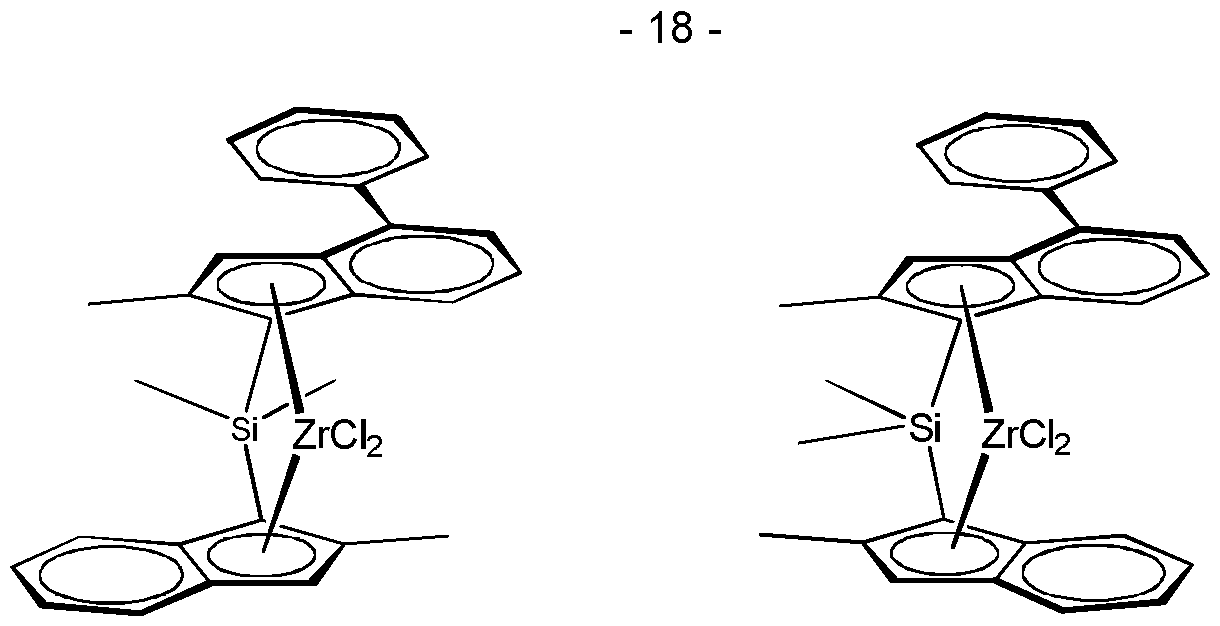

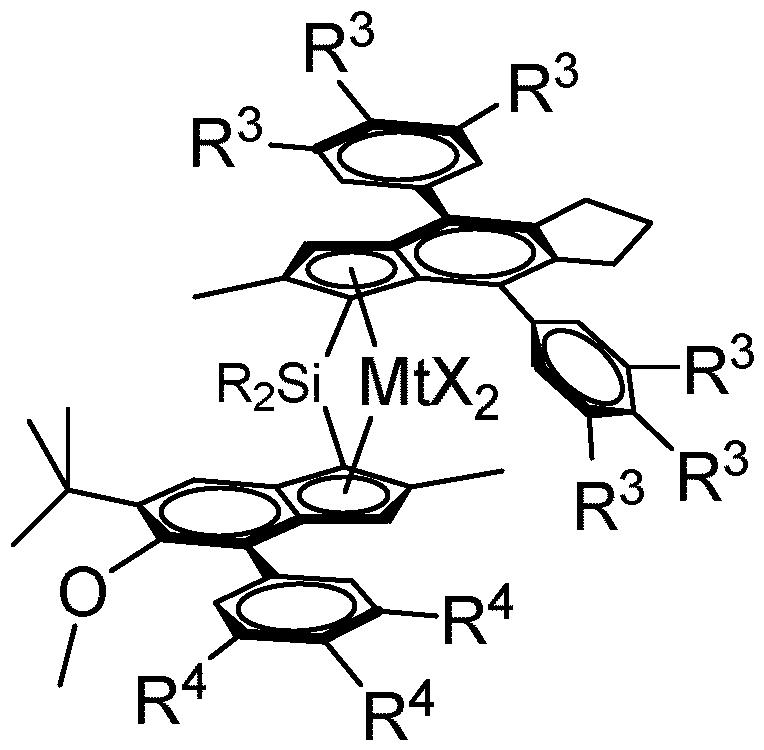

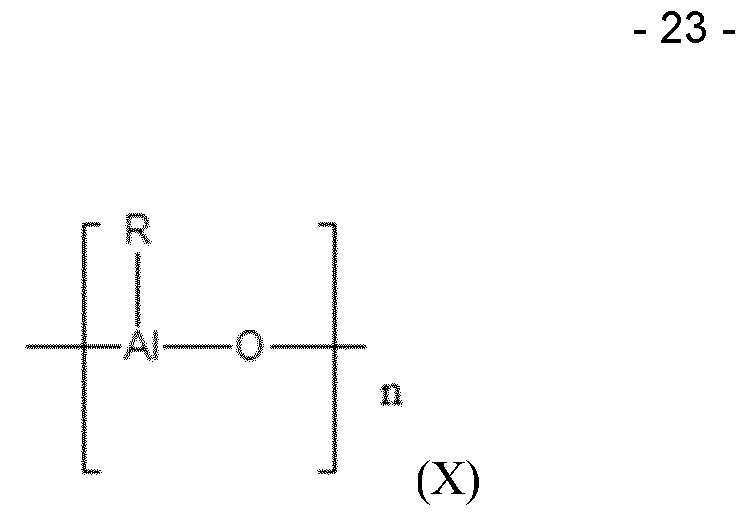

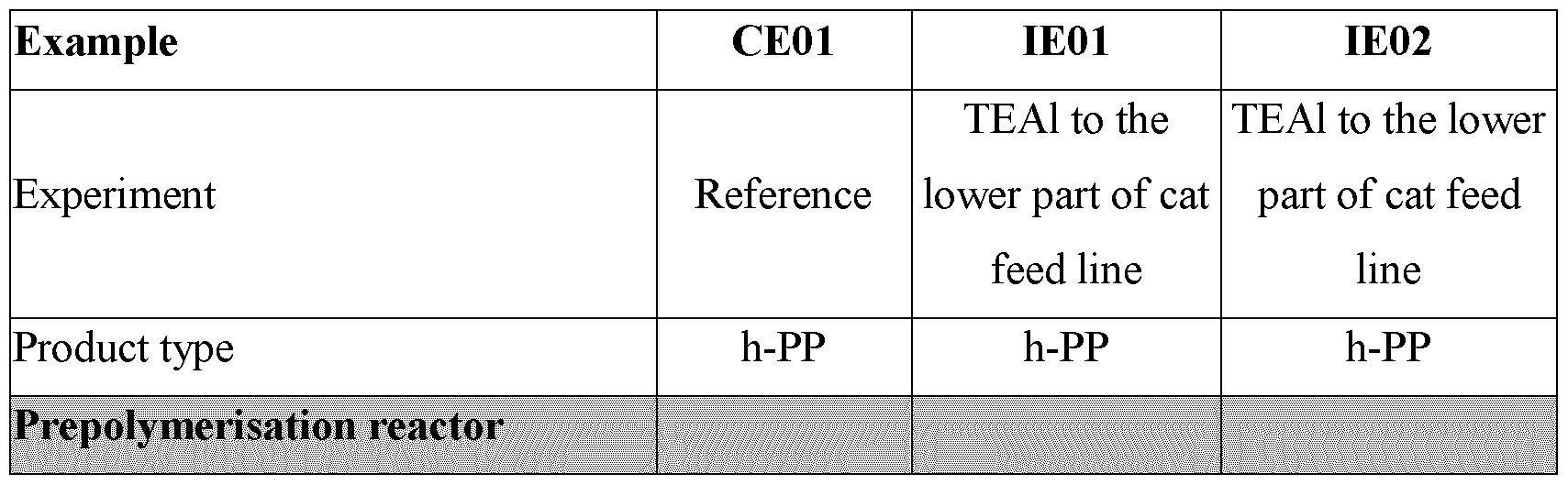
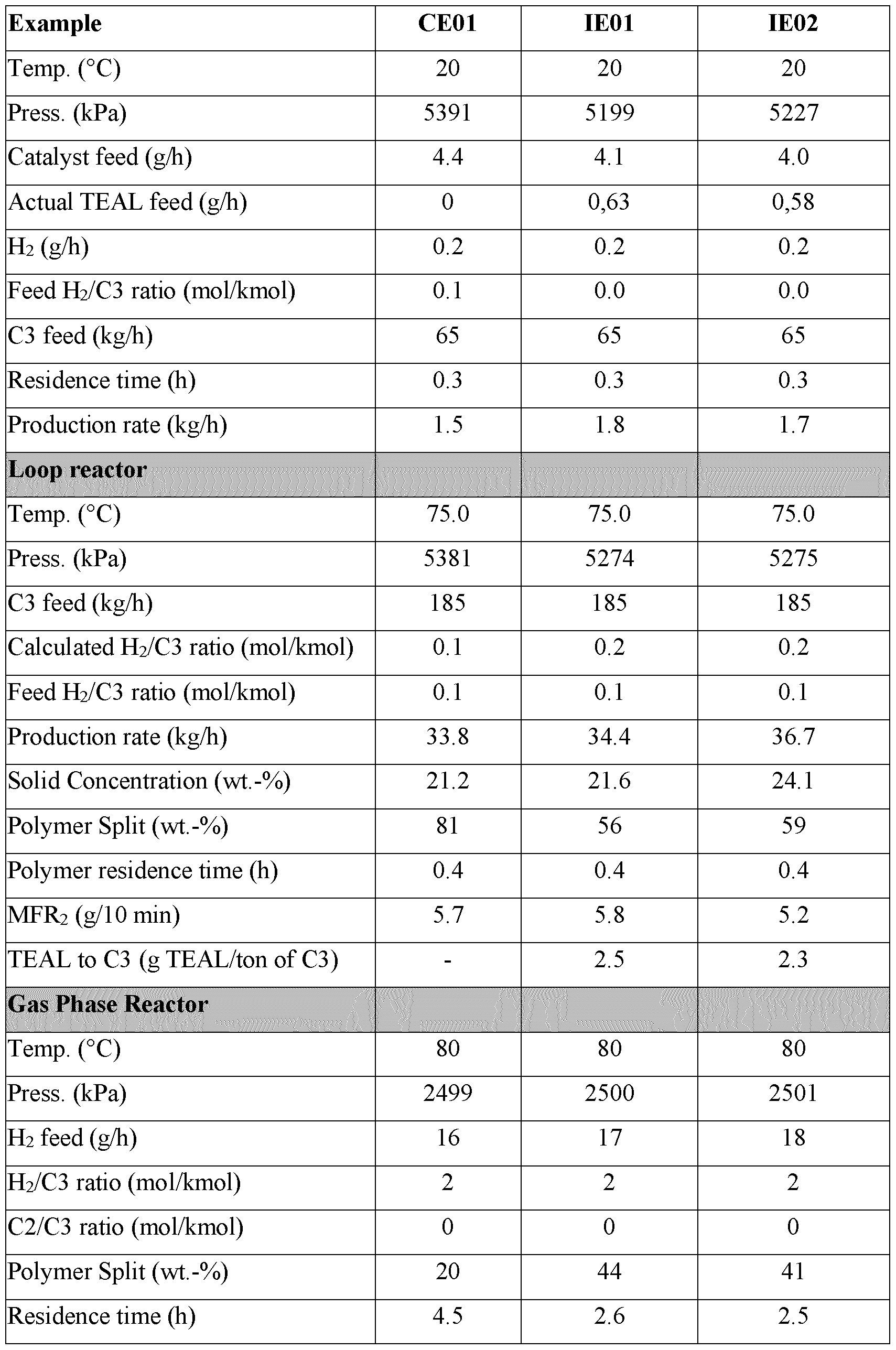
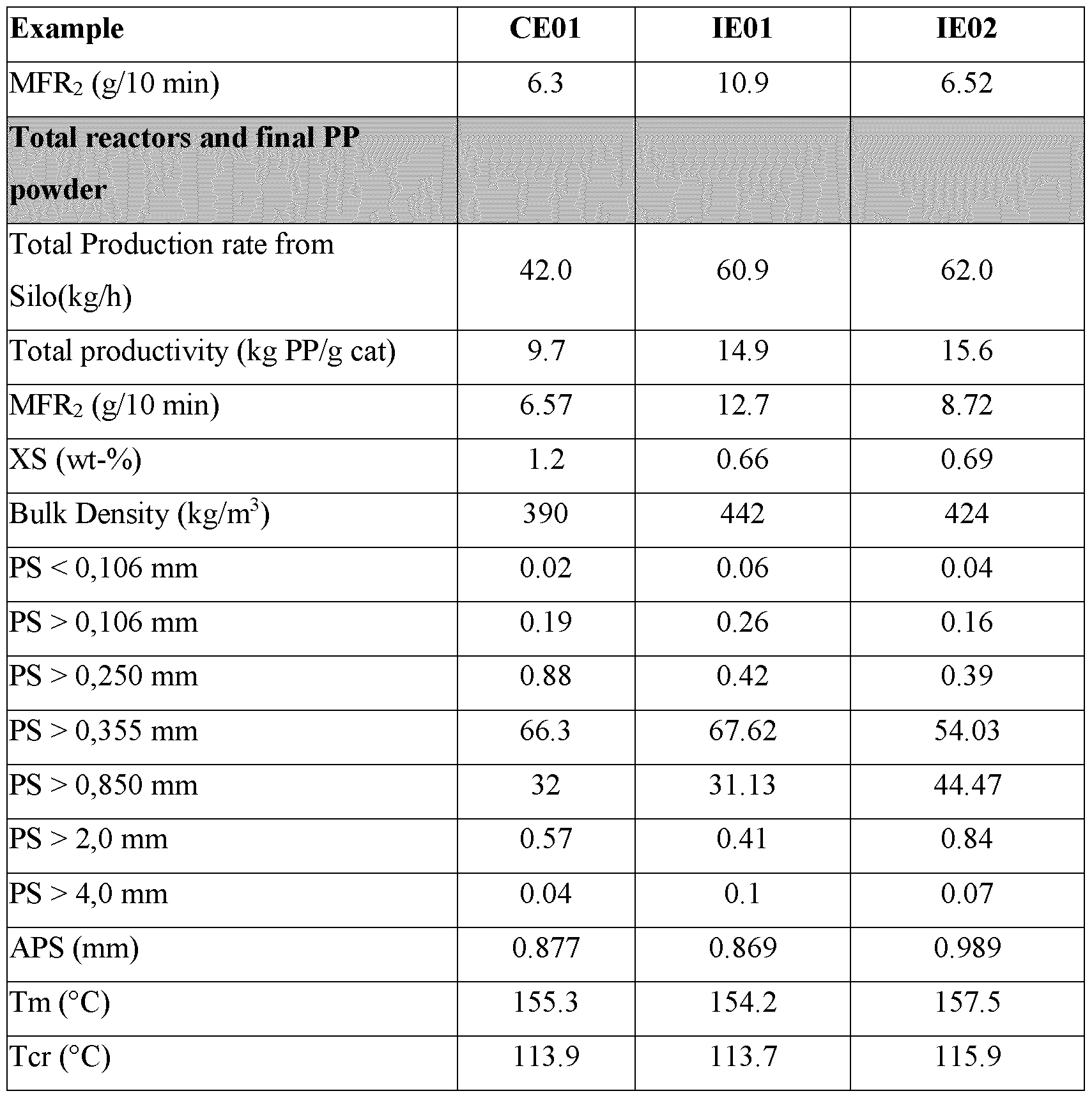

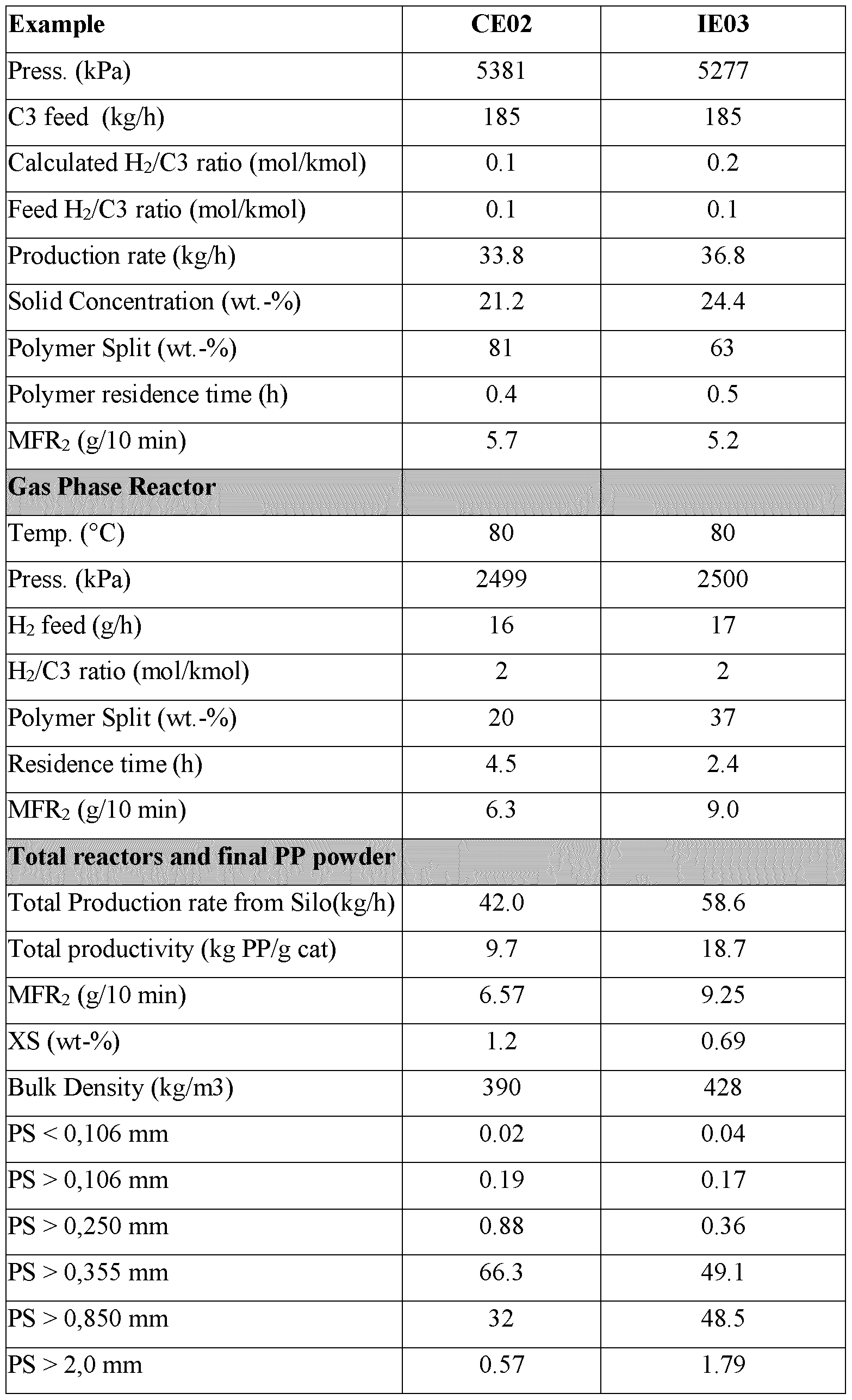

Claims
Priority Applications (3)
| Application Number | Priority Date | Filing Date | Title |
|---|---|---|---|
| KR1020257023993A KR20250124350A (en) | 2022-12-20 | 2023-12-20 | Catalytic conversion method |
| JP2025536262A JP2026501237A (en) | 2022-12-20 | 2023-12-20 | Catalyst Transfer Method |
| CN202380093871.XA CN120677187A (en) | 2022-12-20 | 2023-12-20 | Catalyst conversion method |
Applications Claiming Priority (2)
| Application Number | Priority Date | Filing Date | Title |
|---|---|---|---|
| EP22215204.3A EP4389783A1 (en) | 2022-12-20 | 2022-12-20 | Catalyst transition process |
| EP22215204.3 | 2022-12-20 |
Publications (1)
| Publication Number | Publication Date |
|---|---|
| WO2024133592A1 true WO2024133592A1 (en) | 2024-06-27 |
Family
ID=84901313
Family Applications (1)
| Application Number | Title | Priority Date | Filing Date |
|---|---|---|---|
| PCT/EP2023/087142 Ceased WO2024133592A1 (en) | 2022-12-20 | 2023-12-20 | Catalyst transition process |
Country Status (5)
| Country | Link |
|---|---|
| EP (1) | EP4389783A1 (en) |
| JP (1) | JP2026501237A (en) |
| KR (1) | KR20250124350A (en) |
| CN (1) | CN120677187A (en) |
| WO (1) | WO2024133592A1 (en) |
Citations (86)
| Publication number | Priority date | Publication date | Assignee | Title |
|---|---|---|---|---|
| US4107414A (en) | 1971-06-25 | 1978-08-15 | Montecatini Edison S.P.A. | Process for the stereoregular polymerization of alpha olefins |
| US4186107A (en) | 1978-04-14 | 1980-01-29 | Hercules Incorporated | Solid catalyst component for olefin polymerization |
| US4226963A (en) | 1971-06-25 | 1980-10-07 | Montedison S.P.A. | Process for the stereoregular polymerization of alpha-olephins |
| EP0045976A2 (en) | 1980-08-13 | 1982-02-17 | Montedison S.p.A. | Components and catalysts for the polymerization of olefins |
| US4347160A (en) | 1980-06-27 | 1982-08-31 | Stauffer Chemical Company | Titanium halide catalyst system |
| US4382019A (en) | 1981-09-10 | 1983-05-03 | Stauffer Chemical Company | Purified catalyst support |
| US4435550A (en) | 1981-03-19 | 1984-03-06 | Ube Industries, Ltd. | Method for polymerizing α-olefin |
| US4465782A (en) | 1981-08-07 | 1984-08-14 | Imperial Chemistry Industries PLC | Supported transition metal composition |
| US4472524A (en) | 1982-02-12 | 1984-09-18 | Montedison S.P.A. | Components and catalysts for the polymerization of olefins |
| US4473660A (en) | 1982-02-12 | 1984-09-25 | Montedison S.P.A. | Catalysts for the polymerization of olefins |
| US4522930A (en) | 1982-02-12 | 1985-06-11 | Montedison S.P.A. | Components and catalysts for the polymerization of olefins |
| US4530912A (en) | 1981-06-04 | 1985-07-23 | Chemplex Company | Polymerization catalyst and method |
| US4532313A (en) | 1982-10-13 | 1985-07-30 | Himont Incorporated | Method for preparing an improved catalyst support, Ziegler-Natta catalyst utilizing said support and polymerization of 1-olefins utilizing said catalyst |
| US4560671A (en) | 1983-07-01 | 1985-12-24 | Union Carbide Corporation | Olefin polymerization catalysts adapted for gas phase processes |
| US4581342A (en) | 1984-11-26 | 1986-04-08 | Standard Oil Company (Indiana) | Supported olefin polymerization catalyst |
| US4657882A (en) | 1984-11-26 | 1987-04-14 | Amoco Corporation | Supported olefin polymerization catalyst produced from a magnesium alkyl/organophosphoryl complex |
| WO1987007620A1 (en) | 1986-06-09 | 1987-12-17 | Neste Oy | Procedure for manufacturing catalyst components for polymerizing olefines |
| EP0260130A1 (en) | 1986-09-09 | 1988-03-16 | Exxon Chemical Patents Inc. | New supported polymerization catalyst |
| EP0423101A2 (en) | 1989-10-10 | 1991-04-17 | Fina Technology, Inc. | Catalyst for producing hemiisotactic polypropylene |
| WO1992012182A1 (en) | 1990-12-28 | 1992-07-23 | Neste Oy | Multi-stage process for producing polyethylene |
| WO1992019659A1 (en) | 1991-05-09 | 1992-11-12 | Neste Oy | A large-pore polyolefin, a method for its production and a procatalyst containing a transesterification product of a lower alcohol and a phthalic acid ester |
| WO1992019658A1 (en) | 1991-05-09 | 1992-11-12 | Neste Oy | Coarse grained polyolefin, production thereof and a procatalyst containing a transesterification product between a lower alcohol and dioctylphthalate used therefore |
| WO1992019653A1 (en) | 1991-05-09 | 1992-11-12 | Neste Oy | A procatalyst for polymerization of olefins containing a trans-esterification product of a lower alcohol and a phthalic acid ester |
| WO1992021705A1 (en) | 1991-05-31 | 1992-12-10 | Neste Oy | Method for preparing solid carrier particles of equal size for polymerization catalyst using rotating atomizing means |
| EP0537130A1 (en) | 1991-10-07 | 1993-04-14 | Fina Technology, Inc. | Process and catalyst for producing isotactic polyolefins |
| WO1993011165A1 (en) | 1991-11-29 | 1993-06-10 | Neste Oy | Preparation of a solid ziegler catalyst by using a multifunctional, pivoting, inclinable reactor and the equipment for this |
| WO1993011166A1 (en) | 1991-11-29 | 1993-06-10 | Neste Oy | Method for the preparation of a particulate carrier for a polymerization catalyst |
| WO1993019100A1 (en) | 1992-03-24 | 1993-09-30 | Neste Oy | A polymerization catalyst carrier prepared by spray crystallization |
| WO1994014856A1 (en) | 1992-12-28 | 1994-07-07 | Mobil Oil Corporation | A process for forming a carrier material |
| EP0629632A2 (en) | 1993-06-07 | 1994-12-21 | Mitsui Petrochemical Industries, Ltd. | Novel transition metal compound for use as a polymerization catalyst |
| EP0629631A2 (en) | 1993-06-07 | 1994-12-21 | Mitsui Petrochemical Industries, Ltd. | Novel transition metal compound, and polymerization catalyst containing it |
| WO1995012622A1 (en) | 1993-11-05 | 1995-05-11 | Borealis Holding A/S | Supported olefin polymerization catalyst, its preparation and use |
| WO1995032994A1 (en) | 1994-05-31 | 1995-12-07 | Borealis Holding A/S | Stereospecific catalyst system for polymerization of olefins |
| EP0751965A1 (en) | 1994-03-25 | 1997-01-08 | Exxon Chemical Patents Inc. | Process for transitioning between incompatible polymerization catalysts |
| WO1997010248A1 (en) | 1995-09-11 | 1997-03-20 | Montell Technology Company B.V. | Open-pentadienyl metallocenes, precursors thereof and polymerization catalysts therefrom |
| EP0776913A2 (en) | 1995-12-01 | 1997-06-04 | Hoechst Aktiengesellschaft | High molecular weight copolymers |
| WO1997028170A1 (en) | 1996-01-30 | 1997-08-07 | Borealis A/S | Heteroatom substituted metallocene compounds for olefin polymerization catalyst systems and methods for preparing them |
| WO1997036939A1 (en) | 1996-03-29 | 1997-10-09 | Borealis A/S | A novel composition, its preparation and use |
| WO1998012234A1 (en) | 1996-09-19 | 1998-03-26 | Borealis Polymers Oy | PROCESS FOR THE POLYMERIZATION OF α-OLEFINS, A CATALYST USED IN THE POLYMERIZATION AND ITS PREPARATION |
| WO1998040331A1 (en) | 1997-03-07 | 1998-09-17 | Targor Gmbh | Preparation of preparing substituted indanones |
| WO1998046616A1 (en) | 1997-04-14 | 1998-10-22 | Borealis A/S | Substituted metallocene compounds for olefin polymerization catalyst systems, their intermediates and methods for preparing them |
| WO1998049208A1 (en) | 1997-04-25 | 1998-11-05 | Bp Chemicals Limited | Novel compounds and their use in polymerisation |
| WO1998056831A1 (en) | 1997-06-10 | 1998-12-17 | Peroxid-Chemie Gmbh & Co. Kg. | New catalyst systems for (co-)polymerization reactions, metallocene amide halogenides, the production and use thereof |
| EP0887379A1 (en) | 1997-06-24 | 1998-12-30 | Borealis A/S | Process and apparatus for preparing propylene homopolymers and copolymers |
| WO1999010353A1 (en) | 1997-08-22 | 1999-03-04 | Borealis A/S | Novel organometallic compound, preparation method thereof and process for polymerization of olefins by means of a catalyst composition including the organometallic compound |
| WO1999012943A1 (en) | 1997-09-11 | 1999-03-18 | Targor Gmbh | Method for producing metallocenes |
| WO1999012981A1 (en) | 1997-09-05 | 1999-03-18 | Bp Chemicals Limited | Polymerisation catalysts |
| WO1999019335A1 (en) | 1997-10-11 | 1999-04-22 | Bp Chemicals Limited | Novel polymerisation catalysts |
| WO1999033842A1 (en) | 1997-12-23 | 1999-07-08 | Borealis Technology Oy | Product containing magnesium, halogen and alkoxy |
| WO1999041290A1 (en) | 1998-02-12 | 1999-08-19 | University Of Delaware | Catalyst compounds with beta-diiminate anionic ligands and processes for polymerizing olefins |
| WO1999042497A1 (en) | 1998-02-19 | 1999-08-26 | Targor Gmbh | Catalyst system, method for the production thereof and its use for the polymerization of olefins |
| WO2000026266A1 (en) | 1998-11-02 | 2000-05-11 | Exxon Chemical Patents Inc. | Supported ionic catalyst compositions |
| WO2000034341A2 (en) | 1998-12-07 | 2000-06-15 | Borealis A/S | Catalyst and process for olefin polymerization |
| EP1074557A2 (en) | 1999-07-31 | 2001-02-07 | TARGOR GmbH | Transition metal complexes, ligands, catalysts, and their use in the polymerisation of olefins |
| WO2001070395A2 (en) | 2000-03-22 | 2001-09-27 | Borealis Technology Oy | Polymerization catalysts comprising an open eta-5 ligand |
| WO2002002576A1 (en) | 2000-06-30 | 2002-01-10 | Exxonmobil Chemical Patents Inc. | Bridged bis (indenyl) metallocene compounds |
| WO2002002575A1 (en) | 2000-06-30 | 2002-01-10 | Exxonmobil Chemical Patents, Inc. | Metallocenes with a bridged 4-phenyl-indenyl-ligand for olefin polymerization |
| EP1182216A2 (en) | 1996-03-05 | 2002-02-27 | Borealis Technology Oy | A method of catalyst transitions in olefin polymerisations |
| WO2003000754A1 (en) | 2001-06-20 | 2003-01-03 | Borealis Polymers Oy | Process for preparing an olefin polymerisation catalyst component |
| WO2003000756A1 (en) | 2001-06-20 | 2003-01-03 | Borealis Polymers Oy | Preparation of olefin polymerisation catalyst component |
| WO2003051934A2 (en) | 2001-12-19 | 2003-06-26 | Borealis Technology Oy | Production of olefin polymerisation catalysts |
| WO2004029112A1 (en) | 2002-09-30 | 2004-04-08 | Borealis Polymers Oy | Process for preparing an olefin polymerisation catalyst component with improved high temperature activity |
| WO2005002744A1 (en) | 2003-06-30 | 2005-01-13 | Borealis Technology Oy | Extrusion coating |
| EP1316566B1 (en) * | 2001-12-03 | 2005-03-30 | Fina Technology, Inc. | Method for transitioning between Ziegler-Natta and metallocene catalysts in a bulk loop reactor for the production of polypropylene |
| EP1578808A2 (en) | 2002-12-30 | 2005-09-28 | Univation Technologies LLC | Processes for transitioning between various polymerization catalysts |
| WO2005105863A2 (en) | 2004-04-21 | 2005-11-10 | Novolen Technology Holdings C.V. | Metallocene ligands, metallocene compounds and metallocene catalysts, their synthesis and their use for the polymerization of olefins |
| EP1620472A2 (en) | 2003-03-21 | 2006-02-01 | Univation Technologies LLC | Methods of polymerizing olefin monomers with mixed catalyst systems |
| WO2006097497A1 (en) | 2005-03-18 | 2006-09-21 | Basell Polyolefine Gmbh | Metallocene compounds |
| WO2007107448A1 (en) | 2006-03-17 | 2007-09-27 | Basell Polyolefine Gmbh | Metallocene compounds |
| WO2007116034A1 (en) | 2006-04-12 | 2007-10-18 | Basell Polyolefine Gmbh | Metallocene compounds |
| WO2009027075A2 (en) | 2007-08-27 | 2009-03-05 | Borealis Technology Oy | Catalysts |
| WO2009054832A1 (en) | 2007-10-25 | 2009-04-30 | Novolen Technology Holdings, C.V. | Metallocene compounds, catalysts comprising them, process for producing an olefin polymer by use of the catalysts, and olefin homo-and copolymers |
| WO2010086392A1 (en) | 2009-01-30 | 2010-08-05 | Borealis Ag | A method of catalyst transitions in olefin polymerizations |
| WO2011076780A1 (en) | 2009-12-22 | 2011-06-30 | Borealis Ag | Catalysts |
| WO2011135004A2 (en) | 2010-04-28 | 2011-11-03 | Borealis Ag | Catalysts |
| EP2402353A1 (en) | 2010-07-01 | 2012-01-04 | Borealis AG | Group 4 metallocenes useful as catalysts for the polymerization of olefins |
| WO2012007430A1 (en) | 2010-07-13 | 2012-01-19 | Borealis Ag | Catalyst component |
| WO2012084961A1 (en) | 2010-12-22 | 2012-06-28 | Borealis Ag | Bridged metallocene catalysts |
| EP2532687A2 (en) | 2011-06-10 | 2012-12-12 | Borealis AG | Bridged Metallocene Catalysts |
| EP2610271A1 (en) | 2011-12-30 | 2013-07-03 | Borealis AG | Preparation of phthalate free ZN PP catalysts |
| EP2729479A1 (en) | 2011-07-08 | 2014-05-14 | Borealis AG | Catalysts |
| EP2746289A1 (en) | 2012-12-21 | 2014-06-25 | Borealis AG | Catalysts |
| WO2015158790A2 (en) | 2014-04-17 | 2015-10-22 | Borealis Ag | Improved catalyst system for producing polyethylene copolymers in a high temperature solution polymerization process |
| EP3237458A1 (en) | 2014-12-22 | 2017-11-01 | SABIC Global Technologies B.V. | Process for transitioning between incompatible catalysts |
| EP3394111A1 (en) | 2015-12-22 | 2018-10-31 | SABIC Global Technologies B.V. | Process for transitioning between incompatible catalysts |
| WO2019179959A1 (en) | 2018-03-19 | 2019-09-26 | Borealis Ag | Catalysts for olefin polymerization |
Family Cites Families (1)
| Publication number | Priority date | Publication date | Assignee | Title |
|---|---|---|---|---|
| IT1306630B1 (en) | 1999-02-09 | 2001-10-02 | Optiproject S R L | GLASSES COMPONENTS TO BE ASSEMBLED WITH LENSES. |
-
2022
- 2022-12-20 EP EP22215204.3A patent/EP4389783A1/en active Pending
-
2023
- 2023-12-20 JP JP2025536262A patent/JP2026501237A/en active Pending
- 2023-12-20 CN CN202380093871.XA patent/CN120677187A/en active Pending
- 2023-12-20 KR KR1020257023993A patent/KR20250124350A/en active Pending
- 2023-12-20 WO PCT/EP2023/087142 patent/WO2024133592A1/en not_active Ceased
Patent Citations (95)
| Publication number | Priority date | Publication date | Assignee | Title |
|---|---|---|---|---|
| US4226963A (en) | 1971-06-25 | 1980-10-07 | Montedison S.P.A. | Process for the stereoregular polymerization of alpha-olephins |
| US4107414A (en) | 1971-06-25 | 1978-08-15 | Montecatini Edison S.P.A. | Process for the stereoregular polymerization of alpha olefins |
| US4186107A (en) | 1978-04-14 | 1980-01-29 | Hercules Incorporated | Solid catalyst component for olefin polymerization |
| US4347160A (en) | 1980-06-27 | 1982-08-31 | Stauffer Chemical Company | Titanium halide catalyst system |
| EP0045976A2 (en) | 1980-08-13 | 1982-02-17 | Montedison S.p.A. | Components and catalysts for the polymerization of olefins |
| EP0045977A2 (en) | 1980-08-13 | 1982-02-17 | Montedison S.p.A. | Components and catalysts for the polymerization of olefins |
| EP0045975A2 (en) | 1980-08-13 | 1982-02-17 | Montedison S.p.A. | Components and catalysts for the polymerization of olefins |
| US5618771A (en) | 1980-08-13 | 1997-04-08 | Montell Technology Company B.V. | Components and catalysts for the polymerization of olefins |
| US5539067A (en) | 1980-08-13 | 1996-07-23 | Montedison S.P.A. | Components and catalysts for the polymerization of olefins |
| US4435550A (en) | 1981-03-19 | 1984-03-06 | Ube Industries, Ltd. | Method for polymerizing α-olefin |
| US4530912A (en) | 1981-06-04 | 1985-07-23 | Chemplex Company | Polymerization catalyst and method |
| US4465782A (en) | 1981-08-07 | 1984-08-14 | Imperial Chemistry Industries PLC | Supported transition metal composition |
| US4382019A (en) | 1981-09-10 | 1983-05-03 | Stauffer Chemical Company | Purified catalyst support |
| US4522930A (en) | 1982-02-12 | 1985-06-11 | Montedison S.P.A. | Components and catalysts for the polymerization of olefins |
| US4473660A (en) | 1982-02-12 | 1984-09-25 | Montedison S.P.A. | Catalysts for the polymerization of olefins |
| US4472524A (en) | 1982-02-12 | 1984-09-18 | Montedison S.P.A. | Components and catalysts for the polymerization of olefins |
| US4532313A (en) | 1982-10-13 | 1985-07-30 | Himont Incorporated | Method for preparing an improved catalyst support, Ziegler-Natta catalyst utilizing said support and polymerization of 1-olefins utilizing said catalyst |
| US4560671A (en) | 1983-07-01 | 1985-12-24 | Union Carbide Corporation | Olefin polymerization catalysts adapted for gas phase processes |
| US4581342A (en) | 1984-11-26 | 1986-04-08 | Standard Oil Company (Indiana) | Supported olefin polymerization catalyst |
| US4657882A (en) | 1984-11-26 | 1987-04-14 | Amoco Corporation | Supported olefin polymerization catalyst produced from a magnesium alkyl/organophosphoryl complex |
| WO1987007620A1 (en) | 1986-06-09 | 1987-12-17 | Neste Oy | Procedure for manufacturing catalyst components for polymerizing olefines |
| EP0260130A1 (en) | 1986-09-09 | 1988-03-16 | Exxon Chemical Patents Inc. | New supported polymerization catalyst |
| EP0423101A2 (en) | 1989-10-10 | 1991-04-17 | Fina Technology, Inc. | Catalyst for producing hemiisotactic polypropylene |
| WO1992012182A1 (en) | 1990-12-28 | 1992-07-23 | Neste Oy | Multi-stage process for producing polyethylene |
| WO1992019659A1 (en) | 1991-05-09 | 1992-11-12 | Neste Oy | A large-pore polyolefin, a method for its production and a procatalyst containing a transesterification product of a lower alcohol and a phthalic acid ester |
| WO1992019653A1 (en) | 1991-05-09 | 1992-11-12 | Neste Oy | A procatalyst for polymerization of olefins containing a trans-esterification product of a lower alcohol and a phthalic acid ester |
| WO1992019658A1 (en) | 1991-05-09 | 1992-11-12 | Neste Oy | Coarse grained polyolefin, production thereof and a procatalyst containing a transesterification product between a lower alcohol and dioctylphthalate used therefore |
| WO1992021705A1 (en) | 1991-05-31 | 1992-12-10 | Neste Oy | Method for preparing solid carrier particles of equal size for polymerization catalyst using rotating atomizing means |
| EP0537130A1 (en) | 1991-10-07 | 1993-04-14 | Fina Technology, Inc. | Process and catalyst for producing isotactic polyolefins |
| WO1993011165A1 (en) | 1991-11-29 | 1993-06-10 | Neste Oy | Preparation of a solid ziegler catalyst by using a multifunctional, pivoting, inclinable reactor and the equipment for this |
| WO1993011166A1 (en) | 1991-11-29 | 1993-06-10 | Neste Oy | Method for the preparation of a particulate carrier for a polymerization catalyst |
| WO1993019100A1 (en) | 1992-03-24 | 1993-09-30 | Neste Oy | A polymerization catalyst carrier prepared by spray crystallization |
| WO1994014856A1 (en) | 1992-12-28 | 1994-07-07 | Mobil Oil Corporation | A process for forming a carrier material |
| EP0629631A2 (en) | 1993-06-07 | 1994-12-21 | Mitsui Petrochemical Industries, Ltd. | Novel transition metal compound, and polymerization catalyst containing it |
| EP0629632A2 (en) | 1993-06-07 | 1994-12-21 | Mitsui Petrochemical Industries, Ltd. | Novel transition metal compound for use as a polymerization catalyst |
| WO1995012622A1 (en) | 1993-11-05 | 1995-05-11 | Borealis Holding A/S | Supported olefin polymerization catalyst, its preparation and use |
| EP0751965A1 (en) | 1994-03-25 | 1997-01-08 | Exxon Chemical Patents Inc. | Process for transitioning between incompatible polymerization catalysts |
| WO1995032994A1 (en) | 1994-05-31 | 1995-12-07 | Borealis Holding A/S | Stereospecific catalyst system for polymerization of olefins |
| WO1997010248A1 (en) | 1995-09-11 | 1997-03-20 | Montell Technology Company B.V. | Open-pentadienyl metallocenes, precursors thereof and polymerization catalysts therefrom |
| EP0776913A2 (en) | 1995-12-01 | 1997-06-04 | Hoechst Aktiengesellschaft | High molecular weight copolymers |
| WO1997028170A1 (en) | 1996-01-30 | 1997-08-07 | Borealis A/S | Heteroatom substituted metallocene compounds for olefin polymerization catalyst systems and methods for preparing them |
| EP1182216A2 (en) | 1996-03-05 | 2002-02-27 | Borealis Technology Oy | A method of catalyst transitions in olefin polymerisations |
| WO1997036939A1 (en) | 1996-03-29 | 1997-10-09 | Borealis A/S | A novel composition, its preparation and use |
| WO1998012234A1 (en) | 1996-09-19 | 1998-03-26 | Borealis Polymers Oy | PROCESS FOR THE POLYMERIZATION OF α-OLEFINS, A CATALYST USED IN THE POLYMERIZATION AND ITS PREPARATION |
| WO1998040331A1 (en) | 1997-03-07 | 1998-09-17 | Targor Gmbh | Preparation of preparing substituted indanones |
| WO1998046616A1 (en) | 1997-04-14 | 1998-10-22 | Borealis A/S | Substituted metallocene compounds for olefin polymerization catalyst systems, their intermediates and methods for preparing them |
| WO1998049208A1 (en) | 1997-04-25 | 1998-11-05 | Bp Chemicals Limited | Novel compounds and their use in polymerisation |
| WO1998056831A1 (en) | 1997-06-10 | 1998-12-17 | Peroxid-Chemie Gmbh & Co. Kg. | New catalyst systems for (co-)polymerization reactions, metallocene amide halogenides, the production and use thereof |
| EP0887379A1 (en) | 1997-06-24 | 1998-12-30 | Borealis A/S | Process and apparatus for preparing propylene homopolymers and copolymers |
| WO1999010353A1 (en) | 1997-08-22 | 1999-03-04 | Borealis A/S | Novel organometallic compound, preparation method thereof and process for polymerization of olefins by means of a catalyst composition including the organometallic compound |
| WO1999012981A1 (en) | 1997-09-05 | 1999-03-18 | Bp Chemicals Limited | Polymerisation catalysts |
| WO1999012943A1 (en) | 1997-09-11 | 1999-03-18 | Targor Gmbh | Method for producing metallocenes |
| WO1999019335A1 (en) | 1997-10-11 | 1999-04-22 | Bp Chemicals Limited | Novel polymerisation catalysts |
| WO1999033842A1 (en) | 1997-12-23 | 1999-07-08 | Borealis Technology Oy | Product containing magnesium, halogen and alkoxy |
| WO1999041290A1 (en) | 1998-02-12 | 1999-08-19 | University Of Delaware | Catalyst compounds with beta-diiminate anionic ligands and processes for polymerizing olefins |
| WO1999042497A1 (en) | 1998-02-19 | 1999-08-26 | Targor Gmbh | Catalyst system, method for the production thereof and its use for the polymerization of olefins |
| WO2000026266A1 (en) | 1998-11-02 | 2000-05-11 | Exxon Chemical Patents Inc. | Supported ionic catalyst compositions |
| WO2000034341A2 (en) | 1998-12-07 | 2000-06-15 | Borealis A/S | Catalyst and process for olefin polymerization |
| EP1074557A2 (en) | 1999-07-31 | 2001-02-07 | TARGOR GmbH | Transition metal complexes, ligands, catalysts, and their use in the polymerisation of olefins |
| WO2001070395A2 (en) | 2000-03-22 | 2001-09-27 | Borealis Technology Oy | Polymerization catalysts comprising an open eta-5 ligand |
| WO2002002575A1 (en) | 2000-06-30 | 2002-01-10 | Exxonmobil Chemical Patents, Inc. | Metallocenes with a bridged 4-phenyl-indenyl-ligand for olefin polymerization |
| WO2002002576A1 (en) | 2000-06-30 | 2002-01-10 | Exxonmobil Chemical Patents Inc. | Bridged bis (indenyl) metallocene compounds |
| WO2003000754A1 (en) | 2001-06-20 | 2003-01-03 | Borealis Polymers Oy | Process for preparing an olefin polymerisation catalyst component |
| WO2003000757A1 (en) | 2001-06-20 | 2003-01-03 | Borealis Polymers Oy | Preparation of olefin polymerisation catalyst component |
| WO2003000756A1 (en) | 2001-06-20 | 2003-01-03 | Borealis Polymers Oy | Preparation of olefin polymerisation catalyst component |
| WO2003000755A2 (en) | 2001-06-20 | 2003-01-03 | Borealis Polymers Oy | Olefin polymerisation catalyst and methods for preparing the same |
| EP1316566B1 (en) * | 2001-12-03 | 2005-03-30 | Fina Technology, Inc. | Method for transitioning between Ziegler-Natta and metallocene catalysts in a bulk loop reactor for the production of polypropylene |
| WO2003051934A2 (en) | 2001-12-19 | 2003-06-26 | Borealis Technology Oy | Production of olefin polymerisation catalysts |
| WO2004029112A1 (en) | 2002-09-30 | 2004-04-08 | Borealis Polymers Oy | Process for preparing an olefin polymerisation catalyst component with improved high temperature activity |
| EP1578808A2 (en) | 2002-12-30 | 2005-09-28 | Univation Technologies LLC | Processes for transitioning between various polymerization catalysts |
| EP1620472A2 (en) | 2003-03-21 | 2006-02-01 | Univation Technologies LLC | Methods of polymerizing olefin monomers with mixed catalyst systems |
| WO2005002744A1 (en) | 2003-06-30 | 2005-01-13 | Borealis Technology Oy | Extrusion coating |
| WO2005105863A2 (en) | 2004-04-21 | 2005-11-10 | Novolen Technology Holdings C.V. | Metallocene ligands, metallocene compounds and metallocene catalysts, their synthesis and their use for the polymerization of olefins |
| WO2006097497A1 (en) | 2005-03-18 | 2006-09-21 | Basell Polyolefine Gmbh | Metallocene compounds |
| WO2007107448A1 (en) | 2006-03-17 | 2007-09-27 | Basell Polyolefine Gmbh | Metallocene compounds |
| WO2007116034A1 (en) | 2006-04-12 | 2007-10-18 | Basell Polyolefine Gmbh | Metallocene compounds |
| WO2009027075A2 (en) | 2007-08-27 | 2009-03-05 | Borealis Technology Oy | Catalysts |
| WO2009054832A1 (en) | 2007-10-25 | 2009-04-30 | Novolen Technology Holdings, C.V. | Metallocene compounds, catalysts comprising them, process for producing an olefin polymer by use of the catalysts, and olefin homo-and copolymers |
| WO2010086392A1 (en) | 2009-01-30 | 2010-08-05 | Borealis Ag | A method of catalyst transitions in olefin polymerizations |
| EP2216347A1 (en) * | 2009-01-30 | 2010-08-11 | Borealis AG | A method of catalyst transitions in olefin polymerizations |
| WO2011076780A1 (en) | 2009-12-22 | 2011-06-30 | Borealis Ag | Catalysts |
| WO2011135004A2 (en) | 2010-04-28 | 2011-11-03 | Borealis Ag | Catalysts |
| EP2402353A1 (en) | 2010-07-01 | 2012-01-04 | Borealis AG | Group 4 metallocenes useful as catalysts for the polymerization of olefins |
| WO2012001052A2 (en) | 2010-07-01 | 2012-01-05 | Borealis Ag | Catalysts |
| WO2012007430A1 (en) | 2010-07-13 | 2012-01-19 | Borealis Ag | Catalyst component |
| WO2012084961A1 (en) | 2010-12-22 | 2012-06-28 | Borealis Ag | Bridged metallocene catalysts |
| EP2532687A2 (en) | 2011-06-10 | 2012-12-12 | Borealis AG | Bridged Metallocene Catalysts |
| EP2729479A1 (en) | 2011-07-08 | 2014-05-14 | Borealis AG | Catalysts |
| EP2610271A1 (en) | 2011-12-30 | 2013-07-03 | Borealis AG | Preparation of phthalate free ZN PP catalysts |
| EP2746289A1 (en) | 2012-12-21 | 2014-06-25 | Borealis AG | Catalysts |
| WO2015158790A2 (en) | 2014-04-17 | 2015-10-22 | Borealis Ag | Improved catalyst system for producing polyethylene copolymers in a high temperature solution polymerization process |
| EP3237458A1 (en) | 2014-12-22 | 2017-11-01 | SABIC Global Technologies B.V. | Process for transitioning between incompatible catalysts |
| EP3237458B1 (en) * | 2014-12-22 | 2022-06-22 | SABIC Global Technologies B.V. | Process for transitioning between incompatible catalysts |
| EP3394111A1 (en) | 2015-12-22 | 2018-10-31 | SABIC Global Technologies B.V. | Process for transitioning between incompatible catalysts |
| WO2019179959A1 (en) | 2018-03-19 | 2019-09-26 | Borealis Ag | Catalysts for olefin polymerization |
Non-Patent Citations (1)
| Title |
|---|
| C. GIBSON ET AL., ANGEW. CHEM. INT. ED., vol. 38, 1999, pages 428 - 447 |
Also Published As
| Publication number | Publication date |
|---|---|
| JP2026501237A (en) | 2026-01-14 |
| EP4389783A1 (en) | 2024-06-26 |
| CN120677187A (en) | 2025-09-19 |
| KR20250124350A (en) | 2025-08-19 |
Similar Documents
| Publication | Publication Date | Title |
|---|---|---|
| CN1166700C (en) | Catalyst composition, process for its preparation and its use in a polymerization process | |
| KR101909330B1 (en) | Polymerisation process and catalyst | |
| JP4523002B2 (en) | Polymerization process using metallocene catalyst system | |
| EP2813517B1 (en) | Process for the preparation of a propylene polymer | |
| CN105980423A (en) | Manufacture of polyolefin products | |
| CN105143285A (en) | Preparation of polyolefin | |
| JP6511151B2 (en) | Method of producing polyolefin | |
| CN107531840B (en) | Supported catalyst compositions having improved flow characteristics and preparation thereof | |
| CN106459248B (en) | Catalyst composition, preparation method and use in polymerization process | |
| CN106164104A (en) | Continuous compositions and methods of making and using same | |
| EP4389783A1 (en) | Catalyst transition process | |
| JP2019529664A (en) | Process for polymerizing olefins | |
| EP4389776A1 (en) | Process | |
| CN105189566A (en) | Processes for making catalyst compositions having improved flow | |
| WO2024133044A1 (en) | Process for producing a polypropylene homo- or copolymer | |
| KR102803225B1 (en) | Method for preparing supported metallocene catalyst and method for preparing polyolefin using the same | |
| EP4638529A1 (en) | Process for producing a high-flow polypropylene homopolymer | |
| WO2025003435A1 (en) | Process | |
| EP4638530A1 (en) | Process for producing a polypropylene copolymer | |
| CN1771265A (en) | Methods of polymerizing olefin monomers with mixed catalyst systems | |
| WO2025219533A1 (en) | Process for the preparation of a propylene homopolymer |
Legal Events
| Date | Code | Title | Description |
|---|---|---|---|
| 121 | Ep: the epo has been informed by wipo that ep was designated in this application |
Ref document number: 23836512 Country of ref document: EP Kind code of ref document: A1 |
|
| WWE | Wipo information: entry into national phase |
Ref document number: P2025-01842 Country of ref document: AE Ref document number: 2501004054 Country of ref document: TH |
|
| ENP | Entry into the national phase |
Ref document number: 2025536262 Country of ref document: JP Kind code of ref document: A |
|
| WWE | Wipo information: entry into national phase |
Ref document number: 2025536262 Country of ref document: JP |
|
| REG | Reference to national code |
Ref country code: BR Ref legal event code: B01A Ref document number: 112025012539 Country of ref document: BR |
|
| ENP | Entry into the national phase |
Ref document number: 1020257023993 Country of ref document: KR Free format text: ST27 STATUS EVENT CODE: A-0-1-A10-A15-NAP-PA0105 (AS PROVIDED BY THE NATIONAL OFFICE) |
|
| WWE | Wipo information: entry into national phase |
Ref document number: 1020257023993 Country of ref document: KR |
|
| WWE | Wipo information: entry into national phase |
Ref document number: 202517068896 Country of ref document: IN |
|
| NENP | Non-entry into the national phase |
Ref country code: DE |
|
| WWE | Wipo information: entry into national phase |
Ref document number: 202380093871.X Country of ref document: CN |
|
| WWP | Wipo information: published in national office |
Ref document number: 202517068896 Country of ref document: IN |
|
| WWP | Wipo information: published in national office |
Ref document number: 1020257023993 Country of ref document: KR |
|
| WWP | Wipo information: published in national office |
Ref document number: 202380093871.X Country of ref document: CN |
|
| 122 | Ep: pct application non-entry in european phase |
Ref document number: 23836512 Country of ref document: EP Kind code of ref document: A1 |