WO2024105197A1 - Small molecule-drug-conjugates cleavable in a tumor microenvironment - Google Patents
Small molecule-drug-conjugates cleavable in a tumor microenvironment Download PDFInfo
- Publication number
- WO2024105197A1 WO2024105197A1 PCT/EP2023/082123 EP2023082123W WO2024105197A1 WO 2024105197 A1 WO2024105197 A1 WO 2024105197A1 EP 2023082123 W EP2023082123 W EP 2023082123W WO 2024105197 A1 WO2024105197 A1 WO 2024105197A1
- Authority
- WO
- WIPO (PCT)
- Prior art keywords
- alkyl
- pharmaceutically acceptable
- acceptable salt
- compound
- binder
- Prior art date
- Legal status (The legal status is an assumption and is not a legal conclusion. Google has not performed a legal analysis and makes no representation as to the accuracy of the status listed.)
- Ceased
Links
Classifications
-
- A—HUMAN NECESSITIES
- A61—MEDICAL OR VETERINARY SCIENCE; HYGIENE
- A61K—PREPARATIONS FOR MEDICAL, DENTAL OR TOILETRY PURPOSES
- A61K47/00—Medicinal preparations characterised by the non-active ingredients used, e.g. carriers or inert additives; Targeting or modifying agents chemically bound to the active ingredient
- A61K47/50—Medicinal preparations characterised by the non-active ingredients used, e.g. carriers or inert additives; Targeting or modifying agents chemically bound to the active ingredient the non-active ingredient being chemically bound to the active ingredient, e.g. polymer-drug conjugates
- A61K47/51—Medicinal preparations characterised by the non-active ingredients used, e.g. carriers or inert additives; Targeting or modifying agents chemically bound to the active ingredient the non-active ingredient being chemically bound to the active ingredient, e.g. polymer-drug conjugates the non-active ingredient being a modifying agent
- A61K47/54—Medicinal preparations characterised by the non-active ingredients used, e.g. carriers or inert additives; Targeting or modifying agents chemically bound to the active ingredient the non-active ingredient being chemically bound to the active ingredient, e.g. polymer-drug conjugates the non-active ingredient being a modifying agent the modifying agent being an organic compound
-
- A—HUMAN NECESSITIES
- A61—MEDICAL OR VETERINARY SCIENCE; HYGIENE
- A61K—PREPARATIONS FOR MEDICAL, DENTAL OR TOILETRY PURPOSES
- A61K47/00—Medicinal preparations characterised by the non-active ingredients used, e.g. carriers or inert additives; Targeting or modifying agents chemically bound to the active ingredient
- A61K47/50—Medicinal preparations characterised by the non-active ingredients used, e.g. carriers or inert additives; Targeting or modifying agents chemically bound to the active ingredient the non-active ingredient being chemically bound to the active ingredient, e.g. polymer-drug conjugates
- A61K47/51—Medicinal preparations characterised by the non-active ingredients used, e.g. carriers or inert additives; Targeting or modifying agents chemically bound to the active ingredient the non-active ingredient being chemically bound to the active ingredient, e.g. polymer-drug conjugates the non-active ingredient being a modifying agent
- A61K47/54—Medicinal preparations characterised by the non-active ingredients used, e.g. carriers or inert additives; Targeting or modifying agents chemically bound to the active ingredient the non-active ingredient being chemically bound to the active ingredient, e.g. polymer-drug conjugates the non-active ingredient being a modifying agent the modifying agent being an organic compound
- A61K47/542—Carboxylic acids, e.g. a fatty acid or an amino acid
-
- A—HUMAN NECESSITIES
- A61—MEDICAL OR VETERINARY SCIENCE; HYGIENE
- A61K—PREPARATIONS FOR MEDICAL, DENTAL OR TOILETRY PURPOSES
- A61K47/00—Medicinal preparations characterised by the non-active ingredients used, e.g. carriers or inert additives; Targeting or modifying agents chemically bound to the active ingredient
- A61K47/50—Medicinal preparations characterised by the non-active ingredients used, e.g. carriers or inert additives; Targeting or modifying agents chemically bound to the active ingredient the non-active ingredient being chemically bound to the active ingredient, e.g. polymer-drug conjugates
- A61K47/51—Medicinal preparations characterised by the non-active ingredients used, e.g. carriers or inert additives; Targeting or modifying agents chemically bound to the active ingredient the non-active ingredient being chemically bound to the active ingredient, e.g. polymer-drug conjugates the non-active ingredient being a modifying agent
- A61K47/54—Medicinal preparations characterised by the non-active ingredients used, e.g. carriers or inert additives; Targeting or modifying agents chemically bound to the active ingredient the non-active ingredient being chemically bound to the active ingredient, e.g. polymer-drug conjugates the non-active ingredient being a modifying agent the modifying agent being an organic compound
- A61K47/545—Heterocyclic compounds
-
- A—HUMAN NECESSITIES
- A61—MEDICAL OR VETERINARY SCIENCE; HYGIENE
- A61K—PREPARATIONS FOR MEDICAL, DENTAL OR TOILETRY PURPOSES
- A61K47/00—Medicinal preparations characterised by the non-active ingredients used, e.g. carriers or inert additives; Targeting or modifying agents chemically bound to the active ingredient
- A61K47/50—Medicinal preparations characterised by the non-active ingredients used, e.g. carriers or inert additives; Targeting or modifying agents chemically bound to the active ingredient the non-active ingredient being chemically bound to the active ingredient, e.g. polymer-drug conjugates
- A61K47/51—Medicinal preparations characterised by the non-active ingredients used, e.g. carriers or inert additives; Targeting or modifying agents chemically bound to the active ingredient the non-active ingredient being chemically bound to the active ingredient, e.g. polymer-drug conjugates the non-active ingredient being a modifying agent
- A61K47/54—Medicinal preparations characterised by the non-active ingredients used, e.g. carriers or inert additives; Targeting or modifying agents chemically bound to the active ingredient the non-active ingredient being chemically bound to the active ingredient, e.g. polymer-drug conjugates the non-active ingredient being a modifying agent the modifying agent being an organic compound
- A61K47/55—Medicinal preparations characterised by the non-active ingredients used, e.g. carriers or inert additives; Targeting or modifying agents chemically bound to the active ingredient the non-active ingredient being chemically bound to the active ingredient, e.g. polymer-drug conjugates the non-active ingredient being a modifying agent the modifying agent being an organic compound the modifying agent being also a pharmacologically or therapeutically active agent, i.e. the entire conjugate being a codrug, i.e. a dimer, oligomer or polymer of pharmacologically or therapeutically active compounds
-
- A—HUMAN NECESSITIES
- A61—MEDICAL OR VETERINARY SCIENCE; HYGIENE
- A61K—PREPARATIONS FOR MEDICAL, DENTAL OR TOILETRY PURPOSES
- A61K47/00—Medicinal preparations characterised by the non-active ingredients used, e.g. carriers or inert additives; Targeting or modifying agents chemically bound to the active ingredient
- A61K47/50—Medicinal preparations characterised by the non-active ingredients used, e.g. carriers or inert additives; Targeting or modifying agents chemically bound to the active ingredient the non-active ingredient being chemically bound to the active ingredient, e.g. polymer-drug conjugates
- A61K47/51—Medicinal preparations characterised by the non-active ingredients used, e.g. carriers or inert additives; Targeting or modifying agents chemically bound to the active ingredient the non-active ingredient being chemically bound to the active ingredient, e.g. polymer-drug conjugates the non-active ingredient being a modifying agent
- A61K47/54—Medicinal preparations characterised by the non-active ingredients used, e.g. carriers or inert additives; Targeting or modifying agents chemically bound to the active ingredient the non-active ingredient being chemically bound to the active ingredient, e.g. polymer-drug conjugates the non-active ingredient being a modifying agent the modifying agent being an organic compound
- A61K47/55—Medicinal preparations characterised by the non-active ingredients used, e.g. carriers or inert additives; Targeting or modifying agents chemically bound to the active ingredient the non-active ingredient being chemically bound to the active ingredient, e.g. polymer-drug conjugates the non-active ingredient being a modifying agent the modifying agent being an organic compound the modifying agent being also a pharmacologically or therapeutically active agent, i.e. the entire conjugate being a codrug, i.e. a dimer, oligomer or polymer of pharmacologically or therapeutically active compounds
- A61K47/551—Medicinal preparations characterised by the non-active ingredients used, e.g. carriers or inert additives; Targeting or modifying agents chemically bound to the active ingredient the non-active ingredient being chemically bound to the active ingredient, e.g. polymer-drug conjugates the non-active ingredient being a modifying agent the modifying agent being an organic compound the modifying agent being also a pharmacologically or therapeutically active agent, i.e. the entire conjugate being a codrug, i.e. a dimer, oligomer or polymer of pharmacologically or therapeutically active compounds one of the codrug's components being a vitamin, e.g. niacinamide, vitamin B3, cobalamin, vitamin B12, folate, vitamin A or retinoic acid
-
- A—HUMAN NECESSITIES
- A61—MEDICAL OR VETERINARY SCIENCE; HYGIENE
- A61K—PREPARATIONS FOR MEDICAL, DENTAL OR TOILETRY PURPOSES
- A61K47/00—Medicinal preparations characterised by the non-active ingredients used, e.g. carriers or inert additives; Targeting or modifying agents chemically bound to the active ingredient
- A61K47/50—Medicinal preparations characterised by the non-active ingredients used, e.g. carriers or inert additives; Targeting or modifying agents chemically bound to the active ingredient the non-active ingredient being chemically bound to the active ingredient, e.g. polymer-drug conjugates
- A61K47/51—Medicinal preparations characterised by the non-active ingredients used, e.g. carriers or inert additives; Targeting or modifying agents chemically bound to the active ingredient the non-active ingredient being chemically bound to the active ingredient, e.g. polymer-drug conjugates the non-active ingredient being a modifying agent
- A61K47/62—Medicinal preparations characterised by the non-active ingredients used, e.g. carriers or inert additives; Targeting or modifying agents chemically bound to the active ingredient the non-active ingredient being chemically bound to the active ingredient, e.g. polymer-drug conjugates the non-active ingredient being a modifying agent the modifying agent being a protein, peptide or polyamino acid
- A61K47/65—Peptidic linkers, binders or spacers, e.g. peptidic enzyme-labile linkers
-
- A—HUMAN NECESSITIES
- A61—MEDICAL OR VETERINARY SCIENCE; HYGIENE
- A61P—SPECIFIC THERAPEUTIC ACTIVITY OF CHEMICAL COMPOUNDS OR MEDICINAL PREPARATIONS
- A61P27/00—Drugs for disorders of the senses
- A61P27/02—Ophthalmic agents
-
- A—HUMAN NECESSITIES
- A61—MEDICAL OR VETERINARY SCIENCE; HYGIENE
- A61P—SPECIFIC THERAPEUTIC ACTIVITY OF CHEMICAL COMPOUNDS OR MEDICINAL PREPARATIONS
- A61P35/00—Antineoplastic agents
-
- A—HUMAN NECESSITIES
- A61—MEDICAL OR VETERINARY SCIENCE; HYGIENE
- A61P—SPECIFIC THERAPEUTIC ACTIVITY OF CHEMICAL COMPOUNDS OR MEDICINAL PREPARATIONS
- A61P9/00—Drugs for disorders of the cardiovascular system
Definitions
- SUMMARY [0002] Provided herein are compounds comprising one or more active agents (i.e., payloads) having therapeutic activity (e.g., cytotoxic or immunostimulatory activity) conjugated to one or more target protein binders, preferably small molecule binders, via one or more linking units.
- the compounds provided herein may comprise one or more enzymatically-cleavable peptide linkers, which enable targeted release of a payload in a tumor microenvironment.
- the peptide linkers may, for example, be cleaved by neutrophil elastase, a protease secreted by neutrophils, particularly in response to inflammation and/or disease.
- Neutrophil elastase may be overexpressed in a tumor microenvironment, thereby providing a site-specific delivery of a cytotoxic payload to the tumor.
- a cytotoxic payload e.g., a tumor cell
- cell-permeable payloads which upon release in a tumor microenvironment, may penetrate a diseased cell (e.g., a tumor cell) thereby producing cytotoxic/anti-tumor effects.
- Compounds can comprise one or more (e.g., one, two, etc.) payloads, and/or one or more targeting groups, conjugated via a linker comprising a cleavable peptide, and optionally further comprising solubility-enhancing or tumor-retaining polymeric linker units (e.g., polyethylene glycol, polyethyleneimine, polysarcosine, etc.) and/or branching units.
- a branching unit may be a trivalent or tetravalent group, which may optionally comprise an amino acid or a peptide.
- Payloads provided herein include, but are not limited to, PTEFb inhibitors, topoisomerase inhibitors, kinesin spindle protein inhibitors, tubulin inhibitors, immune agonists, and the like.
- Specific examples include camptothecin and derivatives lhereof (e.g., 7-ethyl camptothecin, P368924WO / 59362-750.601 paclitaxel, or derivatives thereof), auristatins (e.g., monomethyl auristatin E, monomethyl auristatin F, etc.), toll-like receptor agonists (e.g., resiquimod, imiquimod), or other small molecule cytotoxins that may be cleaved by neutrophil elastase.
- camptothecin and derivatives lhereof e.g., 7-ethyl camptothecin, P368924WO / 59362-750.601 paclitaxel, or
- the therapeutic payload is a novel cytotoxin having favorable permeability and/or low efflux.
- payloads provided herein may be cleaved in a tumor microenvironment without the use of a self-immolative group, which can result in unwanted off- target release of a payload.
- the compounds provided herein do not require internalization within a cell in order to produce anti-tumor effects.
- Compounds provided herein further comprise at least one, and optionally two, target protein binders, which further direct the compound to a desired site of action (e.g., a tumor or tumor microenvironment).
- the target protein binders disclosed herein are generally small molecules (having a molecular weight of about 1000 g/mol or less).
- the target proteins to which a binder may bind include, but are not limited to, ⁇ v ⁇ 3 (avb3) integrin binders, fibroblast activation protein (FAP) binders, folate receptor (FR) binders, prostate-specific membrane antigen (PSMA) binders, carbonic anhydrase IX (CA IX or CA9) binders, and the like.
- Small molecules and conjugates thereof may have certain advantages over their antibody counterparts (e.g., antibody-drug conjugates) due to their lower molecular weight, plasma protein binding, or other pharmacological or pharmacokinetic considerations.
- conjugates provided herein may provide additional advantages over a payload by itself, in that not only is the payload directed to a desired cell or tissue whereas the payload is non-selectively distributed throughout a subject, the conjugates provided herein may also possess novel and advantageous benefits in pharmacokinetics (e.g., distribution, metabolism, clearance, excretion, half-life, AUC, etc.). In some embodiments, conjugates provided herein have a half-life of 24 hours or more. Also provided herein are novel conjugate designs and/or arrangements of binders, payloads, and linkers. In some embodiments, a conjugate further comprises a pharmacokinetic modulator, which may modulate one or more pharmacokinetic parameters of a conjugate.
- the pharmacokinetic modulator comprises a charged or ionizable group (e.g., a carboxylate, a sulfonate, a sulfinate, a phosphonate, an amine, an iminium, a guanidine, etc.).
- a charged or ionizable group e.g., a carboxylate, a sulfonate, a sulfinate, a phosphonate, an amine, an iminium, a guanidine, etc.
- the compound or a pharmaceutically acceptable salt thereof has the structure of Formula (I): T –– L –– EL –– P P368924WO / 59362-750.601 wherein: T is a target protein binder; P is a payload; EL is a peptide linker, optionally further comprising a self-immolative group; and L is a linker, optionally further comprising a second T and/or a second EL-P.
- T is a target protein binder
- P is a payload
- EL is a peptide linker, optionally further comprising a self-immolative group
- L is a linker, optionally further comprising a second T and/or a second EL-P.
- a compound or a pharmaceutically acceptable salt thereof having a structure of Formula (II), Formula (III), Formula (IV), Formula (V), Formula (VI), Formula (VII), Formula (VIII), or Formula (IX): Formula (II) Formula (III) Formula (IV) Formula (V) Formula (VI) Formula (VII) Formula (VIII) Formula (IX) wherein: each P is a payload; each EL is a peptide linker, optionally further comprising a self-immolative group; each L1, L2, L3, and L4 is independently a bivalent linker, A1 is a trivalent linker; A2 is a tetravalent linker; each T is a target protein binder; and MOD is a pharmacokinetic modulating group.
- the target protein binder is a binder of avb3 integrin, avb6 integrin, PSMA, CAIX, FAP, folate, Hsp90, somatostatin, GLUT1, APN, LRP1, bombesin, GnRH, LHRH, MT1-MMP, P32, phosphatidyl serine or sortilin.
- the payload is a tubulin modulator, DNA modulator, RNA modulator, oxidative phosphorylation inhibitor, kinase inhibitor, Dihydrofolate reductase inhibitor, histone deacetylase inhibitor or an immunomodulator.
- the bivalent linker comprises 1 to 12 (e.g., 3 to 6) PEG or PEI units; while a P368924WO / 59362-750.601 compound may comprise multiple bivalent linkers.
- a pharmaceutical composition comprising a compound or salt of Formula (II), Formula (III), Formula (IV), Formula (V), Formula (VI), Formula (VII), Formula (VIII), or Formula (IX), and a pharmaceutically acceptable excipient.
- the disease or disorder is a hyperproliferative disorder.
- the disease or disorder is a cancer.
- FIG. 1 shows cytokine release of freshly prepared PBMC from three healthy donors after treatment with the indicated compounds (1 ⁇ M).
- DETAILED DESCRIPTION [00014] While various embodiments of the invention have been shown and described herein, it will be obvious to those skilled in the art that such embodiments are provided by way of example only. Numerous variations, changes, and substitutions may occur to those skilled in the art without departing from the invention.
- novel pharmaceutical compounds comprising one or more binding molecules binding to target molecules expressed on tumor cells or on cells present in the tumor microenvironment and which are linked via protease cleavable linkers to one or more payload molecules, the processes for preparation thereof, and to the use thereof for treating, preventing or managing diseases and conditions including hyperproliferative disorders such as cancer in humans and other mammals.
- binding molecules include binders to cell adhesion proteins like integrins such as ⁇ v ⁇ 3 integrins, ⁇ v ⁇ 6 integrins, prostate specific membrane antigen (PSMA), fibroblast activation protein (FAP), carbonic anhydrase IX (CAIX), a chaperone protein Heat Shock 90 (Hsp 90) binder, a Folic Acid Receptor binder, a Glucose transporter 1 binder, a Somatostatin receptor binder, an aminopeptidase N (APN) binder, a Low density lipoprotein receptor-related protein 1 (LRP1) binder, a Bombesin receptor binder, a gonadotropin releasing hormone (GnRH or LHRH) receptor binder, P32 binder, Membrane type 1 Matrix Metalloprotease (MT1-MMP) binder, a Sortilin binder, a Nectin-4 binder.
- integrins such as ⁇ v ⁇
- Protease cleavable linkers contain peptide sequences which are cleavable by tumor- associated enzymes present in tumor microenvironment. Many of these enzymes were shown to be part of the protease family of enzymes which are mainly involved in the modulation of the tumor stroma and the motility of tumor cells.
- Tumor microenvironment shaping proteases are for example serine proteases like plasmin activator, seprase, hepsin or kallikreins.
- protease in the TME are cystein proteases such as cathepsin B and cathepsin K or aspartyl proteases such as cathepsin D and cathepsin E, but also other proteases such as heparanase, endoglycosidase and hyaluronidase were shown to be upregulated and activated within the TME.
- Such enzymes can be proteases such as matrix metallo proteases, neutrophil elastase.
- Payloads employed in such conjugates can be a cytotoxic or an immunostimulatory agent.
- chemotherapeutics in cancer is accompanied by usually serious side effects which are to be attributed to the toxic action of chemotherapeutics on proliferating cells of other tissue types rather P368924WO / 59362-750.601 than tumor tissue. For many years, scientists have occupied themselves with the problem of improving the selectivity of active compounds employed.
- 20(S)-Camptothecin is a pentacyclic alkaloid which was isolated in 1966 by Wall et al. (J. Am. Chem. Soc.88, 3888 (1966)). It has a high active antitumor potential in numerous in- vitro and in-vivo tests. Unfortunately, however, the realization of the promising potential in the clinical investigation phase failed because of toxicity and solubility problems. [00021] A large number of camptothecin derivatives have been investigated in preclinical and clinical studies; from those, irinotecan, topotecan and belotecan have successfully been approved (Li et al, Am J Cancer Res 2017;7(12):2350-2394). Some such derivatives (A-W) are listed below.
- Integrins are heterodimeric transmembrane proteins that may be expressed on the surface of cells, which play an important part in the adhesion of the cells to an extracellular matrix. They recognize extracellular glycoproteins such as fibronectin or vitronectin on the extracellular matrix via the RGD sequence occurring in these proteins (RGD is the single-letter code for the amino acid sequence arginine-glycine-aspartate).
- integrins such as, for example, the vitronectin receptor, which is also called the ⁇ v ⁇ 3 receptor, or alternatively the ⁇ v ⁇ 5 receptor or the GpIIb/IIIa receptor play an important part in biological processes such as cell migration, angiogenesis and cell-matrix adhesion and thus for diseases in which these processes are crucial steps. Cancer, osteoporosis, arteriosclerosis, restenosis and ophthalmia may be mentioned by way of example.
- the ⁇ v ⁇ 3 receptor occurs, for example, in large amounts on growing endothelial cells and makes possible their adhesion to an extracellular matrix.
- the ⁇ v ⁇ 3 receptor thus plays an important part in angiogenesis, i. e.
- Conjugates provided herein can be selectively concentrated in a tumor tissue by incorporation of one or more binding molecules (i.e., target protein binders), which can bind to a target protein (e.g., receptor) that is expressed, preferably overexpressed, in tumor tissue.
- binding molecules i.e., target protein binders
- target protein e.g., receptor
- Conjugates provided herein may comprise one or more protease-cleavable payloads (e.g., therapeutic payloads) which, upon cleavage by a protease, exhibit cytotoxic or immune agonist properties.
- a payload may be bound to a conjugate (as provided herein) via a protease-cleavable linker, wherein the protease is selectively expressed (e.g., overexpressed) by tumor cells, or by cells present in a tumor microenvironment.
- the targeted cytotoxic or immunostimulatory effects of a conjugate provided herein (or of a therapeutic payload conjugated thereto) can be further enhanced when the release of the payload takes place in the immediate vicinity of the tumor tissue (i.e., within a tumor microenvironment), or within a tumor cell.
- therapeutic payloads which, upon release from a conjugate, can penetrate a tumor cell.
- a therapeutic payload is not effluxed or transported outside of a cell.
- enzyme-activated anti-tumor prodrug compounds which can be specifically cleaved by collagenase (IV) and elastase.
- collagenase (IV) and elastase With respect to linking units cleavable by elastase this application describes that the specific tetrapeptide sequences Ala-Ala-Pro- Val and Ala-Ala-Pro-Nva are suitable.
- no conjugates which comprise a moiety addressing ⁇ v ⁇ 3 integrin receptors and a cytostatic are mentioned.
- Pharmaceutics 2012, 9, 168) describe conjugates of Auristatins linked to an ⁇ v ⁇ 3 integrin targeting moiety via a legumain-cleavable linker.
- conjugates with cytotoxic agents which target ⁇ v ⁇ 3 integrins and have peptide linkers which can be specifically cleaved by elastase.
- this application describes peptide sequences comprising Pro-Val and Pro-Leu.
- toxophore moieties camptothecin and a quinolone carboxylic acid are exemplified.
- conjugates include ⁇ sufficient solubility enabling intravenous administration in appropriate vehicles, ⁇ high tumor penetration of intact conjugates, ⁇ high stability in plasma to avoid systemic de-conjugation, ⁇ efficient binding to the targeted receptors in the tumor microenvironment, ⁇ efficient cleavage by enzymes present in the tumor microenvironment, P368924WO / 59362-750.601 ⁇ high cellular permeability and low efflux ratio of cleaved toxophore moieties to enhance tumor cell uptake versus re-distribution.
- conjugates which comprise a moiety addressing tumor targets and a payload which can be released from the conjugate preferably in tumor microenvironment, where the moiety in the conjugate addressing receptors in tumor tissue retains its ability to bind to the receptor and therefore provides tissue selectivity to such compounds.
- cleavability of the conjugates and drug release should be mediated by enzymes present and active in the tumor environment such as neutrophil elastase.
- the profile of the toxophore should be suitable for extracellular cleavage and release mechanism.
- the toxophore should be highly permeable into tumor cells and tissues and not be a substrate of drug transporters.
- camptothecin derivatives should show high potency, high membrane penetration properties and a low efflux ratio.
- Exemplary camptothecin derivatives described herein include 7-ethyl camptothecin (“7EC”), 10,11-methylenedioxy-camptothecin (“FL118”) and exatecan, or a derivative thereof (e.g., N-alkyl or N-acyl derivatives of exatecan, provided herein).
- conjugates comprising one or more tumor binding molecules, linker units which can be selectively cleaved by tumor associated enzymes such as neutrophil elastase, and one or more payload molecules.
- Special structural features of such conjugates can be, but are not limited to a polyalkylamine spacer, multimeric binding achieved with a dendrimer approach with two or more binding molecules in the conjugate, and/or slow release prodrug residues to modulate (i) the PK of the conjugate, (ii) drug release from the conjugate, and/or (iii) the PK of the released free drug.
- Such conjugates have a tumor-specific action because of linkage to tumor homing molecules such as binders, via preferred linking units which can selectively be cleaved by tumor associated enzymes such as neutrophil elastase.
- the preferred linking units provide sufficient stability of the compound/conjugate in biological media, e.g. culture medium or serum and, at the same time, the desired intracellular action within tumor tissue as a result of its specific enzymatic or hydrolytic cleavability with release of the drug moiety.
- the compounds of the present invention show one or more of the following features ⁇ Modified alkyl spacers interrupted by one or more N-alkyl amino groups with a beneficial impact on retention in tumor microenvironment having an acidic pH and furthermore allowing for high solubility ⁇
- One or more tumor-binding moieties enabling high or moderate affinity
- One or more payload moieties enabling high anti-proliferative potency ⁇
- these novel linkers appear highly susceptible for cleavage by enzymes present in tumor stroma such as neutrophil elastase ⁇
- High stability of the conjugates in plasma and cytotoxic activity which is increased in the presence of elastase DEFINITIONS
- determining include determining if an element is present or not (for example, detection). These terms can include quantitative, qualitative or quantitative and qualitative determinations. Assessing can be relative or absolute. “Detecting the presence of” can include determining the amount of something present in addition to determining whether it is present or absent depending on the context.
- subject can be a biological entity containing expressed genetic materials.
- the biological entity can be a plant, animal, or microorganism, including, for example, bacteria, viruses, fungi, and protozoa.
- the subject can be tissues, cells and their progeny of a biological entity obtained in vivo or cultured in vitro.
- the subject can be a mammal.
- the mammal can be a human.
- the subject may be diagnosed or suspected of being at high risk for a disease. In some cases, the subject is not necessarily diagnosed or suspected of being at high risk for the disease.
- the term “about” a number refers to that number plus or minus 15% of that number.
- the term “about” a range refers to that range minus 15% of its lowest value and plus 15% of its greatest value.
- treatment or “treating” are used in reference to a pharmaceutical or other intervention regimen for obtaining beneficial or desired results in the recipient.
- beneficial or desired results include but are not limited to a therapeutic benefit and/or a prophylactic benefit.
- a therapeutic benefit may refer to eradication or amelioration of symptoms or of an underlying disorder being treated.
- a therapeutic benefit can be achieved with the eradication or amelioration of one or more of the physiological symptoms associated with the underlying disorder such that an improvement is observed in the subject, notwithstanding that the subject may still be afflicted with the underlying disorder.
- a prophylactic effect includes delaying, preventing, or eliminating the appearance of a disease or condition, delaying or eliminating the onset of symptoms of a disease or condition, slowing, halting, or reversing the progression of a disease or condition, or any combination thereof.
- a subject at risk of developing a particular disease, or to a subject reporting one or more of the physiological symptoms of a disease may undergo treatment, even though a diagnosis of this disease may not have been made.
- the term “payload” or “therapeutic payload” generally refers to a small molecule (i.e., non-protein) compound, having therapeutic (e.g., anti-cancer) activity in cells and/or tissues.
- the therapeutic activity is exhibited after separation from a cleavable group.
- the cleavable group is an enzymatically-cleavable group.
- the therapeutic payload is activated following cleavage by a tumor-associated protein such as neutrophil elastase.
- a therapeutic payload may be, for example, a drug.
- the therapeutic payload is effective in killing or slowing the growth of cancer cells.
- the therapeutic payload is a kinesin spindle protein inhibitor, a camptothecin or a derivative thereof, a CDK9 inhibitor, etc. as described herein.
- target protein generally refers to a protein that is expressed on the surface of a cell (e.g., a cancer cell), which can efficiently bind a small molecule binder.
- Payloads used herein generally refer to a compound with micromolar potency or better (e.g., sub- micromolar, nanomolar, sub-nanomolar, etc. as used in the art). Examples of target proteins as defined herein.
- non-cleavable linker refers to a linking unit of atoms (e.g., 1 to 200 atoms selected from C, H, N, O, S, and halogen) that is not known to be chemically or biologically unstable.
- non-cleavable linker is intended to differentiate from cleavable linkers (e.g., protease-cleavable linkers, self-immolative linkers, pH-sensitive linkers, etc.).
- a non-cleavable linker may be an alkyl or heteroalkyl linker, optionally interrupted by one or more cyclyl or heterocyclyl groups (e.g., click partners or artifacts therefrom).
- a non-cleavable linker may comprise a polymeric section (e.g., PEG, PEI, polysarcosine, etc.) and/or an alkyl section.
- a non-cleavable linker may further comprise another functional group such as a small molecule target protein binder, a pharmacokinetic modulator (e.g., a -COOH group), and/or one or more therapeutic payloads.
- a non-cleavable may be conjoined with a protease-cleavable linker.
- the protease-cleavable linker may be cleaved by a protease (e.g., in a tumor microenvironment) to release the therapeutic payload, and leaving the non-cleavable linker stably bound to the antibody.
- a non-cleavable linker and/or protease-cleavable linker disclosed herein does not comprise a self-immolative linker group, which may further enhance the stability (e.g., reduce off-target release) of the ADCs disclosed herein.
- C 1 -C x includes C 1 -C 2 , C 1 -C 3 . . . C 1 -C x .
- a group designated as "C1-C6" indicates that there are one to six carbon atoms in the moiety, e.g., groups containing 1 carbon atom, 2 carbon atoms, 3 carbon atoms or 4 carbon atoms.
- C 1 -C 4 alkyl indicates that there are one to four carbon atoms in the alkyl group, e.g., the alkyl group is selected from among methyl, ethyl, propyl, iso-propyl, n-butyl, iso- butyl, sec-butyl, and t-butyl.
- An “alkyl” group refers to an aliphatic hydrocarbon group. The alkyl group is branched or straight chain. In some embodiments, the “alkyl” group has 1 to 10 carbon atoms, e.g. a C1- C10alkyl.
- an alkyl is a C 1 -C 6 alkyl.
- the alkyl is methyl, ethyl, propyl, iso-propyl, n-butyl, iso-butyl, sec-butyl, or t-butyl.
- alkyl groups include, but are in no way limited to, methyl, ethyl, propyl, isopropyl, butyl, isobutyl, sec-butyl, tertiary butyl, pentyl, neopentyl, or hexyl.
- An “alkylene” group refers to a divalent alkyl radical. Any of the above mentioned monovalent alkyl groups may be an alkylene by abstraction of a second hydrogen atom from the alkyl. In some embodiments, an alkylene is a C 1 -C 6 alkylene. In other embodiments, an alkylene is a C1-C4alkylene.
- Typical alkylene groups include, but not limited to, -CH2-, -CH2CH2-, - CH2CH2CH2-, -CH2CH2CH2CH2-, and the like. In some embodiments, an alkylene is -CH2-.
- An “alkoxy” group refers to a -O(alkyl) group, where alkyl is as defined herein. Examples of alkoxy groups include -OCH3, -OCH2CH3, -OCH2CH2CH3, -OC(CH3)3, and the like.
- An “hydroxyalkyl” refers to an alkyl in which one hydrogen atom is replaced by a hydroxyl.
- a hydroxyalkyl is a C 1 -C 4 hydroxyalkyl.
- Typical hydroxyalkyl groups include, but not limited to, -CH 2 OH, -CH 2 CH 2 OH, -CH 2 CH 2 CH 2 OH, - CH2CH2CH2CH2OH, -C(CH3)2OH, and the like.
- alkylamine refers to the –N(alkyl)xHy group, where x is 0 and y is 2, or where x is 1 and y is 1, or where x is 2 and y is 0.
- An “aminoalkyl” refers to an alkyl in which one hydrogen atom is replaced by an amino.
- aminoalkyl is a C1-C4aminoalkyl.
- Typical aminoalkyl groups include, but not limited to, -CH 2 NH 2 , -CH 2 CH 2 NH 2 , -CH 2 CH 2 CH 2 NH 2 , -CH 2 CH 2 CH 2 CH 2 NH 2 , - C(CH 3 ) 2 NH 2 , and the like.
- Rx is -H, C1-C3-alkyl or phenyl.
- heteroalkyl-aryl and “heteroalkyl-heteroaryl” as used herein generally refer to a heteroalkyl group (as defined above) substituted with an aromatic carbocycle or an aromatic heterocycle respectively; and wherein each is optionally substituted.
- aromatic refers to a planar ring having a delocalized ⁇ -electron system containing 4n+2 ⁇ electrons, where n is an integer.
- aromatic includes both carbocyclic aryl (“aryl”, e.g., phenyl) and heterocyclic aryl (or “heteroaryl” or “heteroaromatic”) groups (e.g., pyridine).
- aryl e.g., phenyl
- heterocyclic aryl or “heteroaryl” or “heteroaromatic” groups (e.g., pyridine).
- the term includes monocyclic or fused-ring polycyclic (or rings which share adjacent pairs of carbon atoms) groups.
- carbocyclic or “carbocycle” refers to a ring or ring system where the atoms forming the backbone of the ring are all carbon atoms.
- carbocyclic from “heterocyclic” rings or “heterocycles” in which the ring backbone contains at least one atom which is different from carbon.
- at least one of the two rings of a bicyclic carbocycle is aromatic.
- both rings of a bicyclic carbocycle are aromatic.
- Carbocycles include aryls and cycloalkyls.
- aryl refers to an aromatic ring wherein each of the atoms forming the ring is a carbon atom.
- aryl is phenyl or a naphthyl.
- an aryl is a phenyl.
- an aryl is a phenyl, naphthyl, indanyl, indenyl, or tetrahydronaphthyl. In some embodiments, an aryl is a C6-C10aryl. Depending on the structure, an aryl group is a monoradical or a diradical (or an arylene group).
- the term “aralkyl” generally refers to a monocyclic aromatic carbocycle (e.g., phenyl), to which a C1- 4-alkyl group is bonded. Illustrative aralkyl groups include benzyl and ethylphenyl.
- cycloalkyl refers to a monocyclic or polycyclic aliphatic, non-aromatic radical, wherein each of the atoms forming the ring (or skeletal atoms) is a carbon atom.
- cycloalkyls are spirocyclic or bridged compounds.
- cycloalkyls are optionally fused with an aromatic ring, and the point of attachment is at a carbon that is not an aromatic ring carbon atom.
- Cycloalkyl groups include groups having from 3 to 10 ring atoms.
- cycloalkyl groups are selected from among cyclopropyl, cyclobutyl, cyclopentyl, cyclopentenyl, cyclohexyl, cyclohexenyl, cycloheptyl, cyclooctyl, spiro[2.2]pentyl, norbornyl and bicycle[1.1.1]pentyl.
- a cycloalkyl is a C 3 - C6cycloalkyl.
- a cycloalkyl is a C3-C4cycloalkyl.
- halo or, alternatively, “halogen” or “halide” means fluoro, chloro, bromo or iodo. In some embodiments, halo is fluoro, chloro, or bromo.
- fluoroalkyl refers to an alkyl in which one or more hydrogen atoms are replaced by a fluorine atom. In one aspect, a fluoroalkyl is a C1-C6fluoroalkyl.
- optional substituents are independently selected from halogen, -CN, -NH2, -OH, -NH(CH3), -N(CH3)2, -CH3, -CH2CH3, -CHF2, -CF3, -OCH3, -OCHF2, and -OCF3.
- substituted groups are substituted with one or two of the preceding groups.
- “Small molecule,” as used herein, generally refers to any molecule having a molecular weight of about 1000 atomic mass units (Daltons) or less.
- a moiety within a compound described herein is refered to as a small molecule, meaning that moiety has a molecular weight of about 1000 Da or less.
- Small molecules as used herein, excludes proteins or antibodies, but may comprise peptides or amino acids.
- a compound described herein is a conjugate of two small molecule moieties. Therefore, compounds described herein may be referred to as “small molecule drug conjugates” (SMDCs) or “small molecule prodrug conjugates” (SMPCs).
- SMDCs small molecule drug conjugates
- SMPCs small molecule prodrug conjugates
- a SMPC may contain a cleavable group (e.g., enzymatically or chemically cleavable) such as an ester which, upon cleavage, results in a SMDC.
- a cleavable group e.g., enzymatically or chemically cleavable
- an ester which, upon cleavage, results in a SMDC.
- an SMPC (sometimes referred to as a prodrug) described herein can first be cleaved (e.g., in plasma) before an enzyme can efficiently recognize and cleave the SMDC, thus liberating the active agent(s) in two steps.
- a SMPC enables slow conversion to the SMDC, which is cleaved more rapidly (i.e., in the presence of a suitable enzyme (e.g., a tumor associated enzyme such as elastase, legumain, or cathepsin)), thus enhancing the therapeutic window or reducing side effects.
- a suitable enzyme e.g., a tumor associated enzyme such as elastase, legumain, or cathepsin
- “Pharmaceutically acceptable,” as used herein, refers a material, such as a carrier or diluent, which does not abrogate the biological activity or properties of the compound, and is relatively nontoxic at the concentration or amount used, e.g., the material is administered to an individual without causing undesirable biological effects or interacting in a deleterious manner with any of the components of the composition in which it is contained.
- pharmaceutically acceptable salt refers to a form of a therapeutically active agent that consists of a cationic form of the therapeutically active agent in combination with a suitable anion, or in alternative embodiments, an anionic form of the therapeutically active agent P368924WO / 59362-750.601 and Use.
- the term “acceptable” with respect to a formulation, composition or ingredient, as used herein, means having no persistent detrimental effect on the general health of the subject being treated.
- the terms “administer,” “administering”, “administration,” and the like, as used herein, refer to the methods that may be used to enable delivery of compounds or compositions to the desired site of biological action. These methods include, but not limited to, oral routes, intraduodenal routes, parenteral injection (including intravenous, subcutaneous, intraperitoneal, intramuscular, intravascular or infusion), topical and rectal administration.
- an “effective amount” or “therapeutically effective amount,” as used herein, refer to a sufficient amount of an agent or a compound being administered, which will relieve to some extent one or more of the symptoms of the disease or condition being treated. The result includes reduction or alleviation of the signs, symptoms, or causes of a disease, or any other desired alteration of a biological system.
- an “effective amount” for therapeutic uses is the amount of the composition comprising a compound as disclosed herein required to provide a clinically significant decrease in disease symptoms.
- an appropriate “effective” amount in any individual case is optionally determined using techniques, such as a dose escalation study.
- the terms “enhance” or “enhancing,” as used herein, means to increase or prolong either in potency or duration a desired effect.
- the term “enhancing” refers to the ability to increase or prolong, either in potency or duration, the effect of other therapeutic agents on a system.
- An “enhancing-effective amount,” as used herein, refers to an amount adequate to enhance the effect of another therapeutic agent in a desired system.
- SMALL MOLECULE-DRUG CONJUGATES Cancer cells or tumor microenvironment overexpress certain enzymes, including, but not limited to neutrophil elastase.
- Conjugates described herein are generally enzymatically cleavable by neutrophil elastase.
- conjugates described herein are selectively cleavable in the microenvironment of cancer cells, with less cleavage taking place in the circulation or in healthy tissues.
- a conjugate described herein is cytotoxic or immunostimulatory after activation by a tumor-associated enzyme, such as, neutrophil elastase, and/or legumain.
- a conjugate described herein is non- toxic, in therapeutic concentrations, in the absence of said activation.
- the cytotoxic agents described herein are inhibitors of topoisomerase (topoisomerase I), cyclin-dependent kinase 9 (CDK9) / positive transcription elongation factor (P-TEFb), kinesin spindle protein (KSP), or of tubulin polymerization.
- the cytotoxic agent is a small molecule, a peptide, a peptide derivative (e.g., an auristatin).
- the conjugates described herein are immunostimulatory following activation by neutrophil elastase (e.g., via activation of toll-like receptors (TLR), which may include TLR 7 and/or TLR 8 (TLR7/8)).
- TLR toll-like receptors
- the cytotoxic or immunostimulatory agent may also be conjugated, e.g., via an enzymatically cleavable linker or a spacer, to a target protein binding moiety, or to a polyvalent linker to two or more target protein binders.
- the target protein is ⁇ v ⁇ 3 (avb3) integrin, ⁇ v ⁇ 6 (avb6) integrin, fibroblast activation protein (FAP), folate receptor (FR), prostate-specific membrane antigen (PSMA), or carbonic anhydrase IX (CA IX or CA9).
- FAP fibroblast activation protein
- FR folate receptor
- PSMA prostate-specific membrane antigen
- CA IX or CA9 carbonic anhydrase IX
- SMDC small molecule-drug conjugates
- TAE tumor microenvironment
- the linkers disclosed herein have been optimized to be substrate sequences for enzymes which are upregulated in the tumor microenvironment.
- protease family of enzymes which may be involved in the modulation of the tumor stroma and the motility of tumor cells.
- Some of these tumor microenvironment shaping proteases are, for example, serine proteases like plasmin activator, seprase, hepsin or kallikreins.
- Another family of protease in the TME are cysteine proteases such as cathepsin B and cathepsin K or aspartyl proteases such as cathepsin D and cathepsin E, but also other proteases such as heparanase, endoglycosidase and hyaluronidase were shown to be upregulated and activated within the TME.
- Such enzymes can be proteases such as matrix metalloproteases cathepsins and neutrophil elastase P368924WO / 59362-750.601 [00070]
- Another key aspect for SMDC performance is the physicochemical profile of the payload which is released. Payloads which are extracellularly cleaved in TME from the SMDCs disclosed in the current invention should be membrane permeable and efficiently penetrate into tumor tissue. The release of cell-permeable payloads is associated with a bystander killing effect, which is considered to be particularly beneficial for the treatment of tumors with heterogenous target expression.
- conjugates comprising one or more small molecule target protein binders linked via a linker, and one or more therapeutic payloads linked via a protease-cleavable linker.
- the linker may further comprise a non-cleavable linker.
- Non-cleavable linkers described herein may be bivalent or multivalent.
- a conjugate comprising a non-cleavable linker which conjoins a target protein binder to multiple therapeutic payloads, wherein each therapeutic payload is linked to the non-cleavable linker via a protease-cleavable linker.
- the non-cleavable linker conjoins a single target protein binder to a single therapeutic payload, though a given conjugate may comprise multiple non-cleavable linkers each conjoined to a therapeutic payload via a protease-cleavable linker.
- Non-cleavable linkers may comprise functional elements, including physicochemical-modulating elements (e.g., solubility enhancers), pharmacokinetic-modulating elements (e.g., tumor-targeting or tumor-retained groups), proximity-modulating elements (e.g., spacers), or any combination thereof.
- a non-cleavable linker disclosed herein e.g., L1, L2
- a protease-cleavable linker e.g., P1, P1a
- Therapeutic payloads for use in accordance with the present invention may be, for example, a drug.
- conjugates are generally referred to herein as SMDCs.
- the term SMDC as used herein may refer to any conjugate comprising a target protein binder and a therapeutic payload and is not limited specifically to therapeutic payload that is necessarily defined as a “drug.”
- a therapeutic payload can be, for example, a cytotoxic agent or an immunostimulatory agent.
- the therapeutic payload is permeable to cell membranes (e.g., to tumor cell membranes). More preferably, the therapeutic payload is penetrant to tumor cells and produces cytotoxic or antiproliferative effects in a cell.
- a therapeutic payload may be configured to be released extracellularly in a tumor microenvironment (e.g., by via cleavage of a protease-cleavable linker by an extracellular tumor-associated protein (e.g., neutrophil elastase)).
- An extracellularly released therapeutic payload e.g., a tumor-penetrant therapeutic payload, may enter a tumor cell and produce potent cytotoxic or immunostimulant effects.
- the therapeutic payload is a microtubule toxin, DNA toxin, transcription toxin, or an immune stimulator.
- the microtubule toxin is a maytansinoid, auristatin, epithilone, P368924WO / 59362-750.601 instances
- the DNA toxin is an anthracycline, topoisomerase I inhibitor, duacarmycin or analogs thereof, calichearmicins, DNA cross linking agents, bleomycin A2, dactinomucin, mitomycin C, or any combination thereof.
- the transcription toxin is an amatoxin, thailanstatin A, oxidating phosphorylation inhibitor, protein kinase inhibitor, dihydrofolate reductase (DHFR) inhibitor, or histone deactylase inhibitor.
- the present invention may further comprise one or more small molecule binders (SMBs) of a target protein.
- the target protein is, in some instances, a target protein on a tumor cell.
- the target protein is selected from alpha-v beta-3 (“ ⁇ vß3” or “avß3”) integrin, alpha-v beta-6 (“ ⁇ vß6” or “avß6”) integrin, carbonic anhydrase IX (“CA9” or “CAIX”), fibroblast activating protein (“FAP”), prostate specific membrane antigen (“PSMA”), heat shock protein 90 (“Hsp 90”), folic acid receptor, glucose transporter 1 (GLUT1), somatostatin receptor, aminopeptidase N (APN), low density lipoprotein receptor-related protein 1 (LRP1), bombesin receptor, gonadotropin releasing hormone (GnRH) receptor, luteinizing hormone-releasing hormone (LHRH) receptor, p32, membrane type 1 matrix metalloprotease (MT1-MMP), Sortilin, or Nectin-4.
- ⁇ vß3 alpha-v beta-3
- alpha-vß6 alpha-v beta-6
- avß6 carbonic an
- target proteins are B-lymphocyte antigen CD20 (“CD20”), complement receptor type 2 (“CD21”), Lyb-2 (“CD72”), programmed cell death ligand 1 (“PD-L1”), carcinoembryonic antigen cell adhesion molecule (“CEACAM5”), galectin-3-binding protein (“Gal-3-BP”), leucine-rich alpha-2-glycoprotein 1 (“LRG1”), matrix metallopeptidase 9 (“MMP9”), tumour-associated glycoprotein 72 (“TAG72”), fibronectin 1 (“FN1”), tenascin-C (“TN-C”), collagen type XI alpha 1 chain (“COL11A1”), Collagen type XII alpha 1 chain (“COL12A1”), collagen type I alpha 1 chain (“COL1A1”), collagen type I alpha 2 chain (“COL1A2”), collagen type III alpha 1 chain (“COL3A1”), collagen type V alpha 1 chain (“COL5A1”), collagen type V alpha chain 2
- a compound or a pharmaceutically acceptable salt thereof comprising one or more payloads conjugated to one or more target protein binders via a linker.
- T is a target protein binder
- L is a linker, optionally further comprising a second T, a second EL-P, and/or a pharmacokinetic modulating group (MOD);
- EL is a peptide linker; and
- P is a payload.
- T is a target protein binder
- L is a linker, optionally further comprising a second T, a second EL-P, and/or a pharmacokinetic modulating group (MOD)
- EL is a peptide linker
- P is a payload.
- EL and P are conjoined via a self-immolative linker group.
- EL and P are conjoined without a self-immolative linker.
- a compound or a pharmaceutically acceptable salt thereof having a structure of Formula (II), Formula (III), Formula (IV), Formula (V), Formula (VI), Formula (VII), Formula (VIII), or Formula (IX): F V) Formula (VI) Formula (VII) Formula (VIII) Formula (IX) P368924WO / 59362-750.601 wherein: P is a payload; EL is a cleavable peptide linker, optionally further comprising a self-immolative group; each L1, L2, L3, and L4 is independently a bivalent linker, A1 is a trivalent linker; A2 is a tetravalent linker; T is a target protein binder; and MOD is a pharmacokinetic modulating group.
- each target protein is independently selected from the group consisting of: integrin (e.g., alpha-v-beta-3), integrin (e.g., alpha-v-beta-6), PSMA, CAIX, FAP, folate, Hsp90, somatostatin, GLUT1, APN, LRP1, bombesin, GnRH, LHRH, MT1-MMP, P32, phosphatidyl serine or sortilin.
- integrin e.g., alpha-v-beta-3
- integrin e.g., alpha-v-beta-6
- PSMA e.g., CAIX
- FAP folate
- Hsp90 somatostatin
- GLUT1 APN APN
- LRP1 bombesin
- GnRH GnRH
- LHRH LHRH
- MT1-MMP phosphatidyl serine or sortilin
- the target protein binder is an integrin (e.g., alpha-v-beta-3 integrin) binder, integrin (e.g., alpha-v-beta-6 integrin) binder, PSMA binder, CAIX binder, FAP binder, folate receptor (FR) binder, Hsp90 binder, somatostatin binder, GLUT1 binder, APN binder, LRP1 binder, bombesin binder, GnRH binder, LHRH binder, MT1-MMP binder, P32 binder, phosphatidyl serine binder or sortilin binder.
- integrin e.g., alpha-v-beta-3 integrin
- integrin e.g., alpha-v-beta-6 integrin
- PSMA binder e.g., CAIX binder, FAP binder, folate receptor (FR) binder
- Hsp90 binder folate receptor
- the target protein binder (T) is a PSMA binder, a small molecule ⁇ v ⁇ 3 integrin binder, a CAIX (CA9) binder, a FAP binder, a folate binder, or a Hsp90 binder.
- the target protein binder (T) is a small molecule ⁇ v ⁇ 3 (alpha-v-beta-3) integrin binder.
- the target protein binder (T) is a FAP binder.
- the target protein binder (T) is a PSMA binder.
- the target protein binder (T) is a CAIX (CA9) binder.
- the target protein binder (T) is a folate receptor (FR) binder. In some embodiments, the target protein binder (T) is a Hsp90 binder. In some embodiments, the target protein binder (T) is a PSMA binder, CAIX (CA9) binder, a FAP binder, a folate binder, or a Hsp90 binder. [00078] In some embodiments, the target protein binder (T) of any one of formulae I, II, III, IV V VI VII VIII or IX is: [00079] In some embodiments, P is a cytotoxic drug or immunostimulatory agent. In some embodiments, P is a cytotoxic compound.
- P is an immunostimulatory agent.
- P is a topoisomerase inhibitor, kinesin spindle protein inhibitor, cyclin dependent kinase 9 inhibitor, tubulin inhibitor, epidermal growth factor receptor inhibitor, a taxane, a diterpenoid, or an agonist of toll like receptor 7 and/or 8.
- P is a cell-permeable topoisomerase inhibitor, a cell-permeable kinesin spindle protein inhibitor, a cell-permeable cyclin dependent kinase 9 inhibitor, a cell-permeable tubulin inhibitor, or a cell- permeable agonist of toll like receptor 7 and/or 8.
- P is a topoisomerase inhibitor provided herein.
- P is a CDK9 (e.g., PTEFb) inhibitor provided herein.
- D1 is an auristatin (e.g., auristatin E or monomethyl auristatin E).
- P is a cell-permeable kinesin spindle protein inhibitor.
- P is biologically active (i.e., cytotoxic or immunostimulatory) following activation by a protease such as neutrophil elastase. In some embodiments, P is not biologically active until activation via cleavage by neutrophil elastase.
- a payload (P) is selected from the group consisting of: P368924WO / 59362-750.601 or a pharmaceutically acceptable salt thereof, wherein: each R6 and R7 is independently hydrogen, halogen, CN, -C1-6 alkyl, or C1-6 haloalkyl; R8 is hydrogen, halogen, CN, -C 1-6 alkyl, C 1-6 haloalkyl, C 3-6 cycloalkyl, or 5- to 7- membered heterocycloalkyl; R9 is hydrogen, halogen, CN, C1-6 alkyl, -C(O)NH2, -C(O)NHC1-6 alkyl, -C(O)N(C1-6 alkyl)2, -C(O)NHC1-6 alkyl-C(O)NHC1-6 alkyl, -C(O)NHC1-6 alkyl-NHC(O)C1-6 P368924WO / 59362-750.601 al
- a compound or a pharmaceutically acceptable salt thereof having a structure of Formula (II), Formula (III), Formula (IV), Formula (V), or Formula (VII): Formula II Formula III Formula IV Formula V Formula (VII) wherein: P is a payload; EL is a cleavable peptide linker; each L1, L2, and L3 is independently a bivalent linker, P368924WO / 59362-750.601 A1 is a trivalent linker; A2 is a tetravalent linker; T is a target protein binder; and MOD is a pharmacokinetic modulating group.
- P is a tubulin polymerization inhibitor, topoisomerase inhibitor, oxidative phosphorylation inhibitor, kinase inhibitor, dihydrofolate reductase inhibitor, histone deacetylase inhibitor, microtubule inhibitor, or an immuonomodulator.
- P is an auristatin or auristatin derivative, a kinesin spindle protein inhibitor, a cyclin-dependent kinase 9 inhibitor, a toll-like receptor agonist, an epidermal growth factor receptor inhibitor, or a taxane.
- each T is a prostate-specific membrane antigen binder, carbonic anhydrase 9 binder, fibroblast activation protein binder, folate receptor binder, heat-shock protein 90 binder, or an ⁇ v ⁇ 6 integrin binder; each L1, L2, and L3, is independently a bivalent linker; A1 is a trivalent linker; A2 is a tetravalent linker; P368924WO / 59362-750.601 each P is a payload (e.g., a tubulin polymerization inhibitor, topoisomerase inhibitor, oxidative phosphorylation inhibitor, kinase inhibitor, dihydrofolate reductase inhibitor, histone deacetylase inhibitor, microtubule inhibitor, or an immuonomodulator).
- each T is a prostate-specific membrane antigen binder, carbonic anhydrase 9 binder, fibroblast activation protein binder, folate receptor binder, heat-shock protein 90 binder, or an ⁇
- each P is a camptothecin or camptothecin derivative, an auristatin or auristatin derivative, a kinesin spindle protein inhibitor, a cyclin-dependent kinase 9 inhibitor, a toll-like receptor agonist, an epidermal growth factor receptor inhibitor, or a taxane.
- the payload (P) of Formula II is a cytotoxic drug.
- a compound of Formula II wherein the payload (P) is a topoisomerase inhibitor (Topo-i).
- the payload (P) is camptothecin, exatecan, deruxtecan, or a derivative thereof (e.g., 7-ethyl camptothecin, exatecan, N-alkyl exatecan, N-acyl exatecan, 5,6-methylenedioxoy camptothecin (“FL118”) or the like).
- the payload (P) is 7-ethyl camptothecin.
- the payload of Formula (II) is exatecan or FL118.
- a compound of Formula II wherein the payload (P) is a kinesin spindle protein inhibitor (KSPi).
- KSPi kinesin spindle protein inhibitor
- a compound of Formula II wherein the payload (P) is an auristatin.
- the payload (P) of Formula II is an auristatin selected from auristatin E and monomethyl auristatin E (MMAE).
- MMAE monomethyl auristatin E
- the payload of Formula II is an inhibitor of cyclin-dependent kinase 9 (CDK9) and/or positive transcription elongation factor (P-TEFb).
- the payload of Formula II is an inhibitor of epidermal growth factor receptor (EGFR).
- the payload of Formula II is a tubulin inhibitor (e.g., a tubulin polymerization inhibitor such as auristatin E (or monomethyl auristatin E), or a tubulin depolymerization inhibitor (e.g., paclitaxel)) P368924WO / 59362-750.601
- the payload of Formula II is an auristatin.
- the payload of Formula II is monomethyl auristatin E.
- the payload of Formula II is a taxane.
- the payload of Formula II is paclitaxel.
- the payload of Formula II is triptolide. In some embodiments, the payload of Formula II is erlotinib. [00090] In some embodiments, the payload (P) of Formula II is an immune agonist. In some embodiments, the immune agonist of Formula II is a toll-like receptor agonist. In some embodiments, the payload (P) of Formula (II) is a toll-like receptor 7 and/or 8 (“TLR7/8) agonist. In some embodiments, the payload (P) of Formula II is resiquimod. or a stereoisomer thereof; or a pharmaceutically acceptable salt thereof.
- a compound having the structure of Formula III Formula (III) wherein: P is a payload; EL is a peptide linker; each L2 and L3 is independently a bivalent linker, A1 is a trivalent linker; each T is a target protein binder.
- the payload (P) of Formula III is a cytotoxic drug or immune agonist as described herein.
- a compound of Formula III wherein the payload (P) is a topoisomerase inhibitor (Topo-i).
- a compound of Formula III wherein the payload (P) is a camptothecin, exatecan, deruxtecan, or derivative thereof (e.g., 7-ethyl camptothecin, exatecan, N-alkyl exatecan, N-acyl exatecan, 5,6-methylenedioxoy camptothecin (“FL118”) or the like.
- the payload (P) is a kinesin spindle protein inhibitor (KSPi).
- a compound of Formula III wherein the payload (P) is an auristatin or an auristatin derivative (e.g., an auristatin selected from auristatin E, auristatin F and monomethyl auristatin E (MMAE) and monomethyl auristatin F (MMAF)).
- the payload of Formula III is an inhibitor of cyclin-dependent P368924WO / 59362-750.601 kinase 9 (CDK9) and/or positive transcription elongation factor (P-TEFb).
- the payload (P) of Formula (III) is a toll-like receptor 7 and/or 8 (“TLR7/8) agonist.
- the payload (P) of Formula (III) is resiquimod. In some embodiments, the payload (P) is an EGFR inhibitor. In some embodiments, the payload (P) of Formula (III) is erlotinib. In some embodiments, the payload (P) of Formula (III) is an auristatin. In some embodiments, the payload (P) of Formula (III) is auristatin F or monomethyl auristatin E (MMAE).
- MMAE monomethyl auristatin E
- the target protein binder (T) is an integrin (e.g., alpha-v-beta-3 integrin) binder, alpha-v-beta-6 integrin) binder, PSMA binder, CAIX binder, FAP binder, folate receptor (FR) binder, Hsp90 binder, somatostatin binder, GLUT1 binder, APN binder, LRP1 binder, bombesin binder, GnRH binder, LHRH binder, MT1-MMP binder, P32 binder, phosphatidyl serine binder or sortilin binder.
- integrin e.g., alpha-v-beta-3 integrin binder, alpha-v-beta-6 integrin
- PSMA binder CAIX binder
- FAP binder folate receptor (FR) binder
- Hsp90 binder somatostatin binder
- GLUT1 binder APN binder
- the target protein binder (T) is a PSMA binder, a small molecule ⁇ v ⁇ 3 integrin binder, a CAIX (CA9) binder, a FAP binder, a folate binder, or a Hsp90 binder.
- the target protein binder (T) is a small molecule ⁇ v ⁇ 3 (alpha-v-beta- 3) integrin binder.
- the target protein binder (T) is a FAP binder.
- the target protein binder (T) is a PSMA binder.
- the target protein binder (T) is a CAIX (CA9) binder.
- the target protein binder (T) is a folate receptor (FR) binder. In some embodiments, the target protein binder (T) is a Hsp90 binder. In some embodiments, the target protein binder (T) is a PSMA binder, CAIX (CA9) binder, a FAP binder, a folate binder, or a Hsp90 binder.
- each P is a payload
- each EL is a peptide linker
- each L2 and L3 is independently a bivalent linker
- A2 is a tetravalent linker
- each T is a target protein binder.
- a compound having the structure of Formula VII wherein: P is a payload; EL is a peptide linker; each L2 and L3 is independently a bivalent linker, A1 is a trivalent linker; T is a target protein binder; and MOD is a pharmacokinetic modulating group.
- L1 is a bivalent linker (e.g., a non-cleavable linker); R1 is hydrogen, C 3 1-6 alkyl, -CH2CONH2, -CH2COOH, or -CH2COOR ; R2 is -CH 3 , -CH(CH 3 ) 2 , -CH 2 CH(CH 3 ) 2 , or -CH(CH 3 )(CH 2 CH 3 ); R3 is C 1-12 alkyl substituted with 0-3 instances of R4; R4 is hydrogen, halogen, -C(O)OR5, -C(O)N(R5) 5 5 + 5 5 2, -N
- L1 is a bivalent linker comprising 2 to 20 polyethylene glycol groups.
- the compound of Formula XI has the structure: ; wherein: T is a prostate-specific membrane antigen binder, carbonic anhydrase 9 binder, fibroblast activation protein binder, folate receptor binder, heat-shock protein 90 binder, or an ⁇ v ⁇ 6 integrin binder; R1 is hydrogen, -CH3, -CH2CH3, -CH2CH2CH3, -CH2C(O)NH2, or -CH2C(O)OH; R2 is -CH3, -CH(CH3)2, -CH2CH(CH3)2, or -CH(CH3)CH2CH3; and P is a payload.
- T is an ⁇ v ⁇ 3 integrin binder
- P is a tubulin polymerization inhibitor, topoisomerase inhibitor, oxidative phosphorylation inhibitor, kinase inhibitor, dihydrofolate reductase inhibitor, histone deacetylase inhibitor, microtubule inhibitor, or an immuonomodulator.
- T is a prostate-specific membrane antigen binder, carbonic anhydrase 9 binder, fibroblast activation protein binder, folate receptor binder, heat-shock protein 90 binder, an ⁇ v ⁇ 6 integrin binder, or an ⁇ v ⁇ 3 integrin binder
- P is an auristatin or auristatin derivative, a kinesin spindle protein inhibitor, a cyclin- dependent kinase 9 inhibitor, a toll-like receptor agonist, an epidermal growth factor receptor inhibitor, or a taxane.
- T is a prostate-specific membrane antigen binder, carbonic anhydrase 9 binder, fibroblast activation protein binder, folate receptor binder, heat-shock protein 90 binder, or an ⁇ v ⁇ 6 integrin binder
- P is a camptothecin or camptothecin derivative, an auristatin or auristatin derivative, a kinesin spindle protein inhibitor, a cyclin-dependent kinase 9 inhibitor, a toll-like receptor agonist, an epidermal growth factor receptor inhibitor, or a taxane.
- P is a camptothecin or camptothecin derivative.
- P is an auristatin or auristatin derivative.
- T is a target protein binder;
- L2 and L3 are each a bivalent linker (e.g., non-cleavable linker);
- A is represents A1 or A2, wherein A1 is a trivalent linker, and A2 is a tetravalent linker;
- R1 is hydrogen, C alkyl, -CH CONH , -CH COOH, or -C 3 1-6 2 2 2 H2COOR ;
- R2 is -CH3, -CH(CH3)2, -CH2CH(CH3)2, or -CH(CH3)(CH2CH3);
- R3 is C 1-12 alkyl substituted with 0-3 instances of R4;
- R4 is hydrogen,
- each of L2 and L3 is a bivalent linker comprising 2 to 20 polyethylene glycol groups.
- the compound of Formula XII has the structure: wherein: each T is a target protein binder (e.g., a prostate-specific membrane antigen binder, carbonic anhydrase 9 binder, fibroblast activation protein binder, folate receptor binder, heat-shock protein 90 binder, or ⁇ v ⁇ 6 integrin binder); R1 is hydrogen, -CH 3 , -CH 2 CH 3 , -CH 2 CH 2 CH 3 , -CH 2 C(O)NH 2 , or -CH 2 C(O)OH; R2 is -CH3, -CH(CH3)2, -CH2CH(CH3)2, or -CH(CH3)CH2CH3; and P is a payload.
- each T is a target protein binder (e.g., a prostate-specific membrane antigen binder, carbonic anhydrase 9 binder, fibroblast activation
- each T is an ⁇ v ⁇ 3 integrin binder
- P is a tubulin polymerization inhibitor, topoisomerase inhibitor, oxidative phosphorylation inhibitor, kinase inhibitor, dihydrofolate reductase inhibitor, histone deacetylase inhibitor, microtubule inhibitor, or an immuonomodulator.
- each T is a prostate-specific membrane antigen binder, carbonic anhydrase 9 binder, fibroblast activation protein binder, folate receptor binder, heat-shock protein 90 binder, an ⁇ v ⁇ 6 integrin binder, or an ⁇ v ⁇ 3 integrin binder
- P is an auristatin or auristatin derivative, a kinesin spindle protein inhibitor, a cyclin- dependent kinase 9 inhibitor, a toll-like receptor agonist, an epidermal growth factor receptor inhibitor, or a taxane.
- each T is a prostate-specific membrane antigen binder, carbonic anhydrase 9 binder, fibroblast activation protein binder, folate receptor binder, heat-shock protein 90 binder, or an ⁇ v ⁇ 6 integrin binder, and P368924WO / 59362-750.601
- P is a camptothecin or camptothecin derivative, an auristatin or auristatin derivative, a kinesin spindle protein inhibitor, a cyclin-dependent kinase 9 inhibitor, a toll-like receptor agonist, an epidermal growth factor receptor inhibitor, or a taxane.
- P is a camptothecin or camptothecin derivative. In some embodiments, P is an auristatin or auristatin derivative.
- a compound or a pharmaceutically acceptable salt thereof having the structure of Formula XI-KSP or XII-KSP: Formula XII-KSP or a stereoisomer thereof; or a pharmaceutically acceptable salt thereof; wherein: T is a target protein binder; L1, L2, and L3 are each a bivalent linker (e.g., non-cleavable linker); A is represents A1 or A2, wherein A1 is a trivalent linker, and A2 is a tetravalent linker; R1 is hydrogen, C 1-6 alkyl, -CH 2 CONH 2 , -CH 2 COOH, or -CH 2 COOR3; R2 is -CH3, -CH(CH3)2, -CH2CH(CH3)2, or
- each T is prostate-specific membrane antigen binder, carbonic anhydrase 9 binder, fibroblast activation protein binder, folate receptor binder, heat-shock protein 90 binder, an ⁇ v ⁇ 6 integrin binder, or an ⁇ v ⁇ 3 integrin binder.
- a compound or a pharmaceutically acceptable salt thereof having the structure of Formula XI-KSP’ or XII-KSP’: Formula XI-KSP’ P368924WO / 59362-750.601 Formula XII-KSP’ or a stereoisomer thereof; or a pharmaceutically acceptable salt thereof; wherein: T is a target protein binder; L1, L2, and L3 are each a bivalent linker (e.g., non-cleavable linker); A is represents A1 or A2, wherein A1 is a trivalent linker, and A2 is a tetravalent linker; R1 is hydrogen, -CH 2 CONH 2 , or -CH 2 COOH; R2 is -CH3 or -CH(CH3)2.
- T is a target protein binder
- L1, L2, and L3 are each a bivalent linker (e.g., non-cleavable linker)
- A is represents A1 or A2, wherein A1 is a
- R9 is hydrogen, halogen, CN, C 1-6 alkyl, -C(O)NH 2 , -C(O)NHC 1-6 alkyl, -C(O)N(C 1- 6 alkyl)2, -C(O)NH-C1-6 alkyl-C(O)NH-C1-6 alkyl, -C(O)NHC1-6 alkyl-NHC(O)- C1-6 alkyl, -NH2, -NHC1-6 alkyl, -N(C1-6 alkyl)2, -NHC(O)C1-6 alkyl, -OH, or - OC alkyl; wherein each C a 10 1-6 1-6 lkyl is substituted with 0-5 R ; R10 is in each instance independently selected from the group consisting of hydrogen, halogen, CN, -COOH, -CONH2, -NH2, -NHCH3, -N(CH3)2, -OH, and -OCH3; m is 1 or 2; and
- a compound or a pharmaceutically acceptable salt thereof having the structure of Formula XI-TOPO or XII-TOPO: Formula XII-TOPO or a stereoisomer thereof; or a pharmaceutically acceptable salt thereof; wherein: T is a target protein binder; L1, L2, and L3 are each a bivalent linker (e.g., non-cleavable linker); A is represents A1 or A2, wherein A1 is a trivalent linker, and A2 is a tetravalent linker; R1 is hydrogen, C 1-6 alkyl, -CH 2 CONH 2 , -CH 2 COOH, or -CH 2 COOR3; R2 is -CH3, -CH(CH3)2, -CH2CH(CH3)2, or -CH(CH3)(CH2CH3); R3 is C1-12 alkyl substituted with 0-3 instances of R4; R4 is hydrogen, halogen, -C(O)
- T is a prostate-specific membrane antigen binder, carbonic anhydrase 9 binder, fibroblast activation protein binder, folate receptor binder, heat-shock protein 90 binder, or an ⁇ v ⁇ 6 integrin binder.
- a compound or a pharmaceutically acceptable salt thereof having the structure of Formula XI-TOPO’ or XII-TOPO’: Formula XII-TOPO’ or a stereoisomer thereof; or a pharmaceutically acceptable salt thereof; wherein: P368924WO / 59362-750.601 T is a target protein binder; L1, L2, and L3 are each a bivalent linker (e.g., non-cleavable linker); A is represents A1 or A2, wherein A1 is a trivalent linker, and A2 is a tetravalent linker; R1 is hydrogen, -CH2CONH2, or -CH2COOH; R2 is -CH3 or -CH(CH3)2.
- T is a target protein binder
- L1, L2, and L3 are each a bivalent linker (e.g., non-cleavable linker)
- A is represents A1 or A2, wherein A1 is a trivalent linker, and A2 is
- R11 and R12 are each independently hydrogen, halogen, C 1-6 alkyl, C 1-6 haloalkyl, or -OH; or R11 and R12, taken together, form a 5- or 6-membered heterocycle; R13 and R14 are each independently hydrogen, C1-6 alkyl, or C1-6 alkylamine; or R13 and R14, taken together, form a C 6 carbocycle substituted with -N(R15) 2 ; each R15 is independently hydrogen, C1-6 alkyl, -C(O)C1-6 alkyl, -C(O)NHC1-6 alkyl, or -C(O)OC1-6 alkyl; wherein the C1-6 alkyl of R15 is optionally substituted with halogen, hydroxy, phenyl, or heteroaryl; or R15 is a cleavable prodrug group; m is 1 or 2; and n is 1 or 2; wherein if n is 2, one instance of T is optionally replaced with MOD; wherein MOD is a
- T is a target protein binder;
- L1, L2, and L3 are each a bivalent linker (e.g., non-cleavable linker);
- A is represents A1 or A2, wherein A1 is a trivalent linker, and A2 is a tetravalent linker;
- R1 is hydrogen, C alkyl, - 3 1-6 CH2CONH2, -CH2COOH, or -CH2COOR ;
- R2 is -CH3, -CH(CH3)2, -CH2CH(CH3)2, or -CH(CH3)(CH2CH3);
- R3 is C 1-12 alkyl substituted with 0-3 instances of R4;
- R4 is hydrogen, halogen, -C(O)OR5, -C
- T is a prostate-specific membrane antigen binder, carbonic anhydrase 9 binder, fibroblast activation protein binder, folate receptor binder, heat-shock protein 90 binder, or an ⁇ v ⁇ 6 integrin binder.
- a compound or a pharmaceutically acceptable salt thereof having the structure of Formula XI-CDK9’ or XII-CDK9’: P368924WO / 59362-750.601 Formula XII-CDK9’ or a stereoisomer thereof; or a pharmaceutically acceptable salt thereof; wherein: T is a target protein binder; L1, L2, and L3 are each a bivalent linker (e.g., non-cleavable linker); A is represents A1 or A2, wherein A1 is a trivalent linker, and A2 is a tetravalent linker; R1 is hydrogen, -CH 2 CONH 2 , or -CH 2 COOH; R2 is -CH3 or -CH(CH3)2.
- T is a target protein binder
- L1, L2, and L3 are each a bivalent linker (e.g., non-cleavable linker)
- A is represents A1 or A2, wherein A1 is a trivalent linker,
- R16 is hydrogen, R17 is hydrogen, -OH, -OCH 3 , or -OCF 3 ;
- R18 is hydrogen; or R16 and R17, taken together, form a heteroalkylene group of the formula: -O-C 2-10 alkylene-O-, -NH-C 2-10 alkylene-O-, or -NH-C 2-10 alkylene-NH-; or R16 and R18, taken together, form a heteroalkylene group of the formula: -O-C2-10 alkylene-O-, -NH-C2-10 alkylene-O-, or -NH-C2-10 alkylene-NH-;
- Y3 is CH or N;
- Y4 is CH or N;
- T is a prostate-specific membrane antigen binder, carbonic anhydrase 9 binder, fibroblast activation protein binder, folate receptor binder, heat-shock protein 90 binder, or an ⁇ v ⁇ 6 integrin binder.
- a compound or a pharmaceutically acceptable salt thereof having the structure of Formula XI-TP’ or XII-TP’: Formula XII-TP’ or a stereoisomer thereof; or a pharmaceutically acceptable salt thereof; wherein: T is a target protein binder; L1, L2, and L3 are each a bivalent linker (e.g., non-cleavable linker); A is represents A1 or A2, wherein A1 is a trivalent linker, and A2 is a tetravalent linker; R1 is hydrogen, -CH 2 CONH 2 , or -CH 2 COOH; R2 is -CH3 or -CH(CH3)2.
- T is a target protein binder
- L1, L2, and L3 are each a bivalent linker (e.g., non-cleavable linker)
- A is represents A1 or A2, wherein A1 is a trivalent linker, and A2 is a tetravalent linker
- R1 is hydrogen,
- R21 is hydrogen or -CH3; m is 1 or 2; and n is 1 or 2; wherein if n is 2, one instance of T is optionally replaced with MOD; wherein MOD is a pharmacokinetic modulating group (e.g., COOH).
- MOD is a pharmacokinetic modulating group (e.g., COOH).
- a compound or a pharmaceutically acceptable salt thereof having the structure of Formula XI-TP’ or XII-TP’: Formula XII-TP(SIL) or a stereoisomer thereof; or a pharmaceutically acceptable salt thereof; wherein: T is a target protein binder; L1, L2, and L3 are each a bivalent linker (e.g., non-cleavable linker); A is represents A1 or A2, wherein A1 is a trivalent linker, and A2 is a tetravalent linker; R1 is hydrogen, -CH2CONH2, or -CH2COOH; R2 is -CH3 or -CH(CH3)2.
- T is a target protein binder
- L1, L2, and L3 are each a bivalent linker (e.g., non-cleavable linker)
- A is represents A1 or A2, wherein A1 is a trivalent linker, and A2 is a tetravalent linker
- R1 is hydrogen,
- R21 is hydrogen or -CH 3 ;
- SIL is a self-immolative linker (e.g., a C2-18 heteroalkylene group) m is 1 or 2; and P368924WO / 59362-750.601 n is 1 or 2; wherein if n is 2, one instance of T is optionally replaced with MOD; wherein MOD is a pharmacokinetic modulating group (e.g., COOH).
- a compound or a pharmaceutically acceptable salt thereof having the structure of Formula XI-TLR or XII-TLR: Formula XII-TLR or a stereoisomer thereof; or a pharmaceutically acceptable salt thereof; wherein: T is a target protein binder; L1, L2, and L3 are each a bivalent linker (e.g., non-cleavable linker); A is represents A1 or A2, wherein A1 is a trivalent linker, and A2 is a tetravalent linker; R1 is hydrogen, C 1-6 alkyl, -CH 2 CONH 2 , -CH 2 COOH, or -CH 2 COOR3; R2 is -CH3, -CH(CH3)2, -CH2CH(CH3)2, or -CH(CH3)(CH2CH3); R3 is C 4 1-12 alkyl substituted with 0-3 instances of R ; R4 is hydrogen, halogen, -C(O
- T is a prostate-specific membrane antigen binder, carbonic anhydrase 9 binder, fibroblast activation protein binder, folate receptor binder, heat-shock protein 90 binder, or an ⁇ v ⁇ 6 integrin binder.
- a compound or a pharmaceutically acceptable salt thereof having the structure of Formula XI-TLR’ or XII-TLR’: Formula XII-TLR’ or a stereoisomer thereof; or a pharmaceutically acceptable salt thereof; wherein: T is a target protein binder; L1, L2, and L3 are each a bivalent linker (e.g., non-cleavable linker); A is represents A1 or A2, wherein A1 is a trivalent linker, and A2 is a tetravalent linker; R1 is hydrogen, -CH2CONH2, or -CH2COOH; R2 is -CH3 or -CH(CH3)2.
- T is a target protein binder
- L1, L2, and L3 are each a bivalent linker (e.g., non-cleavable linker)
- A is represents A1 or A2, wherein A1 is a trivalent linker, and A2 is a tetravalent linker
- R1 is hydrogen
- R22 is hydrogen or C 1-6 alkyl, wherein the C 1-6 alkyl is unsubstituted or substituted ith R24 P368924WO / 59362-750.601
- R23 is hydrogen, C 1-6 alkyl, or benzyl, wherein the C 1-6 alkyl or benzyl is unsubstituted or substituted with one, two, or three R25 groups
- R24 is -OH, -O(C 1-6 alkyl), -NH 2 , -NH(C 1-6 alkyl), -N(C 1-6 alkyl) 2 , -SH, or -S(C 1-6 alkyl)
- R25 is -OH, -O(C1-6 alkyl), -NH2, -NH(C1-6 alkyl), -N(C1-6 alkyl)2, -NHS(O)2(C1-6 alkyl), C1-6 alkyl, C1-6 aminoalkyl, or OCH2CH2NHC(O)(
- the target protein binder (T) is an ⁇ v ⁇ 3 integrin (e.g., alpha-v- beta-3 integrin) binder, an ⁇ v ⁇ 6 (avb6) integrin binder, PSMA binder, CAIX binder, FAP binder, folate receptor (FR) binder, Hsp90 binder, somatostatin binder, GLUT1 binder, APN binder, LRP1 binder, bombesin binder, GnRH binder, LHRH binder, MT1-MMP binder, P32 binder, phosphatidyl serine binder or sortilin binder.
- ⁇ v ⁇ 3 integrin e.g., alpha-v- beta-3 integrin
- avb6 ⁇ v ⁇ 6 integrin binder
- PSMA binder CAIX binder
- FAP binder folate receptor (FR) binder
- Hsp90 binder somatostatin binder
- the target protein binder (T) is a PSMA binder, a small molecule ⁇ v ⁇ 3 integrin binder, a CAIX (CA9) binder, a FAP binder, a folate binder, or a Hsp90 binder.
- the target protein binder (T) is a small molecule ⁇ v ⁇ 3 (alpha-v-beta-3) integrin binder.
- the target protein binder (T) is a small molecule an ⁇ v ⁇ 6 (avb6) integrin binder.
- the target protein binder (T) is a FAP binder.
- the target protein binder (T) is a PSMA binder.
- the target protein binder (T) is a CAIX (CA9) binder. In some embodiments, the target protein binder (T) is a folate receptor (FR) binder. In some embodiments, the target protein binder (T) is a Hsp90 binder. In some embodiments, the target protein binder (T) is a PSMA binder, CAIX (CA9) binder, a FAP binder, a folate binder, or a Hsp90 binder. [000127] In some embodiments, T is: , , , .
- each T is: P368924WO / 59362-750.601 or [000129]
- a linker e.g., one or more of L1, L2, or L3 is an optionally substituted polyamine or polyamide linker.
- the polyamine or polyamide linker of L1, L2, and/or L3 is substituted with one or more carbonyl groups.
- the polyamine or polyamide linker of L1, L2, and/or L3 forms an aminium ion (or optionally multiple aminium ions) in an acidic tumor microenvironment.
- the polyamine or polyamide linker of L1, L2, and/or L3 is selectively retained in a tumor microenvironment.
- L1, L2, and/or L3 comprises a polyethylene glycol (PEG) linker.
- PEG linker of L1, L2, and/or L3 enhances the solubility of a conjugate and/or payload conjugated thereto.
- each L1, L2, and L3 is a bivalent linker having a structure represented by formula: (i) -(CO)r(CH2)s(OC2-6 alkyl)t(NH)u(CO)v-; (ii) -(CO) r (CH 2 ) s (NRcC 1-6 alkyl) t (NRa) u (CO) v -; (iii) -(CO) c a r(CH2)s(NR C(O)C1-6 alkyl)t(NR )u(CO)v-; (iv) -(CO)(CH )(NRcC alkyl)(NRcC(O)C a c a r 2 s 1-6 t 1-6 lkyl)(NR C1-6 alkyl)t(NR )u(CO)v-; (v) -(CO) r (CH 2 ) s (NH) u (CO) v -; (vi
- each L1, L2, and L3 is a bivalent linker having a structure represented by formula: (i) -(CO) r (CH 2 ) s (OC 2-6 alkyl) t (NH) u (CO) v -; (ii) -(CO)r(CH2)s(NRcC1-6 alkyl)t(NRa)u(CO)v-; or (v) -(CO)r(CH2)s(NH)u(CO)v-; (vi) -(CO) r (CH 2 ) s (OC 2-6 alkyl) t (NH) u (CO) v -(NH) u (CH 2 ) s (OC 2-6 alkyl) t wherein each Ra and Rc is independently hydrogen or -CH3; r is 0 or 1; s is 1 to 4; t is 1 to 10; u is 0 or 1; and v
- each L1, L2, and L3 is independently a bivalent linker of the formula: -(CO)0-1-(CH2)2-4 -[OC2-6 alkyl]1-8-NH-(CO)0-1-; -(CO) 0-1 -(CH 2 ) 2-4 -[OC 2-6 alkyl] 1-8 -NHCONH-[O-C 2-6 alkyl] 1-8 ; -(CO)0-1-(CH2)1-4 -[N(CH3)-C1-6 alkyl]1-8-NH-(CO)0-1-, -(CO)0-1-(CH2)1-4 -[N(CH3)-C1-6 alkyl]1-8-N(CH3)-(CO)0-1-; or -(NH) 0-1 -(CH 2 ) 1-10 -.
- L1, L2, and/or L3 is: , or .
- each L1 is: -CO-(CH 2 ) 2-4 -[OCH 2 CH 2 ] 1-8 -NHCONH-[OCH 2 CH 2 ] 1-8 , -CO-(CH2)2-4-(OCH2CH2)1-8-NH-, -CO-(CH 2 ) 2-4 -(N(CH 3 )CH 2 CH 2 ) 1-8 -N(CH 3 )-, or -CO-(CH 2 ) 2-4 (N(CH 3 )CH 2 CH 2 ) 1-8 -NH-; each L2 is: -CO-(CH2)s-(OCH2CH2)1-8-NH-; and each L3 is: -CO-(CH2)s-(OCH2CH2)1-8-NH- or -NH-(CH2)1-10.
- L1, L2, and/or L3 is a bivalent linker comprising 2 to 20 polyethylene glycol groups.
- a method of treating a disease or disorder in a subject in need thereof comprising administering a therapeutically effective amount of a compound disclosed in any one or more of Formula I, II, III, IV, V, VI, VII, VIII, IX, X, XI, or XII, (including sub-formulae thereof), or a pharmaceutically acceptable salt or solvate thereof, to the subject.
- the disease or disorder is a hyperproliferative disease or disorder.
- provided herein is an antibody- drug conjugate for use as a medicament.
- the medicament is for use in the treatment of a disease (e.g., a hyperproliferative disease or disorder).
- the hyperproliferative disease or disorder is a cancer.
- the term “payload” or “therapeutic payload” generally refers to a chemical group, generally a small molecule (i.e., non-protein) group, having therapeutic activity.
- the therapeutic activity is enhanced (e.g., activated) after separation from a cleavable group.
- the cleavable group is an enzymatically-cleavable group.
- the payload is activated following cleavage by a tumor-associated protein such as neutrophil elastase.
- a therapeutic payload may be, for example, a drug.
- the therapeutic payload is a cytotoxic, cytostatic, or immunomodulatory compound. In some embodiments, the payload is effective in killing or slowing the growth of cancer cells. In some embodiments, the payload is a kinesin spindle protein inhibitor, a camptothecin or a derivative thereof, a CDK9 inhibitor, an auristatin, or a taxane, as described herein.
- the payload is a protease-cleavable kinesin spindle protein inhibitor (KSPi), a protease-cleavable camptothecin derivative, a protease-cleavable CDK9 inhibitor, a protease-cleavable auristatin, a protease-cleavable taxane, or a protease-cleavable cytotoxic or immunostimulant payload disclosed herein P368924WO / 59362-750.601 [000141] Payloads for use in accordance with the present invention may be, for example, a drug.
- conjugates are generally referred to herein as small molecule drug conjugates (SMDCs).
- a payload can be, for example, a cytotoxic agent or an immunostimulatory agent.
- the therapeutic payload is permeable to cell membranes (e.g., to tumor cell membranes). More preferably, the therapeutic payload is penetrant to tumor cells and produces cytotoxic or antiproliferative effects in a cell.
- a therapeutic payload may be configured to be released extracellularly in a tumor microenvironment (e.g., by via cleavage of a protease-cleavable linker by an extracellular tumor-associated protein (e.g., neutrophil elastase)).
- an extracellularly released therapeutic payload may enter a tumor cell and produce potent cytotoxic or immunostimulant effects.
- the payload is a microtubule toxin (e.g., maytansinoids maytansin, DM1, DM4, DM21, DM23), auristatins (MMAE, MMAF, auristatin F, dolastatin, PF- 06380101, amberstatin269, auristatin F-HPA , auristatin W analog, duostatin 5.2, duostatin5, MMAD, SHR152852, Combretastatin A (CBA)), epothilone (epothilone B, epothilone D, ixampra), taxoids (paclitaxel, docetaxel), tubulysins (tubulysin, Tub196, Tub114, Tub201, Tub255,
- a microtubule toxin e.g., maytansinoids mayt
- the payload is a DNA toxin.
- the therapeutic payload is an anthracycline (e.g., doxorubicin, daunorubicin, epiburicin, PNU- 159682, panobinostat), a topoisomerase I inhibitor (e.g., AZ’0133, camptothecin, belotecan, irinotecan, topotecan, DXd/DX8951, exatecan, FL-118, SN-38, VIP126), a duocarmycin or an analog thereof (e.g., duocarmycin, duocarmycin-hydroxy benzamide azaindole (DUBA), MED- A/DNAMGBA toxin), a calicheamicin, a DNA cross linking agent (e.g., PBD-dimers -FGX20- 75, SC-DR003, SG2000, SG3199, SG1882, FGX2-62, in
- the payload is a transcription toxin.
- the therapeutic payload is an amatoxin (e.g., targeting RNA polymerase II, e.g., amanitin), thailanstatin A (e.g., targeting spliceosome), an oxidative phosphorylation inhibitor (e.g., oligomycin), a protein kinase inhibitor (e.g., an inhibitor of protein kinase B (Akt) such as ipatasertib), an EGFR inhibitor (e.g., erlotinib), a VEGFR inhibitor, (e.g., sorafenib, sunitinib, bevacizumab, Lenvatinib, vandetanib, pazopanib, axitinib, cabozantinib, regorafenib, nintedanib, apatinib), a P
- the microtubule toxin is a maytansinoid, auristatin, epithilone, taxoid, tubulysin, eribulin alkaloid, vinca alkaloid, eribulin, or any combination thereof.
- the DNA toxin is an anthracycline, topoisomerase I inhibitor, duacarmycin or analogs thereof, calichearmicins, DNA cross linking agents, bleomycin A2, dactinomucin, mitomycin C, or any combination thereof.
- the transcription toxin is an amatoxin, thailanstatin A, oxidating phosphorylation inhibitor, protein kinase inhibitor, dihydrofolate reductase (DHFR) inhibitor, or histone deactylase inhibitor.
- DHFR dihydrofolate reductase
- compounds with payloads such as camptothecin derivatives, auristatin derivatives, CDK9/PTEFb derivatives, kinesin spindle protein inhibitor derivatives.
- a payload (P) of Formula I, II, III, IV, V, VI, VII, VIII, IX, X, XI, or XII is represented by one of the following structures: or a stereoisomer thereof, or a pharmaceutically acceptable salt thereof, wherein: each R6 and R7 is independently hydrogen, halogen, CN, -C1-6 alkyl, or C1-6 haloalkyl; R8 is hydrogen, halogen, CN, -C1-6 alkyl, C1-6 haloalkyl, C3-6 cycloalkyl, or 5- to 7- membered heterocycloalkyl; R9 is hydrogen, halogen, CN, C 1-6 alkyl, -CH 2 C(O)NH 2 , -CH 2 C(O)NHC 1-6 alkyl, - CH2C(O)N(C1-6 alkyl)2, -C(O)NH2, -C(O)NHC1-6 alkyl, -C(O)N
- the payload (P) of Formula I, II, III, IV, V, VI, VII, VIII, IX, X, XI, or XII is: or a stereoisomer thereof, or a pharmaceutically acceptable salt thereof, wherein: each R6 and R7 is independently hydrogen, halogen, CN, -C 1-6 alkyl, or C 1-6 haloalkyl; P368924WO / 59362-750.601 R8 is hydrogen, halogen, CN, -C 1-6 alkyl, C 1-6 haloalkyl, C 3-6 cycloalkyl, or 5- to 7- membered heterocycloalkyl; R9 is hydrogen, halogen, CN, C 1-6 alkyl, -C(O)NH 2 , -C(O)NHC 1-6 alkyl, -C(O)N(C 1-6 alkyl) 2 , -C(O)NHC 1-6 alkyl-C(C(O)NHC 1-6
- the payload (P) of Formula I, II, III, IV, V, VI, VII, VIII, IX, X, XI, or XII is: or a stereoisomer thereof, or a pharmaceutically acceptable salt thereof, wherein: R11 and R12 are each independently hydrogen, halogen, C1-6 alkyl, C1-6 haloalkyl, or -OH; or R11 and R12, taken together, form a 5- or 6-membered heterocycle; R13 and R14 are each independently hydrogen, C 1-6 alkyl, or C 1-6 alkylamine; or R13 and R14, taken together, form a C 6 carbocycle substituted with -N(R15) 2 ; each R15 is independently hydrogen, C1-6 alkyl, -C(O)C1-6 alkyl, -C(O)NHC1-6 alkyl or - C(O)OC 1-6 alkyl ; wherein the C 1-6 alkyl of R15 is optionally substituted with
- the payload (P) of Formula I, II, III, IV, V, VI, VII, VIII, IX, X, XI, or XII is: P368924WO / 59362-750.601 or a stereoisomer thereof, or a pharmaceutically acceptable salt thereof, wherein: R16 is hydrogen, halogen, C1-6 alkyl, C1-6 haloalkyl, -OH, -OCH3, or -OCF3; R17 is hydrogen, halogen, C 1-6 alkyl, C 1-6 haloalkyl, -OH, -OCH 3 , or -OCF 3 ; or R16 and R17, taken together, form a heteroalkylene group of the formula: -O-C2-10 alkylene-O-, -NH-C2-10 alkylene-O-, or -NH-C2-10 alkylene-NH-; wherein the heteroalkylene group is optionally substituted with R21; R18 is
- SIL is a self-immolative linker group. In some emodiments, SIL is C 2-18 heteroalkylene self-immolative linker group. In some embodiments, SIL is -(NH) 0-1 - (O) 0-1 -(CRd 2) 1-4 -(CO) 0-1 - *; wherein each Rd is independently hydrogen or -CH 3 ; and * represents the bond to P. In some embodiments, SIL is -(NH-(CRd 2)1-4-CO*.
- SIL is: wherein * represents the bond to P.
- R21 is hydrogen.
- R21 is -CH 3 .
- P is: P368924WO / 59362-750.601 , ; or a pharmaceutically acceptable salt thereof.
- the payload (P) of Formula I, II, III, IV, V, VI, VII, VIII, IX, X, XI, or XII is: or a stereoisomer thereof, or a pharmaceutically acceptable salt thereof, wherein: R22 is hydrogen or C 1-6 alkyl, wherein the C 1-6 alkyl is unsubstituted or substituted with R24; R23 is hydrogen, C 1-6 alkyl, or benzyl, wherein the C 1-6 alkyl or benzyl is unsubstituted or substituted with one two or three R25 groups; R24 is -OH, -O(C 1-6 alkyl), -NH 2 , -NH(C 1-6 alkyl), -N(C 1-6 alkyl) 2 , -SH, or -S(C 1-6 alkyl); R25 is -OH, -O(C 1-6 alkyl), -NH 2 , -NH(C 1-6 alkyl), -NH(C
- payloads include, but are not limited to: [000155]
- the conjugate comprises a payload (P) having the structure: , [000156]
- a small-molecule drug conjugate that is: P368924WO / 59362-750.601
- Non-Cleavable Linkers (L1, L2, and/or L3) [000157]
- a linker is provided with a particular length that enables enhanced cleavage of an adjacent enzymatically cleavable moiety (e.g., EL).
- a linker is provided with a particular length that reduces steric hinderance and/or enables greater target binding.
- a linker is provided in a particular length such that an integrin binder can bind an integrin receptor (e.g., an ⁇ ⁇ integrin receptor) -9 v 3 with potency (i.e., IC50) that is 1.0 M or lower (e.g., P368924WO / 59362-750.601 provided in a particular length such that an integrin binder can bind an integrin receptor (e.g., an ⁇ v ⁇ 3 integrin receptor) with potency (i.e., IC ) -10 -11 -11 -11 -11 - 50 that is 1.0 M or lower (e.g., 9E , 8E , 7E , 6E , 5E 11, 4E-11, 3E-11, 2E-11, 1E-11, or lower).
- potency i.e., IC50
- a linker is provided in a particular length such that an integrin binder can bind an integrin receptor (e.g., an ⁇ v ⁇ 3 integrin receptor) with potency (i.e., IC ) that is 1.0-11 M or lower (e.g., 9E-12, 8E-12, 7 -12 -12 -12 -12 -12 -12 -12 50 E , 6E , 5E , 4E , 3E , 2E , 1E , or lower).
- a linker e.g., L1, L2, and/or L3
- a linker disclosed herein increases the tumor to plasma ratio of a compound, compared to a reference compound comprising an alkyl or PEG linker.
- a linker disclosed herein e.g., a polyamine or polyamide linker
- a linker is a branched or linear chain of atoms selected from C, N, O, or S (each of which being substituted with hydrogens or bonds so as to fulfill standard valence).
- a linker is a carbonyl (-C(O)-).
- a linker contains six or less (non-hydrogen) atoms.
- a linker contains about 10 to about 20 (non- hydrogen) atoms. In some embodiments, a linker contains about 10 to about 20 (non-hydrogen) atoms arranged in a linear chain. In some embodiments, a linker contains about 20 to about 30 (non- hydrogen) atoms. In some embodiments, a linker contains about 20 to about 30 (non-hydrogen) atoms arranged in a linear chain. In some embodiments, a linker contains about 30 to about 40 (non- hydrogen) atoms. In some embodiments, a linker contains about 30 to about 40 (non-hydrogen) atoms arranged in a linear chain.
- linkers are present, each of which having a different length.
- a linker contains cyclic or branched moieties.
- a linker is substituted with one or more alkyl, oxo, amino, or amide groups.
- each of L1, L2, and/or L3 contains or is terminally substituted with one or more carbonyl groups (-C(O)-), amine groups (e.g., -NH- or -N(CH3)-), or amide groups (e.g., -C(O)NH-, -C(O)N(CH 3 )-, -NHC(O)-, or N(CH 3 )C(O)-).
- carbonyl groups e.g., -NH- or -N(CH3)-
- amide groups e.g., -C(O)NH-, -C(O)N(CH 3 )-, -NHC(O)-, or N(CH 3 )C(O)-).
- each of L1, L2, and/or L3 is a substituted or unsubstituted C 2-20 P368924WO / 59362-750.601 N(CH 3 )-, -C(O)-, -C(O)NH-, -C(O)N(CH 3 )-, -C(O)O-, -NHC(O)-, -N(CH 3 )C(O)-, -NHC(O)NH- , -S-, -S(O)-, -S(O) 1 2 3 2-, or any combination thereof.
- L , L , and/or L is a substituted or unsubstituted C 2-20 alkyl chain that is optionally interrupted one or more times by groups selected from -C(O)-, -C(O)NH-, -C(O)N(CH 3 )-, -C(O)O-, -NH-, -N(CH 3 )-,-NHC(O)-, - N(CH3)C(O)-, -NHC(O)NH-, -NHS(O)2NH-, -NHS(O)2NHC(O)-, -NHS(O)2NHC(O)O-, -O-, - S-, -S(O)-, -S(O)2-, -S(O)2NH-, -S(O)2NHC(O)-, -S(O)2NHC(O)NH-, -S(O)2NHC(O)O-, carb
- L1, L2, and/or L3 is a linker disclosed in WO2016207089, which is incorporated by reference in its entirety.
- a linker comprises a C1-30 alkyl or heteroalkyl group (optionally substituted), which is optionally interrupted by an aryl or heteroaryl group (e.g., a triazole, a dibenzocyclooctyne, or a derivative thereof).
- a linker may comprise a dibenzylcyclooctyne (DBCO) derivative such as a DBCO NHS ester, or a chemical group formed therefrom.
- DBCO dibenzylcyclooctyne
- an interrupting group may include: , , , , , or ; derivative thereof, wherein the interrupting group is substituted on each end to form a linker (e.g., L1, L2, and/or L3).
- an interrupting group may include: -N S(O)2N -, -N S(O)2N C(O)-, -N S(O)2N C(O)O-, or (wherein y is 1-20), or any combination thereof.
- L1, L2, and/or L3 is a sulfamide linker, comprising one or more (e.g., one, two, three, or four) simple spacers defined herein, optionally interrupted (i.e., conjoined) by a sulfamide group (e.g., -NHS(O)2NH-, -NHS(O)2NHC(O)-, or - NHS(O) NHC(O)O-).
- a sulfamide group e.g., -NHS(O)2NH-, -NHS(O)2NHC(O)-, or - NHS(O) NHC(O)O-.
- L , L , and/or L comprises a sulfamide group (- NHS(O) 2 NH-).
- L1, L2, and/or L3 is a sulfamide linker, consisting of one or more (e.g., one, two, three or four) of the following groups: -NHS(O)2NH-, -NHS(O)2NHC(O)-, -NHS(O) 2 NHC(O)O-, and (wherein y is 1-20), and wherein the sulfamide linker is optionally conjoined to an adjacent group via a spanner (as defined herein).
- a linker is ionized in a biological system (e.g., within an acidic tumor microenvironment).
- an ionized or partially charged (e.g., partially positive or partially negative) moiety or moieties within a linker enhance localization of the compound in a preferred locale (e.g., extracellularly, within a tumor microenvironment).
- a linker e.g., one or more of L1, L2, and/or L3 is an optionally substituted polyamine linker or an optionally substituted polyamide linker.
- a polyamine or polyamide linker is a functional linker.
- the functional linker is a polyamide or a sulfamide linker, wherein the functional linker increases retention of the compound within a tumor microenvironment (i.e., relative to an alkyl or PEG linker) and/or decreases liver exposure.
- a functional linker e.g., a polyamide linker
- a polyamide or sulfamide linker disclosed herein improves one or more pharmacokinetic parameters.
- a polyamide or sulfamide linker disclosed herein reduces liver toxicity, increase tumor-to-liver exposure, and/or increases liver clearance of a compound containing said functional linker.
- a linker disclosed herein increases stability (i.e., reduces off-target release of a pa
- biodistribution, AUC, and/or solubility are impacted (e.g., favorably) by a functional linker disclosed herein.
- the polyamine or polyamide linker of one or more of L1, L2, and/or L3 is substituted with one or more carbonyl groups.
- the polyamine linker of one or more of L1, L2, and/or L3 forms an aminium ion (or optionally multiple aminium ions) in an acidic tumor microenvironment.
- the polyamine or polyamide linker of one or more of L1, L2, and/or L3 is selectively retained in a tumor microenvironment.
- the present invention provides compounds having a structure of formulae disclosed herein, or a pharmaceutically acceptable salt thereof; or a stereoisomer or mixture of stereoisomers thereof; wherein each of L1, L2, and/or L3 is independently a bond, substituted or unsubstituted C 1-30 alkyl, or substituted or unsubstituted heteroalkyl.
- each of L1, L2, and/or L3 is independently -C(O)-, substituted or unsubstituted C2- 30 alkyl, or substituted or unsubstituted heteroalkyl.
- each of L1, L2, and/or L3 is a substituted or unsubstituted C 2-20 alkyl chain that is optionally interrupted one or more times by groups, each independently selected from -O-, -S-, -NH-, -N(CH3)-, -C(O)-, -C(O)NH-, -C(O)N(CH3)-, -C(O)O-, -NHC(O)-, N(CH 3 )C(O)-, or -NHC(O)NH-, or any combination thereof.
- each of L1, L2, and/or L3, contains (e.g., is terminally substituted P368924WO / 59362-750.601 groups (e.g., -C(O)NH-, -C(O)N(CH 3 )-, -NHC(O)-, or N(CH 3 )C(O)-).
- spacers such as L1, L2, and/or L3 contain one or more polymeric units selected from the group consisting of: . In some embodiments, the spacer comprise s one to twenty polymeric units (i.e., y is 1-20).
- y is between 2 and 6 (e.g., y is 2 to 6, 2 to 4, 2 or 3, 3 to 6, 3 or 4, etc.). In some embodiments, y is between 6 and 12 (e.g., y is 6 to 12, 6 to 10, 6 to 8, 8 to 12, 8 to 10, etc.). In some embodiments, y is 2, 3, or 4. In some embodiments, y is 8, 9, or 10. In some embodiments, one or more of L1, L2, and/or L3 is an optionally substituted polyamine linker or an optionally substituted polyamide linker.
- L1, L2, and/or L3 is a simple spacer selected from the group consisting of: -O- -S- -S(O)2- -C(O)- -C1-30 alkyl-, -C(O)-C1-30 alkyl -C 1-30 alkyl-C(O)-, -C(O)-C 1-30 alkyl-C(O)-, -C1-30 alkyl-C(O)NH-, -C(O)-C1-30 alkyl-C(O)NH-, -C 1-30 alkyl-C(O)N(CH 3 )-, -C(O)-C 1-30 alkyl-C(O)N(CH 3 )-, -C 1-30 alkyl-NH-, -C(O)-C 1-30 alkyl-NH-, -C1-30 alkyl-NHC(O)-, -C(O)-C 1-30 alkyl-NHC, -C1-30
- L1, L2, and/or L3 is a compound linker comprising two or more (e.g., one, two, three, or four) simple spacer elements defined above.
- the two or more elements of the compound linker are conjoined by an interrupting group (e.g, a sulfamide group (e.g., -NHS(O)2NH-, -NHS(O)2NHC(O)-, or -NHS(O)2NHC(O)O- ), or a heteroaryl or heteroaralkyl (e.g., a substituted triazole, a substituted DBCO, or a combination or derivative thereof).
- an interrupting group e.g, a sulfamide group (e.g., -NHS(O)2NH-, -NHS(O)2NHC(O)-, or -NHS(O)2NHC(O)O- )
- a heteroaryl or heteroaralkyl e.
- the compound linker further comprises one or more units selected from the group consisting o , and , (e.g., wherein y is 1 to 20).
- L1, L2, and/or L3 is a combination of two or three simple spacers.
- L1, L2, and/or L3 is a combination of two or three simple spacers, interrupted by (e.g., conjoined by) an amino acid, a dipeptide, or a tripeptide.
- L1, L2, and/or L3 is a combination of two or three simple spacers, interrupted by (e.g., conjoined by) a cycloalkyl, heterocycloalkyl, aryl, or heteroaryl.
- the interrupting group is a substituted triazole.
- the interrupting group is an amino acid.
- L1, L2, and/or L3 is a substituted or unsubstituted C 2-20 alkyl chain that is optionally interrupted one or more times by groups selected from -C(O)-, -C(O)NH- , -C(O)N(CH 3 )-, -C(O)O-, -NH-, -N(CH 3 )-,-NHC(O)-, -N(CH 3 )C(O)-, -NHC(O)NH-, -O-, -S-, - S(O)-, -S(O) 2 -, carbocyclyl, heterocyclyl, aralkyl, heteroaralkyl, or any combination thereof.
- L1, L2, and/or L3 is a linker disclosed in WO2016207089, which is incorporated by reference in its entirety.
- a linker comprises two simple spacers which are conjoined via an aryl or heteroaryl group (e.g., a triazole, a dibenzocyclooctyne, or a derivative thereof).
- a linker may comprise a dibenzylcyclooctyne (DBCO) derivative such as a DBCO NHS ester, or a chemical group formed therefrom.
- DBCO dibenzylcyclooctyne
- an interrupting group may include: ; or a derivative thereof, wherein the interrupting group is substituted on each end to form a linker.
- L1, L2, and/or L3 is a linker having a structure represented by formula (i), (ii), (iii), (iv), or (v) below: (i) -(CO) r (CH 2 ) s (OC 2-6 alkyl) t (NH) u (CO) v -; (ii) -(CO)(CH )(NRcC alkyl)( a r 2 s 1-6 t NR )u(CO)v-; (iii) -(CO)(CH )(N c a r 2 s R C(O)C1-6 alkyl)t(NR )u(CO)v-; (iv) -(CO) r (CH 2 ) s (NRcC 1-6 alkyl) t (NRcC(O)C 1-6 alkyl)(NRcC 1-6 alkyl) t (NRa) u (CO) v -;
- L1, L2, and/or L3 is a polymeric linker selected from: -C(O)-C 1-6 alkyl-[O-C 2-6 alkyl] 1-8 -NHC(O)-, -C(O)-C1-6 alkyl-[O-C2-6 alkyl]1-8-N(CH3)C(O)-, -C(O)-C1-6 alkyl-[NH-C2-6 alkyl]1-8-NHC(O)-, -C(O)-C 1-6 alkyl-[NH-C 2-6 alkyl] 1-8 -N(CH 3 )C(O)-, -C(O)-C1-6 alkyl-[NHC(O)-C1-6 alkyl]1-8-NHC(O)-, -C(O)-C1-6 alkyl-[NHC(O)-C1-6 alkyl]1-8-NHC(O)-, -C(O)-C1-6 alkyl-[NHC(O)
- L1 is selected from: Wherein: #EL is a bond to the peptide linker (EL); and #T is a bond to a target protein binder (T).
- L2 is selected from: ; #EL is a bond to EL; and #A is a bond to a trivalent or tetravalent linker A (i.e., A1 or A2 respectively).
- L3 is selected from: Wherein: #A is a bond to a trivalent or tetravalent linker A (i.e., A1 or A2 respectively); and #T is a bond to a target protein binder (T).
- Self-Immolative Linkers [000179] To assure efficient release of the free drug, it is optionally also possible to incorporate what are called self-immolative linker elements (SIL) between the enzymatic cleavage site and drug (Anticancer Agents in Medicinal Chemistry, 2008, 8, 618-637).
- the drug can be released by various mechanisms, for example after initial enzymatic release of a nucleophilic group by subsequent elimination via an electronic cascade (Bioorg. Med. Chem., 1999, 7, 1597; J. Med. Chem., 2002, 45, 937; Bioorg. Med. Chem., 2002, 10,71) or by cyclization of the corresponding linker element (Bioorg. Med.
- SIL is a para-amino carbamate (PABC) group.
- SIL is: In some embodiments, SIL is absent (i.e., SIL is a bond).
- SIL is , wherein * denotes a bond to a nitrogen of the payload, and the unmarked radical forms a bond to the enzymatically cleavable peptide.
- Trivalent Linkers (A1) [000182]
- a trivalent linker A1 is a moiety containing 1 to 100 atoms selected from H, C, N, O, and S, configured to bond to linkers L2 and L3.
- A1 contains a central atom or group (Y) that is N or CH.
- the central atom or group (Y) has one or more arms (e.g., alkyl or heteroalkyl chains, optionally substituted with, or interrupted by, one or more groups independently selected from carbonyls (-C(O)-), ethers (- O-), amines (e.g., -NH- or -N(CH 3 )-), or amides (e.g., -C(O)NH-, -C(O)N(CH 3 )-, -NHC(O)-, or - N(CH )C(O)-, alternative 1 3 ly referred to as amide linkers).
- A is trivalent heteroalkyl radical.
- A1 is trivalent linker with amide linker arms (e.g., B1, B2, B3). In some embodiments, A1 is a trivalent heteroaryl, heteroaralkyl, aryl, aralkyl, heteroalkyl-aryl, heteroalkyl-heteroaryl radical. In some embodiments, A1 contains a central atom or group (Y) that is a carbocycle (e.g., cycloalkyl or aryl) or heterocycle (e.g., heterocycloalkyl or heteroaryl).
- Y central atom or group
- (Y) is phenyl, triazinyl, or triazolyl, each of which is optionally b tit t d b 13 h t lk l I b di t li k ( L2 L3) i i P368924WO / 59362-750.601 an alkyl, alkenyl, alkynyl, heteroalkyl, cycloalkyl, aryl, heterocyclyl, heteroaryl, aralkyl, heteroaralkyl, alkyl-heterocyclyl, heteroalkyl-heterocyclyl, alkyl-aralkyl, heteroalkyl-aralkyl, alkyl-heteroaralkyl, heteroalkyl-heteroaralkyl, alkyl-heteroaralkyl, alkyl-heteroaralkyl, alkyl-heterocycloalkyl, or any combination thereof.
- a linker (e.g., L1, L2, or L3) is a heteroalkyl or alkyl linker, optionally interrupted with an aryl, heteroaryl, cycloalkyl, or heterocyclyl group.
- the linker is interrupted with a click group (e.g., a substituted triazole).
- a or A1 is a trivalent linker comprising arms B1, B2, and B3, and optionally further comprising spanners S1, S2, and S3, wherein the trivalent linker is configured to form an amide bond with an adjacent group (e.g., L2 or L3).
- A1 is a trivalent amide linker.
- a trivalent amide linker can be a chemical group having three valencies (or capable of forming bonds to 3 agents), and generally composed of alkyl, carbonyl, and amine groups, and preferably capable of forming an amide bond with an adjacent group (e.g., L2, L3).
- the trivalent amide linker comprises a central amino acid (e.g., lysine, glutamine, glutamate, etc.), wherein the amino acid forms a bond with an adjacent group (e.g., L2, L3), optionally bridged via a linking arm (e.g., B1, B2, B3) and/or a spanner (i.e., S1, S2, or S3).
- a trivalent radical as described herein conjoins a payload (e.g., a protease-cleavable payload (P)) with two target protein binders, or with an target protein binder and a group MOD, and wherein the payload, target protein binder(s) and MOD may be conjoined via a linker (L2 or L3).
- a payload e.g., a protease-cleavable payload (P)
- P protease-cleavable payload
- MOD target protein binder
- L2 or L3 linker
- one or more of S1, S2, and S3 is -C(O)-C 2-6 alkyl-C(O)-, -N(CH 3 )-C 1-6 alkyl-N(CH 3 )-, -NH-C 1-6 alkyl-NH-, or -NH-C alkyl-N(CH )-.
- S , S , and/or S is -C(O)-C2-6 alkyl-C(O)- or -NH-C 1-6 alkyl-NH-.
- each B1, B2, and B3, is an amide linker (e.g., an alkyl amide and/or a polyamide linker). In some embodiments, each B1, B2, and B3, is an amide linker comprising 1 to about 32 atoms. In some embodiments, the 1 to 32 atoms are selected from carbon, nitrogen, and oxygen.
- each B1, B2, and B3, is selected from: -C(O)-; -C(O)NH-; -C(O)N(CH3)-; -C(O)NH-C0-6 alkyl-C(O)-; -C(O)NH-C 1-6 alkyl-C(O)NH-; -C(O)NH-C 1-6 alkyl-C(O)N(CH 3 )-; P368924WO / 59362-750.601 -C(O)NH-C 1-6 alkyl-N(CH 3 )-; -C(O)NH-C1-6 alkyl-NHC(O)-; -C(O)NH-C 1-6 alkyl-N(CH 3 )C(O)-; -C(O)N(CH 3 )-C 1-6 alkyl-C(O)-; -C(O)N(CH3)-C1-6 alkyl-C(O)NH-;
- A1 is an amino acid or a derivative thereof.
- A1 is a Lys (e.g., L-Lys or D-Lys), Glu (L-Glu or D-Glu), or Asp (L-Asp or D- Asp), or a derivative thereof (e.g., substituted with one or more arms (e.g., B1, B2, or B3)).
- A1 has one of the following structures: [000189] Tetravalent Linkers (A2) [000190]
- a tetravalent linker A2 is a moiety containing 1 to 100 atoms selected from H, C, N, O, and S, configured to bond to four linkers (e.g., two L2 and two L3).
- A2 is a diamino acid or a dipeptide.
- A2 is an amino acid or a peptide.
- A2 is a polypeptide.
- A2 is an amino acid or a diamino acid that is substituted with one or more arms (e.g., alkyl or heteroalkyl chains, optionally substituted with, or interrupted by, one or more groups independently selected from carbonyls ( C(O) ) ethers ( O ) amines (eg NH or N(CH ) ) or amides (eg C(O)NH P368924WO / 59362-750.601 , -C(O)N(CH 3 )-, -NHC(O)-, or -N(CH 3 )C(O)-, alternatively referred to as amide linkers).
- A2 is tetravalent heteroalkyl radical.
- A2 is a tetravalent heteroaryl, heteroaralkyl, aryl, aralkyl, heteroalkyl-aryl, heteroalkyl-heteroaryl radical.
- A2 is a tetravalent linker comprising arms B1, B2, B3, and/or B4, wherein the tetravalent linker is configured to form an amide bond with four adjacent groups (e.g., L2 or L3).
- a tetravalent amide linker can be a chemical group having four valencies (or capable of forming bonds to four linkers), and generally composed of alkyl, carbonyl, and amine groups, and preferably capable of forming an amide bond with an adjacent group (e.g., L2, L3).
- the tetravalent amide linker comprises one or two central amino acid residues (e.g., a lysine, a glutamine, glutamate, or a combination thereof), wherein the amino acid forms a bond with an adjacent group (e.g., L2, L3), optionally bridged via a linking arm and/or a spanner.
- a tetravalent radical as described herein conjoins two payloads (e.g., two protease-cleavable payloads (P)) with two target protein binders; or two payloads with a target protein binder and a MOD; or a payload and a MOD with two target protein binders.
- A2 has the following structure .
- Physicochemical or Pharmacokinetic Modulators (MOD) [000194]
- the present disclosure provides conjugates comprising a physicochemical or pharmacokinetic modulator (“MOD”).
- MOD is a physicochemical modulator.
- MOD is a pharmacokinetic modulator. Generally, these terms are used interchangeably unless otherwise specified.
- a group MOD may be connected to the rest of the conjugate via a linker (e.g., a stable linker).
- MOD is connected to EL via a linker (e.g., L4).
- MOD is bonded to A1 via a linker (e.g., L2, L3).
- MOD is a charged or a polar group. Examples of charged or polar groups include hydroxides and alcohols, carboxylates and carboxylic acids, aminiums and amines, guanidiniums and guanidines, and the like.
- MOD is -C 1-6 alkyl-COOR (e.g., -C 1-6 alkyl-COOH, -C 1-6 alkyl-COO-, -C 1-6 alkyl- COO-Na+, or -C1-6 alkyl-COOCH3.).
- MOD is a group that is converted to a polar or charged group in vivo (e.g., MOD is an alkyl ester, which is cleaved in vivo to an alkyl acid, thereby reducing membrane permeability).
- MOD is -OH or -O-.
- MOD is an amino acid.
- MOD is a basic amino acid. In some embodiments, MOD is Arg, His, or Lys. In some embodiments, MOD is an acidic amino acid. In some embodiments, MOD is Glu or Asp. In some embodiments, MOD is an unnatural amino acid (e.g., D-Glu or D-Asp). In some embodiments, MOD is a polar amino acid (e.g., Ser, Thr, Asn, Gln). In some embodiments, MOD is a PEG or polysarcosine group. [000195] Pharmaceutically acceptable salts [000196] In one aspect, compounds described herein are in the form of pharmaceutically acceptable salts. As well, active metabolites of these compounds having the same type of activity are included in the scope of the present disclosure.
- pharmaceutically acceptable salts are obtained by reacting a conjugate described herein with an acid.
- the conjugate described herein e.g., free base form
- an organic acid or an inorganic acid include, but not limited to, hydrochloric acid, hydrobromic acid, sulfuric acid, phosphoric acid, nitric acid, and metaphosphoric acid.
- Organic acids include, but not limited to, 1-hydroxy- 2-naphthoic acid; 2,2-dichloroacetic acid; 2-hydroxyethanesulfonic acid; 2-oxoglutaric acid; 4- acetamidobenzoic acid; 4-aminosalicylic acid; acetic acid; adipic acid; ascorbic acid (L); aspartic acid (L); benzenesulfonic acid; benzoic acid; camphoric acid (+); camphor-10-sulfonic acid (+); capric acid (decanoic acid); caproic acid (hexanoic acid); caprylic acid (octanoic acid); carbonic acid; cinnamic acid; citric acid; cyclamic acid; dodecylsulfuric acid; ethane-1,2-disulfonic acid; ethanesulfonic acid; formic acid; fumaric acid; galactaric acid; gentisic acid; glucoheptonic acid (D); glu
- a conjugate described herein is prepared as a chloride salt, sulfate salt, bromide salt, mesylate salt, maleate salt, citrate salt or phosphate salt.
- pharmaceutically acceptable salts are obtained by reacting a conjugate described herein with a base.
- the conjugate described herein is acidic and is reacted with a base. In such situations, an acidic proton of the conjugate described herein is replaced by a metal ion, e.g., lithium, sodium, potassium, magnesium, calcium, or an aluminum ion.
- compounds described herein coordinate with an organic base, such as, but not limited to, ethanolamine, diethanolamine, triethanolamine, tromethamine, meglumine, N-methylglucamine, dicyclohexylamine, tris(hydroxymethyl)methylamine.
- compounds described herein form salts with amino acids such as, but not limited to, arginine, lysine, and the like.
- Acceptable inorganic bases used to form salts with compounds that include an acidic proton include, but not limited to, aluminum hydroxide, calcium hydroxide, potassium hydroxide, sodium carbonate, potassium carbonate, sodium hydroxide, lithium hydroxide, and the like.
- the compounds provided herein are prepared as a sodium salt, calcium salt, potassium salt, magnesium salt, meglumine salt, N-methylglucamine salt or ammonium salt.
- the compounds provided herein are prepared as a sodium salt, e.g., a monosodium salt, a disodium salt, a trisodium salt, or a tetrasodium salt.
- the salt is a disodium or trisodium salt.
- the salt is a trifluoroacetate (TFA) salt, e.g., a mono-TFA, di-TFA, tri-TFA, or tetra-TFA salt.
- pharmaceutically acceptable salts of the inventive compounds also include salts derived from conventional bases, by way of example alkali metal salts (e.g. sodium and potassium salts), alkaline earth metal salts (e.g. calcium and magnesium salts), zinc salts and ammonium salts derived from ammonia or organic amines having 1 to 20 carbon atoms, by way of example ethylamine, diethylamine, triethylamine, N,N-ethyldiisopropylamine, monoethanolamine, diethanolamine, triethanolamine, dimethylaminoethanol, diethylaminoethanol, tris(hydroxymethyl)aminomethane, choline, benzalkonium, procaine, dibenzylamine, dicyclohexylamine, N-methylmorpholine, N-methylpiperidine, arginine, lysine, P368924WO / 59362-750.601 [000202] It should be understood that a reference to give salts derived from conventional
- solvates contain either stoichiometric or non- stoichiometric amounts of a solvent, and are formed during the process of crystallization with pharmaceutically acceptable solvents such as water, ethanol, and the like. Hydrates are formed when the solvent is water, or alcoholates are formed when the solvent is alcohol. Solvates of compounds described herein are conveniently prepared or formed during the processes described herein. In addition, the compounds provided herein optionally exist in unsolvated as well as solvated forms. [000203] In some embodiments, invention is described as the forms of the inventive compounds which form a complex in the solid or liquid state by coordination with solvent molecules. Hydrates are a specific form of the solvates in which the coordination is with water.
- Solvates preferred in the context of the present invention are hydrates.
- the methods and formulations described herein include the use of N-oxides (if appropriate), or pharmaceutically acceptable salts of compounds having the structure of any one of the formulae disclosed herein, as well as active metabolites of these compounds having the same type of activity.
- sites on the organic radicals (e.g. alkyl groups, aromatic rings) of compounds of formulae disclosed herein are susceptible to various metabolic reactions. Incorporation of appropriate substituents on the organic radicals will reduce, minimize or eliminate this metabolic pathway.
- the appropriate substituent to decrease or eliminate the susceptibility of the aromatic ring to metabolic reactions is, by way of example only, a halogen, deuterium, an alkyl group, a haloalkyl group, or a deuteroalkyl group.
- the compounds described herein are labeled isotopically (e.g. with a radioisotope) or by another other means, including, but not limited to, the use of chromophores or fluorescent moieties, bioluminescent labels, or chemiluminescent labels.
- Compounds described herein include isotopically-labeled compounds, which are identical to those recited in the various formulae and structures presented herein, but for the fact that one or more atoms are replaced by an atom having an atomic mass or mass number different from the atomic mass or mass number usually found in nature.
- isotopes that can be incorporated into the present compounds include isotopes of hydrogen, carbon, nitrogen, oxygen, sulfur, fluorine chlorine, iodine, phosphorus, such as, for example, 2H, 3H, 13C, 14C, 15N, 18O, 17O, 35S, 18F, 36Cl, 123I, 124I, 125I, 131I, 32P and 33P.
- isotopically-labeled compounds described herein for example those into which radioactive isotopes such as 3H and 14C are incorporated, are useful in drug or substrate tissue distribution assays.
- substitution P368924WO / 59362-750.601 metabolic stability such as, for example, increased in vivo half-life or reduced dosage requirements.
- the present invention also encompasses all suitable isotopic variants of the inventive compounds.
- An isotopic variant of an inventive compound is understood here to mean a compound in which at least one atom within the inventive compound has been exchanged for another atom of the same atomic number, but with a different atomic mass than the atomic mass which usually or predominantly occurs in nature.
- isotopes which can be incorporated into an inventive compound are those of hydrogen, carbon, nitrogen, oxygen, phosphorus, sulfur, fluorine, chlorine, bromine and iodine, such as 2H (deuterium), 3H (tritium), 13C, 14C, 15N, 17O, 18O, 32P, 33P, 33S, 34S, 35S, 36S, 18F, 36Cl, 82Br, 123I, 124I, 129I and 131I.
- isotopes which can be incorporated into an inventive compound are those of hydrogen, carbon, nitrogen, oxygen, phosphorus, sulfur, fluorine, chlorine, bromine and iodine, such as 2H (deuterium), 3H (tritium), 13C, 14C, 15N, 17O, 18O, 32P, 33P, 33S, 34S, 35S, 36S, 18F, 36Cl, 82Br, 123I, 124I, 129I and 131I.
- Particular isotopic variants of an inventive compound may be beneficial, for example, for the examination of the mechanism of action or of the active ingredient distribution in the body; due to comparatively easy preparability and detectability, particularly compounds labelled with 3H, 14C, or 18F isotopes are suitable for the purpose.
- the incorporation of isotopes for example of deuterium, can lead to particular therapeutic benefits as a consequence of greater metabolic stability of the compound, for example an extension of the half-life in the body or a reduction in the active dose required; such modifications of the inventive compounds may therefore possibly also constitute a preferred embodiment of the present invention.
- Isotopic variants of the inventive compounds can be prepared by commonly used processes known to those skilled in the art, for example by the methods described further down and the procedures described in the working examples, by using corresponding isotopic modifications of the respective reagents or starting compounds.
- the compounds disclosed herein possess one or more stereocenters and each stereocenter exists independently in either the R or S configuration.
- the conjugate described herein exists in the R configuration.
- the conjugate described herein exists in the S configuration.
- the compounds presented herein include all diastereomeric, individual enantiomers, atropisomers, and epimeric forms as well as the appropriate mixtures thereof.
- the compounds and methods provided herein include all cis, trans, syn, anti,
- E
- Z
- Individual stereoisomers are obtained, if desired, by methods such as, stereoselective synthesis or the separation of stereoisomers by chiral chromatographic columns or the separation of diastereomers by either non-chiral or chiral chromatographic columns or crystallization and recrystallization in a proper solvent or a mixture of solvents.
- compounds P368924WO / 59362-750.601 the compound with an optically active resolving agent to form a pair of diastereoisomeric compounds/salts, separating the diastereomers and recovering the optically pure individual enantiomers.
- resolution of individual enantiomers is carried out using covalent diastereomeric derivatives of the compounds described herein.
- diastereomers are separated by separation/resolution techniques based upon differences in solubility.
- separation of stereoisomers is performed by chromatography or by the forming diastereomeric salts and separation by recrystallization, or chromatography, or any combination thereof.
- prodrugs In some embodiments, compounds described herein are prepared as prodrugs.
- a “prodrug” refers to an agent that is converted into the parent drug in vivo. Prodrugs are often useful because, in some situations, they are easier to administer than the parent drug. They are, for instance, bioavailable by oral administration whereas the parent is not. Further or alternatively, the prodrug also has improved solubility in pharmaceutical compositions over the parent drug. In some embodiments, the design of a prodrug increases the effective water solubility.
- a prodrug is a compound described herein, which is administered as an ester (the “prodrug”) but then is metabolically hydrolyzed to provide the active entity.
- a further example of a prodrug is a short peptide (polyaminoacid) bonded to an acid group where the peptide is metabolized to reveal the active moiety.
- a prodrug upon in vivo administration, is chemically converted to the biologically, pharmaceutically or therapeutically active form of the compound.
- a prodrug is enzymatically metabolized by one or more steps or processes to the biologically, pharmaceutically or therapeutically active form of the compound.
- a prodrug is activated upon enzymatic cleavage (e.g., a tumor- associated enzyme such as neutrophil elastase).
- the prodrug contains a peptide sequence that is recognized by a given enzyme.
- a prodrug is selectively cleaved by a specific enzyme.
- a prodrug further comprises a non-peptidic prodrug moiety (e.g., an ester) which is released in vivo. Non-peptidic prodrug moiety indicates that the bond being metabolized or broken to release the active agent is not a peptide bond (-C(O)--NH-).
- the non-peptidic prodrug moiety is an alkyl ester (including substitutions such as alkyl substitutions on the alkyl group)
- the non-peptidic prodrug moiety P368924WO / 59362-750.601 is an ester of an amino acid, such as an aspartate or glutamate residue.
- the alkyl ester prodrug is indicated by Asp* or Glu*, indicating an alkyl (e.g., substituted alkyl) group is masking the carboxylic acid moiety of the side-chain.
- prodrug compounds wherein an alkylamine (-C 1-6 alkyl-NR 2 ) or alkylaminium (-C 1-6 alkyl- NR + 3 ) group is released in vivo (where “R” as used here is hydrogen or C1-6alkyl) from an amino acid ester (e.g., Asp* or Glu*) to liberate the acid moiety.
- a non-peptidic prodrug moiety e.g., an ester (e.g., an alkylamine or alkylaminium ester)
- an enzymatically cleavable moiety remains intact (e.g., when the cleaving enzyme is not present or abundant).
- the prodrug ester is slowly cleaved in plasma with no detectable release of the enzymatically cleavable moiety or the payload (e.g., the cytotoxic or cytostatic ligand) attached thereto.
- the non-peptidic (i.e., ester) prodrug moiety is cleaved before the peptidic prodrug moiety. In some embodiments, the non-peptidic (i.e., ester) prodrug moiety is cleaved independently of protease activity (e.g., non-proteolytic cleavage). In some embodiments, the non-peptidic (i.e., ester) prodrug moiety is cleaved to a degree of about 50% ( ⁇ 5%) slowly. As used here, “slowly” means the prodrug is cleaved to a degree of about 50% after at least two hours in plasma.
- slow cleavage constitutes about 50% prodrug release (i.e., release of the ester moiety to yield the active carboxylic acid) after about 2, about 3, about 4, about 5, about 6, about 8, about 10, or about 12 hours in plasma. In some embodiments, slow cleavage constitutes about 50% prodrug release after about 2 hours to about 12 hours in plasma. In some embodiments, an ester prodrug is cleaved to a degree of about 50% after about 2 hours to about 6 hours in plasma. In some embodiments, an ester prodrug is cleaved to a degree of about 50% after about 2 hours to about 4 hours in plasma.
- the non-peptidic (i.e., ester) prodrug moiety is cleaved independently (e.g., in the absence or presence) of proteolytic enzymes such as cathepsin B, legumain, or neutrophil elastase.
- the ester prodrug moiety is cleaved to a degree of about 50% after about 3 or 4 hours (and within about 6 hours) of administration in vivo.
- the degradation product of such a prodrug is, in some embodiments, the parent conjugate sans alkyl ester, meaning the enzymatically cleavable portion, cytotoxic or cytostatic moiety, linker/spacer, and integrin binder remain intact.
- enzymatic cleavage takes place after release of the ester prodrug moiety.
- the protease responsible for cleaving the enzymatically cleavable moiety recognizes the free Asp or Glu residue, but not the Asp* or Glu* prodrug ester.
- Prodrugs of the compounds described herein include, but not limited to, esters, ethers, carbonates, thiocarbonates, N-acyl derivatives, N-acyloxyalkyl derivatives, N-alkyloxyacyl P368924WO / 59362-750.601 conjugates, phosphate esters, and sulfonate esters. See for example Design of Prodrugs, Bundgaard, A. Ed., Elsevier, 1985 and Method in Enzymology, Widder, K. et al., Ed.; Academic, 1985, vol.42, p.309-396; Bundgaard, H.
- compositions comprising a compound of formulae disclosed herein, or a pharmaceutically acceptable salt thereof; or a stereoisomer or mixture of stereoisomers thereof; and a pharmaceutically acceptable excipient.
- the compounds described herein are formulated into pharmaceutical compositions.
- compositions are formulated in a conventional manner using one or more pharmaceutically acceptable inactive ingredients that facilitate processing of the active compounds into preparations that are used pharmaceutically. Proper formulation is dependent upon the route of administration chosen.
- a summary of pharmaceutical compositions described herein is found, for example, in Remington: The Science and Practice of Pharmacy, Nineteenth Ed (Easton, Pa.: Mack Publishing Company, 1995); Hoover, John E., Remington’s Pharmaceutical Sciences, Mack Publishing Co., Easton, Pennsylvania 1975; Liberman, H.A. and Lachman, L., Eds., Pharmaceutical Dosage Forms, Marcel Decker, New P368924WO / 59362-750.601 York, N.Y., 1980; and Pharmaceutical Dosage Forms and Drug Delivery Systems, Seventh Ed.
- the compounds described herein are administered either alone or in combination with pharmaceutically acceptable carriers, excipients or diluents, in a pharmaceutical composition.
- Administration of the compounds and compositions described herein can be effected by any method that enables delivery of the compounds to the site of action.
- enteral routes including oral, gastric or duodenal feeding tube, rectal suppository and rectal enema
- parenteral routes injection or infusion, including intraarterial, intracardiac, intradermal, intraduodenal, intramedullary, intramuscular, intraosseous, intraperitoneal, intrathecal, intravascular, intravenous, intravitreal, epidural and subcutaneous), inhalational, transdermal, transmucosal, sublingual, buccal and topical (including epicutaneous, dermal, enema, eye drops, ear drops, intranasal, vaginal) administration, although the most suitable route may depend upon for example the condition and disorder of the recipient.
- compositions suitable for oral administration are presented as discrete units such as capsules, cachets or tablets each containing a predetermined amount of the active ingredient; as a powder or granules; as a solution or a suspension in an aqueous liquid or a non-aqueous liquid; or as an oil-in-water liquid emulsion or a water-in-oil liquid emulsion.
- the active ingredient is presented as a bolus, electuary or paste.
- Pharmaceutical compositions which can be used orally include tablets, push-fit capsules made of gelatin, as well as soft, sealed capsules made of gelatin and a plasticizer, such as glycerol or sorbitol. Tablets may be made by compression or molding, optionally with one or more accessory ingredients. Compressed tablets may be prepared by compressing in a suitable machine the active ingredient in a free-flowing form such as a powder or granules, optionally mixed with binders, inert diluents, or lubricating, surface active or dispersing agents.
- Molded tablets may be made by molding in a suitable machine a mixture of the powdered compound moistened with an inert liquid diluent.
- the tablets are coated or scored and are formulated to provide slow or controlled release of the active ingredient therein. All formulations for oral administration should be in dosages suitable for such administration.
- the push-fit capsules can contain the active ingredients in admixture with filler such as lactose, binders P368924WO / 59362-750.601 soft capsules, the active compounds may be dissolved or suspended in suitable liquids, such as fatty oils, liquid paraffin, or liquid polyethylene glycols. In some embodiments, stabilizers are added. Dragee cores are provided with suitable coatings.
- compositions are formulated for parenteral administration by injection, e.g., by bolus injection or continuous infusion.
- Formulations for injection may be presented in unit dosage form, e.g., in ampoules or in multi-dose containers, with an added preservative.
- compositions may take such forms as suspensions, solutions, or emulsions in oily or aqueous vehicles, and may contain formulatory agents such as suspending, stabilizing, or dispersing agents.
- the compositions may be presented in unit-dose or multi-dose containers, for example sealed ampoules and vials, and may be stored in powder form or in a freeze-dried (lyophilized) condition requiring only the addition of the sterile liquid carrier, for example, saline or sterile pyrogen-free water, immediately prior to use.
- sterile liquid carrier for example, saline or sterile pyrogen-free water
- compositions for parenteral administration include aqueous and non- aqueous (oily) sterile injection solutions of the active compounds which may contain antioxidants, buffers, bacteriostats and solutes which render the formulation isotonic with the blood of the intended recipient; and aqueous and non-aqueous sterile suspensions which may include suspending agents and thickening agents.
- Suitable lipophilic solvents or vehicles include fatty oils such as sesame oil, or synthetic fatty acid esters, such as ethyl oleate or triglycerides, or liposomes.
- Aqueous injection suspensions may contain substances which increase the viscosity of the suspension, such as sodium carboxymethyl cellulose, sorbitol, or dextran.
- the suspension may also contain suitable stabilizers or agents which increase the solubility of the compounds to allow for the preparation of highly concentrated solutions.
- Pharmaceutical compositions may also be formulated as a depot preparation. Such long-acting formulations may be administered by implantation (for example subcutaneously or intramuscularly) or by intramuscular injection.
- the compounds may be formulated with suitable polymeric or hydrophobic materials (for example, as an emulsion in an acceptable oil) or ion exchange resins, or as sparingly soluble derivatives, for example, as a sparingly soluble salt.
- compositions may take the form of tablets, lozenges, pastilles, or gels formulated in conventional manner. Such compositions may comprise the active ingredient in a flavored basis such as sucrose and acacia or tragacanth.
- Pharmaceutical compositions may be administered topically, that is by non-systemic administration. This includes the application of a compound of the present invention externally to the epidermis or the buccal cavity and the instillation of such a compound into the ear, eye and nose, such that the compound does not significantly enter the blood stream.
- systemic administration refers to oral, intravenous, intraperitoneal, and intramuscular administration.
- compositions suitable for topical administration include liquid or semi- liquid preparations suitable for penetration through the skin to the site of inflammation such as gels, liniments, lotions, creams, ointments, or pastes, and drops suitable for administration to the eye, ear or nose.
- the active ingredient may comprise, for topical administration, from 0.001% to 10% w/w, for instance from 1% to 2% by weight of the formulation.
- Pharmaceutical compositions for administration by inhalation are conveniently delivered from an insufflator, nebulizer pressurized packs or other convenient means of delivering an aerosol spray.
- Pressurized packs may comprise a suitable propellant such as dichlorodifluoromethane, trichlorofluoromethane, dichlorotetrafluoroethane, carbon dioxide or other suitable gas.
- a suitable propellant such as dichlorodifluoromethane, trichlorofluoromethane, dichlorotetrafluoroethane, carbon dioxide or other suitable gas.
- the dosage unit may be determined by providing a valve to deliver a metered amount.
- pharmaceutical preparations may take the form of a dry powder composition, for example a powder mix of the compound and a suitable powder base such as lactose or starch.
- the powder composition may be presented in unit dosage form, in for example, capsules, cartridges, gelatin or blister packs from which the powder may be administered with the aid of an inhalator or insufflator.
- the compounds and compositions described herein may include other agents conventional in the art having regard to the type of formulation in question, for example those suitable for oral administration may include flavoring agents.
- Compounds for Use in Treating Diseases or Disorders [000233]
- the present invention provides compounds of formulae disclosed herein, or a pharmaceutically acceptable salt thereof; or a stereoisomer or mixture of stereoisomers thereof; for the treatment of a disease or disorder.
- the present invention provides compounds of formulae disclosed herein or a pharmaceutically acceptable salt thereof; or a stereoisomer or mixture of P368924WO / 59362-750.601 stereoisomers thereof; for use in the manufacture of a medicament for treating a disease or disorder described herein.
- the present invention provides compounds of formulae disclosed herein, or a pharmaceutically acceptable salt thereof; or a stereoisomer or mixture of stereoisomers thereof; for the treatment of a hyperproliferative disorder.
- the present invention provides compounds of formulae disclosed herein, or a pharmaceutically acceptable salt thereof; or a stereoisomer or mixture of stereoisomers thereof; for the treatment of a cancer.
- the present invention provides compounds of formulae disclosed herein, or a pharmaceutically acceptable salt thereof; or a stereoisomer or mixture of stereoisomers thereof; wherein for the treatment of an autoimmune disorder.
- the present invention provides a method of treating a disease or disorder in a subject, comprising administering a therapeutically effective amount of a compound of formulae disclosed herein, or a pharmaceutically acceptable salt thereof; or a stereoisomer or mixture of stereoisomers thereof; or a pharmaceutical composition thereof, to an individual in need thereof.
- the compound used in the method of treating a disease or disorder is a compound of Formula (I), Formula (II), Formula (III), Formula (IV), Formula (V), Formula (VI), Formula (VII), Formula (VIII), or Formula (IX), or a pharmaceutically acceptable salt thereof, or a stereoisomer or mixture of stereoisomers thereof.
- the present invention provides a method of treating a hyperproliferative disorder in a subject, comprising administering a therapeutically effective amount of a compound of formulae disclosed herein, or a pharmaceutically acceptable salt thereof; or a stereoisomer or mixture of stereoisomers thereof; or a pharmaceutical composition thereof, to an individual in need thereof.
- the present invention provides a method of treating a cancer in a subject, comprising administering a therapeutically effective amount of a compound of formulae disclosed herein, or a pharmaceutically acceptable salt thereof; or a stereoisomer or mixture of stereoisomers thereof; or a pharmaceutical composition thereof, to an individual in need thereof.
- the present invention provides a method of treating an autoimmune disorder in a subject, comprising administering a therapeutically effective amount of a compound of formulae disclosed herein, or a pharmaceutically acceptable salt thereof; or a stereoisomer or mixture of stereoisomers thereof; or a pharmaceutical composition thereof, to an individual in need thereof P368924WO / 59362-750.601 EXAMPLES [000243] As used above, and throughout the description of the invention, the following abbreviations, unless otherwise indicated, shall be understood to have the following meanings: Abbreviations Abu: ⁇ -amino butyric acid ACN: acetonitrile Boc: tert.-butyloxycarbonyl Bzl: benzyl DCM: dichloromethane DIEA: N, N diisopropyl ethyl amine (Hünig’s base) DMAP: dimethylamino pyridine DMF: dimethyl formamide DMSO: dimethyl sulfoxide
- Method 2 (LC-MS): System MS: Thermo Scientific FT-MS; System UHPLC+: Thermo Scientific UltiMate 3000; Column: Waters, HSST3, 2.1 x 75 mm, C181.8 ⁇ m; Eluent A: 1 l Water + 0.01% Formic acid; Eluent B: 1 l Acetonitrile + 0.01% Formic acid; Gradient: 0.0 min 10% B ⁇ 2.5 min 95% B ⁇ 3.5 min 95% B; Oven: 50°C; Flow: 0.90 ml/min; UV-Detection: 210 nm/ Optimum Integration Path 210-300 nm.
- Method 3 System MS: Waters TOF instrument; System UPLC: Waters Acquity I-CLASS; Column: Waters, HSST3, 2.1 x 50 mm, C181.8 ⁇ m; Eluent A: 1 l Water + 0.01% Formic acid; Eluent B: 1 l Acetonitrile + 0.01% Formic acid; Gradient: 0.0 min 2% B ⁇ 0.5 min 2% B ⁇ 7.5 min 95% B ⁇ 10.0 min 95% B; Oven: 50°C; Flow: 1.00 ml/min; UV- Detection: 210 nm.
- Method 4 (LC-MS): System MS: Thermo Scientific FT-MS; System UHPLC+: Thermo Scientific Vanquish; Column: Waters, HSST3, 2.1 x 75 mm, C181.8 ⁇ m; Eluent A: 1 l Water + 0.01% Formic acid; Eluent B: 1 l Acetonitrile + 0.01% Formic acid; Gradient: 0.0 min 10% B ⁇ 2.5 min 95% B ⁇ 3.5 min 95% B; Oven: 50°C; Flow: 0.90 ml/min; UV-Detection: 210 nm.
- Method 5 System MS: Waters TOF instrument; System UPLC: Waters Acquity I-CLASS; Column: Waters Acquity UPLC HSS T31.8 ⁇ m 50 x 1 mm; Eluent A: 1 l Water + 0.100 ml 99% Formic acid, Eluent B: 1 l Acetonitrile + 0.100 ml 99% Formic acid; Gradient: 0.0 min 90% A ⁇ 1.2 min 5% A ⁇ 2.0 min 5% A Oven: 50°C; Flow: 0.40 ml/min; UV-Detection: 210 nm.
- Method 7 Instrument: Waters Single Quad MS System; Instrument Waters UPLC Acquity; Column: Waters BEH C181.7 ⁇ 50 x 2.1 mm; Eluent A: 1 l Water + 1.0 mL (25%ig Ammonia)/L, Eluent B: 1 l Acetonitrile; Gradient: 0.0 min 92% A ⁇ 0.1 min 92% A ⁇ 1.8 min 5% A ⁇ 3.5 min 5% A; Oven: 50°C; Flow: 0.45 mL/min; UV-Detection: 210 nm.
- Method 8 Instrument: Waters ACQUITY SQD UPLC System; Column: Waters Acquity UPLC HSS T31.8 ⁇ m 50 x 1 mm; Eluent A: 1 l Water + 0.25 ml 99% Formic acid, Eluent B: 1 l Acetonitrile + 0.25 ml 99% Formic acid; Gradient: 0.0 min 90% A ⁇ 1.2 min P368924WO / 59362-750.601
- Method 9 (LC-MS): System MS: Waters TOF instrument; System UPLC: Waters Acquity I- CLASS; Column: Waters Acquity UPLC HSS T3, 2.1 x 150 mm, 1.8 ⁇ m; Eluent A: 1 L Water + 0.100 mL 99% trifluoroacetic acid, Eluent B: 1 L Acetonitrile + 0.100 mL 99% trifluoroacetic acid; Gradient: 0.0 min 5% B ⁇ 1 min 5% B
- Example S1 Preparation of (3R)-3- ⁇ [(4-aminophenyl)carbamoyl]amino ⁇ -3- ⁇ 3-[( ⁇ 3- [(propyl carbamoyl)amino] phenyl ⁇ sulfonyl)amino]phenyl ⁇ propanoic acid (Intermediate 1) [000254] The synthesis of Intermediate 1 has been described in WO2020/094471.
- Example S2 Preparation of (3R)-3- ⁇ [(4- ⁇ [(4-nitrophenoxy)carbonyl]amino ⁇ phenyl)carbamoyl]amino ⁇ -3- ⁇ 3-[( ⁇ 3-[(propylcarbamoyl)amino]phenyl ⁇ sulfonyl)amino]phenyl ⁇ propanoic acid (Intermediate 2) [000256] The synthesis of Intermediate 2 has been described in WO2020/094471.
- Example S3 Preparation of (2S)-1-[(19S)-19-(2-tert-butoxy-2-oxoethyl)-2,2- dimethyl-4,17,20-trioxo-3,8,11,14-tetraoxa-5,18-diazaicosan-20-yl]pyrrolidine-2-carboxylic acid (Intermediate 3) P368924WO / 59362-750.601 [000258] Intermediate 3 was synthesized using classical methods of peptide synthesis starting with the coupling of Z-Asp(OtBu)-OH with benzyl L-prolinate hydrochloride (1:1) in THF in the presence of T3P and DIPEA and subsequent removal of the Z-protecting group as well as the benzyl ester by hydrogenolysis over Pd/C to give (2S)-1-[(2S)-2-amino-4-tert-butoxy-4- oxobutanoyl] pyrrolidine-2-
- Example S4 Preparation of (4S)-4,11-diethyl-3,14-dioxo-3,4,12,14-tetrahydro-1H- pyrano[3',4':6,7] indolizino[1,2-b]quinolin-4-yl L-valinate • trifluoroacetic acid (1:1) (Intermediate 4)
- 2.59 g (10.6 mmol) of N-(tert-butoxycarbonyl)-valine-N-carboxyanhydride and 0.5 g of 4-(N,N-dimethylamino)-pyridine were added to a stirred suspension of 2 g (5.3 mmol) of (4S)-4,11-diethyl-4-hydroxy-1H-pyrano[3',4':6,7]indolizino[1,2-b]quinoline-3,14(4H,12H)- dione in 150 ml of absolute dichloromethane.
- Example S5 Preparation of tert-butyl (19S)-19-[(2S)-2- ⁇ [(2S)-1- ⁇ [(4S)-4,11- diethyl-3,14-dioxo-3,4,12,14-tetrahydro-1H-pyrano[3',4':6,7]indolizino[1,2-b]quinolin-4- yl]oxy ⁇ -3-methyl-1-oxobutan-2-yl]carbamoyl ⁇ pyrrolidine-1-carbonyl]-2,2-dimethyl-4,17- dioxo-3,8,11,14-tetraoxa-5,18-diazahenicosan-21-oate (Intermediate 5) [000262] (2S)-1-[(19S)-19-(2-Tert-butoxy-2-oxoethyl)-2,2-dimethyl-4,17,20-trioxo-3,8,11,14- tetra
- Example S6 Preparation of 4S)-4,11-diethyl-3,14-dioxo-3,4,12,14-tetrahydro-1H pyrano[3',4':6,7]indolizino[1,2-b]quinolin-4-yl N-(3- ⁇ 2-[2-(2- aminoethoxy)ethoxy]ethoxy ⁇ propanoyl)-L-alpha-aspartyl-L-prolyl-L-valinate • trifluoroacetic acid (1:1) (Intermediate 6) [000264] 12 g (11.5 mmol) of tert-butyl (19S)-19-[(2S)-2- ⁇ [(2S)-1- ⁇ [(4S)-4,11-diethyl-3,14- dioxo-3,4,12,14-tetrahydro-1H-pyrano[3',4':6,7]indolizin
- Example S7 Preparation of (4S)-4,11-diethyl-3,14-dioxo-3,4,12,14-tetrahydro-1H- pyrano[3',4':6,7]indolizino[1,2-b]quinolin-4-yl N-(2,2-dimethyl-4,17-dioxo-3,8,11,14-tetraoxa-5- azaheptadecan-17-yl)-L-alpha-aspartyl-L-prolyl-L-valinate (Intermediate 7) P368924WO / 59362-750.601 1 g (995 ⁇ mol) of (4S)-4,11-diethyl-3,14-dioxo-3,4,12,14-tetrahydro-1H pyrano[3',4':6,7]indolizino[1,2-b]quinolin-4-yl N-(3- ⁇ 2-[2-(2- aminoethoxy)ethoxy]e
- Example S8 Preparation of (4S)-4,11-Diethyl-3,14-dioxo-3,4,12,14-tetrahydro-1H- pyrano[3',4':6,7]indolizino[1,2-b]quinolin-4-yl N-[3-(2- ⁇ 2-[2-(L- lysylamino)ethoxy]ethoxy ⁇ ethoxy)propanoyl]-L-alpha-aspartyl-L-prolyl-L-valinate • trifluoroacetic acid (1:1) (Intermediate 8)
- Step 1 (4S)-4,11-diethyl-3,14-dioxo-3,4,12,14-tetrahydro-1H- pyrano[3',4':6,7]indolizino[1,2-b] quinolin-4-yl N-(2,2-dimethyl-4,17-dioxo-3,8,11,14-tetraoxa- 5-azaheptadecan-17-yl)-L-alpha-aspartyl-L-prolyl-L-valinate (Intermediate 7) (500 mg, 498 ⁇ mol) was dissolved in 50 mL DMF and 1.2 eq 2,5-dioxopyrrolidin-1-yl N2,N6-bis(tert- butoxycarbonyl)-L-lysinate (265 mg, 597 ⁇ mol) as well as 260 ⁇ L N,N-diisopropylethylamine
- Example S9 (Intermediate 9): Preparation of (4S)-4,11-diethyl-3,14-dioxo- 3,4,12,14-tetrahydro-1H-pyrano[3',4':6,7]indolizino[1,2-b] quinolin-4-yl N-(3- ⁇ 2-[2-(2- ⁇ [N2,N6- bis(3- ⁇ 2-[2-(2-aminoethoxy)ethoxy]ethoxy ⁇ propanoyl)-L- lysyl]amino ⁇ ethoxy)ethoxy]ethoxy ⁇ propanoyl)-L-alpha-aspartyl-L-prolyl-L-valinate • trifluoroacetic acid (1/2) (Intermediate 9) P368924WO / 59362-750.601 [000269] Step 1: (4S)-4,11-Diethyl-3,14-dioxo-3,4,12,14-tetrahydr
- Step 2 60 mg (37 ⁇ mol) of Boc-Intermediate 9 were dissolved in 10 ml DCM and 2 ml TFA was added and the reaction mixture was stirred for 30 min at rt. It was concentrated in vacuo, the residue was dissolved in ACN/H2O and lyophilized to give Intermediate 9 as a colorless foam. (60 mg, 100 % purity, 98% yield).
- Step 1 To a solution of bis(2,5-dioxopyrrolidin-1-yl) N2,N6-bis(tert- butoxycarbonyl)-L-lysyl-L-glutamate (20.0 mg, 90 % purity, 27.0 ⁇ mol) (Intermediate 12) in DMF (10 ml) were added (4S)-4,11-diethyl-3,14-dioxo-3,4,12,14-tetrahydro-1H- pyrano[3',4':6,7]indolizino[1,2-b]quinolin-4-yl N-(3- ⁇ 2-[2-(2-(2- aminoethoxy)ethoxy]ethoxy ⁇ propanoyl)-L-alpha-aspartyl-L-prolyl-L-valinate—trifluoroacetic acid (1/1) (57.0 mg, 56.7 ⁇ mol) (Intermediate 6) and DIEA (19
- Step 2 To a solution of ((3S,19S,37S)-19-( ⁇ (2S)-2,6-bis[(tert- butoxycarbonyl)amino]hexanoyl ⁇ amino)-3,37-bis[(2S)-2- ⁇ [(2S)-1- ⁇ [(4S)-4,11-diethyl-3,14- dioxo-3,4,12,14-tetrahydro-1H-pyrano[3',4':6,7]indolizino[1,2-b]quinolin-4-yl]oxy ⁇ -3-methyl-1- oxobutan-2-yl]carbamoyl ⁇ pyrrolidine-1-carbonyl]-5,18,22,35-tetraoxo
- Example S14 Preparation of (3S,19S,37S)-19- ⁇ [(2S)-19-amino-2-(3- ⁇ 2-[2-(2- aminoethoxy)ethoxy]ethoxy ⁇ propanamido)-8-oxo-11,14,17-trioxa-7-azanonadecanan-1- oyl]amino ⁇ -3,37-bis[(2S)-2- ⁇ [(2S)-1- ⁇ [(4S)-4,11-diethyl-3,14-dioxo-3,4,12,14-tetrahydro-1H- pyrano[3',4':6,7]indolizino[1,2-b]quinolin-4-yl]oxy ⁇ -3-methyl-1-oxobutan-2- yl]carbamoyl ⁇ pyrrolidine-1-carbonyl]-5,18,22,35-tetraoxo-8,11,14,26,29,32-hexaoxa
- Step 1 To a solution of (3S,19S,37S)-19- ⁇ [(2S)-2,6-diaminohexanoyl]amino ⁇ -3,37- bis[(2S)-2- ⁇ [(2S)-1- ⁇ [(4S)-4,11-diethyl-3,14-dioxo-3,4,12,14-tetrahydro-1H- pyrano[3',4':6,7]indolizino[1,2-b]quinolin-4-yl]oxy ⁇ -3-methyl-1-oxobutan-2- yl]carbamoyl ⁇ pyrrolidine-1-carbonyl]-5,18,22,35-tetraoxo-8,11,14,26,29,32-hexaoxa- 4,17,23,36-tetraazanonatriacontane-1,39-dioic acid—trifluoro
- Step 2 To a solution of (3S,19S,37S)-3,37-bis[(2S)-2- ⁇ [(2S)-1- ⁇ [(4S)-4,11-diethyl- 3,14-dioxo-3,4,12,14-tetrahydro-1H-pyrano[3',4':6,7]indolizino[1,2-b]quinolin-4-yl]oxy ⁇ -3- methyl-1-oxobutan-2-yl]carbamoyl ⁇ pyrrolidine-1-carbonyl]-19-( ⁇ (23S)-23-[(2,2-dimethyl-4,17- dioxo-3,8,11,14-tetraoxa-5-azaheptadecan-17-yl)amino]-2,2-dimethyl-4,17,24-
- Step 2 Benzyl [(19S)-19- ⁇ [(benzyloxy)carbonyl]amino ⁇ -2,2-dimethyl-4,18-dioxo- 3,8,11,14-tetraoxa-5,17-diazatricosan-23-yl]carbamate (73.0 mg, 106 ⁇ mol) was dissolved in methanol (20 ml) and dichloromethane (5 ml). Pd/C 10% (10.0 mg) was added and the reaction was hydrogenated at RT for 1h and filtered.
- Example S16 Preparation of (3S,24S,49S)-24-[(2- ⁇ 2-[2-(2- aminoethoxy)ethoxy]ethoxy ⁇ ethyl)carbamoyl]-3,49-bis[(2S)-2- ⁇ [(2S)-1- ⁇ [(4S)-4,11-diethyl- 3,14-dioxo-3,4,12,14-tetrahydro-1H-pyrano[3',4':6,7]indolizino[1,2-b]quinolin-4-yl]oxy ⁇ -3- methyl-1-oxobutan-2-yl]carbamoyl ⁇ pyrrolidine-1-carbonyl]-5,18,22,30,34,47-hexaoxo- 8,11,14,38,41,44-hexaoxa-4,17,23,29,35,48-hexaazahenpentacontane-1,51-dioic acid- trifluoro
- Step 2 To a solution of (3S,24S,49S)-3,49-bis[(2S)-2- ⁇ [(2S)-1- ⁇ [(4S)-4,11-diethyl- 3,14-dioxo-3,4,12,14-tetrahydro-1H-pyrano[3',4':6,7]indolizino[1,2-b]quinolin-4-yl]oxy ⁇ -3- methyl-1-oxobutan-2-yl]carbamoyl ⁇ pyrrolidine-1-carbonyl]-24-[(2,2-dimethyl-4-oxo-3,8,11,14- tetraoxa-5-azahexadecan-16-yl)carbamoyl]-5,18,22,30,34,47-hexaoxo-8,
- Example S17 Preparation of (3S,19S,37S)-19-amino-3,37-bis[(2S)-2- ⁇ [(2S)-1- ⁇ [(4S)-4,11-diethyl-3,14-dioxo-3,4,12,14-tetrahydro-1H-pyrano[3',4':6,7]indolizino[1,2- b]quinolin-4-yl]oxy ⁇ -3-methyl-1-oxobutan-2-yl]carbamoyl ⁇ pyrrolidine-1-carbonyl]-5,18,22,35- tetraoxo-8,11,14,26,29,32-hexaoxa-4,17,23,36-tetraazanonatriacontane-1,39-dioic acid- trifluoroacetic acid (1/1) (Intermediate 17)
- Step 2 To a solution of (3S,19S,37S)-19-[(tert-butoxycarbonyl)amino]-3,37-bis[(2S)- 2- ⁇ [(2S)-1- ⁇ [(4S)-4,11-diethyl-3,14-dioxo-3,4,12,14-tetrahydro-1H- pyrano[3',4':6,7]indolizino[1,2-b]quinolin-4-yl]oxy ⁇ -3-methyl-1-oxobutan-2- yl]carbamoyl ⁇ pyrrolidine-1-carbonyl]-5,18,22,35-tetraoxo-8,11,14,26,29,32-hexaoxa- 4,17,23,36-tetraazanonatriacont
- Step 2 To a solution of (3S,19S,37S)-3,37-bis[(2S)-2- ⁇ [(2S)-1- ⁇ [(4S)-4,11-diethyl- 3,14-dioxo-3,4,12,14-tetrahydro-1H-pyrano[3',4':6,7]indolizino[1,2-b]quinolin-4-yl]oxy ⁇ -3- methyl-1-oxobutan-2-yl]carbamoyl ⁇ pyrrolidine-1-carbonyl]-19-[(2,2-dimethyl-4,17-dioxo- 3,8,11,14-tetraoxa-5-azaheptadecan-17-yl)amino]-5,18,22,35-tetraoxo-8,11,14,
- Example S20 Preparation of 3-[[6-chloro-4-(methylsulfanylmethyl)-2- pyridyl]oxy]propan-1-ol (Intermediate 20) P368924WO / 59362-750.601 [000298] To a solution of propane-1,3-diol (10.97 g, 144.16 mmol, 10.45 mL, 2.5 eq) in THF (144 mL) was added NaH (3.00 g, 74.96 mmol, 60% purity, 1.3 eq) at 0°C under N2.
- Example S21 Preparation of 4-[2-[3-[[6-chloro-4-(methylsulfanylmethyl)-2- pyridyl]oxy]propoxy]-4-fluoro-phenyl]-5-fluoro-pyridin-2-amine (Intermediate 21) [000300] To a mixture of 3-[[6-chloro-4-(methylsulfanylmethyl)-2-pyridyl]oxy]propan-1-ol (10.43 g, 42.08 mmol, 1.1 eq) and 2-(2-amino-5-fluoro-4-pyridyl)-5-fluoro-phenol (8.5 g, 38.26 mmol, 1 eq) in toluene (100 mL) was added CMBP (27.70 g, 114.77 mmol, 3 eq) at 20°C under N2.
- the mixture was stirred at 110°C for 16 hours.
- the reaction mixture was poured into water (40 mL).
- the aqueous phase was extracted with ethyl acetate (3x50 mL).
- the combined organic phase was washed with brine (2x50 mL), dried with anhydrous Na 2 SO 4 , filtered, and concentrated in vacuo.
- Example S23 Preparation of (5,22-difluoro-8,12-dioxa-18,20,24- triazatetracyclo[17.3.1.113,17.02,7]tetracosa-1(22),2,4,6,13,15,17(24),19(23),20-nonaen-15- yl)methyl-imino-methyl-oxo- ⁇ 6-sulfane (Intermediate 23, racemic mixture and Intermediate 23-a & 23-b, single enantiomers) [000304] To a mixture of Intermediate 22 (400 mg, 962.80 umol, 1 eq) in DCM (10 mL) was added ammonia:carbamic acid (751.66 mg, 9.63 mmol, 10 eq) and PhI(OAc) 2 (775.28 mg, 2.41 mmol, 2.5 eq) at 20°C under N2.
- Example S24 Preparation of tert-butyl N-[(1S)-1-[[(5,22-difluoro-8,12-dioxa-18,20- diazatetracyclo[17.3.1.113,17.02,7]tetracosa-1(23),2(7),3,5,13(24),14,16,19,21-nonaen-15- yl)methyl-methyl-oxo- ⁇ 6-sulfanylidene]carbamoyl]-2-methyl-propyl]carbamate (Intermediate 24) [00 0309] (5,22-difluoro-8,12-dioxa-18,20,24-triazatetracyclo[17.3.1.113,17.02,7]tetracosa- 1(22),2,4,6,13,15,17(24),19(23),20-nonaen-15-yl)methyl-
- Example S25 Preparation of trifluoroacetic acid.(2S)-2-amino-N-[(5,22-difluoro- 8,12-dioxa-18,20-diazatetracyclo[17.3.1.113,17.02,7]tetracosa- 1(23),2(7),3,5,13(24),14,16,19,21-nonaen-15-yl)methyl-methyl-oxo- ⁇ 6-sulfanylidene]-3-methyl-butanamide (1/1) (Intermediate 25) [000311] Tert-butyl N-[(1S)-1-[[(5,22-difluoro-8,12-dioxa-18,20- diazatetracyclo[17.3.1.113,17.02,7]tetracosa-1(23),2(7),3,5,13(24),14,16,19,21-nonaen-15- yl)methyl-methyl-ox
- Example S26 Preparation of tert-butyl (3S)-3-[3-[2-[2-[2-(tert- butoxycarbonylamino)ethoxy]ethoxy]ethoxy]propanoylamino]-4-[(2S)-2-[[(1S)-1-[[(5,22- difluoro-8,12-dioxa-18,20,24-triazatetracyclo[17.3.1.113,17.02,7]tetracosa- 1(23),2(7),3,5,13(24),14,16,19,21-nonaen-15-yl)methyl-methyl-oxo- ⁇ 6- sulfanylidene]carbamoyl]-2-methyl-propyl]carbamoyl]pyrrolidin-1-yl]-4-oxo-butanoate (Intermediate 26) [000313] Trifluoroacetic acid.(2S)-2-amino-
- Example S28 Preparation of Benzyl [(1S,9S)-9-ethyl-5-fluoro-9-hydroxy-4-methyl- 10,13-dioxo-2,3,9,10,13,15-hexahydro-1H,12H-benzo[de]pyrano[3',4':6,7]indolizino[1,2- b]quinolin-1-yl]carbamate (Intermediate 28) P368924WO / 59362-750.601 [000317] Methane sulfonic acid—(1S,9S)-1-amino-9-ethyl-5-fluoro-9-hydroxy-4-methyl- 1,2,3,9,12,15-hexahydro-10H,13H-benzo[de]pyrano[3',4':6,7]indolizino[1,2-b]quinoline-10,13- dione (1/1) (exatecan mesylate) (50.0 mg, 94.1 ⁇ mol)
- Example S29 Preparation of (1S,9S)-1- ⁇ [(Benzyloxy)carbonyl]amino ⁇ -9-ethyl-5- fluoro-4-methyl-10,13-dioxo-2,3,9,10,13,15-hexahydro-1H,12H-benzo[de]pyrano[3',4':6,7] indolizino[1,2-b]quinolin-9-yl N-(tert-butoxycarbonyl)-L-valinate (Intermediate 29) [000319] Benzyl [(1S,9S)-9-ethyl-5-fluoro-9-hydroxy-4-methyl-10,13-dioxo-2,3,9,10,13,15- hexahydro-1H,12H-benzo[de]pyrano[3',4':6,7]indolizino[1,2-b]quinolin-1-yl]carbamate (Intermediate 28) (50.0 mg,
- Example S30 Preparation of Trifluoroacetic acid—(1S,9S)-1- ⁇ [(benzyloxy)carbonyl] amino ⁇ -9-ethyl-5-fluoro-4-methyl-10,13-dioxo-2,3,9,10,13,15- hexahydro-1H,12H-benzo[de] pyrano[3',4':6,7]indolizino[1,2-b]quinolin-9-yl L-valinate (1/1) (Intermediate 30 ) P368924WO / 59362-750.601 [000321] (1S,9S)-1- ⁇ [(Benzyloxy)carbonyl]amino ⁇ -9-ethyl-5-fluoro-4-methyl-10,13-dioxo- 2,3,9,10,13,15-hexahydro-1H,12H-benzo[de]pyrano[3',4':6,7]indolizino[1,2-b
- Example S31 Preparation of Tert-butyl (19S)-19-[(2S)-2- ⁇ [(2S)-1- ⁇ [(1S,9S)-1- ⁇ [(benzyloxy)carbonyl]amino ⁇ -9-ethyl-5-fluoro-4- methyl- 10,13-dioxo-2,3,9,10,13,15- hexahydro-1H,12H-benzo[de]pyrano [3',4':6,7] indolizino [1,2-b]quinolin-9-yl]oxy ⁇ -3-methyl- 1-oxobutan-2-yl]carbamoyl ⁇ pyrrolidine-1-carbonyl]-2,2-dimethyl-4,17-dioxo-3,8,11,14- tetraoxa-5,18-diazahenicosan-21-oate (Intermediate 31)
- Example S32 Tert-butyl (19S)-19-[(2S)-2- ⁇ [(2S)-1- ⁇ [(1S,9S)-1-amino-9-ethyl-5- fluoro-4-methyl-10,13-dioxo-2,3,9,10,13,15-hexahydro-1H,12H- benzo[de]pyrano[3',4':6,7]indolizino[1,2-b]quinolin-9-yl]oxy ⁇ -3-methyl-1-oxobutan-2- yl]carbamoyl ⁇ pyrrolidine-1-carbonyl]-2,2-dimethyl-4,17-dioxo-3,8,11,14-tetraoxa-5,18- diazahenicosan-21-oate (Intermediate 32) P368924WO / 59362-750.601 [000325] Tert-butyl (19S)-19-[(2S)-2- ⁇ [(2S)
- Example S33 (1S,9S)-1-Amino-9-ethyl-5-fluoro-4-methyl-10,13-dioxo- 2,3,9,10,13,15-hexahydro-1H,12H-benzo[de]pyrano[3',4':6,7]indolizino[1,2-b]quinolin-9-yl N- (3- ⁇ 2-[2-(2-aminoethoxy) ethoxy]ethoxy ⁇ propanoyl)-L-alpha-aspartyl-L-prolyl-L-valinate trifluoroacetic acid (1/1) (Intermediate 33) P368924WO / 59362-750.601 [000327] Tert-butyl (19S)-19-[(2S)-2- ⁇ [(2S)-1- ⁇ [(1S,9S)-1-amino-9-ethyl-5-fluoro-4-methyl- 10,13-dioxo-2,3,9
- Example S34 Preparation of trifluoroacetic acid.N-[(benzyloxy)carbonyl]-N- methyl-L-valyl-N-[(3R,4S,5S)-3-methoxy-1- ⁇ (2S)-2-[(1R,2R)-1-methoxy-2-methyl-3-oxo-3- ⁇ [(1S,2R)-1-phenyl-1-(L-valyloxy)propan-2-yl]amino ⁇ propyl]pyrrolidin-1-yl ⁇ -5-methyl-1- oxoheptan-4-yl]-N-methyl-L-valinamide (1/1) (Intermediate 34) [000329] Step 1: To a solution of Monomethyl auristatin E (N-methyl-L-valyl-N-[(3R,4S,5S)- 1- ⁇ (2S)-2-[(1R,2R)-3- ⁇ [(1S,2R)-1-
- Step 2 To a solution of N-[(benzyloxy)carbonyl]-N-methyl-L-valyl-N-[(3R,4S,5S)-1- ⁇ (2S)-2-[(1R,2R)-3- ⁇ [(1S,2R)-1-hydroxy-1-phenylpropan-2-yl]amino ⁇ -1-methoxy-2-methyl-3- oxopropyl]pyrrolidin-1-yl ⁇ -3-methoxy-5-methyl-1-oxoheptan-4-yl]-N-methyl-L-valinamide (222 mg, 100 % purity, 260 ⁇ mol) in DCM (40 ml) were added tert-butyl (4S)-4-methyl-2,5- dioxo-1,3-oxazolidine-3-carboxy
- Step 3 To a solution of N-[(benzyloxy)carbonyl]-N-methyl-L-valyl-N-[(3R,4S,5S)- 1- ⁇ (2S)-2-[(1R,2R)-3- ⁇ [(1S,2R)-1- ⁇ [N-(tert-butoxycarbonyl)-L-valyl]oxy ⁇ -1-phenylpropan-2- yl]amino ⁇ -1-methoxy-2-methyl-3-oxopropyl]pyrrolidin-1-yl ⁇ -3-methoxy-5-methyl-1- oxoheptan-4-yl]-N-methyl-L-valinamide (323 mg, 100 % purity, 307 ⁇ mol) in DCM (50 ml), was added TFA (5.0 ml).
- Example S35 Preparation of (1S,2R)-2-( ⁇ (2R,3R)-3-[(2S)-1- ⁇ (3R,4S,5S)-4-[ ⁇ N- [(benzyloxy)carbonyl]-N-methyl-L-valyl-L-valyl ⁇ (methyl)amino]-3-methoxy-5- methylheptanoyl ⁇ pyrrolidin-2-yl]-3-methoxy-2-methylpropanoyl ⁇ amino)-1-phenylpropyl N-(3- ⁇ 2-[2-(2-aminoethoxy)ethoxy]ethoxy ⁇ propanoyl)-L-alpha-aspartyl-L-prolyl-L- valinate.trifluoroacetic acid (1/1) (Intermediate 35) P368924WO / 59362-750.601 [000333] Step 1: To a solution of trifluoroacetic acid.N-[(benzyloxy)-2-N
- Step 2 To a solution of tert-butyl (19S)-19-[(2S)-2-( ⁇ (2S)-1-[(1S,2R)-2- ⁇ [(2R,3R)-3- ⁇ (2S)-1-[(5S,8S,11S,12R)-11-[(2S)-butan-2-yl]-12-methoxy-4,10-dimethyl-3,6,9,14-tetraoxo-1- phenyl-5,8-di(propan-2-yl)-2-oxa-4,7,10-triazatetradecan-14-yl]pyrrolidin-2-yl ⁇ -3-methoxy-2- methylpropanoyl]amino ⁇ -1-phenylpropoxy]-3-methyl-1-oxobutan-2-y
- Example S36 Preparation of (1S,2R)-2-( ⁇ (2R,3R)-3-[(2S)-1- ⁇ (3R,4S,5S)-4-[ ⁇ N- [(benzyloxy)carbonyl]-N-methyl-L-valyl-L-valyl ⁇ (methyl)amino]-3-methoxy-5- methylheptanoyl ⁇ pyrrolidin-2-yl]-3-methoxy-2-methylpropanoyl ⁇ amino)-1-phenylpropyl N-[3- P368924WO / 59362-750.601 (2- ⁇ 2-[2-(L-lysylamino)ethoxy]ethoxy ⁇ ethoxy)propanoyl]-L-alpha-aspartyl-L-prolyl-L-valinate trifluoroacetic acid (1/2) (Intermediate 36) [000336] Step 1: (1S,2R)-2-( ⁇ (2R,3R)-3-[
- Step 2 (1S,2R)-2-( ⁇ (2R,3R)-3-[(2S)-1- ⁇ (3R,4S,5S)-4-[ ⁇ N-[(benzyloxy)carbonyl]-N- methyl-L-valyl-L-valyl ⁇ (methyl)amino]-3-methoxy-5-methylheptanoyl ⁇ pyrrolidin-2-yl]-3- methoxy-2-methylpropanoyl ⁇ amino)-1-phenylpropyl N-(3- ⁇ 2-[2-(2- ⁇ [N2,N6-bis(tert- butoxycarbonyl)-L-lysyl]amino ⁇ ethoxy)ethoxy]ethoxy ⁇ propanoyl)-L-alpha-aspartyl-L-prolyl-L
- Step 2 (1S,2R)-2-( ⁇ (2R,3R)-3-[(2S)-1- ⁇ (3R,4S,5S)-4-[ ⁇ N-[(benzyloxy)carbonyl]-N- methyl-L-valyl-L-valyl ⁇ (methyl)amino]-3-methoxy-5-methylheptanoyl ⁇ pyrrolidin-2-yl]-3- methoxy-2-methylpropanoyl ⁇ amino)-1-phenylpropyl N-(3- ⁇ 2-[2-(2- ⁇ [N2,N6-bis(2,2-dimethyl- 4,17-dioxo-3,8,11,14-tetraoxa-5-azaheptadecan-17-yl)-L- lysyl]amino ⁇ ethoxy)e
- Example S38 Preparation of N- ⁇ 3-[ ⁇ (1R)-1-[1-benzyl-4-(2,5-difluorophenyl)-1H- pyrrol-2-yl]-2,2-dimethylpropyl ⁇ (hydroxyacetyl)amino]propyl ⁇ -L-alaninamide (1/1) (Intermediate 38) [000342] Step 1: To a solution of trifluoroacetic acid.N-(3-aminopropyl)-N- ⁇ (1R)-1-[1-benzyl- 4-(2,5-difluorophenyl)-1H-pyrrol-2-yl]-2,2-dimethylpropyl ⁇ -2-hydroxyacetamide (1/1) (100 mg, 171 ⁇ mol, as described in WO2015096982) in DMF (25 ml) were added 2,5-dioxopyrrolidin-1- yl N-[(benzyloxy)carbonyl]-L
- Step 2 To a solution of benzyl [(2S)-1-( ⁇ 3-[ ⁇ (1R)-1-[1-benzyl-4-(2,5- difluorophenyl)-1H-pyrrol-2-yl]-2,2-dimethylpropyl ⁇ (hydroxyacetyl)amino]propyl ⁇ amino)-1- oxopropan-2-yl]carbamate (101 mg, 150 ⁇ mol) in DCM (12.5 ml) and methanol (12.5 ml) was added Pd/C (20 mg). The reaction was hydrogenated at rt for 2 h and filtered.
- Example S39 Preparation of (2S)-1-[(2S)-4-amino-2-[3-[2-[2-[2-(tert- butoxycarbonylamino)ethoxy]ethoxy]ethoxy]propanoylamino]-4-oxo-butanoyl]pyrrolidine-2- carboxylic acid (Intermediate 39) P368924WO / 59362-750.601 [000345] Intermediate 39 was synthesized using classical peptide synthesis methods starting with the coupling of (2S)-4-amino-2-(tert-butoxycarbonylamino)-4-oxo-butanoic acid with benzyl (2S)-pyrrolidine-2-carboxylate.hydrochloride in DMF in the presence of N,N- Diisopropylethylamine and
- Example S40 Preparation of trifluoroacetic acid.N2-(3- ⁇ 2-[2-(2- aminoethoxy)ethoxy]ethoxy ⁇ propanoyl)-L-asparaginyl-L-prolyl-N- ⁇ 3-[ ⁇ (1R)-1-[1-benzyl-4- (2,5-difluorophenyl)-1H-pyrrol-2-yl]-2,2-dimethylpropyl ⁇ (hydroxyacetyl)amino]propyl ⁇ -L- alaninamide (1/1) (Intermediate 40) [000347] Step 1: To a solution of N- ⁇ 3-[ ⁇ (1R)-1-[1-benzyl-4-(2,5-difluorophenyl)-1H-pyrrol- 2-yl]-2,2-dimethylpropyl ⁇ (hydroxyacetyl)amino]propyl ⁇ -L-alaninamide (40.0 mg, 74.0 ⁇ mol) (Inter
- Step 2 To a solution of N2-(2,2-dimethyl-4,17-dioxo-3,8,11,14-tetraoxa-5- azaheptadecan-17-yl)-L-asparaginyl-L-prolyl-N- ⁇ 3-[ ⁇ (1R)-1-[1-benzyl-4-(2,5-difluorophenyl)- 1H-pyrrol-2-yl]-2,2-dimethylpropyl ⁇ (hydroxyacetyl)amino]propyl ⁇ -L-alaninamide (62.0 mg, 58.8 ⁇ mol) in trifluoroethanol (5 ml), was added zinc chloride (64.1 mg, 470 ⁇ mol).
- Example S41 Preparation of N- ⁇ 3-[ ⁇ (1R)-1-[1-benzyl-4-(2,5-difluorophenyl)-1H- pyrrol-2-yl]-2,2-dimethylpropyl ⁇ (hydroxyacetyl)amino]propyl ⁇ -L-valinamide (Intermediate 41) [000350] Step 1: To a solution of trifluoroacetic acid.N-(3-aminopropyl)-N- ⁇ (1R)-1-[1-benzyl- 4-(2,5-difluorophenyl)-1H-pyrrol-2-yl]-2,2-dimethylpropyl ⁇ -2-hydroxyacetamide (1/1) (250 mg, 428 ⁇ mol, as described in WO2015096982) in DMF (20 ml) were added 2,5-dioxopyrrolidin-1- yl N-[(benzyloxy)carbonyl]-L-valinate (298 mg
- Step 2 To a solution of N- ⁇ 3-[ ⁇ (1R)-1-[1-benzyl-4-(2,5-difluorophenyl)-1H-pyrrol-2- yl]-2,2-dimethylpropyl ⁇ (hydroxyacetyl)amino]propyl ⁇ -N2-[(benzyloxy)carbonyl]-L-valinamide P368924WO / 59362-750.601 (250 mg, 98 % purity, 349 ⁇ mol) in DCM (15 ml) and methanol (15 ml) was added Pd/C (45 mg).
- Example S42 Preparation of trifluoroacetic acid.N2-(3- ⁇ 2-[2-(2- aminoethoxy)ethoxy]ethoxy ⁇ propanoyl)-L-asparaginyl-L-prolyl-N- ⁇ 3-[ ⁇ (1R)-1-[1-benzyl-4- (2,5-difluorophenyl)-1H-pyrrol-2-yl]-2,2-dimethylpropyl ⁇ (hydroxyacetyl)amino]propyl ⁇ -L- valinamide (1/1) (Intermediate 42) [000353] Step 1: To a solution of N- ⁇ 3-[ ⁇ (1R)-1-[1-benzyl-4-(2,5-di
- Step 2 To a solution of N2-(2,2-dimethyl-4,17-dioxo-3,8,11,14-tetraoxa-5- azaheptadecan-17-yl)-L-asparaginyl-L-prolyl-N- ⁇ 3-[ ⁇ (1R)-1-[1-benzyl-4-(2,5-difluorophenyl)- 1H-pyrrol-2-yl]-2,2-dimethylpropyl ⁇ (hydroxyacetyl)amino]propyl ⁇ -L-valinamide (280 mg, 96 % purity, 247 ⁇ mol) in Trifluoroethanol (20 ml), was added zinc chloride (269 mg, 1.98 mmol).
- Example S43 Preparation of (4S)-4,11-Diethyl-3,14-dioxo-3,4,12,14-tetrahydro- 1H-pyrano[3',4':6,7]indolizino[1,2-b]quinolin-4-yl N-[3-(2- ⁇ 2-[2-(L- lysylamino)ethoxy]ethoxy ⁇ ethoxy)propanoyl]-L-alpha-aspartyl-L-prolyl-L-valinate • trifluoroacetic acid (1:1) (Intermediate 43) [000356] Step 1: Trifluoroacetic acid.N2-(3- ⁇ 2-[2-(2-aminoethoxy)ethoxy]ethoxy ⁇ propanoyl)- L-asparaginyl-L-prolyl-N- ⁇ 3-[ ⁇ (1R)-1-[1-benzyl-4-(2,5-difluorophenyl
- Step 2 To a solution of N2-[3-(2- ⁇ 2-[2-( ⁇ N2,N6-bis[(benzyloxy)carbonyl]-L- lysyl ⁇ amino)ethoxy]ethoxy ⁇ ethoxy)propanoyl]-L-asparaginyl-L-prolyl-N- ⁇ 3-[ ⁇ (1R)-1-[1- benzyl-4-(2,5-difluorophenyl)-1H-pyrrol-2-yl]-2,2- dimethylpropyl ⁇ (hydroxyacetyl)amino]propyl ⁇ -L-valinamide (295 mg, 98 % purity, 209 ⁇ mol) in DCM (15 ml) and methanol (15 ml) was added Pd/C (50 mg).
- Example S44 Preparation of trifluoroacetic acid.N2-(3- ⁇ 2-[2-(2- ⁇ [N2,N6-bis(3- ⁇ 2- [2-(2-aminoethoxy)ethoxy]ethoxy ⁇ propanoyl)-L- lysyl]amino ⁇ ethoxy)ethoxy]ethoxy ⁇ propanoyl)-L-asparaginyl-L-prolyl-N- ⁇ 3-[ ⁇ (1R)-1-[1- benzyl-4-(2,5-difluorophenyl)-1H-pyrrol-2-yl]-2,2- dimethylpropyl ⁇ (hydroxyacetyl)amino]propyl ⁇ -L-valinamide (2/1) (Intermediate 44) [000359] Step 1: (N2-[3-(2- ⁇ 2-[2-(L-lysylamino)ethoxy]ethoxy ⁇ ethoxy)propanoyl]-L- aspara
- Step 2 To a solution of N2-(3- ⁇ 2-[2-(2- ⁇ [N2,N6-bis(2,2-dimethyl-4,17-dioxo- 3,8,11,14-tetraoxa-5-azaheptadecan-17-yl)-L-lysyl]amino ⁇ ethoxy)ethoxy]ethoxy ⁇ propanoyl)-L- asparaginyl-L-prolyl-N- ⁇ 3-[ ⁇ (1R)-1-[1-benzyl-4-(2,5-difluorophenyl)-1H-pyrrol-2-yl]-2,2- dimethylpropyl ⁇ (hydroxyacetyl)amino]propyl ⁇ -L-valinamide (250 mg, 93 % purity, 135 ⁇ mol) in Trifluoroethanol (12
- Step 2 To a solution of N2-(2,2-dimethyl-4,17-dioxo-3,8,11,14-tetraoxa-5- azaheptadecan-17-yl)-L-asparaginyl-L-prolyl-N-[(2S)-4-[ ⁇ (1R)-1-[1-benzyl-4-(2,5- difluorophenyl)-1H-pyrrol-2-yl]-2,2-dimethylpropyl ⁇ (hydroxyacetyl)amino]-1-(methylamino)- 1-oxobutan-2-yl]-L-valinamide (92.0 mg, 98 % purity, 79.2 ⁇ mol) in Trifluoroethanol (4 ml), was added zinc chlor
- Example S48 Preparation of trifluoroacetic acid.N-[(3RS)-3-amino-4,4- difluorobutyl]-N- ⁇ (1R)-1-[1-benzyl-4-(2,5-difluorophenyl)-1H-pyrrol-2-yl]-2,2- dimethylpropyl ⁇ -2-hydroxyacetamide (1/1) (Intermediate 48) [000369] Step 1: To a solution of (1R)-1-[1-benzyl-4-(2,5-difluorophenyl)-1H-pyrrol-2-yl]-2,2- dimethylpropan-1-amine (159 mg, 448 ⁇ mol, as described in WO2015096982, CAS Nr: 1800455-85-9) in DCM (20 ml) were added sodium triacetoxyborohydride (133 mg, 627 ⁇ mol) and acetic acid (38 ⁇ l).
- Step 2 To a solution of tert-butyl [(2RS)-4-( ⁇ (1R)-1-[1-benzyl-4-(2,5- difluorophenyl)-1H-pyrrol-2-yl]-2,2-dimethylpropyl ⁇ amino)-1,1-difluorobutan-2-yl]carbamate (250 mg, 87 % purity, 385 ⁇ mol) in DCM (50 ml), was added, under argon, triethylamine (270 ⁇ l, 1.9 mmol).
- Step 3 To a solution of 2-( ⁇ (1R)-1-[1-benzyl-4-(2,5-difluorophenyl)-1H-pyrrol-2-yl]- 2,2-dimethylpropyl ⁇ (3RS)-3-[(tert-butoxycarbonyl)amino]-4,4-difluorobutyl ⁇ amino)-2- oxoethyl acetate (326 mg, 77 % purity, 379 ⁇ mol) in THF (30 ml), were added water (15 ml) and LiOH aqueous solution (1.9 ml, 2.0 M, 3.8 mmol).
- Step 4 To a solution of tert-butyl ⁇ (2RS)-4-[ ⁇ (1R)-1-[1-benzyl-4-(2,5- difluorophenyl)-1H-pyrrol-2-yl]-2,2-dimethylpropyl ⁇ (hydroxyacetyl)amino]-1,1-difluorobutan- 2-yl ⁇ carbamate (180 mg, 92 % purity, 267 ⁇ mol) in Trifluoroethanol (15 ml), was added zinc chloride (219 mg, 1.60 mmol).
- Example S51 Preparation of benzyl N- ⁇ 5-[(2,5-dioxopyrrolidin-1-yl)oxy]-5- oxopentanoyl ⁇ -N-methylglycyl-N-methylglycyl-N-methylglycyl-N-methylglycyl-N-methylglycyl-N-methylglycyl-N-methylglycyl-N-methylglycinate (Intermediate 51) [000374] Step 1: To a solution of N6-[(benzyloxy)carbonyl]-N2-(tert-butoxycarbonyl)-L-lysine (600 mg, 1.58 mmol) in DMF (15 ml), were added tert-butyl 8-aminooctanoate (374 mg, 1.73 P368924WO / 59362-750.601 mmol), HATU (780 mg, 2.05 mmol) and
- Step 2 Tert-butyl 8-( ⁇ N6-[(benzyloxy)carbonyl]-N2-(tert-butoxycarbonyl)-L- lysyl ⁇ amino)octanoate (938 mg, 1.62 mmol) was dissolved in methanol (25 ml) and dichloromethane (25 ml). Pd/C 10% (125 mg) was added and the reaction was hydrogenated at RT for 5 h and filtered over celite. The mother liquor was concentrated under reduced pressure to afford Intermediate 51 (674 mg, 91 % purity, 85 % yield) as a colorless resin.
- Step 2 To a solution of (4S)-4,11-diethyl-3,14-dioxo-3,4,12,14-tetrahydro-1H- pyrano[3',4':6,7]indolizino[1,2-b]quinolin-4-yl N- ⁇ (14S)-14-[(tert-butoxycarbonyl)amino]-2,2- dimethyl-4,13,20,24,37-pentaoxo-3,28,31,34-tetraoxa-12,19,25-triazaheptatriacontan-37-yl ⁇ -L- alpha-aspartyl-L-prolyl-L-valinate (65.0 mg, 92 % purity, 41.8 ⁇ mol) in DCM (2.5 ml), was added TFA (1.2 ml).
- Example S53 Preparation of (4S)-4,11-diethyl-3,14-dioxo-3,4,12,14-tetrahydro-1H- pyrano[3',4':6,7]indolizino[1,2-b]quinolin-4-yl N- ⁇ (24S)-37-amino-24-[(7- carboxyheptyl)carbamoyl]-14,18,26-trioxo-4,7,10,29,32,35-hexaoxa-13,19,25- triazaheptatriacontanan-1-oyl ⁇ -L-alpha-aspartyl-L-prolyl-L-valinate-trifluoroacetic acid (1/2) (Intermediate 53)
- Step 1 To a solution of (4S)-4,11-diethyl-3,14-dioxo-3,4,12,14-tetrahydro-1H- pyrano[3',4':6,7]indolizino[1,2-b]quinolin-4-yl N-[(24S)-24-amino-33-carboxy-14,18,25-trioxo- 4,7,10-trioxa-13,19,26-triazatritriacontanan-1-oyl]-L-alpha-aspartyl-L-prolyl-L-valinate- trifluoroacetic acid (1/2) (75.0 mg, 94 % purity, 47.1 ⁇ mol) (Intermediate 52) in DMF (5 ml) was added tert-butyl ⁇ 2-[2-(2- ⁇ 3-[(2,5-dioxopyrrolidin-1-yl)oxy]-3-
- Step 2 To a solution of (4S)-4,11-diethyl-3,14-dioxo-3,4,12,14-tetrahydro-1H- pyrano[3',4':6,7]indolizino[1,2-b]quinolin-4-yl N- ⁇ (19S)-19-[(7-carboxyheptyl)carbamoyl]-2,2- dimethyl-4,17,25,29,42-pentaoxo-3,8,11,14,33,36,39-heptaoxa-5,18,24,30- tetraazadotetracontan-42-yl ⁇ -L-alpha-aspartyl-L-prolyl-L-valinate (76.0 mg, 90 % purity, 43.4 ⁇ mol) in DCM (2.5)
- Example S57 Preparation of N- ⁇ 2-[ ⁇ 2-[(tert- butoxycarbonyl)(methyl)amino]ethyl ⁇ (methyl)amino]ethyl ⁇ -N-methylglycine (Intermediate 57)
- Tert-butyl methyl(2- ⁇ methyl[2-(methylamino)ethyl] amino ⁇ ethyl)carbamate was obtained starting from commercially available N,N'-dimethyl-N-[2-(methylamino)ethyl]ethane- 1,2-diamine.
- Example S59 Preparation of N2-(tert-butoxycarbonyl)-L-asparaginyl-L-prolyl-N-[2- (ethoxymethyl)-1-(2-hydroxy-2-methylpropyl)-1H-imidazo[4,5-c]quinolin-4-yl]-L-valinamide (Intermediate 59) P368924WO / 59362-750.601 [000393] To a solution of Boc-Asn-OH (34.8mg, 150.0 umol) in DMF (10.0ml) were added HOBT (28.7mg, 187.3umol), EDCI (35.9mg, 187.3umol).
- Example S60 Preparation of L-prolyl-N-[2-(ethoxymethyl)-1-(2-hydroxy-2- methylpropyl)-1H-imidazo[4,5-c]quinolin-4-yl]-L-valinamide trifluoroacetate (1:1) (Intermediate 60) [000395] Intermediate 61 (178.5mg, 254.9mmol) was dissolved in DCM (12.0 ml), TFA (3.0ml) was added and the reaction was stirred at RT for 30min. The reaction was concentrated in vacuo. The residue was dissolved in ACN/H2O and lyophilized to give Intermediate 60 (165.0mg, 98% purity, quantitative yield).
- Example S64 Preparation of N- ⁇ 14-[4-( ⁇ [(1R)-2-carboxy-1- ⁇ 3-[( ⁇ 3- [(propylcarbamoyl)amino]phenyl ⁇ sulfonyl)amino]phenyl ⁇ ethyl]carbamoyl ⁇ amino)anilino]-14- oxo-4,7,10-trioxa-13-azatetradecan-1-oyl ⁇ -L-alpha-aspartyl-L-prolyl-N-[2-(ethoxymethyl)-1-(2- hydroxy-2-methylpropyl)-1H-imidazo[4,5-c]quinolin-4-yl]-L-valinamide (Intermediate 64) [000403] Intermediate 65 (60.9mg, 64.6umol) was dissolved in DMF (10.0ml).
- Example S65 Preparation of N-(3- ⁇ 2-[2-(2- aminoethoxy)ethoxy]ethoxy ⁇ propanoyl)-L-alpha-aspartyl-L-prolyl-N-[2-(ethoxymethyl)-1-(2- hydroxy-2-methylpropyl)-1H-imidazo[4,5-c]quinolin-4-yl]-L-valinamide trifluoroacetate (1:1) (Intermediate 65) [000405] Intermediate 66 (58.8mg, 63.3umol) was dissolved in DCM (5.0ml). TFA (1.0ml) was added and the reaction was stirred for 30min at rt.
- Example S66 Preparation of N-(2,2-dimethyl-4,17-dioxo-3,8,11,14-tetraoxa-5- azaheptadecan-17-yl)-L-alpha-aspartyl-L-prolyl-N-[2-(ethoxymethyl)-1-(2-hydroxy-2- methylpropyl)-1H-imidazo[4,5-c]quinolin-4-yl]-L-valinamide (Intermediate 66) O [000407] Intermediate 67 (69.0mg, 0.093mmol) was dissolved in DMF (8.0 ml).
- Example S67 Preparation of L-alpha-aspartyl-L-prolyl-N-[2-(ethoxymethyl)-1-(2- hydroxy-2-methylpropyl)-1H-imidazo[4,5-c]quinolin-4-yl]-L-valinamide—trifluoroacetic acid (1/1) (Intermediate 67) [000409] Intermediate 68 (200 mg, 235 ⁇ mol) was dissolved in DCM (15 ml) and TFA (5.0 ml) was added. The reaction was stirred at RT for 4.5h and then concentrated in vacuo. The residue was dissolved in ACN/H2O and lyophilised.
- Example S68 Preparation of tert-butyl (3S)-3-[(tert-butoxycarbonyl)amino]-4-[(2S)- 2- ⁇ [(2S)-1- ⁇ [2-(ethoxymethyl)-1-(2-hydroxy-2-methylpropyl)-1H-imidazo[4,5-c]quinolin-4- yl]amino ⁇ -3-methyl-1-oxobutan-2-yl]carbamoyl ⁇ pyrrolidin-1-yl]-4-oxobutanoate (Intermediate 68) P368924WO / 59362-750.601 [000411] Intermediate 62 (160 mg, 303 ⁇ mol), Intermediate 69 (141 mg, 364 ⁇ mol), HATU (150 mg, 394 ⁇ mol) and DIEA (160 ⁇ l, 910 ⁇ mol) were dissolved in DMF (15ml) and stirred at RT for 10min.
- Example S70 Preparation of benzyl (2S)-1- ⁇ (2S)-4-tert-butoxy-2-[(tert- butoxycarbonyl)amino]-4-oxobutanoyl ⁇ pyrrolidine-2-carboxylate (Intermediate 70) [000415] Boc-Asp(OtBu)-OSu (0.390g, 1.01mmol) was dissolved in DMF (10ml). H-Pro- OBzl.HCl (0.244g, 1.01 mmol) and DIEA (0.352ml, 2.02 mmol) were added and the reaction was stirred at RT overnight. The reaction was concentrated in vacuo, dissolved in DCM and extracted with H2O.
- N-(tert-butoxycarbonyl)valine (40.5 mg, 0.187 mmol), HATU (88.7 mg, 0.233 mmol) and DIEA (81.2 ul, 0.466 mmol) were added and the reaction was stirred at RT for 3.5h.
- Step2 tert-butyl N-[(1S)-1-[[(1S)-3-[[(1R)-1-[1-benzyl-4-(2,5-difluorophenyl)pyrrol-2-yl]-2,2- dimethyl-propyl]-(2-hydroxyacetyl)amino]-1-(methylcarbamoyl)propyl]carbamoyl]-2-methyl- propyl]carbamate (99.2 mg, 0.137 mmol) was dissolved in 2,2,2-trifluoroethanol (4.0 ml). ZnCl2 (111.8 mg, 0.82 mmol) was added and the reaction was stirred for 2h at 50C.
- Step2 tert-butyl (19S)-19- ⁇ [(2S)-2- ⁇ [(2S)-1- ⁇ [(2S)-4-[ ⁇ (1R)-1-[1-benzyl-4-(2,5- difluorophenyl)-1H-pyrrol-2-yl]-2,2-dimethylpropyl ⁇ (glycoloyl)amino]-1-(methylamino)-1- oxobutan-2-yl]amino ⁇ -3-methyl-1-oxobutan-2-yl]carbamoyl ⁇ pyrrolidin-1-yl]carbonyl ⁇ -2,2- dimethyl-4,17-dioxo-3,8,11,14-tetraoxa-5,18-diazahenicosan-21-oate (143.4 mg, 0.120 mmol)
- Step2 tert-butyl (3S)-4-[(2S)-2-[[(1S)-1-[3-[[(1R)-1-[1-benzyl-4-(2,5- difluorophenyl)pyrrol-2-yl]-2,2-dimethyl-propyl]-(2-hydroxyacetyl)amino]propylcarbamoyl]-2- methyl-propyl]carbamoyl]pyrrolidin-1-yl]-3-[3-[2-[2-[2-(tert- butoxycarbonylamino)ethoxy]ethoxy]ethoxy]propanoylamino]-4-oxo-butanoate (25 mg, 0.022 mmol) was dissolved in 2,
- Example S74 Preparation of N-[3-(2- ⁇ 2-[2-(L- lysylamino)ethoxy]ethoxy ⁇ ethoxy)propanoyl]-L-alpha-aspartyl-L-prolyl-N-[(2S)-4-[ ⁇ (1R)-1-[1- benzyl-4-(2,5-difluorophenyl)-1H-pyrrol-2-yl]-2,2-dimethylpropyl ⁇ (hydroxyacetyl)amino]-1- (methylamino)-1-oxobutan-2-yl]-L-valinamide (Intermediate 74) [000424] Step 1: N-(3- ⁇ 2-[2-(2-aminoethoxy)ethoxy]ethoxy ⁇ propanoyl)-L-alpha-aspartyl-L- prolyl-N-[(2S)-4-[ ⁇ (1R)-1-[1-benzyl-4-
- Step 2 To a solution of N-[3-(2- ⁇ 2-[2-( ⁇ N2,N6-bis[(benzyloxy)carbonyl]-L- lysyl ⁇ amino)ethoxy]ethoxy ⁇ ethoxy)propanoyl]-L-alpha-aspartyl-L-prolyl-N-[(2S)-4-[ ⁇ (1R)-1- P368924WO / 59362-750.601 [1-benzyl-4-(2,5-difluorophenyl)-1H-pyrrol-2-yl]-2,2-dimethylpropyl ⁇ (hydroxyacetyl)amino]-1- (methylamino)-1-oxobutan-2-yl]-L-valinamide (410 mg, 285 ⁇ mol) in DCM (10:
- Step 2 To a solution of N-(3- ⁇ 2-[2-(2- ⁇ [N2,N6-bis(2,2-dimethyl-4,17-dioxo- 3,8,11,14-tetraoxa-5-azaheptadecan-17-yl)-L-lysyl]amino ⁇ ethoxy)ethoxy]ethoxy ⁇ propanoyl)-L- alpha-aspartyl-L-prolyl-N-[(2S)-4-[ ⁇ (1R)-1-[1-benzyl-4-(2,5-difluorophenyl)-1H-pyrrol-2-yl]- 2,2-dimethylpropyl ⁇ (hydroxyacetyl)amino]-1-(methylamino)-1-oxobutan-2-yl]-L-valinamide
- Example S78 Preparation of (3S)-3-[4-[4-[2-[2-[2-(2- aminoethoxy)ethoxy]ethoxy]ethoxy]-1-naphthyl]phenyl]-3-[[2-[5-[(4-methyl-2- pyridyl)amino]pentanoylamino]acetyl]amino]propanoic acid (Intermediate 78)
- Intermediate 78 was prepared starting from Intermediate 77 by reduction of the azide using triphenylphosphine in a mixture of THF and water followed by saponification of the methyl ester using Lithium Hydroxide in a mixture of THF and water.
- Step2 To a solution of tert-butyl (19S)-19-[(2S)-2- ⁇ [(3R,4R,7S,15S)-7-benzyl-3- ⁇ (2S)-1-[(3R,4S,5S)-4- ⁇ [(2S)-2- ⁇ [(2S)-2-(dimethylamino)-3-methylbutanoyl]amino ⁇ -3- methylbutanoyl](methyl)amino ⁇ -3-methoxy-5-methylheptanoyl]pyrrolidin-2-yl ⁇ -4,16-dimethyl- 5,8,14-trioxo-2,13-dioxa-6,9-diazaheptadecan-15-yl]carbamoyl ⁇ pyrrolidine-1-carbonyl]-2,2- di
- Step 2 3- ⁇ [(benzyloxy)carbonyl]amino ⁇ propyl 4-[(tert-butoxycarbonyl)amino]-2,2- dimethylbutanoate (122 mg, 289 ⁇ mol) was dissolved in ethanol (20 ml). Pd/C 10% (12 mg) was added and the reaction was hydrogenated at RT for 4h and filtered over celite. The mother liquor was concentrated in vacuo to give Intermediate 82 (82 mg, 100 % purity, 98 % yield).
- Step 2 To a solution of N,N-dimethyl-L-valyl-N-[(3R,4S,5S)-1- ⁇ (2S)-2- [(3R,4R,7S)-7-benzyl-4,15,15,21,21-pentamethyl-5,8,14,19-tetraoxo-2,13,20-trioxa-6,9,18- triazadocosan-3-yl]pyrrolidin-1-yl ⁇ -3-methoxy-5-methyl-1-oxoheptan-4-yl]-N-methyl-L- valinamide (38.0 mg, 37.4 ⁇ mol) in DCM (4 ml) was added TFA (1 ml).
- Example S84 Preparation of trifluoroacetic acid.N,N-dimethyl-L-valyl-N- [(3R,4S,5S)-1- ⁇ (2S)-2-[(3R,4R,7S)-7-benzyl-4,15,15-trimethyl-5,8,14-trioxo-17-(L- valylamino)-2,13-dioxa-6,9-diazaheptadecan-3-yl]pyrrolidin-1-yl ⁇ -3-methoxy-5-methyl-1- oxoheptan-4-yl]-N-methyl-L-valinamide (1/1) (Intermediate 84) P368924WO / 59362-750.601 [000444] Step 1: To a solution of trifluoroacetic acid.N,N-dimethyl-L-valyl-N-[(3R,4S,5S)-1- ⁇ (2S)-2-[(3R,4
- Step 2 To a solution of trifluoroacetic acid.N,N-dimethyl-L-valyl-N-[(3R,4S,5S)-1- ⁇ (2S)-2-[(3R,4R,7S)-7-benzyl-17- ⁇ [N-(tert-butoxycarbonyl)-L-valyl]amino ⁇ -4,15,15-trimethyl- 5,8,14-trioxo-2,13-dioxa-6,9-diazaheptadecan-3-yl]pyrrolidin-1-yl ⁇ -3-methoxy-5-methyl-1- oxoheptan-4-yl]-N-methyl-L-valinamide (1/1) (37.0 mg, 30.1 ⁇ mol) in DCM (2 ml) was added TFA (500 ⁇ l).
- Step2 To a solution of trifluoroacetic acid.tert-butyl (19S)-19-[(2S)-2- ⁇ [(3R,4R,7S,20S)-7-benzyl-3- ⁇ (2S)-1-[(3R,4S,5S)-4- ⁇ [(2S)-2- ⁇ [(2S)-2-(dimethylamino)-3- methylbutanoyl]amino ⁇ -3-methylbutanoyl](methyl)amino ⁇ -3-methoxy-5- methylheptanoyl]pyrrolidin-2-yl ⁇ -4,15,15,21-tetramethyl-5,8,14,19-tetraoxo-2,13-dioxa-6,9,18- triazadocosan-20-yl]carbam
- Step 2 4- ⁇ [(benzyloxy)carbonyl]amino ⁇ -2-methylbutan-2-yl N-(tert- butoxycarbonyl)-L-valinate (97.0 mg, 85 % purity, 189 ⁇ mol) was dissolved in ethanol (20 ml). Pd/C 10% (12 mg) was added and the reaction was hydrogenated at RT for 4h. Pd/C 10% (10 mg) was then added and the reaction was hydrogenated at RT overnight and filtered over celite.
- Step 2 To a solution of N,N-dimethyl-L-valyl-N-[(3R,4S,5S)-1- ⁇ (2S)-2-[(1R,2R)-3- ( ⁇ (2S)-1-[(3- ⁇ [N-(tert-butoxycarbonyl)-L-valyl]oxy ⁇ -3-methylbutyl)amino]-1-oxo-3- phenylpropan-2-yl ⁇ amino)-1-methoxy-2-methyl-3-oxopropyl]pyrrolidin-1-yl ⁇ -3-methoxy-5- methyl-1-oxoheptan-4-yl]-N-methyl-L-valinamide (18.0 mg, 81 % purity, 14.2 ⁇ mol) in DCM (1.5 ml) was added TFA
- Step2 To a solution of tert-butyl (19S)-19-[(2S)-2- ⁇ [(3R,4R,7S,15S)-7-benzyl-3- ⁇ (2S)-1-[(3R,4S,5S)-4- ⁇ [(2S)-2- ⁇ [(2S)-2-(dimethylamino)-3-methylbutanoyl]amino ⁇ -3- methylbutanoyl](methyl)amino ⁇ -3-methoxy-5-methylheptanoyl]pyrrolidin-2-yl ⁇ -4,12,12,16- tetramethyl-5,8,14-trioxo-2,13-dioxa-6,9-diazaheptadecan-15-yl]carbamoyl ⁇ pyrrolidine-1-
- Example 1 Preparation of tetrasodium;(3S)-3-[3-[2-[2-[[(4S)-4-[[(2S)-2,6-bis[3- [2-[2-[[4-[[(1R)-2-carboxylato-1-[3-[[3- (propylcarbamoylamino)phenyl]sulfonylamino]phenyl]ethyl]carbamoylamino]phenyl]carbamoy lamino]ethoxy]ethoxy]ethoxy]propanoylamino]hexanoyl]amino]-5-[2-[2-[2-[2-[3-[[(1S)-1- (carboxylatomethyl)-2-[(2S)-2-[[(1S)-1-[[(19S)-10,19-diethyl-14,18
- Step 2 To a solution of (3S,19S,37S)-19-( ⁇ (2S)-21- ⁇ 4-[( ⁇ (1R)-2-carboxy-1-[3-( ⁇ 3- [(propylcarbamoyl)amino]benzene-1-sulfonyl ⁇ amino)phenyl]ethyl ⁇ carbamoyl)amino]anilino ⁇ - 2-[(14- ⁇ 4-[( ⁇ (1R)-2-carboxy-1-[3-( ⁇ 3-[(propylcarbamoyl)amino]benzene-1- sulfonyl ⁇ amino)phenyl]ethyl ⁇ carbamoyl)amino]anilino ⁇ -14-oxo-4,7,10-tri
- Example 2 Preparation of trisodium (3S)-3-[3-[2-[2-[[5-[[(5S)-5-[[5-[2-[2-[2-[3- [[(1S)-1-(carboxylatomethyl)-2-[(2S)-2-[[(1S)-1-[[(19S)-10,19-diethyl-14,18-dioxo-17-oxa-3,13- 2,11 4,9 15,20 diazapentacyclo[11.8.0.0 .0 .0 ]henicosa-1(21),2,4(9),5,7,10,15(20)-heptaen-19- yl]oxycarbonyl]-2-methyl-propyl]carbamoyl]pyrrolidin-1-yl]-2-oxo-ethyl]amino]-3-oxo- propoxy]ethoxy]ethoxy]ethylamino]-5-oxo-pent
- Step 2 To a solution of (3S,24S,49S)-24-[(13- ⁇ 4-[( ⁇ (1R)-2-carboxy-1-[3-( ⁇ 3- [(propylcarbamoyl)amino]benzene-1-sulfonyl ⁇ amino)phenyl]ethyl ⁇ carbamoyl)amino]anilino ⁇ - 13-oxo-3,6,9-trioxa-12-azatridecan-1-yl)carbamoyl]-3,49-bis[(2S)-2- ⁇ [(2S)-1- ⁇ [(4S)-4,11- diethyl-3,14-dioxo-3,4,12,14-tetrahydro-1H-pyrano[3',4':6,7]in
- Step 2 To a solution of (3S,19S,37S)-19-[(14- ⁇ 4-[( ⁇ (1R)-2-carboxy-1-[3-( ⁇ 3- [(propylcarbamoyl)amino]benzene-1-sulfonyl ⁇ amino)phenyl]ethyl ⁇ carbamoyl)amino]anilino ⁇ - 14-oxo-4,7,10-trioxa-13-azatetradecanan-1-oyl)amino]-3,37-bis[(2S)-2- ⁇ [(2S)-1- ⁇ [(4S)-4,11- diethyl-3,14-dioxo-3,4,12,14-tetrahydro-1H-pyrano[3',4':6,
- Step 2 To a solution of (4S)-4,11-diethyl-3,14-dioxo-3,4,12,14-tetrahydro-1H- pyrano[3',4':6,7]indolizino[1,2-b]quinolin-4-yl N- ⁇ 14,17-dioxo-17-[(5-sulfamoyl-1,3,4- thiadiazol-2-yl)amino]-4,7,10-trioxa-13-azaheptadecanan-1-oyl ⁇ -L-alpha-aspartyl-L-prolyl-L- valinate (2.00 mg, 1.73 ⁇ mol) in dioxane / water (1:1, 2 mL) was added a sodium hydroxide solution (17 ⁇ l, 0.1 M,
- Example 5 Preparation of tetrasodium (4S)-4,11-diethyl-3,14-dioxo-3,4,12,14- tetrahydro-1H-pyrano[3',4':6,7]indolizino[1,2-b]quinolin-4-yl 1-[(2S,23S,27S)-23,27,29- tricarboxylato-2-(carboxylatomethyl)-4,17,25-trioxo-7,10,13-trioxa-3,16,18,24,26- pentaazanonacosanan-1-oyl]-L-prolyl-L-valinate (Compound 5) [000471] Step 1: To a solution of (4S)-4,11-diethyl-3,14-dioxo-3,4,12,14-tetrahydro-1H- pyrano[3',4'
- Step 2 To a solution of (7S,11S,32S)-7,11-bis(tert-butoxycarbonyl)-32-[(2S)-2- ⁇ [(2S)-1- ⁇ [(4S)-4,11-diethyl-3,14-dioxo-3,4,12,14-tetrahydro-1H- pyrano[3',4':6,7]indolizino[1,2-b]quinolin-4-yl]oxy ⁇ -3-methyl-1-oxobutan-2- yl]carbamoyl ⁇ pyrrolidine-1-carbonyl]-2,2-dimethyl-4,9,17,30-tetraoxo-3,21,24,27-tetraoxa- 8,10,16,18,31-pentaazatetratriacont
- Step 3 To a solution of (4S)-4,11-diethyl-3,14-dioxo-3,4,12,14-tetrahydro-1H- pyrano[3',4':6,7]indolizino[1,2-b]quinolin-4-yl N-[(3S,7S)-1,3,7-tricarboxy-5,13,26-trioxo- 17,20,23-trioxa-4,6,12,14-tetraazahexacosan-26-yl]-L-alpha-aspartyl-L-prolyl-L-valinate (39.0 mg, 31.5 ⁇ mol) in dioxane / water (1:1, 10 mL) was added a sodium hydroxide solution (130 ⁇ l, 1 M, 130 ⁇ mol).
- Example 6 Preparation of sodium (4S)-4,11-diethyl-3,14-dioxo-3,4,12,14- tetrahydro-1H-pyrano[3',4':6,7]indolizino[1,2-b]quinolin-4-yl 1-[(2S)-2-(carboxylatomethyl)-20- ⁇ [4-( ⁇ 2-[(2S)-2-cyano-4,4-difluoropyrrolidin-1-yl]-2-oxoethyl ⁇ carbamoyl)quinolin-8- yl]amino ⁇ -4,17,20-trioxo-7,10,13-trioxa-3,16-diazaicosanan-1-oyl]-L-prolyl-L-valinate (Compound 6) P368924WO / 59362-750.601 [000475] Step 1: To a solution of 4- ⁇ [4-( ⁇ 2-[(2S)
- Step 2 To a solution of (4S)-4,11-diethyl-3,14-dioxo-3,4,12,14-tetrahydro-1H- pyrano[3',4':6,7]indolizino[1,2-b]quinolin-4-yl N-(17- ⁇ [4-( ⁇ 2-[(2S)-2-cyano-4,4- difluoropyrrolidin-1-yl]-2-oxoethyl ⁇ carbamoyl)quinolin-8-yl]amino ⁇ -14,17-dioxo-4,7,10- trioxa-13-azaheptadecanan-1-oyl)-L-alpha-aspartyl-L-prolyl-L-valinate (29.2 mg, 21.9 ⁇ mol) in
- Example 7 Preparation of heptasodium (4S)-4,11-diethyl-3,14-dioxo-3,4,12,14- tetrahydro-1H-pyrano[3',4':6,7]indolizino[1,2-b]quinolin-4-yl 1-[(2S)-15- ⁇ [N2,N6- bis(3S,7S)(1,3,7-tricarboxylato-5,13,26-trioxo-17,20,23-trioxa-4,6,12,14-tetraazahexacosan-26- yl)-L-lysyl]amino ⁇ -2-(carboxylatomethyl)-4-oxo-7,10,13-trioxa-3-azapentadecanan-1-oyl]-L- prol l L lin t (C m nd 7) [000478] Step 1: To a solution of (4S)-4,11-diethyl
- Step 2 To a solution of (7S,11S,36S,52S)-36- ⁇ [(7S,11S)-7,11-bis(tert- butoxycarbonyl)-2,2-dimethyl-4,9,17,30-tetraoxo-3,21,24,27-tetraoxa-8,10,16,18- tetraazatriacontan-30-yl]amino ⁇ -7,11-bis(tert-butoxycarbonyl)-52-[(2S)-2- ⁇ [(2S)-1- ⁇ [(4S)-4,11- diethyl-3,14-dioxo-3,4,12,14-tetrahydro-1H-pyrano[3',4':6,7]indolizino[1,2-b]quinolin-4- yl]
- Step 3 To a solution of (4S)-4,11-diethyl-3,14-dioxo-3,4,12,14-tetrahydro-1H- pyrano[3',4':6,7]indolizino[1,2-b]quinolin-4-yl N-(3- ⁇ 2-[2-(2- ⁇ [N2,N6-bis(3S,7S)(1,3,7- tricarboxy-5,13,26-trioxo-17,20,23-trioxa-4,6,12,14-tetraazahexacosan-26-yl)-L- lysyl]amino ⁇ ethoxy)ethoxy]ethoxy ⁇ propanoyl)-L-alpha-aspartyl-L-prolyl-L-valinate (13.0 mg,
- Example 8 Preparation of sodium (4S)-4,11-diethyl-3,14-dioxo-3,4,12,14- tetrahydro-1H-pyrano[3',4':6,7]indolizino[1,2-b]quinolin-4-yl 1-[(2S)-15-[(N2,N6-bis ⁇ 14,17- dioxo-17-[(5-sulfamoyl-1,3,4-thiadiazol-2-yl)amino]-4,7,10-trioxa-13-azaheptadecanan-1-oyl ⁇ - L-lysyl)amino]-2-(carboxylatomethyl)-4-oxo-7,10,13-trioxa-3-azapentadecanan-1-oyl]-L-prolyl- L-valinate (Compound 8) P368924WO / 59362-750.601 [000483] Step 1: To a solution of (4S)-4,11
- Step 2 To a solution of (4S)-4,11-diethyl-3,14-dioxo-3,4,12,14-tetrahydro-1H- pyrano[3',4':6,7]indolizino[1,2-b]quinolin-4-yl N- ⁇ 3-[2-(2- ⁇ 2-[(N2,N6-bis ⁇ 14,17-dioxo-17-[(5- sulfamoyl-1,3,4-thiadiazol-2-yl)amino]-4,7,10-trioxa-13-azaheptadecanan-1-oyl ⁇ -L- lysyl)amino]ethoxy ⁇ ethoxy)ethoxy]propanoyl ⁇ -L-alpha-aspartyl-L-prolyl-L-valinate
- Example 9 Preparation of tetrasodium 1-[(2S,23S,27S)-23,27,29-tricarboxylato-2- (carboxylatomethyl)-4,17,25-trioxo-7,10,13-trioxa-3,16,18,24,26-pentaazanonacosanan-1-oyl]- L-prolyl-N-[(R*)- ⁇ [15,19-difluoro-3,4-dihydro-2H,11H-10,6-(azeno)-12,16-(metheno)- 1,5,11,13-benzodioxadiazacyclooctadecin-8-yl]methyl ⁇ (methyl)oxo-lambda6-sulfanylidene]-L- valinamide (Compound 9) P368924WO / 59362-750.601 [000486] Step 1: To a solution of N-(3- ⁇
- Step 2 To a solution of (7S,11S,32S)-7,11-bis(tert-butoxycarbonyl)-32-[(2S)-2- ⁇ [(2S)-1- ⁇ [(R*)- ⁇ [5,22-difluoro-8,12-dioxa-18,20,24-triazatetracyclo[17.3.1.113,17.02,7]tetracosa- 1(23),2,4,6,13(24),14,16,19,21-nonaen-15-yl]methyl ⁇ (methyl)oxo-lambda6- sulfanylidene]amino ⁇ -3-methyl-1-oxobutan-2-yl]carbamoyl ⁇ pyrrolidine-1-carbonyl]-2,2- dimethyl-491730-te
- Step 3 To a solution of N-[(3S,7S)-1,3,7-tricarboxy-5,13,26-trioxo-17,20,23-trioxa- 4,6,12,14-tetraazahexacosan-26-yl]-L-alpha-aspartyl-L-prolyl-N-[(R*)- ⁇ [15,19-difluoro-3,4- dihydro-2H,11H-10,6-(azeno)-12,16-(metheno)-1,5,11,13-benzodioxadiazacyclooctadecin-8- yl]methyl ⁇ (methyl)oxo-lambda6-sulfanylidene]-L-valinamide (29.0 mg, 22.2 ⁇ mol) in di
- Example 10 Preparation of sodium 1- ⁇ (2S)-2-(carboxylatomethyl)-4,17,20-trioxo- 20-[(5-sulfamoyl-1,3,4-thiadiazol-2-yl)amino]-7,10,13-trioxa-3,16-diazaicosanan-1-oyl ⁇ -L- prolyl-N-[(R*)- ⁇ [15,19-difluoro-3,4-dihydro-2H,11H-10,6-(azeno)-12,16-(metheno)-1,5,11,13- benzodioxadiazacyclooctadecin-8-yl]methyl ⁇ (methyl)oxo-lambda6-sulfanylidene]-L-valinamide (Compound 10) P368924WO / 59362-750.601 [000490] Step 1: To a solution of N-(3- ⁇ 2-[2-(2-(2-(2-(
- Step 2 To a solution of N- ⁇ 14,17-dioxo-17-[(5-sulfamoyl-1,3,4-thiadiazol-2- yl)amino]-4,7,10-trioxa-13-azaheptadecanan-1-oyl ⁇ -L-alpha-aspartyl-L-prolyl-N-[(R*)- ⁇ [15,19- difluoro-3,4-dihydro-2H,11H-10,6-(azeno)-12,16-(metheno)-1,5,11,13- benzodioxadiazacyclooctadecin-8-yl]methyl ⁇ (methyl)oxo-lambda6-sulfanylidene]-L-valinamide (18.0 mg, 14.7 ⁇ mol) in dioxane / water (1:1, 5 mL) was added a sodium hydroxide solution (150 ⁇ l, 0.1 M, 15 ⁇ mol
- Example 11 Preparation of tetrasodium (1S,9S)-1-amino-9-ethyl-5-fluoro-4-methyl- 10,13-dioxo-2,3,9,10,13,15-hexahydro-1H,12H-benzo[de]pyrano[3',4':6,7]indolizino[1,2- b]quinolin-9-yl 1-[(2S,23S,27S)-23,27,29-tricarboxylato-2-(carboxylatomethyl)-4,17,25-trioxo- 7,10,13-trioxa-3,16,18,24,26-pentaazanonacosanan-1-oyl]-L-prolyl-L-valinate (Compound 11) P368924WO / 59362-750.601 [000493] Step 1: To a solution of (1S,9S)-1-amino-9-ethyl-5-fluoro-4-
- Step 2 To a solution of (7S,11S,32S)-32-[(2S)-2- ⁇ [(2S)-1- ⁇ [(1S,9S)-1-amino-9-ethyl- 5-fluoro-4-methyl-10,13-dioxo-2,3,9,10,13,15-hexahydro-1H,12H- benzo[de]pyrano[3',4':6,7]indolizino[1,2-b]quinolin-9-yl]oxy ⁇ -3-methyl-1-oxobutan-2- yl]carbamoyl ⁇ pyrrolidine-1-carbonyl]-7,11-bis(tert-butoxycarbonyl)-2,2-dimethyl-4,9,17,30- tetraoxo-3,21,24,27-te
- Step 3 To a solution of (1S,9S)-1-amino-9-ethyl-5-fluoro-4-methyl-10,13-dioxo- 2,3,9,10,13,15-hexahydro-1H,12H-benzo[de]pyrano[3',4':6,7]indolizino[1,2-b]quinolin-9-yl N- [(3S,7S)-1,3,7-tricarboxy-5,13,26-trioxo-17,20,23-trioxa-4,6,12,14-tetraazahexacosan-26-yl]-L- alpha-aspartyl-L-prolyl-L-valinate (25.1 mg, 19.4 ⁇ mol) in dioxane / water (1:1, 8 mL)
- Example 12 Preparation of sodium (1S,9S)-1-amino-9-ethyl-5-fluoro-4-methyl- 10,13-dioxo-2,3,9,10,13,15-hexahydro-1H,12H-benzo[de]pyrano[3',4':6,7]indolizino[1,2- b]quinolin-9-yl 1- ⁇ (2S)-2-(carboxylatomethyl)-4,17,20-trioxo-20-[(5-sulfamoyl-1,3,4- thiadiazol-2-yl)amino]-7,10,13-trioxa-3,16-diazaicosanan-1-oyl ⁇ -L-prolyl-L-valinate (Compound 12) [000497] Step 1: To a solution of (1S,9S)-1-amino-9-ethyl-5-fluoro-4-methyl-10,13-dioxo- P36
- Step 2 To a solution of (1S,9S)-1-amino-9-ethyl-5-fluoro-4-methyl-10,13-dioxo- 2,3,9,10,13,15-hexahydro-1H,12H-benzo[de]pyrano[3',4':6,7]indolizino[1,2-b]quinolin-9-yl N- ⁇ 14,17-dioxo-17-[(5-sulfamoyl-1,3,4-thiadiazol-2-yl)amino]-4,7,10-trioxa-13-azaheptadecanan- 1-oyl ⁇ -L-alpha-aspartyl-L-prolyl-L-valinate (12.0 mg, 9.90 ⁇ mol) in dioxane / water (1:1,
- Step 2 (1S,2R)-2-( ⁇ (2R,3R)-3-[(2S)-1- ⁇ (3R,4S,5S)-4-[ ⁇ N-[(benzyloxy)carbonyl]-N- methyl-L-valyl-L-valyl ⁇ (methyl)amino]-3-methoxy-5-methylheptanoyl ⁇ pyrrolidin-2-yl]-3- methoxy-2-methylpropanoyl ⁇ amino)-1-phenylpropyl N-(14- ⁇ 4-[( ⁇ (1R)-2-carboxy-1-[3-( ⁇ 3- P368924WO / 59362-750.601 [(propylcarbamoyl)amino]benzene-1-sulfonyl ⁇ amino)phenyl]
- Step 3 To a solution of (1S,2R)-2-( ⁇ (2R,3R)-3-methoxy-3-[(2S)-1- ⁇ (3R,4S,5S)-3- methoxy-5-methyl-4-[methyl(N-methyl-L-valyl-L-valyl)amino]heptanoyl ⁇ pyrrolidin-2-yl]-2- methylpropanoyl ⁇ amino)-1-phenylpropyl N-(14- ⁇ 4-[( ⁇ (1R)-2-carboxy-1-[3-( ⁇ 3- [(propylcarbamoyl)amino]benzene-1-sulfonyl ⁇ amino)phenyl]ethyl ⁇ carbamoyl)amino]anilino ⁇ -
- Example 14 Preparation of trisodium (1S,2R)-2-( ⁇ (2R,3R)-3-methoxy-3-[(2S)-1- ⁇ (3R,4S,5S)-3-methoxy-5-methyl-4-[methyl(N-methyl-L-valyl-L- P368924WO / 59362-750.601 ⁇ [N2,N6-bis(14- ⁇ 4-[( ⁇ (1R)-2-carboxylato-1-[3-( ⁇ 3-[(propylcarbamoyl)amino]benzene-1- sulfonyl ⁇ amino)phenyl]ethyl ⁇ carbamoyl)amino]anilino ⁇ -14-oxo-4,7,10-trioxa-13- azatetradecanan-1-oyl)-L-lysyl]amino ⁇ -2-(carboxylatomethyl)-4-oxo-7,10,
- Step 2 (1S,2R)-2-( ⁇ (2R,3R)-3-[(2S)-1- ⁇ (3R,4S,5S)-4-[ ⁇ N-[(benzyloxy)carbonyl]-N- methyl-L-valyl-L-valyl ⁇ (methyl)amino]-3-methoxy-5-methylheptanoyl ⁇ pyrrolidin-2-yl]-3- methoxy-2-methylpropanoyl ⁇ amino)-1-phenylpropyl N-(3- ⁇ 2-[2-(2- ⁇ [N2,N6-bis(14- ⁇ 4-[( ⁇ (1R)- P368924WO / 59362-750.601 sulfonyl ⁇ amino)phenyl]ethyl ⁇ carbamoyl)
- Step 3 To a solution of (1S,2R)2-2-( ⁇ (2R,3R)-3-methoxy-3-[(2S)-1- ⁇ (3R,4S,5S)-3- methoxy-5-methyl-4-[methyl(N-methyl-L-valyl-L-valyl)amino]heptanoyl ⁇ pyrrolidin-2-yl]-2- methylpropanoyl ⁇ amino)-1-phenylpropyl N-(3- ⁇ 2-[2-(2- ⁇ [N2,N6-bis(14- ⁇ 4-[( ⁇ (1R)-2-carboxy- 1-[3-( ⁇ 3-[(propylcarbamoyl)amino]benzene-1- sulfonyl ⁇ amino)phenyl]ethyl
- Example 15 Preparation of N2-(14- ⁇ 4-[( ⁇ (1R)-2-carboxy-1-[3-( ⁇ 3- [(propylcarbamoyl)amino]benzene-1-sulfonyl ⁇ amino)phenyl]ethyl ⁇ carbamoyl)amino]anilino ⁇ - 14-oxo-4,7,10-trioxa-13-azatetradecanan-1-oyl)-L-asparaginyl-L-prolyl-N- ⁇ 3-[ ⁇ (1R)-1-[1- benzyl-4-(2,5-difluorophenyl)-1H-pyrrol-2-yl]-2,2- dimethylpropyl ⁇ (hydroxyacetyl)amino]propyl ⁇ -L-alaninamide (Compound 15) [000508] To a solution of trifluoroacetic acid.N2-(3- ⁇ 2-[2-(2-(2-(2-(
- Example 16 Preparation of N2-(14- ⁇ 4-[( ⁇ (1R)-2-carboxy-1-[3-( ⁇ 3- [(propylcarbamoyl)amino]benzene-1-sulfonyl ⁇ amino)phenyl]ethyl ⁇ carbamoyl)amino]anilino ⁇ - 14-oxo-4,7,10-trioxa-13-azatetradecanan-1-oyl)-L-asparaginyl-L-prolyl-N- ⁇ 3-[ ⁇ (1R)-1-[1- benzyl-4-(2,5-difluorophenyl)-1H-pyrrol-2-yl]-2,2- dimethylpropyl ⁇ (hydroxyacetyl)amino]propyl ⁇ -L-valinamide (Compound 16) [000510] To a solution of trifluoroacetic acid-N2-(3- ⁇ 2-[2-(2- aminoe
- Example 17 Preparation of sodium N2-(14- ⁇ 4-[( ⁇ (1R)-2-carboxylato-1-[3-( ⁇ 3- [(propylcarbamoyl)amino]benzene-1-sulfonyl ⁇ amino)phenyl]ethyl ⁇ carbamoyl)amino]anilino ⁇ - 14-oxo-4,7,10-trioxa-13-azatetradecanan-1-oyl)-L-asparaginyl-L-prolyl-N- ⁇ 3-[ ⁇ (1R)-1-[1- benzyl-4-(2,5-difluorophenyl)-1H-pyrrol-2-yl]-2,2- dimethylpropyl ⁇ (hydroxyacetyl)amino]propyl ⁇ -L-valinamide (Compound 17) [000512] To a solution of N2-(14- ⁇ 4-[( ⁇ (1R)-2-carboxylato-1
- Example 18 Preparation of disodium N2-(3- ⁇ 2-[2-(2- ⁇ [N2,N6-bis(14- ⁇ 4-[( ⁇ (1R)-2- carboxylato-1-[3-( ⁇ 3-[(propylcarbamoyl)amino]benzene-1- sulfonyl ⁇ amino)phenyl]ethyl ⁇ carbamoyl)amino]anilino ⁇ -14-oxo-4,7,10-trioxa-13- azatetradecanan-1-oyl)-L-lysyl]amino ⁇ ethoxy)ethoxy]ethoxy ⁇ propanoyl)-L-asparaginyl-L- prolyl-N- ⁇ 3-[ ⁇ (1R)-1-[1-benzyl-4-(2,5-difluorophenyl)-1H-pyrrol-2-yl]-2,2- dimethylpropyl ⁇ (hydroxyacety
- Step 1 To a solution of trifluoroacetic acid.N2-(3- ⁇ 2-[2-(2- ⁇ [N2,N6-bis(3- ⁇ 2-[2-(2- aminoethoxy)ethoxy]ethoxy ⁇ propanoyl)-L-lysyl]amino ⁇ ethoxy)ethoxy]ethoxy ⁇ propanoyl)-L- asparaginyl-L-prolyl-N- ⁇ 3-[ ⁇ (1R)-1-[1-benzyl-4-(2,5-difluorophenyl)-1H-pyrrol-2-yl]-2,2- dimethylpropyl ⁇ (hydroxyacetyl)amino]propyl ⁇ -L-valinamide (2/1) (187 mg, 107 ⁇ mol) (Intermediate 44) in DMF (20 ml), were added (3R)-3- ⁇ [(4- ⁇ [(4- nitrophenoxy)carbonyl]
- Step 2 To a solution of N2-(3- ⁇ 2-[2-(2- ⁇ [N2,N6-bis(14- ⁇ 4-[( ⁇ (1R)-2-carboxy-1-[3- ( ⁇ 3-[(propylcarbamoyl)amino]benzene-1- sulfonyl ⁇ amino)phenyl]ethyl ⁇ carbamoyl)amino]anilino ⁇ -14-oxo-4,7,10-trioxa-13- azatetradecanan-1-oyl)-L-lysyl]amino ⁇ ethoxy)ethoxy]ethoxy ⁇ propanoyl)-L-asparaginyl-L- prolyl-N- ⁇ 3-[ ⁇ (1R)-1-[1-benzyl-4-
- Example 19 Preparation of sodium N2-(14- ⁇ 4-[( ⁇ (1R)-2-carboxylato-1-[3-( ⁇ 3- [(propylcarbamoyl)amino]benzene-1-sulfonyl ⁇ amino)phenyl]ethyl ⁇ carbamoyl)amino]anilino ⁇ - 14-oxo-4,7,10-trioxa-13-azatetradecanan-1-oyl)-L-asparaginyl-L-prolyl-N-[(2S)-4-[ ⁇ (1R)-1-[1- benzyl-4-(2,5-difluorophenyl)-1H-pyrrol-2-yl]-2,2-dimethylpropyl ⁇ (hydroxyacetyl)amino]-1- (methylamino)-1-oxobutan-2-yl]-L-valinamide (Compound 19) [000517] Step
- Step 2 To a solution of N2-(14- ⁇ 4-[( ⁇ (1R)-2-carboxy-1-[3-( ⁇ 3- [(propylcarbamoyl)amino]benzene-1-sulfonyl ⁇ amino)phenyl]ethyl ⁇ carbamoyl)amino]anilino ⁇ - 14-oxo-4,7,10-trioxa-13-azatetradecanan-1-oyl)-L-asparaginyl-L-prolyl-N-[(2S)-4-[ ⁇ (1R)-1-[1- benzyl-4-(2,5-difluorophenyl)-1H-pyrrol-2-yl]-2,2-dimethylpropyl ⁇ (hydroxyacetyl)
- Example 20 Preparation of sodium (4S)-4,11-diethyl-3,14-dioxo-3,4,12,14- tetrahydro-1H-pyrano[3',4':6,7]indolizino[1,2-b]quinolin-4-yl 1-[(2S)-15- ⁇ [N2,N6-bis(17- ⁇ [4- ( ⁇ 2-[(2S)-2-cyano-4,4-difluoropyrrolidin-1-yl]-2-oxoethyl ⁇ carbamoyl)quinolin-8-yl]amino ⁇ - 14,17-dioxo-4,7,10-trioxa-13-azaheptadecanan-1-oyl)-L-lysyl]amino ⁇ -2-(carboxylatomethyl)-4- oxo-7,10,13-trioxa-3-azapentadecanan-1-oyl]-L-prolyl-
- Step 2 To a solution of (4S)-4,11-diethyl-3,14-dioxo-3,4,12,14-tetrahydro-1H- pyrano[3',4':6,7]indolizino[1,2-b]quinolin-4-yl N-(3- ⁇ 2-[2-(2- ⁇ [N2,N6-bis(17- ⁇ [4-( ⁇ 2-[(2S)-2- cyano-4,4-difluoropyrrolidin-1-yl]-2-oxoethyl ⁇ carbamoyl)quinolin-8-yl]amino ⁇ -14,17-dioxo- 4,7,10-trioxa-13-azaheptadecanan-1-oyl)-L-lysyl]amino ⁇ e
- Example 21 Preparation of disodium (4S)-4,11-diethyl-3,14-dioxo-3,4,12,14- tetrahydro-1H-pyrano[3',4':6,7]indolizino[1,2-b]quinolin-4-yl 1-[(2S,27S)-27-[(7- carboxylatoheptyl)carbamoyl]-2-(carboxylatomethyl)-45- ⁇ [4-( ⁇ 2-[(2S)-2-cyano-4,4- difluoropyrrolidin-1-yl]-2-oxoethyl ⁇ carbamoyl)quinolin-8-yl]amino ⁇ -4,17,21,29,42,45- hexaoxo-7,10,13,32,35,38-hexaoxa-3,16,22,28,41-pentaazapentatetracontanan-1-oyl]-L-pro
- Step 2 To a solution of (4S)-4,11-diethyl-3,14-dioxo-3,4,12,14-tetrahydro-1H- pyrano[3',4':6,7]indolizino[1,2-b]quinolin-4-yl N-[(24S)-24-[(7-carboxyheptyl)carbamoyl]-42- ⁇ [4-( ⁇ 2-[(2S)-2-cyano-4,4-difluoropyrrolidin-1-yl]-2-oxoethyl ⁇ carbamoyl)quinolin-8- yl]amino ⁇ -14,18,26,39,42-pentaoxo-4,7,10,29,32,35-hexaoxa-13,19,
- Example 22 Preparation of disodium 1- ⁇ (2S)-2-(carboxylatomethyl)-17-[4-( ⁇ [(1R)- 2-carboxylato-1- ⁇ 3-[( ⁇ 3- [(propylcarbamoyl)amino]phenyl ⁇ sulfonyl)amino]phenyl ⁇ ethyl]carbamoyl ⁇ amino)anilino]- 4,17-dioxo-7,10,13-trioxa-3,16-diazaheptadecan-1-oyl ⁇ -L-prolyl-N-[2-(ethoxymethyl)-1-(2- hydroxy-2-methylpropyl)-1H-imidazo[4,5-c]quinolin-4-yl]-L-valinamide (Compound 22) [000526] Intermediate 64 (58.0 mg, 41.1 umol) was dissolved in dioxane / water (1:1, 10.0 ml) and a 1
- Example 23 Preparation of N- ⁇ [ ⁇ 2-[ ⁇ 2-[ ⁇ [4-( ⁇ [(1R)-2-carboxy-1- ⁇ 3-[( ⁇ 3- [(propylcarbamoyl)amino]phenyl ⁇ sulfonyl)amino]phenyl ⁇ ethyl]carbamoyl ⁇ amino)phenyl]carba moyl ⁇ (methyl)amino]ethyl ⁇ (methyl)amino]ethyl ⁇ (methyl)amino]acetyl ⁇ -L-asparaginyl-L- prolyl-N-[2-(ethoxymethyl)-1-(2-hydroxy-2-methylpropyl)-1H-imidazo[4,5-c]quinolin-4-yl]-L- valinamide (Compound 23) P368924WO / 59362-750.601 [000528] To a solution of Intermediate 55 (10.0 mg, 10.8 umol) in DMF (0.0 mg, 10.8
- Example 25 Preparation of disodium 1-[(2S)-2-(carboxylatomethyl)-17- ⁇ 4- [( ⁇ (1R)-2-carboxylato-1-[3-( ⁇ 3-[(propylcarbamoyl)amino]benzene-1- sulfonyl ⁇ amino)phenyl]ethyl ⁇ carbamoyl)amino]anilino ⁇ -4,17-dioxo-7,10,13-trioxa-3,16- diazaheptadecanan-1-oyl]-L-prolyl-N- ⁇ 3-[ ⁇ (1R)-1-[1-benzyl-4-(2,5-difluorophenyl)-1H-pyrrol- 2-yl]-2,2-dimethylpropyl ⁇ (hydroxyacetyl)amino]propyl ⁇ -L-valinamide (Compound 25) [000532] Step 1: To a solution of N
- Step 2 To a solution of N-(14- ⁇ 4-[( ⁇ (1R)-2-carboxy-1-[3-( ⁇ 3- [(propylcarbamoyl)amino]benzene-1-sulfonyl ⁇ amino)phenyl]ethyl ⁇ carbamoyl)amino]anilino ⁇ - 14-oxo-4,7,10-trioxa-13-azatetradecanan-1-oyl)-L-alpha-aspartyl-L-prolyl-N- ⁇ 3-[ ⁇ (1R)-1-[1- benzyl-4-(2,5-difluorophenyl)-1H-pyrrol-2-yl]-2,2- dimethylpropyl ⁇ (hydroxyacetyl)amino]propyl ⁇
- Example 26 Preparation of disodium 1-[(2S)-2-(carboxylatomethyl)-17- ⁇ 4- [( ⁇ (1R)-2-carboxylato-1-[3-( ⁇ 3-[(propylcarbamoyl)amino]benzene-1- sulfonyl ⁇ amino)phenyl]ethyl ⁇ carbamoyl)amino]anilino ⁇ -4,17-dioxo-7,10,13-trioxa-3,16- diazaheptadecanan-1-oyl]-L-prolyl-N-[(2S)-4-[ ⁇ (1R)-1-[1-benzyl-4-(2,5-difluorophenyl)-1H- pyrrol-2-yl]-2,2-dimethylpropyl ⁇ (hydroxyacetyl)amino]-1-(methylamino)-1-oxobutan-2-yl]-L-L-
- Step 1 To a solution of N-(3- ⁇ 2-[2-(2-aminoethoxy)ethoxy]ethoxy ⁇ propanoyl)-L-alpha-aspartyl- L-prolyl-N-[(2S)-4-[ ⁇ (1R)-1-[1-benzyl-4-(2,5-difluorophenyl)-1H-pyrrol-2-yl]-2,2- dimethylpropyl ⁇ (hydroxyacetyl)amino]-1-(methylamino)-1-oxobutan-2-yl]-L- valinamide.trifluoroacetic acid (1/1) (20.0 mg, 100 % purity, 17.3 ⁇ mol) (Intermediate 72) in DMF (2.1 ml), were added (3R)-3- ⁇ [(4- ⁇ [(4- it h ) b l] i ⁇ h l) b l] i ⁇ 3[3(
- Step 2 To a solution of N-(14- ⁇ 4-[( ⁇ (1R)-2-carboxy-1-[3-( ⁇ 3-[(propylcarbamoyl)amino]benzene-1- sulfonyl ⁇ amino)phenyl]ethyl ⁇ carbamoyl)amino]anilino ⁇ -14-oxo-4,7,10-trioxa-13-azatetradecanan-1- oyl)-L-alpha-aspartyl-L-prolyl-N-[(2S)-4-[ ⁇ (1R)-1-[1-benzyl-4-(2,5-difluorophenyl)-1H-pyrrol-2-yl]- 2,2-dimethylpropyl ⁇ (hydroxyacetyl)amino]-1-
- Example 27 Preparation of trisodium 1-[(2S)-15- ⁇ [N2,N6-bis(14- ⁇ 4-[( ⁇ (1R)-2- carboxylato-1-[3-( ⁇ 3-[(propylcarbamoyl)amino]benzene-1- sulfonyl ⁇ amino)phenyl]ethyl ⁇ carbamoyl)amino]anilino ⁇ -14-oxo-4,7,10-trioxa-13- azatetradecanan-1-oyl)-L-lysyl]amino ⁇ -2-(carboxylatomethyl)-4-oxo-7,10,13-trioxa-3- azapentadecanan-1-oyl]-L-prolyl-N-[(2S)-4-[ ⁇ (1R)-1-[1-benzyl-4-(2,5-difluorophenyl)-1H- pyrrol-2-y
- Example 28 Preparation of (4S)-4,11-diethyl-3,14-dioxo-3,4,12,14-tetrahydro- 1H-pyrano[3',4':6,7]indolizino[1,2-b]quinolin-4-yl N-(26- ⁇ [4-(4- ⁇ (1S)-2-carboxy-1-[(N- ⁇ 5-[(4- methylpyridin-2-yl)amino]pentanoyl ⁇ glycyl)amino]ethyl ⁇ phenyl)naphthalen-1-yl]oxy ⁇ -14-oxo- 4,7,10,18,21,24-hexaoxa-13,15-diazahexacosanan-1-oyl)-L-alpha-aspartyl-L-prolyl-L- valinate (Compound 28) P368924WO / 59362-750.601 Step 1: To a solution
- Example 29 Preparation of disodium (4S)-4,11-diethyl-3,14-dioxo-3,4,12,14- tetrahydro-1H-pyrano[3',4':6,7]indolizino[1,2-b]quinolin-4-yl 1- ⁇ (2S,20S)-20- ⁇ [(1S)-2- carboxylato-1-(3,5-dichlorophenyl)ethyl]carbamoyl ⁇ -2-(carboxylatomethyl)-26-[(4- methylpyridin-2-yl)amino]-4,17,22-trioxo-7,10,13-trioxa-3,16,18,21-tetraazahexacosanan-1- oyl ⁇ -L-prolyl-L-valinate (Compound 29) Step 1: To a solution of (3S)-3-[(N- ⁇ 5-[(tert-butoxycarbonyl)(
- Step 2 To a solution of 4S)-4,11-diethyl-3,14-dioxo-3,4,12,14-tetrahydro-1H- pyrano[3',4':6,7]indolizino[1,2-b]quinolin-4-yl N-[(12S)-12- ⁇ [(1S)-2-carboxy-1-(3,5- dichlorophenyl)ethyl]carbamoyl ⁇ -2,2-dimethyl-5-(4-methylpyridin-2-yl)-4,10,15,28-tetraoxo- 3,19,22,25-tetraoxa-5,11,14,16-tetraazaoctacosan-28-yl]-L-alpha-aspartyl-L-prolyl-L-valinate (14.0
- Step 3 To a solution of (4S)-4,11-diethyl-3,14-dioxo-3,4,12,14-tetrahydro-1H- pyrano[3',4':6,7]indolizino[1,2-b]quinolin-4-yl N- ⁇ (17S)-17- ⁇ [(1S)-2-carboxy-1-(3,5- dichlorophenyl)ethyl]carbamoyl ⁇ -23-[(4-methylpyridin-2-yl)amino]-14,19-dioxo-4,7,10-trioxa- 13,15,18-triazatricosanan-1-oyl ⁇ -L-alpha-aspartyl-L-prolyl-L-valinate (10.0 mg, 7.01 ⁇ mol) in dioxane
- Example 30 Preparation of disodium 3-[(N- ⁇ (2R,3R)-3-[(2S)-1- ⁇ (3R,4S,5S)-4- [(N,N-dimethyl-L-valyl-L-valyl)(methyl)amino]-3-methoxy-5-methylheptanoyl ⁇ pyrrolidin-2- yl]-3-methoxy-2-methylpropanoyl ⁇ -L-phenylalanyl)amino]propyl 1-[(2S)-2- (carboxylatomethyl)-17- ⁇ 4-[( ⁇ (1R)-2-carboxylato-1-[3-( ⁇ 3-[(propylcarbamoyl)amino]benzene- 1-sulfonyl ⁇ amino)phenyl]ethyl ⁇ carbamoyl)amino]anilino ⁇ -4,17-dioxo-7,10,13-trioxa
- Step 2 To a solution of 3-[(N- ⁇ (2R,3R)-3-[(2S)-1- ⁇ (3R,4S,5S)-4-[(N,N-dimethyl-L- valyl-L-valyl)(methyl)amino]-3-methoxy-5-methylheptanoyl ⁇ pyrrolidin-2-yl]-3-methoxy-2- methylpropanoyl ⁇ -L-phenylalanyl)amino]propyl N-(14- ⁇ 4-[( ⁇ (1R)-2-carboxy-1-[3-( ⁇ 3- [(propylcarbamoyl)amino]benzene-1-sulfonyl ⁇ amino)phenyl]ethyl ⁇ carbamoyl)amino]an
- Example 32 Preparation of disodium 4-[(N- ⁇ (2R,3R)-3-[(2S)-1- ⁇ (3R,4S,5S)-4-[(N,N-dimethyl- L-valyl-L-valyl)(methyl)amino]-3-methoxy-5-methylheptanoyl ⁇ pyrrolidin-2-yl]-3-methoxy-2- methylpropanoyl ⁇ -L-phenylalanyl)amino]-2-methylbutan-2-yl 1-[(2S)-2-(carboxylatomethyl)- 17- ⁇ 4-[( ⁇ (1R)-2-carboxylato-1-[3-( ⁇ 3-[(propylcarbamoyl)amino]benzene-1- sulfonyl ⁇ amino)phenyl]ethyl ⁇ carbamoyl)amino]anilino ⁇ -4,17-dioxo-7,10,13-tri
- Step 1 To a solution of tert-butyl (14S)-1-amino-14-[(2S)-2- ⁇ [(3R,4R,7S,15S)-7-benzyl-3- ⁇ (2S)- 1-[(3R,4S,5S)-4- ⁇ [(2S)-2- ⁇ [(2S)-2-(dimethylamino)-3-methylbutanoyl]amino ⁇ -3- methylbutanoyl](methyl)amino ⁇ -3-methoxy-5-methylheptanoyl]pyrrolidin-2-yl ⁇ -4,12,12,16- tetramethyl-5,8,14-trioxo-2,13-dioxa-6,9-diazaheptadecan-15-yl]carbamoyl ⁇ pyrrolidine-1- carbonyl]-12-oxo-3,6,9-trioxa-13-azahexadecan-16-
- Step 3 To a solution of 4-[(N- ⁇ (2R,3R)-3-[(2S)-1- ⁇ (3R,4S,5S)-4-[(N,N-dimethyl-L-valyl-L- valyl)(methyl)amino]-3-methoxy-5-methylheptanoyl ⁇ pyrrolidin-2-yl]-3-methoxy-2- methylpropanoyl ⁇ -L-phenylalanyl)amino]-2-methylbutan-2-yl N-(14- ⁇ 4-[( ⁇ (1R)-2-carboxy-1- [3-( ⁇ 3-[(propylcarbamoyl)amino]benzene-1- sulfonyl ⁇ amino)phenyl]ethyl ⁇ carbamoyl)amino]anil
- the cells in a total volume of 100 ⁇ L, were seeded in a 96-well plate with a white bottom (#3610). After a 24h incubation period at 37°C and 5% CO2, the medium was exchanged by adding 90 ⁇ L fresh medium. The treatment started by adding the test compound in 10 ⁇ L of culture medium to the cells in triplicates. Concentrations ranging from 10-5 M to 10-13 M were chosen. Two identically treated sets of samples were prepared. One set was treated with the test compound alone, whereas to the second set the compound and 10nM elastase (NE) was added followed by a 72h incubation period at 37°C and 5% CO2. The proliferation was detected using the MTT assay (ATCC).
- ATCC MTT assay
- Example B2 Cytotoxicity in vitro in the presence and absence of elastase
- the Cytotoxicity assay was performed as above described. Some changes were applied as the assays were performed in an automated fashion and the IC 50 values determination was changed.
- 96-well plates are coated with vitronectin (1 ⁇ g/ml) or fibronectin 0,5 ⁇ g/ml) and afterwards uncoated surface space is blocked with BSA.
- BSA vitronectin
- a serial dilution of the test compound starting at 20 ⁇ M in a 1:5 dilution
- the extracellular domain of the integrin (2 ⁇ g/ml, ⁇ v ⁇ 3 or ⁇ 5 ⁇ 1)
- the solution is added to the coated plates.
- an integrin specific antibody is added for 1h at rt.
- the secondary peroxidase-labeled antibody is added to the plate.
- the plate After an 1h incubation at RT the plate is developed by quick addition of SeramunBlau (50 ⁇ L per well, Seramun Diagnostic GmbH, Heidesee, Germany) and incubated for 5 min at rt in the dark. The reaction is stopped with 0.3M H2SO4 (50 ⁇ L/well), and the absorbance was measured at 450nm with a plate reader. IC50 of each compound is tested in duplicate, and the resulting inhibition curves is analyzed. As a reference standard, Cilengitide is used. The ⁇ v ⁇ 3 binding of the reference is used as 100% value.
- Example B4 Stability studies [000548] Rat and human plasma [000549] 1 mg of the respective test compound of is dissolved in a mixture of 1.5 mL dimethylsulfoxide and 1 ml water. For complete dissolution, the HPLC vial is shaken and treated with an ultrasound. 500 ⁇ l of this solution is added to 0.5 mL of plasma with vortexing at a P368924WO / 59362-750.601 temperature of 37 °C. Aliquots (10 ⁇ L each) are taken at respective time points and analyzed by HPLC to determine the amount of the test compound. All data is given as percent area of the initial compound at t 0 .
- Example B5 In vitro tests for determining cellular permeability.
- Caco-2 The cell permeability of a substance can be investigated by means of in vitro testing in a flux assay using Caco-2 cells [M.D. Troutman and D.R. Thakker, Pharm. Res.20 (8), 1210-1224 (2003)]. For this purpose, the cells were cultured for 15-16 days on 24-well filter plates. For the determination of permeation, the respective test substance was applied in a HEPES buffer to the cells either apically (A) or basally (B) and incubated for 2 hours. After 0 hours and after 2 hours, samples were taken from the cis and trans compartments.
- the samples were separated by HPLC (Agilent 1200, Böblingen, Germany) using reverse phase columns.
- HPLC HPLC
- the HPLC system was coupled via a Turbo Ion Spray Interface to a Triple Quadropol mass spectrometer API 4000 (AB SCIEX GmbH Darmstadt Germany)
- the P368924WO / 59362-750.601 permeability was evaluated on the basis of a Papp value, which was calculated using the formula published by Schwab et al. [D. Schwab et al., J. Med. Chem.46, 1716-1725 (2003)].
- a substance was classified as actively transported when the ratio of Papp (B-A) to Papp (A-B) (efflux ratio) was >2 or ⁇ 0.5.
- P-glycoprotein (P-gp) assay Many tumor cells express transporter proteins for drugs, and this frequently accompanies the development ofresistance towards cytostatics. Substances which are not substrates of such transporter proteins, such as P-glycoprotein (P-gp) or BCRP, for example, could therefore exhibit an improved activity profile.
- the substrate properties of a substance for P-gp (ABCB1) are determined by means of a flux assay using LLC-PKl cells which overexpress P-gp (L-MDRl cells) [A.H. Schinkel et al., J. Clin. Invest.96, 1698- 1705 (1995)].
- the LLC-PKl cells or L-MDRl cells are cultured on 96- well filter plates for 3-4 days.
- the respective test substance alone or in the presence of an inhibitor (such as ivermectin or verapamil, for example), is applied in a HEPES buffer to the cells either apically (A) or basally (B) and incubated for 2 hours. After 0 hours and after 2 hours, samples are taken from the cis and trans compartments. The samples are separated by HPLC using reverse phase columns.
- the HPLC system is coupled via a Turbo Ion Spray Interface to a Triple Quadropol mass spectrometer API 3000 (Applied Biosystems Applera, Darmstadt, Germany).
- Intravenous treatments were performed on two consecutive days once daily followed by five days of drug holiday without any treatment.
- the tumor size and the body weight were determined twice weekly.
- the tumor area was detected by means of an electronic caliper [length (mm) x width (mm)].
- the experimental groups were ended after three 3 weeks of treatment.
- T/C ratio of mean tumor area measured for treatment and control group on the last day at which the vehicle control remained in study (Treatment/Control; mean tumor area of treatment group / mean tumor area of control group.
- a compound having a T/C below 0.5 is defined as active (i.e., effective).
- Statistical analysis was assessed using GraphPadPrizm software. An unpaired t-test was performed versus the control group.
- Example B8 Cytokine release after PBMC stimulation with TLR7/8 compounds
- PBMC PBMC from three different donors were purified and two identical plates were prepared.1 x 105 cells (PBMC) per well in a 96 MTP seeded and incubated for 1h at 37°C, 5% CO2. All test and reference compounds were added to the PBMCs in volumes of 10 ⁇ L in duplicate and incubated for 24 hours at 37°C, 5% CO2. To the first plate the compounds were added after a prior incubation with human neutrophil elastase (NE). The samples on the second plate were treated with the different compounds without NE treatment. After the incubation period, plates were centrifuged at 200 x g for 10 min.
- NE human neutrophil elastase
- Cytokine levels were determined using Luminex methodology per the manufacturer’s protocol using the Human Cytokine/Chemokine Magnetic bead panel from Millipore Sigma with standards range 3.2, 16, 80, 400, 2000, and 10,000 P368924WO / 59362-750.601 pg/mL. Relative fluorescence units were measured to allow calculation of cell viability as percentage of control (POC) values, the results of which are illustrated in FIG.1.
- Example B9 Elastase cleavability test
- the test compound was added to buffer (150mM NaCl, 10 mM CaCl2, 0.05 % BSA) to a final concentration of 5 ⁇ M (0.5 % DMSO).
Landscapes
- Health & Medical Sciences (AREA)
- Bioinformatics & Cheminformatics (AREA)
- Engineering & Computer Science (AREA)
- Life Sciences & Earth Sciences (AREA)
- Veterinary Medicine (AREA)
- Chemical & Material Sciences (AREA)
- Medicinal Chemistry (AREA)
- Pharmacology & Pharmacy (AREA)
- Animal Behavior & Ethology (AREA)
- General Health & Medical Sciences (AREA)
- Public Health (AREA)
- Epidemiology (AREA)
- Organic Chemistry (AREA)
- Nuclear Medicine, Radiotherapy & Molecular Imaging (AREA)
- General Chemical & Material Sciences (AREA)
- Chemical Kinetics & Catalysis (AREA)
- Ophthalmology & Optometry (AREA)
- Cardiology (AREA)
- Heart & Thoracic Surgery (AREA)
- Proteomics, Peptides & Aminoacids (AREA)
- Pharmaceuticals Containing Other Organic And Inorganic Compounds (AREA)
- Medicinal Preparation (AREA)
- Peptides Or Proteins (AREA)
- Medicines That Contain Protein Lipid Enzymes And Other Medicines (AREA)
Abstract
Description


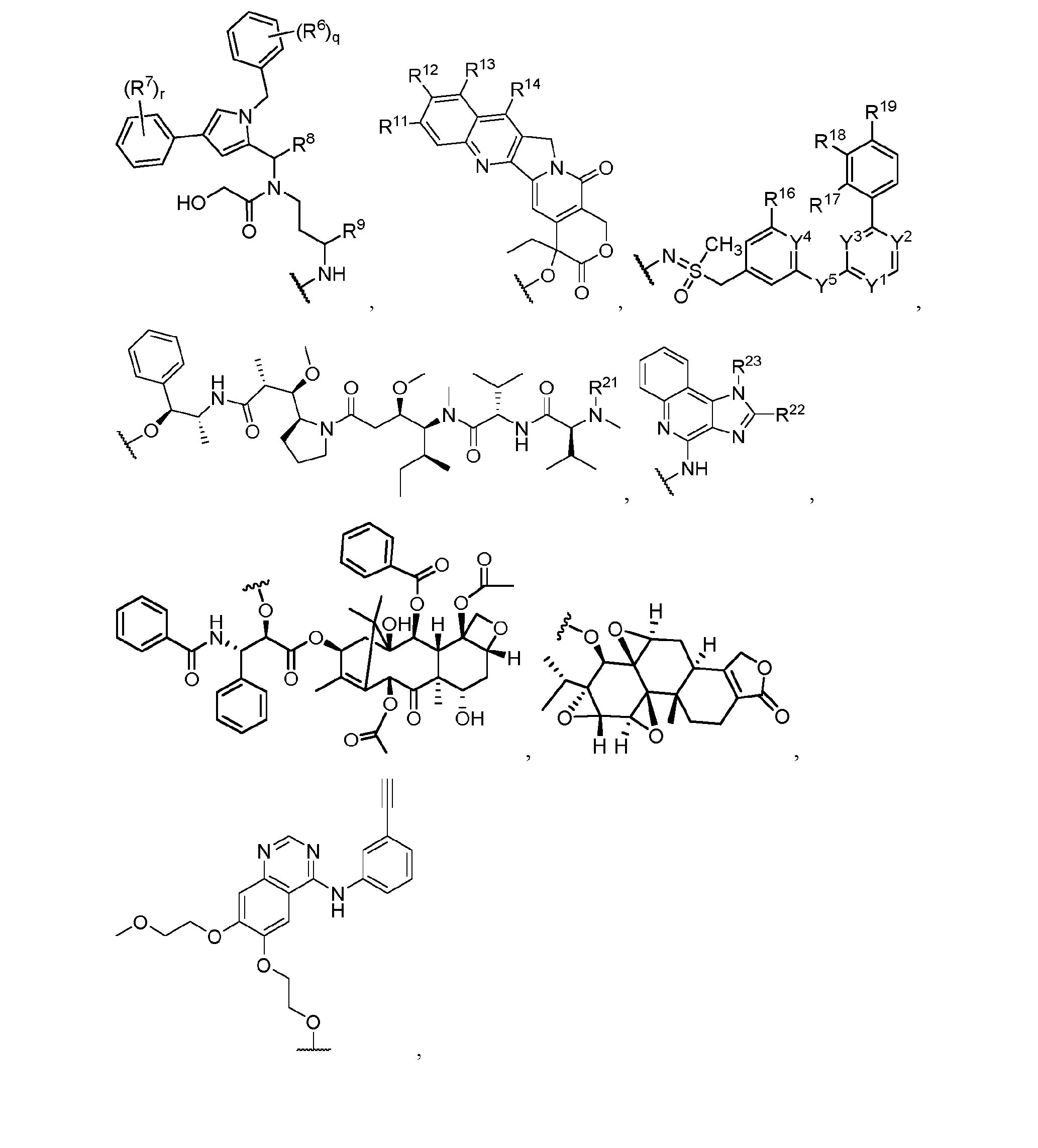


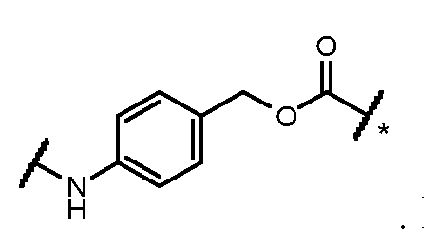


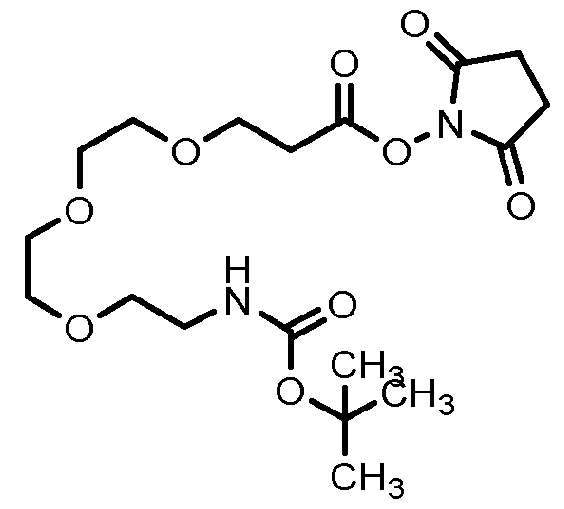


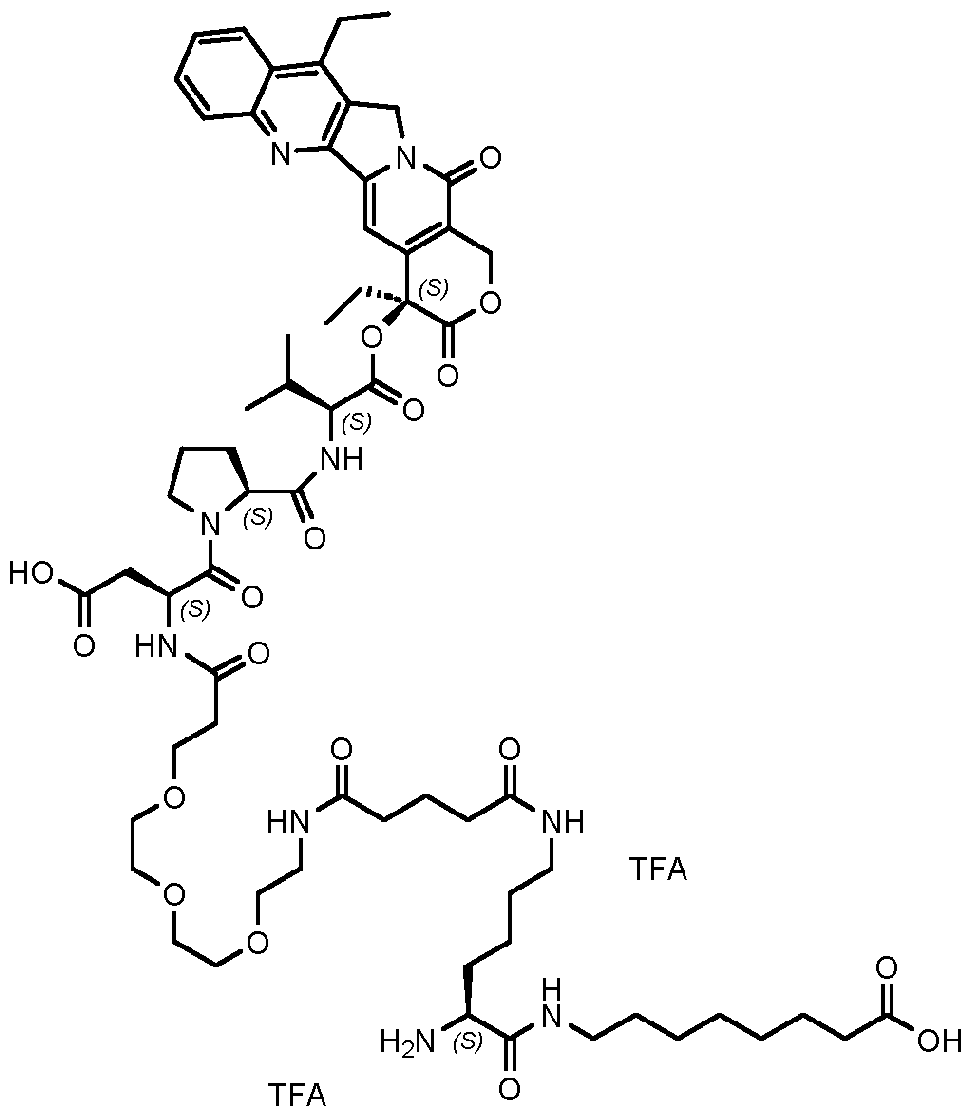


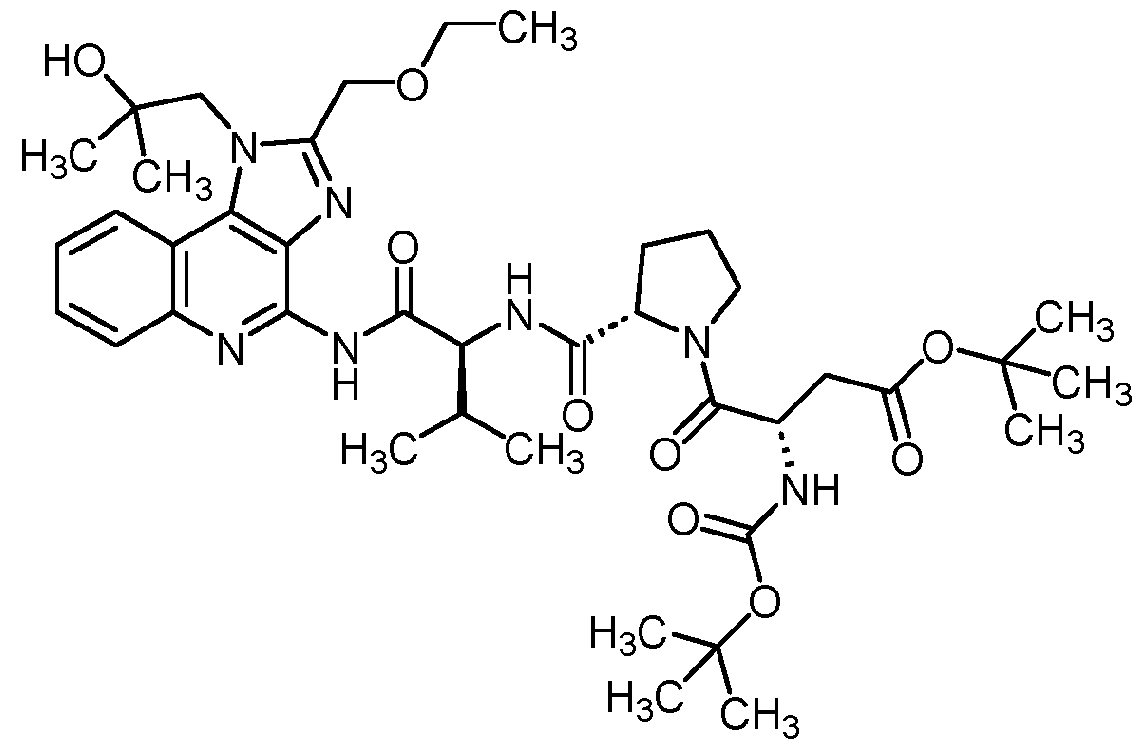


Claims


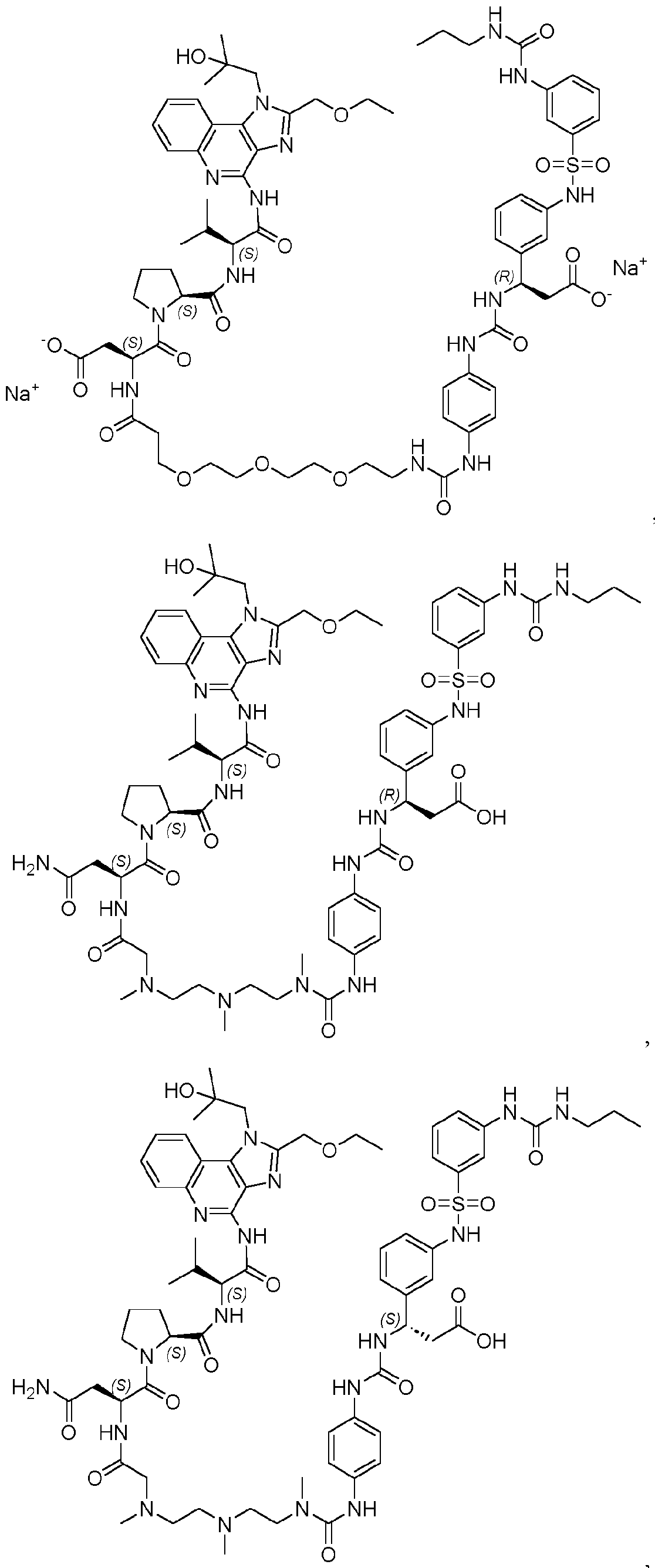


Priority Applications (3)
| Application Number | Priority Date | Filing Date | Title |
|---|---|---|---|
| JP2025529230A JP2025537882A (en) | 2022-11-17 | 2023-11-16 | Small molecule-drug conjugates that are cleavable in the tumor microenvironment |
| CN202380091425.5A CN120676964A (en) | 2022-11-17 | 2023-11-16 | Small molecule-drug conjugates cleavable in tumor microenvironments |
| EP23806005.7A EP4619037A1 (en) | 2022-11-17 | 2023-11-16 | Small molecule-drug-conjugates cleavable in a tumor microenvironment |
Applications Claiming Priority (4)
| Application Number | Priority Date | Filing Date | Title |
|---|---|---|---|
| EP22306696.0 | 2022-11-17 | ||
| EP22306696 | 2022-11-17 | ||
| EP23305484.0 | 2023-04-03 | ||
| EP23305484 | 2023-04-03 |
Publications (1)
| Publication Number | Publication Date |
|---|---|
| WO2024105197A1 true WO2024105197A1 (en) | 2024-05-23 |
Family
ID=88833830
Family Applications (1)
| Application Number | Title | Priority Date | Filing Date |
|---|---|---|---|
| PCT/EP2023/082123 Ceased WO2024105197A1 (en) | 2022-11-17 | 2023-11-16 | Small molecule-drug-conjugates cleavable in a tumor microenvironment |
Country Status (5)
| Country | Link |
|---|---|
| EP (1) | EP4619037A1 (en) |
| JP (1) | JP2025537882A (en) |
| CN (1) | CN120676964A (en) |
| TW (1) | TW202430150A (en) |
| WO (1) | WO2024105197A1 (en) |
Citations (17)
| Publication number | Priority date | Publication date | Assignee | Title |
|---|---|---|---|---|
| WO2000069472A2 (en) | 1999-05-14 | 2000-11-23 | Boehringer Ingelheim Pharmaceuticals, Inc. | Enzyme-activated anti-tumor prodrug compounds |
| EP1238678A1 (en) | 2001-03-08 | 2002-09-11 | Bayer Aktiengesellschaft | Enzyme-activated cytostatic conjugates with integrin ligands |
| WO2014078484A1 (en) | 2012-11-15 | 2014-05-22 | Endocyte, Inc. | Conjugates for treating diseases caused by psma expressing cells |
| WO2015054659A1 (en) | 2013-10-11 | 2015-04-16 | Mersana Therapeutics, Inc. | Protein-polymer-drug conjugates |
| WO2015096982A1 (en) | 2013-12-23 | 2015-07-02 | Bayer Pharma Aktiengesellschaft | Antibody drug conjugates (adcs) with kinesin spindel protein (ksp) |
| WO2015106599A1 (en) * | 2014-01-20 | 2015-07-23 | Brightgene Bio-Medical Technology Co., Ltd. | Conjugates and compositions for drug delivery |
| WO2015179823A2 (en) | 2014-05-23 | 2015-11-26 | The California Institute For Biomedical Research | Lung localized inhibitors of alpha(v)beta 6 |
| WO2016207089A1 (en) | 2015-06-22 | 2016-12-29 | Bayer Pharma Aktiengesellschaft | Antibody drug conjugates (adcs) and antibody prodrug conjugates (apdcs) with enzymatically cleavable groups |
| WO2017151425A1 (en) * | 2016-02-29 | 2017-09-08 | Madrigal Pharmaceuticals, Inc. | Hsp90 inhibitor drug conjugates |
| WO2017161144A1 (en) * | 2016-03-16 | 2017-09-21 | Endocyte, Inc. | Carbonic anhydrase ix inhibitor conjugates and uses thereof |
| WO2020094471A1 (en) | 2018-11-05 | 2020-05-14 | Bayer Pharma Aktiengesellschaft | Cytostatic conjugates with integrin ligands |
| EP3903825A1 (en) * | 2019-01-30 | 2021-11-03 | Coherent Biopharma (Suzhou), Limited | Bi-ligand drug conjugate and use thereof |
| WO2022056286A1 (en) * | 2020-09-11 | 2022-03-17 | Arrowhead Pharmaceuticals, Inc. | Integrin targeting ligands and uses thereof |
| WO2022056273A1 (en) | 2020-09-11 | 2022-03-17 | Arrowhead Pharmaceuticals, Inc. | Lipid conjugates for the delivery of therapeutic agents |
| WO2023057812A1 (en) * | 2021-10-04 | 2023-04-13 | Vincerx Pharma Gmbh | Compounds, pharmaceutical compositions, and methods for the treatment, prevention, or management of hyperproliferative disorder |
| WO2023057813A1 (en) * | 2021-10-04 | 2023-04-13 | Vincerx Pharma Gmbh | Compounds, pharmaceutical compositions, and methods for the treatment, prevention, or management of hyperproliferative disorders |
| WO2023057814A1 (en) * | 2021-10-04 | 2023-04-13 | Vincerx Pharma Gmbh | Compounds, pharmaceutical compositions, and methods for the treatment, prevention, or management of hyperproliferative disorders |
-
2023
- 2023-11-16 TW TW112144383A patent/TW202430150A/en unknown
- 2023-11-16 EP EP23806005.7A patent/EP4619037A1/en active Pending
- 2023-11-16 JP JP2025529230A patent/JP2025537882A/en active Pending
- 2023-11-16 WO PCT/EP2023/082123 patent/WO2024105197A1/en not_active Ceased
- 2023-11-16 CN CN202380091425.5A patent/CN120676964A/en active Pending
Patent Citations (17)
| Publication number | Priority date | Publication date | Assignee | Title |
|---|---|---|---|---|
| WO2000069472A2 (en) | 1999-05-14 | 2000-11-23 | Boehringer Ingelheim Pharmaceuticals, Inc. | Enzyme-activated anti-tumor prodrug compounds |
| EP1238678A1 (en) | 2001-03-08 | 2002-09-11 | Bayer Aktiengesellschaft | Enzyme-activated cytostatic conjugates with integrin ligands |
| WO2014078484A1 (en) | 2012-11-15 | 2014-05-22 | Endocyte, Inc. | Conjugates for treating diseases caused by psma expressing cells |
| WO2015054659A1 (en) | 2013-10-11 | 2015-04-16 | Mersana Therapeutics, Inc. | Protein-polymer-drug conjugates |
| WO2015096982A1 (en) | 2013-12-23 | 2015-07-02 | Bayer Pharma Aktiengesellschaft | Antibody drug conjugates (adcs) with kinesin spindel protein (ksp) |
| WO2015106599A1 (en) * | 2014-01-20 | 2015-07-23 | Brightgene Bio-Medical Technology Co., Ltd. | Conjugates and compositions for drug delivery |
| WO2015179823A2 (en) | 2014-05-23 | 2015-11-26 | The California Institute For Biomedical Research | Lung localized inhibitors of alpha(v)beta 6 |
| WO2016207089A1 (en) | 2015-06-22 | 2016-12-29 | Bayer Pharma Aktiengesellschaft | Antibody drug conjugates (adcs) and antibody prodrug conjugates (apdcs) with enzymatically cleavable groups |
| WO2017151425A1 (en) * | 2016-02-29 | 2017-09-08 | Madrigal Pharmaceuticals, Inc. | Hsp90 inhibitor drug conjugates |
| WO2017161144A1 (en) * | 2016-03-16 | 2017-09-21 | Endocyte, Inc. | Carbonic anhydrase ix inhibitor conjugates and uses thereof |
| WO2020094471A1 (en) | 2018-11-05 | 2020-05-14 | Bayer Pharma Aktiengesellschaft | Cytostatic conjugates with integrin ligands |
| EP3903825A1 (en) * | 2019-01-30 | 2021-11-03 | Coherent Biopharma (Suzhou), Limited | Bi-ligand drug conjugate and use thereof |
| WO2022056286A1 (en) * | 2020-09-11 | 2022-03-17 | Arrowhead Pharmaceuticals, Inc. | Integrin targeting ligands and uses thereof |
| WO2022056273A1 (en) | 2020-09-11 | 2022-03-17 | Arrowhead Pharmaceuticals, Inc. | Lipid conjugates for the delivery of therapeutic agents |
| WO2023057812A1 (en) * | 2021-10-04 | 2023-04-13 | Vincerx Pharma Gmbh | Compounds, pharmaceutical compositions, and methods for the treatment, prevention, or management of hyperproliferative disorder |
| WO2023057813A1 (en) * | 2021-10-04 | 2023-04-13 | Vincerx Pharma Gmbh | Compounds, pharmaceutical compositions, and methods for the treatment, prevention, or management of hyperproliferative disorders |
| WO2023057814A1 (en) * | 2021-10-04 | 2023-04-13 | Vincerx Pharma Gmbh | Compounds, pharmaceutical compositions, and methods for the treatment, prevention, or management of hyperproliferative disorders |
Non-Patent Citations (35)
| Title |
|---|
| "CAS", Database accession no. 1610413-98-3 |
| "Handbook of Pharmaceutical Salts: Properties, Selection and Use", 2002, WILEY-VCH, article "International Union of Pure and Applied Chemistry" |
| "Method in Enzymology", vol. 42, 1985, ACADEMIC, pages: 309 - 396 |
| "Pharmaceutical Dosage Forms and Drug Delivery Systems", 1999, LIPPINCOTT WILLIAMS & WILKINS |
| "Pharmaceutical Dosage Forms", 1980, MARCEL DECKER |
| A.H. SCHINKEL ET AL., J. CLIN. INVEST., vol. 96, 1995, pages 1698 - 1705 |
| ANDRÉ RAPOSO MOREIRA DIAS ET AL: "Neutrophil Elastase Promotes Linker Cleavage and Paclitaxel Release from an Integrin-Targeted Conjugate", CHEMISTRY - A EUROPEAN JOURNAL, JOHN WILEY & SONS, INC, DE, vol. 25, no. 7, 27 December 2018 (2018-12-27), pages 1696 - 1700, XP071850689, ISSN: 0947-6539, DOI: 10.1002/CHEM.201805447 * |
| ANGEW. CHEM. INTER. ED., vol. 44, 2005, pages 4378 |
| ANTICANCER AGENTS IN MEDICINAL CHEMISTRY, vol. 8, 2008, pages 618 - 637 |
| BIOORG. MED. CHEM. LETT., vol. 17, 2007, pages 2241 |
| BIOORG. MED. CHEM., vol. 10, 2002, pages 71 |
| BIOORG. MED. CHEM., vol. 11, 2003, pages 2277 |
| BIOORG. MED. CHEM., vol. 15, 2007, pages 4973 |
| BIOORG. MED. CHEM., vol. 7, 1999, pages 1597 |
| BUNDGAARD, H.: "A Textbook of Drug Design and Development", 1991, article "Design and Application of Prodrugs", pages: 113 - 191 |
| BUNDGAARD, H.: "Advanced Drug Delivery Review", vol. 8, 1992, pages: 1 - 38 |
| CAZZAMALLI ET AL., J. AM. CHEM. SOC., vol. 140, 2018, pages 1617 |
| D. SCHWAB ET AL., J. MED. CHEM., vol. 46, 2003, pages 1716 - 1725 |
| F. FAUTEUX, ONCOTARGET, vol. 7, no. 3, 2015, pages 2555 |
| HENNE W A ET AL: "Synthesis and activity of a folate peptide camptothecin prodrug", BIOORGANIC & MEDICINAL CHEMISTRY LETTERS, ELSEVIER, AMSTERDAM NL, vol. 16, no. 20, 15 October 2006 (2006-10-15), pages 5350 - 5355, XP027966541, ISSN: 0960-894X, [retrieved on 20061015] * |
| HOOVER, JOHN E.: "Remington's Pharmaceutical Sciences", 1975, MACK PUBLISHING CO. |
| J. MED. CHEM., vol. 45, 2002, pages 937 |
| JEAN JACQUESANDRE COLLETSAMUEL H. WILEN: "Enantiomers, Racemates and Resolutions", 1981, JOHN WILEY AND SONS, INC. |
| JIN XIANGMEI ET AL: "Folate Receptor Targeting and Cathepsin B-Sensitive Drug Delivery System for Selective Cancer Cell Death and Imaging", ACS MEDICINAL CHEMISTRY LETTERS, vol. 11, no. 8, 13 August 2020 (2020-08-13), US, pages 1514 - 1520, XP093072543, ISSN: 1948-5875, DOI: 10.1021/acsmedchemlett.0c00031 * |
| LI ET AL., AM J CANCER RES, vol. 7, no. 12, 2017, pages 2350 - 2394 |
| M.D. TROUTMAND.R. THAKKER, PHARM. RES., vol. 20, no. 8, 2003, pages 1210 - 1224 |
| MILLUL JACOPO ET AL: "An ultra-high-affinity small organic ligand of fibroblast activation protein for tumor-targeting applications", vol. 118, no. 16, 20 April 2021 (2021-04-20), XP055893845, ISSN: 0027-8424, Retrieved from the Internet <URL:https://www.pnas.org/content/pnas/118/16/e2101852118.full.pdf> DOI: 10.1073/pnas.2101852118 * |
| MODI ET AL., N. ENGL. J. MED., vol. 382, pages 610 - 621 |
| N. ASHMAN, CHEM SOC REV, 2022 |
| ORG. BIOMOL. CHEM., vol. 9, 2011, pages 1846 - 1854 |
| RUGO ET AL., FUTURE ONCOL., vol. 16, pages 705 - 715 |
| S.M. BERGEL.D. BIGHLEYD.C. MONKHOUSE, J. PHARM. SCI., vol. 66, 1977, pages 1 - 19 |
| SUMITH A. KULARATNE ET AL: "Synthesis and Biological Analysis of Prostate-Specific Membrane Antigen-Targeted Anticancer Prodrugs", JOURNAL OF MEDICINAL CHEMISTRY, vol. 53, no. 21, 11 November 2010 (2010-11-11), pages 7767 - 7777, XP055103918, ISSN: 0022-2623, DOI: 10.1021/jm100729b * |
| WALL ET AL., J. AM. CHEM. SOC., vol. 88, 1966, pages 3888 |
| Y. LIU ET AL., MOL. PHARMACEUTICS, vol. 9, 2012, pages 168 |
Also Published As
| Publication number | Publication date |
|---|---|
| CN120676964A (en) | 2025-09-19 |
| TW202430150A (en) | 2024-08-01 |
| JP2025537882A (en) | 2025-11-20 |
| EP4619037A1 (en) | 2025-09-24 |
Similar Documents
| Publication | Publication Date | Title |
|---|---|---|
| JP7079355B2 (en) | PSMA-binding ligand-linker conjugate and usage | |
| JP5690589B2 (en) | Conjugates containing hydrophilic spacer linkers | |
| WO2015106599A1 (en) | Conjugates and compositions for drug delivery | |
| AU2018368520B2 (en) | Ligand-drug-conjugates as substrates for selective cleavage by the exopeptidase activity of Cathepsin B | |
| CN103379912B (en) | Positive carboxyalkyl ear statin and application thereof | |
| AU2018265333B2 (en) | Peptidic linkers and cryptophycin conjugates, useful in therapy, and their preparation | |
| ES2821878T3 (en) | Non-linear self-immolative connectors and their conjugates | |
| US20250032477A1 (en) | Compounds, pharmaceutical compositions, and methods for the treatment, prevention, or management of hyperproliferative disorders | |
| US10500286B2 (en) | CCK2R-drug conjugates | |
| EP4619037A1 (en) | Small molecule-drug-conjugates cleavable in a tumor microenvironment | |
| US20240423973A1 (en) | Compounds, pharmaceutical compositions, and methods for the treatment, prevention, or management of hyperproliferative disorders | |
| ES2735375T3 (en) | Functionalized derivatives of anthracycline morpholinyl | |
| US20240376154A1 (en) | Bis-intercalating peptides, conjugates and methods of use | |
| CA3208877A1 (en) | Cryptophycin compounds and conjugates thereof | |
| KR20250174687A (en) | Antibody-drug conjugates for delivering cytotoxic agents | |
| WO2024150132A1 (en) | Ligand-drug conjugates | |
| WO2023088236A1 (en) | Bicyclic peptide ligand of mt1-mmp and conjugate thereof | |
| Bodero Padilla | Synthesis of novel conjugates based on a functionalized cyclo [DKP-isoDGR] integrin ligand and potent cytotoxic agents | |
| EA046139B1 (en) | Ligand-Drug Conjugates as Substrates for Selective Cleavage by Exopeptidase Activity of Cathepsin B |
Legal Events
| Date | Code | Title | Description |
|---|---|---|---|
| 121 | Ep: the epo has been informed by wipo that ep was designated in this application |
Ref document number: 23806005 Country of ref document: EP Kind code of ref document: A1 |
|
| ENP | Entry into the national phase |
Ref document number: 2025529230 Country of ref document: JP Kind code of ref document: A |
|
| WWE | Wipo information: entry into national phase |
Ref document number: 2025529230 Country of ref document: JP |
|
| WWE | Wipo information: entry into national phase |
Ref document number: 2023806005 Country of ref document: EP |
|
| NENP | Non-entry into the national phase |
Ref country code: DE |
|
| ENP | Entry into the national phase |
Ref document number: 2023806005 Country of ref document: EP Effective date: 20250617 |
|
| WWE | Wipo information: entry into national phase |
Ref document number: 202380091425.5 Country of ref document: CN |
|
| WWP | Wipo information: published in national office |
Ref document number: 202380091425.5 Country of ref document: CN |
|
| WWP | Wipo information: published in national office |
Ref document number: 2023806005 Country of ref document: EP |