WO2023152045A1 - Use of dimpropyridaz for reducing viral and bacterial transmission - Google Patents
Use of dimpropyridaz for reducing viral and bacterial transmission Download PDFInfo
- Publication number
- WO2023152045A1 WO2023152045A1 PCT/EP2023/052683 EP2023052683W WO2023152045A1 WO 2023152045 A1 WO2023152045 A1 WO 2023152045A1 EP 2023052683 W EP2023052683 W EP 2023052683W WO 2023152045 A1 WO2023152045 A1 WO 2023152045A1
- Authority
- WO
- WIPO (PCT)
- Prior art keywords
- virus
- plants
- dimpropyridaz
- plant
- insect
- Prior art date
- Legal status (The legal status is an assumption and is not a legal conclusion. Google has not performed a legal analysis and makes no representation as to the accuracy of the status listed.)
- Ceased
Links
Classifications
-
- A—HUMAN NECESSITIES
- A01—AGRICULTURE; FORESTRY; ANIMAL HUSBANDRY; HUNTING; TRAPPING; FISHING
- A01N—PRESERVATION OF BODIES OF HUMANS OR ANIMALS OR PLANTS OR PARTS THEREOF; BIOCIDES, e.g. AS DISINFECTANTS, AS PESTICIDES OR AS HERBICIDES; PEST REPELLANTS OR ATTRACTANTS; PLANT GROWTH REGULATORS
- A01N43/00—Biocides, pest repellants or attractants, or plant growth regulators containing heterocyclic compounds
- A01N43/48—Biocides, pest repellants or attractants, or plant growth regulators containing heterocyclic compounds having rings with two nitrogen atoms as the only ring hetero atoms
- A01N43/58—1,2-Diazines; Hydrogenated 1,2-diazines
-
- A—HUMAN NECESSITIES
- A01—AGRICULTURE; FORESTRY; ANIMAL HUSBANDRY; HUNTING; TRAPPING; FISHING
- A01P—BIOCIDAL, PEST REPELLANT, PEST ATTRACTANT OR PLANT GROWTH REGULATORY ACTIVITY OF CHEMICAL COMPOUNDS OR PREPARATIONS
- A01P3/00—Fungicides
-
- A—HUMAN NECESSITIES
- A01—AGRICULTURE; FORESTRY; ANIMAL HUSBANDRY; HUNTING; TRAPPING; FISHING
- A01P—BIOCIDAL, PEST REPELLANT, PEST ATTRACTANT OR PLANT GROWTH REGULATORY ACTIVITY OF CHEMICAL COMPOUNDS OR PREPARATIONS
- A01P7/00—Arthropodicides
- A01P7/02—Acaricides
-
- A—HUMAN NECESSITIES
- A01—AGRICULTURE; FORESTRY; ANIMAL HUSBANDRY; HUNTING; TRAPPING; FISHING
- A01P—BIOCIDAL, PEST REPELLANT, PEST ATTRACTANT OR PLANT GROWTH REGULATORY ACTIVITY OF CHEMICAL COMPOUNDS OR PREPARATIONS
- A01P7/00—Arthropodicides
- A01P7/04—Insecticides
Definitions
- dimpropyridaz for reducing viral and bacterial transmission
- the invention relates to the use of dimpropyridaz for reducing or preventing virus and bacteria transmission from insect vectors to plants and protecting plants from virial and bacterial diseases.
- Vectors are organisms that can introduce a pathogen, such as a virus or bacteria, into a plant, by feeding to cause an infection.
- Suitable vectors include hemipteran species including but not limited to, aphids, whiteflies, leafhoppers, planthoppers, treehoppers, thrips, mites, scales, mealybugs, spittlebugs, plant lice, and psyllids, which also cause direct feeding damage to plants.
- Disease transmission from vectors to plants is a widespread cause of plant damage, for which there are only few effective measures of control.
- Insecticides alone or in mixtures with other known pesticides, which may be used for reducing viral or bacterial infections transmitted by vectors (insects), are known.
- insecticides alone or in mixtures with other known pesticides, which may be used for reducing viral or bacterial infections transmitted by vectors (insects)
- mixtures containing pyrethroids and pirimicarb or tetramic acid derivatives for reducing viral infections transmitted by vectors (insects) is known from EP237227, and EP2011394.
- insecticides or insecticidal mixtures in terms of reducing virus and bacteria transmission from insect vectors to plants is not always satisfactory. This is because the insect vectors are often capable of transmitting the virus or bacteria before the insecticides kill them. It is important to note that, as insect vectors, such as aphids for example, move through a plant and briefly probe, by the time an aphid receives a lethal dose of the insecticide, pathogen transmission will often be completed, and the damage already done. Thus, there is also a need for insecticides, which not only kill the insect vectors, but also cause a quick feeding cessation in insect vectors, which enables vectors to quickly reduce or cease their ability to acquire and transmit the virus before the plant is infected.
- insecticides agitate the insects and encourage greater movement and feeding, resulting in increased rates of viral and bacterial spread. Therefore, there is also a need for insecticides, which inhibit movement and/or feeding of the insect vectors before killing them.
- insecticides It is further generally desired to reduce dosage rates of insecticides, and therefore also in connection with combating insect vectors. Accordingly, there is also a need for insecticides, which can be applied in lower doses than conventional insecticides.
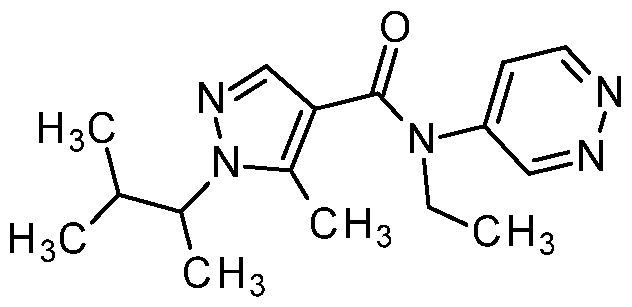
- dimpropyridaz is suitable for reducing or preventing virus and bacteria transmission from insect vectors to plants. Dimpropyridaz controls insect vectors, particularly whiteflies, aphids, and leafhoppers, in all development stages.
- the invention relates to the use of dimpropyridaz for reducing or preventing virus and bacteria transmission from insect vectors to plants.
- Non-persistent viruses and bacteria are transferred mechanically via the mouthparts of the insect vectors during feeding (stylet-borne).
- Non-persistent transmission is typically characterized by an acquisition time (time required by the insect vector to acquire the virus/bacteria) of seconds, an inoculation time (time required by the infectious insect vector to inoculate a plant) of seconds, a latent period (minimum time between acquisition of a virus/bacteria and ability to transmit) of zero, and a retention time (time after acquisition that an insect vector remains capable of transmitting the virus/bacteria) of minutes to hours.
- the short inoculation time is of relevance.
- the low retention time prevents the spread of the virus/bacteria over long distances.
- the secondary spread of the virus/bacteria i.e. the spread of the virus/bacteria within a field via acquisition of the virus/bacteria by insect vectors from sources of virus/bacteria within the field and spread of the virus/bacteria by these afterwards infectious insect vectors, it is of particular relevance that there is no latent period, so that an insect vector, which has acquired the virus/bacteria from one plant, can directly transmit it to another plant.
- Persistent viruses include circulative viruses, which must systemically move within the insect body to be transmitted, and propagative viruses, which must replicate within the insect body to be transmitted. Persistent virus transmission is typically characterized by an acquisition time of minutes, an inoculation time of minutes, a latent period of one or more days, and a long retention time, which often lasts for the life of the insect. As the inoculation time is also rather short in case of persistent virus transmission, primary spread (before killed by insecticide) is an important problem in managing plant diseases.
- non-infected fields may also be infected due to insect migration from infected fields, which are far away.
- secondary spread of the virus or bacteria is delayed because the insect vector cannot directly transmit the virus or bacteria after acquisition.
- One embodiment of the invention relates to the use of dimpropyridaz for reducing or preventing the spread of persistent virus and bacteria types.
- Another embodiment of the invention relates to the use of dimpropyridaz for reducing or preventing the primary spread of persistent virus and bacterium types through rapid feeding cessation.
- Another embodiment of the invention relates to the use of dimpropyridaz for reducing or preventing the secondary spread of persistent virus and bacterium types.
- One embodiment of the invention relates to the use of dimpropyridaz for reducing or preventing the spread of non-persistent virus types.
- Another embodiment of the invention relates to the use of dimpropyridaz for reducing or preventing the primary spread of non- persistent virus types.
- Another embodiment of the invention relates to the use of dimpropyridaz for reducing or preventing the secondary spread of non-persistent virus types.
- Semi-persistent viruses frequently suppress plant defense responses, resulting in an increase of vector population and facilitating viral transmissions during vector outbreaks. In semi- persistent transmission, viruses are retained in the foreguts or salivary glands. Semi-persistent virus transmission is typically characterized by an acquisition time of minutes to hours, and a retention time of hours to days.
- insecticides other than dimpropyridaz often act too slowly to effectively reduce both, primary and secondary spread of the virus.
- insecticides In case of persistently transmitted viruses, insecticides often act too slowly to effectively reduce primary spread of the virus.
- a preferred embodiment of the invention relates to the use of dimpropyridaz for reducing or preventing the primary spread of non-persistent and semi-persistent virus types.
- Another embodiment of the invention relates to the use of dimpropyridaz for reducing or preventing the secondary spread of non-persistent and semi-persistent virus types.
- insecticide effectively kills all insect vectors, or rapidly ceases feeding of the vectors.
- fast-killing insecticides may have negative effects to non-target arthropods and beneficials.
- the invention in another aspect, relates to a method for reducing or preventing transmission from insect vectors to plants, which method comprises applying dimpropyridaz to the insect vectors, crops, plants, plant propagation materials such as seeds, or soil or water, in which the plants are growing.
- One embodiment of the invention relates to the use of dimpropyridaz for reducing or preventing secondary spread.
- the invention in another aspect, relates to a method of protecting plants from viral and bacterial diseases which method comprises applying dimpropyridaz to the non-infected crops, plants, plant propagation materials, such as seeds, or soil or water, in which the plants are growing.
- the invention relates to the use or method for reducing or preventing transmission from insect vectors to plants, which use a method comprised of applying dimpropyridaz, or a stereoisomer, tautomer, salt, or N-oxide thereof to the plant.
- dimpropyridaz itself and its combined application with other insecticides are known to have shown activity against insect pests, it has not yet been known for solving virus and bacteria caused problems in plants as mentioned above.
- Salts of dimpropyridaz are preferably agriculturally and veterinarily acceptable salts. Such salts and their preparation are in general known from WO 2012/143317.
- Dimpropyridaz can be used in the form of its N-oxides. Its N-oxides are in general known from WO 2012/143317.
- Dimpropyridaz may be amorphous or may exist in one or more different crystalline states (polymorphs) which may have different macroscopic properties such as stability or show different biological properties such as activity.
- the invention includes the use of both amorphous and crystalline compounds, their enantiomers or diastereomers, mixtures of different crystalline states of dimpropyridaz, its enantiomers or diastereomers, as well as amorphous or crystalline salts thereof.
- Dimpropyridaz is suitable for reducing or preventing transmission from insect vectors to plants.
- virus transmission from insect vectors to plants refers to the introduction of a virus into a plant to cause an infection.
- Virus transmission is typically characterized by the acquisition time, i.e. the time required by the insect vector to acquire the virus, the inoculation time, i.e. the time required by infectious insect vectors to infect the plant, the latent period, i.e. the minimum time between acquisition of a virus and ability of the insect vector to transmit the virus, and the retention time, i.e. the time after acquisition that an insect vector remains capable of transmitting the virus.
- the acquisition time i.e. the time required by the insect vector to acquire the virus
- the inoculation time i.e. the time required by infectious insect vectors to infect the plant
- the latent period i.e. the minimum time between acquisition of a virus and ability of the insect vector to transmit the virus
- the retention time i.e. the time after acquisition that an insect vector remains capable of transmitting the virus.
- primary spread of the virus i.e. the initial spread of virus into a field by infectious insect vectors from sources outside the filed
- secondary spread of the virus i.e. the spread of the virus within a field via acquisition of the virus by insect vectors from sources of virus within the field and spread of the virus by these afterwards infectious insect vectors
- virus-infected or "viral infection” in connection with plants means that the plant has been infected with a virus.
- viral infection is typically caused by inoculation by an infectious insect vector.
- Virus transmission from insect vectors to plants typically causes viral infections.
- pathogen includes bacteria and viruses.
- virus or bacteria transmission from insect vectors to plants refers to the introduction of a pathogens into a plant to cause an infection.
- Such transmission is typically characterized by the acquisition time, i.e. the time required by the insect vector to acquire the pathogen, the inoculation time, i.e. the time required by infectious insect vectors to infect the plant, the latent period, i.e. the minimum time between acquisition of a pathogen and ability of the insect vector to transmit the pathogen, and the retention time, i.e. the time after acquisition that an insect vector remains capable of transmitting the bacteria.
- the acquisition time i.e. the time required by the insect vector to acquire the pathogen
- the inoculation time i.e. the time required by infectious insect vectors to infect the plant
- the latent period i.e. the minimum time between acquisition of a pathogen and ability of the insect vector to transmit the pathogen
- the retention time i.e. the time after acquisition that an insect vector remains capable of transmitting the bacteria.
- Primary spread of the pathogens i.e., the initial spread of the pathogen into a field by infectious insect vectors from sources outside the filed, and/or secondary spread of the pathogen, i.e., the spread of the pathogen within a field via acquisition of the pathogen by insect vectors from sources of the pathogens within the field and spread of the pathogen by these afterwards infectious insect vectors, may be reduced.
- bacteria-infected or "bacterial infection” in connection with plants means that the plant has been infected with a bacterium.
- bacterial infection is typically caused by inoculation by an infectious insect vector.
- Bacteria transmission from insect vectors to plants typically causes bacterial infections.
- plant refers to multicellular photosynthetic eukaryotic life-forms belonging to kingdom Plantae including crops.
- crop refers to plants grown for food or other commercial purposes.
- dimpropyridaz to crops is a preferred embodiment of the invention.
- infectious insect vector refers to an insect vector, which has acquired a virus and can transmit the virus, which means that the latent period is already over, but the retention time is not yet over. "Infectious insect vectors” may also be described as “viruliferous insect vectors”.
- non-infected in connection with plants means that the plant is healthy, i.e., not virus-infected.
- Non-infected plants may also be referred to as "virus-free plants”. Dimpropyridaz is preferably used in fields comprising exclusively non-infected plants focusing on the reduction or prevention of primary spread of viruses or in fields comprising virus- infected and non-infected plants focussing on the reduction or prevention of secondary spread of the virus.
- non-infectious in connection with an insect vector means that the insect vector is not capable of transmitting a virus, preferably that the insect vector has not even acquired a virus.
- contacting includes both direct contact (applying the compound/compositions directly on the animal pest or plant) and indirect contact (applying the compound/compositions to the locus). Maximal contact pertains to the application of dimpropyridaz to the pest and plant jointly. This method is used for insects that have reduced movement while feeding (aphids) or are sessile such as nymphal stages of whiteflies.
- Pesticidally effective amount means the amount of active ingredient needed to achieve an observable effect on growth, including the effects of necrosis, death, retardation, prevention, and removal, destruction, or otherwise diminishing the occurrence and activity of the target organism.
- a pesticidally effective amount of the compositions will also vary according to the prevailing conditions e.g., desired pesticidal effect and duration, weather, target species, locus, mode of application.
- Reducing virus transmission means a reduction of the number of infected plants by at least 50%, or 65%, preferably 80%, particularly 90%, or 95% compared to untreated control.
- Preventing virus transmission means a reduction of the number of infected plants by at least 99%, preferably by 100% compared to untreated control.
- Reducing bacteria transmission means a reduction of the number of infected plants by at least 50%, or 65%, preferably 80%, particularly 90%, or 95% compared to untreated control.
- Preventing bacteria transmission means a reduction of the number of infected plants by at least 99%, preferably by 100% compared to untreated control.
- Persistent viruses include the genera Begomovirus, Luteovirus, Nanovirus, Polerovirus, Tobamovirus, and Tospovirus.
- Semi-persistent viruses include the genera Closterovirus, Crinivirus, Sequivirus, and Torradovirus,
- Non-persistent viruses include the genera Alfamovirus, Carlavirus, Cucumovirus, Fabavirus, and Potyvirus.
- Most plant pathogenic bacteria belong to the genera Erwinia, Pectobacterium, Pantoea, Agrobacterium, Liberibacter, Pseudomonas, Ralstonia, Burkholderia, Acidovorax, Xanthomonas, Clavibacter, Streptomyces, Xylella, Spiroplasma, and Phytoplasma.
- Xyella, Liberibacter, Spiroplasma and Phytoplasma contain the most economically impacting diseases transmitted by hemipteran vectors within plants (c.f. Huang, Weijie PMC 2020 Dec 28).
- dimpropyridaz is applied to fields of non-infected plants, i.e. , fields which exclusively comprise non-infected plants, i.e. , do not contain any bacteria or virus-infected plants.
- fields of non-infected plants i.e. , fields which exclusively comprise non-infected plants, i.e. , do not contain any bacteria or virus-infected plants.
- primary spread of the bacteria and virus can be reduced or even prevented as dimpropyridaz would prevent or significantly reduce feeding (transmission) of present and incoming insect vectors.
- dimpropyridaz is applied to fields comprising bacteria or virus-infected and non-infected plants. This is particularly suitable to reduce or prevent secondary spread of the bacteria and virus within the field.
- the insect vector is selected from aphids, whiteflies, leafhoppers, thrips, psyllids, scales, mealybugs, and mites, and is preferably selected from the group of aphids, whiteflies, leafhoppers, and thrips, more preferably selected from aphids, whiteflies, and thrips, and is particularly selected from the group of aphids and whiteflies.
- bacteria and viruses may be spread by insects which are one or more of e.g. Acyrthosiphum pisum, Aphis citricola, Aphis craccivora, Aphis fabae, Aphis frangulae, Aphis glycines, Aphis gossypii, Aphis nasturtii, Aphis pomi, Aphis spiraecola, Aulacorthum solani, Brachycaudus helichrysi, Brevicoryne brassicae, Diuraphis noxia, Dysaphis devecta, Dysaphis plantaginea, Eriosoma lanigerum, Hyalopterus pruni, Lipaphis erysimi, Macrosiphum avenae, Macrosiphum euphorbiae, Macrosiphum rosae, Myzus cerasi, Myzus nicotianae, Myzus per insect
- Plants exhibiting aphid damage can have a variety of symptoms, such as decreased growth rates, mottled leaves, yellowing, stunted growth, curled leaves, browning, wilting, low yields and death.
- the beet mild yellowing virus (BMYV) causes yellow to orange leaf discoloration
- the Beet yellow virus (BYV) causes yellowing of leaves
- the Turnip yellow virus (TuYV) causes intervening yellowing of leaves and red, purple, yellow discoloration of the leaf margins.
- the removal of sap creates a lack of vigor in the plant, and aphid saliva is toxic to plants. Furthermore, aphids frequently transmit disease-causing organisms like plant viruses to their hosts through feeding.
- the green peach aphid (Myzus persicae) is a vector for many plant viruses, such as Turnip yellow virus (TuYV), Beet yellow virus (BYV), Beet chlorosis virus (BChV), and Beet mild yellowing virus (BMYV).
- Such viruses affect a wide variety of plants such as sugar beet, fodder beets, oilseed rape, brassicas, lettuce crops, mustard, chickpea, lupin, lentil, beans, peas, lucerne, and clover.
- the bird cherry-oat aphid (Rhopalosiphum padi) often infect barley, wheat, oats, maize, triticale, rice with viruses of Luteovirus Genus, mostly Barley yellow dwarf virus (BYDV).
- Cotton aphids (Aphis gossypii) often infect sugarcane, papaya and groundnuts with viruses. Aphids contribute to the spread of late blight (Phytophthora infestans) among potatoes.
- the cherry aphid or black cherry aphid, Myzus cerasi, is responsible for some leaf curl of cherry trees.
- the aphid insect vector is thus selected from Myzus persicae, and Rhopalosiphum padi, particularly the insect vector is Myzus persicae.
- Whiteflies which represent virus vectors, include whiteflies in the genera Bemisia and Trialeurodes.
- a particularly important species of the genera Bemisia includes B. tabaci.
- Important species of the genera Trialeurodes include T. vaporariorum, T. abutilonea, and T. ricini.
- Whiteflies (Bemisia tabaci) often infect tomato, eggplants, potatoes, tobacco, beans, and peppers with viruses.
- the whitefly insect vector is therefore selected from the group consisting of B. tabaci, T. vaporariorum, T. abutilonea, and T. ricini, particularly the whitefly insect vector is B. tabaci.
- psyllids such as Asian Citrus Psyllid (Diaphorina citri).
- the Asian Citrus Psyllid mainly causes bacterial disease (Citrus Greening, or Huanglongbing (HLB) disease).
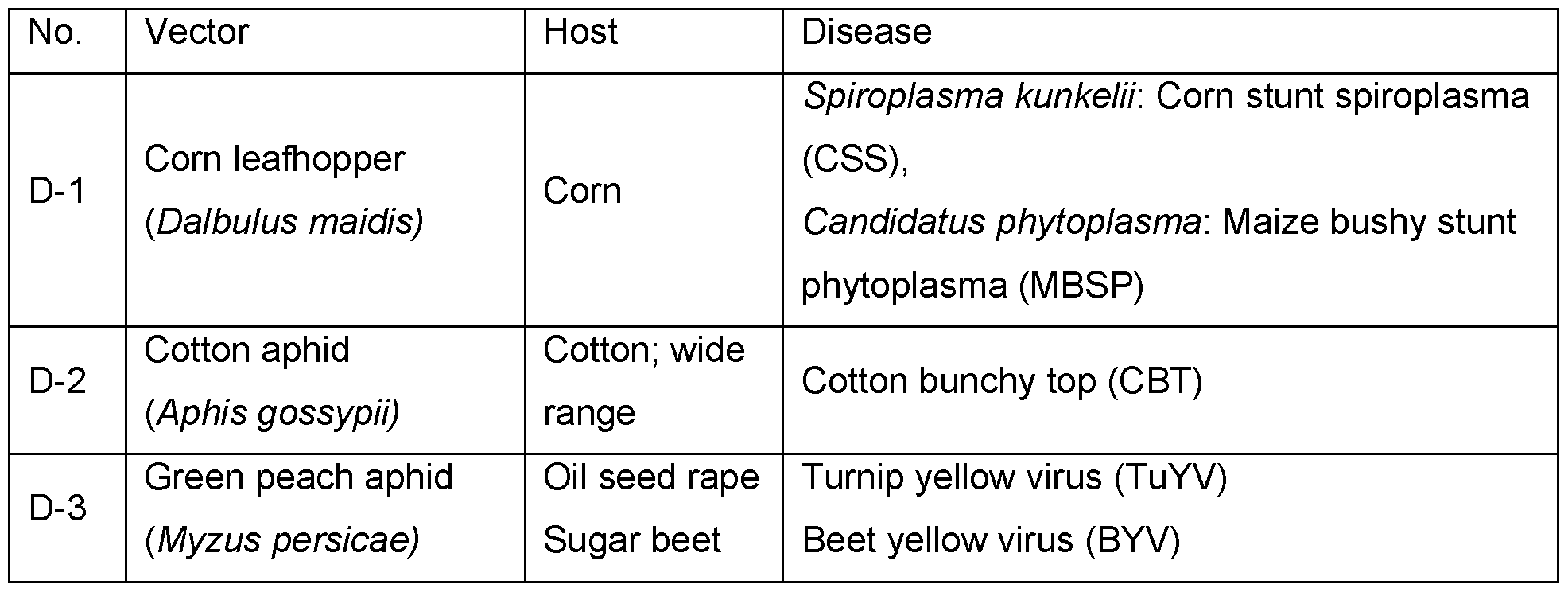
- Corn leafhopper (Dalbulus maidis) mainly causes bacterial diseases (corn stunt spiroplasma (CSS) and Maize bushy stunt phytoplasma (MBSP).
- the pathogens are bacteria, such as persistent bacteria.
- the pathogens are viruses, such as persistent viruses.
- the bacteria is selected from the families of Mycoplasmataceae, Acholeplasmataceae, Rhizobiaceae, and is preferably selected from the Spiroplasma, C. Phytoplasma, Liberibacter geneses respectively.
- the viruses selected are from the families of Luteoviridae, Closteroviridae, Geminiviridae, Nanoviridae, Betaflexiviridae, Bunyaviridae, Bromoviridae, Potyviridae, Rhabdoviridae, Reoviridae, Secoviridae, Sequiviridae, Solemoviridae, Tospoviridae, Tymoviridae, or Virgaviridae, and is preferably selected from the Polerovirus genus of the Luteoviridae family, and from the Begomovirus genus of the Geminiviridae family.
- the virus is selected from Tospovirus genus of the Bunyaviridae family.
- the tomato chlorotic spot virus (TCSV) mainly affects Solanaceae, such as potatoes, tomatoes, eggplants, peppers, and tobacco.
- the groundnut ringspot virus (GRSV) mainly affects Solanaceae.
- the chrysanthemum stem necrosis virus (CSNV) mainly affects chrysanthemum and tomato crops.
- the family Luteoviridae includes the genera of Enamovirus, Luteovirus, and Polerovirus.
- the turnip yellows virus (TuYV) mainly infects oilseed rape, brassicas, lettuce crops, mustard, chickpea, lupin, lentil, beans, peas, lucerne, and clover.
- the barley yellow dwarf virus (BYDV) mainly infects barley, wheat, oats, maize, triticale, and rice.
- the beet chlorosis virus (BChV) and beet mild yellowing virus (BMYV) mainly infect sugar beet, and fodder beets.
- the cucurbit Aphid-borne Yellows Virus mainly infect cucumbers, gherkins, courgettes, melons, and pumpkins.
- the Beet western yellows virus (BWYV) mainly infects beets, cabbage, rape, soya, lettuce, pea, potato, turnip and cucurbits.
- the pepper vein yellow virus (PeVYV) mainly infects Solanaceas.
- the Carrot redleaf virus (CaRLV) mainly infects carrots.
- Closteroviridae includes the genera of Closterovirus, and Crinivirus.
- the beet yellows virus (BYV) mainly infects sugar beet, and fodder beets.
- Carrot yellow leaf virus (CYLV) and Carrot closterovirus-1 (CtCV-1) mainly infect carrots, beets, celery, and parsley.
- Tomato infectious chlorosis virus (TolCV) and Tomato chlorosis virus (ToCV) mainly infect tomato, lettuce, eggplant, potato, pumpkin, and pepper.
- the family of Geminiviridae includes the genera Mastrevirus, Curtovirus, Begomovirus and Topocuvirus.
- the genus Topocuvirus includes the Tomato pseudo-curly top virus (TPCTV), which is transmitted in particular through the treehopper M. malleifera (Hemiptera: Membracidae).
- the genus Mastrevirus includes the economically important Maize streak virus (MSV), which can be transmitted from nine leaf cicadas species of the genus Cicadulina.
- MSV Maize streak virus
- the persistence of the MSV vector (insect) is very efficient, for example, C. mbila species remain infectious after they infect up to 35 days and can thus transmit this virus.
- the genus Curtovirus includes the Beet curly top virus (BCTV), which can be transmitted by the beet leaf cicade Circulifertenellus (Baker) many plant species.
- BCTV Beet curly top virus
- Baker Circulifertenellus
- the genus Begomovirus includes species of the family Geminiviridae. They include the Tomato yellow leaf curl virus (TYLCV), Tomato yellow leafcurl Sardinia virus (TYLCSV), Tomato yellow leaf curl China virus (TYLCCSV), Tomato mottle virus (Tomov), Tobacco curly shoot virus (TbCSV). These viruses mainly infect tomato, eggplants, potatoes, tobacco, beans, and peppers.
- TYLCV Tomato yellow leaf curl virus
- TYLCSV Tomato yellow leafcurl Sardinia virus
- TYLCCSV Tomato yellow leaf curl China virus
- Tomov Tobacco curly shoot virus
- TbCSV Tobacco curly shoot virus
- the family Nanoviridae includes the genera Babuvirus and Nanovirus.
- the Babuvirus genus includes the Banana bunchy top virus (BBTV), and the Nanovirus genus includes the economically very important Faba bean virus necrotic bean yellow virus (FBNYV), which mainly infects faba bean, chickpea, and other Leguminosae.
- BBTV Banana bunchy top virus
- FBNYV Faba bean virus necrotic bean yellow virus
- Betaflexiviridae includes the genus of Carlavirus.
- the Potato virus M (PVM) and Potato virus S (PVS) mainly infect potato, tomato, and other solanaceae.
- the Lily symptomless virus (LSV) mainly infects lilies.
- the Hop mosaic virus (HMV) mainly infects hops.
- the family Bromoviridae includes the genera of Alfamovirus and Cucumovirus.
- the Alfalfa mosaic virus (AMV) mainly infects Alfalfa, lettuce, potato, and tomato.
- the Cucumber mosaic virus (CMV) mainly infects cucumber, squash, melons, peppers, tomato, carrots, celery, lettuce, spinach, and beets.
- the Tomato aspermy virus (TAV) mainly infects tomato.
- the family Potyviridae includes the genus of Potyvirus.
- the Potato virus V (PVV) and Potato virus Y (PVY) mainly infect potato.
- the Lettuce mosaic virus (LMV) mainly infects lettuce, safflower, and quinoa.
- the Turnip mosaic virus (TuMV) mainly infects Cabbage, cauliflower, radish, and turnip.
- the Zucchini yellow mosaic virus (ZYMV) mainly infects pumpkins, squashes, marroes, courgette, melon, watermelon, cucumber, and gherkin.
- the Tobacco etch virus (TEV) mainly infects Tobacco, tomato, potato, pepper, and other Solanaceae.
- the Tulip breaking virus mainly infects Tulips and lilies.
- the Lily mottle virus mainly infects lilies.
- the Cucumber vein yellowing virus (CVYV) mainly infects cucurbits.
- the Watermelon mosaic virus (WMV) mainly infects cucurbits and legumes.
- the Bean common mosaic virus (BCMV) and the Bean yellow mosaic virus (BYMV) mainly infect leguminosae', beans, peas, chickpeas, lentils, soybean, and lupins.
- the Plum Pox virus mainly infects plums, peaches, apricots, nectarine, and cherries.
- the European maize mosaic virus mainly infects corn, and sorgum.
- the Soybean mosaic virus mainly infects soybean.
- the Onion yellow dwarf virus (OYDV) mainly infects onion.
- the Beet mosaic virus BtMV
- the sugarcane mosaic virus SCMV
- Poaceae such as corn and sorghum.
- All enveloped plant viruses such as Rhabdoviruses and Bunyaviruses are transmitted in a persistent propagative way.
- the genus Tospovirus belongs to the family Bunyaviridae. This family includes five genera: Hanta, Nairn, Orthobunya, Phlebo and Tosbo viruses.
- the genus Tospovirus includes the Tomato spotted will virus (TSVW), Tomato chlorotic spot virus (TCSV), Groundnut ringspot virus (GRSV), and Chrysanthemum stem necrosis virus (CSNV).
- TSVW Tomato spotted will virus
- TCSV Tomato chlorotic spot virus
- GRSV Groundnut ringspot virus
- CSNV Chrysanthemum stem necrosis virus
- the Tospovirus genus relates to a particular embodiment of the invention.
- the Rhabdoviridae family includes the viruses that are transmitted on both vertebrates, invertebrates, and plants including pathogens of humans, livestock and crops can.
- To the plant infecting viruses belong the two genera Nucleorhobdovirus and Cytorhabdovirus.
- Nucleorhobdovirus genus belongs Sonchus yellow net virus (SYNV), Maize mosaic virus (MMV), Taro vein chlorosis virus (TaVCV), Rice yellow stunt virus (RYSV) and Maize fine streak virus (MFSV).
- SYNV Sonchus yellow net virus
- MMV Maize mosaic virus
- TaVCV Taro vein chlorosis virus
- RYSV Rice yellow stunt virus
- MFSV Maize fine streak virus
- Cytorhabdovirus belongs, e.g., Northern cereal mosaic virus (NCMV) and Lettuce necrotic yellow virus (LNYV).
- Genus Tenuivirus comprises in addition to the Maize stripe virus (MStV) and Rice stripe virus (RSV) also Maize yellow stripe virus (MYSV).
- MStV Maize stripe virus
- RSV Rice stripe virus
- MYSV Maize yellow stripe virus
- Tenui viruses can be acquired in a very short time by vectors (insects) from infected plants.
- the family Reoviridae includes nine genera, of which the genera Orbireovirus, Coltivirus, Cy- povirus can infect insects as vectors, while the genera Fijiviruses, Phytoreovirus and Oryzavirus species can also infect plants.
- the transoviral transmission of Reo viruses in vectors (insects) was shown for the Fiji disease virus (FDV), Oat sterile dwarf virus (OSDV), Maize rough dwarf virus (MRDV), Nilaparvata lugens virus (NLV), Rice dwarf virus (RDV), Wound tumor virus (WTV) and Rice gall dwarf virus (RGDV).
- FDV Fiji disease virus
- OSDV Oat sterile dwarf virus
- MRDV Maize rough dwarf virus
- NLV Nilaparvata lugens virus
- RDV Rice dwarf virus
- WTV Wound tumor virus
- RGDV Rice gall dwarf virus
- Fuji virus belongs also the Rice black streaked dwarf virus (RBSDV) and the Male de Rio Cuarto virus (MRC
- the family of the genus Tymoviridae comprises the genus Marafivirus, which includes, e.g., the Maize ryadofino virus (MRFV).
- MRFV Maize ryadofino virus
- Plant diseases caused by the aforementioned virus genera can be reduced or prevented, or the aforementioned plant can be protected by the inventive use of dimpropyridaz, or method of applying dimpropyridaz to the plants, particularly to the non-infected plants.
- the family Erwiniaceae contains genera Erwinia which includes more than 20 species, of which E. amylovora or fire blight appearing on pome and stone fruits may be the most common. Additionally, there is E. tracheiphila causing bacterial wilt in cucurbits and ornamentals such as orchid. As well as sub-genera Pantoea containing at least 9 species some of which are opportunistic and able to impact humans. Most common P. stewartia causing Stewart’s wilt in corn and other poaceae, such as sugarcane, bacterial leaf wilt, rice leaf blight, and jack-fruit bronzing disease.
- the family Pectobacteriaceae contains genera Dickeya, Brenneria and Pectobacterium with 8 to 9 species per genera.
- Dickeya solani is a common example of bacterium that impacts potato and other solanaceous crops commonly known as blackleg or soft rot.
- Brenneria and pectobaceterium are commonly associated with diseases in woody crops and are closely related to those in the Erwinia genera, to which they used to belong.
- Agrobacteria are most noted for development of gall like growths and use in GMO transformations within a range of row crops such as soybean, cotton, maize, etc.
- Liberibacter is most noted for semi-persistent presence, hemolymph, and salivary glands, within psyllids, potato and Asian citrus psyllid, transmitting zebra chip disease in potatoes and solanaceous crops and Huanglongbing disease (HLB) or Citrus Greening in citrus.
- the genera Pseudomonas, of family Pseudomonadaceae express a range of plant diseases with common symptomology of rot, gall formation and necrosis and contain saprophytic plant growth promoting pseudomonas (PGPPs).
- PGPPs saprophytic plant growth promoting pseudomonas
- Burkholderiaceae contains two major plant infecting genera Ralstonia and Burkholderia. of infects a wide range of solanaceous crops such as potato, eggplant, tomato, wild woody nightshade, pepper, as well as soybean, ginger, and a range of ornamentals causing Ralstonia wilt.
- Burkholderia contains 20 or more species including Burkholderia glumae which causes grain and seedling rot in rice as well as wilt within solanaceous crops as well as sesame and others.
- Acidovorax of the Comamonadaceae family contains 15 species, such as Acidovorax avenae that impact cucurbit and cereal crops causing bacterial fruit blotch.
- the family Xanthomonadaceae contains genera Xanthomonas of many species, nearly 30, that impact a wide range of more than 400 differing plant species. Responses in plants are ranging from citrus canker, by Xanthomonas citri and bacterial leaf spot and bacterial blight such as Xanthomonas oryzae of rice. This family also contains the genera Xylella which contains the species X. fastidiosa. X. fastidiosa is commonly vectored by leafhoppers such as sharpshooters and other hemipterans such as spittlebugs.
- the genera Clavibacter of the family Microbacteriaceae causes bacterial canker or ring rot via Clavibacter michiganensis impacting solanaceous crops including tomato.
- the genera Streptomyces of the family Streptomycetaceae has at least 10 species that are plant pathogenic, but over 500 species within the family, causes lesions on tuber and root crops such as soleanceous, potato via S. scabies, but typically this genus is associated with soil borne pathogens and not vector borne.
- Xyella contains over 600 species that impact plants. Disease symptomology includes leaf cholorosis, withering, changes in internodal growth, changes in fruit size and abscission, sticky leaf appearance, etc.
- Xyella fastidiosa is an aerobic plant pathogen that harbors in xylem tissues and is transmitted by xylem feeding insects such as leafhoppers/sharpshooters and spittlebugs resulting in chlorosis, leaf scorch, etc.
- a specific result is Pierce’s disease (PD) in grapes.
- Phytoplasma also of the class Mollicutes, containing genus Candidatus impact a tremendous range of crops including but not limited to tropical fruits (ex. coconut), stone fruits, sugarcane, and woody trees and are most commonly vectored by hemipteran pests.
- Phytoplasmas are obligate phloem tissue pathogens that require insect vectors for plant-to-plant transmission. Specific example of economic importance is Candidatus phytoplasma causing Maize bushy stunt vectored by corn leafhoppers, Dalbulus maidis.
- Plant diseases caused by the aforementioned bacteria genera can be reduced or prevented, or the afore-mentioned plant can be protected by the inventive use of dimpropyridaz, or method of applying dimpropyridaz to the plants, to both the non-infected and infected plants.
- certain insect vectors can be identified. For certain viruses and bacteria, certain insect vectors can be identified. For example:
- the virus may preferably be from the Luteoviridae family, in particular from the Polerovirus or Luteovirus genus.
- Preferred Polerovirus or Luteovirus are Turnip yellow virus, Barley yellow dwarf virus, Beet yellow virus, Beet chlorosis virus, and Beet mild yellowing virus.
- the virus may preferably be from the Geminiviridae family, in particular from the Begomovirus genus.
- a preferred Begomovirus is Tomato yellow leaf curl virus.
- insect vector is a leafhopper, such as Dalbulus maidis
- bacteria such as Spiroplasma kunkelii (Mollicutes-bacteria), and Maize bushy stunt phytoplasma (MBSP) are transmitted.
- Citrus greening (HLB) is vectored by Asian citrus psyllid (Diaphornia citri).
- the plants are selected from the group consisting of Alfalfa, barley, beans, beets, brassicas, cabbage, carrots, cauliflower, celery, chervil, chickpea, clover, coriander, courgette, cucumber, cucurbits, eggplants, fava bean, fodder beets, gherkins, lentil, lettuce, lucerne, lupin, maize, marrows, melons, mustard, oats, oilseed rape, ornamentals, parsley, parsnip, peas, peppers, potatoes, pumpkins, quinoa, radish, rape, rice, safflower, soya, spinach, squashes, sugar beet, tobacco, tomato, triticale, turnip, watermelon, and wheat.
- the plants are selected from the group consisting of Tomato, eggplants, potatoes, tobacco, beans, peppers, Oilseed rape, physalis plants, brassicas, lettuce crops, mustard, chickpea, lupin, lentil, beans, peas, lucerne, clover, Barley, wheat, oats, maize, triticale, rice, Sugar beet, and fodder beets.
- the invention relates to the use or method for reducing or preventing virus transmission to plants, and protecting plants from virus diseases, which method or use comprises applying dimpropyridaz, wherein the virus is a Closterovirus.
- the invention relates to the use or method for reducing or preventing virus transmission to plants, and protecting plants from virus diseases, which method or use comprises applying dimpropyridaz, wherein the virus is a Luteovirus.
- the invention relates to the use or method for reducing or preventing virus transmission to plants, and protecting plants from virus diseases, which method or use comprises applying dimpropyridaz, wherein the virus is a Polerovirus.
- the invention relates to the use or method for reducing or preventing virus transmission to plants, and protecting plants from virus diseases, which method or use comprises applying dimpropyridaz, wherein the virus is a Begomovirus.
- the invention relates to the use or method for reducing or preventing virus transmission to plants, and protecting plants from virus diseases, which method or use comprises applying dimpropyridaz, wherein the virus is a Sobemovirus.
- the invention relates to the use or method for reducing or preventing virus transmission to plants, which method or use comprises applying dimpropyridaz, wherein the virus is a Caulimovirus.
- the invention relates to the use or method for reducing or preventing virus transmission to plants, and protecting plants from virus diseases, which method or use comprises applying dimpropyridaz, wherein the virus is a Sequivirus.
- the invention relates to the use or method for reducing or preventing virus transmission to plants, and protecting plants from virus diseases, which method or use comprises applying dimpropyridaz, wherein the virus is a Enamovirus.
- the invention relates to the use or method for reducing or preventing virus transmission to plants, and protecting plants from virus diseases, which method or use comprises applying dimpropyridaz, wherein the virus is a Umbravirus.
- the invention relates to the use or method for reducing or preventing virus transmission to plants, and protecting plants from virus diseases, which method or use comprises applying dimpropyridaz, wherein the virus is a Nanovirus.
- the invention relates to the use or method for reducing or preventing virus transmission to plants, and protecting plants from virus diseases, which method or use comprises applying dimpropyridaz, wherein the virus is a Cytorhabdovirus.
- the invention relates to the use or method for reducing or preventing virus transmission to plants, and protecting plants from virus diseases, which method or use comprises applying dimpropyridaz, wherein the virus is a Nucleorhabdovirus.
- the invention relates to the use or method for reducing or preventing bacteria transmission to plants, and protecting plants from bacterial diseases, which method or use comprises applying dimpropyridaz, wherein the bacteria are selected from Spiroplasma kunkelii and Candidatus phytoplasma.
- the invention relates to the use or method for reducing or preventing virus transmission to plants, and protecting plants from virus diseases, which method or use comprises applying dimpropyridaz, wherein the plant is a specialty crop.
- the invention relates to the use or method for reducing or preventing virus transmission to plants, and protecting plants from virus diseases, which method or use comprises applying dimpropyridaz, wherein the plant is fruiting vegetable.
- the invention relates to the use or method for reducing or preventing virus transmission to plants, and protecting plants from virus diseases, which method or use comprises applying dimpropyridaz, wherein the plant is leafy vegetable.
- the invention relates to the use or method for reducing or preventing virus transmission to plants, and protecting plants from virus diseases, which method or use comprises applying dimpropyridaz, wherein the plant is of Solanaceae, preferably tomato.
- the invention relates to the use or method for reducing or preventing virus transmission to plants, and protecting plants from virus diseases, which method or use comprises applying dimpropyridaz, wherein the plant is of Solanaceae, preferably eggplants.
- the invention relates to the use or method for reducing or preventing virus transmission to plants, and protecting plants from virus diseases, which method or use comprises applying dimpropyridaz, wherein the plant is of Solanaceae, preferably potatoes.
- the invention relates to the use or method for reducing or preventing virus transmission to plants, and protecting plants from virus diseases, which method or use comprises applying dimpropyridaz wherein the plant is of Solanaceae, preferably physalis.
- the invention relates to the use or method for reducing or preventing virus transmission to plants, and protecting plants from virus diseases, which method or use comprises applying dimpropyridaz wherein the plant is of Solanaceae, preferably tobacco.
- the invention relates to the use or method for reducing or preventing virus transmission to plants, and protecting plants from virus diseases, which method or use comprises applying dimpropyridaz, wherein the plant is of Fabaceae, preferably beans.
- the invention relates to the use or method for reducing or preventing virus transmission to plants, and protecting plants from virus diseases, which method or use comprises applying dimpropyridaz, wherein the plant is of Solanaceae, preferably peppers.
- the invention relates to the use or method for reducing or preventing virus transmission to plants, and protecting plants from virus diseases, which method or use comprises applying dimpropyridaz, wherein the plant is of Brassicaceae, preferably Oilseed rape. In one embodiment, the invention relates to the use or method for reducing or preventing virus transmission to plants, and protecting plants from virus diseases, which method or use comprises applying dimpropyridaz, wherein the plant is of Brassicaceae, preferably brassicas.
- the invention relates to the use or method for reducing or preventing virus transmission to plants, and protecting plants from virus diseases, which method or use comprises applying dimpropyridaz, wherein the plant is of Asteraceae, preferably lettuce.
- the invention relates to the use or method for reducing or preventing virus transmission to plants, and protecting plants from virus diseases, which method or use comprises applying dimpropyridaz, wherein the plant is of Brassicaceae, preferably mustard.
- the invention relates to the use or method for reducing or preventing virus transmission to plants, and protecting plants from virus diseases, which method or use comprises applying dimpropyridaz, wherein the plant is of Fabaceae, preferably chickpea.
- the invention relates to the use or method for reducing or preventing virus transmission to plants, and protecting plants from virus diseases, which method or use comprises applying dimpropyridaz, wherein the plant is of Fabaceae, preferably lupin.
- the invention relates to the use or method for reducing or preventing virus transmission to plants, and protecting plants from virus diseases, which method or use comprises applying dimpropyridaz, wherein the plant is of Fabaceae, preferably lentil.
- the invention relates to the use or method for reducing or preventing virus transmission to plants, and protecting plants from virus diseases, which method or use comprises applying dimpropyridaz, wherein the plant is of Fabaceae, preferably beans.
- the invention relates to the use or method for reducing or preventing virus transmission to plants, and protecting plants from virus diseases, which method or use comprises applying dimpropyridaz, wherein the plant is of Fabaceae, preferably peas.
- the invention relates to the use or method for reducing or preventing virus transmission to plants, and protecting plants from virus diseases, which method or use comprises applying dimpropyridaz, wherein the plant is of Fabaceae, preferably lucerne.
- the invention relates to the use or method for reducing or preventing virus transmission to plants, and protecting plants from virus diseases, which method or use comprises applying dimpropyridaz, wherein the plant is of Fabaceae, preferably clover.
- the invention relates to the use or method for reducing or preventing virus transmission to plants, and protecting plants from virus diseases, which method or use comprises applying dimpropyridaz, wherein the plant is of Poaceae, preferably barley.
- the invention relates to the use or method for reducing or preventing virus transmission to plants, and protecting plants from virus diseases, which method or use comprises applying dimpropyridaz, wherein the plant is of Poaceae, preferably wheat. In one embodiment, the invention relates to the use or method for reducing or preventing virus transmission to plants, and protecting plants from virus diseases, which method or use comprises applying dimpropyridaz, wherein the plant is of Poaceae, preferably oats.
- the invention relates to the use or method for reducing or preventing virus transmission to plants, and protecting plants from virus diseases, which method or use comprises applying dimpropyridaz, wherein the plant is of Poaceae, preferably maize (syn. corn).
- the invention relates to the use or method for reducing or preventing bacteria transmission to plants, and protecting plants from bacterial diseases, which method or use comprises applying dimpropyridaz, wherein the plant is of Poaceae, preferably maize (syn. corn).
- the invention relates to the use or method for reducing or preventing virus transmission to plants, and protecting plants from virus diseases, which method or use comprises applying dimpropyridaz, wherein the plant is of Poaceae, preferably triticale.
- the invention relates to the use or method for reducing or preventing virus transmission to plants, and protecting plants from virus diseases, which method or use comprises applying dimpropyridaz, wherein the plant is of Poaceae, preferably rice.
- the invention relates to the use or method for reducing or preventing virus transmission to plants, and protecting plants from virus diseases, which method or use comprises applying dimpropyridaz, wherein the plant is of Amaranthaceae, preferably sugar beet.
- the invention relates to the use or method for reducing or preventing virus transmission to plants, and protecting plants from virus diseases, which method or use comprises applying dimpropyridaz, wherein the plant is of Amaranthaceae, preferably fodder beets.
- Individual embodiments of the invention are such methods or uses for reducing or preventing virus transmission from insect vectors to plants, wherein the virus and the plant is as defined in entries A-1 to A-30 of Table A.1 which method or use comprises applying dimpropyridaz to the plant.
- Individual embodiments of the invention are such methods or uses for protecting plants from virus diseases, wherein the mainly affected crop, and the virus is as defined in entries A-1 to A- 30, which methods or uses comprise applying dimpropyridaz to fields comprising non-infected plants only.
- viruses are preferably spread by insects as defined above, e.g. by one or more of Acyrthosiphum pisum, Aphis citricola, Aphis craccivora, Aphis fabae, Aphis frangulae, Aphis glycines, Aphis gossypii, Aphis nasturtii, Aphis pomi, Aphis spiraecola, Aulacorthum solani, Brachycaudus helichrysi, Brevicoryne brassicae, Diuraphis noxia, Dysaphis devecta, Dysaphis plantaginea, Eriosoma lanigerum, Hyalopterus pruni, Lipaphis erysimi, Macrosiphum avenae, Macrosiphum euphorbiae, Macrosiphum rosae, Myzus cerasi, Myzus nicotianae, Myzus per
- viruses are spread by whiteflies or aphids as defined above, particularly by Mycus persicae, Bemisia tabaci, or Rhopalosiphum padi.
- Individual embodiments of the invention are such methods or uses for reducing or preventing bacteria transmission from insect vectors to plants, wherein the bacterium and the plant is as defined in entries AB-1 to AB-3 of Table A.2 which method or use comprises applying dimpropyridaz to the plant.
- Individual embodiments of the invention are such methods or uses for protecting plants from bacterial diseases, wherein the bacterium and the plant is as defined in entries AB-1 to AB-3 of Table A.2 which method or use comprises applying dimpropyridaz to the plant.
- These bacteria are preferably spread by insects as defined above, e.g., by one or more of Dalbulus maidis and/or Diaphornia citri.
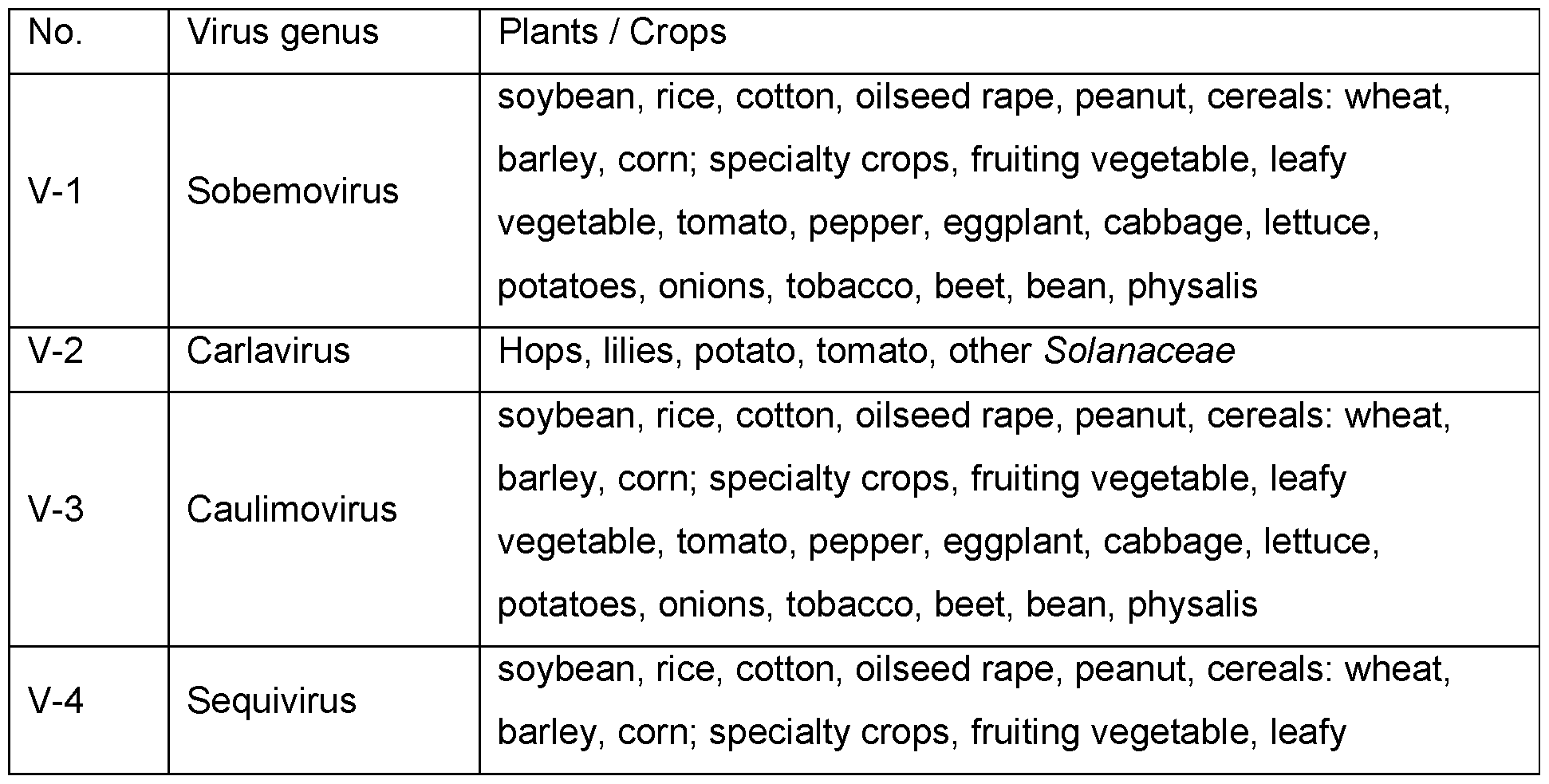
- Individual embodiments of the invention are such methods or uses for reducing or preventing virus transmission from insect vectors to plants, wherein the virus and the mainly affected plants are as defined in entries V-1 to V-14 of following table, which methods or uses comprise applying dimpropyridaz to the plant.
- Individual embodiments of the invention are such methods or uses for protecting plants from virus diseases, wherein the mainly affected plant/crop, and the virus is as defined in entries V-1 to V-14, which methods or uses comprise applying dimpropyridaz to fields comprising noninfected or infected plants.
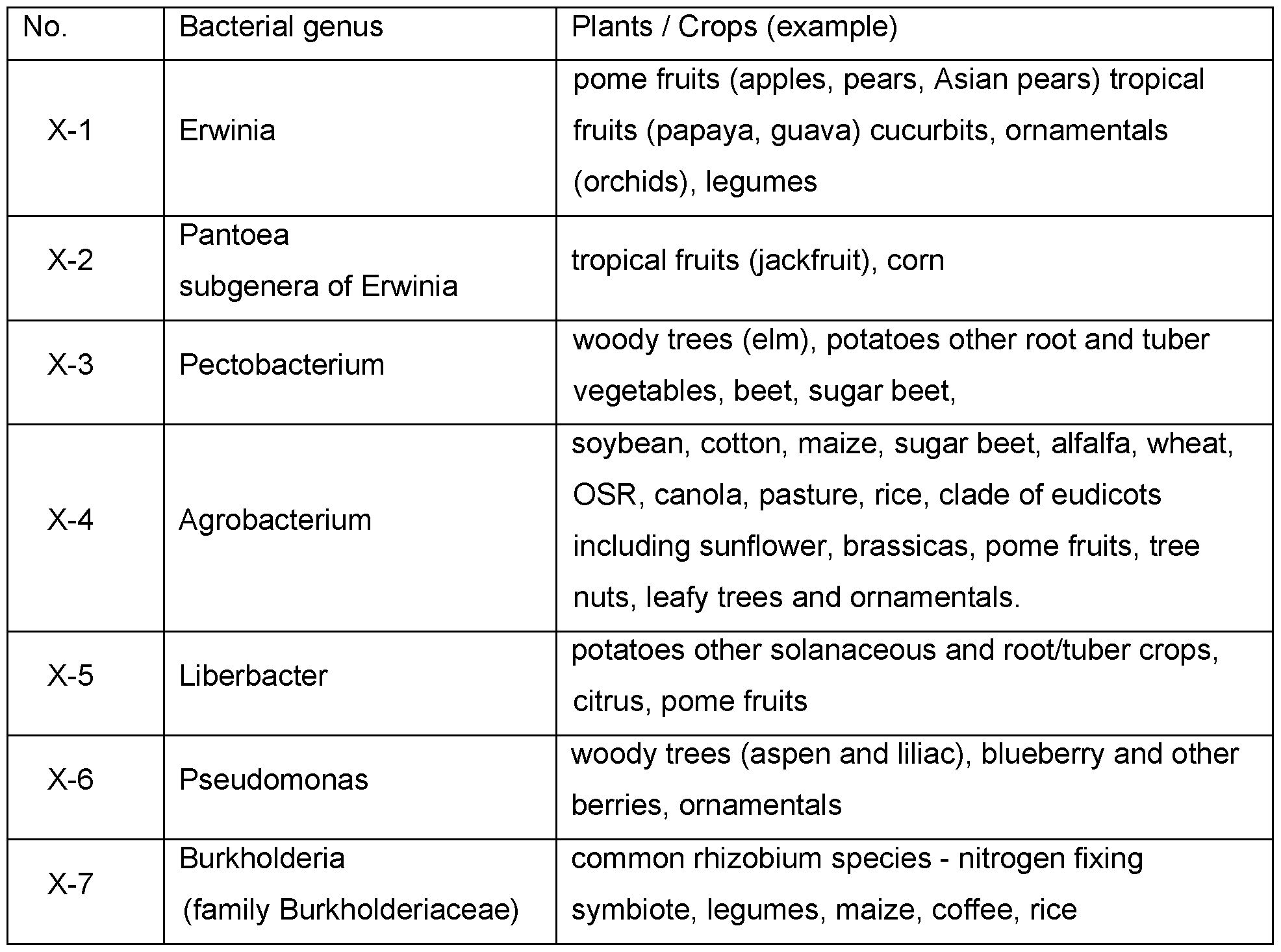
- Individual embodiments of the invention are such methods or uses for protecting plants from bacterial diseases, wherein the mainly affected plant/crop, including but not limited to within table below, and the bacteria is as defined in entries X-1 to X-14, which methods or uses comprise applying dimpropyridaz to fields comprising non-infected or infected plants.
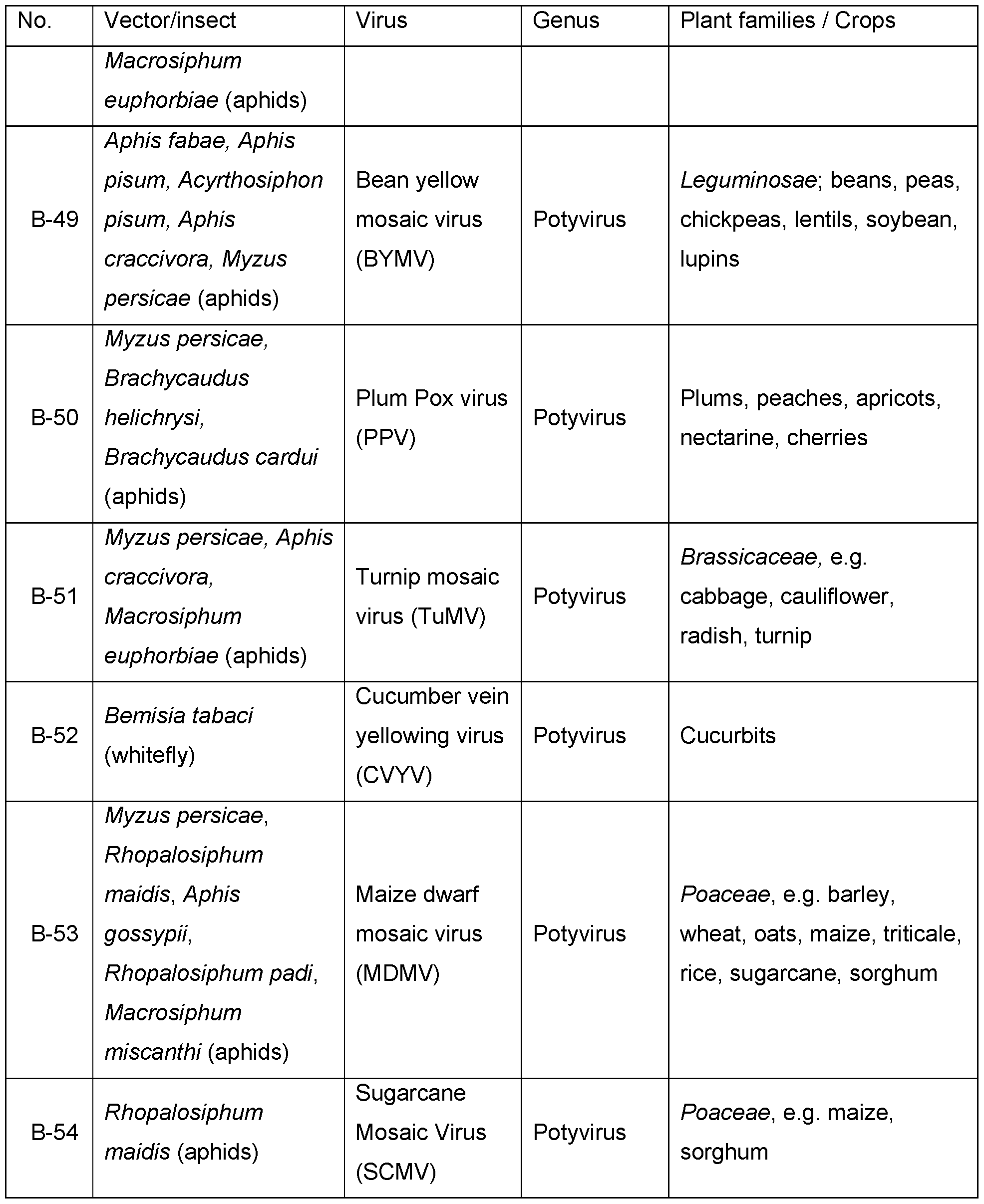
- Individual embodiments of the invention are such methods or uses for reducing or preventing virus transmission from insect vectors to plants, wherein the vector, the virus and the mainly affected plant/crop is as defined in entries B-1 to B-54 of Table B, which methods or uses comprise applying dimpropyridaz to the plants.
- Individual embodiments of the invention are such methods or uses for protecting plants from virus diseases, wherein the mainly affected plant/crop, the virus, and the transmitting insect, and is as defined in entries B-1 to B-54 of Table B, which methods or uses comprise applying dimpropyridaz to fields comprising non-infected or infected plants Table B
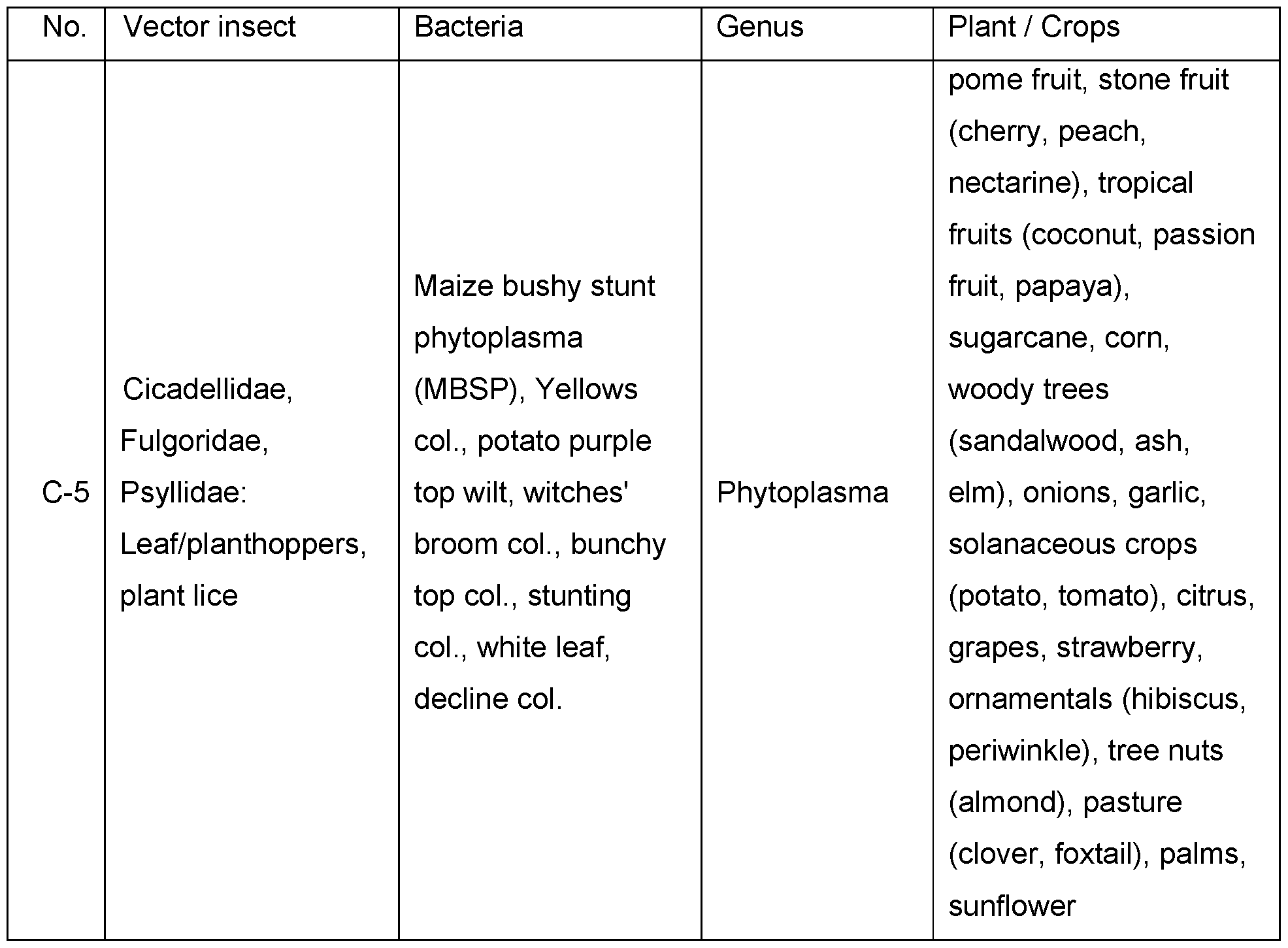
- Individual embodiments of the invention are such methods or uses for protecting plants including but not limited to bacterial diseases, wherein the mainly affected plant/crop, the bacteria, and the transmitting insect, is as defined in entries C-1 to C-5 of Table C, which methods or uses comprise applying dimpropyridaz to fields comprising non-infected or infected plants. List is reduced to showcase bacteria of economic importance that likewise correlates with insect vector-based transmission. Table C
- Particular embodiments of the invention are such methods or uses for protecting plants including but not limited to viral and bacterial diseases, wherein the mainly affected plant/crop, the bacteria, and the transmitting insect, is as defined in entries D-1 to D-5 of Table D, which methods or uses comprise applying dimpropyridaz to fields comprising non-infected or infected plants.
- dimpropyridaz is especially suitable for the purpose of the invention, if applied in combination with a further pesticidally active compound.
- a further pesticidally active compound e.g. from WO2013/189801, WO2016/128261, and WO2018/234478.
- the invention therefore relates to the use or method for reducing or preventing virus and bacteria transmission from insect vectors to plants, which method or use comprises applying dimpropyridaz which is applied in combination with at least one further pesticidally active compound.
- Another aspect of the invention relates to a method for protecting plants from viral and bacterial diseases which method comprises applying dimpropyridaz which is applied in combination with at least one further pesticidally active compound.
- Dimpropyridaz for use in this invention can be used in customary types of agrochemical compositions, e.g. solutions, emulsions, suspensions, dusts, powders, pastes, granules, pressings, capsules, and mixtures thereof.
- composition types are suspensions (e.g. SC, OD, FS), emulsifiable concentrates (e.g. EC), emulsions (e.g. EW, EO, ES, ME), capsules (e.g. CS, ZC), pastes, pastilles, wettable powders or dusts (e.g. WP, SP, WS, DP, DS), pressings (e.g.
- composition types are known from WO2012143317.
- the agrochemical compositions generally comprise between 0.01 and 95%, preferably between 0.1 and 90%, and most preferably between 0.5 and 75%, by weight of active substance.
- the active substance is employed in a purity of from 90% to 100%, preferably from 95% to 100%.
- the user applies the composition according to the invention usually from a pre-dosage device, a knapsack sprayer, a spray tank, a spray plane, or an irrigation system.
- the agrochemical composition is made up with water, buffer, and/or further auxiliaries to the desired application concentration and the ready-to-use spray liquor or the agrochemical composition according to the invention is thus obtained.
- 20 to 2000 liters of the ready-to-use spray liquor are applied per hectare of agricultural useful area.
- the application can be carried out both before and after the infestation of the crops, plants, plant propagation materials by the insect vector.
- the application is carried out before the crops, plants, plant propagation materials are infected with the virus by insect vector.
- Dimpropyridaz can be applied as such or in form of compositions comprising them, preferably SL and SC formulations.
- dimpropyridaz is applied to the foliage of the plants, preferably in an amount of from 20 g to 200 g per hectare, more preferably in an amount of from 30 g to 150 g per hectare, e.g. from 90 g to 120 g or from 120 g to 150 g or from 30 g to 120 g per hectare.
- dimpropyridaz is applied to the seeds of the plant, preferably in an amount of from 1 g to 200 g per 100 kg seed, preferably from 5 g to 100 kg per 100 kg of seed, e.g. from 10 to 30 g or from 40 to 60 g or from 70 to 90 g per 100 kg of seed.
- dimpropyridaz drives a reduction in feeding both in duration probing and salvation or ingestion. Correlation of these laboratory results were mirrored in overall presence of disease as noted visually or through ELISA confirmation that reduction in disease presence was independent of noted pest populations.
- Dimpropyridaz was used as a 120g/l SL formulation in Experiments 1 to 4, and as a 220g/l SC formulation in Experiments 5 to 9, resp.
- the formulations were diluted with water to give the spray liquids for use in the experiments below.
- Imidacloprid was used as a commercial formulation, dilution and applied rate according to its label. All treatments were applied using a backpack pressurized
- the ELISA test is a microplate-based test in which an antibody is linked to an enzyme prior to reaction with the antigen. It is followed by assessment of the enzyme conjugated antibodyantigen reaction or activity upon incubation with the enzyme-specific substrate changing the color of the substrate (https://www.sciencedirect.com/topics/immunoloqy-and- microbiology/enzyme-linked-immunosorbent-assay). This change in color means the virus is present in the plant (positive test). The percentage is the portion of virus- infested plants (ELISA test positive) of the total number of plants.
- the visual assessment was the source of the %-values of infested plants. It is a visual estimation in % of number of plants showing symptoms within a plot. Symptoms of virus are depending on the species. An ELISA test was used for confirmation that the shown symptoms are caused by the virus.
- BMYV yellow to orange leaf discoloration
- BYV yellowing of leaves
- TuYV inter-veining yellowing of leaves and red, purple, yellow discoloration of the leaf margins.
- Example 1 Activity of dimpropyridaz against the primary spread of Turnip yellows virus (TuYV) from viruliferous insect vectors to virus-free plants
- viruliferous Myzus persicae aphids carrying Turnip yellows virus (TuYV) were transferred to healthy Physalis floridiana plants (15 aphids/plant) which were previously treated with dimpropyridaz 24 hours before starting the experiment. The viruliferous aphids could move freely in the cage for 14 days. After this period, plants were treated with Imidacloprid to eliminate all aphids. Three weeks after the experiment was completed, virus infection was evaluated by visual assessment of symptoms (TuYV: intervening yellowing of leaves and red, purple, yellow discoloration of the leaf margins), and by ELISA test. Four independent replicates were performed with forty-eight test plants per assay. Plants treated only with water were used as control.
- dimpropyridaz was effective in reducing the primary dispersion/spread of the virus compared to the untreated control. Viruliferous aphids landing on the treated plants showed a reduced ability to transmit the virus.
- Example 2 Activity of dimpropyridaz against the secondary spread of Turnip yellows virus (TuYV) by insect vectors from virus-infected plants to healthy plants.
- TuYV Turnip yellows virus
- dimpropyridaz was effective in preventing the secondary spread of the virus compared to the untreated control. Aphids landing on the treated plants showed no ability to transmit the virus to adjacent healthy plants.
- Example 3 Activity of dimpropyridaz against the primary spread of Tomato yellow leaf curl virus (TYLCV) from viruliferous insect vectors to virus-free plants
- Tomato yellow leaf curl virus 300 viruliferous Bemisia tabaci whiteflies carrying Tomato yellow leaf curl virus (TYLCV) were released to healthy tomato plants which were previously treated with dimpropyridaz 24 hours before starting the experiment. The viruliferous aphids could fly freely in the cage for 3 days. After this period, plants were treated with Imidacloprid to eliminate all whiteflies. Three weeks after the experiment was completed, virus infection was evaluated by visual assessment of symptoms, and by ELISA test. Three independent replicates were performed with forty-eight test plants per assay. Plants treated only with water were used as control. Table 3. Transmission rate (%) of Tomato yellow leaf curl virus (TYLCV) in the primary spread after 14 days of inoculation access period.
- dimpropyridaz was effective in reducing the primary spread of the virus compared to the untreated control. Viruliferous whiteflies landing on the treated plants showed a reduced ability to transmit the virus.
- Example 4 Activity of dimpropyridaz against the secondary spread of Tomato yellow leaf curl virus (TYLCV) by insect vectors from virus-infected plants to healthy plants.
- TYLCV Tomato yellow leaf curl virus
- dimpropyridaz was effective in reducing the secondary spread of the virus compared to the untreated control.
- Whiteflies landing on the treated plants showed a reduced ability to transmit the virus to adjacent healthy plants.
- Example 5 Activity of dimpropyridaz against the primary spread of Barley yellow dwarf virus (BYDV) from viruliferous insect vectors to virus-free plants
- viruliferous Rhopalosiphum padi aphids carrying Barley yellow dwarf virus BYDV
- BYDV Barley yellow dwarf virus
- dimpropyridaz was effective in reducing the primary dispersion/spread of the virus compared to the untreated control. Viruliferous aphids landing on the treated plants showed a reduced ability to transmit the virus.
- Example 6 Activity of dimpropyridaz against the secondary spread of Barley yellow dwarf virus (BYDV) by insect vectors from virus-infected plants to healthy plants.
- BYDV Barley yellow dwarf virus
- dimpropyridaz was effective in preventing the secondary spread of the virus compared to the untreated control. Aphids landing on the treated plants showed no ability to transmit the virus to adjacent healthy plants.
- Example 7 Activity of dimpropyridaz against the spread of Beet mild yellowing virus (BMYV) under field conditions.
- viruliferous Myzus persicae aphids carrying Beet mild yellowing virus were transferred to plots with 100 healthy sugarbeet plants (10 aphids/plant in 4 plats/plot) which were treated with dimpropyridaz directly after inoculation and 7 days later.
- the viruliferous aphids could fly freely in the field plots.
- virus infection was evaluated by visual assessment of symptoms and confirmed by ELISA test. Four independent replicates were used. Non-treated plots (with 100 healthy sugarbeet plants) were used as control.
- dimpropyridaz was effective in reducing the spread of the virus compared to the untreated control under field conditions.
- dimpropyridaz was effective in reducing the spread of the virus compared to the untreated control under field conditions.
- Example 9 Activity of dimpropyridaz against the spread of Turnip yellows virus (TuYV) under field conditions.
- dimpropyridaz was effective in reducing the spread of the virus compared to the untreated control under field conditions.
- Example 10 Disease transmission reduction and mortality on Dalbulus maidis control
- Insects that are vectors of two major pathogens leading to maize stunting in corn, Mollicutes bacteria, Spiroplasma kunkelli, and Maize bushy stunt phytoplasma can be a big problem for growers, since some time may pass before the insecticide kills the insect, during which the insect can transmit the disease to a healthy plant.
- the relation of bacteria vector of Dalbulus maidis is a persistent manner, which means, the insect can transmit or acquire the disease only if its feeds for a longer duration of time in the phloem vessel. In this case a good insecticide for disease vector, needs to kill the insect but moreover needs to quickly stop feeding activities to avoid disease transmission.
- ZEAMX Corn plants of Zea mays (ZEAMX) were planted using normal spacing for variety AG 8480 PRO3 (row spacing 0.5m and plant density 4 plant/m). Plots size was 6x6m (36m 2 ).
- Treatments were applied via foliar application five days after emergence and was repeated every 5 days. Total number of applications within trial period was seven. Spray volume was 120L/ha and nozzles used to do the application was XR 110.02, spacing between nozzles 0.5m and pression 2.5 bar. Average application time for full study ranged from -30-50 minutes.
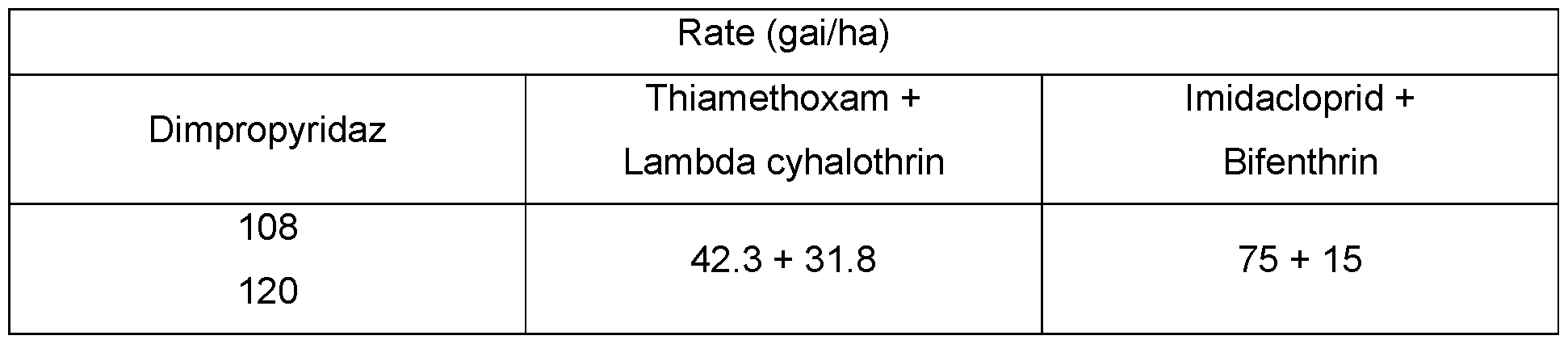
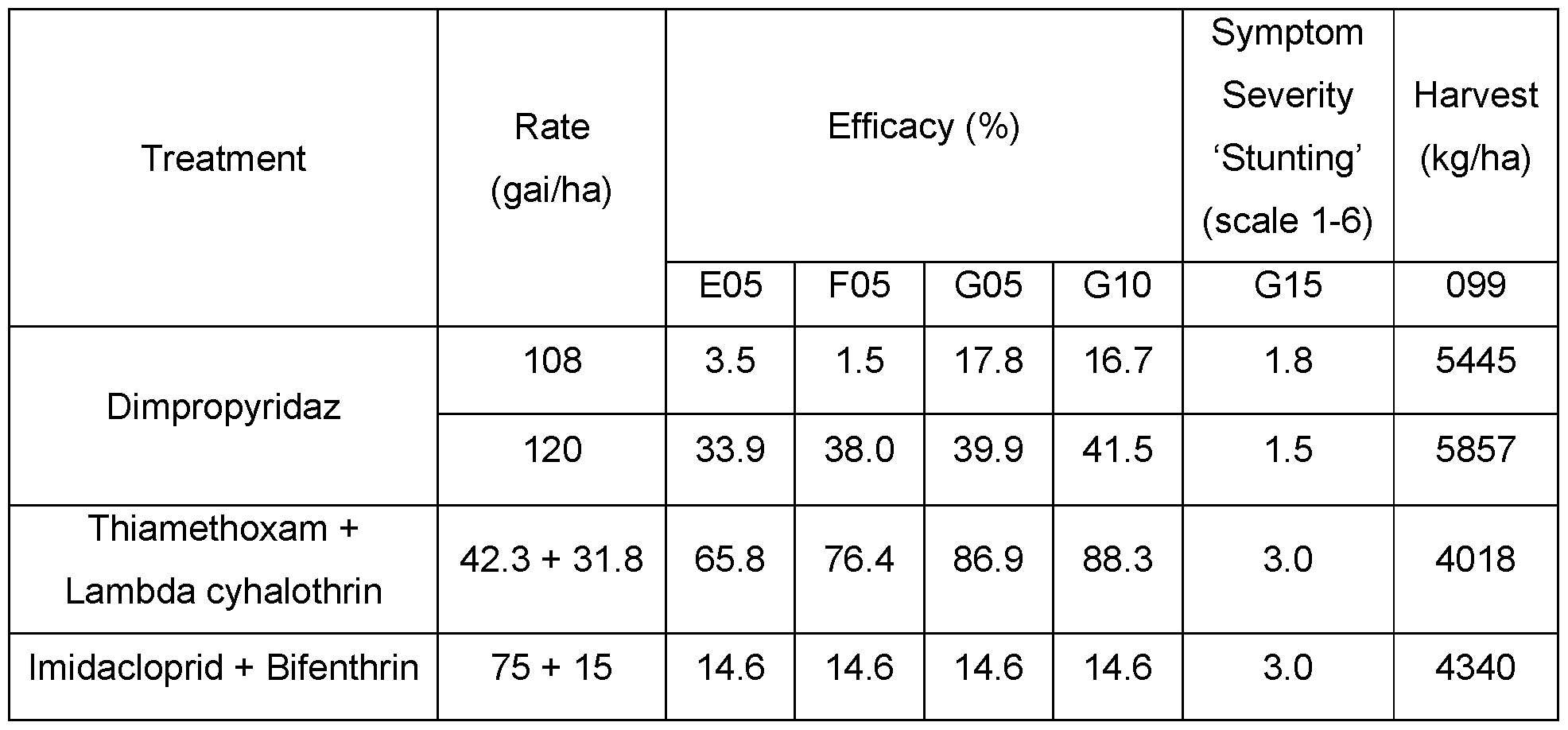
- Dimpropyridaz was used as a 120g/L SL formulation compared to commercial standards tested: Thiamethoxam + Lambda cyhalothrin: Engeo® Pleno 141g/L+106g/L SC (Syngenta);
- Imidacloprid + Bifenthrin Galil® 300g/L SC (ADAMA) in the rates shown below. Different assessments were conducted throughout the trial period:
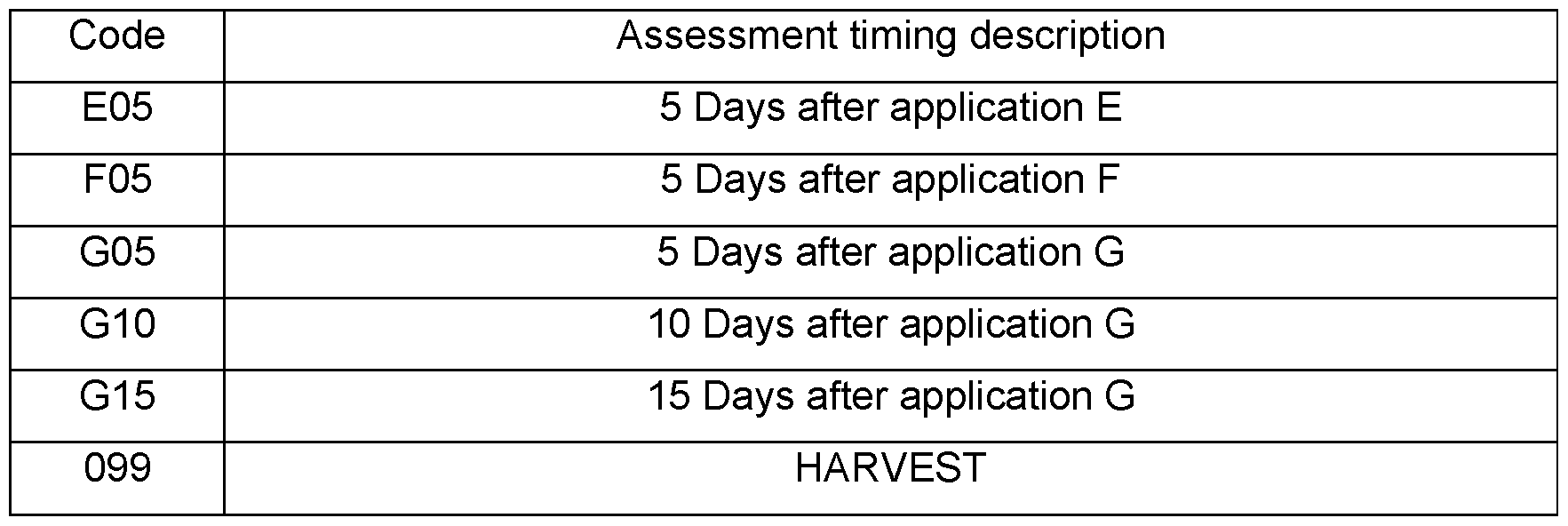
- NUMBER count number of insects alive in 15 central plants on the plot.
- INFECT Evaluate 15 central plants on the plot and evaluate according to scale of stunting symptomology severity. Scalel : plant without symptom
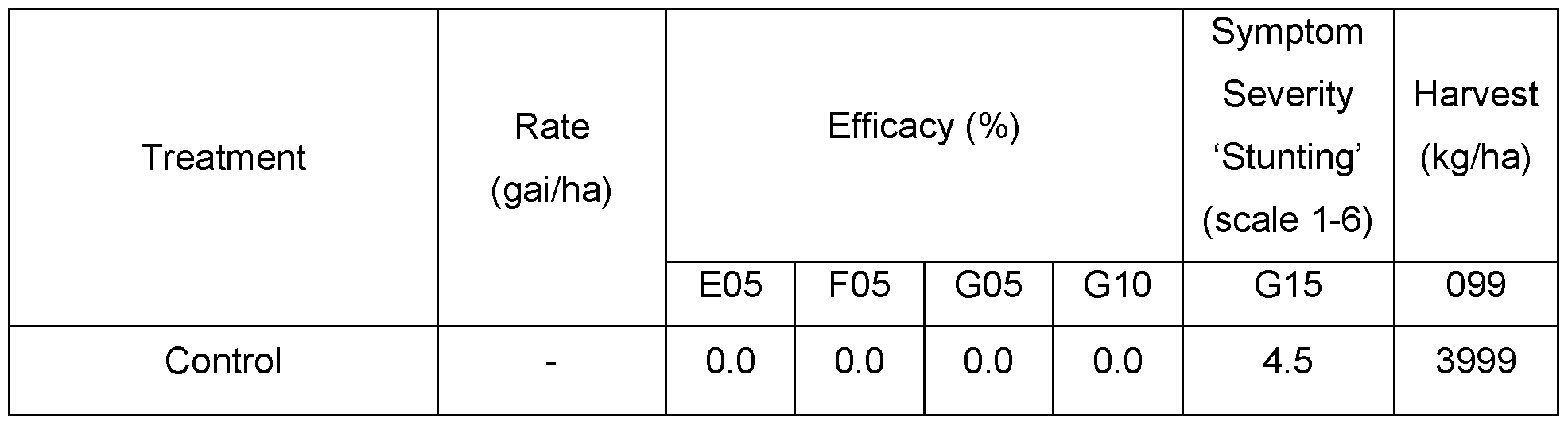
- Table 10-1 Results based on averages of replicates, subsamples per plot of: Efficacy (%) control of Dalbulus, Stunting symptomology severity (scale 1-6) and Harvest (kg/ha)
- dimpropyridaz at both 108 and 120gai/ha rates compared with commercial standards Key attributes noted by dimpropyridaz at both 108 and 120gai/ha rates compared with commercial standards are seen through the lower stunting symptomology severity response as well as higher total yield by weight kg/ha. Though thiamethoxam + lambda cyhalothrin resulted in higher percent efficacy control of dalbulus population throughout the study, it did not reduce symptomology severity or harvest kg/ha to the same level as dimpropyridaz. Dimpropyridaz at 108g ai/ha reduced severity of stunting symptoms by 2.5x and at 120gai/ha, 3x compared with the untreated control.
- EPG electrical penetration graph technique
- EPG recording has allowed the study of the stylet penetration activities of insect vectors in real time and facilitated correlation of the insect's probing activities with inoculation or acquisition of various plant pathogens (Prado & Tjalli ngii , Entomologia Experimentalis et Applicata 72: 157-165 (1994); Jiang et al., Annals of the Entomological Society of America 93, 573-579 (2000); Bonani et al., Entomologia Experimentalis et Applicata 134, 35-49 (2010)).
- EPG Erjallingii 1978
- DALBMA corn leafhopper
- Zea mays, ZEAMX corn plants
- an 8-channel DC-EPG (Giga-8 dd) (electrical penetration graph) divide was connected to an A/D converter card and a personal computer using Stylet + d software for data acquisition and analysis.
- Dalbulus maidis vector bacteria in a persistent manner which means, the insect can transmit or acquire the disease only if its feeds for a longer duration of time in the phloem vessel.
- a good insecticide for disease vector needs to kill the insect but moreover needs to stop feeding activities to avoid disease transmission.
- Treatments were applied via foliar application. 10 replicates per treatment, 1 insect per plant. Plants were sprayed at the recommended dose with an airbrush sprayer and after the plants dried, EPG plant setup was arranged. The corn leaf hoppers were immobilized under vacuum and cold plate, respectively and connected to a 17 pm, gold wire with the help of silver conductive paint.
- insects were connected to a copper electrode and to the DC-EPG device.
- a plant electrode was used to complete the circuit.
- EPG signals were acquired for each insect on a different plant and a minimum of 10 replicates per treatment was recorded, interpreted, and analysed. All behavioural variables were processed using the EPG-Excel data Worksheet developed internally.
- DC-EPG (Giga-8 dd) output was conducted during a continuous 24-hour recording.
- Dimpropyridaz was used as a 120g/L SL formulation compared to commercial standard Thiamethoxam + Lambda cyhalothrin: Engeo® Pleno 141g/L+106g/L SC (Syngenta). Rates of the test compounds:
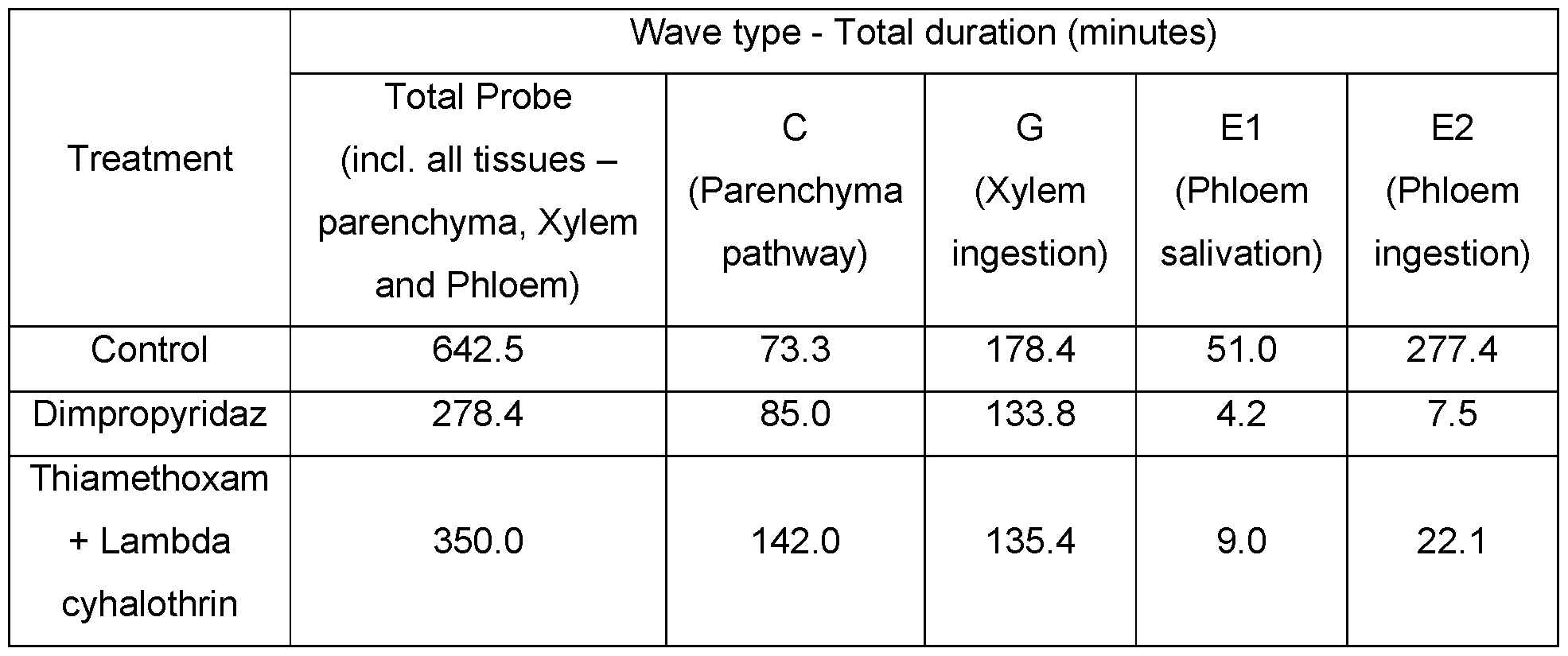
- Table 11-1 Total duration of each waveform (Total probe, C, G, E1 , and E2) during 24 hours of analysis of the EPG recording
- Phloem is the vessel where Dalbulus maidis can transmit stunting disease for corn.
- the relation of bacteria mollicute, phytoplasma to vector is in a persistent manner, which means the insect can transmit or acquire the disease only if feed for longer time in this vessel.
- Dimpropyridaz presented with the lowest amount of time (minutes) total probing across all tissues most notably within phloem via salivation and ingestion. When compared to control, verify clear changes in feeding behaviour throughout 24 hours were observed wherein dimpropyridaz reduced the total amount of time for phloem salivation and ingestion, 12x, 37x to 57x, 6.9x respectively.
- dimpropyridaz When dimpropyridaz was compared to Thiamethoxam + Lambda cyhalothrin, dimpropyridaz numerically reduced phloem salivation (E1) by about 2x as well as phloem ingestion (E2) by about 3x, confirming interference regarding corn leafhopper feeding behaviour.
- E1 phloem salivation
- E2 phloem ingestion
- Feeding cessation is a critical aspect regarding reduction of disease transmission amongst plant hosts. With differing impacts to insects based on coordination, active probing, feeding and mortality it is key to understand and relate results from EPG studies with a tangible and direct output of feeding.
- Honeydew is the sugary excrement as produced by piercing and sucking insects such as aphids and whiteflies and can be collected with water sensitive paper to correlate active feeding over an isolated range of time -24-48 hours. Amount of honeydew production is a direct representation of amount of feeding per hour. Even if insects are persisting on a plant and have not fully succumb to treatment reduction or inhibition of feeding during this period is essential for reduction in transmission of disease.
- Treatments were applied via foliar dip application wherein infested plants were dipped into solutions of predetermined rates (ppm ai or gai/ha) prepared by formulated compounds diluted in deionized water. Plant foliage was submerged for 3 full seconds ensuring full coverage of plant piece. Total replicates per treatment was 3, totalling 180-300 aphids per treatment.
- ppm ai or gai/ha predetermined rates
- Test compounds Dimpropyridaz was used as a 120g/L SL formulation compared to commercial standards Pymetrozine 50% WG (Fulfill®, Syngenta), Spirotetramat 240g/L OD (Movento®, Bayer) tested as commercial products.
- Table 12-1 Mean total number of aphid honeydew droplets 24-48 hours
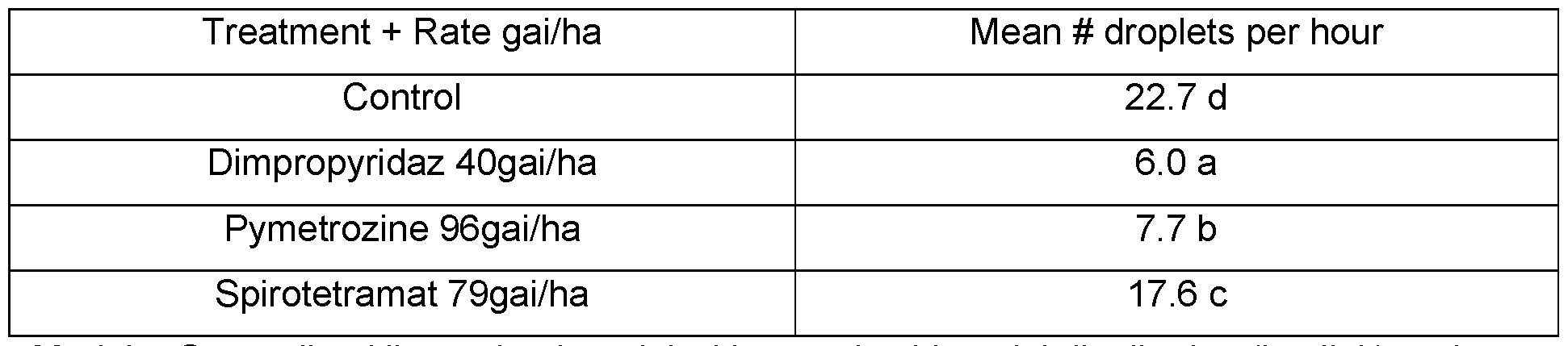
- Table 12-2 Repeated measurement mean number of aphid honeydew droplets per hour over 48 hours
- Model Generalized liner mixed model with negative binomial distribution (log link) and autoregressive 1 covariance structure.
- P 0.05.
- Results show the advantageous effect of dimpropyridaz treatment on reduction and time of cessation of honeydew production by cotton aphid (Aphis gossypii) on cotton compared with relevant global commercial insecticides.
- Dimpropyridaz showed the lowest number of aphid droplets across 24 - 48 hours (67.3). When average number of droplets per hour was evaluated dimpropyridaz showed a significant reduction noting the lowest number of honeydew droplets throughout the duration of the test.
- Reduction in feeding as seen by number of honeydew droplets per hour or in total confirm that dimpropyridaz displays feeding activity in a manner that correlates to reduction in disease transmission.
- Plants of Winter Oilseed rape were treated via single foliar spray application, with 300L/ha water volume when plants were at grow stage BBCH 13-18. Aphid population and subsequent disease presence were naturally occurring during the trial period. Assessments based on number of aphids (Green peach aphid, Myzus persicae) per x number plants per plot was conducted at intervals 1-28 days after foliar application along with ELISA %frequency calculations based on plant tissue samples collected at 28 days after treatment along with % estimated plot infection via a spring assessment approximately 6 months later.
- Dimpropyridaz was used as a 220g/L SC formulation compared to commercial standards as commercially available formulated products.
- Results show the impact on the frequency of plants per plot or total plots infected with TuYV (turnip yellow virus) in OSR.
- ELISA results showed the least instances of plant infected with TuYV within plots treated with dimpropyridaz at 0.2L/ha. Further confirmation was noted with secondary visual assessment of plot area wherein area infected by TuYV as denoted by symptomology was reduced 2x compared with control area.
- Plants of sugar beet Plantina KWS (Beta vulgaris vulgaris, BEAVP) were treated via two foliar spray applications, with 200L/ha water volume when plants were at grow stage BBCH 12 & 17.
- Aphid Aphis fabae, Myzus persicae population and resulting BYV symptoms were naturally occurring during the trial period. Assessments were based on visual reduction in BYV symptoms observed at 49 days after the second application.
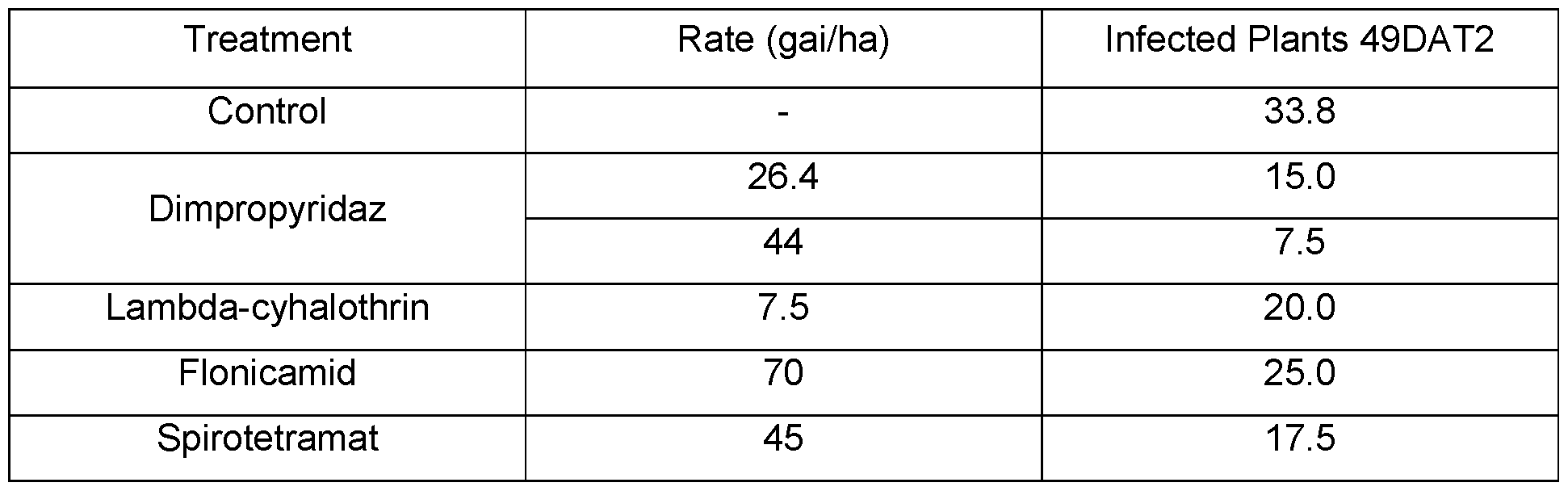
- Test compounds Dimpropyridaz was used as a 220g/L SC formulation compared to commercial standards: Lambda-cyhalothrin 1OOg/L CS (Karate Zeon®, Syngenta), Flonicamid 50% WG (Teppeki®, ISK), and Spirotetramat 100g/L SC (Movento®, Bayer).
- Results show the impact on the frequency of plants or plot infected with BYV (beet yellow virus) in sugar beet. Visual assessment of number infected plants at 49 days after the second application resulted with the fewest number of impacted plants within 44gai/ha dimpropyridaz treated plots and an overall reduction compared with untreated control of ⁇ 4.5x.
- BYV beet yellow virus
- Plants were treated via single foliar spray applications, with 200L/ha water volume when plants were at grow stage BBCH 12-14.
- Aphid Brown cherry oat aphid, Rhopalosiphum padi
- BYDV BYDV
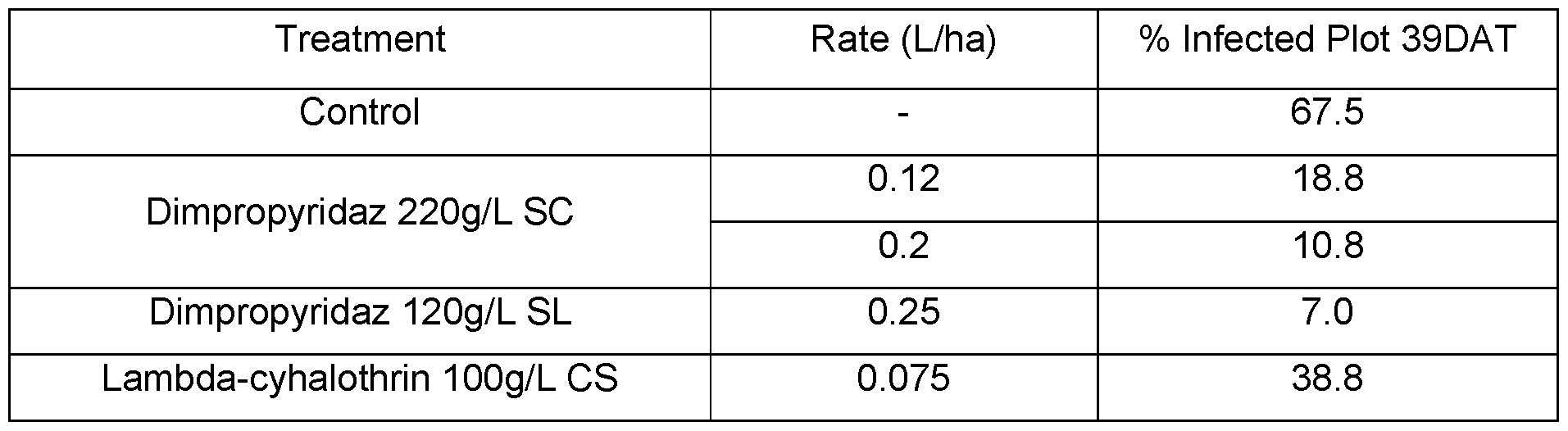
- Dimpropyridaz was used as a 120g/L SL, and 220g/L SC formulations, resp., compared to commercial standard Lambda-cyhalothrin tested as commercial product (100g/L CS (Karate Zeon®, Syngenta).
- 100g/L CS Karate Zeon®, Syngenta.
- Results show the strong impact on the frequency of plants or plot infected with BYDV (barley yellow dwarf virus) in winter barley.
- Visual assessment of percentage of plots displaying BYDV symptomology 39 days after treatment resulted with the lowest percentage of plots impacted by both dimpropyridaz treatments.
- Dimpropyridaz treatment of 0.2L/ha via 220g/L SC formulation resulted in a reduction of 6x of plots affected compared with the check and dimpropyridaz treatment of 0.25L/ha via 120g/L SL formulation presented with further reduction of ⁇ 10x compared to the untreated control.
Landscapes
- Life Sciences & Earth Sciences (AREA)
- Plant Pathology (AREA)
- Environmental Sciences (AREA)
- Zoology (AREA)
- Engineering & Computer Science (AREA)
- Wood Science & Technology (AREA)
- Pest Control & Pesticides (AREA)
- Chemical Kinetics & Catalysis (AREA)
- General Chemical & Material Sciences (AREA)
- Chemical & Material Sciences (AREA)
- Insects & Arthropods (AREA)
- Microbiology (AREA)
- Mycology (AREA)
- Agronomy & Crop Science (AREA)
- Health & Medical Sciences (AREA)
- Dentistry (AREA)
- General Health & Medical Sciences (AREA)
- Agricultural Chemicals And Associated Chemicals (AREA)
Abstract
Description























Claims
Priority Applications (13)
| Application Number | Priority Date | Filing Date | Title |
|---|---|---|---|
| EP23702598.6A EP4475679B1 (en) | 2022-02-11 | 2023-02-03 | Use of dimpropyridaz for reducing viral and bacterial transmission |
| CN202380021166.9A CN118870977A (en) | 2022-02-11 | 2023-02-03 | Use of methoxazole to reduce the spread of viruses and bacteria |
| KR1020247026401A KR20240148339A (en) | 2022-02-11 | 2023-02-03 | Uses of dimpropyridaz to reduce viral and bacterial transmission |
| JP2024547209A JP2025507344A (en) | 2022-02-11 | 2023-02-03 | Use of ginpropylidaz to reduce viral and bacterial transmission |
| AU2023218890A AU2023218890A1 (en) | 2022-02-11 | 2023-02-03 | Use of dimpropyridaz for reducing viral and bacterial transmission |
| MX2024009774A MX2024009774A (en) | 2022-02-11 | 2023-02-03 | USE OF DIMPROPYRIDAZ TO REDUCE THE TRANSMISSION OF VIRUSES AND BACTERIA. |
| CN202480010334.9A CN120676862A (en) | 2023-02-03 | 2024-02-02 | Use of oxaziclomefone for reducing or preventing bacterial transmission |
| KR1020257025603A KR20250144385A (en) | 2023-02-03 | 2024-02-02 | Uses of dimpropyridaz to reduce or prevent bacterial transmission |
| EP24703193.3A EP4658073A1 (en) | 2023-02-03 | 2024-02-02 | Use of dimpropyridaz for reducing or preventing bacterial transmission |
| PCT/EP2024/052648 WO2024161019A1 (en) | 2023-02-03 | 2024-02-02 | Use of dimpropyridaz for reducing or preventing bacterial transmission |
| AU2024215015A AU2024215015A1 (en) | 2023-02-03 | 2024-02-02 | Use of dimpropyridaz for reducing or preventing bacterial transmission |
| CL2025002275A CL2025002275A1 (en) | 2023-02-03 | 2025-07-31 | Use of dimpropyridaz to reduce transmission of bacteria from insect vectors to plants. |
| MX2025009032A MX2025009032A (en) | 2023-02-03 | 2025-08-01 | Use of dimpropyridaz for reducing or preventing bacterial transmission |
Applications Claiming Priority (2)
| Application Number | Priority Date | Filing Date | Title |
|---|---|---|---|
| EP22156235.8 | 2022-02-11 | ||
| EP22156235 | 2022-02-11 |
Publications (1)
| Publication Number | Publication Date |
|---|---|
| WO2023152045A1 true WO2023152045A1 (en) | 2023-08-17 |
Family
ID=80446585
Family Applications (1)
| Application Number | Title | Priority Date | Filing Date |
|---|---|---|---|
| PCT/EP2023/052683 Ceased WO2023152045A1 (en) | 2022-02-11 | 2023-02-03 | Use of dimpropyridaz for reducing viral and bacterial transmission |
Country Status (2)
| Country | Link |
|---|---|
| CL (1) | CL2024002394A1 (en) |
| WO (1) | WO2023152045A1 (en) |
Citations (7)
| Publication number | Priority date | Publication date | Assignee | Title |
|---|---|---|---|---|
| EP0237227A1 (en) | 1986-03-13 | 1987-09-16 | Imperial Chemical Industries Plc | Insecticidal compositions |
| EP2011394A1 (en) | 2007-07-03 | 2009-01-07 | Bayer CropScience AG | Use of tetramic acid derivatives for controlling virus-transmitting vectors |
| WO2012143317A1 (en) | 2011-04-21 | 2012-10-26 | Basf Se | Novel pesticidal pyrazole compounds |
| WO2013189801A1 (en) | 2012-06-20 | 2013-12-27 | Basf Se | Pyrazole compound and pesticidal mixtures comprising a pyrazole compound |
| WO2016128261A2 (en) | 2015-02-11 | 2016-08-18 | Basf Se | Pesticidal mixture comprising a pyrazole compound, an insecticide and a fungicide |
| WO2018055479A1 (en) * | 2016-09-26 | 2018-03-29 | Basf Se | Use of pyripyropene compounds for reducing viral transmission |
| WO2018234478A1 (en) | 2017-06-23 | 2018-12-27 | Basf Se | PESTICIDE MIXTURES COMPRISING A PYRAZOLE COMPOUND |
-
2023
- 2023-02-03 WO PCT/EP2023/052683 patent/WO2023152045A1/en not_active Ceased
-
2024
- 2024-08-09 CL CL2024002394A patent/CL2024002394A1/en unknown
Patent Citations (7)
| Publication number | Priority date | Publication date | Assignee | Title |
|---|---|---|---|---|
| EP0237227A1 (en) | 1986-03-13 | 1987-09-16 | Imperial Chemical Industries Plc | Insecticidal compositions |
| EP2011394A1 (en) | 2007-07-03 | 2009-01-07 | Bayer CropScience AG | Use of tetramic acid derivatives for controlling virus-transmitting vectors |
| WO2012143317A1 (en) | 2011-04-21 | 2012-10-26 | Basf Se | Novel pesticidal pyrazole compounds |
| WO2013189801A1 (en) | 2012-06-20 | 2013-12-27 | Basf Se | Pyrazole compound and pesticidal mixtures comprising a pyrazole compound |
| WO2016128261A2 (en) | 2015-02-11 | 2016-08-18 | Basf Se | Pesticidal mixture comprising a pyrazole compound, an insecticide and a fungicide |
| WO2018055479A1 (en) * | 2016-09-26 | 2018-03-29 | Basf Se | Use of pyripyropene compounds for reducing viral transmission |
| WO2018234478A1 (en) | 2017-06-23 | 2018-12-27 | Basf Se | PESTICIDE MIXTURES COMPRISING A PYRAZOLE COMPOUND |
Non-Patent Citations (9)
| Title |
|---|
| "Sec. Plant Pathogen Interactions", FRONT. PLANT SCI., 9 August 2016 (2016-08-09) |
| BONANI ET AL., ENTOMOLOGIA EXPERIMENTALIS ET APPLICATA, vol. 134, 2010, pages 35 - 49 |
| ENTOMOLOGIA EXPERIMENTALIS ET APPLICATA, vol. 38, 1985, pages 177 - 186 |
| GARZO ET AL., PEST MANAGEMENT SCIENCE, vol. 72, no. 4, 2016, pages 707 - 18 |
| HARREWIJNKAYSER, PESTICIDE SCIENCE, vol. 49, 1997, pages 130 - 140 |
| JACOBSONKENNEDY, PEST MANAGEMENT SCIENCE, vol. 70, no. 5, 2014, pages 836 - 40 |
| JIANG ET AL., ANNALS OF THE ENTOMOLOGICAL SOCIETY OF AMERICA, vol. 93, 2000, pages 573 - 579 |
| PRADOTJALLINGII, ENTOMOLOGIA EXPERIMENTALIS ET APPLICATA, vol. 72, 1994, pages 157 - 165 |
| TJALLINGII, ENTOMOLOGIA EXPERIMENTALIS ET APPLICATA, vol. 24, 1978, pages 521 - 530 |
Also Published As
| Publication number | Publication date |
|---|---|
| CL2024002394A1 (en) | 2024-11-15 |
Similar Documents
| Publication | Publication Date | Title |
|---|---|---|
| Dewar et al. | Chemical control. | |
| Khan et al. | Integrated pest and disease management for better agronomic crop production | |
| Castle et al. | Newer insecticides for plant virus disease management | |
| Marasigan et al. | Evaluation of alternatives to carbamate and organophosphate insecticides against thrips and tomato spotted wilt virus in peanut production | |
| Showler et al. | Effects of sugarcane borer, weed, and nematode control strategies in Louisiana sugarcane | |
| Yang et al. | Use of horticultural mineral oils to control potato virus Y (PVY) and other non-persistent aphid-vectored viruses | |
| D’Amelio et al. | Activity of benzothiadiazole on chrysanthemum yellows phytoplasma (‘Candidatus Phytoplasma asteris’) infection in daisy plants | |
| Sharma et al. | Pod borers | |
| EP4475679B1 (en) | Use of dimpropyridaz for reducing viral and bacterial transmission | |
| WO2023152045A1 (en) | Use of dimpropyridaz for reducing viral and bacterial transmission | |
| Ekesi et al. | Metarhizium anisopliae: an effective biological control agent for the management of thrips in horti-and floriculture in Africa | |
| El-sayed | Field evaluation of plant extracts and certain insecticides against Bemesia tabaci (Gennadius) on tomato plants and Myzus persicae (Sulzer) on pepper plants | |
| Kashima et al. | Acetylated glyceride: A novel repellent which interferes with tomato yellow leaf curl virus acquisition and its transmission by Bemisia tabaci (Gennadius)(Hemiptera: Aleyrodidae) | |
| Davis et al. | Review of major crop and animal arthropod pests of South Texas | |
| EP4658073A1 (en) | Use of dimpropyridaz for reducing or preventing bacterial transmission | |
| Seni et al. | Insect vectors accountable for plant diseases | |
| Amine et al. | efficacy of certain insecticides and mineral oil in controlling aphid, Aphis Gossypii Glov. and papaya ringspot virus in squash at Kafr El-Sheikh Governorate | |
| Abd-Rabou et al. | Infestation by Bemisia tabaci (Hemiptera: Aleyrodidae) and incidence of whitefly-transmitted viruses after the application of four biorational insecticides in some crops in Egypt | |
| Favara et al. | Characterization of soybean, tomato, and Nicandra physalodes as sources of inoculum of tomato severe rugose virus to tomato crops | |
| Alananbeh et al. | Diseases of Broad Bean | |
| Stufkens et al. | Aphids species on potato crops in Canterbury | |
| Roy et al. | Field-efficacy of a novel ready-mix molecule pyriproxyfen 5%+ fenpropathrin 15% EC against hopper complex of mango | |
| Wubshet et al. | Review on citrus tristeza virus | |
| Adam et al. | The development of a novel insecticide seed treatment for use in northern and central Europe for protection against soil dwelling and foliar pests in cereal crops | |
| Wagiman et al. | The effect of various concentrations of both lime juice and synthetic citric acid solutions to protect Capsicum frutescens L. against yellow leaf curl disease. |
Legal Events
| Date | Code | Title | Description |
|---|---|---|---|
| 121 | Ep: the epo has been informed by wipo that ep was designated in this application |
Ref document number: 23702598 Country of ref document: EP Kind code of ref document: A1 |
|
| DPE1 | Request for preliminary examination filed after expiration of 19th month from priority date (pct application filed from 20040101) | ||
| WWE | Wipo information: entry into national phase |
Ref document number: 202417056721 Country of ref document: IN |
|
| WWE | Wipo information: entry into national phase |
Ref document number: 2024547209 Country of ref document: JP |
|
| WWE | Wipo information: entry into national phase |
Ref document number: 202380021166.9 Country of ref document: CN |
|
| WWE | Wipo information: entry into national phase |
Ref document number: MX/A/2024/009774 Country of ref document: MX |
|
| ENP | Entry into the national phase |
Ref document number: 2023218890 Country of ref document: AU Date of ref document: 20230203 Kind code of ref document: A |
|
| REG | Reference to national code |
Ref country code: BR Ref legal event code: B01A Ref document number: 112024016337 Country of ref document: BR |
|
| WWE | Wipo information: entry into national phase |
Ref document number: 2023702598 Country of ref document: EP |
|
| NENP | Non-entry into the national phase |
Ref country code: DE |
|
| ENP | Entry into the national phase |
Ref document number: 2023702598 Country of ref document: EP Effective date: 20240911 |
|
| ENP | Entry into the national phase |
Ref document number: 112024016337 Country of ref document: BR Kind code of ref document: A2 Effective date: 20240809 |
|
| WWG | Wipo information: grant in national office |
Ref document number: 2023702598 Country of ref document: EP |