WO2023137121A1 - Biodegradable prepolymer microcapsules - Google Patents
Biodegradable prepolymer microcapsules Download PDFInfo
- Publication number
- WO2023137121A1 WO2023137121A1 PCT/US2023/010696 US2023010696W WO2023137121A1 WO 2023137121 A1 WO2023137121 A1 WO 2023137121A1 US 2023010696 W US2023010696 W US 2023010696W WO 2023137121 A1 WO2023137121 A1 WO 2023137121A1
- Authority
- WO
- WIPO (PCT)
- Prior art keywords
- microcapsule
- modified
- shell
- polyisocyanate
- fragrance
- Prior art date
- Legal status (The legal status is an assumption and is not a legal conclusion. Google has not performed a legal analysis and makes no representation as to the accuracy of the status listed.)
- Ceased
Links
Classifications
-
- B—PERFORMING OPERATIONS; TRANSPORTING
- B01—PHYSICAL OR CHEMICAL PROCESSES OR APPARATUS IN GENERAL
- B01J—CHEMICAL OR PHYSICAL PROCESSES, e.g. CATALYSIS OR COLLOID CHEMISTRY; THEIR RELEVANT APPARATUS
- B01J13/00—Colloid chemistry, e.g. the production of colloidal materials or their solutions, not otherwise provided for; Making microcapsules or microballoons
- B01J13/02—Making microcapsules or microballoons
- B01J13/06—Making microcapsules or microballoons by phase separation
- B01J13/14—Polymerisation; cross-linking
- B01J13/16—Interfacial polymerisation
-
- A—HUMAN NECESSITIES
- A23—FOODS OR FOODSTUFFS; TREATMENT THEREOF, NOT COVERED BY OTHER CLASSES
- A23K—FODDER
- A23K40/00—Shaping or working-up of animal feeding-stuffs
- A23K40/30—Shaping or working-up of animal feeding-stuffs by encapsulating; by coating
-
- A—HUMAN NECESSITIES
- A23—FOODS OR FOODSTUFFS; TREATMENT THEREOF, NOT COVERED BY OTHER CLASSES
- A23L—FOODS, FOODSTUFFS OR NON-ALCOHOLIC BEVERAGES, NOT OTHERWISE PROVIDED FOR; PREPARATION OR TREATMENT THEREOF
- A23L27/00—Spices; Flavouring agents or condiments; Artificial sweetening agents; Table salts; Dietetic salt substitutes; Preparation or treatment thereof
- A23L27/70—Fixation, conservation, or encapsulation of flavouring agents
- A23L27/72—Encapsulation
-
- A—HUMAN NECESSITIES
- A23—FOODS OR FOODSTUFFS; TREATMENT THEREOF, NOT COVERED BY OTHER CLASSES
- A23P—SHAPING OR WORKING OF FOODSTUFFS, NOT FULLY COVERED BY A SINGLE OTHER SUBCLASS
- A23P10/00—Shaping or working of foodstuffs characterised by the products
- A23P10/30—Encapsulation of particles, e.g. foodstuff additives
-
- A—HUMAN NECESSITIES
- A61—MEDICAL OR VETERINARY SCIENCE; HYGIENE
- A61K—PREPARATIONS FOR MEDICAL, DENTAL OR TOILETRY PURPOSES
- A61K8/00—Cosmetics or similar toiletry preparations
- A61K8/02—Cosmetics or similar toiletry preparations characterised by special physical form
- A61K8/11—Encapsulated compositions
-
- A—HUMAN NECESSITIES
- A61—MEDICAL OR VETERINARY SCIENCE; HYGIENE
- A61K—PREPARATIONS FOR MEDICAL, DENTAL OR TOILETRY PURPOSES
- A61K8/00—Cosmetics or similar toiletry preparations
- A61K8/18—Cosmetics or similar toiletry preparations characterised by the composition
- A61K8/30—Cosmetics or similar toiletry preparations characterised by the composition containing organic compounds
- A61K8/64—Proteins; Peptides; Derivatives or degradation products thereof
- A61K8/65—Collagen; Gelatin; Keratin; Derivatives or degradation products thereof
-
- A—HUMAN NECESSITIES
- A61—MEDICAL OR VETERINARY SCIENCE; HYGIENE
- A61K—PREPARATIONS FOR MEDICAL, DENTAL OR TOILETRY PURPOSES
- A61K8/00—Cosmetics or similar toiletry preparations
- A61K8/18—Cosmetics or similar toiletry preparations characterised by the composition
- A61K8/72—Cosmetics or similar toiletry preparations characterised by the composition containing organic macromolecular compounds
- A61K8/73—Polysaccharides
-
- A—HUMAN NECESSITIES
- A61—MEDICAL OR VETERINARY SCIENCE; HYGIENE
- A61Q—SPECIFIC USE OF COSMETICS OR SIMILAR TOILETRY PREPARATIONS
- A61Q19/00—Preparations for care of the skin
-
- B—PERFORMING OPERATIONS; TRANSPORTING
- B01—PHYSICAL OR CHEMICAL PROCESSES OR APPARATUS IN GENERAL
- B01J—CHEMICAL OR PHYSICAL PROCESSES, e.g. CATALYSIS OR COLLOID CHEMISTRY; THEIR RELEVANT APPARATUS
- B01J13/00—Colloid chemistry, e.g. the production of colloidal materials or their solutions, not otherwise provided for; Making microcapsules or microballoons
- B01J13/02—Making microcapsules or microballoons
- B01J13/06—Making microcapsules or microballoons by phase separation
- B01J13/14—Polymerisation; cross-linking
-
- C—CHEMISTRY; METALLURGY
- C11—ANIMAL OR VEGETABLE OILS, FATS, FATTY SUBSTANCES OR WAXES; FATTY ACIDS THEREFROM; DETERGENTS; CANDLES
- C11D—DETERGENT COMPOSITIONS; USE OF SINGLE SUBSTANCES AS DETERGENTS; SOAP OR SOAP-MAKING; RESIN SOAPS; RECOVERY OF GLYCEROL
- C11D11/00—Special methods for preparing compositions containing mixtures of detergents
- C11D11/0082—Special methods for preparing compositions containing mixtures of detergents one or more of the detergent ingredients being in a liquefied state, e.g. slurry, paste or melt, and the process resulting in solid detergent particles such as granules, powders or beads
-
- C—CHEMISTRY; METALLURGY
- C11—ANIMAL OR VEGETABLE OILS, FATS, FATTY SUBSTANCES OR WAXES; FATTY ACIDS THEREFROM; DETERGENTS; CANDLES
- C11D—DETERGENT COMPOSITIONS; USE OF SINGLE SUBSTANCES AS DETERGENTS; SOAP OR SOAP-MAKING; RESIN SOAPS; RECOVERY OF GLYCEROL
- C11D17/00—Detergent materials or soaps characterised by their shape or physical properties
- C11D17/0039—Coated compositions or coated components in the compositions, (micro)capsules
-
- C—CHEMISTRY; METALLURGY
- C11—ANIMAL OR VEGETABLE OILS, FATS, FATTY SUBSTANCES OR WAXES; FATTY ACIDS THEREFROM; DETERGENTS; CANDLES
- C11D—DETERGENT COMPOSITIONS; USE OF SINGLE SUBSTANCES AS DETERGENTS; SOAP OR SOAP-MAKING; RESIN SOAPS; RECOVERY OF GLYCEROL
- C11D3/00—Other compounding ingredients of detergent compositions covered in group C11D1/00
- C11D3/0005—Other compounding ingredients characterised by their effect
- C11D3/001—Softening compositions
- C11D3/0015—Softening compositions liquid
-
- C—CHEMISTRY; METALLURGY
- C11—ANIMAL OR VEGETABLE OILS, FATS, FATTY SUBSTANCES OR WAXES; FATTY ACIDS THEREFROM; DETERGENTS; CANDLES
- C11D—DETERGENT COMPOSITIONS; USE OF SINGLE SUBSTANCES AS DETERGENTS; SOAP OR SOAP-MAKING; RESIN SOAPS; RECOVERY OF GLYCEROL
- C11D3/00—Other compounding ingredients of detergent compositions covered in group C11D1/00
- C11D3/16—Organic compounds
- C11D3/37—Polymers
- C11D3/3703—Macromolecular compounds obtained otherwise than by reactions only involving carbon-to-carbon unsaturated bonds
- C11D3/3726—Polyurethanes
-
- C—CHEMISTRY; METALLURGY
- C11—ANIMAL OR VEGETABLE OILS, FATS, FATTY SUBSTANCES OR WAXES; FATTY ACIDS THEREFROM; DETERGENTS; CANDLES
- C11D—DETERGENT COMPOSITIONS; USE OF SINGLE SUBSTANCES AS DETERGENTS; SOAP OR SOAP-MAKING; RESIN SOAPS; RECOVERY OF GLYCEROL
- C11D3/00—Other compounding ingredients of detergent compositions covered in group C11D1/00
- C11D3/50—Perfumes
- C11D3/502—Protected perfumes
- C11D3/505—Protected perfumes encapsulated or adsorbed on a carrier, e.g. zeolite or clay
-
- A—HUMAN NECESSITIES
- A61—MEDICAL OR VETERINARY SCIENCE; HYGIENE
- A61K—PREPARATIONS FOR MEDICAL, DENTAL OR TOILETRY PURPOSES
- A61K2800/00—Properties of cosmetic compositions or active ingredients thereof or formulation aids used therein and process related aspects
- A61K2800/10—General cosmetic use
-
- A—HUMAN NECESSITIES
- A61—MEDICAL OR VETERINARY SCIENCE; HYGIENE
- A61K—PREPARATIONS FOR MEDICAL, DENTAL OR TOILETRY PURPOSES
- A61K2800/00—Properties of cosmetic compositions or active ingredients thereof or formulation aids used therein and process related aspects
- A61K2800/40—Chemical, physico-chemical or functional or structural properties of particular ingredients
- A61K2800/56—Compounds, absorbed onto or entrapped into a solid carrier, e.g. encapsulated perfumes, inclusion compounds, sustained release forms
Definitions
- the present disclosure relates to biodegradable prepolymer microcapsules, as well as their use in consumer products and a process for preparing the biodegradable prepolymer microcapsules.
- microcapsules described above may pass any current biodegradation tests (e.g., the OECD301F or OECD310), they may still not be “truly” biodegradable and fully ECHA compliant.
- the microcapsules may not satisfy the requirements under the proposed ECHA regulations that materials forming the microcapsule wall cannot be a “blend” of biodegradable materials (e.g., biopolymers) and non-biodegradable materials.
- materials forming the microcapsule wall cannot be a “blend” of biodegradable materials (e.g., biopolymers) and non-biodegradable materials.
- the microcapsule wall is considered a blend, all components of the blend as a whole need to meet the requirements for biodegradability (e.g., minimally at least the OECD301F or OECD310 tests).
- microcapsules composed of sustainable, and/or biodegradable materials, which are chemically stable and/or deliver active materials such as fragrances in consumer products are still needed in the industry.
- the materials used to form the microcapsule walls do not form a blend of biodegradable materials and non-biodegradable materials.
- the blend contains only a small amount (i.e., ⁇ 10%, ⁇ 5%, ⁇ 3%, ⁇ 1%, ⁇ 0.5%, ⁇ 0.1% or ⁇ 0.05%) of non- biodegradable materials, or all components of the blend as a whole meet the requirements for biodegradability.
- the microcapsules preferably also provide acceptable fragrance profile and performance in use.
- the biodegradable core-shell microcapsules of the present disclosure satisfy this and other needs in the industry.
- biodegradable core-shell microcapsule of the present disclosure is based, inter alia, on the discovery that biodegradable and/or sustainable microcapsule shells can be prepared with isocyanate-functionalized prepolymers.
- the present disclosure provides a biodegradable core-shell microcapsule comprising: (a) a microcapsule shell comprising the reaction product of an isocyanate- functionalized prepolymer with a crosslinker and optionally a polyelectrolyte under an aqueous condition; and (b) a microcapsule core comprising an active material; wherein the isocyanate- functionalized prepolymer is the reaction product of a polyisocyanate with a biopolymer and/or an amphiphilic compound under an anhydrous condition, the biopolymer is selected from the group consisting of gelatin, collagen, chitosan, modified guar, modified glucan, gum Arabic (gum acacia), modified gum Arabic (modified gum acacia), proteins (e.g., pea protein), hydrolyzed proteins (e.g., hydrolyzed pea protein), fermented proteins, hydrophobin, enzymes, alginate, carrageenan, pectin
- the present disclosure also provides a process for preparing a biodegradable core-shell microcapsule.
- the process comprises (a) reacting, under an anhydrous condition, a polyisocyanate with a biopolymer and/or an amphiphilic compound, preferably in the presence of a catalyst, to form an isocyanate-functionalized prepolymer, preferably the polyisocyanate is dissolved in a solution comprising a solvent and/or an active material; (b) emulsifying the isocyanate- functionalized prepolymer with an aqueous solution to form an emulsion, preferably said aqueous solution comprises a polyelectrolyte; (c) crosslinking the isocyanate-functionalized prepolymer and optionally the polyelectrolyte with a first crosslinker to form the biodegradable core-shell microcapsule, wherein the first crosslinker comprises an oxidized sugar comprising aldehyde groups and/or an enzyme selected from the group consist
- the present disclosure also provides a process for making an isocyanate-functionalized prepolymer.
- the process comprises reacting, under an anhydrous condition, a polyisocyanate with a biopolymer and/or an amphiphilic compound, preferably in the presence of a catalyst, to form an isocyanate-functionalized prepolymer, wherein the polyisocyanate is dissolved in a solution comprising a solvent and/or an active material, the biopolymer is selected from the group consisting of gelatin, collagen, chitosan, modified guar, modified glucan, gum Arabic (gum acacia), modified gum Arabic (modified gum acacia), proteins (e.g., pea protein), hydrolyzed proteins (e.g., hydrolyzed pea protein), fermented proteins, hydrophobin, enzymes, alginate, carrageenan, pectin, modified starch, modified cellulose, and mixtures thereof, and the amphiphilic compound is selected from the group consisting
- the terms “comprises,” “comprising,” “includes,” “including,” “has,” “having” or any other variation thereof, are intended to cover a non-exclusive inclusion.
- a process, method, article, or apparatus that comprises a list of elements is not necessarily limited to only those elements but may include other elements not expressly listed or inherent to such process, method, article, or apparatus.
- “or” refers to an inclusive or and not to an exclusive or. For example, a condition A or B is satisfied by any one of the following: A is true (or present) and B is false (or not present), A is false (or not present) and B is true (or present), and both A and B are true (or present).
- a person of ordinary skill in the art appreciates that some proteins can be modified, denatured and/or hydrolyzed. Unless explicitly indicated, a protein in this disclosure includes its modified, denatured and/or hydrolyzed forms. A person of ordinary skill in the art also appreciates that some biopolymers and polyelectrolytes can be modified and/or hydrolyzed. Unless explicitly indicated, a biopolymer or a polyelectrolyte in this disclosure includes its modified and/or hydrolyzed forms.
- the term “elevated temperature”, as used herein, means a temperature higher than the room temperature.
- microcapsule slurry means an aqueous suspension of the biodegradable core-shell microcapsule.
- the biodegradable core-shell microcapsule product produced in accordance with the methods and examples described in the present disclosure is in the form of a microcapsule slurry.
- the microcapsule slurry may be used directly in a consumer product.
- the microcapsule slurry may also be washed, coated, dried (e.g., spray-dried) and/or combined with one or more other microcapsules, active materials, and/or carrier materials.
- self-condensed poly isocyanate means the polyurea formed by the self-polymerization of polyisocyanate in the presence of water.
- isocyanate can react with water to form amine which can further react with isocyanate to form urea linkage. Accordingly, polyisocyanate can self-polymerize in the presence of water to form polyurea.
- the self-condensed polyisocyanate is non-biodegradable.
- the term “under an aqueous condition”, as used herein with respect to a reaction, means the reaction is conducted in the substantial presence of water. In some embodiments, it means the reaction is conducted in the presence of an aqueous phase. In some embodiments, it means the water content in the reaction mixture (including reactants, products, solvents, catalysts, emulsifiers, etc., if present) is more than 10%, 20%, 30%, 40%, or 50%, based on the total weight of the reaction mixture.
- the term “under an anhydrous condition”, as used herein with respect to a reaction, means the reaction is conducted in the substantial absence of water. In some embodiments, it means the reaction is conducted in the absence of an aqueous phase. In some embodiments, it means the water content in the reaction mixture (including reactants, products, solvents, catalysts, emulsifiers, etc., if present) is no more than 10%, 5%, 2%, 1%, 0.5%, 0.2%, 0.1%, 0.05%, 0.02%, or 0.01%, based on the total weight of the reaction mixture.
- anhydrous as used herein with respect to a material, means the material is substantially free of or free of water. In some embodiments, it means the water content in the material is no more than 10%, 5%, 2%, 1%, 0.5%, 0.2%, 0.1%, 0.05%, 0.02%, or 0.01%, based on the weight of the material.
- biomass e.g., obtained from materials containing organic carbon of renewable origin.
- Source of such carbon can be derived from agricultural products, plants, animals, fungi, microorganisms, marine or forestry materials.
- polyfunctional isocyanate and “polyisocyanate” can be used interchangeably and refer to a compound having two or more isocyanate (-NCO) groups.
- Polyisocyanates can be aromatic, aliphatic, linear, branched, or cyclic.
- the polyisocyanate contains, on average, 2 to 4 isocyanate groups.
- the polyisocyanate contains at least three isocyanate functional groups.
- the polyisocyanate is water insoluble.
- the polyisocyanate is an oligomeric polyisocyanate obtained from hexamethylene diisocyanate (HDI), which is a monomeric diisocyanate.
- HDI hexamethylene diisocyanate
- the polyisocyanate is an oligomeric polyisocyanate having a biuret, isocyanurate, allophanate, uretdione and/or oligomeric HDI structure.
- Exemplary polyisocyanates are sold under the tradenames TAKENATE® (e.g., TAKENATE® D-l ION; Mitsui Chemicals), DESMODUR® (Covestro), BAYHYDUR® (Covestro), and LUPRANATE® (BASF).
- the polyisocyanate is an aromatic polyisocyanate.
- the aromatic polyisocyanate includes a phenyl, tolyl, xylyl, naphthyl or diphenyl moiety as the aromatic component.
- the aromatic polyisocyanate is selected from the group consisting of polyisocyanurate of toluene diisocyanate, trimethylol propane-adduct of toluene diisocyanate, trimethylol propane- adduct of xylylene diisocyanate, and mixtures thereof.
- the aromatic polyisocyanate has the structural formula shown below, and includes structural isomers thereof wherein n can vary from zero to a desired number (e.g., 0-50, 0-20, 0-10, or 0-6). Preferably, the number of n is limited to less than 6.
- the polyisocyanate may also be a mixture of polyisocyanates where the value of n can vary from 0 to 6. In the case where the polyisocyanate is a mixture of various poly isocyanates, the average value of n preferably falls in between 0.5 and 1.5.
- the aromatic polyisocyanate has the structural formula shown below, and includes structural isomers thereof wherein R can be a Ci-Cio alkyl, Ci-Cio ester, or an isocyanurate.
- R can be a Ci-Cio alkyl, Ci-Cio ester, or an isocyanurate.
- Representative polyisocyanates having this structure are sold under the trademarks TAKENATE® D-l 10N (Mitsui), DESMODUR® L75 (Covestro), and DESMODUR® IL (Covestro).
- the aromatic polyisocyanate is selected from the group consisting of 1,5 -naphthylene diisocyanate, 4,4'-diphenylmethane diisocyanate (MDI), hydrogenated MDI (H12MDI), xylylene diisocyanate (XDI), tetramethylxylol diisocyanate (TMXDI), 4,4'- diphenyldimethylmethane diisocyanate, di- and tetraalkyldiphenylmethane diisocyanate, 4,4'- dibenzyl diisocyanate, 1,3 -phenylene diisocyanate, 1 ,4-phenylene diisocyanate, the isomers of tolylene diisocyanate (TDI), 4,4'-diisocyanatophenylperfluoroethane, phthalic acid bisisocyanatoethyl ester, aromatic polyisocyanates with reactive
- the aromatic polyisocyanate with reactive halogen atom is selected from the group consisting of 1-chloromethylphenyl 2,4-diisocyanate, 1-bromomethyl-phenyl 2,6- diisocyanate, 3,3-bischloromethyl ether 4,4'-diphenyldiisocyanate, and mixtures thereof.
- the polyisocyanate is an aliphatic polyisocyanate.
- the aliphatic polyisocyanate is selected from the group consisting of trimer of hexamethylene diisocyanate, trimer of isophorone diisocyanate, biuret of hexamethylene diisocyanate, and mixtures thereof.
- the aliphatic polyisocyanate is selected from the group consisting of l-methyl-2,4-diisocyanatocyclohexane, l,6-diisocyanato-2,2,4- trimethylhexane, l,6-diisocyanato-2,4,4-trimethylhexane, l-isocyanatomethyl-3-isocyanato- 1,5, 5 -trimethylcyclohexane, chlorinated aliphatic diisocyanates, brominated aliphatic diisocyanates, phosphorus-containing aliphatic diisocyanates, tetramethoxybutane 1,4- diisocyanate, butane 1 ,4-diisocyanate, hexane 1,6-diisocyanate (HD I), dicyclohexylmethane diisocyanate, cyclohexane 1 ,4-diisocyanate, ethylene di
- the polyisocyanate comprises a sulfur-containing polyisocyanate which can be obtained, for example, by reacting hexamethylene diisocyanate with thiodiglycol or dihydroxy dihexyl sulfide.
- the polyisocyanate is an aliphatic diisocyanate selected from the group consisting of trimethylhexamethylene diisocyanate, 1,4- diisocyanatobutane, 1,2-diisocyanatododecane, dimer fatty acid diisocyanate, and mixtures thereof.
- the weight average molecular weight of the polyisocyanate ranges from 250 Da to 1000 Da, or from 275 Da to 500 Da.
- the polyisocyanate used in the preparation of the isocyanate-functionalized prepolymer is a single polyisocyanate.
- the polyisocyanate is a mixture of polyisocyanates.
- the mixture of polyisocyanates includes an aliphatic polyisocyanate and an aromatic polyisocyanate.
- An amphiphilic compound is a chemical compound having both hydrophilic and lipophilic groups.
- the amphiphilic compound contains at least two functional groups selected from the group consisting of amine groups, hydroxyl groups, carboxyl groups, and combinations thereof.
- an amphiphilic compound can contain three hydroxyl groups or one amine group and one hydroxyl group.
- the amphiphilic compound is selected from the group consisting of partially neutralized acid esters, polyvinyl alcohol, glycolipids, fatty acids, saponins, quillaia extract, surfactant salts having carboxylate and/or linear alcohol groups, and mixtures thereof.
- the partially neutralized acid ester is a partially neutralized citric acid ester.
- Biopolymer means a polymer obtained from a natural source (e.g., plant, fungus, bacterium or animal) or modified biopolymer thereof.
- the biopolymer can be a polypeptide (e.g., protein) or a polysaccharide.
- the biopolymer is soluble or dispersible in an oil phase.
- the biopolymer is a poly electrolyte.
- a biopolymer can contain amine, hydroxyl and/or carboxyl functional groups which can react with a polyisocyanate.
- the biopolymer is selected from the group consisting of gelatin, collagen, chitosan, modified guar, modified glucan, gum Arabic (gum acacia), modified gum Arabic (modified gum acacia), proteins (e.g., pea protein), hydrolyzed proteins (e.g., hydrolyzed pea protein), fermented proteins, hydrophobin, enzymes, alginate, carrageenan, pectin, modified starch, modified cellulose, and mixtures thereof.
- the biopolymer is gelatin.
- the biopolymer is chitosan.
- chitosan means a linear polysaccharide composed of randomly distributed P-(l-4)-linked D-glucosamine (deacetylated unit) and A-acetyl-D- glucosamine (acetylated unit). Important characteristics in determining the functionality of chitosan are the degree of deacetylation (DDA) and weight average molecular weight (M w ). Chitosan is technically defined as chitin with more than 60% DDA. Chitosan with higher percentage DDA possesses more positively charged amine groups when dissolved in solution.
- DDA degree of deacetylation
- M w weight average molecular weight
- the chitosan is derived from shellfish chitosan or fungal chitosan.
- the chitosan is a fungal chitosan.
- a fungal chitosan In traditionally sourced crustacean-based chitosan production, large volumes of high temperature, caustic solution are required to chemically remove the acetyl groups.
- Fungal production of chitosan allows for very high percentage DDA values due to the nature of the fermentation, with the ability to routinely produce a fungal chitosan with DDA as high as 99%.
- chitosan is obtained from a fungal source or derived from fungal chitin by chemical deacetylation.
- Exemplary fungal sources that may be used in the preparation of fungal chitosan include, but are not limited to, Pleurotus ostreatus and Aspergillus niger.
- the chitosan has a degree of deacetylation (DDA) of from 50% to 95%, preferably from 65% to 90%. In other aspects, the chitosan has a DDA of at least 80%. In certain aspects, the chitosan has weight average molecular weight of from 500 Da to 1,000,000 Da, preferably from 2,000 Da to 500,000 Da, more preferably from 10,000 Da to 400,000 Da, or most preferably from 50,000 Da to 250,000 Da.
- DDA degree of deacetylation
- the core of the biodegradable core-shell microcapsule comprises at least one active material, which may also serve as the medium for carrying out the isocyanate-functionalized prepolymer formation.
- the active material is hydrophobic.
- the active material has a logP value (partition coefficient) of less than 2.
- the active material of the present disclosure includes, but are not limited to, fragrances, flavors, agricultural actives, pesticides, insecticides, herbicides, fungicides, pharmaceutical actives, nutraceutical actives, animal nutrition actives, food actives, microbio actives, malodor counteractants, and/or cosmetic actives.
- the present disclosure is also based, inter alia, on the discovery of High Performance fragrance ingredients composed of certain Ultra High-Impact fragrance ingredients and High- Impact fragrance ingredients to deliver improved perceived intensity, perceived longevity and/or perceived fidelity of the fragrance profile at the various “touch points” (e.g., opening a fabric conditioner container, damp clothes upon opening a washing machine after washing laundry, opening a laundry dryer after drying laundry, drying clothes on drying frame and wearing laundered clothes) associated with the laundry experience.
- touch points e.g., opening a fabric conditioner container, damp clothes upon opening a washing machine after washing laundry, opening a laundry dryer after drying laundry, drying clothes on drying frame and wearing laundered clothes
- the active material comprises a fragrance, preferably a fragrance comprising at least one, at least two, at least three, at least four, at least five, at least six, at least seven, at least eight, at least nine or at least ten High Performance fragrance ingredients selected from the group consisting of Ultra High- Impact fragrance ingredients as listed in Table 1 and High-Impact fragrance ingredients as listed in Table 2.
- the fragrance may further comprise at least one additional fragrance ingredient.
- the fragrance may further comprise 1, 2, 3, 4, 5, 6, 7, 8, 9, 10, 15, 20, 25, 30, 35, 40 or more additional fragrance ingredients, which are not listed in Tables 1 and 2.
- additional fragrance ingredients include those described in US 2018/0325786 Al, US 4,534,891, US 5,112,688, and US 5,145,842.
- Other suitable active materials that can be encapsulated include those listed in WO 2016/049456, pages 38-50.
- the additional fragrance ingredients when combined with one or more fragrance ingredients of Tables 1 and 2, constitute the total fragrance composition.
- the balance of the 100 wt% relative to the total weight of the fragrance component is made up of one or more Ultra High-Impact and High-Impact fragrance ingredients of Tables 1 and 2 and one or more additional fragrance ingredients.
- fragrance profile means the description of how the fragrance is perceived by the human nose at any moment in time.
- the fragrance profile may change over time. It is a result of the combination of the base, heart and top notes, if present, of a fragrance.
- Base notes are characterized by providing animalic, woody, sweet, amber or musky characters, and not being very volatile.
- Heart notes are associated with desirable characters such as floral characters (e.g., jasmine, rose), fruity, marine, aromatic or spicy characters.
- top or head notes provide citrusy, green, light, or fresh characters and tend to evaporate quickly due to their high volatility.
- a fragrance profile is composed of 2 characteristics: “intensity” and “character”. The “intensity” relates to the perceived strength whilst “character” refers to the odor impression or quality of the perfume, i.e., fresh, clean, etc.
- the fragrance of the present disclosure can be used at a dosage level of ⁇ 1 wt% relative to the total weight of the consumer product composition without significantly impacting the fragrance profile, i.e., perceived fragrance intensity, perceived fragrance longevity and/or perceived fragrance fidelity, particularly for select characters (e.g., fresh and/or clean).
- the fragrance is used at a dosage level of less than or equal to 1 wt%, 0.99 wt%, 0.95 wt%, 0.9 wt%, 0.8 wt%, 0.7 wt%, 0.6 wt%, 0.5 wt%, 0.4 wt%, 0.3 wt%, 0.2 wt%, 0.1 wt%, 0.05 wt% or 0.01 wt% of the total weight of the aqueous fabric conditioner composition, or any range delimited by any pair of the foregoing values.
- the active material comprises agricultural active, pesticide, insecticide, herbicide, and/or fungicide. Encapsulation of agricultural actives, pesticides, insecticides, herbicides, and/or fungicides can increase their efficacy, extend their effective period and protect the environment.
- the insecticide is an organophosphate insecticide.
- the insecticide can be an organophosphate insecticide selected from the group consisting of acephate, azinphos-mehyl, chlorfenvinphos, chlorethoxyfos, chlorpyriphos-methyl, diazinon, dimethoate, disulfoton, ethoprophos, fenitrothion, fenthiom, fenamiphos, fosthiazate, malathion, methamidophos, methidathion, omethoate, oxydemeton- methyl, parathion, parathion-methyl, phorate, phosmet, profenofos, trichlorfon, and mixtures thereof.
- organophosphate insecticide selected from the group consisting of acephate, azinphos-mehyl, chlorfenvinphos, chlorethoxyfos, chlorpyriphos-methyl, diazinon, dimethoate, disulfoton, e
- the insecticide is selected from the group consisting of cypermethrin, bifenthrin, X-cyhalothrin, and mixtures thereof.
- the herbicide is selected from the group consisting of clomazone, acetochlor, pendimethalin, and mixtures thereof.
- the fungicide is tebuconazole.
- the polyelectrolyte of the present disclosure is a biopolymer.
- the polyelectrolyte is selected from the group consisting of gelatin, collagen, chitosan, modified guar, modified glucan, gum Arabic (gum acacia), modified gum Arabic (modified gum acacia), proteins (e.g., pea protein), hydrolyzed proteins (e.g., hydrolyzed pea protein), fermented proteins, hydrophobin, enzymes, partially neutralized citric acid ester, alginate, carrageenan, pectin, modified starch, modified cellulose, and mixtures thereof.
- the polyelectrolyte comprises gum Arabic.
- the poly electrolyte comprises alginate.
- the polyelectrolyte has a biodegradation rate of at least 20%, 30%, 40%, 50%, 60%, 65%, 70%, 75%, 80%, 85%, 90%, 95% or 98%, based on the weight of the polyelectrolyte, within 60 days according to OECD301F.
- Crosslinker is a crosslinking agent.
- the first crosslinker comprises an oxidized sugar and/or an enzyme, wherein the oxidized sugar comprises aldehyde groups, and the enzyme is selected from the group consisting of transglutaminase, laccase, peroxidase, oxidase, amylase, transferase, and mixtures thereof.
- the first crosslinker comprises an enzyme selected from the group consisting of transglutaminase, laccase, peroxidase, oxidase, amylase, transferase, and mixtures thereof.
- the first crosslinker comprises an oxidized sugar and an enzyme.
- the enzyme is transglutaminase.
- the first crosslinker comprises transglutaminase.
- the first crosslinker comprises an oxidized sugar having two or more aldehyde groups.
- an oxidized sugar as a crosslinker has been found to highly crosslink the prepolymer and/or the polyelectrolyte.
- oxidized sugar means a sugar (e.g., monosaccharide, oligosaccharide, and/or polysaccharide) that has been treated with an oxidizing agent to generate reactive aldehyde groups.
- the sugar has a molecular weight of less than 1000 g/mol and is soluble or dispersible in an aqueous phase.
- the sugar is selected from the group consisting of glucose, glucosamine, sucrose, maltose, lactose, maltodextrin, cyclodextrin, polysaccharide, hydrolyzed polysaccharide, and mixtures thereof.
- the sugar is selected from the group consisting of sucrose, glucosamine, maltodextrin, cyclodextrin, and mixtures thereof.
- the sugar comprises sucrose.
- the oxidizing agent is selected from the group consisting of sodium periodate, hydrogen peroxide, laccases, oxidases, and combinations thereof.
- the oxidizing agent comprises sodium periodate.
- the second crosslinker is selected from the group consisting of tannic acid, hydrolyzed tannic acid, tannin, gallic acid, methyl gallate, ethyl gallate, glutaraldehyde, glyoxal, triethyl citrate, malondialdehyde, genipin, dopamine, phenols, polyphenols, polycarbodiimide, polyacid chlorides, tetraethoxysilane, enzymes, multivalent cations, and combinations thereof.
- the tannic acid includes hydrolyzed and unhydrolyzed tannic acid.
- the second crosslinker comprises a tannic acid.
- the second crosslinker comprises a glutaraldehyde.
- Multivalent cations include divalent cations such as Ca 2+ and Mg 2+ .
- the second crosslinker comprises a multivalent cation such as a calcium ion (Ca 2+ ).
- the enzymes are selected from the group consisting of transglutaminase, laccase, peroxidase, oxidase, amylase, transferase, and mixtures thereof.
- a second crosslinker maintains the coacervation properties of the microcapsule in various aqueous solution environments, provides pH stability and temperature stability (e.g, microcapsule is stable at high temperature), and improves performance stability of the microcapsule in a fabric softener.
- the second crosslinker comprises an aldehyde crosslinker having one or more, preferably two or more, formyl groups (-CHO).
- the aldehyde crosslinker is selected from the group consisting of glutaraldehyde, glyoxal, genipin (e.g., polymerized genipin), di-aldehyde starch, malondialdehyde, succinic dialdehyde, 1,3-propane dialdehyde, 1,4-butane dialdehyde, 1,5-pentane dialdehyde, 1,6-hexane dialdehyde, glyoxal trimer, paraformaldehyde, bis(dimethyl) acetal, bis(diethyl) acetal, polymeric dialdehydes, and mixtures thereof.
- the aldehyde crosslinker is selected from the group consisting of glutaraldehyde,
- the second crosslinker comprises a phenolic crosslinker having at least two hydroxyphenyl groups.
- the phenolic crosslinker is selected from the group consisting of flavonoid, isoflavonoid, neoflavonoid, gallotannin, ellagotannin, catechol, DL-3,4-dihydroxyphenylalaline, catecholamine, dopamine, phloroglucinol, phenolic acid, phenolic ester, phenolic heteroside, curcumin, polyhydroxylated coumarin, polyhydroxylated lignan, neolignan, poly-resorcinol, tannin, hydrolyzed tannic acid, and mixtures thereof.
- suitable phenolic acid include gallic acid and tannic acid.
- suitable phenolic ester include methyl gallate and ethyl gallate.
- the second crosslinker comprises a polyphenol crosslinker which is a phenolic acid having 3,4,5-trihydroxyphenyl group or 3,4-dihydroxyphenyl group.
- the polyphenol crosslinker is selected from the group consisting of tannic acid, hydrolyzed tannic acid, gallic acid, methyl gallate, ethyl gallate, and mixtures thereof.
- polyurea-based microcapsules are prepared by first dissolving a polyisocyanate in an oil phase and then emulsifying the oil phase with an aqueous phase containing polyamines, polyelectrolytes or biopolymers thereby promoting the reaction of the polymers at the oil-water interface. While the intended reaction is an interfacial polymerization, controlling the kinetics to yield a copolymer/composite is difficult. It has been observed that capsules prepared via this traditional method yield a blend of polyurea formed from the selfcondensation of polyisocyanate coated with a layer of unreacted material originally intended for the interfacial polymerization.
- the shell even though it may pass the OECD301F or OECD310 tests, may still not be “truly” biodegradable, for example under proposed ECHA regulations, because it is considered a blend of biodegradable (i.e., biopolymers) and non-biodegradable materials (i.e., self-condensed polyisocyanate) and therefore the blend would not meet the biodegradability requirements.
- biodegradable i.e., biopolymers
- non-biodegradable materials i.e., self-condensed polyisocyanate
- an isocyanate-functionalized prepolymer which comprises the reaction product of a polyisocyanate with a biopolymer and/or an amphiphilic compound under an anhydrous condition.
- the isocyanate-functionalized prepolymer comprises the reaction product of a polyisocyanate with a biopolymer under an anhydrous condition.
- the isocyanate-functionalized prepolymer comprises the reaction product of a polyisocyanate with an amphiphilic compound under an anhydrous condition.
- the present disclosure also provides a process for making the isocyanate-functionalized prepolymer.
- the present disclosure also provides the isocyanate-functionalized prepolymer obtainable by the process.
- the process comprises reacting a polyisocyanate with a biopolymer and/or an amphiphilic compound under an anhydrous condition to form the isocyanate- functionalized prepolymer.
- the process comprises reacting a polyisocyanate with a biopolymer under an anhydrous condition to form the isocyanate- functionalized prepolymer.
- the reaction is conducted in the presence of a catalyst.
- the polyisocyanate is dissolved in a solution comprising a solvent and/or an active material.
- the formed isocyanate-functionalized prepolymer can be used to make the biodegradable core-shell microcapsule of this disclosure.
- prepolymer means a biopolymer and/or an amphiphilic compound that has been reacted to an intermediate state for further reaction (e.g., with a polyelectrolyte) and/or crosslinking (e.g., with a first crosslinker and optionally a second crosslinker).
- An “isocyanate- functionalized prepolymer” is a prepolymer in which all or a portion of the amine, hydroxyl and/or carboxyl functional groups of a biopolymer and/or an amphiphilic compound have been reacted with a portion of the isocyanate groups of a polyisocyanate rendering isocyanate functionality to the biopolymer and/or the amphiphilic compound.
- the isocyanate- functionalized prepolymer comprises a biopolymer and/or an amphiphilic compound treated or reacted with a polyisocyanate under an anhydrous condition.
- the isocyanate-functionalized prepolymer comprises a biopolymer treated or reacted with a polyisocyanate under an anhydrous condition.
- the isocyanate functional group can react with water to form -NH2 (via carbamic acid), which can then react with unreacted isocyanate functional group to form urea bond.
- the polyisocyanate is combined or mixed with the biopolymer and/or the amphiphilic compound under an anhydrous condition (e.g., in oil phase or an anhydrous solution).
- the polyisocyanate is dissolved in an anhydrous solution and the biopolymer and/or the amphiphilic compound is likewise dissolved or dispersed therein to form the reaction mixture.
- the anhydrous solution also comprises an anhydrous solvent, an anhydrous active material, or a combination thereof (i.e., a solvent and an active material).
- exemplary solvents or dispersants include, but are not limited to, mineral oil, dimethylsulfoxide (DMSO), dimethylformamide (DMF), benzyl benzoate, triacetin, ethyl acetate, ethylene glycol diacetate, propylene glycol diacetate, diethyl malonate, triethyl citrate, ethyl acetoacetate, benzyl acetone, butyl carbitol acetate, 3-methyl butyl acetate, diethylene glycol monoethyl ether acetate (DGMEA), Aromatic 100 (high solvency C9 aromatic fluid), Aromatic 200 (C10-C13 aromatic fluid), isopropyl myristate, isopropyl palmitate, dioctyl adipate, verdox, iso E super, Herco
- the solvent is hydrophobic. In some embodiments, the solvent comprises caprylic/capric triglyceride. In some embodiments, the solvent comprises benzyl benzoate. In some embodiments, the solvent comprises 3-methoxybutyl acetate. In some embodiments, the solvent comprises phenyl ethyl benzoate.
- the active material used herein in the preparation of the prepolymer is same as the active material contained in the microcapsule core.
- the polyisocyanate is combined or mixed with the biopolymer and/or the amphiphilic compound to form the reaction mixture.
- the reaction mixture optionally comprises a catalyst.
- the polyisocyanate reacts with the biopolymer and/or the amphiphilic compound to form an isocyanate-functionalized prepolymer.
- the reaction mixture becomes a product mixture comprising the isocyanate-functionalized prepolymer.
- the product mixture also comprises the solvent, the active material, or a combination thereof. In some embodiments, the product mixture comprises both the solvent and the active material.
- the reaction is conducted at a pH of from 1 to 12, preferably from 3 to 5.5.
- the reaction temperature is from 25 °C to 250 °C, preferably from 40 °C to 60 °C.
- the amount of the free polyisocyanate (i.e., unreacted polyisocyanate) in the product mixture is less than 12%, less than 10%, less than 5%, less than 3%, less than 1%, less than 0.5%, less than 0.1%, less than 0.05%, or less than 0.01% relative to the total weight of the polyisocyanate used for the reaction.
- the amphiphilic compound is not present in the reaction mixture, and the reaction only involves the polyisocyanate with the biopolymer.
- the prepolymer formation is further facilitated by the inclusion of a catalyst in the reaction.
- the catalyst is soluble or dispersible in the anhydrous solution comprising (i) the polyisocyanate and (ii) the biopolymer and/or the amphiphilic compound.
- the suitable catalyst is capable of catalyzing the formation of urea, urethane, and/or amide reaction products.
- the concentration of catalyst is between 0.001% and 1% by weight of the reaction mixture, preferably between 0.01% and 0.02% by weight of the reaction mixture.
- the catalyst contains at least one tertiary amine.
- Suitable catalysts used in the preparation of the prepolymer include, but are not limited to, 1,4- diazabicylo[2,2,2]octane (DABCO), N-methylimidazole, diaminobicycloctane, 2,2’- dimorpholinodiethylether, or any combination thereof.
- the catalyst comprises DABCO.
- Formation of the isocyanate-functionalized prepolymer is evident by an increase in the molecular weight of the biopolymer and/or the amphiphilic compound. The final molecular weight of the prepolymer may vary depending on the kind of reactants, the amount/ratio of reactants, and/or the reaction condition.
- the formed isocyanate-functionalized prepolymer has a biodegradation rate of at least 20%, 30%, 40%, 50%, 60%, 65%, 70%, 75%, 80%, 85%, 90%, 95% or 98%, based on the weight of the isocyanate-functionalized prepolymer, within 60 days according to OECD301F.
- the present disclosure also provides a biodegradable core-shell microcapsule comprising: (a) a microcapsule shell comprising the reaction product of an isocyanate- functionalized prepolymer with a crosslinker and optionally a polyelectrolyte under an aqueous condition; and (b) a microcapsule core comprising an active material; wherein the isocyanate- functionalized prepolymer is the reaction product of a polyisocyanate with a biopolymer and/or an amphiphilic compound under an anhydrous condition, the biopolymer is selected from the group consisting of gelatin, collagen, chitosan, modified guar, modified glucan, gum Arabic (gum acacia), modified gum Arabic (modified gum acacia), proteins (e.g., pea protein), hydrolyzed proteins (e.g., hydrolyzed pea protein), fermented proteins, hydrophobin, enzymes, alginate, carrageenan, pectin, modified
- the isocyanate-functionalized prepolymer is the reaction product of a polyisocyanate with a biopolymer under an anhydrous condition. In some embodiments, the isocyanate-functionalized prepolymer is the reaction product of a polyisocyanate with an amphiphilic compound under an anhydrous condition. In some embodiments, the partially neutralized acid ester is a partially neutralized citric acid ester.
- the biodegradable core-shell microcapsule of the present disclosure has a core comprising an active material, and a shell comprising an isocyanate-functionalized prepolymer (preferably crosslinked) and optionally a poly electrolyte (preferably crosslinked).
- biodegradable as used herein with respect to a material, such as a microcapsule shell as a whole or a polymer (e.g., biodegradable polymer or prepolymer) of the microcapsule shell, means that the material has no real or perceived health and/or environmental issues, and is capable of undergoing and/or does undergo physical, chemical, thermal, microbial, biological and/or UV or photo-degradation.
- a microcapsule shell and/or polymer is deemed “biodegradable” when the microcapsule shell and/or polymer passes one or more of the following tests including, but not limited to OECD 301F or 310 (Ready biodegradation), OECD 302 (inherent biodegradation), ISO 17556 (solid stimulation studies), ISO 14851 (fresh water stimulation studies), ISO 18830 (marine sediment stimulation studies), OECD 307 (soil stimulation studies), OECD 308 (sediment stimulation studies), and OECD 309 (water stimulation studies).
- OECD Organization for Economic Cooperation and Development
- ISO International Organization for Standardization
- ASTM American Society for Testing and Material
- the microcapsules are readily biodegradable as determined using a respirometry biodegradation method in aquatic media, the OECD 301F or OECD 310 test. More preferably, the shell and/or prepolymer of the microcapsule is biodegradable if the shell and/or prepolymer has a biodegradation rate of at least 20%, 30%, 40%, 50%, 60%, 65%, 70%, 75%, 80%, 85%, 90%, 95% or 98%, based on the weight of the shell and/or prepolymer, within 60 days according to the OECD301F or OECD310 tests, or most preferably a biodegradability of at least 60% within 60 days according to OECD301F test.
- the terms “capsule”, “microcapsule” and “core-shell microcapsule” are used interchangeably and refer to a substantially spherical structure having a well-defined core and a well-defined envelope or wall or shell.
- the “core” comprises an active material or material submitted to microencapsulation.
- the terms “wall” and “shell” are used interchangeably to denote the structure formed by the microencapsulating polymer surrounding the active material core being microencapsulated.
- the wall of the microcapsule is made of a continuous, polymeric phase with an inner surface and outer surface. The inner surface is in contact with the microcapsule core.
- the outer surface is in contact with the environment in which the microcapsule resides, e.g., a water phase, skin, or hair.
- the wall protects the core against deterioration by oxygen, moisture, light, and effect of other compounds or other factors; limits the losses of volatile core materials; and releases the core material under desired conditions.
- the core-shell microcapsule of the present disclosure provides controlled release and/or diffusional release of the active material.
- controlled release refers to retention of the active material in the core until a specified triggering condition occurs.
- triggers include, e.g., friction, swelling, a pH change, an enzyme, a change in temperature, a change in ionic strength, or a combination thereof.
- the core of the biodegradable core-shell microcapsule comprises at least one active material.
- the microcapsule comprises at least two, three, four or more active materials in the core.
- the active material is anhydrous.
- the active material is soluble or dispersible in a solvent.
- the active material is encapsulated in the core-shell microcapsule.
- the active material component (e.g., fragrance) of the core-shell microcapsule is present at between 5.0% to 90.0%, preferably between 10.0% to 40.0%, by weight of the microcapsule.
- the fragrance comprises a combination of the Ultra High-Impact fragrance ingredients and the High-Impact fragrance ingredients listed in Tables 1 and 2
- the fragrance can be used in an aqueous fabric conditioner product at a significantly reduced dosage (e.g., at least 2-, 5- to 10-fold lower levels) as compared to a standard fragrance that does not include the Ultra High-Impact fragrance ingredients and High-Impact fragrance ingredients listed in Tables 1 and 2.
- the present disclosure also contemplates the incorporation of additional components including core modifier materials in the core encapsulated by the microcapsule wall.
- additional components include solubility modifiers, density modifiers, stabilizers, viscosity modifiers, pH modifiers, deposition aids, capsule formation aids, catalysts, processing aids or any combination thereof. These components can be present in the wall or core of the microcapsule, or outside the microcapsule in a microcapsule slurry to improve solubility, stability, deposition, capsule formation, and the like. Further, the additional components may be added after and/or during the preparation of the microcapsule slurry of the present disclosure.
- the shell of the biodegradable core-shell microcapsule comprises the reaction product of an isocyanate-functionalized prepolymer with a crosslinker and optionally a polyelectrolyte under an aqueous condition.
- the crosslinker comprises a first crosslinker and optionally a second crosslinker.
- the microcapsule shell comprises an isocyanate-functionalized prepolymer crosslinked with a first crosslinker and optionally a second crosslinker.
- the microcapsule shell comprises an isocyanate-functionalized prepolymer and a polyelectrolyte.
- the isocyanate-functionalized prepolymer and the polyelectrolyte form a coacervate.
- the coacervate is crosslinked with a first crosslinker and optionally a second crosslinker.
- the isocyanate- functionalized prepolymer and the polyelectrolyte are covalently bonded or crosslinked.
- the isocyanate-functionalized prepolymer and the poly electrolyte are covalently bonded or crosslinked via the polyisocyanate and the first crosslinker.
- the isocyanate-functionalized prepolymer is crosslinked with the first crosslinker and/or the second crosslinker.
- the polyelectrolyte is crosslinked with the first crosslinker and/or the second crosslinker. In some embodiments, the isocyanate-functionalized prepolymer is crosslinked with the first crosslinker and optionally the second crosslinker. In some embodiments, the polyelectrolyte is crosslinked with both the first crosslinker and the second crosslinker.
- the microcapsule shell is crosslinked with the crosslinker, that is, the prepolymer and/or the polyelectrolyte is crosslinked with a first crosslinker and optionally a second crosslinker thereby forming the microcapsule wall.
- the crosslinker that is, the prepolymer and/or the polyelectrolyte is crosslinked with a first crosslinker and optionally a second crosslinker thereby forming the microcapsule wall.
- the weight average molecular weight of the crosslinked prepolymer and/or polyelectrolyte is at least 2 times, at least 3 times, at least 4 times, at least 5 times, at least 6 times, at least 7 times, at least 8 times, at least 9 times, or at least 10 times, preferably at least 2 times, at least 4 times, or at least 10 times, of the weight average molecular weight of the non-crosslinked prepolymer and/or polyelectrolyte respectively, as determined by size exclusion chromatography.
- the resulting microcapsule is pH stable (e.g., pH stable over a pH range of from 1 to 12), high-temperature stable, biodegradable, exhibits a high encapsulation efficiency, and provides high performance in consumer products such as fabric conditioners.
- the biopolymer and the amphiphilic compound are different from the polyelectrolyte.
- the biopolymer comprises gelatin and/or chitosan
- the polyelectrolyte comprises modified guar, gum Arabic (gum acacia), modified gum Arabic (modified gum acacia), alginate, carrageenan, and/or pectin.
- the isocyanate-functionalized prepolymer is the reaction product of a polyisocyanate with a biopolymer under an anhydrous condition
- the biopolymer comprises gelatin
- the polyelectrolyte comprises gum Arabic
- the first crosslinker comprises an oxidized sucrose
- the second crosslinker comprises glutaraldehyde.
- the gelatin prepolymer is crosslinked with oxidized sucrose and optionally glutaraldehyde
- gum Arabic is crosslinked with oxidized sucrose and glutaraldehyde
- the gelatin prepolymer and gum Arabic are covalently bonded or crosslinked via the polyisocyanate and oxidized sucrose.
- the isocyanate-functionalized prepolymer is the reaction product of a polyisocyanate with a biopolymer under an anhydrous condition
- the biopolymer comprises gelatin
- the polyelectrolyte comprises alginate
- the first crosslinker comprises an oxidized sucrose
- the second crosslinker comprises a multivalent cation such as calcium ion.
- the gelatin prepolymer is crosslinked with oxidized sucrose
- alginate is crosslinked with oxidized sucrose and multivalent cation
- the gelatin prepolymer and alginate are covalently bonded or crosslinked via the polyisocyanate and oxidized sucrose.
- the isocyanate-functionalized prepolymer is the reaction product of a polyisocyanate with a biopolymer under an anhydrous condition
- the biopolymer comprises chitosan
- the polyelectrolyte comprises gum Arabic
- the first crosslinker comprises an oxidized sucrose
- the second crosslinker comprises tannic acid.
- the chitosan prepolymer is crosslinked with oxidized sucrose and optionally tannic acid
- gum Arabic is crosslinked with oxidized sucrose and tannic acid
- the chitosan prepolymer and gum Arabic are covalently bonded or crosslinked via the polyisocyanate and oxidized sucrose.
- the core-shell microcapsule comprises between 0.1% and 20%, preferably between 5% and 10%, most preferably 7% by weight of the isocyanate-functionalized prepolymer; between 0.1% and 20%, preferably between 5% and 10%, most preferably 7% by weight of the poly electrolyte; between 1% and 80%, preferably between 50% and 70%, most preferably 66% by weight of the active material; between 1% and 70%, preferably between 20% and 40%, most preferably 27% by weight of the solvent; between 0.1% and 10%, preferably between 3% and 6%, most preferably 4% by weight of the first crosslinker; and between 0.1% and 5%, preferably between 2% and 3%, most preferably 2% by weight of the second crosslinker; wherein the weights are relative to the total weight of the microcapsule.
- a microcapsule slurry comprising the core-shell microcapsule of the present disclosure is composed of between 0.25% and 10% by weight of the biopolymer, between 0.01% and 2% by weight of the polyisocyanate, between 0.001% and 1% by weight of the catalyst, between 0.1% and 10% by weight of the polyelectrolyte, between 0.01% and 50% by weight of the active material, between 0.01% and 40% by weight of the solvent, between 0.01% and 5% by weight of the first crosslinker, and between 0.01% and 1% by weight of the second crosslinker, wherein the weights are relative to the total weight of the microcapsule slurry.
- one or more non-confined or unencapsulated active materials can also be included in the microcapsule slurry post-curing.
- Such active materials may be the same or different than the encapsulated active material and may be included at a level of from 0.01% to 20%, preferably from 2% to 10%, based on the total weight of the microcapsule slurry.
- the core-shell microcapsule has a particle size (in diameter) in the range of from 0.1 micron to 1000 microns (e.g., from 0.5 micron to 500 microns, from 1 micron to 200 microns, from 1 micron to 100 microns, or from 1 micron to 50 micron) with a lower limit of 0.1 micron, 0.5 micron, 1 micron, 2 microns, 5 microns or 20 microns, and an upper limit of 1000 microns, 500 microns, 200 microns, 100 microns, 75 microns, 50 microns, 30 microns, 20 microns, 10 microns or 5 microns.
- microns e.g., from 0.5 micron to 500 microns, from 1 micron to 200 microns, from 1 micron to 100 microns, or from 1 micron to 50 micron
- a lower limit of 0.1 micron 0.5 micron, 1 micron, 2 microns, 5 microns or 20 microns
- the wall of microcapsule of the present disclosure is formed from an isocyanate-functionalized prepolymer, thereby substantively or completely eliminating self-condensed polyisocyanate.
- the biodegradable core-shell microcapsule of the present disclosure is substantively free of or completely free of self-condensed polyisocyanate and therefore exhibits superior biodegradability properties (i.e., by avoiding and/or reducing blends of biodegradable and non- biodegradable materials).
- the biodegradable core-shell microcapsule has a level of self-condensed polyisocyanate that is ⁇ 10%, ⁇ 5%, ⁇ 3%, ⁇ 1%, ⁇ 0.5%, ⁇ 0.1% or ⁇ 0.05%, relative to total weight of polyisocyanate used to form wall of the microcapsules.
- the microcapsule shell is substantially free of or free of a selfcondensed polyisocyanate.
- the microcapsule shell comprises no more than 10%, 5%, 3%, 1%, 0.5%, 0.1%, or 0.05% self-condensedpolyisocyanate, relative to the total weight of polyisocyanate used to form the microcapsule shell.
- the microcapsule shell comprises no more than 5%, 3%, 1%, 0.5%, 0.1%, 0.05%, 0.02%, or 0.01% self-condensed polyisocyanate, relative to the total weight of the microcapsule shell.
- the core-shell microcapsule comprises no more than 3%, 1%, 0.5%, 0.1%, 0.05%, 0.02%, 0.01%, or 0.005% self-condensed polyisocyanate, relative to the total weight of the microcapsule.
- the microcapsule shell of the present disclosure does not comprise a blend of biodegradable material and non-biodegradable material, that is, the microcapsule shell does not comprise a non-biodegradable material.
- the microcapsule shell comprises a blend of biodegradable material and non-biodegradable material, but the level of the non- biodegradable material is no more than 10%, 5%, 3%, 1%, 0.5%, 0.2%, or 0.1% based on the total weight of the blend or the microcapsule shell.
- the microcapsule shell comprises a blend of biodegradable material and non-biodegradable material, but the biodegradation rate of all components of the blend as a whole is at least 20%, 30%, 40%, 50%, 60%, 65%, 70%, 75%, 80%, 85%, 90%, 95% or 98%, based on the total weight of the blend, within 60 days according to OECD301F or OECD310.
- the present disclosure also provides a process for preparing the biodegradable coreshell microcapsule.
- the process comprises (a) reacting, under an anhydrous condition, a polyisocyanate with a biopolymer and/or an amphiphilic compound, preferably in the presence of a catalyst, to form an isocyanate-functionalized prepolymer; (b) emulsifying the isocyanate- functionalized prepolymer with an aqueous solution to form an emulsion; (c) crosslinking the isocyanate-functionalized prepolymer and optionally the polyelectrolyte with a first crosslinker to form the biodegradable core-shell microcapsule, wherein the first crosslinker comprises an oxidized sugar comprising aldehyde groups and/or an enzyme selected from the group consisting of transglutaminase, laccase, peroxidase, oxidase, amylase, transferase, and mixtures thereof; (d) optionally further crosslinking
- Step (a) is the process of making the isocyanate-functionalized prepolymer as described in the present disclosure.
- the formed isocyanate-functionalized prepolymer is used in step (b).
- the product mixture formed in step (a) is used directly in step (b) as an oil phase without purification or separation of the isocyanate-functionalized prepolymer from the product mixture.
- an oil phase comprising the isocyanate-functionalized prepolymer is emulsified with an aqueous solution to form an emulsion.
- the oil phase also comprises an active material.
- the oil phase also comprises a solvent.
- the active material and the solvent are the same ones as used in the process of making the isocyanate-functionalized prepolymer.
- the aqueous solution comprises a poly electrolyte.
- the isocyanate-functionalized prepolymer and the polyelectrolyte form a coacervate.
- an emulsifier is used in step (b).
- the emulsifier is selected from the group consisting of gelatin, collagen, chitosan, modified guar, modified glucan, gum Arabic (gum acacia), modified gum Arabic (modified gum acacia), proteins (e.g., pea protein), hydrolyzed proteins (e.g., hydrolyzed pea protein), fermented proteins, hydrophobin, enzymes, modified alginate, carrageenan, pectin, modified starch, modified cellulose, partially neutralized acid esters, polyvinyl alcohol, polystyrene sulfonates (e.g., Flexan II), co-polymers of ethylene and maleic anhydride (ZeMac), phospholipids, glycolipids, fatty acids, saponins, quillaia extract, surfactant salts with carboxylate, sulfate, sulfonate, phosphate,
- the emulsifier is selected from
- emulsifiers also include particles for Pickering emulsions, such as cellulose particles, cyclodextrin particles, colloidal silica particles and/or quinoa particles.
- the emulsifier comprises an amphiphilic compound selected from the group consisting of partially neutralized acid esters, polyvinyl alcohol, polystyrene sulfonates (e.g., Flexan II), co-polymers of ethylene and maleic anhydride (ZeMac), phospholipids, glycolipids, fatty acids, saponins, quillaia extract, surfactant salts with carboxylate, sulfate, sulfonate, phosphate, betaine, and/or linear alcohol groups, and mixtures thereof.
- an amphiphilic compound selected from the group consisting of partially neutralized acid esters, polyvinyl alcohol, polystyrene sulfonates (e.g., Flexan II), co-polymers of ethylene and maleic anhydr
- the emulsifier comprises a biopolymer selected from the group consisting of gelatin, collagen, chitosan, modified guar, modified glucan, gum Arabic (gum acacia), modified gum Arabic (modified gum acacia), proteins (e.g., pea protein), hydrolyzed proteins (e.g., hydrolyzed pea protein), fermented proteins, hydrophobin, enzymes, modified alginate, carrageenan, pectin, modified starch, modified cellulose, and combinations thereof.
- the emulsifier comprises a gelatin.
- the emulsifier comprises a pea protein, preferably non-denatured and/or non-hydrolyzed pea protein.
- the emulsifier e.g., gelatin, pea protein, and partially neutralized citric acid ester
- the shell can become part of the shell.
- the aqueous solution comprises a biopolymer or a poly electrolyte which can function as an emulsifier.
- biopolymer or polyelectrolyte can be selected from the group consisting of gelatin, collagen, chitosan, modified guar, modified glucan, gum Arabic (gum acacia), modified gum Arabic (modified gum acacia), proteins (e.g., pea protein), hydrolyzed proteins (e.g., hydrolyzed pea protein), fermented proteins, hydrophobin, enzymes, partially neutralized citric acid ester, modified alginate, carrageenan, pectin, modified starch, modified cellulose, and combinations thereof.
- such biopolymer or polyelectrolyte is selected from the group consisting of gelatin, chitosan, modified guar, modified glucan, gum Arabic, pea protein, and combinations thereof.
- the biopolymer or poly electrolyte is soluble or dispersible in the aqueous solution.
- the emulsion is substantially free of or free of an emulsifier other than the biopolymer and polyelectrolyte.
- the emulsion comprises no more than 0.5%, 0.2%, 0.1%, 0.05%, 0.02%, 0.01%, 0.005%, 0.002%, or 0.001%, based on the total weight of the emulsion, of an emulsifier other than the biopolymer and polyelectrolyte.
- a polyisocyanate reacts with a biopolymer in the presence of a catalyst to form an isocyanate- functionalized prepolymer
- the biopolymer comprises a chitosan
- the polyelectrolyte used in step (b) comprises a gum Arabic
- the first crosslinker used in step (c) comprises an oxidized sucrose
- the second crosslinker used in step (d) comprises a tannic acid
- a pea protein is used in step (b) as an emulsifier.
- the chitosan prepolymer is crosslinked with oxidized sucrose and optionally tannic acid
- gum Arabic is crosslinked with oxidized sucrose and tannic acid
- the chitosan prepolymer and gum Arabic are covalently bonded or crosslinked via the polyisocyanate and oxidized sucrose.
- the step (b) can be conducted at a temperature ranging from 20 °C to 150 °C, or from 20 °C to 80 °C, and at a pH ranging from 2 to 11, or from 2 to 6.5.
- the aqueous solution in step (b) comprises the first crosslinker.
- the aqueous solution in step (b) comprises the first crosslinker and the polyelectrolyte.
- the first crosslinker is added to the emulsion formed in step (b).
- the first crosslinker is in the form of an aqueous solution.
- a sugar and an oxidizing agent can be mixed (e.g., dissolved or dispersed) in an aqueous solution to form an oxidized sugar, and the resulting aqueous solution comprising the oxidized sugar can be added to the emulsion for crosslinking.
- the sugar comprises sucrose.
- the oxidizing agent comprises sodium periodate.
- both the isocyanate- functionalized prepolymer and the poly electrolyte are crosslinked with the first crosslinker to form a biodegradable core-shell microcapsule.
- the step (c) can be conducted at a temperature ranging from 20 °C to 150 °C, or from 20 °C to 80 °C, and at a pH ranging from 2 to 11, or from 2 to 6.5.
- the microcapsule shell is further crosslinked with a second crosslinker in step (d), that is, the isocyanate-functionalized prepolymer and/or the polyelectrolyte is further crosslinked with a second crosslinker.
- the polyelectrolyte is further crosslinked with the second crosslinker.
- both the isocyanate- functionalized prepolymer and the polyelectrolyte are further crosslinked with the second crosslinker.
- the poly electrolyte used in step (b) comprises an alginate
- the second crosslinker comprises a multivalent cation such as calcium ion.
- the second crosslinker is added into the emulsion together with or after the addition of the first crosslinker.
- the aqueous solution in step (b) comprises the first crosslinker and the second crosslinker.
- the aqueous solution in step (b) comprises the first crosslinker, the second crosslinker and the polyelectrolyte.
- the step (d) can be conducted at a temperature ranging from 20 °C to 150 °C, or from 20 °C to 80 °C, and at a pH ranging from 2 to 11, or from 2 to 6.5.
- the microcapsule shell can be cured.
- the curing step (e) can be performed before the addition of the second crosslinker (if step (d) is performed) and after the addition of the first crosslinker.
- the curing step (e) can be performed before the addition of the first crosslinker and after the emulsifying step (b).
- the term “curing”, as used herein, means a toughening or hardening process of a polymer brought about by heat, chemical additives, and/or light radiation.
- the microcapsule shell is cured at an elevated temperature.
- the microcapsule shell is cured at a temperature ranging from 25 °C to 250 °C, or from 20 °C to 150 °C, or from 20 °C to 80 °C, or from 40 °C to 85 °C. In some embodiments, the microcapsule shell is cured for about 30 minutes to 24 hours, preferably 1 hour to 4 hours. In some embodiments, the microcapsule shell is cured at a pH ranging from 2 to 10, or from 2 to 6.5.
- the process may further comprise a step of drying the biodegradable core-shell microcapsule to remove water.
- the microcapsule can be dried at a temperature of from 20 °C to 250 °C, or at room temperature.
- the microcapsule is dried by a dehumidifier configured to supply desiccated air to the microcapsule, a radiant heat source for facilitating drying of the microcapsule, or submitting the microcapsule under a gas flow to obtain dried free-flowing microcapsule. It is understood that any standard method known by a person skilled in the art to perform such drying is also applicable.
- encapsulation efficiency or “microencapsulation efficiency”, as used herein with respect to the preparation of microcapsule, means the amount (in weight) of the active material being encapsulated relative to the total amount (in weight) of the active material used in the preparation of the microcapsule.
- encapsulation efficiencies in the range of from 50% to 99.9% are attainable, or more preferably from 60% to 99.7%. In particular, encapsulation efficiencies of at least 90%, 92%, 94%, 96%, 98%, or 99% are achieved.
- fragrance ingredients and/or microcapsules derived from “Green Chemistry” principles. Green Chemistry is focused on the design of products and processes that minimize environmental impact, particularly by using renewable feedstocks. In other words, the raw material or feedstock used to make the fragrance ingredients and/or microcapsules should be sustainable rather than depleting whenever technically and economically practicable.
- the fragrance components and/or microcapsules of the present disclosure have a bio-renewable carbon (BRC) content of at least 50%, at least 55%, at least 60%, at least 65%, at least 70%, at least 75%, at least 80%, at least 85%, at least 90% or at least 95%.
- BRC bio-renewable carbon
- BRC refers to carbon that is part of the earth’s natural environment and non-fossil-based carbon.
- BRC are naturally occurring renewable, repurposed and/or upcycled carbon resources that can be replenished to replace the portion depleted by usage and consumption, either through natural reproduction, or other recurring processes in a finite amount of time (such as within a human lifetime). BRC would exclude carbon that comes from virgin crude oil.
- the biodegradable core-shell microcapsule of the present disclosure can be combined with one or more other delivery systems such as polymer-assisted delivery compositions (see US 8,187,580), fiber-assisted delivery compositions (US 2010/0305021), cyclodextrin host-guest complexes (US 6,287,603 and US 2002/0019369), pro-fragrances (WO 2000/072816 and EP 0 922084), and any combination thereof. More exemplary delivery systems that can be incorporated are coacervate capsules, cyclodextrin delivery systems, and pro-perfumes.
- microcapsules having one or more different characteristics can be combined to provide desirable or tailored release profiles and/or stability.
- the microcapsule slurry can include a combination of two or more types of microcapsules that differ in their encapsulating wall materials, microcapsule size, amounts of wall materials, the thickness of the wall, the degree of polymerization, the degree of crosslinking, ratios between the wall materials and the active material, core modifiers, scavengers, active materials, cure temperatures, heating rates during the curing, curing times, the rupture force or fracture strength, or a combination thereof.
- the microcapsule slurry is composed of two, three, four, five, six, seven or more different types of capsules that differ by one or more of the abovereferenced characteristics.
- fragrance retention within the microcapsule may be measured directly after storage, at a desired temperature and different time periods such as four weeks, six weeks, two months, three months or more in a consumer product base.
- the preferred manner is to measure total headspace of the consumer product at the specified time and to compare the results to the headspace of a control consumer product made to represent 0% retention via direct addition of the total amount of fragrance present.
- the consumer product may be performance tested after the storage period and the performance compared to the fresh product, either analytically or by sensory evaluation. This measurement often involves either measuring the fragrance headspace over a substrate used with the product, or odor evaluation of the same substrate.
- retention of the active material in the core of the microcapsule is assessed in a consumer product, e.g., under storage conditions such as at a temperature in the range of from 25 °C to 40 °C, or more preferably in the range of from 30 °C to 37 °C, or most preferably 37°C, for an extended period of time of at least 2 weeks, 4 weeks, 6 weeks, 8 weeks, 16 weeks, or 32 weeks.
- the microcapsule of the present disclosure retains at least 30%, 40%, 45%, 50%, 55%, 60%, 65%, 70%, 75%, 80%, 85%, 90%, 95%, or 99% of the active material when added to a consumer product and stored under the storage conditions and for the extended period of time as described above.
- the microcapsule of the present disclosure when added to a consumer product, retains between 40% and 90% of the active material after being stored at 37 °C for at least 4 weeks, 8 weeks or 12 weeks.
- the microcapsule of the present disclosure loses less than 50% of the active material due to leakage when added to a consumer product and stored for 8 weeks at 37 °C.
- the biodegradable core-shell microcapsule of the present disclosure is well-suited for inclusion in any of a variety of consumer products where controlled release of active material (e.g., fragrances or flavors) is desired.
- active material e.g., fragrances or flavors
- the microcapsule of the present disclosure can be added to a consumer product directly or be printed onto a product base or a movable product conveyor (e.g., a non-stick belt) for drying. See WO 2019/212896 Al.
- the biodegradable core-shell microcapsule can be added to the consumer product at a level in the range of from 0.001% to 50%, or preferably from 0.01% to 50% by weight of the consumer product.
- the biodegradable core-shell microcapsule is suitably included in a consumer product such as a pharmaceutical, agricultural or cosmetic formulation.
- a consumer product such as a pharmaceutical, agricultural or cosmetic formulation.
- consumer products include, but are not limited to, a fabric softener, fabric conditioner, detergent, scent booster, fabric refresher spray, body wash, body soap, shampoo, hair conditioner, body spray, hair refresher spray, hair dye, hair moisturizer, skin moisturizer, hair treatment, antiperspirant, deodorant, skin treatment, insect repellant, candle, surface cleaner, bathroom cleaner, bleach, cat litter, refresher spray, pesticide, insecticide, herbicide, fungicide, or paint.
- the delivery systems of the present disclosure are well-suited for use, without limitation, in a laundry detergent, a liquid laundry detergent, a powder laundry detergent, a tablet laundry detergent, a laundry detergent bar, a laundry detergent cream, a hand wash laundry detergent, a fabric conditioner or softener, a fabric refresher, a scent booster, a shampoo, a hair conditioner, a bar soap, a shower gel, a body wash, an antiperspirant, a body spray, a body mist, a lotion, a candle or a textile.
- microcapsules of the present disclosure can be used in the following products:
- A) Fabric Care Products such as Rinse Conditioners (containing 1 to 30 weight % of a fabric conditioning active), Fabric Liquid Conditioners (containing 1 to 30 weight % of a fabric conditioning active), Tumble Drier Sheets, Fabric Refreshers, Fabric Refresher Sprays, Ironing Liquids, and Fabric Softener Systems such as those described in US 6,335,315, US 5,674,832, US 5,759,990, US 5,877,145, US 5,574,179, US 5,562,849, US 5,545,350, US 5,545,340, US 5,411,671, US 5,403,499, US 5,288,417, US 4,767,547 and US 4,424,134.
- Rinse Conditioners containing 1 to 30 weight % of a fabric conditioning active
- Fabric Liquid Conditioners containing 1 to 30 weight % of a fabric conditioning active
- Tumble Drier Sheets such as those described in US 6,335,315, US 5,674,832, US 5,759,990, US 5,877,145, US 5,574,
- Liquid fabric softeners/fresheners contain at least one fabric softening agent present, preferably at a concentration of 1 to 30% (e.g., 4% to 20%, 4% to 10%, and 8% to 15%) by weight of the liquid fabric softener/freshener.
- the ratio between the active material and the fabric softening agent can be 1:500 to 1:2 (e.g., 1:250 to 1:4 and 1:100 to 1:8).
- the active material is 0.01% to 2.5%, preferably 0.02% to 1.25% and more preferably 0.1% to 0.63%.
- the active material when the fabric softening agent is 20% by weight of the fabric softener, the active material is 0.04% to 10%, preferably 0.08% to 5% and more preferably 0.4% to 2.5%.
- the active material is a fragrance, malodor counteractant or a combination thereof.
- the liquid fabric softener can have 0.15% to 15% of capsules (e.g., 0.5% to 10%, 0.7% to 5%, and 1% to 3%).
- the neat oil equivalent (NOE) in the softener is 0.05% to 5% (e.g., 0.15% to 3.2%, 0.25% to 2%, and 0.3% to 1%).
- Suitable fabric softening agents include cationic surfactants.
- Non-limiting examples are quaternary ammonium compounds (QAC) such as alkylated quaternary ammonium compounds, ring or cyclic quaternary ammonium compounds, aromatic quaternary ammonium compounds, diquaternary ammonium compounds, alkoxylated quaternary ammonium compounds, amidoamine quaternary ammonium compounds, ester quaternary ammonium compounds, or a combination thereof.
- QAC quaternary ammonium compounds
- Fabric softening product includes an aqueous QAC which are characterized by: a) The viscosity of the final product ranges from 5 to 300 cps @ 106s-l, preferable 20 to 150 cps; b) The level of QAC ranges 0.5 to 20 wt%, preferably from 1 to 16 wt%, more preferably 6 to 12 wt% softening active.
- the preferred, typical cationic fabric softening components include water-insoluble quaternary-ammonium fabric softeners, the most commonly used having been di-long alkyl chain ammonium chloride or methyl sulfate.
- Preferred cationic softeners include but not limited to the following: a.
- rapidly biodegradable quaternary ammonium compounds which contain 1 or more ester bonds situated between the quaternary-ammonium group and the long alkyl chain (e.g., TEA ester quats, DEEDM AC and HEQ); b.
- Non-Ester quaternary ammonium compounds e.g., ditallow dimethylammonium chloride (DTDMAC); dihydrogenated tallow dimethylammonium chloride; dihydrogenated tallow dimethylammonium methylsulfate; distearyl dimethylammonium chloride; dioleyl dimethylammonium chloride; dipalmityl hydroxyethyl methylammonium chloride; stearyl benzyl dimethylammonium chloride; tallow trimethylammonium chloride; hydrogenated tallow trimethylammonium chloride; C12-14 alkyl hydroxyethyl dimethylammonium chloride; C12-18 alkyl dihydroxyethyl methylammonium chloride; di(stearoyloxyethyl) dimethylammonium chloride (DSOEDMAC); di(tallowoyloxy ethyl) dimethylammonium chloride; ditallow imidazolinium methylsulfate; l
- a first group of quaternary ammonium compounds (QACs) suitable for use according to the present disclosure is represented by formula (I): wherein each R is independently selected from a C1-C35 alkyl or alkenyl group; R 1 represents a C1-C4 alkyl, C2-C4 alkenyl or a C1-C4 hydroxyalkyl group; T is generally O-CO (i.e., an ester group bound to R via its carbon atom), but may alternatively be CO-O (i.e., an ester group bound to R via its oxygen atom); n is a number selected from 1 to 4; m is a number selected from 1, 2, or 3; and X is an anionic counter-ion, such as a halide or alkyl sulphate, e.g., chloride or methylsulphate.
- TEA ester quats preparations which are rich in the di-esters of triethanolammonium methylsulfate, otherwise referred to as "TEA ester quats".
- Commercial examples include STEPANTEX® UL85, ex Stepan, PrapagenTM TQL, ex Clariant, and TetranylTM AHT-1, ex Kao, (both di-[hardened tallow ester] of triethanolammonium methylsulphate), AT-1 (di-[tallow ester] of triethanolammonium methylsulphate), and L5/90 (diEpalm ester] of triethanolammonium methylsulphate), both ex Kao, and REWOQUAT® WE15 (a di-ester of triethanolammonium methylsulphate having fatty acyl residues deriving from CIO-C2O and C 16-C18 unsaturated fatty acids), ex Evonik.
- soft quaternary ammonium actives such as STEPANTEX® VK90, STEPANTEX® VT90, SP88 (ex-Stepan), PrapagenTM TQ (ex-Clariant), DEHYQUART® AU- 57 (ex-Cognis), REWOQUAT® WE18 (ex-Degussa) and TetranylTM L190 P, TetranylTM L190 SP and TetranylTM L190 S (all ex-Kao).
- a second group of QACs suitable for use according to the present disclosure is represented by formula (II):
- each R 1 group is independently selected from C1-C4 alkyl, or C2-C4 alkenyl groups; and wherein each R 2 group is independently selected from C8-C28 alkyl or alkenyl groups; and n, T, and X- are as defined above.
- Preferred materials of this second group include bis(2tallwoyloxyethyl)dimethyl ammonium chloride and hardened versions thereof.
- a third group of QACs suitable for use according to the present disclosure is represented by formula (III): wherein each R 1 group is independently selected from C1-C4 alkyl, hydroxyalkyl or C2-C4 alkenyl groups; and wherein each R 2 group is independently selected from C8-C28 alkyl or alkenyl groups; and wherein n, T, and X are as defined above.
- Preferred materials of this second group include 1,2 bis [tallowoyloxy] -3 -trimethylammonium propane chloride, 1,2 bis [hardened tallowoyloxy] -3 -trimethylammonium propane chloride, l,2-bis[oleoyloxy]-3 trimethylammonium propane chloride, and 1,2 bis [stearoyloxy] -3 -trimethylammonium propane chloride.
- Such materials are described in US 4,137,180 (Lever Brothers).
- these materials also comprise an amount of the corresponding mono-ester.
- Co-softeners also referred to as co-softeners and fatty complexing agents may be used in fabric conditioner composition of the present disclosure. When employed, they are typically present at from 0.1 to 20% and particularly at from 0.1 to 5%, based on the total weight of the composition.
- Preferred co-softeners include fatty alcohols, fatty esters, and fatty N- oxides.
- Fatty esters that may be employed include fatty monoesters, such as glycerol monostearate, fatty sugar esters, such as those disclosed WO 01/46361 (Unilever).
- the compositions of the present disclosure may comprise a coactives.
- suitable fatty complexing agents include fatty alcohols and fatty acids. Of these, fatty alcohols are most preferred.
- the fatty complexing material improves the viscosity profile of the composition by complexing with monoester component of the fabric conditioner material thereby providing a composition which has relatively higher levels of di-ester and tri-ester linked components. The di-ester and tri-ester linked components are more stable and do not affect initial viscosity as detrimentally as the mono-ester component.
- compositions comprising quaternary ammonium materials based on TEA may destabilize the composition through depletion flocculation.
- the co-active material to complex with the mono-ester linked component, depletion flocculation is significantly reduced.
- the co-active at the increased levels as required by the present disclosure in some embodiments, “neutralizes” the mono-ester linked component of the quaternary ammonium material. This in situ di-ester generation from mono-ester and fatty alcohol also improves the softening of the composition.
- the compositions of the present disclosure may further contain a silicone based fabric softening agent.
- the fabric softening silicone is a poly dimethylsiloxane.
- the fabric softening silicones include but are not limited to 1) nonfunctionalized silicones such as polydimethylsiloxane (PDMS) or alkyl (or alkoxy) functional silicones; 2) functionalized silicones or copolymers with one or more different types of functional groups such as amino, phenyl, polyether, acrylate, silicon hydride, carboxylic acid, quatemized nitrogen, etc.
- Suitable silicones may be selected from polydialkylsiloxanes, preferably poly dimethylsiloxane more preferably amino functionalised silicones; anionic silicones and carboxyl functionalized silicone.
- An amino silicone that may also be used, for example, Arristan 64, ex CHT or Wacker CT45E, ex Wacker.
- the particle size can be in the range from about 1 nm to 100 microns and preferably from about 10 nm to about 10 microns including microemulsions ( ⁇ 150 nm), standard emulsions (about 200 nm to about 500 nm) and macroemulsions (about 1 micron to about 20 microns).
- Non-ionic surfactants may further comprise a nonionic surfactant. Typically, these can be included for the purpose of stabilizing the compositions. Suitable nonionic surfactants include addition products of ethylene oxide with fatty alcohols, fatty acids, and fatty amines. Any of the alkoxylated materials of the particular type described hereinafter can be used as the nonionic surfactant.
- Suitable surfactants are substantially water soluble surfactants of the general formula (V): R-Y-(C2H4O)z-CH2-CH2-OH (V) where R is selected from the group consisting of primary, secondary and branched chain alkyl and/or acyl hydrocarbyl groups; primary, secondary and branched chain alkenyl hydrocarbyl groups; and primary, secondary and branched chain alkenyl-substituted phenolic hydrocarbyl groups; the hydrocarbyl groups having a chain length of from 8 to about 25, preferably 10 to 20, e.g., 14 to 18 carbon atoms.
- Y is typically: - O- , -C(O)O- , -C(O)N(R)- or -C(O)N(R)R in which R has the meaning given above for formula (V), or can be hydrogen; and Z is at least about 8, preferably at least about 10 or 11.
- the nonionic surfactant has an HLB of from about 7 to about 20, more preferably from 10 to 18, e.g., 12 to 16.
- GENAPOL® C200 (Clariant) based on coco chain and 20 EO groups is an example of a suitable nonionic surfactant. If present, the nonionic surfactant is present in an amount from 0.01 to 10%, more preferably 0.1 to 5 by weight, based on the total weight of the composition.
- LUTENSOL® AT25 (BASF) based on coco chain and 25 EO groups is an example of a suitable non-ionic surfactant.
- surfactants include RENEX® 36 (Trideceth-6), ex Croda; TERGITOL® 15-S3, ex Dow Chemical Co.; Dihydrol LT7, ex Thai Ethoxylate ltd; CREMOPHOR® CO40, ex BASF and NEODOL® 91-8, ex Shell.
- the compositions may further comprise at least one cationic polysaccharide.
- the cationic polysaccharide can be obtained by chemically modifying polysaccharides, generally natural polysaccharides. By such modification, cationic side groups can be introduced into the polysaccharide backbone
- the cationic polysaccharides are not limited to: cationic cellulose and derivatives thereof, cationic starch and derivatives thereof, cationic callose and derivatives thereof, cationic xylan and derivatives thereof, cationic mannan and derivatives thereof, cationic galactomannan and derivatives thereof, such as cationic guar and derivatives thereof.
- Cationic celluloses which are suitable include cellulose ethers comprising quaternary ammonium groups, cationic cellulose copolymers or celluloses grafted with a water-soluble quaternary ammonium monomer.
- the cellulose ethers comprising quaternary ammonium groups are described in French patent 1,492,597 and in particular include the polymers sold under the names "JR” (JR 400, JR 125, JR 30M) or "LR” (LR 400, LR 30M) by the company Dow. These polymers are also defined in the CTFA dictionary as hydroxyethylcellulose quaternary ammoniums that have reacted with an epoxide substituted with a trimethylammonium group. Suitable cationic celluloses also include LR3000 KC from Solvay.
- cationic cellulose copolymers or the celluloses grafted with a water- soluble quaternary ammonium monomer are described especially in patent US 4,131 ,576, such as hydroxy alkylcelluloses, for instance hydroxymethyl-, hydroxy ethyl- or hydroxypropylcelluloses grafted especially with a methacryloyl-ethyltrimethylammonium, methacrylamidopropyltrimethylammonium or dimethyl-diallylammonium salt.
- Cationic starches suitable for the present disclosure include the products sold under POLYGELO® (cationic starches from Sigma), the products sold under SOFTGEL®, AMYLOFAX® and SOLVITOSE® (cationic starches from Avebe), CATO from National Starch.
- Suitable cationic galactomannans can be those derived from Fenugreek Gum, Konjac Gum, Tara Gum, Cassia Gum or Guar Gum.
- the cationic polysaccharide of the present disclosure may have an average Molecular Weight (Mw) of between 100,000 daltons and 3,500,000 daltons, preferably between 100,000 daltons and 1,500,000 daltons, more preferably between 100,000 daltons and 1,000,000 daltons.
- Mw average Molecular Weight
- the fabric conditioner composition of the present disclosure preferably comprises from 0.01 to 2 wt % of cationic polysaccharide based on the total weight of the composition. More preferably, 0.025 to 1 wt % of cationic polysaccharide based on the total weight of the composition. Most preferably, 0.04 to 0.8 wt % of cationic polysaccharide based on the total weight of the composition.
- the term "Degree of Substitution (DS)" of cationic polysaccharides, such as cationic guars is the average number of hydroxyl groups substituted per sugar unit. DS may notably represent the number of the carboxymethyl groups per sugar unit. DS may be determined by titration.
- the DS of the cationic polysaccharide is preferably in the range of 0.01 to 1, more preferably 0.05 to 1, most preferably 0.05 to 0.2.
- "Charge Density (CD)" of cationic polysaccharides, such as cationic guars means the ratio of the number of positive charges on a monomeric unit of which a polymer is comprised to the molecular weight of said monomeric unit.
- CD of the cationic polysaccharide, such as the cationic guar is preferably in the range of 0.1 to 3 (meq/gm), more preferably 0.1 to 2 (meq/gm), most preferably 0.1 to 1 (meq/gm).
- the fabric conditioner composition may further comprise at least one non-ionic polysaccharide.
- the nonionic polysaccharide can be a modified nonionic polysaccharide or a non-modified nonionic polysaccharide.
- the modified non-ionic polysaccharide may comprise hydroxyalkylation and/or esterification.
- the level of modification of non-ionic polysaccharides can be characterized by Molar Substitution (MS), which means the average number of moles of substituents, such as hydroxypropyl groups, per mole of the monosaccharide unit.
- MS can be determined by the Zeisel- GC method, notably based on the following literature reference: Hodges, et al. (1979) Anal. Chem. 51(13).
- the MS of the modified nonionic polysaccharide is in the range of 0 to 3, more preferably 0.1 to 3 and most preferably 0.1 to 2.
- the nonionic polysaccharide of the present disclosure may be especially chosen from glucans, modified or non-modified starches (such as those derived, for example, from cereals, for instance wheat, corn or rice, from vegetables, for instance yellow pea, and tubers, for instance potato or cassava), amylose, amylopectin, glycogen, dextrans, celluloses and derivatives thereof (methylcelluloses, hydroxy alkylcelluloses, ethylhydroxy ethylcelluloses), mannans, xylans, lignins, arabans, galactans, galacturonans, chitin, chitosans, glucuronoxylans, arabinoxylans, xyloglucans, glucomannans, pectic acids and pectins, arabinogalactans, carrageenans, agars, gum Arabics, gum tragacanths, ghatti gums, karaya
- celluloses that can be especially used are hydroxyethylcelluloses and hydroxypropylcelluloses.
- Suitable non-limiting examples include products sold under the trade names KLUCEL® EF, KLUCEL® H, KLUCEL® LHF, KLUCEL® MF and KLUCEL® G by Aquaion, and CELLOSIZE® Polymer PCG-10 by Amerchol, and HEC, HPMC K200, HPMC K35M by Ashland.
- the fabric conditioner composition of the present disclosure preferably comprises from 0.01 to 2 wt % of non-ionic polysaccharide based on the total weight of the composition. More preferably, 0.025 to 1 wt % of non-ionic polysaccharide based on the total weight of the composition. Most preferably, 0.04 to 0.8 wt % of non-ionic polysaccharide based on the total weight of the composition.
- the fabric conditioning composition comprises combined weight of the cationic polysaccharide and non-ionic polysaccharide of 0.02 to 4 wt %, more preferably 0.05 to 2 wt % and most preferably 0.08 to 1.6 wt %.
- the ratio of the weight of the cationic polysaccharide in the composition and the weight of the nonionic polysaccharide in the composition is between 1:10 and 10:1, more preferably, between 1:3 and 3:1.
- the cationic polysaccharide and non-ionic polysaccharide are mixed prior to addition to the fabric conditioner composition.
- the mix is prepared as a suspension in water.
- the ratio of the weight of the quaternary ammonium compound in the composition and the total weight of the cationic polysaccharide and the nonionic polysaccharide in the composition is between 100:1 and 2:1, more preferably, between 30:1 and 5:1.
- the fabric conditioner composition of the present disclosure comprises water.
- the compositions are rinse-added softening compositions suitable for use in a laundry process.
- the compositions are pourable liquids.
- the liquid compositions have a pH ranging from about 2.0 to about 7, preferably from about 2 to about 4, more preferably from about 2.5 to about 3.5.
- the compositions may also contain pH modifiers preferably hydrochloric acid, lactic acid or sodium hydroxide.
- the composition is preferably a ready-to-use liquid comprising an aqueous phase.
- the aqueous phase may comprise water-soluble species, such as mineral salts or short chain (C1-C4) alcohols.
- the composition is preferably for use in the rinse cycle of a home textile laundering operation, where, it may be added directly in an undiluted state to a washing machine, e.g., through a dispenser drawer or, for a top-loading washing machine, directly into the drum.
- a washing machine e.g., through a dispenser drawer or, for a top-loading washing machine, directly into the drum.
- the compositions may also be used in a domestic hand-washing laundry operation.
- the fabric conditioner composition may typically be made by combining a melt comprising the fabric softening agent with an aqueous phase.
- the polymer may be combined with the water phase, or it may be post dosed into the composition after combination of the melt and water phase.
- a preferred method of preparation is as follows:
- All-purpose cleaners including bucket dilutable cleaners and toilet cleaners, bathroom cleaners, bath tissue, rug deodorizers, candles (e.g., scented candles), room deodorizers, floor cleaners, disinfectants, window cleaners, garbage bags/ trash can liners, air fresheners (e.g., room deodorizer, car deodorizer, sprays, scent oil air freshener, automatic spray air freshener, and neutralizing gel beads), moisture absorber, household devices (e.g., paper towels and disposable wipes), and moth balls/traps/cakes.
- candles e.g., scented candles
- room deodorizers e.g., room deodorizer, car deodorizer, sprays, scent oil air freshener, automatic spray air freshener, and neutralizing gel beads
- moisture absorber e.g., paper towels and disposable wipes
- Personal care products cosmetic or pharmaceutical preparations. More specifically personal cleansers (e.g., bar soaps, body washes, and shower gels), in-shower conditioner, sunscreen (e.g., sprays, lotions and sticks), insect repellents, hand sanitizers, anti-inflammatory (e.g., balms, ointments and sprays), antibacterial (e.g., ointments and creams), sensates, deodorants and antiperspirants (including aerosol, pump spray and wax based), lotions, body powder and foot powder, body mist or body spray, shave cream and male groom products, bath soak, exfoliating scrub.
- personal cleansers e.g., bar soaps, body washes, and shower gels
- sunscreen e.g., sprays, lotions and sticks
- insect repellents e.g., hand sanitizers
- anti-inflammatory e.g., balms, ointments and sprays
- antibacterial e.
- hair Care products More specifically, shampoos (liquid and dry powder), hair conditioners (rinse-out conditioners, leave-in conditioners, and cleansing conditioners), hair rinses, hair refreshers, hair perfumes, hair straightening products, hair styling products, hair fixative and styling aids, hair combing creams, hair wax, hair foam, hair gel, non-aerosol pump spray, hair bleaches, dyes and colorants, perming agents, and hair wipes.
- the core-shell microcapsule slurry of this disclosure is of use in improving a freshness impression to a fabric.
- the microcapsules of the present disclosure are included in a fabric conditioner or softener having a pH of from 2 to 4, preferably a pH of from 2.5 to 3.5.
- Magnitude is a fragrance commercially available from International Flavors & Fragrances Inc., NY; Zazu is a fragrance commercially available from International Flavors & Fragrances Inc., NY; Mermaid is a fragrance commercially available from International Flavors & Fragrances Inc., NY; caprylic/capric triglyceride used in the Examples is the commercial product under the tradename NEOBEE® M-5 from Stepan in Chicago, IL; and the polyisocyanate used in the Examples is the commercial product under the tradename TAKENATE® D-l 10N from Mitsui Chemicals in Japan.
- polyisocyanate commercial products is a solution of polyisocyanate in a solvent.
- the polyisocyanate e.g., TAKENATE® D-l 10N
- amount indicated in this disclosure means the amount of polyisocyanate itself, that is, the amount of the solvent is excluded.
- An oil phase was prepared by mixing Magnitude fragrance, caprylic/capric triglyceride (NEOBEE® M-5) and polyisocyanate (TAKENATE® D-110N). Gelatin was subsequently dispersed in the oil phase under constant mixing. The oil phase mixture was heated with constant mixing and l,4-diazabicyclo[2.2.2]octane (DABCO) was optionally added to catalyze prepolymer formation for the reaction times and temperatures indicated in Tables 3-6. Separately, an aqueous solution of gum Arabic was prepared and then emulsified with the oil phase at 6000 rpm for 3 minutes to form an emulsion.
- DABCO l,4-diazabicyclo[2.2.2]octane
- the pH of the emulsion was gradually adjusted to 3.5 using 50% citric acid.
- An aqueous crosslinking solution containing mixture of sucrose and sodium periodate was prepared and stirred at room temperature for 30 minutes. The aqueous crosslinking solution was then added to the emulsion and stirring was maintained at 40 °C for 4 hours.
- the resulting microcapsule slurries were designated Microcapsules 1-14.
- Percentages are based on total weight of the microcapsule slurry.
- Percentages are based on total weight of the microcapsule slurry.
- Percentages are based on total weight of the microcapsule slurry.
- An oil phase was prepared by mixing benzyl benzoate and polyisocyanate (TAKENATE® D-l 10N). Gelatin was subsequently dispersed in the oil phase under constant mixing. The oil phase mixture was heated with constant mixing and DABCO was optionally added to catalyze prepolymer formation for the reaction times and temperatures indicated in Tables 8a-8c. The formed prepolymers are designated Prepolymers 1-14 in Tables 8a-8c. Similarly, three additional prepolymer samples were prepared under the reaction times and temperatures of Prepolymers 1 A- 3A shown in Table 8a. The formed three additional prepolymers are designated Prepolymers 1A- 3A in Table 8a.
- Prepolymers 1A-3A gelatin was omitted to demonstrate that the polyisocyanate conversion in Prepolymers 1-14 was mainly due to the presence of gelatin.
- a 50 mg aliquot of each oil phase reaction mixture was taken and quenched with 7.9 g of methanol. These quenched reaction mixture samples were then analyzed for methyl urethane adduct by liquid chromatography (LC) to determine the residual amount of polyisocyanate in the reaction mixture.
- LC liquid chromatography
- EE and polyisocyanate conversion are influenced by reaction time, reaction temperature and/or catalyst concentrations during the preparation of prepolymer.
- DABCO is important to the formation of the prepolymer.
- the fact that the polyisocyanate conversion is low in the absence gelatin validates the formation of prepolymer.
- the microcapsule slurry was prepared as described in Example 1 (Microcapsule 1), except that the oil phase was prepared without gelatin, and separately, an aqueous solution containing gum Arabic and gelatin was prepared at 60 °C and subsequently emulsified with the oil phase at 6000 rpm for 3 minutes to form an emulsion.
- the prepared microcapsule slurry was designated Comparative Microcapsule 15.
- Example 1 The pH of the microcapsule slurries prepared in Example 1 (Microcapsule 1) and Example 3 (Comparative Microcapsule 15) were adjusted to pH 3.5, 5 and greater than 10 respectively using 10% NaOH and the microcapsule stability was monitored using a Motic BA310 microscope. The results of the microscope study indicated that the microcapsule wall of Microcapsule 1 was stable at pH 3.5, 5 and >10. In contrast, the microcapsule wall of Comparative Microcapsule 15 dissolved at pH 5 and >10.
- Example 2 the process of Example 2 to make Prepolymer 1 was repeated.
- a 50 mg aliquot of the oil phase reaction mixture was taken and dissolved in dimethyl sulfoxide/lithium chloride solution and analyzed by multiangle light scattering coupled with size exclusion chromatography (SEC-MALS) to determine the molar mass.
- SEC-MALS size exclusion chromatography
- gelatin gelatin as used for the preparation of Prepolymer 1 was also dissolved and analyzed under the same condition.
- Microcapsules prepared according to Example 1 (Microcapsule 1), Example 3 (Comparative Microcapsule 15), and Example 4 (Comparative Microcapsule 16) were respectively washed 3 times with water to remove any residual unreacted materials. The microcapsules were then freeze dried to remove excess water and then extracted with methanol several times until standard gas chromatography (GC) analysis indicated that the residual fragrance in the microcapsule is less than 2%. Microcapsule samples were then dried and analyzed (at the same weight percentage of dried material) using SEC-MALS to determine the molar mass and the degree of crosslinking.
- GC gas chromatography
- PD refers to “polydispersity” and characterizes the distribution of the molecular weights for a given polymer sample.
- PD is defined as M w /M n which is the weight average molecular weight (M w ) divided by the number average molecular weight (M n ) of the polymer.
- M w weight average molecular weight
- M n number average molecular weight
- PD values greater than 1 mean that the polymers in the sample are poly disperse (i.e., the polymers have non-uniform chain length and molecular weight). The greater the PD value the more polydisperse are the polymers in the sample.
- Mn is number average molecular weight.
- Microcapsules prepared according to Example 1 (Microcapsule 1) and Examples 3 and 4 (Comparative Microcapsules 15 and 16) were washed, freeze dried and extracted as described above in Example 7 and evaluated by OECD301F.
- the microcapsule in Microcapsule 1 a capsule according to the present disclosure, was determined to have a biodegradation rate of 75% within 60 days.
- the biodegradation rate for the microcapsules in Comparative Microcapsules 15 and 16 were more than 60% within 60 days. It was also observed that the microcapsule in Microcapsule 1 did not contain a blend of biodegradable and non-biodegradable materials by analysis of capsule wall.
- microcapsule in Comparative Microcapsule 15 was observed to contain a blend of biodegradable and non- biodegradable materials.
- the microcapsule in Comparative Microcapsule 16 which is just a gelatin coacervate without polyisocyanate, while it may be biodegradable, was observed to lack performance, stability and/or chemical cross-linking.
- Example 9 Gelatin Prepolymer with Alginate Microcapsules 17-24
- An oil phase was prepared by mixing Magnitude fragrance (amount indicated in Table 11), caprylic/capric triglyceride (amount indicated in Table 11, NEOBEE® M-5) and polyisocyanate (amount indicated in Table 11, Takenate® D-l ION). Gelatin (amount indicated in Table 11, commercially available from Gelita USA Inc., Sergeant Bluff, IA) was subsequently dispersed in the oil phase under constant mixing. The oil phase mixture was heated with constant mixing and l,4-diazabicyclo[2.2.2]octane (DABCO, amount indicated in Table 11) was added and heated at 60 °C for 10 min.
- DABCO l,4-diazabicyclo[2.2.2]octane
- an aqueous solution of Gelatin (amount indicated in Table 11) was prepared and emulsified with the oil phase at 6000 rpm for 3 min to form an emulsion.
- An aqueous solution of Alginate (amount indicated in Table 11, commercially available from International Flavors & Fragrances Inc., NY) was then added to the emulsion as it was kept agitated (300 RPM) at 40 °C. After allowing the emulsion to stir at 40 °C for 1 hour, the pH was gradually adjusted to 4.4 using 50% Citric Acid (amount indicated in Table 11).
- a first aqueous crosslinking solution containing mixture of sucrose (amount indicated in Table 11) and sodium periodate (amount indicated in Table 11) was prepared and stirred at room temperature for 30 min (minutes). The first aqueous crosslinking solution was then added to the emulsion. Stirring of the emulsion was maintained at 40 °C for 4 hrs (hours) for curing and the emulsion was cooled back to room temperature to provide Microcapsule 17.
- Microcapsule 18 was made with the same process as for Microcapsule 17, except that the microcapsule was prepared with further process step of pH adjustment, that is, after the curing, the pH of the microcapsule slurry was adjusted down to pH 3 with concentrated HC1 or 50% citric acid to provide Microcapsule 18.
- Microcapsule 19 was made with the same process as for Microcapsule 18, except that after the curing and after the pH of the microcapsule slurry was adjusted down to pH 3, an aqueous calcium nitrate solution (amount indicated in Table 11) was added to the emulsion as a second crosslinking solution, and the resulting emulsion was stirred for an additional 30 min at room temperature to provide Microcapsule 19.
- Microcapsule 20 was made with the same process as for Microcapsule 19, except that when an aqueous solution of Gelatin was prepared and emulsified with the oil phase at 6000 rpm for 3 min to form an emulsion, the aqueous solution also comprises gum Arabic (amount indicated in Table 11).
- Microcapsule 21 was made with the same process as for Microcapsule 19, except that sodium polystyrene sulfonate (amount indicated in Table 11, commercially available under the tradename Flexan® II, Nouryon, The Netherlands) was added as an emulsifier together with the aqueous solution of Gelatin to be emulsified with the oil phase.
- sodium polystyrene sulfonate (amount indicated in Table 11, commercially available under the tradename Flexan® II, Nouryon, The Netherlands) was added as an emulsifier together with the aqueous solution of Gelatin to be emulsified with the oil phase.
- Microcapsule 22 was made with the same process as for Microcapsule 19, except that transglutaminase (amount indicated in Table 11, commercially available from International Flavors & Fragrances Inc., NY) was used in replace of the first aqueous crosslinking solution.
- transglutaminase amount indicated in Table 11, commercially available from International Flavors & Fragrances Inc., NY
- Microcapsule 23 was made with the same process as for Microcapsule 19, except that the first aqueous crosslinking solution was added after allowing the emulsion to stir at 40 °C for 1 hour but before the pH was gradually adjusted to 4.4 using 50% Citric Acid.
- Microcapsule 24 was made with the same process as for Microcapsule 19, except that the temperature was raised to the range of 65 °C to 75 °C prior to the addition of the first aqueous crosslinking solution.
- Microcapsule 62 was made with the same process as for Microcapsule 19, except that after the pH was gradually adjusted to 4.4 using 50% Citric Acid, the emulsion was cured at 40 °C for 3 hrs, then transglutaminase (amount indicated in Table 11) was used in replace of the first aqueous crosslinking solution, followed with further curing at 40 °C for an additional hour, then the emulsion was cooled to room temperature and tannic acid (amount indicated in Table 11) was added to the emulsion as one of the second crosslinkers, and then the pH of the emulsion was adjusted to 3.5 before the addition of the aqueous calcium nitrate solution.
- Microcapsule 63 was made with the same process as for Microcapsule 62, except that transglutaminase was not used (the first aqueous crosslinking solution was not used either).
- Percentages are based on total weight of the microcapsule slurry (i.e., emulsion).
- Tgase is transglutaminase .
- Example 10 Gelatin Prepolymer with Glutaraldehyde Microcapsule 25.
- An oil phase was prepared by mixing Magnitude fragrance (18%), caprylic/capric triglyceride (4.5%, NEOBEE® M-5) and polyisocyanate (0.25%, TAKENATE® D-110N). Gelatin (1.5%, commercially available from Gelita USA Inc., Sergeant Bluff, IA) was subsequently dispersed in the oil phase under constant mixing. The oil phase mixture was heated with constant mixing and l,4-diazabicyclo[2.2.2]octane (0.015%, DABCO) was added to catalyze the prepolymer formation for the reaction time and temperature indicated in Table 3 for Microcapsule 1.
- an aqueous solution of gum Arabic (1.5%) was prepared and then emulsified with the oil phase at 6000 rpm for 3 minutes to form an emulsion. After allowing the emulsion to stir at 40 °C for 1 hour, the pH of the emulsion was gradually adjusted to 3.5 using citric acid. A first crosslinking solution containing mixture of sucrose and sodium periodate was prepared and stirred at room temperature for 30 minutes. The first crosslinking solution was then added to the emulsion followed by glutaraldehyde (0.025%, second crosslinker, commercially available from Sigma) and the resulting emulsion was stirred at 40 °C for 4 hours.
- Example 10 The microcapsule slurry was then cooled and stirred at room temperature overnight to provide Microcapsule 25. Component percentages in parentheses in Example 10 are based on total weight of the microcapsule slurry (i.e., Microcapsule 25). Citric acid used in Example 10 is a 50% aqueous solution.
- An oil phase was prepared by mixing Magnitude fragrance (10.0%), caprylic/capric triglyceride (2.5%, NEOBEE® M-5) and polyisocyanate (0.25%, TAKENATE® D-110N). Chitosan (1.5%, available from Glentham Life Sciences, Corsham, UK) was dispersed in the oil phase under constant mixing. The oil phase mixture was heated to 60 °C at constant mixing and DABCO (0.015%) was added to catalyze the reaction for 10 mins. Separately, an aqueous solution of gum Arabic (2.0%) was prepared together with acetic acid (2.0%).
- the aqueous solution and the oil phase were mixed and emulsified at 6000 rpm for 3 minutes to form an emulsion.
- the emulsion was stirred at 40 °C for 1 hour, then the pH of the emulsion was gradually adjusted to 5.5 using 5% sodium hydroxide solution.
- a first aqueous crosslinking solution composed of sucrose (1.0%) and sodium periodate (0.1%) was prepared and stirred at room temperature for 30 minutes.
- the first aqueous crosslinking solution was then added to the emulsion and the stirring was maintained at 40 °C for 4 hours to provide the microcapsule slurry (i.e., Microcapsule 26).
- Component percentages in parentheses in Example 11 are based on total weight of the microcapsule slurry (i.e., Microcapsule 26).
- Example 12 Chitosan Prepolymer with Tannic Acid Microcapsules 27-30
- An oil phase was prepared by mixing Magnitude fragrance (18.0%), caprylic/capric triglyceride (4.5%, NEOBEE® M-5) and polyisocyanate (0.50%, TAKENATE® D-110N). Chitosan (amount indicated in Table 12, available from KitoZyme, Herstal, Belgium) was dispersed in the oil phase under constant mixing. The oil phase mixture was heated to 60 °C at constant mixing and DABCO (0.015%) was added to catalyze the reaction for 10 min. Separately, an aqueous solution containing gum Arabic (amount indicated in Table 12) and acetic acid (1.0%) was prepared.
- the aqueous solution and the oil phase were mixed and emulsified at 6000 rpm for 3 minutes to form an emulsion.
- the emulsion was stirred at 40 °C for 1 hour, then the pH of the emulsion was gradually adjusted to 5.0 using 5% sodium hydroxide solution.
- a first aqueous crosslinking solution composed of sucrose (1.0%) and sodium periodate (0.1%) was prepared and stirred at room temperature for 30 minutes.
- the first aqueous crosslinking solution was then added to the emulsion followed by the addition of tannic acid (second crosslinker, amount indicated in Table 12, sold under the tradename Tanal 02®) to the emulsion and the resulting emulsion maintained stirring at 40 °C for 4 hours (i.e., curing) to provide the microcapsule slurry (i.e., Microcapsules 27-30 respectively).
- the microcapsule slurry was then cooled and stirred at room temperature overnight. Component percentages in parentheses in Example 12 are based on total weight of the microcapsule slurry.
- EE means encapsulation efficiency
- percentages are based on total weight of the microcapsule slurry (i.e., emulsion).
- Example 13 Chitosan Prepolymer with Other Crosslinker Microcapsules 31-36
- Microcapsules 31-36 were prepared following the process of Example 12 except with different second crosslinkers and certain different component amounts as shown in Table 13.
- Picassian® XL-702 is a polycarbodiimide
- EE means encapsulation efficiency
- percentages (except EE) are based on total weight of the microcapsule slurry (i.e., emulsion)
- TEOS is tetraethoxysilane.
- An oil phase was prepared by mixing Magnitude fragrance (18.0%), caprylic/capric triglyceride (4.5%, NEOBEE® M-5) and polyisocyanate (0.50%, TAKENATE® D-110N). Chitosan (2.0%, available from KitoZyme, Herstal, Belgium) was dispersed in the oil phase under constant mixing. The oil phase mixture was heated to 60 °C with constant mixing for 20 min. Separately, an aqueous solution containing gum Arabic (4.0%) and acetic acid (1.0%) was prepared. The aqueous solution and the oil phase were mixed and emulsified at 6000 rpm for 3 minutes to form an emulsion.
- the emulsion was stirred at 40 °C for 1 hour, then the pH of the emulsion was gradually adjusted to 5.0 using 5% sodium hydroxide solution.
- a first aqueous crosslinking solution composed of sucrose (1.0%) and sodium periodate (0.1%) was prepared and stirred at room temperature for 30 minutes.
- the first aqueous crosslinking solution was then added to the emulsion followed by addition of tannic acid (second crosslinker, 0.25%, sold under the tradename Tanal 02®) to the emulsion and the resulting emulsion maintained stirring at 40 °C for 4 hours to provide the microcapsule slurry (i.e., Microcapsule 37).
- the microcapsule slurry was then cooled and stirred at room temperature overnight.
- Component percentages in parentheses in Example 14 are based on total weight of the microcapsule slurry.
- Example 15 Chitosan Prepolymer with Pea Protein Co-Emulsifier Microcapsule 38
- An oil phase was prepared by mixing Magnitude fragrance (18.0%), caprylic/capric triglyceride (4.5%, NEOBEE® M-5) and polyisocyanate (0.50%, TAKENATE® D-110N). Chitosan (2.0%, available from KitoZyme, Herstal, Belgium) was dispersed in the oil phase under constant mixing. The oil phase mixture was heated to 60 °C at constant mixing and DABCO (0.015%) was added to catalyze the reaction for 10 min. Separately, an aqueous solution containing gum Arabic (4.0%), pea protein (1%, commercially available from International Flavors & Fragrances Inc., NY) and acetic acid (1.0%) was prepared.
- the aqueous solution and the oil phase were mixed and emulsified at 6000 rpm for 3 minutes to form an emulsion.
- the emulsion was stirred at 40 °C for 1 hour, then the pH of the emulsion was gradually adjusted to 5.0 using 5% sodium hydroxide solution.
- a first aqueous crosslinking solution composed of sucrose (1.0%) and sodium periodate (0.1%) was prepared and stirred at room temperature for 30 minutes.
- the first aqueous crosslinking solution was then added to the emulsion followed by addition of tannic acid (second crosslinker, 0.25%, sold under the tradename Tanal 02®) to the emulsion and the resulting emulsion maintained stirring at 40 °C for 4 hours to provide the microcapsule slurry (i.e., Microcapsule 38).
- the microcapsule slurry was then cooled and stirred at room temperature overnight.
- Component percentages in parentheses in Example 15 are based on total weight of the microcapsule slurry.
- Example 16 Chitosan, Pea Protein Prepolymer Microcapsule 39
- An oil phase was prepared by mixing Magnitude fragrance (18.0%), caprylic/capric triglyceride (4.5%, NEOBEE® M-5) and polyisocyanate (0.50%, TAKENATE® D-110N). Chitosan (2.0%, available from KitoZyme, Herstal, Belgium) and pea protein (0.1%, available from International Flavors & Fragrances Inc., NY) were dispersed in the oil phase under constant mixing. The oil phase mixture was heated to 60 °C at constant mixing and DABCO (0.015%) was added to catalyze the reaction for 10 min. Separately, an aqueous solution containing gum Arabic (4.0%), pea protein (0.9%) and acetic acid (1.0%) was prepared.
- the aqueous solution and the oil phase were mixed and emulsified at 6000 rpm for 3 minutes to form an emulsion.
- the emulsion was stirred at 40 °C for 1 hour, then the pH of the emulsion was gradually adjusted to 5.0 using 5% sodium hydroxide solution.
- a first aqueous crosslinking solution composed of sucrose (1.0%) and sodium periodate (0.1%) was prepared and stirred at room temperature for 30 minutes.
- the first aqueous crosslinking solution was then added to the emulsion followed by addition of tannic acid (0.25%, sold under the tradename Tanal 02®) to the emulsion and the resulting emulsion maintained stirring at 40 °C for 4 hours to provide the microcapsule slurry (i.e., Microcapsule 39).
- the microcapsule slurry was then cooled and stirred at room temperature overnight.
- Component percentages in parentheses in Example 16 are based on total weight of the microcapsule slurry.
- Example 17 Chitosan Prepolymer with Co-Solvent 3-Methoxybutyl Acetate Microcapsule 40
- An oil phase was prepared by mixing Magnitude fragrance (9.0%), 3-methoxybutyl acetate (5.0%, available from Sigma-Aldrich, St. Louis, MO), and polyisocyanate (0.50%, TAKENATE® D-110N). Chitosan (2.0%, available from KitoZyme, Herstal, Belgium) was dispersed in the oil phase under constant mixing. The oil phase mixture was heated to 60 °C at constant mixing and DABCO (0.015%) was added to catalyze the reaction for 10 min. Separately, an aqueous solution containing gum Arabic (4.0%) and acetic acid (1.0%) was prepared.
- the aqueous solution, the oil phase, an additional Magnitude fragrance (9.0%) and caprylic/capric triglyceride (4.5%, NEOBEE® M-5) were mixed and emulsified at 6000 rpm for 3 minutes to form an emulsion.
- the emulsion was stirred at 40 °C for 1 hour, then the pH of the emulsion was gradually adjusted to 5.0 using 5% sodium hydroxide solution.
- a first aqueous crosslinking solution composed of sucrose (1.0%) and sodium periodate (0.1%) was prepared and stirred at room temperature for 30 minutes.
- the first aqueous crosslinking solution was then added to the emulsion followed by addition of tannic acid (0.25%, sold under the tradename Tanal 02®) to the emulsion and the resulting emulsion maintained stirring at 40 °C for 4 hours to provide the microcapsule slurry (i.e., Microcapsule 40).
- the microcapsule slurry was then cooled and stirred at room temperature overnight.
- Component percentages in parentheses in Example 17 are based on total weight of the microcapsule slurry.
- Example 18 Chitosan Prepolymer with Co-Solvent Phenyl Ethyl Benzoate Microcapsule 41
- An oil phase was prepared by mixing phenyl ethyl benzoate (10.0%, commercially available from International Flavors & Fragrances Inc., NY) and polyisocyanate (0.50%, TAKENATE® D-110N). Chitosan (2.0%, available from KitoZyme, Herstal, Belgium) was dispersed in the oil phase under constant mixing. The oil phase mixture was heated to 60 °C at constant mixing and DABCO (0.015%) was added to catalyze the reaction for 10 min.
- an aqueous solution containing gum Arabic (4.0%) and acetic acid (1.0%) was prepared.
- the aqueous solution, the oil phase, a Magnitude fragrance (18.0%), and caprylic/capric triglyceride (4.5%, NEOBEE® M-5) were mixed and emulsified at 6000 rpm for 3 minutes to form an emulsion.
- the emulsion was stirred at 40 °C for 1 hour, then the pH of the emulsion was gradually adjusted to 5.0 using 5% sodium hydroxide solution.
- a first aqueous crosslinking solution composed of sucrose (1.0%) and sodium periodate (0.1%) was prepared and stirred at room temperature for 30 minutes.
- the first aqueous crosslinking solution was then added to the emulsion followed by addition of tannic acid (0.25%, sold under the tradename Tanal 02®) to the emulsion and the resulting emulsion maintained stirring at 40 °C for 4 hours to provide the microcapsule slurry (i.e., Microcapsule 41).
- the microcapsule slurry was then cooled and stirred at room temperature overnight.
- Component percentages in parentheses in Example 18 are based on total weight of the microcapsule slurry.
- Example 19 Prepolymer Microcapsules 42-49 with Various Biopolymers and Polyelectrolytes
- Example 19 Component percentages in parentheses in Example 19 are based on total weight of the microcapsule slurry.
- Microcapsule 42 was prepared following Example 1 except that Gelatin (1.5%) was replaced with Cationic guar (1.0%, available as N-HANCETM C261N from Ashland Specialty Chemical, Delaware), and after allowing the emulsion to stir at 40 °C for 1 hour, the pH of the emulsion was gradually adjusted to 3.8 using 50% citric acid.
- Microcapsule 43 was prepared following Example 1 except that Gelatin (1.5%) was replaced with Cationic glucan (1.5%, having a degree of substitution per monomer glucan unit of less than 10%), and after allowing the emulsion to stir at 40 °C for 1 hour, the pH of the emulsion was gradually adjusted to 2.8 using 50% citric acid.
- Microcapsule 44 was prepared following Example 1 except that Gelatin (1.5%) was replaced with Collagen (10.0%, BiollagenTM available from JLand Biotech Co. Ltd., Jinjiang, China), gum Arabic (2.0%) was replaced with gum Arabic (3.0%), polyisocyanate (0.25%, TAKENATE® D-110N) was replaced with polyisocyanate (0.50%, TAKENATE® D-110N), and after allowing the emulsion to stir at 40 °C for 1 hour, the pH of the emulsion was gradually adjusted to 2.75 using 50% citric acid.
- Microcapsule 45 was prepared following Example 1 except that Gelatin (1.5%) was replaced with gum Arabic (2.0%), and gum Arabic (2.0%) was replaced with Gelatin (1.5%).
- Microcapsule 46 was prepared following Example 1 except that Gelatin (1.5%) was replaced with Pea Protein (1.5%, commercially available as Nutralys® S85XF from Roquette, France), and after allowing the emulsion to stir at 40 °C for 1 hour, the pH of the emulsion was gradually adjusted to 2.0 using 50% citric acid.
- Microcapsule 47 was prepared following Example 1 except that gum Arabic (2.0%) was replaced with carboxymethyl cellulose (2.0%, prepared according to EP 2552968 Bl with Degree of Substitution (DS) of 0.4), and after allowing the emulsion to stir at 40 °C for 1 hour, the pH of the emulsion was gradually adjusted to 4.6 using 50% citric acid.
- Microcapsule 48 was prepared following Example 1 except that gum Arabic (2.0%) was replaced with carboxymethyl cellulose (2.0%, prepared according to EP 2552968 Bl with Degree of Substitution (DS) of 0.2), and after allowing the emulsion to stir at 40 °C for 1 hour, the pH of the emulsion was gradually adjusted to 4.6 using 50% citric acid.
- gum Arabic 2.0% was replaced with carboxymethyl cellulose (2.0%, prepared according to EP 2552968 Bl with Degree of Substitution (DS) of 0.2)
- DS Degree of Substitution
- Microcapsule 49 was prepared following Example 1 except that gum Arabic (2.0%) was replaced with pectin (2.0%, commercially available as GENU® Pectin from CP Kelco, GA).
- isocyanate-functionalized prepolymers can be formed with biopolymers having amine (e.g., -NH2), hydroxyl (-OH) and/or carboxyl (-COOH) functional groups, such as gelatin (-NH2), chitosan (-NH2, -OH), modified guar (-OH), modified glucans (-OH), collagen (-NH2, -OH), proteins (-NH2, -OH), gum Arabic (-OH, -COOH), alginate (-OH, -COOH) and/or pectin (-OH, -COOH).
- amine e.g., -NH2
- hydroxyl hydroxyl
- -COOH carboxyl
- isocyanate-functionalized prepolymers can be formed with biopolymers having amine (e.g., -NH2), hydroxyl (-OH) and/or carboxyl (-COOH) functional groups, such as gelatin (-NH2), chitosan (-NH
- a testing microcapsule slurry was blended into a model fabric conditioner base (19% active level) as shown in Table 15.
- the testing microcapsule slurry was same as Microcapsule 1 except its microcapsules encapsulated two different fragrances, Magnitude fragrance and Mermaid fragrance.
- IPA isopropyl alcohol
- the fragrance load was 0.1% neat oil equivalent (NOE).
- NOE neat oil equivalent
- the fragrance intensity of the perfumes encapsulated by the testing microcapsule was evaluated by conducting a laundry experiment using accepted experimental protocols using European wash machine (Miele). Terry towels were used for the washing experiments and were washed with the model fabric conditioner containing the testing microcapsule slurry. Washed terry towel samples were removed from the washing machine and line dried overnight. The samples were evaluated by a panel of 24 trained judges at three different stages (pre-rub, gentle handling, and post-rub) and rated on a scale ranging from 0 to 30.
- Pre-rub refers to the evaluation of the towels by panelists before the folding of the towels.
- Genetle handling refers to the folding of the towels twice, followed by the evaluation of the towels by the panelists.
- Post-rub refers to vigorous application of mechanical force using both hands to rub the towels at least once to rupture the testing microcapsule and then evaluate for signs of released fragrance. A numerical value of 0 indicates that the fabric produced no signs of released fragrance, 5 indicates that the fabric only produced weak intensity and 30 indicates a very strong smell of released fragrance from the testing microcapsules.
- Example 22 Encapsulated High Performance Fragrance Compositions
- High Performance fragrance Samples 1 and 2 are provided in Table 16 and represent formulations of encapsulated fragrance comprising High Performance fragrance ingredients according to the present disclosure.
- Comparative fragrance Sample 1 is also provided in Table 16, which represents encapsulated standard fragrance not intended to form the High Performance fragrance of the present disclosure.
- the fragrance formulations were made by mixing the listed ingredients in the listed proportions in Table 16 at room temperature.
- the microcapsules used were Example 1 (Microcapsule 1) and Examples 3 and 4 (Comparative Microcapsules 15 and 16). [00203] TABLE 16
- Example 23 Fragrance Performance with Encapsulated High Performance Fragrances
- the fragrance profile performance of the encapsulated fragrance compositions as described in Example 22 was evaluated in a similar way as Example 21.
- the fabric conditioner (as shown in Table 15) comprising encapsulated fragrance formulations in Table 16 was used for the terry towels in the washing experiments.
- the terry towels were washed with laundry and were evaluated by 12 trained panelists as described in Example 21. The results from the sensory panelists were then averaged.
- encapsulated fragrance composition comprising High Performance fragrance ingredients of the present disclosure (i.e., High Performance Fragrance Samples 1 & 2) into a fabric conditioner base improved fragrance intensity at pre-rub and gentle handling stages when compared to a benchmark encapsulated fragrance composition i.e. Comparative Fragrance Sample 1).
- This Example demonstrated that when using an encapsulated High Performance fragrance according to the present disclosure, fragrance intensity perception at pre-rub and gentle handling stages can be further improved.
- Example 24 demonstrated various consumer products comprising the biodegradable core-shell microcapsule of the present disclosure.
- Composition A shown in Table 17 is an example of fine fragrance composition according to the present disclosure. It can be prepared by admixture of the components described in Table 17, in the proportions indicated.
- Encapsulated fragrance amount depends on the fragrance loading to 0.3% NOE.
- Composition B shown in Table 18 is an example of fabric conditioner composition according to the present disclosure. It can be prepared by admixture of the components described in Table 18, in the proportions indicated.
- Composition C shown in Table 19 is an example of liquid detergent composition according to the present disclosure. It can be prepared by admixture of the components described in Table 19, in the proportions indicated.
- Composition D shown in Table 20 is an example of powder detergent composition according to the present disclosure. It can be prepared by admixture of the components described in Table 20, in the proportions indicated.
- AE3S is sodium lauryl ether sulphate (70%) sold under the brand name Tensagex EOC970B (AE3S).
- Example 25 Evaluation of Chitosan Prepolymer Microcapsules with Second Crosslinker
- Comparative Chitosan Prepolymer Microcapsules Comparative Chitosan Prepolymer Microcapsule 1 was prepared following Example 12 except that the second crosslinker (tannic acid) was not added/used. Comparative Chitosan Prepolymer Microcapsule 2 was prepared following Example 12 except that neither the first crosslinker (oxidized sucrose) nor the second crosslinker (tannic acid) was added/used. Comparative Chitosan Prepolymer Microcapsule 3 was prepared following Example 12 except that glutaraldehyde (instead of the oxidized sucrose) was used as the first crosslinker.
- Encapsulation Efficiency (EE).
- Microcapsule pH Stability The pH of the microcapsule slurries prepared in Examples 12 and 13 as well as the Comparative Chitosan Prepolymer Microcapsules 1-3 prepared in this Example were adjusted to the values indicated in Table 22 using 50% citric acid or 10% sodium hydroxide. The microcapsule coacervation stability was monitored using a Motic BA310 microscope. The results of this analysis are summarized in Table 22.
- Microcapsule Elevated Temperature Stability Microcapsules 29, 31, 34 and 35 as well as the Comparative Chitosan Prepolymer Microcapsule 1 were prepared in the same way as the corresponding original Microcapsules described in Examples 12 and 13 and this Example, except that the curing was carried out at 70 °C instead of 40 °C. The pH of the microcapsule slurries was then adjusted using 10% sodium hydroxide. The microcapsule coacervation stability under the conditions indicated in Table 23 was monitored using a Moptic BA310 microscope. The results of this analysis are summarized in Table 23.
- Microcapsule 29 (Example 12) and Comparative Chitosan Prepolymer Microcapsule 1 (Comparative 1) were washed as described in Example 7 and their biodegradation were evaluated according to OECD301F.
- Microcapsule 29, a microcapsule according to the present disclosure was determined to have a biodegradation rate of >60% within 60 days.
- the biodegradation rate of Comparative 1 was also >60% within 60 days. It was observed that the second crosslinker was able to improve the microcapsule wall stability and the performance of the microcapsule while keeping the biodegradability of the microcapsule wall.
- Microcapsule Performance in a Fabric Conditioner To evaluate fragrance profile performance, a testing microcapsule slurry was blended into the model fabric conditioner base as described in Example 21.
- the testing microcapsule slurry was same as Microcapsule 29 (Example 12) except its microcapsules encapsulated two different fragrances, Magnitude fragrance and Zazu fragrance and the fragrance load was 0.1% neat oil equivalent (NOE).
- NOE neat oil equivalent
- Microcapsule Performance in a Powder Detergent Microcapsule 29 (Example 12) was added to a powder detergent having the components and proportions indicated in Table 20 except that the fragrance loading was 0.043% NOE.
- the fragrance intensity of the perfumes encapsulated in the microcapsules of Microcapsule 29 was evaluated by conducting a laundry experiment via accepted experimental protocols using handwashing. Terry towels were used for the washing experiments and were washed with the powder detergent containing Microcapsule 29. Washed terry towel samples were removed and line dried overnight. The samples were evaluated by trained judges at four different stages (soak, damp, pre-rub, and gentle-handling) and rated on a scale ranging from 0 to 5.
- Soak refers to the evaluation of the towels by the judges when soaking in an aqueous wash containing a dissolved powder detergent product.
- Digital refers to the evaluation of the towels by the judges after the wash while the towels are still wet.
- Pre-rub refers to the evaluation of the towels by the judges before the folding of the towels.
- Genetle-handling refers to the folding of the towels twice to rupture the microcapsules and then evaluation of the towels by the judges for signs of released fragrance. A numerical value of 0 indicates that the fabric produced no signs of released fragrance, whereas 5 indicates that the fabric produced a very strong smell of fragrance released from the microcapsules.
- Microcapsule 29 demonstrated intensity levels of 1.8 at “Soak,” 2.6 at “Damp,” 2.3 at Pre-rub and 2.5 at “Gentle-handling.” This was superior to the performance of neat fragrance (z. ⁇ ?., non-encapsulated fragrance), which exhibited an intensity of only 0.5 at all four stages.
- An oil phase was prepared by mixing Magnitude fragrance (18%), caprylic/capric triglyceride (4.5%, NEOBEE® M-5) and polyisocyanate (0.25%, TAKENATE® D-l 10N). Gelatin (1.5%) was subsequently dispersed into the oil phase under constant mixing. The oil phase mixture was heated to 60 °C at constant mixing and DABCO (0.015%) was added to catalyze the reaction for 10 minutes. Separately, an aqueous solution of gum Arabic (2.0%) was prepared and then emulsified with the oil phase at 6000 rpm for 3 minutes to form an emulsion.
- Example 26 After allowing the emulsion to stir at 40 °C for 1 hour, the pH of the emulsion was gradually adjusted to 3.5 using 50% citric acid solution. A first aqueous crosslinking solution containing sucrose (1.0%) and sodium periodate (0.1%) was prepared and stirred at room temperature for 30 minutes. The first aqueous crosslinking solution was then added to the emulsion followed by the addition of the second crosslinking solution with the second crosslinker and the amount indicated in Table 24. The resulting emulsion maintained stirring at 40 °C for 4 hours (curing) to provide the microcapsule slurry (i.e., Microcapsules 50-52 respectively). The microcapsule slurry was then cooled and stirred at room temperature overnight. Component percentages in parentheses in Example 26 are based on total weight of the microcapsule slurry.
- percentages are based on total weight of the microcapsule slurry (i.e., emulsion).
- Example 27 Cationic Guar Prepolymer Microcapsule with Second Crosslinker
- An oil phase was prepared by mixing Magnitude fragrance (10%), caprylic/capric triglyceride (2.5%, NEOBEE® M-5) and polyisocyanate (0.25%, TAKENATE® D-110N).
- Cationic Guar (1.0%, available under the tradename N-HANCE® C261N, Ashland, USA) was subsequently dispersed into the oil phase under constant mixing.
- the oil phase mixture was heated to 60 °C at constant mixing and DABCO (0.015%) was added to catalyze the reaction for 10 minutes.
- an aqueous solution of gum Arabic 2.0%) was prepared and then emulsified with the oil phase at 6000 rpm for 3 minutes to form an emulsion.
- Example 27 After allowing the emulsion to stir at 40 °C for 1 hour, the pH of the emulsion was gradually adjusted to 3.75 using 50% citric acid. A first aqueous crosslinking solution containing sucrose (1.0%) and sodium periodate (0.1%) was prepared and stirred at room temperature for 30 minutes. The first aqueous crosslinking solution was then added to the emulsion followed by the addition of the second crosslinking solution with the second crosslinker and the amount indicated in Table 25. The resulting emulsion maintained stirring at 40 °C for 4 hours (curing) to provide the microcapsule slurry (i.e., Microcapsules 53-55 respectively). The microcapsule slurry was then cooled and stirred at room temperature overnight. Component percentages in parentheses in Example 27 are based on total weight of the microcapsule slurry.
- percentages are based on total weight of the microcapsule slurry (i.e., emulsion).
- Example 28 Collagen Prepolymer Microcapsule with Second Crosslinker [00229]
- An oil phase was prepared by mixing Magnitude fragrance (10%), caprylic/capric triglyceride (2.5%, NEOBEE® M-5) and polyisocyanate (0.25%, TAKENATE® D-110N).
- Collagen (10.0%, available under the tradename BIOLLAGEN® SSE, Jiangsu JLand Biotech, China) was subsequently dispersed into the oil phase under constant mixing.
- the oil phase mixture was heated to 60 °C at constant mixing and DABCO (0.015%) was added to catalyze the reaction for 10 minutes.
- an aqueous solution of gum Arabic (1.0%) was prepared and then emulsified with the oil phase at 6000 rpm for 3 minutes to form an emulsion. After allowing the emulsion to stir at 40 °C for 1 hour, the pH of the emulsion was gradually adjusted to 3.5 using 50% citric acid. A first aqueous crosslinking solution containing sucrose (1.0%) and sodium periodate (0.1%) was prepared and stirred at room temperature for 30 minutes. The first aqueous crosslinking solution was then added to the emulsion followed by the addition of the second crosslinking solution with the second crosslinker and the amount indicated in Table 26.
- the resulting emulsion maintained stirring at 40 °C for 4 hours (curing) to provide the microcapsule slurry (i.e., Microcapsules 56-58 respectively).
- the microcapsule slurry was then cooled and stirred at room temperature overnight.
- Component percentages in parentheses in Example 28 are based on total weight of the microcapsule slurry.
- percentages are based on total weight of the microcapsule slurry (i.e., emulsion).
- An oil phase was prepared by mixing Magnitude fragrance (10%), caprylic/capric triglyceride (2.5%, NEOBEE® M-5) and polyisocyanate (0.25%, TAKENATE® D-110N). Gum Arabic (4.0%) was subsequently dispersed into the oil phase under constant mixing. The oil phase mixture was heated with constant mixing and DABCO (0.015%) was added and heated at 60 °C for 10 minutes to catalyze the reaction.
- an aqueous solution of Chitosan (2.0%, commercially available under the tradename KiOsmetineTM P, KitoZyme, Belgium) and acetic acid (1.0%) was prepared and then emulsified with the oil phase at 6000 rpm for 3 minutes to form an emulsion. After allowing the emulsion to stir at 40 °C for 1 hour, the pH of the emulsion was gradually adjusted to 5.0 using 5% sodium hydroxide. A first aqueous crosslinking solution containing sucrose (1.0%) and sodium periodate (0.1%) was prepared and stirred at room temperature for 30 minutes.
- the first aqueous crosslinking solution was then added to the emulsion followed by the addition of the second crosslinking solution with the second crosslinker and the amount indicated in Table 27.
- the resulting emulsion maintained stirring at 40 °C for 4 hours (curing) to provide the microcapsule slurry (i.e., Microcapsules 59-61 respectively).
- the microcapsule slurry was then cooled and stirred at room temperature overnight.
- Component percentages in parentheses in Example 29 are based on total weight of the microcapsule slurry.
- percentages are based on total weight of the microcapsule slurry (i.e., emulsion).
Landscapes
- Chemical & Material Sciences (AREA)
- Life Sciences & Earth Sciences (AREA)
- Health & Medical Sciences (AREA)
- Organic Chemistry (AREA)
- Engineering & Computer Science (AREA)
- Chemical Kinetics & Catalysis (AREA)
- Dispersion Chemistry (AREA)
- Veterinary Medicine (AREA)
- Polymers & Plastics (AREA)
- General Health & Medical Sciences (AREA)
- Animal Behavior & Ethology (AREA)
- Public Health (AREA)
- Oil, Petroleum & Natural Gas (AREA)
- Wood Science & Technology (AREA)
- Birds (AREA)
- Food Science & Technology (AREA)
- Epidemiology (AREA)
- Nutrition Science (AREA)
- Zoology (AREA)
- Dermatology (AREA)
- Manufacturing Of Micro-Capsules (AREA)
- Polyurethanes Or Polyureas (AREA)
- Cosmetics (AREA)
- Detergent Compositions (AREA)
Abstract
Description


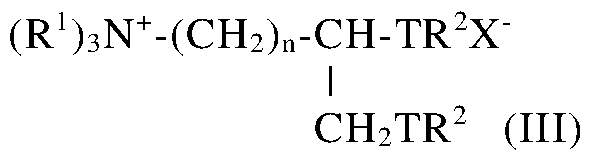
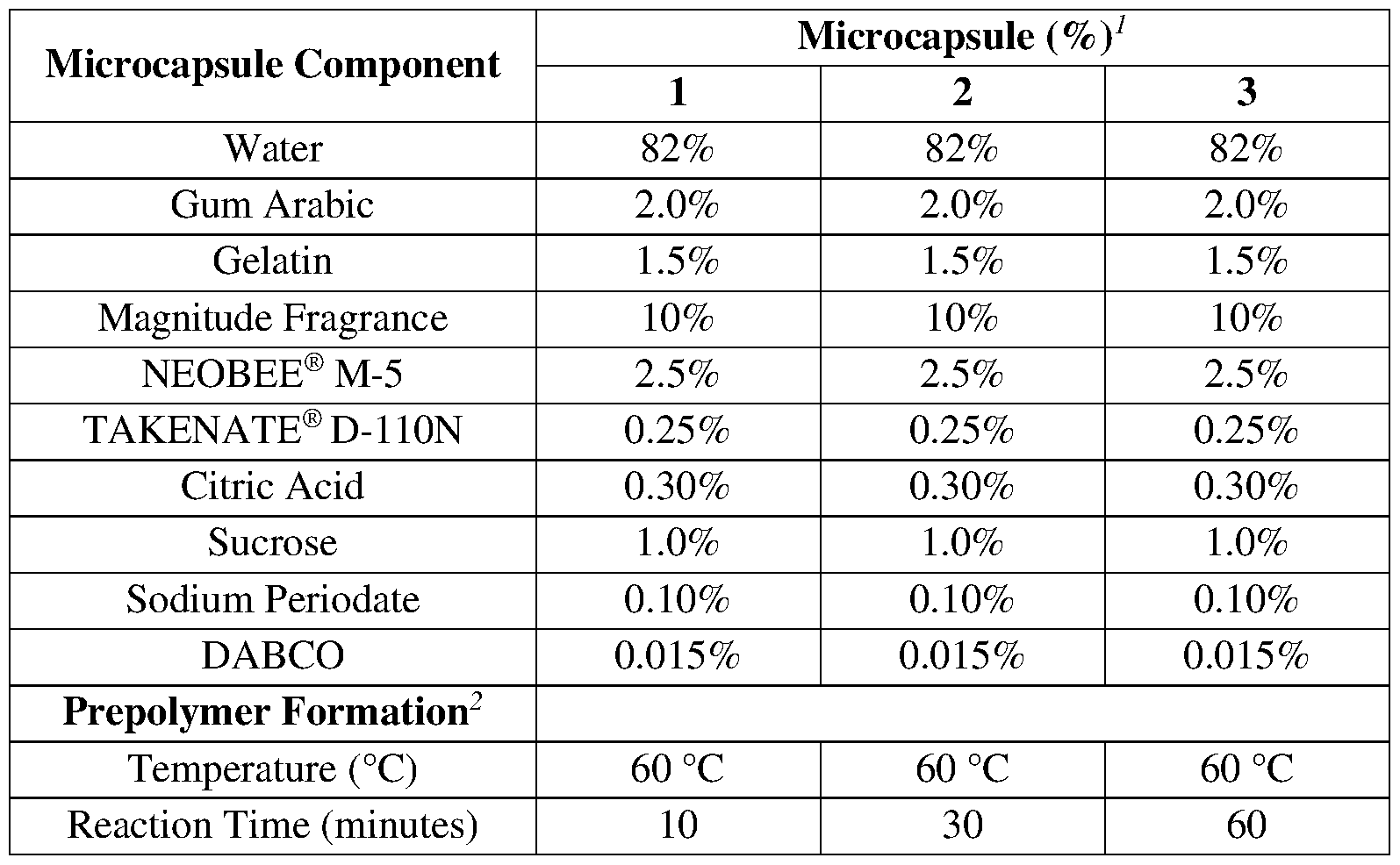


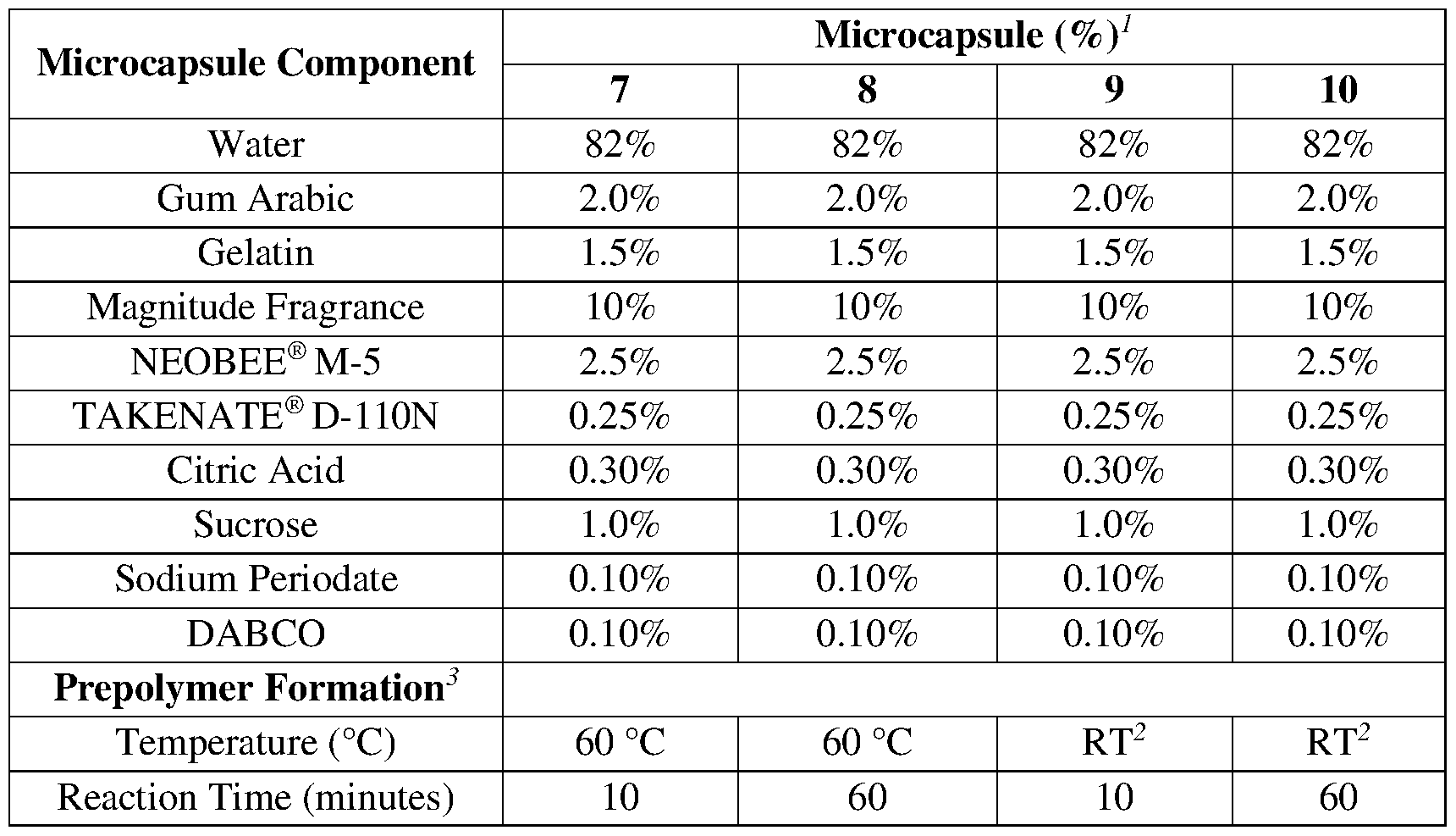


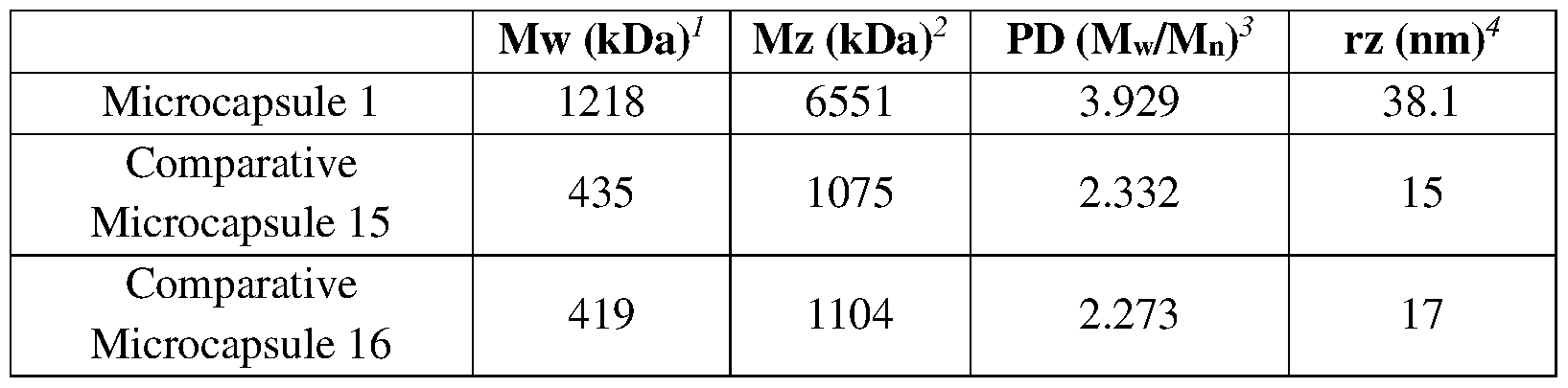


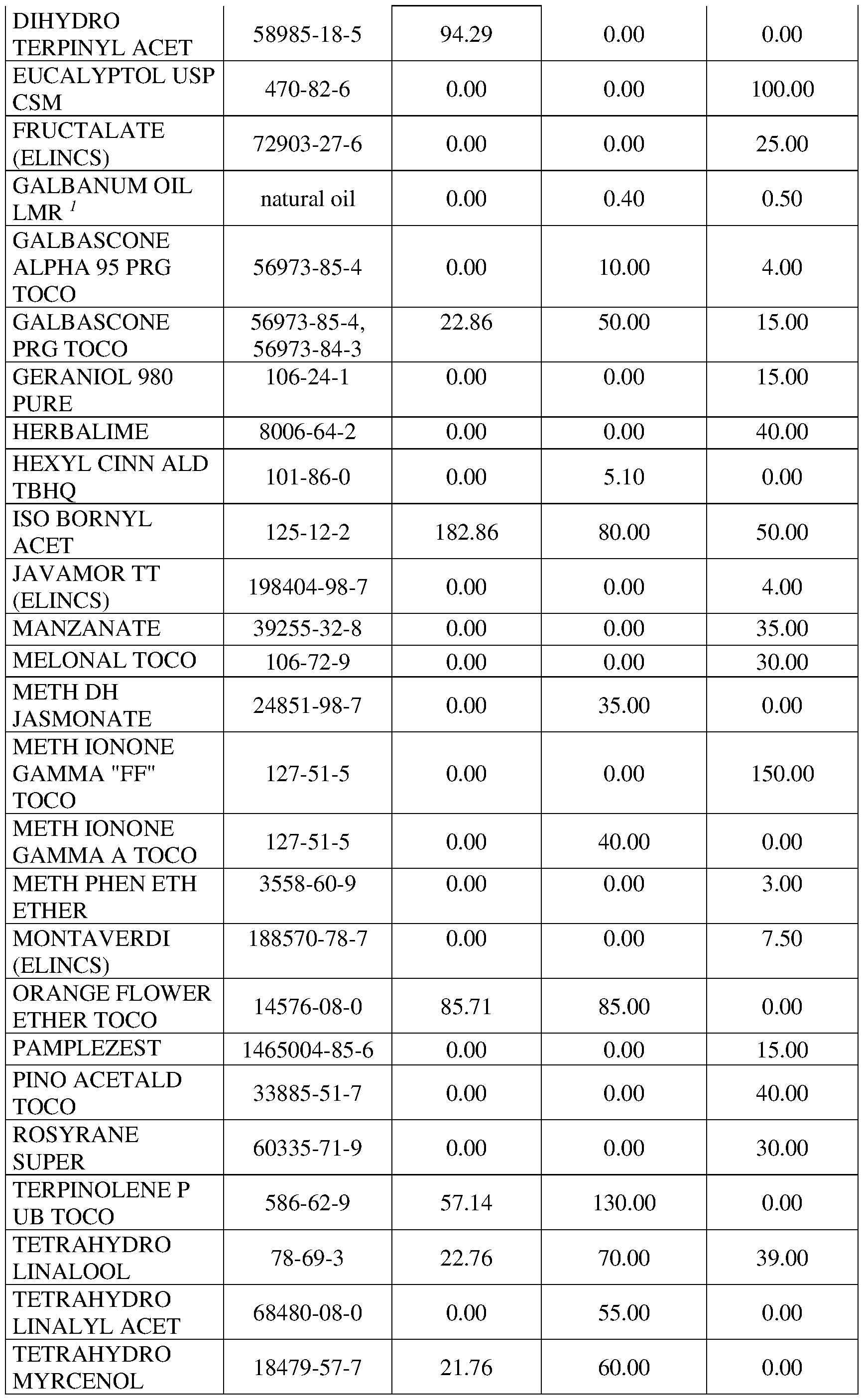

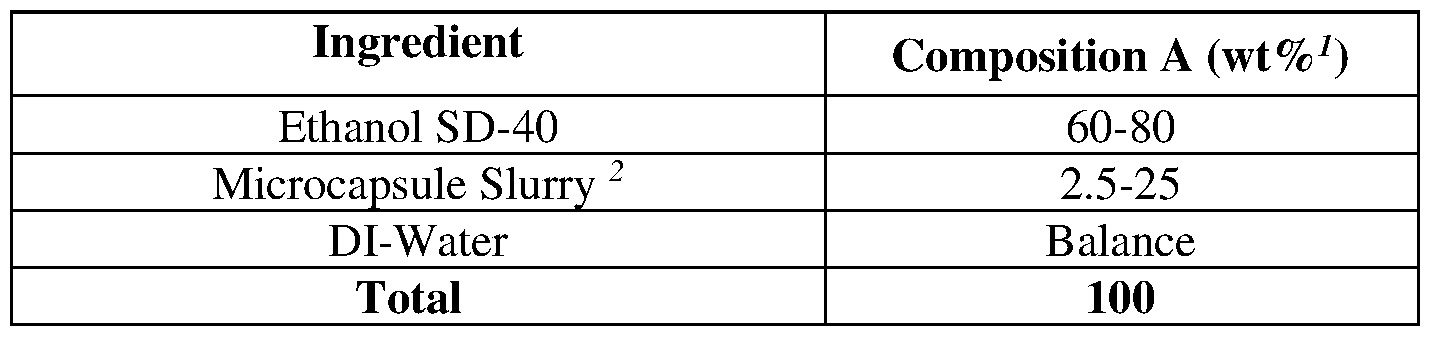



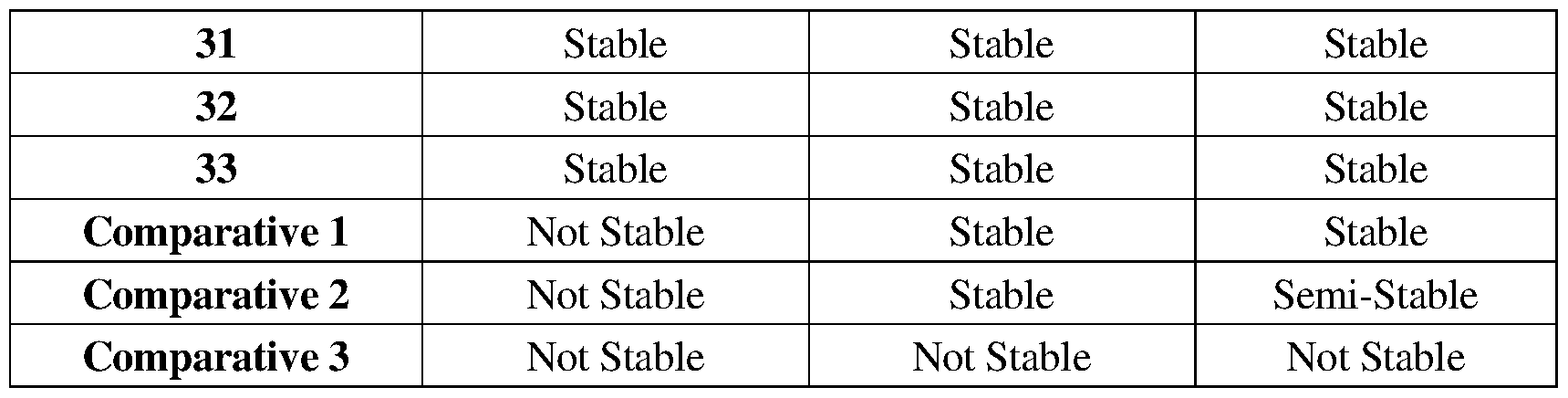


Claims
Priority Applications (7)
| Application Number | Priority Date | Filing Date | Title |
|---|---|---|---|
| JP2024541954A JP2025504421A (en) | 2022-01-14 | 2023-01-12 | Biodegradable prepolymer microcapsules |
| CN202380022575.0A CN118742382A (en) | 2022-01-14 | 2023-01-12 | Biodegradable prepolymer microcapsules |
| EP23703529.0A EP4463255A1 (en) | 2022-01-14 | 2023-01-12 | Biodegradable prepolymer microcapsules |
| KR1020247026812A KR20240134016A (en) | 2022-01-14 | 2023-01-12 | Biodegradable prepolymer microcapsules |
| US18/724,124 US20240336880A1 (en) | 2022-01-14 | 2023-01-12 | Biodegradable prepolymer microcapsules |
| AU2023207979A AU2023207979A1 (en) | 2022-01-14 | 2023-01-12 | Biodegradable prepolymer microcapsules |
| MX2024008658A MX2024008658A (en) | 2022-01-14 | 2023-01-12 | Biodegradable prepolymer microcapsules. |
Applications Claiming Priority (2)
| Application Number | Priority Date | Filing Date | Title |
|---|---|---|---|
| EP22151570.3 | 2022-01-14 | ||
| EP22151570.3A EP4212239A1 (en) | 2022-01-14 | 2022-01-14 | Biodegradable prepolymer microcapsules |
Publications (1)
| Publication Number | Publication Date |
|---|---|
| WO2023137121A1 true WO2023137121A1 (en) | 2023-07-20 |
Family
ID=80112188
Family Applications (1)
| Application Number | Title | Priority Date | Filing Date |
|---|---|---|---|
| PCT/US2023/010696 Ceased WO2023137121A1 (en) | 2022-01-14 | 2023-01-12 | Biodegradable prepolymer microcapsules |
Country Status (8)
| Country | Link |
|---|---|
| US (1) | US20240336880A1 (en) |
| EP (2) | EP4212239A1 (en) |
| JP (1) | JP2025504421A (en) |
| KR (1) | KR20240134016A (en) |
| CN (1) | CN118742382A (en) |
| AU (1) | AU2023207979A1 (en) |
| MX (1) | MX2024008658A (en) |
| WO (1) | WO2023137121A1 (en) |
Cited By (3)
| Publication number | Priority date | Publication date | Assignee | Title |
|---|---|---|---|---|
| CN117017935A (en) * | 2023-07-24 | 2023-11-10 | 蜂巢云(山东)生物医药科技有限公司 | Preparation method of degradable capsules for lowering blood lipids |
| WO2025059363A1 (en) | 2023-09-15 | 2025-03-20 | International Flavors & Fragrances Inc. | Biodegradable microcapsules made from enzymes |
| WO2025090892A1 (en) * | 2023-10-26 | 2025-05-01 | The Procter & Gamble Company | Compositions comprising fragrance materials |
Families Citing this family (5)
| Publication number | Priority date | Publication date | Assignee | Title |
|---|---|---|---|---|
| US20220125700A1 (en) * | 2015-01-12 | 2022-04-28 | International Flavors & Fragrances Inc. | Bio-degradable microcapsules |
| MX2022006619A (en) * | 2019-12-19 | 2022-06-24 | Firmenich & Cie | WASHING COMPOSITION. |
| WO2025153393A1 (en) * | 2024-01-17 | 2025-07-24 | Firmenich Sa | Microcapsules and process for preparing microcapsules |
| CN119746739B (en) * | 2025-01-09 | 2026-01-06 | 云南云烁科技有限公司 | A method for preparing cigarette flavoring beads using a chemical film-forming process |
| CN119454665A (en) * | 2025-01-16 | 2025-02-18 | 宁波科瑞特动物药业有限公司 | A film-forming cow nipple antibacterial agent based on polymer embedding technology and use method |
Citations (64)
| Publication number | Priority date | Publication date | Assignee | Title |
|---|---|---|---|---|
| FR1492597A (en) | 1965-09-14 | 1967-08-18 | Union Carbide Corp | New cellulose ethers containing quaternary nitrogen |
| US4131576A (en) | 1977-12-15 | 1978-12-26 | National Starch And Chemical Corporation | Process for the preparation of graft copolymers of a water soluble monomer and polysaccharide employing a two-phase reaction system |
| US4137180A (en) | 1976-07-02 | 1979-01-30 | Lever Brothers Company | Fabric treatment materials |
| US4138362A (en) * | 1975-03-24 | 1979-02-06 | Champion International Corporation | Formation of microcapsules by interfacial cross-linking, microcapsules produced, and microcapsular dispersion |
| GB2029791A (en) | 1978-07-22 | 1980-03-26 | Kanzaki Paper Mfg Co Ltd | Method of making microcapsules |
| US4424134A (en) | 1983-06-15 | 1984-01-03 | The Procter & Gamble Company | Aqueous fabric softening compositions |
| US4515705A (en) | 1983-11-14 | 1985-05-07 | The Procter & Gamble Company | Compositions containing odor purified proteolytic enzymes and perfumes |
| US4534891A (en) | 1982-11-12 | 1985-08-13 | International Flavors & Fragrances Inc. | Branched C13 -alk-1-en-5-ones and use thereof in perfumery |
| US4714562A (en) | 1987-03-06 | 1987-12-22 | The Procter & Gamble Company | Automatic dishwasher detergent composition |
| US4767547A (en) | 1986-04-02 | 1988-08-30 | The Procter & Gamble Company | Biodegradable fabric softeners |
| US5112688A (en) | 1989-02-27 | 1992-05-12 | The Procter & Gamble Company | Microcapsules containing hydrophobic liquid core |
| US5145842A (en) | 1986-06-11 | 1992-09-08 | Alder Research Center Limited Partnership | Protein kinase c. modulators. d. |
| US5169552A (en) | 1989-10-04 | 1992-12-08 | The Procter & Gamble Company | Stable thickened liquid cleaning composition containing bleach |
| US5288417A (en) | 1992-07-06 | 1994-02-22 | Lever Brothers Company, Division Of Conopco, Inc. | Fabric conditioning compositions and process for making them |
| US5403499A (en) | 1993-04-19 | 1995-04-04 | Lever Brothers Company, Division Of Conopco, Inc. | Concentrated fabric conditioning compositions |
| US5545340A (en) | 1993-03-01 | 1996-08-13 | The Procter & Gamble Company | Concentrated biodegradable quaternary ammonium fabric softener compositions and compounds containing intermediate iodine value unsaturated fatty acid chains |
| US5545350A (en) | 1992-05-12 | 1996-08-13 | The Procter & Gamble Company | Concentrated fabric softener compositions containing biodegradable fabric softeners |
| US5559261A (en) | 1995-07-27 | 1996-09-24 | The Procter & Gamble Company | Method for manufacturing cobalt catalysts |
| US5581005A (en) | 1995-06-16 | 1996-12-03 | The Procter & Gamble Company | Method for manufacturing cobalt catalysts |
| US5597936A (en) | 1995-06-16 | 1997-01-28 | The Procter & Gamble Company | Method for manufacturing cobalt catalysts |
| US5674832A (en) | 1995-04-27 | 1997-10-07 | Witco Corporation | Cationic compositions containing diol and/or diol alkoxylate |
| US5679630A (en) | 1993-10-14 | 1997-10-21 | The Procter & Gamble Company | Protease-containing cleaning compositions |
| US5703034A (en) | 1995-10-30 | 1997-12-30 | The Procter & Gamble Company | Bleach catalyst particles |
| US5703030A (en) | 1995-06-16 | 1997-12-30 | The Procter & Gamble Company | Bleach compositions comprising cobalt catalysts |
| US5705464A (en) | 1995-06-16 | 1998-01-06 | The Procter & Gamble Company | Automatic dishwashing compositions comprising cobalt catalysts |
| US5759990A (en) | 1996-10-21 | 1998-06-02 | The Procter & Gamble Company | Concentrated fabric softening composition with good freeze/thaw recovery and highly unsaturated fabric softener compound therefor |
| US5877145A (en) | 1996-03-22 | 1999-03-02 | The Procter & Gamble Company | Concentrated fabric softening composition with good freeze/thaw recovery and highly unsaturated fabric softener compound therefor |
| US5902781A (en) | 1995-12-20 | 1999-05-11 | The Procter & Gamble Company | Bleach catalyst plus enzyme particles |
| EP0922084A2 (en) | 1996-08-19 | 1999-06-16 | The Procter & Gamble Company | LAUNDRY DETERGENT COMPOSITIONS COMPRISING $g(b)-KETOESTER PRO-FRAGRANCES |
| US5914307A (en) | 1996-10-15 | 1999-06-22 | The Procter & Gamble Company | Process for making a high density detergent composition via post drying mixing/densification |
| US5939373A (en) | 1995-12-20 | 1999-08-17 | The Procter & Gamble Company | Phosphate-built automatic dishwashing composition comprising catalysts |
| US5990065A (en) | 1996-12-20 | 1999-11-23 | The Procter & Gamble Company | Dishwashing detergent compositions containing organic diamines for improved grease cleaning, sudsing, low temperature stability and dissolution |
| US6020294A (en) | 1995-02-02 | 2000-02-01 | Procter & Gamble Company | Automatic dishwashing compositions comprising cobalt chelated catalysts |
| US6069122A (en) | 1997-06-16 | 2000-05-30 | The Procter & Gamble Company | Dishwashing detergent compositions containing organic diamines for improved grease cleaning, sudsing, low temperature stability and dissolution |
| WO2000072816A1 (en) | 1999-06-01 | 2000-12-07 | The Procter & Gamble Company | Pro-fragrances |
| WO2001046361A1 (en) | 1999-12-22 | 2001-06-28 | Unilever Plc | Fabric softening compositions |
| US6287603B1 (en) | 1999-09-16 | 2001-09-11 | Nestec S.A. | Cyclodextrin flavor delivery systems |
| US6335315B1 (en) | 1996-10-21 | 2002-01-01 | The Procter & Gamble Company | Concentrated fabric softening composition |
| US20020019369A1 (en) | 2000-05-19 | 2002-02-14 | Jun Li | Injectable drug delivery systems with cyclodextrin-polymer based hydrogels |
| US20100305021A1 (en) | 2006-05-23 | 2010-12-02 | Robert Richard Dykstra | Perfume delivery systems for consumer goods |
| US8187580B2 (en) | 2002-11-01 | 2012-05-29 | The Procter & Gamble Company | Polymeric assisted delivery using separate addition |
| EP2552968A1 (en) | 2010-03-30 | 2013-02-06 | Dow Global Technologies LLC | New high viscosity carboxymethyl cellulose and method of preparation |
| US8663690B2 (en) | 2006-10-31 | 2014-03-04 | William Marsh Rice University | Method for nanoencapsulation |
| WO2016049456A1 (en) | 2014-09-26 | 2016-03-31 | International Flavors & Fragrances Inc. | Capsule aggregates |
| US9770608B2 (en) | 2013-11-11 | 2017-09-26 | International Flavors & Fragrances Inc. | Multi-capsule compositions |
| US10034819B2 (en) | 2012-09-24 | 2018-07-31 | Firmenich Sa | Multilayered core/shell microcapsules |
| US10104888B2 (en) | 2009-09-04 | 2018-10-23 | Wisconsin Alumni Research Foundation | Tannin-chitosan composites |
| US20180325786A1 (en) | 2009-09-18 | 2018-11-15 | International Flavors & Fragrances Inc. | Polyurea or polyurethane capsules |
| EP3478403A1 (en) | 2016-06-30 | 2019-05-08 | Firmenich SA | Core-composite shell microcapsules |
| WO2019212896A1 (en) | 2018-05-01 | 2019-11-07 | International Flavors & Fragrances Inc. | System and method for printing and drying flavors and fragrances |
| WO2020195132A1 (en) | 2019-03-28 | 2020-10-01 | 富士フイルム株式会社 | Perfume microcapsules, perfume microcapsule composition, softener, and detergent |
| WO2020194910A1 (en) | 2019-03-28 | 2020-10-01 | 富士フイルム株式会社 | Microcapsules, microcapsule composition, softener, and detergent |
| WO2020209909A1 (en) | 2019-04-12 | 2020-10-15 | International Flavors & Fragrances Inc. | Sustainable core-shell microcapsules prepared with combinations of cross-linkers |
| WO2020209907A1 (en) | 2019-04-12 | 2020-10-15 | International Flavors & Fragrances Inc. | Controlled release, biodegradable core-shell microcapsule compositions |
| WO2020209908A1 (en) | 2019-04-12 | 2020-10-15 | International Flavors & Fragrances Inc. | Consumer product with controlled release, biodegradable core-shell microcapsule compositions |
| JP2021053594A (en) * | 2019-09-30 | 2021-04-08 | 富士フイルム株式会社 | Microcapsule, microcapsule composition and production method of the same, as well as softener and detergent |
| WO2021115601A1 (en) | 2019-12-12 | 2021-06-17 | Papierfabrik August Koehler Se | Biodegradable microcapsule systems |
| WO2021116306A1 (en) | 2019-12-13 | 2021-06-17 | Firmenich Sa | Hybrid microcapsules |
| WO2021116365A1 (en) | 2019-12-12 | 2021-06-17 | Henkel Ag & Co. Kgaa | Washing and cleaning agents comprising environmentally compatible microcapsules |
| WO2021122630A1 (en) | 2019-12-19 | 2021-06-24 | Firmenich Sa | Perfume formulation for delivery system |
| WO2021122633A1 (en) | 2019-12-19 | 2021-06-24 | Firmenich Sa | Perfume delivery system |
| WO2021122636A1 (en) | 2019-12-19 | 2021-06-24 | Firmenich Sa | Laundry composition |
| US20210339217A1 (en) | 2020-02-14 | 2021-11-04 | Encapsys, Llc | Articles of Manufacture with Polyurea Capsules Cross-linked with Chitosan |
| WO2021260017A1 (en) * | 2020-06-26 | 2021-12-30 | Bayer Aktiengesellschaft | Aqueous capsule suspension concentrates comprising biodegradable ester groups |
-
2022
- 2022-01-14 EP EP22151570.3A patent/EP4212239A1/en not_active Withdrawn
-
2023
- 2023-01-12 US US18/724,124 patent/US20240336880A1/en active Pending
- 2023-01-12 AU AU2023207979A patent/AU2023207979A1/en active Pending
- 2023-01-12 EP EP23703529.0A patent/EP4463255A1/en active Pending
- 2023-01-12 JP JP2024541954A patent/JP2025504421A/en active Pending
- 2023-01-12 MX MX2024008658A patent/MX2024008658A/en unknown
- 2023-01-12 KR KR1020247026812A patent/KR20240134016A/en active Pending
- 2023-01-12 CN CN202380022575.0A patent/CN118742382A/en active Pending
- 2023-01-12 WO PCT/US2023/010696 patent/WO2023137121A1/en not_active Ceased
Patent Citations (70)
| Publication number | Priority date | Publication date | Assignee | Title |
|---|---|---|---|---|
| FR1492597A (en) | 1965-09-14 | 1967-08-18 | Union Carbide Corp | New cellulose ethers containing quaternary nitrogen |
| US4138362A (en) * | 1975-03-24 | 1979-02-06 | Champion International Corporation | Formation of microcapsules by interfacial cross-linking, microcapsules produced, and microcapsular dispersion |
| US4137180A (en) | 1976-07-02 | 1979-01-30 | Lever Brothers Company | Fabric treatment materials |
| US4131576A (en) | 1977-12-15 | 1978-12-26 | National Starch And Chemical Corporation | Process for the preparation of graft copolymers of a water soluble monomer and polysaccharide employing a two-phase reaction system |
| GB2029791A (en) | 1978-07-22 | 1980-03-26 | Kanzaki Paper Mfg Co Ltd | Method of making microcapsules |
| US4534891A (en) | 1982-11-12 | 1985-08-13 | International Flavors & Fragrances Inc. | Branched C13 -alk-1-en-5-ones and use thereof in perfumery |
| US4424134A (en) | 1983-06-15 | 1984-01-03 | The Procter & Gamble Company | Aqueous fabric softening compositions |
| US4515705A (en) | 1983-11-14 | 1985-05-07 | The Procter & Gamble Company | Compositions containing odor purified proteolytic enzymes and perfumes |
| US4767547A (en) | 1986-04-02 | 1988-08-30 | The Procter & Gamble Company | Biodegradable fabric softeners |
| US5145842A (en) | 1986-06-11 | 1992-09-08 | Alder Research Center Limited Partnership | Protein kinase c. modulators. d. |
| US4714562A (en) | 1987-03-06 | 1987-12-22 | The Procter & Gamble Company | Automatic dishwasher detergent composition |
| US5112688A (en) | 1989-02-27 | 1992-05-12 | The Procter & Gamble Company | Microcapsules containing hydrophobic liquid core |
| US5169552A (en) | 1989-10-04 | 1992-12-08 | The Procter & Gamble Company | Stable thickened liquid cleaning composition containing bleach |
| US5545350A (en) | 1992-05-12 | 1996-08-13 | The Procter & Gamble Company | Concentrated fabric softener compositions containing biodegradable fabric softeners |
| US5288417A (en) | 1992-07-06 | 1994-02-22 | Lever Brothers Company, Division Of Conopco, Inc. | Fabric conditioning compositions and process for making them |
| US5411671A (en) | 1992-07-06 | 1995-05-02 | Lever Brothers Company, Division Of Conopco, Inc. | Fabric conditioning compositions and process for making them |
| US5545340A (en) | 1993-03-01 | 1996-08-13 | The Procter & Gamble Company | Concentrated biodegradable quaternary ammonium fabric softener compositions and compounds containing intermediate iodine value unsaturated fatty acid chains |
| US5562849A (en) | 1993-03-01 | 1996-10-08 | The Procter & Gamble Company | Concentrated biodegradable quaternary ammonium fabric softener compositions and compounds containing intermediate iodine value unsaturated fatty acid chains |
| US5574179A (en) | 1993-03-01 | 1996-11-12 | The Procter & Gamble Company | Concentrated biodegradable quaternary ammonium fabric softener compositions and compouds containing intermediate iodine value unsaturated fatty acid chains |
| US5403499A (en) | 1993-04-19 | 1995-04-04 | Lever Brothers Company, Division Of Conopco, Inc. | Concentrated fabric conditioning compositions |
| US6017871A (en) | 1993-10-14 | 2000-01-25 | The Procter & Gamble Company | Protease-containing cleaning compositions |
| US5679630A (en) | 1993-10-14 | 1997-10-21 | The Procter & Gamble Company | Protease-containing cleaning compositions |
| US6020294A (en) | 1995-02-02 | 2000-02-01 | Procter & Gamble Company | Automatic dishwashing compositions comprising cobalt chelated catalysts |
| US5968881A (en) | 1995-02-02 | 1999-10-19 | The Procter & Gamble Company | Phosphate built automatic dishwashing compositions comprising catalysts |
| US5674832A (en) | 1995-04-27 | 1997-10-07 | Witco Corporation | Cationic compositions containing diol and/or diol alkoxylate |
| US5962386A (en) | 1995-06-16 | 1999-10-05 | The Procter & Gamble Company | Automatic dishwashing compositions comprising cobalt catalysts |
| US5705464A (en) | 1995-06-16 | 1998-01-06 | The Procter & Gamble Company | Automatic dishwashing compositions comprising cobalt catalysts |
| US5581005A (en) | 1995-06-16 | 1996-12-03 | The Procter & Gamble Company | Method for manufacturing cobalt catalysts |
| US5703030A (en) | 1995-06-16 | 1997-12-30 | The Procter & Gamble Company | Bleach compositions comprising cobalt catalysts |
| US5597936A (en) | 1995-06-16 | 1997-01-28 | The Procter & Gamble Company | Method for manufacturing cobalt catalysts |
| US5559261A (en) | 1995-07-27 | 1996-09-24 | The Procter & Gamble Company | Method for manufacturing cobalt catalysts |
| US5703034A (en) | 1995-10-30 | 1997-12-30 | The Procter & Gamble Company | Bleach catalyst particles |
| US5902781A (en) | 1995-12-20 | 1999-05-11 | The Procter & Gamble Company | Bleach catalyst plus enzyme particles |
| US5939373A (en) | 1995-12-20 | 1999-08-17 | The Procter & Gamble Company | Phosphate-built automatic dishwashing composition comprising catalysts |
| US5877145A (en) | 1996-03-22 | 1999-03-02 | The Procter & Gamble Company | Concentrated fabric softening composition with good freeze/thaw recovery and highly unsaturated fabric softener compound therefor |
| EP0922084A2 (en) | 1996-08-19 | 1999-06-16 | The Procter & Gamble Company | LAUNDRY DETERGENT COMPOSITIONS COMPRISING $g(b)-KETOESTER PRO-FRAGRANCES |
| US5914307A (en) | 1996-10-15 | 1999-06-22 | The Procter & Gamble Company | Process for making a high density detergent composition via post drying mixing/densification |
| US6335315B1 (en) | 1996-10-21 | 2002-01-01 | The Procter & Gamble Company | Concentrated fabric softening composition |
| US5759990A (en) | 1996-10-21 | 1998-06-02 | The Procter & Gamble Company | Concentrated fabric softening composition with good freeze/thaw recovery and highly unsaturated fabric softener compound therefor |
| US5990065A (en) | 1996-12-20 | 1999-11-23 | The Procter & Gamble Company | Dishwashing detergent compositions containing organic diamines for improved grease cleaning, sudsing, low temperature stability and dissolution |
| US6069122A (en) | 1997-06-16 | 2000-05-30 | The Procter & Gamble Company | Dishwashing detergent compositions containing organic diamines for improved grease cleaning, sudsing, low temperature stability and dissolution |
| WO2000072816A1 (en) | 1999-06-01 | 2000-12-07 | The Procter & Gamble Company | Pro-fragrances |
| US6287603B1 (en) | 1999-09-16 | 2001-09-11 | Nestec S.A. | Cyclodextrin flavor delivery systems |
| WO2001046361A1 (en) | 1999-12-22 | 2001-06-28 | Unilever Plc | Fabric softening compositions |
| US20020019369A1 (en) | 2000-05-19 | 2002-02-14 | Jun Li | Injectable drug delivery systems with cyclodextrin-polymer based hydrogels |
| US8187580B2 (en) | 2002-11-01 | 2012-05-29 | The Procter & Gamble Company | Polymeric assisted delivery using separate addition |
| US20100305021A1 (en) | 2006-05-23 | 2010-12-02 | Robert Richard Dykstra | Perfume delivery systems for consumer goods |
| US8663690B2 (en) | 2006-10-31 | 2014-03-04 | William Marsh Rice University | Method for nanoencapsulation |
| US10104888B2 (en) | 2009-09-04 | 2018-10-23 | Wisconsin Alumni Research Foundation | Tannin-chitosan composites |
| US20180325786A1 (en) | 2009-09-18 | 2018-11-15 | International Flavors & Fragrances Inc. | Polyurea or polyurethane capsules |
| EP2552968A1 (en) | 2010-03-30 | 2013-02-06 | Dow Global Technologies LLC | New high viscosity carboxymethyl cellulose and method of preparation |
| US10034819B2 (en) | 2012-09-24 | 2018-07-31 | Firmenich Sa | Multilayered core/shell microcapsules |
| US9770608B2 (en) | 2013-11-11 | 2017-09-26 | International Flavors & Fragrances Inc. | Multi-capsule compositions |
| WO2016049456A1 (en) | 2014-09-26 | 2016-03-31 | International Flavors & Fragrances Inc. | Capsule aggregates |
| EP3478403A1 (en) | 2016-06-30 | 2019-05-08 | Firmenich SA | Core-composite shell microcapsules |
| WO2019212896A1 (en) | 2018-05-01 | 2019-11-07 | International Flavors & Fragrances Inc. | System and method for printing and drying flavors and fragrances |
| WO2020195132A1 (en) | 2019-03-28 | 2020-10-01 | 富士フイルム株式会社 | Perfume microcapsules, perfume microcapsule composition, softener, and detergent |
| WO2020194910A1 (en) | 2019-03-28 | 2020-10-01 | 富士フイルム株式会社 | Microcapsules, microcapsule composition, softener, and detergent |
| WO2020209909A1 (en) | 2019-04-12 | 2020-10-15 | International Flavors & Fragrances Inc. | Sustainable core-shell microcapsules prepared with combinations of cross-linkers |
| WO2020209907A1 (en) | 2019-04-12 | 2020-10-15 | International Flavors & Fragrances Inc. | Controlled release, biodegradable core-shell microcapsule compositions |
| WO2020209908A1 (en) | 2019-04-12 | 2020-10-15 | International Flavors & Fragrances Inc. | Consumer product with controlled release, biodegradable core-shell microcapsule compositions |
| JP2021053594A (en) * | 2019-09-30 | 2021-04-08 | 富士フイルム株式会社 | Microcapsule, microcapsule composition and production method of the same, as well as softener and detergent |
| WO2021115601A1 (en) | 2019-12-12 | 2021-06-17 | Papierfabrik August Koehler Se | Biodegradable microcapsule systems |
| WO2021116365A1 (en) | 2019-12-12 | 2021-06-17 | Henkel Ag & Co. Kgaa | Washing and cleaning agents comprising environmentally compatible microcapsules |
| WO2021116306A1 (en) | 2019-12-13 | 2021-06-17 | Firmenich Sa | Hybrid microcapsules |
| WO2021122630A1 (en) | 2019-12-19 | 2021-06-24 | Firmenich Sa | Perfume formulation for delivery system |
| WO2021122633A1 (en) | 2019-12-19 | 2021-06-24 | Firmenich Sa | Perfume delivery system |
| WO2021122636A1 (en) | 2019-12-19 | 2021-06-24 | Firmenich Sa | Laundry composition |
| US20210339217A1 (en) | 2020-02-14 | 2021-11-04 | Encapsys, Llc | Articles of Manufacture with Polyurea Capsules Cross-linked with Chitosan |
| WO2021260017A1 (en) * | 2020-06-26 | 2021-12-30 | Bayer Aktiengesellschaft | Aqueous capsule suspension concentrates comprising biodegradable ester groups |
Non-Patent Citations (6)
| Title |
|---|
| BERTOLDO, MACROMOL. BIOSCI., vol. 7, 2007, pages 328 - 338 |
| GALLEGO R ET AL: "Isocyanate-Functionalized Chitin and Chitosan as GellingAgents of Castor Oil", MOLECULES, MDPI AG, CH, vol. 18, no. 6, 3 June 2013 (2013-06-03), pages 6532 - 6549, XP002754099, ISSN: 1420-3049, DOI: 10.3390/MOLECULES18066532 * |
| GALLEGO, MOLECULES, vol. 18, 2013, pages 6532 - 6549 |
| HODGES ET AL., ANAL. CHEM., vol. 51, no. 13, 1979 |
| KOEBEL, J. SOL-GEL SCI. TECHNOL., vol. 79, 2016, pages 308 - 318 |
| NABEOKA RYOSUKE ET AL: "Evaluating the Ready Biodegradability of Biodegradable Plastics", vol. 40, no. 9, 20 July 2021 (2021-07-20), US, pages 2443 - 2449, XP055936303, ISSN: 0730-7268, Retrieved from the Internet <URL:https://onlinelibrary.wiley.com/doi/full-xml/10.1002/etc.5116> [retrieved on 20220627], DOI: 10.1002/etc.5116 * |
Cited By (3)
| Publication number | Priority date | Publication date | Assignee | Title |
|---|---|---|---|---|
| CN117017935A (en) * | 2023-07-24 | 2023-11-10 | 蜂巢云(山东)生物医药科技有限公司 | Preparation method of degradable capsules for lowering blood lipids |
| WO2025059363A1 (en) | 2023-09-15 | 2025-03-20 | International Flavors & Fragrances Inc. | Biodegradable microcapsules made from enzymes |
| WO2025090892A1 (en) * | 2023-10-26 | 2025-05-01 | The Procter & Gamble Company | Compositions comprising fragrance materials |
Also Published As
| Publication number | Publication date |
|---|---|
| JP2025504421A (en) | 2025-02-12 |
| MX2024008658A (en) | 2024-09-19 |
| EP4463255A1 (en) | 2024-11-20 |
| KR20240134016A (en) | 2024-09-05 |
| US20240336880A1 (en) | 2024-10-10 |
| EP4212239A1 (en) | 2023-07-19 |
| CN118742382A (en) | 2024-10-01 |
| AU2023207979A1 (en) | 2024-07-11 |
Similar Documents
| Publication | Publication Date | Title |
|---|---|---|
| AU2023207979A1 (en) | Biodegradable prepolymer microcapsules | |
| CN113950315B (en) | Consumer product with controlled release biodegradable core-shell microcapsule composition | |
| EP3645157B1 (en) | Process for preparing a microcapsule slurry | |
| JP7605859B2 (en) | Compositions containing cationic poly alpha-1,3-glucan ethers | |
| US20250075151A1 (en) | Biodegradable chitosan microcapsules | |
| CN120302951A (en) | Treatment compositions having fragrance delivery particles | |
| WO2025059363A1 (en) | Biodegradable microcapsules made from enzymes | |
| US20250000761A1 (en) | Biodegradable microcapsules | |
| CN120225646A (en) | Treatment composition with delivery particles made from acid treated chitosan | |
| EP4406641A1 (en) | Biodegradable microcapsules containing low log p fragrance | |
| JP6573999B2 (en) | Fragrance composition | |
| US20240182818A1 (en) | Treatment composition with delivery particles made from redox-initiator-treated chitosan | |
| CN120283038A (en) | Treatment composition with chitosan-based delivery particles | |
| CN120283036A (en) | Treatment composition with modified chitosan-based delivery particles | |
| CN119677833A (en) | Treatment compositions with chitosan-based delivery particles | |
| BRPI0812552B1 (en) | PROCESS FOR MANUFACTURING CORE-SHELL PERFUME PARTICLES, AQUEOUS DISPERSION OF PARTICLES AND USE THEREOF |
Legal Events
| Date | Code | Title | Description |
|---|---|---|---|
| 121 | Ep: the epo has been informed by wipo that ep was designated in this application |
Ref document number: 23703529 Country of ref document: EP Kind code of ref document: A1 |
|
| WWE | Wipo information: entry into national phase |
Ref document number: 2023207979 Country of ref document: AU Ref document number: AU2023207979 Country of ref document: AU |
|
| WWE | Wipo information: entry into national phase |
Ref document number: MX/A/2024/008658 Country of ref document: MX |
|
| WWE | Wipo information: entry into national phase |
Ref document number: 2024541954 Country of ref document: JP |
|
| REG | Reference to national code |
Ref country code: BR Ref legal event code: B01A Ref document number: 112024014259 Country of ref document: BR |
|
| ENP | Entry into the national phase |
Ref document number: 20247026812 Country of ref document: KR Kind code of ref document: A |
|
| WWE | Wipo information: entry into national phase |
Ref document number: 2023703529 Country of ref document: EP |
|
| NENP | Non-entry into the national phase |
Ref country code: DE |
|
| ENP | Entry into the national phase |
Ref document number: 2023703529 Country of ref document: EP Effective date: 20240814 |
|
| WWE | Wipo information: entry into national phase |
Ref document number: 202380022575.0 Country of ref document: CN |
|
| ENP | Entry into the national phase |
Ref document number: 112024014259 Country of ref document: BR Kind code of ref document: A2 Effective date: 20240711 |